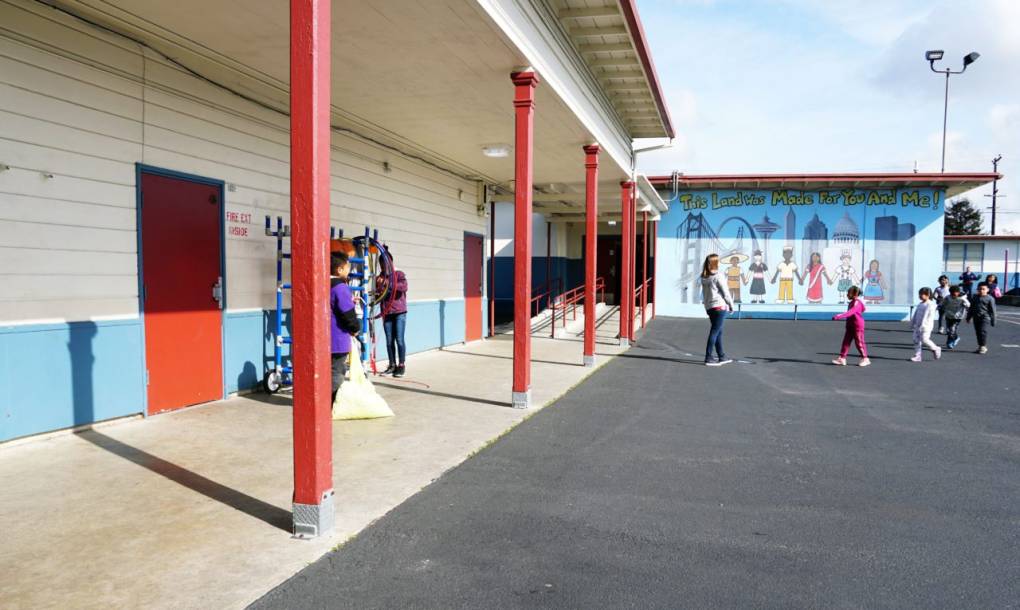
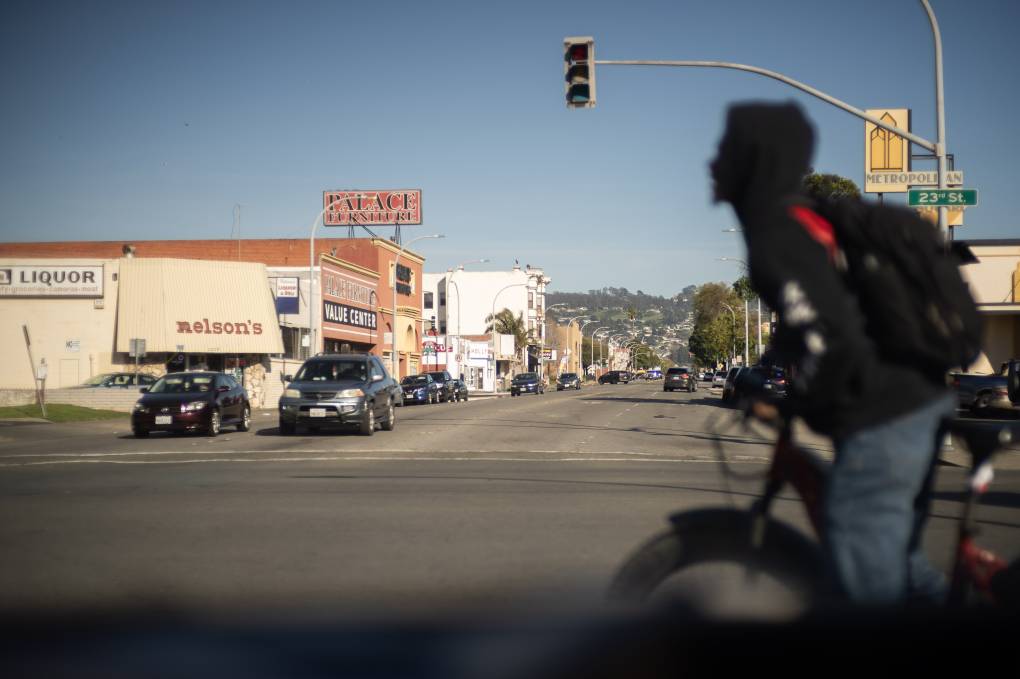
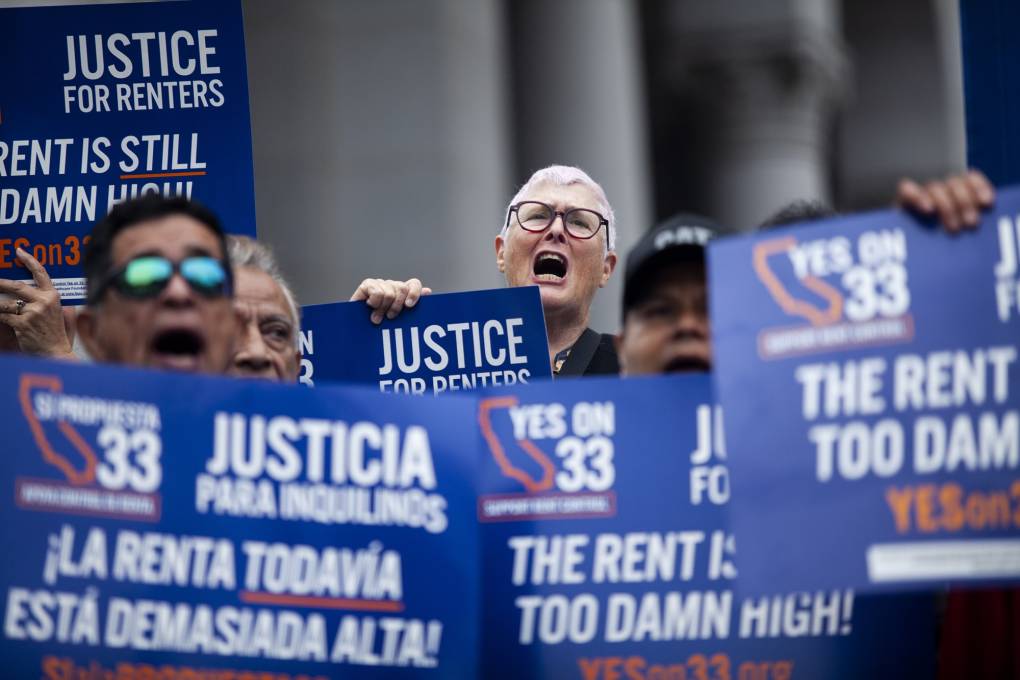
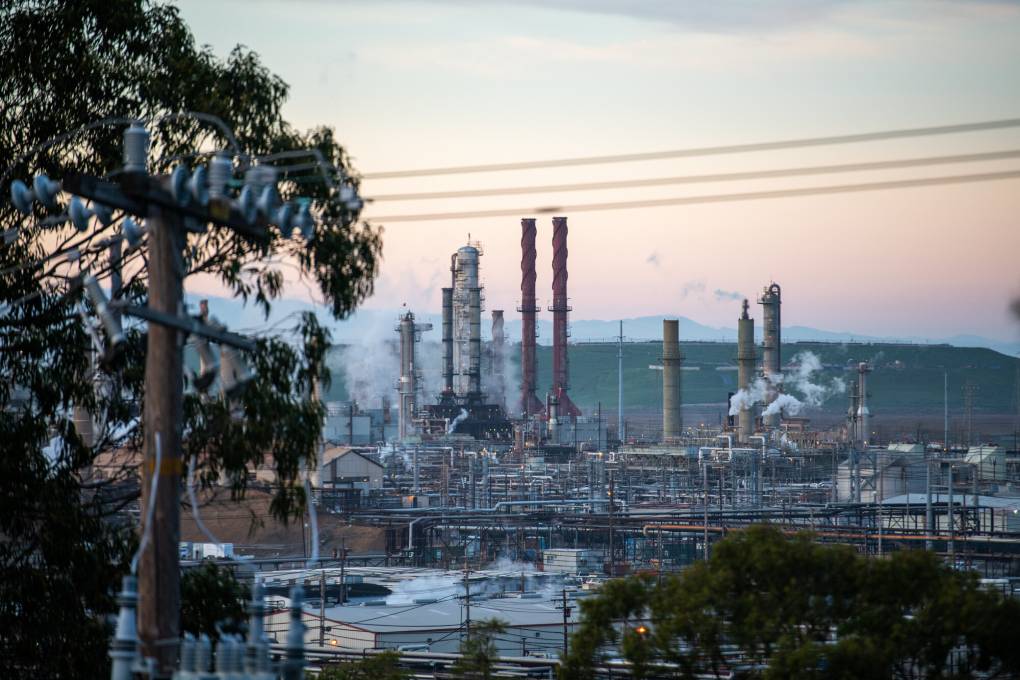
window.__IS_SSR__=true
window.__INITIAL_STATE__={
"attachmentsReducer": {
"audio_0": {
"type": "attachments",
"id": "audio_0",
"imgSizes": {
"kqedFullSize": {
"file": "https://ww2.kqed.org/news/wp-content/themes/KQED-unified/img/audio_bgs/background0.jpg"
}
}
},
"audio_1": {
"type": "attachments",
"id": "audio_1",
"imgSizes": {
"kqedFullSize": {
"file": "https://ww2.kqed.org/news/wp-content/themes/KQED-unified/img/audio_bgs/background1.jpg"
}
}
},
"audio_2": {
"type": "attachments",
"id": "audio_2",
"imgSizes": {
"kqedFullSize": {
"file": "https://ww2.kqed.org/news/wp-content/themes/KQED-unified/img/audio_bgs/background2.jpg"
}
}
},
"audio_3": {
"type": "attachments",
"id": "audio_3",
"imgSizes": {
"kqedFullSize": {
"file": "https://ww2.kqed.org/news/wp-content/themes/KQED-unified/img/audio_bgs/background3.jpg"
}
}
},
"audio_4": {
"type": "attachments",
"id": "audio_4",
"imgSizes": {
"kqedFullSize": {
"file": "https://ww2.kqed.org/news/wp-content/themes/KQED-unified/img/audio_bgs/background4.jpg"
}
}
},
"placeholder": {
"type": "attachments",
"id": "placeholder",
"imgSizes": {
"thumbnail": {
"file": "https://cdn.kqed.org/wp-content/uploads/2024/12/KQED-Default-Image-816638274-2000x1333-1-160x107.jpg",
"width": 160,
"height": 107,
"mimeType": "image/jpeg"
},
"medium": {
"file": "https://cdn.kqed.org/wp-content/uploads/2024/12/KQED-Default-Image-816638274-2000x1333-1-800x533.jpg",
"width": 800,
"height": 533,
"mimeType": "image/jpeg"
},
"medium_large": {
"file": "https://cdn.kqed.org/wp-content/uploads/2024/12/KQED-Default-Image-816638274-2000x1333-1-768x512.jpg",
"width": 768,
"height": 512,
"mimeType": "image/jpeg"
},
"large": {
"file": "https://cdn.kqed.org/wp-content/uploads/2024/12/KQED-Default-Image-816638274-2000x1333-1-1020x680.jpg",
"width": 1020,
"height": 680,
"mimeType": "image/jpeg"
},
"1536x1536": {
"file": "https://cdn.kqed.org/wp-content/uploads/2024/12/KQED-Default-Image-816638274-2000x1333-1-1536x1024.jpg",
"width": 1536,
"height": 1024,
"mimeType": "image/jpeg"
},
"fd-lrg": {
"file": "https://cdn.kqed.org/wp-content/uploads/2024/12/KQED-Default-Image-816638274-2000x1333-1-1536x1024.jpg",
"width": 1536,
"height": 1024,
"mimeType": "image/jpeg"
},
"fd-med": {
"file": "https://cdn.kqed.org/wp-content/uploads/2024/12/KQED-Default-Image-816638274-2000x1333-1-1020x680.jpg",
"width": 1020,
"height": 680,
"mimeType": "image/jpeg"
},
"fd-sm": {
"file": "https://cdn.kqed.org/wp-content/uploads/2024/12/KQED-Default-Image-816638274-2000x1333-1-800x533.jpg",
"width": 800,
"height": 533,
"mimeType": "image/jpeg"
},
"post-thumbnail": {
"file": "https://cdn.kqed.org/wp-content/uploads/2024/12/KQED-Default-Image-816638274-2000x1333-1-672x372.jpg",
"width": 672,
"height": 372,
"mimeType": "image/jpeg"
},
"twentyfourteen-full-width": {
"file": "https://cdn.kqed.org/wp-content/uploads/2024/12/KQED-Default-Image-816638274-2000x1333-1-1038x576.jpg",
"width": 1038,
"height": 576,
"mimeType": "image/jpeg"
},
"xxsmall": {
"file": "https://cdn.kqed.org/wp-content/uploads/2024/12/KQED-Default-Image-816638274-2000x1333-1-160x107.jpg",
"width": 160,
"height": 107,
"mimeType": "image/jpeg"
},
"xsmall": {
"file": "https://cdn.kqed.org/wp-content/uploads/2024/12/KQED-Default-Image-816638274-2000x1333-1-672x372.jpg",
"width": 672,
"height": 372,
"mimeType": "image/jpeg"
},
"small": {
"file": "https://cdn.kqed.org/wp-content/uploads/2024/12/KQED-Default-Image-816638274-2000x1333-1-672x372.jpg",
"width": 672,
"height": 372,
"mimeType": "image/jpeg"
},
"xlarge": {
"file": "https://cdn.kqed.org/wp-content/uploads/2024/12/KQED-Default-Image-816638274-2000x1333-1-1020x680.jpg",
"width": 1020,
"height": 680,
"mimeType": "image/jpeg"
},
"full-width": {
"file": "https://cdn.kqed.org/wp-content/uploads/2024/12/KQED-Default-Image-816638274-2000x1333-1-1920x1280.jpg",
"width": 1920,
"height": 1280,
"mimeType": "image/jpeg"
},
"guest-author-32": {
"file": "https://cdn.kqed.org/wp-content/uploads/2025/01/KQED-Default-Image-816638274-1333x1333-1-160x160.jpg",
"width": 32,
"height": 32,
"mimeType": "image/jpeg"
},
"guest-author-50": {
"file": "https://cdn.kqed.org/wp-content/uploads/2025/01/KQED-Default-Image-816638274-1333x1333-1-160x160.jpg",
"width": 50,
"height": 50,
"mimeType": "image/jpeg"
},
"guest-author-64": {
"file": "https://cdn.kqed.org/wp-content/uploads/2025/01/KQED-Default-Image-816638274-1333x1333-1-160x160.jpg",
"width": 64,
"height": 64,
"mimeType": "image/jpeg"
},
"guest-author-96": {
"file": "https://cdn.kqed.org/wp-content/uploads/2025/01/KQED-Default-Image-816638274-1333x1333-1-160x160.jpg",
"width": 96,
"height": 96,
"mimeType": "image/jpeg"
},
"guest-author-128": {
"file": "https://cdn.kqed.org/wp-content/uploads/2025/01/KQED-Default-Image-816638274-1333x1333-1-160x160.jpg",
"width": 128,
"height": 128,
"mimeType": "image/jpeg"
},
"detail": {
"file": "https://cdn.kqed.org/wp-content/uploads/2025/01/KQED-Default-Image-816638274-1333x1333-1-160x160.jpg",
"width": 160,
"height": 160,
"mimeType": "image/jpeg"
},
"kqedFullSize": {
"file": "https://cdn.kqed.org/wp-content/uploads/2024/12/KQED-Default-Image-816638274-2000x1333-1.jpg",
"width": 2000,
"height": 1333
}
}
},
"news_12022073": {
"type": "attachments",
"id": "news_12022073",
"meta": {
"index": "attachments_1716263798",
"site": "news",
"id": "12022073",
"found": true
},
"title": "Stege-Elementary34-1280x765",
"publishDate": 1736883763,
"status": "inherit",
"parent": 12022069,
"modified": 1736883791,
"caption": "West Contra Costa Unified's Stege Elementary School in Richmond.",
"credit": "Andrew Reed/EdSource",
"altTag": null,
"description": null,
"imgSizes": {
"medium": {
"file": "https://cdn.kqed.org/wp-content/uploads/sites/10/2025/01/Stege-Elementary34-1280x765-1-800x478.jpg",
"width": 800,
"height": 478,
"mimeType": "image/jpeg"
},
"large": {
"file": "https://cdn.kqed.org/wp-content/uploads/sites/10/2025/01/Stege-Elementary34-1280x765-1-1020x610.jpg",
"width": 1020,
"height": 610,
"mimeType": "image/jpeg"
},
"thumbnail": {
"file": "https://cdn.kqed.org/wp-content/uploads/sites/10/2025/01/Stege-Elementary34-1280x765-1-160x96.jpg",
"width": 160,
"height": 96,
"mimeType": "image/jpeg"
},
"post-thumbnail": {
"file": "https://cdn.kqed.org/wp-content/uploads/sites/10/2025/01/Stege-Elementary34-1280x765-1-672x372.jpg",
"width": 672,
"height": 372,
"mimeType": "image/jpeg"
},
"twentyfourteen-full-width": {
"file": "https://cdn.kqed.org/wp-content/uploads/sites/10/2025/01/Stege-Elementary34-1280x765-1-1038x576.jpg",
"width": 1038,
"height": 576,
"mimeType": "image/jpeg"
},
"kqedFullSize": {
"file": "https://cdn.kqed.org/wp-content/uploads/sites/10/2025/01/Stege-Elementary34-1280x765-1.jpg",
"width": 1280,
"height": 765
}
},
"isLoading": false,
"fetchFailed": false
},
"news_11981098": {
"type": "attachments",
"id": "news_11981098",
"meta": {
"index": "attachments_1716263798",
"site": "news",
"id": "11981098",
"found": true
},
"title": "The Richmond Standard is a local news site funded by Chevron, which runs the large refinery in town.",
"publishDate": 1711644554,
"status": "inherit",
"parent": 11981095,
"modified": 1730745276,
"caption": "Richmond, renowned for its success in reducing gun deaths, is California’s first city to join an effort to tailor violence prevention efforts to neighborhood-level needs.",
"credit": "Brian L. Frank/NPR",
"altTag": "A person rides a bike through an intersection with cars waiting at a stoplight.",
"description": "The Richmond Standard, which is a local news site funded by Chevron, who runs the large refinery in town. Disinformation and lack of coverage on Chevron are affecting Richmond, which doesn’t have many local news options.\n\nDowntown Richmond, CA",
"imgSizes": {
"medium": {
"file": "https://cdn.kqed.org/wp-content/uploads/sites/10/2024/03/z62_5591_custom-714680c19940b1fb0af95746d3b95944f8dcc85b-800x532.jpg",
"width": 800,
"height": 532,
"mimeType": "image/jpeg"
},
"large": {
"file": "https://cdn.kqed.org/wp-content/uploads/sites/10/2024/03/z62_5591_custom-714680c19940b1fb0af95746d3b95944f8dcc85b-1020x679.jpg",
"width": 1020,
"height": 679,
"mimeType": "image/jpeg"
},
"thumbnail": {
"file": "https://cdn.kqed.org/wp-content/uploads/sites/10/2024/03/z62_5591_custom-714680c19940b1fb0af95746d3b95944f8dcc85b-160x106.jpg",
"width": 160,
"height": 106,
"mimeType": "image/jpeg"
},
"1536x1536": {
"file": "https://cdn.kqed.org/wp-content/uploads/sites/10/2024/03/z62_5591_custom-714680c19940b1fb0af95746d3b95944f8dcc85b-1536x1022.jpg",
"width": 1536,
"height": 1022,
"mimeType": "image/jpeg"
},
"2048x2048": {
"file": "https://cdn.kqed.org/wp-content/uploads/sites/10/2024/03/z62_5591_custom-714680c19940b1fb0af95746d3b95944f8dcc85b-2048x1362.jpg",
"width": 2048,
"height": 1362,
"mimeType": "image/jpeg"
},
"post-thumbnail": {
"file": "https://cdn.kqed.org/wp-content/uploads/sites/10/2024/03/z62_5591_custom-714680c19940b1fb0af95746d3b95944f8dcc85b-672x372.jpg",
"width": 672,
"height": 372,
"mimeType": "image/jpeg"
},
"twentyfourteen-full-width": {
"file": "https://cdn.kqed.org/wp-content/uploads/sites/10/2024/03/z62_5591_custom-714680c19940b1fb0af95746d3b95944f8dcc85b-1038x576.jpg",
"width": 1038,
"height": 576,
"mimeType": "image/jpeg"
},
"full-width": {
"file": "https://cdn.kqed.org/wp-content/uploads/sites/10/2024/03/z62_5591_custom-714680c19940b1fb0af95746d3b95944f8dcc85b-1920x1277.jpg",
"width": 1920,
"height": 1277,
"mimeType": "image/jpeg"
},
"kqedFullSize": {
"file": "https://cdn.kqed.org/wp-content/uploads/sites/10/2024/03/z62_5591_custom-714680c19940b1fb0af95746d3b95944f8dcc85b-scaled.jpg",
"width": 2560,
"height": 1703
}
},
"isLoading": false,
"fetchFailed": false
},
"news_12011509": {
"type": "attachments",
"id": "news_12011509",
"meta": {
"index": "attachments_1716263798",
"site": "news",
"id": "12011509",
"found": true
},
"title": "Los Angeles City Council Press Conference - Yes on Prop 33",
"publishDate": 1730225428,
"status": "inherit",
"parent": 12011500,
"modified": 1730225538,
"caption": "Rent control advocates and supporters of Proposition 33, a November ballot initiative that would allow for the expansion of rent control in California, held a press conference before testifying at the Los Angeles City Council meeting on Tuesday, October 15, 2024, in Los Angeles, California. (Jenna Schoenefeld/AP Content Services for AIDS Healthcare Foundation)",
"credit": null,
"altTag": null,
"description": null,
"imgSizes": {
"medium": {
"file": "https://cdn.kqed.org/wp-content/uploads/sites/10/2024/10/AP24297000332580-800x533.jpg",
"width": 800,
"height": 533,
"mimeType": "image/jpeg"
},
"large": {
"file": "https://cdn.kqed.org/wp-content/uploads/sites/10/2024/10/AP24297000332580-1020x680.jpg",
"width": 1020,
"height": 680,
"mimeType": "image/jpeg"
},
"thumbnail": {
"file": "https://cdn.kqed.org/wp-content/uploads/sites/10/2024/10/AP24297000332580-160x107.jpg",
"width": 160,
"height": 107,
"mimeType": "image/jpeg"
},
"1536x1536": {
"file": "https://cdn.kqed.org/wp-content/uploads/sites/10/2024/10/AP24297000332580-1536x1024.jpg",
"width": 1536,
"height": 1024,
"mimeType": "image/jpeg"
},
"post-thumbnail": {
"file": "https://cdn.kqed.org/wp-content/uploads/sites/10/2024/10/AP24297000332580-672x372.jpg",
"width": 672,
"height": 372,
"mimeType": "image/jpeg"
},
"twentyfourteen-full-width": {
"file": "https://cdn.kqed.org/wp-content/uploads/sites/10/2024/10/AP24297000332580-1038x576.jpg",
"width": 1038,
"height": 576,
"mimeType": "image/jpeg"
},
"full-width": {
"file": "https://cdn.kqed.org/wp-content/uploads/sites/10/2024/10/AP24297000332580-1920x1280.jpg",
"width": 1920,
"height": 1280,
"mimeType": "image/jpeg"
},
"kqedFullSize": {
"file": "https://cdn.kqed.org/wp-content/uploads/sites/10/2024/10/AP24297000332580.jpg",
"width": 2000,
"height": 1333
}
},
"isLoading": false,
"fetchFailed": false
},
"news_12008025": {
"type": "attachments",
"id": "news_12008025",
"meta": {
"index": "attachments_1716263798",
"site": "news",
"id": "12008025",
"found": true
},
"title": "Annie's Annuals 3",
"publishDate": 1728073680,
"status": "inherit",
"parent": 12007947,
"modified": 1728086819,
"caption": "Sarah Hundley took over ownership of Annie’s Annuals and Perennials in 2021 after founder Annie Hayes' 30-year tenure.",
"credit": "Courtesy Kaylan Segev",
"altTag": null,
"description": null,
"imgSizes": {
"medium": {
"file": "https://cdn.kqed.org/wp-content/uploads/sites/10/2024/10/Annies-Annuals-3-800x600.jpg",
"width": 800,
"height": 600,
"mimeType": "image/jpeg"
},
"large": {
"file": "https://cdn.kqed.org/wp-content/uploads/sites/10/2024/10/Annies-Annuals-3-1020x765.jpg",
"width": 1020,
"height": 765,
"mimeType": "image/jpeg"
},
"thumbnail": {
"file": "https://cdn.kqed.org/wp-content/uploads/sites/10/2024/10/Annies-Annuals-3-160x120.jpg",
"width": 160,
"height": 120,
"mimeType": "image/jpeg"
},
"1536x1536": {
"file": "https://cdn.kqed.org/wp-content/uploads/sites/10/2024/10/Annies-Annuals-3-1536x1152.jpg",
"width": 1536,
"height": 1152,
"mimeType": "image/jpeg"
},
"post-thumbnail": {
"file": "https://cdn.kqed.org/wp-content/uploads/sites/10/2024/10/Annies-Annuals-3-672x372.jpg",
"width": 672,
"height": 372,
"mimeType": "image/jpeg"
},
"twentyfourteen-full-width": {
"file": "https://cdn.kqed.org/wp-content/uploads/sites/10/2024/10/Annies-Annuals-3-1038x576.jpg",
"width": 1038,
"height": 576,
"mimeType": "image/jpeg"
},
"full-width": {
"file": "https://cdn.kqed.org/wp-content/uploads/sites/10/2024/10/Annies-Annuals-3-1920x1440.jpg",
"width": 1920,
"height": 1440,
"mimeType": "image/jpeg"
},
"kqedFullSize": {
"file": "https://cdn.kqed.org/wp-content/uploads/sites/10/2024/10/Annies-Annuals-3.jpg",
"width": 2000,
"height": 1500
}
},
"isLoading": false,
"fetchFailed": false
},
"news_12008023": {
"type": "attachments",
"id": "news_12008023",
"meta": {
"index": "attachments_1716263798",
"site": "news",
"id": "12008023",
"found": true
},
"title": "Annie's Annuals 1",
"publishDate": 1728073670,
"status": "inherit",
"parent": 12007947,
"modified": 1728086367,
"caption": "Annie's Annuals and Perennials in Richmond, California, in February 2022. Annie’s, known for rare and beautiful plants, posted to social media on Thursday that it was closing after serving the East Bay community for more than 30 years.\n",
"credit": "Courtesy Kaylan Segev",
"altTag": null,
"description": null,
"imgSizes": {
"medium": {
"file": "https://cdn.kqed.org/wp-content/uploads/sites/10/2024/10/Annies-Annuals-1-800x600.jpg",
"width": 800,
"height": 600,
"mimeType": "image/jpeg"
},
"large": {
"file": "https://cdn.kqed.org/wp-content/uploads/sites/10/2024/10/Annies-Annuals-1-1020x765.jpg",
"width": 1020,
"height": 765,
"mimeType": "image/jpeg"
},
"thumbnail": {
"file": "https://cdn.kqed.org/wp-content/uploads/sites/10/2024/10/Annies-Annuals-1-160x120.jpg",
"width": 160,
"height": 120,
"mimeType": "image/jpeg"
},
"1536x1536": {
"file": "https://cdn.kqed.org/wp-content/uploads/sites/10/2024/10/Annies-Annuals-1-1536x1152.jpg",
"width": 1536,
"height": 1152,
"mimeType": "image/jpeg"
},
"post-thumbnail": {
"file": "https://cdn.kqed.org/wp-content/uploads/sites/10/2024/10/Annies-Annuals-1-672x372.jpg",
"width": 672,
"height": 372,
"mimeType": "image/jpeg"
},
"twentyfourteen-full-width": {
"file": "https://cdn.kqed.org/wp-content/uploads/sites/10/2024/10/Annies-Annuals-1-1038x576.jpg",
"width": 1038,
"height": 576,
"mimeType": "image/jpeg"
},
"full-width": {
"file": "https://cdn.kqed.org/wp-content/uploads/sites/10/2024/10/Annies-Annuals-1-1920x1440.jpg",
"width": 1920,
"height": 1440,
"mimeType": "image/jpeg"
},
"kqedFullSize": {
"file": "https://cdn.kqed.org/wp-content/uploads/sites/10/2024/10/Annies-Annuals-1.jpg",
"width": 2000,
"height": 1500
}
},
"isLoading": false,
"fetchFailed": false
},
"news_12000181": {
"type": "attachments",
"id": "news_12000181",
"meta": {
"index": "attachments_1716263798",
"site": "news",
"id": "12000181",
"found": true
},
"title": "017_Richmond_ChevronRefinery_01132022_qed",
"publishDate": 1723663991,
"status": "inherit",
"parent": 12000170,
"modified": 1723664016,
"caption": "The Chevron Refinery, a petroleum refinery, can be seen from Point Richmond on Jan. 13, 2022.",
"credit": "Beth LaBerge/KQED",
"altTag": null,
"description": null,
"imgSizes": {
"medium": {
"file": "https://cdn.kqed.org/wp-content/uploads/sites/10/2024/08/017_Richmond_ChevronRefinery_01132022_qed-800x533.jpg",
"width": 800,
"height": 533,
"mimeType": "image/jpeg"
},
"large": {
"file": "https://cdn.kqed.org/wp-content/uploads/sites/10/2024/08/017_Richmond_ChevronRefinery_01132022_qed-1020x680.jpg",
"width": 1020,
"height": 680,
"mimeType": "image/jpeg"
},
"thumbnail": {
"file": "https://cdn.kqed.org/wp-content/uploads/sites/10/2024/08/017_Richmond_ChevronRefinery_01132022_qed-160x107.jpg",
"width": 160,
"height": 107,
"mimeType": "image/jpeg"
},
"1536x1536": {
"file": "https://cdn.kqed.org/wp-content/uploads/sites/10/2024/08/017_Richmond_ChevronRefinery_01132022_qed-1536x1024.jpg",
"width": 1536,
"height": 1024,
"mimeType": "image/jpeg"
},
"post-thumbnail": {
"file": "https://cdn.kqed.org/wp-content/uploads/sites/10/2024/08/017_Richmond_ChevronRefinery_01132022_qed-672x372.jpg",
"width": 672,
"height": 372,
"mimeType": "image/jpeg"
},
"twentyfourteen-full-width": {
"file": "https://cdn.kqed.org/wp-content/uploads/sites/10/2024/08/017_Richmond_ChevronRefinery_01132022_qed-1038x576.jpg",
"width": 1038,
"height": 576,
"mimeType": "image/jpeg"
},
"full-width": {
"file": "https://cdn.kqed.org/wp-content/uploads/sites/10/2024/08/017_Richmond_ChevronRefinery_01132022_qed-1920x1280.jpg",
"width": 1920,
"height": 1280,
"mimeType": "image/jpeg"
},
"kqedFullSize": {
"file": "https://cdn.kqed.org/wp-content/uploads/sites/10/2024/08/017_Richmond_ChevronRefinery_01132022_qed.jpg",
"width": 2000,
"height": 1333
}
},
"isLoading": false,
"fetchFailed": false
},
"news_12004514": {
"type": "attachments",
"id": "news_12004514",
"meta": {
"index": "attachments_1716263798",
"site": "news",
"id": "12004514",
"found": true
},
"title": "240911-RICHMOND CITY HALL-BK-01-KQED",
"publishDate": 1726163772,
"status": "inherit",
"parent": 0,
"modified": 1726166222,
"caption": "Roughly 4,000 Richmond residents this month were told by the city that they need to register their businesses and pay the appropriate taxes from last year.",
"credit": "Brian Krans/KQED",
"altTag": "The front of Richmond City Hall.",
"description": null,
"imgSizes": {
"medium": {
"file": "https://cdn.kqed.org/wp-content/uploads/sites/10/2024/09/240911-RICHMOND-CITY-HALL-BK-01-KQED-800x533.jpg",
"width": 800,
"height": 533,
"mimeType": "image/jpeg"
},
"large": {
"file": "https://cdn.kqed.org/wp-content/uploads/sites/10/2024/09/240911-RICHMOND-CITY-HALL-BK-01-KQED-1020x680.jpg",
"width": 1020,
"height": 680,
"mimeType": "image/jpeg"
},
"thumbnail": {
"file": "https://cdn.kqed.org/wp-content/uploads/sites/10/2024/09/240911-RICHMOND-CITY-HALL-BK-01-KQED-160x107.jpg",
"width": 160,
"height": 107,
"mimeType": "image/jpeg"
},
"1536x1536": {
"file": "https://cdn.kqed.org/wp-content/uploads/sites/10/2024/09/240911-RICHMOND-CITY-HALL-BK-01-KQED-1536x1024.jpg",
"width": 1536,
"height": 1024,
"mimeType": "image/jpeg"
},
"post-thumbnail": {
"file": "https://cdn.kqed.org/wp-content/uploads/sites/10/2024/09/240911-RICHMOND-CITY-HALL-BK-01-KQED-672x372.jpg",
"width": 672,
"height": 372,
"mimeType": "image/jpeg"
},
"twentyfourteen-full-width": {
"file": "https://cdn.kqed.org/wp-content/uploads/sites/10/2024/09/240911-RICHMOND-CITY-HALL-BK-01-KQED-1038x576.jpg",
"width": 1038,
"height": 576,
"mimeType": "image/jpeg"
},
"full-width": {
"file": "https://cdn.kqed.org/wp-content/uploads/sites/10/2024/09/240911-RICHMOND-CITY-HALL-BK-01-KQED-1920x1280.jpg",
"width": 1920,
"height": 1280,
"mimeType": "image/jpeg"
},
"kqedFullSize": {
"file": "https://cdn.kqed.org/wp-content/uploads/sites/10/2024/09/240911-RICHMOND-CITY-HALL-BK-01-KQED.jpg",
"width": 2000,
"height": 1333
}
},
"isLoading": false,
"fetchFailed": false
},
"news_11975694": {
"type": "attachments",
"id": "news_11975694",
"meta": {
"index": "attachments_1716263798",
"site": "news",
"id": "11975694",
"found": true
},
"title": "The Chevron Richmond Refinery on Oct. 27, 2023.",
"publishDate": 1707850099,
"status": "inherit",
"parent": 0,
"modified": 1729870037,
"caption": "The Chevron refinery in Richmond on Oct. 27, 2023.",
"credit": "Martin do Nascimento/KQED",
"altTag": null,
"description": null,
"imgSizes": {
"medium": {
"file": "https://cdn.kqed.org/wp-content/uploads/sites/10/2024/02/231027-CHEVRON-RICHMOND-REFINERY-MD-01-KQED-800x533.jpg",
"width": 800,
"height": 533,
"mimeType": "image/jpeg"
},
"large": {
"file": "https://cdn.kqed.org/wp-content/uploads/sites/10/2024/02/231027-CHEVRON-RICHMOND-REFINERY-MD-01-KQED-1020x680.jpg",
"width": 1020,
"height": 680,
"mimeType": "image/jpeg"
},
"thumbnail": {
"file": "https://cdn.kqed.org/wp-content/uploads/sites/10/2024/02/231027-CHEVRON-RICHMOND-REFINERY-MD-01-KQED-160x107.jpg",
"width": 160,
"height": 107,
"mimeType": "image/jpeg"
},
"1536x1536": {
"file": "https://cdn.kqed.org/wp-content/uploads/sites/10/2024/02/231027-CHEVRON-RICHMOND-REFINERY-MD-01-KQED-1536x1024.jpg",
"width": 1536,
"height": 1024,
"mimeType": "image/jpeg"
},
"post-thumbnail": {
"file": "https://cdn.kqed.org/wp-content/uploads/sites/10/2024/02/231027-CHEVRON-RICHMOND-REFINERY-MD-01-KQED-672x372.jpg",
"width": 672,
"height": 372,
"mimeType": "image/jpeg"
},
"twentyfourteen-full-width": {
"file": "https://cdn.kqed.org/wp-content/uploads/sites/10/2024/02/231027-CHEVRON-RICHMOND-REFINERY-MD-01-KQED-1038x576.jpg",
"width": 1038,
"height": 576,
"mimeType": "image/jpeg"
},
"full-width": {
"file": "https://cdn.kqed.org/wp-content/uploads/sites/10/2024/02/231027-CHEVRON-RICHMOND-REFINERY-MD-01-KQED-1920x1280.jpg",
"width": 1920,
"height": 1280,
"mimeType": "image/jpeg"
},
"kqedFullSize": {
"file": "https://cdn.kqed.org/wp-content/uploads/sites/10/2024/02/231027-CHEVRON-RICHMOND-REFINERY-MD-01-KQED.jpg",
"width": 2000,
"height": 1333
}
},
"isLoading": false,
"fetchFailed": false
},
"news_10343263": {
"type": "attachments",
"id": "news_10343263",
"meta": {
"index": "attachments_1716263798",
"site": "news",
"id": "10343263",
"found": true
},
"title": "RS5929_008-lpr",
"publishDate": 1412969141,
"status": "inherit",
"parent": 0,
"modified": 1722618429,
"caption": "The Chevron Oil Refinery in Richmond. ",
"credit": "Deborah Svoboda/KQED",
"altTag": null,
"description": null,
"imgSizes": {
"thumbnail": {
"file": "https://cdn.kqed.org/wp-content/uploads/sites/10/2014/10/RS5929_008-lpr-400x266.jpg",
"width": 400,
"height": 266,
"mimeType": "image/jpeg"
},
"medium": {
"file": "https://cdn.kqed.org/wp-content/uploads/sites/10/2014/10/RS5929_008-lpr-800x533.jpg",
"width": 800,
"height": 533,
"mimeType": "image/jpeg"
},
"large": {
"file": "https://cdn.kqed.org/wp-content/uploads/sites/10/2014/10/RS5929_008-lpr-1440x960.jpg",
"width": 1440,
"height": 960,
"mimeType": "image/jpeg"
},
"post-thumbnail": {
"file": "https://cdn.kqed.org/wp-content/uploads/sites/10/2014/10/RS5929_008-lpr-672x372.jpg",
"width": 672,
"height": 372,
"mimeType": "image/jpeg"
},
"twentyfourteen-full-width": {
"file": "https://cdn.kqed.org/wp-content/uploads/sites/10/2014/10/RS5929_008-lpr-1038x576.jpg",
"width": 1038,
"height": 576,
"mimeType": "image/jpeg"
},
"guest-author-32": {
"file": "https://cdn.kqed.org/wp-content/uploads/sites/10/2014/10/RS5929_008-lpr-32x32.jpg",
"width": 32,
"height": 32,
"mimeType": "image/jpeg"
},
"guest-author-64": {
"file": "https://cdn.kqed.org/wp-content/uploads/sites/10/2014/10/RS5929_008-lpr-64x64.jpg",
"width": 64,
"height": 64,
"mimeType": "image/jpeg"
},
"guest-author-96": {
"file": "https://cdn.kqed.org/wp-content/uploads/sites/10/2014/10/RS5929_008-lpr-96x96.jpg",
"width": 96,
"height": 96,
"mimeType": "image/jpeg"
},
"guest-author-128": {
"file": "https://cdn.kqed.org/wp-content/uploads/sites/10/2014/10/RS5929_008-lpr-128x128.jpg",
"width": 128,
"height": 128,
"mimeType": "image/jpeg"
},
"detail": {
"file": "https://cdn.kqed.org/wp-content/uploads/sites/10/2014/10/RS5929_008-lpr-75x75.jpg",
"width": 75,
"height": 75,
"mimeType": "image/jpeg"
},
"kqedFullSize": {
"file": "https://cdn.kqed.org/wp-content/uploads/sites/10/2014/10/RS5929_008-lpr.jpg",
"width": 2000,
"height": 1334
}
},
"isLoading": false,
"fetchFailed": false
},
"news_11996112": {
"type": "attachments",
"id": "news_11996112",
"meta": {
"index": "attachments_1716263798",
"site": "news",
"id": "11996112",
"found": true
},
"title": "BCN-20220519-POINTMOLATE-03",
"publishDate": 1721251612,
"status": "inherit",
"parent": 11996106,
"modified": 1721251668,
"caption": "Richmond-San Rafael Bridge from Point Molate Beach Park on May 20, 2022. ",
"credit": "Harika Maddala/Bay City News",
"altTag": "A bridge seen in the distance from a park.",
"description": null,
"imgSizes": {
"medium": {
"file": "https://cdn.kqed.org/wp-content/uploads/sites/10/2024/07/BCN-20220519-POINTMOLATE-03-800x533.jpg",
"width": 800,
"height": 533,
"mimeType": "image/jpeg"
},
"large": {
"file": "https://cdn.kqed.org/wp-content/uploads/sites/10/2024/07/BCN-20220519-POINTMOLATE-03-1020x680.jpg",
"width": 1020,
"height": 680,
"mimeType": "image/jpeg"
},
"thumbnail": {
"file": "https://cdn.kqed.org/wp-content/uploads/sites/10/2024/07/BCN-20220519-POINTMOLATE-03-160x107.jpg",
"width": 160,
"height": 107,
"mimeType": "image/jpeg"
},
"1536x1536": {
"file": "https://cdn.kqed.org/wp-content/uploads/sites/10/2024/07/BCN-20220519-POINTMOLATE-03-1536x1024.jpg",
"width": 1536,
"height": 1024,
"mimeType": "image/jpeg"
},
"2048x2048": {
"file": "https://cdn.kqed.org/wp-content/uploads/sites/10/2024/07/BCN-20220519-POINTMOLATE-03-2048x1365.jpg",
"width": 2048,
"height": 1365,
"mimeType": "image/jpeg"
},
"post-thumbnail": {
"file": "https://cdn.kqed.org/wp-content/uploads/sites/10/2024/07/BCN-20220519-POINTMOLATE-03-672x372.jpg",
"width": 672,
"height": 372,
"mimeType": "image/jpeg"
},
"twentyfourteen-full-width": {
"file": "https://cdn.kqed.org/wp-content/uploads/sites/10/2024/07/BCN-20220519-POINTMOLATE-03-1038x576.jpg",
"width": 1038,
"height": 576,
"mimeType": "image/jpeg"
},
"full-width": {
"file": "https://cdn.kqed.org/wp-content/uploads/sites/10/2024/07/BCN-20220519-POINTMOLATE-03-1920x1280.jpg",
"width": 1920,
"height": 1280,
"mimeType": "image/jpeg"
},
"kqedFullSize": {
"file": "https://cdn.kqed.org/wp-content/uploads/sites/10/2024/07/BCN-20220519-POINTMOLATE-03-scaled.jpg",
"width": 2560,
"height": 1707
}
},
"isLoading": false,
"fetchFailed": false
},
"news_11988349": {
"type": "attachments",
"id": "news_11988349",
"meta": {
"index": "attachments_1716263798",
"site": "news",
"id": "11988349",
"found": true
},
"title": "KQED_Podcast_tiles_-_NPR_network_The_Bay",
"publishDate": 1717110998,
"status": "inherit",
"parent": 11988346,
"modified": 1717110998,
"caption": null,
"credit": null,
"altTag": null,
"description": null,
"imgSizes": {
"thumbnail": {
"file": "https://cdn.kqed.org/wp-content/uploads/sites/10/2024/05/KQED_Podcast_tiles_-_NPR_network_The_Bay-2-160x160.png",
"width": 160,
"height": 160,
"mimeType": "image/png"
},
"kqedFullSize": {
"file": "https://cdn.kqed.org/wp-content/uploads/sites/10/2024/05/KQED_Podcast_tiles_-_NPR_network_The_Bay-2.png",
"width": 300,
"height": 300
}
},
"isLoading": false,
"fetchFailed": false
}
},
"audioPlayerReducer": {
"postId": "stream_live",
"isPaused": true,
"isPlaying": false,
"pfsActive": false,
"pledgeModalIsOpen": true,
"playerDrawerIsOpen": false,
"liveAudioPlayStartedAt": 0,
"liveAudioPlayContext": ""
},
"authorsReducer": {
"byline_news_12022069": {
"type": "authors",
"id": "byline_news_12022069",
"meta": {
"override": true
},
"slug": "byline_news_12022069",
"name": "Kenneth Howe, EdSource",
"isLoading": false
},
"byline_news_12011500": {
"type": "authors",
"id": "byline_news_12011500",
"meta": {
"override": true
},
"slug": "byline_news_12011500",
"name": "Felicia Mello, CalMatters",
"isLoading": false
},
"byline_news_11996106": {
"type": "authors",
"id": "byline_news_11996106",
"meta": {
"override": true
},
"slug": "byline_news_11996106",
"name": "Tony Hicks, Bay City News",
"isLoading": false
},
"byline_news_11988346": {
"type": "authors",
"id": "byline_news_11988346",
"meta": {
"override": true
},
"slug": "byline_news_11988346",
"name": " Ericka Cruz Guevarra, Alan Montecillo, Ellie Prickett-Morgan, Tamuna Chkareuli",
"isLoading": false
},
"danbrekke": {
"type": "authors",
"id": "222",
"meta": {
"index": "authors_1716337520",
"id": "222",
"found": true
},
"name": "Dan Brekke",
"firstName": "Dan",
"lastName": "Brekke",
"slug": "danbrekke",
"email": "dbrekke@kqed.org",
"display_author_email": true,
"staff_mastheads": [
"news",
"science"
],
"title": "KQED Editor and Reporter",
"bio": "Dan Brekke is a reporter and editor for KQED News, responsible for coverage of topics ranging from California water issues to the Bay Area's transportation challenges. In a newsroom career that began in Chicago in 1972, Dan has worked for \u003cem>The San Francisco Examiner,\u003c/em> Wired and TechTV and has been published in The New York Times, The New York Times Magazine, Business 2.0, Salon and elsewhere.\r\n\r\nSince joining KQED in 2007, Dan has reported, edited and produced both radio and online features and breaking news pieces. He has shared as both editor and reporter in four Society of Professional Journalists Norcal Excellence in Journalism awards and one Edward R. Murrow regional award. He was chosen for a spring 2017 residency at the Mesa Refuge to advance his research on California salmon.\r\n\r\nEmail Dan at: \u003ca href=\"mailto:dbrekke@kqed.org\">dbrekke@kqed.org\u003c/a>\r\n\r\n\u003cstrong>Twitter:\u003c/strong> \u003ca href=\"https://twitter.com/danbrekke\" rel=\"noopener noreferrer\">twitter.com/danbrekke\u003c/a>\r\n\u003cstrong>Facebook:\u003c/strong> \u003ca href=\"https://www.facebook.com/danbrekke\" rel=\"noopener noreferrer\">www.facebook.com/danbrekke\u003c/a>\r\n\u003cstrong>LinkedIn:\u003c/strong> \u003ca href=\"https://www.linkedin.com/in/danbrekke\" rel=\"noopener noreferrer\">www.linkedin.com/in/danbrekke\u003c/a>",
"avatar": "https://secure.gravatar.com/avatar/c8126230345efca3f7aa89b1a402be45?s=600&d=mm&r=g",
"twitter": "danbrekke",
"facebook": null,
"instagram": "https://www.instagram.com/dan.brekke/",
"linkedin": "https://www.linkedin.com/in/danbrekke/",
"sites": [
{
"site": "news",
"roles": [
"administrator",
"create_posts"
]
},
{
"site": "stateofhealth",
"roles": [
"editor"
]
},
{
"site": "science",
"roles": [
"editor"
]
},
{
"site": "quest",
"roles": [
"contributor"
]
},
{
"site": "food",
"roles": [
"contributor"
]
},
{
"site": "forum",
"roles": [
"contributor"
]
},
{
"site": "liveblog",
"roles": [
"editor"
]
}
],
"headData": {
"title": "Dan Brekke | KQED",
"description": "KQED Editor and Reporter",
"ogImgSrc": "https://secure.gravatar.com/avatar/c8126230345efca3f7aa89b1a402be45?s=600&d=mm&r=g",
"twImgSrc": "https://secure.gravatar.com/avatar/c8126230345efca3f7aa89b1a402be45?s=600&d=mm&r=g"
},
"isLoading": false,
"link": "/author/danbrekke"
},
"shossaini": {
"type": "authors",
"id": "3214",
"meta": {
"index": "authors_1716337520",
"id": "3214",
"found": true
},
"name": "Sara Hossaini",
"firstName": "Sara",
"lastName": "Hossaini",
"slug": "shossaini",
"email": "shossaini@kqed.org",
"display_author_email": true,
"staff_mastheads": [
"news"
],
"title": "KQED Reporter",
"bio": "Sara Hossaini came to general assignment reporting at KQED in 2013 after two winters reporting at Wyoming Public Radio. She holds a bachelor's degree in broadcast journalism from the University of Nebraska-Lincoln. Her radio romance began after a bitter breakup with documentary film (Ok, maybe it's still complicated). Her first simultaneous jobs in San Francisco were as Associate Producer on a PBS film series through the Center for Asian American Media and as a butler. She likes to trot, plot and make things with her hands.",
"avatar": "https://secure.gravatar.com/avatar/060e9f56b9554e17942e89f413242774?s=600&d=blank&r=g",
"twitter": "mshossaini",
"facebook": null,
"instagram": null,
"linkedin": null,
"sites": [
{
"site": "news",
"roles": [
"author"
]
},
{
"site": "stateofhealth",
"roles": [
"author"
]
}
],
"headData": {
"title": "Sara Hossaini | KQED",
"description": "KQED Reporter",
"ogImgSrc": "https://secure.gravatar.com/avatar/060e9f56b9554e17942e89f413242774?s=600&d=blank&r=g",
"twImgSrc": "https://secure.gravatar.com/avatar/060e9f56b9554e17942e89f413242774?s=600&d=blank&r=g"
},
"isLoading": false,
"link": "/author/shossaini"
},
"lklivans": {
"type": "authors",
"id": "8648",
"meta": {
"index": "authors_1716337520",
"id": "8648",
"found": true
},
"name": "Laura Klivans",
"firstName": "Laura",
"lastName": "Klivans",
"slug": "lklivans",
"email": "lklivans@kqed.org",
"display_author_email": true,
"staff_mastheads": [
"news",
"science"
],
"title": "Reporter",
"bio": "Laura Klivans is an award-winning science reporter for KQED News, where she covers climate change with an eye on both groundbreaking progress and gaps in action. She is the former host of KQED's blockbuster video series about tiny, amazing animals, \u003cem>Deep Look\u003c/em>. Her work reaches national audiences through NPR, \u003cem>Here & Now, \u003c/em>PRI, and other major outlets. \r\n\r\nLaura’s won five Northern California Area Emmy Awards for Deep Look and First Place in the Greater Bay Area Journalism Awards for a podcast exploring how one Oakland neighborhood teamed up to reduce planet-heating pollution.\r\n\r\nBeyond her reporting, she hosts and moderates events. In the past, she taught audio storytelling at the UC Berkeley Graduate School of Journalism, led international education programs, worked with immigrants and refugees along the Thai-Burmese border, taught high schoolers sex ed, and was an actress. \r\n\r\nShe's a former UC Berkeley Human Rights Fellow, USC Center for Health Journalism's California Fellow and Coro Fellow in Public Affairs. Laura has a master’s in journalism from UC Berkeley, a master’s in education from Harvard, and an undergraduate degree from Northwestern University.\r\n\r\nShe loves trying to riddle the meaning out of vanity license plates.",
"avatar": "https://secure.gravatar.com/avatar/2d2ecd1550a494cc10ad4a503406965585902124739e775a9b3817eebf1d88be?s=600&d=blank&r=g",
"twitter": "lauraklivans",
"bluesky": null,
"facebook": null,
"instagram": null,
"linkedin": null,
"sites": [
{
"site": "news",
"roles": [
"editor"
]
},
{
"site": "stateofhealth",
"roles": [
"contributor",
"editor"
]
},
{
"site": "science",
"roles": [
"editor"
]
},
{
"site": "forum",
"roles": [
"editor"
]
}
],
"headData": {
"title": "Laura Klivans | KQED",
"description": "Reporter",
"ogImgSrc": "https://secure.gravatar.com/avatar/2d2ecd1550a494cc10ad4a503406965585902124739e775a9b3817eebf1d88be?s=600&d=blank&r=g",
"twImgSrc": "https://secure.gravatar.com/avatar/2d2ecd1550a494cc10ad4a503406965585902124739e775a9b3817eebf1d88be?s=600&d=blank&r=g"
},
"isLoading": false,
"link": "/author/lklivans"
},
"ecruzguevarra": {
"type": "authors",
"id": "8654",
"meta": {
"index": "authors_1716337520",
"id": "8654",
"found": true
},
"name": "Ericka Cruz Guevarra",
"firstName": "Ericka",
"lastName": "Cruz Guevarra",
"slug": "ecruzguevarra",
"email": "ecruzguevarra@kqed.org",
"display_author_email": true,
"staff_mastheads": [
"news"
],
"title": "Producer, The Bay Podcast",
"bio": "Ericka Cruz Guevarra is host of \u003ca href=\"https://www.kqed.org/podcasts/thebay\">\u003cem>The Bay\u003c/em>\u003c/a> podcast at KQED. Before host, she was the show’s producer. Her work in that capacity includes a three-part reported series on policing in Vallejo, which won a 2020 excellence in journalism award from the Society of Professional Journalists. Ericka has worked as a breaking news reporter at Oregon Public Broadcasting, helped produce the Code Switch podcast, and was KQED’s inaugural Raul Ramirez Diversity Fund intern. She’s also an alumna of NPR’s Next Generation Radio program. Send her an email if you have strong feelings about whether Fairfield and Suisun City are the Bay. Ericka is represented by SAG-AFTRA.",
"avatar": "https://secure.gravatar.com/avatar/accefc1de4bafc7e234b69bcb9b6f6536c130fd84709bc3069ef11a78787e1bb?s=600&d=blank&r=g",
"twitter": "NotoriousECG",
"bluesky": null,
"facebook": null,
"instagram": null,
"linkedin": null,
"sites": [
{
"site": "arts",
"roles": [
"subscriber"
]
},
{
"site": "news",
"roles": [
"editor",
"manage_categories"
]
},
{
"site": "futureofyou",
"roles": [
"subscriber"
]
},
{
"site": "stateofhealth",
"roles": [
"subscriber"
]
},
{
"site": "science",
"roles": [
"editor"
]
},
{
"site": "forum",
"roles": [
"subscriber"
]
}
],
"headData": {
"title": "Ericka Cruz Guevarra | KQED",
"description": "Producer, The Bay Podcast",
"ogImgSrc": "https://secure.gravatar.com/avatar/accefc1de4bafc7e234b69bcb9b6f6536c130fd84709bc3069ef11a78787e1bb?s=600&d=blank&r=g",
"twImgSrc": "https://secure.gravatar.com/avatar/accefc1de4bafc7e234b69bcb9b6f6536c130fd84709bc3069ef11a78787e1bb?s=600&d=blank&r=g"
},
"isLoading": false,
"link": "/author/ecruzguevarra"
},
"amontecillo": {
"type": "authors",
"id": "11649",
"meta": {
"index": "authors_1716337520",
"id": "11649",
"found": true
},
"name": "Alan Montecillo",
"firstName": "Alan",
"lastName": "Montecillo",
"slug": "amontecillo",
"email": "amontecillo@kqed.org",
"display_author_email": false,
"staff_mastheads": [
"news"
],
"title": "KQED Contributor",
"bio": "Alan Montecillo is the senior editor of \u003cem>\u003ca href=\"http://kqed.org/thebay\">The Bay\u003c/a>, \u003c/em> KQED's local news podcast. Before moving to the Bay Area, he worked as a senior talk show producer for WILL in Champaign-Urbana, Illinois and at Oregon Public Broadcasting in Portland, Oregon. He has won journalism awards from the Society of Professional Journalists Northern California, the Public Media Journalists Association, The Signal Awards, and has also received a regional Edward R. Murrow award. Alan is a Filipino American from Hong Kong and a graduate of Reed College.",
"avatar": "https://secure.gravatar.com/avatar/268f53a2066899ea9efdd8a5900218b17c822d9862cbc9326cccec53ef41d349?s=600&d=blank&r=g",
"twitter": "alanmontecillo",
"bluesky": null,
"facebook": null,
"instagram": null,
"linkedin": null,
"sites": [
{
"site": "",
"roles": [
"editor"
]
},
{
"site": "news",
"roles": [
"editor",
"manage_categories"
]
}
],
"headData": {
"title": "Alan Montecillo | KQED",
"description": "KQED Contributor",
"ogImgSrc": "https://secure.gravatar.com/avatar/268f53a2066899ea9efdd8a5900218b17c822d9862cbc9326cccec53ef41d349?s=600&d=blank&r=g",
"twImgSrc": "https://secure.gravatar.com/avatar/268f53a2066899ea9efdd8a5900218b17c822d9862cbc9326cccec53ef41d349?s=600&d=blank&r=g"
},
"isLoading": false,
"link": "/author/amontecillo"
},
"kdebenedetti": {
"type": "authors",
"id": "11913",
"meta": {
"index": "authors_1716337520",
"id": "11913",
"found": true
},
"name": "Katie DeBenedetti",
"firstName": "Katie",
"lastName": "DeBenedetti",
"slug": "kdebenedetti",
"email": "kdebenedetti@kqed.org",
"display_author_email": false,
"staff_mastheads": [
"news",
"science"
],
"title": "KQED Contributor",
"bio": "Katie DeBenedetti is a digital reporter covering daily news for the Express Desk. Prior to joining KQED as a culture reporting intern in January 2024, she covered education and city government for the Napa Valley Register.",
"avatar": "https://secure.gravatar.com/avatar/6e31073cb8f7e4214ab03f42771d0f45?s=600&d=blank&r=g",
"twitter": null,
"facebook": null,
"instagram": null,
"linkedin": null,
"sites": [
{
"site": "news",
"roles": [
"author"
]
},
{
"site": "science",
"roles": [
"author"
]
},
{
"site": "liveblog",
"roles": [
"author"
]
}
],
"headData": {
"title": "Katie DeBenedetti | KQED",
"description": "KQED Contributor",
"ogImgSrc": "https://secure.gravatar.com/avatar/6e31073cb8f7e4214ab03f42771d0f45?s=600&d=blank&r=g",
"twImgSrc": "https://secure.gravatar.com/avatar/6e31073cb8f7e4214ab03f42771d0f45?s=600&d=blank&r=g"
},
"isLoading": false,
"link": "/author/kdebenedetti"
},
"bkrans": {
"type": "authors",
"id": "11923",
"meta": {
"index": "authors_1716337520",
"id": "11923",
"found": true
},
"name": "Brian Krans",
"firstName": "Brian",
"lastName": "Krans",
"slug": "bkrans",
"email": "bkrans@kqed.org",
"display_author_email": false,
"staff_mastheads": [
"news"
],
"title": "KQED Contributing Reporter",
"bio": "Brian Krans is an award-winning local news and investigative reporter who has been proudly working as a general assignment reporter for KQED since August 2023. He lives in Richmond, where he also reports on air pollution for Richmondside. He is also a founding member of the Vallejo Sun.",
"avatar": "https://secure.gravatar.com/avatar/d1014d604089314a94807d2c4f2d3e06?s=600&d=blank&r=g",
"twitter": "citizenkrans",
"facebook": null,
"instagram": null,
"linkedin": null,
"sites": [
{
"site": "news",
"roles": [
"editor"
]
}
],
"headData": {
"title": "Brian Krans | KQED",
"description": "KQED Contributing Reporter",
"ogImgSrc": "https://secure.gravatar.com/avatar/d1014d604089314a94807d2c4f2d3e06?s=600&d=blank&r=g",
"twImgSrc": "https://secure.gravatar.com/avatar/d1014d604089314a94807d2c4f2d3e06?s=600&d=blank&r=g"
},
"isLoading": false,
"link": "/author/bkrans"
}
},
"pagesReducer": {
"news_tag_richmond": {
"type": "terms",
"id": "news_579",
"meta": {
"index": "terms_1716263798",
"site": "news",
"id": "579",
"score": 8.366957
},
"featImg": null,
"name": "Richmond",
"description": null,
"taxonomy": "tag",
"headData": {
"twImgId": null,
"twTitle": null,
"ogTitle": null,
"ogImgId": null,
"twDescription": null,
"description": null,
"title": "Richmond Archives | KQED News",
"ogDescription": null
},
"ttid": 2717,
"slug": "richmond",
"isLoading": false,
"title": "Richmond",
"pageMeta": {
"site": "news",
"WpPageTemplate": "page-topic-editorial",
"currentPage": 5
},
"blocks": [
{
"blockName": "kqed/post-list",
"attrs": {
"layout": "cardArticle2",
"query": "posts/news?tag=richmond",
"seeMore": false,
"paginated": true,
"page": 5
}
},
{
"blockName": "kqed/ad"
}
]
}
},
"pfsSessionReducer": {},
"postsReducer": {
"stream_live": {
"type": "live",
"id": "stream_live",
"audioUrl": "https://streams.kqed.org/kqedradio",
"title": "Live Stream",
"excerpt": "Live Stream information currently unavailable.",
"link": "/radio",
"featImg": "",
"label": {
"name": "KQED Live",
"link": "/"
}
},
"stream_kqedNewscast": {
"type": "posts",
"id": "stream_kqedNewscast",
"audioUrl": "https://www.kqed.org/.stream/anon/radio/RDnews/newscast.mp3?_=1",
"title": "KQED Newscast",
"featImg": "",
"label": {
"name": "88.5 FM",
"link": "/"
}
},
"news_12022069": {
"type": "posts",
"id": "news_12022069",
"meta": {
"index": "posts_1716263798",
"site": "news",
"id": "12022069",
"score": null,
"sort": [
1736892003000
]
},
"guestAuthors": [],
"slug": "west-contra-costa-unified-struggles-to-stay-solvent-and-avoid-state-takeover",
"title": "West Contra Costa Unified Struggles to Stay Solvent Amid Looming Threat of State Takeover",
"publishDate": 1736892003,
"format": "standard",
"headTitle": "West Contra Costa Unified Struggles to Stay Solvent Amid Looming Threat of State Takeover | KQED",
"labelTerm": {
"term": 33681,
"site": "news"
},
"content": "\u003cp>West Contra Costa Unified School District is on the cusp of a new and uncertain era following the retirement of its superintendent, Chris Hurst, who \u003ca class=\"external\" href=\"https://www.kqed.org/news/12007378/west-contra-costa-school-district-to-appoint-interim-leader-after-superintendent-announces-retirement\">stepped down in December\u003c/a> after just over three years on the job.\u003c/p>\n\u003cp>Whoever is chosen to permanently replace him will face a daunting set of concerns, including ensuring that the district is not placed under state control. For now, that job is in the hands of interim Superintendent Kim Moses, who, until December, was the district’s associate superintendent for business services.\u003c/p>\n\u003cp>With an enrollment of just under 30,000 students, more than half from lower-income families, the district comprises 54 schools in El Cerrito, Richmond and other East Bay communities in the San Francisco Bay Area.\u003c/p>\n\u003cp>Chief among the issues the district faces are declining enrollment, persistent budget deficits, a sluggish improvement in post-COVID test scores, teacher shortages, and meeting the multiple needs of a diverse and largely lower-income student body, along with a sometimes-contentious school board not always in alignment with its superintendent.\u003c/p>\n\u003cp>[ad fullwidth]\u003c/p>\n\u003cp>To a greater or lesser extent, these are problems facing many urban districts across California, including some larger neighbors around the Bay Area.\u003c/p>\n\u003cp>San Francisco Unified also got a new superintendent last month and is grappling with \u003ca href=\"https://edsource.org/2024/san-francisco-schools-must-avoid-state-takeover-at-all-costs-education-veteran-warns/720851\">severe budget deficits\u003c/a> and intense pressure to close schools.\u003c/p>\n\u003cp>While Oakland Unified’s superintendent, Kyla Johnson-Trammell, is still in her job after seven years, surviving a teacher strike, the pandemic, and other travails, the district is dealing with similar \u003ca class=\"external\" href=\"https://abc7news.com/post/ousd-budget-deficit-oakland-unified-schools/15438418/\">profound challenges\u003c/a>. Both San Francisco and Oakland also face the prospect \u003ca class=\"external\" href=\"https://oaklandside.org/2024/12/12/oakland-school-board-mergers-vote-budget/\">of a state takeover\u003c/a>.\u003c/p>\n\u003cp>Last Wednesday, at West Contra Costa’s first board meeting of 2025, Moses issued a blunt warning about the need to make further budget cuts to avoid insolvency.\u003c/p>\n\u003cp>After making $19 million in cuts during the current year, the district still has a “significant structural deficit,” she said, and warned that under current scenarios, its budget reserves “will be exhausted within three years.”\u003c/p>\n\u003cp>Without further reductions in the next two school years, the district would be “placed under (state) receivership, which means we’ll no longer be in charge of making financial decisions for our district,” she said.\u003c/p>\n\u003cp>In 1991, the district had the unfortunate distinction of being the \u003ca class=\"external\" href=\"https://www.sfgate.com/bayarea/article/west-contra-costa-school-district-pays-off-debt-3603036.php\">first in the state\u003c/a> to go insolvent. To rescue it, the district received a $29 million bailout loan, which took 21 years to pay off. Now, it is trying to head off a similar fate.\u003c/p>\n\u003cp>In December, the West Contra Costa school board passed a budget that members said met the standard to receive a “positive certification,” which, under state regulations, means it would not spend its entire reserve over the next three years.\u003c/p>\n\u003cp>However, the county office of education has refused to approve that certification without the district providing a multiyear deficit-reduction plan. That is what Moses \u003ca class=\"external\" href=\"https://simbli.eboardsolutions.com/SB_Meetings/ViewMeeting.aspx?S=36030499&MID=35548&Tab=Agenda&enIID=RHWWplusB2gtQOQVppslshZ6fPAw%3D%3D\">presented to the board \u003c/a>on Wednesday night, involving cuts of $7 million next year and an additional $6 million the following year.\u003c/p>\n\u003cp>Declining enrollment — by 8% over the past four years alone — is perhaps West Contra Costa’s primary concern, according to Michael Fine, CEO of California’s \u003ca class=\"external\" href=\"https://www.fcmat.org/\">Fiscal Crisis and Management Assistance Team\u003c/a>, an agency created by the state to help districts resolve financial and management problems.\u003c/p>\n\u003cp>Fine largely attributes the decline — which is mirrored in many other districts and the \u003ca class=\"external\" href=\"https://www.the74million.org/article/california-lost-420k-public-school-kids-in-4-years-may-drop-1m-more-by-2031/\">state as a whole\u003c/a> — to lower birth rates.\u003c/p>\n\u003cp>“It’s a long-term problem” for schools, he said. “Right now, schools are feeling it most in kindergarten and elementary school. In 10 years, it will be middle school, then high school.”\u003c/p>\n\u003cp>The problem translates directly into money. In California, schools have a variety of sources of funds, but they are primarily based on “average daily attendance,” that is, the number of kids in the classroom each day. In 2022-23, the district received \u003ca class=\"external\" href=\"https://ed-data.org/ShareData/Html/120187\">nearly $24,000\u003c/a> per student from various sources, most of it from the state based on actual attendance, according to Ed-Data.\u003c/p>\n\u003cp>As enrollment declines — either through lower birth rates or families leaving the expensive Bay Area — so, too, does the district’s revenues. Another factor reducing income is the end of the federal government’s Elementary and Secondary School Emergency Relief fund, designed to help with COVID-19 recovery. The fund brought the district some $53 million by 2023.\u003c/p>\n\u003cp>All of which has had an effect on West Contra Costa Unified’s budget.\u003c/p>\n\u003cp>One approach the district is examining to reduce its deficit is so-called “purpose-based budgeting.” The method, designed to more tightly control expenses, is to evaluate how well specific funds match the district’s priorities.\u003c/p>\n\u003cp>But that may not be enough.\u003c/p>\n\u003cp>“Look, I understand. No one joins a school board to lay off people,” Fine said. “But your revenue is going away, and they’re overstaffed compared to their enrollment.”\u003c/p>\n\u003cp>However, Francisco Ortiz, president of United Teachers of Richmond, the union representing teachers, said there are already too many unfilled positions in West Contra Costa, and the district cannot afford to save more by further reducing staff.\u003c/p>\n\u003cp>“In secondary schools alone, we have 27 vacant FTEs — full-time equivalent (positions),” he said. “And in elementary, it’s 30.8 vacancies and 22 in special ed. The majority of these folks are teachers, some counselors, in elementary, but the majority are classroom teachers.” Most schools, he said, have to use substitutes on a daily basis.[aside label=\"Related Stories\" postID=\"news_12007378,news_11996607,news_11806638\"]At the board meeting this week, interim Superintendent Moses argued that increasing student attendance and enrollment is the only realistic way to reduce the district’s deficits without making further cuts. For every 1% increase in attendance, the district would generate $2.75 million in additional state funding. To that end, the district is launching what it calls its “Why We Show Up” campaign. “It’s really cut and dried,” Moses said. “We only get revenue based upon the number of children we have in a seat.”\u003c/p>\n\u003cp>At last week’s board meeting, many parents and teachers expressed concerns that there would be cuts in district offerings like its International Baccalaureate and bilingual and dual immersion programs.\u003c/p>\n\u003cp>But Moses tried to reassure the school community that no programs would be cut. A big chunk of reductions she is proposing would come from central office reductions, moving teachers out of classrooms with small numbers of students, and so on.\u003c/p>\n\u003cp>Part of the problem, union leader Ortiz said, is that the district has done a poor job of budgeting for how many teachers it will need each year. As for covering the district’s deficit — to pay for more teachers — he said the district should draw further on its reserve. “The reserve is for a rainy day, and right now, it’s flooding. Our most vulnerable students are the ones receiving the blunt end of this. Cutting classroom teachers is not the answer.”\u003c/p>\n\u003cp>However, FCMAT’s Fine argues that it has to be part of the equation. “Lots of school boards say cut as far away from the classroom as you can, but when you have declining enrollment, you cut at the classroom level. But it’s really tough. It’s difficult as heck. It is horrendous.”\u003c/p>\n\u003cp>Fine argues that the issue of teacher vacancies is a nuanced one and that there may be possible solutions. There may, for example, may be too many English teachers and not enough math teachers or too many PE teachers and not enough special education teachers. He suggests that districts consider offering programs to re-credential teachers, even though this is not a short-term strategy.\u003c/p>\n\u003cp>“The solution doesn’t work for everyone, but why don’t we pay, say, English teachers, to get credentialed to teach the sixth grade? Or invest in someone to get a special ed credential?”\u003c/p>\n\u003cp>Before his departure, outgoing superintendent Hurst outlined several of the district’s recent accomplishments in his \u003ca class=\"external\" href=\"https://www.wccusd.net/cms/lib/CA01001466/Centricity/Domain/77/State%20of%20Our%20District_Presentation_9_30.pdf\">State of Our District (PDF)\u003c/a> report — a reminder that putting all the attention on finances can obscure progress in other areas.\u003c/p>\n\u003cp>Among those is the return to 100% in-person learning in the district after the pandemic. Another is “improved staff recruitment, development and retention,” with teacher vacancies declining from 143 two years ago to 64 in the current school year.\u003c/p>\n\u003cp>Test scores have also improved somewhat in the district, according to \u003ca class=\"external\" href=\"https://caaspp.edsource.org/sbac/west-contra-costa-unified-07617960000000\">results of the Smarter Balanced assessments\u003c/a> students took last spring, though they still lag statewide averages and, like almost all districts in the state, are not yet up to pre-pandemic levels.\u003c/p>\n\u003cp>The board recently hired David Hart as chief business manager, at least through the remainder of the school year. He’s the highly regarded former chief financial officer of the massive Los Angeles Unified, a district 20 times the size of West Contra Costa. Fine is hopeful Hart’s experience with a vastly more complex district will accelerate the district’s path to recovery.\u003c/p>\n\u003cp>“They are hiring a very skilled interim CBO,” he said. “I hope they listen to him.”\u003c/p>\n\u003cp>\u003cem>Louis Freedberg contributed to this report, \u003ca href=\"https://edsource.org/2025/west-contra-costa-unified-struggles-to-stay-solvent-avoid-state-takeover/725039\">which originally appeared in EdSource.\u003c/a>\u003c/em>\u003c/p>\n\u003cp>[ad floatright]\u003c/p>\n",
"blocks": [],
"excerpt": "The district has struggled with declining enrollment, budget deficits, post-COVID test scores, teacher shortages and meeting the multiple needs of a diverse and largely lower-income student body, among other issues.",
"status": "publish",
"parent": 0,
"modified": 1736891760,
"stats": {
"hasAudio": false,
"hasVideo": false,
"hasChartOrMap": false,
"iframeSrcs": [],
"hasGoogleForm": false,
"hasGallery": false,
"hasHearkenModule": false,
"hasPolis": false,
"paragraphCount": 38,
"wordCount": 1615
},
"headData": {
"title": "West Contra Costa Unified Struggles to Stay Solvent Amid Looming Threat of State Takeover | KQED",
"description": "The district has struggled with declining enrollment, budget deficits, post-COVID test scores, teacher shortages and meeting the multiple needs of a diverse and largely lower-income student body, among other issues.",
"ogTitle": "",
"ogDescription": "",
"ogImgId": "",
"twTitle": "",
"twDescription": "",
"twImgId": "",
"schema": {
"@context": "https://schema.org",
"@type": "NewsArticle",
"headline": "West Contra Costa Unified Struggles to Stay Solvent Amid Looming Threat of State Takeover",
"datePublished": "2025-01-14T14:00:03-08:00",
"dateModified": "2025-01-14T13:56:00-08:00",
"image": "https://cdn.kqed.org/wp-content/uploads/2020/02/KQED-OG-Image@1x.png",
"isAccessibleForFree": "True",
"publisher": {
"@type": "NewsMediaOrganization",
"@id": "https://www.kqed.org/#organization",
"name": "KQED",
"logo": "https://cdn.kqed.org/wp-content/uploads/2020/02/KQED-OG-Image@1x.png",
"url": "https://www.kqed.org",
"sameAs": [
"https://www.facebook.com/KQED",
"https://twitter.com/KQED",
"https://www.instagram.com/kqed/",
"https://www.tiktok.com/@kqedofficial",
"https://www.linkedin.com/company/kqed",
"https://www.youtube.com/channel/UCeC0IOo7i1P_61zVUWbJ4nw"
]
}
}
},
"sticky": false,
"nprByline": "Kenneth Howe, EdSource",
"excludeFromSiteSearch": "Include",
"showOnAuthorArchivePages": "No",
"articleAge": "0",
"path": "/news/12022069/west-contra-costa-unified-struggles-to-stay-solvent-and-avoid-state-takeover",
"audioTrackLength": null,
"parsedContent": [
{
"type": "contentString",
"content": "\u003cdiv class=\"post-body\">\u003cp>\u003cp>West Contra Costa Unified School District is on the cusp of a new and uncertain era following the retirement of its superintendent, Chris Hurst, who \u003ca class=\"external\" href=\"https://www.kqed.org/news/12007378/west-contra-costa-school-district-to-appoint-interim-leader-after-superintendent-announces-retirement\">stepped down in December\u003c/a> after just over three years on the job.\u003c/p>\n\u003cp>Whoever is chosen to permanently replace him will face a daunting set of concerns, including ensuring that the district is not placed under state control. For now, that job is in the hands of interim Superintendent Kim Moses, who, until December, was the district’s associate superintendent for business services.\u003c/p>\n\u003cp>With an enrollment of just under 30,000 students, more than half from lower-income families, the district comprises 54 schools in El Cerrito, Richmond and other East Bay communities in the San Francisco Bay Area.\u003c/p>\n\u003cp>Chief among the issues the district faces are declining enrollment, persistent budget deficits, a sluggish improvement in post-COVID test scores, teacher shortages, and meeting the multiple needs of a diverse and largely lower-income student body, along with a sometimes-contentious school board not always in alignment with its superintendent.\u003c/p>\n\u003cp>\u003c/p>\u003c/div>",
"attributes": {
"named": {},
"numeric": []
}
},
{
"type": "component",
"content": "",
"name": "ad",
"attributes": {
"named": {
"label": "fullwidth"
},
"numeric": [
"fullwidth"
]
}
},
{
"type": "contentString",
"content": "\u003cdiv class=\"post-body\">\u003cp>\u003c/p>\n\u003cp>To a greater or lesser extent, these are problems facing many urban districts across California, including some larger neighbors around the Bay Area.\u003c/p>\n\u003cp>San Francisco Unified also got a new superintendent last month and is grappling with \u003ca href=\"https://edsource.org/2024/san-francisco-schools-must-avoid-state-takeover-at-all-costs-education-veteran-warns/720851\">severe budget deficits\u003c/a> and intense pressure to close schools.\u003c/p>\n\u003cp>While Oakland Unified’s superintendent, Kyla Johnson-Trammell, is still in her job after seven years, surviving a teacher strike, the pandemic, and other travails, the district is dealing with similar \u003ca class=\"external\" href=\"https://abc7news.com/post/ousd-budget-deficit-oakland-unified-schools/15438418/\">profound challenges\u003c/a>. Both San Francisco and Oakland also face the prospect \u003ca class=\"external\" href=\"https://oaklandside.org/2024/12/12/oakland-school-board-mergers-vote-budget/\">of a state takeover\u003c/a>.\u003c/p>\n\u003cp>Last Wednesday, at West Contra Costa’s first board meeting of 2025, Moses issued a blunt warning about the need to make further budget cuts to avoid insolvency.\u003c/p>\n\u003cp>After making $19 million in cuts during the current year, the district still has a “significant structural deficit,” she said, and warned that under current scenarios, its budget reserves “will be exhausted within three years.”\u003c/p>\n\u003cp>Without further reductions in the next two school years, the district would be “placed under (state) receivership, which means we’ll no longer be in charge of making financial decisions for our district,” she said.\u003c/p>\n\u003cp>In 1991, the district had the unfortunate distinction of being the \u003ca class=\"external\" href=\"https://www.sfgate.com/bayarea/article/west-contra-costa-school-district-pays-off-debt-3603036.php\">first in the state\u003c/a> to go insolvent. To rescue it, the district received a $29 million bailout loan, which took 21 years to pay off. Now, it is trying to head off a similar fate.\u003c/p>\n\u003cp>In December, the West Contra Costa school board passed a budget that members said met the standard to receive a “positive certification,” which, under state regulations, means it would not spend its entire reserve over the next three years.\u003c/p>\n\u003cp>However, the county office of education has refused to approve that certification without the district providing a multiyear deficit-reduction plan. That is what Moses \u003ca class=\"external\" href=\"https://simbli.eboardsolutions.com/SB_Meetings/ViewMeeting.aspx?S=36030499&MID=35548&Tab=Agenda&enIID=RHWWplusB2gtQOQVppslshZ6fPAw%3D%3D\">presented to the board \u003c/a>on Wednesday night, involving cuts of $7 million next year and an additional $6 million the following year.\u003c/p>\n\u003cp>Declining enrollment — by 8% over the past four years alone — is perhaps West Contra Costa’s primary concern, according to Michael Fine, CEO of California’s \u003ca class=\"external\" href=\"https://www.fcmat.org/\">Fiscal Crisis and Management Assistance Team\u003c/a>, an agency created by the state to help districts resolve financial and management problems.\u003c/p>\n\u003cp>Fine largely attributes the decline — which is mirrored in many other districts and the \u003ca class=\"external\" href=\"https://www.the74million.org/article/california-lost-420k-public-school-kids-in-4-years-may-drop-1m-more-by-2031/\">state as a whole\u003c/a> — to lower birth rates.\u003c/p>\n\u003cp>“It’s a long-term problem” for schools, he said. “Right now, schools are feeling it most in kindergarten and elementary school. In 10 years, it will be middle school, then high school.”\u003c/p>\n\u003cp>The problem translates directly into money. In California, schools have a variety of sources of funds, but they are primarily based on “average daily attendance,” that is, the number of kids in the classroom each day. In 2022-23, the district received \u003ca class=\"external\" href=\"https://ed-data.org/ShareData/Html/120187\">nearly $24,000\u003c/a> per student from various sources, most of it from the state based on actual attendance, according to Ed-Data.\u003c/p>\n\u003cp>As enrollment declines — either through lower birth rates or families leaving the expensive Bay Area — so, too, does the district’s revenues. Another factor reducing income is the end of the federal government’s Elementary and Secondary School Emergency Relief fund, designed to help with COVID-19 recovery. The fund brought the district some $53 million by 2023.\u003c/p>\n\u003cp>All of which has had an effect on West Contra Costa Unified’s budget.\u003c/p>\n\u003cp>One approach the district is examining to reduce its deficit is so-called “purpose-based budgeting.” The method, designed to more tightly control expenses, is to evaluate how well specific funds match the district’s priorities.\u003c/p>\n\u003cp>But that may not be enough.\u003c/p>\n\u003cp>“Look, I understand. No one joins a school board to lay off people,” Fine said. “But your revenue is going away, and they’re overstaffed compared to their enrollment.”\u003c/p>\n\u003cp>However, Francisco Ortiz, president of United Teachers of Richmond, the union representing teachers, said there are already too many unfilled positions in West Contra Costa, and the district cannot afford to save more by further reducing staff.\u003c/p>\n\u003cp>“In secondary schools alone, we have 27 vacant FTEs — full-time equivalent (positions),” he said. “And in elementary, it’s 30.8 vacancies and 22 in special ed. The majority of these folks are teachers, some counselors, in elementary, but the majority are classroom teachers.” Most schools, he said, have to use substitutes on a daily basis.\u003c/p>\u003c/div>",
"attributes": {
"named": {},
"numeric": []
}
},
{
"type": "component",
"content": "",
"name": "aside",
"attributes": {
"named": {
"label": "Related Stories ",
"postid": "news_12007378,news_11996607,news_11806638"
},
"numeric": []
}
},
{
"type": "contentString",
"content": "\u003cdiv class=\"post-body\">\u003cp>At the board meeting this week, interim Superintendent Moses argued that increasing student attendance and enrollment is the only realistic way to reduce the district’s deficits without making further cuts. For every 1% increase in attendance, the district would generate $2.75 million in additional state funding. To that end, the district is launching what it calls its “Why We Show Up” campaign. “It’s really cut and dried,” Moses said. “We only get revenue based upon the number of children we have in a seat.”\u003c/p>\n\u003cp>At last week’s board meeting, many parents and teachers expressed concerns that there would be cuts in district offerings like its International Baccalaureate and bilingual and dual immersion programs.\u003c/p>\n\u003cp>But Moses tried to reassure the school community that no programs would be cut. A big chunk of reductions she is proposing would come from central office reductions, moving teachers out of classrooms with small numbers of students, and so on.\u003c/p>\n\u003cp>Part of the problem, union leader Ortiz said, is that the district has done a poor job of budgeting for how many teachers it will need each year. As for covering the district’s deficit — to pay for more teachers — he said the district should draw further on its reserve. “The reserve is for a rainy day, and right now, it’s flooding. Our most vulnerable students are the ones receiving the blunt end of this. Cutting classroom teachers is not the answer.”\u003c/p>\n\u003cp>However, FCMAT’s Fine argues that it has to be part of the equation. “Lots of school boards say cut as far away from the classroom as you can, but when you have declining enrollment, you cut at the classroom level. But it’s really tough. It’s difficult as heck. It is horrendous.”\u003c/p>\n\u003cp>Fine argues that the issue of teacher vacancies is a nuanced one and that there may be possible solutions. There may, for example, may be too many English teachers and not enough math teachers or too many PE teachers and not enough special education teachers. He suggests that districts consider offering programs to re-credential teachers, even though this is not a short-term strategy.\u003c/p>\n\u003cp>“The solution doesn’t work for everyone, but why don’t we pay, say, English teachers, to get credentialed to teach the sixth grade? Or invest in someone to get a special ed credential?”\u003c/p>\n\u003cp>Before his departure, outgoing superintendent Hurst outlined several of the district’s recent accomplishments in his \u003ca class=\"external\" href=\"https://www.wccusd.net/cms/lib/CA01001466/Centricity/Domain/77/State%20of%20Our%20District_Presentation_9_30.pdf\">State of Our District (PDF)\u003c/a> report — a reminder that putting all the attention on finances can obscure progress in other areas.\u003c/p>\n\u003cp>Among those is the return to 100% in-person learning in the district after the pandemic. Another is “improved staff recruitment, development and retention,” with teacher vacancies declining from 143 two years ago to 64 in the current school year.\u003c/p>\n\u003cp>Test scores have also improved somewhat in the district, according to \u003ca class=\"external\" href=\"https://caaspp.edsource.org/sbac/west-contra-costa-unified-07617960000000\">results of the Smarter Balanced assessments\u003c/a> students took last spring, though they still lag statewide averages and, like almost all districts in the state, are not yet up to pre-pandemic levels.\u003c/p>\n\u003cp>The board recently hired David Hart as chief business manager, at least through the remainder of the school year. He’s the highly regarded former chief financial officer of the massive Los Angeles Unified, a district 20 times the size of West Contra Costa. Fine is hopeful Hart’s experience with a vastly more complex district will accelerate the district’s path to recovery.\u003c/p>\n\u003cp>“They are hiring a very skilled interim CBO,” he said. “I hope they listen to him.”\u003c/p>\n\u003cp>\u003cem>Louis Freedberg contributed to this report, \u003ca href=\"https://edsource.org/2025/west-contra-costa-unified-struggles-to-stay-solvent-avoid-state-takeover/725039\">which originally appeared in EdSource.\u003c/a>\u003c/em>\u003c/p>\n\u003cp>\u003c/p>\u003c/div>",
"attributes": {
"named": {},
"numeric": []
}
},
{
"type": "component",
"content": "",
"name": "ad",
"attributes": {
"named": {
"label": "floatright"
},
"numeric": [
"floatright"
]
}
},
{
"type": "contentString",
"content": "\u003cdiv class=\"post-body\">\u003cp>\u003c/p>\n\u003c/div>\u003c/p>",
"attributes": {
"named": {},
"numeric": []
}
}
],
"link": "/news/12022069/west-contra-costa-unified-struggles-to-stay-solvent-and-avoid-state-takeover",
"authors": [
"byline_news_12022069"
],
"categories": [
"news_18540",
"news_28250",
"news_8"
],
"tags": [
"news_1467",
"news_20013",
"news_579",
"news_27458"
],
"affiliates": [
"news_33681"
],
"featImg": "news_12022073",
"label": "news_33681"
},
"news_12011533": {
"type": "posts",
"id": "news_12011533",
"meta": {
"index": "posts_1716263798",
"site": "news",
"id": "12011533",
"score": null,
"sort": [
1730647855000
]
},
"guestAuthors": [],
"slug": "this-bay-area-city-takes-the-lead-on-gun-violence-prevention-it-starts-with-neighbors",
"title": "This Bay Area City Takes the Lead on Gun Violence Prevention. It Starts With Neighbors",
"publishDate": 1730647855,
"format": "standard",
"headTitle": "This Bay Area City Takes the Lead on Gun Violence Prevention. It Starts With Neighbors | KQED",
"labelTerm": {
"site": "news"
},
"content": "\u003cp>Despite a shoestring budget and a small staff, Kira Lee has faith that within six months, her organization’s unique approach to gun violence prevention will make the streets even safer in \u003ca href=\"https://www.kqed.org/news/tag/richmond\">Richmond\u003c/a>, a progressive city \u003ca href=\"https://www.sfchronicle.com/bayarea/justinphillips/article/richmond-crime-homicides-progressive-reform-18626585.php\">renowned\u003c/a> for its success in reducing gun deaths.\u003c/p>\n\u003cp>Richmond is California’s first city to \u003ca href=\"https://www.silencetheviolencenow.org/\">partner with Silence the Violence\u003c/a>, a nonprofit that seeks to create safer and more equitable communities. The national effort invites residents to tailor violence prevention efforts to the needs of the blocks, streets, and roads in their neighborhoods. The local collaboration is known as the Richmond Safety Stakeholder Association.\u003c/p>\n\u003cp>“Think HOA with a safety component,” Lee, the executive director of Silence the Violence, told KQED.\u003c/p>\n\u003cp>[ad fullwidth]\u003c/p>\n\u003cp>According to Lee, the program is designed to help make safety accessible to all neighborhoods, regardless of affluence, by tapping community members intent on improving the lives of their neighbors.\u003c/p>\n\u003cp>She said Silence the Violence has had no trouble finding people in Richmond to participate because those closest to a problem are usually the most motivated to find solutions. According to Lee, 41 organizations have signed up, as well as hundreds of residents.\u003c/p>\n\u003cp>“Violence changes people, and it drives them in a way that they will work for free. It changes the way you speak up for yourself. It will drive you in a way that a job or a career can’t,” she said. “When you need a change, when you need to know that when you wake up in the morning, something will be different by the time you go to bed, it’s different.”\u003c/p>\n\u003cp>Silence the Violence was given $50,000 by the city. The organization asks residents, referred to as safety stakeholders, to describe their skills — and their troubles. This could be a sister experiencing abuse or a parent worried a child is being recruited by gangs that commit violence, in addition to stressors such as struggles with mental health and the lack of employment options.\u003c/p>\n\u003cp>The next step is making the right resources accessible, such as an emergency mobile safety directory, funds for youth activities or crossing guards, and social programs like the Nosy Neighbor, where retired residents sit outside for safety and visibility.\u003c/p>\n\u003cp>Every Wednesday at 6 p.m., there’s a training session for safety stakeholders. From May 30 to June 1, 2025, the first Silence the Violence summit in Richmond will be held. It will focus, Lee said, on teaching residents the “full life cycle of safety at household, neighborhood and city levels.” Attendees will also discuss gun violence, domestic violence, poverty and education gaps.\u003c/p>\n\u003cp>“Essentially, what we do is connect the dots,” Lee said.\u003c/p>\n\u003cfigure id=\"attachment_12012279\" class=\"wp-caption aligncenter\" style=\"max-width: 2000px\">\u003cimg loading=\"lazy\" decoding=\"async\" class=\"size-full wp-image-12012279\" src=\"https://cdn.kqed.org/wp-content/uploads/sites/10/2025/11/GettyImages-1302525833_qed.jpg\" alt=\"\" width=\"2000\" height=\"1332\" srcset=\"https://cdn.kqed.org/wp-content/uploads/sites/10/2025/11/GettyImages-1302525833_qed.jpg 2000w, https://cdn.kqed.org/wp-content/uploads/sites/10/2025/11/GettyImages-1302525833_qed-800x533.jpg 800w, https://cdn.kqed.org/wp-content/uploads/sites/10/2025/11/GettyImages-1302525833_qed-1020x679.jpg 1020w, https://cdn.kqed.org/wp-content/uploads/sites/10/2025/11/GettyImages-1302525833_qed-160x107.jpg 160w, https://cdn.kqed.org/wp-content/uploads/sites/10/2025/11/GettyImages-1302525833_qed-1536x1023.jpg 1536w, https://cdn.kqed.org/wp-content/uploads/sites/10/2025/11/GettyImages-1302525833_qed-1920x1279.jpg 1920w\" sizes=\"(max-width: 2000px) 100vw, 2000px\">\u003cfigcaption class=\"wp-caption-text\">A drone view of Point Richmond is seen in Richmond. (Jane Tyska/Digital First Media/East Bay Times via Getty Images)\u003c/figcaption>\u003c/figure>\n\u003cp>Richmond is no stranger to innovation when it comes to gun violence. In the early 2000s, a group of incarcerated men at San Quentin Rehabilitation Center began what \u003ca href=\"https://www.kqed.org/news/10889015/other-cities-emulate-richmonds-innovative-approach-to-ending-gun-violence\">evolved into the city’s Office of Neighborhood Safety\u003c/a>.\u003c/p>\n\u003cp>Sam Vaughn was one of those men.\u003c/p>\n\u003cp>“We had elected officials come in. We had the pastors and church members and organization leaders. And we were just giving them the best we had — best advice, the best direction,” he said.\u003c/p>\n\u003cp>Vaughn now helps run the office, which has provided job training, substance abuse treatment, mentorship and up to $1,000 a month for those who put down firearms. The process has become so successful at reducing homicides, UC Berkeley created a \u003ca href=\"https://publichealth.berkeley.edu/news-media/school-news/professor-sheds-light-on-gun-violence\">class\u003c/a> to study its model. But Vaughn said there’s still more to do.\u003c/p>\n\u003cp>“We look at it like we’re a trauma center. We’re trying to just stop the death,” he said. “But where’s the aftercare? Where’s the family practitioners? Where’s the health centers to keep you from getting diabetes in the first place? So everybody has a role to play.”[aside postID=news_12011454 hero='https://cdn.kqed.org/wp-content/uploads/sites/10/2024/10/IMG_9984.JPG_qed.jpg']\u003c/p>\n\u003cp>That includes longtime community organizers like Elana Bolds. She’s \u003ca href=\"https://www.sfchronicle.com/bayarea/otisrtaylorjr/article/The-Funeral-Singer-15834463.php\">organized Put Down the Guns block parties\u003c/a> for 16 years and said her doors are always open for neighborhood kids.\u003c/p>\n\u003cp>“They know that Miss Elana is always getting ready for the next event that will benefit them and spotlight them like they’re little stars because that’s how I treat them,” Bolds said. “I don’t want them to feel like they’re throwaways and they don’t matter.”\u003c/p>\n\u003cp>She remembers the peak of gun violence in Richmond when there were many more funerals. She sang at many of them. Last year, there were eight homicides \u003ca href=\"https://www.ci.richmond.ca.us/4010/Crime-Stat-Reports\">recorded\u003c/a> in Richmond, an 83% drop since there were 47 in \u003ca href=\"https://www.ci.richmond.ca.us/ArchiveCenter/ViewFile/Item/1457\">2007\u003c/a> when gun violence in Richmond spiked. This year, there have been 10 homicides.\u003c/p>\n\u003cp>“My overall wish is that it’s more,” Bolds said, referring to gun violence prevention in Richmond. “If I got me and them, and you and you and those over there — more help, more love, more solutions, more hands, more volunteers, more to where the community benefits. The kids can be kids again. That’s it. It’s all worth it.”\u003c/p>\n\u003cp>\u003c/p>\n",
"blocks": [],
"excerpt": "Richmond, renowned for its success in reducing gun deaths, is California’s first city to join an effort to tailor violence prevention efforts to neighborhood-level needs.",
"status": "publish",
"parent": 0,
"modified": 1730745345,
"stats": {
"hasAudio": false,
"hasVideo": false,
"hasChartOrMap": false,
"iframeSrcs": [],
"hasGoogleForm": false,
"hasGallery": false,
"hasHearkenModule": false,
"hasPolis": false,
"paragraphCount": 21,
"wordCount": 906
},
"headData": {
"title": "This Bay Area City Takes the Lead on Gun Violence Prevention. It Starts With Neighbors | KQED",
"description": "Richmond, renowned for its success in reducing gun deaths, is California’s first city to join an effort to tailor violence prevention efforts to neighborhood-level needs.",
"ogTitle": "",
"ogDescription": "",
"ogImgId": "",
"twTitle": "",
"twDescription": "",
"twImgId": "",
"schema": {
"@context": "https://schema.org",
"@type": "NewsArticle",
"headline": "This Bay Area City Takes the Lead on Gun Violence Prevention. It Starts With Neighbors",
"datePublished": "2024-11-03T07:30:55-08:00",
"dateModified": "2024-11-04T10:35:45-08:00",
"image": "https://cdn.kqed.org/wp-content/uploads/2020/02/KQED-OG-Image@1x.png",
"isAccessibleForFree": "True",
"publisher": {
"@type": "NewsMediaOrganization",
"@id": "https://www.kqed.org/#organization",
"name": "KQED",
"logo": "https://cdn.kqed.org/wp-content/uploads/2020/02/KQED-OG-Image@1x.png",
"url": "https://www.kqed.org",
"sameAs": [
"https://www.facebook.com/KQED",
"https://twitter.com/KQED",
"https://www.instagram.com/kqed/",
"https://www.tiktok.com/@kqedofficial",
"https://www.linkedin.com/company/kqed",
"https://www.youtube.com/channel/UCeC0IOo7i1P_61zVUWbJ4nw"
]
}
}
},
"audioUrl": "https://traffic.omny.fm/d/clips/0af137ef-751e-4b19-a055-aaef00d2d578/ffca7e9f-6831-41c5-bcaf-aaef00f5a073/cb9ff9c6-a8d8-451e-99c8-b219010b6f0f/audio.mp3",
"sticky": false,
"nprStoryId": "kqed-12011533",
"excludeFromSiteSearch": "Include",
"articleAge": "0",
"path": "/news/12011533/this-bay-area-city-takes-the-lead-on-gun-violence-prevention-it-starts-with-neighbors",
"audioTrackLength": null,
"parsedContent": [
{
"type": "contentString",
"content": "\u003cdiv class=\"post-body\">\u003cp>\u003cp>Despite a shoestring budget and a small staff, Kira Lee has faith that within six months, her organization’s unique approach to gun violence prevention will make the streets even safer in \u003ca href=\"https://www.kqed.org/news/tag/richmond\">Richmond\u003c/a>, a progressive city \u003ca href=\"https://www.sfchronicle.com/bayarea/justinphillips/article/richmond-crime-homicides-progressive-reform-18626585.php\">renowned\u003c/a> for its success in reducing gun deaths.\u003c/p>\n\u003cp>Richmond is California’s first city to \u003ca href=\"https://www.silencetheviolencenow.org/\">partner with Silence the Violence\u003c/a>, a nonprofit that seeks to create safer and more equitable communities. The national effort invites residents to tailor violence prevention efforts to the needs of the blocks, streets, and roads in their neighborhoods. The local collaboration is known as the Richmond Safety Stakeholder Association.\u003c/p>\n\u003cp>“Think HOA with a safety component,” Lee, the executive director of Silence the Violence, told KQED.\u003c/p>\n\u003cp>\u003c/p>\u003c/div>",
"attributes": {
"named": {},
"numeric": []
}
},
{
"type": "component",
"content": "",
"name": "ad",
"attributes": {
"named": {
"label": "fullwidth"
},
"numeric": [
"fullwidth"
]
}
},
{
"type": "contentString",
"content": "\u003cdiv class=\"post-body\">\u003cp>\u003c/p>\n\u003cp>According to Lee, the program is designed to help make safety accessible to all neighborhoods, regardless of affluence, by tapping community members intent on improving the lives of their neighbors.\u003c/p>\n\u003cp>She said Silence the Violence has had no trouble finding people in Richmond to participate because those closest to a problem are usually the most motivated to find solutions. According to Lee, 41 organizations have signed up, as well as hundreds of residents.\u003c/p>\n\u003cp>“Violence changes people, and it drives them in a way that they will work for free. It changes the way you speak up for yourself. It will drive you in a way that a job or a career can’t,” she said. “When you need a change, when you need to know that when you wake up in the morning, something will be different by the time you go to bed, it’s different.”\u003c/p>\n\u003cp>Silence the Violence was given $50,000 by the city. The organization asks residents, referred to as safety stakeholders, to describe their skills — and their troubles. This could be a sister experiencing abuse or a parent worried a child is being recruited by gangs that commit violence, in addition to stressors such as struggles with mental health and the lack of employment options.\u003c/p>\n\u003cp>The next step is making the right resources accessible, such as an emergency mobile safety directory, funds for youth activities or crossing guards, and social programs like the Nosy Neighbor, where retired residents sit outside for safety and visibility.\u003c/p>\n\u003cp>Every Wednesday at 6 p.m., there’s a training session for safety stakeholders. From May 30 to June 1, 2025, the first Silence the Violence summit in Richmond will be held. It will focus, Lee said, on teaching residents the “full life cycle of safety at household, neighborhood and city levels.” Attendees will also discuss gun violence, domestic violence, poverty and education gaps.\u003c/p>\n\u003cp>“Essentially, what we do is connect the dots,” Lee said.\u003c/p>\n\u003cfigure id=\"attachment_12012279\" class=\"wp-caption aligncenter\" style=\"max-width: 2000px\">\u003cimg loading=\"lazy\" decoding=\"async\" class=\"size-full wp-image-12012279\" src=\"https://cdn.kqed.org/wp-content/uploads/sites/10/2025/11/GettyImages-1302525833_qed.jpg\" alt=\"\" width=\"2000\" height=\"1332\" srcset=\"https://cdn.kqed.org/wp-content/uploads/sites/10/2025/11/GettyImages-1302525833_qed.jpg 2000w, https://cdn.kqed.org/wp-content/uploads/sites/10/2025/11/GettyImages-1302525833_qed-800x533.jpg 800w, https://cdn.kqed.org/wp-content/uploads/sites/10/2025/11/GettyImages-1302525833_qed-1020x679.jpg 1020w, https://cdn.kqed.org/wp-content/uploads/sites/10/2025/11/GettyImages-1302525833_qed-160x107.jpg 160w, https://cdn.kqed.org/wp-content/uploads/sites/10/2025/11/GettyImages-1302525833_qed-1536x1023.jpg 1536w, https://cdn.kqed.org/wp-content/uploads/sites/10/2025/11/GettyImages-1302525833_qed-1920x1279.jpg 1920w\" sizes=\"(max-width: 2000px) 100vw, 2000px\">\u003cfigcaption class=\"wp-caption-text\">A drone view of Point Richmond is seen in Richmond. (Jane Tyska/Digital First Media/East Bay Times via Getty Images)\u003c/figcaption>\u003c/figure>\n\u003cp>Richmond is no stranger to innovation when it comes to gun violence. In the early 2000s, a group of incarcerated men at San Quentin Rehabilitation Center began what \u003ca href=\"https://www.kqed.org/news/10889015/other-cities-emulate-richmonds-innovative-approach-to-ending-gun-violence\">evolved into the city’s Office of Neighborhood Safety\u003c/a>.\u003c/p>\n\u003cp>Sam Vaughn was one of those men.\u003c/p>\n\u003cp>“We had elected officials come in. We had the pastors and church members and organization leaders. And we were just giving them the best we had — best advice, the best direction,” he said.\u003c/p>\n\u003cp>Vaughn now helps run the office, which has provided job training, substance abuse treatment, mentorship and up to $1,000 a month for those who put down firearms. The process has become so successful at reducing homicides, UC Berkeley created a \u003ca href=\"https://publichealth.berkeley.edu/news-media/school-news/professor-sheds-light-on-gun-violence\">class\u003c/a> to study its model. But Vaughn said there’s still more to do.\u003c/p>\n\u003cp>“We look at it like we’re a trauma center. We’re trying to just stop the death,” he said. “But where’s the aftercare? Where’s the family practitioners? Where’s the health centers to keep you from getting diabetes in the first place? So everybody has a role to play.”\u003c/p>\u003c/div>",
"attributes": {
"named": {},
"numeric": []
}
},
{
"type": "component",
"content": "",
"name": "aside",
"attributes": {
"named": {
"postid": "news_12011454",
"hero": "https://cdn.kqed.org/wp-content/uploads/sites/10/2024/10/IMG_9984.JPG_qed.jpg",
"label": ""
},
"numeric": []
}
},
{
"type": "contentString",
"content": "\u003cdiv class=\"post-body\">\u003cp>\u003c/p>\n\u003cp>That includes longtime community organizers like Elana Bolds. She’s \u003ca href=\"https://www.sfchronicle.com/bayarea/otisrtaylorjr/article/The-Funeral-Singer-15834463.php\">organized Put Down the Guns block parties\u003c/a> for 16 years and said her doors are always open for neighborhood kids.\u003c/p>\n\u003cp>“They know that Miss Elana is always getting ready for the next event that will benefit them and spotlight them like they’re little stars because that’s how I treat them,” Bolds said. “I don’t want them to feel like they’re throwaways and they don’t matter.”\u003c/p>\n\u003cp>She remembers the peak of gun violence in Richmond when there were many more funerals. She sang at many of them. Last year, there were eight homicides \u003ca href=\"https://www.ci.richmond.ca.us/4010/Crime-Stat-Reports\">recorded\u003c/a> in Richmond, an 83% drop since there were 47 in \u003ca href=\"https://www.ci.richmond.ca.us/ArchiveCenter/ViewFile/Item/1457\">2007\u003c/a> when gun violence in Richmond spiked. This year, there have been 10 homicides.\u003c/p>\n\u003cp>“My overall wish is that it’s more,” Bolds said, referring to gun violence prevention in Richmond. “If I got me and them, and you and you and those over there — more help, more love, more solutions, more hands, more volunteers, more to where the community benefits. The kids can be kids again. That’s it. It’s all worth it.”\u003c/p>\n\u003cp>\u003c/p>\n\u003c/div>\u003c/p>",
"attributes": {
"named": {},
"numeric": []
}
}
],
"link": "/news/12011533/this-bay-area-city-takes-the-lead-on-gun-violence-prevention-it-starts-with-neighbors",
"authors": [
"3214"
],
"categories": [
"news_34167",
"news_457",
"news_28250",
"news_8"
],
"tags": [
"news_18352",
"news_27626",
"news_2795",
"news_24228",
"news_579"
],
"featImg": "news_11981098",
"label": "news"
},
"news_12011500": {
"type": "posts",
"id": "news_12011500",
"meta": {
"index": "posts_1716263798",
"site": "news",
"id": "12011500",
"score": null,
"sort": [
1730228453000
]
},
"guestAuthors": [],
"slug": "if-proposition-33-passes-these-bay-area-cities-would-see-big-rent-control-changes",
"title": "If Proposition 33 Passes, These Bay Area Cities Would See Big Rent Control Changes",
"publishDate": 1730228453,
"format": "standard",
"headTitle": "If Proposition 33 Passes, These Bay Area Cities Would See Big Rent Control Changes | KQED",
"labelTerm": {},
"content": "\u003cp>If Californians vote to approve \u003ca href=\"https://www.kqed.org/news/12007197/transcript-proposition-33-would-end-state-limits-on-rent-control\">a rent control measure on the ballot\u003c/a>, thousands of Berkeley tenants could immediately see new limits on how much their landlords can raise their rent each year.\u003c/p>\n\u003cp>“Families who are living in units that aren’t right for them will have a chance to move without losing their affordability,” said Leah Simon-Weisberg, a longtime tenant lawyer and chair of the city’s rent board. “For some people, it will keep them housed.”\u003c/p>\n\u003cp>That same scenario, in which the city could cap rent increases on single-family homes and apartments more than 20 years old and units with new tenants, is a nightmare for Krista Gulbransen, who heads the Berkeley Property Owners Association, representing the city’s landlords. “We would revert back to the 1980s, and it wouldn’t just be roller skates or rainbow headbands. It would be a lot worse,” she said.\u003c/p>\n\u003cp>[aside postID=news_12008424]\u003c/p>\n\u003cp>Proposition 33 would repeal a state housing law limiting how cities can regulate rents, letting local governments make that decision. Most California cities wouldn’t see an immediate change. However, in a few cities like Berkeley, local laws already contain language, allowing much more sweeping regulation than current state law. In those cities and in others where left-leaning elected officials have expressed public support for expanding rent control, renters could see the soonest benefit from Proposition 33 — and landlords the soonest headaches.\u003c/p>\n\u003cp>[ad fullwidth]\u003c/p>\n\u003cp>More than 30 cities in California already \u003ca href=\"https://www.nolo.com/legal-encyclopedia/california-rent-control-law.html\">place some limits on rent increases\u003c/a>, with caps ranging from 3% to 10% annually for covered units, some pegged to inflation.\u003c/p>\n\u003cp>At the state level, California caps rent increases for apartments and corporate-owned houses more than 15 years old at 10% per year — a rate that tenant advocates have said can still place a significant burden on tenants.\u003c/p>\n\u003cp>Some of those local ordinances were once much stricter. In the late 1970s and early 1980s, concern about soaring housing costs led a few cities to limit rent increases even when a new tenant moves in — known as vacancy control. However, the 1995 law that Proposition 33 would repeal, known as the Costa-Hawkins Rental Housing Act, put a stop to that, along with any rent control on single-family homes or those built after 1995.\u003c/p>\n\u003cp>It’s the ban on rent control for single-family homes that most bothers Melvin Willis, a city council member in Richmond, one of the Bay Area’s few remaining solidly working-class cities. Many families in his district rent their houses, he said, and some complain to him about steep rent increases.\u003c/p>\n\u003cp>“It’s a hard conversation to have with someone when they say, ‘My rent increased, but we have rent control,’ ” he said. Willis recalled explaining to one family whose rent had doubled that the city’s 3% cap on rent bumps doesn’t apply to single-family homes. “I’ve had that conversation multiple times and it doesn’t feel good,” he said.\u003c/p>\n\u003cp>Richmond’s rent ordinance leaves out any housing “exempt from rent control pursuant to the Costa-Hawkins Rental Housing Act.” Willis and other affordable housing advocates take that to mean that if Costa-Hawkins goes away, single-family homes and other dwellings that the state law excluded would automatically fall under rent control.\u003c/p>\n\u003cp>Nicolas Traylor, the executive director of Richmond’s rent program, was more cautious. The ordinance could be referring to units actually exempt under Costa-Hawkins, he said, or just the types of units, like single-family homes, that Costa-Hawkins excluded. If Proposition 33 passes, he said, the rent program’s general counsel would have to recommend how to move forward.\u003c/p>\n\u003cp>In San Francisco, city supervisors avoided that ambiguity by unanimously passing legislation that would kick in if Proposition 33 passes, bringing rent control to an estimated 16,000 additional units. Mayor London Breed has said \u003ca href=\"https://sfstandard.com/2024/10/15/rent-control-san-francisco-prop-33-london-breed/\">she will sign it\u003c/a> if the proposition passes, the San Francisco Standard reported.\u003c/p>\n\u003cp>San Francisco belongs to a group of cities — along with Berkeley, Oakland, Los Angeles, and the southern California cities of West Hollywood and Santa Monica — with longstanding rent control that current state law especially constrains. That’s because Costa-Hawkins grandfathered in any exemptions they had for more newly built units. So, in San Francisco, apartments built after 1979 are considered “new construction” and exempt from rent control. In Los Angeles, it’s 1978.\u003c/p>\n\u003cp>[aside label=\"From the 2024 Voter Guide\" link1='https://www.kqed.org/voterguide/california,Learn about the California Propositions' hero=https://cdn.kqed.org/wp-content/uploads/sites/80/2024/09/Aside-California-Propositions-2024-General-Election-1200x1200-1.png]\u003c/p>\n\u003cp>“It’s completely arbitrary that we can create rent control for buildings from 1978, but we can’t do it for 1980,” said Los Angeles City Council member Hugo Soto-Martínez, pointing to the city’s homelessness crisis. “Every year, we continue to lose more of our rent-stabilized housing.”\u003c/p>\n\u003cp>The council last week passed a resolution, authored by Soto-Martínez, endorsing Proposition 33.\u003c/p>\n\u003cp>Those kinds of actions by cities trouble landlords, who point out that their costs for utilities and insurance are rising, in some cases, outpacing inflation.\u003c/p>\n\u003cp>In an email newsletter sent to housing providers Friday, real estate firm Bornstein Law warned its clients that “there is a real possibility that Proposition 33 will pass because of the widespread belief that the rents are too damn high.”\u003c/p>\n\u003cp>The firm urged landlords, in preparation for the potential policy shift, “to raise the rents to market rate if landlords are able to do so” and to consider offering voluntary buyouts to tenants paying below-market rent.\u003c/p>\n\u003cp>Proposition 33 opponents have also raised concerns that cities will enact rent control so strict it will stifle new housing construction at a time when the state desperately needs it.\u003c/p>\n\u003cp>“The state has done so much to remove barriers to building housing and to incentivize affordable housing construction, but Proposition 33 would give NIMBY cities a really powerful weapon to do an end run around those rules,” said Nathan Click, a spokesperson for the No on 33 campaign.\u003c/p>\n\u003cp>However, San Francisco shows that, given the flexibility to craft new policies, even cities with strong histories of tenant advocacy might opt for more modest changes to rent control that can win broad political support. Board of Supervisors President Aaron Peskin had originally proposed that the city expand rent control to cover housing built before 2024 but walked that back to 1994, an idea that won backing from both the city government’s progressive and moderate wings.\u003c/p>\n\u003cp>Local rent control expansion “is also going to depend on not just tenant and housing organizations but other civil society organizations in those communities,” said Shanti Singh, legislative director for Tenants Together. “Are they going to be ready to or willing to push for it?”\u003c/p>\n\u003cp>Manuel Pastor, director of the University of Southern California’s Equity Research Institute, said his research shows that rent stabilization without vacancy control helps prevent displacement by keeping rents more affordable while avoiding slowing new construction since there are still incentives to build.\u003c/p>\n\u003cp>If cities start capping rent increases when new tenants move in, he said, the effects become more difficult to predict. That’s in part because the last time California cities experimented with vacancy control was more than 30 years ago — back when more multifamily housing was being built and before the tech boom put unprecedented pressure on Northern California’s housing market.\u003c/p>\n\u003cp>One thing that is likely, he said: California would see geographic variation, with more progressive coastal cities putting in stricter rent caps while inland cities with moderate politics seek to lure development with looser rules.\u003c/p>\n\u003cp>[ad floatright]\u003c/p>\n\u003cp>“If the proponents of Prop. 33 think this will solve our housing crisis, they’re mistaken,” he said. “If the opponents of Prop. 33 think that this will result in housing armageddon, they’re mistaken as well.”\u003c/p>\n\n",
"blocks": [],
"excerpt": "Proposition 33 would allow local governments to expand rent control — and elected officials in San Francisco and Los Angeles have already shown interest in doing so.",
"status": "publish",
"parent": 0,
"modified": 1730229558,
"stats": {
"hasAudio": false,
"hasVideo": false,
"hasChartOrMap": false,
"iframeSrcs": [],
"hasGoogleForm": false,
"hasGallery": false,
"hasHearkenModule": false,
"hasPolis": false,
"paragraphCount": 30,
"wordCount": 1390
},
"headData": {
"title": "If Proposition 33 Passes, These Bay Area Cities Would See Big Rent Control Changes | KQED",
"description": "Proposition 33 would allow local governments to expand rent control — and elected officials in San Francisco and Los Angeles have already shown interest in doing so.",
"ogTitle": "",
"ogDescription": "",
"ogImgId": "",
"twTitle": "",
"twDescription": "",
"twImgId": "",
"schema": {
"@context": "https://schema.org",
"@type": "NewsArticle",
"headline": "If Proposition 33 Passes, These Bay Area Cities Would See Big Rent Control Changes",
"datePublished": "2024-10-29T12:00:53-07:00",
"dateModified": "2024-10-29T12:19:18-07:00",
"image": "https://cdn.kqed.org/wp-content/uploads/2020/02/KQED-OG-Image@1x.png",
"isAccessibleForFree": "True",
"publisher": {
"@type": "NewsMediaOrganization",
"@id": "https://www.kqed.org/#organization",
"name": "KQED",
"logo": "https://cdn.kqed.org/wp-content/uploads/2020/02/KQED-OG-Image@1x.png",
"url": "https://www.kqed.org",
"sameAs": [
"https://www.facebook.com/KQED",
"https://twitter.com/KQED",
"https://www.instagram.com/kqed/",
"https://www.tiktok.com/@kqedofficial",
"https://www.linkedin.com/company/kqed",
"https://www.youtube.com/channel/UCeC0IOo7i1P_61zVUWbJ4nw"
]
}
}
},
"source": "CalMatters",
"sourceUrl": "https://calmatters.org/",
"sticky": false,
"nprByline": "Felicia Mello, CalMatters",
"nprStoryId": "kqed-12011500",
"excludeFromSiteSearch": "Include",
"showOnAuthorArchivePages": "No",
"articleAge": "0",
"path": "/news/12011500/if-proposition-33-passes-these-bay-area-cities-would-see-big-rent-control-changes",
"audioTrackLength": null,
"parsedContent": [
{
"type": "contentString",
"content": "\u003cdiv class=\"post-body\">\u003cp>\u003cp>If Californians vote to approve \u003ca href=\"https://www.kqed.org/news/12007197/transcript-proposition-33-would-end-state-limits-on-rent-control\">a rent control measure on the ballot\u003c/a>, thousands of Berkeley tenants could immediately see new limits on how much their landlords can raise their rent each year.\u003c/p>\n\u003cp>“Families who are living in units that aren’t right for them will have a chance to move without losing their affordability,” said Leah Simon-Weisberg, a longtime tenant lawyer and chair of the city’s rent board. “For some people, it will keep them housed.”\u003c/p>\n\u003cp>That same scenario, in which the city could cap rent increases on single-family homes and apartments more than 20 years old and units with new tenants, is a nightmare for Krista Gulbransen, who heads the Berkeley Property Owners Association, representing the city’s landlords. “We would revert back to the 1980s, and it wouldn’t just be roller skates or rainbow headbands. It would be a lot worse,” she said.\u003c/p>\n\u003cp>\u003c/p>\u003c/div>",
"attributes": {
"named": {},
"numeric": []
}
},
{
"type": "component",
"content": "",
"name": "aside",
"attributes": {
"named": {
"postid": "news_12008424",
"label": ""
},
"numeric": []
}
},
{
"type": "contentString",
"content": "\u003cdiv class=\"post-body\">\u003cp>\u003c/p>\n\u003cp>Proposition 33 would repeal a state housing law limiting how cities can regulate rents, letting local governments make that decision. Most California cities wouldn’t see an immediate change. However, in a few cities like Berkeley, local laws already contain language, allowing much more sweeping regulation than current state law. In those cities and in others where left-leaning elected officials have expressed public support for expanding rent control, renters could see the soonest benefit from Proposition 33 — and landlords the soonest headaches.\u003c/p>\n\u003cp>\u003c/p>\u003c/div>",
"attributes": {
"named": {},
"numeric": []
}
},
{
"type": "component",
"content": "",
"name": "ad",
"attributes": {
"named": {
"label": "fullwidth"
},
"numeric": [
"fullwidth"
]
}
},
{
"type": "contentString",
"content": "\u003cdiv class=\"post-body\">\u003cp>\u003c/p>\n\u003cp>More than 30 cities in California already \u003ca href=\"https://www.nolo.com/legal-encyclopedia/california-rent-control-law.html\">place some limits on rent increases\u003c/a>, with caps ranging from 3% to 10% annually for covered units, some pegged to inflation.\u003c/p>\n\u003cp>At the state level, California caps rent increases for apartments and corporate-owned houses more than 15 years old at 10% per year — a rate that tenant advocates have said can still place a significant burden on tenants.\u003c/p>\n\u003cp>Some of those local ordinances were once much stricter. In the late 1970s and early 1980s, concern about soaring housing costs led a few cities to limit rent increases even when a new tenant moves in — known as vacancy control. However, the 1995 law that Proposition 33 would repeal, known as the Costa-Hawkins Rental Housing Act, put a stop to that, along with any rent control on single-family homes or those built after 1995.\u003c/p>\n\u003cp>It’s the ban on rent control for single-family homes that most bothers Melvin Willis, a city council member in Richmond, one of the Bay Area’s few remaining solidly working-class cities. Many families in his district rent their houses, he said, and some complain to him about steep rent increases.\u003c/p>\n\u003cp>“It’s a hard conversation to have with someone when they say, ‘My rent increased, but we have rent control,’ ” he said. Willis recalled explaining to one family whose rent had doubled that the city’s 3% cap on rent bumps doesn’t apply to single-family homes. “I’ve had that conversation multiple times and it doesn’t feel good,” he said.\u003c/p>\n\u003cp>Richmond’s rent ordinance leaves out any housing “exempt from rent control pursuant to the Costa-Hawkins Rental Housing Act.” Willis and other affordable housing advocates take that to mean that if Costa-Hawkins goes away, single-family homes and other dwellings that the state law excluded would automatically fall under rent control.\u003c/p>\n\u003cp>Nicolas Traylor, the executive director of Richmond’s rent program, was more cautious. The ordinance could be referring to units actually exempt under Costa-Hawkins, he said, or just the types of units, like single-family homes, that Costa-Hawkins excluded. If Proposition 33 passes, he said, the rent program’s general counsel would have to recommend how to move forward.\u003c/p>\n\u003cp>In San Francisco, city supervisors avoided that ambiguity by unanimously passing legislation that would kick in if Proposition 33 passes, bringing rent control to an estimated 16,000 additional units. Mayor London Breed has said \u003ca href=\"https://sfstandard.com/2024/10/15/rent-control-san-francisco-prop-33-london-breed/\">she will sign it\u003c/a> if the proposition passes, the San Francisco Standard reported.\u003c/p>\n\u003cp>San Francisco belongs to a group of cities — along with Berkeley, Oakland, Los Angeles, and the southern California cities of West Hollywood and Santa Monica — with longstanding rent control that current state law especially constrains. That’s because Costa-Hawkins grandfathered in any exemptions they had for more newly built units. So, in San Francisco, apartments built after 1979 are considered “new construction” and exempt from rent control. In Los Angeles, it’s 1978.\u003c/p>\n\u003cp>\u003c/p>\u003c/div>",
"attributes": {
"named": {},
"numeric": []
}
},
{
"type": "component",
"content": "",
"name": "aside",
"attributes": {
"named": {
"label": "From the 2024 Voter Guide ",
"link1": "https://www.kqed.org/voterguide/california,Learn about the California Propositions",
"hero": "https://cdn.kqed.org/wp-content/uploads/sites/80/2024/09/Aside-California-Propositions-2024-General-Election-1200x1200-1.png"
},
"numeric": []
}
},
{
"type": "contentString",
"content": "\u003cdiv class=\"post-body\">\u003cp>\u003c/p>\n\u003cp>“It’s completely arbitrary that we can create rent control for buildings from 1978, but we can’t do it for 1980,” said Los Angeles City Council member Hugo Soto-Martínez, pointing to the city’s homelessness crisis. “Every year, we continue to lose more of our rent-stabilized housing.”\u003c/p>\n\u003cp>The council last week passed a resolution, authored by Soto-Martínez, endorsing Proposition 33.\u003c/p>\n\u003cp>Those kinds of actions by cities trouble landlords, who point out that their costs for utilities and insurance are rising, in some cases, outpacing inflation.\u003c/p>\n\u003cp>In an email newsletter sent to housing providers Friday, real estate firm Bornstein Law warned its clients that “there is a real possibility that Proposition 33 will pass because of the widespread belief that the rents are too damn high.”\u003c/p>\n\u003cp>The firm urged landlords, in preparation for the potential policy shift, “to raise the rents to market rate if landlords are able to do so” and to consider offering voluntary buyouts to tenants paying below-market rent.\u003c/p>\n\u003cp>Proposition 33 opponents have also raised concerns that cities will enact rent control so strict it will stifle new housing construction at a time when the state desperately needs it.\u003c/p>\n\u003cp>“The state has done so much to remove barriers to building housing and to incentivize affordable housing construction, but Proposition 33 would give NIMBY cities a really powerful weapon to do an end run around those rules,” said Nathan Click, a spokesperson for the No on 33 campaign.\u003c/p>\n\u003cp>However, San Francisco shows that, given the flexibility to craft new policies, even cities with strong histories of tenant advocacy might opt for more modest changes to rent control that can win broad political support. Board of Supervisors President Aaron Peskin had originally proposed that the city expand rent control to cover housing built before 2024 but walked that back to 1994, an idea that won backing from both the city government’s progressive and moderate wings.\u003c/p>\n\u003cp>Local rent control expansion “is also going to depend on not just tenant and housing organizations but other civil society organizations in those communities,” said Shanti Singh, legislative director for Tenants Together. “Are they going to be ready to or willing to push for it?”\u003c/p>\n\u003cp>Manuel Pastor, director of the University of Southern California’s Equity Research Institute, said his research shows that rent stabilization without vacancy control helps prevent displacement by keeping rents more affordable while avoiding slowing new construction since there are still incentives to build.\u003c/p>\n\u003cp>If cities start capping rent increases when new tenants move in, he said, the effects become more difficult to predict. That’s in part because the last time California cities experimented with vacancy control was more than 30 years ago — back when more multifamily housing was being built and before the tech boom put unprecedented pressure on Northern California’s housing market.\u003c/p>\n\u003cp>One thing that is likely, he said: California would see geographic variation, with more progressive coastal cities putting in stricter rent caps while inland cities with moderate politics seek to lure development with looser rules.\u003c/p>\n\u003cp>\u003c/p>\u003c/div>",
"attributes": {
"named": {},
"numeric": []
}
},
{
"type": "component",
"content": "",
"name": "ad",
"attributes": {
"named": {
"label": "floatright"
},
"numeric": [
"floatright"
]
}
},
{
"type": "contentString",
"content": "\u003cdiv class=\"post-body\">\u003cp>\u003c/p>\n\u003cp>“If the proponents of Prop. 33 think this will solve our housing crisis, they’re mistaken,” he said. “If the opponents of Prop. 33 think that this will result in housing armageddon, they’re mistaken as well.”\u003c/p>\n\n\u003c/div>\u003c/p>",
"attributes": {
"named": {},
"numeric": []
}
}
],
"link": "/news/12011500/if-proposition-33-passes-these-bay-area-cities-would-see-big-rent-control-changes",
"authors": [
"byline_news_12011500"
],
"categories": [
"news_31795",
"news_6266",
"news_8",
"news_13"
],
"tags": [
"news_129",
"news_34594",
"news_579"
],
"affiliates": [
"news_18481"
],
"featImg": "news_12011509",
"label": "source_news_12011500"
},
"news_12011111": {
"type": "posts",
"id": "news_12011111",
"meta": {
"index": "posts_1716263798",
"site": "news",
"id": "12011111",
"score": null,
"sort": [
1729886529000
]
},
"guestAuthors": [],
"slug": "beloved-richmond-nursery-to-reopen-under-employee-ownership-after-abrupt-closure",
"title": "Annie’s Annuals in Richmond to Reopen as Employee-Owned Nursery After Abrupt Closure",
"publishDate": 1729886529,
"format": "standard",
"headTitle": "Annie’s Annuals in Richmond to Reopen as Employee-Owned Nursery After Abrupt Closure | KQED",
"labelTerm": {
"site": "news"
},
"content": "\u003cp>\u003cem>Updated 2:05 p.m. Friday\u003c/em>\u003c/p>\n\u003cp>A popular Richmond nursery that \u003ca href=\"https://www.kqed.org/news/12007947/richmond-nursery-employees-allege-owners-bullying-abrupt-closure\">shut down abruptly last month\u003c/a> amid employees’ concerns about its management will reopen under a new name — but plans to get back to its roots, according to its new owner.\u003c/p>\n\u003cp>Colleen Wheeler, who was the head of research and development at Annie’s Annuals and Perennials when it shut down, has purchased the Richmond nursery and its stock of plants, she said. While other owners bought the name and online services, Wheeler said she and a team of about 15 former Annie’s employees plan to continue the legacy started by Annie Hayes three decades ago.\u003c/p>\n\u003cp>“It’s such a lovely expression of the joy that [Hayes] imparted on everybody who walked through these gates, and all we can hope to do is do right by that legacy, continue it on inside of this space, and provide further inspiration to people,” Wheeler said. “And continue to fill Bay Area gardens with the plants that have really defined gardening and horticulture in the broader Bay Area.”\u003c/p>\n\u003cp>Wheeler was one of a few employees held over after former owner Sarah Hundley announced earlier this month that she would close Annie’s due to medical issues. Multiple former employees, however, \u003ca href=\"https://www.kqed.org/news/12007947/richmond-nursery-employees-allege-owners-bullying-abrupt-closure\">told KQED\u003c/a> that since Hundley took over the nursery from Hayes in 2021, she had berated and bullied managers as business went downhill.\u003c/p>\n\u003cp>[ad fullwidth]\u003c/p>\n\u003cp>Hundley has denied the allegations.\u003c/p>\n\u003cp>After the closure, Wheeler was tasked with keeping the plants alive while Hundley worked out a sale of the space and stock. She and the other staff members still employed realized that by combining their assets — with the help of Wheeler’s mother, Penny Orland — they could purchase the space.\u003c/p>\n\u003cp>“Everything that we needed was here, and it was within our reach,” Wheeler said. She and her mother are co-owners of the new nursery, which will be called Curious Flora Nursery.\u003c/p>\n\u003cfigure id=\"attachment_12008026\" class=\"wp-caption alignleft\" style=\"max-width: 800px\">\u003cimg loading=\"lazy\" decoding=\"async\" class=\"size-medium wp-image-12008026\" src=\"https://cdn.kqed.org/wp-content/uploads/sites/10/2024/10/Annies-Annuals-4-800x1066.jpg\" alt=\"\" width=\"800\" height=\"1066\" srcset=\"https://cdn.kqed.org/wp-content/uploads/sites/10/2024/10/Annies-Annuals-4-800x1066.jpg 800w, https://cdn.kqed.org/wp-content/uploads/sites/10/2024/10/Annies-Annuals-4-1020x1360.jpg 1020w, https://cdn.kqed.org/wp-content/uploads/sites/10/2024/10/Annies-Annuals-4-160x213.jpg 160w, https://cdn.kqed.org/wp-content/uploads/sites/10/2024/10/Annies-Annuals-4-1152x1536.jpg 1152w, https://cdn.kqed.org/wp-content/uploads/sites/10/2024/10/Annies-Annuals-4-1536x2048.jpg 1536w, https://cdn.kqed.org/wp-content/uploads/sites/10/2024/10/Annies-Annuals-4-scaled.jpg 1920w\" sizes=\"(max-width: 800px) 100vw, 800px\">\u003cfigcaption class=\"wp-caption-text\">Annie’s Annuals, known for rare and beautiful plants, is certified as a wildlife habitat by the National Wildlife Federation. \u003ccite>(Courtesy Kaylan Segev)\u003c/cite>\u003c/figcaption>\u003c/figure>\n\u003cp>“It’s just been a roller coaster of three weeks, putting everything in place to do that,” Wheeler continued.\u003c/p>\n\u003cp>Along with Wheeler, Curious Flora will be led by Memo Galarza and Carlos Castillo, two of Hayes’ earliest employees. Together, they hope to get back to the Annie’s that Wheeler said she began making “pilgrimages up to” when she was first studying horticulture in Southern California.\u003c/p>\n\u003cp>“I heard about this wild and crazy nursery where they had to have these huge parties, and they would play these amazing games and people would dance,” Wheeler said. “There was like a ‘Supermarket Sweep’ where somebody would have 15 minutes with a little red wagon to fill up with as many plants as they could.”\u003c/p>\n\u003cp>Wheeler said people can expect more parties with gogo dancers, community events and rare plants in the future.\u003c/p>\n\u003cp>Curious Flora plans to open Nov. 2, less than a month after Hundley announced Annie’s would close immediately — shocking and saddening longtime fans, some of whom had traveled from as far as Colorado to peruse the curated selection of rare and native plants over the years.\u003c/p>\n\u003cp>Others questioned whether Hundley was closing the beloved business fairly.\u003c/p>\n\u003cp>Gift cards were voided, and returns weren’t allowed upon the store’s closing — the same day it was announced. Employees said they only found out the day before, many through managers or other co-workers.\u003c/p>\n\u003cp>About 10, including Melanie Williams, who started working at Annie’s in 2013, accused Hundley of bullying. Many said she did not run the business efficiently.\u003c/p>\n\u003cp>[aside postID=news_12007947 hero='https://cdn.kqed.org/wp-content/uploads/sites/10/2024/10/Annies-Annuals-1-1020x765.jpg']\u003c/p>\n\u003cp>At the time, Hundley told KQED in an email that she “closed the business in a way that I could best take care of them one last time by providing them with severance.”\u003c/p>\n\u003cp>She said Thursday that she was thrilled the business would now be owned by people who have loved Annie’s for years.\u003c/p>\n\u003cp>“Having a group of employees who love the nursery continue its legacy is very special, and I am excited to see Annie’s live on for them and the community,” Hundley said via email.\u003c/p>\n\u003cp>Williams said she was “elated” for the future of the business under Wheeler and the others.\u003c/p>\n\u003cp>Curious Flora will not be able to bring back all employees let go by Hundley, Wheeler said, since the business is not going to be doing mail orders just yet.\u003c/p>\n\u003cp>“We’re going to have to be a little lean and just wait for the public to find their way back to us,” Wheeler said. “But we have every intention of offering all of the great elements that have defined this space.”\u003c/p>\n\u003cp>The Hageman family, who owns one of the largest independent organic farm and garden suppliers, has acquired Annie’s name, logos, website and online ordering, Wheeler said. According to an Instagram post, its collections will be available online for shipping again next spring.\u003c/p>\n\u003cp>According to a post on their site, people with outstanding gift cards, pending purchases or returns can file a claim with \u003ca href=\"https://sites.google.com/view/faqs-regarding-apisregina-inc\">ApisRegina\u003c/a>, which is doing business for Annie’s Annuals and Perennials.\u003c/p>\n\u003cp>Wheeler said building up Curious Flora isn’t going to be easy, but it will be guided by wisdom from Hayes.\u003c/p>\n\u003cp>“Through all of the years when they had struggles, and they didn’t know how they were going to make it work, she would just remind everybody that the nursery wants to live and that the nursery has always wanted to live,” Wheeler said. “Knowing that [Galarza] and [Castillo] are here to guide the nursery going forward … us doing this would allow the nursery to continue to live.”\u003c/p>\n\u003cp>\u003c/p>\n",
"blocks": [],
"excerpt": "When Annie’s Annuals shut down, multiple workers accused its owner of the last three years of bullying. She has now sold the nursery, which will reopen as Curious Flora Nursery.",
"status": "publish",
"parent": 0,
"modified": 1729890454,
"stats": {
"hasAudio": false,
"hasVideo": false,
"hasChartOrMap": false,
"iframeSrcs": [],
"hasGoogleForm": false,
"hasGallery": false,
"hasHearkenModule": false,
"hasPolis": false,
"paragraphCount": 29,
"wordCount": 1020
},
"headData": {
"title": "Annie’s Annuals in Richmond to Reopen as Employee-Owned Nursery After Abrupt Closure | KQED",
"description": "When Annie’s Annuals shut down, multiple workers accused its owner of the last three years of bullying. She has now sold the nursery, which will reopen as Curious Flora Nursery.",
"ogTitle": "",
"ogDescription": "",
"ogImgId": "",
"twTitle": "",
"twDescription": "",
"twImgId": "",
"schema": {
"@context": "https://schema.org",
"@type": "NewsArticle",
"headline": "Annie’s Annuals in Richmond to Reopen as Employee-Owned Nursery After Abrupt Closure",
"datePublished": "2024-10-25T13:02:09-07:00",
"dateModified": "2024-10-25T14:07:34-07:00",
"image": "https://cdn.kqed.org/wp-content/uploads/2020/02/KQED-OG-Image@1x.png",
"isAccessibleForFree": "True",
"publisher": {
"@type": "NewsMediaOrganization",
"@id": "https://www.kqed.org/#organization",
"name": "KQED",
"logo": "https://cdn.kqed.org/wp-content/uploads/2020/02/KQED-OG-Image@1x.png",
"url": "https://www.kqed.org",
"sameAs": [
"https://www.facebook.com/KQED",
"https://twitter.com/KQED",
"https://www.instagram.com/kqed/",
"https://www.tiktok.com/@kqedofficial",
"https://www.linkedin.com/company/kqed",
"https://www.youtube.com/channel/UCeC0IOo7i1P_61zVUWbJ4nw"
]
}
}
},
"sticky": false,
"nprStoryId": "kqed-12011111",
"excludeFromSiteSearch": "Include",
"articleAge": "0",
"path": "/news/12011111/beloved-richmond-nursery-to-reopen-under-employee-ownership-after-abrupt-closure",
"audioTrackLength": null,
"parsedContent": [
{
"type": "contentString",
"content": "\u003cdiv class=\"post-body\">\u003cp>\u003cp>\u003cem>Updated 2:05 p.m. Friday\u003c/em>\u003c/p>\n\u003cp>A popular Richmond nursery that \u003ca href=\"https://www.kqed.org/news/12007947/richmond-nursery-employees-allege-owners-bullying-abrupt-closure\">shut down abruptly last month\u003c/a> amid employees’ concerns about its management will reopen under a new name — but plans to get back to its roots, according to its new owner.\u003c/p>\n\u003cp>Colleen Wheeler, who was the head of research and development at Annie’s Annuals and Perennials when it shut down, has purchased the Richmond nursery and its stock of plants, she said. While other owners bought the name and online services, Wheeler said she and a team of about 15 former Annie’s employees plan to continue the legacy started by Annie Hayes three decades ago.\u003c/p>\n\u003cp>“It’s such a lovely expression of the joy that [Hayes] imparted on everybody who walked through these gates, and all we can hope to do is do right by that legacy, continue it on inside of this space, and provide further inspiration to people,” Wheeler said. “And continue to fill Bay Area gardens with the plants that have really defined gardening and horticulture in the broader Bay Area.”\u003c/p>\n\u003cp>Wheeler was one of a few employees held over after former owner Sarah Hundley announced earlier this month that she would close Annie’s due to medical issues. Multiple former employees, however, \u003ca href=\"https://www.kqed.org/news/12007947/richmond-nursery-employees-allege-owners-bullying-abrupt-closure\">told KQED\u003c/a> that since Hundley took over the nursery from Hayes in 2021, she had berated and bullied managers as business went downhill.\u003c/p>\n\u003cp>\u003c/p>\u003c/div>",
"attributes": {
"named": {},
"numeric": []
}
},
{
"type": "component",
"content": "",
"name": "ad",
"attributes": {
"named": {
"label": "fullwidth"
},
"numeric": [
"fullwidth"
]
}
},
{
"type": "contentString",
"content": "\u003cdiv class=\"post-body\">\u003cp>\u003c/p>\n\u003cp>Hundley has denied the allegations.\u003c/p>\n\u003cp>After the closure, Wheeler was tasked with keeping the plants alive while Hundley worked out a sale of the space and stock. She and the other staff members still employed realized that by combining their assets — with the help of Wheeler’s mother, Penny Orland — they could purchase the space.\u003c/p>\n\u003cp>“Everything that we needed was here, and it was within our reach,” Wheeler said. She and her mother are co-owners of the new nursery, which will be called Curious Flora Nursery.\u003c/p>\n\u003cfigure id=\"attachment_12008026\" class=\"wp-caption alignleft\" style=\"max-width: 800px\">\u003cimg loading=\"lazy\" decoding=\"async\" class=\"size-medium wp-image-12008026\" src=\"https://cdn.kqed.org/wp-content/uploads/sites/10/2024/10/Annies-Annuals-4-800x1066.jpg\" alt=\"\" width=\"800\" height=\"1066\" srcset=\"https://cdn.kqed.org/wp-content/uploads/sites/10/2024/10/Annies-Annuals-4-800x1066.jpg 800w, https://cdn.kqed.org/wp-content/uploads/sites/10/2024/10/Annies-Annuals-4-1020x1360.jpg 1020w, https://cdn.kqed.org/wp-content/uploads/sites/10/2024/10/Annies-Annuals-4-160x213.jpg 160w, https://cdn.kqed.org/wp-content/uploads/sites/10/2024/10/Annies-Annuals-4-1152x1536.jpg 1152w, https://cdn.kqed.org/wp-content/uploads/sites/10/2024/10/Annies-Annuals-4-1536x2048.jpg 1536w, https://cdn.kqed.org/wp-content/uploads/sites/10/2024/10/Annies-Annuals-4-scaled.jpg 1920w\" sizes=\"(max-width: 800px) 100vw, 800px\">\u003cfigcaption class=\"wp-caption-text\">Annie’s Annuals, known for rare and beautiful plants, is certified as a wildlife habitat by the National Wildlife Federation. \u003ccite>(Courtesy Kaylan Segev)\u003c/cite>\u003c/figcaption>\u003c/figure>\n\u003cp>“It’s just been a roller coaster of three weeks, putting everything in place to do that,” Wheeler continued.\u003c/p>\n\u003cp>Along with Wheeler, Curious Flora will be led by Memo Galarza and Carlos Castillo, two of Hayes’ earliest employees. Together, they hope to get back to the Annie’s that Wheeler said she began making “pilgrimages up to” when she was first studying horticulture in Southern California.\u003c/p>\n\u003cp>“I heard about this wild and crazy nursery where they had to have these huge parties, and they would play these amazing games and people would dance,” Wheeler said. “There was like a ‘Supermarket Sweep’ where somebody would have 15 minutes with a little red wagon to fill up with as many plants as they could.”\u003c/p>\n\u003cp>Wheeler said people can expect more parties with gogo dancers, community events and rare plants in the future.\u003c/p>\n\u003cp>Curious Flora plans to open Nov. 2, less than a month after Hundley announced Annie’s would close immediately — shocking and saddening longtime fans, some of whom had traveled from as far as Colorado to peruse the curated selection of rare and native plants over the years.\u003c/p>\n\u003cp>Others questioned whether Hundley was closing the beloved business fairly.\u003c/p>\n\u003cp>Gift cards were voided, and returns weren’t allowed upon the store’s closing — the same day it was announced. Employees said they only found out the day before, many through managers or other co-workers.\u003c/p>\n\u003cp>About 10, including Melanie Williams, who started working at Annie’s in 2013, accused Hundley of bullying. Many said she did not run the business efficiently.\u003c/p>\n\u003cp>\u003c/p>\u003c/div>",
"attributes": {
"named": {},
"numeric": []
}
},
{
"type": "component",
"content": "",
"name": "aside",
"attributes": {
"named": {
"postid": "news_12007947",
"hero": "https://cdn.kqed.org/wp-content/uploads/sites/10/2024/10/Annies-Annuals-1-1020x765.jpg",
"label": ""
},
"numeric": []
}
},
{
"type": "contentString",
"content": "\u003cdiv class=\"post-body\">\u003cp>\u003c/p>\n\u003cp>At the time, Hundley told KQED in an email that she “closed the business in a way that I could best take care of them one last time by providing them with severance.”\u003c/p>\n\u003cp>She said Thursday that she was thrilled the business would now be owned by people who have loved Annie’s for years.\u003c/p>\n\u003cp>“Having a group of employees who love the nursery continue its legacy is very special, and I am excited to see Annie’s live on for them and the community,” Hundley said via email.\u003c/p>\n\u003cp>Williams said she was “elated” for the future of the business under Wheeler and the others.\u003c/p>\n\u003cp>Curious Flora will not be able to bring back all employees let go by Hundley, Wheeler said, since the business is not going to be doing mail orders just yet.\u003c/p>\n\u003cp>“We’re going to have to be a little lean and just wait for the public to find their way back to us,” Wheeler said. “But we have every intention of offering all of the great elements that have defined this space.”\u003c/p>\n\u003cp>The Hageman family, who owns one of the largest independent organic farm and garden suppliers, has acquired Annie’s name, logos, website and online ordering, Wheeler said. According to an Instagram post, its collections will be available online for shipping again next spring.\u003c/p>\n\u003cp>According to a post on their site, people with outstanding gift cards, pending purchases or returns can file a claim with \u003ca href=\"https://sites.google.com/view/faqs-regarding-apisregina-inc\">ApisRegina\u003c/a>, which is doing business for Annie’s Annuals and Perennials.\u003c/p>\n\u003cp>Wheeler said building up Curious Flora isn’t going to be easy, but it will be guided by wisdom from Hayes.\u003c/p>\n\u003cp>“Through all of the years when they had struggles, and they didn’t know how they were going to make it work, she would just remind everybody that the nursery wants to live and that the nursery has always wanted to live,” Wheeler said. “Knowing that [Galarza] and [Castillo] are here to guide the nursery going forward … us doing this would allow the nursery to continue to live.”\u003c/p>\n\u003cp>\u003c/p>\n\u003c/div>\u003c/p>",
"attributes": {
"named": {},
"numeric": []
}
}
],
"link": "/news/12011111/beloved-richmond-nursery-to-reopen-under-employee-ownership-after-abrupt-closure",
"authors": [
"11913"
],
"categories": [
"news_31795",
"news_28250",
"news_8"
],
"tags": [
"news_1386",
"news_18538",
"news_18352",
"news_27626",
"news_23518",
"news_579",
"news_27734"
],
"featImg": "news_12008025",
"label": "news"
},
"news_12007947": {
"type": "posts",
"id": "news_12007947",
"meta": {
"index": "posts_1716263798",
"site": "news",
"id": "12007947",
"score": null,
"sort": [
1728126029000
]
},
"guestAuthors": [],
"slug": "richmond-nursery-employees-allege-owners-bullying-abrupt-closure",
"title": "Richmond Nursery Employees Allege Owner Bullied Them Amid Abrupt Closure",
"publishDate": 1728126029,
"format": "standard",
"headTitle": "Richmond Nursery Employees Allege Owner Bullied Them Amid Abrupt Closure | KQED",
"labelTerm": {
"site": "news"
},
"content": "\u003cp>After a famed Richmond nursery abruptly shut down Thursday, former and current employees are accusing its owner of being a “bully” and driving the business into the ground.\u003c/p>\n\u003cp>Sarah Hundley took over Annie’s Annuals and Perennials when owner Annie Hayes retired in 2021 after 30 years of running the nursery known for rare and beautiful plant varietals, native plants and knowledgeable staff. In a note posted on the company’s social media on Thursday and attributed to her, Hundley said that health issues had played a significant role in needing to shut down the nursery.\u003c/p>\n\u003cp>“Despite my best efforts, the challenges — both personal and business-related — escalated much faster than I ever anticipated, and I could no longer maintain business operations,” the statement reads.\u003c/p>\n\u003cp>[ad fullwidth]\u003c/p>\n\u003cp>Melanie Williams, who began working at Annie’s Annuals and Perennials in 2013, said that since Hundley took over, the business has gone downhill.\u003c/p>\n\u003cp>“A shady person bought a wonderful business. She was able to convince [Hayes] that she was a great person and [Hayes] believed her,” Williams told KQED. “We’ve been fighting ever since to keep our sanity and keep the business productive. Now that’s all gone.”\u003c/p>\n\u003cfigure id=\"attachment_12008025\" class=\"wp-caption aligncenter\" style=\"max-width: 2000px\">\u003cimg loading=\"lazy\" decoding=\"async\" class=\"size-full wp-image-12008025\" src=\"https://cdn.kqed.org/wp-content/uploads/sites/10/2024/10/Annies-Annuals-3.jpg\" alt=\"\" width=\"2000\" height=\"1500\" srcset=\"https://cdn.kqed.org/wp-content/uploads/sites/10/2024/10/Annies-Annuals-3.jpg 2000w, https://cdn.kqed.org/wp-content/uploads/sites/10/2024/10/Annies-Annuals-3-800x600.jpg 800w, https://cdn.kqed.org/wp-content/uploads/sites/10/2024/10/Annies-Annuals-3-1020x765.jpg 1020w, https://cdn.kqed.org/wp-content/uploads/sites/10/2024/10/Annies-Annuals-3-160x120.jpg 160w, https://cdn.kqed.org/wp-content/uploads/sites/10/2024/10/Annies-Annuals-3-1536x1152.jpg 1536w, https://cdn.kqed.org/wp-content/uploads/sites/10/2024/10/Annies-Annuals-3-1920x1440.jpg 1920w\" sizes=\"(max-width: 2000px) 100vw, 2000px\">\u003cfigcaption class=\"wp-caption-text\">Sarah Hundley took over ownership of Annie’s Annuals and Perennials in 2021 after founder Annie Hayes’ 30-year tenure. \u003ccite>(Courtesy Kaylan Segev)\u003c/cite>\u003c/figcaption>\u003c/figure>\n\u003cp>On Tuesday, after KQED’s story was published, Hundley denied the allegations made by her former employees, saying that she cares about her employees.\u003c/p>\n\u003cp>“I have tried since the day I purchased Annie’s to make changes that would improve the lives and safety of each team member, and I closed the business in a way that I could best take care of them one last time by providing them with severance,” Hundley said via email.\u003c/p>\n\u003cp>Williams said that a condition of that severance was to not speak negatively of Hundley or the business.\u003c/p>\n\u003cp>Beth VanTassell, who had also worked at Annie’s since 2013, shared a story similar to Williams’.\u003c/p>\n\u003cp>VanTassell, who a colleague described as one of the “matriarchs” of the nursery, told KQED that soon after Hundley took over, she began acting verbally abusive to managers, seemingly in an effort to drive them to quit. Two other former employees, who spoke to KQED on the condition of anonymity for fear of retaliation and litigation, corroborated this claim.\u003c/p>\n\u003cp>According to Williams, only four of the roughly 10 managers on staff when Hundley became the owner remained by the time the business shut down this week, and three of those leaders had quit their managerial roles and come back on the condition that they would not have to interact with Hundley.\u003c/p>\n\u003cp>“I have so many coworkers who have left under mental, emotional and physical duress,” Williams said.\u003c/p>\n\u003cp>[aside postID=news_12006203 hero='https://cdn.kqed.org/wp-content/uploads/sites/10/2024/08/017_Richmond_ChevronRefinery_01132022_qed-1020x680.jpg']\u003c/p>\n\u003cp>VanTassell said that despite Hundley’s behavior, she didn’t want to leave her job and stayed because of the relationships she had with other employees, including several who worked under her.\u003c/p>\n\u003cp>She said one of the final straws came after Hundley repeatedly reprimanded her for placing an order and accusing her of spending too much money and causing budgetary strain on the business.\u003c/p>\n\u003cp>“She would call me to her office and just belittle me and tell me how horrible I was and how I was ruining everything for the business,” she told KQED.\u003c/p>\n\u003cp>After months of this, VanTassel said, Hundley yelled at her in front of coworkers during a managers’ meeting, kicked her out and told her she was no longer welcome at these high-level staff discussions. Williams and another coworker, Roxanne Seraphin, confirmed VanTassel’s telling of the events.\u003c/p>\n\u003cp>“I left the room, and I proceeded to fall on the ground and just burst into tears,” she told KQED.\u003c/p>\n\u003cp>“I continued to work until I knew that everybody that I cared about, and I was in charge of, was gone. And sure enough, they left,” VanTassell said. She left Annie’s in 2023.\u003c/p>\n\u003cp>Hundley said that VanTassell made the decision without consulting her, and it “cost the company a great deal of money that could not be recovered.”\u003c/p>\n\u003cp>Williams said that the business had been losing money for at least a few years, and there were signs that the nursery might close, but Wednesday’s announcement that they would be shutting down almost immediately came as a surprise.\u003c/p>\n\u003cp>She found out about the closure on Wednesday when another employee shared a photo of a letter they received. On Thursday, a message went out on social media alerting the public that it would shut down the same day.\u003c/p>\n\u003cp>Staff gathered at the nursery on Friday for a meeting to discuss severance, according to Williams.\u003c/p>\n\u003cp>Hundley said that current health issues she is experiencing needed to be addressed immediately, and made it impossible to run the nursery, which is a strenuous task. She said that she has not found a buyer for the business at this time.\u003c/p>\n\u003cp>It is unclear what will happen to the store’s current stock, though Williams said she believes a few employees might be retained to ensure the plants stay alive in the short term. Customers with gift cards or items to return were told they were not able to be accommodated, according to a \u003ca href=\"https://blog.anniesannuals.com/annies-annuals-closure_notice/\">frequently asked questions page\u003c/a> posted on the nursery’s website.\u003c/p>\n\u003cp>She isn’t sure what she’ll do next but said she’s worried about her coworkers — especially at least two households that two of Annie’s employees support.\u003c/p>\n\u003cp>“I love what I do, and that’s how everybody there feels. It’s a wonderful group of people, and we just couldn’t imagine it ending this way,” Williams said. “There were signs, but we didn’t see this coming.”\u003c/p>\n\u003cp>\u003cem>This story has been updated to include Sarah Hundley’s responses to KQED’s questions. \u003c/em>\u003c/p>\n\u003cp>\u003c/p>\n",
"blocks": [],
"excerpt": "Annie’s Annuals and Perennials, known for rare and beautiful plants, posted to social media on Thursday that it was closing after serving the East Bay community for more than 30 years.",
"status": "publish",
"parent": 0,
"modified": 1728592226,
"stats": {
"hasAudio": false,
"hasVideo": false,
"hasChartOrMap": false,
"iframeSrcs": [],
"hasGoogleForm": false,
"hasGallery": false,
"hasHearkenModule": false,
"hasPolis": false,
"paragraphCount": 30,
"wordCount": 1040
},
"headData": {
"title": "Richmond Nursery Employees Allege Owner Bullied Them Amid Abrupt Closure | KQED",
"description": "Annie’s Annuals and Perennials, known for rare and beautiful plants, posted to social media on Thursday that it was closing after serving the East Bay community for more than 30 years.",
"ogTitle": "",
"ogDescription": "",
"ogImgId": "",
"twTitle": "",
"twDescription": "",
"twImgId": "",
"schema": {
"@context": "https://schema.org",
"@type": "NewsArticle",
"headline": "Richmond Nursery Employees Allege Owner Bullied Them Amid Abrupt Closure",
"datePublished": "2024-10-05T04:00:29-07:00",
"dateModified": "2024-10-10T13:30:26-07:00",
"image": "https://cdn.kqed.org/wp-content/uploads/2020/02/KQED-OG-Image@1x.png",
"isAccessibleForFree": "True",
"publisher": {
"@type": "NewsMediaOrganization",
"@id": "https://www.kqed.org/#organization",
"name": "KQED",
"logo": "https://cdn.kqed.org/wp-content/uploads/2020/02/KQED-OG-Image@1x.png",
"url": "https://www.kqed.org",
"sameAs": [
"https://www.facebook.com/KQED",
"https://twitter.com/KQED",
"https://www.instagram.com/kqed/",
"https://www.tiktok.com/@kqedofficial",
"https://www.linkedin.com/company/kqed",
"https://www.youtube.com/channel/UCeC0IOo7i1P_61zVUWbJ4nw"
]
}
}
},
"sticky": false,
"nprStoryId": "kqed-12007947",
"excludeFromSiteSearch": "Include",
"articleAge": "0",
"path": "/news/12007947/richmond-nursery-employees-allege-owners-bullying-abrupt-closure",
"audioTrackLength": null,
"parsedContent": [
{
"type": "contentString",
"content": "\u003cdiv class=\"post-body\">\u003cp>\u003cp>After a famed Richmond nursery abruptly shut down Thursday, former and current employees are accusing its owner of being a “bully” and driving the business into the ground.\u003c/p>\n\u003cp>Sarah Hundley took over Annie’s Annuals and Perennials when owner Annie Hayes retired in 2021 after 30 years of running the nursery known for rare and beautiful plant varietals, native plants and knowledgeable staff. In a note posted on the company’s social media on Thursday and attributed to her, Hundley said that health issues had played a significant role in needing to shut down the nursery.\u003c/p>\n\u003cp>“Despite my best efforts, the challenges — both personal and business-related — escalated much faster than I ever anticipated, and I could no longer maintain business operations,” the statement reads.\u003c/p>\n\u003cp>\u003c/p>\u003c/div>",
"attributes": {
"named": {},
"numeric": []
}
},
{
"type": "component",
"content": "",
"name": "ad",
"attributes": {
"named": {
"label": "fullwidth"
},
"numeric": [
"fullwidth"
]
}
},
{
"type": "contentString",
"content": "\u003cdiv class=\"post-body\">\u003cp>\u003c/p>\n\u003cp>Melanie Williams, who began working at Annie’s Annuals and Perennials in 2013, said that since Hundley took over, the business has gone downhill.\u003c/p>\n\u003cp>“A shady person bought a wonderful business. She was able to convince [Hayes] that she was a great person and [Hayes] believed her,” Williams told KQED. “We’ve been fighting ever since to keep our sanity and keep the business productive. Now that’s all gone.”\u003c/p>\n\u003cfigure id=\"attachment_12008025\" class=\"wp-caption aligncenter\" style=\"max-width: 2000px\">\u003cimg loading=\"lazy\" decoding=\"async\" class=\"size-full wp-image-12008025\" src=\"https://cdn.kqed.org/wp-content/uploads/sites/10/2024/10/Annies-Annuals-3.jpg\" alt=\"\" width=\"2000\" height=\"1500\" srcset=\"https://cdn.kqed.org/wp-content/uploads/sites/10/2024/10/Annies-Annuals-3.jpg 2000w, https://cdn.kqed.org/wp-content/uploads/sites/10/2024/10/Annies-Annuals-3-800x600.jpg 800w, https://cdn.kqed.org/wp-content/uploads/sites/10/2024/10/Annies-Annuals-3-1020x765.jpg 1020w, https://cdn.kqed.org/wp-content/uploads/sites/10/2024/10/Annies-Annuals-3-160x120.jpg 160w, https://cdn.kqed.org/wp-content/uploads/sites/10/2024/10/Annies-Annuals-3-1536x1152.jpg 1536w, https://cdn.kqed.org/wp-content/uploads/sites/10/2024/10/Annies-Annuals-3-1920x1440.jpg 1920w\" sizes=\"(max-width: 2000px) 100vw, 2000px\">\u003cfigcaption class=\"wp-caption-text\">Sarah Hundley took over ownership of Annie’s Annuals and Perennials in 2021 after founder Annie Hayes’ 30-year tenure. \u003ccite>(Courtesy Kaylan Segev)\u003c/cite>\u003c/figcaption>\u003c/figure>\n\u003cp>On Tuesday, after KQED’s story was published, Hundley denied the allegations made by her former employees, saying that she cares about her employees.\u003c/p>\n\u003cp>“I have tried since the day I purchased Annie’s to make changes that would improve the lives and safety of each team member, and I closed the business in a way that I could best take care of them one last time by providing them with severance,” Hundley said via email.\u003c/p>\n\u003cp>Williams said that a condition of that severance was to not speak negatively of Hundley or the business.\u003c/p>\n\u003cp>Beth VanTassell, who had also worked at Annie’s since 2013, shared a story similar to Williams’.\u003c/p>\n\u003cp>VanTassell, who a colleague described as one of the “matriarchs” of the nursery, told KQED that soon after Hundley took over, she began acting verbally abusive to managers, seemingly in an effort to drive them to quit. Two other former employees, who spoke to KQED on the condition of anonymity for fear of retaliation and litigation, corroborated this claim.\u003c/p>\n\u003cp>According to Williams, only four of the roughly 10 managers on staff when Hundley became the owner remained by the time the business shut down this week, and three of those leaders had quit their managerial roles and come back on the condition that they would not have to interact with Hundley.\u003c/p>\n\u003cp>“I have so many coworkers who have left under mental, emotional and physical duress,” Williams said.\u003c/p>\n\u003cp>\u003c/p>\u003c/div>",
"attributes": {
"named": {},
"numeric": []
}
},
{
"type": "component",
"content": "",
"name": "aside",
"attributes": {
"named": {
"postid": "news_12006203",
"hero": "https://cdn.kqed.org/wp-content/uploads/sites/10/2024/08/017_Richmond_ChevronRefinery_01132022_qed-1020x680.jpg",
"label": ""
},
"numeric": []
}
},
{
"type": "contentString",
"content": "\u003cdiv class=\"post-body\">\u003cp>\u003c/p>\n\u003cp>VanTassell said that despite Hundley’s behavior, she didn’t want to leave her job and stayed because of the relationships she had with other employees, including several who worked under her.\u003c/p>\n\u003cp>She said one of the final straws came after Hundley repeatedly reprimanded her for placing an order and accusing her of spending too much money and causing budgetary strain on the business.\u003c/p>\n\u003cp>“She would call me to her office and just belittle me and tell me how horrible I was and how I was ruining everything for the business,” she told KQED.\u003c/p>\n\u003cp>After months of this, VanTassel said, Hundley yelled at her in front of coworkers during a managers’ meeting, kicked her out and told her she was no longer welcome at these high-level staff discussions. Williams and another coworker, Roxanne Seraphin, confirmed VanTassel’s telling of the events.\u003c/p>\n\u003cp>“I left the room, and I proceeded to fall on the ground and just burst into tears,” she told KQED.\u003c/p>\n\u003cp>“I continued to work until I knew that everybody that I cared about, and I was in charge of, was gone. And sure enough, they left,” VanTassell said. She left Annie’s in 2023.\u003c/p>\n\u003cp>Hundley said that VanTassell made the decision without consulting her, and it “cost the company a great deal of money that could not be recovered.”\u003c/p>\n\u003cp>Williams said that the business had been losing money for at least a few years, and there were signs that the nursery might close, but Wednesday’s announcement that they would be shutting down almost immediately came as a surprise.\u003c/p>\n\u003cp>She found out about the closure on Wednesday when another employee shared a photo of a letter they received. On Thursday, a message went out on social media alerting the public that it would shut down the same day.\u003c/p>\n\u003cp>Staff gathered at the nursery on Friday for a meeting to discuss severance, according to Williams.\u003c/p>\n\u003cp>Hundley said that current health issues she is experiencing needed to be addressed immediately, and made it impossible to run the nursery, which is a strenuous task. She said that she has not found a buyer for the business at this time.\u003c/p>\n\u003cp>It is unclear what will happen to the store’s current stock, though Williams said she believes a few employees might be retained to ensure the plants stay alive in the short term. Customers with gift cards or items to return were told they were not able to be accommodated, according to a \u003ca href=\"https://blog.anniesannuals.com/annies-annuals-closure_notice/\">frequently asked questions page\u003c/a> posted on the nursery’s website.\u003c/p>\n\u003cp>She isn’t sure what she’ll do next but said she’s worried about her coworkers — especially at least two households that two of Annie’s employees support.\u003c/p>\n\u003cp>“I love what I do, and that’s how everybody there feels. It’s a wonderful group of people, and we just couldn’t imagine it ending this way,” Williams said. “There were signs, but we didn’t see this coming.”\u003c/p>\n\u003cp>\u003cem>This story has been updated to include Sarah Hundley’s responses to KQED’s questions. \u003c/em>\u003c/p>\n\u003cp>\u003c/p>\n\u003c/div>\u003c/p>",
"attributes": {
"named": {},
"numeric": []
}
}
],
"link": "/news/12007947/richmond-nursery-employees-allege-owners-bullying-abrupt-closure",
"authors": [
"11913"
],
"categories": [
"news_31795",
"news_28250",
"news_8"
],
"tags": [
"news_1386",
"news_18352",
"news_27626",
"news_23518",
"news_579",
"news_20920",
"news_27734"
],
"featImg": "news_12008023",
"label": "news"
},
"news_12006203": {
"type": "posts",
"id": "news_12006203",
"meta": {
"index": "posts_1716263798",
"site": "news",
"id": "12006203",
"score": null,
"sort": [
1727301063000
]
},
"guestAuthors": [],
"slug": "richmonds-plan-to-spend-550-million-from-chevron-considers-a-future-without-the-oil-giant",
"title": "Richmond’s Plan to Spend $550 Million from Chevron Considers a Future Without the Oil Giant",
"publishDate": 1727301063,
"format": "standard",
"headTitle": "Richmond’s Plan to Spend $550 Million from Chevron Considers a Future Without the Oil Giant | KQED",
"labelTerm": {
"site": "news"
},
"content": "\u003cp>Richmond leaders are marching ahead with a plan to spend $550 million that the city is slated to receive over the next decade from an \u003ca href=\"https://www.kqed.org/news/12000170/richmond-drops-bid-for-chevron-refinery-tax-in-550-million-deal-with-company\">August settlement with Chevron\u003c/a>, eyeing upgrades to essential city services and preparations for a future less dependent on fossil fuels.\u003c/p>\n\u003cp>The City Council voted 6–1 Tuesday night to approve a \u003ca href=\"https://pub-richmond.escribemeetings.com/FileStream.ashx?DocumentId=55168\">resolution\u003c/a> roughly outlining how funds would be distributed. In addition to prioritizing services like maintaining roads, improving parks and building affordable housing, the resolution aims to prepare the city to weather the potential loss of its largest taxpayer in Chevron’s Richmond refinery.\u003c/p>\n\u003cp>“Let us not be Detroit when the auto industry crashed,” said Councilmember Doria Robinson, who helped craft the resolution. “We know the state of California has a mandate to stop selling combustion-fueled cars. That is going to impact the fossil fuel industry.”\u003c/p>\n\u003cp>[ad fullwidth]\u003c/p>\n\u003cp>Councilmember Gayle McLaughlin and Vice Mayor Claudia Jimenez worked with Robinson on the plan, which garnered significant support among those who publicly commented.\u003c/p>\n\u003cp>The resolution emphasizes “community-led” decision-making in how the funds will be used and lays out a plan to spend the money to develop Richmond’s local economy and workforce.\u003c/p>\n\u003cp>In its settlement last month, Chevron agreed to pay $550 million if Richmond dropped a November ballot measure that would have \u003ca href=\"https://www.kqed.org/science/1992910/richmond-oil-refining-tax-on-chevron-a-major-polluter-moves-closer-to-ballot\">imposed a new oil-refining tax on the company\u003c/a>. The measure appeared to be overwhelmingly popular among the public.\u003c/p>\n\u003cp>[aside postID=news_11998605 hero='https://cdn.kqed.org/wp-content/uploads/sites/10/2014/10/RS5929_008-lpr-1440x960.jpg']\u003c/p>\n\u003cp>“Families living with the pollution of the Chevron refinery needed confirmation that hard-fought settlement funds would be invested in our health and well-being,” Richmond resident Sandy Saeteurn said in a statement. “With tonight’s vote, the city is committing to fund the services and infrastructure we need today while planning for a future beyond oil for Richmond when the refinery closes.” Saeteurn is Contra Costa’s political director for the environmental justice group Asian Pacific Environmental Network Action, which helped propose the initial oil-refining tax.\u003c/p>\n\u003cp>Councilmember Soheila Bana introduced a competing resolution on Tuesday to hire outside consultants to help plan fund distributions. The resolution did not draw much support from the public or other council members.\u003c/p>\n\u003cp>Under the settlement, Chevron will pay the city $50 million annually for the next five years and $60 million annually for the next five years.\u003c/p>\n\u003cp>“As the City’s largest employer and taxpayer, we have been enabling human progress in Richmond for over 100 years and remain invested in the continued progress and prosperity of the Richmond community we share,” a Chevron spokesperson said in a statement to KQED. “Our recent agreement with the City builds on this partnership, and we hope the associated funding will be used responsibly and transparently to help our Richmond community flourish.”\u003c/p>\n\u003cp>Payments to the city of Richmond will start July 30, 2025.\u003c/p>\n\u003cp>\u003c/p>\n",
"blocks": [],
"excerpt": "After a settlement with Chevron, Richmond officials outlined a plan that includes funding for essential city services and economic development.",
"status": "publish",
"parent": 0,
"modified": 1727302666,
"stats": {
"hasAudio": false,
"hasVideo": false,
"hasChartOrMap": false,
"iframeSrcs": [],
"hasGoogleForm": false,
"hasGallery": false,
"hasHearkenModule": false,
"hasPolis": false,
"paragraphCount": 14,
"wordCount": 505
},
"headData": {
"title": "Richmond’s Plan to Spend $550 Million from Chevron Considers a Future Without the Oil Giant | KQED",
"description": "After a settlement with Chevron, Richmond officials outlined a plan that includes funding for essential city services and economic development.",
"ogTitle": "",
"ogDescription": "",
"ogImgId": "",
"twTitle": "",
"twDescription": "",
"twImgId": "",
"schema": {
"@context": "https://schema.org",
"@type": "NewsArticle",
"headline": "Richmond’s Plan to Spend $550 Million from Chevron Considers a Future Without the Oil Giant",
"datePublished": "2024-09-25T14:51:03-07:00",
"dateModified": "2024-09-25T15:17:46-07:00",
"image": "https://cdn.kqed.org/wp-content/uploads/2020/02/KQED-OG-Image@1x.png",
"isAccessibleForFree": "True",
"publisher": {
"@type": "NewsMediaOrganization",
"@id": "https://www.kqed.org/#organization",
"name": "KQED",
"logo": "https://cdn.kqed.org/wp-content/uploads/2020/02/KQED-OG-Image@1x.png",
"url": "https://www.kqed.org",
"sameAs": [
"https://www.facebook.com/KQED",
"https://twitter.com/KQED",
"https://www.instagram.com/kqed/",
"https://www.tiktok.com/@kqedofficial",
"https://www.linkedin.com/company/kqed",
"https://www.youtube.com/channel/UCeC0IOo7i1P_61zVUWbJ4nw"
]
}
}
},
"sticky": false,
"nprStoryId": "kqed-12006203",
"excludeFromSiteSearch": "Include",
"articleAge": "0",
"path": "/news/12006203/richmonds-plan-to-spend-550-million-from-chevron-considers-a-future-without-the-oil-giant",
"audioTrackLength": null,
"parsedContent": [
{
"type": "contentString",
"content": "\u003cdiv class=\"post-body\">\u003cp>\u003cp>Richmond leaders are marching ahead with a plan to spend $550 million that the city is slated to receive over the next decade from an \u003ca href=\"https://www.kqed.org/news/12000170/richmond-drops-bid-for-chevron-refinery-tax-in-550-million-deal-with-company\">August settlement with Chevron\u003c/a>, eyeing upgrades to essential city services and preparations for a future less dependent on fossil fuels.\u003c/p>\n\u003cp>The City Council voted 6–1 Tuesday night to approve a \u003ca href=\"https://pub-richmond.escribemeetings.com/FileStream.ashx?DocumentId=55168\">resolution\u003c/a> roughly outlining how funds would be distributed. In addition to prioritizing services like maintaining roads, improving parks and building affordable housing, the resolution aims to prepare the city to weather the potential loss of its largest taxpayer in Chevron’s Richmond refinery.\u003c/p>\n\u003cp>“Let us not be Detroit when the auto industry crashed,” said Councilmember Doria Robinson, who helped craft the resolution. “We know the state of California has a mandate to stop selling combustion-fueled cars. That is going to impact the fossil fuel industry.”\u003c/p>\n\u003cp>\u003c/p>\u003c/div>",
"attributes": {
"named": {},
"numeric": []
}
},
{
"type": "component",
"content": "",
"name": "ad",
"attributes": {
"named": {
"label": "fullwidth"
},
"numeric": [
"fullwidth"
]
}
},
{
"type": "contentString",
"content": "\u003cdiv class=\"post-body\">\u003cp>\u003c/p>\n\u003cp>Councilmember Gayle McLaughlin and Vice Mayor Claudia Jimenez worked with Robinson on the plan, which garnered significant support among those who publicly commented.\u003c/p>\n\u003cp>The resolution emphasizes “community-led” decision-making in how the funds will be used and lays out a plan to spend the money to develop Richmond’s local economy and workforce.\u003c/p>\n\u003cp>In its settlement last month, Chevron agreed to pay $550 million if Richmond dropped a November ballot measure that would have \u003ca href=\"https://www.kqed.org/science/1992910/richmond-oil-refining-tax-on-chevron-a-major-polluter-moves-closer-to-ballot\">imposed a new oil-refining tax on the company\u003c/a>. The measure appeared to be overwhelmingly popular among the public.\u003c/p>\n\u003cp>\u003c/p>\u003c/div>",
"attributes": {
"named": {},
"numeric": []
}
},
{
"type": "component",
"content": "",
"name": "aside",
"attributes": {
"named": {
"postid": "news_11998605",
"hero": "https://cdn.kqed.org/wp-content/uploads/sites/10/2014/10/RS5929_008-lpr-1440x960.jpg",
"label": ""
},
"numeric": []
}
},
{
"type": "contentString",
"content": "\u003cdiv class=\"post-body\">\u003cp>\u003c/p>\n\u003cp>“Families living with the pollution of the Chevron refinery needed confirmation that hard-fought settlement funds would be invested in our health and well-being,” Richmond resident Sandy Saeteurn said in a statement. “With tonight’s vote, the city is committing to fund the services and infrastructure we need today while planning for a future beyond oil for Richmond when the refinery closes.” Saeteurn is Contra Costa’s political director for the environmental justice group Asian Pacific Environmental Network Action, which helped propose the initial oil-refining tax.\u003c/p>\n\u003cp>Councilmember Soheila Bana introduced a competing resolution on Tuesday to hire outside consultants to help plan fund distributions. The resolution did not draw much support from the public or other council members.\u003c/p>\n\u003cp>Under the settlement, Chevron will pay the city $50 million annually for the next five years and $60 million annually for the next five years.\u003c/p>\n\u003cp>“As the City’s largest employer and taxpayer, we have been enabling human progress in Richmond for over 100 years and remain invested in the continued progress and prosperity of the Richmond community we share,” a Chevron spokesperson said in a statement to KQED. “Our recent agreement with the City builds on this partnership, and we hope the associated funding will be used responsibly and transparently to help our Richmond community flourish.”\u003c/p>\n\u003cp>Payments to the city of Richmond will start July 30, 2025.\u003c/p>\n\u003cp>\u003c/p>\n\u003c/div>\u003c/p>",
"attributes": {
"named": {},
"numeric": []
}
}
],
"link": "/news/12006203/richmonds-plan-to-spend-550-million-from-chevron-considers-a-future-without-the-oil-giant",
"authors": [
"8648"
],
"categories": [
"news_31795",
"news_34165",
"news_8"
],
"tags": [
"news_18538",
"news_424",
"news_4223",
"news_29152",
"news_18352",
"news_20023",
"news_28199",
"news_19960",
"news_579"
],
"featImg": "news_12000181",
"label": "news"
},
"news_12004502": {
"type": "posts",
"id": "news_12004502",
"meta": {
"index": "posts_1716263798",
"site": "news",
"id": "12004502",
"score": null,
"sort": [
1726167610000
]
},
"guestAuthors": [],
"slug": "thousands-in-richmond-told-to-get-licenses-for-businesses-many-didnt-even-know-they-owned",
"title": "Thousands in Richmond Told to Get Licenses for Businesses Many Didn’t Even Know They Owned",
"publishDate": 1726167610,
"format": "standard",
"headTitle": "Thousands in Richmond Told to Get Licenses for Businesses Many Didn’t Even Know They Owned | KQED",
"labelTerm": {
"site": "news"
},
"content": "\u003cp>Around 4,000 Richmond residents this month received letters from the city’s finance department saying they need to register their businesses and pay the appropriate taxes from last year.\u003c/p>\n\u003cp>But that came as a surprise to many who were unaware that they were operating a business in Richmond.\u003c/p>\n\u003cp>The letters — which the city said are part of a new approach to get “everyone to pay their fair share” — direct recipients to City Hall to get their business cleared and inspected by Sept. 30.\u003c/p>\n\u003cp>The letters say the city received information from the state Franchise Tax Board that shows business activity was conducted at a Richmond residence, most often people’s home address, without the appropriate business tax certificate. That requires paying a $39 application fee and annual taxes of between 0.075% to 1.395% on a business’ gross receipts.\u003c/p>\n\u003cp>For someone making $40,000 a year, that could be between $70 and $600, depending on the type of industry.\u003c/p>\n\u003cp>[ad fullwidth]\u003c/p>\n\u003cp>Since the letters went out late last month, a steady stream of people have trickled into City Hall, letters and tax information in hand, wondering why the city thought they were running a business out of their homes. (Full disclosure: one of those people was this reporter’s spouse.)\u003c/p>\n\u003cp>KQED spoke to nearly two dozen people who received a letter. The two things most had in common were that they lived in Richmond and that last year, they filed a version of Form 1099, a common document for independent contractors, freelance employees, gig workers or people who received one-time payments.\u003c/p>\n\u003cp>Many said they felt confused and even fearful when they opened the letters, as they worried they could face penalties if they didn’t get a license. Some said they had tried to call the number on the letter but couldn’t reach anyone.\u003c/p>\n\u003cp>Residents who received letters and subsequent business applications from city staff included a full-time Uber driver, a landscaper, a handyman, and a housekeeper, all who said they don’t work in Richmond. One confused recipient was a mother who didn’t work at all in 2023 because she was caring for her newborn child. Another recipient said their only 1099 in 2023 was for $17.07.\u003c/p>\n\u003cp>Richmond is one of many California cities participating in the state’s opt-in information-sharing program, which uses tax board information to help “identify unlicensed individuals or businesses.” In return, the state uses city and county data to “identify self-employed individuals or businesses who are not filing required state income tax returns.”\u003c/p>\n\u003cp>Katherine Gorringe, a documentary filmmaker, said receiving that letter “struck fear into my heart.” She has an accountant and has her business pay taxes as an \u003ca href=\"https://www.irs.gov/businesses/small-businesses-self-employed\">S Corporation,\u003c/a> where she’s the only employee.\u003c/p>\n\u003cp>“I like to think I’m really on top of those things. So it was shocking to get in the mail, and it had some wording on it that I would have to be approved or have an inspection, and so that just made me really nervous,” she said.\u003c/p>\n\u003cp>But there was one thing that really stuck out to Gorringe: she got an extension on her 2023 taxes and her accountant hasn’t even filed them yet.\u003c/p>\n\u003cp>[aside label=\"more on Richmond\" tag=\"richmond\"]“In the letter, it indicated that it was for the calendar year 2023 that the Franchise Tax Board had informed them that I had reported business income, so that is just untrue,” Gorringe said.\u003c/p>\n\u003cp>Andrew LePage, a spokesperson for the Franchise Tax Board, said the state doesn’t share 1099 filing information or business expenses or income with cities and counties. Instead, local governments submit \u003ca href=\"https://www.ftb.ca.gov/forms/misc/909A.pdf\">their business tax licensee data\u003c/a>, which the tax board matches with tax returns. That process reveals “additional businesses or individuals who have indicated on their return that they conduct business in the participating city or county.”\u003c/p>\n\u003cp>In a FAQ on the back of the letter, the city states that businesses “both large and small” in Richmond are required to have the tax certificate and that “Most activities conducted within the city on a continuing and regular basis are considered engaging in business and subject to business license tax.”\u003c/p>\n\u003cp>Jeff Rogers, a handyman who has lived in Richmond for 17 years, was surprised and confused by the letter. “I work all over the place,” he said.\u003c/p>\n\u003cp>His business is based out of El Cerrito, where he has a business license, so he wonders what Richmond wants him to pay taxes on. \u003ca href=\"https://www.ci.richmond.ca.us/2913/Measure-U---Gross-Receipts-Ballot-Measur\">City rules\u003c/a> say taxes will be calculated based on gross receipts from sales in Richmond.\u003c/p>\n\u003cp>“I have no problem getting a business license, but if this is just a way for them to get their hands in my pockets and screw me over, that’s where I have a problem,” Rogers said.\u003c/p>\n\u003cp>David James has been in real estate for 20 years. He works for an agency in Berkeley and doesn’t consider his Richmond home his office. Still, he got the letter and left City Hall Friday with a business license application form.\u003c/p>\n\u003cp>“I didn’t understand what it was or what it was about, and now they’re telling me I have to pay for doing business in Richmond and have a business license, and I don’t have a business in Richmond,” James said after visiting the Finance Department. “If I knew how to fight it, I would be fighting it. I’m trying to figure it out. Right now, it makes no sense at all.”\u003c/p>\n\u003cp>Antonio Banuelos — the city accounting manager whose signature appears on the letters — briefed the city council on the information-sharing agreement with the Franchise Tax Board at its Sept. 10 meeting. Banuelos told the council that many people who responded to the letters were not aware the city required them to have a business license. Some, he said, should not have received a letter, including people whose businesses are located outside the city or whose employer gave them a 1099 instead of a W-2.\u003c/p>\n\u003cfigure id=\"attachment_12004517\" class=\"wp-caption alignnone\" style=\"max-width: 928px\">\u003ca href=\"https://cdn.kqed.org/wp-content/uploads/sites/10/2024/09/240910-Antonio-Banuelos-KQED.jpg\">\u003cimg loading=\"lazy\" decoding=\"async\" class=\"wp-image-12004517 size-full\" src=\"https://cdn.kqed.org/wp-content/uploads/sites/10/2024/09/240910-Antonio-Banuelos-KQED.jpg\" alt=\"\" width=\"928\" height=\"619\" srcset=\"https://cdn.kqed.org/wp-content/uploads/sites/10/2024/09/240910-Antonio-Banuelos-KQED.jpg 928w, https://cdn.kqed.org/wp-content/uploads/sites/10/2024/09/240910-Antonio-Banuelos-KQED-800x534.jpg 800w, https://cdn.kqed.org/wp-content/uploads/sites/10/2024/09/240910-Antonio-Banuelos-KQED-160x107.jpg 160w\" sizes=\"(max-width: 928px) 100vw, 928px\">\u003c/a>\u003cfigcaption class=\"wp-caption-text\">A screenshot of Antonio Banuelos, Richmond’s accounting manager, during a City Council meeting on Sept. 10, 2024. \u003ccite>(Courtesy of the city of Richmond)\u003c/cite>\u003c/figcaption>\u003c/figure>\n\u003cp>Banuelos said the city also mistakenly only included the name of one person on the letter when people were filing jointly.\u003c/p>\n\u003cp>“That was an error on our part and has caused some confusion,” Banuelos told the council.\u003c/p>\n\u003cp>Banuelos said the data exchange program with the Franchise Tax Board has been in place since 2009, but the city doesn’t use it every year because “it’s very labor intensive and oftentimes doesn’t lead to a lot of revenue.”\u003c/p>\n\u003cp>In response to questions from KQED, Banuelos said via email that the Franchise Tax Board information provided a listing of all non-wage earners, both businesses and the self-employed. Of them, “most have 1099s.” The city reviewed what the state sent, matching the tax ID or Social Security number, and then sent out the letters.\u003c/p>\n\u003cp>Banuelos said when people come into City Hall, “we do not know if we are talking with someone that reported $600 or $1,000,000 in non-wage income.”\u003c/p>\n\u003cp>Banuelos said if people do not meet the Sept. 30 deadline listed on the letter, they’ll receive another notice from the city.\u003c/p>\n\u003cp>Colisa McFadden, owner of \u003ca href=\"https://cmafinancial.com/\">CMA Financial Services\u003c/a> in the Hilltop neighborhood, said the city sending letters en masse was “quite ridiculous.”\u003c/p>\n\u003cp>“It’s scary to get that letter,” she said.\u003c/p>\n\u003cp>McFadden said Richmond residents who are not doing business within Richmond’s borders do not need to get a business license. “If you work from home and file a 1099, you’re self-employed and need a business license,” she said.\u003c/p>\n\u003cp>The letters are the latest in the city’s efforts to fund city critical services, which began in 2020 with \u003ca href=\"https://www.ci.richmond.ca.us/2913/Measure-U---Gross-Receipts-Ballot-Measur\">Measure U\u003c/a>, which changed the city’s business tax from a per-employee payroll fee to a tax on gross receipts. The change, which \u003ca href=\"https://ballotpedia.org/Richmond,_California,_Measure_U,_Business_Tax_(November_2020)\">voters approved\u003c/a>, was expected to bring $6.2 million into the city’s general fund to \u003ca href=\"https://www.ci.richmond.ca.us/DocumentCenter/View/54678/Agenda-Report-852020---Richmond-Business-Tax-Ordinance-FINAL\">address quality-of-life issues\u003c/a>, like 911 response times and potholes.\u003c/p>\n\u003cp>As Measure U took effect, the city sent registered businesses letters about the changes — \u003ca href=\"https://www.ci.richmond.ca.us/2913/Measure-U---Gross-Receipts-Ballot-Measur\">4,000 of them went out in January 2022\u003c/a>. But the people KQED spoke to for this story say this was the first time they’d received letters from the city about alleged business activity.\u003c/p>\n\u003cp>Shawn Dunning, a candidate for the District 6 city council seat that includes City Hall, has a business license with the city for his consulting job, even though he said he has no clients in Richmond. He said Measure U changed how businesses’ taxes are calculated but not the requirements for those who need a business license.\u003c/p>\n\u003cp>[ad floatright]\u003c/p>\n\u003cp>“It’s confusing to me why there’s an entirely new approach going on right now,” Dunning said. “I would like to give the benefit of the doubt and hope that this is just an administrative error, but if they are literally just casting a wide net and fishing to see who will take the bait, that would be really sad to me.”\u003c/p>\n\n",
"blocks": [],
"excerpt": "The letters — which the city says are part of a new approach to get 'everyone to pay their fair share' — direct recipients to City Hall to get their business cleared and inspected by Sept. 30. ",
"status": "publish",
"parent": 0,
"modified": 1726181393,
"stats": {
"hasAudio": false,
"hasVideo": false,
"hasChartOrMap": false,
"iframeSrcs": [],
"hasGoogleForm": false,
"hasGallery": false,
"hasHearkenModule": false,
"hasPolis": false,
"paragraphCount": 37,
"wordCount": 1612
},
"headData": {
"title": "Thousands in Richmond Told to Get Licenses for Businesses Many Didn’t Even Know They Owned | KQED",
"description": "The letters — which the city says are part of a new approach to get 'everyone to pay their fair share' — direct recipients to City Hall to get their business cleared and inspected by Sept. 30. ",
"ogTitle": "",
"ogDescription": "",
"ogImgId": "",
"twTitle": "",
"twDescription": "",
"twImgId": "",
"schema": {
"@context": "https://schema.org",
"@type": "NewsArticle",
"headline": "Thousands in Richmond Told to Get Licenses for Businesses Many Didn’t Even Know They Owned",
"datePublished": "2024-09-12T12:00:10-07:00",
"dateModified": "2024-09-12T15:49:53-07:00",
"image": "https://cdn.kqed.org/wp-content/uploads/2020/02/KQED-OG-Image@1x.png",
"isAccessibleForFree": "True",
"publisher": {
"@type": "NewsMediaOrganization",
"@id": "https://www.kqed.org/#organization",
"name": "KQED",
"logo": "https://cdn.kqed.org/wp-content/uploads/2020/02/KQED-OG-Image@1x.png",
"url": "https://www.kqed.org",
"sameAs": [
"https://www.facebook.com/KQED",
"https://twitter.com/KQED",
"https://www.instagram.com/kqed/",
"https://www.tiktok.com/@kqedofficial",
"https://www.linkedin.com/company/kqed",
"https://www.youtube.com/channel/UCeC0IOo7i1P_61zVUWbJ4nw"
]
}
}
},
"sticky": false,
"nprStoryId": "kqed-12004502",
"excludeFromSiteSearch": "Include",
"articleAge": "0",
"path": "/news/12004502/thousands-in-richmond-told-to-get-licenses-for-businesses-many-didnt-even-know-they-owned",
"audioTrackLength": null,
"parsedContent": [
{
"type": "contentString",
"content": "\u003cdiv class=\"post-body\">\u003cp>\u003cp>Around 4,000 Richmond residents this month received letters from the city’s finance department saying they need to register their businesses and pay the appropriate taxes from last year.\u003c/p>\n\u003cp>But that came as a surprise to many who were unaware that they were operating a business in Richmond.\u003c/p>\n\u003cp>The letters — which the city said are part of a new approach to get “everyone to pay their fair share” — direct recipients to City Hall to get their business cleared and inspected by Sept. 30.\u003c/p>\n\u003cp>The letters say the city received information from the state Franchise Tax Board that shows business activity was conducted at a Richmond residence, most often people’s home address, without the appropriate business tax certificate. That requires paying a $39 application fee and annual taxes of between 0.075% to 1.395% on a business’ gross receipts.\u003c/p>\n\u003cp>For someone making $40,000 a year, that could be between $70 and $600, depending on the type of industry.\u003c/p>\n\u003cp>\u003c/p>\u003c/div>",
"attributes": {
"named": {},
"numeric": []
}
},
{
"type": "component",
"content": "",
"name": "ad",
"attributes": {
"named": {
"label": "fullwidth"
},
"numeric": [
"fullwidth"
]
}
},
{
"type": "contentString",
"content": "\u003cdiv class=\"post-body\">\u003cp>\u003c/p>\n\u003cp>Since the letters went out late last month, a steady stream of people have trickled into City Hall, letters and tax information in hand, wondering why the city thought they were running a business out of their homes. (Full disclosure: one of those people was this reporter’s spouse.)\u003c/p>\n\u003cp>KQED spoke to nearly two dozen people who received a letter. The two things most had in common were that they lived in Richmond and that last year, they filed a version of Form 1099, a common document for independent contractors, freelance employees, gig workers or people who received one-time payments.\u003c/p>\n\u003cp>Many said they felt confused and even fearful when they opened the letters, as they worried they could face penalties if they didn’t get a license. Some said they had tried to call the number on the letter but couldn’t reach anyone.\u003c/p>\n\u003cp>Residents who received letters and subsequent business applications from city staff included a full-time Uber driver, a landscaper, a handyman, and a housekeeper, all who said they don’t work in Richmond. One confused recipient was a mother who didn’t work at all in 2023 because she was caring for her newborn child. Another recipient said their only 1099 in 2023 was for $17.07.\u003c/p>\n\u003cp>Richmond is one of many California cities participating in the state’s opt-in information-sharing program, which uses tax board information to help “identify unlicensed individuals or businesses.” In return, the state uses city and county data to “identify self-employed individuals or businesses who are not filing required state income tax returns.”\u003c/p>\n\u003cp>Katherine Gorringe, a documentary filmmaker, said receiving that letter “struck fear into my heart.” She has an accountant and has her business pay taxes as an \u003ca href=\"https://www.irs.gov/businesses/small-businesses-self-employed\">S Corporation,\u003c/a> where she’s the only employee.\u003c/p>\n\u003cp>“I like to think I’m really on top of those things. So it was shocking to get in the mail, and it had some wording on it that I would have to be approved or have an inspection, and so that just made me really nervous,” she said.\u003c/p>\n\u003cp>But there was one thing that really stuck out to Gorringe: she got an extension on her 2023 taxes and her accountant hasn’t even filed them yet.\u003c/p>\n\u003cp>\u003c/p>\u003c/div>",
"attributes": {
"named": {},
"numeric": []
}
},
{
"type": "component",
"content": "",
"name": "aside",
"attributes": {
"named": {
"label": "more on Richmond ",
"tag": "richmond"
},
"numeric": []
}
},
{
"type": "contentString",
"content": "\u003cdiv class=\"post-body\">\u003cp>“In the letter, it indicated that it was for the calendar year 2023 that the Franchise Tax Board had informed them that I had reported business income, so that is just untrue,” Gorringe said.\u003c/p>\n\u003cp>Andrew LePage, a spokesperson for the Franchise Tax Board, said the state doesn’t share 1099 filing information or business expenses or income with cities and counties. Instead, local governments submit \u003ca href=\"https://www.ftb.ca.gov/forms/misc/909A.pdf\">their business tax licensee data\u003c/a>, which the tax board matches with tax returns. That process reveals “additional businesses or individuals who have indicated on their return that they conduct business in the participating city or county.”\u003c/p>\n\u003cp>In a FAQ on the back of the letter, the city states that businesses “both large and small” in Richmond are required to have the tax certificate and that “Most activities conducted within the city on a continuing and regular basis are considered engaging in business and subject to business license tax.”\u003c/p>\n\u003cp>Jeff Rogers, a handyman who has lived in Richmond for 17 years, was surprised and confused by the letter. “I work all over the place,” he said.\u003c/p>\n\u003cp>His business is based out of El Cerrito, where he has a business license, so he wonders what Richmond wants him to pay taxes on. \u003ca href=\"https://www.ci.richmond.ca.us/2913/Measure-U---Gross-Receipts-Ballot-Measur\">City rules\u003c/a> say taxes will be calculated based on gross receipts from sales in Richmond.\u003c/p>\n\u003cp>“I have no problem getting a business license, but if this is just a way for them to get their hands in my pockets and screw me over, that’s where I have a problem,” Rogers said.\u003c/p>\n\u003cp>David James has been in real estate for 20 years. He works for an agency in Berkeley and doesn’t consider his Richmond home his office. Still, he got the letter and left City Hall Friday with a business license application form.\u003c/p>\n\u003cp>“I didn’t understand what it was or what it was about, and now they’re telling me I have to pay for doing business in Richmond and have a business license, and I don’t have a business in Richmond,” James said after visiting the Finance Department. “If I knew how to fight it, I would be fighting it. I’m trying to figure it out. Right now, it makes no sense at all.”\u003c/p>\n\u003cp>Antonio Banuelos — the city accounting manager whose signature appears on the letters — briefed the city council on the information-sharing agreement with the Franchise Tax Board at its Sept. 10 meeting. Banuelos told the council that many people who responded to the letters were not aware the city required them to have a business license. Some, he said, should not have received a letter, including people whose businesses are located outside the city or whose employer gave them a 1099 instead of a W-2.\u003c/p>\n\u003cfigure id=\"attachment_12004517\" class=\"wp-caption alignnone\" style=\"max-width: 928px\">\u003ca href=\"https://cdn.kqed.org/wp-content/uploads/sites/10/2024/09/240910-Antonio-Banuelos-KQED.jpg\">\u003cimg loading=\"lazy\" decoding=\"async\" class=\"wp-image-12004517 size-full\" src=\"https://cdn.kqed.org/wp-content/uploads/sites/10/2024/09/240910-Antonio-Banuelos-KQED.jpg\" alt=\"\" width=\"928\" height=\"619\" srcset=\"https://cdn.kqed.org/wp-content/uploads/sites/10/2024/09/240910-Antonio-Banuelos-KQED.jpg 928w, https://cdn.kqed.org/wp-content/uploads/sites/10/2024/09/240910-Antonio-Banuelos-KQED-800x534.jpg 800w, https://cdn.kqed.org/wp-content/uploads/sites/10/2024/09/240910-Antonio-Banuelos-KQED-160x107.jpg 160w\" sizes=\"(max-width: 928px) 100vw, 928px\">\u003c/a>\u003cfigcaption class=\"wp-caption-text\">A screenshot of Antonio Banuelos, Richmond’s accounting manager, during a City Council meeting on Sept. 10, 2024. \u003ccite>(Courtesy of the city of Richmond)\u003c/cite>\u003c/figcaption>\u003c/figure>\n\u003cp>Banuelos said the city also mistakenly only included the name of one person on the letter when people were filing jointly.\u003c/p>\n\u003cp>“That was an error on our part and has caused some confusion,” Banuelos told the council.\u003c/p>\n\u003cp>Banuelos said the data exchange program with the Franchise Tax Board has been in place since 2009, but the city doesn’t use it every year because “it’s very labor intensive and oftentimes doesn’t lead to a lot of revenue.”\u003c/p>\n\u003cp>In response to questions from KQED, Banuelos said via email that the Franchise Tax Board information provided a listing of all non-wage earners, both businesses and the self-employed. Of them, “most have 1099s.” The city reviewed what the state sent, matching the tax ID or Social Security number, and then sent out the letters.\u003c/p>\n\u003cp>Banuelos said when people come into City Hall, “we do not know if we are talking with someone that reported $600 or $1,000,000 in non-wage income.”\u003c/p>\n\u003cp>Banuelos said if people do not meet the Sept. 30 deadline listed on the letter, they’ll receive another notice from the city.\u003c/p>\n\u003cp>Colisa McFadden, owner of \u003ca href=\"https://cmafinancial.com/\">CMA Financial Services\u003c/a> in the Hilltop neighborhood, said the city sending letters en masse was “quite ridiculous.”\u003c/p>\n\u003cp>“It’s scary to get that letter,” she said.\u003c/p>\n\u003cp>McFadden said Richmond residents who are not doing business within Richmond’s borders do not need to get a business license. “If you work from home and file a 1099, you’re self-employed and need a business license,” she said.\u003c/p>\n\u003cp>The letters are the latest in the city’s efforts to fund city critical services, which began in 2020 with \u003ca href=\"https://www.ci.richmond.ca.us/2913/Measure-U---Gross-Receipts-Ballot-Measur\">Measure U\u003c/a>, which changed the city’s business tax from a per-employee payroll fee to a tax on gross receipts. The change, which \u003ca href=\"https://ballotpedia.org/Richmond,_California,_Measure_U,_Business_Tax_(November_2020)\">voters approved\u003c/a>, was expected to bring $6.2 million into the city’s general fund to \u003ca href=\"https://www.ci.richmond.ca.us/DocumentCenter/View/54678/Agenda-Report-852020---Richmond-Business-Tax-Ordinance-FINAL\">address quality-of-life issues\u003c/a>, like 911 response times and potholes.\u003c/p>\n\u003cp>As Measure U took effect, the city sent registered businesses letters about the changes — \u003ca href=\"https://www.ci.richmond.ca.us/2913/Measure-U---Gross-Receipts-Ballot-Measur\">4,000 of them went out in January 2022\u003c/a>. But the people KQED spoke to for this story say this was the first time they’d received letters from the city about alleged business activity.\u003c/p>\n\u003cp>Shawn Dunning, a candidate for the District 6 city council seat that includes City Hall, has a business license with the city for his consulting job, even though he said he has no clients in Richmond. He said Measure U changed how businesses’ taxes are calculated but not the requirements for those who need a business license.\u003c/p>\n\u003cp>\u003c/p>\u003c/div>",
"attributes": {
"named": {},
"numeric": []
}
},
{
"type": "component",
"content": "",
"name": "ad",
"attributes": {
"named": {
"label": "floatright"
},
"numeric": [
"floatright"
]
}
},
{
"type": "contentString",
"content": "\u003cdiv class=\"post-body\">\u003cp>\u003c/p>\n\u003cp>“It’s confusing to me why there’s an entirely new approach going on right now,” Dunning said. “I would like to give the benefit of the doubt and hope that this is just an administrative error, but if they are literally just casting a wide net and fishing to see who will take the bait, that would be really sad to me.”\u003c/p>\n\n\u003c/div>\u003c/p>",
"attributes": {
"named": {},
"numeric": []
}
}
],
"link": "/news/12004502/thousands-in-richmond-told-to-get-licenses-for-businesses-many-didnt-even-know-they-owned",
"authors": [
"11923"
],
"categories": [
"news_1758",
"news_8"
],
"tags": [
"news_579",
"news_27734",
"news_423"
],
"featImg": "news_12004514",
"label": "news"
},
"news_12000955": {
"type": "posts",
"id": "news_12000955",
"meta": {
"index": "posts_1716263798",
"site": "news",
"id": "12000955",
"score": null,
"sort": [
1724234408000
]
},
"guestAuthors": [],
"slug": "richmonds-550-million-deal-with-chevron",
"title": "Richmond's $550 Million Deal with Chevron",
"publishDate": 1724234408,
"format": "audio",
"headTitle": "Richmond’s $550 Million Deal with Chevron | KQED",
"labelTerm": {},
"content": "\u003cdiv class=\"card card--enclosed grey\">\n\u003cp class=\"p1\">\u003ca href=\"#episode-transcript\">\u003ci>View the full episode transcript.\u003c/i>\u003c/a>\u003c/p>\n\u003cp>Last week, the Richmond City Council scrapped a November ballot measure that would have imposed a new oil-refining tax on the nearby Chevron refinery. Instead, the council voted unanimously to approve a $550 million settlement with the company.\u003c/p>\n\u003cp>KQED’s Dan Brekke explains why city leaders chose to strike a deal instead of taking the issue to the ballot box.\u003c/p>\n\u003cp id=\"embed-code\" class=\"inconsolata\">\n\u003c!-- iframe plugin v.4.3 wordpress.org/plugins/iframe/ -->\u003cbr>\n\u003ciframe loading=\"lazy\" frameborder=\"0\" height=\"200\" scrolling=\"no\" src=\"https://playlist.megaphone.fm/?e=KQINC6602217575&light=true\" width=\"100%\" class=\"iframe-class\">\u003c/iframe>\n\u003c/p>\n\u003ch2 id=\"episode-transcript\">Episode Transcript\u003c/h2>\n\u003cp>\u003ci>This is a computer-generated transcript. While our team has reviewed it, there may be errors.\u003c/i>\u003c/p>\n\u003cp>\u003cstrong>Ericka Cruz Guevarra: \u003c/strong>I’m Ericka Cruz Guevarra and welcome to the bay. Local news to keep you rooted. The city of Richmond has ditched a Chevron refinery tax that it planned to let voters weigh on this November.\u003c/p>\n\u003cp>\u003cstrong>Ericka Cruz Guevarra: \u003c/strong>Instead, Chevron will pay the city more than half $1 billion over the next ten years as part of an agreement to prove it wants to be a good neighbor. And city officials say they want Chevron to pay up not just for past harms, but to help build a future that relies less on the oil refinery.\u003c/p>\n\u003cp>\u003cstrong>Councilmember Doria Robinson: \u003c/strong>We are all ready to wait. We’re already doing too little. We need to start to work through just transition now, not in ten years. We need to make those investments now.\u003c/p>\n\u003cp>\u003cstrong>Ericka Cruz Guevarra: \u003c/strong>Today, Richmond’s long standing battle to get Chevron to pay up. And what’s in this deal?\u003c/p>\n\u003cp>\u003cstrong>Dan Brekke: \u003c/strong>There’s a natural conflict between industry and residential areas. It’s been played out in many places.\u003c/p>\n\u003cp>\u003cstrong>Ericka Cruz Guevarra: \u003c/strong>Dan Brekke is a reporter and editor for KQED.\u003c/p>\n\u003cp>\u003cstrong>Dan Brekke: \u003c/strong>Refineries produce lots of things that people shouldn’t be breathing. They put lots of things in the water that people shouldn’t be drinking. And Chevron does all of that stuff. The city has become more and more conscious and more and more aggressive about trying to get Chevron to respond to community concerns.\u003c/p>\n\u003cp>\u003cstrong>Dan Brekke: \u003c/strong>And, you know, Richmond, like many cities and especially many cities with large minority populations. People are in the lower income brackets. They have a chronic financial problem.\u003c/p>\n\u003cp>\u003cstrong>Dan Brekke: \u003c/strong>And so they’ve turned to Chevron, which is the largest employer in town, is a. Fabulously wealthy company. I mean, they made more than $21 billion in profit last year. That’s not revenue. That’s profit.\u003c/p>\n\u003cp>\u003cstrong>Ericka Cruz Guevarra: \u003c/strong>And Chevron is already the largest taxpayer in the city of Richmond by far.\u003c/p>\n\u003cp>\u003cstrong>Dan Brekke: \u003c/strong>They account for about one sixth of the city’s total revenue every year. So they entered into an agreement about ten years ago for Chevron to start making payments, you know, to try to pay for some of the things the city has to pay for it. So this agreement from ten years ago was running out.\u003c/p>\n\u003cp>\u003cstrong>Dan Brekke: \u003c/strong>It was a ten year settlement. And mindful of that, the city council and community activists, especially a group called Communities for a Better Environment, started to think about, well, how do we go forward?\u003c/p>\n\u003cp>\u003cstrong>Ericka Cruz Guevarra: \u003c/strong>So one idea was a November ballot measure. What would it have done?\u003c/p>\n\u003cp>\u003cstrong>Dan Brekke: \u003c/strong>The idea they came up with was to pass a new tax. And it was a very ambitious tax. But, you know, in broad strokes, what it would do is for the next 50 years, it would bring in something like 60 to $90 million a year. If you multiply 50 by 60 million or 90 million, you get into the 3 billion to $4.5 billion range over the next half century.\u003c/p>\n\u003cp>\u003cstrong>Dan Brekke: \u003c/strong>That’s something that the city of Richmond sorely needs. And it would also allow it to to do things in terms of health programs, what they call just transition programs to start job training for people in the city who might be reliant on the refinery work in some way. And and the city was very committed to this.\u003c/p>\n\u003cp>\u003cstrong>Ericka Cruz Guevarra: \u003c/strong>So it was on track for the November ballot, as you said. What happened to it?\u003c/p>\n\u003cp>\u003cstrong>Dan Brekke: \u003c/strong>The city council went ahead in June and put this on the November ballot and immediately got sued by what appears to be a front group for Chevron. One of the attacks on the measure in the lawsuit was the ballot question.\u003c/p>\n\u003cp>\u003cstrong>Dan Brekke: \u003c/strong>The Chevron Allied Group said that the way it was written, the only logical answer to the question as it was posed would be to vote yes. Right. And that’s a level of bias. They argue that’s not allowed under state law. The city had the option of moving ahead with this.\u003c/p>\n\u003cp>\u003cstrong>Dan Brekke: \u003c/strong>But, you know, what the judge found was that the ballot question was indeed in permissibly biased. And so the judge, even though he only issued a tentative ruling on this, was signaling to all the parties this wording is not what you’re going to see on the ballot.\u003c/p>\n\u003cp>\u003cstrong>Ericka Cruz Guevarra: \u003c/strong>So a superior court judge’s preliminary ruling sort of signaled to the city of Richmond that maybe there might be more legal fights ahead for this ballot measure.\u003c/p>\n\u003cp>\u003cstrong>Dan Brekke: \u003c/strong>Yeah, that’s absolutely right. So the city council was getting caution from the city attorney that there was going to be litigation ahead. Chevron had already said, look, you know, we’ll sue to stop this. And the city attorney was very concerned about what that might mean for the city going forward.\u003c/p>\n\u003cp>\u003cstrong>Dan Brekke: \u003c/strong>And what he pointed to was the city of Carson down near Los Angeles that passed a tax on its resident refinery in 2017, but hasn’t been able to spend a dime from the revenue because they’ve been tied up in court the whole time. So what the city attorney’s warning was essentially was, look, we could pass this and maybe we’re going to go and win the vote in November, but it may be years before we see money from this.\u003c/p>\n\u003cp>\u003cstrong>Dan Brekke: \u003c/strong>And so behind the scenes, an ad hoc committee of city council members negotiated behind closed doors with Chevron, and they came up with what they’re calling a settlement, settling this difference between them about how to go forward on this revenue question.\u003c/p>\n\u003cp>\u003cstrong>Ericka Cruz Guevarra: \u003c/strong>Coming up. Richmond And Chevron’s agreement and how it’s different from what would have been on the ballot. Stay with us.\u003c/p>\n\u003cp>\u003cstrong>Ericka Cruz Guevarra: \u003c/strong>So basically, the city of Richmond was afraid of having to spend millions and millions of dollars fighting this in court. So they set this ballot measure aside and instead struck a deal with Chevron. What was in this deal exactly, And how is it different from this failed ballot measure?\u003c/p>\n\u003cp>\u003cstrong>Dan Brekke: \u003c/strong>The main thing is the money, as we said, about the ballot measure. The estimate was it would bring in 60 to $90 million a year for 50 years. Now, the agreement that was on the table before the city council was a ten year agreement. Chevron would immediately start paying the city $50 million a year, no strings attached.\u003c/p>\n\u003cp>\u003cstrong>Dan Brekke: \u003c/strong>And after the first five years, $60 Million a year. And so it would come to a total of 550 million after a decade. Now, that’s money over and above what the city would expect through its normal taxes. Right? It has a payroll tax that Chevron pays their property taxes that Chevron pays, and the city gets money from that. Now, so that was a key part of it.\u003c/p>\n\u003cp>\u003cstrong>Dan Brekke: \u003c/strong>This money is over and above everything that we’re already paying. The other thing is, if you decide you want to try to tax us again like you did with this measure, you can do that. The city is not ceding the right to to come back and try to do that again during this ten year agreement.\u003c/p>\n\u003cp>\u003cstrong>Ericka Cruz Guevarra: \u003c/strong>And how were city leaders at this meeting like rationalizing this deal? Why did they say this was better than the ballot measure that would have been on the ballot in November?\u003c/p>\n\u003cp>\u003cstrong>Dan Brekke: \u003c/strong>Well, it was surprising to me for a city council that has a reputation of being somewhat fractious. They all seem to be like we’re doing the right thing here. I think it’s pretty simple. It’s a bird in the hand versus something that might be great, but also might be nothing going forward. So let’s go for what’s what we know we can get now because it’s substantial enough that it’s going to allow us to make a start on some of our priorities.\u003c/p>\n\u003cp>\u003cstrong>Councilmember Doria Robinson: \u003c/strong>This has always been about money, about paying their fair share.\u003c/p>\n\u003cp>\u003cstrong>Dan Brekke: \u003c/strong>Council member Doria Robinson: is a member of the Richmond Progressive Alliance, which is one of the factions on the Richmond City Council. And as its name suggests, I mean, they are pretty forward in terms of thinking about green issues and corporate responsibility and social justice, environmental justice.\u003c/p>\n\u003cp>\u003cstrong>Councilmember Doria Robinson: \u003c/strong>We are absolutely committed to ensuring that these funds are used both to meet both immediate needs and to invest in just transition away from extractive, polluting fossil fuel economy.\u003c/p>\n\u003cp>\u003cstrong>Dan Brekke: \u003c/strong>She talked about looking over, you know, toward the refinery as a child, seeing the smoke rising from it and thinking this is just something that I’ve always lived with and it’s about time we take care of things.\u003c/p>\n\u003cp>\u003cstrong>Councilmember Doria Robinson: \u003c/strong>I live on these blocks. I see people in and in my grandparents church and in the schools, my neighbors. And they all when I talk to them, they’re like, Take the deal. Take the deal. We need it.\u003c/p>\n\u003cp>\u003cstrong>Councilmember Doria Robinson: \u003c/strong>I am accountable to the people of Richmond, to the people who actually suck in these fumes every every day, every day, including myself. I live here and I feel like we need to put this money to work now.\u003c/p>\n\u003cp>\u003cstrong>Ericka Cruz Guevarra: \u003c/strong>Where is Chevron in all of this? How are they feeling about this deal?\u003c/p>\n\u003cp>\u003cstrong>Dan Brekke: \u003c/strong>I think where Chevron is coming from, Chevron would like peace in the city of Richmond, Right? They don’t want people on their back. They don’t want people trying to pass taxes. Chevron is going. Look, I mean, this is a gesture from us that we’re serious about your concerns and we want to work with you. And that’s literally what the Chevron representative at the meeting, Bryan Hubinger, said.\u003c/p>\n\u003cp>\u003cstrong>Bryan Hubinger: \u003c/strong>This agreement will allow Chevron Richmond to continue to employ thousands of Bay Area residents and remain focused on providing affordable, reliable and ever cleaner energy that this region demands every day, while also supplying the city with much needed additional funding to support our communities needs.\u003c/p>\n\u003cp>\u003cstrong>Ericka Cruz Guevarra: \u003c/strong>What about the folks who I mean, organized to put the ballot measure forward in November? How are they responding to this deal that the city then cut with Chevron?\u003c/p>\n\u003cp>\u003cstrong>Dan Brekke: \u003c/strong>There was a coalition that was campaigning for this make polluters pay. And a lot of the people who spoke at the meeting identify themselves as part of that coalition. And they had two things to say. One was, look, what’s happening today is because we organized. And then the other thread was, it’s really disappointing we’re not going forward because this is the right thing to do.\u003c/p>\n\u003cp>\u003cstrong>Kerry Guerin: \u003c/strong>When our community members dreamt up this vision. It focused on a public campaign that empowered residents.\u003c/p>\n\u003cp>\u003cstrong>Dan Brekke: \u003c/strong>Kerry Guerin is an attorney for Communities for a Better Environment, the Richmond office. They have and was instrumental in writing the tax measure and coming up with the ballot language. By all accounts, and expressed really serious disappointment that for now this issue is going to end with this settlement with Chevron.\u003c/p>\n\u003cp>\u003cstrong>Kerry Guerin: \u003c/strong>Our campaign did not approach the city with this concept just so that Chevron would cut a deal that is pennies to them. I did not write this ballot measure and tax ordinance so that the city could settle.\u003c/p>\n\u003cp>\u003cstrong>Ericka Cruz Guevarra: \u003c/strong>Just so I understand, is the difference that with the ballot measure, Chevron would have been basically under this agreement for a much longer period than this deal that they just cut with the city. Are they getting less money this way? Like what? What really is at the heart You think of the disappointment, I guess, from from organizers.\u003c/p>\n\u003cp>\u003cstrong>Dan Brekke: \u003c/strong>I mean, I think there are two things that you just brought up that are really important. One is that this is a ten year agreement versus a tax that would have been in effect for 50 years. The amount of money is also really important. So they’ll get an average of $55 million a year over the next decade as opposed to 60 to $90 million a year.\u003c/p>\n\u003cp>\u003cstrong>Dan Brekke: \u003c/strong>Now, that larger figure, there is a caveat there that assumes that the Chevron’s Richmond refinery is going to continue operating for the next half century the way it has been. Right. And we don’t know that that’s true. There is going to be a transition. I won’t live to see it, but one can’t assume that things are going to continue the same way.\u003c/p>\n\u003cp>\u003cstrong>Dan Brekke: \u003c/strong>The other thing that I think is more subtle is that people are really thinking about trying to find ways of getting the company to operate and fundamentally different ways by exacting a price from them. And I don’t think that the, you know, the tax measure in for those people is really the most important thing.\u003c/p>\n\u003cp>\u003cstrong>Dan Brekke: \u003c/strong>I mean, I think regulatory and legal action is the most important thing. And trying to get Chevron and many other refineries to behave better, to be more responsible about their environmental impact. And and those kinds of things could be much more important in the long run.\u003c/p>\n\u003cp>\u003cstrong>Ericka Cruz Guevarra: \u003c/strong>You know, you talked in the beginning about how love it or hate it. Chevron is the largest employer, the largest taxpayer in the city of Richmond. I mean, if if Chevron was gone from Richmond tomorrow, I mean, it seems like the city would be in a tough position.\u003c/p>\n\u003cp>\u003cstrong>Ericka Cruz Guevarra: \u003c/strong>Like it feels like the city is just constantly walking this fine line between. Holding Chevron accountable, but also not pulling the rug out from underneath it entirely.\u003c/p>\n\u003cp>\u003cstrong>Dan Brekke: \u003c/strong>Yeah, it is a conundrum for them and the city is thinking about that. City officials are thinking about, okay, how do we create the conditions for the time when Chevron is no longer here? I mean, people can conceive of that idea. It’s kind of difficult given, you know, what we see in our world every day.\u003c/p>\n\u003cp>\u003cstrong>Dan Brekke: \u003c/strong>Right. I mean, you and I happen to have taken public transit, and today most people got to work by driving. And the world is not shifting away from that at light speed. And so companies like Chevron are going to do what they do for a while. But in the long run, cities like Richmond are going to have to devise strategies for how to go forward.\u003c/p>\n\u003cp>\u003cstrong>Dan Brekke: \u003c/strong>What what other things are there? What other things could that property be used for? For instance, because you’re right, if there’s a point where Chevron is processing zero barrels of crude petroleum a day at that facility, then the revenue stops.\u003c/p>\n\u003cp>\u003cstrong>Dan Brekke: \u003c/strong>You know, Richmond is a city of about 115,000 people, and it’s a city that needs services. It’s a population that has been neglected in many ways. There’s been a real lack of investment in Richmond over the years. And, you know, the city is going to need to find a way forward.\u003c/p>\n\u003cp>\u003cstrong>Ericka Cruz Guevarra: \u003c/strong>Thank you so much, Dan.\u003c/p>\n\u003cp>\u003cstrong>Dan Brekke: \u003c/strong>You’re welcome.\u003c/p>\n\u003cp>\u003cstrong>Ericka Cruz Guevarra: \u003c/strong>That was Dan Brekke, a reporter and editor for KQED. This 40 minute conversation with Dan was cut down and edited by senior editor Alan Montecillo. I produced this episode, scored it and added on the tape. Music courtesy of Audio Network.\u003c/p>\n\u003cp>\u003cstrong>Ericka Cruz Guevarra: \u003c/strong>The Bay is a production of listener supported KQED in San Francisco. If you liked this episode, consider sharing it with a friend. I am Ericka Cruz Guevarra. Thanks so much for listening. Talk to you next time.\u003c/p>\n\u003c/div>\n\u003cp>[ad fullwidth]\u003c/p>\u003cp>[ad floatright]\u003c/p>\n",
"blocks": [],
"excerpt": "The Richmond City Council scrapped a November ballot measure that would have imposed a new oil-refining tax on the nearby Chevron refinery.",
"status": "publish",
"parent": 0,
"modified": 1729885558,
"stats": {
"hasAudio": true,
"hasVideo": false,
"hasChartOrMap": false,
"iframeSrcs": [],
"hasGoogleForm": false,
"hasGallery": false,
"hasHearkenModule": false,
"hasPolis": false,
"paragraphCount": 64,
"wordCount": 2855
},
"headData": {
"title": "Richmond's $550 Million Deal with Chevron | KQED",
"description": "The Richmond City Council scrapped a November ballot measure that would have imposed a new oil-refining tax on the nearby Chevron refinery.",
"ogTitle": "",
"ogDescription": "",
"ogImgId": "",
"twTitle": "",
"twDescription": "",
"twImgId": "",
"schema": {
"@context": "https://schema.org",
"@type": "NewsArticle",
"headline": "Richmond's $550 Million Deal with Chevron",
"datePublished": "2024-08-21T03:00:08-07:00",
"dateModified": "2024-10-25T12:45:58-07:00",
"image": "https://cdn.kqed.org/wp-content/uploads/2020/02/KQED-OG-Image@1x.png",
"isAccessibleForFree": "True",
"publisher": {
"@type": "NewsMediaOrganization",
"@id": "https://www.kqed.org/#organization",
"name": "KQED",
"logo": "https://cdn.kqed.org/wp-content/uploads/2020/02/KQED-OG-Image@1x.png",
"url": "https://www.kqed.org",
"sameAs": [
"https://www.facebook.com/KQED",
"https://twitter.com/KQED",
"https://www.instagram.com/kqed/",
"https://www.tiktok.com/@kqedofficial",
"https://www.linkedin.com/company/kqed",
"https://www.youtube.com/channel/UCeC0IOo7i1P_61zVUWbJ4nw"
]
}
}
},
"source": "The Bay",
"sourceUrl": "https://www.kqed.org/podcasts/thebay",
"audioUrl": "https://www.podtrac.com/pts/redirect.mp3/chrt.fm/track/G6C7C3/traffic.megaphone.fm/KQINC6602217575.mp3?updated=1724184255",
"sticky": false,
"nprStoryId": "kqed-12000955",
"excludeFromSiteSearch": "Include",
"articleAge": "0",
"path": "/news/12000955/richmonds-550-million-deal-with-chevron",
"audioTrackLength": null,
"parsedContent": [
{
"type": "contentString",
"content": "\u003cdiv class=\"post-body\">\u003cp>\u003cdiv class=\"card card--enclosed grey\">\n\u003cp class=\"p1\">\u003ca href=\"#episode-transcript\">\u003ci>View the full episode transcript.\u003c/i>\u003c/a>\u003c/p>\n\u003cp>Last week, the Richmond City Council scrapped a November ballot measure that would have imposed a new oil-refining tax on the nearby Chevron refinery. Instead, the council voted unanimously to approve a $550 million settlement with the company.\u003c/p>\n\u003cp>KQED’s Dan Brekke explains why city leaders chose to strike a deal instead of taking the issue to the ballot box.\u003c/p>\n\u003cp id=\"embed-code\" class=\"inconsolata\">\n\u003c!-- iframe plugin v.4.3 wordpress.org/plugins/iframe/ -->\u003cbr>\n\u003ciframe loading=\"lazy\" frameborder=\"0\" height=\"200\" scrolling=\"no\" src=\"https://playlist.megaphone.fm/?e=KQINC6602217575&light=true\" width=\"100%\" class=\"iframe-class\">\u003c/iframe>\u003c/div>",
"attributes": {
"named": {},
"numeric": []
}
},
{
"type": "contentString",
"content": "\u003cdiv class=\"post-content post-body\">\u003ch2 id=\"episode-transcript\">Episode Transcript\u003c/h2>\n\u003cp>\u003ci>This is a computer-generated transcript. While our team has reviewed it, there may be errors.\u003c/i>\u003c/p>\n\u003cp>\u003cstrong>Ericka Cruz Guevarra: \u003c/strong>I’m Ericka Cruz Guevarra and welcome to the bay. Local news to keep you rooted. The city of Richmond has ditched a Chevron refinery tax that it planned to let voters weigh on this November.\u003c/p>\n\u003cp>\u003cstrong>Ericka Cruz Guevarra: \u003c/strong>Instead, Chevron will pay the city more than half $1 billion over the next ten years as part of an agreement to prove it wants to be a good neighbor. And city officials say they want Chevron to pay up not just for past harms, but to help build a future that relies less on the oil refinery.\u003c/p>\n\u003cp>\u003cstrong>Councilmember Doria Robinson: \u003c/strong>We are all ready to wait. We’re already doing too little. We need to start to work through just transition now, not in ten years. We need to make those investments now.\u003c/p>\n\u003cp>\u003cstrong>Ericka Cruz Guevarra: \u003c/strong>Today, Richmond’s long standing battle to get Chevron to pay up. And what’s in this deal?\u003c/p>\n\u003cp>\u003cstrong>Dan Brekke: \u003c/strong>There’s a natural conflict between industry and residential areas. It’s been played out in many places.\u003c/p>\n\u003cp>\u003cstrong>Ericka Cruz Guevarra: \u003c/strong>Dan Brekke is a reporter and editor for KQED.\u003c/p>\n\u003cp>\u003cstrong>Dan Brekke: \u003c/strong>Refineries produce lots of things that people shouldn’t be breathing. They put lots of things in the water that people shouldn’t be drinking. And Chevron does all of that stuff. The city has become more and more conscious and more and more aggressive about trying to get Chevron to respond to community concerns.\u003c/p>\n\u003cp>\u003cstrong>Dan Brekke: \u003c/strong>And, you know, Richmond, like many cities and especially many cities with large minority populations. People are in the lower income brackets. They have a chronic financial problem.\u003c/p>\n\u003cp>\u003cstrong>Dan Brekke: \u003c/strong>And so they’ve turned to Chevron, which is the largest employer in town, is a. Fabulously wealthy company. I mean, they made more than $21 billion in profit last year. That’s not revenue. That’s profit.\u003c/p>\n\u003cp>\u003cstrong>Ericka Cruz Guevarra: \u003c/strong>And Chevron is already the largest taxpayer in the city of Richmond by far.\u003c/p>\n\u003cp>\u003cstrong>Dan Brekke: \u003c/strong>They account for about one sixth of the city’s total revenue every year. So they entered into an agreement about ten years ago for Chevron to start making payments, you know, to try to pay for some of the things the city has to pay for it. So this agreement from ten years ago was running out.\u003c/p>\n\u003cp>\u003cstrong>Dan Brekke: \u003c/strong>It was a ten year settlement. And mindful of that, the city council and community activists, especially a group called Communities for a Better Environment, started to think about, well, how do we go forward?\u003c/p>\n\u003cp>\u003cstrong>Ericka Cruz Guevarra: \u003c/strong>So one idea was a November ballot measure. What would it have done?\u003c/p>\n\u003cp>\u003cstrong>Dan Brekke: \u003c/strong>The idea they came up with was to pass a new tax. And it was a very ambitious tax. But, you know, in broad strokes, what it would do is for the next 50 years, it would bring in something like 60 to $90 million a year. If you multiply 50 by 60 million or 90 million, you get into the 3 billion to $4.5 billion range over the next half century.\u003c/p>\n\u003cp>\u003cstrong>Dan Brekke: \u003c/strong>That’s something that the city of Richmond sorely needs. And it would also allow it to to do things in terms of health programs, what they call just transition programs to start job training for people in the city who might be reliant on the refinery work in some way. And and the city was very committed to this.\u003c/p>\n\u003cp>\u003cstrong>Ericka Cruz Guevarra: \u003c/strong>So it was on track for the November ballot, as you said. What happened to it?\u003c/p>\n\u003cp>\u003cstrong>Dan Brekke: \u003c/strong>The city council went ahead in June and put this on the November ballot and immediately got sued by what appears to be a front group for Chevron. One of the attacks on the measure in the lawsuit was the ballot question.\u003c/p>\n\u003cp>\u003cstrong>Dan Brekke: \u003c/strong>The Chevron Allied Group said that the way it was written, the only logical answer to the question as it was posed would be to vote yes. Right. And that’s a level of bias. They argue that’s not allowed under state law. The city had the option of moving ahead with this.\u003c/p>\n\u003cp>\u003cstrong>Dan Brekke: \u003c/strong>But, you know, what the judge found was that the ballot question was indeed in permissibly biased. And so the judge, even though he only issued a tentative ruling on this, was signaling to all the parties this wording is not what you’re going to see on the ballot.\u003c/p>\n\u003cp>\u003cstrong>Ericka Cruz Guevarra: \u003c/strong>So a superior court judge’s preliminary ruling sort of signaled to the city of Richmond that maybe there might be more legal fights ahead for this ballot measure.\u003c/p>\n\u003cp>\u003cstrong>Dan Brekke: \u003c/strong>Yeah, that’s absolutely right. So the city council was getting caution from the city attorney that there was going to be litigation ahead. Chevron had already said, look, you know, we’ll sue to stop this. And the city attorney was very concerned about what that might mean for the city going forward.\u003c/p>\n\u003cp>\u003cstrong>Dan Brekke: \u003c/strong>And what he pointed to was the city of Carson down near Los Angeles that passed a tax on its resident refinery in 2017, but hasn’t been able to spend a dime from the revenue because they’ve been tied up in court the whole time. So what the city attorney’s warning was essentially was, look, we could pass this and maybe we’re going to go and win the vote in November, but it may be years before we see money from this.\u003c/p>\n\u003cp>\u003cstrong>Dan Brekke: \u003c/strong>And so behind the scenes, an ad hoc committee of city council members negotiated behind closed doors with Chevron, and they came up with what they’re calling a settlement, settling this difference between them about how to go forward on this revenue question.\u003c/p>\n\u003cp>\u003cstrong>Ericka Cruz Guevarra: \u003c/strong>Coming up. Richmond And Chevron’s agreement and how it’s different from what would have been on the ballot. Stay with us.\u003c/p>\n\u003cp>\u003cstrong>Ericka Cruz Guevarra: \u003c/strong>So basically, the city of Richmond was afraid of having to spend millions and millions of dollars fighting this in court. So they set this ballot measure aside and instead struck a deal with Chevron. What was in this deal exactly, And how is it different from this failed ballot measure?\u003c/p>\n\u003cp>\u003cstrong>Dan Brekke: \u003c/strong>The main thing is the money, as we said, about the ballot measure. The estimate was it would bring in 60 to $90 million a year for 50 years. Now, the agreement that was on the table before the city council was a ten year agreement. Chevron would immediately start paying the city $50 million a year, no strings attached.\u003c/p>\n\u003cp>\u003cstrong>Dan Brekke: \u003c/strong>And after the first five years, $60 Million a year. And so it would come to a total of 550 million after a decade. Now, that’s money over and above what the city would expect through its normal taxes. Right? It has a payroll tax that Chevron pays their property taxes that Chevron pays, and the city gets money from that. Now, so that was a key part of it.\u003c/p>\n\u003cp>\u003cstrong>Dan Brekke: \u003c/strong>This money is over and above everything that we’re already paying. The other thing is, if you decide you want to try to tax us again like you did with this measure, you can do that. The city is not ceding the right to to come back and try to do that again during this ten year agreement.\u003c/p>\n\u003cp>\u003cstrong>Ericka Cruz Guevarra: \u003c/strong>And how were city leaders at this meeting like rationalizing this deal? Why did they say this was better than the ballot measure that would have been on the ballot in November?\u003c/p>\n\u003cp>\u003cstrong>Dan Brekke: \u003c/strong>Well, it was surprising to me for a city council that has a reputation of being somewhat fractious. They all seem to be like we’re doing the right thing here. I think it’s pretty simple. It’s a bird in the hand versus something that might be great, but also might be nothing going forward. So let’s go for what’s what we know we can get now because it’s substantial enough that it’s going to allow us to make a start on some of our priorities.\u003c/p>\n\u003cp>\u003cstrong>Councilmember Doria Robinson: \u003c/strong>This has always been about money, about paying their fair share.\u003c/p>\n\u003cp>\u003cstrong>Dan Brekke: \u003c/strong>Council member Doria Robinson: is a member of the Richmond Progressive Alliance, which is one of the factions on the Richmond City Council. And as its name suggests, I mean, they are pretty forward in terms of thinking about green issues and corporate responsibility and social justice, environmental justice.\u003c/p>\n\u003cp>\u003cstrong>Councilmember Doria Robinson: \u003c/strong>We are absolutely committed to ensuring that these funds are used both to meet both immediate needs and to invest in just transition away from extractive, polluting fossil fuel economy.\u003c/p>\n\u003cp>\u003cstrong>Dan Brekke: \u003c/strong>She talked about looking over, you know, toward the refinery as a child, seeing the smoke rising from it and thinking this is just something that I’ve always lived with and it’s about time we take care of things.\u003c/p>\n\u003cp>\u003cstrong>Councilmember Doria Robinson: \u003c/strong>I live on these blocks. I see people in and in my grandparents church and in the schools, my neighbors. And they all when I talk to them, they’re like, Take the deal. Take the deal. We need it.\u003c/p>\n\u003cp>\u003cstrong>Councilmember Doria Robinson: \u003c/strong>I am accountable to the people of Richmond, to the people who actually suck in these fumes every every day, every day, including myself. I live here and I feel like we need to put this money to work now.\u003c/p>\n\u003cp>\u003cstrong>Ericka Cruz Guevarra: \u003c/strong>Where is Chevron in all of this? How are they feeling about this deal?\u003c/p>\n\u003cp>\u003cstrong>Dan Brekke: \u003c/strong>I think where Chevron is coming from, Chevron would like peace in the city of Richmond, Right? They don’t want people on their back. They don’t want people trying to pass taxes. Chevron is going. Look, I mean, this is a gesture from us that we’re serious about your concerns and we want to work with you. And that’s literally what the Chevron representative at the meeting, Bryan Hubinger, said.\u003c/p>\n\u003cp>\u003cstrong>Bryan Hubinger: \u003c/strong>This agreement will allow Chevron Richmond to continue to employ thousands of Bay Area residents and remain focused on providing affordable, reliable and ever cleaner energy that this region demands every day, while also supplying the city with much needed additional funding to support our communities needs.\u003c/p>\n\u003cp>\u003cstrong>Ericka Cruz Guevarra: \u003c/strong>What about the folks who I mean, organized to put the ballot measure forward in November? How are they responding to this deal that the city then cut with Chevron?\u003c/p>\n\u003cp>\u003cstrong>Dan Brekke: \u003c/strong>There was a coalition that was campaigning for this make polluters pay. And a lot of the people who spoke at the meeting identify themselves as part of that coalition. And they had two things to say. One was, look, what’s happening today is because we organized. And then the other thread was, it’s really disappointing we’re not going forward because this is the right thing to do.\u003c/p>\n\u003cp>\u003cstrong>Kerry Guerin: \u003c/strong>When our community members dreamt up this vision. It focused on a public campaign that empowered residents.\u003c/p>\n\u003cp>\u003cstrong>Dan Brekke: \u003c/strong>Kerry Guerin is an attorney for Communities for a Better Environment, the Richmond office. They have and was instrumental in writing the tax measure and coming up with the ballot language. By all accounts, and expressed really serious disappointment that for now this issue is going to end with this settlement with Chevron.\u003c/p>\n\u003cp>\u003cstrong>Kerry Guerin: \u003c/strong>Our campaign did not approach the city with this concept just so that Chevron would cut a deal that is pennies to them. I did not write this ballot measure and tax ordinance so that the city could settle.\u003c/p>\n\u003cp>\u003cstrong>Ericka Cruz Guevarra: \u003c/strong>Just so I understand, is the difference that with the ballot measure, Chevron would have been basically under this agreement for a much longer period than this deal that they just cut with the city. Are they getting less money this way? Like what? What really is at the heart You think of the disappointment, I guess, from from organizers.\u003c/p>\n\u003cp>\u003cstrong>Dan Brekke: \u003c/strong>I mean, I think there are two things that you just brought up that are really important. One is that this is a ten year agreement versus a tax that would have been in effect for 50 years. The amount of money is also really important. So they’ll get an average of $55 million a year over the next decade as opposed to 60 to $90 million a year.\u003c/p>\n\u003cp>\u003cstrong>Dan Brekke: \u003c/strong>Now, that larger figure, there is a caveat there that assumes that the Chevron’s Richmond refinery is going to continue operating for the next half century the way it has been. Right. And we don’t know that that’s true. There is going to be a transition. I won’t live to see it, but one can’t assume that things are going to continue the same way.\u003c/p>\n\u003cp>\u003cstrong>Dan Brekke: \u003c/strong>The other thing that I think is more subtle is that people are really thinking about trying to find ways of getting the company to operate and fundamentally different ways by exacting a price from them. And I don’t think that the, you know, the tax measure in for those people is really the most important thing.\u003c/p>\n\u003cp>\u003cstrong>Dan Brekke: \u003c/strong>I mean, I think regulatory and legal action is the most important thing. And trying to get Chevron and many other refineries to behave better, to be more responsible about their environmental impact. And and those kinds of things could be much more important in the long run.\u003c/p>\n\u003cp>\u003cstrong>Ericka Cruz Guevarra: \u003c/strong>You know, you talked in the beginning about how love it or hate it. Chevron is the largest employer, the largest taxpayer in the city of Richmond. I mean, if if Chevron was gone from Richmond tomorrow, I mean, it seems like the city would be in a tough position.\u003c/p>\n\u003cp>\u003cstrong>Ericka Cruz Guevarra: \u003c/strong>Like it feels like the city is just constantly walking this fine line between. Holding Chevron accountable, but also not pulling the rug out from underneath it entirely.\u003c/p>\n\u003cp>\u003cstrong>Dan Brekke: \u003c/strong>Yeah, it is a conundrum for them and the city is thinking about that. City officials are thinking about, okay, how do we create the conditions for the time when Chevron is no longer here? I mean, people can conceive of that idea. It’s kind of difficult given, you know, what we see in our world every day.\u003c/p>\n\u003cp>\u003cstrong>Dan Brekke: \u003c/strong>Right. I mean, you and I happen to have taken public transit, and today most people got to work by driving. And the world is not shifting away from that at light speed. And so companies like Chevron are going to do what they do for a while. But in the long run, cities like Richmond are going to have to devise strategies for how to go forward.\u003c/p>\n\u003cp>\u003cstrong>Dan Brekke: \u003c/strong>What what other things are there? What other things could that property be used for? For instance, because you’re right, if there’s a point where Chevron is processing zero barrels of crude petroleum a day at that facility, then the revenue stops.\u003c/p>\n\u003cp>\u003cstrong>Dan Brekke: \u003c/strong>You know, Richmond is a city of about 115,000 people, and it’s a city that needs services. It’s a population that has been neglected in many ways. There’s been a real lack of investment in Richmond over the years. And, you know, the city is going to need to find a way forward.\u003c/p>\n\u003cp>\u003cstrong>Ericka Cruz Guevarra: \u003c/strong>Thank you so much, Dan.\u003c/p>\n\u003cp>\u003cstrong>Dan Brekke: \u003c/strong>You’re welcome.\u003c/p>\n\u003cp>\u003cstrong>Ericka Cruz Guevarra: \u003c/strong>That was Dan Brekke, a reporter and editor for KQED. This 40 minute conversation with Dan was cut down and edited by senior editor Alan Montecillo. I produced this episode, scored it and added on the tape. Music courtesy of Audio Network.\u003c/p>\n\u003cp>\u003cstrong>Ericka Cruz Guevarra: \u003c/strong>The Bay is a production of listener supported KQED in San Francisco. If you liked this episode, consider sharing it with a friend. I am Ericka Cruz Guevarra. Thanks so much for listening. Talk to you next time.\u003c/p>\n\u003c/div>\n\u003cp>\u003c/p>\u003cp>\u003c/p>\n\u003c/div>"
}
],
"link": "/news/12000955/richmonds-550-million-deal-with-chevron",
"authors": [
"8654",
"222",
"11649"
],
"programs": [
"news_28779"
],
"categories": [
"news_8",
"news_33520"
],
"tags": [
"news_424",
"news_30247",
"news_33812",
"news_579",
"news_22598"
],
"featImg": "news_11975694",
"label": "source_news_12000955"
},
"news_12000170": {
"type": "posts",
"id": "news_12000170",
"meta": {
"index": "posts_1716263798",
"site": "news",
"id": "12000170",
"score": null,
"sort": [
1723672299000
]
},
"guestAuthors": [],
"slug": "richmond-drops-bid-for-chevron-refinery-tax-in-550-million-deal-with-company",
"title": "Richmond Drops Bid for Chevron Refinery Tax in $550 Million Deal With Company",
"publishDate": 1723672299,
"format": "standard",
"headTitle": "Richmond Drops Bid for Chevron Refinery Tax in $550 Million Deal With Company | KQED",
"labelTerm": {
"site": "news"
},
"content": "\u003cp>\u003cem>\u003ca href=\"#anchor\">This story contains a correction.\u003c/a>\u003c/em>\u003c/p>\n\u003cp>The Richmond City Council has killed a November ballot measure that would have \u003ca href=\"https://www.kqed.org/science/1992910/richmond-oil-refining-tax-on-chevron-a-major-polluter-moves-closer-to-ballot\">imposed a new oil-refining tax on Chevron\u003c/a>, voting unanimously Wednesday to approve a $550 million settlement with the company instead.\u003c/p>\n\u003cp>Under \u003ca href=\"https://pub-richmond.escribemeetings.com/FileStream.ashx?DocumentId=54987\">the settlement\u003c/a>, which was the product of a week of intensive negotiations, Chevron has agreed to pay the city $50 million a year for the next five years and $60 million a year for the five years after that.\u003c/p>\n\u003cp>Richmond officials said the agreement, confirmed in a 7–0 council vote, represents a victory in a long battle to get Chevron to compensate the community for the effects of pollution on the city’s 114,000 residents.\u003c/p>\n\u003cp>“This is a historic moment,” Mayor Eduardo Martinez said. “… I say it’s a historic moment because we, the people of Richmond, have created a movement that will echo across the nation.”\u003c/p>\n\u003cp>[ad fullwidth]\u003c/p>\n\u003cp>The company, whose Richmond refinery has operated for more than 120 years and is \u003ca href=\"https://www.kqed.org/news/11975650/bay-air-district-hails-decisive-victory-in-battle-to-cut-refinery-pollution\">a major source of air pollution\u003c/a>, will continue to pay other city taxes. Despite the settlement, the City Council and Richmond residents retain the right to impose new taxes on the company.\u003c/p>\n\u003cp>Councilmember Claudia Jimenez, one of the sponsors of the tax measure, said the agreement will not change the city’s determination to hold Chevron accountable for its environmental impact.\u003c/p>\n\u003cp>“Let me be clear: We are not settling with Chevron over the issue of pollution,” Jimenez said. “The fight goes on.”\u003c/p>\n\u003cp>A representative for Chevron, which had criticized the tax as “a hasty proposal, brought forward by one-sided interests,” praised the settlement.\u003c/p>\n\u003cfigure id=\"attachment_12000227\" class=\"wp-caption aligncenter\" style=\"max-width: 2000px\">\u003cimg loading=\"lazy\" decoding=\"async\" class=\"size-full wp-image-12000227\" src=\"https://cdn.kqed.org/wp-content/uploads/sites/10/2024/08/002_Richmond_ChevronRefinery_01132022.jpg\" alt=\"\" width=\"2000\" height=\"1333\" srcset=\"https://cdn.kqed.org/wp-content/uploads/sites/10/2024/08/002_Richmond_ChevronRefinery_01132022.jpg 2000w, https://cdn.kqed.org/wp-content/uploads/sites/10/2024/08/002_Richmond_ChevronRefinery_01132022-800x533.jpg 800w, https://cdn.kqed.org/wp-content/uploads/sites/10/2024/08/002_Richmond_ChevronRefinery_01132022-1020x680.jpg 1020w, https://cdn.kqed.org/wp-content/uploads/sites/10/2024/08/002_Richmond_ChevronRefinery_01132022-160x107.jpg 160w, https://cdn.kqed.org/wp-content/uploads/sites/10/2024/08/002_Richmond_ChevronRefinery_01132022-1536x1024.jpg 1536w, https://cdn.kqed.org/wp-content/uploads/sites/10/2024/08/002_Richmond_ChevronRefinery_01132022-1920x1280.jpg 1920w\" sizes=\"(max-width: 2000px) 100vw, 2000px\">\u003cfigcaption class=\"wp-caption-text\">A sign directs visitors to the Chevron Refinery, a petroleum refinery, in Richmond on Jan. 13, 2022. \u003ccite>(Beth LaBerge/KQED)\u003c/cite>\u003c/figcaption>\u003c/figure>\n\u003cp>“This is what finding common ground is all about,” said Brian Hubinger, Chevron Richmond’s public and government affairs manager. “This agreement will allow Chevron Richmond to continue to employ thousands of Bay Area residents and remain focused on providing the affordable, reliable and ever-cleaner energy that this region demands every day while also supplying the city with much-needed additional funding to support our communities’ needs.”\u003c/p>\n\u003cp>Councilmember Doria Robinson said decades of campaigning by community and environmental groups led to Wednesday’s settlement.\u003c/p>\n\u003cp>“With all due respect to Chevron — I am actually happy we’re able to figure something out together — but you would not have offered your fair share without their work,” she said. “You just wouldn’t have. You haven’t in a hundred years, and you wouldn’t have without that push.”\u003c/p>\n\u003cp>Chevron, Richmond’s largest employer and taxpayer, recorded $21.3 billion in profits last year and paid $45.9 million in taxes to Richmond in the 2022–23 fiscal year, representing more than 15% of the city’s total revenue.\u003c/p>\n\u003cp>The city estimated that the tax measure, proposed this year by a coalition called Make Polluters Pay and placed on the ballot by the City Council in June, would have resulted in annual revenue of $60 million to $90 million. The tax would have been in effect for 50 years, netting as much as $4.5 billion depending on future activity at the refinery.\u003c/p>\n\u003cp>\u003cspan style=\"font-weight: 400\">[aside postID=news_11998605 hero='https://cdn.kqed.org/wp-content/uploads/sites/10/2014/10/RS5929_008-lpr-1440x960.jpg']\u003c/span>\u003c/p>\n\u003cp>The coalition issued a statement that took credit for compelling Chevron to negotiate the deal and celebrated it as a community victory, though its members appeared split on whether to accept it.\u003c/p>\n\u003cp>“Together, Richmond community groups, families, and workers have forced the city’s largest polluter to offer over half a billion dollars to fund the essential services Richmond communities need today, and plan ahead so that when big polluters close down, our families aren’t left to pay for their mess,” the statement said.\u003c/p>\n\u003cp>However, Kerry Guerin, an attorney with the Richmond office of coalition member Communities for a Better Environment, urged the council to reject the settlement.\u003c/p>\n\u003cp>“Our campaign did not approach the city with this concept just so that Chevron would cut a deal that is pennies to them,” Guerin said.\u003c/p>\n\u003cp>Before voting, the council heard from more than two dozen members of the public, many of whom expressed disappointment the measure would not be on the ballot.\u003c/p>\n\u003cp>“Richmond voters deserve the opportunity to vote on their own future this November and hold Chevron accountable,” said Martine Johannesen, a city planning graduate student at UC Berkeley. “But if the City Council approves the tax deal, we ask that the council establish a community oversight board to allocate these settlement funds and reserve the use of the funds to advance a just transition for Richmond.”\u003c/p>\n\u003cp>The deal comes after a Contra Costa County Superior Court judge ruled last week that the city’s proposed wording for the tax measure was misleading and “impermissibly partisan.”\u003c/p>\n\u003cp>The hastily organized Coalition for Richmond’s Future and a Chevron employee sued the city on June 28, arguing that the ballot description for the measure was both misleading and biased toward support of the tax.\u003c/p>\n\u003cp>Friday’s tentative ruling from Superior Court Judge John P. Devine agreed on both counts.\u003c/p>\n\u003cp>The language was misleading, he said, because it contains a laundry list of specific uses — to fund “clean air and water treatment, roads, parks, fire and emergency response, toxic land cleanup, and improving community health and youth services” — despite the fact the revenue will go into the city’s general fund, used primarily to pay employee wages and benefits.\u003c/p>\n\u003cp>Devine also noted that Communities for a Better Environment, one of the measure’s chief proponents, drafted the language, not the City Council.\u003c/p>\n\u003cp>“We have a ballot label that was not only drafted by proponents of the measure but whose ballot label also echoes the same messages as advertisement campaigns in support of the measure,” Devine wrote. “…The use of such partisan language impermissibly falls outside the limits of substantial compliance” with the state elections code.\u003c/p>\n\u003cp>City Attorney Dave Aleshire said in a memo prepared for Wednesday’s council meeting that further legal challenges to the tax measure were likely. He noted that Chevron had already expressed its intention to sue and that a similar tax adopted by the Los Angeles County city of Carson in 2017 is still tied up in court.\u003c/p>\n\u003cp>“The city disagrees with Chevron’s legal critique but cannot deny that litigation is likely and may be long-lasting and expensive,” Aleshire said.\u003c/p>\n\u003cp>Several City Council members said they were moved to support the settlement because of the recent conservative turn of the federal courts, which might ultimately rule on the tax measure if Chevron sued.\u003c/p>\n\u003cp>“I’m not heartened by what’s been happening in the courts, especially on the upper levels, in terms of judgments going, in my opinion, in blasphemous ways when it comes to protecting our environment,” Robinson said.\u003c/p>\n\u003cp>\u003ca id=\"anchor\">\u003c/a>\u003cbr>\n\t\u003cem>Correction: This story incorrectly identified a Chevron official who responded to the company’s agreement with the city of Richmond. His name is Brian Hubinger.\u003c/em>\u003c/p>\n\u003cp>[ad floatright]\u003c/p>\n",
"blocks": [],
"excerpt": "The Richmond City Council approved the settlement in exchange for pulling the proposal to tax oil refining, a major source of pollution, from November’s ballot.",
"status": "publish",
"parent": 0,
"modified": 1723676628,
"stats": {
"hasAudio": false,
"hasVideo": false,
"hasChartOrMap": false,
"iframeSrcs": [],
"hasGoogleForm": false,
"hasGallery": false,
"hasHearkenModule": false,
"hasPolis": false,
"paragraphCount": 34,
"wordCount": 1240
},
"headData": {
"title": "Richmond Drops Bid for Chevron Refinery Tax in $550 Million Deal With Company | KQED",
"description": "The Richmond City Council approved the settlement in exchange for pulling the proposal to tax oil refining, a major source of pollution, from November’s ballot.",
"ogTitle": "",
"ogDescription": "",
"ogImgId": "",
"twTitle": "",
"twDescription": "",
"twImgId": "",
"schema": {
"@context": "https://schema.org",
"@type": "NewsArticle",
"headline": "Richmond Drops Bid for Chevron Refinery Tax in $550 Million Deal With Company",
"datePublished": "2024-08-14T14:51:39-07:00",
"dateModified": "2024-08-14T16:03:48-07:00",
"image": "https://cdn.kqed.org/wp-content/uploads/2020/02/KQED-OG-Image@1x.png",
"isAccessibleForFree": "True",
"publisher": {
"@type": "NewsMediaOrganization",
"@id": "https://www.kqed.org/#organization",
"name": "KQED",
"logo": "https://cdn.kqed.org/wp-content/uploads/2020/02/KQED-OG-Image@1x.png",
"url": "https://www.kqed.org",
"sameAs": [
"https://www.facebook.com/KQED",
"https://twitter.com/KQED",
"https://www.instagram.com/kqed/",
"https://www.tiktok.com/@kqedofficial",
"https://www.linkedin.com/company/kqed",
"https://www.youtube.com/channel/UCeC0IOo7i1P_61zVUWbJ4nw"
]
}
}
},
"sticky": false,
"WpOldSlug": "richmond-drops-bid-for-refinery-tax-in-550-million-deal-with-chevron",
"nprStoryId": "kqed-12000170",
"excludeFromSiteSearch": "Include",
"articleAge": "0",
"path": "/news/12000170/richmond-drops-bid-for-chevron-refinery-tax-in-550-million-deal-with-company",
"audioTrackLength": null,
"parsedContent": [
{
"type": "contentString",
"content": "\u003cdiv class=\"post-body\">\u003cp>\u003cp>\u003cem>\u003ca href=\"#anchor\">This story contains a correction.\u003c/a>\u003c/em>\u003c/p>\n\u003cp>The Richmond City Council has killed a November ballot measure that would have \u003ca href=\"https://www.kqed.org/science/1992910/richmond-oil-refining-tax-on-chevron-a-major-polluter-moves-closer-to-ballot\">imposed a new oil-refining tax on Chevron\u003c/a>, voting unanimously Wednesday to approve a $550 million settlement with the company instead.\u003c/p>\n\u003cp>Under \u003ca href=\"https://pub-richmond.escribemeetings.com/FileStream.ashx?DocumentId=54987\">the settlement\u003c/a>, which was the product of a week of intensive negotiations, Chevron has agreed to pay the city $50 million a year for the next five years and $60 million a year for the five years after that.\u003c/p>\n\u003cp>Richmond officials said the agreement, confirmed in a 7–0 council vote, represents a victory in a long battle to get Chevron to compensate the community for the effects of pollution on the city’s 114,000 residents.\u003c/p>\n\u003cp>“This is a historic moment,” Mayor Eduardo Martinez said. “… I say it’s a historic moment because we, the people of Richmond, have created a movement that will echo across the nation.”\u003c/p>\n\u003cp>\u003c/p>\u003c/div>",
"attributes": {
"named": {},
"numeric": []
}
},
{
"type": "component",
"content": "",
"name": "ad",
"attributes": {
"named": {
"label": "fullwidth"
},
"numeric": [
"fullwidth"
]
}
},
{
"type": "contentString",
"content": "\u003cdiv class=\"post-body\">\u003cp>\u003c/p>\n\u003cp>The company, whose Richmond refinery has operated for more than 120 years and is \u003ca href=\"https://www.kqed.org/news/11975650/bay-air-district-hails-decisive-victory-in-battle-to-cut-refinery-pollution\">a major source of air pollution\u003c/a>, will continue to pay other city taxes. Despite the settlement, the City Council and Richmond residents retain the right to impose new taxes on the company.\u003c/p>\n\u003cp>Councilmember Claudia Jimenez, one of the sponsors of the tax measure, said the agreement will not change the city’s determination to hold Chevron accountable for its environmental impact.\u003c/p>\n\u003cp>“Let me be clear: We are not settling with Chevron over the issue of pollution,” Jimenez said. “The fight goes on.”\u003c/p>\n\u003cp>A representative for Chevron, which had criticized the tax as “a hasty proposal, brought forward by one-sided interests,” praised the settlement.\u003c/p>\n\u003cfigure id=\"attachment_12000227\" class=\"wp-caption aligncenter\" style=\"max-width: 2000px\">\u003cimg loading=\"lazy\" decoding=\"async\" class=\"size-full wp-image-12000227\" src=\"https://cdn.kqed.org/wp-content/uploads/sites/10/2024/08/002_Richmond_ChevronRefinery_01132022.jpg\" alt=\"\" width=\"2000\" height=\"1333\" srcset=\"https://cdn.kqed.org/wp-content/uploads/sites/10/2024/08/002_Richmond_ChevronRefinery_01132022.jpg 2000w, https://cdn.kqed.org/wp-content/uploads/sites/10/2024/08/002_Richmond_ChevronRefinery_01132022-800x533.jpg 800w, https://cdn.kqed.org/wp-content/uploads/sites/10/2024/08/002_Richmond_ChevronRefinery_01132022-1020x680.jpg 1020w, https://cdn.kqed.org/wp-content/uploads/sites/10/2024/08/002_Richmond_ChevronRefinery_01132022-160x107.jpg 160w, https://cdn.kqed.org/wp-content/uploads/sites/10/2024/08/002_Richmond_ChevronRefinery_01132022-1536x1024.jpg 1536w, https://cdn.kqed.org/wp-content/uploads/sites/10/2024/08/002_Richmond_ChevronRefinery_01132022-1920x1280.jpg 1920w\" sizes=\"(max-width: 2000px) 100vw, 2000px\">\u003cfigcaption class=\"wp-caption-text\">A sign directs visitors to the Chevron Refinery, a petroleum refinery, in Richmond on Jan. 13, 2022. \u003ccite>(Beth LaBerge/KQED)\u003c/cite>\u003c/figcaption>\u003c/figure>\n\u003cp>“This is what finding common ground is all about,” said Brian Hubinger, Chevron Richmond’s public and government affairs manager. “This agreement will allow Chevron Richmond to continue to employ thousands of Bay Area residents and remain focused on providing the affordable, reliable and ever-cleaner energy that this region demands every day while also supplying the city with much-needed additional funding to support our communities’ needs.”\u003c/p>\n\u003cp>Councilmember Doria Robinson said decades of campaigning by community and environmental groups led to Wednesday’s settlement.\u003c/p>\n\u003cp>“With all due respect to Chevron — I am actually happy we’re able to figure something out together — but you would not have offered your fair share without their work,” she said. “You just wouldn’t have. You haven’t in a hundred years, and you wouldn’t have without that push.”\u003c/p>\n\u003cp>Chevron, Richmond’s largest employer and taxpayer, recorded $21.3 billion in profits last year and paid $45.9 million in taxes to Richmond in the 2022–23 fiscal year, representing more than 15% of the city’s total revenue.\u003c/p>\n\u003cp>The city estimated that the tax measure, proposed this year by a coalition called Make Polluters Pay and placed on the ballot by the City Council in June, would have resulted in annual revenue of $60 million to $90 million. The tax would have been in effect for 50 years, netting as much as $4.5 billion depending on future activity at the refinery.\u003c/p>\n\u003cp>\u003cspan style=\"font-weight: 400\">\u003c/p>\u003c/div>",
"attributes": {
"named": {},
"numeric": []
}
},
{
"type": "component",
"content": "",
"name": "aside",
"attributes": {
"named": {
"postid": "news_11998605",
"hero": "https://cdn.kqed.org/wp-content/uploads/sites/10/2014/10/RS5929_008-lpr-1440x960.jpg",
"label": ""
},
"numeric": []
}
},
{
"type": "contentString",
"content": "\u003cdiv class=\"post-body\">\u003cp>\u003c/span>\u003c/p>\n\u003cp>The coalition issued a statement that took credit for compelling Chevron to negotiate the deal and celebrated it as a community victory, though its members appeared split on whether to accept it.\u003c/p>\n\u003cp>“Together, Richmond community groups, families, and workers have forced the city’s largest polluter to offer over half a billion dollars to fund the essential services Richmond communities need today, and plan ahead so that when big polluters close down, our families aren’t left to pay for their mess,” the statement said.\u003c/p>\n\u003cp>However, Kerry Guerin, an attorney with the Richmond office of coalition member Communities for a Better Environment, urged the council to reject the settlement.\u003c/p>\n\u003cp>“Our campaign did not approach the city with this concept just so that Chevron would cut a deal that is pennies to them,” Guerin said.\u003c/p>\n\u003cp>Before voting, the council heard from more than two dozen members of the public, many of whom expressed disappointment the measure would not be on the ballot.\u003c/p>\n\u003cp>“Richmond voters deserve the opportunity to vote on their own future this November and hold Chevron accountable,” said Martine Johannesen, a city planning graduate student at UC Berkeley. “But if the City Council approves the tax deal, we ask that the council establish a community oversight board to allocate these settlement funds and reserve the use of the funds to advance a just transition for Richmond.”\u003c/p>\n\u003cp>The deal comes after a Contra Costa County Superior Court judge ruled last week that the city’s proposed wording for the tax measure was misleading and “impermissibly partisan.”\u003c/p>\n\u003cp>The hastily organized Coalition for Richmond’s Future and a Chevron employee sued the city on June 28, arguing that the ballot description for the measure was both misleading and biased toward support of the tax.\u003c/p>\n\u003cp>Friday’s tentative ruling from Superior Court Judge John P. Devine agreed on both counts.\u003c/p>\n\u003cp>The language was misleading, he said, because it contains a laundry list of specific uses — to fund “clean air and water treatment, roads, parks, fire and emergency response, toxic land cleanup, and improving community health and youth services” — despite the fact the revenue will go into the city’s general fund, used primarily to pay employee wages and benefits.\u003c/p>\n\u003cp>Devine also noted that Communities for a Better Environment, one of the measure’s chief proponents, drafted the language, not the City Council.\u003c/p>\n\u003cp>“We have a ballot label that was not only drafted by proponents of the measure but whose ballot label also echoes the same messages as advertisement campaigns in support of the measure,” Devine wrote. “…The use of such partisan language impermissibly falls outside the limits of substantial compliance” with the state elections code.\u003c/p>\n\u003cp>City Attorney Dave Aleshire said in a memo prepared for Wednesday’s council meeting that further legal challenges to the tax measure were likely. He noted that Chevron had already expressed its intention to sue and that a similar tax adopted by the Los Angeles County city of Carson in 2017 is still tied up in court.\u003c/p>\n\u003cp>“The city disagrees with Chevron’s legal critique but cannot deny that litigation is likely and may be long-lasting and expensive,” Aleshire said.\u003c/p>\n\u003cp>Several City Council members said they were moved to support the settlement because of the recent conservative turn of the federal courts, which might ultimately rule on the tax measure if Chevron sued.\u003c/p>\n\u003cp>“I’m not heartened by what’s been happening in the courts, especially on the upper levels, in terms of judgments going, in my opinion, in blasphemous ways when it comes to protecting our environment,” Robinson said.\u003c/p>\n\u003cp>\u003ca id=\"anchor\">\u003c/a>\u003cbr>\n\t\u003cem>Correction: This story incorrectly identified a Chevron official who responded to the company’s agreement with the city of Richmond. His name is Brian Hubinger.\u003c/em>\u003c/p>\n\u003cp>\u003c/p>\u003c/div>",
"attributes": {
"named": {},
"numeric": []
}
},
{
"type": "component",
"content": "",
"name": "ad",
"attributes": {
"named": {
"label": "floatright"
},
"numeric": [
"floatright"
]
}
},
{
"type": "contentString",
"content": "\u003cdiv class=\"post-body\">\u003cp>\u003c/p>\n\u003c/div>\u003c/p>",
"attributes": {
"named": {},
"numeric": []
}
}
],
"link": "/news/12000170/richmond-drops-bid-for-chevron-refinery-tax-in-550-million-deal-with-company",
"authors": [
"222"
],
"categories": [
"news_8"
],
"tags": [
"news_1386",
"news_28708",
"news_424",
"news_29152",
"news_18352",
"news_21107",
"news_579",
"news_3064",
"news_2679"
],
"featImg": "news_12000181",
"label": "news"
},
"news_11998605": {
"type": "posts",
"id": "news_11998605",
"meta": {
"index": "posts_1716263798",
"site": "news",
"id": "11998605",
"score": null,
"sort": [
1722618635000
]
},
"guestAuthors": [],
"slug": "chevron-to-move-headquarters-from-bay-area-to-texas-after-years-of-climate-conflict",
"title": "Chevron to Move Headquarters From Bay Area to Texas After Years of Climate Conflict",
"publishDate": 1722618635,
"format": "standard",
"headTitle": "Chevron to Move Headquarters From Bay Area to Texas After Years of Climate Conflict | KQED",
"labelTerm": {
"site": "news"
},
"content": "\u003cp>Chevron will move its headquarters from the Bay Area to Texas, the company announced Friday, finalizing a move that many expected for years as California has sought to crack down on the burning of fossil fuels.\u003c/p>\n\u003cp>The energy giant, which traces its roots to 1870s San Francisco, sold its headquarters complex in San Ramon’s Bishop Ranch two years ago. Now, it reports that more than 7,000 of its workers are in the Houston area, while 2,000 remain in San Ramon.\u003c/p>\n\u003cp>Chevron’s top two executives will be the first to relocate to Texas by the end of the year, and all corporate functions are slated to move there over the next five years, the company said in a press release. It plans to keep employees supporting its California operations — including refineries, oil fields and gas stations — in the East Bay.\u003c/p>\n\u003cp>Environmentalists and other elected leaders have long blamed Chevron as a major contributor to climate change. It is one of several oil companies \u003ca href=\"https://www.kqed.org/news/11961542/it-is-time-they-pay-california-sues-big-oil-over-decades-of-damage-and-deception\">the state sued\u003c/a> last year over climate-related issues, and its \u003ca href=\"https://www.kqed.org/news/11981762/major-richmond-refinery-accidents-settled-as-part-of-chevron-deal\">Richmond refinery\u003c/a> is a continuing target of both official and unofficial air pollution complaints.\u003c/p>\n\u003cp>[ad fullwidth]\u003c/p>\n\u003cp>State Republicans blamed the company’s move on Gov. Gavin Newsom’s fight against the oil industry.\u003c/p>\n\u003cp>“This is an entirely predictable consequence of Gavin Newsom’s constant demonization of the companies California depends on for energy, jobs and tax revenue,” Republican Assembly Leader James Gallagher said in a statement. “As Californians continue to struggle with the highest gas prices and unemployment of any state in the nation, they know they are paying the price for Newsom’s political stunts.”\u003c/p>\n\u003cp>The Bay Area Council, a regional group of business leaders, issued a statement accusing California elected leaders of driving industry away.\u003c/p>\n\u003cp>“Chasing jobs and employers out of California is no way to run the economy,” said Jim Wunderman, the council’s president and CEO. “It’s an embarrassment for California that we’ve lost so many global companies because of misguided policies that make it incredibly difficult to do business here.”\u003c/p>\n\u003cp>\u003c/p>\n",
"blocks": [],
"excerpt": "All of Chevron’s corporate functions are slated to move to the Houston area over the next five years, though workers supporting California refineries and oil fields will stay in the East Bay.",
"status": "publish",
"parent": 0,
"modified": 1722620706,
"stats": {
"hasAudio": false,
"hasVideo": false,
"hasChartOrMap": false,
"iframeSrcs": [],
"hasGoogleForm": false,
"hasGallery": false,
"hasHearkenModule": false,
"hasPolis": false,
"paragraphCount": 10,
"wordCount": 363
},
"headData": {
"title": "Chevron to Move Headquarters From Bay Area to Texas After Years of Climate Conflict | KQED",
"description": "All of Chevron’s corporate functions are slated to move to the Houston area over the next five years, though workers supporting California refineries and oil fields will stay in the East Bay.",
"ogTitle": "",
"ogDescription": "",
"ogImgId": "",
"twTitle": "",
"twDescription": "",
"twImgId": "",
"schema": {
"@context": "https://schema.org",
"@type": "NewsArticle",
"headline": "Chevron to Move Headquarters From Bay Area to Texas After Years of Climate Conflict",
"datePublished": "2024-08-02T10:10:35-07:00",
"dateModified": "2024-08-02T10:45:06-07:00",
"image": "https://cdn.kqed.org/wp-content/uploads/2020/02/KQED-OG-Image@1x.png",
"isAccessibleForFree": "True",
"publisher": {
"@type": "NewsMediaOrganization",
"@id": "https://www.kqed.org/#organization",
"name": "KQED",
"logo": "https://cdn.kqed.org/wp-content/uploads/2020/02/KQED-OG-Image@1x.png",
"url": "https://www.kqed.org",
"sameAs": [
"https://www.facebook.com/KQED",
"https://twitter.com/KQED",
"https://www.instagram.com/kqed/",
"https://www.tiktok.com/@kqedofficial",
"https://www.linkedin.com/company/kqed",
"https://www.youtube.com/channel/UCeC0IOo7i1P_61zVUWbJ4nw"
]
}
}
},
"sticky": false,
"nprStoryId": "kqed-11998605",
"excludeFromSiteSearch": "Include",
"articleAge": "0",
"path": "/news/11998605/chevron-to-move-headquarters-from-bay-area-to-texas-after-years-of-climate-conflict",
"audioTrackLength": null,
"parsedContent": [
{
"type": "contentString",
"content": "\u003cdiv class=\"post-body\">\u003cp>\u003cp>Chevron will move its headquarters from the Bay Area to Texas, the company announced Friday, finalizing a move that many expected for years as California has sought to crack down on the burning of fossil fuels.\u003c/p>\n\u003cp>The energy giant, which traces its roots to 1870s San Francisco, sold its headquarters complex in San Ramon’s Bishop Ranch two years ago. Now, it reports that more than 7,000 of its workers are in the Houston area, while 2,000 remain in San Ramon.\u003c/p>\n\u003cp>Chevron’s top two executives will be the first to relocate to Texas by the end of the year, and all corporate functions are slated to move there over the next five years, the company said in a press release. It plans to keep employees supporting its California operations — including refineries, oil fields and gas stations — in the East Bay.\u003c/p>\n\u003cp>Environmentalists and other elected leaders have long blamed Chevron as a major contributor to climate change. It is one of several oil companies \u003ca href=\"https://www.kqed.org/news/11961542/it-is-time-they-pay-california-sues-big-oil-over-decades-of-damage-and-deception\">the state sued\u003c/a> last year over climate-related issues, and its \u003ca href=\"https://www.kqed.org/news/11981762/major-richmond-refinery-accidents-settled-as-part-of-chevron-deal\">Richmond refinery\u003c/a> is a continuing target of both official and unofficial air pollution complaints.\u003c/p>\n\u003cp>\u003c/p>\u003c/div>",
"attributes": {
"named": {},
"numeric": []
}
},
{
"type": "component",
"content": "",
"name": "ad",
"attributes": {
"named": {
"label": "fullwidth"
},
"numeric": [
"fullwidth"
]
}
},
{
"type": "contentString",
"content": "\u003cdiv class=\"post-body\">\u003cp>\u003c/p>\n\u003cp>State Republicans blamed the company’s move on Gov. Gavin Newsom’s fight against the oil industry.\u003c/p>\n\u003cp>“This is an entirely predictable consequence of Gavin Newsom’s constant demonization of the companies California depends on for energy, jobs and tax revenue,” Republican Assembly Leader James Gallagher said in a statement. “As Californians continue to struggle with the highest gas prices and unemployment of any state in the nation, they know they are paying the price for Newsom’s political stunts.”\u003c/p>\n\u003cp>The Bay Area Council, a regional group of business leaders, issued a statement accusing California elected leaders of driving industry away.\u003c/p>\n\u003cp>“Chasing jobs and employers out of California is no way to run the economy,” said Jim Wunderman, the council’s president and CEO. “It’s an embarrassment for California that we’ve lost so many global companies because of misguided policies that make it incredibly difficult to do business here.”\u003c/p>\n\u003cp>\u003c/p>\n\u003c/div>\u003c/p>",
"attributes": {
"named": {},
"numeric": []
}
}
],
"link": "/news/11998605/chevron-to-move-headquarters-from-bay-area-to-texas-after-years-of-climate-conflict",
"authors": [
"11913"
],
"categories": [
"news_1758",
"news_19906",
"news_8"
],
"tags": [
"news_17611",
"news_3651",
"news_424",
"news_29152",
"news_18545",
"news_579"
],
"featImg": "news_10343263",
"label": "news"
},
"news_11996106": {
"type": "posts",
"id": "news_11996106",
"meta": {
"index": "posts_1716263798",
"site": "news",
"id": "11996106",
"score": null,
"sort": [
1721257220000
]
},
"guestAuthors": [],
"slug": "point-molate-in-richmond-set-to-transform-into-new-regional-park",
"title": "Richmond Collaborates to Transform Point Molate Into a New Regional Park",
"publishDate": 1721257220,
"format": "standard",
"headTitle": "Richmond Collaborates to Transform Point Molate Into a New Regional Park | KQED",
"labelTerm": {},
"content": "\u003cp>Point Molate in Richmond is set to become a new regional park after an agreement was reached on Tuesday with the city, East Bay Regional Park District and the Guidiville Rancheria of California to acquire the 80-acre coastal property in Richmond.\u003c/p>\n\u003cp>The Richmond City Council voted unanimously on the letter of intent on Friday.\u003c/p>\n\u003cp>The park district will spend $40 million on the property near the Richmond-San Rafael Bridge, $36 million of which will come from a state grant.\u003c/p>\n\u003cp>Half of the sale’s proceeds would go to Guidiville Rancheria of California, the tribe that more than two years ago entered an agreement with the city to develop a casino at the site.\u003c/p>\n\u003cp>The tribe had five years to find a developer or the property reverted back to the city. At one point, a casino development deal on the table fell through. At another point, there was a plan for housing at the site.\u003c/p>\n\u003cp>[ad fullwidth]\u003c/p>\n\u003cp>New City Council members have since decided to cut its losses and not spend millions on infrastructure for development. The city has spent about $1 million annually on security and maintenance of historic buildings at the site.\u003c/p>\n\u003cfigure id=\"attachment_11996113\" class=\"wp-caption aligncenter\" style=\"max-width: 2560px\">\u003ca href=\"https://cdn.kqed.org/wp-content/uploads/sites/10/2024/07/BCN-20231108-POINTMOLATE-02-scaled.jpg\">\u003cimg loading=\"lazy\" decoding=\"async\" class=\"size-full wp-image-11996113\" src=\"https://cdn.kqed.org/wp-content/uploads/sites/10/2024/07/BCN-20231108-POINTMOLATE-02-scaled.jpg\" alt=\"Birds rest on a wrecked ship in the water.\" width=\"2560\" height=\"1869\" srcset=\"https://cdn.kqed.org/wp-content/uploads/sites/10/2024/07/BCN-20231108-POINTMOLATE-02-scaled.jpg 2560w, https://cdn.kqed.org/wp-content/uploads/sites/10/2024/07/BCN-20231108-POINTMOLATE-02-800x584.jpg 800w, https://cdn.kqed.org/wp-content/uploads/sites/10/2024/07/BCN-20231108-POINTMOLATE-02-1020x745.jpg 1020w, https://cdn.kqed.org/wp-content/uploads/sites/10/2024/07/BCN-20231108-POINTMOLATE-02-160x117.jpg 160w, https://cdn.kqed.org/wp-content/uploads/sites/10/2024/07/BCN-20231108-POINTMOLATE-02-1536x1121.jpg 1536w, https://cdn.kqed.org/wp-content/uploads/sites/10/2024/07/BCN-20231108-POINTMOLATE-02-2048x1495.jpg 2048w, https://cdn.kqed.org/wp-content/uploads/sites/10/2024/07/BCN-20231108-POINTMOLATE-02-1920x1402.jpg 1920w\" sizes=\"(max-width: 2560px) 100vw, 2560px\">\u003c/a>\u003cfigcaption class=\"wp-caption-text\">Gulls, cormorants and a Great Blue Heron roost on the wreck of the United States Coast Guard Cutter Hermes WPC-109 in San Rafael Bay off of Point Molate in Richmond on Nov. 8, 2023. \u003ccite>(Ray Saint Germain/Bay City News)\u003c/cite>\u003c/figcaption>\u003c/figure>\n\u003cp>The park district said in a statement that the acquisition ensures the historic land – a former Navy property – will be preserved as open space and supports its mission of habitat preservation and providing recreation and public access for all.\u003c/p>\n\u003cp>“Today we are one step closer to bringing Point Molate into the Park District’s impressive portfolio,” East Bay Regional Park District General Manager Sabrina Landreth said. “People love this place, and we are proud to be part of securing it as a public open space for the community for decades to come.”\u003c/p>\n\u003cp>The letter of intent is a precursor to the purchase and agreement, which would transfer the property to EBRPD no later than Jan. 15. The district said an independent appraised valuation supports the $40 million price.\u003c/p>\n\u003cp>The district said, combined with the extension of the San Francisco Bay Trail already scheduled for construction along Point Molate’s shore, the land is on track toward public ownership “and to provide the type of open, outdoor space the community has come to expect from the park district.”\u003c/p>\n\u003cfigure id=\"attachment_11996114\" class=\"wp-caption aligncenter\" style=\"max-width: 2560px\">\u003ca href=\"https://cdn.kqed.org/wp-content/uploads/sites/10/2024/07/BCN-20231108-POINTMOLATE-03-scaled.jpg\">\u003cimg loading=\"lazy\" decoding=\"async\" class=\"size-full wp-image-11996114\" src=\"https://cdn.kqed.org/wp-content/uploads/sites/10/2024/07/BCN-20231108-POINTMOLATE-03-scaled.jpg\" alt=\"A vulture flies in the sky.\" width=\"2560\" height=\"2017\" srcset=\"https://cdn.kqed.org/wp-content/uploads/sites/10/2024/07/BCN-20231108-POINTMOLATE-03-scaled.jpg 2560w, https://cdn.kqed.org/wp-content/uploads/sites/10/2024/07/BCN-20231108-POINTMOLATE-03-800x630.jpg 800w, https://cdn.kqed.org/wp-content/uploads/sites/10/2024/07/BCN-20231108-POINTMOLATE-03-1020x804.jpg 1020w, https://cdn.kqed.org/wp-content/uploads/sites/10/2024/07/BCN-20231108-POINTMOLATE-03-160x126.jpg 160w, https://cdn.kqed.org/wp-content/uploads/sites/10/2024/07/BCN-20231108-POINTMOLATE-03-1536x1210.jpg 1536w, https://cdn.kqed.org/wp-content/uploads/sites/10/2024/07/BCN-20231108-POINTMOLATE-03-2048x1614.jpg 2048w, https://cdn.kqed.org/wp-content/uploads/sites/10/2024/07/BCN-20231108-POINTMOLATE-03-1920x1513.jpg 1920w\" sizes=\"(max-width: 2560px) 100vw, 2560px\">\u003c/a>\u003cfigcaption class=\"wp-caption-text\">A Turkey Vulture flies over San Rafael Bay off the Point Molate Shoreline in Richmond on Nov. 8, 2023. \u003ccite>(Ray Saint Germain/Bay City News)\u003c/cite>\u003c/figcaption>\u003c/figure>\n\u003cp>“The tribe and the park district share a common vision of establishing a world-class park at Point Molate,” Guidiville tribal Chairman Donald Duncan said in a statement. “The park to be fully funded by the tribe was the centerpiece of the tribe’s original proposal, first accepted but then later rejected by the City of Richmond. There have been no better conservationists of land in this country than Native Americans, having lived in harmony with nature for thousands of years. Our stewardship practices are rooted in deep respect for the environment and a commitment to preserving it for future generations.”\u003c/p>\n\u003cp>The park district’s 2013 Master Plan and the Bay Conservation and Development Commission’s San Francisco Bay Plan both have called for a regional park at Point Molate. The district said few opportunities remain to create significant parkland in the Bay Area, especially in the Richmond region.\u003c/p>\n\u003cp>State Sen. Nancy Skinner (D-Berkeley), who the district and city of Richmond credited for securing $36 million from the state, said it was a great day for the East Bay and all of California.\u003c/p>\n\u003cp>\u003c/p>\n\u003cp>“I am thrilled that Point Molate’s 80 acres will now and forever be preserved as parkland and open space,” Skinner said in a statement. “The acquisition of Point Molate, with its breathtaking views along San Francisco Bay, continues the East Bay’s decades-long mission to protect our bay shoreline. Securing Point Molate within the East Bay Regional Park District is not only an incredible environmental victory, it will also reawaken the area’s significant cultural history, which includes Native sacred sites, a historic Chinese fishing camp, a historic wine port and America’s last whaling station.”\u003c/p>\n\n",
"blocks": [],
"excerpt": "Point Molate in Richmond is set to become a new regional park after an agreement was reached with the city, East Bay Regional Park District and the Guidiville Rancheria of California.",
"status": "publish",
"parent": 0,
"modified": 1721257315,
"stats": {
"hasAudio": false,
"hasVideo": false,
"hasChartOrMap": false,
"iframeSrcs": [],
"hasGoogleForm": false,
"hasGallery": false,
"hasHearkenModule": false,
"hasPolis": false,
"paragraphCount": 16,
"wordCount": 746
},
"headData": {
"title": "Richmond Collaborates to Transform Point Molate Into a New Regional Park | KQED",
"description": "Point Molate in Richmond is set to become a new regional park after an agreement was reached with the city, East Bay Regional Park District and the Guidiville Rancheria of California.",
"ogTitle": "",
"ogDescription": "",
"ogImgId": "",
"twTitle": "",
"twDescription": "",
"twImgId": "",
"schema": {
"@context": "https://schema.org",
"@type": "NewsArticle",
"headline": "Richmond Collaborates to Transform Point Molate Into a New Regional Park",
"datePublished": "2024-07-17T16:00:20-07:00",
"dateModified": "2024-07-17T16:01:55-07:00",
"image": "https://cdn.kqed.org/wp-content/uploads/2020/02/KQED-OG-Image@1x.png",
"isAccessibleForFree": "True",
"publisher": {
"@type": "NewsMediaOrganization",
"@id": "https://www.kqed.org/#organization",
"name": "KQED",
"logo": "https://cdn.kqed.org/wp-content/uploads/2020/02/KQED-OG-Image@1x.png",
"url": "https://www.kqed.org",
"sameAs": [
"https://www.facebook.com/KQED",
"https://twitter.com/KQED",
"https://www.instagram.com/kqed/",
"https://www.tiktok.com/@kqedofficial",
"https://www.linkedin.com/company/kqed",
"https://www.youtube.com/channel/UCeC0IOo7i1P_61zVUWbJ4nw"
]
}
}
},
"source": "Bay City News",
"sourceUrl": "https://www.baycitynews.com",
"sticky": false,
"nprByline": "Tony Hicks, Bay City News",
"nprStoryId": "kqed-11996106",
"excludeFromSiteSearch": "Include",
"showOnAuthorArchivePages": "No",
"articleAge": "0",
"path": "/news/11996106/point-molate-in-richmond-set-to-transform-into-new-regional-park",
"audioTrackLength": null,
"parsedContent": [
{
"type": "contentString",
"content": "\u003cdiv class=\"post-body\">\u003cp>\u003cp>Point Molate in Richmond is set to become a new regional park after an agreement was reached on Tuesday with the city, East Bay Regional Park District and the Guidiville Rancheria of California to acquire the 80-acre coastal property in Richmond.\u003c/p>\n\u003cp>The Richmond City Council voted unanimously on the letter of intent on Friday.\u003c/p>\n\u003cp>The park district will spend $40 million on the property near the Richmond-San Rafael Bridge, $36 million of which will come from a state grant.\u003c/p>\n\u003cp>Half of the sale’s proceeds would go to Guidiville Rancheria of California, the tribe that more than two years ago entered an agreement with the city to develop a casino at the site.\u003c/p>\n\u003cp>The tribe had five years to find a developer or the property reverted back to the city. At one point, a casino development deal on the table fell through. At another point, there was a plan for housing at the site.\u003c/p>\n\u003cp>\u003c/p>\u003c/div>",
"attributes": {
"named": {},
"numeric": []
}
},
{
"type": "component",
"content": "",
"name": "ad",
"attributes": {
"named": {
"label": "fullwidth"
},
"numeric": [
"fullwidth"
]
}
},
{
"type": "contentString",
"content": "\u003cdiv class=\"post-body\">\u003cp>\u003c/p>\n\u003cp>New City Council members have since decided to cut its losses and not spend millions on infrastructure for development. The city has spent about $1 million annually on security and maintenance of historic buildings at the site.\u003c/p>\n\u003cfigure id=\"attachment_11996113\" class=\"wp-caption aligncenter\" style=\"max-width: 2560px\">\u003ca href=\"https://cdn.kqed.org/wp-content/uploads/sites/10/2024/07/BCN-20231108-POINTMOLATE-02-scaled.jpg\">\u003cimg loading=\"lazy\" decoding=\"async\" class=\"size-full wp-image-11996113\" src=\"https://cdn.kqed.org/wp-content/uploads/sites/10/2024/07/BCN-20231108-POINTMOLATE-02-scaled.jpg\" alt=\"Birds rest on a wrecked ship in the water.\" width=\"2560\" height=\"1869\" srcset=\"https://cdn.kqed.org/wp-content/uploads/sites/10/2024/07/BCN-20231108-POINTMOLATE-02-scaled.jpg 2560w, https://cdn.kqed.org/wp-content/uploads/sites/10/2024/07/BCN-20231108-POINTMOLATE-02-800x584.jpg 800w, https://cdn.kqed.org/wp-content/uploads/sites/10/2024/07/BCN-20231108-POINTMOLATE-02-1020x745.jpg 1020w, https://cdn.kqed.org/wp-content/uploads/sites/10/2024/07/BCN-20231108-POINTMOLATE-02-160x117.jpg 160w, https://cdn.kqed.org/wp-content/uploads/sites/10/2024/07/BCN-20231108-POINTMOLATE-02-1536x1121.jpg 1536w, https://cdn.kqed.org/wp-content/uploads/sites/10/2024/07/BCN-20231108-POINTMOLATE-02-2048x1495.jpg 2048w, https://cdn.kqed.org/wp-content/uploads/sites/10/2024/07/BCN-20231108-POINTMOLATE-02-1920x1402.jpg 1920w\" sizes=\"(max-width: 2560px) 100vw, 2560px\">\u003c/a>\u003cfigcaption class=\"wp-caption-text\">Gulls, cormorants and a Great Blue Heron roost on the wreck of the United States Coast Guard Cutter Hermes WPC-109 in San Rafael Bay off of Point Molate in Richmond on Nov. 8, 2023. \u003ccite>(Ray Saint Germain/Bay City News)\u003c/cite>\u003c/figcaption>\u003c/figure>\n\u003cp>The park district said in a statement that the acquisition ensures the historic land – a former Navy property – will be preserved as open space and supports its mission of habitat preservation and providing recreation and public access for all.\u003c/p>\n\u003cp>“Today we are one step closer to bringing Point Molate into the Park District’s impressive portfolio,” East Bay Regional Park District General Manager Sabrina Landreth said. “People love this place, and we are proud to be part of securing it as a public open space for the community for decades to come.”\u003c/p>\n\u003cp>The letter of intent is a precursor to the purchase and agreement, which would transfer the property to EBRPD no later than Jan. 15. The district said an independent appraised valuation supports the $40 million price.\u003c/p>\n\u003cp>The district said, combined with the extension of the San Francisco Bay Trail already scheduled for construction along Point Molate’s shore, the land is on track toward public ownership “and to provide the type of open, outdoor space the community has come to expect from the park district.”\u003c/p>\n\u003cfigure id=\"attachment_11996114\" class=\"wp-caption aligncenter\" style=\"max-width: 2560px\">\u003ca href=\"https://cdn.kqed.org/wp-content/uploads/sites/10/2024/07/BCN-20231108-POINTMOLATE-03-scaled.jpg\">\u003cimg loading=\"lazy\" decoding=\"async\" class=\"size-full wp-image-11996114\" src=\"https://cdn.kqed.org/wp-content/uploads/sites/10/2024/07/BCN-20231108-POINTMOLATE-03-scaled.jpg\" alt=\"A vulture flies in the sky.\" width=\"2560\" height=\"2017\" srcset=\"https://cdn.kqed.org/wp-content/uploads/sites/10/2024/07/BCN-20231108-POINTMOLATE-03-scaled.jpg 2560w, https://cdn.kqed.org/wp-content/uploads/sites/10/2024/07/BCN-20231108-POINTMOLATE-03-800x630.jpg 800w, https://cdn.kqed.org/wp-content/uploads/sites/10/2024/07/BCN-20231108-POINTMOLATE-03-1020x804.jpg 1020w, https://cdn.kqed.org/wp-content/uploads/sites/10/2024/07/BCN-20231108-POINTMOLATE-03-160x126.jpg 160w, https://cdn.kqed.org/wp-content/uploads/sites/10/2024/07/BCN-20231108-POINTMOLATE-03-1536x1210.jpg 1536w, https://cdn.kqed.org/wp-content/uploads/sites/10/2024/07/BCN-20231108-POINTMOLATE-03-2048x1614.jpg 2048w, https://cdn.kqed.org/wp-content/uploads/sites/10/2024/07/BCN-20231108-POINTMOLATE-03-1920x1513.jpg 1920w\" sizes=\"(max-width: 2560px) 100vw, 2560px\">\u003c/a>\u003cfigcaption class=\"wp-caption-text\">A Turkey Vulture flies over San Rafael Bay off the Point Molate Shoreline in Richmond on Nov. 8, 2023. \u003ccite>(Ray Saint Germain/Bay City News)\u003c/cite>\u003c/figcaption>\u003c/figure>\n\u003cp>“The tribe and the park district share a common vision of establishing a world-class park at Point Molate,” Guidiville tribal Chairman Donald Duncan said in a statement. “The park to be fully funded by the tribe was the centerpiece of the tribe’s original proposal, first accepted but then later rejected by the City of Richmond. There have been no better conservationists of land in this country than Native Americans, having lived in harmony with nature for thousands of years. Our stewardship practices are rooted in deep respect for the environment and a commitment to preserving it for future generations.”\u003c/p>\n\u003cp>The park district’s 2013 Master Plan and the Bay Conservation and Development Commission’s San Francisco Bay Plan both have called for a regional park at Point Molate. The district said few opportunities remain to create significant parkland in the Bay Area, especially in the Richmond region.\u003c/p>\n\u003cp>State Sen. Nancy Skinner (D-Berkeley), who the district and city of Richmond credited for securing $36 million from the state, said it was a great day for the East Bay and all of California.\u003c/p>\n\u003cp>\u003c/p>\n\u003cp>“I am thrilled that Point Molate’s 80 acres will now and forever be preserved as parkland and open space,” Skinner said in a statement. “The acquisition of Point Molate, with its breathtaking views along San Francisco Bay, continues the East Bay’s decades-long mission to protect our bay shoreline. Securing Point Molate within the East Bay Regional Park District is not only an incredible environmental victory, it will also reawaken the area’s significant cultural history, which includes Native sacred sites, a historic Chinese fishing camp, a historic wine port and America’s last whaling station.”\u003c/p>\n\n\u003c/div>\u003c/p>",
"attributes": {
"named": {},
"numeric": []
}
}
],
"link": "/news/11996106/point-molate-in-richmond-set-to-transform-into-new-regional-park",
"authors": [
"byline_news_11996106"
],
"categories": [
"news_8"
],
"tags": [
"news_31791",
"news_6938",
"news_2905",
"news_579"
],
"featImg": "news_11996112",
"label": "source_news_11996106"
},
"news_11988346": {
"type": "posts",
"id": "news_11988346",
"meta": {
"index": "posts_1716263798",
"site": "news",
"id": "11988346",
"score": null,
"sort": [
1717149606000
]
},
"guestAuthors": [],
"slug": "may-news-roundup-a-chevron-tax-farmworker-housing-and-berkeleys-baby-falcons-plus-a-visiting-journalist-from-the-republic-of-georgia",
"title": "May News Roundup: A Chevron Tax(?), Farmworker Housing, and Berkeley's Baby Falcons. Plus, a Visiting Journalist From the Republic of Georgia",
"publishDate": 1717149606,
"format": "audio",
"headTitle": "May News Roundup: A Chevron Tax(?), Farmworker Housing, and Berkeley’s Baby Falcons. Plus, a Visiting Journalist From the Republic of Georgia | KQED",
"labelTerm": {},
"content": "\u003cp>\u003cspan style=\"font-weight: 400\">In this edition of The Bay’s monthly news roundup, Ericka, Alan, and \u003c/span>\u003cspan style=\"font-weight: 400\">intern Ellie talk about a possible tax on oil refining in Richmond, the debate over farmworker housing in Half Moon Bay, and Berkeley’s baby falcons. Plus, an interview with Tamuna Chkareuli, a visiting journalist from the Republic of Georgia who has been working at KQED for the past few weeks.\u003c/span>\u003c/p>\n\u003cp id=\"embed-code\" class=\"inconsolata\">\n\u003c!-- iframe plugin v.4.3 wordpress.org/plugins/iframe/ -->\u003cbr>\n\u003ciframe loading=\"lazy\" frameborder=\"0\" height=\"200\" scrolling=\"no\" src=\"https://playlist.megaphone.fm/?e=KQINC6046635860&light=true\" width=\"100%\" class=\"iframe-class\">\u003c/iframe>\u003c/p>\n\u003cp>[ad fullwidth]\u003c/p>\u003cp>\u003c/p>\n",
"blocks": [],
"excerpt": "In this edition of The Bay’s monthly news roundup, Ericka, Alan, and intern Ellie talk about a possible tax on oil refining in Richmond, the debate over farmworker housing in Half Moon Bay, and Berkeley’s baby falcons. Plus, an interview with Tamuna Chkareuli, a visiting journalist from the Republic of Georgia.",
"status": "publish",
"parent": 0,
"modified": 1717178615,
"stats": {
"hasAudio": true,
"hasVideo": false,
"hasChartOrMap": false,
"iframeSrcs": [],
"hasGoogleForm": false,
"hasGallery": false,
"hasHearkenModule": false,
"hasPolis": false,
"paragraphCount": 3,
"wordCount": 68
},
"headData": {
"title": "May News Roundup: A Chevron Tax(?), Farmworker Housing, and Berkeley's Baby Falcons. Plus, a Visiting Journalist From the Republic of Georgia | KQED",
"description": "In this edition of The Bay’s monthly news roundup, Ericka, Alan, and intern Ellie talk about a possible tax on oil refining in Richmond, the debate over farmworker housing in Half Moon Bay, and Berkeley’s baby falcons. Plus, an interview with Tamuna Chkareuli, a visiting journalist from the Republic of Georgia.",
"ogTitle": "",
"ogDescription": "",
"ogImgId": "",
"twTitle": "",
"twDescription": "",
"twImgId": "",
"schema": {
"@context": "https://schema.org",
"@type": "NewsArticle",
"headline": "May News Roundup: A Chevron Tax(?), Farmworker Housing, and Berkeley's Baby Falcons. Plus, a Visiting Journalist From the Republic of Georgia",
"datePublished": "2024-05-31T03:00:06-07:00",
"dateModified": "2024-05-31T11:03:35-07:00",
"image": "https://cdn.kqed.org/wp-content/uploads/2020/02/KQED-OG-Image@1x.png",
"isAccessibleForFree": "True",
"publisher": {
"@type": "NewsMediaOrganization",
"@id": "https://www.kqed.org/#organization",
"name": "KQED",
"logo": "https://cdn.kqed.org/wp-content/uploads/2020/02/KQED-OG-Image@1x.png",
"url": "https://www.kqed.org",
"sameAs": [
"https://www.facebook.com/KQED",
"https://twitter.com/KQED",
"https://www.instagram.com/kqed/",
"https://www.tiktok.com/@kqedofficial",
"https://www.linkedin.com/company/kqed",
"https://www.youtube.com/channel/UCeC0IOo7i1P_61zVUWbJ4nw"
]
}
}
},
"source": "The Bay",
"sourceUrl": "https://www.kqed.org/podcasts/thebay",
"audioUrl": "https://www.podtrac.com/pts/redirect.mp3/chrt.fm/track/G6C7C3/traffic.megaphone.fm/KQINC6046635860.mp3?updated=1717110936",
"sticky": false,
"nprByline": " Ericka Cruz Guevarra, Alan Montecillo, Ellie Prickett-Morgan, Tamuna Chkareuli",
"nprStoryId": "kqed-11988346",
"excludeFromSiteSearch": "Include",
"showOnAuthorArchivePages": "No",
"articleAge": "0",
"path": "/news/11988346/may-news-roundup-a-chevron-tax-farmworker-housing-and-berkeleys-baby-falcons-plus-a-visiting-journalist-from-the-republic-of-georgia",
"audioTrackLength": null,
"parsedContent": [
{
"type": "contentString",
"content": "\u003cdiv class=\"post-body\">\u003cp>\u003cp>\u003cspan style=\"font-weight: 400\">In this edition of The Bay’s monthly news roundup, Ericka, Alan, and \u003c/span>\u003cspan style=\"font-weight: 400\">intern Ellie talk about a possible tax on oil refining in Richmond, the debate over farmworker housing in Half Moon Bay, and Berkeley’s baby falcons. Plus, an interview with Tamuna Chkareuli, a visiting journalist from the Republic of Georgia who has been working at KQED for the past few weeks.\u003c/span>\u003c/p>\n\u003cp id=\"embed-code\" class=\"inconsolata\">\n\u003c!-- iframe plugin v.4.3 wordpress.org/plugins/iframe/ -->\u003cbr>\n\u003ciframe loading=\"lazy\" frameborder=\"0\" height=\"200\" scrolling=\"no\" src=\"https://playlist.megaphone.fm/?e=KQINC6046635860&light=true\" width=\"100%\" class=\"iframe-class\">\u003c/iframe>\u003c/p>\n\u003cp>\u003c/p>\u003c/div>",
"attributes": {
"named": {},
"numeric": []
}
},
{
"type": "component",
"content": "",
"name": "ad",
"attributes": {
"named": {
"label": "fullwidth"
},
"numeric": [
"fullwidth"
]
}
},
{
"type": "contentString",
"content": "\u003cdiv class=\"post-body\">\u003cp>\u003c/p>\u003cp>\u003c/p>\n\u003c/div>\u003c/p>",
"attributes": {
"named": {},
"numeric": []
}
}
],
"link": "/news/11988346/may-news-roundup-a-chevron-tax-farmworker-housing-and-berkeleys-baby-falcons-plus-a-visiting-journalist-from-the-republic-of-georgia",
"authors": [
"byline_news_11988346"
],
"programs": [
"news_28779"
],
"categories": [
"news_8"
],
"tags": [
"news_129",
"news_226",
"news_579",
"news_22598"
],
"featImg": "news_11988349",
"label": "source_news_11988346"
}
},
"podcastsReducer": {
"isFetching": false,
"fetchFailed": false,
"hasFetched": false,
"podcasts": {}
},
"radioProgramsReducer": {
"isFetching": false,
"fetchFailed": false,
"hasFetched": false,
"radioPrograms": {}
},
"radioSearchSegmentsReducer": {},
"programsReducer": {
"all-things-considered": {
"id": "all-things-considered",
"title": "All Things Considered",
"info": "Every weekday, \u003cem>All Things Considered\u003c/em> hosts Robert Siegel, Audie Cornish, Ari Shapiro, and Kelly McEvers present the program's trademark mix of news, interviews, commentaries, reviews, and offbeat features. Michel Martin hosts on the weekends.",
"airtime": "MON-FRI 1pm-2pm, 4:30pm-6:30pm\u003cbr />SAT-SUN 5pm-6pm",
"imageSrc": "https://cdn.kqed.org/wp-content/uploads/2024/04/All-Things-Considered-Podcast-Tile-360x360-1.jpg",
"officialWebsiteLink": "https://www.npr.org/programs/all-things-considered/",
"meta": {
"site": "news",
"source": "npr"
},
"link": "/radio/program/all-things-considered"
},
"american-suburb-podcast": {
"id": "american-suburb-podcast",
"title": "American Suburb: The Podcast",
"tagline": "The flip side of gentrification, told through one town",
"info": "Gentrification is changing cities across America, forcing people from neighborhoods they have long called home. Call them the displaced. Now those priced out of the Bay Area are looking for a better life in an unlikely place. American Suburb follows this migration to one California town along the Delta, 45 miles from San Francisco. But is this once sleepy suburb ready for them?",
"imageSrc": "https://cdn.kqed.org/wp-content/uploads/2024/04/American-Suburb-Podcast-Tile-703x703-1.jpg",
"officialWebsiteLink": "/news/series/american-suburb-podcast",
"meta": {
"site": "news",
"source": "kqed",
"order": 19
},
"link": "/news/series/american-suburb-podcast/",
"subscribe": {
"npr": "https://rpb3r.app.goo.gl/RBrW",
"apple": "https://itunes.apple.com/WebObjects/MZStore.woa/wa/viewPodcast?mt=2&id=1287748328",
"tuneIn": "https://tunein.com/radio/American-Suburb-p1086805/",
"rss": "https://ww2.kqed.org/news/series/american-suburb-podcast/feed/podcast",
"google": "https://podcasts.google.com/feed/aHR0cHM6Ly9mZWVkcy5tZWdhcGhvbmUuZm0vS1FJTkMzMDExODgxNjA5"
}
},
"baycurious": {
"id": "baycurious",
"title": "Bay Curious",
"tagline": "Exploring the Bay Area, one question at a time",
"info": "KQED’s new podcast, Bay Curious, gets to the bottom of the mysteries — both profound and peculiar — that give the Bay Area its unique identity. And we’ll do it with your help! You ask the questions. You decide what Bay Curious investigates. And you join us on the journey to find the answers.",
"imageSrc": "https://cdn.kqed.org/wp-content/uploads/2024/04/Bay-Curious-Podcast-Tile-703x703-1.jpg",
"imageAlt": "KQED Bay Curious",
"officialWebsiteLink": "/news/series/baycurious",
"meta": {
"site": "news",
"source": "kqed",
"order": 3
},
"link": "/podcasts/baycurious",
"subscribe": {
"apple": "https://podcasts.apple.com/us/podcast/bay-curious/id1172473406",
"npr": "https://www.npr.org/podcasts/500557090/bay-curious",
"rss": "https://ww2.kqed.org/news/category/bay-curious-podcast/feed/podcast",
"amazon": "https://music.amazon.com/podcasts/9a90d476-aa04-455d-9a4c-0871ed6216d4/bay-curious",
"stitcher": "https://www.stitcher.com/podcast/kqed/bay-curious",
"spotify": "https://open.spotify.com/show/6O76IdmhixfijmhTZLIJ8k"
}
},
"bbc-world-service": {
"id": "bbc-world-service",
"title": "BBC World Service",
"info": "The day's top stories from BBC News compiled twice daily in the week, once at weekends.",
"airtime": "MON-FRI 9pm-10pm, TUE-FRI 1am-2am",
"imageSrc": "https://cdn.kqed.org/wp-content/uploads/2024/04/BBC-World-Service-Podcast-Tile-360x360-1.jpg",
"officialWebsiteLink": "https://www.bbc.co.uk/sounds/play/live:bbc_world_service",
"meta": {
"site": "news",
"source": "BBC World Service"
},
"link": "/radio/program/bbc-world-service",
"subscribe": {
"apple": "https://itunes.apple.com/us/podcast/global-news-podcast/id135067274?mt=2",
"tuneIn": "https://tunein.com/radio/BBC-World-Service-p455581/",
"rss": "https://podcasts.files.bbci.co.uk/p02nq0gn.rss"
}
},
"californiareport": {
"id": "californiareport",
"title": "The California Report",
"tagline": "California, day by day",
"info": "KQED’s statewide radio news program providing daily coverage of issues, trends and public policy decisions.",
"imageSrc": "https://cdn.kqed.org/wp-content/uploads/2024/04/The-California-Report-Podcast-Tile-703x703-1.jpg",
"imageAlt": "KQED The California Report",
"officialWebsiteLink": "/californiareport",
"meta": {
"site": "news",
"source": "kqed",
"order": 8
},
"link": "/californiareport",
"subscribe": {
"apple": "https://podcasts.apple.com/us/podcast/kqeds-the-california-report/id79681292",
"amazon": "https://music.amazon.com/podcasts/26099305-72af-4542-9dde-ac1807fe36d5/kqed-s-the-california-report",
"npr": "https://www.npr.org/podcasts/432285393/the-california-report",
"stitcher": "https://www.stitcher.com/podcast/kqedfm-kqeds-the-california-report-podcast-8838",
"rss": "https://ww2.kqed.org/news/tag/tcram/feed/podcast"
}
},
"californiareportmagazine": {
"id": "californiareportmagazine",
"title": "The California Report Magazine",
"tagline": "Your state, your stories",
"info": "Every week, The California Report Magazine takes you on a road trip for the ears: to visit the places and meet the people who make California unique. The in-depth storytelling podcast from the California Report.",
"airtime": "FRI 4:30pm-5pm, 6:30pm-7pm, 11pm-11:30pm",
"imageSrc": "https://cdn.kqed.org/wp-content/uploads/2024/04/The-California-Report-Magazine-Podcast-Tile-703x703-1.jpg",
"imageAlt": "KQED The California Report Magazine",
"officialWebsiteLink": "/californiareportmagazine",
"meta": {
"site": "news",
"source": "kqed",
"order": 10
},
"link": "/californiareportmagazine",
"subscribe": {
"apple": "https://podcasts.apple.com/us/podcast/the-california-report-magazine/id1314750545",
"google": "https://podcasts.google.com/feed/aHR0cHM6Ly9mZWVkcy5tZWdhcGhvbmUuZm0vS1FJTkM3NjkwNjk1OTAz",
"npr": "https://www.npr.org/podcasts/564733126/the-california-report-magazine",
"stitcher": "https://www.stitcher.com/podcast/kqed/the-california-report-magazine",
"rss": "https://ww2.kqed.org/news/tag/tcrmag/feed/podcast"
}
},
"city-arts": {
"id": "city-arts",
"title": "City Arts & Lectures",
"info": "A one-hour radio program to hear celebrated writers, artists and thinkers address contemporary ideas and values, often discussing the creative process. Please note: tapes or transcripts are not available",
"imageSrc": "https://ww2.kqed.org/radio/wp-content/uploads/sites/50/2018/05/cityartsandlecture-300x300.jpg",
"officialWebsiteLink": "https://www.cityarts.net/",
"airtime": "SUN 1pm-2pm, TUE 10pm, WED 1am",
"meta": {
"site": "news",
"source": "City Arts & Lectures"
},
"link": "https://www.cityarts.net",
"subscribe": {
"tuneIn": "https://tunein.com/radio/City-Arts-and-Lectures-p692/",
"rss": "https://www.cityarts.net/feed/"
}
},
"closealltabs": {
"id": "closealltabs",
"title": "Close All Tabs",
"tagline": "Your irreverent guide to the trends redefining our world",
"info": "Close All Tabs breaks down how digital culture shapes our world through thoughtful insights and irreverent humor.",
"imageSrc": "https://cdn.kqed.org/wp-content/uploads/2025/02/CAT_2_Tile-scaled.jpg",
"imageAlt": "KQED Close All Tabs",
"officialWebsiteLink": "/podcasts/closealltabs",
"meta": {
"site": "news",
"source": "kqed",
"order": 1
},
"link": "/podcasts/closealltabs",
"subscribe": {
"apple": "https://podcasts.apple.com/us/podcast/close-all-tabs/id214663465",
"rss": "https://feeds.megaphone.fm/KQINC6993880386",
"amazon": "https://music.amazon.com/podcasts/92d9d4ac-67a3-4eed-b10a-fb45d45b1ef2/close-all-tabs",
"spotify": "https://open.spotify.com/show/6LAJFHnGK1pYXYzv6SIol6?si=deb0cae19813417c"
}
},
"code-switch-life-kit": {
"id": "code-switch-life-kit",
"title": "Code Switch / Life Kit",
"info": "\u003cem>Code Switch\u003c/em>, which listeners will hear in the first part of the hour, has fearless and much-needed conversations about race. Hosted by journalists of color, the show tackles the subject of race head-on, exploring how it impacts every part of society — from politics and pop culture to history, sports and more.\u003cbr />\u003cbr />\u003cem>Life Kit\u003c/em>, which will be in the second part of the hour, guides you through spaces and feelings no one prepares you for — from finances to mental health, from workplace microaggressions to imposter syndrome, from relationships to parenting. The show features experts with real world experience and shares their knowledge. Because everyone needs a little help being human.\u003cbr />\u003cbr />\u003ca href=\"https://www.npr.org/podcasts/510312/codeswitch\">\u003cem>Code Switch\u003c/em> offical site and podcast\u003c/a>\u003cbr />\u003ca href=\"https://www.npr.org/lifekit\">\u003cem>Life Kit\u003c/em> offical site and podcast\u003c/a>\u003cbr />",
"airtime": "SUN 9pm-10pm",
"imageSrc": "https://cdn.kqed.org/wp-content/uploads/2024/04/Code-Switch-Life-Kit-Podcast-Tile-360x360-1.jpg",
"meta": {
"site": "radio",
"source": "npr"
},
"link": "/radio/program/code-switch-life-kit",
"subscribe": {
"apple": "https://podcasts.apple.com/podcast/1112190608?mt=2&at=11l79Y&ct=nprdirectory",
"google": "https://podcasts.google.com/feed/aHR0cHM6Ly93d3cubnByLm9yZy9yc3MvcG9kY2FzdC5waHA_aWQ9NTEwMzEy",
"spotify": "https://open.spotify.com/show/3bExJ9JQpkwNhoHvaIIuyV",
"rss": "https://feeds.npr.org/510312/podcast.xml"
}
},
"commonwealth-club": {
"id": "commonwealth-club",
"title": "Commonwealth Club of California Podcast",
"info": "The Commonwealth Club of California is the nation's oldest and largest public affairs forum. As a non-partisan forum, The Club brings to the public airwaves diverse viewpoints on important topics. The Club's weekly radio broadcast - the oldest in the U.S., dating back to 1924 - is carried across the nation on public radio stations and is now podcasting. Our website archive features audio of our recent programs, as well as selected speeches from our long and distinguished history. This podcast feed is usually updated twice a week and is always un-edited.",
"airtime": "THU 10pm, FRI 1am",
"imageSrc": "https://cdn.kqed.org/wp-content/uploads/2024/04/Commonwealth-Club-Podcast-Tile-360x360-1.jpg",
"officialWebsiteLink": "https://www.commonwealthclub.org/podcasts",
"meta": {
"site": "news",
"source": "Commonwealth Club of California"
},
"link": "/radio/program/commonwealth-club",
"subscribe": {
"apple": "https://itunes.apple.com/us/podcast/commonwealth-club-of-california-podcast/id976334034?mt=2",
"google": "https://podcasts.google.com/feed/aHR0cDovL3d3dy5jb21tb253ZWFsdGhjbHViLm9yZy9hdWRpby9wb2RjYXN0L3dlZWtseS54bWw",
"tuneIn": "https://tunein.com/radio/Commonwealth-Club-of-California-p1060/"
}
},
"forum": {
"id": "forum",
"title": "Forum",
"tagline": "The conversation starts here",
"info": "KQED’s live call-in program discussing local, state, national and international issues, as well as in-depth interviews.",
"airtime": "MON-FRI 9am-11am, 10pm-11pm",
"imageSrc": "https://cdn.kqed.org/wp-content/uploads/2024/04/Forum-Podcast-Tile-703x703-1.jpg",
"imageAlt": "KQED Forum with Mina Kim and Alexis Madrigal",
"officialWebsiteLink": "/forum",
"meta": {
"site": "news",
"source": "kqed",
"order": 9
},
"link": "/forum",
"subscribe": {
"apple": "https://podcasts.apple.com/us/podcast/kqeds-forum/id73329719",
"google": "https://podcasts.google.com/feed/aHR0cHM6Ly9mZWVkcy5tZWdhcGhvbmUuZm0vS1FJTkM5NTU3MzgxNjMz",
"npr": "https://www.npr.org/podcasts/432307980/forum",
"stitcher": "https://www.stitcher.com/podcast/kqedfm-kqeds-forum-podcast",
"rss": "https://feeds.megaphone.fm/KQINC9557381633"
}
},
"freakonomics-radio": {
"id": "freakonomics-radio",
"title": "Freakonomics Radio",
"info": "Freakonomics Radio is a one-hour award-winning podcast and public-radio project hosted by Stephen Dubner, with co-author Steve Levitt as a regular guest. It is produced in partnership with WNYC.",
"imageSrc": "https://ww2.kqed.org/news/wp-content/uploads/sites/10/2018/05/freakonomicsRadio.png",
"officialWebsiteLink": "http://freakonomics.com/",
"airtime": "SUN 1am-2am, SAT 3pm-4pm",
"meta": {
"site": "radio",
"source": "WNYC"
},
"link": "/radio/program/freakonomics-radio",
"subscribe": {
"npr": "https://rpb3r.app.goo.gl/4s8b",
"apple": "https://itunes.apple.com/us/podcast/freakonomics-radio/id354668519",
"tuneIn": "https://tunein.com/podcasts/WNYC-Podcasts/Freakonomics-Radio-p272293/",
"rss": "https://feeds.feedburner.com/freakonomicsradio"
}
},
"fresh-air": {
"id": "fresh-air",
"title": "Fresh Air",
"info": "Hosted by Terry Gross, \u003cem>Fresh Air from WHYY\u003c/em> is the Peabody Award-winning weekday magazine of contemporary arts and issues. One of public radio's most popular programs, Fresh Air features intimate conversations with today's biggest luminaries.",
"airtime": "MON-FRI 7pm-8pm",
"imageSrc": "https://cdn.kqed.org/wp-content/uploads/2024/04/Fresh-Air-Podcast-Tile-360x360-1.jpg",
"officialWebsiteLink": "https://www.npr.org/programs/fresh-air/",
"meta": {
"site": "radio",
"source": "npr"
},
"link": "/radio/program/fresh-air",
"subscribe": {
"npr": "https://rpb3r.app.goo.gl/4s8b",
"apple": "https://itunes.apple.com/WebObjects/MZStore.woa/wa/viewPodcast?s=143441&mt=2&id=214089682&at=11l79Y&ct=nprdirectory",
"tuneIn": "https://tunein.com/radio/Fresh-Air-p17/",
"rss": "https://feeds.npr.org/381444908/podcast.xml"
}
},
"here-and-now": {
"id": "here-and-now",
"title": "Here & Now",
"info": "A live production of NPR and WBUR Boston, in collaboration with stations across the country, Here & Now reflects the fluid world of news as it's happening in the middle of the day, with timely, in-depth news, interviews and conversation. Hosted by Robin Young, Jeremy Hobson and Tonya Mosley.",
"airtime": "MON-THU 11am-12pm",
"imageSrc": "https://cdn.kqed.org/wp-content/uploads/2024/04/Here-And-Now-Podcast-Tile-360x360-1.jpg",
"officialWebsiteLink": "http://www.wbur.org/hereandnow",
"meta": {
"site": "news",
"source": "npr"
},
"link": "/radio/program/here-and-now",
"subsdcribe": {
"apple": "https://itunes.apple.com/WebObjects/MZStore.woa/wa/viewPodcast?mt=2&id=426698661",
"tuneIn": "https://tunein.com/radio/Here--Now-p211/",
"rss": "https://feeds.npr.org/510051/podcast.xml"
}
},
"hidden-brain": {
"id": "hidden-brain",
"title": "Hidden Brain",
"info": "Shankar Vedantam uses science and storytelling to reveal the unconscious patterns that drive human behavior, shape our choices and direct our relationships.",
"imageSrc": "https://ww2.kqed.org/radio/wp-content/uploads/sites/50/2018/05/hiddenbrain.jpg",
"officialWebsiteLink": "https://www.npr.org/series/423302056/hidden-brain",
"airtime": "SUN 7pm-8pm",
"meta": {
"site": "news",
"source": "NPR"
},
"link": "/radio/program/hidden-brain",
"subscribe": {
"apple": "https://itunes.apple.com/us/podcast/hidden-brain/id1028908750?mt=2",
"tuneIn": "https://tunein.com/podcasts/Science-Podcasts/Hidden-Brain-p787503/",
"rss": "https://feeds.npr.org/510308/podcast.xml"
}
},
"how-i-built-this": {
"id": "how-i-built-this",
"title": "How I Built This with Guy Raz",
"info": "Guy Raz dives into the stories behind some of the world's best known companies. How I Built This weaves a narrative journey about innovators, entrepreneurs and idealists—and the movements they built.",
"imageSrc": "https://ww2.kqed.org/news/wp-content/uploads/sites/10/2018/05/howIBuiltThis.png",
"officialWebsiteLink": "https://www.npr.org/podcasts/510313/how-i-built-this",
"airtime": "SUN 7:30pm-8pm",
"meta": {
"site": "news",
"source": "npr"
},
"link": "/radio/program/how-i-built-this",
"subscribe": {
"npr": "https://rpb3r.app.goo.gl/3zxy",
"apple": "https://itunes.apple.com/us/podcast/how-i-built-this-with-guy-raz/id1150510297?mt=2",
"tuneIn": "https://tunein.com/podcasts/Arts--Culture-Podcasts/How-I-Built-This-p910896/",
"rss": "https://feeds.npr.org/510313/podcast.xml"
}
},
"hyphenacion": {
"id": "hyphenacion",
"title": "Hyphenación",
"tagline": "Where conversation and cultura meet",
"info": "What kind of no sabo word is Hyphenación? For us, it’s about living within a hyphenation. Like being a third-gen Mexican-American from the Texas border now living that Bay Area Chicano life. Like Xorje! Each week we bring together a couple of hyphenated Latinos to talk all about personal life choices: family, careers, relationships, belonging … everything is on the table. ",
"imageSrc": "https://cdn.kqed.org/wp-content/uploads/2025/03/Hyphenacion_FinalAssets_PodcastTile.png",
"imageAlt": "KQED Hyphenación",
"officialWebsiteLink": "/podcasts/hyphenacion",
"meta": {
"site": "news",
"source": "kqed",
"order": 15
},
"link": "/podcasts/hyphenacion",
"subscribe": {
"apple": "https://podcasts.apple.com/us/podcast/hyphenaci%C3%B3n/id1191591838",
"spotify": "https://open.spotify.com/show/2p3Fifq96nw9BPcmFdIq0o?si=39209f7b25774f38",
"youtube": "https://www.youtube.com/c/kqedarts",
"amazon": "https://music.amazon.com/podcasts/6c3dd23c-93fb-4aab-97ba-1725fa6315f1/hyphenaci%C3%B3n",
"rss": "https://feeds.megaphone.fm/KQINC2275451163"
}
},
"jerrybrown": {
"id": "jerrybrown",
"title": "The Political Mind of Jerry Brown",
"tagline": "Lessons from a lifetime in politics",
"info": "The Political Mind of Jerry Brown brings listeners the wisdom of the former Governor, Mayor, and presidential candidate. Scott Shafer interviewed Brown for more than 40 hours, covering the former governor's life and half-century in the political game – and Brown has some lessons he'd like to share. ",
"imageSrc": "https://cdn.kqed.org/wp-content/uploads/2024/04/The-Political-Mind-of-Jerry-Brown-Podcast-Tile-703x703-1.jpg",
"imageAlt": "KQED The Political Mind of Jerry Brown",
"officialWebsiteLink": "/podcasts/jerrybrown",
"meta": {
"site": "news",
"source": "kqed",
"order": 18
},
"link": "/podcasts/jerrybrown",
"subscribe": {
"npr": "https://www.npr.org/podcasts/790253322/the-political-mind-of-jerry-brown",
"apple": "https://itunes.apple.com/us/podcast/id1492194549",
"rss": "https://ww2.kqed.org/news/series/jerrybrown/feed/podcast/",
"tuneIn": "http://tun.in/pjGcK",
"stitcher": "https://www.stitcher.com/podcast/kqed/the-political-mind-of-jerry-brown",
"spotify": "https://open.spotify.com/show/54C1dmuyFyKMFttY6X2j6r?si=K8SgRCoISNK6ZbjpXrX5-w",
"amazon": "https://music.amazon.com/podcasts/44420f75-3b0e-4301-ab3b-16da6b09e543/the-political-mind-of-jerry-brown"
}
},
"latino-usa": {
"id": "latino-usa",
"title": "Latino USA",
"airtime": "MON 1am-2am, SUN 6pm-7pm",
"info": "Latino USA, the radio journal of news and culture, is the only national, English-language radio program produced from a Latino perspective.",
"imageSrc": "https://ww2.kqed.org/radio/wp-content/uploads/sites/50/2018/04/latinoUsa.jpg",
"officialWebsiteLink": "http://latinousa.org/",
"meta": {
"site": "news",
"source": "npr"
},
"link": "/radio/program/latino-usa",
"subscribe": {
"npr": "https://rpb3r.app.goo.gl/xtTd",
"apple": "https://itunes.apple.com/WebObjects/MZStore.woa/wa/viewPodcast?s=143441&mt=2&id=79681317&at=11l79Y&ct=nprdirectory",
"tuneIn": "https://tunein.com/radio/Latino-USA-p621/",
"rss": "https://feeds.npr.org/510016/podcast.xml"
}
},
"marketplace": {
"id": "marketplace",
"title": "Marketplace",
"info": "Our flagship program, helmed by Kai Ryssdal, examines what the day in money delivered, through stories, conversations, newsworthy numbers and more. Updated Monday through Friday at about 3:30 p.m. PT.",
"airtime": "MON-FRI 4pm-4:30pm, MON-WED 6:30pm-7pm",
"imageSrc": "https://cdn.kqed.org/wp-content/uploads/2024/04/Marketplace-Podcast-Tile-360x360-1.jpg",
"officialWebsiteLink": "https://www.marketplace.org/",
"meta": {
"site": "news",
"source": "American Public Media"
},
"link": "/radio/program/marketplace",
"subscribe": {
"apple": "https://itunes.apple.com/WebObjects/MZStore.woa/wa/viewPodcast?s=143441&mt=2&id=201853034&at=11l79Y&ct=nprdirectory",
"tuneIn": "https://tunein.com/radio/APM-Marketplace-p88/",
"rss": "https://feeds.publicradio.org/public_feeds/marketplace-pm/rss/rss"
}
},
"masters-of-scale": {
"id": "masters-of-scale",
"title": "Masters of Scale",
"info": "Masters of Scale is an original podcast in which LinkedIn co-founder and Greylock Partner Reid Hoffman sets out to describe and prove theories that explain how great entrepreneurs take their companies from zero to a gazillion in ingenious fashion.",
"airtime": "Every other Wednesday June 12 through October 16 at 8pm (repeats Thursdays at 2am)",
"imageSrc": "https://cdn.kqed.org/wp-content/uploads/2024/04/Masters-of-Scale-Podcast-Tile-360x360-1.jpg",
"officialWebsiteLink": "https://mastersofscale.com/",
"meta": {
"site": "radio",
"source": "WaitWhat"
},
"link": "/radio/program/masters-of-scale",
"subscribe": {
"apple": "http://mastersofscale.app.link/",
"rss": "https://rss.art19.com/masters-of-scale"
}
},
"mindshift": {
"id": "mindshift",
"title": "MindShift",
"tagline": "A podcast about the future of learning and how we raise our kids",
"info": "The MindShift podcast explores the innovations in education that are shaping how kids learn. Hosts Ki Sung and Katrina Schwartz introduce listeners to educators, researchers, parents and students who are developing effective ways to improve how kids learn. We cover topics like how fed-up administrators are developing surprising tactics to deal with classroom disruptions; how listening to podcasts are helping kids develop reading skills; the consequences of overparenting; and why interdisciplinary learning can engage students on all ends of the traditional achievement spectrum. This podcast is part of the MindShift education site, a division of KQED News. KQED is an NPR/PBS member station based in San Francisco. You can also visit the MindShift website for episodes and supplemental blog posts or tweet us \u003ca href=\"https://twitter.com/MindShiftKQED\">@MindShiftKQED\u003c/a> or visit us at \u003ca href=\"/mindshift\">MindShift.KQED.org\u003c/a>",
"imageSrc": "https://cdn.kqed.org/wp-content/uploads/2024/04/Mindshift-Podcast-Tile-703x703-1.jpg",
"imageAlt": "KQED MindShift: How We Will Learn",
"officialWebsiteLink": "/mindshift/",
"meta": {
"site": "news",
"source": "kqed",
"order": 12
},
"link": "/podcasts/mindshift",
"subscribe": {
"apple": "https://podcasts.apple.com/us/podcast/mindshift-podcast/id1078765985",
"google": "https://podcasts.google.com/feed/aHR0cHM6Ly9mZWVkcy5tZWdhcGhvbmUuZm0vS1FJTkM1NzY0NjAwNDI5",
"npr": "https://www.npr.org/podcasts/464615685/mind-shift-podcast",
"stitcher": "https://www.stitcher.com/podcast/kqed/stories-teachers-share",
"spotify": "https://open.spotify.com/show/0MxSpNYZKNprFLCl7eEtyx"
}
},
"morning-edition": {
"id": "morning-edition",
"title": "Morning Edition",
"info": "\u003cem>Morning Edition\u003c/em> takes listeners around the country and the world with multi-faceted stories and commentaries every weekday. Hosts Steve Inskeep, David Greene and Rachel Martin bring you the latest breaking news and features to prepare you for the day.",
"airtime": "MON-FRI 3am-9am",
"imageSrc": "https://cdn.kqed.org/wp-content/uploads/2024/04/Morning-Edition-Podcast-Tile-360x360-1.jpg",
"officialWebsiteLink": "https://www.npr.org/programs/morning-edition/",
"meta": {
"site": "news",
"source": "npr"
},
"link": "/radio/program/morning-edition"
},
"onourwatch": {
"id": "onourwatch",
"title": "On Our Watch",
"tagline": "Deeply-reported investigative journalism",
"info": "For decades, the process for how police police themselves has been inconsistent – if not opaque. In some states, like California, these proceedings were completely hidden. After a new police transparency law unsealed scores of internal affairs files, our reporters set out to examine these cases and the shadow world of police discipline. On Our Watch brings listeners into the rooms where officers are questioned and witnesses are interrogated to find out who this system is really protecting. Is it the officers, or the public they've sworn to serve?",
"imageSrc": "https://cdn.kqed.org/wp-content/uploads/2024/04/On-Our-Watch-Podcast-Tile-703x703-1.jpg",
"imageAlt": "On Our Watch from NPR and KQED",
"officialWebsiteLink": "/podcasts/onourwatch",
"meta": {
"site": "news",
"source": "kqed",
"order": 11
},
"link": "/podcasts/onourwatch",
"subscribe": {
"apple": "https://podcasts.apple.com/podcast/id1567098962",
"google": "https://podcasts.google.com/feed/aHR0cHM6Ly9mZWVkcy5ucHIub3JnLzUxMDM2MC9wb2RjYXN0LnhtbD9zYz1nb29nbGVwb2RjYXN0cw",
"npr": "https://rpb3r.app.goo.gl/onourwatch",
"spotify": "https://open.spotify.com/show/0OLWoyizopu6tY1XiuX70x",
"tuneIn": "https://tunein.com/radio/On-Our-Watch-p1436229/",
"stitcher": "https://www.stitcher.com/show/on-our-watch",
"rss": "https://feeds.npr.org/510360/podcast.xml"
}
},
"on-the-media": {
"id": "on-the-media",
"title": "On The Media",
"info": "Our weekly podcast explores how the media 'sausage' is made, casts an incisive eye on fluctuations in the marketplace of ideas, and examines threats to the freedom of information and expression in America and abroad. For one hour a week, the show tries to lift the veil from the process of \"making media,\" especially news media, because it's through that lens that we see the world and the world sees us",
"airtime": "SUN 2pm-3pm, MON 12am-1am",
"imageSrc": "https://ww2.kqed.org/radio/wp-content/uploads/sites/50/2018/04/onTheMedia.png",
"officialWebsiteLink": "https://www.wnycstudios.org/shows/otm",
"meta": {
"site": "news",
"source": "wnyc"
},
"link": "/radio/program/on-the-media",
"subscribe": {
"apple": "https://itunes.apple.com/us/podcast/on-the-media/id73330715?mt=2",
"tuneIn": "https://tunein.com/radio/On-the-Media-p69/",
"rss": "http://feeds.wnyc.org/onthemedia"
}
},
"pbs-newshour": {
"id": "pbs-newshour",
"title": "PBS NewsHour",
"info": "Analysis, background reports and updates from the PBS NewsHour putting today's news in context.",
"airtime": "MON-FRI 3pm-4pm",
"imageSrc": "https://cdn.kqed.org/wp-content/uploads/2024/04/PBS-News-Hour-Podcast-Tile-360x360-1.jpg",
"officialWebsiteLink": "https://www.pbs.org/newshour/",
"meta": {
"site": "news",
"source": "pbs"
},
"link": "/radio/program/pbs-newshour",
"subscribe": {
"apple": "https://itunes.apple.com/us/podcast/pbs-newshour-full-show/id394432287?mt=2",
"tuneIn": "https://tunein.com/radio/PBS-NewsHour---Full-Show-p425698/",
"rss": "https://www.pbs.org/newshour/feeds/rss/podcasts/show"
}
},
"perspectives": {
"id": "perspectives",
"title": "Perspectives",
"tagline": "KQED's series of daily listener commentaries since 1991",
"info": "KQED's series of daily listener commentaries since 1991.",
"imageSrc": "https://cdn.kqed.org/wp-content/uploads/2025/01/Perspectives_Tile_Final.jpg",
"imageAlt": "KQED Perspectives",
"officialWebsiteLink": "/perspectives/",
"meta": {
"site": "radio",
"source": "kqed",
"order": 14
},
"link": "/perspectives",
"subscribe": {
"apple": "https://podcasts.apple.com/us/podcast/id73801135",
"npr": "https://www.npr.org/podcasts/432309616/perspectives",
"rss": "https://ww2.kqed.org/perspectives/category/perspectives/feed/",
"google": "https://podcasts.google.com/feed/aHR0cHM6Ly93dzIua3FlZC5vcmcvcGVyc3BlY3RpdmVzL2NhdGVnb3J5L3BlcnNwZWN0aXZlcy9mZWVkLw"
}
},
"planet-money": {
"id": "planet-money",
"title": "Planet Money",
"info": "The economy explained. Imagine you could call up a friend and say, Meet me at the bar and tell me what's going on with the economy. Now imagine that's actually a fun evening.",
"airtime": "SUN 3pm-4pm",
"imageSrc": "https://ww2.kqed.org/radio/wp-content/uploads/sites/50/2018/04/planetmoney.jpg",
"officialWebsiteLink": "https://www.npr.org/sections/money/",
"meta": {
"site": "news",
"source": "npr"
},
"link": "/radio/program/planet-money",
"subscribe": {
"npr": "https://rpb3r.app.goo.gl/M4f5",
"apple": "https://itunes.apple.com/us/podcast/planet-money/id290783428?mt=2",
"tuneIn": "https://tunein.com/podcasts/Business--Economics-Podcasts/Planet-Money-p164680/",
"rss": "https://feeds.npr.org/510289/podcast.xml"
}
},
"politicalbreakdown": {
"id": "politicalbreakdown",
"title": "Political Breakdown",
"tagline": "Politics from a personal perspective",
"info": "Political Breakdown is a new series that explores the political intersection of California and the nation. Each week hosts Scott Shafer and Marisa Lagos are joined with a new special guest to unpack politics -- with personality — and offer an insider’s glimpse at how politics happens.",
"airtime": "THU 6:30pm-7pm",
"imageSrc": "https://cdn.kqed.org/wp-content/uploads/2024/04/Political-Breakdown-2024-Podcast-Tile-703x703-1.jpg",
"imageAlt": "KQED Political Breakdown",
"officialWebsiteLink": "/podcasts/politicalbreakdown",
"meta": {
"site": "radio",
"source": "kqed",
"order": 5
},
"link": "/podcasts/politicalbreakdown",
"subscribe": {
"apple": "https://podcasts.apple.com/us/podcast/political-breakdown/id1327641087",
"amazon": "https://music.amazon.com/podcasts/e0c2d153-ad36-4c8d-901d-f1da6a724824/political-breakdown",
"npr": "https://www.npr.org/podcasts/572155894/political-breakdown",
"stitcher": "https://www.stitcher.com/podcast/kqed/political-breakdown",
"spotify": "https://open.spotify.com/show/07RVyIjIdk2WDuVehvBMoN",
"rss": "https://ww2.kqed.org/news/tag/political-breakdown/feed/podcast"
}
},
"possible": {
"id": "possible",
"title": "Possible",
"info": "Possible is hosted by entrepreneur Reid Hoffman and writer Aria Finger. Together in Possible, Hoffman and Finger lead enlightening discussions about building a brighter collective future. The show features interviews with visionary guests like Trevor Noah, Sam Altman and Janette Sadik-Khan. Possible paints an optimistic portrait of the world we can create through science, policy, business, art and our shared humanity. It asks: What if everything goes right for once? How can we get there? Each episode also includes a short fiction story generated by advanced AI GPT-4, serving as a thought-provoking springboard to speculate how humanity could leverage technology for good.",
"airtime": "SUN 2pm",
"imageSrc": "https://cdn.kqed.org/wp-content/uploads/2024/04/Possible-Podcast-Tile-360x360-1.jpg",
"officialWebsiteLink": "https://www.possible.fm/",
"meta": {
"site": "news",
"source": "Possible"
},
"link": "/radio/program/possible",
"subscribe": {
"apple": "https://podcasts.apple.com/us/podcast/possible/id1677184070",
"spotify": "https://open.spotify.com/show/730YpdUSNlMyPQwNnyjp4k"
}
},
"pri-the-world": {
"id": "pri-the-world",
"title": "PRI's The World: Latest Edition",
"info": "Each weekday, host Marco Werman and his team of producers bring you the world's most interesting stories in an hour of radio that reminds us just how small our planet really is.",
"airtime": "MON-FRI 2pm-3pm",
"imageSrc": "https://cdn.kqed.org/wp-content/uploads/2024/04/The-World-Podcast-Tile-360x360-1.jpg",
"officialWebsiteLink": "https://www.pri.org/programs/the-world",
"meta": {
"site": "news",
"source": "PRI"
},
"link": "/radio/program/pri-the-world",
"subscribe": {
"apple": "https://itunes.apple.com/us/podcast/pris-the-world-latest-edition/id278196007?mt=2",
"tuneIn": "https://tunein.com/podcasts/News--Politics-Podcasts/PRIs-The-World-p24/",
"rss": "http://feeds.feedburner.com/pri/theworld"
}
},
"radiolab": {
"id": "radiolab",
"title": "Radiolab",
"info": "A two-time Peabody Award-winner, Radiolab is an investigation told through sounds and stories, and centered around one big idea. In the Radiolab world, information sounds like music and science and culture collide. Hosted by Jad Abumrad and Robert Krulwich, the show is designed for listeners who demand skepticism, but appreciate wonder. WNYC Studios is the producer of other leading podcasts including Freakonomics Radio, Death, Sex & Money, On the Media and many more.",
"airtime": "SUN 12am-1am, SAT 2pm-3pm",
"imageSrc": "https://ww2.kqed.org/radio/wp-content/uploads/sites/50/2018/04/radiolab1400.png",
"officialWebsiteLink": "https://www.wnycstudios.org/shows/radiolab/",
"meta": {
"site": "science",
"source": "WNYC"
},
"link": "/radio/program/radiolab",
"subscribe": {
"apple": "https://itunes.apple.com/us/podcast/radiolab/id152249110?mt=2",
"tuneIn": "https://tunein.com/radio/RadioLab-p68032/",
"rss": "https://feeds.wnyc.org/radiolab"
}
},
"reveal": {
"id": "reveal",
"title": "Reveal",
"info": "Created by The Center for Investigative Reporting and PRX, Reveal is public radios first one-hour weekly radio show and podcast dedicated to investigative reporting. Credible, fact based and without a partisan agenda, Reveal combines the power and artistry of driveway moment storytelling with data-rich reporting on critically important issues. The result is stories that inform and inspire, arming our listeners with information to right injustices, hold the powerful accountable and improve lives.Reveal is hosted by Al Letson and showcases the award-winning work of CIR and newsrooms large and small across the nation. In a radio and podcast market crowded with choices, Reveal focuses on important and often surprising stories that illuminate the world for our listeners.",
"airtime": "SAT 4pm-5pm",
"imageSrc": "https://ww2.kqed.org/radio/wp-content/uploads/sites/50/2018/04/reveal300px.png",
"officialWebsiteLink": "https://www.revealnews.org/episodes/",
"meta": {
"site": "news",
"source": "npr"
},
"link": "/radio/program/reveal",
"subscribe": {
"apple": "https://itunes.apple.com/us/podcast/reveal/id886009669",
"tuneIn": "https://tunein.com/radio/Reveal-p679597/",
"rss": "http://feeds.revealradio.org/revealpodcast"
}
},
"rightnowish": {
"id": "rightnowish",
"title": "Rightnowish",
"tagline": "Art is where you find it",
"info": "Rightnowish digs into life in the Bay Area right now… ish. Journalist Pendarvis Harshaw takes us to galleries painted on the sides of liquor stores in West Oakland. We'll dance in warehouses in the Bayview, make smoothies with kids in South Berkeley, and listen to classical music in a 1984 Cutlass Supreme in Richmond. Every week, Pen talks to movers and shakers about how the Bay Area shapes what they create, and how they shape the place we call home.",
"imageSrc": "https://cdn.kqed.org/wp-content/uploads/2024/04/Rightnowish-Podcast-Tile-500x500-1.jpg",
"imageAlt": "KQED Rightnowish with Pendarvis Harshaw",
"officialWebsiteLink": "/podcasts/rightnowish",
"meta": {
"site": "arts",
"source": "kqed",
"order": 16
},
"link": "/podcasts/rightnowish",
"subscribe": {
"npr": "https://www.npr.org/podcasts/721590300/rightnowish",
"rss": "https://ww2.kqed.org/arts/programs/rightnowish/feed/podcast",
"apple": "https://podcasts.apple.com/us/podcast/rightnowish/id1482187648",
"stitcher": "https://www.stitcher.com/podcast/kqed/rightnowish",
"google": "https://podcasts.google.com/feed/aHR0cHM6Ly9mZWVkcy5tZWdhcGhvbmUuZm0vS1FJTkMxMjU5MTY3NDc4",
"spotify": "https://open.spotify.com/show/7kEJuafTzTVan7B78ttz1I"
}
},
"science-friday": {
"id": "science-friday",
"title": "Science Friday",
"info": "Science Friday is a weekly science talk show, broadcast live over public radio stations nationwide. Each week, the show focuses on science topics that are in the news and tries to bring an educated, balanced discussion to bear on the scientific issues at hand. Panels of expert guests join host Ira Flatow, a veteran science journalist, to discuss science and to take questions from listeners during the call-in portion of the program.",
"airtime": "FRI 11am-1pm",
"imageSrc": "https://cdn.kqed.org/wp-content/uploads/2024/04/Science-Friday-Podcast-Tile-360x360-1.jpg",
"officialWebsiteLink": "https://www.wnycstudios.org/shows/science-friday",
"meta": {
"site": "news",
"source": "npr"
},
"link": "/radio/program/science-friday",
"subscribe": {
"apple": "https://itunes.apple.com/WebObjects/MZStore.woa/wa/viewPodcast?s=143441&mt=2&id=73329284&at=11l79Y&ct=nprdirectory",
"tuneIn": "https://tunein.com/radio/Science-Friday-p394/",
"rss": "http://feeds.wnyc.org/science-friday"
}
},
"snap-judgment": {
"id": "snap-judgment",
"title": "Snap Judgment",
"tagline": "Real stories with killer beats",
"info": "The Snap Judgment radio show and podcast mixes real stories with killer beats to produce cinematic, dramatic radio. Snap's musical brand of storytelling dares listeners to see the world through the eyes of another. This is storytelling... with a BEAT!! Snap first aired on public radio stations nationwide in July 2010. Today, Snap Judgment airs on over 450 public radio stations and is brought to the airwaves by KQED & PRX.",
"airtime": "SAT 1pm-2pm, 9pm-10pm",
"imageSrc": "https://cdn.kqed.org/wp-content/uploads/2024/05/Snap-Judgment-Podcast-Tile-703x703-1.jpg",
"imageAlt": "KQED Snap Judgment",
"officialWebsiteLink": "https://snapjudgment.org",
"meta": {
"site": "arts",
"source": "kqed",
"order": 4
},
"link": "https://snapjudgment.org",
"subscribe": {
"apple": "https://podcasts.apple.com/us/podcast/snap-judgment/id283657561",
"npr": "https://www.npr.org/podcasts/449018144/snap-judgment",
"stitcher": "https://www.pandora.com/podcast/snap-judgment/PC:241?source=stitcher-sunset",
"spotify": "https://open.spotify.com/show/3Cct7ZWmxHNAtLgBTqjC5v",
"rss": "https://snap.feed.snapjudgment.org/"
}
},
"soldout": {
"id": "soldout",
"title": "SOLD OUT: Rethinking Housing in America",
"tagline": "A new future for housing",
"info": "Sold Out: Rethinking Housing in America",
"imageSrc": "https://cdn.kqed.org/wp-content/uploads/2024/04/Sold-Out-Podcast-Tile-703x703-1.jpg",
"imageAlt": "KQED Sold Out: Rethinking Housing in America",
"officialWebsiteLink": "/podcasts/soldout",
"meta": {
"site": "news",
"source": "kqed",
"order": 13
},
"link": "/podcasts/soldout",
"subscribe": {
"npr": "https://www.npr.org/podcasts/911586047/s-o-l-d-o-u-t-a-new-future-for-housing",
"apple": "https://podcasts.apple.com/us/podcast/introducing-sold-out-rethinking-housing-in-america/id1531354937",
"rss": "https://feeds.megaphone.fm/soldout",
"spotify": "https://open.spotify.com/show/38dTBSk2ISFoPiyYNoKn1X",
"stitcher": "https://www.stitcher.com/podcast/kqed/sold-out-rethinking-housing-in-america",
"tunein": "https://tunein.com/radio/SOLD-OUT-Rethinking-Housing-in-America-p1365871/"
}
},
"spooked": {
"id": "spooked",
"title": "Spooked",
"tagline": "True-life supernatural stories",
"info": "",
"imageSrc": "https://cdn.kqed.org/wp-content/uploads/2024/10/Spooked-Podcast-Tile-703x703-1.jpg",
"imageAlt": "KQED Spooked",
"officialWebsiteLink": "https://spookedpodcast.org/",
"meta": {
"site": "news",
"source": "kqed",
"order": 7
},
"link": "https://spookedpodcast.org/",
"subscribe": {
"apple": "https://podcasts.apple.com/us/podcast/spooked/id1279361017",
"npr": "https://www.npr.org/podcasts/549547848/snap-judgment-presents-spooked",
"spotify": "https://open.spotify.com/show/76571Rfl3m7PLJQZKQIGCT",
"rss": "https://feeds.simplecast.com/TBotaapn"
}
},
"tech-nation": {
"id": "tech-nation",
"title": "Tech Nation Radio Podcast",
"info": "Tech Nation is a weekly public radio program, hosted by Dr. Moira Gunn. Founded in 1993, it has grown from a simple interview show to a multi-faceted production, featuring conversations with noted technology and science leaders, and a weekly science and technology-related commentary.",
"airtime": "FRI 10pm",
"imageSrc": "https://cdn.kqed.org/wp-content/uploads/2024/04/Tech-Nation-Radio-Podcast-Tile-360x360-1.jpg",
"officialWebsiteLink": "http://technation.podomatic.com/",
"meta": {
"site": "science",
"source": "Tech Nation Media"
},
"link": "/radio/program/tech-nation",
"subscribe": {
"rss": "https://technation.podomatic.com/rss2.xml"
}
},
"ted-radio-hour": {
"id": "ted-radio-hour",
"title": "TED Radio Hour",
"info": "The TED Radio Hour is a journey through fascinating ideas, astonishing inventions, fresh approaches to old problems, and new ways to think and create.",
"airtime": "SUN 3pm-4pm, SAT 10pm-11pm",
"imageSrc": "https://ww2.kqed.org/radio/wp-content/uploads/sites/50/2018/04/tedRadioHour.jpg",
"officialWebsiteLink": "https://www.npr.org/programs/ted-radio-hour/?showDate=2018-06-22",
"meta": {
"site": "news",
"source": "npr"
},
"link": "/radio/program/ted-radio-hour",
"subscribe": {
"npr": "https://rpb3r.app.goo.gl/8vsS",
"apple": "https://itunes.apple.com/WebObjects/MZStore.woa/wa/viewPodcast?s=143441&mt=2&id=523121474&at=11l79Y&ct=nprdirectory",
"tuneIn": "https://tunein.com/radio/TED-Radio-Hour-p418021/",
"rss": "https://feeds.npr.org/510298/podcast.xml"
}
},
"thebay": {
"id": "thebay",
"title": "The Bay",
"tagline": "Local news to keep you rooted",
"info": "Host Devin Katayama walks you through the biggest story of the day with reporters and newsmakers.",
"imageSrc": "https://cdn.kqed.org/wp-content/uploads/2024/04/The-Bay-Podcast-Tile-703x703-1.jpg",
"imageAlt": "KQED The Bay",
"officialWebsiteLink": "/podcasts/thebay",
"meta": {
"site": "radio",
"source": "kqed",
"order": 2
},
"link": "/podcasts/thebay",
"subscribe": {
"apple": "https://podcasts.apple.com/us/podcast/the-bay/id1350043452",
"amazon": "https://music.amazon.com/podcasts/d800ea4c-7a2c-42f2-b861-edaf78a5db0b/the-bay",
"npr": "https://www.npr.org/podcasts/586725995/the-bay",
"stitcher": "https://www.stitcher.com/podcast/kqed/the-bay",
"spotify": "https://open.spotify.com/show/4BIKBKIujizLHlIlBNaAqQ",
"rss": "https://feeds.megaphone.fm/KQINC8259786327"
}
},
"thelatest": {
"id": "thelatest",
"title": "The Latest",
"tagline": "Trusted local news in real time",
"info": "",
"imageSrc": "https://cdn.kqed.org/wp-content/uploads/2025/05/The-Latest-2025-Podcast-Tile-703x703-1.jpg",
"imageAlt": "KQED The Latest",
"officialWebsiteLink": "/thelatest",
"meta": {
"site": "news",
"source": "kqed",
"order": 6
},
"link": "/thelatest",
"subscribe": {
"apple": "https://podcasts.apple.com/us/podcast/the-latest-from-kqed/id1197721799",
"npr": "https://www.npr.org/podcasts/1257949365/the-latest-from-k-q-e-d",
"spotify": "https://open.spotify.com/show/5KIIXMgM9GTi5AepwOYvIZ?si=bd3053fec7244dba",
"rss": "https://feeds.megaphone.fm/KQINC9137121918"
}
},
"theleap": {
"id": "theleap",
"title": "The Leap",
"tagline": "What if you closed your eyes, and jumped?",
"info": "Stories about people making dramatic, risky changes, told by award-winning public radio reporter Judy Campbell.",
"imageSrc": "https://cdn.kqed.org/wp-content/uploads/2024/04/The-Leap-Podcast-Tile-703x703-1.jpg",
"imageAlt": "KQED The Leap",
"officialWebsiteLink": "/podcasts/theleap",
"meta": {
"site": "news",
"source": "kqed",
"order": 17
},
"link": "/podcasts/theleap",
"subscribe": {
"apple": "https://podcasts.apple.com/us/podcast/the-leap/id1046668171",
"npr": "https://www.npr.org/podcasts/447248267/the-leap",
"stitcher": "https://www.stitcher.com/podcast/kqed/the-leap",
"spotify": "https://open.spotify.com/show/3sSlVHHzU0ytLwuGs1SD1U",
"rss": "https://ww2.kqed.org/news/programs/the-leap/feed/podcast"
}
},
"the-moth-radio-hour": {
"id": "the-moth-radio-hour",
"title": "The Moth Radio Hour",
"info": "Since its launch in 1997, The Moth has presented thousands of true stories, told live and without notes, to standing-room-only crowds worldwide. Moth storytellers stand alone, under a spotlight, with only a microphone and a roomful of strangers. The storyteller and the audience embark on a high-wire act of shared experience which is both terrifying and exhilarating. Since 2008, The Moth podcast has featured many of our favorite stories told live on Moth stages around the country. For information on all of our programs and live events, visit themoth.org.",
"airtime": "SAT 8pm-9pm and SUN 11am-12pm",
"imageSrc": "https://ww2.kqed.org/radio/wp-content/uploads/sites/50/2018/04/theMoth.jpg",
"officialWebsiteLink": "https://themoth.org/",
"meta": {
"site": "arts",
"source": "prx"
},
"link": "/radio/program/the-moth-radio-hour",
"subscribe": {
"apple": "https://itunes.apple.com/us/podcast/the-moth-podcast/id275699983?mt=2",
"tuneIn": "https://tunein.com/radio/The-Moth-p273888/",
"rss": "http://feeds.themoth.org/themothpodcast"
}
},
"the-new-yorker-radio-hour": {
"id": "the-new-yorker-radio-hour",
"title": "The New Yorker Radio Hour",
"info": "The New Yorker Radio Hour is a weekly program presented by the magazine's editor, David Remnick, and produced by WNYC Studios and The New Yorker. Each episode features a diverse mix of interviews, profiles, storytelling, and an occasional burst of humor inspired by the magazine, and shaped by its writers, artists, and editors. This isn't a radio version of a magazine, but something all its own, reflecting the rich possibilities of audio storytelling and conversation. Theme music for the show was composed and performed by Merrill Garbus of tUnE-YArDs.",
"airtime": "SAT 10am-11am",
"imageSrc": "https://cdn.kqed.org/wp-content/uploads/2024/04/The-New-Yorker-Podcast-Tile-360x360-1.jpg",
"officialWebsiteLink": "https://www.wnycstudios.org/shows/tnyradiohour",
"meta": {
"site": "arts",
"source": "WNYC"
},
"link": "/radio/program/the-new-yorker-radio-hour",
"subscribe": {
"apple": "https://itunes.apple.com/us/podcast/id1050430296",
"tuneIn": "https://tunein.com/podcasts/WNYC-Podcasts/New-Yorker-Radio-Hour-p803804/",
"rss": "https://feeds.feedburner.com/newyorkerradiohour"
}
},
"the-sam-sanders-show": {
"id": "the-sam-sanders-show",
"title": "The Sam Sanders Show",
"info": "One of public radio's most dynamic voices, Sam Sanders helped launch The NPR Politics Podcast and hosted NPR's hit show It's Been A Minute. Now, the award-winning host returns with something brand new, The Sam Sanders Show. Every week, Sam Sanders and friends dig into the culture that shapes our lives: what's driving the biggest trends, how artists really think, and even the memes you can't stop scrolling past. Sam is beloved for his way of unpacking the world and bringing you up close to fresh currents and engaging conversations. The Sam Sanders Show is smart, funny and always a good time.",
"airtime": "FRI 12-1pm AND SAT 11am-12pm",
"imageSrc": "https://cdn.kqed.org/wp-content/uploads/2025/11/The-Sam-Sanders-Show-Podcast-Tile-400x400-1.jpg",
"officialWebsiteLink": "https://www.kcrw.com/shows/the-sam-sanders-show/latest",
"meta": {
"site": "arts",
"source": "KCRW"
},
"link": "https://www.kcrw.com/shows/the-sam-sanders-show/latest",
"subscribe": {
"rss": "https://feed.cdnstream1.com/zjb/feed/download/ac/28/59/ac28594c-e1d0-4231-8728-61865cdc80e8.xml"
}
},
"the-splendid-table": {
"id": "the-splendid-table",
"title": "The Splendid Table",
"info": "\u003cem>The Splendid Table\u003c/em> hosts our nation's conversations about cooking, sustainability and food culture.",
"imageSrc": "https://cdn.kqed.org/wp-content/uploads/2024/04/The-Splendid-Table-Podcast-Tile-360x360-1.jpg",
"officialWebsiteLink": "https://www.splendidtable.org/",
"airtime": "SUN 10-11 pm",
"meta": {
"site": "radio",
"source": "npr"
},
"link": "/radio/program/the-splendid-table"
},
"this-american-life": {
"id": "this-american-life",
"title": "This American Life",
"info": "This American Life is a weekly public radio show, heard by 2.2 million people on more than 500 stations. Another 2.5 million people download the weekly podcast. It is hosted by Ira Glass, produced in collaboration with Chicago Public Media, delivered to stations by PRX The Public Radio Exchange, and has won all of the major broadcasting awards.",
"airtime": "SAT 12pm-1pm, 7pm-8pm",
"imageSrc": "https://ww2.kqed.org/radio/wp-content/uploads/sites/50/2018/04/thisAmericanLife.png",
"officialWebsiteLink": "https://www.thisamericanlife.org/",
"meta": {
"site": "news",
"source": "wbez"
},
"link": "/radio/program/this-american-life",
"subscribe": {
"apple": "https://itunes.apple.com/WebObjects/MZStore.woa/wa/viewPodcast?s=143441&mt=2&id=201671138&at=11l79Y&ct=nprdirectory",
"rss": "https://www.thisamericanlife.org/podcast/rss.xml"
}
},
"tinydeskradio": {
"id": "tinydeskradio",
"title": "Tiny Desk Radio",
"info": "We're bringing the best of Tiny Desk to the airwaves, only on public radio.",
"airtime": "SUN 8pm and SAT 9pm",
"imageSrc": "https://cdn.kqed.org/wp-content/uploads/2025/04/300x300-For-Member-Station-Logo-Tiny-Desk-Radio-@2x.png",
"officialWebsiteLink": "https://www.npr.org/series/g-s1-52030/tiny-desk-radio",
"meta": {
"site": "news",
"source": "npr"
},
"link": "/radio/program/tinydeskradio",
"subscribe": {
"rss": "https://feeds.npr.org/g-s1-52030/rss.xml"
}
},
"wait-wait-dont-tell-me": {
"id": "wait-wait-dont-tell-me",
"title": "Wait Wait... Don't Tell Me!",
"info": "Peter Sagal and Bill Kurtis host the weekly NPR News quiz show alongside some of the best and brightest news and entertainment personalities.",
"airtime": "SUN 10am-11am, SAT 11am-12pm, SAT 6pm-7pm",
"imageSrc": "https://cdn.kqed.org/wp-content/uploads/2024/04/Wait-Wait-Podcast-Tile-300x300-1.jpg",
"officialWebsiteLink": "https://www.npr.org/programs/wait-wait-dont-tell-me/",
"meta": {
"site": "news",
"source": "npr"
},
"link": "/radio/program/wait-wait-dont-tell-me",
"subscribe": {
"npr": "https://rpb3r.app.goo.gl/Xogv",
"apple": "https://itunes.apple.com/WebObjects/MZStore.woa/wa/viewPodcast?s=143441&mt=2&id=121493804&at=11l79Y&ct=nprdirectory",
"tuneIn": "https://tunein.com/radio/Wait-Wait-Dont-Tell-Me-p46/",
"rss": "https://feeds.npr.org/344098539/podcast.xml"
}
},
"weekend-edition-saturday": {
"id": "weekend-edition-saturday",
"title": "Weekend Edition Saturday",
"info": "Weekend Edition Saturday wraps up the week's news and offers a mix of analysis and features on a wide range of topics, including arts, sports, entertainment, and human interest stories. The two-hour program is hosted by NPR's Peabody Award-winning Scott Simon.",
"airtime": "SAT 5am-10am",
"imageSrc": "https://cdn.kqed.org/wp-content/uploads/2024/04/Weekend-Edition-Podcast-Tile-360x360-1.jpg",
"officialWebsiteLink": "https://www.npr.org/programs/weekend-edition-saturday/",
"meta": {
"site": "news",
"source": "npr"
},
"link": "/radio/program/weekend-edition-saturday"
},
"weekend-edition-sunday": {
"id": "weekend-edition-sunday",
"title": "Weekend Edition Sunday",
"info": "Weekend Edition Sunday features interviews with newsmakers, artists, scientists, politicians, musicians, writers, theologians and historians. The program has covered news events from Nelson Mandela's 1990 release from a South African prison to the capture of Saddam Hussein.",
"airtime": "SUN 5am-10am",
"imageSrc": "https://cdn.kqed.org/wp-content/uploads/2024/04/Weekend-Edition-Podcast-Tile-360x360-1.jpg",
"officialWebsiteLink": "https://www.npr.org/programs/weekend-edition-sunday/",
"meta": {
"site": "news",
"source": "npr"
},
"link": "/radio/program/weekend-edition-sunday"
}
},
"racesReducer": {},
"racesGenElectionReducer": {},
"racesGenElection2026Reducer": {},
"radioSchedulesReducer": {},
"listsReducer": {
"posts/news?tag=richmond": {
"isFetching": false,
"latestQuery": {
"from": 48,
"size": 12
},
"vitalsOnly": false,
"totalRequested": 12,
"isLoading": false,
"isLoadingMore": true,
"total": {
"value": 287,
"relation": "eq"
},
"items": [
"news_12022069",
"news_12011533",
"news_12011500",
"news_12011111",
"news_12007947",
"news_12006203",
"news_12004502",
"news_12000955",
"news_12000170",
"news_11998605",
"news_11996106",
"news_11988346"
],
"complete": true
}
},
"recallGuideReducer": {
"intros": {},
"policy": {},
"candidates": {}
},
"savedArticleReducer": {
"articles": [],
"status": {}
},
"newslettersReducer": {
"isFetching": false,
"fetchFailed": false,
"hasFetched": false,
"newsletters": {},
"isSubscribing": false,
"isUnsubscribing": false,
"subscribedNewsletters": {}
},
"termsReducer": {
"about": {
"name": "About",
"type": "terms",
"id": "about",
"slug": "about",
"link": "/about",
"taxonomy": "site"
},
"arts": {
"name": "Arts & Culture",
"grouping": [
"arts",
"pop",
"trulyca"
],
"description": "KQED Arts provides daily in-depth coverage of the Bay Area's music, art, film, performing arts, literature and arts news, as well as cultural commentary and criticism.",
"type": "terms",
"id": "arts",
"slug": "arts",
"link": "/arts",
"taxonomy": "site"
},
"artschool": {
"name": "Art School",
"parent": "arts",
"type": "terms",
"id": "artschool",
"slug": "artschool",
"link": "/artschool",
"taxonomy": "site"
},
"bayareabites": {
"name": "KQED food",
"grouping": [
"food",
"bayareabites",
"checkplease"
],
"parent": "food",
"type": "terms",
"id": "bayareabites",
"slug": "bayareabites",
"link": "/food",
"taxonomy": "site"
},
"bayareahiphop": {
"name": "Bay Area Hiphop",
"type": "terms",
"id": "bayareahiphop",
"slug": "bayareahiphop",
"link": "/bayareahiphop",
"taxonomy": "site"
},
"campaign21": {
"name": "Campaign 21",
"type": "terms",
"id": "campaign21",
"slug": "campaign21",
"link": "/campaign21",
"taxonomy": "site"
},
"careers": {
"name": "Careers",
"type": "terms",
"id": "careers",
"slug": "careers",
"link": "/careers",
"taxonomy": "site"
},
"checkplease": {
"name": "KQED food",
"grouping": [
"food",
"bayareabites",
"checkplease"
],
"parent": "food",
"type": "terms",
"id": "checkplease",
"slug": "checkplease",
"link": "/food",
"taxonomy": "site"
},
"education": {
"name": "Education",
"grouping": [
"education"
],
"type": "terms",
"id": "education",
"slug": "education",
"link": "/education",
"taxonomy": "site"
},
"elections": {
"name": "Elections",
"type": "terms",
"id": "elections",
"slug": "elections",
"link": "/elections",
"taxonomy": "site"
},
"events": {
"name": "Events",
"type": "terms",
"id": "events",
"slug": "events",
"link": "/events",
"taxonomy": "site"
},
"event": {
"name": "Event",
"alias": "events",
"type": "terms",
"id": "event",
"slug": "event",
"link": "/event",
"taxonomy": "site"
},
"filmschoolshorts": {
"name": "Film School Shorts",
"type": "terms",
"id": "filmschoolshorts",
"slug": "filmschoolshorts",
"link": "/filmschoolshorts",
"taxonomy": "site"
},
"food": {
"name": "KQED food",
"grouping": [
"food",
"bayareabites",
"checkplease"
],
"type": "terms",
"id": "food",
"slug": "food",
"link": "/food",
"taxonomy": "site"
},
"forum": {
"name": "Forum",
"relatedContentQuery": "posts/forum?",
"parent": "news",
"type": "terms",
"id": "forum",
"slug": "forum",
"link": "/forum",
"taxonomy": "site"
},
"futureofyou": {
"name": "Future of You",
"grouping": [
"science",
"futureofyou"
],
"parent": "science",
"type": "terms",
"id": "futureofyou",
"slug": "futureofyou",
"link": "/futureofyou",
"taxonomy": "site"
},
"jpepinheart": {
"name": "KQED food",
"relatedContentQuery": "posts/food,bayareabites,checkplease",
"parent": "food",
"type": "terms",
"id": "jpepinheart",
"slug": "jpepinheart",
"link": "/food",
"taxonomy": "site"
},
"liveblog": {
"name": "Live Blog",
"type": "terms",
"id": "liveblog",
"slug": "liveblog",
"link": "/liveblog",
"taxonomy": "site"
},
"livetv": {
"name": "Live TV",
"parent": "tv",
"type": "terms",
"id": "livetv",
"slug": "livetv",
"link": "/livetv",
"taxonomy": "site"
},
"lowdown": {
"name": "The Lowdown",
"relatedContentQuery": "posts/lowdown?",
"parent": "news",
"type": "terms",
"id": "lowdown",
"slug": "lowdown",
"link": "/lowdown",
"taxonomy": "site"
},
"mindshift": {
"name": "Mindshift",
"parent": "news",
"description": "MindShift explores the future of education by highlighting the innovative – and sometimes counterintuitive – ways educators and parents are helping all children succeed.",
"type": "terms",
"id": "mindshift",
"slug": "mindshift",
"link": "/mindshift",
"taxonomy": "site"
},
"news": {
"name": "News",
"grouping": [
"news",
"forum"
],
"type": "terms",
"id": "news",
"slug": "news",
"link": "/news",
"taxonomy": "site"
},
"newsletters": {
"name": "newsletters",
"type": "terms",
"id": "newsletters",
"slug": "newsletters",
"link": "/newsletters",
"taxonomy": "site"
},
"perspectives": {
"name": "Perspectives",
"parent": "radio",
"type": "terms",
"id": "perspectives",
"slug": "perspectives",
"link": "/perspectives",
"taxonomy": "site"
},
"podcasts": {
"name": "Podcasts",
"type": "terms",
"id": "podcasts",
"slug": "podcasts",
"link": "/podcasts",
"taxonomy": "site"
},
"pop": {
"name": "Pop",
"parent": "arts",
"type": "terms",
"id": "pop",
"slug": "pop",
"link": "/pop",
"taxonomy": "site"
},
"pressroom": {
"name": "Pressroom",
"type": "terms",
"id": "pressroom",
"slug": "pressroom",
"link": "/pressroom",
"taxonomy": "site"
},
"quest": {
"name": "Quest",
"parent": "science",
"type": "terms",
"id": "quest",
"slug": "quest",
"link": "/quest",
"taxonomy": "site"
},
"radio": {
"name": "Radio",
"grouping": [
"forum",
"perspectives"
],
"description": "Listen to KQED Public Radio – home of Forum and The California Report – on 88.5 FM in San Francisco, 89.3 FM in Sacramento, 88.3 FM in Santa Rosa and 88.1 FM in Martinez.",
"type": "terms",
"id": "radio",
"slug": "radio",
"link": "/radio",
"taxonomy": "site"
},
"root": {
"name": "KQED",
"image": "https://ww2.kqed.org/app/uploads/2020/02/KQED-OG-Image@1x.png",
"imageWidth": 1200,
"imageHeight": 630,
"headData": {
"title": "KQED | News, Radio, Podcasts, TV | Public Media for Northern California",
"description": "KQED provides public radio, television, and independent reporting on issues that matter to the Bay Area. We’re the NPR and PBS member station for Northern California."
},
"type": "terms",
"id": "root",
"slug": "root",
"link": "/root",
"taxonomy": "site"
},
"science": {
"name": "Science",
"grouping": [
"science",
"futureofyou"
],
"description": "KQED Science brings you award-winning science and environment coverage from the Bay Area and beyond.",
"type": "terms",
"id": "science",
"slug": "science",
"link": "/science",
"taxonomy": "site"
},
"stateofhealth": {
"name": "State of Health",
"parent": "science",
"type": "terms",
"id": "stateofhealth",
"slug": "stateofhealth",
"link": "/stateofhealth",
"taxonomy": "site"
},
"support": {
"name": "Support",
"type": "terms",
"id": "support",
"slug": "support",
"link": "/support",
"taxonomy": "site"
},
"thedolist": {
"name": "The Do List",
"parent": "arts",
"type": "terms",
"id": "thedolist",
"slug": "thedolist",
"link": "/thedolist",
"taxonomy": "site"
},
"trulyca": {
"name": "Truly CA",
"grouping": [
"arts",
"pop",
"trulyca"
],
"parent": "arts",
"type": "terms",
"id": "trulyca",
"slug": "trulyca",
"link": "/trulyca",
"taxonomy": "site"
},
"tv": {
"name": "TV",
"type": "terms",
"id": "tv",
"slug": "tv",
"link": "/tv",
"taxonomy": "site"
},
"voterguide": {
"name": "Voter Guide",
"parent": "elections",
"alias": "elections",
"type": "terms",
"id": "voterguide",
"slug": "voterguide",
"link": "/voterguide",
"taxonomy": "site"
},
"guiaelectoral": {
"name": "Guia Electoral",
"parent": "elections",
"alias": "elections",
"type": "terms",
"id": "guiaelectoral",
"slug": "guiaelectoral",
"link": "/guiaelectoral",
"taxonomy": "site"
},
"news_tag_richmond": {
"isLoading": true
},
"news_579": {
"type": "terms",
"id": "news_579",
"meta": {
"index": "terms_1716263798",
"site": "news",
"id": "579",
"found": true
},
"relationships": {},
"featImg": null,
"name": "Richmond",
"description": null,
"taxonomy": "tag",
"headData": {
"twImgId": null,
"twTitle": null,
"ogTitle": null,
"ogImgId": null,
"twDescription": null,
"description": null,
"title": "Richmond Archives | KQED News",
"ogDescription": null
},
"ttid": 2717,
"slug": "richmond",
"isLoading": false,
"link": "/news/tag/richmond"
},
"source_news_12011500": {
"type": "terms",
"id": "source_news_12011500",
"meta": {
"override": true
},
"name": "CalMatters",
"link": "https://calmatters.org/",
"isLoading": false
},
"source_news_12000955": {
"type": "terms",
"id": "source_news_12000955",
"meta": {
"override": true
},
"name": "The Bay",
"link": "https://www.kqed.org/podcasts/thebay",
"isLoading": false
},
"source_news_11996106": {
"type": "terms",
"id": "source_news_11996106",
"meta": {
"override": true
},
"name": "Bay City News",
"link": "https://www.baycitynews.com",
"isLoading": false
},
"source_news_11988346": {
"type": "terms",
"id": "source_news_11988346",
"meta": {
"override": true
},
"name": "The Bay",
"link": "https://www.kqed.org/podcasts/thebay",
"isLoading": false
},
"news_18540": {
"type": "terms",
"id": "news_18540",
"meta": {
"index": "terms_1716263798",
"site": "news",
"id": "18540",
"found": true
},
"relationships": {},
"featImg": null,
"name": "Education",
"description": null,
"taxonomy": "category",
"headData": {
"twImgId": null,
"twTitle": null,
"ogTitle": null,
"ogImgId": null,
"twDescription": null,
"description": null,
"title": "Education Archives | KQED News",
"ogDescription": null
},
"ttid": 2595,
"slug": "education",
"isLoading": false,
"link": "/news/category/education"
},
"news_28250": {
"type": "terms",
"id": "news_28250",
"meta": {
"index": "terms_1716263798",
"site": "news",
"id": "28250",
"found": true
},
"relationships": {},
"featImg": null,
"name": "Local",
"description": null,
"taxonomy": "category",
"headData": {
"twImgId": null,
"twTitle": null,
"ogTitle": null,
"ogImgId": null,
"twDescription": null,
"description": null,
"title": "Local Archives | KQED News",
"ogDescription": null
},
"ttid": 28267,
"slug": "local",
"isLoading": false,
"link": "/news/category/local"
},
"news_8": {
"type": "terms",
"id": "news_8",
"meta": {
"index": "terms_1716263798",
"site": "news",
"id": "8",
"found": true
},
"relationships": {},
"featImg": null,
"name": "News",
"description": null,
"taxonomy": "category",
"headData": {
"twImgId": null,
"twTitle": null,
"ogTitle": null,
"ogImgId": null,
"twDescription": null,
"description": null,
"title": "News Archives | KQED News",
"ogDescription": null
},
"ttid": 8,
"slug": "news",
"isLoading": false,
"link": "/news/category/news"
},
"news_1467": {
"type": "terms",
"id": "news_1467",
"meta": {
"index": "terms_1716263798",
"site": "news",
"id": "1467",
"found": true
},
"relationships": {},
"featImg": null,
"name": "Contra Costa County",
"description": null,
"taxonomy": "tag",
"headData": {
"twImgId": null,
"twTitle": null,
"ogTitle": null,
"ogImgId": null,
"twDescription": null,
"description": null,
"title": "Contra Costa County Archives | KQED News",
"ogDescription": null
},
"ttid": 1479,
"slug": "contra-costa-county",
"isLoading": false,
"link": "/news/tag/contra-costa-county"
},
"news_20013": {
"type": "terms",
"id": "news_20013",
"meta": {
"index": "terms_1716263798",
"site": "news",
"id": "20013",
"found": true
},
"relationships": {},
"featImg": null,
"name": "education",
"description": null,
"taxonomy": "tag",
"headData": {
"twImgId": null,
"twTitle": null,
"ogTitle": null,
"ogImgId": null,
"twDescription": null,
"description": null,
"title": "education Archives | KQED News",
"ogDescription": null
},
"ttid": 20030,
"slug": "education",
"isLoading": false,
"link": "/news/tag/education"
},
"news_27458": {
"type": "terms",
"id": "news_27458",
"meta": {
"index": "terms_1716263798",
"site": "news",
"id": "27458",
"found": true
},
"relationships": {},
"featImg": null,
"name": "West Contra Costa Unified School District",
"description": null,
"taxonomy": "tag",
"headData": {
"twImgId": null,
"twTitle": null,
"ogTitle": null,
"ogImgId": null,
"twDescription": null,
"description": null,
"title": "West Contra Costa Unified School District Archives | KQED News",
"ogDescription": null
},
"ttid": 27475,
"slug": "west-contra-costa-unified-school-district",
"isLoading": false,
"link": "/news/tag/west-contra-costa-unified-school-district"
},
"news_33681": {
"type": "terms",
"id": "news_33681",
"meta": {
"index": "terms_1716263798",
"site": "news",
"id": "33681",
"found": true
},
"relationships": {},
"featImg": null,
"name": "EdSource",
"description": null,
"taxonomy": "affiliate",
"headData": {
"twImgId": null,
"twTitle": null,
"ogTitle": null,
"ogImgId": null,
"twDescription": null,
"description": null,
"title": "EdSource Archives | KQED News",
"ogDescription": null
},
"ttid": 33698,
"slug": "edsource",
"isLoading": false,
"link": "/news/affiliate/edsource"
},
"news_33741": {
"type": "terms",
"id": "news_33741",
"meta": {
"index": "terms_1716263798",
"site": "news",
"id": "33741",
"found": true
},
"relationships": {},
"featImg": null,
"name": "East Bay",
"description": null,
"taxonomy": "interest",
"headData": {
"twImgId": null,
"twTitle": null,
"ogTitle": null,
"ogImgId": null,
"twDescription": null,
"description": null,
"title": "East Bay Archives | KQED News",
"ogDescription": null
},
"ttid": 33758,
"slug": "east-bay",
"isLoading": false,
"link": "/news/interest/east-bay"
},
"news_33746": {
"type": "terms",
"id": "news_33746",
"meta": {
"index": "terms_1716263798",
"site": "news",
"id": "33746",
"found": true
},
"relationships": {},
"featImg": null,
"name": "Education",
"description": null,
"taxonomy": "interest",
"headData": {
"twImgId": null,
"twTitle": null,
"ogTitle": null,
"ogImgId": null,
"twDescription": null,
"description": null,
"title": "Education Archives | KQED News",
"ogDescription": null
},
"ttid": 33763,
"slug": "education",
"isLoading": false,
"link": "/news/interest/education"
},
"news_33733": {
"type": "terms",
"id": "news_33733",
"meta": {
"index": "terms_1716263798",
"site": "news",
"id": "33733",
"found": true
},
"relationships": {},
"featImg": null,
"name": "News",
"description": null,
"taxonomy": "interest",
"headData": {
"twImgId": null,
"twTitle": null,
"ogTitle": null,
"ogImgId": null,
"twDescription": null,
"description": null,
"title": "News Archives | KQED News",
"ogDescription": null
},
"ttid": 33750,
"slug": "news",
"isLoading": false,
"link": "/news/interest/news"
},
"news_34167": {
"type": "terms",
"id": "news_34167",
"meta": {
"index": "terms_1716263798",
"site": "news",
"id": "34167",
"found": true
},
"relationships": {},
"name": "Criminal Justice",
"slug": "criminal-justice",
"taxonomy": "category",
"description": null,
"featImg": null,
"headData": {
"title": "Criminal Justice Archives | KQED News",
"description": null,
"ogTitle": null,
"ogDescription": null,
"ogImgId": null,
"twTitle": null,
"twDescription": null,
"twImgId": null
},
"ttid": 34184,
"isLoading": false,
"link": "/news/category/criminal-justice"
},
"news_457": {
"type": "terms",
"id": "news_457",
"meta": {
"index": "terms_1716263798",
"site": "news",
"id": "457",
"found": true
},
"relationships": {},
"featImg": null,
"name": "Health",
"description": null,
"taxonomy": "category",
"headData": {
"twImgId": null,
"twTitle": null,
"ogTitle": null,
"ogImgId": null,
"twDescription": null,
"description": null,
"title": "Health Archives | KQED News",
"ogDescription": null
},
"ttid": 16998,
"slug": "health",
"isLoading": false,
"link": "/news/category/health"
},
"news_18352": {
"type": "terms",
"id": "news_18352",
"meta": {
"index": "terms_1716263798",
"site": "news",
"id": "18352",
"found": true
},
"relationships": {},
"featImg": null,
"name": "East Bay",
"description": null,
"taxonomy": "tag",
"headData": {
"twImgId": null,
"twTitle": null,
"ogTitle": null,
"ogImgId": null,
"twDescription": null,
"description": null,
"title": "East Bay Archives | KQED News",
"ogDescription": null
},
"ttid": 18386,
"slug": "east-bay",
"isLoading": false,
"link": "/news/tag/east-bay"
},
"news_27626": {
"type": "terms",
"id": "news_27626",
"meta": {
"index": "terms_1716263798",
"site": "news",
"id": "27626",
"found": true
},
"relationships": {},
"featImg": null,
"name": "featured-news",
"description": null,
"taxonomy": "tag",
"headData": {
"twImgId": null,
"twTitle": null,
"ogTitle": null,
"ogImgId": null,
"twDescription": null,
"description": null,
"title": "featured-news Archives | KQED News",
"ogDescription": null
},
"ttid": 27643,
"slug": "featured-news",
"isLoading": false,
"link": "/news/tag/featured-news"
},
"news_2795": {
"type": "terms",
"id": "news_2795",
"meta": {
"index": "terms_1716263798",
"site": "news",
"id": "2795",
"found": true
},
"relationships": {},
"featImg": null,
"name": "gun control",
"description": null,
"taxonomy": "tag",
"headData": {
"twImgId": null,
"twTitle": null,
"ogTitle": null,
"ogImgId": null,
"twDescription": null,
"description": null,
"title": "gun control Archives | KQED News",
"ogDescription": null
},
"ttid": 2813,
"slug": "gun-control",
"isLoading": false,
"link": "/news/tag/gun-control"
},
"news_24228": {
"type": "terms",
"id": "news_24228",
"meta": {
"index": "terms_1716263798",
"site": "news",
"id": "24228",
"found": true
},
"relationships": {},
"featImg": null,
"name": "Gun Safety",
"description": null,
"taxonomy": "tag",
"headData": {
"twImgId": null,
"twTitle": null,
"ogTitle": null,
"ogImgId": null,
"twDescription": null,
"description": null,
"title": "Gun Safety Archives | KQED News",
"ogDescription": null
},
"ttid": 24245,
"slug": "gun-safety",
"isLoading": false,
"link": "/news/tag/gun-safety"
},
"news_33738": {
"type": "terms",
"id": "news_33738",
"meta": {
"index": "terms_1716263798",
"site": "news",
"id": "33738",
"found": true
},
"relationships": {},
"featImg": null,
"name": "California",
"description": null,
"taxonomy": "interest",
"headData": {
"twImgId": null,
"twTitle": null,
"ogTitle": null,
"ogImgId": null,
"twDescription": null,
"description": null,
"title": "California Archives | KQED News",
"ogDescription": null
},
"ttid": 33755,
"slug": "california",
"isLoading": false,
"link": "/news/interest/california"
},
"news_33745": {
"type": "terms",
"id": "news_33745",
"meta": {
"index": "terms_1716263798",
"site": "news",
"id": "33745",
"found": true
},
"relationships": {},
"featImg": null,
"name": "Criminal Justice",
"description": null,
"taxonomy": "interest",
"headData": {
"twImgId": null,
"twTitle": null,
"ogTitle": null,
"ogImgId": null,
"twDescription": null,
"description": null,
"title": "Criminal Justice Archives | KQED News",
"ogDescription": null
},
"ttid": 33762,
"slug": "criminal-justice",
"isLoading": false,
"link": "/news/interest/criminal-justice"
},
"news_33747": {
"type": "terms",
"id": "news_33747",
"meta": {
"index": "terms_1716263798",
"site": "news",
"id": "33747",
"found": true
},
"relationships": {},
"featImg": null,
"name": "Health",
"description": null,
"taxonomy": "interest",
"headData": {
"twImgId": null,
"twTitle": null,
"ogTitle": null,
"ogImgId": null,
"twDescription": null,
"description": null,
"title": "Health Archives | KQED News",
"ogDescription": null
},
"ttid": 33764,
"slug": "health",
"isLoading": false,
"link": "/news/interest/health"
},
"news_33743": {
"type": "terms",
"id": "news_33743",
"meta": {
"index": "terms_1716263798",
"site": "news",
"id": "33743",
"found": true
},
"relationships": {},
"featImg": null,
"name": "North Bay",
"description": null,
"taxonomy": "interest",
"headData": {
"twImgId": null,
"twTitle": null,
"ogTitle": null,
"ogImgId": null,
"twDescription": null,
"description": null,
"title": "North Bay Archives | KQED News",
"ogDescription": null
},
"ttid": 33760,
"slug": "north-bay",
"isLoading": false,
"link": "/news/interest/north-bay"
},
"news_33730": {
"type": "terms",
"id": "news_33730",
"meta": {
"index": "terms_1716263798",
"site": "news",
"id": "33730",
"found": true
},
"relationships": {},
"featImg": null,
"name": "Oakland",
"description": null,
"taxonomy": "interest",
"headData": {
"twImgId": null,
"twTitle": null,
"ogTitle": null,
"ogImgId": null,
"twDescription": null,
"description": null,
"title": "Oakland Archives | KQED News",
"ogDescription": null
},
"ttid": 33747,
"slug": "oakland",
"isLoading": false,
"link": "/news/interest/oakland"
},
"news_31795": {
"type": "terms",
"id": "news_31795",
"meta": {
"index": "terms_1716263798",
"site": "news",
"id": "31795",
"found": true
},
"relationships": {},
"featImg": null,
"name": "California",
"description": null,
"taxonomy": "category",
"headData": {
"twImgId": null,
"twTitle": null,
"ogTitle": null,
"ogImgId": null,
"twDescription": null,
"description": null,
"title": "California Archives | KQED News",
"ogDescription": null
},
"ttid": 31812,
"slug": "california",
"isLoading": false,
"link": "/news/category/california"
},
"news_6266": {
"type": "terms",
"id": "news_6266",
"meta": {
"index": "terms_1716263798",
"site": "news",
"id": "6266",
"found": true
},
"relationships": {},
"featImg": null,
"name": "Housing",
"description": null,
"taxonomy": "category",
"headData": {
"twImgId": null,
"twTitle": null,
"ogTitle": null,
"ogImgId": null,
"twDescription": null,
"description": null,
"title": "Housing Archives | KQED News",
"ogDescription": null
},
"ttid": 6290,
"slug": "housing",
"isLoading": false,
"link": "/news/category/housing"
},
"news_13": {
"type": "terms",
"id": "news_13",
"meta": {
"index": "terms_1716263798",
"site": "news",
"id": "13",
"found": true
},
"relationships": {},
"name": "Politics",
"slug": "politics",
"taxonomy": "category",
"description": null,
"featImg": null,
"headData": {
"title": "Politics | KQED News",
"description": null,
"ogTitle": null,
"ogDescription": null,
"ogImgId": null,
"twTitle": null,
"twDescription": null,
"twImgId": null
},
"ttid": 13,
"isLoading": false,
"link": "/news/category/politics"
},
"news_129": {
"type": "terms",
"id": "news_129",
"meta": {
"index": "terms_1716263798",
"site": "news",
"id": "129",
"found": true
},
"relationships": {},
"featImg": null,
"name": "Berkeley",
"description": null,
"taxonomy": "tag",
"headData": {
"twImgId": null,
"twTitle": null,
"ogTitle": null,
"ogImgId": null,
"twDescription": null,
"description": null,
"title": "Berkeley Archives | KQED News",
"ogDescription": null
},
"ttid": 133,
"slug": "berkeley",
"isLoading": false,
"link": "/news/tag/berkeley"
},
"news_34594": {
"type": "terms",
"id": "news_34594",
"meta": {
"index": "terms_1716263798",
"site": "news",
"id": "34594",
"found": true
},
"relationships": {},
"name": "Proposition-33",
"slug": "proposition-33",
"taxonomy": "tag",
"description": null,
"featImg": null,
"headData": {
"title": "Proposition-33 | KQED News",
"description": null,
"ogTitle": null,
"ogDescription": null,
"ogImgId": null,
"twTitle": null,
"twDescription": null,
"twImgId": null
},
"ttid": 34611,
"isLoading": false,
"link": "/news/tag/proposition-33"
},
"news_18481": {
"type": "terms",
"id": "news_18481",
"meta": {
"index": "terms_1716263798",
"site": "news",
"id": "18481",
"found": true
},
"relationships": {},
"featImg": null,
"name": "CALmatters",
"description": null,
"taxonomy": "affiliate",
"headData": {
"twImgId": null,
"twTitle": null,
"ogTitle": null,
"ogImgId": null,
"twDescription": null,
"description": null,
"title": "CALmatters Archives | KQED Arts",
"ogDescription": null
},
"ttid": 18515,
"slug": "calmatters",
"isLoading": false,
"link": "/news/affiliate/calmatters"
},
"news_33742": {
"type": "terms",
"id": "news_33742",
"meta": {
"index": "terms_1716263798",
"site": "news",
"id": "33742",
"found": true
},
"relationships": {},
"featImg": null,
"name": "Berkeley",
"description": null,
"taxonomy": "interest",
"headData": {
"twImgId": null,
"twTitle": null,
"ogTitle": null,
"ogImgId": null,
"twDescription": null,
"description": null,
"title": "Berkeley Archives | KQED News",
"ogDescription": null
},
"ttid": 33759,
"slug": "berkeley",
"isLoading": false,
"link": "/news/interest/berkeley"
},
"news_33739": {
"type": "terms",
"id": "news_33739",
"meta": {
"index": "terms_1716263798",
"site": "news",
"id": "33739",
"found": true
},
"relationships": {},
"featImg": null,
"name": "Housing",
"description": null,
"taxonomy": "interest",
"headData": {
"twImgId": null,
"twTitle": null,
"ogTitle": null,
"ogImgId": null,
"twDescription": null,
"description": null,
"title": "Housing Archives | KQED News",
"ogDescription": null
},
"ttid": 33756,
"slug": "housing",
"isLoading": false,
"link": "/news/interest/housing"
},
"news_33734": {
"type": "terms",
"id": "news_33734",
"meta": {
"index": "terms_1716263798",
"site": "news",
"id": "33734",
"found": true
},
"relationships": {},
"featImg": null,
"name": "Local Politics",
"description": null,
"taxonomy": "interest",
"headData": {
"twImgId": null,
"twTitle": null,
"ogTitle": null,
"ogImgId": null,
"twDescription": null,
"description": null,
"title": "Local Politics Archives | KQED News",
"ogDescription": null
},
"ttid": 33751,
"slug": "local-politics",
"isLoading": false,
"link": "/news/interest/local-politics"
},
"news_33729": {
"type": "terms",
"id": "news_33729",
"meta": {
"index": "terms_1716263798",
"site": "news",
"id": "33729",
"found": true
},
"relationships": {},
"featImg": null,
"name": "San Francisco",
"description": null,
"taxonomy": "interest",
"headData": {
"twImgId": null,
"twTitle": null,
"ogTitle": null,
"ogImgId": null,
"twDescription": null,
"description": null,
"title": "San Francisco Archives | KQED News",
"ogDescription": null
},
"ttid": 33746,
"slug": "san-francisco",
"isLoading": false,
"link": "/news/interest/san-francisco"
},
"news_1386": {
"type": "terms",
"id": "news_1386",
"meta": {
"index": "terms_1716263798",
"site": "news",
"id": "1386",
"found": true
},
"relationships": {},
"featImg": null,
"name": "Bay Area",
"description": null,
"taxonomy": "tag",
"headData": {
"twImgId": null,
"twTitle": null,
"ogTitle": null,
"ogImgId": null,
"twDescription": null,
"description": null,
"title": "Bay Area Archives | KQED News",
"ogDescription": null
},
"ttid": 1398,
"slug": "bay-area",
"isLoading": false,
"link": "/news/tag/bay-area"
},
"news_18538": {
"type": "terms",
"id": "news_18538",
"meta": {
"index": "terms_1716263798",
"site": "news",
"id": "18538",
"found": true
},
"relationships": {},
"featImg": null,
"name": "California",
"description": null,
"taxonomy": "tag",
"headData": {
"twImgId": null,
"twTitle": null,
"ogTitle": null,
"ogImgId": null,
"twDescription": null,
"description": null,
"title": "California Archives | KQED News",
"ogDescription": null
},
"ttid": 31,
"slug": "california",
"isLoading": false,
"link": "/news/tag/california"
},
"news_23518": {
"type": "terms",
"id": "news_23518",
"meta": {
"index": "terms_1716263798",
"site": "news",
"id": "23518",
"found": true
},
"relationships": {},
"featImg": null,
"name": "plants",
"description": null,
"taxonomy": "tag",
"headData": {
"twImgId": null,
"twTitle": null,
"ogTitle": null,
"ogImgId": null,
"twDescription": null,
"description": null,
"title": "plants Archives | KQED News",
"ogDescription": null
},
"ttid": 23535,
"slug": "plants",
"isLoading": false,
"link": "/news/tag/plants"
},
"news_27734": {
"type": "terms",
"id": "news_27734",
"meta": {
"index": "terms_1716263798",
"site": "news",
"id": "27734",
"found": true
},
"relationships": {},
"featImg": null,
"name": "small businesses",
"description": null,
"taxonomy": "tag",
"headData": {
"twImgId": null,
"twTitle": null,
"ogTitle": null,
"ogImgId": null,
"twDescription": null,
"description": null,
"title": "small businesses Archives | KQED News",
"ogDescription": null
},
"ttid": 27751,
"slug": "small-businesses",
"isLoading": false,
"link": "/news/tag/small-businesses"
},
"news_20920": {
"type": "terms",
"id": "news_20920",
"meta": {
"index": "terms_1716263798",
"site": "news",
"id": "20920",
"found": true
},
"relationships": {},
"featImg": null,
"name": "small business",
"description": null,
"taxonomy": "tag",
"headData": {
"twImgId": null,
"twTitle": null,
"ogTitle": null,
"ogImgId": null,
"twDescription": null,
"description": null,
"title": "small business Archives | KQED News",
"ogDescription": null
},
"ttid": 20937,
"slug": "small-business",
"isLoading": false,
"link": "/news/tag/small-business"
},
"news_34165": {
"type": "terms",
"id": "news_34165",
"meta": {
"index": "terms_1716263798",
"site": "news",
"id": "34165",
"found": true
},
"relationships": {},
"name": "Climate",
"slug": "climate",
"taxonomy": "category",
"description": null,
"featImg": null,
"headData": {
"title": "Climate Archives | KQED News",
"description": null,
"ogTitle": null,
"ogDescription": null,
"ogImgId": null,
"twTitle": null,
"twDescription": null,
"twImgId": null
},
"ttid": 34182,
"isLoading": false,
"link": "/news/category/climate"
},
"news_424": {
"type": "terms",
"id": "news_424",
"meta": {
"index": "terms_1716263798",
"site": "news",
"id": "424",
"found": true
},
"relationships": {},
"featImg": null,
"name": "Chevron",
"description": null,
"taxonomy": "tag",
"headData": {
"twImgId": null,
"twTitle": null,
"ogTitle": null,
"ogImgId": null,
"twDescription": null,
"description": null,
"title": "Chevron Archives | KQED News",
"ogDescription": null
},
"ttid": 433,
"slug": "chevron",
"isLoading": false,
"link": "/news/tag/chevron"
},
"news_4223": {
"type": "terms",
"id": "news_4223",
"meta": {
"index": "terms_1716263798",
"site": "news",
"id": "4223",
"found": true
},
"relationships": {},
"featImg": null,
"name": "Chevron refinery",
"description": null,
"taxonomy": "tag",
"headData": {
"twImgId": null,
"twTitle": null,
"ogTitle": null,
"ogImgId": null,
"twDescription": null,
"description": null,
"title": "Chevron refinery Archives | KQED News",
"ogDescription": null
},
"ttid": 4242,
"slug": "chevron-refinery",
"isLoading": false,
"link": "/news/tag/chevron-refinery"
},
"news_29152": {
"type": "terms",
"id": "news_29152",
"meta": {
"index": "terms_1716263798",
"site": "news",
"id": "29152",
"found": true
},
"relationships": {},
"featImg": null,
"name": "Chevron Richmond refinery",
"description": null,
"taxonomy": "tag",
"headData": {
"twImgId": null,
"twTitle": null,
"ogTitle": null,
"ogImgId": null,
"twDescription": null,
"description": null,
"title": "Chevron Richmond refinery Archives | KQED News",
"ogDescription": null
},
"ttid": 29169,
"slug": "chevron-richmond-refinery",
"isLoading": false,
"link": "/news/tag/chevron-richmond-refinery"
},
"news_20023": {
"type": "terms",
"id": "news_20023",
"meta": {
"index": "terms_1716263798",
"site": "news",
"id": "20023",
"found": true
},
"relationships": {},
"featImg": null,
"name": "environment",
"description": null,
"taxonomy": "tag",
"headData": {
"twImgId": null,
"twTitle": null,
"ogTitle": null,
"ogImgId": null,
"twDescription": null,
"description": null,
"title": "environment Archives | KQED News",
"ogDescription": null
},
"ttid": 20040,
"slug": "environment",
"isLoading": false,
"link": "/news/tag/environment"
},
"news_28199": {
"type": "terms",
"id": "news_28199",
"meta": {
"index": "terms_1716263798",
"site": "news",
"id": "28199",
"found": true
},
"relationships": {},
"featImg": null,
"name": "featured-science",
"description": null,
"taxonomy": "tag",
"headData": {
"twImgId": null,
"twTitle": null,
"ogTitle": null,
"ogImgId": null,
"twDescription": null,
"description": null,
"title": "featured-science Archives | KQED News",
"ogDescription": null
},
"ttid": 28216,
"slug": "featured-science",
"isLoading": false,
"link": "/news/tag/featured-science"
},
"news_19960": {
"type": "terms",
"id": "news_19960",
"meta": {
"index": "terms_1716263798",
"site": "news",
"id": "19960",
"found": true
},
"relationships": {},
"featImg": null,
"name": "public health",
"description": null,
"taxonomy": "tag",
"headData": {
"twImgId": null,
"twTitle": null,
"ogTitle": null,
"ogImgId": null,
"twDescription": null,
"description": null,
"title": "public health Archives | KQED News",
"ogDescription": null
},
"ttid": 19977,
"slug": "public-health",
"isLoading": false,
"link": "/news/tag/public-health"
},
"news_1758": {
"type": "terms",
"id": "news_1758",
"meta": {
"index": "terms_1716263798",
"site": "news",
"id": "1758",
"found": true
},
"relationships": {},
"featImg": null,
"name": "Economy",
"description": null,
"taxonomy": "category",
"headData": {
"twImgId": null,
"twTitle": null,
"ogTitle": null,
"ogImgId": null,
"twDescription": null,
"description": "Full coverage of the economy",
"title": "Economy Archives | KQED News",
"ogDescription": null
},
"ttid": 2648,
"slug": "economy",
"isLoading": false,
"link": "/news/category/economy"
},
"news_423": {
"type": "terms",
"id": "news_423",
"meta": {
"index": "terms_1716263798",
"site": "news",
"id": "423",
"found": true
},
"relationships": {},
"featImg": null,
"name": "taxes",
"description": null,
"taxonomy": "tag",
"headData": {
"twImgId": null,
"twTitle": null,
"ogTitle": null,
"ogImgId": null,
"twDescription": null,
"description": null,
"title": "taxes Archives | KQED News",
"ogDescription": null
},
"ttid": 432,
"slug": "taxes",
"isLoading": false,
"link": "/news/tag/taxes"
},
"news_28779": {
"type": "terms",
"id": "news_28779",
"meta": {
"index": "terms_1716263798",
"site": "news",
"id": "28779",
"found": true
},
"relationships": {},
"featImg": null,
"name": "The Bay",
"description": null,
"taxonomy": "program",
"headData": {
"twImgId": null,
"twTitle": null,
"ogTitle": null,
"ogImgId": null,
"twDescription": null,
"description": "The Bay is a daily news and culture program from KQED that covers the latest headlines, trends, and stories that matter to the Bay Area.",
"title": "The Bay Area Archives | KQED",
"ogDescription": null
},
"ttid": 28796,
"slug": "the-bay",
"isLoading": false,
"link": "/news/program/the-bay"
},
"news_33520": {
"type": "terms",
"id": "news_33520",
"meta": {
"index": "terms_1716263798",
"site": "news",
"id": "33520",
"found": true
},
"relationships": {},
"featImg": null,
"name": "Podcast",
"description": null,
"taxonomy": "category",
"headData": {
"twImgId": null,
"twTitle": null,
"ogTitle": null,
"ogImgId": null,
"twDescription": null,
"description": null,
"title": "Podcast Archives | KQED News",
"ogDescription": null
},
"ttid": 33537,
"slug": "podcast",
"isLoading": false,
"link": "/news/category/podcast"
},
"news_30247": {
"type": "terms",
"id": "news_30247",
"meta": {
"index": "terms_1716263798",
"site": "news",
"id": "30247",
"found": true
},
"relationships": {},
"featImg": null,
"name": "fossil fuels",
"description": null,
"taxonomy": "tag",
"headData": {
"twImgId": null,
"twTitle": null,
"ogTitle": null,
"ogImgId": null,
"twDescription": null,
"description": null,
"title": "fossil fuels Archives | KQED News",
"ogDescription": null
},
"ttid": 30264,
"slug": "fossil-fuels",
"isLoading": false,
"link": "/news/tag/fossil-fuels"
},
"news_33812": {
"type": "terms",
"id": "news_33812",
"meta": {
"index": "terms_1716263798",
"site": "news",
"id": "33812",
"found": true
},
"relationships": {},
"featImg": null,
"name": "Interests",
"description": null,
"taxonomy": "tag",
"headData": {
"twImgId": null,
"twTitle": null,
"ogTitle": null,
"ogImgId": null,
"twDescription": null,
"description": null,
"title": "Interests Archives | KQED News",
"ogDescription": null
},
"ttid": 33829,
"slug": "interests",
"isLoading": false,
"link": "/news/tag/interests"
},
"news_22598": {
"type": "terms",
"id": "news_22598",
"meta": {
"index": "terms_1716263798",
"site": "news",
"id": "22598",
"found": true
},
"relationships": {},
"featImg": null,
"name": "The Bay",
"description": "\u003cimg class=\"alignnone size-medium wp-image-11638190\" src=\"https://ww2.kqed.org/news/wp-content/uploads/sites/10/2018/02/TheBay_1200x6301.png\" alt=\"\" />\r\n\u003cbr/>\r\n\r\nEvery good story starts local. So that’s where we start. \u003ci>The Bay\u003c/i> is storytelling for daily news. KQED host Devin Katayama talks with reporters to help us make sense of what’s happening in the Bay Area. One story. One conversation. One idea.\r\n\r\n\u003cstrong>Subscribe to The Bay:\u003c/strong>\r\n\r\n\u003ca href=\"https://itunes.apple.com/us/podcast/the-bay/id1350043452?mt=2\">\u003cimg src=\"https://ww2.kqed.org/news/wp-content/uploads/sites/10/2018/01/Listen_on_Apple_Podcasts_sRGB_US-e1515635079510.png\" />\u003c/a>",
"taxonomy": "tag",
"headData": {
"twImgId": null,
"twTitle": null,
"ogTitle": null,
"ogImgId": null,
"twDescription": null,
"description": "Every good story starts local. So that’s where we start. The Bay is storytelling for daily news. KQED host Devin Katayama talks with reporters to help us make sense of what’s happening in the Bay Area. One story. One conversation. One idea. Subscribe to The Bay:",
"title": "The Bay Archives | KQED News",
"ogDescription": null
},
"ttid": 22615,
"slug": "the-bay",
"isLoading": false,
"link": "/news/tag/the-bay"
},
"news_28708": {
"type": "terms",
"id": "news_28708",
"meta": {
"index": "terms_1716263798",
"site": "news",
"id": "28708",
"found": true
},
"relationships": {},
"featImg": null,
"name": "california oil",
"description": null,
"taxonomy": "tag",
"headData": {
"twImgId": null,
"twTitle": null,
"ogTitle": null,
"ogImgId": null,
"twDescription": null,
"description": null,
"title": "california oil Archives | KQED News",
"ogDescription": null
},
"ttid": 28725,
"slug": "california-oil",
"isLoading": false,
"link": "/news/tag/california-oil"
},
"news_21107": {
"type": "terms",
"id": "news_21107",
"meta": {
"index": "terms_1716263798",
"site": "news",
"id": "21107",
"found": true
},
"relationships": {},
"featImg": null,
"name": "oil refineries",
"description": null,
"taxonomy": "tag",
"headData": {
"twImgId": null,
"twTitle": null,
"ogTitle": null,
"ogImgId": null,
"twDescription": null,
"description": null,
"title": "oil refineries Archives | KQED News",
"ogDescription": null
},
"ttid": 21124,
"slug": "oil-refineries",
"isLoading": false,
"link": "/news/tag/oil-refineries"
},
"news_3064": {
"type": "terms",
"id": "news_3064",
"meta": {
"index": "terms_1716263798",
"site": "news",
"id": "3064",
"found": true
},
"relationships": {},
"featImg": null,
"name": "settlement",
"description": null,
"taxonomy": "tag",
"headData": {
"twImgId": null,
"twTitle": null,
"ogTitle": null,
"ogImgId": null,
"twDescription": null,
"description": null,
"title": "settlement Archives | KQED News",
"ogDescription": null
},
"ttid": 3082,
"slug": "settlement",
"isLoading": false,
"link": "/news/tag/settlement"
},
"news_2679": {
"type": "terms",
"id": "news_2679",
"meta": {
"index": "terms_1716263798",
"site": "news",
"id": "2679",
"found": true
},
"relationships": {},
"featImg": null,
"name": "tax",
"description": null,
"taxonomy": "tag",
"headData": {
"twImgId": null,
"twTitle": null,
"ogTitle": null,
"ogImgId": null,
"twDescription": null,
"description": null,
"title": "tax Archives | KQED News",
"ogDescription": null
},
"ttid": 2696,
"slug": "tax",
"isLoading": false,
"link": "/news/tag/tax"
},
"news_19906": {
"type": "terms",
"id": "news_19906",
"meta": {
"index": "terms_1716263798",
"site": "news",
"id": "19906",
"found": true
},
"relationships": {},
"featImg": null,
"name": "Environment",
"description": null,
"taxonomy": "category",
"headData": {
"twImgId": null,
"twTitle": null,
"ogTitle": null,
"ogImgId": null,
"twDescription": null,
"description": null,
"title": "Environment Archives | KQED News",
"ogDescription": null
},
"ttid": 19923,
"slug": "environment",
"isLoading": false,
"link": "/news/category/environment"
},
"news_17611": {
"type": "terms",
"id": "news_17611",
"meta": {
"index": "terms_1716263798",
"site": "news",
"id": "17611",
"found": true
},
"relationships": {},
"featImg": null,
"name": "business",
"description": null,
"taxonomy": "tag",
"headData": {
"twImgId": null,
"twTitle": null,
"ogTitle": null,
"ogImgId": null,
"twDescription": null,
"description": null,
"title": "business Archives | KQED News",
"ogDescription": null
},
"ttid": 17645,
"slug": "business",
"isLoading": false,
"link": "/news/tag/business"
},
"news_3651": {
"type": "terms",
"id": "news_3651",
"meta": {
"index": "terms_1716263798",
"site": "news",
"id": "3651",
"found": true
},
"relationships": {},
"featImg": null,
"name": "California economy",
"description": null,
"taxonomy": "tag",
"headData": {
"twImgId": null,
"twTitle": null,
"ogTitle": null,
"ogImgId": null,
"twDescription": null,
"description": null,
"title": "California economy Archives | KQED News",
"ogDescription": null
},
"ttid": 3669,
"slug": "california-economy",
"isLoading": false,
"link": "/news/tag/california-economy"
},
"news_18545": {
"type": "terms",
"id": "news_18545",
"meta": {
"index": "terms_1716263798",
"site": "news",
"id": "18545",
"found": true
},
"relationships": {},
"featImg": null,
"name": "Economy",
"description": null,
"taxonomy": "tag",
"headData": {
"twImgId": null,
"twTitle": null,
"ogTitle": null,
"ogImgId": null,
"twDescription": null,
"description": null,
"title": "Economy Archives | KQED News",
"ogDescription": null
},
"ttid": 1771,
"slug": "economy",
"isLoading": false,
"link": "/news/tag/economy"
},
"news_33750": {
"type": "terms",
"id": "news_33750",
"meta": {
"index": "terms_1716263798",
"site": "news",
"id": "33750",
"found": true
},
"relationships": {},
"featImg": null,
"name": "Climate",
"description": null,
"taxonomy": "interest",
"headData": {
"twImgId": null,
"twTitle": null,
"ogTitle": null,
"ogImgId": null,
"twDescription": null,
"description": null,
"title": "Climate Archives | KQED News",
"ogDescription": null
},
"ttid": 33767,
"slug": "climate",
"isLoading": false,
"link": "/news/interest/climate"
},
"news_31791": {
"type": "terms",
"id": "news_31791",
"meta": {
"index": "terms_1716263798",
"site": "news",
"id": "31791",
"found": true
},
"relationships": {},
"featImg": null,
"name": "California tribes",
"description": null,
"taxonomy": "tag",
"headData": {
"twImgId": null,
"twTitle": null,
"ogTitle": null,
"ogImgId": null,
"twDescription": null,
"description": null,
"title": "California tribes Archives | KQED News",
"ogDescription": null
},
"ttid": 31808,
"slug": "california-tribes",
"isLoading": false,
"link": "/news/tag/california-tribes"
},
"news_6938": {
"type": "terms",
"id": "news_6938",
"meta": {
"index": "terms_1716263798",
"site": "news",
"id": "6938",
"found": true
},
"relationships": {},
"featImg": null,
"name": "East Bay Regional Park District",
"description": null,
"taxonomy": "tag",
"headData": {
"twImgId": null,
"twTitle": null,
"ogTitle": null,
"ogImgId": null,
"twDescription": null,
"description": null,
"title": "East Bay Regional Park District Archives | KQED News",
"ogDescription": null
},
"ttid": 6962,
"slug": "east-bay-regional-park-district",
"isLoading": false,
"link": "/news/tag/east-bay-regional-park-district"
},
"news_2905": {
"type": "terms",
"id": "news_2905",
"meta": {
"index": "terms_1716263798",
"site": "news",
"id": "2905",
"found": true
},
"relationships": {},
"featImg": null,
"name": "parks",
"description": null,
"taxonomy": "tag",
"headData": {
"twImgId": null,
"twTitle": null,
"ogTitle": null,
"ogImgId": null,
"twDescription": null,
"description": null,
"title": "parks Archives | KQED News",
"ogDescription": null
},
"ttid": 2923,
"slug": "parks",
"isLoading": false,
"link": "/news/tag/parks"
},
"news_226": {
"type": "terms",
"id": "news_226",
"meta": {
"index": "terms_1716263798",
"site": "news",
"id": "226",
"found": true
},
"relationships": {},
"featImg": null,
"name": "oil refinery",
"description": null,
"taxonomy": "tag",
"headData": {
"twImgId": null,
"twTitle": null,
"ogTitle": null,
"ogImgId": null,
"twDescription": null,
"description": null,
"title": "oil refinery Archives | KQED News",
"ogDescription": null
},
"ttid": 234,
"slug": "oil-refinery",
"isLoading": false,
"link": "/news/tag/oil-refinery"
}
},
"userPermissionsReducer": {
"wpLoggedIn": false
},
"eventsReducer": {},
"fssReducer": {},
"tvDailyScheduleReducer": {},
"tvWeeklyScheduleReducer": {},
"tvPrimetimeScheduleReducer": {},
"tvMonthlyScheduleReducer": {},
"userAccountReducer": {
"user": {
"email": null,
"emailStatus": "EMAIL_UNVALIDATED",
"loggedStatus": "LOGGED_OUT",
"loggingChecked": false,
"articles": [],
"firstName": null,
"lastName": null,
"phoneNumber": null,
"fetchingMembership": false,
"membershipError": false,
"memberships": [
{
"id": null,
"startDate": null,
"firstName": null,
"lastName": null,
"familyNumber": null,
"memberNumber": null,
"memberSince": null,
"expirationDate": null,
"pfsEligible": false,
"isSustaining": false,
"membershipLevel": "Prospect",
"membershipStatus": "Non Member",
"lastGiftDate": null,
"renewalDate": null,
"lastDonationAmount": null
}
]
},
"authModal": {
"isOpen": false,
"view": "LANDING_VIEW"
},
"error": null
},
"youthMediaReducer": {},
"checkPleaseReducer": {
"filterData": {
"region": {
"key": "Restaurant Region",
"filters": [
"Any Region"
]
},
"cuisine": {
"key": "Restaurant Cuisine",
"filters": [
"Any Cuisine"
]
}
},
"restaurantDataById": {},
"restaurantIdsSorted": [],
"error": null
},
"userAgentReducer": {
"userAgent": "Mozilla/5.0 AppleWebKit/537.36 (KHTML, like Gecko; compatible; ClaudeBot/1.0; +claudebot@anthropic.com)",
"isBot": true
},
"requestOutcomesReducer": {
"notFound": []
}
}