window.__IS_SSR__=true
window.__INITIAL_STATE__={
"attachmentsReducer": {
"audio_0": {
"type": "attachments",
"id": "audio_0",
"imgSizes": {
"kqedFullSize": {
"file": "https://ww2.kqed.org/news/wp-content/themes/KQED-unified/img/audio_bgs/background0.jpg"
}
}
},
"audio_1": {
"type": "attachments",
"id": "audio_1",
"imgSizes": {
"kqedFullSize": {
"file": "https://ww2.kqed.org/news/wp-content/themes/KQED-unified/img/audio_bgs/background1.jpg"
}
}
},
"audio_2": {
"type": "attachments",
"id": "audio_2",
"imgSizes": {
"kqedFullSize": {
"file": "https://ww2.kqed.org/news/wp-content/themes/KQED-unified/img/audio_bgs/background2.jpg"
}
}
},
"audio_3": {
"type": "attachments",
"id": "audio_3",
"imgSizes": {
"kqedFullSize": {
"file": "https://ww2.kqed.org/news/wp-content/themes/KQED-unified/img/audio_bgs/background3.jpg"
}
}
},
"audio_4": {
"type": "attachments",
"id": "audio_4",
"imgSizes": {
"kqedFullSize": {
"file": "https://ww2.kqed.org/news/wp-content/themes/KQED-unified/img/audio_bgs/background4.jpg"
}
}
},
"placeholder": {
"type": "attachments",
"id": "placeholder",
"imgSizes": {
"thumbnail": {
"file": "https://cdn.kqed.org/wp-content/uploads/2024/12/KQED-Default-Image-816638274-2000x1333-1-160x107.jpg",
"width": 160,
"height": 107,
"mimeType": "image/jpeg"
},
"medium": {
"file": "https://cdn.kqed.org/wp-content/uploads/2024/12/KQED-Default-Image-816638274-2000x1333-1-800x533.jpg",
"width": 800,
"height": 533,
"mimeType": "image/jpeg"
},
"medium_large": {
"file": "https://cdn.kqed.org/wp-content/uploads/2024/12/KQED-Default-Image-816638274-2000x1333-1-768x512.jpg",
"width": 768,
"height": 512,
"mimeType": "image/jpeg"
},
"large": {
"file": "https://cdn.kqed.org/wp-content/uploads/2024/12/KQED-Default-Image-816638274-2000x1333-1-1020x680.jpg",
"width": 1020,
"height": 680,
"mimeType": "image/jpeg"
},
"1536x1536": {
"file": "https://cdn.kqed.org/wp-content/uploads/2024/12/KQED-Default-Image-816638274-2000x1333-1-1536x1024.jpg",
"width": 1536,
"height": 1024,
"mimeType": "image/jpeg"
},
"fd-lrg": {
"file": "https://cdn.kqed.org/wp-content/uploads/2024/12/KQED-Default-Image-816638274-2000x1333-1-1536x1024.jpg",
"width": 1536,
"height": 1024,
"mimeType": "image/jpeg"
},
"fd-med": {
"file": "https://cdn.kqed.org/wp-content/uploads/2024/12/KQED-Default-Image-816638274-2000x1333-1-1020x680.jpg",
"width": 1020,
"height": 680,
"mimeType": "image/jpeg"
},
"fd-sm": {
"file": "https://cdn.kqed.org/wp-content/uploads/2024/12/KQED-Default-Image-816638274-2000x1333-1-800x533.jpg",
"width": 800,
"height": 533,
"mimeType": "image/jpeg"
},
"post-thumbnail": {
"file": "https://cdn.kqed.org/wp-content/uploads/2024/12/KQED-Default-Image-816638274-2000x1333-1-672x372.jpg",
"width": 672,
"height": 372,
"mimeType": "image/jpeg"
},
"twentyfourteen-full-width": {
"file": "https://cdn.kqed.org/wp-content/uploads/2024/12/KQED-Default-Image-816638274-2000x1333-1-1038x576.jpg",
"width": 1038,
"height": 576,
"mimeType": "image/jpeg"
},
"xxsmall": {
"file": "https://cdn.kqed.org/wp-content/uploads/2024/12/KQED-Default-Image-816638274-2000x1333-1-160x107.jpg",
"width": 160,
"height": 107,
"mimeType": "image/jpeg"
},
"xsmall": {
"file": "https://cdn.kqed.org/wp-content/uploads/2024/12/KQED-Default-Image-816638274-2000x1333-1-672x372.jpg",
"width": 672,
"height": 372,
"mimeType": "image/jpeg"
},
"small": {
"file": "https://cdn.kqed.org/wp-content/uploads/2024/12/KQED-Default-Image-816638274-2000x1333-1-672x372.jpg",
"width": 672,
"height": 372,
"mimeType": "image/jpeg"
},
"xlarge": {
"file": "https://cdn.kqed.org/wp-content/uploads/2024/12/KQED-Default-Image-816638274-2000x1333-1-1020x680.jpg",
"width": 1020,
"height": 680,
"mimeType": "image/jpeg"
},
"full-width": {
"file": "https://cdn.kqed.org/wp-content/uploads/2024/12/KQED-Default-Image-816638274-2000x1333-1-1920x1280.jpg",
"width": 1920,
"height": 1280,
"mimeType": "image/jpeg"
},
"guest-author-32": {
"file": "https://cdn.kqed.org/wp-content/uploads/2025/01/KQED-Default-Image-816638274-1333x1333-1-160x160.jpg",
"width": 32,
"height": 32,
"mimeType": "image/jpeg"
},
"guest-author-50": {
"file": "https://cdn.kqed.org/wp-content/uploads/2025/01/KQED-Default-Image-816638274-1333x1333-1-160x160.jpg",
"width": 50,
"height": 50,
"mimeType": "image/jpeg"
},
"guest-author-64": {
"file": "https://cdn.kqed.org/wp-content/uploads/2025/01/KQED-Default-Image-816638274-1333x1333-1-160x160.jpg",
"width": 64,
"height": 64,
"mimeType": "image/jpeg"
},
"guest-author-96": {
"file": "https://cdn.kqed.org/wp-content/uploads/2025/01/KQED-Default-Image-816638274-1333x1333-1-160x160.jpg",
"width": 96,
"height": 96,
"mimeType": "image/jpeg"
},
"guest-author-128": {
"file": "https://cdn.kqed.org/wp-content/uploads/2025/01/KQED-Default-Image-816638274-1333x1333-1-160x160.jpg",
"width": 128,
"height": 128,
"mimeType": "image/jpeg"
},
"detail": {
"file": "https://cdn.kqed.org/wp-content/uploads/2025/01/KQED-Default-Image-816638274-1333x1333-1-160x160.jpg",
"width": 160,
"height": 160,
"mimeType": "image/jpeg"
},
"kqedFullSize": {
"file": "https://cdn.kqed.org/wp-content/uploads/2024/12/KQED-Default-Image-816638274-2000x1333-1.jpg",
"width": 2000,
"height": 1333
}
}
},
"news_11762505": {
"type": "attachments",
"id": "news_11762505",
"meta": {
"index": "attachments_1716263798",
"site": "news",
"id": "11762505",
"found": true
},
"parent": 11762463,
"imgSizes": {
"apple_news_ca_square_4_0": {
"file": "https://ww2.kqed.org/app/uploads/sites/10/2019/07/07192019_tahoe_racho_july4_boat-qut-470x470.jpg",
"width": 470,
"mimeType": "image/jpeg",
"height": 470
},
"twentyfourteen-full-width": {
"file": "https://ww2.kqed.org/app/uploads/sites/10/2019/07/07192019_tahoe_racho_july4_boat-qut-1024x576.jpg",
"width": 1024,
"mimeType": "image/jpeg",
"height": 576
},
"thumbnail": {
"file": "https://ww2.kqed.org/app/uploads/sites/10/2019/07/07192019_tahoe_racho_july4_boat-qut-160x120.jpg",
"width": 160,
"mimeType": "image/jpeg",
"height": 120
},
"post-thumbnail": {
"file": "https://ww2.kqed.org/app/uploads/sites/10/2019/07/07192019_tahoe_racho_july4_boat-qut-672x372.jpg",
"width": 672,
"mimeType": "image/jpeg",
"height": 372
},
"kqedFullSize": {
"file": "https://ww2.kqed.org/app/uploads/sites/10/2019/07/07192019_tahoe_racho_july4_boat-qut.jpg",
"width": 1024,
"height": 768
},
"apple_news_ca_landscape_4_7": {
"file": "https://ww2.kqed.org/app/uploads/sites/10/2019/07/07192019_tahoe_racho_july4_boat-qut-632x474.jpg",
"width": 632,
"mimeType": "image/jpeg",
"height": 474
},
"large": {
"file": "https://ww2.kqed.org/app/uploads/sites/10/2019/07/07192019_tahoe_racho_july4_boat-qut-1020x765.jpg",
"width": 1020,
"mimeType": "image/jpeg",
"height": 765
},
"apple_news_ca_landscape_4_0": {
"file": "https://ww2.kqed.org/app/uploads/sites/10/2019/07/07192019_tahoe_racho_july4_boat-qut-536x402.jpg",
"width": 536,
"mimeType": "image/jpeg",
"height": 402
},
"medium": {
"file": "https://ww2.kqed.org/app/uploads/sites/10/2019/07/07192019_tahoe_racho_july4_boat-qut-800x600.jpg",
"width": 800,
"mimeType": "image/jpeg",
"height": 600
},
"apple_news_ca_portrait_4_0": {
"file": "https://ww2.kqed.org/app/uploads/sites/10/2019/07/07192019_tahoe_racho_july4_boat-qut-354x472.jpg",
"width": 354,
"mimeType": "image/jpeg",
"height": 472
},
"apple_news_ca_portrait_9_7": {
"file": "https://ww2.kqed.org/app/uploads/sites/10/2019/07/07192019_tahoe_racho_july4_boat-qut-840x768.jpg",
"width": 840,
"mimeType": "image/jpeg",
"height": 768
},
"apple_news_ca_portrait_4_7": {
"file": "https://ww2.kqed.org/app/uploads/sites/10/2019/07/07192019_tahoe_racho_july4_boat-qut-414x552.jpg",
"width": 414,
"mimeType": "image/jpeg",
"height": 552
},
"apple_news_ca_portrait_5_5": {
"file": "https://ww2.kqed.org/app/uploads/sites/10/2019/07/07192019_tahoe_racho_july4_boat-qut-687x768.jpg",
"width": 687,
"mimeType": "image/jpeg",
"height": 768
},
"apple_news_ca_square_4_7": {
"file": "https://ww2.kqed.org/app/uploads/sites/10/2019/07/07192019_tahoe_racho_july4_boat-qut-550x550.jpg",
"width": 550,
"mimeType": "image/jpeg",
"height": 550
},
"apple_news_ca_square_5_5": {
"file": "https://ww2.kqed.org/app/uploads/sites/10/2019/07/07192019_tahoe_racho_july4_boat-qut-912x768.jpg",
"width": 912,
"mimeType": "image/jpeg",
"height": 768
}
},
"publishDate": 1563569293,
"modified": 1563577713,
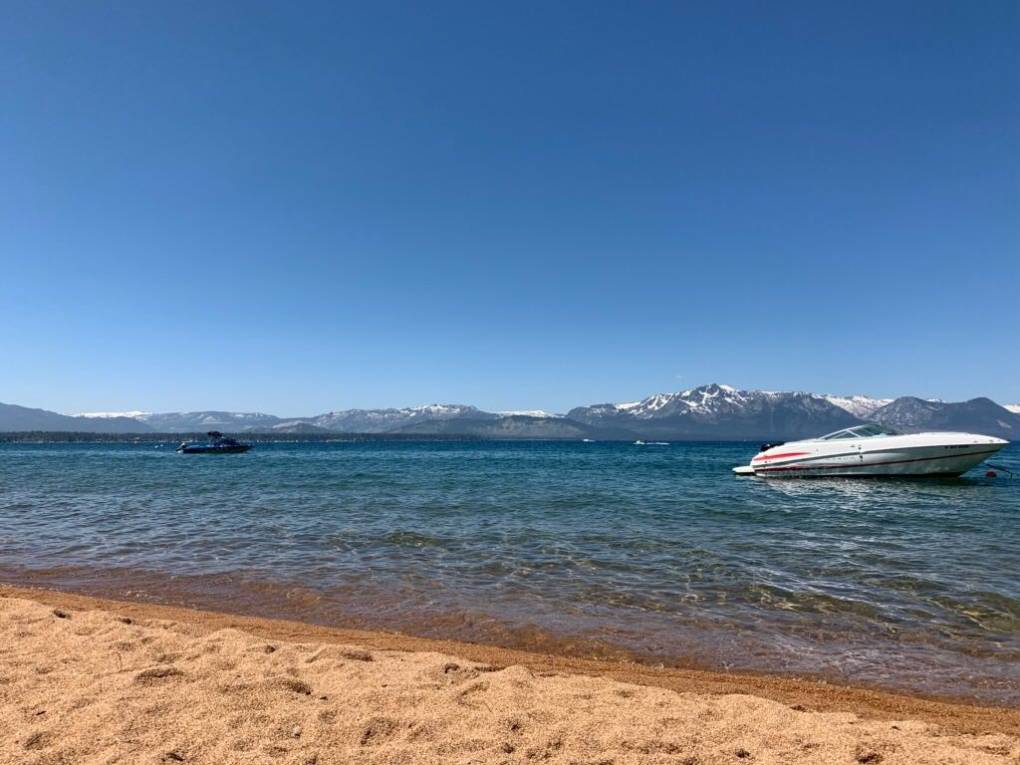
"caption": "Lake Tahoe over the July 4, 2019, weekend.",
"description": "Lake Tahoe over the July 4 2019 weekend.",
"title": "07192019_tahoe_racho_july4_boat-qut",
"credit": "Suzie Racho/KQED",
"status": "inherit",
"isLoading": false,
"fetchFailed": false
},
"news_11730036": {
"type": "attachments",
"id": "news_11730036",
"meta": {
"index": "attachments_1716263798",
"site": "news",
"id": "11730036",
"found": true
},
"parent": 11728586,
"imgSizes": {
"twentyfourteen-full-width": {
"file": "https://ww2.kqed.org/app/uploads/sites/10/2019/02/GettyImages-1132881595-1038x576.jpg",
"width": 1038,
"mimeType": "image/jpeg",
"height": 576
},
"thumbnail": {
"file": "https://ww2.kqed.org/app/uploads/sites/10/2019/02/GettyImages-1132881595-160x107.jpg",
"width": 160,
"mimeType": "image/jpeg",
"height": 107
},
"post-thumbnail": {
"file": "https://ww2.kqed.org/app/uploads/sites/10/2019/02/GettyImages-1132881595-672x372.jpg",
"width": 672,
"mimeType": "image/jpeg",
"height": 372
},
"kqedFullSize": {
"file": "https://ww2.kqed.org/app/uploads/sites/10/2019/02/GettyImages-1132881595-e1551471354186.jpg",
"width": 1920,
"height": 1280
},
"large": {
"file": "https://ww2.kqed.org/app/uploads/sites/10/2019/02/GettyImages-1132881595-1020x680.jpg",
"width": 1020,
"mimeType": "image/jpeg",
"height": 680
},
"complete_open_graph": {
"file": "https://ww2.kqed.org/app/uploads/sites/10/2019/02/GettyImages-1132881595-1200x800.jpg",
"width": 1200,
"mimeType": "image/jpeg",
"height": 800
},
"guest-author-50": {
"file": "https://ww2.kqed.org/app/uploads/sites/10/2019/02/GettyImages-1132881595-50x50.jpg",
"width": 50,
"mimeType": "image/jpeg",
"height": 50
},
"guest-author-96": {
"file": "https://ww2.kqed.org/app/uploads/sites/10/2019/02/GettyImages-1132881595-96x96.jpg",
"width": 96,
"mimeType": "image/jpeg",
"height": 96
},
"medium": {
"file": "https://ww2.kqed.org/app/uploads/sites/10/2019/02/GettyImages-1132881595-800x533.jpg",
"width": 800,
"mimeType": "image/jpeg",
"height": 533
},
"guest-author-64": {
"file": "https://ww2.kqed.org/app/uploads/sites/10/2019/02/GettyImages-1132881595-64x64.jpg",
"width": 64,
"mimeType": "image/jpeg",
"height": 64
},
"guest-author-32": {
"file": "https://ww2.kqed.org/app/uploads/sites/10/2019/02/GettyImages-1132881595-32x32.jpg",
"width": 32,
"mimeType": "image/jpeg",
"height": 32
},
"full-width": {
"file": "https://ww2.kqed.org/app/uploads/sites/10/2019/02/GettyImages-1132881595-1920x1280.jpg",
"width": 1920,
"mimeType": "image/jpeg",
"height": 1280
},
"guest-author-128": {
"file": "https://ww2.kqed.org/app/uploads/sites/10/2019/02/GettyImages-1132881595-128x128.jpg",
"width": 128,
"mimeType": "image/jpeg",
"height": 128
}
},
"publishDate": 1551471293,
"modified": 1553804511,
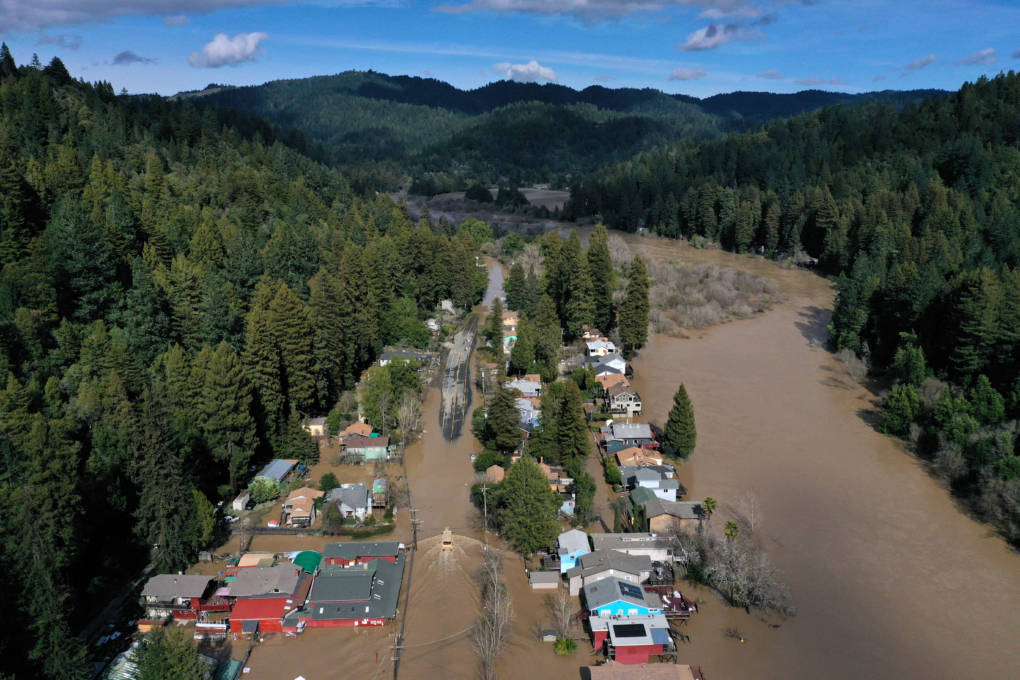
"caption": "An aerial view of a flooded neighborhood on Feb. 28, 2019, in Guerneville.",
"description": "An aerial view of a flooded neighborhood on Feb. 28, 2019, in Guerneville.",
"title": "Where’s Federal Help? Sonoma County Asks for Aid Dollars After Flooding",
"credit": "Justin Sullivan/Getty Images",
"status": "inherit",
"isLoading": false,
"fetchFailed": false
},
"news_11723283": {
"type": "attachments",
"id": "news_11723283",
"meta": {
"index": "attachments_1716263798",
"site": "news",
"id": "11723283",
"found": true
},
"title": "Guerneville-2017 Flooding",
"publishDate": 1549313781,
"status": "inherit",
"parent": 11723249,
"modified": 1738779513,
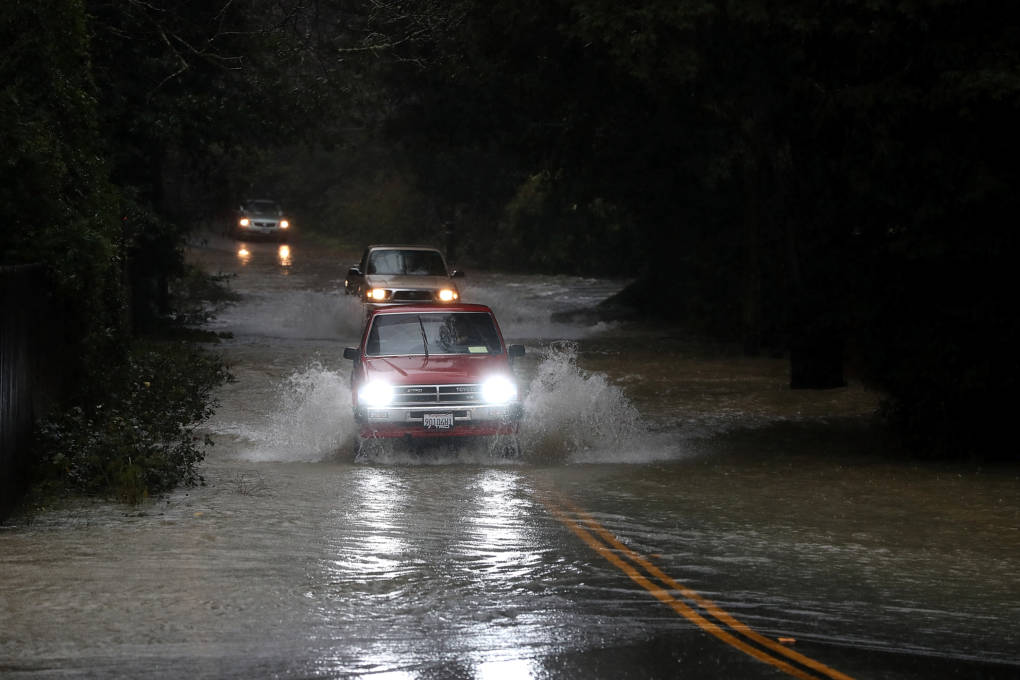
"caption": "Cars drive on a flooded road in Guerneville in January 2017. The Russian River town is just downstream from Venado, a site in the northern Sonoma County hills that is one of the rainiest locations in California. On Tuesday, at least one school in Guerneville closed because of the storm, and Sonoma County alerted residents in multiple RV parks along the Russian River and creeks that flow into the waterway that flooding may occur.",
"credit": "Justin Sullivan/Getty Images",
"altTag": null,
"description": null,
"imgSizes": {
"thumbnail": {
"file": "https://cdn.kqed.org/wp-content/uploads/sites/10/2019/02/GettyImages-631415386-160x107.jpg",
"width": 160,
"height": 107,
"mimeType": "image/jpeg"
},
"medium": {
"file": "https://cdn.kqed.org/wp-content/uploads/sites/10/2019/02/GettyImages-631415386-800x533.jpg",
"width": 800,
"height": 533,
"mimeType": "image/jpeg"
},
"large": {
"file": "https://cdn.kqed.org/wp-content/uploads/sites/10/2019/02/GettyImages-631415386-1020x680.jpg",
"width": 1020,
"height": 680,
"mimeType": "image/jpeg"
},
"complete_open_graph": {
"file": "https://cdn.kqed.org/wp-content/uploads/sites/10/2019/02/GettyImages-631415386-1200x800.jpg",
"width": 1200,
"height": 800,
"mimeType": "image/jpeg"
},
"post-thumbnail": {
"file": "https://cdn.kqed.org/wp-content/uploads/sites/10/2019/02/GettyImages-631415386-672x372.jpg",
"width": 672,
"height": 372,
"mimeType": "image/jpeg"
},
"twentyfourteen-full-width": {
"file": "https://cdn.kqed.org/wp-content/uploads/sites/10/2019/02/GettyImages-631415386-1038x576.jpg",
"width": 1038,
"height": 576,
"mimeType": "image/jpeg"
},
"full-width": {
"file": "https://cdn.kqed.org/wp-content/uploads/sites/10/2019/02/GettyImages-631415386-1920x1280.jpg",
"width": 1920,
"height": 1280,
"mimeType": "image/jpeg"
},
"guest-author-32": {
"file": "https://cdn.kqed.org/wp-content/uploads/sites/10/2019/02/GettyImages-631415386-32x32.jpg",
"width": 32,
"height": 32,
"mimeType": "image/jpeg"
},
"guest-author-50": {
"file": "https://cdn.kqed.org/wp-content/uploads/sites/10/2019/02/GettyImages-631415386-50x50.jpg",
"width": 50,
"height": 50,
"mimeType": "image/jpeg"
},
"guest-author-64": {
"file": "https://cdn.kqed.org/wp-content/uploads/sites/10/2019/02/GettyImages-631415386-64x64.jpg",
"width": 64,
"height": 64,
"mimeType": "image/jpeg"
},
"guest-author-96": {
"file": "https://cdn.kqed.org/wp-content/uploads/sites/10/2019/02/GettyImages-631415386-96x96.jpg",
"width": 96,
"height": 96,
"mimeType": "image/jpeg"
},
"guest-author-128": {
"file": "https://cdn.kqed.org/wp-content/uploads/sites/10/2019/02/GettyImages-631415386-128x128.jpg",
"width": 128,
"height": 128,
"mimeType": "image/jpeg"
},
"detail": {
"file": "https://cdn.kqed.org/wp-content/uploads/sites/10/2019/02/GettyImages-631415386-150x150.jpg",
"width": 150,
"height": 150,
"mimeType": "image/jpeg"
},
"kqedFullSize": {
"file": "https://cdn.kqed.org/wp-content/uploads/sites/10/2019/02/GettyImages-631415386-e1549313950719.jpg",
"width": 1920,
"height": 1280
}
},
"isLoading": false,
"fetchFailed": false
},
"news_11722988": {
"type": "attachments",
"id": "news_11722988",
"meta": {
"index": "attachments_1716263798",
"site": "news",
"id": "11722988",
"found": true
},
"parent": 11722967,
"imgSizes": {
"twentyfourteen-full-width": {
"file": "https://ww2.kqed.org/app/uploads/sites/10/2019/02/RS35088_Image-from-iOS-43-qut-1038x576.jpg",
"width": 1038,
"mimeType": "image/jpeg",
"height": 576
},
"thumbnail": {
"file": "https://ww2.kqed.org/app/uploads/sites/10/2019/02/RS35088_Image-from-iOS-43-qut-160x120.jpg",
"width": 160,
"mimeType": "image/jpeg",
"height": 120
},
"post-thumbnail": {
"file": "https://ww2.kqed.org/app/uploads/sites/10/2019/02/RS35088_Image-from-iOS-43-qut-672x372.jpg",
"width": 672,
"mimeType": "image/jpeg",
"height": 372
},
"kqedFullSize": {
"file": "https://ww2.kqed.org/app/uploads/sites/10/2019/02/RS35088_Image-from-iOS-43-qut.jpg",
"width": 1920,
"height": 1440
},
"large": {
"file": "https://ww2.kqed.org/app/uploads/sites/10/2019/02/RS35088_Image-from-iOS-43-qut-1020x765.jpg",
"width": 1020,
"mimeType": "image/jpeg",
"height": 765
},
"complete_open_graph": {
"file": "https://ww2.kqed.org/app/uploads/sites/10/2019/02/RS35088_Image-from-iOS-43-qut-1200x900.jpg",
"width": 1200,
"mimeType": "image/jpeg",
"height": 900
},
"guest-author-50": {
"file": "https://ww2.kqed.org/app/uploads/sites/10/2019/02/RS35088_Image-from-iOS-43-qut-50x50.jpg",
"width": 50,
"mimeType": "image/jpeg",
"height": 50
},
"guest-author-96": {
"file": "https://ww2.kqed.org/app/uploads/sites/10/2019/02/RS35088_Image-from-iOS-43-qut-96x96.jpg",
"width": 96,
"mimeType": "image/jpeg",
"height": 96
},
"medium": {
"file": "https://ww2.kqed.org/app/uploads/sites/10/2019/02/RS35088_Image-from-iOS-43-qut-800x600.jpg",
"width": 800,
"mimeType": "image/jpeg",
"height": 600
},
"guest-author-64": {
"file": "https://ww2.kqed.org/app/uploads/sites/10/2019/02/RS35088_Image-from-iOS-43-qut-64x64.jpg",
"width": 64,
"mimeType": "image/jpeg",
"height": 64
},
"guest-author-32": {
"file": "https://ww2.kqed.org/app/uploads/sites/10/2019/02/RS35088_Image-from-iOS-43-qut-32x32.jpg",
"width": 32,
"mimeType": "image/jpeg",
"height": 32
},
"full-width": {
"file": "https://ww2.kqed.org/app/uploads/sites/10/2019/02/RS35088_Image-from-iOS-43-qut-1920x1440.jpg",
"width": 1920,
"mimeType": "image/jpeg",
"height": 1440
},
"detail": {
"file": "https://ww2.kqed.org/app/uploads/sites/10/2019/02/RS35088_Image-from-iOS-43-qut-150x150.jpg",
"width": 150,
"mimeType": "image/jpeg",
"height": 150
},
"guest-author-128": {
"file": "https://ww2.kqed.org/app/uploads/sites/10/2019/02/RS35088_Image-from-iOS-43-qut-128x128.jpg",
"width": 128,
"mimeType": "image/jpeg",
"height": 128
}
},
"publishDate": 1549143590,
"modified": 1549143658,
"caption": "A leaf rests in a puddle in San Francisco's Mission District on Feb. 2, 2019, after a winter storm brought high wind and rains to the region.",
"description": "A leaf rests in a puddle in San Francisco's Mission District on Feb. 2, 2019, after a winter storm brought high wind and rains to the region.",
"title": "RS35088_Image from iOS (43)-qut",
"credit": "Bianca Hernandez/KQED",
"status": "inherit",
"isLoading": false,
"fetchFailed": false
},
"news_11707835": {
"type": "attachments",
"id": "news_11707835",
"meta": {
"index": "attachments_1716263798",
"site": "news",
"id": "11707835",
"found": true
},
"parent": 11707799,
"imgSizes": {
"twentyfourteen-full-width": {
"file": "https://ww2.kqed.org/app/uploads/sites/10/2018/11/nothanks_revise_112118_final-1038x576.jpg",
"width": 1038,
"mimeType": "image/jpeg",
"height": 576
},
"thumbnail": {
"file": "https://ww2.kqed.org/app/uploads/sites/10/2018/11/nothanks_revise_112118_final-160x104.jpg",
"width": 160,
"mimeType": "image/jpeg",
"height": 104
},
"post-thumbnail": {
"file": "https://ww2.kqed.org/app/uploads/sites/10/2018/11/nothanks_revise_112118_final-672x372.jpg",
"width": 672,
"mimeType": "image/jpeg",
"height": 372
},
"kqedFullSize": {
"file": "https://ww2.kqed.org/app/uploads/sites/10/2018/11/nothanks_revise_112118_final.jpg",
"width": 1920,
"height": 1249
},
"large": {
"file": "https://ww2.kqed.org/app/uploads/sites/10/2018/11/nothanks_revise_112118_final-1020x664.jpg",
"width": 1020,
"mimeType": "image/jpeg",
"height": 664
},
"complete_open_graph": {
"file": "https://ww2.kqed.org/app/uploads/sites/10/2018/11/nothanks_revise_112118_final-1200x781.jpg",
"width": 1200,
"mimeType": "image/jpeg",
"height": 781
},
"guest-author-50": {
"file": "https://ww2.kqed.org/app/uploads/sites/10/2018/11/nothanks_revise_112118_final-50x50.jpg",
"width": 50,
"mimeType": "image/jpeg",
"height": 50
},
"guest-author-96": {
"file": "https://ww2.kqed.org/app/uploads/sites/10/2018/11/nothanks_revise_112118_final-96x96.jpg",
"width": 96,
"mimeType": "image/jpeg",
"height": 96
},
"medium": {
"file": "https://ww2.kqed.org/app/uploads/sites/10/2018/11/nothanks_revise_112118_final-800x520.jpg",
"width": 800,
"mimeType": "image/jpeg",
"height": 520
},
"guest-author-64": {
"file": "https://ww2.kqed.org/app/uploads/sites/10/2018/11/nothanks_revise_112118_final-64x64.jpg",
"width": 64,
"mimeType": "image/jpeg",
"height": 64
},
"guest-author-32": {
"file": "https://ww2.kqed.org/app/uploads/sites/10/2018/11/nothanks_revise_112118_final-32x32.jpg",
"width": 32,
"mimeType": "image/jpeg",
"height": 32
},
"full-width": {
"file": "https://ww2.kqed.org/app/uploads/sites/10/2018/11/nothanks_revise_112118_final-1920x1249.jpg",
"width": 1920,
"mimeType": "image/jpeg",
"height": 1249
},
"detail": {
"file": "https://ww2.kqed.org/app/uploads/sites/10/2018/11/nothanks_revise_112118_final-150x150.jpg",
"width": 150,
"mimeType": "image/jpeg",
"height": 150
},
"guest-author-128": {
"file": "https://ww2.kqed.org/app/uploads/sites/10/2018/11/nothanks_revise_112118_final-128x128.jpg",
"width": 128,
"mimeType": "image/jpeg",
"height": 128
}
},
"publishDate": 1542835101,
"modified": 1542835128,
"caption": null,
"description": null,
"title": "nothanks_revise_112118_final",
"credit": null,
"status": "inherit",
"isLoading": false,
"fetchFailed": false
},
"news_11660673": {
"type": "attachments",
"id": "news_11660673",
"meta": {
"index": "attachments_1716263798",
"site": "news",
"id": "11660673",
"found": true
},
"parent": 11660671,
"imgSizes": {
"small": {
"file": "https://ww2.kqed.org/app/uploads/sites/10/2018/04/30052390_1872091829531872_2042425865891620171_o-520x390.jpg",
"width": 520,
"mimeType": "image/jpeg",
"height": 390
},
"twentyfourteen-full-width": {
"file": "https://ww2.kqed.org/app/uploads/sites/10/2018/04/30052390_1872091829531872_2042425865891620171_o-1038x576.jpg",
"width": 1038,
"mimeType": "image/jpeg",
"height": 576
},
"thumbnail": {
"file": "https://ww2.kqed.org/app/uploads/sites/10/2018/04/30052390_1872091829531872_2042425865891620171_o-160x120.jpg",
"width": 160,
"mimeType": "image/jpeg",
"height": 120
},
"fd-sm": {
"file": "https://ww2.kqed.org/app/uploads/sites/10/2018/04/30052390_1872091829531872_2042425865891620171_o-960x720.jpg",
"width": 960,
"mimeType": "image/jpeg",
"height": 720
},
"post-thumbnail": {
"file": "https://ww2.kqed.org/app/uploads/sites/10/2018/04/30052390_1872091829531872_2042425865891620171_o-672x372.jpg",
"width": 672,
"mimeType": "image/jpeg",
"height": 372
},
"xsmall": {
"file": "https://ww2.kqed.org/app/uploads/sites/10/2018/04/30052390_1872091829531872_2042425865891620171_o-375x281.jpg",
"width": 375,
"mimeType": "image/jpeg",
"height": 281
},
"kqedFullSize": {
"file": "https://ww2.kqed.org/app/uploads/sites/10/2018/04/30052390_1872091829531872_2042425865891620171_o.jpg",
"width": 1728,
"height": 1296
},
"large": {
"file": "https://ww2.kqed.org/app/uploads/sites/10/2018/04/30052390_1872091829531872_2042425865891620171_o-1020x765.jpg",
"width": 1020,
"mimeType": "image/jpeg",
"height": 765
},
"xlarge": {
"file": "https://ww2.kqed.org/app/uploads/sites/10/2018/04/30052390_1872091829531872_2042425865891620171_o-1180x885.jpg",
"width": 1180,
"mimeType": "image/jpeg",
"height": 885
},
"guest-author-50": {
"file": "https://ww2.kqed.org/app/uploads/sites/10/2018/04/30052390_1872091829531872_2042425865891620171_o-50x50.jpg",
"width": 50,
"mimeType": "image/jpeg",
"height": 50
},
"guest-author-96": {
"file": "https://ww2.kqed.org/app/uploads/sites/10/2018/04/30052390_1872091829531872_2042425865891620171_o-96x96.jpg",
"width": 96,
"mimeType": "image/jpeg",
"height": 96
},
"medium": {
"file": "https://ww2.kqed.org/app/uploads/sites/10/2018/04/30052390_1872091829531872_2042425865891620171_o-800x600.jpg",
"width": 800,
"mimeType": "image/jpeg",
"height": 600
},
"guest-author-64": {
"file": "https://ww2.kqed.org/app/uploads/sites/10/2018/04/30052390_1872091829531872_2042425865891620171_o-64x64.jpg",
"width": 64,
"mimeType": "image/jpeg",
"height": 64
},
"guest-author-32": {
"file": "https://ww2.kqed.org/app/uploads/sites/10/2018/04/30052390_1872091829531872_2042425865891620171_o-32x32.jpg",
"width": 32,
"mimeType": "image/jpeg",
"height": 32
},
"fd-med": {
"file": "https://ww2.kqed.org/app/uploads/sites/10/2018/04/30052390_1872091829531872_2042425865891620171_o-1180x885.jpg",
"width": 1180,
"mimeType": "image/jpeg",
"height": 885
},
"detail": {
"file": "https://ww2.kqed.org/app/uploads/sites/10/2018/04/30052390_1872091829531872_2042425865891620171_o-150x150.jpg",
"width": 150,
"mimeType": "image/jpeg",
"height": 150
},
"guest-author-128": {
"file": "https://ww2.kqed.org/app/uploads/sites/10/2018/04/30052390_1872091829531872_2042425865891620171_o-128x128.jpg",
"width": 128,
"mimeType": "image/jpeg",
"height": 128
},
"xxsmall": {
"file": "https://ww2.kqed.org/app/uploads/sites/10/2018/04/30052390_1872091829531872_2042425865891620171_o-240x180.jpg",
"width": 240,
"mimeType": "image/jpeg",
"height": 180
}
},
"publishDate": 1523219474,
"modified": 1523220395,
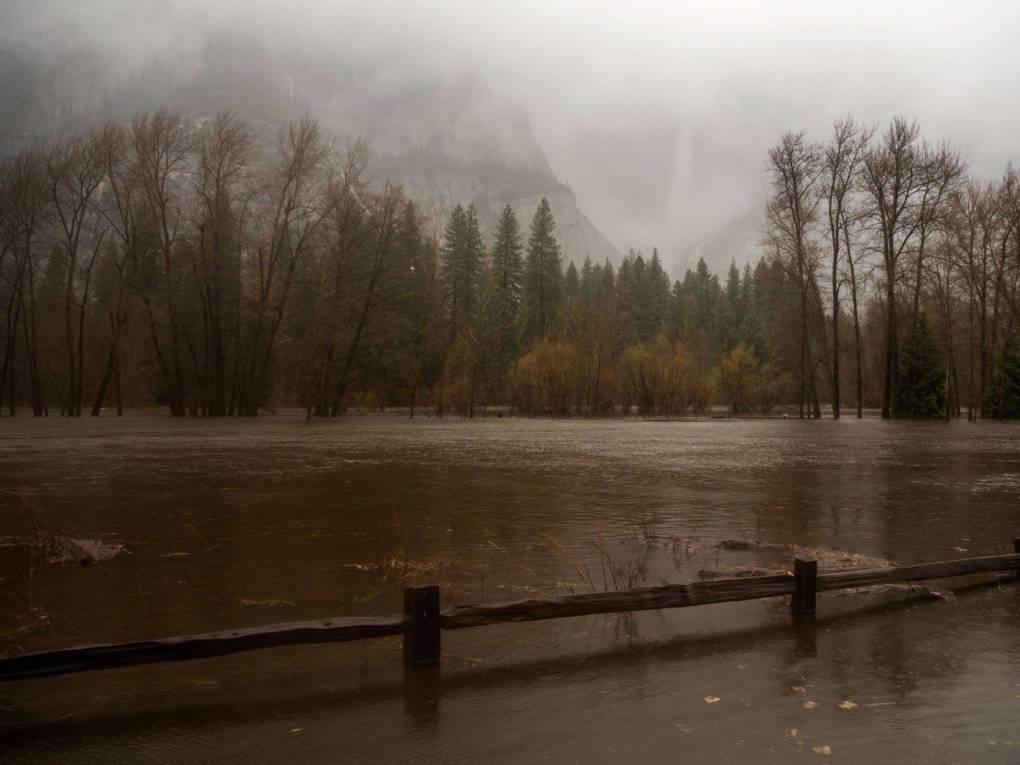
"caption": "Yosemite Valley was flooded over the weekend.",
"description": null,
"title": "30052390_1872091829531872_2042425865891620171_o",
"credit": "Courtesy of National Park Service",
"status": "inherit",
"isLoading": false,
"fetchFailed": false
},
"news_11660536": {
"type": "attachments",
"id": "news_11660536",
"meta": {
"index": "attachments_1716263798",
"site": "news",
"id": "11660536",
"found": true
},
"parent": 11660516,
"imgSizes": {
"small": {
"file": "https://ww2.kqed.org/app/uploads/sites/10/2018/04/pineappleexpress32018-520x293.png",
"width": 520,
"mimeType": "image/png",
"height": 293
},
"twentyfourteen-full-width": {
"file": "https://ww2.kqed.org/app/uploads/sites/10/2018/04/pineappleexpress32018-1038x576.png",
"width": 1038,
"mimeType": "image/png",
"height": 576
},
"thumbnail": {
"file": "https://ww2.kqed.org/app/uploads/sites/10/2018/04/pineappleexpress32018-160x90.png",
"width": 160,
"mimeType": "image/png",
"height": 90
},
"fd-sm": {
"file": "https://ww2.kqed.org/app/uploads/sites/10/2018/04/pineappleexpress32018-960x540.png",
"width": 960,
"mimeType": "image/png",
"height": 540
},
"post-thumbnail": {
"file": "https://ww2.kqed.org/app/uploads/sites/10/2018/04/pineappleexpress32018-672x372.png",
"width": 672,
"mimeType": "image/png",
"height": 372
},
"xsmall": {
"file": "https://ww2.kqed.org/app/uploads/sites/10/2018/04/pineappleexpress32018-375x211.png",
"width": 375,
"mimeType": "image/png",
"height": 211
},
"kqedFullSize": {
"file": "https://ww2.kqed.org/app/uploads/sites/10/2018/04/pineappleexpress32018.png",
"width": 1920,
"height": 1080
},
"large": {
"file": "https://ww2.kqed.org/app/uploads/sites/10/2018/04/pineappleexpress32018-1020x574.png",
"width": 1020,
"mimeType": "image/png",
"height": 574
},
"xlarge": {
"file": "https://ww2.kqed.org/app/uploads/sites/10/2018/04/pineappleexpress32018-1180x664.png",
"width": 1180,
"mimeType": "image/png",
"height": 664
},
"guest-author-50": {
"file": "https://ww2.kqed.org/app/uploads/sites/10/2018/04/pineappleexpress32018-50x50.png",
"width": 50,
"mimeType": "image/png",
"height": 50
},
"guest-author-96": {
"file": "https://ww2.kqed.org/app/uploads/sites/10/2018/04/pineappleexpress32018-96x96.png",
"width": 96,
"mimeType": "image/png",
"height": 96
},
"medium": {
"file": "https://ww2.kqed.org/app/uploads/sites/10/2018/04/pineappleexpress32018-800x450.png",
"width": 800,
"mimeType": "image/png",
"height": 450
},
"guest-author-64": {
"file": "https://ww2.kqed.org/app/uploads/sites/10/2018/04/pineappleexpress32018-64x64.png",
"width": 64,
"mimeType": "image/png",
"height": 64
},
"guest-author-32": {
"file": "https://ww2.kqed.org/app/uploads/sites/10/2018/04/pineappleexpress32018-32x32.png",
"width": 32,
"mimeType": "image/png",
"height": 32
},
"fd-lrg": {
"file": "https://ww2.kqed.org/app/uploads/sites/10/2018/04/pineappleexpress32018-1920x1080.png",
"width": 1920,
"mimeType": "image/png",
"height": 1080
},
"fd-med": {
"file": "https://ww2.kqed.org/app/uploads/sites/10/2018/04/pineappleexpress32018-1180x664.png",
"width": 1180,
"mimeType": "image/png",
"height": 664
},
"full-width": {
"file": "https://ww2.kqed.org/app/uploads/sites/10/2018/04/pineappleexpress32018-1920x1080.png",
"width": 1920,
"mimeType": "image/png",
"height": 1080
},
"detail": {
"file": "https://ww2.kqed.org/app/uploads/sites/10/2018/04/pineappleexpress32018-150x150.png",
"width": 150,
"mimeType": "image/png",
"height": 150
},
"guest-author-128": {
"file": "https://ww2.kqed.org/app/uploads/sites/10/2018/04/pineappleexpress32018-128x128.png",
"width": 128,
"mimeType": "image/png",
"height": 128
},
"xxsmall": {
"file": "https://ww2.kqed.org/app/uploads/sites/10/2018/04/pineappleexpress32018-240x135.png",
"width": 240,
"mimeType": "image/png",
"height": 135
}
},
"publishDate": 1523115897,
"modified": 1523116805,
"caption": "Satellite image of the storm off the Northern California coast on April 6, 2018.",
"description": null,
"title": "pineappleexpress32018",
"credit": "NOAA National Environmental Satellite, Data, and Information Service",
"status": "inherit",
"isLoading": false,
"fetchFailed": false
},
"news_11632795": {
"type": "attachments",
"id": "news_11632795",
"meta": {
"index": "attachments_1716263798",
"site": "news",
"id": "11632795",
"found": true
},
"parent": 11632773,
"imgSizes": {
"small": {
"file": "https://ww2.kqed.org/app/uploads/sites/10/2017/11/IMG_0274-520x390.jpg",
"width": 520,
"mimeType": "image/jpeg",
"height": 390
},
"twentyfourteen-full-width": {
"file": "https://ww2.kqed.org/app/uploads/sites/10/2017/11/IMG_0274-1038x576.jpg",
"width": 1038,
"mimeType": "image/jpeg",
"height": 576
},
"thumbnail": {
"file": "https://ww2.kqed.org/app/uploads/sites/10/2017/11/IMG_0274-160x120.jpg",
"width": 160,
"mimeType": "image/jpeg",
"height": 120
},
"fd-sm": {
"file": "https://ww2.kqed.org/app/uploads/sites/10/2017/11/IMG_0274-960x720.jpg",
"width": 960,
"mimeType": "image/jpeg",
"height": 720
},
"post-thumbnail": {
"file": "https://ww2.kqed.org/app/uploads/sites/10/2017/11/IMG_0274-672x372.jpg",
"width": 672,
"mimeType": "image/jpeg",
"height": 372
},
"xsmall": {
"file": "https://ww2.kqed.org/app/uploads/sites/10/2017/11/IMG_0274-375x281.jpg",
"width": 375,
"mimeType": "image/jpeg",
"height": 281
},
"kqedFullSize": {
"file": "https://ww2.kqed.org/app/uploads/sites/10/2017/11/IMG_0274.jpg",
"width": 2048,
"height": 1536
},
"large": {
"file": "https://ww2.kqed.org/app/uploads/sites/10/2017/11/IMG_0274-1020x765.jpg",
"width": 1020,
"mimeType": "image/jpeg",
"height": 765
},
"xlarge": {
"file": "https://ww2.kqed.org/app/uploads/sites/10/2017/11/IMG_0274-1180x885.jpg",
"width": 1180,
"mimeType": "image/jpeg",
"height": 885
},
"guest-author-50": {
"file": "https://ww2.kqed.org/app/uploads/sites/10/2017/11/IMG_0274-50x50.jpg",
"width": 50,
"mimeType": "image/jpeg",
"height": 50
},
"guest-author-96": {
"file": "https://ww2.kqed.org/app/uploads/sites/10/2017/11/IMG_0274-96x96.jpg",
"width": 96,
"mimeType": "image/jpeg",
"height": 96
},
"medium": {
"file": "https://ww2.kqed.org/app/uploads/sites/10/2017/11/IMG_0274-800x600.jpg",
"width": 800,
"mimeType": "image/jpeg",
"height": 600
},
"guest-author-64": {
"file": "https://ww2.kqed.org/app/uploads/sites/10/2017/11/IMG_0274-64x64.jpg",
"width": 64,
"mimeType": "image/jpeg",
"height": 64
},
"guest-author-32": {
"file": "https://ww2.kqed.org/app/uploads/sites/10/2017/11/IMG_0274-32x32.jpg",
"width": 32,
"mimeType": "image/jpeg",
"height": 32
},
"fd-lrg": {
"file": "https://ww2.kqed.org/app/uploads/sites/10/2017/11/IMG_0274-1920x1440.jpg",
"width": 1920,
"mimeType": "image/jpeg",
"height": 1440
},
"fd-med": {
"file": "https://ww2.kqed.org/app/uploads/sites/10/2017/11/IMG_0274-1180x885.jpg",
"width": 1180,
"mimeType": "image/jpeg",
"height": 885
},
"full-width": {
"file": "https://ww2.kqed.org/app/uploads/sites/10/2017/11/IMG_0274-1920x1440.jpg",
"width": 1920,
"mimeType": "image/jpeg",
"height": 1440
},
"detail": {
"file": "https://ww2.kqed.org/app/uploads/sites/10/2017/11/IMG_0274-150x150.jpg",
"width": 150,
"mimeType": "image/jpeg",
"height": 150
},
"guest-author-128": {
"file": "https://ww2.kqed.org/app/uploads/sites/10/2017/11/IMG_0274-128x128.jpg",
"width": 128,
"mimeType": "image/jpeg",
"height": 128
},
"xxsmall": {
"file": "https://ww2.kqed.org/app/uploads/sites/10/2017/11/IMG_0274-240x180.jpg",
"width": 240,
"mimeType": "image/jpeg",
"height": 180
}
},
"publishDate": 1511310018,
"modified": 1511399399,
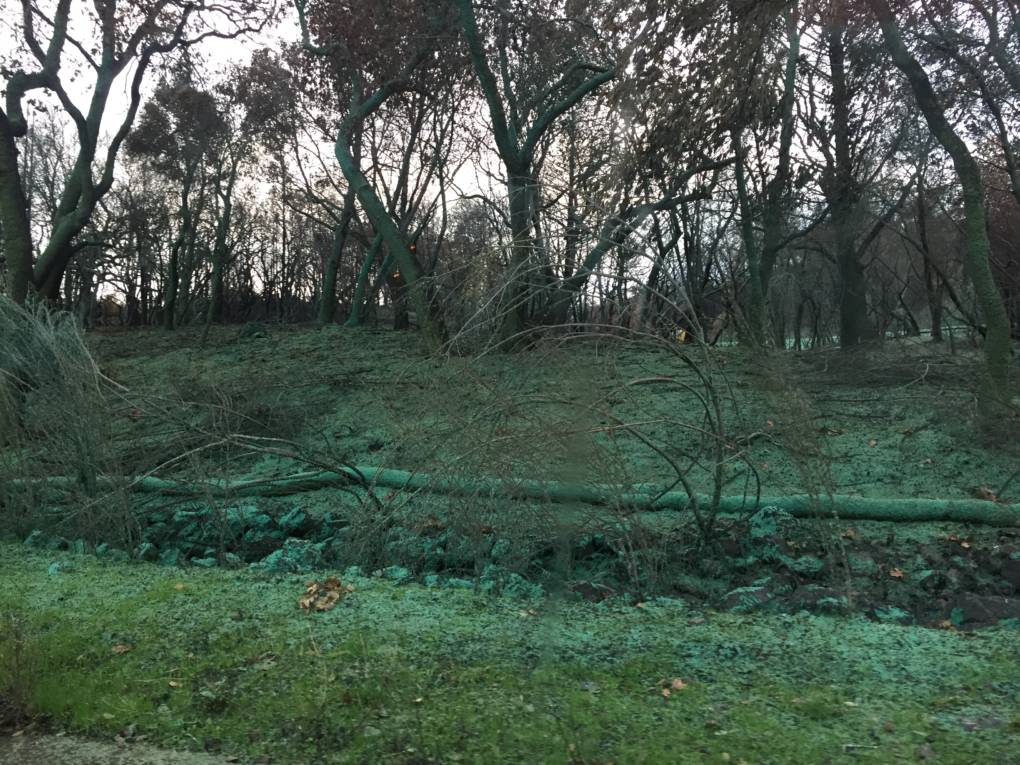
"caption": "Sonoma County has sprayed parts of the area with hydroseeding to quickly regrow vegetation on hillside slopes after the Tubbs Fire in October 2017. This is at the corner of Bridlewood Court and Greystone Court in Santa Rosa.",
"description": null,
"title": "IMG_0274",
"credit": "Erika Aguilar/KQED News",
"status": "inherit",
"isLoading": false,
"fetchFailed": false
},
"news_11625072": {
"type": "attachments",
"id": "news_11625072",
"meta": {
"index": "attachments_1716263798",
"site": "news",
"id": "11625072",
"found": true
},
"parent": 11625066,
"imgSizes": {
"thumbnail": {
"file": "https://ww2.kqed.org/app/uploads/sites/10/2017/10/thankyou_fires-160x160.gif",
"width": 160,
"mimeType": "image/gif",
"height": 160
},
"post-thumbnail": {
"file": "https://ww2.kqed.org/app/uploads/sites/10/2017/10/thankyou_fires-504x372.gif",
"width": 504,
"mimeType": "image/gif",
"height": 372
},
"xsmall": {
"file": "https://ww2.kqed.org/app/uploads/sites/10/2017/10/thankyou_fires-375x375.gif",
"width": 375,
"mimeType": "image/gif",
"height": 375
},
"kqedFullSize": {
"file": "https://ww2.kqed.org/app/uploads/sites/10/2017/10/thankyou_fires.gif",
"width": 504,
"height": 504
},
"guest-author-50": {
"file": "https://ww2.kqed.org/app/uploads/sites/10/2017/10/thankyou_fires-50x50.gif",
"width": 50,
"mimeType": "image/gif",
"height": 50
},
"guest-author-96": {
"file": "https://ww2.kqed.org/app/uploads/sites/10/2017/10/thankyou_fires-96x96.gif",
"width": 96,
"mimeType": "image/gif",
"height": 96
},
"guest-author-64": {
"file": "https://ww2.kqed.org/app/uploads/sites/10/2017/10/thankyou_fires-64x64.gif",
"width": 64,
"mimeType": "image/gif",
"height": 64
},
"detail": {
"file": "https://ww2.kqed.org/app/uploads/sites/10/2017/10/thankyou_fires-150x150.gif",
"width": 150,
"mimeType": "image/gif",
"height": 150
},
"guest-author-32": {
"file": "https://ww2.kqed.org/app/uploads/sites/10/2017/10/thankyou_fires-32x32.gif",
"width": 32,
"mimeType": "image/gif",
"height": 32
},
"guest-author-128": {
"file": "https://ww2.kqed.org/app/uploads/sites/10/2017/10/thankyou_fires-128x128.gif",
"width": 128,
"mimeType": "image/gif",
"height": 128
},
"xxsmall": {
"file": "https://ww2.kqed.org/app/uploads/sites/10/2017/10/thankyou_fires-240x240.gif",
"width": 240,
"mimeType": "image/gif",
"height": 240
}
},
"publishDate": 1508536236,
"modified": 1508536274,
"caption": null,
"description": null,
"title": "thankyou_fires",
"credit": null,
"status": "inherit",
"isLoading": false,
"fetchFailed": false
},
"news_11498315": {
"type": "attachments",
"id": "news_11498315",
"meta": {
"index": "attachments_1716263798",
"site": "news",
"id": "11498315",
"found": true
},
"parent": 11498314,
"imgSizes": {
"small": {
"file": "https://ww2.kqed.org/app/uploads/sites/10/2017/06/storm170607-e1496852528779-520x393.jpg",
"width": 520,
"mimeType": "image/jpeg",
"height": 393
},
"twentyfourteen-full-width": {
"file": "https://ww2.kqed.org/app/uploads/sites/10/2017/06/storm170607-e1496852528779-1038x576.jpg",
"width": 1038,
"mimeType": "image/jpeg",
"height": 576
},
"thumbnail": {
"file": "https://ww2.kqed.org/app/uploads/sites/10/2017/06/storm170607-e1496852528779-160x121.jpg",
"width": 160,
"mimeType": "image/jpeg",
"height": 121
},
"fd-sm": {
"file": "https://ww2.kqed.org/app/uploads/sites/10/2017/06/storm170607-e1496852528779-960x725.jpg",
"width": 960,
"mimeType": "image/jpeg",
"height": 725
},
"post-thumbnail": {
"file": "https://ww2.kqed.org/app/uploads/sites/10/2017/06/storm170607-e1496852528779-672x372.jpg",
"width": 672,
"mimeType": "image/jpeg",
"height": 372
},
"xsmall": {
"file": "https://ww2.kqed.org/app/uploads/sites/10/2017/06/storm170607-e1496852528779-375x283.jpg",
"width": 375,
"mimeType": "image/jpeg",
"height": 283
},
"kqedFullSize": {
"file": "https://ww2.kqed.org/app/uploads/sites/10/2017/06/storm170607-e1496852528779.jpg",
"width": 1065,
"height": 804
},
"large": {
"file": "https://ww2.kqed.org/app/uploads/sites/10/2017/06/storm170607-e1496852528779-1020x770.jpg",
"width": 1020,
"mimeType": "image/jpeg",
"height": 770
},
"xlarge": {
"file": "https://ww2.kqed.org/app/uploads/sites/10/2017/06/storm170607-1180x885.jpg",
"width": 1180,
"mimeType": "image/jpeg",
"height": 885
},
"guest-author-50": {
"file": "https://ww2.kqed.org/app/uploads/sites/10/2017/06/storm170607-e1496852528779-50x50.jpg",
"width": 50,
"mimeType": "image/jpeg",
"height": 50
},
"guest-author-96": {
"file": "https://ww2.kqed.org/app/uploads/sites/10/2017/06/storm170607-e1496852528779-96x96.jpg",
"width": 96,
"mimeType": "image/jpeg",
"height": 96
},
"medium": {
"file": "https://ww2.kqed.org/app/uploads/sites/10/2017/06/storm170607-e1496852528779-800x604.jpg",
"width": 800,
"mimeType": "image/jpeg",
"height": 604
},
"guest-author-64": {
"file": "https://ww2.kqed.org/app/uploads/sites/10/2017/06/storm170607-e1496852528779-64x64.jpg",
"width": 64,
"mimeType": "image/jpeg",
"height": 64
},
"guest-author-32": {
"file": "https://ww2.kqed.org/app/uploads/sites/10/2017/06/storm170607-e1496852528779-32x32.jpg",
"width": 32,
"mimeType": "image/jpeg",
"height": 32
},
"fd-med": {
"file": "https://ww2.kqed.org/app/uploads/sites/10/2017/06/storm170607-1180x885.jpg",
"width": 1180,
"mimeType": "image/jpeg",
"height": 885
},
"detail": {
"file": "https://ww2.kqed.org/app/uploads/sites/10/2017/06/storm170607-e1496852528779-150x150.jpg",
"width": 150,
"mimeType": "image/jpeg",
"height": 150
},
"guest-author-128": {
"file": "https://ww2.kqed.org/app/uploads/sites/10/2017/06/storm170607-e1496852528779-128x128.jpg",
"width": 128,
"mimeType": "image/jpeg",
"height": 128
},
"xxsmall": {
"file": "https://ww2.kqed.org/app/uploads/sites/10/2017/06/storm170607-e1496852528779-240x181.jpg",
"width": 240,
"mimeType": "image/jpeg",
"height": 181
}
},
"publishDate": 1496852275,
"modified": 1496858969,
"caption": "A color-enhanced infrared image of a storm moving into the Pacific Northwest early Wednesday. The system is expected to bring rain to most of the Bay Area on Thursday.",
"description": null,
"title": "Storm-June 7, 2017",
"credit": "NASA Earth Science Office",
"status": "inherit",
"isLoading": false,
"fetchFailed": false
},
"news_11395138": {
"type": "attachments",
"id": "news_11395138",
"meta": {
"index": "attachments_1716263798",
"site": "news",
"id": "11395138",
"found": true
},
"parent": 11395127,
"imgSizes": {
"small": {
"file": "https://ww2.kqed.org/app/uploads/sites/10/2017/04/RS3091_storm20121127-520x350.jpg",
"width": 520,
"mimeType": "image/jpeg",
"height": 350
},
"twentyfourteen-full-width": {
"file": "https://ww2.kqed.org/app/uploads/sites/10/2017/04/RS3091_storm20121127-1038x576.jpg",
"width": 1038,
"mimeType": "image/jpeg",
"height": 576
},
"thumbnail": {
"file": "https://ww2.kqed.org/app/uploads/sites/10/2017/04/RS3091_storm20121127-160x108.jpg",
"width": 160,
"mimeType": "image/jpeg",
"height": 108
},
"fd-sm": {
"file": "https://ww2.kqed.org/app/uploads/sites/10/2017/04/RS3091_storm20121127-960x645.jpg",
"width": 960,
"mimeType": "image/jpeg",
"height": 645
},
"post-thumbnail": {
"file": "https://ww2.kqed.org/app/uploads/sites/10/2017/04/RS3091_storm20121127-672x372.jpg",
"width": 672,
"mimeType": "image/jpeg",
"height": 372
},
"xsmall": {
"file": "https://ww2.kqed.org/app/uploads/sites/10/2017/04/RS3091_storm20121127-375x252.jpg",
"width": 375,
"mimeType": "image/jpeg",
"height": 252
},
"kqedFullSize": {
"file": "https://ww2.kqed.org/app/uploads/sites/10/2017/04/RS3091_storm20121127.jpg",
"width": 3000,
"height": 2017
},
"large": {
"file": "https://ww2.kqed.org/app/uploads/sites/10/2017/04/RS3091_storm20121127-1020x686.jpg",
"width": 1020,
"mimeType": "image/jpeg",
"height": 686
},
"xlarge": {
"file": "https://ww2.kqed.org/app/uploads/sites/10/2017/04/RS3091_storm20121127-1180x793.jpg",
"width": 1180,
"mimeType": "image/jpeg",
"height": 793
},
"guest-author-50": {
"file": "https://ww2.kqed.org/app/uploads/sites/10/2017/04/RS3091_storm20121127-50x50.jpg",
"width": 50,
"mimeType": "image/jpeg",
"height": 50
},
"guest-author-96": {
"file": "https://ww2.kqed.org/app/uploads/sites/10/2017/04/RS3091_storm20121127-96x96.jpg",
"width": 96,
"mimeType": "image/jpeg",
"height": 96
},
"medium": {
"file": "https://ww2.kqed.org/app/uploads/sites/10/2017/04/RS3091_storm20121127-800x538.jpg",
"width": 800,
"mimeType": "image/jpeg",
"height": 538
},
"guest-author-64": {
"file": "https://ww2.kqed.org/app/uploads/sites/10/2017/04/RS3091_storm20121127-64x64.jpg",
"width": 64,
"mimeType": "image/jpeg",
"height": 64
},
"guest-author-32": {
"file": "https://ww2.kqed.org/app/uploads/sites/10/2017/04/RS3091_storm20121127-32x32.jpg",
"width": 32,
"mimeType": "image/jpeg",
"height": 32
},
"fd-lrg": {
"file": "https://ww2.kqed.org/app/uploads/sites/10/2017/04/RS3091_storm20121127-1920x1291.jpg",
"width": 1920,
"mimeType": "image/jpeg",
"height": 1291
},
"fd-med": {
"file": "https://ww2.kqed.org/app/uploads/sites/10/2017/04/RS3091_storm20121127-1180x793.jpg",
"width": 1180,
"mimeType": "image/jpeg",
"height": 793
},
"full-width": {
"file": "https://ww2.kqed.org/app/uploads/sites/10/2017/04/RS3091_storm20121127-1920x1291.jpg",
"width": 1920,
"mimeType": "image/jpeg",
"height": 1291
},
"detail": {
"file": "https://ww2.kqed.org/app/uploads/sites/10/2017/04/RS3091_storm20121127-150x150.jpg",
"width": 150,
"mimeType": "image/jpeg",
"height": 150
},
"guest-author-128": {
"file": "https://ww2.kqed.org/app/uploads/sites/10/2017/04/RS3091_storm20121127-128x128.jpg",
"width": 128,
"mimeType": "image/jpeg",
"height": 128
},
"xxsmall": {
"file": "https://ww2.kqed.org/app/uploads/sites/10/2017/04/RS3091_storm20121127-240x161.jpg",
"width": 240,
"mimeType": "image/jpeg",
"height": 161
}
},
"publishDate": 1491508155,
"modified": 1491508203,
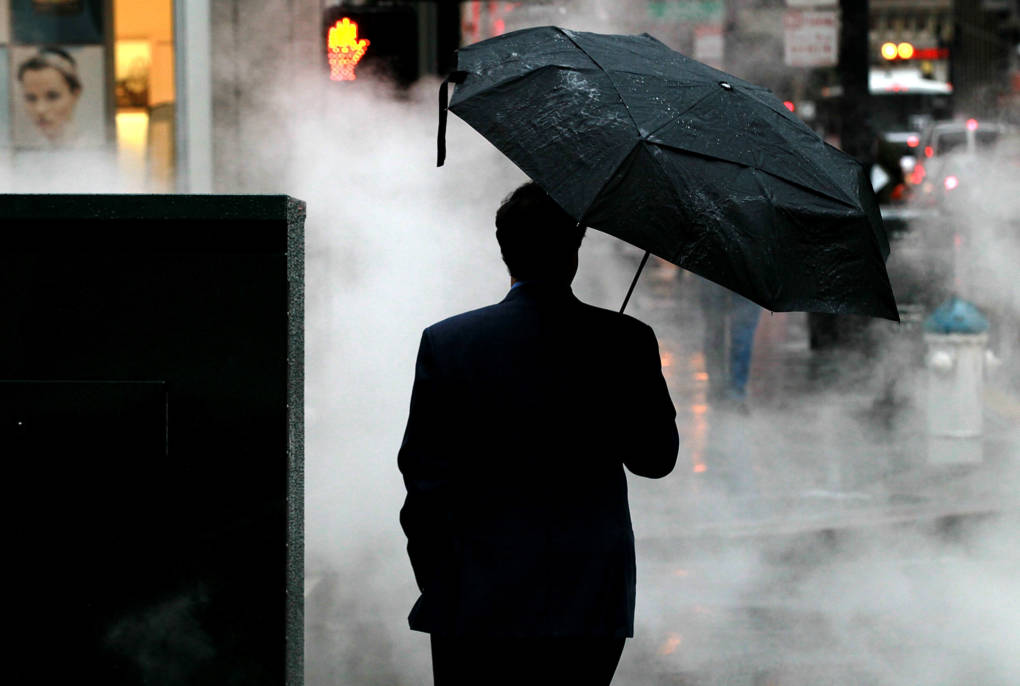
"caption": "A man fights the rain during a previous storm in downtown San Francisco.",
"description": null,
"title": "Winter Rainstorms Drench Bay Area",
"credit": "Justin Sullivan/Getty Images",
"status": "inherit",
"isLoading": false,
"fetchFailed": false
},
"news_11263562": {
"type": "attachments",
"id": "news_11263562",
"meta": {
"index": "attachments_1716263798",
"site": "news",
"id": "11263562",
"found": true
},
"parent": 11263556,
"imgSizes": {
"small": {
"file": "https://ww2.kqed.org/app/uploads/sites/10/2017/01/GettyImages-631415354-520x337.jpg",
"width": 520,
"mimeType": "image/jpeg",
"height": 337
},
"twentyfourteen-full-width": {
"file": "https://ww2.kqed.org/app/uploads/sites/10/2017/01/GettyImages-631415354-1038x576.jpg",
"width": 1038,
"mimeType": "image/jpeg",
"height": 576
},
"thumbnail": {
"file": "https://ww2.kqed.org/app/uploads/sites/10/2017/01/GettyImages-631415354-160x104.jpg",
"width": 160,
"mimeType": "image/jpeg",
"height": 104
},
"fd-sm": {
"file": "https://ww2.kqed.org/app/uploads/sites/10/2017/01/GettyImages-631415354-960x623.jpg",
"width": 960,
"mimeType": "image/jpeg",
"height": 623
},
"post-thumbnail": {
"file": "https://ww2.kqed.org/app/uploads/sites/10/2017/01/GettyImages-631415354-672x372.jpg",
"width": 672,
"mimeType": "image/jpeg",
"height": 372
},
"xsmall": {
"file": "https://ww2.kqed.org/app/uploads/sites/10/2017/01/GettyImages-631415354-375x243.jpg",
"width": 375,
"mimeType": "image/jpeg",
"height": 243
},
"kqedFullSize": {
"file": "https://ww2.kqed.org/app/uploads/sites/10/2017/01/GettyImages-631415354-e1484080314191.jpg",
"width": 1920,
"height": 1246
},
"large": {
"file": "https://ww2.kqed.org/app/uploads/sites/10/2017/01/GettyImages-631415354-1020x662.jpg",
"width": 1020,
"mimeType": "image/jpeg",
"height": 662
},
"xlarge": {
"file": "https://ww2.kqed.org/app/uploads/sites/10/2017/01/GettyImages-631415354-1180x766.jpg",
"width": 1180,
"mimeType": "image/jpeg",
"height": 766
},
"guest-author-50": {
"file": "https://ww2.kqed.org/app/uploads/sites/10/2017/01/GettyImages-631415354-50x50.jpg",
"width": 50,
"mimeType": "image/jpeg",
"height": 50
},
"guest-author-96": {
"file": "https://ww2.kqed.org/app/uploads/sites/10/2017/01/GettyImages-631415354-96x96.jpg",
"width": 96,
"mimeType": "image/jpeg",
"height": 96
},
"medium": {
"file": "https://ww2.kqed.org/app/uploads/sites/10/2017/01/GettyImages-631415354-800x519.jpg",
"width": 800,
"mimeType": "image/jpeg",
"height": 519
},
"guest-author-64": {
"file": "https://ww2.kqed.org/app/uploads/sites/10/2017/01/GettyImages-631415354-64x64.jpg",
"width": 64,
"mimeType": "image/jpeg",
"height": 64
},
"guest-author-32": {
"file": "https://ww2.kqed.org/app/uploads/sites/10/2017/01/GettyImages-631415354-32x32.jpg",
"width": 32,
"mimeType": "image/jpeg",
"height": 32
},
"jmtc-small-thumb": {
"file": "https://ww2.kqed.org/app/uploads/sites/10/2017/01/GettyImages-631415354-280x150.jpg",
"width": 280,
"mimeType": "image/jpeg",
"height": 150
},
"fd-lrg": {
"file": "https://ww2.kqed.org/app/uploads/sites/10/2017/01/GettyImages-631415354-1920x1246.jpg",
"width": 1920,
"mimeType": "image/jpeg",
"height": 1246
},
"fd-med": {
"file": "https://ww2.kqed.org/app/uploads/sites/10/2017/01/GettyImages-631415354-1180x766.jpg",
"width": 1180,
"mimeType": "image/jpeg",
"height": 766
},
"full-width": {
"file": "https://ww2.kqed.org/app/uploads/sites/10/2017/01/GettyImages-631415354-1920x1246.jpg",
"width": 1920,
"mimeType": "image/jpeg",
"height": 1246
},
"detail": {
"file": "https://ww2.kqed.org/app/uploads/sites/10/2017/01/GettyImages-631415354-150x150.jpg",
"width": 150,
"mimeType": "image/jpeg",
"height": 150
},
"guest-author-128": {
"file": "https://ww2.kqed.org/app/uploads/sites/10/2017/01/GettyImages-631415354-128x128.jpg",
"width": 128,
"mimeType": "image/jpeg",
"height": 128
},
"xxsmall": {
"file": "https://ww2.kqed.org/app/uploads/sites/10/2017/01/GettyImages-631415354-240x156.jpg",
"width": 240,
"mimeType": "image/jpeg",
"height": 156
}
},
"publishDate": 1484080212,
"modified": 1484080300,
"caption": "Floodwaters surround a nursery on Tuesday in Guerneville as the Russian River continues to run above flood stage. ",
"description": null,
"title": "Guerneville-Russian River flooding",
"credit": "Justin Sullivan/Getty Images",
"status": "inherit",
"isLoading": false,
"fetchFailed": false
}
},
"audioPlayerReducer": {
"postId": "stream_live",
"isPaused": true,
"isPlaying": false,
"pfsActive": false,
"pledgeModalIsOpen": true,
"playerDrawerIsOpen": false,
"liveAudioPlayStartedAt": 0,
"liveAudioPlayContext": ""
},
"authorsReducer": {
"byline_news_11762463": {
"type": "authors",
"id": "byline_news_11762463",
"meta": {
"override": true
},
"slug": "byline_news_11762463",
"name": "\u003cstrong>The Associated Press\u003c/strong>",
"isLoading": false
},
"byline_news_11660516": {
"type": "authors",
"id": "byline_news_11660516",
"meta": {
"override": true
},
"slug": "byline_news_11660516",
"name": "\u003cstrong>Associated Press\u003c/strong>",
"isLoading": false
},
"danbrekke": {
"type": "authors",
"id": "222",
"meta": {
"index": "authors_1716337520",
"id": "222",
"found": true
},
"name": "Dan Brekke",
"firstName": "Dan",
"lastName": "Brekke",
"slug": "danbrekke",
"email": "dbrekke@kqed.org",
"display_author_email": true,
"staff_mastheads": [
"news",
"science"
],
"title": "KQED Editor and Reporter",
"bio": "Dan Brekke is a reporter and editor for KQED News, responsible for coverage of topics ranging from California water issues to the Bay Area's transportation challenges. In a newsroom career that began in Chicago in 1972, Dan has worked for \u003cem>The San Francisco Examiner,\u003c/em> Wired and TechTV and has been published in The New York Times, The New York Times Magazine, Business 2.0, Salon and elsewhere.\r\n\r\nSince joining KQED in 2007, Dan has reported, edited and produced both radio and online features and breaking news pieces. He has shared as both editor and reporter in four Society of Professional Journalists Norcal Excellence in Journalism awards and one Edward R. Murrow regional award. He was chosen for a spring 2017 residency at the Mesa Refuge to advance his research on California salmon.\r\n\r\nEmail Dan at: \u003ca href=\"mailto:dbrekke@kqed.org\">dbrekke@kqed.org\u003c/a>\r\n\r\n\u003cstrong>Twitter:\u003c/strong> \u003ca href=\"https://twitter.com/danbrekke\" rel=\"noopener noreferrer\">twitter.com/danbrekke\u003c/a>\r\n\u003cstrong>Facebook:\u003c/strong> \u003ca href=\"https://www.facebook.com/danbrekke\" rel=\"noopener noreferrer\">www.facebook.com/danbrekke\u003c/a>\r\n\u003cstrong>LinkedIn:\u003c/strong> \u003ca href=\"https://www.linkedin.com/in/danbrekke\" rel=\"noopener noreferrer\">www.linkedin.com/in/danbrekke\u003c/a>",
"avatar": "https://secure.gravatar.com/avatar/8f1f0d2a978fb3b23426c922c7e2af558fa36905b49c4ce76a97dc3c72d27226?s=600&d=mm&r=g",
"twitter": "danbrekke",
"bluesky": null,
"facebook": null,
"instagram": "https://www.instagram.com/dan.brekke/",
"linkedin": "https://www.linkedin.com/in/danbrekke/",
"sites": [
{
"site": "news",
"roles": [
"administrator",
"create_posts"
]
},
{
"site": "stateofhealth",
"roles": [
"editor"
]
},
{
"site": "science",
"roles": [
"editor"
]
},
{
"site": "quest",
"roles": [
"contributor"
]
},
{
"site": "food",
"roles": [
"contributor"
]
},
{
"site": "forum",
"roles": [
"contributor"
]
},
{
"site": "elections",
"roles": [
"editor"
]
},
{
"site": "liveblog",
"roles": [
"editor"
]
}
],
"headData": {
"title": "Dan Brekke | KQED",
"description": "KQED Editor and Reporter",
"ogImgSrc": "https://secure.gravatar.com/avatar/8f1f0d2a978fb3b23426c922c7e2af558fa36905b49c4ce76a97dc3c72d27226?s=600&d=mm&r=g",
"twImgSrc": "https://secure.gravatar.com/avatar/8f1f0d2a978fb3b23426c922c7e2af558fa36905b49c4ce76a97dc3c72d27226?s=600&d=mm&r=g"
},
"isLoading": false,
"link": "/author/danbrekke"
},
"kqed": {
"type": "authors",
"id": "236",
"meta": {
"index": "authors_1716337520",
"id": "236",
"found": true
},
"name": "KQED News Staff",
"firstName": "KQED News Staff",
"lastName": null,
"slug": "kqed",
"email": "faq@kqed.org",
"display_author_email": false,
"staff_mastheads": [],
"title": null,
"bio": null,
"avatar": "https://secure.gravatar.com/avatar/ef0e801a68c4c54afa9180db14084167?s=600&d=blank&r=g",
"twitter": null,
"facebook": null,
"instagram": null,
"linkedin": null,
"sites": [
{
"site": "arts",
"roles": [
"contributor"
]
},
{
"site": "news",
"roles": [
"editor"
]
},
{
"site": "futureofyou",
"roles": [
"author"
]
}
],
"headData": {
"title": "KQED News Staff | KQED",
"description": null,
"ogImgSrc": "https://secure.gravatar.com/avatar/ef0e801a68c4c54afa9180db14084167?s=600&d=blank&r=g",
"twImgSrc": "https://secure.gravatar.com/avatar/ef0e801a68c4c54afa9180db14084167?s=600&d=blank&r=g"
},
"isLoading": false,
"link": "/author/kqed"
},
"kqednewsstaffandwires": {
"type": "authors",
"id": "237",
"meta": {
"index": "authors_1716337520",
"id": "237",
"found": true
},
"name": "KQED News Staff and Wires",
"firstName": "KQED News Staff and Wires",
"lastName": null,
"slug": "kqednewsstaffandwires",
"email": "onlinenewsstaff@kqed.org",
"display_author_email": false,
"staff_mastheads": [],
"title": null,
"bio": null,
"avatar": "https://secure.gravatar.com/avatar/72295af8ebbfbd19a4948f5271285664?s=600&d=blank&r=g",
"twitter": null,
"facebook": null,
"instagram": null,
"linkedin": null,
"sites": [
{
"site": "arts",
"roles": [
"contributor"
]
},
{
"site": "news",
"roles": [
"contributor"
]
},
{
"site": "lowdown",
"roles": [
"author"
]
},
{
"site": "stateofhealth",
"roles": [
"contributor"
]
},
{
"site": "food",
"roles": [
"author"
]
}
],
"headData": {
"title": "KQED News Staff and Wires | KQED",
"description": null,
"ogImgSrc": "https://secure.gravatar.com/avatar/72295af8ebbfbd19a4948f5271285664?s=600&d=blank&r=g",
"twImgSrc": "https://secure.gravatar.com/avatar/72295af8ebbfbd19a4948f5271285664?s=600&d=blank&r=g"
},
"isLoading": false,
"link": "/author/kqednewsstaffandwires"
},
"markfiore": {
"type": "authors",
"id": "3236",
"meta": {
"index": "authors_1716337520",
"id": "3236",
"found": true
},
"name": "Mark Fiore",
"firstName": "Mark",
"lastName": "Fiore",
"slug": "markfiore",
"email": "mark@markfiore.com",
"display_author_email": false,
"staff_mastheads": [
"news"
],
"title": "KQED News Cartoonist",
"bio": "\u003ca href=\"http://www.MarkFiore.com\">MarkFiore.com\u003c/a> | \u003ca href=\"https://twitter.com/markfiore\">Follow on Twitter\u003c/a> | \u003ca href=\"https://www.facebook.com/pages/Mark-Fiore-Animated-Political-Cartoons/94451707396?ref=bookmarks\">Facebook\u003c/a> | \u003ca href=\"mailto:mark@markfiore.com\">email\u003c/a>\r\n\r\nPulitzer Prize-winner, Mark Fiore, who the Wall Street Journal has called “the undisputed guru of the form,” creates animated political cartoons in San Francisco, where his work has been featured regularly on the San Francisco Chronicle’s web site, SFGate.com. His work has appeared on Newsweek.com, Slate.com, CBSNews.com, MotherJones.com, DailyKos.com and NPR’s web site. Fiore’s political animation has appeared on CNN, Frontline, Bill Moyers Journal, Salon.com and cable and broadcast outlets across the globe.\r\n\r\nBeginning his professional life by drawing traditional political cartoons for newspapers, Fiore’s work appeared in publications ranging from the Washington Post to the Los Angeles Times. In the late 1990s, he began to experiment with animating political cartoons and, after a short stint at the San Jose Mercury News as their staff cartoonist, Fiore devoted all his energies to animation.\r\nGrowing up in California, Fiore also spent a good portion of his life in the backwoods of Idaho. It was this combination that shaped him politically. Mark majored in political science at Colorado College, where, in a perfect send-off for a cartoonist, he received his diploma in 1991 as commencement speaker Dick Cheney smiled approvingly.\r\nMark Fiore was awarded the Pulitzer Prize for political cartooning in 2010, a Robert F. Kennedy Journalism Award in 2004 and has twice received an Online Journalism Award for commentary from the Online News Association (2002, 2008). Fiore has received two awards for his work in new media from the National Cartoonists Society (2001, 2002), and in 2006 received The James Madison Freedom of Information Award from The Society of Professional Journalists.",
"avatar": "https://secure.gravatar.com/avatar/fc4e2a612b15b67bad0c6f0e1db4ca9b?s=600&d=blank&r=g",
"twitter": "MarkFiore",
"facebook": null,
"instagram": "https://www.instagram.com/markfiore/?hl=en",
"linkedin": null,
"sites": [
{
"site": "arts",
"roles": [
"contributor"
]
},
{
"site": "news",
"roles": [
"editor"
]
},
{
"site": "futureofyou",
"roles": [
"editor"
]
},
{
"site": "science",
"roles": [
"editor"
]
}
],
"headData": {
"title": "Mark Fiore | KQED",
"description": "KQED News Cartoonist",
"ogImgSrc": "https://secure.gravatar.com/avatar/fc4e2a612b15b67bad0c6f0e1db4ca9b?s=600&d=blank&r=g",
"twImgSrc": "https://secure.gravatar.com/avatar/fc4e2a612b15b67bad0c6f0e1db4ca9b?s=600&d=blank&r=g"
},
"isLoading": false,
"link": "/author/markfiore"
},
"rlevi": {
"type": "authors",
"id": "11260",
"meta": {
"index": "authors_1716337520",
"id": "11260",
"found": true
},
"name": "Ryan Levi",
"firstName": "Ryan",
"lastName": "Levi",
"slug": "rlevi",
"email": "rlevi@KQED.org",
"display_author_email": false,
"staff_mastheads": [],
"title": "KQED Contributor",
"bio": "Ryan Levi was a reporter and podcast producer at KQED News from 2016-2019. He worked on \u003ca href=\"https://www.kqed.org/news/series/baycurious\">Bay Curious\u003c/a>, \u003ca href=\"https://www.kqed.org/news/tag/the-bay/\">The Bay, \u003c/a>and \u003ca href=\"https://podcasts.apple.com/us/podcast/the-california-report-magazine/id1314750545\">The California Report Magazine\u003c/a>, as well as hosting and producing the weekly \u003ca href=\"https://www.kqed.org/news/program/qedup/\">Q'ed Up podcast. \u003c/a>He also helped inaugurate KQED's weekend news coverage in 2017 as one of two original digital producers. Ryan holds degrees in multimedia journalism and Spanish from the University of Missouri.",
"avatar": "https://secure.gravatar.com/avatar/4cb2ddd028ac8807d1adf09609c5555d?s=600&d=blank&r=g",
"twitter": "ryan_levi",
"facebook": null,
"instagram": null,
"linkedin": null,
"sites": [
{
"site": "arts",
"roles": [
"editor"
]
},
{
"site": "news",
"roles": [
"subscriber"
]
},
{
"site": "stateofhealth",
"roles": [
"editor"
]
},
{
"site": "science",
"roles": [
"editor"
]
},
{
"site": "forum",
"roles": [
"administrator"
]
},
{
"site": "perspectives",
"roles": [
"administrator"
]
}
],
"headData": {
"title": "Ryan Levi | KQED",
"description": "KQED Contributor",
"ogImgSrc": "https://secure.gravatar.com/avatar/4cb2ddd028ac8807d1adf09609c5555d?s=600&d=blank&r=g",
"twImgSrc": "https://secure.gravatar.com/avatar/4cb2ddd028ac8807d1adf09609c5555d?s=600&d=blank&r=g"
},
"isLoading": false,
"link": "/author/rlevi"
},
"eaguilar": {
"type": "authors",
"id": "11382",
"meta": {
"index": "authors_1716337520",
"id": "11382",
"found": true
},
"name": "Erika Aguilar",
"firstName": "Erika",
"lastName": "Aguilar",
"slug": "eaguilar",
"email": "eaa712@gmail.com",
"display_author_email": false,
"staff_mastheads": [],
"title": "KQED Contributor",
"bio": "Erika Aguilar was the director of podcasts at KQED. She was in charge of KQED's portfolio of original podcasts and teams, and sets strategic plans for production and engagement.\r\n\r\nErika helped establish KQED's new housing affordability desk as senior editor. She was also a producer and editor for KQED's local news podcast called \u003cem>The Bay, \u003c/em>and wrote stories about housing in the Bay Area as a reporter for KQED News.\r\n\r\nErika joined KQED in 2017 after producing independent audio projects and podcasts in Southern California. She spent more than a dozen years reporting stories about law enforcement, breaking news, homelessness, government and the environment for KPCC in Los Angeles and KUT in Austin. She also volunteers as an editor and mentor for various journalism training programs.\r\n\r\nErika Aguilar is a proud Tejana from San Antonio. She believes in compromise, optimism and Selena.",
"avatar": "https://secure.gravatar.com/avatar/85bf7bb8dd9af4136525d94cef00f026?s=600&d=blank&r=g",
"twitter": "erikaaaguilar",
"facebook": null,
"instagram": null,
"linkedin": null,
"sites": [
{
"site": "",
"roles": [
"editor"
]
},
{
"site": "news",
"roles": [
"subscriber"
]
},
{
"site": "podcasts",
"roles": [
"editor"
]
}
],
"headData": {
"title": "Erika Aguilar | KQED",
"description": "KQED Contributor",
"ogImgSrc": "https://secure.gravatar.com/avatar/85bf7bb8dd9af4136525d94cef00f026?s=600&d=blank&r=g",
"twImgSrc": "https://secure.gravatar.com/avatar/85bf7bb8dd9af4136525d94cef00f026?s=600&d=blank&r=g"
},
"isLoading": false,
"link": "/author/eaguilar"
}
},
"pagesReducer": {
"news_tag_rain": {
"type": "terms",
"id": "news_465",
"meta": {
"index": "terms_1716263798",
"site": "news",
"id": "465",
"score": 9.30567
},
"featImg": null,
"name": "rain",
"description": null,
"taxonomy": "tag",
"headData": {
"twImgId": null,
"twTitle": null,
"ogTitle": null,
"ogImgId": null,
"twDescription": null,
"description": null,
"title": "rain Archives | KQED News",
"ogDescription": null
},
"ttid": 474,
"slug": "rain",
"isLoading": false,
"title": "rain",
"pageMeta": {
"site": "news",
"WpPageTemplate": "page-topic-editorial",
"currentPage": 5
},
"blocks": [
{
"blockName": "kqed/post-list",
"attrs": {
"layout": "cardArticle2",
"query": "posts/news?tag=rain",
"seeMore": false,
"paginated": true,
"page": 5
}
},
{
"blockName": "kqed/ad"
}
]
}
},
"pfsSessionReducer": {},
"postsReducer": {
"stream_live": {
"type": "live",
"id": "stream_live",
"audioUrl": "https://streams.kqed.org/kqedradio",
"title": "Live Stream",
"excerpt": "Live Stream information currently unavailable.",
"link": "/radio",
"featImg": "",
"label": {
"name": "KQED Live",
"link": "/"
}
},
"stream_kqedNewscast": {
"type": "posts",
"id": "stream_kqedNewscast",
"audioUrl": "https://www.kqed.org/.stream/anon/radio/RDnews/newscast.mp3?_=1",
"title": "KQED Newscast",
"featImg": "",
"label": {
"name": "88.5 FM",
"link": "/"
}
},
"news_11762463": {
"type": "posts",
"id": "news_11762463",
"meta": {
"index": "posts_1716263798",
"site": "news",
"id": "11762463",
"score": null,
"sort": [
1563570091000
]
},
"parent": 0,
"labelTerm": {
"site": "news",
"term": 72
},
"blocks": [],
"publishDate": 1563570091,
"format": "standard",
"disqusTitle": "Lake Tahoe Nearly Full After Stormy Winter; Potentially Enough Water for Three Summers",
"title": "Lake Tahoe Nearly Full After Stormy Winter; Potentially Enough Water for Three Summers",
"headTitle": "The California Report | KQED News",
"content": "\u003cp>Lake Tahoe is the fullest it has been in nearly two decades.\u003c/p>\n\u003cp>Officials say the alpine lake on the California-Nevada border is approaching the legal limit after snowmelt from a stormy winter left enough water to potentially last through three summers of drought.\u003c/p>\n\u003cp>[pullquote size='small' align='right' citation='Chad Blanchard, a federal water master in Reno']'We've had big (snow) years, but this one is unique as far as being up within an inch of being full and it's just hanging there.'[/pullquote]For three weeks, Tahoe has been within an inch (25 millimeters) of its maximum allowed surface elevation of 6,229.1 feet (1,898 meters) above sea level. It crept to within a half-inch (13 millimeters) earlier this week.\u003c/p>\n\u003cp>Chad Blanchard, a federal water master in Reno responsible for managing the water, told the \u003ca href=\"https://www.rgj.com/story/news/2019/07/12/lake-tahoe-almost-full-thats-great-news-renos-water-supply/1714801001/\" target=\"_blank\" rel=\"noopener\">Reno Gazette Journal\u003c/a> it's the longest he has seen the lake stay that high for so long.\u003c/p>\n\u003cp>\"This is a rare year,\" he said. \"I've been doing this for 26 years, and we've had big (snow) years, but this one is unique as far as being up within an inch of being full and it's just hanging there. ... It's a product of still having so much snow up there.\"\u003c/p>\n\u003cfigure id=\"attachment_11762502\" class=\"wp-caption alignnone\" style=\"max-width: 800px\">\u003cimg class=\"size-medium wp-image-11762502\" src=\"https://ww2.kqed.org/news/wp-content/uploads/sites/10/2019/07/07192019_tahoe_severn_march-qut-800x600.jpg\" alt=\"Lake Tahoe on March 31, 2019.\" width=\"800\" height=\"600\" srcset=\"https://ww2.kqed.org/app/uploads/sites/10/2019/07/07192019_tahoe_severn_march-qut-800x600.jpg 800w, https://ww2.kqed.org/app/uploads/sites/10/2019/07/07192019_tahoe_severn_march-qut-160x120.jpg 160w, https://ww2.kqed.org/app/uploads/sites/10/2019/07/07192019_tahoe_severn_march-qut-1020x765.jpg 1020w, https://ww2.kqed.org/app/uploads/sites/10/2019/07/07192019_tahoe_severn_march-qut-1200x900.jpg 1200w, https://ww2.kqed.org/app/uploads/sites/10/2019/07/07192019_tahoe_severn_march-qut.jpg 1920w, https://ww2.kqed.org/app/uploads/sites/10/2019/07/07192019_tahoe_severn_march-qut-1832x1374.jpg 1832w, https://ww2.kqed.org/app/uploads/sites/10/2019/07/07192019_tahoe_severn_march-qut-1376x1032.jpg 1376w, https://ww2.kqed.org/app/uploads/sites/10/2019/07/07192019_tahoe_severn_march-qut-1044x783.jpg 1044w, https://ww2.kqed.org/app/uploads/sites/10/2019/07/07192019_tahoe_severn_march-qut-632x474.jpg 632w, https://ww2.kqed.org/app/uploads/sites/10/2019/07/07192019_tahoe_severn_march-qut-536x402.jpg 536w\" sizes=\"(max-width: 800px) 100vw, 800px\">\u003cfigcaption class=\"wp-caption-text\">Lake Tahoe on March 31, 2019. \u003ccite>(Carly Severn/KQED)\u003c/cite>\u003c/figcaption>\u003c/figure>\n\u003cp>Lake Tahoe, the second-deepest lake in the U.S. at about 1,645 feet (501 meters), typically holds enough water to cover the entire state of California with 14 inches (35 centimeters) of the wet stuff. Only Oregon's Crater Lake is deeper.\u003c/p>\n\u003cp>As winter snow continues to melt from mountaintops and into Tahoe, the rate of summertime surface evaporation is beginning to pick up.\u003c/p>\n\u003cfigure id=\"attachment_11762516\" class=\"wp-caption alignnone\" style=\"max-width: 800px\">\u003cimg class=\"size-medium wp-image-11762516\" src=\"https://ww2.kqed.org/news/wp-content/uploads/sites/10/2019/07/07192019_lake-tahoe_snow_winter_water_zach-qut-800x533.jpg\" alt=\"Lake Tahoe on July 10, 2019.\" width=\"800\" height=\"533\" srcset=\"https://ww2.kqed.org/app/uploads/sites/10/2019/07/07192019_lake-tahoe_snow_winter_water_zach-qut-800x533.jpg 800w, https://ww2.kqed.org/app/uploads/sites/10/2019/07/07192019_lake-tahoe_snow_winter_water_zach-qut-160x107.jpg 160w, https://ww2.kqed.org/app/uploads/sites/10/2019/07/07192019_lake-tahoe_snow_winter_water_zach-qut-1020x680.jpg 1020w, https://ww2.kqed.org/app/uploads/sites/10/2019/07/07192019_lake-tahoe_snow_winter_water_zach-qut-1200x800.jpg 1200w, https://ww2.kqed.org/app/uploads/sites/10/2019/07/07192019_lake-tahoe_snow_winter_water_zach-qut.jpg 1920w\" sizes=\"(max-width: 800px) 100vw, 800px\">\u003cfigcaption class=\"wp-caption-text\">Lake Tahoe on July 10, 2019. \u003ccite>(David Zach/Flickr)\u003c/cite>\u003c/figcaption>\u003c/figure>\n\u003cp>Blanchard says the lake soon will reach a point of equilibrium when snowmelt slows and the rate of evaporation increases. Then, the lake level will begin to drop.\u003c/p>\n\u003cp>[aside tag='snow' label='Related Coverage']\"What it means going forward is a good water supply for three years,\" he said.\u003c/p>\n\u003cp>The legal limit of the lake plays a role in determining if, when and how much water is spilled into the Truckee River at a dam in Tahoe City, California.\u003c/p>\n\u003cp>The San Jose Mercury News reported the lake level has risen 8 feet (2.5 meters) since the beginning of 2016, when it hit a low point during California's five-year drought.\u003c/p>\n\u003cp>This summer will be the third time in the past three years that the lake has come up to the edge of its legal limit. That previously happened in 1998, 1999 and 2000.\u003c/p>\n\u003cp>[ad fullwidth]\u003c/p>\n\u003cp>\u003c/p>\n",
"disqusIdentifier": "11762463 https://ww2.kqed.org/news/?p=11762463",
"disqusUrl": "https://ww2.kqed.org/news/2019/07/19/lake-tahoe-nearly-full-after-stormy-winter-potentially-enough-water-for-three-summers/",
"stats": {
"hasVideo": false,
"hasChartOrMap": false,
"hasAudio": false,
"hasPolis": false,
"wordCount": 447,
"hasGoogleForm": false,
"hasGallery": false,
"hasHearkenModule": false,
"iframeSrcs": [],
"paragraphCount": 14
},
"modified": 1563577786,
"excerpt": "This summer will be the third time in the past three years that the lake has come up to the edge of its legal limit. That previously happened in 1998, 1999 and 2000.",
"headData": {
"twImgId": "",
"twTitle": "",
"ogTitle": "",
"ogImgId": "",
"twDescription": "",
"description": "This summer will be the third time in the past three years that the lake has come up to the edge of its legal limit. That previously happened in 1998, 1999 and 2000.",
"title": "Lake Tahoe Nearly Full After Stormy Winter; Potentially Enough Water for Three Summers | KQED",
"ogDescription": "",
"schema": {
"@context": "https://schema.org",
"@type": "NewsArticle",
"headline": "Lake Tahoe Nearly Full After Stormy Winter; Potentially Enough Water for Three Summers",
"datePublished": "2019-07-19T14:01:31-07:00",
"dateModified": "2019-07-19T16:09:46-07:00",
"image": "https://cdn.kqed.org/wp-content/uploads/2020/02/KQED-OG-Image@1x.png",
"isAccessibleForFree": "True",
"publisher": {
"@type": "NewsMediaOrganization",
"@id": "https://www.kqed.org/#organization",
"name": "KQED",
"logo": "https://cdn.kqed.org/wp-content/uploads/2020/02/KQED-OG-Image@1x.png",
"url": "https://www.kqed.org",
"sameAs": [
"https://www.facebook.com/KQED",
"https://twitter.com/KQED",
"https://www.instagram.com/kqed/",
"https://www.tiktok.com/@kqedofficial",
"https://www.linkedin.com/company/kqed",
"https://www.youtube.com/channel/UCeC0IOo7i1P_61zVUWbJ4nw"
]
}
}
},
"guestAuthors": [],
"slug": "lake-tahoe-nearly-full-after-stormy-winter-potentially-enough-water-for-three-summers",
"status": "publish",
"nprByline": "\u003cstrong>The Associated Press\u003c/strong>",
"path": "/news/11762463/lake-tahoe-nearly-full-after-stormy-winter-potentially-enough-water-for-three-summers",
"audioTrackLength": null,
"parsedContent": [
{
"type": "contentString",
"content": "\u003cdiv class=\"post-body\">\u003cp>\u003cp>Lake Tahoe is the fullest it has been in nearly two decades.\u003c/p>\n\u003cp>Officials say the alpine lake on the California-Nevada border is approaching the legal limit after snowmelt from a stormy winter left enough water to potentially last through three summers of drought.\u003c/p>\n\u003cp>\u003c/p>\u003c/div>",
"attributes": {
"named": {},
"numeric": []
}
},
{
"type": "component",
"content": "'We've had big (snow) years, but this one is unique as far as being up within an inch of being full and it's just hanging there.'",
"name": "pullquote",
"attributes": {
"named": {
"size": "small",
"align": "right",
"citation": "Chad Blanchard, a federal water master in Reno",
"label": ""
},
"numeric": []
}
},
{
"type": "contentString",
"content": "\u003cdiv class=\"post-body\">\u003cp>For three weeks, Tahoe has been within an inch (25 millimeters) of its maximum allowed surface elevation of 6,229.1 feet (1,898 meters) above sea level. It crept to within a half-inch (13 millimeters) earlier this week.\u003c/p>\n\u003cp>Chad Blanchard, a federal water master in Reno responsible for managing the water, told the \u003ca href=\"https://www.rgj.com/story/news/2019/07/12/lake-tahoe-almost-full-thats-great-news-renos-water-supply/1714801001/\" target=\"_blank\" rel=\"noopener\">Reno Gazette Journal\u003c/a> it's the longest he has seen the lake stay that high for so long.\u003c/p>\n\u003cp>\"This is a rare year,\" he said. \"I've been doing this for 26 years, and we've had big (snow) years, but this one is unique as far as being up within an inch of being full and it's just hanging there. ... It's a product of still having so much snow up there.\"\u003c/p>\n\u003cfigure id=\"attachment_11762502\" class=\"wp-caption alignnone\" style=\"max-width: 800px\">\u003cimg class=\"size-medium wp-image-11762502\" src=\"https://ww2.kqed.org/news/wp-content/uploads/sites/10/2019/07/07192019_tahoe_severn_march-qut-800x600.jpg\" alt=\"Lake Tahoe on March 31, 2019.\" width=\"800\" height=\"600\" srcset=\"https://ww2.kqed.org/app/uploads/sites/10/2019/07/07192019_tahoe_severn_march-qut-800x600.jpg 800w, https://ww2.kqed.org/app/uploads/sites/10/2019/07/07192019_tahoe_severn_march-qut-160x120.jpg 160w, https://ww2.kqed.org/app/uploads/sites/10/2019/07/07192019_tahoe_severn_march-qut-1020x765.jpg 1020w, https://ww2.kqed.org/app/uploads/sites/10/2019/07/07192019_tahoe_severn_march-qut-1200x900.jpg 1200w, https://ww2.kqed.org/app/uploads/sites/10/2019/07/07192019_tahoe_severn_march-qut.jpg 1920w, https://ww2.kqed.org/app/uploads/sites/10/2019/07/07192019_tahoe_severn_march-qut-1832x1374.jpg 1832w, https://ww2.kqed.org/app/uploads/sites/10/2019/07/07192019_tahoe_severn_march-qut-1376x1032.jpg 1376w, https://ww2.kqed.org/app/uploads/sites/10/2019/07/07192019_tahoe_severn_march-qut-1044x783.jpg 1044w, https://ww2.kqed.org/app/uploads/sites/10/2019/07/07192019_tahoe_severn_march-qut-632x474.jpg 632w, https://ww2.kqed.org/app/uploads/sites/10/2019/07/07192019_tahoe_severn_march-qut-536x402.jpg 536w\" sizes=\"(max-width: 800px) 100vw, 800px\">\u003cfigcaption class=\"wp-caption-text\">Lake Tahoe on March 31, 2019. \u003ccite>(Carly Severn/KQED)\u003c/cite>\u003c/figcaption>\u003c/figure>\n\u003cp>Lake Tahoe, the second-deepest lake in the U.S. at about 1,645 feet (501 meters), typically holds enough water to cover the entire state of California with 14 inches (35 centimeters) of the wet stuff. Only Oregon's Crater Lake is deeper.\u003c/p>\n\u003cp>As winter snow continues to melt from mountaintops and into Tahoe, the rate of summertime surface evaporation is beginning to pick up.\u003c/p>\n\u003cfigure id=\"attachment_11762516\" class=\"wp-caption alignnone\" style=\"max-width: 800px\">\u003cimg class=\"size-medium wp-image-11762516\" src=\"https://ww2.kqed.org/news/wp-content/uploads/sites/10/2019/07/07192019_lake-tahoe_snow_winter_water_zach-qut-800x533.jpg\" alt=\"Lake Tahoe on July 10, 2019.\" width=\"800\" height=\"533\" srcset=\"https://ww2.kqed.org/app/uploads/sites/10/2019/07/07192019_lake-tahoe_snow_winter_water_zach-qut-800x533.jpg 800w, https://ww2.kqed.org/app/uploads/sites/10/2019/07/07192019_lake-tahoe_snow_winter_water_zach-qut-160x107.jpg 160w, https://ww2.kqed.org/app/uploads/sites/10/2019/07/07192019_lake-tahoe_snow_winter_water_zach-qut-1020x680.jpg 1020w, https://ww2.kqed.org/app/uploads/sites/10/2019/07/07192019_lake-tahoe_snow_winter_water_zach-qut-1200x800.jpg 1200w, https://ww2.kqed.org/app/uploads/sites/10/2019/07/07192019_lake-tahoe_snow_winter_water_zach-qut.jpg 1920w\" sizes=\"(max-width: 800px) 100vw, 800px\">\u003cfigcaption class=\"wp-caption-text\">Lake Tahoe on July 10, 2019. \u003ccite>(David Zach/Flickr)\u003c/cite>\u003c/figcaption>\u003c/figure>\n\u003cp>Blanchard says the lake soon will reach a point of equilibrium when snowmelt slows and the rate of evaporation increases. Then, the lake level will begin to drop.\u003c/p>\n\u003cp>\u003c/p>\u003c/div>",
"attributes": {
"named": {},
"numeric": []
}
},
{
"type": "component",
"content": "",
"name": "aside",
"attributes": {
"named": {
"tag": "snow",
"label": "Related Coverage "
},
"numeric": []
}
},
{
"type": "contentString",
"content": "\u003cdiv class=\"post-body\">\u003cp>\"What it means going forward is a good water supply for three years,\" he said.\u003c/p>\n\u003cp>The legal limit of the lake plays a role in determining if, when and how much water is spilled into the Truckee River at a dam in Tahoe City, California.\u003c/p>\n\u003cp>The San Jose Mercury News reported the lake level has risen 8 feet (2.5 meters) since the beginning of 2016, when it hit a low point during California's five-year drought.\u003c/p>\n\u003cp>This summer will be the third time in the past three years that the lake has come up to the edge of its legal limit. That previously happened in 1998, 1999 and 2000.\u003c/p>\n\u003cp>\u003c/p>\u003c/div>",
"attributes": {
"named": {},
"numeric": []
}
},
{
"type": "component",
"content": "",
"name": "ad",
"attributes": {
"named": {
"label": "fullwidth"
},
"numeric": [
"fullwidth"
]
}
},
{
"type": "contentString",
"content": "\u003cdiv class=\"post-body\">\u003cp>\u003c/p>\n\u003cp>\u003c/p>\n\u003c/div>\u003c/p>",
"attributes": {
"named": {},
"numeric": []
}
}
],
"link": "/news/11762463/lake-tahoe-nearly-full-after-stormy-winter-potentially-enough-water-for-three-summers",
"authors": [
"byline_news_11762463"
],
"programs": [
"news_72"
],
"categories": [
"news_19906",
"news_8",
"news_356"
],
"tags": [
"news_1430",
"news_465",
"news_466",
"news_3868"
],
"featImg": "news_11762505",
"label": "news_72"
},
"news_11728586": {
"type": "posts",
"id": "news_11728586",
"meta": {
"index": "posts_1716263798",
"site": "news",
"id": "11728586",
"score": null,
"sort": [
1551475855000
]
},
"parent": 0,
"labelTerm": {
"site": "news"
},
"blocks": [],
"publishDate": 1551475855,
"format": "image",
"disqusTitle": "Russian River Recedes, Residents Allowed to Return",
"title": "Russian River Recedes, Residents Allowed to Return",
"headTitle": "KQED News",
"content": "\u003cp>\u003cstrong>Update, 1:50 p.m. Friday:\u003c/strong>\u003c/p>\n\u003cp>Authorities have reopened the roads into Guerneville and Monte Rio and the Sonoma County Sheriff's Office said \u003ca href=\"http://nixle.us/ASLFL\" rel=\"noopener\" target=\"_blank\">in a statement\u003c/a> it has lifted evacuation orders for about 3,500 people. Residents of the two towns are now starting to return home and work crews are beginning to clean up after the flooding from the Russian River. \u003c/p>\n\u003cp>However, the Sheriff's Office is urging residents to be careful because crews are still in the processing of clearing the roads of debris. Although the roads have been reopened to the general public as well, officials also requested that only those with businesses in the area enter right now. \"If you do not have legitimate business in the flood areas, please do not go out there,\" said the statement.\u003c/p>\n\u003cp>The river broke its banks Wednesday and reached a high of nearly 46 feet that night — the highest in more than 20 years — filling the stores and homes in downtown Guerneville with muddy water. \u003c/p>\n\u003cp>\u003ca href=\"https://www.sonomanews.com/news/9339686-181/russian-river-residents-will-need?sba=AAS\" rel=\"noopener\" target=\"_blank\">The Press Democrat\u003c/a> spoke with Sonoma County Sheriff’s Sgt. Spencer Crum:\u003c/p>\n\u003cblockquote>\u003cp>Among the organizations making inspections in the flooded areas along the Russian River include PG&E, the Sonoma County Department of Health Services and the county’s road maintenance team, Crum said. Each group will be on the look out of hazards caused by the atmospheric river that began on Monday, which include downed power lines and blocked roadways, he said.\u003cbr>\n\u003cbr>\nEmployees from Permit Sonoma will also enter the communities along the Russian River, when the roads become passable, to check flood-affected buildings, Sonoma County Supervisor Lynda Hopkins said.\u003c/p>\u003c/blockquote>\n\u003cp>Gov. Gavin Newsom on Thursday declared a state of emergency in Sonoma County, which Supervisor Hopkins welcomed.\u003c/p>\n\u003cp>\"That was a critical step in allowing us to access additional resources that will help us to fund hopefully some of the major repairs,\" Hopkins said. \"Unfortunately, in addition to the direct impacts to the flooding, we've had a number of road slides and anticipate extensive road damage to our rural road network.\"\u003c/p>\n\u003cp>Hopkins expected to survey the area Friday morning and help put together preliminary damage estimates to present to the state on Monday.\u003c/p>\n\u003cp>The Guerneville School District, Monte Rio School District, Montgomery School District and West Sonoma County Union High School District all remained closed Friday due to flooding, according to the Sonoma County Office of Education.\u003c/p>\n\u003cp>\u003cstrong>Update, 8:30 a.m. Thursday:\u003c/strong> The Russian River crested late Wednesday and has begun the long, slow process of receding. Residents, businesses and Sonoma County officials are bracing for the first view of what the flood left behind -- and for the big cleanup to come.\u003c/p>\n\u003cp>According to data from \u003ca href=\"http://cdec.water.ca.gov/dynamicapp/QueryF?s=GVB&d=27-Feb-2019+23:22&span=25hours\" rel=\"noopener\" target=\"_blank\">a U.S. Geological Survey gauge\u003c/a> at Guerneville Bridge, the river hit 45.38 feet at 9 p.m. Wednesday and fluctuated within an inch or two of that level until midnight. \u003c/p>\n\u003cp>By 8 a.m. Thursday, the river had fallen to about 44 feet. It's expected to fall below flood stage about midnight Thursday. \u003c/p>\n\u003cp>[aside hero=\"https://ww2.kqed.org/news/wp-content/uploads/sites/10/2019/02/Russian-River-flooding-3.jpg\" label=\"Bay Area Storms\" link1=\"https://www.kqed.org/news/11729368/photos-rains-bring-floods-to-north-bay-communites,Photos: Deluge Triggers Flooding on Russian, Napa Rivers\"]\u003c/p>\n\u003cp>Sonoma County emergency officials are asking those who remained in the flood zone to continue to shelter in place. Those who left homes along the river before the area was cut off will be allowed to return Friday or Saturday, officials said. \u003c/p>\n\u003cp>Both those who left and those who stayed face a big job: Assessing damage to communities along the river inundated by the flood and to roads and other infrastructure that took a beating from the prolonged intense rain earlier this week. \u003c/p>\n\u003cp>Images from \u003ca href=\"https://twitter.com/kentphotos\" rel=\"noopener\" target=\"_blank\">Kent Porter\u003c/a>, a photographer for the Santa Rosa Press Democrat who has been in Guerneville during the flooding, give some idea of the task facing the river towns. \u003c/p>\n\u003cp>https://twitter.com/kentphotos/status/1101004731239944192\u003c/p>\n\u003cp>In the meantime, communities across the county are still dealing with the effects of this week's storm, which dumped more than 21 inches of rain in the hills of western Sonoma County and huge amounts in the valleys as well:\u003c/p>\n\u003cul>\n\u003cli>Although water has retreated from many flooded roads, dozens of other remain closed, with some suffering major damage. See the county's \u003ca href=\"http://roadconditions.sonoma-county.org/\" rel=\"noopener\" target=\"_blank\">road closure list\u003c/a>.\u003c/li>\n\u003cli>More than a dozen school districts, many in the heart of the Russian River flood zone, canceled classes again Thursday. See \u003ca href=\"https://www.scoe.org/storm-update.html\" rel=\"noopener\" target=\"_blank\">county school closure list\u003c/a>.\u003c/li>\n\u003cli>PG&E reports about 3,100 customers in western Sonoma County communities were without power early Thursday.\u003c/li>\n\u003c/ul>\n\u003cp>\u003cem>KQED's Danielle Venton contributed to this update.\u003c/em>\u003c/p>\n\u003cp>\u003cstrong>Update, 2:55 p.m. Wednesday:\u003c/strong> The worst of the storm is over. But the worst of its impacts, with communities along the lower reaches of the Russian River cut off by still-rising floodwaters, may still be ahead.\u003c/p>\n\u003cp>The storm system that had been pumping a nonstop river of moisture into the North Bay moved south and east of the Bay Area early Wednesday, leaving showery weather behind across the Bay Area.\u003c/p>\n\u003cp>In Sonoma County, however, the Russian River continues to rise to a level predicted to be the highest since flooding on New Year's Day 1997.\u003c/p>\n\u003cp>The Russian River at Guerneville is on track to reach a crest of 45.6 feet Wednesday night-- 13.6 feet over flood stage and a level high enough to prompt mandatory evacuation orders for an estimated 4,000 residents along the waterway.\u003c/p>\n\u003cp>Daylight Wednesday morning showed a wide area of Sonoma County inundated by water rising in both the Russian River and creeks draining into it.\u003c/p>\n\u003cp>Much of Guerneville was awash:\u003c/p>\n\u003cp>https://twitter.com/kentphotos/status/1100779726346510337\u003c/p>\n\u003cp>Santa Rosa Press Democrat photographer Kent Porter, who stayed in Guerneville overnight, captured one rescue early Wednesday as the river rose:\u003c/p>\n\u003cp>https://twitter.com/kentphotos/status/1100790459046158338\u003c/p>\n\u003cp>Like Guerneville, the town of Monte Rio, a couple of miles downstream, was also cut off by flooded roads:\u003c/p>\n\u003cp>https://twitter.com/sonomasheriff/status/1100844549243432961\u003c/p>\n\u003cp>Other major storm impacts:\u003c/p>\n\u003cul>\n\u003cli>Sonoma County says dozens of roads have been closed by flooding. See \u003ca href=\"http://roadconditions.sonoma-county.org/\" target=\"_blank\" rel=\"noopener\">list\u003c/a> and \u003ca href=\"http://sonomamap.maps.arcgis.com/apps/webappviewer/index.html?id=20e120cba30b4e39a343b858475eb8f2\" target=\"_blank\" rel=\"noopener\">interactive map\u003c/a>.\u003c/li>\n\u003cli>PG&E reports about 4,400 North Bay customers without power -- and about 6,000 in all throughout the Bay Area in the wake of the storm.\u003c/li>\n\u003cli>More than 20 Sonoma County school districts, mostly along the Russian River, canceled classes Wednesday. See \u003ca href=\"https://www.scoe.org/storm-update.html\" target=\"_blank\" rel=\"noopener\">full list\u003c/a>.\u003c/li>\n\u003c/ul>\n\u003cp>\u003cstrong>Update, 9:20 p.m. Tuesday:\u003c/strong> With the Russian River rising rapidly past flood stage, Sonoma County officials ordered mandatory evacuations for residents and businesses on a long stretch of the waterway from just below Cloverdale, through the Healdsburg and Guerneville areas, and all the way to the coastal community of Jenner.\u003c/p>\n\u003cp>[aside hero=\"https://ww2.kqed.org/news/wp-content/uploads/sites/10/2019/02/goes17-190212b.jpg\" label=\"Bay Area Storms\" link1=\"https://www.kqed.org/news/11729094/keeping-tabs-on-the-storm-a-brief-list-of-our-go-to-weather-information-sites,Keeping Tabs on the Storm: A Brief List of Our Go-To Weather Information Sites\"]\u003c/p>\n\u003cp>The notice was issued as a rich stream of atmospheric moisture remained nearly stationary, pointing a steady stream of heavy precipitation into the North Bay counties. The deluge, which has continued with only brief breaks since early Monday, is expected to continue into early Wednesday morning.\u003c/p>\n\u003cp>\"If you live in an evacuation area, we want you to leave now,\" Sonoma County Sheriff Mark Essick said at \u003ca href=\"https://www.facebook.com/sonoma.sheriff/videos/1313693102106662/\" target=\"_blank\" rel=\"noopener\">a 5:30 p.m. media briefing\u003c/a>. \"Please don't wait until 10 o'clock tomorrow night\" — when the river is expected to crest 14 feet above flood stage at Guerneville — \"please evacuate now.\"\u003c/p>\n\u003cp>The warning affects 25 communities in all, listed \u003ca href=\"https://socoemergency.org/\" target=\"_blank\" rel=\"noopener\">here\u003c/a>.\u003c/p>\n\u003cp>The county has set up evacuation centers at the Sebastopol Center for the Arts and at the Sonoma County fairgrounds in Santa Rosa. Free shuttle buses began running from the Guerneville Veterans Memorial Building to the centers Tuesday afternoon.\u003c/p>\n\u003cp>The sheriff said 25 extra deputies and two boats were being deployed to the lower Russian River area to help people leave an area where many roads were already inundated by Tuesday afternoon.\u003c/p>\n\u003cp>Sheriff's Office spokeswoman Misti Harris said that despite Essick's plea, compliance with the evacuation order was \"a mixed bag\" Tuesday evening.\u003c/p>\n\u003cp>\"We're getting mixed results from the public,\" Harris said. \"Some people are flat-out refusing to leave.\"\u003c/p>\n\u003cp>The evacuation order was issued as the National Weather Service forecast the worst flooding along the river in a generation — exceeding a storm crest of 45 feet reached in 1997 but below catastrophic surges seen during February onslaughts in 1986 and 1995.\u003c/p>\n\u003cp>The service's California-Nevada River Forecast Center \u003ca href=\"https://www.cnrfc.noaa.gov/graphicalRVF.php?id=GUEC1\" target=\"_blank\" rel=\"noopener\">predicted\u003c/a> the Russian River would exceed flood stage at Guerneville at 6 p.m. Tuesday and crest at 46.1 feet late Wednesday night before receding below flood level on Thursday night.\u003c/p>\n\u003cp>The flooding — which has closed \u003ca href=\"http://roadconditions.sonoma-county.org/\" target=\"_blank\" rel=\"noopener\">dozens of roads\u003c/a> across Sonoma County — is the result of the storm stalling and unleashing nearly nonstop downpours north of the Golden Gate.\u003c/p>\n\u003cp>That pummeling is expected to continue past midnight Tuesday before the storm shifts to the south and east. The National Weather Service's Weather Prediction Center, in College Park, Maryland, issued an advisory late Tuesday forecasting heavy rain across the entire region before the system passes. The center said rain rates as high as three-quarters of an inch per hour may occur in the Santa Cruz Mountains early Wednesday.\u003c/p>\n\u003cp>Daniel Swain, a climate scientist at UCLA, pointed to one factor above all for the soaking the North Bay has gotten from the second atmospheric river to come ashore in the North Bay this month.\u003c/p>\n\u003cp>\"What's interesting about this one is that it's not an extreme atmospheric river from an intensity perspective,\" Swain said. \"It's certainly wet, but if we had only a few hours of this in any one place it really wouldn't be any problem at all. But the main issue is that it's an atmospheric river of moderate intensity that's lasting for many, many hours in the same place, and the accumulation of water over that period is really quite substantial.\"\u003c/p>\n\u003cp>The rainiest locations in the Russian River watershed have received more than a foot of rain since the storm's onset early Monday, with the rain gauge at Venado, west of Healdsburg, recording a total of 16.16 inches through 7 p.m. Tuesday.\u003c/p>\n\u003cp>Similarly impressive amounts have been recorded throughout the area. Warm Springs Dam, on Dry Creek northwest of Healdsburg, has reported 7.94 inches during the storm. Santa Rosa has received 5.73 inches; Mount Veeder, west of the city of Napa, has recorded 10.12 inches; and Yountville, on the floor of the Napa Valley, has gotten 6.69 inches.\u003c/p>\n\u003cp>The heavy rainfall started rapid rises on the Napa River, which is forecast to reach flood stage at St. Helena and the city of Napa, though not to the potentially disastrous levels forecast for the Russian.\u003c/p>\n\u003cp>The river forecast center said the Napa would crest late tonight \u003ca href=\"https://www.cnrfc.noaa.gov/graphicalRVF.php?id=SHEC1\" target=\"_blank\" rel=\"noopener\">at St. Helena\u003c/a> at about 3 feet above flood stage. In the city of Napa, the river is expected \u003ca href=\"https://www.cnrfc.noaa.gov/graphicalRVF.php?id=APCC1\" target=\"_blank\" rel=\"noopener\">to reach its peak\u003c/a> about dawn Wednesday.\u003c/p>\n\u003cp>The rising water led to some road closures across the Napa Valley on Tuesday, but even with the river exceeding flood levels, major damage is not anticipated.\u003c/p>\n\u003cp>\"We have seen these river levels in Napa before and we generally know what to expect,\" said Rick Thomasser, flood control operations manager for Napa County.\u003c/p>\n\u003cp>The rainiest locations in the Russian River watershed have received more than a foot of rain since the storm's onset early Monday, with the rain gauge at Venado, west of Healdsburg, recording a total of 15.36 inches through 6 p.m. Tuesday.\u003c/p>\n\u003cp>Nine school districts in Sonoma County have canceled classes Wednesday due to the high water: Alexander Valley Union School District, Forestville Union School, Guerneville School District, Geyserville Unified School District, Harmony Union School District, Monte Rio School District, Montgomery Elementary School District, Oak Grove Union School District and El Molino High School and West County Charter Middle School, both in West Sonoma County Union High School District.\u003c/p>\n\u003cp>\u003cstrong>Update, 12:40 p.m. Tuesday:\u003c/strong> The deluge that has targeted Sonoma, Napa and Marin counties for more than a full day is now threatening to trigger a disaster along the lower reaches of the Russian River in western Sonoma County.\u003c/p>\n\u003cp>Sustained downpours have led to a sharp rise on the river, which is expected to begin inundating low-lying areas around Guerneville by early Tuesday evening. The river is \u003ca href=\"https://www.cnrfc.noaa.gov/graphicalRVF.php?id=GUEC1\" target=\"_blank\" rel=\"noopener\">forecast to crest\u003c/a> at 45.9 feet — nearly 14 feet above flood stage — late Wednesday.\u003c/p>\n\u003cp>If \u003ca href=\"https://www.cnrfc.noaa.gov/graphicalRVF.php?id=GUEC1\" target=\"_blank\" rel=\"noopener\">that outlook\u003c/a> from the California-Nevada River Forecast Center is accurate — and it's driven by the expectation of continued heavy rain north of the Golden Gate — much of Guerneville and the nearby communities of Rio Nido and Monte Rio will flood.\u003c/p>\n\u003cp>https://twitter.com/sonomasheriff/status/1100466091539628032\u003c/p>\n\u003cp>Sonoma County emergency officials issued an evacuation warning late Tuesday morning recommending those living near the river to evacuate. The county Sheriff's Office advised those who don't leave that they will be isolated as River Road — the main route into and out of the area — is expected to be flooded and impassable.\u003c/p>\n\u003cp>The county set up sandbag stations at the Forestville Fire Station, the Guerneville Safeway and at Main Street and Fir Road in Monte Rio.\u003c/p>\n\u003cp>The storm flooded roads across the North Bay — with Sonoma County reporting \u003ca href=\"http://roadconditions.sonoma-county.org/\" target=\"_blank\" rel=\"noopener\">more than two dozen closures\u003c/a> since midmorning Monday (see \u003ca href=\"http://sonomamap.maps.arcgis.com/apps/webappviewer/index.html?id=20e120cba30b4e39a343b858475eb8f2\" target=\"_blank\" rel=\"noopener\">closure map\u003c/a>).\u003c/p>\n\u003cp>https://twitter.com/BrendanNWeber/status/1100431198130597889\u003c/p>\n\u003cp>People in the West Marin communities of Point Reyes Station and Inverness were advised to stay off the roads until floodwaters recede from local highways. The Bolinas-Stinson Union School District canceled classes at its two schools due to roads closed by flooding and downed trees.\u003c/p>\n\u003cp>[aside label=\"More Storm Coverage\" hero=\"https://ww2.kqed.org/wp-content/uploads/sites/35/2019/01/ARstormcurrent-800x376.gif\" link1=\"https://www.kqed.org/science/1935067/rivers-in-the-sky-what-you-need-to-know-about-atmospheric-river-storms,Rivers in the Sky: What You Need to Know About Atmospheric River Storms\"]\u003c/p>\n\u003cp>The deluge was causing problems for sewer systems in the North Bay. One area of concern is the Sonoma Valley County Sanitation District, which experienced \u003ca href=\"https://www.kqed.org/news/11720294/sonoma-spills-spewed-nearly-3-million-gallons-of-sewage-into-creeks-and-bay\" target=\"_blank\" rel=\"noopener\">sewage overflow problems\u003c/a> after heavy rains in January.\u003c/p>\n\u003cp>\"Our crews were out all night responding to issues from the rain,\" said Ann DuBay of the Sonoma County Water Agency, which runs the sanitation district. \"It’s unbelievable how much water we're seeing.\"\u003c/p>\n\u003cp>The district reported late Tuesday morning it was contending with four ongoing wastewater overflows, with a total of about 159,000 gallons of sewage and stormwater released.\u003c/p>\n\u003cp>In Marin, the Ross Valley Sanitation District said it had contingency plans in place as the storm challenged its system's capacity.\u003c/p>\n\u003cp>\"This evening’s cloudbursts could push our ability to keep the wastewater in the sewers, and our crews are showing signs of fatigue,\" said Steve Moore, the district's general manager.\u003c/p>\n\u003cp>The Napa River is also expected to flood late Tuesday into Wednesday — though not to the disastrous extent predicted for the Russian River. Moderate flooding is forecast for areas along the river from St. Helena to the city of Napa.\u003c/p>\n\u003cp>The forecast flooding on the North Bay rivers is the result of an \u003ca href=\"https://www.kqed.org/science/1935067/rivers-in-the-sky-what-you-need-to-know-about-atmospheric-river-storms\">atmospheric river\u003c/a>-fed storm that has remained focused on a narrow area of the North Bay counties since early Monday.\u003c/p>\n\u003cp>That rich flow of moisture-laden air, coupled with a slow-moving cold front draped across the coast just to the north, has resulted in spectacular rainfall totals in the Russian River drainage.\u003c/p>\n\u003cp>The heaviest rainfall total in the current storm: 11.03 inches, recorded through 10 a.m. Tuesday at the northern Sonoma County rain gauge in Venado, west of Healdsburg.\u003c/p>\n\u003cp>Other notable totals include Mount Veeder, west of Napa, 7.83; Olema, 5.47; Kentfield, 4.93; Mount Tamalpais, 4.68; and Santa Rosa, 3.97.\u003c/p>\n\u003cp>More modest amounts fell to the south, including Richmond, 1.50; Vollmer Peak (Berkeley Hills), 1.32; San Francisco, .40; and Oakland, .34. Most Peninsula and East Bay locations have gotten just a few hundredths of an inch of rain from the storm. A rain gauge near Boulder Creek in the Santa Cruz Mountains — a dependably soggy spot — has gotten a scant .63 of an inch since the storm began. San Jose International Airport had recorded zero rainfall as of 10 a.m.\u003c/p>\n\u003cp>Gusty winds accompanying the storm have led to power outages around the region, with PG&E saying early Tuesday it was working to restore electricity to about 12,000 customers. The biggest outage, by far, was for a stretch of the San Mateo County coast outside the heavy rain zone, where the lights were out for about 9,400 customers.\u003c/p>\n\u003cp>Forecasters and weather models suggest that will change by Wednesday morning as the approaching cold front finally moves through the region and rainfall — heavy at times — is more evenly distributed. Showery weather is expected to continue into Thursday before a brief break on Friday. More rain is expected over the weekend.\u003c/p>\n\u003cp>\u003cstrong>Update 5:50 p.m. Monday:\u003c/strong> Rain has returned to the Bay Area — or part of it anyway, as our latest atmospheric river-fed storm pours most of its abundant supply of moisture on the North Bay.\u003c/p>\n\u003cp>The heaviest rainfall total in the current storm: 4.08 inches, recorded through 5 p.m. at the northern Sonoma County rain gauge in Venado, west of Healdsburg. Rainfall amounts fall off dramatically to the south, and include Mount Veeder, west of the Napa Valley, 1.50; Santa Rosa, 1.08; San Rafael (Marin Civic Center), .91; Mount Tamalpais, .78; Vollmer Peak (Berkeley Hills), .29; Richmond, .18; San Francisco, .11; and Oakland, .05.\u003c/p>\n\u003cp>Virtually no rain had been recorded by midafternoon Monday in bayside and valley locations south of a line from Daly City to Livermore, except for a few hundredths of an inch recorded at several stations in the Santa Cruz Mountains.\u003c/p>\n\u003cp>The National Weather Service says that through late Monday, heavy rainfall will be confined almost exclusively to the North Bay before moving slowly south early Tuesday.\u003c/p>\n\u003cp>The copious rainfall in Sonoma, Marin and Napa counties is forecast to cause a new round of flooding on the lower reaches of the Russian River. The normally sluggish stream is expected to reach flood stage at Guerneville before dawn Wednesday and to crest Wednesday evening at about 6.5 feet above flood stage.\u003c/p>\n\u003cp>The Napa River, too, is expected to overflow early Wednesday, reaching 2 feet above flood stage and inundating areas adjacent to the river on the northern and southern ends of the city.\u003c/p>\n\u003cp>\u003cem>Original post (last updated 8:40 a.m. Monday):\u003c/em>\u003c/p>\n\u003cp>Yet another winter storm fed by an \u003ca href=\"https://www.kqed.org/science/1935067/rivers-in-the-sky-what-you-need-to-know-about-atmospheric-river-storms\" target=\"_blank\" rel=\"noopener\">atmospheric river\u003c/a> is expected to bring 9 inches of rain or more to the wettest locations of the North Bay, triggering another round of flooding on the lower reaches of the Russian River.\u003c/p>\n\u003cp>The Sierra Nevada, which has already received an epic snowfall this season, could see another 10 feet at the highest elevations and 5 to 7 feet at pass levels by Thursday.\u003c/p>\n\u003cp>With the storm crawling south along the coast, the National Weather Service issued flood watches for most of the Bay Area. Those include \u003ca href=\"https://forecast.weather.gov/wwamap/wwatxtget.php?cwa=mtr&wwa=flash%20flood%20watch\" target=\"_blank\" rel=\"noopener\">a flash flood watch\u003c/a> for the central Bay Area and South Bay through late Tuesday night and \u003ca href=\"https://forecast.weather.gov/wwamap/wwatxtget.php?cwa=mtr&wwa=flood%20watch\" target=\"_blank\" rel=\"noopener\">a flood watch\u003c/a> for Sonoma, Napa and Marin counties.\u003c/p>\n\u003cp>https://twitter.com/NWSBayArea/status/1099648930965569542\u003c/p>\n\u003cp>\"The next few days are going to be rather hectic up in the North Bay,\" said National Weather Service meteorologist Steve Anderson. He says the rain will start in the North Bay Monday morning, with heavy rains showing up by the evening commute and continuing overnight into Tuesday.\u003c/p>\n\u003cp>The California Nevada River Forecast Center \u003ca href=\"https://www.cnrfc.noaa.gov/graphicalRVF.php?id=GUEC1\" target=\"_blank\" rel=\"noopener\">says\u003c/a> the Russian River will go above flood levels at Guerneville on Wednesday morning, before hitting its peak about 5 feet above flood stage late Wednesday evening. The Napa River on the north side of the city of Napa is predicted to top flood levels by just \u003ca href=\"https://www.cnrfc.noaa.gov/graphicalRVF.php?id=APCC1\" target=\"_blank\" rel=\"noopener\">over a foot\u003c/a> before dawn on Wednesday.\u003c/p>\n\u003cp>Both rivers flooded during storms \u003ca href=\"https://www.kqed.org/news/11725582/a-double-barreled-storm-gets-ready-to-blast-bay-area-northern-california\" target=\"_blank\" rel=\"noopener\">earlier this month\u003c/a>, leading to school closures. With the soil already saturated from those earlier storms, this week's deluge could also flood creeks and smaller rivers throughout the region.\u003c/p>\n\u003cp>Officials in Napa and Marin counties say they are monitoring the storm. A Marin spokesman said the county will consider increasing staff for both public works and fire departments around midday on Monday based on updated forecast information. The county will also be monitoring the levees around Highway 37 — which breached during the last wave of storms — and the levels of Corte Madera Creek.\u003c/p>\n\u003cfigure id=\"attachment_11728623\" class=\"wp-caption aligncenter\" style=\"max-width: 800px\">\u003cimg class=\"size-medium wp-image-11728623\" src=\"https://ww2.kqed.org/news/wp-content/uploads/sites/10/2019/02/GettyImages-1129696417-800x541.jpg\" alt=\"\" width=\"800\" height=\"541\">\u003cfigcaption class=\"wp-caption-text\">An aerial view of a levee that was breached during a storm on Feb. 14, 2019, in Novato, California. \u003ccite>(Justin Sullivan/Getty Images)\u003c/cite>\u003c/figcaption>\u003c/figure>\n\u003cp>Anderson said the rest of the Bay Area will also likely see some heavy rains, with 2 to 3 inches forecast for the central Bay Area and up to an inch in the South Bay. He said winds will also surge during the storm, starting Monday night and peaking on Tuesday between 30 and 40 mph.\u003c/p>\n\u003cp>\"We expect more trees to come down during those winds,\" Anderson said. A PG&E spokeswoman said the storm \"could cause trees and other debris to bring down power lines, damage equipment and interrupt electric service.\"\u003c/p>\n\u003ch3>Storm to Add Even More Snow to State's Snowpack\u003c/h3>\n\u003cfigure id=\"attachment_11728633\" class=\"wp-caption aligncenter\" style=\"max-width: 800px\">\u003cimg class=\"size-medium wp-image-11728633\" src=\"https://ww2.kqed.org/news/wp-content/uploads/sites/10/2019/02/Snowpack-800x450.jpg\" alt=\"\" width=\"800\" height=\"450\" srcset=\"https://ww2.kqed.org/app/uploads/sites/10/2019/02/Snowpack-800x450.jpg 800w, https://ww2.kqed.org/app/uploads/sites/10/2019/02/Snowpack-160x90.jpg 160w, https://ww2.kqed.org/app/uploads/sites/10/2019/02/Snowpack-1020x574.jpg 1020w, https://ww2.kqed.org/app/uploads/sites/10/2019/02/Snowpack-1200x675.jpg 1200w, https://ww2.kqed.org/app/uploads/sites/10/2019/02/Snowpack.jpg 1920w\" sizes=\"(max-width: 800px) 100vw, 800px\">\u003cfigcaption class=\"wp-caption-text\">Satellite view of the Sierra Nevada and western Nevada from Yosemite National Park, at lower left, to Walker Lake, at the top of the images toward the right. The 'before' image was taken Feb. 16, 2018; the 'after' image on Feb. 11, 2019. \u003ccite>(Planet)\u003c/cite>\u003c/figcaption>\u003c/figure>\n\u003cp>The storm is also expected to bring several inches of rain to the Sacramento Valley and 5 to 7 feet of snow to pass levels in the Sierra Nevada, according to National Weather Service meteorologist Cory Mueller.\u003c/p>\n\u003cp>\"It's going to be a pretty impactful storm system,\" Mueller said. \"We're also going to see some flooding concerns.\" He said both creeks and rivers are expected to rise with the potential for street flooding.\u003c/p>\n\u003cp>Like the Bay Area, heavy precipitation is expected to start Monday night and continue through Wednesday morning, \"but snow will continue in the mountains, and mountain travel will continue to be quite terrible into Thursday,\" Mueller said.\u003c/p>\n\u003cp>Mueller said snow is expected starting at 5,500 feet, and rain at lower elevations could melt some of the snow that fell there during earlier storms. The additional snow at high elevations should add onto a \u003ca href=\"https://www.kqed.org/science/1938157/before-and-after-check-out-californias-monster-snow-year-by-satellite\" target=\"_blank\" rel=\"noopener\">snowpack\u003c/a> that is currently 127 percent of average in the northern Sierra and 152 percent in the central Sierra, according to Mueller.\u003c/p>\n\u003cp>\"The main takeaway is our snowpack is well above average,\" he said.\u003c/p>\n\u003cp>[ad fullwidth]\u003c/p>\n\u003cp>\u003cem>KQED's Ted Goldberg and Marisol Medina contributed to this post.\u003c/em>\u003c/p>\n\u003cp>[ad floatright]\u003c/p>\n",
"disqusIdentifier": "11728586 https://ww2.kqed.org/news/?p=11728586",
"disqusUrl": "https://ww2.kqed.org/news/2019/03/01/another-winter-storm-set-to-soak-the-bay-area-starting-monday/",
"stats": {
"hasVideo": false,
"hasChartOrMap": false,
"hasAudio": false,
"hasPolis": false,
"wordCount": 3894,
"hasGoogleForm": false,
"hasGallery": false,
"hasHearkenModule": false,
"iframeSrcs": [],
"paragraphCount": 96
},
"modified": 1551477648,
"excerpt": " Residents, businesses and Sonoma County officials are bracing for the first view of what the flood left behind -- and for the big cleanup to come.",
"headData": {
"twImgId": "",
"twTitle": "",
"ogTitle": "",
"ogImgId": "",
"twDescription": "",
"description": " Residents, businesses and Sonoma County officials are bracing for the first view of what the flood left behind -- and for the big cleanup to come.",
"title": "Russian River Recedes, Residents Allowed to Return | KQED",
"ogDescription": "",
"schema": {
"@context": "https://schema.org",
"@type": "NewsArticle",
"headline": "Russian River Recedes, Residents Allowed to Return",
"datePublished": "2019-03-01T13:30:55-08:00",
"dateModified": "2019-03-01T14:00:48-08:00",
"image": "https://cdn.kqed.org/wp-content/uploads/2020/02/KQED-OG-Image@1x.png",
"isAccessibleForFree": "True",
"publisher": {
"@type": "NewsMediaOrganization",
"@id": "https://www.kqed.org/#organization",
"name": "KQED",
"logo": "https://cdn.kqed.org/wp-content/uploads/2020/02/KQED-OG-Image@1x.png",
"url": "https://www.kqed.org",
"sameAs": [
"https://www.facebook.com/KQED",
"https://twitter.com/KQED",
"https://www.instagram.com/kqed/",
"https://www.tiktok.com/@kqedofficial",
"https://www.linkedin.com/company/kqed",
"https://www.youtube.com/channel/UCeC0IOo7i1P_61zVUWbJ4nw"
]
}
}
},
"guestAuthors": [],
"slug": "another-winter-storm-set-to-soak-the-bay-area-starting-monday",
"status": "publish",
"templateType": "standard",
"featuredImageType": "standard",
"path": "/news/11728586/another-winter-storm-set-to-soak-the-bay-area-starting-monday",
"audioTrackLength": null,
"parsedContent": [
{
"type": "contentString",
"content": "\u003cdiv class=\"post-body\">\u003cp>\u003cp>\u003cstrong>Update, 1:50 p.m. Friday:\u003c/strong>\u003c/p>\n\u003cp>Authorities have reopened the roads into Guerneville and Monte Rio and the Sonoma County Sheriff's Office said \u003ca href=\"http://nixle.us/ASLFL\" rel=\"noopener\" target=\"_blank\">in a statement\u003c/a> it has lifted evacuation orders for about 3,500 people. Residents of the two towns are now starting to return home and work crews are beginning to clean up after the flooding from the Russian River. \u003c/p>\n\u003cp>However, the Sheriff's Office is urging residents to be careful because crews are still in the processing of clearing the roads of debris. Although the roads have been reopened to the general public as well, officials also requested that only those with businesses in the area enter right now. \"If you do not have legitimate business in the flood areas, please do not go out there,\" said the statement.\u003c/p>\n\u003cp>The river broke its banks Wednesday and reached a high of nearly 46 feet that night — the highest in more than 20 years — filling the stores and homes in downtown Guerneville with muddy water. \u003c/p>\n\u003cp>\u003ca href=\"https://www.sonomanews.com/news/9339686-181/russian-river-residents-will-need?sba=AAS\" rel=\"noopener\" target=\"_blank\">The Press Democrat\u003c/a> spoke with Sonoma County Sheriff’s Sgt. Spencer Crum:\u003c/p>\n\u003cblockquote>\u003cp>Among the organizations making inspections in the flooded areas along the Russian River include PG&E, the Sonoma County Department of Health Services and the county’s road maintenance team, Crum said. Each group will be on the look out of hazards caused by the atmospheric river that began on Monday, which include downed power lines and blocked roadways, he said.\u003cbr>\n\u003cbr>\nEmployees from Permit Sonoma will also enter the communities along the Russian River, when the roads become passable, to check flood-affected buildings, Sonoma County Supervisor Lynda Hopkins said.\u003c/p>\u003c/blockquote>\n\u003cp>Gov. Gavin Newsom on Thursday declared a state of emergency in Sonoma County, which Supervisor Hopkins welcomed.\u003c/p>\n\u003cp>\"That was a critical step in allowing us to access additional resources that will help us to fund hopefully some of the major repairs,\" Hopkins said. \"Unfortunately, in addition to the direct impacts to the flooding, we've had a number of road slides and anticipate extensive road damage to our rural road network.\"\u003c/p>\n\u003cp>Hopkins expected to survey the area Friday morning and help put together preliminary damage estimates to present to the state on Monday.\u003c/p>\n\u003cp>The Guerneville School District, Monte Rio School District, Montgomery School District and West Sonoma County Union High School District all remained closed Friday due to flooding, according to the Sonoma County Office of Education.\u003c/p>\n\u003cp>\u003cstrong>Update, 8:30 a.m. Thursday:\u003c/strong> The Russian River crested late Wednesday and has begun the long, slow process of receding. Residents, businesses and Sonoma County officials are bracing for the first view of what the flood left behind -- and for the big cleanup to come.\u003c/p>\n\u003cp>According to data from \u003ca href=\"http://cdec.water.ca.gov/dynamicapp/QueryF?s=GVB&d=27-Feb-2019+23:22&span=25hours\" rel=\"noopener\" target=\"_blank\">a U.S. Geological Survey gauge\u003c/a> at Guerneville Bridge, the river hit 45.38 feet at 9 p.m. Wednesday and fluctuated within an inch or two of that level until midnight. \u003c/p>\n\u003cp>By 8 a.m. Thursday, the river had fallen to about 44 feet. It's expected to fall below flood stage about midnight Thursday. \u003c/p>\n\u003cp>\u003c/p>\u003c/div>",
"attributes": {
"named": {},
"numeric": []
}
},
{
"type": "component",
"content": "",
"name": "aside",
"attributes": {
"named": {
"hero": "https://ww2.kqed.org/news/wp-content/uploads/sites/10/2019/02/Russian-River-flooding-3.jpg",
"label": "Bay Area Storms ",
"link1": "https://www.kqed.org/news/11729368/photos-rains-bring-floods-to-north-bay-communites,Photos: Deluge Triggers Flooding on Russian, Napa Rivers"
},
"numeric": []
}
},
{
"type": "contentString",
"content": "\u003cdiv class=\"post-body\">\u003cp>\u003c/p>\n\u003cp>Sonoma County emergency officials are asking those who remained in the flood zone to continue to shelter in place. Those who left homes along the river before the area was cut off will be allowed to return Friday or Saturday, officials said. \u003c/p>\n\u003cp>Both those who left and those who stayed face a big job: Assessing damage to communities along the river inundated by the flood and to roads and other infrastructure that took a beating from the prolonged intense rain earlier this week. \u003c/p>\n\u003cp>Images from \u003ca href=\"https://twitter.com/kentphotos\" rel=\"noopener\" target=\"_blank\">Kent Porter\u003c/a>, a photographer for the Santa Rosa Press Democrat who has been in Guerneville during the flooding, give some idea of the task facing the river towns. \u003c/p>\u003c/p>\u003c/div>",
"attributes": {
"named": {},
"numeric": []
}
},
{
"type": "component",
"content": "",
"name": "singleTwitterStatus",
"attributes": {
"named": {
"id": "1101004731239944192"
},
"numeric": []
}
},
{
"type": "contentString",
"content": "\u003cdiv class=\"post-body\">\u003cp>\n\u003cp>In the meantime, communities across the county are still dealing with the effects of this week's storm, which dumped more than 21 inches of rain in the hills of western Sonoma County and huge amounts in the valleys as well:\u003c/p>\n\u003cul>\n\u003cli>Although water has retreated from many flooded roads, dozens of other remain closed, with some suffering major damage. See the county's \u003ca href=\"http://roadconditions.sonoma-county.org/\" rel=\"noopener\" target=\"_blank\">road closure list\u003c/a>.\u003c/li>\n\u003cli>More than a dozen school districts, many in the heart of the Russian River flood zone, canceled classes again Thursday. See \u003ca href=\"https://www.scoe.org/storm-update.html\" rel=\"noopener\" target=\"_blank\">county school closure list\u003c/a>.\u003c/li>\n\u003cli>PG&E reports about 3,100 customers in western Sonoma County communities were without power early Thursday.\u003c/li>\n\u003c/ul>\n\u003cp>\u003cem>KQED's Danielle Venton contributed to this update.\u003c/em>\u003c/p>\n\u003cp>\u003cstrong>Update, 2:55 p.m. Wednesday:\u003c/strong> The worst of the storm is over. But the worst of its impacts, with communities along the lower reaches of the Russian River cut off by still-rising floodwaters, may still be ahead.\u003c/p>\n\u003cp>The storm system that had been pumping a nonstop river of moisture into the North Bay moved south and east of the Bay Area early Wednesday, leaving showery weather behind across the Bay Area.\u003c/p>\n\u003cp>In Sonoma County, however, the Russian River continues to rise to a level predicted to be the highest since flooding on New Year's Day 1997.\u003c/p>\n\u003cp>The Russian River at Guerneville is on track to reach a crest of 45.6 feet Wednesday night-- 13.6 feet over flood stage and a level high enough to prompt mandatory evacuation orders for an estimated 4,000 residents along the waterway.\u003c/p>\n\u003cp>Daylight Wednesday morning showed a wide area of Sonoma County inundated by water rising in both the Russian River and creeks draining into it.\u003c/p>\n\u003cp>Much of Guerneville was awash:\u003c/p>\u003c/p>\u003c/div>",
"attributes": {
"named": {},
"numeric": []
}
},
{
"type": "component",
"content": "",
"name": "singleTwitterStatus",
"attributes": {
"named": {
"id": "1100779726346510337"
},
"numeric": []
}
},
{
"type": "contentString",
"content": "\u003cdiv class=\"post-body\">\u003cp>\n\u003cp>Santa Rosa Press Democrat photographer Kent Porter, who stayed in Guerneville overnight, captured one rescue early Wednesday as the river rose:\u003c/p>\u003c/p>\u003c/div>",
"attributes": {
"named": {},
"numeric": []
}
},
{
"type": "component",
"content": "",
"name": "singleTwitterStatus",
"attributes": {
"named": {
"id": "1100790459046158338"
},
"numeric": []
}
},
{
"type": "contentString",
"content": "\u003cdiv class=\"post-body\">\u003cp>\n\u003cp>Like Guerneville, the town of Monte Rio, a couple of miles downstream, was also cut off by flooded roads:\u003c/p>\u003c/p>\u003c/div>",
"attributes": {
"named": {},
"numeric": []
}
},
{
"type": "component",
"content": "",
"name": "singleTwitterStatus",
"attributes": {
"named": {
"id": "1100844549243432961"
},
"numeric": []
}
},
{
"type": "contentString",
"content": "\u003cdiv class=\"post-body\">\u003cp>\n\u003cp>Other major storm impacts:\u003c/p>\n\u003cul>\n\u003cli>Sonoma County says dozens of roads have been closed by flooding. See \u003ca href=\"http://roadconditions.sonoma-county.org/\" target=\"_blank\" rel=\"noopener\">list\u003c/a> and \u003ca href=\"http://sonomamap.maps.arcgis.com/apps/webappviewer/index.html?id=20e120cba30b4e39a343b858475eb8f2\" target=\"_blank\" rel=\"noopener\">interactive map\u003c/a>.\u003c/li>\n\u003cli>PG&E reports about 4,400 North Bay customers without power -- and about 6,000 in all throughout the Bay Area in the wake of the storm.\u003c/li>\n\u003cli>More than 20 Sonoma County school districts, mostly along the Russian River, canceled classes Wednesday. See \u003ca href=\"https://www.scoe.org/storm-update.html\" target=\"_blank\" rel=\"noopener\">full list\u003c/a>.\u003c/li>\n\u003c/ul>\n\u003cp>\u003cstrong>Update, 9:20 p.m. Tuesday:\u003c/strong> With the Russian River rising rapidly past flood stage, Sonoma County officials ordered mandatory evacuations for residents and businesses on a long stretch of the waterway from just below Cloverdale, through the Healdsburg and Guerneville areas, and all the way to the coastal community of Jenner.\u003c/p>\n\u003cp>\u003c/p>\u003c/div>",
"attributes": {
"named": {},
"numeric": []
}
},
{
"type": "component",
"content": "",
"name": "aside",
"attributes": {
"named": {
"hero": "https://ww2.kqed.org/news/wp-content/uploads/sites/10/2019/02/goes17-190212b.jpg",
"label": "Bay Area Storms ",
"link1": "https://www.kqed.org/news/11729094/keeping-tabs-on-the-storm-a-brief-list-of-our-go-to-weather-information-sites,Keeping Tabs on the Storm: A Brief List of Our Go-To Weather Information Sites"
},
"numeric": []
}
},
{
"type": "contentString",
"content": "\u003cdiv class=\"post-body\">\u003cp>\u003c/p>\n\u003cp>The notice was issued as a rich stream of atmospheric moisture remained nearly stationary, pointing a steady stream of heavy precipitation into the North Bay counties. The deluge, which has continued with only brief breaks since early Monday, is expected to continue into early Wednesday morning.\u003c/p>\n\u003cp>\"If you live in an evacuation area, we want you to leave now,\" Sonoma County Sheriff Mark Essick said at \u003ca href=\"https://www.facebook.com/sonoma.sheriff/videos/1313693102106662/\" target=\"_blank\" rel=\"noopener\">a 5:30 p.m. media briefing\u003c/a>. \"Please don't wait until 10 o'clock tomorrow night\" — when the river is expected to crest 14 feet above flood stage at Guerneville — \"please evacuate now.\"\u003c/p>\n\u003cp>The warning affects 25 communities in all, listed \u003ca href=\"https://socoemergency.org/\" target=\"_blank\" rel=\"noopener\">here\u003c/a>.\u003c/p>\n\u003cp>The county has set up evacuation centers at the Sebastopol Center for the Arts and at the Sonoma County fairgrounds in Santa Rosa. Free shuttle buses began running from the Guerneville Veterans Memorial Building to the centers Tuesday afternoon.\u003c/p>\n\u003cp>The sheriff said 25 extra deputies and two boats were being deployed to the lower Russian River area to help people leave an area where many roads were already inundated by Tuesday afternoon.\u003c/p>\n\u003cp>Sheriff's Office spokeswoman Misti Harris said that despite Essick's plea, compliance with the evacuation order was \"a mixed bag\" Tuesday evening.\u003c/p>\n\u003cp>\"We're getting mixed results from the public,\" Harris said. \"Some people are flat-out refusing to leave.\"\u003c/p>\n\u003cp>The evacuation order was issued as the National Weather Service forecast the worst flooding along the river in a generation — exceeding a storm crest of 45 feet reached in 1997 but below catastrophic surges seen during February onslaughts in 1986 and 1995.\u003c/p>\n\u003cp>The service's California-Nevada River Forecast Center \u003ca href=\"https://www.cnrfc.noaa.gov/graphicalRVF.php?id=GUEC1\" target=\"_blank\" rel=\"noopener\">predicted\u003c/a> the Russian River would exceed flood stage at Guerneville at 6 p.m. Tuesday and crest at 46.1 feet late Wednesday night before receding below flood level on Thursday night.\u003c/p>\n\u003cp>The flooding — which has closed \u003ca href=\"http://roadconditions.sonoma-county.org/\" target=\"_blank\" rel=\"noopener\">dozens of roads\u003c/a> across Sonoma County — is the result of the storm stalling and unleashing nearly nonstop downpours north of the Golden Gate.\u003c/p>\n\u003cp>That pummeling is expected to continue past midnight Tuesday before the storm shifts to the south and east. The National Weather Service's Weather Prediction Center, in College Park, Maryland, issued an advisory late Tuesday forecasting heavy rain across the entire region before the system passes. The center said rain rates as high as three-quarters of an inch per hour may occur in the Santa Cruz Mountains early Wednesday.\u003c/p>\n\u003cp>Daniel Swain, a climate scientist at UCLA, pointed to one factor above all for the soaking the North Bay has gotten from the second atmospheric river to come ashore in the North Bay this month.\u003c/p>\n\u003cp>\"What's interesting about this one is that it's not an extreme atmospheric river from an intensity perspective,\" Swain said. \"It's certainly wet, but if we had only a few hours of this in any one place it really wouldn't be any problem at all. But the main issue is that it's an atmospheric river of moderate intensity that's lasting for many, many hours in the same place, and the accumulation of water over that period is really quite substantial.\"\u003c/p>\n\u003cp>The rainiest locations in the Russian River watershed have received more than a foot of rain since the storm's onset early Monday, with the rain gauge at Venado, west of Healdsburg, recording a total of 16.16 inches through 7 p.m. Tuesday.\u003c/p>\n\u003cp>Similarly impressive amounts have been recorded throughout the area. Warm Springs Dam, on Dry Creek northwest of Healdsburg, has reported 7.94 inches during the storm. Santa Rosa has received 5.73 inches; Mount Veeder, west of the city of Napa, has recorded 10.12 inches; and Yountville, on the floor of the Napa Valley, has gotten 6.69 inches.\u003c/p>\n\u003cp>The heavy rainfall started rapid rises on the Napa River, which is forecast to reach flood stage at St. Helena and the city of Napa, though not to the potentially disastrous levels forecast for the Russian.\u003c/p>\n\u003cp>The river forecast center said the Napa would crest late tonight \u003ca href=\"https://www.cnrfc.noaa.gov/graphicalRVF.php?id=SHEC1\" target=\"_blank\" rel=\"noopener\">at St. Helena\u003c/a> at about 3 feet above flood stage. In the city of Napa, the river is expected \u003ca href=\"https://www.cnrfc.noaa.gov/graphicalRVF.php?id=APCC1\" target=\"_blank\" rel=\"noopener\">to reach its peak\u003c/a> about dawn Wednesday.\u003c/p>\n\u003cp>The rising water led to some road closures across the Napa Valley on Tuesday, but even with the river exceeding flood levels, major damage is not anticipated.\u003c/p>\n\u003cp>\"We have seen these river levels in Napa before and we generally know what to expect,\" said Rick Thomasser, flood control operations manager for Napa County.\u003c/p>\n\u003cp>The rainiest locations in the Russian River watershed have received more than a foot of rain since the storm's onset early Monday, with the rain gauge at Venado, west of Healdsburg, recording a total of 15.36 inches through 6 p.m. Tuesday.\u003c/p>\n\u003cp>Nine school districts in Sonoma County have canceled classes Wednesday due to the high water: Alexander Valley Union School District, Forestville Union School, Guerneville School District, Geyserville Unified School District, Harmony Union School District, Monte Rio School District, Montgomery Elementary School District, Oak Grove Union School District and El Molino High School and West County Charter Middle School, both in West Sonoma County Union High School District.\u003c/p>\n\u003cp>\u003cstrong>Update, 12:40 p.m. Tuesday:\u003c/strong> The deluge that has targeted Sonoma, Napa and Marin counties for more than a full day is now threatening to trigger a disaster along the lower reaches of the Russian River in western Sonoma County.\u003c/p>\n\u003cp>Sustained downpours have led to a sharp rise on the river, which is expected to begin inundating low-lying areas around Guerneville by early Tuesday evening. The river is \u003ca href=\"https://www.cnrfc.noaa.gov/graphicalRVF.php?id=GUEC1\" target=\"_blank\" rel=\"noopener\">forecast to crest\u003c/a> at 45.9 feet — nearly 14 feet above flood stage — late Wednesday.\u003c/p>\n\u003cp>If \u003ca href=\"https://www.cnrfc.noaa.gov/graphicalRVF.php?id=GUEC1\" target=\"_blank\" rel=\"noopener\">that outlook\u003c/a> from the California-Nevada River Forecast Center is accurate — and it's driven by the expectation of continued heavy rain north of the Golden Gate — much of Guerneville and the nearby communities of Rio Nido and Monte Rio will flood.\u003c/p>\u003c/p>\u003c/div>",
"attributes": {
"named": {},
"numeric": []
}
},
{
"type": "component",
"content": "",
"name": "singleTwitterStatus",
"attributes": {
"named": {
"id": "1100466091539628032"
},
"numeric": []
}
},
{
"type": "contentString",
"content": "\u003cdiv class=\"post-body\">\u003cp>\n\u003cp>Sonoma County emergency officials issued an evacuation warning late Tuesday morning recommending those living near the river to evacuate. The county Sheriff's Office advised those who don't leave that they will be isolated as River Road — the main route into and out of the area — is expected to be flooded and impassable.\u003c/p>\n\u003cp>The county set up sandbag stations at the Forestville Fire Station, the Guerneville Safeway and at Main Street and Fir Road in Monte Rio.\u003c/p>\n\u003cp>The storm flooded roads across the North Bay — with Sonoma County reporting \u003ca href=\"http://roadconditions.sonoma-county.org/\" target=\"_blank\" rel=\"noopener\">more than two dozen closures\u003c/a> since midmorning Monday (see \u003ca href=\"http://sonomamap.maps.arcgis.com/apps/webappviewer/index.html?id=20e120cba30b4e39a343b858475eb8f2\" target=\"_blank\" rel=\"noopener\">closure map\u003c/a>).\u003c/p>\u003c/p>\u003c/div>",
"attributes": {
"named": {},
"numeric": []
}
},
{
"type": "component",
"content": "",
"name": "singleTwitterStatus",
"attributes": {
"named": {
"id": "1100431198130597889"
},
"numeric": []
}
},
{
"type": "contentString",
"content": "\u003cdiv class=\"post-body\">\u003cp>\n\u003cp>People in the West Marin communities of Point Reyes Station and Inverness were advised to stay off the roads until floodwaters recede from local highways. The Bolinas-Stinson Union School District canceled classes at its two schools due to roads closed by flooding and downed trees.\u003c/p>\n\u003cp>\u003c/p>\u003c/div>",
"attributes": {
"named": {},
"numeric": []
}
},
{
"type": "component",
"content": "",
"name": "aside",
"attributes": {
"named": {
"label": "More Storm Coverage ",
"hero": "https://ww2.kqed.org/wp-content/uploads/sites/35/2019/01/ARstormcurrent-800x376.gif",
"link1": "https://www.kqed.org/science/1935067/rivers-in-the-sky-what-you-need-to-know-about-atmospheric-river-storms,Rivers in the Sky: What You Need to Know About Atmospheric River Storms"
},
"numeric": []
}
},
{
"type": "contentString",
"content": "\u003cdiv class=\"post-body\">\u003cp>\u003c/p>\n\u003cp>The deluge was causing problems for sewer systems in the North Bay. One area of concern is the Sonoma Valley County Sanitation District, which experienced \u003ca href=\"https://www.kqed.org/news/11720294/sonoma-spills-spewed-nearly-3-million-gallons-of-sewage-into-creeks-and-bay\" target=\"_blank\" rel=\"noopener\">sewage overflow problems\u003c/a> after heavy rains in January.\u003c/p>\n\u003cp>\"Our crews were out all night responding to issues from the rain,\" said Ann DuBay of the Sonoma County Water Agency, which runs the sanitation district. \"It’s unbelievable how much water we're seeing.\"\u003c/p>\n\u003cp>The district reported late Tuesday morning it was contending with four ongoing wastewater overflows, with a total of about 159,000 gallons of sewage and stormwater released.\u003c/p>\n\u003cp>In Marin, the Ross Valley Sanitation District said it had contingency plans in place as the storm challenged its system's capacity.\u003c/p>\n\u003cp>\"This evening’s cloudbursts could push our ability to keep the wastewater in the sewers, and our crews are showing signs of fatigue,\" said Steve Moore, the district's general manager.\u003c/p>\n\u003cp>The Napa River is also expected to flood late Tuesday into Wednesday — though not to the disastrous extent predicted for the Russian River. Moderate flooding is forecast for areas along the river from St. Helena to the city of Napa.\u003c/p>\n\u003cp>The forecast flooding on the North Bay rivers is the result of an \u003ca href=\"https://www.kqed.org/science/1935067/rivers-in-the-sky-what-you-need-to-know-about-atmospheric-river-storms\">atmospheric river\u003c/a>-fed storm that has remained focused on a narrow area of the North Bay counties since early Monday.\u003c/p>\n\u003cp>That rich flow of moisture-laden air, coupled with a slow-moving cold front draped across the coast just to the north, has resulted in spectacular rainfall totals in the Russian River drainage.\u003c/p>\n\u003cp>The heaviest rainfall total in the current storm: 11.03 inches, recorded through 10 a.m. Tuesday at the northern Sonoma County rain gauge in Venado, west of Healdsburg.\u003c/p>\n\u003cp>Other notable totals include Mount Veeder, west of Napa, 7.83; Olema, 5.47; Kentfield, 4.93; Mount Tamalpais, 4.68; and Santa Rosa, 3.97.\u003c/p>\n\u003cp>More modest amounts fell to the south, including Richmond, 1.50; Vollmer Peak (Berkeley Hills), 1.32; San Francisco, .40; and Oakland, .34. Most Peninsula and East Bay locations have gotten just a few hundredths of an inch of rain from the storm. A rain gauge near Boulder Creek in the Santa Cruz Mountains — a dependably soggy spot — has gotten a scant .63 of an inch since the storm began. San Jose International Airport had recorded zero rainfall as of 10 a.m.\u003c/p>\n\u003cp>Gusty winds accompanying the storm have led to power outages around the region, with PG&E saying early Tuesday it was working to restore electricity to about 12,000 customers. The biggest outage, by far, was for a stretch of the San Mateo County coast outside the heavy rain zone, where the lights were out for about 9,400 customers.\u003c/p>\n\u003cp>Forecasters and weather models suggest that will change by Wednesday morning as the approaching cold front finally moves through the region and rainfall — heavy at times — is more evenly distributed. Showery weather is expected to continue into Thursday before a brief break on Friday. More rain is expected over the weekend.\u003c/p>\n\u003cp>\u003cstrong>Update 5:50 p.m. Monday:\u003c/strong> Rain has returned to the Bay Area — or part of it anyway, as our latest atmospheric river-fed storm pours most of its abundant supply of moisture on the North Bay.\u003c/p>\n\u003cp>The heaviest rainfall total in the current storm: 4.08 inches, recorded through 5 p.m. at the northern Sonoma County rain gauge in Venado, west of Healdsburg. Rainfall amounts fall off dramatically to the south, and include Mount Veeder, west of the Napa Valley, 1.50; Santa Rosa, 1.08; San Rafael (Marin Civic Center), .91; Mount Tamalpais, .78; Vollmer Peak (Berkeley Hills), .29; Richmond, .18; San Francisco, .11; and Oakland, .05.\u003c/p>\n\u003cp>Virtually no rain had been recorded by midafternoon Monday in bayside and valley locations south of a line from Daly City to Livermore, except for a few hundredths of an inch recorded at several stations in the Santa Cruz Mountains.\u003c/p>\n\u003cp>The National Weather Service says that through late Monday, heavy rainfall will be confined almost exclusively to the North Bay before moving slowly south early Tuesday.\u003c/p>\n\u003cp>The copious rainfall in Sonoma, Marin and Napa counties is forecast to cause a new round of flooding on the lower reaches of the Russian River. The normally sluggish stream is expected to reach flood stage at Guerneville before dawn Wednesday and to crest Wednesday evening at about 6.5 feet above flood stage.\u003c/p>\n\u003cp>The Napa River, too, is expected to overflow early Wednesday, reaching 2 feet above flood stage and inundating areas adjacent to the river on the northern and southern ends of the city.\u003c/p>\n\u003cp>\u003cem>Original post (last updated 8:40 a.m. Monday):\u003c/em>\u003c/p>\n\u003cp>Yet another winter storm fed by an \u003ca href=\"https://www.kqed.org/science/1935067/rivers-in-the-sky-what-you-need-to-know-about-atmospheric-river-storms\" target=\"_blank\" rel=\"noopener\">atmospheric river\u003c/a> is expected to bring 9 inches of rain or more to the wettest locations of the North Bay, triggering another round of flooding on the lower reaches of the Russian River.\u003c/p>\n\u003cp>The Sierra Nevada, which has already received an epic snowfall this season, could see another 10 feet at the highest elevations and 5 to 7 feet at pass levels by Thursday.\u003c/p>\n\u003cp>With the storm crawling south along the coast, the National Weather Service issued flood watches for most of the Bay Area. Those include \u003ca href=\"https://forecast.weather.gov/wwamap/wwatxtget.php?cwa=mtr&wwa=flash%20flood%20watch\" target=\"_blank\" rel=\"noopener\">a flash flood watch\u003c/a> for the central Bay Area and South Bay through late Tuesday night and \u003ca href=\"https://forecast.weather.gov/wwamap/wwatxtget.php?cwa=mtr&wwa=flood%20watch\" target=\"_blank\" rel=\"noopener\">a flood watch\u003c/a> for Sonoma, Napa and Marin counties.\u003c/p>\u003c/p>\u003c/div>",
"attributes": {
"named": {},
"numeric": []
}
},
{
"type": "component",
"content": "",
"name": "singleTwitterStatus",
"attributes": {
"named": {
"id": "1099648930965569542"
},
"numeric": []
}
},
{
"type": "contentString",
"content": "\u003cdiv class=\"post-body\">\u003cp>\n\u003cp>\"The next few days are going to be rather hectic up in the North Bay,\" said National Weather Service meteorologist Steve Anderson. He says the rain will start in the North Bay Monday morning, with heavy rains showing up by the evening commute and continuing overnight into Tuesday.\u003c/p>\n\u003cp>The California Nevada River Forecast Center \u003ca href=\"https://www.cnrfc.noaa.gov/graphicalRVF.php?id=GUEC1\" target=\"_blank\" rel=\"noopener\">says\u003c/a> the Russian River will go above flood levels at Guerneville on Wednesday morning, before hitting its peak about 5 feet above flood stage late Wednesday evening. The Napa River on the north side of the city of Napa is predicted to top flood levels by just \u003ca href=\"https://www.cnrfc.noaa.gov/graphicalRVF.php?id=APCC1\" target=\"_blank\" rel=\"noopener\">over a foot\u003c/a> before dawn on Wednesday.\u003c/p>\n\u003cp>Both rivers flooded during storms \u003ca href=\"https://www.kqed.org/news/11725582/a-double-barreled-storm-gets-ready-to-blast-bay-area-northern-california\" target=\"_blank\" rel=\"noopener\">earlier this month\u003c/a>, leading to school closures. With the soil already saturated from those earlier storms, this week's deluge could also flood creeks and smaller rivers throughout the region.\u003c/p>\n\u003cp>Officials in Napa and Marin counties say they are monitoring the storm. A Marin spokesman said the county will consider increasing staff for both public works and fire departments around midday on Monday based on updated forecast information. The county will also be monitoring the levees around Highway 37 — which breached during the last wave of storms — and the levels of Corte Madera Creek.\u003c/p>\n\u003cfigure id=\"attachment_11728623\" class=\"wp-caption aligncenter\" style=\"max-width: 800px\">\u003cimg class=\"size-medium wp-image-11728623\" src=\"https://ww2.kqed.org/news/wp-content/uploads/sites/10/2019/02/GettyImages-1129696417-800x541.jpg\" alt=\"\" width=\"800\" height=\"541\">\u003cfigcaption class=\"wp-caption-text\">An aerial view of a levee that was breached during a storm on Feb. 14, 2019, in Novato, California. \u003ccite>(Justin Sullivan/Getty Images)\u003c/cite>\u003c/figcaption>\u003c/figure>\n\u003cp>Anderson said the rest of the Bay Area will also likely see some heavy rains, with 2 to 3 inches forecast for the central Bay Area and up to an inch in the South Bay. He said winds will also surge during the storm, starting Monday night and peaking on Tuesday between 30 and 40 mph.\u003c/p>\n\u003cp>\"We expect more trees to come down during those winds,\" Anderson said. A PG&E spokeswoman said the storm \"could cause trees and other debris to bring down power lines, damage equipment and interrupt electric service.\"\u003c/p>\n\u003ch3>Storm to Add Even More Snow to State's Snowpack\u003c/h3>\n\u003cfigure id=\"attachment_11728633\" class=\"wp-caption aligncenter\" style=\"max-width: 800px\">\u003cimg class=\"size-medium wp-image-11728633\" src=\"https://ww2.kqed.org/news/wp-content/uploads/sites/10/2019/02/Snowpack-800x450.jpg\" alt=\"\" width=\"800\" height=\"450\" srcset=\"https://ww2.kqed.org/app/uploads/sites/10/2019/02/Snowpack-800x450.jpg 800w, https://ww2.kqed.org/app/uploads/sites/10/2019/02/Snowpack-160x90.jpg 160w, https://ww2.kqed.org/app/uploads/sites/10/2019/02/Snowpack-1020x574.jpg 1020w, https://ww2.kqed.org/app/uploads/sites/10/2019/02/Snowpack-1200x675.jpg 1200w, https://ww2.kqed.org/app/uploads/sites/10/2019/02/Snowpack.jpg 1920w\" sizes=\"(max-width: 800px) 100vw, 800px\">\u003cfigcaption class=\"wp-caption-text\">Satellite view of the Sierra Nevada and western Nevada from Yosemite National Park, at lower left, to Walker Lake, at the top of the images toward the right. The 'before' image was taken Feb. 16, 2018; the 'after' image on Feb. 11, 2019. \u003ccite>(Planet)\u003c/cite>\u003c/figcaption>\u003c/figure>\n\u003cp>The storm is also expected to bring several inches of rain to the Sacramento Valley and 5 to 7 feet of snow to pass levels in the Sierra Nevada, according to National Weather Service meteorologist Cory Mueller.\u003c/p>\n\u003cp>\"It's going to be a pretty impactful storm system,\" Mueller said. \"We're also going to see some flooding concerns.\" He said both creeks and rivers are expected to rise with the potential for street flooding.\u003c/p>\n\u003cp>Like the Bay Area, heavy precipitation is expected to start Monday night and continue through Wednesday morning, \"but snow will continue in the mountains, and mountain travel will continue to be quite terrible into Thursday,\" Mueller said.\u003c/p>\n\u003cp>Mueller said snow is expected starting at 5,500 feet, and rain at lower elevations could melt some of the snow that fell there during earlier storms. The additional snow at high elevations should add onto a \u003ca href=\"https://www.kqed.org/science/1938157/before-and-after-check-out-californias-monster-snow-year-by-satellite\" target=\"_blank\" rel=\"noopener\">snowpack\u003c/a> that is currently 127 percent of average in the northern Sierra and 152 percent in the central Sierra, according to Mueller.\u003c/p>\n\u003cp>\"The main takeaway is our snowpack is well above average,\" he said.\u003c/p>\n\u003cp>\u003c/p>\u003c/div>",
"attributes": {
"named": {},
"numeric": []
}
},
{
"type": "component",
"content": "",
"name": "ad",
"attributes": {
"named": {
"label": "fullwidth"
},
"numeric": [
"fullwidth"
]
}
},
{
"type": "contentString",
"content": "\u003cdiv class=\"post-body\">\u003cp>\u003c/p>\n\u003cp>\u003cem>KQED's Ted Goldberg and Marisol Medina contributed to this post.\u003c/em>\u003c/p>\n\u003cp>\u003c/p>\u003c/div>",
"attributes": {
"named": {},
"numeric": []
}
},
{
"type": "component",
"content": "",
"name": "ad",
"attributes": {
"named": {
"label": "floatright"
},
"numeric": [
"floatright"
]
}
},
{
"type": "contentString",
"content": "\u003cdiv class=\"post-body\">\u003cp>\u003c/p>\n\u003c/div>\u003c/p>",
"attributes": {
"named": {},
"numeric": []
}
}
],
"link": "/news/11728586/another-winter-storm-set-to-soak-the-bay-area-starting-monday",
"authors": [
"222",
"11260"
],
"categories": [
"news_19906",
"news_8",
"news_356"
],
"tags": [
"news_3431",
"news_5522",
"news_465",
"news_25105",
"news_467",
"news_4981",
"news_3"
],
"featImg": "news_11730036",
"label": "news"
},
"news_11723249": {
"type": "posts",
"id": "news_11723249",
"meta": {
"index": "posts_1716263798",
"site": "news",
"id": "11723249",
"score": null,
"sort": [
1549393544000
]
},
"guestAuthors": [],
"slug": "weather-geek-why-do-some-parts-of-the-bay-area-always-get-more-rain",
"title": "Weather Geek, Why Do Some Parts of the Bay Area Always Get More Rain?",
"publishDate": 1549393544,
"format": "image",
"headTitle": "Weather Geek, Why Do Some Parts of the Bay Area Always Get More Rain? | KQED",
"labelTerm": {
"term": 72,
"site": "news"
},
"content": "\u003cp>[dropcap]A[/dropcap] random weather question surfaces in the KQED newsroom, to wit: \u003c/p>\n\u003cp>\u003cem>“A member of my household (OK, my husband) would like to know why do some parts of the Bay Area always get more rain than others? We get the same storm systems, so why do parts of the North Bay and the Santa Cruz Mountains get hit so much harder?”\u003c/em>\u003c/p>\n\u003cp>As someone with a coffee mug that reads “Weather Geek,” I’ve been called upon to reply. \u003c/p>\n\u003cp>So to begin: Yes, it’s a real thing. There are parts of the North Bay, which the local office of the National Weather Service defines as stretching all the way to the Sonoma-Mendocino county line, that are well known for their high winter rain totals. Ditto for the area around Mount Tamalpais in Marin County and the Santa Cruz Mountains.\u003c/p>\n\u003cp>That’s what we’ve seen in our most recent series of storms, during which nearly 10 inches of rain has fallen in the mountains south of San Jose and nearly nine inches has come down in northern Sonoma. \u003c/p>\n\u003cp>[ad fullwidth]\u003c/p>\n\u003cp>The main cause here, as in regions throughout California and the world, is local topography and what meteorologists term \u003ca href=\"https://forecast.weather.gov/glossary.php?word=orographic+lifting\" rel=\"noopener\" target=\"_blank\">orographic lifting\u003c/a>. \u003c/p>\n\u003cp>Meteorologists point to other factors, too, especially the general tendency for rainfall to increase on the West Coast as one moves from south to north due to large-scale atmospheric factors. \u003c/p>\n\u003cp>But first, as to that orographic thing: That’s a process in which air colliding with obstacles in the landscape — mountains, ridges and hills — is forced to rise. Rising air cools, and the cooling causes water vapor in the air to condense. \u003c/p>\n\u003cp>https://twitter.com/ggweather/status/827669195877908481\u003c/p>\n\u003cp>When moisture-laden air is driven across coastal terrain by vigorous winter storm winds, that process of orographic lifting leads to significantly higher amounts of rainfall over the mountains and hills. \u003c/p>\n\u003cp>At the same time, areas to the east of the high terrain are in “rain shadows” that receive dramatically lower amounts of precipitation than sites in or to the west of the mountains. \u003c/p>\n\u003cp>“What happens with orographics … that air flow that’s below two or three thousand feet, or in the case of San Francisco below a thousand feet, it can’t run through the mountains, so it gets forced up over the top,” says veteran Bay Area meteorologist Jan Null. “That process lifts that air up, and our better precipitation-producing clouds are those that have stronger vertical motions. So you get vertical motion, you get more air rising up, you get more precipitation out of it. On the east side, then you get sinking air, which is detrimental to the formation of precipitation.” \u003c/p>\n\u003cp>Neil Lareau, a professor of atmospheric sciences at the University of Nevada, Reno, says the orientation of the mountains and ridges in the Bay Area — they generally face southwest — is also important in squeezing out more rainfall from storm winds blowing from that direction. \u003c/p>\n\u003cp>The southwest-facing mountains “are lifting that really moist layer of marine air … and they’re adding a whole bunch of water to clouds at a low level as the air runs up the mountain slopes,” Lareau says. “Technically, this is called a warm-rain process — you can picture it as really, really intense drizzle that gets added to the storm system.”\u003c/p>\n\u003cp>Since rain will start much sooner in such orographically favored areas, he says, “those places get a huge amount of rain, both in terms of intensity and duration.”\u003c/p>\n\u003cp>https://twitter.com/NWSBayArea/status/982489479125585920\u003c/p>\n\u003cp>[dropcap]T[/dropcap]hese effects — enhanced orographic rainfall and corresponding rain shadows — can lead to surprisingly dramatic differences in rainfall over short distances. Bay Area meteorologist Jan Null points out in his narrative \u003ca href=\"https://www.ggweather.com/sf/narrative.html\" rel=\"noopener\" target=\"_blank\">summary of San Francisco’s climate\u003c/a> that the city’s average annual rainfall varies from more than 22 inches in the hills in south-central neighborhoods to 18 inches in the city’s northeastern corner.\u003c/p>\n\u003cp>Perhaps the best-known example of a local contrast between a wet site and a nearby dry site is in the South Bay. \u003c/p>\n\u003cp>“At San Jose airport, you get 15 inches of rain a year,” Null says. “You get up around the Ben Lomond area in the Santa Cruz Mountains, you get around 60 inches. That’s a 4-to-1 ratio in about 15 miles as the crow flies.” \u003c/p>\n\u003cp>Similar, if less startling differences, can be found throughout the region. Half Moon Bay, on the San Mateo coast, gets about 29 inches of rain a year; Palo Alto, 15 miles to the southeast, and across ridges that rise to more than 2,000 feet, gets about 16 inches. \u003c/p>\n\u003cp>Lareau notes that a couple of other factors explain the tendency for more rain to fall in the northern half of the Bay Area. \u003c/p>\n\u003cp>One is called “terrain channeling and convergence,” in which southerly winds blowing from the Santa Clara Valley and up the bay meet a moist flow of air flowing through the Golden Gate. \u003c/p>\n\u003cp>“This can lead to an enhancement of precipitation where those two air streams run together,” Lareau says. \u003c/p>\n\u003cp>He also points to the Bay Area’s location relative to the winter jet stream — a sort of high-altitude blast of air that plays a central role in steering and enhancing storms and plumes of moisture arriving from the Pacific. The jet often takes aim at our part of the coast.\u003c/p>\n\u003cp>“The Bay Area is remarkably at this dividing point — the South Bay versus the North Bay, there are many more hours of precipitation once you move up into Marin and locations to the north than there are to the south. And really, that dividing line is just about San Francisco,” Lareau says.\u003c/p>\n\u003cp>But the region’s rainiest spots — in the hills and ridges of the Russian River watershed in northern Sonoma County — owe their reputations mostly to orographic influences. \u003c/p>\n\u003cp>Cazadero, a tiny community north of the river and about 10 miles inland from the coast, was once dubbed by no less than the Los Angeles Times the “\u003ca href=\"http://articles.latimes.com/1998/feb/26/news/mn-23285\" rel=\"noopener\" target=\"_blank\">state’s wettest town\u003c/a>.” It’s a mess finding up-to-date climate data for the area, but according to one fragmentary record from the Western Regional Climate Center, Cazadero and environs records average rainfall in the 75- to 80-inch range.\u003c/p>\n\u003caside class=\"alignright\">\n\u003ch3>\u003ca href=\"https://www.kqed.org/science/1937679/proposed-scale-for-atmospheric-river-storms-runs-from-beneficial-to-hazardous\" target=\"_blank\" rel=\"noopener\">West Coast Storms Get Some Respect With New Scale\u003c/a>\u003c/h3>\n\u003cfigure>\u003ca href=\"https://www.kqed.org/science/1937679/proposed-scale-for-atmospheric-river-storms-runs-from-beneficial-to-hazardous\" target=\"_blank\" rel=\"noopener\">\u003cimg decoding=\"async\" src=\"https://ww2.kqed.org/science/wp-content/uploads/sites/35/2019/02/RS8626_467299859-1020x668.jpg\" alt=\"\">\u003c/a>\u003c/figure>\n\u003cp>The storms known as ‘atmospheric rivers’ can be highly beneficial to California’s water supply. They can also be deadly. A new scale helps sort them out — but will it catch on?\u003cbr>\n\u003c/p>\u003c/aside>\n\u003cp>Which is a lot. \u003c/p>\n\u003cp>But we hear more frequently these days about Venado, \u003ca href=\"https://www.pressdemocrat.com/news/5092497-181/sonoma-county-community-of-venado\" rel=\"noopener\" target=\"_blank\">a remote ridgetop location\u003c/a> just west of Healdsburg, which has a networked and frequently reported-on rain gauge. \u003c/p>\n\u003cp>According to my own crunching of \u003ca href=\"http://cdec.water.ca.gov/dynamicapp/QueryDaily?s=VEN&end=2019-04-04&span=430months\" rel=\"noopener\" target=\"_blank\">Venado’s rainfall numbers\u003c/a> from the Department of Water Resources California Data Exchange Center, Venado has averaged about 59 inches of rain a year since the early 1980s. \u003c/p>\n\u003cp>Venado does deserve acknowledgment, though, for its ridiculous rainfall total two seasons ago, in the water year that ran from Oct. 1, 2016, through Sept. 30, 2017. \u003c/p>\n\u003cp>You’ll remember that was a fabulously wet non-El Niño year, featuring all sorts of weather mayhem. According to California-Nevada River Forecast Center records, 48 stations in the state, from the mountains above Big Sur to the highlands above Shasta Lake and Lake Oroville to the Oregon border, recorded 100 inches of rainfall or more. \u003c/p>\n\u003cp>[ad floatright]\u003c/p>\n\u003cp>Venado received 154.2 inches of rain for that season — ranking No. 4 in the state behind three sites in the mercilessly deluged Feather River watershed above Oroville. \u003c/p>\n\n",
"blocks": [],
"excerpt": "The main reason we see major variations in rainfall from place to place? It's got a lot to do with the local landscape. ",
"status": "publish",
"parent": 0,
"modified": 1727905686,
"stats": {
"hasAudio": false,
"hasVideo": false,
"hasChartOrMap": false,
"iframeSrcs": [],
"hasGoogleForm": false,
"hasGallery": false,
"hasHearkenModule": false,
"hasPolis": false,
"paragraphCount": 34,
"wordCount": 1336
},
"headData": {
"title": "Weather Geek, Why Do Some Parts of the Bay Area Always Get More Rain? | KQED",
"description": "The main reason we see major variations in rainfall from place to place? It's got a lot to do with the local landscape. ",
"ogTitle": "",
"ogDescription": "",
"ogImgId": "",
"twTitle": "",
"twDescription": "",
"twImgId": "",
"schema": {
"@context": "https://schema.org",
"@type": "NewsArticle",
"headline": "Weather Geek, Why Do Some Parts of the Bay Area Always Get More Rain?",
"datePublished": "2019-02-05T11:05:44-08:00",
"dateModified": "2024-10-02T14:48:06-07:00",
"image": "https://cdn.kqed.org/wp-content/uploads/2020/02/KQED-OG-Image@1x.png",
"isAccessibleForFree": "True",
"publisher": {
"@type": "NewsMediaOrganization",
"@id": "https://www.kqed.org/#organization",
"name": "KQED",
"logo": "https://cdn.kqed.org/wp-content/uploads/2020/02/KQED-OG-Image@1x.png",
"url": "https://www.kqed.org",
"sameAs": [
"https://www.facebook.com/KQED",
"https://twitter.com/KQED",
"https://www.instagram.com/kqed/",
"https://www.tiktok.com/@kqedofficial",
"https://www.linkedin.com/company/kqed",
"https://www.youtube.com/channel/UCeC0IOo7i1P_61zVUWbJ4nw"
]
}
}
},
"audioUrl": "https://www.kqed.org/news/11408646/explainer-the-8-stations-in-the-northern-sierra-8-station-index",
"sticky": false,
"path": "/news/11723249/weather-geek-why-do-some-parts-of-the-bay-area-always-get-more-rain",
"audioTrackLength": null,
"parsedContent": [
{
"type": "contentString",
"content": "\u003cdiv class=\"post-body\">\u003cp>\u003cp>\u003c/p>\u003cp>\u003cspan class=\"utils-parseShortcode-shortcodes-__dropcapShortcode__dropcap\">A\u003c/span>\u003c/p>\u003cp> random weather question surfaces in the KQED newsroom, to wit: \u003c/p>\n\u003cp>\u003cem>“A member of my household (OK, my husband) would like to know why do some parts of the Bay Area always get more rain than others? We get the same storm systems, so why do parts of the North Bay and the Santa Cruz Mountains get hit so much harder?”\u003c/em>\u003c/p>\n\u003cp>As someone with a coffee mug that reads “Weather Geek,” I’ve been called upon to reply. \u003c/p>\n\u003cp>So to begin: Yes, it’s a real thing. There are parts of the North Bay, which the local office of the National Weather Service defines as stretching all the way to the Sonoma-Mendocino county line, that are well known for their high winter rain totals. Ditto for the area around Mount Tamalpais in Marin County and the Santa Cruz Mountains.\u003c/p>\n\u003cp>That’s what we’ve seen in our most recent series of storms, during which nearly 10 inches of rain has fallen in the mountains south of San Jose and nearly nine inches has come down in northern Sonoma. \u003c/p>\n\u003cp>\u003c/p>\u003c/div>",
"attributes": {
"named": {},
"numeric": []
}
},
{
"type": "component",
"content": "",
"name": "ad",
"attributes": {
"named": {
"label": "fullwidth"
},
"numeric": [
"fullwidth"
]
}
},
{
"type": "contentString",
"content": "\u003cdiv class=\"post-body\">\u003cp>\u003c/p>\n\u003cp>The main cause here, as in regions throughout California and the world, is local topography and what meteorologists term \u003ca href=\"https://forecast.weather.gov/glossary.php?word=orographic+lifting\" rel=\"noopener\" target=\"_blank\">orographic lifting\u003c/a>. \u003c/p>\n\u003cp>Meteorologists point to other factors, too, especially the general tendency for rainfall to increase on the West Coast as one moves from south to north due to large-scale atmospheric factors. \u003c/p>\n\u003cp>But first, as to that orographic thing: That’s a process in which air colliding with obstacles in the landscape — mountains, ridges and hills — is forced to rise. Rising air cools, and the cooling causes water vapor in the air to condense. \u003c/p>\u003c/p>\u003c/div>",
"attributes": {
"named": {},
"numeric": []
}
},
{
"type": "component",
"content": "",
"name": "singleTwitterStatus",
"attributes": {
"named": {
"id": "827669195877908481"
},
"numeric": []
}
},
{
"type": "contentString",
"content": "\u003cdiv class=\"post-body\">\u003cp>\n\u003cp>When moisture-laden air is driven across coastal terrain by vigorous winter storm winds, that process of orographic lifting leads to significantly higher amounts of rainfall over the mountains and hills. \u003c/p>\n\u003cp>At the same time, areas to the east of the high terrain are in “rain shadows” that receive dramatically lower amounts of precipitation than sites in or to the west of the mountains. \u003c/p>\n\u003cp>“What happens with orographics … that air flow that’s below two or three thousand feet, or in the case of San Francisco below a thousand feet, it can’t run through the mountains, so it gets forced up over the top,” says veteran Bay Area meteorologist Jan Null. “That process lifts that air up, and our better precipitation-producing clouds are those that have stronger vertical motions. So you get vertical motion, you get more air rising up, you get more precipitation out of it. On the east side, then you get sinking air, which is detrimental to the formation of precipitation.” \u003c/p>\n\u003cp>Neil Lareau, a professor of atmospheric sciences at the University of Nevada, Reno, says the orientation of the mountains and ridges in the Bay Area — they generally face southwest — is also important in squeezing out more rainfall from storm winds blowing from that direction. \u003c/p>\n\u003cp>The southwest-facing mountains “are lifting that really moist layer of marine air … and they’re adding a whole bunch of water to clouds at a low level as the air runs up the mountain slopes,” Lareau says. “Technically, this is called a warm-rain process — you can picture it as really, really intense drizzle that gets added to the storm system.”\u003c/p>\n\u003cp>Since rain will start much sooner in such orographically favored areas, he says, “those places get a huge amount of rain, both in terms of intensity and duration.”\u003c/p>\u003c/p>\u003c/div>",
"attributes": {
"named": {},
"numeric": []
}
},
{
"type": "component",
"content": "",
"name": "singleTwitterStatus",
"attributes": {
"named": {
"id": "982489479125585920"
},
"numeric": []
}
},
{
"type": "contentString",
"content": "\u003cdiv class=\"post-body\">\u003cp>\n\u003cp>\u003c/p>\u003cp>\u003cspan class=\"utils-parseShortcode-shortcodes-__dropcapShortcode__dropcap\">T\u003c/span>\u003c/p>\u003cp>hese effects — enhanced orographic rainfall and corresponding rain shadows — can lead to surprisingly dramatic differences in rainfall over short distances. Bay Area meteorologist Jan Null points out in his narrative \u003ca href=\"https://www.ggweather.com/sf/narrative.html\" rel=\"noopener\" target=\"_blank\">summary of San Francisco’s climate\u003c/a> that the city’s average annual rainfall varies from more than 22 inches in the hills in south-central neighborhoods to 18 inches in the city’s northeastern corner.\u003c/p>\n\u003cp>Perhaps the best-known example of a local contrast between a wet site and a nearby dry site is in the South Bay. \u003c/p>\n\u003cp>“At San Jose airport, you get 15 inches of rain a year,” Null says. “You get up around the Ben Lomond area in the Santa Cruz Mountains, you get around 60 inches. That’s a 4-to-1 ratio in about 15 miles as the crow flies.” \u003c/p>\n\u003cp>Similar, if less startling differences, can be found throughout the region. Half Moon Bay, on the San Mateo coast, gets about 29 inches of rain a year; Palo Alto, 15 miles to the southeast, and across ridges that rise to more than 2,000 feet, gets about 16 inches. \u003c/p>\n\u003cp>Lareau notes that a couple of other factors explain the tendency for more rain to fall in the northern half of the Bay Area. \u003c/p>\n\u003cp>One is called “terrain channeling and convergence,” in which southerly winds blowing from the Santa Clara Valley and up the bay meet a moist flow of air flowing through the Golden Gate. \u003c/p>\n\u003cp>“This can lead to an enhancement of precipitation where those two air streams run together,” Lareau says. \u003c/p>\n\u003cp>He also points to the Bay Area’s location relative to the winter jet stream — a sort of high-altitude blast of air that plays a central role in steering and enhancing storms and plumes of moisture arriving from the Pacific. The jet often takes aim at our part of the coast.\u003c/p>\n\u003cp>“The Bay Area is remarkably at this dividing point — the South Bay versus the North Bay, there are many more hours of precipitation once you move up into Marin and locations to the north than there are to the south. And really, that dividing line is just about San Francisco,” Lareau says.\u003c/p>\n\u003cp>But the region’s rainiest spots — in the hills and ridges of the Russian River watershed in northern Sonoma County — owe their reputations mostly to orographic influences. \u003c/p>\n\u003cp>Cazadero, a tiny community north of the river and about 10 miles inland from the coast, was once dubbed by no less than the Los Angeles Times the “\u003ca href=\"http://articles.latimes.com/1998/feb/26/news/mn-23285\" rel=\"noopener\" target=\"_blank\">state’s wettest town\u003c/a>.” It’s a mess finding up-to-date climate data for the area, but according to one fragmentary record from the Western Regional Climate Center, Cazadero and environs records average rainfall in the 75- to 80-inch range.\u003c/p>\n\u003caside class=\"alignright\">\n\u003ch3>\u003ca href=\"https://www.kqed.org/science/1937679/proposed-scale-for-atmospheric-river-storms-runs-from-beneficial-to-hazardous\" target=\"_blank\" rel=\"noopener\">West Coast Storms Get Some Respect With New Scale\u003c/a>\u003c/h3>\n\u003cfigure>\u003ca href=\"https://www.kqed.org/science/1937679/proposed-scale-for-atmospheric-river-storms-runs-from-beneficial-to-hazardous\" target=\"_blank\" rel=\"noopener\">\u003cimg decoding=\"async\" src=\"https://ww2.kqed.org/science/wp-content/uploads/sites/35/2019/02/RS8626_467299859-1020x668.jpg\" alt=\"\">\u003c/a>\u003c/figure>\n\u003cp>The storms known as ‘atmospheric rivers’ can be highly beneficial to California’s water supply. They can also be deadly. A new scale helps sort them out — but will it catch on?\u003cbr>\n\u003c/p>\u003c/aside>\n\u003cp>Which is a lot. \u003c/p>\n\u003cp>But we hear more frequently these days about Venado, \u003ca href=\"https://www.pressdemocrat.com/news/5092497-181/sonoma-county-community-of-venado\" rel=\"noopener\" target=\"_blank\">a remote ridgetop location\u003c/a> just west of Healdsburg, which has a networked and frequently reported-on rain gauge. \u003c/p>\n\u003cp>According to my own crunching of \u003ca href=\"http://cdec.water.ca.gov/dynamicapp/QueryDaily?s=VEN&end=2019-04-04&span=430months\" rel=\"noopener\" target=\"_blank\">Venado’s rainfall numbers\u003c/a> from the Department of Water Resources California Data Exchange Center, Venado has averaged about 59 inches of rain a year since the early 1980s. \u003c/p>\n\u003cp>Venado does deserve acknowledgment, though, for its ridiculous rainfall total two seasons ago, in the water year that ran from Oct. 1, 2016, through Sept. 30, 2017. \u003c/p>\n\u003cp>You’ll remember that was a fabulously wet non-El Niño year, featuring all sorts of weather mayhem. According to California-Nevada River Forecast Center records, 48 stations in the state, from the mountains above Big Sur to the highlands above Shasta Lake and Lake Oroville to the Oregon border, recorded 100 inches of rainfall or more. \u003c/p>\n\u003cp>\u003c/p>\u003c/div>",
"attributes": {
"named": {},
"numeric": []
}
},
{
"type": "component",
"content": "",
"name": "ad",
"attributes": {
"named": {
"label": "floatright"
},
"numeric": [
"floatright"
]
}
},
{
"type": "contentString",
"content": "\u003cdiv class=\"post-body\">\u003cp>\u003c/p>\n\u003cp>Venado received 154.2 inches of rain for that season — ranking No. 4 in the state behind three sites in the mercilessly deluged Feather River watershed above Oroville. \u003c/p>\n\n\u003c/div>\u003c/p>",
"attributes": {
"named": {},
"numeric": []
}
}
],
"link": "/news/11723249/weather-geek-why-do-some-parts-of-the-bay-area-always-get-more-rain",
"authors": [
"222"
],
"programs": [
"news_72"
],
"categories": [
"news_34165",
"news_19906",
"news_8",
"news_33520",
"news_356"
],
"tags": [
"news_19204",
"news_465",
"news_21801",
"news_3"
],
"featImg": "news_11723283",
"label": "news_72"
},
"news_11722967": {
"type": "posts",
"id": "news_11722967",
"meta": {
"index": "posts_1716263798",
"site": "news",
"id": "11722967",
"score": null,
"sort": [
1549144912000
]
},
"parent": 0,
"labelTerm": {
"site": "news"
},
"blocks": [],
"publishDate": 1549144912,
"format": "standard",
"disqusTitle": "Weekend Storm Not as Bad as Expected, But More Rain and Wind to Come",
"title": "Weekend Storm Not as Bad as Expected, But More Rain and Wind to Come",
"headTitle": "KQED News",
"content": "\u003cp>A cold front that brought rain and high winds to the Bay Area on Friday and Saturday was not as severe as expected, but another system is expected to bring more winter weather starting Saturday afternoon, according to the National Weather Service.\u003c/p>\n\u003cp>Forecasters on Friday warned of damaging winds, heavy rainfall and possible flooding from the incoming storm, but a flash flood watch and high wind warning for the region were canceled Saturday morning as winds and rains weakened overnight.\u003c/p>\n\u003cp>High winds and rainfall are expected to return Saturday evening and last into early next week as another series of fronts move in. The National Weather Service on Saturday issued a wind advisory for much of the Bay Area until 10 p.m.\u003c/p>\n\u003cp>https://twitter.com/NWSBayArea/status/1091801919855738882\u003c/p>\n\u003cp>\"If you're going out this evening, bring some rain gear, bring an umbrella,\" said Spencer Tangen, a meteorologist with the National Weather Service.\u003c/p>\n\u003cp>[ad fullwidth]\u003c/p>\n\u003cp>\"Your hair might blow around, and you'll probably see some objects on the ground blowing around,\" Tangen added about expected winds around 20-30 mph in the upcoming storm. \"But we're not expecting a lot of widespread damage from the wind.\"\u003c/p>\n\u003cp>The highest winds recorded in the Bay Area during the first storm were 67 mph at Lexington Hills and Black Mountain in Santa Clara County. Gusts of more than 60 mph were also recorded in the North Bay and East Bay, and the wind topped out at 51 mph in San Francisco.\u003c/p>\n\u003cp>Most of the Bay Area received between 1/2 to 1 inch of rain from the storm, with the \u003ca href=\"https://twitter.com/NWSBayArea/status/1091717483436871680\" target=\"_blank\" rel=\"noopener\">highest totals\u003c/a> in the North Bay and at Big Sur. Oakland received .4 inches of rain, .54 inches fell in San Francisco and .4 inches in San Jose.\u003c/p>\n\u003cp>There were reports of downed trees and branches on the Monterey Peninsula, and high tide in San Francisco reached 7 1/2 feet, on par with the highest tides recorded this winter.\u003c/p>\n\u003cfigure id=\"attachment_11722995\" class=\"wp-caption aligncenter\" style=\"max-width: 800px\">\u003cimg class=\"wp-image-11722995 size-medium\" src=\"https://ww2.kqed.org/news/wp-content/uploads/sites/10/2019/02/RS35091_Downed-Tree-Monterey-qut-800x511.jpg\" alt=\"A downed tree behind the National Weather Service Forecast Office in Monterey.\" width=\"800\" height=\"511\" srcset=\"https://ww2.kqed.org/app/uploads/sites/10/2019/02/RS35091_Downed-Tree-Monterey-qut-800x511.jpg 800w, https://ww2.kqed.org/app/uploads/sites/10/2019/02/RS35091_Downed-Tree-Monterey-qut-160x102.jpg 160w, https://ww2.kqed.org/app/uploads/sites/10/2019/02/RS35091_Downed-Tree-Monterey-qut-1020x652.jpg 1020w, https://ww2.kqed.org/app/uploads/sites/10/2019/02/RS35091_Downed-Tree-Monterey-qut-1200x767.jpg 1200w, https://ww2.kqed.org/app/uploads/sites/10/2019/02/RS35091_Downed-Tree-Monterey-qut.jpg 1920w\" sizes=\"(max-width: 800px) 100vw, 800px\">\u003cfigcaption class=\"wp-caption-text\">A downed tree behind the National Weather Service Forecast Office in Monterey. \u003ccite>(National Weather Service \u003ca href=\"https://twitter.com/NWSBayArea/status/1091739436209983488\" rel=\"noopener\" target=\"_blank\">via Twitter\u003c/a>)\u003c/cite>\u003c/figcaption>\u003c/figure>\n\u003cp>But meteorologists say the rainfall was mostly beneficial, helping bring the region's rain totals closer to normal for this time of year with only \"a few localized flood reports near some low-lying off ramps as well as at the immediate coastline with some coastal flooding,\" \u003ca href=\"https://www.wrh.noaa.gov/total_forecast/getprod.php?new&prod=XXXAFDMTR&wfo=mtr\" target=\"_blank\" rel=\"noopener\">according to the National Weather Service\u003c/a>.\u003c/p>\n\u003cp>Before Friday's storm, San Francisco had received 11.29 inches of rain since October, more than 2 inches below normal for this time of year. \"It's not too far off of normal, so that's good,\" Tangen said. \"And these storms that are going to bring all this rain the next couple of days will bring us a lot closer to normal.\"\u003c/p>\n\u003cp>https://twitter.com/NWSBayArea/status/1091768128986664960\u003c/p>\n\u003cp>Tangen said populated areas in the region should expect to get 1-2 inches of rain between Friday and Tuesday, with up to five to 10 feet of snow expected to accumulate in the mountains.\u003c/p>\n\u003cp>\"All the rain that we're getting down here in the lower elevations will fall as snow in the Sierras,\" Tangen said. \"That's really good. That's what we need as we head into the dry season is a good \u003ca href=\"https://www.kqed.org/science/1936797/why-we-cant-stop-talking-about-californias-sierra-snowpack\" target=\"_blank\" rel=\"noopener\">snowpack\u003c/a>.\"\u003c/p>\n\u003cp>\u003c/p>\n\u003cp>\u003cem>KQED's Sara Hossaini contributed to this report.\u003c/em>\u003c/p>\n\n",
"disqusIdentifier": "11722967 https://ww2.kqed.org/news/?p=11722967",
"disqusUrl": "https://ww2.kqed.org/news/2019/02/02/weekend-storm-not-as-big-as-expected-but-more-rain-and-wind-to-come/",
"stats": {
"hasVideo": false,
"hasChartOrMap": false,
"hasAudio": false,
"hasPolis": false,
"wordCount": 554,
"hasGoogleForm": false,
"hasGallery": false,
"hasHearkenModule": false,
"iframeSrcs": [],
"paragraphCount": 15
},
"modified": 1549159201,
"excerpt": "A series of storms is expected to bring 1-2 inches of rain to most populated areas in the Bay Area by Tuesday evening.",
"headData": {
"twImgId": "",
"twTitle": "",
"ogTitle": "",
"ogImgId": "",
"twDescription": "",
"description": "A series of storms is expected to bring 1-2 inches of rain to most populated areas in the Bay Area by Tuesday evening.",
"title": "Weekend Storm Not as Bad as Expected, But More Rain and Wind to Come | KQED",
"ogDescription": "",
"schema": {
"@context": "https://schema.org",
"@type": "NewsArticle",
"headline": "Weekend Storm Not as Bad as Expected, But More Rain and Wind to Come",
"datePublished": "2019-02-02T14:01:52-08:00",
"dateModified": "2019-02-02T18:00:01-08:00",
"image": "https://cdn.kqed.org/wp-content/uploads/2020/02/KQED-OG-Image@1x.png",
"isAccessibleForFree": "True",
"publisher": {
"@type": "NewsMediaOrganization",
"@id": "https://www.kqed.org/#organization",
"name": "KQED",
"logo": "https://cdn.kqed.org/wp-content/uploads/2020/02/KQED-OG-Image@1x.png",
"url": "https://www.kqed.org",
"sameAs": [
"https://www.facebook.com/KQED",
"https://twitter.com/KQED",
"https://www.instagram.com/kqed/",
"https://www.tiktok.com/@kqedofficial",
"https://www.linkedin.com/company/kqed",
"https://www.youtube.com/channel/UCeC0IOo7i1P_61zVUWbJ4nw"
]
}
}
},
"guestAuthors": [],
"slug": "weekend-storm-not-as-big-as-expected-but-more-rain-and-wind-to-come",
"status": "publish",
"path": "/news/11722967/weekend-storm-not-as-big-as-expected-but-more-rain-and-wind-to-come",
"audioTrackLength": null,
"parsedContent": [
{
"type": "contentString",
"content": "\u003cdiv class=\"post-body\">\u003cp>\u003cp>A cold front that brought rain and high winds to the Bay Area on Friday and Saturday was not as severe as expected, but another system is expected to bring more winter weather starting Saturday afternoon, according to the National Weather Service.\u003c/p>\n\u003cp>Forecasters on Friday warned of damaging winds, heavy rainfall and possible flooding from the incoming storm, but a flash flood watch and high wind warning for the region were canceled Saturday morning as winds and rains weakened overnight.\u003c/p>\n\u003cp>High winds and rainfall are expected to return Saturday evening and last into early next week as another series of fronts move in. The National Weather Service on Saturday issued a wind advisory for much of the Bay Area until 10 p.m.\u003c/p>\u003c/p>\u003c/div>",
"attributes": {
"named": {},
"numeric": []
}
},
{
"type": "component",
"content": "",
"name": "singleTwitterStatus",
"attributes": {
"named": {
"id": "1091801919855738882"
},
"numeric": []
}
},
{
"type": "contentString",
"content": "\u003cdiv class=\"post-body\">\u003cp>\n\u003cp>\"If you're going out this evening, bring some rain gear, bring an umbrella,\" said Spencer Tangen, a meteorologist with the National Weather Service.\u003c/p>\n\u003cp>\u003c/p>\u003c/div>",
"attributes": {
"named": {},
"numeric": []
}
},
{
"type": "component",
"content": "",
"name": "ad",
"attributes": {
"named": {
"label": "fullwidth"
},
"numeric": [
"fullwidth"
]
}
},
{
"type": "contentString",
"content": "\u003cdiv class=\"post-body\">\u003cp>\u003c/p>\n\u003cp>\"Your hair might blow around, and you'll probably see some objects on the ground blowing around,\" Tangen added about expected winds around 20-30 mph in the upcoming storm. \"But we're not expecting a lot of widespread damage from the wind.\"\u003c/p>\n\u003cp>The highest winds recorded in the Bay Area during the first storm were 67 mph at Lexington Hills and Black Mountain in Santa Clara County. Gusts of more than 60 mph were also recorded in the North Bay and East Bay, and the wind topped out at 51 mph in San Francisco.\u003c/p>\n\u003cp>Most of the Bay Area received between 1/2 to 1 inch of rain from the storm, with the \u003ca href=\"https://twitter.com/NWSBayArea/status/1091717483436871680\" target=\"_blank\" rel=\"noopener\">highest totals\u003c/a> in the North Bay and at Big Sur. Oakland received .4 inches of rain, .54 inches fell in San Francisco and .4 inches in San Jose.\u003c/p>\n\u003cp>There were reports of downed trees and branches on the Monterey Peninsula, and high tide in San Francisco reached 7 1/2 feet, on par with the highest tides recorded this winter.\u003c/p>\n\u003cfigure id=\"attachment_11722995\" class=\"wp-caption aligncenter\" style=\"max-width: 800px\">\u003cimg class=\"wp-image-11722995 size-medium\" src=\"https://ww2.kqed.org/news/wp-content/uploads/sites/10/2019/02/RS35091_Downed-Tree-Monterey-qut-800x511.jpg\" alt=\"A downed tree behind the National Weather Service Forecast Office in Monterey.\" width=\"800\" height=\"511\" srcset=\"https://ww2.kqed.org/app/uploads/sites/10/2019/02/RS35091_Downed-Tree-Monterey-qut-800x511.jpg 800w, https://ww2.kqed.org/app/uploads/sites/10/2019/02/RS35091_Downed-Tree-Monterey-qut-160x102.jpg 160w, https://ww2.kqed.org/app/uploads/sites/10/2019/02/RS35091_Downed-Tree-Monterey-qut-1020x652.jpg 1020w, https://ww2.kqed.org/app/uploads/sites/10/2019/02/RS35091_Downed-Tree-Monterey-qut-1200x767.jpg 1200w, https://ww2.kqed.org/app/uploads/sites/10/2019/02/RS35091_Downed-Tree-Monterey-qut.jpg 1920w\" sizes=\"(max-width: 800px) 100vw, 800px\">\u003cfigcaption class=\"wp-caption-text\">A downed tree behind the National Weather Service Forecast Office in Monterey. \u003ccite>(National Weather Service \u003ca href=\"https://twitter.com/NWSBayArea/status/1091739436209983488\" rel=\"noopener\" target=\"_blank\">via Twitter\u003c/a>)\u003c/cite>\u003c/figcaption>\u003c/figure>\n\u003cp>But meteorologists say the rainfall was mostly beneficial, helping bring the region's rain totals closer to normal for this time of year with only \"a few localized flood reports near some low-lying off ramps as well as at the immediate coastline with some coastal flooding,\" \u003ca href=\"https://www.wrh.noaa.gov/total_forecast/getprod.php?new&prod=XXXAFDMTR&wfo=mtr\" target=\"_blank\" rel=\"noopener\">according to the National Weather Service\u003c/a>.\u003c/p>\n\u003cp>Before Friday's storm, San Francisco had received 11.29 inches of rain since October, more than 2 inches below normal for this time of year. \"It's not too far off of normal, so that's good,\" Tangen said. \"And these storms that are going to bring all this rain the next couple of days will bring us a lot closer to normal.\"\u003c/p>\u003c/p>\u003c/div>",
"attributes": {
"named": {},
"numeric": []
}
},
{
"type": "component",
"content": "",
"name": "singleTwitterStatus",
"attributes": {
"named": {
"id": "1091768128986664960"
},
"numeric": []
}
},
{
"type": "contentString",
"content": "\u003cdiv class=\"post-body\">\u003cp>\n\u003cp>Tangen said populated areas in the region should expect to get 1-2 inches of rain between Friday and Tuesday, with up to five to 10 feet of snow expected to accumulate in the mountains.\u003c/p>\n\u003cp>\"All the rain that we're getting down here in the lower elevations will fall as snow in the Sierras,\" Tangen said. \"That's really good. That's what we need as we head into the dry season is a good \u003ca href=\"https://www.kqed.org/science/1936797/why-we-cant-stop-talking-about-californias-sierra-snowpack\" target=\"_blank\" rel=\"noopener\">snowpack\u003c/a>.\"\u003c/p>\n\u003cp>\u003c/p>\n\u003cp>\u003cem>KQED's Sara Hossaini contributed to this report.\u003c/em>\u003c/p>\n\n\u003c/div>\u003c/p>",
"attributes": {
"named": {},
"numeric": []
}
}
],
"link": "/news/11722967/weekend-storm-not-as-big-as-expected-but-more-rain-and-wind-to-come",
"authors": [
"11260"
],
"categories": [
"news_19906",
"news_8",
"news_356"
],
"tags": [
"news_19542",
"news_465",
"news_467",
"news_3"
],
"featImg": "news_11722988",
"label": "news"
},
"news_11707799": {
"type": "posts",
"id": "news_11707799",
"meta": {
"index": "posts_1716263798",
"site": "news",
"id": "11707799",
"score": null,
"sort": [
1542834615000
]
},
"guestAuthors": [],
"slug": "rainy-relief-brings-new-problems",
"title": "Rainy Relief Brings New Problems",
"publishDate": 1542834615,
"format": "standard",
"headTitle": "Rainy Relief Brings New Problems | KQED",
"labelTerm": {},
"content": "\u003cp>Northern California rains bring \u003ca href=\"http://bit.ly/fiorerainhazards\" target=\"_blank\" rel=\"noopener\">welcome relief but also new problems\u003c/a> for Butte County residents displaced by the Camp Fire.\u003c/p>\n\u003cp>As wet weather clears out lingering smoke, dampens the blaze and helps improve containment, \u003ca href=\"https://www.kqed.org/news/11707591/plenty-of-emergency-shelters-but-no-temporary-housing-yet-as-butte-county-braces-for-rain\" target=\"_blank\" rel=\"noopener\">it becomes even more crucial to find shelter for those\u003c/a> who have been left homeless by the fire.\u003c/p>\n\u003cp>Another concern is that the six inches of rain expected around the town of Paradise may \u003ca href=\"https://www.latimes.com/local/lanow/la-me-remains-paradise-fire-deaths-20181121-story.html\" target=\"_blank\" rel=\"noopener\">wash away human remains\u003c/a> that still have not been found.\u003c/p>\n\u003cp>[ad fullwidth]\u003c/p>\u003cp>\u003c/p>\n",
"blocks": [],
"excerpt": "Rains bring welcome relief from wildfire, but also new problems for Butte County residents displaced by the Camp Fire.",
"status": "publish",
"parent": 0,
"modified": 1722638545,
"stats": {
"hasAudio": false,
"hasVideo": false,
"hasChartOrMap": false,
"iframeSrcs": [],
"hasGoogleForm": false,
"hasGallery": false,
"hasHearkenModule": false,
"hasPolis": false,
"paragraphCount": 5,
"wordCount": 81
},
"headData": {
"title": "Rainy Relief Brings New Problems | KQED",
"description": "Rains bring welcome relief from wildfire, but also new problems for Butte County residents displaced by the Camp Fire.",
"ogTitle": "",
"ogDescription": "",
"ogImgId": "",
"twTitle": "",
"twDescription": "",
"twImgId": "",
"schema": {
"@context": "https://schema.org",
"@type": "NewsArticle",
"headline": "Rainy Relief Brings New Problems",
"datePublished": "2018-11-21T13:10:15-08:00",
"dateModified": "2024-08-02T15:42:25-07:00",
"image": "https://cdn.kqed.org/wp-content/uploads/2020/02/KQED-OG-Image@1x.png",
"isAccessibleForFree": "True",
"publisher": {
"@type": "NewsMediaOrganization",
"@id": "https://www.kqed.org/#organization",
"name": "KQED",
"logo": "https://cdn.kqed.org/wp-content/uploads/2020/02/KQED-OG-Image@1x.png",
"url": "https://www.kqed.org",
"sameAs": [
"https://www.facebook.com/KQED",
"https://twitter.com/KQED",
"https://www.instagram.com/kqed/",
"https://www.tiktok.com/@kqedofficial",
"https://www.linkedin.com/company/kqed",
"https://www.youtube.com/channel/UCeC0IOo7i1P_61zVUWbJ4nw"
]
}
}
},
"source": "Food",
"sourceUrl": "https://www.kqed.org/food",
"sticky": false,
"path": "/news/11707799/rainy-relief-brings-new-problems",
"audioTrackLength": null,
"parsedContent": [
{
"type": "contentString",
"content": "\u003cdiv class=\"post-body\">\u003cp>\u003cp>Northern California rains bring \u003ca href=\"http://bit.ly/fiorerainhazards\" target=\"_blank\" rel=\"noopener\">welcome relief but also new problems\u003c/a> for Butte County residents displaced by the Camp Fire.\u003c/p>\n\u003cp>As wet weather clears out lingering smoke, dampens the blaze and helps improve containment, \u003ca href=\"https://www.kqed.org/news/11707591/plenty-of-emergency-shelters-but-no-temporary-housing-yet-as-butte-county-braces-for-rain\" target=\"_blank\" rel=\"noopener\">it becomes even more crucial to find shelter for those\u003c/a> who have been left homeless by the fire.\u003c/p>\n\u003cp>Another concern is that the six inches of rain expected around the town of Paradise may \u003ca href=\"https://www.latimes.com/local/lanow/la-me-remains-paradise-fire-deaths-20181121-story.html\" target=\"_blank\" rel=\"noopener\">wash away human remains\u003c/a> that still have not been found.\u003c/p>\n\u003cp>\u003c/p>\u003c/div>",
"attributes": {
"named": {},
"numeric": []
}
},
{
"type": "component",
"content": "",
"name": "ad",
"attributes": {
"named": {
"label": "fullwidth"
},
"numeric": [
"fullwidth"
]
}
},
{
"type": "contentString",
"content": "\u003cdiv class=\"post-body\">\u003cp>\u003c/p>\u003cp>\u003c/p>\n\u003c/div>\u003c/p>",
"attributes": {
"named": {},
"numeric": []
}
}
],
"link": "/news/11707799/rainy-relief-brings-new-problems",
"authors": [
"3236"
],
"series": [
"news_18515"
],
"categories": [
"news_19906",
"news_6266",
"news_8"
],
"tags": [
"news_24483",
"news_20949",
"news_22753",
"news_465",
"news_4463"
],
"featImg": "news_11707835",
"label": "source_news_11707799"
},
"news_11660671": {
"type": "posts",
"id": "news_11660671",
"meta": {
"index": "posts_1716263798",
"site": "news",
"id": "11660671",
"score": null,
"sort": [
1523221057000
]
},
"parent": 0,
"labelTerm": {
"site": "news",
"term": 72
},
"blocks": [],
"publishDate": 1523221057,
"format": "standard",
"disqusTitle": "Yosemite Valley, Some Bay Area Parks Reopen After Flooding",
"title": "Yosemite Valley, Some Bay Area Parks Reopen After Flooding",
"headTitle": "The California Report | KQED News",
"content": "\u003cp>Muir Woods, Muir Beach and \u003ca href=\"https://www.nps.gov/yose/learn/news/yosemite-valley-to-open-at-12-00-noon-today-april-8-2018.htm\" target=\"_blank\" rel=\"noopener\">Yosemite Valley\u003c/a> are back open to visitors today after storms caused flooding over the weekend.\u003c/p>\n\u003cp>The Stinson Beach parking lot, however, remains closed to vehicles after flooding caused severe storm damage and will require maintenance work. Tennessee Valley Beach and part of the Tennessee Valley trail will also likely reopen early this week, pending damage assessment.\u003c/p>\n\u003cp>https://twitter.com/christies_nbc/status/982737260503158784\u003c/p>\n\u003cp>Parts of Marin and Sonoma counties got the heaviest rain totals over the weekend, with six to seven inches falling in Sebastopol, Occidental and Mill Valley, according to \u003ca href=\"https://nwschat.weather.gov/p.php?pid=201804071901-KMTR-NOUS46-PNSMTR\" target=\"_blank\" rel=\"noopener\">the National Weather Service\u003c/a>. The two-day storm was also the tenth wettest two days on record for March and April.\u003c/p>\n\u003cp>https://twitter.com/NWSBayArea/status/983041432142385152\u003c/p>\n\u003cp>[ad fullwidth]\u003c/p>\n\u003cp>The heavy rains prompted closures at many popular parks. People who had reservations at Yosemite over the weekend were refunded for the cancellation. But visitors who do make it to Yosemite now are likely to see active waterfalls and more water at many of the park's attractions, said park ranger and spokesperson Jamie Richards.\u003c/p>\n\u003cp>\"You're gonna see really high water in the water falls, gushing water. Upper and lower falls looks absolutely spectacular right now. Bridalveil Falls is the highest I've ever seen it. It's absolutely beautiful,\" she said.\u003c/p>\n\u003cfigure id=\"attachment_11660643\" class=\"wp-caption aligncenter\" style=\"max-width: 1728px\">\u003ca href=\"https://ww2.kqed.org/news/wp-content/uploads/sites/10/2018/04/yosemite_sentinelmeadowandlowerandmiddlebrother.jpg\">\u003cimg class=\"size-full wp-image-11660643\" src=\"https://ww2.kqed.org/news/wp-content/uploads/sites/10/2018/04/yosemite_sentinelmeadowandlowerandmiddlebrother.jpg\" alt=\"\" width=\"1728\" height=\"1296\">\u003c/a>\u003cfigcaption class=\"wp-caption-text\">After heavy rainfall, Sentinel Meadow in Yosemite Valley flooded on Saturday.\u003c/figcaption>\u003c/figure>\n\u003cfigure id=\"attachment_11660651\" class=\"wp-caption aligncenter\" style=\"max-width: 1728px\">\u003ca href=\"https://ww2.kqed.org/news/wp-content/uploads/sites/10/2018/04/yosemite_upperyosemitefall.jpg\">\u003cimg class=\"size-full wp-image-11660651\" src=\"https://ww2.kqed.org/news/wp-content/uploads/sites/10/2018/04/yosemite_upperyosemitefall.jpg\" alt=\"\" width=\"1728\" height=\"1296\">\u003c/a>\u003cfigcaption class=\"wp-caption-text\">The upper Yosemite Falls.\u003c/figcaption>\u003c/figure>\n\u003cp>Richards said El Capitan Meadow looks like a lake right now, and so does Cook’s Meadow.\u003c/p>\n\u003cp>\u003c/p>\n\u003cp>The valley's roads are open, but proceed with caution as crews finish clearing water, dirt and debris. Water levels in the Merced River crested at 13.73 feet, according to park officials, and park roads were under two to four feet of water Saturday afternoon through late Saturday night.\u003c/p>\n\u003cfigure id=\"attachment_11660648\" class=\"wp-caption aligncenter\" style=\"max-width: 1728px\">\u003ca href=\"https://ww2.kqed.org/news/wp-content/uploads/sites/10/2018/04/yosmite_crooksmeadow.jpg\">\u003cimg class=\"wp-image-11660648 size-full\" src=\"https://ww2.kqed.org/news/wp-content/uploads/sites/10/2018/04/yosmite_crooksmeadow.jpg\" alt=\"\" width=\"1728\" height=\"1296\">\u003c/a>\u003cfigcaption class=\"wp-caption-text\">Cook's Meadow in Yosemite.\u003c/figcaption>\u003c/figure>\n\n",
"disqusIdentifier": "11660671 https://ww2.kqed.org/news/?p=11660671",
"disqusUrl": "https://ww2.kqed.org/news/2018/04/08/yosemite-valley-some-bay-area-parks-reopen-after-flooding/",
"stats": {
"hasVideo": false,
"hasChartOrMap": false,
"hasAudio": false,
"hasPolis": false,
"wordCount": 309,
"hasGoogleForm": false,
"hasGallery": false,
"hasHearkenModule": false,
"iframeSrcs": [],
"paragraphCount": 9
},
"modified": 1523223452,
"excerpt": "Muir Woods, Muir Beach and Yosemite Valley are back open to visitors today. Stinson remains closed.",
"headData": {
"twImgId": "",
"twTitle": "",
"ogTitle": "",
"ogImgId": "",
"twDescription": "",
"description": "Muir Woods, Muir Beach and Yosemite Valley are back open to visitors today. Stinson remains closed.",
"title": "Yosemite Valley, Some Bay Area Parks Reopen After Flooding | KQED",
"ogDescription": "",
"schema": {
"@context": "https://schema.org",
"@type": "NewsArticle",
"headline": "Yosemite Valley, Some Bay Area Parks Reopen After Flooding",
"datePublished": "2018-04-08T13:57:37-07:00",
"dateModified": "2018-04-08T14:37:32-07:00",
"image": "https://cdn.kqed.org/wp-content/uploads/2020/02/KQED-OG-Image@1x.png",
"isAccessibleForFree": "True",
"publisher": {
"@type": "NewsMediaOrganization",
"@id": "https://www.kqed.org/#organization",
"name": "KQED",
"logo": "https://cdn.kqed.org/wp-content/uploads/2020/02/KQED-OG-Image@1x.png",
"url": "https://www.kqed.org",
"sameAs": [
"https://www.facebook.com/KQED",
"https://twitter.com/KQED",
"https://www.instagram.com/kqed/",
"https://www.tiktok.com/@kqedofficial",
"https://www.linkedin.com/company/kqed",
"https://www.youtube.com/channel/UCeC0IOo7i1P_61zVUWbJ4nw"
]
}
}
},
"guestAuthors": [],
"slug": "yosemite-valley-some-bay-area-parks-reopen-after-flooding",
"status": "publish",
"path": "/news/11660671/yosemite-valley-some-bay-area-parks-reopen-after-flooding",
"audioTrackLength": null,
"parsedContent": [
{
"type": "contentString",
"content": "\u003cdiv class=\"post-body\">\u003cp>\u003cp>Muir Woods, Muir Beach and \u003ca href=\"https://www.nps.gov/yose/learn/news/yosemite-valley-to-open-at-12-00-noon-today-april-8-2018.htm\" target=\"_blank\" rel=\"noopener\">Yosemite Valley\u003c/a> are back open to visitors today after storms caused flooding over the weekend.\u003c/p>\n\u003cp>The Stinson Beach parking lot, however, remains closed to vehicles after flooding caused severe storm damage and will require maintenance work. Tennessee Valley Beach and part of the Tennessee Valley trail will also likely reopen early this week, pending damage assessment.\u003c/p>\u003c/p>\u003c/div>",
"attributes": {
"named": {},
"numeric": []
}
},
{
"type": "component",
"content": "",
"name": "singleTwitterStatus",
"attributes": {
"named": {
"id": "982737260503158784"
},
"numeric": []
}
},
{
"type": "contentString",
"content": "\u003cdiv class=\"post-body\">\u003cp>\n\u003cp>Parts of Marin and Sonoma counties got the heaviest rain totals over the weekend, with six to seven inches falling in Sebastopol, Occidental and Mill Valley, according to \u003ca href=\"https://nwschat.weather.gov/p.php?pid=201804071901-KMTR-NOUS46-PNSMTR\" target=\"_blank\" rel=\"noopener\">the National Weather Service\u003c/a>. The two-day storm was also the tenth wettest two days on record for March and April.\u003c/p>\u003c/p>\u003c/div>",
"attributes": {
"named": {},
"numeric": []
}
},
{
"type": "component",
"content": "",
"name": "singleTwitterStatus",
"attributes": {
"named": {
"id": "983041432142385152"
},
"numeric": []
}
},
{
"type": "contentString",
"content": "\u003cdiv class=\"post-body\">\u003cp>\n\u003cp>\u003c/p>\u003c/div>",
"attributes": {
"named": {},
"numeric": []
}
},
{
"type": "component",
"content": "",
"name": "ad",
"attributes": {
"named": {
"label": "fullwidth"
},
"numeric": [
"fullwidth"
]
}
},
{
"type": "contentString",
"content": "\u003cdiv class=\"post-body\">\u003cp>\u003c/p>\n\u003cp>The heavy rains prompted closures at many popular parks. People who had reservations at Yosemite over the weekend were refunded for the cancellation. But visitors who do make it to Yosemite now are likely to see active waterfalls and more water at many of the park's attractions, said park ranger and spokesperson Jamie Richards.\u003c/p>\n\u003cp>\"You're gonna see really high water in the water falls, gushing water. Upper and lower falls looks absolutely spectacular right now. Bridalveil Falls is the highest I've ever seen it. It's absolutely beautiful,\" she said.\u003c/p>\n\u003cfigure id=\"attachment_11660643\" class=\"wp-caption aligncenter\" style=\"max-width: 1728px\">\u003ca href=\"https://ww2.kqed.org/news/wp-content/uploads/sites/10/2018/04/yosemite_sentinelmeadowandlowerandmiddlebrother.jpg\">\u003cimg class=\"size-full wp-image-11660643\" src=\"https://ww2.kqed.org/news/wp-content/uploads/sites/10/2018/04/yosemite_sentinelmeadowandlowerandmiddlebrother.jpg\" alt=\"\" width=\"1728\" height=\"1296\">\u003c/a>\u003cfigcaption class=\"wp-caption-text\">After heavy rainfall, Sentinel Meadow in Yosemite Valley flooded on Saturday.\u003c/figcaption>\u003c/figure>\n\u003cfigure id=\"attachment_11660651\" class=\"wp-caption aligncenter\" style=\"max-width: 1728px\">\u003ca href=\"https://ww2.kqed.org/news/wp-content/uploads/sites/10/2018/04/yosemite_upperyosemitefall.jpg\">\u003cimg class=\"size-full wp-image-11660651\" src=\"https://ww2.kqed.org/news/wp-content/uploads/sites/10/2018/04/yosemite_upperyosemitefall.jpg\" alt=\"\" width=\"1728\" height=\"1296\">\u003c/a>\u003cfigcaption class=\"wp-caption-text\">The upper Yosemite Falls.\u003c/figcaption>\u003c/figure>\n\u003cp>Richards said El Capitan Meadow looks like a lake right now, and so does Cook’s Meadow.\u003c/p>\n\u003cp>\u003c/p>\n\u003cp>The valley's roads are open, but proceed with caution as crews finish clearing water, dirt and debris. Water levels in the Merced River crested at 13.73 feet, according to park officials, and park roads were under two to four feet of water Saturday afternoon through late Saturday night.\u003c/p>\n\u003cfigure id=\"attachment_11660648\" class=\"wp-caption aligncenter\" style=\"max-width: 1728px\">\u003ca href=\"https://ww2.kqed.org/news/wp-content/uploads/sites/10/2018/04/yosmite_crooksmeadow.jpg\">\u003cimg class=\"wp-image-11660648 size-full\" src=\"https://ww2.kqed.org/news/wp-content/uploads/sites/10/2018/04/yosmite_crooksmeadow.jpg\" alt=\"\" width=\"1728\" height=\"1296\">\u003c/a>\u003cfigcaption class=\"wp-caption-text\">Cook's Meadow in Yosemite.\u003c/figcaption>\u003c/figure>\n\n\u003c/div>\u003c/p>",
"attributes": {
"named": {},
"numeric": []
}
}
],
"link": "/news/11660671/yosemite-valley-some-bay-area-parks-reopen-after-flooding",
"authors": [
"236"
],
"programs": [
"news_6944",
"news_72"
],
"categories": [
"news_19906",
"news_8"
],
"tags": [
"news_20120",
"news_3971",
"news_465",
"news_4746"
],
"featImg": "news_11660673",
"label": "news_72"
},
"news_11660516": {
"type": "posts",
"id": "news_11660516",
"meta": {
"index": "posts_1716263798",
"site": "news",
"id": "11660516",
"score": null,
"sort": [
1523116816000
]
},
"parent": 0,
"labelTerm": {},
"blocks": [],
"publishDate": 1523116816,
"format": "standard",
"disqusTitle": "Northern California Rains Raise Rivers and Flood Concerns",
"title": "Northern California Rains Raise Rivers and Flood Concerns",
"headTitle": "The California Report | KQED News",
"content": "\u003cp>Tourists streamed out of Yosemite National Park, San Francisco baseball fans had a game cancelled by rain for the first time in a dozen years and authorities kept a close eye on swelling rivers and rising water at a damaged dam as a \"Pineapple Express\" storm drenched Northern California.\u003c/p>\n\u003cp>San Francisco had record rainfall on Friday as an \"atmospheric river\" of subtropical moisture streaming from Hawaii pounded the north while leaving Southern California high and dry.\u003c/p>\n\u003cp>No major problems were reported, but flood warnings and watches remained in effect Saturday for the Sierra Nevada, the Santa Cruz Mountains south of San Francisco and other areas while authorities warned that flash floods, mudflows and rockslides were possible in heavy rain, especially in the wine country north of San Francisco where wildfires last October stripped the ground bare of soil-gripping plant life.\u003c/p>\n\u003cp>Runoff from melting snow could add to the chance of rapidly rising mountain streams and rivers in the Sierra, the National Weather Service warned.\u003c/p>\n\u003cp>Yosemite National Park closed campgrounds and lodging in its busy Yosemite Valley because of flooding concerns, with the Merced River there expected to peak 5 feet above flood stage on Saturday. Downtown San Francisco saw nearly 2 inches of rain Friday, making it the fourth-wettest April day since records began.\u003c/p>\n\u003cp>[ad fullwidth]\u003c/p>\n\u003cp>San Francisco International Airport reported about 150 cancelled flights because of the weather and others were delayed an hour or more.\u003c/p>\n\u003cp>A cancelled flight stranded Santa Rosa native Lydia Smith who was trying to reach Oregon for a baby shower.\u003c/p>\n\u003cp>\"I'm like on the verge of tears,\" she told KGO-TV.\u003c/p>\n\u003cp>The opener of the San Francisco Giants-Los Angeles Dodgers weekend series was rained out, the first at the Giants ballpark in 12 years. Saturday's game was also pushed back by two hours to 3:05 PDT.\u003c/p>\n\u003cp>Sacramento broke its record for the day with well over an inch.\u003c/p>\n\u003cp>Some areas got much more rain, however.\u003c/p>\n\u003cp>In Sonoma County on Friday, rescuers pulled two people and two dogs from a car that became swamped to the door handles on a flooded road. Bodega Bay in the county received nearly 6 inches of rain for the day — more than the entire rainfall total for March, according to the weather service.\u003c/p>\n\u003cp>The big concern wasn't the amount of rain but how fast it might fall.\u003c/p>\n\u003cp>\"When we start talking about half an inch of rain or more an hour, that's where we're more susceptible to mudslides and debris flow in and around our burn zones,\" said Paul Lowenthal of the Santa Rosa Fire Department.\u003c/p>\n\u003cp>The wine country city, which was one of the hardest-hit burn areas last fall, brought in extra firefighters and emergency personnel.\u003c/p>\n\u003cp>To the north, state officials warned this week that they may have to use the partially rebuilt spillway at Oroville Dam for the first time since repairs began on the badly damaged structure last summer.\u003c/p>\n\u003cp>Behind the dam, Lake Oroville has been filling up all winter, and more water was coming in than flowing out Friday. The water level Friday night had topped 793 feet. If it reaches about 830 feet, water managers said they may open the gates to the spillway.\u003c/p>\n\u003cp>In February 2017, a massive crater opened up in the 3,000-foot concrete chute that releases water from Lake Oroville, California's second-largest reservoir.\u003c/p>\n\u003cp>Crews shut down the spillway for inspections just as a major storm dumped a torrent of rain. The lake quickly filled, and water began flowing over an emergency spillway that had never been used.\u003c/p>\n\u003cp>The water eroded the barren hillside beneath the spillway, leading to fears it would collapse and release a wall of water that could swamp communities downstream. Authorities ordered nearly 200,000 people to flee, but the crisis was averted.\u003c/p>\n\u003cp>\u003c/p>\n\u003cp>California officials say they hope to avoid using the main spillway but are confident it can safely function.\u003c/p>\n\n",
"disqusIdentifier": "11660516 https://ww2.kqed.org/news/?p=11660516",
"disqusUrl": "https://ww2.kqed.org/news/2018/04/07/northern-california-rains-raise-rivers-and-flood-concerns/",
"stats": {
"hasVideo": false,
"hasChartOrMap": false,
"hasAudio": false,
"hasPolis": false,
"wordCount": 658,
"hasGoogleForm": false,
"hasGallery": false,
"hasHearkenModule": false,
"iframeSrcs": [],
"paragraphCount": 23
},
"modified": 1523117367,
"excerpt": "San Francisco had record rainfall on Friday as an \"atmospheric river\" of subtropical moisture streaming from Hawaii pounded Northern California.",
"headData": {
"twImgId": "",
"twTitle": "",
"ogTitle": "",
"ogImgId": "",
"twDescription": "",
"description": "San Francisco had record rainfall on Friday as an "atmospheric river" of subtropical moisture streaming from Hawaii pounded Northern California.",
"title": "Northern California Rains Raise Rivers and Flood Concerns | KQED",
"ogDescription": "",
"schema": {
"@context": "https://schema.org",
"@type": "NewsArticle",
"headline": "Northern California Rains Raise Rivers and Flood Concerns",
"datePublished": "2018-04-07T09:00:16-07:00",
"dateModified": "2018-04-07T09:09:27-07:00",
"image": "https://cdn.kqed.org/wp-content/uploads/2020/02/KQED-OG-Image@1x.png",
"isAccessibleForFree": "True",
"publisher": {
"@type": "NewsMediaOrganization",
"@id": "https://www.kqed.org/#organization",
"name": "KQED",
"logo": "https://cdn.kqed.org/wp-content/uploads/2020/02/KQED-OG-Image@1x.png",
"url": "https://www.kqed.org",
"sameAs": [
"https://www.facebook.com/KQED",
"https://twitter.com/KQED",
"https://www.instagram.com/kqed/",
"https://www.tiktok.com/@kqedofficial",
"https://www.linkedin.com/company/kqed",
"https://www.youtube.com/channel/UCeC0IOo7i1P_61zVUWbJ4nw"
]
}
}
},
"guestAuthors": [],
"slug": "northern-california-rains-raise-rivers-and-flood-concerns",
"status": "publish",
"nprByline": "\u003cstrong>Associated Press\u003c/strong>",
"source": "Associated Press",
"path": "/news/11660516/northern-california-rains-raise-rivers-and-flood-concerns",
"audioTrackLength": null,
"parsedContent": [
{
"type": "contentString",
"content": "\u003cdiv class=\"post-body\">\u003cp>\u003cp>Tourists streamed out of Yosemite National Park, San Francisco baseball fans had a game cancelled by rain for the first time in a dozen years and authorities kept a close eye on swelling rivers and rising water at a damaged dam as a \"Pineapple Express\" storm drenched Northern California.\u003c/p>\n\u003cp>San Francisco had record rainfall on Friday as an \"atmospheric river\" of subtropical moisture streaming from Hawaii pounded the north while leaving Southern California high and dry.\u003c/p>\n\u003cp>No major problems were reported, but flood warnings and watches remained in effect Saturday for the Sierra Nevada, the Santa Cruz Mountains south of San Francisco and other areas while authorities warned that flash floods, mudflows and rockslides were possible in heavy rain, especially in the wine country north of San Francisco where wildfires last October stripped the ground bare of soil-gripping plant life.\u003c/p>\n\u003cp>Runoff from melting snow could add to the chance of rapidly rising mountain streams and rivers in the Sierra, the National Weather Service warned.\u003c/p>\n\u003cp>Yosemite National Park closed campgrounds and lodging in its busy Yosemite Valley because of flooding concerns, with the Merced River there expected to peak 5 feet above flood stage on Saturday. Downtown San Francisco saw nearly 2 inches of rain Friday, making it the fourth-wettest April day since records began.\u003c/p>\n\u003cp>\u003c/p>\u003c/div>",
"attributes": {
"named": {},
"numeric": []
}
},
{
"type": "component",
"content": "",
"name": "ad",
"attributes": {
"named": {
"label": "fullwidth"
},
"numeric": [
"fullwidth"
]
}
},
{
"type": "contentString",
"content": "\u003cdiv class=\"post-body\">\u003cp>\u003c/p>\n\u003cp>San Francisco International Airport reported about 150 cancelled flights because of the weather and others were delayed an hour or more.\u003c/p>\n\u003cp>A cancelled flight stranded Santa Rosa native Lydia Smith who was trying to reach Oregon for a baby shower.\u003c/p>\n\u003cp>\"I'm like on the verge of tears,\" she told KGO-TV.\u003c/p>\n\u003cp>The opener of the San Francisco Giants-Los Angeles Dodgers weekend series was rained out, the first at the Giants ballpark in 12 years. Saturday's game was also pushed back by two hours to 3:05 PDT.\u003c/p>\n\u003cp>Sacramento broke its record for the day with well over an inch.\u003c/p>\n\u003cp>Some areas got much more rain, however.\u003c/p>\n\u003cp>In Sonoma County on Friday, rescuers pulled two people and two dogs from a car that became swamped to the door handles on a flooded road. Bodega Bay in the county received nearly 6 inches of rain for the day — more than the entire rainfall total for March, according to the weather service.\u003c/p>\n\u003cp>The big concern wasn't the amount of rain but how fast it might fall.\u003c/p>\n\u003cp>\"When we start talking about half an inch of rain or more an hour, that's where we're more susceptible to mudslides and debris flow in and around our burn zones,\" said Paul Lowenthal of the Santa Rosa Fire Department.\u003c/p>\n\u003cp>The wine country city, which was one of the hardest-hit burn areas last fall, brought in extra firefighters and emergency personnel.\u003c/p>\n\u003cp>To the north, state officials warned this week that they may have to use the partially rebuilt spillway at Oroville Dam for the first time since repairs began on the badly damaged structure last summer.\u003c/p>\n\u003cp>Behind the dam, Lake Oroville has been filling up all winter, and more water was coming in than flowing out Friday. The water level Friday night had topped 793 feet. If it reaches about 830 feet, water managers said they may open the gates to the spillway.\u003c/p>\n\u003cp>In February 2017, a massive crater opened up in the 3,000-foot concrete chute that releases water from Lake Oroville, California's second-largest reservoir.\u003c/p>\n\u003cp>Crews shut down the spillway for inspections just as a major storm dumped a torrent of rain. The lake quickly filled, and water began flowing over an emergency spillway that had never been used.\u003c/p>\n\u003cp>The water eroded the barren hillside beneath the spillway, leading to fears it would collapse and release a wall of water that could swamp communities downstream. Authorities ordered nearly 200,000 people to flee, but the crisis was averted.\u003c/p>\n\u003cp>\u003c/p>\n\u003cp>California officials say they hope to avoid using the main spillway but are confident it can safely function.\u003c/p>\n\n\u003c/div>\u003c/p>",
"attributes": {
"named": {},
"numeric": []
}
}
],
"link": "/news/11660516/northern-california-rains-raise-rivers-and-flood-concerns",
"authors": [
"byline_news_11660516"
],
"programs": [
"news_72"
],
"categories": [
"news_8"
],
"tags": [
"news_20061",
"news_465",
"news_3"
],
"featImg": "news_11660536",
"label": "source_news_11660516"
},
"news_11632773": {
"type": "posts",
"id": "news_11632773",
"meta": {
"index": "posts_1716263798",
"site": "news",
"id": "11632773",
"score": null,
"sort": [
1511399621000
]
},
"guestAuthors": [],
"slug": "sonoma-county-faces-heightened-risk-of-landslides-after-fires",
"title": "Sonoma County Faces Heightened Risk of Landslides After Fires",
"publishDate": 1511399621,
"format": "audio",
"headTitle": "Sonoma County Faces Heightened Risk of Landslides After Fires | KQED",
"labelTerm": {
"term": 6944,
"site": "news"
},
"content": "\u003cp>As winter approaches, and with it the rainy season, North Bay officials are concerned that hillsides scorched by wildfires could be vulnerable to mudslides and debris runoff.\u003c/p>\n\u003cp>\u003cspan style=\"font-weight: 400\">“The danger is that we are anticipating a second disaster, which is flooding and horrible landslides,” said Sonoma County Supervisor James Gore, whose 4th District covers parts of the burned areas. \u003c/span>\u003c/p>\n\u003cp>\u003cspan style=\"font-weight: 400\">The Tubbs Fire, which burned 36,807 acres, \u003c/span>\u003ca href=\"http://www.fire.ca.gov/communications/downloads/Watershed_reports/20171115_TubbsWERT.pdf\">\u003cspan style=\"font-weight: 400\">according to Cal Fire\u003c/span>\u003c/a>\u003cspan style=\"font-weight: 400\">, started in the upper Napa River watershed and reached watersheds that drain into the Russian River and Putah Creek. It burned through oak wood, chaparral, mixed hardwood forest and riparian flora, all the way from steep mountain ridges to the flatter city areas of Santa Rosa.\u003c/span>\u003c/p>\n\u003caside class=\"pullquote alignright\">The danger is that we are anticipating a second disaster.\u003ccite>Sonoma County Supervisor James Gore\u003c/cite>\u003c/aside>\n\u003cp>\u003cspan style=\"font-weight: 400\">Since then, the region has received enough rain that bits of green lawn are starting to sprout in front of destroyed houses and along street curbs, while some mountainsides are still scorched black with stick-figure trees. \u003c/span>\u003c/p>\n\u003cp>\u003cspan style=\"font-weight: 400\"> “It’s shocking to see this place transform, but at the same time it still has that eerie feeling,” said Gore.\u003c/span>\u003c/p>\n\u003cp>[ad fullwidth]\u003c/p>\n\u003cp>Mudslides often happen after wildfires, because the brush that slows rain runoff has burned away and the soil can be less porous, making it harder for the land to soak up the rain. Prolonged heavy rain could cause this soil to fail and trigger a landslide.\u003c/p>\n\u003cp>That’s what officials are now hoping to prevent. If you drive through parts of Santa Rosa and Sonoma County, you’ll see efforts underway to prevent erosion and mudslides. There are sand bags and straw logs along the roads. In some places, the ground all the way to the top of the trees is covered in a minty green spray. It’s called hydroseeding and it’s meant to help plants regrow quickly.\u003c/p>\n\u003cp>\u003cspan style=\"font-weight: 400\">Although debris flows can happen on any slope that is made up of weak or broken materials, the\u003c/span>\u003ca href=\"https://pubs.usgs.gov/fs/2005/3106/pdf/FS-3106.pdf\">\u003cspan style=\"font-weight: 400\"> U.S. Geological Survey reports\u003c/span>\u003c/a>\u003cspan style=\"font-weight: 400\"> the areas most at risk are those with sedimentary or metamorphic rock underneath a top layer where at least 65 percent of the land has been moderately to highly burned. \u003c/span>\u003c/p>\n\u003cp>\u003cspan style=\"font-weight: 400\">After the wildfires, the U.S. Geological Survey assessed the burned areas in the North Bay to produce\u003c/span>\u003ca href=\"https://landslides.usgs.gov/hazards/postfire_debrisflow/index.php\">\u003cspan style=\"font-weight: 400\"> maps that estimate the likelihood of a debris flow\u003c/span>\u003c/a>\u003cspan style=\"font-weight: 400\"> based on the soil, basin and rainfall characteristics. \u003c/span>\u003c/p>\n\u003cp>\u003ca href=\"https://landslides.usgs.gov/hazards/postfire_debrisflow/detail.php?objectid=163\">\u003cspan style=\"font-weight: 400\">According to the assessment map for the area burned by the Tubbs Fire\u003c/span>\u003c/a>\u003cspan style=\"font-weight: 400\">, parts of the Riebli-Wallace neighborhood have a 20-60 percent likelihood of a debris flow after an intense rainstorm. \u003c/span>\u003c/p>\n\u003cp>\u003cspan style=\"font-weight: 400\">Dennis Staley is a research geologist with the U.S. Geological Survey and helped produce the maps. He said mudslides can happen even with less intense rainstorms, if they occur over a long period of time. The landslides of the USGS models are based on very short duration with very high-intensity rainfalls, which produce debris flows that are like flash floods.\u003c/span>\u003c/p>\n\u003cp>[contextly_sidebar id=”Q2ycLBaXKCusaWA4cOP4nAX8MoncwUdV”]\u003cspan style=\"font-weight: 400\">“They’re a lot more dangerous. They’re a lot more destructive,” Staley said. “Whereas the longer-duration storms may result in the shallow landslides that are a lot more of what people think of when they think of landslides and debris flows.”\u003c/span>\u003c/p>\n\u003cp>\u003cspan style=\"font-weight: 400\">He said the USGS did its first assessment after the October 2003 Grand Prix fire in the San Bernardino Mountains. On Christmas Day that year, a storm led to \u003ca href=\"http://www.pe.com/2010/10/13/verdict-reached-in-2003-mudslide-deaths/\">a mudslide that killed 16 people at two campgrounds in San Bernardino County\u003c/a>. Rainfall in that storm was relatively moderate, about an inch of rain per hour, said Staley.\u003c/span>\u003c/p>\n\u003cp>\u003cspan style=\"font-weight: 400\">“That tragedy was a catalyst for the development of the tools and models that we use to predict debris flow hazards, as well as the post-fire debris flow early warning system,” he said.\u003c/span>\u003c/p>\n\u003cp>\u003cspan style=\"font-weight: 400\">Now, the \u003c/span>\u003ca href=\"https://landslides.usgs.gov/hazards/warningsys.php\">\u003cspan style=\"font-weight: 400\">USGS partners with the National Weather Service in Los Angeles and San Diego counties to provide early warnings\u003c/span>\u003c/a>\u003cspan style=\"font-weight: 400\"> to officials in those regions for the potential of landslides based on the basin models and rain forecasts. \u003c/span>\u003c/p>\n\u003cp>\u003c/p>\n\u003cp>\u003cspan style=\"font-weight: 400\">In Sonoma County, officials have advised residents to consider purchasing flood insurance and warned that there is a higher potential for mudslides and landslides.\u003c/span>\u003ca href=\"https://pubs.usgs.gov/fs/2005/3106/pdf/FS-3106.pdf\">\u003cspan style=\"font-weight: 400\"> According to a USGS report\u003c/span>\u003c/a>\u003cspan style=\"font-weight: 400\">, debris flows could be triggered by heavy rainfall for up to two years after a fire. First, though, residents have to get through this winter. \u003c/span>\u003c/p>\n\n",
"blocks": [],
"excerpt": "Mudslides often happen after wildfires, because the brush has burned away and the soil is less porous. ",
"status": "publish",
"parent": 0,
"modified": 1722634806,
"stats": {
"hasAudio": false,
"hasVideo": false,
"hasChartOrMap": false,
"iframeSrcs": [],
"hasGoogleForm": false,
"hasGallery": false,
"hasHearkenModule": false,
"hasPolis": false,
"paragraphCount": 18,
"wordCount": 745
},
"headData": {
"title": "Sonoma County Faces Heightened Risk of Landslides After Fires | KQED",
"description": "Mudslides often happen after wildfires, because the brush has burned away and the soil is less porous. ",
"ogTitle": "",
"ogDescription": "",
"ogImgId": "",
"twTitle": "",
"twDescription": "",
"twImgId": "",
"schema": {
"@context": "https://schema.org",
"@type": "NewsArticle",
"headline": "Sonoma County Faces Heightened Risk of Landslides After Fires",
"datePublished": "2017-11-22T17:13:41-08:00",
"dateModified": "2024-08-02T14:40:06-07:00",
"image": "https://cdn.kqed.org/wp-content/uploads/2020/02/KQED-OG-Image@1x.png",
"isAccessibleForFree": "True",
"publisher": {
"@type": "NewsMediaOrganization",
"@id": "https://www.kqed.org/#organization",
"name": "KQED",
"logo": "https://cdn.kqed.org/wp-content/uploads/2020/02/KQED-OG-Image@1x.png",
"url": "https://www.kqed.org",
"sameAs": [
"https://www.facebook.com/KQED",
"https://twitter.com/KQED",
"https://www.instagram.com/kqed/",
"https://www.tiktok.com/@kqedofficial",
"https://www.linkedin.com/company/kqed",
"https://www.youtube.com/channel/UCeC0IOo7i1P_61zVUWbJ4nw"
]
}
}
},
"audioUrl": "https://www.kqed.org/.stream/anon/radio/RDnews/2017/11/AguilarSonomaLandslides.mp3",
"sticky": false,
"path": "/news/11632773/sonoma-county-faces-heightened-risk-of-landslides-after-fires",
"audioTrackLength": null,
"parsedContent": [
{
"type": "contentString",
"content": "\u003cdiv class=\"post-body\">\u003cp>\u003cp>As winter approaches, and with it the rainy season, North Bay officials are concerned that hillsides scorched by wildfires could be vulnerable to mudslides and debris runoff.\u003c/p>\n\u003cp>\u003cspan style=\"font-weight: 400\">“The danger is that we are anticipating a second disaster, which is flooding and horrible landslides,” said Sonoma County Supervisor James Gore, whose 4th District covers parts of the burned areas. \u003c/span>\u003c/p>\n\u003cp>\u003cspan style=\"font-weight: 400\">The Tubbs Fire, which burned 36,807 acres, \u003c/span>\u003ca href=\"http://www.fire.ca.gov/communications/downloads/Watershed_reports/20171115_TubbsWERT.pdf\">\u003cspan style=\"font-weight: 400\">according to Cal Fire\u003c/span>\u003c/a>\u003cspan style=\"font-weight: 400\">, started in the upper Napa River watershed and reached watersheds that drain into the Russian River and Putah Creek. It burned through oak wood, chaparral, mixed hardwood forest and riparian flora, all the way from steep mountain ridges to the flatter city areas of Santa Rosa.\u003c/span>\u003c/p>\n\u003caside class=\"pullquote alignright\">The danger is that we are anticipating a second disaster.\u003ccite>Sonoma County Supervisor James Gore\u003c/cite>\u003c/aside>\n\u003cp>\u003cspan style=\"font-weight: 400\">Since then, the region has received enough rain that bits of green lawn are starting to sprout in front of destroyed houses and along street curbs, while some mountainsides are still scorched black with stick-figure trees. \u003c/span>\u003c/p>\n\u003cp>\u003cspan style=\"font-weight: 400\"> “It’s shocking to see this place transform, but at the same time it still has that eerie feeling,” said Gore.\u003c/span>\u003c/p>\n\u003cp>\u003c/p>\u003c/div>",
"attributes": {
"named": {},
"numeric": []
}
},
{
"type": "component",
"content": "",
"name": "ad",
"attributes": {
"named": {
"label": "fullwidth"
},
"numeric": [
"fullwidth"
]
}
},
{
"type": "contentString",
"content": "\u003cdiv class=\"post-body\">\u003cp>\u003c/p>\n\u003cp>Mudslides often happen after wildfires, because the brush that slows rain runoff has burned away and the soil can be less porous, making it harder for the land to soak up the rain. Prolonged heavy rain could cause this soil to fail and trigger a landslide.\u003c/p>\n\u003cp>That’s what officials are now hoping to prevent. If you drive through parts of Santa Rosa and Sonoma County, you’ll see efforts underway to prevent erosion and mudslides. There are sand bags and straw logs along the roads. In some places, the ground all the way to the top of the trees is covered in a minty green spray. It’s called hydroseeding and it’s meant to help plants regrow quickly.\u003c/p>\n\u003cp>\u003cspan style=\"font-weight: 400\">Although debris flows can happen on any slope that is made up of weak or broken materials, the\u003c/span>\u003ca href=\"https://pubs.usgs.gov/fs/2005/3106/pdf/FS-3106.pdf\">\u003cspan style=\"font-weight: 400\"> U.S. Geological Survey reports\u003c/span>\u003c/a>\u003cspan style=\"font-weight: 400\"> the areas most at risk are those with sedimentary or metamorphic rock underneath a top layer where at least 65 percent of the land has been moderately to highly burned. \u003c/span>\u003c/p>\n\u003cp>\u003cspan style=\"font-weight: 400\">After the wildfires, the U.S. Geological Survey assessed the burned areas in the North Bay to produce\u003c/span>\u003ca href=\"https://landslides.usgs.gov/hazards/postfire_debrisflow/index.php\">\u003cspan style=\"font-weight: 400\"> maps that estimate the likelihood of a debris flow\u003c/span>\u003c/a>\u003cspan style=\"font-weight: 400\"> based on the soil, basin and rainfall characteristics. \u003c/span>\u003c/p>\n\u003cp>\u003ca href=\"https://landslides.usgs.gov/hazards/postfire_debrisflow/detail.php?objectid=163\">\u003cspan style=\"font-weight: 400\">According to the assessment map for the area burned by the Tubbs Fire\u003c/span>\u003c/a>\u003cspan style=\"font-weight: 400\">, parts of the Riebli-Wallace neighborhood have a 20-60 percent likelihood of a debris flow after an intense rainstorm. \u003c/span>\u003c/p>\n\u003cp>\u003cspan style=\"font-weight: 400\">Dennis Staley is a research geologist with the U.S. Geological Survey and helped produce the maps. He said mudslides can happen even with less intense rainstorms, if they occur over a long period of time. The landslides of the USGS models are based on very short duration with very high-intensity rainfalls, which produce debris flows that are like flash floods.\u003c/span>\u003c/p>\n\u003cp>\u003c/p>\u003cp>\u003c/p>\u003cp>\u003cspan style=\"font-weight: 400\">“They’re a lot more dangerous. They’re a lot more destructive,” Staley said. “Whereas the longer-duration storms may result in the shallow landslides that are a lot more of what people think of when they think of landslides and debris flows.”\u003c/span>\u003c/p>\n\u003cp>\u003cspan style=\"font-weight: 400\">He said the USGS did its first assessment after the October 2003 Grand Prix fire in the San Bernardino Mountains. On Christmas Day that year, a storm led to \u003ca href=\"http://www.pe.com/2010/10/13/verdict-reached-in-2003-mudslide-deaths/\">a mudslide that killed 16 people at two campgrounds in San Bernardino County\u003c/a>. Rainfall in that storm was relatively moderate, about an inch of rain per hour, said Staley.\u003c/span>\u003c/p>\n\u003cp>\u003cspan style=\"font-weight: 400\">“That tragedy was a catalyst for the development of the tools and models that we use to predict debris flow hazards, as well as the post-fire debris flow early warning system,” he said.\u003c/span>\u003c/p>\n\u003cp>\u003cspan style=\"font-weight: 400\">Now, the \u003c/span>\u003ca href=\"https://landslides.usgs.gov/hazards/warningsys.php\">\u003cspan style=\"font-weight: 400\">USGS partners with the National Weather Service in Los Angeles and San Diego counties to provide early warnings\u003c/span>\u003c/a>\u003cspan style=\"font-weight: 400\"> to officials in those regions for the potential of landslides based on the basin models and rain forecasts. \u003c/span>\u003c/p>\n\u003cp>\u003c/p>\n\u003cp>\u003cspan style=\"font-weight: 400\">In Sonoma County, officials have advised residents to consider purchasing flood insurance and warned that there is a higher potential for mudslides and landslides.\u003c/span>\u003ca href=\"https://pubs.usgs.gov/fs/2005/3106/pdf/FS-3106.pdf\">\u003cspan style=\"font-weight: 400\"> According to a USGS report\u003c/span>\u003c/a>\u003cspan style=\"font-weight: 400\">, debris flows could be triggered by heavy rainfall for up to two years after a fire. First, though, residents have to get through this winter. \u003c/span>\u003c/p>\n\n\u003c/div>\u003c/p>",
"attributes": {
"named": {},
"numeric": []
}
}
],
"link": "/news/11632773/sonoma-county-faces-heightened-risk-of-landslides-after-fires",
"authors": [
"11382"
],
"programs": [
"news_6944"
],
"categories": [
"news_19906",
"news_8",
"news_356"
],
"tags": [
"news_1142",
"news_465",
"news_4463"
],
"featImg": "news_11632795",
"label": "news_6944"
},
"news_11625066": {
"type": "posts",
"id": "news_11625066",
"meta": {
"index": "posts_1716263798",
"site": "news",
"id": "11625066",
"score": null,
"sort": [
1508538095000
]
},
"guestAuthors": [],
"slug": "a-very-welcome-rain",
"title": "A Very Welcome Rain",
"publishDate": 1508538095,
"format": "standard",
"headTitle": "A Very Welcome Rain | KQED",
"labelTerm": {
"site": "news"
},
"content": "\u003cp>Many people are very thankful that our first rainfall of the season was \u003ca href=\"https://ww2.kqed.org/news/2017/10/20/rain-will-help-north-bay-firefighters-but-wont-end-fire-season/\">heavier than expected\u003c/a>.\u003c/p>\n\u003cp>Mount Tamalpais received the most rain last night but, more importantly, much of Napa and Sonoma counties got about a half-inch of rain.\u003c/p>\n\u003cp>After the devastating fires and tough battle to contain the fires, the rain will go a long way toward tamping down the deadly blazes.\u003c/p>\n\u003cp>[ad fullwidth]\u003c/p>\u003cp>\u003c/p>\n",
"blocks": [],
"excerpt": "Many people are very thankful that our first rainfall of the season was heavier than expected. ",
"status": "publish",
"parent": 0,
"modified": 1722635065,
"stats": {
"hasAudio": false,
"hasVideo": false,
"hasChartOrMap": false,
"iframeSrcs": [],
"hasGoogleForm": false,
"hasGallery": false,
"hasHearkenModule": false,
"hasPolis": false,
"paragraphCount": 5,
"wordCount": 66
},
"headData": {
"title": "A Very Welcome Rain | KQED",
"description": "Many people are very thankful that our first rainfall of the season was heavier than expected. ",
"ogTitle": "",
"ogDescription": "",
"ogImgId": "",
"twTitle": "",
"twDescription": "",
"twImgId": "",
"schema": {
"@context": "https://schema.org",
"@type": "NewsArticle",
"headline": "A Very Welcome Rain",
"datePublished": "2017-10-20T15:21:35-07:00",
"dateModified": "2024-08-02T14:44:25-07:00",
"image": "https://cdn.kqed.org/wp-content/uploads/2020/02/KQED-OG-Image@1x.png",
"isAccessibleForFree": "True",
"publisher": {
"@type": "NewsMediaOrganization",
"@id": "https://www.kqed.org/#organization",
"name": "KQED",
"logo": "https://cdn.kqed.org/wp-content/uploads/2020/02/KQED-OG-Image@1x.png",
"url": "https://www.kqed.org",
"sameAs": [
"https://www.facebook.com/KQED",
"https://twitter.com/KQED",
"https://www.instagram.com/kqed/",
"https://www.tiktok.com/@kqedofficial",
"https://www.linkedin.com/company/kqed",
"https://www.youtube.com/channel/UCeC0IOo7i1P_61zVUWbJ4nw"
]
}
}
},
"sticky": false,
"path": "/news/11625066/a-very-welcome-rain",
"audioTrackLength": null,
"parsedContent": [
{
"type": "contentString",
"content": "\u003cdiv class=\"post-body\">\u003cp>\u003cp>Many people are very thankful that our first rainfall of the season was \u003ca href=\"https://ww2.kqed.org/news/2017/10/20/rain-will-help-north-bay-firefighters-but-wont-end-fire-season/\">heavier than expected\u003c/a>.\u003c/p>\n\u003cp>Mount Tamalpais received the most rain last night but, more importantly, much of Napa and Sonoma counties got about a half-inch of rain.\u003c/p>\n\u003cp>After the devastating fires and tough battle to contain the fires, the rain will go a long way toward tamping down the deadly blazes.\u003c/p>\n\u003cp>\u003c/p>\u003c/div>",
"attributes": {
"named": {},
"numeric": []
}
},
{
"type": "component",
"content": "",
"name": "ad",
"attributes": {
"named": {
"label": "fullwidth"
},
"numeric": [
"fullwidth"
]
}
},
{
"type": "contentString",
"content": "\u003cdiv class=\"post-body\">\u003cp>\u003c/p>\u003cp>\u003c/p>\n\u003c/div>\u003c/p>",
"attributes": {
"named": {},
"numeric": []
}
}
],
"link": "/news/11625066/a-very-welcome-rain",
"authors": [
"3236"
],
"categories": [
"news_19906",
"news_8"
],
"tags": [
"news_20150",
"news_20949",
"news_465",
"news_4463"
],
"featImg": "news_11625072",
"label": "news"
},
"news_11498314": {
"type": "posts",
"id": "news_11498314",
"meta": {
"index": "posts_1716263798",
"site": "news",
"id": "11498314",
"score": null,
"sort": [
1496943315000
]
},
"parent": 0,
"labelTerm": {
"site": "news",
"term": 72
},
"blocks": [],
"publishDate": 1496943315,
"format": "standard",
"disqusTitle": "Semi-Unusual June Rain: Bay Area Precipitation Totals",
"title": "Semi-Unusual June Rain: Bay Area Precipitation Totals",
"headTitle": "The California Report | KQED News",
"content": "\u003cp>\u003cstrong>Update, 10:35 a.m.\u003c/strong> As advertised by human forecasters and their numerical weather models, this morning's rain has been heaviest north of the Golden Gate, with mostly light -- very light -- totals to the south and east. \u003c/p>\n\u003cp>Here are 28 locations in the greater Bay Area (and slightly beyond) and their rainfall totals through 10 a.m.:\u003c/p>\n\u003ctable>\n\u003ctr>\n\u003cth>Location\u003c/th>\n\u003cth>Rain amount\u003c/th>\n\u003c/tr>\n\u003ctr>\n\u003ctd>Mount Tamalpais Middle Peak\u003c/td>\n\u003ctd>0.58\u003c/td>\n\u003c/tr>\n\u003ctr>\n\u003ctd>Dillon Beach (Marin County)\u003c/td>\n\u003ctd>0.40\u003c/td>\n\u003c/tr>\n\u003ctr>\n\u003ctd>Venado (Sonoma County)\u003c/td>\n\u003ctd>0.40\u003c/td>\n\u003c/tr>\n\u003ctr>\n\u003ctd>Olema Valley\u003c/td>\n\u003ctd>0.39\u003c/td>\n\u003c/tr>\n\u003ctr>\n\u003ctd>Point Reyes\u003c/td>\n\u003ctd>0.25\u003c/td>\n\u003c/tr>\n\u003ctr>\n\u003ctd>St. Helena\u003c/td>\n\u003ctd>0.24\u003c/td>\n\u003c/tr>\n\u003ctr>\n\u003ctd>Santa Rosa-Charles Schulz Airport\u003c/td>\n\u003ctd>0.22\u003c/td>\n\u003c/tr>\n\u003ctr>\n\u003ctd>Sacramento International Airport\u003c/td>\n\u003ctd>0.22\u003c/td>\n\u003c/tr>\n\u003ctr>\n\u003ctd>Angwin (Napa County)\u003c/td>\n\u003ctd>0.20\u003c/td>\n\u003c/tr>\n\u003ctr>\n\u003ctd>Napa Airport\u003c/td>\n\u003ctd>0.20\u003c/td>\n\u003c/tr>\n\u003ctr>\n\u003ctd>Mill Valley\u003c/td>\n\u003ctd>0.19\u003c/td>\n\u003c/tr>\n\u003ctr>\n\u003ctd>Mount Veeder\u003c/td>\n\u003ctd>0.19\u003c/td>\n\u003c/tr>\n\u003ctr>\n\u003ctd>Point Reyes Station\u003c/td>\n\u003ctd>0.19\u003c/td>\n\u003c/tr>\n\u003ctr>\n\u003ctd>Barnaby (West Marin)\u003c/td>\n\u003ctd>0.17\u003c/td>\n\u003c/tr>\n\u003ctr>\n\u003ctd>Kentfield\u003c/td>\n\u003ctd>0.11\u003c/td>\n\u003c/tr>\n\u003ctr>\n\u003ctd>Novato Library\u003c/td>\n\u003ctd>0.08\u003c/td>\n\u003c/tr>\n\u003ctr>\n\u003ctd>San Francisco\u003c/td>\n\u003ctd>0.05\u003c/td>\n\u003c/tr>\n\u003ctr>\n\u003ctd>Vacaville\u003c/td>\n\u003ctd>0.05\u003c/td>\n\u003c/tr>\n\u003ctr>\n\u003ctd>Vollmer Peak (Berkeley Hills)\u003c/td>\n\u003ctd>0.05\u003c/td>\n\u003c/tr>\n\u003ctr>\n\u003ctd>Half Moon Bay\u003c/td>\n\u003ctd>0.03\u003c/td>\n\u003c/tr>\n\u003ctr>\n\u003ctd>Lake Berryessa\u003c/td>\n\u003ctd>0.03\u003c/td>\n\u003c/tr>\n\u003ctr>\n\u003ctd>Oakland Int'l Airport\u003c/td>\n\u003ctd>0.02\u003c/td>\n\u003c/tr>\n\u003ctr>\n\u003ctd>San Rafael\u003c/td>\n\u003ctd>0.02\u003c/td>\n\u003c/tr>\n\u003ctr>\n\u003ctd>Briones\u003c/td>\n\u003ctd>0.01\u003c/td>\n\u003c/tr>\n\u003ctr>\n\u003ctd>Orinda Fire Station\u003c/td>\n\u003ctd>0.01\u003c/td>\n\u003c/tr>\n\u003ctr>\n\u003ctd>Rodeo\u003c/td>\n\u003ctd>0.01\u003c/td>\n\u003c/tr>\n\u003ctr>\n\u003ctd>SFO Int'l Airport\u003c/td>\n\u003ctd>0.01\u003c/td>\n\u003c/tr>\n\u003ctr>\n\u003ctd>Concord\u003c/td>\n\u003ctd>0.01\u003c/td>\n\u003c/tr>\n\u003c/table>\n\u003cp>\u003cstrong>Original post:\u003c/strong> The Bay Area is in for a semi-unusual weather event beginning early Thursday: June rain.\u003c/p>\n\u003cp>We say semi-unusual, or perhaps quasi-atypical, because while rain in June is a relatively infrequent occurrence in most of California -- with no precipitation recorded in 53 of the 167 Junes in \u003ca href=\"http://ggweather.com/sf/monthly.html\" target=\"_blank\" rel=\"noopener noreferrer\">the San Francisco weather record\u003c/a> -- it is not at all unheard of.\u003c/p>\n\u003cp>It last rained in June all the way back in 2015, when San Francisco got .01 of an inch on the 1st of the month and .11 on the 10th. The last June you might call rainy was in 2011, when the city recorded 2.02 inches, including .99 on June 4 and .81 on June 28.\u003c/p>\n\u003cfigure id=\"attachment_11498436\" class=\"wp-caption alignright\" style=\"max-width: 800px\">\u003ca href=\"https://ww2.kqed.org/news/wp-content/uploads/sites/10/2017/06/dailyaltarain.jpg\">\u003cimg class=\"size-medium wp-image-11498436\" src=\"https://ww2.kqed.org/news/wp-content/uploads/sites/10/2017/06/dailyaltarain-800x1371.jpg\" alt=\"\" width=\"800\" height=\"1371\" srcset=\"https://ww2.kqed.org/app/uploads/sites/10/2017/06/dailyaltarain-800x1371.jpg 800w, https://ww2.kqed.org/app/uploads/sites/10/2017/06/dailyaltarain-160x274.jpg 160w, https://ww2.kqed.org/app/uploads/sites/10/2017/06/dailyaltarain-240x411.jpg 240w, https://ww2.kqed.org/app/uploads/sites/10/2017/06/dailyaltarain-375x643.jpg 375w, https://ww2.kqed.org/app/uploads/sites/10/2017/06/dailyaltarain-520x891.jpg 520w, https://ww2.kqed.org/app/uploads/sites/10/2017/06/dailyaltarain.jpg 927w\" sizes=\"(max-width: 800px) 100vw, 800px\">\u003c/a>\u003cfigcaption class=\"wp-caption-text\">Part of the Daily Alta California's June 14, 1884, account of heavy rain and crop damage throughout California. \u003ccite>(California Digital Newspaper Collection)\u003c/cite>\u003c/figcaption>\u003c/figure>\n\u003cp>We'll get back to the historical record after taking a look into the immediate future.\u003c/p>\n\u003cp>[ad fullwidth]\u003c/p>\n\u003cp>The National Weather Service Bay Area forecast office says rain should sweep from north to south through the region starting before dawn in central Sonoma County. Precipitation is expected in the central Bay Area by the morning rush hour and wrapping up later in the morning in the South Bay.\u003c/p>\n\u003cp>How much will fall? About half an inch in the wettest North Bay locations and a quarter-inch or less for the rest of the region. The forecast calls for showers to end by Thursday evening and for Friday to be partly cloudy and unusually humid.\u003c/p>\n\u003cp>Revisiting June rainfall history: The wettest June on San Francisco's long rain record occurred in 1884. The city's downtown gauge measured 2.57 inches that month.\u003c/p>\n\u003cp>Then as now, the local media had an outsize interest in what seems like relatively mild atmospheric events. But whereas today the main focus of weather reporting is on travel impacts, the rain's effect on the state's crops got most of the attention in 1884.\u003c/p>\n\u003cp>Wheat was California's biggest crop in the 1880s. Lots of acreage was planted in barley and hay, too. The grain crops were vulnerable to being \"lodged,\" or beaten down, in the downpours that swept the state. New-mown hay was liable to rot in the fields.\u003c/p>\n\u003cp>San Francisco's Daily Alta California reported bad news from farm districts throughout the state. A correspondent in Merced, in the San Joaquin Valley, wrote \"the wheat fields are indeed a woful [sic] looking scene to look upon.\"\u003c/p>\n\u003cp>From Oroville came news \"that hundreds of tons of hay is rotting in the fields, and thousands of acres of the harvest grain lies flat and cannot be harvested. The present outlook is very gloomy for the farmers.\" The Napa Valley's hay crop was said to be close to a total loss.\u003c/p>\n\u003cp>The Sacramento Union reported the late rain had ruined the season's cherry harvest.\u003c/p>\n\u003cp>But the Union said Sacramento County was a bright spot amid the state's dismal farmlands, with corn and alfalfa and other crops doing well after the rains. And the county had good news for breweries, too.\u003c/p>\n\u003cp>\u003c/p>\n\u003cp>\"The hop men are highly elated over the prospect of an abundant crop and the assured fact of excellent prices,\" the Union said, estimating the counties' crop of hops would total 3.6 million pounds and bring growers nearly three-quarters of a million dollars.\u003c/p>\n\n",
"disqusIdentifier": "11498314 https://ww2.kqed.org/news/?p=11498314",
"disqusUrl": "https://ww2.kqed.org/news/2017/06/08/semi-unusual-june-rain-edges-closer-to-bay-area/",
"stats": {
"hasVideo": false,
"hasChartOrMap": false,
"hasAudio": false,
"hasPolis": false,
"wordCount": 726,
"hasGoogleForm": false,
"hasGallery": false,
"hasHearkenModule": false,
"iframeSrcs": [],
"paragraphCount": 18
},
"modified": 1496943483,
"excerpt": "Forecast calls for a half-inch of precipitation in wettest areas and prompts a quick look at our June rainfall history.",
"headData": {
"twImgId": "",
"twTitle": "",
"ogTitle": "",
"ogImgId": "",
"twDescription": "",
"description": "Forecast calls for a half-inch of precipitation in wettest areas and prompts a quick look at our June rainfall history.",
"title": "Semi-Unusual June Rain: Bay Area Precipitation Totals | KQED",
"ogDescription": "",
"schema": {
"@context": "https://schema.org",
"@type": "NewsArticle",
"headline": "Semi-Unusual June Rain: Bay Area Precipitation Totals",
"datePublished": "2017-06-08T10:35:15-07:00",
"dateModified": "2017-06-08T10:38:03-07:00",
"image": "https://cdn.kqed.org/wp-content/uploads/2020/02/KQED-OG-Image@1x.png",
"isAccessibleForFree": "True",
"publisher": {
"@type": "NewsMediaOrganization",
"@id": "https://www.kqed.org/#organization",
"name": "KQED",
"logo": "https://cdn.kqed.org/wp-content/uploads/2020/02/KQED-OG-Image@1x.png",
"url": "https://www.kqed.org",
"sameAs": [
"https://www.facebook.com/KQED",
"https://twitter.com/KQED",
"https://www.instagram.com/kqed/",
"https://www.tiktok.com/@kqedofficial",
"https://www.linkedin.com/company/kqed",
"https://www.youtube.com/channel/UCeC0IOo7i1P_61zVUWbJ4nw"
]
}
}
},
"guestAuthors": [],
"slug": "semi-unusual-june-rain-edges-closer-to-bay-area",
"status": "publish",
"customPermalink": "2017/06/07/june-rain-forecast-throughout-bay-area/",
"path": "/news/11498314/semi-unusual-june-rain-edges-closer-to-bay-area",
"audioTrackLength": null,
"parsedContent": [
{
"type": "contentString",
"content": "\u003cdiv class=\"post-body\">\u003cp>\u003cp>\u003cstrong>Update, 10:35 a.m.\u003c/strong> As advertised by human forecasters and their numerical weather models, this morning's rain has been heaviest north of the Golden Gate, with mostly light -- very light -- totals to the south and east. \u003c/p>\n\u003cp>Here are 28 locations in the greater Bay Area (and slightly beyond) and their rainfall totals through 10 a.m.:\u003c/p>\n\u003ctable>\n\u003ctr>\n\u003cth>Location\u003c/th>\n\u003cth>Rain amount\u003c/th>\n\u003c/tr>\n\u003ctr>\n\u003ctd>Mount Tamalpais Middle Peak\u003c/td>\n\u003ctd>0.58\u003c/td>\n\u003c/tr>\n\u003ctr>\n\u003ctd>Dillon Beach (Marin County)\u003c/td>\n\u003ctd>0.40\u003c/td>\n\u003c/tr>\n\u003ctr>\n\u003ctd>Venado (Sonoma County)\u003c/td>\n\u003ctd>0.40\u003c/td>\n\u003c/tr>\n\u003ctr>\n\u003ctd>Olema Valley\u003c/td>\n\u003ctd>0.39\u003c/td>\n\u003c/tr>\n\u003ctr>\n\u003ctd>Point Reyes\u003c/td>\n\u003ctd>0.25\u003c/td>\n\u003c/tr>\n\u003ctr>\n\u003ctd>St. Helena\u003c/td>\n\u003ctd>0.24\u003c/td>\n\u003c/tr>\n\u003ctr>\n\u003ctd>Santa Rosa-Charles Schulz Airport\u003c/td>\n\u003ctd>0.22\u003c/td>\n\u003c/tr>\n\u003ctr>\n\u003ctd>Sacramento International Airport\u003c/td>\n\u003ctd>0.22\u003c/td>\n\u003c/tr>\n\u003ctr>\n\u003ctd>Angwin (Napa County)\u003c/td>\n\u003ctd>0.20\u003c/td>\n\u003c/tr>\n\u003ctr>\n\u003ctd>Napa Airport\u003c/td>\n\u003ctd>0.20\u003c/td>\n\u003c/tr>\n\u003ctr>\n\u003ctd>Mill Valley\u003c/td>\n\u003ctd>0.19\u003c/td>\n\u003c/tr>\n\u003ctr>\n\u003ctd>Mount Veeder\u003c/td>\n\u003ctd>0.19\u003c/td>\n\u003c/tr>\n\u003ctr>\n\u003ctd>Point Reyes Station\u003c/td>\n\u003ctd>0.19\u003c/td>\n\u003c/tr>\n\u003ctr>\n\u003ctd>Barnaby (West Marin)\u003c/td>\n\u003ctd>0.17\u003c/td>\n\u003c/tr>\n\u003ctr>\n\u003ctd>Kentfield\u003c/td>\n\u003ctd>0.11\u003c/td>\n\u003c/tr>\n\u003ctr>\n\u003ctd>Novato Library\u003c/td>\n\u003ctd>0.08\u003c/td>\n\u003c/tr>\n\u003ctr>\n\u003ctd>San Francisco\u003c/td>\n\u003ctd>0.05\u003c/td>\n\u003c/tr>\n\u003ctr>\n\u003ctd>Vacaville\u003c/td>\n\u003ctd>0.05\u003c/td>\n\u003c/tr>\n\u003ctr>\n\u003ctd>Vollmer Peak (Berkeley Hills)\u003c/td>\n\u003ctd>0.05\u003c/td>\n\u003c/tr>\n\u003ctr>\n\u003ctd>Half Moon Bay\u003c/td>\n\u003ctd>0.03\u003c/td>\n\u003c/tr>\n\u003ctr>\n\u003ctd>Lake Berryessa\u003c/td>\n\u003ctd>0.03\u003c/td>\n\u003c/tr>\n\u003ctr>\n\u003ctd>Oakland Int'l Airport\u003c/td>\n\u003ctd>0.02\u003c/td>\n\u003c/tr>\n\u003ctr>\n\u003ctd>San Rafael\u003c/td>\n\u003ctd>0.02\u003c/td>\n\u003c/tr>\n\u003ctr>\n\u003ctd>Briones\u003c/td>\n\u003ctd>0.01\u003c/td>\n\u003c/tr>\n\u003ctr>\n\u003ctd>Orinda Fire Station\u003c/td>\n\u003ctd>0.01\u003c/td>\n\u003c/tr>\n\u003ctr>\n\u003ctd>Rodeo\u003c/td>\n\u003ctd>0.01\u003c/td>\n\u003c/tr>\n\u003ctr>\n\u003ctd>SFO Int'l Airport\u003c/td>\n\u003ctd>0.01\u003c/td>\n\u003c/tr>\n\u003ctr>\n\u003ctd>Concord\u003c/td>\n\u003ctd>0.01\u003c/td>\n\u003c/tr>\n\u003c/table>\n\u003cp>\u003cstrong>Original post:\u003c/strong> The Bay Area is in for a semi-unusual weather event beginning early Thursday: June rain.\u003c/p>\n\u003cp>We say semi-unusual, or perhaps quasi-atypical, because while rain in June is a relatively infrequent occurrence in most of California -- with no precipitation recorded in 53 of the 167 Junes in \u003ca href=\"http://ggweather.com/sf/monthly.html\" target=\"_blank\" rel=\"noopener noreferrer\">the San Francisco weather record\u003c/a> -- it is not at all unheard of.\u003c/p>\n\u003cp>It last rained in June all the way back in 2015, when San Francisco got .01 of an inch on the 1st of the month and .11 on the 10th. The last June you might call rainy was in 2011, when the city recorded 2.02 inches, including .99 on June 4 and .81 on June 28.\u003c/p>\n\u003cfigure id=\"attachment_11498436\" class=\"wp-caption alignright\" style=\"max-width: 800px\">\u003ca href=\"https://ww2.kqed.org/news/wp-content/uploads/sites/10/2017/06/dailyaltarain.jpg\">\u003cimg class=\"size-medium wp-image-11498436\" src=\"https://ww2.kqed.org/news/wp-content/uploads/sites/10/2017/06/dailyaltarain-800x1371.jpg\" alt=\"\" width=\"800\" height=\"1371\" srcset=\"https://ww2.kqed.org/app/uploads/sites/10/2017/06/dailyaltarain-800x1371.jpg 800w, https://ww2.kqed.org/app/uploads/sites/10/2017/06/dailyaltarain-160x274.jpg 160w, https://ww2.kqed.org/app/uploads/sites/10/2017/06/dailyaltarain-240x411.jpg 240w, https://ww2.kqed.org/app/uploads/sites/10/2017/06/dailyaltarain-375x643.jpg 375w, https://ww2.kqed.org/app/uploads/sites/10/2017/06/dailyaltarain-520x891.jpg 520w, https://ww2.kqed.org/app/uploads/sites/10/2017/06/dailyaltarain.jpg 927w\" sizes=\"(max-width: 800px) 100vw, 800px\">\u003c/a>\u003cfigcaption class=\"wp-caption-text\">Part of the Daily Alta California's June 14, 1884, account of heavy rain and crop damage throughout California. \u003ccite>(California Digital Newspaper Collection)\u003c/cite>\u003c/figcaption>\u003c/figure>\n\u003cp>We'll get back to the historical record after taking a look into the immediate future.\u003c/p>\n\u003cp>\u003c/p>\u003c/div>",
"attributes": {
"named": {},
"numeric": []
}
},
{
"type": "component",
"content": "",
"name": "ad",
"attributes": {
"named": {
"label": "fullwidth"
},
"numeric": [
"fullwidth"
]
}
},
{
"type": "contentString",
"content": "\u003cdiv class=\"post-body\">\u003cp>\u003c/p>\n\u003cp>The National Weather Service Bay Area forecast office says rain should sweep from north to south through the region starting before dawn in central Sonoma County. Precipitation is expected in the central Bay Area by the morning rush hour and wrapping up later in the morning in the South Bay.\u003c/p>\n\u003cp>How much will fall? About half an inch in the wettest North Bay locations and a quarter-inch or less for the rest of the region. The forecast calls for showers to end by Thursday evening and for Friday to be partly cloudy and unusually humid.\u003c/p>\n\u003cp>Revisiting June rainfall history: The wettest June on San Francisco's long rain record occurred in 1884. The city's downtown gauge measured 2.57 inches that month.\u003c/p>\n\u003cp>Then as now, the local media had an outsize interest in what seems like relatively mild atmospheric events. But whereas today the main focus of weather reporting is on travel impacts, the rain's effect on the state's crops got most of the attention in 1884.\u003c/p>\n\u003cp>Wheat was California's biggest crop in the 1880s. Lots of acreage was planted in barley and hay, too. The grain crops were vulnerable to being \"lodged,\" or beaten down, in the downpours that swept the state. New-mown hay was liable to rot in the fields.\u003c/p>\n\u003cp>San Francisco's Daily Alta California reported bad news from farm districts throughout the state. A correspondent in Merced, in the San Joaquin Valley, wrote \"the wheat fields are indeed a woful [sic] looking scene to look upon.\"\u003c/p>\n\u003cp>From Oroville came news \"that hundreds of tons of hay is rotting in the fields, and thousands of acres of the harvest grain lies flat and cannot be harvested. The present outlook is very gloomy for the farmers.\" The Napa Valley's hay crop was said to be close to a total loss.\u003c/p>\n\u003cp>The Sacramento Union reported the late rain had ruined the season's cherry harvest.\u003c/p>\n\u003cp>But the Union said Sacramento County was a bright spot amid the state's dismal farmlands, with corn and alfalfa and other crops doing well after the rains. And the county had good news for breweries, too.\u003c/p>\n\u003cp>\u003c/p>\n\u003cp>\"The hop men are highly elated over the prospect of an abundant crop and the assured fact of excellent prices,\" the Union said, estimating the counties' crop of hops would total 3.6 million pounds and bring growers nearly three-quarters of a million dollars.\u003c/p>\n\n\u003c/div>\u003c/p>",
"attributes": {
"named": {},
"numeric": []
}
}
],
"link": "/news/11498314/semi-unusual-june-rain-edges-closer-to-bay-area",
"authors": [
"222"
],
"programs": [
"news_6944",
"news_72"
],
"categories": [
"news_8",
"news_356"
],
"tags": [
"news_20397",
"news_465",
"news_3"
],
"featImg": "news_11498315",
"label": "news_72"
},
"news_11395127": {
"type": "posts",
"id": "news_11395127",
"meta": {
"index": "posts_1716263798",
"site": "news",
"id": "11395127",
"score": null,
"sort": [
1491510419000
]
},
"guestAuthors": [],
"slug": "potent-spring-storm-hits-northern-california",
"title": "Potent Spring Storm Hits Northern California",
"publishDate": 1491510419,
"format": "standard",
"headTitle": "Potent Spring Storm Hits Northern California | KQED",
"labelTerm": {
"term": 72,
"site": "news"
},
"content": "\u003cp>Forecasters predict a strong spring storm that will pass through Northern California has the potential to flood a river and soak Bay Area cities.\u003c/p>\n\u003cp>Showers in the Bay Area will intensify Thursday night and some smaller trees could fall, said Jan Null, with Golden Gate Weather Services.\u003c/p>\n\u003cp>The storm is expected to last through Saturday, before heading out to the Great Plains. But a similar storm is forecast to arrive next Wednesday.\u003c/p>\n\u003cp>San Francisco and Oakland can expect 1 to 1.5 inches of rain, which Monterey National Weather Service forecaster Steve Anderson said was normal for this time of year.\u003c/p>\n\u003cp>Gale warnings and small craft advisories will go into effect for coastal waters on Thursday afternoon.\u003c/p>\n\u003cp>[ad fullwidth]\u003c/p>\n\u003cp>\u003cstrong>Sierra Braces for a Strong Storm\u003c/strong>\u003cbr>\nReno National Weather Service forecasters said the storm could potentially flood the Feather River at Portola in the Sierra. It will be the biggest storm the Sierra has seen in April in a decade, said forecaster Scott McGuire.\u003c/p>\n\u003cp>Storm warnings posted from the Oregon border down through the northern Sierra Nevada call for about 6 inches to 12 inches of snow at elevations above 4,500 feet, and between 2 feet and 4 feet at elevations above 6,000 feet.\u003c/p>\n\u003cp>Electronic monitors last week showed the Sierra’s snowpack was at 164 percent of normal. It was the most dense springtime snowpack since 2011, a year followed by five years of harsh drought.\u003c/p>\n\u003cp>\u003cstrong>A Record-breaking Year of Rain\u003c/strong>\u003cbr>\nThe Reno weather service office said this was all the result of another so-called atmospheric river, a plume of moisture stretching out into the Pacific.\u003c/p>\n\u003cp>\u003ca href=\"https://ww2.kqed.org/news/wp-content/uploads/sites/10/2017/04/215.jpeg\">\u003cimg loading=\"lazy\" decoding=\"async\" class=\"aligncenter size-medium wp-image-11395135\" src=\"https://ww2.kqed.org/news/wp-content/uploads/sites/10/2017/04/215-800x549.jpeg\" alt=\"215\" width=\"800\" height=\"549\" srcset=\"https://cdn.kqed.org/wp-content/uploads/sites/10/2017/04/215-800x549.jpeg 800w, https://cdn.kqed.org/wp-content/uploads/sites/10/2017/04/215-160x110.jpeg 160w, https://cdn.kqed.org/wp-content/uploads/sites/10/2017/04/215-1020x700.jpeg 1020w, https://cdn.kqed.org/wp-content/uploads/sites/10/2017/04/215-1920x1318.jpeg 1920w, https://cdn.kqed.org/wp-content/uploads/sites/10/2017/04/215-1180x810.jpeg 1180w, https://cdn.kqed.org/wp-content/uploads/sites/10/2017/04/215-960x659.jpeg 960w, https://cdn.kqed.org/wp-content/uploads/sites/10/2017/04/215-240x165.jpeg 240w, https://cdn.kqed.org/wp-content/uploads/sites/10/2017/04/215-375x257.jpeg 375w, https://cdn.kqed.org/wp-content/uploads/sites/10/2017/04/215-520x357.jpeg 520w\" sizes=\"(max-width: 800px) 100vw, 800px\">\u003c/a>\u003c/p>\n\u003cp>This series of “Pineapple express” storms has brought California an average of 27.81 inches of precipitation from October to February, making this the wettest year on record since 1895, according to data released Wednesday by the National Centers for Environmental Information, part of the National Oceanic and Atmospheric Administration.\u003c/p>\n\u003cp>While the record-breaking rain in recent months has put a major dent in more than five years of drought in the state, it also led rivers and creeks to break their banks and wreaked havoc on the state’s infrastructure.\u003c/p>\n\u003cp>\u003c/p>\n\u003cp>\u003cem>Lisa Pickoff-White and the Associated Press contributed to this report.\u003c/em>\u003c/p>\n\n",
"blocks": [],
"excerpt": "Showers arriving Thursday will turn into widespread rainfall, high winds and mountain snow.",
"status": "publish",
"parent": 0,
"modified": 1721104326,
"stats": {
"hasAudio": false,
"hasVideo": false,
"hasChartOrMap": false,
"iframeSrcs": [],
"hasGoogleForm": false,
"hasGallery": false,
"hasHearkenModule": false,
"hasPolis": false,
"paragraphCount": 15,
"wordCount": 376
},
"headData": {
"title": "Potent Spring Storm Hits Northern California | KQED",
"description": "Showers arriving Thursday will turn into widespread rainfall, high winds and mountain snow.",
"ogTitle": "",
"ogDescription": "",
"ogImgId": "",
"twTitle": "",
"twDescription": "",
"twImgId": "",
"schema": {
"@context": "https://schema.org",
"@type": "NewsArticle",
"headline": "Potent Spring Storm Hits Northern California",
"datePublished": "2017-04-06T13:26:59-07:00",
"dateModified": "2024-07-15T21:32:06-07:00",
"image": "https://cdn.kqed.org/wp-content/uploads/2020/02/KQED-OG-Image@1x.png",
"isAccessibleForFree": "True",
"publisher": {
"@type": "NewsMediaOrganization",
"@id": "https://www.kqed.org/#organization",
"name": "KQED",
"logo": "https://cdn.kqed.org/wp-content/uploads/2020/02/KQED-OG-Image@1x.png",
"url": "https://www.kqed.org",
"sameAs": [
"https://www.facebook.com/KQED",
"https://twitter.com/KQED",
"https://www.instagram.com/kqed/",
"https://www.tiktok.com/@kqedofficial",
"https://www.linkedin.com/company/kqed",
"https://www.youtube.com/channel/UCeC0IOo7i1P_61zVUWbJ4nw"
]
}
}
},
"sticky": false,
"path": "/news/11395127/potent-spring-storm-hits-northern-california",
"audioTrackLength": null,
"parsedContent": [
{
"type": "contentString",
"content": "\u003cdiv class=\"post-body\">\u003cp>\u003cp>Forecasters predict a strong spring storm that will pass through Northern California has the potential to flood a river and soak Bay Area cities.\u003c/p>\n\u003cp>Showers in the Bay Area will intensify Thursday night and some smaller trees could fall, said Jan Null, with Golden Gate Weather Services.\u003c/p>\n\u003cp>The storm is expected to last through Saturday, before heading out to the Great Plains. But a similar storm is forecast to arrive next Wednesday.\u003c/p>\n\u003cp>San Francisco and Oakland can expect 1 to 1.5 inches of rain, which Monterey National Weather Service forecaster Steve Anderson said was normal for this time of year.\u003c/p>\n\u003cp>Gale warnings and small craft advisories will go into effect for coastal waters on Thursday afternoon.\u003c/p>\n\u003cp>\u003c/p>\u003c/div>",
"attributes": {
"named": {},
"numeric": []
}
},
{
"type": "component",
"content": "",
"name": "ad",
"attributes": {
"named": {
"label": "fullwidth"
},
"numeric": [
"fullwidth"
]
}
},
{
"type": "contentString",
"content": "\u003cdiv class=\"post-body\">\u003cp>\u003c/p>\n\u003cp>\u003cstrong>Sierra Braces for a Strong Storm\u003c/strong>\u003cbr>\nReno National Weather Service forecasters said the storm could potentially flood the Feather River at Portola in the Sierra. It will be the biggest storm the Sierra has seen in April in a decade, said forecaster Scott McGuire.\u003c/p>\n\u003cp>Storm warnings posted from the Oregon border down through the northern Sierra Nevada call for about 6 inches to 12 inches of snow at elevations above 4,500 feet, and between 2 feet and 4 feet at elevations above 6,000 feet.\u003c/p>\n\u003cp>Electronic monitors last week showed the Sierra’s snowpack was at 164 percent of normal. It was the most dense springtime snowpack since 2011, a year followed by five years of harsh drought.\u003c/p>\n\u003cp>\u003cstrong>A Record-breaking Year of Rain\u003c/strong>\u003cbr>\nThe Reno weather service office said this was all the result of another so-called atmospheric river, a plume of moisture stretching out into the Pacific.\u003c/p>\n\u003cp>\u003ca href=\"https://ww2.kqed.org/news/wp-content/uploads/sites/10/2017/04/215.jpeg\">\u003cimg loading=\"lazy\" decoding=\"async\" class=\"aligncenter size-medium wp-image-11395135\" src=\"https://ww2.kqed.org/news/wp-content/uploads/sites/10/2017/04/215-800x549.jpeg\" alt=\"215\" width=\"800\" height=\"549\" srcset=\"https://cdn.kqed.org/wp-content/uploads/sites/10/2017/04/215-800x549.jpeg 800w, https://cdn.kqed.org/wp-content/uploads/sites/10/2017/04/215-160x110.jpeg 160w, https://cdn.kqed.org/wp-content/uploads/sites/10/2017/04/215-1020x700.jpeg 1020w, https://cdn.kqed.org/wp-content/uploads/sites/10/2017/04/215-1920x1318.jpeg 1920w, https://cdn.kqed.org/wp-content/uploads/sites/10/2017/04/215-1180x810.jpeg 1180w, https://cdn.kqed.org/wp-content/uploads/sites/10/2017/04/215-960x659.jpeg 960w, https://cdn.kqed.org/wp-content/uploads/sites/10/2017/04/215-240x165.jpeg 240w, https://cdn.kqed.org/wp-content/uploads/sites/10/2017/04/215-375x257.jpeg 375w, https://cdn.kqed.org/wp-content/uploads/sites/10/2017/04/215-520x357.jpeg 520w\" sizes=\"(max-width: 800px) 100vw, 800px\">\u003c/a>\u003c/p>\n\u003cp>This series of “Pineapple express” storms has brought California an average of 27.81 inches of precipitation from October to February, making this the wettest year on record since 1895, according to data released Wednesday by the National Centers for Environmental Information, part of the National Oceanic and Atmospheric Administration.\u003c/p>\n\u003cp>While the record-breaking rain in recent months has put a major dent in more than five years of drought in the state, it also led rivers and creeks to break their banks and wreaked havoc on the state’s infrastructure.\u003c/p>\n\u003cp>\u003c/p>\n\u003cp>\u003cem>Lisa Pickoff-White and the Associated Press contributed to this report.\u003c/em>\u003c/p>\n\n\u003c/div>\u003c/p>",
"attributes": {
"named": {},
"numeric": []
}
}
],
"link": "/news/11395127/potent-spring-storm-hits-northern-california",
"authors": [
"237"
],
"programs": [
"news_6944",
"news_72"
],
"categories": [
"news_8",
"news_356"
],
"tags": [
"news_20061",
"news_465",
"news_467",
"news_17041",
"news_3"
],
"featImg": "news_11395138",
"label": "news_72"
},
"news_11263556": {
"type": "posts",
"id": "news_11263556",
"meta": {
"index": "posts_1716263798",
"site": "news",
"id": "11263556",
"score": null,
"sort": [
1484148642000
]
},
"parent": 0,
"labelTerm": {
"site": "news",
"term": 72
},
"blocks": [],
"publishDate": 1484148642,
"format": "image",
"disqusTitle": "Wednesday Storm Update: Russian River Surges After Deluge",
"title": "Wednesday Storm Update: Russian River Surges After Deluge",
"headTitle": "The California Report | KQED News",
"content": "\u003cp>\u003cstrong>Update, 7:30 a.m. Wednesday:\u003c/strong> \u003ca href=\"http://www.cnrfc.noaa.gov/\" target=\"_blank\">The California-Nevada River Forecast Center\u003c/a>'s latest estimate of the Russian River's crest \u003ca href=\"http://www.cnrfc.noaa.gov/graphicalRVF.php?id=GUEC1\">at Guerneville\u003c/a> says the waterway will peak at about 5½ feet over flood stage. That's down 2 feet from the forecast last night for a 39.8-foot crest, which would have significantly widened the inundated area. The CNRFC's next forecast is due out at 9 a.m.\u003c/p>\n\u003cp>\u003cstrong>Update, 10:35 p.m.: \u003c/strong>The California-Nevada River Forecast Center has updated its forecast for flooding on the Russian River at Guerneville -- and it's not good news for communities along the waterway's lower reaches.\u003c/p>\n\u003cp>The new forecast, released after 9 p.m., estimates the river will rise to 39.8 feet by Wednesday evening, then recede to below flood level Thursday afternoon. The new forecast is 7.8 feet above flood stage.\u003c/p>\n\u003cp>Earlier in the day, Sonoma County issued an evacuation advisory based on a flood level of 38.3 feet and estimated about 100 structures would be affected, on top of the 550 that have already been flooded. We don't have a figure yet on how many additional homes and businesses could be in the water as the flood approaches 40 feet. Here's a snippet from \u003ca href=\"http://www.cnrfc.noaa.gov/graphicalRVF.php?id=GUEC1\" target=\"_blank\">the general description\u003c/a> of flood impacts from the river forecast center:\u003c/p>\n\u003cblockquote>\u003cp>\u003cstrong>39.0 Feet\u003c/strong>: Significant flooding is expected to occur along the lower portions of the Russian River. River Road, along with a few houses, will flood at the town of Hacienda. Armstrong Woods Road, 4th Street, and Mill Street are forecast to flood. The village of Northwood Grove and Monte Rio School are expected to become inundated.\u003c/p>\n\u003cp>\u003cstrong>40.0 Feet\u003c/strong>: Major flooding is expected along the Russian River. Many roads in Guerneville, Monte Rio, Rio Nido, and Hacienda will be flooded.\u003c/p>\u003c/blockquote>\n\u003cp>\u003cstrong>Update, 9:30 p.m.: \u003c/strong>Downpours throughout the Bay Area prompted a series of flash flood warnings and ongoing worries about flooding along the Russian River.\u003c/p>\n\u003cp>[ad fullwidth]\u003c/p>\n\u003cp>During the day, flood warnings or flash flood warnings were in force through Wednesday morning for dozens of communities in every Bay Area county as prolonged heavy rain fell on terrain already saturated by storms last week and over the weekend.\u003c/p>\n\u003cp>The National Weather Service issued flash flood warnings as creeks rose rapidly in parts of Sonoma, Marin, Napa, Alameda, Santa Clara and Santa Cruz counties. Early Tuesday evening, flood sirens warned residents in flood-prone areas of the Marin communities of Fairfax, San Anselmo and Ross to move to higher ground as local creeks reached capacity.\u003c/p>\n\u003cp>As the main body of Tuesday's storm passed to the east Tuesday evening -- yes, it really looks like the pounding is over for the time being -- Sonoma County still appears to have suffered the most severe impacts of the deluge.\u003c/p>\n\u003cp>The county lists \u003ca href=\"http://roadconditions.sonoma-county.org/\" target=\"_blank\">45 road closures\u003c/a> due to flooding, slides and downed trees or power lines. Large swaths of agricultural land are under water. County officials say that at least 550 homes and businesses near the Russian River near Guerneville have been flooded -- a number expected to grow by at least 100 as the river reaches a crest forecast to be 6 feet over flood stage on Wednesday evening.\u003c/p>\n\u003cp>Scattered showers are expected overnight into Wednesday, followed by a weaker storm Thursday that could still drop another 1 to 2 inches at the Bay Area's wettest locations.\u003c/p>\n\u003cp>Some precipitation highlights for the 24 hours ending at 9 p.m. Tuesday:\u003c/p>\n\u003cp>\u003cstrong>Venado (Sonoma County): \u003c/strong>6.40 inches\u003cbr>\n\u003cstrong>Kentfield (Marin County):\u003c/strong> 6.11\u003cbr>\n\u003cstrong>Boulder Creek (Santa Cruz Mountains):\u003c/strong> 5.24 inches\u003cbr>\n\u003cstrong>St. Mary's College (Moraga):\u003c/strong> 5.02 inches\u003cbr>\n\u003cstrong>Vollmer Peak (Berkeley Hills):\u003c/strong> 3.30 inches\u003c/p>\n\u003cp>Urban totals include:\u003c/p>\n\u003cp>\u003cstrong>Santa Rosa:\u003c/strong> 2.92 inches\u003cbr>\n\u003cstrong>San Rafael:\u003c/strong> 3.86 inches\u003cbr>\n\u003cstrong>Richmond:\u003c/strong> 1.96 inches\u003cbr>\n\u003cstrong>Downtown San Francisco:\u003c/strong> 1.21 inches\u003cbr>\n\u003cstrong>Oakland International Airport:\u003c/strong> 1.53 inches\u003cbr>\n\u003cstrong>San Jose International Airport:\u003c/strong> .60 inches\u003c/p>\n\u003cp>\u003cstrong>Original post:\u003c/strong> Another day, another relentless rainy torrent.\u003c/p>\n\u003cp>Our third major storm of 2017, fueled once more by subtropical moisture, has dumped heavy rain across most of the Bay Area. Occasionally heavy precipitation is expected to continue late into the evening before breaking up into scattered showers Wednesday.\u003c/p>\n\u003cp>The major concern in the region is flooding, and much of the attention is focused in the North Bay, especially the lower Russian River in Sonoma County. During the course of the day, the National Weather Service issued flood and flash flood warnings for large swaths of the county, including areas near Healdsburg, Geyserville, Sebastopol, Santa Rosa, Petaluma and the town of Sonoma. On the other end of the Bay Area, the service issued a flash flood warning for parts of Los Gatos as Lexington Reservoir reached capacity and sent water into Los Gatos Creek.\u003c/p>\n\u003cp>In western Sonoma County, the Russian River crested at 3 feet above flood stage in Guerneville on Monday, flooding hundreds of homes and businesses in the resort town and nearby communities. After the river receded to just above flood stage today, the \u003ca href=\"http://www.cnrfc.noaa.gov/graphicalRVF.php?id=GUEC1\" target=\"_blank\">California-Nevada River Forecast Center says\u003c/a> the Russian is expected to rise to about 6½ over flood stage by Wednesday evening, inundating even more property.\u003c/p>\n\u003cfigure id=\"attachment_11263564\" class=\"wp-caption aligncenter\" style=\"max-width: 750px\">\u003ca href=\"http://ww2.kqed.org/news/wp-content/uploads/sites/10/2017/01/guernevillegraph.png\">\u003cimg class=\"size-full wp-image-11263564\" src=\"http://ww2.kqed.org/news/wp-content/uploads/sites/10/2017/01/guernevillegraph.png\" alt=\"California-Nevada Forecast center forecast for Russian River at Guerneville.\" width=\"750\" height=\"750\" srcset=\"https://ww2.kqed.org/app/uploads/sites/10/2017/01/guernevillegraph.png 750w, https://ww2.kqed.org/app/uploads/sites/10/2017/01/guernevillegraph-160x160.png 160w, https://ww2.kqed.org/app/uploads/sites/10/2017/01/guernevillegraph-240x240.png 240w, https://ww2.kqed.org/app/uploads/sites/10/2017/01/guernevillegraph-375x375.png 375w, https://ww2.kqed.org/app/uploads/sites/10/2017/01/guernevillegraph-520x520.png 520w, https://ww2.kqed.org/app/uploads/sites/10/2017/01/guernevillegraph-32x32.png 32w, https://ww2.kqed.org/app/uploads/sites/10/2017/01/guernevillegraph-50x50.png 50w, https://ww2.kqed.org/app/uploads/sites/10/2017/01/guernevillegraph-64x64.png 64w, https://ww2.kqed.org/app/uploads/sites/10/2017/01/guernevillegraph-96x96.png 96w, https://ww2.kqed.org/app/uploads/sites/10/2017/01/guernevillegraph-128x128.png 128w, https://ww2.kqed.org/app/uploads/sites/10/2017/01/guernevillegraph-150x150.png 150w\" sizes=\"(max-width: 750px) 100vw, 750px\">\u003c/a>\u003cfigcaption class=\"wp-caption-text\">California-Nevada Forecast center forecast for Russian River at Guerneville. \u003ccite>(CNRFC)\u003c/cite>\u003c/figcaption>\u003c/figure>\n\u003cp>After a brief break from the major weekend storm, heavy rain resumed across the watershed late Monday and continued without respite Tuesday.\u003c/p>\n\u003cp>Among locations widely watched for gauging the intensity of rainfall that will wind up as runoff cascading into the Russian River are Venado, in the hills west of Healdsburg, and Cazadero, in the hills north of the river near the community of Duncans Mills.\u003c/p>\n\u003cp>An official California \u003ca href=\"http://cdec.water.ca.gov/cgi-progs/queryF?s=VEN\">Department of Water Resources gauge\u003c/a> at Venado recorded 2.56 inches of rain in the 12 hours ending at noon. A \u003ca href=\"https://www.wunderground.com/personal-weather-station/dashboard?ID=KCACAZAD12#history\" target=\"_blank\">private Cazadero weather station\u003c/a> reported 3.34 inches of rain during the same period.\u003c/p>\n\u003cp>For the month so far, Venado has recorded about 24 inches of rain for a total of 69.48 inches since Oct. 1, the start of California's official water year.\u003c/p>\n\u003cp>Unofficially -- meaning from our own reading of Department of Water Resources and National Weather Service numbers -- that ranks Venado as No. 3 on the list of rainiest places in the state so far this water year. No. 1 appears to be Four Trees, a place in the mountains of Plumas County, which had gotten 73.52 inches as of midnight Monday; No. 2 is the Mattole River hamlet of Honeydew, in western Humboldt County, with 70.24\u003c/p>\n\u003cp>[ad floatright]\u003c/p>\n\u003cp>\u003cem>This post will be updated.\u003c/em>\u003c/p>\n\n",
"disqusIdentifier": "11263556 http://ww2.kqed.org/news/?p=11263556",
"disqusUrl": "https://ww2.kqed.org/news/2017/01/11/tuesday-storm-update-widespread-north-bay-flooding-more-heavy-rain-coming/",
"stats": {
"hasVideo": false,
"hasChartOrMap": false,
"hasAudio": false,
"hasPolis": false,
"wordCount": 1092,
"hasGoogleForm": false,
"hasGallery": false,
"hasHearkenModule": false,
"iframeSrcs": [],
"paragraphCount": 28
},
"modified": 1484180117,
"excerpt": "Hundreds of homes and businesses inundated at Guerneville amid another day of pounding rain. ",
"headData": {
"twImgId": "",
"twTitle": "",
"ogTitle": "",
"ogImgId": "",
"twDescription": "",
"description": "Hundreds of homes and businesses inundated at Guerneville amid another day of pounding rain. ",
"title": "Wednesday Storm Update: Russian River Surges After Deluge | KQED",
"ogDescription": "",
"schema": {
"@context": "https://schema.org",
"@type": "NewsArticle",
"headline": "Wednesday Storm Update: Russian River Surges After Deluge",
"datePublished": "2017-01-11T07:30:42-08:00",
"dateModified": "2017-01-11T16:15:17-08:00",
"image": "https://cdn.kqed.org/wp-content/uploads/2020/02/KQED-OG-Image@1x.png",
"isAccessibleForFree": "True",
"publisher": {
"@type": "NewsMediaOrganization",
"@id": "https://www.kqed.org/#organization",
"name": "KQED",
"logo": "https://cdn.kqed.org/wp-content/uploads/2020/02/KQED-OG-Image@1x.png",
"url": "https://www.kqed.org",
"sameAs": [
"https://www.facebook.com/KQED",
"https://twitter.com/KQED",
"https://www.instagram.com/kqed/",
"https://www.tiktok.com/@kqedofficial",
"https://www.linkedin.com/company/kqed",
"https://www.youtube.com/channel/UCeC0IOo7i1P_61zVUWbJ4nw"
]
}
}
},
"guestAuthors": [],
"slug": "tuesday-storm-update-widespread-north-bay-flooding-more-heavy-rain-coming",
"status": "publish",
"customPermalink": "2017/01/10/bay-area-storm-update-2/",
"path": "/news/11263556/tuesday-storm-update-widespread-north-bay-flooding-more-heavy-rain-coming",
"audioTrackLength": null,
"parsedContent": [
{
"type": "contentString",
"content": "\u003cdiv class=\"post-body\">\u003cp>\u003cp>\u003cstrong>Update, 7:30 a.m. Wednesday:\u003c/strong> \u003ca href=\"http://www.cnrfc.noaa.gov/\" target=\"_blank\">The California-Nevada River Forecast Center\u003c/a>'s latest estimate of the Russian River's crest \u003ca href=\"http://www.cnrfc.noaa.gov/graphicalRVF.php?id=GUEC1\">at Guerneville\u003c/a> says the waterway will peak at about 5½ feet over flood stage. That's down 2 feet from the forecast last night for a 39.8-foot crest, which would have significantly widened the inundated area. The CNRFC's next forecast is due out at 9 a.m.\u003c/p>\n\u003cp>\u003cstrong>Update, 10:35 p.m.: \u003c/strong>The California-Nevada River Forecast Center has updated its forecast for flooding on the Russian River at Guerneville -- and it's not good news for communities along the waterway's lower reaches.\u003c/p>\n\u003cp>The new forecast, released after 9 p.m., estimates the river will rise to 39.8 feet by Wednesday evening, then recede to below flood level Thursday afternoon. The new forecast is 7.8 feet above flood stage.\u003c/p>\n\u003cp>Earlier in the day, Sonoma County issued an evacuation advisory based on a flood level of 38.3 feet and estimated about 100 structures would be affected, on top of the 550 that have already been flooded. We don't have a figure yet on how many additional homes and businesses could be in the water as the flood approaches 40 feet. Here's a snippet from \u003ca href=\"http://www.cnrfc.noaa.gov/graphicalRVF.php?id=GUEC1\" target=\"_blank\">the general description\u003c/a> of flood impacts from the river forecast center:\u003c/p>\n\u003cblockquote>\u003cp>\u003cstrong>39.0 Feet\u003c/strong>: Significant flooding is expected to occur along the lower portions of the Russian River. River Road, along with a few houses, will flood at the town of Hacienda. Armstrong Woods Road, 4th Street, and Mill Street are forecast to flood. The village of Northwood Grove and Monte Rio School are expected to become inundated.\u003c/p>\n\u003cp>\u003cstrong>40.0 Feet\u003c/strong>: Major flooding is expected along the Russian River. Many roads in Guerneville, Monte Rio, Rio Nido, and Hacienda will be flooded.\u003c/p>\u003c/blockquote>\n\u003cp>\u003cstrong>Update, 9:30 p.m.: \u003c/strong>Downpours throughout the Bay Area prompted a series of flash flood warnings and ongoing worries about flooding along the Russian River.\u003c/p>\n\u003cp>\u003c/p>\u003c/div>",
"attributes": {
"named": {},
"numeric": []
}
},
{
"type": "component",
"content": "",
"name": "ad",
"attributes": {
"named": {
"label": "fullwidth"
},
"numeric": [
"fullwidth"
]
}
},
{
"type": "contentString",
"content": "\u003cdiv class=\"post-body\">\u003cp>\u003c/p>\n\u003cp>During the day, flood warnings or flash flood warnings were in force through Wednesday morning for dozens of communities in every Bay Area county as prolonged heavy rain fell on terrain already saturated by storms last week and over the weekend.\u003c/p>\n\u003cp>The National Weather Service issued flash flood warnings as creeks rose rapidly in parts of Sonoma, Marin, Napa, Alameda, Santa Clara and Santa Cruz counties. Early Tuesday evening, flood sirens warned residents in flood-prone areas of the Marin communities of Fairfax, San Anselmo and Ross to move to higher ground as local creeks reached capacity.\u003c/p>\n\u003cp>As the main body of Tuesday's storm passed to the east Tuesday evening -- yes, it really looks like the pounding is over for the time being -- Sonoma County still appears to have suffered the most severe impacts of the deluge.\u003c/p>\n\u003cp>The county lists \u003ca href=\"http://roadconditions.sonoma-county.org/\" target=\"_blank\">45 road closures\u003c/a> due to flooding, slides and downed trees or power lines. Large swaths of agricultural land are under water. County officials say that at least 550 homes and businesses near the Russian River near Guerneville have been flooded -- a number expected to grow by at least 100 as the river reaches a crest forecast to be 6 feet over flood stage on Wednesday evening.\u003c/p>\n\u003cp>Scattered showers are expected overnight into Wednesday, followed by a weaker storm Thursday that could still drop another 1 to 2 inches at the Bay Area's wettest locations.\u003c/p>\n\u003cp>Some precipitation highlights for the 24 hours ending at 9 p.m. Tuesday:\u003c/p>\n\u003cp>\u003cstrong>Venado (Sonoma County): \u003c/strong>6.40 inches\u003cbr>\n\u003cstrong>Kentfield (Marin County):\u003c/strong> 6.11\u003cbr>\n\u003cstrong>Boulder Creek (Santa Cruz Mountains):\u003c/strong> 5.24 inches\u003cbr>\n\u003cstrong>St. Mary's College (Moraga):\u003c/strong> 5.02 inches\u003cbr>\n\u003cstrong>Vollmer Peak (Berkeley Hills):\u003c/strong> 3.30 inches\u003c/p>\n\u003cp>Urban totals include:\u003c/p>\n\u003cp>\u003cstrong>Santa Rosa:\u003c/strong> 2.92 inches\u003cbr>\n\u003cstrong>San Rafael:\u003c/strong> 3.86 inches\u003cbr>\n\u003cstrong>Richmond:\u003c/strong> 1.96 inches\u003cbr>\n\u003cstrong>Downtown San Francisco:\u003c/strong> 1.21 inches\u003cbr>\n\u003cstrong>Oakland International Airport:\u003c/strong> 1.53 inches\u003cbr>\n\u003cstrong>San Jose International Airport:\u003c/strong> .60 inches\u003c/p>\n\u003cp>\u003cstrong>Original post:\u003c/strong> Another day, another relentless rainy torrent.\u003c/p>\n\u003cp>Our third major storm of 2017, fueled once more by subtropical moisture, has dumped heavy rain across most of the Bay Area. Occasionally heavy precipitation is expected to continue late into the evening before breaking up into scattered showers Wednesday.\u003c/p>\n\u003cp>The major concern in the region is flooding, and much of the attention is focused in the North Bay, especially the lower Russian River in Sonoma County. During the course of the day, the National Weather Service issued flood and flash flood warnings for large swaths of the county, including areas near Healdsburg, Geyserville, Sebastopol, Santa Rosa, Petaluma and the town of Sonoma. On the other end of the Bay Area, the service issued a flash flood warning for parts of Los Gatos as Lexington Reservoir reached capacity and sent water into Los Gatos Creek.\u003c/p>\n\u003cp>In western Sonoma County, the Russian River crested at 3 feet above flood stage in Guerneville on Monday, flooding hundreds of homes and businesses in the resort town and nearby communities. After the river receded to just above flood stage today, the \u003ca href=\"http://www.cnrfc.noaa.gov/graphicalRVF.php?id=GUEC1\" target=\"_blank\">California-Nevada River Forecast Center says\u003c/a> the Russian is expected to rise to about 6½ over flood stage by Wednesday evening, inundating even more property.\u003c/p>\n\u003cfigure id=\"attachment_11263564\" class=\"wp-caption aligncenter\" style=\"max-width: 750px\">\u003ca href=\"http://ww2.kqed.org/news/wp-content/uploads/sites/10/2017/01/guernevillegraph.png\">\u003cimg class=\"size-full wp-image-11263564\" src=\"http://ww2.kqed.org/news/wp-content/uploads/sites/10/2017/01/guernevillegraph.png\" alt=\"California-Nevada Forecast center forecast for Russian River at Guerneville.\" width=\"750\" height=\"750\" srcset=\"https://ww2.kqed.org/app/uploads/sites/10/2017/01/guernevillegraph.png 750w, https://ww2.kqed.org/app/uploads/sites/10/2017/01/guernevillegraph-160x160.png 160w, https://ww2.kqed.org/app/uploads/sites/10/2017/01/guernevillegraph-240x240.png 240w, https://ww2.kqed.org/app/uploads/sites/10/2017/01/guernevillegraph-375x375.png 375w, https://ww2.kqed.org/app/uploads/sites/10/2017/01/guernevillegraph-520x520.png 520w, https://ww2.kqed.org/app/uploads/sites/10/2017/01/guernevillegraph-32x32.png 32w, https://ww2.kqed.org/app/uploads/sites/10/2017/01/guernevillegraph-50x50.png 50w, https://ww2.kqed.org/app/uploads/sites/10/2017/01/guernevillegraph-64x64.png 64w, https://ww2.kqed.org/app/uploads/sites/10/2017/01/guernevillegraph-96x96.png 96w, https://ww2.kqed.org/app/uploads/sites/10/2017/01/guernevillegraph-128x128.png 128w, https://ww2.kqed.org/app/uploads/sites/10/2017/01/guernevillegraph-150x150.png 150w\" sizes=\"(max-width: 750px) 100vw, 750px\">\u003c/a>\u003cfigcaption class=\"wp-caption-text\">California-Nevada Forecast center forecast for Russian River at Guerneville. \u003ccite>(CNRFC)\u003c/cite>\u003c/figcaption>\u003c/figure>\n\u003cp>After a brief break from the major weekend storm, heavy rain resumed across the watershed late Monday and continued without respite Tuesday.\u003c/p>\n\u003cp>Among locations widely watched for gauging the intensity of rainfall that will wind up as runoff cascading into the Russian River are Venado, in the hills west of Healdsburg, and Cazadero, in the hills north of the river near the community of Duncans Mills.\u003c/p>\n\u003cp>An official California \u003ca href=\"http://cdec.water.ca.gov/cgi-progs/queryF?s=VEN\">Department of Water Resources gauge\u003c/a> at Venado recorded 2.56 inches of rain in the 12 hours ending at noon. A \u003ca href=\"https://www.wunderground.com/personal-weather-station/dashboard?ID=KCACAZAD12#history\" target=\"_blank\">private Cazadero weather station\u003c/a> reported 3.34 inches of rain during the same period.\u003c/p>\n\u003cp>For the month so far, Venado has recorded about 24 inches of rain for a total of 69.48 inches since Oct. 1, the start of California's official water year.\u003c/p>\n\u003cp>Unofficially -- meaning from our own reading of Department of Water Resources and National Weather Service numbers -- that ranks Venado as No. 3 on the list of rainiest places in the state so far this water year. No. 1 appears to be Four Trees, a place in the mountains of Plumas County, which had gotten 73.52 inches as of midnight Monday; No. 2 is the Mattole River hamlet of Honeydew, in western Humboldt County, with 70.24\u003c/p>\n\u003cp>\u003c/p>\u003c/div>",
"attributes": {
"named": {},
"numeric": []
}
},
{
"type": "component",
"content": "",
"name": "ad",
"attributes": {
"named": {
"label": "floatright"
},
"numeric": [
"floatright"
]
}
},
{
"type": "contentString",
"content": "\u003cdiv class=\"post-body\">\u003cp>\u003c/p>\n\u003cp>\u003cem>This post will be updated.\u003c/em>\u003c/p>\n\n\u003c/div>\u003c/p>",
"attributes": {
"named": {},
"numeric": []
}
}
],
"link": "/news/11263556/tuesday-storm-update-widespread-north-bay-flooding-more-heavy-rain-coming",
"authors": [
"222"
],
"programs": [
"news_6944",
"news_72"
],
"categories": [
"news_19906",
"news_356"
],
"tags": [
"news_19542",
"news_3431",
"news_465",
"news_4981",
"news_3"
],
"featImg": "news_11263562",
"label": "news_72"
}
},
"podcastsReducer": {
"isFetching": false,
"fetchFailed": false,
"hasFetched": false,
"podcasts": {}
},
"radioProgramsReducer": {
"isFetching": false,
"fetchFailed": false,
"hasFetched": false,
"radioPrograms": {}
},
"radioSearchSegmentsReducer": {},
"programsReducer": {
"all-things-considered": {
"id": "all-things-considered",
"title": "All Things Considered",
"info": "Every weekday, \u003cem>All Things Considered\u003c/em> hosts Robert Siegel, Audie Cornish, Ari Shapiro, and Kelly McEvers present the program's trademark mix of news, interviews, commentaries, reviews, and offbeat features. Michel Martin hosts on the weekends.",
"airtime": "MON-FRI 1pm-2pm, 4:30pm-6:30pm\u003cbr />SAT-SUN 5pm-6pm",
"imageSrc": "https://cdn.kqed.org/wp-content/uploads/2024/04/All-Things-Considered-Podcast-Tile-360x360-1.jpg",
"officialWebsiteLink": "https://www.npr.org/programs/all-things-considered/",
"meta": {
"site": "news",
"source": "npr"
},
"link": "/radio/program/all-things-considered"
},
"american-suburb-podcast": {
"id": "american-suburb-podcast",
"title": "American Suburb: The Podcast",
"tagline": "The flip side of gentrification, told through one town",
"info": "Gentrification is changing cities across America, forcing people from neighborhoods they have long called home. Call them the displaced. Now those priced out of the Bay Area are looking for a better life in an unlikely place. American Suburb follows this migration to one California town along the Delta, 45 miles from San Francisco. But is this once sleepy suburb ready for them?",
"imageSrc": "https://cdn.kqed.org/wp-content/uploads/2024/04/American-Suburb-Podcast-Tile-703x703-1.jpg",
"officialWebsiteLink": "/news/series/american-suburb-podcast",
"meta": {
"site": "news",
"source": "kqed",
"order": 19
},
"link": "/news/series/american-suburb-podcast/",
"subscribe": {
"npr": "https://rpb3r.app.goo.gl/RBrW",
"apple": "https://itunes.apple.com/WebObjects/MZStore.woa/wa/viewPodcast?mt=2&id=1287748328",
"tuneIn": "https://tunein.com/radio/American-Suburb-p1086805/",
"rss": "https://ww2.kqed.org/news/series/american-suburb-podcast/feed/podcast",
"google": "https://podcasts.google.com/feed/aHR0cHM6Ly9mZWVkcy5tZWdhcGhvbmUuZm0vS1FJTkMzMDExODgxNjA5"
}
},
"baycurious": {
"id": "baycurious",
"title": "Bay Curious",
"tagline": "Exploring the Bay Area, one question at a time",
"info": "KQED’s new podcast, Bay Curious, gets to the bottom of the mysteries — both profound and peculiar — that give the Bay Area its unique identity. And we’ll do it with your help! You ask the questions. You decide what Bay Curious investigates. And you join us on the journey to find the answers.",
"imageSrc": "https://cdn.kqed.org/wp-content/uploads/2024/04/Bay-Curious-Podcast-Tile-703x703-1.jpg",
"imageAlt": "KQED Bay Curious",
"officialWebsiteLink": "/news/series/baycurious",
"meta": {
"site": "news",
"source": "kqed",
"order": 3
},
"link": "/podcasts/baycurious",
"subscribe": {
"apple": "https://podcasts.apple.com/us/podcast/bay-curious/id1172473406",
"npr": "https://www.npr.org/podcasts/500557090/bay-curious",
"rss": "https://ww2.kqed.org/news/category/bay-curious-podcast/feed/podcast",
"amazon": "https://music.amazon.com/podcasts/9a90d476-aa04-455d-9a4c-0871ed6216d4/bay-curious",
"stitcher": "https://www.stitcher.com/podcast/kqed/bay-curious",
"spotify": "https://open.spotify.com/show/6O76IdmhixfijmhTZLIJ8k"
}
},
"bbc-world-service": {
"id": "bbc-world-service",
"title": "BBC World Service",
"info": "The day's top stories from BBC News compiled twice daily in the week, once at weekends.",
"airtime": "MON-FRI 9pm-10pm, TUE-FRI 1am-2am",
"imageSrc": "https://cdn.kqed.org/wp-content/uploads/2024/04/BBC-World-Service-Podcast-Tile-360x360-1.jpg",
"officialWebsiteLink": "https://www.bbc.co.uk/sounds/play/live:bbc_world_service",
"meta": {
"site": "news",
"source": "BBC World Service"
},
"link": "/radio/program/bbc-world-service",
"subscribe": {
"apple": "https://itunes.apple.com/us/podcast/global-news-podcast/id135067274?mt=2",
"tuneIn": "https://tunein.com/radio/BBC-World-Service-p455581/",
"rss": "https://podcasts.files.bbci.co.uk/p02nq0gn.rss"
}
},
"californiareport": {
"id": "californiareport",
"title": "The California Report",
"tagline": "California, day by day",
"info": "KQED’s statewide radio news program providing daily coverage of issues, trends and public policy decisions.",
"imageSrc": "https://cdn.kqed.org/wp-content/uploads/2024/04/The-California-Report-Podcast-Tile-703x703-1.jpg",
"imageAlt": "KQED The California Report",
"officialWebsiteLink": "/californiareport",
"meta": {
"site": "news",
"source": "kqed",
"order": 8
},
"link": "/californiareport",
"subscribe": {
"apple": "https://podcasts.apple.com/us/podcast/kqeds-the-california-report/id79681292",
"amazon": "https://music.amazon.com/podcasts/26099305-72af-4542-9dde-ac1807fe36d5/kqed-s-the-california-report",
"npr": "https://www.npr.org/podcasts/432285393/the-california-report",
"stitcher": "https://www.stitcher.com/podcast/kqedfm-kqeds-the-california-report-podcast-8838",
"rss": "https://ww2.kqed.org/news/tag/tcram/feed/podcast"
}
},
"californiareportmagazine": {
"id": "californiareportmagazine",
"title": "The California Report Magazine",
"tagline": "Your state, your stories",
"info": "Every week, The California Report Magazine takes you on a road trip for the ears: to visit the places and meet the people who make California unique. The in-depth storytelling podcast from the California Report.",
"airtime": "FRI 4:30pm-5pm, 6:30pm-7pm, 11pm-11:30pm",
"imageSrc": "https://cdn.kqed.org/wp-content/uploads/2024/04/The-California-Report-Magazine-Podcast-Tile-703x703-1.jpg",
"imageAlt": "KQED The California Report Magazine",
"officialWebsiteLink": "/californiareportmagazine",
"meta": {
"site": "news",
"source": "kqed",
"order": 10
},
"link": "/californiareportmagazine",
"subscribe": {
"apple": "https://podcasts.apple.com/us/podcast/the-california-report-magazine/id1314750545",
"google": "https://podcasts.google.com/feed/aHR0cHM6Ly9mZWVkcy5tZWdhcGhvbmUuZm0vS1FJTkM3NjkwNjk1OTAz",
"npr": "https://www.npr.org/podcasts/564733126/the-california-report-magazine",
"stitcher": "https://www.stitcher.com/podcast/kqed/the-california-report-magazine",
"rss": "https://ww2.kqed.org/news/tag/tcrmag/feed/podcast"
}
},
"city-arts": {
"id": "city-arts",
"title": "City Arts & Lectures",
"info": "A one-hour radio program to hear celebrated writers, artists and thinkers address contemporary ideas and values, often discussing the creative process. Please note: tapes or transcripts are not available",
"imageSrc": "https://ww2.kqed.org/radio/wp-content/uploads/sites/50/2018/05/cityartsandlecture-300x300.jpg",
"officialWebsiteLink": "https://www.cityarts.net/",
"airtime": "SUN 1pm-2pm, TUE 10pm, WED 1am",
"meta": {
"site": "news",
"source": "City Arts & Lectures"
},
"link": "https://www.cityarts.net",
"subscribe": {
"tuneIn": "https://tunein.com/radio/City-Arts-and-Lectures-p692/",
"rss": "https://www.cityarts.net/feed/"
}
},
"closealltabs": {
"id": "closealltabs",
"title": "Close All Tabs",
"tagline": "Your irreverent guide to the trends redefining our world",
"info": "Close All Tabs breaks down how digital culture shapes our world through thoughtful insights and irreverent humor.",
"imageSrc": "https://cdn.kqed.org/wp-content/uploads/2025/02/CAT_2_Tile-scaled.jpg",
"imageAlt": "KQED Close All Tabs",
"officialWebsiteLink": "/podcasts/closealltabs",
"meta": {
"site": "news",
"source": "kqed",
"order": 1
},
"link": "/podcasts/closealltabs",
"subscribe": {
"apple": "https://podcasts.apple.com/us/podcast/close-all-tabs/id214663465",
"rss": "https://feeds.megaphone.fm/KQINC6993880386",
"amazon": "https://music.amazon.com/podcasts/92d9d4ac-67a3-4eed-b10a-fb45d45b1ef2/close-all-tabs",
"spotify": "https://open.spotify.com/show/6LAJFHnGK1pYXYzv6SIol6?si=deb0cae19813417c"
}
},
"code-switch-life-kit": {
"id": "code-switch-life-kit",
"title": "Code Switch / Life Kit",
"info": "\u003cem>Code Switch\u003c/em>, which listeners will hear in the first part of the hour, has fearless and much-needed conversations about race. Hosted by journalists of color, the show tackles the subject of race head-on, exploring how it impacts every part of society — from politics and pop culture to history, sports and more.\u003cbr />\u003cbr />\u003cem>Life Kit\u003c/em>, which will be in the second part of the hour, guides you through spaces and feelings no one prepares you for — from finances to mental health, from workplace microaggressions to imposter syndrome, from relationships to parenting. The show features experts with real world experience and shares their knowledge. Because everyone needs a little help being human.\u003cbr />\u003cbr />\u003ca href=\"https://www.npr.org/podcasts/510312/codeswitch\">\u003cem>Code Switch\u003c/em> offical site and podcast\u003c/a>\u003cbr />\u003ca href=\"https://www.npr.org/lifekit\">\u003cem>Life Kit\u003c/em> offical site and podcast\u003c/a>\u003cbr />",
"airtime": "SUN 9pm-10pm",
"imageSrc": "https://cdn.kqed.org/wp-content/uploads/2024/04/Code-Switch-Life-Kit-Podcast-Tile-360x360-1.jpg",
"meta": {
"site": "radio",
"source": "npr"
},
"link": "/radio/program/code-switch-life-kit",
"subscribe": {
"apple": "https://podcasts.apple.com/podcast/1112190608?mt=2&at=11l79Y&ct=nprdirectory",
"google": "https://podcasts.google.com/feed/aHR0cHM6Ly93d3cubnByLm9yZy9yc3MvcG9kY2FzdC5waHA_aWQ9NTEwMzEy",
"spotify": "https://open.spotify.com/show/3bExJ9JQpkwNhoHvaIIuyV",
"rss": "https://feeds.npr.org/510312/podcast.xml"
}
},
"commonwealth-club": {
"id": "commonwealth-club",
"title": "Commonwealth Club of California Podcast",
"info": "The Commonwealth Club of California is the nation's oldest and largest public affairs forum. As a non-partisan forum, The Club brings to the public airwaves diverse viewpoints on important topics. The Club's weekly radio broadcast - the oldest in the U.S., dating back to 1924 - is carried across the nation on public radio stations and is now podcasting. Our website archive features audio of our recent programs, as well as selected speeches from our long and distinguished history. This podcast feed is usually updated twice a week and is always un-edited.",
"airtime": "THU 10pm, FRI 1am",
"imageSrc": "https://cdn.kqed.org/wp-content/uploads/2024/04/Commonwealth-Club-Podcast-Tile-360x360-1.jpg",
"officialWebsiteLink": "https://www.commonwealthclub.org/podcasts",
"meta": {
"site": "news",
"source": "Commonwealth Club of California"
},
"link": "/radio/program/commonwealth-club",
"subscribe": {
"apple": "https://itunes.apple.com/us/podcast/commonwealth-club-of-california-podcast/id976334034?mt=2",
"google": "https://podcasts.google.com/feed/aHR0cDovL3d3dy5jb21tb253ZWFsdGhjbHViLm9yZy9hdWRpby9wb2RjYXN0L3dlZWtseS54bWw",
"tuneIn": "https://tunein.com/radio/Commonwealth-Club-of-California-p1060/"
}
},
"forum": {
"id": "forum",
"title": "Forum",
"tagline": "The conversation starts here",
"info": "KQED’s live call-in program discussing local, state, national and international issues, as well as in-depth interviews.",
"airtime": "MON-FRI 9am-11am, 10pm-11pm",
"imageSrc": "https://cdn.kqed.org/wp-content/uploads/2024/04/Forum-Podcast-Tile-703x703-1.jpg",
"imageAlt": "KQED Forum with Mina Kim and Alexis Madrigal",
"officialWebsiteLink": "/forum",
"meta": {
"site": "news",
"source": "kqed",
"order": 9
},
"link": "/forum",
"subscribe": {
"apple": "https://podcasts.apple.com/us/podcast/kqeds-forum/id73329719",
"google": "https://podcasts.google.com/feed/aHR0cHM6Ly9mZWVkcy5tZWdhcGhvbmUuZm0vS1FJTkM5NTU3MzgxNjMz",
"npr": "https://www.npr.org/podcasts/432307980/forum",
"stitcher": "https://www.stitcher.com/podcast/kqedfm-kqeds-forum-podcast",
"rss": "https://feeds.megaphone.fm/KQINC9557381633"
}
},
"freakonomics-radio": {
"id": "freakonomics-radio",
"title": "Freakonomics Radio",
"info": "Freakonomics Radio is a one-hour award-winning podcast and public-radio project hosted by Stephen Dubner, with co-author Steve Levitt as a regular guest. It is produced in partnership with WNYC.",
"imageSrc": "https://ww2.kqed.org/news/wp-content/uploads/sites/10/2018/05/freakonomicsRadio.png",
"officialWebsiteLink": "http://freakonomics.com/",
"airtime": "SUN 1am-2am, SAT 3pm-4pm",
"meta": {
"site": "radio",
"source": "WNYC"
},
"link": "/radio/program/freakonomics-radio",
"subscribe": {
"npr": "https://rpb3r.app.goo.gl/4s8b",
"apple": "https://itunes.apple.com/us/podcast/freakonomics-radio/id354668519",
"tuneIn": "https://tunein.com/podcasts/WNYC-Podcasts/Freakonomics-Radio-p272293/",
"rss": "https://feeds.feedburner.com/freakonomicsradio"
}
},
"fresh-air": {
"id": "fresh-air",
"title": "Fresh Air",
"info": "Hosted by Terry Gross, \u003cem>Fresh Air from WHYY\u003c/em> is the Peabody Award-winning weekday magazine of contemporary arts and issues. One of public radio's most popular programs, Fresh Air features intimate conversations with today's biggest luminaries.",
"airtime": "MON-FRI 7pm-8pm",
"imageSrc": "https://cdn.kqed.org/wp-content/uploads/2024/04/Fresh-Air-Podcast-Tile-360x360-1.jpg",
"officialWebsiteLink": "https://www.npr.org/programs/fresh-air/",
"meta": {
"site": "radio",
"source": "npr"
},
"link": "/radio/program/fresh-air",
"subscribe": {
"npr": "https://rpb3r.app.goo.gl/4s8b",
"apple": "https://itunes.apple.com/WebObjects/MZStore.woa/wa/viewPodcast?s=143441&mt=2&id=214089682&at=11l79Y&ct=nprdirectory",
"tuneIn": "https://tunein.com/radio/Fresh-Air-p17/",
"rss": "https://feeds.npr.org/381444908/podcast.xml"
}
},
"here-and-now": {
"id": "here-and-now",
"title": "Here & Now",
"info": "A live production of NPR and WBUR Boston, in collaboration with stations across the country, Here & Now reflects the fluid world of news as it's happening in the middle of the day, with timely, in-depth news, interviews and conversation. Hosted by Robin Young, Jeremy Hobson and Tonya Mosley.",
"airtime": "MON-THU 11am-12pm",
"imageSrc": "https://cdn.kqed.org/wp-content/uploads/2024/04/Here-And-Now-Podcast-Tile-360x360-1.jpg",
"officialWebsiteLink": "http://www.wbur.org/hereandnow",
"meta": {
"site": "news",
"source": "npr"
},
"link": "/radio/program/here-and-now",
"subsdcribe": {
"apple": "https://itunes.apple.com/WebObjects/MZStore.woa/wa/viewPodcast?mt=2&id=426698661",
"tuneIn": "https://tunein.com/radio/Here--Now-p211/",
"rss": "https://feeds.npr.org/510051/podcast.xml"
}
},
"hidden-brain": {
"id": "hidden-brain",
"title": "Hidden Brain",
"info": "Shankar Vedantam uses science and storytelling to reveal the unconscious patterns that drive human behavior, shape our choices and direct our relationships.",
"imageSrc": "https://ww2.kqed.org/radio/wp-content/uploads/sites/50/2018/05/hiddenbrain.jpg",
"officialWebsiteLink": "https://www.npr.org/series/423302056/hidden-brain",
"airtime": "SUN 7pm-8pm",
"meta": {
"site": "news",
"source": "NPR"
},
"link": "/radio/program/hidden-brain",
"subscribe": {
"apple": "https://itunes.apple.com/us/podcast/hidden-brain/id1028908750?mt=2",
"tuneIn": "https://tunein.com/podcasts/Science-Podcasts/Hidden-Brain-p787503/",
"rss": "https://feeds.npr.org/510308/podcast.xml"
}
},
"how-i-built-this": {
"id": "how-i-built-this",
"title": "How I Built This with Guy Raz",
"info": "Guy Raz dives into the stories behind some of the world's best known companies. How I Built This weaves a narrative journey about innovators, entrepreneurs and idealists—and the movements they built.",
"imageSrc": "https://ww2.kqed.org/news/wp-content/uploads/sites/10/2018/05/howIBuiltThis.png",
"officialWebsiteLink": "https://www.npr.org/podcasts/510313/how-i-built-this",
"airtime": "SUN 7:30pm-8pm",
"meta": {
"site": "news",
"source": "npr"
},
"link": "/radio/program/how-i-built-this",
"subscribe": {
"npr": "https://rpb3r.app.goo.gl/3zxy",
"apple": "https://itunes.apple.com/us/podcast/how-i-built-this-with-guy-raz/id1150510297?mt=2",
"tuneIn": "https://tunein.com/podcasts/Arts--Culture-Podcasts/How-I-Built-This-p910896/",
"rss": "https://feeds.npr.org/510313/podcast.xml"
}
},
"hyphenacion": {
"id": "hyphenacion",
"title": "Hyphenación",
"tagline": "Where conversation and cultura meet",
"info": "What kind of no sabo word is Hyphenación? For us, it’s about living within a hyphenation. Like being a third-gen Mexican-American from the Texas border now living that Bay Area Chicano life. Like Xorje! Each week we bring together a couple of hyphenated Latinos to talk all about personal life choices: family, careers, relationships, belonging … everything is on the table. ",
"imageSrc": "https://cdn.kqed.org/wp-content/uploads/2025/03/Hyphenacion_FinalAssets_PodcastTile.png",
"imageAlt": "KQED Hyphenación",
"officialWebsiteLink": "/podcasts/hyphenacion",
"meta": {
"site": "news",
"source": "kqed",
"order": 15
},
"link": "/podcasts/hyphenacion",
"subscribe": {
"apple": "https://podcasts.apple.com/us/podcast/hyphenaci%C3%B3n/id1191591838",
"spotify": "https://open.spotify.com/show/2p3Fifq96nw9BPcmFdIq0o?si=39209f7b25774f38",
"youtube": "https://www.youtube.com/c/kqedarts",
"amazon": "https://music.amazon.com/podcasts/6c3dd23c-93fb-4aab-97ba-1725fa6315f1/hyphenaci%C3%B3n",
"rss": "https://feeds.megaphone.fm/KQINC2275451163"
}
},
"jerrybrown": {
"id": "jerrybrown",
"title": "The Political Mind of Jerry Brown",
"tagline": "Lessons from a lifetime in politics",
"info": "The Political Mind of Jerry Brown brings listeners the wisdom of the former Governor, Mayor, and presidential candidate. Scott Shafer interviewed Brown for more than 40 hours, covering the former governor's life and half-century in the political game – and Brown has some lessons he'd like to share. ",
"imageSrc": "https://cdn.kqed.org/wp-content/uploads/2024/04/The-Political-Mind-of-Jerry-Brown-Podcast-Tile-703x703-1.jpg",
"imageAlt": "KQED The Political Mind of Jerry Brown",
"officialWebsiteLink": "/podcasts/jerrybrown",
"meta": {
"site": "news",
"source": "kqed",
"order": 18
},
"link": "/podcasts/jerrybrown",
"subscribe": {
"npr": "https://www.npr.org/podcasts/790253322/the-political-mind-of-jerry-brown",
"apple": "https://itunes.apple.com/us/podcast/id1492194549",
"rss": "https://ww2.kqed.org/news/series/jerrybrown/feed/podcast/",
"tuneIn": "http://tun.in/pjGcK",
"stitcher": "https://www.stitcher.com/podcast/kqed/the-political-mind-of-jerry-brown",
"spotify": "https://open.spotify.com/show/54C1dmuyFyKMFttY6X2j6r?si=K8SgRCoISNK6ZbjpXrX5-w",
"amazon": "https://music.amazon.com/podcasts/44420f75-3b0e-4301-ab3b-16da6b09e543/the-political-mind-of-jerry-brown"
}
},
"latino-usa": {
"id": "latino-usa",
"title": "Latino USA",
"airtime": "MON 1am-2am, SUN 6pm-7pm",
"info": "Latino USA, the radio journal of news and culture, is the only national, English-language radio program produced from a Latino perspective.",
"imageSrc": "https://ww2.kqed.org/radio/wp-content/uploads/sites/50/2018/04/latinoUsa.jpg",
"officialWebsiteLink": "http://latinousa.org/",
"meta": {
"site": "news",
"source": "npr"
},
"link": "/radio/program/latino-usa",
"subscribe": {
"npr": "https://rpb3r.app.goo.gl/xtTd",
"apple": "https://itunes.apple.com/WebObjects/MZStore.woa/wa/viewPodcast?s=143441&mt=2&id=79681317&at=11l79Y&ct=nprdirectory",
"tuneIn": "https://tunein.com/radio/Latino-USA-p621/",
"rss": "https://feeds.npr.org/510016/podcast.xml"
}
},
"marketplace": {
"id": "marketplace",
"title": "Marketplace",
"info": "Our flagship program, helmed by Kai Ryssdal, examines what the day in money delivered, through stories, conversations, newsworthy numbers and more. Updated Monday through Friday at about 3:30 p.m. PT.",
"airtime": "MON-FRI 4pm-4:30pm, MON-WED 6:30pm-7pm",
"imageSrc": "https://cdn.kqed.org/wp-content/uploads/2024/04/Marketplace-Podcast-Tile-360x360-1.jpg",
"officialWebsiteLink": "https://www.marketplace.org/",
"meta": {
"site": "news",
"source": "American Public Media"
},
"link": "/radio/program/marketplace",
"subscribe": {
"apple": "https://itunes.apple.com/WebObjects/MZStore.woa/wa/viewPodcast?s=143441&mt=2&id=201853034&at=11l79Y&ct=nprdirectory",
"tuneIn": "https://tunein.com/radio/APM-Marketplace-p88/",
"rss": "https://feeds.publicradio.org/public_feeds/marketplace-pm/rss/rss"
}
},
"masters-of-scale": {
"id": "masters-of-scale",
"title": "Masters of Scale",
"info": "Masters of Scale is an original podcast in which LinkedIn co-founder and Greylock Partner Reid Hoffman sets out to describe and prove theories that explain how great entrepreneurs take their companies from zero to a gazillion in ingenious fashion.",
"airtime": "Every other Wednesday June 12 through October 16 at 8pm (repeats Thursdays at 2am)",
"imageSrc": "https://cdn.kqed.org/wp-content/uploads/2024/04/Masters-of-Scale-Podcast-Tile-360x360-1.jpg",
"officialWebsiteLink": "https://mastersofscale.com/",
"meta": {
"site": "radio",
"source": "WaitWhat"
},
"link": "/radio/program/masters-of-scale",
"subscribe": {
"apple": "http://mastersofscale.app.link/",
"rss": "https://rss.art19.com/masters-of-scale"
}
},
"mindshift": {
"id": "mindshift",
"title": "MindShift",
"tagline": "A podcast about the future of learning and how we raise our kids",
"info": "The MindShift podcast explores the innovations in education that are shaping how kids learn. Hosts Ki Sung and Katrina Schwartz introduce listeners to educators, researchers, parents and students who are developing effective ways to improve how kids learn. We cover topics like how fed-up administrators are developing surprising tactics to deal with classroom disruptions; how listening to podcasts are helping kids develop reading skills; the consequences of overparenting; and why interdisciplinary learning can engage students on all ends of the traditional achievement spectrum. This podcast is part of the MindShift education site, a division of KQED News. KQED is an NPR/PBS member station based in San Francisco. You can also visit the MindShift website for episodes and supplemental blog posts or tweet us \u003ca href=\"https://twitter.com/MindShiftKQED\">@MindShiftKQED\u003c/a> or visit us at \u003ca href=\"/mindshift\">MindShift.KQED.org\u003c/a>",
"imageSrc": "https://cdn.kqed.org/wp-content/uploads/2024/04/Mindshift-Podcast-Tile-703x703-1.jpg",
"imageAlt": "KQED MindShift: How We Will Learn",
"officialWebsiteLink": "/mindshift/",
"meta": {
"site": "news",
"source": "kqed",
"order": 12
},
"link": "/podcasts/mindshift",
"subscribe": {
"apple": "https://podcasts.apple.com/us/podcast/mindshift-podcast/id1078765985",
"google": "https://podcasts.google.com/feed/aHR0cHM6Ly9mZWVkcy5tZWdhcGhvbmUuZm0vS1FJTkM1NzY0NjAwNDI5",
"npr": "https://www.npr.org/podcasts/464615685/mind-shift-podcast",
"stitcher": "https://www.stitcher.com/podcast/kqed/stories-teachers-share",
"spotify": "https://open.spotify.com/show/0MxSpNYZKNprFLCl7eEtyx"
}
},
"morning-edition": {
"id": "morning-edition",
"title": "Morning Edition",
"info": "\u003cem>Morning Edition\u003c/em> takes listeners around the country and the world with multi-faceted stories and commentaries every weekday. Hosts Steve Inskeep, David Greene and Rachel Martin bring you the latest breaking news and features to prepare you for the day.",
"airtime": "MON-FRI 3am-9am",
"imageSrc": "https://cdn.kqed.org/wp-content/uploads/2024/04/Morning-Edition-Podcast-Tile-360x360-1.jpg",
"officialWebsiteLink": "https://www.npr.org/programs/morning-edition/",
"meta": {
"site": "news",
"source": "npr"
},
"link": "/radio/program/morning-edition"
},
"onourwatch": {
"id": "onourwatch",
"title": "On Our Watch",
"tagline": "Deeply-reported investigative journalism",
"info": "For decades, the process for how police police themselves has been inconsistent – if not opaque. In some states, like California, these proceedings were completely hidden. After a new police transparency law unsealed scores of internal affairs files, our reporters set out to examine these cases and the shadow world of police discipline. On Our Watch brings listeners into the rooms where officers are questioned and witnesses are interrogated to find out who this system is really protecting. Is it the officers, or the public they've sworn to serve?",
"imageSrc": "https://cdn.kqed.org/wp-content/uploads/2024/04/On-Our-Watch-Podcast-Tile-703x703-1.jpg",
"imageAlt": "On Our Watch from NPR and KQED",
"officialWebsiteLink": "/podcasts/onourwatch",
"meta": {
"site": "news",
"source": "kqed",
"order": 11
},
"link": "/podcasts/onourwatch",
"subscribe": {
"apple": "https://podcasts.apple.com/podcast/id1567098962",
"google": "https://podcasts.google.com/feed/aHR0cHM6Ly9mZWVkcy5ucHIub3JnLzUxMDM2MC9wb2RjYXN0LnhtbD9zYz1nb29nbGVwb2RjYXN0cw",
"npr": "https://rpb3r.app.goo.gl/onourwatch",
"spotify": "https://open.spotify.com/show/0OLWoyizopu6tY1XiuX70x",
"tuneIn": "https://tunein.com/radio/On-Our-Watch-p1436229/",
"stitcher": "https://www.stitcher.com/show/on-our-watch",
"rss": "https://feeds.npr.org/510360/podcast.xml"
}
},
"on-the-media": {
"id": "on-the-media",
"title": "On The Media",
"info": "Our weekly podcast explores how the media 'sausage' is made, casts an incisive eye on fluctuations in the marketplace of ideas, and examines threats to the freedom of information and expression in America and abroad. For one hour a week, the show tries to lift the veil from the process of \"making media,\" especially news media, because it's through that lens that we see the world and the world sees us",
"airtime": "SUN 2pm-3pm, MON 12am-1am",
"imageSrc": "https://ww2.kqed.org/radio/wp-content/uploads/sites/50/2018/04/onTheMedia.png",
"officialWebsiteLink": "https://www.wnycstudios.org/shows/otm",
"meta": {
"site": "news",
"source": "wnyc"
},
"link": "/radio/program/on-the-media",
"subscribe": {
"apple": "https://itunes.apple.com/us/podcast/on-the-media/id73330715?mt=2",
"tuneIn": "https://tunein.com/radio/On-the-Media-p69/",
"rss": "http://feeds.wnyc.org/onthemedia"
}
},
"pbs-newshour": {
"id": "pbs-newshour",
"title": "PBS NewsHour",
"info": "Analysis, background reports and updates from the PBS NewsHour putting today's news in context.",
"airtime": "MON-FRI 3pm-4pm",
"imageSrc": "https://cdn.kqed.org/wp-content/uploads/2024/04/PBS-News-Hour-Podcast-Tile-360x360-1.jpg",
"officialWebsiteLink": "https://www.pbs.org/newshour/",
"meta": {
"site": "news",
"source": "pbs"
},
"link": "/radio/program/pbs-newshour",
"subscribe": {
"apple": "https://itunes.apple.com/us/podcast/pbs-newshour-full-show/id394432287?mt=2",
"tuneIn": "https://tunein.com/radio/PBS-NewsHour---Full-Show-p425698/",
"rss": "https://www.pbs.org/newshour/feeds/rss/podcasts/show"
}
},
"perspectives": {
"id": "perspectives",
"title": "Perspectives",
"tagline": "KQED's series of daily listener commentaries since 1991",
"info": "KQED's series of daily listener commentaries since 1991.",
"imageSrc": "https://cdn.kqed.org/wp-content/uploads/2025/01/Perspectives_Tile_Final.jpg",
"imageAlt": "KQED Perspectives",
"officialWebsiteLink": "/perspectives/",
"meta": {
"site": "radio",
"source": "kqed",
"order": 14
},
"link": "/perspectives",
"subscribe": {
"apple": "https://podcasts.apple.com/us/podcast/id73801135",
"npr": "https://www.npr.org/podcasts/432309616/perspectives",
"rss": "https://ww2.kqed.org/perspectives/category/perspectives/feed/",
"google": "https://podcasts.google.com/feed/aHR0cHM6Ly93dzIua3FlZC5vcmcvcGVyc3BlY3RpdmVzL2NhdGVnb3J5L3BlcnNwZWN0aXZlcy9mZWVkLw"
}
},
"planet-money": {
"id": "planet-money",
"title": "Planet Money",
"info": "The economy explained. Imagine you could call up a friend and say, Meet me at the bar and tell me what's going on with the economy. Now imagine that's actually a fun evening.",
"airtime": "SUN 3pm-4pm",
"imageSrc": "https://ww2.kqed.org/radio/wp-content/uploads/sites/50/2018/04/planetmoney.jpg",
"officialWebsiteLink": "https://www.npr.org/sections/money/",
"meta": {
"site": "news",
"source": "npr"
},
"link": "/radio/program/planet-money",
"subscribe": {
"npr": "https://rpb3r.app.goo.gl/M4f5",
"apple": "https://itunes.apple.com/us/podcast/planet-money/id290783428?mt=2",
"tuneIn": "https://tunein.com/podcasts/Business--Economics-Podcasts/Planet-Money-p164680/",
"rss": "https://feeds.npr.org/510289/podcast.xml"
}
},
"politicalbreakdown": {
"id": "politicalbreakdown",
"title": "Political Breakdown",
"tagline": "Politics from a personal perspective",
"info": "Political Breakdown is a new series that explores the political intersection of California and the nation. Each week hosts Scott Shafer and Marisa Lagos are joined with a new special guest to unpack politics -- with personality — and offer an insider’s glimpse at how politics happens.",
"airtime": "THU 6:30pm-7pm",
"imageSrc": "https://cdn.kqed.org/wp-content/uploads/2024/04/Political-Breakdown-2024-Podcast-Tile-703x703-1.jpg",
"imageAlt": "KQED Political Breakdown",
"officialWebsiteLink": "/podcasts/politicalbreakdown",
"meta": {
"site": "radio",
"source": "kqed",
"order": 5
},
"link": "/podcasts/politicalbreakdown",
"subscribe": {
"apple": "https://podcasts.apple.com/us/podcast/political-breakdown/id1327641087",
"amazon": "https://music.amazon.com/podcasts/e0c2d153-ad36-4c8d-901d-f1da6a724824/political-breakdown",
"npr": "https://www.npr.org/podcasts/572155894/political-breakdown",
"stitcher": "https://www.stitcher.com/podcast/kqed/political-breakdown",
"spotify": "https://open.spotify.com/show/07RVyIjIdk2WDuVehvBMoN",
"rss": "https://ww2.kqed.org/news/tag/political-breakdown/feed/podcast"
}
},
"possible": {
"id": "possible",
"title": "Possible",
"info": "Possible is hosted by entrepreneur Reid Hoffman and writer Aria Finger. Together in Possible, Hoffman and Finger lead enlightening discussions about building a brighter collective future. The show features interviews with visionary guests like Trevor Noah, Sam Altman and Janette Sadik-Khan. Possible paints an optimistic portrait of the world we can create through science, policy, business, art and our shared humanity. It asks: What if everything goes right for once? How can we get there? Each episode also includes a short fiction story generated by advanced AI GPT-4, serving as a thought-provoking springboard to speculate how humanity could leverage technology for good.",
"airtime": "SUN 2pm",
"imageSrc": "https://cdn.kqed.org/wp-content/uploads/2024/04/Possible-Podcast-Tile-360x360-1.jpg",
"officialWebsiteLink": "https://www.possible.fm/",
"meta": {
"site": "news",
"source": "Possible"
},
"link": "/radio/program/possible",
"subscribe": {
"apple": "https://podcasts.apple.com/us/podcast/possible/id1677184070",
"spotify": "https://open.spotify.com/show/730YpdUSNlMyPQwNnyjp4k"
}
},
"pri-the-world": {
"id": "pri-the-world",
"title": "PRI's The World: Latest Edition",
"info": "Each weekday, host Marco Werman and his team of producers bring you the world's most interesting stories in an hour of radio that reminds us just how small our planet really is.",
"airtime": "MON-FRI 2pm-3pm",
"imageSrc": "https://cdn.kqed.org/wp-content/uploads/2024/04/The-World-Podcast-Tile-360x360-1.jpg",
"officialWebsiteLink": "https://www.pri.org/programs/the-world",
"meta": {
"site": "news",
"source": "PRI"
},
"link": "/radio/program/pri-the-world",
"subscribe": {
"apple": "https://itunes.apple.com/us/podcast/pris-the-world-latest-edition/id278196007?mt=2",
"tuneIn": "https://tunein.com/podcasts/News--Politics-Podcasts/PRIs-The-World-p24/",
"rss": "http://feeds.feedburner.com/pri/theworld"
}
},
"radiolab": {
"id": "radiolab",
"title": "Radiolab",
"info": "A two-time Peabody Award-winner, Radiolab is an investigation told through sounds and stories, and centered around one big idea. In the Radiolab world, information sounds like music and science and culture collide. Hosted by Jad Abumrad and Robert Krulwich, the show is designed for listeners who demand skepticism, but appreciate wonder. WNYC Studios is the producer of other leading podcasts including Freakonomics Radio, Death, Sex & Money, On the Media and many more.",
"airtime": "SUN 12am-1am, SAT 2pm-3pm",
"imageSrc": "https://ww2.kqed.org/radio/wp-content/uploads/sites/50/2018/04/radiolab1400.png",
"officialWebsiteLink": "https://www.wnycstudios.org/shows/radiolab/",
"meta": {
"site": "science",
"source": "WNYC"
},
"link": "/radio/program/radiolab",
"subscribe": {
"apple": "https://itunes.apple.com/us/podcast/radiolab/id152249110?mt=2",
"tuneIn": "https://tunein.com/radio/RadioLab-p68032/",
"rss": "https://feeds.wnyc.org/radiolab"
}
},
"reveal": {
"id": "reveal",
"title": "Reveal",
"info": "Created by The Center for Investigative Reporting and PRX, Reveal is public radios first one-hour weekly radio show and podcast dedicated to investigative reporting. Credible, fact based and without a partisan agenda, Reveal combines the power and artistry of driveway moment storytelling with data-rich reporting on critically important issues. The result is stories that inform and inspire, arming our listeners with information to right injustices, hold the powerful accountable and improve lives.Reveal is hosted by Al Letson and showcases the award-winning work of CIR and newsrooms large and small across the nation. In a radio and podcast market crowded with choices, Reveal focuses on important and often surprising stories that illuminate the world for our listeners.",
"airtime": "SAT 4pm-5pm",
"imageSrc": "https://ww2.kqed.org/radio/wp-content/uploads/sites/50/2018/04/reveal300px.png",
"officialWebsiteLink": "https://www.revealnews.org/episodes/",
"meta": {
"site": "news",
"source": "npr"
},
"link": "/radio/program/reveal",
"subscribe": {
"apple": "https://itunes.apple.com/us/podcast/reveal/id886009669",
"tuneIn": "https://tunein.com/radio/Reveal-p679597/",
"rss": "http://feeds.revealradio.org/revealpodcast"
}
},
"rightnowish": {
"id": "rightnowish",
"title": "Rightnowish",
"tagline": "Art is where you find it",
"info": "Rightnowish digs into life in the Bay Area right now… ish. Journalist Pendarvis Harshaw takes us to galleries painted on the sides of liquor stores in West Oakland. We'll dance in warehouses in the Bayview, make smoothies with kids in South Berkeley, and listen to classical music in a 1984 Cutlass Supreme in Richmond. Every week, Pen talks to movers and shakers about how the Bay Area shapes what they create, and how they shape the place we call home.",
"imageSrc": "https://cdn.kqed.org/wp-content/uploads/2024/04/Rightnowish-Podcast-Tile-500x500-1.jpg",
"imageAlt": "KQED Rightnowish with Pendarvis Harshaw",
"officialWebsiteLink": "/podcasts/rightnowish",
"meta": {
"site": "arts",
"source": "kqed",
"order": 16
},
"link": "/podcasts/rightnowish",
"subscribe": {
"npr": "https://www.npr.org/podcasts/721590300/rightnowish",
"rss": "https://ww2.kqed.org/arts/programs/rightnowish/feed/podcast",
"apple": "https://podcasts.apple.com/us/podcast/rightnowish/id1482187648",
"stitcher": "https://www.stitcher.com/podcast/kqed/rightnowish",
"google": "https://podcasts.google.com/feed/aHR0cHM6Ly9mZWVkcy5tZWdhcGhvbmUuZm0vS1FJTkMxMjU5MTY3NDc4",
"spotify": "https://open.spotify.com/show/7kEJuafTzTVan7B78ttz1I"
}
},
"science-friday": {
"id": "science-friday",
"title": "Science Friday",
"info": "Science Friday is a weekly science talk show, broadcast live over public radio stations nationwide. Each week, the show focuses on science topics that are in the news and tries to bring an educated, balanced discussion to bear on the scientific issues at hand. Panels of expert guests join host Ira Flatow, a veteran science journalist, to discuss science and to take questions from listeners during the call-in portion of the program.",
"airtime": "FRI 11am-1pm",
"imageSrc": "https://cdn.kqed.org/wp-content/uploads/2024/04/Science-Friday-Podcast-Tile-360x360-1.jpg",
"officialWebsiteLink": "https://www.wnycstudios.org/shows/science-friday",
"meta": {
"site": "news",
"source": "npr"
},
"link": "/radio/program/science-friday",
"subscribe": {
"apple": "https://itunes.apple.com/WebObjects/MZStore.woa/wa/viewPodcast?s=143441&mt=2&id=73329284&at=11l79Y&ct=nprdirectory",
"tuneIn": "https://tunein.com/radio/Science-Friday-p394/",
"rss": "http://feeds.wnyc.org/science-friday"
}
},
"snap-judgment": {
"id": "snap-judgment",
"title": "Snap Judgment",
"tagline": "Real stories with killer beats",
"info": "The Snap Judgment radio show and podcast mixes real stories with killer beats to produce cinematic, dramatic radio. Snap's musical brand of storytelling dares listeners to see the world through the eyes of another. This is storytelling... with a BEAT!! Snap first aired on public radio stations nationwide in July 2010. Today, Snap Judgment airs on over 450 public radio stations and is brought to the airwaves by KQED & PRX.",
"airtime": "SAT 1pm-2pm, 9pm-10pm",
"imageSrc": "https://cdn.kqed.org/wp-content/uploads/2024/05/Snap-Judgment-Podcast-Tile-703x703-1.jpg",
"imageAlt": "KQED Snap Judgment",
"officialWebsiteLink": "https://snapjudgment.org",
"meta": {
"site": "arts",
"source": "kqed",
"order": 4
},
"link": "https://snapjudgment.org",
"subscribe": {
"apple": "https://podcasts.apple.com/us/podcast/snap-judgment/id283657561",
"npr": "https://www.npr.org/podcasts/449018144/snap-judgment",
"stitcher": "https://www.pandora.com/podcast/snap-judgment/PC:241?source=stitcher-sunset",
"spotify": "https://open.spotify.com/show/3Cct7ZWmxHNAtLgBTqjC5v",
"rss": "https://snap.feed.snapjudgment.org/"
}
},
"soldout": {
"id": "soldout",
"title": "SOLD OUT: Rethinking Housing in America",
"tagline": "A new future for housing",
"info": "Sold Out: Rethinking Housing in America",
"imageSrc": "https://cdn.kqed.org/wp-content/uploads/2024/04/Sold-Out-Podcast-Tile-703x703-1.jpg",
"imageAlt": "KQED Sold Out: Rethinking Housing in America",
"officialWebsiteLink": "/podcasts/soldout",
"meta": {
"site": "news",
"source": "kqed",
"order": 13
},
"link": "/podcasts/soldout",
"subscribe": {
"npr": "https://www.npr.org/podcasts/911586047/s-o-l-d-o-u-t-a-new-future-for-housing",
"apple": "https://podcasts.apple.com/us/podcast/introducing-sold-out-rethinking-housing-in-america/id1531354937",
"rss": "https://feeds.megaphone.fm/soldout",
"spotify": "https://open.spotify.com/show/38dTBSk2ISFoPiyYNoKn1X",
"stitcher": "https://www.stitcher.com/podcast/kqed/sold-out-rethinking-housing-in-america",
"tunein": "https://tunein.com/radio/SOLD-OUT-Rethinking-Housing-in-America-p1365871/"
}
},
"spooked": {
"id": "spooked",
"title": "Spooked",
"tagline": "True-life supernatural stories",
"info": "",
"imageSrc": "https://cdn.kqed.org/wp-content/uploads/2024/10/Spooked-Podcast-Tile-703x703-1.jpg",
"imageAlt": "KQED Spooked",
"officialWebsiteLink": "https://spookedpodcast.org/",
"meta": {
"site": "news",
"source": "kqed",
"order": 7
},
"link": "https://spookedpodcast.org/",
"subscribe": {
"apple": "https://podcasts.apple.com/us/podcast/spooked/id1279361017",
"npr": "https://www.npr.org/podcasts/549547848/snap-judgment-presents-spooked",
"spotify": "https://open.spotify.com/show/76571Rfl3m7PLJQZKQIGCT",
"rss": "https://feeds.simplecast.com/TBotaapn"
}
},
"tech-nation": {
"id": "tech-nation",
"title": "Tech Nation Radio Podcast",
"info": "Tech Nation is a weekly public radio program, hosted by Dr. Moira Gunn. Founded in 1993, it has grown from a simple interview show to a multi-faceted production, featuring conversations with noted technology and science leaders, and a weekly science and technology-related commentary.",
"airtime": "FRI 10pm",
"imageSrc": "https://cdn.kqed.org/wp-content/uploads/2024/04/Tech-Nation-Radio-Podcast-Tile-360x360-1.jpg",
"officialWebsiteLink": "http://technation.podomatic.com/",
"meta": {
"site": "science",
"source": "Tech Nation Media"
},
"link": "/radio/program/tech-nation",
"subscribe": {
"rss": "https://technation.podomatic.com/rss2.xml"
}
},
"ted-radio-hour": {
"id": "ted-radio-hour",
"title": "TED Radio Hour",
"info": "The TED Radio Hour is a journey through fascinating ideas, astonishing inventions, fresh approaches to old problems, and new ways to think and create.",
"airtime": "SUN 3pm-4pm, SAT 10pm-11pm",
"imageSrc": "https://ww2.kqed.org/radio/wp-content/uploads/sites/50/2018/04/tedRadioHour.jpg",
"officialWebsiteLink": "https://www.npr.org/programs/ted-radio-hour/?showDate=2018-06-22",
"meta": {
"site": "news",
"source": "npr"
},
"link": "/radio/program/ted-radio-hour",
"subscribe": {
"npr": "https://rpb3r.app.goo.gl/8vsS",
"apple": "https://itunes.apple.com/WebObjects/MZStore.woa/wa/viewPodcast?s=143441&mt=2&id=523121474&at=11l79Y&ct=nprdirectory",
"tuneIn": "https://tunein.com/radio/TED-Radio-Hour-p418021/",
"rss": "https://feeds.npr.org/510298/podcast.xml"
}
},
"thebay": {
"id": "thebay",
"title": "The Bay",
"tagline": "Local news to keep you rooted",
"info": "Host Devin Katayama walks you through the biggest story of the day with reporters and newsmakers.",
"imageSrc": "https://cdn.kqed.org/wp-content/uploads/2024/04/The-Bay-Podcast-Tile-703x703-1.jpg",
"imageAlt": "KQED The Bay",
"officialWebsiteLink": "/podcasts/thebay",
"meta": {
"site": "radio",
"source": "kqed",
"order": 2
},
"link": "/podcasts/thebay",
"subscribe": {
"apple": "https://podcasts.apple.com/us/podcast/the-bay/id1350043452",
"amazon": "https://music.amazon.com/podcasts/d800ea4c-7a2c-42f2-b861-edaf78a5db0b/the-bay",
"npr": "https://www.npr.org/podcasts/586725995/the-bay",
"stitcher": "https://www.stitcher.com/podcast/kqed/the-bay",
"spotify": "https://open.spotify.com/show/4BIKBKIujizLHlIlBNaAqQ",
"rss": "https://feeds.megaphone.fm/KQINC8259786327"
}
},
"thelatest": {
"id": "thelatest",
"title": "The Latest",
"tagline": "Trusted local news in real time",
"info": "",
"imageSrc": "https://cdn.kqed.org/wp-content/uploads/2025/05/The-Latest-2025-Podcast-Tile-703x703-1.jpg",
"imageAlt": "KQED The Latest",
"officialWebsiteLink": "/thelatest",
"meta": {
"site": "news",
"source": "kqed",
"order": 6
},
"link": "/thelatest",
"subscribe": {
"apple": "https://podcasts.apple.com/us/podcast/the-latest-from-kqed/id1197721799",
"npr": "https://www.npr.org/podcasts/1257949365/the-latest-from-k-q-e-d",
"spotify": "https://open.spotify.com/show/5KIIXMgM9GTi5AepwOYvIZ?si=bd3053fec7244dba",
"rss": "https://feeds.megaphone.fm/KQINC9137121918"
}
},
"theleap": {
"id": "theleap",
"title": "The Leap",
"tagline": "What if you closed your eyes, and jumped?",
"info": "Stories about people making dramatic, risky changes, told by award-winning public radio reporter Judy Campbell.",
"imageSrc": "https://cdn.kqed.org/wp-content/uploads/2024/04/The-Leap-Podcast-Tile-703x703-1.jpg",
"imageAlt": "KQED The Leap",
"officialWebsiteLink": "/podcasts/theleap",
"meta": {
"site": "news",
"source": "kqed",
"order": 17
},
"link": "/podcasts/theleap",
"subscribe": {
"apple": "https://podcasts.apple.com/us/podcast/the-leap/id1046668171",
"npr": "https://www.npr.org/podcasts/447248267/the-leap",
"stitcher": "https://www.stitcher.com/podcast/kqed/the-leap",
"spotify": "https://open.spotify.com/show/3sSlVHHzU0ytLwuGs1SD1U",
"rss": "https://ww2.kqed.org/news/programs/the-leap/feed/podcast"
}
},
"the-moth-radio-hour": {
"id": "the-moth-radio-hour",
"title": "The Moth Radio Hour",
"info": "Since its launch in 1997, The Moth has presented thousands of true stories, told live and without notes, to standing-room-only crowds worldwide. Moth storytellers stand alone, under a spotlight, with only a microphone and a roomful of strangers. The storyteller and the audience embark on a high-wire act of shared experience which is both terrifying and exhilarating. Since 2008, The Moth podcast has featured many of our favorite stories told live on Moth stages around the country. For information on all of our programs and live events, visit themoth.org.",
"airtime": "SAT 8pm-9pm and SUN 11am-12pm",
"imageSrc": "https://ww2.kqed.org/radio/wp-content/uploads/sites/50/2018/04/theMoth.jpg",
"officialWebsiteLink": "https://themoth.org/",
"meta": {
"site": "arts",
"source": "prx"
},
"link": "/radio/program/the-moth-radio-hour",
"subscribe": {
"apple": "https://itunes.apple.com/us/podcast/the-moth-podcast/id275699983?mt=2",
"tuneIn": "https://tunein.com/radio/The-Moth-p273888/",
"rss": "http://feeds.themoth.org/themothpodcast"
}
},
"the-new-yorker-radio-hour": {
"id": "the-new-yorker-radio-hour",
"title": "The New Yorker Radio Hour",
"info": "The New Yorker Radio Hour is a weekly program presented by the magazine's editor, David Remnick, and produced by WNYC Studios and The New Yorker. Each episode features a diverse mix of interviews, profiles, storytelling, and an occasional burst of humor inspired by the magazine, and shaped by its writers, artists, and editors. This isn't a radio version of a magazine, but something all its own, reflecting the rich possibilities of audio storytelling and conversation. Theme music for the show was composed and performed by Merrill Garbus of tUnE-YArDs.",
"airtime": "SAT 10am-11am",
"imageSrc": "https://cdn.kqed.org/wp-content/uploads/2024/04/The-New-Yorker-Podcast-Tile-360x360-1.jpg",
"officialWebsiteLink": "https://www.wnycstudios.org/shows/tnyradiohour",
"meta": {
"site": "arts",
"source": "WNYC"
},
"link": "/radio/program/the-new-yorker-radio-hour",
"subscribe": {
"apple": "https://itunes.apple.com/us/podcast/id1050430296",
"tuneIn": "https://tunein.com/podcasts/WNYC-Podcasts/New-Yorker-Radio-Hour-p803804/",
"rss": "https://feeds.feedburner.com/newyorkerradiohour"
}
},
"the-sam-sanders-show": {
"id": "the-sam-sanders-show",
"title": "The Sam Sanders Show",
"info": "One of public radio's most dynamic voices, Sam Sanders helped launch The NPR Politics Podcast and hosted NPR's hit show It's Been A Minute. Now, the award-winning host returns with something brand new, The Sam Sanders Show. Every week, Sam Sanders and friends dig into the culture that shapes our lives: what's driving the biggest trends, how artists really think, and even the memes you can't stop scrolling past. Sam is beloved for his way of unpacking the world and bringing you up close to fresh currents and engaging conversations. The Sam Sanders Show is smart, funny and always a good time.",
"airtime": "FRI 12-1pm AND SAT 11am-12pm",
"imageSrc": "https://cdn.kqed.org/wp-content/uploads/2025/11/The-Sam-Sanders-Show-Podcast-Tile-400x400-1.jpg",
"officialWebsiteLink": "https://www.kcrw.com/shows/the-sam-sanders-show/latest",
"meta": {
"site": "arts",
"source": "KCRW"
},
"link": "https://www.kcrw.com/shows/the-sam-sanders-show/latest",
"subscribe": {
"rss": "https://feed.cdnstream1.com/zjb/feed/download/ac/28/59/ac28594c-e1d0-4231-8728-61865cdc80e8.xml"
}
},
"the-splendid-table": {
"id": "the-splendid-table",
"title": "The Splendid Table",
"info": "\u003cem>The Splendid Table\u003c/em> hosts our nation's conversations about cooking, sustainability and food culture.",
"imageSrc": "https://cdn.kqed.org/wp-content/uploads/2024/04/The-Splendid-Table-Podcast-Tile-360x360-1.jpg",
"officialWebsiteLink": "https://www.splendidtable.org/",
"airtime": "SUN 10-11 pm",
"meta": {
"site": "radio",
"source": "npr"
},
"link": "/radio/program/the-splendid-table"
},
"this-american-life": {
"id": "this-american-life",
"title": "This American Life",
"info": "This American Life is a weekly public radio show, heard by 2.2 million people on more than 500 stations. Another 2.5 million people download the weekly podcast. It is hosted by Ira Glass, produced in collaboration with Chicago Public Media, delivered to stations by PRX The Public Radio Exchange, and has won all of the major broadcasting awards.",
"airtime": "SAT 12pm-1pm, 7pm-8pm",
"imageSrc": "https://ww2.kqed.org/radio/wp-content/uploads/sites/50/2018/04/thisAmericanLife.png",
"officialWebsiteLink": "https://www.thisamericanlife.org/",
"meta": {
"site": "news",
"source": "wbez"
},
"link": "/radio/program/this-american-life",
"subscribe": {
"apple": "https://itunes.apple.com/WebObjects/MZStore.woa/wa/viewPodcast?s=143441&mt=2&id=201671138&at=11l79Y&ct=nprdirectory",
"rss": "https://www.thisamericanlife.org/podcast/rss.xml"
}
},
"tinydeskradio": {
"id": "tinydeskradio",
"title": "Tiny Desk Radio",
"info": "We're bringing the best of Tiny Desk to the airwaves, only on public radio.",
"airtime": "SUN 8pm and SAT 9pm",
"imageSrc": "https://cdn.kqed.org/wp-content/uploads/2025/04/300x300-For-Member-Station-Logo-Tiny-Desk-Radio-@2x.png",
"officialWebsiteLink": "https://www.npr.org/series/g-s1-52030/tiny-desk-radio",
"meta": {
"site": "news",
"source": "npr"
},
"link": "/radio/program/tinydeskradio",
"subscribe": {
"rss": "https://feeds.npr.org/g-s1-52030/rss.xml"
}
},
"wait-wait-dont-tell-me": {
"id": "wait-wait-dont-tell-me",
"title": "Wait Wait... Don't Tell Me!",
"info": "Peter Sagal and Bill Kurtis host the weekly NPR News quiz show alongside some of the best and brightest news and entertainment personalities.",
"airtime": "SUN 10am-11am, SAT 11am-12pm, SAT 6pm-7pm",
"imageSrc": "https://cdn.kqed.org/wp-content/uploads/2024/04/Wait-Wait-Podcast-Tile-300x300-1.jpg",
"officialWebsiteLink": "https://www.npr.org/programs/wait-wait-dont-tell-me/",
"meta": {
"site": "news",
"source": "npr"
},
"link": "/radio/program/wait-wait-dont-tell-me",
"subscribe": {
"npr": "https://rpb3r.app.goo.gl/Xogv",
"apple": "https://itunes.apple.com/WebObjects/MZStore.woa/wa/viewPodcast?s=143441&mt=2&id=121493804&at=11l79Y&ct=nprdirectory",
"tuneIn": "https://tunein.com/radio/Wait-Wait-Dont-Tell-Me-p46/",
"rss": "https://feeds.npr.org/344098539/podcast.xml"
}
},
"weekend-edition-saturday": {
"id": "weekend-edition-saturday",
"title": "Weekend Edition Saturday",
"info": "Weekend Edition Saturday wraps up the week's news and offers a mix of analysis and features on a wide range of topics, including arts, sports, entertainment, and human interest stories. The two-hour program is hosted by NPR's Peabody Award-winning Scott Simon.",
"airtime": "SAT 5am-10am",
"imageSrc": "https://cdn.kqed.org/wp-content/uploads/2024/04/Weekend-Edition-Podcast-Tile-360x360-1.jpg",
"officialWebsiteLink": "https://www.npr.org/programs/weekend-edition-saturday/",
"meta": {
"site": "news",
"source": "npr"
},
"link": "/radio/program/weekend-edition-saturday"
},
"weekend-edition-sunday": {
"id": "weekend-edition-sunday",
"title": "Weekend Edition Sunday",
"info": "Weekend Edition Sunday features interviews with newsmakers, artists, scientists, politicians, musicians, writers, theologians and historians. The program has covered news events from Nelson Mandela's 1990 release from a South African prison to the capture of Saddam Hussein.",
"airtime": "SUN 5am-10am",
"imageSrc": "https://cdn.kqed.org/wp-content/uploads/2024/04/Weekend-Edition-Podcast-Tile-360x360-1.jpg",
"officialWebsiteLink": "https://www.npr.org/programs/weekend-edition-sunday/",
"meta": {
"site": "news",
"source": "npr"
},
"link": "/radio/program/weekend-edition-sunday"
}
},
"racesReducer": {},
"racesGenElectionReducer": {},
"racesGenElection2026Reducer": {},
"racesGenElection2026PresidentialReducer": {},
"radioSchedulesReducer": {},
"listsReducer": {
"posts/news?tag=rain": {
"isFetching": false,
"latestQuery": {
"from": 48,
"size": 12
},
"vitalsOnly": false,
"totalRequested": 12,
"isLoading": false,
"isLoadingMore": true,
"total": {
"value": 93,
"relation": "eq"
},
"items": [
"news_11762463",
"news_11728586",
"news_11723249",
"news_11722967",
"news_11707799",
"news_11660671",
"news_11660516",
"news_11632773",
"news_11625066",
"news_11498314",
"news_11395127",
"news_11263556"
],
"complete": true
}
},
"recallGuideReducer": {
"intros": {},
"policy": {},
"candidates": {}
},
"savedArticleReducer": {
"articles": [],
"status": {}
},
"newslettersReducer": {
"isFetching": false,
"fetchFailed": false,
"hasFetched": false,
"newsletters": {},
"isSubscribing": false,
"isUnsubscribing": false,
"subscribedNewsletters": {}
},
"termsReducer": {
"about": {
"name": "About",
"type": "terms",
"id": "about",
"slug": "about",
"link": "/about",
"taxonomy": "site"
},
"arts": {
"name": "Arts & Culture",
"grouping": [
"arts",
"pop",
"trulyca"
],
"description": "KQED Arts provides daily in-depth coverage of the Bay Area's music, art, film, performing arts, literature and arts news, as well as cultural commentary and criticism.",
"type": "terms",
"id": "arts",
"slug": "arts",
"link": "/arts",
"taxonomy": "site"
},
"artschool": {
"name": "Art School",
"parent": "arts",
"type": "terms",
"id": "artschool",
"slug": "artschool",
"link": "/artschool",
"taxonomy": "site"
},
"bayareabites": {
"name": "KQED food",
"grouping": [
"food",
"bayareabites",
"checkplease"
],
"parent": "food",
"type": "terms",
"id": "bayareabites",
"slug": "bayareabites",
"link": "/food",
"taxonomy": "site"
},
"bayareahiphop": {
"name": "Bay Area Hiphop",
"type": "terms",
"id": "bayareahiphop",
"slug": "bayareahiphop",
"link": "/bayareahiphop",
"taxonomy": "site"
},
"campaign21": {
"name": "Campaign 21",
"type": "terms",
"id": "campaign21",
"slug": "campaign21",
"link": "/campaign21",
"taxonomy": "site"
},
"careers": {
"name": "Careers",
"type": "terms",
"id": "careers",
"slug": "careers",
"link": "/careers",
"taxonomy": "site"
},
"checkplease": {
"name": "KQED food",
"grouping": [
"food",
"bayareabites",
"checkplease"
],
"parent": "food",
"type": "terms",
"id": "checkplease",
"slug": "checkplease",
"link": "/food",
"taxonomy": "site"
},
"education": {
"name": "Education",
"grouping": [
"education"
],
"type": "terms",
"id": "education",
"slug": "education",
"link": "/education",
"taxonomy": "site"
},
"elections": {
"name": "Elections",
"type": "terms",
"id": "elections",
"slug": "elections",
"link": "/elections",
"taxonomy": "site"
},
"events": {
"name": "Events",
"type": "terms",
"id": "events",
"slug": "events",
"link": "/events",
"taxonomy": "site"
},
"event": {
"name": "Event",
"alias": "events",
"type": "terms",
"id": "event",
"slug": "event",
"link": "/event",
"taxonomy": "site"
},
"filmschoolshorts": {
"name": "Film School Shorts",
"type": "terms",
"id": "filmschoolshorts",
"slug": "filmschoolshorts",
"link": "/filmschoolshorts",
"taxonomy": "site"
},
"food": {
"name": "KQED food",
"grouping": [
"food",
"bayareabites",
"checkplease"
],
"type": "terms",
"id": "food",
"slug": "food",
"link": "/food",
"taxonomy": "site"
},
"forum": {
"name": "Forum",
"relatedContentQuery": "posts/forum?",
"parent": "news",
"type": "terms",
"id": "forum",
"slug": "forum",
"link": "/forum",
"taxonomy": "site"
},
"futureofyou": {
"name": "Future of You",
"grouping": [
"science",
"futureofyou"
],
"parent": "science",
"type": "terms",
"id": "futureofyou",
"slug": "futureofyou",
"link": "/futureofyou",
"taxonomy": "site"
},
"jpepinheart": {
"name": "KQED food",
"relatedContentQuery": "posts/food,bayareabites,checkplease",
"parent": "food",
"type": "terms",
"id": "jpepinheart",
"slug": "jpepinheart",
"link": "/food",
"taxonomy": "site"
},
"liveblog": {
"name": "Live Blog",
"type": "terms",
"id": "liveblog",
"slug": "liveblog",
"link": "/liveblog",
"taxonomy": "site"
},
"livetv": {
"name": "Live TV",
"parent": "tv",
"type": "terms",
"id": "livetv",
"slug": "livetv",
"link": "/livetv",
"taxonomy": "site"
},
"lowdown": {
"name": "The Lowdown",
"relatedContentQuery": "posts/lowdown?",
"parent": "news",
"type": "terms",
"id": "lowdown",
"slug": "lowdown",
"link": "/lowdown",
"taxonomy": "site"
},
"mindshift": {
"name": "Mindshift",
"parent": "news",
"description": "MindShift explores the future of education by highlighting the innovative – and sometimes counterintuitive – ways educators and parents are helping all children succeed.",
"type": "terms",
"id": "mindshift",
"slug": "mindshift",
"link": "/mindshift",
"taxonomy": "site"
},
"news": {
"name": "News",
"grouping": [
"news",
"forum"
],
"type": "terms",
"id": "news",
"slug": "news",
"link": "/news",
"taxonomy": "site"
},
"newsletters": {
"name": "newsletters",
"type": "terms",
"id": "newsletters",
"slug": "newsletters",
"link": "/newsletters",
"taxonomy": "site"
},
"perspectives": {
"name": "Perspectives",
"parent": "radio",
"type": "terms",
"id": "perspectives",
"slug": "perspectives",
"link": "/perspectives",
"taxonomy": "site"
},
"podcasts": {
"name": "Podcasts",
"type": "terms",
"id": "podcasts",
"slug": "podcasts",
"link": "/podcasts",
"taxonomy": "site"
},
"pop": {
"name": "Pop",
"parent": "arts",
"type": "terms",
"id": "pop",
"slug": "pop",
"link": "/pop",
"taxonomy": "site"
},
"pressroom": {
"name": "Pressroom",
"type": "terms",
"id": "pressroom",
"slug": "pressroom",
"link": "/pressroom",
"taxonomy": "site"
},
"quest": {
"name": "Quest",
"parent": "science",
"type": "terms",
"id": "quest",
"slug": "quest",
"link": "/quest",
"taxonomy": "site"
},
"radio": {
"name": "Radio",
"grouping": [
"forum",
"perspectives"
],
"description": "Listen to KQED Public Radio – home of Forum and The California Report – on 88.5 FM in San Francisco, 89.3 FM in Sacramento, 88.3 FM in Santa Rosa and 88.1 FM in Martinez.",
"type": "terms",
"id": "radio",
"slug": "radio",
"link": "/radio",
"taxonomy": "site"
},
"root": {
"name": "KQED",
"image": "https://ww2.kqed.org/app/uploads/2020/02/KQED-OG-Image@1x.png",
"imageWidth": 1200,
"imageHeight": 630,
"headData": {
"title": "KQED | News, Radio, Podcasts, TV | Public Media for Northern California",
"description": "KQED provides public radio, television, and independent reporting on issues that matter to the Bay Area. We’re the NPR and PBS member station for Northern California."
},
"type": "terms",
"id": "root",
"slug": "root",
"link": "/root",
"taxonomy": "site"
},
"science": {
"name": "Science",
"grouping": [
"science",
"futureofyou"
],
"description": "KQED Science brings you award-winning science and environment coverage from the Bay Area and beyond.",
"type": "terms",
"id": "science",
"slug": "science",
"link": "/science",
"taxonomy": "site"
},
"stateofhealth": {
"name": "State of Health",
"parent": "science",
"type": "terms",
"id": "stateofhealth",
"slug": "stateofhealth",
"link": "/stateofhealth",
"taxonomy": "site"
},
"support": {
"name": "Support",
"type": "terms",
"id": "support",
"slug": "support",
"link": "/support",
"taxonomy": "site"
},
"thedolist": {
"name": "The Do List",
"parent": "arts",
"type": "terms",
"id": "thedolist",
"slug": "thedolist",
"link": "/thedolist",
"taxonomy": "site"
},
"trulyca": {
"name": "Truly CA",
"grouping": [
"arts",
"pop",
"trulyca"
],
"parent": "arts",
"type": "terms",
"id": "trulyca",
"slug": "trulyca",
"link": "/trulyca",
"taxonomy": "site"
},
"tv": {
"name": "TV",
"type": "terms",
"id": "tv",
"slug": "tv",
"link": "/tv",
"taxonomy": "site"
},
"voterguide": {
"name": "Voter Guide",
"parent": "elections",
"alias": "elections",
"type": "terms",
"id": "voterguide",
"slug": "voterguide",
"link": "/voterguide",
"taxonomy": "site"
},
"guiaelectoral": {
"name": "Guia Electoral",
"parent": "elections",
"alias": "elections",
"type": "terms",
"id": "guiaelectoral",
"slug": "guiaelectoral",
"link": "/guiaelectoral",
"taxonomy": "site"
},
"news_tag_rain": {
"isLoading": true
},
"news_465": {
"type": "terms",
"id": "news_465",
"meta": {
"index": "terms_1716263798",
"site": "news",
"id": "465",
"found": true
},
"relationships": {},
"featImg": null,
"name": "rain",
"description": null,
"taxonomy": "tag",
"headData": {
"twImgId": null,
"twTitle": null,
"ogTitle": null,
"ogImgId": null,
"twDescription": null,
"description": null,
"title": "rain Archives | KQED News",
"ogDescription": null
},
"ttid": 474,
"slug": "rain",
"isLoading": false,
"link": "/news/tag/rain"
},
"source_news_11707799": {
"type": "terms",
"id": "source_news_11707799",
"meta": {
"override": true
},
"name": "Food",
"link": "https://www.kqed.org/food",
"isLoading": false
},
"source_news_11660516": {
"type": "terms",
"id": "source_news_11660516",
"meta": {
"override": true
},
"name": "Associated Press",
"isLoading": false
},
"news_72": {
"type": "terms",
"id": "news_72",
"meta": {
"index": "terms_1716263798",
"site": "news",
"id": "72",
"found": true
},
"relationships": {},
"featImg": "https://ww2.kqed.org/app/uploads/sites/10/2014/10/TCR-2-Logo-Web-Banners-03.png",
"name": "The California Report",
"description": null,
"taxonomy": "program",
"headData": {
"twImgId": null,
"twTitle": null,
"ogTitle": null,
"ogImgId": null,
"twDescription": null,
"description": null,
"title": "The California Report Archives | KQED News",
"ogDescription": null
},
"ttid": 6969,
"slug": "the-california-report",
"isLoading": false,
"link": "/news/program/the-california-report"
},
"news_19906": {
"type": "terms",
"id": "news_19906",
"meta": {
"index": "terms_1716263798",
"site": "news",
"id": "19906",
"found": true
},
"relationships": {},
"featImg": null,
"name": "Environment",
"description": null,
"taxonomy": "category",
"headData": {
"twImgId": null,
"twTitle": null,
"ogTitle": null,
"ogImgId": null,
"twDescription": null,
"description": null,
"title": "Environment Archives | KQED News",
"ogDescription": null
},
"ttid": 19923,
"slug": "environment",
"isLoading": false,
"link": "/news/category/environment"
},
"news_8": {
"type": "terms",
"id": "news_8",
"meta": {
"index": "terms_1716263798",
"site": "news",
"id": "8",
"found": true
},
"relationships": {},
"featImg": null,
"name": "News",
"description": null,
"taxonomy": "category",
"headData": {
"twImgId": null,
"twTitle": null,
"ogTitle": null,
"ogImgId": null,
"twDescription": null,
"description": null,
"title": "News Archives | KQED News",
"ogDescription": null
},
"ttid": 8,
"slug": "news",
"isLoading": false,
"link": "/news/category/news"
},
"news_356": {
"type": "terms",
"id": "news_356",
"meta": {
"index": "terms_1716263798",
"site": "news",
"id": "356",
"found": true
},
"relationships": {},
"featImg": null,
"name": "Science",
"description": null,
"taxonomy": "category",
"headData": {
"twImgId": null,
"twTitle": null,
"ogTitle": null,
"ogImgId": null,
"twDescription": null,
"description": null,
"title": "Science Archives | KQED News",
"ogDescription": null
},
"ttid": 364,
"slug": "science",
"isLoading": false,
"link": "/news/category/science"
},
"news_1430": {
"type": "terms",
"id": "news_1430",
"meta": {
"index": "terms_1716263798",
"site": "news",
"id": "1430",
"found": true
},
"relationships": {},
"featImg": null,
"name": "Lake Tahoe",
"description": null,
"taxonomy": "tag",
"headData": {
"twImgId": null,
"twTitle": null,
"ogTitle": null,
"ogImgId": null,
"twDescription": null,
"description": null,
"title": "Lake Tahoe Archives | KQED News",
"ogDescription": null
},
"ttid": 1442,
"slug": "lake-tahoe",
"isLoading": false,
"link": "/news/tag/lake-tahoe"
},
"news_466": {
"type": "terms",
"id": "news_466",
"meta": {
"index": "terms_1716263798",
"site": "news",
"id": "466",
"found": true
},
"relationships": {},
"featImg": null,
"name": "snow",
"description": null,
"taxonomy": "tag",
"headData": {
"twImgId": null,
"twTitle": null,
"ogTitle": null,
"ogImgId": null,
"twDescription": null,
"description": null,
"title": "snow Archives | KQED News",
"ogDescription": null
},
"ttid": 475,
"slug": "snow",
"isLoading": false,
"link": "/news/tag/snow"
},
"news_3868": {
"type": "terms",
"id": "news_3868",
"meta": {
"index": "terms_1716263798",
"site": "news",
"id": "3868",
"found": true
},
"relationships": {},
"featImg": null,
"name": "winter",
"description": null,
"taxonomy": "tag",
"headData": {
"twImgId": null,
"twTitle": null,
"ogTitle": null,
"ogImgId": null,
"twDescription": null,
"description": null,
"title": "winter Archives | KQED News",
"ogDescription": null
},
"ttid": 3887,
"slug": "winter",
"isLoading": false,
"link": "/news/tag/winter"
},
"news_3431": {
"type": "terms",
"id": "news_3431",
"meta": {
"index": "terms_1716263798",
"site": "news",
"id": "3431",
"found": true
},
"relationships": {},
"name": "Flooding",
"slug": "flooding",
"taxonomy": "tag",
"description": null,
"featImg": null,
"headData": {
"title": "Flooding | KQED News",
"description": null,
"ogTitle": null,
"ogDescription": null,
"ogImgId": null,
"twTitle": null,
"twDescription": null,
"twImgId": null
},
"ttid": 3449,
"isLoading": false,
"link": "/news/tag/flooding"
},
"news_5522": {
"type": "terms",
"id": "news_5522",
"meta": {
"index": "terms_1716263798",
"site": "news",
"id": "5522",
"found": true
},
"relationships": {},
"name": "Guerneville",
"slug": "guerneville",
"taxonomy": "tag",
"description": null,
"featImg": null,
"headData": {
"title": "Guerneville | KQED News",
"description": null,
"ogTitle": null,
"ogDescription": null,
"ogImgId": null,
"twTitle": null,
"twDescription": null,
"twImgId": null,
"metaRobotsNoIndex": "noindex"
},
"ttid": 5545,
"isLoading": false,
"link": "/news/tag/guerneville"
},
"news_25105": {
"type": "terms",
"id": "news_25105",
"meta": {
"index": "terms_1716263798",
"site": "news",
"id": "25105",
"found": true
},
"relationships": {},
"featImg": null,
"name": "Russian River",
"description": null,
"taxonomy": "tag",
"headData": {
"twImgId": null,
"twTitle": null,
"ogTitle": null,
"ogImgId": null,
"twDescription": null,
"description": null,
"title": "Russian River Archives | KQED News",
"ogDescription": null
},
"ttid": 25122,
"slug": "russian-river",
"isLoading": false,
"link": "/news/tag/russian-river"
},
"news_467": {
"type": "terms",
"id": "news_467",
"meta": {
"index": "terms_1716263798",
"site": "news",
"id": "467",
"found": true
},
"relationships": {},
"featImg": null,
"name": "snowpack",
"description": null,
"taxonomy": "tag",
"headData": {
"twImgId": null,
"twTitle": null,
"ogTitle": null,
"ogImgId": null,
"twDescription": null,
"description": null,
"title": "snowpack Archives | KQED News",
"ogDescription": null
},
"ttid": 476,
"slug": "snowpack",
"isLoading": false,
"link": "/news/tag/snowpack"
},
"news_4981": {
"type": "terms",
"id": "news_4981",
"meta": {
"index": "terms_1716263798",
"site": "news",
"id": "4981",
"found": true
},
"relationships": {},
"featImg": null,
"name": "Sonoma County",
"description": null,
"taxonomy": "tag",
"headData": {
"twImgId": null,
"twTitle": null,
"ogTitle": null,
"ogImgId": null,
"twDescription": null,
"description": null,
"title": "Sonoma County Archives | KQED News",
"ogDescription": null
},
"ttid": 5000,
"slug": "sonoma-county",
"isLoading": false,
"link": "/news/tag/sonoma-county"
},
"news_3": {
"type": "terms",
"id": "news_3",
"meta": {
"index": "terms_1716263798",
"site": "news",
"id": "3",
"found": true
},
"relationships": {},
"featImg": null,
"name": "weather",
"description": null,
"taxonomy": "tag",
"headData": {
"twImgId": null,
"twTitle": null,
"ogTitle": null,
"ogImgId": null,
"twDescription": null,
"description": null,
"title": "weather Archives | KQED News",
"ogDescription": null
},
"ttid": 3,
"slug": "weather",
"isLoading": false,
"link": "/news/tag/weather"
},
"news_34165": {
"type": "terms",
"id": "news_34165",
"meta": {
"index": "terms_1716263798",
"site": "news",
"id": "34165",
"found": true
},
"relationships": {},
"name": "Climate",
"slug": "climate",
"taxonomy": "category",
"description": null,
"featImg": null,
"headData": {
"title": "Climate Archives | KQED News",
"description": null,
"ogTitle": null,
"ogDescription": null,
"ogImgId": null,
"twTitle": null,
"twDescription": null,
"twImgId": null
},
"ttid": 34182,
"isLoading": false,
"link": "/news/category/climate"
},
"news_33520": {
"type": "terms",
"id": "news_33520",
"meta": {
"index": "terms_1716263798",
"site": "news",
"id": "33520",
"found": true
},
"relationships": {},
"featImg": null,
"name": "Podcast",
"description": null,
"taxonomy": "category",
"headData": {
"twImgId": null,
"twTitle": null,
"ogTitle": null,
"ogImgId": null,
"twDescription": null,
"description": null,
"title": "Podcast Archives | KQED News",
"ogDescription": null
},
"ttid": 33537,
"slug": "podcast",
"isLoading": false,
"link": "/news/category/podcast"
},
"news_19204": {
"type": "terms",
"id": "news_19204",
"meta": {
"index": "terms_1716263798",
"site": "news",
"id": "19204",
"found": true
},
"relationships": {},
"featImg": null,
"name": "climate",
"description": null,
"taxonomy": "tag",
"headData": {
"twImgId": null,
"twTitle": null,
"ogTitle": null,
"ogImgId": null,
"twDescription": null,
"description": null,
"title": "climate Archives | KQED News",
"ogDescription": null
},
"ttid": 19221,
"slug": "climate",
"isLoading": false,
"link": "/news/tag/climate"
},
"news_21801": {
"type": "terms",
"id": "news_21801",
"meta": {
"index": "terms_1716263798",
"site": "news",
"id": "21801",
"found": true
},
"relationships": {},
"featImg": null,
"name": "Santa Cruz Mountains",
"description": null,
"taxonomy": "tag",
"headData": {
"twImgId": null,
"twTitle": null,
"ogTitle": null,
"ogImgId": null,
"twDescription": null,
"description": null,
"title": "Santa Cruz Mountains Archives | KQED News",
"ogDescription": null
},
"ttid": 21818,
"slug": "santa-cruz-mountains",
"isLoading": false,
"link": "/news/tag/santa-cruz-mountains"
},
"news_19542": {
"type": "terms",
"id": "news_19542",
"meta": {
"index": "terms_1716263798",
"site": "news",
"id": "19542",
"found": true
},
"relationships": {},
"featImg": null,
"name": "featured",
"description": null,
"taxonomy": "tag",
"headData": {
"twImgId": null,
"twTitle": null,
"ogTitle": null,
"ogImgId": null,
"twDescription": null,
"description": null,
"title": "featured Archives | KQED News",
"ogDescription": null
},
"ttid": 19559,
"slug": "featured",
"isLoading": false,
"link": "/news/tag/featured"
},
"news_18515": {
"type": "terms",
"id": "news_18515",
"meta": {
"index": "terms_1716263798",
"site": "news",
"id": "18515",
"found": true
},
"relationships": {},
"featImg": "https://ww2.kqed.org/app/uploads/sites/10/2015/09/DrawnBayHeader.jpg",
"name": "Mark Fiore: Drawn to the Bay",
"description": "\"Mark Fiore: Drawn to the Bay\" is a look at the Bay Area through the eyes of a longtime local cartoonist. Sometimes current, sometimes quirky, always interesting and engaging, you can find Drawn to the Bay here and on KQED’s Facebook, Twitter and Instagram feeds Monday through Friday. Mark Fiore is a Pulitzer Prize-winning political animator and cartoonist who hatched in California before the Intertubes were even invented.\r\n",
"taxonomy": "series",
"headData": {
"twImgId": null,
"twTitle": null,
"ogTitle": null,
"ogImgId": null,
"twDescription": null,
"description": "\"Mark Fiore: Drawn to the Bay\" is a look at the Bay Area through the eyes of a longtime local cartoonist. Sometimes current, sometimes quirky, always interesting and engaging, you can find Drawn to the Bay here and on KQED’s Facebook, Twitter and Instagram feeds Monday through Friday. Mark Fiore is a Pulitzer Prize-winning political animator and cartoonist who hatched in California before the Intertubes were even invented.",
"title": "Mark Fiore: Drawn to the Bay Archives | KQED News",
"ogDescription": null
},
"ttid": 18549,
"slug": "mark-fiore-drawn-to-the-bay",
"isLoading": false,
"link": "/news/series/mark-fiore-drawn-to-the-bay"
},
"news_6266": {
"type": "terms",
"id": "news_6266",
"meta": {
"index": "terms_1716263798",
"site": "news",
"id": "6266",
"found": true
},
"relationships": {},
"featImg": null,
"name": "Housing",
"description": null,
"taxonomy": "category",
"headData": {
"twImgId": null,
"twTitle": null,
"ogTitle": null,
"ogImgId": null,
"twDescription": null,
"description": null,
"title": "Housing Archives | KQED News",
"ogDescription": null
},
"ttid": 6290,
"slug": "housing",
"isLoading": false,
"link": "/news/category/housing"
},
"news_24483": {
"type": "terms",
"id": "news_24483",
"meta": {
"index": "terms_1716263798",
"site": "news",
"id": "24483",
"found": true
},
"relationships": {},
"featImg": null,
"name": "Camp Fire",
"description": null,
"taxonomy": "tag",
"headData": {
"twImgId": null,
"twTitle": null,
"ogTitle": null,
"ogImgId": null,
"twDescription": null,
"description": null,
"title": "Camp Fire Archives | KQED News",
"ogDescription": null
},
"ttid": 24500,
"slug": "camp-fire",
"isLoading": false,
"link": "/news/tag/camp-fire"
},
"news_20949": {
"type": "terms",
"id": "news_20949",
"meta": {
"index": "terms_1716263798",
"site": "news",
"id": "20949",
"found": true
},
"relationships": {},
"featImg": null,
"name": "mark-fiore-drawn-to-the-bay-featured",
"description": null,
"taxonomy": "tag",
"headData": {
"twImgId": null,
"twTitle": null,
"ogTitle": null,
"ogImgId": null,
"twDescription": null,
"description": null,
"title": "mark-fiore-drawn-to-the-bay-featured Archives | KQED News",
"ogDescription": null
},
"ttid": 20966,
"slug": "mark-fiore-drawn-to-the-bay-featured",
"isLoading": false,
"link": "/news/tag/mark-fiore-drawn-to-the-bay-featured"
},
"news_22753": {
"type": "terms",
"id": "news_22753",
"meta": {
"index": "terms_1716263798",
"site": "news",
"id": "22753",
"found": true
},
"relationships": {},
"featImg": null,
"name": "Paradise",
"description": null,
"taxonomy": "tag",
"headData": {
"twImgId": null,
"twTitle": null,
"ogTitle": null,
"ogImgId": null,
"twDescription": null,
"description": null,
"title": "Paradise Archives | KQED News",
"ogDescription": null
},
"ttid": 22770,
"slug": "paradise",
"isLoading": false,
"link": "/news/tag/paradise"
},
"news_4463": {
"type": "terms",
"id": "news_4463",
"meta": {
"index": "terms_1716263798",
"site": "news",
"id": "4463",
"found": true
},
"relationships": {},
"featImg": null,
"name": "wildfires",
"description": null,
"taxonomy": "tag",
"headData": {
"twImgId": null,
"twTitle": null,
"ogTitle": null,
"ogImgId": null,
"twDescription": null,
"description": null,
"title": "wildfires Archives | KQED News",
"ogDescription": null
},
"ttid": 4482,
"slug": "wildfires",
"isLoading": false,
"link": "/news/tag/wildfires"
},
"news_6944": {
"type": "terms",
"id": "news_6944",
"meta": {
"index": "terms_1716263798",
"site": "news",
"id": "6944",
"found": true
},
"relationships": {},
"featImg": "https://ww2.kqed.org/app/uploads/sites/10/2014/10/News-Fix-Logo-Web-Banners-04.png",
"name": "News Fix",
"description": null,
"taxonomy": "program",
"headData": {
"twImgId": null,
"twTitle": null,
"ogTitle": null,
"ogImgId": null,
"twDescription": null,
"description": "The News Fix is a daily news podcast from KQED that breaks down the latest headlines and provides in-depth analysis of the stories that matter to the Bay Area.",
"title": "News Fix - Daily Dose of Bay Area News | KQED",
"ogDescription": null
},
"ttid": 6968,
"slug": "news-fix",
"isLoading": false,
"link": "/news/program/news-fix"
},
"news_3971": {
"type": "terms",
"id": "news_3971",
"meta": {
"index": "terms_1716263798",
"site": "news",
"id": "3971",
"found": true
},
"relationships": {},
"featImg": null,
"name": "muir woods",
"description": null,
"taxonomy": "tag",
"headData": {
"twImgId": null,
"twTitle": null,
"ogTitle": null,
"ogImgId": null,
"twDescription": null,
"description": null,
"title": "muir woods Archives | KQED News",
"ogDescription": null
},
"ttid": 3990,
"slug": "muir-woods",
"isLoading": false,
"link": "/news/tag/muir-woods"
},
"news_4746": {
"type": "terms",
"id": "news_4746",
"meta": {
"index": "terms_1716263798",
"site": "news",
"id": "4746",
"found": true
},
"relationships": {},
"featImg": null,
"name": "Yosemite National Park",
"description": null,
"taxonomy": "tag",
"headData": {
"twImgId": null,
"twTitle": null,
"ogTitle": null,
"ogImgId": null,
"twDescription": null,
"description": null,
"title": "Yosemite National Park Archives | KQED News",
"ogDescription": null
},
"ttid": 4765,
"slug": "yosemite-national-park",
"isLoading": false,
"link": "/news/tag/yosemite-national-park"
},
"news_20061": {
"type": "terms",
"id": "news_20061",
"meta": {
"index": "terms_1716263798",
"site": "news",
"id": "20061",
"found": true
},
"relationships": {},
"featImg": null,
"name": "Atmospheric River",
"description": null,
"taxonomy": "tag",
"headData": {
"twImgId": null,
"twTitle": null,
"ogTitle": null,
"ogImgId": null,
"twDescription": null,
"description": null,
"title": "Atmospheric River Archives | KQED News",
"ogDescription": null
},
"ttid": 20078,
"slug": "atmospheric-river",
"isLoading": false,
"link": "/news/tag/atmospheric-river"
},
"news_1142": {
"type": "terms",
"id": "news_1142",
"meta": {
"index": "terms_1716263798",
"site": "news",
"id": "1142",
"found": true
},
"relationships": {},
"featImg": null,
"name": "landslides",
"description": null,
"taxonomy": "tag",
"headData": {
"twImgId": null,
"twTitle": null,
"ogTitle": null,
"ogImgId": null,
"twDescription": null,
"description": null,
"title": "landslides Archives | KQED News",
"ogDescription": null
},
"ttid": 1153,
"slug": "landslides",
"isLoading": false,
"link": "/news/tag/landslides"
},
"news_20150": {
"type": "terms",
"id": "news_20150",
"meta": {
"index": "terms_1716263798",
"site": "news",
"id": "20150",
"found": true
},
"relationships": {},
"featImg": null,
"name": "exclude",
"description": null,
"taxonomy": "tag",
"headData": {
"twImgId": null,
"twTitle": null,
"ogTitle": null,
"ogImgId": null,
"twDescription": null,
"description": null,
"title": "exclude Archives | KQED News",
"ogDescription": null
},
"ttid": 20167,
"slug": "exclude",
"isLoading": false,
"link": "/news/tag/exclude"
},
"news_20397": {
"type": "terms",
"id": "news_20397",
"meta": {
"index": "terms_1716263798",
"site": "news",
"id": "20397",
"found": true
},
"relationships": {},
"featImg": null,
"name": "California history",
"description": null,
"taxonomy": "tag",
"headData": {
"twImgId": null,
"twTitle": null,
"ogTitle": null,
"ogImgId": null,
"twDescription": null,
"description": null,
"title": "California history Archives | KQED News",
"ogDescription": null
},
"ttid": 20414,
"slug": "california-history",
"isLoading": false,
"link": "/news/tag/california-history"
},
"news_17041": {
"type": "terms",
"id": "news_17041",
"meta": {
"index": "terms_1716263798",
"site": "news",
"id": "17041",
"found": true
},
"relationships": {},
"featImg": null,
"name": "the-california-report-featured",
"description": null,
"taxonomy": "tag",
"headData": {
"twImgId": null,
"twTitle": null,
"ogTitle": null,
"ogImgId": null,
"twDescription": null,
"description": null,
"title": "the-california-report-featured Archives | KQED News",
"ogDescription": null
},
"ttid": 17067,
"slug": "the-california-report-featured",
"isLoading": false,
"link": "/news/tag/the-california-report-featured"
}
},
"userPermissionsReducer": {
"wpLoggedIn": false
},
"eventsReducer": {},
"fssReducer": {},
"tvDailyScheduleReducer": {},
"tvWeeklyScheduleReducer": {},
"tvPrimetimeScheduleReducer": {},
"tvMonthlyScheduleReducer": {},
"userAccountReducer": {
"user": {
"email": null,
"emailStatus": "EMAIL_UNVALIDATED",
"loggedStatus": "LOGGED_OUT",
"loggingChecked": false,
"articles": [],
"firstName": null,
"lastName": null,
"phoneNumber": null,
"fetchingMembership": false,
"membershipError": false,
"memberships": [
{
"id": null,
"startDate": null,
"firstName": null,
"lastName": null,
"familyNumber": null,
"memberNumber": null,
"memberSince": null,
"expirationDate": null,
"pfsEligible": false,
"isSustaining": false,
"membershipLevel": "Prospect",
"membershipStatus": "Non Member",
"lastGiftDate": null,
"renewalDate": null,
"lastDonationAmount": null
}
]
},
"authModal": {
"isOpen": false,
"view": "LANDING_VIEW"
},
"error": null
},
"youthMediaReducer": {},
"checkPleaseReducer": {
"filterData": {
"region": {
"key": "Restaurant Region",
"filters": [
"Any Region"
]
},
"cuisine": {
"key": "Restaurant Cuisine",
"filters": [
"Any Cuisine"
]
}
},
"restaurantDataById": {},
"restaurantIdsSorted": [],
"error": null
},
"userAgentReducer": {
"userAgent": "Mozilla/5.0 AppleWebKit/537.36 (KHTML, like Gecko; compatible; ClaudeBot/1.0; +claudebot@anthropic.com)",
"isBot": true
},
"requestOutcomesReducer": {
"notFound": []
}
}