window.__IS_SSR__=true
window.__INITIAL_STATE__={
"attachmentsReducer": {
"audio_0": {
"type": "attachments",
"id": "audio_0",
"imgSizes": {
"kqedFullSize": {
"file": "https://ww2.kqed.org/news/wp-content/themes/KQED-unified/img/audio_bgs/background0.jpg"
}
}
},
"audio_1": {
"type": "attachments",
"id": "audio_1",
"imgSizes": {
"kqedFullSize": {
"file": "https://ww2.kqed.org/news/wp-content/themes/KQED-unified/img/audio_bgs/background1.jpg"
}
}
},
"audio_2": {
"type": "attachments",
"id": "audio_2",
"imgSizes": {
"kqedFullSize": {
"file": "https://ww2.kqed.org/news/wp-content/themes/KQED-unified/img/audio_bgs/background2.jpg"
}
}
},
"audio_3": {
"type": "attachments",
"id": "audio_3",
"imgSizes": {
"kqedFullSize": {
"file": "https://ww2.kqed.org/news/wp-content/themes/KQED-unified/img/audio_bgs/background3.jpg"
}
}
},
"audio_4": {
"type": "attachments",
"id": "audio_4",
"imgSizes": {
"kqedFullSize": {
"file": "https://ww2.kqed.org/news/wp-content/themes/KQED-unified/img/audio_bgs/background4.jpg"
}
}
},
"placeholder": {
"type": "attachments",
"id": "placeholder",
"imgSizes": {
"thumbnail": {
"file": "https://cdn.kqed.org/wp-content/uploads/2024/12/KQED-Default-Image-816638274-2000x1333-1-160x107.jpg",
"width": 160,
"height": 107,
"mimeType": "image/jpeg"
},
"medium": {
"file": "https://cdn.kqed.org/wp-content/uploads/2024/12/KQED-Default-Image-816638274-2000x1333-1-800x533.jpg",
"width": 800,
"height": 533,
"mimeType": "image/jpeg"
},
"medium_large": {
"file": "https://cdn.kqed.org/wp-content/uploads/2024/12/KQED-Default-Image-816638274-2000x1333-1-768x512.jpg",
"width": 768,
"height": 512,
"mimeType": "image/jpeg"
},
"large": {
"file": "https://cdn.kqed.org/wp-content/uploads/2024/12/KQED-Default-Image-816638274-2000x1333-1-1020x680.jpg",
"width": 1020,
"height": 680,
"mimeType": "image/jpeg"
},
"1536x1536": {
"file": "https://cdn.kqed.org/wp-content/uploads/2024/12/KQED-Default-Image-816638274-2000x1333-1-1536x1024.jpg",
"width": 1536,
"height": 1024,
"mimeType": "image/jpeg"
},
"fd-lrg": {
"file": "https://cdn.kqed.org/wp-content/uploads/2024/12/KQED-Default-Image-816638274-2000x1333-1-1536x1024.jpg",
"width": 1536,
"height": 1024,
"mimeType": "image/jpeg"
},
"fd-med": {
"file": "https://cdn.kqed.org/wp-content/uploads/2024/12/KQED-Default-Image-816638274-2000x1333-1-1020x680.jpg",
"width": 1020,
"height": 680,
"mimeType": "image/jpeg"
},
"fd-sm": {
"file": "https://cdn.kqed.org/wp-content/uploads/2024/12/KQED-Default-Image-816638274-2000x1333-1-800x533.jpg",
"width": 800,
"height": 533,
"mimeType": "image/jpeg"
},
"post-thumbnail": {
"file": "https://cdn.kqed.org/wp-content/uploads/2024/12/KQED-Default-Image-816638274-2000x1333-1-672x372.jpg",
"width": 672,
"height": 372,
"mimeType": "image/jpeg"
},
"twentyfourteen-full-width": {
"file": "https://cdn.kqed.org/wp-content/uploads/2024/12/KQED-Default-Image-816638274-2000x1333-1-1038x576.jpg",
"width": 1038,
"height": 576,
"mimeType": "image/jpeg"
},
"xxsmall": {
"file": "https://cdn.kqed.org/wp-content/uploads/2024/12/KQED-Default-Image-816638274-2000x1333-1-160x107.jpg",
"width": 160,
"height": 107,
"mimeType": "image/jpeg"
},
"xsmall": {
"file": "https://cdn.kqed.org/wp-content/uploads/2024/12/KQED-Default-Image-816638274-2000x1333-1-672x372.jpg",
"width": 672,
"height": 372,
"mimeType": "image/jpeg"
},
"small": {
"file": "https://cdn.kqed.org/wp-content/uploads/2024/12/KQED-Default-Image-816638274-2000x1333-1-672x372.jpg",
"width": 672,
"height": 372,
"mimeType": "image/jpeg"
},
"xlarge": {
"file": "https://cdn.kqed.org/wp-content/uploads/2024/12/KQED-Default-Image-816638274-2000x1333-1-1020x680.jpg",
"width": 1020,
"height": 680,
"mimeType": "image/jpeg"
},
"full-width": {
"file": "https://cdn.kqed.org/wp-content/uploads/2024/12/KQED-Default-Image-816638274-2000x1333-1-1920x1280.jpg",
"width": 1920,
"height": 1280,
"mimeType": "image/jpeg"
},
"guest-author-32": {
"file": "https://cdn.kqed.org/wp-content/uploads/2025/01/KQED-Default-Image-816638274-1333x1333-1-160x160.jpg",
"width": 32,
"height": 32,
"mimeType": "image/jpeg"
},
"guest-author-50": {
"file": "https://cdn.kqed.org/wp-content/uploads/2025/01/KQED-Default-Image-816638274-1333x1333-1-160x160.jpg",
"width": 50,
"height": 50,
"mimeType": "image/jpeg"
},
"guest-author-64": {
"file": "https://cdn.kqed.org/wp-content/uploads/2025/01/KQED-Default-Image-816638274-1333x1333-1-160x160.jpg",
"width": 64,
"height": 64,
"mimeType": "image/jpeg"
},
"guest-author-96": {
"file": "https://cdn.kqed.org/wp-content/uploads/2025/01/KQED-Default-Image-816638274-1333x1333-1-160x160.jpg",
"width": 96,
"height": 96,
"mimeType": "image/jpeg"
},
"guest-author-128": {
"file": "https://cdn.kqed.org/wp-content/uploads/2025/01/KQED-Default-Image-816638274-1333x1333-1-160x160.jpg",
"width": 128,
"height": 128,
"mimeType": "image/jpeg"
},
"detail": {
"file": "https://cdn.kqed.org/wp-content/uploads/2025/01/KQED-Default-Image-816638274-1333x1333-1-160x160.jpg",
"width": 160,
"height": 160,
"mimeType": "image/jpeg"
},
"kqedFullSize": {
"file": "https://cdn.kqed.org/wp-content/uploads/2024/12/KQED-Default-Image-816638274-2000x1333-1.jpg",
"width": 2000,
"height": 1333
}
}
},
"news_12085438": {
"type": "attachments",
"id": "news_12085438",
"meta": {
"index": "attachments_1716263798",
"site": "news",
"id": "12085438",
"found": true
},
"title": "Mail-In Ballots Are Processed In Contra Costa County Before California Primary",
"publishDate": 1780009591,
"status": "inherit",
"parent": 12084978,
"modified": 1784935376,
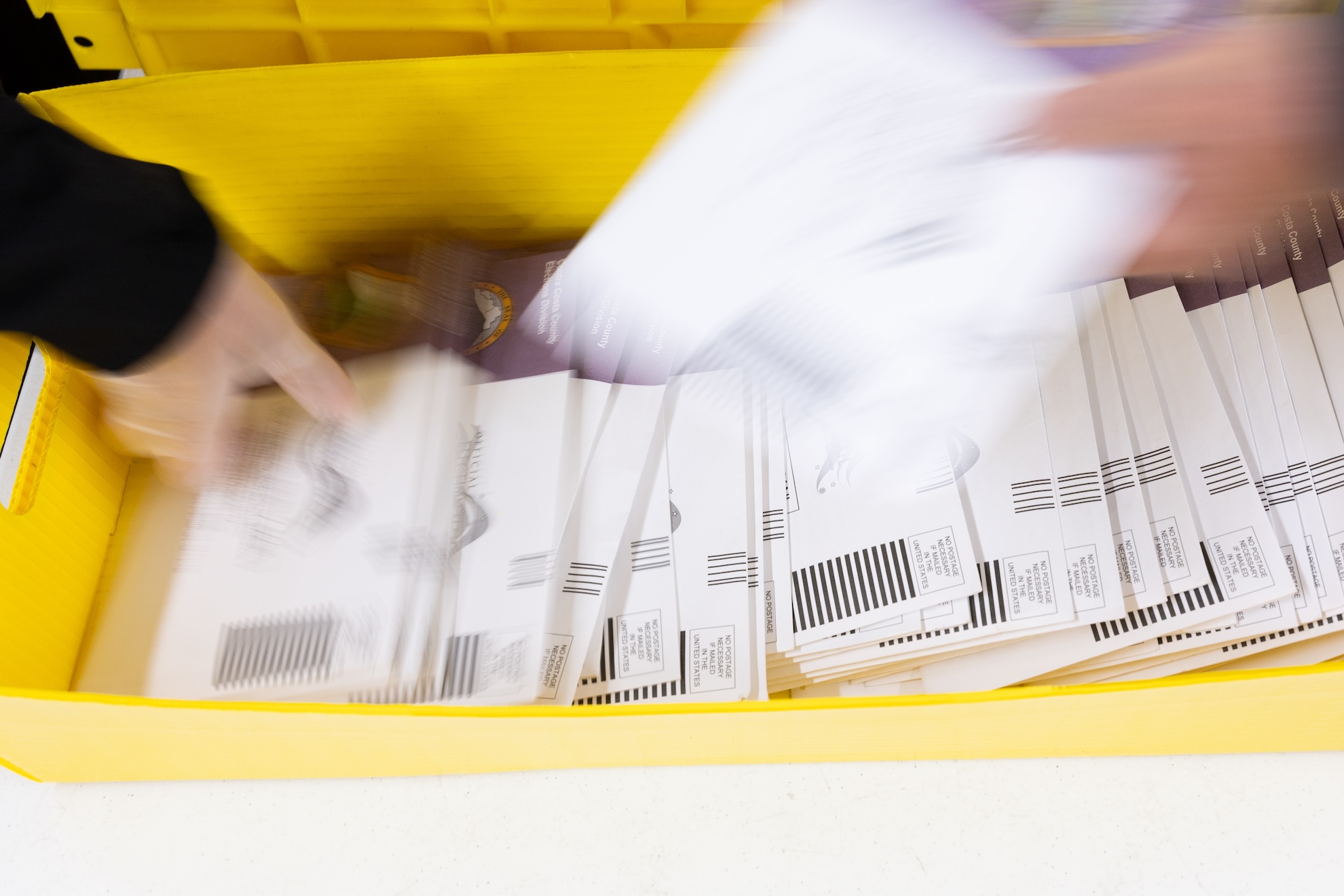
"caption": "Election workers sort ballots at Contra Costa County's election operations facility on May 27, 2026, in Martinez, California. ",
"credit": "Benjamin Fanjoy/Getty Images",
"altTag": null,
"description": "Election workers sort ballots at Contra Costa County's election operations facility on May 27, 2026 in Martinez, California. June 2 is the last day to vote in-person or return a ballot ahead of California's statewide primary election. ",
"imgSizes": {
"thumbnail": {
"file": "https://cdn.kqed.org/wp-content/uploads/sites/10/2026/05/GettyImages-2277856381-160x107.jpg",
"width": 160,
"height": 107,
"mimeType": "image/jpeg"
},
"1536x1536": {
"file": "https://cdn.kqed.org/wp-content/uploads/sites/10/2026/05/GettyImages-2277856381-1536x1024.jpg",
"width": 1536,
"height": 1024,
"mimeType": "image/jpeg"
},
"post-thumbnail": {
"file": "https://cdn.kqed.org/wp-content/uploads/sites/10/2026/05/GettyImages-2277856381-672x372.jpg",
"width": 672,
"height": 372,
"mimeType": "image/jpeg"
},
"twentyfourteen-full-width": {
"file": "https://cdn.kqed.org/wp-content/uploads/sites/10/2026/05/GettyImages-2277856381-1038x576.jpg",
"width": 1038,
"height": 576,
"mimeType": "image/jpeg"
},
"npr-cds-wide": {
"file": "https://cdn.kqed.org/wp-content/uploads/sites/10/2026/05/GettyImages-2277856381-1200x675.jpg",
"width": 1200,
"height": 675,
"mimeType": "image/jpeg"
},
"npr-cds-square": {
"file": "https://cdn.kqed.org/wp-content/uploads/sites/10/2026/05/GettyImages-2277856381-600x600.jpg",
"width": 600,
"height": 600,
"mimeType": "image/jpeg"
},
"kqedFullSize": {
"file": "https://cdn.kqed.org/wp-content/uploads/sites/10/2026/05/GettyImages-2277856381.jpg",
"width": 1980,
"height": 1320
}
},
"isLoading": false,
"fetchFailed": false
},
"news_12079133": {
"type": "attachments",
"id": "news_12079133",
"meta": {
"index": "attachments_1716263798",
"site": "news",
"id": "12079133",
"found": true
},
"title": "Vehicles pass by City Hall in San Francisco on Aug. 8, 2023.",
"publishDate": 1775681337,
"status": "inherit",
"parent": 12079126,
"modified": 1775681351,
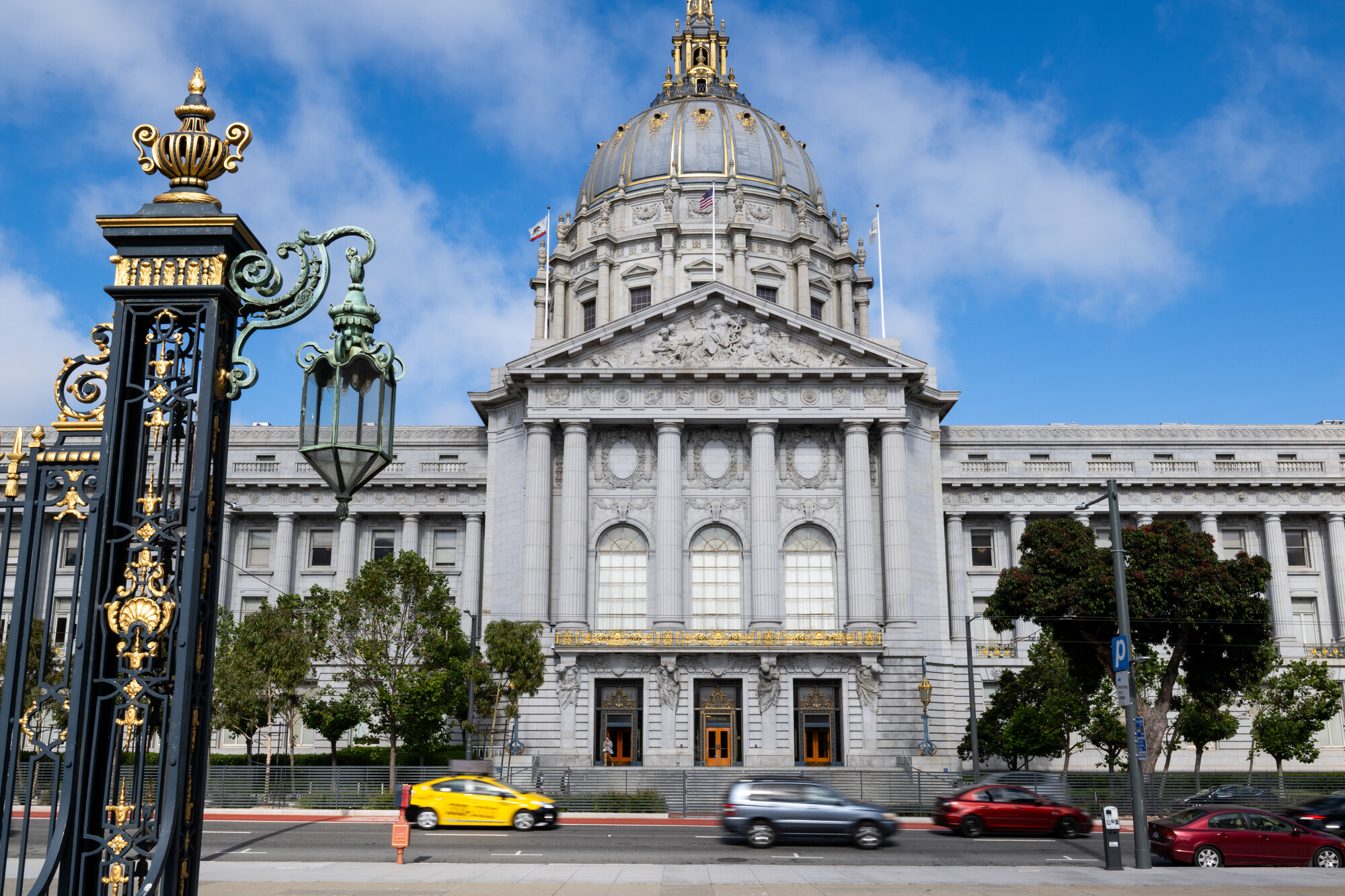
"caption": "Vehicles pass by City Hall in San Francisco on Aug. 8, 2023.",
"credit": "Beth LaBerge/KQED",
"altTag": null,
"description": null,
"imgSizes": {
"thumbnail": {
"file": "https://cdn.kqed.org/wp-content/uploads/sites/10/2026/04/230808-SanFranciscoCityHall-18-BL_qed-160x107.jpg",
"width": 160,
"height": 107,
"mimeType": "image/jpeg"
},
"1536x1536": {
"file": "https://cdn.kqed.org/wp-content/uploads/sites/10/2026/04/230808-SanFranciscoCityHall-18-BL_qed-1536x1024.jpg",
"width": 1536,
"height": 1024,
"mimeType": "image/jpeg"
},
"post-thumbnail": {
"file": "https://cdn.kqed.org/wp-content/uploads/sites/10/2026/04/230808-SanFranciscoCityHall-18-BL_qed-672x372.jpg",
"width": 672,
"height": 372,
"mimeType": "image/jpeg"
},
"twentyfourteen-full-width": {
"file": "https://cdn.kqed.org/wp-content/uploads/sites/10/2026/04/230808-SanFranciscoCityHall-18-BL_qed-1038x576.jpg",
"width": 1038,
"height": 576,
"mimeType": "image/jpeg"
},
"npr-cds-wide": {
"file": "https://cdn.kqed.org/wp-content/uploads/sites/10/2026/04/230808-SanFranciscoCityHall-18-BL_qed-1200x675.jpg",
"width": 1200,
"height": 675,
"mimeType": "image/jpeg"
},
"npr-cds-square": {
"file": "https://cdn.kqed.org/wp-content/uploads/sites/10/2026/04/230808-SanFranciscoCityHall-18-BL_qed-600x600.jpg",
"width": 600,
"height": 600,
"mimeType": "image/jpeg"
},
"kqedFullSize": {
"file": "https://cdn.kqed.org/wp-content/uploads/sites/10/2026/04/230808-SanFranciscoCityHall-18-BL_qed.jpg",
"width": 2000,
"height": 1333
}
},
"isLoading": false,
"fetchFailed": false
},
"news_11977647": {
"type": "attachments",
"id": "news_11977647",
"meta": {
"index": "attachments_1716263798",
"site": "news",
"id": "11977647",
"found": true
},
"parent": 0,
"imgSizes": {
"twentyfourteen-full-width": {
"file": "https://cdn.kqed.org/wp-content/uploads/sites/10/2024/02/240228-NewsomPoliticalBreakdown-19-BL-1038x576.jpg",
"width": 1038,
"mimeType": "image/jpeg",
"height": 576
},
"thumbnail": {
"file": "https://cdn.kqed.org/wp-content/uploads/sites/10/2024/02/240228-NewsomPoliticalBreakdown-19-BL-160x107.jpg",
"width": 160,
"mimeType": "image/jpeg",
"height": 107
},
"post-thumbnail": {
"file": "https://cdn.kqed.org/wp-content/uploads/sites/10/2024/02/240228-NewsomPoliticalBreakdown-19-BL-672x372.jpg",
"width": 672,
"mimeType": "image/jpeg",
"height": 372
},
"kqedFullSize": {
"file": "https://cdn.kqed.org/wp-content/uploads/sites/10/2024/02/240228-NewsomPoliticalBreakdown-19-BL-scaled.jpg",
"width": 2560,
"height": 1707
},
"2048x2048": {
"file": "https://cdn.kqed.org/wp-content/uploads/sites/10/2024/02/240228-NewsomPoliticalBreakdown-19-BL-2048x1365.jpg",
"width": 2048,
"mimeType": "image/jpeg",
"height": 1365
},
"large": {
"file": "https://cdn.kqed.org/wp-content/uploads/sites/10/2024/02/240228-NewsomPoliticalBreakdown-19-BL-1020x680.jpg",
"width": 1020,
"mimeType": "image/jpeg",
"height": 680
},
"1536x1536": {
"file": "https://cdn.kqed.org/wp-content/uploads/sites/10/2024/02/240228-NewsomPoliticalBreakdown-19-BL-1536x1024.jpg",
"width": 1536,
"mimeType": "image/jpeg",
"height": 1024
},
"full-width": {
"file": "https://cdn.kqed.org/wp-content/uploads/sites/10/2024/02/240228-NewsomPoliticalBreakdown-19-BL-1920x1280.jpg",
"width": 1920,
"mimeType": "image/jpeg",
"height": 1280
},
"medium": {
"file": "https://cdn.kqed.org/wp-content/uploads/sites/10/2024/02/240228-NewsomPoliticalBreakdown-19-BL-800x533.jpg",
"width": 800,
"mimeType": "image/jpeg",
"height": 533
}
},
"publishDate": 1709244307,
"modified": 1709245056,
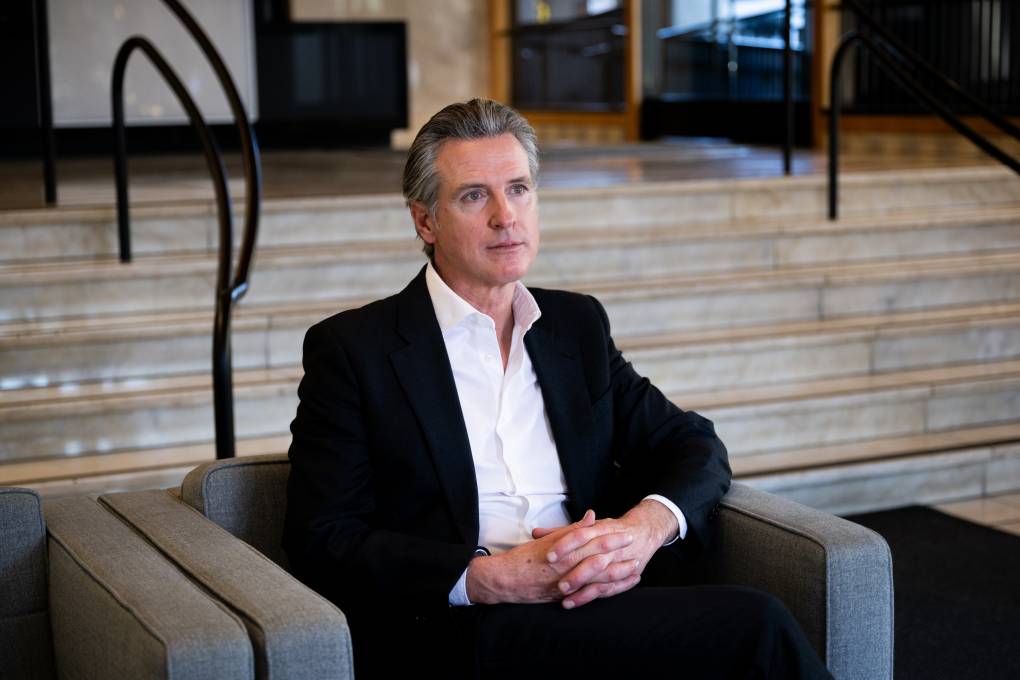
"caption": "Gov. Gavin Newsom poses for a portrait in the Sacramento KQED offices on Feb. 28, 2024.",
"description": null,
"title": "240228-NewsomPoliticalBreakdown-19-BL",
"credit": "Beth LaBerge/KQED",
"status": "inherit",
"altTag": null,
"isLoading": false,
"fetchFailed": false
},
"news_12054567": {
"type": "attachments",
"id": "news_12054567",
"meta": {
"index": "attachments_1716263798",
"site": "news",
"id": "12054567",
"found": true
},
"title": "US-POLITICS-IMMIGRATION",
"publishDate": 1756941444,
"status": "inherit",
"parent": 12054544,
"modified": 1769006278,
"caption": "The CoreCivic, Inc. California City Immigration Processing Center stands in the Kern County desert on July 10, 2025.",
"credit": "Patrick T. Fallon/AFP via Getty Images",
"altTag": null,
"description": null,
"imgSizes": {
"thumbnail": {
"file": "https://cdn.kqed.org/wp-content/uploads/sites/10/2025/09/KernCountyICEDetentionGetty-160x107.jpg",
"width": 160,
"height": 107,
"mimeType": "image/jpeg"
},
"1536x1536": {
"file": "https://cdn.kqed.org/wp-content/uploads/sites/10/2025/09/KernCountyICEDetentionGetty-1536x1024.jpg",
"width": 1536,
"height": 1024,
"mimeType": "image/jpeg"
},
"post-thumbnail": {
"file": "https://cdn.kqed.org/wp-content/uploads/sites/10/2025/09/KernCountyICEDetentionGetty-672x372.jpg",
"width": 672,
"height": 372,
"mimeType": "image/jpeg"
},
"twentyfourteen-full-width": {
"file": "https://cdn.kqed.org/wp-content/uploads/sites/10/2025/09/KernCountyICEDetentionGetty-1038x576.jpg",
"width": 1038,
"height": 576,
"mimeType": "image/jpeg"
},
"kqedFullSize": {
"file": "https://cdn.kqed.org/wp-content/uploads/sites/10/2025/09/KernCountyICEDetentionGetty.jpg",
"width": 2000,
"height": 1333
}
},
"isLoading": false,
"fetchFailed": false
},
"news_12098221": {
"type": "attachments",
"id": "news_12098221",
"meta": {
"index": "attachments_1716263798",
"site": "news",
"id": "12098221",
"found": true
},
"title": "260902-SteveHiltonPB-07-BL_qed",
"publishDate": 1788390357,
"status": "inherit",
"parent": 12102300,
"modified": 1790871986,
"caption": "Steve Hilton, candidate for California governor, speaks with KQED political reporter Marisa Lagos for Political Breakdown at the KQED studios in San Francisco on Sept. 2, 2026.",
"credit": "Beth LaBerge/KQED",
"altTag": null,
"description": null,
"imgSizes": {
"thumbnail": {
"file": "https://cdn.kqed.org/wp-content/uploads/sites/10/2026/09/260902-SteveHiltonPB-07-BL_qed-160x107.jpg",
"width": 160,
"height": 107,
"mimeType": "image/jpeg"
},
"1536x1536": {
"file": "https://cdn.kqed.org/wp-content/uploads/sites/10/2026/09/260902-SteveHiltonPB-07-BL_qed-1536x1024.jpg",
"width": 1536,
"height": 1024,
"mimeType": "image/jpeg"
},
"post-thumbnail": {
"file": "https://cdn.kqed.org/wp-content/uploads/sites/10/2026/09/260902-SteveHiltonPB-07-BL_qed-672x372.jpg",
"width": 672,
"height": 372,
"mimeType": "image/jpeg"
},
"twentyfourteen-full-width": {
"file": "https://cdn.kqed.org/wp-content/uploads/sites/10/2026/09/260902-SteveHiltonPB-07-BL_qed-1038x576.jpg",
"width": 1038,
"height": 576,
"mimeType": "image/jpeg"
},
"npr-cds-wide": {
"file": "https://cdn.kqed.org/wp-content/uploads/sites/10/2026/09/260902-SteveHiltonPB-07-BL_qed-1200x675.jpg",
"width": 1200,
"height": 675,
"mimeType": "image/jpeg"
},
"npr-cds-square": {
"file": "https://cdn.kqed.org/wp-content/uploads/sites/10/2026/09/260902-SteveHiltonPB-07-BL_qed-600x600.jpg",
"width": 600,
"height": 600,
"mimeType": "image/jpeg"
},
"kqedFullSize": {
"file": "https://cdn.kqed.org/wp-content/uploads/sites/10/2026/09/260902-SteveHiltonPB-07-BL_qed.jpg",
"width": 2000,
"height": 1333
}
},
"isLoading": false,
"fetchFailed": false
},
"news_12098219": {
"type": "attachments",
"id": "news_12098219",
"meta": {
"index": "attachments_1716263798",
"site": "news",
"id": "12098219",
"found": true
},
"title": "260902-SteveHiltonPB-04-BL_qed",
"publishDate": 1788390348,
"status": "inherit",
"parent": 0,
"modified": 1788390619,
"caption": "Steve Hilton, candidate for California governor, speaks with KQED political reporter Marisa Lagos for Political Breakdown at the KQED studios in San Francisco on Sept. 2, 2026.",
"credit": "Beth LaBerge/KQED",
"altTag": null,
"description": null,
"imgSizes": {
"thumbnail": {
"file": "https://cdn.kqed.org/wp-content/uploads/sites/10/2026/09/260902-SteveHiltonPB-04-BL_qed-160x107.jpg",
"width": 160,
"height": 107,
"mimeType": "image/jpeg"
},
"1536x1536": {
"file": "https://cdn.kqed.org/wp-content/uploads/sites/10/2026/09/260902-SteveHiltonPB-04-BL_qed-1536x1024.jpg",
"width": 1536,
"height": 1024,
"mimeType": "image/jpeg"
},
"post-thumbnail": {
"file": "https://cdn.kqed.org/wp-content/uploads/sites/10/2026/09/260902-SteveHiltonPB-04-BL_qed-672x372.jpg",
"width": 672,
"height": 372,
"mimeType": "image/jpeg"
},
"twentyfourteen-full-width": {
"file": "https://cdn.kqed.org/wp-content/uploads/sites/10/2026/09/260902-SteveHiltonPB-04-BL_qed-1038x576.jpg",
"width": 1038,
"height": 576,
"mimeType": "image/jpeg"
},
"npr-cds-wide": {
"file": "https://cdn.kqed.org/wp-content/uploads/sites/10/2026/09/260902-SteveHiltonPB-04-BL_qed-1200x675.jpg",
"width": 1200,
"height": 675,
"mimeType": "image/jpeg"
},
"npr-cds-square": {
"file": "https://cdn.kqed.org/wp-content/uploads/sites/10/2026/09/260902-SteveHiltonPB-04-BL_qed-600x600.jpg",
"width": 600,
"height": 600,
"mimeType": "image/jpeg"
},
"kqedFullSize": {
"file": "https://cdn.kqed.org/wp-content/uploads/sites/10/2026/09/260902-SteveHiltonPB-04-BL_qed.jpg",
"width": 2000,
"height": 1333
}
},
"isLoading": false,
"fetchFailed": false
},
"news_12098061": {
"type": "attachments",
"id": "news_12098061",
"meta": {
"index": "attachments_1716263798",
"site": "news",
"id": "12098061",
"found": true
},
"title": "YosemiteNationalParkGetty",
"publishDate": 1788366636,
"status": "inherit",
"parent": 12098058,
"modified": 1788366669,
"caption": "A view of El Capitan as tourists visit Yosemite National Park during warm weather in California, United States on Aug. 14, 2026. ",
"credit": "Tayfun Coskun/Anadolu via Getty Images",
"altTag": null,
"description": null,
"imgSizes": {
"thumbnail": {
"file": "https://cdn.kqed.org/wp-content/uploads/sites/10/2026/09/YosemiteNationalParkGetty-160x107.jpg",
"width": 160,
"height": 107,
"mimeType": "image/jpeg"
},
"1536x1536": {
"file": "https://cdn.kqed.org/wp-content/uploads/sites/10/2026/09/YosemiteNationalParkGetty-1536x1024.jpg",
"width": 1536,
"height": 1024,
"mimeType": "image/jpeg"
},
"post-thumbnail": {
"file": "https://cdn.kqed.org/wp-content/uploads/sites/10/2026/09/YosemiteNationalParkGetty-672x372.jpg",
"width": 672,
"height": 372,
"mimeType": "image/jpeg"
},
"twentyfourteen-full-width": {
"file": "https://cdn.kqed.org/wp-content/uploads/sites/10/2026/09/YosemiteNationalParkGetty-1038x576.jpg",
"width": 1038,
"height": 576,
"mimeType": "image/jpeg"
},
"npr-cds-wide": {
"file": "https://cdn.kqed.org/wp-content/uploads/sites/10/2026/09/YosemiteNationalParkGetty-1200x675.jpg",
"width": 1200,
"height": 675,
"mimeType": "image/jpeg"
},
"npr-cds-square": {
"file": "https://cdn.kqed.org/wp-content/uploads/sites/10/2026/09/YosemiteNationalParkGetty-600x600.jpg",
"width": 600,
"height": 600,
"mimeType": "image/jpeg"
},
"kqedFullSize": {
"file": "https://cdn.kqed.org/wp-content/uploads/sites/10/2026/09/YosemiteNationalParkGetty.jpg",
"width": 2000,
"height": 1333
}
},
"isLoading": false,
"fetchFailed": false
},
"news_12088085": {
"type": "attachments",
"id": "news_12088085",
"meta": {
"index": "attachments_1716263798",
"site": "news",
"id": "12088085",
"found": true
},
"title": "021826-Billionaires-Tax-GETTY-CM-01",
"publishDate": 1781800791,
"status": "inherit",
"parent": 12088063,
"modified": 1791155708,
"caption": "Signs reading “A Billionaire Tax Now” rest on chairs at a Billionaire Tax Now rally where Sen. Bernie Sanders is set to speak in Los Angeles on Feb. 18, 2026. ",
"credit": "Jason Armond/Los Angeles Times via Getty Images",
"altTag": null,
"description": null,
"imgSizes": {
"thumbnail": {
"file": "https://cdn.kqed.org/wp-content/uploads/sites/10/2026/06/021826-Billionaires-Tax-GETTY-CM-01-160x107.jpeg",
"width": 160,
"height": 107,
"mimeType": "image/jpeg"
},
"1536x1536": {
"file": "https://cdn.kqed.org/wp-content/uploads/sites/10/2026/06/021826-Billionaires-Tax-GETTY-CM-01-1536x1025.jpeg",
"width": 1536,
"height": 1025,
"mimeType": "image/jpeg"
},
"post-thumbnail": {
"file": "https://cdn.kqed.org/wp-content/uploads/sites/10/2026/06/021826-Billionaires-Tax-GETTY-CM-01-672x372.jpeg",
"width": 672,
"height": 372,
"mimeType": "image/jpeg"
},
"twentyfourteen-full-width": {
"file": "https://cdn.kqed.org/wp-content/uploads/sites/10/2026/06/021826-Billionaires-Tax-GETTY-CM-01-1038x576.jpeg",
"width": 1038,
"height": 576,
"mimeType": "image/jpeg"
},
"npr-cds-wide": {
"file": "https://cdn.kqed.org/wp-content/uploads/sites/10/2026/06/021826-Billionaires-Tax-GETTY-CM-01-1200x675.jpeg",
"width": 1200,
"height": 675,
"mimeType": "image/jpeg"
},
"npr-cds-square": {
"file": "https://cdn.kqed.org/wp-content/uploads/sites/10/2026/06/021826-Billionaires-Tax-GETTY-CM-01-600x600.jpeg",
"width": 600,
"height": 600,
"mimeType": "image/jpeg"
},
"kqedFullSize": {
"file": "https://cdn.kqed.org/wp-content/uploads/sites/10/2026/06/021826-Billionaires-Tax-GETTY-CM-01.jpeg",
"width": 2000,
"height": 1334
}
},
"isLoading": false,
"fetchFailed": false
},
"news_12093941": {
"type": "attachments",
"id": "news_12093941",
"meta": {
"index": "attachments_1716263798",
"site": "news",
"id": "12093941",
"found": true
},
"title": "California Wildfire",
"publishDate": 1785949492,
"status": "inherit",
"parent": 12093925,
"modified": 1785949529,
"caption": "A structure is engulfed in flames during the Gann Fire near Angels Camp in Calaveras County, California, on Tuesday, Aug. 4, 2026. ",
"credit": "Stephen Lam/San Francisco Chronicle via Getty Images",
"altTag": null,
"description": null,
"imgSizes": {
"thumbnail": {
"file": "https://cdn.kqed.org/wp-content/uploads/sites/10/2026/08/GannFireGetty1-160x107.jpg",
"width": 160,
"height": 107,
"mimeType": "image/jpeg"
},
"1536x1536": {
"file": "https://cdn.kqed.org/wp-content/uploads/sites/10/2026/08/GannFireGetty1-1536x1024.jpg",
"width": 1536,
"height": 1024,
"mimeType": "image/jpeg"
},
"post-thumbnail": {
"file": "https://cdn.kqed.org/wp-content/uploads/sites/10/2026/08/GannFireGetty1-672x372.jpg",
"width": 672,
"height": 372,
"mimeType": "image/jpeg"
},
"twentyfourteen-full-width": {
"file": "https://cdn.kqed.org/wp-content/uploads/sites/10/2026/08/GannFireGetty1-1038x576.jpg",
"width": 1038,
"height": 576,
"mimeType": "image/jpeg"
},
"npr-cds-wide": {
"file": "https://cdn.kqed.org/wp-content/uploads/sites/10/2026/08/GannFireGetty1-1200x675.jpg",
"width": 1200,
"height": 675,
"mimeType": "image/jpeg"
},
"npr-cds-square": {
"file": "https://cdn.kqed.org/wp-content/uploads/sites/10/2026/08/GannFireGetty1-600x600.jpg",
"width": 600,
"height": 600,
"mimeType": "image/jpeg"
},
"kqedFullSize": {
"file": "https://cdn.kqed.org/wp-content/uploads/sites/10/2026/08/GannFireGetty1.jpg",
"width": 2000,
"height": 1333
}
},
"isLoading": false,
"fetchFailed": false
},
"news_12097943": {
"type": "attachments",
"id": "news_12097943",
"meta": {
"index": "attachments_1716263798",
"site": "news",
"id": "12097943",
"found": true
},
"title": "010108-Golden-Gate-Fields-AP-CM",
"publishDate": 1788297967,
"status": "inherit",
"parent": 12097921,
"modified": 1788297993,
"caption": "Hall of Fame jockey Russell Baze, right, riding Two Step Cat crosses the finish line to win his 10,000th race at Golden Gate Fields in Albany on Jan. 1, 2008.",
"credit": "Eric Risberg/AP Photo",
"altTag": null,
"description": null,
"imgSizes": {
"thumbnail": {
"file": "https://cdn.kqed.org/wp-content/uploads/sites/10/2026/09/010108-Golden-Gate-Fields-AP-CM-160x107.jpg",
"width": 160,
"height": 107,
"mimeType": "image/jpeg"
},
"1536x1536": {
"file": "https://cdn.kqed.org/wp-content/uploads/sites/10/2026/09/010108-Golden-Gate-Fields-AP-CM-1536x1024.jpg",
"width": 1536,
"height": 1024,
"mimeType": "image/jpeg"
},
"post-thumbnail": {
"file": "https://cdn.kqed.org/wp-content/uploads/sites/10/2026/09/010108-Golden-Gate-Fields-AP-CM-672x372.jpg",
"width": 672,
"height": 372,
"mimeType": "image/jpeg"
},
"twentyfourteen-full-width": {
"file": "https://cdn.kqed.org/wp-content/uploads/sites/10/2026/09/010108-Golden-Gate-Fields-AP-CM-1038x576.jpg",
"width": 1038,
"height": 576,
"mimeType": "image/jpeg"
},
"npr-cds-wide": {
"file": "https://cdn.kqed.org/wp-content/uploads/sites/10/2026/09/010108-Golden-Gate-Fields-AP-CM-1200x675.jpg",
"width": 1200,
"height": 675,
"mimeType": "image/jpeg"
},
"npr-cds-square": {
"file": "https://cdn.kqed.org/wp-content/uploads/sites/10/2026/09/010108-Golden-Gate-Fields-AP-CM-600x600.jpg",
"width": 600,
"height": 600,
"mimeType": "image/jpeg"
},
"kqedFullSize": {
"file": "https://cdn.kqed.org/wp-content/uploads/sites/10/2026/09/010108-Golden-Gate-Fields-AP-CM.jpg",
"width": 2000,
"height": 1333
}
},
"isLoading": false,
"fetchFailed": false
},
"news_12057832": {
"type": "attachments",
"id": "news_12057832",
"meta": {
"index": "attachments_1716263798",
"site": "news",
"id": "12057832",
"found": true
},
"title": "Sacramento, California capitol building",
"publishDate": 1758929791,
"status": "inherit",
"parent": 12057777,
"modified": 1758929825,
"caption": "The state capitol building in Sacramento, California, shortly before sunset.",
"credit": "via PictureLake",
"altTag": null,
"description": null,
"imgSizes": {
"thumbnail": {
"file": "https://cdn.kqed.org/wp-content/uploads/sites/10/2025/09/GettyImages-183300309-160x96.jpg",
"width": 160,
"height": 96,
"mimeType": "image/jpeg"
},
"1536x1536": {
"file": "https://cdn.kqed.org/wp-content/uploads/sites/10/2025/09/GettyImages-183300309-1536x923.jpg",
"width": 1536,
"height": 923,
"mimeType": "image/jpeg"
},
"post-thumbnail": {
"file": "https://cdn.kqed.org/wp-content/uploads/sites/10/2025/09/GettyImages-183300309-672x372.jpg",
"width": 672,
"height": 372,
"mimeType": "image/jpeg"
},
"twentyfourteen-full-width": {
"file": "https://cdn.kqed.org/wp-content/uploads/sites/10/2025/09/GettyImages-183300309-1038x576.jpg",
"width": 1038,
"height": 576,
"mimeType": "image/jpeg"
},
"kqedFullSize": {
"file": "https://cdn.kqed.org/wp-content/uploads/sites/10/2025/09/GettyImages-183300309.jpg",
"width": 1998,
"height": 1201
}
},
"isLoading": false,
"fetchFailed": false
},
"news_12062227": {
"type": "attachments",
"id": "news_12062227",
"meta": {
"index": "attachments_1716263798",
"site": "news",
"id": "12062227",
"found": true
},
"title": "20251029_STANFORDFILE--_GH-2-KQED",
"publishDate": 1761843198,
"status": "inherit",
"parent": 0,
"modified": 1761843299,
"caption": "The arched walkways of Stanford’s Main Quad in Stanford Oct. 29, 2025.",
"credit": "Gustavo Hernandez/KQED",
"altTag": null,
"description": null,
"imgSizes": {
"thumbnail": {
"file": "https://cdn.kqed.org/wp-content/uploads/sites/10/2025/10/20251029_STANFORDFILE-_GH-2-KQED-160x107.jpg",
"width": 160,
"height": 107,
"mimeType": "image/jpeg"
},
"1536x1536": {
"file": "https://cdn.kqed.org/wp-content/uploads/sites/10/2025/10/20251029_STANFORDFILE-_GH-2-KQED-1536x1024.jpg",
"width": 1536,
"height": 1024,
"mimeType": "image/jpeg"
},
"post-thumbnail": {
"file": "https://cdn.kqed.org/wp-content/uploads/sites/10/2025/10/20251029_STANFORDFILE-_GH-2-KQED-672x372.jpg",
"width": 672,
"height": 372,
"mimeType": "image/jpeg"
},
"twentyfourteen-full-width": {
"file": "https://cdn.kqed.org/wp-content/uploads/sites/10/2025/10/20251029_STANFORDFILE-_GH-2-KQED-1038x576.jpg",
"width": 1038,
"height": 576,
"mimeType": "image/jpeg"
},
"npr-cds-wide": {
"file": "https://cdn.kqed.org/wp-content/uploads/sites/10/2025/10/20251029_STANFORDFILE-_GH-2-KQED-1600x900.jpg",
"width": 1600,
"height": 900,
"mimeType": "image/jpeg"
},
"kqedFullSize": {
"file": "https://cdn.kqed.org/wp-content/uploads/sites/10/2025/10/20251029_STANFORDFILE-_GH-2-KQED.jpg",
"width": 2000,
"height": 1333
}
},
"isLoading": false,
"fetchFailed": false
}
},
"audioPlayerReducer": {
"postId": "stream_live",
"isPaused": true,
"isPlaying": false,
"pfsActive": false,
"pledgeModalIsOpen": true,
"playerDrawerIsOpen": false,
"liveAudioPlayStartedAt": 0,
"liveAudioPlayContext": ""
},
"authorsReducer": {
"byline_news_12098533": {
"type": "authors",
"id": "byline_news_12098533",
"meta": {
"override": true
},
"slug": "byline_news_12098533",
"name": "\u003ca href=\"https://www.npr.org/people/177498291/hansi-lo-wang/\">Hansi Lo Wang\u003c/a>",
"isLoading": false
},
"byline_news_12097921": {
"type": "authors",
"id": "byline_news_12097921",
"meta": {
"override": true
},
"slug": "byline_news_12097921",
"name": "Yue Stella Yu, CalMatters",
"isLoading": false
},
"byline_news_12097515": {
"type": "authors",
"id": "byline_news_12097515",
"meta": {
"override": true
},
"slug": "byline_news_12097515",
"name": "The Associated Press",
"isLoading": false
},
"gmarzorati": {
"type": "authors",
"id": "227",
"meta": {
"index": "authors_1716337520",
"id": "227",
"found": true
},
"name": "Guy Marzorati",
"firstName": "Guy",
"lastName": "Marzorati",
"slug": "gmarzorati",
"email": "gmarzorati@KQED.org",
"display_author_email": true,
"staff_mastheads": [
"news"
],
"title": "Correspondent",
"bio": "Guy Marzorati is a correspondent on KQED's California Politics and Government Desk, based in San Jose. A graduate of Santa Clara University, Guy joined KQED in 2013. He reports on state and local politics and produces KQED's digital voter guide.",
"avatar": "https://secure.gravatar.com/avatar/771cddf45ce3a8ed533d82dcc214e9ef925d76d2af5794a33da1ce439eb54a32?s=600&d=blank&r=g",
"twitter": "guymarzorati",
"bluesky": null,
"facebook": null,
"instagram": null,
"linkedin": null,
"sites": [
{
"site": "",
"roles": [
"editor"
]
},
{
"site": "news",
"roles": [
"editor"
]
},
{
"site": "science",
"roles": [
"editor"
]
},
{
"site": "forum",
"roles": [
"editor"
]
},
{
"site": "elections",
"roles": [
"editor"
]
},
{
"site": "liveblog",
"roles": [
"editor"
]
}
],
"headData": {
"title": "Guy Marzorati | KQED",
"description": "Correspondent",
"ogImgSrc": "https://secure.gravatar.com/avatar/771cddf45ce3a8ed533d82dcc214e9ef925d76d2af5794a33da1ce439eb54a32?s=600&d=blank&r=g",
"twImgSrc": "https://secure.gravatar.com/avatar/771cddf45ce3a8ed533d82dcc214e9ef925d76d2af5794a33da1ce439eb54a32?s=600&d=blank&r=g"
},
"isLoading": false,
"link": "/author/gmarzorati"
},
"rachael-myrow": {
"type": "authors",
"id": "251",
"meta": {
"index": "authors_1716337520",
"id": "251",
"found": true
},
"name": "Rachael Myrow",
"firstName": "Rachael",
"lastName": "Myrow",
"slug": "rachael-myrow",
"email": "rmyrow@kqed.org",
"display_author_email": true,
"staff_mastheads": [
"news"
],
"title": "Senior Editor of KQED's Silicon Valley News Desk",
"bio": "• I write and edit stories about how Silicon Valley power and policies shape everyday life in California. I’m also passionate about making Bay Area history and culture more accessible to a broad public. • I’ve been a journalist for most of my life, starting in high school with The Franklin Press in Los Angeles, where I grew up. While earning my first degree in English at UC Berkeley, I got my start in public radio at KALX-FM. After completing a second degree in journalism at Cal, I landed my first professional job at Marketplace, then moved on to KPCC (now LAist), and then KQED, where I hosted The California Report for more than seven years. • My reporting has appeared on NPR, The World, WBUR’s \u003ci>Here & Now\u003c/i>, and the BBC. I also guest host for KQED’s \u003ci>Forum\u003c/i>, as well as the Commonwealth Club in San Francisco. • I speak periodically on media, democracy and technology issues, and do voiceover work for documentaries and educational video projects. • Outside of the studio, you'll find me hiking Bay Area trails and whipping up Insta-ready meals in my kitchen. • I do not accept gifts, money, or favors from anyone connected to my reporting, I don't pay people for information, and I do not support or donate to political causes. • I strive to treat the people I report on with fairness, honesty, and respect. I also recognize there are often multiple sides to a story and work to verify information through multiple sources and documentation. If I get something wrong, I correct it.",
"avatar": "https://secure.gravatar.com/avatar/3ed8a3c5f26025e4a805ba634cda8cd764906b97438a6d9ce216b044e340da4e?s=600&d=blank&r=g",
"twitter": "rachaelmyrow",
"bluesky": null,
"facebook": null,
"instagram": null,
"linkedin": "https://www.linkedin.com/in/rachaelmyrow/",
"sites": [
{
"site": "arts",
"roles": [
"administrator"
]
},
{
"site": "news",
"roles": [
"edit_others_posts",
"editor"
]
},
{
"site": "futureofyou",
"roles": [
"editor"
]
},
{
"site": "bayareabites",
"roles": [
"editor"
]
},
{
"site": "stateofhealth",
"roles": [
"editor"
]
},
{
"site": "science",
"roles": [
"editor"
]
},
{
"site": "food",
"roles": [
"editor"
]
},
{
"site": "forum",
"roles": [
"editor"
]
},
{
"site": "liveblog",
"roles": [
"author"
]
}
],
"headData": {
"title": "Rachael Myrow | KQED",
"description": "Senior Editor of KQED's Silicon Valley News Desk",
"ogImgSrc": "https://secure.gravatar.com/avatar/3ed8a3c5f26025e4a805ba634cda8cd764906b97438a6d9ce216b044e340da4e?s=600&d=blank&r=g",
"twImgSrc": "https://secure.gravatar.com/avatar/3ed8a3c5f26025e4a805ba634cda8cd764906b97438a6d9ce216b044e340da4e?s=600&d=blank&r=g"
},
"isLoading": false,
"link": "/author/rachael-myrow"
},
"tychehendricks": {
"type": "authors",
"id": "259",
"meta": {
"index": "authors_1716337520",
"id": "259",
"found": true
},
"name": "Tyche Hendricks",
"firstName": "Tyche",
"lastName": "Hendricks",
"slug": "tychehendricks",
"email": "thendricks@kqed.org",
"display_author_email": true,
"staff_mastheads": [
"news"
],
"title": "KQED Senior Editor, Immigration",
"bio": "Tyche Hendricks is KQED’s senior editor for immigration, leading coverage of the policy and politics that affect California’s immigrant communities. Her work for KQED’s radio and online audiences is also carried on NPR and other national outlets. She has been recognized with awards from the Radio and Television News Directors Association, the Society for Professional Journalists; the Education Writers Association; the Best of the West and the National Federation of Community Broadcasters. Before joining KQED in 2010, Tyche spent more than a dozen years as a newspaper reporter, notably at the \u003ci>San Francisco Chronicle\u003c/i>. At different times she has covered criminal justice, government and politics and urban planning. Tyche has taught in the MFA Creative Writing program at the University of San Francisco and at UC Berkeley’s Graduate School of Journalism, where she was co-director of a national immigration symposium for professional journalists. She is the author of \u003ci>The Wind Doesn't Need a Passport: Stories from the U.S.-Mexico Borderlands\u003c/i> (University of California Press). ",
"avatar": "https://secure.gravatar.com/avatar/2a0bd7f2418d4be9198f23bf99a161f3f7a98fb9bf6d3820763d49b5c5f8fc81?s=600&d=blank&r=g",
"twitter": "tychehendricks",
"bluesky": null,
"facebook": null,
"instagram": null,
"linkedin": null,
"sites": [
{
"site": "news",
"roles": [
"editor"
]
},
{
"site": "stateofhealth",
"roles": [
"editor"
]
},
{
"site": "liveblog",
"roles": [
"author"
]
}
],
"headData": {
"title": "Tyche Hendricks | KQED",
"description": "KQED Senior Editor, Immigration",
"ogImgSrc": "https://secure.gravatar.com/avatar/2a0bd7f2418d4be9198f23bf99a161f3f7a98fb9bf6d3820763d49b5c5f8fc81?s=600&d=blank&r=g",
"twImgSrc": "https://secure.gravatar.com/avatar/2a0bd7f2418d4be9198f23bf99a161f3f7a98fb9bf6d3820763d49b5c5f8fc81?s=600&d=blank&r=g"
},
"isLoading": false,
"link": "/author/tychehendricks"
},
"mlagos": {
"type": "authors",
"id": "3239",
"meta": {
"index": "authors_1716337520",
"id": "3239",
"found": true
},
"name": "Marisa Lagos",
"firstName": "Marisa",
"lastName": "Lagos",
"slug": "mlagos",
"email": "mlagos@kqed.org",
"display_author_email": false,
"staff_mastheads": [
"news"
],
"title": "KQED Contributor",
"bio": "Marisa Lagos is a correspondent for KQED’s California Politics and Government Desk and co-hosts the award-winning show and podcast, Political Breakdown. At KQED, Lagos also conducts reporting, analysis and investigations into state, local and national politics for radio, TV, online and onstage. In 2022, she and co-host, Scott Shafer, moderated the only gubernatorial debate in California. In 2020, the \u003ci>Washington Post\u003c/i> named her one of the top political journalists in California; she was nominated for a Peabody and won several other awards for her work investigating the 2017 California wildfires. She has worked at the \u003ci>San Francisco Chronicle\u003c/i>, \u003ci>San Francisco Examiner\u003c/i> and \u003ci>Los Angeles Times\u003c/i>. A UC Santa Barbara graduate, she lives in San Francisco with her two sons and husband.",
"avatar": "https://secure.gravatar.com/avatar/a261a0d3696fc066871ef96b85b5e7d2?s=600&d=blank&r=g",
"twitter": "@mlagos",
"facebook": null,
"instagram": null,
"linkedin": null,
"sites": [
{
"site": "arts",
"roles": [
"author"
]
},
{
"site": "news",
"roles": [
"editor"
]
},
{
"site": "science",
"roles": [
"editor"
]
},
{
"site": "forum",
"roles": [
"author"
]
},
{
"site": "liveblog",
"roles": [
"author"
]
}
],
"headData": {
"title": "Marisa Lagos | KQED",
"description": "KQED Contributor",
"ogImgSrc": "https://secure.gravatar.com/avatar/a261a0d3696fc066871ef96b85b5e7d2?s=600&d=blank&r=g",
"twImgSrc": "https://secure.gravatar.com/avatar/a261a0d3696fc066871ef96b85b5e7d2?s=600&d=blank&r=g"
},
"isLoading": false,
"link": "/author/mlagos"
},
"kdebenedetti": {
"type": "authors",
"id": "11913",
"meta": {
"index": "authors_1716337520",
"id": "11913",
"found": true
},
"name": "Katie DeBenedetti",
"firstName": "Katie",
"lastName": "DeBenedetti",
"slug": "kdebenedetti",
"email": "kdebenedetti@kqed.org",
"display_author_email": false,
"staff_mastheads": [
"news",
"science"
],
"title": "KQED Contributor",
"bio": "Katie DeBenedetti is a digital reporter covering daily news for the Express Desk. Prior to joining KQED as a culture reporting intern in January 2024, she covered education and city government for the Napa Valley Register.",
"avatar": "https://secure.gravatar.com/avatar/6e31073cb8f7e4214ab03f42771d0f45?s=600&d=blank&r=g",
"twitter": null,
"facebook": null,
"instagram": null,
"linkedin": null,
"sites": [
{
"site": "news",
"roles": [
"author"
]
},
{
"site": "science",
"roles": [
"author"
]
},
{
"site": "liveblog",
"roles": [
"author"
]
}
],
"headData": {
"title": "Katie DeBenedetti | KQED",
"description": "KQED Contributor",
"ogImgSrc": "https://secure.gravatar.com/avatar/6e31073cb8f7e4214ab03f42771d0f45?s=600&d=blank&r=g",
"twImgSrc": "https://secure.gravatar.com/avatar/6e31073cb8f7e4214ab03f42771d0f45?s=600&d=blank&r=g"
},
"isLoading": false,
"link": "/author/kdebenedetti"
},
"sarahwright": {
"type": "authors",
"id": "11956",
"meta": {
"index": "authors_1716337520",
"id": "11956",
"found": true
},
"name": "Sarah Wright",
"firstName": "Sarah",
"lastName": "Wright",
"slug": "sarahwright",
"email": "swright@kqed.org",
"display_author_email": true,
"staff_mastheads": [],
"title": "Outdoors Engagement Reporter",
"bio": "Sarah Wright is KQED's Outdoors Engagement Reporter. Originally from Lake Tahoe, she completed a thru-hike of the Pacific Crest Trail in 2019 and was a U.S. Fulbright Program grantee to Argentina in 2023. Her journalism has appeared in The Guardian, The San Francisco Standard, The Palo Alto Weekly and the Half Moon Bay Review.",
"avatar": "https://secure.gravatar.com/avatar/c161a3d6441865cba25e6db4fa561099ad665799e9432e34da2b84d7e371524c?s=600&d=blank&r=g",
"twitter": null,
"bluesky": null,
"facebook": null,
"instagram": null,
"linkedin": null,
"sites": [
{
"site": "arts",
"roles": [
"editor"
]
},
{
"site": "news",
"roles": [
"editor"
]
},
{
"site": "science",
"roles": [
"contributor",
"author"
]
},
{
"site": "forum",
"roles": [
"editor"
]
}
],
"headData": {
"title": "Sarah Wright | KQED",
"description": "Outdoors Engagement Reporter",
"ogImgSrc": "https://secure.gravatar.com/avatar/c161a3d6441865cba25e6db4fa561099ad665799e9432e34da2b84d7e371524c?s=600&d=blank&r=g",
"twImgSrc": "https://secure.gravatar.com/avatar/c161a3d6441865cba25e6db4fa561099ad665799e9432e34da2b84d7e371524c?s=600&d=blank&r=g"
},
"isLoading": false,
"link": "/author/sarahwright"
}
},
"pagesReducer": {
"news_tag_politics": {
"type": "terms",
"id": "news_17968",
"meta": {
"index": "terms_1716263798",
"site": "news",
"id": "17968",
"score": 8.009886
},
"name": "Politics",
"slug": "politics",
"taxonomy": "tag",
"description": null,
"featImg": null,
"headData": {
"title": "Politics | KQED News",
"description": null,
"ogTitle": null,
"ogDescription": null,
"ogImgId": null,
"twTitle": null,
"twDescription": null,
"twImgId": null
},
"ttid": 18002,
"isLoading": false,
"title": "Politics",
"pageMeta": {
"site": "news",
"WpPageTemplate": "page-topic-editorial",
"currentPage": 17
},
"blocks": [
{
"blockName": "kqed/post-list",
"attrs": {
"layout": "cardArticle2",
"query": "posts/news?tag=politics",
"seeMore": false,
"paginated": true,
"page": 17
}
},
{
"blockName": "kqed/ad"
}
]
}
},
"pfsSessionReducer": {},
"postsReducer": {
"stream_live": {
"type": "live",
"id": "stream_live",
"audioUrl": "https://hls.kqed.org/hls/kqed_app/playlist.m3u8",
"title": "Live Stream",
"excerpt": "Live Stream information currently unavailable.",
"link": "/radio",
"featImg": "",
"label": {
"name": "KQED Live",
"link": "/"
}
},
"stream_kqedNewscast": {
"type": "posts",
"id": "stream_kqedNewscast",
"audioUrl": "https://www.kqed.org/.stream/anon/radio/RDnews/newscast.mp3?_=1",
"title": "KQED Newscast",
"featImg": "",
"label": {
"name": "88.5 FM",
"link": "/"
}
},
"news_12098533": {
"type": "posts",
"id": "news_12098533",
"meta": {
"index": "posts_1716263798",
"site": "news",
"id": "12098533",
"score": null,
"sort": [
1788778800000
]
},
"guestAuthors": [],
"slug": "what-to-know-about-the-mail-in-voting-fight-at-the-supreme-court",
"title": "What to Know About the Mail-In Voting Fight at the Supreme Court",
"publishDate": 1788778800,
"format": "standard",
"headTitle": "What to Know About the Mail-In Voting Fight at the Supreme Court | KQED",
"labelTerm": {
"term": 253,
"site": "news"
},
"content": "\n\u003cp>The \u003ca href=\"https://www.kqed.org/news/tag/donald-trump\" data-type=\"link\" data-id=\"https://www.kqed.org/news/tag/donald-trump\">Trump administration\u003c/a> has \u003ca href=\"https://www.documentcloud.org/documents/28598022-26a297/\" target=\"_blank\" rel=\"noreferrer noopener\">asked the Supreme Court\u003c/a> to lift a block on the U.S. Postal Service plan for President Trump’s attempt to restrict mail-in voting for the midterm election.\u003c/p>\n\n\n\n\u003cp>For now, key parts of that plan are blocked by \u003ca href=\"https://www.documentcloud.org/documents/28585290-league-of-women-voters-of-massachusetts-2026-08-27-memorandum-and-order-granting-in-part-plaintiffs-motions-for-a-temporary-restraining-order/\" target=\"_blank\" rel=\"noreferrer noopener\">a temporary restraining order\u003c/a> from a federal judge in Boston.\u003c/p>\n\n\n\n\u003cp>A ruling from the high court is not expected until sometime after 10 a.m. ET on Sept. 8. \u003ca href=\"https://www.supremecourt.gov/search.aspx?filename=/docket/DocketFiles/html/Public/26A297.html\" target=\"_blank\" rel=\"noreferrer noopener\">That’s the deadline\u003c/a> Justice Ketanji Brown Jackson set for legal briefs from the plan’s challengers, although the administration has asked Jackson to pause the block on the Postal Service immediately while the court prepares to rule.\u003c/p>\n\n\n\n\u003cfigure class=\"wp-block-image size-full\">\u003cimg loading=\"lazy\" decoding=\"async\" width=\"2000\" height=\"1333\" src=\"https://cdn.kqed.org/wp-content/uploads/sites/10/2026/06/20260602_PRIMARY2026CD4_GC-6-KQED.jpg\" alt=\"\" class=\"wp-image-12085887\" srcset=\"https://cdn.kqed.org/wp-content/uploads/sites/10/2026/06/20260602_PRIMARY2026CD4_GC-6-KQED.jpg 2000w, https://cdn.kqed.org/wp-content/uploads/sites/10/2026/06/20260602_PRIMARY2026CD4_GC-6-KQED-160x107.jpg 160w, https://cdn.kqed.org/wp-content/uploads/sites/10/2026/06/20260602_PRIMARY2026CD4_GC-6-KQED-1536x1024.jpg 1536w\" sizes=\"auto, (max-width: 2000px) 100vw, 2000px\" />\u003cfigcaption class=\"wp-element-caption\">Colby Brown, rover supervisor at the Veterans Memorial Center voting center, seals a ballot drop box, in Davis on June 2, 2026. (Gina Castro for KQED)\u003c/figcaption>\u003c/figure>\n\n\n\n\u003cp>As the legal fight over \u003ca href=\"https://www.npr.org/2026/03/31/nx-s1-5508948/trump-voter-list-mail-ballots-executive-order\" target=\"_blank\" rel=\"noreferrer noopener\">Trump’s mail-in voting order\u003c/a> continues, here’s what to know about the state of voting by mail for the midterms:\u003c/p>\n\n\n\n\u003cp>\u003cstrong>Has the USPS plan directly changed mail-in voting for the midterms?\u003c/strong>\u003c/p>\n\n\n\n\u003cp>No, key parts of the plan, including requirements for states, are currently blocked by a court order. Voting by mail is still available to all voters who are eligible for it in their states, and USPS is expected to deliver mail-in ballots for the midterm election as usual.\u003c/p>\n\n\n\n\u003cp>\u003cstrong>How could the USPS plan change mail-in voting?\u003c/strong>\u003c/p>\n\n\n\n\u003cp>State election officials would be required to turn over lists of mail-in voters’ names and addresses to USPS and have certain barcodes on their mail ballot envelopes, according to a \u003ca href=\"https://www.federalregister.gov/public-inspection/2026-17238/ballot-mail-for-federal-elections\" target=\"_blank\" rel=\"noreferrer noopener\">revised rule\u003c/a> for federal ballot mail the Postal Service issued in August. USPS says it would not deliver ballots to voters for election officials that don’t meet those requirements.\u003c/p>\n\n\n\n\u003cp>\u003cstrong>When does mail-in voting start for the midterms?\u003c/strong>\u003c/p>\n\n\n\n\n\n\u003cp>North Carolina has to start mailing out its absentee ballots on Friday, which officially kicks off the voting season for this year’s midterms. Many \u003ca href=\"https://www.ncsl.org/elections-and-campaigns/table-7-when-states-mail-out-absentee-mail-ballots\" target=\"_blank\" rel=\"noreferrer noopener\">other states\u003c/a> are set to begin sending out their mail-in ballots later this month.\u003c/p>\n\n\n\n\u003cp>\u003cstrong>Is it possible for the USPS plan to be carried out for the midterms?\u003c/strong>\u003c/p>\n\n\n\n\u003cp>Many election experts say it is too late for USPS to carry out this plan without causing major disruptions. A \u003ca href=\"https://www.npr.org/2026/09/01/nx-s1-5950869/trump-mail-in-voting-usps\" target=\"_blank\" rel=\"noreferrer noopener\">whistleblower report\u003c/a> claims USPS has not properly tested the online portal system that would collect mail-in voters’ information. The report also alleges the agency has set up a policy for verifying ballot envelopes that could result in many voters not getting their ballots in time for the midterm election or at all.\u003c/p>\n\n\n\n\u003cp>\u003cstrong>What are the legal arguments for and against the USPS plan?\u003c/strong>\u003c/p>\n\n\n\n\u003cp>USPS came up with this plan in response to a \u003ca href=\"https://www.npr.org/2026/03/31/nx-s1-5508948/trump-voter-list-mail-ballots-executive-order\" target=\"_blank\" rel=\"noreferrer noopener\">March executive order\u003c/a> by President Trump, who said he issued the directives to USPS to stop illegal voting by non-U.S. citizens. Many studies and audits show, however, \u003ca href=\"https://www.npr.org/2025/07/30/nx-s1-5462836/noncitizen-voting-trump-ceir-review\" target=\"_blank\" rel=\"noreferrer noopener\">that problem is incredibly rare\u003c/a>. While USPS claims its revised rule is an effort to regulate mail, challengers of the USPS plan argue it is illegal because the mailing agency has no authority to control voting by mail.\u003c/p>\n\n\n\n\u003cp>\u003cstrong>Hasn’t the Supreme Court already ruled on Trump’s mail-in voting order?\u003c/strong>\u003c/p>\n\n\n\n\u003cp>Yes, the Supreme Court \u003ca href=\"https://www.npr.org/2026/08/24/nx-s1-5909592/trump-mail-voting-order-supreme-court\" target=\"_blank\" rel=\"noreferrer noopener\">ruled in August on a procedural question\u003c/a> about one of the lawsuits. But so far, the justices have not ruled on the legality of the order or the USPS plan.\u003c/p>\n\n\n\n\u003cp>\u003cstrong>How long has mail-in voting been around in the United States?\u003c/strong>\u003c/p>\n\n\n\n\u003cp>Historians consider the Civil War election of 1864 — the year Abraham Lincoln was reelected president — as \u003ca href=\"https://www.npr.org/2024/08/24/nx-s1-5060433/voting-by-mail-history-absentee-smithsonian-national-postal-museum\" target=\"_blank\" rel=\"noreferrer noopener\">the start of large-scale voting by mail\u003c/a>, although there are earlier examples of mail-in voting at the state and local levels going back to the 18th century.\u003c/p>\n\n\n\n\u003cp>\u003cstrong>\u003cem>Editor’s note:\u003c/em>\u003c/strong>\u003cem> The U.S. Postal Service is a financial supporter of NPR.\u003c/em>\u003c/p>\n\n\n\n\u003cp>\u003cem>Edited by \u003c/em>\u003ca href=\"https://www.npr.org/people/1157496779/megan-pratz\" target=\"_blank\" rel=\"noreferrer noopener\">\u003cem>Megan Pratz\u003c/em>\u003c/a>\u003c/p>\n",
"blocks": [
{
"blockName": "core/paragraph",
"attrs": {
"dropCap": false
},
"innerHTML": "\n\u003cp>The \u003ca href=\"https://www.kqed.org/news/tag/donald-trump\" data-type=\"link\" data-id=\"https://www.kqed.org/news/tag/donald-trump\">Trump administration\u003c/a> has \u003ca href=\"https://www.documentcloud.org/documents/28598022-26a297/\" target=\"_blank\" rel=\"noreferrer noopener\">asked the Supreme Court\u003c/a> to lift a block on the U.S. Postal Service plan for President Trump’s attempt to restrict mail-in voting for the midterm election.\u003c/p>\n",
"innerContent": [
"\n\u003cp>The \u003ca href=\"https://www.kqed.org/news/tag/donald-trump\" data-type=\"link\" data-id=\"https://www.kqed.org/news/tag/donald-trump\">Trump administration\u003c/a> has \u003ca href=\"https://www.documentcloud.org/documents/28598022-26a297/\" target=\"_blank\" rel=\"noreferrer noopener\">asked the Supreme Court\u003c/a> to lift a block on the U.S. Postal Service plan for President Trump’s attempt to restrict mail-in voting for the midterm election.\u003c/p>\n"
],
"innerBlocks": []
},
{
"blockName": "core/paragraph",
"attrs": {
"dropCap": false
},
"innerHTML": "\n\u003cp>For now, key parts of that plan are blocked by \u003ca href=\"https://www.documentcloud.org/documents/28585290-league-of-women-voters-of-massachusetts-2026-08-27-memorandum-and-order-granting-in-part-plaintiffs-motions-for-a-temporary-restraining-order/\" target=\"_blank\" rel=\"noreferrer noopener\">a temporary restraining order\u003c/a> from a federal judge in Boston.\u003c/p>\n",
"innerContent": [
"\n\u003cp>For now, key parts of that plan are blocked by \u003ca href=\"https://www.documentcloud.org/documents/28585290-league-of-women-voters-of-massachusetts-2026-08-27-memorandum-and-order-granting-in-part-plaintiffs-motions-for-a-temporary-restraining-order/\" target=\"_blank\" rel=\"noreferrer noopener\">a temporary restraining order\u003c/a> from a federal judge in Boston.\u003c/p>\n"
],
"innerBlocks": []
},
{
"blockName": "core/paragraph",
"attrs": {
"dropCap": false
},
"innerHTML": "\n\u003cp>A ruling from the high court is not expected until sometime after 10 a.m. ET on Sept. 8. \u003ca href=\"https://www.supremecourt.gov/search.aspx?filename=/docket/DocketFiles/html/Public/26A297.html\" target=\"_blank\" rel=\"noreferrer noopener\">That’s the deadline\u003c/a> Justice Ketanji Brown Jackson set for legal briefs from the plan’s challengers, although the administration has asked Jackson to pause the block on the Postal Service immediately while the court prepares to rule.\u003c/p>\n",
"innerContent": [
"\n\u003cp>A ruling from the high court is not expected until sometime after 10 a.m. ET on Sept. 8. \u003ca href=\"https://www.supremecourt.gov/search.aspx?filename=/docket/DocketFiles/html/Public/26A297.html\" target=\"_blank\" rel=\"noreferrer noopener\">That’s the deadline\u003c/a> Justice Ketanji Brown Jackson set for legal briefs from the plan’s challengers, although the administration has asked Jackson to pause the block on the Postal Service immediately while the court prepares to rule.\u003c/p>\n"
],
"innerBlocks": []
},
{
"blockName": "core/image",
"attrs": {
"id": 12085887,
"sizeSlug": "full",
"linkDestination": "none",
"alt": "",
"srcset": "https://cdn.kqed.org/wp-content/uploads/sites/10/2026/06/20260602_PRIMARY2026CD4_GC-6-KQED.jpg 2000w, https://cdn.kqed.org/wp-content/uploads/sites/10/2026/06/20260602_PRIMARY2026CD4_GC-6-KQED-160x107.jpg 160w, https://cdn.kqed.org/wp-content/uploads/sites/10/2026/06/20260602_PRIMARY2026CD4_GC-6-KQED-1536x1024.jpg 1536w",
"sizes": "(min-width: 992px) min(100vw, 1536px), (min-width: 768px) min(100vw, 1280px), min(100vw, 1020px)"
},
"innerHTML": "\n\u003cfigure class=\"wp-block-image size-full\">\u003cimg src=\"https://cdn.kqed.org/wp-content/uploads/sites/10/2026/06/20260602_PRIMARY2026CD4_GC-6-KQED.jpg\" alt=\"\" class=\"wp-image-12085887\" srcset=\"https://cdn.kqed.org/wp-content/uploads/sites/10/2026/06/20260602_PRIMARY2026CD4_GC-6-KQED.jpg 2000w, https://cdn.kqed.org/wp-content/uploads/sites/10/2026/06/20260602_PRIMARY2026CD4_GC-6-KQED-160x107.jpg 160w, https://cdn.kqed.org/wp-content/uploads/sites/10/2026/06/20260602_PRIMARY2026CD4_GC-6-KQED-1536x1024.jpg 1536w\" sizes=\"(min-width: 992px) min(100vw, 1536px), (min-width: 768px) min(100vw, 1280px), min(100vw, 1020px)\" />\u003cfigcaption class=\"wp-element-caption\">Colby Brown, rover supervisor at the Veterans Memorial Center voting center, seals a ballot drop box, in Davis on June 2, 2026.\u003ccite class=\"wp-inline-image-credit\"> (Gina Castro for KQED)\u003c/cite>\u003c/figcaption>\u003c/figure>\n",
"innerContent": [
"\n\u003cfigure class=\"wp-block-image size-full\">\u003cimg src=\"https://cdn.kqed.org/wp-content/uploads/sites/10/2026/06/20260602_PRIMARY2026CD4_GC-6-KQED.jpg\" alt=\"\" class=\"wp-image-12085887\" />\u003cfigcaption class=\"wp-element-caption\">Colby Brown, rover supervisor at the Veterans Memorial Center voting center, seals a ballot drop box, in Davis on June 2, 2026.\u003ccite class=\"wp-inline-image-credit\"> (Gina Castro for KQED)\u003c/cite>\u003c/figcaption>\u003c/figure>\n"
],
"innerBlocks": []
},
{
"blockName": "core/paragraph",
"attrs": {
"dropCap": false
},
"innerHTML": "\n\u003cp>As the legal fight over \u003ca href=\"https://www.npr.org/2026/03/31/nx-s1-5508948/trump-voter-list-mail-ballots-executive-order\" target=\"_blank\" rel=\"noreferrer noopener\">Trump’s mail-in voting order\u003c/a> continues, here’s what to know about the state of voting by mail for the midterms:\u003c/p>\n",
"innerContent": [
"\n\u003cp>As the legal fight over \u003ca href=\"https://www.npr.org/2026/03/31/nx-s1-5508948/trump-voter-list-mail-ballots-executive-order\" target=\"_blank\" rel=\"noreferrer noopener\">Trump’s mail-in voting order\u003c/a> continues, here’s what to know about the state of voting by mail for the midterms:\u003c/p>\n"
],
"innerBlocks": []
},
{
"blockName": "core/paragraph",
"attrs": {
"dropCap": false
},
"innerHTML": "\n\u003cp>\u003cstrong>Has the USPS plan directly changed mail-in voting for the midterms?\u003c/strong>\u003c/p>\n",
"innerContent": [
"\n\u003cp>\u003cstrong>Has the USPS plan directly changed mail-in voting for the midterms?\u003c/strong>\u003c/p>\n"
],
"innerBlocks": []
},
{
"blockName": "core/paragraph",
"attrs": {
"dropCap": false
},
"innerHTML": "\n\u003cp>No, key parts of the plan, including requirements for states, are currently blocked by a court order. Voting by mail is still available to all voters who are eligible for it in their states, and USPS is expected to deliver mail-in ballots for the midterm election as usual.\u003c/p>\n",
"innerContent": [
"\n\u003cp>No, key parts of the plan, including requirements for states, are currently blocked by a court order. Voting by mail is still available to all voters who are eligible for it in their states, and USPS is expected to deliver mail-in ballots for the midterm election as usual.\u003c/p>\n"
],
"innerBlocks": []
},
{
"blockName": "core/paragraph",
"attrs": {
"dropCap": false
},
"innerHTML": "\n\u003cp>\u003cstrong>How could the USPS plan change mail-in voting?\u003c/strong>\u003c/p>\n",
"innerContent": [
"\n\u003cp>\u003cstrong>How could the USPS plan change mail-in voting?\u003c/strong>\u003c/p>\n"
],
"innerBlocks": []
},
{
"blockName": "core/paragraph",
"attrs": {
"dropCap": false
},
"innerHTML": "\n\u003cp>State election officials would be required to turn over lists of mail-in voters’ names and addresses to USPS and have certain barcodes on their mail ballot envelopes, according to a \u003ca href=\"https://www.federalregister.gov/public-inspection/2026-17238/ballot-mail-for-federal-elections\" target=\"_blank\" rel=\"noreferrer noopener\">revised rule\u003c/a> for federal ballot mail the Postal Service issued in August. USPS says it would not deliver ballots to voters for election officials that don’t meet those requirements.\u003c/p>\n",
"innerContent": [
"\n\u003cp>State election officials would be required to turn over lists of mail-in voters’ names and addresses to USPS and have certain barcodes on their mail ballot envelopes, according to a \u003ca href=\"https://www.federalregister.gov/public-inspection/2026-17238/ballot-mail-for-federal-elections\" target=\"_blank\" rel=\"noreferrer noopener\">revised rule\u003c/a> for federal ballot mail the Postal Service issued in August. USPS says it would not deliver ballots to voters for election officials that don’t meet those requirements.\u003c/p>\n"
],
"innerBlocks": []
},
{
"blockName": "core/paragraph",
"attrs": {
"dropCap": false
},
"innerHTML": "\n\u003cp>\u003cstrong>When does mail-in voting start for the midterms?\u003c/strong>\u003c/p>\n",
"innerContent": [
"\n\u003cp>\u003cstrong>When does mail-in voting start for the midterms?\u003c/strong>\u003c/p>\n"
],
"innerBlocks": []
},
{
"blockName": "kqed-v2/related-articles",
"attrs": {
"postIds": [
"news_12098167"
],
"label": "Related Articles",
"maxPosts": 1,
"showImages": false,
"heroImage": "https://cdn.kqed.org/wp-content/uploads/sites/10/2026/09/260902-SteveHiltonPB-04-BL_qed-1536x1024.jpg",
"query": "",
"labelWasCleared": false,
"heroImageAlt": "",
"heroImageLink": "",
"labelLink": "",
"alignment": "right",
"target": "_self",
"manualLinks": [],
"posts": []
},
"innerHTML": "",
"innerContent": [],
"innerBlocks": []
},
{
"blockName": "core/paragraph",
"attrs": {
"dropCap": false
},
"innerHTML": "\n\u003cp>North Carolina has to start mailing out its absentee ballots on Friday, which officially kicks off the voting season for this year’s midterms. Many \u003ca href=\"https://www.ncsl.org/elections-and-campaigns/table-7-when-states-mail-out-absentee-mail-ballots\" target=\"_blank\" rel=\"noreferrer noopener\">other states\u003c/a> are set to begin sending out their mail-in ballots later this month.\u003c/p>\n",
"innerContent": [
"\n\u003cp>North Carolina has to start mailing out its absentee ballots on Friday, which officially kicks off the voting season for this year’s midterms. Many \u003ca href=\"https://www.ncsl.org/elections-and-campaigns/table-7-when-states-mail-out-absentee-mail-ballots\" target=\"_blank\" rel=\"noreferrer noopener\">other states\u003c/a> are set to begin sending out their mail-in ballots later this month.\u003c/p>\n"
],
"innerBlocks": []
},
{
"blockName": "core/paragraph",
"attrs": {
"dropCap": false
},
"innerHTML": "\n\u003cp>\u003cstrong>Is it possible for the USPS plan to be carried out for the midterms?\u003c/strong>\u003c/p>\n",
"innerContent": [
"\n\u003cp>\u003cstrong>Is it possible for the USPS plan to be carried out for the midterms?\u003c/strong>\u003c/p>\n"
],
"innerBlocks": []
},
{
"blockName": "core/paragraph",
"attrs": {
"dropCap": false
},
"innerHTML": "\n\u003cp>Many election experts say it is too late for USPS to carry out this plan without causing major disruptions. A \u003ca href=\"https://www.npr.org/2026/09/01/nx-s1-5950869/trump-mail-in-voting-usps\" target=\"_blank\" rel=\"noreferrer noopener\">whistleblower report\u003c/a> claims USPS has not properly tested the online portal system that would collect mail-in voters’ information. The report also alleges the agency has set up a policy for verifying ballot envelopes that could result in many voters not getting their ballots in time for the midterm election or at all.\u003c/p>\n",
"innerContent": [
"\n\u003cp>Many election experts say it is too late for USPS to carry out this plan without causing major disruptions. A \u003ca href=\"https://www.npr.org/2026/09/01/nx-s1-5950869/trump-mail-in-voting-usps\" target=\"_blank\" rel=\"noreferrer noopener\">whistleblower report\u003c/a> claims USPS has not properly tested the online portal system that would collect mail-in voters’ information. The report also alleges the agency has set up a policy for verifying ballot envelopes that could result in many voters not getting their ballots in time for the midterm election or at all.\u003c/p>\n"
],
"innerBlocks": []
},
{
"blockName": "core/paragraph",
"attrs": {
"dropCap": false
},
"innerHTML": "\n\u003cp>\u003cstrong>What are the legal arguments for and against the USPS plan?\u003c/strong>\u003c/p>\n",
"innerContent": [
"\n\u003cp>\u003cstrong>What are the legal arguments for and against the USPS plan?\u003c/strong>\u003c/p>\n"
],
"innerBlocks": []
},
{
"blockName": "core/paragraph",
"attrs": {
"dropCap": false
},
"innerHTML": "\n\u003cp>USPS came up with this plan in response to a \u003ca href=\"https://www.npr.org/2026/03/31/nx-s1-5508948/trump-voter-list-mail-ballots-executive-order\" target=\"_blank\" rel=\"noreferrer noopener\">March executive order\u003c/a> by President Trump, who said he issued the directives to USPS to stop illegal voting by non-U.S. citizens. Many studies and audits show, however, \u003ca href=\"https://www.npr.org/2025/07/30/nx-s1-5462836/noncitizen-voting-trump-ceir-review\" target=\"_blank\" rel=\"noreferrer noopener\">that problem is incredibly rare\u003c/a>. While USPS claims its revised rule is an effort to regulate mail, challengers of the USPS plan argue it is illegal because the mailing agency has no authority to control voting by mail.\u003c/p>\n",
"innerContent": [
"\n\u003cp>USPS came up with this plan in response to a \u003ca href=\"https://www.npr.org/2026/03/31/nx-s1-5508948/trump-voter-list-mail-ballots-executive-order\" target=\"_blank\" rel=\"noreferrer noopener\">March executive order\u003c/a> by President Trump, who said he issued the directives to USPS to stop illegal voting by non-U.S. citizens. Many studies and audits show, however, \u003ca href=\"https://www.npr.org/2025/07/30/nx-s1-5462836/noncitizen-voting-trump-ceir-review\" target=\"_blank\" rel=\"noreferrer noopener\">that problem is incredibly rare\u003c/a>. While USPS claims its revised rule is an effort to regulate mail, challengers of the USPS plan argue it is illegal because the mailing agency has no authority to control voting by mail.\u003c/p>\n"
],
"innerBlocks": []
},
{
"blockName": "core/paragraph",
"attrs": {
"dropCap": false
},
"innerHTML": "\n\u003cp>\u003cstrong>Hasn’t the Supreme Court already ruled on Trump’s mail-in voting order?\u003c/strong>\u003c/p>\n",
"innerContent": [
"\n\u003cp>\u003cstrong>Hasn’t the Supreme Court already ruled on Trump’s mail-in voting order?\u003c/strong>\u003c/p>\n"
],
"innerBlocks": []
},
{
"blockName": "core/paragraph",
"attrs": {
"dropCap": false
},
"innerHTML": "\n\u003cp>Yes, the Supreme Court \u003ca href=\"https://www.npr.org/2026/08/24/nx-s1-5909592/trump-mail-voting-order-supreme-court\" target=\"_blank\" rel=\"noreferrer noopener\">ruled in August on a procedural question\u003c/a> about one of the lawsuits. But so far, the justices have not ruled on the legality of the order or the USPS plan.\u003c/p>\n",
"innerContent": [
"\n\u003cp>Yes, the Supreme Court \u003ca href=\"https://www.npr.org/2026/08/24/nx-s1-5909592/trump-mail-voting-order-supreme-court\" target=\"_blank\" rel=\"noreferrer noopener\">ruled in August on a procedural question\u003c/a> about one of the lawsuits. But so far, the justices have not ruled on the legality of the order or the USPS plan.\u003c/p>\n"
],
"innerBlocks": []
},
{
"blockName": "core/paragraph",
"attrs": {
"dropCap": false
},
"innerHTML": "\n\u003cp>\u003cstrong>How long has mail-in voting been around in the United States?\u003c/strong>\u003c/p>\n",
"innerContent": [
"\n\u003cp>\u003cstrong>How long has mail-in voting been around in the United States?\u003c/strong>\u003c/p>\n"
],
"innerBlocks": []
},
{
"blockName": "core/paragraph",
"attrs": {
"dropCap": false
},
"innerHTML": "\n\u003cp>Historians consider the Civil War election of 1864 — the year Abraham Lincoln was reelected president — as \u003ca href=\"https://www.npr.org/2024/08/24/nx-s1-5060433/voting-by-mail-history-absentee-smithsonian-national-postal-museum\" target=\"_blank\" rel=\"noreferrer noopener\">the start of large-scale voting by mail\u003c/a>, although there are earlier examples of mail-in voting at the state and local levels going back to the 18th century.\u003c/p>\n",
"innerContent": [
"\n\u003cp>Historians consider the Civil War election of 1864 — the year Abraham Lincoln was reelected president — as \u003ca href=\"https://www.npr.org/2024/08/24/nx-s1-5060433/voting-by-mail-history-absentee-smithsonian-national-postal-museum\" target=\"_blank\" rel=\"noreferrer noopener\">the start of large-scale voting by mail\u003c/a>, although there are earlier examples of mail-in voting at the state and local levels going back to the 18th century.\u003c/p>\n"
],
"innerBlocks": []
},
{
"blockName": "core/paragraph",
"attrs": {
"dropCap": false
},
"innerHTML": "\n\u003cp>\u003cstrong>\u003cem>Editor’s note:\u003c/em>\u003c/strong>\u003cem> The U.S. Postal Service is a financial supporter of NPR.\u003c/em>\u003c/p>\n",
"innerContent": [
"\n\u003cp>\u003cstrong>\u003cem>Editor’s note:\u003c/em>\u003c/strong>\u003cem> The U.S. Postal Service is a financial supporter of NPR.\u003c/em>\u003c/p>\n"
],
"innerBlocks": []
},
{
"blockName": "core/paragraph",
"attrs": {
"dropCap": false
},
"innerHTML": "\n\u003cp>\u003cem>Edited by \u003c/em>\u003ca href=\"https://www.npr.org/people/1157496779/megan-pratz\" target=\"_blank\" rel=\"noreferrer noopener\">\u003cem>Megan Pratz\u003c/em>\u003c/a>\u003c/p>\n",
"innerContent": [
"\n\u003cp>\u003cem>Edited by \u003c/em>\u003ca href=\"https://www.npr.org/people/1157496779/megan-pratz\" target=\"_blank\" rel=\"noreferrer noopener\">\u003cem>Megan Pratz\u003c/em>\u003c/a>\u003c/p>\n"
],
"innerBlocks": []
}
],
"excerpt": "As the legal fight over President Donald Trump's mail-in voting order continues, here's what to know about the state of voting by mail for the midterms.",
"status": "publish",
"parent": 0,
"modified": 1788563734,
"stats": {
"hasAudio": false,
"hasVideo": false,
"hasChartOrMap": false,
"iframeSrcs": [],
"hasGoogleForm": false,
"hasGallery": false,
"hasHearkenModule": false,
"hasPolis": false,
"paragraphCount": 20,
"wordCount": 672
},
"headData": {
"title": "What to Know About the Mail-In Voting Fight at the Supreme Court | KQED",
"description": "As the legal fight over President Donald Trump's mail-in voting order continues, here's what to know about the state of voting by mail for the midterms.",
"ogTitle": "",
"ogDescription": "",
"ogImgId": "",
"twTitle": "",
"twDescription": "",
"twImgId": "",
"schema": {
"@context": "https://schema.org",
"@type": "NewsArticle",
"headline": "What to Know About the Mail-In Voting Fight at the Supreme Court",
"datePublished": "2026-09-07T04:00:00-07:00",
"dateModified": "2026-09-04T16:15:34-07:00",
"image": "https://cdn.kqed.org/wp-content/uploads/2020/02/KQED-OG-Image@1x.png",
"isAccessibleForFree": "True",
"publisher": {
"@type": "NewsMediaOrganization",
"@id": "https://www.kqed.org/#organization",
"name": "KQED",
"logo": "https://cdn.kqed.org/wp-content/uploads/2020/02/KQED-OG-Image@1x.png",
"url": "https://www.kqed.org",
"sameAs": [
"https://www.facebook.com/KQED",
"https://twitter.com/KQED",
"https://www.instagram.com/kqed/",
"https://www.tiktok.com/@kqedofficial",
"https://www.linkedin.com/company/kqed",
"https://www.youtube.com/channel/UCeC0IOo7i1P_61zVUWbJ4nw"
]
}
}
},
"primaryCategory": {
"termId": 13,
"slug": "politics",
"name": "Politics"
},
"sticky": false,
"nprByline": "\u003ca href=\"https://www.npr.org/people/177498291/hansi-lo-wang/\">Hansi Lo Wang\u003c/a>",
"templateType": "standard",
"featuredImageType": "standard",
"excludeFromSiteSearch": "Include",
"showOnAuthorArchivePages": "No",
"articleAge": "0",
"path": "/news/12098533/what-to-know-about-the-mail-in-voting-fight-at-the-supreme-court",
"audioTrackLength": null,
"parsedContent": [
{
"type": "contentString",
"content": "\u003cdiv class=\"post-body\">\u003cp>\n\u003cp>The \u003ca href=\"https://www.kqed.org/news/tag/donald-trump\" data-type=\"link\" data-id=\"https://www.kqed.org/news/tag/donald-trump\">Trump administration\u003c/a> has \u003ca href=\"https://www.documentcloud.org/documents/28598022-26a297/\" target=\"_blank\" rel=\"noreferrer noopener\">asked the Supreme Court\u003c/a> to lift a block on the U.S. Postal Service plan for President Trump’s attempt to restrict mail-in voting for the midterm election.\u003c/p>\n\n\n\n\u003cp>For now, key parts of that plan are blocked by \u003ca href=\"https://www.documentcloud.org/documents/28585290-league-of-women-voters-of-massachusetts-2026-08-27-memorandum-and-order-granting-in-part-plaintiffs-motions-for-a-temporary-restraining-order/\" target=\"_blank\" rel=\"noreferrer noopener\">a temporary restraining order\u003c/a> from a federal judge in Boston.\u003c/p>\n\n\n\n\u003cp>A ruling from the high court is not expected until sometime after 10 a.m. ET on Sept. 8. \u003ca href=\"https://www.supremecourt.gov/search.aspx?filename=/docket/DocketFiles/html/Public/26A297.html\" target=\"_blank\" rel=\"noreferrer noopener\">That’s the deadline\u003c/a> Justice Ketanji Brown Jackson set for legal briefs from the plan’s challengers, although the administration has asked Jackson to pause the block on the Postal Service immediately while the court prepares to rule.\u003c/p>\n\n\n\n\u003cfigure class=\"wp-block-image size-full\">\u003cimg loading=\"lazy\" decoding=\"async\" width=\"2000\" height=\"1333\" src=\"https://cdn.kqed.org/wp-content/uploads/sites/10/2026/06/20260602_PRIMARY2026CD4_GC-6-KQED.jpg\" alt=\"\" class=\"wp-image-12085887\" srcset=\"https://cdn.kqed.org/wp-content/uploads/sites/10/2026/06/20260602_PRIMARY2026CD4_GC-6-KQED.jpg 2000w, https://cdn.kqed.org/wp-content/uploads/sites/10/2026/06/20260602_PRIMARY2026CD4_GC-6-KQED-160x107.jpg 160w, https://cdn.kqed.org/wp-content/uploads/sites/10/2026/06/20260602_PRIMARY2026CD4_GC-6-KQED-1536x1024.jpg 1536w\" sizes=\"auto, (max-width: 2000px) 100vw, 2000px\" />\u003cfigcaption class=\"wp-element-caption\">Colby Brown, rover supervisor at the Veterans Memorial Center voting center, seals a ballot drop box, in Davis on June 2, 2026. (Gina Castro for KQED)\u003c/figcaption>\u003c/figure>\n\n\n\n\u003cp>As the legal fight over \u003ca href=\"https://www.npr.org/2026/03/31/nx-s1-5508948/trump-voter-list-mail-ballots-executive-order\" target=\"_blank\" rel=\"noreferrer noopener\">Trump’s mail-in voting order\u003c/a> continues, here’s what to know about the state of voting by mail for the midterms:\u003c/p>\n\n\n\n\u003cp>\u003cstrong>Has the USPS plan directly changed mail-in voting for the midterms?\u003c/strong>\u003c/p>\n\n\n\n\u003cp>No, key parts of the plan, including requirements for states, are currently blocked by a court order. Voting by mail is still available to all voters who are eligible for it in their states, and USPS is expected to deliver mail-in ballots for the midterm election as usual.\u003c/p>\n\n\n\n\u003cp>\u003cstrong>How could the USPS plan change mail-in voting?\u003c/strong>\u003c/p>\n\n\n\n\u003cp>State election officials would be required to turn over lists of mail-in voters’ names and addresses to USPS and have certain barcodes on their mail ballot envelopes, according to a \u003ca href=\"https://www.federalregister.gov/public-inspection/2026-17238/ballot-mail-for-federal-elections\" target=\"_blank\" rel=\"noreferrer noopener\">revised rule\u003c/a> for federal ballot mail the Postal Service issued in August. USPS says it would not deliver ballots to voters for election officials that don’t meet those requirements.\u003c/p>\n\n\n\n\u003cp>\u003cstrong>When does mail-in voting start for the midterms?\u003c/strong>\u003c/p>\n\n\n\n\n\n\u003cp>North Carolina has to start mailing out its absentee ballots on Friday, which officially kicks off the voting season for this year’s midterms. Many \u003ca href=\"https://www.ncsl.org/elections-and-campaigns/table-7-when-states-mail-out-absentee-mail-ballots\" target=\"_blank\" rel=\"noreferrer noopener\">other states\u003c/a> are set to begin sending out their mail-in ballots later this month.\u003c/p>\n\n\n\n\u003cp>\u003cstrong>Is it possible for the USPS plan to be carried out for the midterms?\u003c/strong>\u003c/p>\n\n\n\n\u003cp>Many election experts say it is too late for USPS to carry out this plan without causing major disruptions. A \u003ca href=\"https://www.npr.org/2026/09/01/nx-s1-5950869/trump-mail-in-voting-usps\" target=\"_blank\" rel=\"noreferrer noopener\">whistleblower report\u003c/a> claims USPS has not properly tested the online portal system that would collect mail-in voters’ information. The report also alleges the agency has set up a policy for verifying ballot envelopes that could result in many voters not getting their ballots in time for the midterm election or at all.\u003c/p>\n\n\n\n\u003cp>\u003cstrong>What are the legal arguments for and against the USPS plan?\u003c/strong>\u003c/p>\n\n\n\n\u003cp>USPS came up with this plan in response to a \u003ca href=\"https://www.npr.org/2026/03/31/nx-s1-5508948/trump-voter-list-mail-ballots-executive-order\" target=\"_blank\" rel=\"noreferrer noopener\">March executive order\u003c/a> by President Trump, who said he issued the directives to USPS to stop illegal voting by non-U.S. citizens. Many studies and audits show, however, \u003ca href=\"https://www.npr.org/2025/07/30/nx-s1-5462836/noncitizen-voting-trump-ceir-review\" target=\"_blank\" rel=\"noreferrer noopener\">that problem is incredibly rare\u003c/a>. While USPS claims its revised rule is an effort to regulate mail, challengers of the USPS plan argue it is illegal because the mailing agency has no authority to control voting by mail.\u003c/p>\n\n\n\n\u003cp>\u003cstrong>Hasn’t the Supreme Court already ruled on Trump’s mail-in voting order?\u003c/strong>\u003c/p>\n\n\n\n\u003cp>Yes, the Supreme Court \u003ca href=\"https://www.npr.org/2026/08/24/nx-s1-5909592/trump-mail-voting-order-supreme-court\" target=\"_blank\" rel=\"noreferrer noopener\">ruled in August on a procedural question\u003c/a> about one of the lawsuits. But so far, the justices have not ruled on the legality of the order or the USPS plan.\u003c/p>\n\n\n\n\u003cp>\u003cstrong>How long has mail-in voting been around in the United States?\u003c/strong>\u003c/p>\n\n\n\n\u003cp>Historians consider the Civil War election of 1864 — the year Abraham Lincoln was reelected president — as \u003ca href=\"https://www.npr.org/2024/08/24/nx-s1-5060433/voting-by-mail-history-absentee-smithsonian-national-postal-museum\" target=\"_blank\" rel=\"noreferrer noopener\">the start of large-scale voting by mail\u003c/a>, although there are earlier examples of mail-in voting at the state and local levels going back to the 18th century.\u003c/p>\n\n\n\n\u003cp>\u003cstrong>\u003cem>Editor’s note:\u003c/em>\u003c/strong>\u003cem> The U.S. Postal Service is a financial supporter of NPR.\u003c/em>\u003c/p>\n\n\n\n\u003cp>\u003cem>Edited by \u003c/em>\u003ca href=\"https://www.npr.org/people/1157496779/megan-pratz\" target=\"_blank\" rel=\"noreferrer noopener\">\u003cem>Megan Pratz\u003c/em>\u003c/a>\u003c/p>\n\u003c/div>\u003c/p>",
"attributes": {
"named": {},
"numeric": []
}
}
],
"link": "/news/12098533/what-to-know-about-the-mail-in-voting-fight-at-the-supreme-court",
"authors": [
"byline_news_12098533"
],
"categories": [
"news_6188",
"news_8",
"news_13"
],
"tags": [
"news_35796",
"news_1323",
"news_23394",
"news_17968",
"news_932",
"news_831"
],
"affiliates": [
"news_253"
],
"featImg": "news_12085438",
"label": "news_253"
},
"news_12098461": {
"type": "posts",
"id": "news_12098461",
"meta": {
"index": "posts_1716263798",
"site": "news",
"id": "12098461",
"score": null,
"sort": [
1788564205000
]
},
"guestAuthors": [],
"slug": "crypto-ceo-chris-larsen-donates-500000-to-support-political-moderate-in-supervisors-race",
"title": "Crypto CEO Chris Larsen Donates $500,000 to Support Political Moderate in Supervisors Race",
"publishDate": 1788564205,
"format": "standard",
"headTitle": "Crypto CEO Chris Larsen Donates $500,000 to Support Political Moderate in Supervisors Race | KQED",
"labelTerm": {
"site": "news"
},
"content": "\n\u003cp>Crypto billionaire \u003ca href=\"https://www.kqed.org/news/12042515/sf-crypto-billionaire-wants-to-donate-millions-for-police-drones-surveillance-efforts\">Chris Larsen\u003c/a> poured a record $500,000 into the campaign to elect Theo Ellington, a moderate Democrat, to the San Francisco Board of Supervisors this week, according to \u003ca href=\"https://campaign.sfethics.org/elections/2026-11-03/recent_contributions\">new finance filings\u003c/a>. \u003c/p>\n\n\n\n\u003cp>The donation is believed to be the largest in San Francisco history to a third-party supporting a single candidate. \u003c/p>\n\n\n\n\u003cp>Larsen made the contribution, \u003ca href=\"https://sfstandard.com/2026/09/03/larsen-half-million-donation-supporting-ellington-supervisor/\">first reported\u003c/a> by \u003cem>The San Francisco Standard\u003c/em>, through a newly created political action committee called From the Neighborhood, For the City, Supporting Theo Ellington for District 10 Supervisor 2026. \u003c/p>\n\n\n\n\u003cp>While individuals are limited to donating just $500 directly to a single candidate, donors routinely pour larger amounts into PACs. Ahead of the June election, billionaire Michael Moritz donated $250,000 to a GrowSF political action committee supporting District 4 supervisor Alan Wong. \u003c/p>\n\n\n\n\u003cfigure class=\"wp-block-image size-full\">\u003cimg loading=\"lazy\" decoding=\"async\" width=\"1999\" height=\"1333\" src=\"https://cdn.kqed.org/wp-content/uploads/sites/10/2025/12/251201-NewSFSupervisor-16-BL_qed.jpg\" alt=\"\" class=\"wp-image-12068008\" srcset=\"https://cdn.kqed.org/wp-content/uploads/sites/10/2025/12/251201-NewSFSupervisor-16-BL_qed.jpg 1999w, https://cdn.kqed.org/wp-content/uploads/sites/10/2025/12/251201-NewSFSupervisor-16-BL_qed-160x107.jpg 160w, https://cdn.kqed.org/wp-content/uploads/sites/10/2025/12/251201-NewSFSupervisor-16-BL_qed-1536x1024.jpg 1536w\" sizes=\"auto, (max-width: 1999px) 100vw, 1999px\" />\u003cfigcaption class=\"wp-element-caption\">Alan Wong greets members of the public after he is sworn in as District 4 supervisor by Mayor Daniel Lurie at Abraham Lincoln High School in San Francisco on Dec. 1, 2025. (Beth LaBerge/KQED)\u003c/figcaption>\u003c/figure>\n\n\n\n\u003cp>Ellington, a lobbyist and executive director of the Ruth Williams Bayview Opera House, is running to replace progressive supervisor Shamann Walton, who will term out in November. The race is among a few that could determine whether Mayor Daniel Lurie is able to maintain a moderate majority on the board — a voting bloc that’s been key to passing a number of his policy proposals over the last two years. \u003c/p>\n\n\n\n\u003cp>As of Sept. 4, Larsen’s donation has eclipsed the direct funding contributions in the race to represent just under 80,000 residents in the Bayview, Potrero Hill, the Dogpatch and Central Waterfront. Ellington has more than $470,000 in the bank, while opponents J.R. Eppler has just over $150,000 and Dion-Jay “DJ” Brookter trails with $129,000. \u003c/p>\n\n\n\n\u003cp>Eppler said in a statement that District 10 residents “deserve to choose their representative without record-breaking outside money.”\u003c/p>\n\n\n\n\u003cp>“Billionaires don’t simply give away half a million dollars,” he said. “They invest it and expect a return.” \u003c/p>\n\n\n\n\n\n\u003cp>Larsen declined to comment on the donation, and Ellington and Brookter did not respond to a request for comment Friday.\u003c/p>\n\n\n\n\u003cp>Larsen, the founder of cryptocurrency company Ripple Labs, has in the past given millions to local races, including Lurie’s 2024 mayoral campaign, as well as charter reform and \u003ca href=\"https://www.kqed.org/news/12042515/sf-crypto-billionaire-wants-to-donate-millions-for-police-drones-surveillance-efforts\">policing initiatives\u003c/a> earlier this year. Larsen also contributed $100,000 to Loren Taylor’s unsuccessful campaign against Mayor Barbara Lee in the Oakland mayoral race last year, according to reporting from \u003ca href=\"https://oaklandside.org/2025/03/21/misleading-ads-fake-oaklandside-headline-oakland-mayor-race/\">\u003cem>The Oaklandside\u003c/em>\u003c/a>. \u003c/p>\n\n\n\n\u003cp>Larsen and Ripple have contributed more than $2 million to committees supporting various ballot measures this fall.\u003c/p>\n\n\n\n\u003cp>Sean McMorris, a transparency, ethics and accountability program manager with California Common Cause, said that the rise of artificial intelligence has been a significant influence in the “new era” of political spending by big tech.\u003c/p>\n\n\n\n\u003cp>He pointed specifically to the industry’s push to build \u003ca href=\"https://www.kqed.org/news/12097457/the-data-center-backlash-is-here-and-big-tech-is-spending-big-to-combat-it\">data centers\u003c/a>, which have become \u003ca href=\"https://www.kqed.org/forum/2010101914179/bay-area-communities-resist-data-center-boom\">unpopular\u003c/a> with voters across the political spectrum.\u003c/p>\n\n\n\n\u003cp>“You’re seeing a lot of local jurisdictions do outright moratoriums or bans on them,” McMorris said. “This has become a much bigger political fight than I believe even Big Tech thought it would be. They are beginning to hedge their bets and funnel obscene amounts of money into local races.”\u003c/p>\n\n\n\n\u003cp>Menlo College political science professor Melissa Michelson, who studies elections, said the influx of large donations raises questions about whether individual donors or companies may unfairly impact election results. \u003c/p>\n\n\n\n\u003cfigure class=\"wp-block-image size-full\">\u003cimg loading=\"lazy\" decoding=\"async\" width=\"2000\" height=\"1333\" src=\"https://cdn.kqed.org/wp-content/uploads/sites/10/2023/08/RS67658_230802-CityHallSanFrancisco-16-BL-KQED.jpg\" alt=\"The dome of an ornate building.\" class=\"wp-image-11957423\" srcset=\"https://cdn.kqed.org/wp-content/uploads/sites/10/2023/08/RS67658_230802-CityHallSanFrancisco-16-BL-KQED.jpg 2000w, https://cdn.kqed.org/wp-content/uploads/sites/10/2023/08/RS67658_230802-CityHallSanFrancisco-16-BL-KQED-800x533.jpg 800w, https://cdn.kqed.org/wp-content/uploads/sites/10/2023/08/RS67658_230802-CityHallSanFrancisco-16-BL-KQED-1020x680.jpg 1020w, https://cdn.kqed.org/wp-content/uploads/sites/10/2023/08/RS67658_230802-CityHallSanFrancisco-16-BL-KQED-160x107.jpg 160w, https://cdn.kqed.org/wp-content/uploads/sites/10/2023/08/RS67658_230802-CityHallSanFrancisco-16-BL-KQED-1536x1024.jpg 1536w, https://cdn.kqed.org/wp-content/uploads/sites/10/2023/08/RS67658_230802-CityHallSanFrancisco-16-BL-KQED-1920x1280.jpg 1920w\" sizes=\"auto, (max-width: 2000px) 100vw, 2000px\" />\u003cfigcaption class=\"wp-element-caption\">San Francisco City Hall on Aug. 2, 2023. (Beth LaBerge/KQED)\u003c/figcaption>\u003c/figure>\n\n\n\n\u003cp>“This is far beyond what we normally see,” Michelson said. “Any time you see a large donation — especially when it seems like it’s overly large, given the size and competitiveness of a race — it raises questions about whether somebody is having or could potentially have undue influence.”\u003c/p>\n\n\n\n\u003cp>She said that’s especially a concern for “low-information races” like supervisor races, in which voters are generally less informed and rely more on name recognition. \u003c/p>\n\n\n\n\u003cp>“You’re just more able to tell people that you’re running and get out there and advertise your campaign,” Michelson said.\u003c/p>\n\n\n\n\u003cp>“Money doesn’t always win, but money almost always wins,” she continued.\u003c/p>\n\n\n\n\u003cp>\u003cem>KQED’s \u003c/em>\u003ca href=\"https://www.kqed.org/author/sjohnson\">\u003cem>Sydney Johnson\u003c/em>\u003c/a> \u003cem>contributed to this report.\u003c/em>\u003c/p>\n",
"blocks": [
{
"blockName": "core/paragraph",
"attrs": {
"dropCap": false
},
"innerHTML": "\n\u003cp>Crypto billionaire \u003ca href=\"https://www.kqed.org/news/12042515/sf-crypto-billionaire-wants-to-donate-millions-for-police-drones-surveillance-efforts\">Chris Larsen\u003c/a> poured a record $500,000 into the campaign to elect Theo Ellington, a moderate Democrat, to the San Francisco Board of Supervisors this week, according to \u003ca href=\"https://campaign.sfethics.org/elections/2026-11-03/recent_contributions\">new finance filings\u003c/a>. \u003c/p>\n",
"innerContent": [
"\n\u003cp>Crypto billionaire \u003ca href=\"https://www.kqed.org/news/12042515/sf-crypto-billionaire-wants-to-donate-millions-for-police-drones-surveillance-efforts\">Chris Larsen\u003c/a> poured a record $500,000 into the campaign to elect Theo Ellington, a moderate Democrat, to the San Francisco Board of Supervisors this week, according to \u003ca href=\"https://campaign.sfethics.org/elections/2026-11-03/recent_contributions\">new finance filings\u003c/a>. \u003c/p>\n"
],
"innerBlocks": []
},
{
"blockName": "core/paragraph",
"attrs": {
"dropCap": false
},
"innerHTML": "\n\u003cp>The donation is believed to be the largest in San Francisco history to a third-party supporting a single candidate. \u003c/p>\n",
"innerContent": [
"\n\u003cp>The donation is believed to be the largest in San Francisco history to a third-party supporting a single candidate. \u003c/p>\n"
],
"innerBlocks": []
},
{
"blockName": "core/paragraph",
"attrs": {
"dropCap": false
},
"innerHTML": "\n\u003cp>Larsen made the contribution, \u003ca href=\"https://sfstandard.com/2026/09/03/larsen-half-million-donation-supporting-ellington-supervisor/\">first reported\u003c/a> by \u003cem>The San Francisco Standard\u003c/em>, through a newly created political action committee called From the Neighborhood, For the City, Supporting Theo Ellington for District 10 Supervisor 2026. \u003c/p>\n",
"innerContent": [
"\n\u003cp>Larsen made the contribution, \u003ca href=\"https://sfstandard.com/2026/09/03/larsen-half-million-donation-supporting-ellington-supervisor/\">first reported\u003c/a> by \u003cem>The San Francisco Standard\u003c/em>, through a newly created political action committee called From the Neighborhood, For the City, Supporting Theo Ellington for District 10 Supervisor 2026. \u003c/p>\n"
],
"innerBlocks": []
},
{
"blockName": "core/paragraph",
"attrs": {
"dropCap": false
},
"innerHTML": "\n\u003cp>While individuals are limited to donating just $500 directly to a single candidate, donors routinely pour larger amounts into PACs. Ahead of the June election, billionaire Michael Moritz donated $250,000 to a GrowSF political action committee supporting District 4 supervisor Alan Wong. \u003c/p>\n",
"innerContent": [
"\n\u003cp>While individuals are limited to donating just $500 directly to a single candidate, donors routinely pour larger amounts into PACs. Ahead of the June election, billionaire Michael Moritz donated $250,000 to a GrowSF political action committee supporting District 4 supervisor Alan Wong. \u003c/p>\n"
],
"innerBlocks": []
},
{
"blockName": "core/image",
"attrs": {
"id": 12068008,
"sizeSlug": "full",
"linkDestination": "none",
"alt": "",
"srcset": "https://cdn.kqed.org/wp-content/uploads/sites/10/2025/12/251201-NewSFSupervisor-16-BL_qed.jpg 1999w, https://cdn.kqed.org/wp-content/uploads/sites/10/2025/12/251201-NewSFSupervisor-16-BL_qed-160x107.jpg 160w, https://cdn.kqed.org/wp-content/uploads/sites/10/2025/12/251201-NewSFSupervisor-16-BL_qed-1536x1024.jpg 1536w",
"sizes": "(min-width: 992px) min(100vw, 1536px), (min-width: 768px) min(100vw, 1280px), min(100vw, 1020px)"
},
"innerHTML": "\n\u003cfigure class=\"wp-block-image size-full\">\u003cimg src=\"https://cdn.kqed.org/wp-content/uploads/sites/10/2025/12/251201-NewSFSupervisor-16-BL_qed.jpg\" alt=\"\" class=\"wp-image-12068008\" srcset=\"https://cdn.kqed.org/wp-content/uploads/sites/10/2025/12/251201-NewSFSupervisor-16-BL_qed.jpg 1999w, https://cdn.kqed.org/wp-content/uploads/sites/10/2025/12/251201-NewSFSupervisor-16-BL_qed-160x107.jpg 160w, https://cdn.kqed.org/wp-content/uploads/sites/10/2025/12/251201-NewSFSupervisor-16-BL_qed-1536x1024.jpg 1536w\" sizes=\"(min-width: 992px) min(100vw, 1536px), (min-width: 768px) min(100vw, 1280px), min(100vw, 1020px)\" />\u003cfigcaption class=\"wp-element-caption\">Alan Wong greets members of the public after he is sworn in as District 4 supervisor by Mayor Daniel Lurie at Abraham Lincoln High School in San Francisco on Dec. 1, 2025.\u003ccite class=\"wp-inline-image-credit\"> (Beth LaBerge/KQED)\u003c/cite>\u003c/figcaption>\u003c/figure>\n",
"innerContent": [
"\n\u003cfigure class=\"wp-block-image size-full\">\u003cimg src=\"https://cdn.kqed.org/wp-content/uploads/sites/10/2025/12/251201-NewSFSupervisor-16-BL_qed.jpg\" alt=\"\" class=\"wp-image-12068008\" />\u003cfigcaption class=\"wp-element-caption\">Alan Wong greets members of the public after he is sworn in as District 4 supervisor by Mayor Daniel Lurie at Abraham Lincoln High School in San Francisco on Dec. 1, 2025.\u003ccite class=\"wp-inline-image-credit\"> (Beth LaBerge/KQED)\u003c/cite>\u003c/figcaption>\u003c/figure>\n"
],
"innerBlocks": []
},
{
"blockName": "core/paragraph",
"attrs": {
"dropCap": false
},
"innerHTML": "\n\u003cp>Ellington, a lobbyist and executive director of the Ruth Williams Bayview Opera House, is running to replace progressive supervisor Shamann Walton, who will term out in November. The race is among a few that could determine whether Mayor Daniel Lurie is able to maintain a moderate majority on the board — a voting bloc that’s been key to passing a number of his policy proposals over the last two years. \u003c/p>\n",
"innerContent": [
"\n\u003cp>Ellington, a lobbyist and executive director of the Ruth Williams Bayview Opera House, is running to replace progressive supervisor Shamann Walton, who will term out in November. The race is among a few that could determine whether Mayor Daniel Lurie is able to maintain a moderate majority on the board — a voting bloc that’s been key to passing a number of his policy proposals over the last two years. \u003c/p>\n"
],
"innerBlocks": []
},
{
"blockName": "core/paragraph",
"attrs": {
"dropCap": false
},
"innerHTML": "\n\u003cp>As of Sept. 4, Larsen’s donation has eclipsed the direct funding contributions in the race to represent just under 80,000 residents in the Bayview, Potrero Hill, the Dogpatch and Central Waterfront. Ellington has more than $470,000 in the bank, while opponents J.R. Eppler has just over $150,000 and Dion-Jay “DJ” Brookter trails with $129,000. \u003c/p>\n",
"innerContent": [
"\n\u003cp>As of Sept. 4, Larsen’s donation has eclipsed the direct funding contributions in the race to represent just under 80,000 residents in the Bayview, Potrero Hill, the Dogpatch and Central Waterfront. Ellington has more than $470,000 in the bank, while opponents J.R. Eppler has just over $150,000 and Dion-Jay “DJ” Brookter trails with $129,000. \u003c/p>\n"
],
"innerBlocks": []
},
{
"blockName": "core/paragraph",
"attrs": {
"dropCap": false
},
"innerHTML": "\n\u003cp>Eppler said in a statement that District 10 residents “deserve to choose their representative without record-breaking outside money.”\u003c/p>\n",
"innerContent": [
"\n\u003cp>Eppler said in a statement that District 10 residents “deserve to choose their representative without record-breaking outside money.”\u003c/p>\n"
],
"innerBlocks": []
},
{
"blockName": "core/paragraph",
"attrs": {
"dropCap": false
},
"innerHTML": "\n\u003cp>“Billionaires don’t simply give away half a million dollars,” he said. “They invest it and expect a return.” \u003c/p>\n",
"innerContent": [
"\n\u003cp>“Billionaires don’t simply give away half a million dollars,” he said. “They invest it and expect a return.” \u003c/p>\n"
],
"innerBlocks": []
},
{
"blockName": "kqed-v2/related-articles",
"attrs": {
"postIds": [
"news_12097058"
],
"label": "Related Articles",
"maxPosts": 1,
"showImages": false,
"heroImage": "https://cdn.kqed.org/wp-content/uploads/sites/10/2026/07/GettyImages-1298782065-2000x1389.jpg",
"query": "",
"labelWasCleared": false,
"heroImageAlt": "",
"heroImageLink": "",
"labelLink": "",
"alignment": "right",
"target": "_self",
"manualLinks": [],
"posts": []
},
"innerHTML": "",
"innerContent": [],
"innerBlocks": []
},
{
"blockName": "core/paragraph",
"attrs": {
"dropCap": false
},
"innerHTML": "\n\u003cp>Larsen declined to comment on the donation, and Ellington and Brookter did not respond to a request for comment Friday.\u003c/p>\n",
"innerContent": [
"\n\u003cp>Larsen declined to comment on the donation, and Ellington and Brookter did not respond to a request for comment Friday.\u003c/p>\n"
],
"innerBlocks": []
},
{
"blockName": "core/paragraph",
"attrs": {
"dropCap": false
},
"innerHTML": "\n\u003cp>Larsen, the founder of cryptocurrency company Ripple Labs, has in the past given millions to local races, including Lurie’s 2024 mayoral campaign, as well as charter reform and \u003ca href=\"https://www.kqed.org/news/12042515/sf-crypto-billionaire-wants-to-donate-millions-for-police-drones-surveillance-efforts\">policing initiatives\u003c/a> earlier this year. Larsen also contributed $100,000 to Loren Taylor’s unsuccessful campaign against Mayor Barbara Lee in the Oakland mayoral race last year, according to reporting from \u003ca href=\"https://oaklandside.org/2025/03/21/misleading-ads-fake-oaklandside-headline-oakland-mayor-race/\">\u003cem>The Oaklandside\u003c/em>\u003c/a>. \u003c/p>\n",
"innerContent": [
"\n\u003cp>Larsen, the founder of cryptocurrency company Ripple Labs, has in the past given millions to local races, including Lurie’s 2024 mayoral campaign, as well as charter reform and \u003ca href=\"https://www.kqed.org/news/12042515/sf-crypto-billionaire-wants-to-donate-millions-for-police-drones-surveillance-efforts\">policing initiatives\u003c/a> earlier this year. Larsen also contributed $100,000 to Loren Taylor’s unsuccessful campaign against Mayor Barbara Lee in the Oakland mayoral race last year, according to reporting from \u003ca href=\"https://oaklandside.org/2025/03/21/misleading-ads-fake-oaklandside-headline-oakland-mayor-race/\">\u003cem>The Oaklandside\u003c/em>\u003c/a>. \u003c/p>\n"
],
"innerBlocks": []
},
{
"blockName": "core/paragraph",
"attrs": {
"dropCap": false
},
"innerHTML": "\n\u003cp>Larsen and Ripple have contributed more than $2 million to committees supporting various ballot measures this fall.\u003c/p>\n",
"innerContent": [
"\n\u003cp>Larsen and Ripple have contributed more than $2 million to committees supporting various ballot measures this fall.\u003c/p>\n"
],
"innerBlocks": []
},
{
"blockName": "core/paragraph",
"attrs": {
"dropCap": false
},
"innerHTML": "\n\u003cp>Sean McMorris, a transparency, ethics and accountability program manager with California Common Cause, said that the rise of artificial intelligence has been a significant influence in the “new era” of political spending by big tech.\u003c/p>\n",
"innerContent": [
"\n\u003cp>Sean McMorris, a transparency, ethics and accountability program manager with California Common Cause, said that the rise of artificial intelligence has been a significant influence in the “new era” of political spending by big tech.\u003c/p>\n"
],
"innerBlocks": []
},
{
"blockName": "core/paragraph",
"attrs": {
"dropCap": false
},
"innerHTML": "\n\u003cp>He pointed specifically to the industry’s push to build \u003ca href=\"https://www.kqed.org/news/12097457/the-data-center-backlash-is-here-and-big-tech-is-spending-big-to-combat-it\">data centers\u003c/a>, which have become \u003ca href=\"https://www.kqed.org/forum/2010101914179/bay-area-communities-resist-data-center-boom\">unpopular\u003c/a> with voters across the political spectrum.\u003c/p>\n",
"innerContent": [
"\n\u003cp>He pointed specifically to the industry’s push to build \u003ca href=\"https://www.kqed.org/news/12097457/the-data-center-backlash-is-here-and-big-tech-is-spending-big-to-combat-it\">data centers\u003c/a>, which have become \u003ca href=\"https://www.kqed.org/forum/2010101914179/bay-area-communities-resist-data-center-boom\">unpopular\u003c/a> with voters across the political spectrum.\u003c/p>\n"
],
"innerBlocks": []
},
{
"blockName": "core/paragraph",
"attrs": {
"dropCap": false
},
"innerHTML": "\n\u003cp>“You’re seeing a lot of local jurisdictions do outright moratoriums or bans on them,” McMorris said. “This has become a much bigger political fight than I believe even Big Tech thought it would be. They are beginning to hedge their bets and funnel obscene amounts of money into local races.”\u003c/p>\n",
"innerContent": [
"\n\u003cp>“You’re seeing a lot of local jurisdictions do outright moratoriums or bans on them,” McMorris said. “This has become a much bigger political fight than I believe even Big Tech thought it would be. They are beginning to hedge their bets and funnel obscene amounts of money into local races.”\u003c/p>\n"
],
"innerBlocks": []
},
{
"blockName": "core/paragraph",
"attrs": {
"dropCap": false
},
"innerHTML": "\n\u003cp>Menlo College political science professor Melissa Michelson, who studies elections, said the influx of large donations raises questions about whether individual donors or companies may unfairly impact election results. \u003c/p>\n",
"innerContent": [
"\n\u003cp>Menlo College political science professor Melissa Michelson, who studies elections, said the influx of large donations raises questions about whether individual donors or companies may unfairly impact election results. \u003c/p>\n"
],
"innerBlocks": []
},
{
"blockName": "core/image",
"attrs": {
"id": 11957423,
"sizeSlug": "full",
"linkDestination": "none",
"alt": "The dome of an ornate building.",
"srcset": "https://cdn.kqed.org/wp-content/uploads/sites/10/2023/08/RS67658_230802-CityHallSanFrancisco-16-BL-KQED.jpg 2000w, https://cdn.kqed.org/wp-content/uploads/sites/10/2023/08/RS67658_230802-CityHallSanFrancisco-16-BL-KQED-800x533.jpg 800w, https://cdn.kqed.org/wp-content/uploads/sites/10/2023/08/RS67658_230802-CityHallSanFrancisco-16-BL-KQED-1020x680.jpg 1020w, https://cdn.kqed.org/wp-content/uploads/sites/10/2023/08/RS67658_230802-CityHallSanFrancisco-16-BL-KQED-160x107.jpg 160w, https://cdn.kqed.org/wp-content/uploads/sites/10/2023/08/RS67658_230802-CityHallSanFrancisco-16-BL-KQED-1536x1024.jpg 1536w, https://cdn.kqed.org/wp-content/uploads/sites/10/2023/08/RS67658_230802-CityHallSanFrancisco-16-BL-KQED-1920x1280.jpg 1920w",
"sizes": "(min-width: 992px) min(100vw, 1536px), (min-width: 768px) min(100vw, 1280px), min(100vw, 1020px)"
},
"innerHTML": "\n\u003cfigure class=\"wp-block-image size-full\">\u003cimg src=\"https://cdn.kqed.org/wp-content/uploads/sites/10/2023/08/RS67658_230802-CityHallSanFrancisco-16-BL-KQED.jpg\" alt=\"The dome of an ornate building.\" class=\"wp-image-11957423\" srcset=\"https://cdn.kqed.org/wp-content/uploads/sites/10/2023/08/RS67658_230802-CityHallSanFrancisco-16-BL-KQED.jpg 2000w, https://cdn.kqed.org/wp-content/uploads/sites/10/2023/08/RS67658_230802-CityHallSanFrancisco-16-BL-KQED-800x533.jpg 800w, https://cdn.kqed.org/wp-content/uploads/sites/10/2023/08/RS67658_230802-CityHallSanFrancisco-16-BL-KQED-1020x680.jpg 1020w, https://cdn.kqed.org/wp-content/uploads/sites/10/2023/08/RS67658_230802-CityHallSanFrancisco-16-BL-KQED-160x107.jpg 160w, https://cdn.kqed.org/wp-content/uploads/sites/10/2023/08/RS67658_230802-CityHallSanFrancisco-16-BL-KQED-1536x1024.jpg 1536w, https://cdn.kqed.org/wp-content/uploads/sites/10/2023/08/RS67658_230802-CityHallSanFrancisco-16-BL-KQED-1920x1280.jpg 1920w\" sizes=\"(min-width: 992px) min(100vw, 1536px), (min-width: 768px) min(100vw, 1280px), min(100vw, 1020px)\" />\u003cfigcaption class=\"wp-element-caption\">San Francisco City Hall on Aug. 2, 2023. \u003ccite class=\"wp-inline-image-credit\"> (Beth LaBerge/KQED)\u003c/cite>\u003c/figcaption>\u003c/figure>\n",
"innerContent": [
"\n\u003cfigure class=\"wp-block-image size-full\">\u003cimg src=\"https://cdn.kqed.org/wp-content/uploads/sites/10/2023/08/RS67658_230802-CityHallSanFrancisco-16-BL-KQED.jpg\" alt=\"The dome of an ornate building.\" class=\"wp-image-11957423\" />\u003cfigcaption class=\"wp-element-caption\">San Francisco City Hall on Aug. 2, 2023. \u003ccite class=\"wp-inline-image-credit\"> (Beth LaBerge/KQED)\u003c/cite>\u003c/figcaption>\u003c/figure>\n"
],
"innerBlocks": []
},
{
"blockName": "core/paragraph",
"attrs": {
"dropCap": false
},
"innerHTML": "\n\u003cp>“This is far beyond what we normally see,” Michelson said. “Any time you see a large donation — especially when it seems like it’s overly large, given the size and competitiveness of a race — it raises questions about whether somebody is having or could potentially have undue influence.”\u003c/p>\n",
"innerContent": [
"\n\u003cp>“This is far beyond what we normally see,” Michelson said. “Any time you see a large donation — especially when it seems like it’s overly large, given the size and competitiveness of a race — it raises questions about whether somebody is having or could potentially have undue influence.”\u003c/p>\n"
],
"innerBlocks": []
},
{
"blockName": "core/paragraph",
"attrs": {
"dropCap": false
},
"innerHTML": "\n\u003cp>She said that’s especially a concern for “low-information races” like supervisor races, in which voters are generally less informed and rely more on name recognition. \u003c/p>\n",
"innerContent": [
"\n\u003cp>She said that’s especially a concern for “low-information races” like supervisor races, in which voters are generally less informed and rely more on name recognition. \u003c/p>\n"
],
"innerBlocks": []
},
{
"blockName": "core/paragraph",
"attrs": {
"dropCap": false
},
"innerHTML": "\n\u003cp>“You’re just more able to tell people that you’re running and get out there and advertise your campaign,” Michelson said.\u003c/p>\n",
"innerContent": [
"\n\u003cp>“You’re just more able to tell people that you’re running and get out there and advertise your campaign,” Michelson said.\u003c/p>\n"
],
"innerBlocks": []
},
{
"blockName": "core/paragraph",
"attrs": {
"dropCap": false
},
"innerHTML": "\n\u003cp>“Money doesn’t always win, but money almost always wins,” she continued.\u003c/p>\n",
"innerContent": [
"\n\u003cp>“Money doesn’t always win, but money almost always wins,” she continued.\u003c/p>\n"
],
"innerBlocks": []
},
{
"blockName": "core/paragraph",
"attrs": {
"dropCap": false
},
"innerHTML": "\n\u003cp>\u003cem>KQED’s \u003c/em>\u003ca href=\"https://www.kqed.org/author/sjohnson\">\u003cem>Sydney Johnson\u003c/em>\u003c/a> \u003cem>contributed to this report.\u003c/em>\u003c/p>\n",
"innerContent": [
"\n\u003cp>\u003cem>KQED’s \u003c/em>\u003ca href=\"https://www.kqed.org/author/sjohnson\">\u003cem>Sydney Johnson\u003c/em>\u003c/a> \u003cem>contributed to this report.\u003c/em>\u003c/p>\n"
],
"innerBlocks": []
}
],
"excerpt": "The donation supports moderate Democrat Theo Ellington’s bid to replace progressive supervisor Shamann Walton in November. ",
"status": "publish",
"parent": 0,
"modified": 1788565913,
"stats": {
"hasAudio": false,
"hasVideo": false,
"hasChartOrMap": false,
"iframeSrcs": [],
"hasGoogleForm": false,
"hasGallery": false,
"hasHearkenModule": false,
"hasPolis": false,
"paragraphCount": 20,
"wordCount": 710
},
"headData": {
"title": "Crypto CEO Chris Larsen Donates $500,000 to Support Political Moderate in Supervisors Race | KQED",
"description": "The donation supports moderate Democrat Theo Ellington’s bid to replace progressive supervisor Shamann Walton in November. ",
"ogTitle": "",
"ogDescription": "",
"ogImgId": "",
"twTitle": "",
"twDescription": "",
"twImgId": "",
"schema": {
"@context": "https://schema.org",
"@type": "NewsArticle",
"headline": "Crypto CEO Chris Larsen Donates $500,000 to Support Political Moderate in Supervisors Race",
"datePublished": "2026-09-04T16:23:25-07:00",
"dateModified": "2026-09-04T16:51:53-07:00",
"image": "https://cdn.kqed.org/wp-content/uploads/2020/02/KQED-OG-Image@1x.png",
"isAccessibleForFree": "True",
"publisher": {
"@type": "NewsMediaOrganization",
"@id": "https://www.kqed.org/#organization",
"name": "KQED",
"logo": "https://cdn.kqed.org/wp-content/uploads/2020/02/KQED-OG-Image@1x.png",
"url": "https://www.kqed.org",
"sameAs": [
"https://www.facebook.com/KQED",
"https://twitter.com/KQED",
"https://www.instagram.com/kqed/",
"https://www.tiktok.com/@kqedofficial",
"https://www.linkedin.com/company/kqed",
"https://www.youtube.com/channel/UCeC0IOo7i1P_61zVUWbJ4nw"
]
}
}
},
"primaryCategory": {
"termId": 13,
"slug": "politics",
"name": "Politics"
},
"sticky": false,
"nprStoryId": "kqed-12098461",
"templateType": "standard",
"featuredImageType": "standard",
"excludeFromSiteSearch": "Include",
"articleAge": "0",
"path": "/news/12098461/crypto-ceo-chris-larsen-donates-500000-to-support-political-moderate-in-supervisors-race",
"audioTrackLength": null,
"parsedContent": [
{
"type": "contentString",
"content": "\u003cdiv class=\"post-body\">\u003cp>\n\u003cp>Crypto billionaire \u003ca href=\"https://www.kqed.org/news/12042515/sf-crypto-billionaire-wants-to-donate-millions-for-police-drones-surveillance-efforts\">Chris Larsen\u003c/a> poured a record $500,000 into the campaign to elect Theo Ellington, a moderate Democrat, to the San Francisco Board of Supervisors this week, according to \u003ca href=\"https://campaign.sfethics.org/elections/2026-11-03/recent_contributions\">new finance filings\u003c/a>. \u003c/p>\n\n\n\n\u003cp>The donation is believed to be the largest in San Francisco history to a third-party supporting a single candidate. \u003c/p>\n\n\n\n\u003cp>Larsen made the contribution, \u003ca href=\"https://sfstandard.com/2026/09/03/larsen-half-million-donation-supporting-ellington-supervisor/\">first reported\u003c/a> by \u003cem>The San Francisco Standard\u003c/em>, through a newly created political action committee called From the Neighborhood, For the City, Supporting Theo Ellington for District 10 Supervisor 2026. \u003c/p>\n\n\n\n\u003cp>While individuals are limited to donating just $500 directly to a single candidate, donors routinely pour larger amounts into PACs. Ahead of the June election, billionaire Michael Moritz donated $250,000 to a GrowSF political action committee supporting District 4 supervisor Alan Wong. \u003c/p>\n\n\n\n\u003cfigure class=\"wp-block-image size-full\">\u003cimg loading=\"lazy\" decoding=\"async\" width=\"1999\" height=\"1333\" src=\"https://cdn.kqed.org/wp-content/uploads/sites/10/2025/12/251201-NewSFSupervisor-16-BL_qed.jpg\" alt=\"\" class=\"wp-image-12068008\" srcset=\"https://cdn.kqed.org/wp-content/uploads/sites/10/2025/12/251201-NewSFSupervisor-16-BL_qed.jpg 1999w, https://cdn.kqed.org/wp-content/uploads/sites/10/2025/12/251201-NewSFSupervisor-16-BL_qed-160x107.jpg 160w, https://cdn.kqed.org/wp-content/uploads/sites/10/2025/12/251201-NewSFSupervisor-16-BL_qed-1536x1024.jpg 1536w\" sizes=\"auto, (max-width: 1999px) 100vw, 1999px\" />\u003cfigcaption class=\"wp-element-caption\">Alan Wong greets members of the public after he is sworn in as District 4 supervisor by Mayor Daniel Lurie at Abraham Lincoln High School in San Francisco on Dec. 1, 2025. (Beth LaBerge/KQED)\u003c/figcaption>\u003c/figure>\n\n\n\n\u003cp>Ellington, a lobbyist and executive director of the Ruth Williams Bayview Opera House, is running to replace progressive supervisor Shamann Walton, who will term out in November. The race is among a few that could determine whether Mayor Daniel Lurie is able to maintain a moderate majority on the board — a voting bloc that’s been key to passing a number of his policy proposals over the last two years. \u003c/p>\n\n\n\n\u003cp>As of Sept. 4, Larsen’s donation has eclipsed the direct funding contributions in the race to represent just under 80,000 residents in the Bayview, Potrero Hill, the Dogpatch and Central Waterfront. Ellington has more than $470,000 in the bank, while opponents J.R. Eppler has just over $150,000 and Dion-Jay “DJ” Brookter trails with $129,000. \u003c/p>\n\n\n\n\u003cp>Eppler said in a statement that District 10 residents “deserve to choose their representative without record-breaking outside money.”\u003c/p>\n\n\n\n\u003cp>“Billionaires don’t simply give away half a million dollars,” he said. “They invest it and expect a return.” \u003c/p>\n\n\n\n\n\n\u003cp>Larsen declined to comment on the donation, and Ellington and Brookter did not respond to a request for comment Friday.\u003c/p>\n\n\n\n\u003cp>Larsen, the founder of cryptocurrency company Ripple Labs, has in the past given millions to local races, including Lurie’s 2024 mayoral campaign, as well as charter reform and \u003ca href=\"https://www.kqed.org/news/12042515/sf-crypto-billionaire-wants-to-donate-millions-for-police-drones-surveillance-efforts\">policing initiatives\u003c/a> earlier this year. Larsen also contributed $100,000 to Loren Taylor’s unsuccessful campaign against Mayor Barbara Lee in the Oakland mayoral race last year, according to reporting from \u003ca href=\"https://oaklandside.org/2025/03/21/misleading-ads-fake-oaklandside-headline-oakland-mayor-race/\">\u003cem>The Oaklandside\u003c/em>\u003c/a>. \u003c/p>\n\n\n\n\u003cp>Larsen and Ripple have contributed more than $2 million to committees supporting various ballot measures this fall.\u003c/p>\n\n\n\n\u003cp>Sean McMorris, a transparency, ethics and accountability program manager with California Common Cause, said that the rise of artificial intelligence has been a significant influence in the “new era” of political spending by big tech.\u003c/p>\n\n\n\n\u003cp>He pointed specifically to the industry’s push to build \u003ca href=\"https://www.kqed.org/news/12097457/the-data-center-backlash-is-here-and-big-tech-is-spending-big-to-combat-it\">data centers\u003c/a>, which have become \u003ca href=\"https://www.kqed.org/forum/2010101914179/bay-area-communities-resist-data-center-boom\">unpopular\u003c/a> with voters across the political spectrum.\u003c/p>\n\n\n\n\u003cp>“You’re seeing a lot of local jurisdictions do outright moratoriums or bans on them,” McMorris said. “This has become a much bigger political fight than I believe even Big Tech thought it would be. They are beginning to hedge their bets and funnel obscene amounts of money into local races.”\u003c/p>\n\n\n\n\u003cp>Menlo College political science professor Melissa Michelson, who studies elections, said the influx of large donations raises questions about whether individual donors or companies may unfairly impact election results. \u003c/p>\n\n\n\n\u003cfigure class=\"wp-block-image size-full\">\u003cimg loading=\"lazy\" decoding=\"async\" width=\"2000\" height=\"1333\" src=\"https://cdn.kqed.org/wp-content/uploads/sites/10/2023/08/RS67658_230802-CityHallSanFrancisco-16-BL-KQED.jpg\" alt=\"The dome of an ornate building.\" class=\"wp-image-11957423\" srcset=\"https://cdn.kqed.org/wp-content/uploads/sites/10/2023/08/RS67658_230802-CityHallSanFrancisco-16-BL-KQED.jpg 2000w, https://cdn.kqed.org/wp-content/uploads/sites/10/2023/08/RS67658_230802-CityHallSanFrancisco-16-BL-KQED-800x533.jpg 800w, https://cdn.kqed.org/wp-content/uploads/sites/10/2023/08/RS67658_230802-CityHallSanFrancisco-16-BL-KQED-1020x680.jpg 1020w, https://cdn.kqed.org/wp-content/uploads/sites/10/2023/08/RS67658_230802-CityHallSanFrancisco-16-BL-KQED-160x107.jpg 160w, https://cdn.kqed.org/wp-content/uploads/sites/10/2023/08/RS67658_230802-CityHallSanFrancisco-16-BL-KQED-1536x1024.jpg 1536w, https://cdn.kqed.org/wp-content/uploads/sites/10/2023/08/RS67658_230802-CityHallSanFrancisco-16-BL-KQED-1920x1280.jpg 1920w\" sizes=\"auto, (max-width: 2000px) 100vw, 2000px\" />\u003cfigcaption class=\"wp-element-caption\">San Francisco City Hall on Aug. 2, 2023. (Beth LaBerge/KQED)\u003c/figcaption>\u003c/figure>\n\n\n\n\u003cp>“This is far beyond what we normally see,” Michelson said. “Any time you see a large donation — especially when it seems like it’s overly large, given the size and competitiveness of a race — it raises questions about whether somebody is having or could potentially have undue influence.”\u003c/p>\n\n\n\n\u003cp>She said that’s especially a concern for “low-information races” like supervisor races, in which voters are generally less informed and rely more on name recognition. \u003c/p>\n\n\n\n\u003cp>“You’re just more able to tell people that you’re running and get out there and advertise your campaign,” Michelson said.\u003c/p>\n\n\n\n\u003cp>“Money doesn’t always win, but money almost always wins,” she continued.\u003c/p>\n\n\n\n\u003cp>\u003cem>KQED’s \u003c/em>\u003ca href=\"https://www.kqed.org/author/sjohnson\">\u003cem>Sydney Johnson\u003c/em>\u003c/a> \u003cem>contributed to this report.\u003c/em>\u003c/p>\n\u003c/div>\u003c/p>",
"attributes": {
"named": {},
"numeric": []
}
}
],
"link": "/news/12098461/crypto-ceo-chris-larsen-donates-500000-to-support-political-moderate-in-supervisors-race",
"authors": [
"11913"
],
"categories": [
"news_28250",
"news_8",
"news_13"
],
"tags": [
"news_34061",
"news_35112",
"news_22757",
"news_17968",
"news_38",
"news_196",
"news_168"
],
"featImg": "news_12079133",
"label": "news"
},
"news_12098559": {
"type": "posts",
"id": "news_12098559",
"meta": {
"index": "posts_1716263798",
"site": "news",
"id": "12098559",
"score": null,
"sort": [
1788562500000
]
},
"guestAuthors": [],
"slug": "newsoms-final-months-a-failed-deal-and-regulating-ai",
"title": "Newsom's Final Months: A Failed Deal and Regulating AI",
"publishDate": 1788562500,
"format": "standard",
"headTitle": "Newsom’s Final Months: A Failed Deal and Regulating AI | KQED",
"labelTerm": {},
"content": "\n\u003cp>Governor Gavin Newsom failed to strike a \u003ca href=\"https://www.kqed.org/news/12097752/deal-on-california-wildfire-liability-collapses-in-legislature\">deal on wildfire liability\u003c/a> with lawmakers in the state legislature this week after months of negotiations that pitted California utilities against insurance companies. Marisa and Guy break down how the deal collapsed and what it means for Newsom as he enters his final months in office. \u003c/p>\n\n\n\n\u003cp>Then, they turn to the few dozen bill on the governor’s desk aiming to regulate the state’s burgeoning Artificial Intelligence industry. The sector has cozied up to politicians like Newsom, but its products and plans are increasingly facing voter backlash. \u003c/p>\n\n\n\n\u003cp>Check out \u003ca href=\"https://www.kqed.org/newsletters/political-breakdown\">Political Breakdown’s weekly newsletter\u003c/a>, delivered straight to your inbox.\u003c/p>\n\n\n\n\u003cp>\u003c/p>\n",
"blocks": [
{
"blockName": "core/paragraph",
"attrs": {
"dropCap": false
},
"innerHTML": "\n\u003cp>Governor Gavin Newsom failed to strike a \u003ca href=\"https://www.kqed.org/news/12097752/deal-on-california-wildfire-liability-collapses-in-legislature\">deal on wildfire liability\u003c/a> with lawmakers in the state legislature this week after months of negotiations that pitted California utilities against insurance companies. Marisa and Guy break down how the deal collapsed and what it means for Newsom as he enters his final months in office. \u003c/p>\n",
"innerContent": [
"\n\u003cp>Governor Gavin Newsom failed to strike a \u003ca href=\"https://www.kqed.org/news/12097752/deal-on-california-wildfire-liability-collapses-in-legislature\">deal on wildfire liability\u003c/a> with lawmakers in the state legislature this week after months of negotiations that pitted California utilities against insurance companies. Marisa and Guy break down how the deal collapsed and what it means for Newsom as he enters his final months in office. \u003c/p>\n"
],
"innerBlocks": []
},
{
"blockName": "core/paragraph",
"attrs": {
"dropCap": false
},
"innerHTML": "\n\u003cp>Then, they turn to the few dozen bill on the governor’s desk aiming to regulate the state’s burgeoning Artificial Intelligence industry. The sector has cozied up to politicians like Newsom, but its products and plans are increasingly facing voter backlash. \u003c/p>\n",
"innerContent": [
"\n\u003cp>Then, they turn to the few dozen bill on the governor’s desk aiming to regulate the state’s burgeoning Artificial Intelligence industry. The sector has cozied up to politicians like Newsom, but its products and plans are increasingly facing voter backlash. \u003c/p>\n"
],
"innerBlocks": []
},
{
"blockName": "core/paragraph",
"attrs": {
"dropCap": false
},
"innerHTML": "\n\u003cp>Check out \u003ca href=\"https://www.kqed.org/newsletters/political-breakdown\">Political Breakdown’s weekly newsletter\u003c/a>, delivered straight to your inbox.\u003c/p>\n",
"innerContent": [
"\n\u003cp>Check out \u003ca href=\"https://www.kqed.org/newsletters/political-breakdown\">Political Breakdown’s weekly newsletter\u003c/a>, delivered straight to your inbox.\u003c/p>\n"
],
"innerBlocks": []
},
{
"blockName": "core/paragraph",
"attrs": {
"dropCap": false
},
"innerHTML": "\n\u003cp>\u003c/p>\n",
"innerContent": [
"\n\u003cp>\u003c/p>\n"
],
"innerBlocks": []
}
],
"excerpt": "Newsom enters his final months in office and will consider hundreds of bills sent to his desk by lawmakers ahead of a September 30 signing deadline. ",
"status": "publish",
"parent": 0,
"modified": 1788562510,
"stats": {
"hasAudio": false,
"hasVideo": false,
"hasChartOrMap": false,
"iframeSrcs": [],
"hasGoogleForm": false,
"hasGallery": false,
"hasHearkenModule": false,
"hasPolis": false,
"paragraphCount": 4,
"wordCount": 109
},
"headData": {
"title": "Newsom's Final Months: A Failed Deal and Regulating AI | KQED",
"description": "Newsom enters his final months in office and will consider hundreds of bills sent to his desk by lawmakers ahead of a September 30 signing deadline. ",
"ogTitle": "",
"ogDescription": "",
"ogImgId": "",
"twTitle": "",
"twDescription": "",
"twImgId": "",
"schema": {
"@context": "https://schema.org",
"@type": "NewsArticle",
"headline": "Newsom's Final Months: A Failed Deal and Regulating AI",
"datePublished": "2026-09-04T15:55:00-07:00",
"dateModified": "2026-09-04T15:55:10-07:00",
"image": "https://cdn.kqed.org/wp-content/uploads/2020/02/KQED-OG-Image@1x.png",
"isAccessibleForFree": "True",
"publisher": {
"@type": "NewsMediaOrganization",
"@id": "https://www.kqed.org/#organization",
"name": "KQED",
"logo": "https://cdn.kqed.org/wp-content/uploads/2020/02/KQED-OG-Image@1x.png",
"url": "https://www.kqed.org",
"sameAs": [
"https://www.facebook.com/KQED",
"https://twitter.com/KQED",
"https://www.instagram.com/kqed/",
"https://www.tiktok.com/@kqedofficial",
"https://www.linkedin.com/company/kqed",
"https://www.youtube.com/channel/UCeC0IOo7i1P_61zVUWbJ4nw"
]
}
}
},
"primaryCategory": {
"termId": 13,
"slug": "politics",
"name": "Politics"
},
"source": "Political Breakdown",
"audioUrl": "https://www.podtrac.com/pts/redirect.mp3/traffic.megaphone.fm/KQINC7741459020.mp3",
"sticky": false,
"nprStoryId": "kqed-12098559",
"templateType": "standard",
"featuredImageType": "standard",
"excludeFromSiteSearch": "Include",
"articleAge": "0",
"path": "/news/12098559/newsoms-final-months-a-failed-deal-and-regulating-ai",
"audioTrackLength": null,
"parsedContent": [
{
"type": "contentString",
"content": "\u003cdiv class=\"post-body\">\u003cp>\n\u003cp>Governor Gavin Newsom failed to strike a \u003ca href=\"https://www.kqed.org/news/12097752/deal-on-california-wildfire-liability-collapses-in-legislature\">deal on wildfire liability\u003c/a> with lawmakers in the state legislature this week after months of negotiations that pitted California utilities against insurance companies. Marisa and Guy break down how the deal collapsed and what it means for Newsom as he enters his final months in office. \u003c/p>\n\n\n\n\u003cp>Then, they turn to the few dozen bill on the governor’s desk aiming to regulate the state’s burgeoning Artificial Intelligence industry. The sector has cozied up to politicians like Newsom, but its products and plans are increasingly facing voter backlash. \u003c/p>\n\n\n\n\u003cp>Check out \u003ca href=\"https://www.kqed.org/newsletters/political-breakdown\">Political Breakdown’s weekly newsletter\u003c/a>, delivered straight to your inbox.\u003c/p>\n\n\n\n\u003cp>\u003c/p>\n\u003c/div>\u003c/p>",
"attributes": {
"named": {},
"numeric": []
}
}
],
"link": "/news/12098559/newsoms-final-months-a-failed-deal-and-regulating-ai",
"authors": [
"3239",
"227"
],
"programs": [
"news_33544"
],
"categories": [
"news_8",
"news_13"
],
"tags": [
"news_34755",
"news_36087",
"news_37190",
"news_16",
"news_22235",
"news_17968",
"news_37405"
],
"featImg": "news_11977647",
"label": "source_news_12098559"
},
"news_12097637": {
"type": "posts",
"id": "news_12097637",
"meta": {
"index": "posts_1716263798",
"site": "news",
"id": "12097637",
"score": null,
"sort": [
1788539432000
]
},
"guestAuthors": [],
"slug": "lawmakers-send-immigration-detention-bills-to-gov-newsom",
"title": "Lawmakers Send Immigration Detention Bills to Gov. Newsom",
"publishDate": 1788539432,
"format": "standard",
"headTitle": "Lawmakers Send Immigration Detention Bills to Gov. Newsom | KQED",
"labelTerm": {
"site": "news"
},
"content": "\n\u003cp>California’s Legislature this week sent a slew of bills to Gov. Gavin Newsom’s desk that aim to increase \u003ca href=\"https://www.kqed.org/news/12096334/as-ice-custody-deaths-rise-state-bill-would-force-release-of-911-call-data\">oversight\u003c/a> of federal immigration detention in the state. \u003c/p>\n\n\n\n\u003cp>The legislation comes as U.S. Immigration and Customs Enforcement has arrested a \u003ca href=\"https://www.kqed.org/news/12097313/northern-california-ice-arrests-surged-this-summer\">record number of Californians\u003c/a>, and six people have died at ICE facilities in the state — among at least \u003ca href=\"https://www.ice.gov/detain/detainee-death-reporting\">56 nationwide\u003c/a> — since President Donald Trump returned to office in January 2025.\u003c/p>\n\n\n\n\u003cp>The bills, all authored by Democrats, include measures to increase transparency into the conditions inside immigration jails, expand the state’s power to enforce detention standards and restrict construction of new detention facilities. One bill would impose a tax on for-profit detention companies. Another would cap the profits companies can make from marking up items sold in commissaries.\u003c/p>\n\n\n\n\u003cp>Four of the bills have the backing of California Attorney General Rob Bonta, who said the measures are a response to the Trump administration’s push for mass detention and deportation of immigrants. \u003c/p>\n\n\n\n\u003cfigure class=\"wp-block-image size-full\">\u003cimg loading=\"lazy\" decoding=\"async\" width=\"2000\" height=\"1334\" src=\"https://cdn.kqed.org/wp-content/uploads/sites/10/2026/08/GettyImages-2290506003-1-scaled-e1787755545663.jpg\" alt=\"\" class=\"wp-image-12096824\" />\u003cfigcaption class=\"wp-element-caption\">California Attorney General Rob Bonta speaks to reporters at a press conference after opening arguments took place in the Meta trial over a lawsuit brought by U.S. states about social media addiction, at the Ronald V. Dellums Federal Building and U.S. Courthouse in Oakland, California, on Aug. 18, 2026. (Godofredo A. Vasquez/AFP via Getty Images)\u003c/figcaption>\u003c/figure>\n\n\n\n\u003cp>“These all help address the cruel and inhumane approach, and sometimes the unlawful conduct in terms of treatment, that’s been directed toward immigrants in California,” Bonta said. \u003c/p>\n\n\n\n\u003cp>The new legislation builds on a series of laws California lawmakers passed during the first Trump administration, said Hamid Yazdan Panah, co-director of the Sacramento-based Immigrant Defense Advocates, which helped craft several of the bills.\u003c/p>\n\n\n\n\u003cp>“California has really led the nation now for more than a decade with respect to providing meaningful avenues to try to push back on the expansion of immigration detention and also to try to find ways to support immigrant communities that are targeted by ICE enforcement,” he said.\u003c/p>\n\n\n\n\u003cp>In July, the Trump administration \u003ca href=\"https://deportationdata.org/index.html\">arrested nearly 50,000 immigrants\u003c/a> across the country, including close to 4,300 in California, according to ICE data obtained by the Deportation Data Project at UC Berkeley. Both figures broke records dating back to at least the Obama era, analysts say. \u003c/p>\n\n\n\n\n\n\u003cp>ICE is currently holding nearly 66,000 people in custody. Fewer than 30% of them have a criminal record. \u003ca href=\"https://deportationdata.org/index.html\">More than 6,800\u003c/a> people are housed in detention centers in California. Three corrections companies — GEO Group, CoreCivic, and Management & Training Corp. — operate all eight ICE facilities in California, most of them former prisons. \u003c/p>\n\n\n\n\u003cp>Yazdan Panah highlighted one bill that would create a “bill of rights,” setting basic standards for humane treatment for all people in civil detention in California and empowering the attorney general power to enforce it with penalties and legal action.\u003c/p>\n\n\n\n\u003cp>The Trump administration says that conditions in detention are already humane. In an emailed statement, a U.S. Department of Homeland Security spokesperson who did not identify themself said “California sanctuary politicians” are unfairly villainizing federal law enforcement. \u003c/p>\n\n\n\n\u003cp>“All detainees are provided with proper meals, quality water, blankets, medical treatment, and have opportunities to communicate with their family members and lawyers,” the spokesperson said.\u003c/p>\n\n\n\n\u003cp>Bonta called that “an outright lie,” and said state inspections have found conditions that are both cruel and unsafe.\u003c/p>\n\n\n\n\u003cfigure class=\"wp-block-image size-full\">\u003cimg loading=\"lazy\" decoding=\"async\" width=\"2000\" height=\"1333\" src=\"https://cdn.kqed.org/wp-content/uploads/sites/10/2025/06/CORECIVICCALCITY1-KQED.jpg\" alt=\"\" class=\"wp-image-12046564\" srcset=\"https://cdn.kqed.org/wp-content/uploads/sites/10/2025/06/CORECIVICCALCITY1-KQED.jpg 2000w, https://cdn.kqed.org/wp-content/uploads/sites/10/2025/06/CORECIVICCALCITY1-KQED-160x107.jpg 160w, https://cdn.kqed.org/wp-content/uploads/sites/10/2025/06/CORECIVICCALCITY1-KQED-1536x1024.jpg 1536w\" sizes=\"auto, (max-width: 2000px) 100vw, 2000px\" />\u003cfigcaption class=\"wp-element-caption\">The CoreCivic detention facility in California City, California, on June 28, 2025. (Saul Gonzalez/KQED)\u003c/figcaption>\u003c/figure>\n\n\n\n\u003cp>“That’s why these bills are important because we know what the reality is,” he said. “We know what immigrants who are in detention centers are experiencing because we went in there and talked to them. … And we know that they need a bill of rights to keep them safe.” \u003c/p>\n\n\n\n\u003cp>When asked for comment on the legislation, CoreCivic’s public affairs director Ryan Gustin said his company is aware of the bills and is reviewing them. Management & Training Corp. declined to comment, saying ICE wanted to handle media inquiries. GEO Group did not respond to KQED.\u003c/p>\n\n\n\n\u003cp>Here are some of the bills:\u003c/p>\n\n\n\n\u003cul class=\"wp-block-list\">\n\u003cli>\u003ca href=\"https://leginfo.legislature.ca.gov/faces/billTextClient.xhtml?bill_id=202520260SB1399\">\u003cstrong>SB 1399\u003c/strong>\u003c/a> \u003cstrong>Detention Facility Oversight\u003c/strong>, from Los Angeles Sen. María Elena Durazo, would extend the existing power of the state Department of Justice to inspect immigration detention facilities in California beyond 2027, when the inspection program established by an earlier law, AB 103, was due to sunset. The bill is co-sponsored by Attorney General Bonta.\u003cbr>\u003c/li>\n\n\n\n\u003cli>\u003ca href=\"https://leginfo.legislature.ca.gov/faces/billNavClient.xhtml?bill_id=202520260SB942\">\u003cstrong>SB 942\u003c/strong>\u003c/a> \u003cstrong>Civil Detainees’ Bill of Rights\u003c/strong>, from Central Valley Sen. Anna Caballero, would establish a bill of rights for people held for civil immigration proceedings in any state, local or private detention facility in California. For other civilly detained people in the state, it would extend protections that are already recognized, including the rights to dignity, privacy, prompt medical and mental health treatment, freedom from unnecessary restraint and isolation, access to religious practice, exercise, clean water and sanitary facilities, and good-quality food. The attorney general would be authorized to investigate and enforce violations through civil legal actions and penalties. Bonta is a co-sponsor.\u003c/li>\n\u003c/ul>\n\n\n\n\u003cfigure class=\"wp-block-image size-full\">\u003cimg loading=\"lazy\" decoding=\"async\" width=\"2000\" height=\"1403\" src=\"https://cdn.kqed.org/wp-content/uploads/sites/10/2025/10/FamilySeparationGetty2.jpg\" alt=\"\" class=\"wp-image-12060144\" srcset=\"https://cdn.kqed.org/wp-content/uploads/sites/10/2025/10/FamilySeparationGetty2.jpg 2000w, https://cdn.kqed.org/wp-content/uploads/sites/10/2025/10/FamilySeparationGetty2-160x112.jpg 160w, https://cdn.kqed.org/wp-content/uploads/sites/10/2025/10/FamilySeparationGetty2-1536x1078.jpg 1536w\" sizes=\"auto, (max-width: 2000px) 100vw, 2000px\" />\u003cfigcaption class=\"wp-element-caption\">Protesters stand outside the James A. Musick Facility, a detention center that houses unauthorized immigrants, to protest President Trump’s immigration policies and demand children be reunited with their families in Irvine, California, on June 30, 2018. (Kevin Sullivan/Orange County Register via Getty Images)\u003c/figcaption>\u003c/figure>\n\n\n\n\u003cp>Caballero pointed to the mounting deaths in detention and the fact that immigrants can be held for months or years as their cases play out. \u003c/p>\n\n\n\n\u003cp>“I oppose mass detention, and no amount of oversight makes family separation and incarceration for civil violations justifiable,” she said. “These people are our neighbors, workers, parents, grandparents, coaches, churchgoers and volunteers. They deserve better.”\u003c/p>\n\n\n\n\u003cul class=\"wp-block-list\">\n\u003cli>\u003ca href=\"https://leginfo.legislature.ca.gov/faces/billNavClient.xhtml?bill_id=202520260SB941\">\u003cstrong>SB 941\u003c/strong>\u003c/a> \u003cstrong>Commissary Protection, \u003c/strong>from San Diego Sen. Steve Padilla, would bar for-profit detention facilities from marking up commissary items by more than 35% above the vendor price. That would mirror the cap that applies in state-run correctional facilities. Advocates say it would address what they consider price gouging on essential goods like sanitary items and supplemental food. It has Bonta’s backing.\u003cbr>\u003c/li>\n\n\n\n\u003cli>\u003ca href=\"https://leginfo.legislature.ca.gov/faces/billTextClient.xhtml?bill_id=202520260SB957\">\u003cstrong>SB 957\u003c/strong>\u003c/a> \u003cstrong>Protecting Vulnerable Immigrant Detainees\u003c/strong>, from Pasadena Sen. Sasha Renée Pérez, would require the California attorney general to submit an annual health and safety oversight plan for private civil detention facilities. It would align oversight of private detention with the state’s existing authority to monitor health and safety at state and local facilities.\u003cbr>\u003c/li>\n\n\n\n\u003cli>\u003ca href=\"https://leginfo.legislature.ca.gov/faces/billNavClient.xhtml?bill_id=202520260SB423\">\u003cstrong>SB 423\u003c/strong>\u003c/a> \u003cstrong>Detention Facility Transparency, \u003c/strong>from Long Beach Sen. Lena Gonzalez, would require state and local agencies to \u003ca href=\"https://www.kqed.org/news/12096334/as-ice-custody-deaths-rise-state-bill-would-force-release-of-911-call-data\">disclose records related to 911 calls\u003c/a> from private detention facilities. She said increasing public access to emergency call records would improve accountability, in the face of concerns over medical neglect and violence inside detention centers. The bill is supported by press-freedom groups, including the First Amendment Coalition. \u003c/li>\n\u003c/ul>\n\n\n\n\u003cfigure class=\"wp-block-image size-full\">\u003cimg loading=\"lazy\" decoding=\"async\" width=\"2000\" height=\"1334\" src=\"https://cdn.kqed.org/wp-content/uploads/sites/10/2021/10/GettyImages-450371215-scaled-e1769711263847.jpg\" alt=\"On a modern, low-slung building with no windows, a big sign reading 'GEO' hangs on an exterior wall.\" class=\"wp-image-11891235\" />\u003cfigcaption class=\"wp-element-caption\">This U.S. immigration processing center in Adelanto, California, is operated by GEO Group, a Florida-based company specializing in privatized corrections. (John Moore/Getty Images)\u003c/figcaption>\u003c/figure>\n\n\n\n\u003cp>Several other bills seek to restrict ICE’s operations in California in other ways.\u003c/p>\n\n\n\n\u003cul class=\"wp-block-list\">\n\u003cli>\u003ca href=\"https://leginfo.legislature.ca.gov/faces/billTextClient.xhtml?bill_id=202520260AB1633\">\u003cstrong>AB 1633\u003c/strong>\u003c/a> \u003cstrong>Private Detention Facility Tax\u003c/strong>, from San Francisco Assemblymember Matt Haney, would impose an annual 25% tax on the gross income of private detention facility operators in California. \u003c/li>\n\u003c/ul>\n\n\n\n\u003cp>Some analysts question whether the courts would consider such a tax legal or an “undue burden” on the federal government, which contracts with the companies. \u003c/p>\n\n\n\n\u003cp>“States do have autonomy to tax what’s going on in their borders. But states can’t tax the federal government,” said Erwin Chemerinsky, a constitutional law scholar who is dean at UC Berkeley Law School. “It’ll certainly get challenged. The question is, is it unduly interfering with federal activity?” \u003c/p>\n\n\n\n\u003cul class=\"wp-block-list\">\n\u003cli>\u003ca href=\"https://leginfo.legislature.ca.gov/faces/billNavClient.xhtml?bill_id=202520260AB1801\">\u003cstrong>AB 1801\u003c/strong>\u003c/a> \u003cstrong>Public Agency Detention Permitting\u003c/strong>, from South Bay Assemblymember Alex Lee, would stiffen the requirements in an existing California law, called SB 29, that requires notice and public hearings before local governments can permit a private detention facility or transfer land for one. Advocates say it would strengthen transparency in the permitting process.\u003cbr>\u003c/li>\n\n\n\n\u003cli>\u003ca href=\"https://leginfo.legislature.ca.gov/faces/billNavClient.xhtml?bill_id=202520260SB1367\">\u003cstrong>SB 1367\u003c/strong>\u003c/a> \u003cstrong>Detention Planning and Zoning\u003c/strong>, from Inland Empire Sen. Sabrina Cervantes, would prohibit cities and counties from approving new land uses that allow constructing detention facilities or converting existing buildings into detention centers. It would target structures not built for human habitation, such as warehouses and industrial buildings.\u003c/li>\n\u003c/ul>\n\n\n\n\u003cp>In addition, a \u003ca href=\"https://leginfo.legislature.ca.gov/faces/billNavClient.xhtml?bill_id=202520260SB1194\">bill\u003c/a> from Sen. Caballero would build on a legal fellowship program that trains new attorneys in immigration law and places them in nonprofits located in rural areas of the state that lack sufficient immigration legal services. Attorney General Bonta is a co-sponsor.\u003c/p>\n\n\n\n\u003cp>San Francisco Sen. Scott Wiener has authored a bill, dubbed the \u003ca href=\"https://leginfo.legislature.ca.gov/faces/billNavClient.xhtml?bill_id=202520260SB747\">No Kings Act\u003c/a>, that would allow people to sue local, state and federal officers, including immigration agents, in state court if they believe their rights have been violated. \u003c/p>\n\n\n\n\u003cfigure class=\"wp-block-image size-full\">\u003cimg loading=\"lazy\" decoding=\"async\" width=\"1760\" height=\"1174\" src=\"https://cdn.kqed.org/wp-content/uploads/sites/10/2026/02/ice-badge-69a05cdd559c5.jpg\" alt=\"\" class=\"wp-image-12074725\" srcset=\"https://cdn.kqed.org/wp-content/uploads/sites/10/2026/02/ice-badge-69a05cdd559c5.jpg 1760w, https://cdn.kqed.org/wp-content/uploads/sites/10/2026/02/ice-badge-69a05cdd559c5-160x107.jpg 160w, https://cdn.kqed.org/wp-content/uploads/sites/10/2026/02/ice-badge-69a05cdd559c5-1536x1025.jpg 1536w\" sizes=\"auto, (max-width: 1760px) 100vw, 1760px\" />\u003cfigcaption class=\"wp-element-caption\">A federal agent wears an Immigration and Customs Enforcement badge on June 10, 2025. (AP Photo/Yuki Iwamura, File)\u003c/figcaption>\u003c/figure>\n\n\n\n\u003cp>Chemerinsky said he believes the bill would stand up in court: “I think that is clearly constitutional because it’s not targeting just the federal government.” \u003c/p>\n\n\n\n\u003cp>And a \u003ca href=\"https://leginfo.legislature.ca.gov/faces/billNavClient.xhtml?bill_id=202520260AB2760\">bill\u003c/a> from San Diego Assemblymember LaShae Sharp-Collins would bar law enforcement officers from using any wearable device that can deliver electric shocks, and it would block the use of state funds to purchase them. That comes in response to recent news that \u003ca href=\"https://www.kqed.org/news/12097332/california-democrats-race-to-ban-electric-shock-gloves-before-ice-buys-them\">ICE was planning to buy thousands\u003c/a> of Taser-like gloves.\u003c/p>\n\n\n\n\u003cp>The governor has until the end of September to sign or veto the bills on his desk.\u003c/p>\n\n\n\n\u003cp>Bonta said he had not spoken directly with the governor about the bills he has sponsored, but was optimistic that Newsom would sign them. \u003c/p>\n\n\n\n\u003cp>If the bills become law, Chemerinsky said he expects swift legal challenges by the Trump administration and the private prison companies. The Berkeley dean called state legislation an important tool at a time when, as he sees it, the Trump administration is violating constitutional laws to a degree that’s never been seen in U.S. history. \u003c/p>\n\n\n\n\u003cp>“One of the genius aspects of the American system of government, of federalism, is that, if one level of government fails, another can step in,” he said. “What California is trying to do is to step in so as to protect the rights of people in the state where the federal government is infringing them.”\u003c/p>\n",
"blocks": [
{
"blockName": "core/paragraph",
"attrs": {
"dropCap": false
},
"innerHTML": "\n\u003cp>California’s Legislature this week sent a slew of bills to Gov. Gavin Newsom’s desk that aim to increase \u003ca href=\"https://www.kqed.org/news/12096334/as-ice-custody-deaths-rise-state-bill-would-force-release-of-911-call-data\">oversight\u003c/a> of federal immigration detention in the state. \u003c/p>\n",
"innerContent": [
"\n\u003cp>California’s Legislature this week sent a slew of bills to Gov. Gavin Newsom’s desk that aim to increase \u003ca href=\"https://www.kqed.org/news/12096334/as-ice-custody-deaths-rise-state-bill-would-force-release-of-911-call-data\">oversight\u003c/a> of federal immigration detention in the state. \u003c/p>\n"
],
"innerBlocks": []
},
{
"blockName": "core/paragraph",
"attrs": {
"dropCap": false
},
"innerHTML": "\n\u003cp>The legislation comes as U.S. Immigration and Customs Enforcement has arrested a \u003ca href=\"https://www.kqed.org/news/12097313/northern-california-ice-arrests-surged-this-summer\">record number of Californians\u003c/a>, and six people have died at ICE facilities in the state — among at least \u003ca href=\"https://www.ice.gov/detain/detainee-death-reporting\">56 nationwide\u003c/a> — since President Donald Trump returned to office in January 2025.\u003c/p>\n",
"innerContent": [
"\n\u003cp>The legislation comes as U.S. Immigration and Customs Enforcement has arrested a \u003ca href=\"https://www.kqed.org/news/12097313/northern-california-ice-arrests-surged-this-summer\">record number of Californians\u003c/a>, and six people have died at ICE facilities in the state — among at least \u003ca href=\"https://www.ice.gov/detain/detainee-death-reporting\">56 nationwide\u003c/a> — since President Donald Trump returned to office in January 2025.\u003c/p>\n"
],
"innerBlocks": []
},
{
"blockName": "core/paragraph",
"attrs": {
"dropCap": false
},
"innerHTML": "\n\u003cp>The bills, all authored by Democrats, include measures to increase transparency into the conditions inside immigration jails, expand the state’s power to enforce detention standards and restrict construction of new detention facilities. One bill would impose a tax on for-profit detention companies. Another would cap the profits companies can make from marking up items sold in commissaries.\u003c/p>\n",
"innerContent": [
"\n\u003cp>The bills, all authored by Democrats, include measures to increase transparency into the conditions inside immigration jails, expand the state’s power to enforce detention standards and restrict construction of new detention facilities. One bill would impose a tax on for-profit detention companies. Another would cap the profits companies can make from marking up items sold in commissaries.\u003c/p>\n"
],
"innerBlocks": []
},
{
"blockName": "core/paragraph",
"attrs": {
"dropCap": false
},
"innerHTML": "\n\u003cp>Four of the bills have the backing of California Attorney General Rob Bonta, who said the measures are a response to the Trump administration’s push for mass detention and deportation of immigrants. \u003c/p>\n",
"innerContent": [
"\n\u003cp>Four of the bills have the backing of California Attorney General Rob Bonta, who said the measures are a response to the Trump administration’s push for mass detention and deportation of immigrants. \u003c/p>\n"
],
"innerBlocks": []
},
{
"blockName": "core/image",
"attrs": {
"id": 12096824,
"sizeSlug": "full",
"linkDestination": "none",
"alt": ""
},
"innerHTML": "\n\u003cfigure class=\"wp-block-image size-full\">\u003cimg src=\"https://cdn.kqed.org/wp-content/uploads/sites/10/2026/08/GettyImages-2290506003-1-scaled-e1787755545663.jpg\" alt=\"\" class=\"wp-image-12096824\" />\u003cfigcaption class=\"wp-element-caption\">California Attorney General Rob Bonta speaks to reporters at a press conference after opening arguments took place in the Meta trial over a lawsuit brought by U.S. states about social media addiction, at the Ronald V. Dellums Federal Building and U.S. Courthouse in Oakland, California, on Aug. 18, 2026. \u003ccite class=\"wp-inline-image-credit\"> (Godofredo A. Vasquez/AFP via Getty Images)\u003c/cite>\u003c/figcaption>\u003c/figure>\n",
"innerContent": [
"\n\u003cfigure class=\"wp-block-image size-full\">\u003cimg src=\"https://cdn.kqed.org/wp-content/uploads/sites/10/2026/08/GettyImages-2290506003-1-scaled-e1787755545663.jpg\" alt=\"\" class=\"wp-image-12096824\" />\u003cfigcaption class=\"wp-element-caption\">California Attorney General Rob Bonta speaks to reporters at a press conference after opening arguments took place in the Meta trial over a lawsuit brought by U.S. states about social media addiction, at the Ronald V. Dellums Federal Building and U.S. Courthouse in Oakland, California, on Aug. 18, 2026. \u003ccite class=\"wp-inline-image-credit\"> (Godofredo A. Vasquez/AFP via Getty Images)\u003c/cite>\u003c/figcaption>\u003c/figure>\n"
],
"innerBlocks": []
},
{
"blockName": "core/paragraph",
"attrs": {
"dropCap": false
},
"innerHTML": "\n\u003cp>“These all help address the cruel and inhumane approach, and sometimes the unlawful conduct in terms of treatment, that’s been directed toward immigrants in California,” Bonta said. \u003c/p>\n",
"innerContent": [
"\n\u003cp>“These all help address the cruel and inhumane approach, and sometimes the unlawful conduct in terms of treatment, that’s been directed toward immigrants in California,” Bonta said. \u003c/p>\n"
],
"innerBlocks": []
},
{
"blockName": "core/paragraph",
"attrs": {
"dropCap": false
},
"innerHTML": "\n\u003cp>The new legislation builds on a series of laws California lawmakers passed during the first Trump administration, said Hamid Yazdan Panah, co-director of the Sacramento-based Immigrant Defense Advocates, which helped craft several of the bills.\u003c/p>\n",
"innerContent": [
"\n\u003cp>The new legislation builds on a series of laws California lawmakers passed during the first Trump administration, said Hamid Yazdan Panah, co-director of the Sacramento-based Immigrant Defense Advocates, which helped craft several of the bills.\u003c/p>\n"
],
"innerBlocks": []
},
{
"blockName": "core/paragraph",
"attrs": {
"dropCap": false
},
"innerHTML": "\n\u003cp>“California has really led the nation now for more than a decade with respect to providing meaningful avenues to try to push back on the expansion of immigration detention and also to try to find ways to support immigrant communities that are targeted by ICE enforcement,” he said.\u003c/p>\n",
"innerContent": [
"\n\u003cp>“California has really led the nation now for more than a decade with respect to providing meaningful avenues to try to push back on the expansion of immigration detention and also to try to find ways to support immigrant communities that are targeted by ICE enforcement,” he said.\u003c/p>\n"
],
"innerBlocks": []
},
{
"blockName": "core/paragraph",
"attrs": {
"dropCap": false
},
"innerHTML": "\n\u003cp>In July, the Trump administration \u003ca href=\"https://deportationdata.org/index.html\">arrested nearly 50,000 immigrants\u003c/a> across the country, including close to 4,300 in California, according to ICE data obtained by the Deportation Data Project at UC Berkeley. Both figures broke records dating back to at least the Obama era, analysts say. \u003c/p>\n",
"innerContent": [
"\n\u003cp>In July, the Trump administration \u003ca href=\"https://deportationdata.org/index.html\">arrested nearly 50,000 immigrants\u003c/a> across the country, including close to 4,300 in California, according to ICE data obtained by the Deportation Data Project at UC Berkeley. Both figures broke records dating back to at least the Obama era, analysts say. \u003c/p>\n"
],
"innerBlocks": []
},
{
"blockName": "kqed-v2/related-articles",
"attrs": {
"postIds": [
"news_12097313"
],
"label": "Related Articles",
"maxPosts": 1,
"showImages": false,
"heroImage": "https://cdn.kqed.org/wp-content/uploads/sites/10/2024/11/02_060622-ICE-Immigration-AP-CM.jpg",
"query": "",
"labelWasCleared": false,
"heroImageAlt": "",
"heroImageLink": "",
"labelLink": "",
"alignment": "right",
"target": "_self",
"manualLinks": [],
"posts": []
},
"innerHTML": "",
"innerContent": [],
"innerBlocks": []
},
{
"blockName": "core/paragraph",
"attrs": {
"dropCap": false
},
"innerHTML": "\n\u003cp>ICE is currently holding nearly 66,000 people in custody. Fewer than 30% of them have a criminal record. \u003ca href=\"https://deportationdata.org/index.html\">More than 6,800\u003c/a> people are housed in detention centers in California. Three corrections companies — GEO Group, CoreCivic, and Management & Training Corp. — operate all eight ICE facilities in California, most of them former prisons. \u003c/p>\n",
"innerContent": [
"\n\u003cp>ICE is currently holding nearly 66,000 people in custody. Fewer than 30% of them have a criminal record. \u003ca href=\"https://deportationdata.org/index.html\">More than 6,800\u003c/a> people are housed in detention centers in California. Three corrections companies — GEO Group, CoreCivic, and Management & Training Corp. — operate all eight ICE facilities in California, most of them former prisons. \u003c/p>\n"
],
"innerBlocks": []
},
{
"blockName": "core/paragraph",
"attrs": {
"dropCap": false
},
"innerHTML": "\n\u003cp>Yazdan Panah highlighted one bill that would create a “bill of rights,” setting basic standards for humane treatment for all people in civil detention in California and empowering the attorney general power to enforce it with penalties and legal action.\u003c/p>\n",
"innerContent": [
"\n\u003cp>Yazdan Panah highlighted one bill that would create a “bill of rights,” setting basic standards for humane treatment for all people in civil detention in California and empowering the attorney general power to enforce it with penalties and legal action.\u003c/p>\n"
],
"innerBlocks": []
},
{
"blockName": "core/paragraph",
"attrs": {
"dropCap": false
},
"innerHTML": "\n\u003cp>The Trump administration says that conditions in detention are already humane. In an emailed statement, a U.S. Department of Homeland Security spokesperson who did not identify themself said “California sanctuary politicians” are unfairly villainizing federal law enforcement. \u003c/p>\n",
"innerContent": [
"\n\u003cp>The Trump administration says that conditions in detention are already humane. In an emailed statement, a U.S. Department of Homeland Security spokesperson who did not identify themself said “California sanctuary politicians” are unfairly villainizing federal law enforcement. \u003c/p>\n"
],
"innerBlocks": []
},
{
"blockName": "core/paragraph",
"attrs": {
"dropCap": false
},
"innerHTML": "\n\u003cp>“All detainees are provided with proper meals, quality water, blankets, medical treatment, and have opportunities to communicate with their family members and lawyers,” the spokesperson said.\u003c/p>\n",
"innerContent": [
"\n\u003cp>“All detainees are provided with proper meals, quality water, blankets, medical treatment, and have opportunities to communicate with their family members and lawyers,” the spokesperson said.\u003c/p>\n"
],
"innerBlocks": []
},
{
"blockName": "core/paragraph",
"attrs": {
"dropCap": false
},
"innerHTML": "\n\u003cp>Bonta called that “an outright lie,” and said state inspections have found conditions that are both cruel and unsafe.\u003c/p>\n",
"innerContent": [
"\n\u003cp>Bonta called that “an outright lie,” and said state inspections have found conditions that are both cruel and unsafe.\u003c/p>\n"
],
"innerBlocks": []
},
{
"blockName": "core/image",
"attrs": {
"id": 12046564,
"sizeSlug": "full",
"linkDestination": "none",
"alt": "",
"srcset": "https://cdn.kqed.org/wp-content/uploads/sites/10/2025/06/CORECIVICCALCITY1-KQED.jpg 2000w, https://cdn.kqed.org/wp-content/uploads/sites/10/2025/06/CORECIVICCALCITY1-KQED-160x107.jpg 160w, https://cdn.kqed.org/wp-content/uploads/sites/10/2025/06/CORECIVICCALCITY1-KQED-1536x1024.jpg 1536w",
"sizes": "(min-width: 992px) min(100vw, 1536px), (min-width: 768px) min(100vw, 1280px), min(100vw, 1020px)"
},
"innerHTML": "\n\u003cfigure class=\"wp-block-image size-full\">\u003cimg src=\"https://cdn.kqed.org/wp-content/uploads/sites/10/2025/06/CORECIVICCALCITY1-KQED.jpg\" alt=\"\" class=\"wp-image-12046564\" srcset=\"https://cdn.kqed.org/wp-content/uploads/sites/10/2025/06/CORECIVICCALCITY1-KQED.jpg 2000w, https://cdn.kqed.org/wp-content/uploads/sites/10/2025/06/CORECIVICCALCITY1-KQED-160x107.jpg 160w, https://cdn.kqed.org/wp-content/uploads/sites/10/2025/06/CORECIVICCALCITY1-KQED-1536x1024.jpg 1536w\" sizes=\"(min-width: 992px) min(100vw, 1536px), (min-width: 768px) min(100vw, 1280px), min(100vw, 1020px)\" />\u003cfigcaption class=\"wp-element-caption\">The CoreCivic detention facility in California City, California, on June 28, 2025.\u003ccite class=\"wp-inline-image-credit\"> (Saul Gonzalez/KQED)\u003c/cite>\u003c/figcaption>\u003c/figure>\n",
"innerContent": [
"\n\u003cfigure class=\"wp-block-image size-full\">\u003cimg src=\"https://cdn.kqed.org/wp-content/uploads/sites/10/2025/06/CORECIVICCALCITY1-KQED.jpg\" alt=\"\" class=\"wp-image-12046564\" />\u003cfigcaption class=\"wp-element-caption\">The CoreCivic detention facility in California City, California, on June 28, 2025.\u003ccite class=\"wp-inline-image-credit\"> (Saul Gonzalez/KQED)\u003c/cite>\u003c/figcaption>\u003c/figure>\n"
],
"innerBlocks": []
},
{
"blockName": "core/paragraph",
"attrs": {
"dropCap": false
},
"innerHTML": "\n\u003cp>“That’s why these bills are important because we know what the reality is,” he said. “We know what immigrants who are in detention centers are experiencing because we went in there and talked to them. … And we know that they need a bill of rights to keep them safe.” \u003c/p>\n",
"innerContent": [
"\n\u003cp>“That’s why these bills are important because we know what the reality is,” he said. “We know what immigrants who are in detention centers are experiencing because we went in there and talked to them. … And we know that they need a bill of rights to keep them safe.” \u003c/p>\n"
],
"innerBlocks": []
},
{
"blockName": "core/paragraph",
"attrs": {
"dropCap": false
},
"innerHTML": "\n\u003cp>When asked for comment on the legislation, CoreCivic’s public affairs director Ryan Gustin said his company is aware of the bills and is reviewing them. Management & Training Corp. declined to comment, saying ICE wanted to handle media inquiries. GEO Group did not respond to KQED.\u003c/p>\n",
"innerContent": [
"\n\u003cp>When asked for comment on the legislation, CoreCivic’s public affairs director Ryan Gustin said his company is aware of the bills and is reviewing them. Management & Training Corp. declined to comment, saying ICE wanted to handle media inquiries. GEO Group did not respond to KQED.\u003c/p>\n"
],
"innerBlocks": []
},
{
"blockName": "core/paragraph",
"attrs": {
"dropCap": false
},
"innerHTML": "\n\u003cp>Here are some of the bills:\u003c/p>\n",
"innerContent": [
"\n\u003cp>Here are some of the bills:\u003c/p>\n"
],
"innerBlocks": []
},
{
"blockName": "core/list",
"attrs": {
"items": [
"SB 1399 Detention Facility Oversight, from Los Angeles Sen. María Elena Durazo, would extend the existing power of the state Department of Justice to inspect immigration detention facilities in California beyond 2027, when the inspection program established by an earlier law, AB 103, was due to sunset. The bill is co-sponsored by Attorney General Bonta.",
"SB 942 Civil Detainees’ Bill of Rights, from Central Valley Sen. Anna Caballero, would establish a bill of rights for people held for civil immigration proceedings in any state, local or private detention facility in California. For other civilly detained people in the state, it would extend protections that are already recognized, including the rights to dignity, privacy, prompt medical and mental health treatment, freedom from unnecessary restraint and isolation, access to religious practice, exercise, clean water and sanitary facilities, and good-quality food. The attorney general would be authorized to investigate and enforce violations through civil legal actions and penalties. Bonta is a co-sponsor."
],
"ordered": false,
"values": ""
},
"innerHTML": "\n\u003cul class=\"wp-block-list\">\n\n\u003c/ul>\n",
"innerContent": [
"\n\u003cul class=\"wp-block-list\">",
null,
"\n\n",
null,
"\u003c/ul>\n"
],
"innerBlocks": [
{
"blockName": "core/list-item",
"attrs": [],
"innerBlocks": [],
"innerHTML": "\n\u003cli>\u003ca href=\"https://leginfo.legislature.ca.gov/faces/billTextClient.xhtml?bill_id=202520260SB1399\">\u003cstrong>SB 1399\u003c/strong>\u003c/a> \u003cstrong>Detention Facility Oversight\u003c/strong>, from Los Angeles Sen. María Elena Durazo, would extend the existing power of the state Department of Justice to inspect immigration detention facilities in California beyond 2027, when the inspection program established by an earlier law, AB 103, was due to sunset. The bill is co-sponsored by Attorney General Bonta.\u003cbr>\u003c/li>\n",
"innerContent": [
"\n\u003cli>\u003ca href=\"https://leginfo.legislature.ca.gov/faces/billTextClient.xhtml?bill_id=202520260SB1399\">\u003cstrong>SB 1399\u003c/strong>\u003c/a> \u003cstrong>Detention Facility Oversight\u003c/strong>, from Los Angeles Sen. María Elena Durazo, would extend the existing power of the state Department of Justice to inspect immigration detention facilities in California beyond 2027, when the inspection program established by an earlier law, AB 103, was due to sunset. The bill is co-sponsored by Attorney General Bonta.\u003cbr>\u003c/li>\n"
]
},
{
"blockName": "core/list-item",
"attrs": [],
"innerBlocks": [],
"innerHTML": "\n\u003cli>\u003ca href=\"https://leginfo.legislature.ca.gov/faces/billNavClient.xhtml?bill_id=202520260SB942\">\u003cstrong>SB 942\u003c/strong>\u003c/a> \u003cstrong>Civil Detainees’ Bill of Rights\u003c/strong>, from Central Valley Sen. Anna Caballero, would establish a bill of rights for people held for civil immigration proceedings in any state, local or private detention facility in California. For other civilly detained people in the state, it would extend protections that are already recognized, including the rights to dignity, privacy, prompt medical and mental health treatment, freedom from unnecessary restraint and isolation, access to religious practice, exercise, clean water and sanitary facilities, and good-quality food. The attorney general would be authorized to investigate and enforce violations through civil legal actions and penalties. Bonta is a co-sponsor.\u003c/li>\n",
"innerContent": [
"\n\u003cli>\u003ca href=\"https://leginfo.legislature.ca.gov/faces/billNavClient.xhtml?bill_id=202520260SB942\">\u003cstrong>SB 942\u003c/strong>\u003c/a> \u003cstrong>Civil Detainees’ Bill of Rights\u003c/strong>, from Central Valley Sen. Anna Caballero, would establish a bill of rights for people held for civil immigration proceedings in any state, local or private detention facility in California. For other civilly detained people in the state, it would extend protections that are already recognized, including the rights to dignity, privacy, prompt medical and mental health treatment, freedom from unnecessary restraint and isolation, access to religious practice, exercise, clean water and sanitary facilities, and good-quality food. The attorney general would be authorized to investigate and enforce violations through civil legal actions and penalties. Bonta is a co-sponsor.\u003c/li>\n"
]
}
]
},
{
"blockName": "core/image",
"attrs": {
"id": 12060144,
"sizeSlug": "full",
"linkDestination": "none",
"alt": "",
"srcset": "https://cdn.kqed.org/wp-content/uploads/sites/10/2025/10/FamilySeparationGetty2.jpg 2000w, https://cdn.kqed.org/wp-content/uploads/sites/10/2025/10/FamilySeparationGetty2-160x112.jpg 160w, https://cdn.kqed.org/wp-content/uploads/sites/10/2025/10/FamilySeparationGetty2-1536x1078.jpg 1536w",
"sizes": "(min-width: 992px) min(100vw, 1536px), (min-width: 768px) min(100vw, 1280px), min(100vw, 1020px)"
},
"innerHTML": "\n\u003cfigure class=\"wp-block-image size-full\">\u003cimg src=\"https://cdn.kqed.org/wp-content/uploads/sites/10/2025/10/FamilySeparationGetty2.jpg\" alt=\"\" class=\"wp-image-12060144\" srcset=\"https://cdn.kqed.org/wp-content/uploads/sites/10/2025/10/FamilySeparationGetty2.jpg 2000w, https://cdn.kqed.org/wp-content/uploads/sites/10/2025/10/FamilySeparationGetty2-160x112.jpg 160w, https://cdn.kqed.org/wp-content/uploads/sites/10/2025/10/FamilySeparationGetty2-1536x1078.jpg 1536w\" sizes=\"(min-width: 992px) min(100vw, 1536px), (min-width: 768px) min(100vw, 1280px), min(100vw, 1020px)\" />\u003cfigcaption class=\"wp-element-caption\">Protesters stand outside the James A. Musick Facility, a detention center that houses unauthorized immigrants, to protest President Trump’s immigration policies and demand children be reunited with their families in Irvine, California, on June 30, 2018. \u003ccite class=\"wp-inline-image-credit\"> (Kevin Sullivan/Orange County Register via Getty Images)\u003c/cite>\u003c/figcaption>\u003c/figure>\n",
"innerContent": [
"\n\u003cfigure class=\"wp-block-image size-full\">\u003cimg src=\"https://cdn.kqed.org/wp-content/uploads/sites/10/2025/10/FamilySeparationGetty2.jpg\" alt=\"\" class=\"wp-image-12060144\" />\u003cfigcaption class=\"wp-element-caption\">Protesters stand outside the James A. Musick Facility, a detention center that houses unauthorized immigrants, to protest President Trump’s immigration policies and demand children be reunited with their families in Irvine, California, on June 30, 2018. \u003ccite class=\"wp-inline-image-credit\"> (Kevin Sullivan/Orange County Register via Getty Images)\u003c/cite>\u003c/figcaption>\u003c/figure>\n"
],
"innerBlocks": []
},
{
"blockName": "core/paragraph",
"attrs": {
"dropCap": false
},
"innerHTML": "\n\u003cp>Caballero pointed to the mounting deaths in detention and the fact that immigrants can be held for months or years as their cases play out. \u003c/p>\n",
"innerContent": [
"\n\u003cp>Caballero pointed to the mounting deaths in detention and the fact that immigrants can be held for months or years as their cases play out. \u003c/p>\n"
],
"innerBlocks": []
},
{
"blockName": "core/paragraph",
"attrs": {
"dropCap": false
},
"innerHTML": "\n\u003cp>“I oppose mass detention, and no amount of oversight makes family separation and incarceration for civil violations justifiable,” she said. “These people are our neighbors, workers, parents, grandparents, coaches, churchgoers and volunteers. They deserve better.”\u003c/p>\n",
"innerContent": [
"\n\u003cp>“I oppose mass detention, and no amount of oversight makes family separation and incarceration for civil violations justifiable,” she said. “These people are our neighbors, workers, parents, grandparents, coaches, churchgoers and volunteers. They deserve better.”\u003c/p>\n"
],
"innerBlocks": []
},
{
"blockName": "core/list",
"attrs": {
"items": [
"SB 941 Commissary Protection, from San Diego Sen. Steve Padilla, would bar for-profit detention facilities from marking up commissary items by more than 35% above the vendor price. That would mirror the cap that applies in state-run correctional facilities. Advocates say it would address what they consider price gouging on essential goods like sanitary items and supplemental food. It has Bonta’s backing.",
"SB 957 Protecting Vulnerable Immigrant Detainees, from Pasadena Sen. Sasha Renée Pérez, would require the California attorney general to submit an annual health and safety oversight plan for private civil detention facilities. It would align oversight of private detention with the state’s existing authority to monitor health and safety at state and local facilities.",
"SB 423 Detention Facility Transparency, from Long Beach Sen. Lena Gonzalez, would require state and local agencies to disclose records related to 911 calls from private detention facilities. She said increasing public access to emergency call records would improve accountability, in the face of concerns over medical neglect and violence inside detention centers. The bill is supported by press-freedom groups, including the First Amendment Coalition. "
],
"ordered": false,
"values": ""
},
"innerHTML": "\n\u003cul class=\"wp-block-list\">\n\n\n\n\u003c/ul>\n",
"innerContent": [
"\n\u003cul class=\"wp-block-list\">",
null,
"\n\n",
null,
"\n\n",
null,
"\u003c/ul>\n"
],
"innerBlocks": [
{
"blockName": "core/list-item",
"attrs": [],
"innerBlocks": [],
"innerHTML": "\n\u003cli>\u003ca href=\"https://leginfo.legislature.ca.gov/faces/billNavClient.xhtml?bill_id=202520260SB941\">\u003cstrong>SB 941\u003c/strong>\u003c/a> \u003cstrong>Commissary Protection, \u003c/strong>from San Diego Sen. Steve Padilla, would bar for-profit detention facilities from marking up commissary items by more than 35% above the vendor price. That would mirror the cap that applies in state-run correctional facilities. Advocates say it would address what they consider price gouging on essential goods like sanitary items and supplemental food. It has Bonta’s backing.\u003cbr>\u003c/li>\n",
"innerContent": [
"\n\u003cli>\u003ca href=\"https://leginfo.legislature.ca.gov/faces/billNavClient.xhtml?bill_id=202520260SB941\">\u003cstrong>SB 941\u003c/strong>\u003c/a> \u003cstrong>Commissary Protection, \u003c/strong>from San Diego Sen. Steve Padilla, would bar for-profit detention facilities from marking up commissary items by more than 35% above the vendor price. That would mirror the cap that applies in state-run correctional facilities. Advocates say it would address what they consider price gouging on essential goods like sanitary items and supplemental food. It has Bonta’s backing.\u003cbr>\u003c/li>\n"
]
},
{
"blockName": "core/list-item",
"attrs": [],
"innerBlocks": [],
"innerHTML": "\n\u003cli>\u003ca href=\"https://leginfo.legislature.ca.gov/faces/billTextClient.xhtml?bill_id=202520260SB957\">\u003cstrong>SB 957\u003c/strong>\u003c/a> \u003cstrong>Protecting Vulnerable Immigrant Detainees\u003c/strong>, from Pasadena Sen. Sasha Renée Pérez, would require the California attorney general to submit an annual health and safety oversight plan for private civil detention facilities. It would align oversight of private detention with the state’s existing authority to monitor health and safety at state and local facilities.\u003cbr>\u003c/li>\n",
"innerContent": [
"\n\u003cli>\u003ca href=\"https://leginfo.legislature.ca.gov/faces/billTextClient.xhtml?bill_id=202520260SB957\">\u003cstrong>SB 957\u003c/strong>\u003c/a> \u003cstrong>Protecting Vulnerable Immigrant Detainees\u003c/strong>, from Pasadena Sen. Sasha Renée Pérez, would require the California attorney general to submit an annual health and safety oversight plan for private civil detention facilities. It would align oversight of private detention with the state’s existing authority to monitor health and safety at state and local facilities.\u003cbr>\u003c/li>\n"
]
},
{
"blockName": "core/list-item",
"attrs": [],
"innerBlocks": [],
"innerHTML": "\n\u003cli>\u003ca href=\"https://leginfo.legislature.ca.gov/faces/billNavClient.xhtml?bill_id=202520260SB423\">\u003cstrong>SB 423\u003c/strong>\u003c/a> \u003cstrong>Detention Facility Transparency, \u003c/strong>from Long Beach Sen. Lena Gonzalez, would require state and local agencies to \u003ca href=\"https://www.kqed.org/news/12096334/as-ice-custody-deaths-rise-state-bill-would-force-release-of-911-call-data\">disclose records related to 911 calls\u003c/a> from private detention facilities. She said increasing public access to emergency call records would improve accountability, in the face of concerns over medical neglect and violence inside detention centers. The bill is supported by press-freedom groups, including the First Amendment Coalition. \u003c/li>\n",
"innerContent": [
"\n\u003cli>\u003ca href=\"https://leginfo.legislature.ca.gov/faces/billNavClient.xhtml?bill_id=202520260SB423\">\u003cstrong>SB 423\u003c/strong>\u003c/a> \u003cstrong>Detention Facility Transparency, \u003c/strong>from Long Beach Sen. Lena Gonzalez, would require state and local agencies to \u003ca href=\"https://www.kqed.org/news/12096334/as-ice-custody-deaths-rise-state-bill-would-force-release-of-911-call-data\">disclose records related to 911 calls\u003c/a> from private detention facilities. She said increasing public access to emergency call records would improve accountability, in the face of concerns over medical neglect and violence inside detention centers. The bill is supported by press-freedom groups, including the First Amendment Coalition. \u003c/li>\n"
]
}
]
},
{
"blockName": "core/image",
"attrs": {
"id": 11891235,
"sizeSlug": "full",
"linkDestination": "none",
"alt": "On a modern, low-slung building with no windows, a big sign reading 'GEO' hangs on an exterior wall."
},
"innerHTML": "\n\u003cfigure class=\"wp-block-image size-full\">\u003cimg src=\"https://cdn.kqed.org/wp-content/uploads/sites/10/2021/10/GettyImages-450371215-scaled-e1769711263847.jpg\" alt=\"On a modern, low-slung building with no windows, a big sign reading 'GEO' hangs on an exterior wall.\" class=\"wp-image-11891235\" />\u003cfigcaption class=\"wp-element-caption\">This U.S. immigration processing center in Adelanto, California, is operated by GEO Group, a Florida-based company specializing in privatized corrections.\u003ccite class=\"wp-inline-image-credit\"> (John Moore/Getty Images)\u003c/cite>\u003c/figcaption>\u003c/figure>\n",
"innerContent": [
"\n\u003cfigure class=\"wp-block-image size-full\">\u003cimg src=\"https://cdn.kqed.org/wp-content/uploads/sites/10/2021/10/GettyImages-450371215-scaled-e1769711263847.jpg\" alt=\"On a modern, low-slung building with no windows, a big sign reading 'GEO' hangs on an exterior wall.\" class=\"wp-image-11891235\" />\u003cfigcaption class=\"wp-element-caption\">This U.S. immigration processing center in Adelanto, California, is operated by GEO Group, a Florida-based company specializing in privatized corrections.\u003ccite class=\"wp-inline-image-credit\"> (John Moore/Getty Images)\u003c/cite>\u003c/figcaption>\u003c/figure>\n"
],
"innerBlocks": []
},
{
"blockName": "core/paragraph",
"attrs": {
"dropCap": false
},
"innerHTML": "\n\u003cp>Several other bills seek to restrict ICE’s operations in California in other ways.\u003c/p>\n",
"innerContent": [
"\n\u003cp>Several other bills seek to restrict ICE’s operations in California in other ways.\u003c/p>\n"
],
"innerBlocks": []
},
{
"blockName": "core/list",
"attrs": {
"items": [
"AB 1633 Private Detention Facility Tax, from San Francisco Assemblymember Matt Haney, would impose an annual 25% tax on the gross income of private detention facility operators in California. "
],
"ordered": false,
"values": ""
},
"innerHTML": "\n\u003cul class=\"wp-block-list\">\u003c/ul>\n",
"innerContent": [
"\n\u003cul class=\"wp-block-list\">",
null,
"\u003c/ul>\n"
],
"innerBlocks": [
{
"blockName": "core/list-item",
"attrs": [],
"innerBlocks": [],
"innerHTML": "\n\u003cli>\u003ca href=\"https://leginfo.legislature.ca.gov/faces/billTextClient.xhtml?bill_id=202520260AB1633\">\u003cstrong>AB 1633\u003c/strong>\u003c/a> \u003cstrong>Private Detention Facility Tax\u003c/strong>, from San Francisco Assemblymember Matt Haney, would impose an annual 25% tax on the gross income of private detention facility operators in California. \u003c/li>\n",
"innerContent": [
"\n\u003cli>\u003ca href=\"https://leginfo.legislature.ca.gov/faces/billTextClient.xhtml?bill_id=202520260AB1633\">\u003cstrong>AB 1633\u003c/strong>\u003c/a> \u003cstrong>Private Detention Facility Tax\u003c/strong>, from San Francisco Assemblymember Matt Haney, would impose an annual 25% tax on the gross income of private detention facility operators in California. \u003c/li>\n"
]
}
]
},
{
"blockName": "core/paragraph",
"attrs": {
"dropCap": false
},
"innerHTML": "\n\u003cp>Some analysts question whether the courts would consider such a tax legal or an “undue burden” on the federal government, which contracts with the companies. \u003c/p>\n",
"innerContent": [
"\n\u003cp>Some analysts question whether the courts would consider such a tax legal or an “undue burden” on the federal government, which contracts with the companies. \u003c/p>\n"
],
"innerBlocks": []
},
{
"blockName": "core/paragraph",
"attrs": {
"dropCap": false
},
"innerHTML": "\n\u003cp>“States do have autonomy to tax what’s going on in their borders. But states can’t tax the federal government,” said Erwin Chemerinsky, a constitutional law scholar who is dean at UC Berkeley Law School. “It’ll certainly get challenged. The question is, is it unduly interfering with federal activity?” \u003c/p>\n",
"innerContent": [
"\n\u003cp>“States do have autonomy to tax what’s going on in their borders. But states can’t tax the federal government,” said Erwin Chemerinsky, a constitutional law scholar who is dean at UC Berkeley Law School. “It’ll certainly get challenged. The question is, is it unduly interfering with federal activity?” \u003c/p>\n"
],
"innerBlocks": []
},
{
"blockName": "core/list",
"attrs": {
"items": [
"AB 1801 Public Agency Detention Permitting, from South Bay Assemblymember Alex Lee, would stiffen the requirements in an existing California law, called SB 29, that requires notice and public hearings before local governments can permit a private detention facility or transfer land for one. Advocates say it would strengthen transparency in the permitting process.",
"SB 1367 Detention Planning and Zoning, from Inland Empire Sen. Sabrina Cervantes, would prohibit cities and counties from approving new land uses that allow constructing detention facilities or converting existing buildings into detention centers. It would target structures not built for human habitation, such as warehouses and industrial buildings."
],
"ordered": false,
"values": ""
},
"innerHTML": "\n\u003cul class=\"wp-block-list\">\n\n\u003c/ul>\n",
"innerContent": [
"\n\u003cul class=\"wp-block-list\">",
null,
"\n\n",
null,
"\u003c/ul>\n"
],
"innerBlocks": [
{
"blockName": "core/list-item",
"attrs": [],
"innerBlocks": [],
"innerHTML": "\n\u003cli>\u003ca href=\"https://leginfo.legislature.ca.gov/faces/billNavClient.xhtml?bill_id=202520260AB1801\">\u003cstrong>AB 1801\u003c/strong>\u003c/a> \u003cstrong>Public Agency Detention Permitting\u003c/strong>, from South Bay Assemblymember Alex Lee, would stiffen the requirements in an existing California law, called SB 29, that requires notice and public hearings before local governments can permit a private detention facility or transfer land for one. Advocates say it would strengthen transparency in the permitting process.\u003cbr>\u003c/li>\n",
"innerContent": [
"\n\u003cli>\u003ca href=\"https://leginfo.legislature.ca.gov/faces/billNavClient.xhtml?bill_id=202520260AB1801\">\u003cstrong>AB 1801\u003c/strong>\u003c/a> \u003cstrong>Public Agency Detention Permitting\u003c/strong>, from South Bay Assemblymember Alex Lee, would stiffen the requirements in an existing California law, called SB 29, that requires notice and public hearings before local governments can permit a private detention facility or transfer land for one. Advocates say it would strengthen transparency in the permitting process.\u003cbr>\u003c/li>\n"
]
},
{
"blockName": "core/list-item",
"attrs": [],
"innerBlocks": [],
"innerHTML": "\n\u003cli>\u003ca href=\"https://leginfo.legislature.ca.gov/faces/billNavClient.xhtml?bill_id=202520260SB1367\">\u003cstrong>SB 1367\u003c/strong>\u003c/a> \u003cstrong>Detention Planning and Zoning\u003c/strong>, from Inland Empire Sen. Sabrina Cervantes, would prohibit cities and counties from approving new land uses that allow constructing detention facilities or converting existing buildings into detention centers. It would target structures not built for human habitation, such as warehouses and industrial buildings.\u003c/li>\n",
"innerContent": [
"\n\u003cli>\u003ca href=\"https://leginfo.legislature.ca.gov/faces/billNavClient.xhtml?bill_id=202520260SB1367\">\u003cstrong>SB 1367\u003c/strong>\u003c/a> \u003cstrong>Detention Planning and Zoning\u003c/strong>, from Inland Empire Sen. Sabrina Cervantes, would prohibit cities and counties from approving new land uses that allow constructing detention facilities or converting existing buildings into detention centers. It would target structures not built for human habitation, such as warehouses and industrial buildings.\u003c/li>\n"
]
}
]
},
{
"blockName": "core/paragraph",
"attrs": {
"dropCap": false
},
"innerHTML": "\n\u003cp>In addition, a \u003ca href=\"https://leginfo.legislature.ca.gov/faces/billNavClient.xhtml?bill_id=202520260SB1194\">bill\u003c/a> from Sen. Caballero would build on a legal fellowship program that trains new attorneys in immigration law and places them in nonprofits located in rural areas of the state that lack sufficient immigration legal services. Attorney General Bonta is a co-sponsor.\u003c/p>\n",
"innerContent": [
"\n\u003cp>In addition, a \u003ca href=\"https://leginfo.legislature.ca.gov/faces/billNavClient.xhtml?bill_id=202520260SB1194\">bill\u003c/a> from Sen. Caballero would build on a legal fellowship program that trains new attorneys in immigration law and places them in nonprofits located in rural areas of the state that lack sufficient immigration legal services. Attorney General Bonta is a co-sponsor.\u003c/p>\n"
],
"innerBlocks": []
},
{
"blockName": "core/paragraph",
"attrs": {
"dropCap": false
},
"innerHTML": "\n\u003cp>San Francisco Sen. Scott Wiener has authored a bill, dubbed the \u003ca href=\"https://leginfo.legislature.ca.gov/faces/billNavClient.xhtml?bill_id=202520260SB747\">No Kings Act\u003c/a>, that would allow people to sue local, state and federal officers, including immigration agents, in state court if they believe their rights have been violated. \u003c/p>\n",
"innerContent": [
"\n\u003cp>San Francisco Sen. Scott Wiener has authored a bill, dubbed the \u003ca href=\"https://leginfo.legislature.ca.gov/faces/billNavClient.xhtml?bill_id=202520260SB747\">No Kings Act\u003c/a>, that would allow people to sue local, state and federal officers, including immigration agents, in state court if they believe their rights have been violated. \u003c/p>\n"
],
"innerBlocks": []
},
{
"blockName": "core/image",
"attrs": {
"id": 12074725,
"sizeSlug": "full",
"linkDestination": "none",
"alt": "",
"srcset": "https://cdn.kqed.org/wp-content/uploads/sites/10/2026/02/ice-badge-69a05cdd559c5.jpg 1760w, https://cdn.kqed.org/wp-content/uploads/sites/10/2026/02/ice-badge-69a05cdd559c5-160x107.jpg 160w, https://cdn.kqed.org/wp-content/uploads/sites/10/2026/02/ice-badge-69a05cdd559c5-1536x1025.jpg 1536w",
"sizes": "(min-width: 992px) min(100vw, 1536px), (min-width: 768px) min(100vw, 1280px), min(100vw, 1020px)"
},
"innerHTML": "\n\u003cfigure class=\"wp-block-image size-full\">\u003cimg src=\"https://cdn.kqed.org/wp-content/uploads/sites/10/2026/02/ice-badge-69a05cdd559c5.jpg\" alt=\"\" class=\"wp-image-12074725\" srcset=\"https://cdn.kqed.org/wp-content/uploads/sites/10/2026/02/ice-badge-69a05cdd559c5.jpg 1760w, https://cdn.kqed.org/wp-content/uploads/sites/10/2026/02/ice-badge-69a05cdd559c5-160x107.jpg 160w, https://cdn.kqed.org/wp-content/uploads/sites/10/2026/02/ice-badge-69a05cdd559c5-1536x1025.jpg 1536w\" sizes=\"(min-width: 992px) min(100vw, 1536px), (min-width: 768px) min(100vw, 1280px), min(100vw, 1020px)\" />\u003cfigcaption class=\"wp-element-caption\">A federal agent wears an Immigration and Customs Enforcement badge on June 10, 2025. \u003ccite class=\"wp-inline-image-credit\"> (AP Photo/Yuki Iwamura, File)\u003c/cite>\u003c/figcaption>\u003c/figure>\n",
"innerContent": [
"\n\u003cfigure class=\"wp-block-image size-full\">\u003cimg src=\"https://cdn.kqed.org/wp-content/uploads/sites/10/2026/02/ice-badge-69a05cdd559c5.jpg\" alt=\"\" class=\"wp-image-12074725\" />\u003cfigcaption class=\"wp-element-caption\">A federal agent wears an Immigration and Customs Enforcement badge on June 10, 2025. \u003ccite class=\"wp-inline-image-credit\"> (AP Photo/Yuki Iwamura, File)\u003c/cite>\u003c/figcaption>\u003c/figure>\n"
],
"innerBlocks": []
},
{
"blockName": "core/paragraph",
"attrs": {
"dropCap": false
},
"innerHTML": "\n\u003cp>Chemerinsky said he believes the bill would stand up in court: “I think that is clearly constitutional because it’s not targeting just the federal government.” \u003c/p>\n",
"innerContent": [
"\n\u003cp>Chemerinsky said he believes the bill would stand up in court: “I think that is clearly constitutional because it’s not targeting just the federal government.” \u003c/p>\n"
],
"innerBlocks": []
},
{
"blockName": "core/paragraph",
"attrs": {
"dropCap": false
},
"innerHTML": "\n\u003cp>And a \u003ca href=\"https://leginfo.legislature.ca.gov/faces/billNavClient.xhtml?bill_id=202520260AB2760\">bill\u003c/a> from San Diego Assemblymember LaShae Sharp-Collins would bar law enforcement officers from using any wearable device that can deliver electric shocks, and it would block the use of state funds to purchase them. That comes in response to recent news that \u003ca href=\"https://www.kqed.org/news/12097332/california-democrats-race-to-ban-electric-shock-gloves-before-ice-buys-them\">ICE was planning to buy thousands\u003c/a> of Taser-like gloves.\u003c/p>\n",
"innerContent": [
"\n\u003cp>And a \u003ca href=\"https://leginfo.legislature.ca.gov/faces/billNavClient.xhtml?bill_id=202520260AB2760\">bill\u003c/a> from San Diego Assemblymember LaShae Sharp-Collins would bar law enforcement officers from using any wearable device that can deliver electric shocks, and it would block the use of state funds to purchase them. That comes in response to recent news that \u003ca href=\"https://www.kqed.org/news/12097332/california-democrats-race-to-ban-electric-shock-gloves-before-ice-buys-them\">ICE was planning to buy thousands\u003c/a> of Taser-like gloves.\u003c/p>\n"
],
"innerBlocks": []
},
{
"blockName": "core/paragraph",
"attrs": {
"dropCap": false
},
"innerHTML": "\n\u003cp>The governor has until the end of September to sign or veto the bills on his desk.\u003c/p>\n",
"innerContent": [
"\n\u003cp>The governor has until the end of September to sign or veto the bills on his desk.\u003c/p>\n"
],
"innerBlocks": []
},
{
"blockName": "core/paragraph",
"attrs": {
"dropCap": false
},
"innerHTML": "\n\u003cp>Bonta said he had not spoken directly with the governor about the bills he has sponsored, but was optimistic that Newsom would sign them. \u003c/p>\n",
"innerContent": [
"\n\u003cp>Bonta said he had not spoken directly with the governor about the bills he has sponsored, but was optimistic that Newsom would sign them. \u003c/p>\n"
],
"innerBlocks": []
},
{
"blockName": "core/paragraph",
"attrs": {
"dropCap": false
},
"innerHTML": "\n\u003cp>If the bills become law, Chemerinsky said he expects swift legal challenges by the Trump administration and the private prison companies. The Berkeley dean called state legislation an important tool at a time when, as he sees it, the Trump administration is violating constitutional laws to a degree that’s never been seen in U.S. history. \u003c/p>\n",
"innerContent": [
"\n\u003cp>If the bills become law, Chemerinsky said he expects swift legal challenges by the Trump administration and the private prison companies. The Berkeley dean called state legislation an important tool at a time when, as he sees it, the Trump administration is violating constitutional laws to a degree that’s never been seen in U.S. history. \u003c/p>\n"
],
"innerBlocks": []
},
{
"blockName": "core/paragraph",
"attrs": {
"dropCap": false
},
"innerHTML": "\n\u003cp>“One of the genius aspects of the American system of government, of federalism, is that, if one level of government fails, another can step in,” he said. “What California is trying to do is to step in so as to protect the rights of people in the state where the federal government is infringing them.”\u003c/p>\n",
"innerContent": [
"\n\u003cp>“One of the genius aspects of the American system of government, of federalism, is that, if one level of government fails, another can step in,” he said. “What California is trying to do is to step in so as to protect the rights of people in the state where the federal government is infringing them.”\u003c/p>\n"
],
"innerBlocks": []
}
],
"excerpt": "The bills aim to put guardrails on the Trump administration’s immigration enforcement in California.",
"status": "publish",
"parent": 0,
"modified": 1788543428,
"stats": {
"hasAudio": false,
"hasVideo": false,
"hasChartOrMap": false,
"iframeSrcs": [],
"hasGoogleForm": false,
"hasGallery": false,
"hasHearkenModule": false,
"hasPolis": false,
"paragraphCount": 29,
"wordCount": 1735
},
"headData": {
"title": "Lawmakers Send Immigration Detention Bills to Gov. Newsom | KQED",
"description": "The bills aim to put guardrails on the Trump administration’s immigration enforcement in California.",
"ogTitle": "",
"ogDescription": "",
"ogImgId": "",
"twTitle": "",
"twDescription": "",
"twImgId": "",
"schema": {
"@context": "https://schema.org",
"@type": "NewsArticle",
"headline": "Lawmakers Send Immigration Detention Bills to Gov. Newsom",
"datePublished": "2026-09-04T09:30:32-07:00",
"dateModified": "2026-09-04T10:37:08-07:00",
"image": "https://cdn.kqed.org/wp-content/uploads/2020/02/KQED-OG-Image@1x.png",
"isAccessibleForFree": "True",
"publisher": {
"@type": "NewsMediaOrganization",
"@id": "https://www.kqed.org/#organization",
"name": "KQED",
"logo": "https://cdn.kqed.org/wp-content/uploads/2020/02/KQED-OG-Image@1x.png",
"url": "https://www.kqed.org",
"sameAs": [
"https://www.facebook.com/KQED",
"https://twitter.com/KQED",
"https://www.instagram.com/kqed/",
"https://www.tiktok.com/@kqedofficial",
"https://www.linkedin.com/company/kqed",
"https://www.youtube.com/channel/UCeC0IOo7i1P_61zVUWbJ4nw"
]
}
}
},
"primaryCategory": {
"termId": 1169,
"slug": "immigration",
"name": "Immigration"
},
"audioUrl": "https://traffic.omny.fm/d/clips/0af137ef-751e-4b19-a055-aaef00d2d578/ffca7e9f-6831-41c5-bcaf-aaef00f5a073/d341781a-ab19-43c0-aeab-b4ba012c57e8/audio.mp3",
"sticky": false,
"nprStoryId": "kqed-12097637",
"templateType": "standard",
"featuredImageType": "standard",
"excludeFromSiteSearch": "Include",
"articleAge": "0",
"path": "/news/12097637/lawmakers-send-immigration-detention-bills-to-gov-newsom",
"audioTrackLength": null,
"parsedContent": [
{
"type": "contentString",
"content": "\u003cdiv class=\"post-body\">\u003cp>\n\u003cp>California’s Legislature this week sent a slew of bills to Gov. Gavin Newsom’s desk that aim to increase \u003ca href=\"https://www.kqed.org/news/12096334/as-ice-custody-deaths-rise-state-bill-would-force-release-of-911-call-data\">oversight\u003c/a> of federal immigration detention in the state. \u003c/p>\n\n\n\n\u003cp>The legislation comes as U.S. Immigration and Customs Enforcement has arrested a \u003ca href=\"https://www.kqed.org/news/12097313/northern-california-ice-arrests-surged-this-summer\">record number of Californians\u003c/a>, and six people have died at ICE facilities in the state — among at least \u003ca href=\"https://www.ice.gov/detain/detainee-death-reporting\">56 nationwide\u003c/a> — since President Donald Trump returned to office in January 2025.\u003c/p>\n\n\n\n\u003cp>The bills, all authored by Democrats, include measures to increase transparency into the conditions inside immigration jails, expand the state’s power to enforce detention standards and restrict construction of new detention facilities. One bill would impose a tax on for-profit detention companies. Another would cap the profits companies can make from marking up items sold in commissaries.\u003c/p>\n\n\n\n\u003cp>Four of the bills have the backing of California Attorney General Rob Bonta, who said the measures are a response to the Trump administration’s push for mass detention and deportation of immigrants. \u003c/p>\n\n\n\n\u003cfigure class=\"wp-block-image size-full\">\u003cimg loading=\"lazy\" decoding=\"async\" width=\"2000\" height=\"1334\" src=\"https://cdn.kqed.org/wp-content/uploads/sites/10/2026/08/GettyImages-2290506003-1-scaled-e1787755545663.jpg\" alt=\"\" class=\"wp-image-12096824\" />\u003cfigcaption class=\"wp-element-caption\">California Attorney General Rob Bonta speaks to reporters at a press conference after opening arguments took place in the Meta trial over a lawsuit brought by U.S. states about social media addiction, at the Ronald V. Dellums Federal Building and U.S. Courthouse in Oakland, California, on Aug. 18, 2026. (Godofredo A. Vasquez/AFP via Getty Images)\u003c/figcaption>\u003c/figure>\n\n\n\n\u003cp>“These all help address the cruel and inhumane approach, and sometimes the unlawful conduct in terms of treatment, that’s been directed toward immigrants in California,” Bonta said. \u003c/p>\n\n\n\n\u003cp>The new legislation builds on a series of laws California lawmakers passed during the first Trump administration, said Hamid Yazdan Panah, co-director of the Sacramento-based Immigrant Defense Advocates, which helped craft several of the bills.\u003c/p>\n\n\n\n\u003cp>“California has really led the nation now for more than a decade with respect to providing meaningful avenues to try to push back on the expansion of immigration detention and also to try to find ways to support immigrant communities that are targeted by ICE enforcement,” he said.\u003c/p>\n\n\n\n\u003cp>In July, the Trump administration \u003ca href=\"https://deportationdata.org/index.html\">arrested nearly 50,000 immigrants\u003c/a> across the country, including close to 4,300 in California, according to ICE data obtained by the Deportation Data Project at UC Berkeley. Both figures broke records dating back to at least the Obama era, analysts say. \u003c/p>\n\n\n\n\n\n\u003cp>ICE is currently holding nearly 66,000 people in custody. Fewer than 30% of them have a criminal record. \u003ca href=\"https://deportationdata.org/index.html\">More than 6,800\u003c/a> people are housed in detention centers in California. Three corrections companies — GEO Group, CoreCivic, and Management & Training Corp. — operate all eight ICE facilities in California, most of them former prisons. \u003c/p>\n\n\n\n\u003cp>Yazdan Panah highlighted one bill that would create a “bill of rights,” setting basic standards for humane treatment for all people in civil detention in California and empowering the attorney general power to enforce it with penalties and legal action.\u003c/p>\n\n\n\n\u003cp>The Trump administration says that conditions in detention are already humane. In an emailed statement, a U.S. Department of Homeland Security spokesperson who did not identify themself said “California sanctuary politicians” are unfairly villainizing federal law enforcement. \u003c/p>\n\n\n\n\u003cp>“All detainees are provided with proper meals, quality water, blankets, medical treatment, and have opportunities to communicate with their family members and lawyers,” the spokesperson said.\u003c/p>\n\n\n\n\u003cp>Bonta called that “an outright lie,” and said state inspections have found conditions that are both cruel and unsafe.\u003c/p>\n\n\n\n\u003cfigure class=\"wp-block-image size-full\">\u003cimg loading=\"lazy\" decoding=\"async\" width=\"2000\" height=\"1333\" src=\"https://cdn.kqed.org/wp-content/uploads/sites/10/2025/06/CORECIVICCALCITY1-KQED.jpg\" alt=\"\" class=\"wp-image-12046564\" srcset=\"https://cdn.kqed.org/wp-content/uploads/sites/10/2025/06/CORECIVICCALCITY1-KQED.jpg 2000w, https://cdn.kqed.org/wp-content/uploads/sites/10/2025/06/CORECIVICCALCITY1-KQED-160x107.jpg 160w, https://cdn.kqed.org/wp-content/uploads/sites/10/2025/06/CORECIVICCALCITY1-KQED-1536x1024.jpg 1536w\" sizes=\"auto, (max-width: 2000px) 100vw, 2000px\" />\u003cfigcaption class=\"wp-element-caption\">The CoreCivic detention facility in California City, California, on June 28, 2025. (Saul Gonzalez/KQED)\u003c/figcaption>\u003c/figure>\n\n\n\n\u003cp>“That’s why these bills are important because we know what the reality is,” he said. “We know what immigrants who are in detention centers are experiencing because we went in there and talked to them. … And we know that they need a bill of rights to keep them safe.” \u003c/p>\n\n\n\n\u003cp>When asked for comment on the legislation, CoreCivic’s public affairs director Ryan Gustin said his company is aware of the bills and is reviewing them. Management & Training Corp. declined to comment, saying ICE wanted to handle media inquiries. GEO Group did not respond to KQED.\u003c/p>\n\n\n\n\u003cp>Here are some of the bills:\u003c/p>\n\n\n\n\u003cul class=\"wp-block-list\">\n\u003cli>\u003ca href=\"https://leginfo.legislature.ca.gov/faces/billTextClient.xhtml?bill_id=202520260SB1399\">\u003cstrong>SB 1399\u003c/strong>\u003c/a> \u003cstrong>Detention Facility Oversight\u003c/strong>, from Los Angeles Sen. María Elena Durazo, would extend the existing power of the state Department of Justice to inspect immigration detention facilities in California beyond 2027, when the inspection program established by an earlier law, AB 103, was due to sunset. The bill is co-sponsored by Attorney General Bonta.\u003cbr>\u003c/li>\n\n\n\n\u003cli>\u003ca href=\"https://leginfo.legislature.ca.gov/faces/billNavClient.xhtml?bill_id=202520260SB942\">\u003cstrong>SB 942\u003c/strong>\u003c/a> \u003cstrong>Civil Detainees’ Bill of Rights\u003c/strong>, from Central Valley Sen. Anna Caballero, would establish a bill of rights for people held for civil immigration proceedings in any state, local or private detention facility in California. For other civilly detained people in the state, it would extend protections that are already recognized, including the rights to dignity, privacy, prompt medical and mental health treatment, freedom from unnecessary restraint and isolation, access to religious practice, exercise, clean water and sanitary facilities, and good-quality food. The attorney general would be authorized to investigate and enforce violations through civil legal actions and penalties. Bonta is a co-sponsor.\u003c/li>\n\u003c/ul>\n\n\n\n\u003cfigure class=\"wp-block-image size-full\">\u003cimg loading=\"lazy\" decoding=\"async\" width=\"2000\" height=\"1403\" src=\"https://cdn.kqed.org/wp-content/uploads/sites/10/2025/10/FamilySeparationGetty2.jpg\" alt=\"\" class=\"wp-image-12060144\" srcset=\"https://cdn.kqed.org/wp-content/uploads/sites/10/2025/10/FamilySeparationGetty2.jpg 2000w, https://cdn.kqed.org/wp-content/uploads/sites/10/2025/10/FamilySeparationGetty2-160x112.jpg 160w, https://cdn.kqed.org/wp-content/uploads/sites/10/2025/10/FamilySeparationGetty2-1536x1078.jpg 1536w\" sizes=\"auto, (max-width: 2000px) 100vw, 2000px\" />\u003cfigcaption class=\"wp-element-caption\">Protesters stand outside the James A. Musick Facility, a detention center that houses unauthorized immigrants, to protest President Trump’s immigration policies and demand children be reunited with their families in Irvine, California, on June 30, 2018. (Kevin Sullivan/Orange County Register via Getty Images)\u003c/figcaption>\u003c/figure>\n\n\n\n\u003cp>Caballero pointed to the mounting deaths in detention and the fact that immigrants can be held for months or years as their cases play out. \u003c/p>\n\n\n\n\u003cp>“I oppose mass detention, and no amount of oversight makes family separation and incarceration for civil violations justifiable,” she said. “These people are our neighbors, workers, parents, grandparents, coaches, churchgoers and volunteers. They deserve better.”\u003c/p>\n\n\n\n\u003cul class=\"wp-block-list\">\n\u003cli>\u003ca href=\"https://leginfo.legislature.ca.gov/faces/billNavClient.xhtml?bill_id=202520260SB941\">\u003cstrong>SB 941\u003c/strong>\u003c/a> \u003cstrong>Commissary Protection, \u003c/strong>from San Diego Sen. Steve Padilla, would bar for-profit detention facilities from marking up commissary items by more than 35% above the vendor price. That would mirror the cap that applies in state-run correctional facilities. Advocates say it would address what they consider price gouging on essential goods like sanitary items and supplemental food. It has Bonta’s backing.\u003cbr>\u003c/li>\n\n\n\n\u003cli>\u003ca href=\"https://leginfo.legislature.ca.gov/faces/billTextClient.xhtml?bill_id=202520260SB957\">\u003cstrong>SB 957\u003c/strong>\u003c/a> \u003cstrong>Protecting Vulnerable Immigrant Detainees\u003c/strong>, from Pasadena Sen. Sasha Renée Pérez, would require the California attorney general to submit an annual health and safety oversight plan for private civil detention facilities. It would align oversight of private detention with the state’s existing authority to monitor health and safety at state and local facilities.\u003cbr>\u003c/li>\n\n\n\n\u003cli>\u003ca href=\"https://leginfo.legislature.ca.gov/faces/billNavClient.xhtml?bill_id=202520260SB423\">\u003cstrong>SB 423\u003c/strong>\u003c/a> \u003cstrong>Detention Facility Transparency, \u003c/strong>from Long Beach Sen. Lena Gonzalez, would require state and local agencies to \u003ca href=\"https://www.kqed.org/news/12096334/as-ice-custody-deaths-rise-state-bill-would-force-release-of-911-call-data\">disclose records related to 911 calls\u003c/a> from private detention facilities. She said increasing public access to emergency call records would improve accountability, in the face of concerns over medical neglect and violence inside detention centers. The bill is supported by press-freedom groups, including the First Amendment Coalition. \u003c/li>\n\u003c/ul>\n\n\n\n\u003cfigure class=\"wp-block-image size-full\">\u003cimg loading=\"lazy\" decoding=\"async\" width=\"2000\" height=\"1334\" src=\"https://cdn.kqed.org/wp-content/uploads/sites/10/2021/10/GettyImages-450371215-scaled-e1769711263847.jpg\" alt=\"On a modern, low-slung building with no windows, a big sign reading 'GEO' hangs on an exterior wall.\" class=\"wp-image-11891235\" />\u003cfigcaption class=\"wp-element-caption\">This U.S. immigration processing center in Adelanto, California, is operated by GEO Group, a Florida-based company specializing in privatized corrections. (John Moore/Getty Images)\u003c/figcaption>\u003c/figure>\n\n\n\n\u003cp>Several other bills seek to restrict ICE’s operations in California in other ways.\u003c/p>\n\n\n\n\u003cul class=\"wp-block-list\">\n\u003cli>\u003ca href=\"https://leginfo.legislature.ca.gov/faces/billTextClient.xhtml?bill_id=202520260AB1633\">\u003cstrong>AB 1633\u003c/strong>\u003c/a> \u003cstrong>Private Detention Facility Tax\u003c/strong>, from San Francisco Assemblymember Matt Haney, would impose an annual 25% tax on the gross income of private detention facility operators in California. \u003c/li>\n\u003c/ul>\n\n\n\n\u003cp>Some analysts question whether the courts would consider such a tax legal or an “undue burden” on the federal government, which contracts with the companies. \u003c/p>\n\n\n\n\u003cp>“States do have autonomy to tax what’s going on in their borders. But states can’t tax the federal government,” said Erwin Chemerinsky, a constitutional law scholar who is dean at UC Berkeley Law School. “It’ll certainly get challenged. The question is, is it unduly interfering with federal activity?” \u003c/p>\n\n\n\n\u003cul class=\"wp-block-list\">\n\u003cli>\u003ca href=\"https://leginfo.legislature.ca.gov/faces/billNavClient.xhtml?bill_id=202520260AB1801\">\u003cstrong>AB 1801\u003c/strong>\u003c/a> \u003cstrong>Public Agency Detention Permitting\u003c/strong>, from South Bay Assemblymember Alex Lee, would stiffen the requirements in an existing California law, called SB 29, that requires notice and public hearings before local governments can permit a private detention facility or transfer land for one. Advocates say it would strengthen transparency in the permitting process.\u003cbr>\u003c/li>\n\n\n\n\u003cli>\u003ca href=\"https://leginfo.legislature.ca.gov/faces/billNavClient.xhtml?bill_id=202520260SB1367\">\u003cstrong>SB 1367\u003c/strong>\u003c/a> \u003cstrong>Detention Planning and Zoning\u003c/strong>, from Inland Empire Sen. Sabrina Cervantes, would prohibit cities and counties from approving new land uses that allow constructing detention facilities or converting existing buildings into detention centers. It would target structures not built for human habitation, such as warehouses and industrial buildings.\u003c/li>\n\u003c/ul>\n\n\n\n\u003cp>In addition, a \u003ca href=\"https://leginfo.legislature.ca.gov/faces/billNavClient.xhtml?bill_id=202520260SB1194\">bill\u003c/a> from Sen. Caballero would build on a legal fellowship program that trains new attorneys in immigration law and places them in nonprofits located in rural areas of the state that lack sufficient immigration legal services. Attorney General Bonta is a co-sponsor.\u003c/p>\n\n\n\n\u003cp>San Francisco Sen. Scott Wiener has authored a bill, dubbed the \u003ca href=\"https://leginfo.legislature.ca.gov/faces/billNavClient.xhtml?bill_id=202520260SB747\">No Kings Act\u003c/a>, that would allow people to sue local, state and federal officers, including immigration agents, in state court if they believe their rights have been violated. \u003c/p>\n\n\n\n\u003cfigure class=\"wp-block-image size-full\">\u003cimg loading=\"lazy\" decoding=\"async\" width=\"1760\" height=\"1174\" src=\"https://cdn.kqed.org/wp-content/uploads/sites/10/2026/02/ice-badge-69a05cdd559c5.jpg\" alt=\"\" class=\"wp-image-12074725\" srcset=\"https://cdn.kqed.org/wp-content/uploads/sites/10/2026/02/ice-badge-69a05cdd559c5.jpg 1760w, https://cdn.kqed.org/wp-content/uploads/sites/10/2026/02/ice-badge-69a05cdd559c5-160x107.jpg 160w, https://cdn.kqed.org/wp-content/uploads/sites/10/2026/02/ice-badge-69a05cdd559c5-1536x1025.jpg 1536w\" sizes=\"auto, (max-width: 1760px) 100vw, 1760px\" />\u003cfigcaption class=\"wp-element-caption\">A federal agent wears an Immigration and Customs Enforcement badge on June 10, 2025. (AP Photo/Yuki Iwamura, File)\u003c/figcaption>\u003c/figure>\n\n\n\n\u003cp>Chemerinsky said he believes the bill would stand up in court: “I think that is clearly constitutional because it’s not targeting just the federal government.” \u003c/p>\n\n\n\n\u003cp>And a \u003ca href=\"https://leginfo.legislature.ca.gov/faces/billNavClient.xhtml?bill_id=202520260AB2760\">bill\u003c/a> from San Diego Assemblymember LaShae Sharp-Collins would bar law enforcement officers from using any wearable device that can deliver electric shocks, and it would block the use of state funds to purchase them. That comes in response to recent news that \u003ca href=\"https://www.kqed.org/news/12097332/california-democrats-race-to-ban-electric-shock-gloves-before-ice-buys-them\">ICE was planning to buy thousands\u003c/a> of Taser-like gloves.\u003c/p>\n\n\n\n\u003cp>The governor has until the end of September to sign or veto the bills on his desk.\u003c/p>\n\n\n\n\u003cp>Bonta said he had not spoken directly with the governor about the bills he has sponsored, but was optimistic that Newsom would sign them. \u003c/p>\n\n\n\n\u003cp>If the bills become law, Chemerinsky said he expects swift legal challenges by the Trump administration and the private prison companies. The Berkeley dean called state legislation an important tool at a time when, as he sees it, the Trump administration is violating constitutional laws to a degree that’s never been seen in U.S. history. \u003c/p>\n\n\n\n\u003cp>“One of the genius aspects of the American system of government, of federalism, is that, if one level of government fails, another can step in,” he said. “What California is trying to do is to step in so as to protect the rights of people in the state where the federal government is infringing them.”\u003c/p>\n\u003c/div>\u003c/p>",
"attributes": {
"named": {},
"numeric": []
}
}
],
"link": "/news/12097637/lawmakers-send-immigration-detention-bills-to-gov-newsom",
"authors": [
"259"
],
"categories": [
"news_1169",
"news_6188",
"news_8",
"news_13"
],
"tags": [
"news_18538",
"news_35701",
"news_27626",
"news_16",
"news_21027",
"news_6884",
"news_20606",
"news_20202",
"news_17968",
"news_3674",
"news_37267",
"news_244"
],
"featImg": "news_12054567",
"label": "news"
},
"news_12098202": {
"type": "posts",
"id": "news_12098202",
"meta": {
"index": "posts_1716263798",
"site": "news",
"id": "12098202",
"score": null,
"sort": [
1788476115000
]
},
"guestAuthors": [],
"slug": "republican-steve-hilton-finds-some-distance-between-himself-and-trump",
"title": "Republican Steve Hilton Finds Some Distance Between Himself and Trump",
"publishDate": 1788476115,
"format": "standard",
"headTitle": "Republican Steve Hilton Finds Some Distance Between Himself and Trump | KQED",
"labelTerm": {
"site": "news"
},
"content": "\n\u003cp>\u003ca href=\"https://www.kqed.org/news/tag/steve-hilton\">Steve Hilton\u003c/a>, California’s Republican candidate for governor, put daylight between himself and President Donald Trump this week in an attempt to thread the needle to appeal to the state’s anti-Trump voters.\u003c/p>\n\n\n\n\u003cp>In an interview with \u003ca href=\"https://www.kqed.org/news/12098167/steve-hilton-supports-mail-in-voting-remains-confident-in-californias-election-security\">KQED’s Political Breakdown podcast\u003c/a> released Thursday, Hilton refused to explicitly drag the president, but he decisively distanced himself from Trump’s election denialism and some of the president’s most unpopular views.\u003c/p>\n\n\n\n\u003cp>“I’ve never been an ideologue; I’ve never been tribal,” Hilton, a British-born former Fox News commentator, told host Marisa Lagos.\u003c/p>\n\n\n\n\u003cp>Although Trump’s endorsement \u003ca href=\"https://www.kqed.org/news/12078793/trump-endorses-steve-hilton-for-california-governor-giving-gop-a-front-runner\">boosted Hilton\u003c/a> in June’s primary election, the Republican candidate has since been trying to make the difficult case to voters in the blue state that they can support his campaign despite the president. In July, Hilton took out full-page newspaper ads and began running a video campaign telling voters that November’s election “isn’t about who you hate in Washington.”\u003c/p>\n\n\n\n\u003cfigure class=\"wp-block-image size-full\">\u003cimg loading=\"lazy\" decoding=\"async\" width=\"1999\" height=\"1333\" src=\"https://cdn.kqed.org/wp-content/uploads/sites/10/2026/09/260902-SteveHiltonPB-12-BL_qed.jpg\" alt=\"\" class=\"wp-image-12098220\" srcset=\"https://cdn.kqed.org/wp-content/uploads/sites/10/2026/09/260902-SteveHiltonPB-12-BL_qed.jpg 1999w, https://cdn.kqed.org/wp-content/uploads/sites/10/2026/09/260902-SteveHiltonPB-12-BL_qed-160x107.jpg 160w, https://cdn.kqed.org/wp-content/uploads/sites/10/2026/09/260902-SteveHiltonPB-12-BL_qed-1536x1024.jpg 1536w\" sizes=\"auto, (max-width: 1999px) 100vw, 1999px\" />\u003cfigcaption class=\"wp-element-caption\">Steve Hilton, candidate for California governor, speaks with KQED political reporter Marisa Lagos for Political Breakdown at KQED studios in San Francisco on Sept. 2, 2026. (Beth LaBerge/KQED)\u003c/figcaption>\u003c/figure>\n\n\n\n\u003cp>Hilton gave the starkest rebuke to questions of election safety in this week’s interview, rejecting concerns that the November election would not move forward in a free and fair manner. Trump, on the other hand, appears to be laying the groundwork to raise doubts, following his repeated refusal to accept the results of the 2020 presidential election.\u003c/p>\n\n\n\n\u003cp>In a \u003ca href=\"https://www.npr.org/2026/07/16/nx-s1-5896448/trump-election-address\">July address\u003c/a>, Trump claimed without evidence that the country’s voting system is vulnerable to being “rigged and stolen,” and urged Congress to pass the \u003ca href=\"https://www.whitehouse.gov/saveamerica/\">SAVE America Act\u003c/a>, which would tighten identification requirements and end most mail-in voting. \u003c/p>\n\n\n\n\u003cp>Trump suggested that “the only reason” Democrats wouldn’t support the legislation is because “you want to cheat because your policies are so bad, and your candidates are so pathetic that you can’t get away or can’t get elected any other way.” \u003c/p>\n\n\n\n\u003cp>Hilton said he plans to accept the results of his race.\u003c/p>\n\n\n\n\u003cp>“This is the system,” Hilton said. “It’s our job, if we want to win, to get more votes than the other guy using this system. … Let’s make sure we are playing by the same rules, instead of just sulking and saying we don’t like it.”\u003c/p>\n\n\n\n\n\n\u003cp>Hilton also objected to Trump’s campaign to restrict mail-in voting, days after \u003ca href=\"https://www.blumenthal.senate.gov/imo/media/doc/2026-08-31_final_letter-disclosure.pdf\">a whistleblower who is a federal official\u003c/a> raised concerns that the U.S. Postal Service plans to release a “sloppy and rushed” online voter information system that could jeopardize the voting method used by one-third of Americans. \u003c/p>\n\n\n\n\u003cp>“I don’t agree with that,” Hilton said of efforts to disrupt mail-in voting. “It’s clearly popular, so many people use it.” \u003c/p>\n\n\n\n\u003cp>The Postal Service said in a statement Tuesday that it has been \u003ca href=\"https://about.usps.com/newsroom/statements/090126-statement-on-development-of-us-federal-ballot-mail-portal.htm\">developing a system\u003c/a> to comply with Trump’s \u003ca href=\"https://www.whitehouse.gov/presidential-actions/2026/03/ensuring-citizenship-verification-and-integrity-in-federal-elections/\">March executive order\u003c/a> requiring states and the Department of Homeland Security to create approved voter lists and send mail-in ballots only to people on those lists. A federal judge temporarily halted order, but the Trump administration on Thursday again \u003ca href=\"https://apnews.com/article/trump-mail-voting-executive-order-lawsuit-63899f738d28d161b629054a314f161a\">appealed to the Supreme Court\u003c/a>.\u003c/p>\n\n\n\n\u003cp>Hilton, who admitted that he used to dislike mail-in and early voting, said he’d come around to its benefits.\u003c/p>\n\n\n\n\u003cp>“It’s actually helpful to campaigns,” Hilton told KQED. “We need to encourage as many people to vote as possible.”\u003c/p>\n\n\n\n\u003cp>He also took a measured stance on data centers, as many Republicans try to separate themselves from the rapid, and unpopular, expansion unabashedly backed by Trump.\u003c/p>\n\n\n\n\u003cp>Hilton dodged the idea that California will see a significant number of these centers crop up, saying “the real problem is no one wants to build anything” in the state. But, he said, they shouldn’t be close to residential neighborhoods.\u003c/p>\n\n\n\n\u003cfigure class=\"wp-block-image size-full\">\u003cimg loading=\"lazy\" decoding=\"async\" width=\"2000\" height=\"1339\" src=\"https://cdn.kqed.org/wp-content/uploads/sites/10/2026/03/260317-MONARCH-THE-BEAR-04-KQED.jpg\" alt=\"\" class=\"wp-image-12076801\" srcset=\"https://cdn.kqed.org/wp-content/uploads/sites/10/2026/03/260317-MONARCH-THE-BEAR-04-KQED.jpg 2000w, https://cdn.kqed.org/wp-content/uploads/sites/10/2026/03/260317-MONARCH-THE-BEAR-04-KQED-160x107.jpg 160w, https://cdn.kqed.org/wp-content/uploads/sites/10/2026/03/260317-MONARCH-THE-BEAR-04-KQED-1536x1028.jpg 1536w\" sizes=\"auto, (max-width: 2000px) 100vw, 2000px\" />\u003cfigcaption class=\"wp-element-caption\">It is often said that the bear on the modern California state flag is based on “Monarch,” one of the last grizzly bears to live in the state. But researchers now believe it was based on the drawing of another bear, Samson. (Joseph Sohm/Getty Images)\u003c/figcaption>\u003c/figure>\n\n\n\n\u003cp>“The most important point and the most legitimate criticism is where our data center is so close to a residential neighborhood, it’s directly affecting people who live there in a day-to-day way,” he said. “We can’t have that.”\u003c/p>\n\n\n\n\u003cp>Trump said \u003ca href=\"https://truthsocial.com/@realDonaldTrump/posts/117190477440173795\">on social media\u003c/a> that data centers would face opposition only from communities that “want to end up being backwards and poor.”\u003c/p>\n\n\n\n\u003cp>While Hilton has suggested a “California DOGE” to cut state spending throughout his campaign, he criticized the Department of Governmental Efficiency set up in the early days of this Trump administration, calling the Elon Musk-led initiative to eliminate fraud and abuse “a bit of a bull in a China shop.”\u003c/p>\n\n\n\n\u003cp>“In terms of the stated goal of saving money and making the government more efficient, I think there’s no question that that hasn’t [happened],” Hilton told KQED. “Certainly it’s not apparent to people.”\u003c/p>\n\n\n\n\u003cp>Still, Hilton said as governor he’d focus on cutting $25 billion from California’s budget to eliminate state income tax on residents’ first $150,000 in annual earnings. He didn’t elaborate on where that funding could come from. \u003c/p>\n\n\n\n\u003cp>Hilton also remains aligned with the president on a number of culture-war issues — calling \u003ca href=\"https://www.youtube.com/watch?v=g4uu8rL-DXk\">in campaign ads\u003c/a> for Californians to “stop the insanity” of providing “free health care for illegal immigrants” and supporting “boys in girls’ sports.”\u003c/p>\n\n\n\n\u003cp>“We’ve had 16 years of one party running everything, and the results are just obviously disappointing,” Hilton told KQED. “Clearly there’s a case for change.”\u003c/p>\n",
"blocks": [
{
"blockName": "core/paragraph",
"attrs": {
"dropCap": false
},
"innerHTML": "\n\u003cp>\u003ca href=\"https://www.kqed.org/news/tag/steve-hilton\">Steve Hilton\u003c/a>, California’s Republican candidate for governor, put daylight between himself and President Donald Trump this week in an attempt to thread the needle to appeal to the state’s anti-Trump voters.\u003c/p>\n",
"innerContent": [
"\n\u003cp>\u003ca href=\"https://www.kqed.org/news/tag/steve-hilton\">Steve Hilton\u003c/a>, California’s Republican candidate for governor, put daylight between himself and President Donald Trump this week in an attempt to thread the needle to appeal to the state’s anti-Trump voters.\u003c/p>\n"
],
"innerBlocks": []
},
{
"blockName": "core/paragraph",
"attrs": {
"dropCap": false
},
"innerHTML": "\n\u003cp>In an interview with \u003ca href=\"https://www.kqed.org/news/12098167/steve-hilton-supports-mail-in-voting-remains-confident-in-californias-election-security\">KQED’s Political Breakdown podcast\u003c/a> released Thursday, Hilton refused to explicitly drag the president, but he decisively distanced himself from Trump’s election denialism and some of the president’s most unpopular views.\u003c/p>\n",
"innerContent": [
"\n\u003cp>In an interview with \u003ca href=\"https://www.kqed.org/news/12098167/steve-hilton-supports-mail-in-voting-remains-confident-in-californias-election-security\">KQED’s Political Breakdown podcast\u003c/a> released Thursday, Hilton refused to explicitly drag the president, but he decisively distanced himself from Trump’s election denialism and some of the president’s most unpopular views.\u003c/p>\n"
],
"innerBlocks": []
},
{
"blockName": "core/paragraph",
"attrs": {
"dropCap": false
},
"innerHTML": "\n\u003cp>“I’ve never been an ideologue; I’ve never been tribal,” Hilton, a British-born former Fox News commentator, told host Marisa Lagos.\u003c/p>\n",
"innerContent": [
"\n\u003cp>“I’ve never been an ideologue; I’ve never been tribal,” Hilton, a British-born former Fox News commentator, told host Marisa Lagos.\u003c/p>\n"
],
"innerBlocks": []
},
{
"blockName": "core/paragraph",
"attrs": {
"dropCap": false
},
"innerHTML": "\n\u003cp>Although Trump’s endorsement \u003ca href=\"https://www.kqed.org/news/12078793/trump-endorses-steve-hilton-for-california-governor-giving-gop-a-front-runner\">boosted Hilton\u003c/a> in June’s primary election, the Republican candidate has since been trying to make the difficult case to voters in the blue state that they can support his campaign despite the president. In July, Hilton took out full-page newspaper ads and began running a video campaign telling voters that November’s election “isn’t about who you hate in Washington.”\u003c/p>\n",
"innerContent": [
"\n\u003cp>Although Trump’s endorsement \u003ca href=\"https://www.kqed.org/news/12078793/trump-endorses-steve-hilton-for-california-governor-giving-gop-a-front-runner\">boosted Hilton\u003c/a> in June’s primary election, the Republican candidate has since been trying to make the difficult case to voters in the blue state that they can support his campaign despite the president. In July, Hilton took out full-page newspaper ads and began running a video campaign telling voters that November’s election “isn’t about who you hate in Washington.”\u003c/p>\n"
],
"innerBlocks": []
},
{
"blockName": "core/image",
"attrs": {
"id": 12098220,
"sizeSlug": "full",
"linkDestination": "none",
"alt": "",
"srcset": "https://cdn.kqed.org/wp-content/uploads/sites/10/2026/09/260902-SteveHiltonPB-12-BL_qed.jpg 1999w, https://cdn.kqed.org/wp-content/uploads/sites/10/2026/09/260902-SteveHiltonPB-12-BL_qed-160x107.jpg 160w, https://cdn.kqed.org/wp-content/uploads/sites/10/2026/09/260902-SteveHiltonPB-12-BL_qed-1536x1024.jpg 1536w",
"sizes": "(min-width: 992px) min(100vw, 1536px), (min-width: 768px) min(100vw, 1280px), min(100vw, 1020px)"
},
"innerHTML": "\n\u003cfigure class=\"wp-block-image size-full\">\u003cimg src=\"https://cdn.kqed.org/wp-content/uploads/sites/10/2026/09/260902-SteveHiltonPB-12-BL_qed.jpg\" alt=\"\" class=\"wp-image-12098220\" srcset=\"https://cdn.kqed.org/wp-content/uploads/sites/10/2026/09/260902-SteveHiltonPB-12-BL_qed.jpg 1999w, https://cdn.kqed.org/wp-content/uploads/sites/10/2026/09/260902-SteveHiltonPB-12-BL_qed-160x107.jpg 160w, https://cdn.kqed.org/wp-content/uploads/sites/10/2026/09/260902-SteveHiltonPB-12-BL_qed-1536x1024.jpg 1536w\" sizes=\"(min-width: 992px) min(100vw, 1536px), (min-width: 768px) min(100vw, 1280px), min(100vw, 1020px)\" />\u003cfigcaption class=\"wp-element-caption\">Steve Hilton, candidate for California governor, speaks with KQED political reporter Marisa Lagos for Political Breakdown at KQED studios in San Francisco on Sept. 2, 2026.\u003ccite class=\"wp-inline-image-credit\"> (Beth LaBerge/KQED)\u003c/cite>\u003c/figcaption>\u003c/figure>\n",
"innerContent": [
"\n\u003cfigure class=\"wp-block-image size-full\">\u003cimg src=\"https://cdn.kqed.org/wp-content/uploads/sites/10/2026/09/260902-SteveHiltonPB-12-BL_qed.jpg\" alt=\"\" class=\"wp-image-12098220\" />\u003cfigcaption class=\"wp-element-caption\">Steve Hilton, candidate for California governor, speaks with KQED political reporter Marisa Lagos for Political Breakdown at KQED studios in San Francisco on Sept. 2, 2026.\u003ccite class=\"wp-inline-image-credit\"> (Beth LaBerge/KQED)\u003c/cite>\u003c/figcaption>\u003c/figure>\n"
],
"innerBlocks": []
},
{
"blockName": "core/paragraph",
"attrs": {
"dropCap": false
},
"innerHTML": "\n\u003cp>Hilton gave the starkest rebuke to questions of election safety in this week’s interview, rejecting concerns that the November election would not move forward in a free and fair manner. Trump, on the other hand, appears to be laying the groundwork to raise doubts, following his repeated refusal to accept the results of the 2020 presidential election.\u003c/p>\n",
"innerContent": [
"\n\u003cp>Hilton gave the starkest rebuke to questions of election safety in this week’s interview, rejecting concerns that the November election would not move forward in a free and fair manner. Trump, on the other hand, appears to be laying the groundwork to raise doubts, following his repeated refusal to accept the results of the 2020 presidential election.\u003c/p>\n"
],
"innerBlocks": []
},
{
"blockName": "core/paragraph",
"attrs": {
"dropCap": false
},
"innerHTML": "\n\u003cp>In a \u003ca href=\"https://www.npr.org/2026/07/16/nx-s1-5896448/trump-election-address\">July address\u003c/a>, Trump claimed without evidence that the country’s voting system is vulnerable to being “rigged and stolen,” and urged Congress to pass the \u003ca href=\"https://www.whitehouse.gov/saveamerica/\">SAVE America Act\u003c/a>, which would tighten identification requirements and end most mail-in voting. \u003c/p>\n",
"innerContent": [
"\n\u003cp>In a \u003ca href=\"https://www.npr.org/2026/07/16/nx-s1-5896448/trump-election-address\">July address\u003c/a>, Trump claimed without evidence that the country’s voting system is vulnerable to being “rigged and stolen,” and urged Congress to pass the \u003ca href=\"https://www.whitehouse.gov/saveamerica/\">SAVE America Act\u003c/a>, which would tighten identification requirements and end most mail-in voting. \u003c/p>\n"
],
"innerBlocks": []
},
{
"blockName": "core/paragraph",
"attrs": {
"dropCap": false
},
"innerHTML": "\n\u003cp>Trump suggested that “the only reason” Democrats wouldn’t support the legislation is because “you want to cheat because your policies are so bad, and your candidates are so pathetic that you can’t get away or can’t get elected any other way.” \u003c/p>\n",
"innerContent": [
"\n\u003cp>Trump suggested that “the only reason” Democrats wouldn’t support the legislation is because “you want to cheat because your policies are so bad, and your candidates are so pathetic that you can’t get away or can’t get elected any other way.” \u003c/p>\n"
],
"innerBlocks": []
},
{
"blockName": "core/paragraph",
"attrs": {
"dropCap": false
},
"innerHTML": "\n\u003cp>Hilton said he plans to accept the results of his race.\u003c/p>\n",
"innerContent": [
"\n\u003cp>Hilton said he plans to accept the results of his race.\u003c/p>\n"
],
"innerBlocks": []
},
{
"blockName": "core/paragraph",
"attrs": {
"dropCap": false
},
"innerHTML": "\n\u003cp>“This is the system,” Hilton said. “It’s our job, if we want to win, to get more votes than the other guy using this system. … Let’s make sure we are playing by the same rules, instead of just sulking and saying we don’t like it.”\u003c/p>\n",
"innerContent": [
"\n\u003cp>“This is the system,” Hilton said. “It’s our job, if we want to win, to get more votes than the other guy using this system. … Let’s make sure we are playing by the same rules, instead of just sulking and saying we don’t like it.”\u003c/p>\n"
],
"innerBlocks": []
},
{
"blockName": "kqed-v2/related-articles",
"attrs": {
"postIds": [
"news_12095034"
],
"label": "Related Articles",
"maxPosts": 1,
"showImages": false,
"heroImage": "https://cdn.kqed.org/wp-content/uploads/sites/10/2026/06/GettyImages-2273095504.jpg",
"query": "",
"labelWasCleared": false,
"heroImageAlt": "",
"heroImageLink": "",
"labelLink": "",
"alignment": "right",
"target": "_self",
"manualLinks": [],
"posts": []
},
"innerHTML": "",
"innerContent": [],
"innerBlocks": []
},
{
"blockName": "core/paragraph",
"attrs": {
"dropCap": false
},
"innerHTML": "\n\u003cp>Hilton also objected to Trump’s campaign to restrict mail-in voting, days after \u003ca href=\"https://www.blumenthal.senate.gov/imo/media/doc/2026-08-31_final_letter-disclosure.pdf\">a whistleblower who is a federal official\u003c/a> raised concerns that the U.S. Postal Service plans to release a “sloppy and rushed” online voter information system that could jeopardize the voting method used by one-third of Americans. \u003c/p>\n",
"innerContent": [
"\n\u003cp>Hilton also objected to Trump’s campaign to restrict mail-in voting, days after \u003ca href=\"https://www.blumenthal.senate.gov/imo/media/doc/2026-08-31_final_letter-disclosure.pdf\">a whistleblower who is a federal official\u003c/a> raised concerns that the U.S. Postal Service plans to release a “sloppy and rushed” online voter information system that could jeopardize the voting method used by one-third of Americans. \u003c/p>\n"
],
"innerBlocks": []
},
{
"blockName": "core/paragraph",
"attrs": {
"dropCap": false
},
"innerHTML": "\n\u003cp>“I don’t agree with that,” Hilton said of efforts to disrupt mail-in voting. “It’s clearly popular, so many people use it.” \u003c/p>\n",
"innerContent": [
"\n\u003cp>“I don’t agree with that,” Hilton said of efforts to disrupt mail-in voting. “It’s clearly popular, so many people use it.” \u003c/p>\n"
],
"innerBlocks": []
},
{
"blockName": "core/paragraph",
"attrs": {
"dropCap": false
},
"innerHTML": "\n\u003cp>The Postal Service said in a statement Tuesday that it has been \u003ca href=\"https://about.usps.com/newsroom/statements/090126-statement-on-development-of-us-federal-ballot-mail-portal.htm\">developing a system\u003c/a> to comply with Trump’s \u003ca href=\"https://www.whitehouse.gov/presidential-actions/2026/03/ensuring-citizenship-verification-and-integrity-in-federal-elections/\">March executive order\u003c/a> requiring states and the Department of Homeland Security to create approved voter lists and send mail-in ballots only to people on those lists. A federal judge temporarily halted order, but the Trump administration on Thursday again \u003ca href=\"https://apnews.com/article/trump-mail-voting-executive-order-lawsuit-63899f738d28d161b629054a314f161a\">appealed to the Supreme Court\u003c/a>.\u003c/p>\n",
"innerContent": [
"\n\u003cp>The Postal Service said in a statement Tuesday that it has been \u003ca href=\"https://about.usps.com/newsroom/statements/090126-statement-on-development-of-us-federal-ballot-mail-portal.htm\">developing a system\u003c/a> to comply with Trump’s \u003ca href=\"https://www.whitehouse.gov/presidential-actions/2026/03/ensuring-citizenship-verification-and-integrity-in-federal-elections/\">March executive order\u003c/a> requiring states and the Department of Homeland Security to create approved voter lists and send mail-in ballots only to people on those lists. A federal judge temporarily halted order, but the Trump administration on Thursday again \u003ca href=\"https://apnews.com/article/trump-mail-voting-executive-order-lawsuit-63899f738d28d161b629054a314f161a\">appealed to the Supreme Court\u003c/a>.\u003c/p>\n"
],
"innerBlocks": []
},
{
"blockName": "core/paragraph",
"attrs": {
"dropCap": false
},
"innerHTML": "\n\u003cp>Hilton, who admitted that he used to dislike mail-in and early voting, said he’d come around to its benefits.\u003c/p>\n",
"innerContent": [
"\n\u003cp>Hilton, who admitted that he used to dislike mail-in and early voting, said he’d come around to its benefits.\u003c/p>\n"
],
"innerBlocks": []
},
{
"blockName": "core/paragraph",
"attrs": {
"dropCap": false
},
"innerHTML": "\n\u003cp>“It’s actually helpful to campaigns,” Hilton told KQED. “We need to encourage as many people to vote as possible.”\u003c/p>\n",
"innerContent": [
"\n\u003cp>“It’s actually helpful to campaigns,” Hilton told KQED. “We need to encourage as many people to vote as possible.”\u003c/p>\n"
],
"innerBlocks": []
},
{
"blockName": "core/paragraph",
"attrs": {
"dropCap": false
},
"innerHTML": "\n\u003cp>He also took a measured stance on data centers, as many Republicans try to separate themselves from the rapid, and unpopular, expansion unabashedly backed by Trump.\u003c/p>\n",
"innerContent": [
"\n\u003cp>He also took a measured stance on data centers, as many Republicans try to separate themselves from the rapid, and unpopular, expansion unabashedly backed by Trump.\u003c/p>\n"
],
"innerBlocks": []
},
{
"blockName": "core/paragraph",
"attrs": {
"dropCap": false
},
"innerHTML": "\n\u003cp>Hilton dodged the idea that California will see a significant number of these centers crop up, saying “the real problem is no one wants to build anything” in the state. But, he said, they shouldn’t be close to residential neighborhoods.\u003c/p>\n",
"innerContent": [
"\n\u003cp>Hilton dodged the idea that California will see a significant number of these centers crop up, saying “the real problem is no one wants to build anything” in the state. But, he said, they shouldn’t be close to residential neighborhoods.\u003c/p>\n"
],
"innerBlocks": []
},
{
"blockName": "core/image",
"attrs": {
"id": 12076801,
"sizeSlug": "full",
"linkDestination": "none",
"alt": "",
"srcset": "https://cdn.kqed.org/wp-content/uploads/sites/10/2026/03/260317-MONARCH-THE-BEAR-04-KQED.jpg 2000w, https://cdn.kqed.org/wp-content/uploads/sites/10/2026/03/260317-MONARCH-THE-BEAR-04-KQED-160x107.jpg 160w, https://cdn.kqed.org/wp-content/uploads/sites/10/2026/03/260317-MONARCH-THE-BEAR-04-KQED-1536x1028.jpg 1536w",
"sizes": "(min-width: 992px) min(100vw, 1536px), (min-width: 768px) min(100vw, 1280px), min(100vw, 1020px)"
},
"innerHTML": "\n\u003cfigure class=\"wp-block-image size-full\">\u003cimg src=\"https://cdn.kqed.org/wp-content/uploads/sites/10/2026/03/260317-MONARCH-THE-BEAR-04-KQED.jpg\" alt=\"\" class=\"wp-image-12076801\" srcset=\"https://cdn.kqed.org/wp-content/uploads/sites/10/2026/03/260317-MONARCH-THE-BEAR-04-KQED.jpg 2000w, https://cdn.kqed.org/wp-content/uploads/sites/10/2026/03/260317-MONARCH-THE-BEAR-04-KQED-160x107.jpg 160w, https://cdn.kqed.org/wp-content/uploads/sites/10/2026/03/260317-MONARCH-THE-BEAR-04-KQED-1536x1028.jpg 1536w\" sizes=\"(min-width: 992px) min(100vw, 1536px), (min-width: 768px) min(100vw, 1280px), min(100vw, 1020px)\" />\u003cfigcaption class=\"wp-element-caption\">It is often said that the bear on the modern California state flag is based on “Monarch,” one of the last grizzly bears to live in the state. But researchers now believe it was based on the drawing of another bear, Samson.\u003ccite class=\"wp-inline-image-credit\"> (Joseph Sohm/Getty Images)\u003c/cite>\u003c/figcaption>\u003c/figure>\n",
"innerContent": [
"\n\u003cfigure class=\"wp-block-image size-full\">\u003cimg src=\"https://cdn.kqed.org/wp-content/uploads/sites/10/2026/03/260317-MONARCH-THE-BEAR-04-KQED.jpg\" alt=\"\" class=\"wp-image-12076801\" />\u003cfigcaption class=\"wp-element-caption\">It is often said that the bear on the modern California state flag is based on “Monarch,” one of the last grizzly bears to live in the state. But researchers now believe it was based on the drawing of another bear, Samson.\u003ccite class=\"wp-inline-image-credit\"> (Joseph Sohm/Getty Images)\u003c/cite>\u003c/figcaption>\u003c/figure>\n"
],
"innerBlocks": []
},
{
"blockName": "core/paragraph",
"attrs": {
"dropCap": false
},
"innerHTML": "\n\u003cp>“The most important point and the most legitimate criticism is where our data center is so close to a residential neighborhood, it’s directly affecting people who live there in a day-to-day way,” he said. “We can’t have that.”\u003c/p>\n",
"innerContent": [
"\n\u003cp>“The most important point and the most legitimate criticism is where our data center is so close to a residential neighborhood, it’s directly affecting people who live there in a day-to-day way,” he said. “We can’t have that.”\u003c/p>\n"
],
"innerBlocks": []
},
{
"blockName": "core/paragraph",
"attrs": {
"dropCap": false
},
"innerHTML": "\n\u003cp>Trump said \u003ca href=\"https://truthsocial.com/@realDonaldTrump/posts/117190477440173795\">on social media\u003c/a> that data centers would face opposition only from communities that “want to end up being backwards and poor.”\u003c/p>\n",
"innerContent": [
"\n\u003cp>Trump said \u003ca href=\"https://truthsocial.com/@realDonaldTrump/posts/117190477440173795\">on social media\u003c/a> that data centers would face opposition only from communities that “want to end up being backwards and poor.”\u003c/p>\n"
],
"innerBlocks": []
},
{
"blockName": "core/paragraph",
"attrs": {
"dropCap": false
},
"innerHTML": "\n\u003cp>While Hilton has suggested a “California DOGE” to cut state spending throughout his campaign, he criticized the Department of Governmental Efficiency set up in the early days of this Trump administration, calling the Elon Musk-led initiative to eliminate fraud and abuse “a bit of a bull in a China shop.”\u003c/p>\n",
"innerContent": [
"\n\u003cp>While Hilton has suggested a “California DOGE” to cut state spending throughout his campaign, he criticized the Department of Governmental Efficiency set up in the early days of this Trump administration, calling the Elon Musk-led initiative to eliminate fraud and abuse “a bit of a bull in a China shop.”\u003c/p>\n"
],
"innerBlocks": []
},
{
"blockName": "core/paragraph",
"attrs": {
"dropCap": false
},
"innerHTML": "\n\u003cp>“In terms of the stated goal of saving money and making the government more efficient, I think there’s no question that that hasn’t [happened],” Hilton told KQED. “Certainly it’s not apparent to people.”\u003c/p>\n",
"innerContent": [
"\n\u003cp>“In terms of the stated goal of saving money and making the government more efficient, I think there’s no question that that hasn’t [happened],” Hilton told KQED. “Certainly it’s not apparent to people.”\u003c/p>\n"
],
"innerBlocks": []
},
{
"blockName": "core/paragraph",
"attrs": {
"dropCap": false
},
"innerHTML": "\n\u003cp>Still, Hilton said as governor he’d focus on cutting $25 billion from California’s budget to eliminate state income tax on residents’ first $150,000 in annual earnings. He didn’t elaborate on where that funding could come from. \u003c/p>\n",
"innerContent": [
"\n\u003cp>Still, Hilton said as governor he’d focus on cutting $25 billion from California’s budget to eliminate state income tax on residents’ first $150,000 in annual earnings. He didn’t elaborate on where that funding could come from. \u003c/p>\n"
],
"innerBlocks": []
},
{
"blockName": "core/paragraph",
"attrs": {
"dropCap": false
},
"innerHTML": "\n\u003cp>Hilton also remains aligned with the president on a number of culture-war issues — calling \u003ca href=\"https://www.youtube.com/watch?v=g4uu8rL-DXk\">in campaign ads\u003c/a> for Californians to “stop the insanity” of providing “free health care for illegal immigrants” and supporting “boys in girls’ sports.”\u003c/p>\n",
"innerContent": [
"\n\u003cp>Hilton also remains aligned with the president on a number of culture-war issues — calling \u003ca href=\"https://www.youtube.com/watch?v=g4uu8rL-DXk\">in campaign ads\u003c/a> for Californians to “stop the insanity” of providing “free health care for illegal immigrants” and supporting “boys in girls’ sports.”\u003c/p>\n"
],
"innerBlocks": []
},
{
"blockName": "core/paragraph",
"attrs": {
"dropCap": false
},
"innerHTML": "\n\u003cp>“We’ve had 16 years of one party running everything, and the results are just obviously disappointing,” Hilton told KQED. “Clearly there’s a case for change.”\u003c/p>\n",
"innerContent": [
"\n\u003cp>“We’ve had 16 years of one party running everything, and the results are just obviously disappointing,” Hilton told KQED. “Clearly there’s a case for change.”\u003c/p>\n"
],
"innerBlocks": []
}
],
"excerpt": "In an interview with KQED’s Political Breakdown, California’s GOP candidate for governor rejected the president's election denialism and showed support for mail-in voting.",
"status": "publish",
"parent": 0,
"modified": 1788480433,
"stats": {
"hasAudio": false,
"hasVideo": false,
"hasChartOrMap": false,
"iframeSrcs": [],
"hasGoogleForm": false,
"hasGallery": false,
"hasHearkenModule": false,
"hasPolis": false,
"paragraphCount": 23,
"wordCount": 964
},
"headData": {
"title": "Republican Steve Hilton Finds Some Distance Between Himself and Trump | KQED",
"description": "In an interview with KQED’s Political Breakdown, California’s GOP candidate for governor rejected the president's election denialism and showed support for mail-in voting.",
"ogTitle": "",
"ogDescription": "",
"ogImgId": "",
"twTitle": "",
"twDescription": "",
"twImgId": "",
"schema": {
"@context": "https://schema.org",
"@type": "NewsArticle",
"headline": "Republican Steve Hilton Finds Some Distance Between Himself and Trump",
"datePublished": "2026-09-03T15:55:15-07:00",
"dateModified": "2026-09-03T17:07:13-07:00",
"image": "https://cdn.kqed.org/wp-content/uploads/2020/02/KQED-OG-Image@1x.png",
"isAccessibleForFree": "True",
"publisher": {
"@type": "NewsMediaOrganization",
"@id": "https://www.kqed.org/#organization",
"name": "KQED",
"logo": "https://cdn.kqed.org/wp-content/uploads/2020/02/KQED-OG-Image@1x.png",
"url": "https://www.kqed.org",
"sameAs": [
"https://www.facebook.com/KQED",
"https://twitter.com/KQED",
"https://www.instagram.com/kqed/",
"https://www.tiktok.com/@kqedofficial",
"https://www.linkedin.com/company/kqed",
"https://www.youtube.com/channel/UCeC0IOo7i1P_61zVUWbJ4nw"
]
}
}
},
"primaryCategory": {
"termId": 13,
"slug": "politics",
"name": "Politics"
},
"sticky": false,
"nprStoryId": "kqed-12098202",
"templateType": "standard",
"featuredImageType": "standard",
"excludeFromSiteSearch": "Include",
"articleAge": "0",
"path": "/news/12098202/republican-steve-hilton-finds-some-distance-between-himself-and-trump",
"audioTrackLength": null,
"parsedContent": [
{
"type": "contentString",
"content": "\u003cdiv class=\"post-body\">\u003cp>\n\u003cp>\u003ca href=\"https://www.kqed.org/news/tag/steve-hilton\">Steve Hilton\u003c/a>, California’s Republican candidate for governor, put daylight between himself and President Donald Trump this week in an attempt to thread the needle to appeal to the state’s anti-Trump voters.\u003c/p>\n\n\n\n\u003cp>In an interview with \u003ca href=\"https://www.kqed.org/news/12098167/steve-hilton-supports-mail-in-voting-remains-confident-in-californias-election-security\">KQED’s Political Breakdown podcast\u003c/a> released Thursday, Hilton refused to explicitly drag the president, but he decisively distanced himself from Trump’s election denialism and some of the president’s most unpopular views.\u003c/p>\n\n\n\n\u003cp>“I’ve never been an ideologue; I’ve never been tribal,” Hilton, a British-born former Fox News commentator, told host Marisa Lagos.\u003c/p>\n\n\n\n\u003cp>Although Trump’s endorsement \u003ca href=\"https://www.kqed.org/news/12078793/trump-endorses-steve-hilton-for-california-governor-giving-gop-a-front-runner\">boosted Hilton\u003c/a> in June’s primary election, the Republican candidate has since been trying to make the difficult case to voters in the blue state that they can support his campaign despite the president. In July, Hilton took out full-page newspaper ads and began running a video campaign telling voters that November’s election “isn’t about who you hate in Washington.”\u003c/p>\n\n\n\n\u003cfigure class=\"wp-block-image size-full\">\u003cimg loading=\"lazy\" decoding=\"async\" width=\"1999\" height=\"1333\" src=\"https://cdn.kqed.org/wp-content/uploads/sites/10/2026/09/260902-SteveHiltonPB-12-BL_qed.jpg\" alt=\"\" class=\"wp-image-12098220\" srcset=\"https://cdn.kqed.org/wp-content/uploads/sites/10/2026/09/260902-SteveHiltonPB-12-BL_qed.jpg 1999w, https://cdn.kqed.org/wp-content/uploads/sites/10/2026/09/260902-SteveHiltonPB-12-BL_qed-160x107.jpg 160w, https://cdn.kqed.org/wp-content/uploads/sites/10/2026/09/260902-SteveHiltonPB-12-BL_qed-1536x1024.jpg 1536w\" sizes=\"auto, (max-width: 1999px) 100vw, 1999px\" />\u003cfigcaption class=\"wp-element-caption\">Steve Hilton, candidate for California governor, speaks with KQED political reporter Marisa Lagos for Political Breakdown at KQED studios in San Francisco on Sept. 2, 2026. (Beth LaBerge/KQED)\u003c/figcaption>\u003c/figure>\n\n\n\n\u003cp>Hilton gave the starkest rebuke to questions of election safety in this week’s interview, rejecting concerns that the November election would not move forward in a free and fair manner. Trump, on the other hand, appears to be laying the groundwork to raise doubts, following his repeated refusal to accept the results of the 2020 presidential election.\u003c/p>\n\n\n\n\u003cp>In a \u003ca href=\"https://www.npr.org/2026/07/16/nx-s1-5896448/trump-election-address\">July address\u003c/a>, Trump claimed without evidence that the country’s voting system is vulnerable to being “rigged and stolen,” and urged Congress to pass the \u003ca href=\"https://www.whitehouse.gov/saveamerica/\">SAVE America Act\u003c/a>, which would tighten identification requirements and end most mail-in voting. \u003c/p>\n\n\n\n\u003cp>Trump suggested that “the only reason” Democrats wouldn’t support the legislation is because “you want to cheat because your policies are so bad, and your candidates are so pathetic that you can’t get away or can’t get elected any other way.” \u003c/p>\n\n\n\n\u003cp>Hilton said he plans to accept the results of his race.\u003c/p>\n\n\n\n\u003cp>“This is the system,” Hilton said. “It’s our job, if we want to win, to get more votes than the other guy using this system. … Let’s make sure we are playing by the same rules, instead of just sulking and saying we don’t like it.”\u003c/p>\n\n\n\n\n\n\u003cp>Hilton also objected to Trump’s campaign to restrict mail-in voting, days after \u003ca href=\"https://www.blumenthal.senate.gov/imo/media/doc/2026-08-31_final_letter-disclosure.pdf\">a whistleblower who is a federal official\u003c/a> raised concerns that the U.S. Postal Service plans to release a “sloppy and rushed” online voter information system that could jeopardize the voting method used by one-third of Americans. \u003c/p>\n\n\n\n\u003cp>“I don’t agree with that,” Hilton said of efforts to disrupt mail-in voting. “It’s clearly popular, so many people use it.” \u003c/p>\n\n\n\n\u003cp>The Postal Service said in a statement Tuesday that it has been \u003ca href=\"https://about.usps.com/newsroom/statements/090126-statement-on-development-of-us-federal-ballot-mail-portal.htm\">developing a system\u003c/a> to comply with Trump’s \u003ca href=\"https://www.whitehouse.gov/presidential-actions/2026/03/ensuring-citizenship-verification-and-integrity-in-federal-elections/\">March executive order\u003c/a> requiring states and the Department of Homeland Security to create approved voter lists and send mail-in ballots only to people on those lists. A federal judge temporarily halted order, but the Trump administration on Thursday again \u003ca href=\"https://apnews.com/article/trump-mail-voting-executive-order-lawsuit-63899f738d28d161b629054a314f161a\">appealed to the Supreme Court\u003c/a>.\u003c/p>\n\n\n\n\u003cp>Hilton, who admitted that he used to dislike mail-in and early voting, said he’d come around to its benefits.\u003c/p>\n\n\n\n\u003cp>“It’s actually helpful to campaigns,” Hilton told KQED. “We need to encourage as many people to vote as possible.”\u003c/p>\n\n\n\n\u003cp>He also took a measured stance on data centers, as many Republicans try to separate themselves from the rapid, and unpopular, expansion unabashedly backed by Trump.\u003c/p>\n\n\n\n\u003cp>Hilton dodged the idea that California will see a significant number of these centers crop up, saying “the real problem is no one wants to build anything” in the state. But, he said, they shouldn’t be close to residential neighborhoods.\u003c/p>\n\n\n\n\u003cfigure class=\"wp-block-image size-full\">\u003cimg loading=\"lazy\" decoding=\"async\" width=\"2000\" height=\"1339\" src=\"https://cdn.kqed.org/wp-content/uploads/sites/10/2026/03/260317-MONARCH-THE-BEAR-04-KQED.jpg\" alt=\"\" class=\"wp-image-12076801\" srcset=\"https://cdn.kqed.org/wp-content/uploads/sites/10/2026/03/260317-MONARCH-THE-BEAR-04-KQED.jpg 2000w, https://cdn.kqed.org/wp-content/uploads/sites/10/2026/03/260317-MONARCH-THE-BEAR-04-KQED-160x107.jpg 160w, https://cdn.kqed.org/wp-content/uploads/sites/10/2026/03/260317-MONARCH-THE-BEAR-04-KQED-1536x1028.jpg 1536w\" sizes=\"auto, (max-width: 2000px) 100vw, 2000px\" />\u003cfigcaption class=\"wp-element-caption\">It is often said that the bear on the modern California state flag is based on “Monarch,” one of the last grizzly bears to live in the state. But researchers now believe it was based on the drawing of another bear, Samson. (Joseph Sohm/Getty Images)\u003c/figcaption>\u003c/figure>\n\n\n\n\u003cp>“The most important point and the most legitimate criticism is where our data center is so close to a residential neighborhood, it’s directly affecting people who live there in a day-to-day way,” he said. “We can’t have that.”\u003c/p>\n\n\n\n\u003cp>Trump said \u003ca href=\"https://truthsocial.com/@realDonaldTrump/posts/117190477440173795\">on social media\u003c/a> that data centers would face opposition only from communities that “want to end up being backwards and poor.”\u003c/p>\n\n\n\n\u003cp>While Hilton has suggested a “California DOGE” to cut state spending throughout his campaign, he criticized the Department of Governmental Efficiency set up in the early days of this Trump administration, calling the Elon Musk-led initiative to eliminate fraud and abuse “a bit of a bull in a China shop.”\u003c/p>\n\n\n\n\u003cp>“In terms of the stated goal of saving money and making the government more efficient, I think there’s no question that that hasn’t [happened],” Hilton told KQED. “Certainly it’s not apparent to people.”\u003c/p>\n\n\n\n\u003cp>Still, Hilton said as governor he’d focus on cutting $25 billion from California’s budget to eliminate state income tax on residents’ first $150,000 in annual earnings. He didn’t elaborate on where that funding could come from. \u003c/p>\n\n\n\n\u003cp>Hilton also remains aligned with the president on a number of culture-war issues — calling \u003ca href=\"https://www.youtube.com/watch?v=g4uu8rL-DXk\">in campaign ads\u003c/a> for Californians to “stop the insanity” of providing “free health care for illegal immigrants” and supporting “boys in girls’ sports.”\u003c/p>\n\n\n\n\u003cp>“We’ve had 16 years of one party running everything, and the results are just obviously disappointing,” Hilton told KQED. “Clearly there’s a case for change.”\u003c/p>\n\u003c/div>\u003c/p>",
"attributes": {
"named": {},
"numeric": []
}
}
],
"link": "/news/12098202/republican-steve-hilton-finds-some-distance-between-himself-and-trump",
"authors": [
"11913"
],
"categories": [
"news_31795",
"news_8",
"news_13"
],
"tags": [
"news_35700",
"news_18538",
"news_29125",
"news_35699",
"news_36336",
"news_27626",
"news_34377",
"news_36335",
"news_17968",
"news_35821"
],
"featImg": "news_12098221",
"label": "news"
},
"news_12098167": {
"type": "posts",
"id": "news_12098167",
"meta": {
"index": "posts_1716263798",
"site": "news",
"id": "12098167",
"score": null,
"sort": [
1788472800000
]
},
"guestAuthors": [],
"slug": "steve-hilton-supports-mail-in-voting-remains-confident-in-californias-election-security",
"title": "Steve Hilton Supports Mail-In Voting, Remains Confident in California's Election Security",
"publishDate": 1788472800,
"format": "standard",
"headTitle": "Steve Hilton Supports Mail-In Voting, Remains Confident in California’s Election Security | KQED",
"labelTerm": {},
"content": "\n\u003cp>Republican candidate for governor Steve Hilton is campaigning to break Democrats’ iron clad grip on state governance. It’s a steep challenge, but Hilton remains bullish that his message of change can win over independent and Democratic voters while his conservative credentials and endorsement by President Donald Trump help him maintain Republican support. \u003c/p>\n\n\n\n\u003cp>He joins Marisa in studio to discuss his views on inequality in the state, how he would regulate AI and the backlash to data centers. He split with Trump, disagreeing with the president’s attempts to limit mail-in voting. Hilton also said he is not concerned about the integrity of the November election and would accept the results. \u003c/p>\n\n\n\n\u003cp>Check out \u003ca href=\"https://www.kqed.org/newsletters/political-breakdown\">Political Breakdown’s weekly newsletter\u003c/a>, delivered straight to your inbox.\u003c/p>\n\n\n\n\u003cp>\u003c/p>\n",
"blocks": [
{
"blockName": "core/paragraph",
"attrs": {
"dropCap": false
},
"innerHTML": "\n\u003cp>Republican candidate for governor Steve Hilton is campaigning to break Democrats’ iron clad grip on state governance. It’s a steep challenge, but Hilton remains bullish that his message of change can win over independent and Democratic voters while his conservative credentials and endorsement by President Donald Trump help him maintain Republican support. \u003c/p>\n",
"innerContent": [
"\n\u003cp>Republican candidate for governor Steve Hilton is campaigning to break Democrats’ iron clad grip on state governance. It’s a steep challenge, but Hilton remains bullish that his message of change can win over independent and Democratic voters while his conservative credentials and endorsement by President Donald Trump help him maintain Republican support. \u003c/p>\n"
],
"innerBlocks": []
},
{
"blockName": "core/paragraph",
"attrs": {
"dropCap": false
},
"innerHTML": "\n\u003cp>He joins Marisa in studio to discuss his views on inequality in the state, how he would regulate AI and the backlash to data centers. He split with Trump, disagreeing with the president’s attempts to limit mail-in voting. Hilton also said he is not concerned about the integrity of the November election and would accept the results. \u003c/p>\n",
"innerContent": [
"\n\u003cp>He joins Marisa in studio to discuss his views on inequality in the state, how he would regulate AI and the backlash to data centers. He split with Trump, disagreeing with the president’s attempts to limit mail-in voting. Hilton also said he is not concerned about the integrity of the November election and would accept the results. \u003c/p>\n"
],
"innerBlocks": []
},
{
"blockName": "core/paragraph",
"attrs": {
"dropCap": false
},
"innerHTML": "\n\u003cp>Check out \u003ca href=\"https://www.kqed.org/newsletters/political-breakdown\">Political Breakdown’s weekly newsletter\u003c/a>, delivered straight to your inbox.\u003c/p>\n",
"innerContent": [
"\n\u003cp>Check out \u003ca href=\"https://www.kqed.org/newsletters/political-breakdown\">Political Breakdown’s weekly newsletter\u003c/a>, delivered straight to your inbox.\u003c/p>\n"
],
"innerBlocks": []
},
{
"blockName": "core/paragraph",
"attrs": {
"dropCap": false
},
"innerHTML": "\n\u003cp>\u003c/p>\n",
"innerContent": [
"\n\u003cp>\u003c/p>\n"
],
"innerBlocks": []
}
],
"excerpt": "Hilton pledged to accept the results of the November election, whatever they are. \"We may not love the system, but we've got to win votes using this system.\"\n",
"status": "publish",
"parent": 0,
"modified": 1788479180,
"stats": {
"hasAudio": false,
"hasVideo": false,
"hasChartOrMap": false,
"iframeSrcs": [],
"hasGoogleForm": false,
"hasGallery": false,
"hasHearkenModule": false,
"hasPolis": false,
"paragraphCount": 4,
"wordCount": 126
},
"headData": {
"title": "Steve Hilton Supports Mail-In Voting, Remains Confident in California's Election Security | KQED",
"description": "Hilton pledged to accept the results of the November election, whatever they are. "We may not love the system, but we've got to win votes using this system."\n",
"ogTitle": "",
"ogDescription": "",
"ogImgId": "",
"twTitle": "",
"twDescription": "",
"twImgId": "",
"schema": {
"@context": "https://schema.org",
"@type": "NewsArticle",
"headline": "Steve Hilton Supports Mail-In Voting, Remains Confident in California's Election Security",
"datePublished": "2026-09-03T15:00:00-07:00",
"dateModified": "2026-09-03T16:46:20-07:00",
"image": "https://cdn.kqed.org/wp-content/uploads/2020/02/KQED-OG-Image@1x.png",
"isAccessibleForFree": "True",
"publisher": {
"@type": "NewsMediaOrganization",
"@id": "https://www.kqed.org/#organization",
"name": "KQED",
"logo": "https://cdn.kqed.org/wp-content/uploads/2020/02/KQED-OG-Image@1x.png",
"url": "https://www.kqed.org",
"sameAs": [
"https://www.facebook.com/KQED",
"https://twitter.com/KQED",
"https://www.instagram.com/kqed/",
"https://www.tiktok.com/@kqedofficial",
"https://www.linkedin.com/company/kqed",
"https://www.youtube.com/channel/UCeC0IOo7i1P_61zVUWbJ4nw"
]
}
}
},
"primaryCategory": {
"termId": 13,
"slug": "politics",
"name": "Politics"
},
"source": "Political Breakdown",
"audioUrl": "https://www.podtrac.com/pts/redirect.mp3/traffic.megaphone.fm/KQINC1131833692.mp3",
"sticky": false,
"nprStoryId": "kqed-12098167",
"templateType": "standard",
"featuredImageType": "standard",
"excludeFromSiteSearch": "Include",
"articleAge": "0",
"path": "/news/12098167/steve-hilton-supports-mail-in-voting-remains-confident-in-californias-election-security",
"audioTrackLength": null,
"parsedContent": [
{
"type": "contentString",
"content": "\u003cdiv class=\"post-body\">\u003cp>\n\u003cp>Republican candidate for governor Steve Hilton is campaigning to break Democrats’ iron clad grip on state governance. It’s a steep challenge, but Hilton remains bullish that his message of change can win over independent and Democratic voters while his conservative credentials and endorsement by President Donald Trump help him maintain Republican support. \u003c/p>\n\n\n\n\u003cp>He joins Marisa in studio to discuss his views on inequality in the state, how he would regulate AI and the backlash to data centers. He split with Trump, disagreeing with the president’s attempts to limit mail-in voting. Hilton also said he is not concerned about the integrity of the November election and would accept the results. \u003c/p>\n\n\n\n\u003cp>Check out \u003ca href=\"https://www.kqed.org/newsletters/political-breakdown\">Political Breakdown’s weekly newsletter\u003c/a>, delivered straight to your inbox.\u003c/p>\n\n\n\n\u003cp>\u003c/p>\n\u003c/div>\u003c/p>",
"attributes": {
"named": {},
"numeric": []
}
}
],
"link": "/news/12098167/steve-hilton-supports-mail-in-voting-remains-confident-in-californias-election-security",
"authors": [
"3239"
],
"programs": [
"news_33544"
],
"categories": [
"news_8",
"news_13"
],
"tags": [
"news_35700",
"news_34377",
"news_36335",
"news_22235",
"news_17968",
"news_35821"
],
"featImg": "news_12098219",
"label": "source_news_12098167"
},
"news_12098058": {
"type": "posts",
"id": "news_12098058",
"meta": {
"index": "posts_1716263798",
"site": "news",
"id": "12098058",
"score": null,
"sort": [
1788390176000
]
},
"guestAuthors": [],
"slug": "yosemite-is-not-for-sale-california-officials-oppose-land-swap-deal",
"title": "‘Yosemite Is Not for Sale’: California Officials Oppose Land-Swap Deal",
"publishDate": 1788390176,
"format": "standard",
"headTitle": "‘Yosemite Is Not for Sale’: California Officials Oppose Land-Swap Deal | KQED",
"labelTerm": {
"site": "news"
},
"content": "\n\u003cp>A group of California lawmakers called on federal officials to halt and reject \u003ca href=\"https://www.kqed.org/news/12097316/trump-administration-reportedly-considers-development-of-private-road-in-yosemite\">a proposed land exchange\u003c/a> in Yosemite National Park that would allow a private developer to take control of a strip of land in the park for an access road to the park’s main attractions.\u003c/p>\n\n\n\n\u003cp>The \u003ca href=\"https://drive.google.com/file/d/1L2Dvbwl_sEEu_lf3TiVOTtok7kmVOm2U/view\">letter\u003c/a> to Department of the Interior Secretary Doug Burgum on Wednesday was signed by a bipartisan group of 61 state legislators led by Assemblymember Greg Wallis, a Republican who represents Riverside and San Bernardino counties.\u003c/p>\n\n\n\n\u003cp>“Republicans and Democrats from both houses of the Legislature are standing together because some things are bigger than politics,” Wallis said in a statement. “Yosemite is not a subdivision. It is not a bargaining chip. And it is not for sale. Secretary Burgum and the administration should put an end to this proposal.”\u003c/p>\n\n\n\n\u003cfigure class=\"wp-block-image size-full\">\u003cimg loading=\"lazy\" decoding=\"async\" width=\"2000\" height=\"1500\" src=\"https://cdn.kqed.org/wp-content/uploads/sites/10/2025/07/BurgumSFVisit1.jpg\" alt=\"\" class=\"wp-image-12048542\" srcset=\"https://cdn.kqed.org/wp-content/uploads/sites/10/2025/07/BurgumSFVisit1.jpg 2000w, https://cdn.kqed.org/wp-content/uploads/sites/10/2025/07/BurgumSFVisit1-160x120.jpg 160w, https://cdn.kqed.org/wp-content/uploads/sites/10/2025/07/BurgumSFVisit1-1536x1152.jpg 1536w\" sizes=\"auto, (max-width: 2000px) 100vw, 2000px\" />\u003cfigcaption class=\"wp-element-caption\">Interior Secretary Doug Burgum (center) visited the Tunnel Tops in San Francisco in 2025 after he and then-Attorney General Pam Bondi toured Alcatraz ahead of their announcement to reopen the former federal prison. (Katie DeBenedetti/KQED)\u003c/figcaption>\u003c/figure>\n\n\n\n\u003cp>The group argued that the proposed land exchange is counter to the mission of the National Park Service and the founding of Yosemite in 1864, which set aside the start of the park for public use and protection for the first time in the history of the federal government.\u003c/p>\n\n\n\n\u003cp>“What is being proposed now runs directly against that founding principle, more than a century and a half later,” the letter states. \u003c/p>\n\n\n\n\u003cp>It continues later: “Our national parks belong equally to every American. They are not the Department’s to trade away, and they are not for sale.”\u003c/p>\n\n\n\n\u003cp>The proposal was \u003ca href=\"https://www.notus.org/agencies/trump-administration-yosemite-private-developer-deal\">first reported\u003c/a> by news outlet NOTUS, which published a story last week alleging that members of the Trump administration were meeting with representatives of Kingsbarn Realty Capital, a private equity group that owns an 83-acre parcel next to the park. In an email to KQED, Kingsbarn’s lawyer Lanny J. Davis confirmed the group is pursuing the land exchange to build a new access road from its property to the park.\u003c/p>\n\n\n\n\n\n\u003cp>Previous owners have pushed for the same deal since the early 2000s and \u003ca href=\"https://earthjustice.org/press/2012/new-roads-into-yosemite-valley-rejected-by-federal-court\">failed\u003c/a> in court.\u003c/p>\n\n\n\n\u003cp>State Assemblymember Marc Berman (D-Menlo Park), who signed on to the letter, called the proposal “indefensible,” and said he’s looking at state laws to ensure a similar proposal could never slip through.\u003c/p>\n\n\n\n\u003cp>“If the Trump administration can’t defend this publicly in broad daylight, then they shouldn’t be doing it,” he said.\u003c/p>\n\n\n\n\u003cp>Rep. Jared Huffman (D-Marin) told \u003ca href=\"https://www.kqed.org/forum/2010101915115/trump-administration-allow-private-development-in-yosemite\">KQED’s Forum on Wednesday\u003c/a> that he’s worried there isn’t enough opposition among his Republican colleagues in Congress to stop the Trump administration’s efforts. \u003c/p>\n\n\n\n\u003cp>“I have not seen a single Republican colleague willing to stand up to Donald Trump when he decides that he’s just going to do something,” Huffman said. “So that is my concern, that he just plows ahead with this — even if it has dubious legal authority, or even if it’s an open violation of the law. He’s doing stuff like that anyway. And in this Congress, there’s no one here to stop him.”\u003c/p>\n\n\n\n\u003cp>In a statement to KQED, state Sen. Marie Alvarado-Gil (R-Jackson), whose district includes parts of Yosemite, said she will “keep pressing the Department [of the Interior] for a clear answer that this exchange will not proceed.”\u003c/p>\n\n\n\n\u003cp>Since the news of the deal broke late last week, it has sparked condemnation from a number of Democratic state leaders, including \u003ca href=\"https://www.facebook.com/alexpadilla4ca/posts/yosemite-is-not-for-sale-smidurl-share/1614990713322959/\">Sens. Alex Padilla\u003c/a> and \u003ca href=\"https://x.com/SenAdamSchiff/status/2093448467758690464\">Adam Schiff\u003c/a>, as well as \u003ca href=\"https://x.com/AGRobBonta/status/2093447502632796326\">Attorney General Rob Bonta\u003c/a> and Bonta’s predecessor, \u003ca href=\"https://www.facebook.com/becerraforgovernor/posts/yosemite-is-not-for-saleit-is-unacceptable-that-the-trump-administration-is-repo/1625938552231560/\">Xavier Becerra\u003c/a>, who \u003ca href=\"https://www.kqed.org/news/12095034/becerra-easily-leading-california-governors-race-defined-by-partisan-split-poll-shows\">leads the race\u003c/a> for California governor.\u003c/p>\n\n\n\n\u003cfigure class=\"wp-block-image size-full\">\u003cimg loading=\"lazy\" decoding=\"async\" width=\"2000\" height=\"1335\" src=\"https://cdn.kqed.org/wp-content/uploads/sites/10/2025/10/NationalParkServiceGetty.jpg\" alt=\"\" class=\"wp-image-12060933\" srcset=\"https://cdn.kqed.org/wp-content/uploads/sites/10/2025/10/NationalParkServiceGetty.jpg 2000w, https://cdn.kqed.org/wp-content/uploads/sites/10/2025/10/NationalParkServiceGetty-160x107.jpg 160w, https://cdn.kqed.org/wp-content/uploads/sites/10/2025/10/NationalParkServiceGetty-1536x1025.jpg 1536w\" sizes=\"auto, (max-width: 2000px) 100vw, 2000px\" />\u003cfigcaption class=\"wp-element-caption\">People demonstrate during a protest against federal employee layoffs at Yosemite National Park, California, on March 1, 2025. (Laure Andrillon/AFP via Getty Images)\u003c/figcaption>\u003c/figure>\n\n\n\n\u003cp>“The secretive backroom land-exchange scheme has gotten everyone’s attention,” said Neal Desai, senior Pacific regional director of the National Parks Conservation Association. “I can’t recall another issue — and I’ve been working in the conservation space for over a couple of decades — where the response has been this sharp and so one-sided that this is a terrible idea that should not happen.”\u003c/p>\n\n\n\n\u003cp>The backlash comes at a turbulent time for National Park Service employees, who have \u003ca href=\"https://www.kqed.org/news/12060911/new-trump-layoffs-could-put-hundreds-more-national-park-service-employees-on-the-chopping-block\">faced layoffs,\u003c/a> \u003ca href=\"https://www.kqed.org/news/12066741/a-morale-bomb-national-park-workers-face-wage-cuts-and-dubiously-legal-review-system\">staffing cuts\u003c/a> and \u003ca href=\"https://www.kqed.org/news/12055659/national-park-service-california-yosemite-muir-woods-trump-executive-order\">fear of retaliation\u003c/a> for speaking up against Trump administration policies since the start of the second Trump administration.\u003c/p>\n\n\n\n\u003cp>Some former employees have also raised concerns about a potential reorganization of the National Park Service, according to a separate \u003ca href=\"https://protectnps.org/2026/09/02/former-national-park-superintendents-warn-interior-secretary-national-parks-are-in-crisis/\">letter\u003c/a> sent to Burgum’s office Wednesday. According to an email seen by KQED, park superintendents have been asked to attend in-person regional meetings in September — with no clear agenda beyond discussing “agency priorities, our FY 2026 outlook, and other matters important to the work ahead.” \u003c/p>\n\n\n\n\u003cp>The letter to Burgam, signed by 20 retired parks superintendents warns: “An ill-advised and hastily planned reorganization could dismantle that structure, putting our parks — and those who visit them — at great risk.”\u003c/p>\n\n\n\n\u003cfigure class=\"wp-block-image size-full\">\u003cimg loading=\"lazy\" decoding=\"async\" width=\"1999\" height=\"1333\" src=\"https://cdn.kqed.org/wp-content/uploads/sites/10/2025/10/251028-YOSEMITESHUTDOWN-93-BL_QED-KQED.jpg\" alt=\"\" class=\"wp-image-12062223\" srcset=\"https://cdn.kqed.org/wp-content/uploads/sites/10/2025/10/251028-YOSEMITESHUTDOWN-93-BL_QED-KQED.jpg 1999w, https://cdn.kqed.org/wp-content/uploads/sites/10/2025/10/251028-YOSEMITESHUTDOWN-93-BL_QED-KQED-160x107.jpg 160w, https://cdn.kqed.org/wp-content/uploads/sites/10/2025/10/251028-YOSEMITESHUTDOWN-93-BL_QED-KQED-1536x1024.jpg 1536w\" sizes=\"auto, (max-width: 1999px) 100vw, 1999px\" />\u003cfigcaption class=\"wp-element-caption\">Tour guide William Fontana points visitors to climbers on El Capitan during a tour of the Yosemite Valley in Yosemite National Park in the Sierra Nevada Mountains on Oct. 28, 2025. (Beth LaBerge/KQED)\u003c/figcaption>\u003c/figure>\n\n\n\n\u003cp>Emily Thompson, executive director of the Coalition to Protect America’s National Parks, which organized the letter, said the email about regional meetings “raises some alarm bells.”\u003c/p>\n\n\n\n\u003cp>“The Park Service is already operating from a difficult place, from a place of crisis,” she said. “And any additional cuts, any movements or actions that would further jeopardize the capacity of the folks that are left, that’s concerning. It’s worrying, and it’ll have a devastating impact on the Park Service.”\u003c/p>\n\n\n\n\u003cp>Among the letter’s signatories is Don Neubacher, retired Yosemite superintendent, who has been a vocal advocate for parks amid the Trump administration’s changes.\u003c/p>\n\n\n\n\u003cp>Thompson said she’s worried parks leaders will be stretched even further than they already are, and local decision-making over parks could be in jeopardy.\u003c/p>\n\n\n\n\u003cp>“Morale is low,” Thompson said. “It’s a hard time to be a federal employee. Anything that … contributes to this culture of fear, it’s just not acceptable.”\u003c/p>\n",
"blocks": [
{
"blockName": "core/paragraph",
"attrs": {
"dropCap": false
},
"innerHTML": "\n\u003cp>A group of California lawmakers called on federal officials to halt and reject \u003ca href=\"https://www.kqed.org/news/12097316/trump-administration-reportedly-considers-development-of-private-road-in-yosemite\">a proposed land exchange\u003c/a> in Yosemite National Park that would allow a private developer to take control of a strip of land in the park for an access road to the park’s main attractions.\u003c/p>\n",
"innerContent": [
"\n\u003cp>A group of California lawmakers called on federal officials to halt and reject \u003ca href=\"https://www.kqed.org/news/12097316/trump-administration-reportedly-considers-development-of-private-road-in-yosemite\">a proposed land exchange\u003c/a> in Yosemite National Park that would allow a private developer to take control of a strip of land in the park for an access road to the park’s main attractions.\u003c/p>\n"
],
"innerBlocks": []
},
{
"blockName": "core/paragraph",
"attrs": {
"dropCap": false
},
"innerHTML": "\n\u003cp>The \u003ca href=\"https://drive.google.com/file/d/1L2Dvbwl_sEEu_lf3TiVOTtok7kmVOm2U/view\">letter\u003c/a> to Department of the Interior Secretary Doug Burgum on Wednesday was signed by a bipartisan group of 61 state legislators led by Assemblymember Greg Wallis, a Republican who represents Riverside and San Bernardino counties.\u003c/p>\n",
"innerContent": [
"\n\u003cp>The \u003ca href=\"https://drive.google.com/file/d/1L2Dvbwl_sEEu_lf3TiVOTtok7kmVOm2U/view\">letter\u003c/a> to Department of the Interior Secretary Doug Burgum on Wednesday was signed by a bipartisan group of 61 state legislators led by Assemblymember Greg Wallis, a Republican who represents Riverside and San Bernardino counties.\u003c/p>\n"
],
"innerBlocks": []
},
{
"blockName": "core/paragraph",
"attrs": {
"dropCap": false
},
"innerHTML": "\n\u003cp>“Republicans and Democrats from both houses of the Legislature are standing together because some things are bigger than politics,” Wallis said in a statement. “Yosemite is not a subdivision. It is not a bargaining chip. And it is not for sale. Secretary Burgum and the administration should put an end to this proposal.”\u003c/p>\n",
"innerContent": [
"\n\u003cp>“Republicans and Democrats from both houses of the Legislature are standing together because some things are bigger than politics,” Wallis said in a statement. “Yosemite is not a subdivision. It is not a bargaining chip. And it is not for sale. Secretary Burgum and the administration should put an end to this proposal.”\u003c/p>\n"
],
"innerBlocks": []
},
{
"blockName": "core/image",
"attrs": {
"id": 12048542,
"sizeSlug": "full",
"linkDestination": "none",
"alt": "",
"srcset": "https://cdn.kqed.org/wp-content/uploads/sites/10/2025/07/BurgumSFVisit1.jpg 2000w, https://cdn.kqed.org/wp-content/uploads/sites/10/2025/07/BurgumSFVisit1-160x120.jpg 160w, https://cdn.kqed.org/wp-content/uploads/sites/10/2025/07/BurgumSFVisit1-1536x1152.jpg 1536w",
"sizes": "(min-width: 992px) min(100vw, 1536px), (min-width: 768px) min(100vw, 1280px), min(100vw, 1020px)"
},
"innerHTML": "\n\u003cfigure class=\"wp-block-image size-full\">\u003cimg src=\"https://cdn.kqed.org/wp-content/uploads/sites/10/2025/07/BurgumSFVisit1.jpg\" alt=\"\" class=\"wp-image-12048542\" srcset=\"https://cdn.kqed.org/wp-content/uploads/sites/10/2025/07/BurgumSFVisit1.jpg 2000w, https://cdn.kqed.org/wp-content/uploads/sites/10/2025/07/BurgumSFVisit1-160x120.jpg 160w, https://cdn.kqed.org/wp-content/uploads/sites/10/2025/07/BurgumSFVisit1-1536x1152.jpg 1536w\" sizes=\"(min-width: 992px) min(100vw, 1536px), (min-width: 768px) min(100vw, 1280px), min(100vw, 1020px)\"/>\u003cfigcaption class=\"wp-element-caption\">Interior Secretary Doug Burgum (center) visited the Tunnel Tops in San Francisco in 2025 after he and then-Attorney General Pam Bondi toured Alcatraz ahead of their announcement to reopen the former federal prison.\u003ccite class=\"wp-inline-image-credit\"> (Katie DeBenedetti/KQED)\u003c/cite>\u003c/figcaption>\u003c/figure>\n",
"innerContent": [
"\n\u003cfigure class=\"wp-block-image size-full\">\u003cimg src=\"https://cdn.kqed.org/wp-content/uploads/sites/10/2025/07/BurgumSFVisit1.jpg\" alt=\"\" class=\"wp-image-12048542\"/>\u003cfigcaption class=\"wp-element-caption\">Interior Secretary Doug Burgum (center) visited the Tunnel Tops in San Francisco in 2025 after he and then-Attorney General Pam Bondi toured Alcatraz ahead of their announcement to reopen the former federal prison.\u003ccite class=\"wp-inline-image-credit\"> (Katie DeBenedetti/KQED)\u003c/cite>\u003c/figcaption>\u003c/figure>\n"
],
"innerBlocks": []
},
{
"blockName": "core/paragraph",
"attrs": {
"dropCap": false
},
"innerHTML": "\n\u003cp>The group argued that the proposed land exchange is counter to the mission of the National Park Service and the founding of Yosemite in 1864, which set aside the start of the park for public use and protection for the first time in the history of the federal government.\u003c/p>\n",
"innerContent": [
"\n\u003cp>The group argued that the proposed land exchange is counter to the mission of the National Park Service and the founding of Yosemite in 1864, which set aside the start of the park for public use and protection for the first time in the history of the federal government.\u003c/p>\n"
],
"innerBlocks": []
},
{
"blockName": "core/paragraph",
"attrs": {
"dropCap": false
},
"innerHTML": "\n\u003cp>“What is being proposed now runs directly against that founding principle, more than a century and a half later,” the letter states. \u003c/p>\n",
"innerContent": [
"\n\u003cp>“What is being proposed now runs directly against that founding principle, more than a century and a half later,” the letter states. \u003c/p>\n"
],
"innerBlocks": []
},
{
"blockName": "core/paragraph",
"attrs": {
"dropCap": false
},
"innerHTML": "\n\u003cp>It continues later: “Our national parks belong equally to every American. They are not the Department’s to trade away, and they are not for sale.”\u003c/p>\n",
"innerContent": [
"\n\u003cp>It continues later: “Our national parks belong equally to every American. They are not the Department’s to trade away, and they are not for sale.”\u003c/p>\n"
],
"innerBlocks": []
},
{
"blockName": "core/paragraph",
"attrs": {
"dropCap": false
},
"innerHTML": "\n\u003cp>The proposal was \u003ca href=\"https://www.notus.org/agencies/trump-administration-yosemite-private-developer-deal\">first reported\u003c/a> by news outlet NOTUS, which published a story last week alleging that members of the Trump administration were meeting with representatives of Kingsbarn Realty Capital, a private equity group that owns an 83-acre parcel next to the park. In an email to KQED, Kingsbarn’s lawyer Lanny J. Davis confirmed the group is pursuing the land exchange to build a new access road from its property to the park.\u003c/p>\n",
"innerContent": [
"\n\u003cp>The proposal was \u003ca href=\"https://www.notus.org/agencies/trump-administration-yosemite-private-developer-deal\">first reported\u003c/a> by news outlet NOTUS, which published a story last week alleging that members of the Trump administration were meeting with representatives of Kingsbarn Realty Capital, a private equity group that owns an 83-acre parcel next to the park. In an email to KQED, Kingsbarn’s lawyer Lanny J. Davis confirmed the group is pursuing the land exchange to build a new access road from its property to the park.\u003c/p>\n"
],
"innerBlocks": []
},
{
"blockName": "kqed-v2/related-articles",
"attrs": {
"postIds": [
"news_12097316"
],
"label": "Related Articles",
"maxPosts": 1,
"showImages": false,
"heroImage": "https://cdn.kqed.org/wp-content/uploads/sites/10/2025/10/YosemiteGetty2.jpg",
"query": "",
"labelWasCleared": false,
"heroImageAlt": "",
"heroImageLink": "",
"labelLink": "",
"alignment": "right",
"target": "_self",
"manualLinks": [],
"posts": []
},
"innerHTML": "",
"innerContent": [],
"innerBlocks": []
},
{
"blockName": "core/paragraph",
"attrs": {
"dropCap": false
},
"innerHTML": "\n\u003cp>Previous owners have pushed for the same deal since the early 2000s and \u003ca href=\"https://earthjustice.org/press/2012/new-roads-into-yosemite-valley-rejected-by-federal-court\">failed\u003c/a> in court.\u003c/p>\n",
"innerContent": [
"\n\u003cp>Previous owners have pushed for the same deal since the early 2000s and \u003ca href=\"https://earthjustice.org/press/2012/new-roads-into-yosemite-valley-rejected-by-federal-court\">failed\u003c/a> in court.\u003c/p>\n"
],
"innerBlocks": []
},
{
"blockName": "core/paragraph",
"attrs": {
"dropCap": false
},
"innerHTML": "\n\u003cp>State Assemblymember Marc Berman (D-Menlo Park), who signed on to the letter, called the proposal “indefensible,” and said he’s looking at state laws to ensure a similar proposal could never slip through.\u003c/p>\n",
"innerContent": [
"\n\u003cp>State Assemblymember Marc Berman (D-Menlo Park), who signed on to the letter, called the proposal “indefensible,” and said he’s looking at state laws to ensure a similar proposal could never slip through.\u003c/p>\n"
],
"innerBlocks": []
},
{
"blockName": "core/paragraph",
"attrs": {
"dropCap": false
},
"innerHTML": "\n\u003cp>“If the Trump administration can’t defend this publicly in broad daylight, then they shouldn’t be doing it,” he said.\u003c/p>\n",
"innerContent": [
"\n\u003cp>“If the Trump administration can’t defend this publicly in broad daylight, then they shouldn’t be doing it,” he said.\u003c/p>\n"
],
"innerBlocks": []
},
{
"blockName": "core/paragraph",
"attrs": {
"dropCap": false
},
"innerHTML": "\n\u003cp>Rep. Jared Huffman (D-Marin) told \u003ca href=\"https://www.kqed.org/forum/2010101915115/trump-administration-allow-private-development-in-yosemite\">KQED’s Forum on Wednesday\u003c/a> that he’s worried there isn’t enough opposition among his Republican colleagues in Congress to stop the Trump administration’s efforts. \u003c/p>\n",
"innerContent": [
"\n\u003cp>Rep. Jared Huffman (D-Marin) told \u003ca href=\"https://www.kqed.org/forum/2010101915115/trump-administration-allow-private-development-in-yosemite\">KQED’s Forum on Wednesday\u003c/a> that he’s worried there isn’t enough opposition among his Republican colleagues in Congress to stop the Trump administration’s efforts. \u003c/p>\n"
],
"innerBlocks": []
},
{
"blockName": "core/paragraph",
"attrs": {
"dropCap": false
},
"innerHTML": "\n\u003cp>“I have not seen a single Republican colleague willing to stand up to Donald Trump when he decides that he’s just going to do something,” Huffman said. “So that is my concern, that he just plows ahead with this — even if it has dubious legal authority, or even if it’s an open violation of the law. He’s doing stuff like that anyway. And in this Congress, there’s no one here to stop him.”\u003c/p>\n",
"innerContent": [
"\n\u003cp>“I have not seen a single Republican colleague willing to stand up to Donald Trump when he decides that he’s just going to do something,” Huffman said. “So that is my concern, that he just plows ahead with this — even if it has dubious legal authority, or even if it’s an open violation of the law. He’s doing stuff like that anyway. And in this Congress, there’s no one here to stop him.”\u003c/p>\n"
],
"innerBlocks": []
},
{
"blockName": "core/paragraph",
"attrs": {
"dropCap": false
},
"innerHTML": "\n\u003cp>In a statement to KQED, state Sen. Marie Alvarado-Gil (R-Jackson), whose district includes parts of Yosemite, said she will “keep pressing the Department [of the Interior] for a clear answer that this exchange will not proceed.”\u003c/p>\n",
"innerContent": [
"\n\u003cp>In a statement to KQED, state Sen. Marie Alvarado-Gil (R-Jackson), whose district includes parts of Yosemite, said she will “keep pressing the Department [of the Interior] for a clear answer that this exchange will not proceed.”\u003c/p>\n"
],
"innerBlocks": []
},
{
"blockName": "core/paragraph",
"attrs": {
"dropCap": false
},
"innerHTML": "\n\u003cp>Since the news of the deal broke late last week, it has sparked condemnation from a number of Democratic state leaders, including \u003ca href=\"https://www.facebook.com/alexpadilla4ca/posts/yosemite-is-not-for-sale-smidurl-share/1614990713322959/\">Sens. Alex Padilla\u003c/a> and \u003ca href=\"https://x.com/SenAdamSchiff/status/2093448467758690464\">Adam Schiff\u003c/a>, as well as \u003ca href=\"https://x.com/AGRobBonta/status/2093447502632796326\">Attorney General Rob Bonta\u003c/a> and Bonta’s predecessor, \u003ca href=\"https://www.facebook.com/becerraforgovernor/posts/yosemite-is-not-for-saleit-is-unacceptable-that-the-trump-administration-is-repo/1625938552231560/\">Xavier Becerra\u003c/a>, who \u003ca href=\"https://www.kqed.org/news/12095034/becerra-easily-leading-california-governors-race-defined-by-partisan-split-poll-shows\">leads the race\u003c/a> for California governor.\u003c/p>\n",
"innerContent": [
"\n\u003cp>Since the news of the deal broke late last week, it has sparked condemnation from a number of Democratic state leaders, including \u003ca href=\"https://www.facebook.com/alexpadilla4ca/posts/yosemite-is-not-for-sale-smidurl-share/1614990713322959/\">Sens. Alex Padilla\u003c/a> and \u003ca href=\"https://x.com/SenAdamSchiff/status/2093448467758690464\">Adam Schiff\u003c/a>, as well as \u003ca href=\"https://x.com/AGRobBonta/status/2093447502632796326\">Attorney General Rob Bonta\u003c/a> and Bonta’s predecessor, \u003ca href=\"https://www.facebook.com/becerraforgovernor/posts/yosemite-is-not-for-saleit-is-unacceptable-that-the-trump-administration-is-repo/1625938552231560/\">Xavier Becerra\u003c/a>, who \u003ca href=\"https://www.kqed.org/news/12095034/becerra-easily-leading-california-governors-race-defined-by-partisan-split-poll-shows\">leads the race\u003c/a> for California governor.\u003c/p>\n"
],
"innerBlocks": []
},
{
"blockName": "core/image",
"attrs": {
"id": 12060933,
"sizeSlug": "full",
"linkDestination": "none",
"alt": "",
"srcset": "https://cdn.kqed.org/wp-content/uploads/sites/10/2025/10/NationalParkServiceGetty.jpg 2000w, https://cdn.kqed.org/wp-content/uploads/sites/10/2025/10/NationalParkServiceGetty-160x107.jpg 160w, https://cdn.kqed.org/wp-content/uploads/sites/10/2025/10/NationalParkServiceGetty-1536x1025.jpg 1536w",
"sizes": "(min-width: 992px) min(100vw, 1536px), (min-width: 768px) min(100vw, 1280px), min(100vw, 1020px)"
},
"innerHTML": "\n\u003cfigure class=\"wp-block-image size-full\">\u003cimg src=\"https://cdn.kqed.org/wp-content/uploads/sites/10/2025/10/NationalParkServiceGetty.jpg\" alt=\"\" class=\"wp-image-12060933\" srcset=\"https://cdn.kqed.org/wp-content/uploads/sites/10/2025/10/NationalParkServiceGetty.jpg 2000w, https://cdn.kqed.org/wp-content/uploads/sites/10/2025/10/NationalParkServiceGetty-160x107.jpg 160w, https://cdn.kqed.org/wp-content/uploads/sites/10/2025/10/NationalParkServiceGetty-1536x1025.jpg 1536w\" sizes=\"(min-width: 992px) min(100vw, 1536px), (min-width: 768px) min(100vw, 1280px), min(100vw, 1020px)\"/>\u003cfigcaption class=\"wp-element-caption\">People demonstrate during a protest against federal employee layoffs at Yosemite National Park, California, on March 1, 2025.\u003ccite class=\"wp-inline-image-credit\"> (Laure Andrillon/AFP via Getty Images)\u003c/cite>\u003c/figcaption>\u003c/figure>\n",
"innerContent": [
"\n\u003cfigure class=\"wp-block-image size-full\">\u003cimg src=\"https://cdn.kqed.org/wp-content/uploads/sites/10/2025/10/NationalParkServiceGetty.jpg\" alt=\"\" class=\"wp-image-12060933\"/>\u003cfigcaption class=\"wp-element-caption\">People demonstrate during a protest against federal employee layoffs at Yosemite National Park, California, on March 1, 2025.\u003ccite class=\"wp-inline-image-credit\"> (Laure Andrillon/AFP via Getty Images)\u003c/cite>\u003c/figcaption>\u003c/figure>\n"
],
"innerBlocks": []
},
{
"blockName": "core/paragraph",
"attrs": {
"dropCap": false
},
"innerHTML": "\n\u003cp>“The secretive backroom land-exchange scheme has gotten everyone’s attention,” said Neal Desai, senior Pacific regional director of the National Parks Conservation Association. “I can’t recall another issue — and I’ve been working in the conservation space for over a couple of decades — where the response has been this sharp and so one-sided that this is a terrible idea that should not happen.”\u003c/p>\n",
"innerContent": [
"\n\u003cp>“The secretive backroom land-exchange scheme has gotten everyone’s attention,” said Neal Desai, senior Pacific regional director of the National Parks Conservation Association. “I can’t recall another issue — and I’ve been working in the conservation space for over a couple of decades — where the response has been this sharp and so one-sided that this is a terrible idea that should not happen.”\u003c/p>\n"
],
"innerBlocks": []
},
{
"blockName": "core/paragraph",
"attrs": {
"dropCap": false
},
"innerHTML": "\n\u003cp>The backlash comes at a turbulent time for National Park Service employees, who have \u003ca href=\"https://www.kqed.org/news/12060911/new-trump-layoffs-could-put-hundreds-more-national-park-service-employees-on-the-chopping-block\">faced layoffs,\u003c/a> \u003ca href=\"https://www.kqed.org/news/12066741/a-morale-bomb-national-park-workers-face-wage-cuts-and-dubiously-legal-review-system\">staffing cuts\u003c/a> and \u003ca href=\"https://www.kqed.org/news/12055659/national-park-service-california-yosemite-muir-woods-trump-executive-order\">fear of retaliation\u003c/a> for speaking up against Trump administration policies since the start of the second Trump administration.\u003c/p>\n",
"innerContent": [
"\n\u003cp>The backlash comes at a turbulent time for National Park Service employees, who have \u003ca href=\"https://www.kqed.org/news/12060911/new-trump-layoffs-could-put-hundreds-more-national-park-service-employees-on-the-chopping-block\">faced layoffs,\u003c/a> \u003ca href=\"https://www.kqed.org/news/12066741/a-morale-bomb-national-park-workers-face-wage-cuts-and-dubiously-legal-review-system\">staffing cuts\u003c/a> and \u003ca href=\"https://www.kqed.org/news/12055659/national-park-service-california-yosemite-muir-woods-trump-executive-order\">fear of retaliation\u003c/a> for speaking up against Trump administration policies since the start of the second Trump administration.\u003c/p>\n"
],
"innerBlocks": []
},
{
"blockName": "core/paragraph",
"attrs": {
"dropCap": false
},
"innerHTML": "\n\u003cp>Some former employees have also raised concerns about a potential reorganization of the National Park Service, according to a separate \u003ca href=\"https://protectnps.org/2026/09/02/former-national-park-superintendents-warn-interior-secretary-national-parks-are-in-crisis/\">letter\u003c/a> sent to Burgum’s office Wednesday. According to an email seen by KQED, park superintendents have been asked to attend in-person regional meetings in September — with no clear agenda beyond discussing “agency priorities, our FY 2026 outlook, and other matters important to the work ahead.” \u003c/p>\n",
"innerContent": [
"\n\u003cp>Some former employees have also raised concerns about a potential reorganization of the National Park Service, according to a separate \u003ca href=\"https://protectnps.org/2026/09/02/former-national-park-superintendents-warn-interior-secretary-national-parks-are-in-crisis/\">letter\u003c/a> sent to Burgum’s office Wednesday. According to an email seen by KQED, park superintendents have been asked to attend in-person regional meetings in September — with no clear agenda beyond discussing “agency priorities, our FY 2026 outlook, and other matters important to the work ahead.” \u003c/p>\n"
],
"innerBlocks": []
},
{
"blockName": "core/paragraph",
"attrs": {
"dropCap": false
},
"innerHTML": "\n\u003cp>The letter to Burgam, signed by 20 retired parks superintendents warns: “An ill-advised and hastily planned reorganization could dismantle that structure, putting our parks — and those who visit them — at great risk.”\u003c/p>\n",
"innerContent": [
"\n\u003cp>The letter to Burgam, signed by 20 retired parks superintendents warns: “An ill-advised and hastily planned reorganization could dismantle that structure, putting our parks — and those who visit them — at great risk.”\u003c/p>\n"
],
"innerBlocks": []
},
{
"blockName": "core/image",
"attrs": {
"id": 12062223,
"sizeSlug": "full",
"linkDestination": "none",
"alt": "",
"srcset": "https://cdn.kqed.org/wp-content/uploads/sites/10/2025/10/251028-YOSEMITESHUTDOWN-93-BL_QED-KQED.jpg 1999w, https://cdn.kqed.org/wp-content/uploads/sites/10/2025/10/251028-YOSEMITESHUTDOWN-93-BL_QED-KQED-160x107.jpg 160w, https://cdn.kqed.org/wp-content/uploads/sites/10/2025/10/251028-YOSEMITESHUTDOWN-93-BL_QED-KQED-1536x1024.jpg 1536w",
"sizes": "(min-width: 992px) min(100vw, 1536px), (min-width: 768px) min(100vw, 1280px), min(100vw, 1020px)"
},
"innerHTML": "\n\u003cfigure class=\"wp-block-image size-full\">\u003cimg src=\"https://cdn.kqed.org/wp-content/uploads/sites/10/2025/10/251028-YOSEMITESHUTDOWN-93-BL_QED-KQED.jpg\" alt=\"\" class=\"wp-image-12062223\" srcset=\"https://cdn.kqed.org/wp-content/uploads/sites/10/2025/10/251028-YOSEMITESHUTDOWN-93-BL_QED-KQED.jpg 1999w, https://cdn.kqed.org/wp-content/uploads/sites/10/2025/10/251028-YOSEMITESHUTDOWN-93-BL_QED-KQED-160x107.jpg 160w, https://cdn.kqed.org/wp-content/uploads/sites/10/2025/10/251028-YOSEMITESHUTDOWN-93-BL_QED-KQED-1536x1024.jpg 1536w\" sizes=\"(min-width: 992px) min(100vw, 1536px), (min-width: 768px) min(100vw, 1280px), min(100vw, 1020px)\"/>\u003cfigcaption class=\"wp-element-caption\">Tour guide William Fontana points visitors to climbers on El Capitan during a tour of the Yosemite Valley in Yosemite National Park in the Sierra Nevada Mountains on Oct. 28, 2025. \u003ccite class=\"wp-inline-image-credit\"> (Beth LaBerge/KQED)\u003c/cite>\u003c/figcaption>\u003c/figure>\n",
"innerContent": [
"\n\u003cfigure class=\"wp-block-image size-full\">\u003cimg src=\"https://cdn.kqed.org/wp-content/uploads/sites/10/2025/10/251028-YOSEMITESHUTDOWN-93-BL_QED-KQED.jpg\" alt=\"\" class=\"wp-image-12062223\"/>\u003cfigcaption class=\"wp-element-caption\">Tour guide William Fontana points visitors to climbers on El Capitan during a tour of the Yosemite Valley in Yosemite National Park in the Sierra Nevada Mountains on Oct. 28, 2025. \u003ccite class=\"wp-inline-image-credit\"> (Beth LaBerge/KQED)\u003c/cite>\u003c/figcaption>\u003c/figure>\n"
],
"innerBlocks": []
},
{
"blockName": "core/paragraph",
"attrs": {
"dropCap": false
},
"innerHTML": "\n\u003cp>Emily Thompson, executive director of the Coalition to Protect America’s National Parks, which organized the letter, said the email about regional meetings “raises some alarm bells.”\u003c/p>\n",
"innerContent": [
"\n\u003cp>Emily Thompson, executive director of the Coalition to Protect America’s National Parks, which organized the letter, said the email about regional meetings “raises some alarm bells.”\u003c/p>\n"
],
"innerBlocks": []
},
{
"blockName": "core/paragraph",
"attrs": {
"dropCap": false
},
"innerHTML": "\n\u003cp>“The Park Service is already operating from a difficult place, from a place of crisis,” she said. “And any additional cuts, any movements or actions that would further jeopardize the capacity of the folks that are left, that’s concerning. It’s worrying, and it’ll have a devastating impact on the Park Service.”\u003c/p>\n",
"innerContent": [
"\n\u003cp>“The Park Service is already operating from a difficult place, from a place of crisis,” she said. “And any additional cuts, any movements or actions that would further jeopardize the capacity of the folks that are left, that’s concerning. It’s worrying, and it’ll have a devastating impact on the Park Service.”\u003c/p>\n"
],
"innerBlocks": []
},
{
"blockName": "core/paragraph",
"attrs": {
"dropCap": false
},
"innerHTML": "\n\u003cp>Among the letter’s signatories is Don Neubacher, retired Yosemite superintendent, who has been a vocal advocate for parks amid the Trump administration’s changes.\u003c/p>\n",
"innerContent": [
"\n\u003cp>Among the letter’s signatories is Don Neubacher, retired Yosemite superintendent, who has been a vocal advocate for parks amid the Trump administration’s changes.\u003c/p>\n"
],
"innerBlocks": []
},
{
"blockName": "core/paragraph",
"attrs": {
"dropCap": false
},
"innerHTML": "\n\u003cp>Thompson said she’s worried parks leaders will be stretched even further than they already are, and local decision-making over parks could be in jeopardy.\u003c/p>\n",
"innerContent": [
"\n\u003cp>Thompson said she’s worried parks leaders will be stretched even further than they already are, and local decision-making over parks could be in jeopardy.\u003c/p>\n"
],
"innerBlocks": []
},
{
"blockName": "core/paragraph",
"attrs": {
"dropCap": false
},
"innerHTML": "\n\u003cp>“Morale is low,” Thompson said. “It’s a hard time to be a federal employee. Anything that … contributes to this culture of fear, it’s just not acceptable.”\u003c/p>\n",
"innerContent": [
"\n\u003cp>“Morale is low,” Thompson said. “It’s a hard time to be a federal employee. Anything that … contributes to this culture of fear, it’s just not acceptable.”\u003c/p>\n"
],
"innerBlocks": []
}
],
"excerpt": "Backlash against a proposed deal to develop a private road into Yosemite has intensified as National Park Service employees grapple with an uncertain future.",
"status": "publish",
"parent": 0,
"modified": 1788537148,
"stats": {
"hasAudio": false,
"hasVideo": false,
"hasChartOrMap": false,
"iframeSrcs": [],
"hasGoogleForm": false,
"hasGallery": false,
"hasHearkenModule": false,
"hasPolis": false,
"paragraphCount": 23,
"wordCount": 1054
},
"headData": {
"title": "‘Yosemite Is Not for Sale’: California Officials Oppose Land-Swap Deal | KQED",
"description": "Backlash against a proposed deal to develop a private road into Yosemite has intensified as National Park Service employees grapple with an uncertain future.",
"ogTitle": "",
"ogDescription": "",
"ogImgId": "",
"twTitle": "",
"twDescription": "",
"twImgId": "",
"schema": {
"@context": "https://schema.org",
"@type": "NewsArticle",
"headline": "‘Yosemite Is Not for Sale’: California Officials Oppose Land-Swap Deal",
"datePublished": "2026-09-02T16:02:56-07:00",
"dateModified": "2026-09-04T08:52:28-07:00",
"image": "https://cdn.kqed.org/wp-content/uploads/2020/02/KQED-OG-Image@1x.png",
"isAccessibleForFree": "True",
"publisher": {
"@type": "NewsMediaOrganization",
"@id": "https://www.kqed.org/#organization",
"name": "KQED",
"logo": "https://cdn.kqed.org/wp-content/uploads/2020/02/KQED-OG-Image@1x.png",
"url": "https://www.kqed.org",
"sameAs": [
"https://www.facebook.com/KQED",
"https://twitter.com/KQED",
"https://www.instagram.com/kqed/",
"https://www.tiktok.com/@kqedofficial",
"https://www.linkedin.com/company/kqed",
"https://www.youtube.com/channel/UCeC0IOo7i1P_61zVUWbJ4nw"
]
}
}
},
"primaryCategory": {
"termId": 31795,
"slug": "california",
"name": "California"
},
"sticky": false,
"nprStoryId": "kqed-12098058",
"templateType": "standard",
"featuredImageType": "standard",
"excludeFromSiteSearch": "Include",
"articleAge": "0",
"path": "/news/12098058/yosemite-is-not-for-sale-california-officials-oppose-land-swap-deal",
"audioTrackLength": null,
"parsedContent": [
{
"type": "contentString",
"content": "\u003cdiv class=\"post-body\">\u003cp>\n\u003cp>A group of California lawmakers called on federal officials to halt and reject \u003ca href=\"https://www.kqed.org/news/12097316/trump-administration-reportedly-considers-development-of-private-road-in-yosemite\">a proposed land exchange\u003c/a> in Yosemite National Park that would allow a private developer to take control of a strip of land in the park for an access road to the park’s main attractions.\u003c/p>\n\n\n\n\u003cp>The \u003ca href=\"https://drive.google.com/file/d/1L2Dvbwl_sEEu_lf3TiVOTtok7kmVOm2U/view\">letter\u003c/a> to Department of the Interior Secretary Doug Burgum on Wednesday was signed by a bipartisan group of 61 state legislators led by Assemblymember Greg Wallis, a Republican who represents Riverside and San Bernardino counties.\u003c/p>\n\n\n\n\u003cp>“Republicans and Democrats from both houses of the Legislature are standing together because some things are bigger than politics,” Wallis said in a statement. “Yosemite is not a subdivision. It is not a bargaining chip. And it is not for sale. Secretary Burgum and the administration should put an end to this proposal.”\u003c/p>\n\n\n\n\u003cfigure class=\"wp-block-image size-full\">\u003cimg loading=\"lazy\" decoding=\"async\" width=\"2000\" height=\"1500\" src=\"https://cdn.kqed.org/wp-content/uploads/sites/10/2025/07/BurgumSFVisit1.jpg\" alt=\"\" class=\"wp-image-12048542\" srcset=\"https://cdn.kqed.org/wp-content/uploads/sites/10/2025/07/BurgumSFVisit1.jpg 2000w, https://cdn.kqed.org/wp-content/uploads/sites/10/2025/07/BurgumSFVisit1-160x120.jpg 160w, https://cdn.kqed.org/wp-content/uploads/sites/10/2025/07/BurgumSFVisit1-1536x1152.jpg 1536w\" sizes=\"auto, (max-width: 2000px) 100vw, 2000px\" />\u003cfigcaption class=\"wp-element-caption\">Interior Secretary Doug Burgum (center) visited the Tunnel Tops in San Francisco in 2025 after he and then-Attorney General Pam Bondi toured Alcatraz ahead of their announcement to reopen the former federal prison. (Katie DeBenedetti/KQED)\u003c/figcaption>\u003c/figure>\n\n\n\n\u003cp>The group argued that the proposed land exchange is counter to the mission of the National Park Service and the founding of Yosemite in 1864, which set aside the start of the park for public use and protection for the first time in the history of the federal government.\u003c/p>\n\n\n\n\u003cp>“What is being proposed now runs directly against that founding principle, more than a century and a half later,” the letter states. \u003c/p>\n\n\n\n\u003cp>It continues later: “Our national parks belong equally to every American. They are not the Department’s to trade away, and they are not for sale.”\u003c/p>\n\n\n\n\u003cp>The proposal was \u003ca href=\"https://www.notus.org/agencies/trump-administration-yosemite-private-developer-deal\">first reported\u003c/a> by news outlet NOTUS, which published a story last week alleging that members of the Trump administration were meeting with representatives of Kingsbarn Realty Capital, a private equity group that owns an 83-acre parcel next to the park. In an email to KQED, Kingsbarn’s lawyer Lanny J. Davis confirmed the group is pursuing the land exchange to build a new access road from its property to the park.\u003c/p>\n\n\n\n\n\n\u003cp>Previous owners have pushed for the same deal since the early 2000s and \u003ca href=\"https://earthjustice.org/press/2012/new-roads-into-yosemite-valley-rejected-by-federal-court\">failed\u003c/a> in court.\u003c/p>\n\n\n\n\u003cp>State Assemblymember Marc Berman (D-Menlo Park), who signed on to the letter, called the proposal “indefensible,” and said he’s looking at state laws to ensure a similar proposal could never slip through.\u003c/p>\n\n\n\n\u003cp>“If the Trump administration can’t defend this publicly in broad daylight, then they shouldn’t be doing it,” he said.\u003c/p>\n\n\n\n\u003cp>Rep. Jared Huffman (D-Marin) told \u003ca href=\"https://www.kqed.org/forum/2010101915115/trump-administration-allow-private-development-in-yosemite\">KQED’s Forum on Wednesday\u003c/a> that he’s worried there isn’t enough opposition among his Republican colleagues in Congress to stop the Trump administration’s efforts. \u003c/p>\n\n\n\n\u003cp>“I have not seen a single Republican colleague willing to stand up to Donald Trump when he decides that he’s just going to do something,” Huffman said. “So that is my concern, that he just plows ahead with this — even if it has dubious legal authority, or even if it’s an open violation of the law. He’s doing stuff like that anyway. And in this Congress, there’s no one here to stop him.”\u003c/p>\n\n\n\n\u003cp>In a statement to KQED, state Sen. Marie Alvarado-Gil (R-Jackson), whose district includes parts of Yosemite, said she will “keep pressing the Department [of the Interior] for a clear answer that this exchange will not proceed.”\u003c/p>\n\n\n\n\u003cp>Since the news of the deal broke late last week, it has sparked condemnation from a number of Democratic state leaders, including \u003ca href=\"https://www.facebook.com/alexpadilla4ca/posts/yosemite-is-not-for-sale-smidurl-share/1614990713322959/\">Sens. Alex Padilla\u003c/a> and \u003ca href=\"https://x.com/SenAdamSchiff/status/2093448467758690464\">Adam Schiff\u003c/a>, as well as \u003ca href=\"https://x.com/AGRobBonta/status/2093447502632796326\">Attorney General Rob Bonta\u003c/a> and Bonta’s predecessor, \u003ca href=\"https://www.facebook.com/becerraforgovernor/posts/yosemite-is-not-for-saleit-is-unacceptable-that-the-trump-administration-is-repo/1625938552231560/\">Xavier Becerra\u003c/a>, who \u003ca href=\"https://www.kqed.org/news/12095034/becerra-easily-leading-california-governors-race-defined-by-partisan-split-poll-shows\">leads the race\u003c/a> for California governor.\u003c/p>\n\n\n\n\u003cfigure class=\"wp-block-image size-full\">\u003cimg loading=\"lazy\" decoding=\"async\" width=\"2000\" height=\"1335\" src=\"https://cdn.kqed.org/wp-content/uploads/sites/10/2025/10/NationalParkServiceGetty.jpg\" alt=\"\" class=\"wp-image-12060933\" srcset=\"https://cdn.kqed.org/wp-content/uploads/sites/10/2025/10/NationalParkServiceGetty.jpg 2000w, https://cdn.kqed.org/wp-content/uploads/sites/10/2025/10/NationalParkServiceGetty-160x107.jpg 160w, https://cdn.kqed.org/wp-content/uploads/sites/10/2025/10/NationalParkServiceGetty-1536x1025.jpg 1536w\" sizes=\"auto, (max-width: 2000px) 100vw, 2000px\" />\u003cfigcaption class=\"wp-element-caption\">People demonstrate during a protest against federal employee layoffs at Yosemite National Park, California, on March 1, 2025. (Laure Andrillon/AFP via Getty Images)\u003c/figcaption>\u003c/figure>\n\n\n\n\u003cp>“The secretive backroom land-exchange scheme has gotten everyone’s attention,” said Neal Desai, senior Pacific regional director of the National Parks Conservation Association. “I can’t recall another issue — and I’ve been working in the conservation space for over a couple of decades — where the response has been this sharp and so one-sided that this is a terrible idea that should not happen.”\u003c/p>\n\n\n\n\u003cp>The backlash comes at a turbulent time for National Park Service employees, who have \u003ca href=\"https://www.kqed.org/news/12060911/new-trump-layoffs-could-put-hundreds-more-national-park-service-employees-on-the-chopping-block\">faced layoffs,\u003c/a> \u003ca href=\"https://www.kqed.org/news/12066741/a-morale-bomb-national-park-workers-face-wage-cuts-and-dubiously-legal-review-system\">staffing cuts\u003c/a> and \u003ca href=\"https://www.kqed.org/news/12055659/national-park-service-california-yosemite-muir-woods-trump-executive-order\">fear of retaliation\u003c/a> for speaking up against Trump administration policies since the start of the second Trump administration.\u003c/p>\n\n\n\n\u003cp>Some former employees have also raised concerns about a potential reorganization of the National Park Service, according to a separate \u003ca href=\"https://protectnps.org/2026/09/02/former-national-park-superintendents-warn-interior-secretary-national-parks-are-in-crisis/\">letter\u003c/a> sent to Burgum’s office Wednesday. According to an email seen by KQED, park superintendents have been asked to attend in-person regional meetings in September — with no clear agenda beyond discussing “agency priorities, our FY 2026 outlook, and other matters important to the work ahead.” \u003c/p>\n\n\n\n\u003cp>The letter to Burgam, signed by 20 retired parks superintendents warns: “An ill-advised and hastily planned reorganization could dismantle that structure, putting our parks — and those who visit them — at great risk.”\u003c/p>\n\n\n\n\u003cfigure class=\"wp-block-image size-full\">\u003cimg loading=\"lazy\" decoding=\"async\" width=\"1999\" height=\"1333\" src=\"https://cdn.kqed.org/wp-content/uploads/sites/10/2025/10/251028-YOSEMITESHUTDOWN-93-BL_QED-KQED.jpg\" alt=\"\" class=\"wp-image-12062223\" srcset=\"https://cdn.kqed.org/wp-content/uploads/sites/10/2025/10/251028-YOSEMITESHUTDOWN-93-BL_QED-KQED.jpg 1999w, https://cdn.kqed.org/wp-content/uploads/sites/10/2025/10/251028-YOSEMITESHUTDOWN-93-BL_QED-KQED-160x107.jpg 160w, https://cdn.kqed.org/wp-content/uploads/sites/10/2025/10/251028-YOSEMITESHUTDOWN-93-BL_QED-KQED-1536x1024.jpg 1536w\" sizes=\"auto, (max-width: 1999px) 100vw, 1999px\" />\u003cfigcaption class=\"wp-element-caption\">Tour guide William Fontana points visitors to climbers on El Capitan during a tour of the Yosemite Valley in Yosemite National Park in the Sierra Nevada Mountains on Oct. 28, 2025. (Beth LaBerge/KQED)\u003c/figcaption>\u003c/figure>\n\n\n\n\u003cp>Emily Thompson, executive director of the Coalition to Protect America’s National Parks, which organized the letter, said the email about regional meetings “raises some alarm bells.”\u003c/p>\n\n\n\n\u003cp>“The Park Service is already operating from a difficult place, from a place of crisis,” she said. “And any additional cuts, any movements or actions that would further jeopardize the capacity of the folks that are left, that’s concerning. It’s worrying, and it’ll have a devastating impact on the Park Service.”\u003c/p>\n\n\n\n\u003cp>Among the letter’s signatories is Don Neubacher, retired Yosemite superintendent, who has been a vocal advocate for parks amid the Trump administration’s changes.\u003c/p>\n\n\n\n\u003cp>Thompson said she’s worried parks leaders will be stretched even further than they already are, and local decision-making over parks could be in jeopardy.\u003c/p>\n\n\n\n\u003cp>“Morale is low,” Thompson said. “It’s a hard time to be a federal employee. Anything that … contributes to this culture of fear, it’s just not acceptable.”\u003c/p>\n\u003c/div>\u003c/p>",
"attributes": {
"named": {},
"numeric": []
}
}
],
"link": "/news/12098058/yosemite-is-not-for-sale-california-officials-oppose-land-swap-deal",
"authors": [
"11956"
],
"categories": [
"news_31795",
"news_34168",
"news_8",
"news_13"
],
"tags": [
"news_32707",
"news_18538",
"news_1323",
"news_35888",
"news_2715",
"news_36379",
"news_2905",
"news_17968",
"news_1855",
"news_17603",
"news_4746"
],
"featImg": "news_12098061",
"label": "news"
},
"news_12097870": {
"type": "posts",
"id": "news_12097870",
"meta": {
"index": "posts_1716263798",
"site": "news",
"id": "12097870",
"score": null,
"sort": [
1788306576000
]
},
"guestAuthors": [],
"slug": "stanford-economist-makes-the-case-against-californias-billionaire-tax-measure",
"title": "Stanford Economist Makes the Case Against California’s Billionaire Tax Measure",
"publishDate": 1788306576,
"format": "standard",
"headTitle": "Stanford Economist Makes the Case Against California’s Billionaire Tax Measure | KQED",
"labelTerm": {},
"content": "\n\u003cp>Stanford University Professor Joshua Rauh argues that the proposed billionaire tax on California’s November ballot would face legal challenges, raise far less than proponents claim and push wealthy residents out of the state. Rauh, a senior fellow at the Hoover Institution, recently authored a \u003ca href=\"https://www.hoover.org/research/net-present-value-billionaire-tax-act-assessment-fiscal-effects-californias-proposed\">study examining the potential effects\u003c/a> of the tax if voters approve it this fall. Marisa sits down with Rauh to discuss the case against Proposition 40, which would impose a one-time, five percent tax on the overall wealth of California’s billionaires. \u003c/p>\n\n\n\n\u003cp>Check out \u003ca href=\"https://www.kqed.org/newsletters/political-breakdown\">Political Breakdown’s weekly newsletter\u003c/a>, delivered straight to your inbox.\u003c/p>\n",
"blocks": [
{
"blockName": "core/paragraph",
"attrs": {
"dropCap": false
},
"innerHTML": "\n\u003cp>Stanford University Professor Joshua Rauh argues that the proposed billionaire tax on California’s November ballot would face legal challenges, raise far less than proponents claim and push wealthy residents out of the state. Rauh, a senior fellow at the Hoover Institution, recently authored a \u003ca href=\"https://www.hoover.org/research/net-present-value-billionaire-tax-act-assessment-fiscal-effects-californias-proposed\">study examining the potential effects\u003c/a> of the tax if voters approve it this fall. Marisa sits down with Rauh to discuss the case against Proposition 40, which would impose a one-time, five percent tax on the overall wealth of California’s billionaires. \u003c/p>\n",
"innerContent": [
"\n\u003cp>Stanford University Professor Joshua Rauh argues that the proposed billionaire tax on California’s November ballot would face legal challenges, raise far less than proponents claim and push wealthy residents out of the state. Rauh, a senior fellow at the Hoover Institution, recently authored a \u003ca href=\"https://www.hoover.org/research/net-present-value-billionaire-tax-act-assessment-fiscal-effects-californias-proposed\">study examining the potential effects\u003c/a> of the tax if voters approve it this fall. Marisa sits down with Rauh to discuss the case against Proposition 40, which would impose a one-time, five percent tax on the overall wealth of California’s billionaires. \u003c/p>\n"
],
"innerBlocks": []
},
{
"blockName": "core/paragraph",
"attrs": {
"dropCap": false
},
"innerHTML": "\n\u003cp>Check out \u003ca href=\"https://www.kqed.org/newsletters/political-breakdown\">Political Breakdown’s weekly newsletter\u003c/a>, delivered straight to your inbox.\u003c/p>\n",
"innerContent": [
"\n\u003cp>Check out \u003ca href=\"https://www.kqed.org/newsletters/political-breakdown\">Political Breakdown’s weekly newsletter\u003c/a>, delivered straight to your inbox.\u003c/p>\n"
],
"innerBlocks": []
}
],
"excerpt": "A Stanford finance professor explains the potential risks and harms of the proposed billionaire tax measure. ",
"status": "publish",
"parent": 0,
"modified": 1788306583,
"stats": {
"hasAudio": false,
"hasVideo": false,
"hasChartOrMap": false,
"iframeSrcs": [],
"hasGoogleForm": false,
"hasGallery": false,
"hasHearkenModule": false,
"hasPolis": false,
"paragraphCount": 2,
"wordCount": 101
},
"headData": {
"title": "Stanford Economist Makes the Case Against California’s Billionaire Tax Measure | KQED",
"description": "A Stanford finance professor explains the potential risks and harms of the proposed billionaire tax measure. ",
"ogTitle": "",
"ogDescription": "",
"ogImgId": "",
"twTitle": "",
"twDescription": "",
"twImgId": "",
"schema": {
"@context": "https://schema.org",
"@type": "NewsArticle",
"headline": "Stanford Economist Makes the Case Against California’s Billionaire Tax Measure",
"datePublished": "2026-09-01T16:49:36-07:00",
"dateModified": "2026-09-01T16:49:43-07:00",
"image": "https://cdn.kqed.org/wp-content/uploads/2020/02/KQED-OG-Image@1x.png",
"isAccessibleForFree": "True",
"publisher": {
"@type": "NewsMediaOrganization",
"@id": "https://www.kqed.org/#organization",
"name": "KQED",
"logo": "https://cdn.kqed.org/wp-content/uploads/2020/02/KQED-OG-Image@1x.png",
"url": "https://www.kqed.org",
"sameAs": [
"https://www.facebook.com/KQED",
"https://twitter.com/KQED",
"https://www.instagram.com/kqed/",
"https://www.tiktok.com/@kqedofficial",
"https://www.linkedin.com/company/kqed",
"https://www.youtube.com/channel/UCeC0IOo7i1P_61zVUWbJ4nw"
]
}
}
},
"primaryCategory": {
"termId": 13,
"slug": "politics",
"name": "Politics"
},
"source": "Political Breakdown",
"audioUrl": "https://www.podtrac.com/pts/redirect.mp3/traffic.megaphone.fm/KQINC3071357463.mp3",
"sticky": false,
"nprStoryId": "kqed-12097870",
"templateType": "standard",
"featuredImageType": "standard",
"excludeFromSiteSearch": "Include",
"articleAge": "0",
"path": "/news/12097870/stanford-economist-makes-the-case-against-californias-billionaire-tax-measure",
"audioTrackLength": null,
"parsedContent": [
{
"type": "contentString",
"content": "\u003cdiv class=\"post-body\">\u003cp>\n\u003cp>Stanford University Professor Joshua Rauh argues that the proposed billionaire tax on California’s November ballot would face legal challenges, raise far less than proponents claim and push wealthy residents out of the state. Rauh, a senior fellow at the Hoover Institution, recently authored a \u003ca href=\"https://www.hoover.org/research/net-present-value-billionaire-tax-act-assessment-fiscal-effects-californias-proposed\">study examining the potential effects\u003c/a> of the tax if voters approve it this fall. Marisa sits down with Rauh to discuss the case against Proposition 40, which would impose a one-time, five percent tax on the overall wealth of California’s billionaires. \u003c/p>\n\n\n\n\u003cp>Check out \u003ca href=\"https://www.kqed.org/newsletters/political-breakdown\">Political Breakdown’s weekly newsletter\u003c/a>, delivered straight to your inbox.\u003c/p>\n\u003c/div>\u003c/p>",
"attributes": {
"named": {},
"numeric": []
}
}
],
"link": "/news/12097870/stanford-economist-makes-the-case-against-californias-billionaire-tax-measure",
"authors": [
"3239"
],
"programs": [
"news_33544"
],
"categories": [
"news_8",
"news_13"
],
"tags": [
"news_37055",
"news_37190",
"news_22235",
"news_17968"
],
"featImg": "news_12088085",
"label": "source_news_12097870"
},
"news_12097752": {
"type": "posts",
"id": "news_12097752",
"meta": {
"index": "posts_1716263798",
"site": "news",
"id": "12097752",
"score": null,
"sort": [
1788304061000
]
},
"guestAuthors": [],
"slug": "deal-on-california-wildfire-liability-collapses-in-legislature",
"title": "Deal on California Wildfire Liability Collapses in Legislature",
"publishDate": 1788304061,
"format": "standard",
"headTitle": "Deal on California Wildfire Liability Collapses in Legislature | KQED",
"labelTerm": {
"site": "news"
},
"content": "\n\u003cp>A \u003ca href=\"https://www.kqed.org/news/12097357/newsom-lawmakers-reach-last-minute-deal-on-wildfire-fallout\">last-minute legislative deal\u003c/a> to change California’s rules governing the fallout of damaging \u003ca href=\"https://www.kqed.org/wildfires\">wildfires\u003c/a> sparked by utility equipment fell apart Tuesday, after the state Assembly ended its regular session without a vote on the plan. \u003c/p>\n\n\n\n\u003cp>The \u003ca href=\"https://www.kqed.org/forum/2010101915096/who-should-pay-when-utilities-companies-start-a-fire\">agreement announced\u003c/a> on Saturday between Gov. \u003ca href=\"https://www.kqed.org/news/tag/gavin-newsom\">Gavin Newsom\u003c/a> and legislative leaders sought to speed up payments for fire victims, limited compensation for power company executives after utility-caused fires, and prevented insurance companies from selling their right to sue utilities. \u003c/p>\n\n\n\n\u003cp>After months of negotiations that pitted California utilities against insurance companies, supporters heralded the deal as a first step toward better aiding \u003ca href=\"https://www.kqed.org/news/12093430/la-fire-survivors-say-newsom-is-trying-to-help-utilities-reduce-their-wildfire-costs-again\">wildfire survivors\u003c/a> and shielding utilities from expensive legal settlements that have contributed to rising electric bills. \u003c/p>\n\n\n\n\u003cp>But the leaders of PG&E and the parent company of SoCal Edison said the deal did not go far enough to ease the financial risks they face when their equipment starts a damaging blaze. Under California law, utilities are liable for damage caused by their equipment, regardless of whether they are found to have acted negligently. \u003c/p>\n\n\n\n\u003cfigure class=\"wp-block-image size-full\">\u003cimg loading=\"lazy\" decoding=\"async\" width=\"2000\" height=\"1333\" src=\"https://cdn.kqed.org/wp-content/uploads/sites/10/2026/05/GavinNewsomAP.jpg\" alt=\"\" class=\"wp-image-12084670\" srcset=\"https://cdn.kqed.org/wp-content/uploads/sites/10/2026/05/GavinNewsomAP.jpg 2000w, https://cdn.kqed.org/wp-content/uploads/sites/10/2026/05/GavinNewsomAP-160x107.jpg 160w, https://cdn.kqed.org/wp-content/uploads/sites/10/2026/05/GavinNewsomAP-1536x1024.jpg 1536w\" sizes=\"auto, (max-width: 2000px) 100vw, 2000px\" />\u003cfigcaption class=\"wp-element-caption\">California Gov. Gavin Newsom speaks about his state budget proposal on May 14, 2026, in Sacramento. (Jeff Chiu/AP)\u003c/figcaption>\u003c/figure>\n\n\n\n\u003cp>Stocks for PG&E and Edison International tumbled after the compromise was announced over the weekend, and Newsom — who had initially pushed for \u003ca href=\"https://www.kqed.org/news/12097383/newsoms-wildfire-gamble-and-two-voting-court-cases\">shifting more liability away from utilities\u003c/a> — publicly criticized the deal he had struck. \u003c/p>\n\n\n\n\u003cp>“The reforms in this bill, while important, did not address the underlying structural problems driving this crisis, as the initial market reaction this week demonstrates,” the governor said in a statement Tuesday after the bill’s failure. “Simply put, this measure did not meet the gravity of this moment. The only solution is to return to fix the entire problem, not part of it.” \u003c/p>\n\n\n\n\u003cp>Newsom’s office did not respond to a question about whether the governor would call a special session to continue work on the issue this fall. \u003c/p>\n\n\n\n\u003cp>The Legislature convened on Tuesday morning, a day after the regular legislative session was scheduled to end, to cast a vote on a few remaining bills.\u003c/p>\n\n\n\n\n\n\u003cp>But moments before the Assembly ended its session, Speaker Robert Rivas announced that the chamber would not be holding a vote on the wildfire agreement, \u003ca href=\"https://leginfo.legislature.ca.gov/faces/billTextClient.xhtml?bill_id=202520260SB492\">Senate Bill 492\u003c/a>. \u003c/p>\n\n\n\n\u003cp>“We made this decision that we’re going to go back to work this fall,” Rivas said. “We’re not going to stop until we have done everything possible for those who have lost everything.” \u003c/p>\n\n\n\n\u003cp>Rivas’ announcement marked a surprising twist on a topic central to Newsom’s legacy as governor, as his final term ends in January. \u003c/p>\n\n\n\n\u003cp>Weeks after Newsom took office in 2019, PG&E declared bankruptcy in the face of tens of billions of dollars in liabilities from the deadly Camp Fire in Northern California. \u003c/p>\n\n\n\n\u003cp>In the years since, wildfire liabilities have shaken the state’s insurance and electricity markets. Home insurers have raised premiums and exited the state completely in the face of massive losses, while utility spending on settlements and wildfire prevention has driven up California’s electricity rates to the second highest in the nation. \u003c/p>\n\n\n\n\u003cp>Wildfire liability costs now account for roughly 5% of Californians’ average monthly electricity bill, according to the California Public Utilities Commission, while wildfire mitigation — such as burying power lines and trimming trees — makes up about 15%. \u003c/p>\n\n\n\n\u003cp>Newsom proposed a major shift in wildfire risk from utilities to home insurers. His initial plan would have banned insurance companies from filing lawsuits against utilities, known as subrogation claims, to recover the payments they had made to wildfire victims. It would also have placed limits on claims of noneconomic damages and the amounts that local governments can recoup from utilities for destroyed infrastructure. \u003c/p>\n\n\n\n\u003cfigure class=\"wp-block-image size-full\">\u003cimg loading=\"lazy\" decoding=\"async\" width=\"2560\" height=\"1707\" src=\"https://cdn.kqed.org/wp-content/uploads/sites/10/2026/01/gettyimages-2192342554-scaled.jpeg\" alt=\"After the heavy toll of the Los Angeles fires, California regulators are moving ahead with rules to limit or clear vegetation within five feet of homes, a zone where flammable materials pose a\" class=\"wp-image-12068944\" srcset=\"https://cdn.kqed.org/wp-content/uploads/sites/10/2026/01/gettyimages-2192342554-scaled.jpeg 2560w, https://cdn.kqed.org/wp-content/uploads/sites/10/2026/01/gettyimages-2192342554-2000x1333.jpeg 2000w, https://cdn.kqed.org/wp-content/uploads/sites/10/2026/01/gettyimages-2192342554-160x107.jpeg 160w, https://cdn.kqed.org/wp-content/uploads/sites/10/2026/01/gettyimages-2192342554-1536x1024.jpeg 1536w, https://cdn.kqed.org/wp-content/uploads/sites/10/2026/01/gettyimages-2192342554-2048x1365.jpeg 2048w\" sizes=\"auto, (max-width: 2560px) 100vw, 2560px\" />\u003cfigcaption class=\"wp-element-caption\">Flames from the Palisades Fire burn a home during a powerful windstorm on Jan. 8, 2025, in the Pacific Palisades neighborhood of Los Angeles. (Apu Gomes/Getty Images North America)\u003c/figcaption>\u003c/figure>\n\n\n\n\u003cp>But those changes met resistance from a formidable coalition of insurance companies, attorneys and wildfire-victim groups who \u003ca href=\"https://www.kqed.org/news/12093430/la-fire-survivors-say-newsom-is-trying-to-help-utilities-reduce-their-wildfire-costs-again\">criticized the governor’s push\u003c/a> as a bailout of the utilities that would discourage the power giants from prioritizing fire safety. \u003c/p>\n\n\n\n\u003cp>The deal announced in SB 492 would have restricted insurance companies only from selling their right to file such claims to private-equity firms. The bill would have also established a fast-pay system for fire victims, prevented utility executives from receiving bonuses after a utility-caused fire, authorized the creation of a statewide plan to reduce fire risk and capped the attorney fees in insurance subrogation cases to 10% of the final settlement.\u003c/p>\n\n\n\n\u003cp>The survivor-advocacy group Every Fire Survivor’s Network took a neutral position on the legislation. \u003c/p>\n\n\n\n\u003cp>“This bill was a balanced and meaningful first step with the understanding that we would continue working on the larger structural issues next year,” said Sen. Josh Becker, D-Menlo Park, the bill’s author. “I am disappointed we could not deliver these reforms today, but I will not stop working on behalf of wildfire survivors.”\u003c/p>\n\n\n\n\u003cfigure class=\"wp-block-image size-full\">\u003cimg loading=\"lazy\" decoding=\"async\" width=\"1920\" height=\"1280\" src=\"https://cdn.kqed.org/wp-content/uploads/sites/10/2020/05/Camp-Fire-Aftermath.jpg\" alt=\"A man looks over his burned home, destroyed by the Camp Fire in Nov. 2018 in Paradise. The deadline for 70,000 survivors of numerous fires to vote on a multi-billion-dollar settlement deal with PG&E was May 15.\" class=\"wp-image-11820077\" srcset=\"https://cdn.kqed.org/wp-content/uploads/sites/10/2020/05/Camp-Fire-Aftermath.jpg 1920w, https://cdn.kqed.org/wp-content/uploads/sites/10/2020/05/Camp-Fire-Aftermath-160x107.jpg 160w, https://cdn.kqed.org/wp-content/uploads/sites/10/2020/05/Camp-Fire-Aftermath-800x533.jpg 800w, https://cdn.kqed.org/wp-content/uploads/sites/10/2020/05/Camp-Fire-Aftermath-1020x680.jpg 1020w\" sizes=\"auto, (max-width: 1920px) 100vw, 1920px\" />\u003cfigcaption class=\"wp-element-caption\">A man looks over his burned home, destroyed by the Camp Fire in November 2018, in Paradise, California. (Justin Sullivan/Getty Images)\u003c/figcaption>\u003c/figure>\n\n\n\n\u003cp>As Democrats in the Legislature rebuffed Newsom’s proposed changes to limit utilities’ liability, PG&E’s share price dropped from over $18 on Friday to just above $13 on Monday. \u003c/p>\n\n\n\n\u003cp>“A large segment of the entities that used to own California utilities — pension funds, kind of boring investors that need safe, reliable investments — were like, ‘We’re out of here, this is too much,’ and they sold their stock, and the stock fell as a result,” said Michael Wara, director of the Climate and Energy Policy Program at Stanford University’s Woods Institute for the Environment.\u003c/p>\n\n\n\n\u003cp>“The people that buy stock in that context are bargain shoppers looking for ways to make a lot of money fast — that’s called a hedge fund,” Wara added. “The thing we should worry about as Californians … is that the shareholders of the companies, the new shareholders, are going to do things to California to try to make a lot of money after they bought the stock cheap yesterday.” \u003c/p>\n\n\n\n\u003cp>The conversation on where to place liability for destructive wildfires is not over, Wara said. \u003c/p>\n\n\n\n\u003cp>“Do we want to solve this problem ahead of time … or do we want to solve it in the context of the next utility bankruptcy?” Wara asked. “That is not a better place to solve this problem, but it may be where we have to solve it because the politics are so hard.”\u003c/p>\n",
"blocks": [
{
"blockName": "core/paragraph",
"attrs": {
"dropCap": false
},
"innerHTML": "\n\u003cp>A \u003ca href=\"https://www.kqed.org/news/12097357/newsom-lawmakers-reach-last-minute-deal-on-wildfire-fallout\">last-minute legislative deal\u003c/a> to change California’s rules governing the fallout of damaging \u003ca href=\"https://www.kqed.org/wildfires\">wildfires\u003c/a> sparked by utility equipment fell apart Tuesday, after the state Assembly ended its regular session without a vote on the plan. \u003c/p>\n",
"innerContent": [
"\n\u003cp>A \u003ca href=\"https://www.kqed.org/news/12097357/newsom-lawmakers-reach-last-minute-deal-on-wildfire-fallout\">last-minute legislative deal\u003c/a> to change California’s rules governing the fallout of damaging \u003ca href=\"https://www.kqed.org/wildfires\">wildfires\u003c/a> sparked by utility equipment fell apart Tuesday, after the state Assembly ended its regular session without a vote on the plan. \u003c/p>\n"
],
"innerBlocks": []
},
{
"blockName": "core/paragraph",
"attrs": {
"dropCap": false
},
"innerHTML": "\n\u003cp>The \u003ca href=\"https://www.kqed.org/forum/2010101915096/who-should-pay-when-utilities-companies-start-a-fire\">agreement announced\u003c/a> on Saturday between Gov. \u003ca href=\"https://www.kqed.org/news/tag/gavin-newsom\">Gavin Newsom\u003c/a> and legislative leaders sought to speed up payments for fire victims, limited compensation for power company executives after utility-caused fires, and prevented insurance companies from selling their right to sue utilities. \u003c/p>\n",
"innerContent": [
"\n\u003cp>The \u003ca href=\"https://www.kqed.org/forum/2010101915096/who-should-pay-when-utilities-companies-start-a-fire\">agreement announced\u003c/a> on Saturday between Gov. \u003ca href=\"https://www.kqed.org/news/tag/gavin-newsom\">Gavin Newsom\u003c/a> and legislative leaders sought to speed up payments for fire victims, limited compensation for power company executives after utility-caused fires, and prevented insurance companies from selling their right to sue utilities. \u003c/p>\n"
],
"innerBlocks": []
},
{
"blockName": "core/paragraph",
"attrs": {
"dropCap": false
},
"innerHTML": "\n\u003cp>After months of negotiations that pitted California utilities against insurance companies, supporters heralded the deal as a first step toward better aiding \u003ca href=\"https://www.kqed.org/news/12093430/la-fire-survivors-say-newsom-is-trying-to-help-utilities-reduce-their-wildfire-costs-again\">wildfire survivors\u003c/a> and shielding utilities from expensive legal settlements that have contributed to rising electric bills. \u003c/p>\n",
"innerContent": [
"\n\u003cp>After months of negotiations that pitted California utilities against insurance companies, supporters heralded the deal as a first step toward better aiding \u003ca href=\"https://www.kqed.org/news/12093430/la-fire-survivors-say-newsom-is-trying-to-help-utilities-reduce-their-wildfire-costs-again\">wildfire survivors\u003c/a> and shielding utilities from expensive legal settlements that have contributed to rising electric bills. \u003c/p>\n"
],
"innerBlocks": []
},
{
"blockName": "core/paragraph",
"attrs": {
"dropCap": false
},
"innerHTML": "\n\u003cp>But the leaders of PG&E and the parent company of SoCal Edison said the deal did not go far enough to ease the financial risks they face when their equipment starts a damaging blaze. Under California law, utilities are liable for damage caused by their equipment, regardless of whether they are found to have acted negligently. \u003c/p>\n",
"innerContent": [
"\n\u003cp>But the leaders of PG&E and the parent company of SoCal Edison said the deal did not go far enough to ease the financial risks they face when their equipment starts a damaging blaze. Under California law, utilities are liable for damage caused by their equipment, regardless of whether they are found to have acted negligently. \u003c/p>\n"
],
"innerBlocks": []
},
{
"blockName": "core/image",
"attrs": {
"id": 12084670,
"sizeSlug": "full",
"linkDestination": "none",
"alt": "",
"srcset": "https://cdn.kqed.org/wp-content/uploads/sites/10/2026/05/GavinNewsomAP.jpg 2000w, https://cdn.kqed.org/wp-content/uploads/sites/10/2026/05/GavinNewsomAP-160x107.jpg 160w, https://cdn.kqed.org/wp-content/uploads/sites/10/2026/05/GavinNewsomAP-1536x1024.jpg 1536w",
"sizes": "(min-width: 992px) min(100vw, 1536px), (min-width: 768px) min(100vw, 1280px), min(100vw, 1020px)"
},
"innerHTML": "\n\u003cfigure class=\"wp-block-image size-full\">\u003cimg src=\"https://cdn.kqed.org/wp-content/uploads/sites/10/2026/05/GavinNewsomAP.jpg\" alt=\"\" class=\"wp-image-12084670\" srcset=\"https://cdn.kqed.org/wp-content/uploads/sites/10/2026/05/GavinNewsomAP.jpg 2000w, https://cdn.kqed.org/wp-content/uploads/sites/10/2026/05/GavinNewsomAP-160x107.jpg 160w, https://cdn.kqed.org/wp-content/uploads/sites/10/2026/05/GavinNewsomAP-1536x1024.jpg 1536w\" sizes=\"(min-width: 992px) min(100vw, 1536px), (min-width: 768px) min(100vw, 1280px), min(100vw, 1020px)\" />\u003cfigcaption class=\"wp-element-caption\">California Gov. Gavin Newsom speaks about his state budget proposal on May 14, 2026, in Sacramento.\u003ccite class=\"wp-inline-image-credit\"> (Jeff Chiu/AP)\u003c/cite>\u003c/figcaption>\u003c/figure>\n",
"innerContent": [
"\n\u003cfigure class=\"wp-block-image size-full\">\u003cimg src=\"https://cdn.kqed.org/wp-content/uploads/sites/10/2026/05/GavinNewsomAP.jpg\" alt=\"\" class=\"wp-image-12084670\" />\u003cfigcaption class=\"wp-element-caption\">California Gov. Gavin Newsom speaks about his state budget proposal on May 14, 2026, in Sacramento.\u003ccite class=\"wp-inline-image-credit\"> (Jeff Chiu/AP)\u003c/cite>\u003c/figcaption>\u003c/figure>\n"
],
"innerBlocks": []
},
{
"blockName": "core/paragraph",
"attrs": {
"dropCap": false
},
"innerHTML": "\n\u003cp>Stocks for PG&E and Edison International tumbled after the compromise was announced over the weekend, and Newsom — who had initially pushed for \u003ca href=\"https://www.kqed.org/news/12097383/newsoms-wildfire-gamble-and-two-voting-court-cases\">shifting more liability away from utilities\u003c/a> — publicly criticized the deal he had struck. \u003c/p>\n",
"innerContent": [
"\n\u003cp>Stocks for PG&E and Edison International tumbled after the compromise was announced over the weekend, and Newsom — who had initially pushed for \u003ca href=\"https://www.kqed.org/news/12097383/newsoms-wildfire-gamble-and-two-voting-court-cases\">shifting more liability away from utilities\u003c/a> — publicly criticized the deal he had struck. \u003c/p>\n"
],
"innerBlocks": []
},
{
"blockName": "core/paragraph",
"attrs": {
"dropCap": false
},
"innerHTML": "\n\u003cp>“The reforms in this bill, while important, did not address the underlying structural problems driving this crisis, as the initial market reaction this week demonstrates,” the governor said in a statement Tuesday after the bill’s failure. “Simply put, this measure did not meet the gravity of this moment. The only solution is to return to fix the entire problem, not part of it.” \u003c/p>\n",
"innerContent": [
"\n\u003cp>“The reforms in this bill, while important, did not address the underlying structural problems driving this crisis, as the initial market reaction this week demonstrates,” the governor said in a statement Tuesday after the bill’s failure. “Simply put, this measure did not meet the gravity of this moment. The only solution is to return to fix the entire problem, not part of it.” \u003c/p>\n"
],
"innerBlocks": []
},
{
"blockName": "core/paragraph",
"attrs": {
"dropCap": false
},
"innerHTML": "\n\u003cp>Newsom’s office did not respond to a question about whether the governor would call a special session to continue work on the issue this fall. \u003c/p>\n",
"innerContent": [
"\n\u003cp>Newsom’s office did not respond to a question about whether the governor would call a special session to continue work on the issue this fall. \u003c/p>\n"
],
"innerBlocks": []
},
{
"blockName": "core/paragraph",
"attrs": {
"dropCap": false
},
"innerHTML": "\n\u003cp>The Legislature convened on Tuesday morning, a day after the regular legislative session was scheduled to end, to cast a vote on a few remaining bills.\u003c/p>\n",
"innerContent": [
"\n\u003cp>The Legislature convened on Tuesday morning, a day after the regular legislative session was scheduled to end, to cast a vote on a few remaining bills.\u003c/p>\n"
],
"innerBlocks": []
},
{
"blockName": "kqed-v2/related-articles",
"attrs": {
"postIds": [
"news_12097569"
],
"label": "Related Articles",
"maxPosts": 1,
"showImages": false,
"heroImage": "https://cdn.kqed.org/wp-content/uploads/sites/10/2026/08/PlaskettFireAP2.jpg",
"query": "",
"labelWasCleared": false,
"heroImageAlt": "",
"heroImageLink": "",
"labelLink": "",
"alignment": "right",
"target": "_self",
"manualLinks": [],
"posts": []
},
"innerHTML": "",
"innerContent": [],
"innerBlocks": []
},
{
"blockName": "core/paragraph",
"attrs": {
"dropCap": false
},
"innerHTML": "\n\u003cp>But moments before the Assembly ended its session, Speaker Robert Rivas announced that the chamber would not be holding a vote on the wildfire agreement, \u003ca href=\"https://leginfo.legislature.ca.gov/faces/billTextClient.xhtml?bill_id=202520260SB492\">Senate Bill 492\u003c/a>. \u003c/p>\n",
"innerContent": [
"\n\u003cp>But moments before the Assembly ended its session, Speaker Robert Rivas announced that the chamber would not be holding a vote on the wildfire agreement, \u003ca href=\"https://leginfo.legislature.ca.gov/faces/billTextClient.xhtml?bill_id=202520260SB492\">Senate Bill 492\u003c/a>. \u003c/p>\n"
],
"innerBlocks": []
},
{
"blockName": "core/paragraph",
"attrs": {
"dropCap": false
},
"innerHTML": "\n\u003cp>“We made this decision that we’re going to go back to work this fall,” Rivas said. “We’re not going to stop until we have done everything possible for those who have lost everything.” \u003c/p>\n",
"innerContent": [
"\n\u003cp>“We made this decision that we’re going to go back to work this fall,” Rivas said. “We’re not going to stop until we have done everything possible for those who have lost everything.” \u003c/p>\n"
],
"innerBlocks": []
},
{
"blockName": "core/paragraph",
"attrs": {
"dropCap": false
},
"innerHTML": "\n\u003cp>Rivas’ announcement marked a surprising twist on a topic central to Newsom’s legacy as governor, as his final term ends in January. \u003c/p>\n",
"innerContent": [
"\n\u003cp>Rivas’ announcement marked a surprising twist on a topic central to Newsom’s legacy as governor, as his final term ends in January. \u003c/p>\n"
],
"innerBlocks": []
},
{
"blockName": "core/paragraph",
"attrs": {
"dropCap": false
},
"innerHTML": "\n\u003cp>Weeks after Newsom took office in 2019, PG&E declared bankruptcy in the face of tens of billions of dollars in liabilities from the deadly Camp Fire in Northern California. \u003c/p>\n",
"innerContent": [
"\n\u003cp>Weeks after Newsom took office in 2019, PG&E declared bankruptcy in the face of tens of billions of dollars in liabilities from the deadly Camp Fire in Northern California. \u003c/p>\n"
],
"innerBlocks": []
},
{
"blockName": "core/paragraph",
"attrs": {
"dropCap": false
},
"innerHTML": "\n\u003cp>In the years since, wildfire liabilities have shaken the state’s insurance and electricity markets. Home insurers have raised premiums and exited the state completely in the face of massive losses, while utility spending on settlements and wildfire prevention has driven up California’s electricity rates to the second highest in the nation. \u003c/p>\n",
"innerContent": [
"\n\u003cp>In the years since, wildfire liabilities have shaken the state’s insurance and electricity markets. Home insurers have raised premiums and exited the state completely in the face of massive losses, while utility spending on settlements and wildfire prevention has driven up California’s electricity rates to the second highest in the nation. \u003c/p>\n"
],
"innerBlocks": []
},
{
"blockName": "core/paragraph",
"attrs": {
"dropCap": false
},
"innerHTML": "\n\u003cp>Wildfire liability costs now account for roughly 5% of Californians’ average monthly electricity bill, according to the California Public Utilities Commission, while wildfire mitigation — such as burying power lines and trimming trees — makes up about 15%. \u003c/p>\n",
"innerContent": [
"\n\u003cp>Wildfire liability costs now account for roughly 5% of Californians’ average monthly electricity bill, according to the California Public Utilities Commission, while wildfire mitigation — such as burying power lines and trimming trees — makes up about 15%. \u003c/p>\n"
],
"innerBlocks": []
},
{
"blockName": "core/paragraph",
"attrs": {
"dropCap": false
},
"innerHTML": "\n\u003cp>Newsom proposed a major shift in wildfire risk from utilities to home insurers. His initial plan would have banned insurance companies from filing lawsuits against utilities, known as subrogation claims, to recover the payments they had made to wildfire victims. It would also have placed limits on claims of noneconomic damages and the amounts that local governments can recoup from utilities for destroyed infrastructure. \u003c/p>\n",
"innerContent": [
"\n\u003cp>Newsom proposed a major shift in wildfire risk from utilities to home insurers. His initial plan would have banned insurance companies from filing lawsuits against utilities, known as subrogation claims, to recover the payments they had made to wildfire victims. It would also have placed limits on claims of noneconomic damages and the amounts that local governments can recoup from utilities for destroyed infrastructure. \u003c/p>\n"
],
"innerBlocks": []
},
{
"blockName": "core/image",
"attrs": {
"id": 12068944,
"sizeSlug": "full",
"linkDestination": "none",
"alt": "After the heavy toll of the Los Angeles fires, California regulators are moving ahead with rules to limit or clear vegetation within five feet of homes, a zone where flammable materials pose a",
"srcset": "https://cdn.kqed.org/wp-content/uploads/sites/10/2026/01/gettyimages-2192342554-scaled.jpeg 2560w, https://cdn.kqed.org/wp-content/uploads/sites/10/2026/01/gettyimages-2192342554-2000x1333.jpeg 2000w, https://cdn.kqed.org/wp-content/uploads/sites/10/2026/01/gettyimages-2192342554-160x107.jpeg 160w, https://cdn.kqed.org/wp-content/uploads/sites/10/2026/01/gettyimages-2192342554-1536x1024.jpeg 1536w, https://cdn.kqed.org/wp-content/uploads/sites/10/2026/01/gettyimages-2192342554-2048x1365.jpeg 2048w",
"sizes": "(min-width: 992px) min(100vw, 1536px), (min-width: 768px) min(100vw, 1280px), min(100vw, 1020px)"
},
"innerHTML": "\n\u003cfigure class=\"wp-block-image size-full\">\u003cimg src=\"https://cdn.kqed.org/wp-content/uploads/sites/10/2026/01/gettyimages-2192342554-scaled.jpeg\" alt=\"After the heavy toll of the Los Angeles fires, California regulators are moving ahead with rules to limit or clear vegetation within five feet of homes, a zone where flammable materials pose a\" class=\"wp-image-12068944\" srcset=\"https://cdn.kqed.org/wp-content/uploads/sites/10/2026/01/gettyimages-2192342554-scaled.jpeg 2560w, https://cdn.kqed.org/wp-content/uploads/sites/10/2026/01/gettyimages-2192342554-2000x1333.jpeg 2000w, https://cdn.kqed.org/wp-content/uploads/sites/10/2026/01/gettyimages-2192342554-160x107.jpeg 160w, https://cdn.kqed.org/wp-content/uploads/sites/10/2026/01/gettyimages-2192342554-1536x1024.jpeg 1536w, https://cdn.kqed.org/wp-content/uploads/sites/10/2026/01/gettyimages-2192342554-2048x1365.jpeg 2048w\" sizes=\"(min-width: 992px) min(100vw, 1536px), (min-width: 768px) min(100vw, 1280px), min(100vw, 1020px)\" />\u003cfigcaption class=\"wp-element-caption\">Flames from the Palisades Fire burn a home during a powerful windstorm on Jan. 8, 2025, in the Pacific Palisades neighborhood of Los Angeles.\u003ccite class=\"wp-inline-image-credit\"> (Apu Gomes/Getty Images North America)\u003c/cite>\u003c/figcaption>\u003c/figure>\n",
"innerContent": [
"\n\u003cfigure class=\"wp-block-image size-full\">\u003cimg src=\"https://cdn.kqed.org/wp-content/uploads/sites/10/2026/01/gettyimages-2192342554-scaled.jpeg\" alt=\"After the heavy toll of the Los Angeles fires, California regulators are moving ahead with rules to limit or clear vegetation within five feet of homes, a zone where flammable materials pose a\" class=\"wp-image-12068944\" />\u003cfigcaption class=\"wp-element-caption\">Flames from the Palisades Fire burn a home during a powerful windstorm on Jan. 8, 2025, in the Pacific Palisades neighborhood of Los Angeles.\u003ccite class=\"wp-inline-image-credit\"> (Apu Gomes/Getty Images North America)\u003c/cite>\u003c/figcaption>\u003c/figure>\n"
],
"innerBlocks": []
},
{
"blockName": "core/paragraph",
"attrs": {
"dropCap": false
},
"innerHTML": "\n\u003cp>But those changes met resistance from a formidable coalition of insurance companies, attorneys and wildfire-victim groups who \u003ca href=\"https://www.kqed.org/news/12093430/la-fire-survivors-say-newsom-is-trying-to-help-utilities-reduce-their-wildfire-costs-again\">criticized the governor’s push\u003c/a> as a bailout of the utilities that would discourage the power giants from prioritizing fire safety. \u003c/p>\n",
"innerContent": [
"\n\u003cp>But those changes met resistance from a formidable coalition of insurance companies, attorneys and wildfire-victim groups who \u003ca href=\"https://www.kqed.org/news/12093430/la-fire-survivors-say-newsom-is-trying-to-help-utilities-reduce-their-wildfire-costs-again\">criticized the governor’s push\u003c/a> as a bailout of the utilities that would discourage the power giants from prioritizing fire safety. \u003c/p>\n"
],
"innerBlocks": []
},
{
"blockName": "core/paragraph",
"attrs": {
"dropCap": false
},
"innerHTML": "\n\u003cp>The deal announced in SB 492 would have restricted insurance companies only from selling their right to file such claims to private-equity firms. The bill would have also established a fast-pay system for fire victims, prevented utility executives from receiving bonuses after a utility-caused fire, authorized the creation of a statewide plan to reduce fire risk and capped the attorney fees in insurance subrogation cases to 10% of the final settlement.\u003c/p>\n",
"innerContent": [
"\n\u003cp>The deal announced in SB 492 would have restricted insurance companies only from selling their right to file such claims to private-equity firms. The bill would have also established a fast-pay system for fire victims, prevented utility executives from receiving bonuses after a utility-caused fire, authorized the creation of a statewide plan to reduce fire risk and capped the attorney fees in insurance subrogation cases to 10% of the final settlement.\u003c/p>\n"
],
"innerBlocks": []
},
{
"blockName": "core/paragraph",
"attrs": {
"dropCap": false
},
"innerHTML": "\n\u003cp>The survivor-advocacy group Every Fire Survivor’s Network took a neutral position on the legislation. \u003c/p>\n",
"innerContent": [
"\n\u003cp>The survivor-advocacy group Every Fire Survivor’s Network took a neutral position on the legislation. \u003c/p>\n"
],
"innerBlocks": []
},
{
"blockName": "core/paragraph",
"attrs": {
"dropCap": false
},
"innerHTML": "\n\u003cp>“This bill was a balanced and meaningful first step with the understanding that we would continue working on the larger structural issues next year,” said Sen. Josh Becker, D-Menlo Park, the bill’s author. “I am disappointed we could not deliver these reforms today, but I will not stop working on behalf of wildfire survivors.”\u003c/p>\n",
"innerContent": [
"\n\u003cp>“This bill was a balanced and meaningful first step with the understanding that we would continue working on the larger structural issues next year,” said Sen. Josh Becker, D-Menlo Park, the bill’s author. “I am disappointed we could not deliver these reforms today, but I will not stop working on behalf of wildfire survivors.”\u003c/p>\n"
],
"innerBlocks": []
},
{
"blockName": "core/image",
"attrs": {
"id": 11820077,
"sizeSlug": "full",
"linkDestination": "none",
"alt": "A man looks over his burned home, destroyed by the Camp Fire in Nov. 2018 in Paradise. The deadline for 70,000 survivors of numerous fires to vote on a multi-billion-dollar settlement deal with PG&E was May 15.",
"srcset": "https://cdn.kqed.org/wp-content/uploads/sites/10/2020/05/Camp-Fire-Aftermath.jpg 1920w, https://cdn.kqed.org/wp-content/uploads/sites/10/2020/05/Camp-Fire-Aftermath-160x107.jpg 160w, https://cdn.kqed.org/wp-content/uploads/sites/10/2020/05/Camp-Fire-Aftermath-800x533.jpg 800w, https://cdn.kqed.org/wp-content/uploads/sites/10/2020/05/Camp-Fire-Aftermath-1020x680.jpg 1020w",
"sizes": "(min-width: 992px) min(100vw, 1536px), (min-width: 768px) min(100vw, 1280px), min(100vw, 1020px)"
},
"innerHTML": "\n\u003cfigure class=\"wp-block-image size-full\">\u003cimg src=\"https://cdn.kqed.org/wp-content/uploads/sites/10/2020/05/Camp-Fire-Aftermath.jpg\" alt=\"A man looks over his burned home, destroyed by the Camp Fire in Nov. 2018 in Paradise. The deadline for 70,000 survivors of numerous fires to vote on a multi-billion-dollar settlement deal with PG&E was May 15.\" class=\"wp-image-11820077\" srcset=\"https://cdn.kqed.org/wp-content/uploads/sites/10/2020/05/Camp-Fire-Aftermath.jpg 1920w, https://cdn.kqed.org/wp-content/uploads/sites/10/2020/05/Camp-Fire-Aftermath-160x107.jpg 160w, https://cdn.kqed.org/wp-content/uploads/sites/10/2020/05/Camp-Fire-Aftermath-800x533.jpg 800w, https://cdn.kqed.org/wp-content/uploads/sites/10/2020/05/Camp-Fire-Aftermath-1020x680.jpg 1020w\" sizes=\"(min-width: 992px) min(100vw, 1536px), (min-width: 768px) min(100vw, 1280px), min(100vw, 1020px)\" />\u003cfigcaption class=\"wp-element-caption\">A man looks over his burned home, destroyed by the Camp Fire in November 2018, in Paradise, California. \u003ccite class=\"wp-inline-image-credit\"> (Justin Sullivan/Getty Images)\u003c/cite>\u003c/figcaption>\u003c/figure>\n",
"innerContent": [
"\n\u003cfigure class=\"wp-block-image size-full\">\u003cimg src=\"https://cdn.kqed.org/wp-content/uploads/sites/10/2020/05/Camp-Fire-Aftermath.jpg\" alt=\"A man looks over his burned home, destroyed by the Camp Fire in Nov. 2018 in Paradise. The deadline for 70,000 survivors of numerous fires to vote on a multi-billion-dollar settlement deal with PG&E was May 15.\" class=\"wp-image-11820077\" />\u003cfigcaption class=\"wp-element-caption\">A man looks over his burned home, destroyed by the Camp Fire in November 2018, in Paradise, California. \u003ccite class=\"wp-inline-image-credit\"> (Justin Sullivan/Getty Images)\u003c/cite>\u003c/figcaption>\u003c/figure>\n"
],
"innerBlocks": []
},
{
"blockName": "core/paragraph",
"attrs": {
"dropCap": false
},
"innerHTML": "\n\u003cp>As Democrats in the Legislature rebuffed Newsom’s proposed changes to limit utilities’ liability, PG&E’s share price dropped from over $18 on Friday to just above $13 on Monday. \u003c/p>\n",
"innerContent": [
"\n\u003cp>As Democrats in the Legislature rebuffed Newsom’s proposed changes to limit utilities’ liability, PG&E’s share price dropped from over $18 on Friday to just above $13 on Monday. \u003c/p>\n"
],
"innerBlocks": []
},
{
"blockName": "core/paragraph",
"attrs": {
"dropCap": false
},
"innerHTML": "\n\u003cp>“A large segment of the entities that used to own California utilities — pension funds, kind of boring investors that need safe, reliable investments — were like, ‘We’re out of here, this is too much,’ and they sold their stock, and the stock fell as a result,” said Michael Wara, director of the Climate and Energy Policy Program at Stanford University’s Woods Institute for the Environment.\u003c/p>\n",
"innerContent": [
"\n\u003cp>“A large segment of the entities that used to own California utilities — pension funds, kind of boring investors that need safe, reliable investments — were like, ‘We’re out of here, this is too much,’ and they sold their stock, and the stock fell as a result,” said Michael Wara, director of the Climate and Energy Policy Program at Stanford University’s Woods Institute for the Environment.\u003c/p>\n"
],
"innerBlocks": []
},
{
"blockName": "core/paragraph",
"attrs": {
"dropCap": false
},
"innerHTML": "\n\u003cp>“The people that buy stock in that context are bargain shoppers looking for ways to make a lot of money fast — that’s called a hedge fund,” Wara added. “The thing we should worry about as Californians … is that the shareholders of the companies, the new shareholders, are going to do things to California to try to make a lot of money after they bought the stock cheap yesterday.” \u003c/p>\n",
"innerContent": [
"\n\u003cp>“The people that buy stock in that context are bargain shoppers looking for ways to make a lot of money fast — that’s called a hedge fund,” Wara added. “The thing we should worry about as Californians … is that the shareholders of the companies, the new shareholders, are going to do things to California to try to make a lot of money after they bought the stock cheap yesterday.” \u003c/p>\n"
],
"innerBlocks": []
},
{
"blockName": "core/paragraph",
"attrs": {
"dropCap": false
},
"innerHTML": "\n\u003cp>The conversation on where to place liability for destructive wildfires is not over, Wara said. \u003c/p>\n",
"innerContent": [
"\n\u003cp>The conversation on where to place liability for destructive wildfires is not over, Wara said. \u003c/p>\n"
],
"innerBlocks": []
},
{
"blockName": "core/paragraph",
"attrs": {
"dropCap": false
},
"innerHTML": "\n\u003cp>“Do we want to solve this problem ahead of time … or do we want to solve it in the context of the next utility bankruptcy?” Wara asked. “That is not a better place to solve this problem, but it may be where we have to solve it because the politics are so hard.”\u003c/p>\n",
"innerContent": [
"\n\u003cp>“Do we want to solve this problem ahead of time … or do we want to solve it in the context of the next utility bankruptcy?” Wara asked. “That is not a better place to solve this problem, but it may be where we have to solve it because the politics are so hard.”\u003c/p>\n"
],
"innerBlocks": []
}
],
"excerpt": "Gov. Gavin Newsom criticized the deal he reached just days ago with legislative leaders, which utilities said did not go far enough to ease their financial risks. ",
"status": "publish",
"parent": 0,
"modified": 1788306150,
"stats": {
"hasAudio": false,
"hasVideo": false,
"hasChartOrMap": false,
"iframeSrcs": [],
"hasGoogleForm": false,
"hasGallery": false,
"hasHearkenModule": false,
"hasPolis": false,
"paragraphCount": 24,
"wordCount": 1099
},
"headData": {
"title": "Deal on California Wildfire Liability Collapses in Legislature | KQED",
"description": "Gov. Gavin Newsom criticized the deal he reached just days ago with legislative leaders, which utilities said did not go far enough to ease their financial risks. ",
"ogTitle": "",
"ogDescription": "",
"ogImgId": "",
"twTitle": "",
"twDescription": "",
"twImgId": "",
"schema": {
"@context": "https://schema.org",
"@type": "NewsArticle",
"headline": "Deal on California Wildfire Liability Collapses in Legislature",
"datePublished": "2026-09-01T16:07:41-07:00",
"dateModified": "2026-09-01T16:42:30-07:00",
"image": "https://cdn.kqed.org/wp-content/uploads/2020/02/KQED-OG-Image@1x.png",
"isAccessibleForFree": "True",
"publisher": {
"@type": "NewsMediaOrganization",
"@id": "https://www.kqed.org/#organization",
"name": "KQED",
"logo": "https://cdn.kqed.org/wp-content/uploads/2020/02/KQED-OG-Image@1x.png",
"url": "https://www.kqed.org",
"sameAs": [
"https://www.facebook.com/KQED",
"https://twitter.com/KQED",
"https://www.instagram.com/kqed/",
"https://www.tiktok.com/@kqedofficial",
"https://www.linkedin.com/company/kqed",
"https://www.youtube.com/channel/UCeC0IOo7i1P_61zVUWbJ4nw"
]
}
}
},
"primaryCategory": {
"termId": 13,
"slug": "politics",
"name": "Politics"
},
"sticky": false,
"nprStoryId": "kqed-12097752",
"templateType": "standard",
"featuredImageType": "standard",
"excludeFromSiteSearch": "Include",
"articleAge": "0",
"path": "/news/12097752/deal-on-california-wildfire-liability-collapses-in-legislature",
"audioTrackLength": null,
"parsedContent": [
{
"type": "contentString",
"content": "\u003cdiv class=\"post-body\">\u003cp>\n\u003cp>A \u003ca href=\"https://www.kqed.org/news/12097357/newsom-lawmakers-reach-last-minute-deal-on-wildfire-fallout\">last-minute legislative deal\u003c/a> to change California’s rules governing the fallout of damaging \u003ca href=\"https://www.kqed.org/wildfires\">wildfires\u003c/a> sparked by utility equipment fell apart Tuesday, after the state Assembly ended its regular session without a vote on the plan. \u003c/p>\n\n\n\n\u003cp>The \u003ca href=\"https://www.kqed.org/forum/2010101915096/who-should-pay-when-utilities-companies-start-a-fire\">agreement announced\u003c/a> on Saturday between Gov. \u003ca href=\"https://www.kqed.org/news/tag/gavin-newsom\">Gavin Newsom\u003c/a> and legislative leaders sought to speed up payments for fire victims, limited compensation for power company executives after utility-caused fires, and prevented insurance companies from selling their right to sue utilities. \u003c/p>\n\n\n\n\u003cp>After months of negotiations that pitted California utilities against insurance companies, supporters heralded the deal as a first step toward better aiding \u003ca href=\"https://www.kqed.org/news/12093430/la-fire-survivors-say-newsom-is-trying-to-help-utilities-reduce-their-wildfire-costs-again\">wildfire survivors\u003c/a> and shielding utilities from expensive legal settlements that have contributed to rising electric bills. \u003c/p>\n\n\n\n\u003cp>But the leaders of PG&E and the parent company of SoCal Edison said the deal did not go far enough to ease the financial risks they face when their equipment starts a damaging blaze. Under California law, utilities are liable for damage caused by their equipment, regardless of whether they are found to have acted negligently. \u003c/p>\n\n\n\n\u003cfigure class=\"wp-block-image size-full\">\u003cimg loading=\"lazy\" decoding=\"async\" width=\"2000\" height=\"1333\" src=\"https://cdn.kqed.org/wp-content/uploads/sites/10/2026/05/GavinNewsomAP.jpg\" alt=\"\" class=\"wp-image-12084670\" srcset=\"https://cdn.kqed.org/wp-content/uploads/sites/10/2026/05/GavinNewsomAP.jpg 2000w, https://cdn.kqed.org/wp-content/uploads/sites/10/2026/05/GavinNewsomAP-160x107.jpg 160w, https://cdn.kqed.org/wp-content/uploads/sites/10/2026/05/GavinNewsomAP-1536x1024.jpg 1536w\" sizes=\"auto, (max-width: 2000px) 100vw, 2000px\" />\u003cfigcaption class=\"wp-element-caption\">California Gov. Gavin Newsom speaks about his state budget proposal on May 14, 2026, in Sacramento. (Jeff Chiu/AP)\u003c/figcaption>\u003c/figure>\n\n\n\n\u003cp>Stocks for PG&E and Edison International tumbled after the compromise was announced over the weekend, and Newsom — who had initially pushed for \u003ca href=\"https://www.kqed.org/news/12097383/newsoms-wildfire-gamble-and-two-voting-court-cases\">shifting more liability away from utilities\u003c/a> — publicly criticized the deal he had struck. \u003c/p>\n\n\n\n\u003cp>“The reforms in this bill, while important, did not address the underlying structural problems driving this crisis, as the initial market reaction this week demonstrates,” the governor said in a statement Tuesday after the bill’s failure. “Simply put, this measure did not meet the gravity of this moment. The only solution is to return to fix the entire problem, not part of it.” \u003c/p>\n\n\n\n\u003cp>Newsom’s office did not respond to a question about whether the governor would call a special session to continue work on the issue this fall. \u003c/p>\n\n\n\n\u003cp>The Legislature convened on Tuesday morning, a day after the regular legislative session was scheduled to end, to cast a vote on a few remaining bills.\u003c/p>\n\n\n\n\n\n\u003cp>But moments before the Assembly ended its session, Speaker Robert Rivas announced that the chamber would not be holding a vote on the wildfire agreement, \u003ca href=\"https://leginfo.legislature.ca.gov/faces/billTextClient.xhtml?bill_id=202520260SB492\">Senate Bill 492\u003c/a>. \u003c/p>\n\n\n\n\u003cp>“We made this decision that we’re going to go back to work this fall,” Rivas said. “We’re not going to stop until we have done everything possible for those who have lost everything.” \u003c/p>\n\n\n\n\u003cp>Rivas’ announcement marked a surprising twist on a topic central to Newsom’s legacy as governor, as his final term ends in January. \u003c/p>\n\n\n\n\u003cp>Weeks after Newsom took office in 2019, PG&E declared bankruptcy in the face of tens of billions of dollars in liabilities from the deadly Camp Fire in Northern California. \u003c/p>\n\n\n\n\u003cp>In the years since, wildfire liabilities have shaken the state’s insurance and electricity markets. Home insurers have raised premiums and exited the state completely in the face of massive losses, while utility spending on settlements and wildfire prevention has driven up California’s electricity rates to the second highest in the nation. \u003c/p>\n\n\n\n\u003cp>Wildfire liability costs now account for roughly 5% of Californians’ average monthly electricity bill, according to the California Public Utilities Commission, while wildfire mitigation — such as burying power lines and trimming trees — makes up about 15%. \u003c/p>\n\n\n\n\u003cp>Newsom proposed a major shift in wildfire risk from utilities to home insurers. His initial plan would have banned insurance companies from filing lawsuits against utilities, known as subrogation claims, to recover the payments they had made to wildfire victims. It would also have placed limits on claims of noneconomic damages and the amounts that local governments can recoup from utilities for destroyed infrastructure. \u003c/p>\n\n\n\n\u003cfigure class=\"wp-block-image size-full\">\u003cimg loading=\"lazy\" decoding=\"async\" width=\"2560\" height=\"1707\" src=\"https://cdn.kqed.org/wp-content/uploads/sites/10/2026/01/gettyimages-2192342554-scaled.jpeg\" alt=\"After the heavy toll of the Los Angeles fires, California regulators are moving ahead with rules to limit or clear vegetation within five feet of homes, a zone where flammable materials pose a\" class=\"wp-image-12068944\" srcset=\"https://cdn.kqed.org/wp-content/uploads/sites/10/2026/01/gettyimages-2192342554-scaled.jpeg 2560w, https://cdn.kqed.org/wp-content/uploads/sites/10/2026/01/gettyimages-2192342554-2000x1333.jpeg 2000w, https://cdn.kqed.org/wp-content/uploads/sites/10/2026/01/gettyimages-2192342554-160x107.jpeg 160w, https://cdn.kqed.org/wp-content/uploads/sites/10/2026/01/gettyimages-2192342554-1536x1024.jpeg 1536w, https://cdn.kqed.org/wp-content/uploads/sites/10/2026/01/gettyimages-2192342554-2048x1365.jpeg 2048w\" sizes=\"auto, (max-width: 2560px) 100vw, 2560px\" />\u003cfigcaption class=\"wp-element-caption\">Flames from the Palisades Fire burn a home during a powerful windstorm on Jan. 8, 2025, in the Pacific Palisades neighborhood of Los Angeles. (Apu Gomes/Getty Images North America)\u003c/figcaption>\u003c/figure>\n\n\n\n\u003cp>But those changes met resistance from a formidable coalition of insurance companies, attorneys and wildfire-victim groups who \u003ca href=\"https://www.kqed.org/news/12093430/la-fire-survivors-say-newsom-is-trying-to-help-utilities-reduce-their-wildfire-costs-again\">criticized the governor’s push\u003c/a> as a bailout of the utilities that would discourage the power giants from prioritizing fire safety. \u003c/p>\n\n\n\n\u003cp>The deal announced in SB 492 would have restricted insurance companies only from selling their right to file such claims to private-equity firms. The bill would have also established a fast-pay system for fire victims, prevented utility executives from receiving bonuses after a utility-caused fire, authorized the creation of a statewide plan to reduce fire risk and capped the attorney fees in insurance subrogation cases to 10% of the final settlement.\u003c/p>\n\n\n\n\u003cp>The survivor-advocacy group Every Fire Survivor’s Network took a neutral position on the legislation. \u003c/p>\n\n\n\n\u003cp>“This bill was a balanced and meaningful first step with the understanding that we would continue working on the larger structural issues next year,” said Sen. Josh Becker, D-Menlo Park, the bill’s author. “I am disappointed we could not deliver these reforms today, but I will not stop working on behalf of wildfire survivors.”\u003c/p>\n\n\n\n\u003cfigure class=\"wp-block-image size-full\">\u003cimg loading=\"lazy\" decoding=\"async\" width=\"1920\" height=\"1280\" src=\"https://cdn.kqed.org/wp-content/uploads/sites/10/2020/05/Camp-Fire-Aftermath.jpg\" alt=\"A man looks over his burned home, destroyed by the Camp Fire in Nov. 2018 in Paradise. The deadline for 70,000 survivors of numerous fires to vote on a multi-billion-dollar settlement deal with PG&E was May 15.\" class=\"wp-image-11820077\" srcset=\"https://cdn.kqed.org/wp-content/uploads/sites/10/2020/05/Camp-Fire-Aftermath.jpg 1920w, https://cdn.kqed.org/wp-content/uploads/sites/10/2020/05/Camp-Fire-Aftermath-160x107.jpg 160w, https://cdn.kqed.org/wp-content/uploads/sites/10/2020/05/Camp-Fire-Aftermath-800x533.jpg 800w, https://cdn.kqed.org/wp-content/uploads/sites/10/2020/05/Camp-Fire-Aftermath-1020x680.jpg 1020w\" sizes=\"auto, (max-width: 1920px) 100vw, 1920px\" />\u003cfigcaption class=\"wp-element-caption\">A man looks over his burned home, destroyed by the Camp Fire in November 2018, in Paradise, California. (Justin Sullivan/Getty Images)\u003c/figcaption>\u003c/figure>\n\n\n\n\u003cp>As Democrats in the Legislature rebuffed Newsom’s proposed changes to limit utilities’ liability, PG&E’s share price dropped from over $18 on Friday to just above $13 on Monday. \u003c/p>\n\n\n\n\u003cp>“A large segment of the entities that used to own California utilities — pension funds, kind of boring investors that need safe, reliable investments — were like, ‘We’re out of here, this is too much,’ and they sold their stock, and the stock fell as a result,” said Michael Wara, director of the Climate and Energy Policy Program at Stanford University’s Woods Institute for the Environment.\u003c/p>\n\n\n\n\u003cp>“The people that buy stock in that context are bargain shoppers looking for ways to make a lot of money fast — that’s called a hedge fund,” Wara added. “The thing we should worry about as Californians … is that the shareholders of the companies, the new shareholders, are going to do things to California to try to make a lot of money after they bought the stock cheap yesterday.” \u003c/p>\n\n\n\n\u003cp>The conversation on where to place liability for destructive wildfires is not over, Wara said. \u003c/p>\n\n\n\n\u003cp>“Do we want to solve this problem ahead of time … or do we want to solve it in the context of the next utility bankruptcy?” Wara asked. “That is not a better place to solve this problem, but it may be where we have to solve it because the politics are so hard.”\u003c/p>\n\u003c/div>\u003c/p>",
"attributes": {
"named": {},
"numeric": []
}
}
],
"link": "/news/12097752/deal-on-california-wildfire-liability-collapses-in-legislature",
"authors": [
"227"
],
"categories": [
"news_31795",
"news_8",
"news_13"
],
"tags": [
"news_18538",
"news_2704",
"news_27626",
"news_34377",
"news_16",
"news_17968",
"news_4463"
],
"featImg": "news_12093941",
"label": "news"
},
"news_12097921": {
"type": "posts",
"id": "news_12097921",
"meta": {
"index": "posts_1716263798",
"site": "news",
"id": "12097921",
"score": null,
"sort": [
1788302162000
]
},
"guestAuthors": [],
"slug": "california-to-buy-defunct-horse-track-and-turn-it-into-the-bay-areas-newest-public-park",
"title": "California to Buy Defunct Horse Track and Turn It Into the Bay Area’s Newest Public Park",
"publishDate": 1788302162,
"format": "standard",
"headTitle": "California to Buy Defunct Horse Track and Turn It Into the Bay Area’s Newest Public Park | KQED",
"labelTerm": {},
"content": "\n\u003cp>\u003cem>Keeping up with your California representatives felt impossible before. Now you can watch them like a hawk: \u003c/em>\u003ca href=\"https://calmatters.org/my-legislator/\">\u003cem>Sign up for My Legislator\u003c/em>\u003c/a>\u003cem>, your weekly, personalized report that tracks what your state representatives say and do.\u003c/em>\u003c/p>\n\n\n\n\u003cp>\u003ca href=\"https://www.kqed.org/news/tag/california\">California\u003c/a> lawmakers will spend up to $125 million in state funds to help buy and turn Golden Gate Fields, the 161-acre former horse racing track along the East Bay shoreline, into a public park — a priority of Gov. Gavin Newsom’s. \u003c/p>\n\n\n\n\u003cp>The funding will come from \u003ca href=\"https://calmatters.org/politics/elections/2024/11/california-election-news-proposition-4-environment/\">Proposition 4\u003c/a>, the voter-approved $10 billion bond for climate projects such as drinking water, wildfire prevention and land conservation, despite concerns from environmental advocates and lawmakers that diverting the money would drain limited resources from those other priorities. \u003c/p>\n\n\n\n\u003cp>Golden Gate Fields, owned by Canadian company The Stronach Group, closed in 2024 after an 83-year run as \u003ca href=\"https://www.latimes.com/sports/story/2024-06-09/golden-gate-fields-closes-california-racing-struggles\">interest in horse racing dwindled\u003c/a>. In March, Trust for Public Land, a national nonprofit advocating for park access, \u003ca href=\"https://www.tpl.org/media-room/trust-for-public-land-secures-option-on-former-golden-gate-fields-site-launching-effort-in-partnership-with-east-bay-regional-park-district-to-transform-161-acre-waterfront-into-future-east\">announced its intention\u003c/a> to raise $175 million to buy the land, transfer the deed to the East Bay Regional Park District and transform it into a publicly accessible waterfront park. \u003c/p>\n\n\n\n\u003cp>The plan drew support from local officials and state lawmakers representing the area, who deemed it a valuable opportunity to restore the coastline, expand access to public amenities and revitalize surrounding disadvantaged communities.\u003c/p>\n\n\n\n\u003cfigure class=\"wp-block-image size-full\">\u003cimg loading=\"lazy\" decoding=\"async\" width=\"2000\" height=\"1333\" src=\"https://cdn.kqed.org/wp-content/uploads/sites/10/2026/04/260401-GOLDENGATEFIELDSPARK-06-BL-KQED.jpg\" alt=\"\" class=\"wp-image-12078408\" srcset=\"https://cdn.kqed.org/wp-content/uploads/sites/10/2026/04/260401-GOLDENGATEFIELDSPARK-06-BL-KQED.jpg 2000w, https://cdn.kqed.org/wp-content/uploads/sites/10/2026/04/260401-GOLDENGATEFIELDSPARK-06-BL-KQED-160x107.jpg 160w, https://cdn.kqed.org/wp-content/uploads/sites/10/2026/04/260401-GOLDENGATEFIELDSPARK-06-BL-KQED-1536x1024.jpg 1536w\" sizes=\"auto, (max-width: 2000px) 100vw, 2000px\" />\u003cfigcaption class=\"wp-element-caption\">Golden Gate Fields, a former horse racing track along the Berkeley shoreline, on April 1, 2026. The track closed in 2024, and the Trust for Public Land is working to turn the site into a public park. (Beth LaBerge/KQED)\u003c/figcaption>\u003c/figure>\n\n\n\n\u003cp>The track sits west of Interstate 80 in Berkeley with public beaches behind it; the city is on the opposite side of the highway. \u003c/p>\n\n\n\n\u003cp>“This is a major victory for our region,” said Sen. \u003ca href=\"https://calmatters.digitaldemocracy.org/legislators/jesse-arreguin-156369\">Jesse Arreguín\u003c/a>, a Berkeley Democrat, in March. \u003c/p>\n\n\n\n\u003cp>Two months later, while presenting his \u003ca href=\"https://ebudget.ca.gov/2026-27/pdf/Revised/BudgetSummary/NaturalResourcesandEnvironment.pdf\">May budget plan\u003c/a>, Newsom proposed that the state foot most of the bill. The park district pledged $20 million and the nonprofit is expected to raise $30 million to make up the rest. \u003c/p>\n\n\n\n\u003cp>“This acquisition is a once-in-a-century opportunity to repurpose a former horse racing track into an iconic shoreline park and recreational hub, which will restore nature and expand open space and Bayshore access for millions of Bay Area residents,” Newsom’s May budget proposal reads.\u003c/p>\n\n\n\n\n\n\u003cp>Newsom’s proposal is now included in \u003ca href=\"https://calmatters.digitaldemocracy.org/bills/ca_202520260ab113\">Assembly Bill/Senate Bill 113\u003c/a>, which lawmakers are poised to adopt by Tuesday. Under the legislation, if the nonprofit and the park district raise more than $50 million by the end of the year, the state could pay less than $125 million. \u003c/p>\n\n\n\n\u003cp>But Sen. \u003ca href=\"https://calmatters.digitaldemocracy.org/legislators/eloise-gomez-reyes-165418\">Eloise Gomez-Reyes\u003c/a>, a San Bernardino Democrat who chairs the Senate budget subcommittee on resources, said she’s concerned the sizable investment would delay other funding priorities. \u003c/p>\n\n\n\n\u003cp>“The problem is, $125 million out of Prop. 4 is a lot of money,” she told CalMatters earlier this month. “Trying to find the best way to take care of the needs of Californians is not always the easiest thing.”\u003c/p>\n\n\n\n\u003cp>Annie Burke, executive director of conservationist coalition TOGETHER Bay Area, \u003ca href=\"https://www.berkeleyside.org/2026/06/05/golden-gate-fields-gavin-newsom-berkeley-prop-4\">told lawmakers\u003c/a> earlier this year that the “transformative” investment could “take funding away from the competitive grant-making program that those funds were originally allocated to.”\u003c/p>\n\n\n\n\u003cp>“It’s critical that we invest in smaller projects which are capably led by Native American Tribes, Native-led organizations, community-based organizations, and many others,” she wrote in a letter to lawmakers.\u003c/p>\n",
"blocks": [
{
"blockName": "core/paragraph",
"attrs": {
"dropCap": false
},
"innerHTML": "\n\u003cp>\u003cem>Keeping up with your California representatives felt impossible before. Now you can watch them like a hawk: \u003c/em>\u003ca href=\"https://calmatters.org/my-legislator/\">\u003cem>Sign up for My Legislator\u003c/em>\u003c/a>\u003cem>, your weekly, personalized report that tracks what your state representatives say and do.\u003c/em>\u003c/p>\n",
"innerContent": [
"\n\u003cp>\u003cem>Keeping up with your California representatives felt impossible before. Now you can watch them like a hawk: \u003c/em>\u003ca href=\"https://calmatters.org/my-legislator/\">\u003cem>Sign up for My Legislator\u003c/em>\u003c/a>\u003cem>, your weekly, personalized report that tracks what your state representatives say and do.\u003c/em>\u003c/p>\n"
],
"innerBlocks": []
},
{
"blockName": "core/paragraph",
"attrs": {
"dropCap": false
},
"innerHTML": "\n\u003cp>\u003ca href=\"https://www.kqed.org/news/tag/california\">California\u003c/a> lawmakers will spend up to $125 million in state funds to help buy and turn Golden Gate Fields, the 161-acre former horse racing track along the East Bay shoreline, into a public park — a priority of Gov. Gavin Newsom’s. \u003c/p>\n",
"innerContent": [
"\n\u003cp>\u003ca href=\"https://www.kqed.org/news/tag/california\">California\u003c/a> lawmakers will spend up to $125 million in state funds to help buy and turn Golden Gate Fields, the 161-acre former horse racing track along the East Bay shoreline, into a public park — a priority of Gov. Gavin Newsom’s. \u003c/p>\n"
],
"innerBlocks": []
},
{
"blockName": "core/paragraph",
"attrs": {
"dropCap": false
},
"innerHTML": "\n\u003cp>The funding will come from \u003ca href=\"https://calmatters.org/politics/elections/2024/11/california-election-news-proposition-4-environment/\">Proposition 4\u003c/a>, the voter-approved $10 billion bond for climate projects such as drinking water, wildfire prevention and land conservation, despite concerns from environmental advocates and lawmakers that diverting the money would drain limited resources from those other priorities. \u003c/p>\n",
"innerContent": [
"\n\u003cp>The funding will come from \u003ca href=\"https://calmatters.org/politics/elections/2024/11/california-election-news-proposition-4-environment/\">Proposition 4\u003c/a>, the voter-approved $10 billion bond for climate projects such as drinking water, wildfire prevention and land conservation, despite concerns from environmental advocates and lawmakers that diverting the money would drain limited resources from those other priorities. \u003c/p>\n"
],
"innerBlocks": []
},
{
"blockName": "core/paragraph",
"attrs": {
"dropCap": false
},
"innerHTML": "\n\u003cp>Golden Gate Fields, owned by Canadian company The Stronach Group, closed in 2024 after an 83-year run as \u003ca href=\"https://www.latimes.com/sports/story/2024-06-09/golden-gate-fields-closes-california-racing-struggles\">interest in horse racing dwindled\u003c/a>. In March, Trust for Public Land, a national nonprofit advocating for park access, \u003ca href=\"https://www.tpl.org/media-room/trust-for-public-land-secures-option-on-former-golden-gate-fields-site-launching-effort-in-partnership-with-east-bay-regional-park-district-to-transform-161-acre-waterfront-into-future-east\">announced its intention\u003c/a> to raise $175 million to buy the land, transfer the deed to the East Bay Regional Park District and transform it into a publicly accessible waterfront park. \u003c/p>\n",
"innerContent": [
"\n\u003cp>Golden Gate Fields, owned by Canadian company The Stronach Group, closed in 2024 after an 83-year run as \u003ca href=\"https://www.latimes.com/sports/story/2024-06-09/golden-gate-fields-closes-california-racing-struggles\">interest in horse racing dwindled\u003c/a>. In March, Trust for Public Land, a national nonprofit advocating for park access, \u003ca href=\"https://www.tpl.org/media-room/trust-for-public-land-secures-option-on-former-golden-gate-fields-site-launching-effort-in-partnership-with-east-bay-regional-park-district-to-transform-161-acre-waterfront-into-future-east\">announced its intention\u003c/a> to raise $175 million to buy the land, transfer the deed to the East Bay Regional Park District and transform it into a publicly accessible waterfront park. \u003c/p>\n"
],
"innerBlocks": []
},
{
"blockName": "core/paragraph",
"attrs": {
"dropCap": false
},
"innerHTML": "\n\u003cp>The plan drew support from local officials and state lawmakers representing the area, who deemed it a valuable opportunity to restore the coastline, expand access to public amenities and revitalize surrounding disadvantaged communities.\u003c/p>\n",
"innerContent": [
"\n\u003cp>The plan drew support from local officials and state lawmakers representing the area, who deemed it a valuable opportunity to restore the coastline, expand access to public amenities and revitalize surrounding disadvantaged communities.\u003c/p>\n"
],
"innerBlocks": []
},
{
"blockName": "core/image",
"attrs": {
"id": 12078408,
"sizeSlug": "full",
"linkDestination": "none",
"alt": "",
"srcset": "https://cdn.kqed.org/wp-content/uploads/sites/10/2026/04/260401-GOLDENGATEFIELDSPARK-06-BL-KQED.jpg 2000w, https://cdn.kqed.org/wp-content/uploads/sites/10/2026/04/260401-GOLDENGATEFIELDSPARK-06-BL-KQED-160x107.jpg 160w, https://cdn.kqed.org/wp-content/uploads/sites/10/2026/04/260401-GOLDENGATEFIELDSPARK-06-BL-KQED-1536x1024.jpg 1536w",
"sizes": "(min-width: 992px) min(100vw, 1536px), (min-width: 768px) min(100vw, 1280px), min(100vw, 1020px)"
},
"innerHTML": "\n\u003cfigure class=\"wp-block-image size-full\">\u003cimg src=\"https://cdn.kqed.org/wp-content/uploads/sites/10/2026/04/260401-GOLDENGATEFIELDSPARK-06-BL-KQED.jpg\" alt=\"\" class=\"wp-image-12078408\" srcset=\"https://cdn.kqed.org/wp-content/uploads/sites/10/2026/04/260401-GOLDENGATEFIELDSPARK-06-BL-KQED.jpg 2000w, https://cdn.kqed.org/wp-content/uploads/sites/10/2026/04/260401-GOLDENGATEFIELDSPARK-06-BL-KQED-160x107.jpg 160w, https://cdn.kqed.org/wp-content/uploads/sites/10/2026/04/260401-GOLDENGATEFIELDSPARK-06-BL-KQED-1536x1024.jpg 1536w\" sizes=\"(min-width: 992px) min(100vw, 1536px), (min-width: 768px) min(100vw, 1280px), min(100vw, 1020px)\"/>\u003cfigcaption class=\"wp-element-caption\">Golden Gate Fields, a former horse racing track along the Berkeley shoreline, on April 1, 2026. The track closed in 2024, and the Trust for Public Land is working to turn the site into a public park.\u003ccite class=\"wp-inline-image-credit\"> (Beth LaBerge/KQED)\u003c/cite>\u003c/figcaption>\u003c/figure>\n",
"innerContent": [
"\n\u003cfigure class=\"wp-block-image size-full\">\u003cimg src=\"https://cdn.kqed.org/wp-content/uploads/sites/10/2026/04/260401-GOLDENGATEFIELDSPARK-06-BL-KQED.jpg\" alt=\"\" class=\"wp-image-12078408\"/>\u003cfigcaption class=\"wp-element-caption\">Golden Gate Fields, a former horse racing track along the Berkeley shoreline, on April 1, 2026. The track closed in 2024, and the Trust for Public Land is working to turn the site into a public park.\u003ccite class=\"wp-inline-image-credit\"> (Beth LaBerge/KQED)\u003c/cite>\u003c/figcaption>\u003c/figure>\n"
],
"innerBlocks": []
},
{
"blockName": "core/paragraph",
"attrs": {
"dropCap": false
},
"innerHTML": "\n\u003cp>The track sits west of Interstate 80 in Berkeley with public beaches behind it; the city is on the opposite side of the highway. \u003c/p>\n",
"innerContent": [
"\n\u003cp>The track sits west of Interstate 80 in Berkeley with public beaches behind it; the city is on the opposite side of the highway. \u003c/p>\n"
],
"innerBlocks": []
},
{
"blockName": "core/paragraph",
"attrs": {
"dropCap": false
},
"innerHTML": "\n\u003cp>“This is a major victory for our region,” said Sen. \u003ca href=\"https://calmatters.digitaldemocracy.org/legislators/jesse-arreguin-156369\">Jesse Arreguín\u003c/a>, a Berkeley Democrat, in March. \u003c/p>\n",
"innerContent": [
"\n\u003cp>“This is a major victory for our region,” said Sen. \u003ca href=\"https://calmatters.digitaldemocracy.org/legislators/jesse-arreguin-156369\">Jesse Arreguín\u003c/a>, a Berkeley Democrat, in March. \u003c/p>\n"
],
"innerBlocks": []
},
{
"blockName": "core/paragraph",
"attrs": {
"dropCap": false
},
"innerHTML": "\n\u003cp>Two months later, while presenting his \u003ca href=\"https://ebudget.ca.gov/2026-27/pdf/Revised/BudgetSummary/NaturalResourcesandEnvironment.pdf\">May budget plan\u003c/a>, Newsom proposed that the state foot most of the bill. The park district pledged $20 million and the nonprofit is expected to raise $30 million to make up the rest. \u003c/p>\n",
"innerContent": [
"\n\u003cp>Two months later, while presenting his \u003ca href=\"https://ebudget.ca.gov/2026-27/pdf/Revised/BudgetSummary/NaturalResourcesandEnvironment.pdf\">May budget plan\u003c/a>, Newsom proposed that the state foot most of the bill. The park district pledged $20 million and the nonprofit is expected to raise $30 million to make up the rest. \u003c/p>\n"
],
"innerBlocks": []
},
{
"blockName": "core/paragraph",
"attrs": {
"dropCap": false
},
"innerHTML": "\n\u003cp>“This acquisition is a once-in-a-century opportunity to repurpose a former horse racing track into an iconic shoreline park and recreational hub, which will restore nature and expand open space and Bayshore access for millions of Bay Area residents,” Newsom’s May budget proposal reads.\u003c/p>\n",
"innerContent": [
"\n\u003cp>“This acquisition is a once-in-a-century opportunity to repurpose a former horse racing track into an iconic shoreline park and recreational hub, which will restore nature and expand open space and Bayshore access for millions of Bay Area residents,” Newsom’s May budget proposal reads.\u003c/p>\n"
],
"innerBlocks": []
},
{
"blockName": "kqed-v2/related-articles",
"attrs": {
"postIds": [
"news_12097632"
],
"label": "Related Articles",
"maxPosts": 1,
"showImages": false,
"heroImage": "https://cdn.kqed.org/wp-content/uploads/sites/10/2025/09/GettyImages-183300309.jpg",
"query": "",
"labelWasCleared": false,
"heroImageAlt": "",
"heroImageLink": "",
"labelLink": "",
"alignment": "right",
"target": "_self",
"manualLinks": [],
"posts": []
},
"innerHTML": "",
"innerContent": [],
"innerBlocks": []
},
{
"blockName": "core/paragraph",
"attrs": {
"dropCap": false
},
"innerHTML": "\n\u003cp>Newsom’s proposal is now included in \u003ca href=\"https://calmatters.digitaldemocracy.org/bills/ca_202520260ab113\">Assembly Bill/Senate Bill 113\u003c/a>, which lawmakers are poised to adopt by Tuesday. Under the legislation, if the nonprofit and the park district raise more than $50 million by the end of the year, the state could pay less than $125 million. \u003c/p>\n",
"innerContent": [
"\n\u003cp>Newsom’s proposal is now included in \u003ca href=\"https://calmatters.digitaldemocracy.org/bills/ca_202520260ab113\">Assembly Bill/Senate Bill 113\u003c/a>, which lawmakers are poised to adopt by Tuesday. Under the legislation, if the nonprofit and the park district raise more than $50 million by the end of the year, the state could pay less than $125 million. \u003c/p>\n"
],
"innerBlocks": []
},
{
"blockName": "core/paragraph",
"attrs": {
"dropCap": false
},
"innerHTML": "\n\u003cp>But Sen. \u003ca href=\"https://calmatters.digitaldemocracy.org/legislators/eloise-gomez-reyes-165418\">Eloise Gomez-Reyes\u003c/a>, a San Bernardino Democrat who chairs the Senate budget subcommittee on resources, said she’s concerned the sizable investment would delay other funding priorities. \u003c/p>\n",
"innerContent": [
"\n\u003cp>But Sen. \u003ca href=\"https://calmatters.digitaldemocracy.org/legislators/eloise-gomez-reyes-165418\">Eloise Gomez-Reyes\u003c/a>, a San Bernardino Democrat who chairs the Senate budget subcommittee on resources, said she’s concerned the sizable investment would delay other funding priorities. \u003c/p>\n"
],
"innerBlocks": []
},
{
"blockName": "core/paragraph",
"attrs": {
"dropCap": false
},
"innerHTML": "\n\u003cp>“The problem is, $125 million out of Prop. 4 is a lot of money,” she told CalMatters earlier this month. “Trying to find the best way to take care of the needs of Californians is not always the easiest thing.”\u003c/p>\n",
"innerContent": [
"\n\u003cp>“The problem is, $125 million out of Prop. 4 is a lot of money,” she told CalMatters earlier this month. “Trying to find the best way to take care of the needs of Californians is not always the easiest thing.”\u003c/p>\n"
],
"innerBlocks": []
},
{
"blockName": "core/paragraph",
"attrs": {
"dropCap": false
},
"innerHTML": "\n\u003cp>Annie Burke, executive director of conservationist coalition TOGETHER Bay Area, \u003ca href=\"https://www.berkeleyside.org/2026/06/05/golden-gate-fields-gavin-newsom-berkeley-prop-4\">told lawmakers\u003c/a> earlier this year that the “transformative” investment could “take funding away from the competitive grant-making program that those funds were originally allocated to.”\u003c/p>\n",
"innerContent": [
"\n\u003cp>Annie Burke, executive director of conservationist coalition TOGETHER Bay Area, \u003ca href=\"https://www.berkeleyside.org/2026/06/05/golden-gate-fields-gavin-newsom-berkeley-prop-4\">told lawmakers\u003c/a> earlier this year that the “transformative” investment could “take funding away from the competitive grant-making program that those funds were originally allocated to.”\u003c/p>\n"
],
"innerBlocks": []
},
{
"blockName": "core/paragraph",
"attrs": {
"dropCap": false
},
"innerHTML": "\n\u003cp>“It’s critical that we invest in smaller projects which are capably led by Native American Tribes, Native-led organizations, community-based organizations, and many others,” she wrote in a letter to lawmakers.\u003c/p>\n",
"innerContent": [
"\n\u003cp>“It’s critical that we invest in smaller projects which are capably led by Native American Tribes, Native-led organizations, community-based organizations, and many others,” she wrote in a letter to lawmakers.\u003c/p>\n"
],
"innerBlocks": []
}
],
"excerpt": "California lawmakers struck a deal to divert $125 million in climate funding to buy the former Golden Gate Fields track and turn it into a park. Gov. Gavin Newsom supports the project.\n\n",
"status": "publish",
"parent": 0,
"modified": 1788306525,
"stats": {
"hasAudio": false,
"hasVideo": false,
"hasChartOrMap": false,
"iframeSrcs": [],
"hasGoogleForm": false,
"hasGallery": false,
"hasHearkenModule": false,
"hasPolis": false,
"paragraphCount": 14,
"wordCount": 591
},
"headData": {
"title": "California to Buy Defunct Horse Track and Turn It Into the Bay Area’s Newest Public Park | KQED",
"description": "California lawmakers struck a deal to divert $125 million in climate funding to buy the former Golden Gate Fields track and turn it into a park. Gov. Gavin Newsom supports the project.\n\n",
"ogTitle": "",
"ogDescription": "",
"ogImgId": "",
"twTitle": "",
"twDescription": "",
"twImgId": "",
"schema": {
"@context": "https://schema.org",
"@type": "NewsArticle",
"headline": "California to Buy Defunct Horse Track and Turn It Into the Bay Area’s Newest Public Park",
"datePublished": "2026-09-01T15:36:02-07:00",
"dateModified": "2026-09-01T16:48:45-07:00",
"image": "https://cdn.kqed.org/wp-content/uploads/2020/02/KQED-OG-Image@1x.png",
"isAccessibleForFree": "True",
"publisher": {
"@type": "NewsMediaOrganization",
"@id": "https://www.kqed.org/#organization",
"name": "KQED",
"logo": "https://cdn.kqed.org/wp-content/uploads/2020/02/KQED-OG-Image@1x.png",
"url": "https://www.kqed.org",
"sameAs": [
"https://www.facebook.com/KQED",
"https://twitter.com/KQED",
"https://www.instagram.com/kqed/",
"https://www.tiktok.com/@kqedofficial",
"https://www.linkedin.com/company/kqed",
"https://www.youtube.com/channel/UCeC0IOo7i1P_61zVUWbJ4nw"
]
}
}
},
"primaryCategory": {
"termId": 13,
"slug": "politics",
"name": "Politics"
},
"source": "CalMatters",
"sourceUrl": "https://calmatters.org/",
"sticky": false,
"nprByline": "Yue Stella Yu, CalMatters",
"nprStoryId": "kqed-12097921",
"templateType": "standard",
"featuredImageType": "standard",
"excludeFromSiteSearch": "Include",
"showOnAuthorArchivePages": "No",
"articleAge": "0",
"path": "/news/12097921/california-to-buy-defunct-horse-track-and-turn-it-into-the-bay-areas-newest-public-park",
"audioTrackLength": null,
"parsedContent": [
{
"type": "contentString",
"content": "\u003cdiv class=\"post-body\">\u003cp>\n\u003cp>\u003cem>Keeping up with your California representatives felt impossible before. Now you can watch them like a hawk: \u003c/em>\u003ca href=\"https://calmatters.org/my-legislator/\">\u003cem>Sign up for My Legislator\u003c/em>\u003c/a>\u003cem>, your weekly, personalized report that tracks what your state representatives say and do.\u003c/em>\u003c/p>\n\n\n\n\u003cp>\u003ca href=\"https://www.kqed.org/news/tag/california\">California\u003c/a> lawmakers will spend up to $125 million in state funds to help buy and turn Golden Gate Fields, the 161-acre former horse racing track along the East Bay shoreline, into a public park — a priority of Gov. Gavin Newsom’s. \u003c/p>\n\n\n\n\u003cp>The funding will come from \u003ca href=\"https://calmatters.org/politics/elections/2024/11/california-election-news-proposition-4-environment/\">Proposition 4\u003c/a>, the voter-approved $10 billion bond for climate projects such as drinking water, wildfire prevention and land conservation, despite concerns from environmental advocates and lawmakers that diverting the money would drain limited resources from those other priorities. \u003c/p>\n\n\n\n\u003cp>Golden Gate Fields, owned by Canadian company The Stronach Group, closed in 2024 after an 83-year run as \u003ca href=\"https://www.latimes.com/sports/story/2024-06-09/golden-gate-fields-closes-california-racing-struggles\">interest in horse racing dwindled\u003c/a>. In March, Trust for Public Land, a national nonprofit advocating for park access, \u003ca href=\"https://www.tpl.org/media-room/trust-for-public-land-secures-option-on-former-golden-gate-fields-site-launching-effort-in-partnership-with-east-bay-regional-park-district-to-transform-161-acre-waterfront-into-future-east\">announced its intention\u003c/a> to raise $175 million to buy the land, transfer the deed to the East Bay Regional Park District and transform it into a publicly accessible waterfront park. \u003c/p>\n\n\n\n\u003cp>The plan drew support from local officials and state lawmakers representing the area, who deemed it a valuable opportunity to restore the coastline, expand access to public amenities and revitalize surrounding disadvantaged communities.\u003c/p>\n\n\n\n\u003cfigure class=\"wp-block-image size-full\">\u003cimg loading=\"lazy\" decoding=\"async\" width=\"2000\" height=\"1333\" src=\"https://cdn.kqed.org/wp-content/uploads/sites/10/2026/04/260401-GOLDENGATEFIELDSPARK-06-BL-KQED.jpg\" alt=\"\" class=\"wp-image-12078408\" srcset=\"https://cdn.kqed.org/wp-content/uploads/sites/10/2026/04/260401-GOLDENGATEFIELDSPARK-06-BL-KQED.jpg 2000w, https://cdn.kqed.org/wp-content/uploads/sites/10/2026/04/260401-GOLDENGATEFIELDSPARK-06-BL-KQED-160x107.jpg 160w, https://cdn.kqed.org/wp-content/uploads/sites/10/2026/04/260401-GOLDENGATEFIELDSPARK-06-BL-KQED-1536x1024.jpg 1536w\" sizes=\"auto, (max-width: 2000px) 100vw, 2000px\" />\u003cfigcaption class=\"wp-element-caption\">Golden Gate Fields, a former horse racing track along the Berkeley shoreline, on April 1, 2026. The track closed in 2024, and the Trust for Public Land is working to turn the site into a public park. (Beth LaBerge/KQED)\u003c/figcaption>\u003c/figure>\n\n\n\n\u003cp>The track sits west of Interstate 80 in Berkeley with public beaches behind it; the city is on the opposite side of the highway. \u003c/p>\n\n\n\n\u003cp>“This is a major victory for our region,” said Sen. \u003ca href=\"https://calmatters.digitaldemocracy.org/legislators/jesse-arreguin-156369\">Jesse Arreguín\u003c/a>, a Berkeley Democrat, in March. \u003c/p>\n\n\n\n\u003cp>Two months later, while presenting his \u003ca href=\"https://ebudget.ca.gov/2026-27/pdf/Revised/BudgetSummary/NaturalResourcesandEnvironment.pdf\">May budget plan\u003c/a>, Newsom proposed that the state foot most of the bill. The park district pledged $20 million and the nonprofit is expected to raise $30 million to make up the rest. \u003c/p>\n\n\n\n\u003cp>“This acquisition is a once-in-a-century opportunity to repurpose a former horse racing track into an iconic shoreline park and recreational hub, which will restore nature and expand open space and Bayshore access for millions of Bay Area residents,” Newsom’s May budget proposal reads.\u003c/p>\n\n\n\n\n\n\u003cp>Newsom’s proposal is now included in \u003ca href=\"https://calmatters.digitaldemocracy.org/bills/ca_202520260ab113\">Assembly Bill/Senate Bill 113\u003c/a>, which lawmakers are poised to adopt by Tuesday. Under the legislation, if the nonprofit and the park district raise more than $50 million by the end of the year, the state could pay less than $125 million. \u003c/p>\n\n\n\n\u003cp>But Sen. \u003ca href=\"https://calmatters.digitaldemocracy.org/legislators/eloise-gomez-reyes-165418\">Eloise Gomez-Reyes\u003c/a>, a San Bernardino Democrat who chairs the Senate budget subcommittee on resources, said she’s concerned the sizable investment would delay other funding priorities. \u003c/p>\n\n\n\n\u003cp>“The problem is, $125 million out of Prop. 4 is a lot of money,” she told CalMatters earlier this month. “Trying to find the best way to take care of the needs of Californians is not always the easiest thing.”\u003c/p>\n\n\n\n\u003cp>Annie Burke, executive director of conservationist coalition TOGETHER Bay Area, \u003ca href=\"https://www.berkeleyside.org/2026/06/05/golden-gate-fields-gavin-newsom-berkeley-prop-4\">told lawmakers\u003c/a> earlier this year that the “transformative” investment could “take funding away from the competitive grant-making program that those funds were originally allocated to.”\u003c/p>\n\n\n\n\u003cp>“It’s critical that we invest in smaller projects which are capably led by Native American Tribes, Native-led organizations, community-based organizations, and many others,” she wrote in a letter to lawmakers.\u003c/p>\n\u003c/div>\u003c/p>",
"attributes": {
"named": {},
"numeric": []
}
}
],
"link": "/news/12097921/california-to-buy-defunct-horse-track-and-turn-it-into-the-bay-areas-newest-public-park",
"authors": [
"byline_news_12097921"
],
"categories": [
"news_31795",
"news_34165",
"news_28250",
"news_13"
],
"tags": [
"news_1386",
"news_18538",
"news_19204",
"news_35876",
"news_16",
"news_28848",
"news_17925",
"news_34532",
"news_36379",
"news_2905",
"news_17968",
"news_37267"
],
"featImg": "news_12097943",
"label": "source_news_12097921"
},
"news_12097632": {
"type": "posts",
"id": "news_12097632",
"meta": {
"index": "posts_1716263798",
"site": "news",
"id": "12097632",
"score": null,
"sort": [
1788296534000
]
},
"guestAuthors": [],
"slug": "chatbots-data-centers-and-surveillance-5-silicon-valley-bills-land-on-newsoms-desk",
"title": "Chatbots, Data Centers and Surveillance: 5 Silicon Valley Bills Land on Newsom’s Desk",
"publishDate": 1788296534,
"format": "standard",
"headTitle": "Chatbots, Data Centers and Surveillance: 5 Silicon Valley Bills Land on Newsom’s Desk | KQED",
"labelTerm": {
"site": "news"
},
"content": "\n\u003cp>California’s \u003ca href=\"https://www.kqed.org/politics\">legislative session\u003c/a> ended at midnight on Monday, and numerous bills ranging from housing to health care to technology cleared both the Senate and the Assembly.\u003c/p>\n\n\n\n\u003cp>Gov. Gavin Newsom has until Sept. 30 to decide whether he’ll veto or sign the measures. Here’s where some of the most closely watched \u003ca href=\"https://www.kqed.org/news/tag/technology\">tech\u003c/a> bills landed.\u003c/p>\n\n\n\n\u003ch2 class=\"wp-block-heading\">Companion chatbots and children’s safety\u003cstrong> \u003c/strong>\u003c/h2>\n\n\n\n\u003cp>California lawmakers on Monday approved a sweeping set of safety requirements for artificial intelligence chatbots used by children and teens. The bill, known as \u003ca href=\"https://calmatters.digitaldemocracy.org/bills/ca_202520260sb1119\">Adam’s Law\u003c/a>, builds on last year’s \u003ca href=\"https://www.kqed.org/news/12052617/newsoms-tightrope-walk-between-ai-regulation-and-silicon-valley-cash\">SB 243\u003c/a>, which required chatbot operators to disclose when users were interacting with AI companions and to maintain protocols for detecting self-harm content. \u003c/p>\n\n\n\n\u003cp>Co-authored by San Diego Democrat Sen. Steve Padilla and Assemblymembers Rebecca Bauer-Kahan (D-Orinda) and Buffy Wicks (D-Oakland), the bill adds requirements for user age checks, safety-risk assessments before new or substantially modified companion chatbots are released, independent audits and crisis-support resources. \u003c/p>\n\n\n\n\u003cfigure class=\"wp-block-image size-full\">\u003cimg loading=\"lazy\" decoding=\"async\" width=\"2000\" height=\"1334\" src=\"https://cdn.kqed.org/wp-content/uploads/sites/10/2025/09/GettyImages-2159671948-scaled-e1781542152687.jpg\" alt=\"\" class=\"wp-image-12058035\" />\u003cfigcaption class=\"wp-element-caption\">Close-up of a phone screen in Lafayette, California, on June 27, 2024, displaying Claude, a generative artificial intelligence chatbot from Anthropic powered by large language model (or LLM). (Smith Collection/Gado via Getty Images)\u003c/figcaption>\u003c/figure>\n\n\n\n\u003cp>The bill also requires default protections for young users, including limits on notifications, usage and persistent conversational memory. It restricts targeted advertising to children and imposes additional privacy protections. Chatbot operators could face liability for failing to take reasonable measures to prevent certain harmful outputs, including content involving self-harm, sexually explicit material, romantic role-playing and emotionally manipulative behavior. Families would have a private right of redress for certain violations. \u003c/p>\n\n\n\n\u003cp>The legislation is named for \u003ca href=\"https://www.kqed.org/news/12080610/california-mom-who-lost-her-son-to-an-ai-chatbot-is-now-fighting-to-regulate-them\">Adam Raine\u003c/a>, a California teenager who died by suicide in 2025. Raine’s parents have said that Adam spent months discussing his loneliness and plans to harm himself with ChatGPT before his death. In a joint statement released after the bill successfully passed through the Legislature, Maria Raine called it “a serious and much-needed step forward for AI companion chatbot safety.” \u003c/p>\n\n\n\n\u003cp>This year, lawmakers also passed another bill by Padilla that enacts a four-year moratorium on the sale and manufacturing of AI-chatbot-powered toys over concerns that the technology can harm children.\u003c/p>\n\n\n\n\n\n\u003cp>The technology industry has not been uniformly opposed. OpenAI supports SB 1119 and has urged Newsom to sign it, saying the legislation establishes meaningful safeguards while preserving young people’s ability to use AI for learning, creativity and other purposes. \u003c/p>\n\n\n\n\u003cp>“Teens are the first generation growing up with AI,” OpenAI said in a \u003ca href=\"https://openai.com/index/supporting-california-bill-advance-ai-youth-safety/\">statement\u003c/a>. “Nearly nine in ten teens who use ChatGPT turn to it for learning, information, skill-building, or productivity in a given week.\u003c/p>\n\n\n\n\u003cp>“That opportunity comes with a clear responsibility: teens should have experiences designed around their distinct developmental needs, with strong default protections and appropriate opportunities to learn, create, and explore.” \u003c/p>\n\n\n\n\u003cp>Opponents of the legislation include the California Chamber of Commerce, the Software Information Industry Association and TechNet.\u003c/p>\n\n\n\n\u003cp>Newsom vetoed a \u003ca href=\"https://www.kqed.org/news/12059714/newsom-vetoes-most-watched-childrens-ai-bill-signs-16-others-targeting-tech\">stronger child-safety bill\u003c/a> last year after raising concerns that its restrictions could effectively prevent teenagers from accessing conversational AI. Though his office has not indicated whether Newsom will sign, the version now on his desk was negotiated with those concerns in mind. \u003c/p>\n\n\n\n\u003ch2 class=\"wp-block-heading\">\u003cstrong>Data centers and ratepayer protections \u003c/strong>\u003c/h2>\n\n\n\n\u003cp>California lawmakers on Monday approved two linked bills that would require the state to establish special rules for how large data centers pay for electricity and the infrastructure needed to serve them.\u003c/p>\n\n\n\n\u003cp>\u003ca href=\"https://calmatters.digitaldemocracy.org/bills/ca_202520260sb886\">SB 886\u003c/a>, also authored by Padilla, and \u003ca href=\"https://calmatters.digitaldemocracy.org/bills/ca_202520260ab2383\">AB 2383\u003c/a>, by Assemblymember Rick Chavez Zbur (D-Los Angeles), would require the California Public Utilities Commission to create separate electricity rates and updated interconnection rules for data centers. The measures are designed to prevent electricity customers from bearing the costs of new power generation and grid upgrades needed to serve the facilities. AB 2383 is contingent on SB 886 becoming law. \u003c/p>\n\n\n\n\u003cp>“Big Tech keeps promising to be good neighbors, and these bills will make those promises legally enforceable,” Padilla said in a press release celebrating the passage of SB 886 and a related bill, \u003ca href=\"https://calmatters.digitaldemocracy.org/bills/ca_202520260sb887\">887\u003c/a>. “No more saying one thing in the White House and doing the opposite in our local communities.”\u003c/p>\n\n\n\n\u003cfigure class=\"wp-block-image size-full\">\u003cimg loading=\"lazy\" decoding=\"async\" width=\"1980\" height=\"1231\" src=\"https://cdn.kqed.org/wp-content/uploads/sites/10/2026/08/GettyImages-2267080472.jpg\" alt=\"\" class=\"wp-image-12094084\" srcset=\"https://cdn.kqed.org/wp-content/uploads/sites/10/2026/08/GettyImages-2267080472.jpg 1980w, https://cdn.kqed.org/wp-content/uploads/sites/10/2026/08/GettyImages-2267080472-160x99.jpg 160w, https://cdn.kqed.org/wp-content/uploads/sites/10/2026/08/GettyImages-2267080472-1536x955.jpg 1536w\" sizes=\"auto, (max-width: 1980px) 100vw, 1980px\" />\u003cfigcaption class=\"wp-element-caption\">San Diego Democrat Sen. Steve Padilla. (Nelvin C. Cepeda/The San Diego Union-Tribune via Getty Images)\u003c/figcaption>\u003c/figure>\n\n\n\n\u003cp>The legislation follows a year of intensifying political pressure over the expansion of data centers, which are being built to meet the enormous computing demands of AI. California has fewer giant data centers than Virginia and Texas, but the state still has \u003ca href=\"https://www.kqed.org/forum/2010101912379/californias-ai-data-centers-taking-growing-environmental-toll\">one of the largest counts overall\u003c/a>. \u003c/p>\n\n\n\n\u003cp>The facilities have \u003ca href=\"https://www.kqed.org/news/12028158/crackdown-on-power-guzzling-data-centers-may-soon-come-online-in-california\">generated growing concern\u003c/a> over their electricity and water use, as well as the \u003ca href=\"https://www.kqed.org/news/12064265/new-report-reveals-strain-of-data-centers-on-californias-grid\">lack of transparency\u003c/a> about their potential effect on utility bills. A Public Policy Institute of California poll released in July found that \u003ca href=\"https://www.ppic.org/publication/ppic-statewide-survey-californians-and-the-environment-july-2026/\">73%\u003c/a> of Californians opposed building data centers in their communities. \u003c/p>\n\n\n\n\u003cp>In March 2026, the Little Hoover Commission released \u003ca href=\"https://lhc.ca.gov/wp-content/uploads/LHC-Report-292-Data-Centers-California-Electricity-Policy-FINAL-PUBLIC-3.3.26.pdf\">\u003cem>Data Centers and California Electricity Policy\u003c/em>\u003c/a>, a report that explicitly recommends making tech companies and data center developers cover their own grid-integration costs rather than shifting the burden to everyday ratepayers. \u003c/p>\n\n\n\n\u003cp>“California’s electricity rates are among the highest in the nation, and affordability remains a top concern for residents,” the report states.\u003c/p>\n\n\n\n\u003cp>Supporters — including The Utility Reform Network, the Union of Concerned Scientists, the Natural Resources Defense Council and utility-worker unions — argued that companies building the facilities should pay for the infrastructure their electricity demand requires. Bill sponsor TURN pointed to a California grid-planning estimate that increased demand from data centers in PG&E’s service territory, where most of the state’s projects are concentrated, could generate as much as $1.8 billion in transmission-upgrade costs. \u003c/p>\n\n\n\n\u003cfigure class=\"wp-block-image size-full\">\u003cimg loading=\"lazy\" decoding=\"async\" width=\"2000\" height=\"1333\" src=\"https://cdn.kqed.org/wp-content/uploads/sites/10/2026/08/260829-oakdatacentermeeting-TV00394_qed.jpg\" alt=\"\" class=\"wp-image-12097519\" srcset=\"https://cdn.kqed.org/wp-content/uploads/sites/10/2026/08/260829-oakdatacentermeeting-TV00394_qed.jpg 2000w, https://cdn.kqed.org/wp-content/uploads/sites/10/2026/08/260829-oakdatacentermeeting-TV00394_qed-160x107.jpg 160w, https://cdn.kqed.org/wp-content/uploads/sites/10/2026/08/260829-oakdatacentermeeting-TV00394_qed-1536x1024.jpg 1536w\" sizes=\"auto, (max-width: 2000px) 100vw, 2000px\" />\u003cfigcaption class=\"wp-element-caption\">A flyer that says, “No Data Center,” is posted at the Church of All Faiths in Oakland, California, on Aug. 29, 2026. (Tâm Vũ/KQED)\u003c/figcaption>\u003c/figure>\n\n\n\n\u003cp>The Data Center Coalition, which represents companies including Google and Microsoft, opposed the legislation, arguing that it unfairly singled out one type of electricity customer. PG&E also opposed the original approach, warning that it could increase costs for customers and delay infrastructure needed to meet the state’s broader energy demand. Business groups argued that California’s high energy costs, limited land and additional regulation could make the state less attractive for data-center development. \u003c/p>\n\n\n\n\u003cp>The bills were substantially worked over in the final weeks of the session. Earlier drafts were far more prescriptive, including provisions for mandatory on-site batteries and 100% carbon-free power for data centers by 2030. Both were stripped out in favor of giving the CPUC until July 1, 2027, to establish special tariffs and rules. Newsom and regulators in turn secured more control over how the new rate structure will work. \u003c/p>\n\n\n\n\u003cp>The final compromise drew criticism from some environmental and consumer advocates. They say data centers could find loopholes to avoid paying some grid costs and wriggle out of clean-energy requirements for facilities that generate their own electricity. \u003c/p>\n\n\n\n\u003cp>Newsom’s position has shifted noticeably during the course of the debate. Last year, he \u003ca href=\"https://www.gov.ca.gov/wp-content/uploads/2025/10/AB-93-Veto.pdf\">vetoed \u003c/a>legislation requiring data centers to disclose their water consumption, writing: “I am reluctant to impose rigid reporting requirements about operational details on this sector without understanding the full impact on businesses and the consumers of their technology.” \u003c/p>\n\n\n\n\u003cfigure class=\"wp-block-image size-full\">\u003cimg loading=\"lazy\" decoding=\"async\" width=\"2000\" height=\"1337\" src=\"https://cdn.kqed.org/wp-content/uploads/sites/10/2026/06/GavinJenniferNewsomGetty.jpg\" alt=\"\" class=\"wp-image-12087658\" srcset=\"https://cdn.kqed.org/wp-content/uploads/sites/10/2026/06/GavinJenniferNewsomGetty.jpg 2000w, https://cdn.kqed.org/wp-content/uploads/sites/10/2026/06/GavinJenniferNewsomGetty-160x107.jpg 160w, https://cdn.kqed.org/wp-content/uploads/sites/10/2026/06/GavinJenniferNewsomGetty-1536x1027.jpg 1536w\" sizes=\"auto, (max-width: 2000px) 100vw, 2000px\" />\u003cfigcaption class=\"wp-element-caption\">Gov. Gavin Newsom speaks as his wife, Jennifer Siebel Newsom (left), looks on during an election night gathering at California Democratic headquarters in Sacramento, California, on Nov. 4, 2025. (Justin Sullivan/Getty Images)\u003c/figcaption>\u003c/figure>\n\n\n\n\u003cp>This year, however, Newsom became directly involved in negotiations over both bills. On Monday in the state Capitol, he said his administration had been working with lawmakers on several data-center bills, and that the final versions “landed fairly well,” \u003ca href=\"https://www.politico.com/news/2026/09/01/california-lawmakers-big-swing-newsom-data-centers-01058848\">\u003cem>Politico \u003c/em>reported\u003c/a>.\u003c/p>\n\n\n\n\u003cp>“You’re seeing states all across this country leaning in,” Newsom said. “We’ll be leaning in.” \u003c/p>\n\n\n\n\u003cp>He also said last month that companies, rather than other electricity customers, should bear the costs associated with their data-center investments. \u003c/p>\n\n\n\n\u003cp>“We believe that all of these investments, the costs, should be borne by the companies,” Newsom said. \u003c/p>\n\n\n\n\u003cp>That makes a Newsom signature more likely here than it appeared earlier in the year, although the governor has not formally committed to signing either bill.\u003c/p>\n\n\n\n\u003ch2 class=\"wp-block-heading\">Social media’s addictive features\u003c/h2>\n\n\n\n\u003cp>The California Senate \u003ca href=\"https://calmatters.digitaldemocracy.org/bills/ca_202520260ab1709\">voted\u003c/a> to bar social media platforms like Instagram and TikTok from offering certain addictive features to users younger than 16. \u003c/p>\n\n\n\n\u003cp>The measure, authored by Assemblymember Josh Lowenthal (D-Long Beach), targets features on so-called “covered platforms” — which predominantly share user-generated content — designed to keep people engaged, including algorithmically driven feeds and other mechanisms that can encourage prolonged use. It also would establish an e-Safety Advisory Commission within the California Department of Justice to advise state officials on online safety and report annually to the governor and Legislature.\u003c/p>\n\n\n\n\u003cp>Common Sense Media, which sponsored the bill, is among its major supporters, along with Mothers Against Media Addiction and the American Academy of Pediatrics. The bill was amended as it moved through the Legislature, narrowing some of its provisions and changing how the state would oversee online safety. For supporters, the changes don’t go nearly far enough. \u003c/p>\n\n\n\n\u003cfigure class=\"wp-block-image size-full\">\u003cimg loading=\"lazy\" decoding=\"async\" width=\"2000\" height=\"1333\" src=\"https://cdn.kqed.org/wp-content/uploads/sites/10/2026/07/AIGetty.jpg\" alt=\"\" class=\"wp-image-12092171\" srcset=\"https://cdn.kqed.org/wp-content/uploads/sites/10/2026/07/AIGetty.jpg 2000w, https://cdn.kqed.org/wp-content/uploads/sites/10/2026/07/AIGetty-160x107.jpg 160w, https://cdn.kqed.org/wp-content/uploads/sites/10/2026/07/AIGetty-1536x1024.jpg 1536w\" sizes=\"auto, (max-width: 2000px) 100vw, 2000px\" />\u003cfigcaption class=\"wp-element-caption\">A 14-year-old boy looks at an iPhone screen displaying various social media and messaging apps on March 29, 2026. (Anna Barclay/Getty Images)\u003c/figcaption>\u003c/figure>\n\n\n\n\u003cp>Jim Steyer, founder and CEO of Common Sense Media, \u003ca href=\"https://www.commonsensemedia.org/press-releases/common-sense-media-statement-on-passage-of-ab-1709\">wrote Monday\u003c/a> that \u003ca href=\"https://www.kqed.org/news/12096647/why-metas-landmark-settlement-could-be-social-medias-big-tobacco-moment\">recent litigation\u003c/a> against major technology companies has exposed how deliberately social media platforms have been designed to keep children engaged.\u003c/p>\n\n\n\n\u003cp>“Social media companies have engineered their products to hook children, and their own researchers proved it worked,” Steyer said in a statement. “Parents cannot out-parent an algorithm built in a lab to keep kids scrolling.”\u003c/p>\n\n\n\n\u003cp>The Electronic Frontier Foundation, Civil Justice Association of California and trade group NetChoice, which represents major technology companies including Google, Meta and Snap, oppose the measure. Civil liberties advocates, in particular, have raised First Amendment and privacy concerns, particularly around how platforms would determine which users are under 16 and which features should be considered addictive.\u003c/p>\n\n\n\n\u003cp>“This well-intentioned, but deeply flawed piece of legislation, cuts young people off from essential information and experiences, particularly harming vulnerable youth and marginalized groups who often find safety in supportive online communities they can’t access offline,” the EFF \u003ca href=\"https://www.eff.org/deeplinks/2026/08/eff-gov-newsom-veto-californias-ab-1709\">wrote\u003c/a> in a statement.\u003c/p>\n\n\n\n\u003cp>Newsom has already signed several California laws aimed at \u003ca href=\"https://www.kqed.org/news/12005803/newsom-signs-law-to-protect-children-from-social-media-addiction\">protecting children online\u003c/a>, including legislation requiring warning labels on social media platforms. But AB 1709 could face the same free-speech and age-verification challenges that have complicated the state’s broader effort to regulate social media. A federal judge has already blocked portions of California’s existing law restricting addictive social media feeds while a legal challenge proceeds.\u003c/p>\n\n\n\n\u003cp>Newsom has not publicly indicated whether he will sign the bill, but he called on lawmakers to explore stricter youth online safety guardrails during his \u003ca href=\"https://www.kqed.org/news/12069094/in-final-state-of-state-speech-gov-newsom-says-california-offers-model-for-the-nation\">final State of the State\u003c/a> address. \u003c/p>\n\n\n\n\u003ch2 class=\"wp-block-heading\">Workplace surveillance\u003c/h2>\n\n\n\n\u003cp>California employers could face new limits on the use of AI to monitor workers. \u003c/p>\n\n\n\n\u003cp>\u003ca href=\"https://calmatters.digitaldemocracy.org/bills/ca_202520260ab1883\">AB 1883\u003c/a>, authored by Assemblymember Isaac Bryan (D-Los Angeles), would prohibit employers from using AI-powered workplace-surveillance tools to collect \u003ca href=\"https://law.stanford.edu/2024/12/02/what-are-neural-data-an-invitation-to-flexible-regulatory-implementation/\">neural data\u003c/a> — sensitive personal information from a user’s nervous system — or recognize an employee’s emotional state, with some exceptions. It also covers certain other AI-based inferences about workers and allows civil penalties of up to $500 per violation.\u003c/p>\n\n\n\n\u003cp>The measure is part of a small but growing effort by states to regulate how employers use AI to monitor and manage their workers. California’s bill is unusually focused on technologies that attempt to infer what is happening inside an employee’s body or mind. There is a narrower approach in Illinois, which regulates AI-analyzed video interviews in hiring, and in Maryland, which restricts the use of facial-recognition technology.\u003c/p>\n\n\n\n\u003cfigure class=\"wp-block-image size-full\">\u003cimg loading=\"lazy\" decoding=\"async\" width=\"1920\" height=\"1280\" src=\"https://cdn.kqed.org/wp-content/uploads/sites/10/2020/12/RS46155_GettyImages-1139953504-qut.jpg\" alt=\"""\" class=\"wp-image-11849216\" srcset=\"https://cdn.kqed.org/wp-content/uploads/sites/10/2020/12/RS46155_GettyImages-1139953504-qut.jpg 1920w, https://cdn.kqed.org/wp-content/uploads/sites/10/2020/12/RS46155_GettyImages-1139953504-qut-800x533.jpg 800w, https://cdn.kqed.org/wp-content/uploads/sites/10/2020/12/RS46155_GettyImages-1139953504-qut-1020x680.jpg 1020w, https://cdn.kqed.org/wp-content/uploads/sites/10/2020/12/RS46155_GettyImages-1139953504-qut-160x107.jpg 160w, https://cdn.kqed.org/wp-content/uploads/sites/10/2020/12/RS46155_GettyImages-1139953504-qut-1536x1024.jpg 1536w\" sizes=\"auto, (max-width: 1920px) 100vw, 1920px\" />\u003cfigcaption class=\"wp-element-caption\">A view of Slack headquarters on April 2, 2019, in San Francisco, California. (Justin Sullivan/Getty Images)\u003c/figcaption>\u003c/figure>\n\n\n\n\u003cp>AB 1883 was sponsored by major state labor unions and Privacy Rights Clearinghouse. Business groups representing various employers opposed the bill, ranging from the American Petroleum and Convenience Store Association to the Wine Institute.\u003c/p>\n\n\n\n\u003cp>The legislation’s ambitions were softened in committees. The latest version exempts certain workplace-surveillance uses required by federal law, regulation or binding federal contracts involving aircraft, national security, military, space or defense work. Senate amendments also modified the bill’s enforcement provisions.\u003c/p>\n\n\n\n\u003cp>Still, the core prohibition survived.\u003c/p>\n\n\n\n\u003cp>“Workers should have a general expectation of privacy in certain areas,” said Lorena Gonzalez, who heads up the powerful California Federation of Labor Unions, to KQED’s \u003ca href=\"https://www.kqed.org/news/12097046/california-labor-leader-on-ai-bills-and-billionaire-tax-measure-splitting-unions\">Political Breakdown\u003c/a> last week. \u003c/p>\n\n\n\n\n\n\u003cp>Employers, Gonzalez said, are able to take advantage of outdated laws that don’t account for changes in technology. Labor interests have been at the forefront of legislation addressing \u003ca href=\"https://www.kqed.org/news/12076608/what-do-san-franciscos-ai-vs-humans-billboards-say-about-our-working-futures\">AI anxieties\u003c/a> this session. \u003c/p>\n\n\n\n\u003cp>“You don’t want the boss reading your mind,” Gonzalez added.\u003c/p>\n\n\n\n\u003cp>The measure comes a year after Newsom vetoed the “No Robo Bosses Act,” which would have required employers to notify workers when AI was used in disciplinary or termination decisions and let employees challenge certain AI-generated decisions. In his \u003ca href=\"https://www.gov.ca.gov/wp-content/uploads/2025/10/SB-7-Veto.pdf\">veto message\u003c/a> last year, Newsom wrote the bill “imposes unfocused notification requirements on any business using even the most innocuous tools.”\u003c/p>\n\n\n\n\u003cp>AB 1883 is narrower in scope. Rather than governing how AI makes decisions about workers, it bans a single, especially invasive use. \u003c/p>\n\n\n\n\u003cp>Newsom has not said whether he will sign it. With a widely expected presidential run ahead, his decision will signal whether he’s willing to side with workers over employers and draw a hard line against AI that tries to read a worker’s mind.\u003c/p>\n",
"blocks": [
{
"blockName": "core/paragraph",
"attrs": {
"dropCap": false
},
"innerHTML": "\n\u003cp>California’s \u003ca href=\"https://www.kqed.org/politics\">legislative session\u003c/a> ended at midnight on Monday, and numerous bills ranging from housing to health care to technology cleared both the Senate and the Assembly.\u003c/p>\n",
"innerContent": [
"\n\u003cp>California’s \u003ca href=\"https://www.kqed.org/politics\">legislative session\u003c/a> ended at midnight on Monday, and numerous bills ranging from housing to health care to technology cleared both the Senate and the Assembly.\u003c/p>\n"
],
"innerBlocks": []
},
{
"blockName": "core/paragraph",
"attrs": {
"dropCap": false
},
"innerHTML": "\n\u003cp>Gov. Gavin Newsom has until Sept. 30 to decide whether he’ll veto or sign the measures. Here’s where some of the most closely watched \u003ca href=\"https://www.kqed.org/news/tag/technology\">tech\u003c/a> bills landed.\u003c/p>\n",
"innerContent": [
"\n\u003cp>Gov. Gavin Newsom has until Sept. 30 to decide whether he’ll veto or sign the measures. Here’s where some of the most closely watched \u003ca href=\"https://www.kqed.org/news/tag/technology\">tech\u003c/a> bills landed.\u003c/p>\n"
],
"innerBlocks": []
},
{
"blockName": "core/heading",
"attrs": {
"text": "Companion chatbots and children’s safety ",
"level": 2
},
"innerHTML": "\n\u003ch2 class=\"wp-block-heading\">Companion chatbots and children’s safety\u003cstrong> \u003c/strong>\u003c/h2>\n",
"innerContent": [
"\n\u003ch2 class=\"wp-block-heading\">Companion chatbots and children’s safety\u003cstrong> \u003c/strong>\u003c/h2>\n"
],
"innerBlocks": []
},
{
"blockName": "core/paragraph",
"attrs": {
"dropCap": false
},
"innerHTML": "\n\u003cp>California lawmakers on Monday approved a sweeping set of safety requirements for artificial intelligence chatbots used by children and teens. The bill, known as \u003ca href=\"https://calmatters.digitaldemocracy.org/bills/ca_202520260sb1119\">Adam’s Law\u003c/a>, builds on last year’s \u003ca href=\"https://www.kqed.org/news/12052617/newsoms-tightrope-walk-between-ai-regulation-and-silicon-valley-cash\">SB 243\u003c/a>, which required chatbot operators to disclose when users were interacting with AI companions and to maintain protocols for detecting self-harm content. \u003c/p>\n",
"innerContent": [
"\n\u003cp>California lawmakers on Monday approved a sweeping set of safety requirements for artificial intelligence chatbots used by children and teens. The bill, known as \u003ca href=\"https://calmatters.digitaldemocracy.org/bills/ca_202520260sb1119\">Adam’s Law\u003c/a>, builds on last year’s \u003ca href=\"https://www.kqed.org/news/12052617/newsoms-tightrope-walk-between-ai-regulation-and-silicon-valley-cash\">SB 243\u003c/a>, which required chatbot operators to disclose when users were interacting with AI companions and to maintain protocols for detecting self-harm content. \u003c/p>\n"
],
"innerBlocks": []
},
{
"blockName": "core/paragraph",
"attrs": {
"dropCap": false
},
"innerHTML": "\n\u003cp>Co-authored by San Diego Democrat Sen. Steve Padilla and Assemblymembers Rebecca Bauer-Kahan (D-Orinda) and Buffy Wicks (D-Oakland), the bill adds requirements for user age checks, safety-risk assessments before new or substantially modified companion chatbots are released, independent audits and crisis-support resources. \u003c/p>\n",
"innerContent": [
"\n\u003cp>Co-authored by San Diego Democrat Sen. Steve Padilla and Assemblymembers Rebecca Bauer-Kahan (D-Orinda) and Buffy Wicks (D-Oakland), the bill adds requirements for user age checks, safety-risk assessments before new or substantially modified companion chatbots are released, independent audits and crisis-support resources. \u003c/p>\n"
],
"innerBlocks": []
},
{
"blockName": "core/image",
"attrs": {
"id": 12058035,
"sizeSlug": "full",
"linkDestination": "none",
"alt": ""
},
"innerHTML": "\n\u003cfigure class=\"wp-block-image size-full\">\u003cimg src=\"https://cdn.kqed.org/wp-content/uploads/sites/10/2025/09/GettyImages-2159671948-scaled-e1781542152687.jpg\" alt=\"\" class=\"wp-image-12058035\" />\u003cfigcaption class=\"wp-element-caption\">Close-up of a phone screen in Lafayette, California, on June 27, 2024, displaying Claude, a generative artificial intelligence chatbot from Anthropic powered by large language model (or LLM).\u003ccite class=\"wp-inline-image-credit\"> (Smith Collection/Gado via Getty Images)\u003c/cite>\u003c/figcaption>\u003c/figure>\n",
"innerContent": [
"\n\u003cfigure class=\"wp-block-image size-full\">\u003cimg src=\"https://cdn.kqed.org/wp-content/uploads/sites/10/2025/09/GettyImages-2159671948-scaled-e1781542152687.jpg\" alt=\"\" class=\"wp-image-12058035\" />\u003cfigcaption class=\"wp-element-caption\">Close-up of a phone screen in Lafayette, California, on June 27, 2024, displaying Claude, a generative artificial intelligence chatbot from Anthropic powered by large language model (or LLM).\u003ccite class=\"wp-inline-image-credit\"> (Smith Collection/Gado via Getty Images)\u003c/cite>\u003c/figcaption>\u003c/figure>\n"
],
"innerBlocks": []
},
{
"blockName": "core/paragraph",
"attrs": {
"dropCap": false
},
"innerHTML": "\n\u003cp>The bill also requires default protections for young users, including limits on notifications, usage and persistent conversational memory. It restricts targeted advertising to children and imposes additional privacy protections. Chatbot operators could face liability for failing to take reasonable measures to prevent certain harmful outputs, including content involving self-harm, sexually explicit material, romantic role-playing and emotionally manipulative behavior. Families would have a private right of redress for certain violations. \u003c/p>\n",
"innerContent": [
"\n\u003cp>The bill also requires default protections for young users, including limits on notifications, usage and persistent conversational memory. It restricts targeted advertising to children and imposes additional privacy protections. Chatbot operators could face liability for failing to take reasonable measures to prevent certain harmful outputs, including content involving self-harm, sexually explicit material, romantic role-playing and emotionally manipulative behavior. Families would have a private right of redress for certain violations. \u003c/p>\n"
],
"innerBlocks": []
},
{
"blockName": "core/paragraph",
"attrs": {
"dropCap": false
},
"innerHTML": "\n\u003cp>The legislation is named for \u003ca href=\"https://www.kqed.org/news/12080610/california-mom-who-lost-her-son-to-an-ai-chatbot-is-now-fighting-to-regulate-them\">Adam Raine\u003c/a>, a California teenager who died by suicide in 2025. Raine’s parents have said that Adam spent months discussing his loneliness and plans to harm himself with ChatGPT before his death. In a joint statement released after the bill successfully passed through the Legislature, Maria Raine called it “a serious and much-needed step forward for AI companion chatbot safety.” \u003c/p>\n",
"innerContent": [
"\n\u003cp>The legislation is named for \u003ca href=\"https://www.kqed.org/news/12080610/california-mom-who-lost-her-son-to-an-ai-chatbot-is-now-fighting-to-regulate-them\">Adam Raine\u003c/a>, a California teenager who died by suicide in 2025. Raine’s parents have said that Adam spent months discussing his loneliness and plans to harm himself with ChatGPT before his death. In a joint statement released after the bill successfully passed through the Legislature, Maria Raine called it “a serious and much-needed step forward for AI companion chatbot safety.” \u003c/p>\n"
],
"innerBlocks": []
},
{
"blockName": "core/paragraph",
"attrs": {
"dropCap": false
},
"innerHTML": "\n\u003cp>This year, lawmakers also passed another bill by Padilla that enacts a four-year moratorium on the sale and manufacturing of AI-chatbot-powered toys over concerns that the technology can harm children.\u003c/p>\n",
"innerContent": [
"\n\u003cp>This year, lawmakers also passed another bill by Padilla that enacts a four-year moratorium on the sale and manufacturing of AI-chatbot-powered toys over concerns that the technology can harm children.\u003c/p>\n"
],
"innerBlocks": []
},
{
"blockName": "kqed-v2/related-articles",
"attrs": {
"postIds": [
"news_12097316"
],
"label": "Related Articles",
"maxPosts": 1,
"showImages": false,
"heroImage": "https://cdn.kqed.org/wp-content/uploads/sites/10/2025/10/YosemiteGetty2.jpg",
"query": "",
"labelWasCleared": false,
"heroImageAlt": "",
"heroImageLink": "",
"labelLink": "",
"alignment": "right",
"target": "_self",
"manualLinks": [],
"posts": []
},
"innerHTML": "",
"innerContent": [],
"innerBlocks": []
},
{
"blockName": "core/paragraph",
"attrs": {
"dropCap": false
},
"innerHTML": "\n\u003cp>The technology industry has not been uniformly opposed. OpenAI supports SB 1119 and has urged Newsom to sign it, saying the legislation establishes meaningful safeguards while preserving young people’s ability to use AI for learning, creativity and other purposes. \u003c/p>\n",
"innerContent": [
"\n\u003cp>The technology industry has not been uniformly opposed. OpenAI supports SB 1119 and has urged Newsom to sign it, saying the legislation establishes meaningful safeguards while preserving young people’s ability to use AI for learning, creativity and other purposes. \u003c/p>\n"
],
"innerBlocks": []
},
{
"blockName": "core/paragraph",
"attrs": {
"dropCap": false
},
"innerHTML": "\n\u003cp>“Teens are the first generation growing up with AI,” OpenAI said in a \u003ca href=\"https://openai.com/index/supporting-california-bill-advance-ai-youth-safety/\">statement\u003c/a>. “Nearly nine in ten teens who use ChatGPT turn to it for learning, information, skill-building, or productivity in a given week.\u003c/p>\n",
"innerContent": [
"\n\u003cp>“Teens are the first generation growing up with AI,” OpenAI said in a \u003ca href=\"https://openai.com/index/supporting-california-bill-advance-ai-youth-safety/\">statement\u003c/a>. “Nearly nine in ten teens who use ChatGPT turn to it for learning, information, skill-building, or productivity in a given week.\u003c/p>\n"
],
"innerBlocks": []
},
{
"blockName": "core/paragraph",
"attrs": {
"dropCap": false
},
"innerHTML": "\n\u003cp>“That opportunity comes with a clear responsibility: teens should have experiences designed around their distinct developmental needs, with strong default protections and appropriate opportunities to learn, create, and explore.” \u003c/p>\n",
"innerContent": [
"\n\u003cp>“That opportunity comes with a clear responsibility: teens should have experiences designed around their distinct developmental needs, with strong default protections and appropriate opportunities to learn, create, and explore.” \u003c/p>\n"
],
"innerBlocks": []
},
{
"blockName": "core/paragraph",
"attrs": {
"dropCap": false
},
"innerHTML": "\n\u003cp>Opponents of the legislation include the California Chamber of Commerce, the Software Information Industry Association and TechNet.\u003c/p>\n",
"innerContent": [
"\n\u003cp>Opponents of the legislation include the California Chamber of Commerce, the Software Information Industry Association and TechNet.\u003c/p>\n"
],
"innerBlocks": []
},
{
"blockName": "core/paragraph",
"attrs": {
"dropCap": false
},
"innerHTML": "\n\u003cp>Newsom vetoed a \u003ca href=\"https://www.kqed.org/news/12059714/newsom-vetoes-most-watched-childrens-ai-bill-signs-16-others-targeting-tech\">stronger child-safety bill\u003c/a> last year after raising concerns that its restrictions could effectively prevent teenagers from accessing conversational AI. Though his office has not indicated whether Newsom will sign, the version now on his desk was negotiated with those concerns in mind. \u003c/p>\n",
"innerContent": [
"\n\u003cp>Newsom vetoed a \u003ca href=\"https://www.kqed.org/news/12059714/newsom-vetoes-most-watched-childrens-ai-bill-signs-16-others-targeting-tech\">stronger child-safety bill\u003c/a> last year after raising concerns that its restrictions could effectively prevent teenagers from accessing conversational AI. Though his office has not indicated whether Newsom will sign, the version now on his desk was negotiated with those concerns in mind. \u003c/p>\n"
],
"innerBlocks": []
},
{
"blockName": "core/heading",
"attrs": {
"text": "Data centers and ratepayer protections ",
"level": 2
},
"innerHTML": "\n\u003ch2 class=\"wp-block-heading\">\u003cstrong>Data centers and ratepayer protections \u003c/strong>\u003c/h2>\n",
"innerContent": [
"\n\u003ch2 class=\"wp-block-heading\">\u003cstrong>Data centers and ratepayer protections \u003c/strong>\u003c/h2>\n"
],
"innerBlocks": []
},
{
"blockName": "core/paragraph",
"attrs": {
"dropCap": false
},
"innerHTML": "\n\u003cp>California lawmakers on Monday approved two linked bills that would require the state to establish special rules for how large data centers pay for electricity and the infrastructure needed to serve them.\u003c/p>\n",
"innerContent": [
"\n\u003cp>California lawmakers on Monday approved two linked bills that would require the state to establish special rules for how large data centers pay for electricity and the infrastructure needed to serve them.\u003c/p>\n"
],
"innerBlocks": []
},
{
"blockName": "core/paragraph",
"attrs": {
"dropCap": false
},
"innerHTML": "\n\u003cp>\u003ca href=\"https://calmatters.digitaldemocracy.org/bills/ca_202520260sb886\">SB 886\u003c/a>, also authored by Padilla, and \u003ca href=\"https://calmatters.digitaldemocracy.org/bills/ca_202520260ab2383\">AB 2383\u003c/a>, by Assemblymember Rick Chavez Zbur (D-Los Angeles), would require the California Public Utilities Commission to create separate electricity rates and updated interconnection rules for data centers. The measures are designed to prevent electricity customers from bearing the costs of new power generation and grid upgrades needed to serve the facilities. AB 2383 is contingent on SB 886 becoming law. \u003c/p>\n",
"innerContent": [
"\n\u003cp>\u003ca href=\"https://calmatters.digitaldemocracy.org/bills/ca_202520260sb886\">SB 886\u003c/a>, also authored by Padilla, and \u003ca href=\"https://calmatters.digitaldemocracy.org/bills/ca_202520260ab2383\">AB 2383\u003c/a>, by Assemblymember Rick Chavez Zbur (D-Los Angeles), would require the California Public Utilities Commission to create separate electricity rates and updated interconnection rules for data centers. The measures are designed to prevent electricity customers from bearing the costs of new power generation and grid upgrades needed to serve the facilities. AB 2383 is contingent on SB 886 becoming law. \u003c/p>\n"
],
"innerBlocks": []
},
{
"blockName": "core/paragraph",
"attrs": {
"dropCap": false
},
"innerHTML": "\n\u003cp>“Big Tech keeps promising to be good neighbors, and these bills will make those promises legally enforceable,” Padilla said in a press release celebrating the passage of SB 886 and a related bill, \u003ca href=\"https://calmatters.digitaldemocracy.org/bills/ca_202520260sb887\">887\u003c/a>. “No more saying one thing in the White House and doing the opposite in our local communities.”\u003c/p>\n",
"innerContent": [
"\n\u003cp>“Big Tech keeps promising to be good neighbors, and these bills will make those promises legally enforceable,” Padilla said in a press release celebrating the passage of SB 886 and a related bill, \u003ca href=\"https://calmatters.digitaldemocracy.org/bills/ca_202520260sb887\">887\u003c/a>. “No more saying one thing in the White House and doing the opposite in our local communities.”\u003c/p>\n"
],
"innerBlocks": []
},
{
"blockName": "core/image",
"attrs": {
"id": 12094084,
"sizeSlug": "full",
"linkDestination": "none",
"alt": "",
"srcset": "https://cdn.kqed.org/wp-content/uploads/sites/10/2026/08/GettyImages-2267080472.jpg 1980w, https://cdn.kqed.org/wp-content/uploads/sites/10/2026/08/GettyImages-2267080472-160x99.jpg 160w, https://cdn.kqed.org/wp-content/uploads/sites/10/2026/08/GettyImages-2267080472-1536x955.jpg 1536w",
"sizes": "(min-width: 992px) min(100vw, 1536px), (min-width: 768px) min(100vw, 1280px), min(100vw, 1020px)"
},
"innerHTML": "\n\u003cfigure class=\"wp-block-image size-full\">\u003cimg src=\"https://cdn.kqed.org/wp-content/uploads/sites/10/2026/08/GettyImages-2267080472.jpg\" alt=\"\" class=\"wp-image-12094084\" srcset=\"https://cdn.kqed.org/wp-content/uploads/sites/10/2026/08/GettyImages-2267080472.jpg 1980w, https://cdn.kqed.org/wp-content/uploads/sites/10/2026/08/GettyImages-2267080472-160x99.jpg 160w, https://cdn.kqed.org/wp-content/uploads/sites/10/2026/08/GettyImages-2267080472-1536x955.jpg 1536w\" sizes=\"(min-width: 992px) min(100vw, 1536px), (min-width: 768px) min(100vw, 1280px), min(100vw, 1020px)\" />\u003cfigcaption class=\"wp-element-caption\">San Diego Democrat Sen. Steve Padilla.\u003ccite class=\"wp-inline-image-credit\"> (Nelvin C. Cepeda/The San Diego Union-Tribune via Getty Images)\u003c/cite>\u003c/figcaption>\u003c/figure>\n",
"innerContent": [
"\n\u003cfigure class=\"wp-block-image size-full\">\u003cimg src=\"https://cdn.kqed.org/wp-content/uploads/sites/10/2026/08/GettyImages-2267080472.jpg\" alt=\"\" class=\"wp-image-12094084\" />\u003cfigcaption class=\"wp-element-caption\">San Diego Democrat Sen. Steve Padilla.\u003ccite class=\"wp-inline-image-credit\"> (Nelvin C. Cepeda/The San Diego Union-Tribune via Getty Images)\u003c/cite>\u003c/figcaption>\u003c/figure>\n"
],
"innerBlocks": []
},
{
"blockName": "core/paragraph",
"attrs": {
"dropCap": false
},
"innerHTML": "\n\u003cp>The legislation follows a year of intensifying political pressure over the expansion of data centers, which are being built to meet the enormous computing demands of AI. California has fewer giant data centers than Virginia and Texas, but the state still has \u003ca href=\"https://www.kqed.org/forum/2010101912379/californias-ai-data-centers-taking-growing-environmental-toll\">one of the largest counts overall\u003c/a>. \u003c/p>\n",
"innerContent": [
"\n\u003cp>The legislation follows a year of intensifying political pressure over the expansion of data centers, which are being built to meet the enormous computing demands of AI. California has fewer giant data centers than Virginia and Texas, but the state still has \u003ca href=\"https://www.kqed.org/forum/2010101912379/californias-ai-data-centers-taking-growing-environmental-toll\">one of the largest counts overall\u003c/a>. \u003c/p>\n"
],
"innerBlocks": []
},
{
"blockName": "core/paragraph",
"attrs": {
"dropCap": false
},
"innerHTML": "\n\u003cp>The facilities have \u003ca href=\"https://www.kqed.org/news/12028158/crackdown-on-power-guzzling-data-centers-may-soon-come-online-in-california\">generated growing concern\u003c/a> over their electricity and water use, as well as the \u003ca href=\"https://www.kqed.org/news/12064265/new-report-reveals-strain-of-data-centers-on-californias-grid\">lack of transparency\u003c/a> about their potential effect on utility bills. A Public Policy Institute of California poll released in July found that \u003ca href=\"https://www.ppic.org/publication/ppic-statewide-survey-californians-and-the-environment-july-2026/\">73%\u003c/a> of Californians opposed building data centers in their communities. \u003c/p>\n",
"innerContent": [
"\n\u003cp>The facilities have \u003ca href=\"https://www.kqed.org/news/12028158/crackdown-on-power-guzzling-data-centers-may-soon-come-online-in-california\">generated growing concern\u003c/a> over their electricity and water use, as well as the \u003ca href=\"https://www.kqed.org/news/12064265/new-report-reveals-strain-of-data-centers-on-californias-grid\">lack of transparency\u003c/a> about their potential effect on utility bills. A Public Policy Institute of California poll released in July found that \u003ca href=\"https://www.ppic.org/publication/ppic-statewide-survey-californians-and-the-environment-july-2026/\">73%\u003c/a> of Californians opposed building data centers in their communities. \u003c/p>\n"
],
"innerBlocks": []
},
{
"blockName": "core/paragraph",
"attrs": {
"dropCap": false
},
"innerHTML": "\n\u003cp>In March 2026, the Little Hoover Commission released \u003ca href=\"https://lhc.ca.gov/wp-content/uploads/LHC-Report-292-Data-Centers-California-Electricity-Policy-FINAL-PUBLIC-3.3.26.pdf\">\u003cem>Data Centers and California Electricity Policy\u003c/em>\u003c/a>, a report that explicitly recommends making tech companies and data center developers cover their own grid-integration costs rather than shifting the burden to everyday ratepayers. \u003c/p>\n",
"innerContent": [
"\n\u003cp>In March 2026, the Little Hoover Commission released \u003ca href=\"https://lhc.ca.gov/wp-content/uploads/LHC-Report-292-Data-Centers-California-Electricity-Policy-FINAL-PUBLIC-3.3.26.pdf\">\u003cem>Data Centers and California Electricity Policy\u003c/em>\u003c/a>, a report that explicitly recommends making tech companies and data center developers cover their own grid-integration costs rather than shifting the burden to everyday ratepayers. \u003c/p>\n"
],
"innerBlocks": []
},
{
"blockName": "core/paragraph",
"attrs": {
"dropCap": false
},
"innerHTML": "\n\u003cp>“California’s electricity rates are among the highest in the nation, and affordability remains a top concern for residents,” the report states.\u003c/p>\n",
"innerContent": [
"\n\u003cp>“California’s electricity rates are among the highest in the nation, and affordability remains a top concern for residents,” the report states.\u003c/p>\n"
],
"innerBlocks": []
},
{
"blockName": "core/paragraph",
"attrs": {
"dropCap": false
},
"innerHTML": "\n\u003cp>Supporters — including The Utility Reform Network, the Union of Concerned Scientists, the Natural Resources Defense Council and utility-worker unions — argued that companies building the facilities should pay for the infrastructure their electricity demand requires. Bill sponsor TURN pointed to a California grid-planning estimate that increased demand from data centers in PG&E’s service territory, where most of the state’s projects are concentrated, could generate as much as $1.8 billion in transmission-upgrade costs. \u003c/p>\n",
"innerContent": [
"\n\u003cp>Supporters — including The Utility Reform Network, the Union of Concerned Scientists, the Natural Resources Defense Council and utility-worker unions — argued that companies building the facilities should pay for the infrastructure their electricity demand requires. Bill sponsor TURN pointed to a California grid-planning estimate that increased demand from data centers in PG&E’s service territory, where most of the state’s projects are concentrated, could generate as much as $1.8 billion in transmission-upgrade costs. \u003c/p>\n"
],
"innerBlocks": []
},
{
"blockName": "core/image",
"attrs": {
"id": 12097519,
"sizeSlug": "full",
"linkDestination": "none",
"alt": "",
"srcset": "https://cdn.kqed.org/wp-content/uploads/sites/10/2026/08/260829-oakdatacentermeeting-TV00394_qed.jpg 2000w, https://cdn.kqed.org/wp-content/uploads/sites/10/2026/08/260829-oakdatacentermeeting-TV00394_qed-160x107.jpg 160w, https://cdn.kqed.org/wp-content/uploads/sites/10/2026/08/260829-oakdatacentermeeting-TV00394_qed-1536x1024.jpg 1536w",
"sizes": "(min-width: 992px) min(100vw, 1536px), (min-width: 768px) min(100vw, 1280px), min(100vw, 1020px)"
},
"innerHTML": "\n\u003cfigure class=\"wp-block-image size-full\">\u003cimg src=\"https://cdn.kqed.org/wp-content/uploads/sites/10/2026/08/260829-oakdatacentermeeting-TV00394_qed.jpg\" alt=\"\" class=\"wp-image-12097519\" srcset=\"https://cdn.kqed.org/wp-content/uploads/sites/10/2026/08/260829-oakdatacentermeeting-TV00394_qed.jpg 2000w, https://cdn.kqed.org/wp-content/uploads/sites/10/2026/08/260829-oakdatacentermeeting-TV00394_qed-160x107.jpg 160w, https://cdn.kqed.org/wp-content/uploads/sites/10/2026/08/260829-oakdatacentermeeting-TV00394_qed-1536x1024.jpg 1536w\" sizes=\"(min-width: 992px) min(100vw, 1536px), (min-width: 768px) min(100vw, 1280px), min(100vw, 1020px)\" />\u003cfigcaption class=\"wp-element-caption\">A flyer that says, “No Data Center,” is posted at the Church of All Faiths in Oakland, California, on Aug. 29, 2026.\u003ccite class=\"wp-inline-image-credit\"> (Tâm Vũ/KQED)\u003c/cite>\u003c/figcaption>\u003c/figure>\n",
"innerContent": [
"\n\u003cfigure class=\"wp-block-image size-full\">\u003cimg src=\"https://cdn.kqed.org/wp-content/uploads/sites/10/2026/08/260829-oakdatacentermeeting-TV00394_qed.jpg\" alt=\"\" class=\"wp-image-12097519\" />\u003cfigcaption class=\"wp-element-caption\">A flyer that says, “No Data Center,” is posted at the Church of All Faiths in Oakland, California, on Aug. 29, 2026.\u003ccite class=\"wp-inline-image-credit\"> (Tâm Vũ/KQED)\u003c/cite>\u003c/figcaption>\u003c/figure>\n"
],
"innerBlocks": []
},
{
"blockName": "core/paragraph",
"attrs": {
"dropCap": false
},
"innerHTML": "\n\u003cp>The Data Center Coalition, which represents companies including Google and Microsoft, opposed the legislation, arguing that it unfairly singled out one type of electricity customer. PG&E also opposed the original approach, warning that it could increase costs for customers and delay infrastructure needed to meet the state’s broader energy demand. Business groups argued that California’s high energy costs, limited land and additional regulation could make the state less attractive for data-center development. \u003c/p>\n",
"innerContent": [
"\n\u003cp>The Data Center Coalition, which represents companies including Google and Microsoft, opposed the legislation, arguing that it unfairly singled out one type of electricity customer. PG&E also opposed the original approach, warning that it could increase costs for customers and delay infrastructure needed to meet the state’s broader energy demand. Business groups argued that California’s high energy costs, limited land and additional regulation could make the state less attractive for data-center development. \u003c/p>\n"
],
"innerBlocks": []
},
{
"blockName": "core/paragraph",
"attrs": {
"dropCap": false
},
"innerHTML": "\n\u003cp>The bills were substantially worked over in the final weeks of the session. Earlier drafts were far more prescriptive, including provisions for mandatory on-site batteries and 100% carbon-free power for data centers by 2030. Both were stripped out in favor of giving the CPUC until July 1, 2027, to establish special tariffs and rules. Newsom and regulators in turn secured more control over how the new rate structure will work. \u003c/p>\n",
"innerContent": [
"\n\u003cp>The bills were substantially worked over in the final weeks of the session. Earlier drafts were far more prescriptive, including provisions for mandatory on-site batteries and 100% carbon-free power for data centers by 2030. Both were stripped out in favor of giving the CPUC until July 1, 2027, to establish special tariffs and rules. Newsom and regulators in turn secured more control over how the new rate structure will work. \u003c/p>\n"
],
"innerBlocks": []
},
{
"blockName": "core/paragraph",
"attrs": {
"dropCap": false
},
"innerHTML": "\n\u003cp>The final compromise drew criticism from some environmental and consumer advocates. They say data centers could find loopholes to avoid paying some grid costs and wriggle out of clean-energy requirements for facilities that generate their own electricity. \u003c/p>\n",
"innerContent": [
"\n\u003cp>The final compromise drew criticism from some environmental and consumer advocates. They say data centers could find loopholes to avoid paying some grid costs and wriggle out of clean-energy requirements for facilities that generate their own electricity. \u003c/p>\n"
],
"innerBlocks": []
},
{
"blockName": "core/paragraph",
"attrs": {
"dropCap": false
},
"innerHTML": "\n\u003cp>Newsom’s position has shifted noticeably during the course of the debate. Last year, he \u003ca href=\"https://www.gov.ca.gov/wp-content/uploads/2025/10/AB-93-Veto.pdf\">vetoed \u003c/a>legislation requiring data centers to disclose their water consumption, writing: “I am reluctant to impose rigid reporting requirements about operational details on this sector without understanding the full impact on businesses and the consumers of their technology.” \u003c/p>\n",
"innerContent": [
"\n\u003cp>Newsom’s position has shifted noticeably during the course of the debate. Last year, he \u003ca href=\"https://www.gov.ca.gov/wp-content/uploads/2025/10/AB-93-Veto.pdf\">vetoed \u003c/a>legislation requiring data centers to disclose their water consumption, writing: “I am reluctant to impose rigid reporting requirements about operational details on this sector without understanding the full impact on businesses and the consumers of their technology.” \u003c/p>\n"
],
"innerBlocks": []
},
{
"blockName": "core/image",
"attrs": {
"id": 12087658,
"sizeSlug": "full",
"linkDestination": "none",
"alt": "",
"srcset": "https://cdn.kqed.org/wp-content/uploads/sites/10/2026/06/GavinJenniferNewsomGetty.jpg 2000w, https://cdn.kqed.org/wp-content/uploads/sites/10/2026/06/GavinJenniferNewsomGetty-160x107.jpg 160w, https://cdn.kqed.org/wp-content/uploads/sites/10/2026/06/GavinJenniferNewsomGetty-1536x1027.jpg 1536w",
"sizes": "(min-width: 992px) min(100vw, 1536px), (min-width: 768px) min(100vw, 1280px), min(100vw, 1020px)"
},
"innerHTML": "\n\u003cfigure class=\"wp-block-image size-full\">\u003cimg src=\"https://cdn.kqed.org/wp-content/uploads/sites/10/2026/06/GavinJenniferNewsomGetty.jpg\" alt=\"\" class=\"wp-image-12087658\" srcset=\"https://cdn.kqed.org/wp-content/uploads/sites/10/2026/06/GavinJenniferNewsomGetty.jpg 2000w, https://cdn.kqed.org/wp-content/uploads/sites/10/2026/06/GavinJenniferNewsomGetty-160x107.jpg 160w, https://cdn.kqed.org/wp-content/uploads/sites/10/2026/06/GavinJenniferNewsomGetty-1536x1027.jpg 1536w\" sizes=\"(min-width: 992px) min(100vw, 1536px), (min-width: 768px) min(100vw, 1280px), min(100vw, 1020px)\" />\u003cfigcaption class=\"wp-element-caption\">Gov. Gavin Newsom speaks as his wife, Jennifer Siebel Newsom (left), looks on during an election night gathering at California Democratic headquarters in Sacramento, California, on Nov. 4, 2025.\u003ccite class=\"wp-inline-image-credit\"> (Justin Sullivan/Getty Images)\u003c/cite>\u003c/figcaption>\u003c/figure>\n",
"innerContent": [
"\n\u003cfigure class=\"wp-block-image size-full\">\u003cimg src=\"https://cdn.kqed.org/wp-content/uploads/sites/10/2026/06/GavinJenniferNewsomGetty.jpg\" alt=\"\" class=\"wp-image-12087658\" />\u003cfigcaption class=\"wp-element-caption\">Gov. Gavin Newsom speaks as his wife, Jennifer Siebel Newsom (left), looks on during an election night gathering at California Democratic headquarters in Sacramento, California, on Nov. 4, 2025.\u003ccite class=\"wp-inline-image-credit\"> (Justin Sullivan/Getty Images)\u003c/cite>\u003c/figcaption>\u003c/figure>\n"
],
"innerBlocks": []
},
{
"blockName": "core/paragraph",
"attrs": {
"dropCap": false
},
"innerHTML": "\n\u003cp>This year, however, Newsom became directly involved in negotiations over both bills. On Monday in the state Capitol, he said his administration had been working with lawmakers on several data-center bills, and that the final versions “landed fairly well,” \u003ca href=\"https://www.politico.com/news/2026/09/01/california-lawmakers-big-swing-newsom-data-centers-01058848\">\u003cem>Politico \u003c/em>reported\u003c/a>.\u003c/p>\n",
"innerContent": [
"\n\u003cp>This year, however, Newsom became directly involved in negotiations over both bills. On Monday in the state Capitol, he said his administration had been working with lawmakers on several data-center bills, and that the final versions “landed fairly well,” \u003ca href=\"https://www.politico.com/news/2026/09/01/california-lawmakers-big-swing-newsom-data-centers-01058848\">\u003cem>Politico \u003c/em>reported\u003c/a>.\u003c/p>\n"
],
"innerBlocks": []
},
{
"blockName": "core/paragraph",
"attrs": {
"dropCap": false
},
"innerHTML": "\n\u003cp>“You’re seeing states all across this country leaning in,” Newsom said. “We’ll be leaning in.” \u003c/p>\n",
"innerContent": [
"\n\u003cp>“You’re seeing states all across this country leaning in,” Newsom said. “We’ll be leaning in.” \u003c/p>\n"
],
"innerBlocks": []
},
{
"blockName": "core/paragraph",
"attrs": {
"dropCap": false
},
"innerHTML": "\n\u003cp>He also said last month that companies, rather than other electricity customers, should bear the costs associated with their data-center investments. \u003c/p>\n",
"innerContent": [
"\n\u003cp>He also said last month that companies, rather than other electricity customers, should bear the costs associated with their data-center investments. \u003c/p>\n"
],
"innerBlocks": []
},
{
"blockName": "core/paragraph",
"attrs": {
"dropCap": false
},
"innerHTML": "\n\u003cp>“We believe that all of these investments, the costs, should be borne by the companies,” Newsom said. \u003c/p>\n",
"innerContent": [
"\n\u003cp>“We believe that all of these investments, the costs, should be borne by the companies,” Newsom said. \u003c/p>\n"
],
"innerBlocks": []
},
{
"blockName": "core/paragraph",
"attrs": {
"dropCap": false
},
"innerHTML": "\n\u003cp>That makes a Newsom signature more likely here than it appeared earlier in the year, although the governor has not formally committed to signing either bill.\u003c/p>\n",
"innerContent": [
"\n\u003cp>That makes a Newsom signature more likely here than it appeared earlier in the year, although the governor has not formally committed to signing either bill.\u003c/p>\n"
],
"innerBlocks": []
},
{
"blockName": "core/heading",
"attrs": {
"text": "Social media’s addictive features",
"level": 2
},
"innerHTML": "\n\u003ch2 class=\"wp-block-heading\">Social media’s addictive features\u003c/h2>\n",
"innerContent": [
"\n\u003ch2 class=\"wp-block-heading\">Social media’s addictive features\u003c/h2>\n"
],
"innerBlocks": []
},
{
"blockName": "core/paragraph",
"attrs": {
"dropCap": false
},
"innerHTML": "\n\u003cp>The California Senate \u003ca href=\"https://calmatters.digitaldemocracy.org/bills/ca_202520260ab1709\">voted\u003c/a> to bar social media platforms like Instagram and TikTok from offering certain addictive features to users younger than 16. \u003c/p>\n",
"innerContent": [
"\n\u003cp>The California Senate \u003ca href=\"https://calmatters.digitaldemocracy.org/bills/ca_202520260ab1709\">voted\u003c/a> to bar social media platforms like Instagram and TikTok from offering certain addictive features to users younger than 16. \u003c/p>\n"
],
"innerBlocks": []
},
{
"blockName": "core/paragraph",
"attrs": {
"dropCap": false
},
"innerHTML": "\n\u003cp>The measure, authored by Assemblymember Josh Lowenthal (D-Long Beach), targets features on so-called “covered platforms” — which predominantly share user-generated content — designed to keep people engaged, including algorithmically driven feeds and other mechanisms that can encourage prolonged use. It also would establish an e-Safety Advisory Commission within the California Department of Justice to advise state officials on online safety and report annually to the governor and Legislature.\u003c/p>\n",
"innerContent": [
"\n\u003cp>The measure, authored by Assemblymember Josh Lowenthal (D-Long Beach), targets features on so-called “covered platforms” — which predominantly share user-generated content — designed to keep people engaged, including algorithmically driven feeds and other mechanisms that can encourage prolonged use. It also would establish an e-Safety Advisory Commission within the California Department of Justice to advise state officials on online safety and report annually to the governor and Legislature.\u003c/p>\n"
],
"innerBlocks": []
},
{
"blockName": "core/paragraph",
"attrs": {
"dropCap": false
},
"innerHTML": "\n\u003cp>Common Sense Media, which sponsored the bill, is among its major supporters, along with Mothers Against Media Addiction and the American Academy of Pediatrics. The bill was amended as it moved through the Legislature, narrowing some of its provisions and changing how the state would oversee online safety. For supporters, the changes don’t go nearly far enough. \u003c/p>\n",
"innerContent": [
"\n\u003cp>Common Sense Media, which sponsored the bill, is among its major supporters, along with Mothers Against Media Addiction and the American Academy of Pediatrics. The bill was amended as it moved through the Legislature, narrowing some of its provisions and changing how the state would oversee online safety. For supporters, the changes don’t go nearly far enough. \u003c/p>\n"
],
"innerBlocks": []
},
{
"blockName": "core/image",
"attrs": {
"id": 12092171,
"sizeSlug": "full",
"linkDestination": "none",
"alt": "",
"srcset": "https://cdn.kqed.org/wp-content/uploads/sites/10/2026/07/AIGetty.jpg 2000w, https://cdn.kqed.org/wp-content/uploads/sites/10/2026/07/AIGetty-160x107.jpg 160w, https://cdn.kqed.org/wp-content/uploads/sites/10/2026/07/AIGetty-1536x1024.jpg 1536w",
"sizes": "(min-width: 992px) min(100vw, 1536px), (min-width: 768px) min(100vw, 1280px), min(100vw, 1020px)"
},
"innerHTML": "\n\u003cfigure class=\"wp-block-image size-full\">\u003cimg src=\"https://cdn.kqed.org/wp-content/uploads/sites/10/2026/07/AIGetty.jpg\" alt=\"\" class=\"wp-image-12092171\" srcset=\"https://cdn.kqed.org/wp-content/uploads/sites/10/2026/07/AIGetty.jpg 2000w, https://cdn.kqed.org/wp-content/uploads/sites/10/2026/07/AIGetty-160x107.jpg 160w, https://cdn.kqed.org/wp-content/uploads/sites/10/2026/07/AIGetty-1536x1024.jpg 1536w\" sizes=\"(min-width: 992px) min(100vw, 1536px), (min-width: 768px) min(100vw, 1280px), min(100vw, 1020px)\" />\u003cfigcaption class=\"wp-element-caption\">A 14-year-old boy looks at an iPhone screen displaying various social media and messaging apps on March 29, 2026.\u003ccite class=\"wp-inline-image-credit\"> (Anna Barclay/Getty Images)\u003c/cite>\u003c/figcaption>\u003c/figure>\n",
"innerContent": [
"\n\u003cfigure class=\"wp-block-image size-full\">\u003cimg src=\"https://cdn.kqed.org/wp-content/uploads/sites/10/2026/07/AIGetty.jpg\" alt=\"\" class=\"wp-image-12092171\" />\u003cfigcaption class=\"wp-element-caption\">A 14-year-old boy looks at an iPhone screen displaying various social media and messaging apps on March 29, 2026.\u003ccite class=\"wp-inline-image-credit\"> (Anna Barclay/Getty Images)\u003c/cite>\u003c/figcaption>\u003c/figure>\n"
],
"innerBlocks": []
},
{
"blockName": "core/paragraph",
"attrs": {
"dropCap": false
},
"innerHTML": "\n\u003cp>Jim Steyer, founder and CEO of Common Sense Media, \u003ca href=\"https://www.commonsensemedia.org/press-releases/common-sense-media-statement-on-passage-of-ab-1709\">wrote Monday\u003c/a> that \u003ca href=\"https://www.kqed.org/news/12096647/why-metas-landmark-settlement-could-be-social-medias-big-tobacco-moment\">recent litigation\u003c/a> against major technology companies has exposed how deliberately social media platforms have been designed to keep children engaged.\u003c/p>\n",
"innerContent": [
"\n\u003cp>Jim Steyer, founder and CEO of Common Sense Media, \u003ca href=\"https://www.commonsensemedia.org/press-releases/common-sense-media-statement-on-passage-of-ab-1709\">wrote Monday\u003c/a> that \u003ca href=\"https://www.kqed.org/news/12096647/why-metas-landmark-settlement-could-be-social-medias-big-tobacco-moment\">recent litigation\u003c/a> against major technology companies has exposed how deliberately social media platforms have been designed to keep children engaged.\u003c/p>\n"
],
"innerBlocks": []
},
{
"blockName": "core/paragraph",
"attrs": {
"dropCap": false
},
"innerHTML": "\n\u003cp>“Social media companies have engineered their products to hook children, and their own researchers proved it worked,” Steyer said in a statement. “Parents cannot out-parent an algorithm built in a lab to keep kids scrolling.”\u003c/p>\n",
"innerContent": [
"\n\u003cp>“Social media companies have engineered their products to hook children, and their own researchers proved it worked,” Steyer said in a statement. “Parents cannot out-parent an algorithm built in a lab to keep kids scrolling.”\u003c/p>\n"
],
"innerBlocks": []
},
{
"blockName": "core/paragraph",
"attrs": {
"dropCap": false
},
"innerHTML": "\n\u003cp>The Electronic Frontier Foundation, Civil Justice Association of California and trade group NetChoice, which represents major technology companies including Google, Meta and Snap, oppose the measure. Civil liberties advocates, in particular, have raised First Amendment and privacy concerns, particularly around how platforms would determine which users are under 16 and which features should be considered addictive.\u003c/p>\n",
"innerContent": [
"\n\u003cp>The Electronic Frontier Foundation, Civil Justice Association of California and trade group NetChoice, which represents major technology companies including Google, Meta and Snap, oppose the measure. Civil liberties advocates, in particular, have raised First Amendment and privacy concerns, particularly around how platforms would determine which users are under 16 and which features should be considered addictive.\u003c/p>\n"
],
"innerBlocks": []
},
{
"blockName": "core/paragraph",
"attrs": {
"dropCap": false
},
"innerHTML": "\n\u003cp>“This well-intentioned, but deeply flawed piece of legislation, cuts young people off from essential information and experiences, particularly harming vulnerable youth and marginalized groups who often find safety in supportive online communities they can’t access offline,” the EFF \u003ca href=\"https://www.eff.org/deeplinks/2026/08/eff-gov-newsom-veto-californias-ab-1709\">wrote\u003c/a> in a statement.\u003c/p>\n",
"innerContent": [
"\n\u003cp>“This well-intentioned, but deeply flawed piece of legislation, cuts young people off from essential information and experiences, particularly harming vulnerable youth and marginalized groups who often find safety in supportive online communities they can’t access offline,” the EFF \u003ca href=\"https://www.eff.org/deeplinks/2026/08/eff-gov-newsom-veto-californias-ab-1709\">wrote\u003c/a> in a statement.\u003c/p>\n"
],
"innerBlocks": []
},
{
"blockName": "core/paragraph",
"attrs": {
"dropCap": false
},
"innerHTML": "\n\u003cp>Newsom has already signed several California laws aimed at \u003ca href=\"https://www.kqed.org/news/12005803/newsom-signs-law-to-protect-children-from-social-media-addiction\">protecting children online\u003c/a>, including legislation requiring warning labels on social media platforms. But AB 1709 could face the same free-speech and age-verification challenges that have complicated the state’s broader effort to regulate social media. A federal judge has already blocked portions of California’s existing law restricting addictive social media feeds while a legal challenge proceeds.\u003c/p>\n",
"innerContent": [
"\n\u003cp>Newsom has already signed several California laws aimed at \u003ca href=\"https://www.kqed.org/news/12005803/newsom-signs-law-to-protect-children-from-social-media-addiction\">protecting children online\u003c/a>, including legislation requiring warning labels on social media platforms. But AB 1709 could face the same free-speech and age-verification challenges that have complicated the state’s broader effort to regulate social media. A federal judge has already blocked portions of California’s existing law restricting addictive social media feeds while a legal challenge proceeds.\u003c/p>\n"
],
"innerBlocks": []
},
{
"blockName": "core/paragraph",
"attrs": {
"dropCap": false
},
"innerHTML": "\n\u003cp>Newsom has not publicly indicated whether he will sign the bill, but he called on lawmakers to explore stricter youth online safety guardrails during his \u003ca href=\"https://www.kqed.org/news/12069094/in-final-state-of-state-speech-gov-newsom-says-california-offers-model-for-the-nation\">final State of the State\u003c/a> address. \u003c/p>\n",
"innerContent": [
"\n\u003cp>Newsom has not publicly indicated whether he will sign the bill, but he called on lawmakers to explore stricter youth online safety guardrails during his \u003ca href=\"https://www.kqed.org/news/12069094/in-final-state-of-state-speech-gov-newsom-says-california-offers-model-for-the-nation\">final State of the State\u003c/a> address. \u003c/p>\n"
],
"innerBlocks": []
},
{
"blockName": "core/heading",
"attrs": {
"text": "Workplace surveillance",
"level": 2
},
"innerHTML": "\n\u003ch2 class=\"wp-block-heading\">Workplace surveillance\u003c/h2>\n",
"innerContent": [
"\n\u003ch2 class=\"wp-block-heading\">Workplace surveillance\u003c/h2>\n"
],
"innerBlocks": []
},
{
"blockName": "core/paragraph",
"attrs": {
"dropCap": false
},
"innerHTML": "\n\u003cp>California employers could face new limits on the use of AI to monitor workers. \u003c/p>\n",
"innerContent": [
"\n\u003cp>California employers could face new limits on the use of AI to monitor workers. \u003c/p>\n"
],
"innerBlocks": []
},
{
"blockName": "core/paragraph",
"attrs": {
"dropCap": false
},
"innerHTML": "\n\u003cp>\u003ca href=\"https://calmatters.digitaldemocracy.org/bills/ca_202520260ab1883\">AB 1883\u003c/a>, authored by Assemblymember Isaac Bryan (D-Los Angeles), would prohibit employers from using AI-powered workplace-surveillance tools to collect \u003ca href=\"https://law.stanford.edu/2024/12/02/what-are-neural-data-an-invitation-to-flexible-regulatory-implementation/\">neural data\u003c/a> — sensitive personal information from a user’s nervous system — or recognize an employee’s emotional state, with some exceptions. It also covers certain other AI-based inferences about workers and allows civil penalties of up to $500 per violation.\u003c/p>\n",
"innerContent": [
"\n\u003cp>\u003ca href=\"https://calmatters.digitaldemocracy.org/bills/ca_202520260ab1883\">AB 1883\u003c/a>, authored by Assemblymember Isaac Bryan (D-Los Angeles), would prohibit employers from using AI-powered workplace-surveillance tools to collect \u003ca href=\"https://law.stanford.edu/2024/12/02/what-are-neural-data-an-invitation-to-flexible-regulatory-implementation/\">neural data\u003c/a> — sensitive personal information from a user’s nervous system — or recognize an employee’s emotional state, with some exceptions. It also covers certain other AI-based inferences about workers and allows civil penalties of up to $500 per violation.\u003c/p>\n"
],
"innerBlocks": []
},
{
"blockName": "core/paragraph",
"attrs": {
"dropCap": false
},
"innerHTML": "\n\u003cp>The measure is part of a small but growing effort by states to regulate how employers use AI to monitor and manage their workers. California’s bill is unusually focused on technologies that attempt to infer what is happening inside an employee’s body or mind. There is a narrower approach in Illinois, which regulates AI-analyzed video interviews in hiring, and in Maryland, which restricts the use of facial-recognition technology.\u003c/p>\n",
"innerContent": [
"\n\u003cp>The measure is part of a small but growing effort by states to regulate how employers use AI to monitor and manage their workers. California’s bill is unusually focused on technologies that attempt to infer what is happening inside an employee’s body or mind. There is a narrower approach in Illinois, which regulates AI-analyzed video interviews in hiring, and in Maryland, which restricts the use of facial-recognition technology.\u003c/p>\n"
],
"innerBlocks": []
},
{
"blockName": "core/image",
"attrs": {
"id": 11849216,
"sizeSlug": "full",
"linkDestination": "none",
"alt": "\"\"",
"srcset": "https://cdn.kqed.org/wp-content/uploads/sites/10/2020/12/RS46155_GettyImages-1139953504-qut.jpg 1920w, https://cdn.kqed.org/wp-content/uploads/sites/10/2020/12/RS46155_GettyImages-1139953504-qut-800x533.jpg 800w, https://cdn.kqed.org/wp-content/uploads/sites/10/2020/12/RS46155_GettyImages-1139953504-qut-1020x680.jpg 1020w, https://cdn.kqed.org/wp-content/uploads/sites/10/2020/12/RS46155_GettyImages-1139953504-qut-160x107.jpg 160w, https://cdn.kqed.org/wp-content/uploads/sites/10/2020/12/RS46155_GettyImages-1139953504-qut-1536x1024.jpg 1536w",
"sizes": "(min-width: 992px) min(100vw, 1536px), (min-width: 768px) min(100vw, 1280px), min(100vw, 1020px)"
},
"innerHTML": "\n\u003cfigure class=\"wp-block-image size-full\">\u003cimg src=\"https://cdn.kqed.org/wp-content/uploads/sites/10/2020/12/RS46155_GettyImages-1139953504-qut.jpg\" alt=\"""\" class=\"wp-image-11849216\" srcset=\"https://cdn.kqed.org/wp-content/uploads/sites/10/2020/12/RS46155_GettyImages-1139953504-qut.jpg 1920w, https://cdn.kqed.org/wp-content/uploads/sites/10/2020/12/RS46155_GettyImages-1139953504-qut-800x533.jpg 800w, https://cdn.kqed.org/wp-content/uploads/sites/10/2020/12/RS46155_GettyImages-1139953504-qut-1020x680.jpg 1020w, https://cdn.kqed.org/wp-content/uploads/sites/10/2020/12/RS46155_GettyImages-1139953504-qut-160x107.jpg 160w, https://cdn.kqed.org/wp-content/uploads/sites/10/2020/12/RS46155_GettyImages-1139953504-qut-1536x1024.jpg 1536w\" sizes=\"(min-width: 992px) min(100vw, 1536px), (min-width: 768px) min(100vw, 1280px), min(100vw, 1020px)\" />\u003cfigcaption class=\"wp-element-caption\">A view of Slack headquarters on April 2, 2019, in San Francisco, California. \u003ccite class=\"wp-inline-image-credit\"> (Justin Sullivan/Getty Images)\u003c/cite>\u003c/figcaption>\u003c/figure>\n",
"innerContent": [
"\n\u003cfigure class=\"wp-block-image size-full\">\u003cimg src=\"https://cdn.kqed.org/wp-content/uploads/sites/10/2020/12/RS46155_GettyImages-1139953504-qut.jpg\" alt=\"""\" class=\"wp-image-11849216\" />\u003cfigcaption class=\"wp-element-caption\">A view of Slack headquarters on April 2, 2019, in San Francisco, California. \u003ccite class=\"wp-inline-image-credit\"> (Justin Sullivan/Getty Images)\u003c/cite>\u003c/figcaption>\u003c/figure>\n"
],
"innerBlocks": []
},
{
"blockName": "core/paragraph",
"attrs": {
"dropCap": false
},
"innerHTML": "\n\u003cp>AB 1883 was sponsored by major state labor unions and Privacy Rights Clearinghouse. Business groups representing various employers opposed the bill, ranging from the American Petroleum and Convenience Store Association to the Wine Institute.\u003c/p>\n",
"innerContent": [
"\n\u003cp>AB 1883 was sponsored by major state labor unions and Privacy Rights Clearinghouse. Business groups representing various employers opposed the bill, ranging from the American Petroleum and Convenience Store Association to the Wine Institute.\u003c/p>\n"
],
"innerBlocks": []
},
{
"blockName": "core/paragraph",
"attrs": {
"dropCap": false
},
"innerHTML": "\n\u003cp>The legislation’s ambitions were softened in committees. The latest version exempts certain workplace-surveillance uses required by federal law, regulation or binding federal contracts involving aircraft, national security, military, space or defense work. Senate amendments also modified the bill’s enforcement provisions.\u003c/p>\n",
"innerContent": [
"\n\u003cp>The legislation’s ambitions were softened in committees. The latest version exempts certain workplace-surveillance uses required by federal law, regulation or binding federal contracts involving aircraft, national security, military, space or defense work. Senate amendments also modified the bill’s enforcement provisions.\u003c/p>\n"
],
"innerBlocks": []
},
{
"blockName": "core/paragraph",
"attrs": {
"dropCap": false
},
"innerHTML": "\n\u003cp>Still, the core prohibition survived.\u003c/p>\n",
"innerContent": [
"\n\u003cp>Still, the core prohibition survived.\u003c/p>\n"
],
"innerBlocks": []
},
{
"blockName": "core/paragraph",
"attrs": {
"dropCap": false
},
"innerHTML": "\n\u003cp>“Workers should have a general expectation of privacy in certain areas,” said Lorena Gonzalez, who heads up the powerful California Federation of Labor Unions, to KQED’s \u003ca href=\"https://www.kqed.org/news/12097046/california-labor-leader-on-ai-bills-and-billionaire-tax-measure-splitting-unions\">Political Breakdown\u003c/a> last week. \u003c/p>\n",
"innerContent": [
"\n\u003cp>“Workers should have a general expectation of privacy in certain areas,” said Lorena Gonzalez, who heads up the powerful California Federation of Labor Unions, to KQED’s \u003ca href=\"https://www.kqed.org/news/12097046/california-labor-leader-on-ai-bills-and-billionaire-tax-measure-splitting-unions\">Political Breakdown\u003c/a> last week. \u003c/p>\n"
],
"innerBlocks": []
},
{
"blockName": "kqed-v2/related-articles",
"attrs": {
"postIds": [
"news_12096647"
],
"label": "Related Articles",
"maxPosts": 1,
"showImages": false,
"heroImage": "https://cdn.kqed.org/wp-content/uploads/sites/10/2026/08/260825-METATRIALSKETCH1-VB-KQED.jpg",
"query": "",
"labelWasCleared": false,
"heroImageAlt": "",
"heroImageLink": "",
"labelLink": "",
"alignment": "right",
"target": "_self",
"manualLinks": [],
"posts": []
},
"innerHTML": "",
"innerContent": [],
"innerBlocks": []
},
{
"blockName": "core/paragraph",
"attrs": {
"dropCap": false
},
"innerHTML": "\n\u003cp>Employers, Gonzalez said, are able to take advantage of outdated laws that don’t account for changes in technology. Labor interests have been at the forefront of legislation addressing \u003ca href=\"https://www.kqed.org/news/12076608/what-do-san-franciscos-ai-vs-humans-billboards-say-about-our-working-futures\">AI anxieties\u003c/a> this session. \u003c/p>\n",
"innerContent": [
"\n\u003cp>Employers, Gonzalez said, are able to take advantage of outdated laws that don’t account for changes in technology. Labor interests have been at the forefront of legislation addressing \u003ca href=\"https://www.kqed.org/news/12076608/what-do-san-franciscos-ai-vs-humans-billboards-say-about-our-working-futures\">AI anxieties\u003c/a> this session. \u003c/p>\n"
],
"innerBlocks": []
},
{
"blockName": "core/paragraph",
"attrs": {
"dropCap": false
},
"innerHTML": "\n\u003cp>“You don’t want the boss reading your mind,” Gonzalez added.\u003c/p>\n",
"innerContent": [
"\n\u003cp>“You don’t want the boss reading your mind,” Gonzalez added.\u003c/p>\n"
],
"innerBlocks": []
},
{
"blockName": "core/paragraph",
"attrs": {
"dropCap": false
},
"innerHTML": "\n\u003cp>The measure comes a year after Newsom vetoed the “No Robo Bosses Act,” which would have required employers to notify workers when AI was used in disciplinary or termination decisions and let employees challenge certain AI-generated decisions. In his \u003ca href=\"https://www.gov.ca.gov/wp-content/uploads/2025/10/SB-7-Veto.pdf\">veto message\u003c/a> last year, Newsom wrote the bill “imposes unfocused notification requirements on any business using even the most innocuous tools.”\u003c/p>\n",
"innerContent": [
"\n\u003cp>The measure comes a year after Newsom vetoed the “No Robo Bosses Act,” which would have required employers to notify workers when AI was used in disciplinary or termination decisions and let employees challenge certain AI-generated decisions. In his \u003ca href=\"https://www.gov.ca.gov/wp-content/uploads/2025/10/SB-7-Veto.pdf\">veto message\u003c/a> last year, Newsom wrote the bill “imposes unfocused notification requirements on any business using even the most innocuous tools.”\u003c/p>\n"
],
"innerBlocks": []
},
{
"blockName": "core/paragraph",
"attrs": {
"dropCap": false
},
"innerHTML": "\n\u003cp>AB 1883 is narrower in scope. Rather than governing how AI makes decisions about workers, it bans a single, especially invasive use. \u003c/p>\n",
"innerContent": [
"\n\u003cp>AB 1883 is narrower in scope. Rather than governing how AI makes decisions about workers, it bans a single, especially invasive use. \u003c/p>\n"
],
"innerBlocks": []
},
{
"blockName": "core/paragraph",
"attrs": {
"dropCap": false
},
"innerHTML": "\n\u003cp>Newsom has not said whether he will sign it. With a widely expected presidential run ahead, his decision will signal whether he’s willing to side with workers over employers and draw a hard line against AI that tries to read a worker’s mind.\u003c/p>\n",
"innerContent": [
"\n\u003cp>Newsom has not said whether he will sign it. With a widely expected presidential run ahead, his decision will signal whether he’s willing to side with workers over employers and draw a hard line against AI that tries to read a worker’s mind.\u003c/p>\n"
],
"innerBlocks": []
}
],
"excerpt": "California lawmakers took on data centers, addictive social media features and AI-powered workplace monitoring with this legislative session’s bills. Which will Newsom sign into law?",
"status": "publish",
"parent": 0,
"modified": 1788476891,
"stats": {
"hasAudio": false,
"hasVideo": false,
"hasChartOrMap": false,
"iframeSrcs": [],
"hasGoogleForm": false,
"hasGallery": false,
"hasHearkenModule": false,
"hasPolis": false,
"paragraphCount": 50,
"wordCount": 2312
},
"headData": {
"title": "Chatbots, Data Centers and Surveillance: 5 Silicon Valley Bills Land on Newsom’s Desk | KQED",
"description": "California lawmakers took on data centers, addictive social media features and AI-powered workplace monitoring with this legislative session’s bills. Which will Newsom sign into law?",
"ogTitle": "",
"ogDescription": "",
"ogImgId": "",
"twTitle": "",
"twDescription": "",
"twImgId": "",
"schema": {
"@context": "https://schema.org",
"@type": "NewsArticle",
"headline": "Chatbots, Data Centers and Surveillance: 5 Silicon Valley Bills Land on Newsom’s Desk",
"datePublished": "2026-09-01T14:02:14-07:00",
"dateModified": "2026-09-03T16:08:11-07:00",
"image": "https://cdn.kqed.org/wp-content/uploads/2020/02/KQED-OG-Image@1x.png",
"isAccessibleForFree": "True",
"publisher": {
"@type": "NewsMediaOrganization",
"@id": "https://www.kqed.org/#organization",
"name": "KQED",
"logo": "https://cdn.kqed.org/wp-content/uploads/2020/02/KQED-OG-Image@1x.png",
"url": "https://www.kqed.org",
"sameAs": [
"https://www.facebook.com/KQED",
"https://twitter.com/KQED",
"https://www.instagram.com/kqed/",
"https://www.tiktok.com/@kqedofficial",
"https://www.linkedin.com/company/kqed",
"https://www.youtube.com/channel/UCeC0IOo7i1P_61zVUWbJ4nw"
]
}
}
},
"primaryCategory": {
"termId": 248,
"slug": "technology",
"name": "Technology"
},
"audioUrl": "https://traffic.omny.fm/d/clips/0af137ef-751e-4b19-a055-aaef00d2d578/87fdd794-f90e-4280-920f-ab89016e8062/a7f7ef84-7dfb-470e-b599-b4ba016f5c14/audio.mp3",
"sticky": false,
"nprStoryId": "kqed-12097632",
"templateType": "standard",
"featuredImageType": "standard",
"excludeFromSiteSearch": "Include",
"articleAge": "0",
"path": "/news/12097632/chatbots-data-centers-and-surveillance-5-silicon-valley-bills-land-on-newsoms-desk",
"audioTrackLength": null,
"parsedContent": [
{
"type": "contentString",
"content": "\u003cdiv class=\"post-body\">\u003cp>\n\u003cp>California’s \u003ca href=\"https://www.kqed.org/politics\">legislative session\u003c/a> ended at midnight on Monday, and numerous bills ranging from housing to health care to technology cleared both the Senate and the Assembly.\u003c/p>\n\n\n\n\u003cp>Gov. Gavin Newsom has until Sept. 30 to decide whether he’ll veto or sign the measures. Here’s where some of the most closely watched \u003ca href=\"https://www.kqed.org/news/tag/technology\">tech\u003c/a> bills landed.\u003c/p>\n\n\n\n\u003ch2 class=\"wp-block-heading\">Companion chatbots and children’s safety\u003cstrong> \u003c/strong>\u003c/h2>\n\n\n\n\u003cp>California lawmakers on Monday approved a sweeping set of safety requirements for artificial intelligence chatbots used by children and teens. The bill, known as \u003ca href=\"https://calmatters.digitaldemocracy.org/bills/ca_202520260sb1119\">Adam’s Law\u003c/a>, builds on last year’s \u003ca href=\"https://www.kqed.org/news/12052617/newsoms-tightrope-walk-between-ai-regulation-and-silicon-valley-cash\">SB 243\u003c/a>, which required chatbot operators to disclose when users were interacting with AI companions and to maintain protocols for detecting self-harm content. \u003c/p>\n\n\n\n\u003cp>Co-authored by San Diego Democrat Sen. Steve Padilla and Assemblymembers Rebecca Bauer-Kahan (D-Orinda) and Buffy Wicks (D-Oakland), the bill adds requirements for user age checks, safety-risk assessments before new or substantially modified companion chatbots are released, independent audits and crisis-support resources. \u003c/p>\n\n\n\n\u003cfigure class=\"wp-block-image size-full\">\u003cimg loading=\"lazy\" decoding=\"async\" width=\"2000\" height=\"1334\" src=\"https://cdn.kqed.org/wp-content/uploads/sites/10/2025/09/GettyImages-2159671948-scaled-e1781542152687.jpg\" alt=\"\" class=\"wp-image-12058035\" />\u003cfigcaption class=\"wp-element-caption\">Close-up of a phone screen in Lafayette, California, on June 27, 2024, displaying Claude, a generative artificial intelligence chatbot from Anthropic powered by large language model (or LLM). (Smith Collection/Gado via Getty Images)\u003c/figcaption>\u003c/figure>\n\n\n\n\u003cp>The bill also requires default protections for young users, including limits on notifications, usage and persistent conversational memory. It restricts targeted advertising to children and imposes additional privacy protections. Chatbot operators could face liability for failing to take reasonable measures to prevent certain harmful outputs, including content involving self-harm, sexually explicit material, romantic role-playing and emotionally manipulative behavior. Families would have a private right of redress for certain violations. \u003c/p>\n\n\n\n\u003cp>The legislation is named for \u003ca href=\"https://www.kqed.org/news/12080610/california-mom-who-lost-her-son-to-an-ai-chatbot-is-now-fighting-to-regulate-them\">Adam Raine\u003c/a>, a California teenager who died by suicide in 2025. Raine’s parents have said that Adam spent months discussing his loneliness and plans to harm himself with ChatGPT before his death. In a joint statement released after the bill successfully passed through the Legislature, Maria Raine called it “a serious and much-needed step forward for AI companion chatbot safety.” \u003c/p>\n\n\n\n\u003cp>This year, lawmakers also passed another bill by Padilla that enacts a four-year moratorium on the sale and manufacturing of AI-chatbot-powered toys over concerns that the technology can harm children.\u003c/p>\n\n\n\n\n\n\u003cp>The technology industry has not been uniformly opposed. OpenAI supports SB 1119 and has urged Newsom to sign it, saying the legislation establishes meaningful safeguards while preserving young people’s ability to use AI for learning, creativity and other purposes. \u003c/p>\n\n\n\n\u003cp>“Teens are the first generation growing up with AI,” OpenAI said in a \u003ca href=\"https://openai.com/index/supporting-california-bill-advance-ai-youth-safety/\">statement\u003c/a>. “Nearly nine in ten teens who use ChatGPT turn to it for learning, information, skill-building, or productivity in a given week.\u003c/p>\n\n\n\n\u003cp>“That opportunity comes with a clear responsibility: teens should have experiences designed around their distinct developmental needs, with strong default protections and appropriate opportunities to learn, create, and explore.” \u003c/p>\n\n\n\n\u003cp>Opponents of the legislation include the California Chamber of Commerce, the Software Information Industry Association and TechNet.\u003c/p>\n\n\n\n\u003cp>Newsom vetoed a \u003ca href=\"https://www.kqed.org/news/12059714/newsom-vetoes-most-watched-childrens-ai-bill-signs-16-others-targeting-tech\">stronger child-safety bill\u003c/a> last year after raising concerns that its restrictions could effectively prevent teenagers from accessing conversational AI. Though his office has not indicated whether Newsom will sign, the version now on his desk was negotiated with those concerns in mind. \u003c/p>\n\n\n\n\u003ch2 class=\"wp-block-heading\">\u003cstrong>Data centers and ratepayer protections \u003c/strong>\u003c/h2>\n\n\n\n\u003cp>California lawmakers on Monday approved two linked bills that would require the state to establish special rules for how large data centers pay for electricity and the infrastructure needed to serve them.\u003c/p>\n\n\n\n\u003cp>\u003ca href=\"https://calmatters.digitaldemocracy.org/bills/ca_202520260sb886\">SB 886\u003c/a>, also authored by Padilla, and \u003ca href=\"https://calmatters.digitaldemocracy.org/bills/ca_202520260ab2383\">AB 2383\u003c/a>, by Assemblymember Rick Chavez Zbur (D-Los Angeles), would require the California Public Utilities Commission to create separate electricity rates and updated interconnection rules for data centers. The measures are designed to prevent electricity customers from bearing the costs of new power generation and grid upgrades needed to serve the facilities. AB 2383 is contingent on SB 886 becoming law. \u003c/p>\n\n\n\n\u003cp>“Big Tech keeps promising to be good neighbors, and these bills will make those promises legally enforceable,” Padilla said in a press release celebrating the passage of SB 886 and a related bill, \u003ca href=\"https://calmatters.digitaldemocracy.org/bills/ca_202520260sb887\">887\u003c/a>. “No more saying one thing in the White House and doing the opposite in our local communities.”\u003c/p>\n\n\n\n\u003cfigure class=\"wp-block-image size-full\">\u003cimg loading=\"lazy\" decoding=\"async\" width=\"1980\" height=\"1231\" src=\"https://cdn.kqed.org/wp-content/uploads/sites/10/2026/08/GettyImages-2267080472.jpg\" alt=\"\" class=\"wp-image-12094084\" srcset=\"https://cdn.kqed.org/wp-content/uploads/sites/10/2026/08/GettyImages-2267080472.jpg 1980w, https://cdn.kqed.org/wp-content/uploads/sites/10/2026/08/GettyImages-2267080472-160x99.jpg 160w, https://cdn.kqed.org/wp-content/uploads/sites/10/2026/08/GettyImages-2267080472-1536x955.jpg 1536w\" sizes=\"auto, (max-width: 1980px) 100vw, 1980px\" />\u003cfigcaption class=\"wp-element-caption\">San Diego Democrat Sen. Steve Padilla. (Nelvin C. Cepeda/The San Diego Union-Tribune via Getty Images)\u003c/figcaption>\u003c/figure>\n\n\n\n\u003cp>The legislation follows a year of intensifying political pressure over the expansion of data centers, which are being built to meet the enormous computing demands of AI. California has fewer giant data centers than Virginia and Texas, but the state still has \u003ca href=\"https://www.kqed.org/forum/2010101912379/californias-ai-data-centers-taking-growing-environmental-toll\">one of the largest counts overall\u003c/a>. \u003c/p>\n\n\n\n\u003cp>The facilities have \u003ca href=\"https://www.kqed.org/news/12028158/crackdown-on-power-guzzling-data-centers-may-soon-come-online-in-california\">generated growing concern\u003c/a> over their electricity and water use, as well as the \u003ca href=\"https://www.kqed.org/news/12064265/new-report-reveals-strain-of-data-centers-on-californias-grid\">lack of transparency\u003c/a> about their potential effect on utility bills. A Public Policy Institute of California poll released in July found that \u003ca href=\"https://www.ppic.org/publication/ppic-statewide-survey-californians-and-the-environment-july-2026/\">73%\u003c/a> of Californians opposed building data centers in their communities. \u003c/p>\n\n\n\n\u003cp>In March 2026, the Little Hoover Commission released \u003ca href=\"https://lhc.ca.gov/wp-content/uploads/LHC-Report-292-Data-Centers-California-Electricity-Policy-FINAL-PUBLIC-3.3.26.pdf\">\u003cem>Data Centers and California Electricity Policy\u003c/em>\u003c/a>, a report that explicitly recommends making tech companies and data center developers cover their own grid-integration costs rather than shifting the burden to everyday ratepayers. \u003c/p>\n\n\n\n\u003cp>“California’s electricity rates are among the highest in the nation, and affordability remains a top concern for residents,” the report states.\u003c/p>\n\n\n\n\u003cp>Supporters — including The Utility Reform Network, the Union of Concerned Scientists, the Natural Resources Defense Council and utility-worker unions — argued that companies building the facilities should pay for the infrastructure their electricity demand requires. Bill sponsor TURN pointed to a California grid-planning estimate that increased demand from data centers in PG&E’s service territory, where most of the state’s projects are concentrated, could generate as much as $1.8 billion in transmission-upgrade costs. \u003c/p>\n\n\n\n\u003cfigure class=\"wp-block-image size-full\">\u003cimg loading=\"lazy\" decoding=\"async\" width=\"2000\" height=\"1333\" src=\"https://cdn.kqed.org/wp-content/uploads/sites/10/2026/08/260829-oakdatacentermeeting-TV00394_qed.jpg\" alt=\"\" class=\"wp-image-12097519\" srcset=\"https://cdn.kqed.org/wp-content/uploads/sites/10/2026/08/260829-oakdatacentermeeting-TV00394_qed.jpg 2000w, https://cdn.kqed.org/wp-content/uploads/sites/10/2026/08/260829-oakdatacentermeeting-TV00394_qed-160x107.jpg 160w, https://cdn.kqed.org/wp-content/uploads/sites/10/2026/08/260829-oakdatacentermeeting-TV00394_qed-1536x1024.jpg 1536w\" sizes=\"auto, (max-width: 2000px) 100vw, 2000px\" />\u003cfigcaption class=\"wp-element-caption\">A flyer that says, “No Data Center,” is posted at the Church of All Faiths in Oakland, California, on Aug. 29, 2026. (Tâm Vũ/KQED)\u003c/figcaption>\u003c/figure>\n\n\n\n\u003cp>The Data Center Coalition, which represents companies including Google and Microsoft, opposed the legislation, arguing that it unfairly singled out one type of electricity customer. PG&E also opposed the original approach, warning that it could increase costs for customers and delay infrastructure needed to meet the state’s broader energy demand. Business groups argued that California’s high energy costs, limited land and additional regulation could make the state less attractive for data-center development. \u003c/p>\n\n\n\n\u003cp>The bills were substantially worked over in the final weeks of the session. Earlier drafts were far more prescriptive, including provisions for mandatory on-site batteries and 100% carbon-free power for data centers by 2030. Both were stripped out in favor of giving the CPUC until July 1, 2027, to establish special tariffs and rules. Newsom and regulators in turn secured more control over how the new rate structure will work. \u003c/p>\n\n\n\n\u003cp>The final compromise drew criticism from some environmental and consumer advocates. They say data centers could find loopholes to avoid paying some grid costs and wriggle out of clean-energy requirements for facilities that generate their own electricity. \u003c/p>\n\n\n\n\u003cp>Newsom’s position has shifted noticeably during the course of the debate. Last year, he \u003ca href=\"https://www.gov.ca.gov/wp-content/uploads/2025/10/AB-93-Veto.pdf\">vetoed \u003c/a>legislation requiring data centers to disclose their water consumption, writing: “I am reluctant to impose rigid reporting requirements about operational details on this sector without understanding the full impact on businesses and the consumers of their technology.” \u003c/p>\n\n\n\n\u003cfigure class=\"wp-block-image size-full\">\u003cimg loading=\"lazy\" decoding=\"async\" width=\"2000\" height=\"1337\" src=\"https://cdn.kqed.org/wp-content/uploads/sites/10/2026/06/GavinJenniferNewsomGetty.jpg\" alt=\"\" class=\"wp-image-12087658\" srcset=\"https://cdn.kqed.org/wp-content/uploads/sites/10/2026/06/GavinJenniferNewsomGetty.jpg 2000w, https://cdn.kqed.org/wp-content/uploads/sites/10/2026/06/GavinJenniferNewsomGetty-160x107.jpg 160w, https://cdn.kqed.org/wp-content/uploads/sites/10/2026/06/GavinJenniferNewsomGetty-1536x1027.jpg 1536w\" sizes=\"auto, (max-width: 2000px) 100vw, 2000px\" />\u003cfigcaption class=\"wp-element-caption\">Gov. Gavin Newsom speaks as his wife, Jennifer Siebel Newsom (left), looks on during an election night gathering at California Democratic headquarters in Sacramento, California, on Nov. 4, 2025. (Justin Sullivan/Getty Images)\u003c/figcaption>\u003c/figure>\n\n\n\n\u003cp>This year, however, Newsom became directly involved in negotiations over both bills. On Monday in the state Capitol, he said his administration had been working with lawmakers on several data-center bills, and that the final versions “landed fairly well,” \u003ca href=\"https://www.politico.com/news/2026/09/01/california-lawmakers-big-swing-newsom-data-centers-01058848\">\u003cem>Politico \u003c/em>reported\u003c/a>.\u003c/p>\n\n\n\n\u003cp>“You’re seeing states all across this country leaning in,” Newsom said. “We’ll be leaning in.” \u003c/p>\n\n\n\n\u003cp>He also said last month that companies, rather than other electricity customers, should bear the costs associated with their data-center investments. \u003c/p>\n\n\n\n\u003cp>“We believe that all of these investments, the costs, should be borne by the companies,” Newsom said. \u003c/p>\n\n\n\n\u003cp>That makes a Newsom signature more likely here than it appeared earlier in the year, although the governor has not formally committed to signing either bill.\u003c/p>\n\n\n\n\u003ch2 class=\"wp-block-heading\">Social media’s addictive features\u003c/h2>\n\n\n\n\u003cp>The California Senate \u003ca href=\"https://calmatters.digitaldemocracy.org/bills/ca_202520260ab1709\">voted\u003c/a> to bar social media platforms like Instagram and TikTok from offering certain addictive features to users younger than 16. \u003c/p>\n\n\n\n\u003cp>The measure, authored by Assemblymember Josh Lowenthal (D-Long Beach), targets features on so-called “covered platforms” — which predominantly share user-generated content — designed to keep people engaged, including algorithmically driven feeds and other mechanisms that can encourage prolonged use. It also would establish an e-Safety Advisory Commission within the California Department of Justice to advise state officials on online safety and report annually to the governor and Legislature.\u003c/p>\n\n\n\n\u003cp>Common Sense Media, which sponsored the bill, is among its major supporters, along with Mothers Against Media Addiction and the American Academy of Pediatrics. The bill was amended as it moved through the Legislature, narrowing some of its provisions and changing how the state would oversee online safety. For supporters, the changes don’t go nearly far enough. \u003c/p>\n\n\n\n\u003cfigure class=\"wp-block-image size-full\">\u003cimg loading=\"lazy\" decoding=\"async\" width=\"2000\" height=\"1333\" src=\"https://cdn.kqed.org/wp-content/uploads/sites/10/2026/07/AIGetty.jpg\" alt=\"\" class=\"wp-image-12092171\" srcset=\"https://cdn.kqed.org/wp-content/uploads/sites/10/2026/07/AIGetty.jpg 2000w, https://cdn.kqed.org/wp-content/uploads/sites/10/2026/07/AIGetty-160x107.jpg 160w, https://cdn.kqed.org/wp-content/uploads/sites/10/2026/07/AIGetty-1536x1024.jpg 1536w\" sizes=\"auto, (max-width: 2000px) 100vw, 2000px\" />\u003cfigcaption class=\"wp-element-caption\">A 14-year-old boy looks at an iPhone screen displaying various social media and messaging apps on March 29, 2026. (Anna Barclay/Getty Images)\u003c/figcaption>\u003c/figure>\n\n\n\n\u003cp>Jim Steyer, founder and CEO of Common Sense Media, \u003ca href=\"https://www.commonsensemedia.org/press-releases/common-sense-media-statement-on-passage-of-ab-1709\">wrote Monday\u003c/a> that \u003ca href=\"https://www.kqed.org/news/12096647/why-metas-landmark-settlement-could-be-social-medias-big-tobacco-moment\">recent litigation\u003c/a> against major technology companies has exposed how deliberately social media platforms have been designed to keep children engaged.\u003c/p>\n\n\n\n\u003cp>“Social media companies have engineered their products to hook children, and their own researchers proved it worked,” Steyer said in a statement. “Parents cannot out-parent an algorithm built in a lab to keep kids scrolling.”\u003c/p>\n\n\n\n\u003cp>The Electronic Frontier Foundation, Civil Justice Association of California and trade group NetChoice, which represents major technology companies including Google, Meta and Snap, oppose the measure. Civil liberties advocates, in particular, have raised First Amendment and privacy concerns, particularly around how platforms would determine which users are under 16 and which features should be considered addictive.\u003c/p>\n\n\n\n\u003cp>“This well-intentioned, but deeply flawed piece of legislation, cuts young people off from essential information and experiences, particularly harming vulnerable youth and marginalized groups who often find safety in supportive online communities they can’t access offline,” the EFF \u003ca href=\"https://www.eff.org/deeplinks/2026/08/eff-gov-newsom-veto-californias-ab-1709\">wrote\u003c/a> in a statement.\u003c/p>\n\n\n\n\u003cp>Newsom has already signed several California laws aimed at \u003ca href=\"https://www.kqed.org/news/12005803/newsom-signs-law-to-protect-children-from-social-media-addiction\">protecting children online\u003c/a>, including legislation requiring warning labels on social media platforms. But AB 1709 could face the same free-speech and age-verification challenges that have complicated the state’s broader effort to regulate social media. A federal judge has already blocked portions of California’s existing law restricting addictive social media feeds while a legal challenge proceeds.\u003c/p>\n\n\n\n\u003cp>Newsom has not publicly indicated whether he will sign the bill, but he called on lawmakers to explore stricter youth online safety guardrails during his \u003ca href=\"https://www.kqed.org/news/12069094/in-final-state-of-state-speech-gov-newsom-says-california-offers-model-for-the-nation\">final State of the State\u003c/a> address. \u003c/p>\n\n\n\n\u003ch2 class=\"wp-block-heading\">Workplace surveillance\u003c/h2>\n\n\n\n\u003cp>California employers could face new limits on the use of AI to monitor workers. \u003c/p>\n\n\n\n\u003cp>\u003ca href=\"https://calmatters.digitaldemocracy.org/bills/ca_202520260ab1883\">AB 1883\u003c/a>, authored by Assemblymember Isaac Bryan (D-Los Angeles), would prohibit employers from using AI-powered workplace-surveillance tools to collect \u003ca href=\"https://law.stanford.edu/2024/12/02/what-are-neural-data-an-invitation-to-flexible-regulatory-implementation/\">neural data\u003c/a> — sensitive personal information from a user’s nervous system — or recognize an employee’s emotional state, with some exceptions. It also covers certain other AI-based inferences about workers and allows civil penalties of up to $500 per violation.\u003c/p>\n\n\n\n\u003cp>The measure is part of a small but growing effort by states to regulate how employers use AI to monitor and manage their workers. California’s bill is unusually focused on technologies that attempt to infer what is happening inside an employee’s body or mind. There is a narrower approach in Illinois, which regulates AI-analyzed video interviews in hiring, and in Maryland, which restricts the use of facial-recognition technology.\u003c/p>\n\n\n\n\u003cfigure class=\"wp-block-image size-full\">\u003cimg loading=\"lazy\" decoding=\"async\" width=\"1920\" height=\"1280\" src=\"https://cdn.kqed.org/wp-content/uploads/sites/10/2020/12/RS46155_GettyImages-1139953504-qut.jpg\" alt=\"""\" class=\"wp-image-11849216\" srcset=\"https://cdn.kqed.org/wp-content/uploads/sites/10/2020/12/RS46155_GettyImages-1139953504-qut.jpg 1920w, https://cdn.kqed.org/wp-content/uploads/sites/10/2020/12/RS46155_GettyImages-1139953504-qut-800x533.jpg 800w, https://cdn.kqed.org/wp-content/uploads/sites/10/2020/12/RS46155_GettyImages-1139953504-qut-1020x680.jpg 1020w, https://cdn.kqed.org/wp-content/uploads/sites/10/2020/12/RS46155_GettyImages-1139953504-qut-160x107.jpg 160w, https://cdn.kqed.org/wp-content/uploads/sites/10/2020/12/RS46155_GettyImages-1139953504-qut-1536x1024.jpg 1536w\" sizes=\"auto, (max-width: 1920px) 100vw, 1920px\" />\u003cfigcaption class=\"wp-element-caption\">A view of Slack headquarters on April 2, 2019, in San Francisco, California. (Justin Sullivan/Getty Images)\u003c/figcaption>\u003c/figure>\n\n\n\n\u003cp>AB 1883 was sponsored by major state labor unions and Privacy Rights Clearinghouse. Business groups representing various employers opposed the bill, ranging from the American Petroleum and Convenience Store Association to the Wine Institute.\u003c/p>\n\n\n\n\u003cp>The legislation’s ambitions were softened in committees. The latest version exempts certain workplace-surveillance uses required by federal law, regulation or binding federal contracts involving aircraft, national security, military, space or defense work. Senate amendments also modified the bill’s enforcement provisions.\u003c/p>\n\n\n\n\u003cp>Still, the core prohibition survived.\u003c/p>\n\n\n\n\u003cp>“Workers should have a general expectation of privacy in certain areas,” said Lorena Gonzalez, who heads up the powerful California Federation of Labor Unions, to KQED’s \u003ca href=\"https://www.kqed.org/news/12097046/california-labor-leader-on-ai-bills-and-billionaire-tax-measure-splitting-unions\">Political Breakdown\u003c/a> last week. \u003c/p>\n\n\n\n\n\n\u003cp>Employers, Gonzalez said, are able to take advantage of outdated laws that don’t account for changes in technology. Labor interests have been at the forefront of legislation addressing \u003ca href=\"https://www.kqed.org/news/12076608/what-do-san-franciscos-ai-vs-humans-billboards-say-about-our-working-futures\">AI anxieties\u003c/a> this session. \u003c/p>\n\n\n\n\u003cp>“You don’t want the boss reading your mind,” Gonzalez added.\u003c/p>\n\n\n\n\u003cp>The measure comes a year after Newsom vetoed the “No Robo Bosses Act,” which would have required employers to notify workers when AI was used in disciplinary or termination decisions and let employees challenge certain AI-generated decisions. In his \u003ca href=\"https://www.gov.ca.gov/wp-content/uploads/2025/10/SB-7-Veto.pdf\">veto message\u003c/a> last year, Newsom wrote the bill “imposes unfocused notification requirements on any business using even the most innocuous tools.”\u003c/p>\n\n\n\n\u003cp>AB 1883 is narrower in scope. Rather than governing how AI makes decisions about workers, it bans a single, especially invasive use. \u003c/p>\n\n\n\n\u003cp>Newsom has not said whether he will sign it. With a widely expected presidential run ahead, his decision will signal whether he’s willing to side with workers over employers and draw a hard line against AI that tries to read a worker’s mind.\u003c/p>\n\u003c/div>\u003c/p>",
"attributes": {
"named": {},
"numeric": []
}
}
],
"link": "/news/12097632/chatbots-data-centers-and-surveillance-5-silicon-valley-bills-land-on-newsoms-desk",
"authors": [
"251"
],
"categories": [
"news_8",
"news_13",
"news_248"
],
"tags": [
"news_25184",
"news_19112",
"news_34755",
"news_18538",
"news_2704",
"news_36087",
"news_27626",
"news_34377",
"news_16",
"news_19904",
"news_17968",
"news_34586",
"news_1089",
"news_1631",
"news_20385",
"news_35754"
],
"featImg": "news_12057832",
"label": "news"
},
"news_12097515": {
"type": "posts",
"id": "news_12097515",
"meta": {
"index": "posts_1716263798",
"site": "news",
"id": "12097515",
"score": null,
"sort": [
1788126022000
]
},
"guestAuthors": [],
"slug": "trump-cannot-deport-students-for-criticizing-israel-judge-rules",
"title": "Trump Cannot Deport Students for Criticizing Israel, Judge Rules",
"publishDate": 1788126022,
"format": "standard",
"headTitle": "Trump Cannot Deport Students for Criticizing Israel, Judge Rules | KQED",
"labelTerm": {
"site": "news"
},
"content": "\n\u003cp>Citing the importance of the First Amendment, a federal judge in \u003ca href=\"http://kqed.org/news/tag/california\">California \u003c/a>says the U.S. government is unconstitutionally silencing critics of Israel’s war in Gaza and others as part of the \u003ca href=\"https://www.kqed.org/news/tag/trump-administration\">Trump administration’s\u003c/a> quest to deport noncitizens who it says disrupted college campuses while expressing their views.\u003c/p>\n\n\n\n\u003cp>Judge Noël Wise, in a ruling Friday, delivered a victory for The Stanford Daily, the student newspaper at Stanford University, which has said some international students were afraid to speak out because of the deportation threat.\u003c/p>\n\n\n\n\u003cp>“Freedom of speech is illusory if we are only ‘free’ to express complementary views about the government and its leaders,” the judge wrote.\u003c/p>\n\n\n\n\u003cfigure class=\"wp-block-image size-full\">\u003cimg loading=\"lazy\" decoding=\"async\" width=\"2000\" height=\"1333\" src=\"https://cdn.kqed.org/wp-content/uploads/sites/10/2025/12/251210-STANFORDFILE00572_TV-KQED.jpg\" alt=\"\" class=\"wp-image-12067140\" srcset=\"https://cdn.kqed.org/wp-content/uploads/sites/10/2025/12/251210-STANFORDFILE00572_TV-KQED.jpg 2000w, https://cdn.kqed.org/wp-content/uploads/sites/10/2025/12/251210-STANFORDFILE00572_TV-KQED-160x107.jpg 160w, https://cdn.kqed.org/wp-content/uploads/sites/10/2025/12/251210-STANFORDFILE00572_TV-KQED-1536x1024.jpg 1536w\" sizes=\"auto, (max-width: 2000px) 100vw, 2000px\" />\u003cfigcaption class=\"wp-element-caption\">Cecil H Green Library at Stanford University in Palo Alto on December 10, 2025. (Tâm Vũ/KQED)\u003c/figcaption>\u003c/figure>\n\n\n\n\u003cp>The decision largely piggybacks on findings from nearly a year ago by a U.S. district judge in Boston, who ruled that the Trump administration violated the Constitution when it targeted people who are not citizens for deportation solely for supporting Palestinians and criticizing Israel.\u003c/p>\n\n\n\n\u003cp>Wise wrote that the freedoms of speech and the press are “foundational to America’s enduring democracy.” The judge cited free-speech and vagueness flaws that violate the First Amendment and Fifth Amendment as she struck down portions of the provisions that the federal government follows regarding deportations.\u003c/p>\n\n\n\n\u003cp>Wise cited retaliation in March 2025 by U.S. immigration authorities against people who engaged in speech supporting the Palestinians and against \u003ca href=\"https://apnews.com/article/gaza-palestinian-israel-thousand-days-war-ceasefire-f81c32c32a96cd7dd7952ef9b70b06b3\">Israel’s actions\u003c/a> — which a growing number of experts, including those commissioned by a U.N. body, have said \u003ca href=\"https://apnews.com/article/israel-palestinians-hamas-war-genocide-accusations-e6996472084cba5618e430d143f4b8d4\">amount to genocide\u003c/a>. The judge also cited retaliation against people who were\u003ca href=\"https://www.kqed.org/news/12055641/after-kirks-death-trump-targets-critics-in-expanding-free-speech-fight\"> critical of Charlie Kirk\u003c/a> after the Turning Point USA co-founder was \u003ca href=\"https://apnews.com/article/charlie-kirk-conservative-activist-shot-546165a8151104e0938a5e085be1e8bd\">assassinated last September\u003c/a>.\u003c/p>\n\n\n\n\n\n\u003cp>“Tomorrow, or perhaps even today, targets may include anyone in the United States who exercises their freedom of speech to simply express opinions the government does not like,” the judge in San Jose said.\u003c/p>\n\n\n\n\u003cp>“This downward spiral is antithetical to our Constitution that recognizes our right to speak freely,” she added. “Here you can simultaneously hate the content of a person’s speech and love the country that cherishes the freedom to allow it. Zealous protection of our Constitutional right to free speech is a provocative demonstration of our country’s powerful lack of fear.”\u003c/p>\n\n\n\n\u003cp>The Justice Department did not respond Saturday to a message seeking comment on the decision.\u003c/p>\n\n\n\n\u003cp>George Porteous, the editor-in-chief of The Stanford Daily, responded to the ruling by saying on X: “The reporters in our newsroom shouldn’t have to fear that writing a story will result in their deportation. Today’s victory means they won’t have to.”\u003c/p>\n\n\n\n\u003cp>Conor Fitzpatrick, an attorney with the Foundation for Individual Rights and Expression, which brought the lawsuit, praised the ruling.\u003c/p>\n\n\n\n\u003cp>“In America, free speech doesn’t just belong to the people who say things the government agrees with,” Fitzpatrick said in a release.\u003c/p>\n\n\n\n\u003cfigure class=\"wp-block-image size-full\">\u003cimg loading=\"lazy\" decoding=\"async\" width=\"1920\" height=\"1280\" src=\"https://cdn.kqed.org/wp-content/uploads/sites/10/2024/05/L1005168_qut-1.jpg\" alt=\"\" class=\"wp-image-11986286\" srcset=\"https://cdn.kqed.org/wp-content/uploads/sites/10/2024/05/L1005168_qut-1.jpg 1920w, https://cdn.kqed.org/wp-content/uploads/sites/10/2024/05/L1005168_qut-1-800x533.jpg 800w, https://cdn.kqed.org/wp-content/uploads/sites/10/2024/05/L1005168_qut-1-1020x680.jpg 1020w, https://cdn.kqed.org/wp-content/uploads/sites/10/2024/05/L1005168_qut-1-160x107.jpg 160w, https://cdn.kqed.org/wp-content/uploads/sites/10/2024/05/L1005168_qut-1-1536x1024.jpg 1536w\" sizes=\"auto, (max-width: 1920px) 100vw, 1920px\" />\u003cfigcaption class=\"wp-element-caption\">The UC Berkeley pro-Palestine encampment outside of Sproul hall in Berkeley, Calif. on May 11, 2024. UC Berkeley students were among those on college campuses across the country who criticized Israel’s actions in its war in Gaza. (Aryk Copley for KQED)\u003c/figcaption>\u003c/figure>\n\n\n\n\u003cp>In her decision, Wise said it was clear that the government’s tactics has had an effect on college campuses.\u003c/p>\n\n\n\n\u003cp>“The government has offered a chilling message regarding protected speech — speak out against Israel or in support of Palestinians and we will revoke your visa and deport you. Behave. Noncitizen students heard the warning and heeded. And, as the idiom goes, the silence is deafening,” the judge wrote.\u003c/p>\n\n\n\n\n\n\u003cp>At The Stanford Daily, lawfully present noncitizens at the paper have quit, withheld articles, refused assignments, requested articles be taken down, and asked for anonymity due to fear of adverse immigration consequences, Wise noted.\u003c/p>\n\n\n\n\u003cp>She said noncitizens have the same First Amendment rights as citizens and yet were left to guess what the U.S. foreign policy was at any given moment and on any given subject.\u003c/p>\n\n\n\n\u003cp>“This is an incomprehensible standard,” she said. “While the Court understands that the government has been granted considerable discretion on foreign policy and immigration matters, that discretion must nevertheless still ensure that ordinary people can understand what the law permits and prohibits.”\u003c/p>\n\n\n\n\u003cp>Wise added: “Our Constitutional right to freedom of speech guarantees people the right to express — through their words, actions, or assembly — opinions that may be repugnant, views that run counter to prevailing political norms, or beliefs that otherwise challenge the country’s domestic or foreign policy, military engagement, or war.”\u003c/p>\n",
"blocks": [
{
"blockName": "core/paragraph",
"attrs": {
"dropCap": false
},
"innerHTML": "\n\u003cp>Citing the importance of the First Amendment, a federal judge in \u003ca href=\"http://kqed.org/news/tag/california\">California \u003c/a>says the U.S. government is unconstitutionally silencing critics of Israel’s war in Gaza and others as part of the \u003ca href=\"https://www.kqed.org/news/tag/trump-administration\">Trump administration’s\u003c/a> quest to deport noncitizens who it says disrupted college campuses while expressing their views.\u003c/p>\n",
"innerContent": [
"\n\u003cp>Citing the importance of the First Amendment, a federal judge in \u003ca href=\"http://kqed.org/news/tag/california\">California \u003c/a>says the U.S. government is unconstitutionally silencing critics of Israel’s war in Gaza and others as part of the \u003ca href=\"https://www.kqed.org/news/tag/trump-administration\">Trump administration’s\u003c/a> quest to deport noncitizens who it says disrupted college campuses while expressing their views.\u003c/p>\n"
],
"innerBlocks": []
},
{
"blockName": "core/paragraph",
"attrs": {
"dropCap": false
},
"innerHTML": "\n\u003cp>Judge Noël Wise, in a ruling Friday, delivered a victory for The Stanford Daily, the student newspaper at Stanford University, which has said some international students were afraid to speak out because of the deportation threat.\u003c/p>\n",
"innerContent": [
"\n\u003cp>Judge Noël Wise, in a ruling Friday, delivered a victory for The Stanford Daily, the student newspaper at Stanford University, which has said some international students were afraid to speak out because of the deportation threat.\u003c/p>\n"
],
"innerBlocks": []
},
{
"blockName": "core/paragraph",
"attrs": {
"dropCap": false
},
"innerHTML": "\n\u003cp>“Freedom of speech is illusory if we are only ‘free’ to express complementary views about the government and its leaders,” the judge wrote.\u003c/p>\n",
"innerContent": [
"\n\u003cp>“Freedom of speech is illusory if we are only ‘free’ to express complementary views about the government and its leaders,” the judge wrote.\u003c/p>\n"
],
"innerBlocks": []
},
{
"blockName": "core/image",
"attrs": {
"id": 12067140,
"sizeSlug": "full",
"linkDestination": "none",
"alt": "",
"srcset": "https://cdn.kqed.org/wp-content/uploads/sites/10/2025/12/251210-STANFORDFILE00572_TV-KQED.jpg 2000w, https://cdn.kqed.org/wp-content/uploads/sites/10/2025/12/251210-STANFORDFILE00572_TV-KQED-160x107.jpg 160w, https://cdn.kqed.org/wp-content/uploads/sites/10/2025/12/251210-STANFORDFILE00572_TV-KQED-1536x1024.jpg 1536w",
"sizes": "(min-width: 992px) min(100vw, 1536px), (min-width: 768px) min(100vw, 1280px), min(100vw, 1020px)"
},
"innerHTML": "\n\u003cfigure class=\"wp-block-image size-full\">\u003cimg src=\"https://cdn.kqed.org/wp-content/uploads/sites/10/2025/12/251210-STANFORDFILE00572_TV-KQED.jpg\" alt=\"\" class=\"wp-image-12067140\" srcset=\"https://cdn.kqed.org/wp-content/uploads/sites/10/2025/12/251210-STANFORDFILE00572_TV-KQED.jpg 2000w, https://cdn.kqed.org/wp-content/uploads/sites/10/2025/12/251210-STANFORDFILE00572_TV-KQED-160x107.jpg 160w, https://cdn.kqed.org/wp-content/uploads/sites/10/2025/12/251210-STANFORDFILE00572_TV-KQED-1536x1024.jpg 1536w\" sizes=\"(min-width: 992px) min(100vw, 1536px), (min-width: 768px) min(100vw, 1280px), min(100vw, 1020px)\" />\u003cfigcaption class=\"wp-element-caption\">Cecil H Green Library at Stanford University in Palo Alto on December 10, 2025.\u003ccite class=\"wp-inline-image-credit\"> (Tâm Vũ/KQED)\u003c/cite>\u003c/figcaption>\u003c/figure>\n",
"innerContent": [
"\n\u003cfigure class=\"wp-block-image size-full\">\u003cimg src=\"https://cdn.kqed.org/wp-content/uploads/sites/10/2025/12/251210-STANFORDFILE00572_TV-KQED.jpg\" alt=\"\" class=\"wp-image-12067140\" />\u003cfigcaption class=\"wp-element-caption\">Cecil H Green Library at Stanford University in Palo Alto on December 10, 2025.\u003ccite class=\"wp-inline-image-credit\"> (Tâm Vũ/KQED)\u003c/cite>\u003c/figcaption>\u003c/figure>\n"
],
"innerBlocks": []
},
{
"blockName": "core/paragraph",
"attrs": {
"dropCap": false
},
"innerHTML": "\n\u003cp>The decision largely piggybacks on findings from nearly a year ago by a U.S. district judge in Boston, who ruled that the Trump administration violated the Constitution when it targeted people who are not citizens for deportation solely for supporting Palestinians and criticizing Israel.\u003c/p>\n",
"innerContent": [
"\n\u003cp>The decision largely piggybacks on findings from nearly a year ago by a U.S. district judge in Boston, who ruled that the Trump administration violated the Constitution when it targeted people who are not citizens for deportation solely for supporting Palestinians and criticizing Israel.\u003c/p>\n"
],
"innerBlocks": []
},
{
"blockName": "core/paragraph",
"attrs": {
"dropCap": false
},
"innerHTML": "\n\u003cp>Wise wrote that the freedoms of speech and the press are “foundational to America’s enduring democracy.” The judge cited free-speech and vagueness flaws that violate the First Amendment and Fifth Amendment as she struck down portions of the provisions that the federal government follows regarding deportations.\u003c/p>\n",
"innerContent": [
"\n\u003cp>Wise wrote that the freedoms of speech and the press are “foundational to America’s enduring democracy.” The judge cited free-speech and vagueness flaws that violate the First Amendment and Fifth Amendment as she struck down portions of the provisions that the federal government follows regarding deportations.\u003c/p>\n"
],
"innerBlocks": []
},
{
"blockName": "core/paragraph",
"attrs": {
"dropCap": false
},
"innerHTML": "\n\u003cp>Wise cited retaliation in March 2025 by U.S. immigration authorities against people who engaged in speech supporting the Palestinians and against \u003ca href=\"https://apnews.com/article/gaza-palestinian-israel-thousand-days-war-ceasefire-f81c32c32a96cd7dd7952ef9b70b06b3\">Israel’s actions\u003c/a> — which a growing number of experts, including those commissioned by a U.N. body, have said \u003ca href=\"https://apnews.com/article/israel-palestinians-hamas-war-genocide-accusations-e6996472084cba5618e430d143f4b8d4\">amount to genocide\u003c/a>. The judge also cited retaliation against people who were\u003ca href=\"https://www.kqed.org/news/12055641/after-kirks-death-trump-targets-critics-in-expanding-free-speech-fight\"> critical of Charlie Kirk\u003c/a> after the Turning Point USA co-founder was \u003ca href=\"https://apnews.com/article/charlie-kirk-conservative-activist-shot-546165a8151104e0938a5e085be1e8bd\">assassinated last September\u003c/a>.\u003c/p>\n",
"innerContent": [
"\n\u003cp>Wise cited retaliation in March 2025 by U.S. immigration authorities against people who engaged in speech supporting the Palestinians and against \u003ca href=\"https://apnews.com/article/gaza-palestinian-israel-thousand-days-war-ceasefire-f81c32c32a96cd7dd7952ef9b70b06b3\">Israel’s actions\u003c/a> — which a growing number of experts, including those commissioned by a U.N. body, have said \u003ca href=\"https://apnews.com/article/israel-palestinians-hamas-war-genocide-accusations-e6996472084cba5618e430d143f4b8d4\">amount to genocide\u003c/a>. The judge also cited retaliation against people who were\u003ca href=\"https://www.kqed.org/news/12055641/after-kirks-death-trump-targets-critics-in-expanding-free-speech-fight\"> critical of Charlie Kirk\u003c/a> after the Turning Point USA co-founder was \u003ca href=\"https://apnews.com/article/charlie-kirk-conservative-activist-shot-546165a8151104e0938a5e085be1e8bd\">assassinated last September\u003c/a>.\u003c/p>\n"
],
"innerBlocks": []
},
{
"blockName": "kqed-v2/related-articles",
"attrs": {
"postIds": [
"news_12096244"
],
"label": "Related Articles",
"maxPosts": 1,
"showImages": false,
"heroImage": "https://cdn.kqed.org/wp-content/uploads/sites/10/2026/08/260821-GGBS-NG-6_qed.jpg",
"query": "",
"labelWasCleared": false,
"heroImageAlt": "",
"heroImageLink": "",
"labelLink": "",
"alignment": "right",
"target": "_self",
"manualLinks": [],
"posts": []
},
"innerHTML": "",
"innerContent": [],
"innerBlocks": []
},
{
"blockName": "core/paragraph",
"attrs": {
"dropCap": false
},
"innerHTML": "\n\u003cp>“Tomorrow, or perhaps even today, targets may include anyone in the United States who exercises their freedom of speech to simply express opinions the government does not like,” the judge in San Jose said.\u003c/p>\n",
"innerContent": [
"\n\u003cp>“Tomorrow, or perhaps even today, targets may include anyone in the United States who exercises their freedom of speech to simply express opinions the government does not like,” the judge in San Jose said.\u003c/p>\n"
],
"innerBlocks": []
},
{
"blockName": "core/paragraph",
"attrs": {
"dropCap": false
},
"innerHTML": "\n\u003cp>“This downward spiral is antithetical to our Constitution that recognizes our right to speak freely,” she added. “Here you can simultaneously hate the content of a person’s speech and love the country that cherishes the freedom to allow it. Zealous protection of our Constitutional right to free speech is a provocative demonstration of our country’s powerful lack of fear.”\u003c/p>\n",
"innerContent": [
"\n\u003cp>“This downward spiral is antithetical to our Constitution that recognizes our right to speak freely,” she added. “Here you can simultaneously hate the content of a person’s speech and love the country that cherishes the freedom to allow it. Zealous protection of our Constitutional right to free speech is a provocative demonstration of our country’s powerful lack of fear.”\u003c/p>\n"
],
"innerBlocks": []
},
{
"blockName": "core/paragraph",
"attrs": {
"dropCap": false
},
"innerHTML": "\n\u003cp>The Justice Department did not respond Saturday to a message seeking comment on the decision.\u003c/p>\n",
"innerContent": [
"\n\u003cp>The Justice Department did not respond Saturday to a message seeking comment on the decision.\u003c/p>\n"
],
"innerBlocks": []
},
{
"blockName": "core/paragraph",
"attrs": {
"dropCap": false
},
"innerHTML": "\n\u003cp>George Porteous, the editor-in-chief of The Stanford Daily, responded to the ruling by saying on X: “The reporters in our newsroom shouldn’t have to fear that writing a story will result in their deportation. Today’s victory means they won’t have to.”\u003c/p>\n",
"innerContent": [
"\n\u003cp>George Porteous, the editor-in-chief of The Stanford Daily, responded to the ruling by saying on X: “The reporters in our newsroom shouldn’t have to fear that writing a story will result in their deportation. Today’s victory means they won’t have to.”\u003c/p>\n"
],
"innerBlocks": []
},
{
"blockName": "core/paragraph",
"attrs": {
"dropCap": false
},
"innerHTML": "\n\u003cp>Conor Fitzpatrick, an attorney with the Foundation for Individual Rights and Expression, which brought the lawsuit, praised the ruling.\u003c/p>\n",
"innerContent": [
"\n\u003cp>Conor Fitzpatrick, an attorney with the Foundation for Individual Rights and Expression, which brought the lawsuit, praised the ruling.\u003c/p>\n"
],
"innerBlocks": []
},
{
"blockName": "core/paragraph",
"attrs": {
"dropCap": false
},
"innerHTML": "\n\u003cp>“In America, free speech doesn’t just belong to the people who say things the government agrees with,” Fitzpatrick said in a release.\u003c/p>\n",
"innerContent": [
"\n\u003cp>“In America, free speech doesn’t just belong to the people who say things the government agrees with,” Fitzpatrick said in a release.\u003c/p>\n"
],
"innerBlocks": []
},
{
"blockName": "core/image",
"attrs": {
"id": 11986286,
"sizeSlug": "full",
"linkDestination": "none",
"alt": "",
"srcset": "https://cdn.kqed.org/wp-content/uploads/sites/10/2024/05/L1005168_qut-1.jpg 1920w, https://cdn.kqed.org/wp-content/uploads/sites/10/2024/05/L1005168_qut-1-800x533.jpg 800w, https://cdn.kqed.org/wp-content/uploads/sites/10/2024/05/L1005168_qut-1-1020x680.jpg 1020w, https://cdn.kqed.org/wp-content/uploads/sites/10/2024/05/L1005168_qut-1-160x107.jpg 160w, https://cdn.kqed.org/wp-content/uploads/sites/10/2024/05/L1005168_qut-1-1536x1024.jpg 1536w",
"sizes": "(min-width: 992px) min(100vw, 1536px), (min-width: 768px) min(100vw, 1280px), min(100vw, 1020px)"
},
"innerHTML": "\n\u003cfigure class=\"wp-block-image size-full\">\u003cimg src=\"https://cdn.kqed.org/wp-content/uploads/sites/10/2024/05/L1005168_qut-1.jpg\" alt=\"\" class=\"wp-image-11986286\" srcset=\"https://cdn.kqed.org/wp-content/uploads/sites/10/2024/05/L1005168_qut-1.jpg 1920w, https://cdn.kqed.org/wp-content/uploads/sites/10/2024/05/L1005168_qut-1-800x533.jpg 800w, https://cdn.kqed.org/wp-content/uploads/sites/10/2024/05/L1005168_qut-1-1020x680.jpg 1020w, https://cdn.kqed.org/wp-content/uploads/sites/10/2024/05/L1005168_qut-1-160x107.jpg 160w, https://cdn.kqed.org/wp-content/uploads/sites/10/2024/05/L1005168_qut-1-1536x1024.jpg 1536w\" sizes=\"(min-width: 992px) min(100vw, 1536px), (min-width: 768px) min(100vw, 1280px), min(100vw, 1020px)\" />\u003cfigcaption class=\"wp-element-caption\">The UC Berkeley pro-Palestine encampment outside of Sproul hall in Berkeley, Calif. on May 11, 2024. UC Berkeley students were among those on college campuses across the country who criticized Israel’s actions in its war in Gaza. \u003ccite class=\"wp-inline-image-credit\"> (Aryk Copley for KQED)\u003c/cite>\u003c/figcaption>\u003c/figure>\n",
"innerContent": [
"\n\u003cfigure class=\"wp-block-image size-full\">\u003cimg src=\"https://cdn.kqed.org/wp-content/uploads/sites/10/2024/05/L1005168_qut-1.jpg\" alt=\"\" class=\"wp-image-11986286\" />\u003cfigcaption class=\"wp-element-caption\">The UC Berkeley pro-Palestine encampment outside of Sproul hall in Berkeley, Calif. on May 11, 2024. UC Berkeley students were among those on college campuses across the country who criticized Israel’s actions in its war in Gaza. \u003ccite class=\"wp-inline-image-credit\"> (Aryk Copley for KQED)\u003c/cite>\u003c/figcaption>\u003c/figure>\n"
],
"innerBlocks": []
},
{
"blockName": "core/paragraph",
"attrs": {
"dropCap": false
},
"innerHTML": "\n\u003cp>In her decision, Wise said it was clear that the government’s tactics has had an effect on college campuses.\u003c/p>\n",
"innerContent": [
"\n\u003cp>In her decision, Wise said it was clear that the government’s tactics has had an effect on college campuses.\u003c/p>\n"
],
"innerBlocks": []
},
{
"blockName": "core/paragraph",
"attrs": {
"dropCap": false
},
"innerHTML": "\n\u003cp>“The government has offered a chilling message regarding protected speech — speak out against Israel or in support of Palestinians and we will revoke your visa and deport you. Behave. Noncitizen students heard the warning and heeded. And, as the idiom goes, the silence is deafening,” the judge wrote.\u003c/p>\n",
"innerContent": [
"\n\u003cp>“The government has offered a chilling message regarding protected speech — speak out against Israel or in support of Palestinians and we will revoke your visa and deport you. Behave. Noncitizen students heard the warning and heeded. And, as the idiom goes, the silence is deafening,” the judge wrote.\u003c/p>\n"
],
"innerBlocks": []
},
{
"blockName": "kqed-v2/related-articles",
"attrs": {
"postIds": [
"news_12089920"
],
"label": "Related Articles",
"maxPosts": 1,
"showImages": false,
"heroImage": "https://cdn.kqed.org/wp-content/uploads/sites/10/2026/07/260717-RUSSIANJOURNALISTSEXILE-05-BL-KQED.jpg",
"query": "",
"labelWasCleared": false,
"heroImageAlt": "",
"heroImageLink": "",
"labelLink": "",
"alignment": "right",
"target": "_self",
"manualLinks": [],
"posts": []
},
"innerHTML": "",
"innerContent": [],
"innerBlocks": []
},
{
"blockName": "core/paragraph",
"attrs": {
"dropCap": false
},
"innerHTML": "\n\u003cp>At The Stanford Daily, lawfully present noncitizens at the paper have quit, withheld articles, refused assignments, requested articles be taken down, and asked for anonymity due to fear of adverse immigration consequences, Wise noted.\u003c/p>\n",
"innerContent": [
"\n\u003cp>At The Stanford Daily, lawfully present noncitizens at the paper have quit, withheld articles, refused assignments, requested articles be taken down, and asked for anonymity due to fear of adverse immigration consequences, Wise noted.\u003c/p>\n"
],
"innerBlocks": []
},
{
"blockName": "core/paragraph",
"attrs": {
"dropCap": false
},
"innerHTML": "\n\u003cp>She said noncitizens have the same First Amendment rights as citizens and yet were left to guess what the U.S. foreign policy was at any given moment and on any given subject.\u003c/p>\n",
"innerContent": [
"\n\u003cp>She said noncitizens have the same First Amendment rights as citizens and yet were left to guess what the U.S. foreign policy was at any given moment and on any given subject.\u003c/p>\n"
],
"innerBlocks": []
},
{
"blockName": "core/paragraph",
"attrs": {
"dropCap": false
},
"innerHTML": "\n\u003cp>“This is an incomprehensible standard,” she said. “While the Court understands that the government has been granted considerable discretion on foreign policy and immigration matters, that discretion must nevertheless still ensure that ordinary people can understand what the law permits and prohibits.”\u003c/p>\n",
"innerContent": [
"\n\u003cp>“This is an incomprehensible standard,” she said. “While the Court understands that the government has been granted considerable discretion on foreign policy and immigration matters, that discretion must nevertheless still ensure that ordinary people can understand what the law permits and prohibits.”\u003c/p>\n"
],
"innerBlocks": []
},
{
"blockName": "core/paragraph",
"attrs": {
"dropCap": false
},
"innerHTML": "\n\u003cp>Wise added: “Our Constitutional right to freedom of speech guarantees people the right to express — through their words, actions, or assembly — opinions that may be repugnant, views that run counter to prevailing political norms, or beliefs that otherwise challenge the country’s domestic or foreign policy, military engagement, or war.”\u003c/p>\n",
"innerContent": [
"\n\u003cp>Wise added: “Our Constitutional right to freedom of speech guarantees people the right to express — through their words, actions, or assembly — opinions that may be repugnant, views that run counter to prevailing political norms, or beliefs that otherwise challenge the country’s domestic or foreign policy, military engagement, or war.”\u003c/p>\n"
],
"innerBlocks": []
}
],
"excerpt": "The ruling was a victory for the student newspaper at Stanford University, which maintained that the threat of deportation had led some noncitizens to no longer work there or express their views.",
"status": "publish",
"parent": 0,
"modified": 1788126032,
"stats": {
"hasAudio": false,
"hasVideo": false,
"hasChartOrMap": false,
"iframeSrcs": [],
"hasGoogleForm": false,
"hasGallery": false,
"hasHearkenModule": false,
"hasPolis": false,
"paragraphCount": 18,
"wordCount": 762
},
"headData": {
"title": "Trump Cannot Deport Students for Criticizing Israel, Judge Rules | KQED",
"description": "The ruling was a victory for the student newspaper at Stanford University, which maintained that the threat of deportation had led some noncitizens to no longer work there or express their views.",
"ogTitle": "",
"ogDescription": "",
"ogImgId": "",
"twTitle": "",
"twDescription": "",
"twImgId": "",
"schema": {
"@context": "https://schema.org",
"@type": "NewsArticle",
"headline": "Trump Cannot Deport Students for Criticizing Israel, Judge Rules",
"datePublished": "2026-08-30T14:40:22-07:00",
"dateModified": "2026-08-30T14:40:32-07:00",
"image": "https://cdn.kqed.org/wp-content/uploads/2020/02/KQED-OG-Image@1x.png",
"isAccessibleForFree": "True",
"publisher": {
"@type": "NewsMediaOrganization",
"@id": "https://www.kqed.org/#organization",
"name": "KQED",
"logo": "https://cdn.kqed.org/wp-content/uploads/2020/02/KQED-OG-Image@1x.png",
"url": "https://www.kqed.org",
"sameAs": [
"https://www.facebook.com/KQED",
"https://twitter.com/KQED",
"https://www.instagram.com/kqed/",
"https://www.tiktok.com/@kqedofficial",
"https://www.linkedin.com/company/kqed",
"https://www.youtube.com/channel/UCeC0IOo7i1P_61zVUWbJ4nw"
]
}
}
},
"primaryCategory": {
"termId": 1169,
"slug": "immigration",
"name": "Immigration"
},
"sticky": false,
"nprByline": "The Associated Press",
"nprStoryId": "kqed-12097515",
"templateType": "standard",
"featuredImageType": "standard",
"excludeFromSiteSearch": "Include",
"showOnAuthorArchivePages": "No",
"articleAge": "0",
"path": "/news/12097515/trump-cannot-deport-students-for-criticizing-israel-judge-rules",
"audioTrackLength": null,
"parsedContent": [
{
"type": "contentString",
"content": "\u003cdiv class=\"post-body\">\u003cp>\n\u003cp>Citing the importance of the First Amendment, a federal judge in \u003ca href=\"http://kqed.org/news/tag/california\">California \u003c/a>says the U.S. government is unconstitutionally silencing critics of Israel’s war in Gaza and others as part of the \u003ca href=\"https://www.kqed.org/news/tag/trump-administration\">Trump administration’s\u003c/a> quest to deport noncitizens who it says disrupted college campuses while expressing their views.\u003c/p>\n\n\n\n\u003cp>Judge Noël Wise, in a ruling Friday, delivered a victory for The Stanford Daily, the student newspaper at Stanford University, which has said some international students were afraid to speak out because of the deportation threat.\u003c/p>\n\n\n\n\u003cp>“Freedom of speech is illusory if we are only ‘free’ to express complementary views about the government and its leaders,” the judge wrote.\u003c/p>\n\n\n\n\u003cfigure class=\"wp-block-image size-full\">\u003cimg loading=\"lazy\" decoding=\"async\" width=\"2000\" height=\"1333\" src=\"https://cdn.kqed.org/wp-content/uploads/sites/10/2025/12/251210-STANFORDFILE00572_TV-KQED.jpg\" alt=\"\" class=\"wp-image-12067140\" srcset=\"https://cdn.kqed.org/wp-content/uploads/sites/10/2025/12/251210-STANFORDFILE00572_TV-KQED.jpg 2000w, https://cdn.kqed.org/wp-content/uploads/sites/10/2025/12/251210-STANFORDFILE00572_TV-KQED-160x107.jpg 160w, https://cdn.kqed.org/wp-content/uploads/sites/10/2025/12/251210-STANFORDFILE00572_TV-KQED-1536x1024.jpg 1536w\" sizes=\"auto, (max-width: 2000px) 100vw, 2000px\" />\u003cfigcaption class=\"wp-element-caption\">Cecil H Green Library at Stanford University in Palo Alto on December 10, 2025. (Tâm Vũ/KQED)\u003c/figcaption>\u003c/figure>\n\n\n\n\u003cp>The decision largely piggybacks on findings from nearly a year ago by a U.S. district judge in Boston, who ruled that the Trump administration violated the Constitution when it targeted people who are not citizens for deportation solely for supporting Palestinians and criticizing Israel.\u003c/p>\n\n\n\n\u003cp>Wise wrote that the freedoms of speech and the press are “foundational to America’s enduring democracy.” The judge cited free-speech and vagueness flaws that violate the First Amendment and Fifth Amendment as she struck down portions of the provisions that the federal government follows regarding deportations.\u003c/p>\n\n\n\n\u003cp>Wise cited retaliation in March 2025 by U.S. immigration authorities against people who engaged in speech supporting the Palestinians and against \u003ca href=\"https://apnews.com/article/gaza-palestinian-israel-thousand-days-war-ceasefire-f81c32c32a96cd7dd7952ef9b70b06b3\">Israel’s actions\u003c/a> — which a growing number of experts, including those commissioned by a U.N. body, have said \u003ca href=\"https://apnews.com/article/israel-palestinians-hamas-war-genocide-accusations-e6996472084cba5618e430d143f4b8d4\">amount to genocide\u003c/a>. The judge also cited retaliation against people who were\u003ca href=\"https://www.kqed.org/news/12055641/after-kirks-death-trump-targets-critics-in-expanding-free-speech-fight\"> critical of Charlie Kirk\u003c/a> after the Turning Point USA co-founder was \u003ca href=\"https://apnews.com/article/charlie-kirk-conservative-activist-shot-546165a8151104e0938a5e085be1e8bd\">assassinated last September\u003c/a>.\u003c/p>\n\n\n\n\n\n\u003cp>“Tomorrow, or perhaps even today, targets may include anyone in the United States who exercises their freedom of speech to simply express opinions the government does not like,” the judge in San Jose said.\u003c/p>\n\n\n\n\u003cp>“This downward spiral is antithetical to our Constitution that recognizes our right to speak freely,” she added. “Here you can simultaneously hate the content of a person’s speech and love the country that cherishes the freedom to allow it. Zealous protection of our Constitutional right to free speech is a provocative demonstration of our country’s powerful lack of fear.”\u003c/p>\n\n\n\n\u003cp>The Justice Department did not respond Saturday to a message seeking comment on the decision.\u003c/p>\n\n\n\n\u003cp>George Porteous, the editor-in-chief of The Stanford Daily, responded to the ruling by saying on X: “The reporters in our newsroom shouldn’t have to fear that writing a story will result in their deportation. Today’s victory means they won’t have to.”\u003c/p>\n\n\n\n\u003cp>Conor Fitzpatrick, an attorney with the Foundation for Individual Rights and Expression, which brought the lawsuit, praised the ruling.\u003c/p>\n\n\n\n\u003cp>“In America, free speech doesn’t just belong to the people who say things the government agrees with,” Fitzpatrick said in a release.\u003c/p>\n\n\n\n\u003cfigure class=\"wp-block-image size-full\">\u003cimg loading=\"lazy\" decoding=\"async\" width=\"1920\" height=\"1280\" src=\"https://cdn.kqed.org/wp-content/uploads/sites/10/2024/05/L1005168_qut-1.jpg\" alt=\"\" class=\"wp-image-11986286\" srcset=\"https://cdn.kqed.org/wp-content/uploads/sites/10/2024/05/L1005168_qut-1.jpg 1920w, https://cdn.kqed.org/wp-content/uploads/sites/10/2024/05/L1005168_qut-1-800x533.jpg 800w, https://cdn.kqed.org/wp-content/uploads/sites/10/2024/05/L1005168_qut-1-1020x680.jpg 1020w, https://cdn.kqed.org/wp-content/uploads/sites/10/2024/05/L1005168_qut-1-160x107.jpg 160w, https://cdn.kqed.org/wp-content/uploads/sites/10/2024/05/L1005168_qut-1-1536x1024.jpg 1536w\" sizes=\"auto, (max-width: 1920px) 100vw, 1920px\" />\u003cfigcaption class=\"wp-element-caption\">The UC Berkeley pro-Palestine encampment outside of Sproul hall in Berkeley, Calif. on May 11, 2024. UC Berkeley students were among those on college campuses across the country who criticized Israel’s actions in its war in Gaza. (Aryk Copley for KQED)\u003c/figcaption>\u003c/figure>\n\n\n\n\u003cp>In her decision, Wise said it was clear that the government’s tactics has had an effect on college campuses.\u003c/p>\n\n\n\n\u003cp>“The government has offered a chilling message regarding protected speech — speak out against Israel or in support of Palestinians and we will revoke your visa and deport you. Behave. Noncitizen students heard the warning and heeded. And, as the idiom goes, the silence is deafening,” the judge wrote.\u003c/p>\n\n\n\n\n\n\u003cp>At The Stanford Daily, lawfully present noncitizens at the paper have quit, withheld articles, refused assignments, requested articles be taken down, and asked for anonymity due to fear of adverse immigration consequences, Wise noted.\u003c/p>\n\n\n\n\u003cp>She said noncitizens have the same First Amendment rights as citizens and yet were left to guess what the U.S. foreign policy was at any given moment and on any given subject.\u003c/p>\n\n\n\n\u003cp>“This is an incomprehensible standard,” she said. “While the Court understands that the government has been granted considerable discretion on foreign policy and immigration matters, that discretion must nevertheless still ensure that ordinary people can understand what the law permits and prohibits.”\u003c/p>\n\n\n\n\u003cp>Wise added: “Our Constitutional right to freedom of speech guarantees people the right to express — through their words, actions, or assembly — opinions that may be repugnant, views that run counter to prevailing political norms, or beliefs that otherwise challenge the country’s domestic or foreign policy, military engagement, or war.”\u003c/p>\n\u003c/div>\u003c/p>",
"attributes": {
"named": {},
"numeric": []
}
}
],
"link": "/news/12097515/trump-cannot-deport-students-for-criticizing-israel-judge-rules",
"authors": [
"byline_news_12097515"
],
"categories": [
"news_31795",
"news_1169",
"news_6188",
"news_8"
],
"tags": [
"news_18538",
"news_27626",
"news_23960",
"news_20202",
"news_1741",
"news_17996",
"news_29475",
"news_17968",
"news_35337",
"news_178",
"news_1928"
],
"featImg": "news_12062227",
"label": "news"
}
},
"podcastsReducer": {
"isFetching": false,
"fetchFailed": false,
"hasFetched": false,
"podcasts": {}
},
"radioProgramsReducer": {
"isFetching": false,
"fetchFailed": false,
"hasFetched": false,
"radioPrograms": {}
},
"radioSearchSegmentsReducer": {},
"programsReducer": {
"all-things-considered": {
"id": "all-things-considered",
"title": "All Things Considered",
"info": "Every weekday, \u003cem>All Things Considered\u003c/em> hosts Robert Siegel, Audie Cornish, Ari Shapiro, and Kelly McEvers present the program's trademark mix of news, interviews, commentaries, reviews, and offbeat features. Michel Martin hosts on the weekends.",
"airtime": "MON-FRI 1pm-2pm, 4:30pm-6:30pm\u003cbr />SAT-SUN 5pm-6pm",
"imageSrc": "https://cdn.kqed.org/wp-content/uploads/2024/04/All-Things-Considered-Podcast-Tile-360x360-1.jpg",
"officialWebsiteLink": "https://www.npr.org/programs/all-things-considered/",
"meta": {
"site": "news",
"source": "npr"
},
"link": "/radio/program/all-things-considered"
},
"american-suburb-podcast": {
"id": "american-suburb-podcast",
"title": "American Suburb: The Podcast",
"tagline": "The flip side of gentrification, told through one town",
"info": "Gentrification is changing cities across America, forcing people from neighborhoods they have long called home. Call them the displaced. Now those priced out of the Bay Area are looking for a better life in an unlikely place. American Suburb follows this migration to one California town along the Delta, 45 miles from San Francisco. But is this once sleepy suburb ready for them?",
"imageSrc": "https://cdn.kqed.org/wp-content/uploads/2024/04/American-Suburb-Podcast-Tile-703x703-1.jpg",
"officialWebsiteLink": "/news/series/american-suburb-podcast",
"meta": {
"site": "news",
"source": "kqed",
"order": 19
},
"link": "/news/series/american-suburb-podcast/",
"subscribe": {
"npr": "https://rpb3r.app.goo.gl/RBrW",
"apple": "https://itunes.apple.com/WebObjects/MZStore.woa/wa/viewPodcast?mt=2&id=1287748328",
"tuneIn": "https://tunein.com/radio/American-Suburb-p1086805/",
"rss": "https://ww2.kqed.org/news/series/american-suburb-podcast/feed/podcast",
"google": "https://podcasts.google.com/feed/aHR0cHM6Ly9mZWVkcy5tZWdhcGhvbmUuZm0vS1FJTkMzMDExODgxNjA5"
}
},
"baycurious": {
"id": "baycurious",
"title": "Bay Curious",
"tagline": "Exploring the Bay Area, one question at a time",
"info": "KQED’s new podcast, Bay Curious, gets to the bottom of the mysteries — both profound and peculiar — that give the Bay Area its unique identity. And we’ll do it with your help! You ask the questions. You decide what Bay Curious investigates. And you join us on the journey to find the answers.",
"imageSrc": "https://cdn.kqed.org/wp-content/uploads/2024/04/Bay-Curious-Podcast-Tile-703x703-1.jpg",
"imageAlt": "KQED Bay Curious",
"officialWebsiteLink": "/news/series/baycurious",
"meta": {
"site": "news",
"source": "kqed",
"order": 3
},
"link": "/podcasts/baycurious",
"subscribe": {
"apple": "https://podcasts.apple.com/us/podcast/bay-curious/id1172473406",
"npr": "https://www.npr.org/podcasts/500557090/bay-curious",
"rss": "https://ww2.kqed.org/news/category/bay-curious-podcast/feed/podcast",
"amazon": "https://music.amazon.com/podcasts/9a90d476-aa04-455d-9a4c-0871ed6216d4/bay-curious",
"stitcher": "https://www.stitcher.com/podcast/kqed/bay-curious",
"spotify": "https://open.spotify.com/show/6O76IdmhixfijmhTZLIJ8k"
}
},
"bbc-world-service": {
"id": "bbc-world-service",
"title": "BBC World Service",
"info": "The day's top stories from BBC News compiled twice daily in the week, once at weekends.",
"airtime": "MON-FRI 9pm-10pm, TUE-FRI 1am-2am",
"imageSrc": "https://cdn.kqed.org/wp-content/uploads/2024/04/BBC-World-Service-Podcast-Tile-360x360-1.jpg",
"officialWebsiteLink": "https://www.bbc.co.uk/sounds/play/live:bbc_world_service",
"meta": {
"site": "news",
"source": "BBC World Service"
},
"link": "/radio/program/bbc-world-service",
"subscribe": {
"apple": "https://itunes.apple.com/us/podcast/global-news-podcast/id135067274?mt=2",
"tuneIn": "https://tunein.com/radio/BBC-World-Service-p455581/",
"rss": "https://podcasts.files.bbci.co.uk/p02nq0gn.rss"
}
},
"californiareport": {
"id": "californiareport",
"title": "The California Report",
"tagline": "California, day by day",
"info": "KQED’s statewide radio news program providing daily coverage of issues, trends and public policy decisions.",
"imageSrc": "https://cdn.kqed.org/wp-content/uploads/2024/04/The-California-Report-Podcast-Tile-703x703-1.jpg",
"imageAlt": "KQED The California Report",
"officialWebsiteLink": "/californiareport",
"meta": {
"site": "news",
"source": "kqed",
"order": 8
},
"link": "/californiareport",
"subscribe": {
"apple": "https://podcasts.apple.com/us/podcast/kqeds-the-california-report/id79681292",
"amazon": "https://music.amazon.com/podcasts/26099305-72af-4542-9dde-ac1807fe36d5/kqed-s-the-california-report",
"npr": "https://www.npr.org/podcasts/432285393/the-california-report",
"stitcher": "https://www.stitcher.com/podcast/kqedfm-kqeds-the-california-report-podcast-8838",
"rss": "https://ww2.kqed.org/news/tag/tcram/feed/podcast"
}
},
"californiareportmagazine": {
"id": "californiareportmagazine",
"title": "The California Report Magazine",
"tagline": "Your state, your stories",
"info": "Every week, The California Report Magazine takes you on a road trip for the ears: to visit the places and meet the people who make California unique. The in-depth storytelling podcast from the California Report.",
"airtime": "FRI 4:30pm-5pm, 6:30pm-7pm, 11pm-11:30pm",
"imageSrc": "https://cdn.kqed.org/wp-content/uploads/2024/04/The-California-Report-Magazine-Podcast-Tile-703x703-1.jpg",
"imageAlt": "KQED The California Report Magazine",
"officialWebsiteLink": "/californiareportmagazine",
"meta": {
"site": "news",
"source": "kqed",
"order": 10
},
"link": "/californiareportmagazine",
"subscribe": {
"apple": "https://podcasts.apple.com/us/podcast/the-california-report-magazine/id1314750545",
"google": "https://podcasts.google.com/feed/aHR0cHM6Ly9mZWVkcy5tZWdhcGhvbmUuZm0vS1FJTkM3NjkwNjk1OTAz",
"npr": "https://www.npr.org/podcasts/564733126/the-california-report-magazine",
"stitcher": "https://www.stitcher.com/podcast/kqed/the-california-report-magazine",
"rss": "https://ww2.kqed.org/news/tag/tcrmag/feed/podcast"
}
},
"city-arts": {
"id": "city-arts",
"title": "City Arts & Lectures",
"info": "A one-hour radio program to hear celebrated writers, artists and thinkers address contemporary ideas and values, often discussing the creative process. Please note: tapes or transcripts are not available",
"imageSrc": "https://ww2.kqed.org/radio/wp-content/uploads/sites/50/2018/05/cityartsandlecture-300x300.jpg",
"officialWebsiteLink": "https://www.cityarts.net/",
"airtime": "SUN 1pm-2pm, TUE 10pm, WED 1am",
"meta": {
"site": "news",
"source": "City Arts & Lectures"
},
"link": "https://www.cityarts.net",
"subscribe": {
"tuneIn": "https://tunein.com/radio/City-Arts-and-Lectures-p692/",
"rss": "https://www.cityarts.net/feed/"
}
},
"closealltabs": {
"id": "closealltabs",
"title": "Close All Tabs",
"tagline": "Your irreverent guide to the trends redefining our world",
"info": "Close All Tabs breaks down how digital culture shapes our world through thoughtful insights and irreverent humor.",
"imageSrc": "https://cdn.kqed.org/wp-content/uploads/2025/02/CAT_2_Tile-scaled.jpg",
"imageAlt": "KQED Close All Tabs",
"officialWebsiteLink": "/podcasts/closealltabs",
"meta": {
"site": "news",
"source": "kqed",
"order": 1
},
"link": "/podcasts/closealltabs",
"subscribe": {
"apple": "https://podcasts.apple.com/us/podcast/close-all-tabs/id214663465",
"rss": "https://feeds.megaphone.fm/KQINC6993880386",
"amazon": "https://music.amazon.com/podcasts/92d9d4ac-67a3-4eed-b10a-fb45d45b1ef2/close-all-tabs",
"spotify": "https://open.spotify.com/show/6LAJFHnGK1pYXYzv6SIol6?si=deb0cae19813417c"
}
},
"code-switch-life-kit": {
"id": "code-switch-life-kit",
"title": "Code Switch / Life Kit",
"info": "\u003cem>Code Switch\u003c/em>, which listeners will hear in the first part of the hour, has fearless and much-needed conversations about race. Hosted by journalists of color, the show tackles the subject of race head-on, exploring how it impacts every part of society — from politics and pop culture to history, sports and more.\u003cbr />\u003cbr />\u003cem>Life Kit\u003c/em>, which will be in the second part of the hour, guides you through spaces and feelings no one prepares you for — from finances to mental health, from workplace microaggressions to imposter syndrome, from relationships to parenting. The show features experts with real world experience and shares their knowledge. Because everyone needs a little help being human.\u003cbr />\u003cbr />\u003ca href=\"https://www.npr.org/podcasts/510312/codeswitch\">\u003cem>Code Switch\u003c/em> offical site and podcast\u003c/a>\u003cbr />\u003ca href=\"https://www.npr.org/lifekit\">\u003cem>Life Kit\u003c/em> offical site and podcast\u003c/a>\u003cbr />",
"airtime": "SUN 9pm-10pm",
"imageSrc": "https://cdn.kqed.org/wp-content/uploads/2024/04/Code-Switch-Life-Kit-Podcast-Tile-360x360-1.jpg",
"meta": {
"site": "radio",
"source": "npr"
},
"link": "/radio/program/code-switch-life-kit",
"subscribe": {
"apple": "https://podcasts.apple.com/podcast/1112190608?mt=2&at=11l79Y&ct=nprdirectory",
"google": "https://podcasts.google.com/feed/aHR0cHM6Ly93d3cubnByLm9yZy9yc3MvcG9kY2FzdC5waHA_aWQ9NTEwMzEy",
"spotify": "https://open.spotify.com/show/3bExJ9JQpkwNhoHvaIIuyV",
"rss": "https://feeds.npr.org/510312/podcast.xml"
}
},
"commonwealth-club": {
"id": "commonwealth-club",
"title": "Commonwealth Club of California Podcast",
"info": "The Commonwealth Club of California is the nation's oldest and largest public affairs forum. As a non-partisan forum, The Club brings to the public airwaves diverse viewpoints on important topics. The Club's weekly radio broadcast - the oldest in the U.S., dating back to 1924 - is carried across the nation on public radio stations and is now podcasting. Our website archive features audio of our recent programs, as well as selected speeches from our long and distinguished history. This podcast feed is usually updated twice a week and is always un-edited.",
"airtime": "THU 10pm, FRI 1am",
"imageSrc": "https://cdn.kqed.org/wp-content/uploads/2024/04/Commonwealth-Club-Podcast-Tile-360x360-1.jpg",
"officialWebsiteLink": "https://www.commonwealthclub.org/podcasts",
"meta": {
"site": "news",
"source": "Commonwealth Club of California"
},
"link": "/radio/program/commonwealth-club",
"subscribe": {
"apple": "https://itunes.apple.com/us/podcast/commonwealth-club-of-california-podcast/id976334034?mt=2",
"google": "https://podcasts.google.com/feed/aHR0cDovL3d3dy5jb21tb253ZWFsdGhjbHViLm9yZy9hdWRpby9wb2RjYXN0L3dlZWtseS54bWw",
"tuneIn": "https://tunein.com/radio/Commonwealth-Club-of-California-p1060/"
}
},
"forum": {
"id": "forum",
"title": "Forum",
"tagline": "The conversation starts here",
"info": "KQED’s live call-in program discussing local, state, national and international issues, as well as in-depth interviews.",
"airtime": "MON-FRI 9am-11am, 10pm-11pm",
"imageSrc": "https://cdn.kqed.org/wp-content/uploads/2024/04/Forum-Podcast-Tile-703x703-1.jpg",
"imageAlt": "KQED Forum with Mina Kim and Alexis Madrigal",
"officialWebsiteLink": "/forum",
"meta": {
"site": "news",
"source": "kqed",
"order": 9
},
"link": "/forum",
"subscribe": {
"apple": "https://podcasts.apple.com/us/podcast/kqeds-forum/id73329719",
"google": "https://podcasts.google.com/feed/aHR0cHM6Ly9mZWVkcy5tZWdhcGhvbmUuZm0vS1FJTkM5NTU3MzgxNjMz",
"npr": "https://www.npr.org/podcasts/432307980/forum",
"stitcher": "https://www.stitcher.com/podcast/kqedfm-kqeds-forum-podcast",
"rss": "https://feeds.megaphone.fm/KQINC9557381633"
}
},
"freakonomics-radio": {
"id": "freakonomics-radio",
"title": "Freakonomics Radio",
"info": "Freakonomics Radio is a one-hour award-winning podcast and public-radio project hosted by Stephen Dubner, with co-author Steve Levitt as a regular guest. It is produced in partnership with WNYC.",
"imageSrc": "https://ww2.kqed.org/news/wp-content/uploads/sites/10/2018/05/freakonomicsRadio.png",
"officialWebsiteLink": "http://freakonomics.com/",
"airtime": "SUN 1am-2am, SAT 3pm-4pm",
"meta": {
"site": "radio",
"source": "WNYC"
},
"link": "/radio/program/freakonomics-radio",
"subscribe": {
"npr": "https://rpb3r.app.goo.gl/4s8b",
"apple": "https://itunes.apple.com/us/podcast/freakonomics-radio/id354668519",
"tuneIn": "https://tunein.com/podcasts/WNYC-Podcasts/Freakonomics-Radio-p272293/",
"rss": "https://feeds.feedburner.com/freakonomicsradio"
}
},
"fresh-air": {
"id": "fresh-air",
"title": "Fresh Air",
"info": "Hosted by Terry Gross, \u003cem>Fresh Air from WHYY\u003c/em> is the Peabody Award-winning weekday magazine of contemporary arts and issues. One of public radio's most popular programs, Fresh Air features intimate conversations with today's biggest luminaries.",
"airtime": "MON-FRI 7pm-8pm",
"imageSrc": "https://cdn.kqed.org/wp-content/uploads/2024/04/Fresh-Air-Podcast-Tile-360x360-1.jpg",
"officialWebsiteLink": "https://www.npr.org/programs/fresh-air/",
"meta": {
"site": "radio",
"source": "npr"
},
"link": "/radio/program/fresh-air",
"subscribe": {
"npr": "https://rpb3r.app.goo.gl/4s8b",
"apple": "https://itunes.apple.com/WebObjects/MZStore.woa/wa/viewPodcast?s=143441&mt=2&id=214089682&at=11l79Y&ct=nprdirectory",
"tuneIn": "https://tunein.com/radio/Fresh-Air-p17/",
"rss": "https://feeds.npr.org/381444908/podcast.xml"
}
},
"here-and-now": {
"id": "here-and-now",
"title": "Here & Now",
"info": "A live production of NPR and WBUR Boston, in collaboration with stations across the country, Here & Now reflects the fluid world of news as it's happening in the middle of the day, with timely, in-depth news, interviews and conversation. Hosted by Robin Young, Jeremy Hobson and Tonya Mosley.",
"airtime": "MON-THU 11am-12pm",
"imageSrc": "https://cdn.kqed.org/wp-content/uploads/2024/04/Here-And-Now-Podcast-Tile-360x360-1.jpg",
"officialWebsiteLink": "http://www.wbur.org/hereandnow",
"meta": {
"site": "news",
"source": "npr"
},
"link": "/radio/program/here-and-now",
"subsdcribe": {
"apple": "https://itunes.apple.com/WebObjects/MZStore.woa/wa/viewPodcast?mt=2&id=426698661",
"tuneIn": "https://tunein.com/radio/Here--Now-p211/",
"rss": "https://feeds.npr.org/510051/podcast.xml"
}
},
"hidden-brain": {
"id": "hidden-brain",
"title": "Hidden Brain",
"info": "Shankar Vedantam uses science and storytelling to reveal the unconscious patterns that drive human behavior, shape our choices and direct our relationships.",
"imageSrc": "https://ww2.kqed.org/radio/wp-content/uploads/sites/50/2018/05/hiddenbrain.jpg",
"officialWebsiteLink": "https://www.npr.org/series/423302056/hidden-brain",
"airtime": "SUN 7pm-8pm",
"meta": {
"site": "news",
"source": "NPR"
},
"link": "/radio/program/hidden-brain",
"subscribe": {
"apple": "https://itunes.apple.com/us/podcast/hidden-brain/id1028908750?mt=2",
"tuneIn": "https://tunein.com/podcasts/Science-Podcasts/Hidden-Brain-p787503/",
"rss": "https://feeds.npr.org/510308/podcast.xml"
}
},
"how-i-built-this": {
"id": "how-i-built-this",
"title": "How I Built This with Guy Raz",
"info": "Guy Raz dives into the stories behind some of the world's best known companies. How I Built This weaves a narrative journey about innovators, entrepreneurs and idealists—and the movements they built.",
"imageSrc": "https://ww2.kqed.org/news/wp-content/uploads/sites/10/2018/05/howIBuiltThis.png",
"officialWebsiteLink": "https://www.npr.org/podcasts/510313/how-i-built-this",
"airtime": "SUN 7:30pm-8pm",
"meta": {
"site": "news",
"source": "npr"
},
"link": "/radio/program/how-i-built-this",
"subscribe": {
"npr": "https://rpb3r.app.goo.gl/3zxy",
"apple": "https://itunes.apple.com/us/podcast/how-i-built-this-with-guy-raz/id1150510297?mt=2",
"tuneIn": "https://tunein.com/podcasts/Arts--Culture-Podcasts/How-I-Built-This-p910896/",
"rss": "https://feeds.npr.org/510313/podcast.xml"
}
},
"hyphenacion": {
"id": "hyphenacion",
"title": "Hyphenación",
"tagline": "Where conversation and cultura meet",
"info": "What kind of no sabo word is Hyphenación? For us, it’s about living within a hyphenation. Like being a third-gen Mexican-American from the Texas border now living that Bay Area Chicano life. Like Xorje! Each week we bring together a couple of hyphenated Latinos to talk all about personal life choices: family, careers, relationships, belonging … everything is on the table. ",
"imageSrc": "https://cdn.kqed.org/wp-content/uploads/2025/03/Hyphenacion_FinalAssets_PodcastTile.png",
"imageAlt": "KQED Hyphenación",
"officialWebsiteLink": "/podcasts/hyphenacion",
"meta": {
"site": "news",
"source": "kqed",
"order": 15
},
"link": "/podcasts/hyphenacion",
"subscribe": {
"apple": "https://podcasts.apple.com/us/podcast/hyphenaci%C3%B3n/id1191591838",
"spotify": "https://open.spotify.com/show/2p3Fifq96nw9BPcmFdIq0o?si=39209f7b25774f38",
"youtube": "https://www.youtube.com/c/kqedarts",
"amazon": "https://music.amazon.com/podcasts/6c3dd23c-93fb-4aab-97ba-1725fa6315f1/hyphenaci%C3%B3n",
"rss": "https://feeds.megaphone.fm/KQINC2275451163"
}
},
"jerrybrown": {
"id": "jerrybrown",
"title": "The Political Mind of Jerry Brown",
"tagline": "Lessons from a lifetime in politics",
"info": "The Political Mind of Jerry Brown brings listeners the wisdom of the former Governor, Mayor, and presidential candidate. Scott Shafer interviewed Brown for more than 40 hours, covering the former governor's life and half-century in the political game – and Brown has some lessons he'd like to share. ",
"imageSrc": "https://cdn.kqed.org/wp-content/uploads/2024/04/The-Political-Mind-of-Jerry-Brown-Podcast-Tile-703x703-1.jpg",
"imageAlt": "KQED The Political Mind of Jerry Brown",
"officialWebsiteLink": "/podcasts/jerrybrown",
"meta": {
"site": "news",
"source": "kqed",
"order": 18
},
"link": "/podcasts/jerrybrown",
"subscribe": {
"npr": "https://www.npr.org/podcasts/790253322/the-political-mind-of-jerry-brown",
"apple": "https://itunes.apple.com/us/podcast/id1492194549",
"rss": "https://ww2.kqed.org/news/series/jerrybrown/feed/podcast/",
"tuneIn": "http://tun.in/pjGcK",
"stitcher": "https://www.stitcher.com/podcast/kqed/the-political-mind-of-jerry-brown",
"spotify": "https://open.spotify.com/show/54C1dmuyFyKMFttY6X2j6r?si=K8SgRCoISNK6ZbjpXrX5-w",
"amazon": "https://music.amazon.com/podcasts/44420f75-3b0e-4301-ab3b-16da6b09e543/the-political-mind-of-jerry-brown"
}
},
"latino-usa": {
"id": "latino-usa",
"title": "Latino USA",
"airtime": "MON 1am-2am, SUN 6pm-7pm",
"info": "Latino USA, the radio journal of news and culture, is the only national, English-language radio program produced from a Latino perspective.",
"imageSrc": "https://ww2.kqed.org/radio/wp-content/uploads/sites/50/2018/04/latinoUsa.jpg",
"officialWebsiteLink": "http://latinousa.org/",
"meta": {
"site": "news",
"source": "npr"
},
"link": "/radio/program/latino-usa",
"subscribe": {
"npr": "https://rpb3r.app.goo.gl/xtTd",
"apple": "https://itunes.apple.com/WebObjects/MZStore.woa/wa/viewPodcast?s=143441&mt=2&id=79681317&at=11l79Y&ct=nprdirectory",
"tuneIn": "https://tunein.com/radio/Latino-USA-p621/",
"rss": "https://feeds.npr.org/510016/podcast.xml"
}
},
"marketplace": {
"id": "marketplace",
"title": "Marketplace",
"info": "Our flagship program, helmed by Kai Ryssdal, examines what the day in money delivered, through stories, conversations, newsworthy numbers and more. Updated Monday through Friday at about 3:30 p.m. PT.",
"airtime": "MON-FRI 4pm-4:30pm, MON-WED 6:30pm-7pm",
"imageSrc": "https://cdn.kqed.org/wp-content/uploads/2024/04/Marketplace-Podcast-Tile-360x360-1.jpg",
"officialWebsiteLink": "https://www.marketplace.org/",
"meta": {
"site": "news",
"source": "American Public Media"
},
"link": "/radio/program/marketplace",
"subscribe": {
"apple": "https://itunes.apple.com/WebObjects/MZStore.woa/wa/viewPodcast?s=143441&mt=2&id=201853034&at=11l79Y&ct=nprdirectory",
"tuneIn": "https://tunein.com/radio/APM-Marketplace-p88/",
"rss": "https://feeds.publicradio.org/public_feeds/marketplace-pm/rss/rss"
}
},
"masters-of-scale": {
"id": "masters-of-scale",
"title": "Masters of Scale",
"info": "Masters of Scale is an original podcast in which LinkedIn co-founder and Greylock Partner Reid Hoffman sets out to describe and prove theories that explain how great entrepreneurs take their companies from zero to a gazillion in ingenious fashion.",
"airtime": "Every other Wednesday June 12 through October 16 at 8pm (repeats Thursdays at 2am)",
"imageSrc": "https://cdn.kqed.org/wp-content/uploads/2024/04/Masters-of-Scale-Podcast-Tile-360x360-1.jpg",
"officialWebsiteLink": "https://mastersofscale.com/",
"meta": {
"site": "radio",
"source": "WaitWhat"
},
"link": "/radio/program/masters-of-scale",
"subscribe": {
"apple": "http://mastersofscale.app.link/",
"rss": "https://rss.art19.com/masters-of-scale"
}
},
"mindshift": {
"id": "mindshift",
"title": "MindShift",
"tagline": "A podcast about the future of learning and how we raise our kids",
"info": "The MindShift podcast explores the innovations in education that are shaping how kids learn. Hosts Ki Sung and Katrina Schwartz introduce listeners to educators, researchers, parents and students who are developing effective ways to improve how kids learn. We cover topics like how fed-up administrators are developing surprising tactics to deal with classroom disruptions; how listening to podcasts are helping kids develop reading skills; the consequences of overparenting; and why interdisciplinary learning can engage students on all ends of the traditional achievement spectrum. This podcast is part of the MindShift education site, a division of KQED News. KQED is an NPR/PBS member station based in San Francisco. You can also visit the MindShift website for episodes and supplemental blog posts or tweet us \u003ca href=\"https://twitter.com/MindShiftKQED\">@MindShiftKQED\u003c/a> or visit us at \u003ca href=\"/mindshift\">MindShift.KQED.org\u003c/a>",
"imageSrc": "https://cdn.kqed.org/wp-content/uploads/2024/04/Mindshift-Podcast-Tile-703x703-1.jpg",
"imageAlt": "KQED MindShift: How We Will Learn",
"officialWebsiteLink": "/mindshift/",
"meta": {
"site": "news",
"source": "kqed",
"order": 12
},
"link": "/podcasts/mindshift",
"subscribe": {
"apple": "https://podcasts.apple.com/us/podcast/mindshift-podcast/id1078765985",
"google": "https://podcasts.google.com/feed/aHR0cHM6Ly9mZWVkcy5tZWdhcGhvbmUuZm0vS1FJTkM1NzY0NjAwNDI5",
"npr": "https://www.npr.org/podcasts/464615685/mind-shift-podcast",
"stitcher": "https://www.stitcher.com/podcast/kqed/stories-teachers-share",
"spotify": "https://open.spotify.com/show/0MxSpNYZKNprFLCl7eEtyx"
}
},
"morning-edition": {
"id": "morning-edition",
"title": "Morning Edition",
"info": "\u003cem>Morning Edition\u003c/em> takes listeners around the country and the world with multi-faceted stories and commentaries every weekday. Hosts Steve Inskeep, David Greene and Rachel Martin bring you the latest breaking news and features to prepare you for the day.",
"airtime": "MON-FRI 3am-9am",
"imageSrc": "https://cdn.kqed.org/wp-content/uploads/2024/04/Morning-Edition-Podcast-Tile-360x360-1.jpg",
"officialWebsiteLink": "https://www.npr.org/programs/morning-edition/",
"meta": {
"site": "news",
"source": "npr"
},
"link": "/radio/program/morning-edition"
},
"onourwatch": {
"id": "onourwatch",
"title": "On Our Watch",
"tagline": "Deeply-reported investigative journalism",
"info": "For decades, the process for how police police themselves has been inconsistent – if not opaque. In some states, like California, these proceedings were completely hidden. After a new police transparency law unsealed scores of internal affairs files, our reporters set out to examine these cases and the shadow world of police discipline. On Our Watch brings listeners into the rooms where officers are questioned and witnesses are interrogated to find out who this system is really protecting. Is it the officers, or the public they've sworn to serve?",
"imageSrc": "https://cdn.kqed.org/wp-content/uploads/2024/04/On-Our-Watch-Podcast-Tile-703x703-1.jpg",
"imageAlt": "On Our Watch from NPR and KQED",
"officialWebsiteLink": "/podcasts/onourwatch",
"meta": {
"site": "news",
"source": "kqed",
"order": 11
},
"link": "/podcasts/onourwatch",
"subscribe": {
"apple": "https://podcasts.apple.com/podcast/id1567098962",
"google": "https://podcasts.google.com/feed/aHR0cHM6Ly9mZWVkcy5ucHIub3JnLzUxMDM2MC9wb2RjYXN0LnhtbD9zYz1nb29nbGVwb2RjYXN0cw",
"npr": "https://rpb3r.app.goo.gl/onourwatch",
"spotify": "https://open.spotify.com/show/0OLWoyizopu6tY1XiuX70x",
"tuneIn": "https://tunein.com/radio/On-Our-Watch-p1436229/",
"stitcher": "https://www.stitcher.com/show/on-our-watch",
"rss": "https://feeds.npr.org/510360/podcast.xml"
}
},
"on-the-media": {
"id": "on-the-media",
"title": "On The Media",
"info": "Our weekly podcast explores how the media 'sausage' is made, casts an incisive eye on fluctuations in the marketplace of ideas, and examines threats to the freedom of information and expression in America and abroad. For one hour a week, the show tries to lift the veil from the process of \"making media,\" especially news media, because it's through that lens that we see the world and the world sees us",
"airtime": "SUN 2pm-3pm, MON 12am-1am",
"imageSrc": "https://ww2.kqed.org/radio/wp-content/uploads/sites/50/2018/04/onTheMedia.png",
"officialWebsiteLink": "https://www.wnycstudios.org/shows/otm",
"meta": {
"site": "news",
"source": "wnyc"
},
"link": "/radio/program/on-the-media",
"subscribe": {
"apple": "https://itunes.apple.com/us/podcast/on-the-media/id73330715?mt=2",
"tuneIn": "https://tunein.com/radio/On-the-Media-p69/",
"rss": "http://feeds.wnyc.org/onthemedia"
}
},
"pbs-newshour": {
"id": "pbs-newshour",
"title": "PBS NewsHour",
"info": "Analysis, background reports and updates from the PBS NewsHour putting today's news in context.",
"airtime": "MON-FRI 3pm-4pm",
"imageSrc": "https://cdn.kqed.org/wp-content/uploads/2024/04/PBS-News-Hour-Podcast-Tile-360x360-1.jpg",
"officialWebsiteLink": "https://www.pbs.org/newshour/",
"meta": {
"site": "news",
"source": "pbs"
},
"link": "/radio/program/pbs-newshour",
"subscribe": {
"apple": "https://itunes.apple.com/us/podcast/pbs-newshour-full-show/id394432287?mt=2",
"tuneIn": "https://tunein.com/radio/PBS-NewsHour---Full-Show-p425698/",
"rss": "https://www.pbs.org/newshour/feeds/rss/podcasts/show"
}
},
"perspectives": {
"id": "perspectives",
"title": "Perspectives",
"tagline": "KQED's series of daily listener commentaries since 1991",
"info": "KQED's series of daily listener commentaries since 1991.",
"imageSrc": "https://cdn.kqed.org/wp-content/uploads/2025/01/Perspectives_Tile_Final.jpg",
"imageAlt": "KQED Perspectives",
"officialWebsiteLink": "/perspectives/",
"meta": {
"site": "radio",
"source": "kqed",
"order": 14
},
"link": "/perspectives",
"subscribe": {
"apple": "https://podcasts.apple.com/us/podcast/id73801135",
"npr": "https://www.npr.org/podcasts/432309616/perspectives",
"rss": "https://ww2.kqed.org/perspectives/category/perspectives/feed/",
"google": "https://podcasts.google.com/feed/aHR0cHM6Ly93dzIua3FlZC5vcmcvcGVyc3BlY3RpdmVzL2NhdGVnb3J5L3BlcnNwZWN0aXZlcy9mZWVkLw"
}
},
"planet-money": {
"id": "planet-money",
"title": "Planet Money",
"info": "The economy explained. Imagine you could call up a friend and say, Meet me at the bar and tell me what's going on with the economy. Now imagine that's actually a fun evening.",
"airtime": "SUN 3pm-4pm",
"imageSrc": "https://ww2.kqed.org/radio/wp-content/uploads/sites/50/2018/04/planetmoney.jpg",
"officialWebsiteLink": "https://www.npr.org/sections/money/",
"meta": {
"site": "news",
"source": "npr"
},
"link": "/radio/program/planet-money",
"subscribe": {
"npr": "https://rpb3r.app.goo.gl/M4f5",
"apple": "https://itunes.apple.com/us/podcast/planet-money/id290783428?mt=2",
"tuneIn": "https://tunein.com/podcasts/Business--Economics-Podcasts/Planet-Money-p164680/",
"rss": "https://feeds.npr.org/510289/podcast.xml"
}
},
"politicalbreakdown": {
"id": "politicalbreakdown",
"title": "Political Breakdown",
"tagline": "Politics from a personal perspective",
"info": "Political Breakdown is a new series that explores the political intersection of California and the nation. Each week hosts Scott Shafer and Marisa Lagos are joined with a new special guest to unpack politics -- with personality — and offer an insider’s glimpse at how politics happens.",
"airtime": "THU 6:30pm-7pm",
"imageSrc": "https://cdn.kqed.org/wp-content/uploads/2024/04/Political-Breakdown-2024-Podcast-Tile-703x703-1.jpg",
"imageAlt": "KQED Political Breakdown",
"officialWebsiteLink": "/podcasts/politicalbreakdown",
"meta": {
"site": "radio",
"source": "kqed",
"order": 5
},
"link": "/podcasts/politicalbreakdown",
"subscribe": {
"apple": "https://podcasts.apple.com/us/podcast/political-breakdown/id1327641087",
"amazon": "https://music.amazon.com/podcasts/e0c2d153-ad36-4c8d-901d-f1da6a724824/political-breakdown",
"npr": "https://www.npr.org/podcasts/572155894/political-breakdown",
"stitcher": "https://www.stitcher.com/podcast/kqed/political-breakdown",
"spotify": "https://open.spotify.com/show/07RVyIjIdk2WDuVehvBMoN",
"rss": "https://ww2.kqed.org/news/tag/political-breakdown/feed/podcast"
}
},
"possible": {
"id": "possible",
"title": "Possible",
"info": "Possible is hosted by entrepreneur Reid Hoffman and writer Aria Finger. Together in Possible, Hoffman and Finger lead enlightening discussions about building a brighter collective future. The show features interviews with visionary guests like Trevor Noah, Sam Altman and Janette Sadik-Khan. Possible paints an optimistic portrait of the world we can create through science, policy, business, art and our shared humanity. It asks: What if everything goes right for once? How can we get there? Each episode also includes a short fiction story generated by advanced AI GPT-4, serving as a thought-provoking springboard to speculate how humanity could leverage technology for good.",
"airtime": "SUN 2pm",
"imageSrc": "https://cdn.kqed.org/wp-content/uploads/2024/04/Possible-Podcast-Tile-360x360-1.jpg",
"officialWebsiteLink": "https://www.possible.fm/",
"meta": {
"site": "news",
"source": "Possible"
},
"link": "/radio/program/possible",
"subscribe": {
"apple": "https://podcasts.apple.com/us/podcast/possible/id1677184070",
"spotify": "https://open.spotify.com/show/730YpdUSNlMyPQwNnyjp4k"
}
},
"pri-the-world": {
"id": "pri-the-world",
"title": "PRI's The World: Latest Edition",
"info": "Each weekday, host Marco Werman and his team of producers bring you the world's most interesting stories in an hour of radio that reminds us just how small our planet really is.",
"airtime": "MON-FRI 2pm-3pm",
"imageSrc": "https://cdn.kqed.org/wp-content/uploads/2024/04/The-World-Podcast-Tile-360x360-1.jpg",
"officialWebsiteLink": "https://www.pri.org/programs/the-world",
"meta": {
"site": "news",
"source": "PRI"
},
"link": "/radio/program/pri-the-world",
"subscribe": {
"apple": "https://itunes.apple.com/us/podcast/pris-the-world-latest-edition/id278196007?mt=2",
"tuneIn": "https://tunein.com/podcasts/News--Politics-Podcasts/PRIs-The-World-p24/",
"rss": "http://feeds.feedburner.com/pri/theworld"
}
},
"radiolab": {
"id": "radiolab",
"title": "Radiolab",
"info": "A two-time Peabody Award-winner, Radiolab is an investigation told through sounds and stories, and centered around one big idea. In the Radiolab world, information sounds like music and science and culture collide. Hosted by Jad Abumrad and Robert Krulwich, the show is designed for listeners who demand skepticism, but appreciate wonder. WNYC Studios is the producer of other leading podcasts including Freakonomics Radio, Death, Sex & Money, On the Media and many more.",
"airtime": "SUN 12am-1am, SAT 2pm-3pm",
"imageSrc": "https://ww2.kqed.org/radio/wp-content/uploads/sites/50/2018/04/radiolab1400.png",
"officialWebsiteLink": "https://www.wnycstudios.org/shows/radiolab/",
"meta": {
"site": "science",
"source": "WNYC"
},
"link": "/radio/program/radiolab",
"subscribe": {
"apple": "https://itunes.apple.com/us/podcast/radiolab/id152249110?mt=2",
"tuneIn": "https://tunein.com/radio/RadioLab-p68032/",
"rss": "https://feeds.wnyc.org/radiolab"
}
},
"reveal": {
"id": "reveal",
"title": "Reveal",
"info": "Created by The Center for Investigative Reporting and PRX, Reveal is public radios first one-hour weekly radio show and podcast dedicated to investigative reporting. Credible, fact based and without a partisan agenda, Reveal combines the power and artistry of driveway moment storytelling with data-rich reporting on critically important issues. The result is stories that inform and inspire, arming our listeners with information to right injustices, hold the powerful accountable and improve lives.Reveal is hosted by Al Letson and showcases the award-winning work of CIR and newsrooms large and small across the nation. In a radio and podcast market crowded with choices, Reveal focuses on important and often surprising stories that illuminate the world for our listeners.",
"airtime": "SAT 4pm-5pm",
"imageSrc": "https://ww2.kqed.org/radio/wp-content/uploads/sites/50/2018/04/reveal300px.png",
"officialWebsiteLink": "https://www.revealnews.org/episodes/",
"meta": {
"site": "news",
"source": "npr"
},
"link": "/radio/program/reveal",
"subscribe": {
"apple": "https://itunes.apple.com/us/podcast/reveal/id886009669",
"tuneIn": "https://tunein.com/radio/Reveal-p679597/",
"rss": "http://feeds.revealradio.org/revealpodcast"
}
},
"rightnowish": {
"id": "rightnowish",
"title": "Rightnowish",
"tagline": "Art is where you find it",
"info": "Rightnowish digs into life in the Bay Area right now… ish. Journalist Pendarvis Harshaw takes us to galleries painted on the sides of liquor stores in West Oakland. We'll dance in warehouses in the Bayview, make smoothies with kids in South Berkeley, and listen to classical music in a 1984 Cutlass Supreme in Richmond. Every week, Pen talks to movers and shakers about how the Bay Area shapes what they create, and how they shape the place we call home.",
"imageSrc": "https://cdn.kqed.org/wp-content/uploads/2024/04/Rightnowish-Podcast-Tile-500x500-1.jpg",
"imageAlt": "KQED Rightnowish with Pendarvis Harshaw",
"officialWebsiteLink": "/podcasts/rightnowish",
"meta": {
"site": "arts",
"source": "kqed",
"order": 16
},
"link": "/podcasts/rightnowish",
"subscribe": {
"npr": "https://www.npr.org/podcasts/721590300/rightnowish",
"rss": "https://ww2.kqed.org/arts/programs/rightnowish/feed/podcast",
"apple": "https://podcasts.apple.com/us/podcast/rightnowish/id1482187648",
"stitcher": "https://www.stitcher.com/podcast/kqed/rightnowish",
"google": "https://podcasts.google.com/feed/aHR0cHM6Ly9mZWVkcy5tZWdhcGhvbmUuZm0vS1FJTkMxMjU5MTY3NDc4",
"spotify": "https://open.spotify.com/show/7kEJuafTzTVan7B78ttz1I"
}
},
"science-friday": {
"id": "science-friday",
"title": "Science Friday",
"info": "Science Friday is a weekly science talk show, broadcast live over public radio stations nationwide. Each week, the show focuses on science topics that are in the news and tries to bring an educated, balanced discussion to bear on the scientific issues at hand. Panels of expert guests join host Ira Flatow, a veteran science journalist, to discuss science and to take questions from listeners during the call-in portion of the program.",
"airtime": "FRI 11am-1pm",
"imageSrc": "https://cdn.kqed.org/wp-content/uploads/2024/04/Science-Friday-Podcast-Tile-360x360-1.jpg",
"officialWebsiteLink": "https://www.wnycstudios.org/shows/science-friday",
"meta": {
"site": "news",
"source": "npr"
},
"link": "/radio/program/science-friday",
"subscribe": {
"apple": "https://itunes.apple.com/WebObjects/MZStore.woa/wa/viewPodcast?s=143441&mt=2&id=73329284&at=11l79Y&ct=nprdirectory",
"tuneIn": "https://tunein.com/radio/Science-Friday-p394/",
"rss": "http://feeds.wnyc.org/science-friday"
}
},
"snap-judgment": {
"id": "snap-judgment",
"title": "Snap Judgment",
"tagline": "Real stories with killer beats",
"info": "The Snap Judgment radio show and podcast mixes real stories with killer beats to produce cinematic, dramatic radio. Snap's musical brand of storytelling dares listeners to see the world through the eyes of another. This is storytelling... with a BEAT!! Snap first aired on public radio stations nationwide in July 2010. Today, Snap Judgment airs on over 450 public radio stations and is brought to the airwaves by KQED & PRX.",
"airtime": "SAT 1pm-2pm, 9pm-10pm",
"imageSrc": "https://cdn.kqed.org/wp-content/uploads/2024/05/Snap-Judgment-Podcast-Tile-703x703-1.jpg",
"imageAlt": "KQED Snap Judgment",
"officialWebsiteLink": "https://snapjudgment.org",
"meta": {
"site": "arts",
"source": "kqed",
"order": 4
},
"link": "https://snapjudgment.org",
"subscribe": {
"apple": "https://podcasts.apple.com/us/podcast/snap-judgment/id283657561",
"npr": "https://www.npr.org/podcasts/449018144/snap-judgment",
"stitcher": "https://www.pandora.com/podcast/snap-judgment/PC:241?source=stitcher-sunset",
"spotify": "https://open.spotify.com/show/3Cct7ZWmxHNAtLgBTqjC5v",
"rss": "https://snap.feed.snapjudgment.org/"
}
},
"soldout": {
"id": "soldout",
"title": "SOLD OUT: Rethinking Housing in America",
"tagline": "A new future for housing",
"info": "Sold Out: Rethinking Housing in America",
"imageSrc": "https://cdn.kqed.org/wp-content/uploads/2024/04/Sold-Out-Podcast-Tile-703x703-1.jpg",
"imageAlt": "KQED Sold Out: Rethinking Housing in America",
"officialWebsiteLink": "/podcasts/soldout",
"meta": {
"site": "news",
"source": "kqed",
"order": 13
},
"link": "/podcasts/soldout",
"subscribe": {
"npr": "https://www.npr.org/podcasts/911586047/s-o-l-d-o-u-t-a-new-future-for-housing",
"apple": "https://podcasts.apple.com/us/podcast/introducing-sold-out-rethinking-housing-in-america/id1531354937",
"rss": "https://feeds.megaphone.fm/soldout",
"spotify": "https://open.spotify.com/show/38dTBSk2ISFoPiyYNoKn1X",
"stitcher": "https://www.stitcher.com/podcast/kqed/sold-out-rethinking-housing-in-america",
"tunein": "https://tunein.com/radio/SOLD-OUT-Rethinking-Housing-in-America-p1365871/"
}
},
"spooked": {
"id": "spooked",
"title": "Spooked",
"tagline": "True-life supernatural stories",
"info": "",
"imageSrc": "https://cdn.kqed.org/wp-content/uploads/2024/10/Spooked-Podcast-Tile-703x703-1.jpg",
"imageAlt": "KQED Spooked",
"officialWebsiteLink": "https://spookedpodcast.org/",
"meta": {
"site": "news",
"source": "kqed",
"order": 7
},
"link": "https://spookedpodcast.org/",
"subscribe": {
"apple": "https://podcasts.apple.com/us/podcast/spooked/id1279361017",
"npr": "https://www.npr.org/podcasts/549547848/snap-judgment-presents-spooked",
"spotify": "https://open.spotify.com/show/76571Rfl3m7PLJQZKQIGCT",
"rss": "https://feeds.simplecast.com/TBotaapn"
}
},
"tech-nation": {
"id": "tech-nation",
"title": "Tech Nation Radio Podcast",
"info": "Tech Nation is a weekly public radio program, hosted by Dr. Moira Gunn. Founded in 1993, it has grown from a simple interview show to a multi-faceted production, featuring conversations with noted technology and science leaders, and a weekly science and technology-related commentary.",
"airtime": "FRI 10pm",
"imageSrc": "https://cdn.kqed.org/wp-content/uploads/2024/04/Tech-Nation-Radio-Podcast-Tile-360x360-1.jpg",
"officialWebsiteLink": "http://technation.podomatic.com/",
"meta": {
"site": "science",
"source": "Tech Nation Media"
},
"link": "/radio/program/tech-nation",
"subscribe": {
"rss": "https://technation.podomatic.com/rss2.xml"
}
},
"ted-radio-hour": {
"id": "ted-radio-hour",
"title": "TED Radio Hour",
"info": "The TED Radio Hour is a journey through fascinating ideas, astonishing inventions, fresh approaches to old problems, and new ways to think and create.",
"airtime": "SUN 3pm-4pm, SAT 10pm-11pm",
"imageSrc": "https://ww2.kqed.org/radio/wp-content/uploads/sites/50/2018/04/tedRadioHour.jpg",
"officialWebsiteLink": "https://www.npr.org/programs/ted-radio-hour/?showDate=2018-06-22",
"meta": {
"site": "news",
"source": "npr"
},
"link": "/radio/program/ted-radio-hour",
"subscribe": {
"npr": "https://rpb3r.app.goo.gl/8vsS",
"apple": "https://itunes.apple.com/WebObjects/MZStore.woa/wa/viewPodcast?s=143441&mt=2&id=523121474&at=11l79Y&ct=nprdirectory",
"tuneIn": "https://tunein.com/radio/TED-Radio-Hour-p418021/",
"rss": "https://feeds.npr.org/510298/podcast.xml"
}
},
"thebay": {
"id": "thebay",
"title": "The Bay",
"tagline": "Local news to keep you rooted",
"info": "Host Devin Katayama walks you through the biggest story of the day with reporters and newsmakers.",
"imageSrc": "https://cdn.kqed.org/wp-content/uploads/2024/04/The-Bay-Podcast-Tile-703x703-1.jpg",
"imageAlt": "KQED The Bay",
"officialWebsiteLink": "/podcasts/thebay",
"meta": {
"site": "radio",
"source": "kqed",
"order": 2
},
"link": "/podcasts/thebay",
"subscribe": {
"apple": "https://podcasts.apple.com/us/podcast/the-bay/id1350043452",
"amazon": "https://music.amazon.com/podcasts/d800ea4c-7a2c-42f2-b861-edaf78a5db0b/the-bay",
"npr": "https://www.npr.org/podcasts/586725995/the-bay",
"stitcher": "https://www.stitcher.com/podcast/kqed/the-bay",
"spotify": "https://open.spotify.com/show/4BIKBKIujizLHlIlBNaAqQ",
"rss": "https://feeds.megaphone.fm/KQINC8259786327"
}
},
"thelatest": {
"id": "thelatest",
"title": "The Latest",
"tagline": "Trusted local news in real time",
"info": "",
"imageSrc": "https://cdn.kqed.org/wp-content/uploads/2025/05/The-Latest-2025-Podcast-Tile-703x703-1.jpg",
"imageAlt": "KQED The Latest",
"officialWebsiteLink": "/thelatest",
"meta": {
"site": "news",
"source": "kqed",
"order": 6
},
"link": "/thelatest",
"subscribe": {
"apple": "https://podcasts.apple.com/us/podcast/the-latest-from-kqed/id1197721799",
"npr": "https://www.npr.org/podcasts/1257949365/the-latest-from-k-q-e-d",
"spotify": "https://open.spotify.com/show/5KIIXMgM9GTi5AepwOYvIZ?si=bd3053fec7244dba",
"rss": "https://feeds.megaphone.fm/KQINC9137121918"
}
},
"theleap": {
"id": "theleap",
"title": "The Leap",
"tagline": "What if you closed your eyes, and jumped?",
"info": "Stories about people making dramatic, risky changes, told by award-winning public radio reporter Judy Campbell.",
"imageSrc": "https://cdn.kqed.org/wp-content/uploads/2024/04/The-Leap-Podcast-Tile-703x703-1.jpg",
"imageAlt": "KQED The Leap",
"officialWebsiteLink": "/podcasts/theleap",
"meta": {
"site": "news",
"source": "kqed",
"order": 17
},
"link": "/podcasts/theleap",
"subscribe": {
"apple": "https://podcasts.apple.com/us/podcast/the-leap/id1046668171",
"npr": "https://www.npr.org/podcasts/447248267/the-leap",
"stitcher": "https://www.stitcher.com/podcast/kqed/the-leap",
"spotify": "https://open.spotify.com/show/3sSlVHHzU0ytLwuGs1SD1U",
"rss": "https://ww2.kqed.org/news/programs/the-leap/feed/podcast"
}
},
"the-moth-radio-hour": {
"id": "the-moth-radio-hour",
"title": "The Moth Radio Hour",
"info": "Since its launch in 1997, The Moth has presented thousands of true stories, told live and without notes, to standing-room-only crowds worldwide. Moth storytellers stand alone, under a spotlight, with only a microphone and a roomful of strangers. The storyteller and the audience embark on a high-wire act of shared experience which is both terrifying and exhilarating. Since 2008, The Moth podcast has featured many of our favorite stories told live on Moth stages around the country. For information on all of our programs and live events, visit themoth.org.",
"airtime": "SAT 8pm-9pm and SUN 11am-12pm",
"imageSrc": "https://ww2.kqed.org/radio/wp-content/uploads/sites/50/2018/04/theMoth.jpg",
"officialWebsiteLink": "https://themoth.org/",
"meta": {
"site": "arts",
"source": "prx"
},
"link": "/radio/program/the-moth-radio-hour",
"subscribe": {
"apple": "https://itunes.apple.com/us/podcast/the-moth-podcast/id275699983?mt=2",
"tuneIn": "https://tunein.com/radio/The-Moth-p273888/",
"rss": "http://feeds.themoth.org/themothpodcast"
}
},
"the-new-yorker-radio-hour": {
"id": "the-new-yorker-radio-hour",
"title": "The New Yorker Radio Hour",
"info": "The New Yorker Radio Hour is a weekly program presented by the magazine's editor, David Remnick, and produced by WNYC Studios and The New Yorker. Each episode features a diverse mix of interviews, profiles, storytelling, and an occasional burst of humor inspired by the magazine, and shaped by its writers, artists, and editors. This isn't a radio version of a magazine, but something all its own, reflecting the rich possibilities of audio storytelling and conversation. Theme music for the show was composed and performed by Merrill Garbus of tUnE-YArDs.",
"airtime": "SAT 10am-11am",
"imageSrc": "https://cdn.kqed.org/wp-content/uploads/2024/04/The-New-Yorker-Podcast-Tile-360x360-1.jpg",
"officialWebsiteLink": "https://www.wnycstudios.org/shows/tnyradiohour",
"meta": {
"site": "arts",
"source": "WNYC"
},
"link": "/radio/program/the-new-yorker-radio-hour",
"subscribe": {
"apple": "https://itunes.apple.com/us/podcast/id1050430296",
"tuneIn": "https://tunein.com/podcasts/WNYC-Podcasts/New-Yorker-Radio-Hour-p803804/",
"rss": "https://feeds.feedburner.com/newyorkerradiohour"
}
},
"the-sam-sanders-show": {
"id": "the-sam-sanders-show",
"title": "The Sam Sanders Show",
"info": "One of public radio's most dynamic voices, Sam Sanders helped launch The NPR Politics Podcast and hosted NPR's hit show It's Been A Minute. Now, the award-winning host returns with something brand new, The Sam Sanders Show. Every week, Sam Sanders and friends dig into the culture that shapes our lives: what's driving the biggest trends, how artists really think, and even the memes you can't stop scrolling past. Sam is beloved for his way of unpacking the world and bringing you up close to fresh currents and engaging conversations. The Sam Sanders Show is smart, funny and always a good time.",
"airtime": "FRI 12-1pm AND SAT 11am-12pm",
"imageSrc": "https://cdn.kqed.org/wp-content/uploads/2025/11/The-Sam-Sanders-Show-Podcast-Tile-400x400-1.jpg",
"officialWebsiteLink": "https://www.kcrw.com/shows/the-sam-sanders-show/latest",
"meta": {
"site": "arts",
"source": "KCRW"
},
"link": "https://www.kcrw.com/shows/the-sam-sanders-show/latest",
"subscribe": {
"rss": "https://feed.cdnstream1.com/zjb/feed/download/ac/28/59/ac28594c-e1d0-4231-8728-61865cdc80e8.xml"
}
},
"the-splendid-table": {
"id": "the-splendid-table",
"title": "The Splendid Table",
"info": "\u003cem>The Splendid Table\u003c/em> hosts our nation's conversations about cooking, sustainability and food culture.",
"imageSrc": "https://cdn.kqed.org/wp-content/uploads/2024/04/The-Splendid-Table-Podcast-Tile-360x360-1.jpg",
"officialWebsiteLink": "https://www.splendidtable.org/",
"airtime": "SUN 10-11 pm",
"meta": {
"site": "radio",
"source": "npr"
},
"link": "/radio/program/the-splendid-table"
},
"this-american-life": {
"id": "this-american-life",
"title": "This American Life",
"info": "This American Life is a weekly public radio show, heard by 2.2 million people on more than 500 stations. Another 2.5 million people download the weekly podcast. It is hosted by Ira Glass, produced in collaboration with Chicago Public Media, delivered to stations by PRX The Public Radio Exchange, and has won all of the major broadcasting awards.",
"airtime": "SAT 12pm-1pm, 7pm-8pm",
"imageSrc": "https://ww2.kqed.org/radio/wp-content/uploads/sites/50/2018/04/thisAmericanLife.png",
"officialWebsiteLink": "https://www.thisamericanlife.org/",
"meta": {
"site": "news",
"source": "wbez"
},
"link": "/radio/program/this-american-life",
"subscribe": {
"apple": "https://itunes.apple.com/WebObjects/MZStore.woa/wa/viewPodcast?s=143441&mt=2&id=201671138&at=11l79Y&ct=nprdirectory",
"rss": "https://www.thisamericanlife.org/podcast/rss.xml"
}
},
"tinydeskradio": {
"id": "tinydeskradio",
"title": "Tiny Desk Radio",
"info": "We're bringing the best of Tiny Desk to the airwaves, only on public radio.",
"airtime": "SUN 8pm and SAT 9pm",
"imageSrc": "https://cdn.kqed.org/wp-content/uploads/2025/04/300x300-For-Member-Station-Logo-Tiny-Desk-Radio-@2x.png",
"officialWebsiteLink": "https://www.npr.org/series/g-s1-52030/tiny-desk-radio",
"meta": {
"site": "news",
"source": "npr"
},
"link": "/radio/program/tinydeskradio",
"subscribe": {
"rss": "https://feeds.npr.org/g-s1-52030/rss.xml"
}
},
"wait-wait-dont-tell-me": {
"id": "wait-wait-dont-tell-me",
"title": "Wait Wait... Don't Tell Me!",
"info": "Peter Sagal and Bill Kurtis host the weekly NPR News quiz show alongside some of the best and brightest news and entertainment personalities.",
"airtime": "SUN 10am-11am, SAT 11am-12pm, SAT 6pm-7pm",
"imageSrc": "https://cdn.kqed.org/wp-content/uploads/2024/04/Wait-Wait-Podcast-Tile-300x300-1.jpg",
"officialWebsiteLink": "https://www.npr.org/programs/wait-wait-dont-tell-me/",
"meta": {
"site": "news",
"source": "npr"
},
"link": "/radio/program/wait-wait-dont-tell-me",
"subscribe": {
"npr": "https://rpb3r.app.goo.gl/Xogv",
"apple": "https://itunes.apple.com/WebObjects/MZStore.woa/wa/viewPodcast?s=143441&mt=2&id=121493804&at=11l79Y&ct=nprdirectory",
"tuneIn": "https://tunein.com/radio/Wait-Wait-Dont-Tell-Me-p46/",
"rss": "https://feeds.npr.org/344098539/podcast.xml"
}
},
"weekend-edition-saturday": {
"id": "weekend-edition-saturday",
"title": "Weekend Edition Saturday",
"info": "Weekend Edition Saturday wraps up the week's news and offers a mix of analysis and features on a wide range of topics, including arts, sports, entertainment, and human interest stories. The two-hour program is hosted by NPR's Peabody Award-winning Scott Simon.",
"airtime": "SAT 5am-10am",
"imageSrc": "https://cdn.kqed.org/wp-content/uploads/2024/04/Weekend-Edition-Podcast-Tile-360x360-1.jpg",
"officialWebsiteLink": "https://www.npr.org/programs/weekend-edition-saturday/",
"meta": {
"site": "news",
"source": "npr"
},
"link": "/radio/program/weekend-edition-saturday"
},
"weekend-edition-sunday": {
"id": "weekend-edition-sunday",
"title": "Weekend Edition Sunday",
"info": "Weekend Edition Sunday features interviews with newsmakers, artists, scientists, politicians, musicians, writers, theologians and historians. The program has covered news events from Nelson Mandela's 1990 release from a South African prison to the capture of Saddam Hussein.",
"airtime": "SUN 5am-10am",
"imageSrc": "https://cdn.kqed.org/wp-content/uploads/2024/04/Weekend-Edition-Podcast-Tile-360x360-1.jpg",
"officialWebsiteLink": "https://www.npr.org/programs/weekend-edition-sunday/",
"meta": {
"site": "news",
"source": "npr"
},
"link": "/radio/program/weekend-edition-sunday"
}
},
"racesReducer": {},
"racesGenElectionReducer": {},
"racesGenElection2026Reducer": {},
"racesGeneralEl2026Reducer": {},
"radioSchedulesReducer": {},
"listsReducer": {
"posts/news?tag=politics": {
"isFetching": false,
"latestQuery": {
"from": 192,
"size": 12
},
"vitalsOnly": false,
"totalRequested": 12,
"isLoading": false,
"isLoadingMore": true,
"total": {
"value": 3493,
"relation": "eq"
},
"items": [
"news_12098533",
"news_12098461",
"news_12098559",
"news_12097637",
"news_12098202",
"news_12098167",
"news_12098058",
"news_12097870",
"news_12097752",
"news_12097921",
"news_12097632",
"news_12097515"
],
"complete": true
}
},
"recallGuideReducer": {
"intros": {},
"policy": {},
"candidates": {}
},
"savedArticleReducer": {
"articles": [],
"status": {}
},
"newslettersReducer": {
"isFetching": false,
"fetchFailed": false,
"hasFetched": false,
"newsletters": {},
"isSubscribing": false,
"isUnsubscribing": false,
"subscribedNewsletters": {}
},
"termsReducer": {
"about": {
"name": "About",
"type": "terms",
"id": "about",
"slug": "about",
"link": "/about",
"taxonomy": "site"
},
"arts": {
"name": "Arts & Culture",
"grouping": [
"arts",
"pop",
"trulyca"
],
"description": "KQED Arts provides daily in-depth coverage of the Bay Area's music, art, film, performing arts, literature and arts news, as well as cultural commentary and criticism.",
"type": "terms",
"id": "arts",
"slug": "arts",
"link": "/arts",
"taxonomy": "site"
},
"artschool": {
"name": "Art School",
"parent": "arts",
"type": "terms",
"id": "artschool",
"slug": "artschool",
"link": "/artschool",
"taxonomy": "site"
},
"bayareabites": {
"name": "KQED food",
"grouping": [
"food",
"bayareabites",
"checkplease"
],
"parent": "food",
"type": "terms",
"id": "bayareabites",
"slug": "bayareabites",
"link": "/food",
"taxonomy": "site"
},
"bayareahiphop": {
"name": "Bay Area Hiphop",
"type": "terms",
"id": "bayareahiphop",
"slug": "bayareahiphop",
"link": "/bayareahiphop",
"taxonomy": "site"
},
"campaign21": {
"name": "Campaign 21",
"type": "terms",
"id": "campaign21",
"slug": "campaign21",
"link": "/campaign21",
"taxonomy": "site"
},
"careers": {
"name": "Careers",
"type": "terms",
"id": "careers",
"slug": "careers",
"link": "/careers",
"taxonomy": "site"
},
"checkplease": {
"name": "KQED food",
"grouping": [
"food",
"bayareabites",
"checkplease"
],
"parent": "food",
"type": "terms",
"id": "checkplease",
"slug": "checkplease",
"link": "/food",
"taxonomy": "site"
},
"education": {
"name": "Education",
"grouping": [
"education"
],
"type": "terms",
"id": "education",
"slug": "education",
"link": "/education",
"taxonomy": "site"
},
"elections": {
"name": "Elections",
"type": "terms",
"id": "elections",
"slug": "elections",
"link": "/elections",
"taxonomy": "site"
},
"events": {
"name": "Events",
"type": "terms",
"id": "events",
"slug": "events",
"link": "/events",
"taxonomy": "site"
},
"event": {
"name": "Event",
"alias": "events",
"type": "terms",
"id": "event",
"slug": "event",
"link": "/event",
"taxonomy": "site"
},
"filmschoolshorts": {
"name": "Film School Shorts",
"type": "terms",
"id": "filmschoolshorts",
"slug": "filmschoolshorts",
"link": "/filmschoolshorts",
"taxonomy": "site"
},
"food": {
"name": "KQED food",
"grouping": [
"food",
"bayareabites",
"checkplease"
],
"type": "terms",
"id": "food",
"slug": "food",
"link": "/food",
"taxonomy": "site"
},
"forum": {
"name": "Forum",
"relatedContentQuery": "posts/forum?",
"parent": "news",
"type": "terms",
"id": "forum",
"slug": "forum",
"link": "/forum",
"taxonomy": "site"
},
"futureofyou": {
"name": "Future of You",
"grouping": [
"science",
"futureofyou"
],
"parent": "science",
"type": "terms",
"id": "futureofyou",
"slug": "futureofyou",
"link": "/futureofyou",
"taxonomy": "site"
},
"jpepinheart": {
"name": "KQED food",
"relatedContentQuery": "posts/food,bayareabites,checkplease",
"parent": "food",
"type": "terms",
"id": "jpepinheart",
"slug": "jpepinheart",
"link": "/food",
"taxonomy": "site"
},
"liveblog": {
"name": "Live Blog",
"type": "terms",
"id": "liveblog",
"slug": "liveblog",
"link": "/liveblog",
"taxonomy": "site"
},
"livetv": {
"name": "Live TV",
"parent": "tv",
"type": "terms",
"id": "livetv",
"slug": "livetv",
"link": "/livetv",
"taxonomy": "site"
},
"lowdown": {
"name": "The Lowdown",
"relatedContentQuery": "posts/lowdown?",
"parent": "news",
"type": "terms",
"id": "lowdown",
"slug": "lowdown",
"link": "/lowdown",
"taxonomy": "site"
},
"mindshift": {
"name": "Mindshift",
"parent": "news",
"description": "MindShift explores the future of education by highlighting the innovative – and sometimes counterintuitive – ways educators and parents are helping all children succeed.",
"type": "terms",
"id": "mindshift",
"slug": "mindshift",
"link": "/mindshift",
"taxonomy": "site"
},
"news": {
"name": "News",
"grouping": [
"news",
"forum"
],
"type": "terms",
"id": "news",
"slug": "news",
"link": "/news",
"taxonomy": "site"
},
"newsletters": {
"name": "newsletters",
"type": "terms",
"id": "newsletters",
"slug": "newsletters",
"link": "/newsletters",
"taxonomy": "site"
},
"perspectives": {
"name": "Perspectives",
"parent": "radio",
"type": "terms",
"id": "perspectives",
"slug": "perspectives",
"link": "/perspectives",
"taxonomy": "site"
},
"podcasts": {
"name": "Podcasts",
"type": "terms",
"id": "podcasts",
"slug": "podcasts",
"link": "/podcasts",
"taxonomy": "site"
},
"pop": {
"name": "Pop",
"parent": "arts",
"type": "terms",
"id": "pop",
"slug": "pop",
"link": "/pop",
"taxonomy": "site"
},
"pressroom": {
"name": "Pressroom",
"type": "terms",
"id": "pressroom",
"slug": "pressroom",
"link": "/pressroom",
"taxonomy": "site"
},
"quest": {
"name": "Quest",
"parent": "science",
"type": "terms",
"id": "quest",
"slug": "quest",
"link": "/quest",
"taxonomy": "site"
},
"radio": {
"name": "Radio",
"grouping": [
"forum",
"perspectives"
],
"description": "Listen to KQED Public Radio – home of Forum and The California Report – on 88.5 FM in San Francisco, 89.3 FM in Sacramento, 88.3 FM in Santa Rosa and 88.1 FM in Martinez.",
"type": "terms",
"id": "radio",
"slug": "radio",
"link": "/radio",
"taxonomy": "site"
},
"root": {
"name": "KQED",
"image": "https://ww2.kqed.org/app/uploads/2020/02/KQED-OG-Image@1x.png",
"imageWidth": 1200,
"imageHeight": 630,
"headData": {
"title": "KQED | News, Radio, Podcasts, TV | Public Media for Northern California",
"description": "KQED provides public radio, television, and independent reporting on issues that matter to the Bay Area. We’re the NPR and PBS member station for Northern California."
},
"type": "terms",
"id": "root",
"slug": "root",
"link": "/root",
"taxonomy": "site"
},
"science": {
"name": "Science",
"grouping": [
"science",
"futureofyou"
],
"description": "KQED Science brings you award-winning science and environment coverage from the Bay Area and beyond.",
"type": "terms",
"id": "science",
"slug": "science",
"link": "/science",
"taxonomy": "site"
},
"stateofhealth": {
"name": "State of Health",
"parent": "science",
"type": "terms",
"id": "stateofhealth",
"slug": "stateofhealth",
"link": "/stateofhealth",
"taxonomy": "site"
},
"support": {
"name": "Support",
"type": "terms",
"id": "support",
"slug": "support",
"link": "/support",
"taxonomy": "site"
},
"thedolist": {
"name": "The Do List",
"parent": "arts",
"type": "terms",
"id": "thedolist",
"slug": "thedolist",
"link": "/thedolist",
"taxonomy": "site"
},
"trulyca": {
"name": "Truly CA",
"grouping": [
"arts",
"pop",
"trulyca"
],
"parent": "arts",
"type": "terms",
"id": "trulyca",
"slug": "trulyca",
"link": "/trulyca",
"taxonomy": "site"
},
"tv": {
"name": "TV",
"type": "terms",
"id": "tv",
"slug": "tv",
"link": "/tv",
"taxonomy": "site"
},
"voterguide": {
"name": "Voter Guide",
"parent": "elections",
"alias": "elections",
"type": "terms",
"id": "voterguide",
"slug": "voterguide",
"link": "/voterguide",
"taxonomy": "site"
},
"guiaelectoral": {
"name": "Guia Electoral",
"parent": "elections",
"alias": "elections",
"type": "terms",
"id": "guiaelectoral",
"slug": "guiaelectoral",
"link": "/guiaelectoral",
"taxonomy": "site"
},
"news_tag_politics": {
"isLoading": true
},
"news_17968": {
"type": "terms",
"id": "news_17968",
"meta": {
"index": "terms_1716263798",
"site": "news",
"id": "17968",
"found": true
},
"relationships": {},
"name": "Politics",
"slug": "politics",
"taxonomy": "tag",
"description": null,
"featImg": null,
"headData": {
"title": "Politics | KQED News",
"description": null,
"ogTitle": null,
"ogDescription": null,
"ogImgId": null,
"twTitle": null,
"twDescription": null,
"twImgId": null
},
"ttid": 18002,
"isLoading": false,
"link": "/news/tag/politics"
},
"source_news_12098559": {
"type": "terms",
"id": "source_news_12098559",
"meta": {
"override": true
},
"name": "Political Breakdown",
"isLoading": false
},
"source_news_12098167": {
"type": "terms",
"id": "source_news_12098167",
"meta": {
"override": true
},
"name": "Political Breakdown",
"isLoading": false
},
"source_news_12097870": {
"type": "terms",
"id": "source_news_12097870",
"meta": {
"override": true
},
"name": "Political Breakdown",
"isLoading": false
},
"source_news_12097921": {
"type": "terms",
"id": "source_news_12097921",
"meta": {
"override": true
},
"name": "CalMatters",
"link": "https://calmatters.org/",
"isLoading": false
},
"news_6188": {
"type": "terms",
"id": "news_6188",
"meta": {
"index": "terms_1716263798",
"site": "news",
"id": "6188",
"found": true
},
"relationships": {},
"featImg": null,
"name": "Law and Justice",
"description": null,
"taxonomy": "category",
"headData": {
"twImgId": null,
"twTitle": null,
"ogTitle": null,
"ogImgId": null,
"twDescription": null,
"description": null,
"title": "Law and Justice Archives | KQED News",
"ogDescription": null
},
"ttid": 6212,
"slug": "law-and-justice",
"isLoading": false,
"link": "/news/category/law-and-justice"
},
"news_8": {
"type": "terms",
"id": "news_8",
"meta": {
"index": "terms_1716263798",
"site": "news",
"id": "8",
"found": true
},
"relationships": {},
"featImg": null,
"name": "News",
"description": null,
"taxonomy": "category",
"headData": {
"twImgId": null,
"twTitle": null,
"ogTitle": null,
"ogImgId": null,
"twDescription": null,
"description": null,
"title": "News Archives | KQED News",
"ogDescription": null
},
"ttid": 8,
"slug": "news",
"isLoading": false,
"link": "/news/category/news"
},
"news_13": {
"type": "terms",
"id": "news_13",
"meta": {
"index": "terms_1716263798",
"site": "news",
"id": "13",
"found": true
},
"relationships": {},
"name": "Politics",
"slug": "politics",
"taxonomy": "category",
"description": null,
"featImg": null,
"headData": {
"title": "Politics | KQED News",
"description": null,
"ogTitle": null,
"ogDescription": null,
"ogImgId": null,
"twTitle": null,
"twDescription": null,
"twImgId": null
},
"ttid": 13,
"isLoading": false,
"link": "/news/category/politics"
},
"news_35796": {
"type": "terms",
"id": "news_35796",
"meta": {
"index": "terms_1716263798",
"site": "news",
"id": "35796",
"found": true
},
"relationships": {},
"name": "2026 midterms",
"slug": "2026-midterms",
"taxonomy": "tag",
"description": null,
"featImg": null,
"headData": {
"title": "2026 midterms | KQED News",
"description": null,
"ogTitle": null,
"ogDescription": null,
"ogImgId": null,
"twTitle": null,
"twDescription": null,
"twImgId": null
},
"ttid": 35813,
"isLoading": false,
"link": "/news/tag/2026-midterms"
},
"news_1323": {
"type": "terms",
"id": "news_1323",
"meta": {
"index": "terms_1716263798",
"site": "news",
"id": "1323",
"found": true
},
"relationships": {},
"featImg": null,
"name": "Donald Trump",
"description": null,
"taxonomy": "tag",
"headData": {
"twImgId": null,
"twTitle": null,
"ogTitle": null,
"ogImgId": null,
"twDescription": null,
"description": null,
"title": "Donald Trump Archives | KQED News",
"ogDescription": null
},
"ttid": 1335,
"slug": "donald-trump",
"isLoading": false,
"link": "/news/tag/donald-trump"
},
"news_23394": {
"type": "terms",
"id": "news_23394",
"meta": {
"index": "terms_1716263798",
"site": "news",
"id": "23394",
"found": true
},
"relationships": {},
"featImg": null,
"name": "elections",
"description": null,
"taxonomy": "tag",
"headData": {
"twImgId": null,
"twTitle": null,
"ogTitle": null,
"ogImgId": null,
"twDescription": null,
"description": null,
"title": "elections Archives | KQED News",
"ogDescription": null
},
"ttid": 23411,
"slug": "elections",
"isLoading": false,
"link": "/news/tag/elections"
},
"news_932": {
"type": "terms",
"id": "news_932",
"meta": {
"index": "terms_1716263798",
"site": "news",
"id": "932",
"found": true
},
"relationships": {},
"featImg": null,
"name": "supreme court",
"description": null,
"taxonomy": "tag",
"headData": {
"twImgId": null,
"twTitle": null,
"ogTitle": null,
"ogImgId": null,
"twDescription": null,
"description": null,
"title": "supreme court Archives | KQED News",
"ogDescription": null
},
"ttid": 942,
"slug": "supreme-court",
"isLoading": false,
"link": "/news/tag/supreme-court"
},
"news_831": {
"type": "terms",
"id": "news_831",
"meta": {
"index": "terms_1716263798",
"site": "news",
"id": "831",
"found": true
},
"relationships": {},
"featImg": null,
"name": "usps",
"description": null,
"taxonomy": "tag",
"headData": {
"twImgId": null,
"twTitle": null,
"ogTitle": null,
"ogImgId": null,
"twDescription": null,
"description": null,
"title": "usps Archives | KQED News",
"ogDescription": null
},
"ttid": 841,
"slug": "usps",
"isLoading": false,
"link": "/news/tag/usps"
},
"news_253": {
"type": "terms",
"id": "news_253",
"meta": {
"index": "terms_1716263798",
"site": "news",
"id": "253",
"found": true
},
"relationships": {},
"featImg": null,
"name": "NPR",
"description": null,
"taxonomy": "affiliate",
"headData": {
"twImgId": null,
"twTitle": null,
"ogTitle": null,
"ogImgId": null,
"twDescription": null,
"description": "KQED is the NPR station for the Bay Area, providing award-winning news, programming, and community engagement.",
"title": "NPR Archives - Get the Latest News and Reports from California | KQED",
"ogDescription": null
},
"ttid": 7083,
"slug": "npr",
"isLoading": false,
"link": "/news/affiliate/npr"
},
"news_33745": {
"type": "terms",
"id": "news_33745",
"meta": {
"index": "terms_1716263798",
"site": "news",
"id": "33745",
"found": true
},
"relationships": {},
"featImg": null,
"name": "Criminal Justice",
"description": null,
"taxonomy": "interest",
"headData": {
"twImgId": null,
"twTitle": null,
"ogTitle": null,
"ogImgId": null,
"twDescription": null,
"description": null,
"title": "Criminal Justice Archives | KQED News",
"ogDescription": null
},
"ttid": 33762,
"slug": "criminal-justice",
"isLoading": false,
"link": "/news/interest/criminal-justice"
},
"news_33733": {
"type": "terms",
"id": "news_33733",
"meta": {
"index": "terms_1716263798",
"site": "news",
"id": "33733",
"found": true
},
"relationships": {},
"featImg": null,
"name": "News",
"description": null,
"taxonomy": "interest",
"headData": {
"twImgId": null,
"twTitle": null,
"ogTitle": null,
"ogImgId": null,
"twDescription": null,
"description": null,
"title": "News Archives | KQED News",
"ogDescription": null
},
"ttid": 33750,
"slug": "news",
"isLoading": false,
"link": "/news/interest/news"
},
"news_28250": {
"type": "terms",
"id": "news_28250",
"meta": {
"index": "terms_1716263798",
"site": "news",
"id": "28250",
"found": true
},
"relationships": {},
"featImg": null,
"name": "Local",
"description": null,
"taxonomy": "category",
"headData": {
"twImgId": null,
"twTitle": null,
"ogTitle": null,
"ogImgId": null,
"twDescription": null,
"description": null,
"title": "Local Archives | KQED News",
"ogDescription": null
},
"ttid": 28267,
"slug": "local",
"isLoading": false,
"link": "/news/category/local"
},
"news_34061": {
"type": "terms",
"id": "news_34061",
"meta": {
"index": "terms_1716263798",
"site": "news",
"id": "34061",
"found": true
},
"relationships": {},
"featImg": null,
"name": "billionaires",
"description": null,
"taxonomy": "tag",
"headData": {
"twImgId": null,
"twTitle": null,
"ogTitle": null,
"ogImgId": null,
"twDescription": null,
"description": null,
"title": "billionaires Archives | KQED News",
"ogDescription": null
},
"ttid": 34078,
"slug": "billionaires",
"isLoading": false,
"link": "/news/tag/billionaires"
},
"news_35112": {
"type": "terms",
"id": "news_35112",
"meta": {
"index": "terms_1716263798",
"site": "news",
"id": "35112",
"found": true
},
"relationships": {},
"name": "crypto",
"slug": "crypto",
"taxonomy": "tag",
"description": null,
"featImg": null,
"headData": {
"title": "crypto | KQED News",
"description": null,
"ogTitle": null,
"ogDescription": null,
"ogImgId": null,
"twTitle": null,
"twDescription": null,
"twImgId": null
},
"ttid": 35129,
"isLoading": false,
"link": "/news/tag/crypto"
},
"news_22757": {
"type": "terms",
"id": "news_22757",
"meta": {
"index": "terms_1716263798",
"site": "news",
"id": "22757",
"found": true
},
"relationships": {},
"featImg": null,
"name": "cryptocurrency",
"description": null,
"taxonomy": "tag",
"headData": {
"twImgId": null,
"twTitle": null,
"ogTitle": null,
"ogImgId": null,
"twDescription": null,
"description": null,
"title": "cryptocurrency Archives | KQED News",
"ogDescription": null
},
"ttid": 22774,
"slug": "cryptocurrency",
"isLoading": false,
"link": "/news/tag/cryptocurrency"
},
"news_38": {
"type": "terms",
"id": "news_38",
"meta": {
"index": "terms_1716263798",
"site": "news",
"id": "38",
"found": true
},
"relationships": {},
"featImg": null,
"name": "San Francisco",
"description": null,
"taxonomy": "tag",
"headData": {
"twImgId": null,
"twTitle": null,
"ogTitle": null,
"ogImgId": null,
"twDescription": null,
"description": null,
"title": "San Francisco Archives | KQED News",
"ogDescription": null
},
"ttid": 58,
"slug": "san-francisco",
"isLoading": false,
"link": "/news/tag/san-francisco"
},
"news_196": {
"type": "terms",
"id": "news_196",
"meta": {
"index": "terms_1716263798",
"site": "news",
"id": "196",
"found": true
},
"relationships": {},
"featImg": null,
"name": "San Francisco Board of Supervisors",
"description": null,
"taxonomy": "tag",
"headData": {
"twImgId": null,
"twTitle": null,
"ogTitle": null,
"ogImgId": null,
"twDescription": null,
"description": null,
"title": "San Francisco Board of Supervisors Archives | KQED News",
"ogDescription": null
},
"ttid": 204,
"slug": "san-francisco-board-of-supervisors",
"isLoading": false,
"link": "/news/tag/san-francisco-board-of-supervisors"
},
"news_168": {
"type": "terms",
"id": "news_168",
"meta": {
"index": "terms_1716263798",
"site": "news",
"id": "168",
"found": true
},
"relationships": {},
"featImg": null,
"name": "San Francisco Supervisors",
"description": null,
"taxonomy": "tag",
"headData": {
"twImgId": null,
"twTitle": null,
"ogTitle": null,
"ogImgId": null,
"twDescription": null,
"description": null,
"title": "San Francisco Supervisors Archives | KQED News",
"ogDescription": null
},
"ttid": 175,
"slug": "san-francisco-supervisors",
"isLoading": false,
"link": "/news/tag/san-francisco-supervisors"
},
"news_33734": {
"type": "terms",
"id": "news_33734",
"meta": {
"index": "terms_1716263798",
"site": "news",
"id": "33734",
"found": true
},
"relationships": {},
"featImg": null,
"name": "Local Politics",
"description": null,
"taxonomy": "interest",
"headData": {
"twImgId": null,
"twTitle": null,
"ogTitle": null,
"ogImgId": null,
"twDescription": null,
"description": null,
"title": "Local Politics Archives | KQED News",
"ogDescription": null
},
"ttid": 33751,
"slug": "local-politics",
"isLoading": false,
"link": "/news/interest/local-politics"
},
"news_33729": {
"type": "terms",
"id": "news_33729",
"meta": {
"index": "terms_1716263798",
"site": "news",
"id": "33729",
"found": true
},
"relationships": {},
"featImg": null,
"name": "San Francisco",
"description": null,
"taxonomy": "interest",
"headData": {
"twImgId": null,
"twTitle": null,
"ogTitle": null,
"ogImgId": null,
"twDescription": null,
"description": null,
"title": "San Francisco Archives | KQED News",
"ogDescription": null
},
"ttid": 33746,
"slug": "san-francisco",
"isLoading": false,
"link": "/news/interest/san-francisco"
},
"news_33544": {
"type": "terms",
"id": "news_33544",
"meta": {
"index": "terms_1716263798",
"site": "news",
"id": "33544",
"found": true
},
"relationships": {},
"featImg": null,
"name": "Political Breakdown",
"description": null,
"taxonomy": "program",
"headData": {
"twImgId": null,
"twTitle": null,
"ogTitle": null,
"ogImgId": null,
"twDescription": null,
"description": null,
"title": "Political Breakdown Archives | KQED News",
"ogDescription": null
},
"ttid": 33561,
"slug": "political-breakdown",
"isLoading": false,
"link": "/news/program/political-breakdown"
},
"news_34755": {
"type": "terms",
"id": "news_34755",
"meta": {
"index": "terms_1716263798",
"site": "news",
"id": "34755",
"found": true
},
"relationships": {},
"name": "artificial intelligence",
"slug": "artificial-intelligence",
"taxonomy": "tag",
"description": null,
"featImg": null,
"headData": {
"title": "artificial intelligence | KQED News",
"description": null,
"ogTitle": null,
"ogDescription": null,
"ogImgId": null,
"twTitle": null,
"twDescription": null,
"twImgId": null
},
"ttid": 34772,
"isLoading": false,
"link": "/news/tag/artificial-intelligence"
},
"news_36087": {
"type": "terms",
"id": "news_36087",
"meta": {
"index": "terms_1716263798",
"site": "news",
"id": "36087",
"found": true
},
"relationships": {},
"name": "data centers",
"slug": "data-centers",
"taxonomy": "tag",
"description": null,
"featImg": null,
"headData": {
"title": "data centers | KQED News",
"description": null,
"ogTitle": null,
"ogDescription": null,
"ogImgId": null,
"twTitle": null,
"twDescription": null,
"twImgId": null
},
"ttid": 36104,
"isLoading": false,
"link": "/news/tag/data-centers"
},
"news_37190": {
"type": "terms",
"id": "news_37190",
"meta": {
"index": "terms_1716263798",
"site": "news",
"id": "37190",
"found": true
},
"relationships": {},
"name": "featured politics",
"slug": "featured-politics-2",
"taxonomy": "tag",
"description": null,
"featImg": null,
"headData": {
"title": "featured politics | KQED News",
"description": null,
"ogTitle": null,
"ogDescription": null,
"ogImgId": null,
"twTitle": null,
"twDescription": null,
"twImgId": null
},
"ttid": 37207,
"isLoading": false,
"link": "/news/tag/featured-politics-2"
},
"news_16": {
"type": "terms",
"id": "news_16",
"meta": {
"index": "terms_1716263798",
"site": "news",
"id": "16",
"found": true
},
"relationships": {},
"featImg": null,
"name": "Gavin Newsom",
"description": null,
"taxonomy": "tag",
"headData": {
"twImgId": null,
"twTitle": null,
"ogTitle": null,
"ogImgId": null,
"twDescription": null,
"description": null,
"title": "Gavin Newsom Archives | KQED News",
"ogDescription": null
},
"ttid": 16,
"slug": "gavin-newsom",
"isLoading": false,
"link": "/news/tag/gavin-newsom"
},
"news_22235": {
"type": "terms",
"id": "news_22235",
"meta": {
"index": "terms_1716263798",
"site": "news",
"id": "22235",
"found": true
},
"relationships": {},
"featImg": null,
"name": "Political Breakdown",
"description": "\u003cimg class=\"alignnone size-medium wp-image-11638190\" src=\"https://ww2.kqed.org/news/wp-content/uploads/sites/10/2018/01/PB-for-FB-links.png\" alt=\"\" />\r\n\r\nJoin hosts\u003cstrong> Scott Shafer\u003c/strong> and \u003cstrong>Marisa Lagos\u003c/strong> as they unpack the week in politics with a California perspective. Featuring interviews with reporters and other insiders involved in the craft of politics—including elected officials, candidates, pollsters, campaign managers, fundraisers, and other political players—\u003ci>Political Breakdown \u003c/i>pulls back the curtain to offer an insider’s glimpse at how politics works today.\r\n\r\n\u003ca href=\"https://itunes.apple.com/us/podcast/political-breakdown/id1327641087?mt=2\">\u003cimg src=\"https://ww2.kqed.org/news/wp-content/uploads/sites/10/2018/01/Listen_on_Apple_Podcasts_sRGB_US-e1515635079510.png\" />\u003c/a>",
"taxonomy": "tag",
"headData": {
"twImgId": null,
"twTitle": null,
"ogTitle": null,
"ogImgId": null,
"twDescription": null,
"description": "Join hosts Scott Shafer and Marisa Lagos as they unpack the week in politics with a California perspective. Featuring interviews with reporters and other insiders involved in the craft of politics—including elected officials, candidates, pollsters, campaign managers, fundraisers, and other political players—Political Breakdown pulls back the curtain to offer an insider’s glimpse at how politics works today.",
"title": "Political Breakdown Archives | KQED News",
"ogDescription": null
},
"ttid": 22252,
"slug": "political-breakdown",
"isLoading": false,
"link": "/news/tag/political-breakdown"
},
"news_37405": {
"type": "terms",
"id": "news_37405",
"meta": {
"index": "terms_1716263798",
"site": "news",
"id": "37405",
"found": true
},
"relationships": {},
"name": "wildfire liability",
"slug": "wildfire-liability",
"taxonomy": "tag",
"description": null,
"featImg": null,
"headData": {
"title": "wildfire liability | KQED News",
"description": null,
"ogTitle": null,
"ogDescription": null,
"ogImgId": null,
"twTitle": null,
"twDescription": null,
"twImgId": null
},
"ttid": 37422,
"isLoading": false,
"link": "/news/tag/wildfire-liability"
},
"news_1169": {
"type": "terms",
"id": "news_1169",
"meta": {
"index": "terms_1716263798",
"site": "news",
"id": "1169",
"found": true
},
"relationships": {},
"featImg": null,
"name": "Immigration",
"description": null,
"taxonomy": "category",
"headData": {
"twImgId": null,
"twTitle": null,
"ogTitle": null,
"ogImgId": null,
"twDescription": null,
"description": null,
"title": "Immigration Archives | KQED News",
"ogDescription": null
},
"ttid": 1180,
"slug": "immigration",
"isLoading": false,
"link": "/news/category/immigration"
},
"news_18538": {
"type": "terms",
"id": "news_18538",
"meta": {
"index": "terms_1716263798",
"site": "news",
"id": "18538",
"found": true
},
"relationships": {},
"featImg": null,
"name": "California",
"description": null,
"taxonomy": "tag",
"headData": {
"twImgId": null,
"twTitle": null,
"ogTitle": null,
"ogImgId": null,
"twDescription": null,
"description": null,
"title": "California Archives | KQED News",
"ogDescription": null
},
"ttid": 31,
"slug": "california",
"isLoading": false,
"link": "/news/tag/california"
},
"news_35701": {
"type": "terms",
"id": "news_35701",
"meta": {
"index": "terms_1716263798",
"site": "news",
"id": "35701",
"found": true
},
"relationships": {},
"name": "detention facilities",
"slug": "detention-facilities",
"taxonomy": "tag",
"description": null,
"featImg": null,
"headData": {
"title": "detention facilities | KQED News",
"description": null,
"ogTitle": null,
"ogDescription": null,
"ogImgId": null,
"twTitle": null,
"twDescription": null,
"twImgId": null
},
"ttid": 35718,
"isLoading": false,
"link": "/news/tag/detention-facilities"
},
"news_27626": {
"type": "terms",
"id": "news_27626",
"meta": {
"index": "terms_1716263798",
"site": "news",
"id": "27626",
"found": true
},
"relationships": {},
"featImg": null,
"name": "featured-news",
"description": null,
"taxonomy": "tag",
"headData": {
"twImgId": null,
"twTitle": null,
"ogTitle": null,
"ogImgId": null,
"twDescription": null,
"description": null,
"title": "featured-news Archives | KQED News",
"ogDescription": null
},
"ttid": 27643,
"slug": "featured-news",
"isLoading": false,
"link": "/news/tag/featured-news"
},
"news_21027": {
"type": "terms",
"id": "news_21027",
"meta": {
"index": "terms_1716263798",
"site": "news",
"id": "21027",
"found": true
},
"relationships": {},
"featImg": null,
"name": "ICE",
"description": null,
"taxonomy": "tag",
"headData": {
"twImgId": null,
"twTitle": null,
"ogTitle": null,
"ogImgId": null,
"twDescription": null,
"description": null,
"title": "ICE Archives | KQED News",
"ogDescription": null
},
"ttid": 21044,
"slug": "ice",
"isLoading": false,
"link": "/news/tag/ice"
},
"news_6884": {
"type": "terms",
"id": "news_6884",
"meta": {
"index": "terms_1716263798",
"site": "news",
"id": "6884",
"found": true
},
"relationships": {},
"featImg": null,
"name": "ICE detention",
"description": null,
"taxonomy": "tag",
"headData": {
"twImgId": null,
"twTitle": null,
"ogTitle": null,
"ogImgId": null,
"twDescription": null,
"description": null,
"title": "ICE detention Archives | KQED News",
"ogDescription": null
},
"ttid": 6908,
"slug": "ice-detention",
"isLoading": false,
"link": "/news/tag/ice-detention"
},
"news_20606": {
"type": "terms",
"id": "news_20606",
"meta": {
"index": "terms_1716263798",
"site": "news",
"id": "20606",
"found": true
},
"relationships": {},
"featImg": null,
"name": "immigrant detainees",
"description": null,
"taxonomy": "tag",
"headData": {
"twImgId": null,
"twTitle": null,
"ogTitle": null,
"ogImgId": null,
"twDescription": null,
"description": null,
"title": "immigrant detainees Archives | KQED News",
"ogDescription": null
},
"ttid": 20623,
"slug": "immigrant-detainees",
"isLoading": false,
"link": "/news/tag/immigrant-detainees"
},
"news_20202": {
"type": "terms",
"id": "news_20202",
"meta": {
"index": "terms_1716263798",
"site": "news",
"id": "20202",
"found": true
},
"relationships": {},
"featImg": null,
"name": "immigration",
"description": null,
"taxonomy": "tag",
"headData": {
"twImgId": null,
"twTitle": null,
"ogTitle": null,
"ogImgId": null,
"twDescription": null,
"description": null,
"title": "immigration Archives | KQED News",
"ogDescription": null
},
"ttid": 20219,
"slug": "immigration",
"isLoading": false,
"link": "/news/tag/immigration"
},
"news_3674": {
"type": "terms",
"id": "news_3674",
"meta": {
"index": "terms_1716263798",
"site": "news",
"id": "3674",
"found": true
},
"relationships": {},
"featImg": null,
"name": "Rob Bonta",
"description": null,
"taxonomy": "tag",
"headData": {
"twImgId": null,
"twTitle": null,
"ogTitle": null,
"ogImgId": null,
"twDescription": null,
"description": null,
"title": "Rob Bonta Archives | KQED News",
"ogDescription": null
},
"ttid": 3692,
"slug": "rob-bonta",
"isLoading": false,
"link": "/news/tag/rob-bonta"
},
"news_37267": {
"type": "terms",
"id": "news_37267",
"meta": {
"index": "terms_1716263798",
"site": "news",
"id": "37267",
"found": true
},
"relationships": {},
"name": "state lawmakers",
"slug": "state-lawmakers",
"taxonomy": "tag",
"description": null,
"featImg": null,
"headData": {
"title": "state lawmakers | KQED News",
"description": null,
"ogTitle": null,
"ogDescription": null,
"ogImgId": null,
"twTitle": null,
"twDescription": null,
"twImgId": null
},
"ttid": 37284,
"isLoading": false,
"link": "/news/tag/state-lawmakers"
},
"news_244": {
"type": "terms",
"id": "news_244",
"meta": {
"index": "terms_1716263798",
"site": "news",
"id": "244",
"found": true
},
"relationships": {},
"featImg": null,
"name": "undocumented immigrants",
"description": null,
"taxonomy": "tag",
"headData": {
"twImgId": null,
"twTitle": null,
"ogTitle": null,
"ogImgId": null,
"twDescription": null,
"description": null,
"title": "undocumented immigrants Archives | KQED News",
"ogDescription": null
},
"ttid": 252,
"slug": "undocumented-immigrants",
"isLoading": false,
"link": "/news/tag/undocumented-immigrants"
},
"news_33748": {
"type": "terms",
"id": "news_33748",
"meta": {
"index": "terms_1716263798",
"site": "news",
"id": "33748",
"found": true
},
"relationships": {},
"featImg": null,
"name": "Immigration",
"description": null,
"taxonomy": "interest",
"headData": {
"twImgId": null,
"twTitle": null,
"ogTitle": null,
"ogImgId": null,
"twDescription": null,
"description": null,
"title": "Immigration Archives | KQED News",
"ogDescription": null
},
"ttid": 33765,
"slug": "immigration",
"isLoading": false,
"link": "/news/interest/immigration"
},
"news_31795": {
"type": "terms",
"id": "news_31795",
"meta": {
"index": "terms_1716263798",
"site": "news",
"id": "31795",
"found": true
},
"relationships": {},
"featImg": null,
"name": "California",
"description": null,
"taxonomy": "category",
"headData": {
"twImgId": null,
"twTitle": null,
"ogTitle": null,
"ogImgId": null,
"twDescription": null,
"description": null,
"title": "California Archives | KQED News",
"ogDescription": null
},
"ttid": 31812,
"slug": "california",
"isLoading": false,
"link": "/news/category/california"
},
"news_35700": {
"type": "terms",
"id": "news_35700",
"meta": {
"index": "terms_1716263798",
"site": "news",
"id": "35700",
"found": true
},
"relationships": {},
"name": "2026 governor's race",
"slug": "2026-governors-race",
"taxonomy": "tag",
"description": null,
"featImg": null,
"headData": {
"title": "2026 governor's race | KQED News",
"description": null,
"ogTitle": null,
"ogDescription": null,
"ogImgId": null,
"twTitle": null,
"twDescription": null,
"twImgId": null
},
"ttid": 35717,
"isLoading": false,
"link": "/news/tag/2026-governors-race"
},
"news_29125": {
"type": "terms",
"id": "news_29125",
"meta": {
"index": "terms_1716263798",
"site": "news",
"id": "29125",
"found": true
},
"relationships": {},
"featImg": null,
"name": "california governor",
"description": null,
"taxonomy": "tag",
"headData": {
"twImgId": null,
"twTitle": null,
"ogTitle": null,
"ogImgId": null,
"twDescription": null,
"description": null,
"title": "california governor Archives | KQED News",
"ogDescription": null
},
"ttid": 29142,
"slug": "california-governor",
"isLoading": false,
"link": "/news/tag/california-governor"
},
"news_35699": {
"type": "terms",
"id": "news_35699",
"meta": {
"index": "terms_1716263798",
"site": "news",
"id": "35699",
"found": true
},
"relationships": {},
"name": "california governor's race",
"slug": "california-governors-race",
"taxonomy": "tag",
"description": null,
"featImg": null,
"headData": {
"title": "california governor's race | KQED News",
"description": null,
"ogTitle": null,
"ogDescription": null,
"ogImgId": null,
"twTitle": null,
"twDescription": null,
"twImgId": null
},
"ttid": 35716,
"isLoading": false,
"link": "/news/tag/california-governors-race"
},
"news_36336": {
"type": "terms",
"id": "news_36336",
"meta": {
"index": "terms_1716263798",
"site": "news",
"id": "36336",
"found": true
},
"relationships": {},
"name": "Election 2026",
"slug": "election-2026",
"taxonomy": "tag",
"description": null,
"featImg": null,
"headData": {
"title": "Election 2026 | KQED News",
"description": null,
"ogTitle": null,
"ogDescription": null,
"ogImgId": null,
"twTitle": null,
"twDescription": null,
"twImgId": null
},
"ttid": 36353,
"isLoading": false,
"link": "/news/tag/election-2026"
},
"news_34377": {
"type": "terms",
"id": "news_34377",
"meta": {
"index": "terms_1716263798",
"site": "news",
"id": "34377",
"found": true
},
"relationships": {},
"name": "featured-politics",
"slug": "featured-politics",
"taxonomy": "tag",
"description": null,
"featImg": null,
"headData": {
"title": "featured-politics Archives | KQED News",
"description": null,
"ogTitle": null,
"ogDescription": null,
"ogImgId": null,
"twTitle": null,
"twDescription": null,
"twImgId": null
},
"ttid": 34394,
"isLoading": false,
"link": "/news/tag/featured-politics"
},
"news_36335": {
"type": "terms",
"id": "news_36335",
"meta": {
"index": "terms_1716263798",
"site": "news",
"id": "36335",
"found": true
},
"relationships": {},
"name": "Governor 2026",
"slug": "governor-2026",
"taxonomy": "tag",
"description": null,
"featImg": null,
"headData": {
"title": "Governor 2026 | KQED News",
"description": null,
"ogTitle": null,
"ogDescription": null,
"ogImgId": null,
"twTitle": null,
"twDescription": null,
"twImgId": null
},
"ttid": 36352,
"isLoading": false,
"link": "/news/tag/governor-2026"
},
"news_35821": {
"type": "terms",
"id": "news_35821",
"meta": {
"index": "terms_1716263798",
"site": "news",
"id": "35821",
"found": true
},
"relationships": {},
"name": "Steve Hilton",
"slug": "steve-hilton",
"taxonomy": "tag",
"description": null,
"featImg": null,
"headData": {
"title": "Steve Hilton | KQED News",
"description": null,
"ogTitle": null,
"ogDescription": null,
"ogImgId": null,
"twTitle": null,
"twDescription": null,
"twImgId": null
},
"ttid": 35838,
"isLoading": false,
"link": "/news/tag/steve-hilton"
},
"news_33738": {
"type": "terms",
"id": "news_33738",
"meta": {
"index": "terms_1716263798",
"site": "news",
"id": "33738",
"found": true
},
"relationships": {},
"featImg": null,
"name": "California",
"description": null,
"taxonomy": "interest",
"headData": {
"twImgId": null,
"twTitle": null,
"ogTitle": null,
"ogImgId": null,
"twDescription": null,
"description": null,
"title": "California Archives | KQED News",
"ogDescription": null
},
"ttid": 33755,
"slug": "california",
"isLoading": false,
"link": "/news/interest/california"
},
"news_34168": {
"type": "terms",
"id": "news_34168",
"meta": {
"index": "terms_1716263798",
"site": "news",
"id": "34168",
"found": true
},
"relationships": {},
"name": "Guides",
"slug": "guides",
"taxonomy": "category",
"description": null,
"featImg": null,
"headData": {
"title": "Guides | KQED News",
"description": null,
"ogTitle": null,
"ogDescription": null,
"ogImgId": null,
"twTitle": null,
"twDescription": null,
"twImgId": null
},
"ttid": 34185,
"isLoading": false,
"link": "/news/category/guides"
},
"news_32707": {
"type": "terms",
"id": "news_32707",
"meta": {
"index": "terms_1716263798",
"site": "news",
"id": "32707",
"found": true
},
"relationships": {},
"featImg": null,
"name": "audience-news",
"description": null,
"taxonomy": "tag",
"headData": {
"twImgId": null,
"twTitle": null,
"ogTitle": null,
"ogImgId": null,
"twDescription": null,
"description": null,
"title": "audience-news Archives | KQED News",
"ogDescription": null
},
"ttid": 32724,
"slug": "audience-news",
"isLoading": false,
"link": "/news/tag/audience-news"
},
"news_35888": {
"type": "terms",
"id": "news_35888",
"meta": {
"index": "terms_1716263798",
"site": "news",
"id": "35888",
"found": true
},
"relationships": {},
"name": "featured-audience-news",
"slug": "featured-audience-news",
"taxonomy": "tag",
"description": null,
"featImg": null,
"headData": {
"title": "featured-audience-news | KQED News",
"description": null,
"ogTitle": null,
"ogDescription": null,
"ogImgId": null,
"twTitle": null,
"twDescription": null,
"twImgId": null
},
"ttid": 35905,
"isLoading": false,
"link": "/news/tag/featured-audience-news"
},
"news_2715": {
"type": "terms",
"id": "news_2715",
"meta": {
"index": "terms_1716263798",
"site": "news",
"id": "2715",
"found": true
},
"relationships": {},
"featImg": null,
"name": "national parks",
"description": null,
"taxonomy": "tag",
"headData": {
"twImgId": null,
"twTitle": null,
"ogTitle": null,
"ogImgId": null,
"twDescription": null,
"description": null,
"title": "national parks Archives | KQED News",
"ogDescription": null
},
"ttid": 2733,
"slug": "national-parks",
"isLoading": false,
"link": "/news/tag/national-parks"
},
"news_36379": {
"type": "terms",
"id": "news_36379",
"meta": {
"index": "terms_1716263798",
"site": "news",
"id": "36379",
"found": true
},
"relationships": {},
"name": "outdoors",
"slug": "outdoors",
"taxonomy": "tag",
"description": null,
"featImg": null,
"headData": {
"title": "outdoors | KQED News",
"description": null,
"ogTitle": null,
"ogDescription": null,
"ogImgId": null,
"twTitle": null,
"twDescription": null,
"twImgId": null
},
"ttid": 36396,
"isLoading": false,
"link": "/news/tag/outdoors"
},
"news_2905": {
"type": "terms",
"id": "news_2905",
"meta": {
"index": "terms_1716263798",
"site": "news",
"id": "2905",
"found": true
},
"relationships": {},
"featImg": null,
"name": "parks",
"description": null,
"taxonomy": "tag",
"headData": {
"twImgId": null,
"twTitle": null,
"ogTitle": null,
"ogImgId": null,
"twDescription": null,
"description": null,
"title": "parks Archives | KQED News",
"ogDescription": null
},
"ttid": 2923,
"slug": "parks",
"isLoading": false,
"link": "/news/tag/parks"
},
"news_1855": {
"type": "terms",
"id": "news_1855",
"meta": {
"index": "terms_1716263798",
"site": "news",
"id": "1855",
"found": true
},
"relationships": {},
"featImg": null,
"name": "travel",
"description": null,
"taxonomy": "tag",
"headData": {
"twImgId": null,
"twTitle": null,
"ogTitle": null,
"ogImgId": null,
"twDescription": null,
"description": null,
"title": "travel Archives | KQED News",
"ogDescription": null
},
"ttid": 1870,
"slug": "travel",
"isLoading": false,
"link": "/news/tag/travel"
},
"news_17603": {
"type": "terms",
"id": "news_17603",
"meta": {
"index": "terms_1716263798",
"site": "news",
"id": "17603",
"found": true
},
"relationships": {},
"featImg": null,
"name": "Yosemite",
"description": null,
"taxonomy": "tag",
"headData": {
"twImgId": null,
"twTitle": null,
"ogTitle": null,
"ogImgId": null,
"twDescription": null,
"description": null,
"title": "Yosemite Archives | KQED News",
"ogDescription": null
},
"ttid": 17637,
"slug": "yosemite",
"isLoading": false,
"link": "/news/tag/yosemite"
},
"news_4746": {
"type": "terms",
"id": "news_4746",
"meta": {
"index": "terms_1716263798",
"site": "news",
"id": "4746",
"found": true
},
"relationships": {},
"featImg": null,
"name": "Yosemite National Park",
"description": null,
"taxonomy": "tag",
"headData": {
"twImgId": null,
"twTitle": null,
"ogTitle": null,
"ogImgId": null,
"twDescription": null,
"description": null,
"title": "Yosemite National Park Archives | KQED News",
"ogDescription": null
},
"ttid": 4765,
"slug": "yosemite-national-park",
"isLoading": false,
"link": "/news/tag/yosemite-national-park"
},
"news_37055": {
"type": "terms",
"id": "news_37055",
"meta": {
"index": "terms_1716263798",
"site": "news",
"id": "37055",
"found": true
},
"relationships": {},
"name": "billionaire tax",
"slug": "billionaire-tax",
"taxonomy": "tag",
"description": null,
"featImg": null,
"headData": {
"title": "billionaire tax | KQED News",
"description": null,
"ogTitle": null,
"ogDescription": null,
"ogImgId": null,
"twTitle": null,
"twDescription": null,
"twImgId": null
},
"ttid": 37072,
"isLoading": false,
"link": "/news/tag/billionaire-tax"
},
"news_2704": {
"type": "terms",
"id": "news_2704",
"meta": {
"index": "terms_1716263798",
"site": "news",
"id": "2704",
"found": true
},
"relationships": {},
"featImg": null,
"name": "California Legislature",
"description": null,
"taxonomy": "tag",
"headData": {
"twImgId": null,
"twTitle": null,
"ogTitle": null,
"ogImgId": null,
"twDescription": null,
"description": null,
"title": "California Legislature Archives | KQED News",
"ogDescription": null
},
"ttid": 2722,
"slug": "california-legislature",
"isLoading": false,
"link": "/news/tag/california-legislature"
},
"news_4463": {
"type": "terms",
"id": "news_4463",
"meta": {
"index": "terms_1716263798",
"site": "news",
"id": "4463",
"found": true
},
"relationships": {},
"featImg": null,
"name": "wildfires",
"description": null,
"taxonomy": "tag",
"headData": {
"twImgId": null,
"twTitle": null,
"ogTitle": null,
"ogImgId": null,
"twDescription": null,
"description": null,
"title": "wildfires Archives | KQED News",
"ogDescription": null
},
"ttid": 4482,
"slug": "wildfires",
"isLoading": false,
"link": "/news/tag/wildfires"
},
"news_34165": {
"type": "terms",
"id": "news_34165",
"meta": {
"index": "terms_1716263798",
"site": "news",
"id": "34165",
"found": true
},
"relationships": {},
"name": "Climate",
"slug": "climate",
"taxonomy": "category",
"description": null,
"featImg": null,
"headData": {
"title": "Climate Archives | KQED News",
"description": null,
"ogTitle": null,
"ogDescription": null,
"ogImgId": null,
"twTitle": null,
"twDescription": null,
"twImgId": null
},
"ttid": 34182,
"isLoading": false,
"link": "/news/category/climate"
},
"news_1386": {
"type": "terms",
"id": "news_1386",
"meta": {
"index": "terms_1716263798",
"site": "news",
"id": "1386",
"found": true
},
"relationships": {},
"featImg": null,
"name": "Bay Area",
"description": null,
"taxonomy": "tag",
"headData": {
"twImgId": null,
"twTitle": null,
"ogTitle": null,
"ogImgId": null,
"twDescription": null,
"description": null,
"title": "Bay Area Archives | KQED News",
"ogDescription": null
},
"ttid": 1398,
"slug": "bay-area",
"isLoading": false,
"link": "/news/tag/bay-area"
},
"news_19204": {
"type": "terms",
"id": "news_19204",
"meta": {
"index": "terms_1716263798",
"site": "news",
"id": "19204",
"found": true
},
"relationships": {},
"featImg": null,
"name": "climate",
"description": null,
"taxonomy": "tag",
"headData": {
"twImgId": null,
"twTitle": null,
"ogTitle": null,
"ogImgId": null,
"twDescription": null,
"description": null,
"title": "climate Archives | KQED News",
"ogDescription": null
},
"ttid": 19221,
"slug": "climate",
"isLoading": false,
"link": "/news/tag/climate"
},
"news_35876": {
"type": "terms",
"id": "news_35876",
"meta": {
"index": "terms_1716263798",
"site": "news",
"id": "35876",
"found": true
},
"relationships": {},
"name": "climate bills",
"slug": "climate-bills",
"taxonomy": "tag",
"description": null,
"featImg": null,
"headData": {
"title": "climate bills | KQED News",
"description": null,
"ogTitle": null,
"ogDescription": null,
"ogImgId": null,
"twTitle": null,
"twDescription": null,
"twImgId": null
},
"ttid": 35893,
"isLoading": false,
"link": "/news/tag/climate-bills"
},
"news_28848": {
"type": "terms",
"id": "news_28848",
"meta": {
"index": "terms_1716263798",
"site": "news",
"id": "28848",
"found": true
},
"relationships": {},
"name": "Golden Gate Fields",
"slug": "golden-gate-fields",
"taxonomy": "tag",
"description": null,
"featImg": null,
"headData": {
"title": "Golden Gate Fields | KQED News",
"description": null,
"ogTitle": null,
"ogDescription": null,
"ogImgId": null,
"twTitle": null,
"twDescription": null,
"twImgId": null,
"metaRobotsNoIndex": "noindex"
},
"ttid": 28865,
"isLoading": false,
"link": "/news/tag/golden-gate-fields"
},
"news_17925": {
"type": "terms",
"id": "news_17925",
"meta": {
"index": "terms_1716263798",
"site": "news",
"id": "17925",
"found": true
},
"relationships": {},
"featImg": null,
"name": "hiking",
"description": null,
"taxonomy": "tag",
"headData": {
"twImgId": null,
"twTitle": null,
"ogTitle": null,
"ogImgId": null,
"twDescription": null,
"description": null,
"title": "hiking Archives | KQED News",
"ogDescription": null
},
"ttid": 17959,
"slug": "hiking",
"isLoading": false,
"link": "/news/tag/hiking"
},
"news_34532": {
"type": "terms",
"id": "news_34532",
"meta": {
"index": "terms_1716263798",
"site": "news",
"id": "34532",
"found": true
},
"relationships": {},
"name": "new bills",
"slug": "new-bills",
"taxonomy": "tag",
"description": null,
"featImg": null,
"headData": {
"title": "new bills | KQED News",
"description": null,
"ogTitle": null,
"ogDescription": null,
"ogImgId": null,
"twTitle": null,
"twDescription": null,
"twImgId": null,
"metaRobotsNoIndex": "noindex"
},
"ttid": 34549,
"isLoading": false,
"link": "/news/tag/new-bills"
},
"news_248": {
"type": "terms",
"id": "news_248",
"meta": {
"index": "terms_1716263798",
"site": "news",
"id": "248",
"found": true
},
"relationships": {},
"featImg": null,
"name": "Technology",
"description": null,
"taxonomy": "category",
"headData": {
"twImgId": null,
"twTitle": null,
"ogTitle": null,
"ogImgId": null,
"twDescription": null,
"description": null,
"title": "Technology Archives | KQED News",
"ogDescription": null
},
"ttid": 256,
"slug": "technology",
"isLoading": false,
"link": "/news/category/technology"
},
"news_25184": {
"type": "terms",
"id": "news_25184",
"meta": {
"index": "terms_1716263798",
"site": "news",
"id": "25184",
"found": true
},
"relationships": {},
"featImg": null,
"name": "AI",
"description": null,
"taxonomy": "tag",
"headData": {
"twImgId": null,
"twTitle": null,
"ogTitle": null,
"ogImgId": null,
"twDescription": null,
"description": null,
"title": "AI Archives | KQED News",
"ogDescription": null
},
"ttid": 25201,
"slug": "ai",
"isLoading": false,
"link": "/news/tag/ai"
},
"news_19112": {
"type": "terms",
"id": "news_19112",
"meta": {
"index": "terms_1716263798",
"site": "news",
"id": "19112",
"found": true
},
"relationships": {},
"featImg": null,
"name": "Alex Padilla",
"description": null,
"taxonomy": "tag",
"headData": {
"twImgId": null,
"twTitle": null,
"ogTitle": null,
"ogImgId": null,
"twDescription": null,
"description": null,
"title": "Alex Padilla Archives | KQED News",
"ogDescription": null
},
"ttid": 19129,
"slug": "alex-padilla",
"isLoading": false,
"link": "/news/tag/alex-padilla"
},
"news_19904": {
"type": "terms",
"id": "news_19904",
"meta": {
"index": "terms_1716263798",
"site": "news",
"id": "19904",
"found": true
},
"relationships": {},
"name": "Labor",
"slug": "labor",
"taxonomy": "tag",
"description": null,
"featImg": null,
"headData": {
"title": "Labor | KQED News",
"description": null,
"ogTitle": null,
"ogDescription": null,
"ogImgId": null,
"twTitle": null,
"twDescription": null,
"twImgId": null
},
"ttid": 19921,
"isLoading": false,
"link": "/news/tag/labor"
},
"news_34586": {
"type": "terms",
"id": "news_34586",
"meta": {
"index": "terms_1716263798",
"site": "news",
"id": "34586",
"found": true
},
"relationships": {},
"name": "Silicon Valley",
"slug": "silicon-valley",
"taxonomy": "tag",
"description": null,
"featImg": null,
"headData": {
"title": "Silicon Valley | KQED News",
"description": null,
"ogTitle": null,
"ogDescription": null,
"ogImgId": null,
"twTitle": null,
"twDescription": null,
"twImgId": null
},
"ttid": 34603,
"isLoading": false,
"link": "/news/tag/silicon-valley"
},
"news_1089": {
"type": "terms",
"id": "news_1089",
"meta": {
"index": "terms_1716263798",
"site": "news",
"id": "1089",
"found": true
},
"relationships": {},
"featImg": null,
"name": "social media",
"description": null,
"taxonomy": "tag",
"headData": {
"twImgId": null,
"twTitle": null,
"ogTitle": null,
"ogImgId": null,
"twDescription": null,
"description": null,
"title": "social media Archives | KQED News",
"ogDescription": null
},
"ttid": 1100,
"slug": "social-media",
"isLoading": false,
"link": "/news/tag/social-media"
},
"news_1631": {
"type": "terms",
"id": "news_1631",
"meta": {
"index": "terms_1716263798",
"site": "news",
"id": "1631",
"found": true
},
"relationships": {},
"name": "Technology",
"slug": "technology",
"taxonomy": "tag",
"description": null,
"featImg": null,
"headData": {
"title": "Technology | KQED News",
"description": null,
"ogTitle": null,
"ogDescription": null,
"ogImgId": null,
"twTitle": null,
"twDescription": null,
"twImgId": null
},
"ttid": 1643,
"isLoading": false,
"link": "/news/tag/technology"
},
"news_20385": {
"type": "terms",
"id": "news_20385",
"meta": {
"index": "terms_1716263798",
"site": "news",
"id": "20385",
"found": true
},
"relationships": {},
"featImg": null,
"name": "teens",
"description": null,
"taxonomy": "tag",
"headData": {
"twImgId": null,
"twTitle": null,
"ogTitle": null,
"ogImgId": null,
"twDescription": null,
"description": null,
"title": "teens Archives | KQED News",
"ogDescription": null
},
"ttid": 20402,
"slug": "teens",
"isLoading": false,
"link": "/news/tag/teens"
},
"news_35754": {
"type": "terms",
"id": "news_35754",
"meta": {
"index": "terms_1716263798",
"site": "news",
"id": "35754",
"found": true
},
"relationships": {},
"name": "workplace protections",
"slug": "workplace-protections",
"taxonomy": "tag",
"description": null,
"featImg": null,
"headData": {
"title": "workplace protections | KQED News",
"description": null,
"ogTitle": null,
"ogDescription": null,
"ogImgId": null,
"twTitle": null,
"twDescription": null,
"twImgId": null
},
"ttid": 35771,
"isLoading": false,
"link": "/news/tag/workplace-protections"
},
"news_33732": {
"type": "terms",
"id": "news_33732",
"meta": {
"index": "terms_1716263798",
"site": "news",
"id": "33732",
"found": true
},
"relationships": {},
"featImg": null,
"name": "Technology",
"description": null,
"taxonomy": "interest",
"headData": {
"twImgId": null,
"twTitle": null,
"ogTitle": null,
"ogImgId": null,
"twDescription": null,
"description": null,
"title": "Technology Archives | KQED News",
"ogDescription": null
},
"ttid": 33749,
"slug": "technology",
"isLoading": false,
"link": "/news/interest/technology"
},
"news_23960": {
"type": "terms",
"id": "news_23960",
"meta": {
"index": "terms_1716263798",
"site": "news",
"id": "23960",
"found": true
},
"relationships": {},
"featImg": null,
"name": "First Amendment",
"description": null,
"taxonomy": "tag",
"headData": {
"twImgId": null,
"twTitle": null,
"ogTitle": null,
"ogImgId": null,
"twDescription": null,
"description": null,
"title": "First Amendment Archives | KQED News",
"ogDescription": null
},
"ttid": 23977,
"slug": "first-amendment",
"isLoading": false,
"link": "/news/tag/first-amendment"
},
"news_1741": {
"type": "terms",
"id": "news_1741",
"meta": {
"index": "terms_1716263798",
"site": "news",
"id": "1741",
"found": true
},
"relationships": {},
"featImg": null,
"name": "Israel",
"description": null,
"taxonomy": "tag",
"headData": {
"twImgId": null,
"twTitle": null,
"ogTitle": null,
"ogImgId": null,
"twDescription": null,
"description": null,
"title": "Israel Archives | KQED News",
"ogDescription": null
},
"ttid": 1753,
"slug": "israel",
"isLoading": false,
"link": "/news/tag/israel"
},
"news_17996": {
"type": "terms",
"id": "news_17996",
"meta": {
"index": "terms_1716263798",
"site": "news",
"id": "17996",
"found": true
},
"relationships": {},
"featImg": null,
"name": "News",
"description": null,
"taxonomy": "tag",
"headData": {
"twImgId": null,
"twTitle": null,
"ogTitle": null,
"ogImgId": null,
"twDescription": null,
"description": null,
"title": "News Archives | KQED News",
"ogDescription": null
},
"ttid": 18030,
"slug": "news",
"isLoading": false,
"link": "/news/tag/news"
},
"news_29475": {
"type": "terms",
"id": "news_29475",
"meta": {
"index": "terms_1716263798",
"site": "news",
"id": "29475",
"found": true
},
"relationships": {},
"featImg": null,
"name": "palestine",
"description": null,
"taxonomy": "tag",
"headData": {
"twImgId": null,
"twTitle": null,
"ogTitle": null,
"ogImgId": null,
"twDescription": null,
"description": null,
"title": "palestine Archives | KQED News",
"ogDescription": null
},
"ttid": 29492,
"slug": "palestine",
"isLoading": false,
"link": "/news/tag/palestine"
},
"news_35337": {
"type": "terms",
"id": "news_35337",
"meta": {
"index": "terms_1716263798",
"site": "news",
"id": "35337",
"found": true
},
"relationships": {},
"name": "President Donald Trump",
"slug": "president-donald-trump",
"taxonomy": "tag",
"description": null,
"featImg": null,
"headData": {
"title": "President Donald Trump | KQED News",
"description": null,
"ogTitle": null,
"ogDescription": null,
"ogImgId": null,
"twTitle": null,
"twDescription": null,
"twImgId": null
},
"ttid": 35354,
"isLoading": false,
"link": "/news/tag/president-donald-trump"
},
"news_178": {
"type": "terms",
"id": "news_178",
"meta": {
"index": "terms_1716263798",
"site": "news",
"id": "178",
"found": true
},
"relationships": {},
"featImg": null,
"name": "Stanford",
"description": null,
"taxonomy": "tag",
"headData": {
"twImgId": null,
"twTitle": null,
"ogTitle": null,
"ogImgId": null,
"twDescription": null,
"description": null,
"title": "Stanford Archives | KQED News",
"ogDescription": null
},
"ttid": 185,
"slug": "stanford",
"isLoading": false,
"link": "/news/tag/stanford"
},
"news_1928": {
"type": "terms",
"id": "news_1928",
"meta": {
"index": "terms_1716263798",
"site": "news",
"id": "1928",
"found": true
},
"relationships": {},
"featImg": null,
"name": "Stanford University",
"description": null,
"taxonomy": "tag",
"headData": {
"twImgId": null,
"twTitle": null,
"ogTitle": null,
"ogImgId": null,
"twDescription": null,
"description": null,
"title": "Stanford University Archives | KQED News",
"ogDescription": null
},
"ttid": 1943,
"slug": "stanford-university",
"isLoading": false,
"link": "/news/tag/stanford-university"
}
},
"userPermissionsReducer": {
"wpLoggedIn": false
},
"eventsReducer": {},
"fssReducer": {},
"tvDailyScheduleReducer": {},
"tvWeeklyScheduleReducer": {},
"tvPrimetimeScheduleReducer": {},
"tvMonthlyScheduleReducer": {},
"userAccountReducer": {
"user": {
"email": null,
"emailStatus": "EMAIL_UNVALIDATED",
"loggedStatus": "LOGGED_OUT",
"loggingChecked": false,
"articles": [],
"firstName": null,
"lastName": null,
"phoneNumber": null,
"fetchingMembership": false,
"membershipError": false,
"memberships": [
{
"id": null,
"startDate": null,
"firstName": null,
"lastName": null,
"familyNumber": null,
"memberNumber": null,
"memberSince": null,
"expirationDate": null,
"pfsEligible": false,
"isSustaining": false,
"membershipLevel": "Prospect",
"membershipStatus": "Non Member",
"lastGiftDate": null,
"renewalDate": null,
"lastDonationAmount": null
}
]
},
"authModal": {
"isOpen": false,
"view": "LANDING_VIEW"
},
"error": null
},
"youthMediaReducer": {},
"checkPleaseReducer": {
"filterData": {
"region": {
"key": "Restaurant Region",
"filters": [
"Any Region"
]
},
"cuisine": {
"key": "Restaurant Cuisine",
"filters": [
"Any Cuisine"
]
}
},
"restaurantDataById": {},
"restaurantIdsSorted": [],
"error": null
},
"userAgentReducer": {
"userAgent": "Mozilla/5.0 AppleWebKit/537.36 (KHTML, like Gecko; compatible; ClaudeBot/1.0; +claudebot@anthropic.com)",
"isBot": true
},
"requestOutcomesReducer": {
"notFound": []
},
"navPromosReducer": {
"isFetching": false,
"fetchFailed": false,
"hasFetched": true,
"promos": {
"news": {},
"podcasts-radio": {},
"video-tv": {},
"events": {},
"support": {
"name": "Shop exclusive Bay Area offers",
"link": "https://shop.kqed.org/",
"imageURL": "https://cdn.kqed.org/wp-content/uploads/2026/11/Nav-Support-KQED-Marketplace@2x-e29b8111.png",
"description": "100% of net proceeds go to support KQED’s mission."
}
}
}
}