window.__IS_SSR__=true
window.__INITIAL_STATE__={
"attachmentsReducer": {
"audio_0": {
"type": "attachments",
"id": "audio_0",
"imgSizes": {
"kqedFullSize": {
"file": "https://ww2.kqed.org/news/wp-content/themes/KQED-unified/img/audio_bgs/background0.jpg"
}
}
},
"audio_1": {
"type": "attachments",
"id": "audio_1",
"imgSizes": {
"kqedFullSize": {
"file": "https://ww2.kqed.org/news/wp-content/themes/KQED-unified/img/audio_bgs/background1.jpg"
}
}
},
"audio_2": {
"type": "attachments",
"id": "audio_2",
"imgSizes": {
"kqedFullSize": {
"file": "https://ww2.kqed.org/news/wp-content/themes/KQED-unified/img/audio_bgs/background2.jpg"
}
}
},
"audio_3": {
"type": "attachments",
"id": "audio_3",
"imgSizes": {
"kqedFullSize": {
"file": "https://ww2.kqed.org/news/wp-content/themes/KQED-unified/img/audio_bgs/background3.jpg"
}
}
},
"audio_4": {
"type": "attachments",
"id": "audio_4",
"imgSizes": {
"kqedFullSize": {
"file": "https://ww2.kqed.org/news/wp-content/themes/KQED-unified/img/audio_bgs/background4.jpg"
}
}
},
"placeholder": {
"type": "attachments",
"id": "placeholder",
"imgSizes": {
"thumbnail": {
"file": "https://cdn.kqed.org/wp-content/uploads/2024/12/KQED-Default-Image-816638274-2000x1333-1-160x107.jpg",
"width": 160,
"height": 107,
"mimeType": "image/jpeg"
},
"medium": {
"file": "https://cdn.kqed.org/wp-content/uploads/2024/12/KQED-Default-Image-816638274-2000x1333-1-800x533.jpg",
"width": 800,
"height": 533,
"mimeType": "image/jpeg"
},
"medium_large": {
"file": "https://cdn.kqed.org/wp-content/uploads/2024/12/KQED-Default-Image-816638274-2000x1333-1-768x512.jpg",
"width": 768,
"height": 512,
"mimeType": "image/jpeg"
},
"large": {
"file": "https://cdn.kqed.org/wp-content/uploads/2024/12/KQED-Default-Image-816638274-2000x1333-1-1020x680.jpg",
"width": 1020,
"height": 680,
"mimeType": "image/jpeg"
},
"1536x1536": {
"file": "https://cdn.kqed.org/wp-content/uploads/2024/12/KQED-Default-Image-816638274-2000x1333-1-1536x1024.jpg",
"width": 1536,
"height": 1024,
"mimeType": "image/jpeg"
},
"fd-lrg": {
"file": "https://cdn.kqed.org/wp-content/uploads/2024/12/KQED-Default-Image-816638274-2000x1333-1-1536x1024.jpg",
"width": 1536,
"height": 1024,
"mimeType": "image/jpeg"
},
"fd-med": {
"file": "https://cdn.kqed.org/wp-content/uploads/2024/12/KQED-Default-Image-816638274-2000x1333-1-1020x680.jpg",
"width": 1020,
"height": 680,
"mimeType": "image/jpeg"
},
"fd-sm": {
"file": "https://cdn.kqed.org/wp-content/uploads/2024/12/KQED-Default-Image-816638274-2000x1333-1-800x533.jpg",
"width": 800,
"height": 533,
"mimeType": "image/jpeg"
},
"post-thumbnail": {
"file": "https://cdn.kqed.org/wp-content/uploads/2024/12/KQED-Default-Image-816638274-2000x1333-1-672x372.jpg",
"width": 672,
"height": 372,
"mimeType": "image/jpeg"
},
"twentyfourteen-full-width": {
"file": "https://cdn.kqed.org/wp-content/uploads/2024/12/KQED-Default-Image-816638274-2000x1333-1-1038x576.jpg",
"width": 1038,
"height": 576,
"mimeType": "image/jpeg"
},
"xxsmall": {
"file": "https://cdn.kqed.org/wp-content/uploads/2024/12/KQED-Default-Image-816638274-2000x1333-1-160x107.jpg",
"width": 160,
"height": 107,
"mimeType": "image/jpeg"
},
"xsmall": {
"file": "https://cdn.kqed.org/wp-content/uploads/2024/12/KQED-Default-Image-816638274-2000x1333-1-672x372.jpg",
"width": 672,
"height": 372,
"mimeType": "image/jpeg"
},
"small": {
"file": "https://cdn.kqed.org/wp-content/uploads/2024/12/KQED-Default-Image-816638274-2000x1333-1-672x372.jpg",
"width": 672,
"height": 372,
"mimeType": "image/jpeg"
},
"xlarge": {
"file": "https://cdn.kqed.org/wp-content/uploads/2024/12/KQED-Default-Image-816638274-2000x1333-1-1020x680.jpg",
"width": 1020,
"height": 680,
"mimeType": "image/jpeg"
},
"full-width": {
"file": "https://cdn.kqed.org/wp-content/uploads/2024/12/KQED-Default-Image-816638274-2000x1333-1-1920x1280.jpg",
"width": 1920,
"height": 1280,
"mimeType": "image/jpeg"
},
"guest-author-32": {
"file": "https://cdn.kqed.org/wp-content/uploads/2025/01/KQED-Default-Image-816638274-1333x1333-1-160x160.jpg",
"width": 32,
"height": 32,
"mimeType": "image/jpeg"
},
"guest-author-50": {
"file": "https://cdn.kqed.org/wp-content/uploads/2025/01/KQED-Default-Image-816638274-1333x1333-1-160x160.jpg",
"width": 50,
"height": 50,
"mimeType": "image/jpeg"
},
"guest-author-64": {
"file": "https://cdn.kqed.org/wp-content/uploads/2025/01/KQED-Default-Image-816638274-1333x1333-1-160x160.jpg",
"width": 64,
"height": 64,
"mimeType": "image/jpeg"
},
"guest-author-96": {
"file": "https://cdn.kqed.org/wp-content/uploads/2025/01/KQED-Default-Image-816638274-1333x1333-1-160x160.jpg",
"width": 96,
"height": 96,
"mimeType": "image/jpeg"
},
"guest-author-128": {
"file": "https://cdn.kqed.org/wp-content/uploads/2025/01/KQED-Default-Image-816638274-1333x1333-1-160x160.jpg",
"width": 128,
"height": 128,
"mimeType": "image/jpeg"
},
"detail": {
"file": "https://cdn.kqed.org/wp-content/uploads/2025/01/KQED-Default-Image-816638274-1333x1333-1-160x160.jpg",
"width": 160,
"height": 160,
"mimeType": "image/jpeg"
},
"kqedFullSize": {
"file": "https://cdn.kqed.org/wp-content/uploads/2024/12/KQED-Default-Image-816638274-2000x1333-1.jpg",
"width": 2000,
"height": 1333
}
}
},
"news_12035246": {
"type": "attachments",
"id": "news_12035246",
"meta": {
"index": "attachments_1716263798",
"site": "news",
"id": "12035246",
"found": true
},
"title": "emeryvillewhale0408_1",
"publishDate": 1744234294,
"status": "inherit",
"parent": 12035182,
"modified": 1744244145,
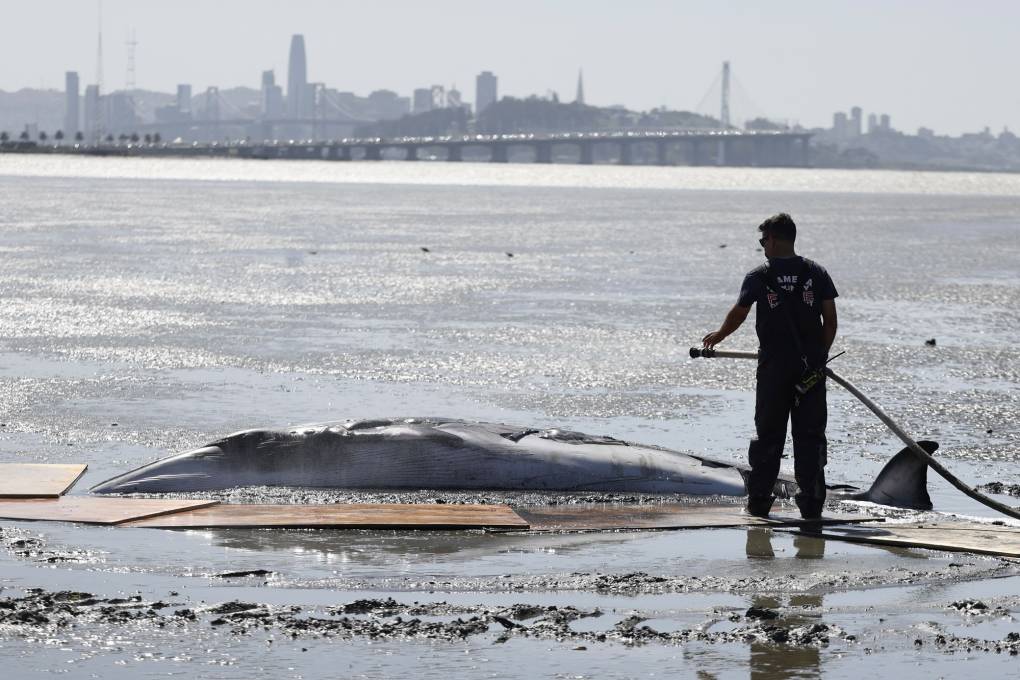
"caption": "An Alameda County firefighter hoses down a juvenile minke whale as it sits beached on the shores of Emeryville on Tuesday, April 8, 2025.",
"credit": "Jessica Christian/San Francisco Chronicle via Getty Images",
"altTag": null,
"description": null,
"imgSizes": {
"medium": {
"file": "https://cdn.kqed.org/wp-content/uploads/sites/10/2025/04/EmeryvilleWhaleDeathGetty-800x533.jpg",
"width": 800,
"height": 533,
"mimeType": "image/jpeg"
},
"large": {
"file": "https://cdn.kqed.org/wp-content/uploads/sites/10/2025/04/EmeryvilleWhaleDeathGetty-1020x680.jpg",
"width": 1020,
"height": 680,
"mimeType": "image/jpeg"
},
"thumbnail": {
"file": "https://cdn.kqed.org/wp-content/uploads/sites/10/2025/04/EmeryvilleWhaleDeathGetty-160x107.jpg",
"width": 160,
"height": 107,
"mimeType": "image/jpeg"
},
"1536x1536": {
"file": "https://cdn.kqed.org/wp-content/uploads/sites/10/2025/04/EmeryvilleWhaleDeathGetty-1536x1024.jpg",
"width": 1536,
"height": 1024,
"mimeType": "image/jpeg"
},
"post-thumbnail": {
"file": "https://cdn.kqed.org/wp-content/uploads/sites/10/2025/04/EmeryvilleWhaleDeathGetty-672x372.jpg",
"width": 672,
"height": 372,
"mimeType": "image/jpeg"
},
"twentyfourteen-full-width": {
"file": "https://cdn.kqed.org/wp-content/uploads/sites/10/2025/04/EmeryvilleWhaleDeathGetty-1038x576.jpg",
"width": 1038,
"height": 576,
"mimeType": "image/jpeg"
},
"full-width": {
"file": "https://cdn.kqed.org/wp-content/uploads/sites/10/2025/04/EmeryvilleWhaleDeathGetty-1920x1280.jpg",
"width": 1920,
"height": 1280,
"mimeType": "image/jpeg"
},
"kqedFullSize": {
"file": "https://cdn.kqed.org/wp-content/uploads/sites/10/2025/04/EmeryvilleWhaleDeathGetty.jpg",
"width": 2000,
"height": 1333
}
},
"isLoading": false,
"fetchFailed": false
},
"news_12029189": {
"type": "attachments",
"id": "news_12029189",
"meta": {
"index": "attachments_1716263798",
"site": "news",
"id": "12029189",
"found": true
},
"title": "NOAA Earth System Research Laboratory",
"publishDate": 1740766106,
"status": "inherit",
"parent": 12029178,
"modified": 1740766133,
"caption": "National Oceanic & Atmospheric Administration Earth System Research Laboratory in Boulder, Colorado.",
"credit": "Byunghwan Lim/Getty Images",
"altTag": null,
"description": null,
"imgSizes": {
"medium": {
"file": "https://cdn.kqed.org/wp-content/uploads/sites/10/2025/02/NOAAGetty-800x533.jpg",
"width": 800,
"height": 533,
"mimeType": "image/jpeg"
},
"large": {
"file": "https://cdn.kqed.org/wp-content/uploads/sites/10/2025/02/NOAAGetty-1020x680.jpg",
"width": 1020,
"height": 680,
"mimeType": "image/jpeg"
},
"thumbnail": {
"file": "https://cdn.kqed.org/wp-content/uploads/sites/10/2025/02/NOAAGetty-160x107.jpg",
"width": 160,
"height": 107,
"mimeType": "image/jpeg"
},
"1536x1536": {
"file": "https://cdn.kqed.org/wp-content/uploads/sites/10/2025/02/NOAAGetty-1536x1024.jpg",
"width": 1536,
"height": 1024,
"mimeType": "image/jpeg"
},
"post-thumbnail": {
"file": "https://cdn.kqed.org/wp-content/uploads/sites/10/2025/02/NOAAGetty-672x372.jpg",
"width": 672,
"height": 372,
"mimeType": "image/jpeg"
},
"twentyfourteen-full-width": {
"file": "https://cdn.kqed.org/wp-content/uploads/sites/10/2025/02/NOAAGetty-1038x576.jpg",
"width": 1038,
"height": 576,
"mimeType": "image/jpeg"
},
"full-width": {
"file": "https://cdn.kqed.org/wp-content/uploads/sites/10/2025/02/NOAAGetty-1920x1280.jpg",
"width": 1920,
"height": 1280,
"mimeType": "image/jpeg"
},
"kqedFullSize": {
"file": "https://cdn.kqed.org/wp-content/uploads/sites/10/2025/02/NOAAGetty.jpg",
"width": 2000,
"height": 1333
}
},
"isLoading": false,
"fetchFailed": false
},
"news_12028751": {
"type": "attachments",
"id": "news_12028751",
"meta": {
"index": "attachments_1716263798",
"site": "news",
"id": "12028751",
"found": true
},
"title": "SuperPod",
"publishDate": 1740599015,
"status": "inherit",
"parent": 12028741,
"modified": 1740599305,
"caption": "Thousands of dolphins swim in the waters off Monterey in a still image from a video captured by boat captain Evan Brodsky on Feb. 21.",
"credit": "Evan Brodsky/Monterey Bay Whale Watch",
"altTag": null,
"description": null,
"imgSizes": {
"medium": {
"file": "https://cdn.kqed.org/wp-content/uploads/sites/10/2025/02/SuperPod-800x439.jpg",
"width": 800,
"height": 439,
"mimeType": "image/jpeg"
},
"large": {
"file": "https://cdn.kqed.org/wp-content/uploads/sites/10/2025/02/SuperPod-1020x559.jpg",
"width": 1020,
"height": 559,
"mimeType": "image/jpeg"
},
"thumbnail": {
"file": "https://cdn.kqed.org/wp-content/uploads/sites/10/2025/02/SuperPod-160x88.jpg",
"width": 160,
"height": 88,
"mimeType": "image/jpeg"
},
"1536x1536": {
"file": "https://cdn.kqed.org/wp-content/uploads/sites/10/2025/02/SuperPod-1536x842.jpg",
"width": 1536,
"height": 842,
"mimeType": "image/jpeg"
},
"post-thumbnail": {
"file": "https://cdn.kqed.org/wp-content/uploads/sites/10/2025/02/SuperPod-672x372.jpg",
"width": 672,
"height": 372,
"mimeType": "image/jpeg"
},
"twentyfourteen-full-width": {
"file": "https://cdn.kqed.org/wp-content/uploads/sites/10/2025/02/SuperPod-1038x576.jpg",
"width": 1038,
"height": 576,
"mimeType": "image/jpeg"
},
"full-width": {
"file": "https://cdn.kqed.org/wp-content/uploads/sites/10/2025/02/SuperPod-1920x1053.jpg",
"width": 1920,
"height": 1053,
"mimeType": "image/jpeg"
},
"kqedFullSize": {
"file": "https://cdn.kqed.org/wp-content/uploads/sites/10/2025/02/SuperPod.jpg",
"width": 2000,
"height": 1097
}
},
"isLoading": false,
"fetchFailed": false
},
"news_12014620": {
"type": "attachments",
"id": "news_12014620",
"meta": {
"index": "attachments_1716263798",
"site": "news",
"id": "12014620",
"found": true
},
"title": "King Tide",
"publishDate": 1731702277,
"status": "inherit",
"parent": 12014611,
"modified": 1731705925,
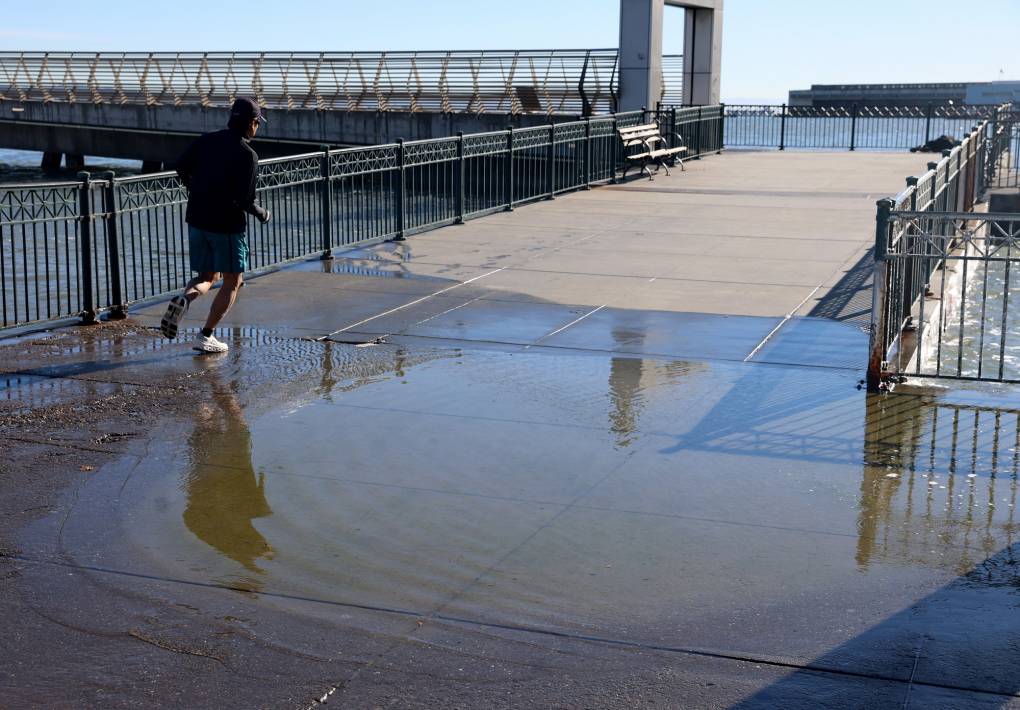
"caption": "A man jogs around overflow from the high king tide at Pier 14 along the Embarcadero in San Francisco, California, on Jan. 11, 2024.",
"credit": "Jane Tyska/Digital First Media/East Bay Times via Getty Images",
"altTag": null,
"description": null,
"imgSizes": {
"medium": {
"file": "https://cdn.kqed.org/wp-content/uploads/sites/10/2024/11/KingTidesSFGetty-800x557.jpg",
"width": 800,
"height": 557,
"mimeType": "image/jpeg"
},
"large": {
"file": "https://cdn.kqed.org/wp-content/uploads/sites/10/2024/11/KingTidesSFGetty-1020x710.jpg",
"width": 1020,
"height": 710,
"mimeType": "image/jpeg"
},
"thumbnail": {
"file": "https://cdn.kqed.org/wp-content/uploads/sites/10/2024/11/KingTidesSFGetty-160x111.jpg",
"width": 160,
"height": 111,
"mimeType": "image/jpeg"
},
"1536x1536": {
"file": "https://cdn.kqed.org/wp-content/uploads/sites/10/2024/11/KingTidesSFGetty-1536x1069.jpg",
"width": 1536,
"height": 1069,
"mimeType": "image/jpeg"
},
"post-thumbnail": {
"file": "https://cdn.kqed.org/wp-content/uploads/sites/10/2024/11/KingTidesSFGetty-672x372.jpg",
"width": 672,
"height": 372,
"mimeType": "image/jpeg"
},
"twentyfourteen-full-width": {
"file": "https://cdn.kqed.org/wp-content/uploads/sites/10/2024/11/KingTidesSFGetty-1038x576.jpg",
"width": 1038,
"height": 576,
"mimeType": "image/jpeg"
},
"full-width": {
"file": "https://cdn.kqed.org/wp-content/uploads/sites/10/2024/11/KingTidesSFGetty-1920x1336.jpg",
"width": 1920,
"height": 1336,
"mimeType": "image/jpeg"
},
"kqedFullSize": {
"file": "https://cdn.kqed.org/wp-content/uploads/sites/10/2024/11/KingTidesSFGetty.jpg",
"width": 2000,
"height": 1392
}
},
"isLoading": false,
"fetchFailed": false
},
"news_12012284": {
"type": "attachments",
"id": "news_12012284",
"meta": {
"index": "attachments_1716263798",
"site": "news",
"id": "12012284",
"found": true
},
"title": "GoldenMussel1",
"publishDate": 1730505100,
"status": "inherit",
"parent": 12012112,
"modified": 1730505227,
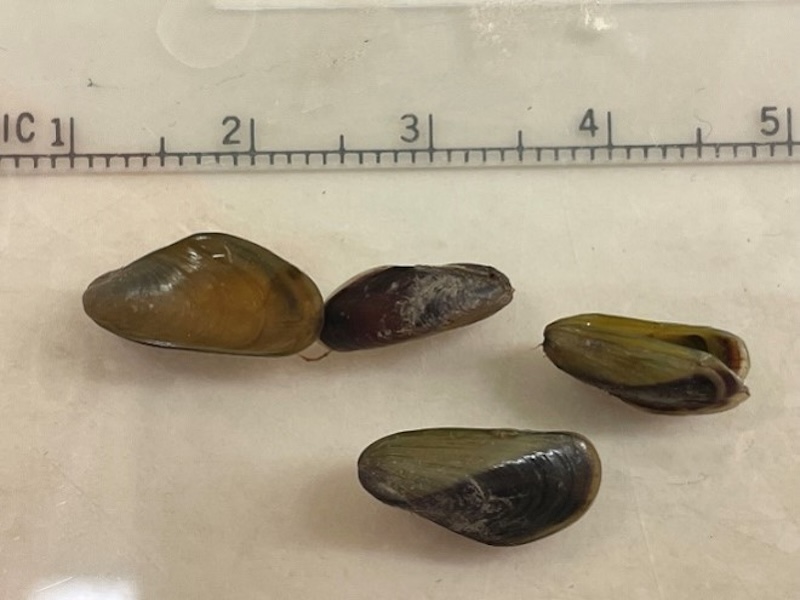
"caption": "Golden mussel (Limnoperna fortunei), an invasive, non-native freshwater bivalve, was recently discovered in the Port of Stockton by California Department of Water Resources staff while conducting routine operations.",
"credit": "Courtesy of California Department of Fish and Wildlife",
"altTag": null,
"description": null,
"imgSizes": {
"thumbnail": {
"file": "https://cdn.kqed.org/wp-content/uploads/sites/10/2024/11/GoldenMussel1-160x120.jpg",
"width": 160,
"height": 120,
"mimeType": "image/jpeg"
},
"post-thumbnail": {
"file": "https://cdn.kqed.org/wp-content/uploads/sites/10/2024/11/GoldenMussel1-672x372.jpg",
"width": 672,
"height": 372,
"mimeType": "image/jpeg"
},
"twentyfourteen-full-width": {
"file": "https://cdn.kqed.org/wp-content/uploads/sites/10/2024/11/GoldenMussel1-800x576.jpg",
"width": 800,
"height": 576,
"mimeType": "image/jpeg"
},
"kqedFullSize": {
"file": "https://cdn.kqed.org/wp-content/uploads/sites/10/2024/11/GoldenMussel1.jpg",
"width": 800,
"height": 600
}
},
"isLoading": false,
"fetchFailed": false
},
"news_12002079": {
"type": "attachments",
"id": "news_12002079",
"meta": {
"index": "attachments_1716263798",
"site": "news",
"id": "12002079",
"found": true
},
"title": "WhaleSightings2",
"publishDate": 1724791476,
"status": "inherit",
"parent": 12002077,
"modified": 1724890040,
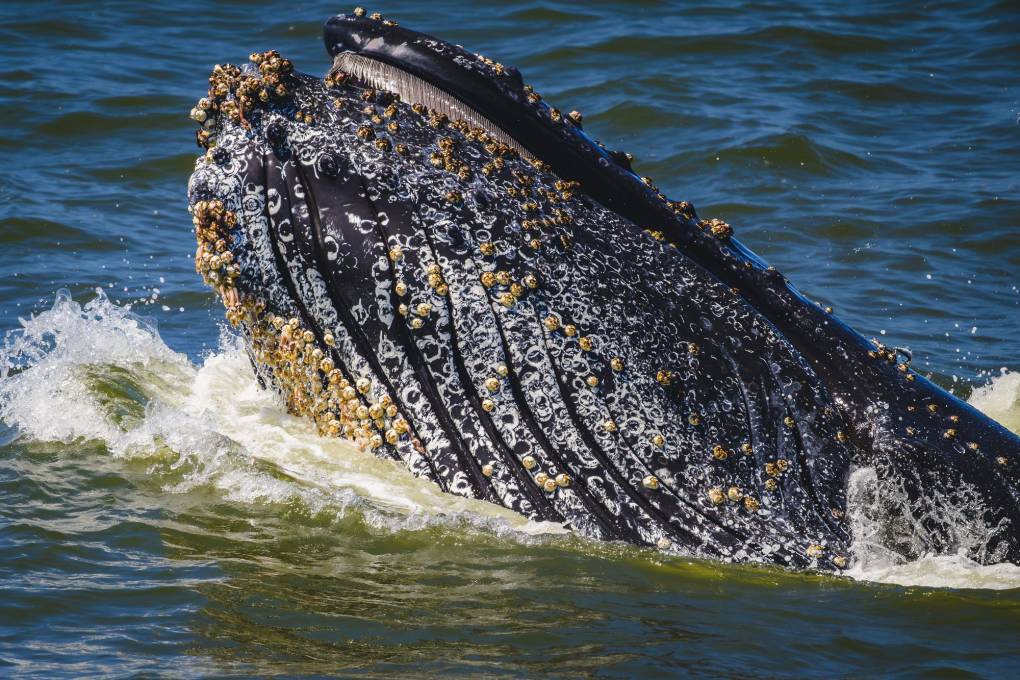
"caption": "A humpback whale caught mid-lunge reveals its baleen — the white, teeth-like structures used to strain food from the water — during a dramatic feeding moment.",
"credit": "Courtesy David Chamberlin",
"altTag": null,
"description": null,
"imgSizes": {
"medium": {
"file": "https://cdn.kqed.org/wp-content/uploads/sites/10/2024/08/WhaleSightings2-800x533.jpg",
"width": 800,
"height": 533,
"mimeType": "image/jpeg"
},
"large": {
"file": "https://cdn.kqed.org/wp-content/uploads/sites/10/2024/08/WhaleSightings2-1020x680.jpg",
"width": 1020,
"height": 680,
"mimeType": "image/jpeg"
},
"thumbnail": {
"file": "https://cdn.kqed.org/wp-content/uploads/sites/10/2024/08/WhaleSightings2-160x107.jpg",
"width": 160,
"height": 107,
"mimeType": "image/jpeg"
},
"1536x1536": {
"file": "https://cdn.kqed.org/wp-content/uploads/sites/10/2024/08/WhaleSightings2-1536x1024.jpg",
"width": 1536,
"height": 1024,
"mimeType": "image/jpeg"
},
"post-thumbnail": {
"file": "https://cdn.kqed.org/wp-content/uploads/sites/10/2024/08/WhaleSightings2-672x372.jpg",
"width": 672,
"height": 372,
"mimeType": "image/jpeg"
},
"twentyfourteen-full-width": {
"file": "https://cdn.kqed.org/wp-content/uploads/sites/10/2024/08/WhaleSightings2-1038x576.jpg",
"width": 1038,
"height": 576,
"mimeType": "image/jpeg"
},
"full-width": {
"file": "https://cdn.kqed.org/wp-content/uploads/sites/10/2024/08/WhaleSightings2-1920x1280.jpg",
"width": 1920,
"height": 1280,
"mimeType": "image/jpeg"
},
"kqedFullSize": {
"file": "https://cdn.kqed.org/wp-content/uploads/sites/10/2024/08/WhaleSightings2.jpg",
"width": 2000,
"height": 1333
}
},
"isLoading": false,
"fetchFailed": false
},
"news_11976729": {
"type": "attachments",
"id": "news_11976729",
"meta": {
"index": "attachments_1716263798",
"site": "news",
"id": "11976729",
"found": true
},
"parent": 11976728,
"imgSizes": {
"twentyfourteen-full-width": {
"file": "https://cdn.kqed.org/wp-content/uploads/sites/10/2024/02/pnas_presse_abb_01-38e92340fe5dfbed9bf49d378d1f81f9b330aa84-1038x576.jpg",
"width": 1038,
"mimeType": "image/jpeg",
"height": 576
},
"thumbnail": {
"file": "https://cdn.kqed.org/wp-content/uploads/sites/10/2024/02/pnas_presse_abb_01-38e92340fe5dfbed9bf49d378d1f81f9b330aa84-160x120.jpg",
"width": 160,
"mimeType": "image/jpeg",
"height": 120
},
"post-thumbnail": {
"file": "https://cdn.kqed.org/wp-content/uploads/sites/10/2024/02/pnas_presse_abb_01-38e92340fe5dfbed9bf49d378d1f81f9b330aa84-672x372.jpg",
"width": 672,
"mimeType": "image/jpeg",
"height": 372
},
"kqedFullSize": {
"file": "https://cdn.kqed.org/wp-content/uploads/sites/10/2024/02/pnas_presse_abb_01-38e92340fe5dfbed9bf49d378d1f81f9b330aa84.jpg",
"width": 1888,
"height": 1416
},
"large": {
"file": "https://cdn.kqed.org/wp-content/uploads/sites/10/2024/02/pnas_presse_abb_01-38e92340fe5dfbed9bf49d378d1f81f9b330aa84-1020x765.jpg",
"width": 1020,
"mimeType": "image/jpeg",
"height": 765
},
"1536x1536": {
"file": "https://cdn.kqed.org/wp-content/uploads/sites/10/2024/02/pnas_presse_abb_01-38e92340fe5dfbed9bf49d378d1f81f9b330aa84-1536x1152.jpg",
"width": 1536,
"mimeType": "image/jpeg",
"height": 1152
},
"medium": {
"file": "https://cdn.kqed.org/wp-content/uploads/sites/10/2024/02/pnas_presse_abb_01-38e92340fe5dfbed9bf49d378d1f81f9b330aa84-800x600.jpg",
"width": 800,
"mimeType": "image/jpeg",
"height": 600
}
},
"publishDate": 1708629430,
"modified": 1708642580,
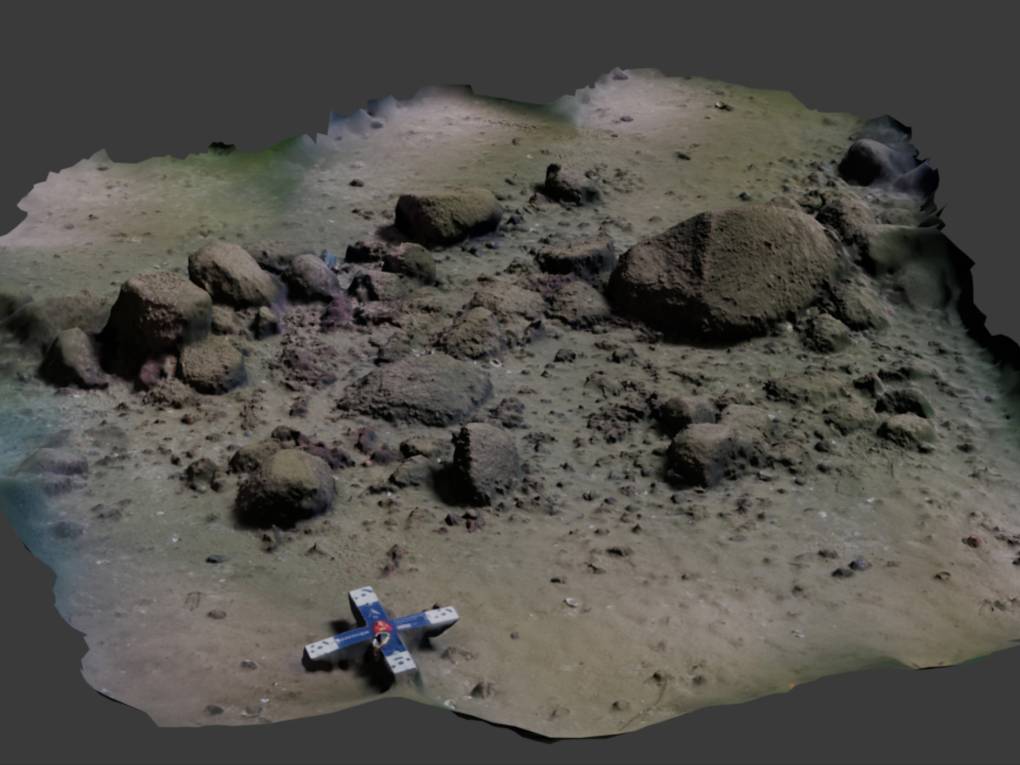
"caption": "A 3D model of a short section of the stone wall. The scale at the bottom of the image measures 50 cm.",
"description": null,
"title": "A 3D model of a short section of the stone wall. The scale at the bottom of the image measures 50 cm.",
"credit": null,
"status": "inherit",
"altTag": null,
"isLoading": false,
"fetchFailed": false
},
"news_11969561": {
"type": "attachments",
"id": "news_11969561",
"meta": {
"index": "attachments_1716263798",
"site": "news",
"id": "11969561",
"found": true
},
"parent": 11969560,
"imgSizes": {
"twentyfourteen-full-width": {
"file": "https://cdn.kqed.org/wp-content/uploads/sites/10/2023/12/attenborough-and-the-jurassic-sea-monster_01_001_custom-d582b499ec602688d4dbe5f11c6c83f037f7438a-1038x576.jpg",
"width": 1038,
"mimeType": "image/jpeg",
"height": 576
},
"thumbnail": {
"file": "https://cdn.kqed.org/wp-content/uploads/sites/10/2023/12/attenborough-and-the-jurassic-sea-monster_01_001_custom-d582b499ec602688d4dbe5f11c6c83f037f7438a-160x107.jpg",
"width": 160,
"mimeType": "image/jpeg",
"height": 107
},
"post-thumbnail": {
"file": "https://cdn.kqed.org/wp-content/uploads/sites/10/2023/12/attenborough-and-the-jurassic-sea-monster_01_001_custom-d582b499ec602688d4dbe5f11c6c83f037f7438a-672x372.jpg",
"width": 672,
"mimeType": "image/jpeg",
"height": 372
},
"kqedFullSize": {
"file": "https://cdn.kqed.org/wp-content/uploads/sites/10/2023/12/attenborough-and-the-jurassic-sea-monster_01_001_custom-d582b499ec602688d4dbe5f11c6c83f037f7438a.jpg",
"width": 2048,
"height": 1364
},
"large": {
"file": "https://cdn.kqed.org/wp-content/uploads/sites/10/2023/12/attenborough-and-the-jurassic-sea-monster_01_001_custom-d582b499ec602688d4dbe5f11c6c83f037f7438a-1020x679.jpg",
"width": 1020,
"mimeType": "image/jpeg",
"height": 679
},
"1536x1536": {
"file": "https://cdn.kqed.org/wp-content/uploads/sites/10/2023/12/attenborough-and-the-jurassic-sea-monster_01_001_custom-d582b499ec602688d4dbe5f11c6c83f037f7438a-1536x1023.jpg",
"width": 1536,
"mimeType": "image/jpeg",
"height": 1023
},
"full-width": {
"file": "https://cdn.kqed.org/wp-content/uploads/sites/10/2023/12/attenborough-and-the-jurassic-sea-monster_01_001_custom-d582b499ec602688d4dbe5f11c6c83f037f7438a-1920x1279.jpg",
"width": 1920,
"mimeType": "image/jpeg",
"height": 1279
},
"medium": {
"file": "https://cdn.kqed.org/wp-content/uploads/sites/10/2023/12/attenborough-and-the-jurassic-sea-monster_01_001_custom-d582b499ec602688d4dbe5f11c6c83f037f7438a-800x533.jpg",
"width": 800,
"mimeType": "image/jpeg",
"height": 533
}
},
"publishDate": 1702320924,
"modified": 1702323535,
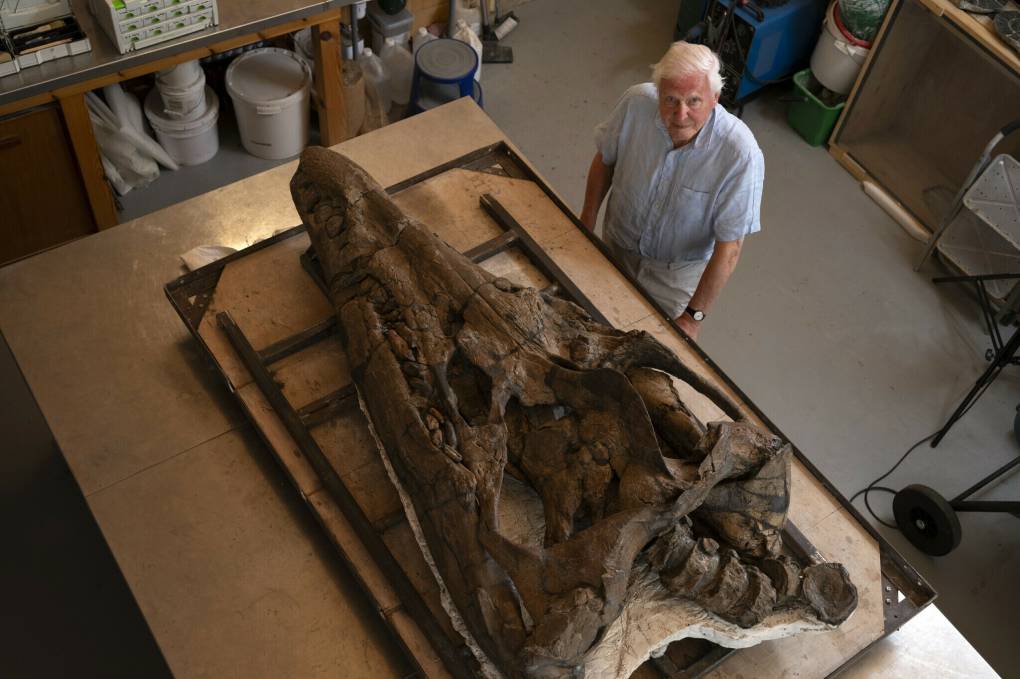
"caption": "Sir David Attenborough with the restored pliosaur skull in the workshop of the Etches Collection Museum, Kimmeridge, Dorset, UK.",
"description": "Picture Shows: Sir David Attenborough with the restored Pliosaur skull in the workshop of the Etches Collection Museum, Kimmeridge, Dorset, UK.",
"title": "Sir David Attenborough with the restored pliosaur skull in the workshop of the Etches Collection Museum, Kimmeridge, Dorset, UK.",
"credit": null,
"status": "inherit",
"altTag": "A man with white hair stands beside a restoration of dinosaur bones.",
"isLoading": false,
"fetchFailed": false
},
"news_11968804": {
"type": "attachments",
"id": "news_11968804",
"meta": {
"index": "attachments_1716263798",
"site": "news",
"id": "11968804",
"found": true
},
"parent": 11968802,
"imgSizes": {
"twentyfourteen-full-width": {
"file": "https://ww2.kqed.org/app/uploads/sites/10/2023/12/CMBluePower01-1038x576.jpg",
"width": 1038,
"mimeType": "image/jpeg",
"height": 576
},
"thumbnail": {
"file": "https://ww2.kqed.org/app/uploads/sites/10/2023/12/CMBluePower01-160x107.jpg",
"width": 160,
"mimeType": "image/jpeg",
"height": 107
},
"post-thumbnail": {
"file": "https://ww2.kqed.org/app/uploads/sites/10/2023/12/CMBluePower01-672x372.jpg",
"width": 672,
"mimeType": "image/jpeg",
"height": 372
},
"kqedFullSize": {
"file": "https://ww2.kqed.org/app/uploads/sites/10/2023/12/CMBluePower01.jpg",
"width": 2000,
"height": 1333
},
"large": {
"file": "https://ww2.kqed.org/app/uploads/sites/10/2023/12/CMBluePower01-1020x680.jpg",
"width": 1020,
"mimeType": "image/jpeg",
"height": 680
},
"1536x1536": {
"file": "https://ww2.kqed.org/app/uploads/sites/10/2023/12/CMBluePower01-1536x1024.jpg",
"width": 1536,
"mimeType": "image/jpeg",
"height": 1024
},
"full-width": {
"file": "https://ww2.kqed.org/app/uploads/sites/10/2023/12/CMBluePower01-1920x1280.jpg",
"width": 1920,
"mimeType": "image/jpeg",
"height": 1280
},
"medium": {
"file": "https://ww2.kqed.org/app/uploads/sites/10/2023/12/CMBluePower01-800x533.jpg",
"width": 800,
"mimeType": "image/jpeg",
"height": 533
}
},
"publishDate": 1701462223,
"modified": 1701713673,
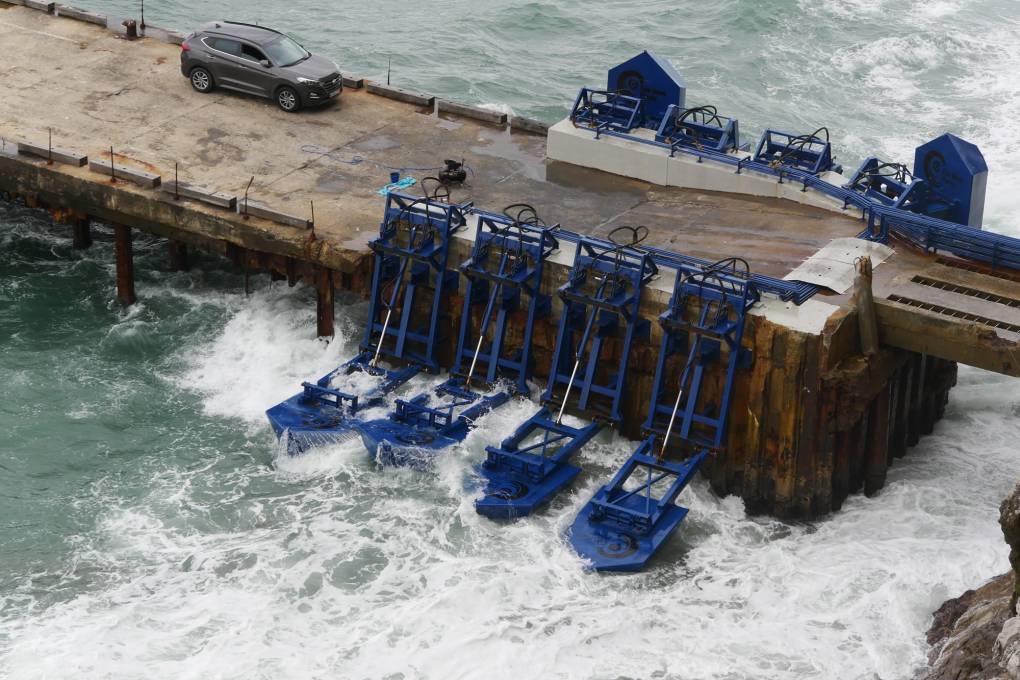
"caption": "Some wave technology, like this one from Eco Wave Power, is deployed near shore, attached to seawalls or jetties, where paddle-like devices are driven up and down by wave action, activating hydraulic energy.",
"description": null,
"title": "CMBluePower01",
"credit": "Courtesy of Eco Wave Power",
"status": "inherit",
"altTag": "Ocean waters surround a cement platform where a vehicle is parked. On either side of the platform is equipment that aims to capture ocean waves as energy.",
"isLoading": false,
"fetchFailed": false
},
"news_11957195": {
"type": "attachments",
"id": "news_11957195",
"meta": {
"index": "attachments_1716263798",
"site": "news",
"id": "11957195",
"found": true
},
"parent": 0,
"imgSizes": {
"twentyfourteen-full-width": {
"file": "https://ww2.kqed.org/app/uploads/sites/10/2023/08/RS681_IMG_0523-1038x576.jpg",
"width": 1038,
"mimeType": "image/jpeg",
"height": 576
},
"thumbnail": {
"file": "https://ww2.kqed.org/app/uploads/sites/10/2023/08/RS681_IMG_0523-160x120.jpg",
"width": 160,
"mimeType": "image/jpeg",
"height": 120
},
"post-thumbnail": {
"file": "https://ww2.kqed.org/app/uploads/sites/10/2023/08/RS681_IMG_0523-672x372.jpg",
"width": 672,
"mimeType": "image/jpeg",
"height": 372
},
"kqedFullSize": {
"file": "https://ww2.kqed.org/app/uploads/sites/10/2023/08/RS681_IMG_0523.jpg",
"width": 2272,
"height": 1704
},
"2048x2048": {
"file": "https://ww2.kqed.org/app/uploads/sites/10/2023/08/RS681_IMG_0523-2048x1536.jpg",
"width": 2048,
"mimeType": "image/jpeg",
"height": 1536
},
"large": {
"file": "https://ww2.kqed.org/app/uploads/sites/10/2023/08/RS681_IMG_0523-1020x765.jpg",
"width": 1020,
"mimeType": "image/jpeg",
"height": 765
},
"1536x1536": {
"file": "https://ww2.kqed.org/app/uploads/sites/10/2023/08/RS681_IMG_0523-1536x1152.jpg",
"width": 1536,
"mimeType": "image/jpeg",
"height": 1152
},
"full-width": {
"file": "https://ww2.kqed.org/app/uploads/sites/10/2023/08/RS681_IMG_0523-1920x1440.jpg",
"width": 1920,
"mimeType": "image/jpeg",
"height": 1440
},
"medium": {
"file": "https://ww2.kqed.org/app/uploads/sites/10/2023/08/RS681_IMG_0523-800x600.jpg",
"width": 800,
"mimeType": "image/jpeg",
"height": 600
}
},
"publishDate": 1691002833,
"modified": 1691015549,
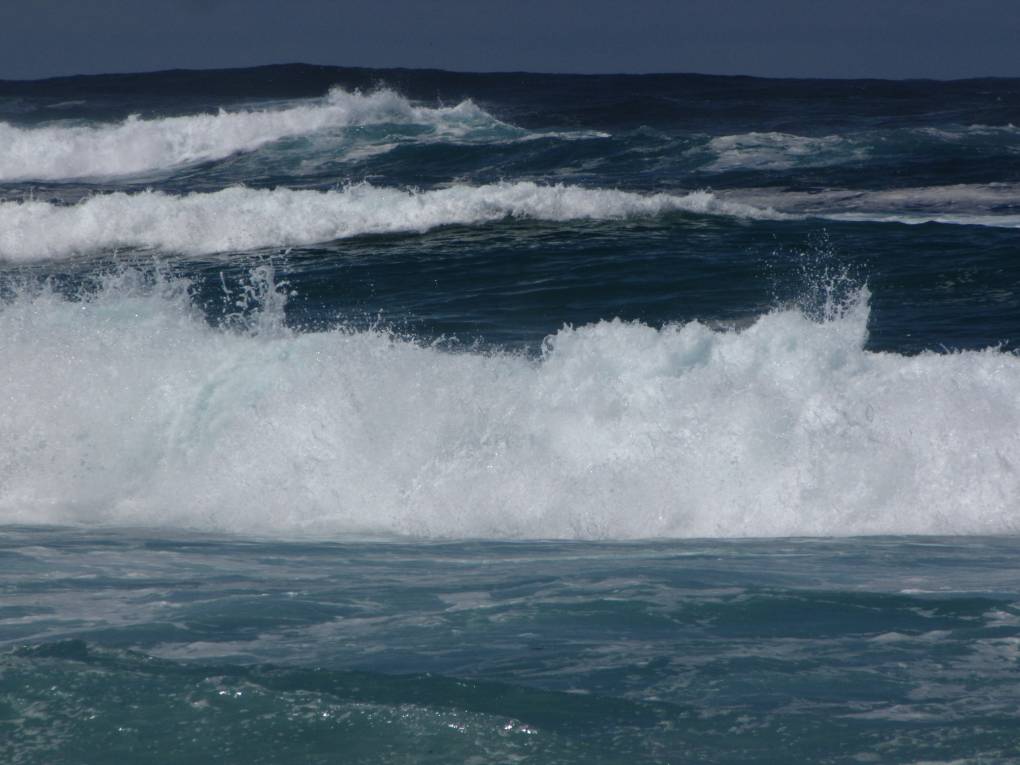
"caption": "The ocean could provide us with an unlimited source of power, if we can figure out how to tap it. ",
"description": null,
"title": "RS681_IMG_0523",
"credit": "Courtesy of Craig Miller",
"status": "inherit",
"altTag": "Deep blue ocean waves crashing",
"isLoading": false,
"fetchFailed": false
},
"news_11898043": {
"type": "attachments",
"id": "news_11898043",
"meta": {
"index": "attachments_1716263798",
"site": "news",
"id": "11898043",
"found": true
},
"parent": 11898036,
"imgSizes": {
"twentyfourteen-full-width": {
"file": "https://ww2.kqed.org/app/uploads/sites/10/2021/12/kingtides_120321_final-1038x576.png",
"width": 1038,
"mimeType": "image/png",
"height": 576
},
"thumbnail": {
"file": "https://ww2.kqed.org/app/uploads/sites/10/2021/12/kingtides_120321_final-160x110.png",
"width": 160,
"mimeType": "image/png",
"height": 110
},
"post-thumbnail": {
"file": "https://ww2.kqed.org/app/uploads/sites/10/2021/12/kingtides_120321_final-672x372.png",
"width": 672,
"mimeType": "image/png",
"height": 372
},
"kqedFullSize": {
"file": "https://ww2.kqed.org/app/uploads/sites/10/2021/12/kingtides_120321_final.png",
"width": 1920,
"height": 1319
},
"large": {
"file": "https://ww2.kqed.org/app/uploads/sites/10/2021/12/kingtides_120321_final-1020x701.png",
"width": 1020,
"mimeType": "image/png",
"height": 701
},
"1536x1536": {
"file": "https://ww2.kqed.org/app/uploads/sites/10/2021/12/kingtides_120321_final-1536x1055.png",
"width": 1536,
"mimeType": "image/png",
"height": 1055
},
"medium": {
"file": "https://ww2.kqed.org/app/uploads/sites/10/2021/12/kingtides_120321_final-800x550.png",
"width": 800,
"mimeType": "image/png",
"height": 550
}
},
"publishDate": 1638567589,
"modified": 1638567652,
"caption": null,
"description": null,
"title": "kingtides_120321_final",
"credit": null,
"status": "inherit",
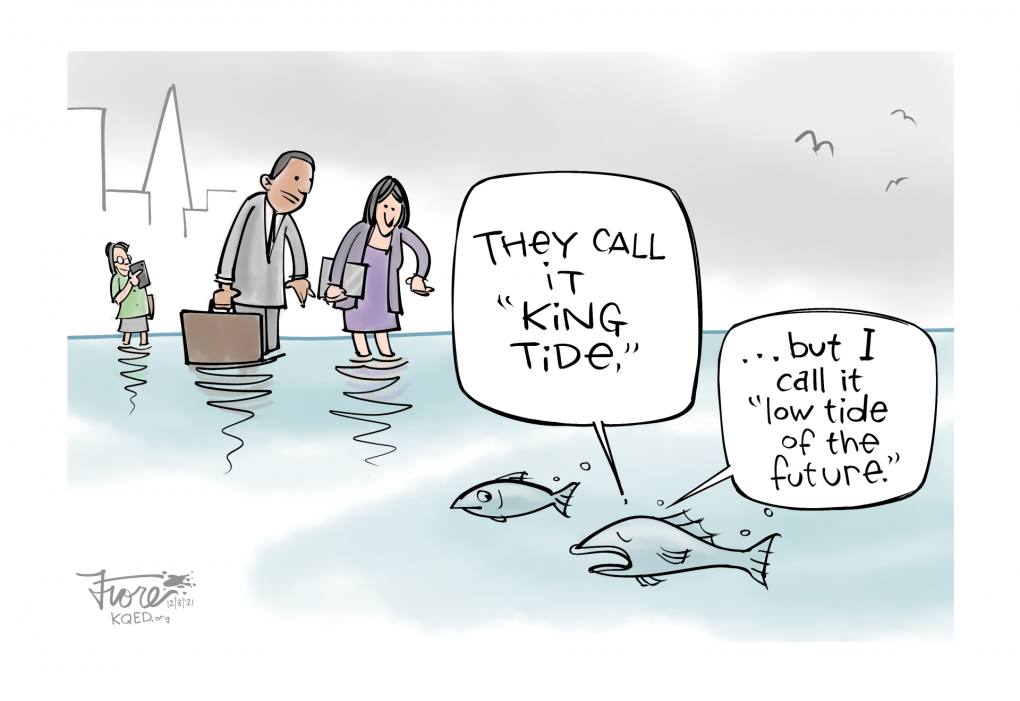
"altTag": "Cartoon: people in downtown San Francisco standing in water, we see a fish talk to another fish, saying, \"they call it 'king tide,' but I call it 'low tide of the future'.\"",
"isLoading": false,
"fetchFailed": false
},
"science_1957403": {
"type": "attachments",
"id": "science_1957403",
"meta": {
"index": "attachments_1716263798",
"site": "science",
"id": "1957403",
"found": true
},
"parent": 1957391,
"imgSizes": {
"twentyfourteen-full-width": {
"file": "https://ww2.kqed.org/app/uploads/sites/35/2020/02/Snapping-shrimp2-1038x576.jpg",
"width": 1038,
"mimeType": "image/jpeg",
"height": 576
},
"thumbnail": {
"file": "https://ww2.kqed.org/app/uploads/sites/35/2020/02/Snapping-shrimp2-160x106.jpg",
"width": 160,
"mimeType": "image/jpeg",
"height": 106
},
"post-thumbnail": {
"file": "https://ww2.kqed.org/app/uploads/sites/35/2020/02/Snapping-shrimp2-672x372.jpg",
"width": 672,
"mimeType": "image/jpeg",
"height": 372
},
"kqedFullSize": {
"file": "https://ww2.kqed.org/app/uploads/sites/35/2020/02/Snapping-shrimp2.jpg",
"width": 1920,
"height": 1276
},
"large": {
"file": "https://ww2.kqed.org/app/uploads/sites/35/2020/02/Snapping-shrimp2-1020x678.jpg",
"width": 1020,
"mimeType": "image/jpeg",
"height": 678
},
"full-width": {
"file": "https://ww2.kqed.org/app/uploads/sites/35/2020/02/Snapping-shrimp2-1920x1276.jpg",
"width": 1920,
"mimeType": "image/jpeg",
"height": 1276
},
"medium": {
"file": "https://ww2.kqed.org/app/uploads/sites/35/2020/02/Snapping-shrimp2-800x532.jpg",
"width": 800,
"mimeType": "image/jpeg",
"height": 532
},
"medium_large": {
"file": "https://ww2.kqed.org/app/uploads/sites/35/2020/02/Snapping-shrimp2-768x510.jpg",
"width": 768,
"mimeType": "image/jpeg",
"height": 510
}
},
"publishDate": 1582335374,
"modified": 1582335430,
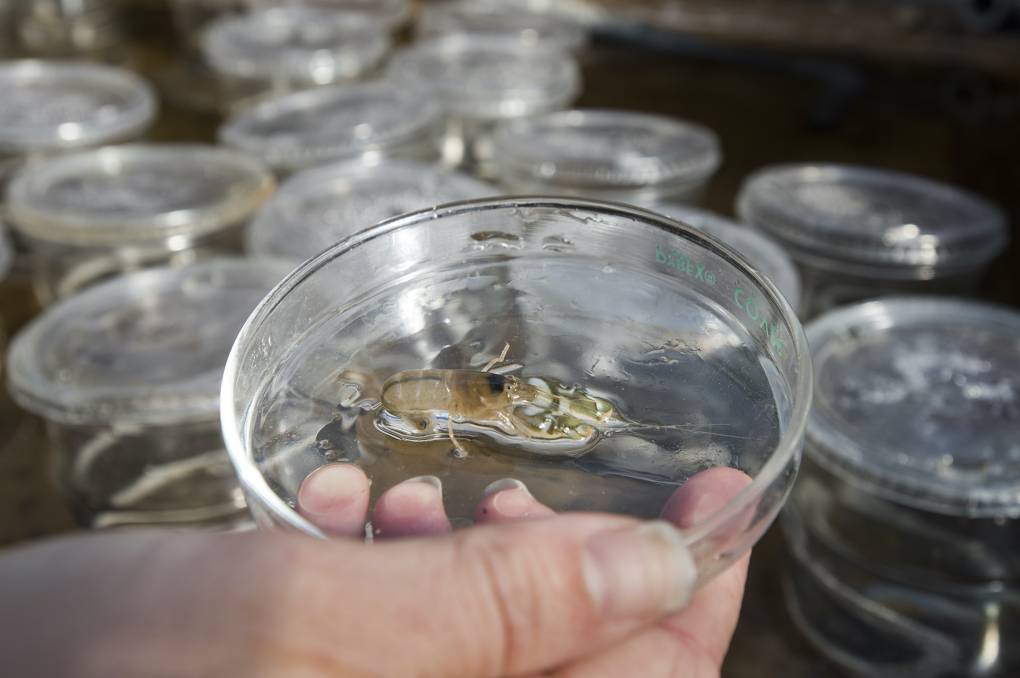
"caption": "Snapping shrimp in petri dishes.",
"description": null,
"title": "Snapping shrimp",
"credit": "Courtesy Woods Hole Oceanographic Institution",
"status": "inherit",
"isLoading": false,
"fetchFailed": false
}
},
"audioPlayerReducer": {
"postId": "stream_live",
"isPaused": true,
"isPlaying": false,
"pfsActive": false,
"pledgeModalIsOpen": true,
"playerDrawerIsOpen": false,
"liveAudioPlayStartedAt": 0,
"liveAudioPlayContext": ""
},
"authorsReducer": {
"byline_news_12028741": {
"type": "authors",
"id": "byline_news_12028741",
"meta": {
"override": true
},
"slug": "byline_news_12028741",
"name": "Janie Har, The Associated Press",
"isLoading": false
},
"byline_news_12012112": {
"type": "authors",
"id": "byline_news_12012112",
"meta": {
"override": true
},
"slug": "byline_news_12012112",
"name": "\u003ca href=\"https://calmatters.org/author/alastair-bland/\">Alastair Bland\u003c/a>",
"isLoading": false
},
"byline_news_11976728": {
"type": "authors",
"id": "byline_news_11976728",
"meta": {
"override": true
},
"slug": "byline_news_11976728",
"name": "Ari Daniel",
"isLoading": false
},
"byline_news_11969560": {
"type": "authors",
"id": "byline_news_11969560",
"meta": {
"override": true
},
"slug": "byline_news_11969560",
"name": "\u003ca href=\"https://www.npr.org/people/1000952100/joe-hernandez\">Joe Hernandez\u003c/a>\u003cbr> NPR News",
"isLoading": false
},
"byline_news_11968802": {
"type": "authors",
"id": "byline_news_11968802",
"meta": {
"override": true
},
"slug": "byline_news_11968802",
"name": "\u003ca href=\"https://calmatters.org/author/julie-cart/\">Julie Cart\u003c/a>",
"isLoading": false
},
"matthewgreen": {
"type": "authors",
"id": "1263",
"meta": {
"index": "authors_1716337520",
"id": "1263",
"found": true
},
"name": "Matthew Green",
"firstName": "Matthew",
"lastName": "Green",
"slug": "matthewgreen",
"email": "mgreen@kqed.org",
"display_author_email": false,
"staff_mastheads": [],
"title": "KQED Editor/Reporter",
"bio": "Matthew Green is a digital media producer for KQED News. He previously produced \u003ca href=\"http://www.kqed.org/lowdown\">The Lowdown\u003c/a>, KQED’s multimedia news education blog. Matthew's written for numerous Bay Area publications, including the Oakland Tribune and San Francisco Chronicle. He also taught journalism classes at Fremont High School in East Oakland.\r\n\r\nEmail: mgreen@kqed.org; Twitter: @MGreenKQED",
"avatar": "https://secure.gravatar.com/avatar/3bf498d1267ca02c8494f33d8cfc575e?s=600&d=blank&r=g",
"twitter": "MGreenKQED",
"facebook": null,
"instagram": null,
"linkedin": null,
"sites": [
{
"site": "news",
"roles": []
},
{
"site": "lowdown",
"roles": []
},
{
"site": "science",
"roles": []
},
{
"site": "education",
"roles": []
},
{
"site": "quest",
"roles": []
},
{
"site": "liveblog",
"roles": []
}
],
"headData": {
"title": "Matthew Green | KQED",
"description": "KQED Editor/Reporter",
"ogImgSrc": "https://secure.gravatar.com/avatar/3bf498d1267ca02c8494f33d8cfc575e?s=600&d=blank&r=g",
"twImgSrc": "https://secure.gravatar.com/avatar/3bf498d1267ca02c8494f33d8cfc575e?s=600&d=blank&r=g"
},
"isLoading": false,
"link": "/author/matthewgreen"
},
"markfiore": {
"type": "authors",
"id": "3236",
"meta": {
"index": "authors_1716337520",
"id": "3236",
"found": true
},
"name": "Mark Fiore",
"firstName": "Mark",
"lastName": "Fiore",
"slug": "markfiore",
"email": "mark@markfiore.com",
"display_author_email": false,
"staff_mastheads": [
"news"
],
"title": "KQED News Cartoonist",
"bio": "\u003ca href=\"http://www.MarkFiore.com\">MarkFiore.com\u003c/a> | \u003ca href=\"https://twitter.com/markfiore\">Follow on Twitter\u003c/a> | \u003ca href=\"https://www.facebook.com/pages/Mark-Fiore-Animated-Political-Cartoons/94451707396?ref=bookmarks\">Facebook\u003c/a> | \u003ca href=\"mailto:mark@markfiore.com\">email\u003c/a>\r\n\r\nPulitzer Prize-winner, Mark Fiore, who the Wall Street Journal has called “the undisputed guru of the form,” creates animated political cartoons in San Francisco, where his work has been featured regularly on the San Francisco Chronicle’s web site, SFGate.com. His work has appeared on Newsweek.com, Slate.com, CBSNews.com, MotherJones.com, DailyKos.com and NPR’s web site. Fiore’s political animation has appeared on CNN, Frontline, Bill Moyers Journal, Salon.com and cable and broadcast outlets across the globe.\r\n\r\nBeginning his professional life by drawing traditional political cartoons for newspapers, Fiore’s work appeared in publications ranging from the Washington Post to the Los Angeles Times. In the late 1990s, he began to experiment with animating political cartoons and, after a short stint at the San Jose Mercury News as their staff cartoonist, Fiore devoted all his energies to animation.\r\nGrowing up in California, Fiore also spent a good portion of his life in the backwoods of Idaho. It was this combination that shaped him politically. Mark majored in political science at Colorado College, where, in a perfect send-off for a cartoonist, he received his diploma in 1991 as commencement speaker Dick Cheney smiled approvingly.\r\nMark Fiore was awarded the Pulitzer Prize for political cartooning in 2010, a Robert F. Kennedy Journalism Award in 2004 and has twice received an Online Journalism Award for commentary from the Online News Association (2002, 2008). Fiore has received two awards for his work in new media from the National Cartoonists Society (2001, 2002), and in 2006 received The James Madison Freedom of Information Award from The Society of Professional Journalists.",
"avatar": "https://secure.gravatar.com/avatar/fc4e2a612b15b67bad0c6f0e1db4ca9b?s=600&d=blank&r=g",
"twitter": "MarkFiore",
"facebook": null,
"instagram": "https://www.instagram.com/markfiore/?hl=en",
"linkedin": null,
"sites": [
{
"site": "arts",
"roles": [
"contributor"
]
},
{
"site": "news",
"roles": [
"editor"
]
},
{
"site": "futureofyou",
"roles": [
"editor"
]
},
{
"site": "science",
"roles": [
"editor"
]
}
],
"headData": {
"title": "Mark Fiore | KQED",
"description": "KQED News Cartoonist",
"ogImgSrc": "https://secure.gravatar.com/avatar/fc4e2a612b15b67bad0c6f0e1db4ca9b?s=600&d=blank&r=g",
"twImgSrc": "https://secure.gravatar.com/avatar/fc4e2a612b15b67bad0c6f0e1db4ca9b?s=600&d=blank&r=g"
},
"isLoading": false,
"link": "/author/markfiore"
},
"dcronin": {
"type": "authors",
"id": "11362",
"meta": {
"index": "authors_1716337520",
"id": "11362",
"found": true
},
"name": "Dana Cronin",
"firstName": "Dana",
"lastName": "Cronin",
"slug": "dcronin",
"email": "dcronin@KQED.org",
"display_author_email": true,
"staff_mastheads": [],
"title": "KQED Contributor",
"bio": "Dana Cronin is a reporter for KQED News. She loves writing stories about climate change, environmental issues, food and agriculture. She's reported across the country, from Colorado to Washington D.C. to Illinois, and has won numerous awards for her coverage. Her work is regularly featured on national broadcasts, including NPR’s Morning Edition, All Things Considered, PBS Newshour and Science Friday. She lives in Oakland and has an avocado tree in her back yard.",
"avatar": "https://secure.gravatar.com/avatar/bcf89e3455ff7235f96ab6fa7258dd95?s=600&d=blank&r=g",
"twitter": "DanaHCronin",
"facebook": null,
"instagram": null,
"linkedin": null,
"sites": [
{
"site": "arts",
"roles": [
"author"
]
},
{
"site": "news",
"roles": [
"editor"
]
},
{
"site": "science",
"roles": [
"author"
]
},
{
"site": "liveblog",
"roles": [
"author"
]
}
],
"headData": {
"title": "Dana Cronin | KQED",
"description": "KQED Contributor",
"ogImgSrc": "https://secure.gravatar.com/avatar/bcf89e3455ff7235f96ab6fa7258dd95?s=600&d=blank&r=g",
"twImgSrc": "https://secure.gravatar.com/avatar/bcf89e3455ff7235f96ab6fa7258dd95?s=600&d=blank&r=g"
},
"isLoading": false,
"link": "/author/dcronin"
},
"hmcdede": {
"type": "authors",
"id": "11635",
"meta": {
"index": "authors_1716337520",
"id": "11635",
"found": true
},
"name": "Holly McDede",
"firstName": "Holly",
"lastName": "McDede",
"slug": "hmcdede",
"email": "hmcdede@KQED.org",
"display_author_email": false,
"staff_mastheads": [],
"title": "KQED Contributor",
"bio": null,
"avatar": "https://secure.gravatar.com/avatar/999d9bf31bb3a2f0511932d99526cb3e?s=600&d=blank&r=g",
"twitter": null,
"facebook": null,
"instagram": null,
"linkedin": null,
"sites": [
{
"site": "arts",
"roles": [
"editor"
]
},
{
"site": "news",
"roles": [
"edit_others_posts",
"editor"
]
},
{
"site": "science",
"roles": [
"editor"
]
},
{
"site": "forum",
"roles": [
"editor"
]
},
{
"site": "perspectives",
"roles": [
"administrator"
]
}
],
"headData": {
"title": "Holly McDede | KQED",
"description": "KQED Contributor",
"ogImgSrc": "https://secure.gravatar.com/avatar/999d9bf31bb3a2f0511932d99526cb3e?s=600&d=blank&r=g",
"twImgSrc": "https://secure.gravatar.com/avatar/999d9bf31bb3a2f0511932d99526cb3e?s=600&d=blank&r=g"
},
"isLoading": false,
"link": "/author/hmcdede"
},
"aremmel": {
"type": "authors",
"id": "11653",
"meta": {
"index": "authors_1716337520",
"id": "11653",
"found": true
},
"name": "Ariana Remmel",
"firstName": "Ariana",
"lastName": "Remmel",
"slug": "aremmel",
"email": "aremmel@kqed.org",
"display_author_email": false,
"staff_mastheads": [],
"title": null,
"bio": null,
"avatar": "https://secure.gravatar.com/avatar/88d31419d97c3f81993d2d8db8608039?s=600&d=blank&r=g",
"twitter": null,
"facebook": null,
"instagram": null,
"linkedin": null,
"sites": [
{
"site": "science",
"roles": [
"editor"
]
}
],
"headData": {
"title": "Ariana Remmel | KQED",
"description": null,
"ogImgSrc": "https://secure.gravatar.com/avatar/88d31419d97c3f81993d2d8db8608039?s=600&d=blank&r=g",
"twImgSrc": "https://secure.gravatar.com/avatar/88d31419d97c3f81993d2d8db8608039?s=600&d=blank&r=g"
},
"isLoading": false,
"link": "/author/aremmel"
},
"eromero": {
"type": "authors",
"id": "11746",
"meta": {
"index": "authors_1716337520",
"id": "11746",
"found": true
},
"name": "Ezra David Romero",
"firstName": "Ezra David",
"lastName": "Romero",
"slug": "eromero",
"email": "eromero@kqed.org",
"display_author_email": true,
"staff_mastheads": [
"news",
"science"
],
"title": "Climate Reporter",
"bio": "Ezra David Romero is a climate reporter for KQED News. He covers the absence and excess of water in the Bay Area — think sea level rise, flooding and drought. For nearly a decade he’s covered how warming temperatures are altering the lives of Californians. He’s reported on farmers worried their pistachio trees aren’t getting enough sleep, families desperate for water, scientists studying dying giant sequoias, and alongside firefighters containing wildfires. His work has appeared on local stations across California and nationally on public radio shows like Morning Edition, Here and Now, All Things Considered and Science Friday. ",
"avatar": "https://secure.gravatar.com/avatar/c76404d287c10ed40224227551ac36e24352c7306f106632caf6fead76f8801f?s=600&d=blank&r=g",
"twitter": "ezraromero",
"bluesky": null,
"facebook": null,
"instagram": null,
"linkedin": null,
"sites": [
{
"site": "arts",
"roles": [
"editor"
]
},
{
"site": "news",
"roles": [
"editor"
]
},
{
"site": "science",
"roles": [
"editor"
]
},
{
"site": "liveblog",
"roles": [
"author"
]
}
],
"headData": {
"title": "Ezra David Romero | KQED",
"description": "Climate Reporter",
"ogImgSrc": "https://secure.gravatar.com/avatar/c76404d287c10ed40224227551ac36e24352c7306f106632caf6fead76f8801f?s=600&d=blank&r=g",
"twImgSrc": "https://secure.gravatar.com/avatar/c76404d287c10ed40224227551ac36e24352c7306f106632caf6fead76f8801f?s=600&d=blank&r=g"
},
"isLoading": false,
"link": "/author/eromero"
},
"kdebenedetti": {
"type": "authors",
"id": "11913",
"meta": {
"index": "authors_1716337520",
"id": "11913",
"found": true
},
"name": "Katie DeBenedetti",
"firstName": "Katie",
"lastName": "DeBenedetti",
"slug": "kdebenedetti",
"email": "kdebenedetti@kqed.org",
"display_author_email": false,
"staff_mastheads": [
"news",
"science"
],
"title": "KQED Contributor",
"bio": "Katie DeBenedetti is a digital reporter covering daily news for the Express Desk. Prior to joining KQED as a culture reporting intern in January 2024, she covered education and city government for the Napa Valley Register.",
"avatar": "https://secure.gravatar.com/avatar/6e31073cb8f7e4214ab03f42771d0f45?s=600&d=blank&r=g",
"twitter": null,
"facebook": null,
"instagram": null,
"linkedin": null,
"sites": [
{
"site": "news",
"roles": [
"author"
]
},
{
"site": "science",
"roles": [
"author"
]
},
{
"site": "liveblog",
"roles": [
"author"
]
}
],
"headData": {
"title": "Katie DeBenedetti | KQED",
"description": "KQED Contributor",
"ogImgSrc": "https://secure.gravatar.com/avatar/6e31073cb8f7e4214ab03f42771d0f45?s=600&d=blank&r=g",
"twImgSrc": "https://secure.gravatar.com/avatar/6e31073cb8f7e4214ab03f42771d0f45?s=600&d=blank&r=g"
},
"isLoading": false,
"link": "/author/kdebenedetti"
}
},
"pagesReducer": {
"news_tag_oceans": {
"type": "terms",
"id": "news_22531",
"meta": {
"index": "terms_1716263798",
"site": "news",
"id": "22531",
"score": 8.937703
},
"featImg": null,
"name": "oceans",
"description": null,
"taxonomy": "tag",
"headData": {
"twImgId": null,
"twTitle": null,
"ogTitle": null,
"ogImgId": null,
"twDescription": null,
"description": null,
"title": "oceans Archives | KQED News",
"ogDescription": null
},
"ttid": 22548,
"slug": "oceans",
"isLoading": false,
"title": "oceans",
"pageMeta": {
"site": "news",
"WpPageTemplate": "page-topic-editorial",
"currentPage": 2
},
"blocks": [
{
"blockName": "kqed/post-list",
"attrs": {
"layout": "cardArticle2",
"query": "posts/news?tag=oceans",
"seeMore": false,
"paginated": true,
"page": 2
}
},
{
"blockName": "kqed/ad"
}
]
}
},
"pfsSessionReducer": {},
"postsReducer": {
"stream_live": {
"type": "live",
"id": "stream_live",
"audioUrl": "https://streams.kqed.org/kqedradio",
"title": "Live Stream",
"excerpt": "Live Stream information currently unavailable.",
"link": "/radio",
"featImg": "",
"label": {
"name": "KQED Live",
"link": "/"
}
},
"stream_kqedNewscast": {
"type": "posts",
"id": "stream_kqedNewscast",
"audioUrl": "https://www.kqed.org/.stream/anon/radio/RDnews/newscast.mp3?_=1",
"title": "KQED Newscast",
"featImg": "",
"label": {
"name": "88.5 FM",
"link": "/"
}
},
"news_12035182": {
"type": "posts",
"id": "news_12035182",
"meta": {
"index": "posts_1716263798",
"site": "news",
"id": "12035182",
"score": null,
"sort": [
1744290030000
]
},
"guestAuthors": [],
"slug": "4-whales-have-died-in-the-bay-area-in-less-than-2-weeks",
"title": "4 Whales Have Died in the Bay Area in Less Than 2 Weeks. What's Going on?",
"publishDate": 1744290030,
"format": "standard",
"headTitle": "4 Whales Have Died in the Bay Area in Less Than 2 Weeks. What’s Going on? | KQED",
"labelTerm": {
"site": "news"
},
"content": "\u003cp>A rarely spotted juvenile minke whale that stranded itself on a mudflat in the San Francisco Bay near Emeryville was euthanized on Tuesday, marking the fourth whale death in the area in less than two weeks.\u003c/p>\n\u003cp>“Our teams have made the difficult decision to humanely euthanize this animal to relieve its suffering,” said Giancarlo Rulli, a spokesperson with the Marine Mammal Center in Sausalito. He noted that the whale had beached itself on several different occasions in recent days and was found almost completely out of the water, suffering from severe sunburns and struggling to breathe.\u003c/p>\n\u003cp>“If we can relieve an animal of its suffering, from an animal welfare point of view, we take that with incredible sincerity,” he said.\u003c/p>\n\u003cp>[ad fullwidth]\u003c/p>\n\u003cp>The 20-foot-long whale — only the fifth documented minke whale sighting in the bay since 2009 — was seen stranded on Monday afternoon. The incoming tide helped it move to deeper waters on Tuesday morning, but it got stuck in the mud again, within 20 feet from shore, later in the day.\u003c/p>\n\u003cp>Alameda County firefighters laid down wooden planks in the mud to reach the animal but were unable to rescue it.\u003c/p>\n\u003cp>Rulli said the center planned to conduct a necropsy — or animal autopsy — to try to determine why the animal was “showcasing these symptoms and behavioral patterns that are just very abnormal for a live, fully healthy functioning whale.” Results will take several weeks, he said.\u003c/p>\n\u003cfigure id=\"attachment_12035247\" class=\"wp-caption aligncenter\" style=\"max-width: 2000px\">\u003cimg loading=\"lazy\" decoding=\"async\" class=\"size-full wp-image-12035247\" src=\"https://cdn.kqed.org/wp-content/uploads/sites/10/2025/04/WhaleDeath.jpg\" alt=\"\" width=\"2000\" height=\"1500\" srcset=\"https://cdn.kqed.org/wp-content/uploads/sites/10/2025/04/WhaleDeath.jpg 2000w, https://cdn.kqed.org/wp-content/uploads/sites/10/2025/04/WhaleDeath-800x600.jpg 800w, https://cdn.kqed.org/wp-content/uploads/sites/10/2025/04/WhaleDeath-1020x765.jpg 1020w, https://cdn.kqed.org/wp-content/uploads/sites/10/2025/04/WhaleDeath-160x120.jpg 160w, https://cdn.kqed.org/wp-content/uploads/sites/10/2025/04/WhaleDeath-1536x1152.jpg 1536w, https://cdn.kqed.org/wp-content/uploads/sites/10/2025/04/WhaleDeath-1920x1440.jpg 1920w\" sizes=\"auto, (max-width: 2000px) 100vw, 2000px\">\u003cfigcaption class=\"wp-caption-text\">Scientists prepare to humanely euthanize a stranded juvenile minke whale in Emeryville after efforts to save it proved unsuccessful. \u003ccite>(Courtesy of Sean Hathorn)\u003c/cite>\u003c/figcaption>\u003c/figure>\n\u003cp>It’s been a rough couple of weeks for whales in the Bay Area.\u003c/p>\n\u003cp>Three dead gray whales were discovered in different locations in and around the bay last week, including an emaciated “subadult” female seen near Alcatraz on April 1 and another floating east of Angel Island State Park the following day. A third was spotted on Friday, off San Francisco’s Fort Point Rock Beach, in the shadow of the Golden Gate Bridge.\u003c/p>\n\u003cp>It’s unclear what killed the gray whales, Rulli said, noting that two were found in relatively good shape. The third, however, had six fractured vertebrae, suggesting it had been struck by a vessel, he said.\u003c/p>\n\u003cp>“To have four dead whales in a week and a half is very high,” Rulli said, noting that the center hasn’t responded to a high-mortality event like this since April 2021, when \u003ca href=\"https://www.washingtonpost.com/science/2021/04/11/whales-sf-bay-beaches/\">four gray whales were found dead\u003c/a> in the Bay Area in the span of eight days. “It’s extremely difficult.”\u003c/p>\n\u003cp>But he cautioned against drawing correlations between the gray whale and minke whale fatalities.\u003c/p>\n\u003cp>[aside postID=news_12002077 hero='https://cdn.kqed.org/wp-content/uploads/sites/10/2024/08/WhaleSightings2-1020x680.jpg']\u003c/p>\n\u003cp>“These are two very different species,” he said. “The going theory is that … the factors involved are suspected to be quite different.”\u003c/p>\n\u003cp>Whereas sightings of minke whales are exceedingly rare in the Bay Area, gray whales have, in recent years, become an increasingly common presence between late February and May, using the calm waters of the bay as a resting stop during their vast annual northern migration.\u003c/p>\n\u003cp>Some ferry services and commercial vessels have even adjusted their routes to avoid hitting the whales, Rulli said.\u003c/p>\n\u003cp>Another minke whale was \u003ca href=\"https://www.latimes.com/california/story/2025-04-06/minke-whale-trapped-long-beach-harbor-dies-officials-say\">found dead on Sunday\u003c/a> in Long Beach Harbor in Southern California, where an algal bloom is producing a surge in domoic acid. The naturally occurring marine neurotoxin, which can induce lethargy and erratic behavior, recently \u003ca href=\"https://www.latimes.com/california/story/2025-03-24/domoic-acid-sea-lions-dolphins-stranded-southern-california-coast\">poisoned more than 100 sea lions and dozens of dolphins\u003c/a> in that region and may have played a role in the whale’s demise.\u003c/p>\n\u003cp>Rulli said that while the minke whale his organization euthanized on Tuesday would be tested for the neurotoxin, there’s so far been little presence of it in the waters off the coast of Central and Northern California.\u003cbr>\n\u003ci>\u003c/i>\u003c/p>\n\u003cp>\u003ci>KQED’s Katherine Monahan contributed reporting.\u003c/i>\u003c/p>\n\u003cp>\u003c/p>\n",
"blocks": [],
"excerpt": "A rarely spotted juvenile minke whale that stranded itself near Emeryville was euthanized on Tuesday, days after three gray whales were found dead in the area. Experts say it’s unlikely the two species’ deaths were related. ",
"status": "publish",
"parent": 0,
"modified": 1744301113,
"stats": {
"hasAudio": false,
"hasVideo": false,
"hasChartOrMap": false,
"iframeSrcs": [],
"hasGoogleForm": false,
"hasGallery": false,
"hasHearkenModule": false,
"hasPolis": false,
"paragraphCount": 20,
"wordCount": 680
},
"headData": {
"title": "4 Whales Have Died in the Bay Area in Less Than 2 Weeks. What's Going on? | KQED",
"description": "A rarely spotted juvenile minke whale that stranded itself near Emeryville was euthanized on Tuesday, days after three gray whales were found dead in the area. Experts say it’s unlikely the two species’ deaths were related. ",
"ogTitle": "",
"ogDescription": "",
"ogImgId": "",
"twTitle": "",
"twDescription": "",
"twImgId": "",
"schema": {
"@context": "https://schema.org",
"@type": "NewsArticle",
"headline": "4 Whales Have Died in the Bay Area in Less Than 2 Weeks. What's Going on?",
"datePublished": "2025-04-10T06:00:30-07:00",
"dateModified": "2025-04-10T09:05:13-07:00",
"image": "https://cdn.kqed.org/wp-content/uploads/2020/02/KQED-OG-Image@1x.png",
"isAccessibleForFree": "True",
"publisher": {
"@type": "NewsMediaOrganization",
"@id": "https://www.kqed.org/#organization",
"name": "KQED",
"logo": "https://cdn.kqed.org/wp-content/uploads/2020/02/KQED-OG-Image@1x.png",
"url": "https://www.kqed.org",
"sameAs": [
"https://www.facebook.com/KQED",
"https://twitter.com/KQED",
"https://www.instagram.com/kqed/",
"https://www.tiktok.com/@kqedofficial",
"https://www.linkedin.com/company/kqed",
"https://www.youtube.com/channel/UCeC0IOo7i1P_61zVUWbJ4nw"
]
}
}
},
"sticky": false,
"nprStoryId": "kqed-12035182",
"templateType": "standard",
"featuredImageType": "standard",
"excludeFromSiteSearch": "Include",
"articleAge": "0",
"path": "/news/12035182/4-whales-have-died-in-the-bay-area-in-less-than-2-weeks",
"audioTrackLength": null,
"parsedContent": [
{
"type": "contentString",
"content": "\u003cdiv class=\"post-body\">\u003cp>\u003cp>A rarely spotted juvenile minke whale that stranded itself on a mudflat in the San Francisco Bay near Emeryville was euthanized on Tuesday, marking the fourth whale death in the area in less than two weeks.\u003c/p>\n\u003cp>“Our teams have made the difficult decision to humanely euthanize this animal to relieve its suffering,” said Giancarlo Rulli, a spokesperson with the Marine Mammal Center in Sausalito. He noted that the whale had beached itself on several different occasions in recent days and was found almost completely out of the water, suffering from severe sunburns and struggling to breathe.\u003c/p>\n\u003cp>“If we can relieve an animal of its suffering, from an animal welfare point of view, we take that with incredible sincerity,” he said.\u003c/p>\n\u003cp>\u003c/p>\u003c/div>",
"attributes": {
"named": {},
"numeric": []
}
},
{
"type": "component",
"content": "",
"name": "ad",
"attributes": {
"named": {
"label": "fullwidth"
},
"numeric": [
"fullwidth"
]
}
},
{
"type": "contentString",
"content": "\u003cdiv class=\"post-body\">\u003cp>\u003c/p>\n\u003cp>The 20-foot-long whale — only the fifth documented minke whale sighting in the bay since 2009 — was seen stranded on Monday afternoon. The incoming tide helped it move to deeper waters on Tuesday morning, but it got stuck in the mud again, within 20 feet from shore, later in the day.\u003c/p>\n\u003cp>Alameda County firefighters laid down wooden planks in the mud to reach the animal but were unable to rescue it.\u003c/p>\n\u003cp>Rulli said the center planned to conduct a necropsy — or animal autopsy — to try to determine why the animal was “showcasing these symptoms and behavioral patterns that are just very abnormal for a live, fully healthy functioning whale.” Results will take several weeks, he said.\u003c/p>\n\u003cfigure id=\"attachment_12035247\" class=\"wp-caption aligncenter\" style=\"max-width: 2000px\">\u003cimg loading=\"lazy\" decoding=\"async\" class=\"size-full wp-image-12035247\" src=\"https://cdn.kqed.org/wp-content/uploads/sites/10/2025/04/WhaleDeath.jpg\" alt=\"\" width=\"2000\" height=\"1500\" srcset=\"https://cdn.kqed.org/wp-content/uploads/sites/10/2025/04/WhaleDeath.jpg 2000w, https://cdn.kqed.org/wp-content/uploads/sites/10/2025/04/WhaleDeath-800x600.jpg 800w, https://cdn.kqed.org/wp-content/uploads/sites/10/2025/04/WhaleDeath-1020x765.jpg 1020w, https://cdn.kqed.org/wp-content/uploads/sites/10/2025/04/WhaleDeath-160x120.jpg 160w, https://cdn.kqed.org/wp-content/uploads/sites/10/2025/04/WhaleDeath-1536x1152.jpg 1536w, https://cdn.kqed.org/wp-content/uploads/sites/10/2025/04/WhaleDeath-1920x1440.jpg 1920w\" sizes=\"auto, (max-width: 2000px) 100vw, 2000px\">\u003cfigcaption class=\"wp-caption-text\">Scientists prepare to humanely euthanize a stranded juvenile minke whale in Emeryville after efforts to save it proved unsuccessful. \u003ccite>(Courtesy of Sean Hathorn)\u003c/cite>\u003c/figcaption>\u003c/figure>\n\u003cp>It’s been a rough couple of weeks for whales in the Bay Area.\u003c/p>\n\u003cp>Three dead gray whales were discovered in different locations in and around the bay last week, including an emaciated “subadult” female seen near Alcatraz on April 1 and another floating east of Angel Island State Park the following day. A third was spotted on Friday, off San Francisco’s Fort Point Rock Beach, in the shadow of the Golden Gate Bridge.\u003c/p>\n\u003cp>It’s unclear what killed the gray whales, Rulli said, noting that two were found in relatively good shape. The third, however, had six fractured vertebrae, suggesting it had been struck by a vessel, he said.\u003c/p>\n\u003cp>“To have four dead whales in a week and a half is very high,” Rulli said, noting that the center hasn’t responded to a high-mortality event like this since April 2021, when \u003ca href=\"https://www.washingtonpost.com/science/2021/04/11/whales-sf-bay-beaches/\">four gray whales were found dead\u003c/a> in the Bay Area in the span of eight days. “It’s extremely difficult.”\u003c/p>\n\u003cp>But he cautioned against drawing correlations between the gray whale and minke whale fatalities.\u003c/p>\n\u003cp>\u003c/p>\u003c/div>",
"attributes": {
"named": {},
"numeric": []
}
},
{
"type": "component",
"content": "",
"name": "aside",
"attributes": {
"named": {
"postid": "news_12002077",
"hero": "https://cdn.kqed.org/wp-content/uploads/sites/10/2024/08/WhaleSightings2-1020x680.jpg",
"label": ""
},
"numeric": []
}
},
{
"type": "contentString",
"content": "\u003cdiv class=\"post-body\">\u003cp>\u003c/p>\n\u003cp>“These are two very different species,” he said. “The going theory is that … the factors involved are suspected to be quite different.”\u003c/p>\n\u003cp>Whereas sightings of minke whales are exceedingly rare in the Bay Area, gray whales have, in recent years, become an increasingly common presence between late February and May, using the calm waters of the bay as a resting stop during their vast annual northern migration.\u003c/p>\n\u003cp>Some ferry services and commercial vessels have even adjusted their routes to avoid hitting the whales, Rulli said.\u003c/p>\n\u003cp>Another minke whale was \u003ca href=\"https://www.latimes.com/california/story/2025-04-06/minke-whale-trapped-long-beach-harbor-dies-officials-say\">found dead on Sunday\u003c/a> in Long Beach Harbor in Southern California, where an algal bloom is producing a surge in domoic acid. The naturally occurring marine neurotoxin, which can induce lethargy and erratic behavior, recently \u003ca href=\"https://www.latimes.com/california/story/2025-03-24/domoic-acid-sea-lions-dolphins-stranded-southern-california-coast\">poisoned more than 100 sea lions and dozens of dolphins\u003c/a> in that region and may have played a role in the whale’s demise.\u003c/p>\n\u003cp>Rulli said that while the minke whale his organization euthanized on Tuesday would be tested for the neurotoxin, there’s so far been little presence of it in the waters off the coast of Central and Northern California.\u003cbr>\n\u003ci>\u003c/i>\u003c/p>\n\u003cp>\u003ci>KQED’s Katherine Monahan contributed reporting.\u003c/i>\u003c/p>\n\u003cp>\u003c/p>\n\u003c/div>\u003c/p>",
"attributes": {
"named": {},
"numeric": []
}
}
],
"link": "/news/12035182/4-whales-have-died-in-the-bay-area-in-less-than-2-weeks",
"authors": [
"1263"
],
"categories": [
"news_34165",
"news_8",
"news_356"
],
"tags": [
"news_18132",
"news_1386",
"news_34076",
"news_19204",
"news_255",
"news_18352",
"news_460",
"news_28199",
"news_21950",
"news_22531",
"news_3187",
"news_841",
"news_1421"
],
"featImg": "news_12035246",
"label": "news"
},
"news_12029178": {
"type": "posts",
"id": "news_12029178",
"meta": {
"index": "posts_1716263798",
"site": "news",
"id": "12029178",
"score": null,
"sort": [
1740766679000
]
},
"guestAuthors": [],
"slug": "trumps-mass-layoffs-noaa-cut-into-bay-area-weather-service",
"title": "Trump’s Mass Layoffs at NOAA Cut Into the Bay Area Weather Service",
"publishDate": 1740766679,
"format": "standard",
"headTitle": "Trump’s Mass Layoffs at NOAA Cut Into the Bay Area Weather Service | KQED",
"labelTerm": {
"site": "news"
},
"content": "\u003cp>\u003cem>Updated 12:20 p.m. Tuesday\u003c/em>\u003c/p>\n\u003cp>Hundreds of employees were believed to have been fired from the National Oceanic and Atmospheric Administration, one of the world’s preeminent climate research institutions, as part of the Trump administration’s latest \u003ca href=\"https://www.kqed.org/forum/2010101909033/trump-purge-hits-bay-area-federal-workers\">mass culling of the federal workforce\u003c/a>.\u003c/p>\n\u003cp>They include at least three people at the \u003ca href=\"https://www.kqed.org/news/tag/national-weather-service\">National Weather Service\u003c/a>’s Bay Area office — a meteorologist, an administrative support assistant and a facilities technician. The three employees were relatively new to their jobs and received emails notifying them of their termination before their supervisors were aware.\u003c/p>\n\u003cp>They were given until 5 p.m. Thursday before being locked out of their emails and accounts, according to Dalton Behringer, the Bay Area office’s union steward for the National Weather Service Employees Organization.\u003c/p>\n\u003cp>[ad fullwidth]\u003c/p>\n\u003cp>Across the country, around 800 probationary employees at NOAA were reportedly fired. The agency, which employs around 12,000 people, includes federal meteorologists who provide daily forecasts, issue \u003ca href=\"https://www.kqed.org/news/12022118/particularly-dangerous-situation-red-flag-warning-and-other-wildfire-terms-explained\">red flag warnings\u003c/a> for high fire danger, alert residents to \u003ca href=\"https://www.kqed.org/news/12026803/one-of-the-years-strongest-storms-is-about-to-hit-the-bay-area\">critical storm and weather threats\u003c/a>, and collect data on water, climate and river levels.\u003c/p>\n\u003cp>“This is very clearly not what you want to do if you want to remove the fat,” said Daniel Swain, a climate scientist with the University of California Agriculture and Natural Resources and UCLA. “This is what you would do if you want to purposefully kneecap a well-functioning public agency. It’s really impossible at this point to see it as anything other than that.”\u003c/p>\n\u003cp>Swain said the cuts would exacerbate staffing shortages and strain the weather service’s ability to provide critical information to the public.\u003c/p>\n\u003cp>[aside postID=news_12029016 hero='https://cdn.kqed.org/wp-content/uploads/sites/10/2024/11/005_KQED_StanfordGradUnion_05302023_qed-1020x680.jpg']\u003c/p>\n\u003cp>“It may mean that meteorologists are put in a really difficult position, where they’re trying their best, and they’re still not able to keep up,” he said. “They may still miss things. And that, first of all, will be a personally terrible feeling for those meteorologists who might miss a severe weather event, a tornado on the radar screen, or a flash flood warning.”\u003c/p>\n\u003cp>The Bay Area NWS office, which serves more than 8 million residents across 11 counties in the San Francisco and Monterey Bay regions, was already down one meteorologist, Behringer said. It will now operate with a staff of 22, with 20% of the remaining employees eligible for retirement.\u003c/p>\n\u003cp>Behringer, a meteorologist for the Bay Area office, spoke to KQED after hours in his union capacity.\u003c/p>\n\u003cp>The work of the fired employees “is going to get spread to those of us who are already overworked, and we’re understaffed,” he said.\u003c/p>\n\u003cp>Weather service offices from Eureka to Los Angeles may also have lost staff, Behringer said, but he could not confirm it.\u003c/p>\n\u003cfigure id=\"attachment_11647575\" class=\"wp-caption aligncenter\" style=\"max-width: 1920px\">\u003cimg loading=\"lazy\" decoding=\"async\" class=\"size-full wp-image-11647575\" src=\"https://cdn.kqed.org/wp-content/uploads/sites/10/2018/02/DK_Snow_Survey_8309_02_01_2018-e1517527035156.jpg\" alt=\"\" width=\"1920\" height=\"1280\">\u003cfigcaption class=\"wp-caption-text\">Warning Coordination Meteorologists with the National Weather Service and the General Forecaster National Weather Service help California’s chief of the Cooperative Snow Surveys Program with the second snow survey of the 2018 snow season at Phillips Station in the Sierra Nevada. \u003ccite>(Dale Kolke/California Department of Water Resources)\u003c/cite>\u003c/figcaption>\u003c/figure>\n\u003cp>The full impact of the layoffs will not be known for weeks. Behringer said weather service products such as those offered to schools and in multiple languages could disappear, and community engagement might be scaled back.\u003c/p>\n\u003cp>Some offices could be asked to expand their forecast areas to fill in gaps. The additional workload and loss of expertise could slow the dissemination of critical weather data.\u003c/p>\n\u003cp>“A big part of our work is aligned with emergency management so that we can work eye to eye with them,” Behringer said. “With reduced staffing levels, that hinders our ability to not only do outreach but also limits our ability to get in the field.\u003c/p>\n\u003cp>“If suddenly our office has to start covering areas we’re not as familiar with weather-wise, we could definitely see a degradation in our service,” he said.\u003c/p>\n\u003cp>The layoff emails stated that the employees were “not fit for continued employment because your ability, knowledge and/or skills do not fit the agency’s current needs,” Behringer said.[aside postID=news_12028300 hero='https://cdn.kqed.org/wp-content/uploads/sites/10/2025/02/PresidioSFGetty-1020x693.jpg']The cuts come after Howard Lutnick was sworn in as secretary of the Commerce Department, which oversees NOAA, last week.\u003c/p>\n\u003cp>Rep. Jared Huffman, a Democrat who represents communities from the Golden Gate Bridge to the Oregon border, called the firings a “betrayal of the American people, and it will not stand.”\u003c/p>\n\u003cp>“If we were looking for a point at which this crazy DOGE exercise really backfired into people’s lives, I think you’ve found it with NOAA and with many of these cuts,” said Huffman, the ranking member of the House Natural Resources Committee.\u003c/p>\n\u003cp>He took aim at the Department of Government Efficiency, the newly formed entity behind the Trump administration’s \u003ca href=\"https://www.kqed.org/news/12029015/us-judge-in-san-francisco-will-hear-union-request-to-halt-trump-mass-firings\">slashing of the federal workforce\u003c/a>, which is overseen by billionaire Tesla CEO Elon Musk.\u003c/p>\n\u003cp>“The tech bros at DOGE just have no concept of any of this,” said Huffman. “These layoffs will absolutely translate into direct impacts to people’s lives, to our economy, and to our way of life.”\u003c/p>\n\u003cp>He is particularly worried about how the loss of a meteorologist could affect local forecasting, especially during fire season.\u003c/p>\n\u003cp>“We’re going to head into fire season, for example, without the data and the science that we need to be safe,” he said.\u003c/p>\n\u003cp>Rep. Zoe Lofgren, a Democrat who represents communities in Monterey, San Benito, Santa Clara and Santa Cruz counties, told KQED she learned of the firings when her staff received a call from a NOAA employee who monitors tsunami threats.\u003c/p>\n\u003cp>“This is really heedless firing, and unfortunately, we don’t even know how many people have been fired,” said Lofgren, the ranking member of the House Science, Space and Technology Committee. “We need to know what’s coming at us so that we can prepare and have people safe to evacuate if they need to.”\u003c/p>\n\u003cp>Lofgren said she and other lawmakers plan to fight the firings and pursue litigation.\u003c/p>\n\u003cp>“This is not the way to run a government,” she said. “If they want to change the government, they should do it properly by going in, repealing the law if they don’t like it, and passing a new one.”\u003c/p>\n\u003cp>Behringer, the NWS Bay Area union steward, said he is reminded that he took the same oath as the president to defend the Constitution, which he takes seriously.\u003c/p>\n\u003cp>“We are sticking by that for now as long as we can, but as far as the union is concerned and what will happen with these appeals in the coming days or with pushing back against these illegal terminations, we will just have to wait and see,” he said.\u003c/p>\n\u003cp>\u003cem>March 4: This story was updated after the National Weather Service added that a third Bay Area employee was fired last week, after it had initially said two.\u003c/em>\u003c/p>\n\u003cp>[ad floatright]\u003c/p>\n",
"blocks": [],
"excerpt": "Hundreds of workers at the climate research agency are being fired, including at least three Bay Area weather service employees, raising concerns about NOAA’s ability to serve the public.",
"status": "publish",
"parent": 0,
"modified": 1741119860,
"stats": {
"hasAudio": false,
"hasVideo": false,
"hasChartOrMap": false,
"iframeSrcs": [],
"hasGoogleForm": false,
"hasGallery": false,
"hasHearkenModule": false,
"hasPolis": false,
"paragraphCount": 33,
"wordCount": 1219
},
"headData": {
"title": "Trump’s Mass Layoffs at NOAA Cut Into the Bay Area Weather Service | KQED",
"description": "Hundreds of workers at the climate research agency are being fired, including at least three Bay Area weather service employees, raising concerns about NOAA’s ability to serve the public.",
"ogTitle": "",
"ogDescription": "",
"ogImgId": "",
"twTitle": "",
"twDescription": "",
"twImgId": "",
"schema": {
"@context": "https://schema.org",
"@type": "NewsArticle",
"headline": "Trump’s Mass Layoffs at NOAA Cut Into the Bay Area Weather Service",
"datePublished": "2025-02-28T10:17:59-08:00",
"dateModified": "2025-03-04T12:24:20-08:00",
"image": "https://cdn.kqed.org/wp-content/uploads/2020/02/KQED-OG-Image@1x.png",
"isAccessibleForFree": "True",
"publisher": {
"@type": "NewsMediaOrganization",
"@id": "https://www.kqed.org/#organization",
"name": "KQED",
"logo": "https://cdn.kqed.org/wp-content/uploads/2020/02/KQED-OG-Image@1x.png",
"url": "https://www.kqed.org",
"sameAs": [
"https://www.facebook.com/KQED",
"https://twitter.com/KQED",
"https://www.instagram.com/kqed/",
"https://www.tiktok.com/@kqedofficial",
"https://www.linkedin.com/company/kqed",
"https://www.youtube.com/channel/UCeC0IOo7i1P_61zVUWbJ4nw"
]
}
}
},
"sticky": false,
"nprStoryId": "kqed-12029178",
"templateType": "standard",
"featuredImageType": "standard",
"excludeFromSiteSearch": "Include",
"articleAge": "0",
"path": "/news/12029178/trumps-mass-layoffs-noaa-cut-into-bay-area-weather-service",
"audioTrackLength": null,
"parsedContent": [
{
"type": "contentString",
"content": "\u003cdiv class=\"post-body\">\u003cp>\u003cp>\u003cem>Updated 12:20 p.m. Tuesday\u003c/em>\u003c/p>\n\u003cp>Hundreds of employees were believed to have been fired from the National Oceanic and Atmospheric Administration, one of the world’s preeminent climate research institutions, as part of the Trump administration’s latest \u003ca href=\"https://www.kqed.org/forum/2010101909033/trump-purge-hits-bay-area-federal-workers\">mass culling of the federal workforce\u003c/a>.\u003c/p>\n\u003cp>They include at least three people at the \u003ca href=\"https://www.kqed.org/news/tag/national-weather-service\">National Weather Service\u003c/a>’s Bay Area office — a meteorologist, an administrative support assistant and a facilities technician. The three employees were relatively new to their jobs and received emails notifying them of their termination before their supervisors were aware.\u003c/p>\n\u003cp>They were given until 5 p.m. Thursday before being locked out of their emails and accounts, according to Dalton Behringer, the Bay Area office’s union steward for the National Weather Service Employees Organization.\u003c/p>\n\u003cp>\u003c/p>\u003c/div>",
"attributes": {
"named": {},
"numeric": []
}
},
{
"type": "component",
"content": "",
"name": "ad",
"attributes": {
"named": {
"label": "fullwidth"
},
"numeric": [
"fullwidth"
]
}
},
{
"type": "contentString",
"content": "\u003cdiv class=\"post-body\">\u003cp>\u003c/p>\n\u003cp>Across the country, around 800 probationary employees at NOAA were reportedly fired. The agency, which employs around 12,000 people, includes federal meteorologists who provide daily forecasts, issue \u003ca href=\"https://www.kqed.org/news/12022118/particularly-dangerous-situation-red-flag-warning-and-other-wildfire-terms-explained\">red flag warnings\u003c/a> for high fire danger, alert residents to \u003ca href=\"https://www.kqed.org/news/12026803/one-of-the-years-strongest-storms-is-about-to-hit-the-bay-area\">critical storm and weather threats\u003c/a>, and collect data on water, climate and river levels.\u003c/p>\n\u003cp>“This is very clearly not what you want to do if you want to remove the fat,” said Daniel Swain, a climate scientist with the University of California Agriculture and Natural Resources and UCLA. “This is what you would do if you want to purposefully kneecap a well-functioning public agency. It’s really impossible at this point to see it as anything other than that.”\u003c/p>\n\u003cp>Swain said the cuts would exacerbate staffing shortages and strain the weather service’s ability to provide critical information to the public.\u003c/p>\n\u003cp>\u003c/p>\u003c/div>",
"attributes": {
"named": {},
"numeric": []
}
},
{
"type": "component",
"content": "",
"name": "aside",
"attributes": {
"named": {
"postid": "news_12029016",
"hero": "https://cdn.kqed.org/wp-content/uploads/sites/10/2024/11/005_KQED_StanfordGradUnion_05302023_qed-1020x680.jpg",
"label": ""
},
"numeric": []
}
},
{
"type": "contentString",
"content": "\u003cdiv class=\"post-body\">\u003cp>\u003c/p>\n\u003cp>“It may mean that meteorologists are put in a really difficult position, where they’re trying their best, and they’re still not able to keep up,” he said. “They may still miss things. And that, first of all, will be a personally terrible feeling for those meteorologists who might miss a severe weather event, a tornado on the radar screen, or a flash flood warning.”\u003c/p>\n\u003cp>The Bay Area NWS office, which serves more than 8 million residents across 11 counties in the San Francisco and Monterey Bay regions, was already down one meteorologist, Behringer said. It will now operate with a staff of 22, with 20% of the remaining employees eligible for retirement.\u003c/p>\n\u003cp>Behringer, a meteorologist for the Bay Area office, spoke to KQED after hours in his union capacity.\u003c/p>\n\u003cp>The work of the fired employees “is going to get spread to those of us who are already overworked, and we’re understaffed,” he said.\u003c/p>\n\u003cp>Weather service offices from Eureka to Los Angeles may also have lost staff, Behringer said, but he could not confirm it.\u003c/p>\n\u003cfigure id=\"attachment_11647575\" class=\"wp-caption aligncenter\" style=\"max-width: 1920px\">\u003cimg loading=\"lazy\" decoding=\"async\" class=\"size-full wp-image-11647575\" src=\"https://cdn.kqed.org/wp-content/uploads/sites/10/2018/02/DK_Snow_Survey_8309_02_01_2018-e1517527035156.jpg\" alt=\"\" width=\"1920\" height=\"1280\">\u003cfigcaption class=\"wp-caption-text\">Warning Coordination Meteorologists with the National Weather Service and the General Forecaster National Weather Service help California’s chief of the Cooperative Snow Surveys Program with the second snow survey of the 2018 snow season at Phillips Station in the Sierra Nevada. \u003ccite>(Dale Kolke/California Department of Water Resources)\u003c/cite>\u003c/figcaption>\u003c/figure>\n\u003cp>The full impact of the layoffs will not be known for weeks. Behringer said weather service products such as those offered to schools and in multiple languages could disappear, and community engagement might be scaled back.\u003c/p>\n\u003cp>Some offices could be asked to expand their forecast areas to fill in gaps. The additional workload and loss of expertise could slow the dissemination of critical weather data.\u003c/p>\n\u003cp>“A big part of our work is aligned with emergency management so that we can work eye to eye with them,” Behringer said. “With reduced staffing levels, that hinders our ability to not only do outreach but also limits our ability to get in the field.\u003c/p>\n\u003cp>“If suddenly our office has to start covering areas we’re not as familiar with weather-wise, we could definitely see a degradation in our service,” he said.\u003c/p>\n\u003cp>The layoff emails stated that the employees were “not fit for continued employment because your ability, knowledge and/or skills do not fit the agency’s current needs,” Behringer said.\u003c/p>\u003c/div>",
"attributes": {
"named": {},
"numeric": []
}
},
{
"type": "component",
"content": "",
"name": "aside",
"attributes": {
"named": {
"postid": "news_12028300",
"hero": "https://cdn.kqed.org/wp-content/uploads/sites/10/2025/02/PresidioSFGetty-1020x693.jpg",
"label": ""
},
"numeric": []
}
},
{
"type": "contentString",
"content": "\u003cdiv class=\"post-body\">\u003cp>The cuts come after Howard Lutnick was sworn in as secretary of the Commerce Department, which oversees NOAA, last week.\u003c/p>\n\u003cp>Rep. Jared Huffman, a Democrat who represents communities from the Golden Gate Bridge to the Oregon border, called the firings a “betrayal of the American people, and it will not stand.”\u003c/p>\n\u003cp>“If we were looking for a point at which this crazy DOGE exercise really backfired into people’s lives, I think you’ve found it with NOAA and with many of these cuts,” said Huffman, the ranking member of the House Natural Resources Committee.\u003c/p>\n\u003cp>He took aim at the Department of Government Efficiency, the newly formed entity behind the Trump administration’s \u003ca href=\"https://www.kqed.org/news/12029015/us-judge-in-san-francisco-will-hear-union-request-to-halt-trump-mass-firings\">slashing of the federal workforce\u003c/a>, which is overseen by billionaire Tesla CEO Elon Musk.\u003c/p>\n\u003cp>“The tech bros at DOGE just have no concept of any of this,” said Huffman. “These layoffs will absolutely translate into direct impacts to people’s lives, to our economy, and to our way of life.”\u003c/p>\n\u003cp>He is particularly worried about how the loss of a meteorologist could affect local forecasting, especially during fire season.\u003c/p>\n\u003cp>“We’re going to head into fire season, for example, without the data and the science that we need to be safe,” he said.\u003c/p>\n\u003cp>Rep. Zoe Lofgren, a Democrat who represents communities in Monterey, San Benito, Santa Clara and Santa Cruz counties, told KQED she learned of the firings when her staff received a call from a NOAA employee who monitors tsunami threats.\u003c/p>\n\u003cp>“This is really heedless firing, and unfortunately, we don’t even know how many people have been fired,” said Lofgren, the ranking member of the House Science, Space and Technology Committee. “We need to know what’s coming at us so that we can prepare and have people safe to evacuate if they need to.”\u003c/p>\n\u003cp>Lofgren said she and other lawmakers plan to fight the firings and pursue litigation.\u003c/p>\n\u003cp>“This is not the way to run a government,” she said. “If they want to change the government, they should do it properly by going in, repealing the law if they don’t like it, and passing a new one.”\u003c/p>\n\u003cp>Behringer, the NWS Bay Area union steward, said he is reminded that he took the same oath as the president to defend the Constitution, which he takes seriously.\u003c/p>\n\u003cp>“We are sticking by that for now as long as we can, but as far as the union is concerned and what will happen with these appeals in the coming days or with pushing back against these illegal terminations, we will just have to wait and see,” he said.\u003c/p>\n\u003cp>\u003cem>March 4: This story was updated after the National Weather Service added that a third Bay Area employee was fired last week, after it had initially said two.\u003c/em>\u003c/p>\n\u003cp>\u003c/p>\u003c/div>",
"attributes": {
"named": {},
"numeric": []
}
},
{
"type": "component",
"content": "",
"name": "ad",
"attributes": {
"named": {
"label": "floatright"
},
"numeric": [
"floatright"
]
}
},
{
"type": "contentString",
"content": "\u003cdiv class=\"post-body\">\u003cp>\u003c/p>\n\u003c/div>\u003c/p>",
"attributes": {
"named": {},
"numeric": []
}
}
],
"link": "/news/12029178/trumps-mass-layoffs-noaa-cut-into-bay-area-weather-service",
"authors": [
"11746"
],
"categories": [
"news_8",
"news_13",
"news_356"
],
"tags": [
"news_1386",
"news_19204",
"news_255",
"news_1323",
"news_27626",
"news_34377",
"news_461",
"news_19092",
"news_22531",
"news_17968"
],
"featImg": "news_12029189",
"label": "news"
},
"news_12028741": {
"type": "posts",
"id": "news_12028741",
"meta": {
"index": "posts_1716263798",
"site": "news",
"id": "12028741",
"score": null,
"sort": [
1740616118000
]
},
"guestAuthors": [],
"slug": "rare-video-captures-super-pod-of-2000-dolphins-breaching-playing-off-monterey-coast",
"title": "Rare Video Captures Super Pod of 2,000 Dolphins Breaching, Playing Off Monterey Coast",
"publishDate": 1740616118,
"format": "image",
"headTitle": "Rare Video Captures Super Pod of 2,000 Dolphins Breaching, Playing Off Monterey Coast | KQED",
"labelTerm": {
"site": "news"
},
"content": "\u003cp>A California boat captain has captured rare video of a super pod of more than 2,000 dolphins breaching off the coast of Monterey, including the more elusive northern right whale dolphin.\u003c/p>\n\u003cp>Northern right whale dolphins are often spotted farther away from shore and in deeper waters, but Evan Brodsky, a captain and videographer with private boat tour company Monterey Bay Whale Watch, encountered the mammals last week about 11 miles from the harbor. The dolphins are one of two dolphin species without a dorsal fin.\u003c/p>\n\u003cp>“They’re all smooth,” said Brodsky and joked, “When they jump, they look like flying eyebrows.”\u003c/p>\n\u003cp>https://www.youtube.com/watch?v=SO88Os1DoRk\u003c/p>\n\u003cp>Brodsky was out around noon Friday with two other crew members conducting research when they spotted a dozen dolphins. They followed the pod until they estimated there were more than 2,000 dolphins, including light gray baby calves, and several hundred Pacific white-sided dolphins.\u003c/p>\n\u003cp>[ad fullwidth]\u003c/p>\n\u003cp>“We were so excited it was hard to hold in our emotions. We had the biggest grins from ear to ear,” he said, adding that one of his coworkers may have shed a tear at the sight.\u003c/p>\n\u003cp>Northern right whale dolphins live in pods of 100 to 200 dolphins, according to the nonprofit Whale and Dolphin Conservation. They are gregarious and highly social and often mix with other dolphin species, including Risso’s dolphins, a super pod of which Brodsky captured on drone video last month.\u003c/p>\n\u003cp>Adults are about 10 feet long and weigh over 200 pounds, Brodsky said.\u003c/p>\n\u003cp>People come from around the world to try to see a northern right whale dolphin in the bay’s deep underwater canyons, said Colleen Talty, a marine biologist with Monterey Bay Whale Watch.\u003c/p>\n\u003cp>She said the dolphins could be clustering to fend off predators, feed on the same food or socialize.\u003c/p>\n\u003cp>\u003c/p>\n\u003cp>“We don’t always see baby dolphins,” she said, “so that’s pretty nice.”\u003c/p>\n\n",
"blocks": [],
"excerpt": "A Monterey Bay boat captain captured rare video of the super pod, including the more elusive northern right whale dolphin.",
"status": "publish",
"parent": 0,
"modified": 1740616118,
"stats": {
"hasAudio": false,
"hasVideo": true,
"hasChartOrMap": false,
"iframeSrcs": [],
"hasGoogleForm": false,
"hasGallery": false,
"hasHearkenModule": false,
"hasPolis": false,
"paragraphCount": 12,
"wordCount": 335
},
"headData": {
"title": "Rare Video Captures Super Pod of 2,000 Dolphins Breaching, Playing Off Monterey Coast | KQED",
"description": "A Monterey Bay boat captain captured rare video of the super pod, including the more elusive northern right whale dolphin.",
"ogTitle": "",
"ogDescription": "",
"ogImgId": "",
"twTitle": "",
"twDescription": "",
"twImgId": "",
"schema": {
"@context": "https://schema.org",
"@type": "NewsArticle",
"headline": "Rare Video Captures Super Pod of 2,000 Dolphins Breaching, Playing Off Monterey Coast",
"datePublished": "2025-02-26T16:28:38-08:00",
"dateModified": "2025-02-26T16:28:38-08:00",
"image": "https://cdn.kqed.org/wp-content/uploads/2020/02/KQED-OG-Image@1x.png",
"isAccessibleForFree": "True",
"publisher": {
"@type": "NewsMediaOrganization",
"@id": "https://www.kqed.org/#organization",
"name": "KQED",
"logo": "https://cdn.kqed.org/wp-content/uploads/2020/02/KQED-OG-Image@1x.png",
"url": "https://www.kqed.org",
"sameAs": [
"https://www.facebook.com/KQED",
"https://twitter.com/KQED",
"https://www.instagram.com/kqed/",
"https://www.tiktok.com/@kqedofficial",
"https://www.linkedin.com/company/kqed",
"https://www.youtube.com/channel/UCeC0IOo7i1P_61zVUWbJ4nw"
]
}
}
},
"sticky": false,
"nprByline": "Janie Har, The Associated Press",
"nprStoryId": "kqed-12028741",
"excludeFromSiteSearch": "Include",
"showOnAuthorArchivePages": "No",
"articleAge": "0",
"path": "/news/12028741/rare-video-captures-super-pod-of-2000-dolphins-breaching-playing-off-monterey-coast",
"audioTrackLength": null,
"parsedContent": [
{
"type": "contentString",
"content": "\u003cdiv class=\"post-body\">\u003cp>\u003cp>A California boat captain has captured rare video of a super pod of more than 2,000 dolphins breaching off the coast of Monterey, including the more elusive northern right whale dolphin.\u003c/p>\n\u003cp>Northern right whale dolphins are often spotted farther away from shore and in deeper waters, but Evan Brodsky, a captain and videographer with private boat tour company Monterey Bay Whale Watch, encountered the mammals last week about 11 miles from the harbor. The dolphins are one of two dolphin species without a dorsal fin.\u003c/p>\n\u003cp>“They’re all smooth,” said Brodsky and joked, “When they jump, they look like flying eyebrows.”\u003c/p>\u003c/p>\u003cp>\u003cspan class='utils-parseShortcode-shortcodes-__youtubeShortcode__embedYoutube'>\n \u003cspan class='utils-parseShortcode-shortcodes-__youtubeShortcode__embedYoutubeInside'>\n \u003ciframe\n loading='lazy'\n class='utils-parseShortcode-shortcodes-__youtubeShortcode__youtubePlayer'\n type='text/html'\n src='//www.youtube.com/embed/SO88Os1DoRk'\n title='//www.youtube.com/embed/SO88Os1DoRk'\n allowfullscreen='true'\n style='border:0;'>\u003c/iframe>\n \u003c/span>\n \u003c/span>\u003c/p>\u003cp>\u003cp>Brodsky was out around noon Friday with two other crew members conducting research when they spotted a dozen dolphins. They followed the pod until they estimated there were more than 2,000 dolphins, including light gray baby calves, and several hundred Pacific white-sided dolphins.\u003c/p>\n\u003cp>\u003c/p>\u003c/div>",
"attributes": {
"named": {},
"numeric": []
}
},
{
"type": "component",
"content": "",
"name": "ad",
"attributes": {
"named": {
"label": "fullwidth"
},
"numeric": [
"fullwidth"
]
}
},
{
"type": "contentString",
"content": "\u003cdiv class=\"post-body\">\u003cp>\u003c/p>\n\u003cp>“We were so excited it was hard to hold in our emotions. We had the biggest grins from ear to ear,” he said, adding that one of his coworkers may have shed a tear at the sight.\u003c/p>\n\u003cp>Northern right whale dolphins live in pods of 100 to 200 dolphins, according to the nonprofit Whale and Dolphin Conservation. They are gregarious and highly social and often mix with other dolphin species, including Risso’s dolphins, a super pod of which Brodsky captured on drone video last month.\u003c/p>\n\u003cp>Adults are about 10 feet long and weigh over 200 pounds, Brodsky said.\u003c/p>\n\u003cp>People come from around the world to try to see a northern right whale dolphin in the bay’s deep underwater canyons, said Colleen Talty, a marine biologist with Monterey Bay Whale Watch.\u003c/p>\n\u003cp>She said the dolphins could be clustering to fend off predators, feed on the same food or socialize.\u003c/p>\n\u003cp>\u003c/p>\n\u003cp>“We don’t always see baby dolphins,” she said, “so that’s pretty nice.”\u003c/p>\n\n\u003c/div>\u003c/p>",
"attributes": {
"named": {},
"numeric": []
}
}
],
"link": "/news/12028741/rare-video-captures-super-pod-of-2000-dolphins-breaching-playing-off-monterey-coast",
"authors": [
"byline_news_12028741"
],
"categories": [
"news_31795",
"news_19906",
"news_28250",
"news_8",
"news_356"
],
"tags": [
"news_18132",
"news_3788",
"news_34429",
"news_22531",
"news_1421"
],
"featImg": "news_12028751",
"label": "news"
},
"news_12014611": {
"type": "posts",
"id": "news_12014611",
"meta": {
"index": "posts_1716263798",
"site": "news",
"id": "12014611",
"score": null,
"sort": [
1731702442000
]
},
"guestAuthors": [],
"slug": "king-tide-back-bay-area-heres-what-you-can-expect",
"title": "The King Tide Is Back in the Bay Area. Here’s What You Can Expect",
"publishDate": 1731702442,
"format": "standard",
"headTitle": "The King Tide Is Back in the Bay Area. Here’s What You Can Expect | KQED",
"labelTerm": {
"site": "news"
},
"content": "\u003cp>\u003cem>Updated 12:52 p.m. Friday\u003c/em>\u003c/p>\n\u003cp>The Bay Area’s first \u003ca href=\"https://www.kqed.org/science/1955598/king-tides-are-here-why-they-happen-and-what-they-teach-us\">king tide\u003c/a> of the season will make an appearance this weekend, prompting advisories for flooding and high surf around the bay and up and down the coast.\u003c/p>\n\u003cp>“King tide” is not a scientific term but a popular one used to describe very high tides followed by very low tides that occur during a new or full moon. In the Bay Area, they occur a couple of times per year, washing up on San Francisco’s Embarcadero and other low-lying spots across the region.\u003c/p>\n\u003cp>In San Francisco, the king tide will be at its most extreme on Saturday, when the National Oceanic and Atmospheric Administration forecasts the high tide will be 7.01 feet at 10:43 a.m., and the low tide will drop down to -1.51 feet at 5:38 p.m.\u003c/p>\n\u003cp>The high tides are expected to last through Sunday and could bring flooding to schools, parks, sidewalks and roads along the shoreline.\u003c/p>\n\u003cp>[ad fullwidth]\u003c/p>\n\u003cp>The National Weather Service has issued a high surf warning for all Pacific Coast beaches until 11 a.m. Saturday. Swimming and surfing are not advised, as large waves can crop up without warning and pull people into the ocean, the agency warned.\u003c/p>\n\u003cp>A coastal flood advisory is in effect until 4 p.m. Monday. Some road closures are expected this weekend, and the weather service advises against travel in lowland areas unless necessary. If you choose to travel, allow for extra time in case of road closures and never drive around barricades.\u003c/p>\n\u003cp>Low-lying areas are particularly at risk during king tides, including cities like San Rafael, which is largely built upon reclaimed wetlands that have subsided over the decades.\u003c/p>\n\u003cp>[aside postID=news_12014403 hero='https://cdn.kqed.org/wp-content/uploads/sites/10/2024/11/TrumpDisasterAidAP-1020x680.jpg']\u003c/p>\n\u003cp>“A lot of this area is now lower than the bay during high tides,” said Kate Hagemann, San Rafael’s climate adaptation and resilience planner. “It has a bowl shape, which creates quite a lot of risk.”\u003c/p>\n\u003cp>The city has physical barriers in place to protect against saltwater flooding during high tides. It also has pump stations designed to get rid of rainwater during big storms. While they’re not designed for high tides, they can help if flooding occurs.\u003c/p>\n\u003cp>Hagemann said some long-time residents are accustomed to the flooding.\u003c/p>\n\u003cp>“We do have those pockets where, unfortunately, they’re seeing pretty frequent high tide flooding,” she said. “They check the tides themselves and also move their cars and things like that, too, to stay out of the salt water.”\u003c/p>\n\u003cp>Scientists say the \u003ca href=\"https://www.kqed.org/science/1977842/bay-area-king-tide-floods-foreshadow-future-climate-risk\">king tide offers a glimpse\u003c/a> into the Bay Area’s future, as climate change drives rising sea levels that bring increased flood risk to the region.\u003c/p>\n\u003cp>“These king tide events really do give us an idea of what we might be seeing in the not-too-distant future,” said Ben Hamlington, NASA’s Sea Level Change Team leader. “This will be our new baseline.”\u003c/p>\n\u003cp>The San Francisco Bay has already risen approximately eight inches since the mid-1800s and could increase by about a foot more over the next few decades, according to scientists.\u003c/p>\n\u003cp>\u003c/p>\n",
"blocks": [],
"excerpt": "The season’s first king tide is expected to bring flooding and high surf this weekend. Scientists say it offers a look at the Bay Area’s future with climate change-driven sea level rise.",
"status": "publish",
"parent": 0,
"modified": 1731708616,
"stats": {
"hasAudio": false,
"hasVideo": false,
"hasChartOrMap": false,
"iframeSrcs": [],
"hasGoogleForm": false,
"hasGallery": false,
"hasHearkenModule": false,
"hasPolis": false,
"paragraphCount": 18,
"wordCount": 557
},
"headData": {
"title": "The King Tide Is Back in the Bay Area. Here’s What You Can Expect | KQED",
"description": "The season’s first king tide is expected to bring flooding and high surf this weekend. Scientists say it offers a look at the Bay Area’s future with climate change-driven sea level rise.",
"ogTitle": "",
"ogDescription": "",
"ogImgId": "",
"twTitle": "",
"twDescription": "",
"twImgId": "",
"schema": {
"@context": "https://schema.org",
"@type": "NewsArticle",
"headline": "The King Tide Is Back in the Bay Area. Here’s What You Can Expect",
"datePublished": "2024-11-15T12:27:22-08:00",
"dateModified": "2024-11-15T14:10:16-08:00",
"image": "https://cdn.kqed.org/wp-content/uploads/2020/02/KQED-OG-Image@1x.png",
"isAccessibleForFree": "True",
"publisher": {
"@type": "NewsMediaOrganization",
"@id": "https://www.kqed.org/#organization",
"name": "KQED",
"logo": "https://cdn.kqed.org/wp-content/uploads/2020/02/KQED-OG-Image@1x.png",
"url": "https://www.kqed.org",
"sameAs": [
"https://www.facebook.com/KQED",
"https://twitter.com/KQED",
"https://www.instagram.com/kqed/",
"https://www.tiktok.com/@kqedofficial",
"https://www.linkedin.com/company/kqed",
"https://www.youtube.com/channel/UCeC0IOo7i1P_61zVUWbJ4nw"
]
}
}
},
"sticky": false,
"nprStoryId": "kqed-12014611",
"excludeFromSiteSearch": "Include",
"articleAge": "0",
"path": "/news/12014611/king-tide-back-bay-area-heres-what-you-can-expect",
"audioTrackLength": null,
"parsedContent": [
{
"type": "contentString",
"content": "\u003cdiv class=\"post-body\">\u003cp>\u003cp>\u003cem>Updated 12:52 p.m. Friday\u003c/em>\u003c/p>\n\u003cp>The Bay Area’s first \u003ca href=\"https://www.kqed.org/science/1955598/king-tides-are-here-why-they-happen-and-what-they-teach-us\">king tide\u003c/a> of the season will make an appearance this weekend, prompting advisories for flooding and high surf around the bay and up and down the coast.\u003c/p>\n\u003cp>“King tide” is not a scientific term but a popular one used to describe very high tides followed by very low tides that occur during a new or full moon. In the Bay Area, they occur a couple of times per year, washing up on San Francisco’s Embarcadero and other low-lying spots across the region.\u003c/p>\n\u003cp>In San Francisco, the king tide will be at its most extreme on Saturday, when the National Oceanic and Atmospheric Administration forecasts the high tide will be 7.01 feet at 10:43 a.m., and the low tide will drop down to -1.51 feet at 5:38 p.m.\u003c/p>\n\u003cp>The high tides are expected to last through Sunday and could bring flooding to schools, parks, sidewalks and roads along the shoreline.\u003c/p>\n\u003cp>\u003c/p>\u003c/div>",
"attributes": {
"named": {},
"numeric": []
}
},
{
"type": "component",
"content": "",
"name": "ad",
"attributes": {
"named": {
"label": "fullwidth"
},
"numeric": [
"fullwidth"
]
}
},
{
"type": "contentString",
"content": "\u003cdiv class=\"post-body\">\u003cp>\u003c/p>\n\u003cp>The National Weather Service has issued a high surf warning for all Pacific Coast beaches until 11 a.m. Saturday. Swimming and surfing are not advised, as large waves can crop up without warning and pull people into the ocean, the agency warned.\u003c/p>\n\u003cp>A coastal flood advisory is in effect until 4 p.m. Monday. Some road closures are expected this weekend, and the weather service advises against travel in lowland areas unless necessary. If you choose to travel, allow for extra time in case of road closures and never drive around barricades.\u003c/p>\n\u003cp>Low-lying areas are particularly at risk during king tides, including cities like San Rafael, which is largely built upon reclaimed wetlands that have subsided over the decades.\u003c/p>\n\u003cp>\u003c/p>\u003c/div>",
"attributes": {
"named": {},
"numeric": []
}
},
{
"type": "component",
"content": "",
"name": "aside",
"attributes": {
"named": {
"postid": "news_12014403",
"hero": "https://cdn.kqed.org/wp-content/uploads/sites/10/2024/11/TrumpDisasterAidAP-1020x680.jpg",
"label": ""
},
"numeric": []
}
},
{
"type": "contentString",
"content": "\u003cdiv class=\"post-body\">\u003cp>\u003c/p>\n\u003cp>“A lot of this area is now lower than the bay during high tides,” said Kate Hagemann, San Rafael’s climate adaptation and resilience planner. “It has a bowl shape, which creates quite a lot of risk.”\u003c/p>\n\u003cp>The city has physical barriers in place to protect against saltwater flooding during high tides. It also has pump stations designed to get rid of rainwater during big storms. While they’re not designed for high tides, they can help if flooding occurs.\u003c/p>\n\u003cp>Hagemann said some long-time residents are accustomed to the flooding.\u003c/p>\n\u003cp>“We do have those pockets where, unfortunately, they’re seeing pretty frequent high tide flooding,” she said. “They check the tides themselves and also move their cars and things like that, too, to stay out of the salt water.”\u003c/p>\n\u003cp>Scientists say the \u003ca href=\"https://www.kqed.org/science/1977842/bay-area-king-tide-floods-foreshadow-future-climate-risk\">king tide offers a glimpse\u003c/a> into the Bay Area’s future, as climate change drives rising sea levels that bring increased flood risk to the region.\u003c/p>\n\u003cp>“These king tide events really do give us an idea of what we might be seeing in the not-too-distant future,” said Ben Hamlington, NASA’s Sea Level Change Team leader. “This will be our new baseline.”\u003c/p>\n\u003cp>The San Francisco Bay has already risen approximately eight inches since the mid-1800s and could increase by about a foot more over the next few decades, according to scientists.\u003c/p>\n\u003cp>\u003c/p>\n\u003c/div>\u003c/p>",
"attributes": {
"named": {},
"numeric": []
}
}
],
"link": "/news/12014611/king-tide-back-bay-area-heres-what-you-can-expect",
"authors": [
"11362"
],
"categories": [
"news_31795",
"news_34165",
"news_8",
"news_356"
],
"tags": [
"news_18538",
"news_19204",
"news_2674",
"news_20023",
"news_27626",
"news_22531",
"news_3"
],
"featImg": "news_12014620",
"label": "news"
},
"news_12012112": {
"type": "posts",
"id": "news_12012112",
"meta": {
"index": "posts_1716263798",
"site": "news",
"id": "12012112",
"score": null,
"sort": [
1730671216000
]
},
"guestAuthors": [],
"slug": "immediate-threat-mussel-invades-californias-delta-first-time-in-north-america",
"title": "'Immediate Threat': Mussel Invades California's Delta, First Time in North America",
"publishDate": 1730671216,
"format": "standard",
"headTitle": "‘Immediate Threat’: Mussel Invades California’s Delta, First Time in North America | KQED",
"labelTerm": {
"term": 18481,
"site": "news"
},
"content": "\u003cp>From the glittery bling of its name, the golden mussel sounds like it could be California’s state bivalve.\u003c/p>\n\u003cp>Unfortunately, the creature’s only connection to the Golden State is the fact that it is California’s most recently identified invasive species — and it’s a bad one, with the capacity to clog major water supply pipes.\u003c/p>\n\u003cp>On Oct. 17, the tiny freshwater mollusks, which have already laid siege to waterways of southern South America, were found at Rough and Ready Island, near Stockton. Since then, state officials said, it has been in at least one other location, O’Neill Forebay, in Merced County.\u003c/p>\n\u003cp>[ad fullwidth]\u003c/p>\n\u003cp>Its appearance in the Sacramento-San Joaquin Delta is the mussel’s first confirmed detection in North America, according to a news release from the California Department of Fish and Wildlife.\u003c/p>\n\u003cp>It’s also very possibly just the beginning of a long battle ahead to slow its spread. The top concerns at the moment include potential impacts to the environment and to the Delta pumping stations that send water to 30 million people and millions of acres of farmland.\u003c/p>\n\u003cp>Unless it is contained and eliminated immediately, said UC Davis biologist Peter Moyle, there might be no getting rid of it.\u003c/p>\n\u003cp>“If we’re lucky, and we stage a real eradication effort in the area where it’s presently found, it might not be too costly and would be worth it,” he said.\u003c/p>\n\u003cp>But if such efforts fail, it could become a major problem for native species that the mussels outcompete for food.\u003c/p>\n\u003cp>https://www.youtube.com/watch?v=4vWtkzwFnS0\u003c/p>\n\u003cp>The Department of Fish and Wildlife is already considering these worst-case outcomes.\u003c/p>\n\u003cp>“The species poses a significant immediate threat to the ecological health of the Delta and all waters of the state, water conveyance systems, infrastructure and water quality,” staff officials wrote.\u003c/p>\n\u003cp>The Department of Water Resources is already conducting vessel inspections in the hopes of preventing spread of the mussels. In the San Luis State Recreation Area, officials have been inspecting watercraft exiting O’Neill Forebay, San Luis Reservoir, and Los Banos Creek Reservoir, said Tanya Veldhuizen, the department’s special projects section manager. The inspections are to “ensure all water is drained from live wells and bilges to prevent spread of invasive species to other water bodies.”\u003c/p>\n\u003cp>The department, she said, is also taking heightened measures to protect the State Water Project — the system of pumps, pipes, and canals that exports water south from the Delta. This enhanced vigilance to mitigate “mussel biofouling,” she said, requires more frequent inspections, as well as cleaning and flushing. The mussels, she said, are likely to build up in screens, strainers, and trash racks.\u003c/p>\n\u003cp>https://www.youtube.com/watch?v=m7p_w4zE3s4\u003c/p>\n\u003cp>A native of China and Southeast Asia, \u003ca href=\"https://www.science.org/content/article/golden-mussels-devastating-south-american-rivers-amazon-may-be-next\">the golden mussel\u003c/a> — taxonomically \u003cem>Limnoperna fortunei \u003c/em>— fixes itself to underwater surfaces, forming thick “reefs” built of millions of the animals. They feed by filtering nutrients and plankton from the water and, by this passive action, can have devastating impacts. Essentially, they filter the nutrition out of the native food web. In Argentina and southern Brazil, where golden mussels appeared in the 1990s, they have pushed out other species and smothered river beaches and native vegetation. Scientists have watched them spread north as rapidly as 150 miles per year, and they fear the invaders will find their way into the world’s largest river system and the hottest hotspot of biodiversity on Earth, the Amazon basin.\u003c/p>\n\u003cp>They’ve also wreaked mayhem with underwater infrastructure, from hydroelectric plants to water supply systems. The mussels, for example, reportedly clogged the intake pipes of an urban water supply system in Brazil’s Lake Guaíba.\u003c/p>\n\u003cp>No one can be certain how the mussels got to California, but sources suspect they arrived the same way they are believed to have traveled to South America — in the bowels of commercial ships, where ballast water used to stabilize vessels at sea is often drained in the port of arrival.\u003c/p>\n\u003cp>Not everyone is particularly surprised, either. Moyle, for one, said he’s been expecting the golden mussel to arrive in the state for years. The California Delta, he noted, has been described as one of the most invaded estuaries in the world. It has been colonized by \u003ca href=\"https://deltaconservancy.ca.gov/about-the-diisc/\">at least 185\u003c/a> foreign species, from Himalayan blackberries and fig trees to black bass, striped bass, and water hyacinth. According to one estimate, invasive species account for an astounding \u003ca href=\"https://www.watereducation.org/western-water/its-not-just-nutria-sacramento-san-joaquin-delta-has-185-invasive-species-tracking#:~:text=Estimates%20are%20that%20at%20least%20185%20invasive%20plants,least%2095%20percent%20of%20the%20region%E2%80%99s%20total%20biomass.\">95% or more of the estuary’s total biomass\u003c/a>. The nutria — a large water-loving rodent from South America — has spread through the estuary in recent years amid concerns that it could, among other things, damage levees with its burrows.[aside label=\"Related Stories\" postID=\"news_11786254,news_12008422,news_11918450\"]There are even some Asian bivalves already living in the Bay and Delta. The \u003ca href=\"https://www.pbssocal.org/redefine/the-tiny-clams-that-ate-the-bay-delta#:~:text=The%20Amur%20River%20clam%20%28Corbula%20amurensis%29%20and%20Asian,the%20Bay%20Delta%27s%20aquatic%20ecosystem%20at%20its%20base\">Eurasian overbite clam\u003c/a>, for one, spread through the waterway \u003ca href=\"https://californiawaterblog.com/2022/05/29/the-failed-recovery-plan-for-the-delta-and-delta-smelt/\">in the 1980s\u003c/a>. Biologists say the species has likely played a role in the downfall of native fishes by absorbing the tiny food particles that they depend on. The failed recovery of the Delta smelt, for example, has been linked to the spread of these clams.\u003c/p>\n\u003cp>Now, scientists fear the golden mussel could add to these pressures.\u003c/p>\n\u003cp>But not necessarily. Moyle said the Delta is so heavily impacted already, and its food resources already claimed, by other species — notably the filter-feeding clams — that there may be no room for the golden mussel to move in.\u003c/p>\n\u003cp>“The invasive clams take up a lot of niche space,” he said.\u003c/p>\n\u003cp>On the other hand, Moyle said, “it could be a super-invader” — an invasive species so adaptable and persistent that it replaces other invaders that came before it. The Delta’s average range of water temperatures and salinity, he said, are just right for the golden mussel.\u003c/p>\n\u003cp>But in such an \u003ca href=\"https://calmatters.org/environment/2021/04/california-battle-invasive-species/\">ecologically ransacked\u003c/a> place as the Delta, not everyone is concerned about another bump in the road. Brett Baker, a water attorney with the Central Delta Water Agency and a sixth-generation resident on Sutter Island — and a former biology student of Moyle — isn’t fazed by the golden mussel’s appearance.\u003c/p>\n\u003cp>“I’ve heard alarms all my life about quagga mussels, zebra mussels, mitten crabs, and nutria,” he said. “I just don’t think there’s enough slack in the system, or enough niche space, particularly for a species that isn’t evolved to live here. … I’m pretty sure we won’t be talking about the golden mussel in 20 years, but I could be wrong.”\u003c/p>\n\u003cp>[ad floatright]\u003c/p>\n",
"blocks": [],
"excerpt": "The golden mussel’s appearance in the Sacramento-San Joaquin Delta is its first confirmed detection in North America — and it has the potential to clog major water supply pumps.",
"status": "publish",
"parent": 0,
"modified": 1730749479,
"stats": {
"hasAudio": false,
"hasVideo": true,
"hasChartOrMap": false,
"iframeSrcs": [],
"hasGoogleForm": false,
"hasGallery": false,
"hasHearkenModule": false,
"hasPolis": false,
"paragraphCount": 24,
"wordCount": 1156
},
"headData": {
"title": "'Immediate Threat': Mussel Invades California's Delta, First Time in North America | KQED",
"description": "The golden mussel’s appearance in the Sacramento-San Joaquin Delta is its first confirmed detection in North America — and it has the potential to clog major water supply pumps.",
"ogTitle": "",
"ogDescription": "",
"ogImgId": "",
"twTitle": "",
"twDescription": "",
"twImgId": "",
"schema": {
"@context": "https://schema.org",
"@type": "NewsArticle",
"headline": "'Immediate Threat': Mussel Invades California's Delta, First Time in North America",
"datePublished": "2024-11-03T14:00:16-08:00",
"dateModified": "2024-11-04T11:44:39-08:00",
"image": "https://cdn.kqed.org/wp-content/uploads/2020/02/KQED-OG-Image@1x.png",
"isAccessibleForFree": "True",
"publisher": {
"@type": "NewsMediaOrganization",
"@id": "https://www.kqed.org/#organization",
"name": "KQED",
"logo": "https://cdn.kqed.org/wp-content/uploads/2020/02/KQED-OG-Image@1x.png",
"url": "https://www.kqed.org",
"sameAs": [
"https://www.facebook.com/KQED",
"https://twitter.com/KQED",
"https://www.instagram.com/kqed/",
"https://www.tiktok.com/@kqedofficial",
"https://www.linkedin.com/company/kqed",
"https://www.youtube.com/channel/UCeC0IOo7i1P_61zVUWbJ4nw"
]
}
}
},
"sticky": false,
"nprByline": "\u003ca href=\"https://calmatters.org/author/alastair-bland/\">Alastair Bland\u003c/a>",
"nprStoryId": "kqed-12012112",
"excludeFromSiteSearch": "Include",
"showOnAuthorArchivePages": "No",
"articleAge": "0",
"path": "/news/12012112/immediate-threat-mussel-invades-californias-delta-first-time-in-north-america",
"audioTrackLength": null,
"parsedContent": [
{
"type": "contentString",
"content": "\u003cdiv class=\"post-body\">\u003cp>\u003cp>From the glittery bling of its name, the golden mussel sounds like it could be California’s state bivalve.\u003c/p>\n\u003cp>Unfortunately, the creature’s only connection to the Golden State is the fact that it is California’s most recently identified invasive species — and it’s a bad one, with the capacity to clog major water supply pipes.\u003c/p>\n\u003cp>On Oct. 17, the tiny freshwater mollusks, which have already laid siege to waterways of southern South America, were found at Rough and Ready Island, near Stockton. Since then, state officials said, it has been in at least one other location, O’Neill Forebay, in Merced County.\u003c/p>\n\u003cp>\u003c/p>\u003c/div>",
"attributes": {
"named": {},
"numeric": []
}
},
{
"type": "component",
"content": "",
"name": "ad",
"attributes": {
"named": {
"label": "fullwidth"
},
"numeric": [
"fullwidth"
]
}
},
{
"type": "contentString",
"content": "\u003cdiv class=\"post-body\">\u003cp>\u003c/p>\n\u003cp>Its appearance in the Sacramento-San Joaquin Delta is the mussel’s first confirmed detection in North America, according to a news release from the California Department of Fish and Wildlife.\u003c/p>\n\u003cp>It’s also very possibly just the beginning of a long battle ahead to slow its spread. The top concerns at the moment include potential impacts to the environment and to the Delta pumping stations that send water to 30 million people and millions of acres of farmland.\u003c/p>\n\u003cp>Unless it is contained and eliminated immediately, said UC Davis biologist Peter Moyle, there might be no getting rid of it.\u003c/p>\n\u003cp>“If we’re lucky, and we stage a real eradication effort in the area where it’s presently found, it might not be too costly and would be worth it,” he said.\u003c/p>\n\u003cp>But if such efforts fail, it could become a major problem for native species that the mussels outcompete for food.\u003c/p>\u003c/p>\u003cp>\u003cspan class='utils-parseShortcode-shortcodes-__youtubeShortcode__embedYoutube'>\n \u003cspan class='utils-parseShortcode-shortcodes-__youtubeShortcode__embedYoutubeInside'>\n \u003ciframe\n loading='lazy'\n class='utils-parseShortcode-shortcodes-__youtubeShortcode__youtubePlayer'\n type='text/html'\n src='//www.youtube.com/embed/4vWtkzwFnS0'\n title='//www.youtube.com/embed/4vWtkzwFnS0'\n allowfullscreen='true'\n style='border:0;'>\u003c/iframe>\n \u003c/span>\n \u003c/span>\u003c/p>\u003cp>\u003cp>The Department of Fish and Wildlife is already considering these worst-case outcomes.\u003c/p>\n\u003cp>“The species poses a significant immediate threat to the ecological health of the Delta and all waters of the state, water conveyance systems, infrastructure and water quality,” staff officials wrote.\u003c/p>\n\u003cp>The Department of Water Resources is already conducting vessel inspections in the hopes of preventing spread of the mussels. In the San Luis State Recreation Area, officials have been inspecting watercraft exiting O’Neill Forebay, San Luis Reservoir, and Los Banos Creek Reservoir, said Tanya Veldhuizen, the department’s special projects section manager. The inspections are to “ensure all water is drained from live wells and bilges to prevent spread of invasive species to other water bodies.”\u003c/p>\n\u003cp>The department, she said, is also taking heightened measures to protect the State Water Project — the system of pumps, pipes, and canals that exports water south from the Delta. This enhanced vigilance to mitigate “mussel biofouling,” she said, requires more frequent inspections, as well as cleaning and flushing. The mussels, she said, are likely to build up in screens, strainers, and trash racks.\u003c/p>\u003c/p>\u003cp>\u003cspan class='utils-parseShortcode-shortcodes-__youtubeShortcode__embedYoutube'>\n \u003cspan class='utils-parseShortcode-shortcodes-__youtubeShortcode__embedYoutubeInside'>\n \u003ciframe\n loading='lazy'\n class='utils-parseShortcode-shortcodes-__youtubeShortcode__youtubePlayer'\n type='text/html'\n src='//www.youtube.com/embed/m7p_w4zE3s4'\n title='//www.youtube.com/embed/m7p_w4zE3s4'\n allowfullscreen='true'\n style='border:0;'>\u003c/iframe>\n \u003c/span>\n \u003c/span>\u003c/p>\u003cp>\u003cp>A native of China and Southeast Asia, \u003ca href=\"https://www.science.org/content/article/golden-mussels-devastating-south-american-rivers-amazon-may-be-next\">the golden mussel\u003c/a> — taxonomically \u003cem>Limnoperna fortunei \u003c/em>— fixes itself to underwater surfaces, forming thick “reefs” built of millions of the animals. They feed by filtering nutrients and plankton from the water and, by this passive action, can have devastating impacts. Essentially, they filter the nutrition out of the native food web. In Argentina and southern Brazil, where golden mussels appeared in the 1990s, they have pushed out other species and smothered river beaches and native vegetation. Scientists have watched them spread north as rapidly as 150 miles per year, and they fear the invaders will find their way into the world’s largest river system and the hottest hotspot of biodiversity on Earth, the Amazon basin.\u003c/p>\n\u003cp>They’ve also wreaked mayhem with underwater infrastructure, from hydroelectric plants to water supply systems. The mussels, for example, reportedly clogged the intake pipes of an urban water supply system in Brazil’s Lake Guaíba.\u003c/p>\n\u003cp>No one can be certain how the mussels got to California, but sources suspect they arrived the same way they are believed to have traveled to South America — in the bowels of commercial ships, where ballast water used to stabilize vessels at sea is often drained in the port of arrival.\u003c/p>\n\u003cp>Not everyone is particularly surprised, either. Moyle, for one, said he’s been expecting the golden mussel to arrive in the state for years. The California Delta, he noted, has been described as one of the most invaded estuaries in the world. It has been colonized by \u003ca href=\"https://deltaconservancy.ca.gov/about-the-diisc/\">at least 185\u003c/a> foreign species, from Himalayan blackberries and fig trees to black bass, striped bass, and water hyacinth. According to one estimate, invasive species account for an astounding \u003ca href=\"https://www.watereducation.org/western-water/its-not-just-nutria-sacramento-san-joaquin-delta-has-185-invasive-species-tracking#:~:text=Estimates%20are%20that%20at%20least%20185%20invasive%20plants,least%2095%20percent%20of%20the%20region%E2%80%99s%20total%20biomass.\">95% or more of the estuary’s total biomass\u003c/a>. The nutria — a large water-loving rodent from South America — has spread through the estuary in recent years amid concerns that it could, among other things, damage levees with its burrows.\u003c/p>\u003c/div>",
"attributes": {
"named": {},
"numeric": []
}
},
{
"type": "component",
"content": "",
"name": "aside",
"attributes": {
"named": {
"label": "Related Stories ",
"postid": "news_11786254,news_12008422,news_11918450"
},
"numeric": []
}
},
{
"type": "contentString",
"content": "\u003cdiv class=\"post-body\">\u003cp>There are even some Asian bivalves already living in the Bay and Delta. The \u003ca href=\"https://www.pbssocal.org/redefine/the-tiny-clams-that-ate-the-bay-delta#:~:text=The%20Amur%20River%20clam%20%28Corbula%20amurensis%29%20and%20Asian,the%20Bay%20Delta%27s%20aquatic%20ecosystem%20at%20its%20base\">Eurasian overbite clam\u003c/a>, for one, spread through the waterway \u003ca href=\"https://californiawaterblog.com/2022/05/29/the-failed-recovery-plan-for-the-delta-and-delta-smelt/\">in the 1980s\u003c/a>. Biologists say the species has likely played a role in the downfall of native fishes by absorbing the tiny food particles that they depend on. The failed recovery of the Delta smelt, for example, has been linked to the spread of these clams.\u003c/p>\n\u003cp>Now, scientists fear the golden mussel could add to these pressures.\u003c/p>\n\u003cp>But not necessarily. Moyle said the Delta is so heavily impacted already, and its food resources already claimed, by other species — notably the filter-feeding clams — that there may be no room for the golden mussel to move in.\u003c/p>\n\u003cp>“The invasive clams take up a lot of niche space,” he said.\u003c/p>\n\u003cp>On the other hand, Moyle said, “it could be a super-invader” — an invasive species so adaptable and persistent that it replaces other invaders that came before it. The Delta’s average range of water temperatures and salinity, he said, are just right for the golden mussel.\u003c/p>\n\u003cp>But in such an \u003ca href=\"https://calmatters.org/environment/2021/04/california-battle-invasive-species/\">ecologically ransacked\u003c/a> place as the Delta, not everyone is concerned about another bump in the road. Brett Baker, a water attorney with the Central Delta Water Agency and a sixth-generation resident on Sutter Island — and a former biology student of Moyle — isn’t fazed by the golden mussel’s appearance.\u003c/p>\n\u003cp>“I’ve heard alarms all my life about quagga mussels, zebra mussels, mitten crabs, and nutria,” he said. “I just don’t think there’s enough slack in the system, or enough niche space, particularly for a species that isn’t evolved to live here. … I’m pretty sure we won’t be talking about the golden mussel in 20 years, but I could be wrong.”\u003c/p>\n\u003cp>\u003c/p>\u003c/div>",
"attributes": {
"named": {},
"numeric": []
}
},
{
"type": "component",
"content": "",
"name": "ad",
"attributes": {
"named": {
"label": "floatright"
},
"numeric": [
"floatright"
]
}
},
{
"type": "contentString",
"content": "\u003cdiv class=\"post-body\">\u003cp>\u003c/p>\n\u003c/div>\u003c/p>",
"attributes": {
"named": {},
"numeric": []
}
}
],
"link": "/news/12012112/immediate-threat-mussel-invades-californias-delta-first-time-in-north-america",
"authors": [
"byline_news_12012112"
],
"categories": [
"news_31795",
"news_34165",
"news_19906",
"news_8",
"news_356"
],
"tags": [
"news_34076",
"news_6179",
"news_20767",
"news_22531",
"news_2513",
"news_1421"
],
"affiliates": [
"news_18481"
],
"featImg": "news_12012284",
"label": "news_18481"
},
"news_12002077": {
"type": "posts",
"id": "news_12002077",
"meta": {
"index": "posts_1716263798",
"site": "news",
"id": "12002077",
"score": null,
"sort": [
1724941822000
]
},
"guestAuthors": [],
"slug": "whale-sightings-surge-around-the-bay-area-stirring-up-a-frenzy-on-facebook",
"title": "Whale Sightings Surge Around the Bay Area, Stirring Up a Frenzy on Facebook",
"publishDate": 1724941822,
"format": "standard",
"headTitle": "Whale Sightings Surge Around the Bay Area, Stirring Up a Frenzy on Facebook | KQED",
"labelTerm": {
"site": "news"
},
"content": "\u003cp>As fog burned off the Pacific Ocean on Monday evening, Sally and David Maynard headed to the Pacifica Pier in search of whales.\u003c/p>\n\u003cp>“You see a little black mark come up, and we heard a spout,” Sally said. “A couple [told us] that another one stopped and looked like he was playing and leaping, but we missed that.”\u003c/p>\n\u003cp>The couple had made the trek from Menlo Park to spend the whole day scouting for humpbacks along Pacifica’s beaches, joining the throngs of people streaming into the coastal town just south of San Francisco in recent weeks.\u003c/p>\n\u003cp>[ad fullwidth]\u003c/p>\n\u003cp>They come in search of a whale frenzy not far from shore, intrigued by citizen scientists and semi-professional photographers posting about their sightings on Facebook.\u003c/p>\n\u003cp>The whales, on the other hand, seem to be driven by a more familiar motivation: food.\u003c/p>\n\u003ch2>A social media-fueled, whale-watching craze\u003c/h2>\n\u003cp>Groups like \u003ca href=\"https://www.facebook.com/groups/352947586172817\">Pacifica Whalespotting\u003c/a> started to blow up in early July as what one resident called “oodles and oodles of whales” began to appear off the Bay Area’s beaches, closer to the coast than veteran watchers are used to.\u003c/p>\n\u003cp>“I was thinking in June, this is shaping up to just be the worst whale summer in my time here. Then in July, it’s like a light switch flipped,” said Chris Campo, a Pacifica resident and admin in the Pacifica Whalespotting group. He and some other serious whale watchers, including the group’s founder, Robin Brun, have been posting updates in the Whalespotting group since 2021.\u003c/p>\n\u003cfigure id=\"attachment_12002269\" class=\"wp-caption aligncenter\" style=\"max-width: 2000px\">\u003cimg loading=\"lazy\" decoding=\"async\" class=\"size-full wp-image-12002269\" src=\"https://cdn.kqed.org/wp-content/uploads/sites/10/2024/08/WhaleSightings3.jpg\" alt=\"\" width=\"2000\" height=\"1333\" srcset=\"https://cdn.kqed.org/wp-content/uploads/sites/10/2024/08/WhaleSightings3.jpg 2000w, https://cdn.kqed.org/wp-content/uploads/sites/10/2024/08/WhaleSightings3-800x533.jpg 800w, https://cdn.kqed.org/wp-content/uploads/sites/10/2024/08/WhaleSightings3-1020x680.jpg 1020w, https://cdn.kqed.org/wp-content/uploads/sites/10/2024/08/WhaleSightings3-160x107.jpg 160w, https://cdn.kqed.org/wp-content/uploads/sites/10/2024/08/WhaleSightings3-1536x1024.jpg 1536w, https://cdn.kqed.org/wp-content/uploads/sites/10/2024/08/WhaleSightings3-1920x1280.jpg 1920w\" sizes=\"(max-width: 2000px) 100vw, 2000px\">\u003cfigcaption class=\"wp-caption-text\">A playful lobtailing session captures a unique moment as a cormorant is perfectly framed by the whale’s fluke. The whale, upside down and lying on its back beneath the water, reveals its underside during this impressive tail slap. \u003ccite>(Courtesy David Chamberlin.)\u003c/cite>\u003c/figcaption>\u003c/figure>\n\u003cp>Through the years, the group has been sleepy — mostly just a spot for locals to post their best photos and share tips when fan-favorite whales are putting on an especially good show. But this year, it’s taken off.\u003c/p>\n\u003cp>“Now, instead of the group just being kind of this small ‘Pacifica local folks who are interested in whales’ group, it’s become more of a Bay Area and even beyond Bay Area group. … Our group now contains people from Sacramento and areas that are far beyond,” he said.\u003c/p>\n\u003cp>At the beginning of the summer, there were about 4,000 people in Pacifica Whalespotting, said David Chamberlin, another group admin. As of Wednesday, it boasts more than 24,700 members.\u003c/p>\n\u003cp>And the beaches have been busy too.\u003c/p>\n\u003cp>“Previous to this year, when I would go to one of what I consider the standard viewing locations, I would often be the only photographer out there, or sometimes there would be two or three more,” Chamberlin said. Recently, though, “the pier was lined with photographers all up and down each side. I don’t want to give an exact number, but there must have been at least 30 to 40 people out there.”\u003c/p>\n\u003cp>Photographers, families with binoculars and fishers have congregated on the pier. Some are following an alert of a sighting in the Whalespotting group; others come in hopes of being the first to see a humpback and getting to do the honors of pointing it out.\u003c/p>\n\u003cfigure id=\"attachment_12002271\" class=\"wp-caption aligncenter\" style=\"max-width: 2000px\">\u003cimg loading=\"lazy\" decoding=\"async\" class=\"size-full wp-image-12002271\" src=\"https://cdn.kqed.org/wp-content/uploads/sites/10/2024/08/WhaleSightings1.jpg\" alt=\"\" width=\"2000\" height=\"1333\" srcset=\"https://cdn.kqed.org/wp-content/uploads/sites/10/2024/08/WhaleSightings1.jpg 2000w, https://cdn.kqed.org/wp-content/uploads/sites/10/2024/08/WhaleSightings1-800x533.jpg 800w, https://cdn.kqed.org/wp-content/uploads/sites/10/2024/08/WhaleSightings1-1020x680.jpg 1020w, https://cdn.kqed.org/wp-content/uploads/sites/10/2024/08/WhaleSightings1-160x107.jpg 160w, https://cdn.kqed.org/wp-content/uploads/sites/10/2024/08/WhaleSightings1-1536x1024.jpg 1536w, https://cdn.kqed.org/wp-content/uploads/sites/10/2024/08/WhaleSightings1-1920x1280.jpg 1920w\" sizes=\"(max-width: 2000px) 100vw, 2000px\">\u003cfigcaption class=\"wp-caption-text\">Pinky (left), a local celebrity in the whale-spotting community, lunges out of the ocean alongside a companion near the Pacifica Pier. The two whales have become a familiar sight, often seen traveling and breaching together in the waters off Pacifica. \u003ccite>(Courtesy David Chamberlin.)\u003c/cite>\u003c/figcaption>\u003c/figure>\n\u003cp>Chamberlin said there’s a lot of excitement along the pier when a whale shows up, especially one of their local “celebrities,” including two whales known to the group as Pinky and Fast Willy.\u003c/p>\n\u003cp>“When one of those two show up, especially because they’re known and named, it’s, ‘Oh, it’s Pinky! Everybody, Pinky is here,’” Chamberlin said. “We saw Fast Willy, and it was just half jogging one direction, stopping, taking photos, and then half jogging again to try and get to another spot because he moves around a lot. Everybody’s excite,d and there’s a great sense of community and participation.”\u003c/p>\n\u003cp>The reason this year’s season has been so exciting, both longtime whale watchers and scientists say, is because more whales are gathering close to the shore. But why they’re doing this, and what it could mean in the long term, is still somewhat of a mystery.\u003c/p>\n\u003ch2>Why are whales so close to the shore?\u003c/h2>\n\u003cp>The leading theory for why more whales are showing off along the coast is that their food source is abundant in shallow waters this year.\u003c/p>\n\u003cp>Local populations of anchovies, one of the humpbacks’ major food sources, have seen a boom in the last few years, according to Will Oestreich, a researcher at the Monterey Bay Aquarium Research Institute.\u003c/p>\n\u003cp>[aside postID=news_11953794 hero='https://ww2.kqed.org/app/uploads/sites/10/2023/06/230622-ORCAS-KILLER-WHALES-GETTY-FG-KQED-1020x680.jpg']\u003c/p>\n\u003cp>Now they’re showing up more in the shallows — driven in large part by rising ocean temperatures, said Elliott Hazen, a research ecologist with the National Oceanic and Atmospheric Administration.\u003c/p>\n\u003cp>“When there’s less cold water, this upwell, nutrient-rich [water] — I call it the ‘oasis’ to a lot of the global warming we have going on in the Pacific — compresses towards the shore, [and] you tend to see more life, more activity in that same close-to-shore habitat,” he said.\u003c/p>\n\u003cp>Experts also say that more whales are congregating in the area as the region’s population starts to recover from the devastating effects of whaling. One of the last whaling stations in the U.S., located in Richmond, shut down in the 1970s. For animals with longer life cycles, it can take decades to see population recovery.\u003c/p>\n\u003cp>Specifically, the population of humpback whales, which remain endangered in some parts of the world, appears to be increasing. These baleen whales have always traveled through the Bay Area, heading south to breeding grounds off mainland Mexico and Baja California in the winter.\u003c/p>\n\u003cp>While this is fun for whale watchers, it can pose safety risks to whales and raises questions about how their populations are shifting.\u003c/p>\n\u003ch2>Are experts worried?\u003c/h2>\n\u003cp>There are risks.\u003c/p>\n\u003cp>Scientists are watching for potential issues such as an increased risk of ship strikes, entanglement and competition for food, but it seems like the Bay Area has been a “really good success story for conservation,” said Ari Friedlaender, a professor in the ocean sciences department at UC Santa Cruz.\u003c/p>\n\u003cp>Hazen added that with recovering populations, there will inevitably be more chances for human-wildlife interactions since there are just more whales.\u003c/p>\n\u003cfigure id=\"attachment_12002270\" class=\"wp-caption aligncenter\" style=\"max-width: 2000px\">\u003cimg loading=\"lazy\" decoding=\"async\" class=\"size-full wp-image-12002270\" src=\"https://cdn.kqed.org/wp-content/uploads/sites/10/2024/08/WhaleSightings4.jpg\" alt=\"\" width=\"2000\" height=\"1333\" srcset=\"https://cdn.kqed.org/wp-content/uploads/sites/10/2024/08/WhaleSightings4.jpg 2000w, https://cdn.kqed.org/wp-content/uploads/sites/10/2024/08/WhaleSightings4-800x533.jpg 800w, https://cdn.kqed.org/wp-content/uploads/sites/10/2024/08/WhaleSightings4-1020x680.jpg 1020w, https://cdn.kqed.org/wp-content/uploads/sites/10/2024/08/WhaleSightings4-160x107.jpg 160w, https://cdn.kqed.org/wp-content/uploads/sites/10/2024/08/WhaleSightings4-1536x1024.jpg 1536w, https://cdn.kqed.org/wp-content/uploads/sites/10/2024/08/WhaleSightings4-1920x1280.jpg 1920w\" sizes=\"(max-width: 2000px) 100vw, 2000px\">\u003cfigcaption class=\"wp-caption-text\">Fast Willy, Pacifica’s other local “celebrity” whale, lunges through the early morning light during a stunning feeding display. \u003ccite>(Courtesy David Chamberlin.)\u003c/cite>\u003c/figcaption>\u003c/figure>\n\u003cp>If they congregate in shipping lanes in and out of the Port of San Francisco, whales are at a higher risk of ship strike, which is a leading cause of human-related death. NOAA has developed technology to detect when there is high whale activity in shipping lanes and issue requests for ships to slow down. There’s no binding rule that requires them to slow down, but many do, Hazen said.\u003c/p>\n\u003cp>“We haven’t seen a huge uptick in ship strikes on the West Coast. But it’s very difficult because ship strikes most often go undetected because it happened,” Hazen told KQED. He noted that increased ship strikes occurred along the East Coast when the North Atlantic right whale population shifted.\u003c/p>\n\u003cp>The Bay Area’s Dungeness crab fishery also has to work dynamically depending on whale movement since the whales can also get entangled in fishing nets. In 2024, the commercial Dungeness crab season ended early to protect whale populations, \u003ca href=\"https://wildlife.ca.gov/News/Archive/cdfw-closes-commercial-dungeness-crab-fishery-and-restricts-recreational-crab-traps-in-the-central-management-area-limits-commercial-fishing-to-inside-30-f#gsc.tab=0\">according to the Department of Fish and Wildlife\u003c/a>.\u003c/p>\n\u003cp>The other thing scientists are keeping an eye on is just how much food the whales have as populations recover. But humpbacks aren’t called the “farmers of the ocean” for no reason.\u003c/p>\n\u003cp>“They are feeding on prey deep down in the ocean, some species, and then they come up into the photic zone where there’s light, and they poop,” Hazen said. This “fertilizes the ocean and then can actually support these prey populations through increased chlorophyll and then increased forage fish like anchovies or krill.”\u003c/p>\n\u003cp>Whale watching season seems to be slowing down, Chamberlin and Campo said, but there are still a few popping up along the coast of Pacifica, and experts expect that in future years, they’ll probably continue coming close to shore.\u003c/p>\n\u003cp>For those who do choose to grab a pair of binoculars and search for a humpback, Campo urges visitors to be respectful of the town.\u003c/p>\n\u003cp>“If you come to Pacifica, drop some cash in our restaurants, be respectful of the beach, don’t leave trash,” he said.\u003c/p>\n\u003cp>[ad floatright]\u003c/p>\n",
"blocks": [],
"excerpt": "Social media groups like Pacifica Whalespotting have blown up in recent weeks as an increasing number of whales show off close to shore.",
"status": "publish",
"parent": 0,
"modified": 1727905088,
"stats": {
"hasAudio": false,
"hasVideo": false,
"hasChartOrMap": false,
"iframeSrcs": [],
"hasGoogleForm": false,
"hasGallery": false,
"hasHearkenModule": false,
"hasPolis": false,
"paragraphCount": 37,
"wordCount": 1557
},
"headData": {
"title": "Whale Sightings Surge Around the Bay Area, Stirring Up a Frenzy on Facebook | KQED",
"description": "Social media groups like Pacifica Whalespotting have blown up in recent weeks as an increasing number of whales show off close to shore.",
"ogTitle": "",
"ogDescription": "",
"ogImgId": "",
"twTitle": "",
"twDescription": "",
"twImgId": "",
"schema": {
"@context": "https://schema.org",
"@type": "NewsArticle",
"headline": "Whale Sightings Surge Around the Bay Area, Stirring Up a Frenzy on Facebook",
"datePublished": "2024-08-29T07:30:22-07:00",
"dateModified": "2024-10-02T14:38:08-07:00",
"image": "https://cdn.kqed.org/wp-content/uploads/2020/02/KQED-OG-Image@1x.png",
"isAccessibleForFree": "True",
"publisher": {
"@type": "NewsMediaOrganization",
"@id": "https://www.kqed.org/#organization",
"name": "KQED",
"logo": "https://cdn.kqed.org/wp-content/uploads/2020/02/KQED-OG-Image@1x.png",
"url": "https://www.kqed.org",
"sameAs": [
"https://www.facebook.com/KQED",
"https://twitter.com/KQED",
"https://www.instagram.com/kqed/",
"https://www.tiktok.com/@kqedofficial",
"https://www.linkedin.com/company/kqed",
"https://www.youtube.com/channel/UCeC0IOo7i1P_61zVUWbJ4nw"
]
}
}
},
"sticky": false,
"nprStoryId": "kqed-12002077",
"excludeFromSiteSearch": "Include",
"articleAge": "0",
"path": "/news/12002077/whale-sightings-surge-around-the-bay-area-stirring-up-a-frenzy-on-facebook",
"audioTrackLength": null,
"parsedContent": [
{
"type": "contentString",
"content": "\u003cdiv class=\"post-body\">\u003cp>\u003cp>As fog burned off the Pacific Ocean on Monday evening, Sally and David Maynard headed to the Pacifica Pier in search of whales.\u003c/p>\n\u003cp>“You see a little black mark come up, and we heard a spout,” Sally said. “A couple [told us] that another one stopped and looked like he was playing and leaping, but we missed that.”\u003c/p>\n\u003cp>The couple had made the trek from Menlo Park to spend the whole day scouting for humpbacks along Pacifica’s beaches, joining the throngs of people streaming into the coastal town just south of San Francisco in recent weeks.\u003c/p>\n\u003cp>\u003c/p>\u003c/div>",
"attributes": {
"named": {},
"numeric": []
}
},
{
"type": "component",
"content": "",
"name": "ad",
"attributes": {
"named": {
"label": "fullwidth"
},
"numeric": [
"fullwidth"
]
}
},
{
"type": "contentString",
"content": "\u003cdiv class=\"post-body\">\u003cp>\u003c/p>\n\u003cp>They come in search of a whale frenzy not far from shore, intrigued by citizen scientists and semi-professional photographers posting about their sightings on Facebook.\u003c/p>\n\u003cp>The whales, on the other hand, seem to be driven by a more familiar motivation: food.\u003c/p>\n\u003ch2>A social media-fueled, whale-watching craze\u003c/h2>\n\u003cp>Groups like \u003ca href=\"https://www.facebook.com/groups/352947586172817\">Pacifica Whalespotting\u003c/a> started to blow up in early July as what one resident called “oodles and oodles of whales” began to appear off the Bay Area’s beaches, closer to the coast than veteran watchers are used to.\u003c/p>\n\u003cp>“I was thinking in June, this is shaping up to just be the worst whale summer in my time here. Then in July, it’s like a light switch flipped,” said Chris Campo, a Pacifica resident and admin in the Pacifica Whalespotting group. He and some other serious whale watchers, including the group’s founder, Robin Brun, have been posting updates in the Whalespotting group since 2021.\u003c/p>\n\u003cfigure id=\"attachment_12002269\" class=\"wp-caption aligncenter\" style=\"max-width: 2000px\">\u003cimg loading=\"lazy\" decoding=\"async\" class=\"size-full wp-image-12002269\" src=\"https://cdn.kqed.org/wp-content/uploads/sites/10/2024/08/WhaleSightings3.jpg\" alt=\"\" width=\"2000\" height=\"1333\" srcset=\"https://cdn.kqed.org/wp-content/uploads/sites/10/2024/08/WhaleSightings3.jpg 2000w, https://cdn.kqed.org/wp-content/uploads/sites/10/2024/08/WhaleSightings3-800x533.jpg 800w, https://cdn.kqed.org/wp-content/uploads/sites/10/2024/08/WhaleSightings3-1020x680.jpg 1020w, https://cdn.kqed.org/wp-content/uploads/sites/10/2024/08/WhaleSightings3-160x107.jpg 160w, https://cdn.kqed.org/wp-content/uploads/sites/10/2024/08/WhaleSightings3-1536x1024.jpg 1536w, https://cdn.kqed.org/wp-content/uploads/sites/10/2024/08/WhaleSightings3-1920x1280.jpg 1920w\" sizes=\"(max-width: 2000px) 100vw, 2000px\">\u003cfigcaption class=\"wp-caption-text\">A playful lobtailing session captures a unique moment as a cormorant is perfectly framed by the whale’s fluke. The whale, upside down and lying on its back beneath the water, reveals its underside during this impressive tail slap. \u003ccite>(Courtesy David Chamberlin.)\u003c/cite>\u003c/figcaption>\u003c/figure>\n\u003cp>Through the years, the group has been sleepy — mostly just a spot for locals to post their best photos and share tips when fan-favorite whales are putting on an especially good show. But this year, it’s taken off.\u003c/p>\n\u003cp>“Now, instead of the group just being kind of this small ‘Pacifica local folks who are interested in whales’ group, it’s become more of a Bay Area and even beyond Bay Area group. … Our group now contains people from Sacramento and areas that are far beyond,” he said.\u003c/p>\n\u003cp>At the beginning of the summer, there were about 4,000 people in Pacifica Whalespotting, said David Chamberlin, another group admin. As of Wednesday, it boasts more than 24,700 members.\u003c/p>\n\u003cp>And the beaches have been busy too.\u003c/p>\n\u003cp>“Previous to this year, when I would go to one of what I consider the standard viewing locations, I would often be the only photographer out there, or sometimes there would be two or three more,” Chamberlin said. Recently, though, “the pier was lined with photographers all up and down each side. I don’t want to give an exact number, but there must have been at least 30 to 40 people out there.”\u003c/p>\n\u003cp>Photographers, families with binoculars and fishers have congregated on the pier. Some are following an alert of a sighting in the Whalespotting group; others come in hopes of being the first to see a humpback and getting to do the honors of pointing it out.\u003c/p>\n\u003cfigure id=\"attachment_12002271\" class=\"wp-caption aligncenter\" style=\"max-width: 2000px\">\u003cimg loading=\"lazy\" decoding=\"async\" class=\"size-full wp-image-12002271\" src=\"https://cdn.kqed.org/wp-content/uploads/sites/10/2024/08/WhaleSightings1.jpg\" alt=\"\" width=\"2000\" height=\"1333\" srcset=\"https://cdn.kqed.org/wp-content/uploads/sites/10/2024/08/WhaleSightings1.jpg 2000w, https://cdn.kqed.org/wp-content/uploads/sites/10/2024/08/WhaleSightings1-800x533.jpg 800w, https://cdn.kqed.org/wp-content/uploads/sites/10/2024/08/WhaleSightings1-1020x680.jpg 1020w, https://cdn.kqed.org/wp-content/uploads/sites/10/2024/08/WhaleSightings1-160x107.jpg 160w, https://cdn.kqed.org/wp-content/uploads/sites/10/2024/08/WhaleSightings1-1536x1024.jpg 1536w, https://cdn.kqed.org/wp-content/uploads/sites/10/2024/08/WhaleSightings1-1920x1280.jpg 1920w\" sizes=\"(max-width: 2000px) 100vw, 2000px\">\u003cfigcaption class=\"wp-caption-text\">Pinky (left), a local celebrity in the whale-spotting community, lunges out of the ocean alongside a companion near the Pacifica Pier. The two whales have become a familiar sight, often seen traveling and breaching together in the waters off Pacifica. \u003ccite>(Courtesy David Chamberlin.)\u003c/cite>\u003c/figcaption>\u003c/figure>\n\u003cp>Chamberlin said there’s a lot of excitement along the pier when a whale shows up, especially one of their local “celebrities,” including two whales known to the group as Pinky and Fast Willy.\u003c/p>\n\u003cp>“When one of those two show up, especially because they’re known and named, it’s, ‘Oh, it’s Pinky! Everybody, Pinky is here,’” Chamberlin said. “We saw Fast Willy, and it was just half jogging one direction, stopping, taking photos, and then half jogging again to try and get to another spot because he moves around a lot. Everybody’s excite,d and there’s a great sense of community and participation.”\u003c/p>\n\u003cp>The reason this year’s season has been so exciting, both longtime whale watchers and scientists say, is because more whales are gathering close to the shore. But why they’re doing this, and what it could mean in the long term, is still somewhat of a mystery.\u003c/p>\n\u003ch2>Why are whales so close to the shore?\u003c/h2>\n\u003cp>The leading theory for why more whales are showing off along the coast is that their food source is abundant in shallow waters this year.\u003c/p>\n\u003cp>Local populations of anchovies, one of the humpbacks’ major food sources, have seen a boom in the last few years, according to Will Oestreich, a researcher at the Monterey Bay Aquarium Research Institute.\u003c/p>\n\u003cp>\u003c/p>\u003c/div>",
"attributes": {
"named": {},
"numeric": []
}
},
{
"type": "component",
"content": "",
"name": "aside",
"attributes": {
"named": {
"postid": "news_11953794",
"hero": "https://ww2.kqed.org/app/uploads/sites/10/2023/06/230622-ORCAS-KILLER-WHALES-GETTY-FG-KQED-1020x680.jpg",
"label": ""
},
"numeric": []
}
},
{
"type": "contentString",
"content": "\u003cdiv class=\"post-body\">\u003cp>\u003c/p>\n\u003cp>Now they’re showing up more in the shallows — driven in large part by rising ocean temperatures, said Elliott Hazen, a research ecologist with the National Oceanic and Atmospheric Administration.\u003c/p>\n\u003cp>“When there’s less cold water, this upwell, nutrient-rich [water] — I call it the ‘oasis’ to a lot of the global warming we have going on in the Pacific — compresses towards the shore, [and] you tend to see more life, more activity in that same close-to-shore habitat,” he said.\u003c/p>\n\u003cp>Experts also say that more whales are congregating in the area as the region’s population starts to recover from the devastating effects of whaling. One of the last whaling stations in the U.S., located in Richmond, shut down in the 1970s. For animals with longer life cycles, it can take decades to see population recovery.\u003c/p>\n\u003cp>Specifically, the population of humpback whales, which remain endangered in some parts of the world, appears to be increasing. These baleen whales have always traveled through the Bay Area, heading south to breeding grounds off mainland Mexico and Baja California in the winter.\u003c/p>\n\u003cp>While this is fun for whale watchers, it can pose safety risks to whales and raises questions about how their populations are shifting.\u003c/p>\n\u003ch2>Are experts worried?\u003c/h2>\n\u003cp>There are risks.\u003c/p>\n\u003cp>Scientists are watching for potential issues such as an increased risk of ship strikes, entanglement and competition for food, but it seems like the Bay Area has been a “really good success story for conservation,” said Ari Friedlaender, a professor in the ocean sciences department at UC Santa Cruz.\u003c/p>\n\u003cp>Hazen added that with recovering populations, there will inevitably be more chances for human-wildlife interactions since there are just more whales.\u003c/p>\n\u003cfigure id=\"attachment_12002270\" class=\"wp-caption aligncenter\" style=\"max-width: 2000px\">\u003cimg loading=\"lazy\" decoding=\"async\" class=\"size-full wp-image-12002270\" src=\"https://cdn.kqed.org/wp-content/uploads/sites/10/2024/08/WhaleSightings4.jpg\" alt=\"\" width=\"2000\" height=\"1333\" srcset=\"https://cdn.kqed.org/wp-content/uploads/sites/10/2024/08/WhaleSightings4.jpg 2000w, https://cdn.kqed.org/wp-content/uploads/sites/10/2024/08/WhaleSightings4-800x533.jpg 800w, https://cdn.kqed.org/wp-content/uploads/sites/10/2024/08/WhaleSightings4-1020x680.jpg 1020w, https://cdn.kqed.org/wp-content/uploads/sites/10/2024/08/WhaleSightings4-160x107.jpg 160w, https://cdn.kqed.org/wp-content/uploads/sites/10/2024/08/WhaleSightings4-1536x1024.jpg 1536w, https://cdn.kqed.org/wp-content/uploads/sites/10/2024/08/WhaleSightings4-1920x1280.jpg 1920w\" sizes=\"(max-width: 2000px) 100vw, 2000px\">\u003cfigcaption class=\"wp-caption-text\">Fast Willy, Pacifica’s other local “celebrity” whale, lunges through the early morning light during a stunning feeding display. \u003ccite>(Courtesy David Chamberlin.)\u003c/cite>\u003c/figcaption>\u003c/figure>\n\u003cp>If they congregate in shipping lanes in and out of the Port of San Francisco, whales are at a higher risk of ship strike, which is a leading cause of human-related death. NOAA has developed technology to detect when there is high whale activity in shipping lanes and issue requests for ships to slow down. There’s no binding rule that requires them to slow down, but many do, Hazen said.\u003c/p>\n\u003cp>“We haven’t seen a huge uptick in ship strikes on the West Coast. But it’s very difficult because ship strikes most often go undetected because it happened,” Hazen told KQED. He noted that increased ship strikes occurred along the East Coast when the North Atlantic right whale population shifted.\u003c/p>\n\u003cp>The Bay Area’s Dungeness crab fishery also has to work dynamically depending on whale movement since the whales can also get entangled in fishing nets. In 2024, the commercial Dungeness crab season ended early to protect whale populations, \u003ca href=\"https://wildlife.ca.gov/News/Archive/cdfw-closes-commercial-dungeness-crab-fishery-and-restricts-recreational-crab-traps-in-the-central-management-area-limits-commercial-fishing-to-inside-30-f#gsc.tab=0\">according to the Department of Fish and Wildlife\u003c/a>.\u003c/p>\n\u003cp>The other thing scientists are keeping an eye on is just how much food the whales have as populations recover. But humpbacks aren’t called the “farmers of the ocean” for no reason.\u003c/p>\n\u003cp>“They are feeding on prey deep down in the ocean, some species, and then they come up into the photic zone where there’s light, and they poop,” Hazen said. This “fertilizes the ocean and then can actually support these prey populations through increased chlorophyll and then increased forage fish like anchovies or krill.”\u003c/p>\n\u003cp>Whale watching season seems to be slowing down, Chamberlin and Campo said, but there are still a few popping up along the coast of Pacifica, and experts expect that in future years, they’ll probably continue coming close to shore.\u003c/p>\n\u003cp>For those who do choose to grab a pair of binoculars and search for a humpback, Campo urges visitors to be respectful of the town.\u003c/p>\n\u003cp>“If you come to Pacifica, drop some cash in our restaurants, be respectful of the beach, don’t leave trash,” he said.\u003c/p>\n\u003cp>\u003c/p>\u003c/div>",
"attributes": {
"named": {},
"numeric": []
}
},
{
"type": "component",
"content": "",
"name": "ad",
"attributes": {
"named": {
"label": "floatright"
},
"numeric": [
"floatright"
]
}
},
{
"type": "contentString",
"content": "\u003cdiv class=\"post-body\">\u003cp>\u003c/p>\n\u003c/div>\u003c/p>",
"attributes": {
"named": {},
"numeric": []
}
}
],
"link": "/news/12002077/whale-sightings-surge-around-the-bay-area-stirring-up-a-frenzy-on-facebook",
"authors": [
"11913"
],
"categories": [
"news_31795",
"news_34165",
"news_8"
],
"tags": [
"news_18538",
"news_19204",
"news_20023",
"news_22531",
"news_5521",
"news_841"
],
"featImg": "news_12002079",
"label": "news"
},
"news_11976728": {
"type": "posts",
"id": "news_11976728",
"meta": {
"index": "posts_1716263798",
"site": "news",
"id": "11976728",
"score": null,
"sort": [
1708702254000
]
},
"guestAuthors": [],
"slug": "scientists-discover-long-lost-stone-age-megastructure-while-scanning-seafloor",
"title": "Scientists Discover Long-Lost Stone Age 'Megastructure' While Scanning Seafloor",
"publishDate": 1708702254,
"format": "standard",
"headTitle": "Scientists Discover Long-Lost Stone Age ‘Megastructure’ While Scanning Seafloor | KQED",
"labelTerm": {
"term": 253,
"site": "news"
},
"content": "\u003cp>In the fall of 2021, \u003ca href=\"https://www.io-warnemuende.de/jacob-geersen-en.html\">Jacob Geersen\u003c/a>, a marine geologist now at the Leibniz Institute for Baltic Sea Research, was teaching a one-week field course at the University of Kiel. The class was conducted entirely aboard a research vessel on the Baltic Sea.\u003c/p>\n\u003cp>Geersen prefers the open-air classroom. “It’s quite intense,” he says, but for some of the students, “it’s maybe the best time during their studies.” [pullquote size=\"medium\" align=\"right\" citation=\"Jacob Geersen, marine geologist, Leibniz Institute for Baltic Sea Research\"]‘… It was then when we were sitting together, we saw that there was something on the seafloor. It was something special.’[/pullquote]During the night shift each evening, students mapped the shape of the seafloor at high resolution. “Usually, if we go somewhere and do these measurements,” Geersen says, “then we find something interesting.” This research cruise proved no exception.\u003c/p>\n\u003cp>One night, in the Bay of Mecklenburg, off the coast of northern Germany, the students fired up the echo sounders and mapped a swath of seafloor. “The next day, we downloaded the data,” Geersen says. “And it was then when we were sitting together, we saw that there was something on the seafloor. It was something special.”\u003c/p>\n\u003cp>They didn’t know it at the time, but not quite 70 feet below the surface, they’d stumbled upon a stone wall more than half a mile long that dated back to the Stone Age — one of the oldest such megastructures on the planet. In research published in \u003ca href=\"https://www.pnas.org/doi/10.1073/pnas.2312008121\">\u003cem>PNAS\u003c/em>\u003c/a>, Geersen and his colleagues say this piece of ancient hunting architecture may have been used to corral and hunt reindeer, adding a level of sophistication to the prehistoric hunter-gatherers who lived 10,000 to 11,000 years ago.\u003c/p>\n\u003cp>[ad fullwidth]\u003c/p>\n\u003ch2>The Blinkerwall is revealed\u003c/h2>\n\u003cp>Geersen was used to seeing rocks and stones show up on the echosounder as bumpy anomalies scattered across the bottom of the Baltic Sea, left behind when the glaciers retreated from northern Europe thousands of years ago. But back aboard that vessel in the Bay of Mecklenburg, he could already tell that what he was seeing was different.\u003c/p>\n\u003cp>“You saw there is something that kind of meanders through the map,” Geersen says. It was a ridge that ran for six-tenths of a mile. “I thought it’s very likely that these are rocks, one next to the other, lined up,” he says.\u003c/p>\n\u003cp>A year later, Geersen, his colleagues and a new batch of students returned to that same site. They lowered a camera down and confirmed this ridge was made up of thousands of rocks that formed a kind of wall standing about 1.5 feet tall on average. [aside postID=news_11969560 hero='https://cdn.kqed.org/wp-content/uploads/sites/10/2023/12/attenborough-and-the-jurassic-sea-monster_01_001_custom-d582b499ec602688d4dbe5f11c6c83f037f7438a-1020x679.jpg']“It’s usually small stones — like tennis or soccer ball size — so movable stones,” Geersen says. “But then, at some places where we have a large stone, the direction of the wall changes.”\u003c/p>\n\u003cp>Geersen didn’t know how such a structure, which the researchers dubbed the “Blinkerwall” after a nearby underwater mound called Blinker Hill, could have formed naturally.\u003c/p>\n\u003cp>“It was only when we went to the archaeologists that they said, ‘You may have found something very significant,'” he says.\u003c/p>\n\u003cp>“I was probably the most skeptical of the entire team,” recalls \u003ca href=\"https://zbsa.eu/en/berit-eriksen/\">Berit Eriksen\u003c/a>, a prehistoric archaeologist at the University of Kiel who \u003ca href=\"https://www.sfb1266.uni-kiel.de/en/projects/cluster-b-complex-foragers/b1-pioneers-of-the-north?set_language=en\">studies\u003c/a> the people who arrived in northern Europe when the glaciers retreated after the last Ice Age 10,000 to 20,000 years ago. When she examined the structure from the Bay of Mecklenburg, a line from Sherlock Holmes came to mind: “When you have eliminated the impossible, whatever remains, however improbable, must be the truth.”\u003c/p>\n\u003cp>“Archaeologists never speak of ‘truth,'” Eriksen says, “but I’m running out of things to eliminate in terms of natural stuff. That’s my problem.”\u003c/p>\n\u003cp>Eriksen reviewed the data and became increasingly convinced that the structure was made by prehistoric humans who’d used lots of smaller stones to connect the larger, unmovable rocks into a wall. “I don’t believe in UFOs, so it’s got to be manmade,” she concludes. She and the other archaeologists on the project agreed that the wall was likely used by hunter-gatherers 10,000 to 11,000 years ago during the Stone Age to help them herd and hunt reindeer by the hundreds.\u003c/p>\n\u003ch2>How to hunt hundreds of reindeer in the Stone Age\u003c/h2>\n\u003cp>“The only way you can kill this amount of reindeer is if you drive them into a shooting blind if you cut them off at the pass somewhere,” Eriksen says. And reindeer are known to follow these kinds of stone walls naturally, even stout ones like the Blinkerwall.\u003c/p>\n\u003cp>“There would have been water at the other side,” Eriksen says. So, the reindeer would have become trapped between the wall and the water, allowing the hunters lying in wait to fire their arrows at the reindeer. Eriksen says these prehistoric people were nomadic, but this wall suggests they may have had a regular migration route, one that would have brought them back to this spot year after year.\u003c/p>\n\u003cp>“If you build a structure like that,” Eriksen says, “you’re someone who knows the entire area extremely well. You’re not just moving around an unknown landscape. You don’t just hope you can find a reindeer that day. You plan. You know where the reindeer will come next year.” It’s a theory that archaeologists have kicked around for a while, but she says this wall helps confirm it may have been true in prehistoric Europe.\u003c/p>\n\u003cp>Ultimately, the area was flooded, forming the Baltic Sea we know today and submerging this piece of hunting architecture under the water. [aside postID=news_11974327 hero='https://cdn.kqed.org/wp-content/uploads/sites/10/2024/01/GettyImages-1693228262-1020x685.jpg']\u003ca href=\"https://sites.lsa.umich.edu/lakehuron-arch/lab-members/ashley-lemke-2/\">Ashley Lemke\u003c/a>, an underwater archaeologist at the University of Wisconsin, Milwaukee, was not involved in the study. She says the research was strong — and performed under challenging circumstances.\u003c/p>\n\u003cp>“I know this personally — working underwater is not easy,” says Lemke, who has discovered similar stone walls in Lake Huron, one of the Great Lakes beside Michigan.\u003c/p>\n\u003cp>Lemke explains that these results reinforce the argument that people living during the Stone Age were more sophisticated and nuanced than we tend to give them credit for. “We always think of them on the brink of starvation, trying to scrape a living out of the landscape. And that’s just not true,” she says. Instead, “people in Europe were building things before Stonehenge, before these more classical structures that we think of.”\u003c/p>\n\u003cp>“This is actually really early examples of almost animal domestication,” Lemke continues. “Like before you start keeping animals in pens permanently, you’re kind of making fences to hunt them, which I think is really interesting.” This practice may have eventually led to livestock herding.\u003c/p>\n\u003cp>To confirm this wall was made by prehistoric people and used to hunt, the researchers will need more archaeological evidence of hunting-related activity. Berit Eriksen says such clues should be there, given the hunters would have had to wait for the reindeer to show up.\u003c/p>\n\u003cp>“You’d have to eat while you’re there so you can see if there are small bits of charcoal,” she says. It may be possible to excavate arrowheads or ancient DNA. In addition, “they would have defecated,” Eriksen says. “So you can find stuff — traces of people — if you’re lucky.”\u003c/p>\n\u003cp>[ad floatright]\u003c/p>\n",
"blocks": [],
"excerpt": "A research team aboard a ship in the Baltic Sea found a hidden, half-mile-long wall on the seafloor they dubbed the 'Blinkerwall.' Stone Age hunter-gatherers likely used it to lure reindeer.",
"status": "publish",
"parent": 0,
"modified": 1721117566,
"stats": {
"hasAudio": false,
"hasVideo": false,
"hasChartOrMap": false,
"iframeSrcs": [],
"hasGoogleForm": false,
"hasGallery": false,
"hasHearkenModule": false,
"hasPolis": false,
"paragraphCount": 23,
"wordCount": 1352
},
"headData": {
"title": "Scientists Discover Long-Lost Stone Age 'Megastructure' While Scanning Seafloor | KQED",
"description": "A research team aboard a ship in the Baltic Sea found a hidden, half-mile-long wall on the seafloor they dubbed the 'Blinkerwall.' Stone Age hunter-gatherers likely used it to lure reindeer.",
"ogTitle": "",
"ogDescription": "",
"ogImgId": "",
"twTitle": "",
"twDescription": "",
"twImgId": "",
"schema": {
"@context": "https://schema.org",
"@type": "NewsArticle",
"headline": "Scientists Discover Long-Lost Stone Age 'Megastructure' While Scanning Seafloor",
"datePublished": "2024-02-23T07:30:54-08:00",
"dateModified": "2024-07-16T01:12:46-07:00",
"image": "https://cdn.kqed.org/wp-content/uploads/2020/02/KQED-OG-Image@1x.png",
"isAccessibleForFree": "True",
"publisher": {
"@type": "NewsMediaOrganization",
"@id": "https://www.kqed.org/#organization",
"name": "KQED",
"logo": "https://cdn.kqed.org/wp-content/uploads/2020/02/KQED-OG-Image@1x.png",
"url": "https://www.kqed.org",
"sameAs": [
"https://www.facebook.com/KQED",
"https://twitter.com/KQED",
"https://www.instagram.com/kqed/",
"https://www.tiktok.com/@kqedofficial",
"https://www.linkedin.com/company/kqed",
"https://www.youtube.com/channel/UCeC0IOo7i1P_61zVUWbJ4nw"
]
}
}
},
"sticky": false,
"nprByline": "Ari Daniel",
"nprImageAgency": "Photos by Philipp Hoy, University of Rostock; model created using Agisoft Metashape by J. Auer, LAKD M-V",
"nprStoryId": "1232694592",
"nprApiLink": "http://api.npr.org/query?id=1232694592&apiKey=MDAxOTAwOTE4MDEyMTkxMDAzNjczZDljZA004",
"nprHtmlLink": "https://www.npr.org/2024/02/22/1232694592/blinkerwall-stone-age-megastructure-hunting-underwater-baltic-sea?ft=nprml&f=1232694592",
"nprRetrievedStory": "1",
"nprPubDate": "Thu, 22 Feb 2024 10:21:00 -0500",
"nprStoryDate": "Thu, 22 Feb 2024 06:00:40 -0500",
"nprLastModifiedDate": "Thu, 22 Feb 2024 10:21:29 -0500",
"excludeFromSiteSearch": "Include",
"showOnAuthorArchivePages": "No",
"articleAge": "0",
"path": "/news/11976728/scientists-discover-long-lost-stone-age-megastructure-while-scanning-seafloor",
"audioTrackLength": null,
"parsedContent": [
{
"type": "contentString",
"content": "\u003cdiv class=\"post-body\">\u003cp>\u003cp>In the fall of 2021, \u003ca href=\"https://www.io-warnemuende.de/jacob-geersen-en.html\">Jacob Geersen\u003c/a>, a marine geologist now at the Leibniz Institute for Baltic Sea Research, was teaching a one-week field course at the University of Kiel. The class was conducted entirely aboard a research vessel on the Baltic Sea.\u003c/p>\n\u003cp>Geersen prefers the open-air classroom. “It’s quite intense,” he says, but for some of the students, “it’s maybe the best time during their studies.” \u003c/p>\u003c/div>",
"attributes": {
"named": {},
"numeric": []
}
},
{
"type": "component",
"content": "‘… It was then when we were sitting together, we saw that there was something on the seafloor. It was something special.’",
"name": "pullquote",
"attributes": {
"named": {
"size": "medium",
"align": "right",
"citation": "Jacob Geersen, marine geologist, Leibniz Institute for Baltic Sea Research",
"label": ""
},
"numeric": []
}
},
{
"type": "contentString",
"content": "\u003cdiv class=\"post-body\">\u003cp>During the night shift each evening, students mapped the shape of the seafloor at high resolution. “Usually, if we go somewhere and do these measurements,” Geersen says, “then we find something interesting.” This research cruise proved no exception.\u003c/p>\n\u003cp>One night, in the Bay of Mecklenburg, off the coast of northern Germany, the students fired up the echo sounders and mapped a swath of seafloor. “The next day, we downloaded the data,” Geersen says. “And it was then when we were sitting together, we saw that there was something on the seafloor. It was something special.”\u003c/p>\n\u003cp>They didn’t know it at the time, but not quite 70 feet below the surface, they’d stumbled upon a stone wall more than half a mile long that dated back to the Stone Age — one of the oldest such megastructures on the planet. In research published in \u003ca href=\"https://www.pnas.org/doi/10.1073/pnas.2312008121\">\u003cem>PNAS\u003c/em>\u003c/a>, Geersen and his colleagues say this piece of ancient hunting architecture may have been used to corral and hunt reindeer, adding a level of sophistication to the prehistoric hunter-gatherers who lived 10,000 to 11,000 years ago.\u003c/p>\n\u003cp>\u003c/p>\u003c/div>",
"attributes": {
"named": {},
"numeric": []
}
},
{
"type": "component",
"content": "",
"name": "ad",
"attributes": {
"named": {
"label": "fullwidth"
},
"numeric": [
"fullwidth"
]
}
},
{
"type": "contentString",
"content": "\u003cdiv class=\"post-body\">\u003cp>\u003c/p>\n\u003ch2>The Blinkerwall is revealed\u003c/h2>\n\u003cp>Geersen was used to seeing rocks and stones show up on the echosounder as bumpy anomalies scattered across the bottom of the Baltic Sea, left behind when the glaciers retreated from northern Europe thousands of years ago. But back aboard that vessel in the Bay of Mecklenburg, he could already tell that what he was seeing was different.\u003c/p>\n\u003cp>“You saw there is something that kind of meanders through the map,” Geersen says. It was a ridge that ran for six-tenths of a mile. “I thought it’s very likely that these are rocks, one next to the other, lined up,” he says.\u003c/p>\n\u003cp>A year later, Geersen, his colleagues and a new batch of students returned to that same site. They lowered a camera down and confirmed this ridge was made up of thousands of rocks that formed a kind of wall standing about 1.5 feet tall on average. \u003c/p>\u003c/div>",
"attributes": {
"named": {},
"numeric": []
}
},
{
"type": "component",
"content": "",
"name": "aside",
"attributes": {
"named": {
"postid": "news_11969560",
"hero": "https://cdn.kqed.org/wp-content/uploads/sites/10/2023/12/attenborough-and-the-jurassic-sea-monster_01_001_custom-d582b499ec602688d4dbe5f11c6c83f037f7438a-1020x679.jpg",
"label": ""
},
"numeric": []
}
},
{
"type": "contentString",
"content": "\u003cdiv class=\"post-body\">\u003cp>“It’s usually small stones — like tennis or soccer ball size — so movable stones,” Geersen says. “But then, at some places where we have a large stone, the direction of the wall changes.”\u003c/p>\n\u003cp>Geersen didn’t know how such a structure, which the researchers dubbed the “Blinkerwall” after a nearby underwater mound called Blinker Hill, could have formed naturally.\u003c/p>\n\u003cp>“It was only when we went to the archaeologists that they said, ‘You may have found something very significant,'” he says.\u003c/p>\n\u003cp>“I was probably the most skeptical of the entire team,” recalls \u003ca href=\"https://zbsa.eu/en/berit-eriksen/\">Berit Eriksen\u003c/a>, a prehistoric archaeologist at the University of Kiel who \u003ca href=\"https://www.sfb1266.uni-kiel.de/en/projects/cluster-b-complex-foragers/b1-pioneers-of-the-north?set_language=en\">studies\u003c/a> the people who arrived in northern Europe when the glaciers retreated after the last Ice Age 10,000 to 20,000 years ago. When she examined the structure from the Bay of Mecklenburg, a line from Sherlock Holmes came to mind: “When you have eliminated the impossible, whatever remains, however improbable, must be the truth.”\u003c/p>\n\u003cp>“Archaeologists never speak of ‘truth,'” Eriksen says, “but I’m running out of things to eliminate in terms of natural stuff. That’s my problem.”\u003c/p>\n\u003cp>Eriksen reviewed the data and became increasingly convinced that the structure was made by prehistoric humans who’d used lots of smaller stones to connect the larger, unmovable rocks into a wall. “I don’t believe in UFOs, so it’s got to be manmade,” she concludes. She and the other archaeologists on the project agreed that the wall was likely used by hunter-gatherers 10,000 to 11,000 years ago during the Stone Age to help them herd and hunt reindeer by the hundreds.\u003c/p>\n\u003ch2>How to hunt hundreds of reindeer in the Stone Age\u003c/h2>\n\u003cp>“The only way you can kill this amount of reindeer is if you drive them into a shooting blind if you cut them off at the pass somewhere,” Eriksen says. And reindeer are known to follow these kinds of stone walls naturally, even stout ones like the Blinkerwall.\u003c/p>\n\u003cp>“There would have been water at the other side,” Eriksen says. So, the reindeer would have become trapped between the wall and the water, allowing the hunters lying in wait to fire their arrows at the reindeer. Eriksen says these prehistoric people were nomadic, but this wall suggests they may have had a regular migration route, one that would have brought them back to this spot year after year.\u003c/p>\n\u003cp>“If you build a structure like that,” Eriksen says, “you’re someone who knows the entire area extremely well. You’re not just moving around an unknown landscape. You don’t just hope you can find a reindeer that day. You plan. You know where the reindeer will come next year.” It’s a theory that archaeologists have kicked around for a while, but she says this wall helps confirm it may have been true in prehistoric Europe.\u003c/p>\n\u003cp>Ultimately, the area was flooded, forming the Baltic Sea we know today and submerging this piece of hunting architecture under the water. \u003c/p>\u003c/div>",
"attributes": {
"named": {},
"numeric": []
}
},
{
"type": "component",
"content": "",
"name": "aside",
"attributes": {
"named": {
"postid": "news_11974327",
"hero": "https://cdn.kqed.org/wp-content/uploads/sites/10/2024/01/GettyImages-1693228262-1020x685.jpg",
"label": ""
},
"numeric": []
}
},
{
"type": "contentString",
"content": "\u003cdiv class=\"post-body\">\u003cp>\u003ca href=\"https://sites.lsa.umich.edu/lakehuron-arch/lab-members/ashley-lemke-2/\">Ashley Lemke\u003c/a>, an underwater archaeologist at the University of Wisconsin, Milwaukee, was not involved in the study. She says the research was strong — and performed under challenging circumstances.\u003c/p>\n\u003cp>“I know this personally — working underwater is not easy,” says Lemke, who has discovered similar stone walls in Lake Huron, one of the Great Lakes beside Michigan.\u003c/p>\n\u003cp>Lemke explains that these results reinforce the argument that people living during the Stone Age were more sophisticated and nuanced than we tend to give them credit for. “We always think of them on the brink of starvation, trying to scrape a living out of the landscape. And that’s just not true,” she says. Instead, “people in Europe were building things before Stonehenge, before these more classical structures that we think of.”\u003c/p>\n\u003cp>“This is actually really early examples of almost animal domestication,” Lemke continues. “Like before you start keeping animals in pens permanently, you’re kind of making fences to hunt them, which I think is really interesting.” This practice may have eventually led to livestock herding.\u003c/p>\n\u003cp>To confirm this wall was made by prehistoric people and used to hunt, the researchers will need more archaeological evidence of hunting-related activity. Berit Eriksen says such clues should be there, given the hunters would have had to wait for the reindeer to show up.\u003c/p>\n\u003cp>“You’d have to eat while you’re there so you can see if there are small bits of charcoal,” she says. It may be possible to excavate arrowheads or ancient DNA. In addition, “they would have defecated,” Eriksen says. “So you can find stuff — traces of people — if you’re lucky.”\u003c/p>\n\u003cp>\u003c/p>\u003c/div>",
"attributes": {
"named": {},
"numeric": []
}
},
{
"type": "component",
"content": "",
"name": "ad",
"attributes": {
"named": {
"label": "floatright"
},
"numeric": [
"floatright"
]
}
},
{
"type": "contentString",
"content": "\u003cdiv class=\"post-body\">\u003cp>\u003c/p>\n\u003c/div>\u003c/p>",
"attributes": {
"named": {},
"numeric": []
}
}
],
"link": "/news/11976728/scientists-discover-long-lost-stone-age-megastructure-while-scanning-seafloor",
"authors": [
"byline_news_11976728"
],
"categories": [
"news_8",
"news_356"
],
"tags": [
"news_22531",
"news_3187"
],
"affiliates": [
"news_253"
],
"featImg": "news_11976729",
"label": "news_253"
},
"news_11969560": {
"type": "posts",
"id": "news_11969560",
"meta": {
"index": "posts_1716263798",
"site": "news",
"id": "11969560",
"score": null,
"sort": [
1702324804000
]
},
"guestAuthors": [],
"slug": "scientists-uncover-prehistoric-sea-monster-akin-to-underwater-t-rex",
"title": "Scientists Uncover Prehistoric Sea Monster Akin to ‘Underwater T. Rex’",
"publishDate": 1702324804,
"format": "standard",
"headTitle": "Scientists Uncover Prehistoric Sea Monster Akin to ‘Underwater T. Rex’ | KQED",
"labelTerm": {
"term": 253,
"site": "news"
},
"content": "\u003cp>Scientists have \u003ca href=\"https://www.bbc.com/news/science-environment-67650247\">unearthed a largely intact skull\u003c/a> of an immense and deadly sea creature that stalked the waters off England’s coast millions of years ago.\u003c/p>\n\u003cp>It’s not something you would have wanted to encounter on an afternoon swim. [pullquote size=\"medium\" align=\"right\" citation=\"Steve Etches, paleontologist\"]‘It’s one of the best fossils I’ve ever worked on. What makes it unique is it’s complete.’[/pullquote]Just the skull of the pliosaur, a marine reptile, was around six feet long, indicating how massive the sea monster would have been. It had a parietal — or third — eye and glands on its snout that may have helped it locate prey.\u003c/p>\n\u003cp>And when it did find prey — such as other reptiles or even fellow pliosaurs — it would chomp down with its 130 teeth in a bite far stronger than a crocodile’s.\u003c/p>\n\u003cp>One expert told BBC News the pliosaur was “sort of like an underwater T. rex.”\u003c/p>\n\u003cp>[ad fullwidth]\u003c/p>\n\u003cp>Though the fearsome animals existed contemporaneously with dinosaurs, the pliosaur is more \u003ca href=\"https://australian.museum/learn/dinosaurs/fact-sheets/pliosaur/\">closely related\u003c/a> to lizards or snakes.\u003c/p>\n\u003cp>Scientists say the newly discovered fossil is one of the most intact pliosaur skulls ever found, and it’s set to be featured in a BBC One special hosted by David Attenborough on New Year’s Day. (In the U.S., it will air on PBS on Feb. 14.)\u003c/p>\n\u003cp>“It’s one of the best fossils I’ve ever worked on,” paleontologist Steve Etches told BBC News. “What makes it unique is it’s complete.” [aside postID=science_1982750 hero='https://ww2.kqed.org/app/uploads/sites/35/2023/05/004_KQED_OBVelellaVelella_05182023-1020x680.jpg']Etches’ friend, Phil Jacobs, first spotted the skull’s snout during a walk on the beach near Kimmeridge Bay in Dorset, along England’s World Heritage Jurassic Coast.\u003c/p>\n\u003cp>Scientists then spent months digging out the rest of the fossil from a cliffside along the beach and cleaning it up.\u003c/p>\n\u003cp>Etches says he’ll display the skull in his museum in Kimmeridge, the Etches Collection, next year.\u003c/p>\n\u003cp>But he believes there’s more to the fossil still waiting to be found in the cliffs, which he says are quickly eroding.\u003c/p>\n\u003cp>“I stake my life the rest of the animal is there,” Etches told BBC News. “And it won’t be very long before the rest of the pliosaur drops out and gets lost. It’s a once-in-a-lifetime opportunity.”\u003c/p>\n\u003cp>\u003c/p>\n",
"blocks": [],
"excerpt": "The pliosaur, which existed millions of years ago, would chomp down with its bite far stronger than a crocodile's and had a third eye for locating prey.",
"status": "publish",
"parent": 0,
"modified": 1721117571,
"stats": {
"hasAudio": false,
"hasVideo": false,
"hasChartOrMap": false,
"iframeSrcs": [],
"hasGoogleForm": false,
"hasGallery": false,
"hasHearkenModule": false,
"hasPolis": false,
"paragraphCount": 13,
"wordCount": 434
},
"headData": {
"title": "Scientists Uncover Prehistoric Sea Monster Akin to ‘Underwater T. Rex’ | KQED",
"description": "The pliosaur, which existed millions of years ago, would chomp down with its bite far stronger than a crocodile's and had a third eye for locating prey.",
"ogTitle": "",
"ogDescription": "",
"ogImgId": "",
"twTitle": "",
"twDescription": "",
"twImgId": "",
"schema": {
"@context": "https://schema.org",
"@type": "NewsArticle",
"headline": "Scientists Uncover Prehistoric Sea Monster Akin to ‘Underwater T. Rex’",
"datePublished": "2023-12-11T12:00:04-08:00",
"dateModified": "2024-07-16T01:12:51-07:00",
"image": "https://cdn.kqed.org/wp-content/uploads/2020/02/KQED-OG-Image@1x.png",
"isAccessibleForFree": "True",
"publisher": {
"@type": "NewsMediaOrganization",
"@id": "https://www.kqed.org/#organization",
"name": "KQED",
"logo": "https://cdn.kqed.org/wp-content/uploads/2020/02/KQED-OG-Image@1x.png",
"url": "https://www.kqed.org",
"sameAs": [
"https://www.facebook.com/KQED",
"https://twitter.com/KQED",
"https://www.instagram.com/kqed/",
"https://www.tiktok.com/@kqedofficial",
"https://www.linkedin.com/company/kqed",
"https://www.youtube.com/channel/UCeC0IOo7i1P_61zVUWbJ4nw"
]
}
}
},
"sticky": false,
"nprByline": "\u003ca href=\"https://www.npr.org/people/1000952100/joe-hernandez\">Joe Hernandez\u003c/a>\u003cbr> NPR News",
"nprImageAgency": "BBC Studios",
"nprStoryId": "1218499369",
"nprApiLink": "http://api.npr.org/query?id=1218499369&apiKey=MDAxOTAwOTE4MDEyMTkxMDAzNjczZDljZA004",
"nprHtmlLink": "https://www.npr.org/2023/12/11/1218499369/scientists-have-found-the-mostly-intact-skull-of-a-giant-deadly-sea-reptile?ft=nprml&f=1218499369",
"nprRetrievedStory": "1",
"nprPubDate": "Mon, 11 Dec 2023 11:34:00 -0500",
"nprStoryDate": "Mon, 11 Dec 2023 11:34:21 -0500",
"nprLastModifiedDate": "Mon, 11 Dec 2023 11:34:21 -0500",
"excludeFromSiteSearch": "Include",
"showOnAuthorArchivePages": "No",
"articleAge": "0",
"path": "/news/11969560/scientists-uncover-prehistoric-sea-monster-akin-to-underwater-t-rex",
"audioTrackLength": null,
"parsedContent": [
{
"type": "contentString",
"content": "\u003cdiv class=\"post-body\">\u003cp>\u003cp>Scientists have \u003ca href=\"https://www.bbc.com/news/science-environment-67650247\">unearthed a largely intact skull\u003c/a> of an immense and deadly sea creature that stalked the waters off England’s coast millions of years ago.\u003c/p>\n\u003cp>It’s not something you would have wanted to encounter on an afternoon swim. \u003c/p>\u003c/div>",
"attributes": {
"named": {},
"numeric": []
}
},
{
"type": "component",
"content": "‘It’s one of the best fossils I’ve ever worked on. What makes it unique is it’s complete.’",
"name": "pullquote",
"attributes": {
"named": {
"size": "medium",
"align": "right",
"citation": "Steve Etches, paleontologist",
"label": ""
},
"numeric": []
}
},
{
"type": "contentString",
"content": "\u003cdiv class=\"post-body\">\u003cp>Just the skull of the pliosaur, a marine reptile, was around six feet long, indicating how massive the sea monster would have been. It had a parietal — or third — eye and glands on its snout that may have helped it locate prey.\u003c/p>\n\u003cp>And when it did find prey — such as other reptiles or even fellow pliosaurs — it would chomp down with its 130 teeth in a bite far stronger than a crocodile’s.\u003c/p>\n\u003cp>One expert told BBC News the pliosaur was “sort of like an underwater T. rex.”\u003c/p>\n\u003cp>\u003c/p>\u003c/div>",
"attributes": {
"named": {},
"numeric": []
}
},
{
"type": "component",
"content": "",
"name": "ad",
"attributes": {
"named": {
"label": "fullwidth"
},
"numeric": [
"fullwidth"
]
}
},
{
"type": "contentString",
"content": "\u003cdiv class=\"post-body\">\u003cp>\u003c/p>\n\u003cp>Though the fearsome animals existed contemporaneously with dinosaurs, the pliosaur is more \u003ca href=\"https://australian.museum/learn/dinosaurs/fact-sheets/pliosaur/\">closely related\u003c/a> to lizards or snakes.\u003c/p>\n\u003cp>Scientists say the newly discovered fossil is one of the most intact pliosaur skulls ever found, and it’s set to be featured in a BBC One special hosted by David Attenborough on New Year’s Day. (In the U.S., it will air on PBS on Feb. 14.)\u003c/p>\n\u003cp>“It’s one of the best fossils I’ve ever worked on,” paleontologist Steve Etches told BBC News. “What makes it unique is it’s complete.” \u003c/p>\u003c/div>",
"attributes": {
"named": {},
"numeric": []
}
},
{
"type": "component",
"content": "",
"name": "aside",
"attributes": {
"named": {
"postid": "science_1982750",
"hero": "https://ww2.kqed.org/app/uploads/sites/35/2023/05/004_KQED_OBVelellaVelella_05182023-1020x680.jpg",
"label": ""
},
"numeric": []
}
},
{
"type": "contentString",
"content": "\u003cdiv class=\"post-body\">\u003cp>Etches’ friend, Phil Jacobs, first spotted the skull’s snout during a walk on the beach near Kimmeridge Bay in Dorset, along England’s World Heritage Jurassic Coast.\u003c/p>\n\u003cp>Scientists then spent months digging out the rest of the fossil from a cliffside along the beach and cleaning it up.\u003c/p>\n\u003cp>Etches says he’ll display the skull in his museum in Kimmeridge, the Etches Collection, next year.\u003c/p>\n\u003cp>But he believes there’s more to the fossil still waiting to be found in the cliffs, which he says are quickly eroding.\u003c/p>\n\u003cp>“I stake my life the rest of the animal is there,” Etches told BBC News. “And it won’t be very long before the rest of the pliosaur drops out and gets lost. It’s a once-in-a-lifetime opportunity.”\u003c/p>\n\u003cp>\u003c/p>\n\u003c/div>\u003c/p>",
"attributes": {
"named": {},
"numeric": []
}
}
],
"link": "/news/11969560/scientists-uncover-prehistoric-sea-monster-akin-to-underwater-t-rex",
"authors": [
"byline_news_11969560"
],
"categories": [
"news_8",
"news_356"
],
"tags": [
"news_22531",
"news_28582"
],
"affiliates": [
"news_253"
],
"featImg": "news_11969561",
"label": "news_253"
},
"news_11968802": {
"type": "posts",
"id": "news_11968802",
"meta": {
"index": "posts_1716263798",
"site": "news",
"id": "11968802",
"score": null,
"sort": [
1701727205000
]
},
"guestAuthors": [],
"slug": "californias-blue-power-drive-wave-tidal-energy-renewable-grid",
"title": "Blue Power: Can California Harness Clean Energy From Ocean Waves?",
"publishDate": 1701727205,
"format": "standard",
"headTitle": "Blue Power: Can California Harness Clean Energy From Ocean Waves? | KQED",
"labelTerm": {
"term": 18481,
"site": "news"
},
"content": "\u003cp>The world’s oceans may be vast, but they are getting crowded. Coastal areas are congested with cargo ships, international commercial fishing fleets, naval vessels, oil rigs and, soon, floating platforms for \u003ca href=\"https://www.wri.org/insights/deep-sea-mining-explained\">deep-sea mining\u003c/a>.\u003c/p>\n\u003cp>But the Pacific Ocean is going to get even busier: Nearly 600 square miles of ocean off California have been leased for \u003ca href=\"https://calmatters.org/environment/2023/10/california-offshore-wind-humboldt/\">floating wind farms\u003c/a>, with more expected. Now the state is considering hosting another renewable energy technology in the sea: blue power, electricity created from waves and tides.\u003c/p>\n\u003cp>A \u003ca href=\"https://leginfo.legislature.ca.gov/faces/billTextClient.xhtml?bill_id=202320240SB605\">new law\u003c/a> signed by Gov. Gavin Newsom in October instructs state agencies to study the feasibility and impacts of capturing ocean movement to create power and report back to the Legislature by January 2025.\u003c/p>\n\u003cp>[ad fullwidth]\u003c/p>\n\u003cp>The goal is to jumpstart an industry that could fill in the power gaps as California tries to achieve its goal of transitioning to an all-renewable electric grid by 2045.\u003c/p>\n\u003cp>But for all the interest in renewable energy — and the government subsidies — public investment in ocean energy has lagged. The technology that would make the projects more efficient, cost-effective and able to withstand a punishing sea environment is still under development.\u003c/p>\n\u003cp>So far, a handful of small demonstration projects have been launched off the West Coast, although none has produced commercial power for the grid. Through 2045, the California Energy Commission’s new projections for future power do not include any wave and tidal power. Yet energy experts say there is great potential along the Pacific coast.\u003c/p>\n\u003cp>“Of all the energies out there, marine energy has been the slowest to develop. We are kind of where land-based wind was 20 or 30 years ago,” said Tim Ramsey, marine energy program manager at the U.S. Department of Energy’s \u003ca href=\"https://www.energy.gov/eere/water/marine-energy-program\">Water Power Technologies Office\u003c/a>.\u003c/p>\n\u003cp>Energy from waves and tides is generated by an action that the ocean almost always provides — movement. Although wave and tidal devices take different forms, most capture the ocean’s kinetic motion as seawater flows through cylinders or when floating devices move up and down or sideways. In some cases, that movement creates hydraulic pressure that spins a turbine or generator.\u003c/p>\n\u003cp>As with all developing energy technologies, Ramsey said, the cost to produce wave and tidal power is expected to be quite high in the early years.\u003c/p>\n\u003cp>Although there have been advances in technology, getting ocean-based projects from the pilot stage to providing commercial power to the grid is the next hurdle for the industry — and it’s a substantial one. [pullquote size=\"medium\" align=\"right\" citation=\"Tim Ramsey, marine energy program manager, US Department of Energy’s Water Power Technologies Office\"]‘Of all the energies out there, marine energy has been the slowest to develop. We are kind of where land-based wind was 20 or 30 years ago.’[/pullquote]“It’s very expensive right now, and really hard to do. Working out in the water is very complex, in some cases in the harshest places on Earth. … Then being able to build something that can last 20 to 30 years. We’ve made progress, but we’re a decade away,” Ramsey said.\u003c/p>\n\u003cp>State Sen. Steve Padilla, a Democrat from Chula Vista and the author of the wave energy bill, said ocean power has “great potential” but it has been agonizingly slow.\u003c/p>\n\u003cp>“Folks have been busy focusing on other things,” he said, citing the state’s current push for floating offshore wind development. “There has been a combination of a lack of knowledge and awareness of the infrastructure and impacts. We know the state’s energy portfolio has to be as broad as possible.”\u003c/p>\n\u003cp>A spokesperson for the California Energy Commission, which is taking the lead on the new state study, declined to comment about wave power, saying its work has not yet begun.\u003c/p>\n\u003cp>The potential is enticing: The \u003ca href=\"https://www.energy.gov/sites/default/files/2021/02/f82/78773_3.pdf\">National Renewable Energy Laboratory (PDF)\u003c/a> estimated that the total wave and tide energy resources that are available in the U.S. with current technology\u003cem> \u003c/em>are equivalent to 57% of 2019’s domestic energy production. While the report noted that the technologies are in the early stages of development, “even if only a small portion of the technical resource potential is captured, marine energy technologies would make significant contributions to our nation’s energy needs.”\u003c/p>\n\u003cp>The U.S. Department of Energy’s “\u003ca href=\"https://www.energy.gov/sites/default/files/2022-07/wpto-pbe-brochure-july2022.pdf\">Powering the Blue Economy (PDF)\u003c/a>” initiative, among others, provides grants and sponsors competitions to explore new and better technology. The fiscal year 2023 federal budget for ocean waves energy is $123 million, Ramsey said.\u003c/p>\n\u003cp>One program is funding \u003ca href=\"https://www.energy.gov/eere/water/articles/water-power-technologies-office-announces-nearly-18-million-continuing-marine\">research led by national labs\u003c/a>, including designs to improve wave-driven turbines and building better motor drives for wave-energy converters.\u003c/p>\n\u003ch2>Motion in the ocean\u003c/h2>\n\u003cp>The idea of harnessing wave power has been kicking around California for decades. So has the state policy of ordering research into its potential: A \u003ca href=\"https://www.opc.ca.gov/webmaster/ftp/project_pages/energy/CA_WEC_Effects.pdf\">2008 study (PDF)\u003c/a> prepared for the Energy Commission and the Ocean Protection Council concluded that much more research was needed to better assess the potential impacts of wave and tidal energy.\u003c/p>\n\u003cp>At the time that study was released, one of the technology’s most ardent proponents was a young politician named Gavin Newsom. While mayor of San Francisco in 2007, Newsom proposed a tidal energy project near the Golden Gate Bridge. That idea was scrapped because it was prohibitively expensive. [aside postID=science_1984927 hero='https://ww2.kqed.org/app/uploads/sites/35/2023/10/GettyImages-1309301200-1020x663.jpg']Not long after, as lieutenant governor, Newsom backed a pilot wave energy project he hoped would be up and running by 2012 or 2013. It wasn’t.\u003c/p>\n\u003cp>But the dream has not died. California is already hosting wave energy projects, including one being assembled at \u003ca href=\"https://altasea.org/our-future-is-blue/\">AltaSea\u003c/a>, a public-private research center that supports marine scientists focusing on the so-called Blue Economy. It operates out of a 35-acre campus at the Port of Los Angeles.\u003c/p>\n\u003cp>Its CEO is Terry Tamminen, a former California environmental secretary, who had a hand in writing the new wave and tidal energy law. Tamminen said wave energy has been ignored by some state and federal officials in the face of “irrational exuberance” for offshore wind.\u003c/p>\n\u003cp>He said the smaller, cheaper wave energy development would help the state meet its clean energy goal and could produce power well before massive floating offshore wind projects.\u003c/p>\n\u003cp>One of AltaSea’s tenants, \u003ca href=\"https://www.ecowavepower.com/\">Eco Wave Power\u003c/a>, is designed to deploy near shore, in breakwaters and jetties that roil with moving water. Its floating, paddle-like arms bob up and down in waves, triggering hydraulic pistons that power a motor.\u003c/p>\n\u003cp>Tamminen said the system is “ready to deploy. Within two years we could have a commercial installation of Eco Wave technology.” The demonstration project will be installed at a wharf in L.A.’s harbor and will not generate any significant power, he said. [pullquote size=\"medium\" align=\"right\" citation=\"Jason Busch, executive director, Pacific Ocean Energy Trust\"]‘A little bit of homework would have told you there isn’t much of a tidal opportunity in California.’[/pullquote]California is not likely to see much electricity from tidal energy, said Jason Busch, executive director of \u003ca href=\"https://pacificoceanenergy.org/\">Pacific Ocean Energy Trust\u003c/a>, an Oregon-based nonprofit fostering research into marine energy. He said the state of Washington is more conducive to this new energy, for example, because it has deep bays and estuaries for funneling water through turbine equipment.\u003c/p>\n\u003cp>“A little bit of homework would have told you there isn’t much of a tidal opportunity in California,” he said.\u003c/p>\n\u003cp>A small number of companies are preparing to launch pilot wave projects in other states. The Navy operates a \u003ca href=\"https://tethys.pnnl.gov/project-sites/us-navy-wave-energy-test-site-wets\">wave energy test site\u003c/a> in Hawaii; three developers are preparing to launch new projects in the water there.\u003c/p>\n\u003cp>\u003ca href=\"https://pacwaveenergy.org/\">PacWave\u003c/a>, which operates two test sites off Newport, Oregon, is another demonstration project. A California-based company, \u003ca href=\"https://calwave.energy/about/\">CalWave\u003c/a>, which concluded a 10-month demonstration off the Scripps Institute of Oceanography’s research pier in San Diego, will deploy its wave-energy devices in a grid-connected, pre-permitted open-water test. The demonstration at the Oregon site is scheduled to begin next year.\u003c/p>\n\u003cfigure id=\"attachment_11968805\" class=\"wp-caption aligncenter\" style=\"max-width: 2000px\">\u003cimg loading=\"lazy\" decoding=\"async\" class=\"size-full wp-image-11968805\" src=\"https://ww2.kqed.org/app/uploads/sites/10/2023/12/CMBluePower02.jpg\" alt=\"A piece of high-tech equipment is seen floating in the open ocean where it will be submerged in order to detect wave energy.\" width=\"2000\" height=\"1333\" srcset=\"https://cdn.kqed.org/wp-content/uploads/sites/10/2023/12/CMBluePower02.jpg 2000w, https://cdn.kqed.org/wp-content/uploads/sites/10/2023/12/CMBluePower02-800x533.jpg 800w, https://cdn.kqed.org/wp-content/uploads/sites/10/2023/12/CMBluePower02-1020x680.jpg 1020w, https://cdn.kqed.org/wp-content/uploads/sites/10/2023/12/CMBluePower02-160x107.jpg 160w, https://cdn.kqed.org/wp-content/uploads/sites/10/2023/12/CMBluePower02-1536x1024.jpg 1536w, https://cdn.kqed.org/wp-content/uploads/sites/10/2023/12/CMBluePower02-1920x1280.jpg 1920w\" sizes=\"(max-width: 2000px) 100vw, 2000px\">\u003cfigcaption class=\"wp-caption-text\">This type of wave-energy device is moored in the open ocean, where it is submerged. Units like this from CalWave will be used in a project off the coast of Oregon that will provide power to the grid. \u003ccite>(Courtesy of CalWave)\u003c/cite>\u003c/figcaption>\u003c/figure>\n\u003cp>Much is riding on the success of the project, which took 11 years to acquire permits. Some testing has been conducted with small-scale versions of the final device, but not in harsh open water conditions and with no expectation of supplying power to the grid.\u003c/p>\n\u003cp>“It’s the first-of-its-kind full-scale deployment. Not in ‘nursery’ conditions. It’s the real world, off you go,” said Bryson Robertson, director of the \u003ca href=\"https://www.pmec.us/\">Pacific Marine Energy Center\u003c/a> at Oregon State University, which is constructing the two testing sites. “We want to prove that we can deliver power.” [pullquote size=\"medium\" align=\"right\" citation=\"Bryson Robertson, director, Pacific Marine Energy Center at Oregon State University\"]‘We want to prove that we can deliver power.’[/pullquote]Robertson, an engineer who studies wave dynamics, said one of the technologies being tested places large, buoyant squares in the water just below the surface, attached by lines to the sea floor. Kinetic energy is created as the floats bob and pitch with the action of the waves.\u003c/p>\n\u003cp>Some companies’ technology sits atop the waves and others are fully submerged. Another is deployed on the surface and moves like a snake, with each segment creating energy from its movement. Each bespoke device is expensive, and some of the one-of-a-kind devices can cost $10 million to design and build.\u003c/p>\n\u003cp>The industry “hasn’t narrowed in on a winning archetype,” Ramsey said. Some smaller designs can be picked up and thrown off a boat, he said, while others are large enough to need a boat to tow them into position. [aside label='More Stories on Clean Energy' tag='clean-energy']To Busch, it’s a critical moment for ocean energy, with small companies requiring years to raise enough funding to continue testing. And with attention on the industry, they cannot afford to stumble.\u003c/p>\n\u003cp>“Early companies that got full-scale machines in the water committed the mortal sin of overpromising and under-delivering to shareholders. One by one they went into bankruptcy,” he said.\u003c/p>\n\u003cp>“This is the second generation. These machines can only be developed toward commercial viability by putting them in the water and assessing their performance. That process is very long. Companies receive only limited private capital. The venture capital model does not fit marine energy. It’s a long slog to build and deploy and make money.”\u003c/p>\n\u003cp>In the near future, wave and tidal energy may not provide huge amounts of power in the clean-energy mosaic that will form the grid, but the technology may prove to be one of the most versatile. Experts say marine power doesn’t have to be transported to shore to be useful — it could charge oceangoing vessels, research devices, navigation equipment and aquaculture operations.\u003c/p>\n\u003cp>Closer to shore, modest wave-powered projects could support small, remote so-called “extension cord communities” at the end of the power supply. Federal researchers also foresee ocean power being used for desalination plants.\u003c/p>\n\u003cp>Wave-powered generators and other renewables are already supplying all of the needs of the Orkney Islands in Scotland, with the surplus energy used to create hydrogen to run ferries to the mainland.\u003c/p>\n\u003ch2>Lots of unknowns\u003c/h2>\n\u003cp>New technology often comes cloaked in questions: How will the wave devices impact marine animals, shipping and other ocean users? What about transmission lines and possible floating power stations? [pullquote size=\"medium\" align=\"right\" citation=\"Tim Ramsey, marine energy program manager, US Department of Energy’s Water Power Technologies Office\"]‘I think the potential is so enormous. If we can figure out how to do it cost-effectively, I know it will get solved. I hope the US is at the forefront of solving that.’[/pullquote]“Blue energy synergy” is a future possibility, with wave projects sited alongside floating offshore wind projects, allowing the power producers to share transmission lines and other infrastructure. The state report due next year is meant to answer those questions and more.\u003c/p>\n\u003cp>“We still don’t fully understand all of the interactions of the device in the marine environment,” Ramsey said. “Until you can put devices in the water and get long-term data collection, we don’t know. We do try to extrapolate from other industries and activities in the ocean — oil and gas, offshore wind — but that only gets you so far.\u003c/p>\n\u003cp>“I think the potential is so enormous. If we can figure out how to do it cost-effectively, I know it will get solved. I hope the U.S. is at the forefront of solving that. If we lose a big industry to overseas, that is a lost opportunity.”\u003c/p>\n\u003cp>[ad floatright]\u003c/p>\n",
"blocks": [],
"excerpt": "California leased 600 square miles of ocean off its coast for floating wind farms. Now, the state is exploring ‘blue power,’ electricity from waves and tides for additional sea-based renewable energy.",
"status": "publish",
"parent": 0,
"modified": 1721117575,
"stats": {
"hasAudio": false,
"hasVideo": false,
"hasChartOrMap": false,
"iframeSrcs": [],
"hasGoogleForm": false,
"hasGallery": false,
"hasHearkenModule": false,
"hasPolis": false,
"paragraphCount": 40,
"wordCount": 2268
},
"headData": {
"title": "Blue Power: Can California Harness Clean Energy From Ocean Waves? | KQED",
"description": "California leased 600 square miles of ocean off its coast for floating wind farms. Now, the state is exploring ‘blue power,’ electricity from waves and tides for additional sea-based renewable energy.",
"ogTitle": "",
"ogDescription": "",
"ogImgId": "",
"twTitle": "",
"twDescription": "",
"twImgId": "",
"schema": {
"@context": "https://schema.org",
"@type": "NewsArticle",
"headline": "Blue Power: Can California Harness Clean Energy From Ocean Waves?",
"datePublished": "2023-12-04T14:00:05-08:00",
"dateModified": "2024-07-16T01:12:55-07:00",
"image": "https://cdn.kqed.org/wp-content/uploads/2020/02/KQED-OG-Image@1x.png",
"isAccessibleForFree": "True",
"publisher": {
"@type": "NewsMediaOrganization",
"@id": "https://www.kqed.org/#organization",
"name": "KQED",
"logo": "https://cdn.kqed.org/wp-content/uploads/2020/02/KQED-OG-Image@1x.png",
"url": "https://www.kqed.org",
"sameAs": [
"https://www.facebook.com/KQED",
"https://twitter.com/KQED",
"https://www.instagram.com/kqed/",
"https://www.tiktok.com/@kqedofficial",
"https://www.linkedin.com/company/kqed",
"https://www.youtube.com/channel/UCeC0IOo7i1P_61zVUWbJ4nw"
]
}
}
},
"sticky": false,
"nprByline": "\u003ca href=\"https://calmatters.org/author/julie-cart/\">Julie Cart\u003c/a>",
"excludeFromSiteSearch": "Include",
"showOnAuthorArchivePages": "No",
"articleAge": "0",
"path": "/news/11968802/californias-blue-power-drive-wave-tidal-energy-renewable-grid",
"audioTrackLength": null,
"parsedContent": [
{
"type": "contentString",
"content": "\u003cdiv class=\"post-body\">\u003cp>\u003cp>The world’s oceans may be vast, but they are getting crowded. Coastal areas are congested with cargo ships, international commercial fishing fleets, naval vessels, oil rigs and, soon, floating platforms for \u003ca href=\"https://www.wri.org/insights/deep-sea-mining-explained\">deep-sea mining\u003c/a>.\u003c/p>\n\u003cp>But the Pacific Ocean is going to get even busier: Nearly 600 square miles of ocean off California have been leased for \u003ca href=\"https://calmatters.org/environment/2023/10/california-offshore-wind-humboldt/\">floating wind farms\u003c/a>, with more expected. Now the state is considering hosting another renewable energy technology in the sea: blue power, electricity created from waves and tides.\u003c/p>\n\u003cp>A \u003ca href=\"https://leginfo.legislature.ca.gov/faces/billTextClient.xhtml?bill_id=202320240SB605\">new law\u003c/a> signed by Gov. Gavin Newsom in October instructs state agencies to study the feasibility and impacts of capturing ocean movement to create power and report back to the Legislature by January 2025.\u003c/p>\n\u003cp>\u003c/p>\u003c/div>",
"attributes": {
"named": {},
"numeric": []
}
},
{
"type": "component",
"content": "",
"name": "ad",
"attributes": {
"named": {
"label": "fullwidth"
},
"numeric": [
"fullwidth"
]
}
},
{
"type": "contentString",
"content": "\u003cdiv class=\"post-body\">\u003cp>\u003c/p>\n\u003cp>The goal is to jumpstart an industry that could fill in the power gaps as California tries to achieve its goal of transitioning to an all-renewable electric grid by 2045.\u003c/p>\n\u003cp>But for all the interest in renewable energy — and the government subsidies — public investment in ocean energy has lagged. The technology that would make the projects more efficient, cost-effective and able to withstand a punishing sea environment is still under development.\u003c/p>\n\u003cp>So far, a handful of small demonstration projects have been launched off the West Coast, although none has produced commercial power for the grid. Through 2045, the California Energy Commission’s new projections for future power do not include any wave and tidal power. Yet energy experts say there is great potential along the Pacific coast.\u003c/p>\n\u003cp>“Of all the energies out there, marine energy has been the slowest to develop. We are kind of where land-based wind was 20 or 30 years ago,” said Tim Ramsey, marine energy program manager at the U.S. Department of Energy’s \u003ca href=\"https://www.energy.gov/eere/water/marine-energy-program\">Water Power Technologies Office\u003c/a>.\u003c/p>\n\u003cp>Energy from waves and tides is generated by an action that the ocean almost always provides — movement. Although wave and tidal devices take different forms, most capture the ocean’s kinetic motion as seawater flows through cylinders or when floating devices move up and down or sideways. In some cases, that movement creates hydraulic pressure that spins a turbine or generator.\u003c/p>\n\u003cp>As with all developing energy technologies, Ramsey said, the cost to produce wave and tidal power is expected to be quite high in the early years.\u003c/p>\n\u003cp>Although there have been advances in technology, getting ocean-based projects from the pilot stage to providing commercial power to the grid is the next hurdle for the industry — and it’s a substantial one. \u003c/p>\u003c/div>",
"attributes": {
"named": {},
"numeric": []
}
},
{
"type": "component",
"content": "‘Of all the energies out there, marine energy has been the slowest to develop. We are kind of where land-based wind was 20 or 30 years ago.’",
"name": "pullquote",
"attributes": {
"named": {
"size": "medium",
"align": "right",
"citation": "Tim Ramsey, marine energy program manager, US Department of Energy’s Water Power Technologies Office",
"label": ""
},
"numeric": []
}
},
{
"type": "contentString",
"content": "\u003cdiv class=\"post-body\">\u003cp>“It’s very expensive right now, and really hard to do. Working out in the water is very complex, in some cases in the harshest places on Earth. … Then being able to build something that can last 20 to 30 years. We’ve made progress, but we’re a decade away,” Ramsey said.\u003c/p>\n\u003cp>State Sen. Steve Padilla, a Democrat from Chula Vista and the author of the wave energy bill, said ocean power has “great potential” but it has been agonizingly slow.\u003c/p>\n\u003cp>“Folks have been busy focusing on other things,” he said, citing the state’s current push for floating offshore wind development. “There has been a combination of a lack of knowledge and awareness of the infrastructure and impacts. We know the state’s energy portfolio has to be as broad as possible.”\u003c/p>\n\u003cp>A spokesperson for the California Energy Commission, which is taking the lead on the new state study, declined to comment about wave power, saying its work has not yet begun.\u003c/p>\n\u003cp>The potential is enticing: The \u003ca href=\"https://www.energy.gov/sites/default/files/2021/02/f82/78773_3.pdf\">National Renewable Energy Laboratory (PDF)\u003c/a> estimated that the total wave and tide energy resources that are available in the U.S. with current technology\u003cem> \u003c/em>are equivalent to 57% of 2019’s domestic energy production. While the report noted that the technologies are in the early stages of development, “even if only a small portion of the technical resource potential is captured, marine energy technologies would make significant contributions to our nation’s energy needs.”\u003c/p>\n\u003cp>The U.S. Department of Energy’s “\u003ca href=\"https://www.energy.gov/sites/default/files/2022-07/wpto-pbe-brochure-july2022.pdf\">Powering the Blue Economy (PDF)\u003c/a>” initiative, among others, provides grants and sponsors competitions to explore new and better technology. The fiscal year 2023 federal budget for ocean waves energy is $123 million, Ramsey said.\u003c/p>\n\u003cp>One program is funding \u003ca href=\"https://www.energy.gov/eere/water/articles/water-power-technologies-office-announces-nearly-18-million-continuing-marine\">research led by national labs\u003c/a>, including designs to improve wave-driven turbines and building better motor drives for wave-energy converters.\u003c/p>\n\u003ch2>Motion in the ocean\u003c/h2>\n\u003cp>The idea of harnessing wave power has been kicking around California for decades. So has the state policy of ordering research into its potential: A \u003ca href=\"https://www.opc.ca.gov/webmaster/ftp/project_pages/energy/CA_WEC_Effects.pdf\">2008 study (PDF)\u003c/a> prepared for the Energy Commission and the Ocean Protection Council concluded that much more research was needed to better assess the potential impacts of wave and tidal energy.\u003c/p>\n\u003cp>At the time that study was released, one of the technology’s most ardent proponents was a young politician named Gavin Newsom. While mayor of San Francisco in 2007, Newsom proposed a tidal energy project near the Golden Gate Bridge. That idea was scrapped because it was prohibitively expensive. \u003c/p>\u003c/div>",
"attributes": {
"named": {},
"numeric": []
}
},
{
"type": "component",
"content": "",
"name": "aside",
"attributes": {
"named": {
"postid": "science_1984927",
"hero": "https://ww2.kqed.org/app/uploads/sites/35/2023/10/GettyImages-1309301200-1020x663.jpg",
"label": ""
},
"numeric": []
}
},
{
"type": "contentString",
"content": "\u003cdiv class=\"post-body\">\u003cp>Not long after, as lieutenant governor, Newsom backed a pilot wave energy project he hoped would be up and running by 2012 or 2013. It wasn’t.\u003c/p>\n\u003cp>But the dream has not died. California is already hosting wave energy projects, including one being assembled at \u003ca href=\"https://altasea.org/our-future-is-blue/\">AltaSea\u003c/a>, a public-private research center that supports marine scientists focusing on the so-called Blue Economy. It operates out of a 35-acre campus at the Port of Los Angeles.\u003c/p>\n\u003cp>Its CEO is Terry Tamminen, a former California environmental secretary, who had a hand in writing the new wave and tidal energy law. Tamminen said wave energy has been ignored by some state and federal officials in the face of “irrational exuberance” for offshore wind.\u003c/p>\n\u003cp>He said the smaller, cheaper wave energy development would help the state meet its clean energy goal and could produce power well before massive floating offshore wind projects.\u003c/p>\n\u003cp>One of AltaSea’s tenants, \u003ca href=\"https://www.ecowavepower.com/\">Eco Wave Power\u003c/a>, is designed to deploy near shore, in breakwaters and jetties that roil with moving water. Its floating, paddle-like arms bob up and down in waves, triggering hydraulic pistons that power a motor.\u003c/p>\n\u003cp>Tamminen said the system is “ready to deploy. Within two years we could have a commercial installation of Eco Wave technology.” The demonstration project will be installed at a wharf in L.A.’s harbor and will not generate any significant power, he said. \u003c/p>\u003c/div>",
"attributes": {
"named": {},
"numeric": []
}
},
{
"type": "component",
"content": "‘A little bit of homework would have told you there isn’t much of a tidal opportunity in California.’",
"name": "pullquote",
"attributes": {
"named": {
"size": "medium",
"align": "right",
"citation": "Jason Busch, executive director, Pacific Ocean Energy Trust",
"label": ""
},
"numeric": []
}
},
{
"type": "contentString",
"content": "\u003cdiv class=\"post-body\">\u003cp>California is not likely to see much electricity from tidal energy, said Jason Busch, executive director of \u003ca href=\"https://pacificoceanenergy.org/\">Pacific Ocean Energy Trust\u003c/a>, an Oregon-based nonprofit fostering research into marine energy. He said the state of Washington is more conducive to this new energy, for example, because it has deep bays and estuaries for funneling water through turbine equipment.\u003c/p>\n\u003cp>“A little bit of homework would have told you there isn’t much of a tidal opportunity in California,” he said.\u003c/p>\n\u003cp>A small number of companies are preparing to launch pilot wave projects in other states. The Navy operates a \u003ca href=\"https://tethys.pnnl.gov/project-sites/us-navy-wave-energy-test-site-wets\">wave energy test site\u003c/a> in Hawaii; three developers are preparing to launch new projects in the water there.\u003c/p>\n\u003cp>\u003ca href=\"https://pacwaveenergy.org/\">PacWave\u003c/a>, which operates two test sites off Newport, Oregon, is another demonstration project. A California-based company, \u003ca href=\"https://calwave.energy/about/\">CalWave\u003c/a>, which concluded a 10-month demonstration off the Scripps Institute of Oceanography’s research pier in San Diego, will deploy its wave-energy devices in a grid-connected, pre-permitted open-water test. The demonstration at the Oregon site is scheduled to begin next year.\u003c/p>\n\u003cfigure id=\"attachment_11968805\" class=\"wp-caption aligncenter\" style=\"max-width: 2000px\">\u003cimg loading=\"lazy\" decoding=\"async\" class=\"size-full wp-image-11968805\" src=\"https://ww2.kqed.org/app/uploads/sites/10/2023/12/CMBluePower02.jpg\" alt=\"A piece of high-tech equipment is seen floating in the open ocean where it will be submerged in order to detect wave energy.\" width=\"2000\" height=\"1333\" srcset=\"https://cdn.kqed.org/wp-content/uploads/sites/10/2023/12/CMBluePower02.jpg 2000w, https://cdn.kqed.org/wp-content/uploads/sites/10/2023/12/CMBluePower02-800x533.jpg 800w, https://cdn.kqed.org/wp-content/uploads/sites/10/2023/12/CMBluePower02-1020x680.jpg 1020w, https://cdn.kqed.org/wp-content/uploads/sites/10/2023/12/CMBluePower02-160x107.jpg 160w, https://cdn.kqed.org/wp-content/uploads/sites/10/2023/12/CMBluePower02-1536x1024.jpg 1536w, https://cdn.kqed.org/wp-content/uploads/sites/10/2023/12/CMBluePower02-1920x1280.jpg 1920w\" sizes=\"(max-width: 2000px) 100vw, 2000px\">\u003cfigcaption class=\"wp-caption-text\">This type of wave-energy device is moored in the open ocean, where it is submerged. Units like this from CalWave will be used in a project off the coast of Oregon that will provide power to the grid. \u003ccite>(Courtesy of CalWave)\u003c/cite>\u003c/figcaption>\u003c/figure>\n\u003cp>Much is riding on the success of the project, which took 11 years to acquire permits. Some testing has been conducted with small-scale versions of the final device, but not in harsh open water conditions and with no expectation of supplying power to the grid.\u003c/p>\n\u003cp>“It’s the first-of-its-kind full-scale deployment. Not in ‘nursery’ conditions. It’s the real world, off you go,” said Bryson Robertson, director of the \u003ca href=\"https://www.pmec.us/\">Pacific Marine Energy Center\u003c/a> at Oregon State University, which is constructing the two testing sites. “We want to prove that we can deliver power.” \u003c/p>\u003c/div>",
"attributes": {
"named": {},
"numeric": []
}
},
{
"type": "component",
"content": "‘We want to prove that we can deliver power.’",
"name": "pullquote",
"attributes": {
"named": {
"size": "medium",
"align": "right",
"citation": "Bryson Robertson, director, Pacific Marine Energy Center at Oregon State University",
"label": ""
},
"numeric": []
}
},
{
"type": "contentString",
"content": "\u003cdiv class=\"post-body\">\u003cp>Robertson, an engineer who studies wave dynamics, said one of the technologies being tested places large, buoyant squares in the water just below the surface, attached by lines to the sea floor. Kinetic energy is created as the floats bob and pitch with the action of the waves.\u003c/p>\n\u003cp>Some companies’ technology sits atop the waves and others are fully submerged. Another is deployed on the surface and moves like a snake, with each segment creating energy from its movement. Each bespoke device is expensive, and some of the one-of-a-kind devices can cost $10 million to design and build.\u003c/p>\n\u003cp>The industry “hasn’t narrowed in on a winning archetype,” Ramsey said. Some smaller designs can be picked up and thrown off a boat, he said, while others are large enough to need a boat to tow them into position. \u003c/p>\u003c/div>",
"attributes": {
"named": {},
"numeric": []
}
},
{
"type": "component",
"content": "",
"name": "aside",
"attributes": {
"named": {
"label": "More Stories on Clean Energy ",
"tag": "clean-energy"
},
"numeric": []
}
},
{
"type": "contentString",
"content": "\u003cdiv class=\"post-body\">\u003cp>To Busch, it’s a critical moment for ocean energy, with small companies requiring years to raise enough funding to continue testing. And with attention on the industry, they cannot afford to stumble.\u003c/p>\n\u003cp>“Early companies that got full-scale machines in the water committed the mortal sin of overpromising and under-delivering to shareholders. One by one they went into bankruptcy,” he said.\u003c/p>\n\u003cp>“This is the second generation. These machines can only be developed toward commercial viability by putting them in the water and assessing their performance. That process is very long. Companies receive only limited private capital. The venture capital model does not fit marine energy. It’s a long slog to build and deploy and make money.”\u003c/p>\n\u003cp>In the near future, wave and tidal energy may not provide huge amounts of power in the clean-energy mosaic that will form the grid, but the technology may prove to be one of the most versatile. Experts say marine power doesn’t have to be transported to shore to be useful — it could charge oceangoing vessels, research devices, navigation equipment and aquaculture operations.\u003c/p>\n\u003cp>Closer to shore, modest wave-powered projects could support small, remote so-called “extension cord communities” at the end of the power supply. Federal researchers also foresee ocean power being used for desalination plants.\u003c/p>\n\u003cp>Wave-powered generators and other renewables are already supplying all of the needs of the Orkney Islands in Scotland, with the surplus energy used to create hydrogen to run ferries to the mainland.\u003c/p>\n\u003ch2>Lots of unknowns\u003c/h2>\n\u003cp>New technology often comes cloaked in questions: How will the wave devices impact marine animals, shipping and other ocean users? What about transmission lines and possible floating power stations? \u003c/p>\u003c/div>",
"attributes": {
"named": {},
"numeric": []
}
},
{
"type": "component",
"content": "‘I think the potential is so enormous. If we can figure out how to do it cost-effectively, I know it will get solved. I hope the US is at the forefront of solving that.’",
"name": "pullquote",
"attributes": {
"named": {
"size": "medium",
"align": "right",
"citation": "Tim Ramsey, marine energy program manager, US Department of Energy’s Water Power Technologies Office",
"label": ""
},
"numeric": []
}
},
{
"type": "contentString",
"content": "\u003cdiv class=\"post-body\">\u003cp>“Blue energy synergy” is a future possibility, with wave projects sited alongside floating offshore wind projects, allowing the power producers to share transmission lines and other infrastructure. The state report due next year is meant to answer those questions and more.\u003c/p>\n\u003cp>“We still don’t fully understand all of the interactions of the device in the marine environment,” Ramsey said. “Until you can put devices in the water and get long-term data collection, we don’t know. We do try to extrapolate from other industries and activities in the ocean — oil and gas, offshore wind — but that only gets you so far.\u003c/p>\n\u003cp>“I think the potential is so enormous. If we can figure out how to do it cost-effectively, I know it will get solved. I hope the U.S. is at the forefront of solving that. If we lose a big industry to overseas, that is a lost opportunity.”\u003c/p>\n\u003cp>\u003c/p>\u003c/div>",
"attributes": {
"named": {},
"numeric": []
}
},
{
"type": "component",
"content": "",
"name": "ad",
"attributes": {
"named": {
"label": "floatright"
},
"numeric": [
"floatright"
]
}
},
{
"type": "contentString",
"content": "\u003cdiv class=\"post-body\">\u003cp>\u003c/p>\n\u003c/div>\u003c/p>",
"attributes": {
"named": {},
"numeric": []
}
}
],
"link": "/news/11968802/californias-blue-power-drive-wave-tidal-energy-renewable-grid",
"authors": [
"byline_news_11968802"
],
"categories": [
"news_19906",
"news_8",
"news_356"
],
"tags": [
"news_18538",
"news_21349",
"news_33200",
"news_27626",
"news_32157",
"news_22531",
"news_18305",
"news_3187"
],
"affiliates": [
"news_18481"
],
"featImg": "news_11968804",
"label": "news_18481"
},
"news_11957170": {
"type": "posts",
"id": "news_11957170",
"meta": {
"index": "posts_1716263798",
"site": "news",
"id": "11957170",
"score": null,
"sort": [
1691056826000
]
},
"guestAuthors": [],
"slug": "california-needs-renewable-energy-could-we-harness-the-power-of-the-ocean",
"title": "California Needs Renewable Energy. Could We Harness the Power of the Ocean?",
"publishDate": 1691056826,
"format": "standard",
"headTitle": "California Needs Renewable Energy. Could We Harness the Power of the Ocean? | KQED",
"labelTerm": {
"term": 33523,
"site": "news"
},
"content": "\u003cp>\u003ca href=\"#episode-transcript\">\u003ci>View the full episode transcript.\u003c/i>\u003c/a>\u003c/p>\n\u003cp>Waves have been on the mind of Alex Kwok, a Bay Curious listener who grew up in Fremont. When it comes to green energy, he’s seen a lot of solar and wind energy projects here in California. But he says the ocean seems particularly promising because of its consistency.\u003c/p>\n\u003cp>“The ocean is always there. The tides are always going in and out,” he said.\u003c/p>\n\u003cp>That made Kwok wonder: “Why is there no talk about tidal power? Are there no companies testing any kind of tidal power technology here?”\u003c/p>\n\u003ch2>The grand idea makes some waves\u003c/h2>\n\u003cp>Turns out, there has been talk of tapping into tidal and wave energy among San Franciscans for more than a century. In 1868, there was even a failed attempt at \u003ca href=\"https://www.outsidelands.org/wave-tidal.php\">creating a wave-powered boat\u003c/a> that was covered by \u003cem>The New York Times\u003c/em>.\u003c/p>\n\u003cp>[baycuriouspodcastinfo]\u003c/p>\n\u003cp>But for the kind of ocean energy Alex is asking about, let’s look back to the early 2000s, when San Francisco city leaders\u003ca href=\"https://www.nbcnews.com/id/wbna3339905\"> had a grand idea\u003c/a>. Following what they’d seen done elsewhere, they thought a device, like a windmill, could be placed under the Golden Gate Bridge, its blades turned by the water to generate power. Then-Mayor Gavin Newsom boasted about this when he was running for governor in 2009.\u003c/p>\n\u003cp>“Think about the mouth of the Golden Gate, the Bay, it’s relatively small, you’ve got this great energy that comes in and out, 24/7, all of that energy being wasted!” he said at the time. “You’ve got the opportunity to do what’s been done in other countries, and that’s harness that energy flow.”\u003c/p>\n\u003cfigure id=\"attachment_11957196\" class=\"wp-caption aligncenter\" style=\"max-width: 800px\">\u003ca href=\"https://ww2.kqed.org/app/uploads/sites/10/2023/08/RS18710_GettyImages-56494642-qut.jpg\">\u003cimg loading=\"lazy\" decoding=\"async\" class=\"size-medium wp-image-11957196\" src=\"https://ww2.kqed.org/app/uploads/sites/10/2023/08/RS18710_GettyImages-56494642-qut-800x531.jpg\" alt=\"Two people jog along a cement walkway that borders San Francisco Bay on a stormy day. Large waves are crashing over the edge of the walkway. The Golden Gate Bridge is visible in the background.\" width=\"800\" height=\"531\" srcset=\"https://cdn.kqed.org/wp-content/uploads/sites/10/2023/08/RS18710_GettyImages-56494642-qut-800x531.jpg 800w, https://cdn.kqed.org/wp-content/uploads/sites/10/2023/08/RS18710_GettyImages-56494642-qut-1020x677.jpg 1020w, https://cdn.kqed.org/wp-content/uploads/sites/10/2023/08/RS18710_GettyImages-56494642-qut-160x106.jpg 160w, https://cdn.kqed.org/wp-content/uploads/sites/10/2023/08/RS18710_GettyImages-56494642-qut-1536x1019.jpg 1536w, https://cdn.kqed.org/wp-content/uploads/sites/10/2023/08/RS18710_GettyImages-56494642-qut.jpg 1920w\" sizes=\"(max-width: 800px) 100vw, 800px\">\u003c/a>\u003cfigcaption class=\"wp-caption-text\">Two runners watch as waves crash against the rocks at Fort Point near the Golden Gate Bridge Dec. 28, 2005 in San Francisco. \u003ccite>(Justin Sullivan/Getty Images)\u003c/cite>\u003c/figcaption>\u003c/figure>\n\u003cp>But there were some problems. The San Francisco Environment Department had looked into a tidal project for the Bay in 2008, but a technical consultant determined the project was not commercially feasible.\u003c/p>\n\u003cp>“Tidal power is a peaky resource — only generating during high tides. The consultant also found tidal power to be very expensive — especially as compared to other types of renewable energy,” the San Francisco Environment Department wrote to KQED. “To make in-stream tidal power feasible, the cost of technology and its installation must decline significantly.”\u003c/p>\n\u003cp>[ad fullwidth]\u003c/p>\n\u003cp>A study paid for by the San Francisco Public Utilities Commission found that the turbines would cost as much as $15 million each, and $750,000 a year to maintain. They could be less productive than promised, and there were also environmental concerns. Even Newsom was clued into those.\u003c/p>\n\u003cp>“If you have plankton coming in, seals and sea lions … who knows what else, getting sucked up and consumed,” Newsom said. “We’re working on all those issues.”\u003c/p>\n\u003cp>Plus, salt is tough stuff, and creating devices meant to last underwater is really hard.\u003c/p>\n\u003cp>The project was dead in the water.\u003c/p>\n\u003ch2>The tides begin to turn\u003c/h2>\n\u003cp>“Technology wasn’t ready, but the planning really was,” said Daniel M. Kammen, a professor of energy at UC Berkeley. He also serves in the Biden-Harris Administration as the senior advisor for energy innovation at the United States Agency for International Development.\u003c/p>\n\u003cp>Kammen said the focus on clean energy for the past two decades has been on solar and wind, but now technology for the ocean is catching up.\u003c/p>\n\u003cp>California is aiming to be \u003ca href=\"https://www.npr.org/2018/09/10/646373423/california-sets-goal-of-100-percent-renewable-electric-power-by-2045\">powered 100% by clean energy by 2045\u003c/a>, but there’s still a long way to go. The state was at 37% in 2021, mainly coming from wind and solar. Tapping into ocean energy could help chip away at the difference.\u003c/p>\n\u003cp>“It’s not going to be a massive part of our energy. But it might be a really well-tailored technology to places that are already thinking about clean energy and have a port, a dock, and a whole variety of water hardware already,” Kammen said.\u003c/p>\n\u003cp>Ocean energy overall is \u003ca href=\"https://unfccc.int/blog/wave-of-the-future\">more predictable and reliable than wind\u003c/a>. Water is roughly \u003ca href=\"https://www.sciencedirect.com/science/article/pii/S0960148123009771\">830 times denser than air,\u003c/a> and moving water packs colossal energy. And about half of the world’s population lives within 124 miles of a coastline, according to the \u003ca href=\"https://www.prb.org/resources/ripple-effects-population-and-coastal-regions/#:~:text=Today%2C%20approximately%203%20billion%20people,200%20kilometers%20of%20a%20coastline.\">Population Reference Bureau\u003c/a>. Now, wave energy and tidal energy are different, though both have some upsides.\u003c/p>\n\u003cp>\u003ca href=\"https://oceanservice.noaa.gov/education/tutorial_tides/tides05_lunarday.html#:~:text=Since%20the%20Earth%20rotates%20through,24%20hours%20and%2050%20minutes.\">Tides\u003c/a> are a twice-a-day cycle, driven by the rise and fall of the sea \u003ca href=\"https://oceanservice.noaa.gov/education/tutorial_tides/tides02_cause.html\">caused by the gravitational attraction\u003c/a> of the sun and moon on the oceans of the earth.\u003c/p>\n\u003cp>\u003ca href=\"https://oceanexplorer.noaa.gov/facts/waves.html\">Waves\u003c/a> are caused by energy passing through the water, which causes the water to move in a circular motion.\u003c/p>\n\u003cp>Kammen and others advocating for this industry are optimistic because of new innovations that aim to reduce costs, and increasing government support.\u003c/p>\n\u003cp>The U.S. Department of Energy is \u003ca href=\"https://today.oregonstate.edu/news/dept-energy-awards-25-million-wave-energy-technology-testing-oregon-state-facility#:~:text=Dept.-,of%20Energy%20awards%20%2425%20million%20for%20wave,testing%20at%20Oregon%20State%20facility&text=CORVALLIS%2C%20Ore.,central%20Oregon%20coast%20near%20Newport.\">allocating $25 million\u003c/a> to help support a new wave-energy testing site located a few miles from the deepwater port of Newport, Oregon. The Biden Administration has \u003ca href=\"https://www.whitehouse.gov/wp-content/uploads/2023/03/Ocean-Climate-Action-Plan_Final.pdf\">set a goal (PDF)\u003c/a> to “responsibly advance” the commercialization of marine energy technologies that convert energy from waves, tides, currents, and other ocean sources. And, a California state bill, \u003ca href=\"https://leginfo.legislature.ca.gov/faces/billNavClient.xhtml?bill_id=202320240SB605\">SB 605\u003c/a>, could direct state agencies to study the feasibility and potential for wave and tidal energy development in California.\u003c/p>\n\u003ch2>CalWave enters the race\u003c/h2>\n\u003cp>An Oakland-based company, CalWave Power Technologies, is one of several companies racing to turn waves into electricity.\u003c/p>\n\u003cp>Beginning in 2021, a little over a quarter mile off a pier operated by the University of San Diego, a 16-foot-wide, blue octagon-shaped device called xWave was submerged underwater, and tethered to the ocean floor.\u003c/p>\n\u003cfigure id=\"attachment_11957198\" class=\"wp-caption aligncenter\" style=\"max-width: 800px\">\u003ca href=\"https://ww2.kqed.org/app/uploads/sites/10/2023/08/CalWave-Pilot-30.png\">\u003cimg loading=\"lazy\" decoding=\"async\" class=\"size-medium wp-image-11957198\" src=\"https://ww2.kqed.org/app/uploads/sites/10/2023/08/CalWave-Pilot-30-800x450.png\" alt=\"A boat sits on the open ocean, tugging a large, blue, metal rectangular machine into place.\" width=\"800\" height=\"450\" srcset=\"https://cdn.kqed.org/wp-content/uploads/sites/10/2023/08/CalWave-Pilot-30-800x450.png 800w, https://cdn.kqed.org/wp-content/uploads/sites/10/2023/08/CalWave-Pilot-30-1020x574.png 1020w, https://cdn.kqed.org/wp-content/uploads/sites/10/2023/08/CalWave-Pilot-30-160x90.png 160w, https://cdn.kqed.org/wp-content/uploads/sites/10/2023/08/CalWave-Pilot-30-1536x864.png 1536w, https://cdn.kqed.org/wp-content/uploads/sites/10/2023/08/CalWave-Pilot-30-2048x1152.png 2048w, https://cdn.kqed.org/wp-content/uploads/sites/10/2023/08/CalWave-Pilot-30-1920x1080.png 1920w\" sizes=\"(max-width: 800px) 100vw, 800px\">\u003c/a>\u003cfigcaption class=\"wp-caption-text\">The Oakland-based company, CalWave Power Technologies, places their xWave device off the San Diego coast in 2022 as part of a pilot program to turn wave energy into electricity. \u003ccite>(Courtesy of CalWave)\u003c/cite>\u003c/figcaption>\u003c/figure>\n\u003cp>The co-founder of CalWave, Marcus Lehmann, developed the technology based on research done at UC Berkeley.\u003c/p>\n\u003cp>He compares the device to an electric car, except underwater. When the brakes are hit on an electric car going downhill, that action produces power that is turned into electricity that can then be stored.\u003c/p>\n\u003cp>The xWave sits underwater, and as waves swirl around it, an internal buoy is pushed by their force, moving in a circular motion with the flow of the water. And since the buoy is the only moving part, it doesn’t pose a risk to marine life, said Lehmann.\u003c/p>\n\u003cp>“And then we slow it down and we use that energy to produce electricity,” Lehmann said.\u003c/p>\n\u003cp>During CalWave’s pilot, they continuously exported power through a cable back to the pier for about ten months.\u003c/p>\n\u003cp>“It felt a little bit like a newborn where we were up at nights and weekends watching it and making sure everything was working fine,” Lehmann said.\u003c/p>\n\u003cp>When it comes to wave energy, people are still tinkering with different designs, Lehmann says, just like they did in the early days of wind energy. Twenty years ago, after all, there were all sorts of wind turbine designs researchers were testing out. Now, most wind turbines have a three blade design because it’s the most efficient.\u003c/p>\n\u003cp>“We’re not aware of any project in California or continental U.S. that exported power without interruption for that long,” Lehmann said.\u003c/p>\n\u003cp>Next, CalWave is working on building a version of their pilot to be installed at that wave energy test site in Newport, Oregon. There it will share waters with devices built by other companies. Once the Oregon test site is fully operational in 2025 or so, it could generate enough power to supply a few thousand homes.\u003c/p>\n\u003cp>To Lehmann, that’s just the beginning. He hopes wave energy can compete with offshore wind, and his company believes wave energy has the potential to meet \u003ca href=\"https://calwave.energy/insights-on-wave-power/\">about 30%\u003c/a> of the United States’ electricity demand.\u003c/p>\n\u003cp>It’s been over a decade since Newsom set his sights on tidal energy and San Francisco embarked on a mission to harness energy in the Bay. Now, Dan Kammen, the energy expert at UC Berkeley, thinks the wave energy future could finally happen soon.\u003c/p>\n\u003cp>“I will be surprised if in the next five years we’re not seeing wave and tidal technologies being installed for commercial operation,” Kammen said. “Not for testing, but to generate power either for a community or for a community with the excess being sent to the grid.”\u003c/p>\n\u003cp>[baycuriousquestion]\u003c/p>\n\u003ch2 id=\"episode-transcript\">Episode Transcript\u003c/h2>\n\u003cp>\u003ci>\u003cspan style=\"font-weight: 400;\">This is a computer-generated transcript. While our team has reviewed it, there may be errors.\u003c/span>\u003c/i>\u003c/p>\n\u003cp>\u003cb>Olivia Allen Price: \u003c/b>\u003cspan style=\"font-weight: 400;\">Hello everybody, I’m Olivia Allen Price. And this is Bay Curious. I want to start today’s episode … at the ocean.\u003c/span>\u003c/p>\n\u003cp>\u003cem>\u003cspan style=\"font-weight: 400;\">[crash of an ocean wave]\u003c/span>\u003c/em>\u003c/p>\n\u003cp>\u003cspan style=\"font-weight: 400;\">And my gosh, whenever I look at the waves, I can’t help but marvel at their power … the sheer amount of energy they have.\u003c/span>\u003c/p>\n\u003cp>\u003cem>\u003cspan style=\"font-weight: 400;\">[sound of ocean waves continues]\u003c/span>\u003c/em>\u003c/p>\n\u003cp>\u003cspan style=\"font-weight: 400;\">These waves have been on the mind of a Bay Curious listener…\u003c/span>\u003c/p>\n\u003cp>\u003cb>Alex Kwok:\u003c/b> My name is Alex Kwok. I’ve lived in the Bay Area for pretty much my whole life. Grown up in Fremont.\u003ci> \u003c/i>\u003c/p>\n\u003cp>\u003cb>Olivia Allen Price: \u003c/b>\u003cspan style=\"font-weight: 400;\">Alex is a generally curious person. Random \u003c/span> \u003cspan style=\"font-weight: 400;\">questions pop into his mind all the time. \u003c/span>\u003c/p>\n\u003cp>\u003cb>Alex Kwok:\u003c/b> Every time I kind of hear about the state going through another rolling power outage, or PG&E cutting power … that usually sparks some sort of thinking on my part.\u003c/p>\n\u003cp>\u003cspan style=\"font-weight: 400;\">\u003cb>Olivia Allen Price: \u003c/b>When it comes to green energy, he’s seen a lot of solar and wind energy projects here in California. But they have drawbacks. The wind doesn’t always blow. And the sun does set. Every day, actually. But the Ocean …\u003c/span>\u003c/p>\n\u003cp>\u003cb>Alex Kwok: \u003c/b>Okay, the ocean is always there. The tides are always going in and out, right? Why is there no talk about tidal power? Are there no companies testing any kind of tidal power technology here?\u003c/p>\n\u003cp>\u003cspan style=\"font-weight: 400;\">\u003cb>Olivia Allen Price: \u003c/b>Today on Bay Curious … we are going to explore the potential of harnessing the ocean for energy. It’s a largely untapped frontier, for a few sensible reasons actually. But the tide may be turning … I’m Olivia Allen-Price. We’ll explain more after the break. \u003c/span>\u003c/p>\n\u003cp>\u003cspan style=\"font-weight: 400;\">We sent reporter Holly J. McDede to answer Alex Kwok’s question. Turns out, San Franciscans have tried to tap into ocean energy for more than a century. \u003c/span>\u003c/p>\n\u003cp>\u003cem>\u003cspan style=\"font-weight: 400;\">[sound of ocean waves]\u003c/span>\u003c/em>\u003c/p>\n\u003cp>\u003cspan style=\"font-weight: 400;\">\u003cstrong>Holly McDede:\u003c/strong> The year is 1868\u003c/span>\u003cspan style=\"font-weight: 400;\">, and a mechanic now known as “Mr. Robertson”\u003c/span>\u003cspan style=\"font-weight: 400;\"> has devised a grand experiment: a boat powered by not steam, or wind … but ocean waves!\u003c/span>\u003cspan style=\"font-weight: 400;\"> \u003c/span>\u003c/p>\n\u003cp>\u003cspan style=\"font-weight: 400;\">Mr. Robertson and a few passengers set sail from San Francisco’s North Beach\u003c/span>\u003cspan style=\"font-weight: 400;\">. \u003cem>The New York Times\u003c/em> documented the adventure …\u003c/span>\u003c/p>\n\u003cp>\u003cb>Voice-over actor: \u003c/b>In his mind’s eye the inventor saw the new boat traveling the waters like a being of life, riding the billows sea-serpent fashion …\u003c/p>\n\u003cp>\u003cspan style=\"font-weight: 400;\">\u003cstrong>Holly McDede:\u003c/strong> But almost from the start, the experiment went sideways. Literally. \u003c/span>\u003c/p>\n\u003cp>\u003cb>Voice-over actor: \u003c/b>She was hardly clear of the wharf when she swung around broadside to the tide and commenced bobbing and ducking in a most unpromisingly perverse manner, refusing to obey the helm at all.\u003c/p>\n\u003cp>\u003cspan style=\"font-weight: 400;\">\u003cstrong>Holly McDede:\u003c/strong> Before the boat even made it out to sea, the passengers had to be rescued. The grand experiment to build a boat powered by waves came to an end. \u003c/span>\u003c/p>\n\u003cp>\u003cspan style=\"font-weight: 400;\">But our quest to harness the ocean would not stop there …\u003c/span>\u003cspan style=\"font-weight: 400;\">\u003cbr>\n\u003c/span>\u003cspan style=\"font-weight: 400;\">\u003cbr>\n\u003c/span>\u003cem>\u003cspan style=\"font-weight: 400;\">[music]\u003c/span>\u003c/em>\u003c/p>\n\u003cp>\u003cspan style=\"font-weight: 400;\">Flash-forward 130-some years to the early 2000s. This time, it was San Francisco city leaders who had a \u003c/span>\u003ci>\u003cspan style=\"font-weight: 400;\">grand\u003c/span>\u003c/i>\u003cspan style=\"font-weight: 400;\"> idea. Following what they’d seen done elsewhere … they thought a device, like a windmill, could be placed under the Golden Gate Bridge … its blades turned by the water to generate power. \u003c/span>\u003c/p>\n\u003cp>\u003cspan style=\"font-weight: 400;\">Then-Mayor Gavin Newsom boasted about this when he was running for governor in 2009. \u003c/span>\u003c/p>\n\u003cp>\u003cb>Gov. Newsom: \u003c/b>Think about the mouth of the Golden Gate, the Bay, it’s relatively small, you’ve got this great energy that comes in and out, 24/7, all of that energy being wasted! Again. You’ve got the opportunity to do what’s been done in other countries, and that’s harness that energy flow.\u003c/p>\n\u003cp>\u003cspan style=\"font-weight: 400;\">\u003cstrong>Holly McDede:\u003c/strong> The future, he said, was now!\u003c/span>\u003cspan style=\"font-weight: 400;\">\u003cbr>\n\u003c/span>\u003c/p>\n\u003cp>\u003cspan style=\"font-weight: 400;\">Never mind that just a year before that, a study paid for by the San Francisco Public Utilities Commission said the whole idea was not economically feasible.\u003c/span>\u003c/p>\n\u003cp>\u003cspan style=\"font-weight: 400;\">First off, it’s expensive. That study found that the turbines would cost as much as $15 million each … and $750,000 a year to maintain. \u003c/span>\u003c/p>\n\u003cp>\u003cspan style=\"font-weight: 400;\">And it turns out the turbines would be way less productive than promised. \u003c/span>\u003cspan style=\"font-weight: 400;\">Finally, there were environmental concerns. Even Newsom was clued into those. \u003c/span>\u003c/p>\n\u003cp>\u003cb>Gov. Newsom: \u003c/b>This one has become more complicated, a lot of environmental concerns, if you have Plankton coming in, seals and sea lions … who knows what else, getting sucked up and consumed …we’re working on all those issues. [Laughter]\u003c/p>\n\u003cp>\u003cspan style=\"font-weight: 400;\">\u003cstrong>Holly McDede:\u003c/strong> And creating things meant to\u003c/span>\u003ci>\u003cspan style=\"font-weight: 400;\"> last\u003c/span>\u003c/i>\u003cspan style=\"font-weight: 400;\"> underwater is really hard. Just look at how beat up a buoy gets or the rotten pillars of a pier. Salt is tough stuff! \u003c/span>\u003c/p>\n\u003cp>\u003cb>Dan Kammen: \u003c/b>Technology wasn’t ready, but the planning really was. Now these hardware options have caught up to that.\u003c/p>\n\u003cp>\u003cspan style=\"font-weight: 400;\">\u003cstrong>Holly McDede:\u003c/strong> That’s \u003c/span>\u003cspan style=\"font-weight: 400;\">Dan Kammen, a professor of energy at the University of California, Berkeley. \u003c/span>\u003c/p>\n\u003cp>\u003cb>Dan Kammen:\u003c/b> It’s a very simple answer to the question why there hasn’t been a lot of this before. It’s really because the focus on clean energy for the past two decades has been first on solar and then on wind, or depending. There’s a little mix and match there. But this is just one that hasn’t gotten as much attention until recently.\u003c/p>\n\u003cp>\u003cspan style=\"font-weight: 400;\">\u003cstrong>Holly McDede:\u003c/strong> California is aiming to be powered 100% by clean energy by 2045, but there’s still a long way to go. The state was at 37% in 2021, mainly coming from wind and solar. \u003c/span>\u003cspan style=\"font-weight: 400;\">Tapping into ocean energy could help chip away at the difference. \u003c/span>\u003c/p>\n\u003cp>\u003cb>Dan Kammen: \u003c/b>It’s not going to be a massive part of our energy. But it might be a really well-tailored technology to places that are already thinking about clean energy and have a port, a dock, a whole variety of kind of in the water hardware already.\u003c/p>\n\u003cp>\u003cspan style=\"font-weight: 400;\">\u003cstrong>Holly McDede:\u003c/strong> Ocean waves do have some big upsides. They are more predictable and reliable than wind. \u003c/span>\u003cspan style=\"font-weight: 400;\">Water is also denser than air, and moving water packs a lot of energy. \u003c/span>\u003cspan style=\"font-weight: 400;\">Kammen and others advocating for this industry are optimistic because of new innovations that aim to reduce costs\u003c/span>\u003c/p>\n\u003cp>\u003cb>Dan Kammen: \u003c/b>There are innovative hardware designs, some are big floating snakes, others look like buoys.\u003c/p>\n\u003cp>\u003cspan style=\"font-weight: 400;\">\u003cstrong>Holly McDede:\u003c/strong> More funding is coming into the industry too. The U.S. Department of Energy is allocating $25 million to help support a new wave energy testing site. \u003c/span>\u003cspan style=\"font-weight: 400;\">It’s located just a few miles from the deep-water port of Newport, Oregon.\u003c/span>\u003c/p>\n\u003cp>\u003cspan style=\"font-weight: 400;\">There, companies are racing to turn ocean \u003c/span>\u003ci>\u003cspan style=\"font-weight: 400;\">waves\u003c/span>\u003c/i>\u003cspan style=\"font-weight: 400;\"> into \u003c/span>\u003ci>\u003cspan style=\"font-weight: 400;\">electricity. \u003c/span>\u003c/i>\u003cspan style=\"font-weight: 400;\">And one California company … is in the running! \u003c/span>\u003c/p>\n\u003cp>\u003ci>\u003cspan style=\"font-weight: 400;\">[Music bridge ]\u003c/span>\u003c/i>\u003c/p>\n\u003cp>\u003cspan style=\"font-weight: 400;\">In 2022, a little over a quarter mile off a pier at the University of San Diego, a 16-foot-wide, blue octagon-shaped device called xWave was submerged underwater … and tethered to the ocean floor. \u003c/span>\u003c/p>\n\u003cp>\u003cspan style=\"font-weight: 400;\">As the water swirls around it …\u003c/span>\u003c/p>\n\u003cp>\u003ci>\u003cspan style=\"font-weight: 400;\">[Ocean wave sound effects]\u003c/span>\u003c/i>\u003c/p>\n\u003cp>\u003cspan style=\"font-weight: 400;\">The device moved in a circular motion with it, around …\u003c/span>\u003c/p>\n\u003cp>\u003ci>\u003cspan style=\"font-weight: 400;\">[Ocean wave sound effects]\u003c/span>\u003c/i>\u003c/p>\n\u003cp>\u003cspan style=\"font-weight: 400;\">And around. \u003c/span>\u003c/p>\n\u003cp>\u003cb>Marcus Lehmann: \u003c/b>It’s pretty much similar to a wind turbine just with the difference that the wind turbine always runs in the same direction. In our case, the waves just go in circles.\u003c/p>\n\u003cp>\u003cspan style=\"font-weight: 400;\">\u003cstrong>Holly McDede:\u003c/strong> Marcus Lehmann is the cofounder of CalWave Power Technologies, the Oakland-based company behind that blue device. He developed the technology based on research done at UC Berkeley. \u003c/span>\u003c/p>\n\u003cp>\u003cspan style=\"font-weight: 400;\">His company was testing out the\u003c/span> xWave\u003cspan style=\"font-weight: 400;\"> prototype for about 10 months. \u003c/span>\u003c/p>\n\u003cp>\u003cb>Marcus Lehmann: \u003c/b>It felt a little bit like a newborn where we were up at nights and weekends watching it and making sure everything is working fine.\u003c/p>\n\u003cp>\u003cspan style=\"font-weight: 400;\">\u003cstrong>Holly McDede:\u003c/strong> He says when it comes to wave energy, people are still tinkering with different designs, just like they did in the early days of wind energy. Twenty years ago, there were all sorts of wind turbine designs researchers were testing out.\u003c/span>\u003c/p>\n\u003cp>\u003cb>Marcus Lehmann:\u003c/b> The three-blade horizontal that emerged was really more through trial and error, through industrial experience finding it has the best performance, but then also the lowest cost, ultimately.\u003ci> \u003c/i>\u003c/p>\n\u003cp>\u003cspan style=\"font-weight: 400;\">\u003cstrong>Holly McDede:\u003c/strong> During CalWave’s pilot, they continuously exported power through a cable back to the pier. \u003c/span>\u003c/p>\n\u003cp>\u003cb>Marcus Lehmann: \u003c/b>We’re not aware of any project in California or continental U.S. that exported power without interruption for that long.\u003c/p>\n\u003cp>\u003cspan style=\"font-weight: 400;\">\u003cstrong>Holly McDede:\u003c/strong> Next, CalWave is working on building a version of their pilot to be installed at that wave energy test site in Newport, Oregon. There it will share waters with devices built by \u003c/span>\u003ci>\u003cspan style=\"font-weight: 400;\">other\u003c/span>\u003c/i>\u003cspan style=\"font-weight: 400;\"> companies.\u003c/span>\u003c/p>\n\u003cp>\u003cspan style=\"font-weight: 400;\">Once the Oregon test site is fully operational in 2025 or so, it could generate enough power … enough to supply a few thousand homes. \u003c/span>\u003c/p>\n\u003cp>\u003cspan style=\"font-weight: 400;\">To Lehmann that’s just the beginning. He hopes wave energy can compete with \u003c/span>\u003ci>\u003cspan style=\"font-weight: 400;\">offshore wind. \u003c/span>\u003c/i>\u003cspan style=\"font-weight: 400;\">CalWave believes wave energy has the potential to meet up to 30% of the United States’ electricity demand. \u003c/span>\u003c/p>\n\u003cp>\u003cspan style=\"font-weight: 400;\">After all, wave energy could be the world’s largest untapped energy resource. \u003c/span>\u003c/p>\n\u003cp>\u003cb>\u003c/b>\u003cem>\u003cspan style=\"font-weight: 400;\">[music bridge]\u003c/span>\u003c/em>\u003c/p>\n\u003cp>\u003cspan style=\"font-weight: 400;\">It’s been decades since Newsom made that speech declaring that the future of tidal energy is now. And San Francisco embarked on the mission to harness energy in the Bay … but \u003c/span>\u003cspan style=\"font-weight: 400;\">Dan Kammen, the professor of energy we spoke to earlier,\u003c/span>\u003cspan style=\"font-weight: 400;\"> believes that the wave energy future … is \u003c/span>\u003ci>\u003cspan style=\"font-weight: 400;\">actually\u003c/span>\u003c/i>\u003cspan style=\"font-weight: 400;\"> going to happen pretty soon. \u003c/span>\u003c/p>\n\u003cp>\u003cb>Dan Kammen: \u003c/b>I will be surprised if in the next five years we’re not seeing wave and tidal technologies being installed for commercial operation, not for testing, but to generate power either for a community or for a community with the excess being sent to the grid.\u003c/p>\n\u003cp>\u003cem>\u003cspan style=\"font-weight: 400;\">[music bridge]\u003c/span>\u003c/em>\u003c/p>\n\u003cp>\u003cb>Olivia Allen-Price: \u003c/b>Sounds like promising stuff, but slow going. Are there places around the world where wave or tidal energy is up and running?\u003c/p>\n\u003cp>\u003cspan style=\"font-weight: 400;\">\u003cstrong>Holly McDede:\u003c/strong> There have certainly been a lot of attempts! A few projects have come and gone … but funding has always been an issue. There is a fishing village in Spain’s northern coast that does have a wave power plant up and running. Beyond that, several companies are in the research and testing phase.\u003c/span>\u003c/p>\n\u003cp>\u003cb>Olivia Allen-Price: \u003c/b>You mentioned the $25 million in federal funding being spent on ocean energy technologies — but is California doing anything to move this along?\u003c/p>\n\u003cp>\u003cspan style=\"font-weight: 400;\">\u003cstrong>Holly McDede:\u003c/strong> Yes … slowly but surely. A state bill to study the feasibility of wave and tidal energy developments in California is currently moving through the state Legislature. \u003c/span>\u003c/p>\n\u003cp>\u003cb>Olivia Allen-Price:\u003c/b> Could we ever see a wave energy site off our coast in the Bay Area?\u003c/p>\n\u003cp>\u003cspan style=\"font-weight: 400;\">\u003cstrong>Holly McDede:\u003c/strong> It’s possible, but I don’t think the Bay Area is top on the list. \u003c/span>\u003c/p>\n\u003cp>\u003cspan style=\"font-weight: 400;\">A hot button issue in the green energy space has been ensuring the transition away from fossil fuels doesn’t leave certain people or communities behind. \u003c/span>\u003c/p>\n\u003cp>\u003cspan style=\"font-weight: 400;\">The federal government is providing incentives for green energy projects that benefit people that have been overburdened by pollution and historic underinvestment. There are coastal communities that are struggling that could stand to benefit from those resources and the promise of wave energy. \u003c/span>\u003c/p>\n\u003cp>\u003cb>Olivia Allen-Price: \u003c/b>Alright well, Holly J. McDede, thank you.\u003c/p>\n\u003cp>\u003cb>\u003cspan style=\"font-weight: 400;\">\u003cstrong>Holly McDede:\u003c/strong>\u003c/span> \u003c/b>You’re welcome.\u003c/p>\n\u003cp>\u003cem>[music]\u003c/em>\u003cb>\u003cbr>\n\u003c/b>\u003cb>\u003cbr>\n\u003c/b>\u003cb>Olivia Allen-Price: \u003c/b>\u003cspan style=\"font-weight: 400;\">If you are new to Bay Curious … Welcome! And be sure to subscribe or follow us wherever you listen to podcasts so you don’t miss a future episode. Be sure to stick around until the end of the show to play our Sierra Nevada podcast trivia game.\u003c/span>\u003c/p>\n\u003cp>\u003cspan style=\"font-weight: 400;\">Bay Curious\u003c/span>\u003cspan style=\"font-weight: 400;\"> is made by Amanda Font, Christopher Beale, and me, Olivia Allen-Price. Additional support from Jen Chien, Katie Sprenger, Cesar Saldana and Holly Kernan.\u003c/span>\u003c/p>\n\u003cp>\u003cspan style=\"font-weight: 400;\">I’m Olivia Allen-Price, have a great week!\u003c/span>\u003c/p>\n\u003cp>[ad floatright]\u003c/p>\n",
"blocks": [],
"excerpt": "California aims to be powered 100% by clean energy by 2045. Tapping into ocean energy could help chip away at the difference. \r\n",
"status": "publish",
"parent": 0,
"modified": 1721117580,
"stats": {
"hasAudio": false,
"hasVideo": false,
"hasChartOrMap": false,
"iframeSrcs": [],
"hasGoogleForm": false,
"hasGallery": false,
"hasHearkenModule": true,
"hasPolis": false,
"paragraphCount": 115,
"wordCount": 3511
},
"headData": {
"title": "California Needs Renewable Energy. Could We Harness the Power of the Ocean? | KQED",
"description": "California aims to be powered 100% by clean energy by 2045. Tapping into ocean energy could help chip away at the difference. \r\n",
"ogTitle": "",
"ogDescription": "",
"ogImgId": "",
"twTitle": "",
"twDescription": "",
"twImgId": "",
"schema": {
"@context": "https://schema.org",
"@type": "NewsArticle",
"headline": "California Needs Renewable Energy. Could We Harness the Power of the Ocean?",
"datePublished": "2023-08-03T03:00:26-07:00",
"dateModified": "2024-07-16T01:13:00-07:00",
"image": "https://cdn.kqed.org/wp-content/uploads/2020/02/KQED-OG-Image@1x.png",
"isAccessibleForFree": "True",
"publisher": {
"@type": "NewsMediaOrganization",
"@id": "https://www.kqed.org/#organization",
"name": "KQED",
"logo": "https://cdn.kqed.org/wp-content/uploads/2020/02/KQED-OG-Image@1x.png",
"url": "https://www.kqed.org",
"sameAs": [
"https://www.facebook.com/KQED",
"https://twitter.com/KQED",
"https://www.instagram.com/kqed/",
"https://www.tiktok.com/@kqedofficial",
"https://www.linkedin.com/company/kqed",
"https://www.youtube.com/channel/UCeC0IOo7i1P_61zVUWbJ4nw"
]
}
}
},
"audioUrl": "https://www.podtrac.com/pts/redirect.mp3/pdst.fm/e/chrt.fm/track/G6C7C3/traffic.megaphone.fm/KQINC6658514833.mp3?updated=1691009788",
"sticky": false,
"excludeFromSiteSearch": "Include",
"articleAge": "0",
"path": "/news/11957170/california-needs-renewable-energy-could-we-harness-the-power-of-the-ocean",
"audioTrackLength": null,
"parsedContent": [
{
"type": "contentString",
"content": "\u003cdiv class=\"post-body\">\u003cp>\u003cp>\u003ca href=\"#episode-transcript\">\u003ci>View the full episode transcript.\u003c/i>\u003c/a>\u003c/p>\n\u003cp>Waves have been on the mind of Alex Kwok, a Bay Curious listener who grew up in Fremont. When it comes to green energy, he’s seen a lot of solar and wind energy projects here in California. But he says the ocean seems particularly promising because of its consistency.\u003c/p>\n\u003cp>“The ocean is always there. The tides are always going in and out,” he said.\u003c/p>\n\u003cp>That made Kwok wonder: “Why is there no talk about tidal power? Are there no companies testing any kind of tidal power technology here?”\u003c/p>\n\u003ch2>The grand idea makes some waves\u003c/h2>\n\u003cp>Turns out, there has been talk of tapping into tidal and wave energy among San Franciscans for more than a century. In 1868, there was even a failed attempt at \u003ca href=\"https://www.outsidelands.org/wave-tidal.php\">creating a wave-powered boat\u003c/a> that was covered by \u003cem>The New York Times\u003c/em>.\u003c/p>\n\u003cp>\u003c/p>\u003cp>\u003caside class=\"alignleft utils-parseShortcode-shortcodes-__bayCuriousPodcastShortcode__bayCurious\">\u003cimg src=https://cdn.kqed.org/wp-content/uploads/2023/02/bayCuriousLogo.png alt=\"Bay Curious Podcast\" loading=\"lazy\" />\n \u003ca href=\"/news/series/baycurious\">Bay Curious\u003c/a> is a podcast that answers your questions about the Bay Area.\n Subscribe on \u003ca href=\"https://itunes.apple.com/us/podcast/bay-curious/id1172473406\" target=\"_blank\" rel=\"noopener noreferrer\">Apple Podcasts\u003c/a>,\n \u003ca href=\"http://www.npr.org/podcasts/500557090/bay-curious\" target=\"_blank\" rel=\"noopener noreferrer\">NPR One\u003c/a> or your favorite podcast platform.\u003c/aside>\u003c/p>\u003cp>\u003c/p>\n\u003cp>But for the kind of ocean energy Alex is asking about, let’s look back to the early 2000s, when San Francisco city leaders\u003ca href=\"https://www.nbcnews.com/id/wbna3339905\"> had a grand idea\u003c/a>. Following what they’d seen done elsewhere, they thought a device, like a windmill, could be placed under the Golden Gate Bridge, its blades turned by the water to generate power. Then-Mayor Gavin Newsom boasted about this when he was running for governor in 2009.\u003c/p>\n\u003cp>“Think about the mouth of the Golden Gate, the Bay, it’s relatively small, you’ve got this great energy that comes in and out, 24/7, all of that energy being wasted!” he said at the time. “You’ve got the opportunity to do what’s been done in other countries, and that’s harness that energy flow.”\u003c/p>\n\u003cfigure id=\"attachment_11957196\" class=\"wp-caption aligncenter\" style=\"max-width: 800px\">\u003ca href=\"https://ww2.kqed.org/app/uploads/sites/10/2023/08/RS18710_GettyImages-56494642-qut.jpg\">\u003cimg loading=\"lazy\" decoding=\"async\" class=\"size-medium wp-image-11957196\" src=\"https://ww2.kqed.org/app/uploads/sites/10/2023/08/RS18710_GettyImages-56494642-qut-800x531.jpg\" alt=\"Two people jog along a cement walkway that borders San Francisco Bay on a stormy day. Large waves are crashing over the edge of the walkway. The Golden Gate Bridge is visible in the background.\" width=\"800\" height=\"531\" srcset=\"https://cdn.kqed.org/wp-content/uploads/sites/10/2023/08/RS18710_GettyImages-56494642-qut-800x531.jpg 800w, https://cdn.kqed.org/wp-content/uploads/sites/10/2023/08/RS18710_GettyImages-56494642-qut-1020x677.jpg 1020w, https://cdn.kqed.org/wp-content/uploads/sites/10/2023/08/RS18710_GettyImages-56494642-qut-160x106.jpg 160w, https://cdn.kqed.org/wp-content/uploads/sites/10/2023/08/RS18710_GettyImages-56494642-qut-1536x1019.jpg 1536w, https://cdn.kqed.org/wp-content/uploads/sites/10/2023/08/RS18710_GettyImages-56494642-qut.jpg 1920w\" sizes=\"(max-width: 800px) 100vw, 800px\">\u003c/a>\u003cfigcaption class=\"wp-caption-text\">Two runners watch as waves crash against the rocks at Fort Point near the Golden Gate Bridge Dec. 28, 2005 in San Francisco. \u003ccite>(Justin Sullivan/Getty Images)\u003c/cite>\u003c/figcaption>\u003c/figure>\n\u003cp>But there were some problems. The San Francisco Environment Department had looked into a tidal project for the Bay in 2008, but a technical consultant determined the project was not commercially feasible.\u003c/p>\n\u003cp>“Tidal power is a peaky resource — only generating during high tides. The consultant also found tidal power to be very expensive — especially as compared to other types of renewable energy,” the San Francisco Environment Department wrote to KQED. “To make in-stream tidal power feasible, the cost of technology and its installation must decline significantly.”\u003c/p>\n\u003cp>\u003c/p>\u003c/div>",
"attributes": {
"named": {},
"numeric": []
}
},
{
"type": "component",
"content": "",
"name": "ad",
"attributes": {
"named": {
"label": "fullwidth"
},
"numeric": [
"fullwidth"
]
}
},
{
"type": "contentString",
"content": "\u003cdiv class=\"post-body\">\u003cp>\u003c/p>\n\u003cp>A study paid for by the San Francisco Public Utilities Commission found that the turbines would cost as much as $15 million each, and $750,000 a year to maintain. They could be less productive than promised, and there were also environmental concerns. Even Newsom was clued into those.\u003c/p>\n\u003cp>“If you have plankton coming in, seals and sea lions … who knows what else, getting sucked up and consumed,” Newsom said. “We’re working on all those issues.”\u003c/p>\n\u003cp>Plus, salt is tough stuff, and creating devices meant to last underwater is really hard.\u003c/p>\n\u003cp>The project was dead in the water.\u003c/p>\n\u003ch2>The tides begin to turn\u003c/h2>\n\u003cp>“Technology wasn’t ready, but the planning really was,” said Daniel M. Kammen, a professor of energy at UC Berkeley. He also serves in the Biden-Harris Administration as the senior advisor for energy innovation at the United States Agency for International Development.\u003c/p>\n\u003cp>Kammen said the focus on clean energy for the past two decades has been on solar and wind, but now technology for the ocean is catching up.\u003c/p>\n\u003cp>California is aiming to be \u003ca href=\"https://www.npr.org/2018/09/10/646373423/california-sets-goal-of-100-percent-renewable-electric-power-by-2045\">powered 100% by clean energy by 2045\u003c/a>, but there’s still a long way to go. The state was at 37% in 2021, mainly coming from wind and solar. Tapping into ocean energy could help chip away at the difference.\u003c/p>\n\u003cp>“It’s not going to be a massive part of our energy. But it might be a really well-tailored technology to places that are already thinking about clean energy and have a port, a dock, and a whole variety of water hardware already,” Kammen said.\u003c/p>\n\u003cp>Ocean energy overall is \u003ca href=\"https://unfccc.int/blog/wave-of-the-future\">more predictable and reliable than wind\u003c/a>. Water is roughly \u003ca href=\"https://www.sciencedirect.com/science/article/pii/S0960148123009771\">830 times denser than air,\u003c/a> and moving water packs colossal energy. And about half of the world’s population lives within 124 miles of a coastline, according to the \u003ca href=\"https://www.prb.org/resources/ripple-effects-population-and-coastal-regions/#:~:text=Today%2C%20approximately%203%20billion%20people,200%20kilometers%20of%20a%20coastline.\">Population Reference Bureau\u003c/a>. Now, wave energy and tidal energy are different, though both have some upsides.\u003c/p>\n\u003cp>\u003ca href=\"https://oceanservice.noaa.gov/education/tutorial_tides/tides05_lunarday.html#:~:text=Since%20the%20Earth%20rotates%20through,24%20hours%20and%2050%20minutes.\">Tides\u003c/a> are a twice-a-day cycle, driven by the rise and fall of the sea \u003ca href=\"https://oceanservice.noaa.gov/education/tutorial_tides/tides02_cause.html\">caused by the gravitational attraction\u003c/a> of the sun and moon on the oceans of the earth.\u003c/p>\n\u003cp>\u003ca href=\"https://oceanexplorer.noaa.gov/facts/waves.html\">Waves\u003c/a> are caused by energy passing through the water, which causes the water to move in a circular motion.\u003c/p>\n\u003cp>Kammen and others advocating for this industry are optimistic because of new innovations that aim to reduce costs, and increasing government support.\u003c/p>\n\u003cp>The U.S. Department of Energy is \u003ca href=\"https://today.oregonstate.edu/news/dept-energy-awards-25-million-wave-energy-technology-testing-oregon-state-facility#:~:text=Dept.-,of%20Energy%20awards%20%2425%20million%20for%20wave,testing%20at%20Oregon%20State%20facility&text=CORVALLIS%2C%20Ore.,central%20Oregon%20coast%20near%20Newport.\">allocating $25 million\u003c/a> to help support a new wave-energy testing site located a few miles from the deepwater port of Newport, Oregon. The Biden Administration has \u003ca href=\"https://www.whitehouse.gov/wp-content/uploads/2023/03/Ocean-Climate-Action-Plan_Final.pdf\">set a goal (PDF)\u003c/a> to “responsibly advance” the commercialization of marine energy technologies that convert energy from waves, tides, currents, and other ocean sources. And, a California state bill, \u003ca href=\"https://leginfo.legislature.ca.gov/faces/billNavClient.xhtml?bill_id=202320240SB605\">SB 605\u003c/a>, could direct state agencies to study the feasibility and potential for wave and tidal energy development in California.\u003c/p>\n\u003ch2>CalWave enters the race\u003c/h2>\n\u003cp>An Oakland-based company, CalWave Power Technologies, is one of several companies racing to turn waves into electricity.\u003c/p>\n\u003cp>Beginning in 2021, a little over a quarter mile off a pier operated by the University of San Diego, a 16-foot-wide, blue octagon-shaped device called xWave was submerged underwater, and tethered to the ocean floor.\u003c/p>\n\u003cfigure id=\"attachment_11957198\" class=\"wp-caption aligncenter\" style=\"max-width: 800px\">\u003ca href=\"https://ww2.kqed.org/app/uploads/sites/10/2023/08/CalWave-Pilot-30.png\">\u003cimg loading=\"lazy\" decoding=\"async\" class=\"size-medium wp-image-11957198\" src=\"https://ww2.kqed.org/app/uploads/sites/10/2023/08/CalWave-Pilot-30-800x450.png\" alt=\"A boat sits on the open ocean, tugging a large, blue, metal rectangular machine into place.\" width=\"800\" height=\"450\" srcset=\"https://cdn.kqed.org/wp-content/uploads/sites/10/2023/08/CalWave-Pilot-30-800x450.png 800w, https://cdn.kqed.org/wp-content/uploads/sites/10/2023/08/CalWave-Pilot-30-1020x574.png 1020w, https://cdn.kqed.org/wp-content/uploads/sites/10/2023/08/CalWave-Pilot-30-160x90.png 160w, https://cdn.kqed.org/wp-content/uploads/sites/10/2023/08/CalWave-Pilot-30-1536x864.png 1536w, https://cdn.kqed.org/wp-content/uploads/sites/10/2023/08/CalWave-Pilot-30-2048x1152.png 2048w, https://cdn.kqed.org/wp-content/uploads/sites/10/2023/08/CalWave-Pilot-30-1920x1080.png 1920w\" sizes=\"(max-width: 800px) 100vw, 800px\">\u003c/a>\u003cfigcaption class=\"wp-caption-text\">The Oakland-based company, CalWave Power Technologies, places their xWave device off the San Diego coast in 2022 as part of a pilot program to turn wave energy into electricity. \u003ccite>(Courtesy of CalWave)\u003c/cite>\u003c/figcaption>\u003c/figure>\n\u003cp>The co-founder of CalWave, Marcus Lehmann, developed the technology based on research done at UC Berkeley.\u003c/p>\n\u003cp>He compares the device to an electric car, except underwater. When the brakes are hit on an electric car going downhill, that action produces power that is turned into electricity that can then be stored.\u003c/p>\n\u003cp>The xWave sits underwater, and as waves swirl around it, an internal buoy is pushed by their force, moving in a circular motion with the flow of the water. And since the buoy is the only moving part, it doesn’t pose a risk to marine life, said Lehmann.\u003c/p>\n\u003cp>“And then we slow it down and we use that energy to produce electricity,” Lehmann said.\u003c/p>\n\u003cp>During CalWave’s pilot, they continuously exported power through a cable back to the pier for about ten months.\u003c/p>\n\u003cp>“It felt a little bit like a newborn where we were up at nights and weekends watching it and making sure everything was working fine,” Lehmann said.\u003c/p>\n\u003cp>When it comes to wave energy, people are still tinkering with different designs, Lehmann says, just like they did in the early days of wind energy. Twenty years ago, after all, there were all sorts of wind turbine designs researchers were testing out. Now, most wind turbines have a three blade design because it’s the most efficient.\u003c/p>\n\u003cp>“We’re not aware of any project in California or continental U.S. that exported power without interruption for that long,” Lehmann said.\u003c/p>\n\u003cp>Next, CalWave is working on building a version of their pilot to be installed at that wave energy test site in Newport, Oregon. There it will share waters with devices built by other companies. Once the Oregon test site is fully operational in 2025 or so, it could generate enough power to supply a few thousand homes.\u003c/p>\n\u003cp>To Lehmann, that’s just the beginning. He hopes wave energy can compete with offshore wind, and his company believes wave energy has the potential to meet \u003ca href=\"https://calwave.energy/insights-on-wave-power/\">about 30%\u003c/a> of the United States’ electricity demand.\u003c/p>\n\u003cp>It’s been over a decade since Newsom set his sights on tidal energy and San Francisco embarked on a mission to harness energy in the Bay. Now, Dan Kammen, the energy expert at UC Berkeley, thinks the wave energy future could finally happen soon.\u003c/p>\n\u003cp>“I will be surprised if in the next five years we’re not seeing wave and tidal technologies being installed for commercial operation,” Kammen said. “Not for testing, but to generate power either for a community or for a community with the excess being sent to the grid.”\u003c/p>\n\u003cp>\u003c/p>\u003c/div>",
"attributes": {
"named": {},
"numeric": []
}
},
{
"type": "component",
"content": "",
"name": "baycuriousquestion",
"attributes": {
"named": {
"label": ""
},
"numeric": []
}
},
{
"type": "contentString",
"content": "\u003cdiv class=\"post-body\">\u003c/div>",
"attributes": {
"named": {},
"numeric": []
}
},
{
"type": "contentString",
"content": "\u003cdiv class=\"post-content post-body\">\u003ch2 id=\"episode-transcript\">Episode Transcript\u003c/h2>\n\u003cp>\u003ci>\u003cspan style=\"font-weight: 400;\">This is a computer-generated transcript. While our team has reviewed it, there may be errors.\u003c/span>\u003c/i>\u003c/p>\n\u003cp>\u003cb>Olivia Allen Price: \u003c/b>\u003cspan style=\"font-weight: 400;\">Hello everybody, I’m Olivia Allen Price. And this is Bay Curious. I want to start today’s episode … at the ocean.\u003c/span>\u003c/p>\n\u003cp>\u003cem>\u003cspan style=\"font-weight: 400;\">[crash of an ocean wave]\u003c/span>\u003c/em>\u003c/p>\n\u003cp>\u003cspan style=\"font-weight: 400;\">And my gosh, whenever I look at the waves, I can’t help but marvel at their power … the sheer amount of energy they have.\u003c/span>\u003c/p>\n\u003cp>\u003cem>\u003cspan style=\"font-weight: 400;\">[sound of ocean waves continues]\u003c/span>\u003c/em>\u003c/p>\n\u003cp>\u003cspan style=\"font-weight: 400;\">These waves have been on the mind of a Bay Curious listener…\u003c/span>\u003c/p>\n\u003cp>\u003cb>Alex Kwok:\u003c/b> My name is Alex Kwok. I’ve lived in the Bay Area for pretty much my whole life. Grown up in Fremont.\u003ci> \u003c/i>\u003c/p>\n\u003cp>\u003cb>Olivia Allen Price: \u003c/b>\u003cspan style=\"font-weight: 400;\">Alex is a generally curious person. Random \u003c/span> \u003cspan style=\"font-weight: 400;\">questions pop into his mind all the time. \u003c/span>\u003c/p>\n\u003cp>\u003cb>Alex Kwok:\u003c/b> Every time I kind of hear about the state going through another rolling power outage, or PG&E cutting power … that usually sparks some sort of thinking on my part.\u003c/p>\n\u003cp>\u003cspan style=\"font-weight: 400;\">\u003cb>Olivia Allen Price: \u003c/b>When it comes to green energy, he’s seen a lot of solar and wind energy projects here in California. But they have drawbacks. The wind doesn’t always blow. And the sun does set. Every day, actually. But the Ocean …\u003c/span>\u003c/p>\n\u003cp>\u003cb>Alex Kwok: \u003c/b>Okay, the ocean is always there. The tides are always going in and out, right? Why is there no talk about tidal power? Are there no companies testing any kind of tidal power technology here?\u003c/p>\n\u003cp>\u003cspan style=\"font-weight: 400;\">\u003cb>Olivia Allen Price: \u003c/b>Today on Bay Curious … we are going to explore the potential of harnessing the ocean for energy. It’s a largely untapped frontier, for a few sensible reasons actually. But the tide may be turning … I’m Olivia Allen-Price. We’ll explain more after the break. \u003c/span>\u003c/p>\n\u003cp>\u003cspan style=\"font-weight: 400;\">We sent reporter Holly J. McDede to answer Alex Kwok’s question. Turns out, San Franciscans have tried to tap into ocean energy for more than a century. \u003c/span>\u003c/p>\n\u003cp>\u003cem>\u003cspan style=\"font-weight: 400;\">[sound of ocean waves]\u003c/span>\u003c/em>\u003c/p>\n\u003cp>\u003cspan style=\"font-weight: 400;\">\u003cstrong>Holly McDede:\u003c/strong> The year is 1868\u003c/span>\u003cspan style=\"font-weight: 400;\">, and a mechanic now known as “Mr. Robertson”\u003c/span>\u003cspan style=\"font-weight: 400;\"> has devised a grand experiment: a boat powered by not steam, or wind … but ocean waves!\u003c/span>\u003cspan style=\"font-weight: 400;\"> \u003c/span>\u003c/p>\n\u003cp>\u003cspan style=\"font-weight: 400;\">Mr. Robertson and a few passengers set sail from San Francisco’s North Beach\u003c/span>\u003cspan style=\"font-weight: 400;\">. \u003cem>The New York Times\u003c/em> documented the adventure …\u003c/span>\u003c/p>\n\u003cp>\u003cb>Voice-over actor: \u003c/b>In his mind’s eye the inventor saw the new boat traveling the waters like a being of life, riding the billows sea-serpent fashion …\u003c/p>\n\u003cp>\u003cspan style=\"font-weight: 400;\">\u003cstrong>Holly McDede:\u003c/strong> But almost from the start, the experiment went sideways. Literally. \u003c/span>\u003c/p>\n\u003cp>\u003cb>Voice-over actor: \u003c/b>She was hardly clear of the wharf when she swung around broadside to the tide and commenced bobbing and ducking in a most unpromisingly perverse manner, refusing to obey the helm at all.\u003c/p>\n\u003cp>\u003cspan style=\"font-weight: 400;\">\u003cstrong>Holly McDede:\u003c/strong> Before the boat even made it out to sea, the passengers had to be rescued. The grand experiment to build a boat powered by waves came to an end. \u003c/span>\u003c/p>\n\u003cp>\u003cspan style=\"font-weight: 400;\">But our quest to harness the ocean would not stop there …\u003c/span>\u003cspan style=\"font-weight: 400;\">\u003cbr>\n\u003c/span>\u003cspan style=\"font-weight: 400;\">\u003cbr>\n\u003c/span>\u003cem>\u003cspan style=\"font-weight: 400;\">[music]\u003c/span>\u003c/em>\u003c/p>\n\u003cp>\u003cspan style=\"font-weight: 400;\">Flash-forward 130-some years to the early 2000s. This time, it was San Francisco city leaders who had a \u003c/span>\u003ci>\u003cspan style=\"font-weight: 400;\">grand\u003c/span>\u003c/i>\u003cspan style=\"font-weight: 400;\"> idea. Following what they’d seen done elsewhere … they thought a device, like a windmill, could be placed under the Golden Gate Bridge … its blades turned by the water to generate power. \u003c/span>\u003c/p>\n\u003cp>\u003cspan style=\"font-weight: 400;\">Then-Mayor Gavin Newsom boasted about this when he was running for governor in 2009. \u003c/span>\u003c/p>\n\u003cp>\u003cb>Gov. Newsom: \u003c/b>Think about the mouth of the Golden Gate, the Bay, it’s relatively small, you’ve got this great energy that comes in and out, 24/7, all of that energy being wasted! Again. You’ve got the opportunity to do what’s been done in other countries, and that’s harness that energy flow.\u003c/p>\n\u003cp>\u003cspan style=\"font-weight: 400;\">\u003cstrong>Holly McDede:\u003c/strong> The future, he said, was now!\u003c/span>\u003cspan style=\"font-weight: 400;\">\u003cbr>\n\u003c/span>\u003c/p>\n\u003cp>\u003cspan style=\"font-weight: 400;\">Never mind that just a year before that, a study paid for by the San Francisco Public Utilities Commission said the whole idea was not economically feasible.\u003c/span>\u003c/p>\n\u003cp>\u003cspan style=\"font-weight: 400;\">First off, it’s expensive. That study found that the turbines would cost as much as $15 million each … and $750,000 a year to maintain. \u003c/span>\u003c/p>\n\u003cp>\u003cspan style=\"font-weight: 400;\">And it turns out the turbines would be way less productive than promised. \u003c/span>\u003cspan style=\"font-weight: 400;\">Finally, there were environmental concerns. Even Newsom was clued into those. \u003c/span>\u003c/p>\n\u003cp>\u003cb>Gov. Newsom: \u003c/b>This one has become more complicated, a lot of environmental concerns, if you have Plankton coming in, seals and sea lions … who knows what else, getting sucked up and consumed …we’re working on all those issues. [Laughter]\u003c/p>\n\u003cp>\u003cspan style=\"font-weight: 400;\">\u003cstrong>Holly McDede:\u003c/strong> And creating things meant to\u003c/span>\u003ci>\u003cspan style=\"font-weight: 400;\"> last\u003c/span>\u003c/i>\u003cspan style=\"font-weight: 400;\"> underwater is really hard. Just look at how beat up a buoy gets or the rotten pillars of a pier. Salt is tough stuff! \u003c/span>\u003c/p>\n\u003cp>\u003cb>Dan Kammen: \u003c/b>Technology wasn’t ready, but the planning really was. Now these hardware options have caught up to that.\u003c/p>\n\u003cp>\u003cspan style=\"font-weight: 400;\">\u003cstrong>Holly McDede:\u003c/strong> That’s \u003c/span>\u003cspan style=\"font-weight: 400;\">Dan Kammen, a professor of energy at the University of California, Berkeley. \u003c/span>\u003c/p>\n\u003cp>\u003cb>Dan Kammen:\u003c/b> It’s a very simple answer to the question why there hasn’t been a lot of this before. It’s really because the focus on clean energy for the past two decades has been first on solar and then on wind, or depending. There’s a little mix and match there. But this is just one that hasn’t gotten as much attention until recently.\u003c/p>\n\u003cp>\u003cspan style=\"font-weight: 400;\">\u003cstrong>Holly McDede:\u003c/strong> California is aiming to be powered 100% by clean energy by 2045, but there’s still a long way to go. The state was at 37% in 2021, mainly coming from wind and solar. \u003c/span>\u003cspan style=\"font-weight: 400;\">Tapping into ocean energy could help chip away at the difference. \u003c/span>\u003c/p>\n\u003cp>\u003cb>Dan Kammen: \u003c/b>It’s not going to be a massive part of our energy. But it might be a really well-tailored technology to places that are already thinking about clean energy and have a port, a dock, a whole variety of kind of in the water hardware already.\u003c/p>\n\u003cp>\u003cspan style=\"font-weight: 400;\">\u003cstrong>Holly McDede:\u003c/strong> Ocean waves do have some big upsides. They are more predictable and reliable than wind. \u003c/span>\u003cspan style=\"font-weight: 400;\">Water is also denser than air, and moving water packs a lot of energy. \u003c/span>\u003cspan style=\"font-weight: 400;\">Kammen and others advocating for this industry are optimistic because of new innovations that aim to reduce costs\u003c/span>\u003c/p>\n\u003cp>\u003cb>Dan Kammen: \u003c/b>There are innovative hardware designs, some are big floating snakes, others look like buoys.\u003c/p>\n\u003cp>\u003cspan style=\"font-weight: 400;\">\u003cstrong>Holly McDede:\u003c/strong> More funding is coming into the industry too. The U.S. Department of Energy is allocating $25 million to help support a new wave energy testing site. \u003c/span>\u003cspan style=\"font-weight: 400;\">It’s located just a few miles from the deep-water port of Newport, Oregon.\u003c/span>\u003c/p>\n\u003cp>\u003cspan style=\"font-weight: 400;\">There, companies are racing to turn ocean \u003c/span>\u003ci>\u003cspan style=\"font-weight: 400;\">waves\u003c/span>\u003c/i>\u003cspan style=\"font-weight: 400;\"> into \u003c/span>\u003ci>\u003cspan style=\"font-weight: 400;\">electricity. \u003c/span>\u003c/i>\u003cspan style=\"font-weight: 400;\">And one California company … is in the running! \u003c/span>\u003c/p>\n\u003cp>\u003ci>\u003cspan style=\"font-weight: 400;\">[Music bridge ]\u003c/span>\u003c/i>\u003c/p>\n\u003cp>\u003cspan style=\"font-weight: 400;\">In 2022, a little over a quarter mile off a pier at the University of San Diego, a 16-foot-wide, blue octagon-shaped device called xWave was submerged underwater … and tethered to the ocean floor. \u003c/span>\u003c/p>\n\u003cp>\u003cspan style=\"font-weight: 400;\">As the water swirls around it …\u003c/span>\u003c/p>\n\u003cp>\u003ci>\u003cspan style=\"font-weight: 400;\">[Ocean wave sound effects]\u003c/span>\u003c/i>\u003c/p>\n\u003cp>\u003cspan style=\"font-weight: 400;\">The device moved in a circular motion with it, around …\u003c/span>\u003c/p>\n\u003cp>\u003ci>\u003cspan style=\"font-weight: 400;\">[Ocean wave sound effects]\u003c/span>\u003c/i>\u003c/p>\n\u003cp>\u003cspan style=\"font-weight: 400;\">And around. \u003c/span>\u003c/p>\n\u003cp>\u003cb>Marcus Lehmann: \u003c/b>It’s pretty much similar to a wind turbine just with the difference that the wind turbine always runs in the same direction. In our case, the waves just go in circles.\u003c/p>\n\u003cp>\u003cspan style=\"font-weight: 400;\">\u003cstrong>Holly McDede:\u003c/strong> Marcus Lehmann is the cofounder of CalWave Power Technologies, the Oakland-based company behind that blue device. He developed the technology based on research done at UC Berkeley. \u003c/span>\u003c/p>\n\u003cp>\u003cspan style=\"font-weight: 400;\">His company was testing out the\u003c/span> xWave\u003cspan style=\"font-weight: 400;\"> prototype for about 10 months. \u003c/span>\u003c/p>\n\u003cp>\u003cb>Marcus Lehmann: \u003c/b>It felt a little bit like a newborn where we were up at nights and weekends watching it and making sure everything is working fine.\u003c/p>\n\u003cp>\u003cspan style=\"font-weight: 400;\">\u003cstrong>Holly McDede:\u003c/strong> He says when it comes to wave energy, people are still tinkering with different designs, just like they did in the early days of wind energy. Twenty years ago, there were all sorts of wind turbine designs researchers were testing out.\u003c/span>\u003c/p>\n\u003cp>\u003cb>Marcus Lehmann:\u003c/b> The three-blade horizontal that emerged was really more through trial and error, through industrial experience finding it has the best performance, but then also the lowest cost, ultimately.\u003ci> \u003c/i>\u003c/p>\n\u003cp>\u003cspan style=\"font-weight: 400;\">\u003cstrong>Holly McDede:\u003c/strong> During CalWave’s pilot, they continuously exported power through a cable back to the pier. \u003c/span>\u003c/p>\n\u003cp>\u003cb>Marcus Lehmann: \u003c/b>We’re not aware of any project in California or continental U.S. that exported power without interruption for that long.\u003c/p>\n\u003cp>\u003cspan style=\"font-weight: 400;\">\u003cstrong>Holly McDede:\u003c/strong> Next, CalWave is working on building a version of their pilot to be installed at that wave energy test site in Newport, Oregon. There it will share waters with devices built by \u003c/span>\u003ci>\u003cspan style=\"font-weight: 400;\">other\u003c/span>\u003c/i>\u003cspan style=\"font-weight: 400;\"> companies.\u003c/span>\u003c/p>\n\u003cp>\u003cspan style=\"font-weight: 400;\">Once the Oregon test site is fully operational in 2025 or so, it could generate enough power … enough to supply a few thousand homes. \u003c/span>\u003c/p>\n\u003cp>\u003cspan style=\"font-weight: 400;\">To Lehmann that’s just the beginning. He hopes wave energy can compete with \u003c/span>\u003ci>\u003cspan style=\"font-weight: 400;\">offshore wind. \u003c/span>\u003c/i>\u003cspan style=\"font-weight: 400;\">CalWave believes wave energy has the potential to meet up to 30% of the United States’ electricity demand. \u003c/span>\u003c/p>\n\u003cp>\u003cspan style=\"font-weight: 400;\">After all, wave energy could be the world’s largest untapped energy resource. \u003c/span>\u003c/p>\n\u003cp>\u003cb>\u003c/b>\u003cem>\u003cspan style=\"font-weight: 400;\">[music bridge]\u003c/span>\u003c/em>\u003c/p>\n\u003cp>\u003cspan style=\"font-weight: 400;\">It’s been decades since Newsom made that speech declaring that the future of tidal energy is now. And San Francisco embarked on the mission to harness energy in the Bay … but \u003c/span>\u003cspan style=\"font-weight: 400;\">Dan Kammen, the professor of energy we spoke to earlier,\u003c/span>\u003cspan style=\"font-weight: 400;\"> believes that the wave energy future … is \u003c/span>\u003ci>\u003cspan style=\"font-weight: 400;\">actually\u003c/span>\u003c/i>\u003cspan style=\"font-weight: 400;\"> going to happen pretty soon. \u003c/span>\u003c/p>\n\u003cp>\u003cb>Dan Kammen: \u003c/b>I will be surprised if in the next five years we’re not seeing wave and tidal technologies being installed for commercial operation, not for testing, but to generate power either for a community or for a community with the excess being sent to the grid.\u003c/p>\n\u003cp>\u003cem>\u003cspan style=\"font-weight: 400;\">[music bridge]\u003c/span>\u003c/em>\u003c/p>\n\u003cp>\u003cb>Olivia Allen-Price: \u003c/b>Sounds like promising stuff, but slow going. Are there places around the world where wave or tidal energy is up and running?\u003c/p>\n\u003cp>\u003cspan style=\"font-weight: 400;\">\u003cstrong>Holly McDede:\u003c/strong> There have certainly been a lot of attempts! A few projects have come and gone … but funding has always been an issue. There is a fishing village in Spain’s northern coast that does have a wave power plant up and running. Beyond that, several companies are in the research and testing phase.\u003c/span>\u003c/p>\n\u003cp>\u003cb>Olivia Allen-Price: \u003c/b>You mentioned the $25 million in federal funding being spent on ocean energy technologies — but is California doing anything to move this along?\u003c/p>\n\u003cp>\u003cspan style=\"font-weight: 400;\">\u003cstrong>Holly McDede:\u003c/strong> Yes … slowly but surely. A state bill to study the feasibility of wave and tidal energy developments in California is currently moving through the state Legislature. \u003c/span>\u003c/p>\n\u003cp>\u003cb>Olivia Allen-Price:\u003c/b> Could we ever see a wave energy site off our coast in the Bay Area?\u003c/p>\n\u003cp>\u003cspan style=\"font-weight: 400;\">\u003cstrong>Holly McDede:\u003c/strong> It’s possible, but I don’t think the Bay Area is top on the list. \u003c/span>\u003c/p>\n\u003cp>\u003cspan style=\"font-weight: 400;\">A hot button issue in the green energy space has been ensuring the transition away from fossil fuels doesn’t leave certain people or communities behind. \u003c/span>\u003c/p>\n\u003cp>\u003cspan style=\"font-weight: 400;\">The federal government is providing incentives for green energy projects that benefit people that have been overburdened by pollution and historic underinvestment. There are coastal communities that are struggling that could stand to benefit from those resources and the promise of wave energy. \u003c/span>\u003c/p>\n\u003cp>\u003cb>Olivia Allen-Price: \u003c/b>Alright well, Holly J. McDede, thank you.\u003c/p>\n\u003cp>\u003cb>\u003cspan style=\"font-weight: 400;\">\u003cstrong>Holly McDede:\u003c/strong>\u003c/span> \u003c/b>You’re welcome.\u003c/p>\n\u003cp>\u003cem>[music]\u003c/em>\u003cb>\u003cbr>\n\u003c/b>\u003cb>\u003cbr>\n\u003c/b>\u003cb>Olivia Allen-Price: \u003c/b>\u003cspan style=\"font-weight: 400;\">If you are new to Bay Curious … Welcome! And be sure to subscribe or follow us wherever you listen to podcasts so you don’t miss a future episode. Be sure to stick around until the end of the show to play our Sierra Nevada podcast trivia game.\u003c/span>\u003c/p>\n\u003cp>\u003cspan style=\"font-weight: 400;\">Bay Curious\u003c/span>\u003cspan style=\"font-weight: 400;\"> is made by Amanda Font, Christopher Beale, and me, Olivia Allen-Price. Additional support from Jen Chien, Katie Sprenger, Cesar Saldana and Holly Kernan.\u003c/span>\u003c/p>\n\u003cp>\u003cspan style=\"font-weight: 400;\">I’m Olivia Allen-Price, have a great week!\u003c/span>\u003c/p>\n\u003cp>\u003c/p>\n\u003c/div>"
}
],
"link": "/news/11957170/california-needs-renewable-energy-could-we-harness-the-power-of-the-ocean",
"authors": [
"11635"
],
"programs": [
"news_33523"
],
"series": [
"news_17986"
],
"categories": [
"news_19906",
"news_8",
"news_33520"
],
"tags": [
"news_21349",
"news_27626",
"news_22531",
"news_20592",
"news_18305"
],
"featImg": "news_11957195",
"label": "news_33523"
},
"news_11898036": {
"type": "posts",
"id": "news_11898036",
"meta": {
"index": "posts_1716263798",
"site": "news",
"id": "11898036",
"score": null,
"sort": [
1638568007000
]
},
"guestAuthors": [],
"slug": "a-watery-sneak-peek",
"title": "A Watery Sneak Peek",
"publishDate": 1638568007,
"format": "aside",
"headTitle": "A Watery Sneak Peek | KQED",
"labelTerm": {
"term": 18515,
"site": "news"
},
"content": "\u003cp>\u003ca href=\"https://ww2.kqed.org/app/uploads/sites/10/2021/12/kingtides_120321_final.png\">\u003cimg loading=\"lazy\" decoding=\"async\" class=\"alignnone size-full wp-image-11898043\" src=\"https://ww2.kqed.org/app/uploads/sites/10/2021/12/kingtides_120321_final.png\" alt=\"Cartoon: people in downtown San Francisco standing in water, we see a fish talk to another fish, saying, "they call it 'king tide,' but I call it 'low tide of the future'."\" width=\"1920\" height=\"1319\" srcset=\"https://cdn.kqed.org/wp-content/uploads/sites/10/2021/12/kingtides_120321_final.png 1920w, https://cdn.kqed.org/wp-content/uploads/sites/10/2021/12/kingtides_120321_final-800x550.png 800w, https://cdn.kqed.org/wp-content/uploads/sites/10/2021/12/kingtides_120321_final-1020x701.png 1020w, https://cdn.kqed.org/wp-content/uploads/sites/10/2021/12/kingtides_120321_final-160x110.png 160w, https://cdn.kqed.org/wp-content/uploads/sites/10/2021/12/kingtides_120321_final-1536x1055.png 1536w\" sizes=\"(max-width: 1920px) 100vw, 1920px\">\u003c/a>\u003c/p>\n\u003cp>King tides are here, with the \u003ca href=\"https://twitter.com/NWSBayArea/status/1466514704839299074\">National Weather Service warning that localized flooding is expected around the bay during weekend high tides\u003c/a>.\u003c/p>\n\u003cp>The biggest tides of the year (the highest highs and lowest lows) happen when the orbits of the earth, sun and moon align just so.\u003c/p>\n\u003cp>And if you like king tides, you’re in luck!\u003c/p>\n\u003cp>Thanks to human-caused climate change, before long all of our high tides will be as high as the current king tides.\u003c/p>\n\u003cp>Which means the king tides will be higher, too.\u003c/p>\n\u003cp>\u003ca href=\"https://www.kqed.org/science/1973805/climate-solutions-in-east-palo-alto\">And so on, and so on\u003c/a> …\u003c/p>\n\u003cp>[ad fullwidth]\u003c/p>\n\u003cp>\u003c/p>\n",
"blocks": [],
"excerpt": "King tides are here, with the National Weather Service warning that localized flooding is expected around the bay during weekend high tides.",
"status": "publish",
"parent": 0,
"modified": 1726004060,
"stats": {
"hasAudio": false,
"hasVideo": false,
"hasChartOrMap": false,
"iframeSrcs": [],
"hasGoogleForm": false,
"hasGallery": false,
"hasHearkenModule": false,
"hasPolis": false,
"paragraphCount": 9,
"wordCount": 99
},
"headData": {
"title": "A Watery Sneak Peek | KQED",
"description": "King tides are here, with the National Weather Service warning that localized flooding is expected around the bay during weekend high tides.",
"ogTitle": "",
"ogDescription": "",
"ogImgId": "",
"twTitle": "",
"twDescription": "",
"twImgId": "",
"schema": {
"@context": "https://schema.org",
"@type": "NewsArticle",
"headline": "A Watery Sneak Peek",
"datePublished": "2021-12-03T13:46:47-08:00",
"dateModified": "2024-09-10T14:34:20-07:00",
"image": "https://cdn.kqed.org/wp-content/uploads/2020/02/KQED-OG-Image@1x.png",
"isAccessibleForFree": "True",
"publisher": {
"@type": "NewsMediaOrganization",
"@id": "https://www.kqed.org/#organization",
"name": "KQED",
"logo": "https://cdn.kqed.org/wp-content/uploads/2020/02/KQED-OG-Image@1x.png",
"url": "https://www.kqed.org",
"sameAs": [
"https://www.facebook.com/KQED",
"https://twitter.com/KQED",
"https://www.instagram.com/kqed/",
"https://www.tiktok.com/@kqedofficial",
"https://www.linkedin.com/company/kqed",
"https://www.youtube.com/channel/UCeC0IOo7i1P_61zVUWbJ4nw"
]
}
}
},
"sticky": false,
"excludeFromSiteSearch": "Include",
"path": "/news/11898036/a-watery-sneak-peek",
"audioTrackLength": null,
"parsedContent": [
{
"type": "contentString",
"content": "\u003cdiv class=\"post-body\">\u003cp>\u003cp>\u003ca href=\"https://ww2.kqed.org/app/uploads/sites/10/2021/12/kingtides_120321_final.png\">\u003cimg loading=\"lazy\" decoding=\"async\" class=\"alignnone size-full wp-image-11898043\" src=\"https://ww2.kqed.org/app/uploads/sites/10/2021/12/kingtides_120321_final.png\" alt=\"Cartoon: people in downtown San Francisco standing in water, we see a fish talk to another fish, saying, "they call it 'king tide,' but I call it 'low tide of the future'."\" width=\"1920\" height=\"1319\" srcset=\"https://cdn.kqed.org/wp-content/uploads/sites/10/2021/12/kingtides_120321_final.png 1920w, https://cdn.kqed.org/wp-content/uploads/sites/10/2021/12/kingtides_120321_final-800x550.png 800w, https://cdn.kqed.org/wp-content/uploads/sites/10/2021/12/kingtides_120321_final-1020x701.png 1020w, https://cdn.kqed.org/wp-content/uploads/sites/10/2021/12/kingtides_120321_final-160x110.png 160w, https://cdn.kqed.org/wp-content/uploads/sites/10/2021/12/kingtides_120321_final-1536x1055.png 1536w\" sizes=\"(max-width: 1920px) 100vw, 1920px\">\u003c/a>\u003c/p>\n\u003cp>King tides are here, with the \u003ca href=\"https://twitter.com/NWSBayArea/status/1466514704839299074\">National Weather Service warning that localized flooding is expected around the bay during weekend high tides\u003c/a>.\u003c/p>\n\u003cp>The biggest tides of the year (the highest highs and lowest lows) happen when the orbits of the earth, sun and moon align just so.\u003c/p>\n\u003cp>And if you like king tides, you’re in luck!\u003c/p>\n\u003cp>Thanks to human-caused climate change, before long all of our high tides will be as high as the current king tides.\u003c/p>\n\u003cp>Which means the king tides will be higher, too.\u003c/p>\n\u003cp>\u003ca href=\"https://www.kqed.org/science/1973805/climate-solutions-in-east-palo-alto\">And so on, and so on\u003c/a> …\u003c/p>\n\u003cp>\u003c/p>\u003c/div>",
"attributes": {
"named": {},
"numeric": []
}
},
{
"type": "component",
"content": "",
"name": "ad",
"attributes": {
"named": {
"label": "fullwidth"
},
"numeric": [
"fullwidth"
]
}
},
{
"type": "contentString",
"content": "\u003cdiv class=\"post-body\">\u003cp>\u003c/p>\n\u003cp>\u003c/p>\n\u003c/div>\u003c/p>",
"attributes": {
"named": {},
"numeric": []
}
}
],
"link": "/news/11898036/a-watery-sneak-peek",
"authors": [
"3236"
],
"series": [
"news_18515"
],
"categories": [
"news_34165",
"news_19906",
"news_457",
"news_6266",
"news_13"
],
"tags": [
"news_255",
"news_328",
"news_20949",
"news_22531",
"news_2630",
"news_2181"
],
"featImg": "news_11898043",
"label": "news_18515"
},
"science_1957391": {
"type": "posts",
"id": "science_1957391",
"meta": {
"index": "posts_1716263798",
"site": "science",
"id": "1957391",
"score": null,
"sort": [
1582574065000
]
},
"guestAuthors": [],
"slug": "oh-snap-hear-the-big-noise-tiny-shrimp-make-in-the-ocean",
"title": "Oh, Snap! Hear the Big Noise Tiny Shrimp Make in the Ocean",
"publishDate": 1582574065,
"format": "standard",
"headTitle": "Oh, Snap! Hear the Big Noise Tiny Shrimp Make in the Ocean | KQED",
"labelTerm": {},
"content": "\u003cp>You may think it’s quiet in the ocean, but a tiny creature is raising quite a ruckus as ocean temperatures rise. New research presented at this year’s \u003ca href=\"https://www.agu.org/Ocean-Sciences-Meeting/\">Ocean Sciences Meeting\u003c/a> in San Diego says the oceans may be getting louder.\u003c/p>\n\u003cp>And that’s because of shrimp.\u003c/p>\n\u003cp>The ocean’s acoustic environment has been drawing a lot of attention as scientists learn that many of its inhabitants use sound to communicate. Whale songs and dolphin squeals have captivated audiences of nature documentaries and animated films, but fish and invertebrates also signal one another with sound in the ocean waters.\u003c/p>\n\u003cp>Snapping shrimp — over 300 species of them — live in coastal oceans all around the world. These shrimp may be some of the smallest critters in coral reefs, and they’re also some of the loudest. Generally less than an inch long, these tiny crustaceans snap their claws fast to create air bubbles that implode with a \u003cem>pop\u003c/em>! With these sounds, snapping shrimp communicate with each other and defend their territory. The combined snaps from shrimp colonies create a cacophony that divers and submarine crews can easily hear. You can hear the sound, which is reminiscent of spattering rain or fying bacon, by \u003ca href=\"https://ww2.kqed.org/app/uploads/sites/35/2020/02/snapping-shrimp-noises-online-audio-converter.com_.mp3\" target=\"_blank\" rel=\"noopener noreferrer\">clicking here\u003c/a> or on the audio link at the top of the article.\u003c/p>\n\u003cp>[ad fullwidth]\u003c/p>\n\u003cp>\u003cstrong>Pumping Up the Volume in Warmer Water\u003c/strong>\u003c/p>\n\u003cp>At the Woods Hole Oceanographic Institute in Massachusetts, marine biologists Aran Mooney and Ashlee Lillis have studied snapping shrimp on coral reefs in the Atlantic Ocean and in the lab. They’ve \u003ca href=\"http://(https://agu.confex.com/agu/osm20/meetingapp.cgi/Paper/651501\">examined\u003c/a> how shrimp, individually and in groups, change their tune at different temperatures.\u003c/p>\n\u003cp>“We found, both in terms of observing the coral reefs and with animals in the lab, that if you increase temperature in the water, these snapping shrimp have increased their snap rates and the oceans actually get louder,” Mooney said.\u003c/p>\n\u003cp>That’s likely because these animals become more active in warmer water. The heat likely increases their need to communicate with each other.\u003c/p>\n\u003cp>Mooney’s experiments showed that changing the temperature from 70 to 85 degrees Fahrenheit nearly doubled the snap rate. As the temperature increased by one degree Celsius, the noise level rose by 1-2 decibels.\u003c/p>\n\u003cp>That pumps up the volume for other marine animals, said Annebelle Kok, a marine ecologist at Scripps Institution of Oceanography in San Diego. “I was very impressed by this work,” she said, noting the originality and creativity of the researchers’ approach to studying warming oceans.\u003c/p>\n\u003cp>As ocean temperatures continue to rise, Mooney said, the shrimp symphony could cause problems for other communications under the sea. “We know that fish hear, but we really don’t understand that for most species of fish, especially really important commercial species of fish,” he said. “And so increasing this level of noise … we really don’t understand how that would impact these fish.”\u003c/p>\n\u003cp>Other species also rely on underwater sound to gather information, as do commercial fishermen and the U.S. Navy, which use sonar equipment that the constant background noise from chattering shrimp could interrupt.\u003c/p>\n\u003cp>Noisier oceans could also cause problems for marine biologists. “If this really is a wider pattern and the oceans continue to warm,” Kok said, “then that might mean that it will be more difficult for people to extract other sounds from the soundscape, such as dolphin sounds.”\u003c/p>\n\u003cp>“It’s too early to say if this applies to other parts of the ocean,” Kok said. She’s looking forward to reviewing further research.\u003c/p>\n\u003cp>\u003c/p>\n",
"blocks": [],
"excerpt": "You may think it’s quiet in the ocean, but a tiny creature is raising quite a ruckus as ocean temperatures rise. New research presented at this year’s Ocean Sciences Meeting in San Diego says the oceans may be getting louder --because of shrimp.",
"status": "publish",
"parent": 0,
"modified": 1727135505,
"stats": {
"hasAudio": false,
"hasVideo": false,
"hasChartOrMap": false,
"iframeSrcs": [],
"hasGoogleForm": false,
"hasGallery": false,
"hasHearkenModule": false,
"hasPolis": false,
"paragraphCount": 16,
"wordCount": 613
},
"headData": {
"title": "Oh, Snap! Hear the Big Noise Tiny Shrimp Make in the Ocean | KQED",
"description": "You may think it’s quiet in the ocean, but a tiny creature is raising quite a ruckus as ocean temperatures rise. New research presented at this year’s Ocean Sciences Meeting in San Diego says the oceans may be getting louder --because of shrimp.",
"ogTitle": "",
"ogDescription": "",
"ogImgId": "",
"twTitle": "",
"twDescription": "",
"twImgId": "",
"schema": {
"@context": "https://schema.org",
"@type": "Article",
"headline": "Oh, Snap! Hear the Big Noise Tiny Shrimp Make in the Ocean",
"datePublished": "2020-02-24T11:54:25-08:00",
"dateModified": "2024-09-23T16:51:45-07:00",
"image": "https://cdn.kqed.org/wp-content/uploads/2020/02/KQED-OG-Image@1x.png"
}
},
"source": "Oceans",
"audioUrl": "https://ww2.kqed.org/app/uploads/sites/35/2020/02/snapping-shrimp-noises-online-audio-converter.com_.mp3",
"sticky": false,
"path": "/science/1957391/oh-snap-hear-the-big-noise-tiny-shrimp-make-in-the-ocean",
"audioTrackLength": null,
"parsedContent": [
{
"type": "contentString",
"content": "\u003cdiv class=\"post-body\">\u003cp>\u003cp>You may think it’s quiet in the ocean, but a tiny creature is raising quite a ruckus as ocean temperatures rise. New research presented at this year’s \u003ca href=\"https://www.agu.org/Ocean-Sciences-Meeting/\">Ocean Sciences Meeting\u003c/a> in San Diego says the oceans may be getting louder.\u003c/p>\n\u003cp>And that’s because of shrimp.\u003c/p>\n\u003cp>The ocean’s acoustic environment has been drawing a lot of attention as scientists learn that many of its inhabitants use sound to communicate. Whale songs and dolphin squeals have captivated audiences of nature documentaries and animated films, but fish and invertebrates also signal one another with sound in the ocean waters.\u003c/p>\n\u003cp>Snapping shrimp — over 300 species of them — live in coastal oceans all around the world. These shrimp may be some of the smallest critters in coral reefs, and they’re also some of the loudest. Generally less than an inch long, these tiny crustaceans snap their claws fast to create air bubbles that implode with a \u003cem>pop\u003c/em>! With these sounds, snapping shrimp communicate with each other and defend their territory. The combined snaps from shrimp colonies create a cacophony that divers and submarine crews can easily hear. You can hear the sound, which is reminiscent of spattering rain or fying bacon, by \u003ca href=\"https://ww2.kqed.org/app/uploads/sites/35/2020/02/snapping-shrimp-noises-online-audio-converter.com_.mp3\" target=\"_blank\" rel=\"noopener noreferrer\">clicking here\u003c/a> or on the audio link at the top of the article.\u003c/p>\n\u003cp>\u003c/p>\u003c/div>",
"attributes": {
"named": {},
"numeric": []
}
},
{
"type": "component",
"content": "",
"name": "ad",
"attributes": {
"named": {
"label": "fullwidth"
},
"numeric": [
"fullwidth"
]
}
},
{
"type": "contentString",
"content": "\u003cdiv class=\"post-body\">\u003cp>\u003c/p>\n\u003cp>\u003cstrong>Pumping Up the Volume in Warmer Water\u003c/strong>\u003c/p>\n\u003cp>At the Woods Hole Oceanographic Institute in Massachusetts, marine biologists Aran Mooney and Ashlee Lillis have studied snapping shrimp on coral reefs in the Atlantic Ocean and in the lab. They’ve \u003ca href=\"http://(https://agu.confex.com/agu/osm20/meetingapp.cgi/Paper/651501\">examined\u003c/a> how shrimp, individually and in groups, change their tune at different temperatures.\u003c/p>\n\u003cp>“We found, both in terms of observing the coral reefs and with animals in the lab, that if you increase temperature in the water, these snapping shrimp have increased their snap rates and the oceans actually get louder,” Mooney said.\u003c/p>\n\u003cp>That’s likely because these animals become more active in warmer water. The heat likely increases their need to communicate with each other.\u003c/p>\n\u003cp>Mooney’s experiments showed that changing the temperature from 70 to 85 degrees Fahrenheit nearly doubled the snap rate. As the temperature increased by one degree Celsius, the noise level rose by 1-2 decibels.\u003c/p>\n\u003cp>That pumps up the volume for other marine animals, said Annebelle Kok, a marine ecologist at Scripps Institution of Oceanography in San Diego. “I was very impressed by this work,” she said, noting the originality and creativity of the researchers’ approach to studying warming oceans.\u003c/p>\n\u003cp>As ocean temperatures continue to rise, Mooney said, the shrimp symphony could cause problems for other communications under the sea. “We know that fish hear, but we really don’t understand that for most species of fish, especially really important commercial species of fish,” he said. “And so increasing this level of noise … we really don’t understand how that would impact these fish.”\u003c/p>\n\u003cp>Other species also rely on underwater sound to gather information, as do commercial fishermen and the U.S. Navy, which use sonar equipment that the constant background noise from chattering shrimp could interrupt.\u003c/p>\n\u003cp>Noisier oceans could also cause problems for marine biologists. “If this really is a wider pattern and the oceans continue to warm,” Kok said, “then that might mean that it will be more difficult for people to extract other sounds from the soundscape, such as dolphin sounds.”\u003c/p>\n\u003cp>“It’s too early to say if this applies to other parts of the ocean,” Kok said. She’s looking forward to reviewing further research.\u003c/p>\n\u003cp>\u003c/p>\n\u003c/div>\u003c/p>",
"attributes": {
"named": {},
"numeric": []
}
}
],
"link": "/science/1957391/oh-snap-hear-the-big-noise-tiny-shrimp-make-in-the-ocean",
"authors": [
"11653"
],
"programs": [
"science_5376"
],
"categories": [
"science_2874",
"science_30",
"science_40",
"science_5141",
"science_3423"
],
"tags": [
"science_1461",
"science_2409",
"science_324"
],
"featImg": "science_1957403",
"label": "source_science_1957391"
}
},
"podcastsReducer": {
"isFetching": false,
"fetchFailed": false,
"hasFetched": false,
"podcasts": {}
},
"radioProgramsReducer": {
"isFetching": false,
"fetchFailed": false,
"hasFetched": false,
"radioPrograms": {}
},
"radioSearchSegmentsReducer": {},
"programsReducer": {
"all-things-considered": {
"id": "all-things-considered",
"title": "All Things Considered",
"info": "Every weekday, \u003cem>All Things Considered\u003c/em> hosts Robert Siegel, Audie Cornish, Ari Shapiro, and Kelly McEvers present the program's trademark mix of news, interviews, commentaries, reviews, and offbeat features. Michel Martin hosts on the weekends.",
"airtime": "MON-FRI 1pm-2pm, 4:30pm-6:30pm\u003cbr />SAT-SUN 5pm-6pm",
"imageSrc": "https://cdn.kqed.org/wp-content/uploads/2024/04/All-Things-Considered-Podcast-Tile-360x360-1.jpg",
"officialWebsiteLink": "https://www.npr.org/programs/all-things-considered/",
"meta": {
"site": "news",
"source": "npr"
},
"link": "/radio/program/all-things-considered"
},
"american-suburb-podcast": {
"id": "american-suburb-podcast",
"title": "American Suburb: The Podcast",
"tagline": "The flip side of gentrification, told through one town",
"info": "Gentrification is changing cities across America, forcing people from neighborhoods they have long called home. Call them the displaced. Now those priced out of the Bay Area are looking for a better life in an unlikely place. American Suburb follows this migration to one California town along the Delta, 45 miles from San Francisco. But is this once sleepy suburb ready for them?",
"imageSrc": "https://cdn.kqed.org/wp-content/uploads/2024/04/American-Suburb-Podcast-Tile-703x703-1.jpg",
"officialWebsiteLink": "/news/series/american-suburb-podcast",
"meta": {
"site": "news",
"source": "kqed",
"order": 19
},
"link": "/news/series/american-suburb-podcast/",
"subscribe": {
"npr": "https://rpb3r.app.goo.gl/RBrW",
"apple": "https://itunes.apple.com/WebObjects/MZStore.woa/wa/viewPodcast?mt=2&id=1287748328",
"tuneIn": "https://tunein.com/radio/American-Suburb-p1086805/",
"rss": "https://ww2.kqed.org/news/series/american-suburb-podcast/feed/podcast",
"google": "https://podcasts.google.com/feed/aHR0cHM6Ly9mZWVkcy5tZWdhcGhvbmUuZm0vS1FJTkMzMDExODgxNjA5"
}
},
"baycurious": {
"id": "baycurious",
"title": "Bay Curious",
"tagline": "Exploring the Bay Area, one question at a time",
"info": "KQED’s new podcast, Bay Curious, gets to the bottom of the mysteries — both profound and peculiar — that give the Bay Area its unique identity. And we’ll do it with your help! You ask the questions. You decide what Bay Curious investigates. And you join us on the journey to find the answers.",
"imageSrc": "https://cdn.kqed.org/wp-content/uploads/2024/04/Bay-Curious-Podcast-Tile-703x703-1.jpg",
"imageAlt": "KQED Bay Curious",
"officialWebsiteLink": "/news/series/baycurious",
"meta": {
"site": "news",
"source": "kqed",
"order": 3
},
"link": "/podcasts/baycurious",
"subscribe": {
"apple": "https://podcasts.apple.com/us/podcast/bay-curious/id1172473406",
"npr": "https://www.npr.org/podcasts/500557090/bay-curious",
"rss": "https://ww2.kqed.org/news/category/bay-curious-podcast/feed/podcast",
"amazon": "https://music.amazon.com/podcasts/9a90d476-aa04-455d-9a4c-0871ed6216d4/bay-curious",
"stitcher": "https://www.stitcher.com/podcast/kqed/bay-curious",
"spotify": "https://open.spotify.com/show/6O76IdmhixfijmhTZLIJ8k"
}
},
"bbc-world-service": {
"id": "bbc-world-service",
"title": "BBC World Service",
"info": "The day's top stories from BBC News compiled twice daily in the week, once at weekends.",
"airtime": "MON-FRI 9pm-10pm, TUE-FRI 1am-2am",
"imageSrc": "https://cdn.kqed.org/wp-content/uploads/2024/04/BBC-World-Service-Podcast-Tile-360x360-1.jpg",
"officialWebsiteLink": "https://www.bbc.co.uk/sounds/play/live:bbc_world_service",
"meta": {
"site": "news",
"source": "BBC World Service"
},
"link": "/radio/program/bbc-world-service",
"subscribe": {
"apple": "https://itunes.apple.com/us/podcast/global-news-podcast/id135067274?mt=2",
"tuneIn": "https://tunein.com/radio/BBC-World-Service-p455581/",
"rss": "https://podcasts.files.bbci.co.uk/p02nq0gn.rss"
}
},
"californiareport": {
"id": "californiareport",
"title": "The California Report",
"tagline": "California, day by day",
"info": "KQED’s statewide radio news program providing daily coverage of issues, trends and public policy decisions.",
"imageSrc": "https://cdn.kqed.org/wp-content/uploads/2024/04/The-California-Report-Podcast-Tile-703x703-1.jpg",
"imageAlt": "KQED The California Report",
"officialWebsiteLink": "/californiareport",
"meta": {
"site": "news",
"source": "kqed",
"order": 8
},
"link": "/californiareport",
"subscribe": {
"apple": "https://podcasts.apple.com/us/podcast/kqeds-the-california-report/id79681292",
"amazon": "https://music.amazon.com/podcasts/26099305-72af-4542-9dde-ac1807fe36d5/kqed-s-the-california-report",
"npr": "https://www.npr.org/podcasts/432285393/the-california-report",
"stitcher": "https://www.stitcher.com/podcast/kqedfm-kqeds-the-california-report-podcast-8838",
"rss": "https://ww2.kqed.org/news/tag/tcram/feed/podcast"
}
},
"californiareportmagazine": {
"id": "californiareportmagazine",
"title": "The California Report Magazine",
"tagline": "Your state, your stories",
"info": "Every week, The California Report Magazine takes you on a road trip for the ears: to visit the places and meet the people who make California unique. The in-depth storytelling podcast from the California Report.",
"airtime": "FRI 4:30pm-5pm, 6:30pm-7pm, 11pm-11:30pm",
"imageSrc": "https://cdn.kqed.org/wp-content/uploads/2024/04/The-California-Report-Magazine-Podcast-Tile-703x703-1.jpg",
"imageAlt": "KQED The California Report Magazine",
"officialWebsiteLink": "/californiareportmagazine",
"meta": {
"site": "news",
"source": "kqed",
"order": 10
},
"link": "/californiareportmagazine",
"subscribe": {
"apple": "https://podcasts.apple.com/us/podcast/the-california-report-magazine/id1314750545",
"google": "https://podcasts.google.com/feed/aHR0cHM6Ly9mZWVkcy5tZWdhcGhvbmUuZm0vS1FJTkM3NjkwNjk1OTAz",
"npr": "https://www.npr.org/podcasts/564733126/the-california-report-magazine",
"stitcher": "https://www.stitcher.com/podcast/kqed/the-california-report-magazine",
"rss": "https://ww2.kqed.org/news/tag/tcrmag/feed/podcast"
}
},
"city-arts": {
"id": "city-arts",
"title": "City Arts & Lectures",
"info": "A one-hour radio program to hear celebrated writers, artists and thinkers address contemporary ideas and values, often discussing the creative process. Please note: tapes or transcripts are not available",
"imageSrc": "https://ww2.kqed.org/radio/wp-content/uploads/sites/50/2018/05/cityartsandlecture-300x300.jpg",
"officialWebsiteLink": "https://www.cityarts.net/",
"airtime": "SUN 1pm-2pm, TUE 10pm, WED 1am",
"meta": {
"site": "news",
"source": "City Arts & Lectures"
},
"link": "https://www.cityarts.net",
"subscribe": {
"tuneIn": "https://tunein.com/radio/City-Arts-and-Lectures-p692/",
"rss": "https://www.cityarts.net/feed/"
}
},
"closealltabs": {
"id": "closealltabs",
"title": "Close All Tabs",
"tagline": "Your irreverent guide to the trends redefining our world",
"info": "Close All Tabs breaks down how digital culture shapes our world through thoughtful insights and irreverent humor.",
"imageSrc": "https://cdn.kqed.org/wp-content/uploads/2025/02/CAT_2_Tile-scaled.jpg",
"imageAlt": "KQED Close All Tabs",
"officialWebsiteLink": "/podcasts/closealltabs",
"meta": {
"site": "news",
"source": "kqed",
"order": 1
},
"link": "/podcasts/closealltabs",
"subscribe": {
"apple": "https://podcasts.apple.com/us/podcast/close-all-tabs/id214663465",
"rss": "https://feeds.megaphone.fm/KQINC6993880386",
"amazon": "https://music.amazon.com/podcasts/92d9d4ac-67a3-4eed-b10a-fb45d45b1ef2/close-all-tabs",
"spotify": "https://open.spotify.com/show/6LAJFHnGK1pYXYzv6SIol6?si=deb0cae19813417c"
}
},
"code-switch-life-kit": {
"id": "code-switch-life-kit",
"title": "Code Switch / Life Kit",
"info": "\u003cem>Code Switch\u003c/em>, which listeners will hear in the first part of the hour, has fearless and much-needed conversations about race. Hosted by journalists of color, the show tackles the subject of race head-on, exploring how it impacts every part of society — from politics and pop culture to history, sports and more.\u003cbr />\u003cbr />\u003cem>Life Kit\u003c/em>, which will be in the second part of the hour, guides you through spaces and feelings no one prepares you for — from finances to mental health, from workplace microaggressions to imposter syndrome, from relationships to parenting. The show features experts with real world experience and shares their knowledge. Because everyone needs a little help being human.\u003cbr />\u003cbr />\u003ca href=\"https://www.npr.org/podcasts/510312/codeswitch\">\u003cem>Code Switch\u003c/em> offical site and podcast\u003c/a>\u003cbr />\u003ca href=\"https://www.npr.org/lifekit\">\u003cem>Life Kit\u003c/em> offical site and podcast\u003c/a>\u003cbr />",
"airtime": "SUN 9pm-10pm",
"imageSrc": "https://cdn.kqed.org/wp-content/uploads/2024/04/Code-Switch-Life-Kit-Podcast-Tile-360x360-1.jpg",
"meta": {
"site": "radio",
"source": "npr"
},
"link": "/radio/program/code-switch-life-kit",
"subscribe": {
"apple": "https://podcasts.apple.com/podcast/1112190608?mt=2&at=11l79Y&ct=nprdirectory",
"google": "https://podcasts.google.com/feed/aHR0cHM6Ly93d3cubnByLm9yZy9yc3MvcG9kY2FzdC5waHA_aWQ9NTEwMzEy",
"spotify": "https://open.spotify.com/show/3bExJ9JQpkwNhoHvaIIuyV",
"rss": "https://feeds.npr.org/510312/podcast.xml"
}
},
"commonwealth-club": {
"id": "commonwealth-club",
"title": "Commonwealth Club of California Podcast",
"info": "The Commonwealth Club of California is the nation's oldest and largest public affairs forum. As a non-partisan forum, The Club brings to the public airwaves diverse viewpoints on important topics. The Club's weekly radio broadcast - the oldest in the U.S., dating back to 1924 - is carried across the nation on public radio stations and is now podcasting. Our website archive features audio of our recent programs, as well as selected speeches from our long and distinguished history. This podcast feed is usually updated twice a week and is always un-edited.",
"airtime": "THU 10pm, FRI 1am",
"imageSrc": "https://cdn.kqed.org/wp-content/uploads/2024/04/Commonwealth-Club-Podcast-Tile-360x360-1.jpg",
"officialWebsiteLink": "https://www.commonwealthclub.org/podcasts",
"meta": {
"site": "news",
"source": "Commonwealth Club of California"
},
"link": "/radio/program/commonwealth-club",
"subscribe": {
"apple": "https://itunes.apple.com/us/podcast/commonwealth-club-of-california-podcast/id976334034?mt=2",
"google": "https://podcasts.google.com/feed/aHR0cDovL3d3dy5jb21tb253ZWFsdGhjbHViLm9yZy9hdWRpby9wb2RjYXN0L3dlZWtseS54bWw",
"tuneIn": "https://tunein.com/radio/Commonwealth-Club-of-California-p1060/"
}
},
"forum": {
"id": "forum",
"title": "Forum",
"tagline": "The conversation starts here",
"info": "KQED’s live call-in program discussing local, state, national and international issues, as well as in-depth interviews.",
"airtime": "MON-FRI 9am-11am, 10pm-11pm",
"imageSrc": "https://cdn.kqed.org/wp-content/uploads/2024/04/Forum-Podcast-Tile-703x703-1.jpg",
"imageAlt": "KQED Forum with Mina Kim and Alexis Madrigal",
"officialWebsiteLink": "/forum",
"meta": {
"site": "news",
"source": "kqed",
"order": 9
},
"link": "/forum",
"subscribe": {
"apple": "https://podcasts.apple.com/us/podcast/kqeds-forum/id73329719",
"google": "https://podcasts.google.com/feed/aHR0cHM6Ly9mZWVkcy5tZWdhcGhvbmUuZm0vS1FJTkM5NTU3MzgxNjMz",
"npr": "https://www.npr.org/podcasts/432307980/forum",
"stitcher": "https://www.stitcher.com/podcast/kqedfm-kqeds-forum-podcast",
"rss": "https://feeds.megaphone.fm/KQINC9557381633"
}
},
"freakonomics-radio": {
"id": "freakonomics-radio",
"title": "Freakonomics Radio",
"info": "Freakonomics Radio is a one-hour award-winning podcast and public-radio project hosted by Stephen Dubner, with co-author Steve Levitt as a regular guest. It is produced in partnership with WNYC.",
"imageSrc": "https://ww2.kqed.org/news/wp-content/uploads/sites/10/2018/05/freakonomicsRadio.png",
"officialWebsiteLink": "http://freakonomics.com/",
"airtime": "SUN 1am-2am, SAT 3pm-4pm",
"meta": {
"site": "radio",
"source": "WNYC"
},
"link": "/radio/program/freakonomics-radio",
"subscribe": {
"npr": "https://rpb3r.app.goo.gl/4s8b",
"apple": "https://itunes.apple.com/us/podcast/freakonomics-radio/id354668519",
"tuneIn": "https://tunein.com/podcasts/WNYC-Podcasts/Freakonomics-Radio-p272293/",
"rss": "https://feeds.feedburner.com/freakonomicsradio"
}
},
"fresh-air": {
"id": "fresh-air",
"title": "Fresh Air",
"info": "Hosted by Terry Gross, \u003cem>Fresh Air from WHYY\u003c/em> is the Peabody Award-winning weekday magazine of contemporary arts and issues. One of public radio's most popular programs, Fresh Air features intimate conversations with today's biggest luminaries.",
"airtime": "MON-FRI 7pm-8pm",
"imageSrc": "https://cdn.kqed.org/wp-content/uploads/2024/04/Fresh-Air-Podcast-Tile-360x360-1.jpg",
"officialWebsiteLink": "https://www.npr.org/programs/fresh-air/",
"meta": {
"site": "radio",
"source": "npr"
},
"link": "/radio/program/fresh-air",
"subscribe": {
"npr": "https://rpb3r.app.goo.gl/4s8b",
"apple": "https://itunes.apple.com/WebObjects/MZStore.woa/wa/viewPodcast?s=143441&mt=2&id=214089682&at=11l79Y&ct=nprdirectory",
"tuneIn": "https://tunein.com/radio/Fresh-Air-p17/",
"rss": "https://feeds.npr.org/381444908/podcast.xml"
}
},
"here-and-now": {
"id": "here-and-now",
"title": "Here & Now",
"info": "A live production of NPR and WBUR Boston, in collaboration with stations across the country, Here & Now reflects the fluid world of news as it's happening in the middle of the day, with timely, in-depth news, interviews and conversation. Hosted by Robin Young, Jeremy Hobson and Tonya Mosley.",
"airtime": "MON-THU 11am-12pm",
"imageSrc": "https://cdn.kqed.org/wp-content/uploads/2024/04/Here-And-Now-Podcast-Tile-360x360-1.jpg",
"officialWebsiteLink": "http://www.wbur.org/hereandnow",
"meta": {
"site": "news",
"source": "npr"
},
"link": "/radio/program/here-and-now",
"subsdcribe": {
"apple": "https://itunes.apple.com/WebObjects/MZStore.woa/wa/viewPodcast?mt=2&id=426698661",
"tuneIn": "https://tunein.com/radio/Here--Now-p211/",
"rss": "https://feeds.npr.org/510051/podcast.xml"
}
},
"hidden-brain": {
"id": "hidden-brain",
"title": "Hidden Brain",
"info": "Shankar Vedantam uses science and storytelling to reveal the unconscious patterns that drive human behavior, shape our choices and direct our relationships.",
"imageSrc": "https://ww2.kqed.org/radio/wp-content/uploads/sites/50/2018/05/hiddenbrain.jpg",
"officialWebsiteLink": "https://www.npr.org/series/423302056/hidden-brain",
"airtime": "SUN 7pm-8pm",
"meta": {
"site": "news",
"source": "NPR"
},
"link": "/radio/program/hidden-brain",
"subscribe": {
"apple": "https://itunes.apple.com/us/podcast/hidden-brain/id1028908750?mt=2",
"tuneIn": "https://tunein.com/podcasts/Science-Podcasts/Hidden-Brain-p787503/",
"rss": "https://feeds.npr.org/510308/podcast.xml"
}
},
"how-i-built-this": {
"id": "how-i-built-this",
"title": "How I Built This with Guy Raz",
"info": "Guy Raz dives into the stories behind some of the world's best known companies. How I Built This weaves a narrative journey about innovators, entrepreneurs and idealists—and the movements they built.",
"imageSrc": "https://ww2.kqed.org/news/wp-content/uploads/sites/10/2018/05/howIBuiltThis.png",
"officialWebsiteLink": "https://www.npr.org/podcasts/510313/how-i-built-this",
"airtime": "SUN 7:30pm-8pm",
"meta": {
"site": "news",
"source": "npr"
},
"link": "/radio/program/how-i-built-this",
"subscribe": {
"npr": "https://rpb3r.app.goo.gl/3zxy",
"apple": "https://itunes.apple.com/us/podcast/how-i-built-this-with-guy-raz/id1150510297?mt=2",
"tuneIn": "https://tunein.com/podcasts/Arts--Culture-Podcasts/How-I-Built-This-p910896/",
"rss": "https://feeds.npr.org/510313/podcast.xml"
}
},
"hyphenacion": {
"id": "hyphenacion",
"title": "Hyphenación",
"tagline": "Where conversation and cultura meet",
"info": "What kind of no sabo word is Hyphenación? For us, it’s about living within a hyphenation. Like being a third-gen Mexican-American from the Texas border now living that Bay Area Chicano life. Like Xorje! Each week we bring together a couple of hyphenated Latinos to talk all about personal life choices: family, careers, relationships, belonging … everything is on the table. ",
"imageSrc": "https://cdn.kqed.org/wp-content/uploads/2025/03/Hyphenacion_FinalAssets_PodcastTile.png",
"imageAlt": "KQED Hyphenación",
"officialWebsiteLink": "/podcasts/hyphenacion",
"meta": {
"site": "news",
"source": "kqed",
"order": 15
},
"link": "/podcasts/hyphenacion",
"subscribe": {
"apple": "https://podcasts.apple.com/us/podcast/hyphenaci%C3%B3n/id1191591838",
"spotify": "https://open.spotify.com/show/2p3Fifq96nw9BPcmFdIq0o?si=39209f7b25774f38",
"youtube": "https://www.youtube.com/c/kqedarts",
"amazon": "https://music.amazon.com/podcasts/6c3dd23c-93fb-4aab-97ba-1725fa6315f1/hyphenaci%C3%B3n",
"rss": "https://feeds.megaphone.fm/KQINC2275451163"
}
},
"jerrybrown": {
"id": "jerrybrown",
"title": "The Political Mind of Jerry Brown",
"tagline": "Lessons from a lifetime in politics",
"info": "The Political Mind of Jerry Brown brings listeners the wisdom of the former Governor, Mayor, and presidential candidate. Scott Shafer interviewed Brown for more than 40 hours, covering the former governor's life and half-century in the political game – and Brown has some lessons he'd like to share. ",
"imageSrc": "https://cdn.kqed.org/wp-content/uploads/2024/04/The-Political-Mind-of-Jerry-Brown-Podcast-Tile-703x703-1.jpg",
"imageAlt": "KQED The Political Mind of Jerry Brown",
"officialWebsiteLink": "/podcasts/jerrybrown",
"meta": {
"site": "news",
"source": "kqed",
"order": 18
},
"link": "/podcasts/jerrybrown",
"subscribe": {
"npr": "https://www.npr.org/podcasts/790253322/the-political-mind-of-jerry-brown",
"apple": "https://itunes.apple.com/us/podcast/id1492194549",
"rss": "https://ww2.kqed.org/news/series/jerrybrown/feed/podcast/",
"tuneIn": "http://tun.in/pjGcK",
"stitcher": "https://www.stitcher.com/podcast/kqed/the-political-mind-of-jerry-brown",
"spotify": "https://open.spotify.com/show/54C1dmuyFyKMFttY6X2j6r?si=K8SgRCoISNK6ZbjpXrX5-w",
"amazon": "https://music.amazon.com/podcasts/44420f75-3b0e-4301-ab3b-16da6b09e543/the-political-mind-of-jerry-brown"
}
},
"latino-usa": {
"id": "latino-usa",
"title": "Latino USA",
"airtime": "MON 1am-2am, SUN 6pm-7pm",
"info": "Latino USA, the radio journal of news and culture, is the only national, English-language radio program produced from a Latino perspective.",
"imageSrc": "https://ww2.kqed.org/radio/wp-content/uploads/sites/50/2018/04/latinoUsa.jpg",
"officialWebsiteLink": "http://latinousa.org/",
"meta": {
"site": "news",
"source": "npr"
},
"link": "/radio/program/latino-usa",
"subscribe": {
"npr": "https://rpb3r.app.goo.gl/xtTd",
"apple": "https://itunes.apple.com/WebObjects/MZStore.woa/wa/viewPodcast?s=143441&mt=2&id=79681317&at=11l79Y&ct=nprdirectory",
"tuneIn": "https://tunein.com/radio/Latino-USA-p621/",
"rss": "https://feeds.npr.org/510016/podcast.xml"
}
},
"marketplace": {
"id": "marketplace",
"title": "Marketplace",
"info": "Our flagship program, helmed by Kai Ryssdal, examines what the day in money delivered, through stories, conversations, newsworthy numbers and more. Updated Monday through Friday at about 3:30 p.m. PT.",
"airtime": "MON-FRI 4pm-4:30pm, MON-WED 6:30pm-7pm",
"imageSrc": "https://cdn.kqed.org/wp-content/uploads/2024/04/Marketplace-Podcast-Tile-360x360-1.jpg",
"officialWebsiteLink": "https://www.marketplace.org/",
"meta": {
"site": "news",
"source": "American Public Media"
},
"link": "/radio/program/marketplace",
"subscribe": {
"apple": "https://itunes.apple.com/WebObjects/MZStore.woa/wa/viewPodcast?s=143441&mt=2&id=201853034&at=11l79Y&ct=nprdirectory",
"tuneIn": "https://tunein.com/radio/APM-Marketplace-p88/",
"rss": "https://feeds.publicradio.org/public_feeds/marketplace-pm/rss/rss"
}
},
"masters-of-scale": {
"id": "masters-of-scale",
"title": "Masters of Scale",
"info": "Masters of Scale is an original podcast in which LinkedIn co-founder and Greylock Partner Reid Hoffman sets out to describe and prove theories that explain how great entrepreneurs take their companies from zero to a gazillion in ingenious fashion.",
"airtime": "Every other Wednesday June 12 through October 16 at 8pm (repeats Thursdays at 2am)",
"imageSrc": "https://cdn.kqed.org/wp-content/uploads/2024/04/Masters-of-Scale-Podcast-Tile-360x360-1.jpg",
"officialWebsiteLink": "https://mastersofscale.com/",
"meta": {
"site": "radio",
"source": "WaitWhat"
},
"link": "/radio/program/masters-of-scale",
"subscribe": {
"apple": "http://mastersofscale.app.link/",
"rss": "https://rss.art19.com/masters-of-scale"
}
},
"mindshift": {
"id": "mindshift",
"title": "MindShift",
"tagline": "A podcast about the future of learning and how we raise our kids",
"info": "The MindShift podcast explores the innovations in education that are shaping how kids learn. Hosts Ki Sung and Katrina Schwartz introduce listeners to educators, researchers, parents and students who are developing effective ways to improve how kids learn. We cover topics like how fed-up administrators are developing surprising tactics to deal with classroom disruptions; how listening to podcasts are helping kids develop reading skills; the consequences of overparenting; and why interdisciplinary learning can engage students on all ends of the traditional achievement spectrum. This podcast is part of the MindShift education site, a division of KQED News. KQED is an NPR/PBS member station based in San Francisco. You can also visit the MindShift website for episodes and supplemental blog posts or tweet us \u003ca href=\"https://twitter.com/MindShiftKQED\">@MindShiftKQED\u003c/a> or visit us at \u003ca href=\"/mindshift\">MindShift.KQED.org\u003c/a>",
"imageSrc": "https://cdn.kqed.org/wp-content/uploads/2024/04/Mindshift-Podcast-Tile-703x703-1.jpg",
"imageAlt": "KQED MindShift: How We Will Learn",
"officialWebsiteLink": "/mindshift/",
"meta": {
"site": "news",
"source": "kqed",
"order": 12
},
"link": "/podcasts/mindshift",
"subscribe": {
"apple": "https://podcasts.apple.com/us/podcast/mindshift-podcast/id1078765985",
"google": "https://podcasts.google.com/feed/aHR0cHM6Ly9mZWVkcy5tZWdhcGhvbmUuZm0vS1FJTkM1NzY0NjAwNDI5",
"npr": "https://www.npr.org/podcasts/464615685/mind-shift-podcast",
"stitcher": "https://www.stitcher.com/podcast/kqed/stories-teachers-share",
"spotify": "https://open.spotify.com/show/0MxSpNYZKNprFLCl7eEtyx"
}
},
"morning-edition": {
"id": "morning-edition",
"title": "Morning Edition",
"info": "\u003cem>Morning Edition\u003c/em> takes listeners around the country and the world with multi-faceted stories and commentaries every weekday. Hosts Steve Inskeep, David Greene and Rachel Martin bring you the latest breaking news and features to prepare you for the day.",
"airtime": "MON-FRI 3am-9am",
"imageSrc": "https://cdn.kqed.org/wp-content/uploads/2024/04/Morning-Edition-Podcast-Tile-360x360-1.jpg",
"officialWebsiteLink": "https://www.npr.org/programs/morning-edition/",
"meta": {
"site": "news",
"source": "npr"
},
"link": "/radio/program/morning-edition"
},
"onourwatch": {
"id": "onourwatch",
"title": "On Our Watch",
"tagline": "Deeply-reported investigative journalism",
"info": "For decades, the process for how police police themselves has been inconsistent – if not opaque. In some states, like California, these proceedings were completely hidden. After a new police transparency law unsealed scores of internal affairs files, our reporters set out to examine these cases and the shadow world of police discipline. On Our Watch brings listeners into the rooms where officers are questioned and witnesses are interrogated to find out who this system is really protecting. Is it the officers, or the public they've sworn to serve?",
"imageSrc": "https://cdn.kqed.org/wp-content/uploads/2024/04/On-Our-Watch-Podcast-Tile-703x703-1.jpg",
"imageAlt": "On Our Watch from NPR and KQED",
"officialWebsiteLink": "/podcasts/onourwatch",
"meta": {
"site": "news",
"source": "kqed",
"order": 11
},
"link": "/podcasts/onourwatch",
"subscribe": {
"apple": "https://podcasts.apple.com/podcast/id1567098962",
"google": "https://podcasts.google.com/feed/aHR0cHM6Ly9mZWVkcy5ucHIub3JnLzUxMDM2MC9wb2RjYXN0LnhtbD9zYz1nb29nbGVwb2RjYXN0cw",
"npr": "https://rpb3r.app.goo.gl/onourwatch",
"spotify": "https://open.spotify.com/show/0OLWoyizopu6tY1XiuX70x",
"tuneIn": "https://tunein.com/radio/On-Our-Watch-p1436229/",
"stitcher": "https://www.stitcher.com/show/on-our-watch",
"rss": "https://feeds.npr.org/510360/podcast.xml"
}
},
"on-the-media": {
"id": "on-the-media",
"title": "On The Media",
"info": "Our weekly podcast explores how the media 'sausage' is made, casts an incisive eye on fluctuations in the marketplace of ideas, and examines threats to the freedom of information and expression in America and abroad. For one hour a week, the show tries to lift the veil from the process of \"making media,\" especially news media, because it's through that lens that we see the world and the world sees us",
"airtime": "SUN 2pm-3pm, MON 12am-1am",
"imageSrc": "https://ww2.kqed.org/radio/wp-content/uploads/sites/50/2018/04/onTheMedia.png",
"officialWebsiteLink": "https://www.wnycstudios.org/shows/otm",
"meta": {
"site": "news",
"source": "wnyc"
},
"link": "/radio/program/on-the-media",
"subscribe": {
"apple": "https://itunes.apple.com/us/podcast/on-the-media/id73330715?mt=2",
"tuneIn": "https://tunein.com/radio/On-the-Media-p69/",
"rss": "http://feeds.wnyc.org/onthemedia"
}
},
"pbs-newshour": {
"id": "pbs-newshour",
"title": "PBS NewsHour",
"info": "Analysis, background reports and updates from the PBS NewsHour putting today's news in context.",
"airtime": "MON-FRI 3pm-4pm",
"imageSrc": "https://cdn.kqed.org/wp-content/uploads/2024/04/PBS-News-Hour-Podcast-Tile-360x360-1.jpg",
"officialWebsiteLink": "https://www.pbs.org/newshour/",
"meta": {
"site": "news",
"source": "pbs"
},
"link": "/radio/program/pbs-newshour",
"subscribe": {
"apple": "https://itunes.apple.com/us/podcast/pbs-newshour-full-show/id394432287?mt=2",
"tuneIn": "https://tunein.com/radio/PBS-NewsHour---Full-Show-p425698/",
"rss": "https://www.pbs.org/newshour/feeds/rss/podcasts/show"
}
},
"perspectives": {
"id": "perspectives",
"title": "Perspectives",
"tagline": "KQED's series of daily listener commentaries since 1991",
"info": "KQED's series of daily listener commentaries since 1991.",
"imageSrc": "https://cdn.kqed.org/wp-content/uploads/2025/01/Perspectives_Tile_Final.jpg",
"imageAlt": "KQED Perspectives",
"officialWebsiteLink": "/perspectives/",
"meta": {
"site": "radio",
"source": "kqed",
"order": 14
},
"link": "/perspectives",
"subscribe": {
"apple": "https://podcasts.apple.com/us/podcast/id73801135",
"npr": "https://www.npr.org/podcasts/432309616/perspectives",
"rss": "https://ww2.kqed.org/perspectives/category/perspectives/feed/",
"google": "https://podcasts.google.com/feed/aHR0cHM6Ly93dzIua3FlZC5vcmcvcGVyc3BlY3RpdmVzL2NhdGVnb3J5L3BlcnNwZWN0aXZlcy9mZWVkLw"
}
},
"planet-money": {
"id": "planet-money",
"title": "Planet Money",
"info": "The economy explained. Imagine you could call up a friend and say, Meet me at the bar and tell me what's going on with the economy. Now imagine that's actually a fun evening.",
"airtime": "SUN 3pm-4pm",
"imageSrc": "https://ww2.kqed.org/radio/wp-content/uploads/sites/50/2018/04/planetmoney.jpg",
"officialWebsiteLink": "https://www.npr.org/sections/money/",
"meta": {
"site": "news",
"source": "npr"
},
"link": "/radio/program/planet-money",
"subscribe": {
"npr": "https://rpb3r.app.goo.gl/M4f5",
"apple": "https://itunes.apple.com/us/podcast/planet-money/id290783428?mt=2",
"tuneIn": "https://tunein.com/podcasts/Business--Economics-Podcasts/Planet-Money-p164680/",
"rss": "https://feeds.npr.org/510289/podcast.xml"
}
},
"politicalbreakdown": {
"id": "politicalbreakdown",
"title": "Political Breakdown",
"tagline": "Politics from a personal perspective",
"info": "Political Breakdown is a new series that explores the political intersection of California and the nation. Each week hosts Scott Shafer and Marisa Lagos are joined with a new special guest to unpack politics -- with personality — and offer an insider’s glimpse at how politics happens.",
"airtime": "THU 6:30pm-7pm",
"imageSrc": "https://cdn.kqed.org/wp-content/uploads/2024/04/Political-Breakdown-2024-Podcast-Tile-703x703-1.jpg",
"imageAlt": "KQED Political Breakdown",
"officialWebsiteLink": "/podcasts/politicalbreakdown",
"meta": {
"site": "radio",
"source": "kqed",
"order": 5
},
"link": "/podcasts/politicalbreakdown",
"subscribe": {
"apple": "https://podcasts.apple.com/us/podcast/political-breakdown/id1327641087",
"amazon": "https://music.amazon.com/podcasts/e0c2d153-ad36-4c8d-901d-f1da6a724824/political-breakdown",
"npr": "https://www.npr.org/podcasts/572155894/political-breakdown",
"stitcher": "https://www.stitcher.com/podcast/kqed/political-breakdown",
"spotify": "https://open.spotify.com/show/07RVyIjIdk2WDuVehvBMoN",
"rss": "https://ww2.kqed.org/news/tag/political-breakdown/feed/podcast"
}
},
"possible": {
"id": "possible",
"title": "Possible",
"info": "Possible is hosted by entrepreneur Reid Hoffman and writer Aria Finger. Together in Possible, Hoffman and Finger lead enlightening discussions about building a brighter collective future. The show features interviews with visionary guests like Trevor Noah, Sam Altman and Janette Sadik-Khan. Possible paints an optimistic portrait of the world we can create through science, policy, business, art and our shared humanity. It asks: What if everything goes right for once? How can we get there? Each episode also includes a short fiction story generated by advanced AI GPT-4, serving as a thought-provoking springboard to speculate how humanity could leverage technology for good.",
"airtime": "SUN 2pm",
"imageSrc": "https://cdn.kqed.org/wp-content/uploads/2024/04/Possible-Podcast-Tile-360x360-1.jpg",
"officialWebsiteLink": "https://www.possible.fm/",
"meta": {
"site": "news",
"source": "Possible"
},
"link": "/radio/program/possible",
"subscribe": {
"apple": "https://podcasts.apple.com/us/podcast/possible/id1677184070",
"spotify": "https://open.spotify.com/show/730YpdUSNlMyPQwNnyjp4k"
}
},
"pri-the-world": {
"id": "pri-the-world",
"title": "PRI's The World: Latest Edition",
"info": "Each weekday, host Marco Werman and his team of producers bring you the world's most interesting stories in an hour of radio that reminds us just how small our planet really is.",
"airtime": "MON-FRI 2pm-3pm",
"imageSrc": "https://cdn.kqed.org/wp-content/uploads/2024/04/The-World-Podcast-Tile-360x360-1.jpg",
"officialWebsiteLink": "https://www.pri.org/programs/the-world",
"meta": {
"site": "news",
"source": "PRI"
},
"link": "/radio/program/pri-the-world",
"subscribe": {
"apple": "https://itunes.apple.com/us/podcast/pris-the-world-latest-edition/id278196007?mt=2",
"tuneIn": "https://tunein.com/podcasts/News--Politics-Podcasts/PRIs-The-World-p24/",
"rss": "http://feeds.feedburner.com/pri/theworld"
}
},
"radiolab": {
"id": "radiolab",
"title": "Radiolab",
"info": "A two-time Peabody Award-winner, Radiolab is an investigation told through sounds and stories, and centered around one big idea. In the Radiolab world, information sounds like music and science and culture collide. Hosted by Jad Abumrad and Robert Krulwich, the show is designed for listeners who demand skepticism, but appreciate wonder. WNYC Studios is the producer of other leading podcasts including Freakonomics Radio, Death, Sex & Money, On the Media and many more.",
"airtime": "SUN 12am-1am, SAT 2pm-3pm",
"imageSrc": "https://ww2.kqed.org/radio/wp-content/uploads/sites/50/2018/04/radiolab1400.png",
"officialWebsiteLink": "https://www.wnycstudios.org/shows/radiolab/",
"meta": {
"site": "science",
"source": "WNYC"
},
"link": "/radio/program/radiolab",
"subscribe": {
"apple": "https://itunes.apple.com/us/podcast/radiolab/id152249110?mt=2",
"tuneIn": "https://tunein.com/radio/RadioLab-p68032/",
"rss": "https://feeds.wnyc.org/radiolab"
}
},
"reveal": {
"id": "reveal",
"title": "Reveal",
"info": "Created by The Center for Investigative Reporting and PRX, Reveal is public radios first one-hour weekly radio show and podcast dedicated to investigative reporting. Credible, fact based and without a partisan agenda, Reveal combines the power and artistry of driveway moment storytelling with data-rich reporting on critically important issues. The result is stories that inform and inspire, arming our listeners with information to right injustices, hold the powerful accountable and improve lives.Reveal is hosted by Al Letson and showcases the award-winning work of CIR and newsrooms large and small across the nation. In a radio and podcast market crowded with choices, Reveal focuses on important and often surprising stories that illuminate the world for our listeners.",
"airtime": "SAT 4pm-5pm",
"imageSrc": "https://ww2.kqed.org/radio/wp-content/uploads/sites/50/2018/04/reveal300px.png",
"officialWebsiteLink": "https://www.revealnews.org/episodes/",
"meta": {
"site": "news",
"source": "npr"
},
"link": "/radio/program/reveal",
"subscribe": {
"apple": "https://itunes.apple.com/us/podcast/reveal/id886009669",
"tuneIn": "https://tunein.com/radio/Reveal-p679597/",
"rss": "http://feeds.revealradio.org/revealpodcast"
}
},
"rightnowish": {
"id": "rightnowish",
"title": "Rightnowish",
"tagline": "Art is where you find it",
"info": "Rightnowish digs into life in the Bay Area right now… ish. Journalist Pendarvis Harshaw takes us to galleries painted on the sides of liquor stores in West Oakland. We'll dance in warehouses in the Bayview, make smoothies with kids in South Berkeley, and listen to classical music in a 1984 Cutlass Supreme in Richmond. Every week, Pen talks to movers and shakers about how the Bay Area shapes what they create, and how they shape the place we call home.",
"imageSrc": "https://cdn.kqed.org/wp-content/uploads/2024/04/Rightnowish-Podcast-Tile-500x500-1.jpg",
"imageAlt": "KQED Rightnowish with Pendarvis Harshaw",
"officialWebsiteLink": "/podcasts/rightnowish",
"meta": {
"site": "arts",
"source": "kqed",
"order": 16
},
"link": "/podcasts/rightnowish",
"subscribe": {
"npr": "https://www.npr.org/podcasts/721590300/rightnowish",
"rss": "https://ww2.kqed.org/arts/programs/rightnowish/feed/podcast",
"apple": "https://podcasts.apple.com/us/podcast/rightnowish/id1482187648",
"stitcher": "https://www.stitcher.com/podcast/kqed/rightnowish",
"google": "https://podcasts.google.com/feed/aHR0cHM6Ly9mZWVkcy5tZWdhcGhvbmUuZm0vS1FJTkMxMjU5MTY3NDc4",
"spotify": "https://open.spotify.com/show/7kEJuafTzTVan7B78ttz1I"
}
},
"science-friday": {
"id": "science-friday",
"title": "Science Friday",
"info": "Science Friday is a weekly science talk show, broadcast live over public radio stations nationwide. Each week, the show focuses on science topics that are in the news and tries to bring an educated, balanced discussion to bear on the scientific issues at hand. Panels of expert guests join host Ira Flatow, a veteran science journalist, to discuss science and to take questions from listeners during the call-in portion of the program.",
"airtime": "FRI 11am-1pm",
"imageSrc": "https://cdn.kqed.org/wp-content/uploads/2024/04/Science-Friday-Podcast-Tile-360x360-1.jpg",
"officialWebsiteLink": "https://www.wnycstudios.org/shows/science-friday",
"meta": {
"site": "news",
"source": "npr"
},
"link": "/radio/program/science-friday",
"subscribe": {
"apple": "https://itunes.apple.com/WebObjects/MZStore.woa/wa/viewPodcast?s=143441&mt=2&id=73329284&at=11l79Y&ct=nprdirectory",
"tuneIn": "https://tunein.com/radio/Science-Friday-p394/",
"rss": "http://feeds.wnyc.org/science-friday"
}
},
"snap-judgment": {
"id": "snap-judgment",
"title": "Snap Judgment",
"tagline": "Real stories with killer beats",
"info": "The Snap Judgment radio show and podcast mixes real stories with killer beats to produce cinematic, dramatic radio. Snap's musical brand of storytelling dares listeners to see the world through the eyes of another. This is storytelling... with a BEAT!! Snap first aired on public radio stations nationwide in July 2010. Today, Snap Judgment airs on over 450 public radio stations and is brought to the airwaves by KQED & PRX.",
"airtime": "SAT 1pm-2pm, 9pm-10pm",
"imageSrc": "https://cdn.kqed.org/wp-content/uploads/2024/05/Snap-Judgment-Podcast-Tile-703x703-1.jpg",
"imageAlt": "KQED Snap Judgment",
"officialWebsiteLink": "https://snapjudgment.org",
"meta": {
"site": "arts",
"source": "kqed",
"order": 4
},
"link": "https://snapjudgment.org",
"subscribe": {
"apple": "https://podcasts.apple.com/us/podcast/snap-judgment/id283657561",
"npr": "https://www.npr.org/podcasts/449018144/snap-judgment",
"stitcher": "https://www.pandora.com/podcast/snap-judgment/PC:241?source=stitcher-sunset",
"spotify": "https://open.spotify.com/show/3Cct7ZWmxHNAtLgBTqjC5v",
"rss": "https://snap.feed.snapjudgment.org/"
}
},
"soldout": {
"id": "soldout",
"title": "SOLD OUT: Rethinking Housing in America",
"tagline": "A new future for housing",
"info": "Sold Out: Rethinking Housing in America",
"imageSrc": "https://cdn.kqed.org/wp-content/uploads/2024/04/Sold-Out-Podcast-Tile-703x703-1.jpg",
"imageAlt": "KQED Sold Out: Rethinking Housing in America",
"officialWebsiteLink": "/podcasts/soldout",
"meta": {
"site": "news",
"source": "kqed",
"order": 13
},
"link": "/podcasts/soldout",
"subscribe": {
"npr": "https://www.npr.org/podcasts/911586047/s-o-l-d-o-u-t-a-new-future-for-housing",
"apple": "https://podcasts.apple.com/us/podcast/introducing-sold-out-rethinking-housing-in-america/id1531354937",
"rss": "https://feeds.megaphone.fm/soldout",
"spotify": "https://open.spotify.com/show/38dTBSk2ISFoPiyYNoKn1X",
"stitcher": "https://www.stitcher.com/podcast/kqed/sold-out-rethinking-housing-in-america",
"tunein": "https://tunein.com/radio/SOLD-OUT-Rethinking-Housing-in-America-p1365871/"
}
},
"spooked": {
"id": "spooked",
"title": "Spooked",
"tagline": "True-life supernatural stories",
"info": "",
"imageSrc": "https://cdn.kqed.org/wp-content/uploads/2024/10/Spooked-Podcast-Tile-703x703-1.jpg",
"imageAlt": "KQED Spooked",
"officialWebsiteLink": "https://spookedpodcast.org/",
"meta": {
"site": "news",
"source": "kqed",
"order": 7
},
"link": "https://spookedpodcast.org/",
"subscribe": {
"apple": "https://podcasts.apple.com/us/podcast/spooked/id1279361017",
"npr": "https://www.npr.org/podcasts/549547848/snap-judgment-presents-spooked",
"spotify": "https://open.spotify.com/show/76571Rfl3m7PLJQZKQIGCT",
"rss": "https://feeds.simplecast.com/TBotaapn"
}
},
"tech-nation": {
"id": "tech-nation",
"title": "Tech Nation Radio Podcast",
"info": "Tech Nation is a weekly public radio program, hosted by Dr. Moira Gunn. Founded in 1993, it has grown from a simple interview show to a multi-faceted production, featuring conversations with noted technology and science leaders, and a weekly science and technology-related commentary.",
"airtime": "FRI 10pm",
"imageSrc": "https://cdn.kqed.org/wp-content/uploads/2024/04/Tech-Nation-Radio-Podcast-Tile-360x360-1.jpg",
"officialWebsiteLink": "http://technation.podomatic.com/",
"meta": {
"site": "science",
"source": "Tech Nation Media"
},
"link": "/radio/program/tech-nation",
"subscribe": {
"rss": "https://technation.podomatic.com/rss2.xml"
}
},
"ted-radio-hour": {
"id": "ted-radio-hour",
"title": "TED Radio Hour",
"info": "The TED Radio Hour is a journey through fascinating ideas, astonishing inventions, fresh approaches to old problems, and new ways to think and create.",
"airtime": "SUN 3pm-4pm, SAT 10pm-11pm",
"imageSrc": "https://ww2.kqed.org/radio/wp-content/uploads/sites/50/2018/04/tedRadioHour.jpg",
"officialWebsiteLink": "https://www.npr.org/programs/ted-radio-hour/?showDate=2018-06-22",
"meta": {
"site": "news",
"source": "npr"
},
"link": "/radio/program/ted-radio-hour",
"subscribe": {
"npr": "https://rpb3r.app.goo.gl/8vsS",
"apple": "https://itunes.apple.com/WebObjects/MZStore.woa/wa/viewPodcast?s=143441&mt=2&id=523121474&at=11l79Y&ct=nprdirectory",
"tuneIn": "https://tunein.com/radio/TED-Radio-Hour-p418021/",
"rss": "https://feeds.npr.org/510298/podcast.xml"
}
},
"thebay": {
"id": "thebay",
"title": "The Bay",
"tagline": "Local news to keep you rooted",
"info": "Host Devin Katayama walks you through the biggest story of the day with reporters and newsmakers.",
"imageSrc": "https://cdn.kqed.org/wp-content/uploads/2024/04/The-Bay-Podcast-Tile-703x703-1.jpg",
"imageAlt": "KQED The Bay",
"officialWebsiteLink": "/podcasts/thebay",
"meta": {
"site": "radio",
"source": "kqed",
"order": 2
},
"link": "/podcasts/thebay",
"subscribe": {
"apple": "https://podcasts.apple.com/us/podcast/the-bay/id1350043452",
"amazon": "https://music.amazon.com/podcasts/d800ea4c-7a2c-42f2-b861-edaf78a5db0b/the-bay",
"npr": "https://www.npr.org/podcasts/586725995/the-bay",
"stitcher": "https://www.stitcher.com/podcast/kqed/the-bay",
"spotify": "https://open.spotify.com/show/4BIKBKIujizLHlIlBNaAqQ",
"rss": "https://feeds.megaphone.fm/KQINC8259786327"
}
},
"thelatest": {
"id": "thelatest",
"title": "The Latest",
"tagline": "Trusted local news in real time",
"info": "",
"imageSrc": "https://cdn.kqed.org/wp-content/uploads/2025/05/The-Latest-2025-Podcast-Tile-703x703-1.jpg",
"imageAlt": "KQED The Latest",
"officialWebsiteLink": "/thelatest",
"meta": {
"site": "news",
"source": "kqed",
"order": 6
},
"link": "/thelatest",
"subscribe": {
"apple": "https://podcasts.apple.com/us/podcast/the-latest-from-kqed/id1197721799",
"npr": "https://www.npr.org/podcasts/1257949365/the-latest-from-k-q-e-d",
"spotify": "https://open.spotify.com/show/5KIIXMgM9GTi5AepwOYvIZ?si=bd3053fec7244dba",
"rss": "https://feeds.megaphone.fm/KQINC9137121918"
}
},
"theleap": {
"id": "theleap",
"title": "The Leap",
"tagline": "What if you closed your eyes, and jumped?",
"info": "Stories about people making dramatic, risky changes, told by award-winning public radio reporter Judy Campbell.",
"imageSrc": "https://cdn.kqed.org/wp-content/uploads/2024/04/The-Leap-Podcast-Tile-703x703-1.jpg",
"imageAlt": "KQED The Leap",
"officialWebsiteLink": "/podcasts/theleap",
"meta": {
"site": "news",
"source": "kqed",
"order": 17
},
"link": "/podcasts/theleap",
"subscribe": {
"apple": "https://podcasts.apple.com/us/podcast/the-leap/id1046668171",
"npr": "https://www.npr.org/podcasts/447248267/the-leap",
"stitcher": "https://www.stitcher.com/podcast/kqed/the-leap",
"spotify": "https://open.spotify.com/show/3sSlVHHzU0ytLwuGs1SD1U",
"rss": "https://ww2.kqed.org/news/programs/the-leap/feed/podcast"
}
},
"the-moth-radio-hour": {
"id": "the-moth-radio-hour",
"title": "The Moth Radio Hour",
"info": "Since its launch in 1997, The Moth has presented thousands of true stories, told live and without notes, to standing-room-only crowds worldwide. Moth storytellers stand alone, under a spotlight, with only a microphone and a roomful of strangers. The storyteller and the audience embark on a high-wire act of shared experience which is both terrifying and exhilarating. Since 2008, The Moth podcast has featured many of our favorite stories told live on Moth stages around the country. For information on all of our programs and live events, visit themoth.org.",
"airtime": "SAT 8pm-9pm and SUN 11am-12pm",
"imageSrc": "https://ww2.kqed.org/radio/wp-content/uploads/sites/50/2018/04/theMoth.jpg",
"officialWebsiteLink": "https://themoth.org/",
"meta": {
"site": "arts",
"source": "prx"
},
"link": "/radio/program/the-moth-radio-hour",
"subscribe": {
"apple": "https://itunes.apple.com/us/podcast/the-moth-podcast/id275699983?mt=2",
"tuneIn": "https://tunein.com/radio/The-Moth-p273888/",
"rss": "http://feeds.themoth.org/themothpodcast"
}
},
"the-new-yorker-radio-hour": {
"id": "the-new-yorker-radio-hour",
"title": "The New Yorker Radio Hour",
"info": "The New Yorker Radio Hour is a weekly program presented by the magazine's editor, David Remnick, and produced by WNYC Studios and The New Yorker. Each episode features a diverse mix of interviews, profiles, storytelling, and an occasional burst of humor inspired by the magazine, and shaped by its writers, artists, and editors. This isn't a radio version of a magazine, but something all its own, reflecting the rich possibilities of audio storytelling and conversation. Theme music for the show was composed and performed by Merrill Garbus of tUnE-YArDs.",
"airtime": "SAT 10am-11am",
"imageSrc": "https://cdn.kqed.org/wp-content/uploads/2024/04/The-New-Yorker-Podcast-Tile-360x360-1.jpg",
"officialWebsiteLink": "https://www.wnycstudios.org/shows/tnyradiohour",
"meta": {
"site": "arts",
"source": "WNYC"
},
"link": "/radio/program/the-new-yorker-radio-hour",
"subscribe": {
"apple": "https://itunes.apple.com/us/podcast/id1050430296",
"tuneIn": "https://tunein.com/podcasts/WNYC-Podcasts/New-Yorker-Radio-Hour-p803804/",
"rss": "https://feeds.feedburner.com/newyorkerradiohour"
}
},
"the-sam-sanders-show": {
"id": "the-sam-sanders-show",
"title": "The Sam Sanders Show",
"info": "One of public radio's most dynamic voices, Sam Sanders helped launch The NPR Politics Podcast and hosted NPR's hit show It's Been A Minute. Now, the award-winning host returns with something brand new, The Sam Sanders Show. Every week, Sam Sanders and friends dig into the culture that shapes our lives: what's driving the biggest trends, how artists really think, and even the memes you can't stop scrolling past. Sam is beloved for his way of unpacking the world and bringing you up close to fresh currents and engaging conversations. The Sam Sanders Show is smart, funny and always a good time.",
"airtime": "FRI 12-1pm AND SAT 11am-12pm",
"imageSrc": "https://cdn.kqed.org/wp-content/uploads/2025/11/The-Sam-Sanders-Show-Podcast-Tile-400x400-1.jpg",
"officialWebsiteLink": "https://www.kcrw.com/shows/the-sam-sanders-show/latest",
"meta": {
"site": "arts",
"source": "KCRW"
},
"link": "https://www.kcrw.com/shows/the-sam-sanders-show/latest",
"subscribe": {
"rss": "https://feed.cdnstream1.com/zjb/feed/download/ac/28/59/ac28594c-e1d0-4231-8728-61865cdc80e8.xml"
}
},
"the-splendid-table": {
"id": "the-splendid-table",
"title": "The Splendid Table",
"info": "\u003cem>The Splendid Table\u003c/em> hosts our nation's conversations about cooking, sustainability and food culture.",
"imageSrc": "https://cdn.kqed.org/wp-content/uploads/2024/04/The-Splendid-Table-Podcast-Tile-360x360-1.jpg",
"officialWebsiteLink": "https://www.splendidtable.org/",
"airtime": "SUN 10-11 pm",
"meta": {
"site": "radio",
"source": "npr"
},
"link": "/radio/program/the-splendid-table"
},
"this-american-life": {
"id": "this-american-life",
"title": "This American Life",
"info": "This American Life is a weekly public radio show, heard by 2.2 million people on more than 500 stations. Another 2.5 million people download the weekly podcast. It is hosted by Ira Glass, produced in collaboration with Chicago Public Media, delivered to stations by PRX The Public Radio Exchange, and has won all of the major broadcasting awards.",
"airtime": "SAT 12pm-1pm, 7pm-8pm",
"imageSrc": "https://ww2.kqed.org/radio/wp-content/uploads/sites/50/2018/04/thisAmericanLife.png",
"officialWebsiteLink": "https://www.thisamericanlife.org/",
"meta": {
"site": "news",
"source": "wbez"
},
"link": "/radio/program/this-american-life",
"subscribe": {
"apple": "https://itunes.apple.com/WebObjects/MZStore.woa/wa/viewPodcast?s=143441&mt=2&id=201671138&at=11l79Y&ct=nprdirectory",
"rss": "https://www.thisamericanlife.org/podcast/rss.xml"
}
},
"tinydeskradio": {
"id": "tinydeskradio",
"title": "Tiny Desk Radio",
"info": "We're bringing the best of Tiny Desk to the airwaves, only on public radio.",
"airtime": "SUN 8pm and SAT 9pm",
"imageSrc": "https://cdn.kqed.org/wp-content/uploads/2025/04/300x300-For-Member-Station-Logo-Tiny-Desk-Radio-@2x.png",
"officialWebsiteLink": "https://www.npr.org/series/g-s1-52030/tiny-desk-radio",
"meta": {
"site": "news",
"source": "npr"
},
"link": "/radio/program/tinydeskradio",
"subscribe": {
"rss": "https://feeds.npr.org/g-s1-52030/rss.xml"
}
},
"wait-wait-dont-tell-me": {
"id": "wait-wait-dont-tell-me",
"title": "Wait Wait... Don't Tell Me!",
"info": "Peter Sagal and Bill Kurtis host the weekly NPR News quiz show alongside some of the best and brightest news and entertainment personalities.",
"airtime": "SUN 10am-11am, SAT 11am-12pm, SAT 6pm-7pm",
"imageSrc": "https://cdn.kqed.org/wp-content/uploads/2024/04/Wait-Wait-Podcast-Tile-300x300-1.jpg",
"officialWebsiteLink": "https://www.npr.org/programs/wait-wait-dont-tell-me/",
"meta": {
"site": "news",
"source": "npr"
},
"link": "/radio/program/wait-wait-dont-tell-me",
"subscribe": {
"npr": "https://rpb3r.app.goo.gl/Xogv",
"apple": "https://itunes.apple.com/WebObjects/MZStore.woa/wa/viewPodcast?s=143441&mt=2&id=121493804&at=11l79Y&ct=nprdirectory",
"tuneIn": "https://tunein.com/radio/Wait-Wait-Dont-Tell-Me-p46/",
"rss": "https://feeds.npr.org/344098539/podcast.xml"
}
},
"weekend-edition-saturday": {
"id": "weekend-edition-saturday",
"title": "Weekend Edition Saturday",
"info": "Weekend Edition Saturday wraps up the week's news and offers a mix of analysis and features on a wide range of topics, including arts, sports, entertainment, and human interest stories. The two-hour program is hosted by NPR's Peabody Award-winning Scott Simon.",
"airtime": "SAT 5am-10am",
"imageSrc": "https://cdn.kqed.org/wp-content/uploads/2024/04/Weekend-Edition-Podcast-Tile-360x360-1.jpg",
"officialWebsiteLink": "https://www.npr.org/programs/weekend-edition-saturday/",
"meta": {
"site": "news",
"source": "npr"
},
"link": "/radio/program/weekend-edition-saturday"
},
"weekend-edition-sunday": {
"id": "weekend-edition-sunday",
"title": "Weekend Edition Sunday",
"info": "Weekend Edition Sunday features interviews with newsmakers, artists, scientists, politicians, musicians, writers, theologians and historians. The program has covered news events from Nelson Mandela's 1990 release from a South African prison to the capture of Saddam Hussein.",
"airtime": "SUN 5am-10am",
"imageSrc": "https://cdn.kqed.org/wp-content/uploads/2024/04/Weekend-Edition-Podcast-Tile-360x360-1.jpg",
"officialWebsiteLink": "https://www.npr.org/programs/weekend-edition-sunday/",
"meta": {
"site": "news",
"source": "npr"
},
"link": "/radio/program/weekend-edition-sunday"
}
},
"racesReducer": {},
"racesGenElectionReducer": {},
"racesGenElection2026Reducer": {},
"radioSchedulesReducer": {},
"listsReducer": {
"posts/news?tag=oceans": {
"isFetching": false,
"latestQuery": {
"from": 12,
"size": 12
},
"vitalsOnly": false,
"totalRequested": 12,
"isLoading": false,
"isLoadingMore": true,
"total": {
"value": 53,
"relation": "eq"
},
"items": [
"news_12035182",
"news_12029178",
"news_12028741",
"news_12014611",
"news_12012112",
"news_12002077",
"news_11976728",
"news_11969560",
"news_11968802",
"news_11957170",
"news_11898036",
"science_1957391"
],
"complete": true
}
},
"recallGuideReducer": {
"intros": {},
"policy": {},
"candidates": {}
},
"savedArticleReducer": {
"articles": [],
"status": {}
},
"newslettersReducer": {
"isFetching": false,
"fetchFailed": false,
"hasFetched": false,
"newsletters": {},
"isSubscribing": false,
"isUnsubscribing": false,
"subscribedNewsletters": {}
},
"termsReducer": {
"about": {
"name": "About",
"type": "terms",
"id": "about",
"slug": "about",
"link": "/about",
"taxonomy": "site"
},
"arts": {
"name": "Arts & Culture",
"grouping": [
"arts",
"pop",
"trulyca"
],
"description": "KQED Arts provides daily in-depth coverage of the Bay Area's music, art, film, performing arts, literature and arts news, as well as cultural commentary and criticism.",
"type": "terms",
"id": "arts",
"slug": "arts",
"link": "/arts",
"taxonomy": "site"
},
"artschool": {
"name": "Art School",
"parent": "arts",
"type": "terms",
"id": "artschool",
"slug": "artschool",
"link": "/artschool",
"taxonomy": "site"
},
"bayareabites": {
"name": "KQED food",
"grouping": [
"food",
"bayareabites",
"checkplease"
],
"parent": "food",
"type": "terms",
"id": "bayareabites",
"slug": "bayareabites",
"link": "/food",
"taxonomy": "site"
},
"bayareahiphop": {
"name": "Bay Area Hiphop",
"type": "terms",
"id": "bayareahiphop",
"slug": "bayareahiphop",
"link": "/bayareahiphop",
"taxonomy": "site"
},
"campaign21": {
"name": "Campaign 21",
"type": "terms",
"id": "campaign21",
"slug": "campaign21",
"link": "/campaign21",
"taxonomy": "site"
},
"careers": {
"name": "Careers",
"type": "terms",
"id": "careers",
"slug": "careers",
"link": "/careers",
"taxonomy": "site"
},
"checkplease": {
"name": "KQED food",
"grouping": [
"food",
"bayareabites",
"checkplease"
],
"parent": "food",
"type": "terms",
"id": "checkplease",
"slug": "checkplease",
"link": "/food",
"taxonomy": "site"
},
"education": {
"name": "Education",
"grouping": [
"education"
],
"type": "terms",
"id": "education",
"slug": "education",
"link": "/education",
"taxonomy": "site"
},
"elections": {
"name": "Elections",
"type": "terms",
"id": "elections",
"slug": "elections",
"link": "/elections",
"taxonomy": "site"
},
"events": {
"name": "Events",
"type": "terms",
"id": "events",
"slug": "events",
"link": "/events",
"taxonomy": "site"
},
"event": {
"name": "Event",
"alias": "events",
"type": "terms",
"id": "event",
"slug": "event",
"link": "/event",
"taxonomy": "site"
},
"filmschoolshorts": {
"name": "Film School Shorts",
"type": "terms",
"id": "filmschoolshorts",
"slug": "filmschoolshorts",
"link": "/filmschoolshorts",
"taxonomy": "site"
},
"food": {
"name": "KQED food",
"grouping": [
"food",
"bayareabites",
"checkplease"
],
"type": "terms",
"id": "food",
"slug": "food",
"link": "/food",
"taxonomy": "site"
},
"forum": {
"name": "Forum",
"relatedContentQuery": "posts/forum?",
"parent": "news",
"type": "terms",
"id": "forum",
"slug": "forum",
"link": "/forum",
"taxonomy": "site"
},
"futureofyou": {
"name": "Future of You",
"grouping": [
"science",
"futureofyou"
],
"parent": "science",
"type": "terms",
"id": "futureofyou",
"slug": "futureofyou",
"link": "/futureofyou",
"taxonomy": "site"
},
"jpepinheart": {
"name": "KQED food",
"relatedContentQuery": "posts/food,bayareabites,checkplease",
"parent": "food",
"type": "terms",
"id": "jpepinheart",
"slug": "jpepinheart",
"link": "/food",
"taxonomy": "site"
},
"liveblog": {
"name": "Live Blog",
"type": "terms",
"id": "liveblog",
"slug": "liveblog",
"link": "/liveblog",
"taxonomy": "site"
},
"livetv": {
"name": "Live TV",
"parent": "tv",
"type": "terms",
"id": "livetv",
"slug": "livetv",
"link": "/livetv",
"taxonomy": "site"
},
"lowdown": {
"name": "The Lowdown",
"relatedContentQuery": "posts/lowdown?",
"parent": "news",
"type": "terms",
"id": "lowdown",
"slug": "lowdown",
"link": "/lowdown",
"taxonomy": "site"
},
"mindshift": {
"name": "Mindshift",
"parent": "news",
"description": "MindShift explores the future of education by highlighting the innovative – and sometimes counterintuitive – ways educators and parents are helping all children succeed.",
"type": "terms",
"id": "mindshift",
"slug": "mindshift",
"link": "/mindshift",
"taxonomy": "site"
},
"news": {
"name": "News",
"grouping": [
"news",
"forum"
],
"type": "terms",
"id": "news",
"slug": "news",
"link": "/news",
"taxonomy": "site"
},
"newsletters": {
"name": "newsletters",
"type": "terms",
"id": "newsletters",
"slug": "newsletters",
"link": "/newsletters",
"taxonomy": "site"
},
"perspectives": {
"name": "Perspectives",
"parent": "radio",
"type": "terms",
"id": "perspectives",
"slug": "perspectives",
"link": "/perspectives",
"taxonomy": "site"
},
"podcasts": {
"name": "Podcasts",
"type": "terms",
"id": "podcasts",
"slug": "podcasts",
"link": "/podcasts",
"taxonomy": "site"
},
"pop": {
"name": "Pop",
"parent": "arts",
"type": "terms",
"id": "pop",
"slug": "pop",
"link": "/pop",
"taxonomy": "site"
},
"pressroom": {
"name": "Pressroom",
"type": "terms",
"id": "pressroom",
"slug": "pressroom",
"link": "/pressroom",
"taxonomy": "site"
},
"quest": {
"name": "Quest",
"parent": "science",
"type": "terms",
"id": "quest",
"slug": "quest",
"link": "/quest",
"taxonomy": "site"
},
"radio": {
"name": "Radio",
"grouping": [
"forum",
"perspectives"
],
"description": "Listen to KQED Public Radio – home of Forum and The California Report – on 88.5 FM in San Francisco, 89.3 FM in Sacramento, 88.3 FM in Santa Rosa and 88.1 FM in Martinez.",
"type": "terms",
"id": "radio",
"slug": "radio",
"link": "/radio",
"taxonomy": "site"
},
"root": {
"name": "KQED",
"image": "https://ww2.kqed.org/app/uploads/2020/02/KQED-OG-Image@1x.png",
"imageWidth": 1200,
"imageHeight": 630,
"headData": {
"title": "KQED | News, Radio, Podcasts, TV | Public Media for Northern California",
"description": "KQED provides public radio, television, and independent reporting on issues that matter to the Bay Area. We’re the NPR and PBS member station for Northern California."
},
"type": "terms",
"id": "root",
"slug": "root",
"link": "/root",
"taxonomy": "site"
},
"science": {
"name": "Science",
"grouping": [
"science",
"futureofyou"
],
"description": "KQED Science brings you award-winning science and environment coverage from the Bay Area and beyond.",
"type": "terms",
"id": "science",
"slug": "science",
"link": "/science",
"taxonomy": "site"
},
"stateofhealth": {
"name": "State of Health",
"parent": "science",
"type": "terms",
"id": "stateofhealth",
"slug": "stateofhealth",
"link": "/stateofhealth",
"taxonomy": "site"
},
"support": {
"name": "Support",
"type": "terms",
"id": "support",
"slug": "support",
"link": "/support",
"taxonomy": "site"
},
"thedolist": {
"name": "The Do List",
"parent": "arts",
"type": "terms",
"id": "thedolist",
"slug": "thedolist",
"link": "/thedolist",
"taxonomy": "site"
},
"trulyca": {
"name": "Truly CA",
"grouping": [
"arts",
"pop",
"trulyca"
],
"parent": "arts",
"type": "terms",
"id": "trulyca",
"slug": "trulyca",
"link": "/trulyca",
"taxonomy": "site"
},
"tv": {
"name": "TV",
"type": "terms",
"id": "tv",
"slug": "tv",
"link": "/tv",
"taxonomy": "site"
},
"voterguide": {
"name": "Voter Guide",
"parent": "elections",
"alias": "elections",
"type": "terms",
"id": "voterguide",
"slug": "voterguide",
"link": "/voterguide",
"taxonomy": "site"
},
"guiaelectoral": {
"name": "Guia Electoral",
"parent": "elections",
"alias": "elections",
"type": "terms",
"id": "guiaelectoral",
"slug": "guiaelectoral",
"link": "/guiaelectoral",
"taxonomy": "site"
},
"news_tag_oceans": {
"isLoading": true
},
"news_22531": {
"type": "terms",
"id": "news_22531",
"meta": {
"index": "terms_1716263798",
"site": "news",
"id": "22531",
"found": true
},
"relationships": {},
"featImg": null,
"name": "oceans",
"description": null,
"taxonomy": "tag",
"headData": {
"twImgId": null,
"twTitle": null,
"ogTitle": null,
"ogImgId": null,
"twDescription": null,
"description": null,
"title": "oceans Archives | KQED News",
"ogDescription": null
},
"ttid": 22548,
"slug": "oceans",
"isLoading": false,
"link": "/news/tag/oceans"
},
"source_science_1957391": {
"type": "terms",
"id": "source_science_1957391",
"meta": {
"override": true
},
"name": "Oceans",
"isLoading": false
},
"news_34165": {
"type": "terms",
"id": "news_34165",
"meta": {
"index": "terms_1716263798",
"site": "news",
"id": "34165",
"found": true
},
"relationships": {},
"name": "Climate",
"slug": "climate",
"taxonomy": "category",
"description": null,
"featImg": null,
"headData": {
"title": "Climate Archives | KQED News",
"description": null,
"ogTitle": null,
"ogDescription": null,
"ogImgId": null,
"twTitle": null,
"twDescription": null,
"twImgId": null
},
"ttid": 34182,
"isLoading": false,
"link": "/news/category/climate"
},
"news_8": {
"type": "terms",
"id": "news_8",
"meta": {
"index": "terms_1716263798",
"site": "news",
"id": "8",
"found": true
},
"relationships": {},
"featImg": null,
"name": "News",
"description": null,
"taxonomy": "category",
"headData": {
"twImgId": null,
"twTitle": null,
"ogTitle": null,
"ogImgId": null,
"twDescription": null,
"description": null,
"title": "News Archives | KQED News",
"ogDescription": null
},
"ttid": 8,
"slug": "news",
"isLoading": false,
"link": "/news/category/news"
},
"news_356": {
"type": "terms",
"id": "news_356",
"meta": {
"index": "terms_1716263798",
"site": "news",
"id": "356",
"found": true
},
"relationships": {},
"featImg": null,
"name": "Science",
"description": null,
"taxonomy": "category",
"headData": {
"twImgId": null,
"twTitle": null,
"ogTitle": null,
"ogImgId": null,
"twDescription": null,
"description": null,
"title": "Science Archives | KQED News",
"ogDescription": null
},
"ttid": 364,
"slug": "science",
"isLoading": false,
"link": "/news/category/science"
},
"news_18132": {
"type": "terms",
"id": "news_18132",
"meta": {
"index": "terms_1716263798",
"site": "news",
"id": "18132",
"found": true
},
"relationships": {},
"featImg": null,
"name": "animals",
"description": null,
"taxonomy": "tag",
"headData": {
"twImgId": null,
"twTitle": null,
"ogTitle": null,
"ogImgId": null,
"twDescription": null,
"description": null,
"title": "animals Archives | KQED News",
"ogDescription": null
},
"ttid": 18166,
"slug": "animals",
"isLoading": false,
"link": "/news/tag/animals"
},
"news_1386": {
"type": "terms",
"id": "news_1386",
"meta": {
"index": "terms_1716263798",
"site": "news",
"id": "1386",
"found": true
},
"relationships": {},
"featImg": null,
"name": "Bay Area",
"description": null,
"taxonomy": "tag",
"headData": {
"twImgId": null,
"twTitle": null,
"ogTitle": null,
"ogImgId": null,
"twDescription": null,
"description": null,
"title": "Bay Area Archives | KQED News",
"ogDescription": null
},
"ttid": 1398,
"slug": "bay-area",
"isLoading": false,
"link": "/news/tag/bay-area"
},
"news_34076": {
"type": "terms",
"id": "news_34076",
"meta": {
"index": "terms_1716263798",
"site": "news",
"id": "34076",
"found": true
},
"relationships": {},
"featImg": null,
"name": "California coast",
"description": null,
"taxonomy": "tag",
"headData": {
"twImgId": null,
"twTitle": null,
"ogTitle": null,
"ogImgId": null,
"twDescription": null,
"description": null,
"title": "California coast Archives | KQED News",
"ogDescription": null
},
"ttid": 34093,
"slug": "california-coast",
"isLoading": false,
"link": "/news/tag/california-coast"
},
"news_19204": {
"type": "terms",
"id": "news_19204",
"meta": {
"index": "terms_1716263798",
"site": "news",
"id": "19204",
"found": true
},
"relationships": {},
"featImg": null,
"name": "climate",
"description": null,
"taxonomy": "tag",
"headData": {
"twImgId": null,
"twTitle": null,
"ogTitle": null,
"ogImgId": null,
"twDescription": null,
"description": null,
"title": "climate Archives | KQED News",
"ogDescription": null
},
"ttid": 19221,
"slug": "climate",
"isLoading": false,
"link": "/news/tag/climate"
},
"news_255": {
"type": "terms",
"id": "news_255",
"meta": {
"index": "terms_1716263798",
"site": "news",
"id": "255",
"found": true
},
"relationships": {},
"featImg": null,
"name": "climate change",
"description": null,
"taxonomy": "tag",
"headData": {
"twImgId": null,
"twTitle": null,
"ogTitle": null,
"ogImgId": null,
"twDescription": null,
"description": null,
"title": "climate change Archives | KQED News",
"ogDescription": null
},
"ttid": 263,
"slug": "climate-change",
"isLoading": false,
"link": "/news/tag/climate-change"
},
"news_18352": {
"type": "terms",
"id": "news_18352",
"meta": {
"index": "terms_1716263798",
"site": "news",
"id": "18352",
"found": true
},
"relationships": {},
"featImg": null,
"name": "East Bay",
"description": null,
"taxonomy": "tag",
"headData": {
"twImgId": null,
"twTitle": null,
"ogTitle": null,
"ogImgId": null,
"twDescription": null,
"description": null,
"title": "East Bay Archives | KQED News",
"ogDescription": null
},
"ttid": 18386,
"slug": "east-bay",
"isLoading": false,
"link": "/news/tag/east-bay"
},
"news_460": {
"type": "terms",
"id": "news_460",
"meta": {
"index": "terms_1716263798",
"site": "news",
"id": "460",
"found": true
},
"relationships": {},
"featImg": null,
"name": "Emeryville",
"description": null,
"taxonomy": "tag",
"headData": {
"twImgId": null,
"twTitle": null,
"ogTitle": null,
"ogImgId": null,
"twDescription": null,
"description": null,
"title": "Emeryville Archives | KQED News",
"ogDescription": null
},
"ttid": 469,
"slug": "emeryville",
"isLoading": false,
"link": "/news/tag/emeryville"
},
"news_28199": {
"type": "terms",
"id": "news_28199",
"meta": {
"index": "terms_1716263798",
"site": "news",
"id": "28199",
"found": true
},
"relationships": {},
"featImg": null,
"name": "featured-science",
"description": null,
"taxonomy": "tag",
"headData": {
"twImgId": null,
"twTitle": null,
"ogTitle": null,
"ogImgId": null,
"twDescription": null,
"description": null,
"title": "featured-science Archives | KQED News",
"ogDescription": null
},
"ttid": 28216,
"slug": "featured-science",
"isLoading": false,
"link": "/news/tag/featured-science"
},
"news_21950": {
"type": "terms",
"id": "news_21950",
"meta": {
"index": "terms_1716263798",
"site": "news",
"id": "21950",
"found": true
},
"relationships": {},
"featImg": null,
"name": "nature",
"description": null,
"taxonomy": "tag",
"headData": {
"twImgId": null,
"twTitle": null,
"ogTitle": null,
"ogImgId": null,
"twDescription": null,
"description": null,
"title": "nature Archives | KQED News",
"ogDescription": null
},
"ttid": 21967,
"slug": "nature",
"isLoading": false,
"link": "/news/tag/nature"
},
"news_3187": {
"type": "terms",
"id": "news_3187",
"meta": {
"index": "terms_1716263798",
"site": "news",
"id": "3187",
"found": true
},
"relationships": {},
"featImg": null,
"name": "science",
"description": null,
"taxonomy": "tag",
"headData": {
"twImgId": null,
"twTitle": null,
"ogTitle": null,
"ogImgId": null,
"twDescription": null,
"description": null,
"title": "science Archives | KQED News",
"ogDescription": null
},
"ttid": 3205,
"slug": "science-2",
"isLoading": false,
"link": "/news/tag/science-2"
},
"news_841": {
"type": "terms",
"id": "news_841",
"meta": {
"index": "terms_1716263798",
"site": "news",
"id": "841",
"found": true
},
"relationships": {},
"featImg": null,
"name": "whales",
"description": null,
"taxonomy": "tag",
"headData": {
"twImgId": null,
"twTitle": null,
"ogTitle": null,
"ogImgId": null,
"twDescription": null,
"description": null,
"title": "whales Archives | KQED News",
"ogDescription": null
},
"ttid": 851,
"slug": "whales",
"isLoading": false,
"link": "/news/tag/whales"
},
"news_1421": {
"type": "terms",
"id": "news_1421",
"meta": {
"index": "terms_1716263798",
"site": "news",
"id": "1421",
"found": true
},
"relationships": {},
"featImg": null,
"name": "wildlife",
"description": null,
"taxonomy": "tag",
"headData": {
"twImgId": null,
"twTitle": null,
"ogTitle": null,
"ogImgId": null,
"twDescription": null,
"description": null,
"title": "wildlife Archives | KQED News",
"ogDescription": null
},
"ttid": 1433,
"slug": "wildlife",
"isLoading": false,
"link": "/news/tag/wildlife"
},
"news_33750": {
"type": "terms",
"id": "news_33750",
"meta": {
"index": "terms_1716263798",
"site": "news",
"id": "33750",
"found": true
},
"relationships": {},
"featImg": null,
"name": "Climate",
"description": null,
"taxonomy": "interest",
"headData": {
"twImgId": null,
"twTitle": null,
"ogTitle": null,
"ogImgId": null,
"twDescription": null,
"description": null,
"title": "Climate Archives | KQED News",
"ogDescription": null
},
"ttid": 33767,
"slug": "climate",
"isLoading": false,
"link": "/news/interest/climate"
},
"news_33741": {
"type": "terms",
"id": "news_33741",
"meta": {
"index": "terms_1716263798",
"site": "news",
"id": "33741",
"found": true
},
"relationships": {},
"featImg": null,
"name": "East Bay",
"description": null,
"taxonomy": "interest",
"headData": {
"twImgId": null,
"twTitle": null,
"ogTitle": null,
"ogImgId": null,
"twDescription": null,
"description": null,
"title": "East Bay Archives | KQED News",
"ogDescription": null
},
"ttid": 33758,
"slug": "east-bay",
"isLoading": false,
"link": "/news/interest/east-bay"
},
"news_33733": {
"type": "terms",
"id": "news_33733",
"meta": {
"index": "terms_1716263798",
"site": "news",
"id": "33733",
"found": true
},
"relationships": {},
"featImg": null,
"name": "News",
"description": null,
"taxonomy": "interest",
"headData": {
"twImgId": null,
"twTitle": null,
"ogTitle": null,
"ogImgId": null,
"twDescription": null,
"description": null,
"title": "News Archives | KQED News",
"ogDescription": null
},
"ttid": 33750,
"slug": "news",
"isLoading": false,
"link": "/news/interest/news"
},
"news_33737": {
"type": "terms",
"id": "news_33737",
"meta": {
"index": "terms_1716263798",
"site": "news",
"id": "33737",
"found": true
},
"relationships": {},
"featImg": null,
"name": "Science",
"description": null,
"taxonomy": "interest",
"headData": {
"twImgId": null,
"twTitle": null,
"ogTitle": null,
"ogImgId": null,
"twDescription": null,
"description": null,
"title": "Science Archives | KQED News",
"ogDescription": null
},
"ttid": 33754,
"slug": "science",
"isLoading": false,
"link": "/news/interest/science"
},
"news_13": {
"type": "terms",
"id": "news_13",
"meta": {
"index": "terms_1716263798",
"site": "news",
"id": "13",
"found": true
},
"relationships": {},
"name": "Politics",
"slug": "politics",
"taxonomy": "category",
"description": null,
"featImg": null,
"headData": {
"title": "Politics | KQED News",
"description": null,
"ogTitle": null,
"ogDescription": null,
"ogImgId": null,
"twTitle": null,
"twDescription": null,
"twImgId": null
},
"ttid": 13,
"isLoading": false,
"link": "/news/category/politics"
},
"news_1323": {
"type": "terms",
"id": "news_1323",
"meta": {
"index": "terms_1716263798",
"site": "news",
"id": "1323",
"found": true
},
"relationships": {},
"featImg": null,
"name": "Donald Trump",
"description": null,
"taxonomy": "tag",
"headData": {
"twImgId": null,
"twTitle": null,
"ogTitle": null,
"ogImgId": null,
"twDescription": null,
"description": null,
"title": "Donald Trump Archives | KQED News",
"ogDescription": null
},
"ttid": 1335,
"slug": "donald-trump",
"isLoading": false,
"link": "/news/tag/donald-trump"
},
"news_27626": {
"type": "terms",
"id": "news_27626",
"meta": {
"index": "terms_1716263798",
"site": "news",
"id": "27626",
"found": true
},
"relationships": {},
"featImg": null,
"name": "featured-news",
"description": null,
"taxonomy": "tag",
"headData": {
"twImgId": null,
"twTitle": null,
"ogTitle": null,
"ogImgId": null,
"twDescription": null,
"description": null,
"title": "featured-news Archives | KQED News",
"ogDescription": null
},
"ttid": 27643,
"slug": "featured-news",
"isLoading": false,
"link": "/news/tag/featured-news"
},
"news_34377": {
"type": "terms",
"id": "news_34377",
"meta": {
"index": "terms_1716263798",
"site": "news",
"id": "34377",
"found": true
},
"relationships": {},
"name": "featured-politics",
"slug": "featured-politics",
"taxonomy": "tag",
"description": null,
"featImg": null,
"headData": {
"title": "featured-politics Archives | KQED News",
"description": null,
"ogTitle": null,
"ogDescription": null,
"ogImgId": null,
"twTitle": null,
"twDescription": null,
"twImgId": null
},
"ttid": 34394,
"isLoading": false,
"link": "/news/tag/featured-politics"
},
"news_461": {
"type": "terms",
"id": "news_461",
"meta": {
"index": "terms_1716263798",
"site": "news",
"id": "461",
"found": true
},
"relationships": {},
"featImg": null,
"name": "National Weather Service",
"description": null,
"taxonomy": "tag",
"headData": {
"twImgId": null,
"twTitle": null,
"ogTitle": null,
"ogImgId": null,
"twDescription": null,
"description": null,
"title": "National Weather Service Archives | KQED News",
"ogDescription": null
},
"ttid": 470,
"slug": "national-weather-service",
"isLoading": false,
"link": "/news/tag/national-weather-service"
},
"news_19092": {
"type": "terms",
"id": "news_19092",
"meta": {
"index": "terms_1716263798",
"site": "news",
"id": "19092",
"found": true
},
"relationships": {},
"featImg": null,
"name": "NOAA",
"description": null,
"taxonomy": "tag",
"headData": {
"twImgId": null,
"twTitle": null,
"ogTitle": null,
"ogImgId": null,
"twDescription": null,
"description": null,
"title": "NOAA Archives | KQED News",
"ogDescription": null
},
"ttid": 19109,
"slug": "noaa",
"isLoading": false,
"link": "/news/tag/noaa"
},
"news_17968": {
"type": "terms",
"id": "news_17968",
"meta": {
"index": "terms_1716263798",
"site": "news",
"id": "17968",
"found": true
},
"relationships": {},
"name": "Politics",
"slug": "politics",
"taxonomy": "tag",
"description": null,
"featImg": null,
"headData": {
"title": "Politics | KQED News",
"description": null,
"ogTitle": null,
"ogDescription": null,
"ogImgId": null,
"twTitle": null,
"twDescription": null,
"twImgId": null
},
"ttid": 18002,
"isLoading": false,
"link": "/news/tag/politics"
},
"news_33734": {
"type": "terms",
"id": "news_33734",
"meta": {
"index": "terms_1716263798",
"site": "news",
"id": "33734",
"found": true
},
"relationships": {},
"featImg": null,
"name": "Local Politics",
"description": null,
"taxonomy": "interest",
"headData": {
"twImgId": null,
"twTitle": null,
"ogTitle": null,
"ogImgId": null,
"twDescription": null,
"description": null,
"title": "Local Politics Archives | KQED News",
"ogDescription": null
},
"ttid": 33751,
"slug": "local-politics",
"isLoading": false,
"link": "/news/interest/local-politics"
},
"news_31795": {
"type": "terms",
"id": "news_31795",
"meta": {
"index": "terms_1716263798",
"site": "news",
"id": "31795",
"found": true
},
"relationships": {},
"featImg": null,
"name": "California",
"description": null,
"taxonomy": "category",
"headData": {
"twImgId": null,
"twTitle": null,
"ogTitle": null,
"ogImgId": null,
"twDescription": null,
"description": null,
"title": "California Archives | KQED News",
"ogDescription": null
},
"ttid": 31812,
"slug": "california",
"isLoading": false,
"link": "/news/category/california"
},
"news_19906": {
"type": "terms",
"id": "news_19906",
"meta": {
"index": "terms_1716263798",
"site": "news",
"id": "19906",
"found": true
},
"relationships": {},
"featImg": null,
"name": "Environment",
"description": null,
"taxonomy": "category",
"headData": {
"twImgId": null,
"twTitle": null,
"ogTitle": null,
"ogImgId": null,
"twDescription": null,
"description": null,
"title": "Environment Archives | KQED News",
"ogDescription": null
},
"ttid": 19923,
"slug": "environment",
"isLoading": false,
"link": "/news/category/environment"
},
"news_28250": {
"type": "terms",
"id": "news_28250",
"meta": {
"index": "terms_1716263798",
"site": "news",
"id": "28250",
"found": true
},
"relationships": {},
"featImg": null,
"name": "Local",
"description": null,
"taxonomy": "category",
"headData": {
"twImgId": null,
"twTitle": null,
"ogTitle": null,
"ogImgId": null,
"twDescription": null,
"description": null,
"title": "Local Archives | KQED News",
"ogDescription": null
},
"ttid": 28267,
"slug": "local",
"isLoading": false,
"link": "/news/category/local"
},
"news_3788": {
"type": "terms",
"id": "news_3788",
"meta": {
"index": "terms_1716263798",
"site": "news",
"id": "3788",
"found": true
},
"relationships": {},
"featImg": null,
"name": "Monterey",
"description": null,
"taxonomy": "tag",
"headData": {
"twImgId": null,
"twTitle": null,
"ogTitle": null,
"ogImgId": null,
"twDescription": null,
"description": null,
"title": "Monterey Archives | KQED News",
"ogDescription": null
},
"ttid": 3806,
"slug": "monterey",
"isLoading": false,
"link": "/news/tag/monterey"
},
"news_34429": {
"type": "terms",
"id": "news_34429",
"meta": {
"index": "terms_1716263798",
"site": "news",
"id": "34429",
"found": true
},
"relationships": {},
"name": "Monterey bay",
"slug": "monterey-bay",
"taxonomy": "tag",
"description": null,
"featImg": null,
"headData": {
"title": "Monterey bay | KQED News",
"description": null,
"ogTitle": null,
"ogDescription": null,
"ogImgId": null,
"twTitle": null,
"twDescription": null,
"twImgId": null
},
"ttid": 34446,
"isLoading": false,
"link": "/news/tag/monterey-bay"
},
"news_33738": {
"type": "terms",
"id": "news_33738",
"meta": {
"index": "terms_1716263798",
"site": "news",
"id": "33738",
"found": true
},
"relationships": {},
"featImg": null,
"name": "California",
"description": null,
"taxonomy": "interest",
"headData": {
"twImgId": null,
"twTitle": null,
"ogTitle": null,
"ogImgId": null,
"twDescription": null,
"description": null,
"title": "California Archives | KQED News",
"ogDescription": null
},
"ttid": 33755,
"slug": "california",
"isLoading": false,
"link": "/news/interest/california"
},
"news_18538": {
"type": "terms",
"id": "news_18538",
"meta": {
"index": "terms_1716263798",
"site": "news",
"id": "18538",
"found": true
},
"relationships": {},
"featImg": null,
"name": "California",
"description": null,
"taxonomy": "tag",
"headData": {
"twImgId": null,
"twTitle": null,
"ogTitle": null,
"ogImgId": null,
"twDescription": null,
"description": null,
"title": "California Archives | KQED News",
"ogDescription": null
},
"ttid": 31,
"slug": "california",
"isLoading": false,
"link": "/news/tag/california"
},
"news_2674": {
"type": "terms",
"id": "news_2674",
"meta": {
"index": "terms_1716263798",
"site": "news",
"id": "2674",
"found": true
},
"relationships": {},
"featImg": null,
"name": "Embarcadero",
"description": null,
"taxonomy": "tag",
"headData": {
"twImgId": null,
"twTitle": null,
"ogTitle": null,
"ogImgId": null,
"twDescription": null,
"description": null,
"title": "Embarcadero Archives | KQED News",
"ogDescription": null
},
"ttid": 2691,
"slug": "embarcadero",
"isLoading": false,
"link": "/news/tag/embarcadero"
},
"news_20023": {
"type": "terms",
"id": "news_20023",
"meta": {
"index": "terms_1716263798",
"site": "news",
"id": "20023",
"found": true
},
"relationships": {},
"featImg": null,
"name": "environment",
"description": null,
"taxonomy": "tag",
"headData": {
"twImgId": null,
"twTitle": null,
"ogTitle": null,
"ogImgId": null,
"twDescription": null,
"description": null,
"title": "environment Archives | KQED News",
"ogDescription": null
},
"ttid": 20040,
"slug": "environment",
"isLoading": false,
"link": "/news/tag/environment"
},
"news_3": {
"type": "terms",
"id": "news_3",
"meta": {
"index": "terms_1716263798",
"site": "news",
"id": "3",
"found": true
},
"relationships": {},
"featImg": null,
"name": "weather",
"description": null,
"taxonomy": "tag",
"headData": {
"twImgId": null,
"twTitle": null,
"ogTitle": null,
"ogImgId": null,
"twDescription": null,
"description": null,
"title": "weather Archives | KQED News",
"ogDescription": null
},
"ttid": 3,
"slug": "weather",
"isLoading": false,
"link": "/news/tag/weather"
},
"news_6179": {
"type": "terms",
"id": "news_6179",
"meta": {
"index": "terms_1716263798",
"site": "news",
"id": "6179",
"found": true
},
"relationships": {},
"featImg": null,
"name": "california delta",
"description": null,
"taxonomy": "tag",
"headData": {
"twImgId": null,
"twTitle": null,
"ogTitle": null,
"ogImgId": null,
"twDescription": null,
"description": null,
"title": "california delta Archives | KQED News",
"ogDescription": null
},
"ttid": 6203,
"slug": "california-delta",
"isLoading": false,
"link": "/news/tag/california-delta"
},
"news_20767": {
"type": "terms",
"id": "news_20767",
"meta": {
"index": "terms_1716263798",
"site": "news",
"id": "20767",
"found": true
},
"relationships": {},
"featImg": null,
"name": "california department of fish and wildlife",
"description": null,
"taxonomy": "tag",
"headData": {
"twImgId": null,
"twTitle": null,
"ogTitle": null,
"ogImgId": null,
"twDescription": null,
"description": null,
"title": "california department of fish and wildlife Archives | KQED News",
"ogDescription": null
},
"ttid": 20784,
"slug": "california-department-of-fish-and-wildlife",
"isLoading": false,
"link": "/news/tag/california-department-of-fish-and-wildlife"
},
"news_2513": {
"type": "terms",
"id": "news_2513",
"meta": {
"index": "terms_1716263798",
"site": "news",
"id": "2513",
"found": true
},
"relationships": {},
"featImg": null,
"name": "Sacramento-San Joaquin Delta",
"description": null,
"taxonomy": "tag",
"headData": {
"twImgId": null,
"twTitle": null,
"ogTitle": null,
"ogImgId": null,
"twDescription": null,
"description": null,
"title": "Sacramento-San Joaquin Delta Archives | KQED News",
"ogDescription": null
},
"ttid": 2528,
"slug": "sacramento-san-joaquin-delta",
"isLoading": false,
"link": "/news/tag/sacramento-san-joaquin-delta"
},
"news_18481": {
"type": "terms",
"id": "news_18481",
"meta": {
"index": "terms_1716263798",
"site": "news",
"id": "18481",
"found": true
},
"relationships": {},
"featImg": null,
"name": "CALmatters",
"description": null,
"taxonomy": "affiliate",
"headData": {
"twImgId": null,
"twTitle": null,
"ogTitle": null,
"ogImgId": null,
"twDescription": null,
"description": null,
"title": "CALmatters Archives | KQED Arts",
"ogDescription": null
},
"ttid": 18515,
"slug": "calmatters",
"isLoading": false,
"link": "/news/affiliate/calmatters"
},
"news_5521": {
"type": "terms",
"id": "news_5521",
"meta": {
"index": "terms_1716263798",
"site": "news",
"id": "5521",
"found": true
},
"relationships": {},
"featImg": null,
"name": "Pacifica",
"description": null,
"taxonomy": "tag",
"headData": {
"twImgId": null,
"twTitle": null,
"ogTitle": null,
"ogImgId": null,
"twDescription": null,
"description": null,
"title": "Pacifica Archives | KQED News",
"ogDescription": null
},
"ttid": 5544,
"slug": "pacifica",
"isLoading": false,
"link": "/news/tag/pacifica"
},
"news_33729": {
"type": "terms",
"id": "news_33729",
"meta": {
"index": "terms_1716263798",
"site": "news",
"id": "33729",
"found": true
},
"relationships": {},
"featImg": null,
"name": "San Francisco",
"description": null,
"taxonomy": "interest",
"headData": {
"twImgId": null,
"twTitle": null,
"ogTitle": null,
"ogImgId": null,
"twDescription": null,
"description": null,
"title": "San Francisco Archives | KQED News",
"ogDescription": null
},
"ttid": 33746,
"slug": "san-francisco",
"isLoading": false,
"link": "/news/interest/san-francisco"
},
"news_253": {
"type": "terms",
"id": "news_253",
"meta": {
"index": "terms_1716263798",
"site": "news",
"id": "253",
"found": true
},
"relationships": {},
"featImg": null,
"name": "NPR",
"description": null,
"taxonomy": "affiliate",
"headData": {
"twImgId": null,
"twTitle": null,
"ogTitle": null,
"ogImgId": null,
"twDescription": null,
"description": "KQED is the NPR station for the Bay Area, providing award-winning news, programming, and community engagement.",
"title": "NPR Archives - Get the Latest News and Reports from California | KQED",
"ogDescription": null
},
"ttid": 7083,
"slug": "npr",
"isLoading": false,
"link": "/news/affiliate/npr"
},
"news_28582": {
"type": "terms",
"id": "news_28582",
"meta": {
"index": "terms_1716263798",
"site": "news",
"id": "28582",
"found": true
},
"relationships": {},
"name": "Paleontology",
"slug": "paleontology",
"taxonomy": "tag",
"description": null,
"featImg": null,
"headData": {
"title": "Paleontology | KQED News",
"description": null,
"ogTitle": null,
"ogDescription": null,
"ogImgId": null,
"twTitle": null,
"twDescription": null,
"twImgId": null,
"metaRobotsNoIndex": "noindex"
},
"ttid": 28599,
"isLoading": false,
"link": "/news/tag/paleontology"
},
"news_21349": {
"type": "terms",
"id": "news_21349",
"meta": {
"index": "terms_1716263798",
"site": "news",
"id": "21349",
"found": true
},
"relationships": {},
"featImg": null,
"name": "clean energy",
"description": null,
"taxonomy": "tag",
"headData": {
"twImgId": null,
"twTitle": null,
"ogTitle": null,
"ogImgId": null,
"twDescription": null,
"description": null,
"title": "clean energy Archives | KQED News",
"ogDescription": null
},
"ttid": 21366,
"slug": "clean-energy",
"isLoading": false,
"link": "/news/tag/clean-energy"
},
"news_33200": {
"type": "terms",
"id": "news_33200",
"meta": {
"index": "terms_1716263798",
"site": "news",
"id": "33200",
"found": true
},
"relationships": {},
"name": "clean power",
"slug": "clean-power",
"taxonomy": "tag",
"description": null,
"featImg": null,
"headData": {
"title": "clean power | KQED News",
"description": null,
"ogTitle": null,
"ogDescription": null,
"ogImgId": null,
"twTitle": null,
"twDescription": null,
"twImgId": null,
"metaRobotsNoIndex": "noindex"
},
"ttid": 33217,
"isLoading": false,
"link": "/news/tag/clean-power"
},
"news_32157": {
"type": "terms",
"id": "news_32157",
"meta": {
"index": "terms_1716263798",
"site": "news",
"id": "32157",
"found": true
},
"relationships": {},
"featImg": null,
"name": "green energy",
"description": null,
"taxonomy": "tag",
"headData": {
"twImgId": null,
"twTitle": null,
"ogTitle": null,
"ogImgId": null,
"twDescription": null,
"description": null,
"title": "green energy Archives | KQED News",
"ogDescription": null
},
"ttid": 32174,
"slug": "green-energy",
"isLoading": false,
"link": "/news/tag/green-energy"
},
"news_18305": {
"type": "terms",
"id": "news_18305",
"meta": {
"index": "terms_1716263798",
"site": "news",
"id": "18305",
"found": true
},
"relationships": {},
"featImg": null,
"name": "Renewable Energy",
"description": null,
"taxonomy": "tag",
"headData": {
"twImgId": null,
"twTitle": null,
"ogTitle": null,
"ogImgId": null,
"twDescription": null,
"description": null,
"title": "Renewable Energy Archives | KQED News",
"ogDescription": null
},
"ttid": 18339,
"slug": "renewable-energy",
"isLoading": false,
"link": "/news/tag/renewable-energy"
},
"news_33523": {
"type": "terms",
"id": "news_33523",
"meta": {
"index": "terms_1716263798",
"site": "news",
"id": "33523",
"found": true
},
"relationships": {},
"featImg": null,
"name": "Bay Curious",
"description": null,
"taxonomy": "program",
"headData": {
"twImgId": null,
"twTitle": null,
"ogTitle": null,
"ogImgId": null,
"twDescription": null,
"description": null,
"title": "Bay Curious Archives | KQED News",
"ogDescription": null
},
"ttid": 33540,
"slug": "bay-curious",
"isLoading": false,
"link": "/news/program/bay-curious"
},
"news_17986": {
"type": "terms",
"id": "news_17986",
"meta": {
"index": "terms_1716263798",
"site": "news",
"id": "17986",
"found": true
},
"relationships": {},
"featImg": "https://ww2.kqed.org/app/uploads/sites/10/2016/11/BayCuriousLogoFinal01-e1493662037229.png",
"name": "Bay Curious",
"description": "\u003ch2>A podcast exploring the Bay Area one question at a time\u003c/h2>\r\n\r\n\u003caside>\r\n\u003cdiv style=\"width: 100%; padding-right: 20px;\">\r\n\r\nKQED’s \u003cstrong>Bay Curious\u003c/strong> gets to the bottom of the mysteries — both profound and peculiar — that give the Bay Area its unique identity. And we’ll do it with your help! You ask the questions. You decide what Bay Curious investigates. And you join us on the journey to find the answers.\r\n\u003cbr />\r\n\u003cspan class=\"alignleft\">\u003ca href=\"https://itunes.apple.com/us/podcast/id1172473406\">\u003cimg width=\"75px\" src=\"https://ww2.kqed.org/news/wp-content/uploads/sites/10/2016/11/DownloadOniTunes_100x100.png\">\u003c/a> \u003ca href=\"https://goo.gl/app/playmusic?ibi=com.google.PlayMusic&isi=691797987&ius=googleplaymusic&link=https://play.google.com/music/m/Ipi2mc5aqfen4nr2daayiziiyuy?t%3DBay_Curious\">\u003cimg width=\"75px\" src=\"https://ww2.kqed.org/news/wp-content/uploads/sites/10/2016/11/Google_Play_100x100.png\">\u003c/a>\u003c/span>\u003c/div>\r\n\u003c/aside> \r\n\u003ch2>What's your question?\u003c/h2>\r\n\u003cdiv id=\"huxq6\" class=\"curiosity-module\" data-pym-src=\"//modules.wearehearken.com/kqed/curiosity_modules/133\">\u003c/div>\r\n\u003cscript src=\"//assets.wearehearken.com/production/thirdparty/p.m.js\">\u003c/script>\r\n\u003ch2>Bay Curious monthly newsletter\u003c/h2>\r\nWe're launching it soon! \u003ca href=\"https://docs.google.com/forms/d/e/1FAIpQLSdEtzbyNbSQkRHCCAkKhoGiAl3Bd0zWxhk0ZseJ1KH_o_ZDjQ/viewform\" target=\"_blank\">Sign up\u003c/a> so you don't miss it when it drops.\r\n",
"taxonomy": "series",
"headData": {
"twImgId": null,
"twTitle": null,
"ogTitle": null,
"ogImgId": null,
"twDescription": null,
"description": "A podcast exploring the Bay Area one question at a time KQED’s Bay Curious gets to the bottom of the mysteries — both profound and peculiar — that give the Bay Area its unique identity. And we’ll do it with your help! You ask the questions. You decide what Bay Curious investigates. And you join us on the journey to find the answers. What's your question? Bay Curious monthly newsletter We're launching it soon! Sign up so you don't miss it when it drops.",
"title": "Bay Curious Archives | KQED News",
"ogDescription": null
},
"ttid": 18020,
"slug": "baycurious",
"isLoading": false,
"link": "/news/series/baycurious"
},
"news_33520": {
"type": "terms",
"id": "news_33520",
"meta": {
"index": "terms_1716263798",
"site": "news",
"id": "33520",
"found": true
},
"relationships": {},
"featImg": null,
"name": "Podcast",
"description": null,
"taxonomy": "category",
"headData": {
"twImgId": null,
"twTitle": null,
"ogTitle": null,
"ogImgId": null,
"twDescription": null,
"description": null,
"title": "Podcast Archives | KQED News",
"ogDescription": null
},
"ttid": 33537,
"slug": "podcast",
"isLoading": false,
"link": "/news/category/podcast"
},
"news_20592": {
"type": "terms",
"id": "news_20592",
"meta": {
"index": "terms_1716263798",
"site": "news",
"id": "20592",
"found": true
},
"relationships": {},
"featImg": null,
"name": "power",
"description": null,
"taxonomy": "tag",
"headData": {
"twImgId": null,
"twTitle": null,
"ogTitle": null,
"ogImgId": null,
"twDescription": null,
"description": null,
"title": "power Archives | KQED News",
"ogDescription": null
},
"ttid": 20609,
"slug": "power",
"isLoading": false,
"link": "/news/tag/power"
},
"news_18515": {
"type": "terms",
"id": "news_18515",
"meta": {
"index": "terms_1716263798",
"site": "news",
"id": "18515",
"found": true
},
"relationships": {},
"featImg": "https://ww2.kqed.org/app/uploads/sites/10/2015/09/DrawnBayHeader.jpg",
"name": "Mark Fiore: Drawn to the Bay",
"description": "\"Mark Fiore: Drawn to the Bay\" is a look at the Bay Area through the eyes of a longtime local cartoonist. Sometimes current, sometimes quirky, always interesting and engaging, you can find Drawn to the Bay here and on KQED’s Facebook, Twitter and Instagram feeds Monday through Friday. Mark Fiore is a Pulitzer Prize-winning political animator and cartoonist who hatched in California before the Intertubes were even invented.\r\n",
"taxonomy": "series",
"headData": {
"twImgId": null,
"twTitle": null,
"ogTitle": null,
"ogImgId": null,
"twDescription": null,
"description": "\"Mark Fiore: Drawn to the Bay\" is a look at the Bay Area through the eyes of a longtime local cartoonist. Sometimes current, sometimes quirky, always interesting and engaging, you can find Drawn to the Bay here and on KQED’s Facebook, Twitter and Instagram feeds Monday through Friday. Mark Fiore is a Pulitzer Prize-winning political animator and cartoonist who hatched in California before the Intertubes were even invented.",
"title": "Mark Fiore: Drawn to the Bay Archives | KQED News",
"ogDescription": null
},
"ttid": 18549,
"slug": "mark-fiore-drawn-to-the-bay",
"isLoading": false,
"link": "/news/series/mark-fiore-drawn-to-the-bay"
},
"news_457": {
"type": "terms",
"id": "news_457",
"meta": {
"index": "terms_1716263798",
"site": "news",
"id": "457",
"found": true
},
"relationships": {},
"featImg": null,
"name": "Health",
"description": null,
"taxonomy": "category",
"headData": {
"twImgId": null,
"twTitle": null,
"ogTitle": null,
"ogImgId": null,
"twDescription": null,
"description": null,
"title": "Health Archives | KQED News",
"ogDescription": null
},
"ttid": 16998,
"slug": "health",
"isLoading": false,
"link": "/news/category/health"
},
"news_6266": {
"type": "terms",
"id": "news_6266",
"meta": {
"index": "terms_1716263798",
"site": "news",
"id": "6266",
"found": true
},
"relationships": {},
"featImg": null,
"name": "Housing",
"description": null,
"taxonomy": "category",
"headData": {
"twImgId": null,
"twTitle": null,
"ogTitle": null,
"ogImgId": null,
"twDescription": null,
"description": null,
"title": "Housing Archives | KQED News",
"ogDescription": null
},
"ttid": 6290,
"slug": "housing",
"isLoading": false,
"link": "/news/category/housing"
},
"news_328": {
"type": "terms",
"id": "news_328",
"meta": {
"index": "terms_1716263798",
"site": "news",
"id": "328",
"found": true
},
"relationships": {},
"featImg": null,
"name": "global warming",
"description": null,
"taxonomy": "tag",
"headData": {
"twImgId": null,
"twTitle": null,
"ogTitle": null,
"ogImgId": null,
"twDescription": null,
"description": null,
"title": "global warming Archives | KQED News",
"ogDescription": null
},
"ttid": 336,
"slug": "global-warming",
"isLoading": false,
"link": "/news/tag/global-warming"
},
"news_20949": {
"type": "terms",
"id": "news_20949",
"meta": {
"index": "terms_1716263798",
"site": "news",
"id": "20949",
"found": true
},
"relationships": {},
"featImg": null,
"name": "mark-fiore-drawn-to-the-bay-featured",
"description": null,
"taxonomy": "tag",
"headData": {
"twImgId": null,
"twTitle": null,
"ogTitle": null,
"ogImgId": null,
"twDescription": null,
"description": null,
"title": "mark-fiore-drawn-to-the-bay-featured Archives | KQED News",
"ogDescription": null
},
"ttid": 20966,
"slug": "mark-fiore-drawn-to-the-bay-featured",
"isLoading": false,
"link": "/news/tag/mark-fiore-drawn-to-the-bay-featured"
},
"news_2630": {
"type": "terms",
"id": "news_2630",
"meta": {
"index": "terms_1716263798",
"site": "news",
"id": "2630",
"found": true
},
"relationships": {},
"featImg": null,
"name": "sea level",
"description": null,
"taxonomy": "tag",
"headData": {
"twImgId": null,
"twTitle": null,
"ogTitle": null,
"ogImgId": null,
"twDescription": null,
"description": null,
"title": "sea level Archives | KQED News",
"ogDescription": null
},
"ttid": 2646,
"slug": "sea-level",
"isLoading": false,
"link": "/news/tag/sea-level"
},
"news_2181": {
"type": "terms",
"id": "news_2181",
"meta": {
"index": "terms_1716263798",
"site": "news",
"id": "2181",
"found": true
},
"relationships": {},
"featImg": null,
"name": "sea-level rise",
"description": null,
"taxonomy": "tag",
"headData": {
"twImgId": null,
"twTitle": null,
"ogTitle": null,
"ogImgId": null,
"twDescription": null,
"description": null,
"title": "sea-level rise Archives | KQED News",
"ogDescription": null
},
"ttid": 2196,
"slug": "sea-level-rise",
"isLoading": false,
"link": "/news/tag/sea-level-rise"
},
"science_5376": {
"type": "terms",
"id": "science_5376",
"meta": {
"index": "terms_1716263798",
"site": "science",
"id": "5376",
"found": true
},
"relationships": {},
"name": "Science Podcast",
"slug": "science-podcast",
"taxonomy": "program",
"description": null,
"featImg": null,
"headData": {
"title": "Science Podcast | KQED Science",
"description": null,
"ogTitle": null,
"ogDescription": null,
"ogImgId": null,
"twTitle": null,
"twDescription": null,
"twImgId": null
},
"ttid": 5376,
"isLoading": false,
"link": "/science/program/science-podcast"
},
"science_2874": {
"type": "terms",
"id": "science_2874",
"meta": {
"index": "terms_1716263798",
"site": "science",
"id": "2874",
"found": true
},
"relationships": {},
"featImg": null,
"name": "Animals",
"description": null,
"taxonomy": "category",
"headData": {
"twImgId": null,
"twTitle": null,
"ogTitle": null,
"ogImgId": null,
"twDescription": null,
"description": null,
"title": "Animals Archives | KQED Science",
"ogDescription": null
},
"ttid": 2874,
"slug": "animals",
"isLoading": false,
"link": "/science/category/animals"
},
"science_30": {
"type": "terms",
"id": "science_30",
"meta": {
"index": "terms_1716263798",
"site": "science",
"id": "30",
"found": true
},
"relationships": {},
"featImg": null,
"name": "Biology",
"description": null,
"taxonomy": "category",
"headData": {
"twImgId": null,
"twTitle": null,
"ogTitle": null,
"ogImgId": null,
"twDescription": null,
"description": null,
"title": "Biology Archives | KQED Science",
"ogDescription": null
},
"ttid": 32,
"slug": "biology",
"isLoading": false,
"link": "/science/category/biology"
},
"science_40": {
"type": "terms",
"id": "science_40",
"meta": {
"index": "terms_1716263798",
"site": "science",
"id": "40",
"found": true
},
"relationships": {},
"featImg": null,
"name": "News",
"description": null,
"taxonomy": "category",
"headData": {
"twImgId": null,
"twTitle": null,
"ogTitle": null,
"ogImgId": null,
"twDescription": null,
"description": null,
"title": "News Archives | KQED Science",
"ogDescription": null
},
"ttid": 42,
"slug": "news",
"isLoading": false,
"link": "/science/category/news"
},
"science_5141": {
"type": "terms",
"id": "science_5141",
"meta": {
"index": "terms_1716263798",
"site": "science",
"id": "5141",
"found": true
},
"relationships": {},
"featImg": null,
"name": "Podcast",
"description": null,
"taxonomy": "category",
"headData": {
"twImgId": null,
"twTitle": null,
"ogTitle": null,
"ogImgId": null,
"twDescription": null,
"description": null,
"title": "Podcast Archives | KQED Science",
"ogDescription": null
},
"ttid": 5141,
"slug": "podcast",
"isLoading": false,
"link": "/science/category/podcast"
},
"science_3423": {
"type": "terms",
"id": "science_3423",
"meta": {
"index": "terms_1716263798",
"site": "science",
"id": "3423",
"found": true
},
"relationships": {},
"featImg": null,
"name": "Science Podcast",
"description": null,
"taxonomy": "category",
"headData": {
"twImgId": null,
"twTitle": null,
"socialTitle": "Bay Area Science: Stories & Insights with KQED's Science Podcasts",
"ogTitle": null,
"ogImgId": null,
"twDescription": null,
"description": "Our captivating podcasts take you on a journey through the Bay Area's vibrant scientific landscape. Discover groundbreaking research & hear expert insights.",
"title": "Bay Area Science: Stories & Insights with KQED's Science Podcasts",
"ogDescription": null
},
"ttid": 3423,
"slug": "science-podcast",
"isLoading": false,
"link": "/science/category/science-podcast"
},
"science_1461": {
"type": "terms",
"id": "science_1461",
"meta": {
"index": "terms_1716263798",
"site": "science",
"id": "1461",
"found": true
},
"relationships": {},
"featImg": null,
"name": "climate change adaptation",
"description": null,
"taxonomy": "tag",
"headData": {
"twImgId": null,
"twTitle": null,
"ogTitle": null,
"ogImgId": null,
"twDescription": null,
"description": null,
"title": "climate change adaptation Archives | KQED Science",
"ogDescription": null
},
"ttid": 1470,
"slug": "climate-change-adaptation",
"isLoading": false,
"link": "/science/tag/climate-change-adaptation"
},
"science_2409": {
"type": "terms",
"id": "science_2409",
"meta": {
"index": "terms_1716263798",
"site": "science",
"id": "2409",
"found": true
},
"relationships": {},
"featImg": null,
"name": "marine biology",
"description": null,
"taxonomy": "tag",
"headData": {
"twImgId": null,
"twTitle": null,
"ogTitle": null,
"ogImgId": null,
"twDescription": null,
"description": null,
"title": "marine biology Archives | KQED Science",
"ogDescription": null
},
"ttid": 2421,
"slug": "marine-biology",
"isLoading": false,
"link": "/science/tag/marine-biology"
},
"science_324": {
"type": "terms",
"id": "science_324",
"meta": {
"index": "terms_1716263798",
"site": "science",
"id": "324",
"found": true
},
"relationships": {},
"featImg": null,
"name": "oceans",
"description": null,
"taxonomy": "tag",
"headData": {
"twImgId": null,
"twTitle": null,
"ogTitle": null,
"ogImgId": null,
"twDescription": null,
"description": null,
"title": "oceans Archives | KQED Science",
"ogDescription": null
},
"ttid": 330,
"slug": "oceans",
"isLoading": false,
"link": "/science/tag/oceans"
}
},
"userPermissionsReducer": {
"wpLoggedIn": false
},
"eventsReducer": {},
"fssReducer": {},
"tvDailyScheduleReducer": {},
"tvWeeklyScheduleReducer": {},
"tvPrimetimeScheduleReducer": {},
"tvMonthlyScheduleReducer": {},
"userAccountReducer": {
"user": {
"email": null,
"emailStatus": "EMAIL_UNVALIDATED",
"loggedStatus": "LOGGED_OUT",
"loggingChecked": false,
"articles": [],
"firstName": null,
"lastName": null,
"phoneNumber": null,
"fetchingMembership": false,
"membershipError": false,
"memberships": [
{
"id": null,
"startDate": null,
"firstName": null,
"lastName": null,
"familyNumber": null,
"memberNumber": null,
"memberSince": null,
"expirationDate": null,
"pfsEligible": false,
"isSustaining": false,
"membershipLevel": "Prospect",
"membershipStatus": "Non Member",
"lastGiftDate": null,
"renewalDate": null,
"lastDonationAmount": null
}
]
},
"authModal": {
"isOpen": false,
"view": "LANDING_VIEW"
},
"error": null
},
"youthMediaReducer": {},
"checkPleaseReducer": {
"filterData": {
"region": {
"key": "Restaurant Region",
"filters": [
"Any Region"
]
},
"cuisine": {
"key": "Restaurant Cuisine",
"filters": [
"Any Cuisine"
]
}
},
"restaurantDataById": {},
"restaurantIdsSorted": [],
"error": null
},
"userAgentReducer": {
"userAgent": "Mozilla/5.0 AppleWebKit/537.36 (KHTML, like Gecko; compatible; ClaudeBot/1.0; +claudebot@anthropic.com)",
"isBot": true
},
"requestOutcomesReducer": {
"notFound": []
}
}