window.__IS_SSR__=true
window.__INITIAL_STATE__={
"attachmentsReducer": {
"audio_0": {
"type": "attachments",
"id": "audio_0",
"imgSizes": {
"kqedFullSize": {
"file": "https://ww2.kqed.org/news/wp-content/themes/KQED-unified/img/audio_bgs/background0.jpg"
}
}
},
"audio_1": {
"type": "attachments",
"id": "audio_1",
"imgSizes": {
"kqedFullSize": {
"file": "https://ww2.kqed.org/news/wp-content/themes/KQED-unified/img/audio_bgs/background1.jpg"
}
}
},
"audio_2": {
"type": "attachments",
"id": "audio_2",
"imgSizes": {
"kqedFullSize": {
"file": "https://ww2.kqed.org/news/wp-content/themes/KQED-unified/img/audio_bgs/background2.jpg"
}
}
},
"audio_3": {
"type": "attachments",
"id": "audio_3",
"imgSizes": {
"kqedFullSize": {
"file": "https://ww2.kqed.org/news/wp-content/themes/KQED-unified/img/audio_bgs/background3.jpg"
}
}
},
"audio_4": {
"type": "attachments",
"id": "audio_4",
"imgSizes": {
"kqedFullSize": {
"file": "https://ww2.kqed.org/news/wp-content/themes/KQED-unified/img/audio_bgs/background4.jpg"
}
}
},
"placeholder": {
"type": "attachments",
"id": "placeholder",
"imgSizes": {
"thumbnail": {
"file": "https://cdn.kqed.org/wp-content/uploads/2024/12/KQED-Default-Image-816638274-2000x1333-1-160x107.jpg",
"width": 160,
"height": 107,
"mimeType": "image/jpeg"
},
"medium": {
"file": "https://cdn.kqed.org/wp-content/uploads/2024/12/KQED-Default-Image-816638274-2000x1333-1-800x533.jpg",
"width": 800,
"height": 533,
"mimeType": "image/jpeg"
},
"medium_large": {
"file": "https://cdn.kqed.org/wp-content/uploads/2024/12/KQED-Default-Image-816638274-2000x1333-1-768x512.jpg",
"width": 768,
"height": 512,
"mimeType": "image/jpeg"
},
"large": {
"file": "https://cdn.kqed.org/wp-content/uploads/2024/12/KQED-Default-Image-816638274-2000x1333-1-1020x680.jpg",
"width": 1020,
"height": 680,
"mimeType": "image/jpeg"
},
"1536x1536": {
"file": "https://cdn.kqed.org/wp-content/uploads/2024/12/KQED-Default-Image-816638274-2000x1333-1-1536x1024.jpg",
"width": 1536,
"height": 1024,
"mimeType": "image/jpeg"
},
"fd-lrg": {
"file": "https://cdn.kqed.org/wp-content/uploads/2024/12/KQED-Default-Image-816638274-2000x1333-1-1536x1024.jpg",
"width": 1536,
"height": 1024,
"mimeType": "image/jpeg"
},
"fd-med": {
"file": "https://cdn.kqed.org/wp-content/uploads/2024/12/KQED-Default-Image-816638274-2000x1333-1-1020x680.jpg",
"width": 1020,
"height": 680,
"mimeType": "image/jpeg"
},
"fd-sm": {
"file": "https://cdn.kqed.org/wp-content/uploads/2024/12/KQED-Default-Image-816638274-2000x1333-1-800x533.jpg",
"width": 800,
"height": 533,
"mimeType": "image/jpeg"
},
"post-thumbnail": {
"file": "https://cdn.kqed.org/wp-content/uploads/2024/12/KQED-Default-Image-816638274-2000x1333-1-672x372.jpg",
"width": 672,
"height": 372,
"mimeType": "image/jpeg"
},
"twentyfourteen-full-width": {
"file": "https://cdn.kqed.org/wp-content/uploads/2024/12/KQED-Default-Image-816638274-2000x1333-1-1038x576.jpg",
"width": 1038,
"height": 576,
"mimeType": "image/jpeg"
},
"xxsmall": {
"file": "https://cdn.kqed.org/wp-content/uploads/2024/12/KQED-Default-Image-816638274-2000x1333-1-160x107.jpg",
"width": 160,
"height": 107,
"mimeType": "image/jpeg"
},
"xsmall": {
"file": "https://cdn.kqed.org/wp-content/uploads/2024/12/KQED-Default-Image-816638274-2000x1333-1-672x372.jpg",
"width": 672,
"height": 372,
"mimeType": "image/jpeg"
},
"small": {
"file": "https://cdn.kqed.org/wp-content/uploads/2024/12/KQED-Default-Image-816638274-2000x1333-1-672x372.jpg",
"width": 672,
"height": 372,
"mimeType": "image/jpeg"
},
"xlarge": {
"file": "https://cdn.kqed.org/wp-content/uploads/2024/12/KQED-Default-Image-816638274-2000x1333-1-1020x680.jpg",
"width": 1020,
"height": 680,
"mimeType": "image/jpeg"
},
"full-width": {
"file": "https://cdn.kqed.org/wp-content/uploads/2024/12/KQED-Default-Image-816638274-2000x1333-1-1920x1280.jpg",
"width": 1920,
"height": 1280,
"mimeType": "image/jpeg"
},
"guest-author-32": {
"file": "https://cdn.kqed.org/wp-content/uploads/2025/01/KQED-Default-Image-816638274-1333x1333-1-160x160.jpg",
"width": 32,
"height": 32,
"mimeType": "image/jpeg"
},
"guest-author-50": {
"file": "https://cdn.kqed.org/wp-content/uploads/2025/01/KQED-Default-Image-816638274-1333x1333-1-160x160.jpg",
"width": 50,
"height": 50,
"mimeType": "image/jpeg"
},
"guest-author-64": {
"file": "https://cdn.kqed.org/wp-content/uploads/2025/01/KQED-Default-Image-816638274-1333x1333-1-160x160.jpg",
"width": 64,
"height": 64,
"mimeType": "image/jpeg"
},
"guest-author-96": {
"file": "https://cdn.kqed.org/wp-content/uploads/2025/01/KQED-Default-Image-816638274-1333x1333-1-160x160.jpg",
"width": 96,
"height": 96,
"mimeType": "image/jpeg"
},
"guest-author-128": {
"file": "https://cdn.kqed.org/wp-content/uploads/2025/01/KQED-Default-Image-816638274-1333x1333-1-160x160.jpg",
"width": 128,
"height": 128,
"mimeType": "image/jpeg"
},
"detail": {
"file": "https://cdn.kqed.org/wp-content/uploads/2025/01/KQED-Default-Image-816638274-1333x1333-1-160x160.jpg",
"width": 160,
"height": 160,
"mimeType": "image/jpeg"
},
"kqedFullSize": {
"file": "https://cdn.kqed.org/wp-content/uploads/2024/12/KQED-Default-Image-816638274-2000x1333-1.jpg",
"width": 2000,
"height": 1333
}
}
},
"news_11805925": {
"type": "attachments",
"id": "news_11805925",
"meta": {
"index": "attachments_1716263798",
"site": "news",
"id": "11805925",
"found": true
},
"parent": 11805851,
"imgSizes": {
"apple_news_ca_landscape_5_5": {
"file": "https://ww2.kqed.org/app/uploads/sites/10/2020/03/007_KQED_Coronavirus_EmptyShelves_03052020_6158-1044x783.jpg",
"width": 1044,
"mimeType": "image/jpeg",
"height": 783
},
"apple_news_ca_square_4_0": {
"file": "https://ww2.kqed.org/app/uploads/sites/10/2020/03/007_KQED_Coronavirus_EmptyShelves_03052020_6158-470x470.jpg",
"width": 470,
"mimeType": "image/jpeg",
"height": 470
},
"twentyfourteen-full-width": {
"file": "https://ww2.kqed.org/app/uploads/sites/10/2020/03/007_KQED_Coronavirus_EmptyShelves_03052020_6158-1038x576.jpg",
"width": 1038,
"mimeType": "image/jpeg",
"height": 576
},
"thumbnail": {
"file": "https://ww2.kqed.org/app/uploads/sites/10/2020/03/007_KQED_Coronavirus_EmptyShelves_03052020_6158-160x107.jpg",
"width": 160,
"mimeType": "image/jpeg",
"height": 107
},
"post-thumbnail": {
"file": "https://ww2.kqed.org/app/uploads/sites/10/2020/03/007_KQED_Coronavirus_EmptyShelves_03052020_6158-672x372.jpg",
"width": 672,
"mimeType": "image/jpeg",
"height": 372
},
"kqedFullSize": {
"file": "https://ww2.kqed.org/app/uploads/sites/10/2020/03/007_KQED_Coronavirus_EmptyShelves_03052020_6158.jpg",
"width": 1920,
"height": 1280
},
"apple_news_ca_landscape_4_7": {
"file": "https://ww2.kqed.org/app/uploads/sites/10/2020/03/007_KQED_Coronavirus_EmptyShelves_03052020_6158-632x474.jpg",
"width": 632,
"mimeType": "image/jpeg",
"height": 474
},
"large": {
"file": "https://ww2.kqed.org/app/uploads/sites/10/2020/03/007_KQED_Coronavirus_EmptyShelves_03052020_6158-1020x680.jpg",
"width": 1020,
"mimeType": "image/jpeg",
"height": 680
},
"apple_news_ca_landscape_4_0": {
"file": "https://ww2.kqed.org/app/uploads/sites/10/2020/03/007_KQED_Coronavirus_EmptyShelves_03052020_6158-536x402.jpg",
"width": 536,
"mimeType": "image/jpeg",
"height": 402
},
"apple_news_ca_portrait_12_9": {
"file": "https://ww2.kqed.org/app/uploads/sites/10/2020/03/007_KQED_Coronavirus_EmptyShelves_03052020_6158-1122x1280.jpg",
"width": 1122,
"mimeType": "image/jpeg",
"height": 1280
},
"medium": {
"file": "https://ww2.kqed.org/app/uploads/sites/10/2020/03/007_KQED_Coronavirus_EmptyShelves_03052020_6158-800x533.jpg",
"width": 800,
"mimeType": "image/jpeg",
"height": 533
},
"apple_news_ca_portrait_4_0": {
"file": "https://ww2.kqed.org/app/uploads/sites/10/2020/03/007_KQED_Coronavirus_EmptyShelves_03052020_6158-354x472.jpg",
"width": 354,
"mimeType": "image/jpeg",
"height": 472
},
"apple_news_ca_portrait_9_7": {
"file": "https://ww2.kqed.org/app/uploads/sites/10/2020/03/007_KQED_Coronavirus_EmptyShelves_03052020_6158-840x1120.jpg",
"width": 840,
"mimeType": "image/jpeg",
"height": 1120
},
"apple_news_ca_landscape_12_9": {
"file": "https://ww2.kqed.org/app/uploads/sites/10/2020/03/007_KQED_Coronavirus_EmptyShelves_03052020_6158-1832x1280.jpg",
"width": 1832,
"mimeType": "image/jpeg",
"height": 1280
},
"apple_news_ca_square_9_7": {
"file": "https://ww2.kqed.org/app/uploads/sites/10/2020/03/007_KQED_Coronavirus_EmptyShelves_03052020_6158-1104x1104.jpg",
"width": 1104,
"mimeType": "image/jpeg",
"height": 1104
},
"apple_news_ca_portrait_4_7": {
"file": "https://ww2.kqed.org/app/uploads/sites/10/2020/03/007_KQED_Coronavirus_EmptyShelves_03052020_6158-414x552.jpg",
"width": 414,
"mimeType": "image/jpeg",
"height": 552
},
"apple_news_ca_square_12_9": {
"file": "https://ww2.kqed.org/app/uploads/sites/10/2020/03/007_KQED_Coronavirus_EmptyShelves_03052020_6158-1472x1280.jpg",
"width": 1472,
"mimeType": "image/jpeg",
"height": 1280
},
"apple_news_ca_portrait_5_5": {
"file": "https://ww2.kqed.org/app/uploads/sites/10/2020/03/007_KQED_Coronavirus_EmptyShelves_03052020_6158-687x916.jpg",
"width": 687,
"mimeType": "image/jpeg",
"height": 916
},
"full-width": {
"file": "https://ww2.kqed.org/app/uploads/sites/10/2020/03/007_KQED_Coronavirus_EmptyShelves_03052020_6158-1920x1280.jpg",
"width": 1920,
"mimeType": "image/jpeg",
"height": 1280
},
"apple_news_ca_square_4_7": {
"file": "https://ww2.kqed.org/app/uploads/sites/10/2020/03/007_KQED_Coronavirus_EmptyShelves_03052020_6158-550x550.jpg",
"width": 550,
"mimeType": "image/jpeg",
"height": 550
},
"apple_news_ca_landscape_9_7": {
"file": "https://ww2.kqed.org/app/uploads/sites/10/2020/03/007_KQED_Coronavirus_EmptyShelves_03052020_6158-1376x1032.jpg",
"width": 1376,
"mimeType": "image/jpeg",
"height": 1032
},
"apple_news_ca_square_5_5": {
"file": "https://ww2.kqed.org/app/uploads/sites/10/2020/03/007_KQED_Coronavirus_EmptyShelves_03052020_6158-912x912.jpg",
"width": 912,
"mimeType": "image/jpeg",
"height": 912
}
},
"publishDate": 1583799729,
"modified": 1583875711,
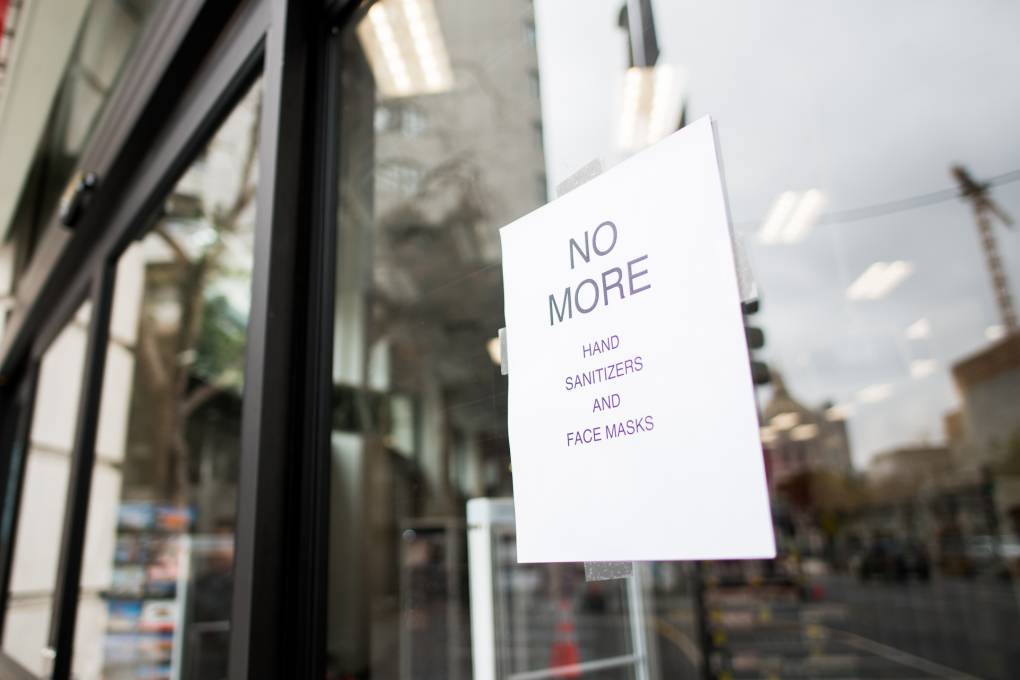
"caption": "A sign at a CVS on South Van Ness in San Francisco reads, \"No more hand sanitizers and face masks\" on March 5, 2020.",
"description": "A sign at a CVS on South Van Ness in San Francisco reads, \"No more hand sanitizers and face masks\" on Thursday, Mar. 5, 2020.",
"title": "007_KQED_Coronavirus_EmptyShelves_03052020_6158",
"credit": "Beth LaBerge/KQED",
"status": "inherit",
"isLoading": false,
"fetchFailed": false
},
"news_11805666": {
"type": "attachments",
"id": "news_11805666",
"meta": {
"index": "attachments_1716263798",
"site": "news",
"id": "11805666",
"found": true
},
"parent": 11805662,
"imgSizes": {
"apple_news_ca_landscape_5_5": {
"file": "https://ww2.kqed.org/app/uploads/sites/10/2020/03/IMG_3704-1200x750-1044x750.jpg",
"width": 1044,
"mimeType": "image/jpeg",
"height": 750
},
"apple_news_ca_square_4_0": {
"file": "https://ww2.kqed.org/app/uploads/sites/10/2020/03/IMG_3704-1200x750-470x470.jpg",
"width": 470,
"mimeType": "image/jpeg",
"height": 470
},
"twentyfourteen-full-width": {
"file": "https://ww2.kqed.org/app/uploads/sites/10/2020/03/IMG_3704-1200x750-1038x576.jpg",
"width": 1038,
"mimeType": "image/jpeg",
"height": 576
},
"thumbnail": {
"file": "https://ww2.kqed.org/app/uploads/sites/10/2020/03/IMG_3704-1200x750-160x100.jpg",
"width": 160,
"mimeType": "image/jpeg",
"height": 100
},
"post-thumbnail": {
"file": "https://ww2.kqed.org/app/uploads/sites/10/2020/03/IMG_3704-1200x750-672x372.jpg",
"width": 672,
"mimeType": "image/jpeg",
"height": 372
},
"kqedFullSize": {
"file": "https://ww2.kqed.org/app/uploads/sites/10/2020/03/IMG_3704-1200x750.jpg",
"width": 1200,
"height": 750
},
"apple_news_ca_landscape_4_7": {
"file": "https://ww2.kqed.org/app/uploads/sites/10/2020/03/IMG_3704-1200x750-632x474.jpg",
"width": 632,
"mimeType": "image/jpeg",
"height": 474
},
"large": {
"file": "https://ww2.kqed.org/app/uploads/sites/10/2020/03/IMG_3704-1200x750-1020x638.jpg",
"width": 1020,
"mimeType": "image/jpeg",
"height": 638
},
"apple_news_ca_landscape_4_0": {
"file": "https://ww2.kqed.org/app/uploads/sites/10/2020/03/IMG_3704-1200x750-536x402.jpg",
"width": 536,
"mimeType": "image/jpeg",
"height": 402
},
"apple_news_ca_portrait_12_9": {
"file": "https://ww2.kqed.org/app/uploads/sites/10/2020/03/IMG_3704-1200x750-1122x750.jpg",
"width": 1122,
"mimeType": "image/jpeg",
"height": 750
},
"medium": {
"file": "https://ww2.kqed.org/app/uploads/sites/10/2020/03/IMG_3704-1200x750-800x500.jpg",
"width": 800,
"mimeType": "image/jpeg",
"height": 500
},
"apple_news_ca_portrait_4_0": {
"file": "https://ww2.kqed.org/app/uploads/sites/10/2020/03/IMG_3704-1200x750-354x472.jpg",
"width": 354,
"mimeType": "image/jpeg",
"height": 472
},
"apple_news_ca_portrait_9_7": {
"file": "https://ww2.kqed.org/app/uploads/sites/10/2020/03/IMG_3704-1200x750-840x750.jpg",
"width": 840,
"mimeType": "image/jpeg",
"height": 750
},
"apple_news_ca_square_9_7": {
"file": "https://ww2.kqed.org/app/uploads/sites/10/2020/03/IMG_3704-1200x750-1104x750.jpg",
"width": 1104,
"mimeType": "image/jpeg",
"height": 750
},
"apple_news_ca_portrait_4_7": {
"file": "https://ww2.kqed.org/app/uploads/sites/10/2020/03/IMG_3704-1200x750-414x552.jpg",
"width": 414,
"mimeType": "image/jpeg",
"height": 552
},
"apple_news_ca_portrait_5_5": {
"file": "https://ww2.kqed.org/app/uploads/sites/10/2020/03/IMG_3704-1200x750-687x750.jpg",
"width": 687,
"mimeType": "image/jpeg",
"height": 750
},
"apple_news_ca_square_4_7": {
"file": "https://ww2.kqed.org/app/uploads/sites/10/2020/03/IMG_3704-1200x750-550x550.jpg",
"width": 550,
"mimeType": "image/jpeg",
"height": 550
},
"apple_news_ca_square_5_5": {
"file": "https://ww2.kqed.org/app/uploads/sites/10/2020/03/IMG_3704-1200x750-912x750.jpg",
"width": 912,
"mimeType": "image/jpeg",
"height": 750
}
},
"publishDate": 1583535316,
"modified": 1583535385,
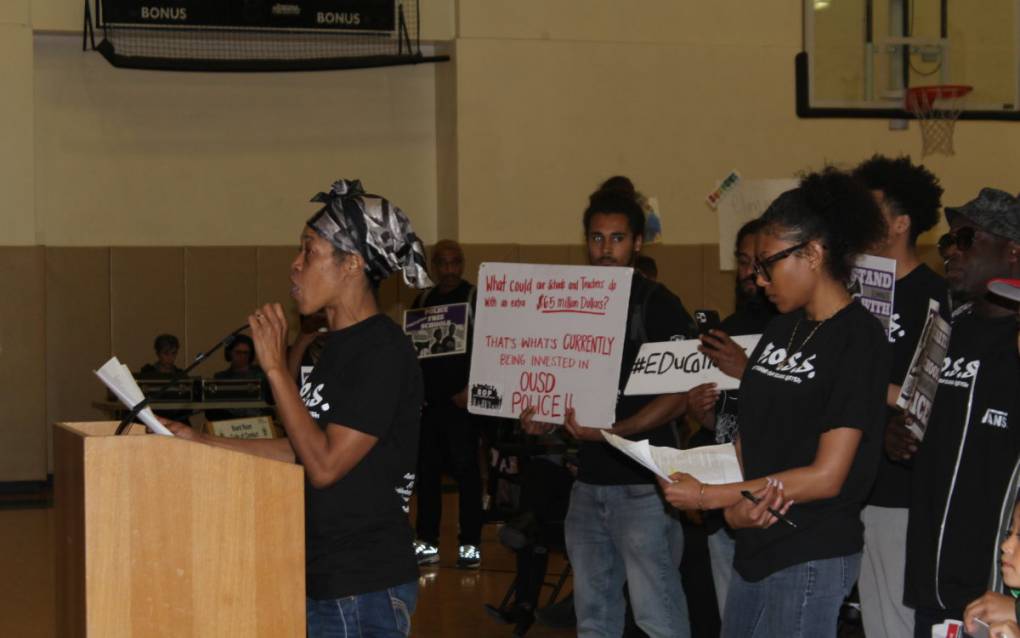
"caption": "Members of the Black Organizing Project urge the Oakland school board to eliminate its district police force on March 4, 2020.",
"description": "Members of the Black Organizing Project urge the Oakland school board to eliminate its district police force on March 4, 2020.",
"title": "IMG_3704-1200x750",
"credit": "Theresa Harrington/EdSource",
"status": "inherit",
"isLoading": false,
"fetchFailed": false
},
"news_11805581": {
"type": "attachments",
"id": "news_11805581",
"meta": {
"index": "attachments_1716263798",
"site": "news",
"id": "11805581",
"found": true
},
"parent": 11805518,
"imgSizes": {
"apple_news_ca_landscape_5_5": {
"file": "https://ww2.kqed.org/app/uploads/sites/10/2020/03/bay2-1044x783.jpg",
"width": 1044,
"mimeType": "image/jpeg",
"height": 783
},
"apple_news_ca_square_4_0": {
"file": "https://ww2.kqed.org/app/uploads/sites/10/2020/03/bay2-470x470.jpg",
"width": 470,
"mimeType": "image/jpeg",
"height": 470
},
"twentyfourteen-full-width": {
"file": "https://ww2.kqed.org/app/uploads/sites/10/2020/03/bay2-1038x576.jpg",
"width": 1038,
"mimeType": "image/jpeg",
"height": 576
},
"thumbnail": {
"file": "https://ww2.kqed.org/app/uploads/sites/10/2020/03/bay2-160x120.jpg",
"width": 160,
"mimeType": "image/jpeg",
"height": 120
},
"post-thumbnail": {
"file": "https://ww2.kqed.org/app/uploads/sites/10/2020/03/bay2-672x372.jpg",
"width": 672,
"mimeType": "image/jpeg",
"height": 372
},
"kqedFullSize": {
"file": "https://ww2.kqed.org/app/uploads/sites/10/2020/03/bay2.jpg",
"width": 1200,
"height": 900
},
"apple_news_ca_landscape_4_7": {
"file": "https://ww2.kqed.org/app/uploads/sites/10/2020/03/bay2-632x474.jpg",
"width": 632,
"mimeType": "image/jpeg",
"height": 474
},
"large": {
"file": "https://ww2.kqed.org/app/uploads/sites/10/2020/03/bay2-1020x765.jpg",
"width": 1020,
"mimeType": "image/jpeg",
"height": 765
},
"apple_news_ca_landscape_4_0": {
"file": "https://ww2.kqed.org/app/uploads/sites/10/2020/03/bay2-536x402.jpg",
"width": 536,
"mimeType": "image/jpeg",
"height": 402
},
"apple_news_ca_portrait_12_9": {
"file": "https://ww2.kqed.org/app/uploads/sites/10/2020/03/bay2-1122x900.jpg",
"width": 1122,
"mimeType": "image/jpeg",
"height": 900
},
"medium": {
"file": "https://ww2.kqed.org/app/uploads/sites/10/2020/03/bay2-800x600.jpg",
"width": 800,
"mimeType": "image/jpeg",
"height": 600
},
"apple_news_ca_portrait_4_0": {
"file": "https://ww2.kqed.org/app/uploads/sites/10/2020/03/bay2-354x472.jpg",
"width": 354,
"mimeType": "image/jpeg",
"height": 472
},
"apple_news_ca_portrait_9_7": {
"file": "https://ww2.kqed.org/app/uploads/sites/10/2020/03/bay2-840x900.jpg",
"width": 840,
"mimeType": "image/jpeg",
"height": 900
},
"apple_news_ca_square_9_7": {
"file": "https://ww2.kqed.org/app/uploads/sites/10/2020/03/bay2-1104x900.jpg",
"width": 1104,
"mimeType": "image/jpeg",
"height": 900
},
"apple_news_ca_portrait_4_7": {
"file": "https://ww2.kqed.org/app/uploads/sites/10/2020/03/bay2-414x552.jpg",
"width": 414,
"mimeType": "image/jpeg",
"height": 552
},
"apple_news_ca_portrait_5_5": {
"file": "https://ww2.kqed.org/app/uploads/sites/10/2020/03/bay2-687x900.jpg",
"width": 687,
"mimeType": "image/jpeg",
"height": 900
},
"apple_news_ca_square_4_7": {
"file": "https://ww2.kqed.org/app/uploads/sites/10/2020/03/bay2-550x550.jpg",
"width": 550,
"mimeType": "image/jpeg",
"height": 550
},
"apple_news_ca_square_5_5": {
"file": "https://ww2.kqed.org/app/uploads/sites/10/2020/03/bay2-912x900.jpg",
"width": 912,
"mimeType": "image/jpeg",
"height": 900
}
},
"publishDate": 1583482770,
"modified": 1583482815,
"caption": "The Bay team (Devin Katayama, Ericka Cruz Guevarra, and Alan Montecillo) visit their favorite spots in the Bay Area.",
"description": null,
"title": "bay2",
"credit": null,
"status": "inherit",
"isLoading": false,
"fetchFailed": false
},
"news_11802702": {
"type": "attachments",
"id": "news_11802702",
"meta": {
"index": "attachments_1716263798",
"site": "news",
"id": "11802702",
"found": true
},
"parent": 11802698,
"imgSizes": {
"apple_news_ca_landscape_5_5": {
"file": "https://ww2.kqed.org/app/uploads/sites/10/2020/02/8128485341_8222a146fb_k-1044x783.jpg",
"width": 1044,
"mimeType": "image/jpeg",
"height": 783
},
"apple_news_ca_square_4_0": {
"file": "https://ww2.kqed.org/app/uploads/sites/10/2020/02/8128485341_8222a146fb_k-470x470.jpg",
"width": 470,
"mimeType": "image/jpeg",
"height": 470
},
"twentyfourteen-full-width": {
"file": "https://ww2.kqed.org/app/uploads/sites/10/2020/02/8128485341_8222a146fb_k-1038x576.jpg",
"width": 1038,
"mimeType": "image/jpeg",
"height": 576
},
"thumbnail": {
"file": "https://ww2.kqed.org/app/uploads/sites/10/2020/02/8128485341_8222a146fb_k-160x120.jpg",
"width": 160,
"mimeType": "image/jpeg",
"height": 120
},
"post-thumbnail": {
"file": "https://ww2.kqed.org/app/uploads/sites/10/2020/02/8128485341_8222a146fb_k-672x372.jpg",
"width": 672,
"mimeType": "image/jpeg",
"height": 372
},
"kqedFullSize": {
"file": "https://ww2.kqed.org/app/uploads/sites/10/2020/02/8128485341_8222a146fb_k.jpg",
"width": 2048,
"height": 1536
},
"apple_news_ca_landscape_4_7": {
"file": "https://ww2.kqed.org/app/uploads/sites/10/2020/02/8128485341_8222a146fb_k-632x474.jpg",
"width": 632,
"mimeType": "image/jpeg",
"height": 474
},
"large": {
"file": "https://ww2.kqed.org/app/uploads/sites/10/2020/02/8128485341_8222a146fb_k-1020x765.jpg",
"width": 1020,
"mimeType": "image/jpeg",
"height": 765
},
"apple_news_ca_landscape_4_0": {
"file": "https://ww2.kqed.org/app/uploads/sites/10/2020/02/8128485341_8222a146fb_k-536x402.jpg",
"width": 536,
"mimeType": "image/jpeg",
"height": 402
},
"apple_news_ca_portrait_12_9": {
"file": "https://ww2.kqed.org/app/uploads/sites/10/2020/02/8128485341_8222a146fb_k-1122x1496.jpg",
"width": 1122,
"mimeType": "image/jpeg",
"height": 1496
},
"medium": {
"file": "https://ww2.kqed.org/app/uploads/sites/10/2020/02/8128485341_8222a146fb_k-800x600.jpg",
"width": 800,
"mimeType": "image/jpeg",
"height": 600
},
"apple_news_ca_portrait_4_0": {
"file": "https://ww2.kqed.org/app/uploads/sites/10/2020/02/8128485341_8222a146fb_k-354x472.jpg",
"width": 354,
"mimeType": "image/jpeg",
"height": 472
},
"apple_news_ca_portrait_9_7": {
"file": "https://ww2.kqed.org/app/uploads/sites/10/2020/02/8128485341_8222a146fb_k-840x1120.jpg",
"width": 840,
"mimeType": "image/jpeg",
"height": 1120
},
"apple_news_ca_landscape_12_9": {
"file": "https://ww2.kqed.org/app/uploads/sites/10/2020/02/8128485341_8222a146fb_k-1832x1374.jpg",
"width": 1832,
"mimeType": "image/jpeg",
"height": 1374
},
"apple_news_ca_square_9_7": {
"file": "https://ww2.kqed.org/app/uploads/sites/10/2020/02/8128485341_8222a146fb_k-1104x1104.jpg",
"width": 1104,
"mimeType": "image/jpeg",
"height": 1104
},
"apple_news_ca_portrait_4_7": {
"file": "https://ww2.kqed.org/app/uploads/sites/10/2020/02/8128485341_8222a146fb_k-414x552.jpg",
"width": 414,
"mimeType": "image/jpeg",
"height": 552
},
"apple_news_ca_square_12_9": {
"file": "https://ww2.kqed.org/app/uploads/sites/10/2020/02/8128485341_8222a146fb_k-1472x1472.jpg",
"width": 1472,
"mimeType": "image/jpeg",
"height": 1472
},
"apple_news_ca_portrait_5_5": {
"file": "https://ww2.kqed.org/app/uploads/sites/10/2020/02/8128485341_8222a146fb_k-687x916.jpg",
"width": 687,
"mimeType": "image/jpeg",
"height": 916
},
"full-width": {
"file": "https://ww2.kqed.org/app/uploads/sites/10/2020/02/8128485341_8222a146fb_k-1920x1440.jpg",
"width": 1920,
"mimeType": "image/jpeg",
"height": 1440
},
"apple_news_ca_square_4_7": {
"file": "https://ww2.kqed.org/app/uploads/sites/10/2020/02/8128485341_8222a146fb_k-550x550.jpg",
"width": 550,
"mimeType": "image/jpeg",
"height": 550
},
"apple_news_ca_landscape_9_7": {
"file": "https://ww2.kqed.org/app/uploads/sites/10/2020/02/8128485341_8222a146fb_k-1376x1032.jpg",
"width": 1376,
"mimeType": "image/jpeg",
"height": 1032
},
"apple_news_ca_square_5_5": {
"file": "https://ww2.kqed.org/app/uploads/sites/10/2020/02/8128485341_8222a146fb_k-912x912.jpg",
"width": 912,
"mimeType": "image/jpeg",
"height": 912
}
},
"publishDate": 1582244972,
"modified": 1667324651,
"caption": "Fans at Oakland Coliseum during Game 4 of the 2012 American League Division Series.",
"description": null,
"title": "8128485341_8222a146fb_k",
"credit": "\u003ca href=https://www.flickr.com/photos/7292738@N06/>djanimal-flickr\u003c/a>",
"status": "inherit",
"altTag": "Many people clapping at an A's baseball game with bight lights and dark sky in the distance",
"isLoading": false,
"fetchFailed": false
},
"arts_13861188": {
"type": "attachments",
"id": "arts_13861188",
"meta": {
"index": "attachments_1716263798",
"site": "arts",
"id": "13861188",
"found": true
},
"parent": 13861153,
"imgSizes": {
"twentyfourteen-full-width": {
"file": "https://ww2.kqed.org/app/uploads/sites/2/2019/07/Universal-Language-Mural-Obscured-by-Development-2-1038x576.jpg",
"width": 1038,
"mimeType": "image/jpeg",
"height": 576
},
"thumbnail": {
"file": "https://ww2.kqed.org/app/uploads/sites/2/2019/07/Universal-Language-Mural-Obscured-by-Development-2-160x90.jpg",
"width": 160,
"mimeType": "image/jpeg",
"height": 90
},
"post-thumbnail": {
"file": "https://ww2.kqed.org/app/uploads/sites/2/2019/07/Universal-Language-Mural-Obscured-by-Development-2-672x372.jpg",
"width": 672,
"mimeType": "image/jpeg",
"height": 372
},
"kqedFullSize": {
"file": "https://ww2.kqed.org/app/uploads/sites/2/2019/07/Universal-Language-Mural-Obscured-by-Development-2.jpg",
"width": 1920,
"height": 1080
},
"large": {
"file": "https://ww2.kqed.org/app/uploads/sites/2/2019/07/Universal-Language-Mural-Obscured-by-Development-2-1020x574.jpg",
"width": 1020,
"mimeType": "image/jpeg",
"height": 574
},
"complete_open_graph": {
"file": "https://ww2.kqed.org/app/uploads/sites/2/2019/07/Universal-Language-Mural-Obscured-by-Development-2-1200x675.jpg",
"width": 1200,
"mimeType": "image/jpeg",
"height": 675
},
"full-width": {
"file": "https://ww2.kqed.org/app/uploads/sites/2/2019/07/Universal-Language-Mural-Obscured-by-Development-2-1920x1080.jpg",
"width": 1920,
"mimeType": "image/jpeg",
"height": 1080
},
"medium": {
"file": "https://ww2.kqed.org/app/uploads/sites/2/2019/07/Universal-Language-Mural-Obscured-by-Development-2-800x450.jpg",
"width": 800,
"mimeType": "image/jpeg",
"height": 450
},
"medium_large": {
"file": "https://ww2.kqed.org/app/uploads/sites/2/2019/07/Universal-Language-Mural-Obscured-by-Development-2-768x432.jpg",
"width": 768,
"mimeType": "image/jpeg",
"height": 432
}
},
"publishDate": 1562869484,
"modified": 1582087448,
"caption": "The \"Universal Language\" mural, now obscured by a housing development, was created with support from the Cultural Funding Program.",
"description": "The \"Universal Language\" mural, now obscured by a housing development, was created with support from the Cultural Funding Program.",
"title": "Universal-Language-Mural-Obscured-by-Development-2",
"credit": "Sam Lefebvre/KQED",
"status": "inherit",
"isLoading": false,
"fetchFailed": false
},
"news_11801625": {
"type": "attachments",
"id": "news_11801625",
"meta": {
"index": "attachments_1716263798",
"site": "news",
"id": "11801625",
"found": true
},
"parent": 11801618,
"imgSizes": {
"apple_news_ca_landscape_5_5": {
"file": "https://ww2.kqed.org/app/uploads/sites/10/2020/02/IMG_4588-1044x783.jpg",
"width": 1044,
"mimeType": "image/jpeg",
"height": 783
},
"apple_news_ca_square_4_0": {
"file": "https://ww2.kqed.org/app/uploads/sites/10/2020/02/IMG_4588-470x470.jpg",
"width": 470,
"mimeType": "image/jpeg",
"height": 470
},
"twentyfourteen-full-width": {
"file": "https://ww2.kqed.org/app/uploads/sites/10/2020/02/IMG_4588-1038x576.jpg",
"width": 1038,
"mimeType": "image/jpeg",
"height": 576
},
"thumbnail": {
"file": "https://ww2.kqed.org/app/uploads/sites/10/2020/02/IMG_4588-160x107.jpg",
"width": 160,
"mimeType": "image/jpeg",
"height": 107
},
"post-thumbnail": {
"file": "https://ww2.kqed.org/app/uploads/sites/10/2020/02/IMG_4588-672x372.jpg",
"width": 672,
"mimeType": "image/jpeg",
"height": 372
},
"kqedFullSize": {
"file": "https://ww2.kqed.org/app/uploads/sites/10/2020/02/IMG_4588.jpg",
"width": 1920,
"height": 1280
},
"apple_news_ca_landscape_4_7": {
"file": "https://ww2.kqed.org/app/uploads/sites/10/2020/02/IMG_4588-632x474.jpg",
"width": 632,
"mimeType": "image/jpeg",
"height": 474
},
"large": {
"file": "https://ww2.kqed.org/app/uploads/sites/10/2020/02/IMG_4588-1020x680.jpg",
"width": 1020,
"mimeType": "image/jpeg",
"height": 680
},
"apple_news_ca_landscape_4_0": {
"file": "https://ww2.kqed.org/app/uploads/sites/10/2020/02/IMG_4588-536x402.jpg",
"width": 536,
"mimeType": "image/jpeg",
"height": 402
},
"apple_news_ca_portrait_12_9": {
"file": "https://ww2.kqed.org/app/uploads/sites/10/2020/02/IMG_4588-1122x1280.jpg",
"width": 1122,
"mimeType": "image/jpeg",
"height": 1280
},
"medium": {
"file": "https://ww2.kqed.org/app/uploads/sites/10/2020/02/IMG_4588-800x533.jpg",
"width": 800,
"mimeType": "image/jpeg",
"height": 533
},
"apple_news_ca_portrait_4_0": {
"file": "https://ww2.kqed.org/app/uploads/sites/10/2020/02/IMG_4588-354x472.jpg",
"width": 354,
"mimeType": "image/jpeg",
"height": 472
},
"apple_news_ca_portrait_9_7": {
"file": "https://ww2.kqed.org/app/uploads/sites/10/2020/02/IMG_4588-840x1120.jpg",
"width": 840,
"mimeType": "image/jpeg",
"height": 1120
},
"apple_news_ca_landscape_12_9": {
"file": "https://ww2.kqed.org/app/uploads/sites/10/2020/02/IMG_4588-1832x1280.jpg",
"width": 1832,
"mimeType": "image/jpeg",
"height": 1280
},
"apple_news_ca_square_9_7": {
"file": "https://ww2.kqed.org/app/uploads/sites/10/2020/02/IMG_4588-1104x1104.jpg",
"width": 1104,
"mimeType": "image/jpeg",
"height": 1104
},
"apple_news_ca_portrait_4_7": {
"file": "https://ww2.kqed.org/app/uploads/sites/10/2020/02/IMG_4588-414x552.jpg",
"width": 414,
"mimeType": "image/jpeg",
"height": 552
},
"apple_news_ca_square_12_9": {
"file": "https://ww2.kqed.org/app/uploads/sites/10/2020/02/IMG_4588-1472x1280.jpg",
"width": 1472,
"mimeType": "image/jpeg",
"height": 1280
},
"apple_news_ca_portrait_5_5": {
"file": "https://ww2.kqed.org/app/uploads/sites/10/2020/02/IMG_4588-687x916.jpg",
"width": 687,
"mimeType": "image/jpeg",
"height": 916
},
"full-width": {
"file": "https://ww2.kqed.org/app/uploads/sites/10/2020/02/IMG_4588-1920x1280.jpg",
"width": 1920,
"mimeType": "image/jpeg",
"height": 1280
},
"apple_news_ca_square_4_7": {
"file": "https://ww2.kqed.org/app/uploads/sites/10/2020/02/IMG_4588-550x550.jpg",
"width": 550,
"mimeType": "image/jpeg",
"height": 550
},
"apple_news_ca_landscape_9_7": {
"file": "https://ww2.kqed.org/app/uploads/sites/10/2020/02/IMG_4588-1376x1032.jpg",
"width": 1376,
"mimeType": "image/jpeg",
"height": 1032
},
"apple_news_ca_square_5_5": {
"file": "https://ww2.kqed.org/app/uploads/sites/10/2020/02/IMG_4588-912x912.jpg",
"width": 912,
"mimeType": "image/jpeg",
"height": 912
}
},
"publishDate": 1581641470,
"modified": 1581641565,
"caption": "The new Uptown Station on 1955 Broadway in Downtown Oakland on Feb. 13, 2019.",
"description": null,
"title": "IMG_4588",
"credit": "Ericka Cruz Guevarra/KQED News",
"status": "inherit",
"isLoading": false,
"fetchFailed": false
},
"arts_13874385": {
"type": "attachments",
"id": "arts_13874385",
"meta": {
"index": "attachments_1716263798",
"site": "arts",
"id": "13874385",
"found": true
},
"parent": 13874382,
"imgSizes": {
"twentyfourteen-full-width": {
"file": "https://ww2.kqed.org/app/uploads/sites/2/2020/02/GettyImages-627387100-1020x680-1020x576.jpg",
"width": 1020,
"mimeType": "image/jpeg",
"height": 576
},
"thumbnail": {
"file": "https://ww2.kqed.org/app/uploads/sites/2/2020/02/GettyImages-627387100-1020x680-160x107.jpg",
"width": 160,
"mimeType": "image/jpeg",
"height": 107
},
"post-thumbnail": {
"file": "https://ww2.kqed.org/app/uploads/sites/2/2020/02/GettyImages-627387100-1020x680-672x372.jpg",
"width": 672,
"mimeType": "image/jpeg",
"height": 372
},
"kqedFullSize": {
"file": "https://ww2.kqed.org/app/uploads/sites/2/2020/02/GettyImages-627387100-1020x680.jpg",
"width": 1020,
"height": 680
},
"large": {
"file": "https://ww2.kqed.org/app/uploads/sites/2/2020/02/GettyImages-627387100-1020x680-1020x680.jpg",
"width": 1020,
"mimeType": "image/jpeg",
"height": 680
},
"medium": {
"file": "https://ww2.kqed.org/app/uploads/sites/2/2020/02/GettyImages-627387100-1020x680-800x533.jpg",
"width": 800,
"mimeType": "image/jpeg",
"height": 533
},
"medium_large": {
"file": "https://ww2.kqed.org/app/uploads/sites/2/2020/02/GettyImages-627387100-1020x680-768x512.jpg",
"width": 768,
"mimeType": "image/jpeg",
"height": 512
}
},
"publishDate": 1580863580,
"modified": 1580932084,
"caption": "The Ghost Ship warehouse in East Oakland where a Dec. 2016 fire killed 36.",
"description": "The Ghost Ship warehouse in East Oakland where a Dec. 2016 fire killed 36.",
"title": "Warehouse Fire Kills Several People At Dance Party In Oakland",
"credit": "Elijah Nouvelage/Getty Images",
"status": "inherit",
"isLoading": false,
"fetchFailed": false
},
"arts_13874350": {
"type": "attachments",
"id": "arts_13874350",
"meta": {
"index": "attachments_1716263798",
"site": "arts",
"id": "13874350",
"found": true
},
"parent": 13874349,
"imgSizes": {
"twentyfourteen-full-width": {
"file": "https://ww2.kqed.org/app/uploads/sites/2/2020/02/use-1-1038x576.jpg",
"width": 1038,
"mimeType": "image/jpeg",
"height": 576
},
"thumbnail": {
"file": "https://ww2.kqed.org/app/uploads/sites/2/2020/02/use-1-160x90.jpg",
"width": 160,
"mimeType": "image/jpeg",
"height": 90
},
"post-thumbnail": {
"file": "https://ww2.kqed.org/app/uploads/sites/2/2020/02/use-1-672x372.jpg",
"width": 672,
"mimeType": "image/jpeg",
"height": 372
},
"kqedFullSize": {
"file": "https://ww2.kqed.org/app/uploads/sites/2/2020/02/use-1.jpg",
"width": 1920,
"height": 1080
},
"large": {
"file": "https://ww2.kqed.org/app/uploads/sites/2/2020/02/use-1-1020x574.jpg",
"width": 1020,
"mimeType": "image/jpeg",
"height": 574
},
"full-width": {
"file": "https://ww2.kqed.org/app/uploads/sites/2/2020/02/use-1-1920x1080.jpg",
"width": 1920,
"mimeType": "image/jpeg",
"height": 1080
},
"medium": {
"file": "https://ww2.kqed.org/app/uploads/sites/2/2020/02/use-1-800x450.jpg",
"width": 800,
"mimeType": "image/jpeg",
"height": 450
},
"medium_large": {
"file": "https://ww2.kqed.org/app/uploads/sites/2/2020/02/use-1-768x432.jpg",
"width": 768,
"mimeType": "image/jpeg",
"height": 432
}
},
"publishDate": 1580856987,
"modified": 1580857026,
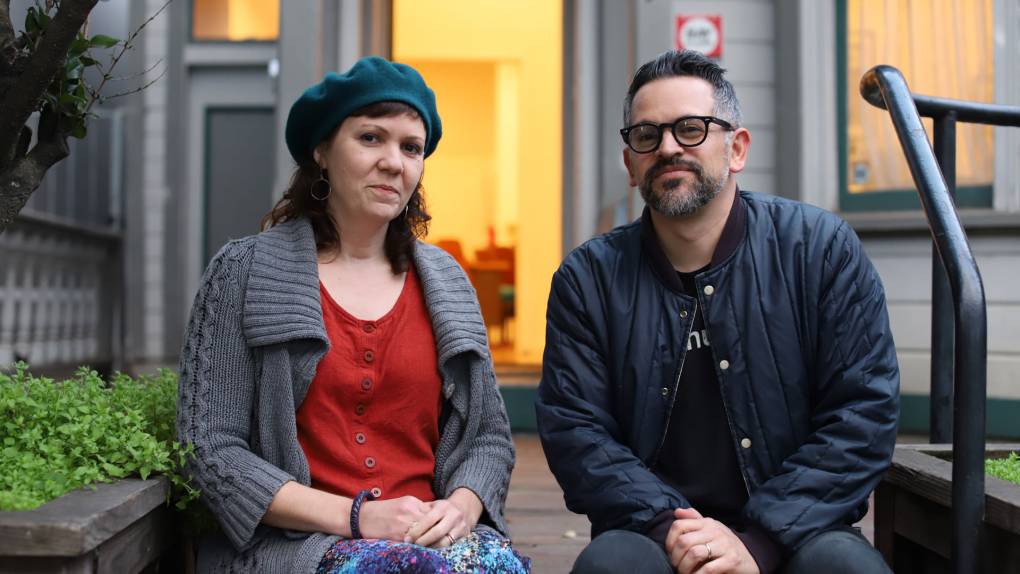
"caption": "Kathleen Quillian (L) and Gilbert Guerrero (R) founded Shapeshifters as an experimental film series in 2012.",
"description": "Kathleen Quillian (L) and Gilbert Guerrero (R) founded Shapeshifters as an experimental film series in 2012.",
"title": "Kathleen Quillian (L) and Gilbert Guerrero (R) founded Shapeshifters as an experimental film series in 2012.",
"credit": "Sam Lefebvre/KQED",
"status": "inherit",
"isLoading": false,
"fetchFailed": false
},
"news_11797083": {
"type": "attachments",
"id": "news_11797083",
"meta": {
"index": "attachments_1716263798",
"site": "news",
"id": "11797083",
"found": true
},
"parent": 11797081,
"imgSizes": {
"apple_news_ca_landscape_5_5": {
"file": "https://ww2.kqed.org/app/uploads/sites/10/2020/01/RS40818_20200120GaylaNewsomeMS_5-qut-1044x783.jpg",
"width": 1044,
"mimeType": "image/jpeg",
"height": 783
},
"apple_news_ca_square_4_0": {
"file": "https://ww2.kqed.org/app/uploads/sites/10/2020/01/RS40818_20200120GaylaNewsomeMS_5-qut-470x470.jpg",
"width": 470,
"mimeType": "image/jpeg",
"height": 470
},
"twentyfourteen-full-width": {
"file": "https://ww2.kqed.org/app/uploads/sites/10/2020/01/RS40818_20200120GaylaNewsomeMS_5-qut-1038x576.jpg",
"width": 1038,
"mimeType": "image/jpeg",
"height": 576
},
"thumbnail": {
"file": "https://ww2.kqed.org/app/uploads/sites/10/2020/01/RS40818_20200120GaylaNewsomeMS_5-qut-160x120.jpg",
"width": 160,
"mimeType": "image/jpeg",
"height": 120
},
"post-thumbnail": {
"file": "https://ww2.kqed.org/app/uploads/sites/10/2020/01/RS40818_20200120GaylaNewsomeMS_5-qut-672x372.jpg",
"width": 672,
"mimeType": "image/jpeg",
"height": 372
},
"kqedFullSize": {
"file": "https://ww2.kqed.org/app/uploads/sites/10/2020/01/RS40818_20200120GaylaNewsomeMS_5-qut.jpg",
"width": 1920,
"height": 1440
},
"apple_news_ca_landscape_4_7": {
"file": "https://ww2.kqed.org/app/uploads/sites/10/2020/01/RS40818_20200120GaylaNewsomeMS_5-qut-632x474.jpg",
"width": 632,
"mimeType": "image/jpeg",
"height": 474
},
"large": {
"file": "https://ww2.kqed.org/app/uploads/sites/10/2020/01/RS40818_20200120GaylaNewsomeMS_5-qut-1020x765.jpg",
"width": 1020,
"mimeType": "image/jpeg",
"height": 765
},
"apple_news_ca_landscape_4_0": {
"file": "https://ww2.kqed.org/app/uploads/sites/10/2020/01/RS40818_20200120GaylaNewsomeMS_5-qut-536x402.jpg",
"width": 536,
"mimeType": "image/jpeg",
"height": 402
},
"apple_news_ca_portrait_12_9": {
"file": "https://ww2.kqed.org/app/uploads/sites/10/2020/01/RS40818_20200120GaylaNewsomeMS_5-qut-1122x1440.jpg",
"width": 1122,
"mimeType": "image/jpeg",
"height": 1440
},
"medium": {
"file": "https://ww2.kqed.org/app/uploads/sites/10/2020/01/RS40818_20200120GaylaNewsomeMS_5-qut-800x600.jpg",
"width": 800,
"mimeType": "image/jpeg",
"height": 600
},
"apple_news_ca_portrait_4_0": {
"file": "https://ww2.kqed.org/app/uploads/sites/10/2020/01/RS40818_20200120GaylaNewsomeMS_5-qut-354x472.jpg",
"width": 354,
"mimeType": "image/jpeg",
"height": 472
},
"apple_news_ca_portrait_9_7": {
"file": "https://ww2.kqed.org/app/uploads/sites/10/2020/01/RS40818_20200120GaylaNewsomeMS_5-qut-840x1120.jpg",
"width": 840,
"mimeType": "image/jpeg",
"height": 1120
},
"apple_news_ca_landscape_12_9": {
"file": "https://ww2.kqed.org/app/uploads/sites/10/2020/01/RS40818_20200120GaylaNewsomeMS_5-qut-1832x1374.jpg",
"width": 1832,
"mimeType": "image/jpeg",
"height": 1374
},
"apple_news_ca_square_9_7": {
"file": "https://ww2.kqed.org/app/uploads/sites/10/2020/01/RS40818_20200120GaylaNewsomeMS_5-qut-1104x1104.jpg",
"width": 1104,
"mimeType": "image/jpeg",
"height": 1104
},
"apple_news_ca_portrait_4_7": {
"file": "https://ww2.kqed.org/app/uploads/sites/10/2020/01/RS40818_20200120GaylaNewsomeMS_5-qut-414x552.jpg",
"width": 414,
"mimeType": "image/jpeg",
"height": 552
},
"apple_news_ca_square_12_9": {
"file": "https://ww2.kqed.org/app/uploads/sites/10/2020/01/RS40818_20200120GaylaNewsomeMS_5-qut-1472x1440.jpg",
"width": 1472,
"mimeType": "image/jpeg",
"height": 1440
},
"apple_news_ca_portrait_5_5": {
"file": "https://ww2.kqed.org/app/uploads/sites/10/2020/01/RS40818_20200120GaylaNewsomeMS_5-qut-687x916.jpg",
"width": 687,
"mimeType": "image/jpeg",
"height": 916
},
"full-width": {
"file": "https://ww2.kqed.org/app/uploads/sites/10/2020/01/RS40818_20200120GaylaNewsomeMS_5-qut-1920x1440.jpg",
"width": 1920,
"mimeType": "image/jpeg",
"height": 1440
},
"apple_news_ca_square_4_7": {
"file": "https://ww2.kqed.org/app/uploads/sites/10/2020/01/RS40818_20200120GaylaNewsomeMS_5-qut-550x550.jpg",
"width": 550,
"mimeType": "image/jpeg",
"height": 550
},
"apple_news_ca_landscape_9_7": {
"file": "https://ww2.kqed.org/app/uploads/sites/10/2020/01/RS40818_20200120GaylaNewsomeMS_5-qut-1376x1032.jpg",
"width": 1376,
"mimeType": "image/jpeg",
"height": 1032
},
"apple_news_ca_square_5_5": {
"file": "https://ww2.kqed.org/app/uploads/sites/10/2020/01/RS40818_20200120GaylaNewsomeMS_5-qut-912x912.jpg",
"width": 912,
"mimeType": "image/jpeg",
"height": 912
}
},
"publishDate": 1579633107,
"modified": 1579639977,
"caption": "Gayla Newsome was evicted from her West Oakland home in 2011 after it was foreclosed on, but she eventually won it back after occupying it.",
"description": "Gayla Newsome was evicted from her West Oakland home in 2011 after it was foreclosed on, but she eventually won it back after occupying it.",
"title": "RS40818_20200120GaylaNewsomeMS_5-qut",
"credit": "Molly Solomon/KQED",
"status": "inherit",
"isLoading": false,
"fetchFailed": false
},
"news_11797008": {
"type": "attachments",
"id": "news_11797008",
"meta": {
"index": "attachments_1716263798",
"site": "news",
"id": "11797008",
"found": true
},
"parent": 11797001,
"imgSizes": {
"apple_news_ca_landscape_5_5": {
"file": "https://ww2.kqed.org/app/uploads/sites/10/2020/01/Moms4Housing112019-1044x783.jpg",
"width": 1044,
"mimeType": "image/jpeg",
"height": 783
},
"apple_news_ca_square_4_0": {
"file": "https://ww2.kqed.org/app/uploads/sites/10/2020/01/Moms4Housing112019-470x470.jpg",
"width": 470,
"mimeType": "image/jpeg",
"height": 470
},
"twentyfourteen-full-width": {
"file": "https://ww2.kqed.org/app/uploads/sites/10/2020/01/Moms4Housing112019-1038x576.jpg",
"width": 1038,
"mimeType": "image/jpeg",
"height": 576
},
"thumbnail": {
"file": "https://ww2.kqed.org/app/uploads/sites/10/2020/01/Moms4Housing112019-160x120.jpg",
"width": 160,
"mimeType": "image/jpeg",
"height": 120
},
"post-thumbnail": {
"file": "https://ww2.kqed.org/app/uploads/sites/10/2020/01/Moms4Housing112019-672x372.jpg",
"width": 672,
"mimeType": "image/jpeg",
"height": 372
},
"kqedFullSize": {
"file": "https://ww2.kqed.org/app/uploads/sites/10/2020/01/Moms4Housing112019.jpg",
"width": 1920,
"height": 1440
},
"apple_news_ca_landscape_4_7": {
"file": "https://ww2.kqed.org/app/uploads/sites/10/2020/01/Moms4Housing112019-632x474.jpg",
"width": 632,
"mimeType": "image/jpeg",
"height": 474
},
"large": {
"file": "https://ww2.kqed.org/app/uploads/sites/10/2020/01/Moms4Housing112019-1020x765.jpg",
"width": 1020,
"mimeType": "image/jpeg",
"height": 765
},
"apple_news_ca_landscape_4_0": {
"file": "https://ww2.kqed.org/app/uploads/sites/10/2020/01/Moms4Housing112019-536x402.jpg",
"width": 536,
"mimeType": "image/jpeg",
"height": 402
},
"apple_news_ca_portrait_12_9": {
"file": "https://ww2.kqed.org/app/uploads/sites/10/2020/01/Moms4Housing112019-1122x1440.jpg",
"width": 1122,
"mimeType": "image/jpeg",
"height": 1440
},
"medium": {
"file": "https://ww2.kqed.org/app/uploads/sites/10/2020/01/Moms4Housing112019-800x600.jpg",
"width": 800,
"mimeType": "image/jpeg",
"height": 600
},
"apple_news_ca_portrait_4_0": {
"file": "https://ww2.kqed.org/app/uploads/sites/10/2020/01/Moms4Housing112019-354x472.jpg",
"width": 354,
"mimeType": "image/jpeg",
"height": 472
},
"apple_news_ca_portrait_9_7": {
"file": "https://ww2.kqed.org/app/uploads/sites/10/2020/01/Moms4Housing112019-840x1120.jpg",
"width": 840,
"mimeType": "image/jpeg",
"height": 1120
},
"apple_news_ca_landscape_12_9": {
"file": "https://ww2.kqed.org/app/uploads/sites/10/2020/01/Moms4Housing112019-1832x1374.jpg",
"width": 1832,
"mimeType": "image/jpeg",
"height": 1374
},
"apple_news_ca_square_9_7": {
"file": "https://ww2.kqed.org/app/uploads/sites/10/2020/01/Moms4Housing112019-1104x1104.jpg",
"width": 1104,
"mimeType": "image/jpeg",
"height": 1104
},
"apple_news_ca_portrait_4_7": {
"file": "https://ww2.kqed.org/app/uploads/sites/10/2020/01/Moms4Housing112019-414x552.jpg",
"width": 414,
"mimeType": "image/jpeg",
"height": 552
},
"apple_news_ca_square_12_9": {
"file": "https://ww2.kqed.org/app/uploads/sites/10/2020/01/Moms4Housing112019-1472x1440.jpg",
"width": 1472,
"mimeType": "image/jpeg",
"height": 1440
},
"apple_news_ca_portrait_5_5": {
"file": "https://ww2.kqed.org/app/uploads/sites/10/2020/01/Moms4Housing112019-687x916.jpg",
"width": 687,
"mimeType": "image/jpeg",
"height": 916
},
"full-width": {
"file": "https://ww2.kqed.org/app/uploads/sites/10/2020/01/Moms4Housing112019-1920x1440.jpg",
"width": 1920,
"mimeType": "image/jpeg",
"height": 1440
},
"apple_news_ca_square_4_7": {
"file": "https://ww2.kqed.org/app/uploads/sites/10/2020/01/Moms4Housing112019-550x550.jpg",
"width": 550,
"mimeType": "image/jpeg",
"height": 550
},
"apple_news_ca_landscape_9_7": {
"file": "https://ww2.kqed.org/app/uploads/sites/10/2020/01/Moms4Housing112019-1376x1032.jpg",
"width": 1376,
"mimeType": "image/jpeg",
"height": 1032
},
"apple_news_ca_square_5_5": {
"file": "https://ww2.kqed.org/app/uploads/sites/10/2020/01/Moms4Housing112019-912x912.jpg",
"width": 912,
"mimeType": "image/jpeg",
"height": 912
}
},
"publishDate": 1579550831,
"modified": 1579556228,
"caption": "Members of Moms 4 Housing address an agreement they've reached with Wedgewood LLC to buy the West Oakland home they've been occupying since November through the Oakland Community Land Trust.",
"description": null,
"title": "Moms4Housing112019",
"credit": "Sara Hossaini/KQED",
"status": "inherit",
"isLoading": false,
"fetchFailed": false
},
"arts_13873211": {
"type": "attachments",
"id": "arts_13873211",
"meta": {
"index": "attachments_1716263798",
"site": "arts",
"id": "13873211",
"found": true
},
"parent": 13873207,
"imgSizes": {
"twentyfourteen-full-width": {
"file": "https://ww2.kqed.org/app/uploads/sites/2/2020/01/Face-and-mannequin-1038x576.jpg",
"width": 1038,
"mimeType": "image/jpeg",
"height": 576
},
"thumbnail": {
"file": "https://ww2.kqed.org/app/uploads/sites/2/2020/01/Face-and-mannequin-160x90.jpg",
"width": 160,
"mimeType": "image/jpeg",
"height": 90
},
"post-thumbnail": {
"file": "https://ww2.kqed.org/app/uploads/sites/2/2020/01/Face-and-mannequin-672x372.jpg",
"width": 672,
"mimeType": "image/jpeg",
"height": 372
},
"kqedFullSize": {
"file": "https://ww2.kqed.org/app/uploads/sites/2/2020/01/Face-and-mannequin.jpg",
"width": 1920,
"height": 1080
},
"large": {
"file": "https://ww2.kqed.org/app/uploads/sites/2/2020/01/Face-and-mannequin-1020x574.jpg",
"width": 1020,
"mimeType": "image/jpeg",
"height": 574
},
"complete_open_graph": {
"file": "https://ww2.kqed.org/app/uploads/sites/2/2020/01/Face-and-mannequin-1200x675.jpg",
"width": 1200,
"mimeType": "image/jpeg",
"height": 675
},
"full-width": {
"file": "https://ww2.kqed.org/app/uploads/sites/2/2020/01/Face-and-mannequin-1920x1080.jpg",
"width": 1920,
"mimeType": "image/jpeg",
"height": 1080
},
"medium": {
"file": "https://ww2.kqed.org/app/uploads/sites/2/2020/01/Face-and-mannequin-800x450.jpg",
"width": 800,
"mimeType": "image/jpeg",
"height": 450
},
"medium_large": {
"file": "https://ww2.kqed.org/app/uploads/sites/2/2020/01/Face-and-mannequin-768x432.jpg",
"width": 768,
"mimeType": "image/jpeg",
"height": 432
}
},
"publishDate": 1578957779,
"modified": 1578958077,
"caption": "Oakland metalsmith Karen Smith is launching a new nonprofit, We Wield the Hammer, to bring metalwork to other black women and girls.",
"description": "Oakland metalsmith Karen Smith is launching a new nonprofit, We Wield the Hammer, to bring metalwork to other black women and girls.",
"title": "Oakland metalsmith Karen Smith is launching a new nonprofit, We Wield the Hammer, to bring metalwork to other black women and girls.",
"credit": "Sam Lefebvre/KQED",
"status": "inherit",
"isLoading": false,
"fetchFailed": false
},
"news_11795946": {
"type": "attachments",
"id": "news_11795946",
"meta": {
"index": "attachments_1716263798",
"site": "news",
"id": "11795946",
"found": true
},
"parent": 11795944,
"imgSizes": {
"apple_news_ca_landscape_5_5": {
"file": "https://ww2.kqed.org/app/uploads/sites/10/2020/01/moms4housing-1044x783.jpg",
"width": 1044,
"mimeType": "image/jpeg",
"height": 783
},
"apple_news_ca_square_4_0": {
"file": "https://ww2.kqed.org/app/uploads/sites/10/2020/01/moms4housing-470x470.jpg",
"width": 470,
"mimeType": "image/jpeg",
"height": 470
},
"twentyfourteen-full-width": {
"file": "https://ww2.kqed.org/app/uploads/sites/10/2020/01/moms4housing-1038x576.jpg",
"width": 1038,
"mimeType": "image/jpeg",
"height": 576
},
"thumbnail": {
"file": "https://ww2.kqed.org/app/uploads/sites/10/2020/01/moms4housing-160x120.jpg",
"width": 160,
"mimeType": "image/jpeg",
"height": 120
},
"post-thumbnail": {
"file": "https://ww2.kqed.org/app/uploads/sites/10/2020/01/moms4housing-672x372.jpg",
"width": 672,
"mimeType": "image/jpeg",
"height": 372
},
"kqedFullSize": {
"file": "https://ww2.kqed.org/app/uploads/sites/10/2020/01/moms4housing-e1579017117548.jpg",
"width": 1920,
"height": 1440
},
"apple_news_ca_landscape_4_7": {
"file": "https://ww2.kqed.org/app/uploads/sites/10/2020/01/moms4housing-632x474.jpg",
"width": 632,
"mimeType": "image/jpeg",
"height": 474
},
"large": {
"file": "https://ww2.kqed.org/app/uploads/sites/10/2020/01/moms4housing-1020x765.jpg",
"width": 1020,
"mimeType": "image/jpeg",
"height": 765
},
"complete_open_graph": {
"file": "https://ww2.kqed.org/app/uploads/sites/10/2020/01/moms4housing-1200x900.jpg",
"width": 1200,
"mimeType": "image/jpeg",
"height": 900
},
"apple_news_ca_landscape_4_0": {
"file": "https://ww2.kqed.org/app/uploads/sites/10/2020/01/moms4housing-536x402.jpg",
"width": 536,
"mimeType": "image/jpeg",
"height": 402
},
"apple_news_ca_portrait_12_9": {
"file": "https://ww2.kqed.org/app/uploads/sites/10/2020/01/moms4housing-1122x1496.jpg",
"width": 1122,
"mimeType": "image/jpeg",
"height": 1496
},
"medium": {
"file": "https://ww2.kqed.org/app/uploads/sites/10/2020/01/moms4housing-800x600.jpg",
"width": 800,
"mimeType": "image/jpeg",
"height": 600
},
"apple_news_ca_portrait_4_0": {
"file": "https://ww2.kqed.org/app/uploads/sites/10/2020/01/moms4housing-354x472.jpg",
"width": 354,
"mimeType": "image/jpeg",
"height": 472
},
"apple_news_ca_portrait_9_7": {
"file": "https://ww2.kqed.org/app/uploads/sites/10/2020/01/moms4housing-840x1120.jpg",
"width": 840,
"mimeType": "image/jpeg",
"height": 1120
},
"apple_news_ca_landscape_12_9": {
"file": "https://ww2.kqed.org/app/uploads/sites/10/2020/01/moms4housing-1832x1374.jpg",
"width": 1832,
"mimeType": "image/jpeg",
"height": 1374
},
"apple_news_ca_square_9_7": {
"file": "https://ww2.kqed.org/app/uploads/sites/10/2020/01/moms4housing-1104x1104.jpg",
"width": 1104,
"mimeType": "image/jpeg",
"height": 1104
},
"apple_news_ca_portrait_4_7": {
"file": "https://ww2.kqed.org/app/uploads/sites/10/2020/01/moms4housing-414x552.jpg",
"width": 414,
"mimeType": "image/jpeg",
"height": 552
},
"apple_news_ca_square_12_9": {
"file": "https://ww2.kqed.org/app/uploads/sites/10/2020/01/moms4housing-1472x1472.jpg",
"width": 1472,
"mimeType": "image/jpeg",
"height": 1472
},
"apple_news_ca_portrait_5_5": {
"file": "https://ww2.kqed.org/app/uploads/sites/10/2020/01/moms4housing-687x916.jpg",
"width": 687,
"mimeType": "image/jpeg",
"height": 916
},
"full-width": {
"file": "https://ww2.kqed.org/app/uploads/sites/10/2020/01/moms4housing-1920x1440.jpg",
"width": 1920,
"mimeType": "image/jpeg",
"height": 1440
},
"apple_news_ca_square_4_7": {
"file": "https://ww2.kqed.org/app/uploads/sites/10/2020/01/moms4housing-550x550.jpg",
"width": 550,
"mimeType": "image/jpeg",
"height": 550
},
"apple_news_ca_landscape_9_7": {
"file": "https://ww2.kqed.org/app/uploads/sites/10/2020/01/moms4housing-1376x1032.jpg",
"width": 1376,
"mimeType": "image/jpeg",
"height": 1032
},
"apple_news_ca_square_5_5": {
"file": "https://ww2.kqed.org/app/uploads/sites/10/2020/01/moms4housing-912x912.jpg",
"width": 912,
"mimeType": "image/jpeg",
"height": 912
}
},
"publishDate": 1579017073,
"modified": 1579042870,
"caption": "Dominique Walker and supporters speak to those assembled outside 2928 Magnolia St., a vacant house in west Oakland that Walker has lived in without permission from the owner since Nov. 18, 2019.",
"description": "Dominique Walker and supporters speak to those assembled outside 2928 Magnolia St., a vacant house that Walker has lived in without permission from the owner since Nov. 18, 2019.",
"title": "moms4housing",
"credit": "Kate Wolffe/KQED",
"status": "inherit",
"isLoading": false,
"fetchFailed": false
}
},
"audioPlayerReducer": {
"postId": "stream_live",
"isPaused": true,
"isPlaying": false,
"pfsActive": false,
"pledgeModalIsOpen": true,
"playerDrawerIsOpen": false,
"liveAudioPlayStartedAt": 0,
"liveAudioPlayContext": ""
},
"authorsReducer": {
"byline_news_11805662": {
"type": "authors",
"id": "byline_news_11805662",
"meta": {
"override": true
},
"slug": "byline_news_11805662",
"name": "Theresa Harrington, \u003ca href=\"https://edsource.org/\">EdSource\u003c/a>",
"isLoading": false
},
"ninathorsen": {
"type": "authors",
"id": "246",
"meta": {
"index": "authors_1716337520",
"id": "246",
"found": true
},
"name": "Nina Thorsen",
"firstName": "Nina",
"lastName": "Thorsen",
"slug": "ninathorsen",
"email": "nthorsen@kqed.org",
"display_author_email": false,
"staff_mastheads": [
"news"
],
"title": "Producer, Radio",
"bio": "\u003cspan style=\"color: #000000;\">Nina Thorsen is a KQED radio producer, and frequently reports on sports and culture. \u003c/span>\u003cspan style=\"color: #000000;\">She co-created and produced KQED's \u003cem>Pacific Time, \u003c/em> a weekly radio program on Asian and Asian American issues that aired from 2000 to 2007. Before coming to KQED, Thorsen was the deputy foreign editor for \u003cem>Marketplace, \u003c/em>and in her home state of Minnesota, worked for \u003cem>A Prairie Home Companion\u003c/em> and for Public Radio International. \u003c/span>",
"avatar": "https://secure.gravatar.com/avatar/e13dc7282cec33c15d973ebb56d57ead?s=600&d=blank&r=g",
"twitter": "NinaKQED",
"facebook": null,
"instagram": null,
"linkedin": null,
"sites": [
{
"site": "news",
"roles": [
"editor"
]
},
{
"site": "podcasts",
"roles": [
"editor"
]
}
],
"headData": {
"title": "Nina Thorsen | KQED",
"description": "Producer, Radio",
"ogImgSrc": "https://secure.gravatar.com/avatar/e13dc7282cec33c15d973ebb56d57ead?s=600&d=blank&r=g",
"twImgSrc": "https://secure.gravatar.com/avatar/e13dc7282cec33c15d973ebb56d57ead?s=600&d=blank&r=g"
},
"isLoading": false,
"link": "/author/ninathorsen"
},
"dkatayama": {
"type": "authors",
"id": "7240",
"meta": {
"index": "authors_1716337520",
"id": "7240",
"found": true
},
"name": "Devin Katayama",
"firstName": "Devin",
"lastName": "Katayama",
"slug": "dkatayama",
"email": "dkatayama@kqed.org",
"display_author_email": true,
"staff_mastheads": [
"news"
],
"title": "Editor of Talent and Development",
"bio": "Devin Katayama is former Editor of Talent and Development for KQED. He supported our internship program and on-call staff by looking for equitable opportunities to improve the newsroom.\r\n\r\nHe previously hosted The Bay and American Suburb podcasts from KQED News. Prior to returning to the Bay Area in 2015, Devin was the education reporter for WFPL in Louisville and worked as a producer with radio stations in Chicago and Portland, OR. His work has appeared on NPR’s \u003cem>Morning Edition, All Things Considered, The Takeaway\u003c/em> and \u003cem>Here and Now.\u003c/em>\r\n\r\nDevin earned his MA in Journalism from Columbia College Chicago, where he was a Follett Fellow and the recipient of the 2011 Studs Terkel Community Media Workshop Scholarship for his story on Chicago's homeless youth. He won WBUR's 2014 Daniel Schorr award and a regional RTNDA Edward R. Murrow Award for his documentary \"At Risk\" that looked at issues facing some of Louisville's students. Devin has also received numerous local awards from the Associated Press and the Society of Professional Journalists.",
"avatar": "https://secure.gravatar.com/avatar/d0d2978a31002fb2de107921a8e18405?s=600&d=blank&r=g",
"twitter": "RadioDevin",
"facebook": null,
"instagram": null,
"linkedin": null,
"sites": [
{
"site": "arts",
"roles": []
},
{
"site": "news",
"roles": [
"author"
]
},
{
"site": "stateofhealth",
"roles": [
"author"
]
},
{
"site": "forum",
"roles": [
"editor"
]
},
{
"site": "perspectives",
"roles": [
"editor"
]
}
],
"headData": {
"title": "Devin Katayama | KQED",
"description": "Editor of Talent and Development",
"ogImgSrc": "https://secure.gravatar.com/avatar/d0d2978a31002fb2de107921a8e18405?s=600&d=blank&r=g",
"twImgSrc": "https://secure.gravatar.com/avatar/d0d2978a31002fb2de107921a8e18405?s=600&d=blank&r=g"
},
"isLoading": false,
"link": "/author/dkatayama"
},
"ecruzguevarra": {
"type": "authors",
"id": "8654",
"meta": {
"index": "authors_1716337520",
"id": "8654",
"found": true
},
"name": "Ericka Cruz Guevarra",
"firstName": "Ericka",
"lastName": "Cruz Guevarra",
"slug": "ecruzguevarra",
"email": "ecruzguevarra@kqed.org",
"display_author_email": true,
"staff_mastheads": [
"news"
],
"title": "Producer, The Bay Podcast",
"bio": "Ericka Cruz Guevarra is host of \u003ca href=\"https://www.kqed.org/podcasts/thebay\">\u003cem>The Bay\u003c/em>\u003c/a> podcast at KQED. Before host, she was the show’s producer. Her work in that capacity includes a three-part reported series on policing in Vallejo, which won a 2020 excellence in journalism award from the Society of Professional Journalists. Ericka has worked as a breaking news reporter at Oregon Public Broadcasting, helped produce the Code Switch podcast, and was KQED’s inaugural Raul Ramirez Diversity Fund intern. She’s also an alumna of NPR’s Next Generation Radio program. Send her an email if you have strong feelings about whether Fairfield and Suisun City are the Bay. Ericka is represented by SAG-AFTRA.",
"avatar": "https://secure.gravatar.com/avatar/25e5ab8d3d53fad2dcc7bb2b5c506b1a?s=600&d=blank&r=g",
"twitter": "NotoriousECG",
"facebook": null,
"instagram": null,
"linkedin": null,
"sites": [
{
"site": "arts",
"roles": [
"subscriber"
]
},
{
"site": "news",
"roles": [
"editor",
"manage_categories"
]
},
{
"site": "futureofyou",
"roles": [
"subscriber"
]
},
{
"site": "stateofhealth",
"roles": [
"subscriber"
]
},
{
"site": "science",
"roles": [
"editor"
]
},
{
"site": "forum",
"roles": [
"subscriber"
]
}
],
"headData": {
"title": "Ericka Cruz Guevarra | KQED",
"description": "Producer, The Bay Podcast",
"ogImgSrc": "https://secure.gravatar.com/avatar/25e5ab8d3d53fad2dcc7bb2b5c506b1a?s=600&d=blank&r=g",
"twImgSrc": "https://secure.gravatar.com/avatar/25e5ab8d3d53fad2dcc7bb2b5c506b1a?s=600&d=blank&r=g"
},
"isLoading": false,
"link": "/author/ecruzguevarra"
},
"slefebvre": {
"type": "authors",
"id": "11091",
"meta": {
"index": "authors_1716337520",
"id": "11091",
"found": true
},
"name": "Sam Lefebvre",
"firstName": "Sam",
"lastName": "Lefebvre",
"slug": "slefebvre",
"email": "sdlefebvre@gmail.com",
"display_author_email": false,
"staff_mastheads": [],
"title": null,
"bio": "Sam Lefebvre is an award-winning reporter at KQED Arts. He has worked as an editor and columnist at the \u003cem>East Bay Express\u003c/em>, \u003cem>SF Weekly \u003c/em>and Impose Magazine, and his journalism and criticism has appeared in \u003cem>The New York Times\u003c/em>, the Guardian and Pitchfork.",
"avatar": "https://secure.gravatar.com/avatar/143b570c3dec13ae74c6aa2369b04fc8?s=600&d=blank&r=g",
"twitter": "Lefebvre_Sam",
"facebook": null,
"instagram": null,
"linkedin": null,
"sites": [
{
"site": "arts",
"roles": [
"editor"
]
},
{
"site": "news",
"roles": [
"author"
]
}
],
"headData": {
"title": "Sam Lefebvre | KQED",
"description": null,
"ogImgSrc": "https://secure.gravatar.com/avatar/143b570c3dec13ae74c6aa2369b04fc8?s=600&d=blank&r=g",
"twImgSrc": "https://secure.gravatar.com/avatar/143b570c3dec13ae74c6aa2369b04fc8?s=600&d=blank&r=g"
},
"isLoading": false,
"link": "/author/slefebvre"
},
"korr": {
"type": "authors",
"id": "11200",
"meta": {
"index": "authors_1716337520",
"id": "11200",
"found": true
},
"name": "Katie Orr",
"firstName": "Katie",
"lastName": "Orr",
"slug": "korr",
"email": "korr@kqed.org",
"display_author_email": false,
"staff_mastheads": [],
"title": "KQED Contributor",
"bio": "Katie Orr was a Sacramento-based reporter for KQED's Politics and Government Desk, covering the state Capitol and a variety of issues including women in politics, voting and elections and legislation. Prior to joining KQED in 2016, Katie was state government reporter for Capital Public Radio in Sacramento. She's also worked for KPBS in San Diego, where she covered City Hall.\r\n\r\nKatie received her masters degree in political science from San Diego State University and holds a Bachelors degree in broadcast journalism from Arizona State University.\r\n\r\nIn 2015 Katie won a national Clarion Award for a series of stories she did on women in California politics. She's been honored by the Society for Professional Journalists and, in 2013, was named by \u003cem>The Washington Post\u003c/em> as one of the country's top state Capitol reporters. She's also reported for the award-winning documentary series \u003cem>The View from Here \u003c/em>and was part of the team that won national PRNDI and Gabriel Awards in 2015. She lives in Sacramento with her husband. Twitter: @1KatieOrr",
"avatar": "https://secure.gravatar.com/avatar/41a40b25845adc78f50808670860449e?s=600&d=blank&r=g",
"twitter": "1katieorr",
"facebook": null,
"instagram": null,
"linkedin": null,
"sites": [
{
"site": "news",
"roles": [
"subscriber"
]
},
{
"site": "stateofhealth",
"roles": [
"author"
]
},
{
"site": "forum",
"roles": [
"author"
]
}
],
"headData": {
"title": "Katie Orr | KQED",
"description": "KQED Contributor",
"ogImgSrc": "https://secure.gravatar.com/avatar/41a40b25845adc78f50808670860449e?s=600&d=blank&r=g",
"twImgSrc": "https://secure.gravatar.com/avatar/41a40b25845adc78f50808670860449e?s=600&d=blank&r=g"
},
"isLoading": false,
"link": "/author/korr"
},
"agarces": {
"type": "authors",
"id": "11367",
"meta": {
"index": "authors_1716337520",
"id": "11367",
"found": true
},
"name": "Audrey Garces",
"firstName": "Audrey",
"lastName": "Garces",
"slug": "agarces",
"email": "agarces@kqed.org",
"display_author_email": false,
"staff_mastheads": [
"news"
],
"title": "Digital Producer",
"bio": "Audrey is a former digital producer at KQED News. Previously, she was a KQED Raul Ramirez Diversity Fund intern where she developed stories that focused on highlighting diverse voices in journalism. Prior to her work at KQED, she worked as a news intern at the San Francisco Examiner. Audrey graduated from San Francisco State University with a B.A. in journalism and a minor in political science.",
"avatar": "https://secure.gravatar.com/avatar/5211bc2e6a809b9956da169e35ce63d5?s=600&d=blank&r=g",
"twitter": "audgar",
"facebook": null,
"instagram": null,
"linkedin": null,
"sites": [
{
"site": "arts",
"roles": []
},
{
"site": "news",
"roles": [
"subscriber"
]
},
{
"site": "science",
"roles": [
"editor"
]
},
{
"site": "forum",
"roles": [
"editor"
]
},
{
"site": "perspectives",
"roles": [
"administrator"
]
}
],
"headData": {
"title": "Audrey Garces | KQED",
"description": "Digital Producer",
"ogImgSrc": "https://secure.gravatar.com/avatar/5211bc2e6a809b9956da169e35ce63d5?s=600&d=blank&r=g",
"twImgSrc": "https://secure.gravatar.com/avatar/5211bc2e6a809b9956da169e35ce63d5?s=600&d=blank&r=g"
},
"isLoading": false,
"link": "/author/agarces"
},
"katewolffe": {
"type": "authors",
"id": "11523",
"meta": {
"index": "authors_1716337520",
"id": "11523",
"found": true
},
"name": "Kate Wolffe",
"firstName": "Kate",
"lastName": "Wolffe",
"slug": "katewolffe",
"email": "kwolffe@kqed.org",
"display_author_email": true,
"staff_mastheads": [
"news"
],
"title": "KQED Reporter + Weekend Host",
"bio": "Kate Wolffe reports on local Bay Area happenings for KQED, and hosts the news on weekend afternoons. She joined KQED in 2018 as an intern on the Forum team, before moving to cover topics ranging from politics to criminal justice to homelessness. A Bay Area native and UC Berkeley graduate, Kate loves to discover new corners of the region.",
"avatar": "https://secure.gravatar.com/avatar/22455f14db824a03ee252f73052fe939?s=600&d=blank&r=g",
"twitter": "katewolffe",
"facebook": null,
"instagram": null,
"linkedin": null,
"sites": [
{
"site": "arts",
"roles": [
"editor"
]
},
{
"site": "news",
"roles": [
"author",
"edit_others_posts"
]
},
{
"site": "forum",
"roles": [
"editor"
]
}
],
"headData": {
"title": "Kate Wolffe | KQED",
"description": "KQED Reporter + Weekend Host",
"ogImgSrc": "https://secure.gravatar.com/avatar/22455f14db824a03ee252f73052fe939?s=600&d=blank&r=g",
"twImgSrc": "https://secure.gravatar.com/avatar/22455f14db824a03ee252f73052fe939?s=600&d=blank&r=g"
},
"isLoading": false,
"link": "/author/katewolffe"
},
"amontecillo": {
"type": "authors",
"id": "11649",
"meta": {
"index": "authors_1716337520",
"id": "11649",
"found": true
},
"name": "Alan Montecillo",
"firstName": "Alan",
"lastName": "Montecillo",
"slug": "amontecillo",
"email": "amontecillo@kqed.org",
"display_author_email": false,
"staff_mastheads": [
"news"
],
"title": "KQED Contributor",
"bio": "Alan Montecillo is the senior editor of \u003cem>\u003ca href=\"http://kqed.org/thebay\">The Bay\u003c/a>, \u003c/em> KQED's local news podcast. Before moving to the Bay Area, he worked as a senior talk show producer for WILL in Champaign-Urbana, Illinois and at Oregon Public Broadcasting in Portland, Oregon. He has won journalism awards from the Society of Professional Journalists Northern California, the Public Media Journalists Association, The Signal Awards, and has also received a regional Edward R. Murrow award. Alan is a Filipino American from Hong Kong and a graduate of Reed College.",
"avatar": "https://secure.gravatar.com/avatar/d5e4e7a76481969ccba76f4e2b5ccabc?s=600&d=blank&r=g",
"twitter": "alanmontecillo",
"facebook": null,
"instagram": null,
"linkedin": null,
"sites": [
{
"site": "",
"roles": [
"editor"
]
},
{
"site": "news",
"roles": [
"editor",
"manage_categories"
]
}
],
"headData": {
"title": "Alan Montecillo | KQED",
"description": "KQED Contributor",
"ogImgSrc": "https://secure.gravatar.com/avatar/d5e4e7a76481969ccba76f4e2b5ccabc?s=600&d=blank&r=g",
"twImgSrc": "https://secure.gravatar.com/avatar/d5e4e7a76481969ccba76f4e2b5ccabc?s=600&d=blank&r=g"
},
"isLoading": false,
"link": "/author/amontecillo"
},
"msolomon": {
"type": "authors",
"id": "11651",
"meta": {
"index": "authors_1716337520",
"id": "11651",
"found": true
},
"name": "Molly Solomon",
"firstName": "Molly",
"lastName": "Solomon",
"slug": "msolomon",
"email": "msolomon@KQED.org",
"display_author_email": false,
"staff_mastheads": [
"news"
],
"title": "Senior Editor",
"bio": "Molly Solomon is the senior editor of KQED's California Politics and Government Desk. Previously, she was the station's editor-at-large, with a focus on editing early childhood education, politics, and criminal justice. Before that, she managed and edited statewide election coverage for The California Newsroom, a collaboration of local public radio stations, CalMatters and NPR. Molly joined KQED in 2019 to launch the station’s housing affordability desk, where she reported on homelessness, evictions and is the co-host of KQED’s housing podcast, SOLD OUT: Rethinking Housing in America. Before that, she was the Southwest Washington Bureau Chief for Oregon Public Broadcasting and a reporter at Hawaii Public Radio. Her stories have aired on NPR’s \u003cem>Morning Edition\u003c/em>, \u003cem>All Things Considered\u003c/em>, \u003cem>Here & Now\u003c/em>, \u003cem>Science Friday\u003c/em> and \u003cem>Marketplace\u003c/em>. Molly's award-winning reporting has been honored by the Best of the West, Edward R. Murrow awards, Society of Professional Journalists, National Headliner Awards, and the Asian American Journalists Association. Born and raised in Berkeley, Molly is a big fan of burritos and her scruffy terrier, Ollie.",
"avatar": "https://secure.gravatar.com/avatar/9ad9794616923d81c9a79897161545bd?s=600&d=blank&r=g",
"twitter": "solomonout",
"facebook": null,
"instagram": null,
"linkedin": null,
"sites": [
{
"site": "news",
"roles": [
"editor"
]
},
{
"site": "science",
"roles": [
"editor"
]
}
],
"headData": {
"title": "Molly Solomon | KQED",
"description": "Senior Editor",
"ogImgSrc": "https://secure.gravatar.com/avatar/9ad9794616923d81c9a79897161545bd?s=600&d=blank&r=g",
"twImgSrc": "https://secure.gravatar.com/avatar/9ad9794616923d81c9a79897161545bd?s=600&d=blank&r=g"
},
"isLoading": false,
"link": "/author/msolomon"
}
},
"pagesReducer": {
"news_tag_oakland": {
"type": "terms",
"id": "news_34054",
"meta": {
"index": "terms_1716263798",
"site": "news",
"id": "34054",
"score": 6.883923
},
"featImg": null,
"name": "oakland",
"description": null,
"taxonomy": "tag",
"headData": {
"twImgId": null,
"twTitle": null,
"ogTitle": null,
"ogImgId": null,
"twDescription": null,
"description": null,
"title": "oakland Archives | KQED News",
"ogDescription": null
},
"ttid": 34071,
"slug": "oakland",
"isLoading": false,
"title": "oakland",
"pageMeta": {
"site": "news",
"WpPageTemplate": "page-topic-editorial",
"currentPage": 45
},
"blocks": [
{
"blockName": "kqed/post-list",
"attrs": {
"layout": "cardArticle2",
"query": "posts/news?tag=oakland",
"seeMore": false,
"paginated": true,
"page": 45
}
},
{
"blockName": "kqed/ad"
}
]
}
},
"pfsSessionReducer": {},
"postsReducer": {
"stream_live": {
"type": "live",
"id": "stream_live",
"audioUrl": "https://streams.kqed.org/kqedradio",
"title": "Live Stream",
"excerpt": "Live Stream information currently unavailable.",
"link": "/radio",
"featImg": "",
"label": {
"name": "KQED Live",
"link": "/"
}
},
"stream_kqedNewscast": {
"type": "posts",
"id": "stream_kqedNewscast",
"audioUrl": "https://www.kqed.org/.stream/anon/radio/RDnews/newscast.mp3?_=1",
"title": "KQED Newscast",
"featImg": "",
"label": {
"name": "88.5 FM",
"link": "/"
}
},
"news_11805851": {
"type": "posts",
"id": "news_11805851",
"meta": {
"index": "posts_1716263798",
"site": "news",
"id": "11805851",
"score": null,
"sort": [
1583798978000
]
},
"parent": 0,
"labelTerm": {
"site": "news"
},
"blocks": [],
"publishDate": 1583798978,
"format": "standard",
"disqusTitle": "California Mayors Call for More Testing to Slow the Spread of Coronavirus",
"title": "California Mayors Call for More Testing to Slow the Spread of Coronavirus",
"headTitle": "KQED News",
"content": "\u003cp>The mayors of California’s largest cities are nervously watching the spread of the coronavirus, and worrying about what will happen next.\u003c/p>\n\u003cp>On Monday in Sacramento, Gov. Gavin Newsom met with mayors from around the state. The mayors said they discussed the spread of the coronavirus, which causes COVID-19.\u003c/p>\n\u003cp>San Jose Mayor Sam Liccardo said to effectively contain the virus, thousands of people need to be tested every day.\u003c/p>\n\u003cp>“That is not happening in California or anywhere in the country right now,\" he said. \"We critically need to scale up the number of tests.\"\u003c/p>\n\u003cp>The Centers for Disease Control and Prevention has been sharply criticized for a lack of testing kits around the country. While California has been ramping up testing, experts say \u003ca href=\"https://www.kqed.org/science/1958449/california-nearly-doubles-covid-19-tests-but-experts-say-its-not-enough\">it's still not enough.\u003c/a>\u003c/p>\n\u003cp>[ad fullwidth]\u003c/p>\n\u003cp>Santa Clara County, where San Jose is located, currently has the highest number of confirmed cases in the state. On Monday, the county announced the first death from the virus, \u003ca href=\"https://www.kqed.org/science/1957877/live-updates-coronavirus-in-the-san-francisco-bay-area#0309santaclaradeath\">a woman in her 60s\u003c/a>.\u003c/p>\n\u003cp>Oakland is also on edge after the cruise ship Grand Princess \u003ca href=\"https://www.kqed.org/news/11805803/cruise-ship-hit-by-coronavirus-docks-in-oakland\">docked Monday\u003c/a>, carrying at least 21 passengers who have tested positive for the coronavirus. The ship and its roughly 3,500 passengers and crew had been waiting off the California coast for several days until it was given a place to dock.\u003c/p>\n\u003cp>Oakland Mayor Libby Schaaf said she's concerned for all the residents of her city.\u003c/p>\n\u003cp>\"That actually starts with our most vulnerable residents, that is our unsheltered people,\" she said.\u003c/p>\n\u003cp>[aside label=\"more coronavirus coverage\" tag=\"coronavirus\"]\u003c/p>\n\u003cp>Schaaf said Oakland is providing hand-washing stations and additional trash services in homeless encampments \u003ca href=\"https://www.kqed.org/news/11805516/people-experiencing-homelessness-are-vulnerable-when-it-comes-to-coronavirus\">to try to prevent an outbreak\u003c/a>.\u003c/p>\n\u003cp>In a public health order issued Monday, San Francisco Mayor London Breed announced the city will allocate $5 million to add more hand-washing stations for homeless people living outside and to support cleaning services at privately owned single-room occupancy (SRO) hotels.\u003c/p>\n\u003cp>The order requires SRO building owners to disinfect their facilities, including “high-touch surfaces,” using CDC-approved household cleaners and provide washing stations and hand sanitizers. A team of public health workers will inspect the buildings, according to the announcement.\u003c/p>\n\u003cp>The funding will also be used to deliver meals at home to people living in SROs and expand meal service at shelters.\u003c/p>\n\u003cp>San Francisco Health Director Dr. Grant Colfax recommended that people 60 years old or older and those with underlying health conditions stay at home as much as possible because they are most at risk of getting sick or dying, if they contract COVID-19.\u003c/p>\n\u003cp>“For vulnerable people in SROs or shelters, this investment will help them limit their outings by assuring that food and shelter is available, and that congregate settings are clean environments,” Colfax said.\u003c/p>\n\u003cp>People experiencing homelessness often suffer from high blood pressure, heart and lung disease or health problems that weaken immune systems. Extremely low-income residents including seniors often live in SROs because they are some of San Francisco’s most affordable housing units available.\u003c/p>\n\u003cp>San Diego is taking similar steps. Mayor Kevin Faulconer said they are also focusing on educating people about how to stay safe.\u003c/p>\n\u003cp>“We’ve worked so hard to get so many individuals and families off the street,\" he said. \"We want to make sure that the environment that is being provided in all of our shelters is a safe [and] clean one.”\u003c/p>\n\u003cp>Schaaf, Liccardo and Faulconer said their cities can currently handle the cost of dealing with the virus, but that that could change quickly if there were a dramatic increase in cases.\u003c/p>\n\u003cp>\u003cem>KQED's Erika Aguilar contributed to this story.\u003c/em>\u003c/p>\n\u003cp>\u003c/p>\n\u003cp>\u003cem>This story has been updated.\u003c/em>\u003c/p>\n\n",
"disqusIdentifier": "11805851 https://ww2.kqed.org/news/?p=11805851",
"disqusUrl": "https://ww2.kqed.org/news/2020/03/09/california-mayors-call-for-more-testing-to-slow-the-spread-of-coronavirus/",
"stats": {
"hasVideo": false,
"hasChartOrMap": false,
"hasAudio": false,
"hasPolis": false,
"wordCount": 618,
"hasGoogleForm": false,
"hasGallery": false,
"hasHearkenModule": false,
"iframeSrcs": [],
"paragraphCount": 24
},
"modified": 1584742146,
"excerpt": "The leaders of San Jose, Oakland and San Diego are bracing themselves as the coronavirus spreads.",
"headData": {
"twImgId": "",
"twTitle": "",
"ogTitle": "",
"ogImgId": "",
"twDescription": "",
"description": "The leaders of California's largest cities are bracing themselves as the Coronavirus spreads.",
"title": "California Mayors Call for More Testing to Slow the Spread of Coronavirus | KQED",
"ogDescription": "",
"schema": {
"@context": "https://schema.org",
"@type": "NewsArticle",
"headline": "California Mayors Call for More Testing to Slow the Spread of Coronavirus",
"datePublished": "2020-03-09T17:09:38-07:00",
"dateModified": "2020-03-20T15:09:06-07:00",
"image": "https://cdn.kqed.org/wp-content/uploads/2020/02/KQED-OG-Image@1x.png",
"isAccessibleForFree": "True",
"publisher": {
"@type": "NewsMediaOrganization",
"@id": "https://www.kqed.org/#organization",
"name": "KQED",
"logo": "https://cdn.kqed.org/wp-content/uploads/2020/02/KQED-OG-Image@1x.png",
"url": "https://www.kqed.org",
"sameAs": [
"https://www.facebook.com/KQED",
"https://twitter.com/KQED",
"https://www.instagram.com/kqed/",
"https://www.tiktok.com/@kqedofficial",
"https://www.linkedin.com/company/kqed",
"https://www.youtube.com/channel/UCeC0IOo7i1P_61zVUWbJ4nw"
]
}
}
},
"guestAuthors": [],
"slug": "california-mayors-call-for-more-testing-to-slow-the-spread-of-coronavirus",
"status": "publish",
"path": "/news/11805851/california-mayors-call-for-more-testing-to-slow-the-spread-of-coronavirus",
"audioTrackLength": null,
"parsedContent": [
{
"type": "contentString",
"content": "\u003cdiv class=\"post-body\">\u003cp>\u003cp>The mayors of California’s largest cities are nervously watching the spread of the coronavirus, and worrying about what will happen next.\u003c/p>\n\u003cp>On Monday in Sacramento, Gov. Gavin Newsom met with mayors from around the state. The mayors said they discussed the spread of the coronavirus, which causes COVID-19.\u003c/p>\n\u003cp>San Jose Mayor Sam Liccardo said to effectively contain the virus, thousands of people need to be tested every day.\u003c/p>\n\u003cp>“That is not happening in California or anywhere in the country right now,\" he said. \"We critically need to scale up the number of tests.\"\u003c/p>\n\u003cp>The Centers for Disease Control and Prevention has been sharply criticized for a lack of testing kits around the country. While California has been ramping up testing, experts say \u003ca href=\"https://www.kqed.org/science/1958449/california-nearly-doubles-covid-19-tests-but-experts-say-its-not-enough\">it's still not enough.\u003c/a>\u003c/p>\n\u003cp>\u003c/p>\u003c/div>",
"attributes": {
"named": {},
"numeric": []
}
},
{
"type": "component",
"content": "",
"name": "ad",
"attributes": {
"named": {
"label": "fullwidth"
},
"numeric": [
"fullwidth"
]
}
},
{
"type": "contentString",
"content": "\u003cdiv class=\"post-body\">\u003cp>\u003c/p>\n\u003cp>Santa Clara County, where San Jose is located, currently has the highest number of confirmed cases in the state. On Monday, the county announced the first death from the virus, \u003ca href=\"https://www.kqed.org/science/1957877/live-updates-coronavirus-in-the-san-francisco-bay-area#0309santaclaradeath\">a woman in her 60s\u003c/a>.\u003c/p>\n\u003cp>Oakland is also on edge after the cruise ship Grand Princess \u003ca href=\"https://www.kqed.org/news/11805803/cruise-ship-hit-by-coronavirus-docks-in-oakland\">docked Monday\u003c/a>, carrying at least 21 passengers who have tested positive for the coronavirus. The ship and its roughly 3,500 passengers and crew had been waiting off the California coast for several days until it was given a place to dock.\u003c/p>\n\u003cp>Oakland Mayor Libby Schaaf said she's concerned for all the residents of her city.\u003c/p>\n\u003cp>\"That actually starts with our most vulnerable residents, that is our unsheltered people,\" she said.\u003c/p>\n\u003cp>\u003c/p>\u003c/div>",
"attributes": {
"named": {},
"numeric": []
}
},
{
"type": "component",
"content": "",
"name": "aside",
"attributes": {
"named": {
"label": "more coronavirus coverage ",
"tag": "coronavirus"
},
"numeric": []
}
},
{
"type": "contentString",
"content": "\u003cdiv class=\"post-body\">\u003cp>\u003c/p>\n\u003cp>Schaaf said Oakland is providing hand-washing stations and additional trash services in homeless encampments \u003ca href=\"https://www.kqed.org/news/11805516/people-experiencing-homelessness-are-vulnerable-when-it-comes-to-coronavirus\">to try to prevent an outbreak\u003c/a>.\u003c/p>\n\u003cp>In a public health order issued Monday, San Francisco Mayor London Breed announced the city will allocate $5 million to add more hand-washing stations for homeless people living outside and to support cleaning services at privately owned single-room occupancy (SRO) hotels.\u003c/p>\n\u003cp>The order requires SRO building owners to disinfect their facilities, including “high-touch surfaces,” using CDC-approved household cleaners and provide washing stations and hand sanitizers. A team of public health workers will inspect the buildings, according to the announcement.\u003c/p>\n\u003cp>The funding will also be used to deliver meals at home to people living in SROs and expand meal service at shelters.\u003c/p>\n\u003cp>San Francisco Health Director Dr. Grant Colfax recommended that people 60 years old or older and those with underlying health conditions stay at home as much as possible because they are most at risk of getting sick or dying, if they contract COVID-19.\u003c/p>\n\u003cp>“For vulnerable people in SROs or shelters, this investment will help them limit their outings by assuring that food and shelter is available, and that congregate settings are clean environments,” Colfax said.\u003c/p>\n\u003cp>People experiencing homelessness often suffer from high blood pressure, heart and lung disease or health problems that weaken immune systems. Extremely low-income residents including seniors often live in SROs because they are some of San Francisco’s most affordable housing units available.\u003c/p>\n\u003cp>San Diego is taking similar steps. Mayor Kevin Faulconer said they are also focusing on educating people about how to stay safe.\u003c/p>\n\u003cp>“We’ve worked so hard to get so many individuals and families off the street,\" he said. \"We want to make sure that the environment that is being provided in all of our shelters is a safe [and] clean one.”\u003c/p>\n\u003cp>Schaaf, Liccardo and Faulconer said their cities can currently handle the cost of dealing with the virus, but that that could change quickly if there were a dramatic increase in cases.\u003c/p>\n\u003cp>\u003cem>KQED's Erika Aguilar contributed to this story.\u003c/em>\u003c/p>\n\u003cp>\u003c/p>\n\u003cp>\u003cem>This story has been updated.\u003c/em>\u003c/p>\n\n\u003c/div>\u003c/p>",
"attributes": {
"named": {},
"numeric": []
}
}
],
"link": "/news/11805851/california-mayors-call-for-more-testing-to-slow-the-spread-of-coronavirus",
"authors": [
"11200"
],
"categories": [
"news_457",
"news_8",
"news_13"
],
"tags": [
"news_18538",
"news_27350",
"news_27504",
"news_4020",
"news_5973",
"news_6905",
"news_18",
"news_17968",
"news_6413",
"news_18541"
],
"featImg": "news_11805925",
"label": "news"
},
"news_11805662": {
"type": "posts",
"id": "news_11805662",
"meta": {
"index": "posts_1716263798",
"site": "news",
"id": "11805662",
"score": null,
"sort": [
1583540446000
]
},
"parent": 0,
"labelTerm": {
"site": "news"
},
"blocks": [],
"publishDate": 1583540446,
"format": "standard",
"disqusTitle": "Oakland School Board Votes $18.8M in Cuts Plus Layoffs (and Mulls Scrapping Police)",
"title": "Oakland School Board Votes $18.8M in Cuts Plus Layoffs (and Mulls Scrapping Police)",
"headTitle": "KQED News",
"content": "\u003cp>\u003cem>This article was originally published by \u003ca href=\"https://edsource.org/\" rel=\"noopener\">EdSource\u003c/a>\u003c/em>\u003c/p>\n\u003cp>The Oakland Unified School District is prepared to cut its workforce by up to 100 workers starting July 1, and may consider eliminating its police force in the future.\u003c/p>\n\u003cp>Both issues came before the school board on Wednesday night, ensuring that the district is likely to face months of turmoil as it cuts $18.8 million to balance its budget for the 2020-21 school year. At the same time, state and county officials have notified the district that its deficits could be higher than originally anticipated in December — $25 million this year and $33.5 million next year. The board expects to review updated budget projections later this month.\u003c/p>\n\u003cp>The board cut fewer jobs than originally recommended by Superintendent Kyla Johnson-Trammell and her staff, who recommended $20.2 million in cuts including about 76 central office administrators or other workers who support school services. Other cuts in school-based jobs are also expected, but which positions will be affected is unclear. [aside tag=\"oakland-schools\" label=\"related coverage\"]\u003c/p>\n\u003cp>More than 70 people Wednesday night appealed to district leaders to reconsider the cuts, including about 50 who urged the board to eliminate the district’s police force to save about $1.5 million. They said the savings could be used to restore positions that have previously been cut, such as counselors and coordinators trained in conflict resolution. Other speakers asked the board to restore foster youth case managers, a special education administrator and administrative assistant, a library manager and an employee who works in the district’s TV station, which televises board and committee meetings.\u003c/p>\n\u003cp>But the budget cuts approved on Wednesday may not be enough, according to the Alameda County Office of Education and the Fiscal Crisis Management and Assistance Team, or FCMAT, an outside agency that is monitoring the district’s budget. The county said in a \u003ca href=\"https://assets.documentcloud.org/documents/6796104/ACOE-Letter-to-OUSD.pdf\">letter\u003c/a> last month that the district appears to have overestimated its revenues and underestimated its costs.\u003c/p>\n\u003cp>And a March 2 \u003ca href=\"https://www.fcmat.org/PublicationsReports/Oakland%20USD-1840-letter-3-2020.pdf\">letter\u003c/a> to the state, FCMAT says that unsettled salary agreements could add $8 million to the district’s deficit this year and $12.7 million next year, which could result in the need to make even deeper cuts.\u003c/p>\n\u003cp>“Without the budget reductions or revenue enhancements, the risk to the district solvency is great,” the letter said, noting that the additional contract settlements could increase the projected deficit from about $25 million this year to $33.5 million.\u003c/p>\n\u003cp>In response to the push to eliminate the district’s police force, board member Roseann Torres suggested cutting three officers next year. But the board rejected this idea in a 3-4 vote.\u003c/p>\n\u003cp>Student board representatives and members of a community group called the \u003ca href=\"http://blackorganizingproject.org/\">Black Organizing Project\u003c/a> and their supporters expressed dismay after the board rejected Torres’ motion to cut district police officers — whom they say target black and brown students and increase their likelihood of ending up in the criminal justice system. The student board members voted in favor of eliminating the officers, saying they feel unsafe around district police, but their votes were advisory.\u003c/p>\n\u003cp>A woman who identified herself as a teacher reminded the board that the district’s police had used batons to push back a crowd of protesters during a protest last fall against school closures, including some who said they were injured by officers. Those who said they were hurt have filed a lawsuit against the district alleging police used excessive force. The lawsuit is ongoing, the district’s general counsel, Joshua Daniels, told EdSource on Thursday.\u003c/p>\n\u003cp>Johnson-Trammell told the board she has asked the \u003ca href=\"https://www.ousd.org/Page/13670\">district’s Police Chief\u003c/a>, Jeff Godown, to develop the plan for how the district could safely function without a police force, which she will present in September. [ad fullwidth]\u003c/p>\n\u003cp>The 10-member police force responds to about 1,000 calls a semester from principals, students, family members and neighborhood residents related to emergencies or other service requests and works with about 57 campus security workers who are not police officers to keep staff and students safe, Godown told EdSource on Thursday.\u003c/p>\n\u003cp>Although those advocating for the elimination of district police said Oakland’s city police could handle emergencies if they come up, Godown said the city police department is understaffed and is so busy answering their own calls that they may not be able to respond quickly to schools.\u003c/p>\n\u003cp>“The constant rhetoric that the district’s police department contributes to the pipeline to prison is just not true,” he said, adding that he and his officers have good relationships with schools and arrest about two or three students per semester for high-grade felonies. “The numbers of kids arrested are very low for the amount of calls that we handle.”\u003c/p>\n\u003cp>The cuts the board approved will help provide money for raises to employees in five unions that have not yet ratified new contracts, Johnson-Trammell said. Teachers received raises after their seven-day strike ended last year and members of the Service Employees International Union subsequently ratified a new contract with the district.\u003c/p>\n\u003cp>The district is covering some of its deficit this year with reserves, but is committed to ending its practice of deficit-spending long term. It expects to vote on contract settlements with two unions March 11 and hopes to come to agreements with the other three unions in the next few months.\u003c/p>\n\u003cp>In an effort to save more money, the board may also explore speeding up school closures and consolidations. By the end of March, the board expects to discuss a new list of schools that could be closed, merged or expanded, Johnson-Trammell told EdSource.\u003c/p>\n\u003cp>The district plans to make about $10 million more in cuts for 2021-22, but is holding off on identifying those until after the November election, in the hopes that voters may pass an initiative that would provide more money to school districts throughout the state.\u003c/p>\n\u003cp>\u003cem>\u003ca href=\"https://edsource.org\">Read more\u003c/a> of EdSource's coverage of Oakland's budget crisis.\u003c/em>\u003c/p>\n\u003cp>\u003c/p>\n",
"disqusIdentifier": "11805662 https://ww2.kqed.org/news/?p=11805662",
"disqusUrl": "https://ww2.kqed.org/news/2020/03/06/oakland-school-board-votes-18-8m-in-cuts-plus-layoffs-and-mulls-scrapping-police/",
"stats": {
"hasVideo": false,
"hasChartOrMap": false,
"hasAudio": false,
"hasPolis": false,
"wordCount": 1020,
"hasGoogleForm": false,
"hasGallery": false,
"hasHearkenModule": false,
"iframeSrcs": [],
"paragraphCount": 21
},
"modified": 1583623101,
"excerpt": "The board wants a September report on how cutting police would impact safety for students and staff.",
"headData": {
"twImgId": "",
"twTitle": "",
"ogTitle": "",
"ogImgId": "",
"twDescription": "",
"description": "The board wants a September report on how cutting police would impact safety for students and staff.",
"title": "Oakland School Board Votes $18.8M in Cuts Plus Layoffs (and Mulls Scrapping Police) | KQED",
"ogDescription": "",
"schema": {
"@context": "https://schema.org",
"@type": "NewsArticle",
"headline": "Oakland School Board Votes $18.8M in Cuts Plus Layoffs (and Mulls Scrapping Police)",
"datePublished": "2020-03-06T16:20:46-08:00",
"dateModified": "2020-03-07T15:18:21-08:00",
"image": "https://cdn.kqed.org/wp-content/uploads/2020/02/KQED-OG-Image@1x.png",
"isAccessibleForFree": "True",
"publisher": {
"@type": "NewsMediaOrganization",
"@id": "https://www.kqed.org/#organization",
"name": "KQED",
"logo": "https://cdn.kqed.org/wp-content/uploads/2020/02/KQED-OG-Image@1x.png",
"url": "https://www.kqed.org",
"sameAs": [
"https://www.facebook.com/KQED",
"https://twitter.com/KQED",
"https://www.instagram.com/kqed/",
"https://www.tiktok.com/@kqedofficial",
"https://www.linkedin.com/company/kqed",
"https://www.youtube.com/channel/UCeC0IOo7i1P_61zVUWbJ4nw"
]
}
}
},
"guestAuthors": [],
"slug": "oakland-school-board-votes-18-8m-in-cuts-plus-layoffs-and-mulls-scrapping-police",
"status": "publish",
"nprByline": "Theresa Harrington, \u003ca href=\"https://edsource.org/\">EdSource\u003c/a>",
"path": "/news/11805662/oakland-school-board-votes-18-8m-in-cuts-plus-layoffs-and-mulls-scrapping-police",
"audioTrackLength": null,
"parsedContent": [
{
"type": "contentString",
"content": "\u003cdiv class=\"post-body\">\u003cp>\u003cp>\u003cem>This article was originally published by \u003ca href=\"https://edsource.org/\" rel=\"noopener\">EdSource\u003c/a>\u003c/em>\u003c/p>\n\u003cp>The Oakland Unified School District is prepared to cut its workforce by up to 100 workers starting July 1, and may consider eliminating its police force in the future.\u003c/p>\n\u003cp>Both issues came before the school board on Wednesday night, ensuring that the district is likely to face months of turmoil as it cuts $18.8 million to balance its budget for the 2020-21 school year. At the same time, state and county officials have notified the district that its deficits could be higher than originally anticipated in December — $25 million this year and $33.5 million next year. The board expects to review updated budget projections later this month.\u003c/p>\n\u003cp>The board cut fewer jobs than originally recommended by Superintendent Kyla Johnson-Trammell and her staff, who recommended $20.2 million in cuts including about 76 central office administrators or other workers who support school services. Other cuts in school-based jobs are also expected, but which positions will be affected is unclear. \u003c/p>\u003c/div>",
"attributes": {
"named": {},
"numeric": []
}
},
{
"type": "component",
"content": "",
"name": "aside",
"attributes": {
"named": {
"tag": "oakland-schools",
"label": "related coverage "
},
"numeric": []
}
},
{
"type": "contentString",
"content": "\u003cdiv class=\"post-body\">\u003cp>\u003c/p>\n\u003cp>More than 70 people Wednesday night appealed to district leaders to reconsider the cuts, including about 50 who urged the board to eliminate the district’s police force to save about $1.5 million. They said the savings could be used to restore positions that have previously been cut, such as counselors and coordinators trained in conflict resolution. Other speakers asked the board to restore foster youth case managers, a special education administrator and administrative assistant, a library manager and an employee who works in the district’s TV station, which televises board and committee meetings.\u003c/p>\n\u003cp>But the budget cuts approved on Wednesday may not be enough, according to the Alameda County Office of Education and the Fiscal Crisis Management and Assistance Team, or FCMAT, an outside agency that is monitoring the district’s budget. The county said in a \u003ca href=\"https://assets.documentcloud.org/documents/6796104/ACOE-Letter-to-OUSD.pdf\">letter\u003c/a> last month that the district appears to have overestimated its revenues and underestimated its costs.\u003c/p>\n\u003cp>And a March 2 \u003ca href=\"https://www.fcmat.org/PublicationsReports/Oakland%20USD-1840-letter-3-2020.pdf\">letter\u003c/a> to the state, FCMAT says that unsettled salary agreements could add $8 million to the district’s deficit this year and $12.7 million next year, which could result in the need to make even deeper cuts.\u003c/p>\n\u003cp>“Without the budget reductions or revenue enhancements, the risk to the district solvency is great,” the letter said, noting that the additional contract settlements could increase the projected deficit from about $25 million this year to $33.5 million.\u003c/p>\n\u003cp>In response to the push to eliminate the district’s police force, board member Roseann Torres suggested cutting three officers next year. But the board rejected this idea in a 3-4 vote.\u003c/p>\n\u003cp>Student board representatives and members of a community group called the \u003ca href=\"http://blackorganizingproject.org/\">Black Organizing Project\u003c/a> and their supporters expressed dismay after the board rejected Torres’ motion to cut district police officers — whom they say target black and brown students and increase their likelihood of ending up in the criminal justice system. The student board members voted in favor of eliminating the officers, saying they feel unsafe around district police, but their votes were advisory.\u003c/p>\n\u003cp>A woman who identified herself as a teacher reminded the board that the district’s police had used batons to push back a crowd of protesters during a protest last fall against school closures, including some who said they were injured by officers. Those who said they were hurt have filed a lawsuit against the district alleging police used excessive force. The lawsuit is ongoing, the district’s general counsel, Joshua Daniels, told EdSource on Thursday.\u003c/p>\n\u003cp>Johnson-Trammell told the board she has asked the \u003ca href=\"https://www.ousd.org/Page/13670\">district’s Police Chief\u003c/a>, Jeff Godown, to develop the plan for how the district could safely function without a police force, which she will present in September. \u003c/p>\u003c/div>",
"attributes": {
"named": {},
"numeric": []
}
},
{
"type": "component",
"content": "",
"name": "ad",
"attributes": {
"named": {
"label": "fullwidth"
},
"numeric": [
"fullwidth"
]
}
},
{
"type": "contentString",
"content": "\u003cdiv class=\"post-body\">\u003cp>\u003c/p>\n\u003cp>The 10-member police force responds to about 1,000 calls a semester from principals, students, family members and neighborhood residents related to emergencies or other service requests and works with about 57 campus security workers who are not police officers to keep staff and students safe, Godown told EdSource on Thursday.\u003c/p>\n\u003cp>Although those advocating for the elimination of district police said Oakland’s city police could handle emergencies if they come up, Godown said the city police department is understaffed and is so busy answering their own calls that they may not be able to respond quickly to schools.\u003c/p>\n\u003cp>“The constant rhetoric that the district’s police department contributes to the pipeline to prison is just not true,” he said, adding that he and his officers have good relationships with schools and arrest about two or three students per semester for high-grade felonies. “The numbers of kids arrested are very low for the amount of calls that we handle.”\u003c/p>\n\u003cp>The cuts the board approved will help provide money for raises to employees in five unions that have not yet ratified new contracts, Johnson-Trammell said. Teachers received raises after their seven-day strike ended last year and members of the Service Employees International Union subsequently ratified a new contract with the district.\u003c/p>\n\u003cp>The district is covering some of its deficit this year with reserves, but is committed to ending its practice of deficit-spending long term. It expects to vote on contract settlements with two unions March 11 and hopes to come to agreements with the other three unions in the next few months.\u003c/p>\n\u003cp>In an effort to save more money, the board may also explore speeding up school closures and consolidations. By the end of March, the board expects to discuss a new list of schools that could be closed, merged or expanded, Johnson-Trammell told EdSource.\u003c/p>\n\u003cp>The district plans to make about $10 million more in cuts for 2021-22, but is holding off on identifying those until after the November election, in the hopes that voters may pass an initiative that would provide more money to school districts throughout the state.\u003c/p>\n\u003cp>\u003cem>\u003ca href=\"https://edsource.org\">Read more\u003c/a> of EdSource's coverage of Oakland's budget crisis.\u003c/em>\u003c/p>\n\u003cp>\u003c/p>\n\u003c/div>\u003c/p>",
"attributes": {
"named": {},
"numeric": []
}
}
],
"link": "/news/11805662/oakland-school-board-votes-18-8m-in-cuts-plus-layoffs-and-mulls-scrapping-police",
"authors": [
"byline_news_11805662"
],
"categories": [
"news_18540",
"news_8"
],
"tags": [
"news_18",
"news_3202",
"news_24851"
],
"featImg": "news_11805666",
"label": "news"
},
"news_11805518": {
"type": "posts",
"id": "news_11805518",
"meta": {
"index": "posts_1716263798",
"site": "news",
"id": "11805518",
"score": null,
"sort": [
1583492409000
]
},
"parent": 0,
"labelTerm": {},
"blocks": [],
"publishDate": 1583492409,
"format": "audio",
"title": "The Bay's Birthday Field Trip",
"headTitle": "The Bay’s Birthday Field Trip | KQED",
"content": "\u003cp>We’ve been bringing you stories about Bay Area news for two years now. Today, we’re taking a break from the headlines to visit three places around the Bay Area that each of us (Devin, Ericka and Alan) have personal connections to.\u003c/p>\n\u003cp>\u003cstrong>Guests\u003c/strong>: Alan Montecillo, Ericka Cruz Guevarra and Devin Katayama\u003c/p>\n\u003cp>[ad fullwidth]\u003c/p>\u003cp>\u003c/p>\n",
"stats": {
"hasVideo": false,
"hasChartOrMap": false,
"hasAudio": false,
"hasPolis": false,
"wordCount": 56,
"hasGoogleForm": false,
"hasGallery": false,
"hasHearkenModule": false,
"iframeSrcs": [],
"paragraphCount": 4
},
"modified": 1700694411,
"excerpt": "To celebrate The Bay turning two, the team went on a little field trip.",
"headData": {
"twImgId": "",
"twTitle": "",
"ogTitle": "",
"ogImgId": "",
"twDescription": "",
"description": "To celebrate The Bay turning two, the team went on a little field trip.",
"title": "The Bay's Birthday Field Trip | KQED",
"ogDescription": "",
"schema": {
"@context": "https://schema.org",
"@type": "NewsArticle",
"headline": "The Bay's Birthday Field Trip",
"datePublished": "2020-03-06T03:00:09-08:00",
"dateModified": "2023-11-22T15:06:51-08:00",
"image": "https://cdn.kqed.org/wp-content/uploads/2020/02/KQED-OG-Image@1x.png",
"isAccessibleForFree": "True",
"publisher": {
"@type": "NewsMediaOrganization",
"@id": "https://www.kqed.org/#organization",
"name": "KQED",
"logo": "https://cdn.kqed.org/wp-content/uploads/2020/02/KQED-OG-Image@1x.png",
"url": "https://www.kqed.org",
"sameAs": [
"https://www.facebook.com/KQED",
"https://twitter.com/KQED",
"https://www.instagram.com/kqed/",
"https://www.tiktok.com/@kqedofficial",
"https://www.linkedin.com/company/kqed",
"https://www.youtube.com/channel/UCeC0IOo7i1P_61zVUWbJ4nw"
]
}
}
},
"guestAuthors": [],
"slug": "happy-2nd-birthday-to-us",
"status": "publish",
"sourceUrl": "https://www.kqed.org/podcasts/thebay",
"audioUrl": "https://www.kqed.org/.stream/anon/radio/thebay/2020/03/BayTurnsTwo2mixdown.mp3",
"source": "The Bay",
"path": "/news/11805518/happy-2nd-birthday-to-us",
"audioDuration": 1149000,
"audioTrackLength": null,
"parsedContent": [
{
"type": "contentString",
"content": "\u003cdiv class=\"post-body\">\u003cp>\u003cp>We’ve been bringing you stories about Bay Area news for two years now. Today, we’re taking a break from the headlines to visit three places around the Bay Area that each of us (Devin, Ericka and Alan) have personal connections to.\u003c/p>\n\u003cp>\u003cstrong>Guests\u003c/strong>: Alan Montecillo, Ericka Cruz Guevarra and Devin Katayama\u003c/p>\n\u003cp>\u003c/p>\u003c/div>",
"attributes": {
"named": {},
"numeric": []
}
},
{
"type": "component",
"content": "",
"name": "ad",
"attributes": {
"named": {
"label": "fullwidth"
},
"numeric": [
"fullwidth"
]
}
},
{
"type": "contentString",
"content": "\u003cdiv class=\"post-body\">\u003cp>\u003c/p>\u003cp>\u003c/p>\n\u003c/div>\u003c/p>",
"attributes": {
"named": {},
"numeric": []
}
}
],
"link": "/news/11805518/happy-2nd-birthday-to-us",
"authors": [
"7240",
"8654",
"11649"
],
"programs": [
"news_28779"
],
"categories": [
"news_8",
"news_33520"
],
"tags": [
"news_18",
"news_38",
"news_22598"
],
"featImg": "news_11805581",
"label": "source_news_11805518"
},
"news_11802698": {
"type": "posts",
"id": "news_11802698",
"meta": {
"index": "posts_1716263798",
"site": "news",
"id": "11802698",
"score": null,
"sort": [
1582282812000
]
},
"parent": 0,
"labelTerm": {},
"blocks": [],
"publishDate": 1582282812,
"format": "audio",
"title": "The A's Are Abandoning Local Radio – And Oakland's In Its Feels",
"headTitle": "The A’s Are Abandoning Local Radio – And Oakland’s In Its Feels | KQED",
"content": "\u003cp>The Oakland A’s announcement this week to take games off English-language radio has got some longtime fans in their feels. Sure, all of the same commentary will be available through an app, but many fans still swear by listening to baseball on the dial.\u003c/p>\n\u003cp>It’s also coming on the heels of both the Warriors and the Raiders leaving town. So why did the A’s become the first team in Major League Baseball to stop airing on local radio?\u003c/p>\n\u003cp>\u003cstrong>Guest: \u003c/strong>\u003ca href=\"https://twitter.com/ninakqed\">Nina Thorsen\u003c/a>, KQED producer and A’s superfan\u003c/p>\n\u003cp>[ad fullwidth]\u003c/p>\u003cp>\u003c/p>\n",
"stats": {
"hasVideo": false,
"hasChartOrMap": false,
"hasAudio": false,
"hasPolis": false,
"wordCount": 97,
"hasGoogleForm": false,
"hasGallery": false,
"hasHearkenModule": false,
"iframeSrcs": [],
"paragraphCount": 5
},
"modified": 1700694454,
"excerpt": "Baseball on the radio is special to many longtime fans. So some of them aren't thrilled that the A's are dropping their local English-language broadcast.",
"headData": {
"twImgId": "",
"twTitle": "",
"ogTitle": "",
"ogImgId": "",
"twDescription": "",
"description": "Baseball on the radio is special to many longtime fans. So some of them aren't thrilled that the A's are dropping their local English-language broadcast.",
"title": "The A's Are Abandoning Local Radio – And Oakland's In Its Feels | KQED",
"ogDescription": "",
"schema": {
"@context": "https://schema.org",
"@type": "NewsArticle",
"headline": "The A's Are Abandoning Local Radio – And Oakland's In Its Feels",
"datePublished": "2020-02-21T03:00:12-08:00",
"dateModified": "2023-11-22T15:07:34-08:00",
"image": "https://cdn.kqed.org/wp-content/uploads/2020/02/KQED-OG-Image@1x.png",
"isAccessibleForFree": "True",
"publisher": {
"@type": "NewsMediaOrganization",
"@id": "https://www.kqed.org/#organization",
"name": "KQED",
"logo": "https://cdn.kqed.org/wp-content/uploads/2020/02/KQED-OG-Image@1x.png",
"url": "https://www.kqed.org",
"sameAs": [
"https://www.facebook.com/KQED",
"https://twitter.com/KQED",
"https://www.instagram.com/kqed/",
"https://www.tiktok.com/@kqedofficial",
"https://www.linkedin.com/company/kqed",
"https://www.youtube.com/channel/UCeC0IOo7i1P_61zVUWbJ4nw"
]
}
}
},
"guestAuthors": [],
"slug": "the-as-are-abandoning-radio-and-oaklands-in-its-feels",
"status": "publish",
"sourceUrl": "https://www.kqed.org/news/tag/the-bay/",
"audioUrl": "https://www.kqed.org/.stream/anon/radio/thebay/2020/02/oaklandas.mp3",
"audioTrackLength": 876,
"source": "The Bay",
"path": "/news/11802698/the-as-are-abandoning-radio-and-oaklands-in-its-feels",
"audioDuration": 893000,
"parsedContent": [
{
"type": "contentString",
"content": "\u003cdiv class=\"post-body\">\u003cp>\u003cp>The Oakland A’s announcement this week to take games off English-language radio has got some longtime fans in their feels. Sure, all of the same commentary will be available through an app, but many fans still swear by listening to baseball on the dial.\u003c/p>\n\u003cp>It’s also coming on the heels of both the Warriors and the Raiders leaving town. So why did the A’s become the first team in Major League Baseball to stop airing on local radio?\u003c/p>\n\u003cp>\u003cstrong>Guest: \u003c/strong>\u003ca href=\"https://twitter.com/ninakqed\">Nina Thorsen\u003c/a>, KQED producer and A’s superfan\u003c/p>\n\u003cp>\u003c/p>\u003c/div>",
"attributes": {
"named": {},
"numeric": []
}
},
{
"type": "component",
"content": "",
"name": "ad",
"attributes": {
"named": {
"label": "fullwidth"
},
"numeric": [
"fullwidth"
]
}
},
{
"type": "contentString",
"content": "\u003cdiv class=\"post-body\">\u003cp>\u003c/p>\u003cp>\u003c/p>\n\u003c/div>\u003c/p>",
"attributes": {
"named": {},
"numeric": []
}
}
],
"link": "/news/11802698/the-as-are-abandoning-radio-and-oaklands-in-its-feels",
"authors": [
"7240",
"246",
"8654",
"11649"
],
"programs": [
"news_28779"
],
"categories": [
"news_8",
"news_33520"
],
"tags": [
"news_18203",
"news_18",
"news_161",
"news_111",
"news_22598"
],
"featImg": "news_11802702",
"label": "source_news_11802698"
},
"arts_13875113": {
"type": "posts",
"id": "arts_13875113",
"meta": {
"index": "posts_1716263798",
"site": "arts",
"id": "13875113",
"score": null,
"sort": [
1582138507000
]
},
"guestAuthors": [],
"slug": "oakland-appoints-cultural-affairs-commissioners",
"title": "Oakland Appoints Cultural Affairs Commissioners After Nine-Year Hiatus",
"publishDate": 1582138507,
"format": "standard",
"headTitle": "Oakland Appoints Cultural Affairs Commissioners After Nine-Year Hiatus | KQED",
"labelTerm": {
"site": "arts"
},
"content": "\u003cp>Oakland City Council voted Tuesday to approve the appointment of 11 people to the city’s long-dormant Cultural Affairs Commission. [aside postID=arts_13861153,arts_13873207,arts_13866026]\u003c/p>\n\u003cp>The commission, inactive since 2011, will advise city officials on policy affecting the arts, and advocate for the Cultural Funding Program (CFP), which awards $1 million to local artists and nonprofits annually. Its revival marks another step in the city’s fitful efforts to buoy the arts. \u003c/p>\n\u003cp>The appointees are working artists, nonprofit professionals and policy experts including Theo “Aytchan” Williams, director of Carnaval arts group SambaFunk; Jennifer Easton, public art director at Bay Area Rapid Transit; Diane Sanchez, a philanthropy consultant; and Kevin “Kev” Choice, an educator and musician who’s worked with Goapele and Lauryn Hill. (Full list below.) \u003c/p>\n\u003cp>Oakland Mayor Libby Schaaf praised the new commissioners and their connections to the city. “The importance of arts and culture in creating a vibrant and just city is shown by the breadth of experience of the commission members who are dancers, musicians, curators, cultural strategists, educators, non-profit administrators, lawyers, publishers, writers, storytellers, community organizers and civil engineers,” she said in a statement.\u003c/p>\n\u003cp>Williams of SambaFunk, one of the Afro-diasporic dance and drumming organizations based in the city-owned Malonga Casquelourd Center for the Arts, said he’s pleased to represent performing arts often overlooked next to ballet and the symphony. Like most local arts figures with an eye on City Hall, Williams also sees a gap to close between officials’ praise of Oakland’s cultural life and investment in its perseverance. “So the main thing is more funding,” he said.\u003c/p>\n\u003cp>[ad fullwidth]\u003c/p>\n\u003cp>“This conversation is old,” Williams added. “We have a document from ’98 about the woes of the Malonga, what was then the Alice Arts Center, and they’re almost verbatim the same as now.”\u003c/p>\n\u003cp>The commission is an unpaid one- to three-year position, and appointees are ineligible for CFP grants during their tenure. Commissioner Charmin Roundtree-Baaqee also serves on the Public Art Advisory Committee. A total of 93 people applied for the post, according to a staff report, and council members approved Schaaf’s 11 appointments Tuesday night. \u003c/p>\n\u003cp>Roberto Bedoya, Oakland’s cultural affairs manager since 2016, calls the commissioners “ambassadors and advocates,” describing their role as drumming up support for and illustrating the value of the Cultural Funding Program. In 2018, Oakland \u003ca href=\"https://www.kqed.org/arts/13827589/oakland-releases-draft-of-citys-cultural-plan-its-first-in-30-years\">adopted\u003c/a> a Cultural Plan for alleviating cost-of-living pressures on local artists and sustaining community identity, but city officials have not provided funding significant enough to enact most of its recommendations. \u003c/p>\n\u003cp>CFP staff is struggling under increased demand for grants. The number of applications rose 25 percent between 2018 and 2019 to a total of 171, CFP records show. Partly due to the mounting workload, with only a few staffers administering a multi-step ranking and approval process, this year sees the art-in-schools grant category temporarily suspended. According to the Cultural Plan, Oakland’s inflation-adjusted grant-making budget is half of what it was in 2001. \u003c/p>\n\u003cp>And it’s \u003ca href=\"https://www.kqed.org/arts/13861153/its-criminal-cultural-funding-cuts-frustrate-oakland-artists\">shrinking\u003c/a>: A onetime $230,000 nudge to the CFP budget from 2017 lapses this year, resulting in an expected 17 percent reduction. A $100,000 murals set-aside from 2017 also recently disappeared before it could be spent, Bedoya said at a recent committee hearing, due to anticipated revenue shortfalls after council members reduced cannabis taxes. “If I can have commissioners call up and say, ‘Gimme back that money,’ it would help a lot,” Bedoya said. \u003c/p>\n\u003cp>The Cultural Funding Program regularly supports organizations such as Creative Growth, The Crucible, Oakland Ballet, Ubuntu Theater Project and Pro Arts as well as individual artists such as Karen Smith, the subject of a recent \u003ca href=\"https://www.kqed.org/arts/13873207/the-hustle-karen-smith-metalsmith-oakland\">profile\u003c/a> for \u003ca href=\"https://www.kqed.org/thehustle\" rel=\"noopener noreferrer\" target=\"_blank\">The Hustle\u003c/a>, KQED’s series about artists and money. One storyline in Tommy Orange’s acclaimed 2018 novel \u003cem>There, There\u003c/em> draws on the author’s CFP-supported oral history project. \u003c/p>\n\u003cp>The Cultural Affairs Commission appointees are: \u003c/p>\n\u003cp>Roy Chan, Community planning manager at the Chinatown Community Development Center\u003c/p>\n\u003cp>Jennifer Easton, Public art director at San Francisco Bay Area Rapid Transit \u003c/p>\n\u003cp>Michael Orange, Founding director of Matatu\u003c/p>\n\u003cp>Vanessa Whang, Lead consultant on the Cultural Plan \u003c/p>\n\u003cp>Kevin “Kev” Choice, Music instructor at Oakland School for the Arts \u003c/p>\n\u003cp>JK Fowler, Founder and executive director of Nomadic Press\u003c/p>\n\u003cp>Michelle Lee, Founder of Whole Story Group \u003c/p>\n\u003cp>Diane Sanchez, Philanthropy consultant \u003c/p>\n\u003cp>Richard Raya, Legal educator at Centro Legal de la Raza \u003c/p>\n\u003cp>Charmin Roundtree-Baaqee, Founder of Art is Luv \u003c/p>\n\u003cp>\u003c/p>\n\u003cp>Theo “Aytchan” Williams, Director of SambaFunk \u003c/p>\n\n",
"blocks": [],
"excerpt": "The commission’s revival marks another step in the city’s fitful efforts to support the arts. ",
"status": "publish",
"parent": 0,
"modified": 1726764278,
"stats": {
"hasAudio": false,
"hasVideo": false,
"hasChartOrMap": false,
"iframeSrcs": [],
"hasGoogleForm": false,
"hasGallery": false,
"hasHearkenModule": false,
"hasPolis": false,
"paragraphCount": 25,
"wordCount": 787
},
"headData": {
"title": "Oakland Appoints Cultural Affairs Commissioners After Nine-Year Hiatus | KQED",
"description": "The commission’s revival marks another step in the city’s fitful efforts to support the arts. ",
"ogTitle": "",
"ogDescription": "",
"ogImgId": "",
"twTitle": "",
"twDescription": "",
"twImgId": "",
"schema": {
"@context": "https://schema.org",
"@type": "Article",
"headline": "Oakland Appoints Cultural Affairs Commissioners After Nine-Year Hiatus",
"datePublished": "2020-02-19T10:55:07-08:00",
"dateModified": "2024-09-19T09:44:38-07:00",
"image": "https://cdn.kqed.org/wp-content/uploads/2020/02/KQED-OG-Image@1x.png"
}
},
"sticky": false,
"templateType": "standard",
"featuredImageType": "standard",
"path": "/arts/13875113/oakland-appoints-cultural-affairs-commissioners",
"audioTrackLength": null,
"parsedContent": [
{
"type": "contentString",
"content": "\u003cdiv class=\"post-body\">\u003cp>\u003cp>Oakland City Council voted Tuesday to approve the appointment of 11 people to the city’s long-dormant Cultural Affairs Commission. \u003c/p>\u003c/div>",
"attributes": {
"named": {},
"numeric": []
}
},
{
"type": "component",
"content": "",
"name": "aside",
"attributes": {
"named": {
"postid": "arts_13861153,arts_13873207,arts_13866026",
"label": ""
},
"numeric": []
}
},
{
"type": "contentString",
"content": "\u003cdiv class=\"post-body\">\u003cp>\u003c/p>\n\u003cp>The commission, inactive since 2011, will advise city officials on policy affecting the arts, and advocate for the Cultural Funding Program (CFP), which awards $1 million to local artists and nonprofits annually. Its revival marks another step in the city’s fitful efforts to buoy the arts. \u003c/p>\n\u003cp>The appointees are working artists, nonprofit professionals and policy experts including Theo “Aytchan” Williams, director of Carnaval arts group SambaFunk; Jennifer Easton, public art director at Bay Area Rapid Transit; Diane Sanchez, a philanthropy consultant; and Kevin “Kev” Choice, an educator and musician who’s worked with Goapele and Lauryn Hill. (Full list below.) \u003c/p>\n\u003cp>Oakland Mayor Libby Schaaf praised the new commissioners and their connections to the city. “The importance of arts and culture in creating a vibrant and just city is shown by the breadth of experience of the commission members who are dancers, musicians, curators, cultural strategists, educators, non-profit administrators, lawyers, publishers, writers, storytellers, community organizers and civil engineers,” she said in a statement.\u003c/p>\n\u003cp>Williams of SambaFunk, one of the Afro-diasporic dance and drumming organizations based in the city-owned Malonga Casquelourd Center for the Arts, said he’s pleased to represent performing arts often overlooked next to ballet and the symphony. Like most local arts figures with an eye on City Hall, Williams also sees a gap to close between officials’ praise of Oakland’s cultural life and investment in its perseverance. “So the main thing is more funding,” he said.\u003c/p>\n\u003cp>\u003c/p>\u003c/div>",
"attributes": {
"named": {},
"numeric": []
}
},
{
"type": "component",
"content": "",
"name": "ad",
"attributes": {
"named": {
"label": "fullwidth"
},
"numeric": [
"fullwidth"
]
}
},
{
"type": "contentString",
"content": "\u003cdiv class=\"post-body\">\u003cp>\u003c/p>\n\u003cp>“This conversation is old,” Williams added. “We have a document from ’98 about the woes of the Malonga, what was then the Alice Arts Center, and they’re almost verbatim the same as now.”\u003c/p>\n\u003cp>The commission is an unpaid one- to three-year position, and appointees are ineligible for CFP grants during their tenure. Commissioner Charmin Roundtree-Baaqee also serves on the Public Art Advisory Committee. A total of 93 people applied for the post, according to a staff report, and council members approved Schaaf’s 11 appointments Tuesday night. \u003c/p>\n\u003cp>Roberto Bedoya, Oakland’s cultural affairs manager since 2016, calls the commissioners “ambassadors and advocates,” describing their role as drumming up support for and illustrating the value of the Cultural Funding Program. In 2018, Oakland \u003ca href=\"https://www.kqed.org/arts/13827589/oakland-releases-draft-of-citys-cultural-plan-its-first-in-30-years\">adopted\u003c/a> a Cultural Plan for alleviating cost-of-living pressures on local artists and sustaining community identity, but city officials have not provided funding significant enough to enact most of its recommendations. \u003c/p>\n\u003cp>CFP staff is struggling under increased demand for grants. The number of applications rose 25 percent between 2018 and 2019 to a total of 171, CFP records show. Partly due to the mounting workload, with only a few staffers administering a multi-step ranking and approval process, this year sees the art-in-schools grant category temporarily suspended. According to the Cultural Plan, Oakland’s inflation-adjusted grant-making budget is half of what it was in 2001. \u003c/p>\n\u003cp>And it’s \u003ca href=\"https://www.kqed.org/arts/13861153/its-criminal-cultural-funding-cuts-frustrate-oakland-artists\">shrinking\u003c/a>: A onetime $230,000 nudge to the CFP budget from 2017 lapses this year, resulting in an expected 17 percent reduction. A $100,000 murals set-aside from 2017 also recently disappeared before it could be spent, Bedoya said at a recent committee hearing, due to anticipated revenue shortfalls after council members reduced cannabis taxes. “If I can have commissioners call up and say, ‘Gimme back that money,’ it would help a lot,” Bedoya said. \u003c/p>\n\u003cp>The Cultural Funding Program regularly supports organizations such as Creative Growth, The Crucible, Oakland Ballet, Ubuntu Theater Project and Pro Arts as well as individual artists such as Karen Smith, the subject of a recent \u003ca href=\"https://www.kqed.org/arts/13873207/the-hustle-karen-smith-metalsmith-oakland\">profile\u003c/a> for \u003ca href=\"https://www.kqed.org/thehustle\" rel=\"noopener noreferrer\" target=\"_blank\">The Hustle\u003c/a>, KQED’s series about artists and money. One storyline in Tommy Orange’s acclaimed 2018 novel \u003cem>There, There\u003c/em> draws on the author’s CFP-supported oral history project. \u003c/p>\n\u003cp>The Cultural Affairs Commission appointees are: \u003c/p>\n\u003cp>Roy Chan, Community planning manager at the Chinatown Community Development Center\u003c/p>\n\u003cp>Jennifer Easton, Public art director at San Francisco Bay Area Rapid Transit \u003c/p>\n\u003cp>Michael Orange, Founding director of Matatu\u003c/p>\n\u003cp>Vanessa Whang, Lead consultant on the Cultural Plan \u003c/p>\n\u003cp>Kevin “Kev” Choice, Music instructor at Oakland School for the Arts \u003c/p>\n\u003cp>JK Fowler, Founder and executive director of Nomadic Press\u003c/p>\n\u003cp>Michelle Lee, Founder of Whole Story Group \u003c/p>\n\u003cp>Diane Sanchez, Philanthropy consultant \u003c/p>\n\u003cp>Richard Raya, Legal educator at Centro Legal de la Raza \u003c/p>\n\u003cp>Charmin Roundtree-Baaqee, Founder of Art is Luv \u003c/p>\n\u003cp>\u003c/p>\n\u003cp>Theo “Aytchan” Williams, Director of SambaFunk \u003c/p>\n\n\u003c/div>\u003c/p>",
"attributes": {
"named": {},
"numeric": []
}
}
],
"link": "/arts/13875113/oakland-appoints-cultural-affairs-commissioners",
"authors": [
"11091"
],
"categories": [
"arts_1",
"arts_235"
],
"tags": [
"arts_3560",
"arts_1118",
"arts_746",
"arts_596",
"arts_1143",
"arts_5637"
],
"featImg": "arts_13861188",
"label": "arts"
},
"news_11801618": {
"type": "posts",
"id": "news_11801618",
"meta": {
"index": "posts_1716263798",
"site": "news",
"id": "11801618",
"score": null,
"sort": [
1581678045000
]
},
"parent": 0,
"labelTerm": {},
"blocks": [],
"publishDate": 1581678045,
"format": "audio",
"title": "The Story of Change in Oakland Through the Old Capwell Building",
"headTitle": "The Story of Change in Oakland Through the Old Capwell Building | KQED",
"content": "\u003cp>Maybe you know it as the old Capwell building that was first built in the ’20s. Or where Sears used to be. You may also remember it as the building that \u003ca href=\"https://sf.curbed.com/2017/12/19/16796704/uptown-station-uber-cim-oakland-sale\">almost became Uber’s HQ.\u003c/a>\u003c/p>\n\u003cp>Now, the Oakland building officially called \u003ca href=\"https://uptownstationoakland.com/\">Uptown Station\u003c/a> is going to open soon. It’ll include food, retail and tech companies. And, well, it looks pretty fancy.\u003c/p>\n\u003cp>The building and what occupied it tells a story of change in Oakland. For some, it was where childhood memories were formed. When it was a Sears, it was where Oaklanders went to take family photos.\u003c/p>\n\u003cp>https://twitter.com/HappilyNappyMe/status/1228020674901340160?s=20\u003c/p>\n\u003cp>It was\u003ca href=\"https://twitter.com/ebyesterday/status/1227764665276485633?s=20\"> also the site of protest\u003c/a> to the prospect of big tech moving into town.\u003c/p>\n\u003cp>[ad fullwidth]\u003c/p>\n\u003cp>“This building signifies the vanishing of memories for so many of us,” said Azucena Rasilla, a freelance journalist who was born and raised in Oakland. “Things that we loved and grew up with are rapidly fading away.”\u003c/p>\n\u003cp>\u003cstrong>Guests: \u003c/strong>Annalee Allen, historian and walking tour guide with the city of Oakland, and \u003ca href=\"https://twitter.com/ChroniclesOfAzu\">Azucena Rasilla\u003c/a>, freelance journalist\u003c/p>\n\u003cp>\u003c/p>\n\u003cp>Read \u003ca href=\"https://sf.curbed.com/2019/7/18/18684047/reasons-to-love-oakland\">\u003cem>‘101 things to love about Oakland,’ \u003c/em>\u003c/a>which we mention in this episode.\u003c/p>\n\n",
"stats": {
"hasVideo": false,
"hasChartOrMap": false,
"hasAudio": false,
"hasPolis": false,
"wordCount": 204,
"hasGoogleForm": false,
"hasGallery": false,
"hasHearkenModule": false,
"iframeSrcs": [],
"paragraphCount": 9
},
"modified": 1700694475,
"excerpt": "The building in Oakland now known as Uptown Station has a long history. And if you follow that history, you can see just how much the city has changed.",
"headData": {
"twImgId": "",
"twTitle": "",
"ogTitle": "",
"ogImgId": "",
"twDescription": "",
"description": "The building in Oakland now known as Uptown Station has a long history. And if you follow that history, you can see just how much the city has changed.",
"title": "The Story of Change in Oakland Through the Old Capwell Building | KQED",
"ogDescription": "",
"schema": {
"@context": "https://schema.org",
"@type": "NewsArticle",
"headline": "The Story of Change in Oakland Through the Old Capwell Building",
"datePublished": "2020-02-14T03:00:45-08:00",
"dateModified": "2023-11-22T15:07:55-08:00",
"image": "https://cdn.kqed.org/wp-content/uploads/2020/02/KQED-OG-Image@1x.png",
"isAccessibleForFree": "True",
"publisher": {
"@type": "NewsMediaOrganization",
"@id": "https://www.kqed.org/#organization",
"name": "KQED",
"logo": "https://cdn.kqed.org/wp-content/uploads/2020/02/KQED-OG-Image@1x.png",
"url": "https://www.kqed.org",
"sameAs": [
"https://www.facebook.com/KQED",
"https://twitter.com/KQED",
"https://www.instagram.com/kqed/",
"https://www.tiktok.com/@kqedofficial",
"https://www.linkedin.com/company/kqed",
"https://www.youtube.com/channel/UCeC0IOo7i1P_61zVUWbJ4nw"
]
}
}
},
"guestAuthors": [],
"slug": "the-story-of-change-in-oakland-through-the-old-capwells-building",
"status": "publish",
"sourceUrl": "https://www.kqed.org/podcasts/thebay",
"audioUrl": "https://www.kqed.org/.stream/anon/radio/thebay/2020/02/UptownStation6mixdown.mp3",
"audioTrackLength": 841,
"source": "The Bay",
"path": "/news/11801618/the-story-of-change-in-oakland-through-the-old-capwells-building",
"audioDuration": 841000,
"parsedContent": [
{
"type": "contentString",
"content": "\u003cdiv class=\"post-body\">\u003cp>\u003cp>Maybe you know it as the old Capwell building that was first built in the ’20s. Or where Sears used to be. You may also remember it as the building that \u003ca href=\"https://sf.curbed.com/2017/12/19/16796704/uptown-station-uber-cim-oakland-sale\">almost became Uber’s HQ.\u003c/a>\u003c/p>\n\u003cp>Now, the Oakland building officially called \u003ca href=\"https://uptownstationoakland.com/\">Uptown Station\u003c/a> is going to open soon. It’ll include food, retail and tech companies. And, well, it looks pretty fancy.\u003c/p>\n\u003cp>The building and what occupied it tells a story of change in Oakland. For some, it was where childhood memories were formed. When it was a Sears, it was where Oaklanders went to take family photos.\u003c/p>\u003c/p>\u003c/div>",
"attributes": {
"named": {},
"numeric": []
}
},
{
"type": "component",
"content": "",
"name": "singleTwitterStatus",
"attributes": {
"named": {
"id": "1228020674901340160"
},
"numeric": []
}
},
{
"type": "contentString",
"content": "\u003cdiv class=\"post-body\">\u003cp>\n\u003cp>It was\u003ca href=\"https://twitter.com/ebyesterday/status/1227764665276485633?s=20\"> also the site of protest\u003c/a> to the prospect of big tech moving into town.\u003c/p>\n\u003cp>\u003c/p>\u003c/div>",
"attributes": {
"named": {},
"numeric": []
}
},
{
"type": "component",
"content": "",
"name": "ad",
"attributes": {
"named": {
"label": "fullwidth"
},
"numeric": [
"fullwidth"
]
}
},
{
"type": "contentString",
"content": "\u003cdiv class=\"post-body\">\u003cp>\u003c/p>\n\u003cp>“This building signifies the vanishing of memories for so many of us,” said Azucena Rasilla, a freelance journalist who was born and raised in Oakland. “Things that we loved and grew up with are rapidly fading away.”\u003c/p>\n\u003cp>\u003cstrong>Guests: \u003c/strong>Annalee Allen, historian and walking tour guide with the city of Oakland, and \u003ca href=\"https://twitter.com/ChroniclesOfAzu\">Azucena Rasilla\u003c/a>, freelance journalist\u003c/p>\n\u003cp>\u003c/p>\n\u003cp>Read \u003ca href=\"https://sf.curbed.com/2019/7/18/18684047/reasons-to-love-oakland\">\u003cem>‘101 things to love about Oakland,’ \u003c/em>\u003c/a>which we mention in this episode.\u003c/p>\n\n\u003c/div>\u003c/p>",
"attributes": {
"named": {},
"numeric": []
}
}
],
"link": "/news/11801618/the-story-of-change-in-oakland-through-the-old-capwells-building",
"authors": [
"7240",
"8654",
"11649"
],
"programs": [
"news_28779"
],
"categories": [
"news_8",
"news_33520"
],
"tags": [
"news_18",
"news_22598"
],
"featImg": "news_11801625",
"label": "source_news_11801618"
},
"arts_13874382": {
"type": "posts",
"id": "arts_13874382",
"meta": {
"index": "posts_1716263798",
"site": "arts",
"id": "13874382",
"score": null,
"sort": [
1580867056000
]
},
"parent": 0,
"labelTerm": {
"site": "arts"
},
"blocks": [],
"publishDate": 1580867056,
"format": "standard",
"title": "State Senator Introduces Legislation to Protect Live-Work and Warehouse Residences",
"headTitle": "State Senator Introduces Legislation to Protect Live-Work and Warehouse Residences | KQED",
"content": "\u003cp>State Sen. Nancy Skinner on Monday introduced legislation designed to promote safety in California live-work and warehouse residences while protecting tenants from displacement. [aside postID=news_11764921]\u003c/p>\n\u003cp>\u003ca href=\"https://leginfo.legislature.ca.gov/faces/billNavClient.xhtml?bill_id=201920200SB906\" target=\"_blank\" rel=\"noopener noreferrer\">Senate Bill 906\u003c/a>, co-sponsored by the City of Oakland, would give property owners more time to correct non-life-threatening violations that could otherwise motivate them to evict tenants, and also update state live-work code that effectively outlaws many communal residences.\u003c/p>\n\u003cp>The legislation aims to support live-work and warehouse residences popular among artists and musicians. The Dec. 2016 Ghost Ship fire that killed 36 at an unpermitted warehouse venue and residence in East Oakland brought intense scrutiny to such alternative cohousing spaces, prompting many property owners to displace tenants instead of addressing substandard conditions.\u003c/p>\n\u003cp>Skinner, who represents the 9th Senate District in the East Bay, said in a statement that current law gives California cities little flexibility to work with property owners and tenants in such situations. Officials often have a difficult choice between red-tagging buildings, forcing eviction; mandating upgrades that render the housing unaffordable for current tenants; or ignoring potentially hazardous conditions. \u003c/p>\n\u003cp>“California’s housing crisis demands that we give cities the tools they need to protect existing housing while making it safer, especially live-work and warehouse spaces,” Skinner said. “SB 906 is a necessary tool to protect and retain live-work and warehouse residences.” \u003c/p>\n\u003cp>[ad fullwidth]\u003c/p>\n\u003cp>Oakland Mayor Libby Schaaf and Oakland City Council President Rebecca Kaplan also offered statements supporting the legislation for fostering collaboration between city officials and property owners. This legislation, if passed, could help continue Oakland’s legacy of communal artist housing and workspace. \u003c/p>\n\u003cp>The proposed bill amends one section of California’s health and safety code and adds another. \u003c/p>\n\u003cp>The amendment removes what Skinner and live-work advocates call a woefully outdated restriction on the number of residents allowed to share “joint living and working quarters” (currently, four unrelated persons). The addition allows owners of buildings deemed code-deficient to request an enforcement delay of as many as seven years if the violations don’t threaten building occupants’ health and safety.\u003c/p>\n\u003cp>Oakland live-work architect Thomas Dolan, who co-founded the advocacy group \u003ca href=\"https://saferdiyspaces.org/\" rel=\"noopener noreferrer\" target=\"_blank\">Safer DIY Spaces\u003c/a> after the Ghost Ship fire, said in an interview that removing the state limit on live-work residents would help clear a path to legalization for many spaces he’s visited as a consultant. \u003c/p>\n\u003cp>However, Dolan also urged Oakland city officials to reinstate a more comprehensive municipal live-work code they removed after the Ghost Ship fire; Dolan helped author the code. “That’s putting a dead stop on DIY’s ability to do its job,” he said of its removal. \u003c/p>\n\u003cp>[aside link1='https://www.kqed.org/ourturbulentdecade/2016-evictions-and-the-ghost-ship-fire-pushed-oakland-artists-into-the-margins,Evictions, Ghost Ship Fire Pushed Oakland Artists to Margins']\u003c/p>\n\u003cp>Currently any live-work space with more than four residents must pursue a conditional-use permit to exceed the state limit, an expensive and costly process with no guarantee of success. Safer DIY Spaces director David Keenan said such a permit should be unnecessary: “It should be by-right, if we believe housing is a human right.” \u003c/p>\n\u003cp>Dolan also supports SB 906’s efforts to ease the way for property owners to correct non-life-threatening building violations for the sake of retaining affordable housing for current tenants. Oakland already has a similarly aimed “compliance plan” program, he pointed out, that would be strengthened in tenants’ favor by increasing the amount of time property owners have to address violations.\u003c/p>\n\u003cp>Dolan points out that the legislation doesn’t draw a clear distinction between habitability issues, for example, a window slightly narrower than modern building standards require, and immediate life-safety risks. “Life safety no one should compromise on—that needs immediate addressing,” Dolan said. “But the nuance between that and a habitability shortcoming is being overlooked here.”\u003c/p>\n\u003cp>Oakland is recognized as a hub of commercial and warehouse property adapted by artists for residential, performance and fabrication purposes. But climbing rent and competition for commercial space have in recent years threatened the often unspoken agreements between landlords and residential tenants of buildings not technically approved or suitable for residential habitation. \u003c/p>\n\u003cp>The Dec. 2016 Ghost Ship warehouse fire, which broke out during an electronic music event, intensified pressure on unpermitted live-work and warehouse residences. Oakland officials identified unpermitted residences and instructed many owners to “discontinue residential use,” even in the absence of life-threatening conditions. Other property owners moved to evict warehouse tenants proactively amid the possibility of civil liability for Ghost Ship’s landlord, Chor Ng.\u003c/p>\n\u003cp>\u003c/p>\n\u003cp>“Oakland has a long and proud history of fostering affordable joint living and work spaces, especially for our vibrant arts and maker communities,” Schaaf, the mayor of Oakland, said in a statement. “But as a city, we must also ensure that people have safe, affordable housing, and are not forced onto the streets and into homelessness.” \u003c/p>\n\n",
"stats": {
"hasVideo": false,
"hasChartOrMap": false,
"hasAudio": false,
"hasPolis": false,
"wordCount": 861,
"hasGoogleForm": false,
"hasGallery": false,
"hasHearkenModule": false,
"iframeSrcs": [],
"paragraphCount": 19
},
"modified": 1705021358,
"excerpt": "Senate Bill 906, co-sponsored by the City of Oakland, promotes safety in live-work and warehouse residences while protecting tenants from displacement. ",
"headData": {
"twImgId": "",
"twTitle": "",
"ogTitle": "",
"ogImgId": "",
"twDescription": "",
"description": "Senate Bill 906, co-sponsored by the City of Oakland, promotes safety in live-work and warehouse residences while protecting tenants from displacement. ",
"title": "State Senator Introduces Legislation to Protect Live-Work and Warehouse Residences | KQED",
"ogDescription": "",
"schema": {
"@context": "https://schema.org",
"@type": "Article",
"headline": "State Senator Introduces Legislation to Protect Live-Work and Warehouse Residences",
"datePublished": "2020-02-04T17:44:16-08:00",
"dateModified": "2024-01-11T17:02:38-08:00",
"image": "https://cdn.kqed.org/wp-content/uploads/2020/02/KQED-OG-Image@1x.png"
}
},
"guestAuthors": [],
"slug": "state-senator-introduces-legislation-to-protect-live-work-and-warehouse-residences",
"status": "publish",
"templateType": "standard",
"featuredImageType": "standard",
"sticky": false,
"path": "/arts/13874382/state-senator-introduces-legislation-to-protect-live-work-and-warehouse-residences",
"audioTrackLength": null,
"parsedContent": [
{
"type": "contentString",
"content": "\u003cdiv class=\"post-body\">\u003cp>\u003cp>State Sen. Nancy Skinner on Monday introduced legislation designed to promote safety in California live-work and warehouse residences while protecting tenants from displacement. \u003c/p>\u003c/div>",
"attributes": {
"named": {},
"numeric": []
}
},
{
"type": "component",
"content": "",
"name": "aside",
"attributes": {
"named": {
"postid": "news_11764921",
"label": ""
},
"numeric": []
}
},
{
"type": "contentString",
"content": "\u003cdiv class=\"post-body\">\u003cp>\u003c/p>\n\u003cp>\u003ca href=\"https://leginfo.legislature.ca.gov/faces/billNavClient.xhtml?bill_id=201920200SB906\" target=\"_blank\" rel=\"noopener noreferrer\">Senate Bill 906\u003c/a>, co-sponsored by the City of Oakland, would give property owners more time to correct non-life-threatening violations that could otherwise motivate them to evict tenants, and also update state live-work code that effectively outlaws many communal residences.\u003c/p>\n\u003cp>The legislation aims to support live-work and warehouse residences popular among artists and musicians. The Dec. 2016 Ghost Ship fire that killed 36 at an unpermitted warehouse venue and residence in East Oakland brought intense scrutiny to such alternative cohousing spaces, prompting many property owners to displace tenants instead of addressing substandard conditions.\u003c/p>\n\u003cp>Skinner, who represents the 9th Senate District in the East Bay, said in a statement that current law gives California cities little flexibility to work with property owners and tenants in such situations. Officials often have a difficult choice between red-tagging buildings, forcing eviction; mandating upgrades that render the housing unaffordable for current tenants; or ignoring potentially hazardous conditions. \u003c/p>\n\u003cp>“California’s housing crisis demands that we give cities the tools they need to protect existing housing while making it safer, especially live-work and warehouse spaces,” Skinner said. “SB 906 is a necessary tool to protect and retain live-work and warehouse residences.” \u003c/p>\n\u003cp>\u003c/p>\u003c/div>",
"attributes": {
"named": {},
"numeric": []
}
},
{
"type": "component",
"content": "",
"name": "ad",
"attributes": {
"named": {
"label": "fullwidth"
},
"numeric": [
"fullwidth"
]
}
},
{
"type": "contentString",
"content": "\u003cdiv class=\"post-body\">\u003cp>\u003c/p>\n\u003cp>Oakland Mayor Libby Schaaf and Oakland City Council President Rebecca Kaplan also offered statements supporting the legislation for fostering collaboration between city officials and property owners. This legislation, if passed, could help continue Oakland’s legacy of communal artist housing and workspace. \u003c/p>\n\u003cp>The proposed bill amends one section of California’s health and safety code and adds another. \u003c/p>\n\u003cp>The amendment removes what Skinner and live-work advocates call a woefully outdated restriction on the number of residents allowed to share “joint living and working quarters” (currently, four unrelated persons). The addition allows owners of buildings deemed code-deficient to request an enforcement delay of as many as seven years if the violations don’t threaten building occupants’ health and safety.\u003c/p>\n\u003cp>Oakland live-work architect Thomas Dolan, who co-founded the advocacy group \u003ca href=\"https://saferdiyspaces.org/\" rel=\"noopener noreferrer\" target=\"_blank\">Safer DIY Spaces\u003c/a> after the Ghost Ship fire, said in an interview that removing the state limit on live-work residents would help clear a path to legalization for many spaces he’s visited as a consultant. \u003c/p>\n\u003cp>However, Dolan also urged Oakland city officials to reinstate a more comprehensive municipal live-work code they removed after the Ghost Ship fire; Dolan helped author the code. “That’s putting a dead stop on DIY’s ability to do its job,” he said of its removal. \u003c/p>\n\u003cp>\u003c/p>\u003c/div>",
"attributes": {
"named": {},
"numeric": []
}
},
{
"type": "component",
"content": "",
"name": "aside",
"attributes": {
"named": {
"link1": "https://www.kqed.org/ourturbulentdecade/2016-evictions-and-the-ghost-ship-fire-pushed-oakland-artists-into-the-margins,Evictions, Ghost Ship Fire Pushed Oakland Artists to Margins",
"label": ""
},
"numeric": []
}
},
{
"type": "contentString",
"content": "\u003cdiv class=\"post-body\">\u003cp>\u003c/p>\n\u003cp>Currently any live-work space with more than four residents must pursue a conditional-use permit to exceed the state limit, an expensive and costly process with no guarantee of success. Safer DIY Spaces director David Keenan said such a permit should be unnecessary: “It should be by-right, if we believe housing is a human right.” \u003c/p>\n\u003cp>Dolan also supports SB 906’s efforts to ease the way for property owners to correct non-life-threatening building violations for the sake of retaining affordable housing for current tenants. Oakland already has a similarly aimed “compliance plan” program, he pointed out, that would be strengthened in tenants’ favor by increasing the amount of time property owners have to address violations.\u003c/p>\n\u003cp>Dolan points out that the legislation doesn’t draw a clear distinction between habitability issues, for example, a window slightly narrower than modern building standards require, and immediate life-safety risks. “Life safety no one should compromise on—that needs immediate addressing,” Dolan said. “But the nuance between that and a habitability shortcoming is being overlooked here.”\u003c/p>\n\u003cp>Oakland is recognized as a hub of commercial and warehouse property adapted by artists for residential, performance and fabrication purposes. But climbing rent and competition for commercial space have in recent years threatened the often unspoken agreements between landlords and residential tenants of buildings not technically approved or suitable for residential habitation. \u003c/p>\n\u003cp>The Dec. 2016 Ghost Ship warehouse fire, which broke out during an electronic music event, intensified pressure on unpermitted live-work and warehouse residences. Oakland officials identified unpermitted residences and instructed many owners to “discontinue residential use,” even in the absence of life-threatening conditions. Other property owners moved to evict warehouse tenants proactively amid the possibility of civil liability for Ghost Ship’s landlord, Chor Ng.\u003c/p>\n\u003cp>\u003c/p>\n\u003cp>“Oakland has a long and proud history of fostering affordable joint living and work spaces, especially for our vibrant arts and maker communities,” Schaaf, the mayor of Oakland, said in a statement. “But as a city, we must also ensure that people have safe, affordable housing, and are not forced onto the streets and into homelessness.” \u003c/p>\n\n\u003c/div>\u003c/p>",
"attributes": {
"named": {},
"numeric": []
}
}
],
"link": "/arts/13874382/state-senator-introduces-legislation-to-protect-live-work-and-warehouse-residences",
"authors": [
"11091"
],
"categories": [
"arts_1",
"arts_235"
],
"tags": [
"arts_1118",
"arts_1559",
"arts_1627",
"arts_746",
"arts_596",
"arts_1143"
],
"featImg": "arts_13874385",
"label": "arts"
},
"arts_13874349": {
"type": "posts",
"id": "arts_13874349",
"meta": {
"index": "posts_1716263798",
"site": "arts",
"id": "13874349",
"score": null,
"sort": [
1580857633000
]
},
"guestAuthors": [],
"slug": "shapeshifters-cinema-and-brewery-promises-art-film-refuge-in-an-oakland-victorian",
"title": "Shapeshifters Cinema and Brewery Promises Art Film Refuge in an Oakland Victorian",
"publishDate": 1580857633,
"format": "standard",
"headTitle": "Shapeshifters Cinema and Brewery Promises Art Film Refuge in an Oakland Victorian | KQED",
"labelTerm": {
"site": "arts"
},
"content": "\u003cp>In the Bay Area, alternative exhibition spaces for experimental film and video have long provided artists of the moving image a sense of community and interdisciplinary collaboration. In the early 1960s, filmmaker Bruce Baillie established Canyon Cinema as a screening series in the wooded East Bay hamlet of Canyon for avant-garde and family fare alike. Canyon filmmakers made inroads with composers at the San Francisco Tape Music Center, and published freewheeling newsletters that evinced a natural rapport with painters and poets. Instead of an indie studio system, Canyon inspired or anticipated other local artist-run organizations central to local developments in abstract, personal, vernacular and queer cinema. \u003c/p>\n\u003cp>Canyon endures as a distributor of 16mm avant-garde film prints, and its programming spinoff, San Francisco Cinematheque, curates the CROSSROADS film festival—this year at the San Francisco Museum of Modern Art. Artists Television Access on Valencia Street is another visible example of its legacy. Like other noncommercial art forms, however, rising cost of living seriously threatens the scene: Eviction last year \u003ca href=\"https://www.kqed.org/ourturbulentdecade/2016-evictions-and-the-ghost-ship-fire-pushed-oakland-artists-into-the-margins\">ended Black Hole\u003c/a>, an Oakland screening series that carried forward Canyon’s anti-institutional origins, but not before spawning the Light Field film festival. Challenges aside, the Bay Area remains a destination for filmmakers “ill at ease with cinema as entertainment but rather fondly fixated on the apparatus, the alchemy of light,” as curator Steve Seid described local postwar celluloid artists in the 2010 book \u003cem>Radical Light\u003c/em>. \u003c/p>\n\u003cp>Now, a renovated Victorian below Interstate 880 near Oakland’s Jack London District promises a sustainable, brick-and-mortar refuge for a community rooted in homespun exhibitions and collaborative intimacy. Gilbert Guerrero and Kathleen Quillian, founders of the \u003ca href=\"http://shapeshifterscinema.com/\">Shapeshifters\u003c/a> series at Temescal Arts Center (TAC), quietly opened the 1,200-square-foot space at 567 5th Street last year as a 40-seat microcinema, and they’re building an on-site nanobrewery with plans for a small taproom to subsidize film programming. Guerrero, an award-winning homebrewer, described the model as a response to diminishing grants funding for small arts organizations. “Shapeshifters has been a series,” he said. “We want this to be an institution.”\u003c/p>\n\u003cfigure id=\"attachment_13874351\" class=\"wp-caption aligncenter\" style=\"max-width: 1920px\">\u003cimg loading=\"lazy\" decoding=\"async\" src=\"https://ww2.kqed.org/app/uploads/sites/2/2020/02/2.jpg\" alt=\"The 40-seat microcinema will accommodate various projector configurations for experimental film screenings. \" width=\"1920\" height=\"1080\" class=\"size-full wp-image-13874351\" srcset=\"https://cdn.kqed.org/wp-content/uploads/sites/2/2020/02/2.jpg 1920w, https://cdn.kqed.org/wp-content/uploads/sites/2/2020/02/2-160x90.jpg 160w, https://cdn.kqed.org/wp-content/uploads/sites/2/2020/02/2-800x450.jpg 800w, https://cdn.kqed.org/wp-content/uploads/sites/2/2020/02/2-768x432.jpg 768w, https://cdn.kqed.org/wp-content/uploads/sites/2/2020/02/2-1020x574.jpg 1020w\" sizes=\"(max-width: 1920px) 100vw, 1920px\">\u003cfigcaption class=\"wp-caption-text\">The 40-seat microcinema will accommodate various projector configurations for experimental film screenings. \u003ccite>(Sam Lefebvre/KQED)\u003c/cite>\u003c/figcaption>\u003c/figure>\n\u003cp>Founded in 2012 as a free monthly event, Shapeshifters showcases “expanded cinema,” film generally involving live performance, for instance multi-projector work or sound-image collaboration. “It was at capacity almost immediately,” said TAC director and curator Leyya Tawil. Steve Polta, filmmaker and director of the \u003ca href=\"http://www.sfcinematheque.org/\">San Francisco Cinematheque\u003c/a>, called Shapeshifters a “space to workshop and experiment,” noting the evolution in programming fixtures such as Kit Young and Lori Varga. Other artists who’ve been featured in the series include Other Cinema founder Craig Baldwin, Sofía Córdova with Las Sucias, Greg Pope with Voicehandler, Kerry Laitala, Oracle Plus, Tommy Becker, Suki O’Kane and the late Paul Clipson. \u003c/p>\n\u003cp>Shapeshifters Cinema and Brewery will house Shapeshifters programming and events brought by other curators, filling a deep need for film exhibition space in Oakland. According to Polta, half of San Francisco Cinematheque attendees live in the East Bay. “So there’s a filmmaker community and also an audience community,” he said. And the microcinema is small and nimble enough for esoteric or technically-challenging work. For example, Polta hopes to bring Bruce Elder. The Canadian filmmaker’s shorter pieces run upwards of three hours, making them cost-prohibitive to show at many rental venues. As the head of a nonprofit, Polta also said he understands Shapeshifters’ transition to earned income: “Less grants and more competition.”\u003c/p>\n\u003cp>[ad fullwidth]\u003c/p>\n\u003cp>Guerrero and Quillian met some 20 years ago as volunteers at Artists Television Access, where Guerrero is now on the board of directors, and founded Shapeshifters at first at the now-defunct Arbor cafe as a hub for the experimental film community closer to their home in Oakland. “One day I brought a chest of Tecate and thought, ‘I have way better beer at home,’” Guerrero said. He started Temescal Homebrewing in 2013, and in 2018 won first prize in the World Cup of Beer competition for his Synesthesia Pale Ale. A few years ago he took a small business course while considering launching a brewery, and then thought to combine the enterprise with Shapeshifters. Guerrero and Quillian signed a five-year lease on 567 5th St. in late 2018.\u003c/p>\n\u003cfigure id=\"attachment_13874353\" class=\"wp-caption aligncenter\" style=\"max-width: 1920px\">\u003cimg loading=\"lazy\" decoding=\"async\" src=\"https://ww2.kqed.org/app/uploads/sites/2/2020/02/use-4.jpg\" alt=\"Kathleen Quillian (L) and Gilbert Guerrero (R) are fundraising to complete construction on Shapeshifters Cinema and Brewery.\" width=\"1920\" height=\"1080\" class=\"size-full wp-image-13874353\" srcset=\"https://cdn.kqed.org/wp-content/uploads/sites/2/2020/02/use-4.jpg 1920w, https://cdn.kqed.org/wp-content/uploads/sites/2/2020/02/use-4-160x90.jpg 160w, https://cdn.kqed.org/wp-content/uploads/sites/2/2020/02/use-4-800x450.jpg 800w, https://cdn.kqed.org/wp-content/uploads/sites/2/2020/02/use-4-768x432.jpg 768w, https://cdn.kqed.org/wp-content/uploads/sites/2/2020/02/use-4-1020x574.jpg 1020w\" sizes=\"(max-width: 1920px) 100vw, 1920px\">\u003cfigcaption class=\"wp-caption-text\">Kathleen Quillian (L) and Gilbert Guerrero (R) are fundraising to complete construction on Shapeshifters Cinema and Brewery. \u003ccite>(Sam Lefebvre/KQED)\u003c/cite>\u003c/figcaption>\u003c/figure>\n\u003cp>Visitors enter the space, which looks residential from the street, through what Guerrero and Quillian envision as a small taproom with regular evening hours, and then proceed to a venue already outfitted with a large screen and dozens of salvaged church chairs. The seats are on rearrangeable wooden bases, and an additional screen is planned to accommodate various projector configurations. Guerrero, a homebrewing workshop leader in addition to his day job in user-experience design, plans to create the 3.5 barrel “nanobrewery” in the back room, with a fermenter built into a large outdoor deck. Guerrero and Quillian have spent more than $100,000 on permitting and other pre-construction costs, and are currently \u003ca href=\"https://www.indiegogo.com/projects/shapeshifters-cinema-and-brewery#/\">raising\u003c/a> $30,000 on Indiegogo. \u003c/p>\n\u003cp>\u003c/p>\n\u003cp>Meanwhile, Shapeshifters programming in the space is ongoing: A party and screening in association with Canyon Cinema for Shapeshifters “members,” a new category of ongoing financial supporters of the project, takes place on Saturday, Feb. 15, followed by a free presentation of Tommy Becker’s visual concept album \u003cem>Emotions in Metal\u003c/em> on Saturday, Mar. 14. Black Hole founder Tooth, who presented drawings and his film \u003cem>Broken Symmetry\u003c/em> at the space last year, and who now lives in New York, described Shapeshifters as a “luminous bright spot on the continuum of community-based, noncommercial artistic traditions.” He continued, “[It’s] one of the things that gives me hope that the Bay Area will weather the storm it finds itself in.” \u003c/p>\n\n",
"blocks": [],
"excerpt": "The team behind the Shapeshifters film series plots a microcinema and nanobrewery.",
"status": "publish",
"parent": 0,
"modified": 1726764331,
"stats": {
"hasAudio": false,
"hasVideo": false,
"hasChartOrMap": false,
"iframeSrcs": [],
"hasGoogleForm": false,
"hasGallery": false,
"hasHearkenModule": false,
"hasPolis": false,
"paragraphCount": 10,
"wordCount": 1026
},
"headData": {
"title": "Shapeshifters Cinema and Brewery Promises Art Film Refuge in an Oakland Victorian | KQED",
"description": "The team behind the Shapeshifters film series plots a microcinema and nanobrewery.",
"ogTitle": "",
"ogDescription": "",
"ogImgId": "",
"twTitle": "",
"twDescription": "",
"twImgId": "",
"schema": {
"@context": "https://schema.org",
"@type": "Article",
"headline": "Shapeshifters Cinema and Brewery Promises Art Film Refuge in an Oakland Victorian",
"datePublished": "2020-02-04T15:07:13-08:00",
"dateModified": "2024-09-19T09:45:31-07:00",
"image": "https://cdn.kqed.org/wp-content/uploads/2020/02/KQED-OG-Image@1x.png"
}
},
"sticky": false,
"templateType": "standard",
"featuredImageType": "standard",
"path": "/arts/13874349/shapeshifters-cinema-and-brewery-promises-art-film-refuge-in-an-oakland-victorian",
"audioTrackLength": null,
"parsedContent": [
{
"type": "contentString",
"content": "\u003cdiv class=\"post-body\">\u003cp>\u003cp>In the Bay Area, alternative exhibition spaces for experimental film and video have long provided artists of the moving image a sense of community and interdisciplinary collaboration. In the early 1960s, filmmaker Bruce Baillie established Canyon Cinema as a screening series in the wooded East Bay hamlet of Canyon for avant-garde and family fare alike. Canyon filmmakers made inroads with composers at the San Francisco Tape Music Center, and published freewheeling newsletters that evinced a natural rapport with painters and poets. Instead of an indie studio system, Canyon inspired or anticipated other local artist-run organizations central to local developments in abstract, personal, vernacular and queer cinema. \u003c/p>\n\u003cp>Canyon endures as a distributor of 16mm avant-garde film prints, and its programming spinoff, San Francisco Cinematheque, curates the CROSSROADS film festival—this year at the San Francisco Museum of Modern Art. Artists Television Access on Valencia Street is another visible example of its legacy. Like other noncommercial art forms, however, rising cost of living seriously threatens the scene: Eviction last year \u003ca href=\"https://www.kqed.org/ourturbulentdecade/2016-evictions-and-the-ghost-ship-fire-pushed-oakland-artists-into-the-margins\">ended Black Hole\u003c/a>, an Oakland screening series that carried forward Canyon’s anti-institutional origins, but not before spawning the Light Field film festival. Challenges aside, the Bay Area remains a destination for filmmakers “ill at ease with cinema as entertainment but rather fondly fixated on the apparatus, the alchemy of light,” as curator Steve Seid described local postwar celluloid artists in the 2010 book \u003cem>Radical Light\u003c/em>. \u003c/p>\n\u003cp>Now, a renovated Victorian below Interstate 880 near Oakland’s Jack London District promises a sustainable, brick-and-mortar refuge for a community rooted in homespun exhibitions and collaborative intimacy. Gilbert Guerrero and Kathleen Quillian, founders of the \u003ca href=\"http://shapeshifterscinema.com/\">Shapeshifters\u003c/a> series at Temescal Arts Center (TAC), quietly opened the 1,200-square-foot space at 567 5th Street last year as a 40-seat microcinema, and they’re building an on-site nanobrewery with plans for a small taproom to subsidize film programming. Guerrero, an award-winning homebrewer, described the model as a response to diminishing grants funding for small arts organizations. “Shapeshifters has been a series,” he said. “We want this to be an institution.”\u003c/p>\n\u003cfigure id=\"attachment_13874351\" class=\"wp-caption aligncenter\" style=\"max-width: 1920px\">\u003cimg loading=\"lazy\" decoding=\"async\" src=\"https://ww2.kqed.org/app/uploads/sites/2/2020/02/2.jpg\" alt=\"The 40-seat microcinema will accommodate various projector configurations for experimental film screenings. \" width=\"1920\" height=\"1080\" class=\"size-full wp-image-13874351\" srcset=\"https://cdn.kqed.org/wp-content/uploads/sites/2/2020/02/2.jpg 1920w, https://cdn.kqed.org/wp-content/uploads/sites/2/2020/02/2-160x90.jpg 160w, https://cdn.kqed.org/wp-content/uploads/sites/2/2020/02/2-800x450.jpg 800w, https://cdn.kqed.org/wp-content/uploads/sites/2/2020/02/2-768x432.jpg 768w, https://cdn.kqed.org/wp-content/uploads/sites/2/2020/02/2-1020x574.jpg 1020w\" sizes=\"(max-width: 1920px) 100vw, 1920px\">\u003cfigcaption class=\"wp-caption-text\">The 40-seat microcinema will accommodate various projector configurations for experimental film screenings. \u003ccite>(Sam Lefebvre/KQED)\u003c/cite>\u003c/figcaption>\u003c/figure>\n\u003cp>Founded in 2012 as a free monthly event, Shapeshifters showcases “expanded cinema,” film generally involving live performance, for instance multi-projector work or sound-image collaboration. “It was at capacity almost immediately,” said TAC director and curator Leyya Tawil. Steve Polta, filmmaker and director of the \u003ca href=\"http://www.sfcinematheque.org/\">San Francisco Cinematheque\u003c/a>, called Shapeshifters a “space to workshop and experiment,” noting the evolution in programming fixtures such as Kit Young and Lori Varga. Other artists who’ve been featured in the series include Other Cinema founder Craig Baldwin, Sofía Córdova with Las Sucias, Greg Pope with Voicehandler, Kerry Laitala, Oracle Plus, Tommy Becker, Suki O’Kane and the late Paul Clipson. \u003c/p>\n\u003cp>Shapeshifters Cinema and Brewery will house Shapeshifters programming and events brought by other curators, filling a deep need for film exhibition space in Oakland. According to Polta, half of San Francisco Cinematheque attendees live in the East Bay. “So there’s a filmmaker community and also an audience community,” he said. And the microcinema is small and nimble enough for esoteric or technically-challenging work. For example, Polta hopes to bring Bruce Elder. The Canadian filmmaker’s shorter pieces run upwards of three hours, making them cost-prohibitive to show at many rental venues. As the head of a nonprofit, Polta also said he understands Shapeshifters’ transition to earned income: “Less grants and more competition.”\u003c/p>\n\u003cp>\u003c/p>\u003c/div>",
"attributes": {
"named": {},
"numeric": []
}
},
{
"type": "component",
"content": "",
"name": "ad",
"attributes": {
"named": {
"label": "fullwidth"
},
"numeric": [
"fullwidth"
]
}
},
{
"type": "contentString",
"content": "\u003cdiv class=\"post-body\">\u003cp>\u003c/p>\n\u003cp>Guerrero and Quillian met some 20 years ago as volunteers at Artists Television Access, where Guerrero is now on the board of directors, and founded Shapeshifters at first at the now-defunct Arbor cafe as a hub for the experimental film community closer to their home in Oakland. “One day I brought a chest of Tecate and thought, ‘I have way better beer at home,’” Guerrero said. He started Temescal Homebrewing in 2013, and in 2018 won first prize in the World Cup of Beer competition for his Synesthesia Pale Ale. A few years ago he took a small business course while considering launching a brewery, and then thought to combine the enterprise with Shapeshifters. Guerrero and Quillian signed a five-year lease on 567 5th St. in late 2018.\u003c/p>\n\u003cfigure id=\"attachment_13874353\" class=\"wp-caption aligncenter\" style=\"max-width: 1920px\">\u003cimg loading=\"lazy\" decoding=\"async\" src=\"https://ww2.kqed.org/app/uploads/sites/2/2020/02/use-4.jpg\" alt=\"Kathleen Quillian (L) and Gilbert Guerrero (R) are fundraising to complete construction on Shapeshifters Cinema and Brewery.\" width=\"1920\" height=\"1080\" class=\"size-full wp-image-13874353\" srcset=\"https://cdn.kqed.org/wp-content/uploads/sites/2/2020/02/use-4.jpg 1920w, https://cdn.kqed.org/wp-content/uploads/sites/2/2020/02/use-4-160x90.jpg 160w, https://cdn.kqed.org/wp-content/uploads/sites/2/2020/02/use-4-800x450.jpg 800w, https://cdn.kqed.org/wp-content/uploads/sites/2/2020/02/use-4-768x432.jpg 768w, https://cdn.kqed.org/wp-content/uploads/sites/2/2020/02/use-4-1020x574.jpg 1020w\" sizes=\"(max-width: 1920px) 100vw, 1920px\">\u003cfigcaption class=\"wp-caption-text\">Kathleen Quillian (L) and Gilbert Guerrero (R) are fundraising to complete construction on Shapeshifters Cinema and Brewery. \u003ccite>(Sam Lefebvre/KQED)\u003c/cite>\u003c/figcaption>\u003c/figure>\n\u003cp>Visitors enter the space, which looks residential from the street, through what Guerrero and Quillian envision as a small taproom with regular evening hours, and then proceed to a venue already outfitted with a large screen and dozens of salvaged church chairs. The seats are on rearrangeable wooden bases, and an additional screen is planned to accommodate various projector configurations. Guerrero, a homebrewing workshop leader in addition to his day job in user-experience design, plans to create the 3.5 barrel “nanobrewery” in the back room, with a fermenter built into a large outdoor deck. Guerrero and Quillian have spent more than $100,000 on permitting and other pre-construction costs, and are currently \u003ca href=\"https://www.indiegogo.com/projects/shapeshifters-cinema-and-brewery#/\">raising\u003c/a> $30,000 on Indiegogo. \u003c/p>\n\u003cp>\u003c/p>\n\u003cp>Meanwhile, Shapeshifters programming in the space is ongoing: A party and screening in association with Canyon Cinema for Shapeshifters “members,” a new category of ongoing financial supporters of the project, takes place on Saturday, Feb. 15, followed by a free presentation of Tommy Becker’s visual concept album \u003cem>Emotions in Metal\u003c/em> on Saturday, Mar. 14. Black Hole founder Tooth, who presented drawings and his film \u003cem>Broken Symmetry\u003c/em> at the space last year, and who now lives in New York, described Shapeshifters as a “luminous bright spot on the continuum of community-based, noncommercial artistic traditions.” He continued, “[It’s] one of the things that gives me hope that the Bay Area will weather the storm it finds itself in.” \u003c/p>\n\n\u003c/div>\u003c/p>",
"attributes": {
"named": {},
"numeric": []
}
}
],
"link": "/arts/13874349/shapeshifters-cinema-and-brewery-promises-art-film-refuge-in-an-oakland-victorian",
"authors": [
"11091"
],
"categories": [
"arts_1",
"arts_74",
"arts_235",
"arts_70"
],
"tags": [
"arts_6216",
"arts_5053",
"arts_1118",
"arts_977",
"arts_746",
"arts_596",
"arts_1143",
"arts_9882",
"arts_9879"
],
"featImg": "arts_13874350",
"label": "arts"
},
"news_11797081": {
"type": "posts",
"id": "news_11797081",
"meta": {
"index": "posts_1716263798",
"site": "news",
"id": "11797081",
"score": null,
"sort": [
1579701716000
]
},
"parent": 0,
"labelTerm": {
"site": "news"
},
"blocks": [],
"publishDate": 1579701716,
"format": "audio",
"disqusTitle": "Nearly a Decade Ago, This Oakland Mom Protested and Won Her House Back",
"title": "Nearly a Decade Ago, This Oakland Mom Protested and Won Her House Back",
"headTitle": "KQED News",
"content": "\u003cp>Less than a mile from a West Oakland house that a group of mothers, widely known as Moms 4 Housing, occupied in protest against real estate speculation sits another house, another mom with a similar story.\u003c/p>\n\u003cp>Gayla Newsome was among the first East Bay residents to begin fighting foreclosures during the financial mortgage crisis with the help of community activist groups which put pressure on banks. They also used some of the same protest tactics that unfolded over the last two months with the Moms 4 Housing group.\u003c/p>\n\u003cp>That coalition of homeless and marginally housed mothers \u003ca href=\"https://www.kqed.org/news/11797001/moms-4-housing-group-reaches-agreement-to-buy-vacant-house\" target=\"_blank\" rel=\"noopener noreferrer\">announced a major victory on Monday\u003c/a> following their high-profile, months-long occupation of a vacant West Oakland home. Activists and moms Dominique Walker and Sameerah Karim started living at 2928 Magnolia St. without permission in November to bring attention to Oakland's housing and homelessness crisis, and to protest real estate speculation.\u003c/p>\n\u003cp>After a legal battle that culminated in Walker's \u003ca href=\"https://www.kqed.org/news/11795944/moms-4-housing-members-evicted-from-oakland-home-4-arrested\" target=\"_blank\" rel=\"noopener noreferrer\">eviction\u003c/a>, Moms 4 Housing said a deal had been reached for them to buy the home. Wedgewood Inc., the investment company that owns the home — along with dozens of others in Oakland — agreed to sell it to the Oakland Community Land Trust, through which the moms could then purchase it. The moms plan to make it a headquarters for their movement.\u003c/p>\n\u003cp>But it’s not the first time people have prevailed after taking over a home in Oakland to protest displacement.\u003c/p>\n\u003cp>[ad fullwidth]\u003c/p>\n\u003cp>In December of 2011, Gayla Newsome broke the kitchen window of a house on Adeline Street — the same house she had raised her kids in — after she was evicted following a foreclosure. It’s where she pasted notes with legal language she scribbled down on loose paper at the advice of her attorney.\u003c/p>\n\u003cp>\"Everybody knows this as the 'occupy house,' \" said Newsome as she walked through the downstairs of her two-story townhouse in the Victoria Court complex in West Oakland.\u003c/p>\n\u003cp>Above the sink sits a white ceramic angel, a gift from a supporter during the months-long occupation to keep the house safe. More than eight years later, Newsome said it’s still doing its job.\u003c/p>\n\u003cp>[pullquote size=\"medium\" align=\"right\" citation=\" Gayla Newsome\"]'This is for my entire West Oakland community.'[/pullquote]\u003c/p>\n\u003cp>Newsome originally bought the cream-colored townhouse in 1997 for about $150,000.\u003c/p>\n\u003cp>“I was the first person to buy one of the homes in this development,” she said.\u003c/p>\n\u003cp>But things started to unravel around the economic downturn. Newsome lost her job running a local nonprofit. She got divorced, and her two daughters were both in college out of state.\u003c/p>\n\u003cp>So Newsome decided she needed to take out a second loan. “And I got behind on that second loan,” she said. “So the second lender placed a foreclosure.”\u003c/p>\n\u003cp>Newsome remembers clearly what happened next.\u003c/p>\n\u003cp>“So I was at work one day and my daughter called me and she said, ‘Mom, the sheriff is here. And we are outside with two emergency suitcases and they've already changed the locks,’ ” Newsome remembered.\u003c/p>\n\u003cfigure id=\"attachment_11797085\" class=\"wp-caption aligncenter\" style=\"max-width: 1920px\">\u003cimg class=\"size-full wp-image-11797085\" src=\"https://ww2.kqed.org/app/uploads/sites/10/2020/01/RS40814_20200120GaylaNewsomeMS_1-qut.jpg\" alt=\"\" width=\"1920\" height=\"1440\" srcset=\"https://ww2.kqed.org/app/uploads/sites/10/2020/01/RS40814_20200120GaylaNewsomeMS_1-qut.jpg 1920w, https://ww2.kqed.org/app/uploads/sites/10/2020/01/RS40814_20200120GaylaNewsomeMS_1-qut-160x120.jpg 160w, https://ww2.kqed.org/app/uploads/sites/10/2020/01/RS40814_20200120GaylaNewsomeMS_1-qut-800x600.jpg 800w, https://ww2.kqed.org/app/uploads/sites/10/2020/01/RS40814_20200120GaylaNewsomeMS_1-qut-1020x765.jpg 1020w, https://ww2.kqed.org/app/uploads/sites/10/2020/01/RS40814_20200120GaylaNewsomeMS_1-qut-1832x1374.jpg 1832w, https://ww2.kqed.org/app/uploads/sites/10/2020/01/RS40814_20200120GaylaNewsomeMS_1-qut-1376x1032.jpg 1376w, https://ww2.kqed.org/app/uploads/sites/10/2020/01/RS40814_20200120GaylaNewsomeMS_1-qut-1044x783.jpg 1044w, https://ww2.kqed.org/app/uploads/sites/10/2020/01/RS40814_20200120GaylaNewsomeMS_1-qut-632x474.jpg 632w, https://ww2.kqed.org/app/uploads/sites/10/2020/01/RS40814_20200120GaylaNewsomeMS_1-qut-536x402.jpg 536w\" sizes=\"(max-width: 1920px) 100vw, 1920px\">\u003cfigcaption class=\"wp-caption-text\">Gayla Newsome was evicted from her West Oakland home in 2011 after it was foreclosed on, but she eventually won it back by occupying it. \u003ccite>(Molly Solomon/KQED)\u003c/cite>\u003c/figcaption>\u003c/figure>\n\u003cp>The home was auctioned off to an investor and she was evicted. Newsome was given four hours to collect all her belongings that were locked inside. Most of her things ended up left behind.\u003c/p>\n\u003cp>She moved into a motel with her daughters in Silicon Valley, where she worked as a technology salesperson. Eventually, she moved back in with her parents.\u003c/p>\n\u003cp>Around the same time, the Occupy movement was beginning to expand beyond Wall Street, and a new movement was taking place to reclaim vacant property and homes lost to the foreclosure crisis.\u003c/p>\n\u003cp>Newsome heard about it and got in touch with local organizers, which included \u003ca href=\"https://occupyoakland.org/\" target=\"_blank\" rel=\"noopener noreferrer\">Occupy Oakland\u003c/a> and \u003ca href=\"https://www.acceaction.org/oakland\" target=\"_blank\" rel=\"noopener noreferrer\">Oakland ACCE\u003c/a>, the group that has been working recently with Moms 4 Housing.\u003c/p>\n\u003cp>And she made a decision: She was going to do whatever it took to move back in.\u003c/p>\n\u003cp>“And I said I've got to take that risk because I've gotta get my house back,” she said.\u003c/p>\n\u003cp>The occupation took months. Most nights Newsome slept on the floor in a sleeping bag alongside her two older daughters. The constant battle with law enforcement took its toll. Newsome ended up having to take time off work because of stress.\u003c/p>\n\u003cp>Similar to Moms 4 Housing, the movement around Newsome’s home swelled with supporters, eager to act as eviction defense when the sheriff showed up.\u003c/p>\n\u003cp>“Whenever anybody — a mayor, law enforcement, homeowner's association — if anybody like that showed up, somebody hit the phone tree,” she said. “And there was like a human barrier.”\u003c/p>\n\u003cp>And organizers began to take on the banks. For two hours, they shut down the branch of Chase Bank in downtown Oakland where Newsome had her mortgage. Activists flew to San Diego to protest outside the office of Residential Capital Mortgage Income Fund, the second lender.\u003c/p>\n\u003cp>Newsome made her own personal plea to the CEO of that lender.\u003c/p>\n\u003cp>“I put it all in a letter to him to explain my total situation,” Newsome said. “And when I wrote him the personal letter, they took the second loan off basically.\"\u003c/p>\n\u003cp>She eventually got the deed back and is once again the rightful owner of her house. But she said the fight was bigger than just her.\u003c/p>\n\u003cp>“This is for my entire West Oakland community,” she said.\u003c/p>\n\u003cp>[aside tag=\"moms-4-housing\" label=\"Moms 4 housing\"]Newsome pointed out other homes on her block that neighbors have lost to foreclosure, many of them in the same complex she lives in. Sometimes she doesn’t even realize it's happened until they're gone.\u003c/p>\n\u003cp>\"People who used to live in Oakland, they can't afford to even rent on this block,” let alone be a homeowner, Newsome said.\u003c/p>\n\u003cp>As gentrification has crossed the bay, Newsome has seen her black and brown neighbors priced out of a changing Oakland. Her own house increased in value by more than four times its original sale price. It’s now estimated on Zillow to be worth just under $700,000. Most of the other homes on her block are going for even more.\u003c/p>\n\u003cp>\"This is a million-dollar block now,\" Newsome said. \"And that's what's going on in this community. That's what's going on.\"\u003c/p>\n\u003cp>Newsome has been following the Moms 4 Housing story closely. Earlier this month, she met the moms shortly before they were evicted.\u003c/p>\n\u003cp>She said while their stories aren't identical, they strike a similar chord. They’re stories of the trauma and pain of eviction, of seeing your hometown change and witnessing how close you can be to living on the streets.\u003c/p>\n\u003cp>\"So people like myself, people like Moms 4 Housing, that's that voice,\" she said. \"Those people finally have a voice.\"\u003c/p>\n\u003cp>A voice, Newsome said, for people who are still fighting every day to stay in Oakland.\u003c/p>\n\u003cp>[ad floatright]\u003c/p>\n",
"disqusIdentifier": "11797081 https://ww2.kqed.org/news/?p=11797081",
"disqusUrl": "https://ww2.kqed.org/news/2020/01/22/nearly-a-decade-ago-this-oakland-mom-protested-and-won-her-house-back/",
"stats": {
"hasVideo": false,
"hasChartOrMap": false,
"hasAudio": false,
"hasPolis": false,
"wordCount": 1207,
"hasGoogleForm": false,
"hasGallery": false,
"hasHearkenModule": false,
"iframeSrcs": [],
"paragraphCount": 39
},
"modified": 1581368234,
"excerpt": "Years before Moms 4 Housing, Gayla Newsome was among the first East Bay residents to begin fighting foreclosures with the help of community activist groups which put pressure on banks.",
"headData": {
"twImgId": "",
"twTitle": "",
"ogTitle": "",
"ogImgId": "",
"twDescription": "",
"description": "Years before Moms 4 Housing, Gayla Newsome was among the first East Bay residents to begin fighting foreclosures with the help of community activist groups which put pressure on banks.",
"title": "Nearly a Decade Ago, This Oakland Mom Protested and Won Her House Back | KQED",
"ogDescription": "",
"schema": {
"@context": "https://schema.org",
"@type": "NewsArticle",
"headline": "Nearly a Decade Ago, This Oakland Mom Protested and Won Her House Back",
"datePublished": "2020-01-22T06:01:56-08:00",
"dateModified": "2020-02-10T12:57:14-08:00",
"image": "https://cdn.kqed.org/wp-content/uploads/2020/02/KQED-OG-Image@1x.png",
"isAccessibleForFree": "True",
"publisher": {
"@type": "NewsMediaOrganization",
"@id": "https://www.kqed.org/#organization",
"name": "KQED",
"logo": "https://cdn.kqed.org/wp-content/uploads/2020/02/KQED-OG-Image@1x.png",
"url": "https://www.kqed.org",
"sameAs": [
"https://www.facebook.com/KQED",
"https://twitter.com/KQED",
"https://www.instagram.com/kqed/",
"https://www.tiktok.com/@kqedofficial",
"https://www.linkedin.com/company/kqed",
"https://www.youtube.com/channel/UCeC0IOo7i1P_61zVUWbJ4nw"
]
}
}
},
"guestAuthors": [],
"slug": "nearly-a-decade-ago-this-oakland-mom-protested-and-won-her-house-back",
"status": "publish",
"audioUrl": "https://www.kqed.org/.stream/anon/radio/RDnews/2020/01/SolomonGaylaNewsome.mp3",
"audioTrackLength": 228,
"path": "/news/11797081/nearly-a-decade-ago-this-oakland-mom-protested-and-won-her-house-back",
"audioDuration": 231000,
"parsedContent": [
{
"type": "contentString",
"content": "\u003cdiv class=\"post-body\">\u003cp>\u003cp>Less than a mile from a West Oakland house that a group of mothers, widely known as Moms 4 Housing, occupied in protest against real estate speculation sits another house, another mom with a similar story.\u003c/p>\n\u003cp>Gayla Newsome was among the first East Bay residents to begin fighting foreclosures during the financial mortgage crisis with the help of community activist groups which put pressure on banks. They also used some of the same protest tactics that unfolded over the last two months with the Moms 4 Housing group.\u003c/p>\n\u003cp>That coalition of homeless and marginally housed mothers \u003ca href=\"https://www.kqed.org/news/11797001/moms-4-housing-group-reaches-agreement-to-buy-vacant-house\" target=\"_blank\" rel=\"noopener noreferrer\">announced a major victory on Monday\u003c/a> following their high-profile, months-long occupation of a vacant West Oakland home. Activists and moms Dominique Walker and Sameerah Karim started living at 2928 Magnolia St. without permission in November to bring attention to Oakland's housing and homelessness crisis, and to protest real estate speculation.\u003c/p>\n\u003cp>After a legal battle that culminated in Walker's \u003ca href=\"https://www.kqed.org/news/11795944/moms-4-housing-members-evicted-from-oakland-home-4-arrested\" target=\"_blank\" rel=\"noopener noreferrer\">eviction\u003c/a>, Moms 4 Housing said a deal had been reached for them to buy the home. Wedgewood Inc., the investment company that owns the home — along with dozens of others in Oakland — agreed to sell it to the Oakland Community Land Trust, through which the moms could then purchase it. The moms plan to make it a headquarters for their movement.\u003c/p>\n\u003cp>But it’s not the first time people have prevailed after taking over a home in Oakland to protest displacement.\u003c/p>\n\u003cp>\u003c/p>\u003c/div>",
"attributes": {
"named": {},
"numeric": []
}
},
{
"type": "component",
"content": "",
"name": "ad",
"attributes": {
"named": {
"label": "fullwidth"
},
"numeric": [
"fullwidth"
]
}
},
{
"type": "contentString",
"content": "\u003cdiv class=\"post-body\">\u003cp>\u003c/p>\n\u003cp>In December of 2011, Gayla Newsome broke the kitchen window of a house on Adeline Street — the same house she had raised her kids in — after she was evicted following a foreclosure. It’s where she pasted notes with legal language she scribbled down on loose paper at the advice of her attorney.\u003c/p>\n\u003cp>\"Everybody knows this as the 'occupy house,' \" said Newsome as she walked through the downstairs of her two-story townhouse in the Victoria Court complex in West Oakland.\u003c/p>\n\u003cp>Above the sink sits a white ceramic angel, a gift from a supporter during the months-long occupation to keep the house safe. More than eight years later, Newsome said it’s still doing its job.\u003c/p>\n\u003cp>\u003c/p>\u003c/div>",
"attributes": {
"named": {},
"numeric": []
}
},
{
"type": "component",
"content": "'This is for my entire West Oakland community.'",
"name": "pullquote",
"attributes": {
"named": {
"size": "medium",
"align": "right",
"citation": " Gayla Newsome",
"label": ""
},
"numeric": []
}
},
{
"type": "contentString",
"content": "\u003cdiv class=\"post-body\">\u003cp>\u003c/p>\n\u003cp>Newsome originally bought the cream-colored townhouse in 1997 for about $150,000.\u003c/p>\n\u003cp>“I was the first person to buy one of the homes in this development,” she said.\u003c/p>\n\u003cp>But things started to unravel around the economic downturn. Newsome lost her job running a local nonprofit. She got divorced, and her two daughters were both in college out of state.\u003c/p>\n\u003cp>So Newsome decided she needed to take out a second loan. “And I got behind on that second loan,” she said. “So the second lender placed a foreclosure.”\u003c/p>\n\u003cp>Newsome remembers clearly what happened next.\u003c/p>\n\u003cp>“So I was at work one day and my daughter called me and she said, ‘Mom, the sheriff is here. And we are outside with two emergency suitcases and they've already changed the locks,’ ” Newsome remembered.\u003c/p>\n\u003cfigure id=\"attachment_11797085\" class=\"wp-caption aligncenter\" style=\"max-width: 1920px\">\u003cimg class=\"size-full wp-image-11797085\" src=\"https://ww2.kqed.org/app/uploads/sites/10/2020/01/RS40814_20200120GaylaNewsomeMS_1-qut.jpg\" alt=\"\" width=\"1920\" height=\"1440\" srcset=\"https://ww2.kqed.org/app/uploads/sites/10/2020/01/RS40814_20200120GaylaNewsomeMS_1-qut.jpg 1920w, https://ww2.kqed.org/app/uploads/sites/10/2020/01/RS40814_20200120GaylaNewsomeMS_1-qut-160x120.jpg 160w, https://ww2.kqed.org/app/uploads/sites/10/2020/01/RS40814_20200120GaylaNewsomeMS_1-qut-800x600.jpg 800w, https://ww2.kqed.org/app/uploads/sites/10/2020/01/RS40814_20200120GaylaNewsomeMS_1-qut-1020x765.jpg 1020w, https://ww2.kqed.org/app/uploads/sites/10/2020/01/RS40814_20200120GaylaNewsomeMS_1-qut-1832x1374.jpg 1832w, https://ww2.kqed.org/app/uploads/sites/10/2020/01/RS40814_20200120GaylaNewsomeMS_1-qut-1376x1032.jpg 1376w, https://ww2.kqed.org/app/uploads/sites/10/2020/01/RS40814_20200120GaylaNewsomeMS_1-qut-1044x783.jpg 1044w, https://ww2.kqed.org/app/uploads/sites/10/2020/01/RS40814_20200120GaylaNewsomeMS_1-qut-632x474.jpg 632w, https://ww2.kqed.org/app/uploads/sites/10/2020/01/RS40814_20200120GaylaNewsomeMS_1-qut-536x402.jpg 536w\" sizes=\"(max-width: 1920px) 100vw, 1920px\">\u003cfigcaption class=\"wp-caption-text\">Gayla Newsome was evicted from her West Oakland home in 2011 after it was foreclosed on, but she eventually won it back by occupying it. \u003ccite>(Molly Solomon/KQED)\u003c/cite>\u003c/figcaption>\u003c/figure>\n\u003cp>The home was auctioned off to an investor and she was evicted. Newsome was given four hours to collect all her belongings that were locked inside. Most of her things ended up left behind.\u003c/p>\n\u003cp>She moved into a motel with her daughters in Silicon Valley, where she worked as a technology salesperson. Eventually, she moved back in with her parents.\u003c/p>\n\u003cp>Around the same time, the Occupy movement was beginning to expand beyond Wall Street, and a new movement was taking place to reclaim vacant property and homes lost to the foreclosure crisis.\u003c/p>\n\u003cp>Newsome heard about it and got in touch with local organizers, which included \u003ca href=\"https://occupyoakland.org/\" target=\"_blank\" rel=\"noopener noreferrer\">Occupy Oakland\u003c/a> and \u003ca href=\"https://www.acceaction.org/oakland\" target=\"_blank\" rel=\"noopener noreferrer\">Oakland ACCE\u003c/a>, the group that has been working recently with Moms 4 Housing.\u003c/p>\n\u003cp>And she made a decision: She was going to do whatever it took to move back in.\u003c/p>\n\u003cp>“And I said I've got to take that risk because I've gotta get my house back,” she said.\u003c/p>\n\u003cp>The occupation took months. Most nights Newsome slept on the floor in a sleeping bag alongside her two older daughters. The constant battle with law enforcement took its toll. Newsome ended up having to take time off work because of stress.\u003c/p>\n\u003cp>Similar to Moms 4 Housing, the movement around Newsome’s home swelled with supporters, eager to act as eviction defense when the sheriff showed up.\u003c/p>\n\u003cp>“Whenever anybody — a mayor, law enforcement, homeowner's association — if anybody like that showed up, somebody hit the phone tree,” she said. “And there was like a human barrier.”\u003c/p>\n\u003cp>And organizers began to take on the banks. For two hours, they shut down the branch of Chase Bank in downtown Oakland where Newsome had her mortgage. Activists flew to San Diego to protest outside the office of Residential Capital Mortgage Income Fund, the second lender.\u003c/p>\n\u003cp>Newsome made her own personal plea to the CEO of that lender.\u003c/p>\n\u003cp>“I put it all in a letter to him to explain my total situation,” Newsome said. “And when I wrote him the personal letter, they took the second loan off basically.\"\u003c/p>\n\u003cp>She eventually got the deed back and is once again the rightful owner of her house. But she said the fight was bigger than just her.\u003c/p>\n\u003cp>“This is for my entire West Oakland community,” she said.\u003c/p>\n\u003cp>\u003c/p>\u003c/div>",
"attributes": {
"named": {},
"numeric": []
}
},
{
"type": "component",
"content": "",
"name": "aside",
"attributes": {
"named": {
"tag": "moms-4-housing",
"label": "Moms 4 housing "
},
"numeric": []
}
},
{
"type": "contentString",
"content": "\u003cdiv class=\"post-body\">\u003cp>Newsome pointed out other homes on her block that neighbors have lost to foreclosure, many of them in the same complex she lives in. Sometimes she doesn’t even realize it's happened until they're gone.\u003c/p>\n\u003cp>\"People who used to live in Oakland, they can't afford to even rent on this block,” let alone be a homeowner, Newsome said.\u003c/p>\n\u003cp>As gentrification has crossed the bay, Newsome has seen her black and brown neighbors priced out of a changing Oakland. Her own house increased in value by more than four times its original sale price. It’s now estimated on Zillow to be worth just under $700,000. Most of the other homes on her block are going for even more.\u003c/p>\n\u003cp>\"This is a million-dollar block now,\" Newsome said. \"And that's what's going on in this community. That's what's going on.\"\u003c/p>\n\u003cp>Newsome has been following the Moms 4 Housing story closely. Earlier this month, she met the moms shortly before they were evicted.\u003c/p>\n\u003cp>She said while their stories aren't identical, they strike a similar chord. They’re stories of the trauma and pain of eviction, of seeing your hometown change and witnessing how close you can be to living on the streets.\u003c/p>\n\u003cp>\"So people like myself, people like Moms 4 Housing, that's that voice,\" she said. \"Those people finally have a voice.\"\u003c/p>\n\u003cp>A voice, Newsome said, for people who are still fighting every day to stay in Oakland.\u003c/p>\n\u003cp>\u003c/p>\u003c/div>",
"attributes": {
"named": {},
"numeric": []
}
},
{
"type": "component",
"content": "",
"name": "ad",
"attributes": {
"named": {
"label": "floatright"
},
"numeric": [
"floatright"
]
}
},
{
"type": "contentString",
"content": "\u003cdiv class=\"post-body\">\u003cp>\u003c/p>\n\u003c/div>\u003c/p>",
"attributes": {
"named": {},
"numeric": []
}
}
],
"link": "/news/11797081/nearly-a-decade-ago-this-oakland-mom-protested-and-won-her-house-back",
"authors": [
"11651"
],
"categories": [
"news_6266",
"news_6188",
"news_8"
],
"tags": [
"news_24805",
"news_19542",
"news_1775",
"news_27233",
"news_18",
"news_17041",
"news_2318"
],
"featImg": "news_11797083",
"label": "news"
},
"news_11797001": {
"type": "posts",
"id": "news_11797001",
"meta": {
"index": "posts_1716263798",
"site": "news",
"id": "11797001",
"score": null,
"sort": [
1579562109000
]
},
"parent": 0,
"labelTerm": {
"site": "news"
},
"blocks": [],
"publishDate": 1579562109,
"format": "audio",
"disqusTitle": "Moms 4 Housing Group Reaches Agreement for Vacant House to Be Purchased by Land Trust",
"title": "Moms 4 Housing Group Reaches Agreement for Vacant House to Be Purchased by Land Trust",
"headTitle": "KQED News",
"content": "\u003cp>Moms 4 Housing, the group that gained national attention by occupying a West Oakland house, says the home is being purchased by the Oakland Community Land Trust.\u003c/p>\n\u003cp>[aside postID=\"news_11795944,news_11795419,news_11792889,news_11787750\" label=\"More Related Coverage\"]\u003c/p>\n\u003cp>The agreement, announced Monday, comes after a months-long battle between housing activists and Wedgewood, an investment company that owns the contested home.\u003c/p>\n\u003cp>In November, activists and moms Dominique Walker and Sameerah Karim started living at the home located on 2928 Magnolia St. without permission as a way to bring attention to Oakland's housing and homelessness issues. Attorneys for the activists argued in court that housing is a human right and the occupants' constitutional rights would be severely impacted if they were evicted.\u003c/p>\n\u003cp>Last week, a judge ruled against the occupants, and they were evicted by deputies from the Alameda County Sheriff's Office.\u003c/p>\n\u003cp>Members of Moms 4 Housing spoke about the deal at Monday's sixth annual March and Rally to Reclaim MLK's Radical Legacy. Members of the group say once the sale goes through, they plan to move into the house and make it a headquarters for their movement.\u003c/p>\n\u003cp>\"We will not stop organizing and fighting until all unhoused folks who want shelter, have shelter,\" Walker said.\u003c/p>\n\u003cp>https://twitter.com/LauraAnthony7/status/1219346188291334145\u003c/p>\n\u003cp>https://twitter.com/MsHossaini/status/1219349328050806784\u003c/p>\n\u003cp>Initially, the company refused to negotiate with the group while the mothers were still inside the house. Now, Wedgewood says it will negotiate the sale of the home with the Oakland Community Land Trust.\u003c/p>\n\u003cp>In addition, Wedgewood spokesman Sam Singer has confirmed that the company will give the right of first refusal to Oakland's Housing and Community Development Department and the Oakland Community Land Trust for any properties it plans to sell in the city. According to Singer, the company owns approximately 50 properties in the city.\u003c/p>\n\u003cp>https://twitter.com/solomonout/status/1219315589673406464\u003c/p>\n\u003cp>Carroll Fife, director of Oakland Alliance of Californians for Community Empowerment, a nonprofit that supported Moms 4 Housing, called the agreement \"a huge step.\"\u003c/p>\n\u003cp>\"What they're doing is conceding to the pressure that's been put on them by this movement,\" Fife said about Wedgewood.\u003c/p>\n\u003cp>[ad fullwidth]\u003c/p>\n\u003cp>\u003c/p>\n",
"disqusIdentifier": "11797001 https://ww2.kqed.org/news/?p=11797001",
"disqusUrl": "https://ww2.kqed.org/news/2020/01/20/moms-4-housing-group-reaches-agreement-to-buy-vacant-house/",
"stats": {
"hasVideo": false,
"hasChartOrMap": false,
"hasAudio": false,
"hasPolis": false,
"wordCount": 362,
"hasGoogleForm": false,
"hasGallery": false,
"hasHearkenModule": false,
"iframeSrcs": [],
"paragraphCount": 13
},
"modified": 1639024775,
"excerpt": "With the assistance of the Oakland Community Land Trust, the Moms 4 Housing group plans to move into house, and make it the headquarters of their movement.",
"headData": {
"twImgId": "",
"twTitle": "",
"ogTitle": "",
"ogImgId": "",
"twDescription": "",
"description": "With the assistance of the Oakland Community Land Trust, the Moms 4 Housing group plans to move into house, and make it the headquarters of their movement.",
"title": "Moms 4 Housing Group Reaches Agreement for Vacant House to Be Purchased by Land Trust | KQED",
"ogDescription": "",
"schema": {
"@context": "https://schema.org",
"@type": "NewsArticle",
"headline": "Moms 4 Housing Group Reaches Agreement for Vacant House to Be Purchased by Land Trust",
"datePublished": "2020-01-20T15:15:09-08:00",
"dateModified": "2021-12-08T20:39:35-08:00",
"image": "https://cdn.kqed.org/wp-content/uploads/2020/02/KQED-OG-Image@1x.png",
"isAccessibleForFree": "True",
"publisher": {
"@type": "NewsMediaOrganization",
"@id": "https://www.kqed.org/#organization",
"name": "KQED",
"logo": "https://cdn.kqed.org/wp-content/uploads/2020/02/KQED-OG-Image@1x.png",
"url": "https://www.kqed.org",
"sameAs": [
"https://www.facebook.com/KQED",
"https://twitter.com/KQED",
"https://www.instagram.com/kqed/",
"https://www.tiktok.com/@kqedofficial",
"https://www.linkedin.com/company/kqed",
"https://www.youtube.com/channel/UCeC0IOo7i1P_61zVUWbJ4nw"
]
}
}
},
"guestAuthors": [],
"slug": "moms-4-housing-group-reaches-agreement-to-buy-vacant-house",
"status": "publish",
"audioUrl": "https://www.kqed.org/.stream/anon/radio/tcr/2020/01/WolffeMoms4Housing.mp3",
"excludeFromSiteSearch": "Include",
"audioTrackLength": 95,
"path": "/news/11797001/moms-4-housing-group-reaches-agreement-to-buy-vacant-house",
"audioDuration": 95000,
"parsedContent": [
{
"type": "contentString",
"content": "\u003cdiv class=\"post-body\">\u003cp>\u003cp>Moms 4 Housing, the group that gained national attention by occupying a West Oakland house, says the home is being purchased by the Oakland Community Land Trust.\u003c/p>\n\u003cp>\u003c/p>\u003c/div>",
"attributes": {
"named": {},
"numeric": []
}
},
{
"type": "component",
"content": "",
"name": "aside",
"attributes": {
"named": {
"postid": "news_11795944,news_11795419,news_11792889,news_11787750",
"label": "More Related Coverage "
},
"numeric": []
}
},
{
"type": "contentString",
"content": "\u003cdiv class=\"post-body\">\u003cp>\u003c/p>\n\u003cp>The agreement, announced Monday, comes after a months-long battle between housing activists and Wedgewood, an investment company that owns the contested home.\u003c/p>\n\u003cp>In November, activists and moms Dominique Walker and Sameerah Karim started living at the home located on 2928 Magnolia St. without permission as a way to bring attention to Oakland's housing and homelessness issues. Attorneys for the activists argued in court that housing is a human right and the occupants' constitutional rights would be severely impacted if they were evicted.\u003c/p>\n\u003cp>Last week, a judge ruled against the occupants, and they were evicted by deputies from the Alameda County Sheriff's Office.\u003c/p>\n\u003cp>Members of Moms 4 Housing spoke about the deal at Monday's sixth annual March and Rally to Reclaim MLK's Radical Legacy. Members of the group say once the sale goes through, they plan to move into the house and make it a headquarters for their movement.\u003c/p>\n\u003cp>\"We will not stop organizing and fighting until all unhoused folks who want shelter, have shelter,\" Walker said.\u003c/p>\u003c/p>\u003c/div>",
"attributes": {
"named": {},
"numeric": []
}
},
{
"type": "component",
"content": "",
"name": "singleTwitterStatus",
"attributes": {
"named": {
"id": "1219346188291334145"
},
"numeric": []
}
},
{
"type": "contentString",
"content": "\u003cdiv class=\"post-body\">\u003cp>\u003c/p>\u003c/div>",
"attributes": {
"named": {},
"numeric": []
}
},
{
"type": "component",
"content": "",
"name": "singleTwitterStatus",
"attributes": {
"named": {
"id": "1219349328050806784"
},
"numeric": []
}
},
{
"type": "contentString",
"content": "\u003cdiv class=\"post-body\">\u003cp>\n\u003cp>Initially, the company refused to negotiate with the group while the mothers were still inside the house. Now, Wedgewood says it will negotiate the sale of the home with the Oakland Community Land Trust.\u003c/p>\n\u003cp>In addition, Wedgewood spokesman Sam Singer has confirmed that the company will give the right of first refusal to Oakland's Housing and Community Development Department and the Oakland Community Land Trust for any properties it plans to sell in the city. According to Singer, the company owns approximately 50 properties in the city.\u003c/p>\u003c/p>\u003c/div>",
"attributes": {
"named": {},
"numeric": []
}
},
{
"type": "component",
"content": "",
"name": "singleTwitterStatus",
"attributes": {
"named": {
"id": "1219315589673406464"
},
"numeric": []
}
},
{
"type": "contentString",
"content": "\u003cdiv class=\"post-body\">\u003cp>\n\u003cp>Carroll Fife, director of Oakland Alliance of Californians for Community Empowerment, a nonprofit that supported Moms 4 Housing, called the agreement \"a huge step.\"\u003c/p>\n\u003cp>\"What they're doing is conceding to the pressure that's been put on them by this movement,\" Fife said about Wedgewood.\u003c/p>\n\u003cp>\u003c/p>\u003c/div>",
"attributes": {
"named": {},
"numeric": []
}
},
{
"type": "component",
"content": "",
"name": "ad",
"attributes": {
"named": {
"label": "fullwidth"
},
"numeric": [
"fullwidth"
]
}
},
{
"type": "contentString",
"content": "\u003cdiv class=\"post-body\">\u003cp>\u003c/p>\n\u003cp>\u003c/p>\n\u003c/div>\u003c/p>",
"attributes": {
"named": {},
"numeric": []
}
}
],
"link": "/news/11797001/moms-4-housing-group-reaches-agreement-to-buy-vacant-house",
"authors": [
"11523"
],
"categories": [
"news_6266",
"news_8",
"news_13"
],
"tags": [
"news_19542",
"news_4020",
"news_1775",
"news_27233",
"news_18",
"news_2318"
],
"featImg": "news_11797008",
"label": "news"
},
"arts_13873207": {
"type": "posts",
"id": "arts_13873207",
"meta": {
"index": "posts_1716263798",
"site": "arts",
"id": "13873207",
"score": null,
"sort": [
1579032077000
]
},
"parent": 0,
"labelTerm": {
"site": "arts",
"term": 4525
},
"blocks": [],
"publishDate": 1579032077,
"format": "image",
"title": "An Oakland Metalsmith Risks Instability to Bring Metal Arts to Black Girls",
"headTitle": "An Oakland Metalsmith Risks Instability to Bring Metal Arts to Black Girls | KQED",
"content": "\u003cp>Earlier this month, Oakland metalsmith \u003ca href=\"https://karensmithmetalartist.com/\" target=\"_blank\" rel=\"noopener noreferrer\">Karen Smith\u003c/a> put the finishing touches on \u003cem>Mamedjarra the Sacred\u003c/em>, a sterling silver necklace. After nearly a year of work on the piece—a hammered crescent with dangling discs and frizzy strands—she shipped it to the Richmond Art Center, where it’s featured in a new group show, \u003cem>\u003ca href=\"http://richmondartcenter.org/exhibitions/art-of-the-african-diaspora-2020/\" target=\"_blank\" rel=\"noopener noreferrer\">Art of the African Diaspora\u003c/a>\u003c/em>. And then she started to pack up her East Oakland workspace, where Smith is being displaced after falling behind on rent.\u003c/p>\n\u003cp>[pullquote align='right' size='small']By the numbers…\u003c/p>\n\u003cul>\n\u003cli>2019 income: <$10,000\u003c/li>\n\u003cli>Home and studio rent: $800/month\u003c/li>\n\u003cli>2019 City of Oakland grant: $4,999\u003c/li>\n\u003cli>Time spent waiting for grant check: 5 months and counting\u003c/li>\n\u003cli>Silver: $18.09/ounce\u003c/li>\n\u003c/ul>\n\u003cp>[/pullquote]\u003c/p>\n\u003cp>“It’s a huge transitional time for me,” says Smith, wearing hoops and a black apron, as she demonstrates an acetylene torch on solderite in the small studio. “But a good one.”\u003c/p>\n\u003cp>Smith, who moved to Oakland in 1995 (she refuses to share her age), is shifting her metalwork practice from jewelry to a fine arts context, and launching a new nonprofit, \u003ca href=\"https://wewieldthehammer.org/\" target=\"_blank\" rel=\"noopener noreferrer\">We Wield the Hammer\u003c/a>, to bring the craft to other black women and girls through free, intensive workshops. The transition follows an influential apprenticeship in Senegal that took her abroad for most of 2018. “That was the start of the snowballing debt,” she says. “The trip was also a catalyst.”\u003c/p>\n\u003cp>Workspace and housing costs are the biggest challenges to artists in Oakland, according to a \u003ca href=\"http://www2.oaklandnet.com/oakca1/groups/ceda/documents/agenda/oak062138.pdf\" target=\"_blank\" rel=\"noopener noreferrer\">city report\u003c/a> from 2016. What’s unique about Smith isn’t her financial struggles so much as her response: doubling down on as-yet-unprofitable projects. She’s loaning her equipment to a young metalsmith who’s teaching for We Wield the Hammer, which runs out of the Crucible in West Oakland, and foregoing a salary while fundraising for her fiscally-sponsored organization. She’s also speaking candidly about her experience, aiming to spur public investment in the arts.\u003c/p>\n\u003cfigure id=\"attachment_13873216\" class=\"wp-caption aligncenter\" style=\"max-width: 800px\">\u003cimg loading=\"lazy\" decoding=\"async\" class=\"size-medium wp-image-13873216\" src=\"https://ww2.kqed.org/app/uploads/sites/2/2020/01/Soldering-in-action-800x450.jpg\" alt=\"Smith demonstrates her acetylene torch on solderite.\" width=\"800\" height=\"450\" srcset=\"https://cdn.kqed.org/wp-content/uploads/sites/2/2020/01/Soldering-in-action-800x450.jpg 800w, https://cdn.kqed.org/wp-content/uploads/sites/2/2020/01/Soldering-in-action-160x90.jpg 160w, https://cdn.kqed.org/wp-content/uploads/sites/2/2020/01/Soldering-in-action-768x432.jpg 768w, https://cdn.kqed.org/wp-content/uploads/sites/2/2020/01/Soldering-in-action-1020x574.jpg 1020w, https://cdn.kqed.org/wp-content/uploads/sites/2/2020/01/Soldering-in-action-1200x675.jpg 1200w, https://cdn.kqed.org/wp-content/uploads/sites/2/2020/01/Soldering-in-action.jpg 1920w\" sizes=\"(max-width: 800px) 100vw, 800px\">\u003cfigcaption class=\"wp-caption-text\">Smith demonstrates her acetylene torch on solderite. \u003ccite>(Sam Lefebvre/KQED)\u003c/cite>\u003c/figcaption>\u003c/figure>\n\u003cp>At a November meeting of the advisory committee to Oakland’s Cultural Funding Program (CFP), which awarded her nonprofit $4,999 in both 2018 and 2019 (though the latter check is still in the mail), Smith shared that her car was repossessed while she poured her energy into We Wield the Hammer, and advocated boosting grant amounts in the individual artist category.[pullquote size='medium' citation='Karen Smith']‘The cost of everything has gone up exponentially except grants and salaries.’[/pullquote]\u003c/p>\n\u003cp>“The cost of everything has gone up exponentially except grants and salaries,” she said during the public comment period. “The award is a pittance. I’m grateful—but it’s a pittance.” Smith continued, “I’m here because I want to put a face on what it means to be an artist in Oakland.”\u003c/p>\n\u003cp>Smith, who grew up in Brooklyn, divorced her husband in 2010. “I promised not to do things I don’t want to do anymore,” she says. She started a business, New Spirit Designs, making objects such as malas, or prayer beads, related to her practice as a Buddhist, which started 20 years ago at a daylong meditation. “I hadn’t been quiet for a day, ever, and over the course of the day my life changed,” she says. “I could actually listen to what was happening in my body.”\u003c/p>\n\u003cfigure id=\"attachment_13873215\" class=\"wp-caption aligncenter\" style=\"max-width: 800px\">\u003cimg loading=\"lazy\" decoding=\"async\" class=\"size-medium wp-image-13873215\" src=\"https://ww2.kqed.org/app/uploads/sites/2/2020/01/Sizing-rings-800x450.jpg\" alt=\"Sizing rings in Smith's soon-to-be-empty workspace. She's being displaced after falling behind on rent.\" width=\"800\" height=\"450\" srcset=\"https://cdn.kqed.org/wp-content/uploads/sites/2/2020/01/Sizing-rings-800x450.jpg 800w, https://cdn.kqed.org/wp-content/uploads/sites/2/2020/01/Sizing-rings-160x90.jpg 160w, https://cdn.kqed.org/wp-content/uploads/sites/2/2020/01/Sizing-rings-768x432.jpg 768w, https://cdn.kqed.org/wp-content/uploads/sites/2/2020/01/Sizing-rings-1020x574.jpg 1020w, https://cdn.kqed.org/wp-content/uploads/sites/2/2020/01/Sizing-rings-1200x675.jpg 1200w, https://cdn.kqed.org/wp-content/uploads/sites/2/2020/01/Sizing-rings.jpg 1920w\" sizes=\"(max-width: 800px) 100vw, 800px\">\u003cfigcaption class=\"wp-caption-text\">Sizing rings in Smith’s soon-to-be-empty workspace. She’s being displaced after falling behind on rent. \u003ccite>(Sam Lefebvre/KQED)\u003c/cite>\u003c/figcaption>\u003c/figure>\n\u003cp>Working with beads, though, left Smith unfulfilled. Several years ago she commissioned a metal bracelet, providing drawings to a craftsperson. “It was beautiful but it wasn’t what I envisioned,” she recalls. “That’s what made me realize I need to work with metal.” Through library books and online forums, she learned wire-wrapping, and then to use a butane torch. “Because I had no background, no idea what I was doing, I started out with silver—great way to burn money.”\u003c/p>\n\u003cp>Smith has made wedding bands, which run up to $2,000 for gold, and sold jewelry at farmers markets and craft fairs. “It’s a hardscrabble way to make a living,” she says, noting the physical toll and upfront costs. Now, though, Smith wants to make more work like her piece for \u003cem>Art of the African Diaspora\u003c/em>: sculpture, or “wearable art,” as she likes to say. She wants to use the metalsmithing techniques she learned through jewelry to create less everyday objects. As a former academic accustomed to valuing educational pedigree, being self-taught provokes some insecurity. “So I’m trying to position myself to consistently own the title ‘artist,’” she says.\u003c/p>\n\u003cp>“I mean, I’ll probably always make jewelry, like hoops—I’m a hoops whore,” she adds. “Every woman looks good in hoops. But hoops like these cost $40. I also make a pair that cost $340.”\u003c/p>\n\u003cfigure id=\"attachment_13873214\" class=\"wp-caption aligncenter\" style=\"max-width: 800px\">\u003cimg loading=\"lazy\" decoding=\"async\" class=\"size-medium wp-image-13873214\" src=\"https://ww2.kqed.org/app/uploads/sites/2/2020/01/Laughing-800x450.jpg\" alt=\"Smith is transitioning her metalwork from jewelry to a fine arts context.\" width=\"800\" height=\"450\" srcset=\"https://cdn.kqed.org/wp-content/uploads/sites/2/2020/01/Laughing-800x450.jpg 800w, https://cdn.kqed.org/wp-content/uploads/sites/2/2020/01/Laughing-160x90.jpg 160w, https://cdn.kqed.org/wp-content/uploads/sites/2/2020/01/Laughing-768x432.jpg 768w, https://cdn.kqed.org/wp-content/uploads/sites/2/2020/01/Laughing-1020x574.jpg 1020w, https://cdn.kqed.org/wp-content/uploads/sites/2/2020/01/Laughing-1200x675.jpg 1200w, https://cdn.kqed.org/wp-content/uploads/sites/2/2020/01/Laughing.jpg 1920w\" sizes=\"(max-width: 800px) 100vw, 800px\">\u003cfigcaption class=\"wp-caption-text\">Smith is transitioning her metalwork from jewelry to a fine arts context. \u003ccite>(Sam Lefebvre/KQED)\u003c/cite>\u003c/figcaption>\u003c/figure>\n\u003cp>Smith describes her time in Senegal in 2018 as practically preordained, the result of one morning “hearing a voice.” She couldn’t find a formal apprenticeship program, but through academic contacts made some inroads with artisans in Dakar, the capital. “The first person who responded was a Senegalese man who said, ‘Does she know that women don’t wield the hammer? That we have that saying? That it’s transmitted father-to-son?’” she recalls. “I was like, sorry, no I don’t know about any of that. And he said, ‘Good, because it has to change.’”[aside label='Side Gigs and Successes' link1='https://www.kqed.org/arts/13827433/bay-area-artists-we-want-to-know-whats-your-hustle,Are you a Bay Area artist? Tell us about your hustle.' target=_blank]\u003c/p>\n\u003cp>She connected with a fifth-generation metalsmith named Ibrahim Sow and his apprentice son, Oumar Moida. “I think he thought initially that I was some young girl who wanted to make earrings on vacation for the ’gram,” she says. “When I got there he was amazed by my age, that I’m black—he was hella taken aback.” She learned to work from scratch: melting fine silver and copper to form sterling as well as making her own soldering alloy. She first stayed for two months and then, at Sow’s urging, returned for four-and-a-half more months later in 2018.\u003c/p>\n\u003cp>The patriarchal legacy of metalsmithing in Senegal created distance between Smith and the women around the artist village where she worked in Dakar. But she captured the interest of a young girl who’d stand silently in the studio doorway to watch. “I asked the teacher’s son about her and he said that she thought I was a ghost, that she’d never seen a woman doing what I was doing, so I had to be magic,” she says. “I thought, if she wants to learn, who will teach her?”\u003c/p>\n\u003cfigure id=\"attachment_13873213\" class=\"wp-caption aligncenter\" style=\"max-width: 800px\">\u003cimg loading=\"lazy\" decoding=\"async\" class=\"size-medium wp-image-13873213\" src=\"https://ww2.kqed.org/app/uploads/sites/2/2020/01/is-torch-off-800x450.jpg\" alt=\"Because she's being displaced from her workspace, Smith is loaning her equipment to Ale'ah Bashir Baaqee, a young metal artist from Oakland.\" width=\"800\" height=\"450\" srcset=\"https://cdn.kqed.org/wp-content/uploads/sites/2/2020/01/is-torch-off-800x450.jpg 800w, https://cdn.kqed.org/wp-content/uploads/sites/2/2020/01/is-torch-off-160x90.jpg 160w, https://cdn.kqed.org/wp-content/uploads/sites/2/2020/01/is-torch-off-768x432.jpg 768w, https://cdn.kqed.org/wp-content/uploads/sites/2/2020/01/is-torch-off-1020x574.jpg 1020w, https://cdn.kqed.org/wp-content/uploads/sites/2/2020/01/is-torch-off-1200x675.jpg 1200w, https://cdn.kqed.org/wp-content/uploads/sites/2/2020/01/is-torch-off.jpg 1920w\" sizes=\"(max-width: 800px) 100vw, 800px\">\u003cfigcaption class=\"wp-caption-text\">Because she’s being displaced from her workspace, Smith is loaning her equipment to Ale’ah Bashir Baaqee, a young metal artist from Oakland. \u003ccite>(Sam Lefebvre/KQED)\u003c/cite>\u003c/figcaption>\u003c/figure>\n\u003cp>Smith returned from Dakar inspired but stressed; she’d spent most of 2018 without income, and started last year with an illness that prevented her from working for several weeks. “When you work for yourself there’s no unemployment, no sick pay,” she says. Still, Smith found some part-time work teaching at the Crucible (where co-teaching a two-day workshop pays approximately $300). The industrial arts center hosted the first We Wield the Hammer session last summer, and Smith secured the CFP grants to buy materials and pay a teacher, Ale’ah Bashir Baaqee.\u003c/p>\n\u003cp>The second eight-week session of We Wield the Hammer, which Smith plans to expand to Senegal, starts this month with a cohort of six black women and girls between the ages of 14 and 24. Until she can draw a salary from the organization, she plans to use workspace at the Crucible for personal projects. Because she must vacate her studio by the end of January, Smith is loaning her equipment to Baaqee, a metal artist from Oakland. “I’m letting her borrow all of these hammers,” Smith says in the soon-to-be-empty studio. “This is my favorite hammer.”\u003c/p>\n\u003cp>[ad fullwidth]\u003c/p>\n\u003cp>[ad floatright]\u003c/p>\n",
"stats": {
"hasVideo": false,
"hasChartOrMap": false,
"hasAudio": false,
"hasPolis": false,
"wordCount": 1493,
"hasGoogleForm": false,
"hasGallery": false,
"hasHearkenModule": false,
"iframeSrcs": [],
"paragraphCount": 19
},
"modified": 1705021505,
"excerpt": "Aiming to spur public investment in the arts, Karen Smith says, 'I want to put a face on what it means to be an artist in Oakland.'",
"headData": {
"twImgId": "",
"twTitle": "",
"ogTitle": "",
"ogImgId": "",
"twDescription": "",
"description": "Aiming to spur public investment in the arts, Karen Smith says, 'I want to put a face on what it means to be an artist in Oakland.'",
"title": "An Oakland Metalsmith Risks Instability to Bring Metal Arts to Black Girls | KQED",
"ogDescription": "",
"schema": {
"@context": "https://schema.org",
"@type": "Article",
"headline": "An Oakland Metalsmith Risks Instability to Bring Metal Arts to Black Girls",
"datePublished": "2020-01-14T12:01:17-08:00",
"dateModified": "2024-01-11T17:05:05-08:00",
"image": "https://cdn.kqed.org/wp-content/uploads/2020/02/KQED-OG-Image@1x.png"
}
},
"guestAuthors": [],
"slug": "the-hustle-karen-smith-metalsmith-oakland",
"status": "publish",
"templateType": "standard",
"featuredImageType": "standard",
"sticky": false,
"path": "/arts/13873207/the-hustle-karen-smith-metalsmith-oakland",
"audioTrackLength": null,
"parsedContent": [
{
"type": "contentString",
"content": "\u003cdiv class=\"post-body\">\u003cp>\u003cp>Earlier this month, Oakland metalsmith \u003ca href=\"https://karensmithmetalartist.com/\" target=\"_blank\" rel=\"noopener noreferrer\">Karen Smith\u003c/a> put the finishing touches on \u003cem>Mamedjarra the Sacred\u003c/em>, a sterling silver necklace. After nearly a year of work on the piece—a hammered crescent with dangling discs and frizzy strands—she shipped it to the Richmond Art Center, where it’s featured in a new group show, \u003cem>\u003ca href=\"http://richmondartcenter.org/exhibitions/art-of-the-african-diaspora-2020/\" target=\"_blank\" rel=\"noopener noreferrer\">Art of the African Diaspora\u003c/a>\u003c/em>. And then she started to pack up her East Oakland workspace, where Smith is being displaced after falling behind on rent.\u003c/p>\n\u003cp>\u003c/p>\u003c/div>",
"attributes": {
"named": {},
"numeric": []
}
},
{
"type": "component",
"content": "By the numbers…\u003c/p>\n\u003cul>\n\u003cli>2019 income: <$10,000\u003c/li>\n\u003cli>Home and studio rent: $800/month\u003c/li>\n\u003cli>2019 City of Oakland grant: $4,999\u003c/li>\n\u003cli>Time spent waiting for grant check: 5 months and counting\u003c/li>\n\u003cli>Silver: $18.09/ounce\u003c/li>\n\u003c/ul>\n\u003cp>",
"name": "pullquote",
"attributes": {
"named": {
"align": "right",
"size": "small",
"label": ""
},
"numeric": []
}
},
{
"type": "contentString",
"content": "\u003cdiv class=\"post-body\">\u003cp>\u003c/p>\n\u003cp>“It’s a huge transitional time for me,” says Smith, wearing hoops and a black apron, as she demonstrates an acetylene torch on solderite in the small studio. “But a good one.”\u003c/p>\n\u003cp>Smith, who moved to Oakland in 1995 (she refuses to share her age), is shifting her metalwork practice from jewelry to a fine arts context, and launching a new nonprofit, \u003ca href=\"https://wewieldthehammer.org/\" target=\"_blank\" rel=\"noopener noreferrer\">We Wield the Hammer\u003c/a>, to bring the craft to other black women and girls through free, intensive workshops. The transition follows an influential apprenticeship in Senegal that took her abroad for most of 2018. “That was the start of the snowballing debt,” she says. “The trip was also a catalyst.”\u003c/p>\n\u003cp>Workspace and housing costs are the biggest challenges to artists in Oakland, according to a \u003ca href=\"http://www2.oaklandnet.com/oakca1/groups/ceda/documents/agenda/oak062138.pdf\" target=\"_blank\" rel=\"noopener noreferrer\">city report\u003c/a> from 2016. What’s unique about Smith isn’t her financial struggles so much as her response: doubling down on as-yet-unprofitable projects. She’s loaning her equipment to a young metalsmith who’s teaching for We Wield the Hammer, which runs out of the Crucible in West Oakland, and foregoing a salary while fundraising for her fiscally-sponsored organization. She’s also speaking candidly about her experience, aiming to spur public investment in the arts.\u003c/p>\n\u003cfigure id=\"attachment_13873216\" class=\"wp-caption aligncenter\" style=\"max-width: 800px\">\u003cimg loading=\"lazy\" decoding=\"async\" class=\"size-medium wp-image-13873216\" src=\"https://ww2.kqed.org/app/uploads/sites/2/2020/01/Soldering-in-action-800x450.jpg\" alt=\"Smith demonstrates her acetylene torch on solderite.\" width=\"800\" height=\"450\" srcset=\"https://cdn.kqed.org/wp-content/uploads/sites/2/2020/01/Soldering-in-action-800x450.jpg 800w, https://cdn.kqed.org/wp-content/uploads/sites/2/2020/01/Soldering-in-action-160x90.jpg 160w, https://cdn.kqed.org/wp-content/uploads/sites/2/2020/01/Soldering-in-action-768x432.jpg 768w, https://cdn.kqed.org/wp-content/uploads/sites/2/2020/01/Soldering-in-action-1020x574.jpg 1020w, https://cdn.kqed.org/wp-content/uploads/sites/2/2020/01/Soldering-in-action-1200x675.jpg 1200w, https://cdn.kqed.org/wp-content/uploads/sites/2/2020/01/Soldering-in-action.jpg 1920w\" sizes=\"(max-width: 800px) 100vw, 800px\">\u003cfigcaption class=\"wp-caption-text\">Smith demonstrates her acetylene torch on solderite. \u003ccite>(Sam Lefebvre/KQED)\u003c/cite>\u003c/figcaption>\u003c/figure>\n\u003cp>At a November meeting of the advisory committee to Oakland’s Cultural Funding Program (CFP), which awarded her nonprofit $4,999 in both 2018 and 2019 (though the latter check is still in the mail), Smith shared that her car was repossessed while she poured her energy into We Wield the Hammer, and advocated boosting grant amounts in the individual artist category.\u003c/p>\u003c/div>",
"attributes": {
"named": {},
"numeric": []
}
},
{
"type": "component",
"content": "‘The cost of everything has gone up exponentially except grants and salaries.’",
"name": "pullquote",
"attributes": {
"named": {
"size": "medium",
"citation": "Karen Smith",
"label": ""
},
"numeric": []
}
},
{
"type": "contentString",
"content": "\u003cdiv class=\"post-body\">\u003cp>\u003c/p>\n\u003cp>“The cost of everything has gone up exponentially except grants and salaries,” she said during the public comment period. “The award is a pittance. I’m grateful—but it’s a pittance.” Smith continued, “I’m here because I want to put a face on what it means to be an artist in Oakland.”\u003c/p>\n\u003cp>Smith, who grew up in Brooklyn, divorced her husband in 2010. “I promised not to do things I don’t want to do anymore,” she says. She started a business, New Spirit Designs, making objects such as malas, or prayer beads, related to her practice as a Buddhist, which started 20 years ago at a daylong meditation. “I hadn’t been quiet for a day, ever, and over the course of the day my life changed,” she says. “I could actually listen to what was happening in my body.”\u003c/p>\n\u003cfigure id=\"attachment_13873215\" class=\"wp-caption aligncenter\" style=\"max-width: 800px\">\u003cimg loading=\"lazy\" decoding=\"async\" class=\"size-medium wp-image-13873215\" src=\"https://ww2.kqed.org/app/uploads/sites/2/2020/01/Sizing-rings-800x450.jpg\" alt=\"Sizing rings in Smith's soon-to-be-empty workspace. She's being displaced after falling behind on rent.\" width=\"800\" height=\"450\" srcset=\"https://cdn.kqed.org/wp-content/uploads/sites/2/2020/01/Sizing-rings-800x450.jpg 800w, https://cdn.kqed.org/wp-content/uploads/sites/2/2020/01/Sizing-rings-160x90.jpg 160w, https://cdn.kqed.org/wp-content/uploads/sites/2/2020/01/Sizing-rings-768x432.jpg 768w, https://cdn.kqed.org/wp-content/uploads/sites/2/2020/01/Sizing-rings-1020x574.jpg 1020w, https://cdn.kqed.org/wp-content/uploads/sites/2/2020/01/Sizing-rings-1200x675.jpg 1200w, https://cdn.kqed.org/wp-content/uploads/sites/2/2020/01/Sizing-rings.jpg 1920w\" sizes=\"(max-width: 800px) 100vw, 800px\">\u003cfigcaption class=\"wp-caption-text\">Sizing rings in Smith’s soon-to-be-empty workspace. She’s being displaced after falling behind on rent. \u003ccite>(Sam Lefebvre/KQED)\u003c/cite>\u003c/figcaption>\u003c/figure>\n\u003cp>Working with beads, though, left Smith unfulfilled. Several years ago she commissioned a metal bracelet, providing drawings to a craftsperson. “It was beautiful but it wasn’t what I envisioned,” she recalls. “That’s what made me realize I need to work with metal.” Through library books and online forums, she learned wire-wrapping, and then to use a butane torch. “Because I had no background, no idea what I was doing, I started out with silver—great way to burn money.”\u003c/p>\n\u003cp>Smith has made wedding bands, which run up to $2,000 for gold, and sold jewelry at farmers markets and craft fairs. “It’s a hardscrabble way to make a living,” she says, noting the physical toll and upfront costs. Now, though, Smith wants to make more work like her piece for \u003cem>Art of the African Diaspora\u003c/em>: sculpture, or “wearable art,” as she likes to say. She wants to use the metalsmithing techniques she learned through jewelry to create less everyday objects. As a former academic accustomed to valuing educational pedigree, being self-taught provokes some insecurity. “So I’m trying to position myself to consistently own the title ‘artist,’” she says.\u003c/p>\n\u003cp>“I mean, I’ll probably always make jewelry, like hoops—I’m a hoops whore,” she adds. “Every woman looks good in hoops. But hoops like these cost $40. I also make a pair that cost $340.”\u003c/p>\n\u003cfigure id=\"attachment_13873214\" class=\"wp-caption aligncenter\" style=\"max-width: 800px\">\u003cimg loading=\"lazy\" decoding=\"async\" class=\"size-medium wp-image-13873214\" src=\"https://ww2.kqed.org/app/uploads/sites/2/2020/01/Laughing-800x450.jpg\" alt=\"Smith is transitioning her metalwork from jewelry to a fine arts context.\" width=\"800\" height=\"450\" srcset=\"https://cdn.kqed.org/wp-content/uploads/sites/2/2020/01/Laughing-800x450.jpg 800w, https://cdn.kqed.org/wp-content/uploads/sites/2/2020/01/Laughing-160x90.jpg 160w, https://cdn.kqed.org/wp-content/uploads/sites/2/2020/01/Laughing-768x432.jpg 768w, https://cdn.kqed.org/wp-content/uploads/sites/2/2020/01/Laughing-1020x574.jpg 1020w, https://cdn.kqed.org/wp-content/uploads/sites/2/2020/01/Laughing-1200x675.jpg 1200w, https://cdn.kqed.org/wp-content/uploads/sites/2/2020/01/Laughing.jpg 1920w\" sizes=\"(max-width: 800px) 100vw, 800px\">\u003cfigcaption class=\"wp-caption-text\">Smith is transitioning her metalwork from jewelry to a fine arts context. \u003ccite>(Sam Lefebvre/KQED)\u003c/cite>\u003c/figcaption>\u003c/figure>\n\u003cp>Smith describes her time in Senegal in 2018 as practically preordained, the result of one morning “hearing a voice.” She couldn’t find a formal apprenticeship program, but through academic contacts made some inroads with artisans in Dakar, the capital. “The first person who responded was a Senegalese man who said, ‘Does she know that women don’t wield the hammer? That we have that saying? That it’s transmitted father-to-son?’” she recalls. “I was like, sorry, no I don’t know about any of that. And he said, ‘Good, because it has to change.’”\u003c/p>\u003c/div>",
"attributes": {
"named": {},
"numeric": []
}
},
{
"type": "component",
"content": "",
"name": "aside",
"attributes": {
"named": {
"label": "Side Gigs and Successes ",
"link1": "https://www.kqed.org/arts/13827433/bay-area-artists-we-want-to-know-whats-your-hustle,Are you a Bay Area artist? Tell us about your hustle.",
"target": "_blank"
},
"numeric": []
}
},
{
"type": "contentString",
"content": "\u003cdiv class=\"post-body\">\u003cp>\u003c/p>\n\u003cp>She connected with a fifth-generation metalsmith named Ibrahim Sow and his apprentice son, Oumar Moida. “I think he thought initially that I was some young girl who wanted to make earrings on vacation for the ’gram,” she says. “When I got there he was amazed by my age, that I’m black—he was hella taken aback.” She learned to work from scratch: melting fine silver and copper to form sterling as well as making her own soldering alloy. She first stayed for two months and then, at Sow’s urging, returned for four-and-a-half more months later in 2018.\u003c/p>\n\u003cp>The patriarchal legacy of metalsmithing in Senegal created distance between Smith and the women around the artist village where she worked in Dakar. But she captured the interest of a young girl who’d stand silently in the studio doorway to watch. “I asked the teacher’s son about her and he said that she thought I was a ghost, that she’d never seen a woman doing what I was doing, so I had to be magic,” she says. “I thought, if she wants to learn, who will teach her?”\u003c/p>\n\u003cfigure id=\"attachment_13873213\" class=\"wp-caption aligncenter\" style=\"max-width: 800px\">\u003cimg loading=\"lazy\" decoding=\"async\" class=\"size-medium wp-image-13873213\" src=\"https://ww2.kqed.org/app/uploads/sites/2/2020/01/is-torch-off-800x450.jpg\" alt=\"Because she's being displaced from her workspace, Smith is loaning her equipment to Ale'ah Bashir Baaqee, a young metal artist from Oakland.\" width=\"800\" height=\"450\" srcset=\"https://cdn.kqed.org/wp-content/uploads/sites/2/2020/01/is-torch-off-800x450.jpg 800w, https://cdn.kqed.org/wp-content/uploads/sites/2/2020/01/is-torch-off-160x90.jpg 160w, https://cdn.kqed.org/wp-content/uploads/sites/2/2020/01/is-torch-off-768x432.jpg 768w, https://cdn.kqed.org/wp-content/uploads/sites/2/2020/01/is-torch-off-1020x574.jpg 1020w, https://cdn.kqed.org/wp-content/uploads/sites/2/2020/01/is-torch-off-1200x675.jpg 1200w, https://cdn.kqed.org/wp-content/uploads/sites/2/2020/01/is-torch-off.jpg 1920w\" sizes=\"(max-width: 800px) 100vw, 800px\">\u003cfigcaption class=\"wp-caption-text\">Because she’s being displaced from her workspace, Smith is loaning her equipment to Ale’ah Bashir Baaqee, a young metal artist from Oakland. \u003ccite>(Sam Lefebvre/KQED)\u003c/cite>\u003c/figcaption>\u003c/figure>\n\u003cp>Smith returned from Dakar inspired but stressed; she’d spent most of 2018 without income, and started last year with an illness that prevented her from working for several weeks. “When you work for yourself there’s no unemployment, no sick pay,” she says. Still, Smith found some part-time work teaching at the Crucible (where co-teaching a two-day workshop pays approximately $300). The industrial arts center hosted the first We Wield the Hammer session last summer, and Smith secured the CFP grants to buy materials and pay a teacher, Ale’ah Bashir Baaqee.\u003c/p>\n\u003cp>The second eight-week session of We Wield the Hammer, which Smith plans to expand to Senegal, starts this month with a cohort of six black women and girls between the ages of 14 and 24. Until she can draw a salary from the organization, she plans to use workspace at the Crucible for personal projects. Because she must vacate her studio by the end of January, Smith is loaning her equipment to Baaqee, a metal artist from Oakland. “I’m letting her borrow all of these hammers,” Smith says in the soon-to-be-empty studio. “This is my favorite hammer.”\u003c/p>\n\u003cp>\u003c/p>\u003c/div>",
"attributes": {
"named": {},
"numeric": []
}
},
{
"type": "component",
"content": "",
"name": "ad",
"attributes": {
"named": {
"label": "fullwidth"
},
"numeric": [
"fullwidth"
]
}
},
{
"type": "contentString",
"content": "\u003cdiv class=\"post-body\">\u003cp>\u003c/p>\n\u003cp>\u003c/p>\u003c/div>",
"attributes": {
"named": {},
"numeric": []
}
},
{
"type": "component",
"content": "",
"name": "ad",
"attributes": {
"named": {
"label": "floatright"
},
"numeric": [
"floatright"
]
}
},
{
"type": "contentString",
"content": "\u003cdiv class=\"post-body\">\u003cp>\u003c/p>\n\u003c/div>\u003c/p>",
"attributes": {
"named": {},
"numeric": []
}
}
],
"link": "/arts/13873207/the-hustle-karen-smith-metalsmith-oakland",
"authors": [
"11091"
],
"series": [
"arts_4525"
],
"categories": [
"arts_1",
"arts_235",
"arts_70"
],
"tags": [
"arts_3560",
"arts_1118",
"arts_596",
"arts_1143",
"arts_4213"
],
"featImg": "arts_13873211",
"label": "arts_4525"
},
"news_11795944": {
"type": "posts",
"id": "news_11795944",
"meta": {
"index": "posts_1716263798",
"site": "news",
"id": "11795944",
"score": null,
"sort": [
1579021788000
]
},
"parent": 0,
"labelTerm": {
"site": "news"
},
"blocks": [],
"publishDate": 1579021788,
"format": "audio",
"disqusTitle": "Moms 4 Housing Members Evicted From Oakland Home, 4 Arrested",
"title": "Moms 4 Housing Members Evicted From Oakland Home, 4 Arrested",
"headTitle": "KQED News",
"content": "\u003cp>\u003cstrong>Updated at 5 p.m. Tuesday\u003c/strong>\u003c/p>\n\u003cp>With guns drawn, Alameda County sheriff’s deputies enforced an eviction order early Tuesday morning, arresting two mothers who had moved into an empty West Oakland home, along with two of their supporters.\u003c/p>\n\u003cp>Officials confirmed the arrests of mothers Tolani King, 46, and Misty Cross, 38, as well as protesters Jesse Turner, 25, and Walter Baker, 28. All were charged with misdemeanors for obstructing police officers in their duties and are being held at Santa Rita Jail.\u003c/p>\n\u003cp>By Tuesday afternoon, all four had been released. The two moms, who were released first, and greeted by a small crowd of supporters, called conditions inside the jail terrible, and said they were now more fired up than ever to continue their fight.\u003c/p>\n\u003cp>https://twitter.com/katewolffe/status/1217220730867220480\u003c/p>\n\u003cp>On Friday, Alameda County Superior Court Judge Patrick R. McKinney \u003ca href=\"https://www.kqed.org/news/11795419/judge-orders-homeless-mothers-to-leave-oakland-home\">ruled against Dominique Walker\u003c/a>, a homeless mother who had moved into the West Oakland home, and directed sheriff's officials to enforce an eviction within five days.\u003c/p>\n\u003cp>Walker was being interviewed by the news show \"Democracy Now!\" in San Francisco when the eviction occurred, at around 5:15 a.m.\u003c/p>\n\u003cp>“They came in like an army for mothers and babies. They did this strategically while we were on 'Democracy Now!,’ ” Walker said. “I’m angry that my sisters are in handcuffs, our supporters are in handcuffs, all because we have the right to housing.”\u003c/p>\n\u003cfigure id=\"attachment_11795962\" class=\"wp-caption alignnone\" style=\"max-width: 4032px\">\u003cimg class=\"size-full wp-image-11795962\" src=\"https://ww2.kqed.org/app/uploads/sites/10/2020/01/Image-from-iOS-1.jpg\" alt=\"\" width=\"4032\" height=\"3024\" srcset=\"https://ww2.kqed.org/app/uploads/sites/10/2020/01/Image-from-iOS-1.jpg 4032w, https://ww2.kqed.org/app/uploads/sites/10/2020/01/Image-from-iOS-1-160x120.jpg 160w, https://ww2.kqed.org/app/uploads/sites/10/2020/01/Image-from-iOS-1-800x600.jpg 800w, https://ww2.kqed.org/app/uploads/sites/10/2020/01/Image-from-iOS-1-1020x765.jpg 1020w, https://ww2.kqed.org/app/uploads/sites/10/2020/01/Image-from-iOS-1-1200x900.jpg 1200w, https://ww2.kqed.org/app/uploads/sites/10/2020/01/Image-from-iOS-1-1920x1440.jpg 1920w, https://ww2.kqed.org/app/uploads/sites/10/2020/01/Image-from-iOS-1-1832x1374.jpg 1832w, https://ww2.kqed.org/app/uploads/sites/10/2020/01/Image-from-iOS-1-1376x1032.jpg 1376w, https://ww2.kqed.org/app/uploads/sites/10/2020/01/Image-from-iOS-1-1044x783.jpg 1044w, https://ww2.kqed.org/app/uploads/sites/10/2020/01/Image-from-iOS-1-632x474.jpg 632w, https://ww2.kqed.org/app/uploads/sites/10/2020/01/Image-from-iOS-1-536x402.jpg 536w\" sizes=\"(max-width: 4032px) 100vw, 4032px\">\u003cfigcaption class=\"wp-caption-text\">A garage is boarded up at 2928 Magnolia St. after two occupants and two protesters were arrested on Jan. 14, 2020. \u003ccite>(Molly Solomon/KQED)\u003c/cite>\u003c/figcaption>\u003c/figure>\n\u003cp>Walker, 34, and other mothers began occupying the three-bedroom home on Magnolia Street in November to avoid living on the streets. The mothers said the house had been vacant for two years, and that they were acting partly in protest against speculators buying up properties in the Bay Area and leaving them empty amid a growing homelessness crisis.\u003c/p>\n\u003cp>https://twitter.com/katewolffe/status/1217104621681827841\u003c/p>\n\u003cp>Hundreds of supporters began gathering outside the house Monday night after they were alerted by the mothers who said they were informed by a locksmith who was planning to meet law enforcement at the house. The occupants’ children spent the night elsewhere for their protection.\u003c/p>\n\u003cp>A small group of supporters remained through the night, but many media outlets and supporters had left when the eviction occurred. The Alameda County Sheriff's Office said about 30 deputies and a half dozen tactical team members arrived at the scene with a substantial arsenal, including a BearCat, a wheeled armored personnel carrier resembling a small tank. The company that owns the home, Redondo Beach-based real estate investment group Wedgewood Properties, boarded shut the property with plywood.\u003c/p>\n\u003cp>When news of the deputies' presence went out to supporters through a text alert Tuesday morning, more than 200 assembled within an hour to protest outside the house.\u003c/p>\n\u003cp>https://twitter.com/solomonout/status/1217100326865494016\u003c/p>\n\u003cp>[aside tag=\"moms-4-housing\" label=\"related coverage\"]\u003c/p>\n\u003cp>After the arrests, Wedgewood Properties released a statement through their spokesman Sam Singer. He said the company is pleased the occupation “ended peacefully.” Wedgewood said it plans to work with the Los Angeles-based nonprofit, Shelter 37, to renovate the home for at-risk Oakland youths and split the profits with the nonprofit.\u003c/p>\n\u003cp>“The solution to Oakland’s housing crisis is not the redistribution of citizens’ homes through illegal break-ins and seizures by squatters,” Singer said. “That is the violent, dangerous and unsuccessful path taken by this handful of activists and supported by three Oakland City Council members and the Oakland Community Land Trust.”\u003c/p>\n\u003cp>\u003cem>This is a developing story, check back for updates.\u003c/em>\u003c/p>\n\u003cp>[ad fullwidth]\u003c/p>\n\u003cp>\u003c/p>\n",
"disqusIdentifier": "11795944 https://ww2.kqed.org/news/?p=11795944",
"disqusUrl": "https://ww2.kqed.org/news/2020/01/14/moms-4-housing-members-evicted-from-oakland-home-4-arrested/",
"stats": {
"hasVideo": false,
"hasChartOrMap": false,
"hasAudio": false,
"hasPolis": false,
"wordCount": 623,
"hasGoogleForm": false,
"hasGallery": false,
"hasHearkenModule": false,
"iframeSrcs": [],
"paragraphCount": 17
},
"modified": 1581368325,
"excerpt": "Early Tuesday morning, sheriff’s deputies arrested two mothers who had moved into an empty West Oakland home, along with two supporters.",
"headData": {
"twImgId": "",
"twTitle": "",
"ogTitle": "",
"ogImgId": "",
"twDescription": "",
"description": "Early Tuesday morning, sheriff’s deputies arrested two mothers who had moved into an empty West Oakland home, along with two supporters.",
"title": "Moms 4 Housing Members Evicted From Oakland Home, 4 Arrested | KQED",
"ogDescription": "",
"schema": {
"@context": "https://schema.org",
"@type": "NewsArticle",
"headline": "Moms 4 Housing Members Evicted From Oakland Home, 4 Arrested",
"datePublished": "2020-01-14T09:09:48-08:00",
"dateModified": "2020-02-10T12:58:45-08:00",
"image": "https://cdn.kqed.org/wp-content/uploads/2020/02/KQED-OG-Image@1x.png",
"isAccessibleForFree": "True",
"publisher": {
"@type": "NewsMediaOrganization",
"@id": "https://www.kqed.org/#organization",
"name": "KQED",
"logo": "https://cdn.kqed.org/wp-content/uploads/2020/02/KQED-OG-Image@1x.png",
"url": "https://www.kqed.org",
"sameAs": [
"https://www.facebook.com/KQED",
"https://twitter.com/KQED",
"https://www.instagram.com/kqed/",
"https://www.tiktok.com/@kqedofficial",
"https://www.linkedin.com/company/kqed",
"https://www.youtube.com/channel/UCeC0IOo7i1P_61zVUWbJ4nw"
]
}
}
},
"guestAuthors": [],
"slug": "moms-4-housing-members-evicted-from-oakland-home-4-arrested",
"status": "publish",
"audioUrl": "https://www.kqed.org/.stream/anon/radio/RDnews/2020/01/SolomonMomsEvicted.mp3",
"audioTrackLength": 232,
"path": "/news/11795944/moms-4-housing-members-evicted-from-oakland-home-4-arrested",
"parsedContent": [
{
"type": "contentString",
"content": "\u003cdiv class=\"post-body\">\u003cp>\u003cp>\u003cstrong>Updated at 5 p.m. Tuesday\u003c/strong>\u003c/p>\n\u003cp>With guns drawn, Alameda County sheriff’s deputies enforced an eviction order early Tuesday morning, arresting two mothers who had moved into an empty West Oakland home, along with two of their supporters.\u003c/p>\n\u003cp>Officials confirmed the arrests of mothers Tolani King, 46, and Misty Cross, 38, as well as protesters Jesse Turner, 25, and Walter Baker, 28. All were charged with misdemeanors for obstructing police officers in their duties and are being held at Santa Rita Jail.\u003c/p>\n\u003cp>By Tuesday afternoon, all four had been released. The two moms, who were released first, and greeted by a small crowd of supporters, called conditions inside the jail terrible, and said they were now more fired up than ever to continue their fight.\u003c/p>\u003c/p>\u003c/div>",
"attributes": {
"named": {},
"numeric": []
}
},
{
"type": "component",
"content": "",
"name": "singleTwitterStatus",
"attributes": {
"named": {
"id": "1217220730867220480"
},
"numeric": []
}
},
{
"type": "contentString",
"content": "\u003cdiv class=\"post-body\">\u003cp>\n\u003cp>On Friday, Alameda County Superior Court Judge Patrick R. McKinney \u003ca href=\"https://www.kqed.org/news/11795419/judge-orders-homeless-mothers-to-leave-oakland-home\">ruled against Dominique Walker\u003c/a>, a homeless mother who had moved into the West Oakland home, and directed sheriff's officials to enforce an eviction within five days.\u003c/p>\n\u003cp>Walker was being interviewed by the news show \"Democracy Now!\" in San Francisco when the eviction occurred, at around 5:15 a.m.\u003c/p>\n\u003cp>“They came in like an army for mothers and babies. They did this strategically while we were on 'Democracy Now!,’ ” Walker said. “I’m angry that my sisters are in handcuffs, our supporters are in handcuffs, all because we have the right to housing.”\u003c/p>\n\u003cfigure id=\"attachment_11795962\" class=\"wp-caption alignnone\" style=\"max-width: 4032px\">\u003cimg class=\"size-full wp-image-11795962\" src=\"https://ww2.kqed.org/app/uploads/sites/10/2020/01/Image-from-iOS-1.jpg\" alt=\"\" width=\"4032\" height=\"3024\" srcset=\"https://ww2.kqed.org/app/uploads/sites/10/2020/01/Image-from-iOS-1.jpg 4032w, https://ww2.kqed.org/app/uploads/sites/10/2020/01/Image-from-iOS-1-160x120.jpg 160w, https://ww2.kqed.org/app/uploads/sites/10/2020/01/Image-from-iOS-1-800x600.jpg 800w, https://ww2.kqed.org/app/uploads/sites/10/2020/01/Image-from-iOS-1-1020x765.jpg 1020w, https://ww2.kqed.org/app/uploads/sites/10/2020/01/Image-from-iOS-1-1200x900.jpg 1200w, https://ww2.kqed.org/app/uploads/sites/10/2020/01/Image-from-iOS-1-1920x1440.jpg 1920w, https://ww2.kqed.org/app/uploads/sites/10/2020/01/Image-from-iOS-1-1832x1374.jpg 1832w, https://ww2.kqed.org/app/uploads/sites/10/2020/01/Image-from-iOS-1-1376x1032.jpg 1376w, https://ww2.kqed.org/app/uploads/sites/10/2020/01/Image-from-iOS-1-1044x783.jpg 1044w, https://ww2.kqed.org/app/uploads/sites/10/2020/01/Image-from-iOS-1-632x474.jpg 632w, https://ww2.kqed.org/app/uploads/sites/10/2020/01/Image-from-iOS-1-536x402.jpg 536w\" sizes=\"(max-width: 4032px) 100vw, 4032px\">\u003cfigcaption class=\"wp-caption-text\">A garage is boarded up at 2928 Magnolia St. after two occupants and two protesters were arrested on Jan. 14, 2020. \u003ccite>(Molly Solomon/KQED)\u003c/cite>\u003c/figcaption>\u003c/figure>\n\u003cp>Walker, 34, and other mothers began occupying the three-bedroom home on Magnolia Street in November to avoid living on the streets. The mothers said the house had been vacant for two years, and that they were acting partly in protest against speculators buying up properties in the Bay Area and leaving them empty amid a growing homelessness crisis.\u003c/p>\u003c/p>\u003c/div>",
"attributes": {
"named": {},
"numeric": []
}
},
{
"type": "component",
"content": "",
"name": "singleTwitterStatus",
"attributes": {
"named": {
"id": "1217104621681827841"
},
"numeric": []
}
},
{
"type": "contentString",
"content": "\u003cdiv class=\"post-body\">\u003cp>\n\u003cp>Hundreds of supporters began gathering outside the house Monday night after they were alerted by the mothers who said they were informed by a locksmith who was planning to meet law enforcement at the house. The occupants’ children spent the night elsewhere for their protection.\u003c/p>\n\u003cp>A small group of supporters remained through the night, but many media outlets and supporters had left when the eviction occurred. The Alameda County Sheriff's Office said about 30 deputies and a half dozen tactical team members arrived at the scene with a substantial arsenal, including a BearCat, a wheeled armored personnel carrier resembling a small tank. The company that owns the home, Redondo Beach-based real estate investment group Wedgewood Properties, boarded shut the property with plywood.\u003c/p>\n\u003cp>When news of the deputies' presence went out to supporters through a text alert Tuesday morning, more than 200 assembled within an hour to protest outside the house.\u003c/p>\u003c/p>\u003c/div>",
"attributes": {
"named": {},
"numeric": []
}
},
{
"type": "component",
"content": "",
"name": "singleTwitterStatus",
"attributes": {
"named": {
"id": "1217100326865494016"
},
"numeric": []
}
},
{
"type": "contentString",
"content": "\u003cdiv class=\"post-body\">\u003cp>\n\u003cp>\u003c/p>\u003c/div>",
"attributes": {
"named": {},
"numeric": []
}
},
{
"type": "component",
"content": "",
"name": "aside",
"attributes": {
"named": {
"tag": "moms-4-housing",
"label": "related coverage "
},
"numeric": []
}
},
{
"type": "contentString",
"content": "\u003cdiv class=\"post-body\">\u003cp>\u003c/p>\n\u003cp>After the arrests, Wedgewood Properties released a statement through their spokesman Sam Singer. He said the company is pleased the occupation “ended peacefully.” Wedgewood said it plans to work with the Los Angeles-based nonprofit, Shelter 37, to renovate the home for at-risk Oakland youths and split the profits with the nonprofit.\u003c/p>\n\u003cp>“The solution to Oakland’s housing crisis is not the redistribution of citizens’ homes through illegal break-ins and seizures by squatters,” Singer said. “That is the violent, dangerous and unsuccessful path taken by this handful of activists and supported by three Oakland City Council members and the Oakland Community Land Trust.”\u003c/p>\n\u003cp>\u003cem>This is a developing story, check back for updates.\u003c/em>\u003c/p>\n\u003cp>\u003c/p>\u003c/div>",
"attributes": {
"named": {},
"numeric": []
}
},
{
"type": "component",
"content": "",
"name": "ad",
"attributes": {
"named": {
"label": "fullwidth"
},
"numeric": [
"fullwidth"
]
}
},
{
"type": "contentString",
"content": "\u003cdiv class=\"post-body\">\u003cp>\u003c/p>\n\u003cp>\u003c/p>\n\u003c/div>\u003c/p>",
"attributes": {
"named": {},
"numeric": []
}
}
],
"link": "/news/11795944/moms-4-housing-members-evicted-from-oakland-home-4-arrested",
"authors": [
"11367",
"11523",
"11651"
],
"categories": [
"news_6266",
"news_6188",
"news_8"
],
"tags": [
"news_19542",
"news_4020",
"news_1775",
"news_27233",
"news_18"
],
"featImg": "news_11795946",
"label": "news"
}
},
"podcastsReducer": {
"isFetching": false,
"fetchFailed": false,
"hasFetched": false,
"podcasts": {}
},
"radioProgramsReducer": {
"isFetching": false,
"fetchFailed": false,
"hasFetched": false,
"radioPrograms": {}
},
"programsReducer": {
"all-things-considered": {
"id": "all-things-considered",
"title": "All Things Considered",
"info": "Every weekday, \u003cem>All Things Considered\u003c/em> hosts Robert Siegel, Audie Cornish, Ari Shapiro, and Kelly McEvers present the program's trademark mix of news, interviews, commentaries, reviews, and offbeat features. Michel Martin hosts on the weekends.",
"airtime": "MON-FRI 1pm-2pm, 4:30pm-6:30pm\u003cbr />SAT-SUN 5pm-6pm",
"imageSrc": "https://cdn.kqed.org/wp-content/uploads/2024/04/All-Things-Considered-Podcast-Tile-360x360-1.jpg",
"officialWebsiteLink": "https://www.npr.org/programs/all-things-considered/",
"meta": {
"site": "news",
"source": "npr"
},
"link": "/radio/program/all-things-considered"
},
"american-suburb-podcast": {
"id": "american-suburb-podcast",
"title": "American Suburb: The Podcast",
"tagline": "The flip side of gentrification, told through one town",
"info": "Gentrification is changing cities across America, forcing people from neighborhoods they have long called home. Call them the displaced. Now those priced out of the Bay Area are looking for a better life in an unlikely place. American Suburb follows this migration to one California town along the Delta, 45 miles from San Francisco. But is this once sleepy suburb ready for them?",
"imageSrc": "https://cdn.kqed.org/wp-content/uploads/2024/04/American-Suburb-Podcast-Tile-703x703-1.jpg",
"officialWebsiteLink": "/news/series/american-suburb-podcast",
"meta": {
"site": "news",
"source": "kqed",
"order": 19
},
"link": "/news/series/american-suburb-podcast/",
"subscribe": {
"npr": "https://rpb3r.app.goo.gl/RBrW",
"apple": "https://itunes.apple.com/WebObjects/MZStore.woa/wa/viewPodcast?mt=2&id=1287748328",
"tuneIn": "https://tunein.com/radio/American-Suburb-p1086805/",
"rss": "https://ww2.kqed.org/news/series/american-suburb-podcast/feed/podcast",
"google": "https://podcasts.google.com/feed/aHR0cHM6Ly9mZWVkcy5tZWdhcGhvbmUuZm0vS1FJTkMzMDExODgxNjA5"
}
},
"baycurious": {
"id": "baycurious",
"title": "Bay Curious",
"tagline": "Exploring the Bay Area, one question at a time",
"info": "KQED’s new podcast, Bay Curious, gets to the bottom of the mysteries — both profound and peculiar — that give the Bay Area its unique identity. And we’ll do it with your help! You ask the questions. You decide what Bay Curious investigates. And you join us on the journey to find the answers.",
"imageSrc": "https://cdn.kqed.org/wp-content/uploads/2024/04/Bay-Curious-Podcast-Tile-703x703-1.jpg",
"imageAlt": "KQED Bay Curious",
"officialWebsiteLink": "/news/series/baycurious",
"meta": {
"site": "news",
"source": "kqed",
"order": 3
},
"link": "/podcasts/baycurious",
"subscribe": {
"apple": "https://podcasts.apple.com/us/podcast/bay-curious/id1172473406",
"npr": "https://www.npr.org/podcasts/500557090/bay-curious",
"rss": "https://ww2.kqed.org/news/category/bay-curious-podcast/feed/podcast",
"amazon": "https://music.amazon.com/podcasts/9a90d476-aa04-455d-9a4c-0871ed6216d4/bay-curious",
"stitcher": "https://www.stitcher.com/podcast/kqed/bay-curious",
"spotify": "https://open.spotify.com/show/6O76IdmhixfijmhTZLIJ8k"
}
},
"bbc-world-service": {
"id": "bbc-world-service",
"title": "BBC World Service",
"info": "The day's top stories from BBC News compiled twice daily in the week, once at weekends.",
"airtime": "MON-FRI 9pm-10pm, TUE-FRI 1am-2am",
"imageSrc": "https://cdn.kqed.org/wp-content/uploads/2024/04/BBC-World-Service-Podcast-Tile-360x360-1.jpg",
"officialWebsiteLink": "https://www.bbc.co.uk/sounds/play/live:bbc_world_service",
"meta": {
"site": "news",
"source": "BBC World Service"
},
"link": "/radio/program/bbc-world-service",
"subscribe": {
"apple": "https://itunes.apple.com/us/podcast/global-news-podcast/id135067274?mt=2",
"tuneIn": "https://tunein.com/radio/BBC-World-Service-p455581/",
"rss": "https://podcasts.files.bbci.co.uk/p02nq0gn.rss"
}
},
"californiareport": {
"id": "californiareport",
"title": "The California Report",
"tagline": "California, day by day",
"info": "KQED’s statewide radio news program providing daily coverage of issues, trends and public policy decisions.",
"imageSrc": "https://cdn.kqed.org/wp-content/uploads/2024/04/The-California-Report-Podcast-Tile-703x703-1.jpg",
"imageAlt": "KQED The California Report",
"officialWebsiteLink": "/californiareport",
"meta": {
"site": "news",
"source": "kqed",
"order": 8
},
"link": "/californiareport",
"subscribe": {
"apple": "https://podcasts.apple.com/us/podcast/kqeds-the-california-report/id79681292",
"amazon": "https://music.amazon.com/podcasts/26099305-72af-4542-9dde-ac1807fe36d5/kqed-s-the-california-report",
"npr": "https://www.npr.org/podcasts/432285393/the-california-report",
"stitcher": "https://www.stitcher.com/podcast/kqedfm-kqeds-the-california-report-podcast-8838",
"rss": "https://ww2.kqed.org/news/tag/tcram/feed/podcast"
}
},
"californiareportmagazine": {
"id": "californiareportmagazine",
"title": "The California Report Magazine",
"tagline": "Your state, your stories",
"info": "Every week, The California Report Magazine takes you on a road trip for the ears: to visit the places and meet the people who make California unique. The in-depth storytelling podcast from the California Report.",
"airtime": "FRI 4:30pm-5pm, 6:30pm-7pm, 11pm-11:30pm",
"imageSrc": "https://cdn.kqed.org/wp-content/uploads/2024/04/The-California-Report-Magazine-Podcast-Tile-703x703-1.jpg",
"imageAlt": "KQED The California Report Magazine",
"officialWebsiteLink": "/californiareportmagazine",
"meta": {
"site": "news",
"source": "kqed",
"order": 10
},
"link": "/californiareportmagazine",
"subscribe": {
"apple": "https://podcasts.apple.com/us/podcast/the-california-report-magazine/id1314750545",
"google": "https://podcasts.google.com/feed/aHR0cHM6Ly9mZWVkcy5tZWdhcGhvbmUuZm0vS1FJTkM3NjkwNjk1OTAz",
"npr": "https://www.npr.org/podcasts/564733126/the-california-report-magazine",
"stitcher": "https://www.stitcher.com/podcast/kqed/the-california-report-magazine",
"rss": "https://ww2.kqed.org/news/tag/tcrmag/feed/podcast"
}
},
"city-arts": {
"id": "city-arts",
"title": "City Arts & Lectures",
"info": "A one-hour radio program to hear celebrated writers, artists and thinkers address contemporary ideas and values, often discussing the creative process. Please note: tapes or transcripts are not available",
"imageSrc": "https://ww2.kqed.org/radio/wp-content/uploads/sites/50/2018/05/cityartsandlecture-300x300.jpg",
"officialWebsiteLink": "https://www.cityarts.net/",
"airtime": "SUN 1pm-2pm, TUE 10pm, WED 1am",
"meta": {
"site": "news",
"source": "City Arts & Lectures"
},
"link": "https://www.cityarts.net",
"subscribe": {
"tuneIn": "https://tunein.com/radio/City-Arts-and-Lectures-p692/",
"rss": "https://www.cityarts.net/feed/"
}
},
"closealltabs": {
"id": "closealltabs",
"title": "Close All Tabs",
"tagline": "Your irreverent guide to the trends redefining our world",
"info": "Close All Tabs breaks down how digital culture shapes our world through thoughtful insights and irreverent humor.",
"imageSrc": "https://cdn.kqed.org/wp-content/uploads/2025/02/CAT_2_Tile-scaled.jpg",
"imageAlt": "KQED Close All Tabs",
"officialWebsiteLink": "/podcasts/closealltabs",
"meta": {
"site": "news",
"source": "kqed",
"order": 1
},
"link": "/podcasts/closealltabs",
"subscribe": {
"apple": "https://podcasts.apple.com/us/podcast/close-all-tabs/id214663465",
"rss": "https://feeds.megaphone.fm/KQINC6993880386",
"amazon": "https://music.amazon.com/podcasts/92d9d4ac-67a3-4eed-b10a-fb45d45b1ef2/close-all-tabs",
"spotify": "https://open.spotify.com/show/6LAJFHnGK1pYXYzv6SIol6?si=deb0cae19813417c"
}
},
"code-switch-life-kit": {
"id": "code-switch-life-kit",
"title": "Code Switch / Life Kit",
"info": "\u003cem>Code Switch\u003c/em>, which listeners will hear in the first part of the hour, has fearless and much-needed conversations about race. Hosted by journalists of color, the show tackles the subject of race head-on, exploring how it impacts every part of society — from politics and pop culture to history, sports and more.\u003cbr />\u003cbr />\u003cem>Life Kit\u003c/em>, which will be in the second part of the hour, guides you through spaces and feelings no one prepares you for — from finances to mental health, from workplace microaggressions to imposter syndrome, from relationships to parenting. The show features experts with real world experience and shares their knowledge. Because everyone needs a little help being human.\u003cbr />\u003cbr />\u003ca href=\"https://www.npr.org/podcasts/510312/codeswitch\">\u003cem>Code Switch\u003c/em> offical site and podcast\u003c/a>\u003cbr />\u003ca href=\"https://www.npr.org/lifekit\">\u003cem>Life Kit\u003c/em> offical site and podcast\u003c/a>\u003cbr />",
"airtime": "SUN 9pm-10pm",
"imageSrc": "https://cdn.kqed.org/wp-content/uploads/2024/04/Code-Switch-Life-Kit-Podcast-Tile-360x360-1.jpg",
"meta": {
"site": "radio",
"source": "npr"
},
"link": "/radio/program/code-switch-life-kit",
"subscribe": {
"apple": "https://podcasts.apple.com/podcast/1112190608?mt=2&at=11l79Y&ct=nprdirectory",
"google": "https://podcasts.google.com/feed/aHR0cHM6Ly93d3cubnByLm9yZy9yc3MvcG9kY2FzdC5waHA_aWQ9NTEwMzEy",
"spotify": "https://open.spotify.com/show/3bExJ9JQpkwNhoHvaIIuyV",
"rss": "https://feeds.npr.org/510312/podcast.xml"
}
},
"commonwealth-club": {
"id": "commonwealth-club",
"title": "Commonwealth Club of California Podcast",
"info": "The Commonwealth Club of California is the nation's oldest and largest public affairs forum. As a non-partisan forum, The Club brings to the public airwaves diverse viewpoints on important topics. The Club's weekly radio broadcast - the oldest in the U.S., dating back to 1924 - is carried across the nation on public radio stations and is now podcasting. Our website archive features audio of our recent programs, as well as selected speeches from our long and distinguished history. This podcast feed is usually updated twice a week and is always un-edited.",
"airtime": "THU 10pm, FRI 1am",
"imageSrc": "https://cdn.kqed.org/wp-content/uploads/2024/04/Commonwealth-Club-Podcast-Tile-360x360-1.jpg",
"officialWebsiteLink": "https://www.commonwealthclub.org/podcasts",
"meta": {
"site": "news",
"source": "Commonwealth Club of California"
},
"link": "/radio/program/commonwealth-club",
"subscribe": {
"apple": "https://itunes.apple.com/us/podcast/commonwealth-club-of-california-podcast/id976334034?mt=2",
"google": "https://podcasts.google.com/feed/aHR0cDovL3d3dy5jb21tb253ZWFsdGhjbHViLm9yZy9hdWRpby9wb2RjYXN0L3dlZWtseS54bWw",
"tuneIn": "https://tunein.com/radio/Commonwealth-Club-of-California-p1060/"
}
},
"forum": {
"id": "forum",
"title": "Forum",
"tagline": "The conversation starts here",
"info": "KQED’s live call-in program discussing local, state, national and international issues, as well as in-depth interviews.",
"airtime": "MON-FRI 9am-11am, 10pm-11pm",
"imageSrc": "https://cdn.kqed.org/wp-content/uploads/2024/04/Forum-Podcast-Tile-703x703-1.jpg",
"imageAlt": "KQED Forum with Mina Kim and Alexis Madrigal",
"officialWebsiteLink": "/forum",
"meta": {
"site": "news",
"source": "kqed",
"order": 9
},
"link": "/forum",
"subscribe": {
"apple": "https://podcasts.apple.com/us/podcast/kqeds-forum/id73329719",
"google": "https://podcasts.google.com/feed/aHR0cHM6Ly9mZWVkcy5tZWdhcGhvbmUuZm0vS1FJTkM5NTU3MzgxNjMz",
"npr": "https://www.npr.org/podcasts/432307980/forum",
"stitcher": "https://www.stitcher.com/podcast/kqedfm-kqeds-forum-podcast",
"rss": "https://feeds.megaphone.fm/KQINC9557381633"
}
},
"freakonomics-radio": {
"id": "freakonomics-radio",
"title": "Freakonomics Radio",
"info": "Freakonomics Radio is a one-hour award-winning podcast and public-radio project hosted by Stephen Dubner, with co-author Steve Levitt as a regular guest. It is produced in partnership with WNYC.",
"imageSrc": "https://ww2.kqed.org/news/wp-content/uploads/sites/10/2018/05/freakonomicsRadio.png",
"officialWebsiteLink": "http://freakonomics.com/",
"airtime": "SUN 1am-2am, SAT 3pm-4pm",
"meta": {
"site": "radio",
"source": "WNYC"
},
"link": "/radio/program/freakonomics-radio",
"subscribe": {
"npr": "https://rpb3r.app.goo.gl/4s8b",
"apple": "https://itunes.apple.com/us/podcast/freakonomics-radio/id354668519",
"tuneIn": "https://tunein.com/podcasts/WNYC-Podcasts/Freakonomics-Radio-p272293/",
"rss": "https://feeds.feedburner.com/freakonomicsradio"
}
},
"fresh-air": {
"id": "fresh-air",
"title": "Fresh Air",
"info": "Hosted by Terry Gross, \u003cem>Fresh Air from WHYY\u003c/em> is the Peabody Award-winning weekday magazine of contemporary arts and issues. One of public radio's most popular programs, Fresh Air features intimate conversations with today's biggest luminaries.",
"airtime": "MON-FRI 7pm-8pm",
"imageSrc": "https://cdn.kqed.org/wp-content/uploads/2024/04/Fresh-Air-Podcast-Tile-360x360-1.jpg",
"officialWebsiteLink": "https://www.npr.org/programs/fresh-air/",
"meta": {
"site": "radio",
"source": "npr"
},
"link": "/radio/program/fresh-air",
"subscribe": {
"npr": "https://rpb3r.app.goo.gl/4s8b",
"apple": "https://itunes.apple.com/WebObjects/MZStore.woa/wa/viewPodcast?s=143441&mt=2&id=214089682&at=11l79Y&ct=nprdirectory",
"tuneIn": "https://tunein.com/radio/Fresh-Air-p17/",
"rss": "https://feeds.npr.org/381444908/podcast.xml"
}
},
"here-and-now": {
"id": "here-and-now",
"title": "Here & Now",
"info": "A live production of NPR and WBUR Boston, in collaboration with stations across the country, Here & Now reflects the fluid world of news as it's happening in the middle of the day, with timely, in-depth news, interviews and conversation. Hosted by Robin Young, Jeremy Hobson and Tonya Mosley.",
"airtime": "MON-THU 11am-12pm",
"imageSrc": "https://cdn.kqed.org/wp-content/uploads/2024/04/Here-And-Now-Podcast-Tile-360x360-1.jpg",
"officialWebsiteLink": "http://www.wbur.org/hereandnow",
"meta": {
"site": "news",
"source": "npr"
},
"link": "/radio/program/here-and-now",
"subsdcribe": {
"apple": "https://itunes.apple.com/WebObjects/MZStore.woa/wa/viewPodcast?mt=2&id=426698661",
"tuneIn": "https://tunein.com/radio/Here--Now-p211/",
"rss": "https://feeds.npr.org/510051/podcast.xml"
}
},
"hidden-brain": {
"id": "hidden-brain",
"title": "Hidden Brain",
"info": "Shankar Vedantam uses science and storytelling to reveal the unconscious patterns that drive human behavior, shape our choices and direct our relationships.",
"imageSrc": "https://ww2.kqed.org/radio/wp-content/uploads/sites/50/2018/05/hiddenbrain.jpg",
"officialWebsiteLink": "https://www.npr.org/series/423302056/hidden-brain",
"airtime": "SUN 7pm-8pm",
"meta": {
"site": "news",
"source": "NPR"
},
"link": "/radio/program/hidden-brain",
"subscribe": {
"apple": "https://itunes.apple.com/us/podcast/hidden-brain/id1028908750?mt=2",
"tuneIn": "https://tunein.com/podcasts/Science-Podcasts/Hidden-Brain-p787503/",
"rss": "https://feeds.npr.org/510308/podcast.xml"
}
},
"how-i-built-this": {
"id": "how-i-built-this",
"title": "How I Built This with Guy Raz",
"info": "Guy Raz dives into the stories behind some of the world's best known companies. How I Built This weaves a narrative journey about innovators, entrepreneurs and idealists—and the movements they built.",
"imageSrc": "https://ww2.kqed.org/news/wp-content/uploads/sites/10/2018/05/howIBuiltThis.png",
"officialWebsiteLink": "https://www.npr.org/podcasts/510313/how-i-built-this",
"airtime": "SUN 7:30pm-8pm",
"meta": {
"site": "news",
"source": "npr"
},
"link": "/radio/program/how-i-built-this",
"subscribe": {
"npr": "https://rpb3r.app.goo.gl/3zxy",
"apple": "https://itunes.apple.com/us/podcast/how-i-built-this-with-guy-raz/id1150510297?mt=2",
"tuneIn": "https://tunein.com/podcasts/Arts--Culture-Podcasts/How-I-Built-This-p910896/",
"rss": "https://feeds.npr.org/510313/podcast.xml"
}
},
"hyphenacion": {
"id": "hyphenacion",
"title": "Hyphenación",
"tagline": "Where conversation and cultura meet",
"info": "What kind of no sabo word is Hyphenación? For us, it’s about living within a hyphenation. Like being a third-gen Mexican-American from the Texas border now living that Bay Area Chicano life. Like Xorje! Each week we bring together a couple of hyphenated Latinos to talk all about personal life choices: family, careers, relationships, belonging … everything is on the table. ",
"imageSrc": "https://cdn.kqed.org/wp-content/uploads/2025/03/Hyphenacion_FinalAssets_PodcastTile.png",
"imageAlt": "KQED Hyphenación",
"officialWebsiteLink": "/podcasts/hyphenacion",
"meta": {
"site": "news",
"source": "kqed",
"order": 15
},
"link": "/podcasts/hyphenacion",
"subscribe": {
"apple": "https://podcasts.apple.com/us/podcast/hyphenaci%C3%B3n/id1191591838",
"spotify": "https://open.spotify.com/show/2p3Fifq96nw9BPcmFdIq0o?si=39209f7b25774f38",
"youtube": "https://www.youtube.com/c/kqedarts",
"amazon": "https://music.amazon.com/podcasts/6c3dd23c-93fb-4aab-97ba-1725fa6315f1/hyphenaci%C3%B3n",
"rss": "https://feeds.megaphone.fm/KQINC2275451163"
}
},
"jerrybrown": {
"id": "jerrybrown",
"title": "The Political Mind of Jerry Brown",
"tagline": "Lessons from a lifetime in politics",
"info": "The Political Mind of Jerry Brown brings listeners the wisdom of the former Governor, Mayor, and presidential candidate. Scott Shafer interviewed Brown for more than 40 hours, covering the former governor's life and half-century in the political game – and Brown has some lessons he'd like to share. ",
"imageSrc": "https://cdn.kqed.org/wp-content/uploads/2024/04/The-Political-Mind-of-Jerry-Brown-Podcast-Tile-703x703-1.jpg",
"imageAlt": "KQED The Political Mind of Jerry Brown",
"officialWebsiteLink": "/podcasts/jerrybrown",
"meta": {
"site": "news",
"source": "kqed",
"order": 18
},
"link": "/podcasts/jerrybrown",
"subscribe": {
"npr": "https://www.npr.org/podcasts/790253322/the-political-mind-of-jerry-brown",
"apple": "https://itunes.apple.com/us/podcast/id1492194549",
"rss": "https://ww2.kqed.org/news/series/jerrybrown/feed/podcast/",
"tuneIn": "http://tun.in/pjGcK",
"stitcher": "https://www.stitcher.com/podcast/kqed/the-political-mind-of-jerry-brown",
"spotify": "https://open.spotify.com/show/54C1dmuyFyKMFttY6X2j6r?si=K8SgRCoISNK6ZbjpXrX5-w",
"amazon": "https://music.amazon.com/podcasts/44420f75-3b0e-4301-ab3b-16da6b09e543/the-political-mind-of-jerry-brown"
}
},
"latino-usa": {
"id": "latino-usa",
"title": "Latino USA",
"airtime": "MON 1am-2am, SUN 6pm-7pm",
"info": "Latino USA, the radio journal of news and culture, is the only national, English-language radio program produced from a Latino perspective.",
"imageSrc": "https://ww2.kqed.org/radio/wp-content/uploads/sites/50/2018/04/latinoUsa.jpg",
"officialWebsiteLink": "http://latinousa.org/",
"meta": {
"site": "news",
"source": "npr"
},
"link": "/radio/program/latino-usa",
"subscribe": {
"npr": "https://rpb3r.app.goo.gl/xtTd",
"apple": "https://itunes.apple.com/WebObjects/MZStore.woa/wa/viewPodcast?s=143441&mt=2&id=79681317&at=11l79Y&ct=nprdirectory",
"tuneIn": "https://tunein.com/radio/Latino-USA-p621/",
"rss": "https://feeds.npr.org/510016/podcast.xml"
}
},
"marketplace": {
"id": "marketplace",
"title": "Marketplace",
"info": "Our flagship program, helmed by Kai Ryssdal, examines what the day in money delivered, through stories, conversations, newsworthy numbers and more. Updated Monday through Friday at about 3:30 p.m. PT.",
"airtime": "MON-FRI 4pm-4:30pm, MON-WED 6:30pm-7pm",
"imageSrc": "https://cdn.kqed.org/wp-content/uploads/2024/04/Marketplace-Podcast-Tile-360x360-1.jpg",
"officialWebsiteLink": "https://www.marketplace.org/",
"meta": {
"site": "news",
"source": "American Public Media"
},
"link": "/radio/program/marketplace",
"subscribe": {
"apple": "https://itunes.apple.com/WebObjects/MZStore.woa/wa/viewPodcast?s=143441&mt=2&id=201853034&at=11l79Y&ct=nprdirectory",
"tuneIn": "https://tunein.com/radio/APM-Marketplace-p88/",
"rss": "https://feeds.publicradio.org/public_feeds/marketplace-pm/rss/rss"
}
},
"masters-of-scale": {
"id": "masters-of-scale",
"title": "Masters of Scale",
"info": "Masters of Scale is an original podcast in which LinkedIn co-founder and Greylock Partner Reid Hoffman sets out to describe and prove theories that explain how great entrepreneurs take their companies from zero to a gazillion in ingenious fashion.",
"airtime": "Every other Wednesday June 12 through October 16 at 8pm (repeats Thursdays at 2am)",
"imageSrc": "https://cdn.kqed.org/wp-content/uploads/2024/04/Masters-of-Scale-Podcast-Tile-360x360-1.jpg",
"officialWebsiteLink": "https://mastersofscale.com/",
"meta": {
"site": "radio",
"source": "WaitWhat"
},
"link": "/radio/program/masters-of-scale",
"subscribe": {
"apple": "http://mastersofscale.app.link/",
"rss": "https://rss.art19.com/masters-of-scale"
}
},
"mindshift": {
"id": "mindshift",
"title": "MindShift",
"tagline": "A podcast about the future of learning and how we raise our kids",
"info": "The MindShift podcast explores the innovations in education that are shaping how kids learn. Hosts Ki Sung and Katrina Schwartz introduce listeners to educators, researchers, parents and students who are developing effective ways to improve how kids learn. We cover topics like how fed-up administrators are developing surprising tactics to deal with classroom disruptions; how listening to podcasts are helping kids develop reading skills; the consequences of overparenting; and why interdisciplinary learning can engage students on all ends of the traditional achievement spectrum. This podcast is part of the MindShift education site, a division of KQED News. KQED is an NPR/PBS member station based in San Francisco. You can also visit the MindShift website for episodes and supplemental blog posts or tweet us \u003ca href=\"https://twitter.com/MindShiftKQED\">@MindShiftKQED\u003c/a> or visit us at \u003ca href=\"/mindshift\">MindShift.KQED.org\u003c/a>",
"imageSrc": "https://cdn.kqed.org/wp-content/uploads/2024/04/Mindshift-Podcast-Tile-703x703-1.jpg",
"imageAlt": "KQED MindShift: How We Will Learn",
"officialWebsiteLink": "/mindshift/",
"meta": {
"site": "news",
"source": "kqed",
"order": 12
},
"link": "/podcasts/mindshift",
"subscribe": {
"apple": "https://podcasts.apple.com/us/podcast/mindshift-podcast/id1078765985",
"google": "https://podcasts.google.com/feed/aHR0cHM6Ly9mZWVkcy5tZWdhcGhvbmUuZm0vS1FJTkM1NzY0NjAwNDI5",
"npr": "https://www.npr.org/podcasts/464615685/mind-shift-podcast",
"stitcher": "https://www.stitcher.com/podcast/kqed/stories-teachers-share",
"spotify": "https://open.spotify.com/show/0MxSpNYZKNprFLCl7eEtyx"
}
},
"morning-edition": {
"id": "morning-edition",
"title": "Morning Edition",
"info": "\u003cem>Morning Edition\u003c/em> takes listeners around the country and the world with multi-faceted stories and commentaries every weekday. Hosts Steve Inskeep, David Greene and Rachel Martin bring you the latest breaking news and features to prepare you for the day.",
"airtime": "MON-FRI 3am-9am",
"imageSrc": "https://cdn.kqed.org/wp-content/uploads/2024/04/Morning-Edition-Podcast-Tile-360x360-1.jpg",
"officialWebsiteLink": "https://www.npr.org/programs/morning-edition/",
"meta": {
"site": "news",
"source": "npr"
},
"link": "/radio/program/morning-edition"
},
"onourwatch": {
"id": "onourwatch",
"title": "On Our Watch",
"tagline": "Deeply-reported investigative journalism",
"info": "For decades, the process for how police police themselves has been inconsistent – if not opaque. In some states, like California, these proceedings were completely hidden. After a new police transparency law unsealed scores of internal affairs files, our reporters set out to examine these cases and the shadow world of police discipline. On Our Watch brings listeners into the rooms where officers are questioned and witnesses are interrogated to find out who this system is really protecting. Is it the officers, or the public they've sworn to serve?",
"imageSrc": "https://cdn.kqed.org/wp-content/uploads/2024/04/On-Our-Watch-Podcast-Tile-703x703-1.jpg",
"imageAlt": "On Our Watch from NPR and KQED",
"officialWebsiteLink": "/podcasts/onourwatch",
"meta": {
"site": "news",
"source": "kqed",
"order": 11
},
"link": "/podcasts/onourwatch",
"subscribe": {
"apple": "https://podcasts.apple.com/podcast/id1567098962",
"google": "https://podcasts.google.com/feed/aHR0cHM6Ly9mZWVkcy5ucHIub3JnLzUxMDM2MC9wb2RjYXN0LnhtbD9zYz1nb29nbGVwb2RjYXN0cw",
"npr": "https://rpb3r.app.goo.gl/onourwatch",
"spotify": "https://open.spotify.com/show/0OLWoyizopu6tY1XiuX70x",
"tuneIn": "https://tunein.com/radio/On-Our-Watch-p1436229/",
"stitcher": "https://www.stitcher.com/show/on-our-watch",
"rss": "https://feeds.npr.org/510360/podcast.xml"
}
},
"on-the-media": {
"id": "on-the-media",
"title": "On The Media",
"info": "Our weekly podcast explores how the media 'sausage' is made, casts an incisive eye on fluctuations in the marketplace of ideas, and examines threats to the freedom of information and expression in America and abroad. For one hour a week, the show tries to lift the veil from the process of \"making media,\" especially news media, because it's through that lens that we see the world and the world sees us",
"airtime": "SUN 2pm-3pm, MON 12am-1am",
"imageSrc": "https://ww2.kqed.org/radio/wp-content/uploads/sites/50/2018/04/onTheMedia.png",
"officialWebsiteLink": "https://www.wnycstudios.org/shows/otm",
"meta": {
"site": "news",
"source": "wnyc"
},
"link": "/radio/program/on-the-media",
"subscribe": {
"apple": "https://itunes.apple.com/us/podcast/on-the-media/id73330715?mt=2",
"tuneIn": "https://tunein.com/radio/On-the-Media-p69/",
"rss": "http://feeds.wnyc.org/onthemedia"
}
},
"pbs-newshour": {
"id": "pbs-newshour",
"title": "PBS NewsHour",
"info": "Analysis, background reports and updates from the PBS NewsHour putting today's news in context.",
"airtime": "MON-FRI 3pm-4pm",
"imageSrc": "https://cdn.kqed.org/wp-content/uploads/2024/04/PBS-News-Hour-Podcast-Tile-360x360-1.jpg",
"officialWebsiteLink": "https://www.pbs.org/newshour/",
"meta": {
"site": "news",
"source": "pbs"
},
"link": "/radio/program/pbs-newshour",
"subscribe": {
"apple": "https://itunes.apple.com/us/podcast/pbs-newshour-full-show/id394432287?mt=2",
"tuneIn": "https://tunein.com/radio/PBS-NewsHour---Full-Show-p425698/",
"rss": "https://www.pbs.org/newshour/feeds/rss/podcasts/show"
}
},
"perspectives": {
"id": "perspectives",
"title": "Perspectives",
"tagline": "KQED's series of daily listener commentaries since 1991",
"info": "KQED's series of daily listener commentaries since 1991.",
"imageSrc": "https://cdn.kqed.org/wp-content/uploads/2025/01/Perspectives_Tile_Final.jpg",
"imageAlt": "KQED Perspectives",
"officialWebsiteLink": "/perspectives/",
"meta": {
"site": "radio",
"source": "kqed",
"order": 14
},
"link": "/perspectives",
"subscribe": {
"apple": "https://podcasts.apple.com/us/podcast/id73801135",
"npr": "https://www.npr.org/podcasts/432309616/perspectives",
"rss": "https://ww2.kqed.org/perspectives/category/perspectives/feed/",
"google": "https://podcasts.google.com/feed/aHR0cHM6Ly93dzIua3FlZC5vcmcvcGVyc3BlY3RpdmVzL2NhdGVnb3J5L3BlcnNwZWN0aXZlcy9mZWVkLw"
}
},
"planet-money": {
"id": "planet-money",
"title": "Planet Money",
"info": "The economy explained. Imagine you could call up a friend and say, Meet me at the bar and tell me what's going on with the economy. Now imagine that's actually a fun evening.",
"airtime": "SUN 3pm-4pm",
"imageSrc": "https://ww2.kqed.org/radio/wp-content/uploads/sites/50/2018/04/planetmoney.jpg",
"officialWebsiteLink": "https://www.npr.org/sections/money/",
"meta": {
"site": "news",
"source": "npr"
},
"link": "/radio/program/planet-money",
"subscribe": {
"npr": "https://rpb3r.app.goo.gl/M4f5",
"apple": "https://itunes.apple.com/us/podcast/planet-money/id290783428?mt=2",
"tuneIn": "https://tunein.com/podcasts/Business--Economics-Podcasts/Planet-Money-p164680/",
"rss": "https://feeds.npr.org/510289/podcast.xml"
}
},
"politicalbreakdown": {
"id": "politicalbreakdown",
"title": "Political Breakdown",
"tagline": "Politics from a personal perspective",
"info": "Political Breakdown is a new series that explores the political intersection of California and the nation. Each week hosts Scott Shafer and Marisa Lagos are joined with a new special guest to unpack politics -- with personality — and offer an insider’s glimpse at how politics happens.",
"airtime": "THU 6:30pm-7pm",
"imageSrc": "https://cdn.kqed.org/wp-content/uploads/2024/04/Political-Breakdown-2024-Podcast-Tile-703x703-1.jpg",
"imageAlt": "KQED Political Breakdown",
"officialWebsiteLink": "/podcasts/politicalbreakdown",
"meta": {
"site": "radio",
"source": "kqed",
"order": 5
},
"link": "/podcasts/politicalbreakdown",
"subscribe": {
"apple": "https://podcasts.apple.com/us/podcast/political-breakdown/id1327641087",
"amazon": "https://music.amazon.com/podcasts/e0c2d153-ad36-4c8d-901d-f1da6a724824/political-breakdown",
"npr": "https://www.npr.org/podcasts/572155894/political-breakdown",
"stitcher": "https://www.stitcher.com/podcast/kqed/political-breakdown",
"spotify": "https://open.spotify.com/show/07RVyIjIdk2WDuVehvBMoN",
"rss": "https://ww2.kqed.org/news/tag/political-breakdown/feed/podcast"
}
},
"possible": {
"id": "possible",
"title": "Possible",
"info": "Possible is hosted by entrepreneur Reid Hoffman and writer Aria Finger. Together in Possible, Hoffman and Finger lead enlightening discussions about building a brighter collective future. The show features interviews with visionary guests like Trevor Noah, Sam Altman and Janette Sadik-Khan. Possible paints an optimistic portrait of the world we can create through science, policy, business, art and our shared humanity. It asks: What if everything goes right for once? How can we get there? Each episode also includes a short fiction story generated by advanced AI GPT-4, serving as a thought-provoking springboard to speculate how humanity could leverage technology for good.",
"airtime": "SUN 2pm",
"imageSrc": "https://cdn.kqed.org/wp-content/uploads/2024/04/Possible-Podcast-Tile-360x360-1.jpg",
"officialWebsiteLink": "https://www.possible.fm/",
"meta": {
"site": "news",
"source": "Possible"
},
"link": "/radio/program/possible",
"subscribe": {
"apple": "https://podcasts.apple.com/us/podcast/possible/id1677184070",
"spotify": "https://open.spotify.com/show/730YpdUSNlMyPQwNnyjp4k"
}
},
"pri-the-world": {
"id": "pri-the-world",
"title": "PRI's The World: Latest Edition",
"info": "Each weekday, host Marco Werman and his team of producers bring you the world's most interesting stories in an hour of radio that reminds us just how small our planet really is.",
"airtime": "MON-FRI 2pm-3pm",
"imageSrc": "https://cdn.kqed.org/wp-content/uploads/2024/04/The-World-Podcast-Tile-360x360-1.jpg",
"officialWebsiteLink": "https://www.pri.org/programs/the-world",
"meta": {
"site": "news",
"source": "PRI"
},
"link": "/radio/program/pri-the-world",
"subscribe": {
"apple": "https://itunes.apple.com/us/podcast/pris-the-world-latest-edition/id278196007?mt=2",
"tuneIn": "https://tunein.com/podcasts/News--Politics-Podcasts/PRIs-The-World-p24/",
"rss": "http://feeds.feedburner.com/pri/theworld"
}
},
"radiolab": {
"id": "radiolab",
"title": "Radiolab",
"info": "A two-time Peabody Award-winner, Radiolab is an investigation told through sounds and stories, and centered around one big idea. In the Radiolab world, information sounds like music and science and culture collide. Hosted by Jad Abumrad and Robert Krulwich, the show is designed for listeners who demand skepticism, but appreciate wonder. WNYC Studios is the producer of other leading podcasts including Freakonomics Radio, Death, Sex & Money, On the Media and many more.",
"airtime": "SUN 12am-1am, SAT 2pm-3pm",
"imageSrc": "https://ww2.kqed.org/radio/wp-content/uploads/sites/50/2018/04/radiolab1400.png",
"officialWebsiteLink": "https://www.wnycstudios.org/shows/radiolab/",
"meta": {
"site": "science",
"source": "WNYC"
},
"link": "/radio/program/radiolab",
"subscribe": {
"apple": "https://itunes.apple.com/us/podcast/radiolab/id152249110?mt=2",
"tuneIn": "https://tunein.com/radio/RadioLab-p68032/",
"rss": "https://feeds.wnyc.org/radiolab"
}
},
"reveal": {
"id": "reveal",
"title": "Reveal",
"info": "Created by The Center for Investigative Reporting and PRX, Reveal is public radios first one-hour weekly radio show and podcast dedicated to investigative reporting. Credible, fact based and without a partisan agenda, Reveal combines the power and artistry of driveway moment storytelling with data-rich reporting on critically important issues. The result is stories that inform and inspire, arming our listeners with information to right injustices, hold the powerful accountable and improve lives.Reveal is hosted by Al Letson and showcases the award-winning work of CIR and newsrooms large and small across the nation. In a radio and podcast market crowded with choices, Reveal focuses on important and often surprising stories that illuminate the world for our listeners.",
"airtime": "SAT 4pm-5pm",
"imageSrc": "https://ww2.kqed.org/radio/wp-content/uploads/sites/50/2018/04/reveal300px.png",
"officialWebsiteLink": "https://www.revealnews.org/episodes/",
"meta": {
"site": "news",
"source": "npr"
},
"link": "/radio/program/reveal",
"subscribe": {
"apple": "https://itunes.apple.com/us/podcast/reveal/id886009669",
"tuneIn": "https://tunein.com/radio/Reveal-p679597/",
"rss": "http://feeds.revealradio.org/revealpodcast"
}
},
"rightnowish": {
"id": "rightnowish",
"title": "Rightnowish",
"tagline": "Art is where you find it",
"info": "Rightnowish digs into life in the Bay Area right now… ish. Journalist Pendarvis Harshaw takes us to galleries painted on the sides of liquor stores in West Oakland. We'll dance in warehouses in the Bayview, make smoothies with kids in South Berkeley, and listen to classical music in a 1984 Cutlass Supreme in Richmond. Every week, Pen talks to movers and shakers about how the Bay Area shapes what they create, and how they shape the place we call home.",
"imageSrc": "https://cdn.kqed.org/wp-content/uploads/2024/04/Rightnowish-Podcast-Tile-500x500-1.jpg",
"imageAlt": "KQED Rightnowish with Pendarvis Harshaw",
"officialWebsiteLink": "/podcasts/rightnowish",
"meta": {
"site": "arts",
"source": "kqed",
"order": 16
},
"link": "/podcasts/rightnowish",
"subscribe": {
"npr": "https://www.npr.org/podcasts/721590300/rightnowish",
"rss": "https://ww2.kqed.org/arts/programs/rightnowish/feed/podcast",
"apple": "https://podcasts.apple.com/us/podcast/rightnowish/id1482187648",
"stitcher": "https://www.stitcher.com/podcast/kqed/rightnowish",
"google": "https://podcasts.google.com/feed/aHR0cHM6Ly9mZWVkcy5tZWdhcGhvbmUuZm0vS1FJTkMxMjU5MTY3NDc4",
"spotify": "https://open.spotify.com/show/7kEJuafTzTVan7B78ttz1I"
}
},
"science-friday": {
"id": "science-friday",
"title": "Science Friday",
"info": "Science Friday is a weekly science talk show, broadcast live over public radio stations nationwide. Each week, the show focuses on science topics that are in the news and tries to bring an educated, balanced discussion to bear on the scientific issues at hand. Panels of expert guests join host Ira Flatow, a veteran science journalist, to discuss science and to take questions from listeners during the call-in portion of the program.",
"airtime": "FRI 11am-1pm",
"imageSrc": "https://cdn.kqed.org/wp-content/uploads/2024/04/Science-Friday-Podcast-Tile-360x360-1.jpg",
"officialWebsiteLink": "https://www.wnycstudios.org/shows/science-friday",
"meta": {
"site": "news",
"source": "npr"
},
"link": "/radio/program/science-friday",
"subscribe": {
"apple": "https://itunes.apple.com/WebObjects/MZStore.woa/wa/viewPodcast?s=143441&mt=2&id=73329284&at=11l79Y&ct=nprdirectory",
"tuneIn": "https://tunein.com/radio/Science-Friday-p394/",
"rss": "http://feeds.wnyc.org/science-friday"
}
},
"snap-judgment": {
"id": "snap-judgment",
"title": "Snap Judgment",
"tagline": "Real stories with killer beats",
"info": "The Snap Judgment radio show and podcast mixes real stories with killer beats to produce cinematic, dramatic radio. Snap's musical brand of storytelling dares listeners to see the world through the eyes of another. This is storytelling... with a BEAT!! Snap first aired on public radio stations nationwide in July 2010. Today, Snap Judgment airs on over 450 public radio stations and is brought to the airwaves by KQED & PRX.",
"airtime": "SAT 1pm-2pm, 9pm-10pm",
"imageSrc": "https://cdn.kqed.org/wp-content/uploads/2024/05/Snap-Judgment-Podcast-Tile-703x703-1.jpg",
"imageAlt": "KQED Snap Judgment",
"officialWebsiteLink": "https://snapjudgment.org",
"meta": {
"site": "arts",
"source": "kqed",
"order": 4
},
"link": "https://snapjudgment.org",
"subscribe": {
"apple": "https://podcasts.apple.com/us/podcast/snap-judgment/id283657561",
"npr": "https://www.npr.org/podcasts/449018144/snap-judgment",
"stitcher": "https://www.pandora.com/podcast/snap-judgment/PC:241?source=stitcher-sunset",
"spotify": "https://open.spotify.com/show/3Cct7ZWmxHNAtLgBTqjC5v",
"rss": "https://snap.feed.snapjudgment.org/"
}
},
"soldout": {
"id": "soldout",
"title": "SOLD OUT: Rethinking Housing in America",
"tagline": "A new future for housing",
"info": "Sold Out: Rethinking Housing in America",
"imageSrc": "https://cdn.kqed.org/wp-content/uploads/2024/04/Sold-Out-Podcast-Tile-703x703-1.jpg",
"imageAlt": "KQED Sold Out: Rethinking Housing in America",
"officialWebsiteLink": "/podcasts/soldout",
"meta": {
"site": "news",
"source": "kqed",
"order": 13
},
"link": "/podcasts/soldout",
"subscribe": {
"npr": "https://www.npr.org/podcasts/911586047/s-o-l-d-o-u-t-a-new-future-for-housing",
"apple": "https://podcasts.apple.com/us/podcast/introducing-sold-out-rethinking-housing-in-america/id1531354937",
"rss": "https://feeds.megaphone.fm/soldout",
"spotify": "https://open.spotify.com/show/38dTBSk2ISFoPiyYNoKn1X",
"stitcher": "https://www.stitcher.com/podcast/kqed/sold-out-rethinking-housing-in-america",
"tunein": "https://tunein.com/radio/SOLD-OUT-Rethinking-Housing-in-America-p1365871/"
}
},
"spooked": {
"id": "spooked",
"title": "Spooked",
"tagline": "True-life supernatural stories",
"info": "",
"imageSrc": "https://cdn.kqed.org/wp-content/uploads/2024/10/Spooked-Podcast-Tile-703x703-1.jpg",
"imageAlt": "KQED Spooked",
"officialWebsiteLink": "https://spookedpodcast.org/",
"meta": {
"site": "news",
"source": "kqed",
"order": 7
},
"link": "https://spookedpodcast.org/",
"subscribe": {
"apple": "https://podcasts.apple.com/us/podcast/spooked/id1279361017",
"npr": "https://www.npr.org/podcasts/549547848/snap-judgment-presents-spooked",
"spotify": "https://open.spotify.com/show/76571Rfl3m7PLJQZKQIGCT",
"rss": "https://feeds.simplecast.com/TBotaapn"
}
},
"tech-nation": {
"id": "tech-nation",
"title": "Tech Nation Radio Podcast",
"info": "Tech Nation is a weekly public radio program, hosted by Dr. Moira Gunn. Founded in 1993, it has grown from a simple interview show to a multi-faceted production, featuring conversations with noted technology and science leaders, and a weekly science and technology-related commentary.",
"airtime": "FRI 10pm",
"imageSrc": "https://cdn.kqed.org/wp-content/uploads/2024/04/Tech-Nation-Radio-Podcast-Tile-360x360-1.jpg",
"officialWebsiteLink": "http://technation.podomatic.com/",
"meta": {
"site": "science",
"source": "Tech Nation Media"
},
"link": "/radio/program/tech-nation",
"subscribe": {
"rss": "https://technation.podomatic.com/rss2.xml"
}
},
"ted-radio-hour": {
"id": "ted-radio-hour",
"title": "TED Radio Hour",
"info": "The TED Radio Hour is a journey through fascinating ideas, astonishing inventions, fresh approaches to old problems, and new ways to think and create.",
"airtime": "SUN 3pm-4pm, SAT 10pm-11pm",
"imageSrc": "https://ww2.kqed.org/radio/wp-content/uploads/sites/50/2018/04/tedRadioHour.jpg",
"officialWebsiteLink": "https://www.npr.org/programs/ted-radio-hour/?showDate=2018-06-22",
"meta": {
"site": "news",
"source": "npr"
},
"link": "/radio/program/ted-radio-hour",
"subscribe": {
"npr": "https://rpb3r.app.goo.gl/8vsS",
"apple": "https://itunes.apple.com/WebObjects/MZStore.woa/wa/viewPodcast?s=143441&mt=2&id=523121474&at=11l79Y&ct=nprdirectory",
"tuneIn": "https://tunein.com/radio/TED-Radio-Hour-p418021/",
"rss": "https://feeds.npr.org/510298/podcast.xml"
}
},
"thebay": {
"id": "thebay",
"title": "The Bay",
"tagline": "Local news to keep you rooted",
"info": "Host Devin Katayama walks you through the biggest story of the day with reporters and newsmakers.",
"imageSrc": "https://cdn.kqed.org/wp-content/uploads/2024/04/The-Bay-Podcast-Tile-703x703-1.jpg",
"imageAlt": "KQED The Bay",
"officialWebsiteLink": "/podcasts/thebay",
"meta": {
"site": "radio",
"source": "kqed",
"order": 2
},
"link": "/podcasts/thebay",
"subscribe": {
"apple": "https://podcasts.apple.com/us/podcast/the-bay/id1350043452",
"amazon": "https://music.amazon.com/podcasts/d800ea4c-7a2c-42f2-b861-edaf78a5db0b/the-bay",
"npr": "https://www.npr.org/podcasts/586725995/the-bay",
"stitcher": "https://www.stitcher.com/podcast/kqed/the-bay",
"spotify": "https://open.spotify.com/show/4BIKBKIujizLHlIlBNaAqQ",
"rss": "https://feeds.megaphone.fm/KQINC8259786327"
}
},
"thelatest": {
"id": "thelatest",
"title": "The Latest",
"tagline": "Trusted local news in real time",
"info": "",
"imageSrc": "https://cdn.kqed.org/wp-content/uploads/2025/05/The-Latest-2025-Podcast-Tile-703x703-1.jpg",
"imageAlt": "KQED The Latest",
"officialWebsiteLink": "/thelatest",
"meta": {
"site": "news",
"source": "kqed",
"order": 6
},
"link": "/thelatest",
"subscribe": {
"apple": "https://podcasts.apple.com/us/podcast/the-latest-from-kqed/id1197721799",
"npr": "https://www.npr.org/podcasts/1257949365/the-latest-from-k-q-e-d",
"spotify": "https://open.spotify.com/show/5KIIXMgM9GTi5AepwOYvIZ?si=bd3053fec7244dba",
"rss": "https://feeds.megaphone.fm/KQINC9137121918"
}
},
"theleap": {
"id": "theleap",
"title": "The Leap",
"tagline": "What if you closed your eyes, and jumped?",
"info": "Stories about people making dramatic, risky changes, told by award-winning public radio reporter Judy Campbell.",
"imageSrc": "https://cdn.kqed.org/wp-content/uploads/2024/04/The-Leap-Podcast-Tile-703x703-1.jpg",
"imageAlt": "KQED The Leap",
"officialWebsiteLink": "/podcasts/theleap",
"meta": {
"site": "news",
"source": "kqed",
"order": 17
},
"link": "/podcasts/theleap",
"subscribe": {
"apple": "https://podcasts.apple.com/us/podcast/the-leap/id1046668171",
"npr": "https://www.npr.org/podcasts/447248267/the-leap",
"stitcher": "https://www.stitcher.com/podcast/kqed/the-leap",
"spotify": "https://open.spotify.com/show/3sSlVHHzU0ytLwuGs1SD1U",
"rss": "https://ww2.kqed.org/news/programs/the-leap/feed/podcast"
}
},
"the-moth-radio-hour": {
"id": "the-moth-radio-hour",
"title": "The Moth Radio Hour",
"info": "Since its launch in 1997, The Moth has presented thousands of true stories, told live and without notes, to standing-room-only crowds worldwide. Moth storytellers stand alone, under a spotlight, with only a microphone and a roomful of strangers. The storyteller and the audience embark on a high-wire act of shared experience which is both terrifying and exhilarating. Since 2008, The Moth podcast has featured many of our favorite stories told live on Moth stages around the country. For information on all of our programs and live events, visit themoth.org.",
"airtime": "SAT 8pm-9pm and SUN 11am-12pm",
"imageSrc": "https://ww2.kqed.org/radio/wp-content/uploads/sites/50/2018/04/theMoth.jpg",
"officialWebsiteLink": "https://themoth.org/",
"meta": {
"site": "arts",
"source": "prx"
},
"link": "/radio/program/the-moth-radio-hour",
"subscribe": {
"apple": "https://itunes.apple.com/us/podcast/the-moth-podcast/id275699983?mt=2",
"tuneIn": "https://tunein.com/radio/The-Moth-p273888/",
"rss": "http://feeds.themoth.org/themothpodcast"
}
},
"the-new-yorker-radio-hour": {
"id": "the-new-yorker-radio-hour",
"title": "The New Yorker Radio Hour",
"info": "The New Yorker Radio Hour is a weekly program presented by the magazine's editor, David Remnick, and produced by WNYC Studios and The New Yorker. Each episode features a diverse mix of interviews, profiles, storytelling, and an occasional burst of humor inspired by the magazine, and shaped by its writers, artists, and editors. This isn't a radio version of a magazine, but something all its own, reflecting the rich possibilities of audio storytelling and conversation. Theme music for the show was composed and performed by Merrill Garbus of tUnE-YArDs.",
"airtime": "SAT 10am-11am",
"imageSrc": "https://cdn.kqed.org/wp-content/uploads/2024/04/The-New-Yorker-Podcast-Tile-360x360-1.jpg",
"officialWebsiteLink": "https://www.wnycstudios.org/shows/tnyradiohour",
"meta": {
"site": "arts",
"source": "WNYC"
},
"link": "/radio/program/the-new-yorker-radio-hour",
"subscribe": {
"apple": "https://itunes.apple.com/us/podcast/id1050430296",
"tuneIn": "https://tunein.com/podcasts/WNYC-Podcasts/New-Yorker-Radio-Hour-p803804/",
"rss": "https://feeds.feedburner.com/newyorkerradiohour"
}
},
"the-sam-sanders-show": {
"id": "the-sam-sanders-show",
"title": "The Sam Sanders Show",
"info": "One of public radio's most dynamic voices, Sam Sanders helped launch The NPR Politics Podcast and hosted NPR's hit show It's Been A Minute. Now, the award-winning host returns with something brand new, The Sam Sanders Show. Every week, Sam Sanders and friends dig into the culture that shapes our lives: what's driving the biggest trends, how artists really think, and even the memes you can't stop scrolling past. Sam is beloved for his way of unpacking the world and bringing you up close to fresh currents and engaging conversations. The Sam Sanders Show is smart, funny and always a good time.",
"airtime": "FRI 12-1pm AND SAT 11am-12pm",
"imageSrc": "https://cdn.kqed.org/wp-content/uploads/2025/11/The-Sam-Sanders-Show-Podcast-Tile-400x400-1.jpg",
"officialWebsiteLink": "https://www.kcrw.com/shows/the-sam-sanders-show/latest",
"meta": {
"site": "arts",
"source": "KCRW"
},
"link": "https://www.kcrw.com/shows/the-sam-sanders-show/latest",
"subscribe": {
"rss": "https://feed.cdnstream1.com/zjb/feed/download/ac/28/59/ac28594c-e1d0-4231-8728-61865cdc80e8.xml"
}
},
"the-splendid-table": {
"id": "the-splendid-table",
"title": "The Splendid Table",
"info": "\u003cem>The Splendid Table\u003c/em> hosts our nation's conversations about cooking, sustainability and food culture.",
"imageSrc": "https://cdn.kqed.org/wp-content/uploads/2024/04/The-Splendid-Table-Podcast-Tile-360x360-1.jpg",
"officialWebsiteLink": "https://www.splendidtable.org/",
"airtime": "SUN 10-11 pm",
"meta": {
"site": "radio",
"source": "npr"
},
"link": "/radio/program/the-splendid-table"
},
"this-american-life": {
"id": "this-american-life",
"title": "This American Life",
"info": "This American Life is a weekly public radio show, heard by 2.2 million people on more than 500 stations. Another 2.5 million people download the weekly podcast. It is hosted by Ira Glass, produced in collaboration with Chicago Public Media, delivered to stations by PRX The Public Radio Exchange, and has won all of the major broadcasting awards.",
"airtime": "SAT 12pm-1pm, 7pm-8pm",
"imageSrc": "https://ww2.kqed.org/radio/wp-content/uploads/sites/50/2018/04/thisAmericanLife.png",
"officialWebsiteLink": "https://www.thisamericanlife.org/",
"meta": {
"site": "news",
"source": "wbez"
},
"link": "/radio/program/this-american-life",
"subscribe": {
"apple": "https://itunes.apple.com/WebObjects/MZStore.woa/wa/viewPodcast?s=143441&mt=2&id=201671138&at=11l79Y&ct=nprdirectory",
"rss": "https://www.thisamericanlife.org/podcast/rss.xml"
}
},
"tinydeskradio": {
"id": "tinydeskradio",
"title": "Tiny Desk Radio",
"info": "We're bringing the best of Tiny Desk to the airwaves, only on public radio.",
"airtime": "SUN 8pm and SAT 9pm",
"imageSrc": "https://cdn.kqed.org/wp-content/uploads/2025/04/300x300-For-Member-Station-Logo-Tiny-Desk-Radio-@2x.png",
"officialWebsiteLink": "https://www.npr.org/series/g-s1-52030/tiny-desk-radio",
"meta": {
"site": "news",
"source": "npr"
},
"link": "/radio/program/tinydeskradio",
"subscribe": {
"rss": "https://feeds.npr.org/g-s1-52030/rss.xml"
}
},
"wait-wait-dont-tell-me": {
"id": "wait-wait-dont-tell-me",
"title": "Wait Wait... Don't Tell Me!",
"info": "Peter Sagal and Bill Kurtis host the weekly NPR News quiz show alongside some of the best and brightest news and entertainment personalities.",
"airtime": "SUN 10am-11am, SAT 11am-12pm, SAT 6pm-7pm",
"imageSrc": "https://cdn.kqed.org/wp-content/uploads/2024/04/Wait-Wait-Podcast-Tile-300x300-1.jpg",
"officialWebsiteLink": "https://www.npr.org/programs/wait-wait-dont-tell-me/",
"meta": {
"site": "news",
"source": "npr"
},
"link": "/radio/program/wait-wait-dont-tell-me",
"subscribe": {
"npr": "https://rpb3r.app.goo.gl/Xogv",
"apple": "https://itunes.apple.com/WebObjects/MZStore.woa/wa/viewPodcast?s=143441&mt=2&id=121493804&at=11l79Y&ct=nprdirectory",
"tuneIn": "https://tunein.com/radio/Wait-Wait-Dont-Tell-Me-p46/",
"rss": "https://feeds.npr.org/344098539/podcast.xml"
}
},
"weekend-edition-saturday": {
"id": "weekend-edition-saturday",
"title": "Weekend Edition Saturday",
"info": "Weekend Edition Saturday wraps up the week's news and offers a mix of analysis and features on a wide range of topics, including arts, sports, entertainment, and human interest stories. The two-hour program is hosted by NPR's Peabody Award-winning Scott Simon.",
"airtime": "SAT 5am-10am",
"imageSrc": "https://cdn.kqed.org/wp-content/uploads/2024/04/Weekend-Edition-Podcast-Tile-360x360-1.jpg",
"officialWebsiteLink": "https://www.npr.org/programs/weekend-edition-saturday/",
"meta": {
"site": "news",
"source": "npr"
},
"link": "/radio/program/weekend-edition-saturday"
},
"weekend-edition-sunday": {
"id": "weekend-edition-sunday",
"title": "Weekend Edition Sunday",
"info": "Weekend Edition Sunday features interviews with newsmakers, artists, scientists, politicians, musicians, writers, theologians and historians. The program has covered news events from Nelson Mandela's 1990 release from a South African prison to the capture of Saddam Hussein.",
"airtime": "SUN 5am-10am",
"imageSrc": "https://cdn.kqed.org/wp-content/uploads/2024/04/Weekend-Edition-Podcast-Tile-360x360-1.jpg",
"officialWebsiteLink": "https://www.npr.org/programs/weekend-edition-sunday/",
"meta": {
"site": "news",
"source": "npr"
},
"link": "/radio/program/weekend-edition-sunday"
}
},
"racesReducer": {},
"racesGenElectionReducer": {},
"racesGenElection2026Reducer": {},
"radioSchedulesReducer": {},
"listsReducer": {
"posts/news?tag=oakland": {
"isFetching": false,
"latestQuery": {
"from": 528,
"size": 12
},
"vitalsOnly": false,
"totalRequested": 12,
"isLoading": false,
"isLoadingMore": true,
"total": {
"value": 1207,
"relation": "eq"
},
"items": [
"news_11805851",
"news_11805662",
"news_11805518",
"news_11802698",
"arts_13875113",
"news_11801618",
"arts_13874382",
"arts_13874349",
"news_11797081",
"news_11797001",
"arts_13873207",
"news_11795944"
],
"complete": true
}
},
"recallGuideReducer": {
"intros": {},
"policy": {},
"candidates": {}
},
"savedArticleReducer": {
"articles": [],
"status": {}
},
"newslettersReducer": {
"isFetching": false,
"fetchFailed": false,
"hasFetched": false,
"newsletters": {},
"isSubscribing": false,
"isUnsubscribing": false,
"subscribedNewsletters": {}
},
"termsReducer": {
"about": {
"name": "About",
"type": "terms",
"id": "about",
"slug": "about",
"link": "/about",
"taxonomy": "site"
},
"arts": {
"name": "Arts & Culture",
"grouping": [
"arts",
"pop",
"trulyca"
],
"description": "KQED Arts provides daily in-depth coverage of the Bay Area's music, art, film, performing arts, literature and arts news, as well as cultural commentary and criticism.",
"type": "terms",
"id": "arts",
"slug": "arts",
"link": "/arts",
"taxonomy": "site"
},
"artschool": {
"name": "Art School",
"parent": "arts",
"type": "terms",
"id": "artschool",
"slug": "artschool",
"link": "/artschool",
"taxonomy": "site"
},
"bayareabites": {
"name": "KQED food",
"grouping": [
"food",
"bayareabites",
"checkplease"
],
"parent": "food",
"type": "terms",
"id": "bayareabites",
"slug": "bayareabites",
"link": "/food",
"taxonomy": "site"
},
"bayareahiphop": {
"name": "Bay Area Hiphop",
"type": "terms",
"id": "bayareahiphop",
"slug": "bayareahiphop",
"link": "/bayareahiphop",
"taxonomy": "site"
},
"campaign21": {
"name": "Campaign 21",
"type": "terms",
"id": "campaign21",
"slug": "campaign21",
"link": "/campaign21",
"taxonomy": "site"
},
"careers": {
"name": "Careers",
"type": "terms",
"id": "careers",
"slug": "careers",
"link": "/careers",
"taxonomy": "site"
},
"checkplease": {
"name": "KQED food",
"grouping": [
"food",
"bayareabites",
"checkplease"
],
"parent": "food",
"type": "terms",
"id": "checkplease",
"slug": "checkplease",
"link": "/food",
"taxonomy": "site"
},
"education": {
"name": "Education",
"grouping": [
"education"
],
"type": "terms",
"id": "education",
"slug": "education",
"link": "/education",
"taxonomy": "site"
},
"elections": {
"name": "Elections",
"type": "terms",
"id": "elections",
"slug": "elections",
"link": "/elections",
"taxonomy": "site"
},
"events": {
"name": "Events",
"type": "terms",
"id": "events",
"slug": "events",
"link": "/events",
"taxonomy": "site"
},
"event": {
"name": "Event",
"alias": "events",
"type": "terms",
"id": "event",
"slug": "event",
"link": "/event",
"taxonomy": "site"
},
"filmschoolshorts": {
"name": "Film School Shorts",
"type": "terms",
"id": "filmschoolshorts",
"slug": "filmschoolshorts",
"link": "/filmschoolshorts",
"taxonomy": "site"
},
"food": {
"name": "KQED food",
"grouping": [
"food",
"bayareabites",
"checkplease"
],
"type": "terms",
"id": "food",
"slug": "food",
"link": "/food",
"taxonomy": "site"
},
"forum": {
"name": "Forum",
"relatedContentQuery": "posts/forum?",
"parent": "news",
"type": "terms",
"id": "forum",
"slug": "forum",
"link": "/forum",
"taxonomy": "site"
},
"futureofyou": {
"name": "Future of You",
"grouping": [
"science",
"futureofyou"
],
"parent": "science",
"type": "terms",
"id": "futureofyou",
"slug": "futureofyou",
"link": "/futureofyou",
"taxonomy": "site"
},
"jpepinheart": {
"name": "KQED food",
"relatedContentQuery": "posts/food,bayareabites,checkplease",
"parent": "food",
"type": "terms",
"id": "jpepinheart",
"slug": "jpepinheart",
"link": "/food",
"taxonomy": "site"
},
"liveblog": {
"name": "Live Blog",
"type": "terms",
"id": "liveblog",
"slug": "liveblog",
"link": "/liveblog",
"taxonomy": "site"
},
"livetv": {
"name": "Live TV",
"parent": "tv",
"type": "terms",
"id": "livetv",
"slug": "livetv",
"link": "/livetv",
"taxonomy": "site"
},
"lowdown": {
"name": "The Lowdown",
"relatedContentQuery": "posts/lowdown?",
"parent": "news",
"type": "terms",
"id": "lowdown",
"slug": "lowdown",
"link": "/lowdown",
"taxonomy": "site"
},
"mindshift": {
"name": "Mindshift",
"parent": "news",
"description": "MindShift explores the future of education by highlighting the innovative – and sometimes counterintuitive – ways educators and parents are helping all children succeed.",
"type": "terms",
"id": "mindshift",
"slug": "mindshift",
"link": "/mindshift",
"taxonomy": "site"
},
"news": {
"name": "News",
"grouping": [
"news",
"forum"
],
"type": "terms",
"id": "news",
"slug": "news",
"link": "/news",
"taxonomy": "site"
},
"newsletters": {
"name": "newsletters",
"type": "terms",
"id": "newsletters",
"slug": "newsletters",
"link": "/newsletters",
"taxonomy": "site"
},
"perspectives": {
"name": "Perspectives",
"parent": "radio",
"type": "terms",
"id": "perspectives",
"slug": "perspectives",
"link": "/perspectives",
"taxonomy": "site"
},
"podcasts": {
"name": "Podcasts",
"type": "terms",
"id": "podcasts",
"slug": "podcasts",
"link": "/podcasts",
"taxonomy": "site"
},
"pop": {
"name": "Pop",
"parent": "arts",
"type": "terms",
"id": "pop",
"slug": "pop",
"link": "/pop",
"taxonomy": "site"
},
"pressroom": {
"name": "Pressroom",
"type": "terms",
"id": "pressroom",
"slug": "pressroom",
"link": "/pressroom",
"taxonomy": "site"
},
"quest": {
"name": "Quest",
"parent": "science",
"type": "terms",
"id": "quest",
"slug": "quest",
"link": "/quest",
"taxonomy": "site"
},
"radio": {
"name": "Radio",
"grouping": [
"forum",
"perspectives"
],
"description": "Listen to KQED Public Radio – home of Forum and The California Report – on 88.5 FM in San Francisco, 89.3 FM in Sacramento, 88.3 FM in Santa Rosa and 88.1 FM in Martinez.",
"type": "terms",
"id": "radio",
"slug": "radio",
"link": "/radio",
"taxonomy": "site"
},
"root": {
"name": "KQED",
"image": "https://ww2.kqed.org/app/uploads/2020/02/KQED-OG-Image@1x.png",
"imageWidth": 1200,
"imageHeight": 630,
"headData": {
"title": "KQED | News, Radio, Podcasts, TV | Public Media for Northern California",
"description": "KQED provides public radio, television, and independent reporting on issues that matter to the Bay Area. We’re the NPR and PBS member station for Northern California."
},
"type": "terms",
"id": "root",
"slug": "root",
"link": "/root",
"taxonomy": "site"
},
"science": {
"name": "Science",
"grouping": [
"science",
"futureofyou"
],
"description": "KQED Science brings you award-winning science and environment coverage from the Bay Area and beyond.",
"type": "terms",
"id": "science",
"slug": "science",
"link": "/science",
"taxonomy": "site"
},
"stateofhealth": {
"name": "State of Health",
"parent": "science",
"type": "terms",
"id": "stateofhealth",
"slug": "stateofhealth",
"link": "/stateofhealth",
"taxonomy": "site"
},
"support": {
"name": "Support",
"type": "terms",
"id": "support",
"slug": "support",
"link": "/support",
"taxonomy": "site"
},
"thedolist": {
"name": "The Do List",
"parent": "arts",
"type": "terms",
"id": "thedolist",
"slug": "thedolist",
"link": "/thedolist",
"taxonomy": "site"
},
"trulyca": {
"name": "Truly CA",
"grouping": [
"arts",
"pop",
"trulyca"
],
"parent": "arts",
"type": "terms",
"id": "trulyca",
"slug": "trulyca",
"link": "/trulyca",
"taxonomy": "site"
},
"tv": {
"name": "TV",
"type": "terms",
"id": "tv",
"slug": "tv",
"link": "/tv",
"taxonomy": "site"
},
"voterguide": {
"name": "Voter Guide",
"parent": "elections",
"alias": "elections",
"type": "terms",
"id": "voterguide",
"slug": "voterguide",
"link": "/voterguide",
"taxonomy": "site"
},
"guiaelectoral": {
"name": "Guia Electoral",
"parent": "elections",
"alias": "elections",
"type": "terms",
"id": "guiaelectoral",
"slug": "guiaelectoral",
"link": "/guiaelectoral",
"taxonomy": "site"
},
"news_tag_oakland": {
"isLoading": true
},
"news_34054": {
"type": "terms",
"id": "news_34054",
"meta": "[Circular]",
"relationships": {},
"featImg": null,
"name": "oakland",
"description": null,
"taxonomy": "tag",
"headData": {
"twImgId": null,
"twTitle": null,
"ogTitle": null,
"ogImgId": null,
"twDescription": null,
"description": null,
"title": "oakland Archives | KQED News",
"ogDescription": null
},
"ttid": 34071,
"slug": "oakland",
"isLoading": false,
"link": "/news/tag/oakland"
},
"source_news_11805518": {
"type": "terms",
"id": "source_news_11805518",
"meta": {
"override": true
},
"name": "The Bay",
"link": "https://www.kqed.org/podcasts/thebay",
"isLoading": false
},
"source_news_11802698": {
"type": "terms",
"id": "source_news_11802698",
"meta": {
"override": true
},
"name": "The Bay",
"link": "https://www.kqed.org/news/tag/the-bay/",
"isLoading": false
},
"source_news_11801618": {
"type": "terms",
"id": "source_news_11801618",
"meta": {
"override": true
},
"name": "The Bay",
"link": "https://www.kqed.org/podcasts/thebay",
"isLoading": false
},
"news_457": {
"type": "terms",
"id": "news_457",
"meta": {
"index": "terms_1716263798",
"site": "news",
"id": "457",
"found": true
},
"relationships": {},
"featImg": null,
"name": "Health",
"description": null,
"taxonomy": "category",
"headData": {
"twImgId": null,
"twTitle": null,
"ogTitle": null,
"ogImgId": null,
"twDescription": null,
"description": null,
"title": "Health Archives | KQED News",
"ogDescription": null
},
"ttid": 16998,
"slug": "health",
"isLoading": false,
"link": "/news/category/health"
},
"news_8": {
"type": "terms",
"id": "news_8",
"meta": {
"index": "terms_1716263798",
"site": "news",
"id": "8",
"found": true
},
"relationships": {},
"featImg": null,
"name": "News",
"description": null,
"taxonomy": "category",
"headData": {
"twImgId": null,
"twTitle": null,
"ogTitle": null,
"ogImgId": null,
"twDescription": null,
"description": null,
"title": "News Archives | KQED News",
"ogDescription": null
},
"ttid": 8,
"slug": "news",
"isLoading": false,
"link": "/news/category/news"
},
"news_13": {
"type": "terms",
"id": "news_13",
"meta": {
"index": "terms_1716263798",
"site": "news",
"id": "13",
"found": true
},
"relationships": {},
"name": "Politics",
"slug": "politics",
"taxonomy": "category",
"description": null,
"featImg": null,
"headData": {
"title": "Politics | KQED News",
"description": null,
"ogTitle": null,
"ogDescription": null,
"ogImgId": null,
"twTitle": null,
"twDescription": null,
"twImgId": null
},
"ttid": 13,
"isLoading": false,
"link": "/news/category/politics"
},
"news_18538": {
"type": "terms",
"id": "news_18538",
"meta": {
"index": "terms_1716263798",
"site": "news",
"id": "18538",
"found": true
},
"relationships": {},
"featImg": null,
"name": "California",
"description": null,
"taxonomy": "tag",
"headData": {
"twImgId": null,
"twTitle": null,
"ogTitle": null,
"ogImgId": null,
"twDescription": null,
"description": null,
"title": "California Archives | KQED News",
"ogDescription": null
},
"ttid": 31,
"slug": "california",
"isLoading": false,
"link": "/news/tag/california"
},
"news_27350": {
"type": "terms",
"id": "news_27350",
"meta": {
"index": "terms_1716263798",
"site": "news",
"id": "27350",
"found": true
},
"relationships": {},
"featImg": null,
"name": "coronavirus",
"description": null,
"taxonomy": "tag",
"headData": {
"twImgId": null,
"twTitle": null,
"ogTitle": null,
"ogImgId": null,
"twDescription": null,
"description": null,
"title": "coronavirus Archives | KQED News",
"ogDescription": null
},
"ttid": 27367,
"slug": "coronavirus",
"isLoading": false,
"link": "/news/tag/coronavirus"
},
"news_27504": {
"type": "terms",
"id": "news_27504",
"meta": {
"index": "terms_1716263798",
"site": "news",
"id": "27504",
"found": true
},
"relationships": {},
"featImg": null,
"name": "covid-19",
"description": null,
"taxonomy": "tag",
"headData": {
"twImgId": null,
"twTitle": null,
"ogTitle": null,
"ogImgId": null,
"twDescription": null,
"description": null,
"title": "covid-19 Archives | KQED News",
"ogDescription": null
},
"ttid": 27521,
"slug": "covid-19",
"isLoading": false,
"link": "/news/tag/covid-19"
},
"news_4020": {
"type": "terms",
"id": "news_4020",
"meta": {
"index": "terms_1716263798",
"site": "news",
"id": "4020",
"found": true
},
"relationships": {},
"name": "Homelessness",
"slug": "homelessness",
"taxonomy": "tag",
"description": null,
"featImg": null,
"headData": {
"title": "Homelessness | KQED News",
"description": null,
"ogTitle": null,
"ogDescription": null,
"ogImgId": null,
"twTitle": null,
"twDescription": null,
"twImgId": null,
"metaRobotsNoIndex": "index"
},
"ttid": 4039,
"isLoading": false,
"link": "/news/tag/homelessness"
},
"news_5973": {
"type": "terms",
"id": "news_5973",
"meta": {
"index": "terms_1716263798",
"site": "news",
"id": "5973",
"found": true
},
"relationships": {},
"featImg": null,
"name": "Kevin Faulconer",
"description": null,
"taxonomy": "tag",
"headData": {
"twImgId": null,
"twTitle": null,
"ogTitle": null,
"ogImgId": null,
"twDescription": null,
"description": null,
"title": "Kevin Faulconer Archives | KQED News",
"ogDescription": null
},
"ttid": 5997,
"slug": "kevin-faulconer",
"isLoading": false,
"link": "/news/tag/kevin-faulconer"
},
"news_6905": {
"type": "terms",
"id": "news_6905",
"meta": {
"index": "terms_1716263798",
"site": "news",
"id": "6905",
"found": true
},
"relationships": {},
"featImg": null,
"name": "Libby Schaaf",
"description": null,
"taxonomy": "tag",
"headData": {
"twImgId": null,
"twTitle": null,
"ogTitle": null,
"ogImgId": null,
"twDescription": null,
"description": null,
"title": "Libby Schaaf Archives | KQED News",
"ogDescription": null
},
"ttid": 6929,
"slug": "libby-schaaf",
"isLoading": false,
"link": "/news/tag/libby-schaaf"
},
"news_17968": {
"type": "terms",
"id": "news_17968",
"meta": {
"index": "terms_1716263798",
"site": "news",
"id": "17968",
"found": true
},
"relationships": {},
"name": "Politics",
"slug": "politics",
"taxonomy": "tag",
"description": null,
"featImg": null,
"headData": {
"title": "Politics | KQED News",
"description": null,
"ogTitle": null,
"ogDescription": null,
"ogImgId": null,
"twTitle": null,
"twDescription": null,
"twImgId": null
},
"ttid": 18002,
"isLoading": false,
"link": "/news/tag/politics"
},
"news_6413": {
"type": "terms",
"id": "news_6413",
"meta": {
"index": "terms_1716263798",
"site": "news",
"id": "6413",
"found": true
},
"relationships": {},
"featImg": null,
"name": "Sam Liccardo",
"description": null,
"taxonomy": "tag",
"headData": {
"twImgId": null,
"twTitle": null,
"ogTitle": null,
"ogImgId": null,
"twDescription": null,
"description": null,
"title": "Sam Liccardo Archives | KQED News",
"ogDescription": null
},
"ttid": 6437,
"slug": "sam-liccardo",
"isLoading": false,
"link": "/news/tag/sam-liccardo"
},
"news_18541": {
"type": "terms",
"id": "news_18541",
"meta": {
"index": "terms_1716263798",
"site": "news",
"id": "18541",
"found": true
},
"relationships": {},
"featImg": null,
"name": "San Jose",
"description": null,
"taxonomy": "tag",
"headData": {
"twImgId": null,
"twTitle": null,
"ogTitle": null,
"ogImgId": null,
"twDescription": null,
"description": null,
"title": "San Jose Archives | KQED News",
"ogDescription": null
},
"ttid": 91,
"slug": "san-jose",
"isLoading": false,
"link": "/news/tag/san-jose"
},
"news_18540": {
"type": "terms",
"id": "news_18540",
"meta": {
"index": "terms_1716263798",
"site": "news",
"id": "18540",
"found": true
},
"relationships": {},
"featImg": null,
"name": "Education",
"description": null,
"taxonomy": "category",
"headData": {
"twImgId": null,
"twTitle": null,
"ogTitle": null,
"ogImgId": null,
"twDescription": null,
"description": null,
"title": "Education Archives | KQED News",
"ogDescription": null
},
"ttid": 2595,
"slug": "education",
"isLoading": false,
"link": "/news/category/education"
},
"news_3202": {
"type": "terms",
"id": "news_3202",
"meta": {
"index": "terms_1716263798",
"site": "news",
"id": "3202",
"found": true
},
"relationships": {},
"featImg": null,
"name": "Oakland schools",
"description": null,
"taxonomy": "tag",
"headData": {
"twImgId": null,
"twTitle": null,
"ogTitle": null,
"ogImgId": null,
"twDescription": null,
"description": null,
"title": "Oakland schools Archives | KQED News",
"ogDescription": null
},
"ttid": 3220,
"slug": "oakland-schools",
"isLoading": false,
"link": "/news/tag/oakland-schools"
},
"news_24851": {
"type": "terms",
"id": "news_24851",
"meta": {
"index": "terms_1716263798",
"site": "news",
"id": "24851",
"found": true
},
"relationships": {},
"featImg": null,
"name": "Oakland teachers",
"description": null,
"taxonomy": "tag",
"headData": {
"twImgId": null,
"twTitle": null,
"ogTitle": null,
"ogImgId": null,
"twDescription": null,
"description": null,
"title": "Oakland teachers Archives | KQED News",
"ogDescription": null
},
"ttid": 24868,
"slug": "oakland-teachers",
"isLoading": false,
"link": "/news/tag/oakland-teachers"
},
"news_28779": {
"type": "terms",
"id": "news_28779",
"meta": {
"index": "terms_1716263798",
"site": "news",
"id": "28779",
"found": true
},
"relationships": {},
"featImg": null,
"name": "The Bay",
"description": null,
"taxonomy": "program",
"headData": {
"twImgId": null,
"twTitle": null,
"ogTitle": null,
"ogImgId": null,
"twDescription": null,
"description": "The Bay is a daily news and culture program from KQED that covers the latest headlines, trends, and stories that matter to the Bay Area.",
"title": "The Bay Area Archives | KQED",
"ogDescription": null
},
"ttid": 28796,
"slug": "the-bay",
"isLoading": false,
"link": "/news/program/the-bay"
},
"news_33520": {
"type": "terms",
"id": "news_33520",
"meta": {
"index": "terms_1716263798",
"site": "news",
"id": "33520",
"found": true
},
"relationships": {},
"featImg": null,
"name": "Podcast",
"description": null,
"taxonomy": "category",
"headData": {
"twImgId": null,
"twTitle": null,
"ogTitle": null,
"ogImgId": null,
"twDescription": null,
"description": null,
"title": "Podcast Archives | KQED News",
"ogDescription": null
},
"ttid": 33537,
"slug": "podcast",
"isLoading": false,
"link": "/news/category/podcast"
},
"news_38": {
"type": "terms",
"id": "news_38",
"meta": {
"index": "terms_1716263798",
"site": "news",
"id": "38",
"found": true
},
"relationships": {},
"featImg": null,
"name": "San Francisco",
"description": null,
"taxonomy": "tag",
"headData": {
"twImgId": null,
"twTitle": null,
"ogTitle": null,
"ogImgId": null,
"twDescription": null,
"description": null,
"title": "San Francisco Archives | KQED News",
"ogDescription": null
},
"ttid": 58,
"slug": "san-francisco",
"isLoading": false,
"link": "/news/tag/san-francisco"
},
"news_22598": {
"type": "terms",
"id": "news_22598",
"meta": {
"index": "terms_1716263798",
"site": "news",
"id": "22598",
"found": true
},
"relationships": {},
"featImg": null,
"name": "The Bay",
"description": "\u003cimg class=\"alignnone size-medium wp-image-11638190\" src=\"https://ww2.kqed.org/news/wp-content/uploads/sites/10/2018/02/TheBay_1200x6301.png\" alt=\"\" />\r\n\u003cbr/>\r\n\r\nEvery good story starts local. So that’s where we start. \u003ci>The Bay\u003c/i> is storytelling for daily news. KQED host Devin Katayama talks with reporters to help us make sense of what’s happening in the Bay Area. One story. One conversation. One idea.\r\n\r\n\u003cstrong>Subscribe to The Bay:\u003c/strong>\r\n\r\n\u003ca href=\"https://itunes.apple.com/us/podcast/the-bay/id1350043452?mt=2\">\u003cimg src=\"https://ww2.kqed.org/news/wp-content/uploads/sites/10/2018/01/Listen_on_Apple_Podcasts_sRGB_US-e1515635079510.png\" />\u003c/a>",
"taxonomy": "tag",
"headData": {
"twImgId": null,
"twTitle": null,
"ogTitle": null,
"ogImgId": null,
"twDescription": null,
"description": "Every good story starts local. So that’s where we start. The Bay is storytelling for daily news. KQED host Devin Katayama talks with reporters to help us make sense of what’s happening in the Bay Area. One story. One conversation. One idea. Subscribe to The Bay:",
"title": "The Bay Archives | KQED News",
"ogDescription": null
},
"ttid": 22615,
"slug": "the-bay",
"isLoading": false,
"link": "/news/tag/the-bay"
},
"news_18203": {
"type": "terms",
"id": "news_18203",
"meta": {
"index": "terms_1716263798",
"site": "news",
"id": "18203",
"found": true
},
"relationships": {},
"featImg": null,
"name": "baseball",
"description": null,
"taxonomy": "tag",
"headData": {
"twImgId": null,
"twTitle": null,
"ogTitle": null,
"ogImgId": null,
"twDescription": null,
"description": null,
"title": "baseball Archives | KQED News",
"ogDescription": null
},
"ttid": 18237,
"slug": "baseball",
"isLoading": false,
"link": "/news/tag/baseball"
},
"news_161": {
"type": "terms",
"id": "news_161",
"meta": {
"index": "terms_1716263798",
"site": "news",
"id": "161",
"found": true
},
"relationships": {},
"name": "Oakland As",
"slug": "oakland-as",
"taxonomy": "tag",
"description": null,
"featImg": null,
"headData": {
"title": "Oakland As | KQED News",
"description": null,
"ogTitle": null,
"ogDescription": null,
"ogImgId": null,
"twTitle": null,
"twDescription": null,
"twImgId": null
},
"ttid": 168,
"isLoading": false,
"link": "/news/tag/oakland-as"
},
"arts_1": {
"type": "terms",
"id": "arts_1",
"meta": {
"index": "terms_1716263798",
"site": "arts",
"id": "1",
"found": true
},
"relationships": {},
"featImg": null,
"name": "Arts",
"description": null,
"taxonomy": "category",
"headData": {
"twImgId": null,
"twTitle": null,
"ogTitle": null,
"ogImgId": null,
"twDescription": null,
"description": null,
"title": "Arts Archives | KQED Arts",
"ogDescription": null
},
"ttid": 1,
"slug": "arts",
"isLoading": false,
"link": "/arts/category/arts"
},
"arts_235": {
"type": "terms",
"id": "arts_235",
"meta": {
"index": "terms_1716263798",
"site": "arts",
"id": "235",
"found": true
},
"relationships": {},
"featImg": null,
"name": "News",
"description": null,
"taxonomy": "category",
"headData": {
"twImgId": null,
"twTitle": null,
"ogTitle": null,
"ogImgId": null,
"twDescription": null,
"description": null,
"title": "News Archives | KQED Arts",
"ogDescription": null
},
"ttid": 236,
"slug": "news",
"isLoading": false,
"link": "/arts/category/news"
},
"arts_3560": {
"type": "terms",
"id": "arts_3560",
"meta": {
"index": "terms_1716263798",
"site": "arts",
"id": "3560",
"found": true
},
"relationships": {},
"featImg": null,
"name": "art grants",
"description": null,
"taxonomy": "tag",
"headData": {
"twImgId": null,
"twTitle": null,
"ogTitle": null,
"ogImgId": null,
"twDescription": null,
"description": null,
"title": "art grants Archives | KQED Arts",
"ogDescription": null
},
"ttid": 3572,
"slug": "art-grants",
"isLoading": false,
"link": "/arts/tag/art-grants"
},
"arts_1118": {
"type": "terms",
"id": "arts_1118",
"meta": {
"index": "terms_1716263798",
"site": "arts",
"id": "1118",
"found": true
},
"relationships": {},
"featImg": null,
"name": "featured",
"description": null,
"taxonomy": "tag",
"headData": {
"twImgId": null,
"twTitle": null,
"ogTitle": null,
"ogImgId": null,
"twDescription": null,
"description": null,
"title": "featured Archives | KQED Arts",
"ogDescription": null
},
"ttid": 1135,
"slug": "featured",
"isLoading": false,
"link": "/arts/tag/featured"
},
"arts_746": {
"type": "terms",
"id": "arts_746",
"meta": {
"index": "terms_1716263798",
"site": "arts",
"id": "746",
"found": true
},
"relationships": {},
"featImg": null,
"name": "news",
"description": null,
"taxonomy": "tag",
"headData": {
"twImgId": null,
"twTitle": null,
"ogTitle": null,
"ogImgId": null,
"twDescription": null,
"description": null,
"title": "news Archives | KQED Arts",
"ogDescription": null
},
"ttid": 764,
"slug": "news-2",
"isLoading": false,
"link": "/arts/tag/news-2"
},
"arts_596": {
"type": "terms",
"id": "arts_596",
"meta": {
"index": "terms_1716263798",
"site": "arts",
"id": "596",
"found": true
},
"relationships": {},
"featImg": null,
"name": "ntv",
"description": null,
"taxonomy": "tag",
"headData": {
"twImgId": null,
"twTitle": null,
"ogTitle": null,
"ogImgId": null,
"twDescription": null,
"description": null,
"title": "ntv Archives | KQED Arts",
"ogDescription": null
},
"ttid": 602,
"slug": "ntv",
"isLoading": false,
"link": "/arts/tag/ntv"
},
"arts_1143": {
"type": "terms",
"id": "arts_1143",
"meta": {
"index": "terms_1716263798",
"site": "arts",
"id": "1143",
"found": true
},
"relationships": {},
"featImg": null,
"name": "Oakland",
"description": null,
"taxonomy": "tag",
"headData": {
"twImgId": null,
"twTitle": null,
"ogTitle": null,
"ogImgId": null,
"twDescription": null,
"description": null,
"title": "Oakland Archives | KQED Arts",
"ogDescription": null
},
"ttid": 692,
"slug": "oakland",
"isLoading": false,
"link": "/arts/tag/oakland"
},
"arts_5637": {
"type": "terms",
"id": "arts_5637",
"meta": {
"index": "terms_1716263798",
"site": "arts",
"id": "5637",
"found": true
},
"relationships": {},
"featImg": null,
"name": "roberto bedoya",
"description": null,
"taxonomy": "tag",
"headData": {
"twImgId": null,
"twTitle": null,
"ogTitle": null,
"ogImgId": null,
"twDescription": null,
"description": null,
"title": "roberto bedoya Archives | KQED Arts",
"ogDescription": null
},
"ttid": 5649,
"slug": "roberto-bedoya",
"isLoading": false,
"link": "/arts/tag/roberto-bedoya"
},
"arts_1559": {
"type": "terms",
"id": "arts_1559",
"meta": {
"index": "terms_1716263798",
"site": "arts",
"id": "1559",
"found": true
},
"relationships": {},
"featImg": null,
"name": "ghost ship",
"description": null,
"taxonomy": "tag",
"headData": {
"twImgId": null,
"twTitle": null,
"ogTitle": null,
"ogImgId": null,
"twDescription": null,
"description": null,
"title": "ghost ship Archives | KQED Arts",
"ogDescription": null
},
"ttid": 1571,
"slug": "ghost-ship",
"isLoading": false,
"link": "/arts/tag/ghost-ship"
},
"arts_1627": {
"type": "terms",
"id": "arts_1627",
"meta": {
"index": "terms_1716263798",
"site": "arts",
"id": "1627",
"found": true
},
"relationships": {},
"featImg": null,
"name": "Ghost Ship fire",
"description": null,
"taxonomy": "tag",
"headData": {
"twImgId": null,
"twTitle": null,
"ogTitle": null,
"ogImgId": null,
"twDescription": null,
"description": null,
"title": "Ghost Ship fire Archives | KQED Arts",
"ogDescription": null
},
"ttid": 1639,
"slug": "ghost-ship-fire",
"isLoading": false,
"link": "/arts/tag/ghost-ship-fire"
},
"arts_74": {
"type": "terms",
"id": "arts_74",
"meta": {
"index": "terms_1716263798",
"site": "arts",
"id": "74",
"found": true
},
"relationships": {},
"featImg": null,
"name": "Movies",
"description": null,
"taxonomy": "category",
"headData": {
"twImgId": null,
"twTitle": null,
"ogTitle": null,
"ogImgId": null,
"twDescription": null,
"description": null,
"title": "Movies Archives | KQED Arts",
"ogDescription": null
},
"ttid": 75,
"slug": "movies",
"isLoading": false,
"link": "/arts/category/movies"
},
"arts_70": {
"type": "terms",
"id": "arts_70",
"meta": {
"index": "terms_1716263798",
"site": "arts",
"id": "70",
"found": true
},
"relationships": {},
"featImg": null,
"name": "Visual Arts",
"description": null,
"taxonomy": "category",
"headData": {
"twImgId": null,
"twTitle": null,
"ogTitle": null,
"ogImgId": null,
"twDescription": null,
"description": null,
"title": "Visual Arts Archives | KQED Arts",
"ogDescription": null
},
"ttid": 71,
"slug": "visualarts",
"isLoading": false,
"link": "/arts/category/visualarts"
},
"arts_6216": {
"type": "terms",
"id": "arts_6216",
"meta": {
"index": "terms_1716263798",
"site": "arts",
"id": "6216",
"found": true
},
"relationships": {},
"featImg": null,
"name": "canyon cinema",
"description": null,
"taxonomy": "tag",
"headData": {
"twImgId": null,
"twTitle": null,
"ogTitle": null,
"ogImgId": null,
"twDescription": null,
"description": null,
"title": "canyon cinema Archives | KQED Arts",
"ogDescription": null
},
"ttid": 6228,
"slug": "canyon-cinema",
"isLoading": false,
"link": "/arts/tag/canyon-cinema"
},
"arts_5053": {
"type": "terms",
"id": "arts_5053",
"meta": {
"index": "terms_1716263798",
"site": "arts",
"id": "5053",
"found": true
},
"relationships": {},
"featImg": null,
"name": "experimental film",
"description": null,
"taxonomy": "tag",
"headData": {
"twImgId": null,
"twTitle": null,
"ogTitle": null,
"ogImgId": null,
"twDescription": null,
"description": null,
"title": "experimental film Archives | KQED Arts",
"ogDescription": null
},
"ttid": 5065,
"slug": "experimental-film",
"isLoading": false,
"link": "/arts/tag/experimental-film"
},
"arts_977": {
"type": "terms",
"id": "arts_977",
"meta": {
"index": "terms_1716263798",
"site": "arts",
"id": "977",
"found": true
},
"relationships": {},
"name": "Film",
"slug": "film",
"taxonomy": "tag",
"description": null,
"featImg": null,
"headData": {
"title": "Film Archives | KQED Arts",
"description": null,
"ogTitle": null,
"ogDescription": null,
"ogImgId": null,
"twTitle": null,
"twDescription": null,
"twImgId": null
},
"ttid": 995,
"isLoading": false,
"link": "/arts/tag/film"
},
"arts_9882": {
"type": "terms",
"id": "arts_9882",
"meta": {
"index": "terms_1716263798",
"site": "arts",
"id": "9882",
"found": true
},
"relationships": {},
"featImg": null,
"name": "san francisco cinematheque",
"description": null,
"taxonomy": "tag",
"headData": {
"twImgId": null,
"twTitle": null,
"ogTitle": null,
"ogImgId": null,
"twDescription": null,
"description": null,
"title": "san francisco cinematheque Archives | KQED Arts",
"ogDescription": null
},
"ttid": 9894,
"slug": "san-francisco-cinematheque",
"isLoading": false,
"link": "/arts/tag/san-francisco-cinematheque"
},
"arts_9879": {
"type": "terms",
"id": "arts_9879",
"meta": {
"index": "terms_1716263798",
"site": "arts",
"id": "9879",
"found": true
},
"relationships": {},
"featImg": null,
"name": "steve polta",
"description": null,
"taxonomy": "tag",
"headData": {
"twImgId": null,
"twTitle": null,
"ogTitle": null,
"ogImgId": null,
"twDescription": null,
"description": null,
"title": "steve polta Archives | KQED Arts",
"ogDescription": null
},
"ttid": 9891,
"slug": "steve-polta",
"isLoading": false,
"link": "/arts/tag/steve-polta"
},
"news_6266": {
"type": "terms",
"id": "news_6266",
"meta": {
"index": "terms_1716263798",
"site": "news",
"id": "6266",
"found": true
},
"relationships": {},
"featImg": null,
"name": "Housing",
"description": null,
"taxonomy": "category",
"headData": {
"twImgId": null,
"twTitle": null,
"ogTitle": null,
"ogImgId": null,
"twDescription": null,
"description": null,
"title": "Housing Archives | KQED News",
"ogDescription": null
},
"ttid": 6290,
"slug": "housing",
"isLoading": false,
"link": "/news/category/housing"
},
"news_6188": {
"type": "terms",
"id": "news_6188",
"meta": {
"index": "terms_1716263798",
"site": "news",
"id": "6188",
"found": true
},
"relationships": {},
"featImg": null,
"name": "Law and Justice",
"description": null,
"taxonomy": "category",
"headData": {
"twImgId": null,
"twTitle": null,
"ogTitle": null,
"ogImgId": null,
"twDescription": null,
"description": null,
"title": "Law and Justice Archives | KQED News",
"ogDescription": null
},
"ttid": 6212,
"slug": "law-and-justice",
"isLoading": false,
"link": "/news/category/law-and-justice"
},
"news_24805": {
"type": "terms",
"id": "news_24805",
"meta": {
"index": "terms_1716263798",
"site": "news",
"id": "24805",
"found": true
},
"relationships": {},
"featImg": null,
"name": "affordable housing crisis",
"description": null,
"taxonomy": "tag",
"headData": {
"twImgId": null,
"twTitle": null,
"ogTitle": null,
"ogImgId": null,
"twDescription": null,
"description": null,
"title": "affordable housing crisis Archives | KQED News",
"ogDescription": null
},
"ttid": 24822,
"slug": "affordable-housing-crisis",
"isLoading": false,
"link": "/news/tag/affordable-housing-crisis"
},
"news_19542": {
"type": "terms",
"id": "news_19542",
"meta": {
"index": "terms_1716263798",
"site": "news",
"id": "19542",
"found": true
},
"relationships": {},
"featImg": null,
"name": "featured",
"description": null,
"taxonomy": "tag",
"headData": {
"twImgId": null,
"twTitle": null,
"ogTitle": null,
"ogImgId": null,
"twDescription": null,
"description": null,
"title": "featured Archives | KQED News",
"ogDescription": null
},
"ttid": 19559,
"slug": "featured",
"isLoading": false,
"link": "/news/tag/featured"
},
"news_1775": {
"type": "terms",
"id": "news_1775",
"meta": {
"index": "terms_1716263798",
"site": "news",
"id": "1775",
"found": true
},
"relationships": {},
"featImg": null,
"name": "housing",
"description": null,
"taxonomy": "tag",
"headData": {
"twImgId": null,
"twTitle": null,
"ogTitle": null,
"ogImgId": null,
"twDescription": null,
"description": null,
"title": "housing Archives | KQED News",
"ogDescription": null
},
"ttid": 1790,
"slug": "housing",
"isLoading": false,
"link": "/news/tag/housing"
},
"news_27233": {
"type": "terms",
"id": "news_27233",
"meta": {
"index": "terms_1716263798",
"site": "news",
"id": "27233",
"found": true
},
"relationships": {},
"featImg": null,
"name": "moms 4 housing",
"description": null,
"taxonomy": "tag",
"headData": {
"twImgId": null,
"twTitle": null,
"ogTitle": null,
"ogImgId": null,
"twDescription": null,
"description": null,
"title": "moms 4 housing Archives | KQED News",
"ogDescription": null
},
"ttid": 27250,
"slug": "moms-4-housing",
"isLoading": false,
"link": "/news/tag/moms-4-housing"
},
"news_17041": {
"type": "terms",
"id": "news_17041",
"meta": {
"index": "terms_1716263798",
"site": "news",
"id": "17041",
"found": true
},
"relationships": {},
"featImg": null,
"name": "the-california-report-featured",
"description": null,
"taxonomy": "tag",
"headData": {
"twImgId": null,
"twTitle": null,
"ogTitle": null,
"ogImgId": null,
"twDescription": null,
"description": null,
"title": "the-california-report-featured Archives | KQED News",
"ogDescription": null
},
"ttid": 17067,
"slug": "the-california-report-featured",
"isLoading": false,
"link": "/news/tag/the-california-report-featured"
},
"news_2318": {
"type": "terms",
"id": "news_2318",
"meta": {
"index": "terms_1716263798",
"site": "news",
"id": "2318",
"found": true
},
"relationships": {},
"featImg": null,
"name": "West Oakland",
"description": null,
"taxonomy": "tag",
"headData": {
"twImgId": null,
"twTitle": null,
"ogTitle": null,
"ogImgId": null,
"twDescription": null,
"description": null,
"title": "West Oakland Archives | KQED News",
"ogDescription": null
},
"ttid": 2333,
"slug": "west-oakland",
"isLoading": false,
"link": "/news/tag/west-oakland"
},
"arts_4525": {
"type": "terms",
"id": "arts_4525",
"meta": {
"index": "terms_1716263798",
"site": "arts",
"id": "4525",
"found": true
},
"relationships": {},
"featImg": null,
"name": "The Hustle",
"description": null,
"taxonomy": "series",
"headData": {
"twImgId": null,
"twTitle": null,
"ogTitle": null,
"ogImgId": null,
"twDescription": null,
"description": null,
"title": "The Hustle Archives | KQED Arts",
"ogDescription": null
},
"ttid": 4537,
"slug": "hustle",
"isLoading": false,
"link": "/arts/series/hustle"
},
"arts_4213": {
"type": "terms",
"id": "arts_4213",
"meta": {
"index": "terms_1716263798",
"site": "arts",
"id": "4213",
"found": true
},
"relationships": {},
"featImg": null,
"name": "the hustle",
"description": null,
"taxonomy": "tag",
"headData": {
"twImgId": null,
"twTitle": null,
"ogTitle": null,
"ogImgId": null,
"twDescription": null,
"description": null,
"title": "the hustle Archives | KQED Arts",
"ogDescription": null
},
"ttid": 4225,
"slug": "the-hustle",
"isLoading": false,
"link": "/arts/tag/the-hustle"
}
},
"userPermissionsReducer": {
"wpLoggedIn": false
},
"eventsReducer": {},
"fssReducer": {},
"tvDailyScheduleReducer": {},
"tvWeeklyScheduleReducer": {},
"tvPrimetimeScheduleReducer": {},
"tvMonthlyScheduleReducer": {},
"userAccountReducer": {
"user": {
"email": null,
"emailStatus": "EMAIL_UNVALIDATED",
"loggedStatus": "LOGGED_OUT",
"loggingChecked": false,
"articles": [],
"firstName": null,
"lastName": null,
"phoneNumber": null,
"fetchingMembership": false,
"membershipError": false,
"memberships": [
{
"id": null,
"startDate": null,
"firstName": null,
"lastName": null,
"familyNumber": null,
"memberNumber": null,
"memberSince": null,
"expirationDate": null,
"pfsEligible": false,
"isSustaining": false,
"membershipLevel": "Prospect",
"membershipStatus": "Non Member",
"lastGiftDate": null,
"renewalDate": null,
"lastDonationAmount": null
}
]
},
"authModal": {
"isOpen": false,
"view": "LANDING_VIEW"
},
"error": null
},
"youthMediaReducer": {},
"checkPleaseReducer": {
"filterData": {
"region": {
"key": "Restaurant Region",
"filters": [
"Any Region"
]
},
"cuisine": {
"key": "Restaurant Cuisine",
"filters": [
"Any Cuisine"
]
}
},
"restaurantDataById": {},
"restaurantIdsSorted": [],
"error": null
},
"userAgentReducer": {
"userAgent": "Mozilla/5.0 AppleWebKit/537.36 (KHTML, like Gecko; compatible; ClaudeBot/1.0; +claudebot@anthropic.com)",
"isBot": true
}
}