window.__IS_SSR__=true
window.__INITIAL_STATE__={
"attachmentsReducer": {
"audio_0": {
"type": "attachments",
"id": "audio_0",
"imgSizes": {
"kqedFullSize": {
"file": "https://ww2.kqed.org/news/wp-content/themes/KQED-unified/img/audio_bgs/background0.jpg"
}
}
},
"audio_1": {
"type": "attachments",
"id": "audio_1",
"imgSizes": {
"kqedFullSize": {
"file": "https://ww2.kqed.org/news/wp-content/themes/KQED-unified/img/audio_bgs/background1.jpg"
}
}
},
"audio_2": {
"type": "attachments",
"id": "audio_2",
"imgSizes": {
"kqedFullSize": {
"file": "https://ww2.kqed.org/news/wp-content/themes/KQED-unified/img/audio_bgs/background2.jpg"
}
}
},
"audio_3": {
"type": "attachments",
"id": "audio_3",
"imgSizes": {
"kqedFullSize": {
"file": "https://ww2.kqed.org/news/wp-content/themes/KQED-unified/img/audio_bgs/background3.jpg"
}
}
},
"audio_4": {
"type": "attachments",
"id": "audio_4",
"imgSizes": {
"kqedFullSize": {
"file": "https://ww2.kqed.org/news/wp-content/themes/KQED-unified/img/audio_bgs/background4.jpg"
}
}
},
"placeholder": {
"type": "attachments",
"id": "placeholder",
"imgSizes": {
"thumbnail": {
"file": "https://cdn.kqed.org/wp-content/uploads/2024/12/KQED-Default-Image-816638274-2000x1333-1-160x107.jpg",
"width": 160,
"height": 107,
"mimeType": "image/jpeg"
},
"medium": {
"file": "https://cdn.kqed.org/wp-content/uploads/2024/12/KQED-Default-Image-816638274-2000x1333-1-800x533.jpg",
"width": 800,
"height": 533,
"mimeType": "image/jpeg"
},
"medium_large": {
"file": "https://cdn.kqed.org/wp-content/uploads/2024/12/KQED-Default-Image-816638274-2000x1333-1-768x512.jpg",
"width": 768,
"height": 512,
"mimeType": "image/jpeg"
},
"large": {
"file": "https://cdn.kqed.org/wp-content/uploads/2024/12/KQED-Default-Image-816638274-2000x1333-1-1020x680.jpg",
"width": 1020,
"height": 680,
"mimeType": "image/jpeg"
},
"1536x1536": {
"file": "https://cdn.kqed.org/wp-content/uploads/2024/12/KQED-Default-Image-816638274-2000x1333-1-1536x1024.jpg",
"width": 1536,
"height": 1024,
"mimeType": "image/jpeg"
},
"fd-lrg": {
"file": "https://cdn.kqed.org/wp-content/uploads/2024/12/KQED-Default-Image-816638274-2000x1333-1-1536x1024.jpg",
"width": 1536,
"height": 1024,
"mimeType": "image/jpeg"
},
"fd-med": {
"file": "https://cdn.kqed.org/wp-content/uploads/2024/12/KQED-Default-Image-816638274-2000x1333-1-1020x680.jpg",
"width": 1020,
"height": 680,
"mimeType": "image/jpeg"
},
"fd-sm": {
"file": "https://cdn.kqed.org/wp-content/uploads/2024/12/KQED-Default-Image-816638274-2000x1333-1-800x533.jpg",
"width": 800,
"height": 533,
"mimeType": "image/jpeg"
},
"post-thumbnail": {
"file": "https://cdn.kqed.org/wp-content/uploads/2024/12/KQED-Default-Image-816638274-2000x1333-1-672x372.jpg",
"width": 672,
"height": 372,
"mimeType": "image/jpeg"
},
"twentyfourteen-full-width": {
"file": "https://cdn.kqed.org/wp-content/uploads/2024/12/KQED-Default-Image-816638274-2000x1333-1-1038x576.jpg",
"width": 1038,
"height": 576,
"mimeType": "image/jpeg"
},
"xxsmall": {
"file": "https://cdn.kqed.org/wp-content/uploads/2024/12/KQED-Default-Image-816638274-2000x1333-1-160x107.jpg",
"width": 160,
"height": 107,
"mimeType": "image/jpeg"
},
"xsmall": {
"file": "https://cdn.kqed.org/wp-content/uploads/2024/12/KQED-Default-Image-816638274-2000x1333-1-672x372.jpg",
"width": 672,
"height": 372,
"mimeType": "image/jpeg"
},
"small": {
"file": "https://cdn.kqed.org/wp-content/uploads/2024/12/KQED-Default-Image-816638274-2000x1333-1-672x372.jpg",
"width": 672,
"height": 372,
"mimeType": "image/jpeg"
},
"xlarge": {
"file": "https://cdn.kqed.org/wp-content/uploads/2024/12/KQED-Default-Image-816638274-2000x1333-1-1020x680.jpg",
"width": 1020,
"height": 680,
"mimeType": "image/jpeg"
},
"full-width": {
"file": "https://cdn.kqed.org/wp-content/uploads/2024/12/KQED-Default-Image-816638274-2000x1333-1-1920x1280.jpg",
"width": 1920,
"height": 1280,
"mimeType": "image/jpeg"
},
"guest-author-32": {
"file": "https://cdn.kqed.org/wp-content/uploads/2025/01/KQED-Default-Image-816638274-1333x1333-1-160x160.jpg",
"width": 32,
"height": 32,
"mimeType": "image/jpeg"
},
"guest-author-50": {
"file": "https://cdn.kqed.org/wp-content/uploads/2025/01/KQED-Default-Image-816638274-1333x1333-1-160x160.jpg",
"width": 50,
"height": 50,
"mimeType": "image/jpeg"
},
"guest-author-64": {
"file": "https://cdn.kqed.org/wp-content/uploads/2025/01/KQED-Default-Image-816638274-1333x1333-1-160x160.jpg",
"width": 64,
"height": 64,
"mimeType": "image/jpeg"
},
"guest-author-96": {
"file": "https://cdn.kqed.org/wp-content/uploads/2025/01/KQED-Default-Image-816638274-1333x1333-1-160x160.jpg",
"width": 96,
"height": 96,
"mimeType": "image/jpeg"
},
"guest-author-128": {
"file": "https://cdn.kqed.org/wp-content/uploads/2025/01/KQED-Default-Image-816638274-1333x1333-1-160x160.jpg",
"width": 128,
"height": 128,
"mimeType": "image/jpeg"
},
"detail": {
"file": "https://cdn.kqed.org/wp-content/uploads/2025/01/KQED-Default-Image-816638274-1333x1333-1-160x160.jpg",
"width": 160,
"height": 160,
"mimeType": "image/jpeg"
},
"kqedFullSize": {
"file": "https://cdn.kqed.org/wp-content/uploads/2024/12/KQED-Default-Image-816638274-2000x1333-1.jpg",
"width": 2000,
"height": 1333
}
}
},
"news_12033404": {
"type": "attachments",
"id": "news_12033404",
"meta": {
"index": "attachments_1716263798",
"site": "news",
"id": "12033404",
"found": true
},
"title": "20250327_As-Vendor-Fund_DMB_00007",
"publishDate": 1743109905,
"status": "inherit",
"parent": 0,
"modified": 1743110630,
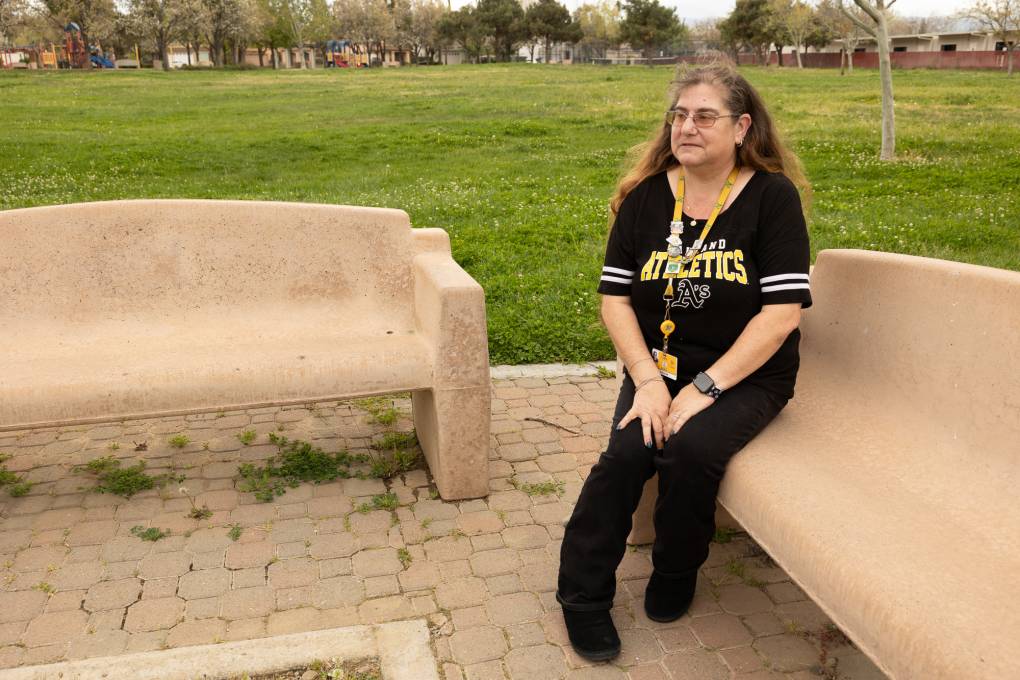
"caption": "Julie Silva, a Teamsters Local 853 member who spent over 15 years working retail and warehouse jobs for Aramark and Fanatics at the Oakland A’s, received $1,500 from the Oakland Coliseum Vendor Assistance Fund — but said the support was inadequate. Several employees of third-party vendors affected by the A’s departure from Oakland have complained that they were denied compensation from a workers’ support fund that the A’s set up. ",
"credit": "David M. Barreda/KQED",
"altTag": null,
"description": null,
"imgSizes": {
"medium": {
"file": "https://cdn.kqed.org/wp-content/uploads/sites/10/2025/03/20250327_As-Vendor-Fund_DMB_00007-800x533.jpg",
"width": 800,
"height": 533,
"mimeType": "image/jpeg"
},
"large": {
"file": "https://cdn.kqed.org/wp-content/uploads/sites/10/2025/03/20250327_As-Vendor-Fund_DMB_00007-1020x680.jpg",
"width": 1020,
"height": 680,
"mimeType": "image/jpeg"
},
"thumbnail": {
"file": "https://cdn.kqed.org/wp-content/uploads/sites/10/2025/03/20250327_As-Vendor-Fund_DMB_00007-160x107.jpg",
"width": 160,
"height": 107,
"mimeType": "image/jpeg"
},
"1536x1536": {
"file": "https://cdn.kqed.org/wp-content/uploads/sites/10/2025/03/20250327_As-Vendor-Fund_DMB_00007-1536x1024.jpg",
"width": 1536,
"height": 1024,
"mimeType": "image/jpeg"
},
"post-thumbnail": {
"file": "https://cdn.kqed.org/wp-content/uploads/sites/10/2025/03/20250327_As-Vendor-Fund_DMB_00007-672x372.jpg",
"width": 672,
"height": 372,
"mimeType": "image/jpeg"
},
"twentyfourteen-full-width": {
"file": "https://cdn.kqed.org/wp-content/uploads/sites/10/2025/03/20250327_As-Vendor-Fund_DMB_00007-1038x576.jpg",
"width": 1038,
"height": 576,
"mimeType": "image/jpeg"
},
"full-width": {
"file": "https://cdn.kqed.org/wp-content/uploads/sites/10/2025/03/20250327_As-Vendor-Fund_DMB_00007-1920x1280.jpg",
"width": 1920,
"height": 1280,
"mimeType": "image/jpeg"
},
"kqedFullSize": {
"file": "https://cdn.kqed.org/wp-content/uploads/sites/10/2025/03/20250327_As-Vendor-Fund_DMB_00007.jpg",
"width": 2000,
"height": 1333
}
},
"isLoading": false,
"fetchFailed": false
},
"news_12033223": {
"type": "attachments",
"id": "news_12033223",
"meta": {
"index": "attachments_1716263798",
"site": "news",
"id": "12033223",
"found": true
},
"title": "11.21.2024-LeadMuseum-10-scaled copy",
"publishDate": 1743029398,
"status": "inherit",
"parent": 12033218,
"modified": 1743029489,
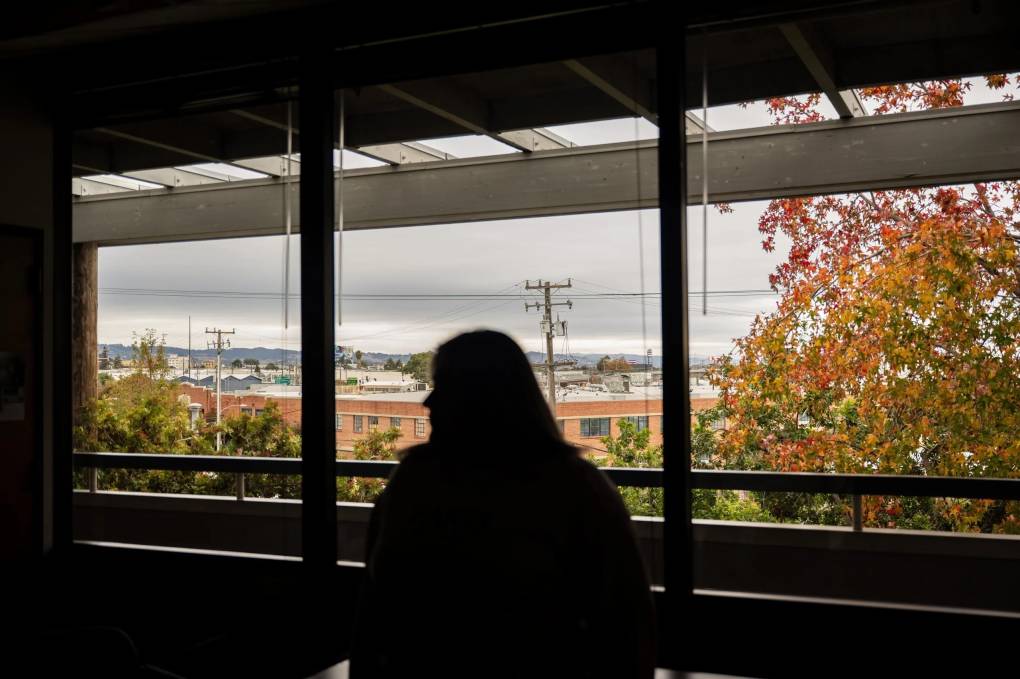
"caption": "Eloisa Ramos, outreach coordinator at the Alameda County Healthy Homes Department, in their East Oakland office on Thursday, Nov.21, 2024.",
"credit": "Hiram Alejandro Durán for El Tímpano/CatchLight Local/Report for America corps member",
"altTag": "A woman's silhouette seen from behind, sitting on a balcony looking out on a city, trees, cloudy skies.",
"description": null,
"imgSizes": {
"medium": {
"file": "https://cdn.kqed.org/wp-content/uploads/sites/10/2025/03/11.21.2024-LeadMuseum-10-scaled-copy-800x532.jpg",
"width": 800,
"height": 532,
"mimeType": "image/jpeg"
},
"large": {
"file": "https://cdn.kqed.org/wp-content/uploads/sites/10/2025/03/11.21.2024-LeadMuseum-10-scaled-copy-1020x679.jpg",
"width": 1020,
"height": 679,
"mimeType": "image/jpeg"
},
"thumbnail": {
"file": "https://cdn.kqed.org/wp-content/uploads/sites/10/2025/03/11.21.2024-LeadMuseum-10-scaled-copy-160x106.jpg",
"width": 160,
"height": 106,
"mimeType": "image/jpeg"
},
"1536x1536": {
"file": "https://cdn.kqed.org/wp-content/uploads/sites/10/2025/03/11.21.2024-LeadMuseum-10-scaled-copy-1536x1022.jpg",
"width": 1536,
"height": 1022,
"mimeType": "image/jpeg"
},
"2048x2048": {
"file": "https://cdn.kqed.org/wp-content/uploads/sites/10/2025/03/11.21.2024-LeadMuseum-10-scaled-copy-2048x1362.jpg",
"width": 2048,
"height": 1362,
"mimeType": "image/jpeg"
},
"post-thumbnail": {
"file": "https://cdn.kqed.org/wp-content/uploads/sites/10/2025/03/11.21.2024-LeadMuseum-10-scaled-copy-672x372.jpg",
"width": 672,
"height": 372,
"mimeType": "image/jpeg"
},
"twentyfourteen-full-width": {
"file": "https://cdn.kqed.org/wp-content/uploads/sites/10/2025/03/11.21.2024-LeadMuseum-10-scaled-copy-1038x576.jpg",
"width": 1038,
"height": 576,
"mimeType": "image/jpeg"
},
"full-width": {
"file": "https://cdn.kqed.org/wp-content/uploads/sites/10/2025/03/11.21.2024-LeadMuseum-10-scaled-copy-1920x1277.jpg",
"width": 1920,
"height": 1277,
"mimeType": "image/jpeg"
},
"kqedFullSize": {
"file": "https://cdn.kqed.org/wp-content/uploads/sites/10/2025/03/11.21.2024-LeadMuseum-10-scaled-copy.jpg",
"width": 2560,
"height": 1703
}
},
"isLoading": false,
"fetchFailed": false
},
"news_12033113": {
"type": "attachments",
"id": "news_12033113",
"meta": {
"index": "attachments_1716263798",
"site": "news",
"id": "12033113",
"found": true
},
"title": "231218-RainFile-03-BL_qed",
"publishDate": 1743011308,
"status": "inherit",
"parent": 12033109,
"modified": 1743011319,
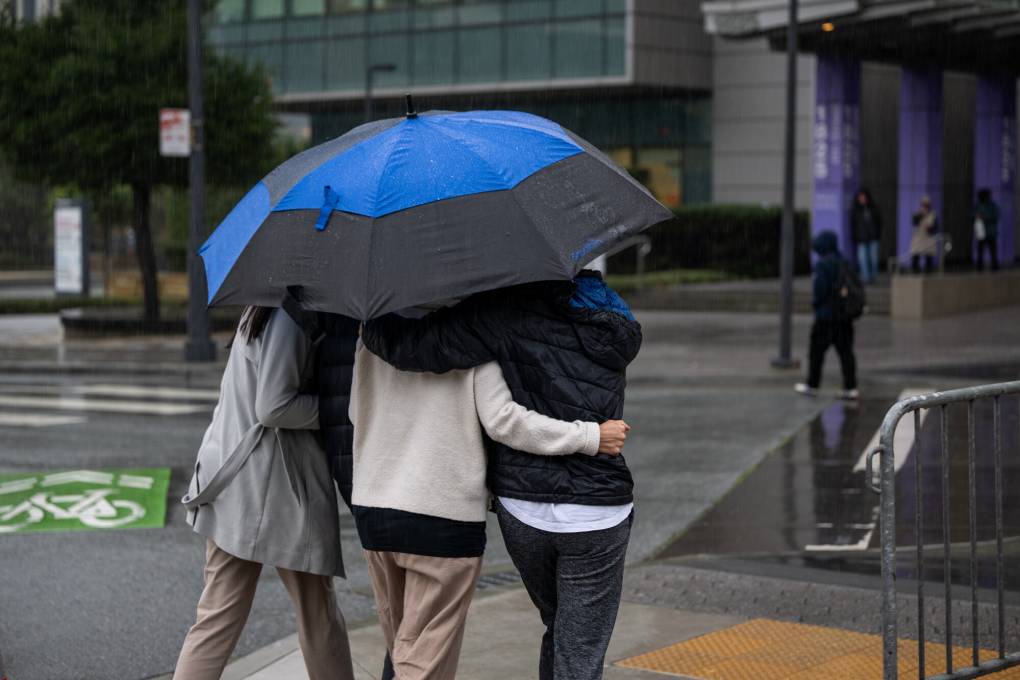
"caption": "A group walks with an umbrella near the UCSF Mission Bay campus in San Francisco on Dec. 18, 2023.",
"credit": "Beth LaBerge/KQED",
"altTag": null,
"description": null,
"imgSizes": {
"medium": {
"file": "https://cdn.kqed.org/wp-content/uploads/sites/10/2025/03/231218-RainFile-03-BL_qed-800x533.jpg",
"width": 800,
"height": 533,
"mimeType": "image/jpeg"
},
"large": {
"file": "https://cdn.kqed.org/wp-content/uploads/sites/10/2025/03/231218-RainFile-03-BL_qed-1020x680.jpg",
"width": 1020,
"height": 680,
"mimeType": "image/jpeg"
},
"thumbnail": {
"file": "https://cdn.kqed.org/wp-content/uploads/sites/10/2025/03/231218-RainFile-03-BL_qed-160x107.jpg",
"width": 160,
"height": 107,
"mimeType": "image/jpeg"
},
"1536x1536": {
"file": "https://cdn.kqed.org/wp-content/uploads/sites/10/2025/03/231218-RainFile-03-BL_qed-1536x1024.jpg",
"width": 1536,
"height": 1024,
"mimeType": "image/jpeg"
},
"post-thumbnail": {
"file": "https://cdn.kqed.org/wp-content/uploads/sites/10/2025/03/231218-RainFile-03-BL_qed-672x372.jpg",
"width": 672,
"height": 372,
"mimeType": "image/jpeg"
},
"twentyfourteen-full-width": {
"file": "https://cdn.kqed.org/wp-content/uploads/sites/10/2025/03/231218-RainFile-03-BL_qed-1038x576.jpg",
"width": 1038,
"height": 576,
"mimeType": "image/jpeg"
},
"full-width": {
"file": "https://cdn.kqed.org/wp-content/uploads/sites/10/2025/03/231218-RainFile-03-BL_qed-1920x1280.jpg",
"width": 1920,
"height": 1280,
"mimeType": "image/jpeg"
},
"kqedFullSize": {
"file": "https://cdn.kqed.org/wp-content/uploads/sites/10/2025/03/231218-RainFile-03-BL_qed.jpg",
"width": 1999,
"height": 1333
}
},
"isLoading": false,
"fetchFailed": false
},
"news_12032885": {
"type": "attachments",
"id": "news_12032885",
"meta": {
"index": "attachments_1716263798",
"site": "news",
"id": "12032885",
"found": true
},
"title": "Roots",
"publishDate": 1742922075,
"status": "inherit",
"parent": 12090471,
"modified": 1783710010,
"caption": "The Oakland Roots hosted the San Antonio FC at the Oakland Coliseum on March 22, 2025, in Oakland, California. This was the first Roots game played in the storied stadium.",
"credit": "David M. Barreda/KQED",
"altTag": null,
"description": null,
"imgSizes": {
"medium": {
"file": "https://cdn.kqed.org/wp-content/uploads/sites/10/2025/03/20250322_Roots_4275_qed-800x533.jpg",
"width": 800,
"height": 533,
"mimeType": "image/jpeg"
},
"large": {
"file": "https://cdn.kqed.org/wp-content/uploads/sites/10/2025/03/20250322_Roots_4275_qed-1020x680.jpg",
"width": 1020,
"height": 680,
"mimeType": "image/jpeg"
},
"thumbnail": {
"file": "https://cdn.kqed.org/wp-content/uploads/sites/10/2025/03/20250322_Roots_4275_qed-160x107.jpg",
"width": 160,
"height": 107,
"mimeType": "image/jpeg"
},
"1536x1536": {
"file": "https://cdn.kqed.org/wp-content/uploads/sites/10/2025/03/20250322_Roots_4275_qed-1536x1024.jpg",
"width": 1536,
"height": 1024,
"mimeType": "image/jpeg"
},
"post-thumbnail": {
"file": "https://cdn.kqed.org/wp-content/uploads/sites/10/2025/03/20250322_Roots_4275_qed-672x372.jpg",
"width": 672,
"height": 372,
"mimeType": "image/jpeg"
},
"twentyfourteen-full-width": {
"file": "https://cdn.kqed.org/wp-content/uploads/sites/10/2025/03/20250322_Roots_4275_qed-1038x576.jpg",
"width": 1038,
"height": 576,
"mimeType": "image/jpeg"
},
"full-width": {
"file": "https://cdn.kqed.org/wp-content/uploads/sites/10/2025/03/20250322_Roots_4275_qed-1920x1280.jpg",
"width": 1920,
"height": 1280,
"mimeType": "image/jpeg"
},
"kqedFullSize": {
"file": "https://cdn.kqed.org/wp-content/uploads/sites/10/2025/03/20250322_Roots_4275_qed.jpg",
"width": 2000,
"height": 1333
}
},
"isLoading": false,
"fetchFailed": false
},
"news_12031710": {
"type": "attachments",
"id": "news_12031710",
"meta": {
"index": "attachments_1716263798",
"site": "news",
"id": "12031710",
"found": true
},
"title": "20250315_OAKLAND-MAYOR_DB_00039-KQED",
"publishDate": 1742253272,
"status": "inherit",
"parent": 12032042,
"modified": 1742421499,
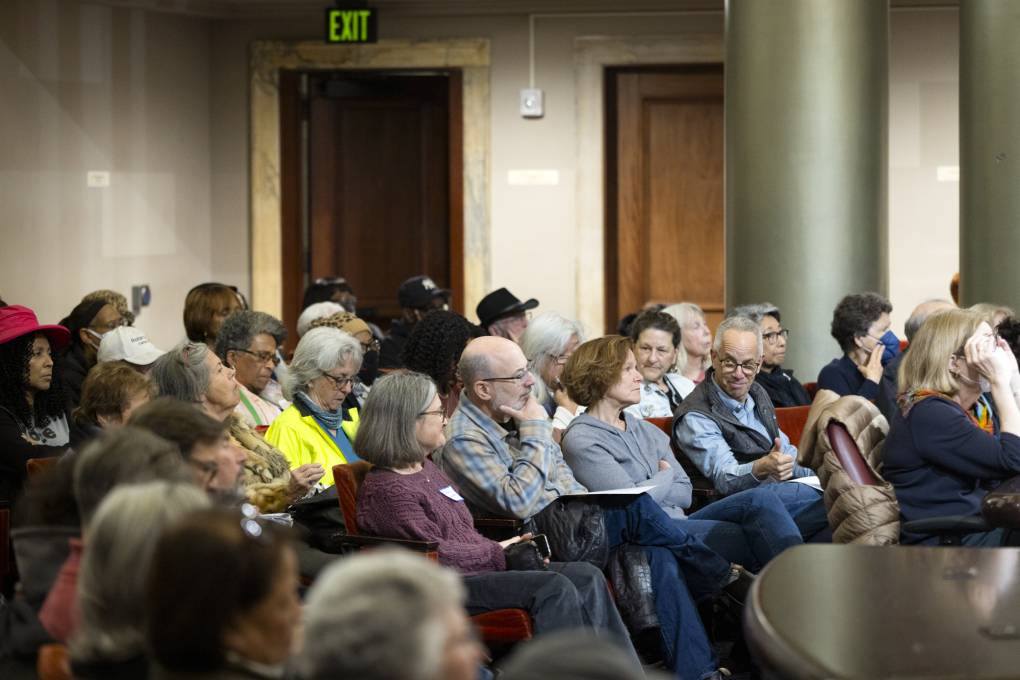
"caption": "Members of the public attend a forum for Oakland Mayoral Candidates organized by the League of Women Voters of Oakland at Oakland City Hall on March 15, 2025.",
"credit": "David M. Barreda/KQED",
"altTag": null,
"description": null,
"imgSizes": {
"medium": {
"file": "https://cdn.kqed.org/wp-content/uploads/sites/10/2025/03/20250315_OAKLAND-MAYOR_DB_00039-KQED-800x534.jpg",
"width": 800,
"height": 534,
"mimeType": "image/jpeg"
},
"large": {
"file": "https://cdn.kqed.org/wp-content/uploads/sites/10/2025/03/20250315_OAKLAND-MAYOR_DB_00039-KQED-1020x680.jpg",
"width": 1020,
"height": 680,
"mimeType": "image/jpeg"
},
"thumbnail": {
"file": "https://cdn.kqed.org/wp-content/uploads/sites/10/2025/03/20250315_OAKLAND-MAYOR_DB_00039-KQED-160x107.jpg",
"width": 160,
"height": 107,
"mimeType": "image/jpeg"
},
"1536x1536": {
"file": "https://cdn.kqed.org/wp-content/uploads/sites/10/2025/03/20250315_OAKLAND-MAYOR_DB_00039-KQED-1536x1025.jpg",
"width": 1536,
"height": 1025,
"mimeType": "image/jpeg"
},
"post-thumbnail": {
"file": "https://cdn.kqed.org/wp-content/uploads/sites/10/2025/03/20250315_OAKLAND-MAYOR_DB_00039-KQED-672x372.jpg",
"width": 672,
"height": 372,
"mimeType": "image/jpeg"
},
"twentyfourteen-full-width": {
"file": "https://cdn.kqed.org/wp-content/uploads/sites/10/2025/03/20250315_OAKLAND-MAYOR_DB_00039-KQED-1038x576.jpg",
"width": 1038,
"height": 576,
"mimeType": "image/jpeg"
},
"full-width": {
"file": "https://cdn.kqed.org/wp-content/uploads/sites/10/2025/03/20250315_OAKLAND-MAYOR_DB_00039-KQED-1920x1281.jpg",
"width": 1920,
"height": 1281,
"mimeType": "image/jpeg"
},
"kqedFullSize": {
"file": "https://cdn.kqed.org/wp-content/uploads/sites/10/2025/03/20250315_OAKLAND-MAYOR_DB_00039-KQED.jpg",
"width": 2000,
"height": 1334
}
},
"isLoading": false,
"fetchFailed": false
},
"news_12032752": {
"type": "attachments",
"id": "news_12032752",
"meta": {
"index": "attachments_1716263798",
"site": "news",
"id": "12032752",
"found": true
},
"title": "005_KQED_WoodStreet_12162022_qed",
"publishDate": 1742839566,
"status": "inherit",
"parent": 12032734,
"modified": 1742927250,
"caption": "A tiny home is trucked into the Wood Street Cabin Community, a planned 100-bed shelter program on the second portion of the Game Changer lot located at 2601 Wood St., in Oakland on Dec. 16, 2022.",
"credit": "Beth LaBerge/KQED",
"altTag": null,
"description": null,
"imgSizes": {
"medium": {
"file": "https://cdn.kqed.org/wp-content/uploads/sites/10/2025/03/005_KQED_WoodStreet_12162022_qed-800x533.jpg",
"width": 800,
"height": 533,
"mimeType": "image/jpeg"
},
"large": {
"file": "https://cdn.kqed.org/wp-content/uploads/sites/10/2025/03/005_KQED_WoodStreet_12162022_qed-1020x680.jpg",
"width": 1020,
"height": 680,
"mimeType": "image/jpeg"
},
"thumbnail": {
"file": "https://cdn.kqed.org/wp-content/uploads/sites/10/2025/03/005_KQED_WoodStreet_12162022_qed-160x107.jpg",
"width": 160,
"height": 107,
"mimeType": "image/jpeg"
},
"1536x1536": {
"file": "https://cdn.kqed.org/wp-content/uploads/sites/10/2025/03/005_KQED_WoodStreet_12162022_qed-1536x1024.jpg",
"width": 1536,
"height": 1024,
"mimeType": "image/jpeg"
},
"post-thumbnail": {
"file": "https://cdn.kqed.org/wp-content/uploads/sites/10/2025/03/005_KQED_WoodStreet_12162022_qed-672x372.jpg",
"width": 672,
"height": 372,
"mimeType": "image/jpeg"
},
"twentyfourteen-full-width": {
"file": "https://cdn.kqed.org/wp-content/uploads/sites/10/2025/03/005_KQED_WoodStreet_12162022_qed-1038x576.jpg",
"width": 1038,
"height": 576,
"mimeType": "image/jpeg"
},
"full-width": {
"file": "https://cdn.kqed.org/wp-content/uploads/sites/10/2025/03/005_KQED_WoodStreet_12162022_qed-1920x1280.jpg",
"width": 1920,
"height": 1280,
"mimeType": "image/jpeg"
},
"kqedFullSize": {
"file": "https://cdn.kqed.org/wp-content/uploads/sites/10/2025/03/005_KQED_WoodStreet_12162022_qed.jpg",
"width": 2000,
"height": 1333
}
},
"isLoading": false,
"fetchFailed": false
},
"news_12032747": {
"type": "attachments",
"id": "news_12032747",
"meta": {
"index": "attachments_1716263798",
"site": "news",
"id": "12032747",
"found": true
},
"title": "heatwave",
"publishDate": 1742838898,
"status": "inherit",
"parent": 12032741,
"modified": 1742838936,
"caption": "Siblings enjoy the spray grounds at Prince Gateway Park in Santa Rosa as the temperature reached 100 degrees on July 11, 2024.",
"credit": "Gina Castro/KQED",
"altTag": null,
"description": null,
"imgSizes": {
"medium": {
"file": "https://cdn.kqed.org/wp-content/uploads/sites/10/2025/03/heatwave-800x546.jpg",
"width": 800,
"height": 546,
"mimeType": "image/jpeg"
},
"large": {
"file": "https://cdn.kqed.org/wp-content/uploads/sites/10/2025/03/heatwave-1020x696.jpg",
"width": 1020,
"height": 696,
"mimeType": "image/jpeg"
},
"thumbnail": {
"file": "https://cdn.kqed.org/wp-content/uploads/sites/10/2025/03/heatwave-160x109.jpg",
"width": 160,
"height": 109,
"mimeType": "image/jpeg"
},
"1536x1536": {
"file": "https://cdn.kqed.org/wp-content/uploads/sites/10/2025/03/heatwave-1536x1048.jpg",
"width": 1536,
"height": 1048,
"mimeType": "image/jpeg"
},
"post-thumbnail": {
"file": "https://cdn.kqed.org/wp-content/uploads/sites/10/2025/03/heatwave-672x372.jpg",
"width": 672,
"height": 372,
"mimeType": "image/jpeg"
},
"twentyfourteen-full-width": {
"file": "https://cdn.kqed.org/wp-content/uploads/sites/10/2025/03/heatwave-1038x576.jpg",
"width": 1038,
"height": 576,
"mimeType": "image/jpeg"
},
"full-width": {
"file": "https://cdn.kqed.org/wp-content/uploads/sites/10/2025/03/heatwave-1920x1309.jpg",
"width": 1920,
"height": 1309,
"mimeType": "image/jpeg"
},
"kqedFullSize": {
"file": "https://cdn.kqed.org/wp-content/uploads/sites/10/2025/03/heatwave.jpg",
"width": 2000,
"height": 1364
}
},
"isLoading": false,
"fetchFailed": false
},
"news_12032262": {
"type": "attachments",
"id": "news_12032262",
"meta": {
"index": "attachments_1716263798",
"site": "news",
"id": "12032262",
"found": true
},
"title": "REI Sign",
"publishDate": 1742496205,
"status": "inherit",
"parent": 12032259,
"modified": 1742496290,
"caption": "The Recreational Equipment Incorporated (REI) outdoor clothing store in Dublin, California, July 23, 2018. ",
"credit": "Smith Collection/Gado/Getty Images",
"altTag": null,
"description": null,
"imgSizes": {
"medium": {
"file": "https://cdn.kqed.org/wp-content/uploads/sites/10/2025/03/REIDublinGetty-800x533.jpg",
"width": 800,
"height": 533,
"mimeType": "image/jpeg"
},
"large": {
"file": "https://cdn.kqed.org/wp-content/uploads/sites/10/2025/03/REIDublinGetty-1020x680.jpg",
"width": 1020,
"height": 680,
"mimeType": "image/jpeg"
},
"thumbnail": {
"file": "https://cdn.kqed.org/wp-content/uploads/sites/10/2025/03/REIDublinGetty-160x107.jpg",
"width": 160,
"height": 107,
"mimeType": "image/jpeg"
},
"1536x1536": {
"file": "https://cdn.kqed.org/wp-content/uploads/sites/10/2025/03/REIDublinGetty-1536x1024.jpg",
"width": 1536,
"height": 1024,
"mimeType": "image/jpeg"
},
"post-thumbnail": {
"file": "https://cdn.kqed.org/wp-content/uploads/sites/10/2025/03/REIDublinGetty-672x372.jpg",
"width": 672,
"height": 372,
"mimeType": "image/jpeg"
},
"twentyfourteen-full-width": {
"file": "https://cdn.kqed.org/wp-content/uploads/sites/10/2025/03/REIDublinGetty-1038x576.jpg",
"width": 1038,
"height": 576,
"mimeType": "image/jpeg"
},
"full-width": {
"file": "https://cdn.kqed.org/wp-content/uploads/sites/10/2025/03/REIDublinGetty-1920x1280.jpg",
"width": 1920,
"height": 1280,
"mimeType": "image/jpeg"
},
"kqedFullSize": {
"file": "https://cdn.kqed.org/wp-content/uploads/sites/10/2025/03/REIDublinGetty.jpg",
"width": 2000,
"height": 1333
}
},
"isLoading": false,
"fetchFailed": false
},
"news_12031575": {
"type": "attachments",
"id": "news_12031575",
"meta": {
"index": "attachments_1716263798",
"site": "news",
"id": "12031575",
"found": true
},
"title": "20250311_Oakland-Budget_DMB_00061",
"publishDate": 1742228569,
"status": "inherit",
"parent": 0,
"modified": 1742317227,
"caption": "Oakland residents attend an educational workshop about Oakland’s biennial budget process at the Main Library on March 11, 2025. The evening program was the city's second event aimed at gathering public input for its 2-year budget, set to begin on July 1.",
"credit": "David M. Barreda/KQED",
"altTag": null,
"description": null,
"imgSizes": {
"medium": {
"file": "https://cdn.kqed.org/wp-content/uploads/sites/10/2025/03/20250311_Oakland-Budget_DMB_00061-800x534.jpg",
"width": 800,
"height": 534,
"mimeType": "image/jpeg"
},
"large": {
"file": "https://cdn.kqed.org/wp-content/uploads/sites/10/2025/03/20250311_Oakland-Budget_DMB_00061-1020x680.jpg",
"width": 1020,
"height": 680,
"mimeType": "image/jpeg"
},
"thumbnail": {
"file": "https://cdn.kqed.org/wp-content/uploads/sites/10/2025/03/20250311_Oakland-Budget_DMB_00061-160x107.jpg",
"width": 160,
"height": 107,
"mimeType": "image/jpeg"
},
"1536x1536": {
"file": "https://cdn.kqed.org/wp-content/uploads/sites/10/2025/03/20250311_Oakland-Budget_DMB_00061-1536x1025.jpg",
"width": 1536,
"height": 1025,
"mimeType": "image/jpeg"
},
"post-thumbnail": {
"file": "https://cdn.kqed.org/wp-content/uploads/sites/10/2025/03/20250311_Oakland-Budget_DMB_00061-672x372.jpg",
"width": 672,
"height": 372,
"mimeType": "image/jpeg"
},
"twentyfourteen-full-width": {
"file": "https://cdn.kqed.org/wp-content/uploads/sites/10/2025/03/20250311_Oakland-Budget_DMB_00061-1038x576.jpg",
"width": 1038,
"height": 576,
"mimeType": "image/jpeg"
},
"full-width": {
"file": "https://cdn.kqed.org/wp-content/uploads/sites/10/2025/03/20250311_Oakland-Budget_DMB_00061-1920x1281.jpg",
"width": 1920,
"height": 1281,
"mimeType": "image/jpeg"
},
"kqedFullSize": {
"file": "https://cdn.kqed.org/wp-content/uploads/sites/10/2025/03/20250311_Oakland-Budget_DMB_00061.jpg",
"width": 2000,
"height": 1334
}
},
"isLoading": false,
"fetchFailed": false
},
"news_12031596": {
"type": "attachments",
"id": "news_12031596",
"meta": {
"index": "attachments_1716263798",
"site": "news",
"id": "12031596",
"found": true
},
"title": "XTRA GRAPHIC PHOTO 1 DTSC 20230810_023711906_iOS",
"publishDate": 1742232198,
"status": "inherit",
"parent": 12031593,
"modified": 1742232244,
"caption": "A drone operated by an investigator for the nonprofit San Francisco Baykeeper captures a fire at the metal shredder now known as Radius Recycling, on Aug. 9, 2023. ",
"credit": "Courtesy San Francisco Baykeeper",
"altTag": null,
"description": null,
"imgSizes": {
"medium": {
"file": "https://cdn.kqed.org/wp-content/uploads/sites/10/2025/03/XTRA-GRAPHIC-PHOTO-1-DTSC-20230810_023711906_iOS-800x600.jpeg",
"width": 800,
"height": 600,
"mimeType": "image/jpeg"
},
"large": {
"file": "https://cdn.kqed.org/wp-content/uploads/sites/10/2025/03/XTRA-GRAPHIC-PHOTO-1-DTSC-20230810_023711906_iOS-1020x765.jpeg",
"width": 1020,
"height": 765,
"mimeType": "image/jpeg"
},
"thumbnail": {
"file": "https://cdn.kqed.org/wp-content/uploads/sites/10/2025/03/XTRA-GRAPHIC-PHOTO-1-DTSC-20230810_023711906_iOS-160x120.jpeg",
"width": 160,
"height": 120,
"mimeType": "image/jpeg"
},
"1536x1536": {
"file": "https://cdn.kqed.org/wp-content/uploads/sites/10/2025/03/XTRA-GRAPHIC-PHOTO-1-DTSC-20230810_023711906_iOS-1536x1152.jpeg",
"width": 1536,
"height": 1152,
"mimeType": "image/jpeg"
},
"post-thumbnail": {
"file": "https://cdn.kqed.org/wp-content/uploads/sites/10/2025/03/XTRA-GRAPHIC-PHOTO-1-DTSC-20230810_023711906_iOS-672x372.jpeg",
"width": 672,
"height": 372,
"mimeType": "image/jpeg"
},
"twentyfourteen-full-width": {
"file": "https://cdn.kqed.org/wp-content/uploads/sites/10/2025/03/XTRA-GRAPHIC-PHOTO-1-DTSC-20230810_023711906_iOS-1038x576.jpeg",
"width": 1038,
"height": 576,
"mimeType": "image/jpeg"
},
"full-width": {
"file": "https://cdn.kqed.org/wp-content/uploads/sites/10/2025/03/XTRA-GRAPHIC-PHOTO-1-DTSC-20230810_023711906_iOS-1920x1440.jpeg",
"width": 1920,
"height": 1440,
"mimeType": "image/jpeg"
},
"kqedFullSize": {
"file": "https://cdn.kqed.org/wp-content/uploads/sites/10/2025/03/XTRA-GRAPHIC-PHOTO-1-DTSC-20230810_023711906_iOS.jpeg",
"width": 2000,
"height": 1500
}
},
"isLoading": false,
"fetchFailed": false
},
"news_12031677": {
"type": "attachments",
"id": "news_12031677",
"meta": {
"index": "attachments_1716263798",
"site": "news",
"id": "12031677",
"found": true
},
"title": "Apartment buildings in Nob Hill in San Francisco on July 29, 2021.",
"publishDate": 1742246529,
"status": "inherit",
"parent": 12030792,
"modified": 1742246540,
"caption": "Apartment buildings in Nob Hill in San Francisco on July 29, 2021.",
"credit": "Beth LaBerge/KQED",
"altTag": null,
"description": null,
"imgSizes": {
"medium": {
"file": "https://cdn.kqed.org/wp-content/uploads/sites/10/2025/03/001_SanFrancisco_Housing_07292021_qed-800x533.jpg",
"width": 800,
"height": 533,
"mimeType": "image/jpeg"
},
"large": {
"file": "https://cdn.kqed.org/wp-content/uploads/sites/10/2025/03/001_SanFrancisco_Housing_07292021_qed-1020x680.jpg",
"width": 1020,
"height": 680,
"mimeType": "image/jpeg"
},
"thumbnail": {
"file": "https://cdn.kqed.org/wp-content/uploads/sites/10/2025/03/001_SanFrancisco_Housing_07292021_qed-160x107.jpg",
"width": 160,
"height": 107,
"mimeType": "image/jpeg"
},
"1536x1536": {
"file": "https://cdn.kqed.org/wp-content/uploads/sites/10/2025/03/001_SanFrancisco_Housing_07292021_qed-1536x1024.jpg",
"width": 1536,
"height": 1024,
"mimeType": "image/jpeg"
},
"post-thumbnail": {
"file": "https://cdn.kqed.org/wp-content/uploads/sites/10/2025/03/001_SanFrancisco_Housing_07292021_qed-672x372.jpg",
"width": 672,
"height": 372,
"mimeType": "image/jpeg"
},
"twentyfourteen-full-width": {
"file": "https://cdn.kqed.org/wp-content/uploads/sites/10/2025/03/001_SanFrancisco_Housing_07292021_qed-1038x576.jpg",
"width": 1038,
"height": 576,
"mimeType": "image/jpeg"
},
"full-width": {
"file": "https://cdn.kqed.org/wp-content/uploads/sites/10/2025/03/001_SanFrancisco_Housing_07292021_qed-1920x1280.jpg",
"width": 1920,
"height": 1280,
"mimeType": "image/jpeg"
},
"kqedFullSize": {
"file": "https://cdn.kqed.org/wp-content/uploads/sites/10/2025/03/001_SanFrancisco_Housing_07292021_qed.jpg",
"width": 1999,
"height": 1333
}
},
"isLoading": false,
"fetchFailed": false
},
"news_11734231": {
"type": "attachments",
"id": "news_11734231",
"meta": {
"index": "attachments_1716263798",
"site": "news",
"id": "11734231",
"found": true
},
"title": "RS36031_Image from iOS (14)-qut",
"publishDate": 1553110882,
"status": "inherit",
"parent": 11733926,
"modified": 1742229157,
"caption": "Wildflowers atop Mount Davidson in San Francisco on March 20, 2019.",
"credit": "TheRealWBTC/Twitter",
"altTag": null,
"description": null,
"imgSizes": {
"thumbnail": {
"file": "https://cdn.kqed.org/wp-content/uploads/sites/10/2019/03/RS36031_Image-from-iOS-14-qut-160x120.jpg",
"width": 160,
"height": 120,
"mimeType": "image/jpeg"
},
"medium": {
"file": "https://cdn.kqed.org/wp-content/uploads/sites/10/2019/03/RS36031_Image-from-iOS-14-qut-800x600.jpg",
"width": 800,
"height": 600,
"mimeType": "image/jpeg"
},
"large": {
"file": "https://cdn.kqed.org/wp-content/uploads/sites/10/2019/03/RS36031_Image-from-iOS-14-qut-1020x765.jpg",
"width": 1020,
"height": 765,
"mimeType": "image/jpeg"
},
"complete_open_graph": {
"file": "https://cdn.kqed.org/wp-content/uploads/sites/10/2019/03/RS36031_Image-from-iOS-14-qut-1200x900.jpg",
"width": 1200,
"height": 900,
"mimeType": "image/jpeg"
},
"post-thumbnail": {
"file": "https://cdn.kqed.org/wp-content/uploads/sites/10/2019/03/RS36031_Image-from-iOS-14-qut-672x372.jpg",
"width": 672,
"height": 372,
"mimeType": "image/jpeg"
},
"twentyfourteen-full-width": {
"file": "https://cdn.kqed.org/wp-content/uploads/sites/10/2019/03/RS36031_Image-from-iOS-14-qut-1038x576.jpg",
"width": 1038,
"height": 576,
"mimeType": "image/jpeg"
},
"full-width": {
"file": "https://cdn.kqed.org/wp-content/uploads/sites/10/2019/03/RS36031_Image-from-iOS-14-qut-1920x1440.jpg",
"width": 1920,
"height": 1440,
"mimeType": "image/jpeg"
},
"guest-author-32": {
"file": "https://cdn.kqed.org/wp-content/uploads/sites/10/2019/03/RS36031_Image-from-iOS-14-qut-32x32.jpg",
"width": 32,
"height": 32,
"mimeType": "image/jpeg"
},
"guest-author-50": {
"file": "https://cdn.kqed.org/wp-content/uploads/sites/10/2019/03/RS36031_Image-from-iOS-14-qut-50x50.jpg",
"width": 50,
"height": 50,
"mimeType": "image/jpeg"
},
"guest-author-64": {
"file": "https://cdn.kqed.org/wp-content/uploads/sites/10/2019/03/RS36031_Image-from-iOS-14-qut-64x64.jpg",
"width": 64,
"height": 64,
"mimeType": "image/jpeg"
},
"guest-author-96": {
"file": "https://cdn.kqed.org/wp-content/uploads/sites/10/2019/03/RS36031_Image-from-iOS-14-qut-96x96.jpg",
"width": 96,
"height": 96,
"mimeType": "image/jpeg"
},
"guest-author-128": {
"file": "https://cdn.kqed.org/wp-content/uploads/sites/10/2019/03/RS36031_Image-from-iOS-14-qut-128x128.jpg",
"width": 128,
"height": 128,
"mimeType": "image/jpeg"
},
"apple_news_ca_landscape_12_9": {
"file": "https://cdn.kqed.org/wp-content/uploads/sites/10/2019/03/RS36031_Image-from-iOS-14-qut-1832x1374.jpg",
"width": 1832,
"height": 1374,
"mimeType": "image/jpeg"
},
"apple_news_ca_landscape_9_7": {
"file": "https://cdn.kqed.org/wp-content/uploads/sites/10/2019/03/RS36031_Image-from-iOS-14-qut-1376x1032.jpg",
"width": 1376,
"height": 1032,
"mimeType": "image/jpeg"
},
"apple_news_ca_landscape_5_5": {
"file": "https://cdn.kqed.org/wp-content/uploads/sites/10/2019/03/RS36031_Image-from-iOS-14-qut-1044x783.jpg",
"width": 1044,
"height": 783,
"mimeType": "image/jpeg"
},
"apple_news_ca_landscape_4_7": {
"file": "https://cdn.kqed.org/wp-content/uploads/sites/10/2019/03/RS36031_Image-from-iOS-14-qut-632x474.jpg",
"width": 632,
"height": 474,
"mimeType": "image/jpeg"
},
"apple_news_ca_landscape_4_0": {
"file": "https://cdn.kqed.org/wp-content/uploads/sites/10/2019/03/RS36031_Image-from-iOS-14-qut-536x402.jpg",
"width": 536,
"height": 402,
"mimeType": "image/jpeg"
},
"apple_news_ca_portrait_12_9": {
"file": "https://cdn.kqed.org/wp-content/uploads/sites/10/2019/03/RS36031_Image-from-iOS-14-qut-1122x1440.jpg",
"width": 1122,
"height": 1440,
"mimeType": "image/jpeg"
},
"apple_news_ca_portrait_9_7": {
"file": "https://cdn.kqed.org/wp-content/uploads/sites/10/2019/03/RS36031_Image-from-iOS-14-qut-840x1120.jpg",
"width": 840,
"height": 1120,
"mimeType": "image/jpeg"
},
"apple_news_ca_portrait_5_5": {
"file": "https://cdn.kqed.org/wp-content/uploads/sites/10/2019/03/RS36031_Image-from-iOS-14-qut-687x916.jpg",
"width": 687,
"height": 916,
"mimeType": "image/jpeg"
},
"apple_news_ca_portrait_4_7": {
"file": "https://cdn.kqed.org/wp-content/uploads/sites/10/2019/03/RS36031_Image-from-iOS-14-qut-414x552.jpg",
"width": 414,
"height": 552,
"mimeType": "image/jpeg"
},
"apple_news_ca_portrait_4_0": {
"file": "https://cdn.kqed.org/wp-content/uploads/sites/10/2019/03/RS36031_Image-from-iOS-14-qut-354x472.jpg",
"width": 354,
"height": 472,
"mimeType": "image/jpeg"
},
"apple_news_ca_square_12_9": {
"file": "https://cdn.kqed.org/wp-content/uploads/sites/10/2019/03/RS36031_Image-from-iOS-14-qut-1472x1440.jpg",
"width": 1472,
"height": 1440,
"mimeType": "image/jpeg"
},
"apple_news_ca_square_9_7": {
"file": "https://cdn.kqed.org/wp-content/uploads/sites/10/2019/03/RS36031_Image-from-iOS-14-qut-1104x1104.jpg",
"width": 1104,
"height": 1104,
"mimeType": "image/jpeg"
},
"apple_news_ca_square_5_5": {
"file": "https://cdn.kqed.org/wp-content/uploads/sites/10/2019/03/RS36031_Image-from-iOS-14-qut-912x912.jpg",
"width": 912,
"height": 912,
"mimeType": "image/jpeg"
},
"apple_news_ca_square_4_7": {
"file": "https://cdn.kqed.org/wp-content/uploads/sites/10/2019/03/RS36031_Image-from-iOS-14-qut-550x550.jpg",
"width": 550,
"height": 550,
"mimeType": "image/jpeg"
},
"apple_news_ca_square_4_0": {
"file": "https://cdn.kqed.org/wp-content/uploads/sites/10/2019/03/RS36031_Image-from-iOS-14-qut-470x470.jpg",
"width": 470,
"height": 470,
"mimeType": "image/jpeg"
},
"kqedFullSize": {
"file": "https://cdn.kqed.org/wp-content/uploads/sites/10/2019/03/RS36031_Image-from-iOS-14-qut.jpg",
"width": 1920,
"height": 1440
}
},
"isLoading": false,
"fetchFailed": false
}
},
"audioPlayerReducer": {
"postId": "stream_live",
"isPaused": true,
"isPlaying": false,
"pfsActive": false,
"pledgeModalIsOpen": true,
"playerDrawerIsOpen": false,
"liveAudioPlayStartedAt": 0,
"liveAudioPlayContext": ""
},
"authorsReducer": {
"byline_news_12033218": {
"type": "authors",
"id": "byline_news_12033218",
"meta": {
"override": true
},
"slug": "byline_news_12033218",
"name": "\u003ca href=\"https://www.eltimpano.org/author/jasmine-aguilera/\">Jasmine Aguilera\u003c/a>, El Tímpano",
"isLoading": false
},
"byline_news_12031593": {
"type": "authors",
"id": "byline_news_12031593",
"meta": {
"override": true
},
"slug": "byline_news_12031593",
"name": "Molly Peterson, Public Health Watch",
"isLoading": false
},
"ecruzguevarra": {
"type": "authors",
"id": "8654",
"meta": {
"index": "authors_1716337520",
"id": "8654",
"found": true
},
"name": "Ericka Cruz Guevarra",
"firstName": "Ericka",
"lastName": "Cruz Guevarra",
"slug": "ecruzguevarra",
"email": "ecruzguevarra@kqed.org",
"display_author_email": true,
"staff_mastheads": [
"news"
],
"title": "Producer, The Bay Podcast",
"bio": "Ericka Cruz Guevarra is host of \u003ca href=\"https://www.kqed.org/podcasts/thebay\">\u003cem>The Bay\u003c/em>\u003c/a> podcast at KQED. Before host, she was the show’s producer. Her work in that capacity includes a three-part reported series on policing in Vallejo, which won a 2020 excellence in journalism award from the Society of Professional Journalists. Ericka has worked as a breaking news reporter at Oregon Public Broadcasting, helped produce the Code Switch podcast, and was KQED’s inaugural Raul Ramirez Diversity Fund intern. She’s also an alumna of NPR’s Next Generation Radio program. Send her an email if you have strong feelings about whether Fairfield and Suisun City are the Bay. Ericka is represented by SAG-AFTRA.",
"avatar": "https://secure.gravatar.com/avatar/25e5ab8d3d53fad2dcc7bb2b5c506b1a?s=600&d=blank&r=g",
"twitter": "NotoriousECG",
"facebook": null,
"instagram": null,
"linkedin": null,
"sites": [
{
"site": "arts",
"roles": [
"subscriber"
]
},
{
"site": "news",
"roles": [
"editor",
"manage_categories"
]
},
{
"site": "futureofyou",
"roles": [
"subscriber"
]
},
{
"site": "stateofhealth",
"roles": [
"subscriber"
]
},
{
"site": "science",
"roles": [
"editor"
]
},
{
"site": "forum",
"roles": [
"subscriber"
]
}
],
"headData": {
"title": "Ericka Cruz Guevarra | KQED",
"description": "Producer, The Bay Podcast",
"ogImgSrc": "https://secure.gravatar.com/avatar/25e5ab8d3d53fad2dcc7bb2b5c506b1a?s=600&d=blank&r=g",
"twImgSrc": "https://secure.gravatar.com/avatar/25e5ab8d3d53fad2dcc7bb2b5c506b1a?s=600&d=blank&r=g"
},
"isLoading": false,
"link": "/author/ecruzguevarra"
},
"fjhabvala": {
"type": "authors",
"id": "8659",
"meta": {
"index": "authors_1716337520",
"id": "8659",
"found": true
},
"name": "Farida Jhabvala Romero",
"firstName": "Farida",
"lastName": "Jhabvala Romero",
"slug": "fjhabvala",
"email": "fjhabvala@kqed.org",
"display_author_email": true,
"staff_mastheads": [
"news"
],
"title": "KQED Contributor",
"bio": "\u003cspan style=\"font-weight: 400;\">Farida Jhabvala Romero is a Labor Correspondent for KQED. She previously covered immigration. Farida was \u003ca href=\"https://www.ccnma.org/2022-most-influential-latina-journalists\">named\u003c/a> one of the 10 Most Influential Latina Journalists in California in 2022 by the California Chicano News Media Association. Her work has won awards from the Society of Professional Journalists (Northern California), as well as a national and regional Edward M. Murrow Award for the collaborative reporting projects “Dangerous Air” and “Graying California.” \u003c/span>\u003cspan style=\"font-weight: 400;\">Before joining KQED, Farida worked as a producer at Radio Bilingüe, a national public radio network. Farida earned her master’s degree in journalism from Stanford University.\u003c/span>",
"avatar": "https://secure.gravatar.com/avatar/c3ab27c5554b67b478f80971e515aa02?s=600&d=blank&r=g",
"twitter": "FaridaJhabvala",
"facebook": null,
"instagram": null,
"linkedin": "https://www.linkedin.com/in/faridajhabvala/",
"sites": [
{
"site": "news",
"roles": [
"editor"
]
},
{
"site": "stateofhealth",
"roles": [
"author"
]
}
],
"headData": {
"title": "Farida Jhabvala Romero | KQED",
"description": "KQED Contributor",
"ogImgSrc": "https://secure.gravatar.com/avatar/c3ab27c5554b67b478f80971e515aa02?s=600&d=blank&r=g",
"twImgSrc": "https://secure.gravatar.com/avatar/c3ab27c5554b67b478f80971e515aa02?s=600&d=blank&r=g"
},
"isLoading": false,
"link": "/author/fjhabvala"
},
"vrancano": {
"type": "authors",
"id": "11276",
"meta": {
"index": "authors_1716337520",
"id": "11276",
"found": true
},
"name": "Vanessa Rancaño",
"firstName": "Vanessa",
"lastName": "Rancaño",
"slug": "vrancano",
"email": "vrancano@kqed.org",
"display_author_email": false,
"staff_mastheads": [
"news"
],
"title": "Reporter",
"bio": "Vanessa Rancaño is a features reporter for KQED. She’s also covered homelessness and education for the station and reported from the Central Valley. Her work has aired across public radio, from flagship national news shows to longform narrative podcasts. Before taking up a mic, she worked as a freelance print journalist. She’s been recognized with a number of national and regional awards. Vanessa grew up in California's Central Valley. She's a former NPR Kroc Fellow, and a graduate of the UC Berkeley Graduate School of Journalism.",
"avatar": "https://secure.gravatar.com/avatar/b3a383dfb0e7ee1c17568f2cf067904ab654d6e3de9743fc661f3c788ade1bed?s=600&d=blank&r=g",
"twitter": "vanessarancano",
"bluesky": null,
"facebook": null,
"instagram": null,
"linkedin": null,
"sites": [
{
"site": "arts",
"roles": [
"editor"
]
},
{
"site": "news",
"roles": [
"editor"
]
},
{
"site": "liveblog",
"roles": [
"contributor"
]
}
],
"headData": {
"title": "Vanessa Rancaño | KQED",
"description": "Reporter",
"ogImgSrc": "https://secure.gravatar.com/avatar/b3a383dfb0e7ee1c17568f2cf067904ab654d6e3de9743fc661f3c788ade1bed?s=600&d=blank&r=g",
"twImgSrc": "https://secure.gravatar.com/avatar/b3a383dfb0e7ee1c17568f2cf067904ab654d6e3de9743fc661f3c788ade1bed?s=600&d=blank&r=g"
},
"isLoading": false,
"link": "/author/vrancano"
},
"ahall": {
"type": "authors",
"id": "11490",
"meta": {
"index": "authors_1716337520",
"id": "11490",
"found": true
},
"name": "Alex Hall",
"firstName": "Alex",
"lastName": "Hall",
"slug": "ahall",
"email": "ahall@kqed.org",
"display_author_email": false,
"staff_mastheads": [
"news"
],
"title": "KQED Enterprise & Accountability Reporter",
"bio": "Alex Hall is KQED's Enterprise and Accountability Reporter. She previously covered the Central Valley for five years from KQED's bureau in Fresno. Before joining KQED, Alex was an investigative reporting fellow at Wisconsin Public Radio and the Wisconsin Center for Investigative Journalism. She has also worked as a bilingual producer for NPR's investigative unit and freelance video producer for Reuters TV on the Latin America desk. She got her start in journalism in South America, where she worked as a radio producer and Spanish-English translator for CNN Chile. Her documentary and investigation into the series of deadly COVID-19 outbreaks at Foster Farms won a national Edward R. Murrow award and was named an Investigative Reporters & Editors award finalist. Alex's reporting for Reveal on the Wisconsin dairy industry's reliance on undocumented immigrant labor was made into a film, Los Lecheros, which won a regional Edward R. Murrow award for best news documentary.",
"avatar": "https://secure.gravatar.com/avatar/defcbeb88b0bf591ff9af41f22644051?s=600&d=blank&r=g",
"twitter": "@chalexhall",
"facebook": null,
"instagram": null,
"linkedin": null,
"sites": [
{
"site": "news",
"roles": [
"editor"
]
},
{
"site": "liveblog",
"roles": [
"author"
]
}
],
"headData": {
"title": "Alex Hall | KQED",
"description": "KQED Enterprise & Accountability Reporter",
"ogImgSrc": "https://secure.gravatar.com/avatar/defcbeb88b0bf591ff9af41f22644051?s=600&d=blank&r=g",
"twImgSrc": "https://secure.gravatar.com/avatar/defcbeb88b0bf591ff9af41f22644051?s=600&d=blank&r=g"
},
"isLoading": false,
"link": "/author/ahall"
},
"amontecillo": {
"type": "authors",
"id": "11649",
"meta": {
"index": "authors_1716337520",
"id": "11649",
"found": true
},
"name": "Alan Montecillo",
"firstName": "Alan",
"lastName": "Montecillo",
"slug": "amontecillo",
"email": "amontecillo@kqed.org",
"display_author_email": false,
"staff_mastheads": [
"news"
],
"title": "KQED Contributor",
"bio": "Alan Montecillo is the senior editor of \u003cem>\u003ca href=\"http://kqed.org/thebay\">The Bay\u003c/a>, \u003c/em> KQED's local news podcast. Before moving to the Bay Area, he worked as a senior talk show producer for WILL in Champaign-Urbana, Illinois and at Oregon Public Broadcasting in Portland, Oregon. He has won journalism awards from the Society of Professional Journalists Northern California, the Public Media Journalists Association, The Signal Awards, and has also received a regional Edward R. Murrow award. Alan is a Filipino American from Hong Kong and a graduate of Reed College.",
"avatar": "https://secure.gravatar.com/avatar/d5e4e7a76481969ccba76f4e2b5ccabc?s=600&d=blank&r=g",
"twitter": "alanmontecillo",
"facebook": null,
"instagram": null,
"linkedin": null,
"sites": [
{
"site": "",
"roles": [
"editor"
]
},
{
"site": "news",
"roles": [
"editor",
"manage_categories"
]
}
],
"headData": {
"title": "Alan Montecillo | KQED",
"description": "KQED Contributor",
"ogImgSrc": "https://secure.gravatar.com/avatar/d5e4e7a76481969ccba76f4e2b5ccabc?s=600&d=blank&r=g",
"twImgSrc": "https://secure.gravatar.com/avatar/d5e4e7a76481969ccba76f4e2b5ccabc?s=600&d=blank&r=g"
},
"isLoading": false,
"link": "/author/amontecillo"
},
"abandlamudi": {
"type": "authors",
"id": "11672",
"meta": {
"index": "authors_1716337520",
"id": "11672",
"found": true
},
"name": "Adhiti Bandlamudi",
"firstName": "Adhiti",
"lastName": "Bandlamudi",
"slug": "abandlamudi",
"email": "abandlamudi@kqed.org",
"display_author_email": false,
"staff_mastheads": [
"news"
],
"title": "KQED Housing Reporter",
"bio": "Adhiti Bandlamudi reports for KQED's Housing desk. She focuses on how housing gets built across the Bay Area. Before joining KQED in 2020, she reported for WUNC in Durham, North Carolina, WABE in Atlanta, Georgia and Capital Public Radio in Sacramento. In 2017, she was awarded a Kroc Fellowship at NPR where she reported on everything from sprinkles to the Golden State Killer's arrest. When she's not reporting, she's baking new recipes in her kitchen or watching movies with friends and family. She's originally from Georgia and has strong opinions about Great British Bake Off.",
"avatar": "https://secure.gravatar.com/avatar/868129c8b257bb99a3500e2c86a65400?s=600&d=mm&r=g",
"twitter": "oddity_adhiti",
"facebook": null,
"instagram": null,
"linkedin": null,
"sites": [
{
"site": "arts",
"roles": [
"author"
]
},
{
"site": "news",
"roles": [
"editor"
]
},
{
"site": "liveblog",
"roles": [
"author"
]
}
],
"headData": {
"title": "Adhiti Bandlamudi | KQED",
"description": "KQED Housing Reporter",
"ogImgSrc": "https://secure.gravatar.com/avatar/868129c8b257bb99a3500e2c86a65400?s=600&d=mm&r=g",
"twImgSrc": "https://secure.gravatar.com/avatar/868129c8b257bb99a3500e2c86a65400?s=600&d=mm&r=g"
},
"isLoading": false,
"link": "/author/abandlamudi"
},
"adahlstromeckman": {
"type": "authors",
"id": "11785",
"meta": {
"index": "authors_1716337520",
"id": "11785",
"found": true
},
"name": "Azul Dahlstrom-Eckman",
"firstName": "Azul",
"lastName": "Dahlstrom-Eckman",
"slug": "adahlstromeckman",
"email": "adahlstrom-eckman@kqed.org",
"display_author_email": true,
"staff_mastheads": [],
"title": "Reporter",
"bio": "Azul is a reporter for KQED focusing on transportation and features. He joined KQED in 2021 as an alumna of KALW's Audio Academy radio journalism training program.",
"avatar": "https://secure.gravatar.com/avatar/9cb750298435add7815a777f55bf1f46845c1386bb8452555c60a7b820b5aba3?s=600&d=blank&r=g",
"twitter": "@zuliemann",
"bluesky": "@azul415.bsky.social",
"facebook": null,
"instagram": null,
"linkedin": null,
"sites": [
{
"site": "arts",
"roles": [
"editor"
]
},
{
"site": "news",
"roles": [
"editor"
]
},
{
"site": "science",
"roles": [
"editor"
]
},
{
"site": "liveblog",
"roles": [
"author"
]
}
],
"headData": {
"title": "Azul Dahlstrom-Eckman | KQED",
"description": "Reporter",
"ogImgSrc": "https://secure.gravatar.com/avatar/9cb750298435add7815a777f55bf1f46845c1386bb8452555c60a7b820b5aba3?s=600&d=blank&r=g",
"twImgSrc": "https://secure.gravatar.com/avatar/9cb750298435add7815a777f55bf1f46845c1386bb8452555c60a7b820b5aba3?s=600&d=blank&r=g"
},
"isLoading": false,
"link": "/author/adahlstromeckman"
},
"jessicakariisa": {
"type": "authors",
"id": "11831",
"meta": {
"index": "authors_1716337520",
"id": "11831",
"found": true
},
"name": "Jessica Kariisa",
"firstName": "Jessica",
"lastName": "Kariisa",
"slug": "jessicakariisa",
"email": "jkariisa@kqed.org",
"display_author_email": false,
"staff_mastheads": [],
"title": "Producer, The Bay",
"bio": "Jessica Kariisa is the producer of The Bay. She first joined KQED as an intern for The California Report Magazine, after which she became an on-call producer. She reported a Bay Curious episode on the use of rap lyrics in criminal trials which won a Society of Professional Journalists award in 2023 for Excellence in Features Journalism and the 2023 Signal Award for Best Conversation Starter. She’s worked on podcasts for Snap Judgment and American Public Media. Before embarking on her audio career, she was a music journalist.\r\n\r\nJessica Kariisa is represented by SAG-AFTRA.",
"avatar": "https://secure.gravatar.com/avatar/522e97b28ac0b3d411621c0fde8f3419c7b71ea2c5c262c57c4bb600963f328c?s=600&d=blank&r=g",
"twitter": null,
"bluesky": null,
"facebook": null,
"instagram": null,
"linkedin": null,
"sites": [
{
"site": "arts",
"roles": [
"author"
]
},
{
"site": "news",
"roles": [
"editor",
"manage_categories"
]
}
],
"headData": {
"title": "Jessica Kariisa | KQED",
"description": "Producer, The Bay",
"ogImgSrc": "https://secure.gravatar.com/avatar/522e97b28ac0b3d411621c0fde8f3419c7b71ea2c5c262c57c4bb600963f328c?s=600&d=blank&r=g",
"twImgSrc": "https://secure.gravatar.com/avatar/522e97b28ac0b3d411621c0fde8f3419c7b71ea2c5c262c57c4bb600963f328c?s=600&d=blank&r=g"
},
"isLoading": false,
"link": "/author/jessicakariisa"
},
"kdebenedetti": {
"type": "authors",
"id": "11913",
"meta": {
"index": "authors_1716337520",
"id": "11913",
"found": true
},
"name": "Katie DeBenedetti",
"firstName": "Katie",
"lastName": "DeBenedetti",
"slug": "kdebenedetti",
"email": "kdebenedetti@kqed.org",
"display_author_email": false,
"staff_mastheads": [
"news",
"science"
],
"title": "KQED Contributor",
"bio": "Katie DeBenedetti is a digital reporter covering daily news for the Express Desk. Prior to joining KQED as a culture reporting intern in January 2024, she covered education and city government for the Napa Valley Register.",
"avatar": "https://secure.gravatar.com/avatar/6e31073cb8f7e4214ab03f42771d0f45?s=600&d=blank&r=g",
"twitter": null,
"facebook": null,
"instagram": null,
"linkedin": null,
"sites": [
{
"site": "news",
"roles": [
"author"
]
},
{
"site": "science",
"roles": [
"author"
]
},
{
"site": "liveblog",
"roles": [
"author"
]
}
],
"headData": {
"title": "Katie DeBenedetti | KQED",
"description": "KQED Contributor",
"ogImgSrc": "https://secure.gravatar.com/avatar/6e31073cb8f7e4214ab03f42771d0f45?s=600&d=blank&r=g",
"twImgSrc": "https://secure.gravatar.com/avatar/6e31073cb8f7e4214ab03f42771d0f45?s=600&d=blank&r=g"
},
"isLoading": false,
"link": "/author/kdebenedetti"
},
"slim": {
"type": "authors",
"id": "11920",
"meta": {
"index": "authors_1716337520",
"id": "11920",
"found": true
},
"name": "Samantha Lim",
"firstName": "Samantha",
"lastName": "Lim",
"slug": "slim",
"email": "slim@KQED.org",
"display_author_email": false,
"staff_mastheads": [],
"title": "KQED Contributor",
"bio": null,
"avatar": "https://secure.gravatar.com/avatar/82e592e6c15fe1a04d385e8ad0fb0b4e?s=600&d=blank&r=g",
"twitter": null,
"facebook": null,
"instagram": null,
"linkedin": null,
"sites": [
{
"site": "news",
"roles": []
}
],
"headData": {
"title": "Samantha Lim | KQED",
"description": "KQED Contributor",
"ogImgSrc": "https://secure.gravatar.com/avatar/82e592e6c15fe1a04d385e8ad0fb0b4e?s=600&d=blank&r=g",
"twImgSrc": "https://secure.gravatar.com/avatar/82e592e6c15fe1a04d385e8ad0fb0b4e?s=600&d=blank&r=g"
},
"isLoading": false,
"link": "/author/slim"
},
"mvelasquez": {
"type": "authors",
"id": "11939",
"meta": {
"index": "authors_1716337520",
"id": "11939",
"found": true
},
"name": "Mel Velasquez",
"firstName": "Mel",
"lastName": "Velasquez",
"slug": "mvelasquez",
"email": "mvelasquez@kqed.org",
"display_author_email": false,
"staff_mastheads": [],
"title": "KQED Contributor",
"bio": null,
"avatar": "https://secure.gravatar.com/avatar/409094312d56fab09fef4251e949ffa6?s=600&d=blank&r=g",
"twitter": null,
"facebook": null,
"instagram": null,
"linkedin": "www.linkedin.com/in/melanievelasquezz",
"sites": [
{
"site": "news",
"roles": [
"editor"
]
}
],
"headData": {
"title": "Mel Velasquez | KQED",
"description": "KQED Contributor",
"ogImgSrc": "https://secure.gravatar.com/avatar/409094312d56fab09fef4251e949ffa6?s=600&d=blank&r=g",
"twImgSrc": "https://secure.gravatar.com/avatar/409094312d56fab09fef4251e949ffa6?s=600&d=blank&r=g"
},
"isLoading": false,
"link": "/author/mvelasquez"
}
},
"pagesReducer": {
"news_tag_oakland": {
"type": "terms",
"id": "news_34054",
"meta": {
"index": "terms_1716263798",
"site": "news",
"id": "34054",
"score": 6.8845096
},
"featImg": null,
"name": "oakland",
"description": null,
"taxonomy": "tag",
"headData": {
"twImgId": null,
"twTitle": null,
"ogTitle": null,
"ogImgId": null,
"twDescription": null,
"description": null,
"title": "oakland Archives | KQED News",
"ogDescription": null
},
"ttid": 34071,
"slug": "oakland",
"isLoading": false,
"title": "oakland",
"pageMeta": {
"site": "news",
"WpPageTemplate": "page-topic-editorial",
"currentPage": 23
},
"blocks": [
{
"blockName": "kqed/post-list",
"attrs": {
"layout": "cardArticle2",
"query": "posts/news?tag=oakland",
"seeMore": false,
"paginated": true,
"page": 23
}
},
{
"blockName": "kqed/ad"
}
]
}
},
"pfsSessionReducer": {},
"postsReducer": {
"stream_live": {
"type": "live",
"id": "stream_live",
"audioUrl": "https://streams.kqed.org/kqedradio",
"title": "Live Stream",
"excerpt": "Live Stream information currently unavailable.",
"link": "/radio",
"featImg": "",
"label": {
"name": "KQED Live",
"link": "/"
}
},
"stream_kqedNewscast": {
"type": "posts",
"id": "stream_kqedNewscast",
"audioUrl": "https://www.kqed.org/.stream/anon/radio/RDnews/newscast.mp3?_=1",
"title": "KQED Newscast",
"featImg": "",
"label": {
"name": "88.5 FM",
"link": "/"
}
},
"news_12033094": {
"type": "posts",
"id": "news_12033094",
"meta": {
"index": "posts_1716263798",
"site": "news",
"id": "12033094",
"score": null,
"sort": [
1743159637000
]
},
"guestAuthors": [],
"slug": "some-oakland-coliseum-workers-say-never-received-assistance-from-farewell-fund",
"title": "Some Oakland Coliseum Workers Say They Never Received Assistance From A’s Farewell Fund",
"publishDate": 1743159637,
"format": "standard",
"headTitle": "Some Oakland Coliseum Workers Say They Never Received Assistance From A’s Farewell Fund | KQED",
"labelTerm": {
"site": "news"
},
"content": "\u003cp>When the A’s packed their bags and left the \u003ca href=\"https://www.kqed.org/news/tag/oakland-coliseum\">Oakland Coliseum\u003c/a> for good last September, longtime ballpark workers like Erica Quinonez looked forward to a token of appreciation from the team. The A’s had created a $1 million “Oakland Coliseum Vendor Assistance Fund”, intended to help alleviate the financial hardship caused by the team’s departure.\u003c/p>\n\u003cp>“I was like, ‘Yes! This is going to help me move,” said Quinonez, a former supervisor for Allied Universal, which provided security services during A’s games at the Coliseum.\u003c/p>\n\u003cp>But her excitement quickly turned to despair and anger when her application was denied. It felt like a slap in the face, she said.\u003c/p>\n\u003cp>[ad fullwidth]\u003c/p>\n\u003cp>“I could have used that money. It really could have helped,” said Quinonez, who said the loss of income resulting from professional sports teams — like the A’s and Raiders — leaving Oakland made her decide to move away from the Bay Area.\u003c/p>\n\u003cp>“I just had a baby 11 months ago,” Quinonez said. “When we didn’t get the money, I was like, ‘Oh man, what are we going to do now?’”\u003c/p>\n\u003cp>Quinonez is one of four workers who told KQED they were upset by their experience applying to the fund. They described a variety of outcomes ranging from outright rejection of their application, to lack of a response, to disappointment over paltry amounts of cash. For some, the financial hardship will extend into the upcoming baseball season, as the A’s home opener is set for Monday at Sutter Health Park in West Sacramento.\u003c/p>\n\u003cfigure id=\"attachment_12033408\" class=\"wp-caption aligncenter\" style=\"max-width: 2000px\">\u003cimg loading=\"lazy\" decoding=\"async\" class=\"size-full wp-image-12033408\" src=\"https://cdn.kqed.org/wp-content/uploads/sites/10/2025/03/20250327_As-Vendor-Fund_DMB_00042.jpg\" alt=\"\" width=\"2000\" height=\"1333\" srcset=\"https://cdn.kqed.org/wp-content/uploads/sites/10/2025/03/20250327_As-Vendor-Fund_DMB_00042.jpg 2000w, https://cdn.kqed.org/wp-content/uploads/sites/10/2025/03/20250327_As-Vendor-Fund_DMB_00042-800x533.jpg 800w, https://cdn.kqed.org/wp-content/uploads/sites/10/2025/03/20250327_As-Vendor-Fund_DMB_00042-1020x680.jpg 1020w, https://cdn.kqed.org/wp-content/uploads/sites/10/2025/03/20250327_As-Vendor-Fund_DMB_00042-160x107.jpg 160w, https://cdn.kqed.org/wp-content/uploads/sites/10/2025/03/20250327_As-Vendor-Fund_DMB_00042-1536x1024.jpg 1536w, https://cdn.kqed.org/wp-content/uploads/sites/10/2025/03/20250327_As-Vendor-Fund_DMB_00042-1920x1280.jpg 1920w\" sizes=\"auto, (max-width: 2000px) 100vw, 2000px\">\u003cfigcaption class=\"wp-caption-text\">Julie Silva, a member of Teamsters Local 853, shows off her lanyard with pins and memorabilia from her time working for the Oakland A’s. \u003ccite>(David M. Barreda/KQED)\u003c/cite>\u003c/figcaption>\u003c/figure>\n\u003cp>The application and eligibility requirements for the Oakland Coliseum Vendor Assistance Fund appeared to be straightforward. According to a letter sent to workers, employees of third-party vendors — Aramark, Allied Universal, ASM, Fanatics and ProPark — had two and a half months to apply online to the fund, which would disburse a payout of between $250 and $2,500 in the form of a taxable grant.\u003c/p>\n\u003cp>Applicants had to be employed by one of the five vendors, have provided gameday services at the Oakland Coliseum and have worked a minimum number of hours between the 2023 and 2024 seasons. Relief Fund Services Group, a company that aims to streamline aid disbursement, administered the website where workers applied.\u003c/p>\n\u003cp>Quinonez told KQED she worked security for Allied Universal at the Coliseum “every game she could” from 2017 to 2024. After she applied for the fund, she found out she was denied for reasons not listed in the application.[aside postID=news_12032881 hero='https://cdn.kqed.org/wp-content/uploads/sites/10/2025/03/20250322_Roots_4275_qed-1020x680.jpg']An email sent to Quinonez from Oakland A’s People Operations and obtained by KQED stated the following: “In order to be eligible for the grant, employees needed to be regularly stationed at the Oakland branch, not Union City or Chase Center.”\u003c/p>\n\u003cp>Because Quinonez worked out of Allied Universal’s Union City office, not the Oakland branch, she was denied funds.\u003c/p>\n\u003cp>When KQED reached out to the A’s for comment, a spokesperson initially requested “additional details” but, after multiple follow-up messages, stopped responding to emails.\u003c/p>\n\u003cp>Relief Fund Services Group did not respond to interview requests.\u003c/p>\n\u003cp>Two other employees of Allied Universal who worked out of the Union City branch said they also applied for the Vendor Assistance Fund but did not hear back and never received any money.\u003c/p>\n\u003cp>“ There was a lot of us that worked every single game they let us work, and it wasn’t acknowledged in any way, shape or form,” said one worker, who is currently employed by Allied Universal and asked not to be named due to concerns of professional repercussions. The employee estimated that a few dozen other workers could have also been denied funds because they were based in Union City.\u003c/p>\n\u003cfigure id=\"attachment_12006733\" class=\"wp-caption aligncenter\" style=\"max-width: 2000px\">\u003cimg loading=\"lazy\" decoding=\"async\" class=\"size-full wp-image-12006733\" src=\"https://cdn.kqed.org/wp-content/uploads/sites/10/2024/09/240926-LAST-AS-HOME-GAME-MD-23-KQED.jpg\" alt=\"\" width=\"2000\" height=\"1333\" srcset=\"https://cdn.kqed.org/wp-content/uploads/sites/10/2024/09/240926-LAST-AS-HOME-GAME-MD-23-KQED.jpg 2000w, https://cdn.kqed.org/wp-content/uploads/sites/10/2024/09/240926-LAST-AS-HOME-GAME-MD-23-KQED-800x533.jpg 800w, https://cdn.kqed.org/wp-content/uploads/sites/10/2024/09/240926-LAST-AS-HOME-GAME-MD-23-KQED-1020x680.jpg 1020w, https://cdn.kqed.org/wp-content/uploads/sites/10/2024/09/240926-LAST-AS-HOME-GAME-MD-23-KQED-160x107.jpg 160w, https://cdn.kqed.org/wp-content/uploads/sites/10/2024/09/240926-LAST-AS-HOME-GAME-MD-23-KQED-1536x1024.jpg 1536w, https://cdn.kqed.org/wp-content/uploads/sites/10/2024/09/240926-LAST-AS-HOME-GAME-MD-23-KQED-1920x1280.jpg 1920w\" sizes=\"auto, (max-width: 2000px) 100vw, 2000px\">\u003cfigcaption class=\"wp-caption-text\">A fan holds a sign at the A’s last home game at the Oakland Coliseum in Oakland on Sept. 26, 2024.. \u003ccite>(Martin do Nascimento/KQED)\u003c/cite>\u003c/figcaption>\u003c/figure>\n\u003cp>“Even if it was $500, just something to acknowledge our hard work there.”\u003c/p>\n\u003cp>Allied Universal did not respond to interview requests.\u003c/p>\n\u003cp>Between 400 and 450 security officers represented by SEIU-USWW worked at the Coliseum and were employed by Allied Universal, according to Stephen Boardman, communications director for the union.\u003c/p>\n\u003cp>“Any SEIU-USWW member who worked at the Coliseum and feels they were wrongly denied this benefit should contact the union right away,” Boardman said in an email to KQED.\u003c/p>\n\u003cp>Bob Rosenthal, who worked at the Coliseum since the first A’s game there in 1968, most recently as a merchandise vendor at a fan store for the concessionaire Fanatics, applied to the fund and received money.[aside postID=news_12030157 hero='https://cdn.kqed.org/wp-content/uploads/sites/10/2024/10/20240818_LastBoB_GC-53_qed-1020x680.jpg']Rosenthal declined to say how much he was awarded but said it “ wasn’t a ton of money.”\u003c/p>\n\u003cp>“It did help as far as putting food on the table because obviously I was unemployed at the time,” he said.\u003c/p>\n\u003cp>Rosenthal is a member of Teamsters Local 853, which represented about 60 Coliseum vendors last baseball season. He said he hadn’t heard of anyone else being denied by the fund.\u003c/p>\n\u003cp>“Everybody I’m close to, that I work with, all got theirs,” he added. “This is news to me.”\u003c/p>\n\u003cp>Julie Silva, another member of Teamsters Local 853 who worked for the A’s as an employee of Aramark and Fanatics over 15 years doing retail and warehouse work, received $1,500 from the fund but was offended by the lack of support.\u003c/p>\n\u003cp>“ I really felt like they could have done better, especially for a lot of the people that have been there since the stadium opened,” Silva said. “It wasn’t even a hundred dollars for every year that I worked there, and I just felt like that was kind of cheap.”\u003c/p>\n\u003cfigure id=\"attachment_11947217\" class=\"wp-caption aligncenter\" style=\"max-width: 1920px\">\u003cimg loading=\"lazy\" decoding=\"async\" class=\"size-full wp-image-11947217\" src=\"https://cdn.kqed.org/wp-content/uploads/sites/10/2023/04/RS54992_005_KQED_BaseballFanEvent_04062022-qut.jpg\" alt=\"An Oakland A's baseball fan holds a special green and yellow book that chronicles 50 years of the team. She is wearing a white and blue floral top.\" width=\"1920\" height=\"1280\" srcset=\"https://cdn.kqed.org/wp-content/uploads/sites/10/2023/04/RS54992_005_KQED_BaseballFanEvent_04062022-qut.jpg 1920w, https://cdn.kqed.org/wp-content/uploads/sites/10/2023/04/RS54992_005_KQED_BaseballFanEvent_04062022-qut-800x533.jpg 800w, https://cdn.kqed.org/wp-content/uploads/sites/10/2023/04/RS54992_005_KQED_BaseballFanEvent_04062022-qut-1020x680.jpg 1020w, https://cdn.kqed.org/wp-content/uploads/sites/10/2023/04/RS54992_005_KQED_BaseballFanEvent_04062022-qut-160x107.jpg 160w, https://cdn.kqed.org/wp-content/uploads/sites/10/2023/04/RS54992_005_KQED_BaseballFanEvent_04062022-qut-1536x1024.jpg 1536w\" sizes=\"auto, (max-width: 1920px) 100vw, 1920px\">\u003cfigcaption class=\"wp-caption-text\">An Oakland A’s fan holds a book chronicling 50 years of the team during a fan event in San Francisco on April 6, 2022. \u003ccite>(Beth LaBerge/KQED)\u003c/cite>\u003c/figcaption>\u003c/figure>\n\u003cp>Unite Here Local 2, a labor union that represented around 400 Coliseum workers employed by the food-service giant Aramark, made an unsuccessful bid for severance and extended health benefits for its members before the vendor assistance fund was announced, according to Ted Waechter, a spokesperson for the union.\u003c/p>\n\u003cp>“We really have to fight to get anything out of these companies, and we didn’t have the leverage we needed,” Waechter told KQED. “We didn’t have anything to strike.”\u003c/p>\n\u003cp>Waechter said the union hasn’t heard of any of its members who applied to the Vendor Assistance Fund being denied.\u003c/p>\n\u003cp>Representatives from both Unite Here Local 2 and Teamsters 853 said that besides the Vendor Assistance Fund, there was no other monetary assistance offered to workers from the team or the companies they worked for upon the A’s departure from Oakland. Both unions said they were not in direct contact with the A’s about the creation of that fund.\u003c/p>\n\u003cp>With the A’s now based in West Sacramento, former Coliseum workers like Silva are bracing for a significant loss in income during a typically lucrative time of year. Working retail and earning commission during A’s games, Silva said she could make between $200 to $1,000 a night. Silva said she was not made aware of a hiring fair at the Sutter Health Park and has missed out on employment there.\u003c/p>\n\u003cp>“ It’s going to be a huge impact because it’s almost half of my income that I lose. It’s a very hefty chunk of change,” Silva said.\u003c/p>\n\u003cp>[ad floatright]\u003c/p>\n",
"blocks": [],
"excerpt": "Several employees of third-party vendors affected by the A’s departure from Oakland have complained that they were denied compensation from a workers’ support fund that the A’s set up. ",
"status": "publish",
"parent": 0,
"modified": 1743188918,
"stats": {
"hasAudio": false,
"hasVideo": false,
"hasChartOrMap": false,
"iframeSrcs": [],
"hasGoogleForm": false,
"hasGallery": false,
"hasHearkenModule": false,
"hasPolis": false,
"paragraphCount": 32,
"wordCount": 1379
},
"headData": {
"title": "Some Oakland Coliseum Workers Say They Never Received Assistance From A’s Farewell Fund | KQED",
"description": "Several employees of third-party vendors affected by the A’s departure from Oakland have complained that they were denied compensation from a workers’ support fund that the A’s set up. ",
"ogTitle": "",
"ogDescription": "",
"ogImgId": "",
"twTitle": "",
"twDescription": "",
"twImgId": "",
"schema": {
"@context": "https://schema.org",
"@type": "NewsArticle",
"headline": "Some Oakland Coliseum Workers Say They Never Received Assistance From A’s Farewell Fund",
"datePublished": "2025-03-28T04:00:37-07:00",
"dateModified": "2025-03-28T12:08:38-07:00",
"image": "https://cdn.kqed.org/wp-content/uploads/2020/02/KQED-OG-Image@1x.png",
"isAccessibleForFree": "True",
"publisher": {
"@type": "NewsMediaOrganization",
"@id": "https://www.kqed.org/#organization",
"name": "KQED",
"logo": "https://cdn.kqed.org/wp-content/uploads/2020/02/KQED-OG-Image@1x.png",
"url": "https://www.kqed.org",
"sameAs": [
"https://www.facebook.com/KQED",
"https://twitter.com/KQED",
"https://www.instagram.com/kqed/",
"https://www.tiktok.com/@kqedofficial",
"https://www.linkedin.com/company/kqed",
"https://www.youtube.com/channel/UCeC0IOo7i1P_61zVUWbJ4nw"
]
}
}
},
"audioUrl": "https://traffic.omny.fm/d/clips/0af137ef-751e-4b19-a055-aaef00d2d578/ffca7e9f-6831-41c5-bcaf-aaef00f5a073/f0e6b344-ce0f-453d-bc59-b2ae010fde72/audio.mp3",
"sticky": false,
"nprStoryId": "kqed-12033094",
"templateType": "standard",
"featuredImageType": "standard",
"excludeFromSiteSearch": "Include",
"articleAge": "0",
"path": "/news/12033094/some-oakland-coliseum-workers-say-never-received-assistance-from-farewell-fund",
"audioTrackLength": null,
"parsedContent": [
{
"type": "contentString",
"content": "\u003cdiv class=\"post-body\">\u003cp>\u003cp>When the A’s packed their bags and left the \u003ca href=\"https://www.kqed.org/news/tag/oakland-coliseum\">Oakland Coliseum\u003c/a> for good last September, longtime ballpark workers like Erica Quinonez looked forward to a token of appreciation from the team. The A’s had created a $1 million “Oakland Coliseum Vendor Assistance Fund”, intended to help alleviate the financial hardship caused by the team’s departure.\u003c/p>\n\u003cp>“I was like, ‘Yes! This is going to help me move,” said Quinonez, a former supervisor for Allied Universal, which provided security services during A’s games at the Coliseum.\u003c/p>\n\u003cp>But her excitement quickly turned to despair and anger when her application was denied. It felt like a slap in the face, she said.\u003c/p>\n\u003cp>\u003c/p>\u003c/div>",
"attributes": {
"named": {},
"numeric": []
}
},
{
"type": "component",
"content": "",
"name": "ad",
"attributes": {
"named": {
"label": "fullwidth"
},
"numeric": [
"fullwidth"
]
}
},
{
"type": "contentString",
"content": "\u003cdiv class=\"post-body\">\u003cp>\u003c/p>\n\u003cp>“I could have used that money. It really could have helped,” said Quinonez, who said the loss of income resulting from professional sports teams — like the A’s and Raiders — leaving Oakland made her decide to move away from the Bay Area.\u003c/p>\n\u003cp>“I just had a baby 11 months ago,” Quinonez said. “When we didn’t get the money, I was like, ‘Oh man, what are we going to do now?’”\u003c/p>\n\u003cp>Quinonez is one of four workers who told KQED they were upset by their experience applying to the fund. They described a variety of outcomes ranging from outright rejection of their application, to lack of a response, to disappointment over paltry amounts of cash. For some, the financial hardship will extend into the upcoming baseball season, as the A’s home opener is set for Monday at Sutter Health Park in West Sacramento.\u003c/p>\n\u003cfigure id=\"attachment_12033408\" class=\"wp-caption aligncenter\" style=\"max-width: 2000px\">\u003cimg loading=\"lazy\" decoding=\"async\" class=\"size-full wp-image-12033408\" src=\"https://cdn.kqed.org/wp-content/uploads/sites/10/2025/03/20250327_As-Vendor-Fund_DMB_00042.jpg\" alt=\"\" width=\"2000\" height=\"1333\" srcset=\"https://cdn.kqed.org/wp-content/uploads/sites/10/2025/03/20250327_As-Vendor-Fund_DMB_00042.jpg 2000w, https://cdn.kqed.org/wp-content/uploads/sites/10/2025/03/20250327_As-Vendor-Fund_DMB_00042-800x533.jpg 800w, https://cdn.kqed.org/wp-content/uploads/sites/10/2025/03/20250327_As-Vendor-Fund_DMB_00042-1020x680.jpg 1020w, https://cdn.kqed.org/wp-content/uploads/sites/10/2025/03/20250327_As-Vendor-Fund_DMB_00042-160x107.jpg 160w, https://cdn.kqed.org/wp-content/uploads/sites/10/2025/03/20250327_As-Vendor-Fund_DMB_00042-1536x1024.jpg 1536w, https://cdn.kqed.org/wp-content/uploads/sites/10/2025/03/20250327_As-Vendor-Fund_DMB_00042-1920x1280.jpg 1920w\" sizes=\"auto, (max-width: 2000px) 100vw, 2000px\">\u003cfigcaption class=\"wp-caption-text\">Julie Silva, a member of Teamsters Local 853, shows off her lanyard with pins and memorabilia from her time working for the Oakland A’s. \u003ccite>(David M. Barreda/KQED)\u003c/cite>\u003c/figcaption>\u003c/figure>\n\u003cp>The application and eligibility requirements for the Oakland Coliseum Vendor Assistance Fund appeared to be straightforward. According to a letter sent to workers, employees of third-party vendors — Aramark, Allied Universal, ASM, Fanatics and ProPark — had two and a half months to apply online to the fund, which would disburse a payout of between $250 and $2,500 in the form of a taxable grant.\u003c/p>\n\u003cp>Applicants had to be employed by one of the five vendors, have provided gameday services at the Oakland Coliseum and have worked a minimum number of hours between the 2023 and 2024 seasons. Relief Fund Services Group, a company that aims to streamline aid disbursement, administered the website where workers applied.\u003c/p>\n\u003cp>Quinonez told KQED she worked security for Allied Universal at the Coliseum “every game she could” from 2017 to 2024. After she applied for the fund, she found out she was denied for reasons not listed in the application.\u003c/p>\u003c/div>",
"attributes": {
"named": {},
"numeric": []
}
},
{
"type": "component",
"content": "",
"name": "aside",
"attributes": {
"named": {
"postid": "news_12032881",
"hero": "https://cdn.kqed.org/wp-content/uploads/sites/10/2025/03/20250322_Roots_4275_qed-1020x680.jpg",
"label": ""
},
"numeric": []
}
},
{
"type": "contentString",
"content": "\u003cdiv class=\"post-body\">\u003cp>An email sent to Quinonez from Oakland A’s People Operations and obtained by KQED stated the following: “In order to be eligible for the grant, employees needed to be regularly stationed at the Oakland branch, not Union City or Chase Center.”\u003c/p>\n\u003cp>Because Quinonez worked out of Allied Universal’s Union City office, not the Oakland branch, she was denied funds.\u003c/p>\n\u003cp>When KQED reached out to the A’s for comment, a spokesperson initially requested “additional details” but, after multiple follow-up messages, stopped responding to emails.\u003c/p>\n\u003cp>Relief Fund Services Group did not respond to interview requests.\u003c/p>\n\u003cp>Two other employees of Allied Universal who worked out of the Union City branch said they also applied for the Vendor Assistance Fund but did not hear back and never received any money.\u003c/p>\n\u003cp>“ There was a lot of us that worked every single game they let us work, and it wasn’t acknowledged in any way, shape or form,” said one worker, who is currently employed by Allied Universal and asked not to be named due to concerns of professional repercussions. The employee estimated that a few dozen other workers could have also been denied funds because they were based in Union City.\u003c/p>\n\u003cfigure id=\"attachment_12006733\" class=\"wp-caption aligncenter\" style=\"max-width: 2000px\">\u003cimg loading=\"lazy\" decoding=\"async\" class=\"size-full wp-image-12006733\" src=\"https://cdn.kqed.org/wp-content/uploads/sites/10/2024/09/240926-LAST-AS-HOME-GAME-MD-23-KQED.jpg\" alt=\"\" width=\"2000\" height=\"1333\" srcset=\"https://cdn.kqed.org/wp-content/uploads/sites/10/2024/09/240926-LAST-AS-HOME-GAME-MD-23-KQED.jpg 2000w, https://cdn.kqed.org/wp-content/uploads/sites/10/2024/09/240926-LAST-AS-HOME-GAME-MD-23-KQED-800x533.jpg 800w, https://cdn.kqed.org/wp-content/uploads/sites/10/2024/09/240926-LAST-AS-HOME-GAME-MD-23-KQED-1020x680.jpg 1020w, https://cdn.kqed.org/wp-content/uploads/sites/10/2024/09/240926-LAST-AS-HOME-GAME-MD-23-KQED-160x107.jpg 160w, https://cdn.kqed.org/wp-content/uploads/sites/10/2024/09/240926-LAST-AS-HOME-GAME-MD-23-KQED-1536x1024.jpg 1536w, https://cdn.kqed.org/wp-content/uploads/sites/10/2024/09/240926-LAST-AS-HOME-GAME-MD-23-KQED-1920x1280.jpg 1920w\" sizes=\"auto, (max-width: 2000px) 100vw, 2000px\">\u003cfigcaption class=\"wp-caption-text\">A fan holds a sign at the A’s last home game at the Oakland Coliseum in Oakland on Sept. 26, 2024.. \u003ccite>(Martin do Nascimento/KQED)\u003c/cite>\u003c/figcaption>\u003c/figure>\n\u003cp>“Even if it was $500, just something to acknowledge our hard work there.”\u003c/p>\n\u003cp>Allied Universal did not respond to interview requests.\u003c/p>\n\u003cp>Between 400 and 450 security officers represented by SEIU-USWW worked at the Coliseum and were employed by Allied Universal, according to Stephen Boardman, communications director for the union.\u003c/p>\n\u003cp>“Any SEIU-USWW member who worked at the Coliseum and feels they were wrongly denied this benefit should contact the union right away,” Boardman said in an email to KQED.\u003c/p>\n\u003cp>Bob Rosenthal, who worked at the Coliseum since the first A’s game there in 1968, most recently as a merchandise vendor at a fan store for the concessionaire Fanatics, applied to the fund and received money.\u003c/p>\u003c/div>",
"attributes": {
"named": {},
"numeric": []
}
},
{
"type": "component",
"content": "",
"name": "aside",
"attributes": {
"named": {
"postid": "news_12030157",
"hero": "https://cdn.kqed.org/wp-content/uploads/sites/10/2024/10/20240818_LastBoB_GC-53_qed-1020x680.jpg",
"label": ""
},
"numeric": []
}
},
{
"type": "contentString",
"content": "\u003cdiv class=\"post-body\">\u003cp>Rosenthal declined to say how much he was awarded but said it “ wasn’t a ton of money.”\u003c/p>\n\u003cp>“It did help as far as putting food on the table because obviously I was unemployed at the time,” he said.\u003c/p>\n\u003cp>Rosenthal is a member of Teamsters Local 853, which represented about 60 Coliseum vendors last baseball season. He said he hadn’t heard of anyone else being denied by the fund.\u003c/p>\n\u003cp>“Everybody I’m close to, that I work with, all got theirs,” he added. “This is news to me.”\u003c/p>\n\u003cp>Julie Silva, another member of Teamsters Local 853 who worked for the A’s as an employee of Aramark and Fanatics over 15 years doing retail and warehouse work, received $1,500 from the fund but was offended by the lack of support.\u003c/p>\n\u003cp>“ I really felt like they could have done better, especially for a lot of the people that have been there since the stadium opened,” Silva said. “It wasn’t even a hundred dollars for every year that I worked there, and I just felt like that was kind of cheap.”\u003c/p>\n\u003cfigure id=\"attachment_11947217\" class=\"wp-caption aligncenter\" style=\"max-width: 1920px\">\u003cimg loading=\"lazy\" decoding=\"async\" class=\"size-full wp-image-11947217\" src=\"https://cdn.kqed.org/wp-content/uploads/sites/10/2023/04/RS54992_005_KQED_BaseballFanEvent_04062022-qut.jpg\" alt=\"An Oakland A's baseball fan holds a special green and yellow book that chronicles 50 years of the team. She is wearing a white and blue floral top.\" width=\"1920\" height=\"1280\" srcset=\"https://cdn.kqed.org/wp-content/uploads/sites/10/2023/04/RS54992_005_KQED_BaseballFanEvent_04062022-qut.jpg 1920w, https://cdn.kqed.org/wp-content/uploads/sites/10/2023/04/RS54992_005_KQED_BaseballFanEvent_04062022-qut-800x533.jpg 800w, https://cdn.kqed.org/wp-content/uploads/sites/10/2023/04/RS54992_005_KQED_BaseballFanEvent_04062022-qut-1020x680.jpg 1020w, https://cdn.kqed.org/wp-content/uploads/sites/10/2023/04/RS54992_005_KQED_BaseballFanEvent_04062022-qut-160x107.jpg 160w, https://cdn.kqed.org/wp-content/uploads/sites/10/2023/04/RS54992_005_KQED_BaseballFanEvent_04062022-qut-1536x1024.jpg 1536w\" sizes=\"auto, (max-width: 1920px) 100vw, 1920px\">\u003cfigcaption class=\"wp-caption-text\">An Oakland A’s fan holds a book chronicling 50 years of the team during a fan event in San Francisco on April 6, 2022. \u003ccite>(Beth LaBerge/KQED)\u003c/cite>\u003c/figcaption>\u003c/figure>\n\u003cp>Unite Here Local 2, a labor union that represented around 400 Coliseum workers employed by the food-service giant Aramark, made an unsuccessful bid for severance and extended health benefits for its members before the vendor assistance fund was announced, according to Ted Waechter, a spokesperson for the union.\u003c/p>\n\u003cp>“We really have to fight to get anything out of these companies, and we didn’t have the leverage we needed,” Waechter told KQED. “We didn’t have anything to strike.”\u003c/p>\n\u003cp>Waechter said the union hasn’t heard of any of its members who applied to the Vendor Assistance Fund being denied.\u003c/p>\n\u003cp>Representatives from both Unite Here Local 2 and Teamsters 853 said that besides the Vendor Assistance Fund, there was no other monetary assistance offered to workers from the team or the companies they worked for upon the A’s departure from Oakland. Both unions said they were not in direct contact with the A’s about the creation of that fund.\u003c/p>\n\u003cp>With the A’s now based in West Sacramento, former Coliseum workers like Silva are bracing for a significant loss in income during a typically lucrative time of year. Working retail and earning commission during A’s games, Silva said she could make between $200 to $1,000 a night. Silva said she was not made aware of a hiring fair at the Sutter Health Park and has missed out on employment there.\u003c/p>\n\u003cp>“ It’s going to be a huge impact because it’s almost half of my income that I lose. It’s a very hefty chunk of change,” Silva said.\u003c/p>\n\u003cp>\u003c/p>\u003c/div>",
"attributes": {
"named": {},
"numeric": []
}
},
{
"type": "component",
"content": "",
"name": "ad",
"attributes": {
"named": {
"label": "floatright"
},
"numeric": [
"floatright"
]
}
},
{
"type": "contentString",
"content": "\u003cdiv class=\"post-body\">\u003cp>\u003c/p>\n\u003c/div>\u003c/p>",
"attributes": {
"named": {},
"numeric": []
}
}
],
"link": "/news/12033094/some-oakland-coliseum-workers-say-never-received-assistance-from-farewell-fund",
"authors": [
"11785"
],
"categories": [
"news_31795",
"news_8",
"news_10"
],
"tags": [
"news_18203",
"news_27626",
"news_19904",
"news_20482",
"news_4694",
"news_34054",
"news_161",
"news_34827",
"news_34078"
],
"featImg": "news_12033404",
"label": "news"
},
"news_12033218": {
"type": "posts",
"id": "news_12033218",
"meta": {
"index": "posts_1716263798",
"site": "news",
"id": "12033218",
"score": null,
"sort": [
1743098418000
]
},
"guestAuthors": [],
"slug": "it-may-be-too-late-how-oakland-addresses-lead-contamination-puts-children-at-risk-medical-experts-say",
"title": "'It May Be Too Late': How Oakland Addresses Lead Contamination Puts Children at Risk, Medical Experts Say",
"publishDate": 1743098418,
"format": "standard",
"headTitle": "‘It May Be Too Late’: How Oakland Addresses Lead Contamination Puts Children at Risk, Medical Experts Say | KQED",
"labelTerm": {},
"content": "\u003cp>[dropcap]L[/dropcap]ead has been a part of 41-year-old Silvia Guzman’s life since she was a child. She immigrated with her parents and two siblings to San Francisco in 1991. Though the details are fuzzy for her, she said she remembers her mother enrolling her and her siblings in school and telling administrators that her younger brother tested positive for lead when they lived in Mexico. Their response scarred her.\u003c/p>\n\u003cp>“What I recall from that experience is that feeling of everybody shaming us, my parents, the family,” she said. They told her parents, “‘You’re not doing a good job, you brought children in sick. They need to go to treatment. You need to be responsible.’ … When I look back in time, I really don’t think any of us needed to go through that.”\u003c/p>\n\u003cp>The administrators’ reactions, she added, shaped her perception that lead exposure had to do with the fact that she was an immigrant from Mexico — not knowing, yet, that lead is pervasive throughout the Bay Area, and in particular Oakland, where Guzman later relocated and started her own family.\u003c/p>\n\u003cp>[ad fullwidth]\u003c/p>\n\u003cp>“The notion has always been for me internally that people who migrate bring it with us,” she said. “Being of Mexican descent, all my candy was just poisonous … my culture was poisonous.”\u003c/p>\n\u003cp>Now, Guzman works to dispel that myth as a \u003cem>promotora\u003c/em> for La Clinica’s Healthy Housing Champion’s project, an initiative by the health center to inform Oakland’s Spanish-speaking population about the threat of lead in much of the city’s older housing stock, encourage childhood testing and connect them to treatment. According to a city report, all of Oakland’s predominately Latino census tracts are in the top percentile of lead risk in the state of California.\u003c/p>\n\u003cfigure id=\"attachment_12033225\" class=\"wp-caption aligncenter\" style=\"max-width: 1568px\">\u003cimg loading=\"lazy\" decoding=\"async\" class=\"size-full wp-image-12033225\" src=\"https://cdn.kqed.org/wp-content/uploads/sites/10/2025/03/11.21.2024-LeadMuseum-02-scaled-copy.jpg\" alt=\"\" width=\"1568\" height=\"1043\" srcset=\"https://cdn.kqed.org/wp-content/uploads/sites/10/2025/03/11.21.2024-LeadMuseum-02-scaled-copy.jpg 1568w, https://cdn.kqed.org/wp-content/uploads/sites/10/2025/03/11.21.2024-LeadMuseum-02-scaled-copy-800x532.jpg 800w, https://cdn.kqed.org/wp-content/uploads/sites/10/2025/03/11.21.2024-LeadMuseum-02-scaled-copy-1020x678.jpg 1020w, https://cdn.kqed.org/wp-content/uploads/sites/10/2025/03/11.21.2024-LeadMuseum-02-scaled-copy-160x106.jpg 160w, https://cdn.kqed.org/wp-content/uploads/sites/10/2025/03/11.21.2024-LeadMuseum-02-scaled-copy-1536x1022.jpg 1536w\" sizes=\"auto, (max-width: 1568px) 100vw, 1568px\">\u003cfigcaption class=\"wp-caption-text\">Household goods and decorations are labeled with sticky notes to denote the level of lead they contain. The collection, known internally as the ‘Lead Museum,’ is housed inside of the Alameda County Healthy Homes Department offices in East Oakland, and is made up of items the team has collected throughout their years of work in the county. Photographed on Thursday, Nov. 21, 2024. \u003ccite>(Hiram Alejandro Durán for El Tímpano/CatchLight Local/Report for America corps member)\u003c/cite>\u003c/figcaption>\u003c/figure>\n\u003cp>But despite the data, and evidence that no amount of lead is safe to have in the body, Alameda County-run lead abatement efforts typically begin only after a child has tested positive for exposure to the dangerous toxin. Abatement measures — treating the child and the home for lead — mostly range from virtual consultations to home visits to test for the source of the lead contamination and take steps to remove it from the home.\u003c/p>\n\u003cp>[aside postID=news_12016094 hero='https://cdn.kqed.org/wp-content/uploads/sites/10/2024/12/10.09.2024-Yazmin-16-scaled-1-1020x679.jpg']\u003c/p>\n\u003cp>Because a medical test usually triggers the process of abatement, doctors and nurses have become the de facto frontline for abatement efforts throughout Alameda County. Children first test positive for lead, then the source of their contamination is investigated — a system that relies on kids being poisoned before action takes place. Many in the local health care industry have said they resent being placed in this position and have called for change.\u003c/p>\n\u003cp>It’s a flawed system, according to some lead researchers, and culture plays a complicated role in how treatment does and doesn’t work. Parents, like Guzman’s mother, face shame and stigma for having sick kids. Moreover, because many of Oakland’s children testing positive for lead come from Latino households with mixed-status family members, Alameda County nurses dedicated to lead treatment say they sometimes struggle to convince parents to utilize their services.\u003c/p>\n\u003cp>“I think it reflects racial segregation and disadvantage and great income inequality … within California,” said Jessica Wolpaw Reyes, a professor of economics at Amherst College whose research focuses on economic disparities and public and environmental health. “For white kids, California would rank really good on things they do for kids, right? But for Black and Latino kids, no.”\u003c/p>\n\u003ch2>Triggering the system\u003c/h2>\n\u003cfigure id=\"attachment_12033226\" class=\"wp-caption aligncenter\" style=\"max-width: 1568px\">\u003cimg loading=\"lazy\" decoding=\"async\" class=\"size-full wp-image-12033226\" src=\"https://cdn.kqed.org/wp-content/uploads/sites/10/2025/03/11.21.2024-LeadMuseum-05-scaled-copy.jpg\" alt=\"\" width=\"1568\" height=\"1043\" srcset=\"https://cdn.kqed.org/wp-content/uploads/sites/10/2025/03/11.21.2024-LeadMuseum-05-scaled-copy.jpg 1568w, https://cdn.kqed.org/wp-content/uploads/sites/10/2025/03/11.21.2024-LeadMuseum-05-scaled-copy-800x532.jpg 800w, https://cdn.kqed.org/wp-content/uploads/sites/10/2025/03/11.21.2024-LeadMuseum-05-scaled-copy-1020x678.jpg 1020w, https://cdn.kqed.org/wp-content/uploads/sites/10/2025/03/11.21.2024-LeadMuseum-05-scaled-copy-160x106.jpg 160w, https://cdn.kqed.org/wp-content/uploads/sites/10/2025/03/11.21.2024-LeadMuseum-05-scaled-copy-1536x1022.jpg 1536w\" sizes=\"auto, (max-width: 1568px) 100vw, 1568px\">\u003cfigcaption class=\"wp-caption-text\">Marilen Biding, a public health nurse at the Alameda County Healthy Homes Department sits for a portrait on Thursday, Nov. 21, 2024. \u003ccite>(Hiram Alejandro Durán for El Tímpano/CatchLight Local/Report for America corps member)\u003c/cite>\u003c/figcaption>\u003c/figure>\n\u003cp>California children with Medi-Cal coverage, the state’s program for people with low income, are required to be tested for lead at one and two years of age. But according to Oakland’s 2021 Racial Equity Impact Analysis, across Alameda County, the percentage of children enrolled in Medi-Cal who missed their mandatory testing ranged between 37% to 81% per census tract.\u003c/p>\n\u003cp>According to the most recent data from the \u003ca href=\"https://www.cdph.ca.gov/Programs/CCDPHP/DEODC/CLPPB/CDPH%20Document%20Library/CLPPBReport2024.pdf\">California Department of Public Health (PDF)\u003c/a>, more than 14,000 children under the age of six tested positive for low amounts of lead in their blood in 2022. An additional 458 children under six tested positive for amounts of lead higher than 3.5 micrograms per deciliter, a measurement that requires a response from the county.\u003c/p>\n\u003cp>“Families, I can only imagine, are just feeling like, ‘What do I do? I don’t know what I’m supposed to do. I didn’t even know it’s a thing. What do I do now?’” said Marilen Biding, a public health nurse with Alameda County Healthy Homes Department, the office that oversees lead abatement efforts and treatment. “That’s exactly where we come in. We’re on their team and we’re here to support them as much as possible.”\u003c/p>\n\u003cp>But the amount of resources a family receives will vary depending on the severity of the child’s blood lead levels. In cases of blood lead levels above 14.5%, the family “gets the full nine,” Biding says. That involves regular check-ins with a public health nurse like herself, meetings and advice by video calls and in person, a nutrition plan, lab testing of the home to determine the source of the contamination and further blood lead level testing over time to check that the level of contamination is going down.\u003c/p>\n\u003cp>“We don’t have the bandwidth to be able to give all of the cases the same type of service,” Biding said. “We would love to, right, but it’s just not possible frankly.”\u003c/p>\n\u003cp>Cases of children who test lower than 14.5 will be referred to a Community Health Outreach Worker within the department. As of September 2024, the Healthy Homes Department was responding to about 1,200 active cases that fell between 3.5 and 9.4 micrograms per deciliter. Those cases will receive support from an outreach worker for a year who can advise parents about the steps they should take to treat their children and provide referrals for additional testing if necessary. Children whose blood lead levels fall between 9.5 and 14.4 receive additional at-home support.\u003c/p>\n\u003cp>While public health responses might vary per jurisdiction, across the nation most systems are “reactive” to lead poisoning, rather than actively working on prevention, Wolpaw Reyes said. “A kind of reactive, medically centered [process] that burdens pediatricians, I would say is kind of common,” she said.\u003c/p>\n\u003cp>Oakland, now, is considering whether the city should adopt a new model that prioritizes proactive inspections of rental units to test for lead and other hazards without involving tenants or relying on blood lead level tests — a model supported by many of the city’s pediatricians.\u003c/p>\n\u003ch2>‘It may be too late to effectively intervene.’\u003c/h2>\n\u003cp>While resources for those children with the highest levels of lead in their system exist at the county level, there has long been a debate between city and county officials about how to do better for all children with lead exposure.\u003c/p>\n\u003cp>A legal settlement against paint manufacturers that were allegedly selling lead-based paint resulted in the city of Oakland and Alameda County receiving $24 million to address lead hazards. In December 2021, after two years of negotiation, county and city officials agreed that Oakland would receive $4.8 million of the settlement dollars immediately. An El Tímpano investigation found that as of August 2024, that money had not been spent. An additional $9.6 million of the settlement fund will go toward the benefit of Oakland residents at a later date, after a plan for how to spend the money is negotiated between the two jurisdictions.\u003c/p>\n\u003cp>Pediatricians and community health care centers in Alameda County have tried to put pressure on Oakland city officials to move faster on plans to utilize the money already in their accounts. In September 2024, 60 pediatricians in Oakland signed a letter addressed to then-Mayor Sheng Thao urging the city to design a \u003ca href=\"https://www.eltimpano.org/english/housing/making-a-complaint-can-feel-dangerous-oaklands-slow-moves-on-inspections-puts-the-onus-on-tenants/\">Proactive Rental Inspection Program\u003c/a>, which would aim to ease the onus on health care providers and renters to address lead hazards that harm children.\u003c/p>\n\u003cp>A PRIP, the doctors argue, would create a code compliance model that, in theory, would keep children from being exposed to lead hazards in the first place by requiring regular inspections of rental units. At the moment, a landlord isn’t required to test a home for lead unless a tenant complains.\u003c/p>\n\u003cp>“Municipalities typically utilize rental code enforcement to address these problems, which is complaint-based. However, the most vulnerable tenants often do not feel safe lodging complaints against landlords out of fear of eviction, or they may have language barriers or disabilities that make navigating the code enforcement system difficult,” the pediatricians said in their letter. “Heartbreakingly, because of this policy, when we pediatricians identify lead-exposed children it may be too late to effectively intervene.”\u003c/p>\n\u003cp>The city of Oakland announced in the fall of 2024 that it had hired a consultant to evaluate whether a lead hazard abatement program could work alongside a PRIP. The consultant has until mid-2025 to complete their report.\u003c/p>\n\u003cp>“I owe it to my patients to not only know about the risks, but to advocate for change to prevent lead poisoning in the first place,” said Brianna Doherty, a resident physician at UCSF Benioff Children’s Hospital who helped organize the pediatrician’s petition. “It feels incredibly frustrating to wait for change.”\u003c/p>\n\u003ch2>Building trust\u003c/h2>\n\u003cfigure id=\"attachment_12033228\" class=\"wp-caption aligncenter\" style=\"max-width: 1568px\">\u003cimg loading=\"lazy\" decoding=\"async\" class=\"size-full wp-image-12033228\" src=\"https://cdn.kqed.org/wp-content/uploads/sites/10/2025/03/11.21.2024-LeadMuseum-09-scaled-copy-e1743029921775.jpg\" alt=\"\" width=\"1568\" height=\"1262\" srcset=\"https://cdn.kqed.org/wp-content/uploads/sites/10/2025/03/11.21.2024-LeadMuseum-09-scaled-copy-e1743029921775.jpg 1568w, https://cdn.kqed.org/wp-content/uploads/sites/10/2025/03/11.21.2024-LeadMuseum-09-scaled-copy-e1743029921775-800x644.jpg 800w, https://cdn.kqed.org/wp-content/uploads/sites/10/2025/03/11.21.2024-LeadMuseum-09-scaled-copy-e1743029921775-1020x821.jpg 1020w, https://cdn.kqed.org/wp-content/uploads/sites/10/2025/03/11.21.2024-LeadMuseum-09-scaled-copy-e1743029921775-160x129.jpg 160w, https://cdn.kqed.org/wp-content/uploads/sites/10/2025/03/11.21.2024-LeadMuseum-09-scaled-copy-e1743029921775-1536x1236.jpg 1536w\" sizes=\"auto, (max-width: 1568px) 100vw, 1568px\">\u003cfigcaption class=\"wp-caption-text\">Ramos sits for a portrait at the Alameda County Healthy Homes Department office in East Oakland on Thursday, Nov. 21, 2024. \u003ccite>(Hiram Alejandro Durán for El Tímpano/CatchLight Local/Report for America corps member)\u003c/cite>\u003c/figcaption>\u003c/figure>\n\u003cp>Without an alternative, Healthy Home’s community outreach coordinator Eloisa Ramos says her team has to spend time building trust with immigrant families who, in some cases, fear getting involved with government programs.\u003c/p>\n\u003cp>“They have to go to the owners for the owners to address these hazards,” Ramos said. “And that’s when we do get a little bit of a hesitation from those renters because they are afraid of retaliation, and that really just breaks my heart because, obviously, it’s illegal for an owner to retaliate against a tenant for wanting to address these hazards. It’s owners’ responsibility to provide a healthy environment for these tenants.”\u003c/p>\n\u003cp>Ramos said she leans on her language skills to build trust with Spanish-speaking families. “I let them know that I’m only here to help you,” she said. “I’m not here to, you know, gain this information to have it be worked against you. This is just for me to help you and your family.”\u003c/p>\n\u003ch2>What should parents do to advocate for their children?\u003c/h2>\n\u003cp>Guzman said she understands how advocating for children in the doctor’s office can be a challenge — she herself was denied a blood lead level test by a pediatrician when she requested one for her kids.\u003c/p>\n\u003cp>She had found out through a neighbor that she and her children had been living in an apartment complex that contained lead when they were young. She and her family had already moved out of the apartment when she learned the news, so she asked that her children, 12-year-old twins, be tested. The pediatrician, she said, told her that her kids were too old to receive a test and that their risk was now low because they no longer lived in the apartment.\u003c/p>\n\u003cp>“\u003cem>Fue como una burla\u003c/em>,” she said in Spanish, “you know, it was like a joke.”\u003c/p>\n\u003cp>She said she spends significant time providing educational information about lead to members of the Latino immigrant community.\u003c/p>\n\u003cp>The rules guiding who is tested for lead and when the results are shared are perplexing, as Guzman’s experience suggests.\u003c/p>\n\u003cp>Parents should insist on a blood lead level test for their children, and ask the medical provider to record when they deny a test, according to La Clinica de la Raza, which provided advice to attendees of a lead testing workshop hosted by El Tímpano in July.\u003c/p>\n\u003cp>Parents should also request to see the results of the test regardless of the results — in many cases parents won’t receive the results of the test unless the child has a blood lead level of 3.5 or higher.\u003c/p>\n\u003cp>“I think one of the most constant stories that I hear repeat itself over and over is people telling me, grown adults telling me, ‘I thought we would not have these kinds of problems here,’” Guzman said. “A lot of people tell me that they thought lead lived only outside of this country, that this country couldn’t possibly have lead because it is the number one country. I guess with all the money going around, how could this country have lead, or the state?”\u003c/p>\n\u003cp>\u003cem>Former senior housing reporter Cassandra Garibay contributed to this article. This story was produced as part of the Pulitzer Center’s StoryReach U.S. Fellowship.\u003c/em>\u003c/p>\n\u003cp>[ad floatright]\u003c/p>\n",
"blocks": [],
"excerpt": "Lead in homes should identified before, not after, children suffer from lead poisoning, according to pediatricians.",
"status": "publish",
"parent": 0,
"modified": 1743099310,
"stats": {
"hasAudio": false,
"hasVideo": false,
"hasChartOrMap": false,
"iframeSrcs": [],
"hasGoogleForm": false,
"hasGallery": false,
"hasHearkenModule": false,
"hasPolis": false,
"paragraphCount": 39,
"wordCount": 2412
},
"headData": {
"title": "'It May Be Too Late': How Oakland Addresses Lead Contamination Puts Children at Risk, Medical Experts Say | KQED",
"description": "Lead in homes should identified before, not after, children suffer from lead poisoning, according to pediatricians.",
"ogTitle": "",
"ogDescription": "",
"ogImgId": "",
"twTitle": "",
"twDescription": "",
"twImgId": "",
"schema": {
"@context": "https://schema.org",
"@type": "NewsArticle",
"headline": "'It May Be Too Late': How Oakland Addresses Lead Contamination Puts Children at Risk, Medical Experts Say",
"datePublished": "2025-03-27T11:00:18-07:00",
"dateModified": "2025-03-27T11:15:10-07:00",
"image": "https://cdn.kqed.org/wp-content/uploads/2020/02/KQED-OG-Image@1x.png",
"isAccessibleForFree": "True",
"publisher": {
"@type": "NewsMediaOrganization",
"@id": "https://www.kqed.org/#organization",
"name": "KQED",
"logo": "https://cdn.kqed.org/wp-content/uploads/2020/02/KQED-OG-Image@1x.png",
"url": "https://www.kqed.org",
"sameAs": [
"https://www.facebook.com/KQED",
"https://twitter.com/KQED",
"https://www.instagram.com/kqed/",
"https://www.tiktok.com/@kqedofficial",
"https://www.linkedin.com/company/kqed",
"https://www.youtube.com/channel/UCeC0IOo7i1P_61zVUWbJ4nw"
]
}
}
},
"source": "El Tímpano",
"sourceUrl": "https://www.eltimpano.org/",
"sticky": false,
"nprByline": "\u003ca href=\"https://www.eltimpano.org/author/jasmine-aguilera/\">Jasmine Aguilera\u003c/a>, El Tímpano",
"nprStoryId": "kqed-12033218",
"templateType": "standard",
"featuredImageType": "standard",
"excludeFromSiteSearch": "Include",
"showOnAuthorArchivePages": "No",
"articleAge": "0",
"path": "/news/12033218/it-may-be-too-late-how-oakland-addresses-lead-contamination-puts-children-at-risk-medical-experts-say",
"audioTrackLength": null,
"parsedContent": [
{
"type": "contentString",
"content": "\u003cdiv class=\"post-body\">\u003cp>\u003cp>\u003c/p>\u003cp>\u003cspan class=\"utils-parseShortcode-shortcodes-__dropcapShortcode__dropcap\">L\u003c/span>\u003c/p>\u003cp>ead has been a part of 41-year-old Silvia Guzman’s life since she was a child. She immigrated with her parents and two siblings to San Francisco in 1991. Though the details are fuzzy for her, she said she remembers her mother enrolling her and her siblings in school and telling administrators that her younger brother tested positive for lead when they lived in Mexico. Their response scarred her.\u003c/p>\n\u003cp>“What I recall from that experience is that feeling of everybody shaming us, my parents, the family,” she said. They told her parents, “‘You’re not doing a good job, you brought children in sick. They need to go to treatment. You need to be responsible.’ … When I look back in time, I really don’t think any of us needed to go through that.”\u003c/p>\n\u003cp>The administrators’ reactions, she added, shaped her perception that lead exposure had to do with the fact that she was an immigrant from Mexico — not knowing, yet, that lead is pervasive throughout the Bay Area, and in particular Oakland, where Guzman later relocated and started her own family.\u003c/p>\n\u003cp>\u003c/p>\u003c/div>",
"attributes": {
"named": {},
"numeric": []
}
},
{
"type": "component",
"content": "",
"name": "ad",
"attributes": {
"named": {
"label": "fullwidth"
},
"numeric": [
"fullwidth"
]
}
},
{
"type": "contentString",
"content": "\u003cdiv class=\"post-body\">\u003cp>\u003c/p>\n\u003cp>“The notion has always been for me internally that people who migrate bring it with us,” she said. “Being of Mexican descent, all my candy was just poisonous … my culture was poisonous.”\u003c/p>\n\u003cp>Now, Guzman works to dispel that myth as a \u003cem>promotora\u003c/em> for La Clinica’s Healthy Housing Champion’s project, an initiative by the health center to inform Oakland’s Spanish-speaking population about the threat of lead in much of the city’s older housing stock, encourage childhood testing and connect them to treatment. According to a city report, all of Oakland’s predominately Latino census tracts are in the top percentile of lead risk in the state of California.\u003c/p>\n\u003cfigure id=\"attachment_12033225\" class=\"wp-caption aligncenter\" style=\"max-width: 1568px\">\u003cimg loading=\"lazy\" decoding=\"async\" class=\"size-full wp-image-12033225\" src=\"https://cdn.kqed.org/wp-content/uploads/sites/10/2025/03/11.21.2024-LeadMuseum-02-scaled-copy.jpg\" alt=\"\" width=\"1568\" height=\"1043\" srcset=\"https://cdn.kqed.org/wp-content/uploads/sites/10/2025/03/11.21.2024-LeadMuseum-02-scaled-copy.jpg 1568w, https://cdn.kqed.org/wp-content/uploads/sites/10/2025/03/11.21.2024-LeadMuseum-02-scaled-copy-800x532.jpg 800w, https://cdn.kqed.org/wp-content/uploads/sites/10/2025/03/11.21.2024-LeadMuseum-02-scaled-copy-1020x678.jpg 1020w, https://cdn.kqed.org/wp-content/uploads/sites/10/2025/03/11.21.2024-LeadMuseum-02-scaled-copy-160x106.jpg 160w, https://cdn.kqed.org/wp-content/uploads/sites/10/2025/03/11.21.2024-LeadMuseum-02-scaled-copy-1536x1022.jpg 1536w\" sizes=\"auto, (max-width: 1568px) 100vw, 1568px\">\u003cfigcaption class=\"wp-caption-text\">Household goods and decorations are labeled with sticky notes to denote the level of lead they contain. The collection, known internally as the ‘Lead Museum,’ is housed inside of the Alameda County Healthy Homes Department offices in East Oakland, and is made up of items the team has collected throughout their years of work in the county. Photographed on Thursday, Nov. 21, 2024. \u003ccite>(Hiram Alejandro Durán for El Tímpano/CatchLight Local/Report for America corps member)\u003c/cite>\u003c/figcaption>\u003c/figure>\n\u003cp>But despite the data, and evidence that no amount of lead is safe to have in the body, Alameda County-run lead abatement efforts typically begin only after a child has tested positive for exposure to the dangerous toxin. Abatement measures — treating the child and the home for lead — mostly range from virtual consultations to home visits to test for the source of the lead contamination and take steps to remove it from the home.\u003c/p>\n\u003cp>\u003c/p>\u003c/div>",
"attributes": {
"named": {},
"numeric": []
}
},
{
"type": "component",
"content": "",
"name": "aside",
"attributes": {
"named": {
"postid": "news_12016094",
"hero": "https://cdn.kqed.org/wp-content/uploads/sites/10/2024/12/10.09.2024-Yazmin-16-scaled-1-1020x679.jpg",
"label": ""
},
"numeric": []
}
},
{
"type": "contentString",
"content": "\u003cdiv class=\"post-body\">\u003cp>\u003c/p>\n\u003cp>Because a medical test usually triggers the process of abatement, doctors and nurses have become the de facto frontline for abatement efforts throughout Alameda County. Children first test positive for lead, then the source of their contamination is investigated — a system that relies on kids being poisoned before action takes place. Many in the local health care industry have said they resent being placed in this position and have called for change.\u003c/p>\n\u003cp>It’s a flawed system, according to some lead researchers, and culture plays a complicated role in how treatment does and doesn’t work. Parents, like Guzman’s mother, face shame and stigma for having sick kids. Moreover, because many of Oakland’s children testing positive for lead come from Latino households with mixed-status family members, Alameda County nurses dedicated to lead treatment say they sometimes struggle to convince parents to utilize their services.\u003c/p>\n\u003cp>“I think it reflects racial segregation and disadvantage and great income inequality … within California,” said Jessica Wolpaw Reyes, a professor of economics at Amherst College whose research focuses on economic disparities and public and environmental health. “For white kids, California would rank really good on things they do for kids, right? But for Black and Latino kids, no.”\u003c/p>\n\u003ch2>Triggering the system\u003c/h2>\n\u003cfigure id=\"attachment_12033226\" class=\"wp-caption aligncenter\" style=\"max-width: 1568px\">\u003cimg loading=\"lazy\" decoding=\"async\" class=\"size-full wp-image-12033226\" src=\"https://cdn.kqed.org/wp-content/uploads/sites/10/2025/03/11.21.2024-LeadMuseum-05-scaled-copy.jpg\" alt=\"\" width=\"1568\" height=\"1043\" srcset=\"https://cdn.kqed.org/wp-content/uploads/sites/10/2025/03/11.21.2024-LeadMuseum-05-scaled-copy.jpg 1568w, https://cdn.kqed.org/wp-content/uploads/sites/10/2025/03/11.21.2024-LeadMuseum-05-scaled-copy-800x532.jpg 800w, https://cdn.kqed.org/wp-content/uploads/sites/10/2025/03/11.21.2024-LeadMuseum-05-scaled-copy-1020x678.jpg 1020w, https://cdn.kqed.org/wp-content/uploads/sites/10/2025/03/11.21.2024-LeadMuseum-05-scaled-copy-160x106.jpg 160w, https://cdn.kqed.org/wp-content/uploads/sites/10/2025/03/11.21.2024-LeadMuseum-05-scaled-copy-1536x1022.jpg 1536w\" sizes=\"auto, (max-width: 1568px) 100vw, 1568px\">\u003cfigcaption class=\"wp-caption-text\">Marilen Biding, a public health nurse at the Alameda County Healthy Homes Department sits for a portrait on Thursday, Nov. 21, 2024. \u003ccite>(Hiram Alejandro Durán for El Tímpano/CatchLight Local/Report for America corps member)\u003c/cite>\u003c/figcaption>\u003c/figure>\n\u003cp>California children with Medi-Cal coverage, the state’s program for people with low income, are required to be tested for lead at one and two years of age. But according to Oakland’s 2021 Racial Equity Impact Analysis, across Alameda County, the percentage of children enrolled in Medi-Cal who missed their mandatory testing ranged between 37% to 81% per census tract.\u003c/p>\n\u003cp>According to the most recent data from the \u003ca href=\"https://www.cdph.ca.gov/Programs/CCDPHP/DEODC/CLPPB/CDPH%20Document%20Library/CLPPBReport2024.pdf\">California Department of Public Health (PDF)\u003c/a>, more than 14,000 children under the age of six tested positive for low amounts of lead in their blood in 2022. An additional 458 children under six tested positive for amounts of lead higher than 3.5 micrograms per deciliter, a measurement that requires a response from the county.\u003c/p>\n\u003cp>“Families, I can only imagine, are just feeling like, ‘What do I do? I don’t know what I’m supposed to do. I didn’t even know it’s a thing. What do I do now?’” said Marilen Biding, a public health nurse with Alameda County Healthy Homes Department, the office that oversees lead abatement efforts and treatment. “That’s exactly where we come in. We’re on their team and we’re here to support them as much as possible.”\u003c/p>\n\u003cp>But the amount of resources a family receives will vary depending on the severity of the child’s blood lead levels. In cases of blood lead levels above 14.5%, the family “gets the full nine,” Biding says. That involves regular check-ins with a public health nurse like herself, meetings and advice by video calls and in person, a nutrition plan, lab testing of the home to determine the source of the contamination and further blood lead level testing over time to check that the level of contamination is going down.\u003c/p>\n\u003cp>“We don’t have the bandwidth to be able to give all of the cases the same type of service,” Biding said. “We would love to, right, but it’s just not possible frankly.”\u003c/p>\n\u003cp>Cases of children who test lower than 14.5 will be referred to a Community Health Outreach Worker within the department. As of September 2024, the Healthy Homes Department was responding to about 1,200 active cases that fell between 3.5 and 9.4 micrograms per deciliter. Those cases will receive support from an outreach worker for a year who can advise parents about the steps they should take to treat their children and provide referrals for additional testing if necessary. Children whose blood lead levels fall between 9.5 and 14.4 receive additional at-home support.\u003c/p>\n\u003cp>While public health responses might vary per jurisdiction, across the nation most systems are “reactive” to lead poisoning, rather than actively working on prevention, Wolpaw Reyes said. “A kind of reactive, medically centered [process] that burdens pediatricians, I would say is kind of common,” she said.\u003c/p>\n\u003cp>Oakland, now, is considering whether the city should adopt a new model that prioritizes proactive inspections of rental units to test for lead and other hazards without involving tenants or relying on blood lead level tests — a model supported by many of the city’s pediatricians.\u003c/p>\n\u003ch2>‘It may be too late to effectively intervene.’\u003c/h2>\n\u003cp>While resources for those children with the highest levels of lead in their system exist at the county level, there has long been a debate between city and county officials about how to do better for all children with lead exposure.\u003c/p>\n\u003cp>A legal settlement against paint manufacturers that were allegedly selling lead-based paint resulted in the city of Oakland and Alameda County receiving $24 million to address lead hazards. In December 2021, after two years of negotiation, county and city officials agreed that Oakland would receive $4.8 million of the settlement dollars immediately. An El Tímpano investigation found that as of August 2024, that money had not been spent. An additional $9.6 million of the settlement fund will go toward the benefit of Oakland residents at a later date, after a plan for how to spend the money is negotiated between the two jurisdictions.\u003c/p>\n\u003cp>Pediatricians and community health care centers in Alameda County have tried to put pressure on Oakland city officials to move faster on plans to utilize the money already in their accounts. In September 2024, 60 pediatricians in Oakland signed a letter addressed to then-Mayor Sheng Thao urging the city to design a \u003ca href=\"https://www.eltimpano.org/english/housing/making-a-complaint-can-feel-dangerous-oaklands-slow-moves-on-inspections-puts-the-onus-on-tenants/\">Proactive Rental Inspection Program\u003c/a>, which would aim to ease the onus on health care providers and renters to address lead hazards that harm children.\u003c/p>\n\u003cp>A PRIP, the doctors argue, would create a code compliance model that, in theory, would keep children from being exposed to lead hazards in the first place by requiring regular inspections of rental units. At the moment, a landlord isn’t required to test a home for lead unless a tenant complains.\u003c/p>\n\u003cp>“Municipalities typically utilize rental code enforcement to address these problems, which is complaint-based. However, the most vulnerable tenants often do not feel safe lodging complaints against landlords out of fear of eviction, or they may have language barriers or disabilities that make navigating the code enforcement system difficult,” the pediatricians said in their letter. “Heartbreakingly, because of this policy, when we pediatricians identify lead-exposed children it may be too late to effectively intervene.”\u003c/p>\n\u003cp>The city of Oakland announced in the fall of 2024 that it had hired a consultant to evaluate whether a lead hazard abatement program could work alongside a PRIP. The consultant has until mid-2025 to complete their report.\u003c/p>\n\u003cp>“I owe it to my patients to not only know about the risks, but to advocate for change to prevent lead poisoning in the first place,” said Brianna Doherty, a resident physician at UCSF Benioff Children’s Hospital who helped organize the pediatrician’s petition. “It feels incredibly frustrating to wait for change.”\u003c/p>\n\u003ch2>Building trust\u003c/h2>\n\u003cfigure id=\"attachment_12033228\" class=\"wp-caption aligncenter\" style=\"max-width: 1568px\">\u003cimg loading=\"lazy\" decoding=\"async\" class=\"size-full wp-image-12033228\" src=\"https://cdn.kqed.org/wp-content/uploads/sites/10/2025/03/11.21.2024-LeadMuseum-09-scaled-copy-e1743029921775.jpg\" alt=\"\" width=\"1568\" height=\"1262\" srcset=\"https://cdn.kqed.org/wp-content/uploads/sites/10/2025/03/11.21.2024-LeadMuseum-09-scaled-copy-e1743029921775.jpg 1568w, https://cdn.kqed.org/wp-content/uploads/sites/10/2025/03/11.21.2024-LeadMuseum-09-scaled-copy-e1743029921775-800x644.jpg 800w, https://cdn.kqed.org/wp-content/uploads/sites/10/2025/03/11.21.2024-LeadMuseum-09-scaled-copy-e1743029921775-1020x821.jpg 1020w, https://cdn.kqed.org/wp-content/uploads/sites/10/2025/03/11.21.2024-LeadMuseum-09-scaled-copy-e1743029921775-160x129.jpg 160w, https://cdn.kqed.org/wp-content/uploads/sites/10/2025/03/11.21.2024-LeadMuseum-09-scaled-copy-e1743029921775-1536x1236.jpg 1536w\" sizes=\"auto, (max-width: 1568px) 100vw, 1568px\">\u003cfigcaption class=\"wp-caption-text\">Ramos sits for a portrait at the Alameda County Healthy Homes Department office in East Oakland on Thursday, Nov. 21, 2024. \u003ccite>(Hiram Alejandro Durán for El Tímpano/CatchLight Local/Report for America corps member)\u003c/cite>\u003c/figcaption>\u003c/figure>\n\u003cp>Without an alternative, Healthy Home’s community outreach coordinator Eloisa Ramos says her team has to spend time building trust with immigrant families who, in some cases, fear getting involved with government programs.\u003c/p>\n\u003cp>“They have to go to the owners for the owners to address these hazards,” Ramos said. “And that’s when we do get a little bit of a hesitation from those renters because they are afraid of retaliation, and that really just breaks my heart because, obviously, it’s illegal for an owner to retaliate against a tenant for wanting to address these hazards. It’s owners’ responsibility to provide a healthy environment for these tenants.”\u003c/p>\n\u003cp>Ramos said she leans on her language skills to build trust with Spanish-speaking families. “I let them know that I’m only here to help you,” she said. “I’m not here to, you know, gain this information to have it be worked against you. This is just for me to help you and your family.”\u003c/p>\n\u003ch2>What should parents do to advocate for their children?\u003c/h2>\n\u003cp>Guzman said she understands how advocating for children in the doctor’s office can be a challenge — she herself was denied a blood lead level test by a pediatrician when she requested one for her kids.\u003c/p>\n\u003cp>She had found out through a neighbor that she and her children had been living in an apartment complex that contained lead when they were young. She and her family had already moved out of the apartment when she learned the news, so she asked that her children, 12-year-old twins, be tested. The pediatrician, she said, told her that her kids were too old to receive a test and that their risk was now low because they no longer lived in the apartment.\u003c/p>\n\u003cp>“\u003cem>Fue como una burla\u003c/em>,” she said in Spanish, “you know, it was like a joke.”\u003c/p>\n\u003cp>She said she spends significant time providing educational information about lead to members of the Latino immigrant community.\u003c/p>\n\u003cp>The rules guiding who is tested for lead and when the results are shared are perplexing, as Guzman’s experience suggests.\u003c/p>\n\u003cp>Parents should insist on a blood lead level test for their children, and ask the medical provider to record when they deny a test, according to La Clinica de la Raza, which provided advice to attendees of a lead testing workshop hosted by El Tímpano in July.\u003c/p>\n\u003cp>Parents should also request to see the results of the test regardless of the results — in many cases parents won’t receive the results of the test unless the child has a blood lead level of 3.5 or higher.\u003c/p>\n\u003cp>“I think one of the most constant stories that I hear repeat itself over and over is people telling me, grown adults telling me, ‘I thought we would not have these kinds of problems here,’” Guzman said. “A lot of people tell me that they thought lead lived only outside of this country, that this country couldn’t possibly have lead because it is the number one country. I guess with all the money going around, how could this country have lead, or the state?”\u003c/p>\n\u003cp>\u003cem>Former senior housing reporter Cassandra Garibay contributed to this article. This story was produced as part of the Pulitzer Center’s StoryReach U.S. Fellowship.\u003c/em>\u003c/p>\n\u003cp>\u003c/p>\u003c/div>",
"attributes": {
"named": {},
"numeric": []
}
},
{
"type": "component",
"content": "",
"name": "ad",
"attributes": {
"named": {
"label": "floatright"
},
"numeric": [
"floatright"
]
}
},
{
"type": "contentString",
"content": "\u003cdiv class=\"post-body\">\u003cp>\u003c/p>\n\u003c/div>\u003c/p>",
"attributes": {
"named": {},
"numeric": []
}
}
],
"link": "/news/12033218/it-may-be-too-late-how-oakland-addresses-lead-contamination-puts-children-at-risk-medical-experts-say",
"authors": [
"byline_news_12033218"
],
"categories": [
"news_457",
"news_6266",
"news_1169",
"news_8"
],
"tags": [
"news_20202",
"news_3025",
"news_5355",
"news_5356",
"news_34054"
],
"featImg": "news_12033223",
"label": "source_news_12033218"
},
"news_12033109": {
"type": "posts",
"id": "news_12033109",
"meta": {
"index": "posts_1716263798",
"site": "news",
"id": "12033109",
"score": null,
"sort": [
1743016272000
]
},
"guestAuthors": [],
"slug": "after-record-spring-heat-bay-area-weather-turn-cooler-rainier",
"title": "After Record Spring Heat, Bay Area Weather Will Turn Cooler and Rainier",
"publishDate": 1743016272,
"format": "standard",
"headTitle": "After Record Spring Heat, Bay Area Weather Will Turn Cooler and Rainier | KQED",
"labelTerm": {
"site": "news"
},
"content": "\u003cp>After Bay Area residents experienced a \u003ca href=\"https://www.kqed.org/news/12032741/enjoy-sun-bay-area-brief-spring-heat-wave-another-chance-rain\">record-setting March heat wave\u003c/a> this week, a sudden weather whiplash is set to mark an indefinite return to gloomy skies and cool spring showers starting Wednesday.\u003c/p>\n\u003cp>Temperatures across the North Bay and into San Francisco are expected to dip below seasonal averages this week, sitting somewhere between the high 50s and low 60s — a 15- to 20-degree drop from the highs of Monday and Tuesday. Residents in the rest of the Bay Area, particularly the inland regions, can expect slightly warmer temperatures ranging from the mid to high 60s.\u003c/p>\n\u003cp>“After warm conditions on Monday and Tuesday, we have returned to an unsettled pattern,” said Roger Gass, a meteorologist with the \u003ca href=\"https://www.kqed.org/news/tag/national-weather-service\">National Weather Service\u003c/a>’s Bay Area office. “We’re not expecting a return to warm temperatures. It’s going to stay generally cool through the forecast period.”\u003c/p>\n\u003cp>[ad fullwidth]\u003c/p>\n\u003cp>The heat wave set \u003ca href=\"https://x.com/NWSBayArea/status/1904705158447054889\">daily high temperature records\u003c/a>, including Tuesday’s highs of 90 degrees in Livermore, which broke a record of 82 set in 1997, and 84 degrees in San José, which tied a record set all the way back in 1930. The momentary rise in temperature, surging into the 80s and low 90s across the Bay Area, was caused by high-pressure systems hanging over the region, Gass said.\u003c/p>\n\u003cp>However, as a moisture-rich marine layer and low-pressure troughs begin to settle in the area, meteorologists expect rain in the North Bay and light precipitation south of the Golden Gate starting Wednesday.\u003c/p>\n\u003cp>Little to no rainfall is expected for the Central Coast, and the highest rainfall totals are likely to be in the coastal ranges of Sonoma and Napa counties and Marin County.[aside postID=science_1992036 hero='https://cdn.kqed.org/wp-content/uploads/sites/35/2024/03/iStock-501441083-1020x680.jpg']Inconsistent weather patterns are expected to persist into next week, Gass said. An atmospheric river is approaching the region and is expected to settle in the Bay Area by the middle of next week, bringing with it more fog and drizzle.\u003c/p>\n\u003cp>The National Weather Service also announced a \u003ca href=\"https://www.weather.gov/mtr/\">high surf advisory and beach hazards statement\u003c/a> for Pacific Coast beaches beginning early Thursday morning and continuing into Friday. Meteorologists are urging residents to look out for potential rip currents, high breaking waves and other hazardous weather conditions.\u003c/p>\n\u003cp>The region is in a state of transition, said Rick Canepa, another meteorologist at the weather service. Some inconsistency in weather conditions across the Bay Area is expected as cool air and moisture filters into and around the atmosphere, he added.\u003c/p>\n\u003cp>“Forecast models can have trouble trying to predict the more precise location of an atmospheric river because just a slight shift over the Pacific makes a difference by the time it reaches the coast,” he said.\u003c/p>\n\u003cp>The rain starting Wednesday and continuing through the rest of the month will likely be beneficial showers, Canepa said. By early April, however, there’s a chance the changes in atmosphere and a drop in pressure could bring in a stronger storm system with heavier rains and winds in certain areas. As the spring season continues, it will get more tricky to forecast exact weather, he said.\u003c/p>\n\u003cp>Bay Area residents should expect the wet and cold to continue as cloudy conditions persist, he said. It’s likely that swimsuits and flip-flops will have to stay stored away for at least the next few weeks.\u003c/p>\n\u003cp>\u003c/p>\n",
"blocks": [],
"excerpt": "Temperatures across the Bay Area are expected to drop 15 to 20 degrees from the early week highs, and light rain with inconsistent weather patterns could persist into next week.",
"status": "publish",
"parent": 0,
"modified": 1743027709,
"stats": {
"hasAudio": false,
"hasVideo": false,
"hasChartOrMap": false,
"iframeSrcs": [],
"hasGoogleForm": false,
"hasGallery": false,
"hasHearkenModule": false,
"hasPolis": false,
"paragraphCount": 13,
"wordCount": 584
},
"headData": {
"title": "After Record Spring Heat, Bay Area Weather Will Turn Cooler and Rainier | KQED",
"description": "Temperatures across the Bay Area are expected to drop 15 to 20 degrees from the early week highs, and light rain with inconsistent weather patterns could persist into next week.",
"ogTitle": "",
"ogDescription": "",
"ogImgId": "",
"twTitle": "",
"twDescription": "",
"twImgId": "",
"schema": {
"@context": "https://schema.org",
"@type": "NewsArticle",
"headline": "After Record Spring Heat, Bay Area Weather Will Turn Cooler and Rainier",
"datePublished": "2025-03-26T12:11:12-07:00",
"dateModified": "2025-03-26T15:21:49-07:00",
"image": "https://cdn.kqed.org/wp-content/uploads/2020/02/KQED-OG-Image@1x.png",
"isAccessibleForFree": "True",
"publisher": {
"@type": "NewsMediaOrganization",
"@id": "https://www.kqed.org/#organization",
"name": "KQED",
"logo": "https://cdn.kqed.org/wp-content/uploads/2020/02/KQED-OG-Image@1x.png",
"url": "https://www.kqed.org",
"sameAs": [
"https://www.facebook.com/KQED",
"https://twitter.com/KQED",
"https://www.instagram.com/kqed/",
"https://www.tiktok.com/@kqedofficial",
"https://www.linkedin.com/company/kqed",
"https://www.youtube.com/channel/UCeC0IOo7i1P_61zVUWbJ4nw"
]
}
}
},
"sticky": false,
"nprStoryId": "kqed-12033109",
"templateType": "standard",
"featuredImageType": "standard",
"excludeFromSiteSearch": "Include",
"articleAge": "0",
"path": "/news/12033109/after-record-spring-heat-bay-area-weather-turn-cooler-rainier",
"audioTrackLength": null,
"parsedContent": [
{
"type": "contentString",
"content": "\u003cdiv class=\"post-body\">\u003cp>\u003cp>After Bay Area residents experienced a \u003ca href=\"https://www.kqed.org/news/12032741/enjoy-sun-bay-area-brief-spring-heat-wave-another-chance-rain\">record-setting March heat wave\u003c/a> this week, a sudden weather whiplash is set to mark an indefinite return to gloomy skies and cool spring showers starting Wednesday.\u003c/p>\n\u003cp>Temperatures across the North Bay and into San Francisco are expected to dip below seasonal averages this week, sitting somewhere between the high 50s and low 60s — a 15- to 20-degree drop from the highs of Monday and Tuesday. Residents in the rest of the Bay Area, particularly the inland regions, can expect slightly warmer temperatures ranging from the mid to high 60s.\u003c/p>\n\u003cp>“After warm conditions on Monday and Tuesday, we have returned to an unsettled pattern,” said Roger Gass, a meteorologist with the \u003ca href=\"https://www.kqed.org/news/tag/national-weather-service\">National Weather Service\u003c/a>’s Bay Area office. “We’re not expecting a return to warm temperatures. It’s going to stay generally cool through the forecast period.”\u003c/p>\n\u003cp>\u003c/p>\u003c/div>",
"attributes": {
"named": {},
"numeric": []
}
},
{
"type": "component",
"content": "",
"name": "ad",
"attributes": {
"named": {
"label": "fullwidth"
},
"numeric": [
"fullwidth"
]
}
},
{
"type": "contentString",
"content": "\u003cdiv class=\"post-body\">\u003cp>\u003c/p>\n\u003cp>The heat wave set \u003ca href=\"https://x.com/NWSBayArea/status/1904705158447054889\">daily high temperature records\u003c/a>, including Tuesday’s highs of 90 degrees in Livermore, which broke a record of 82 set in 1997, and 84 degrees in San José, which tied a record set all the way back in 1930. The momentary rise in temperature, surging into the 80s and low 90s across the Bay Area, was caused by high-pressure systems hanging over the region, Gass said.\u003c/p>\n\u003cp>However, as a moisture-rich marine layer and low-pressure troughs begin to settle in the area, meteorologists expect rain in the North Bay and light precipitation south of the Golden Gate starting Wednesday.\u003c/p>\n\u003cp>Little to no rainfall is expected for the Central Coast, and the highest rainfall totals are likely to be in the coastal ranges of Sonoma and Napa counties and Marin County.\u003c/p>\u003c/div>",
"attributes": {
"named": {},
"numeric": []
}
},
{
"type": "component",
"content": "",
"name": "aside",
"attributes": {
"named": {
"postid": "science_1992036",
"hero": "https://cdn.kqed.org/wp-content/uploads/sites/35/2024/03/iStock-501441083-1020x680.jpg",
"label": ""
},
"numeric": []
}
},
{
"type": "contentString",
"content": "\u003cdiv class=\"post-body\">\u003cp>Inconsistent weather patterns are expected to persist into next week, Gass said. An atmospheric river is approaching the region and is expected to settle in the Bay Area by the middle of next week, bringing with it more fog and drizzle.\u003c/p>\n\u003cp>The National Weather Service also announced a \u003ca href=\"https://www.weather.gov/mtr/\">high surf advisory and beach hazards statement\u003c/a> for Pacific Coast beaches beginning early Thursday morning and continuing into Friday. Meteorologists are urging residents to look out for potential rip currents, high breaking waves and other hazardous weather conditions.\u003c/p>\n\u003cp>The region is in a state of transition, said Rick Canepa, another meteorologist at the weather service. Some inconsistency in weather conditions across the Bay Area is expected as cool air and moisture filters into and around the atmosphere, he added.\u003c/p>\n\u003cp>“Forecast models can have trouble trying to predict the more precise location of an atmospheric river because just a slight shift over the Pacific makes a difference by the time it reaches the coast,” he said.\u003c/p>\n\u003cp>The rain starting Wednesday and continuing through the rest of the month will likely be beneficial showers, Canepa said. By early April, however, there’s a chance the changes in atmosphere and a drop in pressure could bring in a stronger storm system with heavier rains and winds in certain areas. As the spring season continues, it will get more tricky to forecast exact weather, he said.\u003c/p>\n\u003cp>Bay Area residents should expect the wet and cold to continue as cloudy conditions persist, he said. It’s likely that swimsuits and flip-flops will have to stay stored away for at least the next few weeks.\u003c/p>\n\u003cp>\u003c/p>\n\u003c/div>\u003c/p>",
"attributes": {
"named": {},
"numeric": []
}
}
],
"link": "/news/12033109/after-record-spring-heat-bay-area-weather-turn-cooler-rainier",
"authors": [
"11920"
],
"categories": [
"news_31795",
"news_34165",
"news_8"
],
"tags": [
"news_1386",
"news_34945",
"news_19204",
"news_18352",
"news_28199",
"news_34054",
"news_465",
"news_38",
"news_3"
],
"featImg": "news_12033113",
"label": "news"
},
"news_12032881": {
"type": "posts",
"id": "news_12032881",
"meta": {
"index": "posts_1716263798",
"site": "news",
"id": "12032881",
"score": null,
"sort": [
1742995827000
]
},
"guestAuthors": [],
"slug": "oakland-coliseum-host-major-league-cricket-could-2028-la-olympics-be-next",
"title": "Oakland Coliseum to Host Major League Cricket. Could 2028 LA Olympics Be Next?",
"publishDate": 1742995827,
"format": "standard",
"headTitle": "Oakland Coliseum to Host Major League Cricket. Could 2028 LA Olympics Be Next? | KQED",
"labelTerm": {
"site": "news"
},
"content": "\u003cp>The list of teams that are scheduled to play at the \u003ca href=\"https://www.kqed.org/news/tag/oakland-coliseum\">Oakland Coliseum\u003c/a> this year just got longer.\u003c/p>\n\u003cp>In addition to \u003ca href=\"https://www.kqed.org/news/12023859/oakland-roots-soul-want-to-play-in-the-coliseum-for-years-to-come\">the Oakland Roots and Soul\u003c/a>, the storied venue will soon host the best cricket players in the country to kick off the 2025 Cognizant Major League Cricket season.\u003c/p>\n\u003cp>“Straight off the bat, as we say in cricket. It’s very exciting,” said David White, the CEO of the San Francisco Unicorns, one of the six teams in the league. Cognizant, a technology company, is the league’s title sponsor.\u003c/p>\n\u003cp>[ad fullwidth]\u003c/p>\n\u003cp>The league announced Wednesday that beginning June 12, the Coliseum will host nine matches over seven days before the tournament moves to Prairie, Texas, and Broward County Stadium, in Florida, to play the remainder of the season.\u003c/p>\n\u003cp>Major League Cricket does not have a home-and-away stadium format. Instead, last year, teams played tournament style in Texas and North Carolina.\u003c/p>\n\u003cp>White said this is an exciting opportunity to bring the sport within reach for the many fans here in the Bay Area, \u003ca href=\"https://www.kqed.org/news/11935325/cricket-one-of-the-worlds-most-popular-sports-goes-to-bat-in-the-tri-valley\">particularly among South Asian communities\u003c/a>. SF Unicorns fans are called the “Sparkle Army.”\u003c/p>\n\u003cfigure id=\"attachment_12032884\" class=\"wp-caption aligncenter\" style=\"max-width: 2000px\">\u003cimg loading=\"lazy\" decoding=\"async\" class=\"size-full wp-image-12032884\" src=\"https://cdn.kqed.org/wp-content/uploads/sites/10/2025/03/240920-COLISEUM-WORKERS-MD-06_qed.jpg\" alt=\"\" width=\"2000\" height=\"1333\" srcset=\"https://cdn.kqed.org/wp-content/uploads/sites/10/2025/03/240920-COLISEUM-WORKERS-MD-06_qed.jpg 2000w, https://cdn.kqed.org/wp-content/uploads/sites/10/2025/03/240920-COLISEUM-WORKERS-MD-06_qed-800x533.jpg 800w, https://cdn.kqed.org/wp-content/uploads/sites/10/2025/03/240920-COLISEUM-WORKERS-MD-06_qed-1020x680.jpg 1020w, https://cdn.kqed.org/wp-content/uploads/sites/10/2025/03/240920-COLISEUM-WORKERS-MD-06_qed-160x107.jpg 160w, https://cdn.kqed.org/wp-content/uploads/sites/10/2025/03/240920-COLISEUM-WORKERS-MD-06_qed-1536x1024.jpg 1536w, https://cdn.kqed.org/wp-content/uploads/sites/10/2025/03/240920-COLISEUM-WORKERS-MD-06_qed-1920x1280.jpg 1920w\" sizes=\"auto, (max-width: 2000px) 100vw, 2000px\">\u003cfigcaption class=\"wp-caption-text\">Teams prepare the field at the Oakland Coliseum in Oakland on Sept. 20, 2024. \u003ccite>(Martin do Nascimento/KQED)\u003c/cite>\u003c/figcaption>\u003c/figure>\n\u003cp>“ Instead of having to wake up at 4:00 a.m. and watch it halfway around the world, they can come to a game at 7:00 p.m.and see the equivalent players play here right in the Bay Area,” White said.\u003c/p>\n\u003cp>Cricket is widely considered to be the second most popular sport in the world, after soccer. Over 100 million fans worldwide watched games last year, according to a press release from MLC.\u003c/p>\n\u003cp>While the sport has a reputation for matches that can stretch on for days, White said the type of cricket played in MLC, called T20, is much more palatable for American audiences — namely because the games are much shorter. He said he hopes games at the Coliseum grow cricket’s fanbase here in the Bay Area.[aside postID=news_12029804 hero='https://cdn.kqed.org/wp-content/uploads/sites/10/2025/03/SanJoseGiantsGetty-1020x680.jpg']“It’s made for the U.S. market. It’s a two-and-a-half to three-hour version. There’s constant big hits, constant big catches and fielding with no mitts,” White continued. “ If we get it right, cricket can have a foothold here in the Bay Area and in the USA.”\u003c/p>\n\u003cp>Establishing the Coliseum as a venue that can successfully host cricket matches could raise the chances that the venue would be selected to host the sport for the Olympics in 2028, according to Matthew Atencio, Professor of Kinesiology at Cal State University East Bay and the co-director for the Center for Sport and Social Justice.\u003c/p>\n\u003cp>“ There will be a need for cricket-specific venues that can host events,” Atencio said. “There aren’t many of them right now, so my view is that this would position the Bay Area as a potential venue.”\u003c/p>\n\u003cp>Cricket is set to return to the games in 2028 for only the second time in Olympic history after a 128-year hiatus.\u003c/p>\n\u003cp>Atencio said the arrival of cricket at the Coliseum builds on the buzz generated by other teams like the Roots, who now call the stadium home. Last weekend, both the lower and upper deck of the stadium was nearly packed, as the team played in front of a crowd of more than 26,000 for the first game of their inaugural season, complete with a halftime performance by Too $hort and a post-game fireworks show.\u003c/p>\n\u003cfigure id=\"attachment_12032648\" class=\"wp-caption aligncenter\" style=\"max-width: 2000px\">\u003cimg loading=\"lazy\" decoding=\"async\" class=\"size-full wp-image-12032648\" src=\"https://cdn.kqed.org/wp-content/uploads/sites/10/2025/03/20250322_Roots_11420.jpg\" alt=\"\" width=\"2000\" height=\"1333\" srcset=\"https://cdn.kqed.org/wp-content/uploads/sites/10/2025/03/20250322_Roots_11420.jpg 2000w, https://cdn.kqed.org/wp-content/uploads/sites/10/2025/03/20250322_Roots_11420-800x533.jpg 800w, https://cdn.kqed.org/wp-content/uploads/sites/10/2025/03/20250322_Roots_11420-1020x680.jpg 1020w, https://cdn.kqed.org/wp-content/uploads/sites/10/2025/03/20250322_Roots_11420-160x107.jpg 160w, https://cdn.kqed.org/wp-content/uploads/sites/10/2025/03/20250322_Roots_11420-1536x1024.jpg 1536w, https://cdn.kqed.org/wp-content/uploads/sites/10/2025/03/20250322_Roots_11420-1920x1280.jpg 1920w\" sizes=\"auto, (max-width: 2000px) 100vw, 2000px\">\u003cfigcaption class=\"wp-caption-text\">Too $hort, center, poses for a photo with a fan as the Oakland Roots hosted the San Antonio FC at the Oakland Coliseum on Saturday, March 22, 2025, in Oakland, California. \u003ccite>(David M. Barreda/KQED)\u003c/cite>\u003c/figcaption>\u003c/figure>\n\u003cp>“ Now we can see the rise of grassroots soccer, we can see the rise of grassroots cricket in the Bay Area emerging as really viable professional sports opportunities for people to go to,” Atencio said.\u003c/p>\n\u003cp>As Oakland sports fans seek to fill the emotional void left by the departure of the Warriors, Raiders and A’s, and city officials seek to generate commerce around sporting events, teams with grassroots credentials and promises to stay “rooted” like the Oakland Ballers, Roots and Soul are offering their allegiance. Cricket is now the latest sport to offer a path forward.\u003c/p>\n\u003cp>‘“It’s an opportunity for sports and the professional landscape to be more creative about what sports can look like,” Atencio added.\u003c/p>\n\u003cp>“ How can we think differently in 2025 about what sports may look like in a way that is more grounded in community, grounded in different cultures — grounded in a more grassroots vision of what sports can be even at this elite level of a professional sports.”\u003c/p>\n\u003cp>\u003c/p>\n",
"blocks": [],
"excerpt": "Cognizant Major League Cricket announced on Wednesday that the Coliseum will host the beginning of the 2025 season with nine matches over seven days this summer.",
"status": "publish",
"parent": 0,
"modified": 1743011204,
"stats": {
"hasAudio": false,
"hasVideo": false,
"hasChartOrMap": false,
"iframeSrcs": [],
"hasGoogleForm": false,
"hasGallery": false,
"hasHearkenModule": false,
"hasPolis": false,
"paragraphCount": 19,
"wordCount": 840
},
"headData": {
"title": "Oakland Coliseum to Host Major League Cricket. Could 2028 LA Olympics Be Next? | KQED",
"description": "Cognizant Major League Cricket announced on Wednesday that the Coliseum will host the beginning of the 2025 season with nine matches over seven days this summer.",
"ogTitle": "",
"ogDescription": "",
"ogImgId": "",
"twTitle": "",
"twDescription": "",
"twImgId": "",
"schema": {
"@context": "https://schema.org",
"@type": "NewsArticle",
"headline": "Oakland Coliseum to Host Major League Cricket. Could 2028 LA Olympics Be Next?",
"datePublished": "2025-03-26T06:30:27-07:00",
"dateModified": "2025-03-26T10:46:44-07:00",
"image": "https://cdn.kqed.org/wp-content/uploads/2020/02/KQED-OG-Image@1x.png",
"isAccessibleForFree": "True",
"publisher": {
"@type": "NewsMediaOrganization",
"@id": "https://www.kqed.org/#organization",
"name": "KQED",
"logo": "https://cdn.kqed.org/wp-content/uploads/2020/02/KQED-OG-Image@1x.png",
"url": "https://www.kqed.org",
"sameAs": [
"https://www.facebook.com/KQED",
"https://twitter.com/KQED",
"https://www.instagram.com/kqed/",
"https://www.tiktok.com/@kqedofficial",
"https://www.linkedin.com/company/kqed",
"https://www.youtube.com/channel/UCeC0IOo7i1P_61zVUWbJ4nw"
]
}
}
},
"audioUrl": "https://traffic.omny.fm/d/clips/0af137ef-751e-4b19-a055-aaef00d2d578/ffca7e9f-6831-4[…]f-aaef00f5a073/86e4becc-a013-4dac-9de3-b2ac01027905/audio.mp3",
"sticky": false,
"nprStoryId": "kqed-12032881",
"templateType": "standard",
"featuredImageType": "standard",
"excludeFromSiteSearch": "Include",
"articleAge": "0",
"path": "/news/12032881/oakland-coliseum-host-major-league-cricket-could-2028-la-olympics-be-next",
"audioTrackLength": null,
"parsedContent": [
{
"type": "contentString",
"content": "\u003cdiv class=\"post-body\">\u003cp>\u003cp>The list of teams that are scheduled to play at the \u003ca href=\"https://www.kqed.org/news/tag/oakland-coliseum\">Oakland Coliseum\u003c/a> this year just got longer.\u003c/p>\n\u003cp>In addition to \u003ca href=\"https://www.kqed.org/news/12023859/oakland-roots-soul-want-to-play-in-the-coliseum-for-years-to-come\">the Oakland Roots and Soul\u003c/a>, the storied venue will soon host the best cricket players in the country to kick off the 2025 Cognizant Major League Cricket season.\u003c/p>\n\u003cp>“Straight off the bat, as we say in cricket. It’s very exciting,” said David White, the CEO of the San Francisco Unicorns, one of the six teams in the league. Cognizant, a technology company, is the league’s title sponsor.\u003c/p>\n\u003cp>\u003c/p>\u003c/div>",
"attributes": {
"named": {},
"numeric": []
}
},
{
"type": "component",
"content": "",
"name": "ad",
"attributes": {
"named": {
"label": "fullwidth"
},
"numeric": [
"fullwidth"
]
}
},
{
"type": "contentString",
"content": "\u003cdiv class=\"post-body\">\u003cp>\u003c/p>\n\u003cp>The league announced Wednesday that beginning June 12, the Coliseum will host nine matches over seven days before the tournament moves to Prairie, Texas, and Broward County Stadium, in Florida, to play the remainder of the season.\u003c/p>\n\u003cp>Major League Cricket does not have a home-and-away stadium format. Instead, last year, teams played tournament style in Texas and North Carolina.\u003c/p>\n\u003cp>White said this is an exciting opportunity to bring the sport within reach for the many fans here in the Bay Area, \u003ca href=\"https://www.kqed.org/news/11935325/cricket-one-of-the-worlds-most-popular-sports-goes-to-bat-in-the-tri-valley\">particularly among South Asian communities\u003c/a>. SF Unicorns fans are called the “Sparkle Army.”\u003c/p>\n\u003cfigure id=\"attachment_12032884\" class=\"wp-caption aligncenter\" style=\"max-width: 2000px\">\u003cimg loading=\"lazy\" decoding=\"async\" class=\"size-full wp-image-12032884\" src=\"https://cdn.kqed.org/wp-content/uploads/sites/10/2025/03/240920-COLISEUM-WORKERS-MD-06_qed.jpg\" alt=\"\" width=\"2000\" height=\"1333\" srcset=\"https://cdn.kqed.org/wp-content/uploads/sites/10/2025/03/240920-COLISEUM-WORKERS-MD-06_qed.jpg 2000w, https://cdn.kqed.org/wp-content/uploads/sites/10/2025/03/240920-COLISEUM-WORKERS-MD-06_qed-800x533.jpg 800w, https://cdn.kqed.org/wp-content/uploads/sites/10/2025/03/240920-COLISEUM-WORKERS-MD-06_qed-1020x680.jpg 1020w, https://cdn.kqed.org/wp-content/uploads/sites/10/2025/03/240920-COLISEUM-WORKERS-MD-06_qed-160x107.jpg 160w, https://cdn.kqed.org/wp-content/uploads/sites/10/2025/03/240920-COLISEUM-WORKERS-MD-06_qed-1536x1024.jpg 1536w, https://cdn.kqed.org/wp-content/uploads/sites/10/2025/03/240920-COLISEUM-WORKERS-MD-06_qed-1920x1280.jpg 1920w\" sizes=\"auto, (max-width: 2000px) 100vw, 2000px\">\u003cfigcaption class=\"wp-caption-text\">Teams prepare the field at the Oakland Coliseum in Oakland on Sept. 20, 2024. \u003ccite>(Martin do Nascimento/KQED)\u003c/cite>\u003c/figcaption>\u003c/figure>\n\u003cp>“ Instead of having to wake up at 4:00 a.m. and watch it halfway around the world, they can come to a game at 7:00 p.m.and see the equivalent players play here right in the Bay Area,” White said.\u003c/p>\n\u003cp>Cricket is widely considered to be the second most popular sport in the world, after soccer. Over 100 million fans worldwide watched games last year, according to a press release from MLC.\u003c/p>\n\u003cp>While the sport has a reputation for matches that can stretch on for days, White said the type of cricket played in MLC, called T20, is much more palatable for American audiences — namely because the games are much shorter. He said he hopes games at the Coliseum grow cricket’s fanbase here in the Bay Area.\u003c/p>\u003c/div>",
"attributes": {
"named": {},
"numeric": []
}
},
{
"type": "component",
"content": "",
"name": "aside",
"attributes": {
"named": {
"postid": "news_12029804",
"hero": "https://cdn.kqed.org/wp-content/uploads/sites/10/2025/03/SanJoseGiantsGetty-1020x680.jpg",
"label": ""
},
"numeric": []
}
},
{
"type": "contentString",
"content": "\u003cdiv class=\"post-body\">\u003cp>“It’s made for the U.S. market. It’s a two-and-a-half to three-hour version. There’s constant big hits, constant big catches and fielding with no mitts,” White continued. “ If we get it right, cricket can have a foothold here in the Bay Area and in the USA.”\u003c/p>\n\u003cp>Establishing the Coliseum as a venue that can successfully host cricket matches could raise the chances that the venue would be selected to host the sport for the Olympics in 2028, according to Matthew Atencio, Professor of Kinesiology at Cal State University East Bay and the co-director for the Center for Sport and Social Justice.\u003c/p>\n\u003cp>“ There will be a need for cricket-specific venues that can host events,” Atencio said. “There aren’t many of them right now, so my view is that this would position the Bay Area as a potential venue.”\u003c/p>\n\u003cp>Cricket is set to return to the games in 2028 for only the second time in Olympic history after a 128-year hiatus.\u003c/p>\n\u003cp>Atencio said the arrival of cricket at the Coliseum builds on the buzz generated by other teams like the Roots, who now call the stadium home. Last weekend, both the lower and upper deck of the stadium was nearly packed, as the team played in front of a crowd of more than 26,000 for the first game of their inaugural season, complete with a halftime performance by Too $hort and a post-game fireworks show.\u003c/p>\n\u003cfigure id=\"attachment_12032648\" class=\"wp-caption aligncenter\" style=\"max-width: 2000px\">\u003cimg loading=\"lazy\" decoding=\"async\" class=\"size-full wp-image-12032648\" src=\"https://cdn.kqed.org/wp-content/uploads/sites/10/2025/03/20250322_Roots_11420.jpg\" alt=\"\" width=\"2000\" height=\"1333\" srcset=\"https://cdn.kqed.org/wp-content/uploads/sites/10/2025/03/20250322_Roots_11420.jpg 2000w, https://cdn.kqed.org/wp-content/uploads/sites/10/2025/03/20250322_Roots_11420-800x533.jpg 800w, https://cdn.kqed.org/wp-content/uploads/sites/10/2025/03/20250322_Roots_11420-1020x680.jpg 1020w, https://cdn.kqed.org/wp-content/uploads/sites/10/2025/03/20250322_Roots_11420-160x107.jpg 160w, https://cdn.kqed.org/wp-content/uploads/sites/10/2025/03/20250322_Roots_11420-1536x1024.jpg 1536w, https://cdn.kqed.org/wp-content/uploads/sites/10/2025/03/20250322_Roots_11420-1920x1280.jpg 1920w\" sizes=\"auto, (max-width: 2000px) 100vw, 2000px\">\u003cfigcaption class=\"wp-caption-text\">Too $hort, center, poses for a photo with a fan as the Oakland Roots hosted the San Antonio FC at the Oakland Coliseum on Saturday, March 22, 2025, in Oakland, California. \u003ccite>(David M. Barreda/KQED)\u003c/cite>\u003c/figcaption>\u003c/figure>\n\u003cp>“ Now we can see the rise of grassroots soccer, we can see the rise of grassroots cricket in the Bay Area emerging as really viable professional sports opportunities for people to go to,” Atencio said.\u003c/p>\n\u003cp>As Oakland sports fans seek to fill the emotional void left by the departure of the Warriors, Raiders and A’s, and city officials seek to generate commerce around sporting events, teams with grassroots credentials and promises to stay “rooted” like the Oakland Ballers, Roots and Soul are offering their allegiance. Cricket is now the latest sport to offer a path forward.\u003c/p>\n\u003cp>‘“It’s an opportunity for sports and the professional landscape to be more creative about what sports can look like,” Atencio added.\u003c/p>\n\u003cp>“ How can we think differently in 2025 about what sports may look like in a way that is more grounded in community, grounded in different cultures — grounded in a more grassroots vision of what sports can be even at this elite level of a professional sports.”\u003c/p>\n\u003cp>\u003c/p>\n\u003c/div>\u003c/p>",
"attributes": {
"named": {},
"numeric": []
}
}
],
"link": "/news/12032881/oakland-coliseum-host-major-league-cricket-could-2028-la-olympics-be-next",
"authors": [
"11785"
],
"categories": [
"news_31795",
"news_8",
"news_10"
],
"tags": [
"news_33130",
"news_27626",
"news_34054",
"news_17596",
"news_2808",
"news_34078"
],
"featImg": "news_12032885",
"label": "news"
},
"news_12032906": {
"type": "posts",
"id": "news_12032906",
"meta": {
"index": "posts_1716263798",
"site": "news",
"id": "12032906",
"score": null,
"sort": [
1742983208000
]
},
"guestAuthors": [],
"slug": "its-time-to-pick-oaklands-next-mayor",
"title": "It’s Time to Pick Oakland’s Next Mayor",
"publishDate": 1742983208,
"format": "audio",
"headTitle": "It’s Time to Pick Oakland’s Next Mayor | KQED",
"labelTerm": {},
"content": "\u003cp>\u003cspan style=\"font-weight: 400\">It’s time for Oakland voters to pick a new mayor. Voting is underway in Oakland’s special election until April 15. Once a mayor is picked, they’ll have to hit the ground running in order to balance the city’s budget and address voters’ concerns about public safety and homelessness. \u003c/span>\u003c/p>\n\u003cp>\u003cspan style=\"font-weight: 400\">Links:\u003c/span>\u003c/p>\n\u003cul>\n\u003cli style=\"font-weight: 400\">\u003ca href=\"https://www.kqed.org/news/12032042/oakland-special-election-candidate-guide-and-how-to-vote\">\u003cspan style=\"font-weight: 400\">Oakland Special Election: Candidate Guide and How to Vote\u003c/span>\u003c/a>\u003c/li>\n\u003c/ul>\n\u003cp>\u003cem>Some members of the KQED podcast team are represented by The Screen Actors Guild, American Federation of Television and Radio Artists. San Francisco Northern California Local.\u003c/em>\u003c/p>\n\u003cp>\u003c!-- iframe plugin v.4.3 wordpress.org/plugins/iframe/ -->\u003cbr>\n\u003ciframe loading=\"lazy\" frameborder=\"0\" height=\"200\" scrolling=\"no\" src=\"https://playlist.megaphone.fm?e=KQINC2920078163&light=true\" width=\"100%\" class=\"iframe-class\">\u003c/iframe>\u003c/p>\n\u003cp>\u003cem>This is a computer-generated transcript. While our team has reviewed it, there may be errors.\u003c/em>\u003c/p>\n\u003cp>[ad fullwidth]\u003c/p>\n\u003cp>\u003cstrong>Ericka Cruz Guevarra \u003c/strong>[00:01:02] It’s kind of crazy to think that we are already at this point. Sheng Thao was recalled in November, which feels like so long ago now, but who’s been in charge since then? Can you remind us about that?\u003c/p>\n\u003cp>\u003cstrong>Alex Hall \u003c/strong>[00:01:16] Yeah, so there’s definitely been ongoing shifting in city leadership since Thao was recalled. The first interim mayor was Nikki Fortunato Bass, who was city council president. She was mayor from mid-December until early January, and then she was sworn in as an Alameda County supervisor, which, you know, she was elected to that post in last year’s election. City council member Kevin Jenkins, who represents District 6 and became council president, he then became interim mayor and he’ll be in that seat until we have a new mayor.\u003c/p>\n\u003cp>\u003cstrong>Ericka Cruz Guevarra \u003c/strong>[00:02:03] I mean, I remember that during the recall of Mayor Sheng Thao, public safety was really the number one issue in Oakland. Is that still the case, I guess, in this mayoral election or have other issues risen to the top as well?\u003c/p>\n\u003cp>\u003cstrong>Alex Hall \u003c/strong>[00:02:20] I think it’s definitely still a big issue. Just in talking to voters on the street in my own reporting, people definitely still bring up public safety, number one. Together with public safety I think the budget is a major issue for people. The city is working to close a multi-million dollar shortfall in this year’s budget. making major cuts to fire stations, cutting jobs, dozens of jobs. And then together they’re also putting together a budget by June 30th that eliminates another major structural deficit that’s projected over the next two years. For voters who are paying attention, I think that is a major issue. And I think also housing and homelessness has come up a lot. There’s been a lot of candidate forums lately, and I think those three issues are probably. the biggest ones on people’s minds.\u003c/p>\n\u003cp>\u003cstrong>Ericka Cruz Guevarra \u003c/strong>[00:03:18] Let’s talk about the candidates then. I know there’s quite a range of people. Tell us about who’s running.\u003c/p>\n\u003cp>\u003cstrong>Alex Hall \u003c/strong>[00:03:26] We’ve got former East Bay congresswoman Barbara Lee, who announced her candidacy in January. Mindy Pechenuk, who is a Trump supporter who has said that she would bring in DOGE to, you know, clean out the city’s finances. Suz Robinson with the Bay Area Council. Eric Simpson, who is a machine operator at the Ghirardelli Chocolate Factory. He’s also a member of the Socialist Workers’ Party. Elizabeth Swaney, who is a comedian, barista, who also competed in the 2018 Winter Olympics on Team Hungary. Loren Taylor, former city council member who narrowly lost to Thao in the 2022 mayoral election. And then Renia Webb, who is a former city staffer. She worked for Sheng Thao as her chief of staff when she was on the city council. And then since then has alleged that she witnessed unethical behavior while working for Thao and is kind of called herself a whistleblower of sorts.\u003c/p>\n\u003cp>\u003cstrong>Ericka Cruz Guevarra \u003c/strong>[00:04:31] It sounds like we’ve got quite a range of people. Who though is rising to the top?\u003c/p>\n\u003cp>\u003cstrong>Alex Hall \u003c/strong>[00:04:38] Well, I think that at this stage in the race, most people, if you ask them, they would say that this is a race between Barbara Lee and Loren Taylor. We went to the Oaklandside forum a couple weeks ago. The audience was able to ask questions and they were able to pose their questions to up to two candidates and every single question was posed just to Lee and Taylor. So I definitely get the impression from people that they’re primarily focused on it being a race between those two.\u003c/p>\n\u003cp>\u003cstrong>Ericka Cruz Guevarra \u003c/strong>[00:05:05] Well, let’s talk then, Alex, about these top two candidates and I guess the kinds of things that they’re saying to convince voters to pick them, starting with Loren Taylor, remind us a little bit about who he is and what his biggest issues on the campaign trail are.\u003c/p>\n\u003cp>\u003cstrong>Alex Hall \u003c/strong>[00:05:21] Yeah, so, Loren Taylor is a former Oakland City Council member, you know, like I said, he narrowly lost to Sheng Thao in the 2022 mayoral election by less than 700 votes. It was a ranked choice vote.\u003c/p>\n\u003cp>\u003cstrong>Loren Taylor \u003c/strong>[00:05:34] Oakland is broken, and we are in need of immediate fixing.\u003c/p>\n\u003cp>\u003cstrong>Alex Hall \u003c/strong>[00:05:39] Taylor has definitely marketed himself as a professional problem solver.\u003c/p>\n\u003cp>\u003cstrong>Loren Taylor \u003c/strong>[00:05:45] I am excited to take my skills as an engineer, as a problem solver, as a former council member, and apply it in a way that moves our city forward.\u003c/p>\n\u003cp>\u003cstrong>Alex Hall \u003c/strong>[00:05:55] His biggest issues, I would probably say, really do kind of overlap with Lee, but I think their approaches differ. The budget, obviously, is a big one. Public safety, of course. Another one that he talks about a lot is helping small businesses in Oakland and revitalizing downtown, making City Hall more responsive, bringing employees back into the office. He also talks about holding city workers accountable and just having the work that City Hall does be more transparent.\u003c/p>\n\u003cp>\u003cstrong>Loren Taylor \u003c/strong>[00:06:24] Oakland needs independent leadership that will make the firm decisions that are hard and necessary choices. I’ve been here, I’ve on the ground for more than six years. I look forward to representing Oakland and driving things forward.\u003c/p>\n\u003cp>\u003cstrong>Ericka Cruz Guevarra \u003c/strong>[00:06:37] And then there’s Barbara Lee, who’s a very well-known name in Oakland, represented the city for many years in Congress. What is she saying on the campaign trail about why she’s running for mayor and what her big issues are?\u003c/p>\n\u003cp>\u003cstrong>Alex Hall \u003c/strong>[00:06:50] Yeah, I think that Barbara Lee is running on a message of unity.\u003c/p>\n\u003cp>\u003cstrong>Barbara Lee \u003c/strong>[00:06:54] For 26 years, I have proudly served Oakland. Of course, four days in Washington, D.C., three days in Oakland. Four days in D. C., three days in Oakland.\u003c/p>\n\u003cp>\u003cstrong>Alex Hall \u003c/strong>[00:07:03] And talking about how at this point in time, Oakland needs someone who can bring people together.\u003c/p>\n\u003cp>\u003cstrong>Barbara Lee \u003c/strong>[00:07:08] And I’ve been so proud to be able to have brought in billions of dollars for housing, for public safety, for infrastructure.\u003c/p>\n\u003cp>\u003cstrong>Alex Hall \u003c/strong>[00:07:17] Taylor, she also focuses a lot on issues like public safety, housing and homelessness is another big one for her, and also accountability and public trust, which I think for all candidates in this race is a big issue, especially after Sheng Thao was indicted in January on bribery and fraud charges.\u003c/p>\n\u003cp>\u003cstrong>Barbara Lee \u003c/strong>[00:07:37] But I also know that Oakland now is at a crossroads, and we need experienced leadership to guide us forward. And I’m running for mayor really because I believe in you, I believe one Oakland.\u003c/p>\n\u003cp>\u003cstrong>Ericka Cruz Guevarra \u003c/strong>[00:07:50] Yeah, it seems like there is quite a bit of overlap in terms of the main issues that these candidates are focused on. How then might you, I guess, differentiate these two on some of these issues?\u003c/p>\n\u003cp>\u003cstrong>Alex Hall \u003c/strong>[00:08:04] I think that when it comes to the budget, both Lee and Taylor have said that they would do an audit of the city’s finances. I think where they differ the most has to do with their relationship to labor. Barbara Lee has the endorsement and financial support of some of the cities major labor unions and she has said that while everything would be on the table, cutting jobs would be a last resort.\u003c/p>\n\u003cp>\u003cstrong>Barbara Lee \u003c/strong>[00:08:31] When it comes to concessions, as I said earlier with regard to the budget, everything is on the table. Cutting jobs would be the last priority because that’s services and jobs. And this city deserves the best services possible.\u003c/p>\n\u003cp>\u003cstrong>Alex Hall \u003c/strong>[00:08:46] Meanwhile, Taylor has taken the approach of saying that basically Oakland’s next mayor needs to really make hard decisions and that he’s prepared to make hard decisions. Even if that means Oakland needs to go through a period where the city isn’t providing all of the jobs it wants to, you know, temporarily so that it can rebound on the other side and grow. And so I think that’s one of the biggest ways that they differ.\u003c/p>\n\u003cp>\u003cstrong>Loren Taylor \u003c/strong>[00:09:12] When it comes to labor, we will have to bring our labor partners to the table to have conversations on how we collectively support this path moving forward.\u003c/p>\n\u003cp>\u003cstrong>Ericka Cruz Guevarra \u003c/strong>[00:09:26] When it comes to public safety, Lee and Taylor say they wanna hire more police officers, but they differ on the right number and how they would fund it. On homeless encampments, Taylor has said that he wants to close, “unsafe encampments” and get more of them into compliance with the city. Lee has not said whether she plans to clear more encampments, but she did say that clearing them without providing housing solutions has led to more instability and public safety concerns. Both support building more housing.\u003c/p>\n\u003cp>\u003cstrong>Ericka Cruz Guevarra \u003c/strong>[00:10:06] I mean, what is your sense of how voters are feeling at this point in the election, especially about these two candidates?\u003c/p>\n\u003cp>\u003cstrong>Alex Hall \u003c/strong>[00:10:16] I think it depends, you know, you talk to different voters and some say, you know, they really like that Taylor is really focused on the details.\u003c/p>\n\u003cp>\u003cstrong>David Peters \u003c/strong>[00:10:24] I’m leaning Taylor I supported Taylor the last election, supported the recall again.\u003c/p>\n\u003cp>\u003cstrong>Alex Hall \u003c/strong>[00:10:30] I spoke to one voter, David Peters, at a candidate forum who said that, you know, Oakland’s finances are in such a dire state that, we really need a mayor who can come into office and just hit the ground running.\u003c/p>\n\u003cp>\u003cstrong>David Peters \u003c/strong>[00:10:43] What Taylor is saying is very specific, concrete. We have a massive but structural budget deficit. There’s no, you have to know the answer now.\u003c/p>\n\u003cp>\u003cstrong>Alex Hall \u003c/strong>[00:10:53] Other people, I think, have the viewpoint that, you know, Oakland might need someone who can unify the city and can use their influence to bring people together and get the city the help that it needs right now.\u003c/p>\n\u003cp>\u003cstrong>Wilson Riles \u003c/strong>[00:11:07] We’ve been tripping over ourselves and fighting each other for too long, and it’s part of the reason why we’re in the trouble that we’re in.\u003c/p>\n\u003cp>\u003cstrong>Alex Hall \u003c/strong>[00:11:16] I talked to Wilson Riles and I talked to him about his opinion as a voter, but we should also acknowledge that he is a member of the Oakland Police Commission.\u003c/p>\n\u003cp>\u003cstrong>Wilson Riles \u003c/strong>[00:11:25] I think the candidate who can pull most of us together better than any of the others that are there is Barbara Lee.\u003c/p>\n\u003cp>\u003cstrong>Alex Hall \u003c/strong>[00:11:38] Especially in a special election, you know, it’s probably going to be not super high turnout. Name recognition goes a really long way. And so I think that there will be voters who are just tuning in right at the last second when they need to cast their ballot, looking at this long list of names and going, and, oh, I know Barbara Lee, and, you know, voting accordingly.\u003c/p>\n\u003cp>\u003cstrong>Ericka Cruz Guevarra \u003c/strong>[00:12:05] And I mean, we have been talking about the top two candidates in the race so far, Alex, but this election is also ranked choice, right? So how could that affect how this all plays out?\u003c/p>\n\u003cp>\u003cstrong>Alex Hall \u003c/strong>[00:12:19] I think it could make it a closer race. It’s really unclear. I mean, like I said, Lee has such this, you know, famous brand and name recognition that, of course, I think will help her a lot in this race. But if neither Lee or Taylor wins more than 50% of the vote, you now, and that’s possible, given that there could be lower turnout in this race. That would definitely insert some more uncertainty because you could have people who are voting for some of the other candidates who then list Lee or Taylor as their second, third, fourth, fifth choice and that could really help either Lee or tailor.\u003c/p>\n\u003cp>\u003cstrong>Ericka Cruz Guevarra \u003c/strong>[00:12:57] The last day to vote is April 15th. What happens after that? When can we expect a new mayor to take office?\u003c/p>\n\u003cp>\u003cstrong>Alex Hall \u003c/strong>[00:13:05] So the winner of this race is going to serve out the rest of Sheng Thao’s term, which is roughly a year and a half. Voting ends on April 15th. The Registrar of Voters has 30 days to certify the election. And then once they do, the city council at one of their meetings has to recognize the results before the mayor can actually be sworn in. So, you know, it could be more than a month after April 15, before we actually have a new mayor sworn into office.\u003c/p>\n\u003cp>\u003cstrong>Ericka Cruz Guevarra \u003c/strong>[00:13:34] Well, I know the mayor isn’t the only thing on the ballot for Oakland voters. There’s also a city council race and a sales tax measure. It seems like there’s a lot at stake in this election and a lot can change in city hall as a result of what happens here.\u003c/p>\n\u003cp>[ad floatright]\u003c/p>\n\u003cp>\u003cstrong>Alex Hall \u003c/strong>[00:13:50] Right, so there’s City Council race for District 2. There’s also Measure A on the ballot, which would increase Oakland sales tax by half of a percent. And the city is really banking on that revenue. In terms of will the outcome of the election have a really big impact, I think yes and no. I think a lot has already changed. You’ve got the city’s former mayor recalled and now indicted, facing possible prison time. And then really the city is in a very bleak financial situation. You have residents raising a lot of questions about how we got here and the decisions that led Oakland to this point. A lot has changed and a lot more change is coming.\u003c/p>\n\n",
"blocks": [],
"excerpt": "Voting is underway in Oakland’s special election until April 15.",
"status": "publish",
"parent": 0,
"modified": 1743104540,
"stats": {
"hasAudio": true,
"hasVideo": false,
"hasChartOrMap": false,
"iframeSrcs": [],
"hasGoogleForm": false,
"hasGallery": false,
"hasHearkenModule": false,
"hasPolis": false,
"paragraphCount": 51,
"wordCount": 2602
},
"headData": {
"title": "It’s Time to Pick Oakland’s Next Mayor | KQED",
"description": "Voting is underway in Oakland’s special election until April 15.",
"ogTitle": "",
"ogDescription": "",
"ogImgId": "",
"twTitle": "",
"twDescription": "",
"twImgId": "",
"schema": {
"@context": "https://schema.org",
"@type": "NewsArticle",
"headline": "It’s Time to Pick Oakland’s Next Mayor",
"datePublished": "2025-03-26T03:00:08-07:00",
"dateModified": "2025-03-27T12:42:20-07:00",
"image": "https://cdn.kqed.org/wp-content/uploads/2020/02/KQED-OG-Image@1x.png",
"isAccessibleForFree": "True",
"publisher": {
"@type": "NewsMediaOrganization",
"@id": "https://www.kqed.org/#organization",
"name": "KQED",
"logo": "https://cdn.kqed.org/wp-content/uploads/2020/02/KQED-OG-Image@1x.png",
"url": "https://www.kqed.org",
"sameAs": [
"https://www.facebook.com/KQED",
"https://twitter.com/KQED",
"https://www.instagram.com/kqed/",
"https://www.tiktok.com/@kqedofficial",
"https://www.linkedin.com/company/kqed",
"https://www.youtube.com/channel/UCeC0IOo7i1P_61zVUWbJ4nw"
]
}
}
},
"source": "The Bay",
"sourceUrl": "https://www.kqed.org/podcasts/thebay",
"audioUrl": "https://www.podtrac.com/pts/redirect.mp3/chrt.fm/track/G6C7C3/traffic.megaphone.fm/KQINC2920078163.mp3?updated=1742942350",
"sticky": false,
"nprStoryId": "kqed-12032906",
"templateType": "standard",
"featuredImageType": "standard",
"excludeFromSiteSearch": "Include",
"articleAge": "0",
"path": "/news/12032906/its-time-to-pick-oaklands-next-mayor",
"audioTrackLength": null,
"parsedContent": [
{
"type": "contentString",
"content": "\u003cdiv class=\"post-body\">\u003cp>\u003cp>\u003cspan style=\"font-weight: 400\">It’s time for Oakland voters to pick a new mayor. Voting is underway in Oakland’s special election until April 15. Once a mayor is picked, they’ll have to hit the ground running in order to balance the city’s budget and address voters’ concerns about public safety and homelessness. \u003c/span>\u003c/p>\n\u003cp>\u003cspan style=\"font-weight: 400\">Links:\u003c/span>\u003c/p>\n\u003cul>\n\u003cli style=\"font-weight: 400\">\u003ca href=\"https://www.kqed.org/news/12032042/oakland-special-election-candidate-guide-and-how-to-vote\">\u003cspan style=\"font-weight: 400\">Oakland Special Election: Candidate Guide and How to Vote\u003c/span>\u003c/a>\u003c/li>\n\u003c/ul>\n\u003cp>\u003cem>Some members of the KQED podcast team are represented by The Screen Actors Guild, American Federation of Television and Radio Artists. San Francisco Northern California Local.\u003c/em>\u003c/p>\n\u003cp>\u003c!-- iframe plugin v.4.3 wordpress.org/plugins/iframe/ -->\u003cbr>\n\u003ciframe loading=\"lazy\" frameborder=\"0\" height=\"200\" scrolling=\"no\" src=\"https://playlist.megaphone.fm?e=KQINC2920078163&light=true\" width=\"100%\" class=\"iframe-class\">\u003c/iframe>\u003c/p>\n\u003cp>\u003cem>This is a computer-generated transcript. While our team has reviewed it, there may be errors.\u003c/em>\u003c/p>\n\u003cp>\u003c/p>\u003c/div>",
"attributes": {
"named": {},
"numeric": []
}
},
{
"type": "component",
"content": "",
"name": "ad",
"attributes": {
"named": {
"label": "fullwidth"
},
"numeric": [
"fullwidth"
]
}
},
{
"type": "contentString",
"content": "\u003cdiv class=\"post-body\">\u003cp>\u003c/p>\n\u003cp>\u003cstrong>Ericka Cruz Guevarra \u003c/strong>[00:01:02] It’s kind of crazy to think that we are already at this point. Sheng Thao was recalled in November, which feels like so long ago now, but who’s been in charge since then? Can you remind us about that?\u003c/p>\n\u003cp>\u003cstrong>Alex Hall \u003c/strong>[00:01:16] Yeah, so there’s definitely been ongoing shifting in city leadership since Thao was recalled. The first interim mayor was Nikki Fortunato Bass, who was city council president. She was mayor from mid-December until early January, and then she was sworn in as an Alameda County supervisor, which, you know, she was elected to that post in last year’s election. City council member Kevin Jenkins, who represents District 6 and became council president, he then became interim mayor and he’ll be in that seat until we have a new mayor.\u003c/p>\n\u003cp>\u003cstrong>Ericka Cruz Guevarra \u003c/strong>[00:02:03] I mean, I remember that during the recall of Mayor Sheng Thao, public safety was really the number one issue in Oakland. Is that still the case, I guess, in this mayoral election or have other issues risen to the top as well?\u003c/p>\n\u003cp>\u003cstrong>Alex Hall \u003c/strong>[00:02:20] I think it’s definitely still a big issue. Just in talking to voters on the street in my own reporting, people definitely still bring up public safety, number one. Together with public safety I think the budget is a major issue for people. The city is working to close a multi-million dollar shortfall in this year’s budget. making major cuts to fire stations, cutting jobs, dozens of jobs. And then together they’re also putting together a budget by June 30th that eliminates another major structural deficit that’s projected over the next two years. For voters who are paying attention, I think that is a major issue. And I think also housing and homelessness has come up a lot. There’s been a lot of candidate forums lately, and I think those three issues are probably. the biggest ones on people’s minds.\u003c/p>\n\u003cp>\u003cstrong>Ericka Cruz Guevarra \u003c/strong>[00:03:18] Let’s talk about the candidates then. I know there’s quite a range of people. Tell us about who’s running.\u003c/p>\n\u003cp>\u003cstrong>Alex Hall \u003c/strong>[00:03:26] We’ve got former East Bay congresswoman Barbara Lee, who announced her candidacy in January. Mindy Pechenuk, who is a Trump supporter who has said that she would bring in DOGE to, you know, clean out the city’s finances. Suz Robinson with the Bay Area Council. Eric Simpson, who is a machine operator at the Ghirardelli Chocolate Factory. He’s also a member of the Socialist Workers’ Party. Elizabeth Swaney, who is a comedian, barista, who also competed in the 2018 Winter Olympics on Team Hungary. Loren Taylor, former city council member who narrowly lost to Thao in the 2022 mayoral election. And then Renia Webb, who is a former city staffer. She worked for Sheng Thao as her chief of staff when she was on the city council. And then since then has alleged that she witnessed unethical behavior while working for Thao and is kind of called herself a whistleblower of sorts.\u003c/p>\n\u003cp>\u003cstrong>Ericka Cruz Guevarra \u003c/strong>[00:04:31] It sounds like we’ve got quite a range of people. Who though is rising to the top?\u003c/p>\n\u003cp>\u003cstrong>Alex Hall \u003c/strong>[00:04:38] Well, I think that at this stage in the race, most people, if you ask them, they would say that this is a race between Barbara Lee and Loren Taylor. We went to the Oaklandside forum a couple weeks ago. The audience was able to ask questions and they were able to pose their questions to up to two candidates and every single question was posed just to Lee and Taylor. So I definitely get the impression from people that they’re primarily focused on it being a race between those two.\u003c/p>\n\u003cp>\u003cstrong>Ericka Cruz Guevarra \u003c/strong>[00:05:05] Well, let’s talk then, Alex, about these top two candidates and I guess the kinds of things that they’re saying to convince voters to pick them, starting with Loren Taylor, remind us a little bit about who he is and what his biggest issues on the campaign trail are.\u003c/p>\n\u003cp>\u003cstrong>Alex Hall \u003c/strong>[00:05:21] Yeah, so, Loren Taylor is a former Oakland City Council member, you know, like I said, he narrowly lost to Sheng Thao in the 2022 mayoral election by less than 700 votes. It was a ranked choice vote.\u003c/p>\n\u003cp>\u003cstrong>Loren Taylor \u003c/strong>[00:05:34] Oakland is broken, and we are in need of immediate fixing.\u003c/p>\n\u003cp>\u003cstrong>Alex Hall \u003c/strong>[00:05:39] Taylor has definitely marketed himself as a professional problem solver.\u003c/p>\n\u003cp>\u003cstrong>Loren Taylor \u003c/strong>[00:05:45] I am excited to take my skills as an engineer, as a problem solver, as a former council member, and apply it in a way that moves our city forward.\u003c/p>\n\u003cp>\u003cstrong>Alex Hall \u003c/strong>[00:05:55] His biggest issues, I would probably say, really do kind of overlap with Lee, but I think their approaches differ. The budget, obviously, is a big one. Public safety, of course. Another one that he talks about a lot is helping small businesses in Oakland and revitalizing downtown, making City Hall more responsive, bringing employees back into the office. He also talks about holding city workers accountable and just having the work that City Hall does be more transparent.\u003c/p>\n\u003cp>\u003cstrong>Loren Taylor \u003c/strong>[00:06:24] Oakland needs independent leadership that will make the firm decisions that are hard and necessary choices. I’ve been here, I’ve on the ground for more than six years. I look forward to representing Oakland and driving things forward.\u003c/p>\n\u003cp>\u003cstrong>Ericka Cruz Guevarra \u003c/strong>[00:06:37] And then there’s Barbara Lee, who’s a very well-known name in Oakland, represented the city for many years in Congress. What is she saying on the campaign trail about why she’s running for mayor and what her big issues are?\u003c/p>\n\u003cp>\u003cstrong>Alex Hall \u003c/strong>[00:06:50] Yeah, I think that Barbara Lee is running on a message of unity.\u003c/p>\n\u003cp>\u003cstrong>Barbara Lee \u003c/strong>[00:06:54] For 26 years, I have proudly served Oakland. Of course, four days in Washington, D.C., three days in Oakland. Four days in D. C., three days in Oakland.\u003c/p>\n\u003cp>\u003cstrong>Alex Hall \u003c/strong>[00:07:03] And talking about how at this point in time, Oakland needs someone who can bring people together.\u003c/p>\n\u003cp>\u003cstrong>Barbara Lee \u003c/strong>[00:07:08] And I’ve been so proud to be able to have brought in billions of dollars for housing, for public safety, for infrastructure.\u003c/p>\n\u003cp>\u003cstrong>Alex Hall \u003c/strong>[00:07:17] Taylor, she also focuses a lot on issues like public safety, housing and homelessness is another big one for her, and also accountability and public trust, which I think for all candidates in this race is a big issue, especially after Sheng Thao was indicted in January on bribery and fraud charges.\u003c/p>\n\u003cp>\u003cstrong>Barbara Lee \u003c/strong>[00:07:37] But I also know that Oakland now is at a crossroads, and we need experienced leadership to guide us forward. And I’m running for mayor really because I believe in you, I believe one Oakland.\u003c/p>\n\u003cp>\u003cstrong>Ericka Cruz Guevarra \u003c/strong>[00:07:50] Yeah, it seems like there is quite a bit of overlap in terms of the main issues that these candidates are focused on. How then might you, I guess, differentiate these two on some of these issues?\u003c/p>\n\u003cp>\u003cstrong>Alex Hall \u003c/strong>[00:08:04] I think that when it comes to the budget, both Lee and Taylor have said that they would do an audit of the city’s finances. I think where they differ the most has to do with their relationship to labor. Barbara Lee has the endorsement and financial support of some of the cities major labor unions and she has said that while everything would be on the table, cutting jobs would be a last resort.\u003c/p>\n\u003cp>\u003cstrong>Barbara Lee \u003c/strong>[00:08:31] When it comes to concessions, as I said earlier with regard to the budget, everything is on the table. Cutting jobs would be the last priority because that’s services and jobs. And this city deserves the best services possible.\u003c/p>\n\u003cp>\u003cstrong>Alex Hall \u003c/strong>[00:08:46] Meanwhile, Taylor has taken the approach of saying that basically Oakland’s next mayor needs to really make hard decisions and that he’s prepared to make hard decisions. Even if that means Oakland needs to go through a period where the city isn’t providing all of the jobs it wants to, you know, temporarily so that it can rebound on the other side and grow. And so I think that’s one of the biggest ways that they differ.\u003c/p>\n\u003cp>\u003cstrong>Loren Taylor \u003c/strong>[00:09:12] When it comes to labor, we will have to bring our labor partners to the table to have conversations on how we collectively support this path moving forward.\u003c/p>\n\u003cp>\u003cstrong>Ericka Cruz Guevarra \u003c/strong>[00:09:26] When it comes to public safety, Lee and Taylor say they wanna hire more police officers, but they differ on the right number and how they would fund it. On homeless encampments, Taylor has said that he wants to close, “unsafe encampments” and get more of them into compliance with the city. Lee has not said whether she plans to clear more encampments, but she did say that clearing them without providing housing solutions has led to more instability and public safety concerns. Both support building more housing.\u003c/p>\n\u003cp>\u003cstrong>Ericka Cruz Guevarra \u003c/strong>[00:10:06] I mean, what is your sense of how voters are feeling at this point in the election, especially about these two candidates?\u003c/p>\n\u003cp>\u003cstrong>Alex Hall \u003c/strong>[00:10:16] I think it depends, you know, you talk to different voters and some say, you know, they really like that Taylor is really focused on the details.\u003c/p>\n\u003cp>\u003cstrong>David Peters \u003c/strong>[00:10:24] I’m leaning Taylor I supported Taylor the last election, supported the recall again.\u003c/p>\n\u003cp>\u003cstrong>Alex Hall \u003c/strong>[00:10:30] I spoke to one voter, David Peters, at a candidate forum who said that, you know, Oakland’s finances are in such a dire state that, we really need a mayor who can come into office and just hit the ground running.\u003c/p>\n\u003cp>\u003cstrong>David Peters \u003c/strong>[00:10:43] What Taylor is saying is very specific, concrete. We have a massive but structural budget deficit. There’s no, you have to know the answer now.\u003c/p>\n\u003cp>\u003cstrong>Alex Hall \u003c/strong>[00:10:53] Other people, I think, have the viewpoint that, you know, Oakland might need someone who can unify the city and can use their influence to bring people together and get the city the help that it needs right now.\u003c/p>\n\u003cp>\u003cstrong>Wilson Riles \u003c/strong>[00:11:07] We’ve been tripping over ourselves and fighting each other for too long, and it’s part of the reason why we’re in the trouble that we’re in.\u003c/p>\n\u003cp>\u003cstrong>Alex Hall \u003c/strong>[00:11:16] I talked to Wilson Riles and I talked to him about his opinion as a voter, but we should also acknowledge that he is a member of the Oakland Police Commission.\u003c/p>\n\u003cp>\u003cstrong>Wilson Riles \u003c/strong>[00:11:25] I think the candidate who can pull most of us together better than any of the others that are there is Barbara Lee.\u003c/p>\n\u003cp>\u003cstrong>Alex Hall \u003c/strong>[00:11:38] Especially in a special election, you know, it’s probably going to be not super high turnout. Name recognition goes a really long way. And so I think that there will be voters who are just tuning in right at the last second when they need to cast their ballot, looking at this long list of names and going, and, oh, I know Barbara Lee, and, you know, voting accordingly.\u003c/p>\n\u003cp>\u003cstrong>Ericka Cruz Guevarra \u003c/strong>[00:12:05] And I mean, we have been talking about the top two candidates in the race so far, Alex, but this election is also ranked choice, right? So how could that affect how this all plays out?\u003c/p>\n\u003cp>\u003cstrong>Alex Hall \u003c/strong>[00:12:19] I think it could make it a closer race. It’s really unclear. I mean, like I said, Lee has such this, you know, famous brand and name recognition that, of course, I think will help her a lot in this race. But if neither Lee or Taylor wins more than 50% of the vote, you now, and that’s possible, given that there could be lower turnout in this race. That would definitely insert some more uncertainty because you could have people who are voting for some of the other candidates who then list Lee or Taylor as their second, third, fourth, fifth choice and that could really help either Lee or tailor.\u003c/p>\n\u003cp>\u003cstrong>Ericka Cruz Guevarra \u003c/strong>[00:12:57] The last day to vote is April 15th. What happens after that? When can we expect a new mayor to take office?\u003c/p>\n\u003cp>\u003cstrong>Alex Hall \u003c/strong>[00:13:05] So the winner of this race is going to serve out the rest of Sheng Thao’s term, which is roughly a year and a half. Voting ends on April 15th. The Registrar of Voters has 30 days to certify the election. And then once they do, the city council at one of their meetings has to recognize the results before the mayor can actually be sworn in. So, you know, it could be more than a month after April 15, before we actually have a new mayor sworn into office.\u003c/p>\n\u003cp>\u003cstrong>Ericka Cruz Guevarra \u003c/strong>[00:13:34] Well, I know the mayor isn’t the only thing on the ballot for Oakland voters. There’s also a city council race and a sales tax measure. It seems like there’s a lot at stake in this election and a lot can change in city hall as a result of what happens here.\u003c/p>\n\u003cp>\u003c/p>\u003c/div>",
"attributes": {
"named": {},
"numeric": []
}
},
{
"type": "component",
"content": "",
"name": "ad",
"attributes": {
"named": {
"label": "floatright"
},
"numeric": [
"floatright"
]
}
},
{
"type": "contentString",
"content": "\u003cdiv class=\"post-body\">\u003cp>\u003c/p>\n\u003cp>\u003cstrong>Alex Hall \u003c/strong>[00:13:50] Right, so there’s City Council race for District 2. There’s also Measure A on the ballot, which would increase Oakland sales tax by half of a percent. And the city is really banking on that revenue. In terms of will the outcome of the election have a really big impact, I think yes and no. I think a lot has already changed. You’ve got the city’s former mayor recalled and now indicted, facing possible prison time. And then really the city is in a very bleak financial situation. You have residents raising a lot of questions about how we got here and the decisions that led Oakland to this point. A lot has changed and a lot more change is coming.\u003c/p>\n\n\u003c/div>\u003c/p>",
"attributes": {
"named": {},
"numeric": []
}
}
],
"link": "/news/12032906/its-time-to-pick-oaklands-next-mayor",
"authors": [
"8654",
"11490",
"11831",
"11939",
"11649"
],
"categories": [
"news_8"
],
"tags": [
"news_23394",
"news_33812",
"news_34054",
"news_22598"
],
"featImg": "news_12031710",
"label": "source_news_12032906"
},
"news_12032734": {
"type": "posts",
"id": "news_12032734",
"meta": {
"index": "posts_1716263798",
"site": "news",
"id": "12032734",
"score": null,
"sort": [
1742926306000
]
},
"guestAuthors": [],
"slug": "homeless-services-nonprofits-oakland-fails-pay-contracts",
"title": "‘It’s a Mess’: Homeless Services Nonprofits Say Oakland Routinely Fails to Pay Contracts",
"publishDate": 1742926306,
"format": "standard",
"headTitle": "‘It’s a Mess’: Homeless Services Nonprofits Say Oakland Routinely Fails to Pay Contracts | KQED",
"labelTerm": {
"site": "news"
},
"content": "\u003cp>\u003cem>Updated 12:07 p.m. Tuesday\u003c/em>\u003c/p>\n\u003cp>A year without pay. Millions in debt. Months without a contract.\u003c/p>\n\u003cp>Those are some of the allegations from homelessness services providers in Oakland that have surfaced since one nonprofit nearly had to shut down two shelters this month. Its experience is shining a spotlight on a broken repayment system that’s thwarting the city’s ability to address one of its most pressing problems.\u003c/p>\n\u003cp>The \u003ca href=\"https://www.oaklandca.gov/news/city-of-oakland-opens-100-bed-cabin-shelter-program-at-wood-street\">Wood Street Community Cabins\u003c/a> and \u003ca href=\"https://www.self-sufficiency.org/rvpark#:~:text=The%20Wood%20Street%20RV%20Safe,support%20to%20find%20permanent%20housing.\">RV safe parking\u003c/a> sites in West Oakland, which consist of 100 cabin beds and 40 RV spots, are slated to close at the end of June but were nearly forced to shut down three months early, after the city missed some five months of payments to the nonprofit running the sites, Building Opportunities for Self-Sufficiency (BOSS).\u003c/p>\n\u003cp>[ad fullwidth]\u003c/p>\n\u003cp>Nonprofits say BOSS’ experience is only the latest example of an ongoing struggle that has them operating under the weight of massive debt as they wait on the city to reimburse them for housing and feeding its most vulnerable residents. And it’s those residents who are hurt most as they contend with subpar living conditions at some sites that are exacerbated by the stymied cash flow.\u003c/p>\n\u003cp>“No one really knows exactly what’s going on,” John Janosko, a former resident of the Wood Street Cabins, said during a Monday press conference outside the shelters, where advocates rebuked the city and lobbied to take over the sites.\u003c/p>\n\u003cfigure id=\"attachment_12032760\" class=\"wp-caption aligncenter\" style=\"max-width: 2000px\">\u003cimg loading=\"lazy\" decoding=\"async\" class=\"size-full wp-image-12032760\" src=\"https://cdn.kqed.org/wp-content/uploads/sites/10/2025/03/016_KQED_WoodStreet_12162022_qed.jpg\" alt=\"\" width=\"2000\" height=\"1333\" srcset=\"https://cdn.kqed.org/wp-content/uploads/sites/10/2025/03/016_KQED_WoodStreet_12162022_qed.jpg 2000w, https://cdn.kqed.org/wp-content/uploads/sites/10/2025/03/016_KQED_WoodStreet_12162022_qed-800x533.jpg 800w, https://cdn.kqed.org/wp-content/uploads/sites/10/2025/03/016_KQED_WoodStreet_12162022_qed-1020x680.jpg 1020w, https://cdn.kqed.org/wp-content/uploads/sites/10/2025/03/016_KQED_WoodStreet_12162022_qed-160x107.jpg 160w, https://cdn.kqed.org/wp-content/uploads/sites/10/2025/03/016_KQED_WoodStreet_12162022_qed-1536x1024.jpg 1536w, https://cdn.kqed.org/wp-content/uploads/sites/10/2025/03/016_KQED_WoodStreet_12162022_qed-1920x1280.jpg 1920w\" sizes=\"auto, (max-width: 2000px) 100vw, 2000px\">\u003cfigcaption class=\"wp-caption-text\">Tiny homes trucked into the Wood Street Cabin Community, a planned 100-bed shelter program on the second portion of the Game Changer lot located at 2601 Wood St., in Oakland, on Dec. 16, 2022. \u003ccite>(Beth LaBerge/KQED)\u003c/cite>\u003c/figcaption>\u003c/figure>\n\u003cp>He said muddled information has left residents uncertain of when they’ll need to find alternative housing, with some expecting to leave in a matter of weeks and others circulating rumors the site may run through the end of the year. According to BOSS, there are currently 70 people living in either the cabins or at the RV site. Of those, 41 are still awaiting a housing placement.\u003c/p>\n\u003cp>“The bottom line is we don’t know, so we’re basically here to help uplift and support our family,” Janosko said.\u003c/p>\n\u003cp>BOSS CEO Donald Frazier said he issued layoff notices to staff last week in preparation to shut down at the end of March after repeated and increasingly urgent requests for payment went unaddressed.\u003c/p>\n\u003cp>It was only after the layoff notices went out that city officials sat down with Frazier and provided assurances the city would make good on its debt. In all, Frazier said the city owes BOSS about $900,000 through April and that the organization will need another $480,000 to fund the programs through June.[aside postID=news_12030792 hero='https://cdn.kqed.org/wp-content/uploads/sites/10/2025/03/001_SanFrancisco_Housing_07292021_qed-1020x680.jpg']“We’ll see,” he said. “Until the money is in our hands, I won’t be content.”\u003c/p>\n\u003cp>Sean Maher, a spokesperson for the city of Oakland, said in a statement to KQED that staff is working on solutions to “bring the city’s outstanding payments to BOSS up to current, as well as identifying solutions to support the programs’ operations to the end of June.”\u003c/p>\n\u003cp>At a Friday meeting, officials with the City Administrator’s Office told Frazier they would provide the back pay owed for November through January within 10 days. As a result, Frazier said he would rescind the layoff notices and inform staff of the June closure.\u003c/p>\n\u003cp>“This will allow critical time for identifying options for the residents currently being served by both programs,” Maher said, adding that those options would be finalized over the next several days.\u003c/p>\n\u003cp>But on Monday, some cabin residents said they had little sense of where they’d end up.\u003c/p>\n\u003cp>“I’ll go stay in a tent if it comes to that,” said Jared Defigh, who’s been living at the site for about two years. “I might get housed before then, it’s hard to say.”\u003c/p>\n\u003cfigure id=\"attachment_12032761\" class=\"wp-caption aligncenter\" style=\"max-width: 1999px\">\u003cimg loading=\"lazy\" decoding=\"async\" class=\"size-full wp-image-12032761\" src=\"https://cdn.kqed.org/wp-content/uploads/sites/10/2025/03/012_KQED_WoodStreetCommonsEviction_04102023_qed.jpg\" alt=\"\" width=\"1999\" height=\"1333\" srcset=\"https://cdn.kqed.org/wp-content/uploads/sites/10/2025/03/012_KQED_WoodStreetCommonsEviction_04102023_qed.jpg 1999w, https://cdn.kqed.org/wp-content/uploads/sites/10/2025/03/012_KQED_WoodStreetCommonsEviction_04102023_qed-800x533.jpg 800w, https://cdn.kqed.org/wp-content/uploads/sites/10/2025/03/012_KQED_WoodStreetCommonsEviction_04102023_qed-1020x680.jpg 1020w, https://cdn.kqed.org/wp-content/uploads/sites/10/2025/03/012_KQED_WoodStreetCommonsEviction_04102023_qed-160x107.jpg 160w, https://cdn.kqed.org/wp-content/uploads/sites/10/2025/03/012_KQED_WoodStreetCommonsEviction_04102023_qed-1536x1024.jpg 1536w, https://cdn.kqed.org/wp-content/uploads/sites/10/2025/03/012_KQED_WoodStreetCommonsEviction_04102023_qed-1920x1280.jpg 1920w\" sizes=\"auto, (max-width: 1999px) 100vw, 1999px\">\u003cfigcaption class=\"wp-caption-text\">A Wood Street resident tours the Tuff Sheds near the Wood Street encampment in Oakland on April 10, 2023. \u003ccite>(Beth LaBerge/KQED)\u003c/cite>\u003c/figcaption>\u003c/figure>\n\u003cp>Late payments from local governments and the state are \u003ca href=\"https://calmatters.org/housing/homelessness/2024/10/nonprofit-reimbursements/\">a thorn in the side of services providers around California\u003c/a>, with some large organizations regularly waiting on tens of millions of dollars in reimbursement at any given time. However, local nonprofits say the lags in Oakland are extreme.\u003c/p>\n\u003cp>KQED spoke with three other local nonprofit providers who said payment delays make it particularly challenging to operate in the city. While a typical wait time is two to three months, one leader estimates Oakland takes nearly twice as long to pay. Another said it’s not unusual for the city to run a year behind on payments.\u003c/p>\n\u003cp>Roots Community Health CEO Noha Aboelata said that for the second year in a row, the city has racked up a million-dollar debt with the nonprofit. She and other CEOs, including some who declined to speak on record, said that while the situation long predates Oakland’s \u003ca href=\"https://www.kqed.org/news/12027537/oakland-budget-crisis-leads-nonprofit-cuts-leaving-social-services-limbo\">current budget crisis\u003c/a>, it’s only gotten worse. And, Aboelata said the delays now extend to the contracting process itself, meaning organizations are often working for months without contracts in place.\u003c/p>\n\u003cp>“Without a contract in place, you can’t invoice,” she said. “So the delays have gotten incredibly lengthy.”[aside postID=news_12031813 hero='https://cdn.kqed.org/wp-content/uploads/sites/10/2025/03/240409-SJEncampmentBan-045-BL_qed-1020x680.jpg']In a statement, Maher said the city values its service providers and welcomes feedback “on ways we can collaboratively improve our work together, including in our contracting, invoicing, and payments processes.”\u003c/p>\n\u003cp>Aboelata said she understands the city is in a fiscal crisis and is willing to work through it.\u003c/p>\n\u003cp>“But we really do need clarity,” she said, echoing the frustration over poor communication with the city that the other CEOs expressed. “Every week we’re not knowing what’s going to happen next or what we’re going to be told, or what we are going to find, so it does create kind of an instability.”\u003c/p>\n\u003cp>That instability also breeds inefficiency, leaders said.\u003c/p>\n\u003cp>For BOSS, that means taking out a line of credit to cover operating costs, resulting in added interest payments that will most likely get passed on to taxpayers.\u003c/p>\n\u003cp>And residents say it also manifests as mismanagement and subpar conditions at the shelters themselves.\u003c/p>\n\u003cp>“They didn’t have toilet paper, they didn’t have drinking water,” said a former resident of the Wood Street Cabins and advocate who goes by Freeway. “The facilities were constantly non-functioning as they are right now.”\u003c/p>\n\u003cp>“We don’t even have shower heads anymore,” Defigh said. “There might be sewage coming out of that bathroom.”\u003c/p>\n\u003cp>Frazier acknowledged those challenges, though he said the sewage issue had been addressed. With cashflow severely limited, he said BOSS struggled to maintain the shelters, leading to health and safety concerns.\u003c/p>\n\u003cfigure id=\"attachment_12032924\" class=\"wp-caption aligncenter\" style=\"max-width: 2000px\">\u003cimg loading=\"lazy\" decoding=\"async\" class=\"wp-image-12032924 size-full\" src=\"https://cdn.kqed.org/wp-content/uploads/sites/10/2025/03/004_KQED_WoodStreet_12162022_qed.jpg\" alt=\"\" width=\"2000\" height=\"1333\" srcset=\"https://cdn.kqed.org/wp-content/uploads/sites/10/2025/03/004_KQED_WoodStreet_12162022_qed.jpg 2000w, https://cdn.kqed.org/wp-content/uploads/sites/10/2025/03/004_KQED_WoodStreet_12162022_qed-800x533.jpg 800w, https://cdn.kqed.org/wp-content/uploads/sites/10/2025/03/004_KQED_WoodStreet_12162022_qed-1020x680.jpg 1020w, https://cdn.kqed.org/wp-content/uploads/sites/10/2025/03/004_KQED_WoodStreet_12162022_qed-160x107.jpg 160w, https://cdn.kqed.org/wp-content/uploads/sites/10/2025/03/004_KQED_WoodStreet_12162022_qed-1536x1024.jpg 1536w, https://cdn.kqed.org/wp-content/uploads/sites/10/2025/03/004_KQED_WoodStreet_12162022_qed-1920x1280.jpg 1920w\" sizes=\"auto, (max-width: 2000px) 100vw, 2000px\">\u003cfigcaption class=\"wp-caption-text\">A small home is transported to the Wood Street Cabin Community, a planned 100-bed shelter program on the second section of the Game Changer lot at 2601 Wood St. in Oakland, on Dec. 16, 2022. \u003ccite>(Beth LaBerge/KQED)\u003c/cite>\u003c/figcaption>\u003c/figure>\n\u003cp>“There were tremendous problems,” he said. “All that was a direct result of not having funds to do all the existing maintenance and some deferred maintenance.”\u003c/p>\n\u003cp>\u003ca href=\"https://www.documentcloud.org/documents/25867210-letter-to-city-administrator-1/\">In a February letter (PDF)\u003c/a> to City Administrator Jestin Johnson, Frazier alerted officials that delays had “significantly impacted clients, staff wages and limited our ability to accept new clients.” The letter lists an estimated $130,000–$150,000 worth of necessary maintenance, including mold testing, remediation and repairs to over two dozen units. One charred cabin needed removing, according to the letter; others needed new locks, doors, floors and windows.\u003c/p>\n\u003cp>In an email accompanying the letter, Frazier called the conditions at the cabins “unconscionable.”\u003c/p>\n\u003cp>“Staff and participants’ health and safety are at risk,” he wrote.\u003c/p>\n\u003cp>That pressure ultimately led the city to reimburse BOSS for payments owed from September and October of last year, he said, but the organization hasn’t been paid since then.\u003c/p>\n\u003cp>“It’s a mess,” Frazier said. “It strains the entire agency. It’s like stretching a rubber band — how far can you stretch it before it pops?”\u003c/p>\n\u003cp>[ad floatright]\u003c/p>\n",
"blocks": [],
"excerpt": "Homeless services providers say they’re struggling under the weight of massive debt as they wait on the city of Oakland to reimburse them for housing and feeding its most vulnerable residents. And it’s those residents who are hurt most.",
"status": "publish",
"parent": 0,
"modified": 1742929650,
"stats": {
"hasAudio": false,
"hasVideo": false,
"hasChartOrMap": false,
"iframeSrcs": [],
"hasGoogleForm": false,
"hasGallery": false,
"hasHearkenModule": false,
"hasPolis": false,
"paragraphCount": 35,
"wordCount": 1460
},
"headData": {
"title": "‘It’s a Mess’: Homeless Services Nonprofits Say Oakland Routinely Fails to Pay Contracts | KQED",
"description": "Homeless services providers say they’re struggling under the weight of massive debt as they wait on the city of Oakland to reimburse them for housing and feeding its most vulnerable residents. And it’s those residents who are hurt most.",
"ogTitle": "",
"ogDescription": "",
"ogImgId": "",
"twTitle": "",
"twDescription": "",
"twImgId": "",
"schema": {
"@context": "https://schema.org",
"@type": "NewsArticle",
"headline": "‘It’s a Mess’: Homeless Services Nonprofits Say Oakland Routinely Fails to Pay Contracts",
"datePublished": "2025-03-25T11:11:46-07:00",
"dateModified": "2025-03-25T12:07:30-07:00",
"image": "https://cdn.kqed.org/wp-content/uploads/2020/02/KQED-OG-Image@1x.png",
"isAccessibleForFree": "True",
"publisher": {
"@type": "NewsMediaOrganization",
"@id": "https://www.kqed.org/#organization",
"name": "KQED",
"logo": "https://cdn.kqed.org/wp-content/uploads/2020/02/KQED-OG-Image@1x.png",
"url": "https://www.kqed.org",
"sameAs": [
"https://www.facebook.com/KQED",
"https://twitter.com/KQED",
"https://www.instagram.com/kqed/",
"https://www.tiktok.com/@kqedofficial",
"https://www.linkedin.com/company/kqed",
"https://www.youtube.com/channel/UCeC0IOo7i1P_61zVUWbJ4nw"
]
}
}
},
"sticky": false,
"nprStoryId": "kqed-12032734",
"templateType": "standard",
"featuredImageType": "standard",
"excludeFromSiteSearch": "Include",
"articleAge": "0",
"path": "/news/12032734/homeless-services-nonprofits-oakland-fails-pay-contracts",
"audioTrackLength": null,
"parsedContent": [
{
"type": "contentString",
"content": "\u003cdiv class=\"post-body\">\u003cp>\u003cp>\u003cem>Updated 12:07 p.m. Tuesday\u003c/em>\u003c/p>\n\u003cp>A year without pay. Millions in debt. Months without a contract.\u003c/p>\n\u003cp>Those are some of the allegations from homelessness services providers in Oakland that have surfaced since one nonprofit nearly had to shut down two shelters this month. Its experience is shining a spotlight on a broken repayment system that’s thwarting the city’s ability to address one of its most pressing problems.\u003c/p>\n\u003cp>The \u003ca href=\"https://www.oaklandca.gov/news/city-of-oakland-opens-100-bed-cabin-shelter-program-at-wood-street\">Wood Street Community Cabins\u003c/a> and \u003ca href=\"https://www.self-sufficiency.org/rvpark#:~:text=The%20Wood%20Street%20RV%20Safe,support%20to%20find%20permanent%20housing.\">RV safe parking\u003c/a> sites in West Oakland, which consist of 100 cabin beds and 40 RV spots, are slated to close at the end of June but were nearly forced to shut down three months early, after the city missed some five months of payments to the nonprofit running the sites, Building Opportunities for Self-Sufficiency (BOSS).\u003c/p>\n\u003cp>\u003c/p>\u003c/div>",
"attributes": {
"named": {},
"numeric": []
}
},
{
"type": "component",
"content": "",
"name": "ad",
"attributes": {
"named": {
"label": "fullwidth"
},
"numeric": [
"fullwidth"
]
}
},
{
"type": "contentString",
"content": "\u003cdiv class=\"post-body\">\u003cp>\u003c/p>\n\u003cp>Nonprofits say BOSS’ experience is only the latest example of an ongoing struggle that has them operating under the weight of massive debt as they wait on the city to reimburse them for housing and feeding its most vulnerable residents. And it’s those residents who are hurt most as they contend with subpar living conditions at some sites that are exacerbated by the stymied cash flow.\u003c/p>\n\u003cp>“No one really knows exactly what’s going on,” John Janosko, a former resident of the Wood Street Cabins, said during a Monday press conference outside the shelters, where advocates rebuked the city and lobbied to take over the sites.\u003c/p>\n\u003cfigure id=\"attachment_12032760\" class=\"wp-caption aligncenter\" style=\"max-width: 2000px\">\u003cimg loading=\"lazy\" decoding=\"async\" class=\"size-full wp-image-12032760\" src=\"https://cdn.kqed.org/wp-content/uploads/sites/10/2025/03/016_KQED_WoodStreet_12162022_qed.jpg\" alt=\"\" width=\"2000\" height=\"1333\" srcset=\"https://cdn.kqed.org/wp-content/uploads/sites/10/2025/03/016_KQED_WoodStreet_12162022_qed.jpg 2000w, https://cdn.kqed.org/wp-content/uploads/sites/10/2025/03/016_KQED_WoodStreet_12162022_qed-800x533.jpg 800w, https://cdn.kqed.org/wp-content/uploads/sites/10/2025/03/016_KQED_WoodStreet_12162022_qed-1020x680.jpg 1020w, https://cdn.kqed.org/wp-content/uploads/sites/10/2025/03/016_KQED_WoodStreet_12162022_qed-160x107.jpg 160w, https://cdn.kqed.org/wp-content/uploads/sites/10/2025/03/016_KQED_WoodStreet_12162022_qed-1536x1024.jpg 1536w, https://cdn.kqed.org/wp-content/uploads/sites/10/2025/03/016_KQED_WoodStreet_12162022_qed-1920x1280.jpg 1920w\" sizes=\"auto, (max-width: 2000px) 100vw, 2000px\">\u003cfigcaption class=\"wp-caption-text\">Tiny homes trucked into the Wood Street Cabin Community, a planned 100-bed shelter program on the second portion of the Game Changer lot located at 2601 Wood St., in Oakland, on Dec. 16, 2022. \u003ccite>(Beth LaBerge/KQED)\u003c/cite>\u003c/figcaption>\u003c/figure>\n\u003cp>He said muddled information has left residents uncertain of when they’ll need to find alternative housing, with some expecting to leave in a matter of weeks and others circulating rumors the site may run through the end of the year. According to BOSS, there are currently 70 people living in either the cabins or at the RV site. Of those, 41 are still awaiting a housing placement.\u003c/p>\n\u003cp>“The bottom line is we don’t know, so we’re basically here to help uplift and support our family,” Janosko said.\u003c/p>\n\u003cp>BOSS CEO Donald Frazier said he issued layoff notices to staff last week in preparation to shut down at the end of March after repeated and increasingly urgent requests for payment went unaddressed.\u003c/p>\n\u003cp>It was only after the layoff notices went out that city officials sat down with Frazier and provided assurances the city would make good on its debt. In all, Frazier said the city owes BOSS about $900,000 through April and that the organization will need another $480,000 to fund the programs through June.\u003c/p>\u003c/div>",
"attributes": {
"named": {},
"numeric": []
}
},
{
"type": "component",
"content": "",
"name": "aside",
"attributes": {
"named": {
"postid": "news_12030792",
"hero": "https://cdn.kqed.org/wp-content/uploads/sites/10/2025/03/001_SanFrancisco_Housing_07292021_qed-1020x680.jpg",
"label": ""
},
"numeric": []
}
},
{
"type": "contentString",
"content": "\u003cdiv class=\"post-body\">\u003cp>“We’ll see,” he said. “Until the money is in our hands, I won’t be content.”\u003c/p>\n\u003cp>Sean Maher, a spokesperson for the city of Oakland, said in a statement to KQED that staff is working on solutions to “bring the city’s outstanding payments to BOSS up to current, as well as identifying solutions to support the programs’ operations to the end of June.”\u003c/p>\n\u003cp>At a Friday meeting, officials with the City Administrator’s Office told Frazier they would provide the back pay owed for November through January within 10 days. As a result, Frazier said he would rescind the layoff notices and inform staff of the June closure.\u003c/p>\n\u003cp>“This will allow critical time for identifying options for the residents currently being served by both programs,” Maher said, adding that those options would be finalized over the next several days.\u003c/p>\n\u003cp>But on Monday, some cabin residents said they had little sense of where they’d end up.\u003c/p>\n\u003cp>“I’ll go stay in a tent if it comes to that,” said Jared Defigh, who’s been living at the site for about two years. “I might get housed before then, it’s hard to say.”\u003c/p>\n\u003cfigure id=\"attachment_12032761\" class=\"wp-caption aligncenter\" style=\"max-width: 1999px\">\u003cimg loading=\"lazy\" decoding=\"async\" class=\"size-full wp-image-12032761\" src=\"https://cdn.kqed.org/wp-content/uploads/sites/10/2025/03/012_KQED_WoodStreetCommonsEviction_04102023_qed.jpg\" alt=\"\" width=\"1999\" height=\"1333\" srcset=\"https://cdn.kqed.org/wp-content/uploads/sites/10/2025/03/012_KQED_WoodStreetCommonsEviction_04102023_qed.jpg 1999w, https://cdn.kqed.org/wp-content/uploads/sites/10/2025/03/012_KQED_WoodStreetCommonsEviction_04102023_qed-800x533.jpg 800w, https://cdn.kqed.org/wp-content/uploads/sites/10/2025/03/012_KQED_WoodStreetCommonsEviction_04102023_qed-1020x680.jpg 1020w, https://cdn.kqed.org/wp-content/uploads/sites/10/2025/03/012_KQED_WoodStreetCommonsEviction_04102023_qed-160x107.jpg 160w, https://cdn.kqed.org/wp-content/uploads/sites/10/2025/03/012_KQED_WoodStreetCommonsEviction_04102023_qed-1536x1024.jpg 1536w, https://cdn.kqed.org/wp-content/uploads/sites/10/2025/03/012_KQED_WoodStreetCommonsEviction_04102023_qed-1920x1280.jpg 1920w\" sizes=\"auto, (max-width: 1999px) 100vw, 1999px\">\u003cfigcaption class=\"wp-caption-text\">A Wood Street resident tours the Tuff Sheds near the Wood Street encampment in Oakland on April 10, 2023. \u003ccite>(Beth LaBerge/KQED)\u003c/cite>\u003c/figcaption>\u003c/figure>\n\u003cp>Late payments from local governments and the state are \u003ca href=\"https://calmatters.org/housing/homelessness/2024/10/nonprofit-reimbursements/\">a thorn in the side of services providers around California\u003c/a>, with some large organizations regularly waiting on tens of millions of dollars in reimbursement at any given time. However, local nonprofits say the lags in Oakland are extreme.\u003c/p>\n\u003cp>KQED spoke with three other local nonprofit providers who said payment delays make it particularly challenging to operate in the city. While a typical wait time is two to three months, one leader estimates Oakland takes nearly twice as long to pay. Another said it’s not unusual for the city to run a year behind on payments.\u003c/p>\n\u003cp>Roots Community Health CEO Noha Aboelata said that for the second year in a row, the city has racked up a million-dollar debt with the nonprofit. She and other CEOs, including some who declined to speak on record, said that while the situation long predates Oakland’s \u003ca href=\"https://www.kqed.org/news/12027537/oakland-budget-crisis-leads-nonprofit-cuts-leaving-social-services-limbo\">current budget crisis\u003c/a>, it’s only gotten worse. And, Aboelata said the delays now extend to the contracting process itself, meaning organizations are often working for months without contracts in place.\u003c/p>\n\u003cp>“Without a contract in place, you can’t invoice,” she said. “So the delays have gotten incredibly lengthy.”\u003c/p>\u003c/div>",
"attributes": {
"named": {},
"numeric": []
}
},
{
"type": "component",
"content": "",
"name": "aside",
"attributes": {
"named": {
"postid": "news_12031813",
"hero": "https://cdn.kqed.org/wp-content/uploads/sites/10/2025/03/240409-SJEncampmentBan-045-BL_qed-1020x680.jpg",
"label": ""
},
"numeric": []
}
},
{
"type": "contentString",
"content": "\u003cdiv class=\"post-body\">\u003cp>In a statement, Maher said the city values its service providers and welcomes feedback “on ways we can collaboratively improve our work together, including in our contracting, invoicing, and payments processes.”\u003c/p>\n\u003cp>Aboelata said she understands the city is in a fiscal crisis and is willing to work through it.\u003c/p>\n\u003cp>“But we really do need clarity,” she said, echoing the frustration over poor communication with the city that the other CEOs expressed. “Every week we’re not knowing what’s going to happen next or what we’re going to be told, or what we are going to find, so it does create kind of an instability.”\u003c/p>\n\u003cp>That instability also breeds inefficiency, leaders said.\u003c/p>\n\u003cp>For BOSS, that means taking out a line of credit to cover operating costs, resulting in added interest payments that will most likely get passed on to taxpayers.\u003c/p>\n\u003cp>And residents say it also manifests as mismanagement and subpar conditions at the shelters themselves.\u003c/p>\n\u003cp>“They didn’t have toilet paper, they didn’t have drinking water,” said a former resident of the Wood Street Cabins and advocate who goes by Freeway. “The facilities were constantly non-functioning as they are right now.”\u003c/p>\n\u003cp>“We don’t even have shower heads anymore,” Defigh said. “There might be sewage coming out of that bathroom.”\u003c/p>\n\u003cp>Frazier acknowledged those challenges, though he said the sewage issue had been addressed. With cashflow severely limited, he said BOSS struggled to maintain the shelters, leading to health and safety concerns.\u003c/p>\n\u003cfigure id=\"attachment_12032924\" class=\"wp-caption aligncenter\" style=\"max-width: 2000px\">\u003cimg loading=\"lazy\" decoding=\"async\" class=\"wp-image-12032924 size-full\" src=\"https://cdn.kqed.org/wp-content/uploads/sites/10/2025/03/004_KQED_WoodStreet_12162022_qed.jpg\" alt=\"\" width=\"2000\" height=\"1333\" srcset=\"https://cdn.kqed.org/wp-content/uploads/sites/10/2025/03/004_KQED_WoodStreet_12162022_qed.jpg 2000w, https://cdn.kqed.org/wp-content/uploads/sites/10/2025/03/004_KQED_WoodStreet_12162022_qed-800x533.jpg 800w, https://cdn.kqed.org/wp-content/uploads/sites/10/2025/03/004_KQED_WoodStreet_12162022_qed-1020x680.jpg 1020w, https://cdn.kqed.org/wp-content/uploads/sites/10/2025/03/004_KQED_WoodStreet_12162022_qed-160x107.jpg 160w, https://cdn.kqed.org/wp-content/uploads/sites/10/2025/03/004_KQED_WoodStreet_12162022_qed-1536x1024.jpg 1536w, https://cdn.kqed.org/wp-content/uploads/sites/10/2025/03/004_KQED_WoodStreet_12162022_qed-1920x1280.jpg 1920w\" sizes=\"auto, (max-width: 2000px) 100vw, 2000px\">\u003cfigcaption class=\"wp-caption-text\">A small home is transported to the Wood Street Cabin Community, a planned 100-bed shelter program on the second section of the Game Changer lot at 2601 Wood St. in Oakland, on Dec. 16, 2022. \u003ccite>(Beth LaBerge/KQED)\u003c/cite>\u003c/figcaption>\u003c/figure>\n\u003cp>“There were tremendous problems,” he said. “All that was a direct result of not having funds to do all the existing maintenance and some deferred maintenance.”\u003c/p>\n\u003cp>\u003ca href=\"https://www.documentcloud.org/documents/25867210-letter-to-city-administrator-1/\">In a February letter (PDF)\u003c/a> to City Administrator Jestin Johnson, Frazier alerted officials that delays had “significantly impacted clients, staff wages and limited our ability to accept new clients.” The letter lists an estimated $130,000–$150,000 worth of necessary maintenance, including mold testing, remediation and repairs to over two dozen units. One charred cabin needed removing, according to the letter; others needed new locks, doors, floors and windows.\u003c/p>\n\u003cp>In an email accompanying the letter, Frazier called the conditions at the cabins “unconscionable.”\u003c/p>\n\u003cp>“Staff and participants’ health and safety are at risk,” he wrote.\u003c/p>\n\u003cp>That pressure ultimately led the city to reimburse BOSS for payments owed from September and October of last year, he said, but the organization hasn’t been paid since then.\u003c/p>\n\u003cp>“It’s a mess,” Frazier said. “It strains the entire agency. It’s like stretching a rubber band — how far can you stretch it before it pops?”\u003c/p>\n\u003cp>\u003c/p>\u003c/div>",
"attributes": {
"named": {},
"numeric": []
}
},
{
"type": "component",
"content": "",
"name": "ad",
"attributes": {
"named": {
"label": "floatright"
},
"numeric": [
"floatright"
]
}
},
{
"type": "contentString",
"content": "\u003cdiv class=\"post-body\">\u003cp>\u003c/p>\n\u003c/div>\u003c/p>",
"attributes": {
"named": {},
"numeric": []
}
}
],
"link": "/news/12032734/homeless-services-nonprofits-oakland-fails-pay-contracts",
"authors": [
"11276"
],
"categories": [
"news_31795",
"news_6266",
"news_8"
],
"tags": [
"news_3921",
"news_27626",
"news_4020",
"news_1775",
"news_34054",
"news_3327",
"news_2318",
"news_31342"
],
"featImg": "news_12032752",
"label": "news"
},
"news_12032741": {
"type": "posts",
"id": "news_12032741",
"meta": {
"index": "posts_1716263798",
"site": "news",
"id": "12032741",
"score": null,
"sort": [
1742839191000
]
},
"guestAuthors": [],
"slug": "enjoy-sun-bay-area-brief-spring-heat-wave-another-chance-rain",
"title": "Enjoy the Sun, Bay Area. After Brief Spring Heat Wave Comes Another Chance of Rain",
"publishDate": 1742839191,
"format": "standard",
"headTitle": "Enjoy the Sun, Bay Area. After Brief Spring Heat Wave Comes Another Chance of Rain | KQED",
"labelTerm": {
"site": "news"
},
"content": "\u003cp>In the Bay Area, it’s time to bring short sleeves and sandals out of storage — but don’t \u003ca href=\"https://www.kqed.org/news/12031151/cold-bay-area-storm-could-dust-mount-diablo-with-snow-drop-hail-some-parts\">put your raincoats away\u003c/a> just yet.\u003c/p>\n\u003cp>Some parts of the region could hit record-high daily temperatures on Monday and Tuesday during a brief spring heat wave, bringing highs in the 70s and low 80s to much of the Bay Area. The weather service has issued a minor heat warning for particularly sensitive populations.\u003c/p>\n\u003cp>Oakland is expected to push toward 80 degrees on Monday, handily beating its former record of 75 degrees for the calendar date. Other locales will rival records from the 1920s, but those long-standing highs are likely to stay in place, said Brayden Murdock, a meteorologist at the \u003ca href=\"https://www.kqed.org/news/tag/national-weather-service\">National Weather Service\u003c/a>’s Bay Area office.\u003c/p>\n\u003cp>[ad fullwidth]\u003c/p>\n\u003cp>If you blink, you could miss the summer-like weather. Mild temperatures and even chances for rain will return by the end of the workweek and span the rest of the forecast period, according to the weather service.\u003c/p>\n\u003cp>“As Wednesday comes through, a cold front starts to arrive, and we’re actually going to have some chances for a drizzle, maybe some light rain finally accumulating later into the day,” Murdock said. “Compared to seeing the 80s across the board for today and tomorrow for a good portion of the region? Yeah, Wednesday is going to feel quite different.”[aside postID=science_1992036 hero='https://cdn.kqed.org/wp-content/uploads/sites/35/2024/03/iStock-501441083-1020x680.jpg']It will be a good time to store up some sunshine since the yo-yoing weather patterns that indicate \u003ca href=\"https://www.kqed.org/news/12031578/bay-area-set-for-sunny-spring-weekend-first-another-chance-rain\">spring in the Bay Area\u003c/a> will be on full display this week.\u003c/p>\n\u003cp>“We kind of call this the ‘shoulder’ season where you start seeing that mix of more summer-like patterns versus more winter-like patterns,” Murdock said. “There’s a lot more uneven heating and cooling as you go into the spring months.”\u003c/p>\n\u003cp>After midweek, current forecasts show a return to average seasonal temperatures — mostly in the high 50s and low 60s — spanning at least until the end of the month. Some weather models also predict a significant storm system during the first few days of April.\u003c/p>\n\u003cp>Murdock said that the longer forecast is pretty uncertain, especially given the transitional time of year. But weather suited to shorts and sandals, at least, will only last a few days, so be sure to enjoy some time in the sun before winds and rain clouds whisk it away.\u003c/p>\n\u003cp>\u003c/p>\n",
"blocks": [],
"excerpt": "As summer-like weather sweeps across Northern California, some places could hit record-high daily temperatures on Monday and Tuesday before a cold front arrives.",
"status": "publish",
"parent": 0,
"modified": 1742840719,
"stats": {
"hasAudio": false,
"hasVideo": false,
"hasChartOrMap": false,
"iframeSrcs": [],
"hasGoogleForm": false,
"hasGallery": false,
"hasHearkenModule": false,
"hasPolis": false,
"paragraphCount": 10,
"wordCount": 432
},
"headData": {
"title": "Enjoy the Sun, Bay Area. After Brief Spring Heat Wave Comes Another Chance of Rain | KQED",
"description": "As summer-like weather sweeps across Northern California, some places could hit record-high daily temperatures on Monday and Tuesday before a cold front arrives.",
"ogTitle": "",
"ogDescription": "",
"ogImgId": "",
"twTitle": "",
"twDescription": "",
"twImgId": "",
"schema": {
"@context": "https://schema.org",
"@type": "NewsArticle",
"headline": "Enjoy the Sun, Bay Area. After Brief Spring Heat Wave Comes Another Chance of Rain",
"datePublished": "2025-03-24T10:59:51-07:00",
"dateModified": "2025-03-24T11:25:19-07:00",
"image": "https://cdn.kqed.org/wp-content/uploads/2020/02/KQED-OG-Image@1x.png",
"isAccessibleForFree": "True",
"publisher": {
"@type": "NewsMediaOrganization",
"@id": "https://www.kqed.org/#organization",
"name": "KQED",
"logo": "https://cdn.kqed.org/wp-content/uploads/2020/02/KQED-OG-Image@1x.png",
"url": "https://www.kqed.org",
"sameAs": [
"https://www.facebook.com/KQED",
"https://twitter.com/KQED",
"https://www.instagram.com/kqed/",
"https://www.tiktok.com/@kqedofficial",
"https://www.linkedin.com/company/kqed",
"https://www.youtube.com/channel/UCeC0IOo7i1P_61zVUWbJ4nw"
]
}
}
},
"sticky": false,
"nprStoryId": "kqed-12032741",
"templateType": "standard",
"featuredImageType": "standard",
"excludeFromSiteSearch": "Include",
"articleAge": "0",
"path": "/news/12032741/enjoy-sun-bay-area-brief-spring-heat-wave-another-chance-rain",
"audioTrackLength": null,
"parsedContent": [
{
"type": "contentString",
"content": "\u003cdiv class=\"post-body\">\u003cp>\u003cp>In the Bay Area, it’s time to bring short sleeves and sandals out of storage — but don’t \u003ca href=\"https://www.kqed.org/news/12031151/cold-bay-area-storm-could-dust-mount-diablo-with-snow-drop-hail-some-parts\">put your raincoats away\u003c/a> just yet.\u003c/p>\n\u003cp>Some parts of the region could hit record-high daily temperatures on Monday and Tuesday during a brief spring heat wave, bringing highs in the 70s and low 80s to much of the Bay Area. The weather service has issued a minor heat warning for particularly sensitive populations.\u003c/p>\n\u003cp>Oakland is expected to push toward 80 degrees on Monday, handily beating its former record of 75 degrees for the calendar date. Other locales will rival records from the 1920s, but those long-standing highs are likely to stay in place, said Brayden Murdock, a meteorologist at the \u003ca href=\"https://www.kqed.org/news/tag/national-weather-service\">National Weather Service\u003c/a>’s Bay Area office.\u003c/p>\n\u003cp>\u003c/p>\u003c/div>",
"attributes": {
"named": {},
"numeric": []
}
},
{
"type": "component",
"content": "",
"name": "ad",
"attributes": {
"named": {
"label": "fullwidth"
},
"numeric": [
"fullwidth"
]
}
},
{
"type": "contentString",
"content": "\u003cdiv class=\"post-body\">\u003cp>\u003c/p>\n\u003cp>If you blink, you could miss the summer-like weather. Mild temperatures and even chances for rain will return by the end of the workweek and span the rest of the forecast period, according to the weather service.\u003c/p>\n\u003cp>“As Wednesday comes through, a cold front starts to arrive, and we’re actually going to have some chances for a drizzle, maybe some light rain finally accumulating later into the day,” Murdock said. “Compared to seeing the 80s across the board for today and tomorrow for a good portion of the region? Yeah, Wednesday is going to feel quite different.”\u003c/p>\u003c/div>",
"attributes": {
"named": {},
"numeric": []
}
},
{
"type": "component",
"content": "",
"name": "aside",
"attributes": {
"named": {
"postid": "science_1992036",
"hero": "https://cdn.kqed.org/wp-content/uploads/sites/35/2024/03/iStock-501441083-1020x680.jpg",
"label": ""
},
"numeric": []
}
},
{
"type": "contentString",
"content": "\u003cdiv class=\"post-body\">\u003cp>It will be a good time to store up some sunshine since the yo-yoing weather patterns that indicate \u003ca href=\"https://www.kqed.org/news/12031578/bay-area-set-for-sunny-spring-weekend-first-another-chance-rain\">spring in the Bay Area\u003c/a> will be on full display this week.\u003c/p>\n\u003cp>“We kind of call this the ‘shoulder’ season where you start seeing that mix of more summer-like patterns versus more winter-like patterns,” Murdock said. “There’s a lot more uneven heating and cooling as you go into the spring months.”\u003c/p>\n\u003cp>After midweek, current forecasts show a return to average seasonal temperatures — mostly in the high 50s and low 60s — spanning at least until the end of the month. Some weather models also predict a significant storm system during the first few days of April.\u003c/p>\n\u003cp>Murdock said that the longer forecast is pretty uncertain, especially given the transitional time of year. But weather suited to shorts and sandals, at least, will only last a few days, so be sure to enjoy some time in the sun before winds and rain clouds whisk it away.\u003c/p>\n\u003cp>\u003c/p>\n\u003c/div>\u003c/p>",
"attributes": {
"named": {},
"numeric": []
}
}
],
"link": "/news/12032741/enjoy-sun-bay-area-brief-spring-heat-wave-another-chance-rain",
"authors": [
"11913"
],
"categories": [
"news_31795",
"news_34165",
"news_8"
],
"tags": [
"news_1386",
"news_34945",
"news_18538",
"news_19204",
"news_18352",
"news_2929",
"news_18578",
"news_461",
"news_34054",
"news_38"
],
"featImg": "news_12032747",
"label": "news"
},
"news_12032259": {
"type": "posts",
"id": "news_12032259",
"meta": {
"index": "posts_1716263798",
"site": "news",
"id": "12032259",
"score": null,
"sort": [
1742587760000
]
},
"guestAuthors": [],
"slug": "rei-punished-unionized-workers-in-berkeley-by-holding-back-raises-labor-board-alleges",
"title": "REI Punished Unionized Workers in Berkeley by Holding Back Raises, Labor Board Alleges",
"publishDate": 1742587760,
"format": "standard",
"headTitle": "REI Punished Unionized Workers in Berkeley by Holding Back Raises, Labor Board Alleges | KQED",
"labelTerm": {
"site": "news"
},
"content": "\u003cp>National Labor Relations Board investigators allege that outdoor equipment retailer REI illegally excluded unionized employees in \u003ca href=\"https://www.kqed.org/news/tag/berkeley\">Berkeley\u003c/a> and elsewhere from pay increases and bonuses given to non-unionized workers, according to a new complaint.\u003c/p>\n\u003cp>The complaint, issued Wednesday by the NLRB’s regional director in Oakland, means investigators have found enough evidence to support charges that REI withheld those benefits from hundreds of employees at nine stores to discourage union membership. For years, the company has regularly rewarded workers with annual merit raises and bonuses.\u003c/p>\n\u003cp>“It’s vindication, vindication that the workers deserve this pay,” said Jim Araby, who directs strategic campaigns for United Food and Commercial Workers Local 5, which represents REI employees in Berkeley. “It is a violation of the status quo to not give a benefit to workers just because they organized, where all the other workers in the REI co-op have received this.”\u003c/p>\n\u003cp>[ad fullwidth]\u003c/p>\n\u003cp>By law, employers are \u003ca href=\"https://www.kqed.org/news/11940014/inside-the-long-uphill-battle-to-unionize-workers-at-one-bay-area-nonprofit\">prohibited from retaliating against workers\u003c/a> for coming together to try to improve job conditions and from unilaterally changing the terms of employment while bargaining with a union for an initial contract. Of the 11 REI stores that have unionized since 2022, not one has reached a labor contract with the retailer, which operates more than 180 stores in the U.S. and has more than 16,000 employees.\u003c/p>\n\u003cp>A company spokesperson said REI will continue to bargain in good faith with the stores now represented by UFCW locals. The NLRB complaint covers the first two locations that successfully unionized in New York City and Berkeley, plus seven others.\u003c/p>\n\u003cp>“Federal law requires us to bargain in good faith on all aspects of the employment agreement, including pay and benefits, rather than making unilateral changes. We’re actively negotiating these topics with the union, so no pay changes have been implemented — there’s nothing to ‘withhold,’” the spokesperson wrote in an email.\u003c/p>\n\u003cp>[aside postID=news_12031623 hero='https://cdn.kqed.org/wp-content/uploads/sites/10/2025/03/20250311_VTAStrikeDay2_GC-7_qed-1020x680.jpg']\u003c/p>\n\u003cp>A hearing before an NLRB administrative law judge is scheduled to begin Dec. 9 unless the company settles the case before then.\u003c/p>\n\u003cp>The complaint comes after REI, which brands itself as a consumer co-op, has faced dozens of accusations of unfair labor practices during contract negotiations that workers say have moved at a glacial pace.\u003c/p>\n\u003cp>In 2023, REI hired the law firm Morgan Lewis to represent the company in bargaining and against charges of unfair labor practices before the NLRB. Morgan Lewis is also representing SpaceX in a separate case \u003ca href=\"https://www.kqed.org/forum/2010101907450/lawsuits-against-national-labor-relations-board-could-cloud-future-of-organized-labor\">challenging the constitutionality of the 90-year-old agency in federal court\u003c/a>.\u003c/p>\n\u003cp>The REI complaint also comes at a tumultuous time for the NLRB. Last month, President Trump — himself a one-time Morgan Lewis client — \u003ca href=\"https://www.npr.org/2025/01/28/nx-s1-5277103/nlrb-trump-wilcox-abruzzo-democrats-labor\">fired Democratic board member Gwynne Wilcox\u003c/a> before her term had expired, giving him three vacant seats to fill on the five-member board, which essentially functions as a panel of appeals judges for workers’ complaints.\u003c/p>\n\u003cp>After Wilcox sued, a federal judge reinstated her on March 6, finding that the president didn’t have the authority to remove her without cause. The administration appealed that ruling.\u003c/p>\n\u003cp>Trump’s actions and the barrage of litigation by employers threatening the agency’s existence could make it more challenging for workers to assert their rights to organize, according to Wilma Liebman, who chaired the NLRB during President Obama’s administration.\u003c/p>\n\u003cp>[aside postID=news_12032232 hero='https://cdn.kqed.org/wp-content/uploads/sites/10/2025/03/GettyImages-2201544551-1020x729.jpg']\u003c/p>\n\u003cp>“It’s a very volatile period in the law and in government that, I think, doesn’t bode well for the enforcement of workers’ rights,” said Liebman, an adjunct law professor at New York University who also served on the NLRB under Presidents Bush and Clinton. “Hopefully, the system works well enough that a case like this [on REI] can proceed.”\u003c/p>\n\u003cp>Samuel Wirt, who works at the REI Berkeley store helping customers select camping and climbing gear, said he hopes the complaint by the agency’s investigators pressures the company to live up to its co-op values.\u003c/p>\n\u003cp>Unionized employees are asking customer members to reject candidates to REI’s board, which oversees executive decisions, in protest, Wirt said. The company’s board election, which started earlier this month, ends May 1.\u003c/p>\n\u003cp>“If they’re not interested in doing the right thing by us, then we’re going to make them do the right thing by us,” said Wirt, 35, a bargaining committee member. “It’s our place as workers to assert that we’re worth something.”\u003c/p>\n\u003cp>\u003c/p>\n",
"blocks": [],
"excerpt": "National Labor Relations Board investigators allege REI illegally excluded employees in Berkeley and eight other unionized stores from merit raises and bonuses.",
"status": "publish",
"parent": 0,
"modified": 1742695730,
"stats": {
"hasAudio": false,
"hasVideo": false,
"hasChartOrMap": false,
"iframeSrcs": [],
"hasGoogleForm": false,
"hasGallery": false,
"hasHearkenModule": false,
"hasPolis": false,
"paragraphCount": 20,
"wordCount": 799
},
"headData": {
"title": "REI Punished Unionized Workers in Berkeley by Holding Back Raises, Labor Board Alleges | KQED",
"description": "National Labor Relations Board investigators allege REI illegally excluded employees in Berkeley and eight other unionized stores from merit raises and bonuses.",
"ogTitle": "",
"ogDescription": "",
"ogImgId": "",
"twTitle": "",
"twDescription": "",
"twImgId": "",
"schema": {
"@context": "https://schema.org",
"@type": "NewsArticle",
"headline": "REI Punished Unionized Workers in Berkeley by Holding Back Raises, Labor Board Alleges",
"datePublished": "2025-03-21T13:09:20-07:00",
"dateModified": "2025-03-22T19:08:50-07:00",
"image": "https://cdn.kqed.org/wp-content/uploads/2020/02/KQED-OG-Image@1x.png",
"isAccessibleForFree": "True",
"publisher": {
"@type": "NewsMediaOrganization",
"@id": "https://www.kqed.org/#organization",
"name": "KQED",
"logo": "https://cdn.kqed.org/wp-content/uploads/2020/02/KQED-OG-Image@1x.png",
"url": "https://www.kqed.org",
"sameAs": [
"https://www.facebook.com/KQED",
"https://twitter.com/KQED",
"https://www.instagram.com/kqed/",
"https://www.tiktok.com/@kqedofficial",
"https://www.linkedin.com/company/kqed",
"https://www.youtube.com/channel/UCeC0IOo7i1P_61zVUWbJ4nw"
]
}
}
},
"sticky": false,
"nprStoryId": "kqed-12032259",
"templateType": "standard",
"featuredImageType": "standard",
"excludeFromSiteSearch": "Include",
"articleAge": "0",
"path": "/news/12032259/rei-punished-unionized-workers-in-berkeley-by-holding-back-raises-labor-board-alleges",
"audioTrackLength": null,
"parsedContent": [
{
"type": "contentString",
"content": "\u003cdiv class=\"post-body\">\u003cp>\u003cp>National Labor Relations Board investigators allege that outdoor equipment retailer REI illegally excluded unionized employees in \u003ca href=\"https://www.kqed.org/news/tag/berkeley\">Berkeley\u003c/a> and elsewhere from pay increases and bonuses given to non-unionized workers, according to a new complaint.\u003c/p>\n\u003cp>The complaint, issued Wednesday by the NLRB’s regional director in Oakland, means investigators have found enough evidence to support charges that REI withheld those benefits from hundreds of employees at nine stores to discourage union membership. For years, the company has regularly rewarded workers with annual merit raises and bonuses.\u003c/p>\n\u003cp>“It’s vindication, vindication that the workers deserve this pay,” said Jim Araby, who directs strategic campaigns for United Food and Commercial Workers Local 5, which represents REI employees in Berkeley. “It is a violation of the status quo to not give a benefit to workers just because they organized, where all the other workers in the REI co-op have received this.”\u003c/p>\n\u003cp>\u003c/p>\u003c/div>",
"attributes": {
"named": {},
"numeric": []
}
},
{
"type": "component",
"content": "",
"name": "ad",
"attributes": {
"named": {
"label": "fullwidth"
},
"numeric": [
"fullwidth"
]
}
},
{
"type": "contentString",
"content": "\u003cdiv class=\"post-body\">\u003cp>\u003c/p>\n\u003cp>By law, employers are \u003ca href=\"https://www.kqed.org/news/11940014/inside-the-long-uphill-battle-to-unionize-workers-at-one-bay-area-nonprofit\">prohibited from retaliating against workers\u003c/a> for coming together to try to improve job conditions and from unilaterally changing the terms of employment while bargaining with a union for an initial contract. Of the 11 REI stores that have unionized since 2022, not one has reached a labor contract with the retailer, which operates more than 180 stores in the U.S. and has more than 16,000 employees.\u003c/p>\n\u003cp>A company spokesperson said REI will continue to bargain in good faith with the stores now represented by UFCW locals. The NLRB complaint covers the first two locations that successfully unionized in New York City and Berkeley, plus seven others.\u003c/p>\n\u003cp>“Federal law requires us to bargain in good faith on all aspects of the employment agreement, including pay and benefits, rather than making unilateral changes. We’re actively negotiating these topics with the union, so no pay changes have been implemented — there’s nothing to ‘withhold,’” the spokesperson wrote in an email.\u003c/p>\n\u003cp>\u003c/p>\u003c/div>",
"attributes": {
"named": {},
"numeric": []
}
},
{
"type": "component",
"content": "",
"name": "aside",
"attributes": {
"named": {
"postid": "news_12031623",
"hero": "https://cdn.kqed.org/wp-content/uploads/sites/10/2025/03/20250311_VTAStrikeDay2_GC-7_qed-1020x680.jpg",
"label": ""
},
"numeric": []
}
},
{
"type": "contentString",
"content": "\u003cdiv class=\"post-body\">\u003cp>\u003c/p>\n\u003cp>A hearing before an NLRB administrative law judge is scheduled to begin Dec. 9 unless the company settles the case before then.\u003c/p>\n\u003cp>The complaint comes after REI, which brands itself as a consumer co-op, has faced dozens of accusations of unfair labor practices during contract negotiations that workers say have moved at a glacial pace.\u003c/p>\n\u003cp>In 2023, REI hired the law firm Morgan Lewis to represent the company in bargaining and against charges of unfair labor practices before the NLRB. Morgan Lewis is also representing SpaceX in a separate case \u003ca href=\"https://www.kqed.org/forum/2010101907450/lawsuits-against-national-labor-relations-board-could-cloud-future-of-organized-labor\">challenging the constitutionality of the 90-year-old agency in federal court\u003c/a>.\u003c/p>\n\u003cp>The REI complaint also comes at a tumultuous time for the NLRB. Last month, President Trump — himself a one-time Morgan Lewis client — \u003ca href=\"https://www.npr.org/2025/01/28/nx-s1-5277103/nlrb-trump-wilcox-abruzzo-democrats-labor\">fired Democratic board member Gwynne Wilcox\u003c/a> before her term had expired, giving him three vacant seats to fill on the five-member board, which essentially functions as a panel of appeals judges for workers’ complaints.\u003c/p>\n\u003cp>After Wilcox sued, a federal judge reinstated her on March 6, finding that the president didn’t have the authority to remove her without cause. The administration appealed that ruling.\u003c/p>\n\u003cp>Trump’s actions and the barrage of litigation by employers threatening the agency’s existence could make it more challenging for workers to assert their rights to organize, according to Wilma Liebman, who chaired the NLRB during President Obama’s administration.\u003c/p>\n\u003cp>\u003c/p>\u003c/div>",
"attributes": {
"named": {},
"numeric": []
}
},
{
"type": "component",
"content": "",
"name": "aside",
"attributes": {
"named": {
"postid": "news_12032232",
"hero": "https://cdn.kqed.org/wp-content/uploads/sites/10/2025/03/GettyImages-2201544551-1020x729.jpg",
"label": ""
},
"numeric": []
}
},
{
"type": "contentString",
"content": "\u003cdiv class=\"post-body\">\u003cp>\u003c/p>\n\u003cp>“It’s a very volatile period in the law and in government that, I think, doesn’t bode well for the enforcement of workers’ rights,” said Liebman, an adjunct law professor at New York University who also served on the NLRB under Presidents Bush and Clinton. “Hopefully, the system works well enough that a case like this [on REI] can proceed.”\u003c/p>\n\u003cp>Samuel Wirt, who works at the REI Berkeley store helping customers select camping and climbing gear, said he hopes the complaint by the agency’s investigators pressures the company to live up to its co-op values.\u003c/p>\n\u003cp>Unionized employees are asking customer members to reject candidates to REI’s board, which oversees executive decisions, in protest, Wirt said. The company’s board election, which started earlier this month, ends May 1.\u003c/p>\n\u003cp>“If they’re not interested in doing the right thing by us, then we’re going to make them do the right thing by us,” said Wirt, 35, a bargaining committee member. “It’s our place as workers to assert that we’re worth something.”\u003c/p>\n\u003cp>\u003c/p>\n\u003c/div>\u003c/p>",
"attributes": {
"named": {},
"numeric": []
}
}
],
"link": "/news/12032259/rei-punished-unionized-workers-in-berkeley-by-holding-back-raises-labor-board-alleges",
"authors": [
"8659"
],
"categories": [
"news_31795",
"news_34551",
"news_8"
],
"tags": [
"news_129",
"news_18538",
"news_18352",
"news_19904",
"news_20482",
"news_34054"
],
"featImg": "news_12032262",
"label": "news"
},
"news_12031370": {
"type": "posts",
"id": "news_12031370",
"meta": {
"index": "posts_1716263798",
"site": "news",
"id": "12031370",
"score": null,
"sort": [
1742306412000
]
},
"guestAuthors": [],
"slug": "oakland-voters-want-to-know-how-next-mayor-would-fix-citys-finances",
"title": "Oakland Voters Want to Know How the Next Mayor Would Fix the City’s Finances",
"publishDate": 1742306412,
"format": "standard",
"headTitle": "Oakland Voters Want to Know How the Next Mayor Would Fix the City’s Finances | KQED",
"labelTerm": {
"site": "news"
},
"content": "\u003cp>On a recent Tuesday night, at least 80 people crowded into a small room in the basement of Oakland’s main library for a workshop about the city’s biennial budget process.\u003c/p>\n\u003cp>Prompted by a facilitator, they scanned a QR code with their phones and typed in questions about the city’s budget.\u003c/p>\n\u003cp>One by one, they appeared on a projector screen: Who makes the decisions? Who really takes responsibility? How bad is it? Why are we always in crisis? Why are we paying taxes and not getting services?\u003c/p>\n\u003cp>Oakland’s financial future is bleak. The city is working to close an $87 million shortfall in this year’s budget while also putting together another budget by June 30 that eliminates a $265 million deficit projected over the next two years.\u003c/p>\n\u003cp>[ad fullwidth]\u003c/p>\n\u003cp>Voters, concerned about the city’s finances, are searching for answers about how Oakland got here and — as they prepare to choose their next mayor in an April 15 special election following the recall of former mayor Sheng Thao — what the city’s next mayor plans to do about it.\u003c/p>\n\u003cp>“We need to know what’s going on,” said Jana Good, who sat in the second row next to her husband, Bruce Goldberg.\u003c/p>\n\u003cfigure id=\"attachment_12031573\" class=\"wp-caption aligncenter\" style=\"max-width: 2000px\">\u003cimg loading=\"lazy\" decoding=\"async\" class=\"size-full wp-image-12031573\" src=\"https://cdn.kqed.org/wp-content/uploads/sites/10/2025/03/20250311_Oakland-Budget_DMB_00018.jpg\" alt=\"\" width=\"2000\" height=\"1334\" srcset=\"https://cdn.kqed.org/wp-content/uploads/sites/10/2025/03/20250311_Oakland-Budget_DMB_00018.jpg 2000w, https://cdn.kqed.org/wp-content/uploads/sites/10/2025/03/20250311_Oakland-Budget_DMB_00018-800x534.jpg 800w, https://cdn.kqed.org/wp-content/uploads/sites/10/2025/03/20250311_Oakland-Budget_DMB_00018-1020x680.jpg 1020w, https://cdn.kqed.org/wp-content/uploads/sites/10/2025/03/20250311_Oakland-Budget_DMB_00018-160x107.jpg 160w, https://cdn.kqed.org/wp-content/uploads/sites/10/2025/03/20250311_Oakland-Budget_DMB_00018-1536x1025.jpg 1536w, https://cdn.kqed.org/wp-content/uploads/sites/10/2025/03/20250311_Oakland-Budget_DMB_00018-1920x1281.jpg 1920w\" sizes=\"auto, (max-width: 2000px) 100vw, 2000px\">\u003cfigcaption class=\"wp-caption-text\">Carina Lieu, Inclusive Community Engagement Officer for the city of Oakland, addresses the audience at an educational workshop about Oakland’s biennial budget process at the Main Library on March 11, 2025. \u003ccite>(David M. Barreda/KQED)\u003c/cite>\u003c/figcaption>\u003c/figure>\n\u003cp>“The budget doesn’t look great,” Goldberg said. “We have some real tough choices to make. And I don’t know enough, so I’m here to learn more.”\u003c/p>\n\u003cp>In addition to mayor, voters are choosing a new city council member to fill a seat left vacant by former council member Nikki Fortunato Bas, who was elected to the Alameda County Board of Supervisors last year.\u003c/p>\n\u003cp>The city, which usually holds public workshops after the budget is complete in May, opted to hold two additional ones early this year because of the deficit, according to the League of Women Voters, which co-sponsored the workshops alongside the city, its Budget Advisory Commission and the nonprofit SPUR.\u003c/p>\n\u003cp>[aside postID=news_12030157 hero='https://cdn.kqed.org/wp-content/uploads/sites/10/2024/10/20240818_LastBoB_GC-53_qed-1020x680.jpg']\u003c/p>\n\u003cp>Understanding the budget process, Good said, would likely help the couple decide how they’ll vote.\u003c/p>\n\u003cp>“I don’t understand our budget well enough,” Good said. “I don’t even know personally how much control the mayor has versus the City Council. Like, who actually is making these decisions?”\u003c/p>\n\u003cp>Anna Matthai, a retired Oakland resident and League of Women Voters member, said she is tuned in to what candidates are saying about their plans for the budget and priorities for the city.\u003c/p>\n\u003cp>\u003cstrong>“\u003c/strong>I think we need to understand what their ideas are right now,” Matthai said. “They should be thinking about the budget right now.”\u003c/p>\n\u003cp>On the campaign trail, the two likely frontrunners in Oakland’s race for mayor — former East Bay Rep. Barbara Lee and former Oakland City Councilmember Loren Taylor — have presented contrasting approaches to fixing the deficit.\u003c/p>\n\u003cfigure id=\"attachment_12031576\" class=\"wp-caption aligncenter\" style=\"max-width: 2000px\">\u003cimg loading=\"lazy\" decoding=\"async\" class=\"size-full wp-image-12031576\" src=\"https://cdn.kqed.org/wp-content/uploads/sites/10/2025/03/20250311_Oakland-Budget_DMB_00044.jpg\" alt=\"\" width=\"2000\" height=\"1334\" srcset=\"https://cdn.kqed.org/wp-content/uploads/sites/10/2025/03/20250311_Oakland-Budget_DMB_00044.jpg 2000w, https://cdn.kqed.org/wp-content/uploads/sites/10/2025/03/20250311_Oakland-Budget_DMB_00044-800x534.jpg 800w, https://cdn.kqed.org/wp-content/uploads/sites/10/2025/03/20250311_Oakland-Budget_DMB_00044-1020x680.jpg 1020w, https://cdn.kqed.org/wp-content/uploads/sites/10/2025/03/20250311_Oakland-Budget_DMB_00044-160x107.jpg 160w, https://cdn.kqed.org/wp-content/uploads/sites/10/2025/03/20250311_Oakland-Budget_DMB_00044-1536x1025.jpg 1536w, https://cdn.kqed.org/wp-content/uploads/sites/10/2025/03/20250311_Oakland-Budget_DMB_00044-1920x1281.jpg 1920w\" sizes=\"auto, (max-width: 2000px) 100vw, 2000px\">\u003cfigcaption class=\"wp-caption-text\">Oakland residents attend an educational workshop about Oakland’s biennial budget process at the Main Library on March 11, 2025. \u003ccite>(David M. Barreda/KQED)\u003c/cite>\u003c/figcaption>\u003c/figure>\n\u003cp>Lee’s campaign, focused on a message of unity, has emphasized her track record of bringing federal funding to Oakland while in Congress. Lee has said she would use her connections to bring more investment to the city with the establishment of a new office of public-private partnerships.\u003c/p>\n\u003cp>She has also said her priorities would include collecting city revenue from fines and parking tickets and making sure Oakland receives its share of funds from Measure W, an Alameda County sales tax approved by voters in 2020 intended for homelessness programs.\u003c/p>\n\u003cp>“We need a forensic audit,” Lee said at a mayoral debate held several blocks from the library on the same night as the workshop. “We need an audit that’s going to tell the taxpayers in this city where the waste, fraud and abuse is in our city.”\u003c/p>\n\u003cp>Lee, who has the endorsement and financial support of some of the city’s major unions, has also said cutting more jobs would be a last resort.\u003c/p>\n\u003cfigure id=\"attachment_12031661\" class=\"wp-caption aligncenter\" style=\"max-width: 2000px\">\u003cimg loading=\"lazy\" decoding=\"async\" class=\"size-full wp-image-12031661\" src=\"https://cdn.kqed.org/wp-content/uploads/sites/10/2025/03/20250315_Oakland-Mayor_DB_00121.jpg\" alt=\"\" width=\"2000\" height=\"1333\" srcset=\"https://cdn.kqed.org/wp-content/uploads/sites/10/2025/03/20250315_Oakland-Mayor_DB_00121.jpg 2000w, https://cdn.kqed.org/wp-content/uploads/sites/10/2025/03/20250315_Oakland-Mayor_DB_00121-800x533.jpg 800w, https://cdn.kqed.org/wp-content/uploads/sites/10/2025/03/20250315_Oakland-Mayor_DB_00121-1020x680.jpg 1020w, https://cdn.kqed.org/wp-content/uploads/sites/10/2025/03/20250315_Oakland-Mayor_DB_00121-160x107.jpg 160w, https://cdn.kqed.org/wp-content/uploads/sites/10/2025/03/20250315_Oakland-Mayor_DB_00121-1536x1024.jpg 1536w, https://cdn.kqed.org/wp-content/uploads/sites/10/2025/03/20250315_Oakland-Mayor_DB_00121-1920x1280.jpg 1920w\" sizes=\"auto, (max-width: 2000px) 100vw, 2000px\">\u003cfigcaption class=\"wp-caption-text\">Mayoral candidate Barbara Lee greets voters after a public forum organized by the League of Women Voters of Oakland at Oakland City Hall on March 15, 2025. \u003ccite>(David M. Barreda/KQED)\u003c/cite>\u003c/figcaption>\u003c/figure>\n\u003cp>Taylor has marketed himself as a “professional problem solver” who, as a former engineer, would be best equipped to fix a “broken” Oakland. Taylor has said Oakland’s next mayor needs to be willing to make hard decisions, including cutting jobs if necessary.\u003c/p>\n\u003cp>“We have to understand that we did not get to this budget deficit overnight. It was a series of decisions that were made, decisions that were influenced in the process,” Taylor said at the same debate.\u003c/p>\n\u003cp>“The root cause of our financial struggles — corruption, mismanagement, self-dealing, not centering Oaklanders at the center of decisions that are being made — we have kicked the can down the road so long that there is no road left to kick it down,” Taylor said.\u003c/p>\n\u003cp>Taylor has advocated for the city to adopt zero-based budgeting, where all expenses must be justified, rather than making adjustments to an existing budget. He also argues that the city would benefit from refinancing its pension debt to reduce interest payments and getting companies that do business with the city to reduce their pricing by 10%–15%.\u003c/p>\n\u003cfigure id=\"attachment_12031580\" class=\"wp-caption aligncenter\" style=\"max-width: 2000px\">\u003cimg loading=\"lazy\" decoding=\"async\" class=\"wp-image-12031580 size-full\" src=\"https://cdn.kqed.org/wp-content/uploads/sites/10/2025/03/20250218_Oak-Mayoral_DMB_00159.jpg\" alt=\"\" width=\"2000\" height=\"1333\" srcset=\"https://cdn.kqed.org/wp-content/uploads/sites/10/2025/03/20250218_Oak-Mayoral_DMB_00159.jpg 2000w, https://cdn.kqed.org/wp-content/uploads/sites/10/2025/03/20250218_Oak-Mayoral_DMB_00159-800x533.jpg 800w, https://cdn.kqed.org/wp-content/uploads/sites/10/2025/03/20250218_Oak-Mayoral_DMB_00159-1020x680.jpg 1020w, https://cdn.kqed.org/wp-content/uploads/sites/10/2025/03/20250218_Oak-Mayoral_DMB_00159-160x107.jpg 160w, https://cdn.kqed.org/wp-content/uploads/sites/10/2025/03/20250218_Oak-Mayoral_DMB_00159-1536x1024.jpg 1536w, https://cdn.kqed.org/wp-content/uploads/sites/10/2025/03/20250218_Oak-Mayoral_DMB_00159-1920x1280.jpg 1920w\" sizes=\"auto, (max-width: 2000px) 100vw, 2000px\">\u003cfigcaption class=\"wp-caption-text\">Loren Taylor is interviewed by the media at a public forum hosted by Greenbelt Alliance, Housing Action Coalition and East Bay for Everyone in downtown Oakland, on Feb. 18, 2025. \u003ccite>(David M. Barreda/KQED)\u003c/cite>\u003c/figcaption>\u003c/figure>\n\u003cp>“These decisions have such an outsized impact on us and all the services like the library that we use from the city. So that’s definitely a consideration in deciding who to vote for for mayor,” said Erin Burns as she buckled her son into his seat on the back of her bicycle outside the library after the workshop.\u003c/p>\n\u003cp>Burns said she is leaning towards voting for Lee, 78. Her husband is more of a fan of Taylor, 47, because he thinks someone younger should be mayor.\u003c/p>\n\u003cp>“I consider budget to be upstream of all the other issues in the city,” said Burns’ husband, Prasenjit Mukherjee, who is a legal permanent resident and can’t vote. “The public safety, the businesses coming back and all of that is kind of downstream of the city having the money to spend to fix all these issues. So that’s probably issue number one going into the special election.”\u003c/p>\n\u003cp>Various factors have contributed to Oakland’s current financial picture. Among them, the lingering effects of the pandemic, an overreliance on one-time COVID-19-era funds, a drop in real estate transfer tax revenue from slower property sales, high pension and retiree medical costs, and under-budgeting of overtime pay to the police and fire departments, according to \u003ca href=\"https://oaklandside.org/wp-content/uploads/2025/03/View-Powerpoint-Presentation-1.pdf\">the city’s finance department (PDF)\u003c/a> and \u003ca href=\"https://www.spur.org/news/2025-01-24/what-it-will-take-close-oaklands-structural-deficit-part-1-how-we-got-here\">SPUR\u003c/a>.\u003c/p>\n\u003cfigure id=\"attachment_12031577\" class=\"wp-caption aligncenter\" style=\"max-width: 2000px\">\u003cimg loading=\"lazy\" decoding=\"async\" class=\"size-full wp-image-12031577\" src=\"https://cdn.kqed.org/wp-content/uploads/sites/10/2025/03/20250311_Oakland-Budget_DMB_00034.jpg\" alt=\"\" width=\"2000\" height=\"1334\" srcset=\"https://cdn.kqed.org/wp-content/uploads/sites/10/2025/03/20250311_Oakland-Budget_DMB_00034.jpg 2000w, https://cdn.kqed.org/wp-content/uploads/sites/10/2025/03/20250311_Oakland-Budget_DMB_00034-800x534.jpg 800w, https://cdn.kqed.org/wp-content/uploads/sites/10/2025/03/20250311_Oakland-Budget_DMB_00034-1020x680.jpg 1020w, https://cdn.kqed.org/wp-content/uploads/sites/10/2025/03/20250311_Oakland-Budget_DMB_00034-160x107.jpg 160w, https://cdn.kqed.org/wp-content/uploads/sites/10/2025/03/20250311_Oakland-Budget_DMB_00034-1536x1025.jpg 1536w, https://cdn.kqed.org/wp-content/uploads/sites/10/2025/03/20250311_Oakland-Budget_DMB_00034-1920x1281.jpg 1920w\" sizes=\"auto, (max-width: 2000px) 100vw, 2000px\">\u003cfigcaption class=\"wp-caption-text\">Larisa Casillas, with the budget advisory commission, addresses Oakland residents at an educational workshop on March 11, 2025. \u003ccite>(David M. Barreda/KQED)\u003c/cite>\u003c/figcaption>\u003c/figure>\n\u003cp>City officials have already made a series of cuts, including browning out two fire stations, eliminating police academies, cutting contracts with nonprofits, restricting police overtime and laying off dozens of employees.\u003c/p>\n\u003cp>Those cuts have already made a $42 million dent in the current deficit, according to the city.\u003c/p>\n\u003cp>However, more cost-saving measures are on the horizon.\u003c/p>\n\u003cp>“You got a lot of people feeling uneasy because their jobs are at stake, a lot of services are being cut,” said Troy Dotson, a city employee who works on capital improvement projects in the city’s libraries and attended the workshop to hear how city officials are handling the deficit.\u003c/p>\n\u003cp>“It affects people in the community, as well as myself, working in this city,” Dotson said.\u003c/p>\n\u003cfigure id=\"attachment_12031692\" class=\"wp-caption aligncenter\" style=\"max-width: 2000px\">\u003cimg loading=\"lazy\" decoding=\"async\" class=\"wp-image-12031692 size-full\" src=\"https://cdn.kqed.org/wp-content/uploads/sites/10/2025/03/20250311_Oakland-Budget_DMB_00041.jpg\" alt=\"\" width=\"2000\" height=\"1334\" srcset=\"https://cdn.kqed.org/wp-content/uploads/sites/10/2025/03/20250311_Oakland-Budget_DMB_00041.jpg 2000w, https://cdn.kqed.org/wp-content/uploads/sites/10/2025/03/20250311_Oakland-Budget_DMB_00041-800x534.jpg 800w, https://cdn.kqed.org/wp-content/uploads/sites/10/2025/03/20250311_Oakland-Budget_DMB_00041-1020x680.jpg 1020w, https://cdn.kqed.org/wp-content/uploads/sites/10/2025/03/20250311_Oakland-Budget_DMB_00041-160x107.jpg 160w, https://cdn.kqed.org/wp-content/uploads/sites/10/2025/03/20250311_Oakland-Budget_DMB_00041-1536x1025.jpg 1536w, https://cdn.kqed.org/wp-content/uploads/sites/10/2025/03/20250311_Oakland-Budget_DMB_00041-1920x1281.jpg 1920w\" sizes=\"auto, (max-width: 2000px) 100vw, 2000px\">\u003cfigcaption class=\"wp-caption-text\">Anna Mathai, vice president and co-chair of Voter Services at the League of Women Voters, leads a discussion on Oakland’s biennial budget process during an educational workshop on March 11, 2025. \u003ccite>(David M. Barreda/KQED)\u003c/cite>\u003c/figcaption>\u003c/figure>\n\u003cp>The city is also banking on voters approving a sales tax measure that will be on the ballot.\u003c/p>\n\u003cp>Measure A would increase the city’s sales tax by 0.5%, bringing it in line with nearby cities like Alameda, Hayward, Albany and San Leandro. If it passes, it would generate an estimated $21 million in city revenue in the first year and \u003ca href=\"https://cao-94612.s3.us-west-2.amazonaws.com/documents/April2025-Ballot-Measure-A-General-Sales-Tax_2025-02-21-005439_lhyb.pdf\">$30 million in (PDF) \u003c/a>subsequent years, according to the city.\u003c/p>\n\u003cp>Interim Mayor Kevin Jenkins has said the city is building the budget on the assumption that the measure passes. A spokesperson for the city administrator’s office said the city is building two drafts of the budget — one that assumes the measure passes and another that assumes it does not pass.\u003c/p>\n\u003cp>A recent \u003ca href=\"https://oaklandside.org/wp-content/uploads/2025/03/View-Budget-Resident-Survey-MAIN.pdf\">survey by the city’s Budget Advisory Commission (PDF)\u003c/a> found 44% of residents polled opposed the tax increase.\u003c/p>\n\u003cfigure id=\"attachment_12031055\" class=\"wp-caption aligncenter\" style=\"max-width: 2000px\">\u003cimg loading=\"lazy\" decoding=\"async\" class=\"wp-image-12031055 size-full\" src=\"https://cdn.kqed.org/wp-content/uploads/sites/10/2025/03/20250311_OAKLAND-BUDGET_DMB_00002-KQED.jpg\" alt=\"\" width=\"2000\" height=\"1334\" srcset=\"https://cdn.kqed.org/wp-content/uploads/sites/10/2025/03/20250311_OAKLAND-BUDGET_DMB_00002-KQED.jpg 2000w, https://cdn.kqed.org/wp-content/uploads/sites/10/2025/03/20250311_OAKLAND-BUDGET_DMB_00002-KQED-800x534.jpg 800w, https://cdn.kqed.org/wp-content/uploads/sites/10/2025/03/20250311_OAKLAND-BUDGET_DMB_00002-KQED-1020x680.jpg 1020w, https://cdn.kqed.org/wp-content/uploads/sites/10/2025/03/20250311_OAKLAND-BUDGET_DMB_00002-KQED-160x107.jpg 160w, https://cdn.kqed.org/wp-content/uploads/sites/10/2025/03/20250311_OAKLAND-BUDGET_DMB_00002-KQED-1536x1025.jpg 1536w, https://cdn.kqed.org/wp-content/uploads/sites/10/2025/03/20250311_OAKLAND-BUDGET_DMB_00002-KQED-1920x1281.jpg 1920w\" sizes=\"auto, (max-width: 2000px) 100vw, 2000px\">\u003cfigcaption class=\"wp-caption-text\">An Oakland resident reviews a pamphlet detailing the city’s budget basics on March 11, 2025. \u003ccite>(David M. Barreda/KQED)\u003c/cite>\u003c/figcaption>\u003c/figure>\n\u003cp>“City Council needs to make sure that taxes are collected and that departments that function to collect revenue and taxes are actually doing that before asking residents for more money,” said one unnamed resident who responded to the survey.\u003c/p>\n\u003cp>“I would like to see council members EFFECTIVELY manage a budget from a city that has significant wealth,” said another. “There is no reason Oakland should be bankrupt while no improvements to quality of life are being made. Where is the money going?”\u003c/p>\n\u003cp>Oakland isn’t the only city facing a budget deficit. \u003ca href=\"https://sanjose.legistar.com/View.ashx?M=F&ID=13923442&GUID=A89BE21A-9AE4-45D9-9903-324C77B96999\">San José\u003c/a> and \u003ca href=\"https://sfethics.org/commission/budget\">San Francisco\u003c/a> are also projecting budget shortfalls over the next two years.\u003c/p>\n\u003cp>However, questions around whether mismanagement has played a role in Oakland have loomed in recent months.\u003c/p>\n\u003cp>Oakland paid over $1.6 million in excess overtime to employees in the Department of Transportation and Public Works Department over a six-year period, according to \u003ca href=\"https://www.oaklandauditor.com/wp-content/uploads/2025/02/20250202_FLSA-Investigation-Report_FINAL.pdf\">a city auditor report released on Feb. 20 (PDF)\u003c/a>. The investigation found the city’s payroll division used an unauthorized formula to calculate overtime that resulted in higher payments than what federal law requires.\u003c/p>\n\u003cfigure id=\"attachment_12031060\" class=\"wp-caption aligncenter\" style=\"max-width: 2000px\">\u003cimg loading=\"lazy\" decoding=\"async\" class=\"size-full wp-image-12031060\" src=\"https://cdn.kqed.org/wp-content/uploads/sites/10/2025/03/20250311_OAKLAND-BUDGET_DMB_00043-KQED.jpg\" alt=\"\" width=\"2000\" height=\"1333\" srcset=\"https://cdn.kqed.org/wp-content/uploads/sites/10/2025/03/20250311_OAKLAND-BUDGET_DMB_00043-KQED.jpg 2000w, https://cdn.kqed.org/wp-content/uploads/sites/10/2025/03/20250311_OAKLAND-BUDGET_DMB_00043-KQED-800x533.jpg 800w, https://cdn.kqed.org/wp-content/uploads/sites/10/2025/03/20250311_OAKLAND-BUDGET_DMB_00043-KQED-1020x680.jpg 1020w, https://cdn.kqed.org/wp-content/uploads/sites/10/2025/03/20250311_OAKLAND-BUDGET_DMB_00043-KQED-160x107.jpg 160w, https://cdn.kqed.org/wp-content/uploads/sites/10/2025/03/20250311_OAKLAND-BUDGET_DMB_00043-KQED-1536x1024.jpg 1536w, https://cdn.kqed.org/wp-content/uploads/sites/10/2025/03/20250311_OAKLAND-BUDGET_DMB_00043-KQED-1920x1280.jpg 1920w\" sizes=\"auto, (max-width: 2000px) 100vw, 2000px\">\u003cfigcaption class=\"wp-caption-text\">Oakland residents speak to each other during an educational workshop about Oakland’s biennial budget process. \u003ccite>(David M. Barreda/KQED)\u003c/cite>\u003c/figcaption>\u003c/figure>\n\u003cp>Auditor Michael Houston said he had no reason to believe the formula wasn’t used to pay employees in other departments and has called for a city-wide review. In a March 10 email to KQED, Houston said his office hadn’t heard anything from the city administration about the investigation.\u003c/p>\n\u003cp>Last year, \u003ca href=\"https://oaklandside.org/wp-content/uploads/2024/05/View-Supplemental-Report-4172024-2.pdf\">Oakland’s finance department reported (PDF)\u003c/a> that thousands of businesses had not paid taxes since 2021, potentially costing the city as much as $34 million in lost revenue.\u003c/p>\n\u003cp>Both Lee and Taylor have said they would conduct an audit of the city’s finances.\u003c/p>\n\u003cp>\u003cstrong>“\u003c/strong>This may be a turning point, where people are fed up and say enough is enough. We are just not getting the return on our money,” Matthai said. “I don’t know about mismanagement. I don’t know. I’m trying to understand more as to where this is, but it just feels like this could be a turning point, and we are really in trouble.”\u003c/p>\n\u003cp>Due to the timing of the election and the budget process, it’s unclear exactly how much direct input the new mayor will have on the new budget.[aside postID=news_12025747 hero='https://cdn.kqed.org/wp-content/uploads/sites/10/2025/02/20250208_Barbara-Lee_DMB_00457-1020x680.jpg']Voting in the mayoral election ends April 15, but the registrar has thirty days to certify the results. Meanwhile, the mayor has until May 1 to present a budget to the city council, which has until June 30 to make alternative proposals and approve the final budget.\u003c/p>\n\u003cp>The new mayor may be able to have an impact on the process in other ways.\u003c/p>\n\u003cp>“This is a charter that’s all about influence, not about power,” said former Oakland City Councilmember Lynette Gibson McElhaney. “So you’re going to want to make sure you have good relationships with council members.\u003c/p>\n\u003cp>“I would think that the top two contenders for this seat will be leveraging their existing relationships to influence this process,” McElhaney said. “I think that they’ll be weighing in on those reports and speaking to council members and trying to earn the support of the council.”\u003c/p>\n\u003cp>“I would think that they and their staff are going to be attending the public budget meetings, the budget hearings, that they would be asking critical questions, that they are forming allies on this council,” she said.\u003c/p>\n\u003cp>So far, all Oakland City Council members have endorsed Lee for mayor, with the exception of Councilmember Noel Gallo, who has said he does not plan to endorse a candidate.\u003c/p>\n\u003cp>With election day just weeks away, the window that candidates have to make their case to voters is quickly closing.\u003c/p>\n\u003cp>Good said she’ll be looking to hear from candidates what specific plans they have to solve the budget deficit.\u003c/p>\n\u003cp>“Is it all sunshine and roses?” Good said. “Or is somebody really going to go at it and say — we have a real problem here and here’s what I think we should do?”\u003c/p>\n\u003cp>[ad floatright]\u003c/p>\n",
"blocks": [],
"excerpt": "As the city faces a major budget deficit, candidates are making their pitch about what they would do to improve the city's financial health.",
"status": "publish",
"parent": 0,
"modified": 1742928843,
"stats": {
"hasAudio": false,
"hasVideo": false,
"hasChartOrMap": false,
"iframeSrcs": [],
"hasGoogleForm": false,
"hasGallery": false,
"hasHearkenModule": false,
"hasPolis": false,
"paragraphCount": 56,
"wordCount": 2344
},
"headData": {
"title": "Oakland Voters Want to Know How the Next Mayor Would Fix the City’s Finances | KQED",
"description": "As the city faces a major budget deficit, candidates are making their pitch about what they would do to improve the city's financial health.",
"ogTitle": "",
"ogDescription": "",
"ogImgId": "",
"twTitle": "",
"twDescription": "",
"twImgId": "",
"schema": {
"@context": "https://schema.org",
"@type": "NewsArticle",
"headline": "Oakland Voters Want to Know How the Next Mayor Would Fix the City’s Finances",
"datePublished": "2025-03-18T07:00:12-07:00",
"dateModified": "2025-03-25T11:54:03-07:00",
"image": "https://cdn.kqed.org/wp-content/uploads/2020/02/KQED-OG-Image@1x.png",
"isAccessibleForFree": "True",
"publisher": {
"@type": "NewsMediaOrganization",
"@id": "https://www.kqed.org/#organization",
"name": "KQED",
"logo": "https://cdn.kqed.org/wp-content/uploads/2020/02/KQED-OG-Image@1x.png",
"url": "https://www.kqed.org",
"sameAs": [
"https://www.facebook.com/KQED",
"https://twitter.com/KQED",
"https://www.instagram.com/kqed/",
"https://www.tiktok.com/@kqedofficial",
"https://www.linkedin.com/company/kqed",
"https://www.youtube.com/channel/UCeC0IOo7i1P_61zVUWbJ4nw"
]
}
}
},
"sticky": false,
"nprStoryId": "kqed-12031370",
"templateType": "standard",
"featuredImageType": "standard",
"excludeFromSiteSearch": "Include",
"articleAge": "0",
"path": "/news/12031370/oakland-voters-want-to-know-how-next-mayor-would-fix-citys-finances",
"audioTrackLength": null,
"parsedContent": [
{
"type": "contentString",
"content": "\u003cdiv class=\"post-body\">\u003cp>\u003cp>On a recent Tuesday night, at least 80 people crowded into a small room in the basement of Oakland’s main library for a workshop about the city’s biennial budget process.\u003c/p>\n\u003cp>Prompted by a facilitator, they scanned a QR code with their phones and typed in questions about the city’s budget.\u003c/p>\n\u003cp>One by one, they appeared on a projector screen: Who makes the decisions? Who really takes responsibility? How bad is it? Why are we always in crisis? Why are we paying taxes and not getting services?\u003c/p>\n\u003cp>Oakland’s financial future is bleak. The city is working to close an $87 million shortfall in this year’s budget while also putting together another budget by June 30 that eliminates a $265 million deficit projected over the next two years.\u003c/p>\n\u003cp>\u003c/p>\u003c/div>",
"attributes": {
"named": {},
"numeric": []
}
},
{
"type": "component",
"content": "",
"name": "ad",
"attributes": {
"named": {
"label": "fullwidth"
},
"numeric": [
"fullwidth"
]
}
},
{
"type": "contentString",
"content": "\u003cdiv class=\"post-body\">\u003cp>\u003c/p>\n\u003cp>Voters, concerned about the city’s finances, are searching for answers about how Oakland got here and — as they prepare to choose their next mayor in an April 15 special election following the recall of former mayor Sheng Thao — what the city’s next mayor plans to do about it.\u003c/p>\n\u003cp>“We need to know what’s going on,” said Jana Good, who sat in the second row next to her husband, Bruce Goldberg.\u003c/p>\n\u003cfigure id=\"attachment_12031573\" class=\"wp-caption aligncenter\" style=\"max-width: 2000px\">\u003cimg loading=\"lazy\" decoding=\"async\" class=\"size-full wp-image-12031573\" src=\"https://cdn.kqed.org/wp-content/uploads/sites/10/2025/03/20250311_Oakland-Budget_DMB_00018.jpg\" alt=\"\" width=\"2000\" height=\"1334\" srcset=\"https://cdn.kqed.org/wp-content/uploads/sites/10/2025/03/20250311_Oakland-Budget_DMB_00018.jpg 2000w, https://cdn.kqed.org/wp-content/uploads/sites/10/2025/03/20250311_Oakland-Budget_DMB_00018-800x534.jpg 800w, https://cdn.kqed.org/wp-content/uploads/sites/10/2025/03/20250311_Oakland-Budget_DMB_00018-1020x680.jpg 1020w, https://cdn.kqed.org/wp-content/uploads/sites/10/2025/03/20250311_Oakland-Budget_DMB_00018-160x107.jpg 160w, https://cdn.kqed.org/wp-content/uploads/sites/10/2025/03/20250311_Oakland-Budget_DMB_00018-1536x1025.jpg 1536w, https://cdn.kqed.org/wp-content/uploads/sites/10/2025/03/20250311_Oakland-Budget_DMB_00018-1920x1281.jpg 1920w\" sizes=\"auto, (max-width: 2000px) 100vw, 2000px\">\u003cfigcaption class=\"wp-caption-text\">Carina Lieu, Inclusive Community Engagement Officer for the city of Oakland, addresses the audience at an educational workshop about Oakland’s biennial budget process at the Main Library on March 11, 2025. \u003ccite>(David M. Barreda/KQED)\u003c/cite>\u003c/figcaption>\u003c/figure>\n\u003cp>“The budget doesn’t look great,” Goldberg said. “We have some real tough choices to make. And I don’t know enough, so I’m here to learn more.”\u003c/p>\n\u003cp>In addition to mayor, voters are choosing a new city council member to fill a seat left vacant by former council member Nikki Fortunato Bas, who was elected to the Alameda County Board of Supervisors last year.\u003c/p>\n\u003cp>The city, which usually holds public workshops after the budget is complete in May, opted to hold two additional ones early this year because of the deficit, according to the League of Women Voters, which co-sponsored the workshops alongside the city, its Budget Advisory Commission and the nonprofit SPUR.\u003c/p>\n\u003cp>\u003c/p>\u003c/div>",
"attributes": {
"named": {},
"numeric": []
}
},
{
"type": "component",
"content": "",
"name": "aside",
"attributes": {
"named": {
"postid": "news_12030157",
"hero": "https://cdn.kqed.org/wp-content/uploads/sites/10/2024/10/20240818_LastBoB_GC-53_qed-1020x680.jpg",
"label": ""
},
"numeric": []
}
},
{
"type": "contentString",
"content": "\u003cdiv class=\"post-body\">\u003cp>\u003c/p>\n\u003cp>Understanding the budget process, Good said, would likely help the couple decide how they’ll vote.\u003c/p>\n\u003cp>“I don’t understand our budget well enough,” Good said. “I don’t even know personally how much control the mayor has versus the City Council. Like, who actually is making these decisions?”\u003c/p>\n\u003cp>Anna Matthai, a retired Oakland resident and League of Women Voters member, said she is tuned in to what candidates are saying about their plans for the budget and priorities for the city.\u003c/p>\n\u003cp>\u003cstrong>“\u003c/strong>I think we need to understand what their ideas are right now,” Matthai said. “They should be thinking about the budget right now.”\u003c/p>\n\u003cp>On the campaign trail, the two likely frontrunners in Oakland’s race for mayor — former East Bay Rep. Barbara Lee and former Oakland City Councilmember Loren Taylor — have presented contrasting approaches to fixing the deficit.\u003c/p>\n\u003cfigure id=\"attachment_12031576\" class=\"wp-caption aligncenter\" style=\"max-width: 2000px\">\u003cimg loading=\"lazy\" decoding=\"async\" class=\"size-full wp-image-12031576\" src=\"https://cdn.kqed.org/wp-content/uploads/sites/10/2025/03/20250311_Oakland-Budget_DMB_00044.jpg\" alt=\"\" width=\"2000\" height=\"1334\" srcset=\"https://cdn.kqed.org/wp-content/uploads/sites/10/2025/03/20250311_Oakland-Budget_DMB_00044.jpg 2000w, https://cdn.kqed.org/wp-content/uploads/sites/10/2025/03/20250311_Oakland-Budget_DMB_00044-800x534.jpg 800w, https://cdn.kqed.org/wp-content/uploads/sites/10/2025/03/20250311_Oakland-Budget_DMB_00044-1020x680.jpg 1020w, https://cdn.kqed.org/wp-content/uploads/sites/10/2025/03/20250311_Oakland-Budget_DMB_00044-160x107.jpg 160w, https://cdn.kqed.org/wp-content/uploads/sites/10/2025/03/20250311_Oakland-Budget_DMB_00044-1536x1025.jpg 1536w, https://cdn.kqed.org/wp-content/uploads/sites/10/2025/03/20250311_Oakland-Budget_DMB_00044-1920x1281.jpg 1920w\" sizes=\"auto, (max-width: 2000px) 100vw, 2000px\">\u003cfigcaption class=\"wp-caption-text\">Oakland residents attend an educational workshop about Oakland’s biennial budget process at the Main Library on March 11, 2025. \u003ccite>(David M. Barreda/KQED)\u003c/cite>\u003c/figcaption>\u003c/figure>\n\u003cp>Lee’s campaign, focused on a message of unity, has emphasized her track record of bringing federal funding to Oakland while in Congress. Lee has said she would use her connections to bring more investment to the city with the establishment of a new office of public-private partnerships.\u003c/p>\n\u003cp>She has also said her priorities would include collecting city revenue from fines and parking tickets and making sure Oakland receives its share of funds from Measure W, an Alameda County sales tax approved by voters in 2020 intended for homelessness programs.\u003c/p>\n\u003cp>“We need a forensic audit,” Lee said at a mayoral debate held several blocks from the library on the same night as the workshop. “We need an audit that’s going to tell the taxpayers in this city where the waste, fraud and abuse is in our city.”\u003c/p>\n\u003cp>Lee, who has the endorsement and financial support of some of the city’s major unions, has also said cutting more jobs would be a last resort.\u003c/p>\n\u003cfigure id=\"attachment_12031661\" class=\"wp-caption aligncenter\" style=\"max-width: 2000px\">\u003cimg loading=\"lazy\" decoding=\"async\" class=\"size-full wp-image-12031661\" src=\"https://cdn.kqed.org/wp-content/uploads/sites/10/2025/03/20250315_Oakland-Mayor_DB_00121.jpg\" alt=\"\" width=\"2000\" height=\"1333\" srcset=\"https://cdn.kqed.org/wp-content/uploads/sites/10/2025/03/20250315_Oakland-Mayor_DB_00121.jpg 2000w, https://cdn.kqed.org/wp-content/uploads/sites/10/2025/03/20250315_Oakland-Mayor_DB_00121-800x533.jpg 800w, https://cdn.kqed.org/wp-content/uploads/sites/10/2025/03/20250315_Oakland-Mayor_DB_00121-1020x680.jpg 1020w, https://cdn.kqed.org/wp-content/uploads/sites/10/2025/03/20250315_Oakland-Mayor_DB_00121-160x107.jpg 160w, https://cdn.kqed.org/wp-content/uploads/sites/10/2025/03/20250315_Oakland-Mayor_DB_00121-1536x1024.jpg 1536w, https://cdn.kqed.org/wp-content/uploads/sites/10/2025/03/20250315_Oakland-Mayor_DB_00121-1920x1280.jpg 1920w\" sizes=\"auto, (max-width: 2000px) 100vw, 2000px\">\u003cfigcaption class=\"wp-caption-text\">Mayoral candidate Barbara Lee greets voters after a public forum organized by the League of Women Voters of Oakland at Oakland City Hall on March 15, 2025. \u003ccite>(David M. Barreda/KQED)\u003c/cite>\u003c/figcaption>\u003c/figure>\n\u003cp>Taylor has marketed himself as a “professional problem solver” who, as a former engineer, would be best equipped to fix a “broken” Oakland. Taylor has said Oakland’s next mayor needs to be willing to make hard decisions, including cutting jobs if necessary.\u003c/p>\n\u003cp>“We have to understand that we did not get to this budget deficit overnight. It was a series of decisions that were made, decisions that were influenced in the process,” Taylor said at the same debate.\u003c/p>\n\u003cp>“The root cause of our financial struggles — corruption, mismanagement, self-dealing, not centering Oaklanders at the center of decisions that are being made — we have kicked the can down the road so long that there is no road left to kick it down,” Taylor said.\u003c/p>\n\u003cp>Taylor has advocated for the city to adopt zero-based budgeting, where all expenses must be justified, rather than making adjustments to an existing budget. He also argues that the city would benefit from refinancing its pension debt to reduce interest payments and getting companies that do business with the city to reduce their pricing by 10%–15%.\u003c/p>\n\u003cfigure id=\"attachment_12031580\" class=\"wp-caption aligncenter\" style=\"max-width: 2000px\">\u003cimg loading=\"lazy\" decoding=\"async\" class=\"wp-image-12031580 size-full\" src=\"https://cdn.kqed.org/wp-content/uploads/sites/10/2025/03/20250218_Oak-Mayoral_DMB_00159.jpg\" alt=\"\" width=\"2000\" height=\"1333\" srcset=\"https://cdn.kqed.org/wp-content/uploads/sites/10/2025/03/20250218_Oak-Mayoral_DMB_00159.jpg 2000w, https://cdn.kqed.org/wp-content/uploads/sites/10/2025/03/20250218_Oak-Mayoral_DMB_00159-800x533.jpg 800w, https://cdn.kqed.org/wp-content/uploads/sites/10/2025/03/20250218_Oak-Mayoral_DMB_00159-1020x680.jpg 1020w, https://cdn.kqed.org/wp-content/uploads/sites/10/2025/03/20250218_Oak-Mayoral_DMB_00159-160x107.jpg 160w, https://cdn.kqed.org/wp-content/uploads/sites/10/2025/03/20250218_Oak-Mayoral_DMB_00159-1536x1024.jpg 1536w, https://cdn.kqed.org/wp-content/uploads/sites/10/2025/03/20250218_Oak-Mayoral_DMB_00159-1920x1280.jpg 1920w\" sizes=\"auto, (max-width: 2000px) 100vw, 2000px\">\u003cfigcaption class=\"wp-caption-text\">Loren Taylor is interviewed by the media at a public forum hosted by Greenbelt Alliance, Housing Action Coalition and East Bay for Everyone in downtown Oakland, on Feb. 18, 2025. \u003ccite>(David M. Barreda/KQED)\u003c/cite>\u003c/figcaption>\u003c/figure>\n\u003cp>“These decisions have such an outsized impact on us and all the services like the library that we use from the city. So that’s definitely a consideration in deciding who to vote for for mayor,” said Erin Burns as she buckled her son into his seat on the back of her bicycle outside the library after the workshop.\u003c/p>\n\u003cp>Burns said she is leaning towards voting for Lee, 78. Her husband is more of a fan of Taylor, 47, because he thinks someone younger should be mayor.\u003c/p>\n\u003cp>“I consider budget to be upstream of all the other issues in the city,” said Burns’ husband, Prasenjit Mukherjee, who is a legal permanent resident and can’t vote. “The public safety, the businesses coming back and all of that is kind of downstream of the city having the money to spend to fix all these issues. So that’s probably issue number one going into the special election.”\u003c/p>\n\u003cp>Various factors have contributed to Oakland’s current financial picture. Among them, the lingering effects of the pandemic, an overreliance on one-time COVID-19-era funds, a drop in real estate transfer tax revenue from slower property sales, high pension and retiree medical costs, and under-budgeting of overtime pay to the police and fire departments, according to \u003ca href=\"https://oaklandside.org/wp-content/uploads/2025/03/View-Powerpoint-Presentation-1.pdf\">the city’s finance department (PDF)\u003c/a> and \u003ca href=\"https://www.spur.org/news/2025-01-24/what-it-will-take-close-oaklands-structural-deficit-part-1-how-we-got-here\">SPUR\u003c/a>.\u003c/p>\n\u003cfigure id=\"attachment_12031577\" class=\"wp-caption aligncenter\" style=\"max-width: 2000px\">\u003cimg loading=\"lazy\" decoding=\"async\" class=\"size-full wp-image-12031577\" src=\"https://cdn.kqed.org/wp-content/uploads/sites/10/2025/03/20250311_Oakland-Budget_DMB_00034.jpg\" alt=\"\" width=\"2000\" height=\"1334\" srcset=\"https://cdn.kqed.org/wp-content/uploads/sites/10/2025/03/20250311_Oakland-Budget_DMB_00034.jpg 2000w, https://cdn.kqed.org/wp-content/uploads/sites/10/2025/03/20250311_Oakland-Budget_DMB_00034-800x534.jpg 800w, https://cdn.kqed.org/wp-content/uploads/sites/10/2025/03/20250311_Oakland-Budget_DMB_00034-1020x680.jpg 1020w, https://cdn.kqed.org/wp-content/uploads/sites/10/2025/03/20250311_Oakland-Budget_DMB_00034-160x107.jpg 160w, https://cdn.kqed.org/wp-content/uploads/sites/10/2025/03/20250311_Oakland-Budget_DMB_00034-1536x1025.jpg 1536w, https://cdn.kqed.org/wp-content/uploads/sites/10/2025/03/20250311_Oakland-Budget_DMB_00034-1920x1281.jpg 1920w\" sizes=\"auto, (max-width: 2000px) 100vw, 2000px\">\u003cfigcaption class=\"wp-caption-text\">Larisa Casillas, with the budget advisory commission, addresses Oakland residents at an educational workshop on March 11, 2025. \u003ccite>(David M. Barreda/KQED)\u003c/cite>\u003c/figcaption>\u003c/figure>\n\u003cp>City officials have already made a series of cuts, including browning out two fire stations, eliminating police academies, cutting contracts with nonprofits, restricting police overtime and laying off dozens of employees.\u003c/p>\n\u003cp>Those cuts have already made a $42 million dent in the current deficit, according to the city.\u003c/p>\n\u003cp>However, more cost-saving measures are on the horizon.\u003c/p>\n\u003cp>“You got a lot of people feeling uneasy because their jobs are at stake, a lot of services are being cut,” said Troy Dotson, a city employee who works on capital improvement projects in the city’s libraries and attended the workshop to hear how city officials are handling the deficit.\u003c/p>\n\u003cp>“It affects people in the community, as well as myself, working in this city,” Dotson said.\u003c/p>\n\u003cfigure id=\"attachment_12031692\" class=\"wp-caption aligncenter\" style=\"max-width: 2000px\">\u003cimg loading=\"lazy\" decoding=\"async\" class=\"wp-image-12031692 size-full\" src=\"https://cdn.kqed.org/wp-content/uploads/sites/10/2025/03/20250311_Oakland-Budget_DMB_00041.jpg\" alt=\"\" width=\"2000\" height=\"1334\" srcset=\"https://cdn.kqed.org/wp-content/uploads/sites/10/2025/03/20250311_Oakland-Budget_DMB_00041.jpg 2000w, https://cdn.kqed.org/wp-content/uploads/sites/10/2025/03/20250311_Oakland-Budget_DMB_00041-800x534.jpg 800w, https://cdn.kqed.org/wp-content/uploads/sites/10/2025/03/20250311_Oakland-Budget_DMB_00041-1020x680.jpg 1020w, https://cdn.kqed.org/wp-content/uploads/sites/10/2025/03/20250311_Oakland-Budget_DMB_00041-160x107.jpg 160w, https://cdn.kqed.org/wp-content/uploads/sites/10/2025/03/20250311_Oakland-Budget_DMB_00041-1536x1025.jpg 1536w, https://cdn.kqed.org/wp-content/uploads/sites/10/2025/03/20250311_Oakland-Budget_DMB_00041-1920x1281.jpg 1920w\" sizes=\"auto, (max-width: 2000px) 100vw, 2000px\">\u003cfigcaption class=\"wp-caption-text\">Anna Mathai, vice president and co-chair of Voter Services at the League of Women Voters, leads a discussion on Oakland’s biennial budget process during an educational workshop on March 11, 2025. \u003ccite>(David M. Barreda/KQED)\u003c/cite>\u003c/figcaption>\u003c/figure>\n\u003cp>The city is also banking on voters approving a sales tax measure that will be on the ballot.\u003c/p>\n\u003cp>Measure A would increase the city’s sales tax by 0.5%, bringing it in line with nearby cities like Alameda, Hayward, Albany and San Leandro. If it passes, it would generate an estimated $21 million in city revenue in the first year and \u003ca href=\"https://cao-94612.s3.us-west-2.amazonaws.com/documents/April2025-Ballot-Measure-A-General-Sales-Tax_2025-02-21-005439_lhyb.pdf\">$30 million in (PDF) \u003c/a>subsequent years, according to the city.\u003c/p>\n\u003cp>Interim Mayor Kevin Jenkins has said the city is building the budget on the assumption that the measure passes. A spokesperson for the city administrator’s office said the city is building two drafts of the budget — one that assumes the measure passes and another that assumes it does not pass.\u003c/p>\n\u003cp>A recent \u003ca href=\"https://oaklandside.org/wp-content/uploads/2025/03/View-Budget-Resident-Survey-MAIN.pdf\">survey by the city’s Budget Advisory Commission (PDF)\u003c/a> found 44% of residents polled opposed the tax increase.\u003c/p>\n\u003cfigure id=\"attachment_12031055\" class=\"wp-caption aligncenter\" style=\"max-width: 2000px\">\u003cimg loading=\"lazy\" decoding=\"async\" class=\"wp-image-12031055 size-full\" src=\"https://cdn.kqed.org/wp-content/uploads/sites/10/2025/03/20250311_OAKLAND-BUDGET_DMB_00002-KQED.jpg\" alt=\"\" width=\"2000\" height=\"1334\" srcset=\"https://cdn.kqed.org/wp-content/uploads/sites/10/2025/03/20250311_OAKLAND-BUDGET_DMB_00002-KQED.jpg 2000w, https://cdn.kqed.org/wp-content/uploads/sites/10/2025/03/20250311_OAKLAND-BUDGET_DMB_00002-KQED-800x534.jpg 800w, https://cdn.kqed.org/wp-content/uploads/sites/10/2025/03/20250311_OAKLAND-BUDGET_DMB_00002-KQED-1020x680.jpg 1020w, https://cdn.kqed.org/wp-content/uploads/sites/10/2025/03/20250311_OAKLAND-BUDGET_DMB_00002-KQED-160x107.jpg 160w, https://cdn.kqed.org/wp-content/uploads/sites/10/2025/03/20250311_OAKLAND-BUDGET_DMB_00002-KQED-1536x1025.jpg 1536w, https://cdn.kqed.org/wp-content/uploads/sites/10/2025/03/20250311_OAKLAND-BUDGET_DMB_00002-KQED-1920x1281.jpg 1920w\" sizes=\"auto, (max-width: 2000px) 100vw, 2000px\">\u003cfigcaption class=\"wp-caption-text\">An Oakland resident reviews a pamphlet detailing the city’s budget basics on March 11, 2025. \u003ccite>(David M. Barreda/KQED)\u003c/cite>\u003c/figcaption>\u003c/figure>\n\u003cp>“City Council needs to make sure that taxes are collected and that departments that function to collect revenue and taxes are actually doing that before asking residents for more money,” said one unnamed resident who responded to the survey.\u003c/p>\n\u003cp>“I would like to see council members EFFECTIVELY manage a budget from a city that has significant wealth,” said another. “There is no reason Oakland should be bankrupt while no improvements to quality of life are being made. Where is the money going?”\u003c/p>\n\u003cp>Oakland isn’t the only city facing a budget deficit. \u003ca href=\"https://sanjose.legistar.com/View.ashx?M=F&ID=13923442&GUID=A89BE21A-9AE4-45D9-9903-324C77B96999\">San José\u003c/a> and \u003ca href=\"https://sfethics.org/commission/budget\">San Francisco\u003c/a> are also projecting budget shortfalls over the next two years.\u003c/p>\n\u003cp>However, questions around whether mismanagement has played a role in Oakland have loomed in recent months.\u003c/p>\n\u003cp>Oakland paid over $1.6 million in excess overtime to employees in the Department of Transportation and Public Works Department over a six-year period, according to \u003ca href=\"https://www.oaklandauditor.com/wp-content/uploads/2025/02/20250202_FLSA-Investigation-Report_FINAL.pdf\">a city auditor report released on Feb. 20 (PDF)\u003c/a>. The investigation found the city’s payroll division used an unauthorized formula to calculate overtime that resulted in higher payments than what federal law requires.\u003c/p>\n\u003cfigure id=\"attachment_12031060\" class=\"wp-caption aligncenter\" style=\"max-width: 2000px\">\u003cimg loading=\"lazy\" decoding=\"async\" class=\"size-full wp-image-12031060\" src=\"https://cdn.kqed.org/wp-content/uploads/sites/10/2025/03/20250311_OAKLAND-BUDGET_DMB_00043-KQED.jpg\" alt=\"\" width=\"2000\" height=\"1333\" srcset=\"https://cdn.kqed.org/wp-content/uploads/sites/10/2025/03/20250311_OAKLAND-BUDGET_DMB_00043-KQED.jpg 2000w, https://cdn.kqed.org/wp-content/uploads/sites/10/2025/03/20250311_OAKLAND-BUDGET_DMB_00043-KQED-800x533.jpg 800w, https://cdn.kqed.org/wp-content/uploads/sites/10/2025/03/20250311_OAKLAND-BUDGET_DMB_00043-KQED-1020x680.jpg 1020w, https://cdn.kqed.org/wp-content/uploads/sites/10/2025/03/20250311_OAKLAND-BUDGET_DMB_00043-KQED-160x107.jpg 160w, https://cdn.kqed.org/wp-content/uploads/sites/10/2025/03/20250311_OAKLAND-BUDGET_DMB_00043-KQED-1536x1024.jpg 1536w, https://cdn.kqed.org/wp-content/uploads/sites/10/2025/03/20250311_OAKLAND-BUDGET_DMB_00043-KQED-1920x1280.jpg 1920w\" sizes=\"auto, (max-width: 2000px) 100vw, 2000px\">\u003cfigcaption class=\"wp-caption-text\">Oakland residents speak to each other during an educational workshop about Oakland’s biennial budget process. \u003ccite>(David M. Barreda/KQED)\u003c/cite>\u003c/figcaption>\u003c/figure>\n\u003cp>Auditor Michael Houston said he had no reason to believe the formula wasn’t used to pay employees in other departments and has called for a city-wide review. In a March 10 email to KQED, Houston said his office hadn’t heard anything from the city administration about the investigation.\u003c/p>\n\u003cp>Last year, \u003ca href=\"https://oaklandside.org/wp-content/uploads/2024/05/View-Supplemental-Report-4172024-2.pdf\">Oakland’s finance department reported (PDF)\u003c/a> that thousands of businesses had not paid taxes since 2021, potentially costing the city as much as $34 million in lost revenue.\u003c/p>\n\u003cp>Both Lee and Taylor have said they would conduct an audit of the city’s finances.\u003c/p>\n\u003cp>\u003cstrong>“\u003c/strong>This may be a turning point, where people are fed up and say enough is enough. We are just not getting the return on our money,” Matthai said. “I don’t know about mismanagement. I don’t know. I’m trying to understand more as to where this is, but it just feels like this could be a turning point, and we are really in trouble.”\u003c/p>\n\u003cp>Due to the timing of the election and the budget process, it’s unclear exactly how much direct input the new mayor will have on the new budget.\u003c/p>\u003c/div>",
"attributes": {
"named": {},
"numeric": []
}
},
{
"type": "component",
"content": "",
"name": "aside",
"attributes": {
"named": {
"postid": "news_12025747",
"hero": "https://cdn.kqed.org/wp-content/uploads/sites/10/2025/02/20250208_Barbara-Lee_DMB_00457-1020x680.jpg",
"label": ""
},
"numeric": []
}
},
{
"type": "contentString",
"content": "\u003cdiv class=\"post-body\">\u003cp>Voting in the mayoral election ends April 15, but the registrar has thirty days to certify the results. Meanwhile, the mayor has until May 1 to present a budget to the city council, which has until June 30 to make alternative proposals and approve the final budget.\u003c/p>\n\u003cp>The new mayor may be able to have an impact on the process in other ways.\u003c/p>\n\u003cp>“This is a charter that’s all about influence, not about power,” said former Oakland City Councilmember Lynette Gibson McElhaney. “So you’re going to want to make sure you have good relationships with council members.\u003c/p>\n\u003cp>“I would think that the top two contenders for this seat will be leveraging their existing relationships to influence this process,” McElhaney said. “I think that they’ll be weighing in on those reports and speaking to council members and trying to earn the support of the council.”\u003c/p>\n\u003cp>“I would think that they and their staff are going to be attending the public budget meetings, the budget hearings, that they would be asking critical questions, that they are forming allies on this council,” she said.\u003c/p>\n\u003cp>So far, all Oakland City Council members have endorsed Lee for mayor, with the exception of Councilmember Noel Gallo, who has said he does not plan to endorse a candidate.\u003c/p>\n\u003cp>With election day just weeks away, the window that candidates have to make their case to voters is quickly closing.\u003c/p>\n\u003cp>Good said she’ll be looking to hear from candidates what specific plans they have to solve the budget deficit.\u003c/p>\n\u003cp>“Is it all sunshine and roses?” Good said. “Or is somebody really going to go at it and say — we have a real problem here and here’s what I think we should do?”\u003c/p>\n\u003cp>\u003c/p>\u003c/div>",
"attributes": {
"named": {},
"numeric": []
}
},
{
"type": "component",
"content": "",
"name": "ad",
"attributes": {
"named": {
"label": "floatright"
},
"numeric": [
"floatright"
]
}
},
{
"type": "contentString",
"content": "\u003cdiv class=\"post-body\">\u003cp>\u003c/p>\n\u003c/div>\u003c/p>",
"attributes": {
"named": {},
"numeric": []
}
}
],
"link": "/news/12031370/oakland-voters-want-to-know-how-next-mayor-would-fix-citys-finances",
"authors": [
"11490"
],
"categories": [
"news_31795",
"news_8",
"news_13"
],
"tags": [
"news_22185",
"news_34377",
"news_35116",
"news_34054",
"news_34661",
"news_210",
"news_17968"
],
"featImg": "news_12031575",
"label": "news"
},
"news_12031593": {
"type": "posts",
"id": "news_12031593",
"meta": {
"index": "posts_1716263798",
"site": "news",
"id": "12031593",
"score": null,
"sort": [
1742302804000
]
},
"guestAuthors": [],
"slug": "california-falls-short-enforcing-regulations-for-metal-shredding-industry",
"title": "California Falls Short in Enforcing Regulations for the Metal Shredding Industry",
"publishDate": 1742302804,
"format": "standard",
"headTitle": "California Falls Short in Enforcing Regulations for the Metal Shredding Industry | KQED",
"labelTerm": {},
"content": "\u003cp>\u003cem>Updated 11:15 a.m. Tuesday\u003c/em>\u003c/p>\n\u003cp>This article was \u003ca href=\"https://publichealthwatch.org/2025/03/18/california-metal-shredding-lead-waste/\">originally published\u003c/a> by \u003ca href=\"https://publichealthwatch.org/\">\u003cem>Public Health Watch\u003c/em>\u003c/a>\u003cem>, a nonprofit investigative news organization. \u003c/em>\u003c/p>\n\u003cp>The engine from Oakland Fire Department’s Station Number 2 had rolled out to \u003ca href=\"https://www.kqed.org/news/11958816/alameda-county-das-office-wants-your-help-investigating-schnitzer-steel-fire\">Schnitzer Steel\u003c/a> before, but this call was different.\u003c/p>\n\u003cp>It wasn’t the typical smoldering nugget of debris. Instead, smoke was billowing from a massive pile of scrap as flames shot outward from an orange glow deep within.\u003c/p>\n\u003cp>Lt. Eduardo Ibarra was on that engine, the first to respond to the metal shredder’s bayside yard that night in August 2023. He guessed the burning pile was close to the size of a football field, 50 to 70 feet high in places.\u003c/p>\n\u003cp>[ad fullwidth]\u003c/p>\n\u003cp>“We knew that we were gonna be there for a long time,” Ibarra told an Alameda County criminal grand jury, according to a transcript of the proceedings obtained by Public Health Watch.\u003c/p>\n\u003cp>The glowing core — the seat, the origin of the fire — proved hard to reach, with the scrap piled up near the back fence. Fire crews struggled to maneuver their trucks and hoses around the mound, and it soon became clear that something inside was volatile.\u003c/p>\n\u003cp>Hours after the first fire truck arrived, repeated explosions sent hot metal sizzling through the air. At one point, an oval piece of metal about two feet long and four feet wide flew over the heads of Ibarra and his crew, landing on a discarded Bay Area Rapid Transit car, where it burned through the roof and started another fire.\u003c/p>\n\u003cfigure id=\"attachment_12031598\" class=\"wp-caption alignleft\" style=\"max-width: 800px\">\u003cimg loading=\"lazy\" decoding=\"async\" class=\"size-medium wp-image-12031598\" src=\"https://cdn.kqed.org/wp-content/uploads/sites/10/2025/03/Ibarra-800x1066.jpg\" alt=\"\" width=\"800\" height=\"1066\" srcset=\"https://cdn.kqed.org/wp-content/uploads/sites/10/2025/03/Ibarra-800x1066.jpg 800w, https://cdn.kqed.org/wp-content/uploads/sites/10/2025/03/Ibarra-1020x1360.jpg 1020w, https://cdn.kqed.org/wp-content/uploads/sites/10/2025/03/Ibarra-160x213.jpg 160w, https://cdn.kqed.org/wp-content/uploads/sites/10/2025/03/Ibarra-1152x1536.jpg 1152w, https://cdn.kqed.org/wp-content/uploads/sites/10/2025/03/Ibarra-1536x2048.jpg 1536w, https://cdn.kqed.org/wp-content/uploads/sites/10/2025/03/Ibarra-scaled.jpg 1920w\" sizes=\"auto, (max-width: 800px) 100vw, 800px\">\u003cfigcaption class=\"wp-caption-text\">Lt. Eduardo Ibarra can see the Schnitzer Steel facility from Oakland Fire Department Station 2, which took the call to respond to a fire in 2023. \u003ccite>(Molly Peterson/KQED)\u003c/cite>\u003c/figcaption>\u003c/figure>\n\u003cp>“The explosions [are] not something that we deal with all the time,” Ibarra later told Public Health Watch. “We do deal with explosions from, like propane tanks and things like that, RV fires and things of that nature. But we never deal with explosions of this caliber on a regular basis.”\u003c/p>\n\u003cp>Ibarra’s sworn testimony and the testimony of others recorded in the 2,700-page grand jury transcript provide new details about the fire and its aftermath.\u003c/p>\n\u003cp>Public Health Watch also reviewed hundreds of pages of additional documents obtained under the California Public Records Act that recounted what state and local regulators have done — and what they haven’t — to keep the public safe over the years.\u003c/p>\n\u003cp>The new details raise questions about California’s oversight of the metal shredding industry and the potential health hazards posed by the toxic and airborne metals and other pollutants that drift off the property.\u003c/p>\n\u003cp>About 23,000 people live in West Oakland within a mile of the Schnitzer site, and thousands more live downwind.\u003c/p>\n\u003cp>The company, which has since been renamed Radius Recycling, and two employees were later charged with up to 10 separate environmental felonies and misdemeanors.\u003c/p>\n\u003cp>The charges include felony violations of the state’s health and safety code between 2021 and 2023, as well as conspiracy to destroy evidence, reckless handling of hazardous waste and negligently emitting air contaminants. The company and both employees pleaded not guilty in December.\u003c/p>\n\u003cp>Radius Recycling did not respond to requests for comment from Public Health Watch, before the article published, but the company has defended its business and the metal shredding industry as a way to produce steel — a construction staple — with a small or neutral carbon footprint that can help mitigate climate change and meet regulatory requirements for greener building.\u003c/p>\n\u003cp>On Tuesday, after the story published, the company issued a statement to Public Health Watch via email, complaining that allegations raised in the story, based on grand jury testimony and multiple other sources, were false.[aside postID=news_11996994 hero='https://cdn.kqed.org/wp-content/uploads/sites/10/2024/07/012_KQED_SchnitzerSteelPortofOakland_03082022_qed-1020x679.jpg']“Radius Recycling remains committed to safety, environmental compliance, and transparency,” according to the statement from Eric Potashner, the chief sustainability officer. “Following the fire at our Oakland facility, we worked closely with the District Attorney’s Office and multiple regulatory agencies — including the California Department of Toxic Substances Control and the Bay Area Air Quality Management District — who were on-site immediately.”\u003c/p>\n\u003cp>“Our operations follow strict environmental regulations, and we remain fully confident that the facts will demonstrate Radius Recycling’s continued prioritization of public safety and compliance with the law,” Potashner said.\u003c/p>\n\u003cp>The statement also challenged some of the testimony presented to the grand jury that later issued the indictments, saying the company had alerted officials it would immediately shred the evidence from the fire and that no one objected.\u003c/p>\n\u003cp>“As part of standard fire prevention protocol, we proactively informed regulators that we would begin shredding the burned material that day to eliminate any risk of reignition. No agency or regulator objected to this process,” according to the statement.\u003c/p>\n\u003cp>Then-District Attorney Pamela Price called the criminal charges “historic.”\u003c/p>\n\u003cp>“We believe Radius has often shrugged off the regulations when it was convenient to them, treating minor administrative penalties and fines as the cost of doing business,” Price said at the time the indictment was handed down.\u003c/p>\n\u003cp>Regulators, it appears, also fell down on the job.\u003c/p>\n\u003cfigure id=\"attachment_12031603\" class=\"wp-caption aligncenter\" style=\"max-width: 2000px\">\u003cimg loading=\"lazy\" decoding=\"async\" class=\"size-full wp-image-12031603\" src=\"https://cdn.kqed.org/wp-content/uploads/sites/10/2025/03/PHW-Photo-3.jpg\" alt=\"\" width=\"2000\" height=\"1500\" srcset=\"https://cdn.kqed.org/wp-content/uploads/sites/10/2025/03/PHW-Photo-3.jpg 2000w, https://cdn.kqed.org/wp-content/uploads/sites/10/2025/03/PHW-Photo-3-800x600.jpg 800w, https://cdn.kqed.org/wp-content/uploads/sites/10/2025/03/PHW-Photo-3-1020x765.jpg 1020w, https://cdn.kqed.org/wp-content/uploads/sites/10/2025/03/PHW-Photo-3-160x120.jpg 160w, https://cdn.kqed.org/wp-content/uploads/sites/10/2025/03/PHW-Photo-3-1536x1152.jpg 1536w, https://cdn.kqed.org/wp-content/uploads/sites/10/2025/03/PHW-Photo-3-1920x1440.jpg 1920w\" sizes=\"auto, (max-width: 2000px) 100vw, 2000px\">\u003cfigcaption class=\"wp-caption-text\">6231 Schnitzer Steel workers use cranes to pull metal out of the smoky mound after a fire started deep in a pile of scrap on Aug. 9, 2023. \u003ccite>(Courtesy Oakland Fire Department)\u003c/cite>\u003c/figcaption>\u003c/figure>\n\u003cp>Oversight of the metal shredding industry has repeatedly faltered. Over the years, the state has granted exemptions from a key rule, missed a deadline for drafting new regulations and avoided enforcement of existing laws, either through lack of resources or lack of effort.\u003c/p>\n\u003cp>Along the way, decades of poorly coordinated efforts among a host of public agencies have enabled — and in some cases exacerbated — problems across the industry, Public Health Watch learned.\u003c/p>\n\u003cp>“There’s multiple agencies in charge of making sure industry complies with relevant laws, but these agencies have failed to actually do the job of enforcing those laws,” said Karen Chen, an attorney with the Natural Resources Defense Council, which has filed friend-of-the-court briefs in support of stricter enforcement.\u003c/p>\n\u003cp>“In the meantime, real people suffer irreversible health harms while [the state Department of Toxic Substances Control] waits to truly do its job and enforce the hazardous waste control law,” Chen said. “In turn, metal shredders get to skirt regulations in order to make a buck.”\u003c/p>\n\u003cp>\u003cem>Read the full story at \u003ca href=\"https://publichealthwatch.org/2025/03/18/california-metal-shredding-lead-waste/\">Public Health Watch\u003c/a>.\u003c/em>\u003c/p>\n\u003cp>[ad floatright]\u003c/p>\n",
"blocks": [],
"excerpt": "After decades of lax oversight, new efforts are underway to protect communities from toxic emissions without putting the industry out of business.\r\n",
"status": "publish",
"parent": 0,
"modified": 1742408609,
"stats": {
"hasAudio": false,
"hasVideo": false,
"hasChartOrMap": false,
"iframeSrcs": [],
"hasGoogleForm": false,
"hasGallery": false,
"hasHearkenModule": false,
"hasPolis": false,
"paragraphCount": 30,
"wordCount": 1117
},
"headData": {
"title": "California Falls Short in Enforcing Regulations for the Metal Shredding Industry | KQED",
"description": "After decades of lax oversight, new efforts are underway to protect communities from toxic emissions without putting the industry out of business.\r\n",
"ogTitle": "",
"ogDescription": "",
"ogImgId": "",
"twTitle": "",
"twDescription": "",
"twImgId": "",
"schema": {
"@context": "https://schema.org",
"@type": "NewsArticle",
"headline": "California Falls Short in Enforcing Regulations for the Metal Shredding Industry",
"datePublished": "2025-03-18T06:00:04-07:00",
"dateModified": "2025-03-19T11:23:29-07:00",
"image": "https://cdn.kqed.org/wp-content/uploads/2020/02/KQED-OG-Image@1x.png",
"isAccessibleForFree": "True",
"publisher": {
"@type": "NewsMediaOrganization",
"@id": "https://www.kqed.org/#organization",
"name": "KQED",
"logo": "https://cdn.kqed.org/wp-content/uploads/2020/02/KQED-OG-Image@1x.png",
"url": "https://www.kqed.org",
"sameAs": [
"https://www.facebook.com/KQED",
"https://twitter.com/KQED",
"https://www.instagram.com/kqed/",
"https://www.tiktok.com/@kqedofficial",
"https://www.linkedin.com/company/kqed",
"https://www.youtube.com/channel/UCeC0IOo7i1P_61zVUWbJ4nw"
]
}
}
},
"source": "Public Health Watch",
"sourceUrl": "https://publichealthwatch.org/",
"sticky": false,
"nprByline": "Molly Peterson, Public Health Watch",
"nprStoryId": "kqed-12031593",
"templateType": "standard",
"featuredImageType": "standard",
"excludeFromSiteSearch": "Include",
"showOnAuthorArchivePages": "No",
"articleAge": "0",
"path": "/news/12031593/california-falls-short-enforcing-regulations-for-metal-shredding-industry",
"audioTrackLength": null,
"parsedContent": [
{
"type": "contentString",
"content": "\u003cdiv class=\"post-body\">\u003cp>\u003cp>\u003cem>Updated 11:15 a.m. Tuesday\u003c/em>\u003c/p>\n\u003cp>This article was \u003ca href=\"https://publichealthwatch.org/2025/03/18/california-metal-shredding-lead-waste/\">originally published\u003c/a> by \u003ca href=\"https://publichealthwatch.org/\">\u003cem>Public Health Watch\u003c/em>\u003c/a>\u003cem>, a nonprofit investigative news organization. \u003c/em>\u003c/p>\n\u003cp>The engine from Oakland Fire Department’s Station Number 2 had rolled out to \u003ca href=\"https://www.kqed.org/news/11958816/alameda-county-das-office-wants-your-help-investigating-schnitzer-steel-fire\">Schnitzer Steel\u003c/a> before, but this call was different.\u003c/p>\n\u003cp>It wasn’t the typical smoldering nugget of debris. Instead, smoke was billowing from a massive pile of scrap as flames shot outward from an orange glow deep within.\u003c/p>\n\u003cp>Lt. Eduardo Ibarra was on that engine, the first to respond to the metal shredder’s bayside yard that night in August 2023. He guessed the burning pile was close to the size of a football field, 50 to 70 feet high in places.\u003c/p>\n\u003cp>\u003c/p>\u003c/div>",
"attributes": {
"named": {},
"numeric": []
}
},
{
"type": "component",
"content": "",
"name": "ad",
"attributes": {
"named": {
"label": "fullwidth"
},
"numeric": [
"fullwidth"
]
}
},
{
"type": "contentString",
"content": "\u003cdiv class=\"post-body\">\u003cp>\u003c/p>\n\u003cp>“We knew that we were gonna be there for a long time,” Ibarra told an Alameda County criminal grand jury, according to a transcript of the proceedings obtained by Public Health Watch.\u003c/p>\n\u003cp>The glowing core — the seat, the origin of the fire — proved hard to reach, with the scrap piled up near the back fence. Fire crews struggled to maneuver their trucks and hoses around the mound, and it soon became clear that something inside was volatile.\u003c/p>\n\u003cp>Hours after the first fire truck arrived, repeated explosions sent hot metal sizzling through the air. At one point, an oval piece of metal about two feet long and four feet wide flew over the heads of Ibarra and his crew, landing on a discarded Bay Area Rapid Transit car, where it burned through the roof and started another fire.\u003c/p>\n\u003cfigure id=\"attachment_12031598\" class=\"wp-caption alignleft\" style=\"max-width: 800px\">\u003cimg loading=\"lazy\" decoding=\"async\" class=\"size-medium wp-image-12031598\" src=\"https://cdn.kqed.org/wp-content/uploads/sites/10/2025/03/Ibarra-800x1066.jpg\" alt=\"\" width=\"800\" height=\"1066\" srcset=\"https://cdn.kqed.org/wp-content/uploads/sites/10/2025/03/Ibarra-800x1066.jpg 800w, https://cdn.kqed.org/wp-content/uploads/sites/10/2025/03/Ibarra-1020x1360.jpg 1020w, https://cdn.kqed.org/wp-content/uploads/sites/10/2025/03/Ibarra-160x213.jpg 160w, https://cdn.kqed.org/wp-content/uploads/sites/10/2025/03/Ibarra-1152x1536.jpg 1152w, https://cdn.kqed.org/wp-content/uploads/sites/10/2025/03/Ibarra-1536x2048.jpg 1536w, https://cdn.kqed.org/wp-content/uploads/sites/10/2025/03/Ibarra-scaled.jpg 1920w\" sizes=\"auto, (max-width: 800px) 100vw, 800px\">\u003cfigcaption class=\"wp-caption-text\">Lt. Eduardo Ibarra can see the Schnitzer Steel facility from Oakland Fire Department Station 2, which took the call to respond to a fire in 2023. \u003ccite>(Molly Peterson/KQED)\u003c/cite>\u003c/figcaption>\u003c/figure>\n\u003cp>“The explosions [are] not something that we deal with all the time,” Ibarra later told Public Health Watch. “We do deal with explosions from, like propane tanks and things like that, RV fires and things of that nature. But we never deal with explosions of this caliber on a regular basis.”\u003c/p>\n\u003cp>Ibarra’s sworn testimony and the testimony of others recorded in the 2,700-page grand jury transcript provide new details about the fire and its aftermath.\u003c/p>\n\u003cp>Public Health Watch also reviewed hundreds of pages of additional documents obtained under the California Public Records Act that recounted what state and local regulators have done — and what they haven’t — to keep the public safe over the years.\u003c/p>\n\u003cp>The new details raise questions about California’s oversight of the metal shredding industry and the potential health hazards posed by the toxic and airborne metals and other pollutants that drift off the property.\u003c/p>\n\u003cp>About 23,000 people live in West Oakland within a mile of the Schnitzer site, and thousands more live downwind.\u003c/p>\n\u003cp>The company, which has since been renamed Radius Recycling, and two employees were later charged with up to 10 separate environmental felonies and misdemeanors.\u003c/p>\n\u003cp>The charges include felony violations of the state’s health and safety code between 2021 and 2023, as well as conspiracy to destroy evidence, reckless handling of hazardous waste and negligently emitting air contaminants. The company and both employees pleaded not guilty in December.\u003c/p>\n\u003cp>Radius Recycling did not respond to requests for comment from Public Health Watch, before the article published, but the company has defended its business and the metal shredding industry as a way to produce steel — a construction staple — with a small or neutral carbon footprint that can help mitigate climate change and meet regulatory requirements for greener building.\u003c/p>\n\u003cp>On Tuesday, after the story published, the company issued a statement to Public Health Watch via email, complaining that allegations raised in the story, based on grand jury testimony and multiple other sources, were false.\u003c/p>\u003c/div>",
"attributes": {
"named": {},
"numeric": []
}
},
{
"type": "component",
"content": "",
"name": "aside",
"attributes": {
"named": {
"postid": "news_11996994",
"hero": "https://cdn.kqed.org/wp-content/uploads/sites/10/2024/07/012_KQED_SchnitzerSteelPortofOakland_03082022_qed-1020x679.jpg",
"label": ""
},
"numeric": []
}
},
{
"type": "contentString",
"content": "\u003cdiv class=\"post-body\">\u003cp>“Radius Recycling remains committed to safety, environmental compliance, and transparency,” according to the statement from Eric Potashner, the chief sustainability officer. “Following the fire at our Oakland facility, we worked closely with the District Attorney’s Office and multiple regulatory agencies — including the California Department of Toxic Substances Control and the Bay Area Air Quality Management District — who were on-site immediately.”\u003c/p>\n\u003cp>“Our operations follow strict environmental regulations, and we remain fully confident that the facts will demonstrate Radius Recycling’s continued prioritization of public safety and compliance with the law,” Potashner said.\u003c/p>\n\u003cp>The statement also challenged some of the testimony presented to the grand jury that later issued the indictments, saying the company had alerted officials it would immediately shred the evidence from the fire and that no one objected.\u003c/p>\n\u003cp>“As part of standard fire prevention protocol, we proactively informed regulators that we would begin shredding the burned material that day to eliminate any risk of reignition. No agency or regulator objected to this process,” according to the statement.\u003c/p>\n\u003cp>Then-District Attorney Pamela Price called the criminal charges “historic.”\u003c/p>\n\u003cp>“We believe Radius has often shrugged off the regulations when it was convenient to them, treating minor administrative penalties and fines as the cost of doing business,” Price said at the time the indictment was handed down.\u003c/p>\n\u003cp>Regulators, it appears, also fell down on the job.\u003c/p>\n\u003cfigure id=\"attachment_12031603\" class=\"wp-caption aligncenter\" style=\"max-width: 2000px\">\u003cimg loading=\"lazy\" decoding=\"async\" class=\"size-full wp-image-12031603\" src=\"https://cdn.kqed.org/wp-content/uploads/sites/10/2025/03/PHW-Photo-3.jpg\" alt=\"\" width=\"2000\" height=\"1500\" srcset=\"https://cdn.kqed.org/wp-content/uploads/sites/10/2025/03/PHW-Photo-3.jpg 2000w, https://cdn.kqed.org/wp-content/uploads/sites/10/2025/03/PHW-Photo-3-800x600.jpg 800w, https://cdn.kqed.org/wp-content/uploads/sites/10/2025/03/PHW-Photo-3-1020x765.jpg 1020w, https://cdn.kqed.org/wp-content/uploads/sites/10/2025/03/PHW-Photo-3-160x120.jpg 160w, https://cdn.kqed.org/wp-content/uploads/sites/10/2025/03/PHW-Photo-3-1536x1152.jpg 1536w, https://cdn.kqed.org/wp-content/uploads/sites/10/2025/03/PHW-Photo-3-1920x1440.jpg 1920w\" sizes=\"auto, (max-width: 2000px) 100vw, 2000px\">\u003cfigcaption class=\"wp-caption-text\">6231 Schnitzer Steel workers use cranes to pull metal out of the smoky mound after a fire started deep in a pile of scrap on Aug. 9, 2023. \u003ccite>(Courtesy Oakland Fire Department)\u003c/cite>\u003c/figcaption>\u003c/figure>\n\u003cp>Oversight of the metal shredding industry has repeatedly faltered. Over the years, the state has granted exemptions from a key rule, missed a deadline for drafting new regulations and avoided enforcement of existing laws, either through lack of resources or lack of effort.\u003c/p>\n\u003cp>Along the way, decades of poorly coordinated efforts among a host of public agencies have enabled — and in some cases exacerbated — problems across the industry, Public Health Watch learned.\u003c/p>\n\u003cp>“There’s multiple agencies in charge of making sure industry complies with relevant laws, but these agencies have failed to actually do the job of enforcing those laws,” said Karen Chen, an attorney with the Natural Resources Defense Council, which has filed friend-of-the-court briefs in support of stricter enforcement.\u003c/p>\n\u003cp>“In the meantime, real people suffer irreversible health harms while [the state Department of Toxic Substances Control] waits to truly do its job and enforce the hazardous waste control law,” Chen said. “In turn, metal shredders get to skirt regulations in order to make a buck.”\u003c/p>\n\u003cp>\u003cem>Read the full story at \u003ca href=\"https://publichealthwatch.org/2025/03/18/california-metal-shredding-lead-waste/\">Public Health Watch\u003c/a>.\u003c/em>\u003c/p>\n\u003cp>\u003c/p>\u003c/div>",
"attributes": {
"named": {},
"numeric": []
}
},
{
"type": "component",
"content": "",
"name": "ad",
"attributes": {
"named": {
"label": "floatright"
},
"numeric": [
"floatright"
]
}
},
{
"type": "contentString",
"content": "\u003cdiv class=\"post-body\">\u003cp>\u003c/p>\n\u003c/div>\u003c/p>",
"attributes": {
"named": {},
"numeric": []
}
}
],
"link": "/news/12031593/california-falls-short-enforcing-regulations-for-metal-shredding-industry",
"authors": [
"byline_news_12031593"
],
"categories": [
"news_31795",
"news_457",
"news_8"
],
"tags": [
"news_2036",
"news_18538",
"news_31830",
"news_28199",
"news_34929",
"news_18543",
"news_34054",
"news_19960",
"news_382",
"news_6579",
"news_2318"
],
"featImg": "news_12031596",
"label": "source_news_12031593"
},
"news_12030792": {
"type": "posts",
"id": "news_12030792",
"meta": {
"index": "posts_1716263798",
"site": "news",
"id": "12030792",
"score": null,
"sort": [
1742299209000
]
},
"guestAuthors": [],
"slug": "san-francisco-considers-pausing-empty-homes-tax",
"title": "San Francisco Considers Pausing Empty Homes Tax",
"publishDate": 1742299209,
"format": "standard",
"headTitle": "San Francisco Considers Pausing Empty Homes Tax | KQED",
"labelTerm": {
"site": "news"
},
"content": "\u003cp>The San Francisco Board of Supervisors on Tuesday is scheduled to consider pausing the collection of \u003ca href=\"https://www.kqed.org/news/11930303/should-sf-and-berkeley-tax-empty-homes-following-oaklands-lead\">a tax on vacant homes\u003c/a> amidst ongoing litigation.\u003c/p>\n\u003cp>\u003ca href=\"https://thefrisc.com/its-high-time-to-slay-the-myth-of-all-those-vacant-san-francisco-homes-2efd50728d8/\">Supporters\u003c/a> of the tax \u003ca href=\"https://www.reddit.com/r/bayarea/comments/skw0ub/more_than_40000_vacant_homes_in_san_francisco_20/\">often\u003c/a> \u003ca href=\"https://www.instagram.com/p/DDkWzxxv1qQ/\">point\u003c/a> to vacancy rates as a contributing factor to the city’s high home prices. And in 2022, \u003ca href=\"https://www.kqed.org/news/11931327/heres-every-bay-area-housing-measure-on-the-ballot-tomorrow\">voters approved\u003c/a> the \u003ca href=\"https://sftreasurer.org/business/taxes-fees/empty-homes-tax-eht\">Empty Homes Tax\u003c/a> to open vacant units for new renters and owners.\u003c/p>\n\u003cp>It would have \u003ca href=\"https://digitalsf.org/islandora/object/islandora%3A218071?solr_nav%5Bid%5D=baca753a092dbebb3e9b&solr_nav%5Bpage%5D=0&solr_nav%5Boffset%5D=0\">levied stiff penalties \u003c/a>for owners holding units vacant, ranging between $2,500 to $5,000 per unit, depending on its size. If the apartment was kept vacant for three or more consecutive years, an owner could pay up to the maximum penalty of $20,000 per unit.\u003c/p>\n\u003cp>The first filings were slated to be due at the end of April.\u003c/p>\n\u003cp>[ad fullwidth]\u003c/p>\n\u003cp>However, a few months after voters approved the tax, \u003ca href=\"https://www.courthousenews.com/wp-content/uploads/2023/02/small-realty-vs-san-francisco-complaint-.pdf\">groups representing property owners sued the city\u003c/a>, claiming it violated their constitutional rights. And, in November, a superior court judge agreed, \u003ca href=\"https://s3.amazonaws.com/jnswire/jns-media/2e/60/19799276/NORCAL_PropM_unconstitutional_ruling_11-26-24.pdf\">ruling the Empty Homes Tax is unconstitutional\u003c/a> and violates \u003ca href=\"https://leginfo.legislature.ca.gov/faces/codes_displayText.xhtml?lawCode=GOV&division=7.&title=1.&part=&chapter=12.75.&article=\">California’s Ellis Act\u003c/a>, which bars any public entity, including a city, from forcing a property owner to offer accommodations for rent or lease.\u003c/p>\n\u003cp>“The right to exclude people from your property has long been considered one of the most fundamental aspects of property ownership,” said Jeremy Talcott, a property rights attorney with the Pacific Legal Foundation. “In essence, this forces people to open up their private property to a third party.”\u003c/p>\n\u003cfigure id=\"attachment_12031680\" class=\"wp-caption aligncenter\" style=\"max-width: 2000px\">\u003cimg loading=\"lazy\" decoding=\"async\" class=\"size-full wp-image-12031680\" src=\"https://cdn.kqed.org/wp-content/uploads/sites/10/2025/03/230630-100-VAN-NESS-MHN-22_qed.jpg\" alt=\"\" width=\"2000\" height=\"1333\" srcset=\"https://cdn.kqed.org/wp-content/uploads/sites/10/2025/03/230630-100-VAN-NESS-MHN-22_qed.jpg 2000w, https://cdn.kqed.org/wp-content/uploads/sites/10/2025/03/230630-100-VAN-NESS-MHN-22_qed-800x533.jpg 800w, https://cdn.kqed.org/wp-content/uploads/sites/10/2025/03/230630-100-VAN-NESS-MHN-22_qed-1020x680.jpg 1020w, https://cdn.kqed.org/wp-content/uploads/sites/10/2025/03/230630-100-VAN-NESS-MHN-22_qed-160x107.jpg 160w, https://cdn.kqed.org/wp-content/uploads/sites/10/2025/03/230630-100-VAN-NESS-MHN-22_qed-1536x1024.jpg 1536w, https://cdn.kqed.org/wp-content/uploads/sites/10/2025/03/230630-100-VAN-NESS-MHN-22_qed-1920x1280.jpg 1920w\" sizes=\"auto, (max-width: 2000px) 100vw, 2000px\">\u003cfigcaption class=\"wp-caption-text\">The view looking west from the 100 Van Ness building rooftop in San Francisco on June 30, 2023. \u003ccite>(Martin do Nascimento/KQED)\u003c/cite>\u003c/figcaption>\u003c/figure>\n\u003cp>The court ordered the city to stop enforcing or administering the tax. In a statement, Alex Barrett-Shorter, a spokesperson for City Attorney David Chiu, said the city was “disappointed by the trial court’s decision.” Last year, the city \u003ca href=\"https://appellatecases.courtinfo.ca.gov/search/case/dockets.cfm?dist=1&doc_id=3119880&doc_no=A172067&request_token=NiIwLSEnTkw%2BWzBFSCFNWE5IIEw6UVxfJCI%2BRzxSQCAgCg%3D%3D\">appealed\u003c/a> and is scheduled to \u003ca href=\"https://appellatecases.courtinfo.ca.gov/search/case/scheduledActions.cfm?dist=1&doc_id=3119880&doc_no=A172067&request_token=NiIwLSEnTkw%2BWzBFSCFNWE5IIEw6UVxfJCI%2BRzxSQCAgCg%3D%3D\">present opening arguments\u003c/a> in April, even as opponents have vowed to keep fighting.\u003c/p>\n\u003cp>Last week, San Francisco’s Board of Supervisors was scheduled to consider pausing the tax until a year after a final decision is made on the tax’s legality, but Supervisor Jackie Fielder asked to continue the item until this week’s meeting.\u003c/p>\n\u003cp>Her staff told KQED she wanted to understand whether the city could start collecting the tax if a lower court ruled in the city’s favor but ultimately decided against it.\u003c/p>\n\u003cp>[aside postID=news_11930303 hero='https://ww2.kqed.org/app/uploads/sites/10/2022/10/RS59672_017_KQED_BerkeleyMeasureM_10262022-qut-1020x680.jpg']\u003c/p>\n\u003cp>Former San Francisco Supervisor Dean Preston, a vocal proponent of the tax, said it was meant to target large corporate landlords and real estate spectators who might purchase homes but hold them off the market.\u003c/p>\n\u003cp>“The concern of all the advocates behind [the tax] was these properties where the homes just aren’t being used as homes for people,” he said. “They’re being used like shares of stock in the stock market for real estate investors to buy them and hold them for years and then resell them at higher values for profit.”\u003c/p>\n\u003cp>According to an October 2022 \u003ca href=\"https://56a418ca-94d2-476c-9a45-f491ca4a0387.usrfiles.com/ugd/56a418_8ba58b3bef6543b0ad09ce81a0ef037c.pdf\">city report\u003c/a>, which used data from the U.S. Census Bureau’s American Community Survey, there were more than 60,000 San Francisco housing units considered vacant in 2021, though that statistic includes homes that are temporarily vacant because a tenant hasn’t moved in yet, the home is undergoing repairs or the property is caught in legal proceedings, among other reasons.\u003c/p>\n\u003cp>The tax \u003ca href=\"https://sftreasurer.org/file/empty-homes-tax-presentation/download?inline\">would have applied to\u003c/a> buildings with three or more units if the unit was kept vacant for more than 182 days in a calendar year. Single-family homes, duplexes and units occupied by travelers or vacationers would be exempt. And it allowed for vacancies during periods of construction, repairs, disasters or if the owner died.\u003c/p>\n\u003cfigure id=\"attachment_12031683\" class=\"wp-caption aligncenter\" style=\"max-width: 2000px\">\u003cimg loading=\"lazy\" decoding=\"async\" class=\"size-full wp-image-12031683\" src=\"https://cdn.kqed.org/wp-content/uploads/sites/10/2025/03/Houses_in_San_Francisco_qed.jpg\" alt=\"\" width=\"2000\" height=\"857\" srcset=\"https://cdn.kqed.org/wp-content/uploads/sites/10/2025/03/Houses_in_San_Francisco_qed.jpg 2000w, https://cdn.kqed.org/wp-content/uploads/sites/10/2025/03/Houses_in_San_Francisco_qed-800x343.jpg 800w, https://cdn.kqed.org/wp-content/uploads/sites/10/2025/03/Houses_in_San_Francisco_qed-1020x437.jpg 1020w, https://cdn.kqed.org/wp-content/uploads/sites/10/2025/03/Houses_in_San_Francisco_qed-160x69.jpg 160w, https://cdn.kqed.org/wp-content/uploads/sites/10/2025/03/Houses_in_San_Francisco_qed-1536x658.jpg 1536w, https://cdn.kqed.org/wp-content/uploads/sites/10/2025/03/Houses_in_San_Francisco_qed-1920x823.jpg 1920w\" sizes=\"auto, (max-width: 2000px) 100vw, 2000px\">\u003cfigcaption class=\"wp-caption-text\">A row of homes on Capp Street, between 22nd and 23rd streets, in San Francisco’s Mission District. \u003ccite>(Wikimedia Commons)\u003c/cite>\u003c/figcaption>\u003c/figure>\n\u003cp>\u003ca href=\"https://sfbos.org/sites/default/files/BLA.Residential%20Vacancies.013122_final.pdf\">In an earlier report from January 2022 (PDF)\u003c/a>, the city assumed fewer than a fifth of San Francisco’s vacant homes would be subject to the tax, and it could collect a little more than $61 million per year in net revenue.\u003c/p>\n\u003cp>Opponents argued the tax would ultimately \u003ca href=\"https://www.smallprop.org/press/supervisor-prestons-proposed-vacancy-tax-measure-would-place-a-hefty-tax/\">apply to fewer units\u003c/a> than the city predicted and \u003ca href=\"https://tsfaction.org/prop-m\">wouldn’t address\u003c/a> barriers to constructing new housing.\u003c/p>\n\u003cp>Steven Huang, president of the San Francisco Association of Realtors, said the tax was an “unfair punishment on homeowners disallowed by the courts.” The organization was one of the plaintiffs in the lawsuit against the city.\u003c/p>\n\u003cp>“The solution at hand is not the right one because the courts said so,” he said. “The right move should be to go back to the drawing board and craft something that actually solves the problem rather than going down a path that they’ve been told is not the right one.”\u003c/p>\n\u003cfigure id=\"attachment_12031686\" class=\"wp-caption aligncenter\" style=\"max-width: 2000px\">\u003cimg loading=\"lazy\" decoding=\"async\" class=\"size-full wp-image-12031686\" src=\"https://cdn.kqed.org/wp-content/uploads/sites/10/2025/03/001_KQED_SanFrancisco_Covid19_04072020_qed.jpg\" alt=\"\" width=\"2000\" height=\"1333\" srcset=\"https://cdn.kqed.org/wp-content/uploads/sites/10/2025/03/001_KQED_SanFrancisco_Covid19_04072020_qed.jpg 2000w, https://cdn.kqed.org/wp-content/uploads/sites/10/2025/03/001_KQED_SanFrancisco_Covid19_04072020_qed-800x533.jpg 800w, https://cdn.kqed.org/wp-content/uploads/sites/10/2025/03/001_KQED_SanFrancisco_Covid19_04072020_qed-1020x680.jpg 1020w, https://cdn.kqed.org/wp-content/uploads/sites/10/2025/03/001_KQED_SanFrancisco_Covid19_04072020_qed-160x107.jpg 160w, https://cdn.kqed.org/wp-content/uploads/sites/10/2025/03/001_KQED_SanFrancisco_Covid19_04072020_qed-1536x1024.jpg 1536w, https://cdn.kqed.org/wp-content/uploads/sites/10/2025/03/001_KQED_SanFrancisco_Covid19_04072020_qed-1920x1280.jpg 1920w\" sizes=\"auto, (max-width: 2000px) 100vw, 2000px\">\u003cfigcaption class=\"wp-caption-text\">Empty streets in downtown San Francisco on April 7, 2020. \u003ccite>(Beth LaBerge/KQED)\u003c/cite>\u003c/figcaption>\u003c/figure>\n\u003cp>Out of the homes that were considered vacant in 2021, the city found that \u003ca href=\"https://56a418ca-94d2-476c-9a45-f491ca4a0387.usrfiles.com/ugd/56a418_8ba58b3bef6543b0ad09ce81a0ef037c.pdf\">more than 16%\u003c/a> were occupied seasonally or recreationally.\u003c/p>\n\u003cp>“Those are truly pied-à-terres,” said Sarah Karlinsky, research director with the Terner Center for Housing Innovation at UC Berkeley. She authored \u003ca href=\"https://www.spur.org/sites/default/files/2014-10/SPUR_Non-Primary_Residences.pdf\">a study on vacancy rates (PDF)\u003c/a> almost a decade before San Francisco voted on the Empty Homes Tax.\u003c/p>\n\u003cp>In it, she found that there were nearly 900 homes that were sold but unoccupied in 2012. By 2021, that number had grown to more than 10,270, representing about 2.5% of the city’s total housing stock at the time, according to the \u003ca href=\"https://56a418ca-94d2-476c-9a45-f491ca4a0387.usrfiles.com/ugd/56a418_8ba58b3bef6543b0ad09ce81a0ef037c.pdf\">city’s report\u003c/a>.\u003c/p>\n\u003cp>“It’s not a ton of units, but it’s also not insignificant during a period where we’re having a housing crisis,” she said.\u003c/p>\n\u003cp>San Francisco’s tax was modeled after one Vancouver voters passed in 2016, which reduced the vacancy rate by more than 20% and generated more than $20 million for affordable housing in its first year, according to \u003ca href=\"https://www.spur.org/voter-guide/2022-11/sf-prop-m-vacant-homes\">an analysis\u003c/a> by the urban planning think tank, SPUR. The following year, SPUR researchers found that the percentage of vacant homes in Vancouver continued to decrease, albeit at a much lower rate.\u003c/p>\n\u003cfigure id=\"attachment_12031689\" class=\"wp-caption aligncenter\" style=\"max-width: 1999px\">\u003cimg loading=\"lazy\" decoding=\"async\" class=\"size-full wp-image-12031689\" src=\"https://cdn.kqed.org/wp-content/uploads/sites/10/2025/03/470165429_qed-1.jpg\" alt=\"\" width=\"1999\" height=\"1333\" srcset=\"https://cdn.kqed.org/wp-content/uploads/sites/10/2025/03/470165429_qed-1.jpg 1999w, https://cdn.kqed.org/wp-content/uploads/sites/10/2025/03/470165429_qed-1-800x533.jpg 800w, https://cdn.kqed.org/wp-content/uploads/sites/10/2025/03/470165429_qed-1-1020x680.jpg 1020w, https://cdn.kqed.org/wp-content/uploads/sites/10/2025/03/470165429_qed-1-160x107.jpg 160w, https://cdn.kqed.org/wp-content/uploads/sites/10/2025/03/470165429_qed-1-1536x1024.jpg 1536w, https://cdn.kqed.org/wp-content/uploads/sites/10/2025/03/470165429_qed-1-1920x1280.jpg 1920w\" sizes=\"auto, (max-width: 1999px) 100vw, 1999px\">\u003cfigcaption class=\"wp-caption-text\">A bicyclist rides by a row of homes on Feb. 18, 2014, in San Francisco. \u003ccite>(Justin Sullivan/Getty Images)\u003c/cite>\u003c/figcaption>\u003c/figure>\n\u003cp>However, when it came to the tax’s impact on housing affordability, Vancouver officials found that \u003ca href=\"https://www.bloomberg.com/news/features/2021-08-16/taxing-the-rich-do-housing-prices-fall-when-empty-second-homes-are-taxed\">there were fewer vacant units\u003c/a> than they had initially expected, and it didn’t have an impact on housing costs.\u003c/p>\n\u003cp>Other Bay Area cities, including Berkeley and Oakland, have passed similar taxes. \u003ca href=\"https://rentboard.berkeleyca.gov/laws-regulations/city-berkeley-ordinances-affecting-rental-properties/empty-homes-tax\">Berkeley\u003c/a>’s tax, which voters approved the same year as San Francisco’s, has not been billed to property owners yet, though the \u003ca href=\"https://berkeleyca.gov/sites/default/files/documents/Measure%20M%20-%20November%208%2C%202022%20Election.pdf\">city estimated (PDF)\u003c/a> it could generate up to $5.9 million annually. \u003ca href=\"https://www.oaklandca.gov/topics/vacantpropertytax\">Oakland’s tax\u003c/a>, which voters approved in 2018 and covers all properties, levies an annual tax of up to $3,000 per vacant home and $6,000 per parcel.\u003c/p>\n\u003cp>\u003ca href=\"https://oakland.legistar.com/LegislationDetail.aspx?ID=6722176&GUID=40CFF307-9BED-4270-A81A-301C09FE9FD6&Options=&Search=\">As of June 2024\u003c/a>, Oakland had collected an average of $5.53 million per year in revenue, but it has \u003ca href=\"https://oakland.legistar.com/LegislationDetail.aspx?ID=6854943&GUID=0A065116-182B-4C8C-A135-1D1BCA26E210&Options=&Search=\">not resulted in a decrease in vacant properties\u003c/a> since 2019, when the city began collecting the tax.\u003c/p>\n\u003cp>Because of the legal proceedings, San Francisco hasn’t been able to test whether the tax could impact home prices.\u003c/p>\n\u003cp>But even if a lower court allows the city to start collecting the tax, Amanda Fried, a spokesperson for San Francisco’s Office of the Treasurer and Tax Collector, said the process would still be complicated because many property owners would have to file paperwork for the tax, even if their property isn’t vacant.\u003c/p>\n\u003cp>“Similar to your income taxes with the IRS, you’re required to file every year, even if you don’t owe anything,” she said. “It would have been difficult to implement this tax without a lawsuit, but if there’s still uncertainty, trying to convince 80,000 property owners that they need to go online and file a piece of paper that their property isn’t vacant is a lot. It’s hard.”\u003c/p>\n\u003cp>https://docs.google.com/forms/d/e/1FAIpQLSfZ-ZKtuSHdeWqxooQwfEcr-oiOpdpJcf2RLZInU7aqjjQlRQ/viewform?embedded=true\u003c/p>\n\u003cp>[ad floatright]\u003c/p>\n",
"blocks": [],
"excerpt": "In 2022, San Francisco voters approved a tax meant to open up housing units that were otherwise vacant. But the tax has been held up in litigation, and city officials haven’t been able to implement it yet. ",
"status": "publish",
"parent": 0,
"modified": 1742316814,
"stats": {
"hasAudio": false,
"hasVideo": false,
"hasChartOrMap": false,
"iframeSrcs": [],
"hasGoogleForm": true,
"hasGallery": false,
"hasHearkenModule": false,
"hasPolis": false,
"paragraphCount": 31,
"wordCount": 1409
},
"headData": {
"title": "San Francisco Considers Pausing Empty Homes Tax | KQED",
"description": "In 2022, San Francisco voters approved a tax meant to open up housing units that were otherwise vacant. But the tax has been held up in litigation, and city officials haven’t been able to implement it yet. ",
"ogTitle": "",
"ogDescription": "",
"ogImgId": "",
"twTitle": "",
"twDescription": "",
"twImgId": "",
"schema": {
"@context": "https://schema.org",
"@type": "NewsArticle",
"headline": "San Francisco Considers Pausing Empty Homes Tax",
"datePublished": "2025-03-18T05:00:09-07:00",
"dateModified": "2025-03-18T09:53:34-07:00",
"image": "https://cdn.kqed.org/wp-content/uploads/2020/02/KQED-OG-Image@1x.png",
"isAccessibleForFree": "True",
"publisher": {
"@type": "NewsMediaOrganization",
"@id": "https://www.kqed.org/#organization",
"name": "KQED",
"logo": "https://cdn.kqed.org/wp-content/uploads/2020/02/KQED-OG-Image@1x.png",
"url": "https://www.kqed.org",
"sameAs": [
"https://www.facebook.com/KQED",
"https://twitter.com/KQED",
"https://www.instagram.com/kqed/",
"https://www.tiktok.com/@kqedofficial",
"https://www.linkedin.com/company/kqed",
"https://www.youtube.com/channel/UCeC0IOo7i1P_61zVUWbJ4nw"
]
}
}
},
"sticky": false,
"nprStoryId": "kqed-12030792",
"templateType": "standard",
"featuredImageType": "standard",
"excludeFromSiteSearch": "Include",
"articleAge": "0",
"path": "/news/12030792/san-francisco-considers-pausing-empty-homes-tax",
"audioTrackLength": null,
"parsedContent": [
{
"type": "contentString",
"content": "\u003cdiv class=\"post-body\">\u003cp>\u003cp>The San Francisco Board of Supervisors on Tuesday is scheduled to consider pausing the collection of \u003ca href=\"https://www.kqed.org/news/11930303/should-sf-and-berkeley-tax-empty-homes-following-oaklands-lead\">a tax on vacant homes\u003c/a> amidst ongoing litigation.\u003c/p>\n\u003cp>\u003ca href=\"https://thefrisc.com/its-high-time-to-slay-the-myth-of-all-those-vacant-san-francisco-homes-2efd50728d8/\">Supporters\u003c/a> of the tax \u003ca href=\"https://www.reddit.com/r/bayarea/comments/skw0ub/more_than_40000_vacant_homes_in_san_francisco_20/\">often\u003c/a> \u003ca href=\"https://www.instagram.com/p/DDkWzxxv1qQ/\">point\u003c/a> to vacancy rates as a contributing factor to the city’s high home prices. And in 2022, \u003ca href=\"https://www.kqed.org/news/11931327/heres-every-bay-area-housing-measure-on-the-ballot-tomorrow\">voters approved\u003c/a> the \u003ca href=\"https://sftreasurer.org/business/taxes-fees/empty-homes-tax-eht\">Empty Homes Tax\u003c/a> to open vacant units for new renters and owners.\u003c/p>\n\u003cp>It would have \u003ca href=\"https://digitalsf.org/islandora/object/islandora%3A218071?solr_nav%5Bid%5D=baca753a092dbebb3e9b&solr_nav%5Bpage%5D=0&solr_nav%5Boffset%5D=0\">levied stiff penalties \u003c/a>for owners holding units vacant, ranging between $2,500 to $5,000 per unit, depending on its size. If the apartment was kept vacant for three or more consecutive years, an owner could pay up to the maximum penalty of $20,000 per unit.\u003c/p>\n\u003cp>The first filings were slated to be due at the end of April.\u003c/p>\n\u003cp>\u003c/p>\u003c/div>",
"attributes": {
"named": {},
"numeric": []
}
},
{
"type": "component",
"content": "",
"name": "ad",
"attributes": {
"named": {
"label": "fullwidth"
},
"numeric": [
"fullwidth"
]
}
},
{
"type": "contentString",
"content": "\u003cdiv class=\"post-body\">\u003cp>\u003c/p>\n\u003cp>However, a few months after voters approved the tax, \u003ca href=\"https://www.courthousenews.com/wp-content/uploads/2023/02/small-realty-vs-san-francisco-complaint-.pdf\">groups representing property owners sued the city\u003c/a>, claiming it violated their constitutional rights. And, in November, a superior court judge agreed, \u003ca href=\"https://s3.amazonaws.com/jnswire/jns-media/2e/60/19799276/NORCAL_PropM_unconstitutional_ruling_11-26-24.pdf\">ruling the Empty Homes Tax is unconstitutional\u003c/a> and violates \u003ca href=\"https://leginfo.legislature.ca.gov/faces/codes_displayText.xhtml?lawCode=GOV&division=7.&title=1.&part=&chapter=12.75.&article=\">California’s Ellis Act\u003c/a>, which bars any public entity, including a city, from forcing a property owner to offer accommodations for rent or lease.\u003c/p>\n\u003cp>“The right to exclude people from your property has long been considered one of the most fundamental aspects of property ownership,” said Jeremy Talcott, a property rights attorney with the Pacific Legal Foundation. “In essence, this forces people to open up their private property to a third party.”\u003c/p>\n\u003cfigure id=\"attachment_12031680\" class=\"wp-caption aligncenter\" style=\"max-width: 2000px\">\u003cimg loading=\"lazy\" decoding=\"async\" class=\"size-full wp-image-12031680\" src=\"https://cdn.kqed.org/wp-content/uploads/sites/10/2025/03/230630-100-VAN-NESS-MHN-22_qed.jpg\" alt=\"\" width=\"2000\" height=\"1333\" srcset=\"https://cdn.kqed.org/wp-content/uploads/sites/10/2025/03/230630-100-VAN-NESS-MHN-22_qed.jpg 2000w, https://cdn.kqed.org/wp-content/uploads/sites/10/2025/03/230630-100-VAN-NESS-MHN-22_qed-800x533.jpg 800w, https://cdn.kqed.org/wp-content/uploads/sites/10/2025/03/230630-100-VAN-NESS-MHN-22_qed-1020x680.jpg 1020w, https://cdn.kqed.org/wp-content/uploads/sites/10/2025/03/230630-100-VAN-NESS-MHN-22_qed-160x107.jpg 160w, https://cdn.kqed.org/wp-content/uploads/sites/10/2025/03/230630-100-VAN-NESS-MHN-22_qed-1536x1024.jpg 1536w, https://cdn.kqed.org/wp-content/uploads/sites/10/2025/03/230630-100-VAN-NESS-MHN-22_qed-1920x1280.jpg 1920w\" sizes=\"auto, (max-width: 2000px) 100vw, 2000px\">\u003cfigcaption class=\"wp-caption-text\">The view looking west from the 100 Van Ness building rooftop in San Francisco on June 30, 2023. \u003ccite>(Martin do Nascimento/KQED)\u003c/cite>\u003c/figcaption>\u003c/figure>\n\u003cp>The court ordered the city to stop enforcing or administering the tax. In a statement, Alex Barrett-Shorter, a spokesperson for City Attorney David Chiu, said the city was “disappointed by the trial court’s decision.” Last year, the city \u003ca href=\"https://appellatecases.courtinfo.ca.gov/search/case/dockets.cfm?dist=1&doc_id=3119880&doc_no=A172067&request_token=NiIwLSEnTkw%2BWzBFSCFNWE5IIEw6UVxfJCI%2BRzxSQCAgCg%3D%3D\">appealed\u003c/a> and is scheduled to \u003ca href=\"https://appellatecases.courtinfo.ca.gov/search/case/scheduledActions.cfm?dist=1&doc_id=3119880&doc_no=A172067&request_token=NiIwLSEnTkw%2BWzBFSCFNWE5IIEw6UVxfJCI%2BRzxSQCAgCg%3D%3D\">present opening arguments\u003c/a> in April, even as opponents have vowed to keep fighting.\u003c/p>\n\u003cp>Last week, San Francisco’s Board of Supervisors was scheduled to consider pausing the tax until a year after a final decision is made on the tax’s legality, but Supervisor Jackie Fielder asked to continue the item until this week’s meeting.\u003c/p>\n\u003cp>Her staff told KQED she wanted to understand whether the city could start collecting the tax if a lower court ruled in the city’s favor but ultimately decided against it.\u003c/p>\n\u003cp>\u003c/p>\u003c/div>",
"attributes": {
"named": {},
"numeric": []
}
},
{
"type": "component",
"content": "",
"name": "aside",
"attributes": {
"named": {
"postid": "news_11930303",
"hero": "https://ww2.kqed.org/app/uploads/sites/10/2022/10/RS59672_017_KQED_BerkeleyMeasureM_10262022-qut-1020x680.jpg",
"label": ""
},
"numeric": []
}
},
{
"type": "contentString",
"content": "\u003cdiv class=\"post-body\">\u003cp>\u003c/p>\n\u003cp>Former San Francisco Supervisor Dean Preston, a vocal proponent of the tax, said it was meant to target large corporate landlords and real estate spectators who might purchase homes but hold them off the market.\u003c/p>\n\u003cp>“The concern of all the advocates behind [the tax] was these properties where the homes just aren’t being used as homes for people,” he said. “They’re being used like shares of stock in the stock market for real estate investors to buy them and hold them for years and then resell them at higher values for profit.”\u003c/p>\n\u003cp>According to an October 2022 \u003ca href=\"https://56a418ca-94d2-476c-9a45-f491ca4a0387.usrfiles.com/ugd/56a418_8ba58b3bef6543b0ad09ce81a0ef037c.pdf\">city report\u003c/a>, which used data from the U.S. Census Bureau’s American Community Survey, there were more than 60,000 San Francisco housing units considered vacant in 2021, though that statistic includes homes that are temporarily vacant because a tenant hasn’t moved in yet, the home is undergoing repairs or the property is caught in legal proceedings, among other reasons.\u003c/p>\n\u003cp>The tax \u003ca href=\"https://sftreasurer.org/file/empty-homes-tax-presentation/download?inline\">would have applied to\u003c/a> buildings with three or more units if the unit was kept vacant for more than 182 days in a calendar year. Single-family homes, duplexes and units occupied by travelers or vacationers would be exempt. And it allowed for vacancies during periods of construction, repairs, disasters or if the owner died.\u003c/p>\n\u003cfigure id=\"attachment_12031683\" class=\"wp-caption aligncenter\" style=\"max-width: 2000px\">\u003cimg loading=\"lazy\" decoding=\"async\" class=\"size-full wp-image-12031683\" src=\"https://cdn.kqed.org/wp-content/uploads/sites/10/2025/03/Houses_in_San_Francisco_qed.jpg\" alt=\"\" width=\"2000\" height=\"857\" srcset=\"https://cdn.kqed.org/wp-content/uploads/sites/10/2025/03/Houses_in_San_Francisco_qed.jpg 2000w, https://cdn.kqed.org/wp-content/uploads/sites/10/2025/03/Houses_in_San_Francisco_qed-800x343.jpg 800w, https://cdn.kqed.org/wp-content/uploads/sites/10/2025/03/Houses_in_San_Francisco_qed-1020x437.jpg 1020w, https://cdn.kqed.org/wp-content/uploads/sites/10/2025/03/Houses_in_San_Francisco_qed-160x69.jpg 160w, https://cdn.kqed.org/wp-content/uploads/sites/10/2025/03/Houses_in_San_Francisco_qed-1536x658.jpg 1536w, https://cdn.kqed.org/wp-content/uploads/sites/10/2025/03/Houses_in_San_Francisco_qed-1920x823.jpg 1920w\" sizes=\"auto, (max-width: 2000px) 100vw, 2000px\">\u003cfigcaption class=\"wp-caption-text\">A row of homes on Capp Street, between 22nd and 23rd streets, in San Francisco’s Mission District. \u003ccite>(Wikimedia Commons)\u003c/cite>\u003c/figcaption>\u003c/figure>\n\u003cp>\u003ca href=\"https://sfbos.org/sites/default/files/BLA.Residential%20Vacancies.013122_final.pdf\">In an earlier report from January 2022 (PDF)\u003c/a>, the city assumed fewer than a fifth of San Francisco’s vacant homes would be subject to the tax, and it could collect a little more than $61 million per year in net revenue.\u003c/p>\n\u003cp>Opponents argued the tax would ultimately \u003ca href=\"https://www.smallprop.org/press/supervisor-prestons-proposed-vacancy-tax-measure-would-place-a-hefty-tax/\">apply to fewer units\u003c/a> than the city predicted and \u003ca href=\"https://tsfaction.org/prop-m\">wouldn’t address\u003c/a> barriers to constructing new housing.\u003c/p>\n\u003cp>Steven Huang, president of the San Francisco Association of Realtors, said the tax was an “unfair punishment on homeowners disallowed by the courts.” The organization was one of the plaintiffs in the lawsuit against the city.\u003c/p>\n\u003cp>“The solution at hand is not the right one because the courts said so,” he said. “The right move should be to go back to the drawing board and craft something that actually solves the problem rather than going down a path that they’ve been told is not the right one.”\u003c/p>\n\u003cfigure id=\"attachment_12031686\" class=\"wp-caption aligncenter\" style=\"max-width: 2000px\">\u003cimg loading=\"lazy\" decoding=\"async\" class=\"size-full wp-image-12031686\" src=\"https://cdn.kqed.org/wp-content/uploads/sites/10/2025/03/001_KQED_SanFrancisco_Covid19_04072020_qed.jpg\" alt=\"\" width=\"2000\" height=\"1333\" srcset=\"https://cdn.kqed.org/wp-content/uploads/sites/10/2025/03/001_KQED_SanFrancisco_Covid19_04072020_qed.jpg 2000w, https://cdn.kqed.org/wp-content/uploads/sites/10/2025/03/001_KQED_SanFrancisco_Covid19_04072020_qed-800x533.jpg 800w, https://cdn.kqed.org/wp-content/uploads/sites/10/2025/03/001_KQED_SanFrancisco_Covid19_04072020_qed-1020x680.jpg 1020w, https://cdn.kqed.org/wp-content/uploads/sites/10/2025/03/001_KQED_SanFrancisco_Covid19_04072020_qed-160x107.jpg 160w, https://cdn.kqed.org/wp-content/uploads/sites/10/2025/03/001_KQED_SanFrancisco_Covid19_04072020_qed-1536x1024.jpg 1536w, https://cdn.kqed.org/wp-content/uploads/sites/10/2025/03/001_KQED_SanFrancisco_Covid19_04072020_qed-1920x1280.jpg 1920w\" sizes=\"auto, (max-width: 2000px) 100vw, 2000px\">\u003cfigcaption class=\"wp-caption-text\">Empty streets in downtown San Francisco on April 7, 2020. \u003ccite>(Beth LaBerge/KQED)\u003c/cite>\u003c/figcaption>\u003c/figure>\n\u003cp>Out of the homes that were considered vacant in 2021, the city found that \u003ca href=\"https://56a418ca-94d2-476c-9a45-f491ca4a0387.usrfiles.com/ugd/56a418_8ba58b3bef6543b0ad09ce81a0ef037c.pdf\">more than 16%\u003c/a> were occupied seasonally or recreationally.\u003c/p>\n\u003cp>“Those are truly pied-à-terres,” said Sarah Karlinsky, research director with the Terner Center for Housing Innovation at UC Berkeley. She authored \u003ca href=\"https://www.spur.org/sites/default/files/2014-10/SPUR_Non-Primary_Residences.pdf\">a study on vacancy rates (PDF)\u003c/a> almost a decade before San Francisco voted on the Empty Homes Tax.\u003c/p>\n\u003cp>In it, she found that there were nearly 900 homes that were sold but unoccupied in 2012. By 2021, that number had grown to more than 10,270, representing about 2.5% of the city’s total housing stock at the time, according to the \u003ca href=\"https://56a418ca-94d2-476c-9a45-f491ca4a0387.usrfiles.com/ugd/56a418_8ba58b3bef6543b0ad09ce81a0ef037c.pdf\">city’s report\u003c/a>.\u003c/p>\n\u003cp>“It’s not a ton of units, but it’s also not insignificant during a period where we’re having a housing crisis,” she said.\u003c/p>\n\u003cp>San Francisco’s tax was modeled after one Vancouver voters passed in 2016, which reduced the vacancy rate by more than 20% and generated more than $20 million for affordable housing in its first year, according to \u003ca href=\"https://www.spur.org/voter-guide/2022-11/sf-prop-m-vacant-homes\">an analysis\u003c/a> by the urban planning think tank, SPUR. The following year, SPUR researchers found that the percentage of vacant homes in Vancouver continued to decrease, albeit at a much lower rate.\u003c/p>\n\u003cfigure id=\"attachment_12031689\" class=\"wp-caption aligncenter\" style=\"max-width: 1999px\">\u003cimg loading=\"lazy\" decoding=\"async\" class=\"size-full wp-image-12031689\" src=\"https://cdn.kqed.org/wp-content/uploads/sites/10/2025/03/470165429_qed-1.jpg\" alt=\"\" width=\"1999\" height=\"1333\" srcset=\"https://cdn.kqed.org/wp-content/uploads/sites/10/2025/03/470165429_qed-1.jpg 1999w, https://cdn.kqed.org/wp-content/uploads/sites/10/2025/03/470165429_qed-1-800x533.jpg 800w, https://cdn.kqed.org/wp-content/uploads/sites/10/2025/03/470165429_qed-1-1020x680.jpg 1020w, https://cdn.kqed.org/wp-content/uploads/sites/10/2025/03/470165429_qed-1-160x107.jpg 160w, https://cdn.kqed.org/wp-content/uploads/sites/10/2025/03/470165429_qed-1-1536x1024.jpg 1536w, https://cdn.kqed.org/wp-content/uploads/sites/10/2025/03/470165429_qed-1-1920x1280.jpg 1920w\" sizes=\"auto, (max-width: 1999px) 100vw, 1999px\">\u003cfigcaption class=\"wp-caption-text\">A bicyclist rides by a row of homes on Feb. 18, 2014, in San Francisco. \u003ccite>(Justin Sullivan/Getty Images)\u003c/cite>\u003c/figcaption>\u003c/figure>\n\u003cp>However, when it came to the tax’s impact on housing affordability, Vancouver officials found that \u003ca href=\"https://www.bloomberg.com/news/features/2021-08-16/taxing-the-rich-do-housing-prices-fall-when-empty-second-homes-are-taxed\">there were fewer vacant units\u003c/a> than they had initially expected, and it didn’t have an impact on housing costs.\u003c/p>\n\u003cp>Other Bay Area cities, including Berkeley and Oakland, have passed similar taxes. \u003ca href=\"https://rentboard.berkeleyca.gov/laws-regulations/city-berkeley-ordinances-affecting-rental-properties/empty-homes-tax\">Berkeley\u003c/a>’s tax, which voters approved the same year as San Francisco’s, has not been billed to property owners yet, though the \u003ca href=\"https://berkeleyca.gov/sites/default/files/documents/Measure%20M%20-%20November%208%2C%202022%20Election.pdf\">city estimated (PDF)\u003c/a> it could generate up to $5.9 million annually. \u003ca href=\"https://www.oaklandca.gov/topics/vacantpropertytax\">Oakland’s tax\u003c/a>, which voters approved in 2018 and covers all properties, levies an annual tax of up to $3,000 per vacant home and $6,000 per parcel.\u003c/p>\n\u003cp>\u003ca href=\"https://oakland.legistar.com/LegislationDetail.aspx?ID=6722176&GUID=40CFF307-9BED-4270-A81A-301C09FE9FD6&Options=&Search=\">As of June 2024\u003c/a>, Oakland had collected an average of $5.53 million per year in revenue, but it has \u003ca href=\"https://oakland.legistar.com/LegislationDetail.aspx?ID=6854943&GUID=0A065116-182B-4C8C-A135-1D1BCA26E210&Options=&Search=\">not resulted in a decrease in vacant properties\u003c/a> since 2019, when the city began collecting the tax.\u003c/p>\n\u003cp>Because of the legal proceedings, San Francisco hasn’t been able to test whether the tax could impact home prices.\u003c/p>\n\u003cp>But even if a lower court allows the city to start collecting the tax, Amanda Fried, a spokesperson for San Francisco’s Office of the Treasurer and Tax Collector, said the process would still be complicated because many property owners would have to file paperwork for the tax, even if their property isn’t vacant.\u003c/p>\n\u003cp>“Similar to your income taxes with the IRS, you’re required to file every year, even if you don’t owe anything,” she said. “It would have been difficult to implement this tax without a lawsuit, but if there’s still uncertainty, trying to convince 80,000 property owners that they need to go online and file a piece of paper that their property isn’t vacant is a lot. It’s hard.”\u003c/p>\u003c/p>\u003cp>\u003cdiv class='utils-parseShortcode-shortcodes-__shortcodes__shortcodeWrapper'>\n \u003ciframe\n src='https://docs.google.com/forms/d/e/1FAIpQLSfZ-ZKtuSHdeWqxooQwfEcr-oiOpdpJcf2RLZInU7aqjjQlRQ/viewform?embedded=true?embedded=true'\n title='https://docs.google.com/forms/d/e/1FAIpQLSfZ-ZKtuSHdeWqxooQwfEcr-oiOpdpJcf2RLZInU7aqjjQlRQ/viewform?embedded=true'\n width='760' height='500'\n frameborder='0'\n marginheight='0' marginwidth='0'>\u003c/iframe>\u003c/div>\u003c/p>\u003cp>\u003cp>\u003c/p>\u003c/div>",
"attributes": {
"named": {},
"numeric": []
}
},
{
"type": "component",
"content": "",
"name": "ad",
"attributes": {
"named": {
"label": "floatright"
},
"numeric": [
"floatright"
]
}
},
{
"type": "contentString",
"content": "\u003cdiv class=\"post-body\">\u003cp>\u003c/p>\n\u003c/div>\u003c/p>",
"attributes": {
"named": {},
"numeric": []
}
}
],
"link": "/news/12030792/san-francisco-considers-pausing-empty-homes-tax",
"authors": [
"11672"
],
"categories": [
"news_31795",
"news_6266",
"news_8"
],
"tags": [
"news_3921",
"news_18538",
"news_3567",
"news_4020",
"news_1775",
"news_34054",
"news_38"
],
"featImg": "news_12031677",
"label": "news"
},
"news_12031578": {
"type": "posts",
"id": "news_12031578",
"meta": {
"index": "posts_1716263798",
"site": "news",
"id": "12031578",
"score": null,
"sort": [
1742234294000
]
},
"guestAuthors": [],
"slug": "bay-area-set-for-sunny-spring-weekend-first-another-chance-rain",
"title": "Bay Area Is Set for a Sunny Spring Weekend. But First, Another Chance for Rain",
"publishDate": 1742234294,
"format": "standard",
"headTitle": "Bay Area Is Set for a Sunny Spring Weekend. But First, Another Chance for Rain | KQED",
"labelTerm": {
"site": "news"
},
"content": "\u003cp>After last week’s \u003ca href=\"https://www.kqed.org/news/12030575/bay-area-braces-for-rain-snow-potential-flooding\">conveyor belt of storms\u003c/a>, the Bay Area will see a few chances for showers and some chilly nights this week before making way for a sunny first weekend of spring.\u003c/p>\n\u003cp>Light rain that began Sunday night will pass through the South Bay by midmorning Monday, leaving behind clear, if cold, skies and capping off a wintry weather week in Northern California.\u003c/p>\n\u003cp>A string of dreary days last week didn’t produce record rainfall in the Bay Area, but the cold temperatures and scattered showers that blew through the region dropped major snow on the Sierra Nevada.\u003c/p>\n\u003cp>[ad fullwidth]\u003c/p>\n\u003cp>Last Tuesday marked the snowiest day in two years in the area north of Lake Tahoe — more than 10 inches of powder were recorded at \u003ca href=\"https://www.kqed.org/science/1995954/at-hidden-tahoe-lab-scientists-learn-the-art-of-measuring-snow\">UC Berkeley’s Central Sierra Snow Lab\u003c/a> in Soda Springs. In the last seven days, the area has gotten more than 4 feet of snow, and it’s expecting more Monday, according to Mark Deutschendorf at the weather service’s Reno office.\u003c/p>\n\u003cp>“Generally between 2 and 9 inches was the range of snow that fell overnight into early morning,” Deutschendorf said. “We’ll probably see another, maybe 6 to 10 inches for the rest of today.”\u003c/p>\n\u003cfigure id=\"attachment_11980519\" class=\"wp-caption aligncenter\" style=\"max-width: 1920px\">\u003cimg loading=\"lazy\" decoding=\"async\" class=\"wp-image-11980519 size-full\" src=\"https://cdn.kqed.org/wp-content/uploads/sites/10/2024/02/GettyImages-1244621245_qut.jpg\" alt=\"\" width=\"1920\" height=\"1280\" srcset=\"https://cdn.kqed.org/wp-content/uploads/sites/10/2024/02/GettyImages-1244621245_qut.jpg 1920w, https://cdn.kqed.org/wp-content/uploads/sites/10/2024/02/GettyImages-1244621245_qut-800x533.jpg 800w, https://cdn.kqed.org/wp-content/uploads/sites/10/2024/02/GettyImages-1244621245_qut-1020x680.jpg 1020w, https://cdn.kqed.org/wp-content/uploads/sites/10/2024/02/GettyImages-1244621245_qut-160x107.jpg 160w, https://cdn.kqed.org/wp-content/uploads/sites/10/2024/02/GettyImages-1244621245_qut-1536x1024.jpg 1536w\" sizes=\"auto, (max-width: 1920px) 100vw, 1920px\">\u003cfigcaption class=\"wp-caption-text\">Snow-blanketed South Lake Tahoe in California on Nov. 8, 2022. \u003ccite>(Tayfun Coskun/Anadolu Agency via Getty Images)\u003c/cite>\u003c/figcaption>\u003c/figure>\n\u003cp>He said that a short storm Wednesday into Thursday morning could drop 3 to 6 more inches of snow before the mountains enter a quieter weather period.\u003c/p>\n\u003cp>This week’s forecast back in the Bay Area looks to be a mixed bag as weeks of gloomy weather that \u003ca href=\"https://www.kqed.org/news/12026874/bay-area-heavy-rain-flooding-landslides-thousands-without-power\">first hit in February\u003c/a> start to subside. Monday brings a slight chance of thunderstorms as showers on the backside of Sunday’s storm move toward the Central Coast.\u003c/p>\n\u003cp>Tuesday is expected to be dry but cold, with overnight temperatures dipping into the 30s and 40s before rain makes a final return on Wednesday.[aside postID=science_1996323 hero='https://cdn.kqed.org/wp-content/uploads/sites/35/2023/03/GettyImages-1141101456-1020x680.jpg']That storm doesn’t look to be particularly impactful, with local forecasts predicting a few hundredths to a tenth of an inch of new rainfall, according to the weather service. The Sonoma County coast could see the most significant rains, totaling about half an inch.\u003c/p>\n\u003cp>After midweek, conditions should dry out, and NWS Bay Area meteorologist Nicole Sarment said the weekend looks “sunny and warm.”\u003c/p>\n\u003cp>“The Climate Prediction Center is highlighting us to be above average for temperatures and near normal for precipitation for the next two weeks,” Sarment said.\u003c/p>\n\u003cp>Temperatures should get up to the high 60s in San Francisco and the low 70s in the North Bay on Saturday and Sunday, so for the bravest among us, it could be a good time for a polar plunge.\u003c/p>\n\u003cp>\u003c/p>\n",
"blocks": [],
"excerpt": "After light rain moves through Northern California on Monday, another storm is forecast to bring a bit more rain — and Sierra snow — before dry, warmer weather.",
"status": "publish",
"parent": 0,
"modified": 1742236291,
"stats": {
"hasAudio": false,
"hasVideo": false,
"hasChartOrMap": false,
"iframeSrcs": [],
"hasGoogleForm": false,
"hasGallery": false,
"hasHearkenModule": false,
"hasPolis": false,
"paragraphCount": 13,
"wordCount": 488
},
"headData": {
"title": "Bay Area Is Set for a Sunny Spring Weekend. But First, Another Chance for Rain | KQED",
"description": "After light rain moves through Northern California on Monday, another storm is forecast to bring a bit more rain — and Sierra snow — before dry, warmer weather.",
"ogTitle": "",
"ogDescription": "",
"ogImgId": "",
"twTitle": "",
"twDescription": "",
"twImgId": "",
"schema": {
"@context": "https://schema.org",
"@type": "NewsArticle",
"headline": "Bay Area Is Set for a Sunny Spring Weekend. But First, Another Chance for Rain",
"datePublished": "2025-03-17T10:58:14-07:00",
"dateModified": "2025-03-17T11:31:31-07:00",
"image": "https://cdn.kqed.org/wp-content/uploads/2020/02/KQED-OG-Image@1x.png",
"isAccessibleForFree": "True",
"publisher": {
"@type": "NewsMediaOrganization",
"@id": "https://www.kqed.org/#organization",
"name": "KQED",
"logo": "https://cdn.kqed.org/wp-content/uploads/2020/02/KQED-OG-Image@1x.png",
"url": "https://www.kqed.org",
"sameAs": [
"https://www.facebook.com/KQED",
"https://twitter.com/KQED",
"https://www.instagram.com/kqed/",
"https://www.tiktok.com/@kqedofficial",
"https://www.linkedin.com/company/kqed",
"https://www.youtube.com/channel/UCeC0IOo7i1P_61zVUWbJ4nw"
]
}
}
},
"sticky": false,
"nprStoryId": "kqed-12031578",
"templateType": "standard",
"featuredImageType": "standard",
"excludeFromSiteSearch": "Include",
"articleAge": "0",
"path": "/news/12031578/bay-area-set-for-sunny-spring-weekend-first-another-chance-rain",
"audioTrackLength": null,
"parsedContent": [
{
"type": "contentString",
"content": "\u003cdiv class=\"post-body\">\u003cp>\u003cp>After last week’s \u003ca href=\"https://www.kqed.org/news/12030575/bay-area-braces-for-rain-snow-potential-flooding\">conveyor belt of storms\u003c/a>, the Bay Area will see a few chances for showers and some chilly nights this week before making way for a sunny first weekend of spring.\u003c/p>\n\u003cp>Light rain that began Sunday night will pass through the South Bay by midmorning Monday, leaving behind clear, if cold, skies and capping off a wintry weather week in Northern California.\u003c/p>\n\u003cp>A string of dreary days last week didn’t produce record rainfall in the Bay Area, but the cold temperatures and scattered showers that blew through the region dropped major snow on the Sierra Nevada.\u003c/p>\n\u003cp>\u003c/p>\u003c/div>",
"attributes": {
"named": {},
"numeric": []
}
},
{
"type": "component",
"content": "",
"name": "ad",
"attributes": {
"named": {
"label": "fullwidth"
},
"numeric": [
"fullwidth"
]
}
},
{
"type": "contentString",
"content": "\u003cdiv class=\"post-body\">\u003cp>\u003c/p>\n\u003cp>Last Tuesday marked the snowiest day in two years in the area north of Lake Tahoe — more than 10 inches of powder were recorded at \u003ca href=\"https://www.kqed.org/science/1995954/at-hidden-tahoe-lab-scientists-learn-the-art-of-measuring-snow\">UC Berkeley’s Central Sierra Snow Lab\u003c/a> in Soda Springs. In the last seven days, the area has gotten more than 4 feet of snow, and it’s expecting more Monday, according to Mark Deutschendorf at the weather service’s Reno office.\u003c/p>\n\u003cp>“Generally between 2 and 9 inches was the range of snow that fell overnight into early morning,” Deutschendorf said. “We’ll probably see another, maybe 6 to 10 inches for the rest of today.”\u003c/p>\n\u003cfigure id=\"attachment_11980519\" class=\"wp-caption aligncenter\" style=\"max-width: 1920px\">\u003cimg loading=\"lazy\" decoding=\"async\" class=\"wp-image-11980519 size-full\" src=\"https://cdn.kqed.org/wp-content/uploads/sites/10/2024/02/GettyImages-1244621245_qut.jpg\" alt=\"\" width=\"1920\" height=\"1280\" srcset=\"https://cdn.kqed.org/wp-content/uploads/sites/10/2024/02/GettyImages-1244621245_qut.jpg 1920w, https://cdn.kqed.org/wp-content/uploads/sites/10/2024/02/GettyImages-1244621245_qut-800x533.jpg 800w, https://cdn.kqed.org/wp-content/uploads/sites/10/2024/02/GettyImages-1244621245_qut-1020x680.jpg 1020w, https://cdn.kqed.org/wp-content/uploads/sites/10/2024/02/GettyImages-1244621245_qut-160x107.jpg 160w, https://cdn.kqed.org/wp-content/uploads/sites/10/2024/02/GettyImages-1244621245_qut-1536x1024.jpg 1536w\" sizes=\"auto, (max-width: 1920px) 100vw, 1920px\">\u003cfigcaption class=\"wp-caption-text\">Snow-blanketed South Lake Tahoe in California on Nov. 8, 2022. \u003ccite>(Tayfun Coskun/Anadolu Agency via Getty Images)\u003c/cite>\u003c/figcaption>\u003c/figure>\n\u003cp>He said that a short storm Wednesday into Thursday morning could drop 3 to 6 more inches of snow before the mountains enter a quieter weather period.\u003c/p>\n\u003cp>This week’s forecast back in the Bay Area looks to be a mixed bag as weeks of gloomy weather that \u003ca href=\"https://www.kqed.org/news/12026874/bay-area-heavy-rain-flooding-landslides-thousands-without-power\">first hit in February\u003c/a> start to subside. Monday brings a slight chance of thunderstorms as showers on the backside of Sunday’s storm move toward the Central Coast.\u003c/p>\n\u003cp>Tuesday is expected to be dry but cold, with overnight temperatures dipping into the 30s and 40s before rain makes a final return on Wednesday.\u003c/p>\u003c/div>",
"attributes": {
"named": {},
"numeric": []
}
},
{
"type": "component",
"content": "",
"name": "aside",
"attributes": {
"named": {
"postid": "science_1996323",
"hero": "https://cdn.kqed.org/wp-content/uploads/sites/35/2023/03/GettyImages-1141101456-1020x680.jpg",
"label": ""
},
"numeric": []
}
},
{
"type": "contentString",
"content": "\u003cdiv class=\"post-body\">\u003cp>That storm doesn’t look to be particularly impactful, with local forecasts predicting a few hundredths to a tenth of an inch of new rainfall, according to the weather service. The Sonoma County coast could see the most significant rains, totaling about half an inch.\u003c/p>\n\u003cp>After midweek, conditions should dry out, and NWS Bay Area meteorologist Nicole Sarment said the weekend looks “sunny and warm.”\u003c/p>\n\u003cp>“The Climate Prediction Center is highlighting us to be above average for temperatures and near normal for precipitation for the next two weeks,” Sarment said.\u003c/p>\n\u003cp>Temperatures should get up to the high 60s in San Francisco and the low 70s in the North Bay on Saturday and Sunday, so for the bravest among us, it could be a good time for a polar plunge.\u003c/p>\n\u003cp>\u003c/p>\n\u003c/div>\u003c/p>",
"attributes": {
"named": {},
"numeric": []
}
}
],
"link": "/news/12031578/bay-area-set-for-sunny-spring-weekend-first-another-chance-rain",
"authors": [
"11913"
],
"categories": [
"news_31795",
"news_34165",
"news_8"
],
"tags": [
"news_1386",
"news_34945",
"news_129",
"news_19204",
"news_28199",
"news_34054",
"news_465",
"news_30125",
"news_38",
"news_4747",
"news_466",
"news_25259",
"news_3"
],
"featImg": "news_11734231",
"label": "news"
}
},
"podcastsReducer": {
"isFetching": false,
"fetchFailed": false,
"hasFetched": false,
"podcasts": {}
},
"radioProgramsReducer": {
"isFetching": false,
"fetchFailed": false,
"hasFetched": false,
"radioPrograms": {}
},
"programsReducer": {
"all-things-considered": {
"id": "all-things-considered",
"title": "All Things Considered",
"info": "Every weekday, \u003cem>All Things Considered\u003c/em> hosts Robert Siegel, Audie Cornish, Ari Shapiro, and Kelly McEvers present the program's trademark mix of news, interviews, commentaries, reviews, and offbeat features. Michel Martin hosts on the weekends.",
"airtime": "MON-FRI 1pm-2pm, 4:30pm-6:30pm\u003cbr />SAT-SUN 5pm-6pm",
"imageSrc": "https://cdn.kqed.org/wp-content/uploads/2024/04/All-Things-Considered-Podcast-Tile-360x360-1.jpg",
"officialWebsiteLink": "https://www.npr.org/programs/all-things-considered/",
"meta": {
"site": "news",
"source": "npr"
},
"link": "/radio/program/all-things-considered"
},
"american-suburb-podcast": {
"id": "american-suburb-podcast",
"title": "American Suburb: The Podcast",
"tagline": "The flip side of gentrification, told through one town",
"info": "Gentrification is changing cities across America, forcing people from neighborhoods they have long called home. Call them the displaced. Now those priced out of the Bay Area are looking for a better life in an unlikely place. American Suburb follows this migration to one California town along the Delta, 45 miles from San Francisco. But is this once sleepy suburb ready for them?",
"imageSrc": "https://cdn.kqed.org/wp-content/uploads/2024/04/American-Suburb-Podcast-Tile-703x703-1.jpg",
"officialWebsiteLink": "/news/series/american-suburb-podcast",
"meta": {
"site": "news",
"source": "kqed",
"order": 19
},
"link": "/news/series/american-suburb-podcast/",
"subscribe": {
"npr": "https://rpb3r.app.goo.gl/RBrW",
"apple": "https://itunes.apple.com/WebObjects/MZStore.woa/wa/viewPodcast?mt=2&id=1287748328",
"tuneIn": "https://tunein.com/radio/American-Suburb-p1086805/",
"rss": "https://ww2.kqed.org/news/series/american-suburb-podcast/feed/podcast",
"google": "https://podcasts.google.com/feed/aHR0cHM6Ly9mZWVkcy5tZWdhcGhvbmUuZm0vS1FJTkMzMDExODgxNjA5"
}
},
"baycurious": {
"id": "baycurious",
"title": "Bay Curious",
"tagline": "Exploring the Bay Area, one question at a time",
"info": "KQED’s new podcast, Bay Curious, gets to the bottom of the mysteries — both profound and peculiar — that give the Bay Area its unique identity. And we’ll do it with your help! You ask the questions. You decide what Bay Curious investigates. And you join us on the journey to find the answers.",
"imageSrc": "https://cdn.kqed.org/wp-content/uploads/2024/04/Bay-Curious-Podcast-Tile-703x703-1.jpg",
"imageAlt": "KQED Bay Curious",
"officialWebsiteLink": "/news/series/baycurious",
"meta": {
"site": "news",
"source": "kqed",
"order": 3
},
"link": "/podcasts/baycurious",
"subscribe": {
"apple": "https://podcasts.apple.com/us/podcast/bay-curious/id1172473406",
"npr": "https://www.npr.org/podcasts/500557090/bay-curious",
"rss": "https://ww2.kqed.org/news/category/bay-curious-podcast/feed/podcast",
"amazon": "https://music.amazon.com/podcasts/9a90d476-aa04-455d-9a4c-0871ed6216d4/bay-curious",
"stitcher": "https://www.stitcher.com/podcast/kqed/bay-curious",
"spotify": "https://open.spotify.com/show/6O76IdmhixfijmhTZLIJ8k"
}
},
"bbc-world-service": {
"id": "bbc-world-service",
"title": "BBC World Service",
"info": "The day's top stories from BBC News compiled twice daily in the week, once at weekends.",
"airtime": "MON-FRI 9pm-10pm, TUE-FRI 1am-2am",
"imageSrc": "https://cdn.kqed.org/wp-content/uploads/2024/04/BBC-World-Service-Podcast-Tile-360x360-1.jpg",
"officialWebsiteLink": "https://www.bbc.co.uk/sounds/play/live:bbc_world_service",
"meta": {
"site": "news",
"source": "BBC World Service"
},
"link": "/radio/program/bbc-world-service",
"subscribe": {
"apple": "https://itunes.apple.com/us/podcast/global-news-podcast/id135067274?mt=2",
"tuneIn": "https://tunein.com/radio/BBC-World-Service-p455581/",
"rss": "https://podcasts.files.bbci.co.uk/p02nq0gn.rss"
}
},
"californiareport": {
"id": "californiareport",
"title": "The California Report",
"tagline": "California, day by day",
"info": "KQED’s statewide radio news program providing daily coverage of issues, trends and public policy decisions.",
"imageSrc": "https://cdn.kqed.org/wp-content/uploads/2024/04/The-California-Report-Podcast-Tile-703x703-1.jpg",
"imageAlt": "KQED The California Report",
"officialWebsiteLink": "/californiareport",
"meta": {
"site": "news",
"source": "kqed",
"order": 8
},
"link": "/californiareport",
"subscribe": {
"apple": "https://podcasts.apple.com/us/podcast/kqeds-the-california-report/id79681292",
"amazon": "https://music.amazon.com/podcasts/26099305-72af-4542-9dde-ac1807fe36d5/kqed-s-the-california-report",
"npr": "https://www.npr.org/podcasts/432285393/the-california-report",
"stitcher": "https://www.stitcher.com/podcast/kqedfm-kqeds-the-california-report-podcast-8838",
"rss": "https://ww2.kqed.org/news/tag/tcram/feed/podcast"
}
},
"californiareportmagazine": {
"id": "californiareportmagazine",
"title": "The California Report Magazine",
"tagline": "Your state, your stories",
"info": "Every week, The California Report Magazine takes you on a road trip for the ears: to visit the places and meet the people who make California unique. The in-depth storytelling podcast from the California Report.",
"airtime": "FRI 4:30pm-5pm, 6:30pm-7pm, 11pm-11:30pm",
"imageSrc": "https://cdn.kqed.org/wp-content/uploads/2024/04/The-California-Report-Magazine-Podcast-Tile-703x703-1.jpg",
"imageAlt": "KQED The California Report Magazine",
"officialWebsiteLink": "/californiareportmagazine",
"meta": {
"site": "news",
"source": "kqed",
"order": 10
},
"link": "/californiareportmagazine",
"subscribe": {
"apple": "https://podcasts.apple.com/us/podcast/the-california-report-magazine/id1314750545",
"google": "https://podcasts.google.com/feed/aHR0cHM6Ly9mZWVkcy5tZWdhcGhvbmUuZm0vS1FJTkM3NjkwNjk1OTAz",
"npr": "https://www.npr.org/podcasts/564733126/the-california-report-magazine",
"stitcher": "https://www.stitcher.com/podcast/kqed/the-california-report-magazine",
"rss": "https://ww2.kqed.org/news/tag/tcrmag/feed/podcast"
}
},
"city-arts": {
"id": "city-arts",
"title": "City Arts & Lectures",
"info": "A one-hour radio program to hear celebrated writers, artists and thinkers address contemporary ideas and values, often discussing the creative process. Please note: tapes or transcripts are not available",
"imageSrc": "https://ww2.kqed.org/radio/wp-content/uploads/sites/50/2018/05/cityartsandlecture-300x300.jpg",
"officialWebsiteLink": "https://www.cityarts.net/",
"airtime": "SUN 1pm-2pm, TUE 10pm, WED 1am",
"meta": {
"site": "news",
"source": "City Arts & Lectures"
},
"link": "https://www.cityarts.net",
"subscribe": {
"tuneIn": "https://tunein.com/radio/City-Arts-and-Lectures-p692/",
"rss": "https://www.cityarts.net/feed/"
}
},
"closealltabs": {
"id": "closealltabs",
"title": "Close All Tabs",
"tagline": "Your irreverent guide to the trends redefining our world",
"info": "Close All Tabs breaks down how digital culture shapes our world through thoughtful insights and irreverent humor.",
"imageSrc": "https://cdn.kqed.org/wp-content/uploads/2025/02/CAT_2_Tile-scaled.jpg",
"imageAlt": "KQED Close All Tabs",
"officialWebsiteLink": "/podcasts/closealltabs",
"meta": {
"site": "news",
"source": "kqed",
"order": 1
},
"link": "/podcasts/closealltabs",
"subscribe": {
"apple": "https://podcasts.apple.com/us/podcast/close-all-tabs/id214663465",
"rss": "https://feeds.megaphone.fm/KQINC6993880386",
"amazon": "https://music.amazon.com/podcasts/92d9d4ac-67a3-4eed-b10a-fb45d45b1ef2/close-all-tabs",
"spotify": "https://open.spotify.com/show/6LAJFHnGK1pYXYzv6SIol6?si=deb0cae19813417c"
}
},
"code-switch-life-kit": {
"id": "code-switch-life-kit",
"title": "Code Switch / Life Kit",
"info": "\u003cem>Code Switch\u003c/em>, which listeners will hear in the first part of the hour, has fearless and much-needed conversations about race. Hosted by journalists of color, the show tackles the subject of race head-on, exploring how it impacts every part of society — from politics and pop culture to history, sports and more.\u003cbr />\u003cbr />\u003cem>Life Kit\u003c/em>, which will be in the second part of the hour, guides you through spaces and feelings no one prepares you for — from finances to mental health, from workplace microaggressions to imposter syndrome, from relationships to parenting. The show features experts with real world experience and shares their knowledge. Because everyone needs a little help being human.\u003cbr />\u003cbr />\u003ca href=\"https://www.npr.org/podcasts/510312/codeswitch\">\u003cem>Code Switch\u003c/em> offical site and podcast\u003c/a>\u003cbr />\u003ca href=\"https://www.npr.org/lifekit\">\u003cem>Life Kit\u003c/em> offical site and podcast\u003c/a>\u003cbr />",
"airtime": "SUN 9pm-10pm",
"imageSrc": "https://cdn.kqed.org/wp-content/uploads/2024/04/Code-Switch-Life-Kit-Podcast-Tile-360x360-1.jpg",
"meta": {
"site": "radio",
"source": "npr"
},
"link": "/radio/program/code-switch-life-kit",
"subscribe": {
"apple": "https://podcasts.apple.com/podcast/1112190608?mt=2&at=11l79Y&ct=nprdirectory",
"google": "https://podcasts.google.com/feed/aHR0cHM6Ly93d3cubnByLm9yZy9yc3MvcG9kY2FzdC5waHA_aWQ9NTEwMzEy",
"spotify": "https://open.spotify.com/show/3bExJ9JQpkwNhoHvaIIuyV",
"rss": "https://feeds.npr.org/510312/podcast.xml"
}
},
"commonwealth-club": {
"id": "commonwealth-club",
"title": "Commonwealth Club of California Podcast",
"info": "The Commonwealth Club of California is the nation's oldest and largest public affairs forum. As a non-partisan forum, The Club brings to the public airwaves diverse viewpoints on important topics. The Club's weekly radio broadcast - the oldest in the U.S., dating back to 1924 - is carried across the nation on public radio stations and is now podcasting. Our website archive features audio of our recent programs, as well as selected speeches from our long and distinguished history. This podcast feed is usually updated twice a week and is always un-edited.",
"airtime": "THU 10pm, FRI 1am",
"imageSrc": "https://cdn.kqed.org/wp-content/uploads/2024/04/Commonwealth-Club-Podcast-Tile-360x360-1.jpg",
"officialWebsiteLink": "https://www.commonwealthclub.org/podcasts",
"meta": {
"site": "news",
"source": "Commonwealth Club of California"
},
"link": "/radio/program/commonwealth-club",
"subscribe": {
"apple": "https://itunes.apple.com/us/podcast/commonwealth-club-of-california-podcast/id976334034?mt=2",
"google": "https://podcasts.google.com/feed/aHR0cDovL3d3dy5jb21tb253ZWFsdGhjbHViLm9yZy9hdWRpby9wb2RjYXN0L3dlZWtseS54bWw",
"tuneIn": "https://tunein.com/radio/Commonwealth-Club-of-California-p1060/"
}
},
"forum": {
"id": "forum",
"title": "Forum",
"tagline": "The conversation starts here",
"info": "KQED’s live call-in program discussing local, state, national and international issues, as well as in-depth interviews.",
"airtime": "MON-FRI 9am-11am, 10pm-11pm",
"imageSrc": "https://cdn.kqed.org/wp-content/uploads/2024/04/Forum-Podcast-Tile-703x703-1.jpg",
"imageAlt": "KQED Forum with Mina Kim and Alexis Madrigal",
"officialWebsiteLink": "/forum",
"meta": {
"site": "news",
"source": "kqed",
"order": 9
},
"link": "/forum",
"subscribe": {
"apple": "https://podcasts.apple.com/us/podcast/kqeds-forum/id73329719",
"google": "https://podcasts.google.com/feed/aHR0cHM6Ly9mZWVkcy5tZWdhcGhvbmUuZm0vS1FJTkM5NTU3MzgxNjMz",
"npr": "https://www.npr.org/podcasts/432307980/forum",
"stitcher": "https://www.stitcher.com/podcast/kqedfm-kqeds-forum-podcast",
"rss": "https://feeds.megaphone.fm/KQINC9557381633"
}
},
"freakonomics-radio": {
"id": "freakonomics-radio",
"title": "Freakonomics Radio",
"info": "Freakonomics Radio is a one-hour award-winning podcast and public-radio project hosted by Stephen Dubner, with co-author Steve Levitt as a regular guest. It is produced in partnership with WNYC.",
"imageSrc": "https://ww2.kqed.org/news/wp-content/uploads/sites/10/2018/05/freakonomicsRadio.png",
"officialWebsiteLink": "http://freakonomics.com/",
"airtime": "SUN 1am-2am, SAT 3pm-4pm",
"meta": {
"site": "radio",
"source": "WNYC"
},
"link": "/radio/program/freakonomics-radio",
"subscribe": {
"npr": "https://rpb3r.app.goo.gl/4s8b",
"apple": "https://itunes.apple.com/us/podcast/freakonomics-radio/id354668519",
"tuneIn": "https://tunein.com/podcasts/WNYC-Podcasts/Freakonomics-Radio-p272293/",
"rss": "https://feeds.feedburner.com/freakonomicsradio"
}
},
"fresh-air": {
"id": "fresh-air",
"title": "Fresh Air",
"info": "Hosted by Terry Gross, \u003cem>Fresh Air from WHYY\u003c/em> is the Peabody Award-winning weekday magazine of contemporary arts and issues. One of public radio's most popular programs, Fresh Air features intimate conversations with today's biggest luminaries.",
"airtime": "MON-FRI 7pm-8pm",
"imageSrc": "https://cdn.kqed.org/wp-content/uploads/2024/04/Fresh-Air-Podcast-Tile-360x360-1.jpg",
"officialWebsiteLink": "https://www.npr.org/programs/fresh-air/",
"meta": {
"site": "radio",
"source": "npr"
},
"link": "/radio/program/fresh-air",
"subscribe": {
"npr": "https://rpb3r.app.goo.gl/4s8b",
"apple": "https://itunes.apple.com/WebObjects/MZStore.woa/wa/viewPodcast?s=143441&mt=2&id=214089682&at=11l79Y&ct=nprdirectory",
"tuneIn": "https://tunein.com/radio/Fresh-Air-p17/",
"rss": "https://feeds.npr.org/381444908/podcast.xml"
}
},
"here-and-now": {
"id": "here-and-now",
"title": "Here & Now",
"info": "A live production of NPR and WBUR Boston, in collaboration with stations across the country, Here & Now reflects the fluid world of news as it's happening in the middle of the day, with timely, in-depth news, interviews and conversation. Hosted by Robin Young, Jeremy Hobson and Tonya Mosley.",
"airtime": "MON-THU 11am-12pm",
"imageSrc": "https://cdn.kqed.org/wp-content/uploads/2024/04/Here-And-Now-Podcast-Tile-360x360-1.jpg",
"officialWebsiteLink": "http://www.wbur.org/hereandnow",
"meta": {
"site": "news",
"source": "npr"
},
"link": "/radio/program/here-and-now",
"subsdcribe": {
"apple": "https://itunes.apple.com/WebObjects/MZStore.woa/wa/viewPodcast?mt=2&id=426698661",
"tuneIn": "https://tunein.com/radio/Here--Now-p211/",
"rss": "https://feeds.npr.org/510051/podcast.xml"
}
},
"hidden-brain": {
"id": "hidden-brain",
"title": "Hidden Brain",
"info": "Shankar Vedantam uses science and storytelling to reveal the unconscious patterns that drive human behavior, shape our choices and direct our relationships.",
"imageSrc": "https://ww2.kqed.org/radio/wp-content/uploads/sites/50/2018/05/hiddenbrain.jpg",
"officialWebsiteLink": "https://www.npr.org/series/423302056/hidden-brain",
"airtime": "SUN 7pm-8pm",
"meta": {
"site": "news",
"source": "NPR"
},
"link": "/radio/program/hidden-brain",
"subscribe": {
"apple": "https://itunes.apple.com/us/podcast/hidden-brain/id1028908750?mt=2",
"tuneIn": "https://tunein.com/podcasts/Science-Podcasts/Hidden-Brain-p787503/",
"rss": "https://feeds.npr.org/510308/podcast.xml"
}
},
"how-i-built-this": {
"id": "how-i-built-this",
"title": "How I Built This with Guy Raz",
"info": "Guy Raz dives into the stories behind some of the world's best known companies. How I Built This weaves a narrative journey about innovators, entrepreneurs and idealists—and the movements they built.",
"imageSrc": "https://ww2.kqed.org/news/wp-content/uploads/sites/10/2018/05/howIBuiltThis.png",
"officialWebsiteLink": "https://www.npr.org/podcasts/510313/how-i-built-this",
"airtime": "SUN 7:30pm-8pm",
"meta": {
"site": "news",
"source": "npr"
},
"link": "/radio/program/how-i-built-this",
"subscribe": {
"npr": "https://rpb3r.app.goo.gl/3zxy",
"apple": "https://itunes.apple.com/us/podcast/how-i-built-this-with-guy-raz/id1150510297?mt=2",
"tuneIn": "https://tunein.com/podcasts/Arts--Culture-Podcasts/How-I-Built-This-p910896/",
"rss": "https://feeds.npr.org/510313/podcast.xml"
}
},
"hyphenacion": {
"id": "hyphenacion",
"title": "Hyphenación",
"tagline": "Where conversation and cultura meet",
"info": "What kind of no sabo word is Hyphenación? For us, it’s about living within a hyphenation. Like being a third-gen Mexican-American from the Texas border now living that Bay Area Chicano life. Like Xorje! Each week we bring together a couple of hyphenated Latinos to talk all about personal life choices: family, careers, relationships, belonging … everything is on the table. ",
"imageSrc": "https://cdn.kqed.org/wp-content/uploads/2025/03/Hyphenacion_FinalAssets_PodcastTile.png",
"imageAlt": "KQED Hyphenación",
"officialWebsiteLink": "/podcasts/hyphenacion",
"meta": {
"site": "news",
"source": "kqed",
"order": 15
},
"link": "/podcasts/hyphenacion",
"subscribe": {
"apple": "https://podcasts.apple.com/us/podcast/hyphenaci%C3%B3n/id1191591838",
"spotify": "https://open.spotify.com/show/2p3Fifq96nw9BPcmFdIq0o?si=39209f7b25774f38",
"youtube": "https://www.youtube.com/c/kqedarts",
"amazon": "https://music.amazon.com/podcasts/6c3dd23c-93fb-4aab-97ba-1725fa6315f1/hyphenaci%C3%B3n",
"rss": "https://feeds.megaphone.fm/KQINC2275451163"
}
},
"jerrybrown": {
"id": "jerrybrown",
"title": "The Political Mind of Jerry Brown",
"tagline": "Lessons from a lifetime in politics",
"info": "The Political Mind of Jerry Brown brings listeners the wisdom of the former Governor, Mayor, and presidential candidate. Scott Shafer interviewed Brown for more than 40 hours, covering the former governor's life and half-century in the political game – and Brown has some lessons he'd like to share. ",
"imageSrc": "https://cdn.kqed.org/wp-content/uploads/2024/04/The-Political-Mind-of-Jerry-Brown-Podcast-Tile-703x703-1.jpg",
"imageAlt": "KQED The Political Mind of Jerry Brown",
"officialWebsiteLink": "/podcasts/jerrybrown",
"meta": {
"site": "news",
"source": "kqed",
"order": 18
},
"link": "/podcasts/jerrybrown",
"subscribe": {
"npr": "https://www.npr.org/podcasts/790253322/the-political-mind-of-jerry-brown",
"apple": "https://itunes.apple.com/us/podcast/id1492194549",
"rss": "https://ww2.kqed.org/news/series/jerrybrown/feed/podcast/",
"tuneIn": "http://tun.in/pjGcK",
"stitcher": "https://www.stitcher.com/podcast/kqed/the-political-mind-of-jerry-brown",
"spotify": "https://open.spotify.com/show/54C1dmuyFyKMFttY6X2j6r?si=K8SgRCoISNK6ZbjpXrX5-w",
"amazon": "https://music.amazon.com/podcasts/44420f75-3b0e-4301-ab3b-16da6b09e543/the-political-mind-of-jerry-brown"
}
},
"latino-usa": {
"id": "latino-usa",
"title": "Latino USA",
"airtime": "MON 1am-2am, SUN 6pm-7pm",
"info": "Latino USA, the radio journal of news and culture, is the only national, English-language radio program produced from a Latino perspective.",
"imageSrc": "https://ww2.kqed.org/radio/wp-content/uploads/sites/50/2018/04/latinoUsa.jpg",
"officialWebsiteLink": "http://latinousa.org/",
"meta": {
"site": "news",
"source": "npr"
},
"link": "/radio/program/latino-usa",
"subscribe": {
"npr": "https://rpb3r.app.goo.gl/xtTd",
"apple": "https://itunes.apple.com/WebObjects/MZStore.woa/wa/viewPodcast?s=143441&mt=2&id=79681317&at=11l79Y&ct=nprdirectory",
"tuneIn": "https://tunein.com/radio/Latino-USA-p621/",
"rss": "https://feeds.npr.org/510016/podcast.xml"
}
},
"marketplace": {
"id": "marketplace",
"title": "Marketplace",
"info": "Our flagship program, helmed by Kai Ryssdal, examines what the day in money delivered, through stories, conversations, newsworthy numbers and more. Updated Monday through Friday at about 3:30 p.m. PT.",
"airtime": "MON-FRI 4pm-4:30pm, MON-WED 6:30pm-7pm",
"imageSrc": "https://cdn.kqed.org/wp-content/uploads/2024/04/Marketplace-Podcast-Tile-360x360-1.jpg",
"officialWebsiteLink": "https://www.marketplace.org/",
"meta": {
"site": "news",
"source": "American Public Media"
},
"link": "/radio/program/marketplace",
"subscribe": {
"apple": "https://itunes.apple.com/WebObjects/MZStore.woa/wa/viewPodcast?s=143441&mt=2&id=201853034&at=11l79Y&ct=nprdirectory",
"tuneIn": "https://tunein.com/radio/APM-Marketplace-p88/",
"rss": "https://feeds.publicradio.org/public_feeds/marketplace-pm/rss/rss"
}
},
"masters-of-scale": {
"id": "masters-of-scale",
"title": "Masters of Scale",
"info": "Masters of Scale is an original podcast in which LinkedIn co-founder and Greylock Partner Reid Hoffman sets out to describe and prove theories that explain how great entrepreneurs take their companies from zero to a gazillion in ingenious fashion.",
"airtime": "Every other Wednesday June 12 through October 16 at 8pm (repeats Thursdays at 2am)",
"imageSrc": "https://cdn.kqed.org/wp-content/uploads/2024/04/Masters-of-Scale-Podcast-Tile-360x360-1.jpg",
"officialWebsiteLink": "https://mastersofscale.com/",
"meta": {
"site": "radio",
"source": "WaitWhat"
},
"link": "/radio/program/masters-of-scale",
"subscribe": {
"apple": "http://mastersofscale.app.link/",
"rss": "https://rss.art19.com/masters-of-scale"
}
},
"mindshift": {
"id": "mindshift",
"title": "MindShift",
"tagline": "A podcast about the future of learning and how we raise our kids",
"info": "The MindShift podcast explores the innovations in education that are shaping how kids learn. Hosts Ki Sung and Katrina Schwartz introduce listeners to educators, researchers, parents and students who are developing effective ways to improve how kids learn. We cover topics like how fed-up administrators are developing surprising tactics to deal with classroom disruptions; how listening to podcasts are helping kids develop reading skills; the consequences of overparenting; and why interdisciplinary learning can engage students on all ends of the traditional achievement spectrum. This podcast is part of the MindShift education site, a division of KQED News. KQED is an NPR/PBS member station based in San Francisco. You can also visit the MindShift website for episodes and supplemental blog posts or tweet us \u003ca href=\"https://twitter.com/MindShiftKQED\">@MindShiftKQED\u003c/a> or visit us at \u003ca href=\"/mindshift\">MindShift.KQED.org\u003c/a>",
"imageSrc": "https://cdn.kqed.org/wp-content/uploads/2024/04/Mindshift-Podcast-Tile-703x703-1.jpg",
"imageAlt": "KQED MindShift: How We Will Learn",
"officialWebsiteLink": "/mindshift/",
"meta": {
"site": "news",
"source": "kqed",
"order": 12
},
"link": "/podcasts/mindshift",
"subscribe": {
"apple": "https://podcasts.apple.com/us/podcast/mindshift-podcast/id1078765985",
"google": "https://podcasts.google.com/feed/aHR0cHM6Ly9mZWVkcy5tZWdhcGhvbmUuZm0vS1FJTkM1NzY0NjAwNDI5",
"npr": "https://www.npr.org/podcasts/464615685/mind-shift-podcast",
"stitcher": "https://www.stitcher.com/podcast/kqed/stories-teachers-share",
"spotify": "https://open.spotify.com/show/0MxSpNYZKNprFLCl7eEtyx"
}
},
"morning-edition": {
"id": "morning-edition",
"title": "Morning Edition",
"info": "\u003cem>Morning Edition\u003c/em> takes listeners around the country and the world with multi-faceted stories and commentaries every weekday. Hosts Steve Inskeep, David Greene and Rachel Martin bring you the latest breaking news and features to prepare you for the day.",
"airtime": "MON-FRI 3am-9am",
"imageSrc": "https://cdn.kqed.org/wp-content/uploads/2024/04/Morning-Edition-Podcast-Tile-360x360-1.jpg",
"officialWebsiteLink": "https://www.npr.org/programs/morning-edition/",
"meta": {
"site": "news",
"source": "npr"
},
"link": "/radio/program/morning-edition"
},
"onourwatch": {
"id": "onourwatch",
"title": "On Our Watch",
"tagline": "Deeply-reported investigative journalism",
"info": "For decades, the process for how police police themselves has been inconsistent – if not opaque. In some states, like California, these proceedings were completely hidden. After a new police transparency law unsealed scores of internal affairs files, our reporters set out to examine these cases and the shadow world of police discipline. On Our Watch brings listeners into the rooms where officers are questioned and witnesses are interrogated to find out who this system is really protecting. Is it the officers, or the public they've sworn to serve?",
"imageSrc": "https://cdn.kqed.org/wp-content/uploads/2024/04/On-Our-Watch-Podcast-Tile-703x703-1.jpg",
"imageAlt": "On Our Watch from NPR and KQED",
"officialWebsiteLink": "/podcasts/onourwatch",
"meta": {
"site": "news",
"source": "kqed",
"order": 11
},
"link": "/podcasts/onourwatch",
"subscribe": {
"apple": "https://podcasts.apple.com/podcast/id1567098962",
"google": "https://podcasts.google.com/feed/aHR0cHM6Ly9mZWVkcy5ucHIub3JnLzUxMDM2MC9wb2RjYXN0LnhtbD9zYz1nb29nbGVwb2RjYXN0cw",
"npr": "https://rpb3r.app.goo.gl/onourwatch",
"spotify": "https://open.spotify.com/show/0OLWoyizopu6tY1XiuX70x",
"tuneIn": "https://tunein.com/radio/On-Our-Watch-p1436229/",
"stitcher": "https://www.stitcher.com/show/on-our-watch",
"rss": "https://feeds.npr.org/510360/podcast.xml"
}
},
"on-the-media": {
"id": "on-the-media",
"title": "On The Media",
"info": "Our weekly podcast explores how the media 'sausage' is made, casts an incisive eye on fluctuations in the marketplace of ideas, and examines threats to the freedom of information and expression in America and abroad. For one hour a week, the show tries to lift the veil from the process of \"making media,\" especially news media, because it's through that lens that we see the world and the world sees us",
"airtime": "SUN 2pm-3pm, MON 12am-1am",
"imageSrc": "https://ww2.kqed.org/radio/wp-content/uploads/sites/50/2018/04/onTheMedia.png",
"officialWebsiteLink": "https://www.wnycstudios.org/shows/otm",
"meta": {
"site": "news",
"source": "wnyc"
},
"link": "/radio/program/on-the-media",
"subscribe": {
"apple": "https://itunes.apple.com/us/podcast/on-the-media/id73330715?mt=2",
"tuneIn": "https://tunein.com/radio/On-the-Media-p69/",
"rss": "http://feeds.wnyc.org/onthemedia"
}
},
"pbs-newshour": {
"id": "pbs-newshour",
"title": "PBS NewsHour",
"info": "Analysis, background reports and updates from the PBS NewsHour putting today's news in context.",
"airtime": "MON-FRI 3pm-4pm",
"imageSrc": "https://cdn.kqed.org/wp-content/uploads/2024/04/PBS-News-Hour-Podcast-Tile-360x360-1.jpg",
"officialWebsiteLink": "https://www.pbs.org/newshour/",
"meta": {
"site": "news",
"source": "pbs"
},
"link": "/radio/program/pbs-newshour",
"subscribe": {
"apple": "https://itunes.apple.com/us/podcast/pbs-newshour-full-show/id394432287?mt=2",
"tuneIn": "https://tunein.com/radio/PBS-NewsHour---Full-Show-p425698/",
"rss": "https://www.pbs.org/newshour/feeds/rss/podcasts/show"
}
},
"perspectives": {
"id": "perspectives",
"title": "Perspectives",
"tagline": "KQED's series of daily listener commentaries since 1991",
"info": "KQED's series of daily listener commentaries since 1991.",
"imageSrc": "https://cdn.kqed.org/wp-content/uploads/2025/01/Perspectives_Tile_Final.jpg",
"imageAlt": "KQED Perspectives",
"officialWebsiteLink": "/perspectives/",
"meta": {
"site": "radio",
"source": "kqed",
"order": 14
},
"link": "/perspectives",
"subscribe": {
"apple": "https://podcasts.apple.com/us/podcast/id73801135",
"npr": "https://www.npr.org/podcasts/432309616/perspectives",
"rss": "https://ww2.kqed.org/perspectives/category/perspectives/feed/",
"google": "https://podcasts.google.com/feed/aHR0cHM6Ly93dzIua3FlZC5vcmcvcGVyc3BlY3RpdmVzL2NhdGVnb3J5L3BlcnNwZWN0aXZlcy9mZWVkLw"
}
},
"planet-money": {
"id": "planet-money",
"title": "Planet Money",
"info": "The economy explained. Imagine you could call up a friend and say, Meet me at the bar and tell me what's going on with the economy. Now imagine that's actually a fun evening.",
"airtime": "SUN 3pm-4pm",
"imageSrc": "https://ww2.kqed.org/radio/wp-content/uploads/sites/50/2018/04/planetmoney.jpg",
"officialWebsiteLink": "https://www.npr.org/sections/money/",
"meta": {
"site": "news",
"source": "npr"
},
"link": "/radio/program/planet-money",
"subscribe": {
"npr": "https://rpb3r.app.goo.gl/M4f5",
"apple": "https://itunes.apple.com/us/podcast/planet-money/id290783428?mt=2",
"tuneIn": "https://tunein.com/podcasts/Business--Economics-Podcasts/Planet-Money-p164680/",
"rss": "https://feeds.npr.org/510289/podcast.xml"
}
},
"politicalbreakdown": {
"id": "politicalbreakdown",
"title": "Political Breakdown",
"tagline": "Politics from a personal perspective",
"info": "Political Breakdown is a new series that explores the political intersection of California and the nation. Each week hosts Scott Shafer and Marisa Lagos are joined with a new special guest to unpack politics -- with personality — and offer an insider’s glimpse at how politics happens.",
"airtime": "THU 6:30pm-7pm",
"imageSrc": "https://cdn.kqed.org/wp-content/uploads/2024/04/Political-Breakdown-2024-Podcast-Tile-703x703-1.jpg",
"imageAlt": "KQED Political Breakdown",
"officialWebsiteLink": "/podcasts/politicalbreakdown",
"meta": {
"site": "radio",
"source": "kqed",
"order": 5
},
"link": "/podcasts/politicalbreakdown",
"subscribe": {
"apple": "https://podcasts.apple.com/us/podcast/political-breakdown/id1327641087",
"amazon": "https://music.amazon.com/podcasts/e0c2d153-ad36-4c8d-901d-f1da6a724824/political-breakdown",
"npr": "https://www.npr.org/podcasts/572155894/political-breakdown",
"stitcher": "https://www.stitcher.com/podcast/kqed/political-breakdown",
"spotify": "https://open.spotify.com/show/07RVyIjIdk2WDuVehvBMoN",
"rss": "https://ww2.kqed.org/news/tag/political-breakdown/feed/podcast"
}
},
"possible": {
"id": "possible",
"title": "Possible",
"info": "Possible is hosted by entrepreneur Reid Hoffman and writer Aria Finger. Together in Possible, Hoffman and Finger lead enlightening discussions about building a brighter collective future. The show features interviews with visionary guests like Trevor Noah, Sam Altman and Janette Sadik-Khan. Possible paints an optimistic portrait of the world we can create through science, policy, business, art and our shared humanity. It asks: What if everything goes right for once? How can we get there? Each episode also includes a short fiction story generated by advanced AI GPT-4, serving as a thought-provoking springboard to speculate how humanity could leverage technology for good.",
"airtime": "SUN 2pm",
"imageSrc": "https://cdn.kqed.org/wp-content/uploads/2024/04/Possible-Podcast-Tile-360x360-1.jpg",
"officialWebsiteLink": "https://www.possible.fm/",
"meta": {
"site": "news",
"source": "Possible"
},
"link": "/radio/program/possible",
"subscribe": {
"apple": "https://podcasts.apple.com/us/podcast/possible/id1677184070",
"spotify": "https://open.spotify.com/show/730YpdUSNlMyPQwNnyjp4k"
}
},
"pri-the-world": {
"id": "pri-the-world",
"title": "PRI's The World: Latest Edition",
"info": "Each weekday, host Marco Werman and his team of producers bring you the world's most interesting stories in an hour of radio that reminds us just how small our planet really is.",
"airtime": "MON-FRI 2pm-3pm",
"imageSrc": "https://cdn.kqed.org/wp-content/uploads/2024/04/The-World-Podcast-Tile-360x360-1.jpg",
"officialWebsiteLink": "https://www.pri.org/programs/the-world",
"meta": {
"site": "news",
"source": "PRI"
},
"link": "/radio/program/pri-the-world",
"subscribe": {
"apple": "https://itunes.apple.com/us/podcast/pris-the-world-latest-edition/id278196007?mt=2",
"tuneIn": "https://tunein.com/podcasts/News--Politics-Podcasts/PRIs-The-World-p24/",
"rss": "http://feeds.feedburner.com/pri/theworld"
}
},
"radiolab": {
"id": "radiolab",
"title": "Radiolab",
"info": "A two-time Peabody Award-winner, Radiolab is an investigation told through sounds and stories, and centered around one big idea. In the Radiolab world, information sounds like music and science and culture collide. Hosted by Jad Abumrad and Robert Krulwich, the show is designed for listeners who demand skepticism, but appreciate wonder. WNYC Studios is the producer of other leading podcasts including Freakonomics Radio, Death, Sex & Money, On the Media and many more.",
"airtime": "SUN 12am-1am, SAT 2pm-3pm",
"imageSrc": "https://ww2.kqed.org/radio/wp-content/uploads/sites/50/2018/04/radiolab1400.png",
"officialWebsiteLink": "https://www.wnycstudios.org/shows/radiolab/",
"meta": {
"site": "science",
"source": "WNYC"
},
"link": "/radio/program/radiolab",
"subscribe": {
"apple": "https://itunes.apple.com/us/podcast/radiolab/id152249110?mt=2",
"tuneIn": "https://tunein.com/radio/RadioLab-p68032/",
"rss": "https://feeds.wnyc.org/radiolab"
}
},
"reveal": {
"id": "reveal",
"title": "Reveal",
"info": "Created by The Center for Investigative Reporting and PRX, Reveal is public radios first one-hour weekly radio show and podcast dedicated to investigative reporting. Credible, fact based and without a partisan agenda, Reveal combines the power and artistry of driveway moment storytelling with data-rich reporting on critically important issues. The result is stories that inform and inspire, arming our listeners with information to right injustices, hold the powerful accountable and improve lives.Reveal is hosted by Al Letson and showcases the award-winning work of CIR and newsrooms large and small across the nation. In a radio and podcast market crowded with choices, Reveal focuses on important and often surprising stories that illuminate the world for our listeners.",
"airtime": "SAT 4pm-5pm",
"imageSrc": "https://ww2.kqed.org/radio/wp-content/uploads/sites/50/2018/04/reveal300px.png",
"officialWebsiteLink": "https://www.revealnews.org/episodes/",
"meta": {
"site": "news",
"source": "npr"
},
"link": "/radio/program/reveal",
"subscribe": {
"apple": "https://itunes.apple.com/us/podcast/reveal/id886009669",
"tuneIn": "https://tunein.com/radio/Reveal-p679597/",
"rss": "http://feeds.revealradio.org/revealpodcast"
}
},
"rightnowish": {
"id": "rightnowish",
"title": "Rightnowish",
"tagline": "Art is where you find it",
"info": "Rightnowish digs into life in the Bay Area right now… ish. Journalist Pendarvis Harshaw takes us to galleries painted on the sides of liquor stores in West Oakland. We'll dance in warehouses in the Bayview, make smoothies with kids in South Berkeley, and listen to classical music in a 1984 Cutlass Supreme in Richmond. Every week, Pen talks to movers and shakers about how the Bay Area shapes what they create, and how they shape the place we call home.",
"imageSrc": "https://cdn.kqed.org/wp-content/uploads/2024/04/Rightnowish-Podcast-Tile-500x500-1.jpg",
"imageAlt": "KQED Rightnowish with Pendarvis Harshaw",
"officialWebsiteLink": "/podcasts/rightnowish",
"meta": {
"site": "arts",
"source": "kqed",
"order": 16
},
"link": "/podcasts/rightnowish",
"subscribe": {
"npr": "https://www.npr.org/podcasts/721590300/rightnowish",
"rss": "https://ww2.kqed.org/arts/programs/rightnowish/feed/podcast",
"apple": "https://podcasts.apple.com/us/podcast/rightnowish/id1482187648",
"stitcher": "https://www.stitcher.com/podcast/kqed/rightnowish",
"google": "https://podcasts.google.com/feed/aHR0cHM6Ly9mZWVkcy5tZWdhcGhvbmUuZm0vS1FJTkMxMjU5MTY3NDc4",
"spotify": "https://open.spotify.com/show/7kEJuafTzTVan7B78ttz1I"
}
},
"science-friday": {
"id": "science-friday",
"title": "Science Friday",
"info": "Science Friday is a weekly science talk show, broadcast live over public radio stations nationwide. Each week, the show focuses on science topics that are in the news and tries to bring an educated, balanced discussion to bear on the scientific issues at hand. Panels of expert guests join host Ira Flatow, a veteran science journalist, to discuss science and to take questions from listeners during the call-in portion of the program.",
"airtime": "FRI 11am-1pm",
"imageSrc": "https://cdn.kqed.org/wp-content/uploads/2024/04/Science-Friday-Podcast-Tile-360x360-1.jpg",
"officialWebsiteLink": "https://www.wnycstudios.org/shows/science-friday",
"meta": {
"site": "news",
"source": "npr"
},
"link": "/radio/program/science-friday",
"subscribe": {
"apple": "https://itunes.apple.com/WebObjects/MZStore.woa/wa/viewPodcast?s=143441&mt=2&id=73329284&at=11l79Y&ct=nprdirectory",
"tuneIn": "https://tunein.com/radio/Science-Friday-p394/",
"rss": "http://feeds.wnyc.org/science-friday"
}
},
"snap-judgment": {
"id": "snap-judgment",
"title": "Snap Judgment",
"tagline": "Real stories with killer beats",
"info": "The Snap Judgment radio show and podcast mixes real stories with killer beats to produce cinematic, dramatic radio. Snap's musical brand of storytelling dares listeners to see the world through the eyes of another. This is storytelling... with a BEAT!! Snap first aired on public radio stations nationwide in July 2010. Today, Snap Judgment airs on over 450 public radio stations and is brought to the airwaves by KQED & PRX.",
"airtime": "SAT 1pm-2pm, 9pm-10pm",
"imageSrc": "https://cdn.kqed.org/wp-content/uploads/2024/05/Snap-Judgment-Podcast-Tile-703x703-1.jpg",
"imageAlt": "KQED Snap Judgment",
"officialWebsiteLink": "https://snapjudgment.org",
"meta": {
"site": "arts",
"source": "kqed",
"order": 4
},
"link": "https://snapjudgment.org",
"subscribe": {
"apple": "https://podcasts.apple.com/us/podcast/snap-judgment/id283657561",
"npr": "https://www.npr.org/podcasts/449018144/snap-judgment",
"stitcher": "https://www.pandora.com/podcast/snap-judgment/PC:241?source=stitcher-sunset",
"spotify": "https://open.spotify.com/show/3Cct7ZWmxHNAtLgBTqjC5v",
"rss": "https://snap.feed.snapjudgment.org/"
}
},
"soldout": {
"id": "soldout",
"title": "SOLD OUT: Rethinking Housing in America",
"tagline": "A new future for housing",
"info": "Sold Out: Rethinking Housing in America",
"imageSrc": "https://cdn.kqed.org/wp-content/uploads/2024/04/Sold-Out-Podcast-Tile-703x703-1.jpg",
"imageAlt": "KQED Sold Out: Rethinking Housing in America",
"officialWebsiteLink": "/podcasts/soldout",
"meta": {
"site": "news",
"source": "kqed",
"order": 13
},
"link": "/podcasts/soldout",
"subscribe": {
"npr": "https://www.npr.org/podcasts/911586047/s-o-l-d-o-u-t-a-new-future-for-housing",
"apple": "https://podcasts.apple.com/us/podcast/introducing-sold-out-rethinking-housing-in-america/id1531354937",
"rss": "https://feeds.megaphone.fm/soldout",
"spotify": "https://open.spotify.com/show/38dTBSk2ISFoPiyYNoKn1X",
"stitcher": "https://www.stitcher.com/podcast/kqed/sold-out-rethinking-housing-in-america",
"tunein": "https://tunein.com/radio/SOLD-OUT-Rethinking-Housing-in-America-p1365871/"
}
},
"spooked": {
"id": "spooked",
"title": "Spooked",
"tagline": "True-life supernatural stories",
"info": "",
"imageSrc": "https://cdn.kqed.org/wp-content/uploads/2024/10/Spooked-Podcast-Tile-703x703-1.jpg",
"imageAlt": "KQED Spooked",
"officialWebsiteLink": "https://spookedpodcast.org/",
"meta": {
"site": "news",
"source": "kqed",
"order": 7
},
"link": "https://spookedpodcast.org/",
"subscribe": {
"apple": "https://podcasts.apple.com/us/podcast/spooked/id1279361017",
"npr": "https://www.npr.org/podcasts/549547848/snap-judgment-presents-spooked",
"spotify": "https://open.spotify.com/show/76571Rfl3m7PLJQZKQIGCT",
"rss": "https://feeds.simplecast.com/TBotaapn"
}
},
"tech-nation": {
"id": "tech-nation",
"title": "Tech Nation Radio Podcast",
"info": "Tech Nation is a weekly public radio program, hosted by Dr. Moira Gunn. Founded in 1993, it has grown from a simple interview show to a multi-faceted production, featuring conversations with noted technology and science leaders, and a weekly science and technology-related commentary.",
"airtime": "FRI 10pm",
"imageSrc": "https://cdn.kqed.org/wp-content/uploads/2024/04/Tech-Nation-Radio-Podcast-Tile-360x360-1.jpg",
"officialWebsiteLink": "http://technation.podomatic.com/",
"meta": {
"site": "science",
"source": "Tech Nation Media"
},
"link": "/radio/program/tech-nation",
"subscribe": {
"rss": "https://technation.podomatic.com/rss2.xml"
}
},
"ted-radio-hour": {
"id": "ted-radio-hour",
"title": "TED Radio Hour",
"info": "The TED Radio Hour is a journey through fascinating ideas, astonishing inventions, fresh approaches to old problems, and new ways to think and create.",
"airtime": "SUN 3pm-4pm, SAT 10pm-11pm",
"imageSrc": "https://ww2.kqed.org/radio/wp-content/uploads/sites/50/2018/04/tedRadioHour.jpg",
"officialWebsiteLink": "https://www.npr.org/programs/ted-radio-hour/?showDate=2018-06-22",
"meta": {
"site": "news",
"source": "npr"
},
"link": "/radio/program/ted-radio-hour",
"subscribe": {
"npr": "https://rpb3r.app.goo.gl/8vsS",
"apple": "https://itunes.apple.com/WebObjects/MZStore.woa/wa/viewPodcast?s=143441&mt=2&id=523121474&at=11l79Y&ct=nprdirectory",
"tuneIn": "https://tunein.com/radio/TED-Radio-Hour-p418021/",
"rss": "https://feeds.npr.org/510298/podcast.xml"
}
},
"thebay": {
"id": "thebay",
"title": "The Bay",
"tagline": "Local news to keep you rooted",
"info": "Host Devin Katayama walks you through the biggest story of the day with reporters and newsmakers.",
"imageSrc": "https://cdn.kqed.org/wp-content/uploads/2024/04/The-Bay-Podcast-Tile-703x703-1.jpg",
"imageAlt": "KQED The Bay",
"officialWebsiteLink": "/podcasts/thebay",
"meta": {
"site": "radio",
"source": "kqed",
"order": 2
},
"link": "/podcasts/thebay",
"subscribe": {
"apple": "https://podcasts.apple.com/us/podcast/the-bay/id1350043452",
"amazon": "https://music.amazon.com/podcasts/d800ea4c-7a2c-42f2-b861-edaf78a5db0b/the-bay",
"npr": "https://www.npr.org/podcasts/586725995/the-bay",
"stitcher": "https://www.stitcher.com/podcast/kqed/the-bay",
"spotify": "https://open.spotify.com/show/4BIKBKIujizLHlIlBNaAqQ",
"rss": "https://feeds.megaphone.fm/KQINC8259786327"
}
},
"thelatest": {
"id": "thelatest",
"title": "The Latest",
"tagline": "Trusted local news in real time",
"info": "",
"imageSrc": "https://cdn.kqed.org/wp-content/uploads/2025/05/The-Latest-2025-Podcast-Tile-703x703-1.jpg",
"imageAlt": "KQED The Latest",
"officialWebsiteLink": "/thelatest",
"meta": {
"site": "news",
"source": "kqed",
"order": 6
},
"link": "/thelatest",
"subscribe": {
"apple": "https://podcasts.apple.com/us/podcast/the-latest-from-kqed/id1197721799",
"npr": "https://www.npr.org/podcasts/1257949365/the-latest-from-k-q-e-d",
"spotify": "https://open.spotify.com/show/5KIIXMgM9GTi5AepwOYvIZ?si=bd3053fec7244dba",
"rss": "https://feeds.megaphone.fm/KQINC9137121918"
}
},
"theleap": {
"id": "theleap",
"title": "The Leap",
"tagline": "What if you closed your eyes, and jumped?",
"info": "Stories about people making dramatic, risky changes, told by award-winning public radio reporter Judy Campbell.",
"imageSrc": "https://cdn.kqed.org/wp-content/uploads/2024/04/The-Leap-Podcast-Tile-703x703-1.jpg",
"imageAlt": "KQED The Leap",
"officialWebsiteLink": "/podcasts/theleap",
"meta": {
"site": "news",
"source": "kqed",
"order": 17
},
"link": "/podcasts/theleap",
"subscribe": {
"apple": "https://podcasts.apple.com/us/podcast/the-leap/id1046668171",
"npr": "https://www.npr.org/podcasts/447248267/the-leap",
"stitcher": "https://www.stitcher.com/podcast/kqed/the-leap",
"spotify": "https://open.spotify.com/show/3sSlVHHzU0ytLwuGs1SD1U",
"rss": "https://ww2.kqed.org/news/programs/the-leap/feed/podcast"
}
},
"the-moth-radio-hour": {
"id": "the-moth-radio-hour",
"title": "The Moth Radio Hour",
"info": "Since its launch in 1997, The Moth has presented thousands of true stories, told live and without notes, to standing-room-only crowds worldwide. Moth storytellers stand alone, under a spotlight, with only a microphone and a roomful of strangers. The storyteller and the audience embark on a high-wire act of shared experience which is both terrifying and exhilarating. Since 2008, The Moth podcast has featured many of our favorite stories told live on Moth stages around the country. For information on all of our programs and live events, visit themoth.org.",
"airtime": "SAT 8pm-9pm and SUN 11am-12pm",
"imageSrc": "https://ww2.kqed.org/radio/wp-content/uploads/sites/50/2018/04/theMoth.jpg",
"officialWebsiteLink": "https://themoth.org/",
"meta": {
"site": "arts",
"source": "prx"
},
"link": "/radio/program/the-moth-radio-hour",
"subscribe": {
"apple": "https://itunes.apple.com/us/podcast/the-moth-podcast/id275699983?mt=2",
"tuneIn": "https://tunein.com/radio/The-Moth-p273888/",
"rss": "http://feeds.themoth.org/themothpodcast"
}
},
"the-new-yorker-radio-hour": {
"id": "the-new-yorker-radio-hour",
"title": "The New Yorker Radio Hour",
"info": "The New Yorker Radio Hour is a weekly program presented by the magazine's editor, David Remnick, and produced by WNYC Studios and The New Yorker. Each episode features a diverse mix of interviews, profiles, storytelling, and an occasional burst of humor inspired by the magazine, and shaped by its writers, artists, and editors. This isn't a radio version of a magazine, but something all its own, reflecting the rich possibilities of audio storytelling and conversation. Theme music for the show was composed and performed by Merrill Garbus of tUnE-YArDs.",
"airtime": "SAT 10am-11am",
"imageSrc": "https://cdn.kqed.org/wp-content/uploads/2024/04/The-New-Yorker-Podcast-Tile-360x360-1.jpg",
"officialWebsiteLink": "https://www.wnycstudios.org/shows/tnyradiohour",
"meta": {
"site": "arts",
"source": "WNYC"
},
"link": "/radio/program/the-new-yorker-radio-hour",
"subscribe": {
"apple": "https://itunes.apple.com/us/podcast/id1050430296",
"tuneIn": "https://tunein.com/podcasts/WNYC-Podcasts/New-Yorker-Radio-Hour-p803804/",
"rss": "https://feeds.feedburner.com/newyorkerradiohour"
}
},
"the-sam-sanders-show": {
"id": "the-sam-sanders-show",
"title": "The Sam Sanders Show",
"info": "One of public radio's most dynamic voices, Sam Sanders helped launch The NPR Politics Podcast and hosted NPR's hit show It's Been A Minute. Now, the award-winning host returns with something brand new, The Sam Sanders Show. Every week, Sam Sanders and friends dig into the culture that shapes our lives: what's driving the biggest trends, how artists really think, and even the memes you can't stop scrolling past. Sam is beloved for his way of unpacking the world and bringing you up close to fresh currents and engaging conversations. The Sam Sanders Show is smart, funny and always a good time.",
"airtime": "FRI 12-1pm AND SAT 11am-12pm",
"imageSrc": "https://cdn.kqed.org/wp-content/uploads/2025/11/The-Sam-Sanders-Show-Podcast-Tile-400x400-1.jpg",
"officialWebsiteLink": "https://www.kcrw.com/shows/the-sam-sanders-show/latest",
"meta": {
"site": "arts",
"source": "KCRW"
},
"link": "https://www.kcrw.com/shows/the-sam-sanders-show/latest",
"subscribe": {
"rss": "https://feed.cdnstream1.com/zjb/feed/download/ac/28/59/ac28594c-e1d0-4231-8728-61865cdc80e8.xml"
}
},
"the-splendid-table": {
"id": "the-splendid-table",
"title": "The Splendid Table",
"info": "\u003cem>The Splendid Table\u003c/em> hosts our nation's conversations about cooking, sustainability and food culture.",
"imageSrc": "https://cdn.kqed.org/wp-content/uploads/2024/04/The-Splendid-Table-Podcast-Tile-360x360-1.jpg",
"officialWebsiteLink": "https://www.splendidtable.org/",
"airtime": "SUN 10-11 pm",
"meta": {
"site": "radio",
"source": "npr"
},
"link": "/radio/program/the-splendid-table"
},
"this-american-life": {
"id": "this-american-life",
"title": "This American Life",
"info": "This American Life is a weekly public radio show, heard by 2.2 million people on more than 500 stations. Another 2.5 million people download the weekly podcast. It is hosted by Ira Glass, produced in collaboration with Chicago Public Media, delivered to stations by PRX The Public Radio Exchange, and has won all of the major broadcasting awards.",
"airtime": "SAT 12pm-1pm, 7pm-8pm",
"imageSrc": "https://ww2.kqed.org/radio/wp-content/uploads/sites/50/2018/04/thisAmericanLife.png",
"officialWebsiteLink": "https://www.thisamericanlife.org/",
"meta": {
"site": "news",
"source": "wbez"
},
"link": "/radio/program/this-american-life",
"subscribe": {
"apple": "https://itunes.apple.com/WebObjects/MZStore.woa/wa/viewPodcast?s=143441&mt=2&id=201671138&at=11l79Y&ct=nprdirectory",
"rss": "https://www.thisamericanlife.org/podcast/rss.xml"
}
},
"tinydeskradio": {
"id": "tinydeskradio",
"title": "Tiny Desk Radio",
"info": "We're bringing the best of Tiny Desk to the airwaves, only on public radio.",
"airtime": "SUN 8pm and SAT 9pm",
"imageSrc": "https://cdn.kqed.org/wp-content/uploads/2025/04/300x300-For-Member-Station-Logo-Tiny-Desk-Radio-@2x.png",
"officialWebsiteLink": "https://www.npr.org/series/g-s1-52030/tiny-desk-radio",
"meta": {
"site": "news",
"source": "npr"
},
"link": "/radio/program/tinydeskradio",
"subscribe": {
"rss": "https://feeds.npr.org/g-s1-52030/rss.xml"
}
},
"wait-wait-dont-tell-me": {
"id": "wait-wait-dont-tell-me",
"title": "Wait Wait... Don't Tell Me!",
"info": "Peter Sagal and Bill Kurtis host the weekly NPR News quiz show alongside some of the best and brightest news and entertainment personalities.",
"airtime": "SUN 10am-11am, SAT 11am-12pm, SAT 6pm-7pm",
"imageSrc": "https://cdn.kqed.org/wp-content/uploads/2024/04/Wait-Wait-Podcast-Tile-300x300-1.jpg",
"officialWebsiteLink": "https://www.npr.org/programs/wait-wait-dont-tell-me/",
"meta": {
"site": "news",
"source": "npr"
},
"link": "/radio/program/wait-wait-dont-tell-me",
"subscribe": {
"npr": "https://rpb3r.app.goo.gl/Xogv",
"apple": "https://itunes.apple.com/WebObjects/MZStore.woa/wa/viewPodcast?s=143441&mt=2&id=121493804&at=11l79Y&ct=nprdirectory",
"tuneIn": "https://tunein.com/radio/Wait-Wait-Dont-Tell-Me-p46/",
"rss": "https://feeds.npr.org/344098539/podcast.xml"
}
},
"weekend-edition-saturday": {
"id": "weekend-edition-saturday",
"title": "Weekend Edition Saturday",
"info": "Weekend Edition Saturday wraps up the week's news and offers a mix of analysis and features on a wide range of topics, including arts, sports, entertainment, and human interest stories. The two-hour program is hosted by NPR's Peabody Award-winning Scott Simon.",
"airtime": "SAT 5am-10am",
"imageSrc": "https://cdn.kqed.org/wp-content/uploads/2024/04/Weekend-Edition-Podcast-Tile-360x360-1.jpg",
"officialWebsiteLink": "https://www.npr.org/programs/weekend-edition-saturday/",
"meta": {
"site": "news",
"source": "npr"
},
"link": "/radio/program/weekend-edition-saturday"
},
"weekend-edition-sunday": {
"id": "weekend-edition-sunday",
"title": "Weekend Edition Sunday",
"info": "Weekend Edition Sunday features interviews with newsmakers, artists, scientists, politicians, musicians, writers, theologians and historians. The program has covered news events from Nelson Mandela's 1990 release from a South African prison to the capture of Saddam Hussein.",
"airtime": "SUN 5am-10am",
"imageSrc": "https://cdn.kqed.org/wp-content/uploads/2024/04/Weekend-Edition-Podcast-Tile-360x360-1.jpg",
"officialWebsiteLink": "https://www.npr.org/programs/weekend-edition-sunday/",
"meta": {
"site": "news",
"source": "npr"
},
"link": "/radio/program/weekend-edition-sunday"
}
},
"racesReducer": {},
"racesGenElectionReducer": {},
"racesGenElection2026Reducer": {},
"radioSchedulesReducer": {},
"listsReducer": {
"posts/news?tag=oakland": {
"isFetching": false,
"latestQuery": {
"from": 264,
"size": 12
},
"vitalsOnly": false,
"totalRequested": 12,
"isLoading": false,
"isLoadingMore": true,
"total": {
"value": 1206,
"relation": "eq"
},
"items": [
"news_12033094",
"news_12033218",
"news_12033109",
"news_12032881",
"news_12032906",
"news_12032734",
"news_12032741",
"news_12032259",
"news_12031370",
"news_12031593",
"news_12030792",
"news_12031578"
],
"complete": true
}
},
"recallGuideReducer": {
"intros": {},
"policy": {},
"candidates": {}
},
"savedArticleReducer": {
"articles": [],
"status": {}
},
"newslettersReducer": {
"isFetching": false,
"fetchFailed": false,
"hasFetched": false,
"newsletters": {},
"isSubscribing": false,
"isUnsubscribing": false,
"subscribedNewsletters": {}
},
"termsReducer": {
"about": {
"name": "About",
"type": "terms",
"id": "about",
"slug": "about",
"link": "/about",
"taxonomy": "site"
},
"arts": {
"name": "Arts & Culture",
"grouping": [
"arts",
"pop",
"trulyca"
],
"description": "KQED Arts provides daily in-depth coverage of the Bay Area's music, art, film, performing arts, literature and arts news, as well as cultural commentary and criticism.",
"type": "terms",
"id": "arts",
"slug": "arts",
"link": "/arts",
"taxonomy": "site"
},
"artschool": {
"name": "Art School",
"parent": "arts",
"type": "terms",
"id": "artschool",
"slug": "artschool",
"link": "/artschool",
"taxonomy": "site"
},
"bayareabites": {
"name": "KQED food",
"grouping": [
"food",
"bayareabites",
"checkplease"
],
"parent": "food",
"type": "terms",
"id": "bayareabites",
"slug": "bayareabites",
"link": "/food",
"taxonomy": "site"
},
"bayareahiphop": {
"name": "Bay Area Hiphop",
"type": "terms",
"id": "bayareahiphop",
"slug": "bayareahiphop",
"link": "/bayareahiphop",
"taxonomy": "site"
},
"campaign21": {
"name": "Campaign 21",
"type": "terms",
"id": "campaign21",
"slug": "campaign21",
"link": "/campaign21",
"taxonomy": "site"
},
"careers": {
"name": "Careers",
"type": "terms",
"id": "careers",
"slug": "careers",
"link": "/careers",
"taxonomy": "site"
},
"checkplease": {
"name": "KQED food",
"grouping": [
"food",
"bayareabites",
"checkplease"
],
"parent": "food",
"type": "terms",
"id": "checkplease",
"slug": "checkplease",
"link": "/food",
"taxonomy": "site"
},
"education": {
"name": "Education",
"grouping": [
"education"
],
"type": "terms",
"id": "education",
"slug": "education",
"link": "/education",
"taxonomy": "site"
},
"elections": {
"name": "Elections",
"type": "terms",
"id": "elections",
"slug": "elections",
"link": "/elections",
"taxonomy": "site"
},
"events": {
"name": "Events",
"type": "terms",
"id": "events",
"slug": "events",
"link": "/events",
"taxonomy": "site"
},
"event": {
"name": "Event",
"alias": "events",
"type": "terms",
"id": "event",
"slug": "event",
"link": "/event",
"taxonomy": "site"
},
"filmschoolshorts": {
"name": "Film School Shorts",
"type": "terms",
"id": "filmschoolshorts",
"slug": "filmschoolshorts",
"link": "/filmschoolshorts",
"taxonomy": "site"
},
"food": {
"name": "KQED food",
"grouping": [
"food",
"bayareabites",
"checkplease"
],
"type": "terms",
"id": "food",
"slug": "food",
"link": "/food",
"taxonomy": "site"
},
"forum": {
"name": "Forum",
"relatedContentQuery": "posts/forum?",
"parent": "news",
"type": "terms",
"id": "forum",
"slug": "forum",
"link": "/forum",
"taxonomy": "site"
},
"futureofyou": {
"name": "Future of You",
"grouping": [
"science",
"futureofyou"
],
"parent": "science",
"type": "terms",
"id": "futureofyou",
"slug": "futureofyou",
"link": "/futureofyou",
"taxonomy": "site"
},
"jpepinheart": {
"name": "KQED food",
"relatedContentQuery": "posts/food,bayareabites,checkplease",
"parent": "food",
"type": "terms",
"id": "jpepinheart",
"slug": "jpepinheart",
"link": "/food",
"taxonomy": "site"
},
"liveblog": {
"name": "Live Blog",
"type": "terms",
"id": "liveblog",
"slug": "liveblog",
"link": "/liveblog",
"taxonomy": "site"
},
"livetv": {
"name": "Live TV",
"parent": "tv",
"type": "terms",
"id": "livetv",
"slug": "livetv",
"link": "/livetv",
"taxonomy": "site"
},
"lowdown": {
"name": "The Lowdown",
"relatedContentQuery": "posts/lowdown?",
"parent": "news",
"type": "terms",
"id": "lowdown",
"slug": "lowdown",
"link": "/lowdown",
"taxonomy": "site"
},
"mindshift": {
"name": "Mindshift",
"parent": "news",
"description": "MindShift explores the future of education by highlighting the innovative – and sometimes counterintuitive – ways educators and parents are helping all children succeed.",
"type": "terms",
"id": "mindshift",
"slug": "mindshift",
"link": "/mindshift",
"taxonomy": "site"
},
"news": {
"name": "News",
"grouping": [
"news",
"forum"
],
"type": "terms",
"id": "news",
"slug": "news",
"link": "/news",
"taxonomy": "site"
},
"newsletters": {
"name": "newsletters",
"type": "terms",
"id": "newsletters",
"slug": "newsletters",
"link": "/newsletters",
"taxonomy": "site"
},
"perspectives": {
"name": "Perspectives",
"parent": "radio",
"type": "terms",
"id": "perspectives",
"slug": "perspectives",
"link": "/perspectives",
"taxonomy": "site"
},
"podcasts": {
"name": "Podcasts",
"type": "terms",
"id": "podcasts",
"slug": "podcasts",
"link": "/podcasts",
"taxonomy": "site"
},
"pop": {
"name": "Pop",
"parent": "arts",
"type": "terms",
"id": "pop",
"slug": "pop",
"link": "/pop",
"taxonomy": "site"
},
"pressroom": {
"name": "Pressroom",
"type": "terms",
"id": "pressroom",
"slug": "pressroom",
"link": "/pressroom",
"taxonomy": "site"
},
"quest": {
"name": "Quest",
"parent": "science",
"type": "terms",
"id": "quest",
"slug": "quest",
"link": "/quest",
"taxonomy": "site"
},
"radio": {
"name": "Radio",
"grouping": [
"forum",
"perspectives"
],
"description": "Listen to KQED Public Radio – home of Forum and The California Report – on 88.5 FM in San Francisco, 89.3 FM in Sacramento, 88.3 FM in Santa Rosa and 88.1 FM in Martinez.",
"type": "terms",
"id": "radio",
"slug": "radio",
"link": "/radio",
"taxonomy": "site"
},
"root": {
"name": "KQED",
"image": "https://ww2.kqed.org/app/uploads/2020/02/KQED-OG-Image@1x.png",
"imageWidth": 1200,
"imageHeight": 630,
"headData": {
"title": "KQED | News, Radio, Podcasts, TV | Public Media for Northern California",
"description": "KQED provides public radio, television, and independent reporting on issues that matter to the Bay Area. We’re the NPR and PBS member station for Northern California."
},
"type": "terms",
"id": "root",
"slug": "root",
"link": "/root",
"taxonomy": "site"
},
"science": {
"name": "Science",
"grouping": [
"science",
"futureofyou"
],
"description": "KQED Science brings you award-winning science and environment coverage from the Bay Area and beyond.",
"type": "terms",
"id": "science",
"slug": "science",
"link": "/science",
"taxonomy": "site"
},
"stateofhealth": {
"name": "State of Health",
"parent": "science",
"type": "terms",
"id": "stateofhealth",
"slug": "stateofhealth",
"link": "/stateofhealth",
"taxonomy": "site"
},
"support": {
"name": "Support",
"type": "terms",
"id": "support",
"slug": "support",
"link": "/support",
"taxonomy": "site"
},
"thedolist": {
"name": "The Do List",
"parent": "arts",
"type": "terms",
"id": "thedolist",
"slug": "thedolist",
"link": "/thedolist",
"taxonomy": "site"
},
"trulyca": {
"name": "Truly CA",
"grouping": [
"arts",
"pop",
"trulyca"
],
"parent": "arts",
"type": "terms",
"id": "trulyca",
"slug": "trulyca",
"link": "/trulyca",
"taxonomy": "site"
},
"tv": {
"name": "TV",
"type": "terms",
"id": "tv",
"slug": "tv",
"link": "/tv",
"taxonomy": "site"
},
"voterguide": {
"name": "Voter Guide",
"parent": "elections",
"alias": "elections",
"type": "terms",
"id": "voterguide",
"slug": "voterguide",
"link": "/voterguide",
"taxonomy": "site"
},
"guiaelectoral": {
"name": "Guia Electoral",
"parent": "elections",
"alias": "elections",
"type": "terms",
"id": "guiaelectoral",
"slug": "guiaelectoral",
"link": "/guiaelectoral",
"taxonomy": "site"
},
"news_tag_oakland": {
"isLoading": true
},
"news_34054": {
"type": "terms",
"id": "news_34054",
"meta": {
"index": "terms_1716263798",
"site": "news",
"id": "34054",
"found": true
},
"relationships": {},
"featImg": null,
"name": "oakland",
"description": null,
"taxonomy": "tag",
"headData": {
"twImgId": null,
"twTitle": null,
"ogTitle": null,
"ogImgId": null,
"twDescription": null,
"description": null,
"title": "oakland Archives | KQED News",
"ogDescription": null
},
"ttid": 34071,
"slug": "oakland",
"isLoading": false,
"link": "/news/tag/oakland"
},
"source_news_12033218": {
"type": "terms",
"id": "source_news_12033218",
"meta": {
"override": true
},
"name": "El Tímpano",
"link": "https://www.eltimpano.org/",
"isLoading": false
},
"source_news_12032906": {
"type": "terms",
"id": "source_news_12032906",
"meta": {
"override": true
},
"name": "The Bay",
"link": "https://www.kqed.org/podcasts/thebay",
"isLoading": false
},
"source_news_12031593": {
"type": "terms",
"id": "source_news_12031593",
"meta": {
"override": true
},
"name": "Public Health Watch",
"link": "https://publichealthwatch.org/",
"isLoading": false
},
"news_31795": {
"type": "terms",
"id": "news_31795",
"meta": {
"index": "terms_1716263798",
"site": "news",
"id": "31795",
"found": true
},
"relationships": {},
"featImg": null,
"name": "California",
"description": null,
"taxonomy": "category",
"headData": {
"twImgId": null,
"twTitle": null,
"ogTitle": null,
"ogImgId": null,
"twDescription": null,
"description": null,
"title": "California Archives | KQED News",
"ogDescription": null
},
"ttid": 31812,
"slug": "california",
"isLoading": false,
"link": "/news/category/california"
},
"news_8": {
"type": "terms",
"id": "news_8",
"meta": {
"index": "terms_1716263798",
"site": "news",
"id": "8",
"found": true
},
"relationships": {},
"featImg": null,
"name": "News",
"description": null,
"taxonomy": "category",
"headData": {
"twImgId": null,
"twTitle": null,
"ogTitle": null,
"ogImgId": null,
"twDescription": null,
"description": null,
"title": "News Archives | KQED News",
"ogDescription": null
},
"ttid": 8,
"slug": "news",
"isLoading": false,
"link": "/news/category/news"
},
"news_10": {
"type": "terms",
"id": "news_10",
"meta": {
"index": "terms_1716263798",
"site": "news",
"id": "10",
"found": true
},
"relationships": {},
"featImg": null,
"name": "Sports",
"description": null,
"taxonomy": "category",
"headData": {
"twImgId": null,
"twTitle": null,
"ogTitle": null,
"ogImgId": null,
"twDescription": null,
"description": null,
"title": "Sports Archives | KQED News",
"ogDescription": null
},
"ttid": 10,
"slug": "sports",
"isLoading": false,
"link": "/news/category/sports"
},
"news_18203": {
"type": "terms",
"id": "news_18203",
"meta": {
"index": "terms_1716263798",
"site": "news",
"id": "18203",
"found": true
},
"relationships": {},
"featImg": null,
"name": "baseball",
"description": null,
"taxonomy": "tag",
"headData": {
"twImgId": null,
"twTitle": null,
"ogTitle": null,
"ogImgId": null,
"twDescription": null,
"description": null,
"title": "baseball Archives | KQED News",
"ogDescription": null
},
"ttid": 18237,
"slug": "baseball",
"isLoading": false,
"link": "/news/tag/baseball"
},
"news_27626": {
"type": "terms",
"id": "news_27626",
"meta": {
"index": "terms_1716263798",
"site": "news",
"id": "27626",
"found": true
},
"relationships": {},
"featImg": null,
"name": "featured-news",
"description": null,
"taxonomy": "tag",
"headData": {
"twImgId": null,
"twTitle": null,
"ogTitle": null,
"ogImgId": null,
"twDescription": null,
"description": null,
"title": "featured-news Archives | KQED News",
"ogDescription": null
},
"ttid": 27643,
"slug": "featured-news",
"isLoading": false,
"link": "/news/tag/featured-news"
},
"news_19904": {
"type": "terms",
"id": "news_19904",
"meta": {
"index": "terms_1716263798",
"site": "news",
"id": "19904",
"found": true
},
"relationships": {},
"name": "Labor",
"slug": "labor",
"taxonomy": "tag",
"description": null,
"featImg": null,
"headData": {
"title": "Labor | KQED News",
"description": null,
"ogTitle": null,
"ogDescription": null,
"ogImgId": null,
"twTitle": null,
"twDescription": null,
"twImgId": null
},
"ttid": 19921,
"isLoading": false,
"link": "/news/tag/labor"
},
"news_20482": {
"type": "terms",
"id": "news_20482",
"meta": {
"index": "terms_1716263798",
"site": "news",
"id": "20482",
"found": true
},
"relationships": {},
"featImg": null,
"name": "labor unions",
"description": null,
"taxonomy": "tag",
"headData": {
"twImgId": null,
"twTitle": null,
"ogTitle": null,
"ogImgId": null,
"twDescription": null,
"description": null,
"title": "labor unions Archives | KQED News",
"ogDescription": null
},
"ttid": 20499,
"slug": "labor-unions",
"isLoading": false,
"link": "/news/tag/labor-unions"
},
"news_4694": {
"type": "terms",
"id": "news_4694",
"meta": {
"index": "terms_1716263798",
"site": "news",
"id": "4694",
"found": true
},
"relationships": {},
"featImg": null,
"name": "Major League Baseball",
"description": null,
"taxonomy": "tag",
"headData": {
"twImgId": null,
"twTitle": null,
"ogTitle": null,
"ogImgId": null,
"twDescription": null,
"description": null,
"title": "Major League Baseball Archives | KQED News",
"ogDescription": null
},
"ttid": 4713,
"slug": "major-league-baseball",
"isLoading": false,
"link": "/news/tag/major-league-baseball"
},
"news_161": {
"type": "terms",
"id": "news_161",
"meta": {
"index": "terms_1716263798",
"site": "news",
"id": "161",
"found": true
},
"relationships": {},
"name": "Oakland As",
"slug": "oakland-as",
"taxonomy": "tag",
"description": null,
"featImg": null,
"headData": {
"title": "Oakland As | KQED News",
"description": null,
"ogTitle": null,
"ogDescription": null,
"ogImgId": null,
"twTitle": null,
"twDescription": null,
"twImgId": null
},
"ttid": 168,
"isLoading": false,
"link": "/news/tag/oakland-as"
},
"news_34827": {
"type": "terms",
"id": "news_34827",
"meta": {
"index": "terms_1716263798",
"site": "news",
"id": "34827",
"found": true
},
"relationships": {},
"name": "oakland athletics",
"slug": "oakland-athletics",
"taxonomy": "tag",
"description": null,
"featImg": null,
"headData": {
"title": "oakland athletics | KQED News",
"description": null,
"ogTitle": null,
"ogDescription": null,
"ogImgId": null,
"twTitle": null,
"twDescription": null,
"twImgId": null
},
"ttid": 34844,
"isLoading": false,
"link": "/news/tag/oakland-athletics"
},
"news_34078": {
"type": "terms",
"id": "news_34078",
"meta": {
"index": "terms_1716263798",
"site": "news",
"id": "34078",
"found": true
},
"relationships": {},
"featImg": null,
"name": "sports",
"description": null,
"taxonomy": "tag",
"headData": {
"twImgId": null,
"twTitle": null,
"ogTitle": null,
"ogImgId": null,
"twDescription": null,
"description": null,
"title": "sports Archives | KQED News",
"ogDescription": null
},
"ttid": 34095,
"slug": "sports",
"isLoading": false,
"link": "/news/tag/sports"
},
"news_33738": {
"type": "terms",
"id": "news_33738",
"meta": {
"index": "terms_1716263798",
"site": "news",
"id": "33738",
"found": true
},
"relationships": {},
"featImg": null,
"name": "California",
"description": null,
"taxonomy": "interest",
"headData": {
"twImgId": null,
"twTitle": null,
"ogTitle": null,
"ogImgId": null,
"twDescription": null,
"description": null,
"title": "California Archives | KQED News",
"ogDescription": null
},
"ttid": 33755,
"slug": "california",
"isLoading": false,
"link": "/news/interest/california"
},
"news_33733": {
"type": "terms",
"id": "news_33733",
"meta": {
"index": "terms_1716263798",
"site": "news",
"id": "33733",
"found": true
},
"relationships": {},
"featImg": null,
"name": "News",
"description": null,
"taxonomy": "interest",
"headData": {
"twImgId": null,
"twTitle": null,
"ogTitle": null,
"ogImgId": null,
"twDescription": null,
"description": null,
"title": "News Archives | KQED News",
"ogDescription": null
},
"ttid": 33750,
"slug": "news",
"isLoading": false,
"link": "/news/interest/news"
},
"news_33730": {
"type": "terms",
"id": "news_33730",
"meta": {
"index": "terms_1716263798",
"site": "news",
"id": "33730",
"found": true
},
"relationships": {},
"featImg": null,
"name": "Oakland",
"description": null,
"taxonomy": "interest",
"headData": {
"twImgId": null,
"twTitle": null,
"ogTitle": null,
"ogImgId": null,
"twDescription": null,
"description": null,
"title": "Oakland Archives | KQED News",
"ogDescription": null
},
"ttid": 33747,
"slug": "oakland",
"isLoading": false,
"link": "/news/interest/oakland"
},
"news_457": {
"type": "terms",
"id": "news_457",
"meta": {
"index": "terms_1716263798",
"site": "news",
"id": "457",
"found": true
},
"relationships": {},
"featImg": null,
"name": "Health",
"description": null,
"taxonomy": "category",
"headData": {
"twImgId": null,
"twTitle": null,
"ogTitle": null,
"ogImgId": null,
"twDescription": null,
"description": null,
"title": "Health Archives | KQED News",
"ogDescription": null
},
"ttid": 16998,
"slug": "health",
"isLoading": false,
"link": "/news/category/health"
},
"news_6266": {
"type": "terms",
"id": "news_6266",
"meta": {
"index": "terms_1716263798",
"site": "news",
"id": "6266",
"found": true
},
"relationships": {},
"featImg": null,
"name": "Housing",
"description": null,
"taxonomy": "category",
"headData": {
"twImgId": null,
"twTitle": null,
"ogTitle": null,
"ogImgId": null,
"twDescription": null,
"description": null,
"title": "Housing Archives | KQED News",
"ogDescription": null
},
"ttid": 6290,
"slug": "housing",
"isLoading": false,
"link": "/news/category/housing"
},
"news_1169": {
"type": "terms",
"id": "news_1169",
"meta": {
"index": "terms_1716263798",
"site": "news",
"id": "1169",
"found": true
},
"relationships": {},
"featImg": null,
"name": "Immigration",
"description": null,
"taxonomy": "category",
"headData": {
"twImgId": null,
"twTitle": null,
"ogTitle": null,
"ogImgId": null,
"twDescription": null,
"description": null,
"title": "Immigration Archives | KQED News",
"ogDescription": null
},
"ttid": 1180,
"slug": "immigration",
"isLoading": false,
"link": "/news/category/immigration"
},
"news_20202": {
"type": "terms",
"id": "news_20202",
"meta": {
"index": "terms_1716263798",
"site": "news",
"id": "20202",
"found": true
},
"relationships": {},
"featImg": null,
"name": "immigration",
"description": null,
"taxonomy": "tag",
"headData": {
"twImgId": null,
"twTitle": null,
"ogTitle": null,
"ogImgId": null,
"twDescription": null,
"description": null,
"title": "immigration Archives | KQED News",
"ogDescription": null
},
"ttid": 20219,
"slug": "immigration",
"isLoading": false,
"link": "/news/tag/immigration"
},
"news_3025": {
"type": "terms",
"id": "news_3025",
"meta": {
"index": "terms_1716263798",
"site": "news",
"id": "3025",
"found": true
},
"relationships": {},
"featImg": null,
"name": "lead",
"description": null,
"taxonomy": "tag",
"headData": {
"twImgId": null,
"twTitle": null,
"ogTitle": null,
"ogImgId": null,
"twDescription": null,
"description": null,
"title": "lead Archives | KQED News",
"ogDescription": null
},
"ttid": 3043,
"slug": "lead",
"isLoading": false,
"link": "/news/tag/lead"
},
"news_5355": {
"type": "terms",
"id": "news_5355",
"meta": {
"index": "terms_1716263798",
"site": "news",
"id": "5355",
"found": true
},
"relationships": {},
"featImg": null,
"name": "lead paint",
"description": null,
"taxonomy": "tag",
"headData": {
"twImgId": null,
"twTitle": null,
"ogTitle": null,
"ogImgId": null,
"twDescription": null,
"description": null,
"title": "lead paint Archives | KQED News",
"ogDescription": null
},
"ttid": 5377,
"slug": "lead-paint",
"isLoading": false,
"link": "/news/tag/lead-paint"
},
"news_5356": {
"type": "terms",
"id": "news_5356",
"meta": {
"index": "terms_1716263798",
"site": "news",
"id": "5356",
"found": true
},
"relationships": {},
"featImg": null,
"name": "lead poisoning",
"description": null,
"taxonomy": "tag",
"headData": {
"twImgId": null,
"twTitle": null,
"ogTitle": null,
"ogImgId": null,
"twDescription": null,
"description": null,
"title": "lead poisoning Archives | KQED News",
"ogDescription": null
},
"ttid": 5378,
"slug": "lead-poisoning",
"isLoading": false,
"link": "/news/tag/lead-poisoning"
},
"news_33747": {
"type": "terms",
"id": "news_33747",
"meta": {
"index": "terms_1716263798",
"site": "news",
"id": "33747",
"found": true
},
"relationships": {},
"featImg": null,
"name": "Health",
"description": null,
"taxonomy": "interest",
"headData": {
"twImgId": null,
"twTitle": null,
"ogTitle": null,
"ogImgId": null,
"twDescription": null,
"description": null,
"title": "Health Archives | KQED News",
"ogDescription": null
},
"ttid": 33764,
"slug": "health",
"isLoading": false,
"link": "/news/interest/health"
},
"news_33739": {
"type": "terms",
"id": "news_33739",
"meta": {
"index": "terms_1716263798",
"site": "news",
"id": "33739",
"found": true
},
"relationships": {},
"featImg": null,
"name": "Housing",
"description": null,
"taxonomy": "interest",
"headData": {
"twImgId": null,
"twTitle": null,
"ogTitle": null,
"ogImgId": null,
"twDescription": null,
"description": null,
"title": "Housing Archives | KQED News",
"ogDescription": null
},
"ttid": 33756,
"slug": "housing",
"isLoading": false,
"link": "/news/interest/housing"
},
"news_33748": {
"type": "terms",
"id": "news_33748",
"meta": {
"index": "terms_1716263798",
"site": "news",
"id": "33748",
"found": true
},
"relationships": {},
"featImg": null,
"name": "Immigration",
"description": null,
"taxonomy": "interest",
"headData": {
"twImgId": null,
"twTitle": null,
"ogTitle": null,
"ogImgId": null,
"twDescription": null,
"description": null,
"title": "Immigration Archives | KQED News",
"ogDescription": null
},
"ttid": 33765,
"slug": "immigration",
"isLoading": false,
"link": "/news/interest/immigration"
},
"news_34165": {
"type": "terms",
"id": "news_34165",
"meta": {
"index": "terms_1716263798",
"site": "news",
"id": "34165",
"found": true
},
"relationships": {},
"name": "Climate",
"slug": "climate",
"taxonomy": "category",
"description": null,
"featImg": null,
"headData": {
"title": "Climate Archives | KQED News",
"description": null,
"ogTitle": null,
"ogDescription": null,
"ogImgId": null,
"twTitle": null,
"twDescription": null,
"twImgId": null
},
"ttid": 34182,
"isLoading": false,
"link": "/news/category/climate"
},
"news_1386": {
"type": "terms",
"id": "news_1386",
"meta": {
"index": "terms_1716263798",
"site": "news",
"id": "1386",
"found": true
},
"relationships": {},
"featImg": null,
"name": "Bay Area",
"description": null,
"taxonomy": "tag",
"headData": {
"twImgId": null,
"twTitle": null,
"ogTitle": null,
"ogImgId": null,
"twDescription": null,
"description": null,
"title": "Bay Area Archives | KQED News",
"ogDescription": null
},
"ttid": 1398,
"slug": "bay-area",
"isLoading": false,
"link": "/news/tag/bay-area"
},
"news_34945": {
"type": "terms",
"id": "news_34945",
"meta": {
"index": "terms_1716263798",
"site": "news",
"id": "34945",
"found": true
},
"relationships": {},
"name": "bay area weather",
"slug": "bay-area-weather",
"taxonomy": "tag",
"description": null,
"featImg": null,
"headData": {
"title": "bay area weather | KQED News",
"description": null,
"ogTitle": null,
"ogDescription": null,
"ogImgId": null,
"twTitle": null,
"twDescription": null,
"twImgId": null
},
"ttid": 34962,
"isLoading": false,
"link": "/news/tag/bay-area-weather"
},
"news_19204": {
"type": "terms",
"id": "news_19204",
"meta": {
"index": "terms_1716263798",
"site": "news",
"id": "19204",
"found": true
},
"relationships": {},
"featImg": null,
"name": "climate",
"description": null,
"taxonomy": "tag",
"headData": {
"twImgId": null,
"twTitle": null,
"ogTitle": null,
"ogImgId": null,
"twDescription": null,
"description": null,
"title": "climate Archives | KQED News",
"ogDescription": null
},
"ttid": 19221,
"slug": "climate",
"isLoading": false,
"link": "/news/tag/climate"
},
"news_18352": {
"type": "terms",
"id": "news_18352",
"meta": {
"index": "terms_1716263798",
"site": "news",
"id": "18352",
"found": true
},
"relationships": {},
"featImg": null,
"name": "East Bay",
"description": null,
"taxonomy": "tag",
"headData": {
"twImgId": null,
"twTitle": null,
"ogTitle": null,
"ogImgId": null,
"twDescription": null,
"description": null,
"title": "East Bay Archives | KQED News",
"ogDescription": null
},
"ttid": 18386,
"slug": "east-bay",
"isLoading": false,
"link": "/news/tag/east-bay"
},
"news_28199": {
"type": "terms",
"id": "news_28199",
"meta": {
"index": "terms_1716263798",
"site": "news",
"id": "28199",
"found": true
},
"relationships": {},
"featImg": null,
"name": "featured-science",
"description": null,
"taxonomy": "tag",
"headData": {
"twImgId": null,
"twTitle": null,
"ogTitle": null,
"ogImgId": null,
"twDescription": null,
"description": null,
"title": "featured-science Archives | KQED News",
"ogDescription": null
},
"ttid": 28216,
"slug": "featured-science",
"isLoading": false,
"link": "/news/tag/featured-science"
},
"news_465": {
"type": "terms",
"id": "news_465",
"meta": {
"index": "terms_1716263798",
"site": "news",
"id": "465",
"found": true
},
"relationships": {},
"featImg": null,
"name": "rain",
"description": null,
"taxonomy": "tag",
"headData": {
"twImgId": null,
"twTitle": null,
"ogTitle": null,
"ogImgId": null,
"twDescription": null,
"description": null,
"title": "rain Archives | KQED News",
"ogDescription": null
},
"ttid": 474,
"slug": "rain",
"isLoading": false,
"link": "/news/tag/rain"
},
"news_38": {
"type": "terms",
"id": "news_38",
"meta": {
"index": "terms_1716263798",
"site": "news",
"id": "38",
"found": true
},
"relationships": {},
"featImg": null,
"name": "San Francisco",
"description": null,
"taxonomy": "tag",
"headData": {
"twImgId": null,
"twTitle": null,
"ogTitle": null,
"ogImgId": null,
"twDescription": null,
"description": null,
"title": "San Francisco Archives | KQED News",
"ogDescription": null
},
"ttid": 58,
"slug": "san-francisco",
"isLoading": false,
"link": "/news/tag/san-francisco"
},
"news_3": {
"type": "terms",
"id": "news_3",
"meta": {
"index": "terms_1716263798",
"site": "news",
"id": "3",
"found": true
},
"relationships": {},
"featImg": null,
"name": "weather",
"description": null,
"taxonomy": "tag",
"headData": {
"twImgId": null,
"twTitle": null,
"ogTitle": null,
"ogImgId": null,
"twDescription": null,
"description": null,
"title": "weather Archives | KQED News",
"ogDescription": null
},
"ttid": 3,
"slug": "weather",
"isLoading": false,
"link": "/news/tag/weather"
},
"news_33750": {
"type": "terms",
"id": "news_33750",
"meta": {
"index": "terms_1716263798",
"site": "news",
"id": "33750",
"found": true
},
"relationships": {},
"featImg": null,
"name": "Climate",
"description": null,
"taxonomy": "interest",
"headData": {
"twImgId": null,
"twTitle": null,
"ogTitle": null,
"ogImgId": null,
"twDescription": null,
"description": null,
"title": "Climate Archives | KQED News",
"ogDescription": null
},
"ttid": 33767,
"slug": "climate",
"isLoading": false,
"link": "/news/interest/climate"
},
"news_33130": {
"type": "terms",
"id": "news_33130",
"meta": {
"index": "terms_1716263798",
"site": "news",
"id": "33130",
"found": true
},
"relationships": {},
"featImg": null,
"name": "Bay Area sports",
"description": null,
"taxonomy": "tag",
"headData": {
"twImgId": null,
"twTitle": null,
"ogTitle": null,
"ogImgId": null,
"twDescription": null,
"description": null,
"title": "Bay Area sports Archives | KQED News",
"ogDescription": null
},
"ttid": 33147,
"slug": "bay-area-sports",
"isLoading": false,
"link": "/news/tag/bay-area-sports"
},
"news_17596": {
"type": "terms",
"id": "news_17596",
"meta": {
"index": "terms_1716263798",
"site": "news",
"id": "17596",
"found": true
},
"relationships": {},
"featImg": null,
"name": "Oakland Coliseum",
"description": null,
"taxonomy": "tag",
"headData": {
"twImgId": null,
"twTitle": null,
"ogTitle": null,
"ogImgId": null,
"twDescription": null,
"description": null,
"title": "Oakland Coliseum Archives | KQED News",
"ogDescription": null
},
"ttid": 17630,
"slug": "oakland-coliseum",
"isLoading": false,
"link": "/news/tag/oakland-coliseum"
},
"news_2808": {
"type": "terms",
"id": "news_2808",
"meta": {
"index": "terms_1716263798",
"site": "news",
"id": "2808",
"found": true
},
"relationships": {},
"featImg": null,
"name": "Olympics",
"description": null,
"taxonomy": "tag",
"headData": {
"twImgId": null,
"twTitle": null,
"ogTitle": null,
"ogImgId": null,
"twDescription": null,
"description": null,
"title": "Olympics Archives | KQED News",
"ogDescription": null
},
"ttid": 2826,
"slug": "olympics",
"isLoading": false,
"link": "/news/tag/olympics"
},
"news_33749": {
"type": "terms",
"id": "news_33749",
"meta": {
"index": "terms_1716263798",
"site": "news",
"id": "33749",
"found": true
},
"relationships": {},
"featImg": null,
"name": "Entertainment",
"description": null,
"taxonomy": "interest",
"headData": {
"twImgId": null,
"twTitle": null,
"ogTitle": null,
"ogImgId": null,
"twDescription": null,
"description": null,
"title": "Entertainment Archives | KQED News",
"ogDescription": null
},
"ttid": 33766,
"slug": "entertainment",
"isLoading": false,
"link": "/news/interest/entertainment"
},
"news_23394": {
"type": "terms",
"id": "news_23394",
"meta": {
"index": "terms_1716263798",
"site": "news",
"id": "23394",
"found": true
},
"relationships": {},
"featImg": null,
"name": "elections",
"description": null,
"taxonomy": "tag",
"headData": {
"twImgId": null,
"twTitle": null,
"ogTitle": null,
"ogImgId": null,
"twDescription": null,
"description": null,
"title": "elections Archives | KQED News",
"ogDescription": null
},
"ttid": 23411,
"slug": "elections",
"isLoading": false,
"link": "/news/tag/elections"
},
"news_33812": {
"type": "terms",
"id": "news_33812",
"meta": {
"index": "terms_1716263798",
"site": "news",
"id": "33812",
"found": true
},
"relationships": {},
"featImg": null,
"name": "Interests",
"description": null,
"taxonomy": "tag",
"headData": {
"twImgId": null,
"twTitle": null,
"ogTitle": null,
"ogImgId": null,
"twDescription": null,
"description": null,
"title": "Interests Archives | KQED News",
"ogDescription": null
},
"ttid": 33829,
"slug": "interests",
"isLoading": false,
"link": "/news/tag/interests"
},
"news_22598": {
"type": "terms",
"id": "news_22598",
"meta": {
"index": "terms_1716263798",
"site": "news",
"id": "22598",
"found": true
},
"relationships": {},
"featImg": null,
"name": "The Bay",
"description": "\u003cimg class=\"alignnone size-medium wp-image-11638190\" src=\"https://ww2.kqed.org/news/wp-content/uploads/sites/10/2018/02/TheBay_1200x6301.png\" alt=\"\" />\r\n\u003cbr/>\r\n\r\nEvery good story starts local. So that’s where we start. \u003ci>The Bay\u003c/i> is storytelling for daily news. KQED host Devin Katayama talks with reporters to help us make sense of what’s happening in the Bay Area. One story. One conversation. One idea.\r\n\r\n\u003cstrong>Subscribe to The Bay:\u003c/strong>\r\n\r\n\u003ca href=\"https://itunes.apple.com/us/podcast/the-bay/id1350043452?mt=2\">\u003cimg src=\"https://ww2.kqed.org/news/wp-content/uploads/sites/10/2018/01/Listen_on_Apple_Podcasts_sRGB_US-e1515635079510.png\" />\u003c/a>",
"taxonomy": "tag",
"headData": {
"twImgId": null,
"twTitle": null,
"ogTitle": null,
"ogImgId": null,
"twDescription": null,
"description": "Every good story starts local. So that’s where we start. The Bay is storytelling for daily news. KQED host Devin Katayama talks with reporters to help us make sense of what’s happening in the Bay Area. One story. One conversation. One idea. Subscribe to The Bay:",
"title": "The Bay Archives | KQED News",
"ogDescription": null
},
"ttid": 22615,
"slug": "the-bay",
"isLoading": false,
"link": "/news/tag/the-bay"
},
"news_3921": {
"type": "terms",
"id": "news_3921",
"meta": {
"index": "terms_1716263798",
"site": "news",
"id": "3921",
"found": true
},
"relationships": {},
"featImg": null,
"name": "affordable housing",
"description": null,
"taxonomy": "tag",
"headData": {
"twImgId": null,
"twTitle": null,
"ogTitle": null,
"ogImgId": null,
"twDescription": null,
"description": null,
"title": "affordable housing Archives | KQED News",
"ogDescription": null
},
"ttid": 3940,
"slug": "affordable-housing",
"isLoading": false,
"link": "/news/tag/affordable-housing"
},
"news_4020": {
"type": "terms",
"id": "news_4020",
"meta": {
"index": "terms_1716263798",
"site": "news",
"id": "4020",
"found": true
},
"relationships": {},
"name": "Homelessness",
"slug": "homelessness",
"taxonomy": "tag",
"description": null,
"featImg": null,
"headData": {
"title": "Homelessness | KQED News",
"description": null,
"ogTitle": null,
"ogDescription": null,
"ogImgId": null,
"twTitle": null,
"twDescription": null,
"twImgId": null,
"metaRobotsNoIndex": "index"
},
"ttid": 4039,
"isLoading": false,
"link": "/news/tag/homelessness"
},
"news_1775": {
"type": "terms",
"id": "news_1775",
"meta": {
"index": "terms_1716263798",
"site": "news",
"id": "1775",
"found": true
},
"relationships": {},
"featImg": null,
"name": "housing",
"description": null,
"taxonomy": "tag",
"headData": {
"twImgId": null,
"twTitle": null,
"ogTitle": null,
"ogImgId": null,
"twDescription": null,
"description": null,
"title": "housing Archives | KQED News",
"ogDescription": null
},
"ttid": 1790,
"slug": "housing",
"isLoading": false,
"link": "/news/tag/housing"
},
"news_3327": {
"type": "terms",
"id": "news_3327",
"meta": {
"index": "terms_1716263798",
"site": "news",
"id": "3327",
"found": true
},
"relationships": {},
"featImg": null,
"name": "shelter",
"description": null,
"taxonomy": "tag",
"headData": {
"twImgId": null,
"twTitle": null,
"ogTitle": null,
"ogImgId": null,
"twDescription": null,
"description": null,
"title": "shelter Archives | KQED News",
"ogDescription": null
},
"ttid": 3345,
"slug": "shelter",
"isLoading": false,
"link": "/news/tag/shelter"
},
"news_2318": {
"type": "terms",
"id": "news_2318",
"meta": {
"index": "terms_1716263798",
"site": "news",
"id": "2318",
"found": true
},
"relationships": {},
"featImg": null,
"name": "West Oakland",
"description": null,
"taxonomy": "tag",
"headData": {
"twImgId": null,
"twTitle": null,
"ogTitle": null,
"ogImgId": null,
"twDescription": null,
"description": null,
"title": "West Oakland Archives | KQED News",
"ogDescription": null
},
"ttid": 2333,
"slug": "west-oakland",
"isLoading": false,
"link": "/news/tag/west-oakland"
},
"news_31342": {
"type": "terms",
"id": "news_31342",
"meta": {
"index": "terms_1716263798",
"site": "news",
"id": "31342",
"found": true
},
"relationships": {},
"featImg": null,
"name": "wood street",
"description": null,
"taxonomy": "tag",
"headData": {
"twImgId": null,
"twTitle": null,
"ogTitle": null,
"ogImgId": null,
"twDescription": null,
"description": null,
"title": "wood street Archives | KQED News",
"ogDescription": null
},
"ttid": 31359,
"slug": "wood-street",
"isLoading": false,
"link": "/news/tag/wood-street"
},
"news_18538": {
"type": "terms",
"id": "news_18538",
"meta": {
"index": "terms_1716263798",
"site": "news",
"id": "18538",
"found": true
},
"relationships": {},
"featImg": null,
"name": "California",
"description": null,
"taxonomy": "tag",
"headData": {
"twImgId": null,
"twTitle": null,
"ogTitle": null,
"ogImgId": null,
"twDescription": null,
"description": null,
"title": "California Archives | KQED News",
"ogDescription": null
},
"ttid": 31,
"slug": "california",
"isLoading": false,
"link": "/news/tag/california"
},
"news_2929": {
"type": "terms",
"id": "news_2929",
"meta": {
"index": "terms_1716263798",
"site": "news",
"id": "2929",
"found": true
},
"relationships": {},
"featImg": null,
"name": "heat",
"description": null,
"taxonomy": "tag",
"headData": {
"twImgId": null,
"twTitle": null,
"ogTitle": null,
"ogImgId": null,
"twDescription": null,
"description": null,
"title": "heat Archives | KQED News",
"ogDescription": null
},
"ttid": 2947,
"slug": "heat",
"isLoading": false,
"link": "/news/tag/heat"
},
"news_18578": {
"type": "terms",
"id": "news_18578",
"meta": {
"index": "terms_1716263798",
"site": "news",
"id": "18578",
"found": true
},
"relationships": {},
"featImg": null,
"name": "heat wave",
"description": null,
"taxonomy": "tag",
"headData": {
"twImgId": null,
"twTitle": null,
"ogTitle": null,
"ogImgId": null,
"twDescription": null,
"description": null,
"title": "heat wave Archives | KQED News",
"ogDescription": null
},
"ttid": 18595,
"slug": "heat-wave",
"isLoading": false,
"link": "/news/tag/heat-wave"
},
"news_461": {
"type": "terms",
"id": "news_461",
"meta": {
"index": "terms_1716263798",
"site": "news",
"id": "461",
"found": true
},
"relationships": {},
"featImg": null,
"name": "National Weather Service",
"description": null,
"taxonomy": "tag",
"headData": {
"twImgId": null,
"twTitle": null,
"ogTitle": null,
"ogImgId": null,
"twDescription": null,
"description": null,
"title": "National Weather Service Archives | KQED News",
"ogDescription": null
},
"ttid": 470,
"slug": "national-weather-service",
"isLoading": false,
"link": "/news/tag/national-weather-service"
},
"news_34551": {
"type": "terms",
"id": "news_34551",
"meta": {
"index": "terms_1716263798",
"site": "news",
"id": "34551",
"found": true
},
"relationships": {},
"name": "Labor",
"slug": "labor",
"taxonomy": "category",
"description": "We examine worker safety, workplace regulation, employment trends and union organizing.",
"featImg": null,
"headData": {
"title": "Labor | KQED News",
"description": "We examine worker safety, workplace regulation, employment trends and union organizing.",
"ogTitle": null,
"ogDescription": null,
"ogImgId": null,
"twTitle": null,
"twDescription": null,
"twImgId": null
},
"ttid": 34568,
"isLoading": false,
"link": "/news/category/labor"
},
"news_129": {
"type": "terms",
"id": "news_129",
"meta": {
"index": "terms_1716263798",
"site": "news",
"id": "129",
"found": true
},
"relationships": {},
"featImg": null,
"name": "Berkeley",
"description": null,
"taxonomy": "tag",
"headData": {
"twImgId": null,
"twTitle": null,
"ogTitle": null,
"ogImgId": null,
"twDescription": null,
"description": null,
"title": "Berkeley Archives | KQED News",
"ogDescription": null
},
"ttid": 133,
"slug": "berkeley",
"isLoading": false,
"link": "/news/tag/berkeley"
},
"news_13": {
"type": "terms",
"id": "news_13",
"meta": {
"index": "terms_1716263798",
"site": "news",
"id": "13",
"found": true
},
"relationships": {},
"name": "Politics",
"slug": "politics",
"taxonomy": "category",
"description": null,
"featImg": null,
"headData": {
"title": "Politics | KQED News",
"description": null,
"ogTitle": null,
"ogDescription": null,
"ogImgId": null,
"twTitle": null,
"twDescription": null,
"twImgId": null
},
"ttid": 13,
"isLoading": false,
"link": "/news/category/politics"
},
"news_22185": {
"type": "terms",
"id": "news_22185",
"meta": {
"index": "terms_1716263798",
"site": "news",
"id": "22185",
"found": true
},
"relationships": {},
"featImg": null,
"name": "Barbara Lee",
"description": null,
"taxonomy": "tag",
"headData": {
"twImgId": null,
"twTitle": null,
"ogTitle": null,
"ogImgId": null,
"twDescription": null,
"description": null,
"title": "Barbara Lee Archives | KQED News",
"ogDescription": null
},
"ttid": 22202,
"slug": "barbara-lee",
"isLoading": false,
"link": "/news/tag/barbara-lee"
},
"news_34377": {
"type": "terms",
"id": "news_34377",
"meta": {
"index": "terms_1716263798",
"site": "news",
"id": "34377",
"found": true
},
"relationships": {},
"name": "featured-politics",
"slug": "featured-politics",
"taxonomy": "tag",
"description": null,
"featImg": null,
"headData": {
"title": "featured-politics Archives | KQED News",
"description": null,
"ogTitle": null,
"ogDescription": null,
"ogImgId": null,
"twTitle": null,
"twDescription": null,
"twImgId": null
},
"ttid": 34394,
"isLoading": false,
"link": "/news/tag/featured-politics"
},
"news_35116": {
"type": "terms",
"id": "news_35116",
"meta": {
"index": "terms_1716263798",
"site": "news",
"id": "35116",
"found": true
},
"relationships": {},
"name": "loren taylor",
"slug": "loren-taylor",
"taxonomy": "tag",
"description": null,
"featImg": null,
"headData": {
"title": "loren taylor | KQED News",
"description": null,
"ogTitle": null,
"ogDescription": null,
"ogImgId": null,
"twTitle": null,
"twDescription": null,
"twImgId": null
},
"ttid": 35133,
"isLoading": false,
"link": "/news/tag/loren-taylor"
},
"news_34661": {
"type": "terms",
"id": "news_34661",
"meta": {
"index": "terms_1716263798",
"site": "news",
"id": "34661",
"found": true
},
"relationships": {},
"name": "Oakland Mayor",
"slug": "oakland-mayor",
"taxonomy": "tag",
"description": null,
"featImg": null,
"headData": {
"title": "Oakland Mayor | KQED News",
"description": null,
"ogTitle": null,
"ogDescription": null,
"ogImgId": null,
"twTitle": null,
"twDescription": null,
"twImgId": null
},
"ttid": 34678,
"isLoading": false,
"link": "/news/tag/oakland-mayor"
},
"news_210": {
"type": "terms",
"id": "news_210",
"meta": {
"index": "terms_1716263798",
"site": "news",
"id": "210",
"found": true
},
"relationships": {},
"name": "Oakland Mayor Election",
"slug": "oakland-mayor-election",
"taxonomy": "tag",
"description": null,
"featImg": null,
"headData": {
"title": "Oakland Mayor Election | KQED News",
"description": null,
"ogTitle": null,
"ogDescription": null,
"ogImgId": null,
"twTitle": null,
"twDescription": null,
"twImgId": null
},
"ttid": 218,
"isLoading": false,
"link": "/news/tag/oakland-mayor-election"
},
"news_17968": {
"type": "terms",
"id": "news_17968",
"meta": {
"index": "terms_1716263798",
"site": "news",
"id": "17968",
"found": true
},
"relationships": {},
"name": "Politics",
"slug": "politics",
"taxonomy": "tag",
"description": null,
"featImg": null,
"headData": {
"title": "Politics | KQED News",
"description": null,
"ogTitle": null,
"ogDescription": null,
"ogImgId": null,
"twTitle": null,
"twDescription": null,
"twImgId": null
},
"ttid": 18002,
"isLoading": false,
"link": "/news/tag/politics"
},
"news_33734": {
"type": "terms",
"id": "news_33734",
"meta": {
"index": "terms_1716263798",
"site": "news",
"id": "33734",
"found": true
},
"relationships": {},
"featImg": null,
"name": "Local Politics",
"description": null,
"taxonomy": "interest",
"headData": {
"twImgId": null,
"twTitle": null,
"ogTitle": null,
"ogImgId": null,
"twDescription": null,
"description": null,
"title": "Local Politics Archives | KQED News",
"ogDescription": null
},
"ttid": 33751,
"slug": "local-politics",
"isLoading": false,
"link": "/news/interest/local-politics"
},
"news_2036": {
"type": "terms",
"id": "news_2036",
"meta": {
"index": "terms_1716263798",
"site": "news",
"id": "2036",
"found": true
},
"relationships": {},
"featImg": null,
"name": "air pollution",
"description": null,
"taxonomy": "tag",
"headData": {
"twImgId": null,
"twTitle": null,
"ogTitle": null,
"ogImgId": null,
"twDescription": null,
"description": null,
"title": "air pollution Archives | KQED News",
"ogDescription": null
},
"ttid": 2051,
"slug": "air-pollution",
"isLoading": false,
"link": "/news/tag/air-pollution"
},
"news_31830": {
"type": "terms",
"id": "news_31830",
"meta": {
"index": "terms_1716263798",
"site": "news",
"id": "31830",
"found": true
},
"relationships": {},
"featImg": null,
"name": "environmental pollution",
"description": null,
"taxonomy": "tag",
"headData": {
"twImgId": null,
"twTitle": null,
"ogTitle": null,
"ogImgId": null,
"twDescription": null,
"description": null,
"title": "environmental pollution Archives | KQED News",
"ogDescription": null
},
"ttid": 31847,
"slug": "environmental-pollution",
"isLoading": false,
"link": "/news/tag/environmental-pollution"
},
"news_34929": {
"type": "terms",
"id": "news_34929",
"meta": {
"index": "terms_1716263798",
"site": "news",
"id": "34929",
"found": true
},
"relationships": {},
"name": "hazardous waste",
"slug": "hazardous-waste",
"taxonomy": "tag",
"description": null,
"featImg": null,
"headData": {
"title": "hazardous waste | KQED News",
"description": null,
"ogTitle": null,
"ogDescription": null,
"ogImgId": null,
"twTitle": null,
"twDescription": null,
"twImgId": null
},
"ttid": 34946,
"isLoading": false,
"link": "/news/tag/hazardous-waste"
},
"news_18543": {
"type": "terms",
"id": "news_18543",
"meta": {
"index": "terms_1716263798",
"site": "news",
"id": "18543",
"found": true
},
"relationships": {},
"featImg": null,
"name": "Health",
"description": null,
"taxonomy": "tag",
"headData": {
"twImgId": null,
"twTitle": null,
"ogTitle": null,
"ogImgId": null,
"twDescription": null,
"description": null,
"title": "Health Archives | KQED News",
"ogDescription": null
},
"ttid": 466,
"slug": "health",
"isLoading": false,
"link": "/news/tag/health"
},
"news_19960": {
"type": "terms",
"id": "news_19960",
"meta": {
"index": "terms_1716263798",
"site": "news",
"id": "19960",
"found": true
},
"relationships": {},
"featImg": null,
"name": "public health",
"description": null,
"taxonomy": "tag",
"headData": {
"twImgId": null,
"twTitle": null,
"ogTitle": null,
"ogImgId": null,
"twDescription": null,
"description": null,
"title": "public health Archives | KQED News",
"ogDescription": null
},
"ttid": 19977,
"slug": "public-health",
"isLoading": false,
"link": "/news/tag/public-health"
},
"news_382": {
"type": "terms",
"id": "news_382",
"meta": {
"index": "terms_1716263798",
"site": "news",
"id": "382",
"found": true
},
"relationships": {},
"featImg": null,
"name": "recycling",
"description": null,
"taxonomy": "tag",
"headData": {
"twImgId": null,
"twTitle": null,
"ogTitle": null,
"ogImgId": null,
"twDescription": null,
"description": null,
"title": "recycling Archives | KQED News",
"ogDescription": null
},
"ttid": 390,
"slug": "recycling",
"isLoading": false,
"link": "/news/tag/recycling"
},
"news_6579": {
"type": "terms",
"id": "news_6579",
"meta": {
"index": "terms_1716263798",
"site": "news",
"id": "6579",
"found": true
},
"relationships": {},
"featImg": null,
"name": "Waste Disposal",
"description": null,
"taxonomy": "tag",
"headData": {
"twImgId": null,
"twTitle": null,
"ogTitle": null,
"ogImgId": null,
"twDescription": null,
"description": null,
"title": "Waste Disposal Archives | KQED News",
"ogDescription": null
},
"ttid": 6603,
"slug": "waste-disposal",
"isLoading": false,
"link": "/news/tag/waste-disposal"
},
"news_3567": {
"type": "terms",
"id": "news_3567",
"meta": {
"index": "terms_1716263798",
"site": "news",
"id": "3567",
"found": true
},
"relationships": {},
"featImg": null,
"name": "home prices",
"description": null,
"taxonomy": "tag",
"headData": {
"twImgId": null,
"twTitle": null,
"ogTitle": null,
"ogImgId": null,
"twDescription": null,
"description": null,
"title": "home prices Archives | KQED News",
"ogDescription": null
},
"ttid": 3585,
"slug": "home-prices",
"isLoading": false,
"link": "/news/tag/home-prices"
},
"news_33729": {
"type": "terms",
"id": "news_33729",
"meta": {
"index": "terms_1716263798",
"site": "news",
"id": "33729",
"found": true
},
"relationships": {},
"featImg": null,
"name": "San Francisco",
"description": null,
"taxonomy": "interest",
"headData": {
"twImgId": null,
"twTitle": null,
"ogTitle": null,
"ogImgId": null,
"twDescription": null,
"description": null,
"title": "San Francisco Archives | KQED News",
"ogDescription": null
},
"ttid": 33746,
"slug": "san-francisco",
"isLoading": false,
"link": "/news/interest/san-francisco"
},
"news_30125": {
"type": "terms",
"id": "news_30125",
"meta": {
"index": "terms_1716263798",
"site": "news",
"id": "30125",
"found": true
},
"relationships": {},
"featImg": null,
"name": "rain storm",
"description": null,
"taxonomy": "tag",
"headData": {
"twImgId": null,
"twTitle": null,
"ogTitle": null,
"ogImgId": null,
"twDescription": null,
"description": null,
"title": "rain storm Archives | KQED News",
"ogDescription": null
},
"ttid": 30142,
"slug": "rain-storm",
"isLoading": false,
"link": "/news/tag/rain-storm"
},
"news_4747": {
"type": "terms",
"id": "news_4747",
"meta": {
"index": "terms_1716263798",
"site": "news",
"id": "4747",
"found": true
},
"relationships": {},
"featImg": null,
"name": "Sierra Nevada",
"description": null,
"taxonomy": "tag",
"headData": {
"twImgId": null,
"twTitle": null,
"ogTitle": null,
"ogImgId": null,
"twDescription": null,
"description": null,
"title": "Sierra Nevada Archives | KQED News",
"ogDescription": null
},
"ttid": 4766,
"slug": "sierra-nevada",
"isLoading": false,
"link": "/news/tag/sierra-nevada"
},
"news_466": {
"type": "terms",
"id": "news_466",
"meta": {
"index": "terms_1716263798",
"site": "news",
"id": "466",
"found": true
},
"relationships": {},
"featImg": null,
"name": "snow",
"description": null,
"taxonomy": "tag",
"headData": {
"twImgId": null,
"twTitle": null,
"ogTitle": null,
"ogImgId": null,
"twDescription": null,
"description": null,
"title": "snow Archives | KQED News",
"ogDescription": null
},
"ttid": 475,
"slug": "snow",
"isLoading": false,
"link": "/news/tag/snow"
},
"news_25259": {
"type": "terms",
"id": "news_25259",
"meta": {
"index": "terms_1716263798",
"site": "news",
"id": "25259",
"found": true
},
"relationships": {},
"featImg": null,
"name": "South Lake Tahoe",
"description": null,
"taxonomy": "tag",
"headData": {
"twImgId": null,
"twTitle": null,
"ogTitle": null,
"ogImgId": null,
"twDescription": null,
"description": null,
"title": "South Lake Tahoe Archives | KQED News",
"ogDescription": null
},
"ttid": 25276,
"slug": "south-lake-tahoe",
"isLoading": false,
"link": "/news/tag/south-lake-tahoe"
}
},
"userPermissionsReducer": {
"wpLoggedIn": false
},
"eventsReducer": {},
"fssReducer": {},
"tvDailyScheduleReducer": {},
"tvWeeklyScheduleReducer": {},
"tvPrimetimeScheduleReducer": {},
"tvMonthlyScheduleReducer": {},
"userAccountReducer": {
"user": {
"email": null,
"emailStatus": "EMAIL_UNVALIDATED",
"loggedStatus": "LOGGED_OUT",
"loggingChecked": false,
"articles": [],
"firstName": null,
"lastName": null,
"phoneNumber": null,
"fetchingMembership": false,
"membershipError": false,
"memberships": [
{
"id": null,
"startDate": null,
"firstName": null,
"lastName": null,
"familyNumber": null,
"memberNumber": null,
"memberSince": null,
"expirationDate": null,
"pfsEligible": false,
"isSustaining": false,
"membershipLevel": "Prospect",
"membershipStatus": "Non Member",
"lastGiftDate": null,
"renewalDate": null,
"lastDonationAmount": null
}
]
},
"authModal": {
"isOpen": false,
"view": "LANDING_VIEW"
},
"error": null
},
"youthMediaReducer": {},
"checkPleaseReducer": {
"filterData": {
"region": {
"key": "Restaurant Region",
"filters": [
"Any Region"
]
},
"cuisine": {
"key": "Restaurant Cuisine",
"filters": [
"Any Cuisine"
]
}
},
"restaurantDataById": {},
"restaurantIdsSorted": [],
"error": null
},
"userAgentReducer": {
"userAgent": "Mozilla/5.0 AppleWebKit/537.36 (KHTML, like Gecko; compatible; ClaudeBot/1.0; +claudebot@anthropic.com)",
"isBot": true
}
}