window.__IS_SSR__=true
window.__INITIAL_STATE__={
"attachmentsReducer": {
"audio_0": {
"type": "attachments",
"id": "audio_0",
"imgSizes": {
"kqedFullSize": {
"file": "https://ww2.kqed.org/news/wp-content/themes/KQED-unified/img/audio_bgs/background0.jpg"
}
}
},
"audio_1": {
"type": "attachments",
"id": "audio_1",
"imgSizes": {
"kqedFullSize": {
"file": "https://ww2.kqed.org/news/wp-content/themes/KQED-unified/img/audio_bgs/background1.jpg"
}
}
},
"audio_2": {
"type": "attachments",
"id": "audio_2",
"imgSizes": {
"kqedFullSize": {
"file": "https://ww2.kqed.org/news/wp-content/themes/KQED-unified/img/audio_bgs/background2.jpg"
}
}
},
"audio_3": {
"type": "attachments",
"id": "audio_3",
"imgSizes": {
"kqedFullSize": {
"file": "https://ww2.kqed.org/news/wp-content/themes/KQED-unified/img/audio_bgs/background3.jpg"
}
}
},
"audio_4": {
"type": "attachments",
"id": "audio_4",
"imgSizes": {
"kqedFullSize": {
"file": "https://ww2.kqed.org/news/wp-content/themes/KQED-unified/img/audio_bgs/background4.jpg"
}
}
},
"placeholder": {
"type": "attachments",
"id": "placeholder",
"imgSizes": {
"thumbnail": {
"file": "https://cdn.kqed.org/wp-content/uploads/2024/12/KQED-Default-Image-816638274-2000x1333-1-160x107.jpg",
"width": 160,
"height": 107,
"mimeType": "image/jpeg"
},
"medium": {
"file": "https://cdn.kqed.org/wp-content/uploads/2024/12/KQED-Default-Image-816638274-2000x1333-1-800x533.jpg",
"width": 800,
"height": 533,
"mimeType": "image/jpeg"
},
"medium_large": {
"file": "https://cdn.kqed.org/wp-content/uploads/2024/12/KQED-Default-Image-816638274-2000x1333-1-768x512.jpg",
"width": 768,
"height": 512,
"mimeType": "image/jpeg"
},
"large": {
"file": "https://cdn.kqed.org/wp-content/uploads/2024/12/KQED-Default-Image-816638274-2000x1333-1-1020x680.jpg",
"width": 1020,
"height": 680,
"mimeType": "image/jpeg"
},
"1536x1536": {
"file": "https://cdn.kqed.org/wp-content/uploads/2024/12/KQED-Default-Image-816638274-2000x1333-1-1536x1024.jpg",
"width": 1536,
"height": 1024,
"mimeType": "image/jpeg"
},
"fd-lrg": {
"file": "https://cdn.kqed.org/wp-content/uploads/2024/12/KQED-Default-Image-816638274-2000x1333-1-1536x1024.jpg",
"width": 1536,
"height": 1024,
"mimeType": "image/jpeg"
},
"fd-med": {
"file": "https://cdn.kqed.org/wp-content/uploads/2024/12/KQED-Default-Image-816638274-2000x1333-1-1020x680.jpg",
"width": 1020,
"height": 680,
"mimeType": "image/jpeg"
},
"fd-sm": {
"file": "https://cdn.kqed.org/wp-content/uploads/2024/12/KQED-Default-Image-816638274-2000x1333-1-800x533.jpg",
"width": 800,
"height": 533,
"mimeType": "image/jpeg"
},
"post-thumbnail": {
"file": "https://cdn.kqed.org/wp-content/uploads/2024/12/KQED-Default-Image-816638274-2000x1333-1-672x372.jpg",
"width": 672,
"height": 372,
"mimeType": "image/jpeg"
},
"twentyfourteen-full-width": {
"file": "https://cdn.kqed.org/wp-content/uploads/2024/12/KQED-Default-Image-816638274-2000x1333-1-1038x576.jpg",
"width": 1038,
"height": 576,
"mimeType": "image/jpeg"
},
"xxsmall": {
"file": "https://cdn.kqed.org/wp-content/uploads/2024/12/KQED-Default-Image-816638274-2000x1333-1-160x107.jpg",
"width": 160,
"height": 107,
"mimeType": "image/jpeg"
},
"xsmall": {
"file": "https://cdn.kqed.org/wp-content/uploads/2024/12/KQED-Default-Image-816638274-2000x1333-1-672x372.jpg",
"width": 672,
"height": 372,
"mimeType": "image/jpeg"
},
"small": {
"file": "https://cdn.kqed.org/wp-content/uploads/2024/12/KQED-Default-Image-816638274-2000x1333-1-672x372.jpg",
"width": 672,
"height": 372,
"mimeType": "image/jpeg"
},
"xlarge": {
"file": "https://cdn.kqed.org/wp-content/uploads/2024/12/KQED-Default-Image-816638274-2000x1333-1-1020x680.jpg",
"width": 1020,
"height": 680,
"mimeType": "image/jpeg"
},
"full-width": {
"file": "https://cdn.kqed.org/wp-content/uploads/2024/12/KQED-Default-Image-816638274-2000x1333-1-1920x1280.jpg",
"width": 1920,
"height": 1280,
"mimeType": "image/jpeg"
},
"guest-author-32": {
"file": "https://cdn.kqed.org/wp-content/uploads/2025/01/KQED-Default-Image-816638274-1333x1333-1-160x160.jpg",
"width": 32,
"height": 32,
"mimeType": "image/jpeg"
},
"guest-author-50": {
"file": "https://cdn.kqed.org/wp-content/uploads/2025/01/KQED-Default-Image-816638274-1333x1333-1-160x160.jpg",
"width": 50,
"height": 50,
"mimeType": "image/jpeg"
},
"guest-author-64": {
"file": "https://cdn.kqed.org/wp-content/uploads/2025/01/KQED-Default-Image-816638274-1333x1333-1-160x160.jpg",
"width": 64,
"height": 64,
"mimeType": "image/jpeg"
},
"guest-author-96": {
"file": "https://cdn.kqed.org/wp-content/uploads/2025/01/KQED-Default-Image-816638274-1333x1333-1-160x160.jpg",
"width": 96,
"height": 96,
"mimeType": "image/jpeg"
},
"guest-author-128": {
"file": "https://cdn.kqed.org/wp-content/uploads/2025/01/KQED-Default-Image-816638274-1333x1333-1-160x160.jpg",
"width": 128,
"height": 128,
"mimeType": "image/jpeg"
},
"detail": {
"file": "https://cdn.kqed.org/wp-content/uploads/2025/01/KQED-Default-Image-816638274-1333x1333-1-160x160.jpg",
"width": 160,
"height": 160,
"mimeType": "image/jpeg"
},
"kqedFullSize": {
"file": "https://cdn.kqed.org/wp-content/uploads/2024/12/KQED-Default-Image-816638274-2000x1333-1.jpg",
"width": 2000,
"height": 1333
}
}
},
"news_12031423": {
"type": "attachments",
"id": "news_12031423",
"meta": {
"index": "attachments_1716263798",
"site": "news",
"id": "12031423",
"found": true
},
"title": "Week4_Babymaking Music-3",
"publishDate": 1741982069,
"status": "inherit",
"parent": 12031390,
"modified": 1741982264,
"caption": "Performers compete and learn about ranked choice voting at Karaoakland at the The Legionnaire Saloon in Oakland. ",
"credit": "Derik Bowley of deriksphotos.com",
"altTag": null,
"description": null,
"imgSizes": {
"medium": {
"file": "https://cdn.kqed.org/wp-content/uploads/sites/10/2025/03/Week4_Babymaking-Music-3-800x602.jpg",
"width": 800,
"height": 602,
"mimeType": "image/jpeg"
},
"large": {
"file": "https://cdn.kqed.org/wp-content/uploads/sites/10/2025/03/Week4_Babymaking-Music-3-1020x768.jpg",
"width": 1020,
"height": 768,
"mimeType": "image/jpeg"
},
"thumbnail": {
"file": "https://cdn.kqed.org/wp-content/uploads/sites/10/2025/03/Week4_Babymaking-Music-3-160x120.jpg",
"width": 160,
"height": 120,
"mimeType": "image/jpeg"
},
"1536x1536": {
"file": "https://cdn.kqed.org/wp-content/uploads/sites/10/2025/03/Week4_Babymaking-Music-3-1536x1156.jpg",
"width": 1536,
"height": 1156,
"mimeType": "image/jpeg"
},
"post-thumbnail": {
"file": "https://cdn.kqed.org/wp-content/uploads/sites/10/2025/03/Week4_Babymaking-Music-3-672x372.jpg",
"width": 672,
"height": 372,
"mimeType": "image/jpeg"
},
"twentyfourteen-full-width": {
"file": "https://cdn.kqed.org/wp-content/uploads/sites/10/2025/03/Week4_Babymaking-Music-3-1038x576.jpg",
"width": 1038,
"height": 576,
"mimeType": "image/jpeg"
},
"kqedFullSize": {
"file": "https://cdn.kqed.org/wp-content/uploads/sites/10/2025/03/Week4_Babymaking-Music-3.jpg",
"width": 1800,
"height": 1355
}
},
"isLoading": false,
"fetchFailed": false
},
"news_12028939": {
"type": "attachments",
"id": "news_12028939",
"meta": {
"index": "attachments_1716263798",
"site": "news",
"id": "12028939",
"found": true
},
"title": "At McClymonds High School in Oakland on Feb. 6, 2025.",
"publishDate": 1740672046,
"status": "inherit",
"parent": 0,
"modified": 1740672401,
"caption": "At McClymonds High School in Oakland on Feb. 6, 2025.",
"credit": "Gina Castro/KQED",
"altTag": null,
"description": null,
"imgSizes": {
"medium": {
"file": "https://cdn.kqed.org/wp-content/uploads/sites/10/2025/02/20250206_OUSDChromebooks_GC-33-800x533.jpg",
"width": 800,
"height": 533,
"mimeType": "image/jpeg"
},
"large": {
"file": "https://cdn.kqed.org/wp-content/uploads/sites/10/2025/02/20250206_OUSDChromebooks_GC-33-1020x680.jpg",
"width": 1020,
"height": 680,
"mimeType": "image/jpeg"
},
"thumbnail": {
"file": "https://cdn.kqed.org/wp-content/uploads/sites/10/2025/02/20250206_OUSDChromebooks_GC-33-160x107.jpg",
"width": 160,
"height": 107,
"mimeType": "image/jpeg"
},
"1536x1536": {
"file": "https://cdn.kqed.org/wp-content/uploads/sites/10/2025/02/20250206_OUSDChromebooks_GC-33-1536x1024.jpg",
"width": 1536,
"height": 1024,
"mimeType": "image/jpeg"
},
"post-thumbnail": {
"file": "https://cdn.kqed.org/wp-content/uploads/sites/10/2025/02/20250206_OUSDChromebooks_GC-33-672x372.jpg",
"width": 672,
"height": 372,
"mimeType": "image/jpeg"
},
"twentyfourteen-full-width": {
"file": "https://cdn.kqed.org/wp-content/uploads/sites/10/2025/02/20250206_OUSDChromebooks_GC-33-1038x576.jpg",
"width": 1038,
"height": 576,
"mimeType": "image/jpeg"
},
"full-width": {
"file": "https://cdn.kqed.org/wp-content/uploads/sites/10/2025/02/20250206_OUSDChromebooks_GC-33-1920x1280.jpg",
"width": 1920,
"height": 1280,
"mimeType": "image/jpeg"
},
"kqedFullSize": {
"file": "https://cdn.kqed.org/wp-content/uploads/sites/10/2025/02/20250206_OUSDChromebooks_GC-33.jpg",
"width": 2000,
"height": 1333
}
},
"isLoading": false,
"fetchFailed": false
},
"news_12028936": {
"type": "attachments",
"id": "news_12028936",
"meta": {
"index": "attachments_1716263798",
"site": "news",
"id": "12028936",
"found": true
},
"title": "20250206_OUSDChromebooks_GC-19",
"publishDate": 1740672029,
"status": "inherit",
"parent": 12028948,
"modified": 1741035054,
"caption": "David Anderson, a junior at McClymonds High School, holds a Chromebook’s bezel in Oakland on Feb. 6, 2025. David is one of three paid interns at McClymonds High, under Oakland Unified’s student-led Chromebook repair program, where students are hired to repair the devices during the school year.",
"credit": "Gina Castro/KQED",
"altTag": null,
"description": null,
"imgSizes": {
"medium": {
"file": "https://cdn.kqed.org/wp-content/uploads/sites/10/2025/02/20250206_OUSDChromebooks_GC-19-800x533.jpg",
"width": 800,
"height": 533,
"mimeType": "image/jpeg"
},
"large": {
"file": "https://cdn.kqed.org/wp-content/uploads/sites/10/2025/02/20250206_OUSDChromebooks_GC-19-1020x680.jpg",
"width": 1020,
"height": 680,
"mimeType": "image/jpeg"
},
"thumbnail": {
"file": "https://cdn.kqed.org/wp-content/uploads/sites/10/2025/02/20250206_OUSDChromebooks_GC-19-160x107.jpg",
"width": 160,
"height": 107,
"mimeType": "image/jpeg"
},
"1536x1536": {
"file": "https://cdn.kqed.org/wp-content/uploads/sites/10/2025/02/20250206_OUSDChromebooks_GC-19-1536x1024.jpg",
"width": 1536,
"height": 1024,
"mimeType": "image/jpeg"
},
"post-thumbnail": {
"file": "https://cdn.kqed.org/wp-content/uploads/sites/10/2025/02/20250206_OUSDChromebooks_GC-19-672x372.jpg",
"width": 672,
"height": 372,
"mimeType": "image/jpeg"
},
"twentyfourteen-full-width": {
"file": "https://cdn.kqed.org/wp-content/uploads/sites/10/2025/02/20250206_OUSDChromebooks_GC-19-1038x576.jpg",
"width": 1038,
"height": 576,
"mimeType": "image/jpeg"
},
"full-width": {
"file": "https://cdn.kqed.org/wp-content/uploads/sites/10/2025/02/20250206_OUSDChromebooks_GC-19-1920x1280.jpg",
"width": 1920,
"height": 1280,
"mimeType": "image/jpeg"
},
"kqedFullSize": {
"file": "https://cdn.kqed.org/wp-content/uploads/sites/10/2025/02/20250206_OUSDChromebooks_GC-19.jpg",
"width": 2000,
"height": 1333
}
},
"isLoading": false,
"fetchFailed": false
},
"news_12031369": {
"type": "attachments",
"id": "news_12031369",
"meta": {
"index": "attachments_1716263798",
"site": "news",
"id": "12031369",
"found": true
},
"title": "240408-FCIDublin-016-BL_qed",
"publishDate": 1741969243,
"status": "inherit",
"parent": 12031367,
"modified": 1741969263,
"caption": "A sign for the Federal Correctional Institution, Dublin, a prison for women, in Dublin, on April 8, 2024.",
"credit": "Beth LaBerge/KQED",
"altTag": null,
"description": null,
"imgSizes": {
"medium": {
"file": "https://cdn.kqed.org/wp-content/uploads/sites/10/2025/03/240408-FCIDublin-016-BL_qed-800x533.jpg",
"width": 800,
"height": 533,
"mimeType": "image/jpeg"
},
"large": {
"file": "https://cdn.kqed.org/wp-content/uploads/sites/10/2025/03/240408-FCIDublin-016-BL_qed-1020x680.jpg",
"width": 1020,
"height": 680,
"mimeType": "image/jpeg"
},
"thumbnail": {
"file": "https://cdn.kqed.org/wp-content/uploads/sites/10/2025/03/240408-FCIDublin-016-BL_qed-160x107.jpg",
"width": 160,
"height": 107,
"mimeType": "image/jpeg"
},
"1536x1536": {
"file": "https://cdn.kqed.org/wp-content/uploads/sites/10/2025/03/240408-FCIDublin-016-BL_qed-1536x1024.jpg",
"width": 1536,
"height": 1024,
"mimeType": "image/jpeg"
},
"post-thumbnail": {
"file": "https://cdn.kqed.org/wp-content/uploads/sites/10/2025/03/240408-FCIDublin-016-BL_qed-672x372.jpg",
"width": 672,
"height": 372,
"mimeType": "image/jpeg"
},
"twentyfourteen-full-width": {
"file": "https://cdn.kqed.org/wp-content/uploads/sites/10/2025/03/240408-FCIDublin-016-BL_qed-1038x576.jpg",
"width": 1038,
"height": 576,
"mimeType": "image/jpeg"
},
"full-width": {
"file": "https://cdn.kqed.org/wp-content/uploads/sites/10/2025/03/240408-FCIDublin-016-BL_qed-1920x1280.jpg",
"width": 1920,
"height": 1280,
"mimeType": "image/jpeg"
},
"kqedFullSize": {
"file": "https://cdn.kqed.org/wp-content/uploads/sites/10/2025/03/240408-FCIDublin-016-BL_qed.jpg",
"width": 1999,
"height": 1333
}
},
"isLoading": false,
"fetchFailed": false
},
"news_12031385": {
"type": "attachments",
"id": "news_12031385",
"meta": {
"index": "attachments_1716263798",
"site": "news",
"id": "12031385",
"found": true
},
"title": "Trump EPA",
"publishDate": 1741972994,
"status": "inherit",
"parent": 12031373,
"modified": 1741973160,
"caption": "Vice President JD Vance, right, and Ohio Gov. Mike DeWine, left, listen as Environmental Protection Agency administrator Lee Zeldin, center, speaks in East Palestine Fire Station on Feb 3, 2025, in East Palestine, Ohio, the site of a major environmental disaster in 2023.",
"credit": "AP Photo/Gene J. Puskar, File",
"altTag": null,
"description": null,
"imgSizes": {
"medium": {
"file": "https://cdn.kqed.org/wp-content/uploads/sites/10/2025/03/AP25071680469371-800x533.jpg",
"width": 800,
"height": 533,
"mimeType": "image/jpeg"
},
"large": {
"file": "https://cdn.kqed.org/wp-content/uploads/sites/10/2025/03/AP25071680469371-1020x680.jpg",
"width": 1020,
"height": 680,
"mimeType": "image/jpeg"
},
"thumbnail": {
"file": "https://cdn.kqed.org/wp-content/uploads/sites/10/2025/03/AP25071680469371-160x107.jpg",
"width": 160,
"height": 107,
"mimeType": "image/jpeg"
},
"1536x1536": {
"file": "https://cdn.kqed.org/wp-content/uploads/sites/10/2025/03/AP25071680469371-1536x1024.jpg",
"width": 1536,
"height": 1024,
"mimeType": "image/jpeg"
},
"2048x2048": {
"file": "https://cdn.kqed.org/wp-content/uploads/sites/10/2025/03/AP25071680469371-2048x1365.jpg",
"width": 2048,
"height": 1365,
"mimeType": "image/jpeg"
},
"post-thumbnail": {
"file": "https://cdn.kqed.org/wp-content/uploads/sites/10/2025/03/AP25071680469371-672x372.jpg",
"width": 672,
"height": 372,
"mimeType": "image/jpeg"
},
"twentyfourteen-full-width": {
"file": "https://cdn.kqed.org/wp-content/uploads/sites/10/2025/03/AP25071680469371-1038x576.jpg",
"width": 1038,
"height": 576,
"mimeType": "image/jpeg"
},
"full-width": {
"file": "https://cdn.kqed.org/wp-content/uploads/sites/10/2025/03/AP25071680469371-1920x1280.jpg",
"width": 1920,
"height": 1280,
"mimeType": "image/jpeg"
},
"kqedFullSize": {
"file": "https://cdn.kqed.org/wp-content/uploads/sites/10/2025/03/AP25071680469371-scaled-e1741973097514.jpg",
"width": 2000,
"height": 1334
}
},
"isLoading": false,
"fetchFailed": false
},
"news_12030531": {
"type": "attachments",
"id": "news_12030531",
"meta": {
"index": "attachments_1716263798",
"site": "news",
"id": "12030531",
"found": true
},
"title": "Stock Photography. Generic Boxing Image. Everlast",
"publishDate": 1741565488,
"status": "inherit",
"parent": 12030525,
"modified": 1768507687,
"caption": "Everlast boxing gloves and a medicine ball. ",
"credit": "Ross Land/Getty Images",
"altTag": null,
"description": null,
"imgSizes": {
"medium": {
"file": "https://cdn.kqed.org/wp-content/uploads/sites/10/2025/03/GettyImages-55804139_qed-800x530.jpg",
"width": 800,
"height": 530,
"mimeType": "image/jpeg"
},
"large": {
"file": "https://cdn.kqed.org/wp-content/uploads/sites/10/2025/03/GettyImages-55804139_qed-1020x676.jpg",
"width": 1020,
"height": 676,
"mimeType": "image/jpeg"
},
"thumbnail": {
"file": "https://cdn.kqed.org/wp-content/uploads/sites/10/2025/03/GettyImages-55804139_qed-160x106.jpg",
"width": 160,
"height": 106,
"mimeType": "image/jpeg"
},
"1536x1536": {
"file": "https://cdn.kqed.org/wp-content/uploads/sites/10/2025/03/GettyImages-55804139_qed-1536x1018.jpg",
"width": 1536,
"height": 1018,
"mimeType": "image/jpeg"
},
"post-thumbnail": {
"file": "https://cdn.kqed.org/wp-content/uploads/sites/10/2025/03/GettyImages-55804139_qed-672x372.jpg",
"width": 672,
"height": 372,
"mimeType": "image/jpeg"
},
"twentyfourteen-full-width": {
"file": "https://cdn.kqed.org/wp-content/uploads/sites/10/2025/03/GettyImages-55804139_qed-1038x576.jpg",
"width": 1038,
"height": 576,
"mimeType": "image/jpeg"
},
"full-width": {
"file": "https://cdn.kqed.org/wp-content/uploads/sites/10/2025/03/GettyImages-55804139_qed-1920x1272.jpg",
"width": 1920,
"height": 1272,
"mimeType": "image/jpeg"
},
"kqedFullSize": {
"file": "https://cdn.kqed.org/wp-content/uploads/sites/10/2025/03/GettyImages-55804139_qed.jpg",
"width": 2000,
"height": 1325
}
},
"isLoading": false,
"fetchFailed": false
},
"news_12007775": {
"type": "attachments",
"id": "news_12007775",
"meta": {
"index": "attachments_1716263798",
"site": "news",
"id": "12007775",
"found": true
},
"title": "20240818_LastBoB_GC-53_qed",
"publishDate": 1727986237,
"status": "inherit",
"parent": 12007771,
"modified": 1727995507,
"caption": "The Oakland Coliseum stadium hosts the final Battle of the Bay game between the A’s and the Giants at the Oakland Coliseum on Aug. 18, 2024.",
"credit": "Gina Castro/KQED",
"altTag": null,
"description": null,
"imgSizes": {
"medium": {
"file": "https://cdn.kqed.org/wp-content/uploads/sites/10/2024/10/20240818_LastBoB_GC-53_qed-800x533.jpg",
"width": 800,
"height": 533,
"mimeType": "image/jpeg"
},
"large": {
"file": "https://cdn.kqed.org/wp-content/uploads/sites/10/2024/10/20240818_LastBoB_GC-53_qed-1020x680.jpg",
"width": 1020,
"height": 680,
"mimeType": "image/jpeg"
},
"thumbnail": {
"file": "https://cdn.kqed.org/wp-content/uploads/sites/10/2024/10/20240818_LastBoB_GC-53_qed-160x107.jpg",
"width": 160,
"height": 107,
"mimeType": "image/jpeg"
},
"1536x1536": {
"file": "https://cdn.kqed.org/wp-content/uploads/sites/10/2024/10/20240818_LastBoB_GC-53_qed-1536x1024.jpg",
"width": 1536,
"height": 1024,
"mimeType": "image/jpeg"
},
"post-thumbnail": {
"file": "https://cdn.kqed.org/wp-content/uploads/sites/10/2024/10/20240818_LastBoB_GC-53_qed-672x372.jpg",
"width": 672,
"height": 372,
"mimeType": "image/jpeg"
},
"twentyfourteen-full-width": {
"file": "https://cdn.kqed.org/wp-content/uploads/sites/10/2024/10/20240818_LastBoB_GC-53_qed-1038x576.jpg",
"width": 1038,
"height": 576,
"mimeType": "image/jpeg"
},
"full-width": {
"file": "https://cdn.kqed.org/wp-content/uploads/sites/10/2024/10/20240818_LastBoB_GC-53_qed-1920x1280.jpg",
"width": 1920,
"height": 1280,
"mimeType": "image/jpeg"
},
"kqedFullSize": {
"file": "https://cdn.kqed.org/wp-content/uploads/sites/10/2024/10/20240818_LastBoB_GC-53_qed.jpg",
"width": 2000,
"height": 1333
}
},
"isLoading": false,
"fetchFailed": false
},
"news_12029701": {
"type": "attachments",
"id": "news_12029701",
"meta": {
"index": "attachments_1716263798",
"site": "news",
"id": "12029701",
"found": true
},
"title": "250304-OAKLANDHIGHSTREETENCAMPMENT-19-BL-KQED",
"publishDate": 1741127852,
"status": "inherit",
"parent": 0,
"modified": 1741127893,
"caption": "Gilberto Gonzales, 64, packs belongings to move outside of his shelter on Alameda Avenue in Oakland on March 4, 2025, before crews move in to clear the area. He resided in the High Street encampment for 13 years.",
"credit": "Beth LaBerge/KQED",
"altTag": null,
"description": null,
"imgSizes": {
"medium": {
"file": "https://cdn.kqed.org/wp-content/uploads/sites/10/2025/03/250304-OAKLANDHIGHSTREETENCAMPMENT-19-BL-KQED-800x533.jpg",
"width": 800,
"height": 533,
"mimeType": "image/jpeg"
},
"large": {
"file": "https://cdn.kqed.org/wp-content/uploads/sites/10/2025/03/250304-OAKLANDHIGHSTREETENCAMPMENT-19-BL-KQED-1020x680.jpg",
"width": 1020,
"height": 680,
"mimeType": "image/jpeg"
},
"thumbnail": {
"file": "https://cdn.kqed.org/wp-content/uploads/sites/10/2025/03/250304-OAKLANDHIGHSTREETENCAMPMENT-19-BL-KQED-160x107.jpg",
"width": 160,
"height": 107,
"mimeType": "image/jpeg"
},
"1536x1536": {
"file": "https://cdn.kqed.org/wp-content/uploads/sites/10/2025/03/250304-OAKLANDHIGHSTREETENCAMPMENT-19-BL-KQED-1536x1024.jpg",
"width": 1536,
"height": 1024,
"mimeType": "image/jpeg"
},
"post-thumbnail": {
"file": "https://cdn.kqed.org/wp-content/uploads/sites/10/2025/03/250304-OAKLANDHIGHSTREETENCAMPMENT-19-BL-KQED-672x372.jpg",
"width": 672,
"height": 372,
"mimeType": "image/jpeg"
},
"twentyfourteen-full-width": {
"file": "https://cdn.kqed.org/wp-content/uploads/sites/10/2025/03/250304-OAKLANDHIGHSTREETENCAMPMENT-19-BL-KQED-1038x576.jpg",
"width": 1038,
"height": 576,
"mimeType": "image/jpeg"
},
"full-width": {
"file": "https://cdn.kqed.org/wp-content/uploads/sites/10/2025/03/250304-OAKLANDHIGHSTREETENCAMPMENT-19-BL-KQED-1920x1280.jpg",
"width": 1920,
"height": 1280,
"mimeType": "image/jpeg"
},
"kqedFullSize": {
"file": "https://cdn.kqed.org/wp-content/uploads/sites/10/2025/03/250304-OAKLANDHIGHSTREETENCAMPMENT-19-BL-KQED.jpg",
"width": 2000,
"height": 1333
}
},
"isLoading": false,
"fetchFailed": false
},
"news_12029339": {
"type": "attachments",
"id": "news_12029339",
"meta": {
"index": "attachments_1716263798",
"site": "news",
"id": "12029339",
"found": true
},
"title": "20241211-OUSDMergerVote-JY-013_qed",
"publishDate": 1740786173,
"status": "inherit",
"parent": 12029333,
"modified": 1741115113,
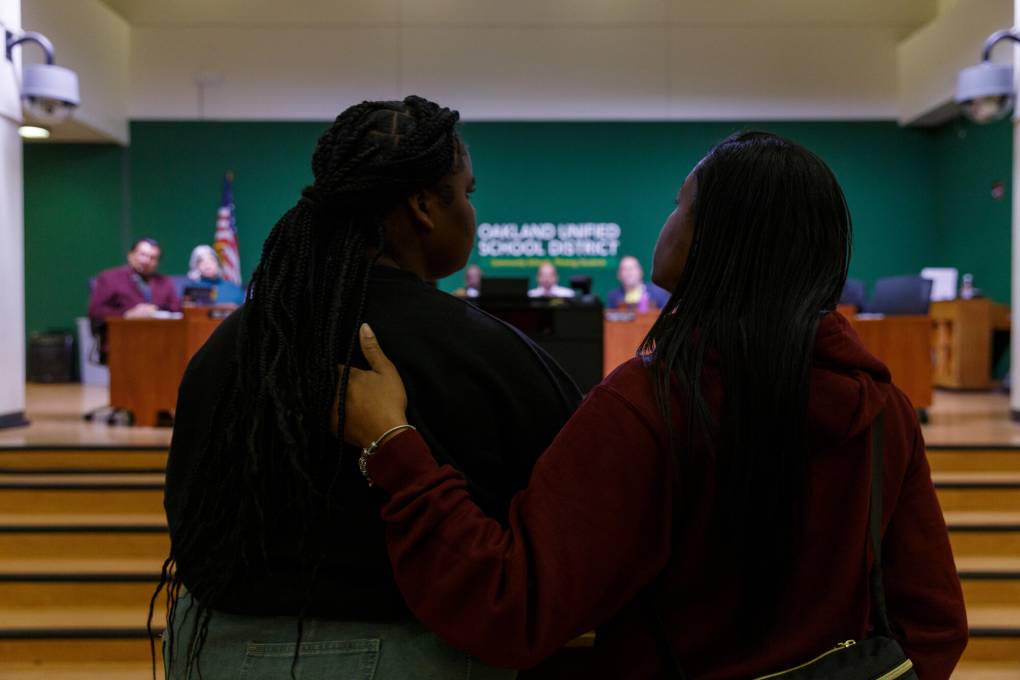
"caption": "Alexandria Poole, right, comforts Navie Davis, left, as she becomes emotional while making a public comment to the Oakland Unified School District Board about a proposed merger during a meeting at La Escuelita Elementary School in Oakland, California, on Dec. 11, 2024.",
"credit": "Juliana Yamada/KQED",
"altTag": null,
"description": null,
"imgSizes": {
"medium": {
"file": "https://cdn.kqed.org/wp-content/uploads/sites/10/2025/02/20241211-OUSDMergerVote-JY-013_qed-800x533.jpg",
"width": 800,
"height": 533,
"mimeType": "image/jpeg"
},
"large": {
"file": "https://cdn.kqed.org/wp-content/uploads/sites/10/2025/02/20241211-OUSDMergerVote-JY-013_qed-1020x680.jpg",
"width": 1020,
"height": 680,
"mimeType": "image/jpeg"
},
"thumbnail": {
"file": "https://cdn.kqed.org/wp-content/uploads/sites/10/2025/02/20241211-OUSDMergerVote-JY-013_qed-160x107.jpg",
"width": 160,
"height": 107,
"mimeType": "image/jpeg"
},
"1536x1536": {
"file": "https://cdn.kqed.org/wp-content/uploads/sites/10/2025/02/20241211-OUSDMergerVote-JY-013_qed-1536x1024.jpg",
"width": 1536,
"height": 1024,
"mimeType": "image/jpeg"
},
"post-thumbnail": {
"file": "https://cdn.kqed.org/wp-content/uploads/sites/10/2025/02/20241211-OUSDMergerVote-JY-013_qed-672x372.jpg",
"width": 672,
"height": 372,
"mimeType": "image/jpeg"
},
"twentyfourteen-full-width": {
"file": "https://cdn.kqed.org/wp-content/uploads/sites/10/2025/02/20241211-OUSDMergerVote-JY-013_qed-1038x576.jpg",
"width": 1038,
"height": 576,
"mimeType": "image/jpeg"
},
"full-width": {
"file": "https://cdn.kqed.org/wp-content/uploads/sites/10/2025/02/20241211-OUSDMergerVote-JY-013_qed-1920x1280.jpg",
"width": 1920,
"height": 1280,
"mimeType": "image/jpeg"
},
"kqedFullSize": {
"file": "https://cdn.kqed.org/wp-content/uploads/sites/10/2025/02/20241211-OUSDMergerVote-JY-013_qed.jpg",
"width": 2000,
"height": 1333
}
},
"isLoading": false,
"fetchFailed": false
},
"news_12029338": {
"type": "attachments",
"id": "news_12029338",
"meta": {
"index": "attachments_1716263798",
"site": "news",
"id": "12029338",
"found": true
},
"title": "20241211-OUSDMergerVote-JY-026_qed",
"publishDate": 1740786072,
"status": "inherit",
"parent": 12036400,
"modified": 1744912996,
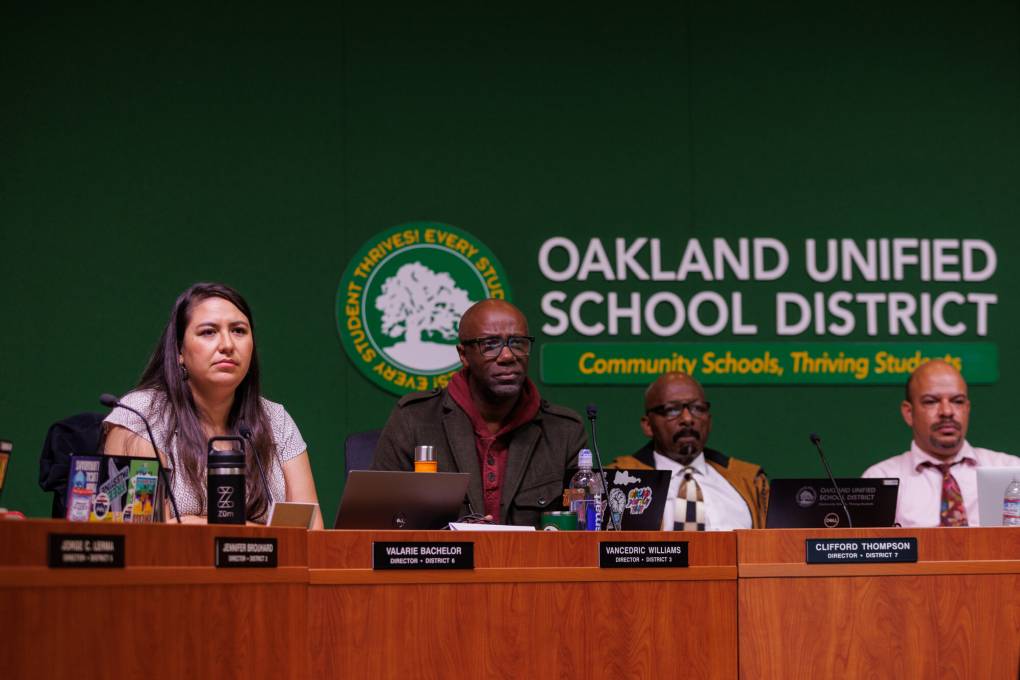
"caption": "The Oakland Unified School District Board listens to public comment during a meeting at La Escuelita Elementary School in Oakland, California, on Dec. 11, 2024. ",
"credit": "Juliana Yamada/KQED",
"altTag": null,
"description": null,
"imgSizes": {
"medium": {
"file": "https://cdn.kqed.org/wp-content/uploads/sites/10/2025/02/20241211-OUSDMergerVote-JY-026_qed-800x533.jpg",
"width": 800,
"height": 533,
"mimeType": "image/jpeg"
},
"large": {
"file": "https://cdn.kqed.org/wp-content/uploads/sites/10/2025/02/20241211-OUSDMergerVote-JY-026_qed-1020x680.jpg",
"width": 1020,
"height": 680,
"mimeType": "image/jpeg"
},
"thumbnail": {
"file": "https://cdn.kqed.org/wp-content/uploads/sites/10/2025/02/20241211-OUSDMergerVote-JY-026_qed-160x107.jpg",
"width": 160,
"height": 107,
"mimeType": "image/jpeg"
},
"1536x1536": {
"file": "https://cdn.kqed.org/wp-content/uploads/sites/10/2025/02/20241211-OUSDMergerVote-JY-026_qed-1536x1024.jpg",
"width": 1536,
"height": 1024,
"mimeType": "image/jpeg"
},
"post-thumbnail": {
"file": "https://cdn.kqed.org/wp-content/uploads/sites/10/2025/02/20241211-OUSDMergerVote-JY-026_qed-672x372.jpg",
"width": 672,
"height": 372,
"mimeType": "image/jpeg"
},
"twentyfourteen-full-width": {
"file": "https://cdn.kqed.org/wp-content/uploads/sites/10/2025/02/20241211-OUSDMergerVote-JY-026_qed-1038x576.jpg",
"width": 1038,
"height": 576,
"mimeType": "image/jpeg"
},
"full-width": {
"file": "https://cdn.kqed.org/wp-content/uploads/sites/10/2025/02/20241211-OUSDMergerVote-JY-026_qed-1920x1280.jpg",
"width": 1920,
"height": 1280,
"mimeType": "image/jpeg"
},
"kqedFullSize": {
"file": "https://cdn.kqed.org/wp-content/uploads/sites/10/2025/02/20241211-OUSDMergerVote-JY-026_qed.jpg",
"width": 2000,
"height": 1333
}
},
"isLoading": false,
"fetchFailed": false
},
"news_12020360": {
"type": "attachments",
"id": "news_12020360",
"meta": {
"index": "attachments_1716263798",
"site": "news",
"id": "12020360",
"found": true
},
"title": "Bliss Hill",
"publishDate": 1736109025,
"status": "inherit",
"parent": 0,
"modified": 1741046191,
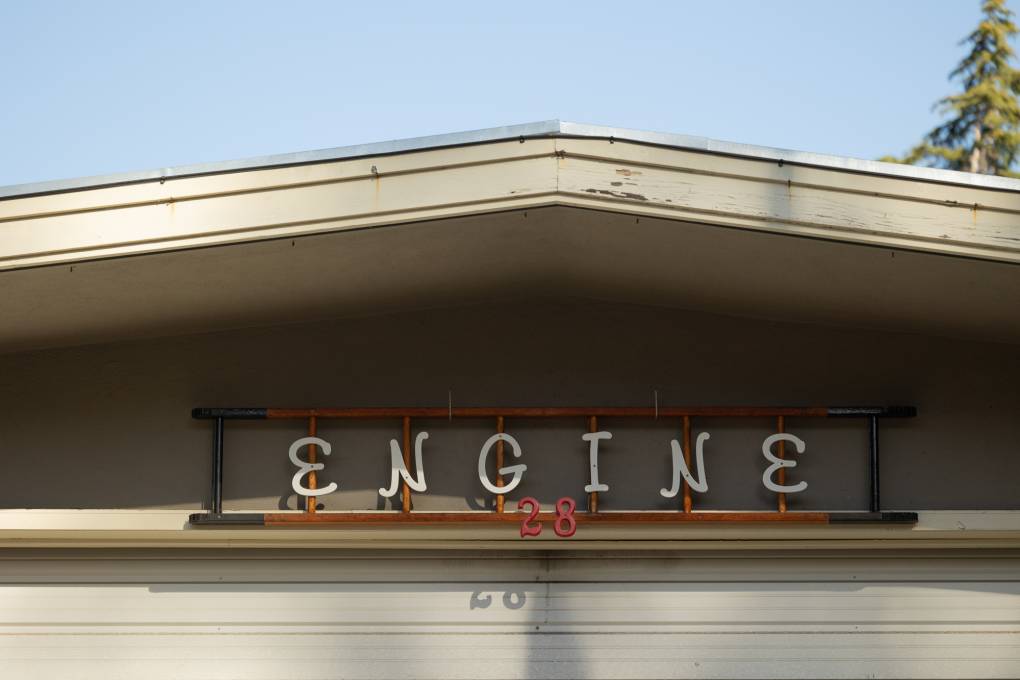
"caption": "Oakland Fire Department Station 28 on Jan. 5, 2025, is one of two stations scheduled to close until June.",
"credit": "David M. Barreda/KQED",
"altTag": null,
"description": null,
"imgSizes": {
"medium": {
"file": "https://cdn.kqed.org/wp-content/uploads/sites/10/2025/01/20250105_OakFireClose_DMB_00097-800x533.jpg",
"width": 800,
"height": 533,
"mimeType": "image/jpeg"
},
"large": {
"file": "https://cdn.kqed.org/wp-content/uploads/sites/10/2025/01/20250105_OakFireClose_DMB_00097-1020x680.jpg",
"width": 1020,
"height": 680,
"mimeType": "image/jpeg"
},
"thumbnail": {
"file": "https://cdn.kqed.org/wp-content/uploads/sites/10/2025/01/20250105_OakFireClose_DMB_00097-160x107.jpg",
"width": 160,
"height": 107,
"mimeType": "image/jpeg"
},
"1536x1536": {
"file": "https://cdn.kqed.org/wp-content/uploads/sites/10/2025/01/20250105_OakFireClose_DMB_00097-1536x1024.jpg",
"width": 1536,
"height": 1024,
"mimeType": "image/jpeg"
},
"post-thumbnail": {
"file": "https://cdn.kqed.org/wp-content/uploads/sites/10/2025/01/20250105_OakFireClose_DMB_00097-672x372.jpg",
"width": 672,
"height": 372,
"mimeType": "image/jpeg"
},
"twentyfourteen-full-width": {
"file": "https://cdn.kqed.org/wp-content/uploads/sites/10/2025/01/20250105_OakFireClose_DMB_00097-1038x576.jpg",
"width": 1038,
"height": 576,
"mimeType": "image/jpeg"
},
"full-width": {
"file": "https://cdn.kqed.org/wp-content/uploads/sites/10/2025/01/20250105_OakFireClose_DMB_00097-1920x1280.jpg",
"width": 1920,
"height": 1280,
"mimeType": "image/jpeg"
},
"kqedFullSize": {
"file": "https://cdn.kqed.org/wp-content/uploads/sites/10/2025/01/20250105_OakFireClose_DMB_00097.jpg",
"width": 2000,
"height": 1333
}
},
"isLoading": false,
"fetchFailed": false
},
"news_12029452": {
"type": "attachments",
"id": "news_12029452",
"meta": {
"index": "attachments_1716263798",
"site": "news",
"id": "12029452",
"found": true
},
"title": "Boxing gloves on boxing ring",
"publishDate": 1741025376,
"status": "inherit",
"parent": 12029450,
"modified": 1741025445,
"caption": "Federal prosecutors have charged Solomon Howard, former executive director of the East Oakland Boxing Association, with mail fraud and tax evasion, alleging he embezzled over $100,000 — including a donation from Steph and Ayesha Curry.",
"credit": "Kathrin Ziegler/Getty Images",
"altTag": null,
"description": null,
"imgSizes": {
"medium": {
"file": "https://cdn.kqed.org/wp-content/uploads/sites/10/2025/03/BoxingGetty-800x550.jpg",
"width": 800,
"height": 550,
"mimeType": "image/jpeg"
},
"large": {
"file": "https://cdn.kqed.org/wp-content/uploads/sites/10/2025/03/BoxingGetty-1020x701.jpg",
"width": 1020,
"height": 701,
"mimeType": "image/jpeg"
},
"thumbnail": {
"file": "https://cdn.kqed.org/wp-content/uploads/sites/10/2025/03/BoxingGetty-160x110.jpg",
"width": 160,
"height": 110,
"mimeType": "image/jpeg"
},
"1536x1536": {
"file": "https://cdn.kqed.org/wp-content/uploads/sites/10/2025/03/BoxingGetty-1536x1056.jpg",
"width": 1536,
"height": 1056,
"mimeType": "image/jpeg"
},
"post-thumbnail": {
"file": "https://cdn.kqed.org/wp-content/uploads/sites/10/2025/03/BoxingGetty-672x372.jpg",
"width": 672,
"height": 372,
"mimeType": "image/jpeg"
},
"twentyfourteen-full-width": {
"file": "https://cdn.kqed.org/wp-content/uploads/sites/10/2025/03/BoxingGetty-1038x576.jpg",
"width": 1038,
"height": 576,
"mimeType": "image/jpeg"
},
"full-width": {
"file": "https://cdn.kqed.org/wp-content/uploads/sites/10/2025/03/BoxingGetty-1920x1320.jpg",
"width": 1920,
"height": 1320,
"mimeType": "image/jpeg"
},
"kqedFullSize": {
"file": "https://cdn.kqed.org/wp-content/uploads/sites/10/2025/03/BoxingGetty.jpg",
"width": 2000,
"height": 1375
}
},
"isLoading": false,
"fetchFailed": false
},
"news_12029225": {
"type": "attachments",
"id": "news_12029225",
"meta": {
"index": "attachments_1716263798",
"site": "news",
"id": "12029225",
"found": true
},
"title": "Trump Consumer Financial Protection Bureau",
"publishDate": 1740771717,
"status": "inherit",
"parent": 12028122,
"modified": 1740774381,
"caption": "A security officer works inside the Consumer Financial Protection Bureau (CFPB) building headquarters on Monday, Feb. 10, 2025.",
"credit": "Jacquelyn Martin/AP Photo",
"altTag": null,
"description": null,
"imgSizes": {
"medium": {
"file": "https://cdn.kqed.org/wp-content/uploads/sites/10/2025/02/CFPBAP-800x533.jpg",
"width": 800,
"height": 533,
"mimeType": "image/jpeg"
},
"large": {
"file": "https://cdn.kqed.org/wp-content/uploads/sites/10/2025/02/CFPBAP-1020x680.jpg",
"width": 1020,
"height": 680,
"mimeType": "image/jpeg"
},
"thumbnail": {
"file": "https://cdn.kqed.org/wp-content/uploads/sites/10/2025/02/CFPBAP-160x107.jpg",
"width": 160,
"height": 107,
"mimeType": "image/jpeg"
},
"1536x1536": {
"file": "https://cdn.kqed.org/wp-content/uploads/sites/10/2025/02/CFPBAP-1536x1024.jpg",
"width": 1536,
"height": 1024,
"mimeType": "image/jpeg"
},
"post-thumbnail": {
"file": "https://cdn.kqed.org/wp-content/uploads/sites/10/2025/02/CFPBAP-672x372.jpg",
"width": 672,
"height": 372,
"mimeType": "image/jpeg"
},
"twentyfourteen-full-width": {
"file": "https://cdn.kqed.org/wp-content/uploads/sites/10/2025/02/CFPBAP-1038x576.jpg",
"width": 1038,
"height": 576,
"mimeType": "image/jpeg"
},
"full-width": {
"file": "https://cdn.kqed.org/wp-content/uploads/sites/10/2025/02/CFPBAP-1920x1280.jpg",
"width": 1920,
"height": 1280,
"mimeType": "image/jpeg"
},
"kqedFullSize": {
"file": "https://cdn.kqed.org/wp-content/uploads/sites/10/2025/02/CFPBAP.jpg",
"width": 2000,
"height": 1333
}
},
"isLoading": false,
"fetchFailed": false
}
},
"audioPlayerReducer": {
"postId": "stream_live",
"isPaused": true,
"isPlaying": false,
"pfsActive": false,
"pledgeModalIsOpen": true,
"playerDrawerIsOpen": false,
"liveAudioPlayStartedAt": 0,
"liveAudioPlayContext": ""
},
"authorsReducer": {
"matthewgreen": {
"type": "authors",
"id": "1263",
"meta": {
"index": "authors_1716337520",
"id": "1263",
"found": true
},
"name": "Matthew Green",
"firstName": "Matthew",
"lastName": "Green",
"slug": "matthewgreen",
"email": "mgreen@kqed.org",
"display_author_email": false,
"staff_mastheads": [],
"title": "KQED Editor/Reporter",
"bio": "Matthew Green is a digital media producer for KQED News. He previously produced \u003ca href=\"http://www.kqed.org/lowdown\">The Lowdown\u003c/a>, KQED’s multimedia news education blog. Matthew's written for numerous Bay Area publications, including the Oakland Tribune and San Francisco Chronicle. He also taught journalism classes at Fremont High School in East Oakland.\r\n\r\nEmail: mgreen@kqed.org; Twitter: @MGreenKQED",
"avatar": "https://secure.gravatar.com/avatar/3bf498d1267ca02c8494f33d8cfc575e?s=600&d=blank&r=g",
"twitter": "MGreenKQED",
"facebook": null,
"instagram": null,
"linkedin": null,
"sites": [
{
"site": "news",
"roles": []
},
{
"site": "lowdown",
"roles": []
},
{
"site": "science",
"roles": []
},
{
"site": "education",
"roles": []
},
{
"site": "quest",
"roles": []
},
{
"site": "liveblog",
"roles": []
}
],
"headData": {
"title": "Matthew Green | KQED",
"description": "KQED Editor/Reporter",
"ogImgSrc": "https://secure.gravatar.com/avatar/3bf498d1267ca02c8494f33d8cfc575e?s=600&d=blank&r=g",
"twImgSrc": "https://secure.gravatar.com/avatar/3bf498d1267ca02c8494f33d8cfc575e?s=600&d=blank&r=g"
},
"isLoading": false,
"link": "/author/matthewgreen"
},
"ecruzguevarra": {
"type": "authors",
"id": "8654",
"meta": {
"index": "authors_1716337520",
"id": "8654",
"found": true
},
"name": "Ericka Cruz Guevarra",
"firstName": "Ericka",
"lastName": "Cruz Guevarra",
"slug": "ecruzguevarra",
"email": "ecruzguevarra@kqed.org",
"display_author_email": true,
"staff_mastheads": [
"news"
],
"title": "Producer, The Bay Podcast",
"bio": "Ericka Cruz Guevarra is host of \u003ca href=\"https://www.kqed.org/podcasts/thebay\">\u003cem>The Bay\u003c/em>\u003c/a> podcast at KQED. Before host, she was the show’s producer. Her work in that capacity includes a three-part reported series on policing in Vallejo, which won a 2020 excellence in journalism award from the Society of Professional Journalists. Ericka has worked as a breaking news reporter at Oregon Public Broadcasting, helped produce the Code Switch podcast, and was KQED’s inaugural Raul Ramirez Diversity Fund intern. She’s also an alumna of NPR’s Next Generation Radio program. Send her an email if you have strong feelings about whether Fairfield and Suisun City are the Bay. Ericka is represented by SAG-AFTRA.",
"avatar": "https://secure.gravatar.com/avatar/25e5ab8d3d53fad2dcc7bb2b5c506b1a?s=600&d=blank&r=g",
"twitter": "NotoriousECG",
"facebook": null,
"instagram": null,
"linkedin": null,
"sites": [
{
"site": "arts",
"roles": [
"subscriber"
]
},
{
"site": "news",
"roles": [
"editor",
"manage_categories"
]
},
{
"site": "futureofyou",
"roles": [
"subscriber"
]
},
{
"site": "stateofhealth",
"roles": [
"subscriber"
]
},
{
"site": "science",
"roles": [
"editor"
]
},
{
"site": "forum",
"roles": [
"subscriber"
]
}
],
"headData": {
"title": "Ericka Cruz Guevarra | KQED",
"description": "Producer, The Bay Podcast",
"ogImgSrc": "https://secure.gravatar.com/avatar/25e5ab8d3d53fad2dcc7bb2b5c506b1a?s=600&d=blank&r=g",
"twImgSrc": "https://secure.gravatar.com/avatar/25e5ab8d3d53fad2dcc7bb2b5c506b1a?s=600&d=blank&r=g"
},
"isLoading": false,
"link": "/author/ecruzguevarra"
},
"fjhabvala": {
"type": "authors",
"id": "8659",
"meta": {
"index": "authors_1716337520",
"id": "8659",
"found": true
},
"name": "Farida Jhabvala Romero",
"firstName": "Farida",
"lastName": "Jhabvala Romero",
"slug": "fjhabvala",
"email": "fjhabvala@kqed.org",
"display_author_email": true,
"staff_mastheads": [
"news"
],
"title": "KQED Contributor",
"bio": "\u003cspan style=\"font-weight: 400;\">Farida Jhabvala Romero is a Labor Correspondent for KQED. She previously covered immigration. Farida was \u003ca href=\"https://www.ccnma.org/2022-most-influential-latina-journalists\">named\u003c/a> one of the 10 Most Influential Latina Journalists in California in 2022 by the California Chicano News Media Association. Her work has won awards from the Society of Professional Journalists (Northern California), as well as a national and regional Edward M. Murrow Award for the collaborative reporting projects “Dangerous Air” and “Graying California.” \u003c/span>\u003cspan style=\"font-weight: 400;\">Before joining KQED, Farida worked as a producer at Radio Bilingüe, a national public radio network. Farida earned her master’s degree in journalism from Stanford University.\u003c/span>",
"avatar": "https://secure.gravatar.com/avatar/c3ab27c5554b67b478f80971e515aa02?s=600&d=blank&r=g",
"twitter": "FaridaJhabvala",
"facebook": null,
"instagram": null,
"linkedin": "https://www.linkedin.com/in/faridajhabvala/",
"sites": [
{
"site": "news",
"roles": [
"editor"
]
},
{
"site": "stateofhealth",
"roles": [
"author"
]
}
],
"headData": {
"title": "Farida Jhabvala Romero | KQED",
"description": "KQED Contributor",
"ogImgSrc": "https://secure.gravatar.com/avatar/c3ab27c5554b67b478f80971e515aa02?s=600&d=blank&r=g",
"twImgSrc": "https://secure.gravatar.com/avatar/c3ab27c5554b67b478f80971e515aa02?s=600&d=blank&r=g"
},
"isLoading": false,
"link": "/author/fjhabvala"
},
"lsarah": {
"type": "authors",
"id": "11626",
"meta": {
"index": "authors_1716337520",
"id": "11626",
"found": true
},
"name": "Lakshmi Sarah",
"firstName": "Lakshmi",
"lastName": "Sarah",
"slug": "lsarah",
"email": "lsarah@kqed.org",
"display_author_email": false,
"staff_mastheads": [],
"title": "Digital Producer",
"bio": "Lakshmi Sarah is an educator, author and journalist with a focus on innovative storytelling. She has worked with newspapers, radio and magazines from Ahmedabad, India to Los Angeles, California. She has written and produced for Die Zeit, Global Voices, AJ+, KQED, Fusion Media Group and the New York Times.",
"avatar": "https://secure.gravatar.com/avatar/652dcaecd8b28826fc17a8b2d6bb4e93?s=600&d=blank&r=g",
"twitter": "lakitalki",
"facebook": null,
"instagram": "https://www.instagram.com/laki.talki/",
"linkedin": "https://www.linkedin.com/in/lakisarah/",
"sites": [
{
"site": "arts",
"roles": []
},
{
"site": "news",
"roles": []
},
{
"site": "bayareabites",
"roles": []
},
{
"site": "science",
"roles": []
}
],
"headData": {
"title": "Lakshmi Sarah | KQED",
"description": "Digital Producer",
"ogImgSrc": "https://secure.gravatar.com/avatar/652dcaecd8b28826fc17a8b2d6bb4e93?s=600&d=blank&r=g",
"twImgSrc": "https://secure.gravatar.com/avatar/652dcaecd8b28826fc17a8b2d6bb4e93?s=600&d=blank&r=g"
},
"isLoading": false,
"link": "/author/lsarah"
},
"amontecillo": {
"type": "authors",
"id": "11649",
"meta": {
"index": "authors_1716337520",
"id": "11649",
"found": true
},
"name": "Alan Montecillo",
"firstName": "Alan",
"lastName": "Montecillo",
"slug": "amontecillo",
"email": "amontecillo@kqed.org",
"display_author_email": false,
"staff_mastheads": [
"news"
],
"title": "KQED Contributor",
"bio": "Alan Montecillo is the senior editor of \u003cem>\u003ca href=\"http://kqed.org/thebay\">The Bay\u003c/a>, \u003c/em> KQED's local news podcast. Before moving to the Bay Area, he worked as a senior talk show producer for WILL in Champaign-Urbana, Illinois and at Oregon Public Broadcasting in Portland, Oregon. He has won journalism awards from the Society of Professional Journalists Northern California, the Public Media Journalists Association, The Signal Awards, and has also received a regional Edward R. Murrow award. Alan is a Filipino American from Hong Kong and a graduate of Reed College.",
"avatar": "https://secure.gravatar.com/avatar/d5e4e7a76481969ccba76f4e2b5ccabc?s=600&d=blank&r=g",
"twitter": "alanmontecillo",
"facebook": null,
"instagram": null,
"linkedin": null,
"sites": [
{
"site": "",
"roles": [
"editor"
]
},
{
"site": "news",
"roles": [
"editor",
"manage_categories"
]
}
],
"headData": {
"title": "Alan Montecillo | KQED",
"description": "KQED Contributor",
"ogImgSrc": "https://secure.gravatar.com/avatar/d5e4e7a76481969ccba76f4e2b5ccabc?s=600&d=blank&r=g",
"twImgSrc": "https://secure.gravatar.com/avatar/d5e4e7a76481969ccba76f4e2b5ccabc?s=600&d=blank&r=g"
},
"isLoading": false,
"link": "/author/amontecillo"
},
"eromero": {
"type": "authors",
"id": "11746",
"meta": {
"index": "authors_1716337520",
"id": "11746",
"found": true
},
"name": "Ezra David Romero",
"firstName": "Ezra David",
"lastName": "Romero",
"slug": "eromero",
"email": "eromero@kqed.org",
"display_author_email": true,
"staff_mastheads": [
"news",
"science"
],
"title": "Climate Reporter",
"bio": "Ezra David Romero is a climate reporter for KQED News. He covers the absence and excess of water in the Bay Area — think sea level rise, flooding and drought. For nearly a decade he’s covered how warming temperatures are altering the lives of Californians. He’s reported on farmers worried their pistachio trees aren’t getting enough sleep, families desperate for water, scientists studying dying giant sequoias, and alongside firefighters containing wildfires. His work has appeared on local stations across California and nationally on public radio shows like Morning Edition, Here and Now, All Things Considered and Science Friday. ",
"avatar": "https://secure.gravatar.com/avatar/9c15bb8bab267e058708a9eeaeef16bf?s=600&d=blank&r=g",
"twitter": "ezraromero",
"bluesky": null,
"facebook": null,
"instagram": null,
"linkedin": null,
"sites": [
{
"site": "arts",
"roles": [
"editor"
]
},
{
"site": "news",
"roles": [
"editor"
]
},
{
"site": "science",
"roles": [
"editor"
]
},
{
"site": "liveblog",
"roles": [
"author"
]
}
],
"headData": {
"title": "Ezra David Romero | KQED",
"description": "Climate Reporter",
"ogImgSrc": "https://secure.gravatar.com/avatar/9c15bb8bab267e058708a9eeaeef16bf?s=600&d=blank&r=g",
"twImgSrc": "https://secure.gravatar.com/avatar/9c15bb8bab267e058708a9eeaeef16bf?s=600&d=blank&r=g"
},
"isLoading": false,
"link": "/author/eromero"
},
"adahlstromeckman": {
"type": "authors",
"id": "11785",
"meta": {
"index": "authors_1716337520",
"id": "11785",
"found": true
},
"name": "Azul Dahlstrom-Eckman",
"firstName": "Azul",
"lastName": "Dahlstrom-Eckman",
"slug": "adahlstromeckman",
"email": "adahlstrom-eckman@kqed.org",
"display_author_email": true,
"staff_mastheads": [],
"title": "Reporter",
"bio": "Azul is a reporter for KQED focusing on transportation and features. He joined KQED in 2021 as an alumna of KALW's Audio Academy radio journalism training program.",
"avatar": "https://secure.gravatar.com/avatar/9cb750298435add7815a777f55bf1f46845c1386bb8452555c60a7b820b5aba3?s=600&d=blank&r=g",
"twitter": "@zuliemann",
"bluesky": "@azul415.bsky.social",
"facebook": null,
"instagram": null,
"linkedin": null,
"sites": [
{
"site": "arts",
"roles": [
"editor"
]
},
{
"site": "news",
"roles": [
"editor"
]
},
{
"site": "science",
"roles": [
"editor"
]
},
{
"site": "liveblog",
"roles": [
"author"
]
}
],
"headData": {
"title": "Azul Dahlstrom-Eckman | KQED",
"description": "Reporter",
"ogImgSrc": "https://secure.gravatar.com/avatar/9cb750298435add7815a777f55bf1f46845c1386bb8452555c60a7b820b5aba3?s=600&d=blank&r=g",
"twImgSrc": "https://secure.gravatar.com/avatar/9cb750298435add7815a777f55bf1f46845c1386bb8452555c60a7b820b5aba3?s=600&d=blank&r=g"
},
"isLoading": false,
"link": "/author/adahlstromeckman"
},
"jessicakariisa": {
"type": "authors",
"id": "11831",
"meta": {
"index": "authors_1716337520",
"id": "11831",
"found": true
},
"name": "Jessica Kariisa",
"firstName": "Jessica",
"lastName": "Kariisa",
"slug": "jessicakariisa",
"email": "jkariisa@kqed.org",
"display_author_email": false,
"staff_mastheads": [],
"title": "Producer, The Bay",
"bio": "Jessica Kariisa is the producer of The Bay. She first joined KQED as an intern for The California Report Magazine, after which she became an on-call producer. She reported a Bay Curious episode on the use of rap lyrics in criminal trials which won a Society of Professional Journalists award in 2023 for Excellence in Features Journalism and the 2023 Signal Award for Best Conversation Starter. She’s worked on podcasts for Snap Judgment and American Public Media. Before embarking on her audio career, she was a music journalist.\r\n\r\nJessica Kariisa is represented by SAG-AFTRA.",
"avatar": "https://secure.gravatar.com/avatar/522e97b28ac0b3d411621c0fde8f3419c7b71ea2c5c262c57c4bb600963f328c?s=600&d=blank&r=g",
"twitter": null,
"bluesky": null,
"facebook": null,
"instagram": null,
"linkedin": null,
"sites": [
{
"site": "arts",
"roles": [
"author"
]
},
{
"site": "news",
"roles": [
"editor",
"manage_categories"
]
}
],
"headData": {
"title": "Jessica Kariisa | KQED",
"description": "Producer, The Bay",
"ogImgSrc": "https://secure.gravatar.com/avatar/522e97b28ac0b3d411621c0fde8f3419c7b71ea2c5c262c57c4bb600963f328c?s=600&d=blank&r=g",
"twImgSrc": "https://secure.gravatar.com/avatar/522e97b28ac0b3d411621c0fde8f3419c7b71ea2c5c262c57c4bb600963f328c?s=600&d=blank&r=g"
},
"isLoading": false,
"link": "/author/jessicakariisa"
},
"gcastro": {
"type": "authors",
"id": "11908",
"meta": {
"index": "authors_1716337520",
"id": "11908",
"found": true
},
"name": "Gina Castro",
"firstName": "Gina",
"lastName": "Castro",
"slug": "gcastro",
"email": "gcastro@kqed.org",
"display_author_email": false,
"staff_mastheads": [
"news"
],
"title": "KQED Contributor",
"bio": null,
"avatar": "https://secure.gravatar.com/avatar/27b36c9ac0b86aced91deb0fc63fc510307488fa6761ac6062ac2eb798ed123f?s=600&d=blank&r=g",
"twitter": null,
"bluesky": null,
"facebook": null,
"instagram": null,
"linkedin": null,
"sites": [
{
"site": "arts",
"roles": [
"editor"
]
},
{
"site": "news",
"roles": [
"editor"
]
},
{
"site": "science",
"roles": [
"editor"
]
}
],
"headData": {
"title": "Gina Castro | KQED",
"description": "KQED Contributor",
"ogImgSrc": "https://secure.gravatar.com/avatar/27b36c9ac0b86aced91deb0fc63fc510307488fa6761ac6062ac2eb798ed123f?s=600&d=blank&r=g",
"twImgSrc": "https://secure.gravatar.com/avatar/27b36c9ac0b86aced91deb0fc63fc510307488fa6761ac6062ac2eb798ed123f?s=600&d=blank&r=g"
},
"isLoading": false,
"link": "/author/gcastro"
},
"kdebenedetti": {
"type": "authors",
"id": "11913",
"meta": {
"index": "authors_1716337520",
"id": "11913",
"found": true
},
"name": "Katie DeBenedetti",
"firstName": "Katie",
"lastName": "DeBenedetti",
"slug": "kdebenedetti",
"email": "kdebenedetti@kqed.org",
"display_author_email": false,
"staff_mastheads": [
"news",
"science"
],
"title": "KQED Contributor",
"bio": "Katie DeBenedetti is a digital reporter covering daily news for the Express Desk. Prior to joining KQED as a culture reporting intern in January 2024, she covered education and city government for the Napa Valley Register.",
"avatar": "https://secure.gravatar.com/avatar/6e31073cb8f7e4214ab03f42771d0f45?s=600&d=blank&r=g",
"twitter": null,
"facebook": null,
"instagram": null,
"linkedin": null,
"sites": [
{
"site": "news",
"roles": [
"author"
]
},
{
"site": "science",
"roles": [
"author"
]
},
{
"site": "liveblog",
"roles": [
"author"
]
}
],
"headData": {
"title": "Katie DeBenedetti | KQED",
"description": "KQED Contributor",
"ogImgSrc": "https://secure.gravatar.com/avatar/6e31073cb8f7e4214ab03f42771d0f45?s=600&d=blank&r=g",
"twImgSrc": "https://secure.gravatar.com/avatar/6e31073cb8f7e4214ab03f42771d0f45?s=600&d=blank&r=g"
},
"isLoading": false,
"link": "/author/kdebenedetti"
},
"mvelasquez": {
"type": "authors",
"id": "11939",
"meta": {
"index": "authors_1716337520",
"id": "11939",
"found": true
},
"name": "Mel Velasquez",
"firstName": "Mel",
"lastName": "Velasquez",
"slug": "mvelasquez",
"email": "mvelasquez@kqed.org",
"display_author_email": false,
"staff_mastheads": [],
"title": "KQED Contributor",
"bio": null,
"avatar": "https://secure.gravatar.com/avatar/409094312d56fab09fef4251e949ffa6?s=600&d=blank&r=g",
"twitter": null,
"facebook": null,
"instagram": null,
"linkedin": "www.linkedin.com/in/melanievelasquezz",
"sites": [
{
"site": "news",
"roles": [
"editor"
]
}
],
"headData": {
"title": "Mel Velasquez | KQED",
"description": "KQED Contributor",
"ogImgSrc": "https://secure.gravatar.com/avatar/409094312d56fab09fef4251e949ffa6?s=600&d=blank&r=g",
"twImgSrc": "https://secure.gravatar.com/avatar/409094312d56fab09fef4251e949ffa6?s=600&d=blank&r=g"
},
"isLoading": false,
"link": "/author/mvelasquez"
}
},
"pagesReducer": {
"news_tag_oakland": {
"type": "terms",
"id": "news_34054",
"meta": {
"index": "terms_1716263798",
"site": "news",
"id": "34054",
"score": 6.883923
},
"featImg": null,
"name": "oakland",
"description": null,
"taxonomy": "tag",
"headData": {
"twImgId": null,
"twTitle": null,
"ogTitle": null,
"ogImgId": null,
"twDescription": null,
"description": null,
"title": "oakland Archives | KQED News",
"ogDescription": null
},
"ttid": 34071,
"slug": "oakland",
"isLoading": false,
"title": "oakland",
"pageMeta": {
"site": "news",
"WpPageTemplate": "page-topic-editorial",
"currentPage": 24
},
"blocks": [
{
"blockName": "kqed/post-list",
"attrs": {
"layout": "cardArticle2",
"query": "posts/news?tag=oakland",
"seeMore": false,
"paginated": true,
"page": 24
}
},
{
"blockName": "kqed/ad"
}
]
}
},
"pfsSessionReducer": {},
"postsReducer": {
"stream_live": {
"type": "live",
"id": "stream_live",
"audioUrl": "https://streams.kqed.org/kqedradio",
"title": "Live Stream",
"excerpt": "Live Stream information currently unavailable.",
"link": "/radio",
"featImg": "",
"label": {
"name": "KQED Live",
"link": "/"
}
},
"stream_kqedNewscast": {
"type": "posts",
"id": "stream_kqedNewscast",
"audioUrl": "https://www.kqed.org/.stream/anon/radio/RDnews/newscast.mp3?_=1",
"title": "KQED Newscast",
"featImg": "",
"label": {
"name": "88.5 FM",
"link": "/"
}
},
"news_12031390": {
"type": "posts",
"id": "news_12031390",
"meta": {
"index": "posts_1716263798",
"site": "news",
"id": "12031390",
"score": null,
"sort": [
1742205621000
]
},
"guestAuthors": [],
"slug": "ranked-choice-voting-for-best-karaoke-performance",
"title": "Ranked Choice Voting For...Best Karaoke Performance?",
"publishDate": 1742205621,
"format": "audio",
"headTitle": "Ranked Choice Voting For…Best Karaoke Performance? | KQED",
"labelTerm": {},
"content": "\u003cp>There’s a competitive karaoke league in the East Bay that’s about more than just singing. Every Monday at KaraOakland, teams perform songs on specific themes. Then, participants used ranked choice voting to pick the best performances — like Oakland voters will in the city’s special election next month.\u003c/p>\n\u003cp>\u003cem>Some members of the KQED podcast team are represented by The Screen Actors Guild, American Federation of Television and Radio Artists. San Francisco Northern California Local.\u003c/em>\u003c/p>\n\u003cp>\u003c!-- iframe plugin v.4.3 wordpress.org/plugins/iframe/ -->\u003cbr>\n\u003ciframe loading=\"lazy\" frameborder=\"0\" height=\"200\" scrolling=\"no\" src=\"https://playlist.megaphone.fm?e=KQINC7709828862&light=true\" width=\"100%\" class=\"iframe-class\">\u003c/iframe>\u003c/p>\n\u003cp>\u003cem>This is a computer-generated transcript. While our team has reviewed it, there may be errors.\u003c/em>\u003c/p>\n\u003cp>\u003cstrong>Ericka Cruz Guevarra \u003c/strong>[00:00:56] Are you a big karaoke person yourself?\u003c/p>\n\u003cp>[ad fullwidth]\u003c/p>\n\u003cp>\u003cstrong>Lakshmi Sarah \u003c/strong>[00:00:59] That is a good question. My older sister is like a serious karaoke fan. So like I grew up around a super fan, but I would not say I myself am like a super fan, but like, yeah, I dabble.\u003c/p>\n\u003cp>\u003cstrong>Ericka Cruz Guevarra \u003c/strong>[00:01:14] Lakshmi Sarah is a producer and reporter for KQED.\u003c/p>\n\u003cp>\u003cstrong>Lakshmi Sarah \u003c/strong>[00:01:18] I do love like a little California girls\u003c/p>\n\u003cp>\u003cstrong>Ericka Cruz Guevarra \u003c/strong>[00:01:21] Of course.\u003c/p>\n\u003cp>\u003cstrong>Lakshmi Sarah \u003c/strong>[00:01:21] or or like like a good TLC, you know\u003c/p>\n\u003cp>\u003cstrong>Ericka Cruz Guevarra \u003c/strong>[00:01:27] Well, we’re talking about this competitive karaoke league that you actually visited. How did you come across it and where is it exactly?\u003c/p>\n\u003cp>\u003cstrong>Lakshmi Sarah \u003c/strong>[00:01:37] A friend from high school was telling me she joined a competitive karaoke league and of course I was like, excuse me, what, please tell me more, what is this, what’s going on? So yeah, I heard about it from her. The league is called KaraOakland and it takes place every Monday at 7 p .m. at the Legionnaire Saloon in Oakland.\u003c/p>\n\u003cp>\u003cstrong>Ericka Cruz Guevarra \u003c/strong>[00:02:00] And can you describe it for me? Like, what did it look like? What were the vibes?\u003c/p>\n\u003cp>\u003cstrong>Lakshmi Sarah \u003c/strong>[00:02:06] Yes, yes. So every night has a theme and the theme for the night that I went was baby making music.\u003c/p>\n\u003cp>\u003cstrong>Announcer \u003c/strong>[00:02:12] End of this song. So you have until the end of somebody making love to someone else to get your voice in.\u003c/p>\n\u003cp>\u003cstrong>Lakshmi Sarah \u003c/strong>[00:02:20] So you walk in to a bar. There is a little stage at one end near some pinball machines. Little stage and then to the right of the stage there are a few different tables and each table is like a group of people. Those are the teams and I mean when I first walked in the teams were like each at their table and they were like discussing, almost like huddled like game time. There were props, there were costumes, there were wigs, there were people like in deep discussion about like you know practicing their moves. Some of them were like wearing white doctor coat things, and then some of them were like dressed all as cows. And then there’s just like people milling about waiting for the competition to start.\u003c/p>\n\u003cp>\u003cstrong>Ericka Cruz Guevarra \u003c/strong>[00:03:16] As you mentioned, it’s a competitive karaoke league, and I’m imagining all these different teams, their songs that they’re preparing. How exactly does this whole thing work?\u003c/p>\n\u003cp>\u003cstrong>Lakshmi Sarah \u003c/strong>[00:03:28] The way that it works is you sign up in advance, you join a team, you can bring your own team or you can join a random team, and then each week your team competes against the other teams in the league. Each team chooses three different songs on the theme night and then they go through and each team performs the song. There’s about six teams and about six people on each team. after the first round, then there’s voting. After the second round, then they vote, and then the final round, then people vote.\u003c/p>\n\u003cp>\u003cstrong>Ericka Cruz Guevarra \u003c/strong>[00:04:01] I mean, Lakshmi, who is going to these things? Can you talk about like the range of people who are participating in this competitive karaoke league?\u003c/p>\n\u003cp>\u003cstrong>Lakshmi Sarah \u003c/strong>[00:04:11] There’s definitely a range of people. A question could be who was not going.\u003c/p>\n\u003cp>\u003cstrong>Adrienne Luna \u003c/strong>[00:04:15] I’m actually a lawyer, I just really like to sing. I don’t really have a good…\u003c/p>\n\u003cp>\u003cstrong>Lakshmi Sarah \u003c/strong>[00:04:19] I spoke with Adrienne Luna, who is a lawyer, and she really enjoys just coming out and dressing up and having fun and sort of a way to unwind after work.\u003c/p>\n\u003cp>\u003cstrong>Adrienne Luna \u003c/strong>[00:04:31] It’s extremely supportive. I mean, this is now my third season coming back, and there’s never a week where it’s boring. I mean, even right now, it’s packed to the brims. It’s always such a good time, so that’s what really keeps me coming back.\u003c/p>\n\u003cp>\u003cstrong>Omar Luna \u003c/strong>[00:04:50] And then for me as a just a casual it’s been fun to get me out of my shell because I never used to sing\u003c/p>\n\u003cp>\u003cstrong>Lakshmi Sarah \u003c/strong>[00:04:57] And I also spoke to Omar Luna and he enjoys it because it brings people together from a range of different groups and he was also saying that he had never used to sing until he saw other people doing it and so then he comes and occasionally participates.\u003c/p>\n\u003cp>\u003cstrong>Omar Luna \u003c/strong>[00:05:16] You get a lot of casual people that just come out and they even want to join the league but I met a lot of like really good individuals just just hanging out on a Monday night.\u003c/p>\n\u003cp>\u003cstrong>Ericka Cruz Guevarra \u003c/strong>[00:05:26] Wow, that’s pretty cool. I feel like it sounds like it’s pretty open to whoever, and you don’t really have to have, like, a musical theater or singing background.\u003c/p>\n\u003cp>\u003cstrong>Lakshmi Sarah \u003c/strong>[00:05:36] Definitely a range of talents\u003c/p>\n\u003cp>\u003cstrong>Ericka Cruz Guevarra \u003c/strong>[00:05:42] I mean, whose idea was all of this, and what’s the idea behind it?\u003c/p>\n\u003cp>\u003cstrong>Lakshmi Sarah \u003c/strong>[00:05:47] So, Melody White is the founder and lead commissioner, and she had seen a karaoke league in D .C. and thought it was cool, and then she actually joined one in San Francisco, but she’s based in the East Bay, so she wanted to bring it to Oakland.\u003c/p>\n\u003cp>\u003cstrong>Melody White \u003c/strong>[00:06:02] everything just fell into place, because once you come up with the name KaraOakland, you just can’t not like start a karaoke league? It’s just part of, that’s just how that works.\u003c/p>\n\u003cp>\u003cstrong>Lakshmi Sarah \u003c/strong>[00:06:10] And so she started it to sort of just bring people together and do karaoke.\u003c/p>\n\u003cp>\u003cstrong>Melody White \u003c/strong>[00:06:16] Oakland’s a great place for it. There’s a lot of recovering theater kids, I guess. I’m not sure.\u003c/p>\n\u003cp>\u003cstrong>Lakshmi Sarah \u003c/strong>[00:06:21] But then she also wanted it to be, you know, an educational experience. So the way they do voting is ranked choice voting, which is also the way that Alameda County and Oakland choose their elected officials.\u003c/p>\n\u003cp>\u003cstrong>Melody White \u003c/strong>[00:06:36] This is also an opportunity to teach people how ranked choice voting works so that they will be prepared for a real election!\u003c/p>\n\u003cp>\u003cstrong>Melody White \u003c/strong>[00:06:45] So the way it works is you put your number one at the top and then you rank them on down by your favorite. And we would love for you to choose based on performance, not like biases or because somebody paid you to.\u003c/p>\n\u003cp>\u003cstrong>Ericka Cruz Guevarra \u003c/strong>[00:07:01] And was that an intentional choice to make it a ranked choice voting at this karaoke league?\u003c/p>\n\u003cp>\u003cstrong>Lakshmi Sarah \u003c/strong>[00:07:08] Yes, very much so. So she wanted to also educate people about how ranked choice voting works, and so every time that people vote, you see the ranked choice voting in practice. After the teams perform, then they’re like, okay, I loved this song, so I’m voting for that for the first one, and then they go down the line. So then the second team, I think, should be this one, then the third team, and the fourth team. And then if none of them get like 50 % or above, then they’ll eliminate the bottom one. And so then those votes are like redistributed above. And so it really makes it like clear what’s happening.\u003c/p>\n\u003cp>\u003cstrong>Ericka Cruz Guevarra \u003c/strong>[00:07:47] And did you get the sense that people were like really digesting how rank choice voting works through this karaoke league?\u003c/p>\n\u003cp>\u003cstrong>Lakshmi Sarah \u003c/strong>[00:07:57] I did speak to a few different people to get a sense of how people were thinking about it or digesting or understanding.\u003c/p>\n\u003cp>\u003cstrong>Omar Luna \u003c/strong>[00:08:05] 50% of the people have to do have to go vote for them to get first and then second place votes are counted third place votes are counted…\u003c/p>\n\u003cp>\u003cstrong>Lakshmi Sarah \u003c/strong>[00:08:15] Omar Luna was saying that he had a better understanding of it by engaging with it.\u003c/p>\n\u003cp>\u003cstrong>Omar Luna \u003c/strong>[00:08:20] Which I actually didn’t even know. So it was actually cool for her to break it down. But yeah, this is now the third season that I’ve been coming and it’s been really fun.\u003c/p>\n\u003cp>\u003cstrong>Ericka Cruz Guevarra \u003c/strong>[00:08:33] Why do you think this competitive karaoke league has gotten so popular?\u003c/p>\n\u003cp>\u003cstrong>Lakshmi Sarah \u003c/strong>[00:08:38] I mean, I think it’s a really funny, fun combination of like drag show, dance party, sing-along, participatory experience, and even, you know, it’s a competition, but everybody’s super supportive and like super excited about it and it really, I feel like it really brings people together, it gets people out of their house and in community with people that they might not normally be in community with.\u003c/p>\n\u003cp>\u003cstrong>Melody White \u003c/strong>[00:09:06] And people have made lifelong friends. There are real relationships that have popped up as a result of this.\u003c/p>\n\u003cp>\u003cstrong>Lakshmi Sarah \u003c/strong>[00:09:13] One of the reasons why Melody White, the founder and commissioner, started it was this idea of bringing people together for community, making friends, and especially making friends as an adult, because that can be a challenging thing.\u003c/p>\n\u003cp>\u003cstrong>Melody White \u003c/strong>[00:09:26] When a bunch of weirdos can get together, dress up in costumes, and sing their lungs out to a themed karaoke night. It’s good a time. It’s good.\u003c/p>\n\u003cp>\u003cstrong>Lakshmi Sarah \u003c/strong>[00:09:42] The finals are March 24th, and if you’re listening now and you’re interested, you can check it out tonight from seven to nine at the Legionnaire Saloon.\u003c/p>\n\u003cp>\u003cstrong>Ericka Cruz Guevarra \u003c/strong>[00:09:55] Well, Lakshmi, thanks so much for sharing this super fun story with us, I appreciate it.\u003c/p>\n\u003cp>\u003cstrong>Lakshmi Sarah \u003c/strong>[00:09:59] Yeah, thank you. So should we go together, to karaoke?\u003c/p>\n\u003cp>\u003cstrong>Ericka Cruz Guevarra \u003c/strong>[00:10:03] I do love karaoke, but I’m like kind of shy. I’m like more of the like room karaoke kind of gal.\u003c/p>\n\u003cp>\u003cstrong>Lakshmi Sarah \u003c/strong>[00:10:10] Okay, so maybe we can just like do one of the rooms like just just me and The Bay.\u003c/p>\n\u003cp>\u003cstrong>Ericka Cruz Guevarra \u003c/strong>[00:10:16] Exactly, exactly. Bay-themed music.\u003c/p>\n\u003cp>[ad floatright]\u003c/p>\n\u003cp>\u003cstrong>Ericka Cruz Guevarra \u003c/strong>[00:10:23] That was Lakshmi Sarah, a producer and reporter for KQED. This 25 minute conversation with Lakshmi was cut down by our intern, Mel Velasquez. Jessica Kariisa is our producer. She scored this episode and added all the tape. Alan Montecillo is our senior editor. Additional production support by me. Music courtesy of Audio Network and Blue Dot Sessions. Support for The Bay is provided in part by the Osher Production Fund. Some members of the KQED podcast team are represented by the Screen Actors Guild American Federation of Television and Radio Artists, San Francisco, Northern California Local. I’m Erika Cruz Guevarra. Thanks for listening. Peace.\u003c/p>\n\n",
"blocks": [],
"excerpt": "There's a competitive karaoke league in the East Bay that's about more than just singing.",
"status": "publish",
"parent": 0,
"modified": 1742233544,
"stats": {
"hasAudio": true,
"hasVideo": false,
"hasChartOrMap": false,
"iframeSrcs": [],
"hasGoogleForm": false,
"hasGallery": false,
"hasHearkenModule": false,
"hasPolis": false,
"paragraphCount": 57,
"wordCount": 2071
},
"headData": {
"title": "Ranked Choice Voting For...Best Karaoke Performance? | KQED",
"description": "There's a competitive karaoke league in the East Bay that's about more than just singing.",
"ogTitle": "",
"ogDescription": "",
"ogImgId": "",
"twTitle": "",
"twDescription": "",
"twImgId": "",
"schema": {
"@context": "https://schema.org",
"@type": "NewsArticle",
"headline": "Ranked Choice Voting For...Best Karaoke Performance?",
"datePublished": "2025-03-17T03:00:21-07:00",
"dateModified": "2025-03-17T10:45:44-07:00",
"image": "https://cdn.kqed.org/wp-content/uploads/2020/02/KQED-OG-Image@1x.png",
"isAccessibleForFree": "True",
"publisher": {
"@type": "NewsMediaOrganization",
"@id": "https://www.kqed.org/#organization",
"name": "KQED",
"logo": "https://cdn.kqed.org/wp-content/uploads/2020/02/KQED-OG-Image@1x.png",
"url": "https://www.kqed.org",
"sameAs": [
"https://www.facebook.com/KQED",
"https://twitter.com/KQED",
"https://www.instagram.com/kqed/",
"https://www.tiktok.com/@kqedofficial",
"https://www.linkedin.com/company/kqed",
"https://www.youtube.com/channel/UCeC0IOo7i1P_61zVUWbJ4nw"
]
}
}
},
"source": "The Bay",
"sourceUrl": "https://www.kqed.org/podcasts/thebay",
"audioUrl": "https://www.podtrac.com/pts/redirect.mp3/chrt.fm/track/G6C7C3/traffic.megaphone.fm/KQINC7709828862.mp3?updated=1741974373",
"sticky": false,
"nprStoryId": "kqed-12031390",
"templateType": "standard",
"featuredImageType": "standard",
"excludeFromSiteSearch": "Include",
"articleAge": "0",
"path": "/news/12031390/ranked-choice-voting-for-best-karaoke-performance",
"audioTrackLength": null,
"parsedContent": [
{
"type": "contentString",
"content": "\u003cdiv class=\"post-body\">\u003cp>\u003cp>There’s a competitive karaoke league in the East Bay that’s about more than just singing. Every Monday at KaraOakland, teams perform songs on specific themes. Then, participants used ranked choice voting to pick the best performances — like Oakland voters will in the city’s special election next month.\u003c/p>\n\u003cp>\u003cem>Some members of the KQED podcast team are represented by The Screen Actors Guild, American Federation of Television and Radio Artists. San Francisco Northern California Local.\u003c/em>\u003c/p>\n\u003cp>\u003c!-- iframe plugin v.4.3 wordpress.org/plugins/iframe/ -->\u003cbr>\n\u003ciframe loading=\"lazy\" frameborder=\"0\" height=\"200\" scrolling=\"no\" src=\"https://playlist.megaphone.fm?e=KQINC7709828862&light=true\" width=\"100%\" class=\"iframe-class\">\u003c/iframe>\u003c/p>\n\u003cp>\u003cem>This is a computer-generated transcript. While our team has reviewed it, there may be errors.\u003c/em>\u003c/p>\n\u003cp>\u003cstrong>Ericka Cruz Guevarra \u003c/strong>[00:00:56] Are you a big karaoke person yourself?\u003c/p>\n\u003cp>\u003c/p>\u003c/div>",
"attributes": {
"named": {},
"numeric": []
}
},
{
"type": "component",
"content": "",
"name": "ad",
"attributes": {
"named": {
"label": "fullwidth"
},
"numeric": [
"fullwidth"
]
}
},
{
"type": "contentString",
"content": "\u003cdiv class=\"post-body\">\u003cp>\u003c/p>\n\u003cp>\u003cstrong>Lakshmi Sarah \u003c/strong>[00:00:59] That is a good question. My older sister is like a serious karaoke fan. So like I grew up around a super fan, but I would not say I myself am like a super fan, but like, yeah, I dabble.\u003c/p>\n\u003cp>\u003cstrong>Ericka Cruz Guevarra \u003c/strong>[00:01:14] Lakshmi Sarah is a producer and reporter for KQED.\u003c/p>\n\u003cp>\u003cstrong>Lakshmi Sarah \u003c/strong>[00:01:18] I do love like a little California girls\u003c/p>\n\u003cp>\u003cstrong>Ericka Cruz Guevarra \u003c/strong>[00:01:21] Of course.\u003c/p>\n\u003cp>\u003cstrong>Lakshmi Sarah \u003c/strong>[00:01:21] or or like like a good TLC, you know\u003c/p>\n\u003cp>\u003cstrong>Ericka Cruz Guevarra \u003c/strong>[00:01:27] Well, we’re talking about this competitive karaoke league that you actually visited. How did you come across it and where is it exactly?\u003c/p>\n\u003cp>\u003cstrong>Lakshmi Sarah \u003c/strong>[00:01:37] A friend from high school was telling me she joined a competitive karaoke league and of course I was like, excuse me, what, please tell me more, what is this, what’s going on? So yeah, I heard about it from her. The league is called KaraOakland and it takes place every Monday at 7 p .m. at the Legionnaire Saloon in Oakland.\u003c/p>\n\u003cp>\u003cstrong>Ericka Cruz Guevarra \u003c/strong>[00:02:00] And can you describe it for me? Like, what did it look like? What were the vibes?\u003c/p>\n\u003cp>\u003cstrong>Lakshmi Sarah \u003c/strong>[00:02:06] Yes, yes. So every night has a theme and the theme for the night that I went was baby making music.\u003c/p>\n\u003cp>\u003cstrong>Announcer \u003c/strong>[00:02:12] End of this song. So you have until the end of somebody making love to someone else to get your voice in.\u003c/p>\n\u003cp>\u003cstrong>Lakshmi Sarah \u003c/strong>[00:02:20] So you walk in to a bar. There is a little stage at one end near some pinball machines. Little stage and then to the right of the stage there are a few different tables and each table is like a group of people. Those are the teams and I mean when I first walked in the teams were like each at their table and they were like discussing, almost like huddled like game time. There were props, there were costumes, there were wigs, there were people like in deep discussion about like you know practicing their moves. Some of them were like wearing white doctor coat things, and then some of them were like dressed all as cows. And then there’s just like people milling about waiting for the competition to start.\u003c/p>\n\u003cp>\u003cstrong>Ericka Cruz Guevarra \u003c/strong>[00:03:16] As you mentioned, it’s a competitive karaoke league, and I’m imagining all these different teams, their songs that they’re preparing. How exactly does this whole thing work?\u003c/p>\n\u003cp>\u003cstrong>Lakshmi Sarah \u003c/strong>[00:03:28] The way that it works is you sign up in advance, you join a team, you can bring your own team or you can join a random team, and then each week your team competes against the other teams in the league. Each team chooses three different songs on the theme night and then they go through and each team performs the song. There’s about six teams and about six people on each team. after the first round, then there’s voting. After the second round, then they vote, and then the final round, then people vote.\u003c/p>\n\u003cp>\u003cstrong>Ericka Cruz Guevarra \u003c/strong>[00:04:01] I mean, Lakshmi, who is going to these things? Can you talk about like the range of people who are participating in this competitive karaoke league?\u003c/p>\n\u003cp>\u003cstrong>Lakshmi Sarah \u003c/strong>[00:04:11] There’s definitely a range of people. A question could be who was not going.\u003c/p>\n\u003cp>\u003cstrong>Adrienne Luna \u003c/strong>[00:04:15] I’m actually a lawyer, I just really like to sing. I don’t really have a good…\u003c/p>\n\u003cp>\u003cstrong>Lakshmi Sarah \u003c/strong>[00:04:19] I spoke with Adrienne Luna, who is a lawyer, and she really enjoys just coming out and dressing up and having fun and sort of a way to unwind after work.\u003c/p>\n\u003cp>\u003cstrong>Adrienne Luna \u003c/strong>[00:04:31] It’s extremely supportive. I mean, this is now my third season coming back, and there’s never a week where it’s boring. I mean, even right now, it’s packed to the brims. It’s always such a good time, so that’s what really keeps me coming back.\u003c/p>\n\u003cp>\u003cstrong>Omar Luna \u003c/strong>[00:04:50] And then for me as a just a casual it’s been fun to get me out of my shell because I never used to sing\u003c/p>\n\u003cp>\u003cstrong>Lakshmi Sarah \u003c/strong>[00:04:57] And I also spoke to Omar Luna and he enjoys it because it brings people together from a range of different groups and he was also saying that he had never used to sing until he saw other people doing it and so then he comes and occasionally participates.\u003c/p>\n\u003cp>\u003cstrong>Omar Luna \u003c/strong>[00:05:16] You get a lot of casual people that just come out and they even want to join the league but I met a lot of like really good individuals just just hanging out on a Monday night.\u003c/p>\n\u003cp>\u003cstrong>Ericka Cruz Guevarra \u003c/strong>[00:05:26] Wow, that’s pretty cool. I feel like it sounds like it’s pretty open to whoever, and you don’t really have to have, like, a musical theater or singing background.\u003c/p>\n\u003cp>\u003cstrong>Lakshmi Sarah \u003c/strong>[00:05:36] Definitely a range of talents\u003c/p>\n\u003cp>\u003cstrong>Ericka Cruz Guevarra \u003c/strong>[00:05:42] I mean, whose idea was all of this, and what’s the idea behind it?\u003c/p>\n\u003cp>\u003cstrong>Lakshmi Sarah \u003c/strong>[00:05:47] So, Melody White is the founder and lead commissioner, and she had seen a karaoke league in D .C. and thought it was cool, and then she actually joined one in San Francisco, but she’s based in the East Bay, so she wanted to bring it to Oakland.\u003c/p>\n\u003cp>\u003cstrong>Melody White \u003c/strong>[00:06:02] everything just fell into place, because once you come up with the name KaraOakland, you just can’t not like start a karaoke league? It’s just part of, that’s just how that works.\u003c/p>\n\u003cp>\u003cstrong>Lakshmi Sarah \u003c/strong>[00:06:10] And so she started it to sort of just bring people together and do karaoke.\u003c/p>\n\u003cp>\u003cstrong>Melody White \u003c/strong>[00:06:16] Oakland’s a great place for it. There’s a lot of recovering theater kids, I guess. I’m not sure.\u003c/p>\n\u003cp>\u003cstrong>Lakshmi Sarah \u003c/strong>[00:06:21] But then she also wanted it to be, you know, an educational experience. So the way they do voting is ranked choice voting, which is also the way that Alameda County and Oakland choose their elected officials.\u003c/p>\n\u003cp>\u003cstrong>Melody White \u003c/strong>[00:06:36] This is also an opportunity to teach people how ranked choice voting works so that they will be prepared for a real election!\u003c/p>\n\u003cp>\u003cstrong>Melody White \u003c/strong>[00:06:45] So the way it works is you put your number one at the top and then you rank them on down by your favorite. And we would love for you to choose based on performance, not like biases or because somebody paid you to.\u003c/p>\n\u003cp>\u003cstrong>Ericka Cruz Guevarra \u003c/strong>[00:07:01] And was that an intentional choice to make it a ranked choice voting at this karaoke league?\u003c/p>\n\u003cp>\u003cstrong>Lakshmi Sarah \u003c/strong>[00:07:08] Yes, very much so. So she wanted to also educate people about how ranked choice voting works, and so every time that people vote, you see the ranked choice voting in practice. After the teams perform, then they’re like, okay, I loved this song, so I’m voting for that for the first one, and then they go down the line. So then the second team, I think, should be this one, then the third team, and the fourth team. And then if none of them get like 50 % or above, then they’ll eliminate the bottom one. And so then those votes are like redistributed above. And so it really makes it like clear what’s happening.\u003c/p>\n\u003cp>\u003cstrong>Ericka Cruz Guevarra \u003c/strong>[00:07:47] And did you get the sense that people were like really digesting how rank choice voting works through this karaoke league?\u003c/p>\n\u003cp>\u003cstrong>Lakshmi Sarah \u003c/strong>[00:07:57] I did speak to a few different people to get a sense of how people were thinking about it or digesting or understanding.\u003c/p>\n\u003cp>\u003cstrong>Omar Luna \u003c/strong>[00:08:05] 50% of the people have to do have to go vote for them to get first and then second place votes are counted third place votes are counted…\u003c/p>\n\u003cp>\u003cstrong>Lakshmi Sarah \u003c/strong>[00:08:15] Omar Luna was saying that he had a better understanding of it by engaging with it.\u003c/p>\n\u003cp>\u003cstrong>Omar Luna \u003c/strong>[00:08:20] Which I actually didn’t even know. So it was actually cool for her to break it down. But yeah, this is now the third season that I’ve been coming and it’s been really fun.\u003c/p>\n\u003cp>\u003cstrong>Ericka Cruz Guevarra \u003c/strong>[00:08:33] Why do you think this competitive karaoke league has gotten so popular?\u003c/p>\n\u003cp>\u003cstrong>Lakshmi Sarah \u003c/strong>[00:08:38] I mean, I think it’s a really funny, fun combination of like drag show, dance party, sing-along, participatory experience, and even, you know, it’s a competition, but everybody’s super supportive and like super excited about it and it really, I feel like it really brings people together, it gets people out of their house and in community with people that they might not normally be in community with.\u003c/p>\n\u003cp>\u003cstrong>Melody White \u003c/strong>[00:09:06] And people have made lifelong friends. There are real relationships that have popped up as a result of this.\u003c/p>\n\u003cp>\u003cstrong>Lakshmi Sarah \u003c/strong>[00:09:13] One of the reasons why Melody White, the founder and commissioner, started it was this idea of bringing people together for community, making friends, and especially making friends as an adult, because that can be a challenging thing.\u003c/p>\n\u003cp>\u003cstrong>Melody White \u003c/strong>[00:09:26] When a bunch of weirdos can get together, dress up in costumes, and sing their lungs out to a themed karaoke night. It’s good a time. It’s good.\u003c/p>\n\u003cp>\u003cstrong>Lakshmi Sarah \u003c/strong>[00:09:42] The finals are March 24th, and if you’re listening now and you’re interested, you can check it out tonight from seven to nine at the Legionnaire Saloon.\u003c/p>\n\u003cp>\u003cstrong>Ericka Cruz Guevarra \u003c/strong>[00:09:55] Well, Lakshmi, thanks so much for sharing this super fun story with us, I appreciate it.\u003c/p>\n\u003cp>\u003cstrong>Lakshmi Sarah \u003c/strong>[00:09:59] Yeah, thank you. So should we go together, to karaoke?\u003c/p>\n\u003cp>\u003cstrong>Ericka Cruz Guevarra \u003c/strong>[00:10:03] I do love karaoke, but I’m like kind of shy. I’m like more of the like room karaoke kind of gal.\u003c/p>\n\u003cp>\u003cstrong>Lakshmi Sarah \u003c/strong>[00:10:10] Okay, so maybe we can just like do one of the rooms like just just me and The Bay.\u003c/p>\n\u003cp>\u003cstrong>Ericka Cruz Guevarra \u003c/strong>[00:10:16] Exactly, exactly. Bay-themed music.\u003c/p>\n\u003cp>\u003c/p>\u003c/div>",
"attributes": {
"named": {},
"numeric": []
}
},
{
"type": "component",
"content": "",
"name": "ad",
"attributes": {
"named": {
"label": "floatright"
},
"numeric": [
"floatright"
]
}
},
{
"type": "contentString",
"content": "\u003cdiv class=\"post-body\">\u003cp>\u003c/p>\n\u003cp>\u003cstrong>Ericka Cruz Guevarra \u003c/strong>[00:10:23] That was Lakshmi Sarah, a producer and reporter for KQED. This 25 minute conversation with Lakshmi was cut down by our intern, Mel Velasquez. Jessica Kariisa is our producer. She scored this episode and added all the tape. Alan Montecillo is our senior editor. Additional production support by me. Music courtesy of Audio Network and Blue Dot Sessions. Support for The Bay is provided in part by the Osher Production Fund. Some members of the KQED podcast team are represented by the Screen Actors Guild American Federation of Television and Radio Artists, San Francisco, Northern California Local. I’m Erika Cruz Guevarra. Thanks for listening. Peace.\u003c/p>\n\n\u003c/div>\u003c/p>",
"attributes": {
"named": {},
"numeric": []
}
}
],
"link": "/news/12031390/ranked-choice-voting-for-best-karaoke-performance",
"authors": [
"8654",
"11626",
"11939",
"11831",
"11649"
],
"categories": [
"news_8"
],
"tags": [
"news_22960",
"news_33812",
"news_34054",
"news_17968",
"news_22598"
],
"featImg": "news_12031423",
"label": "source_news_12031390"
},
"news_12028948": {
"type": "posts",
"id": "news_12028948",
"meta": {
"index": "posts_1716263798",
"site": "news",
"id": "12028948",
"score": null,
"sort": [
1742144447000
]
},
"guestAuthors": [],
"slug": "oakland-students-repair-school-laptops-hands-on-tech-program",
"title": "When Oakland Students’ Laptops Break, Their Peers Get Paid To Fix Them",
"publishDate": 1742144447,
"format": "standard",
"headTitle": "When Oakland Students’ Laptops Break, Their Peers Get Paid To Fix Them | KQED",
"labelTerm": {
"site": "news"
},
"content": "\u003cp>David Anderson has a knack for fixing computers. He’s gotten a lot of practice at McClymonds High School in \u003ca href=\"https://www.kqed.org/news/tag/west-oakland\">West Oakland\u003c/a>.\u003c/p>\n\u003cp>On a recent afternoon, the 17-year-old junior quickly replaced a screen. There were laptops from all over the school district marked with sticky notes with messages such as “charger not working” or “screen cracked.”\u003c/p>\n\u003cp>“ You get to learn the layout of a computer and how they work,” Anderson said. “It gives people the skills to actually repair their own things.”\u003c/p>\n\u003cp>[ad fullwidth]\u003c/p>\n\u003cp>Anderson is one of three paid student interns at McClymonds High School who help repair and maintain the 41,000 Chromebooks used by more than 33,000 Oakland Unified School District students.\u003c/p>\n\u003cp>The program, called OUSD Tech Repair Hub, started in the summer of 2021 as the district navigated remote learning in response to COVID-19, which the World Health Organization \u003ca href=\"https://www.kqed.org/news/11864254/march-11-2020-the-day-everything-changed\">declared a global pandemic\u003c/a> five years ago Tuesday.\u003c/p>\n\u003cfigure id=\"attachment_12028942\" class=\"wp-caption aligncenter\" style=\"max-width: 2000px\">\u003ca href=\"https://cdn.kqed.org/wp-content/uploads/sites/10/2025/02/20250211_OUSDChromebooks_GC-2.jpg\">\u003cimg loading=\"lazy\" decoding=\"async\" class=\"size-full wp-image-12028942\" src=\"https://cdn.kqed.org/wp-content/uploads/sites/10/2025/02/20250211_OUSDChromebooks_GC-2.jpg\" alt=\"\" width=\"2000\" height=\"1333\" srcset=\"https://cdn.kqed.org/wp-content/uploads/sites/10/2025/02/20250211_OUSDChromebooks_GC-2.jpg 2000w, https://cdn.kqed.org/wp-content/uploads/sites/10/2025/02/20250211_OUSDChromebooks_GC-2-800x533.jpg 800w, https://cdn.kqed.org/wp-content/uploads/sites/10/2025/02/20250211_OUSDChromebooks_GC-2-1020x680.jpg 1020w, https://cdn.kqed.org/wp-content/uploads/sites/10/2025/02/20250211_OUSDChromebooks_GC-2-160x107.jpg 160w, https://cdn.kqed.org/wp-content/uploads/sites/10/2025/02/20250211_OUSDChromebooks_GC-2-1536x1024.jpg 1536w, https://cdn.kqed.org/wp-content/uploads/sites/10/2025/02/20250211_OUSDChromebooks_GC-2-1920x1280.jpg 1920w\" sizes=\"auto, (max-width: 2000px) 100vw, 2000px\">\u003c/a>\u003cfigcaption class=\"wp-caption-text\">David Anderson, a junior at McClymonds High School, works through a stack of broken Chromebooks at his job as one of three paid interns at his high school under Oakland Unified’s student-led Chromebook repair program, where students are hired to repair the devices during the school year. \u003ccite>(Gina Castro/KQED)\u003c/cite>\u003c/figcaption>\u003c/figure>\n\u003cfigure id=\"attachment_12028951\" class=\"wp-caption aligncenter\" style=\"max-width: 2000px\">\u003ca href=\"https://cdn.kqed.org/wp-content/uploads/sites/10/2025/02/20250206_OUSDChromebooks_GC-29_duo.jpg\">\u003cimg loading=\"lazy\" decoding=\"async\" class=\"size-full wp-image-12028951\" src=\"https://cdn.kqed.org/wp-content/uploads/sites/10/2025/02/20250206_OUSDChromebooks_GC-29_duo.jpg\" alt=\"\" width=\"2000\" height=\"660\" srcset=\"https://cdn.kqed.org/wp-content/uploads/sites/10/2025/02/20250206_OUSDChromebooks_GC-29_duo.jpg 2000w, https://cdn.kqed.org/wp-content/uploads/sites/10/2025/02/20250206_OUSDChromebooks_GC-29_duo-800x264.jpg 800w, https://cdn.kqed.org/wp-content/uploads/sites/10/2025/02/20250206_OUSDChromebooks_GC-29_duo-1020x337.jpg 1020w, https://cdn.kqed.org/wp-content/uploads/sites/10/2025/02/20250206_OUSDChromebooks_GC-29_duo-160x53.jpg 160w, https://cdn.kqed.org/wp-content/uploads/sites/10/2025/02/20250206_OUSDChromebooks_GC-29_duo-1536x507.jpg 1536w, https://cdn.kqed.org/wp-content/uploads/sites/10/2025/02/20250206_OUSDChromebooks_GC-29_duo-1920x634.jpg 1920w\" sizes=\"auto, (max-width: 2000px) 100vw, 2000px\">\u003c/a>\u003cfigcaption class=\"wp-caption-text\">The district maintains 41,000 Chromebooks, many of them repaired by students. \u003ccite>(Gina Castro/KQED)\u003c/cite>\u003c/figcaption>\u003c/figure>\n\u003cfigure id=\"attachment_12028933\" class=\"wp-caption aligncenter\" style=\"max-width: 2000px\">\u003ca href=\"https://cdn.kqed.org/wp-content/uploads/sites/10/2025/02/20250206_OUSDChromebooks_GC-7.jpg\">\u003cimg loading=\"lazy\" decoding=\"async\" class=\"size-full wp-image-12028933\" src=\"https://cdn.kqed.org/wp-content/uploads/sites/10/2025/02/20250206_OUSDChromebooks_GC-7.jpg\" alt=\"\" width=\"2000\" height=\"1333\" srcset=\"https://cdn.kqed.org/wp-content/uploads/sites/10/2025/02/20250206_OUSDChromebooks_GC-7.jpg 2000w, https://cdn.kqed.org/wp-content/uploads/sites/10/2025/02/20250206_OUSDChromebooks_GC-7-800x533.jpg 800w, https://cdn.kqed.org/wp-content/uploads/sites/10/2025/02/20250206_OUSDChromebooks_GC-7-1020x680.jpg 1020w, https://cdn.kqed.org/wp-content/uploads/sites/10/2025/02/20250206_OUSDChromebooks_GC-7-160x107.jpg 160w, https://cdn.kqed.org/wp-content/uploads/sites/10/2025/02/20250206_OUSDChromebooks_GC-7-1536x1024.jpg 1536w, https://cdn.kqed.org/wp-content/uploads/sites/10/2025/02/20250206_OUSDChromebooks_GC-7-1920x1280.jpg 1920w\" sizes=\"auto, (max-width: 2000px) 100vw, 2000px\">\u003c/a>\u003cfigcaption class=\"wp-caption-text\">A Chromebook with a removed bezel is ready to be repaired by one of the students who work up to eight hours a week during the school year and receive $18/hr. \u003ccite>(Gina Castro/KQED)\u003c/cite>\u003c/figcaption>\u003c/figure>\n\u003cp>OUSD’s Technology Services teach the student interns, who are paid $18 an hour, to repair keyboards, screens and batteries. The program also relies heavily on peer-to-peer education, with more experienced students teaching those who are new to the program.\u003c/p>\n\u003cp>https://www.youtube.com/watch?v=4SDnOjqusgA\u003c/p>\n\u003cp>The students at McClymonds work during their free periods for up to eight hours a week during the school year. The district also operates repair hubs at Oakland High School and Fremont High School. According to OUSD, the hubs have repaired over 800 devices so far this school year.\u003c/p>\n\u003cfigure id=\"attachment_12028943\" class=\"wp-caption aligncenter\" style=\"max-width: 2000px\">\u003ca href=\"https://cdn.kqed.org/wp-content/uploads/sites/10/2025/02/20250211_OUSDChromebooks_GC-11.jpg\">\u003cimg loading=\"lazy\" decoding=\"async\" class=\"size-full wp-image-12028943\" src=\"https://cdn.kqed.org/wp-content/uploads/sites/10/2025/02/20250211_OUSDChromebooks_GC-11.jpg\" alt=\"\" width=\"2000\" height=\"1333\" srcset=\"https://cdn.kqed.org/wp-content/uploads/sites/10/2025/02/20250211_OUSDChromebooks_GC-11.jpg 2000w, https://cdn.kqed.org/wp-content/uploads/sites/10/2025/02/20250211_OUSDChromebooks_GC-11-800x533.jpg 800w, https://cdn.kqed.org/wp-content/uploads/sites/10/2025/02/20250211_OUSDChromebooks_GC-11-1020x680.jpg 1020w, https://cdn.kqed.org/wp-content/uploads/sites/10/2025/02/20250211_OUSDChromebooks_GC-11-160x107.jpg 160w, https://cdn.kqed.org/wp-content/uploads/sites/10/2025/02/20250211_OUSDChromebooks_GC-11-1536x1024.jpg 1536w, https://cdn.kqed.org/wp-content/uploads/sites/10/2025/02/20250211_OUSDChromebooks_GC-11-1920x1280.jpg 1920w\" sizes=\"auto, (max-width: 2000px) 100vw, 2000px\">\u003c/a>\u003cfigcaption class=\"wp-caption-text\">From left, interns David Anderson and Gavin Armstrong, along with Colleen Piper, a college readiness manager, and Samantha Nuñez, an IT program manager, organize stacks of Chromebooks that need to be repaired. \u003ccite>(Gina Castro/KQED)\u003c/cite>\u003c/figcaption>\u003c/figure>\n\u003cfigure id=\"attachment_12028946\" class=\"wp-caption aligncenter\" style=\"max-width: 2000px\">\u003ca href=\"https://cdn.kqed.org/wp-content/uploads/sites/10/2025/02/20250211_OUSDChromebooks_GC-19.jpg\">\u003cimg loading=\"lazy\" decoding=\"async\" class=\"size-full wp-image-12028946\" src=\"https://cdn.kqed.org/wp-content/uploads/sites/10/2025/02/20250211_OUSDChromebooks_GC-19.jpg\" alt=\"\" width=\"2000\" height=\"1348\" srcset=\"https://cdn.kqed.org/wp-content/uploads/sites/10/2025/02/20250211_OUSDChromebooks_GC-19.jpg 2000w, https://cdn.kqed.org/wp-content/uploads/sites/10/2025/02/20250211_OUSDChromebooks_GC-19-800x539.jpg 800w, https://cdn.kqed.org/wp-content/uploads/sites/10/2025/02/20250211_OUSDChromebooks_GC-19-1020x687.jpg 1020w, https://cdn.kqed.org/wp-content/uploads/sites/10/2025/02/20250211_OUSDChromebooks_GC-19-160x108.jpg 160w, https://cdn.kqed.org/wp-content/uploads/sites/10/2025/02/20250211_OUSDChromebooks_GC-19-1536x1035.jpg 1536w, https://cdn.kqed.org/wp-content/uploads/sites/10/2025/02/20250211_OUSDChromebooks_GC-19-1920x1294.jpg 1920w\" sizes=\"auto, (max-width: 2000px) 100vw, 2000px\">\u003c/a>\u003cfigcaption class=\"wp-caption-text\">From left, interns and high school juniors Gavin Armstrong and David Anderson look at a broken Chromebook during their free period. This internship programs helps reduce OUSD’s carbon footprint in addition to saving the district money with each repair. \u003ccite>(Gina Castro/KQED)\u003c/cite>\u003c/figcaption>\u003c/figure>\n\u003cp>During the summer, the program employs 15 interns who work 30 hours a week.\u003c/p>\n\u003cp>“ We always thought that this was something that students would be able to do, and it frees up OUSD’s Tech Services to do more complicated repairs,” said Sam Berg, OUSD’s computer science coordinator.\u003c/p>\n\u003cp>Berg estimates the program saves OUSD about $240 for every Chromebook repair. The program also helps reduce OUSD’s carbon footprint. When a Chromebook breaks, the interns harvest reusable parts to be used to keep other Chromebooks in service.\u003c/p>\n\u003cfigure id=\"attachment_12028960\" class=\"wp-caption aligncenter\" style=\"max-width: 2000px\">\u003ca href=\"https://cdn.kqed.org/wp-content/uploads/sites/10/2025/02/20250211_OUSDChromebooks_GC-14_duo.jpg\">\u003cimg loading=\"lazy\" decoding=\"async\" class=\"wp-image-12028960 size-full\" src=\"https://cdn.kqed.org/wp-content/uploads/sites/10/2025/02/20250211_OUSDChromebooks_GC-14_duo.jpg\" alt=\"\" width=\"2000\" height=\"1235\" srcset=\"https://cdn.kqed.org/wp-content/uploads/sites/10/2025/02/20250211_OUSDChromebooks_GC-14_duo.jpg 2000w, https://cdn.kqed.org/wp-content/uploads/sites/10/2025/02/20250211_OUSDChromebooks_GC-14_duo-800x494.jpg 800w, https://cdn.kqed.org/wp-content/uploads/sites/10/2025/02/20250211_OUSDChromebooks_GC-14_duo-1020x630.jpg 1020w, https://cdn.kqed.org/wp-content/uploads/sites/10/2025/02/20250211_OUSDChromebooks_GC-14_duo-160x99.jpg 160w, https://cdn.kqed.org/wp-content/uploads/sites/10/2025/02/20250211_OUSDChromebooks_GC-14_duo-1536x948.jpg 1536w, https://cdn.kqed.org/wp-content/uploads/sites/10/2025/02/20250211_OUSDChromebooks_GC-14_duo-1920x1186.jpg 1920w\" sizes=\"auto, (max-width: 2000px) 100vw, 2000px\">\u003c/a>\u003cfigcaption class=\"wp-caption-text\">California is one of several states that have passed “right-to-repair” legislation in recent years. \u003ccite>(Gina Castro/KQED)\u003c/cite>\u003c/figcaption>\u003c/figure>\n\u003cfigure id=\"attachment_12028936\" class=\"wp-caption aligncenter\" style=\"max-width: 2000px\">\u003ca href=\"https://cdn.kqed.org/wp-content/uploads/sites/10/2025/02/20250206_OUSDChromebooks_GC-19.jpg\">\u003cimg loading=\"lazy\" decoding=\"async\" class=\"size-full wp-image-12028936\" src=\"https://cdn.kqed.org/wp-content/uploads/sites/10/2025/02/20250206_OUSDChromebooks_GC-19.jpg\" alt=\"\" width=\"2000\" height=\"1333\" srcset=\"https://cdn.kqed.org/wp-content/uploads/sites/10/2025/02/20250206_OUSDChromebooks_GC-19.jpg 2000w, https://cdn.kqed.org/wp-content/uploads/sites/10/2025/02/20250206_OUSDChromebooks_GC-19-800x533.jpg 800w, https://cdn.kqed.org/wp-content/uploads/sites/10/2025/02/20250206_OUSDChromebooks_GC-19-1020x680.jpg 1020w, https://cdn.kqed.org/wp-content/uploads/sites/10/2025/02/20250206_OUSDChromebooks_GC-19-160x107.jpg 160w, https://cdn.kqed.org/wp-content/uploads/sites/10/2025/02/20250206_OUSDChromebooks_GC-19-1536x1024.jpg 1536w, https://cdn.kqed.org/wp-content/uploads/sites/10/2025/02/20250206_OUSDChromebooks_GC-19-1920x1280.jpg 1920w\" sizes=\"auto, (max-width: 2000px) 100vw, 2000px\">\u003c/a>\u003cfigcaption class=\"wp-caption-text\">Anderson says his internship with the \u003cspan style=\"font-weight: 400\">OUSD Tech Repair Hub\u003c/span> “\u003cspan style=\"font-weight: 400\">gives people the skills to actually repair their own things.”\u003c/span> \u003ccite>(Gina Castro/KQED)\u003c/cite>\u003c/figcaption>\u003c/figure>\n\u003cp>Last June, California joined a small but growing list of states that have passed \u003ca href=\"https://www.kqed.org/news/11976367/bay-areas-fix-it-culture-thrives-as-right-to-repair-law-takes-effect-soon\">“right-to-repair” legislation\u003c/a>. The law is boosting programs like OUSD’s by requiring manufacturers of appliances and electronics to provide consumers with parts, tools, and information needed for repairs.\u003c/p>\n\u003cp>Nehemiah Cody, a senior at McClymonds, will be the school’s eighth intern to graduate from the program. He said the internship has inspired him to consider pursuing biomedical engineering in college.\u003c/p>\n\u003cp>“This internship opened a lot of doors for me,” Cody, 17, said. “ Anytime I see something broken, I feel like I can fix it.”\u003c/p>\n\u003cp>\u003c/p>\n",
"blocks": [],
"excerpt": "Oakland Unified students in a paid tech internship repair school laptops, saving OUSD $240 per fix and supporting 41,000 Chromebooks for more than 33,000 students.",
"status": "publish",
"parent": 0,
"modified": 1742142101,
"stats": {
"hasAudio": false,
"hasVideo": true,
"hasChartOrMap": false,
"iframeSrcs": [],
"hasGoogleForm": false,
"hasGallery": false,
"hasHearkenModule": false,
"hasPolis": false,
"paragraphCount": 15,
"wordCount": 698
},
"headData": {
"title": "When Oakland Students’ Laptops Break, Their Peers Get Paid To Fix Them | KQED",
"description": "Oakland Unified students in a paid tech internship repair school laptops, saving OUSD $240 per fix and supporting 41,000 Chromebooks for more than 33,000 students.",
"ogTitle": "",
"ogDescription": "",
"ogImgId": "news_12028936",
"twTitle": "",
"twDescription": "",
"twImgId": "news_12028936",
"schema": {
"@context": "https://schema.org",
"@type": "NewsArticle",
"headline": "When Oakland Students’ Laptops Break, Their Peers Get Paid To Fix Them",
"datePublished": "2025-03-16T10:00:47-07:00",
"dateModified": "2025-03-16T09:21:41-07:00",
"image": "https://cdn.kqed.org/wp-content/uploads/2020/02/KQED-OG-Image@1x.png",
"isAccessibleForFree": "True",
"publisher": {
"@type": "NewsMediaOrganization",
"@id": "https://www.kqed.org/#organization",
"name": "KQED",
"logo": "https://cdn.kqed.org/wp-content/uploads/2020/02/KQED-OG-Image@1x.png",
"url": "https://www.kqed.org",
"sameAs": [
"https://www.facebook.com/KQED",
"https://twitter.com/KQED",
"https://www.instagram.com/kqed/",
"https://www.tiktok.com/@kqedofficial",
"https://www.linkedin.com/company/kqed",
"https://www.youtube.com/channel/UCeC0IOo7i1P_61zVUWbJ4nw"
]
}
}
},
"audioUrl": "https://traffic.omny.fm/d/clips/0af137ef-751e-4b19-a055-aaef00d2d578/ffca7e9f-6831-4[…]f-aaef00f5a073/b3c369ed-3478-4593-b560-b29e01058d87/audio.mp3",
"sticky": false,
"nprStoryId": "kqed-12028948",
"templateType": "standard",
"featuredImageType": "standard",
"excludeFromSiteSearch": "Include",
"articleAge": "0",
"path": "/news/12028948/oakland-students-repair-school-laptops-hands-on-tech-program",
"audioTrackLength": null,
"parsedContent": [
{
"type": "contentString",
"content": "\u003cdiv class=\"post-body\">\u003cp>\u003cp>David Anderson has a knack for fixing computers. He’s gotten a lot of practice at McClymonds High School in \u003ca href=\"https://www.kqed.org/news/tag/west-oakland\">West Oakland\u003c/a>.\u003c/p>\n\u003cp>On a recent afternoon, the 17-year-old junior quickly replaced a screen. There were laptops from all over the school district marked with sticky notes with messages such as “charger not working” or “screen cracked.”\u003c/p>\n\u003cp>“ You get to learn the layout of a computer and how they work,” Anderson said. “It gives people the skills to actually repair their own things.”\u003c/p>\n\u003cp>\u003c/p>\u003c/div>",
"attributes": {
"named": {},
"numeric": []
}
},
{
"type": "component",
"content": "",
"name": "ad",
"attributes": {
"named": {
"label": "fullwidth"
},
"numeric": [
"fullwidth"
]
}
},
{
"type": "contentString",
"content": "\u003cdiv class=\"post-body\">\u003cp>\u003c/p>\n\u003cp>Anderson is one of three paid student interns at McClymonds High School who help repair and maintain the 41,000 Chromebooks used by more than 33,000 Oakland Unified School District students.\u003c/p>\n\u003cp>The program, called OUSD Tech Repair Hub, started in the summer of 2021 as the district navigated remote learning in response to COVID-19, which the World Health Organization \u003ca href=\"https://www.kqed.org/news/11864254/march-11-2020-the-day-everything-changed\">declared a global pandemic\u003c/a> five years ago Tuesday.\u003c/p>\n\u003cfigure id=\"attachment_12028942\" class=\"wp-caption aligncenter\" style=\"max-width: 2000px\">\u003ca href=\"https://cdn.kqed.org/wp-content/uploads/sites/10/2025/02/20250211_OUSDChromebooks_GC-2.jpg\">\u003cimg loading=\"lazy\" decoding=\"async\" class=\"size-full wp-image-12028942\" src=\"https://cdn.kqed.org/wp-content/uploads/sites/10/2025/02/20250211_OUSDChromebooks_GC-2.jpg\" alt=\"\" width=\"2000\" height=\"1333\" srcset=\"https://cdn.kqed.org/wp-content/uploads/sites/10/2025/02/20250211_OUSDChromebooks_GC-2.jpg 2000w, https://cdn.kqed.org/wp-content/uploads/sites/10/2025/02/20250211_OUSDChromebooks_GC-2-800x533.jpg 800w, https://cdn.kqed.org/wp-content/uploads/sites/10/2025/02/20250211_OUSDChromebooks_GC-2-1020x680.jpg 1020w, https://cdn.kqed.org/wp-content/uploads/sites/10/2025/02/20250211_OUSDChromebooks_GC-2-160x107.jpg 160w, https://cdn.kqed.org/wp-content/uploads/sites/10/2025/02/20250211_OUSDChromebooks_GC-2-1536x1024.jpg 1536w, https://cdn.kqed.org/wp-content/uploads/sites/10/2025/02/20250211_OUSDChromebooks_GC-2-1920x1280.jpg 1920w\" sizes=\"auto, (max-width: 2000px) 100vw, 2000px\">\u003c/a>\u003cfigcaption class=\"wp-caption-text\">David Anderson, a junior at McClymonds High School, works through a stack of broken Chromebooks at his job as one of three paid interns at his high school under Oakland Unified’s student-led Chromebook repair program, where students are hired to repair the devices during the school year. \u003ccite>(Gina Castro/KQED)\u003c/cite>\u003c/figcaption>\u003c/figure>\n\u003cfigure id=\"attachment_12028951\" class=\"wp-caption aligncenter\" style=\"max-width: 2000px\">\u003ca href=\"https://cdn.kqed.org/wp-content/uploads/sites/10/2025/02/20250206_OUSDChromebooks_GC-29_duo.jpg\">\u003cimg loading=\"lazy\" decoding=\"async\" class=\"size-full wp-image-12028951\" src=\"https://cdn.kqed.org/wp-content/uploads/sites/10/2025/02/20250206_OUSDChromebooks_GC-29_duo.jpg\" alt=\"\" width=\"2000\" height=\"660\" srcset=\"https://cdn.kqed.org/wp-content/uploads/sites/10/2025/02/20250206_OUSDChromebooks_GC-29_duo.jpg 2000w, https://cdn.kqed.org/wp-content/uploads/sites/10/2025/02/20250206_OUSDChromebooks_GC-29_duo-800x264.jpg 800w, https://cdn.kqed.org/wp-content/uploads/sites/10/2025/02/20250206_OUSDChromebooks_GC-29_duo-1020x337.jpg 1020w, https://cdn.kqed.org/wp-content/uploads/sites/10/2025/02/20250206_OUSDChromebooks_GC-29_duo-160x53.jpg 160w, https://cdn.kqed.org/wp-content/uploads/sites/10/2025/02/20250206_OUSDChromebooks_GC-29_duo-1536x507.jpg 1536w, https://cdn.kqed.org/wp-content/uploads/sites/10/2025/02/20250206_OUSDChromebooks_GC-29_duo-1920x634.jpg 1920w\" sizes=\"auto, (max-width: 2000px) 100vw, 2000px\">\u003c/a>\u003cfigcaption class=\"wp-caption-text\">The district maintains 41,000 Chromebooks, many of them repaired by students. \u003ccite>(Gina Castro/KQED)\u003c/cite>\u003c/figcaption>\u003c/figure>\n\u003cfigure id=\"attachment_12028933\" class=\"wp-caption aligncenter\" style=\"max-width: 2000px\">\u003ca href=\"https://cdn.kqed.org/wp-content/uploads/sites/10/2025/02/20250206_OUSDChromebooks_GC-7.jpg\">\u003cimg loading=\"lazy\" decoding=\"async\" class=\"size-full wp-image-12028933\" src=\"https://cdn.kqed.org/wp-content/uploads/sites/10/2025/02/20250206_OUSDChromebooks_GC-7.jpg\" alt=\"\" width=\"2000\" height=\"1333\" srcset=\"https://cdn.kqed.org/wp-content/uploads/sites/10/2025/02/20250206_OUSDChromebooks_GC-7.jpg 2000w, https://cdn.kqed.org/wp-content/uploads/sites/10/2025/02/20250206_OUSDChromebooks_GC-7-800x533.jpg 800w, https://cdn.kqed.org/wp-content/uploads/sites/10/2025/02/20250206_OUSDChromebooks_GC-7-1020x680.jpg 1020w, https://cdn.kqed.org/wp-content/uploads/sites/10/2025/02/20250206_OUSDChromebooks_GC-7-160x107.jpg 160w, https://cdn.kqed.org/wp-content/uploads/sites/10/2025/02/20250206_OUSDChromebooks_GC-7-1536x1024.jpg 1536w, https://cdn.kqed.org/wp-content/uploads/sites/10/2025/02/20250206_OUSDChromebooks_GC-7-1920x1280.jpg 1920w\" sizes=\"auto, (max-width: 2000px) 100vw, 2000px\">\u003c/a>\u003cfigcaption class=\"wp-caption-text\">A Chromebook with a removed bezel is ready to be repaired by one of the students who work up to eight hours a week during the school year and receive $18/hr. \u003ccite>(Gina Castro/KQED)\u003c/cite>\u003c/figcaption>\u003c/figure>\n\u003cp>OUSD’s Technology Services teach the student interns, who are paid $18 an hour, to repair keyboards, screens and batteries. The program also relies heavily on peer-to-peer education, with more experienced students teaching those who are new to the program.\u003c/p>\u003c/p>\u003cp>\u003cspan class='utils-parseShortcode-shortcodes-__youtubeShortcode__embedYoutube'>\n \u003cspan class='utils-parseShortcode-shortcodes-__youtubeShortcode__embedYoutubeInside'>\n \u003ciframe\n loading='lazy'\n class='utils-parseShortcode-shortcodes-__youtubeShortcode__youtubePlayer'\n type='text/html'\n src='//www.youtube.com/embed/4SDnOjqusgA'\n title='//www.youtube.com/embed/4SDnOjqusgA'\n allowfullscreen='true'\n style='border:0;'>\u003c/iframe>\n \u003c/span>\n \u003c/span>\u003c/p>\u003cp>\u003cp>The students at McClymonds work during their free periods for up to eight hours a week during the school year. The district also operates repair hubs at Oakland High School and Fremont High School. According to OUSD, the hubs have repaired over 800 devices so far this school year.\u003c/p>\n\u003cfigure id=\"attachment_12028943\" class=\"wp-caption aligncenter\" style=\"max-width: 2000px\">\u003ca href=\"https://cdn.kqed.org/wp-content/uploads/sites/10/2025/02/20250211_OUSDChromebooks_GC-11.jpg\">\u003cimg loading=\"lazy\" decoding=\"async\" class=\"size-full wp-image-12028943\" src=\"https://cdn.kqed.org/wp-content/uploads/sites/10/2025/02/20250211_OUSDChromebooks_GC-11.jpg\" alt=\"\" width=\"2000\" height=\"1333\" srcset=\"https://cdn.kqed.org/wp-content/uploads/sites/10/2025/02/20250211_OUSDChromebooks_GC-11.jpg 2000w, https://cdn.kqed.org/wp-content/uploads/sites/10/2025/02/20250211_OUSDChromebooks_GC-11-800x533.jpg 800w, https://cdn.kqed.org/wp-content/uploads/sites/10/2025/02/20250211_OUSDChromebooks_GC-11-1020x680.jpg 1020w, https://cdn.kqed.org/wp-content/uploads/sites/10/2025/02/20250211_OUSDChromebooks_GC-11-160x107.jpg 160w, https://cdn.kqed.org/wp-content/uploads/sites/10/2025/02/20250211_OUSDChromebooks_GC-11-1536x1024.jpg 1536w, https://cdn.kqed.org/wp-content/uploads/sites/10/2025/02/20250211_OUSDChromebooks_GC-11-1920x1280.jpg 1920w\" sizes=\"auto, (max-width: 2000px) 100vw, 2000px\">\u003c/a>\u003cfigcaption class=\"wp-caption-text\">From left, interns David Anderson and Gavin Armstrong, along with Colleen Piper, a college readiness manager, and Samantha Nuñez, an IT program manager, organize stacks of Chromebooks that need to be repaired. \u003ccite>(Gina Castro/KQED)\u003c/cite>\u003c/figcaption>\u003c/figure>\n\u003cfigure id=\"attachment_12028946\" class=\"wp-caption aligncenter\" style=\"max-width: 2000px\">\u003ca href=\"https://cdn.kqed.org/wp-content/uploads/sites/10/2025/02/20250211_OUSDChromebooks_GC-19.jpg\">\u003cimg loading=\"lazy\" decoding=\"async\" class=\"size-full wp-image-12028946\" src=\"https://cdn.kqed.org/wp-content/uploads/sites/10/2025/02/20250211_OUSDChromebooks_GC-19.jpg\" alt=\"\" width=\"2000\" height=\"1348\" srcset=\"https://cdn.kqed.org/wp-content/uploads/sites/10/2025/02/20250211_OUSDChromebooks_GC-19.jpg 2000w, https://cdn.kqed.org/wp-content/uploads/sites/10/2025/02/20250211_OUSDChromebooks_GC-19-800x539.jpg 800w, https://cdn.kqed.org/wp-content/uploads/sites/10/2025/02/20250211_OUSDChromebooks_GC-19-1020x687.jpg 1020w, https://cdn.kqed.org/wp-content/uploads/sites/10/2025/02/20250211_OUSDChromebooks_GC-19-160x108.jpg 160w, https://cdn.kqed.org/wp-content/uploads/sites/10/2025/02/20250211_OUSDChromebooks_GC-19-1536x1035.jpg 1536w, https://cdn.kqed.org/wp-content/uploads/sites/10/2025/02/20250211_OUSDChromebooks_GC-19-1920x1294.jpg 1920w\" sizes=\"auto, (max-width: 2000px) 100vw, 2000px\">\u003c/a>\u003cfigcaption class=\"wp-caption-text\">From left, interns and high school juniors Gavin Armstrong and David Anderson look at a broken Chromebook during their free period. This internship programs helps reduce OUSD’s carbon footprint in addition to saving the district money with each repair. \u003ccite>(Gina Castro/KQED)\u003c/cite>\u003c/figcaption>\u003c/figure>\n\u003cp>During the summer, the program employs 15 interns who work 30 hours a week.\u003c/p>\n\u003cp>“ We always thought that this was something that students would be able to do, and it frees up OUSD’s Tech Services to do more complicated repairs,” said Sam Berg, OUSD’s computer science coordinator.\u003c/p>\n\u003cp>Berg estimates the program saves OUSD about $240 for every Chromebook repair. The program also helps reduce OUSD’s carbon footprint. When a Chromebook breaks, the interns harvest reusable parts to be used to keep other Chromebooks in service.\u003c/p>\n\u003cfigure id=\"attachment_12028960\" class=\"wp-caption aligncenter\" style=\"max-width: 2000px\">\u003ca href=\"https://cdn.kqed.org/wp-content/uploads/sites/10/2025/02/20250211_OUSDChromebooks_GC-14_duo.jpg\">\u003cimg loading=\"lazy\" decoding=\"async\" class=\"wp-image-12028960 size-full\" src=\"https://cdn.kqed.org/wp-content/uploads/sites/10/2025/02/20250211_OUSDChromebooks_GC-14_duo.jpg\" alt=\"\" width=\"2000\" height=\"1235\" srcset=\"https://cdn.kqed.org/wp-content/uploads/sites/10/2025/02/20250211_OUSDChromebooks_GC-14_duo.jpg 2000w, https://cdn.kqed.org/wp-content/uploads/sites/10/2025/02/20250211_OUSDChromebooks_GC-14_duo-800x494.jpg 800w, https://cdn.kqed.org/wp-content/uploads/sites/10/2025/02/20250211_OUSDChromebooks_GC-14_duo-1020x630.jpg 1020w, https://cdn.kqed.org/wp-content/uploads/sites/10/2025/02/20250211_OUSDChromebooks_GC-14_duo-160x99.jpg 160w, https://cdn.kqed.org/wp-content/uploads/sites/10/2025/02/20250211_OUSDChromebooks_GC-14_duo-1536x948.jpg 1536w, https://cdn.kqed.org/wp-content/uploads/sites/10/2025/02/20250211_OUSDChromebooks_GC-14_duo-1920x1186.jpg 1920w\" sizes=\"auto, (max-width: 2000px) 100vw, 2000px\">\u003c/a>\u003cfigcaption class=\"wp-caption-text\">California is one of several states that have passed “right-to-repair” legislation in recent years. \u003ccite>(Gina Castro/KQED)\u003c/cite>\u003c/figcaption>\u003c/figure>\n\u003cfigure id=\"attachment_12028936\" class=\"wp-caption aligncenter\" style=\"max-width: 2000px\">\u003ca href=\"https://cdn.kqed.org/wp-content/uploads/sites/10/2025/02/20250206_OUSDChromebooks_GC-19.jpg\">\u003cimg loading=\"lazy\" decoding=\"async\" class=\"size-full wp-image-12028936\" src=\"https://cdn.kqed.org/wp-content/uploads/sites/10/2025/02/20250206_OUSDChromebooks_GC-19.jpg\" alt=\"\" width=\"2000\" height=\"1333\" srcset=\"https://cdn.kqed.org/wp-content/uploads/sites/10/2025/02/20250206_OUSDChromebooks_GC-19.jpg 2000w, https://cdn.kqed.org/wp-content/uploads/sites/10/2025/02/20250206_OUSDChromebooks_GC-19-800x533.jpg 800w, https://cdn.kqed.org/wp-content/uploads/sites/10/2025/02/20250206_OUSDChromebooks_GC-19-1020x680.jpg 1020w, https://cdn.kqed.org/wp-content/uploads/sites/10/2025/02/20250206_OUSDChromebooks_GC-19-160x107.jpg 160w, https://cdn.kqed.org/wp-content/uploads/sites/10/2025/02/20250206_OUSDChromebooks_GC-19-1536x1024.jpg 1536w, https://cdn.kqed.org/wp-content/uploads/sites/10/2025/02/20250206_OUSDChromebooks_GC-19-1920x1280.jpg 1920w\" sizes=\"auto, (max-width: 2000px) 100vw, 2000px\">\u003c/a>\u003cfigcaption class=\"wp-caption-text\">Anderson says his internship with the \u003cspan style=\"font-weight: 400\">OUSD Tech Repair Hub\u003c/span> “\u003cspan style=\"font-weight: 400\">gives people the skills to actually repair their own things.”\u003c/span> \u003ccite>(Gina Castro/KQED)\u003c/cite>\u003c/figcaption>\u003c/figure>\n\u003cp>Last June, California joined a small but growing list of states that have passed \u003ca href=\"https://www.kqed.org/news/11976367/bay-areas-fix-it-culture-thrives-as-right-to-repair-law-takes-effect-soon\">“right-to-repair” legislation\u003c/a>. The law is boosting programs like OUSD’s by requiring manufacturers of appliances and electronics to provide consumers with parts, tools, and information needed for repairs.\u003c/p>\n\u003cp>Nehemiah Cody, a senior at McClymonds, will be the school’s eighth intern to graduate from the program. He said the internship has inspired him to consider pursuing biomedical engineering in college.\u003c/p>\n\u003cp>“This internship opened a lot of doors for me,” Cody, 17, said. “ Anytime I see something broken, I feel like I can fix it.”\u003c/p>\n\u003cp>\u003c/p>\n\u003c/div>\u003c/p>",
"attributes": {
"named": {},
"numeric": []
}
}
],
"link": "/news/12028948/oakland-students-repair-school-laptops-hands-on-tech-program",
"authors": [
"11785",
"11908"
],
"categories": [
"news_18540",
"news_8",
"news_248"
],
"tags": [
"news_18352",
"news_20013",
"news_27626",
"news_34054",
"news_1826",
"news_3366",
"news_2672",
"news_1631"
],
"featImg": "news_12028939",
"label": "news"
},
"news_12031367": {
"type": "posts",
"id": "news_12031367",
"meta": {
"index": "posts_1716263798",
"site": "news",
"id": "12031367",
"score": null,
"sort": [
1742135416000
]
},
"guestAuthors": [],
"slug": "for-years-abuse-plagued-an-east-bay-prison-dubbed-the-rape-club-one-trial-remains",
"title": "For Years, Abuse Plagued an East Bay Prison Dubbed the ‘Rape Club.’ One Trial Remains",
"publishDate": 1742135416,
"format": "standard",
"headTitle": "For Years, Abuse Plagued an East Bay Prison Dubbed the ‘Rape Club.’ One Trial Remains | KQED",
"labelTerm": {
"site": "news"
},
"content": "\u003cp>While she was incarcerated at \u003ca href=\"https://www.kqed.org/news/tag/fci-dublin\">FCI Dublin\u003c/a>, one woman says in court documents, her father died. Her mail from her husband was withheld, her calls to him were cut off, and she fell into a depression.\u003c/p>\n\u003cp>Then, a correctional officer at the East Bay federal prison seemed to offer her a lifeline.\u003c/p>\n\u003cp>\u003ca href=\"https://www.kqed.org/news/11983422/another-former-fci-dublin-officer-facing-criminal-charges-is-scheduled-for-trial\">Darrell Wayne Smith\u003c/a> told her that if she met him in the prison’s laundry room, he would give her a cellphone so she could have a video visit with her children, she said.\u003c/p>\n\u003cp>But when she arrived, she said, he put his hands on her breasts and buttocks. According to court documents, she alleges that when she asked about calling her kids, Smith “told her she had to cooperate with him first.”\u003c/p>\n\u003cp>[ad fullwidth]\u003c/p>\n\u003cp>Smith had blocked her communication, she said, and would come to her cell, force her to walk around and spank her.\u003c/p>\n\u003cp>Between September 2020 and January 2021, the woman said, Smith got her alone and subjected her to unwanted sexual acts — first by promising contact with her family, and later by threatening trouble if she didn’t comply or by grabbing her physically. She alleges that he made her “model” lingerie, penetrated her with his fingers and ordered her to have sex with him.[aside postID=news_11983422 hero='https://cdn.kqed.org/wp-content/uploads/sites/10/2024/04/240408-FCIDublin-002-BL_qut-1020x680.jpg']After Smith had assaulted her multiple times, the woman told him that she wanted “what was going on between them” to stop.\u003c/p>\n\u003cp>“Smith responded that she had no choice, and it would not stop until he wanted it to stop,” according to court documents.\u003c/p>\n\u003cp>Of the eight former FCI Dublin officers charged in a sprawling investigation into the prison’s widespread culture of abuse, retaliation and cover-ups, Smith is the last whose fate is uncertain. His trial on 15 counts of abuse and deprivation of civil rights is set to begin Monday in federal court in Oakland.\u003c/p>\n\u003cp>\u003ca href=\"https://www.kqed.org/news/12018828/prison-sex-abuse-survivor-speaks-on-fci-dublins-cultural-rot-after-record-settlement\">More than 100 women\u003c/a> have come forward alleging sexual misconduct by correctional officers and high-ranking officials at the low-security women’s prison, which was \u003ca href=\"https://www.kqed.org/news/11982973/feds-abruptly-close-east-bay-womens-prison-following-sexual-abuse-scandals\">shuttered last April\u003c/a> after the yearslong investigation.\u003c/p>\n\u003cp>“This trial is something a lot of women have been looking forward to … and are going to be paying attention to and hoping for a just outcome in,” said Jae Oh, who represented three women who made claims against Smith in civil cases, including the one who said she was isolated and abused by him in 2020 and 2021. KQED does not identify victims of sexual violence.\u003c/p>\n\u003cp>This “will be sort of the last bookend step in this very long process where we’ve been repeatedly trying to get the truth and accountability for everything that these women have gone through,” Oh told KQED.\u003c/p>\n\u003cp>Known as “Dirty Dick Clark,” Smith, 55, faces six counts of sexual abuse of a ward, seven counts of abusive sexual contact, one count of aggravated sexual abuse, and one count of deprivation of rights by bestowing cruel and unusual punishment. If convicted, he could face a lifetime sentence.[aside postID=news_12018828 hero='https://cdn.kqed.org/wp-content/uploads/sites/10/2024/09/240408-FCIDublin-009-BL_qed-1020x680.jpg']“The defendant’s alleged actions are some of the most disturbing charges we’ve seen for a former federal corrections officer,” Michael Nordwall, executive assistant director of the FBI’s Criminal, Cyber, Response, and Services Branch, said in a statement when Smith’s \u003ca href=\"https://www.kqed.org/news/11997595/former-east-bay-prison-officer-charged-with-more-sex-crimes-against-women-in-his-custody\">indictment was expanded to add new charges\u003c/a> last year.\u003c/p>\n\u003cp>Smith is accused of digitally penetrating five women as far back as 2016, some on multiple occasions, and forcing one to have intercourse with him while one of the other victims “stood outside to serve as a lookout.” He often bribed them to get them alone and threatened retaliation if they didn’t comply, according to court documents.\u003c/p>\n\u003cp>That fear of retaliation loomed over many women who were “very scared about participating in this process” by filing complaints against FCI Dublin officers, Oh said.\u003c/p>\n\u003cp>Some who did were sent to the solitary housing unit, she said, where they lost contact with their families, recreation time and credit for good behavior that could have shortened their time in prison. Another \u003ca href=\"https://www.kqed.org/news/12018828/prison-sex-abuse-survivor-speaks-on-fci-dublins-cultural-rot-after-record-settlement\">told KQED she lost visitation privileges\u003c/a>, phone and commissary access, and was barred from speaking with lawyers.\u003c/p>\n\u003cp>Some women who are still incarcerated after being transferred to other facilities have not come forward with their stories of abuse at FCI Dublin because of the power imbalance they face, Oh said.\u003c/p>\n\u003cp>Correctional officers “know where the security cameras are; they know who the women will talk to; they get access to their emails, their phone calls, their mails,” she told KQED. “That great power differential and the fact that these women are reliant on the officers day in and day out for food, for recreation time, for mail, for phone calls to family — I think they just feel powerless.”\u003c/p>\n\u003cp>But the sentences against the seven other FCI Dublin officers, including \u003ca href=\"https://www.kqed.org/news/11934639/ex-warden-of-dublin-womens-prison-convicted-of-sexually-abusing-inmates\">former warden Ray Garcia\u003c/a>, have shown the power of women coming forward, Oh said.\u003c/p>\n\u003cp>“Validating their stories and their concerns has been very meaningful because time and time again with the other criminal cases up until now, we’ve seen that there is power in the victims’ voices when they speak up,” she said.\u003c/p>\n\u003cp>The years of staff violence at FCI Dublin, \u003ca href=\"https://www.kqed.org/news/11904298/ap-investigation-dublin-womens-prison-fostered-culture-of-abuse\">dubbed the “rape club”\u003c/a> by workers and women incarcerated there, was first reported in a 2021 Associated Press investigation. The prison is facing \u003ca href=\"https://www.kqed.org/news/11978712/infamous-east-bay-womens-prison-hit-with-12-additional-sexual-assault-lawsuits\">more than 60 lawsuits\u003c/a> alleging sexual assault and retaliation by prison officials.\u003c/p>\n\u003cp>The Federal Bureau of Prisons also faces a \u003ca href=\"https://www.kqed.org/news/11987292/trial-for-class-action-lawsuit-over-troubled-womens-prison-slated-for-june-2025\">class-action lawsuit\u003c/a> brought on behalf of women who were formerly incarcerated at FCI Dublin, including some who were transferred to other federal facilities after its closure.\u003c/p>\n\u003cp>“It is unconscionable that any correctional agency could allow incarcerated individuals under their control and responsibility to be subject to the conditions that existed at FCI-Dublin for such an extended period of time without correction,” read a report by court-appointed special master Wendy Still, who was tasked with overseeing \u003ca href=\"https://www.kqed.org/news/11982014/judge-chooses-top-pick-for-special-master-to-oversee-womens-prison-following-rampant-abuse\">changes at the site\u003c/a> — the first time such an appointment was made in the history of the Federal Bureau of Prisons.\u003c/p>\n\u003cp>Still’s report, unsealed by a judge in August, also says she worried about “the mistreatment, neglect and abuse” that women suffered at Dublin being repeated after they were transferred, “as many of the conditions that existed at this facility appear to be longstanding and systemic in nature.”\u003c/p>\n\u003cp>[ad floatright]\u003c/p>\n",
"blocks": [],
"excerpt": "The federal trial of former FCI Dublin officer Darrell Wayne Smith is set to begin in Oakland. Seven others have been sentenced after a sprawling sexual abuse investigation.",
"status": "publish",
"parent": 0,
"modified": 1742069525,
"stats": {
"hasAudio": false,
"hasVideo": false,
"hasChartOrMap": false,
"iframeSrcs": [],
"hasGoogleForm": false,
"hasGallery": false,
"hasHearkenModule": false,
"hasPolis": false,
"paragraphCount": 25,
"wordCount": 1142
},
"headData": {
"title": "For Years, Abuse Plagued an East Bay Prison Dubbed the ‘Rape Club.’ One Trial Remains | KQED",
"description": "The federal trial of former FCI Dublin officer Darrell Wayne Smith is set to begin in Oakland. Seven others have been sentenced after a sprawling sexual abuse investigation.",
"ogTitle": "",
"ogDescription": "",
"ogImgId": "",
"twTitle": "",
"twDescription": "",
"twImgId": "",
"schema": {
"@context": "https://schema.org",
"@type": "NewsArticle",
"headline": "For Years, Abuse Plagued an East Bay Prison Dubbed the ‘Rape Club.’ One Trial Remains",
"datePublished": "2025-03-16T07:30:16-07:00",
"dateModified": "2025-03-15T13:12:05-07:00",
"image": "https://cdn.kqed.org/wp-content/uploads/2020/02/KQED-OG-Image@1x.png",
"isAccessibleForFree": "True",
"publisher": {
"@type": "NewsMediaOrganization",
"@id": "https://www.kqed.org/#organization",
"name": "KQED",
"logo": "https://cdn.kqed.org/wp-content/uploads/2020/02/KQED-OG-Image@1x.png",
"url": "https://www.kqed.org",
"sameAs": [
"https://www.facebook.com/KQED",
"https://twitter.com/KQED",
"https://www.instagram.com/kqed/",
"https://www.tiktok.com/@kqedofficial",
"https://www.linkedin.com/company/kqed",
"https://www.youtube.com/channel/UCeC0IOo7i1P_61zVUWbJ4nw"
]
}
}
},
"sticky": false,
"templateType": "standard",
"featuredImageType": "standard",
"excludeFromSiteSearch": "Include",
"articleAge": "0",
"path": "/news/12031367/for-years-abuse-plagued-an-east-bay-prison-dubbed-the-rape-club-one-trial-remains",
"audioTrackLength": null,
"parsedContent": [
{
"type": "contentString",
"content": "\u003cdiv class=\"post-body\">\u003cp>\u003cp>While she was incarcerated at \u003ca href=\"https://www.kqed.org/news/tag/fci-dublin\">FCI Dublin\u003c/a>, one woman says in court documents, her father died. Her mail from her husband was withheld, her calls to him were cut off, and she fell into a depression.\u003c/p>\n\u003cp>Then, a correctional officer at the East Bay federal prison seemed to offer her a lifeline.\u003c/p>\n\u003cp>\u003ca href=\"https://www.kqed.org/news/11983422/another-former-fci-dublin-officer-facing-criminal-charges-is-scheduled-for-trial\">Darrell Wayne Smith\u003c/a> told her that if she met him in the prison’s laundry room, he would give her a cellphone so she could have a video visit with her children, she said.\u003c/p>\n\u003cp>But when she arrived, she said, he put his hands on her breasts and buttocks. According to court documents, she alleges that when she asked about calling her kids, Smith “told her she had to cooperate with him first.”\u003c/p>\n\u003cp>\u003c/p>\u003c/div>",
"attributes": {
"named": {},
"numeric": []
}
},
{
"type": "component",
"content": "",
"name": "ad",
"attributes": {
"named": {
"label": "fullwidth"
},
"numeric": [
"fullwidth"
]
}
},
{
"type": "contentString",
"content": "\u003cdiv class=\"post-body\">\u003cp>\u003c/p>\n\u003cp>Smith had blocked her communication, she said, and would come to her cell, force her to walk around and spank her.\u003c/p>\n\u003cp>Between September 2020 and January 2021, the woman said, Smith got her alone and subjected her to unwanted sexual acts — first by promising contact with her family, and later by threatening trouble if she didn’t comply or by grabbing her physically. She alleges that he made her “model” lingerie, penetrated her with his fingers and ordered her to have sex with him.\u003c/p>\u003c/div>",
"attributes": {
"named": {},
"numeric": []
}
},
{
"type": "component",
"content": "",
"name": "aside",
"attributes": {
"named": {
"postid": "news_11983422",
"hero": "https://cdn.kqed.org/wp-content/uploads/sites/10/2024/04/240408-FCIDublin-002-BL_qut-1020x680.jpg",
"label": ""
},
"numeric": []
}
},
{
"type": "contentString",
"content": "\u003cdiv class=\"post-body\">\u003cp>After Smith had assaulted her multiple times, the woman told him that she wanted “what was going on between them” to stop.\u003c/p>\n\u003cp>“Smith responded that she had no choice, and it would not stop until he wanted it to stop,” according to court documents.\u003c/p>\n\u003cp>Of the eight former FCI Dublin officers charged in a sprawling investigation into the prison’s widespread culture of abuse, retaliation and cover-ups, Smith is the last whose fate is uncertain. His trial on 15 counts of abuse and deprivation of civil rights is set to begin Monday in federal court in Oakland.\u003c/p>\n\u003cp>\u003ca href=\"https://www.kqed.org/news/12018828/prison-sex-abuse-survivor-speaks-on-fci-dublins-cultural-rot-after-record-settlement\">More than 100 women\u003c/a> have come forward alleging sexual misconduct by correctional officers and high-ranking officials at the low-security women’s prison, which was \u003ca href=\"https://www.kqed.org/news/11982973/feds-abruptly-close-east-bay-womens-prison-following-sexual-abuse-scandals\">shuttered last April\u003c/a> after the yearslong investigation.\u003c/p>\n\u003cp>“This trial is something a lot of women have been looking forward to … and are going to be paying attention to and hoping for a just outcome in,” said Jae Oh, who represented three women who made claims against Smith in civil cases, including the one who said she was isolated and abused by him in 2020 and 2021. KQED does not identify victims of sexual violence.\u003c/p>\n\u003cp>This “will be sort of the last bookend step in this very long process where we’ve been repeatedly trying to get the truth and accountability for everything that these women have gone through,” Oh told KQED.\u003c/p>\n\u003cp>Known as “Dirty Dick Clark,” Smith, 55, faces six counts of sexual abuse of a ward, seven counts of abusive sexual contact, one count of aggravated sexual abuse, and one count of deprivation of rights by bestowing cruel and unusual punishment. If convicted, he could face a lifetime sentence.\u003c/p>\u003c/div>",
"attributes": {
"named": {},
"numeric": []
}
},
{
"type": "component",
"content": "",
"name": "aside",
"attributes": {
"named": {
"postid": "news_12018828",
"hero": "https://cdn.kqed.org/wp-content/uploads/sites/10/2024/09/240408-FCIDublin-009-BL_qed-1020x680.jpg",
"label": ""
},
"numeric": []
}
},
{
"type": "contentString",
"content": "\u003cdiv class=\"post-body\">\u003cp>“The defendant’s alleged actions are some of the most disturbing charges we’ve seen for a former federal corrections officer,” Michael Nordwall, executive assistant director of the FBI’s Criminal, Cyber, Response, and Services Branch, said in a statement when Smith’s \u003ca href=\"https://www.kqed.org/news/11997595/former-east-bay-prison-officer-charged-with-more-sex-crimes-against-women-in-his-custody\">indictment was expanded to add new charges\u003c/a> last year.\u003c/p>\n\u003cp>Smith is accused of digitally penetrating five women as far back as 2016, some on multiple occasions, and forcing one to have intercourse with him while one of the other victims “stood outside to serve as a lookout.” He often bribed them to get them alone and threatened retaliation if they didn’t comply, according to court documents.\u003c/p>\n\u003cp>That fear of retaliation loomed over many women who were “very scared about participating in this process” by filing complaints against FCI Dublin officers, Oh said.\u003c/p>\n\u003cp>Some who did were sent to the solitary housing unit, she said, where they lost contact with their families, recreation time and credit for good behavior that could have shortened their time in prison. Another \u003ca href=\"https://www.kqed.org/news/12018828/prison-sex-abuse-survivor-speaks-on-fci-dublins-cultural-rot-after-record-settlement\">told KQED she lost visitation privileges\u003c/a>, phone and commissary access, and was barred from speaking with lawyers.\u003c/p>\n\u003cp>Some women who are still incarcerated after being transferred to other facilities have not come forward with their stories of abuse at FCI Dublin because of the power imbalance they face, Oh said.\u003c/p>\n\u003cp>Correctional officers “know where the security cameras are; they know who the women will talk to; they get access to their emails, their phone calls, their mails,” she told KQED. “That great power differential and the fact that these women are reliant on the officers day in and day out for food, for recreation time, for mail, for phone calls to family — I think they just feel powerless.”\u003c/p>\n\u003cp>But the sentences against the seven other FCI Dublin officers, including \u003ca href=\"https://www.kqed.org/news/11934639/ex-warden-of-dublin-womens-prison-convicted-of-sexually-abusing-inmates\">former warden Ray Garcia\u003c/a>, have shown the power of women coming forward, Oh said.\u003c/p>\n\u003cp>“Validating their stories and their concerns has been very meaningful because time and time again with the other criminal cases up until now, we’ve seen that there is power in the victims’ voices when they speak up,” she said.\u003c/p>\n\u003cp>The years of staff violence at FCI Dublin, \u003ca href=\"https://www.kqed.org/news/11904298/ap-investigation-dublin-womens-prison-fostered-culture-of-abuse\">dubbed the “rape club”\u003c/a> by workers and women incarcerated there, was first reported in a 2021 Associated Press investigation. The prison is facing \u003ca href=\"https://www.kqed.org/news/11978712/infamous-east-bay-womens-prison-hit-with-12-additional-sexual-assault-lawsuits\">more than 60 lawsuits\u003c/a> alleging sexual assault and retaliation by prison officials.\u003c/p>\n\u003cp>The Federal Bureau of Prisons also faces a \u003ca href=\"https://www.kqed.org/news/11987292/trial-for-class-action-lawsuit-over-troubled-womens-prison-slated-for-june-2025\">class-action lawsuit\u003c/a> brought on behalf of women who were formerly incarcerated at FCI Dublin, including some who were transferred to other federal facilities after its closure.\u003c/p>\n\u003cp>“It is unconscionable that any correctional agency could allow incarcerated individuals under their control and responsibility to be subject to the conditions that existed at FCI-Dublin for such an extended period of time without correction,” read a report by court-appointed special master Wendy Still, who was tasked with overseeing \u003ca href=\"https://www.kqed.org/news/11982014/judge-chooses-top-pick-for-special-master-to-oversee-womens-prison-following-rampant-abuse\">changes at the site\u003c/a> — the first time such an appointment was made in the history of the Federal Bureau of Prisons.\u003c/p>\n\u003cp>Still’s report, unsealed by a judge in August, also says she worried about “the mistreatment, neglect and abuse” that women suffered at Dublin being repeated after they were transferred, “as many of the conditions that existed at this facility appear to be longstanding and systemic in nature.”\u003c/p>\n\u003cp>\u003c/p>\u003c/div>",
"attributes": {
"named": {},
"numeric": []
}
},
{
"type": "component",
"content": "",
"name": "ad",
"attributes": {
"named": {
"label": "floatright"
},
"numeric": [
"floatright"
]
}
},
{
"type": "contentString",
"content": "\u003cdiv class=\"post-body\">\u003cp>\u003c/p>\n\u003c/div>\u003c/p>",
"attributes": {
"named": {},
"numeric": []
}
}
],
"link": "/news/12031367/for-years-abuse-plagued-an-east-bay-prison-dubbed-the-rape-club-one-trial-remains",
"authors": [
"11913"
],
"categories": [
"news_31795",
"news_34167",
"news_8"
],
"tags": [
"news_18538",
"news_616",
"news_17725",
"news_3543",
"news_33723",
"news_27626",
"news_33888",
"news_32212",
"news_28654",
"news_19954",
"news_34054",
"news_1305",
"news_2700",
"news_1527",
"news_2838",
"news_1917"
],
"featImg": "news_12031369",
"label": "news"
},
"news_12031373": {
"type": "posts",
"id": "news_12031373",
"meta": {
"index": "posts_1716263798",
"site": "news",
"id": "12031373",
"score": null,
"sort": [
1742049012000
]
},
"guestAuthors": [],
"slug": "a-radically-reshaped-epa-takes-its-toll-on-bay-area-environmental-justice-efforts",
"title": "A Radically Reshaped EPA Takes Its Toll on Bay Area Environmental Justice Efforts",
"publishDate": 1742049012,
"format": "standard",
"headTitle": "A Radically Reshaped EPA Takes Its Toll on Bay Area Environmental Justice Efforts | KQED",
"labelTerm": {
"site": "news"
},
"content": "\u003cp>Weeks of actions at the U.S. Environmental Protection Agency meant to tear up regulations, eviscerate its climate research and eliminate any focus on \u003ca href=\"https://www.kqed.org/news/12023983/sf-state-1st-to-require-climate-justice-course-all-students\">environmental justice\u003c/a> have left Bay Area nonprofits reeling and confused.\u003c/p>\n\u003cp>Federal funding was cut, or at least frozen, for work including planting hundreds of trees, developing local air quality monitoring and bolstering a youth climate collective, but nonprofit leaders in East Palo Alto, West Oakland and South San Francisco have already hired staff to fulfill grants, paid graduate student stipends for research and spent years developing a sweeping range of projects.\u003c/p>\n\u003cp>“We might have to lay them off,” said Brian Beveridge, co-executive director of the West Oakland Environmental Indicators Project, which hired at least one staff member to help fulfill a grant analyzing local air quality. “There are real impacts for real humans. It’s not just about a bunch of money being thrown around.”\u003c/p>\n\u003cp>[ad fullwidth]\u003c/p>\n\u003cp>The local nonprofits are scrambling to operate without federal funding and to fulfill their missions — centered on climate science and the health of communities of color — as the Trump administration is pulling grants from organizations grounded in environmental justice.\u003c/p>\n\u003cp>“This is just a wholesale onslaught on anything that has to do with our environment,” U.S. Sen. Adam Schiff said in an interview with KQED. The administration wants “to weaken our clean water, clean air rules.”\u003c/p>\n\u003cfigure id=\"attachment_12012473\" class=\"wp-caption aligncenter\" style=\"max-width: 2000px\">\u003cimg loading=\"lazy\" decoding=\"async\" class=\"size-full wp-image-12012473\" src=\"https://cdn.kqed.org/wp-content/uploads/sites/10/2024/11/241104-AdamSchiffCampaign-18-BL_qed.jpg\" alt=\"\" width=\"2000\" height=\"1333\" srcset=\"https://cdn.kqed.org/wp-content/uploads/sites/10/2024/11/241104-AdamSchiffCampaign-18-BL_qed.jpg 2000w, https://cdn.kqed.org/wp-content/uploads/sites/10/2024/11/241104-AdamSchiffCampaign-18-BL_qed-800x533.jpg 800w, https://cdn.kqed.org/wp-content/uploads/sites/10/2024/11/241104-AdamSchiffCampaign-18-BL_qed-1020x680.jpg 1020w, https://cdn.kqed.org/wp-content/uploads/sites/10/2024/11/241104-AdamSchiffCampaign-18-BL_qed-160x107.jpg 160w, https://cdn.kqed.org/wp-content/uploads/sites/10/2024/11/241104-AdamSchiffCampaign-18-BL_qed-1536x1024.jpg 1536w, https://cdn.kqed.org/wp-content/uploads/sites/10/2024/11/241104-AdamSchiffCampaign-18-BL_qed-1920x1280.jpg 1920w\" sizes=\"auto, (max-width: 2000px) 100vw, 2000px\">\u003cfigcaption class=\"wp-caption-text\">Rep. Adam Schiff at the KQED offices in San Francisco on Nov. 4, 2024. \u003ccite>(Beth LaBerge/KQED)\u003c/cite>\u003c/figcaption>\u003c/figure>\n\u003cp>This week, EPA officials terminated \u003ca href=\"https://www.epa.gov/newsreleases/administrator-zeldin-announces-billions-dollars-worth-gold-bars-have-been-located\">$20 billion in grants\u003c/a> issued by the Biden administration, many of which were meant to finance clean energy and climate projects through a green bank. Environmental groups filed a lawsuit in response.\u003c/p>\n\u003cp>Administration officials have also targeted diversity, equity and inclusion programs, saying that what they call wasteful spending needs to be cut to align with President Trump’s orders. Over the past few months, the EPA cut or froze hundreds of grants, including some in the Bay Area.\u003c/p>\n\u003cp>The agency also announced it will disassemble all of its environmental justice offices across the country. EPA Administrator Lee Zeldin said the cuts will eliminate “forced discrimination programs” and “serve every American with equal dignity and respect.”\u003c/p>\n\u003cp>“‘Environmental justice’ has been used primarily as an excuse to fund left-wing activists instead of actually spending those dollars to directly remediate environmental issues for those communities,” Zeldin said in a \u003ca href=\"https://www.epa.gov/newsreleases/epa-terminates-bidens-environmental-justice-dei-arms-agency#:~:text=%E2%80%9CPresident%20Trump%20was%20elected%20with,with%20equal%20dignity%20and%20respect.%E2%80%9D\">statement\u003c/a> on Wednesday announcing the termination of the offices.\u003c/p>\n\u003cp>The EPA has not responded to KQED’s request for comment.\u003c/p>\n\u003ch2>Community-focused work\u003c/h2>\n\u003cp>For decades, EPA environmental justice workers have fought pollution in lower-income communities of color, who experience that burden most acutely.\u003c/p>\n\u003cp>These neighborhoods sprung up along smoggy highways, next to power plants, busy ports and other polluting industries that belch toxic gas.\u003c/p>\n\u003cfigure id=\"attachment_12031664\" class=\"wp-caption aligncenter\" style=\"max-width: 2000px\">\u003cimg loading=\"lazy\" decoding=\"async\" class=\"size-full wp-image-12031664\" src=\"https://cdn.kqed.org/wp-content/uploads/sites/10/2025/03/007_KQED_MargaretGordonOakland_03042022_qed.jpg\" alt=\"\" width=\"2000\" height=\"1333\" srcset=\"https://cdn.kqed.org/wp-content/uploads/sites/10/2025/03/007_KQED_MargaretGordonOakland_03042022_qed.jpg 2000w, https://cdn.kqed.org/wp-content/uploads/sites/10/2025/03/007_KQED_MargaretGordonOakland_03042022_qed-800x533.jpg 800w, https://cdn.kqed.org/wp-content/uploads/sites/10/2025/03/007_KQED_MargaretGordonOakland_03042022_qed-1020x680.jpg 1020w, https://cdn.kqed.org/wp-content/uploads/sites/10/2025/03/007_KQED_MargaretGordonOakland_03042022_qed-160x107.jpg 160w, https://cdn.kqed.org/wp-content/uploads/sites/10/2025/03/007_KQED_MargaretGordonOakland_03042022_qed-1536x1024.jpg 1536w, https://cdn.kqed.org/wp-content/uploads/sites/10/2025/03/007_KQED_MargaretGordonOakland_03042022_qed-1920x1280.jpg 1920w\" sizes=\"auto, (max-width: 2000px) 100vw, 2000px\">\u003cfigcaption class=\"wp-caption-text\">A semi-truck with a label that is labeled ‘Toxic’ stops on 7th Street in West Oakland on March 4, 2022. The route is a popular trucking route to the nearby Port of Oakland. \u003ccite>(Beth LaBerge/KQED)\u003c/cite>\u003c/figcaption>\u003c/figure>\n\u003cp>Their growth largely followed discriminatory redlining by financial institutions that denied people housing opportunities based on race, perpetuating wealth gaps and segregation.\u003c/p>\n\u003cp>David González, an assistant professor of public health at UC Berkeley, said he wishes Zeldin understood the “long-term persistent life expectancy gaps when we look at different racial and ethnic groups.”\u003c/p>\n\u003cp>[aside postID=news_12029553 hero='https://cdn.kqed.org/wp-content/uploads/sites/10/2017/08/cleaner-1180x787.jpg']\u003c/p>\n\u003cp>“If we don’t talk about racism, then we can’t address what we see when we look at the data,” he said. “Black people are more likely to have poor health and more likely to have shorter lives. Why does that happen? We need to be able to talk about it so that we can fix it.”\u003c/p>\n\u003cp>Maya Carrasquillo, a civil and environmental engineering professor at UC Berkeley, said the federal government is sending “a clear message — all puns intended — about whose lives matter and whose lives don’t.”\u003c/p>\n\u003cp>“It’s a huge blow,” she said, adding that this is a moment for California to double down on its support of environmental justice. “So many people are rallying around these organizations, and I hope we’ll continue to rally around them. In the past, we have found creative ways to get the work done. And unfortunately, we’re at the point of having to do that again.”\u003c/p>\n\u003cp>Carrasquillo is part of a team that was awarded an EPA grant that could eventually install tree planters in East Oakland. The federal government froze that money in late January but later restored it.\u003c/p>\n\u003cfigure id=\"attachment_12031667\" class=\"wp-caption aligncenter\" style=\"max-width: 2000px\">\u003cimg loading=\"lazy\" decoding=\"async\" class=\"size-full wp-image-12031667\" src=\"https://cdn.kqed.org/wp-content/uploads/sites/10/2025/03/230928-EAGLE-ROCK-SETTLE-MD-04_qed.jpg\" alt=\"\" width=\"2000\" height=\"1333\" srcset=\"https://cdn.kqed.org/wp-content/uploads/sites/10/2025/03/230928-EAGLE-ROCK-SETTLE-MD-04_qed.jpg 2000w, https://cdn.kqed.org/wp-content/uploads/sites/10/2025/03/230928-EAGLE-ROCK-SETTLE-MD-04_qed-800x533.jpg 800w, https://cdn.kqed.org/wp-content/uploads/sites/10/2025/03/230928-EAGLE-ROCK-SETTLE-MD-04_qed-1020x680.jpg 1020w, https://cdn.kqed.org/wp-content/uploads/sites/10/2025/03/230928-EAGLE-ROCK-SETTLE-MD-04_qed-160x107.jpg 160w, https://cdn.kqed.org/wp-content/uploads/sites/10/2025/03/230928-EAGLE-ROCK-SETTLE-MD-04_qed-1536x1024.jpg 1536w, https://cdn.kqed.org/wp-content/uploads/sites/10/2025/03/230928-EAGLE-ROCK-SETTLE-MD-04_qed-1920x1280.jpg 1920w\" sizes=\"auto, (max-width: 2000px) 100vw, 2000px\">\u003cfigcaption class=\"wp-caption-text\">The West Oakland Environmental Indicators Project (WOEIP) offices in Oakland on Sept. 28, 2023. \u003ccite>(Martin do Nascimento/KQED)\u003c/cite>\u003c/figcaption>\u003c/figure>\n\u003cp>After Beveridge’s West Oakland Environmental Indicators Project was awarded a $500,000 EPA grant last year to study air quality, he said the federal payment system for grants was frozen and then unfrozen around 36 hours later in January. However, EPA staff aren’t communicating with the group, so they don’t know the status of the invoices, he said.\u003c/p>\n\u003cp>The EPA also froze and then unfroze a separate $91,000 contract with his organization to improve local air quality monitoring. Still, Beveridge expects the federal government to issue a stop-work order for that project soon.\u003c/p>\n\u003cp>“Students have been working at it for about three months,” he said. “We have paid the students stipends to do research. We have paid our staff to work on the project. So we have commitments there that are outstanding expenses.”\u003c/p>\n\u003cfigure id=\"attachment_12031668\" class=\"wp-caption aligncenter\" style=\"max-width: 1999px\">\u003cimg loading=\"lazy\" decoding=\"async\" class=\"size-full wp-image-12031668\" src=\"https://cdn.kqed.org/wp-content/uploads/sites/10/2025/03/019_KQED_MargaretGordonWestOakland_04122022_qed.jpg\" alt=\"\" width=\"1999\" height=\"1333\" srcset=\"https://cdn.kqed.org/wp-content/uploads/sites/10/2025/03/019_KQED_MargaretGordonWestOakland_04122022_qed.jpg 1999w, https://cdn.kqed.org/wp-content/uploads/sites/10/2025/03/019_KQED_MargaretGordonWestOakland_04122022_qed-800x533.jpg 800w, https://cdn.kqed.org/wp-content/uploads/sites/10/2025/03/019_KQED_MargaretGordonWestOakland_04122022_qed-1020x680.jpg 1020w, https://cdn.kqed.org/wp-content/uploads/sites/10/2025/03/019_KQED_MargaretGordonWestOakland_04122022_qed-160x107.jpg 160w, https://cdn.kqed.org/wp-content/uploads/sites/10/2025/03/019_KQED_MargaretGordonWestOakland_04122022_qed-1536x1024.jpg 1536w, https://cdn.kqed.org/wp-content/uploads/sites/10/2025/03/019_KQED_MargaretGordonWestOakland_04122022_qed-1920x1280.jpg 1920w\" sizes=\"auto, (max-width: 1999px) 100vw, 1999px\">\u003cfigcaption class=\"wp-caption-text\">(From left) Co-director Brian Beveridge, Co-director Margaret Gordon, and Senior Project Manager Nicole Merino Tsui sit at a table outside the offices of the West Oakland Environmental Indicators Project in West Oakland on April 12, 2022. \u003ccite>(Beth LaBerge/KQED)\u003c/cite>\u003c/figcaption>\u003c/figure>\n\u003cp>Climate Resilient Communities, based in East Palo Alto, has three EPA grants totaling around $850,000 that are now up in the air — all from the closing environmental justice office. The largest grant of $500,000 would provide air purifiers for children with asthma, said Cade Cannedy, the group’s director of programs.\u003c/p>\n\u003cp>The group planned to strengthen a youth climate collective, develop a vulnerability assessment for the Belle Haven and North Fair Oaks communities and research the impact of climate change on air quality along the San Francisco Bay.\u003c/p>\n\u003cp>“We stopped billing for them because if it’s not paid for, that is something that would sink our organization,” Cannedy said.\u003c/p>\n\u003cp>The group holds a fourth EPA grant of $450,000 to study East San José’s watershed that has not formally been revoked, but Cannedy said it might be soon, and “It’s very risky to continue working on it because we aren’t sure if we will get paid.”\u003c/p>\n\u003cfigure id=\"attachment_12031672\" class=\"wp-caption aligncenter\" style=\"max-width: 2000px\">\u003cimg loading=\"lazy\" decoding=\"async\" class=\"size-full wp-image-12031672\" src=\"https://cdn.kqed.org/wp-content/uploads/sites/10/2025/03/019_EastPaloAlto_SeaLevelRise_03292021_qed.jpg\" alt=\"\" width=\"2000\" height=\"1333\" srcset=\"https://cdn.kqed.org/wp-content/uploads/sites/10/2025/03/019_EastPaloAlto_SeaLevelRise_03292021_qed.jpg 2000w, https://cdn.kqed.org/wp-content/uploads/sites/10/2025/03/019_EastPaloAlto_SeaLevelRise_03292021_qed-800x533.jpg 800w, https://cdn.kqed.org/wp-content/uploads/sites/10/2025/03/019_EastPaloAlto_SeaLevelRise_03292021_qed-1020x680.jpg 1020w, https://cdn.kqed.org/wp-content/uploads/sites/10/2025/03/019_EastPaloAlto_SeaLevelRise_03292021_qed-160x107.jpg 160w, https://cdn.kqed.org/wp-content/uploads/sites/10/2025/03/019_EastPaloAlto_SeaLevelRise_03292021_qed-1536x1024.jpg 1536w, https://cdn.kqed.org/wp-content/uploads/sites/10/2025/03/019_EastPaloAlto_SeaLevelRise_03292021_qed-1920x1280.jpg 1920w\" sizes=\"auto, (max-width: 2000px) 100vw, 2000px\">\u003cfigcaption class=\"wp-caption-text\">Climate Resilient Communities executive director Violet Wulf-Saena at Cooley Landing Park in East Palo Alto on March 29, 2021. \u003ccite>(Beth LaBerge/KQED)\u003c/cite>\u003c/figcaption>\u003c/figure>\n\u003cp>“I hired people six months ago and trained them to lead these projects. Then, when we were about to start, everything went dark,” said Violet Wulf-Saena, the group’s executive director.\u003c/p>\n\u003cp>Wulf-Saena said she has no plans to fire new staff and is allocating their time to other projects, but there has been zero communication about whether the federal government will restore the grants.\u003c/p>\n\u003cp>“It means we’re borrowing from the future,” she said. “If we use these projects to speed up the work and pay for these people’s time, then next year, we won’t have any funding for those projects. We’re going to run out of money.”\u003c/p>\n\u003cp>Julio Garcia, executive director of Rise South City, said a similar story unfolded in South San Francisco over the past few months. In January, the U.S. Forest Service froze a $600,000 grant for planting and maintaining 700 trees across the city to improve air quality.\u003c/p>\n\u003cfigure id=\"attachment_12031656\" class=\"wp-caption aligncenter\" style=\"max-width: 2000px\">\u003cimg loading=\"lazy\" decoding=\"async\" class=\"size-full wp-image-12031656\" src=\"https://cdn.kqed.org/wp-content/uploads/sites/10/2025/03/250314-EJ-CUTS-MD-01-KQED.jpg\" alt=\"\" width=\"2000\" height=\"1333\" srcset=\"https://cdn.kqed.org/wp-content/uploads/sites/10/2025/03/250314-EJ-CUTS-MD-01-KQED.jpg 2000w, https://cdn.kqed.org/wp-content/uploads/sites/10/2025/03/250314-EJ-CUTS-MD-01-KQED-800x533.jpg 800w, https://cdn.kqed.org/wp-content/uploads/sites/10/2025/03/250314-EJ-CUTS-MD-01-KQED-1020x680.jpg 1020w, https://cdn.kqed.org/wp-content/uploads/sites/10/2025/03/250314-EJ-CUTS-MD-01-KQED-160x107.jpg 160w, https://cdn.kqed.org/wp-content/uploads/sites/10/2025/03/250314-EJ-CUTS-MD-01-KQED-1536x1024.jpg 1536w, https://cdn.kqed.org/wp-content/uploads/sites/10/2025/03/250314-EJ-CUTS-MD-01-KQED-1920x1280.jpg 1920w\" sizes=\"auto, (max-width: 2000px) 100vw, 2000px\">\u003cfigcaption class=\"wp-caption-text\">Julio Garcia, executive director of Rise South City, stands in front of two recently planted trees in South San Francisco on March 14, 2025. \u003ccite>(Martin do Nascimento/KQED)\u003c/cite>\u003c/figcaption>\u003c/figure>\n\u003cp>A spokesperson for the U.S. Forest Service declined an interview request and said in an email that the agency doesn’t have specific information on individual contracts.\u003c/p>\n\u003cp>The spokesperson also said that on Feb. 24, the service “was able to begin making payments for work that had already been completed on existing contracts and agreements. With that said, we are still reviewing all programs to ensure alignment with the President’s priorities.”\u003c/p>\n\u003cp>The freeze surprised Garcia initially, but when the Trump administration flagged hundreds of words for his administration to limit or avoid, like climate science, environmental justice and Latinx, he knew the decision would thwart his work. The group’s mission statement includes at least two banned words: equity and intersectional.\u003c/p>\n\u003cfigure id=\"attachment_12031657\" class=\"wp-caption aligncenter\" style=\"max-width: 2000px\">\u003cimg loading=\"lazy\" decoding=\"async\" class=\"size-full wp-image-12031657\" src=\"https://cdn.kqed.org/wp-content/uploads/sites/10/2025/03/250314-EJ-CUTS-MD-02-KQED-1.jpg\" alt=\"\" width=\"2000\" height=\"1333\" srcset=\"https://cdn.kqed.org/wp-content/uploads/sites/10/2025/03/250314-EJ-CUTS-MD-02-KQED-1.jpg 2000w, https://cdn.kqed.org/wp-content/uploads/sites/10/2025/03/250314-EJ-CUTS-MD-02-KQED-1-800x533.jpg 800w, https://cdn.kqed.org/wp-content/uploads/sites/10/2025/03/250314-EJ-CUTS-MD-02-KQED-1-1020x680.jpg 1020w, https://cdn.kqed.org/wp-content/uploads/sites/10/2025/03/250314-EJ-CUTS-MD-02-KQED-1-160x107.jpg 160w, https://cdn.kqed.org/wp-content/uploads/sites/10/2025/03/250314-EJ-CUTS-MD-02-KQED-1-1536x1024.jpg 1536w, https://cdn.kqed.org/wp-content/uploads/sites/10/2025/03/250314-EJ-CUTS-MD-02-KQED-1-1920x1280.jpg 1920w\" sizes=\"auto, (max-width: 2000px) 100vw, 2000px\">\u003cfigcaption class=\"wp-caption-text\">Julio Garcia, executive director of Rise South City, examines a recently planted tree in South San Francisco on March 14, 2025. \u003ccite>(Martin do Nascimento/KQED)\u003c/cite>\u003c/figcaption>\u003c/figure>\n\u003cp>He said the changes on the federal level will likely impact how the organization pitches to private funders because “donors are scared about where they’re donating” and will think twice about funding climate change initiatives or organizations fighting for environmental justice.\u003c/p>\n\u003cp>Undocumented immigrants and people of color may “go back to not having an opinion” in decision-making, he said because they won’t attend public meetings out of fear of retaliation.\u003c/p>\n\u003cp>“We had a couple of presentations at the end of February, and fewer people showed up,” he said. “Those are the communities more affected by climate change.”\u003c/p>\n\u003cp>[ad floatright]\u003c/p>\n",
"blocks": [],
"excerpt": "EPA officials have cut or frozen funding for a broad range of Bay Area climate projects, including tree planting, air monitoring, the distribution of air purifiers, youth programming and more. ",
"status": "publish",
"parent": 0,
"modified": 1743101911,
"stats": {
"hasAudio": false,
"hasVideo": false,
"hasChartOrMap": false,
"iframeSrcs": [],
"hasGoogleForm": false,
"hasGallery": false,
"hasHearkenModule": false,
"hasPolis": false,
"paragraphCount": 38,
"wordCount": 1673
},
"headData": {
"title": "A Radically Reshaped EPA Takes Its Toll on Bay Area Environmental Justice Efforts | KQED",
"description": "EPA officials have cut or frozen funding for a broad range of Bay Area climate projects, including tree planting, air monitoring, the distribution of air purifiers, youth programming and more. ",
"ogTitle": "",
"ogDescription": "",
"ogImgId": "",
"twTitle": "",
"twDescription": "",
"twImgId": "",
"schema": {
"@context": "https://schema.org",
"@type": "NewsArticle",
"headline": "A Radically Reshaped EPA Takes Its Toll on Bay Area Environmental Justice Efforts",
"datePublished": "2025-03-15T07:30:12-07:00",
"dateModified": "2025-03-27T11:58:31-07:00",
"image": "https://cdn.kqed.org/wp-content/uploads/2020/02/KQED-OG-Image@1x.png",
"isAccessibleForFree": "True",
"publisher": {
"@type": "NewsMediaOrganization",
"@id": "https://www.kqed.org/#organization",
"name": "KQED",
"logo": "https://cdn.kqed.org/wp-content/uploads/2020/02/KQED-OG-Image@1x.png",
"url": "https://www.kqed.org",
"sameAs": [
"https://www.facebook.com/KQED",
"https://twitter.com/KQED",
"https://www.instagram.com/kqed/",
"https://www.tiktok.com/@kqedofficial",
"https://www.linkedin.com/company/kqed",
"https://www.youtube.com/channel/UCeC0IOo7i1P_61zVUWbJ4nw"
]
}
}
},
"sticky": false,
"nprStoryId": "kqed-12031373",
"templateType": "standard",
"featuredImageType": "standard",
"excludeFromSiteSearch": "Include",
"articleAge": "0",
"path": "/news/12031373/a-radically-reshaped-epa-takes-its-toll-on-bay-area-environmental-justice-efforts",
"audioTrackLength": null,
"parsedContent": [
{
"type": "contentString",
"content": "\u003cdiv class=\"post-body\">\u003cp>\u003cp>Weeks of actions at the U.S. Environmental Protection Agency meant to tear up regulations, eviscerate its climate research and eliminate any focus on \u003ca href=\"https://www.kqed.org/news/12023983/sf-state-1st-to-require-climate-justice-course-all-students\">environmental justice\u003c/a> have left Bay Area nonprofits reeling and confused.\u003c/p>\n\u003cp>Federal funding was cut, or at least frozen, for work including planting hundreds of trees, developing local air quality monitoring and bolstering a youth climate collective, but nonprofit leaders in East Palo Alto, West Oakland and South San Francisco have already hired staff to fulfill grants, paid graduate student stipends for research and spent years developing a sweeping range of projects.\u003c/p>\n\u003cp>“We might have to lay them off,” said Brian Beveridge, co-executive director of the West Oakland Environmental Indicators Project, which hired at least one staff member to help fulfill a grant analyzing local air quality. “There are real impacts for real humans. It’s not just about a bunch of money being thrown around.”\u003c/p>\n\u003cp>\u003c/p>\u003c/div>",
"attributes": {
"named": {},
"numeric": []
}
},
{
"type": "component",
"content": "",
"name": "ad",
"attributes": {
"named": {
"label": "fullwidth"
},
"numeric": [
"fullwidth"
]
}
},
{
"type": "contentString",
"content": "\u003cdiv class=\"post-body\">\u003cp>\u003c/p>\n\u003cp>The local nonprofits are scrambling to operate without federal funding and to fulfill their missions — centered on climate science and the health of communities of color — as the Trump administration is pulling grants from organizations grounded in environmental justice.\u003c/p>\n\u003cp>“This is just a wholesale onslaught on anything that has to do with our environment,” U.S. Sen. Adam Schiff said in an interview with KQED. The administration wants “to weaken our clean water, clean air rules.”\u003c/p>\n\u003cfigure id=\"attachment_12012473\" class=\"wp-caption aligncenter\" style=\"max-width: 2000px\">\u003cimg loading=\"lazy\" decoding=\"async\" class=\"size-full wp-image-12012473\" src=\"https://cdn.kqed.org/wp-content/uploads/sites/10/2024/11/241104-AdamSchiffCampaign-18-BL_qed.jpg\" alt=\"\" width=\"2000\" height=\"1333\" srcset=\"https://cdn.kqed.org/wp-content/uploads/sites/10/2024/11/241104-AdamSchiffCampaign-18-BL_qed.jpg 2000w, https://cdn.kqed.org/wp-content/uploads/sites/10/2024/11/241104-AdamSchiffCampaign-18-BL_qed-800x533.jpg 800w, https://cdn.kqed.org/wp-content/uploads/sites/10/2024/11/241104-AdamSchiffCampaign-18-BL_qed-1020x680.jpg 1020w, https://cdn.kqed.org/wp-content/uploads/sites/10/2024/11/241104-AdamSchiffCampaign-18-BL_qed-160x107.jpg 160w, https://cdn.kqed.org/wp-content/uploads/sites/10/2024/11/241104-AdamSchiffCampaign-18-BL_qed-1536x1024.jpg 1536w, https://cdn.kqed.org/wp-content/uploads/sites/10/2024/11/241104-AdamSchiffCampaign-18-BL_qed-1920x1280.jpg 1920w\" sizes=\"auto, (max-width: 2000px) 100vw, 2000px\">\u003cfigcaption class=\"wp-caption-text\">Rep. Adam Schiff at the KQED offices in San Francisco on Nov. 4, 2024. \u003ccite>(Beth LaBerge/KQED)\u003c/cite>\u003c/figcaption>\u003c/figure>\n\u003cp>This week, EPA officials terminated \u003ca href=\"https://www.epa.gov/newsreleases/administrator-zeldin-announces-billions-dollars-worth-gold-bars-have-been-located\">$20 billion in grants\u003c/a> issued by the Biden administration, many of which were meant to finance clean energy and climate projects through a green bank. Environmental groups filed a lawsuit in response.\u003c/p>\n\u003cp>Administration officials have also targeted diversity, equity and inclusion programs, saying that what they call wasteful spending needs to be cut to align with President Trump’s orders. Over the past few months, the EPA cut or froze hundreds of grants, including some in the Bay Area.\u003c/p>\n\u003cp>The agency also announced it will disassemble all of its environmental justice offices across the country. EPA Administrator Lee Zeldin said the cuts will eliminate “forced discrimination programs” and “serve every American with equal dignity and respect.”\u003c/p>\n\u003cp>“‘Environmental justice’ has been used primarily as an excuse to fund left-wing activists instead of actually spending those dollars to directly remediate environmental issues for those communities,” Zeldin said in a \u003ca href=\"https://www.epa.gov/newsreleases/epa-terminates-bidens-environmental-justice-dei-arms-agency#:~:text=%E2%80%9CPresident%20Trump%20was%20elected%20with,with%20equal%20dignity%20and%20respect.%E2%80%9D\">statement\u003c/a> on Wednesday announcing the termination of the offices.\u003c/p>\n\u003cp>The EPA has not responded to KQED’s request for comment.\u003c/p>\n\u003ch2>Community-focused work\u003c/h2>\n\u003cp>For decades, EPA environmental justice workers have fought pollution in lower-income communities of color, who experience that burden most acutely.\u003c/p>\n\u003cp>These neighborhoods sprung up along smoggy highways, next to power plants, busy ports and other polluting industries that belch toxic gas.\u003c/p>\n\u003cfigure id=\"attachment_12031664\" class=\"wp-caption aligncenter\" style=\"max-width: 2000px\">\u003cimg loading=\"lazy\" decoding=\"async\" class=\"size-full wp-image-12031664\" src=\"https://cdn.kqed.org/wp-content/uploads/sites/10/2025/03/007_KQED_MargaretGordonOakland_03042022_qed.jpg\" alt=\"\" width=\"2000\" height=\"1333\" srcset=\"https://cdn.kqed.org/wp-content/uploads/sites/10/2025/03/007_KQED_MargaretGordonOakland_03042022_qed.jpg 2000w, https://cdn.kqed.org/wp-content/uploads/sites/10/2025/03/007_KQED_MargaretGordonOakland_03042022_qed-800x533.jpg 800w, https://cdn.kqed.org/wp-content/uploads/sites/10/2025/03/007_KQED_MargaretGordonOakland_03042022_qed-1020x680.jpg 1020w, https://cdn.kqed.org/wp-content/uploads/sites/10/2025/03/007_KQED_MargaretGordonOakland_03042022_qed-160x107.jpg 160w, https://cdn.kqed.org/wp-content/uploads/sites/10/2025/03/007_KQED_MargaretGordonOakland_03042022_qed-1536x1024.jpg 1536w, https://cdn.kqed.org/wp-content/uploads/sites/10/2025/03/007_KQED_MargaretGordonOakland_03042022_qed-1920x1280.jpg 1920w\" sizes=\"auto, (max-width: 2000px) 100vw, 2000px\">\u003cfigcaption class=\"wp-caption-text\">A semi-truck with a label that is labeled ‘Toxic’ stops on 7th Street in West Oakland on March 4, 2022. The route is a popular trucking route to the nearby Port of Oakland. \u003ccite>(Beth LaBerge/KQED)\u003c/cite>\u003c/figcaption>\u003c/figure>\n\u003cp>Their growth largely followed discriminatory redlining by financial institutions that denied people housing opportunities based on race, perpetuating wealth gaps and segregation.\u003c/p>\n\u003cp>David González, an assistant professor of public health at UC Berkeley, said he wishes Zeldin understood the “long-term persistent life expectancy gaps when we look at different racial and ethnic groups.”\u003c/p>\n\u003cp>\u003c/p>\u003c/div>",
"attributes": {
"named": {},
"numeric": []
}
},
{
"type": "component",
"content": "",
"name": "aside",
"attributes": {
"named": {
"postid": "news_12029553",
"hero": "https://cdn.kqed.org/wp-content/uploads/sites/10/2017/08/cleaner-1180x787.jpg",
"label": ""
},
"numeric": []
}
},
{
"type": "contentString",
"content": "\u003cdiv class=\"post-body\">\u003cp>\u003c/p>\n\u003cp>“If we don’t talk about racism, then we can’t address what we see when we look at the data,” he said. “Black people are more likely to have poor health and more likely to have shorter lives. Why does that happen? We need to be able to talk about it so that we can fix it.”\u003c/p>\n\u003cp>Maya Carrasquillo, a civil and environmental engineering professor at UC Berkeley, said the federal government is sending “a clear message — all puns intended — about whose lives matter and whose lives don’t.”\u003c/p>\n\u003cp>“It’s a huge blow,” she said, adding that this is a moment for California to double down on its support of environmental justice. “So many people are rallying around these organizations, and I hope we’ll continue to rally around them. In the past, we have found creative ways to get the work done. And unfortunately, we’re at the point of having to do that again.”\u003c/p>\n\u003cp>Carrasquillo is part of a team that was awarded an EPA grant that could eventually install tree planters in East Oakland. The federal government froze that money in late January but later restored it.\u003c/p>\n\u003cfigure id=\"attachment_12031667\" class=\"wp-caption aligncenter\" style=\"max-width: 2000px\">\u003cimg loading=\"lazy\" decoding=\"async\" class=\"size-full wp-image-12031667\" src=\"https://cdn.kqed.org/wp-content/uploads/sites/10/2025/03/230928-EAGLE-ROCK-SETTLE-MD-04_qed.jpg\" alt=\"\" width=\"2000\" height=\"1333\" srcset=\"https://cdn.kqed.org/wp-content/uploads/sites/10/2025/03/230928-EAGLE-ROCK-SETTLE-MD-04_qed.jpg 2000w, https://cdn.kqed.org/wp-content/uploads/sites/10/2025/03/230928-EAGLE-ROCK-SETTLE-MD-04_qed-800x533.jpg 800w, https://cdn.kqed.org/wp-content/uploads/sites/10/2025/03/230928-EAGLE-ROCK-SETTLE-MD-04_qed-1020x680.jpg 1020w, https://cdn.kqed.org/wp-content/uploads/sites/10/2025/03/230928-EAGLE-ROCK-SETTLE-MD-04_qed-160x107.jpg 160w, https://cdn.kqed.org/wp-content/uploads/sites/10/2025/03/230928-EAGLE-ROCK-SETTLE-MD-04_qed-1536x1024.jpg 1536w, https://cdn.kqed.org/wp-content/uploads/sites/10/2025/03/230928-EAGLE-ROCK-SETTLE-MD-04_qed-1920x1280.jpg 1920w\" sizes=\"auto, (max-width: 2000px) 100vw, 2000px\">\u003cfigcaption class=\"wp-caption-text\">The West Oakland Environmental Indicators Project (WOEIP) offices in Oakland on Sept. 28, 2023. \u003ccite>(Martin do Nascimento/KQED)\u003c/cite>\u003c/figcaption>\u003c/figure>\n\u003cp>After Beveridge’s West Oakland Environmental Indicators Project was awarded a $500,000 EPA grant last year to study air quality, he said the federal payment system for grants was frozen and then unfrozen around 36 hours later in January. However, EPA staff aren’t communicating with the group, so they don’t know the status of the invoices, he said.\u003c/p>\n\u003cp>The EPA also froze and then unfroze a separate $91,000 contract with his organization to improve local air quality monitoring. Still, Beveridge expects the federal government to issue a stop-work order for that project soon.\u003c/p>\n\u003cp>“Students have been working at it for about three months,” he said. “We have paid the students stipends to do research. We have paid our staff to work on the project. So we have commitments there that are outstanding expenses.”\u003c/p>\n\u003cfigure id=\"attachment_12031668\" class=\"wp-caption aligncenter\" style=\"max-width: 1999px\">\u003cimg loading=\"lazy\" decoding=\"async\" class=\"size-full wp-image-12031668\" src=\"https://cdn.kqed.org/wp-content/uploads/sites/10/2025/03/019_KQED_MargaretGordonWestOakland_04122022_qed.jpg\" alt=\"\" width=\"1999\" height=\"1333\" srcset=\"https://cdn.kqed.org/wp-content/uploads/sites/10/2025/03/019_KQED_MargaretGordonWestOakland_04122022_qed.jpg 1999w, https://cdn.kqed.org/wp-content/uploads/sites/10/2025/03/019_KQED_MargaretGordonWestOakland_04122022_qed-800x533.jpg 800w, https://cdn.kqed.org/wp-content/uploads/sites/10/2025/03/019_KQED_MargaretGordonWestOakland_04122022_qed-1020x680.jpg 1020w, https://cdn.kqed.org/wp-content/uploads/sites/10/2025/03/019_KQED_MargaretGordonWestOakland_04122022_qed-160x107.jpg 160w, https://cdn.kqed.org/wp-content/uploads/sites/10/2025/03/019_KQED_MargaretGordonWestOakland_04122022_qed-1536x1024.jpg 1536w, https://cdn.kqed.org/wp-content/uploads/sites/10/2025/03/019_KQED_MargaretGordonWestOakland_04122022_qed-1920x1280.jpg 1920w\" sizes=\"auto, (max-width: 1999px) 100vw, 1999px\">\u003cfigcaption class=\"wp-caption-text\">(From left) Co-director Brian Beveridge, Co-director Margaret Gordon, and Senior Project Manager Nicole Merino Tsui sit at a table outside the offices of the West Oakland Environmental Indicators Project in West Oakland on April 12, 2022. \u003ccite>(Beth LaBerge/KQED)\u003c/cite>\u003c/figcaption>\u003c/figure>\n\u003cp>Climate Resilient Communities, based in East Palo Alto, has three EPA grants totaling around $850,000 that are now up in the air — all from the closing environmental justice office. The largest grant of $500,000 would provide air purifiers for children with asthma, said Cade Cannedy, the group’s director of programs.\u003c/p>\n\u003cp>The group planned to strengthen a youth climate collective, develop a vulnerability assessment for the Belle Haven and North Fair Oaks communities and research the impact of climate change on air quality along the San Francisco Bay.\u003c/p>\n\u003cp>“We stopped billing for them because if it’s not paid for, that is something that would sink our organization,” Cannedy said.\u003c/p>\n\u003cp>The group holds a fourth EPA grant of $450,000 to study East San José’s watershed that has not formally been revoked, but Cannedy said it might be soon, and “It’s very risky to continue working on it because we aren’t sure if we will get paid.”\u003c/p>\n\u003cfigure id=\"attachment_12031672\" class=\"wp-caption aligncenter\" style=\"max-width: 2000px\">\u003cimg loading=\"lazy\" decoding=\"async\" class=\"size-full wp-image-12031672\" src=\"https://cdn.kqed.org/wp-content/uploads/sites/10/2025/03/019_EastPaloAlto_SeaLevelRise_03292021_qed.jpg\" alt=\"\" width=\"2000\" height=\"1333\" srcset=\"https://cdn.kqed.org/wp-content/uploads/sites/10/2025/03/019_EastPaloAlto_SeaLevelRise_03292021_qed.jpg 2000w, https://cdn.kqed.org/wp-content/uploads/sites/10/2025/03/019_EastPaloAlto_SeaLevelRise_03292021_qed-800x533.jpg 800w, https://cdn.kqed.org/wp-content/uploads/sites/10/2025/03/019_EastPaloAlto_SeaLevelRise_03292021_qed-1020x680.jpg 1020w, https://cdn.kqed.org/wp-content/uploads/sites/10/2025/03/019_EastPaloAlto_SeaLevelRise_03292021_qed-160x107.jpg 160w, https://cdn.kqed.org/wp-content/uploads/sites/10/2025/03/019_EastPaloAlto_SeaLevelRise_03292021_qed-1536x1024.jpg 1536w, https://cdn.kqed.org/wp-content/uploads/sites/10/2025/03/019_EastPaloAlto_SeaLevelRise_03292021_qed-1920x1280.jpg 1920w\" sizes=\"auto, (max-width: 2000px) 100vw, 2000px\">\u003cfigcaption class=\"wp-caption-text\">Climate Resilient Communities executive director Violet Wulf-Saena at Cooley Landing Park in East Palo Alto on March 29, 2021. \u003ccite>(Beth LaBerge/KQED)\u003c/cite>\u003c/figcaption>\u003c/figure>\n\u003cp>“I hired people six months ago and trained them to lead these projects. Then, when we were about to start, everything went dark,” said Violet Wulf-Saena, the group’s executive director.\u003c/p>\n\u003cp>Wulf-Saena said she has no plans to fire new staff and is allocating their time to other projects, but there has been zero communication about whether the federal government will restore the grants.\u003c/p>\n\u003cp>“It means we’re borrowing from the future,” she said. “If we use these projects to speed up the work and pay for these people’s time, then next year, we won’t have any funding for those projects. We’re going to run out of money.”\u003c/p>\n\u003cp>Julio Garcia, executive director of Rise South City, said a similar story unfolded in South San Francisco over the past few months. In January, the U.S. Forest Service froze a $600,000 grant for planting and maintaining 700 trees across the city to improve air quality.\u003c/p>\n\u003cfigure id=\"attachment_12031656\" class=\"wp-caption aligncenter\" style=\"max-width: 2000px\">\u003cimg loading=\"lazy\" decoding=\"async\" class=\"size-full wp-image-12031656\" src=\"https://cdn.kqed.org/wp-content/uploads/sites/10/2025/03/250314-EJ-CUTS-MD-01-KQED.jpg\" alt=\"\" width=\"2000\" height=\"1333\" srcset=\"https://cdn.kqed.org/wp-content/uploads/sites/10/2025/03/250314-EJ-CUTS-MD-01-KQED.jpg 2000w, https://cdn.kqed.org/wp-content/uploads/sites/10/2025/03/250314-EJ-CUTS-MD-01-KQED-800x533.jpg 800w, https://cdn.kqed.org/wp-content/uploads/sites/10/2025/03/250314-EJ-CUTS-MD-01-KQED-1020x680.jpg 1020w, https://cdn.kqed.org/wp-content/uploads/sites/10/2025/03/250314-EJ-CUTS-MD-01-KQED-160x107.jpg 160w, https://cdn.kqed.org/wp-content/uploads/sites/10/2025/03/250314-EJ-CUTS-MD-01-KQED-1536x1024.jpg 1536w, https://cdn.kqed.org/wp-content/uploads/sites/10/2025/03/250314-EJ-CUTS-MD-01-KQED-1920x1280.jpg 1920w\" sizes=\"auto, (max-width: 2000px) 100vw, 2000px\">\u003cfigcaption class=\"wp-caption-text\">Julio Garcia, executive director of Rise South City, stands in front of two recently planted trees in South San Francisco on March 14, 2025. \u003ccite>(Martin do Nascimento/KQED)\u003c/cite>\u003c/figcaption>\u003c/figure>\n\u003cp>A spokesperson for the U.S. Forest Service declined an interview request and said in an email that the agency doesn’t have specific information on individual contracts.\u003c/p>\n\u003cp>The spokesperson also said that on Feb. 24, the service “was able to begin making payments for work that had already been completed on existing contracts and agreements. With that said, we are still reviewing all programs to ensure alignment with the President’s priorities.”\u003c/p>\n\u003cp>The freeze surprised Garcia initially, but when the Trump administration flagged hundreds of words for his administration to limit or avoid, like climate science, environmental justice and Latinx, he knew the decision would thwart his work. The group’s mission statement includes at least two banned words: equity and intersectional.\u003c/p>\n\u003cfigure id=\"attachment_12031657\" class=\"wp-caption aligncenter\" style=\"max-width: 2000px\">\u003cimg loading=\"lazy\" decoding=\"async\" class=\"size-full wp-image-12031657\" src=\"https://cdn.kqed.org/wp-content/uploads/sites/10/2025/03/250314-EJ-CUTS-MD-02-KQED-1.jpg\" alt=\"\" width=\"2000\" height=\"1333\" srcset=\"https://cdn.kqed.org/wp-content/uploads/sites/10/2025/03/250314-EJ-CUTS-MD-02-KQED-1.jpg 2000w, https://cdn.kqed.org/wp-content/uploads/sites/10/2025/03/250314-EJ-CUTS-MD-02-KQED-1-800x533.jpg 800w, https://cdn.kqed.org/wp-content/uploads/sites/10/2025/03/250314-EJ-CUTS-MD-02-KQED-1-1020x680.jpg 1020w, https://cdn.kqed.org/wp-content/uploads/sites/10/2025/03/250314-EJ-CUTS-MD-02-KQED-1-160x107.jpg 160w, https://cdn.kqed.org/wp-content/uploads/sites/10/2025/03/250314-EJ-CUTS-MD-02-KQED-1-1536x1024.jpg 1536w, https://cdn.kqed.org/wp-content/uploads/sites/10/2025/03/250314-EJ-CUTS-MD-02-KQED-1-1920x1280.jpg 1920w\" sizes=\"auto, (max-width: 2000px) 100vw, 2000px\">\u003cfigcaption class=\"wp-caption-text\">Julio Garcia, executive director of Rise South City, examines a recently planted tree in South San Francisco on March 14, 2025. \u003ccite>(Martin do Nascimento/KQED)\u003c/cite>\u003c/figcaption>\u003c/figure>\n\u003cp>He said the changes on the federal level will likely impact how the organization pitches to private funders because “donors are scared about where they’re donating” and will think twice about funding climate change initiatives or organizations fighting for environmental justice.\u003c/p>\n\u003cp>Undocumented immigrants and people of color may “go back to not having an opinion” in decision-making, he said because they won’t attend public meetings out of fear of retaliation.\u003c/p>\n\u003cp>“We had a couple of presentations at the end of February, and fewer people showed up,” he said. “Those are the communities more affected by climate change.”\u003c/p>\n\u003cp>\u003c/p>\u003c/div>",
"attributes": {
"named": {},
"numeric": []
}
},
{
"type": "component",
"content": "",
"name": "ad",
"attributes": {
"named": {
"label": "floatright"
},
"numeric": [
"floatright"
]
}
},
{
"type": "contentString",
"content": "\u003cdiv class=\"post-body\">\u003cp>\u003c/p>\n\u003c/div>\u003c/p>",
"attributes": {
"named": {},
"numeric": []
}
}
],
"link": "/news/12031373/a-radically-reshaped-epa-takes-its-toll-on-bay-area-environmental-justice-efforts",
"authors": [
"11746"
],
"categories": [
"news_31795",
"news_8"
],
"tags": [
"news_18538",
"news_255",
"news_1323",
"news_32839",
"news_18299",
"news_21506",
"news_27626",
"news_34054",
"news_38",
"news_4463"
],
"featImg": "news_12031385",
"label": "news"
},
"news_12030525": {
"type": "posts",
"id": "news_12030525",
"meta": {
"index": "posts_1716263798",
"site": "news",
"id": "12030525",
"score": null,
"sort": [
1741624229000
]
},
"guestAuthors": [],
"slug": "steph-currys-donation-among-funds-stolen-in-larger-theft-nonprofit-leader-claims",
"title": "Steph Curry’s Donation Among Funds Stolen in Larger Theft, Nonprofit Leader Claims",
"publishDate": 1741624229,
"format": "standard",
"headTitle": "Steph Curry’s Donation Among Funds Stolen in Larger Theft, Nonprofit Leader Claims | KQED",
"labelTerm": {
"site": "news"
},
"content": "\u003cp>The former head of an \u003ca href=\"https://www.kqed.org/news/tag/east-oakland\">East Oakland\u003c/a> youth boxing program stole significantly more money than the roughly $100,000 that prosecutors accused him of embezzling, according to its acting director.\u003c/p>\n\u003cp>“It’s substantially more than that. Substantially,” said Dawna Williams, the interim executive director of the East Oakland Boxing Association.\u003c/p>\n\u003cp>Williams, who declined to provide the exact amount, said the EOBA \u003ca href=\"https://www.kqed.org/news/12029450/steph-curry-surprised-oakland-youth-gym-with-50000-its-leader-kept-the-cash-feds-say\">reported the theft\u003c/a> to the Internal Revenue Service more than two years ago and that the $100,000 figure cited in the complaint was based on the most direct evidence of impropriety.\u003c/p>\n\u003cp>Solomon Howard, who served as the EOBA’s executive director from 2017-2021, is accused of using the East Oakland Boxing Association’s debit cards to make personal Amazon purchases — including a queen-size bed and a memory foam mattress — and falsely reporting them as “program supplies” and other generic descriptions, according to \u003ca href=\"https://cdn.kqed.org/wp-content/uploads/sites/10/2025/03/SolomonHowardCharges.pdf\">charges filed in February\u003c/a> in an Oakland federal court.\u003c/p>\n\u003cp>Howard pleaded not guilty last week in Oakland federal court to mail fraud and tax evasion, following accusations that he embezzled funds from the organization — including a $50,000 donation that Stephen and Ayesha Curry presented to him in 2019 on an episode Ellen DeGeneres’ show, “Ellen’s Greatest Night of Giveaways.”\u003c/p>\n\u003cp>[ad fullwidth]\u003c/p>\n\u003cp>Williams was on the organization’s board of directors in 2021 when she said board members began noticing numerous accounting irregularities. When the board questioned Howard, he was suspiciously evasive, she said.\u003c/p>\n\u003cp>“We were met with lots of excuses and things like that,” she said, noting that he “had the gift of gab.” “And that was just like, ‘Oh no, something’s not right here. Something is really off.’”\u003c/p>\n\u003cp>As the board continued questioning Howard, he abruptly laid off his entire staff of about nine people and then resigned, Williams, who became interim director in March 2024, said.\u003c/p>\n\u003cp>“He terminated everyone to kind of cover his tracks, I think,” she said. “We hired an independent accounting expert to come in and review our books because he had also terminated the bookkeeper.”\u003c/p>\n\u003cp>“It was like a DOGE moment here,” she added, referring to Elon Musk’s Department of Government Efficiency.\u003c/p>\n\u003cp>The evidence became irrefutable, Williams said.\u003c/p>\n\u003cp>“I knew that we could not allow somebody to do this to the kids and do this to the people who trusted us with this funding,” she said, noting that the IRS ultimately referred the case to the U.S. Attorney’s Office. “We knew that we had to find justice here. However long it took, whatever it took, we had to find justice.”\u003c/p>\n\u003cp>Prosecutors also allege that Howard used the organization’s funds to pay for a vacation rental, reporting it as business expense, and to purchase a Ford Explorer, which he later traded in for a Cadillac Escalade and registered in his own name.\u003c/p>\n\u003cp>“It’s all greed-related,” Williams said. “Literally, the things that he spent money on, he could have done those same things with the salary that he made, but he chose not to.”\u003c/p>\n\u003cp>Howard’s attorney declined KQED’s multiple requests for comment.\u003c/p>\n\u003cp>Founded in 1987, \u003ca href=\"https://www.eoba.org/youth-programs\">the East Oakland nonprofit\u003c/a> offers boxing lessons to children and young adults, as well as a range of other youth development programming, including gardening and academic support. Most participants come from low-income backgrounds.[aside postID=news_12029450 hero='https://cdn.kqed.org/wp-content/uploads/sites/10/2025/03/BoxingGetty.jpg']\u003c/p>\n\u003cp>“The kids that come to this program, they already don’t have much,” Williams said. That makes it that much harder to understand how “somebody [could] take it from them, what somebody entrusted us with.”\u003c/p>\n\u003cp>In the 2019 episode of DeGeneres’ show, Howard described the organization as an after-school program “focused on keeping young folks off the streets and engaged in more holistic wellness activity.” He said it serves kids in “essentially kind of the forgotten part of Oakland, where a lot of poverty, crime, violence and negative activities happen.”\u003c/p>\n\u003cp>At the end of the episode, the Currys delivered a box-truck full of supplies and revealed a surprise $50,000 donation from the show.\u003c/p>\n\u003cp>“Hopefully, it goes a long way, man,” Steph Curry told Howard as the two men hugged.\u003c/p>\n\u003cp>Prosecutors allege that Howard subsequently deposited that entire donation into his own personal account without the knowledge of EOBA staff or its board members.\u003c/p>\n\u003cp>If convicted of the charges, Howard faces up to 20 years in prison and a $250,000 fine, as well as restitution.\u003c/p>\n\u003cp>“He needs to have his day in court. And hopefully, he makes some level of restitution,” said Williams, who predicts there will be a plea deal. “I don’t think he’s remorseful at all.”\u003c/p>\n\u003cp>Williams said EOBA has since taken aggressive steps to ensure this will never happen again, including using an external bookkeeper and requiring multiple signatures on all checks.\u003c/p>\n\u003cp>“The small mom-and-pop nonprofits, they do need to have someone who is professionally there to manage their books and have some level of oversight,” she said, noting that this kind of theft is probably more common than most people realize. “I’m happy for us to have that oversight.\u003cbr>\nThat just keeps us on our Ps and Qs, [so] this will never happen again for us.”\u003c/p>\n\u003cp>\u003c/p>\n",
"blocks": [],
"excerpt": "The current head of the East Oakland Boxing Association said former director Solomon Howard embezzled more than prosecutors allege.",
"status": "publish",
"parent": 0,
"modified": 1745343083,
"stats": {
"hasAudio": false,
"hasVideo": false,
"hasChartOrMap": false,
"iframeSrcs": [],
"hasGoogleForm": false,
"hasGallery": false,
"hasHearkenModule": false,
"hasPolis": false,
"paragraphCount": 27,
"wordCount": 942
},
"headData": {
"title": "Steph Curry’s Donation Among Funds Stolen in Larger Theft, Nonprofit Leader Claims | KQED",
"description": "The current head of the East Oakland Boxing Association said former director Solomon Howard embezzled more than prosecutors allege.",
"ogTitle": "",
"ogDescription": "",
"ogImgId": "",
"twTitle": "",
"twDescription": "",
"twImgId": "",
"schema": {
"@context": "https://schema.org",
"@type": "NewsArticle",
"headline": "Steph Curry’s Donation Among Funds Stolen in Larger Theft, Nonprofit Leader Claims",
"datePublished": "2025-03-10T09:30:29-07:00",
"dateModified": "2025-04-22T10:31:23-07:00",
"image": "https://cdn.kqed.org/wp-content/uploads/2020/02/KQED-OG-Image@1x.png",
"isAccessibleForFree": "True",
"publisher": {
"@type": "NewsMediaOrganization",
"@id": "https://www.kqed.org/#organization",
"name": "KQED",
"logo": "https://cdn.kqed.org/wp-content/uploads/2020/02/KQED-OG-Image@1x.png",
"url": "https://www.kqed.org",
"sameAs": [
"https://www.facebook.com/KQED",
"https://twitter.com/KQED",
"https://www.instagram.com/kqed/",
"https://www.tiktok.com/@kqedofficial",
"https://www.linkedin.com/company/kqed",
"https://www.youtube.com/channel/UCeC0IOo7i1P_61zVUWbJ4nw"
]
}
}
},
"sticky": false,
"nprStoryId": "kqed-12030525",
"templateType": "standard",
"featuredImageType": "standard",
"excludeFromSiteSearch": "Include",
"articleAge": "0",
"path": "/news/12030525/steph-currys-donation-among-funds-stolen-in-larger-theft-nonprofit-leader-claims",
"audioTrackLength": null,
"parsedContent": [
{
"type": "contentString",
"content": "\u003cdiv class=\"post-body\">\u003cp>\u003cp>The former head of an \u003ca href=\"https://www.kqed.org/news/tag/east-oakland\">East Oakland\u003c/a> youth boxing program stole significantly more money than the roughly $100,000 that prosecutors accused him of embezzling, according to its acting director.\u003c/p>\n\u003cp>“It’s substantially more than that. Substantially,” said Dawna Williams, the interim executive director of the East Oakland Boxing Association.\u003c/p>\n\u003cp>Williams, who declined to provide the exact amount, said the EOBA \u003ca href=\"https://www.kqed.org/news/12029450/steph-curry-surprised-oakland-youth-gym-with-50000-its-leader-kept-the-cash-feds-say\">reported the theft\u003c/a> to the Internal Revenue Service more than two years ago and that the $100,000 figure cited in the complaint was based on the most direct evidence of impropriety.\u003c/p>\n\u003cp>Solomon Howard, who served as the EOBA’s executive director from 2017-2021, is accused of using the East Oakland Boxing Association’s debit cards to make personal Amazon purchases — including a queen-size bed and a memory foam mattress — and falsely reporting them as “program supplies” and other generic descriptions, according to \u003ca href=\"https://cdn.kqed.org/wp-content/uploads/sites/10/2025/03/SolomonHowardCharges.pdf\">charges filed in February\u003c/a> in an Oakland federal court.\u003c/p>\n\u003cp>Howard pleaded not guilty last week in Oakland federal court to mail fraud and tax evasion, following accusations that he embezzled funds from the organization — including a $50,000 donation that Stephen and Ayesha Curry presented to him in 2019 on an episode Ellen DeGeneres’ show, “Ellen’s Greatest Night of Giveaways.”\u003c/p>\n\u003cp>\u003c/p>\u003c/div>",
"attributes": {
"named": {},
"numeric": []
}
},
{
"type": "component",
"content": "",
"name": "ad",
"attributes": {
"named": {
"label": "fullwidth"
},
"numeric": [
"fullwidth"
]
}
},
{
"type": "contentString",
"content": "\u003cdiv class=\"post-body\">\u003cp>\u003c/p>\n\u003cp>Williams was on the organization’s board of directors in 2021 when she said board members began noticing numerous accounting irregularities. When the board questioned Howard, he was suspiciously evasive, she said.\u003c/p>\n\u003cp>“We were met with lots of excuses and things like that,” she said, noting that he “had the gift of gab.” “And that was just like, ‘Oh no, something’s not right here. Something is really off.’”\u003c/p>\n\u003cp>As the board continued questioning Howard, he abruptly laid off his entire staff of about nine people and then resigned, Williams, who became interim director in March 2024, said.\u003c/p>\n\u003cp>“He terminated everyone to kind of cover his tracks, I think,” she said. “We hired an independent accounting expert to come in and review our books because he had also terminated the bookkeeper.”\u003c/p>\n\u003cp>“It was like a DOGE moment here,” she added, referring to Elon Musk’s Department of Government Efficiency.\u003c/p>\n\u003cp>The evidence became irrefutable, Williams said.\u003c/p>\n\u003cp>“I knew that we could not allow somebody to do this to the kids and do this to the people who trusted us with this funding,” she said, noting that the IRS ultimately referred the case to the U.S. Attorney’s Office. “We knew that we had to find justice here. However long it took, whatever it took, we had to find justice.”\u003c/p>\n\u003cp>Prosecutors also allege that Howard used the organization’s funds to pay for a vacation rental, reporting it as business expense, and to purchase a Ford Explorer, which he later traded in for a Cadillac Escalade and registered in his own name.\u003c/p>\n\u003cp>“It’s all greed-related,” Williams said. “Literally, the things that he spent money on, he could have done those same things with the salary that he made, but he chose not to.”\u003c/p>\n\u003cp>Howard’s attorney declined KQED’s multiple requests for comment.\u003c/p>\n\u003cp>Founded in 1987, \u003ca href=\"https://www.eoba.org/youth-programs\">the East Oakland nonprofit\u003c/a> offers boxing lessons to children and young adults, as well as a range of other youth development programming, including gardening and academic support. Most participants come from low-income backgrounds.\u003c/p>\u003c/div>",
"attributes": {
"named": {},
"numeric": []
}
},
{
"type": "component",
"content": "",
"name": "aside",
"attributes": {
"named": {
"postid": "news_12029450",
"hero": "https://cdn.kqed.org/wp-content/uploads/sites/10/2025/03/BoxingGetty.jpg",
"label": ""
},
"numeric": []
}
},
{
"type": "contentString",
"content": "\u003cdiv class=\"post-body\">\u003cp>\u003c/p>\n\u003cp>“The kids that come to this program, they already don’t have much,” Williams said. That makes it that much harder to understand how “somebody [could] take it from them, what somebody entrusted us with.”\u003c/p>\n\u003cp>In the 2019 episode of DeGeneres’ show, Howard described the organization as an after-school program “focused on keeping young folks off the streets and engaged in more holistic wellness activity.” He said it serves kids in “essentially kind of the forgotten part of Oakland, where a lot of poverty, crime, violence and negative activities happen.”\u003c/p>\n\u003cp>At the end of the episode, the Currys delivered a box-truck full of supplies and revealed a surprise $50,000 donation from the show.\u003c/p>\n\u003cp>“Hopefully, it goes a long way, man,” Steph Curry told Howard as the two men hugged.\u003c/p>\n\u003cp>Prosecutors allege that Howard subsequently deposited that entire donation into his own personal account without the knowledge of EOBA staff or its board members.\u003c/p>\n\u003cp>If convicted of the charges, Howard faces up to 20 years in prison and a $250,000 fine, as well as restitution.\u003c/p>\n\u003cp>“He needs to have his day in court. And hopefully, he makes some level of restitution,” said Williams, who predicts there will be a plea deal. “I don’t think he’s remorseful at all.”\u003c/p>\n\u003cp>Williams said EOBA has since taken aggressive steps to ensure this will never happen again, including using an external bookkeeper and requiring multiple signatures on all checks.\u003c/p>\n\u003cp>“The small mom-and-pop nonprofits, they do need to have someone who is professionally there to manage their books and have some level of oversight,” she said, noting that this kind of theft is probably more common than most people realize. “I’m happy for us to have that oversight.\u003cbr>\nThat just keeps us on our Ps and Qs, [so] this will never happen again for us.”\u003c/p>\n\u003cp>\u003c/p>\n\u003c/div>\u003c/p>",
"attributes": {
"named": {},
"numeric": []
}
}
],
"link": "/news/12030525/steph-currys-donation-among-funds-stolen-in-larger-theft-nonprofit-leader-claims",
"authors": [
"1263"
],
"categories": [
"news_31795",
"news_8",
"news_10"
],
"tags": [
"news_17626",
"news_17725",
"news_18352",
"news_18066",
"news_27626",
"news_34054",
"news_34078",
"news_18016"
],
"featImg": "news_12030531",
"label": "news"
},
"news_12030157": {
"type": "posts",
"id": "news_12030157",
"meta": {
"index": "posts_1716263798",
"site": "news",
"id": "12030157",
"score": null,
"sort": [
1741374125000
]
},
"guestAuthors": [],
"slug": "supervisors-aim-to-finalize-coliseum-sale-offering-hope-for-oaklands-budget-woes",
"title": "Supervisors Aim to Finalize Coliseum Sale, Offering Hope for Oakland’s Budget Woes",
"publishDate": 1741374125,
"format": "standard",
"headTitle": "Supervisors Aim to Finalize Coliseum Sale, Offering Hope for Oakland’s Budget Woes | KQED",
"labelTerm": {
"site": "news"
},
"content": "\u003cp>Oakland residents concerned about the \u003ca href=\"https://www.kqed.org/news/tag/oakland-coliseum\">uncertain Coliseum deal\u003c/a> may finally get some relief next week if Alameda County supervisors follow through on their plan to conclude negotiations with developers on Friday.\u003c/p>\n\u003cp>At a special meeting on Thursday afternoon, Board President David Haubert said that he expects the deal with the African American Sports and Entertainment Group to come back before supervisors at its regularly scheduled meeting on March 11, “hopefully done and completed.”\u003c/p>\n\u003cp>“The project is one that is going to provide economic vitality to an area that needs it,” Haubert said. “I’ve said before, and I’ll say it again: As goes Oakland, so goes all of Alameda County. So this opportunity before us is important, and I remain steadfastly supportive of getting it done.”\u003c/p>\n\u003cp>[ad fullwidth]\u003c/p>\n\u003cp>The \u003ca href=\"https://www.kqed.org/news/11992883/oakland-city-council-passes-budget-amid-concerns-over-pending-coliseum-sale\">elusive development project\u003c/a> from AASEG, a Black-owned development group led by Oakland locals, has been \u003ca href=\"https://www.kqed.org/news/11987346/oakland-to-sell-coliseum-to-black-led-developer-group-after-as-depart\">in the works since May\u003c/a>. It hinges on deals with the city of Oakland and the \u003ca href=\"https://www.kqed.org/news/tag/oakland-as\">Oakland A’s\u003c/a> for their respective 50% stakes in the 155-acre property the baseball team vacated last year.\u003c/p>\n\u003cp>Ray Bobbitt, AASEG’s managing partner, has said the \u003ca href=\"https://www.kqed.org/news/12003025/east-oakland-students-share-bold-vision-for-coliseum-revamp-with-new-owners\">group plans to reimagine the parcel\u003c/a> to bring jobs, housing and entertainment to \u003ca href=\"https://www.kqed.org/news/tag/east-oakland\">East Oakland\u003c/a>, an area that’s been neglected for years.\u003c/p>\n\u003cfigure id=\"attachment_12006776\" class=\"wp-caption alignnone\" style=\"max-width: 2000px\">\u003ca href=\"https://cdn.kqed.org/wp-content/uploads/sites/10/2024/09/240926-LAST-AS-HOME-GAME-MD-09KQED-5.jpg\">\u003cimg loading=\"lazy\" decoding=\"async\" class=\"size-full wp-image-12006776\" src=\"https://cdn.kqed.org/wp-content/uploads/sites/10/2024/09/240926-LAST-AS-HOME-GAME-MD-09KQED-5.jpg\" alt=\"\" width=\"2000\" height=\"1333\" srcset=\"https://cdn.kqed.org/wp-content/uploads/sites/10/2024/09/240926-LAST-AS-HOME-GAME-MD-09KQED-5.jpg 2000w, https://cdn.kqed.org/wp-content/uploads/sites/10/2024/09/240926-LAST-AS-HOME-GAME-MD-09KQED-5-800x533.jpg 800w, https://cdn.kqed.org/wp-content/uploads/sites/10/2024/09/240926-LAST-AS-HOME-GAME-MD-09KQED-5-1020x680.jpg 1020w, https://cdn.kqed.org/wp-content/uploads/sites/10/2024/09/240926-LAST-AS-HOME-GAME-MD-09KQED-5-160x107.jpg 160w, https://cdn.kqed.org/wp-content/uploads/sites/10/2024/09/240926-LAST-AS-HOME-GAME-MD-09KQED-5-1536x1024.jpg 1536w, https://cdn.kqed.org/wp-content/uploads/sites/10/2024/09/240926-LAST-AS-HOME-GAME-MD-09KQED-5-1920x1280.jpg 1920w\" sizes=\"auto, (max-width: 2000px) 100vw, 2000px\">\u003c/a>\u003cfigcaption class=\"wp-caption-text\">The Oakland Coliseum after the final Oakland A’s game on Sept. 26, 2024. \u003ccite>(Martin do Nascimento/KQED)\u003c/cite>\u003c/figcaption>\u003c/figure>\n\u003cp>The city of Oakland \u003ca href=\"https://www.kqed.org/news/11997946/oakland-reaches-deal-on-105-million-coliseum-sale-to-stave-off-budget-cuts\">signed a deal\u003c/a> with the group in July after relying on the $100 million windfall from the real estate transaction to balance its fragile budget. That went south shortly after since the A’s deal with the group stalled at the Alameda County Board of Supervisors.\u003c/p>\n\u003cp>AASEG has \u003ca href=\"https://www.kqed.org/news/12007771/new-oakland-coliseum-sale-deal-raises-questions-about-delayed-payment-and-citys-budget\">fallen behind on the payment schedule\u003c/a> outlined in the city deal, saying it was waiting to secure the A’s half of the property before continuing to pay.\u003c/p>\n\u003cp>Alameda County is involved because it owned the A’s half of the land until 2019, and the team’s purchase of the property is still pending. The county must assign that purchase from the A’s to AASEG before the deal is final.\u003c/p>\n\u003cp>While the A’s reached a deal with AASEG in August, supervisors stalled on transferring the sale to the developers in the fall. Pressure increased when Oakland began implementing severe budget cuts in an attempt to address its financial crisis, which worsened without the guaranteed Coliseum fund.\u003c/p>\n\u003cp>Oakland implemented a \u003ca href=\"https://www.kqed.org/news/12010521/oaklands-fiscal-crisis-budget-cuts-coming-even-with-coliseum-sale\">contingency budget\u003c/a> last fall after the sale stalled, resulting in \u003ca href=\"https://www.kqed.org/news/12027749/oakland-reverses-several-layoffs-amid-scramble-close-massive-budget-deficit\">layoffs\u003c/a> and public safety cuts, including the \u003ca href=\"https://www.kqed.org/news/12020393/2-oakland-fire-stations-close-amid-budget-crisis-more-could-follow\">closure of two fire stations\u003c/a>. The city has been able to \u003ca href=\"https://www.kqed.org/news/12029499/oakland-halts-plan-close-4-fire-stations-amid-budget-crisis\">reduce its massive funding shortfall\u003c/a> through cuts to police overtime spending and increased parking enforcement revenue, but it is still struggling to patch a $89 million hole by the end of the fiscal year.\u003c/p>\n\u003cp>[aside postID=arts_13970567 hero='https://cdn.kqed.org/wp-content/uploads/sites/2/2025/01/GettyImages-51549727.jpg']\u003c/p>\n\u003cp>In January, Alameda County supervisors gave staff a term sheet and a \u003ca href=\"https://www.kqed.org/news/12022106/alameda-county-moves-closer-to-oakland-coliseum-sale-final-vote-expected-in-30-days\">30-day deadline\u003c/a> to finalize the AASEG deal. They blew past the deadline but seem to be honing in on an agreement this week, according to Bobbitt.\u003c/p>\n\u003cp>Before Thursday’s closed-door meeting with the county’s negotiating team, he told KQED that January’s board resolution gave “30 days for us to kind of get this draft completed. That came and went, we got some extra time, but we really feel like we want to try to come out of this with a definitive timeline today.”\u003c/p>\n\u003cp>He said of about nine items on the term sheet, there were “a few open items” that still needed to be resolved.\u003c/p>\n\u003cp>“We are waiting on two documents from OAC [Oakland Athletic Club] and AASEG to finish negotiations that include the quit claim deed and a release related to litigation,” Kimberly Gasaway, director of Alameda County’s general services agency, said during Thursday’s meeting. “We expect to receive these tomorrow at our next negotiation meeting.”\u003c/p>\n\u003cp>Tuesday will be a big day for the county — arguably bigger for the city of Oakland — if AASEG can get through one of the final hurdles to becoming the new owners of the historic site.\u003c/p>\n\u003cp>“The reason why we’ve been so steadfast and so committed and had so much perseverance and commitment is because we love Oakland, and we’re from Oakland,” Bobbitt told KQED. “We’re really excited on being part of the resurgence of Oakland.”\u003c/p>\n\u003cp>\u003c/p>\n",
"blocks": [],
"excerpt": "The development project from the African American Sports and Entertainment Group has been in the works since May.",
"status": "publish",
"parent": 0,
"modified": 1741375725,
"stats": {
"hasAudio": false,
"hasVideo": false,
"hasChartOrMap": false,
"iframeSrcs": [],
"hasGoogleForm": false,
"hasGallery": false,
"hasHearkenModule": false,
"hasPolis": false,
"paragraphCount": 19,
"wordCount": 778
},
"headData": {
"title": "Supervisors Aim to Finalize Coliseum Sale, Offering Hope for Oakland’s Budget Woes | KQED",
"description": "The development project from the African American Sports and Entertainment Group has been in the works since May.",
"ogTitle": "",
"ogDescription": "",
"ogImgId": "",
"twTitle": "",
"twDescription": "",
"twImgId": "",
"schema": {
"@context": "https://schema.org",
"@type": "NewsArticle",
"headline": "Supervisors Aim to Finalize Coliseum Sale, Offering Hope for Oakland’s Budget Woes",
"datePublished": "2025-03-07T11:02:05-08:00",
"dateModified": "2025-03-07T11:28:45-08:00",
"image": "https://cdn.kqed.org/wp-content/uploads/2020/02/KQED-OG-Image@1x.png",
"isAccessibleForFree": "True",
"publisher": {
"@type": "NewsMediaOrganization",
"@id": "https://www.kqed.org/#organization",
"name": "KQED",
"logo": "https://cdn.kqed.org/wp-content/uploads/2020/02/KQED-OG-Image@1x.png",
"url": "https://www.kqed.org",
"sameAs": [
"https://www.facebook.com/KQED",
"https://twitter.com/KQED",
"https://www.instagram.com/kqed/",
"https://www.tiktok.com/@kqedofficial",
"https://www.linkedin.com/company/kqed",
"https://www.youtube.com/channel/UCeC0IOo7i1P_61zVUWbJ4nw"
]
}
}
},
"sticky": false,
"nprStoryId": "kqed-12030157",
"templateType": "standard",
"featuredImageType": "standard",
"excludeFromSiteSearch": "Include",
"articleAge": "0",
"path": "/news/12030157/supervisors-aim-to-finalize-coliseum-sale-offering-hope-for-oaklands-budget-woes",
"audioTrackLength": null,
"parsedContent": [
{
"type": "contentString",
"content": "\u003cdiv class=\"post-body\">\u003cp>\u003cp>Oakland residents concerned about the \u003ca href=\"https://www.kqed.org/news/tag/oakland-coliseum\">uncertain Coliseum deal\u003c/a> may finally get some relief next week if Alameda County supervisors follow through on their plan to conclude negotiations with developers on Friday.\u003c/p>\n\u003cp>At a special meeting on Thursday afternoon, Board President David Haubert said that he expects the deal with the African American Sports and Entertainment Group to come back before supervisors at its regularly scheduled meeting on March 11, “hopefully done and completed.”\u003c/p>\n\u003cp>“The project is one that is going to provide economic vitality to an area that needs it,” Haubert said. “I’ve said before, and I’ll say it again: As goes Oakland, so goes all of Alameda County. So this opportunity before us is important, and I remain steadfastly supportive of getting it done.”\u003c/p>\n\u003cp>\u003c/p>\u003c/div>",
"attributes": {
"named": {},
"numeric": []
}
},
{
"type": "component",
"content": "",
"name": "ad",
"attributes": {
"named": {
"label": "fullwidth"
},
"numeric": [
"fullwidth"
]
}
},
{
"type": "contentString",
"content": "\u003cdiv class=\"post-body\">\u003cp>\u003c/p>\n\u003cp>The \u003ca href=\"https://www.kqed.org/news/11992883/oakland-city-council-passes-budget-amid-concerns-over-pending-coliseum-sale\">elusive development project\u003c/a> from AASEG, a Black-owned development group led by Oakland locals, has been \u003ca href=\"https://www.kqed.org/news/11987346/oakland-to-sell-coliseum-to-black-led-developer-group-after-as-depart\">in the works since May\u003c/a>. It hinges on deals with the city of Oakland and the \u003ca href=\"https://www.kqed.org/news/tag/oakland-as\">Oakland A’s\u003c/a> for their respective 50% stakes in the 155-acre property the baseball team vacated last year.\u003c/p>\n\u003cp>Ray Bobbitt, AASEG’s managing partner, has said the \u003ca href=\"https://www.kqed.org/news/12003025/east-oakland-students-share-bold-vision-for-coliseum-revamp-with-new-owners\">group plans to reimagine the parcel\u003c/a> to bring jobs, housing and entertainment to \u003ca href=\"https://www.kqed.org/news/tag/east-oakland\">East Oakland\u003c/a>, an area that’s been neglected for years.\u003c/p>\n\u003cfigure id=\"attachment_12006776\" class=\"wp-caption alignnone\" style=\"max-width: 2000px\">\u003ca href=\"https://cdn.kqed.org/wp-content/uploads/sites/10/2024/09/240926-LAST-AS-HOME-GAME-MD-09KQED-5.jpg\">\u003cimg loading=\"lazy\" decoding=\"async\" class=\"size-full wp-image-12006776\" src=\"https://cdn.kqed.org/wp-content/uploads/sites/10/2024/09/240926-LAST-AS-HOME-GAME-MD-09KQED-5.jpg\" alt=\"\" width=\"2000\" height=\"1333\" srcset=\"https://cdn.kqed.org/wp-content/uploads/sites/10/2024/09/240926-LAST-AS-HOME-GAME-MD-09KQED-5.jpg 2000w, https://cdn.kqed.org/wp-content/uploads/sites/10/2024/09/240926-LAST-AS-HOME-GAME-MD-09KQED-5-800x533.jpg 800w, https://cdn.kqed.org/wp-content/uploads/sites/10/2024/09/240926-LAST-AS-HOME-GAME-MD-09KQED-5-1020x680.jpg 1020w, https://cdn.kqed.org/wp-content/uploads/sites/10/2024/09/240926-LAST-AS-HOME-GAME-MD-09KQED-5-160x107.jpg 160w, https://cdn.kqed.org/wp-content/uploads/sites/10/2024/09/240926-LAST-AS-HOME-GAME-MD-09KQED-5-1536x1024.jpg 1536w, https://cdn.kqed.org/wp-content/uploads/sites/10/2024/09/240926-LAST-AS-HOME-GAME-MD-09KQED-5-1920x1280.jpg 1920w\" sizes=\"auto, (max-width: 2000px) 100vw, 2000px\">\u003c/a>\u003cfigcaption class=\"wp-caption-text\">The Oakland Coliseum after the final Oakland A’s game on Sept. 26, 2024. \u003ccite>(Martin do Nascimento/KQED)\u003c/cite>\u003c/figcaption>\u003c/figure>\n\u003cp>The city of Oakland \u003ca href=\"https://www.kqed.org/news/11997946/oakland-reaches-deal-on-105-million-coliseum-sale-to-stave-off-budget-cuts\">signed a deal\u003c/a> with the group in July after relying on the $100 million windfall from the real estate transaction to balance its fragile budget. That went south shortly after since the A’s deal with the group stalled at the Alameda County Board of Supervisors.\u003c/p>\n\u003cp>AASEG has \u003ca href=\"https://www.kqed.org/news/12007771/new-oakland-coliseum-sale-deal-raises-questions-about-delayed-payment-and-citys-budget\">fallen behind on the payment schedule\u003c/a> outlined in the city deal, saying it was waiting to secure the A’s half of the property before continuing to pay.\u003c/p>\n\u003cp>Alameda County is involved because it owned the A’s half of the land until 2019, and the team’s purchase of the property is still pending. The county must assign that purchase from the A’s to AASEG before the deal is final.\u003c/p>\n\u003cp>While the A’s reached a deal with AASEG in August, supervisors stalled on transferring the sale to the developers in the fall. Pressure increased when Oakland began implementing severe budget cuts in an attempt to address its financial crisis, which worsened without the guaranteed Coliseum fund.\u003c/p>\n\u003cp>Oakland implemented a \u003ca href=\"https://www.kqed.org/news/12010521/oaklands-fiscal-crisis-budget-cuts-coming-even-with-coliseum-sale\">contingency budget\u003c/a> last fall after the sale stalled, resulting in \u003ca href=\"https://www.kqed.org/news/12027749/oakland-reverses-several-layoffs-amid-scramble-close-massive-budget-deficit\">layoffs\u003c/a> and public safety cuts, including the \u003ca href=\"https://www.kqed.org/news/12020393/2-oakland-fire-stations-close-amid-budget-crisis-more-could-follow\">closure of two fire stations\u003c/a>. The city has been able to \u003ca href=\"https://www.kqed.org/news/12029499/oakland-halts-plan-close-4-fire-stations-amid-budget-crisis\">reduce its massive funding shortfall\u003c/a> through cuts to police overtime spending and increased parking enforcement revenue, but it is still struggling to patch a $89 million hole by the end of the fiscal year.\u003c/p>\n\u003cp>\u003c/p>\u003c/div>",
"attributes": {
"named": {},
"numeric": []
}
},
{
"type": "component",
"content": "",
"name": "aside",
"attributes": {
"named": {
"postid": "arts_13970567",
"hero": "https://cdn.kqed.org/wp-content/uploads/sites/2/2025/01/GettyImages-51549727.jpg",
"label": ""
},
"numeric": []
}
},
{
"type": "contentString",
"content": "\u003cdiv class=\"post-body\">\u003cp>\u003c/p>\n\u003cp>In January, Alameda County supervisors gave staff a term sheet and a \u003ca href=\"https://www.kqed.org/news/12022106/alameda-county-moves-closer-to-oakland-coliseum-sale-final-vote-expected-in-30-days\">30-day deadline\u003c/a> to finalize the AASEG deal. They blew past the deadline but seem to be honing in on an agreement this week, according to Bobbitt.\u003c/p>\n\u003cp>Before Thursday’s closed-door meeting with the county’s negotiating team, he told KQED that January’s board resolution gave “30 days for us to kind of get this draft completed. That came and went, we got some extra time, but we really feel like we want to try to come out of this with a definitive timeline today.”\u003c/p>\n\u003cp>He said of about nine items on the term sheet, there were “a few open items” that still needed to be resolved.\u003c/p>\n\u003cp>“We are waiting on two documents from OAC [Oakland Athletic Club] and AASEG to finish negotiations that include the quit claim deed and a release related to litigation,” Kimberly Gasaway, director of Alameda County’s general services agency, said during Thursday’s meeting. “We expect to receive these tomorrow at our next negotiation meeting.”\u003c/p>\n\u003cp>Tuesday will be a big day for the county — arguably bigger for the city of Oakland — if AASEG can get through one of the final hurdles to becoming the new owners of the historic site.\u003c/p>\n\u003cp>“The reason why we’ve been so steadfast and so committed and had so much perseverance and commitment is because we love Oakland, and we’re from Oakland,” Bobbitt told KQED. “We’re really excited on being part of the resurgence of Oakland.”\u003c/p>\n\u003cp>\u003c/p>\n\u003c/div>\u003c/p>",
"attributes": {
"named": {},
"numeric": []
}
}
],
"link": "/news/12030157/supervisors-aim-to-finalize-coliseum-sale-offering-hope-for-oaklands-budget-woes",
"authors": [
"11913"
],
"categories": [
"news_28250",
"news_8",
"news_13"
],
"tags": [
"news_32983",
"news_34377",
"news_34054",
"news_643",
"news_17596",
"news_17968"
],
"featImg": "news_12007775",
"label": "news"
},
"news_12029645": {
"type": "posts",
"id": "news_12029645",
"meta": {
"index": "posts_1716263798",
"site": "news",
"id": "12029645",
"score": null,
"sort": [
1741186820000
]
},
"guestAuthors": [],
"slug": "oakland-clears-homeless-encampment-installs-shipping-container-barrier",
"title": "‘Nowhere to Go’: Unhoused Residents Displaced as Oakland Seals Off Encampment",
"publishDate": 1741186820,
"format": "standard",
"headTitle": "‘Nowhere to Go’: Unhoused Residents Displaced as Oakland Seals Off Encampment | KQED",
"labelTerm": {
"site": "news"
},
"content": "\u003cp>Gilberto Gonzales was one of the last holdouts on Tuesday, watching as a small army of workers cleared the encampment in \u003ca href=\"https://www.kqed.org/news/tag/oakland\">Oakland’s\u003c/a> Fruitvale District, where he’s lived for more than a decade.\u003c/p>\n\u003cp>Clad in a yellow safety vest and a brown fisherman’s cap, Gonzales said that after multiple warnings, the city had given him the final order to move his makeshift compound an hour before the clearing began.\u003c/p>\n\u003cp>“I don’t see nowhere to go,” he said, noting that the city had already confiscated his car. “Now I have to move to the other side of the street.”\u003c/p>\n\u003cp>[ad fullwidth]\u003c/p>\n\u003cp>Gonzales, 64, said he would gladly accept housing, but nothing the city has offered so far has been suitable.\u003c/p>\n\u003cp>“I’m a senior already, you know,” he said. “I see a lot of apartments for seniors, and I don’t know why I don’t get one of those apartments.”\u003c/p>\n\u003cfigure id=\"attachment_12029700\" class=\"wp-caption aligncenter\" style=\"max-width: 2000px\">\u003ca href=\"https://cdn.kqed.org/wp-content/uploads/sites/10/2025/03/250304-OAKLANDHIGHSTREETENCAMPMENT-17-BL-KQED.jpg\">\u003cimg loading=\"lazy\" decoding=\"async\" class=\"size-full wp-image-12029700\" src=\"https://cdn.kqed.org/wp-content/uploads/sites/10/2025/03/250304-OAKLANDHIGHSTREETENCAMPMENT-17-BL-KQED.jpg\" alt=\"\" width=\"2000\" height=\"1333\" srcset=\"https://cdn.kqed.org/wp-content/uploads/sites/10/2025/03/250304-OAKLANDHIGHSTREETENCAMPMENT-17-BL-KQED.jpg 2000w, https://cdn.kqed.org/wp-content/uploads/sites/10/2025/03/250304-OAKLANDHIGHSTREETENCAMPMENT-17-BL-KQED-800x533.jpg 800w, https://cdn.kqed.org/wp-content/uploads/sites/10/2025/03/250304-OAKLANDHIGHSTREETENCAMPMENT-17-BL-KQED-1020x680.jpg 1020w, https://cdn.kqed.org/wp-content/uploads/sites/10/2025/03/250304-OAKLANDHIGHSTREETENCAMPMENT-17-BL-KQED-160x107.jpg 160w, https://cdn.kqed.org/wp-content/uploads/sites/10/2025/03/250304-OAKLANDHIGHSTREETENCAMPMENT-17-BL-KQED-1536x1024.jpg 1536w, https://cdn.kqed.org/wp-content/uploads/sites/10/2025/03/250304-OAKLANDHIGHSTREETENCAMPMENT-17-BL-KQED-1920x1280.jpg 1920w\" sizes=\"auto, (max-width: 2000px) 100vw, 2000px\">\u003c/a>\u003cfigcaption class=\"wp-caption-text\">Gilberto Gonzales, 64, stands outside his shelter on Alameda Avenue in Oakland on March 4, 2025, before crews arrive to clear the area. \u003ccite>(Beth LaBerge/KQED)\u003c/cite>\u003c/figcaption>\u003c/figure>\n\u003cp>The city of Oakland last week began sweeping the large encampment that, for years, has occupied a privately owned vacant lot on Alameda Avenue, next to a Home Depot, under the shadow of Interstate 880.\u003c/p>\n\u003cp>But after multiple failed attempts in recent years to remove inhabitants and fence off the area, the city is now partnering with the property owner and a local container business to install a barrier of double-stacked shipping containers.\u003c/p>\n\u003cp>Oakland City Councilmember Noel Gallo, who represents the neighborhood, told KQED the property owner has “re-fenced it five times, but the day or two after we put up the fence, somebody tears it down, breaks in and moves in.”\u003c/p>\n\u003cp>Gallo said nearby business owners and residents have long complained about the encampment, citing frequent drug activity, abandoned cars and other nuisances. The city, he said, sued the Los Angeles-based property owner multiple times to address the blight, even placing a lien on his property in 2023 for \u003ca href=\"https://cdn.kqed.org/wp-content/uploads/sites/10/2025/03/4200-Alameda-Ave_lien.pdf\">failing to reimburse the city (PDF)\u003c/a> for $6,000 in abatement actions.\u003c/p>\n\u003cfigure id=\"attachment_12029703\" class=\"wp-caption aligncenter\" style=\"max-width: 2000px\">\u003ca href=\"https://cdn.kqed.org/wp-content/uploads/sites/10/2025/03/250304-OaklandHighStreetEncampment-14-BL_qed.jpg\">\u003cimg loading=\"lazy\" decoding=\"async\" class=\"size-full wp-image-12029703\" src=\"https://cdn.kqed.org/wp-content/uploads/sites/10/2025/03/250304-OaklandHighStreetEncampment-14-BL_qed.jpg\" alt=\"\" width=\"2000\" height=\"1333\" srcset=\"https://cdn.kqed.org/wp-content/uploads/sites/10/2025/03/250304-OaklandHighStreetEncampment-14-BL_qed.jpg 2000w, https://cdn.kqed.org/wp-content/uploads/sites/10/2025/03/250304-OaklandHighStreetEncampment-14-BL_qed-800x533.jpg 800w, https://cdn.kqed.org/wp-content/uploads/sites/10/2025/03/250304-OaklandHighStreetEncampment-14-BL_qed-1020x680.jpg 1020w, https://cdn.kqed.org/wp-content/uploads/sites/10/2025/03/250304-OaklandHighStreetEncampment-14-BL_qed-160x107.jpg 160w, https://cdn.kqed.org/wp-content/uploads/sites/10/2025/03/250304-OaklandHighStreetEncampment-14-BL_qed-1536x1024.jpg 1536w, https://cdn.kqed.org/wp-content/uploads/sites/10/2025/03/250304-OaklandHighStreetEncampment-14-BL_qed-1920x1280.jpg 1920w\" sizes=\"auto, (max-width: 2000px) 100vw, 2000px\">\u003c/a>\u003cfigcaption class=\"wp-caption-text\">A section of an encampment on Alameda Avenue in Oakland is cleared on March 4, 2025. A shipping container barrier now surrounds the property. \u003ccite>(Beth LaBerge/KQED)\u003c/cite>\u003c/figcaption>\u003c/figure>\n\u003cfigure id=\"attachment_12029766\" class=\"wp-caption aligncenter\" style=\"max-width: 2500px\">\u003ca href=\"https://cdn.kqed.org/wp-content/uploads/sites/10/2025/03/Copy-of-KQED-side-by-side-downpage-image-5.jpg\">\u003cimg loading=\"lazy\" decoding=\"async\" class=\"size-full wp-image-12029766\" src=\"https://cdn.kqed.org/wp-content/uploads/sites/10/2025/03/Copy-of-KQED-side-by-side-downpage-image-5.jpg\" alt=\"\" width=\"2500\" height=\"833\" srcset=\"https://cdn.kqed.org/wp-content/uploads/sites/10/2025/03/Copy-of-KQED-side-by-side-downpage-image-5.jpg 2500w, https://cdn.kqed.org/wp-content/uploads/sites/10/2025/03/Copy-of-KQED-side-by-side-downpage-image-5-800x267.jpg 800w, https://cdn.kqed.org/wp-content/uploads/sites/10/2025/03/Copy-of-KQED-side-by-side-downpage-image-5-1020x340.jpg 1020w, https://cdn.kqed.org/wp-content/uploads/sites/10/2025/03/Copy-of-KQED-side-by-side-downpage-image-5-160x53.jpg 160w, https://cdn.kqed.org/wp-content/uploads/sites/10/2025/03/Copy-of-KQED-side-by-side-downpage-image-5-1536x512.jpg 1536w, https://cdn.kqed.org/wp-content/uploads/sites/10/2025/03/Copy-of-KQED-side-by-side-downpage-image-5-2048x682.jpg 2048w, https://cdn.kqed.org/wp-content/uploads/sites/10/2025/03/Copy-of-KQED-side-by-side-downpage-image-5-1920x640.jpg 1920w\" sizes=\"auto, (max-width: 2500px) 100vw, 2500px\">\u003c/a>\u003cfigcaption class=\"wp-caption-text\">Left: A car sits on top of a shipping container barrier on property leased by Oakland Container Services. Right: A car is towed from an encampment on land leased by Oakland Container Services. \u003ccite>(Beth LaBerge/KQED)\u003c/cite>\u003c/figcaption>\u003c/figure>\n\u003cp>“The condition and the environmental surrounding of it was out of control,” Gallo said, adding that people in the encampment were given several months’ notice and offered services and housing options. “And certainly we don’t wanna [see] Home Depot leaving Oakland.”\u003c/p>\n\u003cp>The vacant land, which was previously used as a \u003ca href=\"https://www.waterboards.ca.gov/water_issues/programs/deed_restrict/docs/ekotek_4200alamedaave_oakland.pdf\">waste oil recycling facility\u003c/a> and is listed in the U.S. Environmental Protection Agency’s \u003ca href=\"https://cumulis.epa.gov/supercpad/CurSites/csitinfo.cfm?id=0901737\">Superfund site directory\u003c/a>, can’t be used for housing because of contamination issues, he added.\u003c/p>\n\u003cp>The move to use shipping containers comes as Oakland struggles to address its ongoing homelessness crisis. As of last year, the city counted 5,485 unhoused people, a nearly 9% increase since 2022, according to \u003ca href=\"https://www.kqed.org/news/tag/alameda-county\">Alameda County’s\u003c/a> latest \u003ca href=\"https://oaklandside.org/wp-content/uploads/2024/12/Alameda-County-2024-PIT-Homelessness-Report-FINAL-12.9.2024.pdf\">point-in-time count (PDF)\u003c/a>. Gallo said the city’s \u003ca href=\"https://www.kqed.org/news/12028114/audit-finds-overtime-waste-in-oakland-suggesting-a-widespread-spending-problem\">ongoing financial challenges\u003c/a> and its lack of available land for RV parking sites have only compounded the problem, as evidenced by the \u003ca href=\"https://oaklandside.org/wp-content/uploads/2024/06/View-Report-15.pdf\">dramatic proliferation of encampments\u003c/a> in recent years.\u003c/p>\n\u003cfigure id=\"attachment_12029696\" class=\"wp-caption aligncenter\" style=\"max-width: 2000px\">\u003ca href=\"https://cdn.kqed.org/wp-content/uploads/sites/10/2025/03/250304-OAKLANDHIGHSTREETENCAMPMENT-09-BL-KQED.jpg\">\u003cimg loading=\"lazy\" decoding=\"async\" class=\"size-full wp-image-12029696\" src=\"https://cdn.kqed.org/wp-content/uploads/sites/10/2025/03/250304-OAKLANDHIGHSTREETENCAMPMENT-09-BL-KQED.jpg\" alt=\"\" width=\"2000\" height=\"1333\" srcset=\"https://cdn.kqed.org/wp-content/uploads/sites/10/2025/03/250304-OAKLANDHIGHSTREETENCAMPMENT-09-BL-KQED.jpg 2000w, https://cdn.kqed.org/wp-content/uploads/sites/10/2025/03/250304-OAKLANDHIGHSTREETENCAMPMENT-09-BL-KQED-800x533.jpg 800w, https://cdn.kqed.org/wp-content/uploads/sites/10/2025/03/250304-OAKLANDHIGHSTREETENCAMPMENT-09-BL-KQED-1020x680.jpg 1020w, https://cdn.kqed.org/wp-content/uploads/sites/10/2025/03/250304-OAKLANDHIGHSTREETENCAMPMENT-09-BL-KQED-160x107.jpg 160w, https://cdn.kqed.org/wp-content/uploads/sites/10/2025/03/250304-OAKLANDHIGHSTREETENCAMPMENT-09-BL-KQED-1536x1024.jpg 1536w, https://cdn.kqed.org/wp-content/uploads/sites/10/2025/03/250304-OAKLANDHIGHSTREETENCAMPMENT-09-BL-KQED-1920x1280.jpg 1920w\" sizes=\"auto, (max-width: 2000px) 100vw, 2000px\">\u003c/a>\u003cfigcaption class=\"wp-caption-text\">Sam Itamar (left) speaks with Jeff Alberto, owner of Oakland Container Services, on a property along Alameda Avenue in Oakland on March 4, 2025. The site, formerly an encampment, is now being enclosed by a shipping container wall built by Alberto and his team. \u003ccite>(Beth LaBerge/KQED)\u003c/cite>\u003c/figcaption>\u003c/figure>\n\u003cp>By Tuesday afternoon, a semi-completed wall of containers had already sprung up along Alameda Avenue as workers scrambled to remove the remaining debris, including a plastic baby swing still hanging from the lone tree on the property. A caseworker with a local homeless support group spoke with the few lingering former residents.\u003c/p>\n\u003cp>Jeff Alberto, who owns Oakland Container Services, the business supplying the shipping containers, said he hopes to finish the job on Wednesday. “The plan is to go all the way down [from the freeway entrance] to the end of the street,” said Alberto, who grew up in the neighborhood.[aside postID=news_12029619 hero='https://cdn.kqed.org/wp-content/uploads/sites/10/2025/03/20241217-UnhousedDemonstrations-JY-355_qed.jpg']\u003c/p>\n\u003cp>It was a scene reminiscent of People’s Park, which UC Berkeley \u003ca href=\"https://www.kqed.org/news/11989984/six-months-after-peoples-park-closure-many-former-residents-and-supporters-struggle-to-adjust\">fortified with shipping containers\u003c/a> last January after protesters tore down fencing and destroyed construction equipment.\u003c/p>\n\u003cp>In exchange for providing the containers, Alberto is leasing the land from the property owner for his expanding container business. He partnered with Caltrans and the city to clear the property.\u003c/p>\n\u003cp>Alberto said he also helped transport containers to People’s Park last year, in what has become an unexpected niche for his business.\u003c/p>\n\u003cp>“On my email signatures, it says, ‘We do it all,’” he said. “Like, we don’t say no to anything, especially to make it look better.”\u003c/p>\n\u003cfigure id=\"attachment_12029769\" class=\"wp-caption aligncenter\" style=\"max-width: 2000px\">\u003cimg loading=\"lazy\" decoding=\"async\" class=\"size-full wp-image-12029769\" src=\"https://cdn.kqed.org/wp-content/uploads/sites/10/2025/03/250304-OaklandHighStreetEncampment-01-BL_qed.jpg\" alt=\"\" width=\"2000\" height=\"1333\" srcset=\"https://cdn.kqed.org/wp-content/uploads/sites/10/2025/03/250304-OaklandHighStreetEncampment-01-BL_qed.jpg 2000w, https://cdn.kqed.org/wp-content/uploads/sites/10/2025/03/250304-OaklandHighStreetEncampment-01-BL_qed-800x533.jpg 800w, https://cdn.kqed.org/wp-content/uploads/sites/10/2025/03/250304-OaklandHighStreetEncampment-01-BL_qed-1020x680.jpg 1020w, https://cdn.kqed.org/wp-content/uploads/sites/10/2025/03/250304-OaklandHighStreetEncampment-01-BL_qed-160x107.jpg 160w, https://cdn.kqed.org/wp-content/uploads/sites/10/2025/03/250304-OaklandHighStreetEncampment-01-BL_qed-1536x1024.jpg 1536w, https://cdn.kqed.org/wp-content/uploads/sites/10/2025/03/250304-OaklandHighStreetEncampment-01-BL_qed-1920x1280.jpg 1920w\" sizes=\"auto, (max-width: 2000px) 100vw, 2000px\">\u003cfigcaption class=\"wp-caption-text\">Jeff Alberto, owner of Oakland Container Services, walks along Alameda Avenue in Oakland on March 4, 2025, toward the land he is leasing for his container business. \u003ccite>(Beth LaBerge/KQED)\u003c/cite>\u003c/figcaption>\u003c/figure>\n\u003cp>Alberto doesn’t have any misgivings about blocking unhoused people from returning here. Most were offered housing, he said, but didn’t take it. Instead, they relocated a few blocks away.\u003c/p>\n\u003cp>“They had six years here to get their act together,” he said. “We shouldn’t suffer for all of this. I think it’s time for a change.”\u003c/p>\n\u003cp>\u003c/p>\n",
"blocks": [],
"excerpt": "The city last week began sweeping the large encampment that, for years, has occupied a privately owned vacant lot on Alameda Avenue, next to a Home Depot, in the Fruitvale District. The property is now walled off by shipping containers.",
"status": "publish",
"parent": 0,
"modified": 1741208705,
"stats": {
"hasAudio": false,
"hasVideo": false,
"hasChartOrMap": false,
"iframeSrcs": [],
"hasGoogleForm": false,
"hasGallery": false,
"hasHearkenModule": false,
"hasPolis": false,
"paragraphCount": 22,
"wordCount": 987
},
"headData": {
"title": "‘Nowhere to Go’: Unhoused Residents Displaced as Oakland Seals Off Encampment | KQED",
"description": "The city last week began sweeping the large encampment that, for years, has occupied a privately owned vacant lot on Alameda Avenue, next to a Home Depot, in the Fruitvale District. The property is now walled off by shipping containers.",
"ogTitle": "",
"ogDescription": "",
"ogImgId": "",
"twTitle": "",
"twDescription": "",
"twImgId": "",
"schema": {
"@context": "https://schema.org",
"@type": "NewsArticle",
"headline": "‘Nowhere to Go’: Unhoused Residents Displaced as Oakland Seals Off Encampment",
"datePublished": "2025-03-05T07:00:20-08:00",
"dateModified": "2025-03-05T13:05:05-08:00",
"image": "https://cdn.kqed.org/wp-content/uploads/2020/02/KQED-OG-Image@1x.png",
"isAccessibleForFree": "True",
"publisher": {
"@type": "NewsMediaOrganization",
"@id": "https://www.kqed.org/#organization",
"name": "KQED",
"logo": "https://cdn.kqed.org/wp-content/uploads/2020/02/KQED-OG-Image@1x.png",
"url": "https://www.kqed.org",
"sameAs": [
"https://www.facebook.com/KQED",
"https://twitter.com/KQED",
"https://www.instagram.com/kqed/",
"https://www.tiktok.com/@kqedofficial",
"https://www.linkedin.com/company/kqed",
"https://www.youtube.com/channel/UCeC0IOo7i1P_61zVUWbJ4nw"
]
}
}
},
"sticky": false,
"nprStoryId": "kqed-12029645",
"templateType": "standard",
"featuredImageType": "standard",
"excludeFromSiteSearch": "Include",
"articleAge": "0",
"path": "/news/12029645/oakland-clears-homeless-encampment-installs-shipping-container-barrier",
"audioTrackLength": null,
"parsedContent": [
{
"type": "contentString",
"content": "\u003cdiv class=\"post-body\">\u003cp>\u003cp>Gilberto Gonzales was one of the last holdouts on Tuesday, watching as a small army of workers cleared the encampment in \u003ca href=\"https://www.kqed.org/news/tag/oakland\">Oakland’s\u003c/a> Fruitvale District, where he’s lived for more than a decade.\u003c/p>\n\u003cp>Clad in a yellow safety vest and a brown fisherman’s cap, Gonzales said that after multiple warnings, the city had given him the final order to move his makeshift compound an hour before the clearing began.\u003c/p>\n\u003cp>“I don’t see nowhere to go,” he said, noting that the city had already confiscated his car. “Now I have to move to the other side of the street.”\u003c/p>\n\u003cp>\u003c/p>\u003c/div>",
"attributes": {
"named": {},
"numeric": []
}
},
{
"type": "component",
"content": "",
"name": "ad",
"attributes": {
"named": {
"label": "fullwidth"
},
"numeric": [
"fullwidth"
]
}
},
{
"type": "contentString",
"content": "\u003cdiv class=\"post-body\">\u003cp>\u003c/p>\n\u003cp>Gonzales, 64, said he would gladly accept housing, but nothing the city has offered so far has been suitable.\u003c/p>\n\u003cp>“I’m a senior already, you know,” he said. “I see a lot of apartments for seniors, and I don’t know why I don’t get one of those apartments.”\u003c/p>\n\u003cfigure id=\"attachment_12029700\" class=\"wp-caption aligncenter\" style=\"max-width: 2000px\">\u003ca href=\"https://cdn.kqed.org/wp-content/uploads/sites/10/2025/03/250304-OAKLANDHIGHSTREETENCAMPMENT-17-BL-KQED.jpg\">\u003cimg loading=\"lazy\" decoding=\"async\" class=\"size-full wp-image-12029700\" src=\"https://cdn.kqed.org/wp-content/uploads/sites/10/2025/03/250304-OAKLANDHIGHSTREETENCAMPMENT-17-BL-KQED.jpg\" alt=\"\" width=\"2000\" height=\"1333\" srcset=\"https://cdn.kqed.org/wp-content/uploads/sites/10/2025/03/250304-OAKLANDHIGHSTREETENCAMPMENT-17-BL-KQED.jpg 2000w, https://cdn.kqed.org/wp-content/uploads/sites/10/2025/03/250304-OAKLANDHIGHSTREETENCAMPMENT-17-BL-KQED-800x533.jpg 800w, https://cdn.kqed.org/wp-content/uploads/sites/10/2025/03/250304-OAKLANDHIGHSTREETENCAMPMENT-17-BL-KQED-1020x680.jpg 1020w, https://cdn.kqed.org/wp-content/uploads/sites/10/2025/03/250304-OAKLANDHIGHSTREETENCAMPMENT-17-BL-KQED-160x107.jpg 160w, https://cdn.kqed.org/wp-content/uploads/sites/10/2025/03/250304-OAKLANDHIGHSTREETENCAMPMENT-17-BL-KQED-1536x1024.jpg 1536w, https://cdn.kqed.org/wp-content/uploads/sites/10/2025/03/250304-OAKLANDHIGHSTREETENCAMPMENT-17-BL-KQED-1920x1280.jpg 1920w\" sizes=\"auto, (max-width: 2000px) 100vw, 2000px\">\u003c/a>\u003cfigcaption class=\"wp-caption-text\">Gilberto Gonzales, 64, stands outside his shelter on Alameda Avenue in Oakland on March 4, 2025, before crews arrive to clear the area. \u003ccite>(Beth LaBerge/KQED)\u003c/cite>\u003c/figcaption>\u003c/figure>\n\u003cp>The city of Oakland last week began sweeping the large encampment that, for years, has occupied a privately owned vacant lot on Alameda Avenue, next to a Home Depot, under the shadow of Interstate 880.\u003c/p>\n\u003cp>But after multiple failed attempts in recent years to remove inhabitants and fence off the area, the city is now partnering with the property owner and a local container business to install a barrier of double-stacked shipping containers.\u003c/p>\n\u003cp>Oakland City Councilmember Noel Gallo, who represents the neighborhood, told KQED the property owner has “re-fenced it five times, but the day or two after we put up the fence, somebody tears it down, breaks in and moves in.”\u003c/p>\n\u003cp>Gallo said nearby business owners and residents have long complained about the encampment, citing frequent drug activity, abandoned cars and other nuisances. The city, he said, sued the Los Angeles-based property owner multiple times to address the blight, even placing a lien on his property in 2023 for \u003ca href=\"https://cdn.kqed.org/wp-content/uploads/sites/10/2025/03/4200-Alameda-Ave_lien.pdf\">failing to reimburse the city (PDF)\u003c/a> for $6,000 in abatement actions.\u003c/p>\n\u003cfigure id=\"attachment_12029703\" class=\"wp-caption aligncenter\" style=\"max-width: 2000px\">\u003ca href=\"https://cdn.kqed.org/wp-content/uploads/sites/10/2025/03/250304-OaklandHighStreetEncampment-14-BL_qed.jpg\">\u003cimg loading=\"lazy\" decoding=\"async\" class=\"size-full wp-image-12029703\" src=\"https://cdn.kqed.org/wp-content/uploads/sites/10/2025/03/250304-OaklandHighStreetEncampment-14-BL_qed.jpg\" alt=\"\" width=\"2000\" height=\"1333\" srcset=\"https://cdn.kqed.org/wp-content/uploads/sites/10/2025/03/250304-OaklandHighStreetEncampment-14-BL_qed.jpg 2000w, https://cdn.kqed.org/wp-content/uploads/sites/10/2025/03/250304-OaklandHighStreetEncampment-14-BL_qed-800x533.jpg 800w, https://cdn.kqed.org/wp-content/uploads/sites/10/2025/03/250304-OaklandHighStreetEncampment-14-BL_qed-1020x680.jpg 1020w, https://cdn.kqed.org/wp-content/uploads/sites/10/2025/03/250304-OaklandHighStreetEncampment-14-BL_qed-160x107.jpg 160w, https://cdn.kqed.org/wp-content/uploads/sites/10/2025/03/250304-OaklandHighStreetEncampment-14-BL_qed-1536x1024.jpg 1536w, https://cdn.kqed.org/wp-content/uploads/sites/10/2025/03/250304-OaklandHighStreetEncampment-14-BL_qed-1920x1280.jpg 1920w\" sizes=\"auto, (max-width: 2000px) 100vw, 2000px\">\u003c/a>\u003cfigcaption class=\"wp-caption-text\">A section of an encampment on Alameda Avenue in Oakland is cleared on March 4, 2025. A shipping container barrier now surrounds the property. \u003ccite>(Beth LaBerge/KQED)\u003c/cite>\u003c/figcaption>\u003c/figure>\n\u003cfigure id=\"attachment_12029766\" class=\"wp-caption aligncenter\" style=\"max-width: 2500px\">\u003ca href=\"https://cdn.kqed.org/wp-content/uploads/sites/10/2025/03/Copy-of-KQED-side-by-side-downpage-image-5.jpg\">\u003cimg loading=\"lazy\" decoding=\"async\" class=\"size-full wp-image-12029766\" src=\"https://cdn.kqed.org/wp-content/uploads/sites/10/2025/03/Copy-of-KQED-side-by-side-downpage-image-5.jpg\" alt=\"\" width=\"2500\" height=\"833\" srcset=\"https://cdn.kqed.org/wp-content/uploads/sites/10/2025/03/Copy-of-KQED-side-by-side-downpage-image-5.jpg 2500w, https://cdn.kqed.org/wp-content/uploads/sites/10/2025/03/Copy-of-KQED-side-by-side-downpage-image-5-800x267.jpg 800w, https://cdn.kqed.org/wp-content/uploads/sites/10/2025/03/Copy-of-KQED-side-by-side-downpage-image-5-1020x340.jpg 1020w, https://cdn.kqed.org/wp-content/uploads/sites/10/2025/03/Copy-of-KQED-side-by-side-downpage-image-5-160x53.jpg 160w, https://cdn.kqed.org/wp-content/uploads/sites/10/2025/03/Copy-of-KQED-side-by-side-downpage-image-5-1536x512.jpg 1536w, https://cdn.kqed.org/wp-content/uploads/sites/10/2025/03/Copy-of-KQED-side-by-side-downpage-image-5-2048x682.jpg 2048w, https://cdn.kqed.org/wp-content/uploads/sites/10/2025/03/Copy-of-KQED-side-by-side-downpage-image-5-1920x640.jpg 1920w\" sizes=\"auto, (max-width: 2500px) 100vw, 2500px\">\u003c/a>\u003cfigcaption class=\"wp-caption-text\">Left: A car sits on top of a shipping container barrier on property leased by Oakland Container Services. Right: A car is towed from an encampment on land leased by Oakland Container Services. \u003ccite>(Beth LaBerge/KQED)\u003c/cite>\u003c/figcaption>\u003c/figure>\n\u003cp>“The condition and the environmental surrounding of it was out of control,” Gallo said, adding that people in the encampment were given several months’ notice and offered services and housing options. “And certainly we don’t wanna [see] Home Depot leaving Oakland.”\u003c/p>\n\u003cp>The vacant land, which was previously used as a \u003ca href=\"https://www.waterboards.ca.gov/water_issues/programs/deed_restrict/docs/ekotek_4200alamedaave_oakland.pdf\">waste oil recycling facility\u003c/a> and is listed in the U.S. Environmental Protection Agency’s \u003ca href=\"https://cumulis.epa.gov/supercpad/CurSites/csitinfo.cfm?id=0901737\">Superfund site directory\u003c/a>, can’t be used for housing because of contamination issues, he added.\u003c/p>\n\u003cp>The move to use shipping containers comes as Oakland struggles to address its ongoing homelessness crisis. As of last year, the city counted 5,485 unhoused people, a nearly 9% increase since 2022, according to \u003ca href=\"https://www.kqed.org/news/tag/alameda-county\">Alameda County’s\u003c/a> latest \u003ca href=\"https://oaklandside.org/wp-content/uploads/2024/12/Alameda-County-2024-PIT-Homelessness-Report-FINAL-12.9.2024.pdf\">point-in-time count (PDF)\u003c/a>. Gallo said the city’s \u003ca href=\"https://www.kqed.org/news/12028114/audit-finds-overtime-waste-in-oakland-suggesting-a-widespread-spending-problem\">ongoing financial challenges\u003c/a> and its lack of available land for RV parking sites have only compounded the problem, as evidenced by the \u003ca href=\"https://oaklandside.org/wp-content/uploads/2024/06/View-Report-15.pdf\">dramatic proliferation of encampments\u003c/a> in recent years.\u003c/p>\n\u003cfigure id=\"attachment_12029696\" class=\"wp-caption aligncenter\" style=\"max-width: 2000px\">\u003ca href=\"https://cdn.kqed.org/wp-content/uploads/sites/10/2025/03/250304-OAKLANDHIGHSTREETENCAMPMENT-09-BL-KQED.jpg\">\u003cimg loading=\"lazy\" decoding=\"async\" class=\"size-full wp-image-12029696\" src=\"https://cdn.kqed.org/wp-content/uploads/sites/10/2025/03/250304-OAKLANDHIGHSTREETENCAMPMENT-09-BL-KQED.jpg\" alt=\"\" width=\"2000\" height=\"1333\" srcset=\"https://cdn.kqed.org/wp-content/uploads/sites/10/2025/03/250304-OAKLANDHIGHSTREETENCAMPMENT-09-BL-KQED.jpg 2000w, https://cdn.kqed.org/wp-content/uploads/sites/10/2025/03/250304-OAKLANDHIGHSTREETENCAMPMENT-09-BL-KQED-800x533.jpg 800w, https://cdn.kqed.org/wp-content/uploads/sites/10/2025/03/250304-OAKLANDHIGHSTREETENCAMPMENT-09-BL-KQED-1020x680.jpg 1020w, https://cdn.kqed.org/wp-content/uploads/sites/10/2025/03/250304-OAKLANDHIGHSTREETENCAMPMENT-09-BL-KQED-160x107.jpg 160w, https://cdn.kqed.org/wp-content/uploads/sites/10/2025/03/250304-OAKLANDHIGHSTREETENCAMPMENT-09-BL-KQED-1536x1024.jpg 1536w, https://cdn.kqed.org/wp-content/uploads/sites/10/2025/03/250304-OAKLANDHIGHSTREETENCAMPMENT-09-BL-KQED-1920x1280.jpg 1920w\" sizes=\"auto, (max-width: 2000px) 100vw, 2000px\">\u003c/a>\u003cfigcaption class=\"wp-caption-text\">Sam Itamar (left) speaks with Jeff Alberto, owner of Oakland Container Services, on a property along Alameda Avenue in Oakland on March 4, 2025. The site, formerly an encampment, is now being enclosed by a shipping container wall built by Alberto and his team. \u003ccite>(Beth LaBerge/KQED)\u003c/cite>\u003c/figcaption>\u003c/figure>\n\u003cp>By Tuesday afternoon, a semi-completed wall of containers had already sprung up along Alameda Avenue as workers scrambled to remove the remaining debris, including a plastic baby swing still hanging from the lone tree on the property. A caseworker with a local homeless support group spoke with the few lingering former residents.\u003c/p>\n\u003cp>Jeff Alberto, who owns Oakland Container Services, the business supplying the shipping containers, said he hopes to finish the job on Wednesday. “The plan is to go all the way down [from the freeway entrance] to the end of the street,” said Alberto, who grew up in the neighborhood.\u003c/p>\u003c/div>",
"attributes": {
"named": {},
"numeric": []
}
},
{
"type": "component",
"content": "",
"name": "aside",
"attributes": {
"named": {
"postid": "news_12029619",
"hero": "https://cdn.kqed.org/wp-content/uploads/sites/10/2025/03/20241217-UnhousedDemonstrations-JY-355_qed.jpg",
"label": ""
},
"numeric": []
}
},
{
"type": "contentString",
"content": "\u003cdiv class=\"post-body\">\u003cp>\u003c/p>\n\u003cp>It was a scene reminiscent of People’s Park, which UC Berkeley \u003ca href=\"https://www.kqed.org/news/11989984/six-months-after-peoples-park-closure-many-former-residents-and-supporters-struggle-to-adjust\">fortified with shipping containers\u003c/a> last January after protesters tore down fencing and destroyed construction equipment.\u003c/p>\n\u003cp>In exchange for providing the containers, Alberto is leasing the land from the property owner for his expanding container business. He partnered with Caltrans and the city to clear the property.\u003c/p>\n\u003cp>Alberto said he also helped transport containers to People’s Park last year, in what has become an unexpected niche for his business.\u003c/p>\n\u003cp>“On my email signatures, it says, ‘We do it all,’” he said. “Like, we don’t say no to anything, especially to make it look better.”\u003c/p>\n\u003cfigure id=\"attachment_12029769\" class=\"wp-caption aligncenter\" style=\"max-width: 2000px\">\u003cimg loading=\"lazy\" decoding=\"async\" class=\"size-full wp-image-12029769\" src=\"https://cdn.kqed.org/wp-content/uploads/sites/10/2025/03/250304-OaklandHighStreetEncampment-01-BL_qed.jpg\" alt=\"\" width=\"2000\" height=\"1333\" srcset=\"https://cdn.kqed.org/wp-content/uploads/sites/10/2025/03/250304-OaklandHighStreetEncampment-01-BL_qed.jpg 2000w, https://cdn.kqed.org/wp-content/uploads/sites/10/2025/03/250304-OaklandHighStreetEncampment-01-BL_qed-800x533.jpg 800w, https://cdn.kqed.org/wp-content/uploads/sites/10/2025/03/250304-OaklandHighStreetEncampment-01-BL_qed-1020x680.jpg 1020w, https://cdn.kqed.org/wp-content/uploads/sites/10/2025/03/250304-OaklandHighStreetEncampment-01-BL_qed-160x107.jpg 160w, https://cdn.kqed.org/wp-content/uploads/sites/10/2025/03/250304-OaklandHighStreetEncampment-01-BL_qed-1536x1024.jpg 1536w, https://cdn.kqed.org/wp-content/uploads/sites/10/2025/03/250304-OaklandHighStreetEncampment-01-BL_qed-1920x1280.jpg 1920w\" sizes=\"auto, (max-width: 2000px) 100vw, 2000px\">\u003cfigcaption class=\"wp-caption-text\">Jeff Alberto, owner of Oakland Container Services, walks along Alameda Avenue in Oakland on March 4, 2025, toward the land he is leasing for his container business. \u003ccite>(Beth LaBerge/KQED)\u003c/cite>\u003c/figcaption>\u003c/figure>\n\u003cp>Alberto doesn’t have any misgivings about blocking unhoused people from returning here. Most were offered housing, he said, but didn’t take it. Instead, they relocated a few blocks away.\u003c/p>\n\u003cp>“They had six years here to get their act together,” he said. “We shouldn’t suffer for all of this. I think it’s time for a change.”\u003c/p>\n\u003cp>\u003c/p>\n\u003c/div>\u003c/p>",
"attributes": {
"named": {},
"numeric": []
}
}
],
"link": "/news/12029645/oakland-clears-homeless-encampment-installs-shipping-container-barrier",
"authors": [
"1263"
],
"categories": [
"news_31795",
"news_6266",
"news_8"
],
"tags": [
"news_3921",
"news_260",
"news_18066",
"news_27626",
"news_21214",
"news_4020",
"news_1775",
"news_34054"
],
"featImg": "news_12029701",
"label": "news"
},
"news_12029610": {
"type": "posts",
"id": "news_12029610",
"meta": {
"index": "posts_1716263798",
"site": "news",
"id": "12029610",
"score": null,
"sort": [
1741172435000
]
},
"guestAuthors": [],
"slug": "sf-oakland-schools-brace-for-layoffs",
"title": "SF and Oakland Schools Brace for Layoffs",
"publishDate": 1741172435,
"format": "audio",
"headTitle": "SF and Oakland Schools Brace for Layoffs | KQED",
"labelTerm": {},
"content": "\u003cp>Bay Area public schools are struggling, especially in Oakland and San Francisco. Both districts are among only a handful across the state with negative budgets, and as a result recently voted to approve preliminary layoff notices for teachers, counselors, and other staff.\u003c/p>\n\u003cp>\u003c!-- iframe plugin v.4.3 wordpress.org/plugins/iframe/ -->\u003cbr>\n\u003ciframe loading=\"lazy\" frameborder=\"0\" height=\"200\" scrolling=\"no\" src=\"https://playlist.megaphone.fm?e=KQINC4698991256\" width=\"100%\" class=\"iframe-class\">\u003c/iframe>\u003c/p>\n\u003cp>\u003cem>This is a computer-generated transcript. While our team has reviewed it, there may be errors.\u003c/em>\u003c/p>\n\u003cp>\u003cstrong>Ericka Cruz Guevarra \u003c/strong>[00:02:19] All right, Katie, so last week, some huge budget cuts were announced for Oakland and San Francisco schools. How big of a deal are these cuts?\u003c/p>\n\u003cp>\u003cstrong>Katie DeBenedetti \u003c/strong>[00:02:29] They’re significant.\u003c/p>\n\u003cp>[ad fullwidth]\u003c/p>\n\u003cp>\u003cstrong>Ericka Cruz Guevarra \u003c/strong>[00:02:31] Katie DeBenedetti is a reporter for KQED.\u003c/p>\n\u003cp>\u003cstrong>Katie DeBenedetti \u003c/strong>[00:02:34] San Francisco needs to cut about $113 million from their budget, and Oakland needs to cut about $95 million.\u003c/p>\n\u003cp>\u003cstrong>Katie DeBenedetti \u003c/strong>[00:02:45] In San Francisco, the cuts, which are really potential layoff notices, impact about 10% of the district’s teachers, social workers, counselors, teacher aides. And in Oakland, hundreds of staff could be affected. There, the district is eliminating about 800 positions, but it’s creating 700 new ones. So a lot of people might get shifted into a new role. They might move from a 12 month position to an 11 month position, but there’s still gonna be a lot of confusion and a lot of jobs are changing, which could result in pay cuts.\u003c/p>\n\u003cp>\u003cstrong>Katie DeBenedetti \u003c/strong>[00:03:29] I think it’s really demoralizing for both teachers and staff that have kind of gotten used to receiving these pink slips. We’re looking at staffing that might cut a lot of the really key services that students rely on.\u003c/p>\n\u003cp>\u003cstrong>Ericka Cruz Guevarra \u003c/strong>[00:03:47] Yeah, let’s dig into that a little bit more. What is the range of things actually on the chopping block? Starting with San Francisco.\u003c/p>\n\u003cp>\u003cstrong>Katie DeBenedetti \u003c/strong>[00:03:55] In San Francisco, they have basically said, we’re going to cut 395 or so roles across teachers, social workers, counselors, and under teachers, there are a lot of specialist positions. So those are English language arts specialist, literacy coaches, a lot of librarians are teachers. And then a lot of also administrators, most schools right now might not have an assistant principal. Basically, it’s anything that doesn’t fit in the state standard of positions needed to, quote, keep the lights on in school. So classroom teachers, a principal, a janitor, and a clerk are pretty much the only guarantees right now.\u003c/p>\n\u003cp>\u003cstrong>Ericka Cruz Guevarra \u003c/strong>[00:04:42] And what about Oakland?\u003c/p>\n\u003cp>\u003cstrong>Katie DeBenedetti \u003c/strong>[00:04:44] In Oakland, a lot of the positions that are getting cut are going to be reallocated. So, you know, there’s going to be some cuts to classroom teachers in certain cases. But a big category of the cuts that people are worried about are these substitute teachers called STIP subs. They work at one school site. They say they’re year round. Basically, the district is going to eliminate those roles and kind of replace them with a group of subs that will live at the district level and be sent out based on teacher absences. The other big category there is a lot of roles for support staff are going to be changed from 12 months to 11 months, which results in a pay cut and also makes it so that those staff members won’t be able to use that 12th month of the year where they’re doing planning and preparing over the summer to really get things done.\u003c/p>\n\u003cp>\u003cstrong>Ericka Cruz Guevarra \u003c/strong>[00:05:51] I really do feel like I have seen story after story after story about budget cuts at public schools all over the Bay Area. It really seems like a tough time right now for public schools. I mean, is it just, am I just imagining this, Katie? Like, or are public schools across the Bay really struggling right now?\u003c/p>\n\u003cp>\u003cstrong>Katie DeBenedetti \u003c/strong>[00:06:16] No, you are not imagining it. This is not isolated to San Francisco and Oakland.\u003c/p>\n\u003cp>\u003cstrong>Katie DeBenedetti \u003c/strong>[00:06:25] Many, many school districts are struggling. In just the Bay Area, Santa Rosa is planning to close five schools because of budget cuts. In San Jose, they’re also closing schools. And districts throughout the state are facing these deficits and making staff cuts kind of across the board.\u003c/p>\n\u003cp>\u003cstrong>Ericka Cruz Guevarra \u003c/strong>[00:06:47] And why is that, Katie? Why is it that so many public schools seem to be struggling so much in this particular moment in time?\u003c/p>\n\u003cp>\u003cstrong>Katie DeBenedetti \u003c/strong>[00:06:57] One of the biggest reasons is declining enrollment. Families have moved out of cities. Kids might be attending private school in higher numbers. The birth rate is also declining. So there are a couple of reasons that schools aren’t growing. Basically the way that school districts get their funding is they get a certain amount of money for every student that they have. That makes up a big bulk of their total budget. So when you have a district like San Francisco, which has lost 10,000 students in the last 10 years or Oakland, which has lost 15,000 in the last 20, they’re getting a lot less money.\u003c/p>\n\u003cp>\u003cstrong>Katie DeBenedetti \u003c/strong>[00:07:42] Another big reason is during COVID, districts got a lot of relief money from the government and a lot of districts already facing that declining enrollment kind of used it to pay for ongoing expenses, but that money is now gone. And I think things are also just costing more. The cost of living in Oakland and San Francisco has gone up disproportionately to the, you know, amount of funding that they get from the state for schools. but they need to pay more in wages, they’re paying more for their buildings, for their third-party contracts, and that’s just not being reflected in the amount of funding they’re getting from the state.\u003c/p>\n\u003cp>\u003cstrong>Ericka Cruz Guevarra \u003c/strong>[00:08:27] Coming up, why the budget situation is even worse in Oakland and San Francisco. Stay with us.\u003c/p>\n\u003cp>\u003cstrong>Ericka Cruz Guevarra \u003c/strong>[00:09:12] So it sounds like a lot of school districts across the Bay Area are struggling with issues like low enrollment, the end of these COVID funds, inflation, but where do the budget problems at Oakland and San Francisco public schools, where do they stack up against these other Bay Area school districts?\u003c/p>\n\u003cp>\u003cstrong>Katie DeBenedetti \u003c/strong>[00:09:34] They’re definitely among the worst off. Oakland and San Francisco are among seven of about a thousand districts in California that have negative interim budgets from December. That basically means that without making big changes, they won’t be able to pay their bills in the next few years. Hayward Unified School District is also on that list, but the other four districts are much smaller. They’re in rural parts of the state and their budgets are really a fraction of the size of San Francisco and Oakland.\u003c/p>\n\u003cp>\u003cstrong>Ericka Cruz Guevarra \u003c/strong>[00:10:07] I mean, Katie, why are things so bad at schools in Oakland and San Francisco, specifically?\u003c/p>\n\u003cp>\u003cstrong>Katie DeBenedetti \u003c/strong>[00:10:14] Oakland and San Francisco have historically, you know, talked about big cuts, talked about school closures, and then backed off those plans.\u003c/p>\n\u003cp>\u003cstrong>Lisa Grant Dawson \u003c/strong>[00:10:24] It’s been decades of not dealing with systemic issues and ultimately asking the superintendent and the staff to make it work for the year.\u003c/p>\n\u003cp>\u003cstrong>Katie DeBenedetti \u003c/strong>[00:10:36] So Lisa Grant Dawson is Oakland’s budget officer, and she said that they have this pattern. They’ll workshop a plan, they’ll discuss it, they’ll talk about the community impact, what can go, but then they won’t implement it. And that’s kind of continued for years.\u003c/p>\n\u003cp>\u003cstrong>Lisa Grant-Dawson \u003c/strong>[00:10:56] It often sounds like our issue is strictly financial, but it’s really how we operate and we’ve just reached a place that we’ve run out of space in order for us to be able to make amends as we have historically.\u003c/p>\n\u003cp>\u003cstrong>Ericka Cruz Guevarra \u003c/strong>[00:11:15] I mean, is this normal that that these two districts sort of come up with a plan, you know, commit to these cuts and then decide to sort of back off on them?\u003c/p>\n\u003cp>\u003cstrong>Katie DeBenedetti \u003c/strong>[00:11:30] No.\u003c/p>\n\u003cp>\u003cstrong>Mike Fine \u003c/strong>[00:11:33] Oakland is notorious for planning, for taking a plan, and naming it five different times, but never fully implementing the plan. San Francisco has yet to come up with a plan, in my opinion.\u003c/p>\n\u003cp>\u003cstrong>Katie DeBenedetti \u003c/strong>[00:11:46] Mike Fine, who is the executive director of FCMAT, which is a financial company that helps California districts with their finances, said that a lot of districts are having these same issues, but what’s hurting Oakland and San Francisco is that they’re not taking the steps they need to, to remediate them.\u003c/p>\n\u003cp>\u003cstrong>Mike Fine \u003c/strong>[00:12:06] This failure to implement idea is really harmful because you go through the same grind and you go through the same emotional trauma year after year after year.\u003c/p>\n\u003cp>\u003cstrong>Katie DeBenedetti \u003c/strong>[00:12:20] Realistically, all of the budget balancing work that they’re doing costs money. Like last fall, Oakland and San Francisco both had plans to close schools, which admittedly it’s unclear how much money closing schools really saves, but developing the plans to close schools costs money, staff puts time into it. It’s a lot of work and then to get no gain out of it is hurting them even more.\u003c/p>\n\u003cp>\u003cstrong>Ericka Cruz Guevarra \u003c/strong>[00:12:49] Coming back to the students here who really will, I imagine, bear the brunt of these cuts. I mean, what are these cuts going to mean for San Francisco and Oakland students?\u003c/p>\n\u003cp>\u003cstrong>Katie DeBenedetti \u003c/strong>[00:13:01] I think a lot of families and teachers are really concerned about how equitable they’re going to be.\u003c/p>\n\u003cp>\u003cstrong>Kampala Taiz-Rancifer \u003c/strong>[00:13:10] Our main function as a school district is to provide quality education. And when we make cuts so close to schools, we’re really undermining that.\u003c/p>\n\u003cp>\u003cstrong>Katie DeBenedetti \u003c/strong>[00:13:19] Kampala Taiz-Rancifer, who is the Oakland Union President for teachers, she says that a lot of the cuts that are being made are gonna impact students on their school sites. So, you know, teachers who are working 11 instead of 12 months won’t engage with families during the summer as much. Without subs on site, kids will have to, you know, get accustomed to working with teachers that they don’t know as well. They’ll lose kind of another adult resource. And really, they’re just going to hurt students more than they’re hurting the function of the district at the central office level.\u003c/p>\n\u003cp>\u003cstrong>Kampala Taiz-Rancifer \u003c/strong>[00:14:00] We are going to be having threats from our national government and we really at this time need to make sure that schools are stable and that they are places that students can rely upon.\u003c/p>\n\u003cp>\u003cstrong>Katie DeBenedetti \u003c/strong>[00:14:16] Both districts in the past have had school closure plans and budget cut plans that school communities feel have really negatively impacted low -income students and students of color disproportionately. And so there’s a lot of distrust just when we’re making these cuts, are we prioritizing those students’ needs?\u003c/p>\n\u003cp>\u003cstrong>Community Member 1 \u003c/strong>[00:14:36] The positions that you’re proposing to cut or reduce work directly with students and families, particularly from our most disadvantaged.\u003c/p>\n\u003cp>\u003cstrong>Katie DeBenedetti \u003c/strong>[00:14:43] and you can really hear a lot of those concerns at these districts recent board meetings from parents and from teachers.\u003c/p>\n\u003cp>\u003cstrong>Community Member 2 \u003c/strong>[00:14:51] Please fund a full social worker at every site at minimum.\u003c/p>\n\u003cp>\u003cstrong>Community Member 3 \u003c/strong>[00:14:54] District employees receive high salaries, yet they remain inaccessible.\u003c/p>\n\u003cp>\u003cstrong>Community Member 4 \u003c/strong>[00:14:58] I am here to demand that this board protect our student -facing services. I don’t even like calling it services. These are human beings. These are people, essential people, that work with our babies every day.\u003c/p>\n\u003cp>\u003cstrong>Ericka Cruz Guevarra \u003c/strong>[00:15:15] What is next here, Katie? It sounds like, at least in San Francisco, TBD on who exactly could lose their jobs. And then in the case of Oakland, I mean, are these cuts going to happen in the next school year or what is next year?\u003c/p>\n\u003cp>\u003cstrong>Katie DeBenedetti \u003c/strong>[00:15:36] So the next step is layoff notice letters going out. These are not set in stone. A lot of people are going to get layoff notices and then in May, when budgets become more clear, get those notices rescinded. If they don’t get rescinded and they get confirmed in May, those employees will be without a job beginning in the next school year. The state would only step in if either district makes it to June just before the start of the new fiscal year without balancing a budget. So because both districts did pass layoff notice resolutions, they are technically making the cuts that they need to make. So it really depends on May and what cuts stay and what cuts get rescinded. And I’m sure in the months in between, there’s gonna be a lot of organizing from, you know each district’s unions, the parent communities, to fight cuts and try to shift them away from students.\u003c/p>\n\u003cp>\u003cstrong>Ericka Cruz Guevarra \u003c/strong>[00:16:46] Well, Katie, thanks so much for breaking this down for us. I really appreciate it.\u003c/p>\n\u003cp>\u003cstrong>Katie DeBenedetti \u003c/strong>[00:16:49] Thanks so much.\u003c/p>\n\u003cp>\u003cstrong>Ericka Cruz Guevarra \u003c/strong>[00:16:56] That was Katie DeBenedetti, a reporter for KQED. This 25 -minute conversation with Katie was cut down and edited by senior editor, Alan Montecillo. Jessica Kariisa is our producer. She scored this episode. Our intern, Mel Velasquez, added all the tape. Music courtesy of Audio Network, Blue Dot Sessions, and NPR. Support for The Bay is provided in part by the Osher Production Fund. Some members of the KQED podcast team are represented by the Screen Actors Guild, American Federation of Television and Radio Artists, San Francisco, Northern California Local. I’m Erica Cruz Guevarra, thanks for listening, peace.\u003c/p>\n\u003cp> \u003c/p>\n\u003cp>[ad floatright]\u003c/p>\n\u003cp>\u003cstrong>Links:\u003c/strong>\u003c/p>\n\u003cul>\n\u003cli>\u003ca href=\"https://www.kqed.org/news/12027158/how-oakland-and-sf-ended-up-among-7-ca-school-districts-who-cant-pay-their-bills\" target=\"_blank\" rel=\"noopener noreferrer\">How Oakland and SF Ended Up Among 7 CA School Districts Who Can’t Pay Their Bills\u003c/a>\u003c/li>\n\u003c/ul>\n\n",
"blocks": [],
"excerpt": "Oakland Unified and San Francisco Unified school districts recently voted to approve preliminary layoff notices.",
"status": "publish",
"parent": 0,
"modified": 1741201206,
"stats": {
"hasAudio": true,
"hasVideo": false,
"hasChartOrMap": false,
"iframeSrcs": [],
"hasGoogleForm": false,
"hasGallery": false,
"hasHearkenModule": false,
"hasPolis": false,
"paragraphCount": 52,
"wordCount": 2488
},
"headData": {
"title": "SF and Oakland Schools Brace for Layoffs | KQED",
"description": "Oakland Unified and San Francisco Unified school districts recently voted to approve preliminary layoff notices.",
"ogTitle": "",
"ogDescription": "",
"ogImgId": "",
"twTitle": "",
"twDescription": "",
"twImgId": "",
"schema": {
"@context": "https://schema.org",
"@type": "NewsArticle",
"headline": "SF and Oakland Schools Brace for Layoffs",
"datePublished": "2025-03-05T03:00:35-08:00",
"dateModified": "2025-03-05T11:00:06-08:00",
"image": "https://cdn.kqed.org/wp-content/uploads/2020/02/KQED-OG-Image@1x.png",
"isAccessibleForFree": "True",
"publisher": {
"@type": "NewsMediaOrganization",
"@id": "https://www.kqed.org/#organization",
"name": "KQED",
"logo": "https://cdn.kqed.org/wp-content/uploads/2020/02/KQED-OG-Image@1x.png",
"url": "https://www.kqed.org",
"sameAs": [
"https://www.facebook.com/KQED",
"https://twitter.com/KQED",
"https://www.instagram.com/kqed/",
"https://www.tiktok.com/@kqedofficial",
"https://www.linkedin.com/company/kqed",
"https://www.youtube.com/channel/UCeC0IOo7i1P_61zVUWbJ4nw"
]
}
}
},
"source": "The Bay",
"sourceUrl": "https://www.kqed.org/podcasts/thebay",
"audioUrl": "https://www.podtrac.com/pts/redirect.mp3/chrt.fm/track/G6C7C3/traffic.megaphone.fm/KQINC4698991256.mp3?updated=1741128169",
"sticky": false,
"nprStoryId": "kqed-12029610",
"templateType": "standard",
"featuredImageType": "standard",
"excludeFromSiteSearch": "Include",
"articleAge": "0",
"path": "/news/12029610/sf-oakland-schools-brace-for-layoffs",
"audioTrackLength": null,
"parsedContent": [
{
"type": "contentString",
"content": "\u003cdiv class=\"post-body\">\u003cp>\u003cp>Bay Area public schools are struggling, especially in Oakland and San Francisco. Both districts are among only a handful across the state with negative budgets, and as a result recently voted to approve preliminary layoff notices for teachers, counselors, and other staff.\u003c/p>\n\u003cp>\u003c!-- iframe plugin v.4.3 wordpress.org/plugins/iframe/ -->\u003cbr>\n\u003ciframe loading=\"lazy\" frameborder=\"0\" height=\"200\" scrolling=\"no\" src=\"https://playlist.megaphone.fm?e=KQINC4698991256\" width=\"100%\" class=\"iframe-class\">\u003c/iframe>\u003c/p>\n\u003cp>\u003cem>This is a computer-generated transcript. While our team has reviewed it, there may be errors.\u003c/em>\u003c/p>\n\u003cp>\u003cstrong>Ericka Cruz Guevarra \u003c/strong>[00:02:19] All right, Katie, so last week, some huge budget cuts were announced for Oakland and San Francisco schools. How big of a deal are these cuts?\u003c/p>\n\u003cp>\u003cstrong>Katie DeBenedetti \u003c/strong>[00:02:29] They’re significant.\u003c/p>\n\u003cp>\u003c/p>\u003c/div>",
"attributes": {
"named": {},
"numeric": []
}
},
{
"type": "component",
"content": "",
"name": "ad",
"attributes": {
"named": {
"label": "fullwidth"
},
"numeric": [
"fullwidth"
]
}
},
{
"type": "contentString",
"content": "\u003cdiv class=\"post-body\">\u003cp>\u003c/p>\n\u003cp>\u003cstrong>Ericka Cruz Guevarra \u003c/strong>[00:02:31] Katie DeBenedetti is a reporter for KQED.\u003c/p>\n\u003cp>\u003cstrong>Katie DeBenedetti \u003c/strong>[00:02:34] San Francisco needs to cut about $113 million from their budget, and Oakland needs to cut about $95 million.\u003c/p>\n\u003cp>\u003cstrong>Katie DeBenedetti \u003c/strong>[00:02:45] In San Francisco, the cuts, which are really potential layoff notices, impact about 10% of the district’s teachers, social workers, counselors, teacher aides. And in Oakland, hundreds of staff could be affected. There, the district is eliminating about 800 positions, but it’s creating 700 new ones. So a lot of people might get shifted into a new role. They might move from a 12 month position to an 11 month position, but there’s still gonna be a lot of confusion and a lot of jobs are changing, which could result in pay cuts.\u003c/p>\n\u003cp>\u003cstrong>Katie DeBenedetti \u003c/strong>[00:03:29] I think it’s really demoralizing for both teachers and staff that have kind of gotten used to receiving these pink slips. We’re looking at staffing that might cut a lot of the really key services that students rely on.\u003c/p>\n\u003cp>\u003cstrong>Ericka Cruz Guevarra \u003c/strong>[00:03:47] Yeah, let’s dig into that a little bit more. What is the range of things actually on the chopping block? Starting with San Francisco.\u003c/p>\n\u003cp>\u003cstrong>Katie DeBenedetti \u003c/strong>[00:03:55] In San Francisco, they have basically said, we’re going to cut 395 or so roles across teachers, social workers, counselors, and under teachers, there are a lot of specialist positions. So those are English language arts specialist, literacy coaches, a lot of librarians are teachers. And then a lot of also administrators, most schools right now might not have an assistant principal. Basically, it’s anything that doesn’t fit in the state standard of positions needed to, quote, keep the lights on in school. So classroom teachers, a principal, a janitor, and a clerk are pretty much the only guarantees right now.\u003c/p>\n\u003cp>\u003cstrong>Ericka Cruz Guevarra \u003c/strong>[00:04:42] And what about Oakland?\u003c/p>\n\u003cp>\u003cstrong>Katie DeBenedetti \u003c/strong>[00:04:44] In Oakland, a lot of the positions that are getting cut are going to be reallocated. So, you know, there’s going to be some cuts to classroom teachers in certain cases. But a big category of the cuts that people are worried about are these substitute teachers called STIP subs. They work at one school site. They say they’re year round. Basically, the district is going to eliminate those roles and kind of replace them with a group of subs that will live at the district level and be sent out based on teacher absences. The other big category there is a lot of roles for support staff are going to be changed from 12 months to 11 months, which results in a pay cut and also makes it so that those staff members won’t be able to use that 12th month of the year where they’re doing planning and preparing over the summer to really get things done.\u003c/p>\n\u003cp>\u003cstrong>Ericka Cruz Guevarra \u003c/strong>[00:05:51] I really do feel like I have seen story after story after story about budget cuts at public schools all over the Bay Area. It really seems like a tough time right now for public schools. I mean, is it just, am I just imagining this, Katie? Like, or are public schools across the Bay really struggling right now?\u003c/p>\n\u003cp>\u003cstrong>Katie DeBenedetti \u003c/strong>[00:06:16] No, you are not imagining it. This is not isolated to San Francisco and Oakland.\u003c/p>\n\u003cp>\u003cstrong>Katie DeBenedetti \u003c/strong>[00:06:25] Many, many school districts are struggling. In just the Bay Area, Santa Rosa is planning to close five schools because of budget cuts. In San Jose, they’re also closing schools. And districts throughout the state are facing these deficits and making staff cuts kind of across the board.\u003c/p>\n\u003cp>\u003cstrong>Ericka Cruz Guevarra \u003c/strong>[00:06:47] And why is that, Katie? Why is it that so many public schools seem to be struggling so much in this particular moment in time?\u003c/p>\n\u003cp>\u003cstrong>Katie DeBenedetti \u003c/strong>[00:06:57] One of the biggest reasons is declining enrollment. Families have moved out of cities. Kids might be attending private school in higher numbers. The birth rate is also declining. So there are a couple of reasons that schools aren’t growing. Basically the way that school districts get their funding is they get a certain amount of money for every student that they have. That makes up a big bulk of their total budget. So when you have a district like San Francisco, which has lost 10,000 students in the last 10 years or Oakland, which has lost 15,000 in the last 20, they’re getting a lot less money.\u003c/p>\n\u003cp>\u003cstrong>Katie DeBenedetti \u003c/strong>[00:07:42] Another big reason is during COVID, districts got a lot of relief money from the government and a lot of districts already facing that declining enrollment kind of used it to pay for ongoing expenses, but that money is now gone. And I think things are also just costing more. The cost of living in Oakland and San Francisco has gone up disproportionately to the, you know, amount of funding that they get from the state for schools. but they need to pay more in wages, they’re paying more for their buildings, for their third-party contracts, and that’s just not being reflected in the amount of funding they’re getting from the state.\u003c/p>\n\u003cp>\u003cstrong>Ericka Cruz Guevarra \u003c/strong>[00:08:27] Coming up, why the budget situation is even worse in Oakland and San Francisco. Stay with us.\u003c/p>\n\u003cp>\u003cstrong>Ericka Cruz Guevarra \u003c/strong>[00:09:12] So it sounds like a lot of school districts across the Bay Area are struggling with issues like low enrollment, the end of these COVID funds, inflation, but where do the budget problems at Oakland and San Francisco public schools, where do they stack up against these other Bay Area school districts?\u003c/p>\n\u003cp>\u003cstrong>Katie DeBenedetti \u003c/strong>[00:09:34] They’re definitely among the worst off. Oakland and San Francisco are among seven of about a thousand districts in California that have negative interim budgets from December. That basically means that without making big changes, they won’t be able to pay their bills in the next few years. Hayward Unified School District is also on that list, but the other four districts are much smaller. They’re in rural parts of the state and their budgets are really a fraction of the size of San Francisco and Oakland.\u003c/p>\n\u003cp>\u003cstrong>Ericka Cruz Guevarra \u003c/strong>[00:10:07] I mean, Katie, why are things so bad at schools in Oakland and San Francisco, specifically?\u003c/p>\n\u003cp>\u003cstrong>Katie DeBenedetti \u003c/strong>[00:10:14] Oakland and San Francisco have historically, you know, talked about big cuts, talked about school closures, and then backed off those plans.\u003c/p>\n\u003cp>\u003cstrong>Lisa Grant Dawson \u003c/strong>[00:10:24] It’s been decades of not dealing with systemic issues and ultimately asking the superintendent and the staff to make it work for the year.\u003c/p>\n\u003cp>\u003cstrong>Katie DeBenedetti \u003c/strong>[00:10:36] So Lisa Grant Dawson is Oakland’s budget officer, and she said that they have this pattern. They’ll workshop a plan, they’ll discuss it, they’ll talk about the community impact, what can go, but then they won’t implement it. And that’s kind of continued for years.\u003c/p>\n\u003cp>\u003cstrong>Lisa Grant-Dawson \u003c/strong>[00:10:56] It often sounds like our issue is strictly financial, but it’s really how we operate and we’ve just reached a place that we’ve run out of space in order for us to be able to make amends as we have historically.\u003c/p>\n\u003cp>\u003cstrong>Ericka Cruz Guevarra \u003c/strong>[00:11:15] I mean, is this normal that that these two districts sort of come up with a plan, you know, commit to these cuts and then decide to sort of back off on them?\u003c/p>\n\u003cp>\u003cstrong>Katie DeBenedetti \u003c/strong>[00:11:30] No.\u003c/p>\n\u003cp>\u003cstrong>Mike Fine \u003c/strong>[00:11:33] Oakland is notorious for planning, for taking a plan, and naming it five different times, but never fully implementing the plan. San Francisco has yet to come up with a plan, in my opinion.\u003c/p>\n\u003cp>\u003cstrong>Katie DeBenedetti \u003c/strong>[00:11:46] Mike Fine, who is the executive director of FCMAT, which is a financial company that helps California districts with their finances, said that a lot of districts are having these same issues, but what’s hurting Oakland and San Francisco is that they’re not taking the steps they need to, to remediate them.\u003c/p>\n\u003cp>\u003cstrong>Mike Fine \u003c/strong>[00:12:06] This failure to implement idea is really harmful because you go through the same grind and you go through the same emotional trauma year after year after year.\u003c/p>\n\u003cp>\u003cstrong>Katie DeBenedetti \u003c/strong>[00:12:20] Realistically, all of the budget balancing work that they’re doing costs money. Like last fall, Oakland and San Francisco both had plans to close schools, which admittedly it’s unclear how much money closing schools really saves, but developing the plans to close schools costs money, staff puts time into it. It’s a lot of work and then to get no gain out of it is hurting them even more.\u003c/p>\n\u003cp>\u003cstrong>Ericka Cruz Guevarra \u003c/strong>[00:12:49] Coming back to the students here who really will, I imagine, bear the brunt of these cuts. I mean, what are these cuts going to mean for San Francisco and Oakland students?\u003c/p>\n\u003cp>\u003cstrong>Katie DeBenedetti \u003c/strong>[00:13:01] I think a lot of families and teachers are really concerned about how equitable they’re going to be.\u003c/p>\n\u003cp>\u003cstrong>Kampala Taiz-Rancifer \u003c/strong>[00:13:10] Our main function as a school district is to provide quality education. And when we make cuts so close to schools, we’re really undermining that.\u003c/p>\n\u003cp>\u003cstrong>Katie DeBenedetti \u003c/strong>[00:13:19] Kampala Taiz-Rancifer, who is the Oakland Union President for teachers, she says that a lot of the cuts that are being made are gonna impact students on their school sites. So, you know, teachers who are working 11 instead of 12 months won’t engage with families during the summer as much. Without subs on site, kids will have to, you know, get accustomed to working with teachers that they don’t know as well. They’ll lose kind of another adult resource. And really, they’re just going to hurt students more than they’re hurting the function of the district at the central office level.\u003c/p>\n\u003cp>\u003cstrong>Kampala Taiz-Rancifer \u003c/strong>[00:14:00] We are going to be having threats from our national government and we really at this time need to make sure that schools are stable and that they are places that students can rely upon.\u003c/p>\n\u003cp>\u003cstrong>Katie DeBenedetti \u003c/strong>[00:14:16] Both districts in the past have had school closure plans and budget cut plans that school communities feel have really negatively impacted low -income students and students of color disproportionately. And so there’s a lot of distrust just when we’re making these cuts, are we prioritizing those students’ needs?\u003c/p>\n\u003cp>\u003cstrong>Community Member 1 \u003c/strong>[00:14:36] The positions that you’re proposing to cut or reduce work directly with students and families, particularly from our most disadvantaged.\u003c/p>\n\u003cp>\u003cstrong>Katie DeBenedetti \u003c/strong>[00:14:43] and you can really hear a lot of those concerns at these districts recent board meetings from parents and from teachers.\u003c/p>\n\u003cp>\u003cstrong>Community Member 2 \u003c/strong>[00:14:51] Please fund a full social worker at every site at minimum.\u003c/p>\n\u003cp>\u003cstrong>Community Member 3 \u003c/strong>[00:14:54] District employees receive high salaries, yet they remain inaccessible.\u003c/p>\n\u003cp>\u003cstrong>Community Member 4 \u003c/strong>[00:14:58] I am here to demand that this board protect our student -facing services. I don’t even like calling it services. These are human beings. These are people, essential people, that work with our babies every day.\u003c/p>\n\u003cp>\u003cstrong>Ericka Cruz Guevarra \u003c/strong>[00:15:15] What is next here, Katie? It sounds like, at least in San Francisco, TBD on who exactly could lose their jobs. And then in the case of Oakland, I mean, are these cuts going to happen in the next school year or what is next year?\u003c/p>\n\u003cp>\u003cstrong>Katie DeBenedetti \u003c/strong>[00:15:36] So the next step is layoff notice letters going out. These are not set in stone. A lot of people are going to get layoff notices and then in May, when budgets become more clear, get those notices rescinded. If they don’t get rescinded and they get confirmed in May, those employees will be without a job beginning in the next school year. The state would only step in if either district makes it to June just before the start of the new fiscal year without balancing a budget. So because both districts did pass layoff notice resolutions, they are technically making the cuts that they need to make. So it really depends on May and what cuts stay and what cuts get rescinded. And I’m sure in the months in between, there’s gonna be a lot of organizing from, you know each district’s unions, the parent communities, to fight cuts and try to shift them away from students.\u003c/p>\n\u003cp>\u003cstrong>Ericka Cruz Guevarra \u003c/strong>[00:16:46] Well, Katie, thanks so much for breaking this down for us. I really appreciate it.\u003c/p>\n\u003cp>\u003cstrong>Katie DeBenedetti \u003c/strong>[00:16:49] Thanks so much.\u003c/p>\n\u003cp>\u003cstrong>Ericka Cruz Guevarra \u003c/strong>[00:16:56] That was Katie DeBenedetti, a reporter for KQED. This 25 -minute conversation with Katie was cut down and edited by senior editor, Alan Montecillo. Jessica Kariisa is our producer. She scored this episode. Our intern, Mel Velasquez, added all the tape. Music courtesy of Audio Network, Blue Dot Sessions, and NPR. Support for The Bay is provided in part by the Osher Production Fund. Some members of the KQED podcast team are represented by the Screen Actors Guild, American Federation of Television and Radio Artists, San Francisco, Northern California Local. I’m Erica Cruz Guevarra, thanks for listening, peace.\u003c/p>\n\u003cp> \u003c/p>\n\u003cp>\u003c/p>\u003c/div>",
"attributes": {
"named": {},
"numeric": []
}
},
{
"type": "component",
"content": "",
"name": "ad",
"attributes": {
"named": {
"label": "floatright"
},
"numeric": [
"floatright"
]
}
},
{
"type": "contentString",
"content": "\u003cdiv class=\"post-body\">\u003cp>\u003c/p>\n\u003cp>\u003cstrong>Links:\u003c/strong>\u003c/p>\n\u003cul>\n\u003cli>\u003ca href=\"https://www.kqed.org/news/12027158/how-oakland-and-sf-ended-up-among-7-ca-school-districts-who-cant-pay-their-bills\" target=\"_blank\" rel=\"noopener noreferrer\">How Oakland and SF Ended Up Among 7 CA School Districts Who Can’t Pay Their Bills\u003c/a>\u003c/li>\n\u003c/ul>\n\n\u003c/div>\u003c/p>",
"attributes": {
"named": {},
"numeric": []
}
}
],
"link": "/news/12029610/sf-oakland-schools-brace-for-layoffs",
"authors": [
"8654",
"11913",
"11649",
"11831",
"11939"
],
"programs": [
"news_28779"
],
"categories": [
"news_18540",
"news_8",
"news_33520"
],
"tags": [
"news_3854",
"news_20013",
"news_33812",
"news_34054",
"news_24851",
"news_3366",
"news_20516",
"news_38",
"news_1290",
"news_22598"
],
"featImg": "news_12029339",
"label": "source_news_12029610"
},
"news_12029333": {
"type": "posts",
"id": "news_12029333",
"meta": {
"index": "posts_1716263798",
"site": "news",
"id": "12029333",
"score": null,
"sort": [
1741115371000
]
},
"guestAuthors": [],
"slug": "oaklands-school-board-long-been-disarray-is-it-turning-corner",
"title": "Oakland’s School Board Has Long Been in Disarray. Is It Turning a Corner?",
"publishDate": 1741115371,
"format": "standard",
"headTitle": "Oakland’s School Board Has Long Been in Disarray. Is It Turning a Corner? | KQED",
"labelTerm": {
"site": "news"
},
"content": "\u003cp>\u003ca href=\"https://www.kqed.org/news/tag/oakland-unified-school-district\">Oakland’s school board\u003c/a> has been on rocky ground for years — board members bicker, and tensions at public meetings often run high.\u003c/p>\n\u003cp>New board president Jennifer Brouhard said that when she tells school representatives from other cities that she represents Oakland, it’s not uncommon for them to ask, “How do you do it?”\u003c/p>\n\u003cp>“We’ve been seen as a board that can’t get things done, that’s divisive,” she told KQED.\u003c/p>\n\u003cp>Despite the board’s reputation — and the \u003ca href=\"https://www.kqed.org/news/12017719/oaklands-school-merger-plan-stalled-districts-huge-deficit-remains\">$95 million budget deficit\u003c/a> looming over its head — Brouhard and some other education officials feel the current group is coming together as it faces significant challenges to start the year. But infighting on the board is far from gone.\u003c/p>\n\u003cp>[ad fullwidth]\u003c/p>\n\u003cp>“I am more optimistic about this board than I have been for a while,” said Alameda County Superintendent Alysse Castro, who \u003ca href=\"https://www.kqed.org/news/12023461/ousd-on-track-run-out-of-cash-after-avoiding-hard-decisions-scathing-letter-says\">stepped up oversight of the district\u003c/a> in January after the board certified a negative interim budget for the first time in over 20 years, spurring dire warnings that its members were \u003ca href=\"https://www.kqed.org/news/12027158/how-oakland-and-sf-ended-up-among-7-ca-school-districts-who-cant-pay-their-bills\">avoiding difficult decisions\u003c/a>.\u003c/p>\n\u003cp>How the battles play out over two new proposals this month will offer insight into whether the school board has truly turned a corner.\u003c/p>\n\u003cfigure id=\"attachment_12029337\" class=\"wp-caption aligncenter\" style=\"max-width: 2000px\">\u003cimg loading=\"lazy\" decoding=\"async\" class=\"size-full wp-image-12029337\" src=\"https://cdn.kqed.org/wp-content/uploads/sites/10/2025/02/20241211-OUSDMergerVote-JY-022_qed.jpg\" alt=\"\" width=\"2000\" height=\"1333\" srcset=\"https://cdn.kqed.org/wp-content/uploads/sites/10/2025/02/20241211-OUSDMergerVote-JY-022_qed.jpg 2000w, https://cdn.kqed.org/wp-content/uploads/sites/10/2025/02/20241211-OUSDMergerVote-JY-022_qed-800x533.jpg 800w, https://cdn.kqed.org/wp-content/uploads/sites/10/2025/02/20241211-OUSDMergerVote-JY-022_qed-1020x680.jpg 1020w, https://cdn.kqed.org/wp-content/uploads/sites/10/2025/02/20241211-OUSDMergerVote-JY-022_qed-160x107.jpg 160w, https://cdn.kqed.org/wp-content/uploads/sites/10/2025/02/20241211-OUSDMergerVote-JY-022_qed-1536x1024.jpg 1536w, https://cdn.kqed.org/wp-content/uploads/sites/10/2025/02/20241211-OUSDMergerVote-JY-022_qed-1920x1280.jpg 1920w\" sizes=\"auto, (max-width: 2000px) 100vw, 2000px\">\u003cfigcaption class=\"wp-caption-text\">The Oakland Unified School District Board takes public comment during a meeting at La Escuelita Elementary School in Oakland, California, on Dec. 11, 2024. \u003ccite>(Juliana Yamada/KQED)\u003c/cite>\u003c/figcaption>\u003c/figure>\n\u003cp>As the board \u003ca href=\"https://www.kqed.org/news/12029001/oakland-school-board-approves-over-100-layoffs-a-day-after-similar-vote-in-sf\">approved layoff notices\u003c/a> and slung accusations about unprofessionalism during last week’s meeting, Brouhard read into the record the first proposal, which she introduced with Vice President Valarie Bachelor. It’s a set of “alternative budget adjustments” meant to supplement rather than replace the budget proposals passed by the board in December, Brouhard said.\u003c/p>\n\u003cp>“The intent is really to give the board more direction in things,” she told KQED. “A lot of times it feels to us that we’re in charge of making sure that the district is financially solvent, but we don’t always have the ways to direct that.”\u003c/p>\n\u003cp>The alternatives would add more guardrails to the budget proposed by district staff for next year and aim to make spending cuts away from school sites, limiting their direct effect on students, according to Brouhard.\u003c/p>\n\u003cp>Board member Mike Hutchinson, who heads the Budget and Finance Committee, was highly critical.\u003c/p>\n\u003cp>[aside postID=news_12028120 hero='https://cdn.kqed.org/wp-content/uploads/sites/10/2025/02/20250226_Youth-Vote_DMB_00479-1020x680.jpg']\u003c/p>\n\u003cp>“I would be embarrassed to submit that with my name on it,” Hutchinson said, adding that the budget-balancing proposal passed in December has the district on track. “There’s been no work to even develop a real alternative plan. If that’s what they wanted to do — five bullet points — when we’ve been working on this for five months, [it] doesn’t cut it.”\u003c/p>\n\u003cp>The short document instructs the district to cap spending on contracts with outside vendors, confidential employees, and books and supplies, a line item that Brouhard said is often used to fund other expenses that arise throughout the year. It would also require staff to alert the board of any new ongoing funds that become available and prioritize rescinding potential layoff notices the board approved sending to staff this month.\u003c/p>\n\u003cp>Hutchinson said that the board doesn’t cap spending categorically.\u003c/p>\n\u003cp>Latta said she was “cautiously supportive” of the proposal and looking forward to discussing its merits with the whole board.\u003c/p>\n\u003cp>Hutchinson also took issue with the other proposal, which new board member Rachel Latta introduced with Brouhard and would create a task force to do a deep dive on the district’s spending on services and contracts. It would be made up of representatives from OUSD labor partners, parent groups, student board delegates and a board member with district staff, and look for excessive or repetitive contracts with third-party vendors.\u003c/p>\n\u003cfigure id=\"attachment_12029603\" class=\"wp-caption aligncenter\" style=\"max-width: 2000px\">\u003cimg loading=\"lazy\" decoding=\"async\" class=\"wp-image-12029603 size-full\" src=\"https://cdn.kqed.org/wp-content/uploads/sites/10/2025/03/DSC06407_qed.jpg\" alt=\"\" width=\"2000\" height=\"1333\" srcset=\"https://cdn.kqed.org/wp-content/uploads/sites/10/2025/03/DSC06407_qed.jpg 2000w, https://cdn.kqed.org/wp-content/uploads/sites/10/2025/03/DSC06407_qed-800x533.jpg 800w, https://cdn.kqed.org/wp-content/uploads/sites/10/2025/03/DSC06407_qed-1020x680.jpg 1020w, https://cdn.kqed.org/wp-content/uploads/sites/10/2025/03/DSC06407_qed-160x107.jpg 160w, https://cdn.kqed.org/wp-content/uploads/sites/10/2025/03/DSC06407_qed-1536x1024.jpg 1536w, https://cdn.kqed.org/wp-content/uploads/sites/10/2025/03/DSC06407_qed-1920x1280.jpg 1920w\" sizes=\"auto, (max-width: 2000px) 100vw, 2000px\">\u003cfigcaption class=\"wp-caption-text\">Oakland School Board member Mike Hutchinson delivered a speech to the media with the OUSD’s response to an ongoing teacher’s strike on May 4, 2023. \u003ccite>(Aryk Copley/KQED)\u003c/cite>\u003c/figcaption>\u003c/figure>\n\u003cp>“We have a Budget and Finance Committee,” Hutchinson said. “If this is something that people want the board to address and discuss, then the board should do that — and the board does the work.”\u003c/p>\n\u003cp>He suggested that creating a task force would allow board members to outsource the work of sifting through spending to others. However, Latta’s reasoning for the makeup of the group is different.\u003c/p>\n\u003cp>“I want to honor the expertise that every stakeholder brings, and so I think it’s worth [the] little extra time to get their input,” she told KQED, saying that it “upholds a value that I have around meaningful community engagement.”\u003c/p>\n\u003cp>In the background of Hutchinson’s ire with both proposals, there seems to be a larger frustration with this year’s board leadership.\u003c/p>\n\u003cp>He’s accused Brouhard of “locking” the school board into the budget-balancing plan passed by last year’s board by canceling meetings in February, including a study session on the budget set for Feb. 5 and a meeting originally scheduled for Feb. 20, when an item regarding the layoffs would have been agendized.\u003c/p>\n\u003cfigure id=\"attachment_12029339\" class=\"wp-caption aligncenter\" style=\"max-width: 2000px\">\u003cimg loading=\"lazy\" decoding=\"async\" class=\"size-full wp-image-12029339\" src=\"https://cdn.kqed.org/wp-content/uploads/sites/10/2025/02/20241211-OUSDMergerVote-JY-013_qed.jpg\" alt=\"\" width=\"2000\" height=\"1333\" srcset=\"https://cdn.kqed.org/wp-content/uploads/sites/10/2025/02/20241211-OUSDMergerVote-JY-013_qed.jpg 2000w, https://cdn.kqed.org/wp-content/uploads/sites/10/2025/02/20241211-OUSDMergerVote-JY-013_qed-800x533.jpg 800w, https://cdn.kqed.org/wp-content/uploads/sites/10/2025/02/20241211-OUSDMergerVote-JY-013_qed-1020x680.jpg 1020w, https://cdn.kqed.org/wp-content/uploads/sites/10/2025/02/20241211-OUSDMergerVote-JY-013_qed-160x107.jpg 160w, https://cdn.kqed.org/wp-content/uploads/sites/10/2025/02/20241211-OUSDMergerVote-JY-013_qed-1536x1024.jpg 1536w, https://cdn.kqed.org/wp-content/uploads/sites/10/2025/02/20241211-OUSDMergerVote-JY-013_qed-1920x1280.jpg 1920w\" sizes=\"auto, (max-width: 2000px) 100vw, 2000px\">\u003cfigcaption class=\"wp-caption-text\">Alexandria Poole, right, comforts Navie Davis, left, as she becomes emotional while making a public comment to the Oakland Unified School District Board about a proposed merger during a meeting at La Escuelita Elementary School in Oakland, California, on Dec. 11, 2024. \u003ccite>(Juliana Yamada/KQED)\u003c/cite>\u003c/figcaption>\u003c/figure>\n\u003cp>“President Brouhard has canceled a series of meetings, taking away any opportunity to introduce any alternatives or even discuss the budget adjustments recommendations,” he wrote on \u003ca href=\"https://www.facebook.com/MikeHutchinson4SchoolBoard/posts/pfbid02KTnBqYyuWwawwWeKijzG9yG5Y6rCLmmy3in2k7ZVwSEUPCf53MwEdiwwp2CoRXBLl\">Facebook\u003c/a> ahead of the layoff notice vote. “Now she hasn’t even put a vote on the $95M budget adjustments package (attachment C) on the agenda for a vote.” That package was approved by the former school board on Dec. 11.\u003c/p>\n\u003cp>“The only time there was a discussion was at the February Budget and Finance Committee [meeting] because I set the agenda for that committee,” he told KQED, adding that instead of a discussion, Brouhard gave Castro time to present her plan to support OUSD’s budgeting in an expanded oversight role during one of the district’s two monthly meetings.\u003c/p>\n\u003cp>Multiple board members said a meeting slated for Feb. 20 was canceled after district staff told the board they would not be prepared to present layoff data by that time.\u003c/p>\n\u003cp>“They weren’t prepared yet with the financials and the number of [preliminary layoff] March 15 letters. So that meeting was canceled because I felt if you’re not ready for it, you don’t want to hand these things out to people who may not get them,” Brouhard told KQED.[aside postID=news_12029289 hero='https://cdn.kqed.org/wp-content/uploads/sites/10/2025/02/StanfordAthleticsGetty-1020x680.jpg']She said staff also hadn’t been prepared to have the discussion scheduled for Feb. 5, and that at the time, the board was “figuring out what our relationship was, how we’re going to navigate this thing with the county.”\u003c/p>\n\u003cp>“Those were opportunities that we could have wrestled with some of these issues in public a little bit more, in a slightly less formal manner,” according to Latta. “But I’ll just also name that because the county wanted to run that meeting. I think there was like an internal tension on the board of ‘Is that what we want to do?’”\u003c/p>\n\u003cp>Still, she doesn’t agree that board leadership has stifled discussion about the budget.\u003c/p>\n\u003cp>“We’re trying to be to the strictest letter of the law, the Brown Act, because with the county also being involved, it kind of adds an additional layer of complexity,” Latta said. “I understand why it feels like maybe things have come from on high, but some decisions also come through the county that we don’t have any control over.”\u003c/p>\n\u003cp>The board does seem to agree on a few key things, though: passing a balanced budget in June and regaining full local control by next year.\u003c/p>\n\u003cp>“We are now less than 18 months away from leaving receivership; we’ve taken away the cloud of fear hanging over our school sites,” Hutchinson said. “But, projecting forward, we do have to figure out how our district needs to be built going forward, and we can’t stay the same.\u003c/p>\n\u003cp>“It’s very unfortunate that in Oakland, we elected some school board members who are not prepared for the job.”\u003c/p>\n\u003cp>Latta said she expects bickering at board meetings to continue but is “confident we’re going to pass a balanced budget.\u003c/p>\n\u003cp>“We’ve already identified well over the amount of cuts in dollars than our projected deficit; we’re projected to beat our enrollment targets that all of our funding is based on,” she said. “Even though people see arguing, they see tension; I would just want to reassure people that that doesn’t mean that we’re not going to get our work done for the students of the district.”\u003c/p>\n\u003cp>[ad floatright]\u003c/p>\n",
"blocks": [],
"excerpt": "As the Oakland school board takes steps to deal with a $95 million budget deficit, some education officials feel it’s finally coming together. But infighting is far from gone.",
"status": "publish",
"parent": 0,
"modified": 1741117035,
"stats": {
"hasAudio": false,
"hasVideo": false,
"hasChartOrMap": false,
"iframeSrcs": [],
"hasGoogleForm": false,
"hasGallery": false,
"hasHearkenModule": false,
"hasPolis": false,
"paragraphCount": 35,
"wordCount": 1599
},
"headData": {
"title": "Oakland’s School Board Has Long Been in Disarray. Is It Turning a Corner? | KQED",
"description": "As the Oakland school board takes steps to deal with a $95 million budget deficit, some education officials feel it’s finally coming together. But infighting is far from gone.",
"ogTitle": "",
"ogDescription": "",
"ogImgId": "",
"twTitle": "",
"twDescription": "",
"twImgId": "",
"schema": {
"@context": "https://schema.org",
"@type": "NewsArticle",
"headline": "Oakland’s School Board Has Long Been in Disarray. Is It Turning a Corner?",
"datePublished": "2025-03-04T11:09:31-08:00",
"dateModified": "2025-03-04T11:37:15-08:00",
"image": "https://cdn.kqed.org/wp-content/uploads/2020/02/KQED-OG-Image@1x.png",
"isAccessibleForFree": "True",
"publisher": {
"@type": "NewsMediaOrganization",
"@id": "https://www.kqed.org/#organization",
"name": "KQED",
"logo": "https://cdn.kqed.org/wp-content/uploads/2020/02/KQED-OG-Image@1x.png",
"url": "https://www.kqed.org",
"sameAs": [
"https://www.facebook.com/KQED",
"https://twitter.com/KQED",
"https://www.instagram.com/kqed/",
"https://www.tiktok.com/@kqedofficial",
"https://www.linkedin.com/company/kqed",
"https://www.youtube.com/channel/UCeC0IOo7i1P_61zVUWbJ4nw"
]
}
}
},
"sticky": false,
"nprStoryId": "kqed-12029333",
"templateType": "standard",
"featuredImageType": "standard",
"excludeFromSiteSearch": "Include",
"articleAge": "0",
"path": "/news/12029333/oaklands-school-board-long-been-disarray-is-it-turning-corner",
"audioTrackLength": null,
"parsedContent": [
{
"type": "contentString",
"content": "\u003cdiv class=\"post-body\">\u003cp>\u003cp>\u003ca href=\"https://www.kqed.org/news/tag/oakland-unified-school-district\">Oakland’s school board\u003c/a> has been on rocky ground for years — board members bicker, and tensions at public meetings often run high.\u003c/p>\n\u003cp>New board president Jennifer Brouhard said that when she tells school representatives from other cities that she represents Oakland, it’s not uncommon for them to ask, “How do you do it?”\u003c/p>\n\u003cp>“We’ve been seen as a board that can’t get things done, that’s divisive,” she told KQED.\u003c/p>\n\u003cp>Despite the board’s reputation — and the \u003ca href=\"https://www.kqed.org/news/12017719/oaklands-school-merger-plan-stalled-districts-huge-deficit-remains\">$95 million budget deficit\u003c/a> looming over its head — Brouhard and some other education officials feel the current group is coming together as it faces significant challenges to start the year. But infighting on the board is far from gone.\u003c/p>\n\u003cp>\u003c/p>\u003c/div>",
"attributes": {
"named": {},
"numeric": []
}
},
{
"type": "component",
"content": "",
"name": "ad",
"attributes": {
"named": {
"label": "fullwidth"
},
"numeric": [
"fullwidth"
]
}
},
{
"type": "contentString",
"content": "\u003cdiv class=\"post-body\">\u003cp>\u003c/p>\n\u003cp>“I am more optimistic about this board than I have been for a while,” said Alameda County Superintendent Alysse Castro, who \u003ca href=\"https://www.kqed.org/news/12023461/ousd-on-track-run-out-of-cash-after-avoiding-hard-decisions-scathing-letter-says\">stepped up oversight of the district\u003c/a> in January after the board certified a negative interim budget for the first time in over 20 years, spurring dire warnings that its members were \u003ca href=\"https://www.kqed.org/news/12027158/how-oakland-and-sf-ended-up-among-7-ca-school-districts-who-cant-pay-their-bills\">avoiding difficult decisions\u003c/a>.\u003c/p>\n\u003cp>How the battles play out over two new proposals this month will offer insight into whether the school board has truly turned a corner.\u003c/p>\n\u003cfigure id=\"attachment_12029337\" class=\"wp-caption aligncenter\" style=\"max-width: 2000px\">\u003cimg loading=\"lazy\" decoding=\"async\" class=\"size-full wp-image-12029337\" src=\"https://cdn.kqed.org/wp-content/uploads/sites/10/2025/02/20241211-OUSDMergerVote-JY-022_qed.jpg\" alt=\"\" width=\"2000\" height=\"1333\" srcset=\"https://cdn.kqed.org/wp-content/uploads/sites/10/2025/02/20241211-OUSDMergerVote-JY-022_qed.jpg 2000w, https://cdn.kqed.org/wp-content/uploads/sites/10/2025/02/20241211-OUSDMergerVote-JY-022_qed-800x533.jpg 800w, https://cdn.kqed.org/wp-content/uploads/sites/10/2025/02/20241211-OUSDMergerVote-JY-022_qed-1020x680.jpg 1020w, https://cdn.kqed.org/wp-content/uploads/sites/10/2025/02/20241211-OUSDMergerVote-JY-022_qed-160x107.jpg 160w, https://cdn.kqed.org/wp-content/uploads/sites/10/2025/02/20241211-OUSDMergerVote-JY-022_qed-1536x1024.jpg 1536w, https://cdn.kqed.org/wp-content/uploads/sites/10/2025/02/20241211-OUSDMergerVote-JY-022_qed-1920x1280.jpg 1920w\" sizes=\"auto, (max-width: 2000px) 100vw, 2000px\">\u003cfigcaption class=\"wp-caption-text\">The Oakland Unified School District Board takes public comment during a meeting at La Escuelita Elementary School in Oakland, California, on Dec. 11, 2024. \u003ccite>(Juliana Yamada/KQED)\u003c/cite>\u003c/figcaption>\u003c/figure>\n\u003cp>As the board \u003ca href=\"https://www.kqed.org/news/12029001/oakland-school-board-approves-over-100-layoffs-a-day-after-similar-vote-in-sf\">approved layoff notices\u003c/a> and slung accusations about unprofessionalism during last week’s meeting, Brouhard read into the record the first proposal, which she introduced with Vice President Valarie Bachelor. It’s a set of “alternative budget adjustments” meant to supplement rather than replace the budget proposals passed by the board in December, Brouhard said.\u003c/p>\n\u003cp>“The intent is really to give the board more direction in things,” she told KQED. “A lot of times it feels to us that we’re in charge of making sure that the district is financially solvent, but we don’t always have the ways to direct that.”\u003c/p>\n\u003cp>The alternatives would add more guardrails to the budget proposed by district staff for next year and aim to make spending cuts away from school sites, limiting their direct effect on students, according to Brouhard.\u003c/p>\n\u003cp>Board member Mike Hutchinson, who heads the Budget and Finance Committee, was highly critical.\u003c/p>\n\u003cp>\u003c/p>\u003c/div>",
"attributes": {
"named": {},
"numeric": []
}
},
{
"type": "component",
"content": "",
"name": "aside",
"attributes": {
"named": {
"postid": "news_12028120",
"hero": "https://cdn.kqed.org/wp-content/uploads/sites/10/2025/02/20250226_Youth-Vote_DMB_00479-1020x680.jpg",
"label": ""
},
"numeric": []
}
},
{
"type": "contentString",
"content": "\u003cdiv class=\"post-body\">\u003cp>\u003c/p>\n\u003cp>“I would be embarrassed to submit that with my name on it,” Hutchinson said, adding that the budget-balancing proposal passed in December has the district on track. “There’s been no work to even develop a real alternative plan. If that’s what they wanted to do — five bullet points — when we’ve been working on this for five months, [it] doesn’t cut it.”\u003c/p>\n\u003cp>The short document instructs the district to cap spending on contracts with outside vendors, confidential employees, and books and supplies, a line item that Brouhard said is often used to fund other expenses that arise throughout the year. It would also require staff to alert the board of any new ongoing funds that become available and prioritize rescinding potential layoff notices the board approved sending to staff this month.\u003c/p>\n\u003cp>Hutchinson said that the board doesn’t cap spending categorically.\u003c/p>\n\u003cp>Latta said she was “cautiously supportive” of the proposal and looking forward to discussing its merits with the whole board.\u003c/p>\n\u003cp>Hutchinson also took issue with the other proposal, which new board member Rachel Latta introduced with Brouhard and would create a task force to do a deep dive on the district’s spending on services and contracts. It would be made up of representatives from OUSD labor partners, parent groups, student board delegates and a board member with district staff, and look for excessive or repetitive contracts with third-party vendors.\u003c/p>\n\u003cfigure id=\"attachment_12029603\" class=\"wp-caption aligncenter\" style=\"max-width: 2000px\">\u003cimg loading=\"lazy\" decoding=\"async\" class=\"wp-image-12029603 size-full\" src=\"https://cdn.kqed.org/wp-content/uploads/sites/10/2025/03/DSC06407_qed.jpg\" alt=\"\" width=\"2000\" height=\"1333\" srcset=\"https://cdn.kqed.org/wp-content/uploads/sites/10/2025/03/DSC06407_qed.jpg 2000w, https://cdn.kqed.org/wp-content/uploads/sites/10/2025/03/DSC06407_qed-800x533.jpg 800w, https://cdn.kqed.org/wp-content/uploads/sites/10/2025/03/DSC06407_qed-1020x680.jpg 1020w, https://cdn.kqed.org/wp-content/uploads/sites/10/2025/03/DSC06407_qed-160x107.jpg 160w, https://cdn.kqed.org/wp-content/uploads/sites/10/2025/03/DSC06407_qed-1536x1024.jpg 1536w, https://cdn.kqed.org/wp-content/uploads/sites/10/2025/03/DSC06407_qed-1920x1280.jpg 1920w\" sizes=\"auto, (max-width: 2000px) 100vw, 2000px\">\u003cfigcaption class=\"wp-caption-text\">Oakland School Board member Mike Hutchinson delivered a speech to the media with the OUSD’s response to an ongoing teacher’s strike on May 4, 2023. \u003ccite>(Aryk Copley/KQED)\u003c/cite>\u003c/figcaption>\u003c/figure>\n\u003cp>“We have a Budget and Finance Committee,” Hutchinson said. “If this is something that people want the board to address and discuss, then the board should do that — and the board does the work.”\u003c/p>\n\u003cp>He suggested that creating a task force would allow board members to outsource the work of sifting through spending to others. However, Latta’s reasoning for the makeup of the group is different.\u003c/p>\n\u003cp>“I want to honor the expertise that every stakeholder brings, and so I think it’s worth [the] little extra time to get their input,” she told KQED, saying that it “upholds a value that I have around meaningful community engagement.”\u003c/p>\n\u003cp>In the background of Hutchinson’s ire with both proposals, there seems to be a larger frustration with this year’s board leadership.\u003c/p>\n\u003cp>He’s accused Brouhard of “locking” the school board into the budget-balancing plan passed by last year’s board by canceling meetings in February, including a study session on the budget set for Feb. 5 and a meeting originally scheduled for Feb. 20, when an item regarding the layoffs would have been agendized.\u003c/p>\n\u003cfigure id=\"attachment_12029339\" class=\"wp-caption aligncenter\" style=\"max-width: 2000px\">\u003cimg loading=\"lazy\" decoding=\"async\" class=\"size-full wp-image-12029339\" src=\"https://cdn.kqed.org/wp-content/uploads/sites/10/2025/02/20241211-OUSDMergerVote-JY-013_qed.jpg\" alt=\"\" width=\"2000\" height=\"1333\" srcset=\"https://cdn.kqed.org/wp-content/uploads/sites/10/2025/02/20241211-OUSDMergerVote-JY-013_qed.jpg 2000w, https://cdn.kqed.org/wp-content/uploads/sites/10/2025/02/20241211-OUSDMergerVote-JY-013_qed-800x533.jpg 800w, https://cdn.kqed.org/wp-content/uploads/sites/10/2025/02/20241211-OUSDMergerVote-JY-013_qed-1020x680.jpg 1020w, https://cdn.kqed.org/wp-content/uploads/sites/10/2025/02/20241211-OUSDMergerVote-JY-013_qed-160x107.jpg 160w, https://cdn.kqed.org/wp-content/uploads/sites/10/2025/02/20241211-OUSDMergerVote-JY-013_qed-1536x1024.jpg 1536w, https://cdn.kqed.org/wp-content/uploads/sites/10/2025/02/20241211-OUSDMergerVote-JY-013_qed-1920x1280.jpg 1920w\" sizes=\"auto, (max-width: 2000px) 100vw, 2000px\">\u003cfigcaption class=\"wp-caption-text\">Alexandria Poole, right, comforts Navie Davis, left, as she becomes emotional while making a public comment to the Oakland Unified School District Board about a proposed merger during a meeting at La Escuelita Elementary School in Oakland, California, on Dec. 11, 2024. \u003ccite>(Juliana Yamada/KQED)\u003c/cite>\u003c/figcaption>\u003c/figure>\n\u003cp>“President Brouhard has canceled a series of meetings, taking away any opportunity to introduce any alternatives or even discuss the budget adjustments recommendations,” he wrote on \u003ca href=\"https://www.facebook.com/MikeHutchinson4SchoolBoard/posts/pfbid02KTnBqYyuWwawwWeKijzG9yG5Y6rCLmmy3in2k7ZVwSEUPCf53MwEdiwwp2CoRXBLl\">Facebook\u003c/a> ahead of the layoff notice vote. “Now she hasn’t even put a vote on the $95M budget adjustments package (attachment C) on the agenda for a vote.” That package was approved by the former school board on Dec. 11.\u003c/p>\n\u003cp>“The only time there was a discussion was at the February Budget and Finance Committee [meeting] because I set the agenda for that committee,” he told KQED, adding that instead of a discussion, Brouhard gave Castro time to present her plan to support OUSD’s budgeting in an expanded oversight role during one of the district’s two monthly meetings.\u003c/p>\n\u003cp>Multiple board members said a meeting slated for Feb. 20 was canceled after district staff told the board they would not be prepared to present layoff data by that time.\u003c/p>\n\u003cp>“They weren’t prepared yet with the financials and the number of [preliminary layoff] March 15 letters. So that meeting was canceled because I felt if you’re not ready for it, you don’t want to hand these things out to people who may not get them,” Brouhard told KQED.\u003c/p>\u003c/div>",
"attributes": {
"named": {},
"numeric": []
}
},
{
"type": "component",
"content": "",
"name": "aside",
"attributes": {
"named": {
"postid": "news_12029289",
"hero": "https://cdn.kqed.org/wp-content/uploads/sites/10/2025/02/StanfordAthleticsGetty-1020x680.jpg",
"label": ""
},
"numeric": []
}
},
{
"type": "contentString",
"content": "\u003cdiv class=\"post-body\">\u003cp>She said staff also hadn’t been prepared to have the discussion scheduled for Feb. 5, and that at the time, the board was “figuring out what our relationship was, how we’re going to navigate this thing with the county.”\u003c/p>\n\u003cp>“Those were opportunities that we could have wrestled with some of these issues in public a little bit more, in a slightly less formal manner,” according to Latta. “But I’ll just also name that because the county wanted to run that meeting. I think there was like an internal tension on the board of ‘Is that what we want to do?’”\u003c/p>\n\u003cp>Still, she doesn’t agree that board leadership has stifled discussion about the budget.\u003c/p>\n\u003cp>“We’re trying to be to the strictest letter of the law, the Brown Act, because with the county also being involved, it kind of adds an additional layer of complexity,” Latta said. “I understand why it feels like maybe things have come from on high, but some decisions also come through the county that we don’t have any control over.”\u003c/p>\n\u003cp>The board does seem to agree on a few key things, though: passing a balanced budget in June and regaining full local control by next year.\u003c/p>\n\u003cp>“We are now less than 18 months away from leaving receivership; we’ve taken away the cloud of fear hanging over our school sites,” Hutchinson said. “But, projecting forward, we do have to figure out how our district needs to be built going forward, and we can’t stay the same.\u003c/p>\n\u003cp>“It’s very unfortunate that in Oakland, we elected some school board members who are not prepared for the job.”\u003c/p>\n\u003cp>Latta said she expects bickering at board meetings to continue but is “confident we’re going to pass a balanced budget.\u003c/p>\n\u003cp>“We’ve already identified well over the amount of cuts in dollars than our projected deficit; we’re projected to beat our enrollment targets that all of our funding is based on,” she said. “Even though people see arguing, they see tension; I would just want to reassure people that that doesn’t mean that we’re not going to get our work done for the students of the district.”\u003c/p>\n\u003cp>\u003c/p>\u003c/div>",
"attributes": {
"named": {},
"numeric": []
}
},
{
"type": "component",
"content": "",
"name": "ad",
"attributes": {
"named": {
"label": "floatright"
},
"numeric": [
"floatright"
]
}
},
{
"type": "contentString",
"content": "\u003cdiv class=\"post-body\">\u003cp>\u003c/p>\n\u003c/div>\u003c/p>",
"attributes": {
"named": {},
"numeric": []
}
}
],
"link": "/news/12029333/oaklands-school-board-long-been-disarray-is-it-turning-corner",
"authors": [
"11913"
],
"categories": [
"news_31795",
"news_18540",
"news_8"
],
"tags": [
"news_34186",
"news_18352",
"news_20013",
"news_19904",
"news_352",
"news_34054",
"news_4281",
"news_1826",
"news_3366"
],
"featImg": "news_12029338",
"label": "news"
},
"news_12029499": {
"type": "posts",
"id": "news_12029499",
"meta": {
"index": "posts_1716263798",
"site": "news",
"id": "12029499",
"score": null,
"sort": [
1741045876000
]
},
"guestAuthors": [],
"slug": "oakland-halts-plan-close-4-fire-stations-amid-budget-crisis",
"title": "Oakland Halts Plan to Close 4 More Fire Stations Amid Budget Crisis",
"publishDate": 1741045876,
"format": "standard",
"headTitle": "Oakland Halts Plan to Close 4 More Fire Stations Amid Budget Crisis | KQED",
"labelTerm": {
"site": "news"
},
"content": "\u003cp>The city of Oakland won’t close four additional fire stations as previously planned, according to city officials, as city council members push to reopen the three that remain closed due to an \u003ca href=\"https://www.kqed.org/news/12018688/oakland-broad-cuts-public-safety-city-agencies-amid-massive-deficit\">ongoing budget crisis\u003c/a>.\u003c/p>\n\u003cp>Bradley Johnson, a budget administrator, told the finance and management committee last week that Oakland’s total projected budget deficit shrunk to about $89 million, thanks to funding cuts and revenue increases made since implementing a contingency budget after the \u003ca href=\"https://www.kqed.org/news/12009486/oaklands-finances-significant-risk-report-warns-coliseum-sale-raises-questions\">stalled Coliseum sale\u003c/a> in September.\u003c/p>\n\u003cp>The changes will allow the city to halt its plan to close four fire stations this month and reduce the number of staff \u003ca href=\"https://www.kqed.org/news/12027749/oakland-reverses-several-layoffs-amid-scramble-close-massive-budget-deficit\">laid off across city departments\u003c/a>.\u003c/p>\n\u003cp>[ad fullwidth]\u003c/p>\n\u003cp>Still, Johnson said the fiscal situation is “tenuous.”\u003c/p>\n\u003cp>“We have to continue to keep our foot on this problem throughout the end of the fiscal year to make sure it remains a resolved problem,” he said.\u003c/p>\n\u003cp>The budget team said it had reduced about $2.6 million in expenditures by terminating some citywide grants and is counting on about the same amount in savings from contract terminations that are in progress. It also received a nearly $2.6 million subsidy payment from the Coliseum that wasn’t previously budgeted.\u003c/p>\n\u003cfigure id=\"attachment_12021175\" class=\"wp-caption aligncenter\" style=\"max-width: 2000px\">\u003cimg loading=\"lazy\" decoding=\"async\" class=\"wp-image-12021175 size-full\" src=\"https://cdn.kqed.org/wp-content/uploads/sites/10/2025/01/20250105_OakFireClose_DMB_00056_qed.jpg\" alt=\"\" width=\"2000\" height=\"1333\" srcset=\"https://cdn.kqed.org/wp-content/uploads/sites/10/2025/01/20250105_OakFireClose_DMB_00056_qed.jpg 2000w, https://cdn.kqed.org/wp-content/uploads/sites/10/2025/01/20250105_OakFireClose_DMB_00056_qed-800x533.jpg 800w, https://cdn.kqed.org/wp-content/uploads/sites/10/2025/01/20250105_OakFireClose_DMB_00056_qed-1020x680.jpg 1020w, https://cdn.kqed.org/wp-content/uploads/sites/10/2025/01/20250105_OakFireClose_DMB_00056_qed-160x107.jpg 160w, https://cdn.kqed.org/wp-content/uploads/sites/10/2025/01/20250105_OakFireClose_DMB_00056_qed-1536x1024.jpg 1536w, https://cdn.kqed.org/wp-content/uploads/sites/10/2025/01/20250105_OakFireClose_DMB_00056_qed-1920x1280.jpg 1920w\" sizes=\"auto, (max-width: 2000px) 100vw, 2000px\">\u003cfigcaption class=\"wp-caption-text\">Oakland Fire Department Station No. 25 on Jan. 5, 2025, located on Butters Drive in the East Oakland Hills. It was one of two stations that were scheduled to close until June. In 2023, Fire Station 25 responded to 834 calls. \u003ccite>(David M. Barreda/KQED)\u003c/cite>\u003c/figcaption>\u003c/figure>\n\u003cp>City Administrator Jestin Johnson said the number of parking tickets given out had risen by about 20% in recent months compared to the same time last year, and annual revenue from the citations is expected to exceed earlier projections by $3.39 million.\u003c/p>\n\u003cp>Additional money from parking enforcement and Coliseum funding was included in an \u003ca href=\"https://www.kqed.org/news/12026938/oakland-leaders-propose-plan-reopen-fire-stations-budget-crisis-threatens-more-closures\">$8.75 million proposal\u003c/a> to ward off the firehouse closures by Councilmembers Janani Ramachandran, Zac Unger and Rebecca Kaplan last month.\u003c/p>\n\u003cp>Their resolution goes before the council on Tuesday. Despite the city’s announcement that it would not close the stations last week, Ramachandran said she still believes it is an important vote.\u003c/p>\n\u003cp>“Because this [announcement from the city] came as a surprise, I am looking for clarity tomorrow and a strong statement that makes clear that they’re keeping these stations open,” she told KQED. “Administrative actions can be rescinded at any time and don’t have to go through the public process in a vote the way that council budget actions do.”\u003c/p>\n\u003cp>[aside postID=news_12022659 hero='https://cdn.kqed.org/wp-content/uploads/sites/10/2025/01/Gg4EOtTaMAA2rIR.jpeg']\u003c/p>\n\u003cp>The resolution also uses money from the city’s self-liability and transportation funds to keep the stations from closing — and \u003ca href=\"https://www.kqed.org/news/12020393/2-oakland-fire-stations-close-amid-budget-crisis-more-could-follow\">reopen two that were browned out\u003c/a> in the first phase of budget cuts in January before the end of the fiscal year. It’s unclear if that funding could be used to reopen the shuttered stations more quickly.\u003c/p>\n\u003cp>Ramachandran said that during the meeting, the council members plan to amend the resolution to add reopening the city’s third shuttered station — Station 10 — which was closed in 2022 for construction and has remained that way since repairs were finished because of funding cuts.\u003c/p>\n\u003cp>“We’re hoping to vote on $2 million to open these fire stations before the end of the fiscal year,” Ramachandran said.\u003c/p>\n\u003cp>The resolution doesn’t put a timeline on the reopenings, which Ramachandran said gives Fire Chief Damon Covington more flexibility to open them when it makes the most sense for the department.\u003c/p>\n\u003cp>She is eyeing May as the ideal time when all services could be restored.\u003c/p>\n\u003cp>“Whatever it takes to get to the ultimate goal of keeping every Oakland fire station open, I’m ready to pursue,” Ramachandran told KQED.\u003c/p>\n\u003cp>The city isn’t out of the woods completely. The report also showed that Oakland is still facing a $140 million ongoing structural deficit.\u003c/p>\n\u003cp>“We cannot continue to run an operating deficit forever,” Bradley Johnson said. “Our city’s structural budget issues will continue to carry forward into future years.”\u003c/p>\n\u003cp>\u003c/p>\n",
"blocks": [],
"excerpt": "Oakland’s total projected budget deficit shrunk to about $89 million, allowing reversals on fire station closures and planned staffing cuts in city departments.",
"status": "publish",
"parent": 0,
"modified": 1741049677,
"stats": {
"hasAudio": false,
"hasVideo": false,
"hasChartOrMap": false,
"iframeSrcs": [],
"hasGoogleForm": false,
"hasGallery": false,
"hasHearkenModule": false,
"hasPolis": false,
"paragraphCount": 21,
"wordCount": 710
},
"headData": {
"title": "Oakland Halts Plan to Close 4 More Fire Stations Amid Budget Crisis | KQED",
"description": "Oakland’s total projected budget deficit shrunk to about $89 million, allowing reversals on fire station closures and planned staffing cuts in city departments.",
"ogTitle": "",
"ogDescription": "",
"ogImgId": "",
"twTitle": "",
"twDescription": "",
"twImgId": "",
"schema": {
"@context": "https://schema.org",
"@type": "NewsArticle",
"headline": "Oakland Halts Plan to Close 4 More Fire Stations Amid Budget Crisis",
"datePublished": "2025-03-03T15:51:16-08:00",
"dateModified": "2025-03-03T16:54:37-08:00",
"image": "https://cdn.kqed.org/wp-content/uploads/2020/02/KQED-OG-Image@1x.png",
"isAccessibleForFree": "True",
"publisher": {
"@type": "NewsMediaOrganization",
"@id": "https://www.kqed.org/#organization",
"name": "KQED",
"logo": "https://cdn.kqed.org/wp-content/uploads/2020/02/KQED-OG-Image@1x.png",
"url": "https://www.kqed.org",
"sameAs": [
"https://www.facebook.com/KQED",
"https://twitter.com/KQED",
"https://www.instagram.com/kqed/",
"https://www.tiktok.com/@kqedofficial",
"https://www.linkedin.com/company/kqed",
"https://www.youtube.com/channel/UCeC0IOo7i1P_61zVUWbJ4nw"
]
}
}
},
"sticky": false,
"nprStoryId": "kqed-12029499",
"templateType": "standard",
"featuredImageType": "standard",
"excludeFromSiteSearch": "Include",
"articleAge": "0",
"path": "/news/12029499/oakland-halts-plan-close-4-fire-stations-amid-budget-crisis",
"audioTrackLength": null,
"parsedContent": [
{
"type": "contentString",
"content": "\u003cdiv class=\"post-body\">\u003cp>\u003cp>The city of Oakland won’t close four additional fire stations as previously planned, according to city officials, as city council members push to reopen the three that remain closed due to an \u003ca href=\"https://www.kqed.org/news/12018688/oakland-broad-cuts-public-safety-city-agencies-amid-massive-deficit\">ongoing budget crisis\u003c/a>.\u003c/p>\n\u003cp>Bradley Johnson, a budget administrator, told the finance and management committee last week that Oakland’s total projected budget deficit shrunk to about $89 million, thanks to funding cuts and revenue increases made since implementing a contingency budget after the \u003ca href=\"https://www.kqed.org/news/12009486/oaklands-finances-significant-risk-report-warns-coliseum-sale-raises-questions\">stalled Coliseum sale\u003c/a> in September.\u003c/p>\n\u003cp>The changes will allow the city to halt its plan to close four fire stations this month and reduce the number of staff \u003ca href=\"https://www.kqed.org/news/12027749/oakland-reverses-several-layoffs-amid-scramble-close-massive-budget-deficit\">laid off across city departments\u003c/a>.\u003c/p>\n\u003cp>\u003c/p>\u003c/div>",
"attributes": {
"named": {},
"numeric": []
}
},
{
"type": "component",
"content": "",
"name": "ad",
"attributes": {
"named": {
"label": "fullwidth"
},
"numeric": [
"fullwidth"
]
}
},
{
"type": "contentString",
"content": "\u003cdiv class=\"post-body\">\u003cp>\u003c/p>\n\u003cp>Still, Johnson said the fiscal situation is “tenuous.”\u003c/p>\n\u003cp>“We have to continue to keep our foot on this problem throughout the end of the fiscal year to make sure it remains a resolved problem,” he said.\u003c/p>\n\u003cp>The budget team said it had reduced about $2.6 million in expenditures by terminating some citywide grants and is counting on about the same amount in savings from contract terminations that are in progress. It also received a nearly $2.6 million subsidy payment from the Coliseum that wasn’t previously budgeted.\u003c/p>\n\u003cfigure id=\"attachment_12021175\" class=\"wp-caption aligncenter\" style=\"max-width: 2000px\">\u003cimg loading=\"lazy\" decoding=\"async\" class=\"wp-image-12021175 size-full\" src=\"https://cdn.kqed.org/wp-content/uploads/sites/10/2025/01/20250105_OakFireClose_DMB_00056_qed.jpg\" alt=\"\" width=\"2000\" height=\"1333\" srcset=\"https://cdn.kqed.org/wp-content/uploads/sites/10/2025/01/20250105_OakFireClose_DMB_00056_qed.jpg 2000w, https://cdn.kqed.org/wp-content/uploads/sites/10/2025/01/20250105_OakFireClose_DMB_00056_qed-800x533.jpg 800w, https://cdn.kqed.org/wp-content/uploads/sites/10/2025/01/20250105_OakFireClose_DMB_00056_qed-1020x680.jpg 1020w, https://cdn.kqed.org/wp-content/uploads/sites/10/2025/01/20250105_OakFireClose_DMB_00056_qed-160x107.jpg 160w, https://cdn.kqed.org/wp-content/uploads/sites/10/2025/01/20250105_OakFireClose_DMB_00056_qed-1536x1024.jpg 1536w, https://cdn.kqed.org/wp-content/uploads/sites/10/2025/01/20250105_OakFireClose_DMB_00056_qed-1920x1280.jpg 1920w\" sizes=\"auto, (max-width: 2000px) 100vw, 2000px\">\u003cfigcaption class=\"wp-caption-text\">Oakland Fire Department Station No. 25 on Jan. 5, 2025, located on Butters Drive in the East Oakland Hills. It was one of two stations that were scheduled to close until June. In 2023, Fire Station 25 responded to 834 calls. \u003ccite>(David M. Barreda/KQED)\u003c/cite>\u003c/figcaption>\u003c/figure>\n\u003cp>City Administrator Jestin Johnson said the number of parking tickets given out had risen by about 20% in recent months compared to the same time last year, and annual revenue from the citations is expected to exceed earlier projections by $3.39 million.\u003c/p>\n\u003cp>Additional money from parking enforcement and Coliseum funding was included in an \u003ca href=\"https://www.kqed.org/news/12026938/oakland-leaders-propose-plan-reopen-fire-stations-budget-crisis-threatens-more-closures\">$8.75 million proposal\u003c/a> to ward off the firehouse closures by Councilmembers Janani Ramachandran, Zac Unger and Rebecca Kaplan last month.\u003c/p>\n\u003cp>Their resolution goes before the council on Tuesday. Despite the city’s announcement that it would not close the stations last week, Ramachandran said she still believes it is an important vote.\u003c/p>\n\u003cp>“Because this [announcement from the city] came as a surprise, I am looking for clarity tomorrow and a strong statement that makes clear that they’re keeping these stations open,” she told KQED. “Administrative actions can be rescinded at any time and don’t have to go through the public process in a vote the way that council budget actions do.”\u003c/p>\n\u003cp>\u003c/p>\u003c/div>",
"attributes": {
"named": {},
"numeric": []
}
},
{
"type": "component",
"content": "",
"name": "aside",
"attributes": {
"named": {
"postid": "news_12022659",
"hero": "https://cdn.kqed.org/wp-content/uploads/sites/10/2025/01/Gg4EOtTaMAA2rIR.jpeg",
"label": ""
},
"numeric": []
}
},
{
"type": "contentString",
"content": "\u003cdiv class=\"post-body\">\u003cp>\u003c/p>\n\u003cp>The resolution also uses money from the city’s self-liability and transportation funds to keep the stations from closing — and \u003ca href=\"https://www.kqed.org/news/12020393/2-oakland-fire-stations-close-amid-budget-crisis-more-could-follow\">reopen two that were browned out\u003c/a> in the first phase of budget cuts in January before the end of the fiscal year. It’s unclear if that funding could be used to reopen the shuttered stations more quickly.\u003c/p>\n\u003cp>Ramachandran said that during the meeting, the council members plan to amend the resolution to add reopening the city’s third shuttered station — Station 10 — which was closed in 2022 for construction and has remained that way since repairs were finished because of funding cuts.\u003c/p>\n\u003cp>“We’re hoping to vote on $2 million to open these fire stations before the end of the fiscal year,” Ramachandran said.\u003c/p>\n\u003cp>The resolution doesn’t put a timeline on the reopenings, which Ramachandran said gives Fire Chief Damon Covington more flexibility to open them when it makes the most sense for the department.\u003c/p>\n\u003cp>She is eyeing May as the ideal time when all services could be restored.\u003c/p>\n\u003cp>“Whatever it takes to get to the ultimate goal of keeping every Oakland fire station open, I’m ready to pursue,” Ramachandran told KQED.\u003c/p>\n\u003cp>The city isn’t out of the woods completely. The report also showed that Oakland is still facing a $140 million ongoing structural deficit.\u003c/p>\n\u003cp>“We cannot continue to run an operating deficit forever,” Bradley Johnson said. “Our city’s structural budget issues will continue to carry forward into future years.”\u003c/p>\n\u003cp>\u003c/p>\n\u003c/div>\u003c/p>",
"attributes": {
"named": {},
"numeric": []
}
}
],
"link": "/news/12029499/oakland-halts-plan-close-4-fire-stations-amid-budget-crisis",
"authors": [
"11913"
],
"categories": [
"news_28250",
"news_8",
"news_13"
],
"tags": [
"news_3854",
"news_27626",
"news_34377",
"news_34054",
"news_643",
"news_1994",
"news_17968",
"news_22456"
],
"featImg": "news_12020360",
"label": "news"
},
"news_12029450": {
"type": "posts",
"id": "news_12029450",
"meta": {
"index": "posts_1716263798",
"site": "news",
"id": "12029450",
"score": null,
"sort": [
1741042087000
]
},
"guestAuthors": [],
"slug": "steph-curry-surprised-oakland-youth-gym-with-50000-its-leader-kept-the-cash-feds-say",
"title": "Steph Curry Surprised Oakland Youth Gym With $50,000. Its Leader Kept the Cash, Feds Say",
"publishDate": 1741042087,
"format": "standard",
"headTitle": "Steph Curry Surprised Oakland Youth Gym With $50,000. Its Leader Kept the Cash, Feds Say | KQED",
"labelTerm": {
"site": "news"
},
"content": "\u003cp>\u003cem>Updated 10:40 a.m. Friday\u003c/em>\u003c/p>\n\u003cp>The former head of an \u003ca href=\"https://www.kqed.org/news/tag/east-oakland\">East Oakland\u003c/a> youth boxing program pleaded not guilty on Monday to mail fraud and tax evasion following accusations that he embezzled more than $100,000 — including a $50,000 donation that Stephen and Ayesha Curry presented to the organization on TV.\u003c/p>\n\u003cp>Solomon Howard is accused of using the East Oakland Boxing Association’s debit cards to make personal Amazon purchases — including a queen-size bed and a memory foam mattress — falsely reporting them as “program supplies” and other generic descriptions, according to \u003ca href=\"https://cdn.kqed.org/wp-content/uploads/sites/10/2025/03/SolomonHowardCharges.pdf\">charges\u003c/a> filed last week in an Oakland federal court.\u003c/p>\n\u003cp>Federal prosecutors also allege that Howard, who led the organization from 2017 to 2021, used its funds to pay for a vacation rental, reporting it as a business expense, and to purchase a Ford Explorer, which he later traded in for a Cadillac Escalade and registered in his own name.\u003c/p>\n\u003cp>He is also accused of grossly underreporting his taxable income throughout much of his tenure as executive director.\u003c/p>\n\u003cp>[ad fullwidth]\u003c/p>\n\u003cp>Howard’s attorney declined to comment on Monday but confirmed that he had entered a not-guilty plea in court.\u003c/p>\n\u003cp>On Monday, Dawna Williams, EOBA’s interim executive director, also declined to comment, saying the organization was still in the process of notifying its funders about the charges against Howard.\u003c/p>\n\u003cp>In a statement released on Thursday, the organization called it a “devastating moment for our community but one that EOBA had been preparing for.”\u003c/p>\n\u003cp>“When we uncovered financial irregularities, we took action, raising concerns that led to a full investigation to protect our mission, our supporters, and — most importantly — the children who rely on us,” the statement said. “We condemn the alleged actions that led to the misuse of funds and betrayal of trust. … Despite this, EOBA remains steadfast in our commitment to rebuilding trust and ensuring this never happens again.”\u003c/p>\n\u003cp>Founded in 1987, the \u003ca href=\"https://www.eoba.org/youth-programs\">East Oakland nonprofit\u003c/a> offers boxing lessons to children and young adults, as well as a range of other youth development programming, including gardening and academic support.\u003c/p>\n\u003cp>EOBA drew national attention in 2019 when the Currys made a surprise visit to the organization as part of an episode of \u003ca href=\"https://www.facebook.com/watch/?v=2377252442587352\">Ellen DeGeneres’ show\u003c/a>, “Ellen’s Greatest Night of Giveaways.” On the show, the celebrity couple personally deliver a truck full of boxing equipment, computers and other gifts to the program.\u003c/p>\n\u003cp>“Solomon is a man after our own heart in terms of the work that he’s doing in the community,” the Golden State Warriors’ All-Star point guard tells his celebrity chef wife as they drive the truck to the gym.\u003c/p>\n\u003cp>In the episode, Howard describes the organization as an after-school program “focused on keeping young folks off the streets and engaged in more holistic wellness activity.” He says it serves kids in “essentially kind of the forgotten part of Oakland, where a lot of poverty, crime, violence and negative activities happen.”\u003c/p>\n\u003cp>At the end of the episode, the Currys reveal the surprise $50,000 donation. “Hopefully, it goes a long way, man,” Steph Curry tells Howard as the two men hug each other.\u003c/p>\n\u003cp>Howard subsequently deposited that entire donation into his own personal account without the knowledge of EOBA staff or its board members, prosecutors allege.\u003c/p>\n\u003cp>The media firm representing the Currys declined to comment but emphasized that the donation was facilitated by the producers of DeGeneres’ show and not given directly by the couple.\u003c/p>\n\u003cp>If convicted of the charges, Howard faces up to 20 years in prison and a $250,000 fine, as well as restitution.\u003c/p>\n\u003cp>\u003c/p>\n\u003cp>\u003cem>March 7: This story was updated to include a statement from the East Oakland Boxing Association.\u003c/em>\u003c/p>\n\n",
"blocks": [],
"excerpt": "Solomon Howard is accused of embezzling over $100,000 from the East Oakland Boxing Association, which Steph and Ayesha Curry visited on Ellen DeGeneres’ TV show. He pleaded not guilty.",
"status": "publish",
"parent": 0,
"modified": 1741373046,
"stats": {
"hasAudio": false,
"hasVideo": false,
"hasChartOrMap": false,
"iframeSrcs": [],
"hasGoogleForm": false,
"hasGallery": false,
"hasHearkenModule": false,
"hasPolis": false,
"paragraphCount": 20,
"wordCount": 642
},
"headData": {
"title": "Steph Curry Surprised Oakland Youth Gym With $50,000. Its Leader Kept the Cash, Feds Say | KQED",
"description": "Solomon Howard is accused of embezzling over $100,000 from the East Oakland Boxing Association, which Steph and Ayesha Curry visited on Ellen DeGeneres’ TV show. He pleaded not guilty.",
"ogTitle": "",
"ogDescription": "",
"ogImgId": "",
"twTitle": "",
"twDescription": "",
"twImgId": "",
"schema": {
"@context": "https://schema.org",
"@type": "NewsArticle",
"headline": "Steph Curry Surprised Oakland Youth Gym With $50,000. Its Leader Kept the Cash, Feds Say",
"datePublished": "2025-03-03T14:48:07-08:00",
"dateModified": "2025-03-07T10:44:06-08:00",
"image": "https://cdn.kqed.org/wp-content/uploads/2020/02/KQED-OG-Image@1x.png",
"isAccessibleForFree": "True",
"publisher": {
"@type": "NewsMediaOrganization",
"@id": "https://www.kqed.org/#organization",
"name": "KQED",
"logo": "https://cdn.kqed.org/wp-content/uploads/2020/02/KQED-OG-Image@1x.png",
"url": "https://www.kqed.org",
"sameAs": [
"https://www.facebook.com/KQED",
"https://twitter.com/KQED",
"https://www.instagram.com/kqed/",
"https://www.tiktok.com/@kqedofficial",
"https://www.linkedin.com/company/kqed",
"https://www.youtube.com/channel/UCeC0IOo7i1P_61zVUWbJ4nw"
]
}
}
},
"sticky": false,
"nprStoryId": "kqed-12029450",
"templateType": "standard",
"featuredImageType": "standard",
"excludeFromSiteSearch": "Include",
"articleAge": "0",
"path": "/news/12029450/steph-curry-surprised-oakland-youth-gym-with-50000-its-leader-kept-the-cash-feds-say",
"audioTrackLength": null,
"parsedContent": [
{
"type": "contentString",
"content": "\u003cdiv class=\"post-body\">\u003cp>\u003cp>\u003cem>Updated 10:40 a.m. Friday\u003c/em>\u003c/p>\n\u003cp>The former head of an \u003ca href=\"https://www.kqed.org/news/tag/east-oakland\">East Oakland\u003c/a> youth boxing program pleaded not guilty on Monday to mail fraud and tax evasion following accusations that he embezzled more than $100,000 — including a $50,000 donation that Stephen and Ayesha Curry presented to the organization on TV.\u003c/p>\n\u003cp>Solomon Howard is accused of using the East Oakland Boxing Association’s debit cards to make personal Amazon purchases — including a queen-size bed and a memory foam mattress — falsely reporting them as “program supplies” and other generic descriptions, according to \u003ca href=\"https://cdn.kqed.org/wp-content/uploads/sites/10/2025/03/SolomonHowardCharges.pdf\">charges\u003c/a> filed last week in an Oakland federal court.\u003c/p>\n\u003cp>Federal prosecutors also allege that Howard, who led the organization from 2017 to 2021, used its funds to pay for a vacation rental, reporting it as a business expense, and to purchase a Ford Explorer, which he later traded in for a Cadillac Escalade and registered in his own name.\u003c/p>\n\u003cp>He is also accused of grossly underreporting his taxable income throughout much of his tenure as executive director.\u003c/p>\n\u003cp>\u003c/p>\u003c/div>",
"attributes": {
"named": {},
"numeric": []
}
},
{
"type": "component",
"content": "",
"name": "ad",
"attributes": {
"named": {
"label": "fullwidth"
},
"numeric": [
"fullwidth"
]
}
},
{
"type": "contentString",
"content": "\u003cdiv class=\"post-body\">\u003cp>\u003c/p>\n\u003cp>Howard’s attorney declined to comment on Monday but confirmed that he had entered a not-guilty plea in court.\u003c/p>\n\u003cp>On Monday, Dawna Williams, EOBA’s interim executive director, also declined to comment, saying the organization was still in the process of notifying its funders about the charges against Howard.\u003c/p>\n\u003cp>In a statement released on Thursday, the organization called it a “devastating moment for our community but one that EOBA had been preparing for.”\u003c/p>\n\u003cp>“When we uncovered financial irregularities, we took action, raising concerns that led to a full investigation to protect our mission, our supporters, and — most importantly — the children who rely on us,” the statement said. “We condemn the alleged actions that led to the misuse of funds and betrayal of trust. … Despite this, EOBA remains steadfast in our commitment to rebuilding trust and ensuring this never happens again.”\u003c/p>\n\u003cp>Founded in 1987, the \u003ca href=\"https://www.eoba.org/youth-programs\">East Oakland nonprofit\u003c/a> offers boxing lessons to children and young adults, as well as a range of other youth development programming, including gardening and academic support.\u003c/p>\n\u003cp>EOBA drew national attention in 2019 when the Currys made a surprise visit to the organization as part of an episode of \u003ca href=\"https://www.facebook.com/watch/?v=2377252442587352\">Ellen DeGeneres’ show\u003c/a>, “Ellen’s Greatest Night of Giveaways.” On the show, the celebrity couple personally deliver a truck full of boxing equipment, computers and other gifts to the program.\u003c/p>\n\u003cp>“Solomon is a man after our own heart in terms of the work that he’s doing in the community,” the Golden State Warriors’ All-Star point guard tells his celebrity chef wife as they drive the truck to the gym.\u003c/p>\n\u003cp>In the episode, Howard describes the organization as an after-school program “focused on keeping young folks off the streets and engaged in more holistic wellness activity.” He says it serves kids in “essentially kind of the forgotten part of Oakland, where a lot of poverty, crime, violence and negative activities happen.”\u003c/p>\n\u003cp>At the end of the episode, the Currys reveal the surprise $50,000 donation. “Hopefully, it goes a long way, man,” Steph Curry tells Howard as the two men hug each other.\u003c/p>\n\u003cp>Howard subsequently deposited that entire donation into his own personal account without the knowledge of EOBA staff or its board members, prosecutors allege.\u003c/p>\n\u003cp>The media firm representing the Currys declined to comment but emphasized that the donation was facilitated by the producers of DeGeneres’ show and not given directly by the couple.\u003c/p>\n\u003cp>If convicted of the charges, Howard faces up to 20 years in prison and a $250,000 fine, as well as restitution.\u003c/p>\n\u003cp>\u003c/p>\n\u003cp>\u003cem>March 7: This story was updated to include a statement from the East Oakland Boxing Association.\u003c/em>\u003c/p>\n\n\u003c/div>\u003c/p>",
"attributes": {
"named": {},
"numeric": []
}
}
],
"link": "/news/12029450/steph-curry-surprised-oakland-youth-gym-with-50000-its-leader-kept-the-cash-feds-say",
"authors": [
"1263"
],
"categories": [
"news_31795",
"news_8",
"news_10"
],
"tags": [
"news_17626",
"news_17725",
"news_18352",
"news_18066",
"news_23052",
"news_25694",
"news_34324",
"news_34054",
"news_34078",
"news_18016",
"news_423"
],
"featImg": "news_12029452",
"label": "news"
},
"news_12028122": {
"type": "posts",
"id": "news_12028122",
"meta": {
"index": "posts_1716263798",
"site": "news",
"id": "12028122",
"score": null,
"sort": [
1741003248000
]
},
"guestAuthors": [],
"slug": "trump-weakens-cfpb-watchdog-raising-fears-consumers",
"title": "Trump Weakens CFPB Watchdog, Raising Fears of ‘Open Season’ on Consumers",
"publishDate": 1741003248,
"format": "standard",
"headTitle": "Trump Weakens CFPB Watchdog, Raising Fears of ‘Open Season’ on Consumers | KQED",
"labelTerm": {
"site": "news"
},
"content": "\u003cp>The \u003ca href=\"https://www.kqed.org/news/tag/donald-trump\">Trump administration\u003c/a> claimed in court last week that it is not dismantling the sole federal agency tasked with protecting consumers from unfair financial practices, despite ordering its employees to stop working weeks ago and firing more than a hundred.\u003c/p>\n\u003cp>Consumer advocates worry that paralyzing the Consumer Financial Protection Bureau will leave millions of Americans with little recourse if they face fraud, credit report errors, predatory lending and other financial abuses. The CFPB has halted work on dozens of enforcement actions that sought relief for consumers.\u003c/p>\n\u003cp>The CFPB’s estimated 38 pending federal lawsuits included a filing against Capital One, alleging the bank cheated customers out of $2 billion in interest payments. Last week, the agency \u003ca href=\"https://www.npr.org/2025/02/27/nx-s1-5311561/cfpb-confirmation-mckernan-lawsuits-capital-one\">dropped cases\u003c/a> against Capital One and four other lenders.\u003c/p>\n\u003cp>[ad fullwidth]\u003c/p>\n\u003cp>“To me, it’s like open season on consumers. And apparently, this administration does not care,” said Dalié Jiménez, a former CFPB staffer who now teaches law at UC Irvine. “This completely incentivizes people who want to break the law.”\u003c/p>\n\u003cp>In December, the CFPB \u003ca href=\"https://www.consumerfinance.gov/about-us/newsroom/cfpb-sues-comerica-bank-for-systematically-failing-disabled-and-older-americans/\">filed a lawsuit\u003c/a> against Comerica Bank for “failing 3.4 million Direct Express cardholders, primarily unbanked Americans receiving federal benefits.”\u003c/p>\n\u003cp>The agency alleged the bank charged illegal ATM fees and mishandled fraud complaints, among other infractions. Millions of seniors and disabled Americans who receive their benefits on Comerica Bank’s prepaid debit cards were unable to access their funds or get timely assistance when trying to report unauthorized transactions, errors in their account or stolen cards.\u003c/p>\n\u003cfigure id=\"attachment_12029205\" class=\"wp-caption aligncenter\" style=\"max-width: 2000px\">\u003cimg loading=\"lazy\" decoding=\"async\" class=\"size-full wp-image-12029205\" src=\"https://cdn.kqed.org/wp-content/uploads/sites/10/2025/02/250227-ABUSED-BANK-CUSTOMERS-MD-01.jpg\" alt=\"\" width=\"2000\" height=\"1333\" srcset=\"https://cdn.kqed.org/wp-content/uploads/sites/10/2025/02/250227-ABUSED-BANK-CUSTOMERS-MD-01.jpg 2000w, https://cdn.kqed.org/wp-content/uploads/sites/10/2025/02/250227-ABUSED-BANK-CUSTOMERS-MD-01-800x533.jpg 800w, https://cdn.kqed.org/wp-content/uploads/sites/10/2025/02/250227-ABUSED-BANK-CUSTOMERS-MD-01-1020x680.jpg 1020w, https://cdn.kqed.org/wp-content/uploads/sites/10/2025/02/250227-ABUSED-BANK-CUSTOMERS-MD-01-160x107.jpg 160w, https://cdn.kqed.org/wp-content/uploads/sites/10/2025/02/250227-ABUSED-BANK-CUSTOMERS-MD-01-1536x1024.jpg 1536w, https://cdn.kqed.org/wp-content/uploads/sites/10/2025/02/250227-ABUSED-BANK-CUSTOMERS-MD-01-1920x1280.jpg 1920w\" sizes=\"auto, (max-width: 2000px) 100vw, 2000px\">\u003cfigcaption class=\"wp-caption-text\">Joan oustide her Comerica Bank location in San Leandro on Feb. 27, 2025. \u003ccite>(Martin do Nascimento/KQED)\u003c/cite>\u003c/figcaption>\u003c/figure>\n\u003cp>For Joan, an East Oakland resident, a yearslong ordeal to resolve similar issues with Comerica was so taxing that she became rail-thin and lost her hair. Even now, speaking about her experience brings her to tears.\u003c/p>\n\u003cp>“I was hysterical. I was trying to figure out how I’m going to pay for this, pay for that. Where is my money at?” said the former postal service worker who has received disability benefits for more than a decade. “It’s stressful. You get depressed — crying — and you don’t know what to do.”\u003c/p>\n\u003cp>On March 3, 2022, the 63-year-old woman couldn’t withdraw her disability benefits from an ATM near her home. The $1,600 she receives monthly from the federal government is her only income. She couldn’t get through to a representative on Comerica’s helpline. She had to borrow money from friends to pay rent and bills.[aside postID=forum_2010101908851 hero='https://cdn.kqed.org/wp-content/uploads/sites/43/2025/02/russelvought-1020x574.jpg']She later learned a person in San Jose had fraudulently taken $1,000 from her account. Comerica declined her fraud claim. KQED is withholding the woman’s full name because she fears becoming a fraud target again.\u003c/p>\n\u003cp>Comerica filed a lawsuit against the watchdog agency, arguing it overstepped its authority. Conservatives have long targeted the CFPB, claiming it lacks accountability. \u003ca href=\"https://www.kqed.org/news/11998288/what-is-project-2025-donald-trump-heritage-foundation-director-steps-down\">Project 2025\u003c/a>, a right-wing policy blueprint, called for the CFPB’s \u003ca href=\"https://static.project2025.org/2025_MandateForLeadership_CHAPTER-27.pdf#page=9\">dissolution\u003c/a>, referring to it as an unconstitutional and damaging agency.\u003c/p>\n\u003cp>Russell Vought, a Project 2025 co-author who was installed as the agency’s acting director on Feb. 7, ordered the bureau’s 1,700 full-time employees to cease investigations, litigation, enforcement actions, rulemaking and other work and closed the CFPB’s headquarters and regional offices.\u003c/p>\n\u003cp>The National Treasury Employees Union, which represents agency staffers, estimates 300 probationary and term employees were fired.\u003c/p>\n\u003cp>“Essentially, we’ve been told that the work we do every day to protect American consumers — no, we’re not allowed to do that,” said Solange Hilfinger-Pardo, a CFPB enforcement attorney in San Francisco for four years and an NTEU chapter 335 member. “And, of course, if we’re not there to do the work, then all of these cases just go away.”\u003c/p>\n\u003cfigure id=\"attachment_12029220\" class=\"wp-caption aligncenter\" style=\"max-width: 2000px\">\u003cimg loading=\"lazy\" decoding=\"async\" class=\"wp-image-12029220 size-full\" src=\"https://cdn.kqed.org/wp-content/uploads/sites/10/2025/02/250227-ABUSED-BANK-CUSTOMERS-MD-05.jpg\" alt=\"\" width=\"2000\" height=\"1333\" srcset=\"https://cdn.kqed.org/wp-content/uploads/sites/10/2025/02/250227-ABUSED-BANK-CUSTOMERS-MD-05.jpg 2000w, https://cdn.kqed.org/wp-content/uploads/sites/10/2025/02/250227-ABUSED-BANK-CUSTOMERS-MD-05-800x533.jpg 800w, https://cdn.kqed.org/wp-content/uploads/sites/10/2025/02/250227-ABUSED-BANK-CUSTOMERS-MD-05-1020x680.jpg 1020w, https://cdn.kqed.org/wp-content/uploads/sites/10/2025/02/250227-ABUSED-BANK-CUSTOMERS-MD-05-160x107.jpg 160w, https://cdn.kqed.org/wp-content/uploads/sites/10/2025/02/250227-ABUSED-BANK-CUSTOMERS-MD-05-1536x1024.jpg 1536w, https://cdn.kqed.org/wp-content/uploads/sites/10/2025/02/250227-ABUSED-BANK-CUSTOMERS-MD-05-1920x1280.jpg 1920w\" sizes=\"auto, (max-width: 2000px) 100vw, 2000px\">\u003cfigcaption class=\"wp-caption-text\">Joan outside her home in Oakland on Feb. 27, 2025. \u003ccite>(Martin do Nascimento/KQED)\u003c/cite>\u003c/figcaption>\u003c/figure>\n\u003cp>Congress created the CFPB in response to the 2008 financial crisis to stop the kind of predatory lending practices that fueled the worst economic downturn since the Great Depression. Since it began operating in 2010, the bureau has recovered \u003ca href=\"https://www.consumerfinance.gov/about-us/the-bureau/\">more than $21 billion\u003c/a> for Americans, including monetary compensation and canceled debts.\u003c/p>\n\u003cp>The agency has collected an additional $5 billion in civil penalties to reimburse consumers after businesses that broke the law went bankrupt, closed down or didn’t have enough funds for restitution. Nearly \u003ca href=\"https://www.consumerfinance.gov/enforcement/payments-harmed-consumers/civil-penalty-fund/\">$270 million\u003c/a> was distributed to California residents.\u003c/p>\n\u003cp>A federal judge in Washington, D.C., temporarily halted the administration from mass firing more agency employees, deleting CFPB records and defunding the agency after the NTEU and others sued. In court documents filed Feb. 24, the Trump administration said it intends to keep the agency operating, but on a “substantially more streamlined form.” A hearing in the case was set for today.[aside postID=news_12029178 hero='https://cdn.kqed.org/wp-content/uploads/sites/10/2025/02/NOAAGetty-1020x680.jpg']In its lawsuit against Comerica, the CFPB alleged the bank had subjected benefits recipients to excessive phone wait times, sometimes for hours, and dropped nearly 25 million customer-service calls.\u003c/p>\n\u003cp>From 2008 until last year, Comerica had an exclusive contract for the Direct Express program. The bank, a subsidiary of Comerica Incorporated, reported total assets of about $84 billion in 2022 and deposits of more than $71 billion.\u003c/p>\n\u003cp>“We will continue to vigorously defend our record as the financial agent for the Direct Express program and remain committed to serving our cardholders,” Nicole Idzi Hogan, a Comerica spokesperson, said in a statement, adding that the bank has worked hard to address issues in the program.\u003c/p>\n\u003cp>“Throughout the CFPB’s investigation, we have cooperated by sharing information and data to illustrate the unique nature of this program and the fact that we operate with the oversight of the Fiscal Service,” she continued. “Despite our good faith efforts to provide this critical context, the CFPB has consistently ignored our arguments and documentation.”\u003c/p>\n\u003cp>In November, the Bank of New York Mellon Corporation was selected as the new Direct Express manager. Comerica signed a three-year contract extension to transition the services to BNY.\u003c/p>\n\u003cfigure id=\"attachment_12029206\" class=\"wp-caption aligncenter\" style=\"max-width: 2000px\">\u003cimg loading=\"lazy\" decoding=\"async\" class=\"wp-image-12029206 size-full\" src=\"https://cdn.kqed.org/wp-content/uploads/sites/10/2025/02/250227-ABUSED-BANK-CUSTOMERS-MD-02.jpg\" alt=\"\" width=\"2000\" height=\"1333\" srcset=\"https://cdn.kqed.org/wp-content/uploads/sites/10/2025/02/250227-ABUSED-BANK-CUSTOMERS-MD-02.jpg 2000w, https://cdn.kqed.org/wp-content/uploads/sites/10/2025/02/250227-ABUSED-BANK-CUSTOMERS-MD-02-800x533.jpg 800w, https://cdn.kqed.org/wp-content/uploads/sites/10/2025/02/250227-ABUSED-BANK-CUSTOMERS-MD-02-1020x680.jpg 1020w, https://cdn.kqed.org/wp-content/uploads/sites/10/2025/02/250227-ABUSED-BANK-CUSTOMERS-MD-02-160x107.jpg 160w, https://cdn.kqed.org/wp-content/uploads/sites/10/2025/02/250227-ABUSED-BANK-CUSTOMERS-MD-02-1536x1024.jpg 1536w, https://cdn.kqed.org/wp-content/uploads/sites/10/2025/02/250227-ABUSED-BANK-CUSTOMERS-MD-02-1920x1280.jpg 1920w\" sizes=\"auto, (max-width: 2000px) 100vw, 2000px\">\u003cfigcaption class=\"wp-caption-text\">In December, the CFPB filed a lawsuit against Comerica Bank, alleging it failed 3.4 million Direct Express cardholders — primarily unbanked Americans relying on federal benefits. \u003ccite>(Martin do Nascimento/KQED)\u003c/cite>\u003c/figcaption>\u003c/figure>\n\u003cp>Joan said she tried for months to get Comerica to reimburse her. She was the fourth federal benefit recipient to seek help from the East Bay Community Law Center, according to Desiree Nguyen Orth, who directs the consumer justice unit at the Berkeley nonprofit.\u003c/p>\n\u003cp>Nguyen Orth was one of the lawyers who assisted her in filing a complaint with the CFPB, reaching a settlement last month after suing the bank. Nguyen Orth is concerned for consumers that small nonprofits like hers won’t be able to reach because they lack the kinds of resources, subpoena power and authority of the CFPB.\u003c/p>\n\u003cp>“We just cannot compete with banks who can afford to hire white-shoe law firms that have an endless supply of lawyers,” said Nguyen Orth, a lecturer at the UC Berkeley Law School. “There are millions of people who need this kind of help, and we are so far under-resourced.\u003c/p>\n\u003cp>“This is why the agency exists. This is why they are a watchdog. They are the resource that we pay for as taxpayers to hold companies accountable.”\u003c/p>\n\u003cp>California consumers can file complaints about financial products and services to local district attorneys’ offices, the Attorney General’s office and the California Department of Financial Protection and Innovation.\u003c/p>\n\u003cp>But, in general, national banks are primarily under the purview of federal regulators, though the state of California can pursue legal action in certain circumstances, Mark Leyes, a spokesperson with the DFPI, said in a statement.\u003c/p>\n\u003cp>“California has some of the most robust financial protections for consumers in the country. The Department of Financial Protection and Innovation (DFPI) is steadfast in its commitment to serve California communities using its broad authorities, regardless of potential changes in federal policy,” Leyes said.\u003c/p>\n\u003cp>[ad floatright]\u003c/p>\n",
"blocks": [],
"excerpt": "Denied access to her disability benefits, an East Oakland woman struggled to pay rent. Then, the East Bay Community Law Center and the Consumer Financial Protection Bureau stepped in. ",
"status": "publish",
"parent": 0,
"modified": 1741024362,
"stats": {
"hasAudio": false,
"hasVideo": false,
"hasChartOrMap": false,
"iframeSrcs": [],
"hasGoogleForm": false,
"hasGallery": false,
"hasHearkenModule": false,
"hasPolis": false,
"paragraphCount": 29,
"wordCount": 1408
},
"headData": {
"title": "Trump Weakens CFPB Watchdog, Raising Fears of ‘Open Season’ on Consumers | KQED",
"description": "Denied access to her disability benefits, an East Oakland woman struggled to pay rent. Then, the East Bay Community Law Center and the Consumer Financial Protection Bureau stepped in. ",
"ogTitle": "",
"ogDescription": "",
"ogImgId": "",
"twTitle": "",
"twDescription": "",
"twImgId": "",
"schema": {
"@context": "https://schema.org",
"@type": "NewsArticle",
"headline": "Trump Weakens CFPB Watchdog, Raising Fears of ‘Open Season’ on Consumers",
"datePublished": "2025-03-03T04:00:48-08:00",
"dateModified": "2025-03-03T09:52:42-08:00",
"image": "https://cdn.kqed.org/wp-content/uploads/2020/02/KQED-OG-Image@1x.png",
"isAccessibleForFree": "True",
"publisher": {
"@type": "NewsMediaOrganization",
"@id": "https://www.kqed.org/#organization",
"name": "KQED",
"logo": "https://cdn.kqed.org/wp-content/uploads/2020/02/KQED-OG-Image@1x.png",
"url": "https://www.kqed.org",
"sameAs": [
"https://www.facebook.com/KQED",
"https://twitter.com/KQED",
"https://www.instagram.com/kqed/",
"https://www.tiktok.com/@kqedofficial",
"https://www.linkedin.com/company/kqed",
"https://www.youtube.com/channel/UCeC0IOo7i1P_61zVUWbJ4nw"
]
}
}
},
"audioUrl": "https://traffic.omny.fm/d/clips/0af137ef-751e-4b19-a055-aaef00d2d578/ffca7e9f-6831-41c5-bcaf-aaef00f5a073/c73cf6b8-e616-46de-bec8-b2910141d20c/audio.mp3",
"sticky": false,
"nprStoryId": "kqed-12028122",
"templateType": "standard",
"featuredImageType": "standard",
"excludeFromSiteSearch": "Include",
"articleAge": "0",
"path": "/news/12028122/trump-weakens-cfpb-watchdog-raising-fears-consumers",
"audioTrackLength": null,
"parsedContent": [
{
"type": "contentString",
"content": "\u003cdiv class=\"post-body\">\u003cp>\u003cp>The \u003ca href=\"https://www.kqed.org/news/tag/donald-trump\">Trump administration\u003c/a> claimed in court last week that it is not dismantling the sole federal agency tasked with protecting consumers from unfair financial practices, despite ordering its employees to stop working weeks ago and firing more than a hundred.\u003c/p>\n\u003cp>Consumer advocates worry that paralyzing the Consumer Financial Protection Bureau will leave millions of Americans with little recourse if they face fraud, credit report errors, predatory lending and other financial abuses. The CFPB has halted work on dozens of enforcement actions that sought relief for consumers.\u003c/p>\n\u003cp>The CFPB’s estimated 38 pending federal lawsuits included a filing against Capital One, alleging the bank cheated customers out of $2 billion in interest payments. Last week, the agency \u003ca href=\"https://www.npr.org/2025/02/27/nx-s1-5311561/cfpb-confirmation-mckernan-lawsuits-capital-one\">dropped cases\u003c/a> against Capital One and four other lenders.\u003c/p>\n\u003cp>\u003c/p>\u003c/div>",
"attributes": {
"named": {},
"numeric": []
}
},
{
"type": "component",
"content": "",
"name": "ad",
"attributes": {
"named": {
"label": "fullwidth"
},
"numeric": [
"fullwidth"
]
}
},
{
"type": "contentString",
"content": "\u003cdiv class=\"post-body\">\u003cp>\u003c/p>\n\u003cp>“To me, it’s like open season on consumers. And apparently, this administration does not care,” said Dalié Jiménez, a former CFPB staffer who now teaches law at UC Irvine. “This completely incentivizes people who want to break the law.”\u003c/p>\n\u003cp>In December, the CFPB \u003ca href=\"https://www.consumerfinance.gov/about-us/newsroom/cfpb-sues-comerica-bank-for-systematically-failing-disabled-and-older-americans/\">filed a lawsuit\u003c/a> against Comerica Bank for “failing 3.4 million Direct Express cardholders, primarily unbanked Americans receiving federal benefits.”\u003c/p>\n\u003cp>The agency alleged the bank charged illegal ATM fees and mishandled fraud complaints, among other infractions. Millions of seniors and disabled Americans who receive their benefits on Comerica Bank’s prepaid debit cards were unable to access their funds or get timely assistance when trying to report unauthorized transactions, errors in their account or stolen cards.\u003c/p>\n\u003cfigure id=\"attachment_12029205\" class=\"wp-caption aligncenter\" style=\"max-width: 2000px\">\u003cimg loading=\"lazy\" decoding=\"async\" class=\"size-full wp-image-12029205\" src=\"https://cdn.kqed.org/wp-content/uploads/sites/10/2025/02/250227-ABUSED-BANK-CUSTOMERS-MD-01.jpg\" alt=\"\" width=\"2000\" height=\"1333\" srcset=\"https://cdn.kqed.org/wp-content/uploads/sites/10/2025/02/250227-ABUSED-BANK-CUSTOMERS-MD-01.jpg 2000w, https://cdn.kqed.org/wp-content/uploads/sites/10/2025/02/250227-ABUSED-BANK-CUSTOMERS-MD-01-800x533.jpg 800w, https://cdn.kqed.org/wp-content/uploads/sites/10/2025/02/250227-ABUSED-BANK-CUSTOMERS-MD-01-1020x680.jpg 1020w, https://cdn.kqed.org/wp-content/uploads/sites/10/2025/02/250227-ABUSED-BANK-CUSTOMERS-MD-01-160x107.jpg 160w, https://cdn.kqed.org/wp-content/uploads/sites/10/2025/02/250227-ABUSED-BANK-CUSTOMERS-MD-01-1536x1024.jpg 1536w, https://cdn.kqed.org/wp-content/uploads/sites/10/2025/02/250227-ABUSED-BANK-CUSTOMERS-MD-01-1920x1280.jpg 1920w\" sizes=\"auto, (max-width: 2000px) 100vw, 2000px\">\u003cfigcaption class=\"wp-caption-text\">Joan oustide her Comerica Bank location in San Leandro on Feb. 27, 2025. \u003ccite>(Martin do Nascimento/KQED)\u003c/cite>\u003c/figcaption>\u003c/figure>\n\u003cp>For Joan, an East Oakland resident, a yearslong ordeal to resolve similar issues with Comerica was so taxing that she became rail-thin and lost her hair. Even now, speaking about her experience brings her to tears.\u003c/p>\n\u003cp>“I was hysterical. I was trying to figure out how I’m going to pay for this, pay for that. Where is my money at?” said the former postal service worker who has received disability benefits for more than a decade. “It’s stressful. You get depressed — crying — and you don’t know what to do.”\u003c/p>\n\u003cp>On March 3, 2022, the 63-year-old woman couldn’t withdraw her disability benefits from an ATM near her home. The $1,600 she receives monthly from the federal government is her only income. She couldn’t get through to a representative on Comerica’s helpline. She had to borrow money from friends to pay rent and bills.\u003c/p>\u003c/div>",
"attributes": {
"named": {},
"numeric": []
}
},
{
"type": "component",
"content": "",
"name": "aside",
"attributes": {
"named": {
"postid": "forum_2010101908851",
"hero": "https://cdn.kqed.org/wp-content/uploads/sites/43/2025/02/russelvought-1020x574.jpg",
"label": ""
},
"numeric": []
}
},
{
"type": "contentString",
"content": "\u003cdiv class=\"post-body\">\u003cp>She later learned a person in San Jose had fraudulently taken $1,000 from her account. Comerica declined her fraud claim. KQED is withholding the woman’s full name because she fears becoming a fraud target again.\u003c/p>\n\u003cp>Comerica filed a lawsuit against the watchdog agency, arguing it overstepped its authority. Conservatives have long targeted the CFPB, claiming it lacks accountability. \u003ca href=\"https://www.kqed.org/news/11998288/what-is-project-2025-donald-trump-heritage-foundation-director-steps-down\">Project 2025\u003c/a>, a right-wing policy blueprint, called for the CFPB’s \u003ca href=\"https://static.project2025.org/2025_MandateForLeadership_CHAPTER-27.pdf#page=9\">dissolution\u003c/a>, referring to it as an unconstitutional and damaging agency.\u003c/p>\n\u003cp>Russell Vought, a Project 2025 co-author who was installed as the agency’s acting director on Feb. 7, ordered the bureau’s 1,700 full-time employees to cease investigations, litigation, enforcement actions, rulemaking and other work and closed the CFPB’s headquarters and regional offices.\u003c/p>\n\u003cp>The National Treasury Employees Union, which represents agency staffers, estimates 300 probationary and term employees were fired.\u003c/p>\n\u003cp>“Essentially, we’ve been told that the work we do every day to protect American consumers — no, we’re not allowed to do that,” said Solange Hilfinger-Pardo, a CFPB enforcement attorney in San Francisco for four years and an NTEU chapter 335 member. “And, of course, if we’re not there to do the work, then all of these cases just go away.”\u003c/p>\n\u003cfigure id=\"attachment_12029220\" class=\"wp-caption aligncenter\" style=\"max-width: 2000px\">\u003cimg loading=\"lazy\" decoding=\"async\" class=\"wp-image-12029220 size-full\" src=\"https://cdn.kqed.org/wp-content/uploads/sites/10/2025/02/250227-ABUSED-BANK-CUSTOMERS-MD-05.jpg\" alt=\"\" width=\"2000\" height=\"1333\" srcset=\"https://cdn.kqed.org/wp-content/uploads/sites/10/2025/02/250227-ABUSED-BANK-CUSTOMERS-MD-05.jpg 2000w, https://cdn.kqed.org/wp-content/uploads/sites/10/2025/02/250227-ABUSED-BANK-CUSTOMERS-MD-05-800x533.jpg 800w, https://cdn.kqed.org/wp-content/uploads/sites/10/2025/02/250227-ABUSED-BANK-CUSTOMERS-MD-05-1020x680.jpg 1020w, https://cdn.kqed.org/wp-content/uploads/sites/10/2025/02/250227-ABUSED-BANK-CUSTOMERS-MD-05-160x107.jpg 160w, https://cdn.kqed.org/wp-content/uploads/sites/10/2025/02/250227-ABUSED-BANK-CUSTOMERS-MD-05-1536x1024.jpg 1536w, https://cdn.kqed.org/wp-content/uploads/sites/10/2025/02/250227-ABUSED-BANK-CUSTOMERS-MD-05-1920x1280.jpg 1920w\" sizes=\"auto, (max-width: 2000px) 100vw, 2000px\">\u003cfigcaption class=\"wp-caption-text\">Joan outside her home in Oakland on Feb. 27, 2025. \u003ccite>(Martin do Nascimento/KQED)\u003c/cite>\u003c/figcaption>\u003c/figure>\n\u003cp>Congress created the CFPB in response to the 2008 financial crisis to stop the kind of predatory lending practices that fueled the worst economic downturn since the Great Depression. Since it began operating in 2010, the bureau has recovered \u003ca href=\"https://www.consumerfinance.gov/about-us/the-bureau/\">more than $21 billion\u003c/a> for Americans, including monetary compensation and canceled debts.\u003c/p>\n\u003cp>The agency has collected an additional $5 billion in civil penalties to reimburse consumers after businesses that broke the law went bankrupt, closed down or didn’t have enough funds for restitution. Nearly \u003ca href=\"https://www.consumerfinance.gov/enforcement/payments-harmed-consumers/civil-penalty-fund/\">$270 million\u003c/a> was distributed to California residents.\u003c/p>\n\u003cp>A federal judge in Washington, D.C., temporarily halted the administration from mass firing more agency employees, deleting CFPB records and defunding the agency after the NTEU and others sued. In court documents filed Feb. 24, the Trump administration said it intends to keep the agency operating, but on a “substantially more streamlined form.” A hearing in the case was set for today.\u003c/p>\u003c/div>",
"attributes": {
"named": {},
"numeric": []
}
},
{
"type": "component",
"content": "",
"name": "aside",
"attributes": {
"named": {
"postid": "news_12029178",
"hero": "https://cdn.kqed.org/wp-content/uploads/sites/10/2025/02/NOAAGetty-1020x680.jpg",
"label": ""
},
"numeric": []
}
},
{
"type": "contentString",
"content": "\u003cdiv class=\"post-body\">\u003cp>In its lawsuit against Comerica, the CFPB alleged the bank had subjected benefits recipients to excessive phone wait times, sometimes for hours, and dropped nearly 25 million customer-service calls.\u003c/p>\n\u003cp>From 2008 until last year, Comerica had an exclusive contract for the Direct Express program. The bank, a subsidiary of Comerica Incorporated, reported total assets of about $84 billion in 2022 and deposits of more than $71 billion.\u003c/p>\n\u003cp>“We will continue to vigorously defend our record as the financial agent for the Direct Express program and remain committed to serving our cardholders,” Nicole Idzi Hogan, a Comerica spokesperson, said in a statement, adding that the bank has worked hard to address issues in the program.\u003c/p>\n\u003cp>“Throughout the CFPB’s investigation, we have cooperated by sharing information and data to illustrate the unique nature of this program and the fact that we operate with the oversight of the Fiscal Service,” she continued. “Despite our good faith efforts to provide this critical context, the CFPB has consistently ignored our arguments and documentation.”\u003c/p>\n\u003cp>In November, the Bank of New York Mellon Corporation was selected as the new Direct Express manager. Comerica signed a three-year contract extension to transition the services to BNY.\u003c/p>\n\u003cfigure id=\"attachment_12029206\" class=\"wp-caption aligncenter\" style=\"max-width: 2000px\">\u003cimg loading=\"lazy\" decoding=\"async\" class=\"wp-image-12029206 size-full\" src=\"https://cdn.kqed.org/wp-content/uploads/sites/10/2025/02/250227-ABUSED-BANK-CUSTOMERS-MD-02.jpg\" alt=\"\" width=\"2000\" height=\"1333\" srcset=\"https://cdn.kqed.org/wp-content/uploads/sites/10/2025/02/250227-ABUSED-BANK-CUSTOMERS-MD-02.jpg 2000w, https://cdn.kqed.org/wp-content/uploads/sites/10/2025/02/250227-ABUSED-BANK-CUSTOMERS-MD-02-800x533.jpg 800w, https://cdn.kqed.org/wp-content/uploads/sites/10/2025/02/250227-ABUSED-BANK-CUSTOMERS-MD-02-1020x680.jpg 1020w, https://cdn.kqed.org/wp-content/uploads/sites/10/2025/02/250227-ABUSED-BANK-CUSTOMERS-MD-02-160x107.jpg 160w, https://cdn.kqed.org/wp-content/uploads/sites/10/2025/02/250227-ABUSED-BANK-CUSTOMERS-MD-02-1536x1024.jpg 1536w, https://cdn.kqed.org/wp-content/uploads/sites/10/2025/02/250227-ABUSED-BANK-CUSTOMERS-MD-02-1920x1280.jpg 1920w\" sizes=\"auto, (max-width: 2000px) 100vw, 2000px\">\u003cfigcaption class=\"wp-caption-text\">In December, the CFPB filed a lawsuit against Comerica Bank, alleging it failed 3.4 million Direct Express cardholders — primarily unbanked Americans relying on federal benefits. \u003ccite>(Martin do Nascimento/KQED)\u003c/cite>\u003c/figcaption>\u003c/figure>\n\u003cp>Joan said she tried for months to get Comerica to reimburse her. She was the fourth federal benefit recipient to seek help from the East Bay Community Law Center, according to Desiree Nguyen Orth, who directs the consumer justice unit at the Berkeley nonprofit.\u003c/p>\n\u003cp>Nguyen Orth was one of the lawyers who assisted her in filing a complaint with the CFPB, reaching a settlement last month after suing the bank. Nguyen Orth is concerned for consumers that small nonprofits like hers won’t be able to reach because they lack the kinds of resources, subpoena power and authority of the CFPB.\u003c/p>\n\u003cp>“We just cannot compete with banks who can afford to hire white-shoe law firms that have an endless supply of lawyers,” said Nguyen Orth, a lecturer at the UC Berkeley Law School. “There are millions of people who need this kind of help, and we are so far under-resourced.\u003c/p>\n\u003cp>“This is why the agency exists. This is why they are a watchdog. They are the resource that we pay for as taxpayers to hold companies accountable.”\u003c/p>\n\u003cp>California consumers can file complaints about financial products and services to local district attorneys’ offices, the Attorney General’s office and the California Department of Financial Protection and Innovation.\u003c/p>\n\u003cp>But, in general, national banks are primarily under the purview of federal regulators, though the state of California can pursue legal action in certain circumstances, Mark Leyes, a spokesperson with the DFPI, said in a statement.\u003c/p>\n\u003cp>“California has some of the most robust financial protections for consumers in the country. The Department of Financial Protection and Innovation (DFPI) is steadfast in its commitment to serve California communities using its broad authorities, regardless of potential changes in federal policy,” Leyes said.\u003c/p>\n\u003cp>\u003c/p>\u003c/div>",
"attributes": {
"named": {},
"numeric": []
}
},
{
"type": "component",
"content": "",
"name": "ad",
"attributes": {
"named": {
"label": "floatright"
},
"numeric": [
"floatright"
]
}
},
{
"type": "contentString",
"content": "\u003cdiv class=\"post-body\">\u003cp>\u003c/p>\n\u003c/div>\u003c/p>",
"attributes": {
"named": {},
"numeric": []
}
}
],
"link": "/news/12028122/trump-weakens-cfpb-watchdog-raising-fears-consumers",
"authors": [
"8659"
],
"categories": [
"news_31795",
"news_8",
"news_13"
],
"tags": [
"news_1386",
"news_18538",
"news_35068",
"news_1323",
"news_18545",
"news_27626",
"news_34377",
"news_34054",
"news_17968"
],
"featImg": "news_12029225",
"label": "news"
}
},
"podcastsReducer": {
"isFetching": false,
"fetchFailed": false,
"hasFetched": false,
"podcasts": {}
},
"radioProgramsReducer": {
"isFetching": false,
"fetchFailed": false,
"hasFetched": false,
"radioPrograms": {}
},
"programsReducer": {
"all-things-considered": {
"id": "all-things-considered",
"title": "All Things Considered",
"info": "Every weekday, \u003cem>All Things Considered\u003c/em> hosts Robert Siegel, Audie Cornish, Ari Shapiro, and Kelly McEvers present the program's trademark mix of news, interviews, commentaries, reviews, and offbeat features. Michel Martin hosts on the weekends.",
"airtime": "MON-FRI 1pm-2pm, 4:30pm-6:30pm\u003cbr />SAT-SUN 5pm-6pm",
"imageSrc": "https://cdn.kqed.org/wp-content/uploads/2024/04/All-Things-Considered-Podcast-Tile-360x360-1.jpg",
"officialWebsiteLink": "https://www.npr.org/programs/all-things-considered/",
"meta": {
"site": "news",
"source": "npr"
},
"link": "/radio/program/all-things-considered"
},
"american-suburb-podcast": {
"id": "american-suburb-podcast",
"title": "American Suburb: The Podcast",
"tagline": "The flip side of gentrification, told through one town",
"info": "Gentrification is changing cities across America, forcing people from neighborhoods they have long called home. Call them the displaced. Now those priced out of the Bay Area are looking for a better life in an unlikely place. American Suburb follows this migration to one California town along the Delta, 45 miles from San Francisco. But is this once sleepy suburb ready for them?",
"imageSrc": "https://cdn.kqed.org/wp-content/uploads/2024/04/American-Suburb-Podcast-Tile-703x703-1.jpg",
"officialWebsiteLink": "/news/series/american-suburb-podcast",
"meta": {
"site": "news",
"source": "kqed",
"order": 19
},
"link": "/news/series/american-suburb-podcast/",
"subscribe": {
"npr": "https://rpb3r.app.goo.gl/RBrW",
"apple": "https://itunes.apple.com/WebObjects/MZStore.woa/wa/viewPodcast?mt=2&id=1287748328",
"tuneIn": "https://tunein.com/radio/American-Suburb-p1086805/",
"rss": "https://ww2.kqed.org/news/series/american-suburb-podcast/feed/podcast",
"google": "https://podcasts.google.com/feed/aHR0cHM6Ly9mZWVkcy5tZWdhcGhvbmUuZm0vS1FJTkMzMDExODgxNjA5"
}
},
"baycurious": {
"id": "baycurious",
"title": "Bay Curious",
"tagline": "Exploring the Bay Area, one question at a time",
"info": "KQED’s new podcast, Bay Curious, gets to the bottom of the mysteries — both profound and peculiar — that give the Bay Area its unique identity. And we’ll do it with your help! You ask the questions. You decide what Bay Curious investigates. And you join us on the journey to find the answers.",
"imageSrc": "https://cdn.kqed.org/wp-content/uploads/2024/04/Bay-Curious-Podcast-Tile-703x703-1.jpg",
"imageAlt": "KQED Bay Curious",
"officialWebsiteLink": "/news/series/baycurious",
"meta": {
"site": "news",
"source": "kqed",
"order": 3
},
"link": "/podcasts/baycurious",
"subscribe": {
"apple": "https://podcasts.apple.com/us/podcast/bay-curious/id1172473406",
"npr": "https://www.npr.org/podcasts/500557090/bay-curious",
"rss": "https://ww2.kqed.org/news/category/bay-curious-podcast/feed/podcast",
"amazon": "https://music.amazon.com/podcasts/9a90d476-aa04-455d-9a4c-0871ed6216d4/bay-curious",
"stitcher": "https://www.stitcher.com/podcast/kqed/bay-curious",
"spotify": "https://open.spotify.com/show/6O76IdmhixfijmhTZLIJ8k"
}
},
"bbc-world-service": {
"id": "bbc-world-service",
"title": "BBC World Service",
"info": "The day's top stories from BBC News compiled twice daily in the week, once at weekends.",
"airtime": "MON-FRI 9pm-10pm, TUE-FRI 1am-2am",
"imageSrc": "https://cdn.kqed.org/wp-content/uploads/2024/04/BBC-World-Service-Podcast-Tile-360x360-1.jpg",
"officialWebsiteLink": "https://www.bbc.co.uk/sounds/play/live:bbc_world_service",
"meta": {
"site": "news",
"source": "BBC World Service"
},
"link": "/radio/program/bbc-world-service",
"subscribe": {
"apple": "https://itunes.apple.com/us/podcast/global-news-podcast/id135067274?mt=2",
"tuneIn": "https://tunein.com/radio/BBC-World-Service-p455581/",
"rss": "https://podcasts.files.bbci.co.uk/p02nq0gn.rss"
}
},
"californiareport": {
"id": "californiareport",
"title": "The California Report",
"tagline": "California, day by day",
"info": "KQED’s statewide radio news program providing daily coverage of issues, trends and public policy decisions.",
"imageSrc": "https://cdn.kqed.org/wp-content/uploads/2024/04/The-California-Report-Podcast-Tile-703x703-1.jpg",
"imageAlt": "KQED The California Report",
"officialWebsiteLink": "/californiareport",
"meta": {
"site": "news",
"source": "kqed",
"order": 8
},
"link": "/californiareport",
"subscribe": {
"apple": "https://podcasts.apple.com/us/podcast/kqeds-the-california-report/id79681292",
"amazon": "https://music.amazon.com/podcasts/26099305-72af-4542-9dde-ac1807fe36d5/kqed-s-the-california-report",
"npr": "https://www.npr.org/podcasts/432285393/the-california-report",
"stitcher": "https://www.stitcher.com/podcast/kqedfm-kqeds-the-california-report-podcast-8838",
"rss": "https://ww2.kqed.org/news/tag/tcram/feed/podcast"
}
},
"californiareportmagazine": {
"id": "californiareportmagazine",
"title": "The California Report Magazine",
"tagline": "Your state, your stories",
"info": "Every week, The California Report Magazine takes you on a road trip for the ears: to visit the places and meet the people who make California unique. The in-depth storytelling podcast from the California Report.",
"airtime": "FRI 4:30pm-5pm, 6:30pm-7pm, 11pm-11:30pm",
"imageSrc": "https://cdn.kqed.org/wp-content/uploads/2024/04/The-California-Report-Magazine-Podcast-Tile-703x703-1.jpg",
"imageAlt": "KQED The California Report Magazine",
"officialWebsiteLink": "/californiareportmagazine",
"meta": {
"site": "news",
"source": "kqed",
"order": 10
},
"link": "/californiareportmagazine",
"subscribe": {
"apple": "https://podcasts.apple.com/us/podcast/the-california-report-magazine/id1314750545",
"google": "https://podcasts.google.com/feed/aHR0cHM6Ly9mZWVkcy5tZWdhcGhvbmUuZm0vS1FJTkM3NjkwNjk1OTAz",
"npr": "https://www.npr.org/podcasts/564733126/the-california-report-magazine",
"stitcher": "https://www.stitcher.com/podcast/kqed/the-california-report-magazine",
"rss": "https://ww2.kqed.org/news/tag/tcrmag/feed/podcast"
}
},
"city-arts": {
"id": "city-arts",
"title": "City Arts & Lectures",
"info": "A one-hour radio program to hear celebrated writers, artists and thinkers address contemporary ideas and values, often discussing the creative process. Please note: tapes or transcripts are not available",
"imageSrc": "https://ww2.kqed.org/radio/wp-content/uploads/sites/50/2018/05/cityartsandlecture-300x300.jpg",
"officialWebsiteLink": "https://www.cityarts.net/",
"airtime": "SUN 1pm-2pm, TUE 10pm, WED 1am",
"meta": {
"site": "news",
"source": "City Arts & Lectures"
},
"link": "https://www.cityarts.net",
"subscribe": {
"tuneIn": "https://tunein.com/radio/City-Arts-and-Lectures-p692/",
"rss": "https://www.cityarts.net/feed/"
}
},
"closealltabs": {
"id": "closealltabs",
"title": "Close All Tabs",
"tagline": "Your irreverent guide to the trends redefining our world",
"info": "Close All Tabs breaks down how digital culture shapes our world through thoughtful insights and irreverent humor.",
"imageSrc": "https://cdn.kqed.org/wp-content/uploads/2025/02/CAT_2_Tile-scaled.jpg",
"imageAlt": "KQED Close All Tabs",
"officialWebsiteLink": "/podcasts/closealltabs",
"meta": {
"site": "news",
"source": "kqed",
"order": 1
},
"link": "/podcasts/closealltabs",
"subscribe": {
"apple": "https://podcasts.apple.com/us/podcast/close-all-tabs/id214663465",
"rss": "https://feeds.megaphone.fm/KQINC6993880386",
"amazon": "https://music.amazon.com/podcasts/92d9d4ac-67a3-4eed-b10a-fb45d45b1ef2/close-all-tabs",
"spotify": "https://open.spotify.com/show/6LAJFHnGK1pYXYzv6SIol6?si=deb0cae19813417c"
}
},
"code-switch-life-kit": {
"id": "code-switch-life-kit",
"title": "Code Switch / Life Kit",
"info": "\u003cem>Code Switch\u003c/em>, which listeners will hear in the first part of the hour, has fearless and much-needed conversations about race. Hosted by journalists of color, the show tackles the subject of race head-on, exploring how it impacts every part of society — from politics and pop culture to history, sports and more.\u003cbr />\u003cbr />\u003cem>Life Kit\u003c/em>, which will be in the second part of the hour, guides you through spaces and feelings no one prepares you for — from finances to mental health, from workplace microaggressions to imposter syndrome, from relationships to parenting. The show features experts with real world experience and shares their knowledge. Because everyone needs a little help being human.\u003cbr />\u003cbr />\u003ca href=\"https://www.npr.org/podcasts/510312/codeswitch\">\u003cem>Code Switch\u003c/em> offical site and podcast\u003c/a>\u003cbr />\u003ca href=\"https://www.npr.org/lifekit\">\u003cem>Life Kit\u003c/em> offical site and podcast\u003c/a>\u003cbr />",
"airtime": "SUN 9pm-10pm",
"imageSrc": "https://cdn.kqed.org/wp-content/uploads/2024/04/Code-Switch-Life-Kit-Podcast-Tile-360x360-1.jpg",
"meta": {
"site": "radio",
"source": "npr"
},
"link": "/radio/program/code-switch-life-kit",
"subscribe": {
"apple": "https://podcasts.apple.com/podcast/1112190608?mt=2&at=11l79Y&ct=nprdirectory",
"google": "https://podcasts.google.com/feed/aHR0cHM6Ly93d3cubnByLm9yZy9yc3MvcG9kY2FzdC5waHA_aWQ9NTEwMzEy",
"spotify": "https://open.spotify.com/show/3bExJ9JQpkwNhoHvaIIuyV",
"rss": "https://feeds.npr.org/510312/podcast.xml"
}
},
"commonwealth-club": {
"id": "commonwealth-club",
"title": "Commonwealth Club of California Podcast",
"info": "The Commonwealth Club of California is the nation's oldest and largest public affairs forum. As a non-partisan forum, The Club brings to the public airwaves diverse viewpoints on important topics. The Club's weekly radio broadcast - the oldest in the U.S., dating back to 1924 - is carried across the nation on public radio stations and is now podcasting. Our website archive features audio of our recent programs, as well as selected speeches from our long and distinguished history. This podcast feed is usually updated twice a week and is always un-edited.",
"airtime": "THU 10pm, FRI 1am",
"imageSrc": "https://cdn.kqed.org/wp-content/uploads/2024/04/Commonwealth-Club-Podcast-Tile-360x360-1.jpg",
"officialWebsiteLink": "https://www.commonwealthclub.org/podcasts",
"meta": {
"site": "news",
"source": "Commonwealth Club of California"
},
"link": "/radio/program/commonwealth-club",
"subscribe": {
"apple": "https://itunes.apple.com/us/podcast/commonwealth-club-of-california-podcast/id976334034?mt=2",
"google": "https://podcasts.google.com/feed/aHR0cDovL3d3dy5jb21tb253ZWFsdGhjbHViLm9yZy9hdWRpby9wb2RjYXN0L3dlZWtseS54bWw",
"tuneIn": "https://tunein.com/radio/Commonwealth-Club-of-California-p1060/"
}
},
"forum": {
"id": "forum",
"title": "Forum",
"tagline": "The conversation starts here",
"info": "KQED’s live call-in program discussing local, state, national and international issues, as well as in-depth interviews.",
"airtime": "MON-FRI 9am-11am, 10pm-11pm",
"imageSrc": "https://cdn.kqed.org/wp-content/uploads/2024/04/Forum-Podcast-Tile-703x703-1.jpg",
"imageAlt": "KQED Forum with Mina Kim and Alexis Madrigal",
"officialWebsiteLink": "/forum",
"meta": {
"site": "news",
"source": "kqed",
"order": 9
},
"link": "/forum",
"subscribe": {
"apple": "https://podcasts.apple.com/us/podcast/kqeds-forum/id73329719",
"google": "https://podcasts.google.com/feed/aHR0cHM6Ly9mZWVkcy5tZWdhcGhvbmUuZm0vS1FJTkM5NTU3MzgxNjMz",
"npr": "https://www.npr.org/podcasts/432307980/forum",
"stitcher": "https://www.stitcher.com/podcast/kqedfm-kqeds-forum-podcast",
"rss": "https://feeds.megaphone.fm/KQINC9557381633"
}
},
"freakonomics-radio": {
"id": "freakonomics-radio",
"title": "Freakonomics Radio",
"info": "Freakonomics Radio is a one-hour award-winning podcast and public-radio project hosted by Stephen Dubner, with co-author Steve Levitt as a regular guest. It is produced in partnership with WNYC.",
"imageSrc": "https://ww2.kqed.org/news/wp-content/uploads/sites/10/2018/05/freakonomicsRadio.png",
"officialWebsiteLink": "http://freakonomics.com/",
"airtime": "SUN 1am-2am, SAT 3pm-4pm",
"meta": {
"site": "radio",
"source": "WNYC"
},
"link": "/radio/program/freakonomics-radio",
"subscribe": {
"npr": "https://rpb3r.app.goo.gl/4s8b",
"apple": "https://itunes.apple.com/us/podcast/freakonomics-radio/id354668519",
"tuneIn": "https://tunein.com/podcasts/WNYC-Podcasts/Freakonomics-Radio-p272293/",
"rss": "https://feeds.feedburner.com/freakonomicsradio"
}
},
"fresh-air": {
"id": "fresh-air",
"title": "Fresh Air",
"info": "Hosted by Terry Gross, \u003cem>Fresh Air from WHYY\u003c/em> is the Peabody Award-winning weekday magazine of contemporary arts and issues. One of public radio's most popular programs, Fresh Air features intimate conversations with today's biggest luminaries.",
"airtime": "MON-FRI 7pm-8pm",
"imageSrc": "https://cdn.kqed.org/wp-content/uploads/2024/04/Fresh-Air-Podcast-Tile-360x360-1.jpg",
"officialWebsiteLink": "https://www.npr.org/programs/fresh-air/",
"meta": {
"site": "radio",
"source": "npr"
},
"link": "/radio/program/fresh-air",
"subscribe": {
"npr": "https://rpb3r.app.goo.gl/4s8b",
"apple": "https://itunes.apple.com/WebObjects/MZStore.woa/wa/viewPodcast?s=143441&mt=2&id=214089682&at=11l79Y&ct=nprdirectory",
"tuneIn": "https://tunein.com/radio/Fresh-Air-p17/",
"rss": "https://feeds.npr.org/381444908/podcast.xml"
}
},
"here-and-now": {
"id": "here-and-now",
"title": "Here & Now",
"info": "A live production of NPR and WBUR Boston, in collaboration with stations across the country, Here & Now reflects the fluid world of news as it's happening in the middle of the day, with timely, in-depth news, interviews and conversation. Hosted by Robin Young, Jeremy Hobson and Tonya Mosley.",
"airtime": "MON-THU 11am-12pm",
"imageSrc": "https://cdn.kqed.org/wp-content/uploads/2024/04/Here-And-Now-Podcast-Tile-360x360-1.jpg",
"officialWebsiteLink": "http://www.wbur.org/hereandnow",
"meta": {
"site": "news",
"source": "npr"
},
"link": "/radio/program/here-and-now",
"subsdcribe": {
"apple": "https://itunes.apple.com/WebObjects/MZStore.woa/wa/viewPodcast?mt=2&id=426698661",
"tuneIn": "https://tunein.com/radio/Here--Now-p211/",
"rss": "https://feeds.npr.org/510051/podcast.xml"
}
},
"hidden-brain": {
"id": "hidden-brain",
"title": "Hidden Brain",
"info": "Shankar Vedantam uses science and storytelling to reveal the unconscious patterns that drive human behavior, shape our choices and direct our relationships.",
"imageSrc": "https://ww2.kqed.org/radio/wp-content/uploads/sites/50/2018/05/hiddenbrain.jpg",
"officialWebsiteLink": "https://www.npr.org/series/423302056/hidden-brain",
"airtime": "SUN 7pm-8pm",
"meta": {
"site": "news",
"source": "NPR"
},
"link": "/radio/program/hidden-brain",
"subscribe": {
"apple": "https://itunes.apple.com/us/podcast/hidden-brain/id1028908750?mt=2",
"tuneIn": "https://tunein.com/podcasts/Science-Podcasts/Hidden-Brain-p787503/",
"rss": "https://feeds.npr.org/510308/podcast.xml"
}
},
"how-i-built-this": {
"id": "how-i-built-this",
"title": "How I Built This with Guy Raz",
"info": "Guy Raz dives into the stories behind some of the world's best known companies. How I Built This weaves a narrative journey about innovators, entrepreneurs and idealists—and the movements they built.",
"imageSrc": "https://ww2.kqed.org/news/wp-content/uploads/sites/10/2018/05/howIBuiltThis.png",
"officialWebsiteLink": "https://www.npr.org/podcasts/510313/how-i-built-this",
"airtime": "SUN 7:30pm-8pm",
"meta": {
"site": "news",
"source": "npr"
},
"link": "/radio/program/how-i-built-this",
"subscribe": {
"npr": "https://rpb3r.app.goo.gl/3zxy",
"apple": "https://itunes.apple.com/us/podcast/how-i-built-this-with-guy-raz/id1150510297?mt=2",
"tuneIn": "https://tunein.com/podcasts/Arts--Culture-Podcasts/How-I-Built-This-p910896/",
"rss": "https://feeds.npr.org/510313/podcast.xml"
}
},
"hyphenacion": {
"id": "hyphenacion",
"title": "Hyphenación",
"tagline": "Where conversation and cultura meet",
"info": "What kind of no sabo word is Hyphenación? For us, it’s about living within a hyphenation. Like being a third-gen Mexican-American from the Texas border now living that Bay Area Chicano life. Like Xorje! Each week we bring together a couple of hyphenated Latinos to talk all about personal life choices: family, careers, relationships, belonging … everything is on the table. ",
"imageSrc": "https://cdn.kqed.org/wp-content/uploads/2025/03/Hyphenacion_FinalAssets_PodcastTile.png",
"imageAlt": "KQED Hyphenación",
"officialWebsiteLink": "/podcasts/hyphenacion",
"meta": {
"site": "news",
"source": "kqed",
"order": 15
},
"link": "/podcasts/hyphenacion",
"subscribe": {
"apple": "https://podcasts.apple.com/us/podcast/hyphenaci%C3%B3n/id1191591838",
"spotify": "https://open.spotify.com/show/2p3Fifq96nw9BPcmFdIq0o?si=39209f7b25774f38",
"youtube": "https://www.youtube.com/c/kqedarts",
"amazon": "https://music.amazon.com/podcasts/6c3dd23c-93fb-4aab-97ba-1725fa6315f1/hyphenaci%C3%B3n",
"rss": "https://feeds.megaphone.fm/KQINC2275451163"
}
},
"jerrybrown": {
"id": "jerrybrown",
"title": "The Political Mind of Jerry Brown",
"tagline": "Lessons from a lifetime in politics",
"info": "The Political Mind of Jerry Brown brings listeners the wisdom of the former Governor, Mayor, and presidential candidate. Scott Shafer interviewed Brown for more than 40 hours, covering the former governor's life and half-century in the political game – and Brown has some lessons he'd like to share. ",
"imageSrc": "https://cdn.kqed.org/wp-content/uploads/2024/04/The-Political-Mind-of-Jerry-Brown-Podcast-Tile-703x703-1.jpg",
"imageAlt": "KQED The Political Mind of Jerry Brown",
"officialWebsiteLink": "/podcasts/jerrybrown",
"meta": {
"site": "news",
"source": "kqed",
"order": 18
},
"link": "/podcasts/jerrybrown",
"subscribe": {
"npr": "https://www.npr.org/podcasts/790253322/the-political-mind-of-jerry-brown",
"apple": "https://itunes.apple.com/us/podcast/id1492194549",
"rss": "https://ww2.kqed.org/news/series/jerrybrown/feed/podcast/",
"tuneIn": "http://tun.in/pjGcK",
"stitcher": "https://www.stitcher.com/podcast/kqed/the-political-mind-of-jerry-brown",
"spotify": "https://open.spotify.com/show/54C1dmuyFyKMFttY6X2j6r?si=K8SgRCoISNK6ZbjpXrX5-w",
"amazon": "https://music.amazon.com/podcasts/44420f75-3b0e-4301-ab3b-16da6b09e543/the-political-mind-of-jerry-brown"
}
},
"latino-usa": {
"id": "latino-usa",
"title": "Latino USA",
"airtime": "MON 1am-2am, SUN 6pm-7pm",
"info": "Latino USA, the radio journal of news and culture, is the only national, English-language radio program produced from a Latino perspective.",
"imageSrc": "https://ww2.kqed.org/radio/wp-content/uploads/sites/50/2018/04/latinoUsa.jpg",
"officialWebsiteLink": "http://latinousa.org/",
"meta": {
"site": "news",
"source": "npr"
},
"link": "/radio/program/latino-usa",
"subscribe": {
"npr": "https://rpb3r.app.goo.gl/xtTd",
"apple": "https://itunes.apple.com/WebObjects/MZStore.woa/wa/viewPodcast?s=143441&mt=2&id=79681317&at=11l79Y&ct=nprdirectory",
"tuneIn": "https://tunein.com/radio/Latino-USA-p621/",
"rss": "https://feeds.npr.org/510016/podcast.xml"
}
},
"marketplace": {
"id": "marketplace",
"title": "Marketplace",
"info": "Our flagship program, helmed by Kai Ryssdal, examines what the day in money delivered, through stories, conversations, newsworthy numbers and more. Updated Monday through Friday at about 3:30 p.m. PT.",
"airtime": "MON-FRI 4pm-4:30pm, MON-WED 6:30pm-7pm",
"imageSrc": "https://cdn.kqed.org/wp-content/uploads/2024/04/Marketplace-Podcast-Tile-360x360-1.jpg",
"officialWebsiteLink": "https://www.marketplace.org/",
"meta": {
"site": "news",
"source": "American Public Media"
},
"link": "/radio/program/marketplace",
"subscribe": {
"apple": "https://itunes.apple.com/WebObjects/MZStore.woa/wa/viewPodcast?s=143441&mt=2&id=201853034&at=11l79Y&ct=nprdirectory",
"tuneIn": "https://tunein.com/radio/APM-Marketplace-p88/",
"rss": "https://feeds.publicradio.org/public_feeds/marketplace-pm/rss/rss"
}
},
"masters-of-scale": {
"id": "masters-of-scale",
"title": "Masters of Scale",
"info": "Masters of Scale is an original podcast in which LinkedIn co-founder and Greylock Partner Reid Hoffman sets out to describe and prove theories that explain how great entrepreneurs take their companies from zero to a gazillion in ingenious fashion.",
"airtime": "Every other Wednesday June 12 through October 16 at 8pm (repeats Thursdays at 2am)",
"imageSrc": "https://cdn.kqed.org/wp-content/uploads/2024/04/Masters-of-Scale-Podcast-Tile-360x360-1.jpg",
"officialWebsiteLink": "https://mastersofscale.com/",
"meta": {
"site": "radio",
"source": "WaitWhat"
},
"link": "/radio/program/masters-of-scale",
"subscribe": {
"apple": "http://mastersofscale.app.link/",
"rss": "https://rss.art19.com/masters-of-scale"
}
},
"mindshift": {
"id": "mindshift",
"title": "MindShift",
"tagline": "A podcast about the future of learning and how we raise our kids",
"info": "The MindShift podcast explores the innovations in education that are shaping how kids learn. Hosts Ki Sung and Katrina Schwartz introduce listeners to educators, researchers, parents and students who are developing effective ways to improve how kids learn. We cover topics like how fed-up administrators are developing surprising tactics to deal with classroom disruptions; how listening to podcasts are helping kids develop reading skills; the consequences of overparenting; and why interdisciplinary learning can engage students on all ends of the traditional achievement spectrum. This podcast is part of the MindShift education site, a division of KQED News. KQED is an NPR/PBS member station based in San Francisco. You can also visit the MindShift website for episodes and supplemental blog posts or tweet us \u003ca href=\"https://twitter.com/MindShiftKQED\">@MindShiftKQED\u003c/a> or visit us at \u003ca href=\"/mindshift\">MindShift.KQED.org\u003c/a>",
"imageSrc": "https://cdn.kqed.org/wp-content/uploads/2024/04/Mindshift-Podcast-Tile-703x703-1.jpg",
"imageAlt": "KQED MindShift: How We Will Learn",
"officialWebsiteLink": "/mindshift/",
"meta": {
"site": "news",
"source": "kqed",
"order": 12
},
"link": "/podcasts/mindshift",
"subscribe": {
"apple": "https://podcasts.apple.com/us/podcast/mindshift-podcast/id1078765985",
"google": "https://podcasts.google.com/feed/aHR0cHM6Ly9mZWVkcy5tZWdhcGhvbmUuZm0vS1FJTkM1NzY0NjAwNDI5",
"npr": "https://www.npr.org/podcasts/464615685/mind-shift-podcast",
"stitcher": "https://www.stitcher.com/podcast/kqed/stories-teachers-share",
"spotify": "https://open.spotify.com/show/0MxSpNYZKNprFLCl7eEtyx"
}
},
"morning-edition": {
"id": "morning-edition",
"title": "Morning Edition",
"info": "\u003cem>Morning Edition\u003c/em> takes listeners around the country and the world with multi-faceted stories and commentaries every weekday. Hosts Steve Inskeep, David Greene and Rachel Martin bring you the latest breaking news and features to prepare you for the day.",
"airtime": "MON-FRI 3am-9am",
"imageSrc": "https://cdn.kqed.org/wp-content/uploads/2024/04/Morning-Edition-Podcast-Tile-360x360-1.jpg",
"officialWebsiteLink": "https://www.npr.org/programs/morning-edition/",
"meta": {
"site": "news",
"source": "npr"
},
"link": "/radio/program/morning-edition"
},
"onourwatch": {
"id": "onourwatch",
"title": "On Our Watch",
"tagline": "Deeply-reported investigative journalism",
"info": "For decades, the process for how police police themselves has been inconsistent – if not opaque. In some states, like California, these proceedings were completely hidden. After a new police transparency law unsealed scores of internal affairs files, our reporters set out to examine these cases and the shadow world of police discipline. On Our Watch brings listeners into the rooms where officers are questioned and witnesses are interrogated to find out who this system is really protecting. Is it the officers, or the public they've sworn to serve?",
"imageSrc": "https://cdn.kqed.org/wp-content/uploads/2024/04/On-Our-Watch-Podcast-Tile-703x703-1.jpg",
"imageAlt": "On Our Watch from NPR and KQED",
"officialWebsiteLink": "/podcasts/onourwatch",
"meta": {
"site": "news",
"source": "kqed",
"order": 11
},
"link": "/podcasts/onourwatch",
"subscribe": {
"apple": "https://podcasts.apple.com/podcast/id1567098962",
"google": "https://podcasts.google.com/feed/aHR0cHM6Ly9mZWVkcy5ucHIub3JnLzUxMDM2MC9wb2RjYXN0LnhtbD9zYz1nb29nbGVwb2RjYXN0cw",
"npr": "https://rpb3r.app.goo.gl/onourwatch",
"spotify": "https://open.spotify.com/show/0OLWoyizopu6tY1XiuX70x",
"tuneIn": "https://tunein.com/radio/On-Our-Watch-p1436229/",
"stitcher": "https://www.stitcher.com/show/on-our-watch",
"rss": "https://feeds.npr.org/510360/podcast.xml"
}
},
"on-the-media": {
"id": "on-the-media",
"title": "On The Media",
"info": "Our weekly podcast explores how the media 'sausage' is made, casts an incisive eye on fluctuations in the marketplace of ideas, and examines threats to the freedom of information and expression in America and abroad. For one hour a week, the show tries to lift the veil from the process of \"making media,\" especially news media, because it's through that lens that we see the world and the world sees us",
"airtime": "SUN 2pm-3pm, MON 12am-1am",
"imageSrc": "https://ww2.kqed.org/radio/wp-content/uploads/sites/50/2018/04/onTheMedia.png",
"officialWebsiteLink": "https://www.wnycstudios.org/shows/otm",
"meta": {
"site": "news",
"source": "wnyc"
},
"link": "/radio/program/on-the-media",
"subscribe": {
"apple": "https://itunes.apple.com/us/podcast/on-the-media/id73330715?mt=2",
"tuneIn": "https://tunein.com/radio/On-the-Media-p69/",
"rss": "http://feeds.wnyc.org/onthemedia"
}
},
"pbs-newshour": {
"id": "pbs-newshour",
"title": "PBS NewsHour",
"info": "Analysis, background reports and updates from the PBS NewsHour putting today's news in context.",
"airtime": "MON-FRI 3pm-4pm",
"imageSrc": "https://cdn.kqed.org/wp-content/uploads/2024/04/PBS-News-Hour-Podcast-Tile-360x360-1.jpg",
"officialWebsiteLink": "https://www.pbs.org/newshour/",
"meta": {
"site": "news",
"source": "pbs"
},
"link": "/radio/program/pbs-newshour",
"subscribe": {
"apple": "https://itunes.apple.com/us/podcast/pbs-newshour-full-show/id394432287?mt=2",
"tuneIn": "https://tunein.com/radio/PBS-NewsHour---Full-Show-p425698/",
"rss": "https://www.pbs.org/newshour/feeds/rss/podcasts/show"
}
},
"perspectives": {
"id": "perspectives",
"title": "Perspectives",
"tagline": "KQED's series of daily listener commentaries since 1991",
"info": "KQED's series of daily listener commentaries since 1991.",
"imageSrc": "https://cdn.kqed.org/wp-content/uploads/2025/01/Perspectives_Tile_Final.jpg",
"imageAlt": "KQED Perspectives",
"officialWebsiteLink": "/perspectives/",
"meta": {
"site": "radio",
"source": "kqed",
"order": 14
},
"link": "/perspectives",
"subscribe": {
"apple": "https://podcasts.apple.com/us/podcast/id73801135",
"npr": "https://www.npr.org/podcasts/432309616/perspectives",
"rss": "https://ww2.kqed.org/perspectives/category/perspectives/feed/",
"google": "https://podcasts.google.com/feed/aHR0cHM6Ly93dzIua3FlZC5vcmcvcGVyc3BlY3RpdmVzL2NhdGVnb3J5L3BlcnNwZWN0aXZlcy9mZWVkLw"
}
},
"planet-money": {
"id": "planet-money",
"title": "Planet Money",
"info": "The economy explained. Imagine you could call up a friend and say, Meet me at the bar and tell me what's going on with the economy. Now imagine that's actually a fun evening.",
"airtime": "SUN 3pm-4pm",
"imageSrc": "https://ww2.kqed.org/radio/wp-content/uploads/sites/50/2018/04/planetmoney.jpg",
"officialWebsiteLink": "https://www.npr.org/sections/money/",
"meta": {
"site": "news",
"source": "npr"
},
"link": "/radio/program/planet-money",
"subscribe": {
"npr": "https://rpb3r.app.goo.gl/M4f5",
"apple": "https://itunes.apple.com/us/podcast/planet-money/id290783428?mt=2",
"tuneIn": "https://tunein.com/podcasts/Business--Economics-Podcasts/Planet-Money-p164680/",
"rss": "https://feeds.npr.org/510289/podcast.xml"
}
},
"politicalbreakdown": {
"id": "politicalbreakdown",
"title": "Political Breakdown",
"tagline": "Politics from a personal perspective",
"info": "Political Breakdown is a new series that explores the political intersection of California and the nation. Each week hosts Scott Shafer and Marisa Lagos are joined with a new special guest to unpack politics -- with personality — and offer an insider’s glimpse at how politics happens.",
"airtime": "THU 6:30pm-7pm",
"imageSrc": "https://cdn.kqed.org/wp-content/uploads/2024/04/Political-Breakdown-2024-Podcast-Tile-703x703-1.jpg",
"imageAlt": "KQED Political Breakdown",
"officialWebsiteLink": "/podcasts/politicalbreakdown",
"meta": {
"site": "radio",
"source": "kqed",
"order": 5
},
"link": "/podcasts/politicalbreakdown",
"subscribe": {
"apple": "https://podcasts.apple.com/us/podcast/political-breakdown/id1327641087",
"amazon": "https://music.amazon.com/podcasts/e0c2d153-ad36-4c8d-901d-f1da6a724824/political-breakdown",
"npr": "https://www.npr.org/podcasts/572155894/political-breakdown",
"stitcher": "https://www.stitcher.com/podcast/kqed/political-breakdown",
"spotify": "https://open.spotify.com/show/07RVyIjIdk2WDuVehvBMoN",
"rss": "https://ww2.kqed.org/news/tag/political-breakdown/feed/podcast"
}
},
"possible": {
"id": "possible",
"title": "Possible",
"info": "Possible is hosted by entrepreneur Reid Hoffman and writer Aria Finger. Together in Possible, Hoffman and Finger lead enlightening discussions about building a brighter collective future. The show features interviews with visionary guests like Trevor Noah, Sam Altman and Janette Sadik-Khan. Possible paints an optimistic portrait of the world we can create through science, policy, business, art and our shared humanity. It asks: What if everything goes right for once? How can we get there? Each episode also includes a short fiction story generated by advanced AI GPT-4, serving as a thought-provoking springboard to speculate how humanity could leverage technology for good.",
"airtime": "SUN 2pm",
"imageSrc": "https://cdn.kqed.org/wp-content/uploads/2024/04/Possible-Podcast-Tile-360x360-1.jpg",
"officialWebsiteLink": "https://www.possible.fm/",
"meta": {
"site": "news",
"source": "Possible"
},
"link": "/radio/program/possible",
"subscribe": {
"apple": "https://podcasts.apple.com/us/podcast/possible/id1677184070",
"spotify": "https://open.spotify.com/show/730YpdUSNlMyPQwNnyjp4k"
}
},
"pri-the-world": {
"id": "pri-the-world",
"title": "PRI's The World: Latest Edition",
"info": "Each weekday, host Marco Werman and his team of producers bring you the world's most interesting stories in an hour of radio that reminds us just how small our planet really is.",
"airtime": "MON-FRI 2pm-3pm",
"imageSrc": "https://cdn.kqed.org/wp-content/uploads/2024/04/The-World-Podcast-Tile-360x360-1.jpg",
"officialWebsiteLink": "https://www.pri.org/programs/the-world",
"meta": {
"site": "news",
"source": "PRI"
},
"link": "/radio/program/pri-the-world",
"subscribe": {
"apple": "https://itunes.apple.com/us/podcast/pris-the-world-latest-edition/id278196007?mt=2",
"tuneIn": "https://tunein.com/podcasts/News--Politics-Podcasts/PRIs-The-World-p24/",
"rss": "http://feeds.feedburner.com/pri/theworld"
}
},
"radiolab": {
"id": "radiolab",
"title": "Radiolab",
"info": "A two-time Peabody Award-winner, Radiolab is an investigation told through sounds and stories, and centered around one big idea. In the Radiolab world, information sounds like music and science and culture collide. Hosted by Jad Abumrad and Robert Krulwich, the show is designed for listeners who demand skepticism, but appreciate wonder. WNYC Studios is the producer of other leading podcasts including Freakonomics Radio, Death, Sex & Money, On the Media and many more.",
"airtime": "SUN 12am-1am, SAT 2pm-3pm",
"imageSrc": "https://ww2.kqed.org/radio/wp-content/uploads/sites/50/2018/04/radiolab1400.png",
"officialWebsiteLink": "https://www.wnycstudios.org/shows/radiolab/",
"meta": {
"site": "science",
"source": "WNYC"
},
"link": "/radio/program/radiolab",
"subscribe": {
"apple": "https://itunes.apple.com/us/podcast/radiolab/id152249110?mt=2",
"tuneIn": "https://tunein.com/radio/RadioLab-p68032/",
"rss": "https://feeds.wnyc.org/radiolab"
}
},
"reveal": {
"id": "reveal",
"title": "Reveal",
"info": "Created by The Center for Investigative Reporting and PRX, Reveal is public radios first one-hour weekly radio show and podcast dedicated to investigative reporting. Credible, fact based and without a partisan agenda, Reveal combines the power and artistry of driveway moment storytelling with data-rich reporting on critically important issues. The result is stories that inform and inspire, arming our listeners with information to right injustices, hold the powerful accountable and improve lives.Reveal is hosted by Al Letson and showcases the award-winning work of CIR and newsrooms large and small across the nation. In a radio and podcast market crowded with choices, Reveal focuses on important and often surprising stories that illuminate the world for our listeners.",
"airtime": "SAT 4pm-5pm",
"imageSrc": "https://ww2.kqed.org/radio/wp-content/uploads/sites/50/2018/04/reveal300px.png",
"officialWebsiteLink": "https://www.revealnews.org/episodes/",
"meta": {
"site": "news",
"source": "npr"
},
"link": "/radio/program/reveal",
"subscribe": {
"apple": "https://itunes.apple.com/us/podcast/reveal/id886009669",
"tuneIn": "https://tunein.com/radio/Reveal-p679597/",
"rss": "http://feeds.revealradio.org/revealpodcast"
}
},
"rightnowish": {
"id": "rightnowish",
"title": "Rightnowish",
"tagline": "Art is where you find it",
"info": "Rightnowish digs into life in the Bay Area right now… ish. Journalist Pendarvis Harshaw takes us to galleries painted on the sides of liquor stores in West Oakland. We'll dance in warehouses in the Bayview, make smoothies with kids in South Berkeley, and listen to classical music in a 1984 Cutlass Supreme in Richmond. Every week, Pen talks to movers and shakers about how the Bay Area shapes what they create, and how they shape the place we call home.",
"imageSrc": "https://cdn.kqed.org/wp-content/uploads/2024/04/Rightnowish-Podcast-Tile-500x500-1.jpg",
"imageAlt": "KQED Rightnowish with Pendarvis Harshaw",
"officialWebsiteLink": "/podcasts/rightnowish",
"meta": {
"site": "arts",
"source": "kqed",
"order": 16
},
"link": "/podcasts/rightnowish",
"subscribe": {
"npr": "https://www.npr.org/podcasts/721590300/rightnowish",
"rss": "https://ww2.kqed.org/arts/programs/rightnowish/feed/podcast",
"apple": "https://podcasts.apple.com/us/podcast/rightnowish/id1482187648",
"stitcher": "https://www.stitcher.com/podcast/kqed/rightnowish",
"google": "https://podcasts.google.com/feed/aHR0cHM6Ly9mZWVkcy5tZWdhcGhvbmUuZm0vS1FJTkMxMjU5MTY3NDc4",
"spotify": "https://open.spotify.com/show/7kEJuafTzTVan7B78ttz1I"
}
},
"science-friday": {
"id": "science-friday",
"title": "Science Friday",
"info": "Science Friday is a weekly science talk show, broadcast live over public radio stations nationwide. Each week, the show focuses on science topics that are in the news and tries to bring an educated, balanced discussion to bear on the scientific issues at hand. Panels of expert guests join host Ira Flatow, a veteran science journalist, to discuss science and to take questions from listeners during the call-in portion of the program.",
"airtime": "FRI 11am-1pm",
"imageSrc": "https://cdn.kqed.org/wp-content/uploads/2024/04/Science-Friday-Podcast-Tile-360x360-1.jpg",
"officialWebsiteLink": "https://www.wnycstudios.org/shows/science-friday",
"meta": {
"site": "news",
"source": "npr"
},
"link": "/radio/program/science-friday",
"subscribe": {
"apple": "https://itunes.apple.com/WebObjects/MZStore.woa/wa/viewPodcast?s=143441&mt=2&id=73329284&at=11l79Y&ct=nprdirectory",
"tuneIn": "https://tunein.com/radio/Science-Friday-p394/",
"rss": "http://feeds.wnyc.org/science-friday"
}
},
"snap-judgment": {
"id": "snap-judgment",
"title": "Snap Judgment",
"tagline": "Real stories with killer beats",
"info": "The Snap Judgment radio show and podcast mixes real stories with killer beats to produce cinematic, dramatic radio. Snap's musical brand of storytelling dares listeners to see the world through the eyes of another. This is storytelling... with a BEAT!! Snap first aired on public radio stations nationwide in July 2010. Today, Snap Judgment airs on over 450 public radio stations and is brought to the airwaves by KQED & PRX.",
"airtime": "SAT 1pm-2pm, 9pm-10pm",
"imageSrc": "https://cdn.kqed.org/wp-content/uploads/2024/05/Snap-Judgment-Podcast-Tile-703x703-1.jpg",
"imageAlt": "KQED Snap Judgment",
"officialWebsiteLink": "https://snapjudgment.org",
"meta": {
"site": "arts",
"source": "kqed",
"order": 4
},
"link": "https://snapjudgment.org",
"subscribe": {
"apple": "https://podcasts.apple.com/us/podcast/snap-judgment/id283657561",
"npr": "https://www.npr.org/podcasts/449018144/snap-judgment",
"stitcher": "https://www.pandora.com/podcast/snap-judgment/PC:241?source=stitcher-sunset",
"spotify": "https://open.spotify.com/show/3Cct7ZWmxHNAtLgBTqjC5v",
"rss": "https://snap.feed.snapjudgment.org/"
}
},
"soldout": {
"id": "soldout",
"title": "SOLD OUT: Rethinking Housing in America",
"tagline": "A new future for housing",
"info": "Sold Out: Rethinking Housing in America",
"imageSrc": "https://cdn.kqed.org/wp-content/uploads/2024/04/Sold-Out-Podcast-Tile-703x703-1.jpg",
"imageAlt": "KQED Sold Out: Rethinking Housing in America",
"officialWebsiteLink": "/podcasts/soldout",
"meta": {
"site": "news",
"source": "kqed",
"order": 13
},
"link": "/podcasts/soldout",
"subscribe": {
"npr": "https://www.npr.org/podcasts/911586047/s-o-l-d-o-u-t-a-new-future-for-housing",
"apple": "https://podcasts.apple.com/us/podcast/introducing-sold-out-rethinking-housing-in-america/id1531354937",
"rss": "https://feeds.megaphone.fm/soldout",
"spotify": "https://open.spotify.com/show/38dTBSk2ISFoPiyYNoKn1X",
"stitcher": "https://www.stitcher.com/podcast/kqed/sold-out-rethinking-housing-in-america",
"tunein": "https://tunein.com/radio/SOLD-OUT-Rethinking-Housing-in-America-p1365871/"
}
},
"spooked": {
"id": "spooked",
"title": "Spooked",
"tagline": "True-life supernatural stories",
"info": "",
"imageSrc": "https://cdn.kqed.org/wp-content/uploads/2024/10/Spooked-Podcast-Tile-703x703-1.jpg",
"imageAlt": "KQED Spooked",
"officialWebsiteLink": "https://spookedpodcast.org/",
"meta": {
"site": "news",
"source": "kqed",
"order": 7
},
"link": "https://spookedpodcast.org/",
"subscribe": {
"apple": "https://podcasts.apple.com/us/podcast/spooked/id1279361017",
"npr": "https://www.npr.org/podcasts/549547848/snap-judgment-presents-spooked",
"spotify": "https://open.spotify.com/show/76571Rfl3m7PLJQZKQIGCT",
"rss": "https://feeds.simplecast.com/TBotaapn"
}
},
"tech-nation": {
"id": "tech-nation",
"title": "Tech Nation Radio Podcast",
"info": "Tech Nation is a weekly public radio program, hosted by Dr. Moira Gunn. Founded in 1993, it has grown from a simple interview show to a multi-faceted production, featuring conversations with noted technology and science leaders, and a weekly science and technology-related commentary.",
"airtime": "FRI 10pm",
"imageSrc": "https://cdn.kqed.org/wp-content/uploads/2024/04/Tech-Nation-Radio-Podcast-Tile-360x360-1.jpg",
"officialWebsiteLink": "http://technation.podomatic.com/",
"meta": {
"site": "science",
"source": "Tech Nation Media"
},
"link": "/radio/program/tech-nation",
"subscribe": {
"rss": "https://technation.podomatic.com/rss2.xml"
}
},
"ted-radio-hour": {
"id": "ted-radio-hour",
"title": "TED Radio Hour",
"info": "The TED Radio Hour is a journey through fascinating ideas, astonishing inventions, fresh approaches to old problems, and new ways to think and create.",
"airtime": "SUN 3pm-4pm, SAT 10pm-11pm",
"imageSrc": "https://ww2.kqed.org/radio/wp-content/uploads/sites/50/2018/04/tedRadioHour.jpg",
"officialWebsiteLink": "https://www.npr.org/programs/ted-radio-hour/?showDate=2018-06-22",
"meta": {
"site": "news",
"source": "npr"
},
"link": "/radio/program/ted-radio-hour",
"subscribe": {
"npr": "https://rpb3r.app.goo.gl/8vsS",
"apple": "https://itunes.apple.com/WebObjects/MZStore.woa/wa/viewPodcast?s=143441&mt=2&id=523121474&at=11l79Y&ct=nprdirectory",
"tuneIn": "https://tunein.com/radio/TED-Radio-Hour-p418021/",
"rss": "https://feeds.npr.org/510298/podcast.xml"
}
},
"thebay": {
"id": "thebay",
"title": "The Bay",
"tagline": "Local news to keep you rooted",
"info": "Host Devin Katayama walks you through the biggest story of the day with reporters and newsmakers.",
"imageSrc": "https://cdn.kqed.org/wp-content/uploads/2024/04/The-Bay-Podcast-Tile-703x703-1.jpg",
"imageAlt": "KQED The Bay",
"officialWebsiteLink": "/podcasts/thebay",
"meta": {
"site": "radio",
"source": "kqed",
"order": 2
},
"link": "/podcasts/thebay",
"subscribe": {
"apple": "https://podcasts.apple.com/us/podcast/the-bay/id1350043452",
"amazon": "https://music.amazon.com/podcasts/d800ea4c-7a2c-42f2-b861-edaf78a5db0b/the-bay",
"npr": "https://www.npr.org/podcasts/586725995/the-bay",
"stitcher": "https://www.stitcher.com/podcast/kqed/the-bay",
"spotify": "https://open.spotify.com/show/4BIKBKIujizLHlIlBNaAqQ",
"rss": "https://feeds.megaphone.fm/KQINC8259786327"
}
},
"thelatest": {
"id": "thelatest",
"title": "The Latest",
"tagline": "Trusted local news in real time",
"info": "",
"imageSrc": "https://cdn.kqed.org/wp-content/uploads/2025/05/The-Latest-2025-Podcast-Tile-703x703-1.jpg",
"imageAlt": "KQED The Latest",
"officialWebsiteLink": "/thelatest",
"meta": {
"site": "news",
"source": "kqed",
"order": 6
},
"link": "/thelatest",
"subscribe": {
"apple": "https://podcasts.apple.com/us/podcast/the-latest-from-kqed/id1197721799",
"npr": "https://www.npr.org/podcasts/1257949365/the-latest-from-k-q-e-d",
"spotify": "https://open.spotify.com/show/5KIIXMgM9GTi5AepwOYvIZ?si=bd3053fec7244dba",
"rss": "https://feeds.megaphone.fm/KQINC9137121918"
}
},
"theleap": {
"id": "theleap",
"title": "The Leap",
"tagline": "What if you closed your eyes, and jumped?",
"info": "Stories about people making dramatic, risky changes, told by award-winning public radio reporter Judy Campbell.",
"imageSrc": "https://cdn.kqed.org/wp-content/uploads/2024/04/The-Leap-Podcast-Tile-703x703-1.jpg",
"imageAlt": "KQED The Leap",
"officialWebsiteLink": "/podcasts/theleap",
"meta": {
"site": "news",
"source": "kqed",
"order": 17
},
"link": "/podcasts/theleap",
"subscribe": {
"apple": "https://podcasts.apple.com/us/podcast/the-leap/id1046668171",
"npr": "https://www.npr.org/podcasts/447248267/the-leap",
"stitcher": "https://www.stitcher.com/podcast/kqed/the-leap",
"spotify": "https://open.spotify.com/show/3sSlVHHzU0ytLwuGs1SD1U",
"rss": "https://ww2.kqed.org/news/programs/the-leap/feed/podcast"
}
},
"the-moth-radio-hour": {
"id": "the-moth-radio-hour",
"title": "The Moth Radio Hour",
"info": "Since its launch in 1997, The Moth has presented thousands of true stories, told live and without notes, to standing-room-only crowds worldwide. Moth storytellers stand alone, under a spotlight, with only a microphone and a roomful of strangers. The storyteller and the audience embark on a high-wire act of shared experience which is both terrifying and exhilarating. Since 2008, The Moth podcast has featured many of our favorite stories told live on Moth stages around the country. For information on all of our programs and live events, visit themoth.org.",
"airtime": "SAT 8pm-9pm and SUN 11am-12pm",
"imageSrc": "https://ww2.kqed.org/radio/wp-content/uploads/sites/50/2018/04/theMoth.jpg",
"officialWebsiteLink": "https://themoth.org/",
"meta": {
"site": "arts",
"source": "prx"
},
"link": "/radio/program/the-moth-radio-hour",
"subscribe": {
"apple": "https://itunes.apple.com/us/podcast/the-moth-podcast/id275699983?mt=2",
"tuneIn": "https://tunein.com/radio/The-Moth-p273888/",
"rss": "http://feeds.themoth.org/themothpodcast"
}
},
"the-new-yorker-radio-hour": {
"id": "the-new-yorker-radio-hour",
"title": "The New Yorker Radio Hour",
"info": "The New Yorker Radio Hour is a weekly program presented by the magazine's editor, David Remnick, and produced by WNYC Studios and The New Yorker. Each episode features a diverse mix of interviews, profiles, storytelling, and an occasional burst of humor inspired by the magazine, and shaped by its writers, artists, and editors. This isn't a radio version of a magazine, but something all its own, reflecting the rich possibilities of audio storytelling and conversation. Theme music for the show was composed and performed by Merrill Garbus of tUnE-YArDs.",
"airtime": "SAT 10am-11am",
"imageSrc": "https://cdn.kqed.org/wp-content/uploads/2024/04/The-New-Yorker-Podcast-Tile-360x360-1.jpg",
"officialWebsiteLink": "https://www.wnycstudios.org/shows/tnyradiohour",
"meta": {
"site": "arts",
"source": "WNYC"
},
"link": "/radio/program/the-new-yorker-radio-hour",
"subscribe": {
"apple": "https://itunes.apple.com/us/podcast/id1050430296",
"tuneIn": "https://tunein.com/podcasts/WNYC-Podcasts/New-Yorker-Radio-Hour-p803804/",
"rss": "https://feeds.feedburner.com/newyorkerradiohour"
}
},
"the-sam-sanders-show": {
"id": "the-sam-sanders-show",
"title": "The Sam Sanders Show",
"info": "One of public radio's most dynamic voices, Sam Sanders helped launch The NPR Politics Podcast and hosted NPR's hit show It's Been A Minute. Now, the award-winning host returns with something brand new, The Sam Sanders Show. Every week, Sam Sanders and friends dig into the culture that shapes our lives: what's driving the biggest trends, how artists really think, and even the memes you can't stop scrolling past. Sam is beloved for his way of unpacking the world and bringing you up close to fresh currents and engaging conversations. The Sam Sanders Show is smart, funny and always a good time.",
"airtime": "FRI 12-1pm AND SAT 11am-12pm",
"imageSrc": "https://cdn.kqed.org/wp-content/uploads/2025/11/The-Sam-Sanders-Show-Podcast-Tile-400x400-1.jpg",
"officialWebsiteLink": "https://www.kcrw.com/shows/the-sam-sanders-show/latest",
"meta": {
"site": "arts",
"source": "KCRW"
},
"link": "https://www.kcrw.com/shows/the-sam-sanders-show/latest",
"subscribe": {
"rss": "https://feed.cdnstream1.com/zjb/feed/download/ac/28/59/ac28594c-e1d0-4231-8728-61865cdc80e8.xml"
}
},
"the-splendid-table": {
"id": "the-splendid-table",
"title": "The Splendid Table",
"info": "\u003cem>The Splendid Table\u003c/em> hosts our nation's conversations about cooking, sustainability and food culture.",
"imageSrc": "https://cdn.kqed.org/wp-content/uploads/2024/04/The-Splendid-Table-Podcast-Tile-360x360-1.jpg",
"officialWebsiteLink": "https://www.splendidtable.org/",
"airtime": "SUN 10-11 pm",
"meta": {
"site": "radio",
"source": "npr"
},
"link": "/radio/program/the-splendid-table"
},
"this-american-life": {
"id": "this-american-life",
"title": "This American Life",
"info": "This American Life is a weekly public radio show, heard by 2.2 million people on more than 500 stations. Another 2.5 million people download the weekly podcast. It is hosted by Ira Glass, produced in collaboration with Chicago Public Media, delivered to stations by PRX The Public Radio Exchange, and has won all of the major broadcasting awards.",
"airtime": "SAT 12pm-1pm, 7pm-8pm",
"imageSrc": "https://ww2.kqed.org/radio/wp-content/uploads/sites/50/2018/04/thisAmericanLife.png",
"officialWebsiteLink": "https://www.thisamericanlife.org/",
"meta": {
"site": "news",
"source": "wbez"
},
"link": "/radio/program/this-american-life",
"subscribe": {
"apple": "https://itunes.apple.com/WebObjects/MZStore.woa/wa/viewPodcast?s=143441&mt=2&id=201671138&at=11l79Y&ct=nprdirectory",
"rss": "https://www.thisamericanlife.org/podcast/rss.xml"
}
},
"tinydeskradio": {
"id": "tinydeskradio",
"title": "Tiny Desk Radio",
"info": "We're bringing the best of Tiny Desk to the airwaves, only on public radio.",
"airtime": "SUN 8pm and SAT 9pm",
"imageSrc": "https://cdn.kqed.org/wp-content/uploads/2025/04/300x300-For-Member-Station-Logo-Tiny-Desk-Radio-@2x.png",
"officialWebsiteLink": "https://www.npr.org/series/g-s1-52030/tiny-desk-radio",
"meta": {
"site": "news",
"source": "npr"
},
"link": "/radio/program/tinydeskradio",
"subscribe": {
"rss": "https://feeds.npr.org/g-s1-52030/rss.xml"
}
},
"wait-wait-dont-tell-me": {
"id": "wait-wait-dont-tell-me",
"title": "Wait Wait... Don't Tell Me!",
"info": "Peter Sagal and Bill Kurtis host the weekly NPR News quiz show alongside some of the best and brightest news and entertainment personalities.",
"airtime": "SUN 10am-11am, SAT 11am-12pm, SAT 6pm-7pm",
"imageSrc": "https://cdn.kqed.org/wp-content/uploads/2024/04/Wait-Wait-Podcast-Tile-300x300-1.jpg",
"officialWebsiteLink": "https://www.npr.org/programs/wait-wait-dont-tell-me/",
"meta": {
"site": "news",
"source": "npr"
},
"link": "/radio/program/wait-wait-dont-tell-me",
"subscribe": {
"npr": "https://rpb3r.app.goo.gl/Xogv",
"apple": "https://itunes.apple.com/WebObjects/MZStore.woa/wa/viewPodcast?s=143441&mt=2&id=121493804&at=11l79Y&ct=nprdirectory",
"tuneIn": "https://tunein.com/radio/Wait-Wait-Dont-Tell-Me-p46/",
"rss": "https://feeds.npr.org/344098539/podcast.xml"
}
},
"weekend-edition-saturday": {
"id": "weekend-edition-saturday",
"title": "Weekend Edition Saturday",
"info": "Weekend Edition Saturday wraps up the week's news and offers a mix of analysis and features on a wide range of topics, including arts, sports, entertainment, and human interest stories. The two-hour program is hosted by NPR's Peabody Award-winning Scott Simon.",
"airtime": "SAT 5am-10am",
"imageSrc": "https://cdn.kqed.org/wp-content/uploads/2024/04/Weekend-Edition-Podcast-Tile-360x360-1.jpg",
"officialWebsiteLink": "https://www.npr.org/programs/weekend-edition-saturday/",
"meta": {
"site": "news",
"source": "npr"
},
"link": "/radio/program/weekend-edition-saturday"
},
"weekend-edition-sunday": {
"id": "weekend-edition-sunday",
"title": "Weekend Edition Sunday",
"info": "Weekend Edition Sunday features interviews with newsmakers, artists, scientists, politicians, musicians, writers, theologians and historians. The program has covered news events from Nelson Mandela's 1990 release from a South African prison to the capture of Saddam Hussein.",
"airtime": "SUN 5am-10am",
"imageSrc": "https://cdn.kqed.org/wp-content/uploads/2024/04/Weekend-Edition-Podcast-Tile-360x360-1.jpg",
"officialWebsiteLink": "https://www.npr.org/programs/weekend-edition-sunday/",
"meta": {
"site": "news",
"source": "npr"
},
"link": "/radio/program/weekend-edition-sunday"
}
},
"racesReducer": {},
"racesGenElectionReducer": {},
"racesGenElection2026Reducer": {},
"radioSchedulesReducer": {},
"listsReducer": {
"posts/news?tag=oakland": {
"isFetching": false,
"latestQuery": {
"from": 276,
"size": 12
},
"vitalsOnly": false,
"totalRequested": 12,
"isLoading": false,
"isLoadingMore": true,
"total": {
"value": 1206,
"relation": "eq"
},
"items": [
"news_12031390",
"news_12028948",
"news_12031367",
"news_12031373",
"news_12030525",
"news_12030157",
"news_12029645",
"news_12029610",
"news_12029333",
"news_12029499",
"news_12029450",
"news_12028122"
],
"complete": true
}
},
"recallGuideReducer": {
"intros": {},
"policy": {},
"candidates": {}
},
"savedArticleReducer": {
"articles": [],
"status": {}
},
"newslettersReducer": {
"isFetching": false,
"fetchFailed": false,
"hasFetched": false,
"newsletters": {},
"isSubscribing": false,
"isUnsubscribing": false,
"subscribedNewsletters": {}
},
"termsReducer": {
"about": {
"name": "About",
"type": "terms",
"id": "about",
"slug": "about",
"link": "/about",
"taxonomy": "site"
},
"arts": {
"name": "Arts & Culture",
"grouping": [
"arts",
"pop",
"trulyca"
],
"description": "KQED Arts provides daily in-depth coverage of the Bay Area's music, art, film, performing arts, literature and arts news, as well as cultural commentary and criticism.",
"type": "terms",
"id": "arts",
"slug": "arts",
"link": "/arts",
"taxonomy": "site"
},
"artschool": {
"name": "Art School",
"parent": "arts",
"type": "terms",
"id": "artschool",
"slug": "artschool",
"link": "/artschool",
"taxonomy": "site"
},
"bayareabites": {
"name": "KQED food",
"grouping": [
"food",
"bayareabites",
"checkplease"
],
"parent": "food",
"type": "terms",
"id": "bayareabites",
"slug": "bayareabites",
"link": "/food",
"taxonomy": "site"
},
"bayareahiphop": {
"name": "Bay Area Hiphop",
"type": "terms",
"id": "bayareahiphop",
"slug": "bayareahiphop",
"link": "/bayareahiphop",
"taxonomy": "site"
},
"campaign21": {
"name": "Campaign 21",
"type": "terms",
"id": "campaign21",
"slug": "campaign21",
"link": "/campaign21",
"taxonomy": "site"
},
"careers": {
"name": "Careers",
"type": "terms",
"id": "careers",
"slug": "careers",
"link": "/careers",
"taxonomy": "site"
},
"checkplease": {
"name": "KQED food",
"grouping": [
"food",
"bayareabites",
"checkplease"
],
"parent": "food",
"type": "terms",
"id": "checkplease",
"slug": "checkplease",
"link": "/food",
"taxonomy": "site"
},
"education": {
"name": "Education",
"grouping": [
"education"
],
"type": "terms",
"id": "education",
"slug": "education",
"link": "/education",
"taxonomy": "site"
},
"elections": {
"name": "Elections",
"type": "terms",
"id": "elections",
"slug": "elections",
"link": "/elections",
"taxonomy": "site"
},
"events": {
"name": "Events",
"type": "terms",
"id": "events",
"slug": "events",
"link": "/events",
"taxonomy": "site"
},
"event": {
"name": "Event",
"alias": "events",
"type": "terms",
"id": "event",
"slug": "event",
"link": "/event",
"taxonomy": "site"
},
"filmschoolshorts": {
"name": "Film School Shorts",
"type": "terms",
"id": "filmschoolshorts",
"slug": "filmschoolshorts",
"link": "/filmschoolshorts",
"taxonomy": "site"
},
"food": {
"name": "KQED food",
"grouping": [
"food",
"bayareabites",
"checkplease"
],
"type": "terms",
"id": "food",
"slug": "food",
"link": "/food",
"taxonomy": "site"
},
"forum": {
"name": "Forum",
"relatedContentQuery": "posts/forum?",
"parent": "news",
"type": "terms",
"id": "forum",
"slug": "forum",
"link": "/forum",
"taxonomy": "site"
},
"futureofyou": {
"name": "Future of You",
"grouping": [
"science",
"futureofyou"
],
"parent": "science",
"type": "terms",
"id": "futureofyou",
"slug": "futureofyou",
"link": "/futureofyou",
"taxonomy": "site"
},
"jpepinheart": {
"name": "KQED food",
"relatedContentQuery": "posts/food,bayareabites,checkplease",
"parent": "food",
"type": "terms",
"id": "jpepinheart",
"slug": "jpepinheart",
"link": "/food",
"taxonomy": "site"
},
"liveblog": {
"name": "Live Blog",
"type": "terms",
"id": "liveblog",
"slug": "liveblog",
"link": "/liveblog",
"taxonomy": "site"
},
"livetv": {
"name": "Live TV",
"parent": "tv",
"type": "terms",
"id": "livetv",
"slug": "livetv",
"link": "/livetv",
"taxonomy": "site"
},
"lowdown": {
"name": "The Lowdown",
"relatedContentQuery": "posts/lowdown?",
"parent": "news",
"type": "terms",
"id": "lowdown",
"slug": "lowdown",
"link": "/lowdown",
"taxonomy": "site"
},
"mindshift": {
"name": "Mindshift",
"parent": "news",
"description": "MindShift explores the future of education by highlighting the innovative – and sometimes counterintuitive – ways educators and parents are helping all children succeed.",
"type": "terms",
"id": "mindshift",
"slug": "mindshift",
"link": "/mindshift",
"taxonomy": "site"
},
"news": {
"name": "News",
"grouping": [
"news",
"forum"
],
"type": "terms",
"id": "news",
"slug": "news",
"link": "/news",
"taxonomy": "site"
},
"newsletters": {
"name": "newsletters",
"type": "terms",
"id": "newsletters",
"slug": "newsletters",
"link": "/newsletters",
"taxonomy": "site"
},
"perspectives": {
"name": "Perspectives",
"parent": "radio",
"type": "terms",
"id": "perspectives",
"slug": "perspectives",
"link": "/perspectives",
"taxonomy": "site"
},
"podcasts": {
"name": "Podcasts",
"type": "terms",
"id": "podcasts",
"slug": "podcasts",
"link": "/podcasts",
"taxonomy": "site"
},
"pop": {
"name": "Pop",
"parent": "arts",
"type": "terms",
"id": "pop",
"slug": "pop",
"link": "/pop",
"taxonomy": "site"
},
"pressroom": {
"name": "Pressroom",
"type": "terms",
"id": "pressroom",
"slug": "pressroom",
"link": "/pressroom",
"taxonomy": "site"
},
"quest": {
"name": "Quest",
"parent": "science",
"type": "terms",
"id": "quest",
"slug": "quest",
"link": "/quest",
"taxonomy": "site"
},
"radio": {
"name": "Radio",
"grouping": [
"forum",
"perspectives"
],
"description": "Listen to KQED Public Radio – home of Forum and The California Report – on 88.5 FM in San Francisco, 89.3 FM in Sacramento, 88.3 FM in Santa Rosa and 88.1 FM in Martinez.",
"type": "terms",
"id": "radio",
"slug": "radio",
"link": "/radio",
"taxonomy": "site"
},
"root": {
"name": "KQED",
"image": "https://ww2.kqed.org/app/uploads/2020/02/KQED-OG-Image@1x.png",
"imageWidth": 1200,
"imageHeight": 630,
"headData": {
"title": "KQED | News, Radio, Podcasts, TV | Public Media for Northern California",
"description": "KQED provides public radio, television, and independent reporting on issues that matter to the Bay Area. We’re the NPR and PBS member station for Northern California."
},
"type": "terms",
"id": "root",
"slug": "root",
"link": "/root",
"taxonomy": "site"
},
"science": {
"name": "Science",
"grouping": [
"science",
"futureofyou"
],
"description": "KQED Science brings you award-winning science and environment coverage from the Bay Area and beyond.",
"type": "terms",
"id": "science",
"slug": "science",
"link": "/science",
"taxonomy": "site"
},
"stateofhealth": {
"name": "State of Health",
"parent": "science",
"type": "terms",
"id": "stateofhealth",
"slug": "stateofhealth",
"link": "/stateofhealth",
"taxonomy": "site"
},
"support": {
"name": "Support",
"type": "terms",
"id": "support",
"slug": "support",
"link": "/support",
"taxonomy": "site"
},
"thedolist": {
"name": "The Do List",
"parent": "arts",
"type": "terms",
"id": "thedolist",
"slug": "thedolist",
"link": "/thedolist",
"taxonomy": "site"
},
"trulyca": {
"name": "Truly CA",
"grouping": [
"arts",
"pop",
"trulyca"
],
"parent": "arts",
"type": "terms",
"id": "trulyca",
"slug": "trulyca",
"link": "/trulyca",
"taxonomy": "site"
},
"tv": {
"name": "TV",
"type": "terms",
"id": "tv",
"slug": "tv",
"link": "/tv",
"taxonomy": "site"
},
"voterguide": {
"name": "Voter Guide",
"parent": "elections",
"alias": "elections",
"type": "terms",
"id": "voterguide",
"slug": "voterguide",
"link": "/voterguide",
"taxonomy": "site"
},
"guiaelectoral": {
"name": "Guia Electoral",
"parent": "elections",
"alias": "elections",
"type": "terms",
"id": "guiaelectoral",
"slug": "guiaelectoral",
"link": "/guiaelectoral",
"taxonomy": "site"
},
"news_tag_oakland": {
"isLoading": true
},
"news_34054": {
"type": "terms",
"id": "news_34054",
"meta": {
"index": "terms_1716263798",
"site": "news",
"id": "34054",
"found": true
},
"relationships": {},
"featImg": null,
"name": "oakland",
"description": null,
"taxonomy": "tag",
"headData": {
"twImgId": null,
"twTitle": null,
"ogTitle": null,
"ogImgId": null,
"twDescription": null,
"description": null,
"title": "oakland Archives | KQED News",
"ogDescription": null
},
"ttid": 34071,
"slug": "oakland",
"isLoading": false,
"link": "/news/tag/oakland"
},
"source_news_12031390": {
"type": "terms",
"id": "source_news_12031390",
"meta": {
"override": true
},
"name": "The Bay",
"link": "https://www.kqed.org/podcasts/thebay",
"isLoading": false
},
"source_news_12029610": {
"type": "terms",
"id": "source_news_12029610",
"meta": {
"override": true
},
"name": "The Bay",
"link": "https://www.kqed.org/podcasts/thebay",
"isLoading": false
},
"news_8": {
"type": "terms",
"id": "news_8",
"meta": {
"index": "terms_1716263798",
"site": "news",
"id": "8",
"found": true
},
"relationships": {},
"featImg": null,
"name": "News",
"description": null,
"taxonomy": "category",
"headData": {
"twImgId": null,
"twTitle": null,
"ogTitle": null,
"ogImgId": null,
"twDescription": null,
"description": null,
"title": "News Archives | KQED News",
"ogDescription": null
},
"ttid": 8,
"slug": "news",
"isLoading": false,
"link": "/news/category/news"
},
"news_22960": {
"type": "terms",
"id": "news_22960",
"meta": {
"index": "terms_1716263798",
"site": "news",
"id": "22960",
"found": true
},
"relationships": {},
"featImg": null,
"name": "community",
"description": null,
"taxonomy": "tag",
"headData": {
"twImgId": null,
"twTitle": null,
"ogTitle": null,
"ogImgId": null,
"twDescription": null,
"description": null,
"title": "community Archives | KQED News",
"ogDescription": null
},
"ttid": 22977,
"slug": "community",
"isLoading": false,
"link": "/news/tag/community"
},
"news_33812": {
"type": "terms",
"id": "news_33812",
"meta": {
"index": "terms_1716263798",
"site": "news",
"id": "33812",
"found": true
},
"relationships": {},
"featImg": null,
"name": "Interests",
"description": null,
"taxonomy": "tag",
"headData": {
"twImgId": null,
"twTitle": null,
"ogTitle": null,
"ogImgId": null,
"twDescription": null,
"description": null,
"title": "Interests Archives | KQED News",
"ogDescription": null
},
"ttid": 33829,
"slug": "interests",
"isLoading": false,
"link": "/news/tag/interests"
},
"news_17968": {
"type": "terms",
"id": "news_17968",
"meta": {
"index": "terms_1716263798",
"site": "news",
"id": "17968",
"found": true
},
"relationships": {},
"name": "Politics",
"slug": "politics",
"taxonomy": "tag",
"description": null,
"featImg": null,
"headData": {
"title": "Politics | KQED News",
"description": null,
"ogTitle": null,
"ogDescription": null,
"ogImgId": null,
"twTitle": null,
"twDescription": null,
"twImgId": null
},
"ttid": 18002,
"isLoading": false,
"link": "/news/tag/politics"
},
"news_22598": {
"type": "terms",
"id": "news_22598",
"meta": {
"index": "terms_1716263798",
"site": "news",
"id": "22598",
"found": true
},
"relationships": {},
"featImg": null,
"name": "The Bay",
"description": "\u003cimg class=\"alignnone size-medium wp-image-11638190\" src=\"https://ww2.kqed.org/news/wp-content/uploads/sites/10/2018/02/TheBay_1200x6301.png\" alt=\"\" />\r\n\u003cbr/>\r\n\r\nEvery good story starts local. So that’s where we start. \u003ci>The Bay\u003c/i> is storytelling for daily news. KQED host Devin Katayama talks with reporters to help us make sense of what’s happening in the Bay Area. One story. One conversation. One idea.\r\n\r\n\u003cstrong>Subscribe to The Bay:\u003c/strong>\r\n\r\n\u003ca href=\"https://itunes.apple.com/us/podcast/the-bay/id1350043452?mt=2\">\u003cimg src=\"https://ww2.kqed.org/news/wp-content/uploads/sites/10/2018/01/Listen_on_Apple_Podcasts_sRGB_US-e1515635079510.png\" />\u003c/a>",
"taxonomy": "tag",
"headData": {
"twImgId": null,
"twTitle": null,
"ogTitle": null,
"ogImgId": null,
"twDescription": null,
"description": "Every good story starts local. So that’s where we start. The Bay is storytelling for daily news. KQED host Devin Katayama talks with reporters to help us make sense of what’s happening in the Bay Area. One story. One conversation. One idea. Subscribe to The Bay:",
"title": "The Bay Archives | KQED News",
"ogDescription": null
},
"ttid": 22615,
"slug": "the-bay",
"isLoading": false,
"link": "/news/tag/the-bay"
},
"news_18540": {
"type": "terms",
"id": "news_18540",
"meta": {
"index": "terms_1716263798",
"site": "news",
"id": "18540",
"found": true
},
"relationships": {},
"featImg": null,
"name": "Education",
"description": null,
"taxonomy": "category",
"headData": {
"twImgId": null,
"twTitle": null,
"ogTitle": null,
"ogImgId": null,
"twDescription": null,
"description": null,
"title": "Education Archives | KQED News",
"ogDescription": null
},
"ttid": 2595,
"slug": "education",
"isLoading": false,
"link": "/news/category/education"
},
"news_248": {
"type": "terms",
"id": "news_248",
"meta": {
"index": "terms_1716263798",
"site": "news",
"id": "248",
"found": true
},
"relationships": {},
"featImg": null,
"name": "Technology",
"description": null,
"taxonomy": "category",
"headData": {
"twImgId": null,
"twTitle": null,
"ogTitle": null,
"ogImgId": null,
"twDescription": null,
"description": null,
"title": "Technology Archives | KQED News",
"ogDescription": null
},
"ttid": 256,
"slug": "technology",
"isLoading": false,
"link": "/news/category/technology"
},
"news_18352": {
"type": "terms",
"id": "news_18352",
"meta": {
"index": "terms_1716263798",
"site": "news",
"id": "18352",
"found": true
},
"relationships": {},
"featImg": null,
"name": "East Bay",
"description": null,
"taxonomy": "tag",
"headData": {
"twImgId": null,
"twTitle": null,
"ogTitle": null,
"ogImgId": null,
"twDescription": null,
"description": null,
"title": "East Bay Archives | KQED News",
"ogDescription": null
},
"ttid": 18386,
"slug": "east-bay",
"isLoading": false,
"link": "/news/tag/east-bay"
},
"news_20013": {
"type": "terms",
"id": "news_20013",
"meta": {
"index": "terms_1716263798",
"site": "news",
"id": "20013",
"found": true
},
"relationships": {},
"featImg": null,
"name": "education",
"description": null,
"taxonomy": "tag",
"headData": {
"twImgId": null,
"twTitle": null,
"ogTitle": null,
"ogImgId": null,
"twDescription": null,
"description": null,
"title": "education Archives | KQED News",
"ogDescription": null
},
"ttid": 20030,
"slug": "education",
"isLoading": false,
"link": "/news/tag/education"
},
"news_27626": {
"type": "terms",
"id": "news_27626",
"meta": {
"index": "terms_1716263798",
"site": "news",
"id": "27626",
"found": true
},
"relationships": {},
"featImg": null,
"name": "featured-news",
"description": null,
"taxonomy": "tag",
"headData": {
"twImgId": null,
"twTitle": null,
"ogTitle": null,
"ogImgId": null,
"twDescription": null,
"description": null,
"title": "featured-news Archives | KQED News",
"ogDescription": null
},
"ttid": 27643,
"slug": "featured-news",
"isLoading": false,
"link": "/news/tag/featured-news"
},
"news_1826": {
"type": "terms",
"id": "news_1826",
"meta": {
"index": "terms_1716263798",
"site": "news",
"id": "1826",
"found": true
},
"relationships": {},
"featImg": null,
"name": "Oakland Unified School District",
"description": null,
"taxonomy": "tag",
"headData": {
"twImgId": null,
"twTitle": null,
"ogTitle": null,
"ogImgId": null,
"twDescription": null,
"description": null,
"title": "Oakland Unified School District Archives | KQED News",
"ogDescription": null
},
"ttid": 1841,
"slug": "oakland-unified-school-district",
"isLoading": false,
"link": "/news/tag/oakland-unified-school-district"
},
"news_3366": {
"type": "terms",
"id": "news_3366",
"meta": {
"index": "terms_1716263798",
"site": "news",
"id": "3366",
"found": true
},
"relationships": {},
"featImg": null,
"name": "OUSD",
"description": null,
"taxonomy": "tag",
"headData": {
"twImgId": null,
"twTitle": null,
"ogTitle": null,
"ogImgId": null,
"twDescription": null,
"description": null,
"title": "OUSD Archives | KQED News",
"ogDescription": null
},
"ttid": 3384,
"slug": "ousd",
"isLoading": false,
"link": "/news/tag/ousd"
},
"news_2672": {
"type": "terms",
"id": "news_2672",
"meta": {
"index": "terms_1716263798",
"site": "news",
"id": "2672",
"found": true
},
"relationships": {},
"featImg": null,
"name": "Photography",
"description": "Witness the Bay Area through captivating images and compelling narratives. Explore the latest visually-driven storytelling by KQED and immerse yourself in the heart of our community.",
"taxonomy": "tag",
"headData": {
"twImgId": null,
"twTitle": null,
"ogTitle": null,
"ogImgId": null,
"twDescription": null,
"description": "Witness the Bay Area through captivating images and compelling narratives. Explore the latest visually-driven storytelling by KQED and immerse yourself in the heart of our community.",
"title": "Photography Archives | KQED News",
"ogDescription": null
},
"ttid": 2689,
"slug": "photography",
"isLoading": false,
"link": "/news/tag/photography"
},
"news_1631": {
"type": "terms",
"id": "news_1631",
"meta": {
"index": "terms_1716263798",
"site": "news",
"id": "1631",
"found": true
},
"relationships": {},
"name": "Technology",
"slug": "technology",
"taxonomy": "tag",
"description": null,
"featImg": null,
"headData": {
"title": "Technology | KQED News",
"description": null,
"ogTitle": null,
"ogDescription": null,
"ogImgId": null,
"twTitle": null,
"twDescription": null,
"twImgId": null
},
"ttid": 1643,
"isLoading": false,
"link": "/news/tag/technology"
},
"news_33746": {
"type": "terms",
"id": "news_33746",
"meta": {
"index": "terms_1716263798",
"site": "news",
"id": "33746",
"found": true
},
"relationships": {},
"featImg": null,
"name": "Education",
"description": null,
"taxonomy": "interest",
"headData": {
"twImgId": null,
"twTitle": null,
"ogTitle": null,
"ogImgId": null,
"twDescription": null,
"description": null,
"title": "Education Archives | KQED News",
"ogDescription": null
},
"ttid": 33763,
"slug": "education",
"isLoading": false,
"link": "/news/interest/education"
},
"news_33733": {
"type": "terms",
"id": "news_33733",
"meta": {
"index": "terms_1716263798",
"site": "news",
"id": "33733",
"found": true
},
"relationships": {},
"featImg": null,
"name": "News",
"description": null,
"taxonomy": "interest",
"headData": {
"twImgId": null,
"twTitle": null,
"ogTitle": null,
"ogImgId": null,
"twDescription": null,
"description": null,
"title": "News Archives | KQED News",
"ogDescription": null
},
"ttid": 33750,
"slug": "news",
"isLoading": false,
"link": "/news/interest/news"
},
"news_33730": {
"type": "terms",
"id": "news_33730",
"meta": {
"index": "terms_1716263798",
"site": "news",
"id": "33730",
"found": true
},
"relationships": {},
"featImg": null,
"name": "Oakland",
"description": null,
"taxonomy": "interest",
"headData": {
"twImgId": null,
"twTitle": null,
"ogTitle": null,
"ogImgId": null,
"twDescription": null,
"description": null,
"title": "Oakland Archives | KQED News",
"ogDescription": null
},
"ttid": 33747,
"slug": "oakland",
"isLoading": false,
"link": "/news/interest/oakland"
},
"news_31795": {
"type": "terms",
"id": "news_31795",
"meta": {
"index": "terms_1716263798",
"site": "news",
"id": "31795",
"found": true
},
"relationships": {},
"featImg": null,
"name": "California",
"description": null,
"taxonomy": "category",
"headData": {
"twImgId": null,
"twTitle": null,
"ogTitle": null,
"ogImgId": null,
"twDescription": null,
"description": null,
"title": "California Archives | KQED News",
"ogDescription": null
},
"ttid": 31812,
"slug": "california",
"isLoading": false,
"link": "/news/category/california"
},
"news_34167": {
"type": "terms",
"id": "news_34167",
"meta": {
"index": "terms_1716263798",
"site": "news",
"id": "34167",
"found": true
},
"relationships": {},
"name": "Criminal Justice",
"slug": "criminal-justice",
"taxonomy": "category",
"description": null,
"featImg": null,
"headData": {
"title": "Criminal Justice Archives | KQED News",
"description": null,
"ogTitle": null,
"ogDescription": null,
"ogImgId": null,
"twTitle": null,
"twDescription": null,
"twImgId": null
},
"ttid": 34184,
"isLoading": false,
"link": "/news/category/criminal-justice"
},
"news_18538": {
"type": "terms",
"id": "news_18538",
"meta": {
"index": "terms_1716263798",
"site": "news",
"id": "18538",
"found": true
},
"relationships": {},
"featImg": null,
"name": "California",
"description": null,
"taxonomy": "tag",
"headData": {
"twImgId": null,
"twTitle": null,
"ogTitle": null,
"ogImgId": null,
"twDescription": null,
"description": null,
"title": "California Archives | KQED News",
"ogDescription": null
},
"ttid": 31,
"slug": "california",
"isLoading": false,
"link": "/news/tag/california"
},
"news_616": {
"type": "terms",
"id": "news_616",
"meta": {
"index": "terms_1716263798",
"site": "news",
"id": "616",
"found": true
},
"relationships": {},
"featImg": null,
"name": "California prisons",
"description": null,
"taxonomy": "tag",
"headData": {
"twImgId": null,
"twTitle": null,
"ogTitle": null,
"ogImgId": null,
"twDescription": null,
"description": null,
"title": "California prisons Archives | KQED News",
"ogDescription": null
},
"ttid": 625,
"slug": "california-prisons",
"isLoading": false,
"link": "/news/tag/california-prisons"
},
"news_17725": {
"type": "terms",
"id": "news_17725",
"meta": {
"index": "terms_1716263798",
"site": "news",
"id": "17725",
"found": true
},
"relationships": {},
"featImg": null,
"name": "criminal justice",
"description": null,
"taxonomy": "tag",
"headData": {
"twImgId": null,
"twTitle": null,
"ogTitle": null,
"ogImgId": null,
"twDescription": null,
"description": null,
"title": "criminal justice Archives | KQED News",
"ogDescription": null
},
"ttid": 17759,
"slug": "criminal-justice",
"isLoading": false,
"link": "/news/tag/criminal-justice"
},
"news_3543": {
"type": "terms",
"id": "news_3543",
"meta": {
"index": "terms_1716263798",
"site": "news",
"id": "3543",
"found": true
},
"relationships": {},
"featImg": null,
"name": "Dublin",
"description": null,
"taxonomy": "tag",
"headData": {
"twImgId": null,
"twTitle": null,
"ogTitle": null,
"ogImgId": null,
"twDescription": null,
"description": null,
"title": "Dublin Archives | KQED News",
"ogDescription": null
},
"ttid": 3561,
"slug": "dublin",
"isLoading": false,
"link": "/news/tag/dublin"
},
"news_33723": {
"type": "terms",
"id": "news_33723",
"meta": {
"index": "terms_1716263798",
"site": "news",
"id": "33723",
"found": true
},
"relationships": {},
"featImg": null,
"name": "fci dublin",
"description": null,
"taxonomy": "tag",
"headData": {
"twImgId": null,
"twTitle": null,
"ogTitle": null,
"ogImgId": null,
"twDescription": null,
"description": null,
"title": "fci dublin Archives | KQED News",
"ogDescription": null
},
"ttid": 33740,
"slug": "fci-dublin",
"isLoading": false,
"link": "/news/tag/fci-dublin"
},
"news_33888": {
"type": "terms",
"id": "news_33888",
"meta": {
"index": "terms_1716263798",
"site": "news",
"id": "33888",
"found": true
},
"relationships": {},
"featImg": null,
"name": "Federal Correctional Institution in Dublin",
"description": null,
"taxonomy": "tag",
"headData": {
"twImgId": null,
"twTitle": null,
"ogTitle": null,
"ogImgId": null,
"twDescription": null,
"description": null,
"title": "Federal Correctional Institution in Dublin Archives | KQED News",
"ogDescription": null
},
"ttid": 33905,
"slug": "federal-correctional-institution-in-dublin",
"isLoading": false,
"link": "/news/tag/federal-correctional-institution-in-dublin"
},
"news_32212": {
"type": "terms",
"id": "news_32212",
"meta": {
"index": "terms_1716263798",
"site": "news",
"id": "32212",
"found": true
},
"relationships": {},
"featImg": null,
"name": "formerly incarcerated",
"description": null,
"taxonomy": "tag",
"headData": {
"twImgId": null,
"twTitle": null,
"ogTitle": null,
"ogImgId": null,
"twDescription": null,
"description": null,
"title": "formerly incarcerated Archives | KQED News",
"ogDescription": null
},
"ttid": 32229,
"slug": "formerly-incarcerated",
"isLoading": false,
"link": "/news/tag/formerly-incarcerated"
},
"news_28654": {
"type": "terms",
"id": "news_28654",
"meta": {
"index": "terms_1716263798",
"site": "news",
"id": "28654",
"found": true
},
"relationships": {},
"featImg": null,
"name": "incarcerated",
"description": null,
"taxonomy": "tag",
"headData": {
"twImgId": null,
"twTitle": null,
"ogTitle": null,
"ogImgId": null,
"twDescription": null,
"description": null,
"title": "incarcerated Archives | KQED News",
"ogDescription": null
},
"ttid": 28671,
"slug": "incarcerated",
"isLoading": false,
"link": "/news/tag/incarcerated"
},
"news_19954": {
"type": "terms",
"id": "news_19954",
"meta": {
"index": "terms_1716263798",
"site": "news",
"id": "19954",
"found": true
},
"relationships": {},
"featImg": null,
"name": "Law and Justice",
"description": null,
"taxonomy": "tag",
"headData": {
"twImgId": null,
"twTitle": null,
"ogTitle": null,
"ogImgId": null,
"twDescription": null,
"description": null,
"title": "Law and Justice Archives | KQED News",
"ogDescription": null
},
"ttid": 19971,
"slug": "law-and-justice",
"isLoading": false,
"link": "/news/tag/law-and-justice"
},
"news_1305": {
"type": "terms",
"id": "news_1305",
"meta": {
"index": "terms_1716263798",
"site": "news",
"id": "1305",
"found": true
},
"relationships": {},
"featImg": null,
"name": "prison guards",
"description": null,
"taxonomy": "tag",
"headData": {
"twImgId": null,
"twTitle": null,
"ogTitle": null,
"ogImgId": null,
"twDescription": null,
"description": null,
"title": "prison guards Archives | KQED News",
"ogDescription": null
},
"ttid": 1317,
"slug": "prison-guards",
"isLoading": false,
"link": "/news/tag/prison-guards"
},
"news_2700": {
"type": "terms",
"id": "news_2700",
"meta": {
"index": "terms_1716263798",
"site": "news",
"id": "2700",
"found": true
},
"relationships": {},
"featImg": null,
"name": "sexual abuse",
"description": null,
"taxonomy": "tag",
"headData": {
"twImgId": null,
"twTitle": null,
"ogTitle": null,
"ogImgId": null,
"twDescription": null,
"description": null,
"title": "sexual abuse Archives | KQED News",
"ogDescription": null
},
"ttid": 2718,
"slug": "sexual-abuse",
"isLoading": false,
"link": "/news/tag/sexual-abuse"
},
"news_1527": {
"type": "terms",
"id": "news_1527",
"meta": {
"index": "terms_1716263798",
"site": "news",
"id": "1527",
"found": true
},
"relationships": {},
"featImg": null,
"name": "sexual assault",
"description": null,
"taxonomy": "tag",
"headData": {
"twImgId": null,
"twTitle": null,
"ogTitle": null,
"ogImgId": null,
"twDescription": null,
"description": null,
"title": "sexual assault Archives | KQED News",
"ogDescription": null
},
"ttid": 1539,
"slug": "sexual-assault",
"isLoading": false,
"link": "/news/tag/sexual-assault"
},
"news_2838": {
"type": "terms",
"id": "news_2838",
"meta": {
"index": "terms_1716263798",
"site": "news",
"id": "2838",
"found": true
},
"relationships": {},
"featImg": null,
"name": "sexual harassment",
"description": null,
"taxonomy": "tag",
"headData": {
"twImgId": null,
"twTitle": null,
"ogTitle": null,
"ogImgId": null,
"twDescription": null,
"description": null,
"title": "sexual harassment Archives | KQED News",
"ogDescription": null
},
"ttid": 2856,
"slug": "sexual-harassment",
"isLoading": false,
"link": "/news/tag/sexual-harassment"
},
"news_1917": {
"type": "terms",
"id": "news_1917",
"meta": {
"index": "terms_1716263798",
"site": "news",
"id": "1917",
"found": true
},
"relationships": {},
"featImg": null,
"name": "women's rights",
"description": null,
"taxonomy": "tag",
"headData": {
"twImgId": null,
"twTitle": null,
"ogTitle": null,
"ogImgId": null,
"twDescription": null,
"description": null,
"title": "women's rights Archives | KQED News",
"ogDescription": null
},
"ttid": 1932,
"slug": "womens-rights",
"isLoading": false,
"link": "/news/tag/womens-rights"
},
"news_33738": {
"type": "terms",
"id": "news_33738",
"meta": {
"index": "terms_1716263798",
"site": "news",
"id": "33738",
"found": true
},
"relationships": {},
"featImg": null,
"name": "California",
"description": null,
"taxonomy": "interest",
"headData": {
"twImgId": null,
"twTitle": null,
"ogTitle": null,
"ogImgId": null,
"twDescription": null,
"description": null,
"title": "California Archives | KQED News",
"ogDescription": null
},
"ttid": 33755,
"slug": "california",
"isLoading": false,
"link": "/news/interest/california"
},
"news_33745": {
"type": "terms",
"id": "news_33745",
"meta": {
"index": "terms_1716263798",
"site": "news",
"id": "33745",
"found": true
},
"relationships": {},
"featImg": null,
"name": "Criminal Justice",
"description": null,
"taxonomy": "interest",
"headData": {
"twImgId": null,
"twTitle": null,
"ogTitle": null,
"ogImgId": null,
"twDescription": null,
"description": null,
"title": "Criminal Justice Archives | KQED News",
"ogDescription": null
},
"ttid": 33762,
"slug": "criminal-justice",
"isLoading": false,
"link": "/news/interest/criminal-justice"
},
"news_255": {
"type": "terms",
"id": "news_255",
"meta": {
"index": "terms_1716263798",
"site": "news",
"id": "255",
"found": true
},
"relationships": {},
"featImg": null,
"name": "climate change",
"description": null,
"taxonomy": "tag",
"headData": {
"twImgId": null,
"twTitle": null,
"ogTitle": null,
"ogImgId": null,
"twDescription": null,
"description": null,
"title": "climate change Archives | KQED News",
"ogDescription": null
},
"ttid": 263,
"slug": "climate-change",
"isLoading": false,
"link": "/news/tag/climate-change"
},
"news_1323": {
"type": "terms",
"id": "news_1323",
"meta": {
"index": "terms_1716263798",
"site": "news",
"id": "1323",
"found": true
},
"relationships": {},
"featImg": null,
"name": "Donald Trump",
"description": null,
"taxonomy": "tag",
"headData": {
"twImgId": null,
"twTitle": null,
"ogTitle": null,
"ogImgId": null,
"twDescription": null,
"description": null,
"title": "Donald Trump Archives | KQED News",
"ogDescription": null
},
"ttid": 1335,
"slug": "donald-trump",
"isLoading": false,
"link": "/news/tag/donald-trump"
},
"news_32839": {
"type": "terms",
"id": "news_32839",
"meta": {
"index": "terms_1716263798",
"site": "news",
"id": "32839",
"found": true
},
"relationships": {},
"featImg": null,
"name": "Election 2024",
"description": null,
"taxonomy": "tag",
"headData": {
"twImgId": null,
"twTitle": null,
"ogTitle": null,
"ogImgId": null,
"twDescription": null,
"description": null,
"title": "Election 2024 Archives | KQED News",
"ogDescription": null
},
"ttid": 32856,
"slug": "election-2024",
"isLoading": false,
"link": "/news/tag/election-2024"
},
"news_18299": {
"type": "terms",
"id": "news_18299",
"meta": {
"index": "terms_1716263798",
"site": "news",
"id": "18299",
"found": true
},
"relationships": {},
"featImg": null,
"name": "environmental justice",
"description": null,
"taxonomy": "tag",
"headData": {
"twImgId": null,
"twTitle": null,
"ogTitle": null,
"ogImgId": null,
"twDescription": null,
"description": null,
"title": "environmental justice Archives | KQED News",
"ogDescription": null
},
"ttid": 18333,
"slug": "environmental-justice",
"isLoading": false,
"link": "/news/tag/environmental-justice"
},
"news_21506": {
"type": "terms",
"id": "news_21506",
"meta": {
"index": "terms_1716263798",
"site": "news",
"id": "21506",
"found": true
},
"relationships": {},
"featImg": null,
"name": "Environmental Protection Agency",
"description": null,
"taxonomy": "tag",
"headData": {
"twImgId": null,
"twTitle": null,
"ogTitle": null,
"ogImgId": null,
"twDescription": null,
"description": null,
"title": "Environmental Protection Agency Archives | KQED News",
"ogDescription": null
},
"ttid": 21523,
"slug": "environmental-protection-agency",
"isLoading": false,
"link": "/news/tag/environmental-protection-agency"
},
"news_38": {
"type": "terms",
"id": "news_38",
"meta": {
"index": "terms_1716263798",
"site": "news",
"id": "38",
"found": true
},
"relationships": {},
"featImg": null,
"name": "San Francisco",
"description": null,
"taxonomy": "tag",
"headData": {
"twImgId": null,
"twTitle": null,
"ogTitle": null,
"ogImgId": null,
"twDescription": null,
"description": null,
"title": "San Francisco Archives | KQED News",
"ogDescription": null
},
"ttid": 58,
"slug": "san-francisco",
"isLoading": false,
"link": "/news/tag/san-francisco"
},
"news_4463": {
"type": "terms",
"id": "news_4463",
"meta": {
"index": "terms_1716263798",
"site": "news",
"id": "4463",
"found": true
},
"relationships": {},
"featImg": null,
"name": "wildfires",
"description": null,
"taxonomy": "tag",
"headData": {
"twImgId": null,
"twTitle": null,
"ogTitle": null,
"ogImgId": null,
"twDescription": null,
"description": null,
"title": "wildfires Archives | KQED News",
"ogDescription": null
},
"ttid": 4482,
"slug": "wildfires",
"isLoading": false,
"link": "/news/tag/wildfires"
},
"news_10": {
"type": "terms",
"id": "news_10",
"meta": {
"index": "terms_1716263798",
"site": "news",
"id": "10",
"found": true
},
"relationships": {},
"featImg": null,
"name": "Sports",
"description": null,
"taxonomy": "category",
"headData": {
"twImgId": null,
"twTitle": null,
"ogTitle": null,
"ogImgId": null,
"twDescription": null,
"description": null,
"title": "Sports Archives | KQED News",
"ogDescription": null
},
"ttid": 10,
"slug": "sports",
"isLoading": false,
"link": "/news/category/sports"
},
"news_17626": {
"type": "terms",
"id": "news_17626",
"meta": {
"index": "terms_1716263798",
"site": "news",
"id": "17626",
"found": true
},
"relationships": {},
"featImg": null,
"name": "crime",
"description": null,
"taxonomy": "tag",
"headData": {
"twImgId": null,
"twTitle": null,
"ogTitle": null,
"ogImgId": null,
"twDescription": null,
"description": null,
"title": "crime Archives | KQED News",
"ogDescription": null
},
"ttid": 17660,
"slug": "crime",
"isLoading": false,
"link": "/news/tag/crime"
},
"news_18066": {
"type": "terms",
"id": "news_18066",
"meta": {
"index": "terms_1716263798",
"site": "news",
"id": "18066",
"found": true
},
"relationships": {},
"featImg": null,
"name": "east oakland",
"description": null,
"taxonomy": "tag",
"headData": {
"twImgId": null,
"twTitle": null,
"ogTitle": null,
"ogImgId": null,
"twDescription": null,
"description": null,
"title": "east oakland Archives | KQED News",
"ogDescription": null
},
"ttid": 18100,
"slug": "east-oakland",
"isLoading": false,
"link": "/news/tag/east-oakland"
},
"news_34078": {
"type": "terms",
"id": "news_34078",
"meta": {
"index": "terms_1716263798",
"site": "news",
"id": "34078",
"found": true
},
"relationships": {},
"featImg": null,
"name": "sports",
"description": null,
"taxonomy": "tag",
"headData": {
"twImgId": null,
"twTitle": null,
"ogTitle": null,
"ogImgId": null,
"twDescription": null,
"description": null,
"title": "sports Archives | KQED News",
"ogDescription": null
},
"ttid": 34095,
"slug": "sports",
"isLoading": false,
"link": "/news/tag/sports"
},
"news_18016": {
"type": "terms",
"id": "news_18016",
"meta": {
"index": "terms_1716263798",
"site": "news",
"id": "18016",
"found": true
},
"relationships": {},
"featImg": null,
"name": "Steph Curry",
"description": null,
"taxonomy": "tag",
"headData": {
"twImgId": null,
"twTitle": null,
"ogTitle": null,
"ogImgId": null,
"twDescription": null,
"description": null,
"title": "Steph Curry Archives | KQED News",
"ogDescription": null
},
"ttid": 18050,
"slug": "steph-curry",
"isLoading": false,
"link": "/news/tag/steph-curry"
},
"news_28250": {
"type": "terms",
"id": "news_28250",
"meta": {
"index": "terms_1716263798",
"site": "news",
"id": "28250",
"found": true
},
"relationships": {},
"featImg": null,
"name": "Local",
"description": null,
"taxonomy": "category",
"headData": {
"twImgId": null,
"twTitle": null,
"ogTitle": null,
"ogImgId": null,
"twDescription": null,
"description": null,
"title": "Local Archives | KQED News",
"ogDescription": null
},
"ttid": 28267,
"slug": "local",
"isLoading": false,
"link": "/news/category/local"
},
"news_13": {
"type": "terms",
"id": "news_13",
"meta": {
"index": "terms_1716263798",
"site": "news",
"id": "13",
"found": true
},
"relationships": {},
"name": "Politics",
"slug": "politics",
"taxonomy": "category",
"description": null,
"featImg": null,
"headData": {
"title": "Politics | KQED News",
"description": null,
"ogTitle": null,
"ogDescription": null,
"ogImgId": null,
"twTitle": null,
"twDescription": null,
"twImgId": null
},
"ttid": 13,
"isLoading": false,
"link": "/news/category/politics"
},
"news_32983": {
"type": "terms",
"id": "news_32983",
"meta": {
"index": "terms_1716263798",
"site": "news",
"id": "32983",
"found": true
},
"relationships": {},
"featImg": null,
"name": "city budgets",
"description": null,
"taxonomy": "tag",
"headData": {
"twImgId": null,
"twTitle": null,
"ogTitle": null,
"ogImgId": null,
"twDescription": null,
"description": null,
"title": "city budgets Archives | KQED News",
"ogDescription": null
},
"ttid": 33000,
"slug": "city-budgets",
"isLoading": false,
"link": "/news/tag/city-budgets"
},
"news_34377": {
"type": "terms",
"id": "news_34377",
"meta": {
"index": "terms_1716263798",
"site": "news",
"id": "34377",
"found": true
},
"relationships": {},
"name": "featured-politics",
"slug": "featured-politics",
"taxonomy": "tag",
"description": null,
"featImg": null,
"headData": {
"title": "featured-politics Archives | KQED News",
"description": null,
"ogTitle": null,
"ogDescription": null,
"ogImgId": null,
"twTitle": null,
"twDescription": null,
"twImgId": null
},
"ttid": 34394,
"isLoading": false,
"link": "/news/tag/featured-politics"
},
"news_643": {
"type": "terms",
"id": "news_643",
"meta": {
"index": "terms_1716263798",
"site": "news",
"id": "643",
"found": true
},
"relationships": {},
"featImg": null,
"name": "Oakland City Council",
"description": null,
"taxonomy": "tag",
"headData": {
"twImgId": null,
"twTitle": null,
"ogTitle": null,
"ogImgId": null,
"twDescription": null,
"description": null,
"title": "Oakland City Council Archives | KQED News",
"ogDescription": null
},
"ttid": 652,
"slug": "oakland-city-council",
"isLoading": false,
"link": "/news/tag/oakland-city-council"
},
"news_17596": {
"type": "terms",
"id": "news_17596",
"meta": {
"index": "terms_1716263798",
"site": "news",
"id": "17596",
"found": true
},
"relationships": {},
"featImg": null,
"name": "Oakland Coliseum",
"description": null,
"taxonomy": "tag",
"headData": {
"twImgId": null,
"twTitle": null,
"ogTitle": null,
"ogImgId": null,
"twDescription": null,
"description": null,
"title": "Oakland Coliseum Archives | KQED News",
"ogDescription": null
},
"ttid": 17630,
"slug": "oakland-coliseum",
"isLoading": false,
"link": "/news/tag/oakland-coliseum"
},
"news_33734": {
"type": "terms",
"id": "news_33734",
"meta": {
"index": "terms_1716263798",
"site": "news",
"id": "33734",
"found": true
},
"relationships": {},
"featImg": null,
"name": "Local Politics",
"description": null,
"taxonomy": "interest",
"headData": {
"twImgId": null,
"twTitle": null,
"ogTitle": null,
"ogImgId": null,
"twDescription": null,
"description": null,
"title": "Local Politics Archives | KQED News",
"ogDescription": null
},
"ttid": 33751,
"slug": "local-politics",
"isLoading": false,
"link": "/news/interest/local-politics"
},
"news_6266": {
"type": "terms",
"id": "news_6266",
"meta": {
"index": "terms_1716263798",
"site": "news",
"id": "6266",
"found": true
},
"relationships": {},
"featImg": null,
"name": "Housing",
"description": null,
"taxonomy": "category",
"headData": {
"twImgId": null,
"twTitle": null,
"ogTitle": null,
"ogImgId": null,
"twDescription": null,
"description": null,
"title": "Housing Archives | KQED News",
"ogDescription": null
},
"ttid": 6290,
"slug": "housing",
"isLoading": false,
"link": "/news/category/housing"
},
"news_3921": {
"type": "terms",
"id": "news_3921",
"meta": {
"index": "terms_1716263798",
"site": "news",
"id": "3921",
"found": true
},
"relationships": {},
"featImg": null,
"name": "affordable housing",
"description": null,
"taxonomy": "tag",
"headData": {
"twImgId": null,
"twTitle": null,
"ogTitle": null,
"ogImgId": null,
"twDescription": null,
"description": null,
"title": "affordable housing Archives | KQED News",
"ogDescription": null
},
"ttid": 3940,
"slug": "affordable-housing",
"isLoading": false,
"link": "/news/tag/affordable-housing"
},
"news_260": {
"type": "terms",
"id": "news_260",
"meta": {
"index": "terms_1716263798",
"site": "news",
"id": "260",
"found": true
},
"relationships": {},
"featImg": null,
"name": "Alameda County",
"description": null,
"taxonomy": "tag",
"headData": {
"twImgId": null,
"twTitle": null,
"ogTitle": null,
"ogImgId": null,
"twDescription": null,
"description": null,
"title": "Alameda County Archives | KQED News",
"ogDescription": null
},
"ttid": 268,
"slug": "alameda-county",
"isLoading": false,
"link": "/news/tag/alameda-county"
},
"news_21214": {
"type": "terms",
"id": "news_21214",
"meta": {
"index": "terms_1716263798",
"site": "news",
"id": "21214",
"found": true
},
"relationships": {},
"featImg": null,
"name": "homeless encampments",
"description": null,
"taxonomy": "tag",
"headData": {
"twImgId": null,
"twTitle": null,
"ogTitle": null,
"ogImgId": null,
"twDescription": null,
"description": null,
"title": "homeless encampments Archives | KQED News",
"ogDescription": null
},
"ttid": 21231,
"slug": "homeless-encampments",
"isLoading": false,
"link": "/news/tag/homeless-encampments"
},
"news_4020": {
"type": "terms",
"id": "news_4020",
"meta": {
"index": "terms_1716263798",
"site": "news",
"id": "4020",
"found": true
},
"relationships": {},
"name": "Homelessness",
"slug": "homelessness",
"taxonomy": "tag",
"description": null,
"featImg": null,
"headData": {
"title": "Homelessness | KQED News",
"description": null,
"ogTitle": null,
"ogDescription": null,
"ogImgId": null,
"twTitle": null,
"twDescription": null,
"twImgId": null,
"metaRobotsNoIndex": "index"
},
"ttid": 4039,
"isLoading": false,
"link": "/news/tag/homelessness"
},
"news_1775": {
"type": "terms",
"id": "news_1775",
"meta": {
"index": "terms_1716263798",
"site": "news",
"id": "1775",
"found": true
},
"relationships": {},
"featImg": null,
"name": "housing",
"description": null,
"taxonomy": "tag",
"headData": {
"twImgId": null,
"twTitle": null,
"ogTitle": null,
"ogImgId": null,
"twDescription": null,
"description": null,
"title": "housing Archives | KQED News",
"ogDescription": null
},
"ttid": 1790,
"slug": "housing",
"isLoading": false,
"link": "/news/tag/housing"
},
"news_33739": {
"type": "terms",
"id": "news_33739",
"meta": {
"index": "terms_1716263798",
"site": "news",
"id": "33739",
"found": true
},
"relationships": {},
"featImg": null,
"name": "Housing",
"description": null,
"taxonomy": "interest",
"headData": {
"twImgId": null,
"twTitle": null,
"ogTitle": null,
"ogImgId": null,
"twDescription": null,
"description": null,
"title": "Housing Archives | KQED News",
"ogDescription": null
},
"ttid": 33756,
"slug": "housing",
"isLoading": false,
"link": "/news/interest/housing"
},
"news_28779": {
"type": "terms",
"id": "news_28779",
"meta": {
"index": "terms_1716263798",
"site": "news",
"id": "28779",
"found": true
},
"relationships": {},
"featImg": null,
"name": "The Bay",
"description": null,
"taxonomy": "program",
"headData": {
"twImgId": null,
"twTitle": null,
"ogTitle": null,
"ogImgId": null,
"twDescription": null,
"description": "The Bay is a daily news and culture program from KQED that covers the latest headlines, trends, and stories that matter to the Bay Area.",
"title": "The Bay Area Archives | KQED",
"ogDescription": null
},
"ttid": 28796,
"slug": "the-bay",
"isLoading": false,
"link": "/news/program/the-bay"
},
"news_33520": {
"type": "terms",
"id": "news_33520",
"meta": {
"index": "terms_1716263798",
"site": "news",
"id": "33520",
"found": true
},
"relationships": {},
"featImg": null,
"name": "Podcast",
"description": null,
"taxonomy": "category",
"headData": {
"twImgId": null,
"twTitle": null,
"ogTitle": null,
"ogImgId": null,
"twDescription": null,
"description": null,
"title": "Podcast Archives | KQED News",
"ogDescription": null
},
"ttid": 33537,
"slug": "podcast",
"isLoading": false,
"link": "/news/category/podcast"
},
"news_3854": {
"type": "terms",
"id": "news_3854",
"meta": {
"index": "terms_1716263798",
"site": "news",
"id": "3854",
"found": true
},
"relationships": {},
"featImg": null,
"name": "budget cuts",
"description": null,
"taxonomy": "tag",
"headData": {
"twImgId": null,
"twTitle": null,
"ogTitle": null,
"ogImgId": null,
"twDescription": null,
"description": null,
"title": "budget cuts Archives | KQED News",
"ogDescription": null
},
"ttid": 3873,
"slug": "budget-cuts",
"isLoading": false,
"link": "/news/tag/budget-cuts"
},
"news_24851": {
"type": "terms",
"id": "news_24851",
"meta": {
"index": "terms_1716263798",
"site": "news",
"id": "24851",
"found": true
},
"relationships": {},
"featImg": null,
"name": "Oakland teachers",
"description": null,
"taxonomy": "tag",
"headData": {
"twImgId": null,
"twTitle": null,
"ogTitle": null,
"ogImgId": null,
"twDescription": null,
"description": null,
"title": "Oakland teachers Archives | KQED News",
"ogDescription": null
},
"ttid": 24868,
"slug": "oakland-teachers",
"isLoading": false,
"link": "/news/tag/oakland-teachers"
},
"news_20516": {
"type": "terms",
"id": "news_20516",
"meta": {
"index": "terms_1716263798",
"site": "news",
"id": "20516",
"found": true
},
"relationships": {},
"featImg": null,
"name": "public schools",
"description": null,
"taxonomy": "tag",
"headData": {
"twImgId": null,
"twTitle": null,
"ogTitle": null,
"ogImgId": null,
"twDescription": null,
"description": null,
"title": "public schools Archives | KQED News",
"ogDescription": null
},
"ttid": 20533,
"slug": "public-schools",
"isLoading": false,
"link": "/news/tag/public-schools"
},
"news_1290": {
"type": "terms",
"id": "news_1290",
"meta": {
"index": "terms_1716263798",
"site": "news",
"id": "1290",
"found": true
},
"relationships": {},
"featImg": null,
"name": "SFUSD",
"description": null,
"taxonomy": "tag",
"headData": {
"twImgId": null,
"twTitle": null,
"ogTitle": null,
"ogImgId": null,
"twDescription": null,
"description": null,
"title": "SFUSD Archives | KQED News",
"ogDescription": null
},
"ttid": 1302,
"slug": "sfusd",
"isLoading": false,
"link": "/news/tag/sfusd"
},
"news_33741": {
"type": "terms",
"id": "news_33741",
"meta": {
"index": "terms_1716263798",
"site": "news",
"id": "33741",
"found": true
},
"relationships": {},
"featImg": null,
"name": "East Bay",
"description": null,
"taxonomy": "interest",
"headData": {
"twImgId": null,
"twTitle": null,
"ogTitle": null,
"ogImgId": null,
"twDescription": null,
"description": null,
"title": "East Bay Archives | KQED News",
"ogDescription": null
},
"ttid": 33758,
"slug": "east-bay",
"isLoading": false,
"link": "/news/interest/east-bay"
},
"news_33729": {
"type": "terms",
"id": "news_33729",
"meta": {
"index": "terms_1716263798",
"site": "news",
"id": "33729",
"found": true
},
"relationships": {},
"featImg": null,
"name": "San Francisco",
"description": null,
"taxonomy": "interest",
"headData": {
"twImgId": null,
"twTitle": null,
"ogTitle": null,
"ogImgId": null,
"twDescription": null,
"description": null,
"title": "San Francisco Archives | KQED News",
"ogDescription": null
},
"ttid": 33746,
"slug": "san-francisco",
"isLoading": false,
"link": "/news/interest/san-francisco"
},
"news_34186": {
"type": "terms",
"id": "news_34186",
"meta": {
"index": "terms_1716263798",
"site": "news",
"id": "34186",
"found": true
},
"relationships": {},
"name": "budget deficit",
"slug": "budget-deficit",
"taxonomy": "tag",
"description": null,
"featImg": null,
"headData": {
"title": "budget deficit Archives | KQED News",
"description": null,
"ogTitle": null,
"ogDescription": null,
"ogImgId": null,
"twTitle": null,
"twDescription": null,
"twImgId": null
},
"ttid": 34203,
"isLoading": false,
"link": "/news/tag/budget-deficit"
},
"news_19904": {
"type": "terms",
"id": "news_19904",
"meta": {
"index": "terms_1716263798",
"site": "news",
"id": "19904",
"found": true
},
"relationships": {},
"name": "Labor",
"slug": "labor",
"taxonomy": "tag",
"description": null,
"featImg": null,
"headData": {
"title": "Labor | KQED News",
"description": null,
"ogTitle": null,
"ogDescription": null,
"ogImgId": null,
"twTitle": null,
"twDescription": null,
"twImgId": null
},
"ttid": 19921,
"isLoading": false,
"link": "/news/tag/labor"
},
"news_352": {
"type": "terms",
"id": "news_352",
"meta": {
"index": "terms_1716263798",
"site": "news",
"id": "352",
"found": true
},
"relationships": {},
"featImg": null,
"name": "layoffs",
"description": null,
"taxonomy": "tag",
"headData": {
"twImgId": null,
"twTitle": null,
"ogTitle": null,
"ogImgId": null,
"twDescription": null,
"description": null,
"title": "layoffs Archives | KQED News",
"ogDescription": null
},
"ttid": 360,
"slug": "layoffs",
"isLoading": false,
"link": "/news/tag/layoffs"
},
"news_4281": {
"type": "terms",
"id": "news_4281",
"meta": {
"index": "terms_1716263798",
"site": "news",
"id": "4281",
"found": true
},
"relationships": {},
"featImg": null,
"name": "Oakland School Board",
"description": null,
"taxonomy": "tag",
"headData": {
"twImgId": null,
"twTitle": null,
"ogTitle": null,
"ogImgId": null,
"twDescription": null,
"description": null,
"title": "Oakland School Board Archives | KQED News",
"ogDescription": null
},
"ttid": 4300,
"slug": "oakland-school-board",
"isLoading": false,
"link": "/news/tag/oakland-school-board"
},
"news_1994": {
"type": "terms",
"id": "news_1994",
"meta": {
"index": "terms_1716263798",
"site": "news",
"id": "1994",
"found": true
},
"relationships": {},
"featImg": null,
"name": "Oakland Fire Department",
"description": null,
"taxonomy": "tag",
"headData": {
"twImgId": null,
"twTitle": null,
"ogTitle": null,
"ogImgId": null,
"twDescription": null,
"description": null,
"title": "Oakland Fire Department Archives | KQED News",
"ogDescription": null
},
"ttid": 2009,
"slug": "oakland-fire-department",
"isLoading": false,
"link": "/news/tag/oakland-fire-department"
},
"news_22456": {
"type": "terms",
"id": "news_22456",
"meta": {
"index": "terms_1716263798",
"site": "news",
"id": "22456",
"found": true
},
"relationships": {},
"featImg": null,
"name": "public safety",
"description": null,
"taxonomy": "tag",
"headData": {
"twImgId": null,
"twTitle": null,
"ogTitle": null,
"ogImgId": null,
"twDescription": null,
"description": null,
"title": "public safety Archives | KQED News",
"ogDescription": null
},
"ttid": 22473,
"slug": "public-safety",
"isLoading": false,
"link": "/news/tag/public-safety"
},
"news_23052": {
"type": "terms",
"id": "news_23052",
"meta": {
"index": "terms_1716263798",
"site": "news",
"id": "23052",
"found": true
},
"relationships": {},
"featImg": null,
"name": "fraud",
"description": null,
"taxonomy": "tag",
"headData": {
"twImgId": null,
"twTitle": null,
"ogTitle": null,
"ogImgId": null,
"twDescription": null,
"description": null,
"title": "fraud Archives | KQED News",
"ogDescription": null
},
"ttid": 23069,
"slug": "fraud",
"isLoading": false,
"link": "/news/tag/fraud"
},
"news_25694": {
"type": "terms",
"id": "news_25694",
"meta": {
"index": "terms_1716263798",
"site": "news",
"id": "25694",
"found": true
},
"relationships": {},
"featImg": null,
"name": "income taxes",
"description": null,
"taxonomy": "tag",
"headData": {
"twImgId": null,
"twTitle": null,
"ogTitle": null,
"ogImgId": null,
"twDescription": null,
"description": null,
"title": "income taxes Archives | KQED News",
"ogDescription": null
},
"ttid": 25711,
"slug": "income-taxes",
"isLoading": false,
"link": "/news/tag/income-taxes"
},
"news_34324": {
"type": "terms",
"id": "news_34324",
"meta": {
"index": "terms_1716263798",
"site": "news",
"id": "34324",
"found": true
},
"relationships": {},
"name": "mail theft",
"slug": "mail-theft",
"taxonomy": "tag",
"description": null,
"featImg": null,
"headData": {
"title": "mail theft Archives | KQED News",
"description": null,
"ogTitle": null,
"ogDescription": null,
"ogImgId": null,
"twTitle": null,
"twDescription": null,
"twImgId": null
},
"ttid": 34341,
"isLoading": false,
"link": "/news/tag/mail-theft"
},
"news_423": {
"type": "terms",
"id": "news_423",
"meta": {
"index": "terms_1716263798",
"site": "news",
"id": "423",
"found": true
},
"relationships": {},
"featImg": null,
"name": "taxes",
"description": null,
"taxonomy": "tag",
"headData": {
"twImgId": null,
"twTitle": null,
"ogTitle": null,
"ogImgId": null,
"twDescription": null,
"description": null,
"title": "taxes Archives | KQED News",
"ogDescription": null
},
"ttid": 432,
"slug": "taxes",
"isLoading": false,
"link": "/news/tag/taxes"
},
"news_1386": {
"type": "terms",
"id": "news_1386",
"meta": {
"index": "terms_1716263798",
"site": "news",
"id": "1386",
"found": true
},
"relationships": {},
"featImg": null,
"name": "Bay Area",
"description": null,
"taxonomy": "tag",
"headData": {
"twImgId": null,
"twTitle": null,
"ogTitle": null,
"ogImgId": null,
"twDescription": null,
"description": null,
"title": "Bay Area Archives | KQED News",
"ogDescription": null
},
"ttid": 1398,
"slug": "bay-area",
"isLoading": false,
"link": "/news/tag/bay-area"
},
"news_35068": {
"type": "terms",
"id": "news_35068",
"meta": {
"index": "terms_1716263798",
"site": "news",
"id": "35068",
"found": true
},
"relationships": {},
"name": "consumer",
"slug": "consumer",
"taxonomy": "tag",
"description": null,
"featImg": null,
"headData": {
"title": "consumer | KQED News",
"description": null,
"ogTitle": null,
"ogDescription": null,
"ogImgId": null,
"twTitle": null,
"twDescription": null,
"twImgId": null
},
"ttid": 35085,
"isLoading": false,
"link": "/news/tag/consumer"
},
"news_18545": {
"type": "terms",
"id": "news_18545",
"meta": {
"index": "terms_1716263798",
"site": "news",
"id": "18545",
"found": true
},
"relationships": {},
"featImg": null,
"name": "Economy",
"description": null,
"taxonomy": "tag",
"headData": {
"twImgId": null,
"twTitle": null,
"ogTitle": null,
"ogImgId": null,
"twDescription": null,
"description": null,
"title": "Economy Archives | KQED News",
"ogDescription": null
},
"ttid": 1771,
"slug": "economy",
"isLoading": false,
"link": "/news/tag/economy"
}
},
"userPermissionsReducer": {
"wpLoggedIn": false
},
"eventsReducer": {},
"fssReducer": {},
"tvDailyScheduleReducer": {},
"tvWeeklyScheduleReducer": {},
"tvPrimetimeScheduleReducer": {},
"tvMonthlyScheduleReducer": {},
"userAccountReducer": {
"user": {
"email": null,
"emailStatus": "EMAIL_UNVALIDATED",
"loggedStatus": "LOGGED_OUT",
"loggingChecked": false,
"articles": [],
"firstName": null,
"lastName": null,
"phoneNumber": null,
"fetchingMembership": false,
"membershipError": false,
"memberships": [
{
"id": null,
"startDate": null,
"firstName": null,
"lastName": null,
"familyNumber": null,
"memberNumber": null,
"memberSince": null,
"expirationDate": null,
"pfsEligible": false,
"isSustaining": false,
"membershipLevel": "Prospect",
"membershipStatus": "Non Member",
"lastGiftDate": null,
"renewalDate": null,
"lastDonationAmount": null
}
]
},
"authModal": {
"isOpen": false,
"view": "LANDING_VIEW"
},
"error": null
},
"youthMediaReducer": {},
"checkPleaseReducer": {
"filterData": {
"region": {
"key": "Restaurant Region",
"filters": [
"Any Region"
]
},
"cuisine": {
"key": "Restaurant Cuisine",
"filters": [
"Any Cuisine"
]
}
},
"restaurantDataById": {},
"restaurantIdsSorted": [],
"error": null
},
"userAgentReducer": {
"userAgent": "Mozilla/5.0 AppleWebKit/537.36 (KHTML, like Gecko; compatible; ClaudeBot/1.0; +claudebot@anthropic.com)",
"isBot": true
}
}