window.__IS_SSR__=true
window.__INITIAL_STATE__={
"attachmentsReducer": {
"audio_0": {
"type": "attachments",
"id": "audio_0",
"imgSizes": {
"kqedFullSize": {
"file": "https://ww2.kqed.org/news/wp-content/themes/KQED-unified/img/audio_bgs/background0.jpg"
}
}
},
"audio_1": {
"type": "attachments",
"id": "audio_1",
"imgSizes": {
"kqedFullSize": {
"file": "https://ww2.kqed.org/news/wp-content/themes/KQED-unified/img/audio_bgs/background1.jpg"
}
}
},
"audio_2": {
"type": "attachments",
"id": "audio_2",
"imgSizes": {
"kqedFullSize": {
"file": "https://ww2.kqed.org/news/wp-content/themes/KQED-unified/img/audio_bgs/background2.jpg"
}
}
},
"audio_3": {
"type": "attachments",
"id": "audio_3",
"imgSizes": {
"kqedFullSize": {
"file": "https://ww2.kqed.org/news/wp-content/themes/KQED-unified/img/audio_bgs/background3.jpg"
}
}
},
"audio_4": {
"type": "attachments",
"id": "audio_4",
"imgSizes": {
"kqedFullSize": {
"file": "https://ww2.kqed.org/news/wp-content/themes/KQED-unified/img/audio_bgs/background4.jpg"
}
}
},
"placeholder": {
"type": "attachments",
"id": "placeholder",
"imgSizes": {
"thumbnail": {
"file": "https://cdn.kqed.org/wp-content/uploads/2024/12/KQED-Default-Image-816638274-2000x1333-1-160x107.jpg",
"width": 160,
"height": 107,
"mimeType": "image/jpeg"
},
"medium": {
"file": "https://cdn.kqed.org/wp-content/uploads/2024/12/KQED-Default-Image-816638274-2000x1333-1-800x533.jpg",
"width": 800,
"height": 533,
"mimeType": "image/jpeg"
},
"medium_large": {
"file": "https://cdn.kqed.org/wp-content/uploads/2024/12/KQED-Default-Image-816638274-2000x1333-1-768x512.jpg",
"width": 768,
"height": 512,
"mimeType": "image/jpeg"
},
"large": {
"file": "https://cdn.kqed.org/wp-content/uploads/2024/12/KQED-Default-Image-816638274-2000x1333-1-1020x680.jpg",
"width": 1020,
"height": 680,
"mimeType": "image/jpeg"
},
"1536x1536": {
"file": "https://cdn.kqed.org/wp-content/uploads/2024/12/KQED-Default-Image-816638274-2000x1333-1-1536x1024.jpg",
"width": 1536,
"height": 1024,
"mimeType": "image/jpeg"
},
"fd-lrg": {
"file": "https://cdn.kqed.org/wp-content/uploads/2024/12/KQED-Default-Image-816638274-2000x1333-1-1536x1024.jpg",
"width": 1536,
"height": 1024,
"mimeType": "image/jpeg"
},
"fd-med": {
"file": "https://cdn.kqed.org/wp-content/uploads/2024/12/KQED-Default-Image-816638274-2000x1333-1-1020x680.jpg",
"width": 1020,
"height": 680,
"mimeType": "image/jpeg"
},
"fd-sm": {
"file": "https://cdn.kqed.org/wp-content/uploads/2024/12/KQED-Default-Image-816638274-2000x1333-1-800x533.jpg",
"width": 800,
"height": 533,
"mimeType": "image/jpeg"
},
"post-thumbnail": {
"file": "https://cdn.kqed.org/wp-content/uploads/2024/12/KQED-Default-Image-816638274-2000x1333-1-672x372.jpg",
"width": 672,
"height": 372,
"mimeType": "image/jpeg"
},
"twentyfourteen-full-width": {
"file": "https://cdn.kqed.org/wp-content/uploads/2024/12/KQED-Default-Image-816638274-2000x1333-1-1038x576.jpg",
"width": 1038,
"height": 576,
"mimeType": "image/jpeg"
},
"xxsmall": {
"file": "https://cdn.kqed.org/wp-content/uploads/2024/12/KQED-Default-Image-816638274-2000x1333-1-160x107.jpg",
"width": 160,
"height": 107,
"mimeType": "image/jpeg"
},
"xsmall": {
"file": "https://cdn.kqed.org/wp-content/uploads/2024/12/KQED-Default-Image-816638274-2000x1333-1-672x372.jpg",
"width": 672,
"height": 372,
"mimeType": "image/jpeg"
},
"small": {
"file": "https://cdn.kqed.org/wp-content/uploads/2024/12/KQED-Default-Image-816638274-2000x1333-1-672x372.jpg",
"width": 672,
"height": 372,
"mimeType": "image/jpeg"
},
"xlarge": {
"file": "https://cdn.kqed.org/wp-content/uploads/2024/12/KQED-Default-Image-816638274-2000x1333-1-1020x680.jpg",
"width": 1020,
"height": 680,
"mimeType": "image/jpeg"
},
"full-width": {
"file": "https://cdn.kqed.org/wp-content/uploads/2024/12/KQED-Default-Image-816638274-2000x1333-1-1920x1280.jpg",
"width": 1920,
"height": 1280,
"mimeType": "image/jpeg"
},
"guest-author-32": {
"file": "https://cdn.kqed.org/wp-content/uploads/2025/01/KQED-Default-Image-816638274-1333x1333-1-160x160.jpg",
"width": 32,
"height": 32,
"mimeType": "image/jpeg"
},
"guest-author-50": {
"file": "https://cdn.kqed.org/wp-content/uploads/2025/01/KQED-Default-Image-816638274-1333x1333-1-160x160.jpg",
"width": 50,
"height": 50,
"mimeType": "image/jpeg"
},
"guest-author-64": {
"file": "https://cdn.kqed.org/wp-content/uploads/2025/01/KQED-Default-Image-816638274-1333x1333-1-160x160.jpg",
"width": 64,
"height": 64,
"mimeType": "image/jpeg"
},
"guest-author-96": {
"file": "https://cdn.kqed.org/wp-content/uploads/2025/01/KQED-Default-Image-816638274-1333x1333-1-160x160.jpg",
"width": 96,
"height": 96,
"mimeType": "image/jpeg"
},
"guest-author-128": {
"file": "https://cdn.kqed.org/wp-content/uploads/2025/01/KQED-Default-Image-816638274-1333x1333-1-160x160.jpg",
"width": 128,
"height": 128,
"mimeType": "image/jpeg"
},
"detail": {
"file": "https://cdn.kqed.org/wp-content/uploads/2025/01/KQED-Default-Image-816638274-1333x1333-1-160x160.jpg",
"width": 160,
"height": 160,
"mimeType": "image/jpeg"
},
"kqedFullSize": {
"file": "https://cdn.kqed.org/wp-content/uploads/2024/12/KQED-Default-Image-816638274-2000x1333-1.jpg",
"width": 2000,
"height": 1333
}
}
},
"news_12035685": {
"type": "attachments",
"id": "news_12035685",
"meta": {
"index": "attachments_1716263798",
"site": "news",
"id": "12035685",
"found": true
},
"title": "14772659073_f7e7f00d0a_k_qed",
"publishDate": 1744397659,
"status": "inherit",
"parent": 12035615,
"modified": 1744419442,
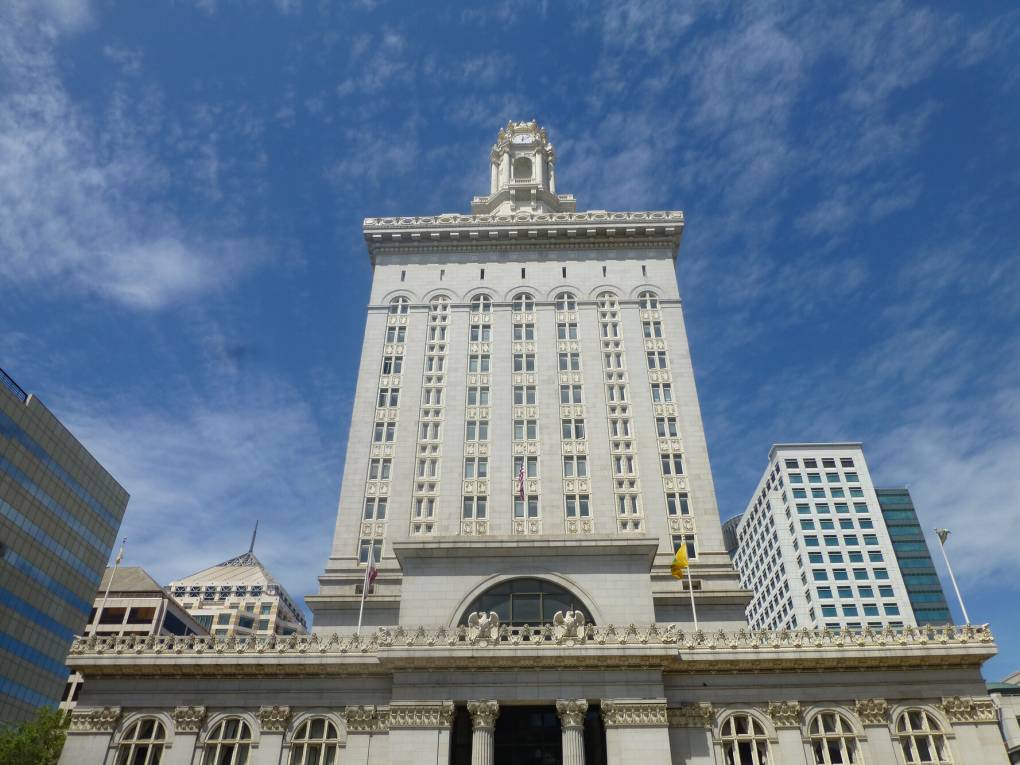
"caption": "A view of Oakland City Hall from June 2016. A spokesperson for the Oakland city administrator’s office, said in an email Friday afternoon that the Summer Food Service Program — which served about 100,000 Oakland children last summer — will continue this summer at 'a limited set of City sites, like recreation centers and libraries.'",
"credit": "Mike Linksvayer via Flickr",
"altTag": null,
"description": null,
"imgSizes": {
"medium": {
"file": "https://cdn.kqed.org/wp-content/uploads/sites/10/2025/04/14772659073_f7e7f00d0a_k_qed-800x600.jpg",
"width": 800,
"height": 600,
"mimeType": "image/jpeg"
},
"large": {
"file": "https://cdn.kqed.org/wp-content/uploads/sites/10/2025/04/14772659073_f7e7f00d0a_k_qed-1020x765.jpg",
"width": 1020,
"height": 765,
"mimeType": "image/jpeg"
},
"thumbnail": {
"file": "https://cdn.kqed.org/wp-content/uploads/sites/10/2025/04/14772659073_f7e7f00d0a_k_qed-160x120.jpg",
"width": 160,
"height": 120,
"mimeType": "image/jpeg"
},
"1536x1536": {
"file": "https://cdn.kqed.org/wp-content/uploads/sites/10/2025/04/14772659073_f7e7f00d0a_k_qed-1536x1152.jpg",
"width": 1536,
"height": 1152,
"mimeType": "image/jpeg"
},
"post-thumbnail": {
"file": "https://cdn.kqed.org/wp-content/uploads/sites/10/2025/04/14772659073_f7e7f00d0a_k_qed-672x372.jpg",
"width": 672,
"height": 372,
"mimeType": "image/jpeg"
},
"twentyfourteen-full-width": {
"file": "https://cdn.kqed.org/wp-content/uploads/sites/10/2025/04/14772659073_f7e7f00d0a_k_qed-1038x576.jpg",
"width": 1038,
"height": 576,
"mimeType": "image/jpeg"
},
"kqedFullSize": {
"file": "https://cdn.kqed.org/wp-content/uploads/sites/10/2025/04/14772659073_f7e7f00d0a_k_qed.jpg",
"width": 1777,
"height": 1333
}
},
"isLoading": false,
"fetchFailed": false
},
"news_12035639": {
"type": "attachments",
"id": "news_12035639",
"meta": {
"index": "attachments_1716263798",
"site": "news",
"id": "12035639",
"found": true
},
"title": "Trump Administration Reciprocal Tariffs Affect Goods Around The World",
"publishDate": 1744391742,
"status": "inherit",
"parent": 12035636,
"modified": 1744391759,
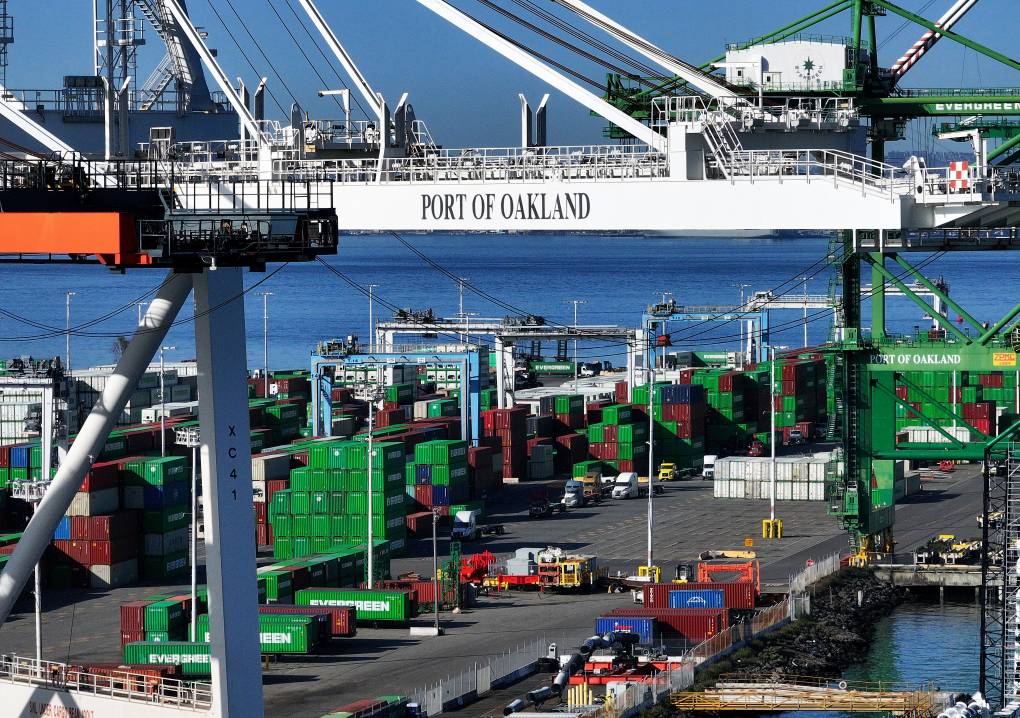
"caption": "OAKLAND, CALIFORNIA - APRIL 09: In an aerial view, shipping containers are seen stacked on a dock at the Port of Oakland on April 09, 2025 in Oakland, California. (Photo by Justin Sullivan/Getty Images)",
"credit": null,
"altTag": null,
"description": null,
"imgSizes": {
"medium": {
"file": "https://cdn.kqed.org/wp-content/uploads/sites/10/2025/04/GettyImages-2209401664-800x563.jpg",
"width": 800,
"height": 563,
"mimeType": "image/jpeg"
},
"large": {
"file": "https://cdn.kqed.org/wp-content/uploads/sites/10/2025/04/GettyImages-2209401664-1020x718.jpg",
"width": 1020,
"height": 718,
"mimeType": "image/jpeg"
},
"thumbnail": {
"file": "https://cdn.kqed.org/wp-content/uploads/sites/10/2025/04/GettyImages-2209401664-160x113.jpg",
"width": 160,
"height": 113,
"mimeType": "image/jpeg"
},
"1536x1536": {
"file": "https://cdn.kqed.org/wp-content/uploads/sites/10/2025/04/GettyImages-2209401664-1536x1081.jpg",
"width": 1536,
"height": 1081,
"mimeType": "image/jpeg"
},
"2048x2048": {
"file": "https://cdn.kqed.org/wp-content/uploads/sites/10/2025/04/GettyImages-2209401664-2048x1441.jpg",
"width": 2048,
"height": 1441,
"mimeType": "image/jpeg"
},
"post-thumbnail": {
"file": "https://cdn.kqed.org/wp-content/uploads/sites/10/2025/04/GettyImages-2209401664-672x372.jpg",
"width": 672,
"height": 372,
"mimeType": "image/jpeg"
},
"twentyfourteen-full-width": {
"file": "https://cdn.kqed.org/wp-content/uploads/sites/10/2025/04/GettyImages-2209401664-1038x576.jpg",
"width": 1038,
"height": 576,
"mimeType": "image/jpeg"
},
"full-width": {
"file": "https://cdn.kqed.org/wp-content/uploads/sites/10/2025/04/GettyImages-2209401664-1920x1351.jpg",
"width": 1920,
"height": 1351,
"mimeType": "image/jpeg"
},
"kqedFullSize": {
"file": "https://cdn.kqed.org/wp-content/uploads/sites/10/2025/04/GettyImages-2209401664-scaled.jpg",
"width": 2560,
"height": 1801
}
},
"isLoading": false,
"fetchFailed": false
},
"news_11667757": {
"type": "attachments",
"id": "news_11667757",
"meta": {
"index": "attachments_1716263798",
"site": "news",
"id": "11667757",
"found": true
},
"title": "17306665486_9d1bff4693_k",
"publishDate": 1526054732,
"status": "inherit",
"parent": 11667618,
"modified": 1526054791,
"caption": "A Goodwill store",
"credit": "Mike Mozart/Flickr",
"altTag": null,
"description": "A Goodwill store",
"imgSizes": {
"thumbnail": {
"file": "https://cdn.kqed.org/wp-content/uploads/sites/10/2018/05/17306665486_9d1bff4693_k-160x107.jpg",
"width": 160,
"height": 107,
"mimeType": "image/jpeg"
},
"medium": {
"file": "https://cdn.kqed.org/wp-content/uploads/sites/10/2018/05/17306665486_9d1bff4693_k-800x534.jpg",
"width": 800,
"height": 534,
"mimeType": "image/jpeg"
},
"large": {
"file": "https://cdn.kqed.org/wp-content/uploads/sites/10/2018/05/17306665486_9d1bff4693_k-1020x680.jpg",
"width": 1020,
"height": 680,
"mimeType": "image/jpeg"
},
"complete_open_graph": {
"file": "https://cdn.kqed.org/wp-content/uploads/sites/10/2018/05/17306665486_9d1bff4693_k-1200x800.jpg",
"width": 1200,
"height": 800,
"mimeType": "image/jpeg"
},
"fd-lrg": {
"file": "https://cdn.kqed.org/wp-content/uploads/sites/10/2018/05/17306665486_9d1bff4693_k-1920x1281.jpg",
"width": 1920,
"height": 1281,
"mimeType": "image/jpeg"
},
"fd-med": {
"file": "https://cdn.kqed.org/wp-content/uploads/sites/10/2018/05/17306665486_9d1bff4693_k-1180x787.jpg",
"width": 1180,
"height": 787,
"mimeType": "image/jpeg"
},
"fd-sm": {
"file": "https://cdn.kqed.org/wp-content/uploads/sites/10/2018/05/17306665486_9d1bff4693_k-960x640.jpg",
"width": 960,
"height": 640,
"mimeType": "image/jpeg"
},
"post-thumbnail": {
"file": "https://cdn.kqed.org/wp-content/uploads/sites/10/2018/05/17306665486_9d1bff4693_k-672x372.jpg",
"width": 672,
"height": 372,
"mimeType": "image/jpeg"
},
"twentyfourteen-full-width": {
"file": "https://cdn.kqed.org/wp-content/uploads/sites/10/2018/05/17306665486_9d1bff4693_k-1038x576.jpg",
"width": 1038,
"height": 576,
"mimeType": "image/jpeg"
},
"xxsmall": {
"file": "https://cdn.kqed.org/wp-content/uploads/sites/10/2018/05/17306665486_9d1bff4693_k-240x160.jpg",
"width": 240,
"height": 160,
"mimeType": "image/jpeg"
},
"xsmall": {
"file": "https://cdn.kqed.org/wp-content/uploads/sites/10/2018/05/17306665486_9d1bff4693_k-375x250.jpg",
"width": 375,
"height": 250,
"mimeType": "image/jpeg"
},
"small": {
"file": "https://cdn.kqed.org/wp-content/uploads/sites/10/2018/05/17306665486_9d1bff4693_k-520x347.jpg",
"width": 520,
"height": 347,
"mimeType": "image/jpeg"
},
"xlarge": {
"file": "https://cdn.kqed.org/wp-content/uploads/sites/10/2018/05/17306665486_9d1bff4693_k-1180x787.jpg",
"width": 1180,
"height": 787,
"mimeType": "image/jpeg"
},
"full-width": {
"file": "https://cdn.kqed.org/wp-content/uploads/sites/10/2018/05/17306665486_9d1bff4693_k-1920x1281.jpg",
"width": 1920,
"height": 1281,
"mimeType": "image/jpeg"
},
"guest-author-32": {
"file": "https://cdn.kqed.org/wp-content/uploads/sites/10/2018/05/17306665486_9d1bff4693_k-32x32.jpg",
"width": 32,
"height": 32,
"mimeType": "image/jpeg"
},
"guest-author-50": {
"file": "https://cdn.kqed.org/wp-content/uploads/sites/10/2018/05/17306665486_9d1bff4693_k-50x50.jpg",
"width": 50,
"height": 50,
"mimeType": "image/jpeg"
},
"guest-author-64": {
"file": "https://cdn.kqed.org/wp-content/uploads/sites/10/2018/05/17306665486_9d1bff4693_k-64x64.jpg",
"width": 64,
"height": 64,
"mimeType": "image/jpeg"
},
"guest-author-96": {
"file": "https://cdn.kqed.org/wp-content/uploads/sites/10/2018/05/17306665486_9d1bff4693_k-96x96.jpg",
"width": 96,
"height": 96,
"mimeType": "image/jpeg"
},
"guest-author-128": {
"file": "https://cdn.kqed.org/wp-content/uploads/sites/10/2018/05/17306665486_9d1bff4693_k-128x128.jpg",
"width": 128,
"height": 128,
"mimeType": "image/jpeg"
},
"detail": {
"file": "https://cdn.kqed.org/wp-content/uploads/sites/10/2018/05/17306665486_9d1bff4693_k-150x150.jpg",
"width": 150,
"height": 150,
"mimeType": "image/jpeg"
},
"kqedFullSize": {
"file": "https://cdn.kqed.org/wp-content/uploads/sites/10/2018/05/17306665486_9d1bff4693_k-e1744242245311.jpg",
"width": 2000,
"height": 1334
}
},
"isLoading": false,
"fetchFailed": false
},
"news_12032176": {
"type": "attachments",
"id": "news_12032176",
"meta": {
"index": "attachments_1716263798",
"site": "news",
"id": "12032176",
"found": true
},
"title": "14772659073_f7e7f00d0a_k_qed",
"publishDate": 1742428254,
"status": "inherit",
"parent": 12032042,
"modified": 1742428387,
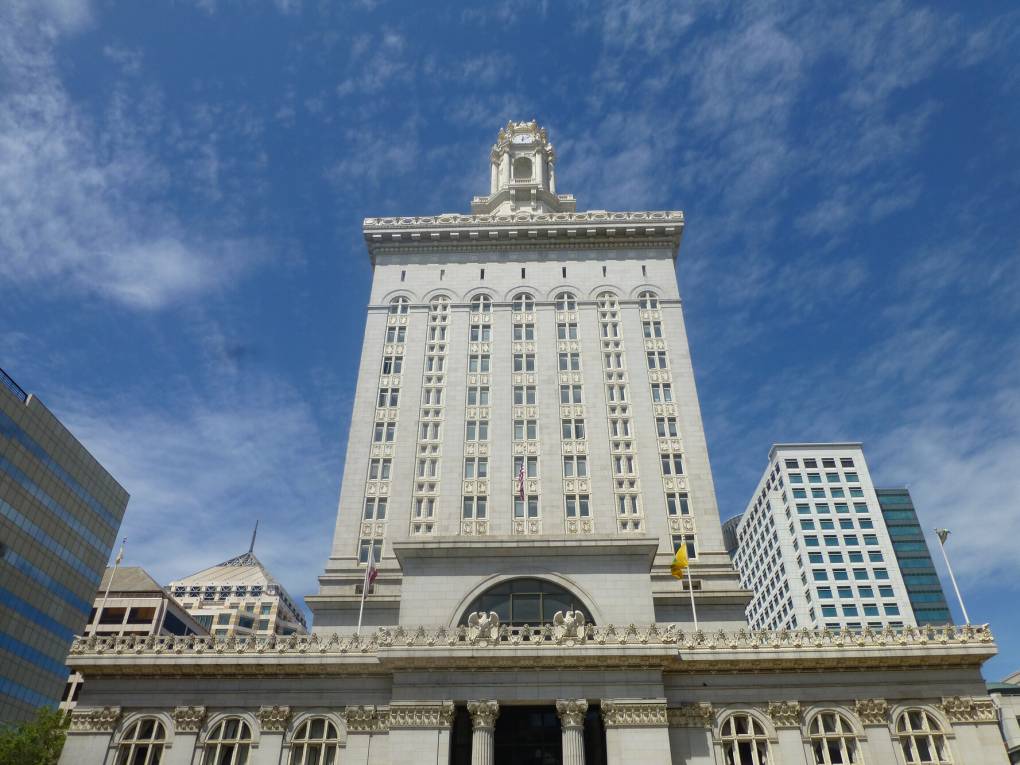
"caption": "A view of Oakland City Hall from June 28, 2016. Nine candidates are vying to be mayor of Oakland, after the previous mayor was recalled and as the city faces a major budget deficit.",
"credit": "Mike Linksvayer via Flickr",
"altTag": null,
"description": null,
"imgSizes": {
"medium": {
"file": "https://cdn.kqed.org/wp-content/uploads/sites/10/2025/03/14772659073_f7e7f00d0a_k_qed-800x600.jpg",
"width": 800,
"height": 600,
"mimeType": "image/jpeg"
},
"large": {
"file": "https://cdn.kqed.org/wp-content/uploads/sites/10/2025/03/14772659073_f7e7f00d0a_k_qed-1020x765.jpg",
"width": 1020,
"height": 765,
"mimeType": "image/jpeg"
},
"thumbnail": {
"file": "https://cdn.kqed.org/wp-content/uploads/sites/10/2025/03/14772659073_f7e7f00d0a_k_qed-160x120.jpg",
"width": 160,
"height": 120,
"mimeType": "image/jpeg"
},
"1536x1536": {
"file": "https://cdn.kqed.org/wp-content/uploads/sites/10/2025/03/14772659073_f7e7f00d0a_k_qed-1536x1152.jpg",
"width": 1536,
"height": 1152,
"mimeType": "image/jpeg"
},
"post-thumbnail": {
"file": "https://cdn.kqed.org/wp-content/uploads/sites/10/2025/03/14772659073_f7e7f00d0a_k_qed-672x372.jpg",
"width": 672,
"height": 372,
"mimeType": "image/jpeg"
},
"twentyfourteen-full-width": {
"file": "https://cdn.kqed.org/wp-content/uploads/sites/10/2025/03/14772659073_f7e7f00d0a_k_qed-1038x576.jpg",
"width": 1038,
"height": 576,
"mimeType": "image/jpeg"
},
"kqedFullSize": {
"file": "https://cdn.kqed.org/wp-content/uploads/sites/10/2025/03/14772659073_f7e7f00d0a_k_qed.jpg",
"width": 1777,
"height": 1333
}
},
"isLoading": false,
"fetchFailed": false
},
"news_11635686": {
"type": "attachments",
"id": "news_11635686",
"meta": {
"index": "attachments_1716263798",
"site": "news",
"id": "11635686",
"found": true
},
"title": "RS26222_IMG_2896-qut",
"publishDate": 1512690025,
"status": "inherit",
"parent": 11635537,
"modified": 1744151791,
"caption": "OUSD Superintendent Kyla Johnson-Trammell attends a leadership event at La Escuelita Elementary School before the start of the 2017–2018 school year. She says millions of dollars in budget cuts are necessary for the district's fiscal solvency. ",
"credit": "Devin Katayama/KQED",
"altTag": null,
"description": null,
"imgSizes": {
"thumbnail": {
"file": "https://cdn.kqed.org/wp-content/uploads/sites/10/2017/12/RS26222_IMG_2896-qut-160x107.jpg",
"width": 160,
"height": 107,
"mimeType": "image/jpeg"
},
"medium": {
"file": "https://cdn.kqed.org/wp-content/uploads/sites/10/2017/12/RS26222_IMG_2896-qut-800x533.jpg",
"width": 800,
"height": 533,
"mimeType": "image/jpeg"
},
"large": {
"file": "https://cdn.kqed.org/wp-content/uploads/sites/10/2017/12/RS26222_IMG_2896-qut-1020x680.jpg",
"width": 1020,
"height": 680,
"mimeType": "image/jpeg"
},
"fd-lrg": {
"file": "https://cdn.kqed.org/wp-content/uploads/sites/10/2017/12/RS26222_IMG_2896-qut-1920x1280.jpg",
"width": 1920,
"height": 1280,
"mimeType": "image/jpeg"
},
"fd-med": {
"file": "https://cdn.kqed.org/wp-content/uploads/sites/10/2017/12/RS26222_IMG_2896-qut-1180x787.jpg",
"width": 1180,
"height": 787,
"mimeType": "image/jpeg"
},
"fd-sm": {
"file": "https://cdn.kqed.org/wp-content/uploads/sites/10/2017/12/RS26222_IMG_2896-qut-960x640.jpg",
"width": 960,
"height": 640,
"mimeType": "image/jpeg"
},
"post-thumbnail": {
"file": "https://cdn.kqed.org/wp-content/uploads/sites/10/2017/12/RS26222_IMG_2896-qut-672x372.jpg",
"width": 672,
"height": 372,
"mimeType": "image/jpeg"
},
"twentyfourteen-full-width": {
"file": "https://cdn.kqed.org/wp-content/uploads/sites/10/2017/12/RS26222_IMG_2896-qut-1038x576.jpg",
"width": 1038,
"height": 576,
"mimeType": "image/jpeg"
},
"xxsmall": {
"file": "https://cdn.kqed.org/wp-content/uploads/sites/10/2017/12/RS26222_IMG_2896-qut-240x160.jpg",
"width": 240,
"height": 160,
"mimeType": "image/jpeg"
},
"xsmall": {
"file": "https://cdn.kqed.org/wp-content/uploads/sites/10/2017/12/RS26222_IMG_2896-qut-375x250.jpg",
"width": 375,
"height": 250,
"mimeType": "image/jpeg"
},
"small": {
"file": "https://cdn.kqed.org/wp-content/uploads/sites/10/2017/12/RS26222_IMG_2896-qut-520x347.jpg",
"width": 520,
"height": 347,
"mimeType": "image/jpeg"
},
"xlarge": {
"file": "https://cdn.kqed.org/wp-content/uploads/sites/10/2017/12/RS26222_IMG_2896-qut-1180x787.jpg",
"width": 1180,
"height": 787,
"mimeType": "image/jpeg"
},
"full-width": {
"file": "https://cdn.kqed.org/wp-content/uploads/sites/10/2017/12/RS26222_IMG_2896-qut-1920x1280.jpg",
"width": 1920,
"height": 1280,
"mimeType": "image/jpeg"
},
"guest-author-32": {
"file": "https://cdn.kqed.org/wp-content/uploads/sites/10/2017/12/RS26222_IMG_2896-qut-32x32.jpg",
"width": 32,
"height": 32,
"mimeType": "image/jpeg"
},
"guest-author-50": {
"file": "https://cdn.kqed.org/wp-content/uploads/sites/10/2017/12/RS26222_IMG_2896-qut-50x50.jpg",
"width": 50,
"height": 50,
"mimeType": "image/jpeg"
},
"guest-author-64": {
"file": "https://cdn.kqed.org/wp-content/uploads/sites/10/2017/12/RS26222_IMG_2896-qut-64x64.jpg",
"width": 64,
"height": 64,
"mimeType": "image/jpeg"
},
"guest-author-96": {
"file": "https://cdn.kqed.org/wp-content/uploads/sites/10/2017/12/RS26222_IMG_2896-qut-96x96.jpg",
"width": 96,
"height": 96,
"mimeType": "image/jpeg"
},
"guest-author-128": {
"file": "https://cdn.kqed.org/wp-content/uploads/sites/10/2017/12/RS26222_IMG_2896-qut-128x128.jpg",
"width": 128,
"height": 128,
"mimeType": "image/jpeg"
},
"detail": {
"file": "https://cdn.kqed.org/wp-content/uploads/sites/10/2017/12/RS26222_IMG_2896-qut-150x150.jpg",
"width": 150,
"height": 150,
"mimeType": "image/jpeg"
},
"kqedFullSize": {
"file": "https://cdn.kqed.org/wp-content/uploads/sites/10/2017/12/RS26222_IMG_2896-qut.jpg",
"width": 1920,
"height": 1280
}
},
"isLoading": false,
"fetchFailed": false
},
"news_12035065": {
"type": "attachments",
"id": "news_12035065",
"meta": {
"index": "attachments_1716263798",
"site": "news",
"id": "12035065",
"found": true
},
"title": "Kindergarten student Quan Huu Nguyen (middle), 5 years old, recycles leftovers after having lunch in the cafeteria at Franklin Elementary school on Friday, Sept. 7, 2018, in Oakland, Calif. The after school supper program at Franklin Elementary school h",
"publishDate": 1744162447,
"status": "inherit",
"parent": 12034895,
"modified": 1744218581,
"caption": "A kindergarten student recycles leftovers after having lunch in the cafeteria at Franklin Elementary School on Friday, Sept. 7, 2018, in Oakland. Nearly 75% of OUSD students — about 33,000 — qualify for free or reduced lunches and will be affected by the termination of Oakland's Summer Food Service Program.",
"credit": "Liz Hafalia/The San Francisco Chronicle via Getty Images",
"altTag": null,
"description": null,
"imgSizes": {
"medium": {
"file": "https://cdn.kqed.org/wp-content/uploads/sites/10/2025/04/GettyImages-1321784533-800x552.jpg",
"width": 800,
"height": 552,
"mimeType": "image/jpeg"
},
"large": {
"file": "https://cdn.kqed.org/wp-content/uploads/sites/10/2025/04/GettyImages-1321784533-1020x703.jpg",
"width": 1020,
"height": 703,
"mimeType": "image/jpeg"
},
"thumbnail": {
"file": "https://cdn.kqed.org/wp-content/uploads/sites/10/2025/04/GettyImages-1321784533-160x110.jpg",
"width": 160,
"height": 110,
"mimeType": "image/jpeg"
},
"post-thumbnail": {
"file": "https://cdn.kqed.org/wp-content/uploads/sites/10/2025/04/GettyImages-1321784533-672x372.jpg",
"width": 672,
"height": 372,
"mimeType": "image/jpeg"
},
"twentyfourteen-full-width": {
"file": "https://cdn.kqed.org/wp-content/uploads/sites/10/2025/04/GettyImages-1321784533-1024x576.jpg",
"width": 1024,
"height": 576,
"mimeType": "image/jpeg"
},
"kqedFullSize": {
"file": "https://cdn.kqed.org/wp-content/uploads/sites/10/2025/04/GettyImages-1321784533.jpg",
"width": 1024,
"height": 706
}
},
"isLoading": false,
"fetchFailed": false
},
"news_12034833": {
"type": "attachments",
"id": "news_12034833",
"meta": {
"index": "attachments_1716263798",
"site": "news",
"id": "12034833",
"found": true
},
"title": "250407-TARIFFSBAYAREASMALLBIZ-05-BL_QED-KQED",
"publishDate": 1744072380,
"status": "inherit",
"parent": 0,
"modified": 1744072447,
"caption": "Taylor Peliska, a bicycle mechanic, stands in the doorway at King Kog Bicycle Shop in Oakland on April 7, 2025.",
"credit": "Beth LaBerge/KQED",
"altTag": null,
"description": null,
"imgSizes": {
"medium": {
"file": "https://cdn.kqed.org/wp-content/uploads/sites/10/2025/04/250407-TARIFFSBAYAREASMALLBIZ-05-BL_QED-KQED-800x533.jpg",
"width": 800,
"height": 533,
"mimeType": "image/jpeg"
},
"large": {
"file": "https://cdn.kqed.org/wp-content/uploads/sites/10/2025/04/250407-TARIFFSBAYAREASMALLBIZ-05-BL_QED-KQED-1020x680.jpg",
"width": 1020,
"height": 680,
"mimeType": "image/jpeg"
},
"thumbnail": {
"file": "https://cdn.kqed.org/wp-content/uploads/sites/10/2025/04/250407-TARIFFSBAYAREASMALLBIZ-05-BL_QED-KQED-160x107.jpg",
"width": 160,
"height": 107,
"mimeType": "image/jpeg"
},
"1536x1536": {
"file": "https://cdn.kqed.org/wp-content/uploads/sites/10/2025/04/250407-TARIFFSBAYAREASMALLBIZ-05-BL_QED-KQED-1536x1024.jpg",
"width": 1536,
"height": 1024,
"mimeType": "image/jpeg"
},
"post-thumbnail": {
"file": "https://cdn.kqed.org/wp-content/uploads/sites/10/2025/04/250407-TARIFFSBAYAREASMALLBIZ-05-BL_QED-KQED-672x372.jpg",
"width": 672,
"height": 372,
"mimeType": "image/jpeg"
},
"twentyfourteen-full-width": {
"file": "https://cdn.kqed.org/wp-content/uploads/sites/10/2025/04/250407-TARIFFSBAYAREASMALLBIZ-05-BL_QED-KQED-1038x576.jpg",
"width": 1038,
"height": 576,
"mimeType": "image/jpeg"
},
"full-width": {
"file": "https://cdn.kqed.org/wp-content/uploads/sites/10/2025/04/250407-TARIFFSBAYAREASMALLBIZ-05-BL_QED-KQED-1920x1280.jpg",
"width": 1920,
"height": 1280,
"mimeType": "image/jpeg"
},
"kqedFullSize": {
"file": "https://cdn.kqed.org/wp-content/uploads/sites/10/2025/04/250407-TARIFFSBAYAREASMALLBIZ-05-BL_QED-KQED.jpg",
"width": 2000,
"height": 1333
}
},
"isLoading": false,
"fetchFailed": false
},
"news_12034725": {
"type": "attachments",
"id": "news_12034725",
"meta": {
"index": "attachments_1716263798",
"site": "news",
"id": "12034725",
"found": true
},
"title": "20250311_Oakland-Budget_DMB_00008_qed",
"publishDate": 1744046339,
"status": "inherit",
"parent": 12034722,
"modified": 1744046403,
"caption": "Interim Mayor Kevin Jenkins addresses Oakland residents at an educational workshop about Oakland’s biennial budget process at the Main Library on March 11, 2025. ",
"credit": "David M. Barreda/KQED",
"altTag": null,
"description": null,
"imgSizes": {
"medium": {
"file": "https://cdn.kqed.org/wp-content/uploads/sites/10/2025/04/20250311_Oakland-Budget_DMB_00008_qed-800x533.jpg",
"width": 800,
"height": 533,
"mimeType": "image/jpeg"
},
"large": {
"file": "https://cdn.kqed.org/wp-content/uploads/sites/10/2025/04/20250311_Oakland-Budget_DMB_00008_qed-1020x680.jpg",
"width": 1020,
"height": 680,
"mimeType": "image/jpeg"
},
"thumbnail": {
"file": "https://cdn.kqed.org/wp-content/uploads/sites/10/2025/04/20250311_Oakland-Budget_DMB_00008_qed-160x107.jpg",
"width": 160,
"height": 107,
"mimeType": "image/jpeg"
},
"1536x1536": {
"file": "https://cdn.kqed.org/wp-content/uploads/sites/10/2025/04/20250311_Oakland-Budget_DMB_00008_qed-1536x1024.jpg",
"width": 1536,
"height": 1024,
"mimeType": "image/jpeg"
},
"post-thumbnail": {
"file": "https://cdn.kqed.org/wp-content/uploads/sites/10/2025/04/20250311_Oakland-Budget_DMB_00008_qed-672x372.jpg",
"width": 672,
"height": 372,
"mimeType": "image/jpeg"
},
"twentyfourteen-full-width": {
"file": "https://cdn.kqed.org/wp-content/uploads/sites/10/2025/04/20250311_Oakland-Budget_DMB_00008_qed-1038x576.jpg",
"width": 1038,
"height": 576,
"mimeType": "image/jpeg"
},
"full-width": {
"file": "https://cdn.kqed.org/wp-content/uploads/sites/10/2025/04/20250311_Oakland-Budget_DMB_00008_qed-1920x1280.jpg",
"width": 1920,
"height": 1280,
"mimeType": "image/jpeg"
},
"kqedFullSize": {
"file": "https://cdn.kqed.org/wp-content/uploads/sites/10/2025/04/20250311_Oakland-Budget_DMB_00008_qed.jpg",
"width": 1999,
"height": 1333
}
},
"isLoading": false,
"fetchFailed": false
},
"news_11971211": {
"type": "attachments",
"id": "news_11971211",
"meta": {
"index": "attachments_1716263798",
"site": "news",
"id": "11971211",
"found": true
},
"title": "20161112_181430-qut",
"publishDate": 1703900847,
"status": "inherit",
"parent": 0,
"modified": 1743618565,
"caption": "The Oakland Police Department on Nov. 12, 2016.",
"credit": "Alex Emslie/KQED",
"altTag": "The outside of a building with Oakland Police written on a sign above an entrance.",
"description": null,
"imgSizes": {
"medium": {
"file": "https://cdn.kqed.org/wp-content/uploads/sites/10/2023/12/20161112_181430-qut-800x600.jpg",
"width": 800,
"height": 600,
"mimeType": "image/jpeg"
},
"large": {
"file": "https://cdn.kqed.org/wp-content/uploads/sites/10/2023/12/20161112_181430-qut-1020x765.jpg",
"width": 1020,
"height": 765,
"mimeType": "image/jpeg"
},
"thumbnail": {
"file": "https://cdn.kqed.org/wp-content/uploads/sites/10/2023/12/20161112_181430-qut-160x120.jpg",
"width": 160,
"height": 120,
"mimeType": "image/jpeg"
},
"1536x1536": {
"file": "https://cdn.kqed.org/wp-content/uploads/sites/10/2023/12/20161112_181430-qut-1536x1152.jpg",
"width": 1536,
"height": 1152,
"mimeType": "image/jpeg"
},
"post-thumbnail": {
"file": "https://cdn.kqed.org/wp-content/uploads/sites/10/2023/12/20161112_181430-qut-672x372.jpg",
"width": 672,
"height": 372,
"mimeType": "image/jpeg"
},
"twentyfourteen-full-width": {
"file": "https://cdn.kqed.org/wp-content/uploads/sites/10/2023/12/20161112_181430-qut-1038x576.jpg",
"width": 1038,
"height": 576,
"mimeType": "image/jpeg"
},
"kqedFullSize": {
"file": "https://cdn.kqed.org/wp-content/uploads/sites/10/2023/12/20161112_181430-qut.jpg",
"width": 1920,
"height": 1440
}
},
"isLoading": false,
"fetchFailed": false
},
"news_12033965": {
"type": "attachments",
"id": "news_12033965",
"meta": {
"index": "attachments_1716263798",
"site": "news",
"id": "12033965",
"found": true
},
"title": "OAKLAND A’S SEASON HOME OPENER",
"publishDate": 1743523816,
"status": "inherit",
"parent": 0,
"modified": 1743536877,
"caption": "Tyler Hogan and Chuy Vill display a poster during Oakland A’s season home opener at Sutter Health Park in West Sacramento, California, on Monday, March 31, 2025.",
"credit": "Andri Tambunan for KQED",
"altTag": null,
"description": null,
"imgSizes": {
"medium": {
"file": "https://cdn.kqed.org/wp-content/uploads/sites/10/2025/04/230331-OAKLAND_AS_SEASON_OPENER_AT_382-KQED-800x533.jpg",
"width": 800,
"height": 533,
"mimeType": "image/jpeg"
},
"large": {
"file": "https://cdn.kqed.org/wp-content/uploads/sites/10/2025/04/230331-OAKLAND_AS_SEASON_OPENER_AT_382-KQED-1020x680.jpg",
"width": 1020,
"height": 680,
"mimeType": "image/jpeg"
},
"thumbnail": {
"file": "https://cdn.kqed.org/wp-content/uploads/sites/10/2025/04/230331-OAKLAND_AS_SEASON_OPENER_AT_382-KQED-160x107.jpg",
"width": 160,
"height": 107,
"mimeType": "image/jpeg"
},
"1536x1536": {
"file": "https://cdn.kqed.org/wp-content/uploads/sites/10/2025/04/230331-OAKLAND_AS_SEASON_OPENER_AT_382-KQED-1536x1024.jpg",
"width": 1536,
"height": 1024,
"mimeType": "image/jpeg"
},
"post-thumbnail": {
"file": "https://cdn.kqed.org/wp-content/uploads/sites/10/2025/04/230331-OAKLAND_AS_SEASON_OPENER_AT_382-KQED-672x372.jpg",
"width": 672,
"height": 372,
"mimeType": "image/jpeg"
},
"twentyfourteen-full-width": {
"file": "https://cdn.kqed.org/wp-content/uploads/sites/10/2025/04/230331-OAKLAND_AS_SEASON_OPENER_AT_382-KQED-1038x576.jpg",
"width": 1038,
"height": 576,
"mimeType": "image/jpeg"
},
"full-width": {
"file": "https://cdn.kqed.org/wp-content/uploads/sites/10/2025/04/230331-OAKLAND_AS_SEASON_OPENER_AT_382-KQED-1920x1280.jpg",
"width": 1920,
"height": 1280,
"mimeType": "image/jpeg"
},
"kqedFullSize": {
"file": "https://cdn.kqed.org/wp-content/uploads/sites/10/2025/04/230331-OAKLAND_AS_SEASON_OPENER_AT_382-KQED.jpg",
"width": 2000,
"height": 1333
}
},
"isLoading": false,
"fetchFailed": false
},
"news_12033812": {
"type": "attachments",
"id": "news_12033812",
"meta": {
"index": "attachments_1716263798",
"site": "news",
"id": "12033812",
"found": true
},
"title": "231218-RainFile-01-BL_qed",
"publishDate": 1743440961,
"status": "inherit",
"parent": 12033807,
"modified": 1743440974,
"caption": "A person walks in the rain near the UCSF Mission Bay campus in San Francisco on Dec. 18, 2023.",
"credit": "Beth LaBerge/KQED",
"altTag": null,
"description": null,
"imgSizes": {
"medium": {
"file": "https://cdn.kqed.org/wp-content/uploads/sites/10/2025/03/231218-RainFile-01-BL_qed-800x533.jpg",
"width": 800,
"height": 533,
"mimeType": "image/jpeg"
},
"large": {
"file": "https://cdn.kqed.org/wp-content/uploads/sites/10/2025/03/231218-RainFile-01-BL_qed-1020x680.jpg",
"width": 1020,
"height": 680,
"mimeType": "image/jpeg"
},
"thumbnail": {
"file": "https://cdn.kqed.org/wp-content/uploads/sites/10/2025/03/231218-RainFile-01-BL_qed-160x107.jpg",
"width": 160,
"height": 107,
"mimeType": "image/jpeg"
},
"1536x1536": {
"file": "https://cdn.kqed.org/wp-content/uploads/sites/10/2025/03/231218-RainFile-01-BL_qed-1536x1024.jpg",
"width": 1536,
"height": 1024,
"mimeType": "image/jpeg"
},
"post-thumbnail": {
"file": "https://cdn.kqed.org/wp-content/uploads/sites/10/2025/03/231218-RainFile-01-BL_qed-672x372.jpg",
"width": 672,
"height": 372,
"mimeType": "image/jpeg"
},
"twentyfourteen-full-width": {
"file": "https://cdn.kqed.org/wp-content/uploads/sites/10/2025/03/231218-RainFile-01-BL_qed-1038x576.jpg",
"width": 1038,
"height": 576,
"mimeType": "image/jpeg"
},
"full-width": {
"file": "https://cdn.kqed.org/wp-content/uploads/sites/10/2025/03/231218-RainFile-01-BL_qed-1920x1280.jpg",
"width": 1920,
"height": 1280,
"mimeType": "image/jpeg"
},
"kqedFullSize": {
"file": "https://cdn.kqed.org/wp-content/uploads/sites/10/2025/03/231218-RainFile-01-BL_qed.jpg",
"width": 1999,
"height": 1333
}
},
"isLoading": false,
"fetchFailed": false
},
"news_12033383": {
"type": "attachments",
"id": "news_12033383",
"meta": {
"index": "attachments_1716263798",
"site": "news",
"id": "12033383",
"found": true
},
"title": "20250218_Oak-Mayoral_DMB_00156_qed",
"publishDate": 1743107278,
"status": "inherit",
"parent": 12033381,
"modified": 1743199300,
"caption": "The media interviews Loren Taylor at a public forum hosted by Greenbelt Alliance, Housing Action Coalition, and East Bay for Everyone in downtown Oakland, California, on Tuesday, Feb.18, 2025.",
"credit": "David M. Barreda/KQED",
"altTag": null,
"description": null,
"imgSizes": {
"medium": {
"file": "https://cdn.kqed.org/wp-content/uploads/sites/10/2025/03/20250218_Oak-Mayoral_DMB_00156_qed-800x533.jpg",
"width": 800,
"height": 533,
"mimeType": "image/jpeg"
},
"large": {
"file": "https://cdn.kqed.org/wp-content/uploads/sites/10/2025/03/20250218_Oak-Mayoral_DMB_00156_qed-1020x680.jpg",
"width": 1020,
"height": 680,
"mimeType": "image/jpeg"
},
"thumbnail": {
"file": "https://cdn.kqed.org/wp-content/uploads/sites/10/2025/03/20250218_Oak-Mayoral_DMB_00156_qed-160x107.jpg",
"width": 160,
"height": 107,
"mimeType": "image/jpeg"
},
"1536x1536": {
"file": "https://cdn.kqed.org/wp-content/uploads/sites/10/2025/03/20250218_Oak-Mayoral_DMB_00156_qed-1536x1024.jpg",
"width": 1536,
"height": 1024,
"mimeType": "image/jpeg"
},
"post-thumbnail": {
"file": "https://cdn.kqed.org/wp-content/uploads/sites/10/2025/03/20250218_Oak-Mayoral_DMB_00156_qed-672x372.jpg",
"width": 672,
"height": 372,
"mimeType": "image/jpeg"
},
"twentyfourteen-full-width": {
"file": "https://cdn.kqed.org/wp-content/uploads/sites/10/2025/03/20250218_Oak-Mayoral_DMB_00156_qed-1038x576.jpg",
"width": 1038,
"height": 576,
"mimeType": "image/jpeg"
},
"full-width": {
"file": "https://cdn.kqed.org/wp-content/uploads/sites/10/2025/03/20250218_Oak-Mayoral_DMB_00156_qed-1920x1280.jpg",
"width": 1920,
"height": 1280,
"mimeType": "image/jpeg"
},
"kqedFullSize": {
"file": "https://cdn.kqed.org/wp-content/uploads/sites/10/2025/03/20250218_Oak-Mayoral_DMB_00156_qed.jpg",
"width": 2000,
"height": 1333
}
},
"isLoading": false,
"fetchFailed": false
}
},
"audioPlayerReducer": {
"postId": "stream_live",
"isPaused": true,
"isPlaying": false,
"pfsActive": false,
"pledgeModalIsOpen": true,
"playerDrawerIsOpen": false,
"liveAudioPlayStartedAt": 0,
"liveAudioPlayContext": ""
},
"authorsReducer": {
"gmarzorati": {
"type": "authors",
"id": "227",
"meta": {
"index": "authors_1716337520",
"id": "227",
"found": true
},
"name": "Guy Marzorati",
"firstName": "Guy",
"lastName": "Marzorati",
"slug": "gmarzorati",
"email": "gmarzorati@KQED.org",
"display_author_email": true,
"staff_mastheads": [
"news"
],
"title": "Correspondent",
"bio": "Guy Marzorati is a correspondent on KQED's California Politics and Government Desk, based in San Jose. A graduate of Santa Clara University, Guy joined KQED in 2013. He reports on state and local politics and produces KQED's digital voter guide.",
"avatar": "https://secure.gravatar.com/avatar/e7038b8dbfd55b104369b76b1cd0b9de?s=600&d=blank&r=g",
"twitter": "guymarzorati",
"facebook": null,
"instagram": null,
"linkedin": null,
"sites": [
{
"site": "",
"roles": [
"editor"
]
},
{
"site": "news",
"roles": [
"editor"
]
},
{
"site": "science",
"roles": [
"editor"
]
},
{
"site": "forum",
"roles": [
"editor"
]
},
{
"site": "elections",
"roles": [
"editor"
]
},
{
"site": "liveblog",
"roles": [
"editor"
]
}
],
"headData": {
"title": "Guy Marzorati | KQED",
"description": "Correspondent",
"ogImgSrc": "https://secure.gravatar.com/avatar/e7038b8dbfd55b104369b76b1cd0b9de?s=600&d=blank&r=g",
"twImgSrc": "https://secure.gravatar.com/avatar/e7038b8dbfd55b104369b76b1cd0b9de?s=600&d=blank&r=g"
},
"isLoading": false,
"link": "/author/gmarzorati"
},
"matthewgreen": {
"type": "authors",
"id": "1263",
"meta": {
"index": "authors_1716337520",
"id": "1263",
"found": true
},
"name": "Matthew Green",
"firstName": "Matthew",
"lastName": "Green",
"slug": "matthewgreen",
"email": "mgreen@kqed.org",
"display_author_email": false,
"staff_mastheads": [],
"title": "KQED Editor/Reporter",
"bio": "Matthew Green is a digital media producer for KQED News. He previously produced \u003ca href=\"http://www.kqed.org/lowdown\">The Lowdown\u003c/a>, KQED’s multimedia news education blog. Matthew's written for numerous Bay Area publications, including the Oakland Tribune and San Francisco Chronicle. He also taught journalism classes at Fremont High School in East Oakland.\r\n\r\nEmail: mgreen@kqed.org; Twitter: @MGreenKQED",
"avatar": "https://secure.gravatar.com/avatar/3bf498d1267ca02c8494f33d8cfc575e?s=600&d=blank&r=g",
"twitter": "MGreenKQED",
"facebook": null,
"instagram": null,
"linkedin": null,
"sites": [
{
"site": "news",
"roles": []
},
{
"site": "lowdown",
"roles": []
},
{
"site": "science",
"roles": []
},
{
"site": "education",
"roles": []
},
{
"site": "quest",
"roles": []
},
{
"site": "liveblog",
"roles": []
}
],
"headData": {
"title": "Matthew Green | KQED",
"description": "KQED Editor/Reporter",
"ogImgSrc": "https://secure.gravatar.com/avatar/3bf498d1267ca02c8494f33d8cfc575e?s=600&d=blank&r=g",
"twImgSrc": "https://secure.gravatar.com/avatar/3bf498d1267ca02c8494f33d8cfc575e?s=600&d=blank&r=g"
},
"isLoading": false,
"link": "/author/matthewgreen"
},
"mlagos": {
"type": "authors",
"id": "3239",
"meta": {
"index": "authors_1716337520",
"id": "3239",
"found": true
},
"name": "Marisa Lagos",
"firstName": "Marisa",
"lastName": "Lagos",
"slug": "mlagos",
"email": "mlagos@kqed.org",
"display_author_email": false,
"staff_mastheads": [
"news"
],
"title": "KQED Contributor",
"bio": "Marisa Lagos is a correspondent for KQED’s California Politics and Government Desk and co-hosts the award-winning show and podcast, Political Breakdown. At KQED, Lagos also conducts reporting, analysis and investigations into state, local and national politics for radio, TV, online and onstage. In 2022, she and co-host, Scott Shafer, moderated the only gubernatorial debate in California. In 2020, the \u003ci>Washington Post\u003c/i> named her one of the top political journalists in California; she was nominated for a Peabody and won several other awards for her work investigating the 2017 California wildfires. She has worked at the \u003ci>San Francisco Chronicle\u003c/i>, \u003ci>San Francisco Examiner\u003c/i> and \u003ci>Los Angeles Times\u003c/i>. A UC Santa Barbara graduate, she lives in San Francisco with her two sons and husband.",
"avatar": "https://secure.gravatar.com/avatar/a261a0d3696fc066871ef96b85b5e7d2?s=600&d=blank&r=g",
"twitter": "@mlagos",
"facebook": null,
"instagram": null,
"linkedin": null,
"sites": [
{
"site": "arts",
"roles": [
"author"
]
},
{
"site": "news",
"roles": [
"editor"
]
},
{
"site": "science",
"roles": [
"editor"
]
},
{
"site": "forum",
"roles": [
"author"
]
},
{
"site": "liveblog",
"roles": [
"author"
]
}
],
"headData": {
"title": "Marisa Lagos | KQED",
"description": "KQED Contributor",
"ogImgSrc": "https://secure.gravatar.com/avatar/a261a0d3696fc066871ef96b85b5e7d2?s=600&d=blank&r=g",
"twImgSrc": "https://secure.gravatar.com/avatar/a261a0d3696fc066871ef96b85b5e7d2?s=600&d=blank&r=g"
},
"isLoading": false,
"link": "/author/mlagos"
},
"ahall": {
"type": "authors",
"id": "11490",
"meta": {
"index": "authors_1716337520",
"id": "11490",
"found": true
},
"name": "Alex Hall",
"firstName": "Alex",
"lastName": "Hall",
"slug": "ahall",
"email": "ahall@kqed.org",
"display_author_email": false,
"staff_mastheads": [
"news"
],
"title": "KQED Enterprise & Accountability Reporter",
"bio": "Alex Hall is KQED's Enterprise and Accountability Reporter. She previously covered the Central Valley for five years from KQED's bureau in Fresno. Before joining KQED, Alex was an investigative reporting fellow at Wisconsin Public Radio and the Wisconsin Center for Investigative Journalism. She has also worked as a bilingual producer for NPR's investigative unit and freelance video producer for Reuters TV on the Latin America desk. She got her start in journalism in South America, where she worked as a radio producer and Spanish-English translator for CNN Chile. Her documentary and investigation into the series of deadly COVID-19 outbreaks at Foster Farms won a national Edward R. Murrow award and was named an Investigative Reporters & Editors award finalist. Alex's reporting for Reveal on the Wisconsin dairy industry's reliance on undocumented immigrant labor was made into a film, Los Lecheros, which won a regional Edward R. Murrow award for best news documentary.",
"avatar": "https://secure.gravatar.com/avatar/defcbeb88b0bf591ff9af41f22644051?s=600&d=blank&r=g",
"twitter": "@chalexhall",
"facebook": null,
"instagram": null,
"linkedin": null,
"sites": [
{
"site": "news",
"roles": [
"editor"
]
},
{
"site": "liveblog",
"roles": [
"author"
]
}
],
"headData": {
"title": "Alex Hall | KQED",
"description": "KQED Enterprise & Accountability Reporter",
"ogImgSrc": "https://secure.gravatar.com/avatar/defcbeb88b0bf591ff9af41f22644051?s=600&d=blank&r=g",
"twImgSrc": "https://secure.gravatar.com/avatar/defcbeb88b0bf591ff9af41f22644051?s=600&d=blank&r=g"
},
"isLoading": false,
"link": "/author/ahall"
},
"eromero": {
"type": "authors",
"id": "11746",
"meta": {
"index": "authors_1716337520",
"id": "11746",
"found": true
},
"name": "Ezra David Romero",
"firstName": "Ezra David",
"lastName": "Romero",
"slug": "eromero",
"email": "eromero@kqed.org",
"display_author_email": true,
"staff_mastheads": [
"news",
"science"
],
"title": "Climate Reporter",
"bio": "Ezra David Romero is a climate reporter for KQED News. He covers the absence and excess of water in the Bay Area — think sea level rise, flooding and drought. For nearly a decade he’s covered how warming temperatures are altering the lives of Californians. He’s reported on farmers worried their pistachio trees aren’t getting enough sleep, families desperate for water, scientists studying dying giant sequoias, and alongside firefighters containing wildfires. His work has appeared on local stations across California and nationally on public radio shows like Morning Edition, Here and Now, All Things Considered and Science Friday. ",
"avatar": "https://secure.gravatar.com/avatar/9c15bb8bab267e058708a9eeaeef16bf?s=600&d=blank&r=g",
"twitter": "ezraromero",
"bluesky": null,
"facebook": null,
"instagram": null,
"linkedin": null,
"sites": [
{
"site": "arts",
"roles": [
"editor"
]
},
{
"site": "news",
"roles": [
"editor"
]
},
{
"site": "science",
"roles": [
"editor"
]
},
{
"site": "liveblog",
"roles": [
"author"
]
}
],
"headData": {
"title": "Ezra David Romero | KQED",
"description": "Climate Reporter",
"ogImgSrc": "https://secure.gravatar.com/avatar/9c15bb8bab267e058708a9eeaeef16bf?s=600&d=blank&r=g",
"twImgSrc": "https://secure.gravatar.com/avatar/9c15bb8bab267e058708a9eeaeef16bf?s=600&d=blank&r=g"
},
"isLoading": false,
"link": "/author/eromero"
},
"amadrigal": {
"type": "authors",
"id": "11757",
"meta": {
"index": "authors_1716337520",
"id": "11757",
"found": true
},
"name": "Alexis Madrigal",
"firstName": "Alexis",
"lastName": "Madrigal",
"slug": "amadrigal",
"email": "amadrigal@kqed.org",
"display_author_email": true,
"staff_mastheads": [],
"title": "Co-Host Forum",
"bio": "Alexis Madrigal is the co-host of Forum. He is also a contributing writer at \u003cem>The Atlantic \u003c/em>and the co-founder of the COVID Tracking Project. He's the creator of the podcast, \u003cem>Containers\u003c/em>, and has been a staff writer at \u003cem>Wired. \u003c/em>He was a visiting scholar at UC Berkeley's Information School, and is working on a book about Oakland and the Bay Area's revolutionary ideas.",
"avatar": "https://secure.gravatar.com/avatar/200d13dd6cebef55bf04327dec901b3d?s=600&d=blank&r=g",
"twitter": "alexismadrigal",
"bluesky": null,
"facebook": null,
"instagram": null,
"linkedin": null,
"sites": [
{
"site": "arts",
"roles": [
"editor"
]
},
{
"site": "news",
"roles": [
"editor"
]
},
{
"site": "forum",
"roles": [
"editor"
]
}
],
"headData": {
"title": "Alexis Madrigal | KQED",
"description": "Co-Host Forum",
"ogImgSrc": "https://secure.gravatar.com/avatar/200d13dd6cebef55bf04327dec901b3d?s=600&d=blank&r=g",
"twImgSrc": "https://secure.gravatar.com/avatar/200d13dd6cebef55bf04327dec901b3d?s=600&d=blank&r=g"
},
"isLoading": false,
"link": "/author/amadrigal"
},
"adahlstromeckman": {
"type": "authors",
"id": "11785",
"meta": {
"index": "authors_1716337520",
"id": "11785",
"found": true
},
"name": "Azul Dahlstrom-Eckman",
"firstName": "Azul",
"lastName": "Dahlstrom-Eckman",
"slug": "adahlstromeckman",
"email": "adahlstrom-eckman@kqed.org",
"display_author_email": true,
"staff_mastheads": [],
"title": "Reporter",
"bio": "Azul is a reporter for KQED focusing on transportation and features. He joined KQED in 2021 as an alumna of KALW's Audio Academy radio journalism training program.",
"avatar": "https://secure.gravatar.com/avatar/9cb750298435add7815a777f55bf1f46845c1386bb8452555c60a7b820b5aba3?s=600&d=blank&r=g",
"twitter": "@zuliemann",
"bluesky": "@azul415.bsky.social",
"facebook": null,
"instagram": null,
"linkedin": null,
"sites": [
{
"site": "arts",
"roles": [
"editor"
]
},
{
"site": "news",
"roles": [
"editor"
]
},
{
"site": "science",
"roles": [
"editor"
]
},
{
"site": "liveblog",
"roles": [
"author"
]
}
],
"headData": {
"title": "Azul Dahlstrom-Eckman | KQED",
"description": "Reporter",
"ogImgSrc": "https://secure.gravatar.com/avatar/9cb750298435add7815a777f55bf1f46845c1386bb8452555c60a7b820b5aba3?s=600&d=blank&r=g",
"twImgSrc": "https://secure.gravatar.com/avatar/9cb750298435add7815a777f55bf1f46845c1386bb8452555c60a7b820b5aba3?s=600&d=blank&r=g"
},
"isLoading": false,
"link": "/author/adahlstromeckman"
},
"kdebenedetti": {
"type": "authors",
"id": "11913",
"meta": {
"index": "authors_1716337520",
"id": "11913",
"found": true
},
"name": "Katie DeBenedetti",
"firstName": "Katie",
"lastName": "DeBenedetti",
"slug": "kdebenedetti",
"email": "kdebenedetti@kqed.org",
"display_author_email": false,
"staff_mastheads": [
"news",
"science"
],
"title": "KQED Contributor",
"bio": "Katie DeBenedetti is a digital reporter covering daily news for the Express Desk. Prior to joining KQED as a culture reporting intern in January 2024, she covered education and city government for the Napa Valley Register.",
"avatar": "https://secure.gravatar.com/avatar/6e31073cb8f7e4214ab03f42771d0f45?s=600&d=blank&r=g",
"twitter": null,
"facebook": null,
"instagram": null,
"linkedin": null,
"sites": [
{
"site": "news",
"roles": [
"author"
]
},
{
"site": "science",
"roles": [
"author"
]
},
{
"site": "liveblog",
"roles": [
"author"
]
}
],
"headData": {
"title": "Katie DeBenedetti | KQED",
"description": "KQED Contributor",
"ogImgSrc": "https://secure.gravatar.com/avatar/6e31073cb8f7e4214ab03f42771d0f45?s=600&d=blank&r=g",
"twImgSrc": "https://secure.gravatar.com/avatar/6e31073cb8f7e4214ab03f42771d0f45?s=600&d=blank&r=g"
},
"isLoading": false,
"link": "/author/kdebenedetti"
},
"slim": {
"type": "authors",
"id": "11920",
"meta": {
"index": "authors_1716337520",
"id": "11920",
"found": true
},
"name": "Samantha Lim",
"firstName": "Samantha",
"lastName": "Lim",
"slug": "slim",
"email": "slim@KQED.org",
"display_author_email": false,
"staff_mastheads": [],
"title": "KQED Contributor",
"bio": null,
"avatar": "https://secure.gravatar.com/avatar/82e592e6c15fe1a04d385e8ad0fb0b4e?s=600&d=blank&r=g",
"twitter": null,
"facebook": null,
"instagram": null,
"linkedin": null,
"sites": [
{
"site": "news",
"roles": []
}
],
"headData": {
"title": "Samantha Lim | KQED",
"description": "KQED Contributor",
"ogImgSrc": "https://secure.gravatar.com/avatar/82e592e6c15fe1a04d385e8ad0fb0b4e?s=600&d=blank&r=g",
"twImgSrc": "https://secure.gravatar.com/avatar/82e592e6c15fe1a04d385e8ad0fb0b4e?s=600&d=blank&r=g"
},
"isLoading": false,
"link": "/author/slim"
}
},
"pagesReducer": {
"news_tag_oakland": {
"type": "terms",
"id": "news_34054",
"meta": {
"index": "terms_1716263798",
"site": "news",
"id": "34054",
"score": 6.8845096
},
"featImg": null,
"name": "oakland",
"description": null,
"taxonomy": "tag",
"headData": {
"twImgId": null,
"twTitle": null,
"ogTitle": null,
"ogImgId": null,
"twDescription": null,
"description": null,
"title": "oakland Archives | KQED News",
"ogDescription": null
},
"ttid": 34071,
"slug": "oakland",
"isLoading": false,
"title": "oakland",
"pageMeta": {
"site": "news",
"WpPageTemplate": "page-topic-editorial",
"currentPage": 22
},
"blocks": [
{
"blockName": "kqed/post-list",
"attrs": {
"layout": "cardArticle2",
"query": "posts/news?tag=oakland",
"seeMore": false,
"paginated": true,
"page": 22
}
},
{
"blockName": "kqed/ad"
}
]
}
},
"pfsSessionReducer": {},
"postsReducer": {
"stream_live": {
"type": "live",
"id": "stream_live",
"audioUrl": "https://streams.kqed.org/kqedradio",
"title": "Live Stream",
"excerpt": "Live Stream information currently unavailable.",
"link": "/radio",
"featImg": "",
"label": {
"name": "KQED Live",
"link": "/"
}
},
"stream_kqedNewscast": {
"type": "posts",
"id": "stream_kqedNewscast",
"audioUrl": "https://www.kqed.org/.stream/anon/radio/RDnews/newscast.mp3?_=1",
"title": "KQED Newscast",
"featImg": "",
"label": {
"name": "88.5 FM",
"link": "/"
}
},
"news_12035615": {
"type": "posts",
"id": "news_12035615",
"meta": {
"index": "posts_1716263798",
"site": "news",
"id": "12035615",
"score": null,
"sort": [
1744502431000
]
},
"guestAuthors": [],
"slug": "oakland-reverses-decision-to-end-summer-food-program-will-offer-meals-at-fewer-sites",
"title": "Oakland Reverses Decision to End Summer Food Program, Will Offer Meals at Fewer Sites",
"publishDate": 1744502431,
"format": "standard",
"headTitle": "Oakland Reverses Decision to End Summer Food Program, Will Offer Meals at Fewer Sites | KQED",
"labelTerm": {
"site": "news"
},
"content": "\u003cp>Two days after Oakland confirmed it was gutting a program that has for years provided free daily lunches to thousands of kids during the summer, the city on Friday seemingly reversed course, saying it now planned to continue offering meals on a limited basis at some sites.\u003c/p>\n\u003cp>“Things are rapidly evolving with this program,” Jean Walsh, a spokesperson for the city administrator’s office, said in an email Friday afternoon. “The Summer Food Service Program will continue through the summer to a limited set of City sites, like recreation centers and libraries.”\u003c/p>\n\u003cp>The city is also in discussions to see if the program can be expanded, according to Walsh who did not provide any details on the number of sites that would be offering meals or what prompted the city to extend the program.\u003c/p>\n\u003cp>[ad fullwidth]\u003c/p>\n\u003cp>The turnaround comes shortly after the city, in a letter to the \u003ca href=\"https://cao-94612.s3.us-west-2.amazonaws.com/documents/LIST-OF-SFSP-SERVICE-SITES-FOR-2024.pdf\" target=\"_blank\" rel=\"noopener\">community and faith-based sites (PDF)\u003c/a> that previously distributed the food, said it would “not be providing meals” through its Summer Food Service Program this year due to “severe city budget constraints,” a development \u003ca href=\"https://www.kqed.org/news/12034895/oakland-halts-free-summer-meals-amid-budget-shortfall\">KQED first reported\u003c/a> earlier this week.\u003c/p>\n\u003cp>“We recognize this is a significant loss for the children and families who rely on these meals,” Michael Akanji, from the city administrator’s office, wrote in the letter.\u003c/p>\n\u003cp>The program was set to begin almost immediately after the Oakland Unified School District’s final day of classes on May 29 and run through the summer. Last summer, the program provided more than 100,000 free lunches to children as part of an effort to “bridge the meal gap throughout the summer months” when school meals are not available, according to the city.\u003c/p>\n\u003cp>Candice Elder, the executive director of The East Oakland Collective — a nonprofit that has provided meals to kids for the last two summers — was among a number of community site directors who told KQED they never received the city’s letter announcing the program’s cancellation, which the city said it sent in late March.\u003c/p>\n\u003cp>“As a smallish nonprofit, we can’t afford to pay for these meals on our own,” Elder told KQED Friday morning before the city reversed its decision.\u003c/p>\n\u003cp>[aside postID=news_12034895 hero='https://cdn.kqed.org/wp-content/uploads/sites/10/2025/04/GettyImages-1321784533-1020x703.jpg']\u003c/p>\n\u003cp>As many as 50 children a day — from toddlers to middle schoolers — filed into her community center nearly every weekday last summer to receive lunch and snacks.\u003c/p>\n\u003cp>“Everything from sandwiches, pasta, chicken tenders — it was a pretty well-balanced meal,” she said. “There was always fruit. There was milk, carrots, celery.”\u003c/p>\n\u003cp>Elder said her deep East Oakland neighborhood is a food desert, where many families with low income lack access to healthy food.\u003c/p>\n\u003cp>“So this has been an awesome program. It’s been really beneficial to have these meals available and then the kids know that, guaranteed, Monday through Friday they can still eat,” she said. “I understand the issues regarding budget and funding at the city level, but at the same time, when you cut programs that impact families and children, what message are you sending?”\u003c/p>\n\u003cp>Nearly \u003ca href=\"https://www.ctc.ca.gov/docs/default-source/educator-prep/coa-agendas/2021-05/2021-05-item-15.pdf?sfvrsn=d81e2bb1_6#:~:text=Located%20in%20the%20Bay%20Area,receive%20free%20or%20reduced%20meals.\" target=\"_blank\" rel=\"noopener\">75% of OUSD students (PDF)\u003c/a> qualify for free or reduced lunch, and many regularly experience food insecurity.\u003c/p>\n\u003cp>Oakland has a long history of offering free food programs for children. In January 1969, the Black Panther Party \u003ca href=\"https://www.kqed.org/arts/13950520/ruth-beckford-dance-black-panthers-free-breakfast-program\">launched the Free Breakfast for School Children Program\u003c/a> at St. Augustine’s Episcopal Church in West Oakland, later expanding to other churches and community sites in Oakland and San Francisco’s lowest income neighborhoods. By the end of the year, the Panthers had set up kitchens in cities across the country, and claimed to have \u003ca href=\"https://www.marxists.org/history/usa/pubs/black-panther/03n24-oct%204%201969.pdf\" target=\"_blank\" rel=\"noopener\">fed some 20,000 children (PDF)\u003c/a>.\u003c/p>\n\u003cp>Oakland’s initial move late last month to cancel the program followed a December city council vote to reallocate funds from its sugar-sweetened beverage tax, part of a frantic effort to close what was then a \u003ca href=\"https://www.kqed.org/news/12027749/oakland-reverses-several-layoffs-amid-scramble-close-massive-budget-deficit\">nearly $130 million budget shortfall\u003c/a>. The tax, \u003ca href=\"https://ballotpedia.org/Oakland,_California,_Sugar-Sweetened_Beverages_Tax,_Measure_HH_(November_2016)\">which voters approved in 2016\u003c/a>, generates \u003ca href=\"https://www.spur.org/news/2023-08-16/revenue-allocations-soda-taxes-oakland-and-san-francisco-continue-diverge-advisory\">more than $7 million a year\u003c/a>, a portion of which is intended to support youth health-related programs.\u003c/p>\n\u003cp>Oakland previously used about $200,000 of that revenue each year to supplement funding for the USDA-sponsored summer food program and cover administrative costs, but said the money was no longer available as a result of the reallocation.\u003c/p>\n\u003cp>“Without those funds, the City is unable to continue working with community partners and organizations to provide food in the summer of 2025,” Akanji wrote in the letter to partner sites.\u003c/p>\n\u003cp>The city administrator’s office did not respond to questions about when it made the decision to cancel the program or why it waited four months after the council’s budget vote to inform partner sites.\u003c/p>\n\u003cp>“If the city had told us a month ago, people could have applied for [other] funding, but they didn’t,” said Maria Alderete, executive director of Community Kitchens, an Oakland nonprofit meal provider. She said she learned about the program’s cancellation from KQED’s article.\u003c/p>\n\u003cp>“In not communicating, not being transparent, the city is really jeopardizing the program in terms of feeding kids,” she said. “It’s just disappointing that the city of Oakland would drop the ball.”\u003c/p>\n\u003cp>Given the “dumpster fire that is the city of Oakland budget,” Alderete said the city should really start handing programs like this over to nonprofits to administer.\u003c/p>\n\u003cp>“My gut is that it wasn’t really about the money itself in terms of a budget decision,” she said. “It was more about the fact that City Hall is gutted right now. They can’t administer contracts. They can’t actually pay people the invoices.”\u003c/p>\n\u003cp>Alderete said she was still determined to find money to make meals for Oakland kids this summer — with or without help from the city.\u003c/p>\n\u003cp>“Not feeding our kids this summer is not an option,” she said.\u003c/p>\n\u003cp>\u003c/p>\n",
"blocks": [],
"excerpt": "The program, set to begin on the Oakland Unified School District’s final day of classes, provided more than 100,000 free lunches to children last summer. ",
"status": "publish",
"parent": 0,
"modified": 1744502438,
"stats": {
"hasAudio": false,
"hasVideo": false,
"hasChartOrMap": false,
"iframeSrcs": [],
"hasGoogleForm": false,
"hasGallery": false,
"hasHearkenModule": false,
"hasPolis": false,
"paragraphCount": 27,
"wordCount": 1042
},
"headData": {
"title": "Oakland Reverses Decision to End Summer Food Program, Will Offer Meals at Fewer Sites | KQED",
"description": "The program, set to begin on the Oakland Unified School District’s final day of classes, provided more than 100,000 free lunches to children last summer. ",
"ogTitle": "",
"ogDescription": "",
"ogImgId": "",
"twTitle": "",
"twDescription": "",
"twImgId": "",
"schema": {
"@context": "https://schema.org",
"@type": "NewsArticle",
"headline": "Oakland Reverses Decision to End Summer Food Program, Will Offer Meals at Fewer Sites",
"datePublished": "2025-04-12T17:00:31-07:00",
"dateModified": "2025-04-12T17:00:38-07:00",
"image": "https://cdn.kqed.org/wp-content/uploads/2020/02/KQED-OG-Image@1x.png",
"isAccessibleForFree": "True",
"publisher": {
"@type": "NewsMediaOrganization",
"@id": "https://www.kqed.org/#organization",
"name": "KQED",
"logo": "https://cdn.kqed.org/wp-content/uploads/2020/02/KQED-OG-Image@1x.png",
"url": "https://www.kqed.org",
"sameAs": [
"https://www.facebook.com/KQED",
"https://twitter.com/KQED",
"https://www.instagram.com/kqed/",
"https://www.tiktok.com/@kqedofficial",
"https://www.linkedin.com/company/kqed",
"https://www.youtube.com/channel/UCeC0IOo7i1P_61zVUWbJ4nw"
]
}
}
},
"sticky": false,
"nprStoryId": "kqed-12035615",
"templateType": "standard",
"featuredImageType": "standard",
"excludeFromSiteSearch": "Include",
"articleAge": "0",
"path": "/news/12035615/oakland-reverses-decision-to-end-summer-food-program-will-offer-meals-at-fewer-sites",
"audioTrackLength": null,
"parsedContent": [
{
"type": "contentString",
"content": "\u003cdiv class=\"post-body\">\u003cp>\u003cp>Two days after Oakland confirmed it was gutting a program that has for years provided free daily lunches to thousands of kids during the summer, the city on Friday seemingly reversed course, saying it now planned to continue offering meals on a limited basis at some sites.\u003c/p>\n\u003cp>“Things are rapidly evolving with this program,” Jean Walsh, a spokesperson for the city administrator’s office, said in an email Friday afternoon. “The Summer Food Service Program will continue through the summer to a limited set of City sites, like recreation centers and libraries.”\u003c/p>\n\u003cp>The city is also in discussions to see if the program can be expanded, according to Walsh who did not provide any details on the number of sites that would be offering meals or what prompted the city to extend the program.\u003c/p>\n\u003cp>\u003c/p>\u003c/div>",
"attributes": {
"named": {},
"numeric": []
}
},
{
"type": "component",
"content": "",
"name": "ad",
"attributes": {
"named": {
"label": "fullwidth"
},
"numeric": [
"fullwidth"
]
}
},
{
"type": "contentString",
"content": "\u003cdiv class=\"post-body\">\u003cp>\u003c/p>\n\u003cp>The turnaround comes shortly after the city, in a letter to the \u003ca href=\"https://cao-94612.s3.us-west-2.amazonaws.com/documents/LIST-OF-SFSP-SERVICE-SITES-FOR-2024.pdf\" target=\"_blank\" rel=\"noopener\">community and faith-based sites (PDF)\u003c/a> that previously distributed the food, said it would “not be providing meals” through its Summer Food Service Program this year due to “severe city budget constraints,” a development \u003ca href=\"https://www.kqed.org/news/12034895/oakland-halts-free-summer-meals-amid-budget-shortfall\">KQED first reported\u003c/a> earlier this week.\u003c/p>\n\u003cp>“We recognize this is a significant loss for the children and families who rely on these meals,” Michael Akanji, from the city administrator’s office, wrote in the letter.\u003c/p>\n\u003cp>The program was set to begin almost immediately after the Oakland Unified School District’s final day of classes on May 29 and run through the summer. Last summer, the program provided more than 100,000 free lunches to children as part of an effort to “bridge the meal gap throughout the summer months” when school meals are not available, according to the city.\u003c/p>\n\u003cp>Candice Elder, the executive director of The East Oakland Collective — a nonprofit that has provided meals to kids for the last two summers — was among a number of community site directors who told KQED they never received the city’s letter announcing the program’s cancellation, which the city said it sent in late March.\u003c/p>\n\u003cp>“As a smallish nonprofit, we can’t afford to pay for these meals on our own,” Elder told KQED Friday morning before the city reversed its decision.\u003c/p>\n\u003cp>\u003c/p>\u003c/div>",
"attributes": {
"named": {},
"numeric": []
}
},
{
"type": "component",
"content": "",
"name": "aside",
"attributes": {
"named": {
"postid": "news_12034895",
"hero": "https://cdn.kqed.org/wp-content/uploads/sites/10/2025/04/GettyImages-1321784533-1020x703.jpg",
"label": ""
},
"numeric": []
}
},
{
"type": "contentString",
"content": "\u003cdiv class=\"post-body\">\u003cp>\u003c/p>\n\u003cp>As many as 50 children a day — from toddlers to middle schoolers — filed into her community center nearly every weekday last summer to receive lunch and snacks.\u003c/p>\n\u003cp>“Everything from sandwiches, pasta, chicken tenders — it was a pretty well-balanced meal,” she said. “There was always fruit. There was milk, carrots, celery.”\u003c/p>\n\u003cp>Elder said her deep East Oakland neighborhood is a food desert, where many families with low income lack access to healthy food.\u003c/p>\n\u003cp>“So this has been an awesome program. It’s been really beneficial to have these meals available and then the kids know that, guaranteed, Monday through Friday they can still eat,” she said. “I understand the issues regarding budget and funding at the city level, but at the same time, when you cut programs that impact families and children, what message are you sending?”\u003c/p>\n\u003cp>Nearly \u003ca href=\"https://www.ctc.ca.gov/docs/default-source/educator-prep/coa-agendas/2021-05/2021-05-item-15.pdf?sfvrsn=d81e2bb1_6#:~:text=Located%20in%20the%20Bay%20Area,receive%20free%20or%20reduced%20meals.\" target=\"_blank\" rel=\"noopener\">75% of OUSD students (PDF)\u003c/a> qualify for free or reduced lunch, and many regularly experience food insecurity.\u003c/p>\n\u003cp>Oakland has a long history of offering free food programs for children. In January 1969, the Black Panther Party \u003ca href=\"https://www.kqed.org/arts/13950520/ruth-beckford-dance-black-panthers-free-breakfast-program\">launched the Free Breakfast for School Children Program\u003c/a> at St. Augustine’s Episcopal Church in West Oakland, later expanding to other churches and community sites in Oakland and San Francisco’s lowest income neighborhoods. By the end of the year, the Panthers had set up kitchens in cities across the country, and claimed to have \u003ca href=\"https://www.marxists.org/history/usa/pubs/black-panther/03n24-oct%204%201969.pdf\" target=\"_blank\" rel=\"noopener\">fed some 20,000 children (PDF)\u003c/a>.\u003c/p>\n\u003cp>Oakland’s initial move late last month to cancel the program followed a December city council vote to reallocate funds from its sugar-sweetened beverage tax, part of a frantic effort to close what was then a \u003ca href=\"https://www.kqed.org/news/12027749/oakland-reverses-several-layoffs-amid-scramble-close-massive-budget-deficit\">nearly $130 million budget shortfall\u003c/a>. The tax, \u003ca href=\"https://ballotpedia.org/Oakland,_California,_Sugar-Sweetened_Beverages_Tax,_Measure_HH_(November_2016)\">which voters approved in 2016\u003c/a>, generates \u003ca href=\"https://www.spur.org/news/2023-08-16/revenue-allocations-soda-taxes-oakland-and-san-francisco-continue-diverge-advisory\">more than $7 million a year\u003c/a>, a portion of which is intended to support youth health-related programs.\u003c/p>\n\u003cp>Oakland previously used about $200,000 of that revenue each year to supplement funding for the USDA-sponsored summer food program and cover administrative costs, but said the money was no longer available as a result of the reallocation.\u003c/p>\n\u003cp>“Without those funds, the City is unable to continue working with community partners and organizations to provide food in the summer of 2025,” Akanji wrote in the letter to partner sites.\u003c/p>\n\u003cp>The city administrator’s office did not respond to questions about when it made the decision to cancel the program or why it waited four months after the council’s budget vote to inform partner sites.\u003c/p>\n\u003cp>“If the city had told us a month ago, people could have applied for [other] funding, but they didn’t,” said Maria Alderete, executive director of Community Kitchens, an Oakland nonprofit meal provider. She said she learned about the program’s cancellation from KQED’s article.\u003c/p>\n\u003cp>“In not communicating, not being transparent, the city is really jeopardizing the program in terms of feeding kids,” she said. “It’s just disappointing that the city of Oakland would drop the ball.”\u003c/p>\n\u003cp>Given the “dumpster fire that is the city of Oakland budget,” Alderete said the city should really start handing programs like this over to nonprofits to administer.\u003c/p>\n\u003cp>“My gut is that it wasn’t really about the money itself in terms of a budget decision,” she said. “It was more about the fact that City Hall is gutted right now. They can’t administer contracts. They can’t actually pay people the invoices.”\u003c/p>\n\u003cp>Alderete said she was still determined to find money to make meals for Oakland kids this summer — with or without help from the city.\u003c/p>\n\u003cp>“Not feeding our kids this summer is not an option,” she said.\u003c/p>\n\u003cp>\u003c/p>\n\u003c/div>\u003c/p>",
"attributes": {
"named": {},
"numeric": []
}
}
],
"link": "/news/12035615/oakland-reverses-decision-to-end-summer-food-program-will-offer-meals-at-fewer-sites",
"authors": [
"1263"
],
"categories": [
"news_31795",
"news_28250",
"news_8"
],
"tags": [
"news_1386",
"news_18352",
"news_27626",
"news_23122",
"news_20337",
"news_21602",
"news_19994",
"news_34054"
],
"featImg": "news_12035685",
"label": "news"
},
"news_12035636": {
"type": "posts",
"id": "news_12035636",
"meta": {
"index": "posts_1716263798",
"site": "news",
"id": "12035636",
"score": null,
"sort": [
1744412715000
]
},
"guestAuthors": [],
"slug": "the-port-the-panthers-and-oakland-politics-with-alexis-madrigal",
"title": "The Port, the Panthers and Oakland Politics with Alexis Madrigal",
"publishDate": 1744412715,
"format": "audio",
"headTitle": "The Port, the Panthers and Oakland Politics with Alexis Madrigal | KQED",
"labelTerm": {},
"content": "\u003cp>With Tuesday’s Oakland mayoral special election just days away, Marisa and Guy are joined by Oakland resident and KQED Forum co-host Alexis Madrigal. Madrigal is the author of a new book, “The Pacific Circuit: A Globalized Account of the Battle for the Soul of an American City,” about how the port of Oakland and global commerce shaped the city and its residents. They discuss the city’s history and upcoming election.\u003c/p>\n\u003cp>[ad fullwidth]\u003c/p>\u003cp>\u003c/p>\n",
"blocks": [],
"excerpt": null,
"status": "publish",
"parent": 0,
"modified": 1744409890,
"stats": {
"hasAudio": false,
"hasVideo": false,
"hasChartOrMap": false,
"iframeSrcs": [],
"hasGoogleForm": false,
"hasGallery": false,
"hasHearkenModule": false,
"hasPolis": false,
"paragraphCount": 3,
"wordCount": 79
},
"headData": {
"title": "The Port, the Panthers and Oakland Politics with Alexis Madrigal | KQED",
"description": "With Tuesday’s Oakland mayoral special election just days away, Marisa and Guy are joined by Oakland resident and KQED Forum co-host Alexis Madrigal. Madrigal is the author of a new book, “The Pacific Circuit: A Globalized Account of the Battle for the Soul of an American City,” about how the port of Oakland and global",
"ogTitle": "",
"ogDescription": "",
"ogImgId": "",
"twTitle": "",
"twDescription": "",
"twImgId": "",
"schema": {
"@context": "https://schema.org",
"@type": "NewsArticle",
"headline": "The Port, the Panthers and Oakland Politics with Alexis Madrigal",
"datePublished": "2025-04-11T16:05:15-07:00",
"dateModified": "2025-04-11T15:18:10-07:00",
"image": "https://cdn.kqed.org/wp-content/uploads/2020/02/KQED-OG-Image@1x.png",
"isAccessibleForFree": "True",
"publisher": {
"@type": "NewsMediaOrganization",
"@id": "https://www.kqed.org/#organization",
"name": "KQED",
"logo": "https://cdn.kqed.org/wp-content/uploads/2020/02/KQED-OG-Image@1x.png",
"url": "https://www.kqed.org",
"sameAs": [
"https://www.facebook.com/KQED",
"https://twitter.com/KQED",
"https://www.instagram.com/kqed/",
"https://www.tiktok.com/@kqedofficial",
"https://www.linkedin.com/company/kqed",
"https://www.youtube.com/channel/UCeC0IOo7i1P_61zVUWbJ4nw"
]
}
}
},
"source": "Political Breakdown",
"audioUrl": "https://www.podtrac.com/pts/redirect.mp3/chrt.fm/track/G6C7C3/traffic.megaphone.fm/KQINC7478336759.mp3?updated=1744406588",
"sticky": false,
"templateType": "standard",
"featuredImageType": "standard",
"excludeFromSiteSearch": "Include",
"articleAge": "0",
"path": "/news/12035636/the-port-the-panthers-and-oakland-politics-with-alexis-madrigal",
"audioTrackLength": null,
"parsedContent": [
{
"type": "contentString",
"content": "\u003cdiv class=\"post-body\">\u003cp>\u003cp>With Tuesday’s Oakland mayoral special election just days away, Marisa and Guy are joined by Oakland resident and KQED Forum co-host Alexis Madrigal. Madrigal is the author of a new book, “The Pacific Circuit: A Globalized Account of the Battle for the Soul of an American City,” about how the port of Oakland and global commerce shaped the city and its residents. They discuss the city’s history and upcoming election.\u003c/p>\n\u003cp>\u003c/p>\u003c/div>",
"attributes": {
"named": {},
"numeric": []
}
},
{
"type": "component",
"content": "",
"name": "ad",
"attributes": {
"named": {
"label": "fullwidth"
},
"numeric": [
"fullwidth"
]
}
},
{
"type": "contentString",
"content": "\u003cdiv class=\"post-body\">\u003cp>\u003c/p>\u003cp>\u003c/p>\n\u003c/div>\u003c/p>",
"attributes": {
"named": {},
"numeric": []
}
}
],
"link": "/news/12035636/the-port-the-panthers-and-oakland-politics-with-alexis-madrigal",
"authors": [
"3239",
"227",
"11757"
],
"programs": [
"news_33544"
],
"categories": [
"news_8"
],
"tags": [
"news_22185",
"news_35116",
"news_34054",
"news_210",
"news_22235",
"news_17968",
"news_34624",
"news_2045"
],
"featImg": "news_12035639",
"label": "source_news_12035636"
},
"news_12035299": {
"type": "posts",
"id": "news_12035299",
"meta": {
"index": "posts_1716263798",
"site": "news",
"id": "12035299",
"score": null,
"sort": [
1744320536000
]
},
"guestAuthors": [],
"slug": "bay-area-goodwill-could-soon-shutter-more-locations-after-2-closures-90-layoffs",
"title": "Bay Area Goodwill Could Soon Shutter More Locations After 2 Closures, 90 Layoffs",
"publishDate": 1744320536,
"format": "standard",
"headTitle": "Bay Area Goodwill Could Soon Shutter More Locations After 2 Closures, 90 Layoffs | KQED",
"labelTerm": {
"site": "news"
},
"content": "\u003cp>Goodwill is expected to close more Bay Area stores and \u003ca href=\"https://www.kqed.org/news/11760158/how-to-responsibly-purge-your-closet-in-the-bay-area\">donation centers\u003c/a> in the coming weeks after moving to permanently shut down two facilities and lay off dozens of employees.\u003c/p>\n\u003cp>The nonprofit’s training and career center in San Francisco and one of its Oakland retail stores are set to close on June 7, according to a notice that Goodwill San Francisco Bay sent to state employment officials this week. As a result, 18 employees at 750 Post St. in San Francisco and 72 at 1301 30th Ave. in Oakland will be let go.\u003c/p>\n\u003cp>In a letter sent to the California Employment Development Department, Mona Stone, the organization’s chief legal officer, said the facility closures are a result of changes in business operations.\u003c/p>\n\u003cp>[ad fullwidth]\u003c/p>\n\u003cp>“As Goodwill of the San Francisco Bay looks ahead, we have made some adjustments to our existing footprint and structure to better position the organization for future growth plans in the coming years,” Goodwill said in a statement to KQED.\u003c/p>\n\u003cp>The organization is looking to add larger and more efficient operational spaces, according to the statement. Other Bay Area locations that do not align with the new vision, including an Oakland warehouse, may also face closure soon, the statement continued.\u003c/p>\n\u003cfigure id=\"attachment_11760194\" class=\"wp-caption aligncenter\" style=\"max-width: 1920px\">\u003cimg loading=\"lazy\" decoding=\"async\" class=\"size-full wp-image-11760194\" src=\"https://cdn.kqed.org/wp-content/uploads/sites/10/2019/07/Clothes-6.jpg\" alt=\"\" width=\"1920\" height=\"1280\" srcset=\"https://cdn.kqed.org/wp-content/uploads/sites/10/2019/07/Clothes-6.jpg 1920w, https://cdn.kqed.org/wp-content/uploads/sites/10/2019/07/Clothes-6-160x107.jpg 160w, https://cdn.kqed.org/wp-content/uploads/sites/10/2019/07/Clothes-6-800x533.jpg 800w, https://cdn.kqed.org/wp-content/uploads/sites/10/2019/07/Clothes-6-1020x680.jpg 1020w, https://cdn.kqed.org/wp-content/uploads/sites/10/2019/07/Clothes-6-1200x800.jpg 1200w\" sizes=\"auto, (max-width: 1920px) 100vw, 1920px\">\u003cfigcaption class=\"wp-caption-text\">A worker sorts through clothing at Goodwill’s sorting facility in South San Francisco on July 10, 2019. \u003ccite>(Sarah Craig/KQED)\u003c/cite>\u003c/figcaption>\u003c/figure>\n\u003cp>It encouraged workers facing termination to apply for roles at other locations. There are about 10 Goodwill locations, including donation centers and career offices, scattered across San Francisco and a few more in the rest of the Bay Area. It is unknown which other locations may close or how many.\u003c/p>\n\u003cp>The layoffs announced this week will affect positions ranging from management and store supervision to retail and warehouse work and are expected to be permanent, according to the organization’s notice to state employment officials. Other employees will be able to continue in their positions either remotely or at nearby locations with no changes to pay or benefits, it said.\u003c/p>\n\u003cp>News of the closures follows a tumultuous year for the nonprofit’s Bay Area chapter.[aside postID=news_12034827 hero='https://cdn.kqed.org/wp-content/uploads/sites/10/2025/04/250407-TARIFFSBAYAREASMALLBIZ-05-BL_QED-KQED-1020x680.jpg']In 2024, Goodwill of the San Francisco Bay entered into an \u003ca href=\"https://www.linkedin.com/posts/tim-o%E2%80%99neal-474980238_goodwill-of-central-and-northern-arizona-activity-7236801820650565632-jSsW/\">operating partnership\u003c/a> with Goodwill of Northern and Central Arizona. The move was essentially an acquisition after Bay Area executives stepped down from their positions in favor of Arizona-based CEO Tim O’Neal, according to an \u003ca href=\"https://projects.propublica.org/nonprofits/display_audit/2024-06-GSAFAC-0000355807\">audit\u003c/a> published by ProPublica. Goodwill San Francisco, under former CEO William Rogers, also went through a merger in 2021 when it took over Goodwill East Bay.\u003c/p>\n\u003cp>“Goodwill effectively became a wholly-owned and controlled subsidiary of [Goodwill of Northern and Central Arizona],” the audit reads.\u003c/p>\n\u003cp>In an interview with the \u003ca href=\"https://www.bizjournals.com/sanfrancisco/news/2024/09/03/goodwill-az-md-monocacy-ceo-tim-oneal-sanfrancisco.html\">San Francisco Business Times\u003c/a> last year, O’Neal said the nonprofit planned to invest $7 million in the Bay Area’s network of retail stores and community service projects. He said they would open locations in suburban areas and shift away from smaller stores as part of the organization’s expansion.\u003c/p>\n\u003cp>Notice of the impending closures were sent to local workforce agencies, San Francisco Mayor Daniel Lurie, interim Oakland Mayor Kevin Jenkins and supervisors in Alameda and San Francisco counties.\u003c/p>\n\u003cfigure id=\"attachment_10908960\" class=\"wp-caption aligncenter\" style=\"max-width: 2000px\">\u003cimg loading=\"lazy\" decoding=\"async\" class=\"size-full wp-image-10908960\" src=\"https://cdn.kqed.org/wp-content/uploads/sites/10/2016/03/RS18844_shoppers-in-the-bins-e1744320417150.jpg\" alt=\"\" width=\"2000\" height=\"1126\">\u003cfigcaption class=\"wp-caption-text\">Goodwill employees sort through donations on March 25, 2016. \u003ccite>(Andrew Stelzer/KQED)\u003c/cite>\u003c/figcaption>\u003c/figure>\n\u003cp>“Goodwill has been an important workforce development partner, which is why this closure is so disappointing,” said San Francisco Supervisor Danny Sauter, whose district includes the Goodwill career center set to close. “I look forward to working with Goodwill to ensure their career training continues in other ways in San Francisco.”\u003c/p>\n\u003cp>According to its statement, Goodwill provided 3,600 individuals facing barriers to employment with career training last year. Its services are funded through a large network of used clothing and goods stores, and services are provided at dedicated locations.\u003c/p>\n\u003cp>Goodwill operates seven career centers in the Bay Area, including the one that’s set to close in June. The others may be consolidated in the near future.\u003c/p>\n\u003cp>“While we are reducing some operations today, these updates will better position [Goodwill San Francisco Bay] for future growth and continued service to our community in the region,” Goodwill’s statement read.\u003c/p>\n\u003cp>\u003c/p>\n",
"blocks": [],
"excerpt": "Goodwill San Francisco Bay is closing its training and career center in San Francisco and one of its Oakland retail stores in June. It comes after a tumultuous year for the nonprofit.",
"status": "publish",
"parent": 0,
"modified": 1744322595,
"stats": {
"hasAudio": false,
"hasVideo": false,
"hasChartOrMap": false,
"iframeSrcs": [],
"hasGoogleForm": false,
"hasGallery": false,
"hasHearkenModule": false,
"hasPolis": false,
"paragraphCount": 17,
"wordCount": 734
},
"headData": {
"title": "Bay Area Goodwill Could Soon Shutter More Locations After 2 Closures, 90 Layoffs | KQED",
"description": "Goodwill San Francisco Bay is closing its training and career center in San Francisco and one of its Oakland retail stores in June. It comes after a tumultuous year for the nonprofit.",
"ogTitle": "",
"ogDescription": "",
"ogImgId": "",
"twTitle": "",
"twDescription": "",
"twImgId": "",
"schema": {
"@context": "https://schema.org",
"@type": "NewsArticle",
"headline": "Bay Area Goodwill Could Soon Shutter More Locations After 2 Closures, 90 Layoffs",
"datePublished": "2025-04-10T14:28:56-07:00",
"dateModified": "2025-04-10T15:03:15-07:00",
"image": "https://cdn.kqed.org/wp-content/uploads/2020/02/KQED-OG-Image@1x.png",
"isAccessibleForFree": "True",
"publisher": {
"@type": "NewsMediaOrganization",
"@id": "https://www.kqed.org/#organization",
"name": "KQED",
"logo": "https://cdn.kqed.org/wp-content/uploads/2020/02/KQED-OG-Image@1x.png",
"url": "https://www.kqed.org",
"sameAs": [
"https://www.facebook.com/KQED",
"https://twitter.com/KQED",
"https://www.instagram.com/kqed/",
"https://www.tiktok.com/@kqedofficial",
"https://www.linkedin.com/company/kqed",
"https://www.youtube.com/channel/UCeC0IOo7i1P_61zVUWbJ4nw"
]
}
}
},
"sticky": false,
"nprStoryId": "kqed-12035299",
"templateType": "standard",
"featuredImageType": "standard",
"excludeFromSiteSearch": "Include",
"articleAge": "0",
"path": "/news/12035299/bay-area-goodwill-could-soon-shutter-more-locations-after-2-closures-90-layoffs",
"audioTrackLength": null,
"parsedContent": [
{
"type": "contentString",
"content": "\u003cdiv class=\"post-body\">\u003cp>\u003cp>Goodwill is expected to close more Bay Area stores and \u003ca href=\"https://www.kqed.org/news/11760158/how-to-responsibly-purge-your-closet-in-the-bay-area\">donation centers\u003c/a> in the coming weeks after moving to permanently shut down two facilities and lay off dozens of employees.\u003c/p>\n\u003cp>The nonprofit’s training and career center in San Francisco and one of its Oakland retail stores are set to close on June 7, according to a notice that Goodwill San Francisco Bay sent to state employment officials this week. As a result, 18 employees at 750 Post St. in San Francisco and 72 at 1301 30th Ave. in Oakland will be let go.\u003c/p>\n\u003cp>In a letter sent to the California Employment Development Department, Mona Stone, the organization’s chief legal officer, said the facility closures are a result of changes in business operations.\u003c/p>\n\u003cp>\u003c/p>\u003c/div>",
"attributes": {
"named": {},
"numeric": []
}
},
{
"type": "component",
"content": "",
"name": "ad",
"attributes": {
"named": {
"label": "fullwidth"
},
"numeric": [
"fullwidth"
]
}
},
{
"type": "contentString",
"content": "\u003cdiv class=\"post-body\">\u003cp>\u003c/p>\n\u003cp>“As Goodwill of the San Francisco Bay looks ahead, we have made some adjustments to our existing footprint and structure to better position the organization for future growth plans in the coming years,” Goodwill said in a statement to KQED.\u003c/p>\n\u003cp>The organization is looking to add larger and more efficient operational spaces, according to the statement. Other Bay Area locations that do not align with the new vision, including an Oakland warehouse, may also face closure soon, the statement continued.\u003c/p>\n\u003cfigure id=\"attachment_11760194\" class=\"wp-caption aligncenter\" style=\"max-width: 1920px\">\u003cimg loading=\"lazy\" decoding=\"async\" class=\"size-full wp-image-11760194\" src=\"https://cdn.kqed.org/wp-content/uploads/sites/10/2019/07/Clothes-6.jpg\" alt=\"\" width=\"1920\" height=\"1280\" srcset=\"https://cdn.kqed.org/wp-content/uploads/sites/10/2019/07/Clothes-6.jpg 1920w, https://cdn.kqed.org/wp-content/uploads/sites/10/2019/07/Clothes-6-160x107.jpg 160w, https://cdn.kqed.org/wp-content/uploads/sites/10/2019/07/Clothes-6-800x533.jpg 800w, https://cdn.kqed.org/wp-content/uploads/sites/10/2019/07/Clothes-6-1020x680.jpg 1020w, https://cdn.kqed.org/wp-content/uploads/sites/10/2019/07/Clothes-6-1200x800.jpg 1200w\" sizes=\"auto, (max-width: 1920px) 100vw, 1920px\">\u003cfigcaption class=\"wp-caption-text\">A worker sorts through clothing at Goodwill’s sorting facility in South San Francisco on July 10, 2019. \u003ccite>(Sarah Craig/KQED)\u003c/cite>\u003c/figcaption>\u003c/figure>\n\u003cp>It encouraged workers facing termination to apply for roles at other locations. There are about 10 Goodwill locations, including donation centers and career offices, scattered across San Francisco and a few more in the rest of the Bay Area. It is unknown which other locations may close or how many.\u003c/p>\n\u003cp>The layoffs announced this week will affect positions ranging from management and store supervision to retail and warehouse work and are expected to be permanent, according to the organization’s notice to state employment officials. Other employees will be able to continue in their positions either remotely or at nearby locations with no changes to pay or benefits, it said.\u003c/p>\n\u003cp>News of the closures follows a tumultuous year for the nonprofit’s Bay Area chapter.\u003c/p>\u003c/div>",
"attributes": {
"named": {},
"numeric": []
}
},
{
"type": "component",
"content": "",
"name": "aside",
"attributes": {
"named": {
"postid": "news_12034827",
"hero": "https://cdn.kqed.org/wp-content/uploads/sites/10/2025/04/250407-TARIFFSBAYAREASMALLBIZ-05-BL_QED-KQED-1020x680.jpg",
"label": ""
},
"numeric": []
}
},
{
"type": "contentString",
"content": "\u003cdiv class=\"post-body\">\u003cp>In 2024, Goodwill of the San Francisco Bay entered into an \u003ca href=\"https://www.linkedin.com/posts/tim-o%E2%80%99neal-474980238_goodwill-of-central-and-northern-arizona-activity-7236801820650565632-jSsW/\">operating partnership\u003c/a> with Goodwill of Northern and Central Arizona. The move was essentially an acquisition after Bay Area executives stepped down from their positions in favor of Arizona-based CEO Tim O’Neal, according to an \u003ca href=\"https://projects.propublica.org/nonprofits/display_audit/2024-06-GSAFAC-0000355807\">audit\u003c/a> published by ProPublica. Goodwill San Francisco, under former CEO William Rogers, also went through a merger in 2021 when it took over Goodwill East Bay.\u003c/p>\n\u003cp>“Goodwill effectively became a wholly-owned and controlled subsidiary of [Goodwill of Northern and Central Arizona],” the audit reads.\u003c/p>\n\u003cp>In an interview with the \u003ca href=\"https://www.bizjournals.com/sanfrancisco/news/2024/09/03/goodwill-az-md-monocacy-ceo-tim-oneal-sanfrancisco.html\">San Francisco Business Times\u003c/a> last year, O’Neal said the nonprofit planned to invest $7 million in the Bay Area’s network of retail stores and community service projects. He said they would open locations in suburban areas and shift away from smaller stores as part of the organization’s expansion.\u003c/p>\n\u003cp>Notice of the impending closures were sent to local workforce agencies, San Francisco Mayor Daniel Lurie, interim Oakland Mayor Kevin Jenkins and supervisors in Alameda and San Francisco counties.\u003c/p>\n\u003cfigure id=\"attachment_10908960\" class=\"wp-caption aligncenter\" style=\"max-width: 2000px\">\u003cimg loading=\"lazy\" decoding=\"async\" class=\"size-full wp-image-10908960\" src=\"https://cdn.kqed.org/wp-content/uploads/sites/10/2016/03/RS18844_shoppers-in-the-bins-e1744320417150.jpg\" alt=\"\" width=\"2000\" height=\"1126\">\u003cfigcaption class=\"wp-caption-text\">Goodwill employees sort through donations on March 25, 2016. \u003ccite>(Andrew Stelzer/KQED)\u003c/cite>\u003c/figcaption>\u003c/figure>\n\u003cp>“Goodwill has been an important workforce development partner, which is why this closure is so disappointing,” said San Francisco Supervisor Danny Sauter, whose district includes the Goodwill career center set to close. “I look forward to working with Goodwill to ensure their career training continues in other ways in San Francisco.”\u003c/p>\n\u003cp>According to its statement, Goodwill provided 3,600 individuals facing barriers to employment with career training last year. Its services are funded through a large network of used clothing and goods stores, and services are provided at dedicated locations.\u003c/p>\n\u003cp>Goodwill operates seven career centers in the Bay Area, including the one that’s set to close in June. The others may be consolidated in the near future.\u003c/p>\n\u003cp>“While we are reducing some operations today, these updates will better position [Goodwill San Francisco Bay] for future growth and continued service to our community in the region,” Goodwill’s statement read.\u003c/p>\n\u003cp>\u003c/p>\n\u003c/div>\u003c/p>",
"attributes": {
"named": {},
"numeric": []
}
}
],
"link": "/news/12035299/bay-area-goodwill-could-soon-shutter-more-locations-after-2-closures-90-layoffs",
"authors": [
"11920"
],
"categories": [
"news_31795",
"news_34551",
"news_8"
],
"tags": [
"news_1386",
"news_18538",
"news_18352",
"news_19904",
"news_352",
"news_34054",
"news_38"
],
"featImg": "news_11667757",
"label": "news"
},
"news_12032042": {
"type": "posts",
"id": "news_12032042",
"meta": {
"index": "posts_1716263798",
"site": "news",
"id": "12032042",
"score": null,
"sort": [
1744297201000
]
},
"guestAuthors": [],
"slug": "oakland-special-election-candidate-guide-and-how-to-vote",
"title": "Oakland Special Election: Who’s Running, What’s on the Ballot and How to Vote by Tuesday",
"publishDate": 1744297201,
"format": "standard",
"headTitle": "Oakland Special Election: Who’s Running, What’s on the Ballot and How to Vote by Tuesday | KQED",
"labelTerm": {
"site": "news"
},
"content": "\u003cp>Voting is underway in Oakland between now and Tuesday as voters choose a new mayor and city council member. They are also voting on whether to approve Measure A, which would increase Oakland’s sales tax by 0.5%.\u003c/p>\n\u003ch2>\u003cstrong>How did we get here? \u003c/strong>\u003c/h2>\n\u003cp>Last year, Oakland voters recalled their mayor, Sheng Thao. Nine people are now running to finish the remainder of her term. Oakland City Council President Kevin Jenkins has been serving as interim mayor in the meantime, but is not running to stay in the job.\u003c/p>\n\u003cp>Oakland’s District 2 City Council seat is also up for grabs after former Councilmember Nikki Fortunato Bas was elected to the Alameda County Board of Supervisors.\u003c/p>\n\u003cp>The city is hoping to use revenue generated by the sales tax increase to help eliminate \u003ca href=\"https://www.kqed.org/news/12031370/oakland-voters-want-to-know-how-next-mayor-would-fix-citys-finances\">a budget deficit that Oakland is facing\u003c/a>.\u003c/p>\n\u003cp>[ad fullwidth]\u003c/p>\n\u003cfigure id=\"attachment_12031714\" class=\"wp-caption aligncenter\" style=\"max-width: 2000px\">\u003cimg loading=\"lazy\" decoding=\"async\" class=\"size-full wp-image-12031714\" src=\"https://cdn.kqed.org/wp-content/uploads/sites/10/2025/03/20250315_OAKLAND-MAYOR_DB_00060-KQED.jpg\" alt=\"\" width=\"2000\" height=\"1334\" srcset=\"https://cdn.kqed.org/wp-content/uploads/sites/10/2025/03/20250315_OAKLAND-MAYOR_DB_00060-KQED.jpg 2000w, https://cdn.kqed.org/wp-content/uploads/sites/10/2025/03/20250315_OAKLAND-MAYOR_DB_00060-KQED-800x534.jpg 800w, https://cdn.kqed.org/wp-content/uploads/sites/10/2025/03/20250315_OAKLAND-MAYOR_DB_00060-KQED-1020x680.jpg 1020w, https://cdn.kqed.org/wp-content/uploads/sites/10/2025/03/20250315_OAKLAND-MAYOR_DB_00060-KQED-160x107.jpg 160w, https://cdn.kqed.org/wp-content/uploads/sites/10/2025/03/20250315_OAKLAND-MAYOR_DB_00060-KQED-1536x1025.jpg 1536w, https://cdn.kqed.org/wp-content/uploads/sites/10/2025/03/20250315_OAKLAND-MAYOR_DB_00060-KQED-1920x1281.jpg 1920w\" sizes=\"auto, (max-width: 2000px) 100vw, 2000px\">\u003cfigcaption class=\"wp-caption-text\">Oakland mayoral candidate Barbara Lee (center) addresses the crowd at a public forum organized by the League of Women Voters of Oakland at Oakland City Hall on March 15, 2025. \u003ccite>(David M. Barreda/KQED)\u003c/cite>\u003c/figcaption>\u003c/figure>\n\u003ch2>\u003cstrong>How to vote? \u003c/strong>\u003c/h2>\n\u003cp>Every registered voter in Oakland will receive a ballot by mail, and ballots have already started going out. To return your ballot, just drop it in a 24-hour drop box or mail it in postage-free. \u003ca href=\"https://alamedacountyca.gov/rovapps/maps/ballotdropbox_map.htm\">See a list of drop box locations here\u003c/a>.\u003c/p>\n\u003cp>If you prefer to vote in person, you can cast your ballot at \u003ca href=\"https://alamedacountyca.gov/rov_app/vcalist?electionid=257\">one of nine vote centers\u003c/a> in the city. Five vote centers will open on April 5 and another four will open on April 12. \u003ca href=\"https://alamedacountyca.gov/rovapps/maps/vca/?electionid=257\">Click here for a list of vote centers and their hours\u003c/a>. You can also vote at the Alameda County Registrar of Voters office at any point. Voting ends at 8 p.m. Tuesday.\u003c/p>\n\u003cp>The mayoral and city council races will be ranked choice. That means that voters will have the option of voting for five candidates and ranking them by preference. \u003ca href=\"https://www.kqed.org/news/12010512/how-does-ranked-choice-voting-work\">Here’s how ranked choice voting works\u003c/a>: If one candidate receives more than 50% of first-choice votes, they win the race outright. If no candidate wins a majority of the votes, then the last-place candidate is eliminated and voters who picked that candidate as their first-choice will have their votes allocated to their second-choice candidate. A new tally is then conducted. If, after that, there still isn’t a candidate who has received more than half of the votes, the next candidate with the least number of votes is eliminated and the process repeats until a winner is identified.\u003c/p>\n\u003cfigure id=\"attachment_12031707\" class=\"wp-caption aligncenter\" style=\"max-width: 2000px\">\u003cimg loading=\"lazy\" decoding=\"async\" class=\"size-full wp-image-12031707\" src=\"https://cdn.kqed.org/wp-content/uploads/sites/10/2025/03/20250315_OAKLAND-MAYOR_DB_00035-KQED.jpg\" alt=\"\" width=\"2000\" height=\"1333\" srcset=\"https://cdn.kqed.org/wp-content/uploads/sites/10/2025/03/20250315_OAKLAND-MAYOR_DB_00035-KQED.jpg 2000w, https://cdn.kqed.org/wp-content/uploads/sites/10/2025/03/20250315_OAKLAND-MAYOR_DB_00035-KQED-800x533.jpg 800w, https://cdn.kqed.org/wp-content/uploads/sites/10/2025/03/20250315_OAKLAND-MAYOR_DB_00035-KQED-1020x680.jpg 1020w, https://cdn.kqed.org/wp-content/uploads/sites/10/2025/03/20250315_OAKLAND-MAYOR_DB_00035-KQED-160x107.jpg 160w, https://cdn.kqed.org/wp-content/uploads/sites/10/2025/03/20250315_OAKLAND-MAYOR_DB_00035-KQED-1536x1024.jpg 1536w, https://cdn.kqed.org/wp-content/uploads/sites/10/2025/03/20250315_OAKLAND-MAYOR_DB_00035-KQED-1920x1280.jpg 1920w\" sizes=\"auto, (max-width: 2000px) 100vw, 2000px\">\u003cfigcaption class=\"wp-caption-text\">A public forum for all nine mayoral candidates is organized by the League of Women Voters of Oakland at Oakland City Hall on March 15, 2025. \u003ccite>(David M. Barreda/KQED)\u003c/cite>\u003c/figcaption>\u003c/figure>\n\u003ch2>\u003cstrong>Who are the candidates running to be Oakland’s next mayor? \u003c/strong>\u003c/h2>\n\u003cp>These are candidates that KQED has found are actively campaigning. That means they’re doing things like appearing at forums and other events, enlisting the help of volunteers and speaking directly with voters through door-knocking or phone banking.\u003c/p>\n\u003ch2>\u003ca href=\"https://barbaralee4oakland.com/\">\u003cstrong>Barbara Lee\u003c/strong>\u003c/a>\u003c/h2>\n\u003cp>\u003cstrong>Former Congresswoman, Former State Legislator \u003c/strong>\u003c/p>\n\u003cp>Key supporters include: Former Oakland Mayor Jerry Brown, Congresswoman Lateefah Simon, Alameda County Democratic Central Committee, IAFF Local 55 (Oakland Firefighters).\u003c/p>\n\u003cfigure id=\"attachment_12031711\" class=\"wp-caption aligncenter\" style=\"max-width: 2000px\">\u003cimg loading=\"lazy\" decoding=\"async\" class=\"size-full wp-image-12031711\" src=\"https://cdn.kqed.org/wp-content/uploads/sites/10/2025/03/20250315_OAKLAND-MAYOR_DB_00041-KQED.jpg\" alt=\"\" width=\"2000\" height=\"1334\" srcset=\"https://cdn.kqed.org/wp-content/uploads/sites/10/2025/03/20250315_OAKLAND-MAYOR_DB_00041-KQED.jpg 2000w, https://cdn.kqed.org/wp-content/uploads/sites/10/2025/03/20250315_OAKLAND-MAYOR_DB_00041-KQED-800x534.jpg 800w, https://cdn.kqed.org/wp-content/uploads/sites/10/2025/03/20250315_OAKLAND-MAYOR_DB_00041-KQED-1020x680.jpg 1020w, https://cdn.kqed.org/wp-content/uploads/sites/10/2025/03/20250315_OAKLAND-MAYOR_DB_00041-KQED-160x107.jpg 160w, https://cdn.kqed.org/wp-content/uploads/sites/10/2025/03/20250315_OAKLAND-MAYOR_DB_00041-KQED-1536x1025.jpg 1536w, https://cdn.kqed.org/wp-content/uploads/sites/10/2025/03/20250315_OAKLAND-MAYOR_DB_00041-KQED-1920x1281.jpg 1920w\" sizes=\"auto, (max-width: 2000px) 100vw, 2000px\">\u003cfigcaption class=\"wp-caption-text\">Oakland mayoral candidate Barbara Lee at Oakland City Hall on March 15, 2025. \u003ccite>(David M. Barreda/KQED)\u003c/cite>\u003c/figcaption>\u003c/figure>\n\u003ch2>\u003ca href=\"https://www.electmindy.com/\">\u003cstrong>Mindy Pechenuk\u003c/strong>\u003c/a>\u003c/h2>\n\u003cp>\u003cstrong>Researcher, Educator\u003c/strong>\u003c/p>\n\u003cp>Key supporters include: Assemblymember Leticia Castillo, retired California State Senator Mike Morrell, Alameda County Republican Central Committee.\u003c/p>\n\u003cfigure id=\"attachment_12031706\" class=\"wp-caption aligncenter\" style=\"max-width: 2000px\">\u003cimg loading=\"lazy\" decoding=\"async\" class=\"size-full wp-image-12031706\" src=\"https://cdn.kqed.org/wp-content/uploads/sites/10/2025/03/20250315_OAKLAND-MAYOR_DB_00025-KQED.jpg\" alt=\"\" width=\"2000\" height=\"1334\" srcset=\"https://cdn.kqed.org/wp-content/uploads/sites/10/2025/03/20250315_OAKLAND-MAYOR_DB_00025-KQED.jpg 2000w, https://cdn.kqed.org/wp-content/uploads/sites/10/2025/03/20250315_OAKLAND-MAYOR_DB_00025-KQED-800x534.jpg 800w, https://cdn.kqed.org/wp-content/uploads/sites/10/2025/03/20250315_OAKLAND-MAYOR_DB_00025-KQED-1020x680.jpg 1020w, https://cdn.kqed.org/wp-content/uploads/sites/10/2025/03/20250315_OAKLAND-MAYOR_DB_00025-KQED-160x107.jpg 160w, https://cdn.kqed.org/wp-content/uploads/sites/10/2025/03/20250315_OAKLAND-MAYOR_DB_00025-KQED-1536x1025.jpg 1536w, https://cdn.kqed.org/wp-content/uploads/sites/10/2025/03/20250315_OAKLAND-MAYOR_DB_00025-KQED-1920x1281.jpg 1920w\" sizes=\"auto, (max-width: 2000px) 100vw, 2000px\">\u003cfigcaption class=\"wp-caption-text\">Oakland mayoral candidate Mindy Pechenuk at Oakland City Hall on March 15, 2025. \u003ccite>(David M. Barreda/KQED)\u003c/cite>\u003c/figcaption>\u003c/figure>\n\u003ch2>\u003ca href=\"https://www.suzrobinsonoaklandmayor.com/\">\u003cstrong>Suz Robinson\u003c/strong>\u003c/a>\u003c/h2>\n\u003cp>\u003cstrong>Vice President, Governance and Stakeholder Engagement, Bay Area Council\u003c/strong>\u003c/p>\n\u003cp>Key supporters include: N/A\u003c/p>\n\u003cfigure id=\"attachment_12031709\" class=\"wp-caption aligncenter\" style=\"max-width: 2000px\">\u003cimg loading=\"lazy\" decoding=\"async\" class=\"size-full wp-image-12031709\" src=\"https://cdn.kqed.org/wp-content/uploads/sites/10/2025/03/20250315_OAKLAND-MAYOR_DB_00038-KQED.jpg\" alt=\"\" width=\"2000\" height=\"1334\" srcset=\"https://cdn.kqed.org/wp-content/uploads/sites/10/2025/03/20250315_OAKLAND-MAYOR_DB_00038-KQED.jpg 2000w, https://cdn.kqed.org/wp-content/uploads/sites/10/2025/03/20250315_OAKLAND-MAYOR_DB_00038-KQED-800x534.jpg 800w, https://cdn.kqed.org/wp-content/uploads/sites/10/2025/03/20250315_OAKLAND-MAYOR_DB_00038-KQED-1020x680.jpg 1020w, https://cdn.kqed.org/wp-content/uploads/sites/10/2025/03/20250315_OAKLAND-MAYOR_DB_00038-KQED-160x107.jpg 160w, https://cdn.kqed.org/wp-content/uploads/sites/10/2025/03/20250315_OAKLAND-MAYOR_DB_00038-KQED-1536x1025.jpg 1536w, https://cdn.kqed.org/wp-content/uploads/sites/10/2025/03/20250315_OAKLAND-MAYOR_DB_00038-KQED-1920x1281.jpg 1920w\" sizes=\"auto, (max-width: 2000px) 100vw, 2000px\">\u003cfigcaption class=\"wp-caption-text\">Oakland mayoral candidate Suz Robinson at Oakland City Hall on March 15, 2025. \u003ccite>(David M. Barreda/KQED)\u003c/cite>\u003c/figcaption>\u003c/figure>\n\u003ch2>\u003ca href=\"https://ballotpedia.org/Eric_Simpson_(California)\">\u003cstrong>Eric Simpson\u003c/strong>\u003c/a>\u003c/h2>\n\u003cp>\u003cstrong>Machine Operator, Ghirardelli Chocolate Factory\u003c/strong>\u003c/p>\n\u003cp>Key supporters include: Socialist Workers Party.\u003c/p>\n\u003cfigure id=\"attachment_12031713\" class=\"wp-caption aligncenter\" style=\"max-width: 2000px\">\u003cimg loading=\"lazy\" decoding=\"async\" class=\"size-full wp-image-12031713\" src=\"https://cdn.kqed.org/wp-content/uploads/sites/10/2025/03/20250315_OAKLAND-MAYOR_DB_00056-KQED.jpg\" alt=\"\" width=\"2000\" height=\"1334\" srcset=\"https://cdn.kqed.org/wp-content/uploads/sites/10/2025/03/20250315_OAKLAND-MAYOR_DB_00056-KQED.jpg 2000w, https://cdn.kqed.org/wp-content/uploads/sites/10/2025/03/20250315_OAKLAND-MAYOR_DB_00056-KQED-800x534.jpg 800w, https://cdn.kqed.org/wp-content/uploads/sites/10/2025/03/20250315_OAKLAND-MAYOR_DB_00056-KQED-1020x680.jpg 1020w, https://cdn.kqed.org/wp-content/uploads/sites/10/2025/03/20250315_OAKLAND-MAYOR_DB_00056-KQED-160x107.jpg 160w, https://cdn.kqed.org/wp-content/uploads/sites/10/2025/03/20250315_OAKLAND-MAYOR_DB_00056-KQED-1536x1025.jpg 1536w, https://cdn.kqed.org/wp-content/uploads/sites/10/2025/03/20250315_OAKLAND-MAYOR_DB_00056-KQED-1920x1281.jpg 1920w\" sizes=\"auto, (max-width: 2000px) 100vw, 2000px\">\u003cfigcaption class=\"wp-caption-text\">Oakland mayoral candidate Eric Simpson at Oakland City Hall on March 15, 2025. \u003ccite>(David M. Barreda/KQED)\u003c/cite>\u003c/figcaption>\u003c/figure>\n\u003ch2>\u003ca href=\"https://standupoakland.com/\">\u003cstrong>Elizabeth Swaney\u003c/strong>\u003c/a>\u003c/h2>\n\u003cp>\u003cstrong>Comedian, Barista and Former Olympian\u003c/strong>\u003c/p>\n\u003cp>Key supporters include: N/A\u003c/p>\n\u003cfigure id=\"attachment_12031717\" class=\"wp-caption aligncenter\" style=\"max-width: 2000px\">\u003cimg loading=\"lazy\" decoding=\"async\" class=\"size-full wp-image-12031717\" src=\"https://cdn.kqed.org/wp-content/uploads/sites/10/2025/03/20250315_OAKLAND-MAYOR_DB_00077-KQED.jpg\" alt=\"\" width=\"2000\" height=\"1334\" srcset=\"https://cdn.kqed.org/wp-content/uploads/sites/10/2025/03/20250315_OAKLAND-MAYOR_DB_00077-KQED.jpg 2000w, https://cdn.kqed.org/wp-content/uploads/sites/10/2025/03/20250315_OAKLAND-MAYOR_DB_00077-KQED-800x534.jpg 800w, https://cdn.kqed.org/wp-content/uploads/sites/10/2025/03/20250315_OAKLAND-MAYOR_DB_00077-KQED-1020x680.jpg 1020w, https://cdn.kqed.org/wp-content/uploads/sites/10/2025/03/20250315_OAKLAND-MAYOR_DB_00077-KQED-160x107.jpg 160w, https://cdn.kqed.org/wp-content/uploads/sites/10/2025/03/20250315_OAKLAND-MAYOR_DB_00077-KQED-1536x1025.jpg 1536w, https://cdn.kqed.org/wp-content/uploads/sites/10/2025/03/20250315_OAKLAND-MAYOR_DB_00077-KQED-1920x1281.jpg 1920w\" sizes=\"auto, (max-width: 2000px) 100vw, 2000px\">\u003cfigcaption class=\"wp-caption-text\">Oakland mayoral candidate Elizabeth Swaney (right) addresses the audience at Oakland City Hall on March 15, 2025. \u003ccite>(David M. Barreda/KQED)\u003c/cite>\u003c/figcaption>\u003c/figure>\n\u003ch2>\u003ca href=\"https://lorenforoakland.com/?gad_source=1&gclid=Cj0KCQjw1um-BhDtARIsABjU5x6pqvx4wsQXCMzGsYQlWNiCrjroTTiJGnJVaNuncg-TJWviraGi-aIaArbGEALw_wcB\">\u003cstrong>Loren Taylor\u003c/strong>\u003c/a>\u003c/h2>\n\u003cp>\u003cstrong>Former City Council Member, Business Consultant\u003c/strong>\u003c/p>\n\u003cp>Key supporters include: Alameda County Supervisor Nate Miley, Alameda County Supervisor David Haubert, Former Oakland Police Chief LeRonne Armstrong.\u003c/p>\n\u003cfigure id=\"attachment_12031705\" class=\"wp-caption aligncenter\" style=\"max-width: 2000px\">\u003cimg loading=\"lazy\" decoding=\"async\" class=\"size-full wp-image-12031705\" src=\"https://cdn.kqed.org/wp-content/uploads/sites/10/2025/03/20250315_OAKLAND-MAYOR_DB_00023-KQED.jpg\" alt=\"\" width=\"2000\" height=\"1334\" srcset=\"https://cdn.kqed.org/wp-content/uploads/sites/10/2025/03/20250315_OAKLAND-MAYOR_DB_00023-KQED.jpg 2000w, https://cdn.kqed.org/wp-content/uploads/sites/10/2025/03/20250315_OAKLAND-MAYOR_DB_00023-KQED-800x534.jpg 800w, https://cdn.kqed.org/wp-content/uploads/sites/10/2025/03/20250315_OAKLAND-MAYOR_DB_00023-KQED-1020x680.jpg 1020w, https://cdn.kqed.org/wp-content/uploads/sites/10/2025/03/20250315_OAKLAND-MAYOR_DB_00023-KQED-160x107.jpg 160w, https://cdn.kqed.org/wp-content/uploads/sites/10/2025/03/20250315_OAKLAND-MAYOR_DB_00023-KQED-1536x1025.jpg 1536w, https://cdn.kqed.org/wp-content/uploads/sites/10/2025/03/20250315_OAKLAND-MAYOR_DB_00023-KQED-1920x1281.jpg 1920w\" sizes=\"auto, (max-width: 2000px) 100vw, 2000px\">\u003cfigcaption class=\"wp-caption-text\">Oakland mayoral candidate Loren Taylor at Oakland City Hall on March 15, 2025. \u003ccite>(David M. Barreda/KQED)\u003c/cite>\u003c/figcaption>\u003c/figure>\n\u003ch2>\u003ca href=\"https://www.webbforoakland.com/\">\u003cstrong>Renia Webb\u003c/strong>\u003c/a>\u003c/h2>\n\u003cp>\u003cstrong>Former City Staffer, Educator\u003c/strong>\u003c/p>\n\u003cp>Key supporters include: Shannon Watts, Founder of Moms Demand Action for Gun Sense in America, Linda Hothem, Owner of Pacific American Group.\u003c/p>\n\u003cfigure id=\"attachment_12031704\" class=\"wp-caption aligncenter\" style=\"max-width: 2000px\">\u003cimg loading=\"lazy\" decoding=\"async\" class=\"size-full wp-image-12031704\" src=\"https://cdn.kqed.org/wp-content/uploads/sites/10/2025/03/20250315_OAKLAND-MAYOR_DB_00009-KQED.jpg\" alt=\"\" width=\"2000\" height=\"1334\" srcset=\"https://cdn.kqed.org/wp-content/uploads/sites/10/2025/03/20250315_OAKLAND-MAYOR_DB_00009-KQED.jpg 2000w, https://cdn.kqed.org/wp-content/uploads/sites/10/2025/03/20250315_OAKLAND-MAYOR_DB_00009-KQED-800x534.jpg 800w, https://cdn.kqed.org/wp-content/uploads/sites/10/2025/03/20250315_OAKLAND-MAYOR_DB_00009-KQED-1020x680.jpg 1020w, https://cdn.kqed.org/wp-content/uploads/sites/10/2025/03/20250315_OAKLAND-MAYOR_DB_00009-KQED-160x107.jpg 160w, https://cdn.kqed.org/wp-content/uploads/sites/10/2025/03/20250315_OAKLAND-MAYOR_DB_00009-KQED-1536x1025.jpg 1536w, https://cdn.kqed.org/wp-content/uploads/sites/10/2025/03/20250315_OAKLAND-MAYOR_DB_00009-KQED-1920x1281.jpg 1920w\" sizes=\"auto, (max-width: 2000px) 100vw, 2000px\">\u003cfigcaption class=\"wp-caption-text\">Oakland mayoral candidate Renia Webb at Oakland City Hall on March 15, 2025. \u003ccite>(David M. Barreda/KQED)\u003c/cite>\u003c/figcaption>\u003c/figure>\n\u003ch2>\u003cstrong>Positions on key issues\u003c/strong>\u003c/h2>\n\u003cp>\u003cstrong>Oakland is facing significant financial challenges. As mayor, what specific actions would you take to close the city’s current $87 million shortfall and eliminate the $265 million deficit projected over the next two years? \u003c/strong>\u003c/p>\n\u003cp>\u003cstrong>Lee \u003c/strong>says she would bring in more outside investment to Oakland through a new office of public and private partnerships. She says she would leverage state and federal resources and points to her track record of securing millions for Oakland while in Congress. Lee also says she would streamline permitting, support small businesses and pursue grants. She has previously said her priorities would include collecting city revenue from things like fines and parking tickets. She has also said she would conduct a forensic audit of Oakland’s finances to detect waste, fraud and abuse. Lee has said cutting city jobs would be a last resort.[aside postID=news_12031370 hero='https://cdn.kqed.org/wp-content/uploads/sites/10/2025/03/20250311_Oakland-Budget_DMB_00061-1020x680.jpg']\u003cstrong>Pechenuk \u003c/strong>says interest payments on the city’s debts can be canceled or renegotiated. She says she wants to bring manufacturing, industry and productivity back to Oakland. Pechenuk has previously said that, as mayor, she would work with President Donald Trump and would also bring in Elon Musk’s Department of Government Efficiency (DOGE) to clean out Oakland’s budget and finances.\u003c/p>\n\u003cp>\u003cstrong>Robinson \u003c/strong>says that she would launch a new comprehensive business plan within her first six months in office. She says she would appoint a Chief of Economic Development and Housing to help attract businesses, tourism and conventions. She would direct the city to explore repurposing vacant office buildings into affordable housing. She says she would introduce business tax incentives like reducing the gross receipts tax for employers who bring employees back in person. For multifamily housing projects, she would push for extending entitlements and permits to ensure that developers don’t face delays and reducing impact fees and transfer taxes for multifamily developments to encourage growth in housing production.\u003c/p>\n\u003cp>\u003cstrong>Simpson \u003c/strong>says the Oakland budget, like everything else in society, is determined by what is in the interests of the ruling class, which Simpson defines as capitalists, developers and bondholders. The sales tax measure on Tuesday’s ballot is one more example of this, Simpson says, and if passed, would fall hardest on workers. “The bosses’ attacks on working people — on our wages and working conditions, the high prices, unemployment and the decay in the cities — are rooted in the crisis of the capitalist system,” Simpson says. He says the force that can end these attacks and open a new future for humanity is the working class, which Simpson says needs to break from the capitalist parties and move toward taking political power.\u003c/p>\n\u003cp>\u003cstrong>Swaney\u003c/strong> says she would expand career training and entrepreneurship programs with company sponsorships, trade schools and universities. She says she would launch “Oakland Project Stargate” to transform unused land into a high-tech innovation hub, with the goal of attracting startups and high-paying jobs, and would offer tax incentives to film and creative industries. Swaney says she would auction city naming rights for major landmarks, such as “Apple City Hall.” She says she would modernize parking and tourism fees to generate new revenue, renegotiate city contracts and attract investors through public-private partnerships.[aside postID=news_12027749 hero='https://ww2.kqed.org/app/uploads/sites/10/2023/08/230802-OAKLAND-CITY-HALL-MHN-06-KQED-1020x680.jpg']\u003cstrong>Taylor\u003c/strong> says he would bring in a neutral third-party to audit Oakland’s books and require concessions from large companies doing business with the city, service providers and unions. He says he would also pursue outside funding opportunities and public-private partnerships and work with professional advisors to restructure and refinance the city’s debt. Taylor says he would activate revenue potential of vacant buildings and under-utilized parcels, have regular community town hall meetings and provide public performance updates on how the city is performing against its goals.\u003c/p>\n\u003cp>\u003cstrong>Webb\u003c/strong> says Oakland’s budget crisis requires discipline, accountability and strong oversight. She says she would work with the city auditor and finance department to make tough budget decisions, merge departments to conserve resources and improve efficiency of spending. Webb says she would also attract business and property development to build tax revenues, cut expenditures that aren’t serving Oakland and apply for grants and aid at all levels of government to support transportation, public health, social services and other city needs. Webb has previously said that hundreds of millions of dollars are being mismanaged in the city.\u003c/p>\n\u003cp>\u003cstrong>Oakland residents are concerned about public safety. But police, fire and other public safety programs and resources cost money. If elected, what specific actions would you take to improve public safety in Oakland without adding to the city’s financial troubles? \u003c/strong>\u003c/p>\n\u003cp>\u003cstrong>Lee\u003c/strong> says public safety would be her top priority as mayor. She says her priorities would be maintaining police patrols and programs like Ceasefire, deploying special police teams trained to investigate gun crimes and arrest dangerous fugitives, increasing the number of police officers and funding to support neighborhood-based mental health crisis teams and anti-gang and anti-drug youth prevention programs. Lee says she would also prioritize the expansion of after-school and summer programs to provide safe and structured environments for Oakland’s youth. Lee says she also wants to address over 3,000 fire hydrants in the city that are not routinely inspected.[aside postID=news_12027509 hero='https://cdn.kqed.org/wp-content/uploads/sites/10/2025/02/20250218_Oak-Mayoral_DMB_02238-1020x680.jpg']\u003cstrong>Pechenuk \u003c/strong>says Oakland’s city ordinances are preventing police from doing their duties. She also advocates for ending federal oversight of the Oakland Police Department, which Pechenuk says is wasting time and money by keeping the police from doing their job of guaranteeing the safety of law-abiding citizens.\u003c/p>\n\u003cp>\u003cstrong>Robinson\u003c/strong> says Oakland has never had enough police officers. She says the city needs to address the culture within the Oakland Police Department by re-evaluating the many layers of OPD’s management, reassessing the Oakland Police Commission’s appointment process and conducting a review of the organization. Robinson says the police department’s pursuit policy should be revised and that the current political environment is stalling progress on public safety decisions. Robinson points out that Oakland’s Department of Violence Prevention is spending 95% of its time on the Ceasefire program, which she notes has gaps in addressing juvenile crime and crime unrelated to gangs.\u003c/p>\n\u003cp>\u003cstrong>Simpson \u003c/strong>says crime and antisocial behavior reflect the dog-eat-dog capitalist system and brutal “me-first morals” of those at the top that are pushed back when union and social struggles rise. “When workers begin to build movements based on solidarity, we see the truth — that we are the force that can solve society’s problems, not victims or passive recipients of charity. We are the solution,” Simpson says. Simpson says unions need to fight for a federally funded public works program to put millions to work building schools, housing and child care centers.\u003c/p>\n\u003cp>\u003cstrong>Swaney\u003c/strong> says Oakland’s hiring process for police officers is slow, expensive and discourages quality candidates. She says she would cut inefficiencies, reduce hiring times and attract top talent to create a police force that reflects Oakland. She says she would also expand community-based policing to build trust and put officers where they’re needed most. Swaney says she would reopen closed fire stations and reduce 911 response times by reallocating resources, deploy mental health crisis teams for nonviolent emergencies, and enter tech partnerships for modern crime prevention tools like predictive policing and surveillance. Swaney says she would fully fund after school programs, job training and violence prevention initiatives.\u003c/p>\n\u003cp>\u003cstrong>Taylor \u003c/strong>says he would increase Oakland’s police force to 800 officers and invest in a retail and property crime unit. Taylor says he would continue to fund violence prevention programs like Ceasefire, Youth Alive and the OK Program while reallocating funding from programs that fail to deliver on their promised value. He says he would exit the 20-year \u003ca href=\"https://www.oaklandca.gov/resources/oakland-police-negotiated-settlement-agreement-nsa-reports\">Negotiated Settlement Agreement\u003c/a>. Taylor says the city must speed up 911 response times and increase the number of dispatchers. He also says he would reopen all of Oakland’s closed fire stations.\u003c/p>\n\u003cp>\u003cstrong>Webb\u003c/strong> says she would work with Oakland’s police department, fire department and district attorney’s office to get tougher on crime in a responsible and humane manner. She would increase the city’s police force and reduce excessive overtime, keep fire stations open, and increase the city’s Neighborhood Community Policing and Neighborhood Watch programs. She says she would also continue to build upon proven violence interruption programs like Ceasefire.\u003c/p>\n\u003cfigure id=\"attachment_12031710\" class=\"wp-caption aligncenter\" style=\"max-width: 2000px\">\u003cimg loading=\"lazy\" decoding=\"async\" class=\"size-full wp-image-12031710\" src=\"https://cdn.kqed.org/wp-content/uploads/sites/10/2025/03/20250315_OAKLAND-MAYOR_DB_00039-KQED.jpg\" alt=\"\" width=\"2000\" height=\"1334\" srcset=\"https://cdn.kqed.org/wp-content/uploads/sites/10/2025/03/20250315_OAKLAND-MAYOR_DB_00039-KQED.jpg 2000w, https://cdn.kqed.org/wp-content/uploads/sites/10/2025/03/20250315_OAKLAND-MAYOR_DB_00039-KQED-800x534.jpg 800w, https://cdn.kqed.org/wp-content/uploads/sites/10/2025/03/20250315_OAKLAND-MAYOR_DB_00039-KQED-1020x680.jpg 1020w, https://cdn.kqed.org/wp-content/uploads/sites/10/2025/03/20250315_OAKLAND-MAYOR_DB_00039-KQED-160x107.jpg 160w, https://cdn.kqed.org/wp-content/uploads/sites/10/2025/03/20250315_OAKLAND-MAYOR_DB_00039-KQED-1536x1025.jpg 1536w, https://cdn.kqed.org/wp-content/uploads/sites/10/2025/03/20250315_OAKLAND-MAYOR_DB_00039-KQED-1920x1281.jpg 1920w\" sizes=\"auto, (max-width: 2000px) 100vw, 2000px\">\u003cfigcaption class=\"wp-caption-text\">Members of the public attend the forum at Oakland City Hall on March 15, 2025. \u003ccite>(David M. Barreda/KQED)\u003c/cite>\u003c/figcaption>\u003c/figure>\n\u003cp>\u003cstrong>Are you in favor of amending Oakland’s city charter to move the city from a hybrid form of government to a strong mayor or council-manager form of government? Why or why not? \u003c/strong>\u003c/p>\n\u003cp>\u003cstrong>Lee \u003c/strong>says that in Oakland’s current hybrid form of government, lines of accountability to the public are not clear, and this needs to change. She says she supports a public review of Oakland’s city charter led by a commission that would include representation from the League of Women Voters of Oakland, ethics experts and other government leaders and stakeholders. Lee says other areas pertaining to ethics should also be examined, including banning gifts to elected officials from those seeking to do business with the city. Any updates recommended would be subject to voter approval, she says.\u003c/p>\n\u003cp>\u003cstrong>Pechenuk \u003c/strong>says she favors a strong mayor system.\u003c/p>\n\u003cp>\u003cstrong>Robinson \u003c/strong>says a strong mayor model creates much-needed accountability between the mayor and the city council by granting the mayor line-item veto power on the budget and legislative veto authority. Robinson says that Oakland struggles with leadership and accountability. Without clear lines of responsibility, she says, the city will continue to flounder. “The public expects the mayor to be accountable for the city’s performance, which is why it is crucial to have a strong leader at the helm, driving results.” While the council-manager system may work for smaller cities, it’s not the right fit for a city like Oakland, Robinson says.\u003c/p>\n\u003cp>\u003cstrong>Simpson \u003c/strong>says this question obscures the real source of the crisis and the solution. “At every level of the bloated government bureaucracies, we see the interests of workers being subordinated to that of the capitalist exploiters. When the working class organizes in our interests, we win concessions on the road to taking power.” Simpson says the only way to end the crisis is to organize and take power away from the capitalists.\u003c/p>\n\u003cp>\u003cstrong>Swaney \u003c/strong>says that as an “Olympian for Oakland,” she believes in a government that is efficient and built for the success of its residents. She says she is open to exploring changes that make Oakland’s leadership more effective and accountable. “Creating a structure that delivers results, is streamlined, and ensures Oaklanders get responsive leadership is essential,” she says.\u003c/p>\n\u003cp>\u003cstrong>Taylor\u003c/strong> says he is the most qualified person to lead the city regardless of the government structure in place, but he is in favor of a strong mayor system, where the mayor has executive authority over city operations and direct accountability to voters, because it would allow the city to achieve its goals. “As a council member, I saw how difficult it was for the city to align on a unified vision for Oakland,” Taylor says. Taylor says a council-manager form of government could slow down the city’s responsiveness to residents. Finally, Taylor says he supports a strong public ethics department and city auditor as a check on the actions of the mayor and all elected officials.\u003c/p>\n\u003cp>\u003cstrong>Webb:\u003c/strong> The candidate did not respond to the question.\u003c/p>\n\u003cfigure id=\"attachment_12031718\" class=\"wp-caption aligncenter\" style=\"max-width: 2000px\">\u003cimg loading=\"lazy\" decoding=\"async\" class=\"size-full wp-image-12031718\" src=\"https://cdn.kqed.org/wp-content/uploads/sites/10/2025/03/20250315_OAKLAND-MAYOR_DB_00090-KQED.jpg\" alt=\"\" width=\"2000\" height=\"1333\" srcset=\"https://cdn.kqed.org/wp-content/uploads/sites/10/2025/03/20250315_OAKLAND-MAYOR_DB_00090-KQED.jpg 2000w, https://cdn.kqed.org/wp-content/uploads/sites/10/2025/03/20250315_OAKLAND-MAYOR_DB_00090-KQED-800x533.jpg 800w, https://cdn.kqed.org/wp-content/uploads/sites/10/2025/03/20250315_OAKLAND-MAYOR_DB_00090-KQED-1020x680.jpg 1020w, https://cdn.kqed.org/wp-content/uploads/sites/10/2025/03/20250315_OAKLAND-MAYOR_DB_00090-KQED-160x107.jpg 160w, https://cdn.kqed.org/wp-content/uploads/sites/10/2025/03/20250315_OAKLAND-MAYOR_DB_00090-KQED-1536x1024.jpg 1536w, https://cdn.kqed.org/wp-content/uploads/sites/10/2025/03/20250315_OAKLAND-MAYOR_DB_00090-KQED-1920x1280.jpg 1920w\" sizes=\"auto, (max-width: 2000px) 100vw, 2000px\">\u003cfigcaption class=\"wp-caption-text\">Oakland mayoral and District 2 candidate materials lay on a table at the public forum at Oakland City Hall on March 15, 2025. \u003ccite>(David M. Barreda/KQED)\u003c/cite>\u003c/figcaption>\u003c/figure>\n\u003cp>\u003cstrong>As mayor, what would you do to address residents’ concerns about homelessness, illegal dumping and neighborhood blight?\u003c/strong>\u003c/p>\n\u003cp>\u003cstrong>Lee\u003c/strong> says her preferred approach is to connect homeless individuals with housing, addiction treatment and mental health services. As mayor, Lee says she would accelerate housing production for all income levels and fight for Oakland’s fair share of funding from Measure W, an Alameda County sales tax approved by voters in 2020 intended for homelessness programs. When it comes to illegal dumping, Lee says she would build on the city’s existing efforts, including proactive, rapid cleanup of known dumping hotspots, expanding outreach efforts and expanding the use of technology and data. She says she would also create a Mayor’s Citywide Neighborhood District Leadership Committee to guide her office to address economic, cultural, safety and other quality-of-life issues important to each corner of the city.\u003c/p>\n\u003cp>\u003cstrong>Pechenuk \u003c/strong>says many of these problems begin with the failure to eradicate what she describes as Oakland’s enormous illegal drug program. Pechenuk says her priority is to save the lives and minds of Oakland’s residents by destroying the city’s illegal drug trade through cooperation between law enforcement at the local, county, state and federal level, similar to San Francisco’s DMACC (Drug Market Agency Coordination Center) program. “We can do much better in Oakland to wipe out drugs and crime than we have been doing under the present regime,” Pechenuk says.[aside postID=news_12029645 hero='https://cdn.kqed.org/wp-content/uploads/sites/10/2025/03/250304-OAKLANDHIGHSTREETENCAMPMENT-19-BL-KQED-1020x680.jpg']\u003cstrong>Robinson\u003c/strong> says she would be committed to getting every homeless person off the streets. She supports the creation of a campus-style model, similar to Haven for Hope in San Antonio, that would provide both safe shelter and centralized services. Robinson supports having all service providers coordinated in one location with shelter and transitional housing. To address illegal dumping, Robinson would enforce stricter penalties, collect over $1 million in unpaid citations, and beef up the rewards program that uses tips and video evidence. “We’ll also boost public education and make it clear they are not dumping on the government, they are destroying our earth,” Robinson says.\u003c/p>\n\u003cp>\u003cstrong>Simpson\u003c/strong> says that working people are concerned about and impacted by drug addiction and other social scourges, noting that many people are one paycheck away from homelessness and have to work two jobs or more to pay the rent, which undermines public health and leaves little time for family. He says the Socialist Workers Party is part of building a working-class movement that will grow to millions, take power in the U.S. and stand in solidarity with working people in other countries.\u003c/p>\n\u003cp>\u003cstrong>Swaney\u003c/strong> says she would address homelessness by expanding transitional housing with mental health and addiction support. To cut down on illegal dumping, she would rely on tech surveillance and enforce penalties. She says her approach to blight would include tax incentives for businesses and nonprofits that provide housing and neighborhood cleanup and partnering with businesses and nonprofits to fund cleanups and revitalization without burdening taxpayers.\u003c/p>\n\u003cp>\u003cstrong>Taylor\u003c/strong> says Oakland’s multigenerational housing and homelessness crisis deserves a multifaceted solution that includes more housing, renter protections and mental health and addiction programs. He says he would close unsafe encampments and provide unhoused residents with shelter and services. Taylor says he would ensure Oakland’s Homeless Encampment Policy is implemented, striking a balance between protecting residents and respecting their civil liberties. He would renegotiate the city’s garbage and recycling contracts, support grants and incentives to rehabilitate blighted properties and partner with nonprofits and developers to convert abandoned buildings into housing. He says Oakland needs to install surveillance cameras in dumping hot spots, increase free bulk pickups and community drop off, require businesses to pay for trash pickup, and ensure prosecution of illegal dumpers.\u003c/p>\n\u003cp>\u003cstrong>Webb\u003c/strong> says she would work responsibly with developers to build more affordable and market-rate housing, access emergency funding streams via county, state and federal resources and attract large businesses with initiatives to fill vacant buildings and properties. Webb says she would clean up Oakland’s streets, complete the city’s pavement plans and fix the plethora of potholes across the city’s neighborhoods.\u003c/p>\n\u003cp>[ad floatright]\u003c/p>\n",
"blocks": [],
"excerpt": "Nine candidates are vying to be mayor of Oakland, after the previous mayor was recalled and as the city faces a major budget deficit.",
"status": "publish",
"parent": 0,
"modified": 1744666103,
"stats": {
"hasAudio": false,
"hasVideo": false,
"hasChartOrMap": false,
"iframeSrcs": [],
"hasGoogleForm": false,
"hasGallery": false,
"hasHearkenModule": false,
"hasPolis": false,
"paragraphCount": 52,
"wordCount": 3574
},
"headData": {
"title": "Oakland Special Election: Who’s Running, What’s on the Ballot and How to Vote by Tuesday | KQED",
"description": "Nine candidates are vying to be mayor of Oakland, after the previous mayor was recalled and as the city faces a major budget deficit.",
"ogTitle": "",
"ogDescription": "",
"ogImgId": "",
"twTitle": "",
"twDescription": "",
"twImgId": "",
"schema": {
"@context": "https://schema.org",
"@type": "NewsArticle",
"headline": "Oakland Special Election: Who’s Running, What’s on the Ballot and How to Vote by Tuesday",
"datePublished": "2025-04-10T08:00:01-07:00",
"dateModified": "2025-04-14T14:28:23-07:00",
"image": "https://cdn.kqed.org/wp-content/uploads/2020/02/KQED-OG-Image@1x.png",
"isAccessibleForFree": "True",
"publisher": {
"@type": "NewsMediaOrganization",
"@id": "https://www.kqed.org/#organization",
"name": "KQED",
"logo": "https://cdn.kqed.org/wp-content/uploads/2020/02/KQED-OG-Image@1x.png",
"url": "https://www.kqed.org",
"sameAs": [
"https://www.facebook.com/KQED",
"https://twitter.com/KQED",
"https://www.instagram.com/kqed/",
"https://www.tiktok.com/@kqedofficial",
"https://www.linkedin.com/company/kqed",
"https://www.youtube.com/channel/UCeC0IOo7i1P_61zVUWbJ4nw"
]
}
}
},
"audioUrl": "https://traffic.omny.fm/d/clips/0af137ef-751e-4b19-a055-aaef00d2d578/ffca7e9f-6831-41c5-bcaf-aaef00f5a073/6b6f1aed-8323-4a66-927d-b29f010a0ff6/audio.mp3",
"sticky": false,
"nprStoryId": "kqed-12032042",
"templateType": "standard",
"featuredImageType": "standard",
"excludeFromSiteSearch": "Include",
"articleAge": "0",
"path": "/news/12032042/oakland-special-election-candidate-guide-and-how-to-vote",
"audioTrackLength": null,
"parsedContent": [
{
"type": "contentString",
"content": "\u003cdiv class=\"post-body\">\u003cp>\u003cp>Voting is underway in Oakland between now and Tuesday as voters choose a new mayor and city council member. They are also voting on whether to approve Measure A, which would increase Oakland’s sales tax by 0.5%.\u003c/p>\n\u003ch2>\u003cstrong>How did we get here? \u003c/strong>\u003c/h2>\n\u003cp>Last year, Oakland voters recalled their mayor, Sheng Thao. Nine people are now running to finish the remainder of her term. Oakland City Council President Kevin Jenkins has been serving as interim mayor in the meantime, but is not running to stay in the job.\u003c/p>\n\u003cp>Oakland’s District 2 City Council seat is also up for grabs after former Councilmember Nikki Fortunato Bas was elected to the Alameda County Board of Supervisors.\u003c/p>\n\u003cp>The city is hoping to use revenue generated by the sales tax increase to help eliminate \u003ca href=\"https://www.kqed.org/news/12031370/oakland-voters-want-to-know-how-next-mayor-would-fix-citys-finances\">a budget deficit that Oakland is facing\u003c/a>.\u003c/p>\n\u003cp>\u003c/p>\u003c/div>",
"attributes": {
"named": {},
"numeric": []
}
},
{
"type": "component",
"content": "",
"name": "ad",
"attributes": {
"named": {
"label": "fullwidth"
},
"numeric": [
"fullwidth"
]
}
},
{
"type": "contentString",
"content": "\u003cdiv class=\"post-body\">\u003cp>\u003c/p>\n\u003cfigure id=\"attachment_12031714\" class=\"wp-caption aligncenter\" style=\"max-width: 2000px\">\u003cimg loading=\"lazy\" decoding=\"async\" class=\"size-full wp-image-12031714\" src=\"https://cdn.kqed.org/wp-content/uploads/sites/10/2025/03/20250315_OAKLAND-MAYOR_DB_00060-KQED.jpg\" alt=\"\" width=\"2000\" height=\"1334\" srcset=\"https://cdn.kqed.org/wp-content/uploads/sites/10/2025/03/20250315_OAKLAND-MAYOR_DB_00060-KQED.jpg 2000w, https://cdn.kqed.org/wp-content/uploads/sites/10/2025/03/20250315_OAKLAND-MAYOR_DB_00060-KQED-800x534.jpg 800w, https://cdn.kqed.org/wp-content/uploads/sites/10/2025/03/20250315_OAKLAND-MAYOR_DB_00060-KQED-1020x680.jpg 1020w, https://cdn.kqed.org/wp-content/uploads/sites/10/2025/03/20250315_OAKLAND-MAYOR_DB_00060-KQED-160x107.jpg 160w, https://cdn.kqed.org/wp-content/uploads/sites/10/2025/03/20250315_OAKLAND-MAYOR_DB_00060-KQED-1536x1025.jpg 1536w, https://cdn.kqed.org/wp-content/uploads/sites/10/2025/03/20250315_OAKLAND-MAYOR_DB_00060-KQED-1920x1281.jpg 1920w\" sizes=\"auto, (max-width: 2000px) 100vw, 2000px\">\u003cfigcaption class=\"wp-caption-text\">Oakland mayoral candidate Barbara Lee (center) addresses the crowd at a public forum organized by the League of Women Voters of Oakland at Oakland City Hall on March 15, 2025. \u003ccite>(David M. Barreda/KQED)\u003c/cite>\u003c/figcaption>\u003c/figure>\n\u003ch2>\u003cstrong>How to vote? \u003c/strong>\u003c/h2>\n\u003cp>Every registered voter in Oakland will receive a ballot by mail, and ballots have already started going out. To return your ballot, just drop it in a 24-hour drop box or mail it in postage-free. \u003ca href=\"https://alamedacountyca.gov/rovapps/maps/ballotdropbox_map.htm\">See a list of drop box locations here\u003c/a>.\u003c/p>\n\u003cp>If you prefer to vote in person, you can cast your ballot at \u003ca href=\"https://alamedacountyca.gov/rov_app/vcalist?electionid=257\">one of nine vote centers\u003c/a> in the city. Five vote centers will open on April 5 and another four will open on April 12. \u003ca href=\"https://alamedacountyca.gov/rovapps/maps/vca/?electionid=257\">Click here for a list of vote centers and their hours\u003c/a>. You can also vote at the Alameda County Registrar of Voters office at any point. Voting ends at 8 p.m. Tuesday.\u003c/p>\n\u003cp>The mayoral and city council races will be ranked choice. That means that voters will have the option of voting for five candidates and ranking them by preference. \u003ca href=\"https://www.kqed.org/news/12010512/how-does-ranked-choice-voting-work\">Here’s how ranked choice voting works\u003c/a>: If one candidate receives more than 50% of first-choice votes, they win the race outright. If no candidate wins a majority of the votes, then the last-place candidate is eliminated and voters who picked that candidate as their first-choice will have their votes allocated to their second-choice candidate. A new tally is then conducted. If, after that, there still isn’t a candidate who has received more than half of the votes, the next candidate with the least number of votes is eliminated and the process repeats until a winner is identified.\u003c/p>\n\u003cfigure id=\"attachment_12031707\" class=\"wp-caption aligncenter\" style=\"max-width: 2000px\">\u003cimg loading=\"lazy\" decoding=\"async\" class=\"size-full wp-image-12031707\" src=\"https://cdn.kqed.org/wp-content/uploads/sites/10/2025/03/20250315_OAKLAND-MAYOR_DB_00035-KQED.jpg\" alt=\"\" width=\"2000\" height=\"1333\" srcset=\"https://cdn.kqed.org/wp-content/uploads/sites/10/2025/03/20250315_OAKLAND-MAYOR_DB_00035-KQED.jpg 2000w, https://cdn.kqed.org/wp-content/uploads/sites/10/2025/03/20250315_OAKLAND-MAYOR_DB_00035-KQED-800x533.jpg 800w, https://cdn.kqed.org/wp-content/uploads/sites/10/2025/03/20250315_OAKLAND-MAYOR_DB_00035-KQED-1020x680.jpg 1020w, https://cdn.kqed.org/wp-content/uploads/sites/10/2025/03/20250315_OAKLAND-MAYOR_DB_00035-KQED-160x107.jpg 160w, https://cdn.kqed.org/wp-content/uploads/sites/10/2025/03/20250315_OAKLAND-MAYOR_DB_00035-KQED-1536x1024.jpg 1536w, https://cdn.kqed.org/wp-content/uploads/sites/10/2025/03/20250315_OAKLAND-MAYOR_DB_00035-KQED-1920x1280.jpg 1920w\" sizes=\"auto, (max-width: 2000px) 100vw, 2000px\">\u003cfigcaption class=\"wp-caption-text\">A public forum for all nine mayoral candidates is organized by the League of Women Voters of Oakland at Oakland City Hall on March 15, 2025. \u003ccite>(David M. Barreda/KQED)\u003c/cite>\u003c/figcaption>\u003c/figure>\n\u003ch2>\u003cstrong>Who are the candidates running to be Oakland’s next mayor? \u003c/strong>\u003c/h2>\n\u003cp>These are candidates that KQED has found are actively campaigning. That means they’re doing things like appearing at forums and other events, enlisting the help of volunteers and speaking directly with voters through door-knocking or phone banking.\u003c/p>\n\u003ch2>\u003ca href=\"https://barbaralee4oakland.com/\">\u003cstrong>Barbara Lee\u003c/strong>\u003c/a>\u003c/h2>\n\u003cp>\u003cstrong>Former Congresswoman, Former State Legislator \u003c/strong>\u003c/p>\n\u003cp>Key supporters include: Former Oakland Mayor Jerry Brown, Congresswoman Lateefah Simon, Alameda County Democratic Central Committee, IAFF Local 55 (Oakland Firefighters).\u003c/p>\n\u003cfigure id=\"attachment_12031711\" class=\"wp-caption aligncenter\" style=\"max-width: 2000px\">\u003cimg loading=\"lazy\" decoding=\"async\" class=\"size-full wp-image-12031711\" src=\"https://cdn.kqed.org/wp-content/uploads/sites/10/2025/03/20250315_OAKLAND-MAYOR_DB_00041-KQED.jpg\" alt=\"\" width=\"2000\" height=\"1334\" srcset=\"https://cdn.kqed.org/wp-content/uploads/sites/10/2025/03/20250315_OAKLAND-MAYOR_DB_00041-KQED.jpg 2000w, https://cdn.kqed.org/wp-content/uploads/sites/10/2025/03/20250315_OAKLAND-MAYOR_DB_00041-KQED-800x534.jpg 800w, https://cdn.kqed.org/wp-content/uploads/sites/10/2025/03/20250315_OAKLAND-MAYOR_DB_00041-KQED-1020x680.jpg 1020w, https://cdn.kqed.org/wp-content/uploads/sites/10/2025/03/20250315_OAKLAND-MAYOR_DB_00041-KQED-160x107.jpg 160w, https://cdn.kqed.org/wp-content/uploads/sites/10/2025/03/20250315_OAKLAND-MAYOR_DB_00041-KQED-1536x1025.jpg 1536w, https://cdn.kqed.org/wp-content/uploads/sites/10/2025/03/20250315_OAKLAND-MAYOR_DB_00041-KQED-1920x1281.jpg 1920w\" sizes=\"auto, (max-width: 2000px) 100vw, 2000px\">\u003cfigcaption class=\"wp-caption-text\">Oakland mayoral candidate Barbara Lee at Oakland City Hall on March 15, 2025. \u003ccite>(David M. Barreda/KQED)\u003c/cite>\u003c/figcaption>\u003c/figure>\n\u003ch2>\u003ca href=\"https://www.electmindy.com/\">\u003cstrong>Mindy Pechenuk\u003c/strong>\u003c/a>\u003c/h2>\n\u003cp>\u003cstrong>Researcher, Educator\u003c/strong>\u003c/p>\n\u003cp>Key supporters include: Assemblymember Leticia Castillo, retired California State Senator Mike Morrell, Alameda County Republican Central Committee.\u003c/p>\n\u003cfigure id=\"attachment_12031706\" class=\"wp-caption aligncenter\" style=\"max-width: 2000px\">\u003cimg loading=\"lazy\" decoding=\"async\" class=\"size-full wp-image-12031706\" src=\"https://cdn.kqed.org/wp-content/uploads/sites/10/2025/03/20250315_OAKLAND-MAYOR_DB_00025-KQED.jpg\" alt=\"\" width=\"2000\" height=\"1334\" srcset=\"https://cdn.kqed.org/wp-content/uploads/sites/10/2025/03/20250315_OAKLAND-MAYOR_DB_00025-KQED.jpg 2000w, https://cdn.kqed.org/wp-content/uploads/sites/10/2025/03/20250315_OAKLAND-MAYOR_DB_00025-KQED-800x534.jpg 800w, https://cdn.kqed.org/wp-content/uploads/sites/10/2025/03/20250315_OAKLAND-MAYOR_DB_00025-KQED-1020x680.jpg 1020w, https://cdn.kqed.org/wp-content/uploads/sites/10/2025/03/20250315_OAKLAND-MAYOR_DB_00025-KQED-160x107.jpg 160w, https://cdn.kqed.org/wp-content/uploads/sites/10/2025/03/20250315_OAKLAND-MAYOR_DB_00025-KQED-1536x1025.jpg 1536w, https://cdn.kqed.org/wp-content/uploads/sites/10/2025/03/20250315_OAKLAND-MAYOR_DB_00025-KQED-1920x1281.jpg 1920w\" sizes=\"auto, (max-width: 2000px) 100vw, 2000px\">\u003cfigcaption class=\"wp-caption-text\">Oakland mayoral candidate Mindy Pechenuk at Oakland City Hall on March 15, 2025. \u003ccite>(David M. Barreda/KQED)\u003c/cite>\u003c/figcaption>\u003c/figure>\n\u003ch2>\u003ca href=\"https://www.suzrobinsonoaklandmayor.com/\">\u003cstrong>Suz Robinson\u003c/strong>\u003c/a>\u003c/h2>\n\u003cp>\u003cstrong>Vice President, Governance and Stakeholder Engagement, Bay Area Council\u003c/strong>\u003c/p>\n\u003cp>Key supporters include: N/A\u003c/p>\n\u003cfigure id=\"attachment_12031709\" class=\"wp-caption aligncenter\" style=\"max-width: 2000px\">\u003cimg loading=\"lazy\" decoding=\"async\" class=\"size-full wp-image-12031709\" src=\"https://cdn.kqed.org/wp-content/uploads/sites/10/2025/03/20250315_OAKLAND-MAYOR_DB_00038-KQED.jpg\" alt=\"\" width=\"2000\" height=\"1334\" srcset=\"https://cdn.kqed.org/wp-content/uploads/sites/10/2025/03/20250315_OAKLAND-MAYOR_DB_00038-KQED.jpg 2000w, https://cdn.kqed.org/wp-content/uploads/sites/10/2025/03/20250315_OAKLAND-MAYOR_DB_00038-KQED-800x534.jpg 800w, https://cdn.kqed.org/wp-content/uploads/sites/10/2025/03/20250315_OAKLAND-MAYOR_DB_00038-KQED-1020x680.jpg 1020w, https://cdn.kqed.org/wp-content/uploads/sites/10/2025/03/20250315_OAKLAND-MAYOR_DB_00038-KQED-160x107.jpg 160w, https://cdn.kqed.org/wp-content/uploads/sites/10/2025/03/20250315_OAKLAND-MAYOR_DB_00038-KQED-1536x1025.jpg 1536w, https://cdn.kqed.org/wp-content/uploads/sites/10/2025/03/20250315_OAKLAND-MAYOR_DB_00038-KQED-1920x1281.jpg 1920w\" sizes=\"auto, (max-width: 2000px) 100vw, 2000px\">\u003cfigcaption class=\"wp-caption-text\">Oakland mayoral candidate Suz Robinson at Oakland City Hall on March 15, 2025. \u003ccite>(David M. Barreda/KQED)\u003c/cite>\u003c/figcaption>\u003c/figure>\n\u003ch2>\u003ca href=\"https://ballotpedia.org/Eric_Simpson_(California)\">\u003cstrong>Eric Simpson\u003c/strong>\u003c/a>\u003c/h2>\n\u003cp>\u003cstrong>Machine Operator, Ghirardelli Chocolate Factory\u003c/strong>\u003c/p>\n\u003cp>Key supporters include: Socialist Workers Party.\u003c/p>\n\u003cfigure id=\"attachment_12031713\" class=\"wp-caption aligncenter\" style=\"max-width: 2000px\">\u003cimg loading=\"lazy\" decoding=\"async\" class=\"size-full wp-image-12031713\" src=\"https://cdn.kqed.org/wp-content/uploads/sites/10/2025/03/20250315_OAKLAND-MAYOR_DB_00056-KQED.jpg\" alt=\"\" width=\"2000\" height=\"1334\" srcset=\"https://cdn.kqed.org/wp-content/uploads/sites/10/2025/03/20250315_OAKLAND-MAYOR_DB_00056-KQED.jpg 2000w, https://cdn.kqed.org/wp-content/uploads/sites/10/2025/03/20250315_OAKLAND-MAYOR_DB_00056-KQED-800x534.jpg 800w, https://cdn.kqed.org/wp-content/uploads/sites/10/2025/03/20250315_OAKLAND-MAYOR_DB_00056-KQED-1020x680.jpg 1020w, https://cdn.kqed.org/wp-content/uploads/sites/10/2025/03/20250315_OAKLAND-MAYOR_DB_00056-KQED-160x107.jpg 160w, https://cdn.kqed.org/wp-content/uploads/sites/10/2025/03/20250315_OAKLAND-MAYOR_DB_00056-KQED-1536x1025.jpg 1536w, https://cdn.kqed.org/wp-content/uploads/sites/10/2025/03/20250315_OAKLAND-MAYOR_DB_00056-KQED-1920x1281.jpg 1920w\" sizes=\"auto, (max-width: 2000px) 100vw, 2000px\">\u003cfigcaption class=\"wp-caption-text\">Oakland mayoral candidate Eric Simpson at Oakland City Hall on March 15, 2025. \u003ccite>(David M. Barreda/KQED)\u003c/cite>\u003c/figcaption>\u003c/figure>\n\u003ch2>\u003ca href=\"https://standupoakland.com/\">\u003cstrong>Elizabeth Swaney\u003c/strong>\u003c/a>\u003c/h2>\n\u003cp>\u003cstrong>Comedian, Barista and Former Olympian\u003c/strong>\u003c/p>\n\u003cp>Key supporters include: N/A\u003c/p>\n\u003cfigure id=\"attachment_12031717\" class=\"wp-caption aligncenter\" style=\"max-width: 2000px\">\u003cimg loading=\"lazy\" decoding=\"async\" class=\"size-full wp-image-12031717\" src=\"https://cdn.kqed.org/wp-content/uploads/sites/10/2025/03/20250315_OAKLAND-MAYOR_DB_00077-KQED.jpg\" alt=\"\" width=\"2000\" height=\"1334\" srcset=\"https://cdn.kqed.org/wp-content/uploads/sites/10/2025/03/20250315_OAKLAND-MAYOR_DB_00077-KQED.jpg 2000w, https://cdn.kqed.org/wp-content/uploads/sites/10/2025/03/20250315_OAKLAND-MAYOR_DB_00077-KQED-800x534.jpg 800w, https://cdn.kqed.org/wp-content/uploads/sites/10/2025/03/20250315_OAKLAND-MAYOR_DB_00077-KQED-1020x680.jpg 1020w, https://cdn.kqed.org/wp-content/uploads/sites/10/2025/03/20250315_OAKLAND-MAYOR_DB_00077-KQED-160x107.jpg 160w, https://cdn.kqed.org/wp-content/uploads/sites/10/2025/03/20250315_OAKLAND-MAYOR_DB_00077-KQED-1536x1025.jpg 1536w, https://cdn.kqed.org/wp-content/uploads/sites/10/2025/03/20250315_OAKLAND-MAYOR_DB_00077-KQED-1920x1281.jpg 1920w\" sizes=\"auto, (max-width: 2000px) 100vw, 2000px\">\u003cfigcaption class=\"wp-caption-text\">Oakland mayoral candidate Elizabeth Swaney (right) addresses the audience at Oakland City Hall on March 15, 2025. \u003ccite>(David M. Barreda/KQED)\u003c/cite>\u003c/figcaption>\u003c/figure>\n\u003ch2>\u003ca href=\"https://lorenforoakland.com/?gad_source=1&gclid=Cj0KCQjw1um-BhDtARIsABjU5x6pqvx4wsQXCMzGsYQlWNiCrjroTTiJGnJVaNuncg-TJWviraGi-aIaArbGEALw_wcB\">\u003cstrong>Loren Taylor\u003c/strong>\u003c/a>\u003c/h2>\n\u003cp>\u003cstrong>Former City Council Member, Business Consultant\u003c/strong>\u003c/p>\n\u003cp>Key supporters include: Alameda County Supervisor Nate Miley, Alameda County Supervisor David Haubert, Former Oakland Police Chief LeRonne Armstrong.\u003c/p>\n\u003cfigure id=\"attachment_12031705\" class=\"wp-caption aligncenter\" style=\"max-width: 2000px\">\u003cimg loading=\"lazy\" decoding=\"async\" class=\"size-full wp-image-12031705\" src=\"https://cdn.kqed.org/wp-content/uploads/sites/10/2025/03/20250315_OAKLAND-MAYOR_DB_00023-KQED.jpg\" alt=\"\" width=\"2000\" height=\"1334\" srcset=\"https://cdn.kqed.org/wp-content/uploads/sites/10/2025/03/20250315_OAKLAND-MAYOR_DB_00023-KQED.jpg 2000w, https://cdn.kqed.org/wp-content/uploads/sites/10/2025/03/20250315_OAKLAND-MAYOR_DB_00023-KQED-800x534.jpg 800w, https://cdn.kqed.org/wp-content/uploads/sites/10/2025/03/20250315_OAKLAND-MAYOR_DB_00023-KQED-1020x680.jpg 1020w, https://cdn.kqed.org/wp-content/uploads/sites/10/2025/03/20250315_OAKLAND-MAYOR_DB_00023-KQED-160x107.jpg 160w, https://cdn.kqed.org/wp-content/uploads/sites/10/2025/03/20250315_OAKLAND-MAYOR_DB_00023-KQED-1536x1025.jpg 1536w, https://cdn.kqed.org/wp-content/uploads/sites/10/2025/03/20250315_OAKLAND-MAYOR_DB_00023-KQED-1920x1281.jpg 1920w\" sizes=\"auto, (max-width: 2000px) 100vw, 2000px\">\u003cfigcaption class=\"wp-caption-text\">Oakland mayoral candidate Loren Taylor at Oakland City Hall on March 15, 2025. \u003ccite>(David M. Barreda/KQED)\u003c/cite>\u003c/figcaption>\u003c/figure>\n\u003ch2>\u003ca href=\"https://www.webbforoakland.com/\">\u003cstrong>Renia Webb\u003c/strong>\u003c/a>\u003c/h2>\n\u003cp>\u003cstrong>Former City Staffer, Educator\u003c/strong>\u003c/p>\n\u003cp>Key supporters include: Shannon Watts, Founder of Moms Demand Action for Gun Sense in America, Linda Hothem, Owner of Pacific American Group.\u003c/p>\n\u003cfigure id=\"attachment_12031704\" class=\"wp-caption aligncenter\" style=\"max-width: 2000px\">\u003cimg loading=\"lazy\" decoding=\"async\" class=\"size-full wp-image-12031704\" src=\"https://cdn.kqed.org/wp-content/uploads/sites/10/2025/03/20250315_OAKLAND-MAYOR_DB_00009-KQED.jpg\" alt=\"\" width=\"2000\" height=\"1334\" srcset=\"https://cdn.kqed.org/wp-content/uploads/sites/10/2025/03/20250315_OAKLAND-MAYOR_DB_00009-KQED.jpg 2000w, https://cdn.kqed.org/wp-content/uploads/sites/10/2025/03/20250315_OAKLAND-MAYOR_DB_00009-KQED-800x534.jpg 800w, https://cdn.kqed.org/wp-content/uploads/sites/10/2025/03/20250315_OAKLAND-MAYOR_DB_00009-KQED-1020x680.jpg 1020w, https://cdn.kqed.org/wp-content/uploads/sites/10/2025/03/20250315_OAKLAND-MAYOR_DB_00009-KQED-160x107.jpg 160w, https://cdn.kqed.org/wp-content/uploads/sites/10/2025/03/20250315_OAKLAND-MAYOR_DB_00009-KQED-1536x1025.jpg 1536w, https://cdn.kqed.org/wp-content/uploads/sites/10/2025/03/20250315_OAKLAND-MAYOR_DB_00009-KQED-1920x1281.jpg 1920w\" sizes=\"auto, (max-width: 2000px) 100vw, 2000px\">\u003cfigcaption class=\"wp-caption-text\">Oakland mayoral candidate Renia Webb at Oakland City Hall on March 15, 2025. \u003ccite>(David M. Barreda/KQED)\u003c/cite>\u003c/figcaption>\u003c/figure>\n\u003ch2>\u003cstrong>Positions on key issues\u003c/strong>\u003c/h2>\n\u003cp>\u003cstrong>Oakland is facing significant financial challenges. As mayor, what specific actions would you take to close the city’s current $87 million shortfall and eliminate the $265 million deficit projected over the next two years? \u003c/strong>\u003c/p>\n\u003cp>\u003cstrong>Lee \u003c/strong>says she would bring in more outside investment to Oakland through a new office of public and private partnerships. She says she would leverage state and federal resources and points to her track record of securing millions for Oakland while in Congress. Lee also says she would streamline permitting, support small businesses and pursue grants. She has previously said her priorities would include collecting city revenue from things like fines and parking tickets. She has also said she would conduct a forensic audit of Oakland’s finances to detect waste, fraud and abuse. Lee has said cutting city jobs would be a last resort.\u003c/p>\u003c/div>",
"attributes": {
"named": {},
"numeric": []
}
},
{
"type": "component",
"content": "",
"name": "aside",
"attributes": {
"named": {
"postid": "news_12031370",
"hero": "https://cdn.kqed.org/wp-content/uploads/sites/10/2025/03/20250311_Oakland-Budget_DMB_00061-1020x680.jpg",
"label": ""
},
"numeric": []
}
},
{
"type": "contentString",
"content": "\u003cdiv class=\"post-body\">\u003cp>\u003cstrong>Pechenuk \u003c/strong>says interest payments on the city’s debts can be canceled or renegotiated. She says she wants to bring manufacturing, industry and productivity back to Oakland. Pechenuk has previously said that, as mayor, she would work with President Donald Trump and would also bring in Elon Musk’s Department of Government Efficiency (DOGE) to clean out Oakland’s budget and finances.\u003c/p>\n\u003cp>\u003cstrong>Robinson \u003c/strong>says that she would launch a new comprehensive business plan within her first six months in office. She says she would appoint a Chief of Economic Development and Housing to help attract businesses, tourism and conventions. She would direct the city to explore repurposing vacant office buildings into affordable housing. She says she would introduce business tax incentives like reducing the gross receipts tax for employers who bring employees back in person. For multifamily housing projects, she would push for extending entitlements and permits to ensure that developers don’t face delays and reducing impact fees and transfer taxes for multifamily developments to encourage growth in housing production.\u003c/p>\n\u003cp>\u003cstrong>Simpson \u003c/strong>says the Oakland budget, like everything else in society, is determined by what is in the interests of the ruling class, which Simpson defines as capitalists, developers and bondholders. The sales tax measure on Tuesday’s ballot is one more example of this, Simpson says, and if passed, would fall hardest on workers. “The bosses’ attacks on working people — on our wages and working conditions, the high prices, unemployment and the decay in the cities — are rooted in the crisis of the capitalist system,” Simpson says. He says the force that can end these attacks and open a new future for humanity is the working class, which Simpson says needs to break from the capitalist parties and move toward taking political power.\u003c/p>\n\u003cp>\u003cstrong>Swaney\u003c/strong> says she would expand career training and entrepreneurship programs with company sponsorships, trade schools and universities. She says she would launch “Oakland Project Stargate” to transform unused land into a high-tech innovation hub, with the goal of attracting startups and high-paying jobs, and would offer tax incentives to film and creative industries. Swaney says she would auction city naming rights for major landmarks, such as “Apple City Hall.” She says she would modernize parking and tourism fees to generate new revenue, renegotiate city contracts and attract investors through public-private partnerships.\u003c/p>\u003c/div>",
"attributes": {
"named": {},
"numeric": []
}
},
{
"type": "component",
"content": "",
"name": "aside",
"attributes": {
"named": {
"postid": "news_12027749",
"hero": "https://ww2.kqed.org/app/uploads/sites/10/2023/08/230802-OAKLAND-CITY-HALL-MHN-06-KQED-1020x680.jpg",
"label": ""
},
"numeric": []
}
},
{
"type": "contentString",
"content": "\u003cdiv class=\"post-body\">\u003cp>\u003cstrong>Taylor\u003c/strong> says he would bring in a neutral third-party to audit Oakland’s books and require concessions from large companies doing business with the city, service providers and unions. He says he would also pursue outside funding opportunities and public-private partnerships and work with professional advisors to restructure and refinance the city’s debt. Taylor says he would activate revenue potential of vacant buildings and under-utilized parcels, have regular community town hall meetings and provide public performance updates on how the city is performing against its goals.\u003c/p>\n\u003cp>\u003cstrong>Webb\u003c/strong> says Oakland’s budget crisis requires discipline, accountability and strong oversight. She says she would work with the city auditor and finance department to make tough budget decisions, merge departments to conserve resources and improve efficiency of spending. Webb says she would also attract business and property development to build tax revenues, cut expenditures that aren’t serving Oakland and apply for grants and aid at all levels of government to support transportation, public health, social services and other city needs. Webb has previously said that hundreds of millions of dollars are being mismanaged in the city.\u003c/p>\n\u003cp>\u003cstrong>Oakland residents are concerned about public safety. But police, fire and other public safety programs and resources cost money. If elected, what specific actions would you take to improve public safety in Oakland without adding to the city’s financial troubles? \u003c/strong>\u003c/p>\n\u003cp>\u003cstrong>Lee\u003c/strong> says public safety would be her top priority as mayor. She says her priorities would be maintaining police patrols and programs like Ceasefire, deploying special police teams trained to investigate gun crimes and arrest dangerous fugitives, increasing the number of police officers and funding to support neighborhood-based mental health crisis teams and anti-gang and anti-drug youth prevention programs. Lee says she would also prioritize the expansion of after-school and summer programs to provide safe and structured environments for Oakland’s youth. Lee says she also wants to address over 3,000 fire hydrants in the city that are not routinely inspected.\u003c/p>\u003c/div>",
"attributes": {
"named": {},
"numeric": []
}
},
{
"type": "component",
"content": "",
"name": "aside",
"attributes": {
"named": {
"postid": "news_12027509",
"hero": "https://cdn.kqed.org/wp-content/uploads/sites/10/2025/02/20250218_Oak-Mayoral_DMB_02238-1020x680.jpg",
"label": ""
},
"numeric": []
}
},
{
"type": "contentString",
"content": "\u003cdiv class=\"post-body\">\u003cp>\u003cstrong>Pechenuk \u003c/strong>says Oakland’s city ordinances are preventing police from doing their duties. She also advocates for ending federal oversight of the Oakland Police Department, which Pechenuk says is wasting time and money by keeping the police from doing their job of guaranteeing the safety of law-abiding citizens.\u003c/p>\n\u003cp>\u003cstrong>Robinson\u003c/strong> says Oakland has never had enough police officers. She says the city needs to address the culture within the Oakland Police Department by re-evaluating the many layers of OPD’s management, reassessing the Oakland Police Commission’s appointment process and conducting a review of the organization. Robinson says the police department’s pursuit policy should be revised and that the current political environment is stalling progress on public safety decisions. Robinson points out that Oakland’s Department of Violence Prevention is spending 95% of its time on the Ceasefire program, which she notes has gaps in addressing juvenile crime and crime unrelated to gangs.\u003c/p>\n\u003cp>\u003cstrong>Simpson \u003c/strong>says crime and antisocial behavior reflect the dog-eat-dog capitalist system and brutal “me-first morals” of those at the top that are pushed back when union and social struggles rise. “When workers begin to build movements based on solidarity, we see the truth — that we are the force that can solve society’s problems, not victims or passive recipients of charity. We are the solution,” Simpson says. Simpson says unions need to fight for a federally funded public works program to put millions to work building schools, housing and child care centers.\u003c/p>\n\u003cp>\u003cstrong>Swaney\u003c/strong> says Oakland’s hiring process for police officers is slow, expensive and discourages quality candidates. She says she would cut inefficiencies, reduce hiring times and attract top talent to create a police force that reflects Oakland. She says she would also expand community-based policing to build trust and put officers where they’re needed most. Swaney says she would reopen closed fire stations and reduce 911 response times by reallocating resources, deploy mental health crisis teams for nonviolent emergencies, and enter tech partnerships for modern crime prevention tools like predictive policing and surveillance. Swaney says she would fully fund after school programs, job training and violence prevention initiatives.\u003c/p>\n\u003cp>\u003cstrong>Taylor \u003c/strong>says he would increase Oakland’s police force to 800 officers and invest in a retail and property crime unit. Taylor says he would continue to fund violence prevention programs like Ceasefire, Youth Alive and the OK Program while reallocating funding from programs that fail to deliver on their promised value. He says he would exit the 20-year \u003ca href=\"https://www.oaklandca.gov/resources/oakland-police-negotiated-settlement-agreement-nsa-reports\">Negotiated Settlement Agreement\u003c/a>. Taylor says the city must speed up 911 response times and increase the number of dispatchers. He also says he would reopen all of Oakland’s closed fire stations.\u003c/p>\n\u003cp>\u003cstrong>Webb\u003c/strong> says she would work with Oakland’s police department, fire department and district attorney’s office to get tougher on crime in a responsible and humane manner. She would increase the city’s police force and reduce excessive overtime, keep fire stations open, and increase the city’s Neighborhood Community Policing and Neighborhood Watch programs. She says she would also continue to build upon proven violence interruption programs like Ceasefire.\u003c/p>\n\u003cfigure id=\"attachment_12031710\" class=\"wp-caption aligncenter\" style=\"max-width: 2000px\">\u003cimg loading=\"lazy\" decoding=\"async\" class=\"size-full wp-image-12031710\" src=\"https://cdn.kqed.org/wp-content/uploads/sites/10/2025/03/20250315_OAKLAND-MAYOR_DB_00039-KQED.jpg\" alt=\"\" width=\"2000\" height=\"1334\" srcset=\"https://cdn.kqed.org/wp-content/uploads/sites/10/2025/03/20250315_OAKLAND-MAYOR_DB_00039-KQED.jpg 2000w, https://cdn.kqed.org/wp-content/uploads/sites/10/2025/03/20250315_OAKLAND-MAYOR_DB_00039-KQED-800x534.jpg 800w, https://cdn.kqed.org/wp-content/uploads/sites/10/2025/03/20250315_OAKLAND-MAYOR_DB_00039-KQED-1020x680.jpg 1020w, https://cdn.kqed.org/wp-content/uploads/sites/10/2025/03/20250315_OAKLAND-MAYOR_DB_00039-KQED-160x107.jpg 160w, https://cdn.kqed.org/wp-content/uploads/sites/10/2025/03/20250315_OAKLAND-MAYOR_DB_00039-KQED-1536x1025.jpg 1536w, https://cdn.kqed.org/wp-content/uploads/sites/10/2025/03/20250315_OAKLAND-MAYOR_DB_00039-KQED-1920x1281.jpg 1920w\" sizes=\"auto, (max-width: 2000px) 100vw, 2000px\">\u003cfigcaption class=\"wp-caption-text\">Members of the public attend the forum at Oakland City Hall on March 15, 2025. \u003ccite>(David M. Barreda/KQED)\u003c/cite>\u003c/figcaption>\u003c/figure>\n\u003cp>\u003cstrong>Are you in favor of amending Oakland’s city charter to move the city from a hybrid form of government to a strong mayor or council-manager form of government? Why or why not? \u003c/strong>\u003c/p>\n\u003cp>\u003cstrong>Lee \u003c/strong>says that in Oakland’s current hybrid form of government, lines of accountability to the public are not clear, and this needs to change. She says she supports a public review of Oakland’s city charter led by a commission that would include representation from the League of Women Voters of Oakland, ethics experts and other government leaders and stakeholders. Lee says other areas pertaining to ethics should also be examined, including banning gifts to elected officials from those seeking to do business with the city. Any updates recommended would be subject to voter approval, she says.\u003c/p>\n\u003cp>\u003cstrong>Pechenuk \u003c/strong>says she favors a strong mayor system.\u003c/p>\n\u003cp>\u003cstrong>Robinson \u003c/strong>says a strong mayor model creates much-needed accountability between the mayor and the city council by granting the mayor line-item veto power on the budget and legislative veto authority. Robinson says that Oakland struggles with leadership and accountability. Without clear lines of responsibility, she says, the city will continue to flounder. “The public expects the mayor to be accountable for the city’s performance, which is why it is crucial to have a strong leader at the helm, driving results.” While the council-manager system may work for smaller cities, it’s not the right fit for a city like Oakland, Robinson says.\u003c/p>\n\u003cp>\u003cstrong>Simpson \u003c/strong>says this question obscures the real source of the crisis and the solution. “At every level of the bloated government bureaucracies, we see the interests of workers being subordinated to that of the capitalist exploiters. When the working class organizes in our interests, we win concessions on the road to taking power.” Simpson says the only way to end the crisis is to organize and take power away from the capitalists.\u003c/p>\n\u003cp>\u003cstrong>Swaney \u003c/strong>says that as an “Olympian for Oakland,” she believes in a government that is efficient and built for the success of its residents. She says she is open to exploring changes that make Oakland’s leadership more effective and accountable. “Creating a structure that delivers results, is streamlined, and ensures Oaklanders get responsive leadership is essential,” she says.\u003c/p>\n\u003cp>\u003cstrong>Taylor\u003c/strong> says he is the most qualified person to lead the city regardless of the government structure in place, but he is in favor of a strong mayor system, where the mayor has executive authority over city operations and direct accountability to voters, because it would allow the city to achieve its goals. “As a council member, I saw how difficult it was for the city to align on a unified vision for Oakland,” Taylor says. Taylor says a council-manager form of government could slow down the city’s responsiveness to residents. Finally, Taylor says he supports a strong public ethics department and city auditor as a check on the actions of the mayor and all elected officials.\u003c/p>\n\u003cp>\u003cstrong>Webb:\u003c/strong> The candidate did not respond to the question.\u003c/p>\n\u003cfigure id=\"attachment_12031718\" class=\"wp-caption aligncenter\" style=\"max-width: 2000px\">\u003cimg loading=\"lazy\" decoding=\"async\" class=\"size-full wp-image-12031718\" src=\"https://cdn.kqed.org/wp-content/uploads/sites/10/2025/03/20250315_OAKLAND-MAYOR_DB_00090-KQED.jpg\" alt=\"\" width=\"2000\" height=\"1333\" srcset=\"https://cdn.kqed.org/wp-content/uploads/sites/10/2025/03/20250315_OAKLAND-MAYOR_DB_00090-KQED.jpg 2000w, https://cdn.kqed.org/wp-content/uploads/sites/10/2025/03/20250315_OAKLAND-MAYOR_DB_00090-KQED-800x533.jpg 800w, https://cdn.kqed.org/wp-content/uploads/sites/10/2025/03/20250315_OAKLAND-MAYOR_DB_00090-KQED-1020x680.jpg 1020w, https://cdn.kqed.org/wp-content/uploads/sites/10/2025/03/20250315_OAKLAND-MAYOR_DB_00090-KQED-160x107.jpg 160w, https://cdn.kqed.org/wp-content/uploads/sites/10/2025/03/20250315_OAKLAND-MAYOR_DB_00090-KQED-1536x1024.jpg 1536w, https://cdn.kqed.org/wp-content/uploads/sites/10/2025/03/20250315_OAKLAND-MAYOR_DB_00090-KQED-1920x1280.jpg 1920w\" sizes=\"auto, (max-width: 2000px) 100vw, 2000px\">\u003cfigcaption class=\"wp-caption-text\">Oakland mayoral and District 2 candidate materials lay on a table at the public forum at Oakland City Hall on March 15, 2025. \u003ccite>(David M. Barreda/KQED)\u003c/cite>\u003c/figcaption>\u003c/figure>\n\u003cp>\u003cstrong>As mayor, what would you do to address residents’ concerns about homelessness, illegal dumping and neighborhood blight?\u003c/strong>\u003c/p>\n\u003cp>\u003cstrong>Lee\u003c/strong> says her preferred approach is to connect homeless individuals with housing, addiction treatment and mental health services. As mayor, Lee says she would accelerate housing production for all income levels and fight for Oakland’s fair share of funding from Measure W, an Alameda County sales tax approved by voters in 2020 intended for homelessness programs. When it comes to illegal dumping, Lee says she would build on the city’s existing efforts, including proactive, rapid cleanup of known dumping hotspots, expanding outreach efforts and expanding the use of technology and data. She says she would also create a Mayor’s Citywide Neighborhood District Leadership Committee to guide her office to address economic, cultural, safety and other quality-of-life issues important to each corner of the city.\u003c/p>\n\u003cp>\u003cstrong>Pechenuk \u003c/strong>says many of these problems begin with the failure to eradicate what she describes as Oakland’s enormous illegal drug program. Pechenuk says her priority is to save the lives and minds of Oakland’s residents by destroying the city’s illegal drug trade through cooperation between law enforcement at the local, county, state and federal level, similar to San Francisco’s DMACC (Drug Market Agency Coordination Center) program. “We can do much better in Oakland to wipe out drugs and crime than we have been doing under the present regime,” Pechenuk says.\u003c/p>\u003c/div>",
"attributes": {
"named": {},
"numeric": []
}
},
{
"type": "component",
"content": "",
"name": "aside",
"attributes": {
"named": {
"postid": "news_12029645",
"hero": "https://cdn.kqed.org/wp-content/uploads/sites/10/2025/03/250304-OAKLANDHIGHSTREETENCAMPMENT-19-BL-KQED-1020x680.jpg",
"label": ""
},
"numeric": []
}
},
{
"type": "contentString",
"content": "\u003cdiv class=\"post-body\">\u003cp>\u003cstrong>Robinson\u003c/strong> says she would be committed to getting every homeless person off the streets. She supports the creation of a campus-style model, similar to Haven for Hope in San Antonio, that would provide both safe shelter and centralized services. Robinson supports having all service providers coordinated in one location with shelter and transitional housing. To address illegal dumping, Robinson would enforce stricter penalties, collect over $1 million in unpaid citations, and beef up the rewards program that uses tips and video evidence. “We’ll also boost public education and make it clear they are not dumping on the government, they are destroying our earth,” Robinson says.\u003c/p>\n\u003cp>\u003cstrong>Simpson\u003c/strong> says that working people are concerned about and impacted by drug addiction and other social scourges, noting that many people are one paycheck away from homelessness and have to work two jobs or more to pay the rent, which undermines public health and leaves little time for family. He says the Socialist Workers Party is part of building a working-class movement that will grow to millions, take power in the U.S. and stand in solidarity with working people in other countries.\u003c/p>\n\u003cp>\u003cstrong>Swaney\u003c/strong> says she would address homelessness by expanding transitional housing with mental health and addiction support. To cut down on illegal dumping, she would rely on tech surveillance and enforce penalties. She says her approach to blight would include tax incentives for businesses and nonprofits that provide housing and neighborhood cleanup and partnering with businesses and nonprofits to fund cleanups and revitalization without burdening taxpayers.\u003c/p>\n\u003cp>\u003cstrong>Taylor\u003c/strong> says Oakland’s multigenerational housing and homelessness crisis deserves a multifaceted solution that includes more housing, renter protections and mental health and addiction programs. He says he would close unsafe encampments and provide unhoused residents with shelter and services. Taylor says he would ensure Oakland’s Homeless Encampment Policy is implemented, striking a balance between protecting residents and respecting their civil liberties. He would renegotiate the city’s garbage and recycling contracts, support grants and incentives to rehabilitate blighted properties and partner with nonprofits and developers to convert abandoned buildings into housing. He says Oakland needs to install surveillance cameras in dumping hot spots, increase free bulk pickups and community drop off, require businesses to pay for trash pickup, and ensure prosecution of illegal dumpers.\u003c/p>\n\u003cp>\u003cstrong>Webb\u003c/strong> says she would work responsibly with developers to build more affordable and market-rate housing, access emergency funding streams via county, state and federal resources and attract large businesses with initiatives to fill vacant buildings and properties. Webb says she would clean up Oakland’s streets, complete the city’s pavement plans and fix the plethora of potholes across the city’s neighborhoods.\u003c/p>\n\u003cp>\u003c/p>\u003c/div>",
"attributes": {
"named": {},
"numeric": []
}
},
{
"type": "component",
"content": "",
"name": "ad",
"attributes": {
"named": {
"label": "floatright"
},
"numeric": [
"floatright"
]
}
},
{
"type": "contentString",
"content": "\u003cdiv class=\"post-body\">\u003cp>\u003c/p>\n\u003c/div>\u003c/p>",
"attributes": {
"named": {},
"numeric": []
}
}
],
"link": "/news/12032042/oakland-special-election-candidate-guide-and-how-to-vote",
"authors": [
"11490"
],
"categories": [
"news_28250",
"news_8",
"news_13"
],
"tags": [
"news_22185",
"news_35116",
"news_34054",
"news_34661",
"news_210",
"news_17968",
"news_31962"
],
"featImg": "news_12032176",
"label": "news"
},
"news_12035005": {
"type": "posts",
"id": "news_12035005",
"meta": {
"index": "posts_1716263798",
"site": "news",
"id": "12035005",
"score": null,
"sort": [
1744226346000
]
},
"guestAuthors": [],
"slug": "oakland-school-board-may-replace-superintendent-despite-contract-extension",
"title": "Oakland School Board Could Be Set to Push Longtime Superintendent Out Early",
"publishDate": 1744226346,
"format": "standard",
"headTitle": "Oakland School Board Could Be Set to Push Longtime Superintendent Out Early | KQED",
"labelTerm": {
"site": "news"
},
"content": "\u003cp>\u003ca href=\"https://www.kqed.org/news/tag/oakland-unified-school-district\">Oakland’s school board\u003c/a> could be considering a plan to hire a new interim superintendent at the end of the current school year, despite extending current Superintendent Kyla Johnson-Trammell’s contract through 2027 last August.\u003c/p>\n\u003cp>The move could push out Johnson-Trammell, according to board member Mike Hutchinson, who told KQED that during the board’s meeting Wednesday night, members plan to discuss changing the multi-year transition plan to make way for Johnson-Trammell’s successor.\u003c/p>\n\u003cp>“What the board now is trying to do is say, ‘Forget that plan, we want to try to bring in an outside interim superintendent starting on July 1,’” Hutchinson said.\u003c/p>\n\u003cp>[ad fullwidth]\u003c/p>\n\u003cp>Last August, OUSD gave Johnson-Trammell, whose tenure at the district is the longest in more than 50 years, a final three-year contract extension. It included one more year leading the district’s day-to-day operations, followed by two years during which she would begin transferring those duties to OUSD’s senior staff “to prepare for a transition to her successor.”\u003c/p>\n\u003cp>“The members of the district’s senior leadership team — a stable, strong group of leaders who know Oakland well — are expected to each take on additional responsibilities,” the contract reads.\u003c/p>\n\u003cfigure id=\"attachment_12029603\" class=\"wp-caption aligncenter\" style=\"max-width: 2000px\">\u003cimg loading=\"lazy\" decoding=\"async\" class=\"size-full wp-image-12029603\" src=\"https://cdn.kqed.org/wp-content/uploads/sites/10/2025/03/DSC06407_qed.jpg\" alt=\"\" width=\"2000\" height=\"1333\" srcset=\"https://cdn.kqed.org/wp-content/uploads/sites/10/2025/03/DSC06407_qed.jpg 2000w, https://cdn.kqed.org/wp-content/uploads/sites/10/2025/03/DSC06407_qed-800x533.jpg 800w, https://cdn.kqed.org/wp-content/uploads/sites/10/2025/03/DSC06407_qed-1020x680.jpg 1020w, https://cdn.kqed.org/wp-content/uploads/sites/10/2025/03/DSC06407_qed-160x107.jpg 160w, https://cdn.kqed.org/wp-content/uploads/sites/10/2025/03/DSC06407_qed-1536x1024.jpg 1536w, https://cdn.kqed.org/wp-content/uploads/sites/10/2025/03/DSC06407_qed-1920x1280.jpg 1920w\" sizes=\"auto, (max-width: 2000px) 100vw, 2000px\">\u003cfigcaption class=\"wp-caption-text\">Former Oakland School Board President Mike Hutchinson delivers a speech to the media with OUSD’s response to an ongoing teacher’s strike on May 4, 2023. \u003ccite>(Aryk Copley/KQED)\u003c/cite>\u003c/figcaption>\u003c/figure>\n\u003cp>Johnson-Trammell is expected to provide the board with an interim operations plan by August, outlining which members of her senior leadership team will take on specific tasks.\u003c/p>\n\u003cp>Hutchinson believes that hiring an interim superintendent would violate Johnson-Trammell’s contract and therefore allow her to leave the district while still being paid out. He called the move “disrespectful” and said it could have big financial and personnel costs.\u003c/p>\n\u003cp>“If our superintendent leaves, then also our chief business officer will leave and probably other senior staff,” he told KQED. “It would leave us in a situation with no leadership in place and probably no ability to bring in new leadership any time soon.”[aside postID=news_12034895 hero='https://cdn.kqed.org/wp-content/uploads/sites/10/2025/04/GettyImages-1321784533.jpg']The board’s closed session agenda for Wednesday’s meeting said it will be discussing a “public employment discipline/dismissal/release.”\u003c/p>\n\u003cp>Board President Jennifer Brouhard said she could not comment on what discussions were slated for closed session. Board member Rachel Latta declined to comment on specifics but said that the board would be “discussing the superintendent transition plan.” Other board members did not respond to requests for comment.\u003c/p>\n\u003cp>Johnson-Trammell could not be reached.\u003c/p>\n\u003cp>The Oakland NAACP released a statement Tuesday in advance of the meeting, saying it was “profoundly concerned and compelled to speak out” about the “potential premature removal of the current superintendent.”\u003c/p>\n\u003cp>The organization urged residents to contact Brouhard to voice support for Johnson-Trammell, saying any attempt to remove her would be “disruptive, unjust, and potentially politically motivated.”\u003c/p>\n\u003cp>The board and district leadership have been at odds over OUSD’s tenuous budget situation for much of the academic year. In December, Johnson-Trammell and Chief Business Officer Lisa Grant-Dawson warned that the board’s hesitance to make big cuts \u003ca href=\"https://www.kqed.org/news/12017719/oaklands-school-merger-plan-stalled-districts-huge-deficit-remains\">could be devastating financially\u003c/a>.\u003c/p>\n\u003cp>“We are a billion-dollar organization, which is why you have got to make billion-dollar organization decisions,” Grant-Dawson said at the board’s Dec. 11 meeting.\u003c/p>\n\u003cp>Still, the move to oust Johnson-Trammell appears to have come out of the blue. If the board does decide to take any action regarding her employment status at Wednesday’s meeting, it will be reported following a closed-door discussion.\u003c/p>\n\u003cp>\u003c/p>\n",
"blocks": [],
"excerpt": "Board member Mike Hutchinson told KQED that during the board’s meeting Wednesday night, members plan to discuss altering the transition plan for Superintendent Kyla Johnson-Trammell.",
"status": "publish",
"parent": 0,
"modified": 1744226384,
"stats": {
"hasAudio": false,
"hasVideo": false,
"hasChartOrMap": false,
"iframeSrcs": [],
"hasGoogleForm": false,
"hasGallery": false,
"hasHearkenModule": false,
"hasPolis": false,
"paragraphCount": 17,
"wordCount": 656
},
"headData": {
"title": "Oakland School Board Could Be Set to Push Longtime Superintendent Out Early | KQED",
"description": "Board member Mike Hutchinson told KQED that during the board’s meeting Wednesday night, members plan to discuss altering the transition plan for Superintendent Kyla Johnson-Trammell.",
"ogTitle": "",
"ogDescription": "",
"ogImgId": "",
"twTitle": "",
"twDescription": "",
"twImgId": "",
"schema": {
"@context": "https://schema.org",
"@type": "NewsArticle",
"headline": "Oakland School Board Could Be Set to Push Longtime Superintendent Out Early",
"datePublished": "2025-04-09T12:19:06-07:00",
"dateModified": "2025-04-09T12:19:44-07:00",
"image": "https://cdn.kqed.org/wp-content/uploads/2020/02/KQED-OG-Image@1x.png",
"isAccessibleForFree": "True",
"publisher": {
"@type": "NewsMediaOrganization",
"@id": "https://www.kqed.org/#organization",
"name": "KQED",
"logo": "https://cdn.kqed.org/wp-content/uploads/2020/02/KQED-OG-Image@1x.png",
"url": "https://www.kqed.org",
"sameAs": [
"https://www.facebook.com/KQED",
"https://twitter.com/KQED",
"https://www.instagram.com/kqed/",
"https://www.tiktok.com/@kqedofficial",
"https://www.linkedin.com/company/kqed",
"https://www.youtube.com/channel/UCeC0IOo7i1P_61zVUWbJ4nw"
]
}
}
},
"sticky": false,
"nprStoryId": "kqed-12035005",
"templateType": "standard",
"featuredImageType": "standard",
"excludeFromSiteSearch": "Include",
"articleAge": "0",
"path": "/news/12035005/oakland-school-board-may-replace-superintendent-despite-contract-extension",
"audioTrackLength": null,
"parsedContent": [
{
"type": "contentString",
"content": "\u003cdiv class=\"post-body\">\u003cp>\u003cp>\u003ca href=\"https://www.kqed.org/news/tag/oakland-unified-school-district\">Oakland’s school board\u003c/a> could be considering a plan to hire a new interim superintendent at the end of the current school year, despite extending current Superintendent Kyla Johnson-Trammell’s contract through 2027 last August.\u003c/p>\n\u003cp>The move could push out Johnson-Trammell, according to board member Mike Hutchinson, who told KQED that during the board’s meeting Wednesday night, members plan to discuss changing the multi-year transition plan to make way for Johnson-Trammell’s successor.\u003c/p>\n\u003cp>“What the board now is trying to do is say, ‘Forget that plan, we want to try to bring in an outside interim superintendent starting on July 1,’” Hutchinson said.\u003c/p>\n\u003cp>\u003c/p>\u003c/div>",
"attributes": {
"named": {},
"numeric": []
}
},
{
"type": "component",
"content": "",
"name": "ad",
"attributes": {
"named": {
"label": "fullwidth"
},
"numeric": [
"fullwidth"
]
}
},
{
"type": "contentString",
"content": "\u003cdiv class=\"post-body\">\u003cp>\u003c/p>\n\u003cp>Last August, OUSD gave Johnson-Trammell, whose tenure at the district is the longest in more than 50 years, a final three-year contract extension. It included one more year leading the district’s day-to-day operations, followed by two years during which she would begin transferring those duties to OUSD’s senior staff “to prepare for a transition to her successor.”\u003c/p>\n\u003cp>“The members of the district’s senior leadership team — a stable, strong group of leaders who know Oakland well — are expected to each take on additional responsibilities,” the contract reads.\u003c/p>\n\u003cfigure id=\"attachment_12029603\" class=\"wp-caption aligncenter\" style=\"max-width: 2000px\">\u003cimg loading=\"lazy\" decoding=\"async\" class=\"size-full wp-image-12029603\" src=\"https://cdn.kqed.org/wp-content/uploads/sites/10/2025/03/DSC06407_qed.jpg\" alt=\"\" width=\"2000\" height=\"1333\" srcset=\"https://cdn.kqed.org/wp-content/uploads/sites/10/2025/03/DSC06407_qed.jpg 2000w, https://cdn.kqed.org/wp-content/uploads/sites/10/2025/03/DSC06407_qed-800x533.jpg 800w, https://cdn.kqed.org/wp-content/uploads/sites/10/2025/03/DSC06407_qed-1020x680.jpg 1020w, https://cdn.kqed.org/wp-content/uploads/sites/10/2025/03/DSC06407_qed-160x107.jpg 160w, https://cdn.kqed.org/wp-content/uploads/sites/10/2025/03/DSC06407_qed-1536x1024.jpg 1536w, https://cdn.kqed.org/wp-content/uploads/sites/10/2025/03/DSC06407_qed-1920x1280.jpg 1920w\" sizes=\"auto, (max-width: 2000px) 100vw, 2000px\">\u003cfigcaption class=\"wp-caption-text\">Former Oakland School Board President Mike Hutchinson delivers a speech to the media with OUSD’s response to an ongoing teacher’s strike on May 4, 2023. \u003ccite>(Aryk Copley/KQED)\u003c/cite>\u003c/figcaption>\u003c/figure>\n\u003cp>Johnson-Trammell is expected to provide the board with an interim operations plan by August, outlining which members of her senior leadership team will take on specific tasks.\u003c/p>\n\u003cp>Hutchinson believes that hiring an interim superintendent would violate Johnson-Trammell’s contract and therefore allow her to leave the district while still being paid out. He called the move “disrespectful” and said it could have big financial and personnel costs.\u003c/p>\n\u003cp>“If our superintendent leaves, then also our chief business officer will leave and probably other senior staff,” he told KQED. “It would leave us in a situation with no leadership in place and probably no ability to bring in new leadership any time soon.”\u003c/p>\u003c/div>",
"attributes": {
"named": {},
"numeric": []
}
},
{
"type": "component",
"content": "",
"name": "aside",
"attributes": {
"named": {
"postid": "news_12034895",
"hero": "https://cdn.kqed.org/wp-content/uploads/sites/10/2025/04/GettyImages-1321784533.jpg",
"label": ""
},
"numeric": []
}
},
{
"type": "contentString",
"content": "\u003cdiv class=\"post-body\">\u003cp>The board’s closed session agenda for Wednesday’s meeting said it will be discussing a “public employment discipline/dismissal/release.”\u003c/p>\n\u003cp>Board President Jennifer Brouhard said she could not comment on what discussions were slated for closed session. Board member Rachel Latta declined to comment on specifics but said that the board would be “discussing the superintendent transition plan.” Other board members did not respond to requests for comment.\u003c/p>\n\u003cp>Johnson-Trammell could not be reached.\u003c/p>\n\u003cp>The Oakland NAACP released a statement Tuesday in advance of the meeting, saying it was “profoundly concerned and compelled to speak out” about the “potential premature removal of the current superintendent.”\u003c/p>\n\u003cp>The organization urged residents to contact Brouhard to voice support for Johnson-Trammell, saying any attempt to remove her would be “disruptive, unjust, and potentially politically motivated.”\u003c/p>\n\u003cp>The board and district leadership have been at odds over OUSD’s tenuous budget situation for much of the academic year. In December, Johnson-Trammell and Chief Business Officer Lisa Grant-Dawson warned that the board’s hesitance to make big cuts \u003ca href=\"https://www.kqed.org/news/12017719/oaklands-school-merger-plan-stalled-districts-huge-deficit-remains\">could be devastating financially\u003c/a>.\u003c/p>\n\u003cp>“We are a billion-dollar organization, which is why you have got to make billion-dollar organization decisions,” Grant-Dawson said at the board’s Dec. 11 meeting.\u003c/p>\n\u003cp>Still, the move to oust Johnson-Trammell appears to have come out of the blue. If the board does decide to take any action regarding her employment status at Wednesday’s meeting, it will be reported following a closed-door discussion.\u003c/p>\n\u003cp>\u003c/p>\n\u003c/div>\u003c/p>",
"attributes": {
"named": {},
"numeric": []
}
}
],
"link": "/news/12035005/oakland-school-board-may-replace-superintendent-despite-contract-extension",
"authors": [
"11913"
],
"categories": [
"news_31795",
"news_18540",
"news_8"
],
"tags": [
"news_1386",
"news_18538",
"news_18352",
"news_20013",
"news_27626",
"news_34054",
"news_3202",
"news_1826",
"news_3366"
],
"featImg": "news_11635686",
"label": "news"
},
"news_12034895": {
"type": "posts",
"id": "news_12034895",
"meta": {
"index": "posts_1716263798",
"site": "news",
"id": "12034895",
"score": null,
"sort": [
1744209005000
]
},
"guestAuthors": [],
"slug": "oakland-halts-free-summer-meals-amid-budget-shortfall",
"title": "Oakland Halts Free Summer Meals for Children Amid Severe Budget Shortfall",
"publishDate": 1744209005,
"format": "standard",
"headTitle": "Oakland Halts Free Summer Meals for Children Amid Severe Budget Shortfall | KQED",
"labelTerm": {
"site": "news"
},
"content": "\u003cp>A \u003ca href=\"https://www.kqed.org/news/tag/oakland\">city of Oakland\u003c/a> program that has long provided free meals to thousands of children during the summer will not be offered this year due to “severe city budget constraints,” officials confirmed this week.\u003c/p>\n\u003cp>In a recent letter to \u003ca href=\"https://cao-94612.s3.us-west-2.amazonaws.com/documents/LIST-OF-SFSP-SERVICE-SITES-FOR-2024.pdf\">more than 45 community and faith-based sites\u003c/a> throughout Oakland that previously distributed the meals, the city said it would end its Summer Food Service Program due to a lack of funds.\u003c/p>\n\u003cp>The move follows a vote by the Oakland City Council in December to reallocate funds from its sugar-sweetened beverage tax, amid the city’s struggle to close a \u003ca href=\"https://www.kqed.org/news/12027749/oakland-reverses-several-layoffs-amid-scramble-close-massive-budget-deficit\">nearly $130 million budget shortfall\u003c/a>. Revenue from the tax, \u003ca href=\"https://ballotpedia.org/Oakland,_California,_Sugar-Sweetened_Beverages_Tax,_Measure_HH_(November_2016)\">which voters approved in 2016\u003c/a>, previously supplemented funding for the USDA-sponsored food program and covered its administrative costs.\u003c/p>\n\u003cp>[ad fullwidth]\u003c/p>\n\u003cp>“Without those funds, the City is unable to continue working with community partners and organizations to provide food in the summer of 2025,” Michael Akanji, a city analyst who helped coordinate SSBT funds, wrote in the letter.\u003c/p>\n\u003cp>The summer food program was slated to begin after the Oakland Unified School District’s final day of classes on May 29. Last year, the program provided more than 100,000 free, hot lunches to children in an effort to “bridge the meal gap throughout the summer months,” \u003ca href=\"https://www.oaklandca.gov/news/city-of-oakland-to-serve-more-than-100-000-free-meals-to-children-this-summer-2\">according to the city\u003c/a>.\u003c/p>\n\u003cp>“We recognize this is a significant loss for the children and families who rely on these meals,” Akanji wrote.\u003c/p>\n\u003cp>He encouraged partner sites to seek support from food banks and local businesses or apply directly for USDA support.\u003c/p>\n\u003cp>Oakland previously used about $200,000 of sugar tax revenue each year to run the food program and separately paid two full-time employees and several part-time staff to manage it, according to a city spokesperson.\u003c/p>\n\u003cp>\u003ca href=\"https://www.ctc.ca.gov/docs/default-source/educator-prep/coa-agendas/2021-05/2021-05-item-15.pdf?sfvrsn=d81e2bb1_6#:~:text=Located%20in%20the%20Bay%20Area,receive%20free%20or%20reduced%20meals.\">Nearly 75%\u003c/a> of OUSD students — about 33,000 — qualify for free or reduced lunch.\u003c/p>\n\u003cp>“This is a very, very critical and important program for us,” said Michael Altfest, a spokesperson for the Alameda County Community Food Bank, which has referred families to summer food distribution sites for the past 15 years.\u003c/p>\n\u003cp>[aside postID=news_12035005 hero='https://cdn.kqed.org/wp-content/uploads/sites/10/2017/12/RS26222_IMG_2896-qut-1180x787.jpg']\u003c/p>\n\u003cp>Altfest said he heard about the elimination of the food program from a community partner, but his organization had yet to receive any information from the city itself.\u003c/p>\n\u003cp>Roughly 1 in 4 residents in Alameda County experience some level of food insecurity, he said, noting that children are the single largest group that food banks serve.\u003c/p>\n\u003cp>“If you think of a low-income family, they often depend on school meals. So when schools are out, that is typically when we will start to see spikes in seasonal need,” Altfest said. “That’s why this program has been so enormously beneficial to the families that we serve.”\u003c/p>\n\u003cp>The elimination of the program makes it “almost certain” that the already stretched food bank will see a significant increase in demand this summer, likely forcing it to dip further into reserves, he said.\u003c/p>\n\u003cp>“It really is one of the most uncertain, worrisome times that I’ve ever seen [here],” Altfest said, noting the food bank’s steep decline in contributions in recent years, as well as the massive cuts that Congress is currently considering making to the Supplemental Nutrition Assistance Program. “Having this happen is like salt in the wound.”\u003c/p>\n\u003cp>Parks Chapel African Methodist Episcopal Church, in Oakland’s Pill Hill neighborhood, has been serving lunches to children through the program for the past three summers. Many kids come through their day care centers, said Rev. Dr. Rosalynn Brookins, the church’s senior pastor.\u003c/p>\n\u003cp>“I was devastated by the news that we would no longer have the opportunity to feed children any meals because of the cuts that we’re now facing,” she said. “This means that our city is going to have thousands of children at risk for hunger based on this cut.”\u003c/p>\n\u003cp>Brookins said she’s praying for the city to reverse its decision and is now looking into other options to continue offering some food services to kids this summer.\u003c/p>\n\u003cp>“I’m asking for the council to reconsider, and I’m asking everyone in this community to stand up for the voiceless and the marginalized and the oppressed,” she said. “No child should go to bed hungry at night. No children should have to wonder if they’re going to have a decent meal.”\u003c/p>\n\u003cp>\u003c/p>\n",
"blocks": [],
"excerpt": "The program, which provided more than 100,000 hot lunches last summer, was slated to begin after the Oakland Unified School District’s final day of classes on May 29. ",
"status": "publish",
"parent": 0,
"modified": 1744226353,
"stats": {
"hasAudio": false,
"hasVideo": false,
"hasChartOrMap": false,
"iframeSrcs": [],
"hasGoogleForm": false,
"hasGallery": false,
"hasHearkenModule": false,
"hasPolis": false,
"paragraphCount": 22,
"wordCount": 780
},
"headData": {
"title": "Oakland Halts Free Summer Meals for Children Amid Severe Budget Shortfall | KQED",
"description": "The program, which provided more than 100,000 hot lunches last summer, was slated to begin after the Oakland Unified School District’s final day of classes on May 29. ",
"ogTitle": "",
"ogDescription": "",
"ogImgId": "",
"twTitle": "",
"twDescription": "",
"twImgId": "",
"schema": {
"@context": "https://schema.org",
"@type": "NewsArticle",
"headline": "Oakland Halts Free Summer Meals for Children Amid Severe Budget Shortfall",
"datePublished": "2025-04-09T07:30:05-07:00",
"dateModified": "2025-04-09T12:19:13-07:00",
"image": "https://cdn.kqed.org/wp-content/uploads/2020/02/KQED-OG-Image@1x.png",
"isAccessibleForFree": "True",
"publisher": {
"@type": "NewsMediaOrganization",
"@id": "https://www.kqed.org/#organization",
"name": "KQED",
"logo": "https://cdn.kqed.org/wp-content/uploads/2020/02/KQED-OG-Image@1x.png",
"url": "https://www.kqed.org",
"sameAs": [
"https://www.facebook.com/KQED",
"https://twitter.com/KQED",
"https://www.instagram.com/kqed/",
"https://www.tiktok.com/@kqedofficial",
"https://www.linkedin.com/company/kqed",
"https://www.youtube.com/channel/UCeC0IOo7i1P_61zVUWbJ4nw"
]
}
}
},
"audioUrl": "https://traffic.omny.fm/d/clips/0af137ef-751e-4b19-a055-aaef00d2d578/ffca7e9f-6831-41c5-bcaf-aaef00f5a073/c209a517-7e43-4ce1-b8c9-b2ba00e01fb7/audio.mp3?download=true",
"sticky": false,
"nprStoryId": "kqed-12034895",
"templateType": "standard",
"featuredImageType": "standard",
"excludeFromSiteSearch": "Include",
"articleAge": "0",
"path": "/news/12034895/oakland-halts-free-summer-meals-amid-budget-shortfall",
"audioTrackLength": null,
"parsedContent": [
{
"type": "contentString",
"content": "\u003cdiv class=\"post-body\">\u003cp>\u003cp>A \u003ca href=\"https://www.kqed.org/news/tag/oakland\">city of Oakland\u003c/a> program that has long provided free meals to thousands of children during the summer will not be offered this year due to “severe city budget constraints,” officials confirmed this week.\u003c/p>\n\u003cp>In a recent letter to \u003ca href=\"https://cao-94612.s3.us-west-2.amazonaws.com/documents/LIST-OF-SFSP-SERVICE-SITES-FOR-2024.pdf\">more than 45 community and faith-based sites\u003c/a> throughout Oakland that previously distributed the meals, the city said it would end its Summer Food Service Program due to a lack of funds.\u003c/p>\n\u003cp>The move follows a vote by the Oakland City Council in December to reallocate funds from its sugar-sweetened beverage tax, amid the city’s struggle to close a \u003ca href=\"https://www.kqed.org/news/12027749/oakland-reverses-several-layoffs-amid-scramble-close-massive-budget-deficit\">nearly $130 million budget shortfall\u003c/a>. Revenue from the tax, \u003ca href=\"https://ballotpedia.org/Oakland,_California,_Sugar-Sweetened_Beverages_Tax,_Measure_HH_(November_2016)\">which voters approved in 2016\u003c/a>, previously supplemented funding for the USDA-sponsored food program and covered its administrative costs.\u003c/p>\n\u003cp>\u003c/p>\u003c/div>",
"attributes": {
"named": {},
"numeric": []
}
},
{
"type": "component",
"content": "",
"name": "ad",
"attributes": {
"named": {
"label": "fullwidth"
},
"numeric": [
"fullwidth"
]
}
},
{
"type": "contentString",
"content": "\u003cdiv class=\"post-body\">\u003cp>\u003c/p>\n\u003cp>“Without those funds, the City is unable to continue working with community partners and organizations to provide food in the summer of 2025,” Michael Akanji, a city analyst who helped coordinate SSBT funds, wrote in the letter.\u003c/p>\n\u003cp>The summer food program was slated to begin after the Oakland Unified School District’s final day of classes on May 29. Last year, the program provided more than 100,000 free, hot lunches to children in an effort to “bridge the meal gap throughout the summer months,” \u003ca href=\"https://www.oaklandca.gov/news/city-of-oakland-to-serve-more-than-100-000-free-meals-to-children-this-summer-2\">according to the city\u003c/a>.\u003c/p>\n\u003cp>“We recognize this is a significant loss for the children and families who rely on these meals,” Akanji wrote.\u003c/p>\n\u003cp>He encouraged partner sites to seek support from food banks and local businesses or apply directly for USDA support.\u003c/p>\n\u003cp>Oakland previously used about $200,000 of sugar tax revenue each year to run the food program and separately paid two full-time employees and several part-time staff to manage it, according to a city spokesperson.\u003c/p>\n\u003cp>\u003ca href=\"https://www.ctc.ca.gov/docs/default-source/educator-prep/coa-agendas/2021-05/2021-05-item-15.pdf?sfvrsn=d81e2bb1_6#:~:text=Located%20in%20the%20Bay%20Area,receive%20free%20or%20reduced%20meals.\">Nearly 75%\u003c/a> of OUSD students — about 33,000 — qualify for free or reduced lunch.\u003c/p>\n\u003cp>“This is a very, very critical and important program for us,” said Michael Altfest, a spokesperson for the Alameda County Community Food Bank, which has referred families to summer food distribution sites for the past 15 years.\u003c/p>\n\u003cp>\u003c/p>\u003c/div>",
"attributes": {
"named": {},
"numeric": []
}
},
{
"type": "component",
"content": "",
"name": "aside",
"attributes": {
"named": {
"postid": "news_12035005",
"hero": "https://cdn.kqed.org/wp-content/uploads/sites/10/2017/12/RS26222_IMG_2896-qut-1180x787.jpg",
"label": ""
},
"numeric": []
}
},
{
"type": "contentString",
"content": "\u003cdiv class=\"post-body\">\u003cp>\u003c/p>\n\u003cp>Altfest said he heard about the elimination of the food program from a community partner, but his organization had yet to receive any information from the city itself.\u003c/p>\n\u003cp>Roughly 1 in 4 residents in Alameda County experience some level of food insecurity, he said, noting that children are the single largest group that food banks serve.\u003c/p>\n\u003cp>“If you think of a low-income family, they often depend on school meals. So when schools are out, that is typically when we will start to see spikes in seasonal need,” Altfest said. “That’s why this program has been so enormously beneficial to the families that we serve.”\u003c/p>\n\u003cp>The elimination of the program makes it “almost certain” that the already stretched food bank will see a significant increase in demand this summer, likely forcing it to dip further into reserves, he said.\u003c/p>\n\u003cp>“It really is one of the most uncertain, worrisome times that I’ve ever seen [here],” Altfest said, noting the food bank’s steep decline in contributions in recent years, as well as the massive cuts that Congress is currently considering making to the Supplemental Nutrition Assistance Program. “Having this happen is like salt in the wound.”\u003c/p>\n\u003cp>Parks Chapel African Methodist Episcopal Church, in Oakland’s Pill Hill neighborhood, has been serving lunches to children through the program for the past three summers. Many kids come through their day care centers, said Rev. Dr. Rosalynn Brookins, the church’s senior pastor.\u003c/p>\n\u003cp>“I was devastated by the news that we would no longer have the opportunity to feed children any meals because of the cuts that we’re now facing,” she said. “This means that our city is going to have thousands of children at risk for hunger based on this cut.”\u003c/p>\n\u003cp>Brookins said she’s praying for the city to reverse its decision and is now looking into other options to continue offering some food services to kids this summer.\u003c/p>\n\u003cp>“I’m asking for the council to reconsider, and I’m asking everyone in this community to stand up for the voiceless and the marginalized and the oppressed,” she said. “No child should go to bed hungry at night. No children should have to wonder if they’re going to have a decent meal.”\u003c/p>\n\u003cp>\u003c/p>\n\u003c/div>\u003c/p>",
"attributes": {
"named": {},
"numeric": []
}
}
],
"link": "/news/12034895/oakland-halts-free-summer-meals-amid-budget-shortfall",
"authors": [
"1263"
],
"categories": [
"news_31795",
"news_28250",
"news_8"
],
"tags": [
"news_34186",
"news_32983",
"news_18352",
"news_23122",
"news_20337",
"news_21602",
"news_34054",
"news_1586"
],
"featImg": "news_12035065",
"label": "news"
},
"news_12034827": {
"type": "posts",
"id": "news_12034827",
"meta": {
"index": "posts_1716263798",
"site": "news",
"id": "12034827",
"score": null,
"sort": [
1744203608000
]
},
"guestAuthors": [],
"slug": "bay-area-business-already-tough-trumps-tariffs-preparing-pain",
"title": "Bay Area Business Is Already Tough. After Trump’s Tariffs, Many Are Preparing for Pain",
"publishDate": 1744203608,
"format": "standard",
"headTitle": "Bay Area Business Is Already Tough. After Trump’s Tariffs, Many Are Preparing for Pain | KQED",
"labelTerm": {
"site": "news"
},
"content": "\u003cp>While President Donald Trump has defended \u003ca href=\"https://www.kqed.org/forum/2010101909473/the-fallout-of-trumps-expansive-tariffs\">his tariffs\u003c/a> as “medicine” for American industry during what he calls an economic emergency, many Bay Area small businesses that rely on imported goods are bracing for major upheaval.\u003c/p>\n\u003cp>Trump’s aggressive trade policy unveiled last week sent shockwaves through the global economy and U.S. markets. In addition to a 10% baseline tax on all imported goods, the U.S. will impose “reciprocal” tariffs affecting dozens of trade partners.\u003c/p>\n\u003cp>Those levies will increase costs for business owners — increases that many expect will be passed on to consumers.\u003c/p>\n\u003cp>[ad fullwidth]\u003c/p>\n\u003cp>Taylor Peliska, an employee at King Kog Bicycle Shop in downtown Oakland, estimated that roughly 90% of the goods in the store are imported. If Trump’s tariffs on goods from China and Taiwan remain, prices will definitely increase, he said.\u003c/p>\n\u003cp>“Almost everything that we make is from overseas,” Peliska said. “I personally don’t think tariffs are bad … but to do it in a sort of blanket way doesn’t really make sense, and to do it without having any domestic infrastructure to replace it also doesn’t make sense.”\u003c/p>\n\u003cp>“Prices are going to go up, but for how long … we don’t know.”\u003c/p>\n\u003cfigure id=\"attachment_12034834\" class=\"wp-caption aligncenter\" style=\"max-width: 2000px\">\u003cimg loading=\"lazy\" decoding=\"async\" class=\"size-full wp-image-12034834\" src=\"https://cdn.kqed.org/wp-content/uploads/sites/10/2025/04/250407-TARIFFSBAYAREASMALLBIZ-10-BL_QED-KQED.jpg\" alt=\"\" width=\"2000\" height=\"1333\" srcset=\"https://cdn.kqed.org/wp-content/uploads/sites/10/2025/04/250407-TARIFFSBAYAREASMALLBIZ-10-BL_QED-KQED.jpg 2000w, https://cdn.kqed.org/wp-content/uploads/sites/10/2025/04/250407-TARIFFSBAYAREASMALLBIZ-10-BL_QED-KQED-800x533.jpg 800w, https://cdn.kqed.org/wp-content/uploads/sites/10/2025/04/250407-TARIFFSBAYAREASMALLBIZ-10-BL_QED-KQED-1020x680.jpg 1020w, https://cdn.kqed.org/wp-content/uploads/sites/10/2025/04/250407-TARIFFSBAYAREASMALLBIZ-10-BL_QED-KQED-160x107.jpg 160w, https://cdn.kqed.org/wp-content/uploads/sites/10/2025/04/250407-TARIFFSBAYAREASMALLBIZ-10-BL_QED-KQED-1536x1024.jpg 1536w, https://cdn.kqed.org/wp-content/uploads/sites/10/2025/04/250407-TARIFFSBAYAREASMALLBIZ-10-BL_QED-KQED-1920x1280.jpg 1920w\" sizes=\"auto, (max-width: 2000px) 100vw, 2000px\">\u003cfigcaption class=\"wp-caption-text\">Taylor Peliska, a bicycle mechanic, works on a bike at King Kog Bicycle Shop in Oakland on April 7, 2025. \u003ccite>(Beth LaBerge/KQED)\u003c/cite>\u003c/figcaption>\u003c/figure>\n\u003cp>Other small businesses face the same uncertainty.\u003c/p>\n\u003cp>China, which exported over \u003ca href=\"https://ustr.gov/countries-regions/china-mongolia-taiwan/peoples-republic-china\">$400 billion\u003c/a> worth of goods to the United States in 2024, faces a 34% tariff, which is set to take effect Wednesday. Trump also threatened this week to impose an \u003ca href=\"https://truthsocial.com/@realDonaldTrump/posts/114297331052690348\">additional 50% tariff \u003c/a>on China after the nation announced plans to issue a 34% import fee on the U.S. in retaliation for Trump’s initial announcement.\u003c/p>\n\u003cp>Erik Bigglestone, who co-owns Games of Berkeley in the East Bay, said the store is already preparing for the worst. Nearly all of the board games and toys sold in the store are imported, and more than 90% of its products come from China, he said.[aside postID=news_12034730 hero='https://cdn.kqed.org/wp-content/uploads/sites/10/2025/04/iPhone16Getty-1020x680.jpg']Many manufacturers and store owners in the games industry are worried that the tariffs could put them out of business, Bigglestone said. Games of Berkeley, which has been in the community for nearly 45 years, is also at risk of going away, he said.\u003c/p>\n\u003cp>Suppliers have warned him that some goods may go up 10% to 25% in price over the next few weeks. As a small business, Games of Berkeley will need to pass some of those additional costs onto consumers, which could deter them from shopping locally when companies such as Amazon will be able to eat more of those import taxes, he added.\u003c/p>\n\u003cp>“It’s already expensive to do business in the Bay Area,” he said. “When you start throwing more and more expenses on top of it, that can really make people think twice about whether they even want to try and weather that storm.”\u003c/p>\n\u003cp>Bigglestone said he and the game store’s other owners have discussed raising prices preemptively so that they’re prepared for increased import costs moving forward. They’re also looking at increasing the store’s used games inventory and eliminating less popular options.\u003c/p>\n\u003cp>“It’s a pain and trauma that is being inflicted without any thought to the actual real-world consequences,” Bigglesone said.\u003c/p>\n\u003cfigure id=\"attachment_12034836\" class=\"wp-caption aligncenter\" style=\"max-width: 2000px\">\u003cimg loading=\"lazy\" decoding=\"async\" class=\"size-full wp-image-12034836\" src=\"https://cdn.kqed.org/wp-content/uploads/sites/10/2025/04/250407-TARIFFSBAYAREASMALLBIZ-13-BL_QED-KQED.jpg\" alt=\"\" width=\"2000\" height=\"1333\" srcset=\"https://cdn.kqed.org/wp-content/uploads/sites/10/2025/04/250407-TARIFFSBAYAREASMALLBIZ-13-BL_QED-KQED.jpg 2000w, https://cdn.kqed.org/wp-content/uploads/sites/10/2025/04/250407-TARIFFSBAYAREASMALLBIZ-13-BL_QED-KQED-800x533.jpg 800w, https://cdn.kqed.org/wp-content/uploads/sites/10/2025/04/250407-TARIFFSBAYAREASMALLBIZ-13-BL_QED-KQED-1020x680.jpg 1020w, https://cdn.kqed.org/wp-content/uploads/sites/10/2025/04/250407-TARIFFSBAYAREASMALLBIZ-13-BL_QED-KQED-160x107.jpg 160w, https://cdn.kqed.org/wp-content/uploads/sites/10/2025/04/250407-TARIFFSBAYAREASMALLBIZ-13-BL_QED-KQED-1536x1024.jpg 1536w, https://cdn.kqed.org/wp-content/uploads/sites/10/2025/04/250407-TARIFFSBAYAREASMALLBIZ-13-BL_QED-KQED-1920x1280.jpg 1920w\" sizes=\"auto, (max-width: 2000px) 100vw, 2000px\">\u003cfigcaption class=\"wp-caption-text\">Bikes and bike frames for sale hang from the ceiling at King Kog Bicycle Shop in Oakland on April 7, 2025. \u003ccite>(Beth LaBerge/KQED)\u003c/cite>\u003c/figcaption>\u003c/figure>\n\u003cp>Neale Mahoney, a professor of economics at Stanford University, said Trump’s tariffs will have sweeping effects across most industries. Businesses that rely on imported goods will be the first to increase their prices, but suppliers that import raw materials will also need to adjust, he said.\u003c/p>\n\u003cp>As those businesses begin increasing the prices of their goods, even companies that don’t rely on imports will be incentivized to follow suit, driving up the expected price for certain items universally, he said.\u003c/p>\n\u003cp>Ryan Cummings, chief of staff at the Stanford Institute for Economic Policy Research, said it’s rare to see financial uncertainty that is so reversible. If Trump announced that the tariffs were canceled, a lot of the fear and anxiety driving the market would decrease, he said, referencing the sudden market downturn that followed Trump’s announcement.\u003c/p>\n\u003cp>“If these tariffs stay where they are, we’re talking about destroying global supply chains and global value chains,” Cummings said. “If the tariffs stay in place, it will not only be a recession but a deep recession. But it’s avoidable. It’s completely avoidable.”\u003c/p>\n\u003cfigure id=\"attachment_12034835\" class=\"wp-caption aligncenter\" style=\"max-width: 2000px\">\u003cimg loading=\"lazy\" decoding=\"async\" class=\"size-full wp-image-12034835\" src=\"https://cdn.kqed.org/wp-content/uploads/sites/10/2025/04/250407-TARIFFSBAYAREASMALLBIZ-12-BL_QED-KQED.jpg\" alt=\"\" width=\"2000\" height=\"1334\" srcset=\"https://cdn.kqed.org/wp-content/uploads/sites/10/2025/04/250407-TARIFFSBAYAREASMALLBIZ-12-BL_QED-KQED.jpg 2000w, https://cdn.kqed.org/wp-content/uploads/sites/10/2025/04/250407-TARIFFSBAYAREASMALLBIZ-12-BL_QED-KQED-800x534.jpg 800w, https://cdn.kqed.org/wp-content/uploads/sites/10/2025/04/250407-TARIFFSBAYAREASMALLBIZ-12-BL_QED-KQED-1020x680.jpg 1020w, https://cdn.kqed.org/wp-content/uploads/sites/10/2025/04/250407-TARIFFSBAYAREASMALLBIZ-12-BL_QED-KQED-160x107.jpg 160w, https://cdn.kqed.org/wp-content/uploads/sites/10/2025/04/250407-TARIFFSBAYAREASMALLBIZ-12-BL_QED-KQED-1536x1025.jpg 1536w, https://cdn.kqed.org/wp-content/uploads/sites/10/2025/04/250407-TARIFFSBAYAREASMALLBIZ-12-BL_QED-KQED-1920x1281.jpg 1920w\" sizes=\"auto, (max-width: 2000px) 100vw, 2000px\">\u003cfigcaption class=\"wp-caption-text\">A bicycle for sale at King Kog Bicycle Shop in Oakland on April 7, 2025, displays a “Made in Cambodia” sticker. \u003ccite>(Beth LaBerge/KQED)\u003c/cite>\u003c/figcaption>\u003c/figure>\n\u003cp>Back in Oakland, a few doors down from King Kog Bicycle Shop is Howden Market, a small corner store that sells artisanal wines, beers and other craft goods. Kanitha Matoury, the store’s owner, said she was drawn to the neighborhood because of the beautiful building and her passion for food, drink and community.\u003c/p>\n\u003cp>While Howden sources many of its products locally, several of its nearly 200 vendors get the raw materials for their cans and bottles from overseas, Matoury said, adding that the United States doesn’t have the infrastructure and the factories to keep up with demand.\u003c/p>\n\u003cp>In recent years, inflation has made it difficult to stay afloat, Matoury said, adding that Trump’s tariffs will make it even harder. In cities such as Oakland, where the small business sector is taking a hit from increased rent and petty crime, store owners can’t take much more, she said.\u003c/p>\n\u003cp>“I believe, like what Barack Obama said, that small business is the backbone of our economy and the cornerstone of our community,” said Matoury, who is running for Oakland City Council. “Small businesses all over America are literally just closing shop.”\u003c/p>\n\u003cp>\u003c/p>\n",
"blocks": [],
"excerpt": "President Trump’s aggressive trade policy has sent shockwaves through the global economy. Now, small businesses are bracing for increased costs that will likely be passed onto consumers.",
"status": "publish",
"parent": 0,
"modified": 1744210836,
"stats": {
"hasAudio": false,
"hasVideo": false,
"hasChartOrMap": false,
"iframeSrcs": [],
"hasGoogleForm": false,
"hasGallery": false,
"hasHearkenModule": false,
"hasPolis": false,
"paragraphCount": 23,
"wordCount": 1048
},
"headData": {
"title": "Bay Area Business Is Already Tough. After Trump’s Tariffs, Many Are Preparing for Pain | KQED",
"description": "President Trump’s aggressive trade policy has sent shockwaves through the global economy. Now, small businesses are bracing for increased costs that will likely be passed onto consumers.",
"ogTitle": "",
"ogDescription": "",
"ogImgId": "",
"twTitle": "",
"twDescription": "",
"twImgId": "",
"schema": {
"@context": "https://schema.org",
"@type": "NewsArticle",
"headline": "Bay Area Business Is Already Tough. After Trump’s Tariffs, Many Are Preparing for Pain",
"datePublished": "2025-04-09T06:00:08-07:00",
"dateModified": "2025-04-09T08:00:36-07:00",
"image": "https://cdn.kqed.org/wp-content/uploads/2020/02/KQED-OG-Image@1x.png",
"isAccessibleForFree": "True",
"publisher": {
"@type": "NewsMediaOrganization",
"@id": "https://www.kqed.org/#organization",
"name": "KQED",
"logo": "https://cdn.kqed.org/wp-content/uploads/2020/02/KQED-OG-Image@1x.png",
"url": "https://www.kqed.org",
"sameAs": [
"https://www.facebook.com/KQED",
"https://twitter.com/KQED",
"https://www.instagram.com/kqed/",
"https://www.tiktok.com/@kqedofficial",
"https://www.linkedin.com/company/kqed",
"https://www.youtube.com/channel/UCeC0IOo7i1P_61zVUWbJ4nw"
]
}
}
},
"sticky": false,
"nprStoryId": "kqed-12034827",
"templateType": "standard",
"featuredImageType": "standard",
"excludeFromSiteSearch": "Include",
"articleAge": "0",
"path": "/news/12034827/bay-area-business-already-tough-trumps-tariffs-preparing-pain",
"audioTrackLength": null,
"parsedContent": [
{
"type": "contentString",
"content": "\u003cdiv class=\"post-body\">\u003cp>\u003cp>While President Donald Trump has defended \u003ca href=\"https://www.kqed.org/forum/2010101909473/the-fallout-of-trumps-expansive-tariffs\">his tariffs\u003c/a> as “medicine” for American industry during what he calls an economic emergency, many Bay Area small businesses that rely on imported goods are bracing for major upheaval.\u003c/p>\n\u003cp>Trump’s aggressive trade policy unveiled last week sent shockwaves through the global economy and U.S. markets. In addition to a 10% baseline tax on all imported goods, the U.S. will impose “reciprocal” tariffs affecting dozens of trade partners.\u003c/p>\n\u003cp>Those levies will increase costs for business owners — increases that many expect will be passed on to consumers.\u003c/p>\n\u003cp>\u003c/p>\u003c/div>",
"attributes": {
"named": {},
"numeric": []
}
},
{
"type": "component",
"content": "",
"name": "ad",
"attributes": {
"named": {
"label": "fullwidth"
},
"numeric": [
"fullwidth"
]
}
},
{
"type": "contentString",
"content": "\u003cdiv class=\"post-body\">\u003cp>\u003c/p>\n\u003cp>Taylor Peliska, an employee at King Kog Bicycle Shop in downtown Oakland, estimated that roughly 90% of the goods in the store are imported. If Trump’s tariffs on goods from China and Taiwan remain, prices will definitely increase, he said.\u003c/p>\n\u003cp>“Almost everything that we make is from overseas,” Peliska said. “I personally don’t think tariffs are bad … but to do it in a sort of blanket way doesn’t really make sense, and to do it without having any domestic infrastructure to replace it also doesn’t make sense.”\u003c/p>\n\u003cp>“Prices are going to go up, but for how long … we don’t know.”\u003c/p>\n\u003cfigure id=\"attachment_12034834\" class=\"wp-caption aligncenter\" style=\"max-width: 2000px\">\u003cimg loading=\"lazy\" decoding=\"async\" class=\"size-full wp-image-12034834\" src=\"https://cdn.kqed.org/wp-content/uploads/sites/10/2025/04/250407-TARIFFSBAYAREASMALLBIZ-10-BL_QED-KQED.jpg\" alt=\"\" width=\"2000\" height=\"1333\" srcset=\"https://cdn.kqed.org/wp-content/uploads/sites/10/2025/04/250407-TARIFFSBAYAREASMALLBIZ-10-BL_QED-KQED.jpg 2000w, https://cdn.kqed.org/wp-content/uploads/sites/10/2025/04/250407-TARIFFSBAYAREASMALLBIZ-10-BL_QED-KQED-800x533.jpg 800w, https://cdn.kqed.org/wp-content/uploads/sites/10/2025/04/250407-TARIFFSBAYAREASMALLBIZ-10-BL_QED-KQED-1020x680.jpg 1020w, https://cdn.kqed.org/wp-content/uploads/sites/10/2025/04/250407-TARIFFSBAYAREASMALLBIZ-10-BL_QED-KQED-160x107.jpg 160w, https://cdn.kqed.org/wp-content/uploads/sites/10/2025/04/250407-TARIFFSBAYAREASMALLBIZ-10-BL_QED-KQED-1536x1024.jpg 1536w, https://cdn.kqed.org/wp-content/uploads/sites/10/2025/04/250407-TARIFFSBAYAREASMALLBIZ-10-BL_QED-KQED-1920x1280.jpg 1920w\" sizes=\"auto, (max-width: 2000px) 100vw, 2000px\">\u003cfigcaption class=\"wp-caption-text\">Taylor Peliska, a bicycle mechanic, works on a bike at King Kog Bicycle Shop in Oakland on April 7, 2025. \u003ccite>(Beth LaBerge/KQED)\u003c/cite>\u003c/figcaption>\u003c/figure>\n\u003cp>Other small businesses face the same uncertainty.\u003c/p>\n\u003cp>China, which exported over \u003ca href=\"https://ustr.gov/countries-regions/china-mongolia-taiwan/peoples-republic-china\">$400 billion\u003c/a> worth of goods to the United States in 2024, faces a 34% tariff, which is set to take effect Wednesday. Trump also threatened this week to impose an \u003ca href=\"https://truthsocial.com/@realDonaldTrump/posts/114297331052690348\">additional 50% tariff \u003c/a>on China after the nation announced plans to issue a 34% import fee on the U.S. in retaliation for Trump’s initial announcement.\u003c/p>\n\u003cp>Erik Bigglestone, who co-owns Games of Berkeley in the East Bay, said the store is already preparing for the worst. Nearly all of the board games and toys sold in the store are imported, and more than 90% of its products come from China, he said.\u003c/p>\u003c/div>",
"attributes": {
"named": {},
"numeric": []
}
},
{
"type": "component",
"content": "",
"name": "aside",
"attributes": {
"named": {
"postid": "news_12034730",
"hero": "https://cdn.kqed.org/wp-content/uploads/sites/10/2025/04/iPhone16Getty-1020x680.jpg",
"label": ""
},
"numeric": []
}
},
{
"type": "contentString",
"content": "\u003cdiv class=\"post-body\">\u003cp>Many manufacturers and store owners in the games industry are worried that the tariffs could put them out of business, Bigglestone said. Games of Berkeley, which has been in the community for nearly 45 years, is also at risk of going away, he said.\u003c/p>\n\u003cp>Suppliers have warned him that some goods may go up 10% to 25% in price over the next few weeks. As a small business, Games of Berkeley will need to pass some of those additional costs onto consumers, which could deter them from shopping locally when companies such as Amazon will be able to eat more of those import taxes, he added.\u003c/p>\n\u003cp>“It’s already expensive to do business in the Bay Area,” he said. “When you start throwing more and more expenses on top of it, that can really make people think twice about whether they even want to try and weather that storm.”\u003c/p>\n\u003cp>Bigglestone said he and the game store’s other owners have discussed raising prices preemptively so that they’re prepared for increased import costs moving forward. They’re also looking at increasing the store’s used games inventory and eliminating less popular options.\u003c/p>\n\u003cp>“It’s a pain and trauma that is being inflicted without any thought to the actual real-world consequences,” Bigglesone said.\u003c/p>\n\u003cfigure id=\"attachment_12034836\" class=\"wp-caption aligncenter\" style=\"max-width: 2000px\">\u003cimg loading=\"lazy\" decoding=\"async\" class=\"size-full wp-image-12034836\" src=\"https://cdn.kqed.org/wp-content/uploads/sites/10/2025/04/250407-TARIFFSBAYAREASMALLBIZ-13-BL_QED-KQED.jpg\" alt=\"\" width=\"2000\" height=\"1333\" srcset=\"https://cdn.kqed.org/wp-content/uploads/sites/10/2025/04/250407-TARIFFSBAYAREASMALLBIZ-13-BL_QED-KQED.jpg 2000w, https://cdn.kqed.org/wp-content/uploads/sites/10/2025/04/250407-TARIFFSBAYAREASMALLBIZ-13-BL_QED-KQED-800x533.jpg 800w, https://cdn.kqed.org/wp-content/uploads/sites/10/2025/04/250407-TARIFFSBAYAREASMALLBIZ-13-BL_QED-KQED-1020x680.jpg 1020w, https://cdn.kqed.org/wp-content/uploads/sites/10/2025/04/250407-TARIFFSBAYAREASMALLBIZ-13-BL_QED-KQED-160x107.jpg 160w, https://cdn.kqed.org/wp-content/uploads/sites/10/2025/04/250407-TARIFFSBAYAREASMALLBIZ-13-BL_QED-KQED-1536x1024.jpg 1536w, https://cdn.kqed.org/wp-content/uploads/sites/10/2025/04/250407-TARIFFSBAYAREASMALLBIZ-13-BL_QED-KQED-1920x1280.jpg 1920w\" sizes=\"auto, (max-width: 2000px) 100vw, 2000px\">\u003cfigcaption class=\"wp-caption-text\">Bikes and bike frames for sale hang from the ceiling at King Kog Bicycle Shop in Oakland on April 7, 2025. \u003ccite>(Beth LaBerge/KQED)\u003c/cite>\u003c/figcaption>\u003c/figure>\n\u003cp>Neale Mahoney, a professor of economics at Stanford University, said Trump’s tariffs will have sweeping effects across most industries. Businesses that rely on imported goods will be the first to increase their prices, but suppliers that import raw materials will also need to adjust, he said.\u003c/p>\n\u003cp>As those businesses begin increasing the prices of their goods, even companies that don’t rely on imports will be incentivized to follow suit, driving up the expected price for certain items universally, he said.\u003c/p>\n\u003cp>Ryan Cummings, chief of staff at the Stanford Institute for Economic Policy Research, said it’s rare to see financial uncertainty that is so reversible. If Trump announced that the tariffs were canceled, a lot of the fear and anxiety driving the market would decrease, he said, referencing the sudden market downturn that followed Trump’s announcement.\u003c/p>\n\u003cp>“If these tariffs stay where they are, we’re talking about destroying global supply chains and global value chains,” Cummings said. “If the tariffs stay in place, it will not only be a recession but a deep recession. But it’s avoidable. It’s completely avoidable.”\u003c/p>\n\u003cfigure id=\"attachment_12034835\" class=\"wp-caption aligncenter\" style=\"max-width: 2000px\">\u003cimg loading=\"lazy\" decoding=\"async\" class=\"size-full wp-image-12034835\" src=\"https://cdn.kqed.org/wp-content/uploads/sites/10/2025/04/250407-TARIFFSBAYAREASMALLBIZ-12-BL_QED-KQED.jpg\" alt=\"\" width=\"2000\" height=\"1334\" srcset=\"https://cdn.kqed.org/wp-content/uploads/sites/10/2025/04/250407-TARIFFSBAYAREASMALLBIZ-12-BL_QED-KQED.jpg 2000w, https://cdn.kqed.org/wp-content/uploads/sites/10/2025/04/250407-TARIFFSBAYAREASMALLBIZ-12-BL_QED-KQED-800x534.jpg 800w, https://cdn.kqed.org/wp-content/uploads/sites/10/2025/04/250407-TARIFFSBAYAREASMALLBIZ-12-BL_QED-KQED-1020x680.jpg 1020w, https://cdn.kqed.org/wp-content/uploads/sites/10/2025/04/250407-TARIFFSBAYAREASMALLBIZ-12-BL_QED-KQED-160x107.jpg 160w, https://cdn.kqed.org/wp-content/uploads/sites/10/2025/04/250407-TARIFFSBAYAREASMALLBIZ-12-BL_QED-KQED-1536x1025.jpg 1536w, https://cdn.kqed.org/wp-content/uploads/sites/10/2025/04/250407-TARIFFSBAYAREASMALLBIZ-12-BL_QED-KQED-1920x1281.jpg 1920w\" sizes=\"auto, (max-width: 2000px) 100vw, 2000px\">\u003cfigcaption class=\"wp-caption-text\">A bicycle for sale at King Kog Bicycle Shop in Oakland on April 7, 2025, displays a “Made in Cambodia” sticker. \u003ccite>(Beth LaBerge/KQED)\u003c/cite>\u003c/figcaption>\u003c/figure>\n\u003cp>Back in Oakland, a few doors down from King Kog Bicycle Shop is Howden Market, a small corner store that sells artisanal wines, beers and other craft goods. Kanitha Matoury, the store’s owner, said she was drawn to the neighborhood because of the beautiful building and her passion for food, drink and community.\u003c/p>\n\u003cp>While Howden sources many of its products locally, several of its nearly 200 vendors get the raw materials for their cans and bottles from overseas, Matoury said, adding that the United States doesn’t have the infrastructure and the factories to keep up with demand.\u003c/p>\n\u003cp>In recent years, inflation has made it difficult to stay afloat, Matoury said, adding that Trump’s tariffs will make it even harder. In cities such as Oakland, where the small business sector is taking a hit from increased rent and petty crime, store owners can’t take much more, she said.\u003c/p>\n\u003cp>“I believe, like what Barack Obama said, that small business is the backbone of our economy and the cornerstone of our community,” said Matoury, who is running for Oakland City Council. “Small businesses all over America are literally just closing shop.”\u003c/p>\n\u003cp>\u003c/p>\n\u003c/div>\u003c/p>",
"attributes": {
"named": {},
"numeric": []
}
}
],
"link": "/news/12034827/bay-area-business-already-tough-trumps-tariffs-preparing-pain",
"authors": [
"11920"
],
"categories": [
"news_1758",
"news_8",
"news_13"
],
"tags": [
"news_1386",
"news_3651",
"news_1323",
"news_18545",
"news_27626",
"news_34377",
"news_34054",
"news_17968",
"news_38",
"news_27734",
"news_23908"
],
"featImg": "news_12034833",
"label": "news"
},
"news_12034722": {
"type": "posts",
"id": "news_12034722",
"meta": {
"index": "posts_1716263798",
"site": "news",
"id": "12034722",
"score": null,
"sort": [
1744060236000
]
},
"guestAuthors": [],
"slug": "oaklands-interim-mayor-shakes-up-city-hall-move-fire-thao-staffers",
"title": "Oakland’s Interim Mayor Shakes Up City Hall With Move to Fire Thao Staffers",
"publishDate": 1744060236,
"format": "standard",
"headTitle": "Oakland’s Interim Mayor Shakes Up City Hall With Move to Fire Thao Staffers | KQED",
"labelTerm": {
"site": "news"
},
"content": "\u003cp>Most of the \u003ca href=\"https://www.kqed.org/news/tag/oakland-mayor\">Oakland mayor’s office\u003c/a> staff will be let go at the end of the week, interim Mayor Kevin Jenkins said Monday, a day after he fired his chief of staff following the release of a note in which she appeared to refer to Black people as “tokens.”\u003c/p>\n\u003cp>Jenkins, Deputy Mayor Burt Jones, Deputy Mayor LaNiece Jones and the office’s executive assistant and scheduler will remain in the office, with Burt Jones serving as chief of staff, the mayor’s office said in a statement on Monday.\u003c/p>\n\u003cp>“I want to thank everyone who is leaving the office for their service,” Jenkins said in the statement. “It has always been our intention to allow our next Mayor to choose their own staff after the April 15 special election.”\u003c/p>\n\u003cp>[ad fullwidth]\u003c/p>\n\u003cp>The handwritten note by chief of staff Leigh Hanson was included among records the city made public last week related to the FBI’s probe of former Oakland Mayor Sheng Thao, whose recall in November led to \u003ca href=\"https://www.kqed.org/news/12032042/oakland-special-election-candidate-guide-and-how-to-vote\">this month’s special mayoral election\u003c/a>. Hanson was chief of staff for Thao and stayed on after her recall.\u003c/p>\n\u003cp>In the note, which KQED obtained last week, the word “Recall” appears at the top with people and groups known to have financially backed or opposed the recall campaign against Thao jotted down below.\u003c/p>\n\u003cfigure id=\"attachment_12034813\" class=\"wp-caption aligncenter\" style=\"max-width: 2000px\">\u003cimg loading=\"lazy\" decoding=\"async\" class=\"size-full wp-image-12034813\" src=\"https://cdn.kqed.org/wp-content/uploads/sites/10/2025/04/OAK_PRA_0054921.pdf.png\" alt=\"\" width=\"2000\" height=\"1522\" srcset=\"https://cdn.kqed.org/wp-content/uploads/sites/10/2025/04/OAK_PRA_0054921.pdf.png 2000w, https://cdn.kqed.org/wp-content/uploads/sites/10/2025/04/OAK_PRA_0054921.pdf-800x609.png 800w, https://cdn.kqed.org/wp-content/uploads/sites/10/2025/04/OAK_PRA_0054921.pdf-1020x776.png 1020w, https://cdn.kqed.org/wp-content/uploads/sites/10/2025/04/OAK_PRA_0054921.pdf-160x122.png 160w, https://cdn.kqed.org/wp-content/uploads/sites/10/2025/04/OAK_PRA_0054921.pdf-1536x1169.png 1536w, https://cdn.kqed.org/wp-content/uploads/sites/10/2025/04/OAK_PRA_0054921.pdf-1920x1461.png 1920w\" sizes=\"auto, (max-width: 2000px) 100vw, 2000px\">\u003cfigcaption class=\"wp-caption-text\">This handwritten note by chief of staff Leigh Hanson was included among records the city made public last week related to the FBI’s probe of former Oakland Mayor Sheng Thao.\u003c/figcaption>\u003c/figure>\n\u003cp>In the upper right-hand corner, “CM Fife can outreach to NAACP” is written, seemingly referring to Oakland City Councilmember Carroll Fife.\u003c/p>\n\u003cp>Underneath that, the words “use BP as tokens” appear, set off by dashes. Hanson \u003ca href=\"https://www.sfchronicle.com/eastbay/article/leigh-hanson-oakland-20261051.php\">told the \u003cem>San Francisco Chronicle\u003c/em>\u003c/a>, which first reported her firing, that “BP” referred to Black people.\u003c/p>\n\u003cp>In a text message to KQED on Monday, Hanson said the note was taken out of context.[aside postID=news_12033381 hero='https://cdn.kqed.org/wp-content/uploads/sites/10/2025/03/20250218_Oak-Mayoral_DMB_00156_qed-1020x680.jpg']“These handwritten meeting notes record a group discussion that included proposed messaging points that the anti-recall campaign wanted to provide to potential surrogates,” Hanson said.\u003c/p>\n\u003cp>Hanson said the notes were a reference to recall organizer Seneca Scott, who she said was hired by wealthy white \u003ca href=\"https://www.kqed.org/news/11998651/a-hedge-fund-manager-is-funding-bid-to-oust-oaklands-mayor-and-its-not-his-first-recall\">funders of the effort\u003c/a> to obscure the public’s understanding of the campaign’s political origins. According to Hanson, Thao and her political team believed that the paid involvement of Scott, who is Black, in the recall campaign constituted tokenization — when a member of an underrepresented group is used to create the appearance of diversity.\u003c/p>\n\u003cp>“I regret that my short-hand note-taking has been taken out of context on social media and inadvertently harmed close friends, colleagues and members of my community who have been marginalized by our political system,” Hanson said.\u003c/p>\n\u003cp>At a press conference on Monday morning, the Oakland chapter of the NAACP thanked Jenkins.\u003c/p>\n\u003cp>“I never dreamed in Oakland, California, that we would be called a token,” said Cynthia Adams, president of the chapter. “I just want to thank our interim mayor Kevin Jenkins for having courage to do what he did, to make a stand for the people of Oakland and for his Black community.”\u003c/p>\n\u003cfigure id=\"attachment_12012869\" class=\"wp-caption aligncenter\" style=\"max-width: 2000px\">\u003cimg loading=\"lazy\" decoding=\"async\" class=\"wp-image-12012869 size-full\" src=\"https://cdn.kqed.org/wp-content/uploads/sites/10/2024/11/241105-ELECTIONNIGHT-CC-7-KQED_1.jpg\" alt=\"\" width=\"2000\" height=\"1334\" srcset=\"https://cdn.kqed.org/wp-content/uploads/sites/10/2024/11/241105-ELECTIONNIGHT-CC-7-KQED_1.jpg 2000w, https://cdn.kqed.org/wp-content/uploads/sites/10/2024/11/241105-ELECTIONNIGHT-CC-7-KQED_1-800x534.jpg 800w, https://cdn.kqed.org/wp-content/uploads/sites/10/2024/11/241105-ELECTIONNIGHT-CC-7-KQED_1-1020x680.jpg 1020w, https://cdn.kqed.org/wp-content/uploads/sites/10/2024/11/241105-ELECTIONNIGHT-CC-7-KQED_1-160x107.jpg 160w, https://cdn.kqed.org/wp-content/uploads/sites/10/2024/11/241105-ELECTIONNIGHT-CC-7-KQED_1-1536x1025.jpg 1536w, https://cdn.kqed.org/wp-content/uploads/sites/10/2024/11/241105-ELECTIONNIGHT-CC-7-KQED_1-1920x1281.jpg 1920w\" sizes=\"auto, (max-width: 2000px) 100vw, 2000px\">\u003cfigcaption class=\"wp-caption-text\">Cynthia Adams, president of the Oakland NAACP chapter, smiles at the election watch party organized by the Oakland NAACP chapter pro-recall group at Scott’s Seafood Grill and Bar in Jack London Square in Oakland on election night, Nov. 5, 2024. \u003ccite>(Camille Cohen for KQED)\u003c/cite>\u003c/figcaption>\u003c/figure>\n\u003cp>Standing behind Adams at the press conference were Scott and fellow Thao recall organizer Brenda Harbin-Forte; Brenda Grisham and Carl Chan, organizers of the \u003ca href=\"https://www.kqed.org/news/12017506/these-maps-show-where-pamela-price-lost-the-most-support-from-voters-in-the-recall-election\">recall of former Alameda County District Attorney Pamela Price\u003c/a>; and Oakland mayoral candidate \u003ca href=\"https://www.kqed.org/news/12033381/fake-news-oakland-election-ads-raise-concerns-over-misleading-headlines\">Loren Taylor\u003c/a>.\u003c/p>\n\u003cp>Asked about the note’s reference to Fife reaching out to the NAACP, Adams said the chapter had not heard from the councilmember for years.\u003c/p>\n\u003cp>“It’s darkness what’s in that City Hall. I was wondering why it was so dark over there. It was dark because it was a lot of darkness going on. But now, it’s light,” Adams said.\u003c/p>\n\u003cp>Fife did not respond to a request for comment Monday.\u003c/p>\n\u003cp>Brandon Harami, another staffer in the mayor’s office who served under Thao, told KQED he was informed in a meeting on Monday morning that he was being placed on leave and would be terminated Friday. Deputy Mayor Burt Jones and City Administrator Jestin Johnson were both in the meeting, he said.[aside postID=news_12031370 hero='https://cdn.kqed.org/wp-content/uploads/sites/10/2025/03/20250311_Oakland-Budget_DMB_00061-1020x680.jpg']“This is clearly retaliatory action in response to an inaccurate and misleading release from the leadership of the Oakland NAACP, who has reason to dislike me after I landed a settlement with one of their officers for harassment,” Harami said in a statement, referring to Scott. “I am pursuing next steps with both my Union and other avenues.”\u003c/p>\n\u003cp>In December, the city filed a petition for a workplace violence restraining order against Scott after he posted Harami’s address and cellphone number on social media and accused Harami of being a pedophile, according to court records. Scott agreed in a Feb. 6 settlement not to post Harami’s contact information or location, or accuse him of being a pedophile or of being abused by his parents. Harami also agreed not to post Scott’s contact information or home address, although the settlement notes he had not previously done so. \u003c/p>\n\u003cp>Adams declined to comment on Harami’s claim of retaliation, saying that she didn’t know anything about that. A city spokesperson also declined, saying the city does not comment on personnel matters.\u003c/p>\n\u003cp>Oakland City Councilmember Janani Ramachandran said she was glad to see Hanson go, criticizing her involvement in and defense of the decision to tie the city’s budget \u003ca href=\"https://www.kqed.org/news/12030157/supervisors-aim-to-finalize-coliseum-sale-offering-hope-for-oaklands-budget-woes\">to the sale of the Coliseum\u003c/a>.\u003c/p>\n\u003cp>“I do think that the office led by Leigh Hanson as a whole was responsible for some very destructive decisions in the city, and I’m glad she is gone,” Ramachandran said. “I fully stand by the mayor and his decisions to fire many of these people associated with two years of some really horrible decisions for the city – on many fronts.”\u003c/p>\n\u003cp>Other council members did not respond to KQED’s requests for comment.\u003c/p>\n\u003cp>Hanson’s note appeared in a trove of documents released last week after the city produced them in response to Department of Justice subpoenas last year following the FBI’s raid of Thao’s home and addresses tied to the Duong family, which owns California Waste Solutions, Oakland’s recycling contractor.\u003c/p>\n\u003cp>Thao \u003ca href=\"https://www.kqed.org/news/12022612/ex-oakland-mayor-sheng-thao-3-others-charged-with-bribery-sprawling-corruption-probe\">was indicted\u003c/a> in January on bribery and fraud charges, alongside her boyfriend, Andre Jones, California Waste Solutions CEO David Duong and his son, Andy Duong. All four have pleaded not guilty.\u003c/p>\n\u003cp>[ad floatright]\u003c/p>\n",
"blocks": [],
"excerpt": "Interim Oakland Mayor Kevin Jenkins announced the move a day after he fired his chief of staff following the release of a note in which she appeared to refer to Black people as “tokens.”",
"status": "publish",
"parent": 0,
"modified": 1744069697,
"stats": {
"hasAudio": false,
"hasVideo": false,
"hasChartOrMap": false,
"iframeSrcs": [],
"hasGoogleForm": false,
"hasGallery": false,
"hasHearkenModule": false,
"hasPolis": false,
"paragraphCount": 26,
"wordCount": 1212
},
"headData": {
"title": "Oakland’s Interim Mayor Shakes Up City Hall With Move to Fire Thao Staffers | KQED",
"description": "Interim Oakland Mayor Kevin Jenkins announced the move a day after he fired his chief of staff following the release of a note in which she appeared to refer to Black people as “tokens.”",
"ogTitle": "",
"ogDescription": "",
"ogImgId": "",
"twTitle": "",
"twDescription": "",
"twImgId": "",
"schema": {
"@context": "https://schema.org",
"@type": "NewsArticle",
"headline": "Oakland’s Interim Mayor Shakes Up City Hall With Move to Fire Thao Staffers",
"datePublished": "2025-04-07T14:10:36-07:00",
"dateModified": "2025-04-07T16:48:17-07:00",
"image": "https://cdn.kqed.org/wp-content/uploads/2020/02/KQED-OG-Image@1x.png",
"isAccessibleForFree": "True",
"publisher": {
"@type": "NewsMediaOrganization",
"@id": "https://www.kqed.org/#organization",
"name": "KQED",
"logo": "https://cdn.kqed.org/wp-content/uploads/2020/02/KQED-OG-Image@1x.png",
"url": "https://www.kqed.org",
"sameAs": [
"https://www.facebook.com/KQED",
"https://twitter.com/KQED",
"https://www.instagram.com/kqed/",
"https://www.tiktok.com/@kqedofficial",
"https://www.linkedin.com/company/kqed",
"https://www.youtube.com/channel/UCeC0IOo7i1P_61zVUWbJ4nw"
]
}
}
},
"sticky": false,
"nprStoryId": "kqed-12034722",
"templateType": "standard",
"featuredImageType": "standard",
"excludeFromSiteSearch": "Include",
"articleAge": "0",
"path": "/news/12034722/oaklands-interim-mayor-shakes-up-city-hall-move-fire-thao-staffers",
"audioTrackLength": null,
"parsedContent": [
{
"type": "contentString",
"content": "\u003cdiv class=\"post-body\">\u003cp>\u003cp>Most of the \u003ca href=\"https://www.kqed.org/news/tag/oakland-mayor\">Oakland mayor’s office\u003c/a> staff will be let go at the end of the week, interim Mayor Kevin Jenkins said Monday, a day after he fired his chief of staff following the release of a note in which she appeared to refer to Black people as “tokens.”\u003c/p>\n\u003cp>Jenkins, Deputy Mayor Burt Jones, Deputy Mayor LaNiece Jones and the office’s executive assistant and scheduler will remain in the office, with Burt Jones serving as chief of staff, the mayor’s office said in a statement on Monday.\u003c/p>\n\u003cp>“I want to thank everyone who is leaving the office for their service,” Jenkins said in the statement. “It has always been our intention to allow our next Mayor to choose their own staff after the April 15 special election.”\u003c/p>\n\u003cp>\u003c/p>\u003c/div>",
"attributes": {
"named": {},
"numeric": []
}
},
{
"type": "component",
"content": "",
"name": "ad",
"attributes": {
"named": {
"label": "fullwidth"
},
"numeric": [
"fullwidth"
]
}
},
{
"type": "contentString",
"content": "\u003cdiv class=\"post-body\">\u003cp>\u003c/p>\n\u003cp>The handwritten note by chief of staff Leigh Hanson was included among records the city made public last week related to the FBI’s probe of former Oakland Mayor Sheng Thao, whose recall in November led to \u003ca href=\"https://www.kqed.org/news/12032042/oakland-special-election-candidate-guide-and-how-to-vote\">this month’s special mayoral election\u003c/a>. Hanson was chief of staff for Thao and stayed on after her recall.\u003c/p>\n\u003cp>In the note, which KQED obtained last week, the word “Recall” appears at the top with people and groups known to have financially backed or opposed the recall campaign against Thao jotted down below.\u003c/p>\n\u003cfigure id=\"attachment_12034813\" class=\"wp-caption aligncenter\" style=\"max-width: 2000px\">\u003cimg loading=\"lazy\" decoding=\"async\" class=\"size-full wp-image-12034813\" src=\"https://cdn.kqed.org/wp-content/uploads/sites/10/2025/04/OAK_PRA_0054921.pdf.png\" alt=\"\" width=\"2000\" height=\"1522\" srcset=\"https://cdn.kqed.org/wp-content/uploads/sites/10/2025/04/OAK_PRA_0054921.pdf.png 2000w, https://cdn.kqed.org/wp-content/uploads/sites/10/2025/04/OAK_PRA_0054921.pdf-800x609.png 800w, https://cdn.kqed.org/wp-content/uploads/sites/10/2025/04/OAK_PRA_0054921.pdf-1020x776.png 1020w, https://cdn.kqed.org/wp-content/uploads/sites/10/2025/04/OAK_PRA_0054921.pdf-160x122.png 160w, https://cdn.kqed.org/wp-content/uploads/sites/10/2025/04/OAK_PRA_0054921.pdf-1536x1169.png 1536w, https://cdn.kqed.org/wp-content/uploads/sites/10/2025/04/OAK_PRA_0054921.pdf-1920x1461.png 1920w\" sizes=\"auto, (max-width: 2000px) 100vw, 2000px\">\u003cfigcaption class=\"wp-caption-text\">This handwritten note by chief of staff Leigh Hanson was included among records the city made public last week related to the FBI’s probe of former Oakland Mayor Sheng Thao.\u003c/figcaption>\u003c/figure>\n\u003cp>In the upper right-hand corner, “CM Fife can outreach to NAACP” is written, seemingly referring to Oakland City Councilmember Carroll Fife.\u003c/p>\n\u003cp>Underneath that, the words “use BP as tokens” appear, set off by dashes. Hanson \u003ca href=\"https://www.sfchronicle.com/eastbay/article/leigh-hanson-oakland-20261051.php\">told the \u003cem>San Francisco Chronicle\u003c/em>\u003c/a>, which first reported her firing, that “BP” referred to Black people.\u003c/p>\n\u003cp>In a text message to KQED on Monday, Hanson said the note was taken out of context.\u003c/p>\u003c/div>",
"attributes": {
"named": {},
"numeric": []
}
},
{
"type": "component",
"content": "",
"name": "aside",
"attributes": {
"named": {
"postid": "news_12033381",
"hero": "https://cdn.kqed.org/wp-content/uploads/sites/10/2025/03/20250218_Oak-Mayoral_DMB_00156_qed-1020x680.jpg",
"label": ""
},
"numeric": []
}
},
{
"type": "contentString",
"content": "\u003cdiv class=\"post-body\">\u003cp>“These handwritten meeting notes record a group discussion that included proposed messaging points that the anti-recall campaign wanted to provide to potential surrogates,” Hanson said.\u003c/p>\n\u003cp>Hanson said the notes were a reference to recall organizer Seneca Scott, who she said was hired by wealthy white \u003ca href=\"https://www.kqed.org/news/11998651/a-hedge-fund-manager-is-funding-bid-to-oust-oaklands-mayor-and-its-not-his-first-recall\">funders of the effort\u003c/a> to obscure the public’s understanding of the campaign’s political origins. According to Hanson, Thao and her political team believed that the paid involvement of Scott, who is Black, in the recall campaign constituted tokenization — when a member of an underrepresented group is used to create the appearance of diversity.\u003c/p>\n\u003cp>“I regret that my short-hand note-taking has been taken out of context on social media and inadvertently harmed close friends, colleagues and members of my community who have been marginalized by our political system,” Hanson said.\u003c/p>\n\u003cp>At a press conference on Monday morning, the Oakland chapter of the NAACP thanked Jenkins.\u003c/p>\n\u003cp>“I never dreamed in Oakland, California, that we would be called a token,” said Cynthia Adams, president of the chapter. “I just want to thank our interim mayor Kevin Jenkins for having courage to do what he did, to make a stand for the people of Oakland and for his Black community.”\u003c/p>\n\u003cfigure id=\"attachment_12012869\" class=\"wp-caption aligncenter\" style=\"max-width: 2000px\">\u003cimg loading=\"lazy\" decoding=\"async\" class=\"wp-image-12012869 size-full\" src=\"https://cdn.kqed.org/wp-content/uploads/sites/10/2024/11/241105-ELECTIONNIGHT-CC-7-KQED_1.jpg\" alt=\"\" width=\"2000\" height=\"1334\" srcset=\"https://cdn.kqed.org/wp-content/uploads/sites/10/2024/11/241105-ELECTIONNIGHT-CC-7-KQED_1.jpg 2000w, https://cdn.kqed.org/wp-content/uploads/sites/10/2024/11/241105-ELECTIONNIGHT-CC-7-KQED_1-800x534.jpg 800w, https://cdn.kqed.org/wp-content/uploads/sites/10/2024/11/241105-ELECTIONNIGHT-CC-7-KQED_1-1020x680.jpg 1020w, https://cdn.kqed.org/wp-content/uploads/sites/10/2024/11/241105-ELECTIONNIGHT-CC-7-KQED_1-160x107.jpg 160w, https://cdn.kqed.org/wp-content/uploads/sites/10/2024/11/241105-ELECTIONNIGHT-CC-7-KQED_1-1536x1025.jpg 1536w, https://cdn.kqed.org/wp-content/uploads/sites/10/2024/11/241105-ELECTIONNIGHT-CC-7-KQED_1-1920x1281.jpg 1920w\" sizes=\"auto, (max-width: 2000px) 100vw, 2000px\">\u003cfigcaption class=\"wp-caption-text\">Cynthia Adams, president of the Oakland NAACP chapter, smiles at the election watch party organized by the Oakland NAACP chapter pro-recall group at Scott’s Seafood Grill and Bar in Jack London Square in Oakland on election night, Nov. 5, 2024. \u003ccite>(Camille Cohen for KQED)\u003c/cite>\u003c/figcaption>\u003c/figure>\n\u003cp>Standing behind Adams at the press conference were Scott and fellow Thao recall organizer Brenda Harbin-Forte; Brenda Grisham and Carl Chan, organizers of the \u003ca href=\"https://www.kqed.org/news/12017506/these-maps-show-where-pamela-price-lost-the-most-support-from-voters-in-the-recall-election\">recall of former Alameda County District Attorney Pamela Price\u003c/a>; and Oakland mayoral candidate \u003ca href=\"https://www.kqed.org/news/12033381/fake-news-oakland-election-ads-raise-concerns-over-misleading-headlines\">Loren Taylor\u003c/a>.\u003c/p>\n\u003cp>Asked about the note’s reference to Fife reaching out to the NAACP, Adams said the chapter had not heard from the councilmember for years.\u003c/p>\n\u003cp>“It’s darkness what’s in that City Hall. I was wondering why it was so dark over there. It was dark because it was a lot of darkness going on. But now, it’s light,” Adams said.\u003c/p>\n\u003cp>Fife did not respond to a request for comment Monday.\u003c/p>\n\u003cp>Brandon Harami, another staffer in the mayor’s office who served under Thao, told KQED he was informed in a meeting on Monday morning that he was being placed on leave and would be terminated Friday. Deputy Mayor Burt Jones and City Administrator Jestin Johnson were both in the meeting, he said.\u003c/p>\u003c/div>",
"attributes": {
"named": {},
"numeric": []
}
},
{
"type": "component",
"content": "",
"name": "aside",
"attributes": {
"named": {
"postid": "news_12031370",
"hero": "https://cdn.kqed.org/wp-content/uploads/sites/10/2025/03/20250311_Oakland-Budget_DMB_00061-1020x680.jpg",
"label": ""
},
"numeric": []
}
},
{
"type": "contentString",
"content": "\u003cdiv class=\"post-body\">\u003cp>“This is clearly retaliatory action in response to an inaccurate and misleading release from the leadership of the Oakland NAACP, who has reason to dislike me after I landed a settlement with one of their officers for harassment,” Harami said in a statement, referring to Scott. “I am pursuing next steps with both my Union and other avenues.”\u003c/p>\n\u003cp>In December, the city filed a petition for a workplace violence restraining order against Scott after he posted Harami’s address and cellphone number on social media and accused Harami of being a pedophile, according to court records. Scott agreed in a Feb. 6 settlement not to post Harami’s contact information or location, or accuse him of being a pedophile or of being abused by his parents. Harami also agreed not to post Scott’s contact information or home address, although the settlement notes he had not previously done so. \u003c/p>\n\u003cp>Adams declined to comment on Harami’s claim of retaliation, saying that she didn’t know anything about that. A city spokesperson also declined, saying the city does not comment on personnel matters.\u003c/p>\n\u003cp>Oakland City Councilmember Janani Ramachandran said she was glad to see Hanson go, criticizing her involvement in and defense of the decision to tie the city’s budget \u003ca href=\"https://www.kqed.org/news/12030157/supervisors-aim-to-finalize-coliseum-sale-offering-hope-for-oaklands-budget-woes\">to the sale of the Coliseum\u003c/a>.\u003c/p>\n\u003cp>“I do think that the office led by Leigh Hanson as a whole was responsible for some very destructive decisions in the city, and I’m glad she is gone,” Ramachandran said. “I fully stand by the mayor and his decisions to fire many of these people associated with two years of some really horrible decisions for the city – on many fronts.”\u003c/p>\n\u003cp>Other council members did not respond to KQED’s requests for comment.\u003c/p>\n\u003cp>Hanson’s note appeared in a trove of documents released last week after the city produced them in response to Department of Justice subpoenas last year following the FBI’s raid of Thao’s home and addresses tied to the Duong family, which owns California Waste Solutions, Oakland’s recycling contractor.\u003c/p>\n\u003cp>Thao \u003ca href=\"https://www.kqed.org/news/12022612/ex-oakland-mayor-sheng-thao-3-others-charged-with-bribery-sprawling-corruption-probe\">was indicted\u003c/a> in January on bribery and fraud charges, alongside her boyfriend, Andre Jones, California Waste Solutions CEO David Duong and his son, Andy Duong. All four have pleaded not guilty.\u003c/p>\n\u003cp>\u003c/p>\u003c/div>",
"attributes": {
"named": {},
"numeric": []
}
},
{
"type": "component",
"content": "",
"name": "ad",
"attributes": {
"named": {
"label": "floatright"
},
"numeric": [
"floatright"
]
}
},
{
"type": "contentString",
"content": "\u003cdiv class=\"post-body\">\u003cp>\u003c/p>\n\u003c/div>\u003c/p>",
"attributes": {
"named": {},
"numeric": []
}
}
],
"link": "/news/12034722/oaklands-interim-mayor-shakes-up-city-hall-move-fire-thao-staffers",
"authors": [
"11490"
],
"categories": [
"news_31795",
"news_8",
"news_13"
],
"tags": [
"news_22185",
"news_18352",
"news_27626",
"news_34377",
"news_35116",
"news_22841",
"news_34054",
"news_34661",
"news_210",
"news_17968",
"news_31962"
],
"featImg": "news_12034725",
"label": "news"
},
"news_12034231": {
"type": "posts",
"id": "news_12034231",
"meta": {
"index": "posts_1716263798",
"site": "news",
"id": "12034231",
"score": null,
"sort": [
1743633234000
]
},
"guestAuthors": [],
"slug": "man-charged-punching-oakland-police-officer-refuses-appear-court",
"title": "Man Charged With Punching Oakland Police Officer Refuses to Appear in Court",
"publishDate": 1743633234,
"format": "standard",
"headTitle": "Man Charged With Punching Oakland Police Officer Refuses to Appear in Court | KQED",
"labelTerm": {
"site": "news"
},
"content": "\u003cp>The arraignment of a man accused of punching an Oakland police officer in an unprovoked attack last week was called off after he refused to appear in court on Wednesday for the reading of his charges, according to the \u003ca href=\"https://www.kqed.org/news/tag/alameda-county\">Alameda County\u003c/a> district attorney’s office.\u003c/p>\n\u003cp>Lawrence Holley, 48, was arrested Friday afternoon near 104th Avenue and International Boulevard on suspicion of assaulting an Oakland police officer, who was sitting in his patrol vehicle when Holley came up to his window and began repeatedly punching him, prosecutors say. Holley was taken to Santa Rita Jail with bail set at $150,000.\u003c/p>\n\u003cp>Holley, who was on felony probation at the time of the attack, is charged with felony assault likely to cause great bodily injury, resisting a police officer and causing injury, according to Alameda County \u003ca href=\"https://www.kqed.org/news/12024318/alameda-countys-next-da-will-be-named-today-heres-what-to-know\">District Attorney Ursula Jones Dickson\u003c/a> — charges that drew praise from the Oakland police officers union. His arraignment was rescheduled for Thursday.\u003c/p>\n\u003cp>[ad fullwidth]\u003c/p>\n\u003cp>“If we are asking the police to protect us, then we must also protect them when they are the victim of an unprovoked assault,” Jones Dickson, who campaigned on a promise to improve public safety, said in a statement on Tuesday. “Today, we have filed felony assault charges that reflect the outrageous nature and seriousness of the case.”\u003c/p>\n\u003cp>Huy Nguyen, president of the Oakland Police Officers Association, said Jones Dickson is showing people that “there is a new district attorney in the county.”\u003c/p>\n\u003cfigure id=\"attachment_12027613\" class=\"wp-caption aligncenter\" style=\"max-width: 2000px\">\u003cimg loading=\"lazy\" decoding=\"async\" class=\"wp-image-12027613 size-full\" src=\"https://cdn.kqed.org/wp-content/uploads/sites/10/2025/02/250218-AlCoDASwornIn-07.jpg\" alt=\"\" width=\"2000\" height=\"1333\" srcset=\"https://cdn.kqed.org/wp-content/uploads/sites/10/2025/02/250218-AlCoDASwornIn-07.jpg 2000w, https://cdn.kqed.org/wp-content/uploads/sites/10/2025/02/250218-AlCoDASwornIn-07-800x533.jpg 800w, https://cdn.kqed.org/wp-content/uploads/sites/10/2025/02/250218-AlCoDASwornIn-07-1020x680.jpg 1020w, https://cdn.kqed.org/wp-content/uploads/sites/10/2025/02/250218-AlCoDASwornIn-07-160x107.jpg 160w, https://cdn.kqed.org/wp-content/uploads/sites/10/2025/02/250218-AlCoDASwornIn-07-1536x1024.jpg 1536w, https://cdn.kqed.org/wp-content/uploads/sites/10/2025/02/250218-AlCoDASwornIn-07-1920x1280.jpg 1920w\" sizes=\"auto, (max-width: 2000px) 100vw, 2000px\">\u003cfigcaption class=\"wp-caption-text\">Alameda County District Attorney Ursula Jones Dickson speaks during a press conference at the René C. Davidson Courthouse in Oakland on Feb. 18, 2025. \u003ccite>(Beth LaBerge/KQED)\u003c/cite>\u003c/figcaption>\u003c/figure>\n\u003cp>The attack reveals some of the more serious safety concerns facing law enforcement in the city, Nguyen said. The Oakland Police Department is understaffed and lacks sufficient support from city leaders, he noted, adding that the relationship between OPD and Oakland residents is strained because the city is not investing in public safety.\u003c/p>\n\u003cp>The city of Oakland is facing a $130 million budget deficit, and efforts to mitigate the shortfall have resulted in sweeping cuts to city services, including the \u003ca href=\"https://www.kqed.org/news/12017244/oaklands-budget-crisis-forcing-police-fire-cuts-more-will-be-needed\">Police Department\u003c/a>. Last year, the city announced that it would be laying off several non-sworn Police Department employees, curbing overtime spending and closing two police academies for the remainder of the fiscal year.\u003c/p>\n\u003cp>OPD has contracted from more than 800 officers a few years ago to 675, and because more than 100 officers are out on leave, the number that can actually respond to calls for service is much lower, Nguyen said.[aside postID=news_12033381 hero='https://cdn.kqed.org/wp-content/uploads/sites/10/2025/03/20250218_Oak-Mayoral_DMB_00156_qed-1020x680.jpg']“The Police Department continues to shrink, and it creates a much more challenging work environment for our officers,” he said. “We’re unable to respond to calls from community members. That’s an issue that we need to fix, especially if we want to gain their trust.”\u003c/p>\n\u003cp>When officers fail to respond to calls or respond too late, the tension between residents and officers only gets worse, Nguyen said, adding that last week’s attack suggests that people are less concerned about being held accountable for their actions.\u003c/p>\n\u003cp>The situation is dire for both residents and officers who might be targeted amid mounting frustrations, he added.\u003c/p>\n\u003cp>Oakland’s violent crime rate, which includes homicide, aggravated assault, rape and robbery, was nearly 20% lower last year than the year prior, falling from 7,900 violent crimes to 6,361, according to OPD’s \u003ca href=\"https://cityofoakland2.app.box.com/s/sjiq7usfy27gy9dfe51hp8arz5l1ixad/file/1743494392012\">end-of-year crime report\u003c/a>.\u003c/p>\n\u003cp>However, Nguyen said that comparing crime rates to record highs is not an indicator that public safety is improving. The focus instead should be on making Oakland a place where people feel safe and comfortable, and that is not the case, he said.\u003c/p>\n\u003cp>“Our community members don’t see what our officers are facing, but we also understand the challenges our community members are facing,” Nguyen said. “I understand the frustration when they call, and we don’t respond in a timely manner.”\u003c/p>\n\u003cp>\u003cem>KQED’s \u003c/em>\u003ca href=\"https://www.kqed.org/author/bkrans\">\u003cem>Brian Krans\u003c/em>\u003c/a>\u003cem> contributed to this report.\u003c/em>\u003c/p>\n\u003cp>\u003c/p>\n",
"blocks": [],
"excerpt": "The arraignment of a man charged with felony assault for allegedly punching an Oakland police officer in an unprovoked attack was called off Wednesday, prosecutors said.",
"status": "publish",
"parent": 0,
"modified": 1743638398,
"stats": {
"hasAudio": false,
"hasVideo": false,
"hasChartOrMap": false,
"iframeSrcs": [],
"hasGoogleForm": false,
"hasGallery": false,
"hasHearkenModule": false,
"hasPolis": false,
"paragraphCount": 16,
"wordCount": 702
},
"headData": {
"title": "Man Charged With Punching Oakland Police Officer Refuses to Appear in Court | KQED",
"description": "The arraignment of a man charged with felony assault for allegedly punching an Oakland police officer in an unprovoked attack was called off Wednesday, prosecutors said.",
"ogTitle": "",
"ogDescription": "",
"ogImgId": "",
"twTitle": "",
"twDescription": "",
"twImgId": "",
"schema": {
"@context": "https://schema.org",
"@type": "NewsArticle",
"headline": "Man Charged With Punching Oakland Police Officer Refuses to Appear in Court",
"datePublished": "2025-04-02T15:33:54-07:00",
"dateModified": "2025-04-02T16:59:58-07:00",
"image": "https://cdn.kqed.org/wp-content/uploads/2020/02/KQED-OG-Image@1x.png",
"isAccessibleForFree": "True",
"publisher": {
"@type": "NewsMediaOrganization",
"@id": "https://www.kqed.org/#organization",
"name": "KQED",
"logo": "https://cdn.kqed.org/wp-content/uploads/2020/02/KQED-OG-Image@1x.png",
"url": "https://www.kqed.org",
"sameAs": [
"https://www.facebook.com/KQED",
"https://twitter.com/KQED",
"https://www.instagram.com/kqed/",
"https://www.tiktok.com/@kqedofficial",
"https://www.linkedin.com/company/kqed",
"https://www.youtube.com/channel/UCeC0IOo7i1P_61zVUWbJ4nw"
]
}
}
},
"sticky": false,
"nprStoryId": "kqed-12034231",
"templateType": "standard",
"featuredImageType": "standard",
"excludeFromSiteSearch": "Include",
"articleAge": "0",
"path": "/news/12034231/man-charged-punching-oakland-police-officer-refuses-appear-court",
"audioTrackLength": null,
"parsedContent": [
{
"type": "contentString",
"content": "\u003cdiv class=\"post-body\">\u003cp>\u003cp>The arraignment of a man accused of punching an Oakland police officer in an unprovoked attack last week was called off after he refused to appear in court on Wednesday for the reading of his charges, according to the \u003ca href=\"https://www.kqed.org/news/tag/alameda-county\">Alameda County\u003c/a> district attorney’s office.\u003c/p>\n\u003cp>Lawrence Holley, 48, was arrested Friday afternoon near 104th Avenue and International Boulevard on suspicion of assaulting an Oakland police officer, who was sitting in his patrol vehicle when Holley came up to his window and began repeatedly punching him, prosecutors say. Holley was taken to Santa Rita Jail with bail set at $150,000.\u003c/p>\n\u003cp>Holley, who was on felony probation at the time of the attack, is charged with felony assault likely to cause great bodily injury, resisting a police officer and causing injury, according to Alameda County \u003ca href=\"https://www.kqed.org/news/12024318/alameda-countys-next-da-will-be-named-today-heres-what-to-know\">District Attorney Ursula Jones Dickson\u003c/a> — charges that drew praise from the Oakland police officers union. His arraignment was rescheduled for Thursday.\u003c/p>\n\u003cp>\u003c/p>\u003c/div>",
"attributes": {
"named": {},
"numeric": []
}
},
{
"type": "component",
"content": "",
"name": "ad",
"attributes": {
"named": {
"label": "fullwidth"
},
"numeric": [
"fullwidth"
]
}
},
{
"type": "contentString",
"content": "\u003cdiv class=\"post-body\">\u003cp>\u003c/p>\n\u003cp>“If we are asking the police to protect us, then we must also protect them when they are the victim of an unprovoked assault,” Jones Dickson, who campaigned on a promise to improve public safety, said in a statement on Tuesday. “Today, we have filed felony assault charges that reflect the outrageous nature and seriousness of the case.”\u003c/p>\n\u003cp>Huy Nguyen, president of the Oakland Police Officers Association, said Jones Dickson is showing people that “there is a new district attorney in the county.”\u003c/p>\n\u003cfigure id=\"attachment_12027613\" class=\"wp-caption aligncenter\" style=\"max-width: 2000px\">\u003cimg loading=\"lazy\" decoding=\"async\" class=\"wp-image-12027613 size-full\" src=\"https://cdn.kqed.org/wp-content/uploads/sites/10/2025/02/250218-AlCoDASwornIn-07.jpg\" alt=\"\" width=\"2000\" height=\"1333\" srcset=\"https://cdn.kqed.org/wp-content/uploads/sites/10/2025/02/250218-AlCoDASwornIn-07.jpg 2000w, https://cdn.kqed.org/wp-content/uploads/sites/10/2025/02/250218-AlCoDASwornIn-07-800x533.jpg 800w, https://cdn.kqed.org/wp-content/uploads/sites/10/2025/02/250218-AlCoDASwornIn-07-1020x680.jpg 1020w, https://cdn.kqed.org/wp-content/uploads/sites/10/2025/02/250218-AlCoDASwornIn-07-160x107.jpg 160w, https://cdn.kqed.org/wp-content/uploads/sites/10/2025/02/250218-AlCoDASwornIn-07-1536x1024.jpg 1536w, https://cdn.kqed.org/wp-content/uploads/sites/10/2025/02/250218-AlCoDASwornIn-07-1920x1280.jpg 1920w\" sizes=\"auto, (max-width: 2000px) 100vw, 2000px\">\u003cfigcaption class=\"wp-caption-text\">Alameda County District Attorney Ursula Jones Dickson speaks during a press conference at the René C. Davidson Courthouse in Oakland on Feb. 18, 2025. \u003ccite>(Beth LaBerge/KQED)\u003c/cite>\u003c/figcaption>\u003c/figure>\n\u003cp>The attack reveals some of the more serious safety concerns facing law enforcement in the city, Nguyen said. The Oakland Police Department is understaffed and lacks sufficient support from city leaders, he noted, adding that the relationship between OPD and Oakland residents is strained because the city is not investing in public safety.\u003c/p>\n\u003cp>The city of Oakland is facing a $130 million budget deficit, and efforts to mitigate the shortfall have resulted in sweeping cuts to city services, including the \u003ca href=\"https://www.kqed.org/news/12017244/oaklands-budget-crisis-forcing-police-fire-cuts-more-will-be-needed\">Police Department\u003c/a>. Last year, the city announced that it would be laying off several non-sworn Police Department employees, curbing overtime spending and closing two police academies for the remainder of the fiscal year.\u003c/p>\n\u003cp>OPD has contracted from more than 800 officers a few years ago to 675, and because more than 100 officers are out on leave, the number that can actually respond to calls for service is much lower, Nguyen said.\u003c/p>\u003c/div>",
"attributes": {
"named": {},
"numeric": []
}
},
{
"type": "component",
"content": "",
"name": "aside",
"attributes": {
"named": {
"postid": "news_12033381",
"hero": "https://cdn.kqed.org/wp-content/uploads/sites/10/2025/03/20250218_Oak-Mayoral_DMB_00156_qed-1020x680.jpg",
"label": ""
},
"numeric": []
}
},
{
"type": "contentString",
"content": "\u003cdiv class=\"post-body\">\u003cp>“The Police Department continues to shrink, and it creates a much more challenging work environment for our officers,” he said. “We’re unable to respond to calls from community members. That’s an issue that we need to fix, especially if we want to gain their trust.”\u003c/p>\n\u003cp>When officers fail to respond to calls or respond too late, the tension between residents and officers only gets worse, Nguyen said, adding that last week’s attack suggests that people are less concerned about being held accountable for their actions.\u003c/p>\n\u003cp>The situation is dire for both residents and officers who might be targeted amid mounting frustrations, he added.\u003c/p>\n\u003cp>Oakland’s violent crime rate, which includes homicide, aggravated assault, rape and robbery, was nearly 20% lower last year than the year prior, falling from 7,900 violent crimes to 6,361, according to OPD’s \u003ca href=\"https://cityofoakland2.app.box.com/s/sjiq7usfy27gy9dfe51hp8arz5l1ixad/file/1743494392012\">end-of-year crime report\u003c/a>.\u003c/p>\n\u003cp>However, Nguyen said that comparing crime rates to record highs is not an indicator that public safety is improving. The focus instead should be on making Oakland a place where people feel safe and comfortable, and that is not the case, he said.\u003c/p>\n\u003cp>“Our community members don’t see what our officers are facing, but we also understand the challenges our community members are facing,” Nguyen said. “I understand the frustration when they call, and we don’t respond in a timely manner.”\u003c/p>\n\u003cp>\u003cem>KQED’s \u003c/em>\u003ca href=\"https://www.kqed.org/author/bkrans\">\u003cem>Brian Krans\u003c/em>\u003c/a>\u003cem> contributed to this report.\u003c/em>\u003c/p>\n\u003cp>\u003c/p>\n\u003c/div>\u003c/p>",
"attributes": {
"named": {},
"numeric": []
}
}
],
"link": "/news/12034231/man-charged-punching-oakland-police-officer-refuses-appear-court",
"authors": [
"11920"
],
"categories": [
"news_34167",
"news_28250",
"news_8"
],
"tags": [
"news_260",
"news_23318",
"news_17626",
"news_18352",
"news_34054",
"news_412",
"news_416"
],
"featImg": "news_11971211",
"label": "news"
},
"news_12033785": {
"type": "posts",
"id": "news_12033785",
"meta": {
"index": "posts_1716263798",
"site": "news",
"id": "12033785",
"score": null,
"sort": [
1743535142000
]
},
"guestAuthors": [],
"slug": "surreal-as-opener-sacramento-fans-ready-hearts-broken-again",
"title": "At a Surreal A’s Opener in Sacramento, Fans Are Ready to Have Hearts Broken Again",
"publishDate": 1743535142,
"format": "standard",
"headTitle": "At a Surreal A’s Opener in Sacramento, Fans Are Ready to Have Hearts Broken Again | KQED",
"labelTerm": {
"site": "news"
},
"content": "\u003cp>\u003cem>Updated 1:56 p.m. Tuesday\u003c/em>\u003c/p>\n\u003cp>WEST SACRAMENTO — Every year, \u003ca href=\"https://www.kqed.org/news/12033938/as-welcomed-by-thousands-for-home-opener-in-west-sacramento\">opening day\u003c/a> brings baseball fans the joy of reuniting with their team after a long winter and the renewed hope of a fresh season. One like this, however, doesn’t happen very often.\u003c/p>\n\u003cp>From the capital region and beyond, fans streamed into Sutter Health Park in West Sacramento on Monday night to see the Athletics’ home opener — the first of what’s expected to be a \u003ca href=\"https://www.kqed.org/news/11982386/what-the-as-temporary-move-to-sacramento-means-for-fans\">three-season stay\u003c/a> at the minor league ballpark.\u003c/p>\n\u003cp>A line had already formed three hours before first pitch, and an audible cheer rang out as the gates opened for the sold-out matchup with the Chicago Cubs.\u003c/p>\n\u003cp>[ad fullwidth]\u003c/p>\n\u003cp>“ I grew up 20 minutes from the stadium that we’re playing at tonight, so it’s pretty surreal, and I couldn’t miss it,” said John Metz, a lifelong A’s fan who was raised in Elk Grove and Tracy.\u003c/p>\n\u003cp>This time, he flew in from his home in Seattle.\u003c/p>\n\u003cp>“ The drums, Stomper fun zones, being a little kid running the bases, Moneyball teams, all of it. I love it,” Metz said.\u003c/p>\n\u003cfigure id=\"attachment_12033964\" class=\"wp-caption aligncenter\" style=\"max-width: 2000px\">\u003cimg loading=\"lazy\" decoding=\"async\" class=\"wp-image-12033964 size-full\" src=\"https://cdn.kqed.org/wp-content/uploads/sites/10/2025/04/230331-OAKLAND_AS_SEASON_OPENER_AT_361-KQED.jpg\" alt=\"\" width=\"2000\" height=\"1333\" srcset=\"https://cdn.kqed.org/wp-content/uploads/sites/10/2025/04/230331-OAKLAND_AS_SEASON_OPENER_AT_361-KQED.jpg 2000w, https://cdn.kqed.org/wp-content/uploads/sites/10/2025/04/230331-OAKLAND_AS_SEASON_OPENER_AT_361-KQED-800x533.jpg 800w, https://cdn.kqed.org/wp-content/uploads/sites/10/2025/04/230331-OAKLAND_AS_SEASON_OPENER_AT_361-KQED-1020x680.jpg 1020w, https://cdn.kqed.org/wp-content/uploads/sites/10/2025/04/230331-OAKLAND_AS_SEASON_OPENER_AT_361-KQED-160x107.jpg 160w, https://cdn.kqed.org/wp-content/uploads/sites/10/2025/04/230331-OAKLAND_AS_SEASON_OPENER_AT_361-KQED-1536x1024.jpg 1536w, https://cdn.kqed.org/wp-content/uploads/sites/10/2025/04/230331-OAKLAND_AS_SEASON_OPENER_AT_361-KQED-1920x1280.jpg 1920w\" sizes=\"auto, (max-width: 2000px) 100vw, 2000px\">\u003cfigcaption class=\"wp-caption-text\">The Tower Bridge is illuminated in the background during the Oakland A’s season home opener at Sutter Health Park in West Sacramento on March 31, 2025. \u003ccite>(Andri Tambunan for KQED)\u003c/cite>\u003c/figcaption>\u003c/figure>\n\u003cp>Katie White said she drove from South Lake Tahoe in a snowstorm to make it to the game with her husband and 3-year-old daughter. She empathized with \u003ca href=\"https://www.kqed.org/liveblog/lastoaklandasgame\">A’s fans from the Bay Area who are upset about the team’s move\u003c/a>, but like many here, she just wanted to enjoy opening day.\u003c/p>\n\u003cp>“I think we can only really take the opportunity that we’ve been given here and try and keep supporting them wherever they’re moving through as a team,” White said.\u003c/p>\n\u003cp>The A’s are set to play in West Sacramento for at least the next three seasons, while the team builds a $1.75 billion, 33,000-seat stadium in Las Vegas.[aside postID=news_12033094 hero='https://cdn.kqed.org/wp-content/uploads/sites/10/2025/03/20250327_As-Vendor-Fund_DMB_00007-1020x680.jpg']Construction of the proposed stadium \u003ca href=\"https://www.mlb.com/news/athletics-las-vegas-ballpark-agreements-approved\">gained momentum in December\u003c/a>, after the Las Vegas Stadium Authority approved the lease, non-relocation, development and community benefits agreements for the project. The team expects to break ground this spring, with the hopes of having its new home ready for the 2028 season.\u003c/p>\n\u003cp>In the meantime, the A’s will share a home at Sutter Health Park with the Giants’ Triple-A affiliate, the Sacramento River Cats. With a maximum capacity of just above 14,000 — a far cry from the Oakland Coliseum’s 63,000 — there’s no mistaking this for a major league ballpark.\u003c/p>\n\u003cp>Instead of outfield bleachers, there’s a lawn area where people can lie out on blankets or bring their own folding chairs. Picnic tables pepper other parts of the stadium. And the smaller venue means fans are close to the action — children have a great chance of enticing a player to toss them a ball during warmups, and from the lawn, it wouldn’t be difficult to carry on a conversation with the bullpen.\u003c/p>\n\u003cp>Among the excitement of a new home opener, some of the \u003ca href=\"https://www.kqed.org/arts/13955419/oakland-as-athletics-booker-ruiz-wristbandgate\">fan protests\u003c/a> that became a hallmark of the A’s last season in Oakland continued. Chants of “Sell the team!” rang out during the game, which started badly for the A’s and only got worse in an 18-3 blowout loss.\u003c/p>\n\u003cfigure id=\"attachment_12033952\" class=\"wp-caption aligncenter\" style=\"max-width: 2000px\">\u003cimg loading=\"lazy\" decoding=\"async\" class=\"wp-image-12033952 size-full\" src=\"https://cdn.kqed.org/wp-content/uploads/sites/10/2025/04/230331-OAKLAND_AS_SEASON_OPENER_AT_135-KQED.jpg\" alt=\"\" width=\"2000\" height=\"1333\" srcset=\"https://cdn.kqed.org/wp-content/uploads/sites/10/2025/04/230331-OAKLAND_AS_SEASON_OPENER_AT_135-KQED.jpg 2000w, https://cdn.kqed.org/wp-content/uploads/sites/10/2025/04/230331-OAKLAND_AS_SEASON_OPENER_AT_135-KQED-800x533.jpg 800w, https://cdn.kqed.org/wp-content/uploads/sites/10/2025/04/230331-OAKLAND_AS_SEASON_OPENER_AT_135-KQED-1020x680.jpg 1020w, https://cdn.kqed.org/wp-content/uploads/sites/10/2025/04/230331-OAKLAND_AS_SEASON_OPENER_AT_135-KQED-160x107.jpg 160w, https://cdn.kqed.org/wp-content/uploads/sites/10/2025/04/230331-OAKLAND_AS_SEASON_OPENER_AT_135-KQED-1536x1024.jpg 1536w, https://cdn.kqed.org/wp-content/uploads/sites/10/2025/04/230331-OAKLAND_AS_SEASON_OPENER_AT_135-KQED-1920x1280.jpg 1920w\" sizes=\"auto, (max-width: 2000px) 100vw, 2000px\">\u003cfigcaption class=\"wp-caption-text\">Caty Hung poses for a portrait during the Oakland A’s season home opener at Sutter Health Park in West Sacramento on March 31, 2025. \u003ccite>(Andri Tambunan for KQED)\u003c/cite>\u003c/figcaption>\u003c/figure>\n\u003cp>Caty Hung drove up from the Bay Area to cheer on the team but wore a shirt that said, “I’d rather be at the Oakland Coliseum.”\u003c/p>\n\u003cp>“ I love the players, and I love this team, but I don’t love the ownership and the way that this club has been managed,” she said.\u003c/p>\n\u003cp>Hung was born in November 2001, and five months later, her parents brought her to opening day at the Coliseum.\u003c/p>\n\u003cp>“ I thought I was going to raise my kids at the Coliseum, too,” Hung said.\u003c/p>\n\u003cfigure id=\"attachment_12033953\" class=\"wp-caption aligncenter\" style=\"max-width: 2000px\">\u003cimg loading=\"lazy\" decoding=\"async\" class=\"size-full wp-image-12033953\" src=\"https://cdn.kqed.org/wp-content/uploads/sites/10/2025/04/230331-OAKLAND_AS_SEASON_OPENER_AT_136-KQED.jpg\" alt=\"\" width=\"2000\" height=\"1333\" srcset=\"https://cdn.kqed.org/wp-content/uploads/sites/10/2025/04/230331-OAKLAND_AS_SEASON_OPENER_AT_136-KQED.jpg 2000w, https://cdn.kqed.org/wp-content/uploads/sites/10/2025/04/230331-OAKLAND_AS_SEASON_OPENER_AT_136-KQED-800x533.jpg 800w, https://cdn.kqed.org/wp-content/uploads/sites/10/2025/04/230331-OAKLAND_AS_SEASON_OPENER_AT_136-KQED-1020x680.jpg 1020w, https://cdn.kqed.org/wp-content/uploads/sites/10/2025/04/230331-OAKLAND_AS_SEASON_OPENER_AT_136-KQED-160x107.jpg 160w, https://cdn.kqed.org/wp-content/uploads/sites/10/2025/04/230331-OAKLAND_AS_SEASON_OPENER_AT_136-KQED-1536x1024.jpg 1536w, https://cdn.kqed.org/wp-content/uploads/sites/10/2025/04/230331-OAKLAND_AS_SEASON_OPENER_AT_136-KQED-1920x1280.jpg 1920w\" sizes=\"auto, (max-width: 2000px) 100vw, 2000px\">\u003cfigcaption class=\"wp-caption-text\">Baseball fans anticipate to catch a foul ball as the Chicago Cubs warm up before the playing against the Oakland A’s at their season home opener at Sutter Health Park in West Sacramento on March 31, 2025. \u003ccite>(Andri Tambunan for KQED)\u003c/cite>\u003c/figcaption>\u003c/figure>\n\u003cp>Now, she’s wrestling with what it means to be an A’s fan when the team no longer represents her hometown. She’s preparing for \u003ca href=\"https://www.kqed.org/news/12004485/oakland-as-athletics-leaving-last-games\">another round of heartbreak\u003c/a> when the team heads to Las Vegas and feels the pain that Sacramento-area fans may soon experience.\u003c/p>\n\u003cp>“ I think it’s awesome that the Sactown people are excited about this, but they’re going to go through the same thing,” Hung said. “They’re probably going to get attached to our guys for three years, and then they’re going to be ripped out from under the rug.”\u003c/p>\n\u003cp>The move to West Sacramento — and, ultimately, Las Vegas — has been a long time in the making.\u003c/p>\n\u003cp>In 2023, the team \u003ca href=\"https://www.kqed.org/news/11947211/oakland-mayor-says-as-fans-deserve-better-after-team-announces-deal-to-buy-vegas-stadium\">signed a binding agreement to purchase land for a ballpark in Las Vegas\u003c/a>, ending its years-long search for a new stadium that saw ideas floated for Fremont, San José and the Howard Terminal site at the Port of Oakland. That year, then-Oakland Mayor Sheng Thao accused the team of “using the city of Oakland as leverage” to get a better deal on a stadium in Las Vegas.\u003c/p>\n\u003cfigure id=\"attachment_12033945\" class=\"wp-caption aligncenter\" style=\"max-width: 2000px\">\u003cimg loading=\"lazy\" decoding=\"async\" class=\"size-full wp-image-12033945\" src=\"https://cdn.kqed.org/wp-content/uploads/sites/10/2025/04/230331-OAKLAND_AS_SEASON_OPENER_AT_44-KQED.jpg\" alt=\"\" width=\"2000\" height=\"1333\" srcset=\"https://cdn.kqed.org/wp-content/uploads/sites/10/2025/04/230331-OAKLAND_AS_SEASON_OPENER_AT_44-KQED.jpg 2000w, https://cdn.kqed.org/wp-content/uploads/sites/10/2025/04/230331-OAKLAND_AS_SEASON_OPENER_AT_44-KQED-800x533.jpg 800w, https://cdn.kqed.org/wp-content/uploads/sites/10/2025/04/230331-OAKLAND_AS_SEASON_OPENER_AT_44-KQED-1020x680.jpg 1020w, https://cdn.kqed.org/wp-content/uploads/sites/10/2025/04/230331-OAKLAND_AS_SEASON_OPENER_AT_44-KQED-160x107.jpg 160w, https://cdn.kqed.org/wp-content/uploads/sites/10/2025/04/230331-OAKLAND_AS_SEASON_OPENER_AT_44-KQED-1536x1024.jpg 1536w, https://cdn.kqed.org/wp-content/uploads/sites/10/2025/04/230331-OAKLAND_AS_SEASON_OPENER_AT_44-KQED-1920x1280.jpg 1920w\" sizes=\"auto, (max-width: 2000px) 100vw, 2000px\">\u003cfigcaption class=\"wp-caption-text\">Mel Switzer poses for a portrait before the start of the Oakland A’s season home opener at Sutter Health Park in West Sacramento on March 31, 2025. \u003ccite>(Andri Tambunan for KQED)\u003c/cite>\u003c/figcaption>\u003c/figure>\n\u003cp>Lovingly dubbed “\u003ca href=\"https://www.kqed.org/news/12006567/photos-fans-flood-coliseum-to-bid-emotional-farewell-at-as-last-game-in-oakland\">Baseball’s Last Dive Bar\u003c/a>,” the no-frills, brutalist Coliseum had played home to the A’s since 1968. Despite the lack of flashy aesthetics, the team awarded its fans many memorable moments, including winning the World Series three years in a row, from 1972 to 1974, and showcasing some of the greats in baseball, including the “Man of Steal” \u003ca href=\"https://www.kqed.org/news/12006231/how-oakland-style-empowered-as-great-rickey-henderson-and-other-athletes\">Rickey Henderson\u003c/a>, the all-time record holder for most stolen bases in a career.\u003c/p>\n\u003cp>At Monday’s game, some Sacramento area fans expressed hope that, against all odds, the A’s would stay in West Sacramento to make more memories here.\u003c/p>\n\u003cp>“We’ve got to make sure that they stay here in Sacramento area because moving to Las Vegas is a bad idea,” said Mel Switzer, who was also at the A’s opening day at the Coliseum in 1968 but now lives outside Sacramento in Lincoln. “I think it’s a great fit. The only thing [A’s owner John Fisher] has to do is sell the team to the right owner. It could happen. It really could.”\u003c/p>\n\u003cp>Many Bay Area A’s fans have a less rosy outlook. After being burned by the team once, they have accepted that the team is set to leave the state.\u003c/p>\n\u003cp>“I mean, it is what it is,” said Ron Coffee Jr. of Vacaville, who said he cried when the A’s played their last game at the Coliseum. “It’s sad, but I’ll still be an A’s fan.”\u003c/p>\n\u003cp>\u003cem>A correction was made to this story at 1:56 p.m., April 1, 2025, to update the spelling of Caty Hung’s name. \u003c/em>\u003c/p>\n\u003cp>[ad floatright]\u003c/p>\n",
"blocks": [],
"excerpt": "After leaving Oakland, the Athletics kicked off a planned three-season stay at Sutter Health Park in West Sacramento, drawing mixed emotions from fans. ",
"status": "publish",
"parent": 0,
"modified": 1743541086,
"stats": {
"hasAudio": false,
"hasVideo": false,
"hasChartOrMap": false,
"iframeSrcs": [],
"hasGoogleForm": false,
"hasGallery": false,
"hasHearkenModule": false,
"hasPolis": false,
"paragraphCount": 29,
"wordCount": 1337
},
"headData": {
"title": "At a Surreal A’s Opener in Sacramento, Fans Are Ready to Have Hearts Broken Again | KQED",
"description": "After leaving Oakland, the Athletics kicked off a planned three-season stay at Sutter Health Park in West Sacramento, drawing mixed emotions from fans. ",
"ogTitle": "",
"ogDescription": "",
"ogImgId": "",
"twTitle": "",
"twDescription": "",
"twImgId": "",
"schema": {
"@context": "https://schema.org",
"@type": "NewsArticle",
"headline": "At a Surreal A’s Opener in Sacramento, Fans Are Ready to Have Hearts Broken Again",
"datePublished": "2025-04-01T12:19:02-07:00",
"dateModified": "2025-04-01T13:58:06-07:00",
"image": "https://cdn.kqed.org/wp-content/uploads/2020/02/KQED-OG-Image@1x.png",
"isAccessibleForFree": "True",
"publisher": {
"@type": "NewsMediaOrganization",
"@id": "https://www.kqed.org/#organization",
"name": "KQED",
"logo": "https://cdn.kqed.org/wp-content/uploads/2020/02/KQED-OG-Image@1x.png",
"url": "https://www.kqed.org",
"sameAs": [
"https://www.facebook.com/KQED",
"https://twitter.com/KQED",
"https://www.instagram.com/kqed/",
"https://www.tiktok.com/@kqedofficial",
"https://www.linkedin.com/company/kqed",
"https://www.youtube.com/channel/UCeC0IOo7i1P_61zVUWbJ4nw"
]
}
}
},
"audioUrl": "https://traffic.omny.fm/d/clips/0af137ef-751e-4b19-a055-aaef00d2d578/ffca7e9f-6831-41c5-bcaf-aaef00f5a073/803ec114-e262-444c-b3bd-b2b201242cdd/audio.mp3",
"sticky": false,
"nprStoryId": "kqed-12033785",
"templateType": "standard",
"featuredImageType": "standard",
"excludeFromSiteSearch": "Include",
"articleAge": "0",
"path": "/news/12033785/surreal-as-opener-sacramento-fans-ready-hearts-broken-again",
"audioTrackLength": null,
"parsedContent": [
{
"type": "contentString",
"content": "\u003cdiv class=\"post-body\">\u003cp>\u003cp>\u003cem>Updated 1:56 p.m. Tuesday\u003c/em>\u003c/p>\n\u003cp>WEST SACRAMENTO — Every year, \u003ca href=\"https://www.kqed.org/news/12033938/as-welcomed-by-thousands-for-home-opener-in-west-sacramento\">opening day\u003c/a> brings baseball fans the joy of reuniting with their team after a long winter and the renewed hope of a fresh season. One like this, however, doesn’t happen very often.\u003c/p>\n\u003cp>From the capital region and beyond, fans streamed into Sutter Health Park in West Sacramento on Monday night to see the Athletics’ home opener — the first of what’s expected to be a \u003ca href=\"https://www.kqed.org/news/11982386/what-the-as-temporary-move-to-sacramento-means-for-fans\">three-season stay\u003c/a> at the minor league ballpark.\u003c/p>\n\u003cp>A line had already formed three hours before first pitch, and an audible cheer rang out as the gates opened for the sold-out matchup with the Chicago Cubs.\u003c/p>\n\u003cp>\u003c/p>\u003c/div>",
"attributes": {
"named": {},
"numeric": []
}
},
{
"type": "component",
"content": "",
"name": "ad",
"attributes": {
"named": {
"label": "fullwidth"
},
"numeric": [
"fullwidth"
]
}
},
{
"type": "contentString",
"content": "\u003cdiv class=\"post-body\">\u003cp>\u003c/p>\n\u003cp>“ I grew up 20 minutes from the stadium that we’re playing at tonight, so it’s pretty surreal, and I couldn’t miss it,” said John Metz, a lifelong A’s fan who was raised in Elk Grove and Tracy.\u003c/p>\n\u003cp>This time, he flew in from his home in Seattle.\u003c/p>\n\u003cp>“ The drums, Stomper fun zones, being a little kid running the bases, Moneyball teams, all of it. I love it,” Metz said.\u003c/p>\n\u003cfigure id=\"attachment_12033964\" class=\"wp-caption aligncenter\" style=\"max-width: 2000px\">\u003cimg loading=\"lazy\" decoding=\"async\" class=\"wp-image-12033964 size-full\" src=\"https://cdn.kqed.org/wp-content/uploads/sites/10/2025/04/230331-OAKLAND_AS_SEASON_OPENER_AT_361-KQED.jpg\" alt=\"\" width=\"2000\" height=\"1333\" srcset=\"https://cdn.kqed.org/wp-content/uploads/sites/10/2025/04/230331-OAKLAND_AS_SEASON_OPENER_AT_361-KQED.jpg 2000w, https://cdn.kqed.org/wp-content/uploads/sites/10/2025/04/230331-OAKLAND_AS_SEASON_OPENER_AT_361-KQED-800x533.jpg 800w, https://cdn.kqed.org/wp-content/uploads/sites/10/2025/04/230331-OAKLAND_AS_SEASON_OPENER_AT_361-KQED-1020x680.jpg 1020w, https://cdn.kqed.org/wp-content/uploads/sites/10/2025/04/230331-OAKLAND_AS_SEASON_OPENER_AT_361-KQED-160x107.jpg 160w, https://cdn.kqed.org/wp-content/uploads/sites/10/2025/04/230331-OAKLAND_AS_SEASON_OPENER_AT_361-KQED-1536x1024.jpg 1536w, https://cdn.kqed.org/wp-content/uploads/sites/10/2025/04/230331-OAKLAND_AS_SEASON_OPENER_AT_361-KQED-1920x1280.jpg 1920w\" sizes=\"auto, (max-width: 2000px) 100vw, 2000px\">\u003cfigcaption class=\"wp-caption-text\">The Tower Bridge is illuminated in the background during the Oakland A’s season home opener at Sutter Health Park in West Sacramento on March 31, 2025. \u003ccite>(Andri Tambunan for KQED)\u003c/cite>\u003c/figcaption>\u003c/figure>\n\u003cp>Katie White said she drove from South Lake Tahoe in a snowstorm to make it to the game with her husband and 3-year-old daughter. She empathized with \u003ca href=\"https://www.kqed.org/liveblog/lastoaklandasgame\">A’s fans from the Bay Area who are upset about the team’s move\u003c/a>, but like many here, she just wanted to enjoy opening day.\u003c/p>\n\u003cp>“I think we can only really take the opportunity that we’ve been given here and try and keep supporting them wherever they’re moving through as a team,” White said.\u003c/p>\n\u003cp>The A’s are set to play in West Sacramento for at least the next three seasons, while the team builds a $1.75 billion, 33,000-seat stadium in Las Vegas.\u003c/p>\u003c/div>",
"attributes": {
"named": {},
"numeric": []
}
},
{
"type": "component",
"content": "",
"name": "aside",
"attributes": {
"named": {
"postid": "news_12033094",
"hero": "https://cdn.kqed.org/wp-content/uploads/sites/10/2025/03/20250327_As-Vendor-Fund_DMB_00007-1020x680.jpg",
"label": ""
},
"numeric": []
}
},
{
"type": "contentString",
"content": "\u003cdiv class=\"post-body\">\u003cp>Construction of the proposed stadium \u003ca href=\"https://www.mlb.com/news/athletics-las-vegas-ballpark-agreements-approved\">gained momentum in December\u003c/a>, after the Las Vegas Stadium Authority approved the lease, non-relocation, development and community benefits agreements for the project. The team expects to break ground this spring, with the hopes of having its new home ready for the 2028 season.\u003c/p>\n\u003cp>In the meantime, the A’s will share a home at Sutter Health Park with the Giants’ Triple-A affiliate, the Sacramento River Cats. With a maximum capacity of just above 14,000 — a far cry from the Oakland Coliseum’s 63,000 — there’s no mistaking this for a major league ballpark.\u003c/p>\n\u003cp>Instead of outfield bleachers, there’s a lawn area where people can lie out on blankets or bring their own folding chairs. Picnic tables pepper other parts of the stadium. And the smaller venue means fans are close to the action — children have a great chance of enticing a player to toss them a ball during warmups, and from the lawn, it wouldn’t be difficult to carry on a conversation with the bullpen.\u003c/p>\n\u003cp>Among the excitement of a new home opener, some of the \u003ca href=\"https://www.kqed.org/arts/13955419/oakland-as-athletics-booker-ruiz-wristbandgate\">fan protests\u003c/a> that became a hallmark of the A’s last season in Oakland continued. Chants of “Sell the team!” rang out during the game, which started badly for the A’s and only got worse in an 18-3 blowout loss.\u003c/p>\n\u003cfigure id=\"attachment_12033952\" class=\"wp-caption aligncenter\" style=\"max-width: 2000px\">\u003cimg loading=\"lazy\" decoding=\"async\" class=\"wp-image-12033952 size-full\" src=\"https://cdn.kqed.org/wp-content/uploads/sites/10/2025/04/230331-OAKLAND_AS_SEASON_OPENER_AT_135-KQED.jpg\" alt=\"\" width=\"2000\" height=\"1333\" srcset=\"https://cdn.kqed.org/wp-content/uploads/sites/10/2025/04/230331-OAKLAND_AS_SEASON_OPENER_AT_135-KQED.jpg 2000w, https://cdn.kqed.org/wp-content/uploads/sites/10/2025/04/230331-OAKLAND_AS_SEASON_OPENER_AT_135-KQED-800x533.jpg 800w, https://cdn.kqed.org/wp-content/uploads/sites/10/2025/04/230331-OAKLAND_AS_SEASON_OPENER_AT_135-KQED-1020x680.jpg 1020w, https://cdn.kqed.org/wp-content/uploads/sites/10/2025/04/230331-OAKLAND_AS_SEASON_OPENER_AT_135-KQED-160x107.jpg 160w, https://cdn.kqed.org/wp-content/uploads/sites/10/2025/04/230331-OAKLAND_AS_SEASON_OPENER_AT_135-KQED-1536x1024.jpg 1536w, https://cdn.kqed.org/wp-content/uploads/sites/10/2025/04/230331-OAKLAND_AS_SEASON_OPENER_AT_135-KQED-1920x1280.jpg 1920w\" sizes=\"auto, (max-width: 2000px) 100vw, 2000px\">\u003cfigcaption class=\"wp-caption-text\">Caty Hung poses for a portrait during the Oakland A’s season home opener at Sutter Health Park in West Sacramento on March 31, 2025. \u003ccite>(Andri Tambunan for KQED)\u003c/cite>\u003c/figcaption>\u003c/figure>\n\u003cp>Caty Hung drove up from the Bay Area to cheer on the team but wore a shirt that said, “I’d rather be at the Oakland Coliseum.”\u003c/p>\n\u003cp>“ I love the players, and I love this team, but I don’t love the ownership and the way that this club has been managed,” she said.\u003c/p>\n\u003cp>Hung was born in November 2001, and five months later, her parents brought her to opening day at the Coliseum.\u003c/p>\n\u003cp>“ I thought I was going to raise my kids at the Coliseum, too,” Hung said.\u003c/p>\n\u003cfigure id=\"attachment_12033953\" class=\"wp-caption aligncenter\" style=\"max-width: 2000px\">\u003cimg loading=\"lazy\" decoding=\"async\" class=\"size-full wp-image-12033953\" src=\"https://cdn.kqed.org/wp-content/uploads/sites/10/2025/04/230331-OAKLAND_AS_SEASON_OPENER_AT_136-KQED.jpg\" alt=\"\" width=\"2000\" height=\"1333\" srcset=\"https://cdn.kqed.org/wp-content/uploads/sites/10/2025/04/230331-OAKLAND_AS_SEASON_OPENER_AT_136-KQED.jpg 2000w, https://cdn.kqed.org/wp-content/uploads/sites/10/2025/04/230331-OAKLAND_AS_SEASON_OPENER_AT_136-KQED-800x533.jpg 800w, https://cdn.kqed.org/wp-content/uploads/sites/10/2025/04/230331-OAKLAND_AS_SEASON_OPENER_AT_136-KQED-1020x680.jpg 1020w, https://cdn.kqed.org/wp-content/uploads/sites/10/2025/04/230331-OAKLAND_AS_SEASON_OPENER_AT_136-KQED-160x107.jpg 160w, https://cdn.kqed.org/wp-content/uploads/sites/10/2025/04/230331-OAKLAND_AS_SEASON_OPENER_AT_136-KQED-1536x1024.jpg 1536w, https://cdn.kqed.org/wp-content/uploads/sites/10/2025/04/230331-OAKLAND_AS_SEASON_OPENER_AT_136-KQED-1920x1280.jpg 1920w\" sizes=\"auto, (max-width: 2000px) 100vw, 2000px\">\u003cfigcaption class=\"wp-caption-text\">Baseball fans anticipate to catch a foul ball as the Chicago Cubs warm up before the playing against the Oakland A’s at their season home opener at Sutter Health Park in West Sacramento on March 31, 2025. \u003ccite>(Andri Tambunan for KQED)\u003c/cite>\u003c/figcaption>\u003c/figure>\n\u003cp>Now, she’s wrestling with what it means to be an A’s fan when the team no longer represents her hometown. She’s preparing for \u003ca href=\"https://www.kqed.org/news/12004485/oakland-as-athletics-leaving-last-games\">another round of heartbreak\u003c/a> when the team heads to Las Vegas and feels the pain that Sacramento-area fans may soon experience.\u003c/p>\n\u003cp>“ I think it’s awesome that the Sactown people are excited about this, but they’re going to go through the same thing,” Hung said. “They’re probably going to get attached to our guys for three years, and then they’re going to be ripped out from under the rug.”\u003c/p>\n\u003cp>The move to West Sacramento — and, ultimately, Las Vegas — has been a long time in the making.\u003c/p>\n\u003cp>In 2023, the team \u003ca href=\"https://www.kqed.org/news/11947211/oakland-mayor-says-as-fans-deserve-better-after-team-announces-deal-to-buy-vegas-stadium\">signed a binding agreement to purchase land for a ballpark in Las Vegas\u003c/a>, ending its years-long search for a new stadium that saw ideas floated for Fremont, San José and the Howard Terminal site at the Port of Oakland. That year, then-Oakland Mayor Sheng Thao accused the team of “using the city of Oakland as leverage” to get a better deal on a stadium in Las Vegas.\u003c/p>\n\u003cfigure id=\"attachment_12033945\" class=\"wp-caption aligncenter\" style=\"max-width: 2000px\">\u003cimg loading=\"lazy\" decoding=\"async\" class=\"size-full wp-image-12033945\" src=\"https://cdn.kqed.org/wp-content/uploads/sites/10/2025/04/230331-OAKLAND_AS_SEASON_OPENER_AT_44-KQED.jpg\" alt=\"\" width=\"2000\" height=\"1333\" srcset=\"https://cdn.kqed.org/wp-content/uploads/sites/10/2025/04/230331-OAKLAND_AS_SEASON_OPENER_AT_44-KQED.jpg 2000w, https://cdn.kqed.org/wp-content/uploads/sites/10/2025/04/230331-OAKLAND_AS_SEASON_OPENER_AT_44-KQED-800x533.jpg 800w, https://cdn.kqed.org/wp-content/uploads/sites/10/2025/04/230331-OAKLAND_AS_SEASON_OPENER_AT_44-KQED-1020x680.jpg 1020w, https://cdn.kqed.org/wp-content/uploads/sites/10/2025/04/230331-OAKLAND_AS_SEASON_OPENER_AT_44-KQED-160x107.jpg 160w, https://cdn.kqed.org/wp-content/uploads/sites/10/2025/04/230331-OAKLAND_AS_SEASON_OPENER_AT_44-KQED-1536x1024.jpg 1536w, https://cdn.kqed.org/wp-content/uploads/sites/10/2025/04/230331-OAKLAND_AS_SEASON_OPENER_AT_44-KQED-1920x1280.jpg 1920w\" sizes=\"auto, (max-width: 2000px) 100vw, 2000px\">\u003cfigcaption class=\"wp-caption-text\">Mel Switzer poses for a portrait before the start of the Oakland A’s season home opener at Sutter Health Park in West Sacramento on March 31, 2025. \u003ccite>(Andri Tambunan for KQED)\u003c/cite>\u003c/figcaption>\u003c/figure>\n\u003cp>Lovingly dubbed “\u003ca href=\"https://www.kqed.org/news/12006567/photos-fans-flood-coliseum-to-bid-emotional-farewell-at-as-last-game-in-oakland\">Baseball’s Last Dive Bar\u003c/a>,” the no-frills, brutalist Coliseum had played home to the A’s since 1968. Despite the lack of flashy aesthetics, the team awarded its fans many memorable moments, including winning the World Series three years in a row, from 1972 to 1974, and showcasing some of the greats in baseball, including the “Man of Steal” \u003ca href=\"https://www.kqed.org/news/12006231/how-oakland-style-empowered-as-great-rickey-henderson-and-other-athletes\">Rickey Henderson\u003c/a>, the all-time record holder for most stolen bases in a career.\u003c/p>\n\u003cp>At Monday’s game, some Sacramento area fans expressed hope that, against all odds, the A’s would stay in West Sacramento to make more memories here.\u003c/p>\n\u003cp>“We’ve got to make sure that they stay here in Sacramento area because moving to Las Vegas is a bad idea,” said Mel Switzer, who was also at the A’s opening day at the Coliseum in 1968 but now lives outside Sacramento in Lincoln. “I think it’s a great fit. The only thing [A’s owner John Fisher] has to do is sell the team to the right owner. It could happen. It really could.”\u003c/p>\n\u003cp>Many Bay Area A’s fans have a less rosy outlook. After being burned by the team once, they have accepted that the team is set to leave the state.\u003c/p>\n\u003cp>“I mean, it is what it is,” said Ron Coffee Jr. of Vacaville, who said he cried when the A’s played their last game at the Coliseum. “It’s sad, but I’ll still be an A’s fan.”\u003c/p>\n\u003cp>\u003cem>A correction was made to this story at 1:56 p.m., April 1, 2025, to update the spelling of Caty Hung’s name. \u003c/em>\u003c/p>\n\u003cp>\u003c/p>\u003c/div>",
"attributes": {
"named": {},
"numeric": []
}
},
{
"type": "component",
"content": "",
"name": "ad",
"attributes": {
"named": {
"label": "floatright"
},
"numeric": [
"floatright"
]
}
},
{
"type": "contentString",
"content": "\u003cdiv class=\"post-body\">\u003cp>\u003c/p>\n\u003c/div>\u003c/p>",
"attributes": {
"named": {},
"numeric": []
}
}
],
"link": "/news/12033785/surreal-as-opener-sacramento-fans-ready-hearts-broken-again",
"authors": [
"11785"
],
"categories": [
"news_31795",
"news_8",
"news_10"
],
"tags": [
"news_18203",
"news_33130",
"news_18538",
"news_27626",
"news_34054",
"news_161",
"news_34827",
"news_2672",
"news_95",
"news_34078"
],
"featImg": "news_12033965",
"label": "news"
},
"news_12033807": {
"type": "posts",
"id": "news_12033807",
"meta": {
"index": "posts_1716263798",
"site": "news",
"id": "12033807",
"score": null,
"sort": [
1743455715000
]
},
"guestAuthors": [],
"slug": "bay-area-forecast-changes-2-days-rain-beautiful-weekend",
"title": "Bay Area Forecast Changes: After 2 Days of Rain, Prepare for ‘a Beautiful Weekend’",
"publishDate": 1743455715,
"format": "standard",
"headTitle": "Bay Area Forecast Changes: After 2 Days of Rain, Prepare for ‘a Beautiful Weekend’ | KQED",
"labelTerm": {
"site": "news"
},
"content": "\u003cp>Though earlier forecasts showed the potential for a \u003ca href=\"https://www.kqed.org/news/12033538/trio-of-storms-line-up-to-hit-bay-area-but-will-they-bring-heavy-rain\">strong atmospheric river\u003c/a> to hit the Bay Area and Sierra Nevada hard this week, meteorologists have changed their tune.\u003c/p>\n\u003cp>Now, they said to expect rain and snow through Tuesday before conditions start to improve, “leading into what looks like a beautiful weekend,” according to the daily forecast discussion from the National Weather Service’s Bay Area office.\u003c/p>\n\u003cp>[ad fullwidth]\u003c/p>\n\u003cp>By the end of Tuesday, forecasters expect around half an inch of rain for most of the region and more than an inch of rain in the North Bay mountains. There’s a 15% chance for afternoon thunderstorms for most of the area through Monday afternoon and Tuesday, mainly across Sonoma and Napa counties.\u003c/p>\n\u003cp>“The atmospheric river never materialized, but we are still getting a lot of moisture,” said Joe Merchant, a meteorologist with the weather service’s Bay Area office.[aside postID=news_12033805 hero='https://cdn.kqed.org/wp-content/uploads/sites/10/2025/03/250331-SILVER-FIRE-CHP-1-KQED-1020x680.jpg']As much as 14 inches of snow could fall within the Lake Tahoe basin and up to 2 feet at higher elevations through Tuesday, adding to \u003ca href=\"https://www.kqed.org/science/1995954/at-hidden-tahoe-lab-scientists-learn-the-art-of-measuring-snow\">the state’s snowpack\u003c/a>, which is sitting at around \u003ca href=\"https://snow.water.ca.gov/\">90% of average\u003c/a> for this time of year.\u003c/p>\n\u003cp>“We’ll see a little boost to the snowpack numbers,” said Mark Deutschendorf, a meteorologist with the weather service’s Reno office. “April is coming tomorrow, but winter is still hanging on, and it’s not unusual to see snow in the Sierra this time.\u003cem>”\u003c/em>\u003c/p>\n\u003cp>Forecasters expect a warming trend to occur this week into next week, and above-average temperatures could last through the second week of April.\u003c/p>\n\u003cp>“The warm up really kicks in for Friday and the weekend,” Merchant said. “It’s going to be a beautiful weekend across our whole area with really pleasant weather.”\u003c/p>\n\u003cp>San Francisco could reach into the low 70s this weekend, inland areas could be even warmer, and the South Bay on Saturday will teeter into the mid-70s with sunny skies.\u003c/p>\n\u003cp>“It’s going to be nice,” Merchant said.\u003c/p>\n\u003cp>\u003c/p>\n",
"blocks": [],
"excerpt": "The Bay Area and Sierra Nevada will see steady rain and mountain snow only through Tuesday. By the weekend, temperatures could climb into the 70s, bringing a taste of spring.",
"status": "publish",
"parent": 0,
"modified": 1743460187,
"stats": {
"hasAudio": false,
"hasVideo": false,
"hasChartOrMap": false,
"iframeSrcs": [],
"hasGoogleForm": false,
"hasGallery": false,
"hasHearkenModule": false,
"hasPolis": false,
"paragraphCount": 11,
"wordCount": 374
},
"headData": {
"title": "Bay Area Forecast Changes: After 2 Days of Rain, Prepare for ‘a Beautiful Weekend’ | KQED",
"description": "The Bay Area and Sierra Nevada will see steady rain and mountain snow only through Tuesday. By the weekend, temperatures could climb into the 70s, bringing a taste of spring.",
"ogTitle": "",
"ogDescription": "",
"ogImgId": "",
"twTitle": "",
"twDescription": "",
"twImgId": "",
"schema": {
"@context": "https://schema.org",
"@type": "NewsArticle",
"headline": "Bay Area Forecast Changes: After 2 Days of Rain, Prepare for ‘a Beautiful Weekend’",
"datePublished": "2025-03-31T14:15:15-07:00",
"dateModified": "2025-03-31T15:29:47-07:00",
"image": "https://cdn.kqed.org/wp-content/uploads/2020/02/KQED-OG-Image@1x.png",
"isAccessibleForFree": "True",
"publisher": {
"@type": "NewsMediaOrganization",
"@id": "https://www.kqed.org/#organization",
"name": "KQED",
"logo": "https://cdn.kqed.org/wp-content/uploads/2020/02/KQED-OG-Image@1x.png",
"url": "https://www.kqed.org",
"sameAs": [
"https://www.facebook.com/KQED",
"https://twitter.com/KQED",
"https://www.instagram.com/kqed/",
"https://www.tiktok.com/@kqedofficial",
"https://www.linkedin.com/company/kqed",
"https://www.youtube.com/channel/UCeC0IOo7i1P_61zVUWbJ4nw"
]
}
}
},
"sticky": false,
"nprStoryId": "kqed-12033807",
"templateType": "standard",
"featuredImageType": "standard",
"excludeFromSiteSearch": "Include",
"articleAge": "0",
"path": "/news/12033807/bay-area-forecast-changes-2-days-rain-beautiful-weekend",
"audioTrackLength": null,
"parsedContent": [
{
"type": "contentString",
"content": "\u003cdiv class=\"post-body\">\u003cp>\u003cp>Though earlier forecasts showed the potential for a \u003ca href=\"https://www.kqed.org/news/12033538/trio-of-storms-line-up-to-hit-bay-area-but-will-they-bring-heavy-rain\">strong atmospheric river\u003c/a> to hit the Bay Area and Sierra Nevada hard this week, meteorologists have changed their tune.\u003c/p>\n\u003cp>Now, they said to expect rain and snow through Tuesday before conditions start to improve, “leading into what looks like a beautiful weekend,” according to the daily forecast discussion from the National Weather Service’s Bay Area office.\u003c/p>\n\u003cp>\u003c/p>\u003c/div>",
"attributes": {
"named": {},
"numeric": []
}
},
{
"type": "component",
"content": "",
"name": "ad",
"attributes": {
"named": {
"label": "fullwidth"
},
"numeric": [
"fullwidth"
]
}
},
{
"type": "contentString",
"content": "\u003cdiv class=\"post-body\">\u003cp>\u003c/p>\n\u003cp>By the end of Tuesday, forecasters expect around half an inch of rain for most of the region and more than an inch of rain in the North Bay mountains. There’s a 15% chance for afternoon thunderstorms for most of the area through Monday afternoon and Tuesday, mainly across Sonoma and Napa counties.\u003c/p>\n\u003cp>“The atmospheric river never materialized, but we are still getting a lot of moisture,” said Joe Merchant, a meteorologist with the weather service’s Bay Area office.\u003c/p>\u003c/div>",
"attributes": {
"named": {},
"numeric": []
}
},
{
"type": "component",
"content": "",
"name": "aside",
"attributes": {
"named": {
"postid": "news_12033805",
"hero": "https://cdn.kqed.org/wp-content/uploads/sites/10/2025/03/250331-SILVER-FIRE-CHP-1-KQED-1020x680.jpg",
"label": ""
},
"numeric": []
}
},
{
"type": "contentString",
"content": "\u003cdiv class=\"post-body\">\u003cp>As much as 14 inches of snow could fall within the Lake Tahoe basin and up to 2 feet at higher elevations through Tuesday, adding to \u003ca href=\"https://www.kqed.org/science/1995954/at-hidden-tahoe-lab-scientists-learn-the-art-of-measuring-snow\">the state’s snowpack\u003c/a>, which is sitting at around \u003ca href=\"https://snow.water.ca.gov/\">90% of average\u003c/a> for this time of year.\u003c/p>\n\u003cp>“We’ll see a little boost to the snowpack numbers,” said Mark Deutschendorf, a meteorologist with the weather service’s Reno office. “April is coming tomorrow, but winter is still hanging on, and it’s not unusual to see snow in the Sierra this time.\u003cem>”\u003c/em>\u003c/p>\n\u003cp>Forecasters expect a warming trend to occur this week into next week, and above-average temperatures could last through the second week of April.\u003c/p>\n\u003cp>“The warm up really kicks in for Friday and the weekend,” Merchant said. “It’s going to be a beautiful weekend across our whole area with really pleasant weather.”\u003c/p>\n\u003cp>San Francisco could reach into the low 70s this weekend, inland areas could be even warmer, and the South Bay on Saturday will teeter into the mid-70s with sunny skies.\u003c/p>\n\u003cp>“It’s going to be nice,” Merchant said.\u003c/p>\n\u003cp>\u003c/p>\n\u003c/div>\u003c/p>",
"attributes": {
"named": {},
"numeric": []
}
}
],
"link": "/news/12033807/bay-area-forecast-changes-2-days-rain-beautiful-weekend",
"authors": [
"11746"
],
"categories": [
"news_31795",
"news_34165",
"news_8"
],
"tags": [
"news_1386",
"news_34945",
"news_18538",
"news_19204",
"news_255",
"news_18352",
"news_27626",
"news_28199",
"news_34054",
"news_465",
"news_38",
"news_3"
],
"featImg": "news_12033812",
"label": "news"
},
"news_12033381": {
"type": "posts",
"id": "news_12033381",
"meta": {
"index": "posts_1716263798",
"site": "news",
"id": "12033381",
"score": null,
"sort": [
1743195973000
]
},
"guestAuthors": [],
"slug": "fake-news-oakland-election-ads-raise-concerns-over-misleading-headlines",
"title": "Fake News? Oakland Election Ads Raise Concerns Over Misleading Headlines",
"publishDate": 1743195973,
"format": "standard",
"headTitle": "Fake News? Oakland Election Ads Raise Concerns Over Misleading Headlines | KQED",
"labelTerm": {
"site": "news"
},
"content": "\u003cp>\u003cem>Updated 2:42 p.m. Friday\u003c/em>\u003c/p>\n\u003cp>Oakland mayoral candidate \u003ca href=\"https://www.kqed.org/news/tag/loren-taylor\">Loren Taylor\u003c/a> distanced himself on Thursday from recent campaign ads that appeared to show fake news headlines from Bay Area news organizations.\u003c/p>\n\u003cp>One \u003ca href=\"https://x.com/Chrisjonesmom17/status/1903085400211722291\">recent video ad\u003c/a> shows a woman in her kitchen contemplating similarities between former East Bay Rep. Barbara Lee, who is running for mayor of Oakland, and former Mayor Sheng Thao, who was indicted on bribery charges after being recalled last year.\u003c/p>\n\u003cp>At one point in the video, a news article appears with a \u003ca href=\"https://oaklandside.org/2025/03/21/misleading-ads-fake-oaklandside-headline-oakland-mayor-race/\">design nearly identical\u003c/a> to \u003cem>The Oaklandside’s\u003c/em> website, featuring the headline: “Barbara Lee accused of hiding rental income for taxes.”\u003c/p>\n\u003cp>The story isn’t real.\u003c/p>\n\u003cp>[ad fullwidth]\u003c/p>\n\u003cp>An independent expenditure committee called Oakland Neighbors, Businesses & Public Safety Advocates for Loren Taylor for Mayor 2025 and against Barbara Lee paid for the ad.\u003c/p>\n\u003cp>“I do agree that it’s misleading,” Taylor said about the ad. “I have been consistent relative to my campaign and those that I am directly engaged with, that we will run an honest, fact-based campaign. It’s important that we draw the contrast, we identify what the stakes are for Oaklanders, but doing that in a fact-based, data-driven way, and I encourage others to do the same.”\u003c/p>\n\u003cp>Taylor \u003ca href=\"https://www.kqed.org/forum/2010101909352/oakland-mayoral-hopeful-loren-taylor-on-why-local-experience-matters\">made the comments on KQED’s \u003cem>Forum\u003c/em>\u003c/a> on Thursday. He and Lee are the expected frontrunners in the April 15 special election to replace Thao. \u003ca href=\"https://www.kqed.org/news/12032042/oakland-special-election-candidate-guide-and-how-to-vote\">Voting is already underway\u003c/a>.\u003c/p>\n\u003cfigure id=\"attachment_12027698\" class=\"wp-caption aligncenter\" style=\"max-width: 2000px\">\u003cimg loading=\"lazy\" decoding=\"async\" class=\"size-full wp-image-12027698\" src=\"https://cdn.kqed.org/wp-content/uploads/sites/10/2025/02/20250218_Oak-Mayoral_DMB_02196.jpg\" alt=\"\" width=\"2000\" height=\"1333\" srcset=\"https://cdn.kqed.org/wp-content/uploads/sites/10/2025/02/20250218_Oak-Mayoral_DMB_02196.jpg 2000w, https://cdn.kqed.org/wp-content/uploads/sites/10/2025/02/20250218_Oak-Mayoral_DMB_02196-800x533.jpg 800w, https://cdn.kqed.org/wp-content/uploads/sites/10/2025/02/20250218_Oak-Mayoral_DMB_02196-1020x680.jpg 1020w, https://cdn.kqed.org/wp-content/uploads/sites/10/2025/02/20250218_Oak-Mayoral_DMB_02196-160x107.jpg 160w, https://cdn.kqed.org/wp-content/uploads/sites/10/2025/02/20250218_Oak-Mayoral_DMB_02196-1536x1024.jpg 1536w, https://cdn.kqed.org/wp-content/uploads/sites/10/2025/02/20250218_Oak-Mayoral_DMB_02196-1920x1280.jpg 1920w\" sizes=\"auto, (max-width: 2000px) 100vw, 2000px\">\u003cfigcaption class=\"wp-caption-text\">Former Representative Barbara Lee addresses the room, as Loren Taylor (center) and Renia Webb observe, at a public forum hosted by Greenbelt Alliance, Housing Action Coalition and East Bay for Everyone, in downtown Oakland, on Tuesday, Feb. 18, 2025. All are running for mayor. \u003ccite>(David M. Barreda/KQED)\u003c/cite>\u003c/figcaption>\u003c/figure>\n\u003cp>Taylor also commented on Google Ads that his campaign purchased that linked to news articles and featured text that resembled headlines but didn’t match the headlines in the stories themselves.\u003c/p>\n\u003cp>One version of an ad the campaign purchased read, “Lee’s Ties to Corruption — Lee’s Dirty Money Problem” and “Barbara Lee accepted $66k from a bribery-linked family — what else is she hiding?”\u003c/p>\n\u003cp>Users who clicked on the ad were \u003ca href=\"https://www.kqed.org/news/12025747/barbara-lee-return-5000-donations-from-family-linked-oakland-bribery-scandal\">taken to a KQED story\u003c/a> with the headline, “Barbara Lee to Return $5,000 in Donations From Family Linked to Oakland Bribery Scandal.”\u003c/p>\n\u003cp>“The advertisement is intended to direct people towards the actual source, not replace the headline,” Taylor said on \u003cem>Forum\u003c/em> when asked about the Google Ad. “We want to direct people towards that versus replacing, and so the actual article that’s there is what KQED produced and developed.”[aside postID=news_12021907 hero='https://cdn.kqed.org/wp-content/uploads/sites/10/2025/01/250106-BarbaraLeeExitInterview-09-1020x680.jpg']\u003c/p>\n\u003cp>The ad appeared in Google search results for users in Oakland for 37 days in February and March, \u003ca href=\"https://adstransparency.google.com/advertiser/AR10257854853292228609/creative/CR12444605085177085953?region=US&topic=political\">according to Google’s Ads Transparency Center\u003c/a>, which discloses it was shown 9-10,000 times at a cost of $2,000-$2,500 to Taylor’s campaign.\u003c/p>\n\u003cp>By Friday, the \u003ca href=\"https://adstransparency.google.com/advertiser/AR10257854853292228609/creative/CR12444605085177085953?region=US&topic=political\">ad’s text had changed\u003c/a> to reflect the original KQED headline.\u003c/p>\n\u003cp>“We got the response and we corrected — we no longer put that there,” Taylor said on \u003cem>Forum\u003c/em>. “But that was not the intent. Our intent was to direct people towards KQED’s article, and that’s what the ads now sort of focus on.”\u003c/p>\n\u003cp>Another Taylor campaign ad that linked to \u003ca href=\"https://www.politico.com/news/2025/03/16/barbara-lee-ron-dellums-oakland-mayor-00232049?gad_source=1&gclid=CjwKCAjw7pO_BhAlEiwA4pMQvNUC6GPRiuFSdDKBcI_R-Bovu3hiDwGogRjvMTR6M_otjmPRBQ1TZxoCBPgQAvD_BwE\">a \u003cem>Politico\u003c/em> story\u003c/a> ran for at least five days in March. One version of the ad read, “\u003ca href=\"https://adstransparency.google.com/advertiser/AR10257854853292228609/creative/CR11515748725867675649?region=US&topic=political\">Barbara Lee is a Risky Gamble – Barbara Lee = Dellums 2.0?\u003c/a>,” referring to the late East Bay Rep. Ron Dellums, who also \u003ca href=\"https://www.kqed.org/news/12021907/can-barbara-lee-avoid-mentors-missteps-run-oakland-mayor\">served as mayor of Oakland\u003c/a> after serving in Congress.\u003c/p>\n\u003cp>In a \u003ca href=\"https://x.com/lorenmtaylor/status/1903561920239874227/photo/2\">March 22 statement posted on the social media platform X\u003c/a>, Taylor said his campaign’s Google Ad linking to the KQED story did not replace its headline.\u003c/p>\n\u003cp>“Every political campaign uses Google Ads to advertise. And Google Ads do not replace headlines but instead allow for captions similar to social media posts. Our caption is not meant to replace KQED’s headline — and there is no intention to misrepresent that to voters,” Taylor wrote.\u003c/p>\n\u003cp>The statement went on: “If the design of Google’s advertising platform is causing confusion with KQED’s original headline, that should be taken up with Google,” he added. “Our campaign will continue to monitor to confirm if there’s actual confusion versus an overblown issue by supporters of Lee and adjust accordingly.”\u003c/p>\n\u003cfigure id=\"attachment_12033384\" class=\"wp-caption aligncenter\" style=\"max-width: 2000px\">\u003cimg loading=\"lazy\" decoding=\"async\" class=\"size-full wp-image-12033384\" src=\"https://cdn.kqed.org/wp-content/uploads/sites/10/2025/03/20250218_Oak-Mayoral_DMB_00603_qed.jpg\" alt=\"\" width=\"2000\" height=\"1333\" srcset=\"https://cdn.kqed.org/wp-content/uploads/sites/10/2025/03/20250218_Oak-Mayoral_DMB_00603_qed.jpg 2000w, https://cdn.kqed.org/wp-content/uploads/sites/10/2025/03/20250218_Oak-Mayoral_DMB_00603_qed-800x533.jpg 800w, https://cdn.kqed.org/wp-content/uploads/sites/10/2025/03/20250218_Oak-Mayoral_DMB_00603_qed-1020x680.jpg 1020w, https://cdn.kqed.org/wp-content/uploads/sites/10/2025/03/20250218_Oak-Mayoral_DMB_00603_qed-160x107.jpg 160w, https://cdn.kqed.org/wp-content/uploads/sites/10/2025/03/20250218_Oak-Mayoral_DMB_00603_qed-1536x1024.jpg 1536w, https://cdn.kqed.org/wp-content/uploads/sites/10/2025/03/20250218_Oak-Mayoral_DMB_00603_qed-1920x1280.jpg 1920w\" sizes=\"auto, (max-width: 2000px) 100vw, 2000px\">\u003cfigcaption class=\"wp-caption-text\">Loren Taylor takes notes ahead of a public forum hosted by Greenbelt Alliance, Housing Action Coalition and East Bay for Everyone in downtown Oakland, California, on Feb. 18, 2025. \u003ccite>(David M. Barreda/KQED)\u003c/cite>\u003c/figcaption>\u003c/figure>\n\u003cp>Taylor’s campaign isn’t the only one purchasing Google ads and linking them to news sites to influence voters.\u003c/p>\n\u003cp>A group called Supporters of Barbara Lee for Oakland Mayor \u003ca href=\"https://adstransparency.google.com/advertiser/AR00300604778226909185/creative/CR06927962791693254657?region=US&topic=political\">began running an ad on Thursday\u003c/a> that read, “\u003ca href=\"https://www.google.com/?sa=X&ved=2ahUKEwi5uvWdo6uMAxVjkcMCHRoBDbUQ0Qx6BAgAEAE\">EB Times: No on Loren Taylor” and “\u003c/a>We found that Loren Taylor is surprisingly unprepared in his campaign for Oakland Mayor.”\u003c/p>\n\u003cp>\u003ca href=\"https://adstransparency.google.com/advertiser/AR00300604778226909185/creative/CR01537716987684192257?region=US&topic=political\">Another ad\u003c/a> included the text, “Loren Taylor has failed to build a coalition to govern effectively. No to Loren Taylor.”\u003c/p>\n\u003cp>Both ads linked to an \u003ca href=\"https://www.mercurynews.com/2025/03/22/editorial-oakland-elect-barbara-lee-mayor-charlene-wang-council/\">\u003cem>East Bay Times\u003c/em> editorial\u003c/a> endorsing Lee for mayor and Charlene Wang for Oakland City Council.\u003c/p>\n\u003cp>A separate ad that appeared in Google search results for “Loren Taylor” on Friday displayed the text, “\u003ca href=\"https://www.google.com/aclk?sa=l&ai=DChcSEwi_2q7ZhK2MAxUVz8IEHa1oOUYYABABGgJwdg&co=1&gclid=Cj0KCQjwkZm_BhDrARIsAAEbX1GkaGvJ49uPfXsuzg4LYxfYoh9vzbe8HnMXZbbS6WRkTlJWpQPsQrAaAryTEALw_wcB&sig=AOD64_1xCmPoq60bu1Y0OIhZracvGnHnLA&q&adurl&ved=2ahUKEwizrqrZhK2MAxVBFjQIHa4iCQkQ0Qx6BAgWEAE&nis=7\">Loren Taylor Isn’t Change” and “\u003c/a>Vote No on Loren Taylor — Loren Taylor & Sheng Thao got us into this mess in the first place.”[aside postID=news_12032042 hero='https://cdn.kqed.org/wp-content/uploads/sites/10/2025/03/14772659073_f7e7f00d0a_k_qed-1020x765.jpg']The ad \u003ca href=\"https://notthechangeoaklandneeds.com/?gad_source=1&gclid=Cj0KCQjwkZm_BhDrARIsAAEbX1GbjLREGIl57dV5RW7Wxa4sq02liUnuHIY-JGAOdrZjRGogXpcxAYUaAjajEALw_wcB\">linked to a website\u003c/a> describing Taylor as an “ineffective city hall insider who got us into this mess in the first place.” The website disclosed it was paid for by an independent expenditure group, Supporters of Barbara Lee for Oakland Mayor 2025, A Coalition of Business, Labor and Public Safety Organizations for a Better Oakland.\u003c/p>\n\u003cp>Mailers with similar messaging paid for by the same committee were recently sent out to Oakland voters. KQED contacted a law firm whose phone number is listed on the committee’s campaign finance filings but did not receive a response.\u003c/p>\n\u003cp>A Google spokesperson said that it’s common for advertisers to link to external websites, including news sites, in the text of their ad.\u003c/p>\n\u003cp>“The ads in question are explicitly labeled as ‘Sponsored’ so that they’re easily distinguishable from Search results and they also include ‘paid for by’ disclosures so it’s clear to users who paid for them,” Michael Aciman, a company spokesperson, said in an email. “For this type of ad format, the advertiser provides the text in their ad and the ad also links to the original news article in full.”\u003c/p>\n\u003cp>The ads may have markers indicating that a campaign paid for them, but that doesn’t mean they’re not misleading, said Subramaniam Vincent, director of the \u003ca href=\"https://www.scu.edu/ethics/focus-areas/journalism-and-media-ethics/\">Journalism and Media Ethics program\u003c/a> at the Markkula Center for Applied Ethics at Santa Clara University.\u003c/p>\n\u003cp>A Google user seeing the ad, he said, “may or may not notice that the headline on the KQED story and the framing and the thrust of the story and the findings in the story and the scope of the story are actually different from the conclusion in the campaign headline.”\u003c/p>\n\u003cp>Still, Vincent said, misrepresentative ads are a reality of political campaigning.\u003c/p>\n\u003cp>“Misrepresentation is kind of the name of the game,” he said. “Politicians are engaged in making claims against their opponents because their speech is protected.”\u003c/p>\n\u003cp>[ad floatright]\u003c/p>\n",
"blocks": [],
"excerpt": "Independent expenditure groups and the campaign of Oakland mayoral candidate Loren Taylor have funded recent ads. Taylor also appeared on KQED’s Forum on Thursday.",
"status": "publish",
"parent": 0,
"modified": 1743209766,
"stats": {
"hasAudio": false,
"hasVideo": false,
"hasChartOrMap": false,
"iframeSrcs": [],
"hasGoogleForm": false,
"hasGallery": false,
"hasHearkenModule": false,
"hasPolis": false,
"paragraphCount": 33,
"wordCount": 1351
},
"headData": {
"title": "Fake News? Oakland Election Ads Raise Concerns Over Misleading Headlines | KQED",
"description": "Independent expenditure groups and the campaign of Oakland mayoral candidate Loren Taylor have funded recent ads. Taylor also appeared on KQED’s Forum on Thursday.",
"ogTitle": "",
"ogDescription": "",
"ogImgId": "",
"twTitle": "",
"twDescription": "",
"twImgId": "",
"schema": {
"@context": "https://schema.org",
"@type": "NewsArticle",
"headline": "Fake News? Oakland Election Ads Raise Concerns Over Misleading Headlines",
"datePublished": "2025-03-28T14:06:13-07:00",
"dateModified": "2025-03-28T17:56:06-07:00",
"image": "https://cdn.kqed.org/wp-content/uploads/2020/02/KQED-OG-Image@1x.png",
"isAccessibleForFree": "True",
"publisher": {
"@type": "NewsMediaOrganization",
"@id": "https://www.kqed.org/#organization",
"name": "KQED",
"logo": "https://cdn.kqed.org/wp-content/uploads/2020/02/KQED-OG-Image@1x.png",
"url": "https://www.kqed.org",
"sameAs": [
"https://www.facebook.com/KQED",
"https://twitter.com/KQED",
"https://www.instagram.com/kqed/",
"https://www.tiktok.com/@kqedofficial",
"https://www.linkedin.com/company/kqed",
"https://www.youtube.com/channel/UCeC0IOo7i1P_61zVUWbJ4nw"
]
}
}
},
"sticky": false,
"nprStoryId": "kqed-12033381",
"templateType": "standard",
"featuredImageType": "standard",
"excludeFromSiteSearch": "Include",
"articleAge": "0",
"path": "/news/12033381/fake-news-oakland-election-ads-raise-concerns-over-misleading-headlines",
"audioTrackLength": null,
"parsedContent": [
{
"type": "contentString",
"content": "\u003cdiv class=\"post-body\">\u003cp>\u003cp>\u003cem>Updated 2:42 p.m. Friday\u003c/em>\u003c/p>\n\u003cp>Oakland mayoral candidate \u003ca href=\"https://www.kqed.org/news/tag/loren-taylor\">Loren Taylor\u003c/a> distanced himself on Thursday from recent campaign ads that appeared to show fake news headlines from Bay Area news organizations.\u003c/p>\n\u003cp>One \u003ca href=\"https://x.com/Chrisjonesmom17/status/1903085400211722291\">recent video ad\u003c/a> shows a woman in her kitchen contemplating similarities between former East Bay Rep. Barbara Lee, who is running for mayor of Oakland, and former Mayor Sheng Thao, who was indicted on bribery charges after being recalled last year.\u003c/p>\n\u003cp>At one point in the video, a news article appears with a \u003ca href=\"https://oaklandside.org/2025/03/21/misleading-ads-fake-oaklandside-headline-oakland-mayor-race/\">design nearly identical\u003c/a> to \u003cem>The Oaklandside’s\u003c/em> website, featuring the headline: “Barbara Lee accused of hiding rental income for taxes.”\u003c/p>\n\u003cp>The story isn’t real.\u003c/p>\n\u003cp>\u003c/p>\u003c/div>",
"attributes": {
"named": {},
"numeric": []
}
},
{
"type": "component",
"content": "",
"name": "ad",
"attributes": {
"named": {
"label": "fullwidth"
},
"numeric": [
"fullwidth"
]
}
},
{
"type": "contentString",
"content": "\u003cdiv class=\"post-body\">\u003cp>\u003c/p>\n\u003cp>An independent expenditure committee called Oakland Neighbors, Businesses & Public Safety Advocates for Loren Taylor for Mayor 2025 and against Barbara Lee paid for the ad.\u003c/p>\n\u003cp>“I do agree that it’s misleading,” Taylor said about the ad. “I have been consistent relative to my campaign and those that I am directly engaged with, that we will run an honest, fact-based campaign. It’s important that we draw the contrast, we identify what the stakes are for Oaklanders, but doing that in a fact-based, data-driven way, and I encourage others to do the same.”\u003c/p>\n\u003cp>Taylor \u003ca href=\"https://www.kqed.org/forum/2010101909352/oakland-mayoral-hopeful-loren-taylor-on-why-local-experience-matters\">made the comments on KQED’s \u003cem>Forum\u003c/em>\u003c/a> on Thursday. He and Lee are the expected frontrunners in the April 15 special election to replace Thao. \u003ca href=\"https://www.kqed.org/news/12032042/oakland-special-election-candidate-guide-and-how-to-vote\">Voting is already underway\u003c/a>.\u003c/p>\n\u003cfigure id=\"attachment_12027698\" class=\"wp-caption aligncenter\" style=\"max-width: 2000px\">\u003cimg loading=\"lazy\" decoding=\"async\" class=\"size-full wp-image-12027698\" src=\"https://cdn.kqed.org/wp-content/uploads/sites/10/2025/02/20250218_Oak-Mayoral_DMB_02196.jpg\" alt=\"\" width=\"2000\" height=\"1333\" srcset=\"https://cdn.kqed.org/wp-content/uploads/sites/10/2025/02/20250218_Oak-Mayoral_DMB_02196.jpg 2000w, https://cdn.kqed.org/wp-content/uploads/sites/10/2025/02/20250218_Oak-Mayoral_DMB_02196-800x533.jpg 800w, https://cdn.kqed.org/wp-content/uploads/sites/10/2025/02/20250218_Oak-Mayoral_DMB_02196-1020x680.jpg 1020w, https://cdn.kqed.org/wp-content/uploads/sites/10/2025/02/20250218_Oak-Mayoral_DMB_02196-160x107.jpg 160w, https://cdn.kqed.org/wp-content/uploads/sites/10/2025/02/20250218_Oak-Mayoral_DMB_02196-1536x1024.jpg 1536w, https://cdn.kqed.org/wp-content/uploads/sites/10/2025/02/20250218_Oak-Mayoral_DMB_02196-1920x1280.jpg 1920w\" sizes=\"auto, (max-width: 2000px) 100vw, 2000px\">\u003cfigcaption class=\"wp-caption-text\">Former Representative Barbara Lee addresses the room, as Loren Taylor (center) and Renia Webb observe, at a public forum hosted by Greenbelt Alliance, Housing Action Coalition and East Bay for Everyone, in downtown Oakland, on Tuesday, Feb. 18, 2025. All are running for mayor. \u003ccite>(David M. Barreda/KQED)\u003c/cite>\u003c/figcaption>\u003c/figure>\n\u003cp>Taylor also commented on Google Ads that his campaign purchased that linked to news articles and featured text that resembled headlines but didn’t match the headlines in the stories themselves.\u003c/p>\n\u003cp>One version of an ad the campaign purchased read, “Lee’s Ties to Corruption — Lee’s Dirty Money Problem” and “Barbara Lee accepted $66k from a bribery-linked family — what else is she hiding?”\u003c/p>\n\u003cp>Users who clicked on the ad were \u003ca href=\"https://www.kqed.org/news/12025747/barbara-lee-return-5000-donations-from-family-linked-oakland-bribery-scandal\">taken to a KQED story\u003c/a> with the headline, “Barbara Lee to Return $5,000 in Donations From Family Linked to Oakland Bribery Scandal.”\u003c/p>\n\u003cp>“The advertisement is intended to direct people towards the actual source, not replace the headline,” Taylor said on \u003cem>Forum\u003c/em> when asked about the Google Ad. “We want to direct people towards that versus replacing, and so the actual article that’s there is what KQED produced and developed.”\u003c/p>\u003c/div>",
"attributes": {
"named": {},
"numeric": []
}
},
{
"type": "component",
"content": "",
"name": "aside",
"attributes": {
"named": {
"postid": "news_12021907",
"hero": "https://cdn.kqed.org/wp-content/uploads/sites/10/2025/01/250106-BarbaraLeeExitInterview-09-1020x680.jpg",
"label": ""
},
"numeric": []
}
},
{
"type": "contentString",
"content": "\u003cdiv class=\"post-body\">\u003cp>\u003c/p>\n\u003cp>The ad appeared in Google search results for users in Oakland for 37 days in February and March, \u003ca href=\"https://adstransparency.google.com/advertiser/AR10257854853292228609/creative/CR12444605085177085953?region=US&topic=political\">according to Google’s Ads Transparency Center\u003c/a>, which discloses it was shown 9-10,000 times at a cost of $2,000-$2,500 to Taylor’s campaign.\u003c/p>\n\u003cp>By Friday, the \u003ca href=\"https://adstransparency.google.com/advertiser/AR10257854853292228609/creative/CR12444605085177085953?region=US&topic=political\">ad’s text had changed\u003c/a> to reflect the original KQED headline.\u003c/p>\n\u003cp>“We got the response and we corrected — we no longer put that there,” Taylor said on \u003cem>Forum\u003c/em>. “But that was not the intent. Our intent was to direct people towards KQED’s article, and that’s what the ads now sort of focus on.”\u003c/p>\n\u003cp>Another Taylor campaign ad that linked to \u003ca href=\"https://www.politico.com/news/2025/03/16/barbara-lee-ron-dellums-oakland-mayor-00232049?gad_source=1&gclid=CjwKCAjw7pO_BhAlEiwA4pMQvNUC6GPRiuFSdDKBcI_R-Bovu3hiDwGogRjvMTR6M_otjmPRBQ1TZxoCBPgQAvD_BwE\">a \u003cem>Politico\u003c/em> story\u003c/a> ran for at least five days in March. One version of the ad read, “\u003ca href=\"https://adstransparency.google.com/advertiser/AR10257854853292228609/creative/CR11515748725867675649?region=US&topic=political\">Barbara Lee is a Risky Gamble – Barbara Lee = Dellums 2.0?\u003c/a>,” referring to the late East Bay Rep. Ron Dellums, who also \u003ca href=\"https://www.kqed.org/news/12021907/can-barbara-lee-avoid-mentors-missteps-run-oakland-mayor\">served as mayor of Oakland\u003c/a> after serving in Congress.\u003c/p>\n\u003cp>In a \u003ca href=\"https://x.com/lorenmtaylor/status/1903561920239874227/photo/2\">March 22 statement posted on the social media platform X\u003c/a>, Taylor said his campaign’s Google Ad linking to the KQED story did not replace its headline.\u003c/p>\n\u003cp>“Every political campaign uses Google Ads to advertise. And Google Ads do not replace headlines but instead allow for captions similar to social media posts. Our caption is not meant to replace KQED’s headline — and there is no intention to misrepresent that to voters,” Taylor wrote.\u003c/p>\n\u003cp>The statement went on: “If the design of Google’s advertising platform is causing confusion with KQED’s original headline, that should be taken up with Google,” he added. “Our campaign will continue to monitor to confirm if there’s actual confusion versus an overblown issue by supporters of Lee and adjust accordingly.”\u003c/p>\n\u003cfigure id=\"attachment_12033384\" class=\"wp-caption aligncenter\" style=\"max-width: 2000px\">\u003cimg loading=\"lazy\" decoding=\"async\" class=\"size-full wp-image-12033384\" src=\"https://cdn.kqed.org/wp-content/uploads/sites/10/2025/03/20250218_Oak-Mayoral_DMB_00603_qed.jpg\" alt=\"\" width=\"2000\" height=\"1333\" srcset=\"https://cdn.kqed.org/wp-content/uploads/sites/10/2025/03/20250218_Oak-Mayoral_DMB_00603_qed.jpg 2000w, https://cdn.kqed.org/wp-content/uploads/sites/10/2025/03/20250218_Oak-Mayoral_DMB_00603_qed-800x533.jpg 800w, https://cdn.kqed.org/wp-content/uploads/sites/10/2025/03/20250218_Oak-Mayoral_DMB_00603_qed-1020x680.jpg 1020w, https://cdn.kqed.org/wp-content/uploads/sites/10/2025/03/20250218_Oak-Mayoral_DMB_00603_qed-160x107.jpg 160w, https://cdn.kqed.org/wp-content/uploads/sites/10/2025/03/20250218_Oak-Mayoral_DMB_00603_qed-1536x1024.jpg 1536w, https://cdn.kqed.org/wp-content/uploads/sites/10/2025/03/20250218_Oak-Mayoral_DMB_00603_qed-1920x1280.jpg 1920w\" sizes=\"auto, (max-width: 2000px) 100vw, 2000px\">\u003cfigcaption class=\"wp-caption-text\">Loren Taylor takes notes ahead of a public forum hosted by Greenbelt Alliance, Housing Action Coalition and East Bay for Everyone in downtown Oakland, California, on Feb. 18, 2025. \u003ccite>(David M. Barreda/KQED)\u003c/cite>\u003c/figcaption>\u003c/figure>\n\u003cp>Taylor’s campaign isn’t the only one purchasing Google ads and linking them to news sites to influence voters.\u003c/p>\n\u003cp>A group called Supporters of Barbara Lee for Oakland Mayor \u003ca href=\"https://adstransparency.google.com/advertiser/AR00300604778226909185/creative/CR06927962791693254657?region=US&topic=political\">began running an ad on Thursday\u003c/a> that read, “\u003ca href=\"https://www.google.com/?sa=X&ved=2ahUKEwi5uvWdo6uMAxVjkcMCHRoBDbUQ0Qx6BAgAEAE\">EB Times: No on Loren Taylor” and “\u003c/a>We found that Loren Taylor is surprisingly unprepared in his campaign for Oakland Mayor.”\u003c/p>\n\u003cp>\u003ca href=\"https://adstransparency.google.com/advertiser/AR00300604778226909185/creative/CR01537716987684192257?region=US&topic=political\">Another ad\u003c/a> included the text, “Loren Taylor has failed to build a coalition to govern effectively. No to Loren Taylor.”\u003c/p>\n\u003cp>Both ads linked to an \u003ca href=\"https://www.mercurynews.com/2025/03/22/editorial-oakland-elect-barbara-lee-mayor-charlene-wang-council/\">\u003cem>East Bay Times\u003c/em> editorial\u003c/a> endorsing Lee for mayor and Charlene Wang for Oakland City Council.\u003c/p>\n\u003cp>A separate ad that appeared in Google search results for “Loren Taylor” on Friday displayed the text, “\u003ca href=\"https://www.google.com/aclk?sa=l&ai=DChcSEwi_2q7ZhK2MAxUVz8IEHa1oOUYYABABGgJwdg&co=1&gclid=Cj0KCQjwkZm_BhDrARIsAAEbX1GkaGvJ49uPfXsuzg4LYxfYoh9vzbe8HnMXZbbS6WRkTlJWpQPsQrAaAryTEALw_wcB&sig=AOD64_1xCmPoq60bu1Y0OIhZracvGnHnLA&q&adurl&ved=2ahUKEwizrqrZhK2MAxVBFjQIHa4iCQkQ0Qx6BAgWEAE&nis=7\">Loren Taylor Isn’t Change” and “\u003c/a>Vote No on Loren Taylor — Loren Taylor & Sheng Thao got us into this mess in the first place.”\u003c/p>\u003c/div>",
"attributes": {
"named": {},
"numeric": []
}
},
{
"type": "component",
"content": "",
"name": "aside",
"attributes": {
"named": {
"postid": "news_12032042",
"hero": "https://cdn.kqed.org/wp-content/uploads/sites/10/2025/03/14772659073_f7e7f00d0a_k_qed-1020x765.jpg",
"label": ""
},
"numeric": []
}
},
{
"type": "contentString",
"content": "\u003cdiv class=\"post-body\">\u003cp>The ad \u003ca href=\"https://notthechangeoaklandneeds.com/?gad_source=1&gclid=Cj0KCQjwkZm_BhDrARIsAAEbX1GbjLREGIl57dV5RW7Wxa4sq02liUnuHIY-JGAOdrZjRGogXpcxAYUaAjajEALw_wcB\">linked to a website\u003c/a> describing Taylor as an “ineffective city hall insider who got us into this mess in the first place.” The website disclosed it was paid for by an independent expenditure group, Supporters of Barbara Lee for Oakland Mayor 2025, A Coalition of Business, Labor and Public Safety Organizations for a Better Oakland.\u003c/p>\n\u003cp>Mailers with similar messaging paid for by the same committee were recently sent out to Oakland voters. KQED contacted a law firm whose phone number is listed on the committee’s campaign finance filings but did not receive a response.\u003c/p>\n\u003cp>A Google spokesperson said that it’s common for advertisers to link to external websites, including news sites, in the text of their ad.\u003c/p>\n\u003cp>“The ads in question are explicitly labeled as ‘Sponsored’ so that they’re easily distinguishable from Search results and they also include ‘paid for by’ disclosures so it’s clear to users who paid for them,” Michael Aciman, a company spokesperson, said in an email. “For this type of ad format, the advertiser provides the text in their ad and the ad also links to the original news article in full.”\u003c/p>\n\u003cp>The ads may have markers indicating that a campaign paid for them, but that doesn’t mean they’re not misleading, said Subramaniam Vincent, director of the \u003ca href=\"https://www.scu.edu/ethics/focus-areas/journalism-and-media-ethics/\">Journalism and Media Ethics program\u003c/a> at the Markkula Center for Applied Ethics at Santa Clara University.\u003c/p>\n\u003cp>A Google user seeing the ad, he said, “may or may not notice that the headline on the KQED story and the framing and the thrust of the story and the findings in the story and the scope of the story are actually different from the conclusion in the campaign headline.”\u003c/p>\n\u003cp>Still, Vincent said, misrepresentative ads are a reality of political campaigning.\u003c/p>\n\u003cp>“Misrepresentation is kind of the name of the game,” he said. “Politicians are engaged in making claims against their opponents because their speech is protected.”\u003c/p>\n\u003cp>\u003c/p>\u003c/div>",
"attributes": {
"named": {},
"numeric": []
}
},
{
"type": "component",
"content": "",
"name": "ad",
"attributes": {
"named": {
"label": "floatright"
},
"numeric": [
"floatright"
]
}
},
{
"type": "contentString",
"content": "\u003cdiv class=\"post-body\">\u003cp>\u003c/p>\n\u003c/div>\u003c/p>",
"attributes": {
"named": {},
"numeric": []
}
}
],
"link": "/news/12033381/fake-news-oakland-election-ads-raise-concerns-over-misleading-headlines",
"authors": [
"11490"
],
"categories": [
"news_31795",
"news_8",
"news_13"
],
"tags": [
"news_22185",
"news_34377",
"news_35116",
"news_34054",
"news_34661",
"news_17968",
"news_31962"
],
"featImg": "news_12033383",
"label": "news"
}
},
"podcastsReducer": {
"isFetching": false,
"fetchFailed": false,
"hasFetched": false,
"podcasts": {}
},
"radioProgramsReducer": {
"isFetching": false,
"fetchFailed": false,
"hasFetched": false,
"radioPrograms": {}
},
"programsReducer": {
"all-things-considered": {
"id": "all-things-considered",
"title": "All Things Considered",
"info": "Every weekday, \u003cem>All Things Considered\u003c/em> hosts Robert Siegel, Audie Cornish, Ari Shapiro, and Kelly McEvers present the program's trademark mix of news, interviews, commentaries, reviews, and offbeat features. Michel Martin hosts on the weekends.",
"airtime": "MON-FRI 1pm-2pm, 4:30pm-6:30pm\u003cbr />SAT-SUN 5pm-6pm",
"imageSrc": "https://cdn.kqed.org/wp-content/uploads/2024/04/All-Things-Considered-Podcast-Tile-360x360-1.jpg",
"officialWebsiteLink": "https://www.npr.org/programs/all-things-considered/",
"meta": {
"site": "news",
"source": "npr"
},
"link": "/radio/program/all-things-considered"
},
"american-suburb-podcast": {
"id": "american-suburb-podcast",
"title": "American Suburb: The Podcast",
"tagline": "The flip side of gentrification, told through one town",
"info": "Gentrification is changing cities across America, forcing people from neighborhoods they have long called home. Call them the displaced. Now those priced out of the Bay Area are looking for a better life in an unlikely place. American Suburb follows this migration to one California town along the Delta, 45 miles from San Francisco. But is this once sleepy suburb ready for them?",
"imageSrc": "https://cdn.kqed.org/wp-content/uploads/2024/04/American-Suburb-Podcast-Tile-703x703-1.jpg",
"officialWebsiteLink": "/news/series/american-suburb-podcast",
"meta": {
"site": "news",
"source": "kqed",
"order": 19
},
"link": "/news/series/american-suburb-podcast/",
"subscribe": {
"npr": "https://rpb3r.app.goo.gl/RBrW",
"apple": "https://itunes.apple.com/WebObjects/MZStore.woa/wa/viewPodcast?mt=2&id=1287748328",
"tuneIn": "https://tunein.com/radio/American-Suburb-p1086805/",
"rss": "https://ww2.kqed.org/news/series/american-suburb-podcast/feed/podcast",
"google": "https://podcasts.google.com/feed/aHR0cHM6Ly9mZWVkcy5tZWdhcGhvbmUuZm0vS1FJTkMzMDExODgxNjA5"
}
},
"baycurious": {
"id": "baycurious",
"title": "Bay Curious",
"tagline": "Exploring the Bay Area, one question at a time",
"info": "KQED’s new podcast, Bay Curious, gets to the bottom of the mysteries — both profound and peculiar — that give the Bay Area its unique identity. And we’ll do it with your help! You ask the questions. You decide what Bay Curious investigates. And you join us on the journey to find the answers.",
"imageSrc": "https://cdn.kqed.org/wp-content/uploads/2024/04/Bay-Curious-Podcast-Tile-703x703-1.jpg",
"imageAlt": "KQED Bay Curious",
"officialWebsiteLink": "/news/series/baycurious",
"meta": {
"site": "news",
"source": "kqed",
"order": 3
},
"link": "/podcasts/baycurious",
"subscribe": {
"apple": "https://podcasts.apple.com/us/podcast/bay-curious/id1172473406",
"npr": "https://www.npr.org/podcasts/500557090/bay-curious",
"rss": "https://ww2.kqed.org/news/category/bay-curious-podcast/feed/podcast",
"amazon": "https://music.amazon.com/podcasts/9a90d476-aa04-455d-9a4c-0871ed6216d4/bay-curious",
"stitcher": "https://www.stitcher.com/podcast/kqed/bay-curious",
"spotify": "https://open.spotify.com/show/6O76IdmhixfijmhTZLIJ8k"
}
},
"bbc-world-service": {
"id": "bbc-world-service",
"title": "BBC World Service",
"info": "The day's top stories from BBC News compiled twice daily in the week, once at weekends.",
"airtime": "MON-FRI 9pm-10pm, TUE-FRI 1am-2am",
"imageSrc": "https://cdn.kqed.org/wp-content/uploads/2024/04/BBC-World-Service-Podcast-Tile-360x360-1.jpg",
"officialWebsiteLink": "https://www.bbc.co.uk/sounds/play/live:bbc_world_service",
"meta": {
"site": "news",
"source": "BBC World Service"
},
"link": "/radio/program/bbc-world-service",
"subscribe": {
"apple": "https://itunes.apple.com/us/podcast/global-news-podcast/id135067274?mt=2",
"tuneIn": "https://tunein.com/radio/BBC-World-Service-p455581/",
"rss": "https://podcasts.files.bbci.co.uk/p02nq0gn.rss"
}
},
"californiareport": {
"id": "californiareport",
"title": "The California Report",
"tagline": "California, day by day",
"info": "KQED’s statewide radio news program providing daily coverage of issues, trends and public policy decisions.",
"imageSrc": "https://cdn.kqed.org/wp-content/uploads/2024/04/The-California-Report-Podcast-Tile-703x703-1.jpg",
"imageAlt": "KQED The California Report",
"officialWebsiteLink": "/californiareport",
"meta": {
"site": "news",
"source": "kqed",
"order": 8
},
"link": "/californiareport",
"subscribe": {
"apple": "https://podcasts.apple.com/us/podcast/kqeds-the-california-report/id79681292",
"amazon": "https://music.amazon.com/podcasts/26099305-72af-4542-9dde-ac1807fe36d5/kqed-s-the-california-report",
"npr": "https://www.npr.org/podcasts/432285393/the-california-report",
"stitcher": "https://www.stitcher.com/podcast/kqedfm-kqeds-the-california-report-podcast-8838",
"rss": "https://ww2.kqed.org/news/tag/tcram/feed/podcast"
}
},
"californiareportmagazine": {
"id": "californiareportmagazine",
"title": "The California Report Magazine",
"tagline": "Your state, your stories",
"info": "Every week, The California Report Magazine takes you on a road trip for the ears: to visit the places and meet the people who make California unique. The in-depth storytelling podcast from the California Report.",
"airtime": "FRI 4:30pm-5pm, 6:30pm-7pm, 11pm-11:30pm",
"imageSrc": "https://cdn.kqed.org/wp-content/uploads/2024/04/The-California-Report-Magazine-Podcast-Tile-703x703-1.jpg",
"imageAlt": "KQED The California Report Magazine",
"officialWebsiteLink": "/californiareportmagazine",
"meta": {
"site": "news",
"source": "kqed",
"order": 10
},
"link": "/californiareportmagazine",
"subscribe": {
"apple": "https://podcasts.apple.com/us/podcast/the-california-report-magazine/id1314750545",
"google": "https://podcasts.google.com/feed/aHR0cHM6Ly9mZWVkcy5tZWdhcGhvbmUuZm0vS1FJTkM3NjkwNjk1OTAz",
"npr": "https://www.npr.org/podcasts/564733126/the-california-report-magazine",
"stitcher": "https://www.stitcher.com/podcast/kqed/the-california-report-magazine",
"rss": "https://ww2.kqed.org/news/tag/tcrmag/feed/podcast"
}
},
"city-arts": {
"id": "city-arts",
"title": "City Arts & Lectures",
"info": "A one-hour radio program to hear celebrated writers, artists and thinkers address contemporary ideas and values, often discussing the creative process. Please note: tapes or transcripts are not available",
"imageSrc": "https://ww2.kqed.org/radio/wp-content/uploads/sites/50/2018/05/cityartsandlecture-300x300.jpg",
"officialWebsiteLink": "https://www.cityarts.net/",
"airtime": "SUN 1pm-2pm, TUE 10pm, WED 1am",
"meta": {
"site": "news",
"source": "City Arts & Lectures"
},
"link": "https://www.cityarts.net",
"subscribe": {
"tuneIn": "https://tunein.com/radio/City-Arts-and-Lectures-p692/",
"rss": "https://www.cityarts.net/feed/"
}
},
"closealltabs": {
"id": "closealltabs",
"title": "Close All Tabs",
"tagline": "Your irreverent guide to the trends redefining our world",
"info": "Close All Tabs breaks down how digital culture shapes our world through thoughtful insights and irreverent humor.",
"imageSrc": "https://cdn.kqed.org/wp-content/uploads/2025/02/CAT_2_Tile-scaled.jpg",
"imageAlt": "KQED Close All Tabs",
"officialWebsiteLink": "/podcasts/closealltabs",
"meta": {
"site": "news",
"source": "kqed",
"order": 1
},
"link": "/podcasts/closealltabs",
"subscribe": {
"apple": "https://podcasts.apple.com/us/podcast/close-all-tabs/id214663465",
"rss": "https://feeds.megaphone.fm/KQINC6993880386",
"amazon": "https://music.amazon.com/podcasts/92d9d4ac-67a3-4eed-b10a-fb45d45b1ef2/close-all-tabs",
"spotify": "https://open.spotify.com/show/6LAJFHnGK1pYXYzv6SIol6?si=deb0cae19813417c"
}
},
"code-switch-life-kit": {
"id": "code-switch-life-kit",
"title": "Code Switch / Life Kit",
"info": "\u003cem>Code Switch\u003c/em>, which listeners will hear in the first part of the hour, has fearless and much-needed conversations about race. Hosted by journalists of color, the show tackles the subject of race head-on, exploring how it impacts every part of society — from politics and pop culture to history, sports and more.\u003cbr />\u003cbr />\u003cem>Life Kit\u003c/em>, which will be in the second part of the hour, guides you through spaces and feelings no one prepares you for — from finances to mental health, from workplace microaggressions to imposter syndrome, from relationships to parenting. The show features experts with real world experience and shares their knowledge. Because everyone needs a little help being human.\u003cbr />\u003cbr />\u003ca href=\"https://www.npr.org/podcasts/510312/codeswitch\">\u003cem>Code Switch\u003c/em> offical site and podcast\u003c/a>\u003cbr />\u003ca href=\"https://www.npr.org/lifekit\">\u003cem>Life Kit\u003c/em> offical site and podcast\u003c/a>\u003cbr />",
"airtime": "SUN 9pm-10pm",
"imageSrc": "https://cdn.kqed.org/wp-content/uploads/2024/04/Code-Switch-Life-Kit-Podcast-Tile-360x360-1.jpg",
"meta": {
"site": "radio",
"source": "npr"
},
"link": "/radio/program/code-switch-life-kit",
"subscribe": {
"apple": "https://podcasts.apple.com/podcast/1112190608?mt=2&at=11l79Y&ct=nprdirectory",
"google": "https://podcasts.google.com/feed/aHR0cHM6Ly93d3cubnByLm9yZy9yc3MvcG9kY2FzdC5waHA_aWQ9NTEwMzEy",
"spotify": "https://open.spotify.com/show/3bExJ9JQpkwNhoHvaIIuyV",
"rss": "https://feeds.npr.org/510312/podcast.xml"
}
},
"commonwealth-club": {
"id": "commonwealth-club",
"title": "Commonwealth Club of California Podcast",
"info": "The Commonwealth Club of California is the nation's oldest and largest public affairs forum. As a non-partisan forum, The Club brings to the public airwaves diverse viewpoints on important topics. The Club's weekly radio broadcast - the oldest in the U.S., dating back to 1924 - is carried across the nation on public radio stations and is now podcasting. Our website archive features audio of our recent programs, as well as selected speeches from our long and distinguished history. This podcast feed is usually updated twice a week and is always un-edited.",
"airtime": "THU 10pm, FRI 1am",
"imageSrc": "https://cdn.kqed.org/wp-content/uploads/2024/04/Commonwealth-Club-Podcast-Tile-360x360-1.jpg",
"officialWebsiteLink": "https://www.commonwealthclub.org/podcasts",
"meta": {
"site": "news",
"source": "Commonwealth Club of California"
},
"link": "/radio/program/commonwealth-club",
"subscribe": {
"apple": "https://itunes.apple.com/us/podcast/commonwealth-club-of-california-podcast/id976334034?mt=2",
"google": "https://podcasts.google.com/feed/aHR0cDovL3d3dy5jb21tb253ZWFsdGhjbHViLm9yZy9hdWRpby9wb2RjYXN0L3dlZWtseS54bWw",
"tuneIn": "https://tunein.com/radio/Commonwealth-Club-of-California-p1060/"
}
},
"forum": {
"id": "forum",
"title": "Forum",
"tagline": "The conversation starts here",
"info": "KQED’s live call-in program discussing local, state, national and international issues, as well as in-depth interviews.",
"airtime": "MON-FRI 9am-11am, 10pm-11pm",
"imageSrc": "https://cdn.kqed.org/wp-content/uploads/2024/04/Forum-Podcast-Tile-703x703-1.jpg",
"imageAlt": "KQED Forum with Mina Kim and Alexis Madrigal",
"officialWebsiteLink": "/forum",
"meta": {
"site": "news",
"source": "kqed",
"order": 9
},
"link": "/forum",
"subscribe": {
"apple": "https://podcasts.apple.com/us/podcast/kqeds-forum/id73329719",
"google": "https://podcasts.google.com/feed/aHR0cHM6Ly9mZWVkcy5tZWdhcGhvbmUuZm0vS1FJTkM5NTU3MzgxNjMz",
"npr": "https://www.npr.org/podcasts/432307980/forum",
"stitcher": "https://www.stitcher.com/podcast/kqedfm-kqeds-forum-podcast",
"rss": "https://feeds.megaphone.fm/KQINC9557381633"
}
},
"freakonomics-radio": {
"id": "freakonomics-radio",
"title": "Freakonomics Radio",
"info": "Freakonomics Radio is a one-hour award-winning podcast and public-radio project hosted by Stephen Dubner, with co-author Steve Levitt as a regular guest. It is produced in partnership with WNYC.",
"imageSrc": "https://ww2.kqed.org/news/wp-content/uploads/sites/10/2018/05/freakonomicsRadio.png",
"officialWebsiteLink": "http://freakonomics.com/",
"airtime": "SUN 1am-2am, SAT 3pm-4pm",
"meta": {
"site": "radio",
"source": "WNYC"
},
"link": "/radio/program/freakonomics-radio",
"subscribe": {
"npr": "https://rpb3r.app.goo.gl/4s8b",
"apple": "https://itunes.apple.com/us/podcast/freakonomics-radio/id354668519",
"tuneIn": "https://tunein.com/podcasts/WNYC-Podcasts/Freakonomics-Radio-p272293/",
"rss": "https://feeds.feedburner.com/freakonomicsradio"
}
},
"fresh-air": {
"id": "fresh-air",
"title": "Fresh Air",
"info": "Hosted by Terry Gross, \u003cem>Fresh Air from WHYY\u003c/em> is the Peabody Award-winning weekday magazine of contemporary arts and issues. One of public radio's most popular programs, Fresh Air features intimate conversations with today's biggest luminaries.",
"airtime": "MON-FRI 7pm-8pm",
"imageSrc": "https://cdn.kqed.org/wp-content/uploads/2024/04/Fresh-Air-Podcast-Tile-360x360-1.jpg",
"officialWebsiteLink": "https://www.npr.org/programs/fresh-air/",
"meta": {
"site": "radio",
"source": "npr"
},
"link": "/radio/program/fresh-air",
"subscribe": {
"npr": "https://rpb3r.app.goo.gl/4s8b",
"apple": "https://itunes.apple.com/WebObjects/MZStore.woa/wa/viewPodcast?s=143441&mt=2&id=214089682&at=11l79Y&ct=nprdirectory",
"tuneIn": "https://tunein.com/radio/Fresh-Air-p17/",
"rss": "https://feeds.npr.org/381444908/podcast.xml"
}
},
"here-and-now": {
"id": "here-and-now",
"title": "Here & Now",
"info": "A live production of NPR and WBUR Boston, in collaboration with stations across the country, Here & Now reflects the fluid world of news as it's happening in the middle of the day, with timely, in-depth news, interviews and conversation. Hosted by Robin Young, Jeremy Hobson and Tonya Mosley.",
"airtime": "MON-THU 11am-12pm",
"imageSrc": "https://cdn.kqed.org/wp-content/uploads/2024/04/Here-And-Now-Podcast-Tile-360x360-1.jpg",
"officialWebsiteLink": "http://www.wbur.org/hereandnow",
"meta": {
"site": "news",
"source": "npr"
},
"link": "/radio/program/here-and-now",
"subsdcribe": {
"apple": "https://itunes.apple.com/WebObjects/MZStore.woa/wa/viewPodcast?mt=2&id=426698661",
"tuneIn": "https://tunein.com/radio/Here--Now-p211/",
"rss": "https://feeds.npr.org/510051/podcast.xml"
}
},
"hidden-brain": {
"id": "hidden-brain",
"title": "Hidden Brain",
"info": "Shankar Vedantam uses science and storytelling to reveal the unconscious patterns that drive human behavior, shape our choices and direct our relationships.",
"imageSrc": "https://ww2.kqed.org/radio/wp-content/uploads/sites/50/2018/05/hiddenbrain.jpg",
"officialWebsiteLink": "https://www.npr.org/series/423302056/hidden-brain",
"airtime": "SUN 7pm-8pm",
"meta": {
"site": "news",
"source": "NPR"
},
"link": "/radio/program/hidden-brain",
"subscribe": {
"apple": "https://itunes.apple.com/us/podcast/hidden-brain/id1028908750?mt=2",
"tuneIn": "https://tunein.com/podcasts/Science-Podcasts/Hidden-Brain-p787503/",
"rss": "https://feeds.npr.org/510308/podcast.xml"
}
},
"how-i-built-this": {
"id": "how-i-built-this",
"title": "How I Built This with Guy Raz",
"info": "Guy Raz dives into the stories behind some of the world's best known companies. How I Built This weaves a narrative journey about innovators, entrepreneurs and idealists—and the movements they built.",
"imageSrc": "https://ww2.kqed.org/news/wp-content/uploads/sites/10/2018/05/howIBuiltThis.png",
"officialWebsiteLink": "https://www.npr.org/podcasts/510313/how-i-built-this",
"airtime": "SUN 7:30pm-8pm",
"meta": {
"site": "news",
"source": "npr"
},
"link": "/radio/program/how-i-built-this",
"subscribe": {
"npr": "https://rpb3r.app.goo.gl/3zxy",
"apple": "https://itunes.apple.com/us/podcast/how-i-built-this-with-guy-raz/id1150510297?mt=2",
"tuneIn": "https://tunein.com/podcasts/Arts--Culture-Podcasts/How-I-Built-This-p910896/",
"rss": "https://feeds.npr.org/510313/podcast.xml"
}
},
"hyphenacion": {
"id": "hyphenacion",
"title": "Hyphenación",
"tagline": "Where conversation and cultura meet",
"info": "What kind of no sabo word is Hyphenación? For us, it’s about living within a hyphenation. Like being a third-gen Mexican-American from the Texas border now living that Bay Area Chicano life. Like Xorje! Each week we bring together a couple of hyphenated Latinos to talk all about personal life choices: family, careers, relationships, belonging … everything is on the table. ",
"imageSrc": "https://cdn.kqed.org/wp-content/uploads/2025/03/Hyphenacion_FinalAssets_PodcastTile.png",
"imageAlt": "KQED Hyphenación",
"officialWebsiteLink": "/podcasts/hyphenacion",
"meta": {
"site": "news",
"source": "kqed",
"order": 15
},
"link": "/podcasts/hyphenacion",
"subscribe": {
"apple": "https://podcasts.apple.com/us/podcast/hyphenaci%C3%B3n/id1191591838",
"spotify": "https://open.spotify.com/show/2p3Fifq96nw9BPcmFdIq0o?si=39209f7b25774f38",
"youtube": "https://www.youtube.com/c/kqedarts",
"amazon": "https://music.amazon.com/podcasts/6c3dd23c-93fb-4aab-97ba-1725fa6315f1/hyphenaci%C3%B3n",
"rss": "https://feeds.megaphone.fm/KQINC2275451163"
}
},
"jerrybrown": {
"id": "jerrybrown",
"title": "The Political Mind of Jerry Brown",
"tagline": "Lessons from a lifetime in politics",
"info": "The Political Mind of Jerry Brown brings listeners the wisdom of the former Governor, Mayor, and presidential candidate. Scott Shafer interviewed Brown for more than 40 hours, covering the former governor's life and half-century in the political game – and Brown has some lessons he'd like to share. ",
"imageSrc": "https://cdn.kqed.org/wp-content/uploads/2024/04/The-Political-Mind-of-Jerry-Brown-Podcast-Tile-703x703-1.jpg",
"imageAlt": "KQED The Political Mind of Jerry Brown",
"officialWebsiteLink": "/podcasts/jerrybrown",
"meta": {
"site": "news",
"source": "kqed",
"order": 18
},
"link": "/podcasts/jerrybrown",
"subscribe": {
"npr": "https://www.npr.org/podcasts/790253322/the-political-mind-of-jerry-brown",
"apple": "https://itunes.apple.com/us/podcast/id1492194549",
"rss": "https://ww2.kqed.org/news/series/jerrybrown/feed/podcast/",
"tuneIn": "http://tun.in/pjGcK",
"stitcher": "https://www.stitcher.com/podcast/kqed/the-political-mind-of-jerry-brown",
"spotify": "https://open.spotify.com/show/54C1dmuyFyKMFttY6X2j6r?si=K8SgRCoISNK6ZbjpXrX5-w",
"amazon": "https://music.amazon.com/podcasts/44420f75-3b0e-4301-ab3b-16da6b09e543/the-political-mind-of-jerry-brown"
}
},
"latino-usa": {
"id": "latino-usa",
"title": "Latino USA",
"airtime": "MON 1am-2am, SUN 6pm-7pm",
"info": "Latino USA, the radio journal of news and culture, is the only national, English-language radio program produced from a Latino perspective.",
"imageSrc": "https://ww2.kqed.org/radio/wp-content/uploads/sites/50/2018/04/latinoUsa.jpg",
"officialWebsiteLink": "http://latinousa.org/",
"meta": {
"site": "news",
"source": "npr"
},
"link": "/radio/program/latino-usa",
"subscribe": {
"npr": "https://rpb3r.app.goo.gl/xtTd",
"apple": "https://itunes.apple.com/WebObjects/MZStore.woa/wa/viewPodcast?s=143441&mt=2&id=79681317&at=11l79Y&ct=nprdirectory",
"tuneIn": "https://tunein.com/radio/Latino-USA-p621/",
"rss": "https://feeds.npr.org/510016/podcast.xml"
}
},
"marketplace": {
"id": "marketplace",
"title": "Marketplace",
"info": "Our flagship program, helmed by Kai Ryssdal, examines what the day in money delivered, through stories, conversations, newsworthy numbers and more. Updated Monday through Friday at about 3:30 p.m. PT.",
"airtime": "MON-FRI 4pm-4:30pm, MON-WED 6:30pm-7pm",
"imageSrc": "https://cdn.kqed.org/wp-content/uploads/2024/04/Marketplace-Podcast-Tile-360x360-1.jpg",
"officialWebsiteLink": "https://www.marketplace.org/",
"meta": {
"site": "news",
"source": "American Public Media"
},
"link": "/radio/program/marketplace",
"subscribe": {
"apple": "https://itunes.apple.com/WebObjects/MZStore.woa/wa/viewPodcast?s=143441&mt=2&id=201853034&at=11l79Y&ct=nprdirectory",
"tuneIn": "https://tunein.com/radio/APM-Marketplace-p88/",
"rss": "https://feeds.publicradio.org/public_feeds/marketplace-pm/rss/rss"
}
},
"masters-of-scale": {
"id": "masters-of-scale",
"title": "Masters of Scale",
"info": "Masters of Scale is an original podcast in which LinkedIn co-founder and Greylock Partner Reid Hoffman sets out to describe and prove theories that explain how great entrepreneurs take their companies from zero to a gazillion in ingenious fashion.",
"airtime": "Every other Wednesday June 12 through October 16 at 8pm (repeats Thursdays at 2am)",
"imageSrc": "https://cdn.kqed.org/wp-content/uploads/2024/04/Masters-of-Scale-Podcast-Tile-360x360-1.jpg",
"officialWebsiteLink": "https://mastersofscale.com/",
"meta": {
"site": "radio",
"source": "WaitWhat"
},
"link": "/radio/program/masters-of-scale",
"subscribe": {
"apple": "http://mastersofscale.app.link/",
"rss": "https://rss.art19.com/masters-of-scale"
}
},
"mindshift": {
"id": "mindshift",
"title": "MindShift",
"tagline": "A podcast about the future of learning and how we raise our kids",
"info": "The MindShift podcast explores the innovations in education that are shaping how kids learn. Hosts Ki Sung and Katrina Schwartz introduce listeners to educators, researchers, parents and students who are developing effective ways to improve how kids learn. We cover topics like how fed-up administrators are developing surprising tactics to deal with classroom disruptions; how listening to podcasts are helping kids develop reading skills; the consequences of overparenting; and why interdisciplinary learning can engage students on all ends of the traditional achievement spectrum. This podcast is part of the MindShift education site, a division of KQED News. KQED is an NPR/PBS member station based in San Francisco. You can also visit the MindShift website for episodes and supplemental blog posts or tweet us \u003ca href=\"https://twitter.com/MindShiftKQED\">@MindShiftKQED\u003c/a> or visit us at \u003ca href=\"/mindshift\">MindShift.KQED.org\u003c/a>",
"imageSrc": "https://cdn.kqed.org/wp-content/uploads/2024/04/Mindshift-Podcast-Tile-703x703-1.jpg",
"imageAlt": "KQED MindShift: How We Will Learn",
"officialWebsiteLink": "/mindshift/",
"meta": {
"site": "news",
"source": "kqed",
"order": 12
},
"link": "/podcasts/mindshift",
"subscribe": {
"apple": "https://podcasts.apple.com/us/podcast/mindshift-podcast/id1078765985",
"google": "https://podcasts.google.com/feed/aHR0cHM6Ly9mZWVkcy5tZWdhcGhvbmUuZm0vS1FJTkM1NzY0NjAwNDI5",
"npr": "https://www.npr.org/podcasts/464615685/mind-shift-podcast",
"stitcher": "https://www.stitcher.com/podcast/kqed/stories-teachers-share",
"spotify": "https://open.spotify.com/show/0MxSpNYZKNprFLCl7eEtyx"
}
},
"morning-edition": {
"id": "morning-edition",
"title": "Morning Edition",
"info": "\u003cem>Morning Edition\u003c/em> takes listeners around the country and the world with multi-faceted stories and commentaries every weekday. Hosts Steve Inskeep, David Greene and Rachel Martin bring you the latest breaking news and features to prepare you for the day.",
"airtime": "MON-FRI 3am-9am",
"imageSrc": "https://cdn.kqed.org/wp-content/uploads/2024/04/Morning-Edition-Podcast-Tile-360x360-1.jpg",
"officialWebsiteLink": "https://www.npr.org/programs/morning-edition/",
"meta": {
"site": "news",
"source": "npr"
},
"link": "/radio/program/morning-edition"
},
"onourwatch": {
"id": "onourwatch",
"title": "On Our Watch",
"tagline": "Deeply-reported investigative journalism",
"info": "For decades, the process for how police police themselves has been inconsistent – if not opaque. In some states, like California, these proceedings were completely hidden. After a new police transparency law unsealed scores of internal affairs files, our reporters set out to examine these cases and the shadow world of police discipline. On Our Watch brings listeners into the rooms where officers are questioned and witnesses are interrogated to find out who this system is really protecting. Is it the officers, or the public they've sworn to serve?",
"imageSrc": "https://cdn.kqed.org/wp-content/uploads/2024/04/On-Our-Watch-Podcast-Tile-703x703-1.jpg",
"imageAlt": "On Our Watch from NPR and KQED",
"officialWebsiteLink": "/podcasts/onourwatch",
"meta": {
"site": "news",
"source": "kqed",
"order": 11
},
"link": "/podcasts/onourwatch",
"subscribe": {
"apple": "https://podcasts.apple.com/podcast/id1567098962",
"google": "https://podcasts.google.com/feed/aHR0cHM6Ly9mZWVkcy5ucHIub3JnLzUxMDM2MC9wb2RjYXN0LnhtbD9zYz1nb29nbGVwb2RjYXN0cw",
"npr": "https://rpb3r.app.goo.gl/onourwatch",
"spotify": "https://open.spotify.com/show/0OLWoyizopu6tY1XiuX70x",
"tuneIn": "https://tunein.com/radio/On-Our-Watch-p1436229/",
"stitcher": "https://www.stitcher.com/show/on-our-watch",
"rss": "https://feeds.npr.org/510360/podcast.xml"
}
},
"on-the-media": {
"id": "on-the-media",
"title": "On The Media",
"info": "Our weekly podcast explores how the media 'sausage' is made, casts an incisive eye on fluctuations in the marketplace of ideas, and examines threats to the freedom of information and expression in America and abroad. For one hour a week, the show tries to lift the veil from the process of \"making media,\" especially news media, because it's through that lens that we see the world and the world sees us",
"airtime": "SUN 2pm-3pm, MON 12am-1am",
"imageSrc": "https://ww2.kqed.org/radio/wp-content/uploads/sites/50/2018/04/onTheMedia.png",
"officialWebsiteLink": "https://www.wnycstudios.org/shows/otm",
"meta": {
"site": "news",
"source": "wnyc"
},
"link": "/radio/program/on-the-media",
"subscribe": {
"apple": "https://itunes.apple.com/us/podcast/on-the-media/id73330715?mt=2",
"tuneIn": "https://tunein.com/radio/On-the-Media-p69/",
"rss": "http://feeds.wnyc.org/onthemedia"
}
},
"pbs-newshour": {
"id": "pbs-newshour",
"title": "PBS NewsHour",
"info": "Analysis, background reports and updates from the PBS NewsHour putting today's news in context.",
"airtime": "MON-FRI 3pm-4pm",
"imageSrc": "https://cdn.kqed.org/wp-content/uploads/2024/04/PBS-News-Hour-Podcast-Tile-360x360-1.jpg",
"officialWebsiteLink": "https://www.pbs.org/newshour/",
"meta": {
"site": "news",
"source": "pbs"
},
"link": "/radio/program/pbs-newshour",
"subscribe": {
"apple": "https://itunes.apple.com/us/podcast/pbs-newshour-full-show/id394432287?mt=2",
"tuneIn": "https://tunein.com/radio/PBS-NewsHour---Full-Show-p425698/",
"rss": "https://www.pbs.org/newshour/feeds/rss/podcasts/show"
}
},
"perspectives": {
"id": "perspectives",
"title": "Perspectives",
"tagline": "KQED's series of daily listener commentaries since 1991",
"info": "KQED's series of daily listener commentaries since 1991.",
"imageSrc": "https://cdn.kqed.org/wp-content/uploads/2025/01/Perspectives_Tile_Final.jpg",
"imageAlt": "KQED Perspectives",
"officialWebsiteLink": "/perspectives/",
"meta": {
"site": "radio",
"source": "kqed",
"order": 14
},
"link": "/perspectives",
"subscribe": {
"apple": "https://podcasts.apple.com/us/podcast/id73801135",
"npr": "https://www.npr.org/podcasts/432309616/perspectives",
"rss": "https://ww2.kqed.org/perspectives/category/perspectives/feed/",
"google": "https://podcasts.google.com/feed/aHR0cHM6Ly93dzIua3FlZC5vcmcvcGVyc3BlY3RpdmVzL2NhdGVnb3J5L3BlcnNwZWN0aXZlcy9mZWVkLw"
}
},
"planet-money": {
"id": "planet-money",
"title": "Planet Money",
"info": "The economy explained. Imagine you could call up a friend and say, Meet me at the bar and tell me what's going on with the economy. Now imagine that's actually a fun evening.",
"airtime": "SUN 3pm-4pm",
"imageSrc": "https://ww2.kqed.org/radio/wp-content/uploads/sites/50/2018/04/planetmoney.jpg",
"officialWebsiteLink": "https://www.npr.org/sections/money/",
"meta": {
"site": "news",
"source": "npr"
},
"link": "/radio/program/planet-money",
"subscribe": {
"npr": "https://rpb3r.app.goo.gl/M4f5",
"apple": "https://itunes.apple.com/us/podcast/planet-money/id290783428?mt=2",
"tuneIn": "https://tunein.com/podcasts/Business--Economics-Podcasts/Planet-Money-p164680/",
"rss": "https://feeds.npr.org/510289/podcast.xml"
}
},
"politicalbreakdown": {
"id": "politicalbreakdown",
"title": "Political Breakdown",
"tagline": "Politics from a personal perspective",
"info": "Political Breakdown is a new series that explores the political intersection of California and the nation. Each week hosts Scott Shafer and Marisa Lagos are joined with a new special guest to unpack politics -- with personality — and offer an insider’s glimpse at how politics happens.",
"airtime": "THU 6:30pm-7pm",
"imageSrc": "https://cdn.kqed.org/wp-content/uploads/2024/04/Political-Breakdown-2024-Podcast-Tile-703x703-1.jpg",
"imageAlt": "KQED Political Breakdown",
"officialWebsiteLink": "/podcasts/politicalbreakdown",
"meta": {
"site": "radio",
"source": "kqed",
"order": 5
},
"link": "/podcasts/politicalbreakdown",
"subscribe": {
"apple": "https://podcasts.apple.com/us/podcast/political-breakdown/id1327641087",
"amazon": "https://music.amazon.com/podcasts/e0c2d153-ad36-4c8d-901d-f1da6a724824/political-breakdown",
"npr": "https://www.npr.org/podcasts/572155894/political-breakdown",
"stitcher": "https://www.stitcher.com/podcast/kqed/political-breakdown",
"spotify": "https://open.spotify.com/show/07RVyIjIdk2WDuVehvBMoN",
"rss": "https://ww2.kqed.org/news/tag/political-breakdown/feed/podcast"
}
},
"possible": {
"id": "possible",
"title": "Possible",
"info": "Possible is hosted by entrepreneur Reid Hoffman and writer Aria Finger. Together in Possible, Hoffman and Finger lead enlightening discussions about building a brighter collective future. The show features interviews with visionary guests like Trevor Noah, Sam Altman and Janette Sadik-Khan. Possible paints an optimistic portrait of the world we can create through science, policy, business, art and our shared humanity. It asks: What if everything goes right for once? How can we get there? Each episode also includes a short fiction story generated by advanced AI GPT-4, serving as a thought-provoking springboard to speculate how humanity could leverage technology for good.",
"airtime": "SUN 2pm",
"imageSrc": "https://cdn.kqed.org/wp-content/uploads/2024/04/Possible-Podcast-Tile-360x360-1.jpg",
"officialWebsiteLink": "https://www.possible.fm/",
"meta": {
"site": "news",
"source": "Possible"
},
"link": "/radio/program/possible",
"subscribe": {
"apple": "https://podcasts.apple.com/us/podcast/possible/id1677184070",
"spotify": "https://open.spotify.com/show/730YpdUSNlMyPQwNnyjp4k"
}
},
"pri-the-world": {
"id": "pri-the-world",
"title": "PRI's The World: Latest Edition",
"info": "Each weekday, host Marco Werman and his team of producers bring you the world's most interesting stories in an hour of radio that reminds us just how small our planet really is.",
"airtime": "MON-FRI 2pm-3pm",
"imageSrc": "https://cdn.kqed.org/wp-content/uploads/2024/04/The-World-Podcast-Tile-360x360-1.jpg",
"officialWebsiteLink": "https://www.pri.org/programs/the-world",
"meta": {
"site": "news",
"source": "PRI"
},
"link": "/radio/program/pri-the-world",
"subscribe": {
"apple": "https://itunes.apple.com/us/podcast/pris-the-world-latest-edition/id278196007?mt=2",
"tuneIn": "https://tunein.com/podcasts/News--Politics-Podcasts/PRIs-The-World-p24/",
"rss": "http://feeds.feedburner.com/pri/theworld"
}
},
"radiolab": {
"id": "radiolab",
"title": "Radiolab",
"info": "A two-time Peabody Award-winner, Radiolab is an investigation told through sounds and stories, and centered around one big idea. In the Radiolab world, information sounds like music and science and culture collide. Hosted by Jad Abumrad and Robert Krulwich, the show is designed for listeners who demand skepticism, but appreciate wonder. WNYC Studios is the producer of other leading podcasts including Freakonomics Radio, Death, Sex & Money, On the Media and many more.",
"airtime": "SUN 12am-1am, SAT 2pm-3pm",
"imageSrc": "https://ww2.kqed.org/radio/wp-content/uploads/sites/50/2018/04/radiolab1400.png",
"officialWebsiteLink": "https://www.wnycstudios.org/shows/radiolab/",
"meta": {
"site": "science",
"source": "WNYC"
},
"link": "/radio/program/radiolab",
"subscribe": {
"apple": "https://itunes.apple.com/us/podcast/radiolab/id152249110?mt=2",
"tuneIn": "https://tunein.com/radio/RadioLab-p68032/",
"rss": "https://feeds.wnyc.org/radiolab"
}
},
"reveal": {
"id": "reveal",
"title": "Reveal",
"info": "Created by The Center for Investigative Reporting and PRX, Reveal is public radios first one-hour weekly radio show and podcast dedicated to investigative reporting. Credible, fact based and without a partisan agenda, Reveal combines the power and artistry of driveway moment storytelling with data-rich reporting on critically important issues. The result is stories that inform and inspire, arming our listeners with information to right injustices, hold the powerful accountable and improve lives.Reveal is hosted by Al Letson and showcases the award-winning work of CIR and newsrooms large and small across the nation. In a radio and podcast market crowded with choices, Reveal focuses on important and often surprising stories that illuminate the world for our listeners.",
"airtime": "SAT 4pm-5pm",
"imageSrc": "https://ww2.kqed.org/radio/wp-content/uploads/sites/50/2018/04/reveal300px.png",
"officialWebsiteLink": "https://www.revealnews.org/episodes/",
"meta": {
"site": "news",
"source": "npr"
},
"link": "/radio/program/reveal",
"subscribe": {
"apple": "https://itunes.apple.com/us/podcast/reveal/id886009669",
"tuneIn": "https://tunein.com/radio/Reveal-p679597/",
"rss": "http://feeds.revealradio.org/revealpodcast"
}
},
"rightnowish": {
"id": "rightnowish",
"title": "Rightnowish",
"tagline": "Art is where you find it",
"info": "Rightnowish digs into life in the Bay Area right now… ish. Journalist Pendarvis Harshaw takes us to galleries painted on the sides of liquor stores in West Oakland. We'll dance in warehouses in the Bayview, make smoothies with kids in South Berkeley, and listen to classical music in a 1984 Cutlass Supreme in Richmond. Every week, Pen talks to movers and shakers about how the Bay Area shapes what they create, and how they shape the place we call home.",
"imageSrc": "https://cdn.kqed.org/wp-content/uploads/2024/04/Rightnowish-Podcast-Tile-500x500-1.jpg",
"imageAlt": "KQED Rightnowish with Pendarvis Harshaw",
"officialWebsiteLink": "/podcasts/rightnowish",
"meta": {
"site": "arts",
"source": "kqed",
"order": 16
},
"link": "/podcasts/rightnowish",
"subscribe": {
"npr": "https://www.npr.org/podcasts/721590300/rightnowish",
"rss": "https://ww2.kqed.org/arts/programs/rightnowish/feed/podcast",
"apple": "https://podcasts.apple.com/us/podcast/rightnowish/id1482187648",
"stitcher": "https://www.stitcher.com/podcast/kqed/rightnowish",
"google": "https://podcasts.google.com/feed/aHR0cHM6Ly9mZWVkcy5tZWdhcGhvbmUuZm0vS1FJTkMxMjU5MTY3NDc4",
"spotify": "https://open.spotify.com/show/7kEJuafTzTVan7B78ttz1I"
}
},
"science-friday": {
"id": "science-friday",
"title": "Science Friday",
"info": "Science Friday is a weekly science talk show, broadcast live over public radio stations nationwide. Each week, the show focuses on science topics that are in the news and tries to bring an educated, balanced discussion to bear on the scientific issues at hand. Panels of expert guests join host Ira Flatow, a veteran science journalist, to discuss science and to take questions from listeners during the call-in portion of the program.",
"airtime": "FRI 11am-1pm",
"imageSrc": "https://cdn.kqed.org/wp-content/uploads/2024/04/Science-Friday-Podcast-Tile-360x360-1.jpg",
"officialWebsiteLink": "https://www.wnycstudios.org/shows/science-friday",
"meta": {
"site": "news",
"source": "npr"
},
"link": "/radio/program/science-friday",
"subscribe": {
"apple": "https://itunes.apple.com/WebObjects/MZStore.woa/wa/viewPodcast?s=143441&mt=2&id=73329284&at=11l79Y&ct=nprdirectory",
"tuneIn": "https://tunein.com/radio/Science-Friday-p394/",
"rss": "http://feeds.wnyc.org/science-friday"
}
},
"snap-judgment": {
"id": "snap-judgment",
"title": "Snap Judgment",
"tagline": "Real stories with killer beats",
"info": "The Snap Judgment radio show and podcast mixes real stories with killer beats to produce cinematic, dramatic radio. Snap's musical brand of storytelling dares listeners to see the world through the eyes of another. This is storytelling... with a BEAT!! Snap first aired on public radio stations nationwide in July 2010. Today, Snap Judgment airs on over 450 public radio stations and is brought to the airwaves by KQED & PRX.",
"airtime": "SAT 1pm-2pm, 9pm-10pm",
"imageSrc": "https://cdn.kqed.org/wp-content/uploads/2024/05/Snap-Judgment-Podcast-Tile-703x703-1.jpg",
"imageAlt": "KQED Snap Judgment",
"officialWebsiteLink": "https://snapjudgment.org",
"meta": {
"site": "arts",
"source": "kqed",
"order": 4
},
"link": "https://snapjudgment.org",
"subscribe": {
"apple": "https://podcasts.apple.com/us/podcast/snap-judgment/id283657561",
"npr": "https://www.npr.org/podcasts/449018144/snap-judgment",
"stitcher": "https://www.pandora.com/podcast/snap-judgment/PC:241?source=stitcher-sunset",
"spotify": "https://open.spotify.com/show/3Cct7ZWmxHNAtLgBTqjC5v",
"rss": "https://snap.feed.snapjudgment.org/"
}
},
"soldout": {
"id": "soldout",
"title": "SOLD OUT: Rethinking Housing in America",
"tagline": "A new future for housing",
"info": "Sold Out: Rethinking Housing in America",
"imageSrc": "https://cdn.kqed.org/wp-content/uploads/2024/04/Sold-Out-Podcast-Tile-703x703-1.jpg",
"imageAlt": "KQED Sold Out: Rethinking Housing in America",
"officialWebsiteLink": "/podcasts/soldout",
"meta": {
"site": "news",
"source": "kqed",
"order": 13
},
"link": "/podcasts/soldout",
"subscribe": {
"npr": "https://www.npr.org/podcasts/911586047/s-o-l-d-o-u-t-a-new-future-for-housing",
"apple": "https://podcasts.apple.com/us/podcast/introducing-sold-out-rethinking-housing-in-america/id1531354937",
"rss": "https://feeds.megaphone.fm/soldout",
"spotify": "https://open.spotify.com/show/38dTBSk2ISFoPiyYNoKn1X",
"stitcher": "https://www.stitcher.com/podcast/kqed/sold-out-rethinking-housing-in-america",
"tunein": "https://tunein.com/radio/SOLD-OUT-Rethinking-Housing-in-America-p1365871/"
}
},
"spooked": {
"id": "spooked",
"title": "Spooked",
"tagline": "True-life supernatural stories",
"info": "",
"imageSrc": "https://cdn.kqed.org/wp-content/uploads/2024/10/Spooked-Podcast-Tile-703x703-1.jpg",
"imageAlt": "KQED Spooked",
"officialWebsiteLink": "https://spookedpodcast.org/",
"meta": {
"site": "news",
"source": "kqed",
"order": 7
},
"link": "https://spookedpodcast.org/",
"subscribe": {
"apple": "https://podcasts.apple.com/us/podcast/spooked/id1279361017",
"npr": "https://www.npr.org/podcasts/549547848/snap-judgment-presents-spooked",
"spotify": "https://open.spotify.com/show/76571Rfl3m7PLJQZKQIGCT",
"rss": "https://feeds.simplecast.com/TBotaapn"
}
},
"tech-nation": {
"id": "tech-nation",
"title": "Tech Nation Radio Podcast",
"info": "Tech Nation is a weekly public radio program, hosted by Dr. Moira Gunn. Founded in 1993, it has grown from a simple interview show to a multi-faceted production, featuring conversations with noted technology and science leaders, and a weekly science and technology-related commentary.",
"airtime": "FRI 10pm",
"imageSrc": "https://cdn.kqed.org/wp-content/uploads/2024/04/Tech-Nation-Radio-Podcast-Tile-360x360-1.jpg",
"officialWebsiteLink": "http://technation.podomatic.com/",
"meta": {
"site": "science",
"source": "Tech Nation Media"
},
"link": "/radio/program/tech-nation",
"subscribe": {
"rss": "https://technation.podomatic.com/rss2.xml"
}
},
"ted-radio-hour": {
"id": "ted-radio-hour",
"title": "TED Radio Hour",
"info": "The TED Radio Hour is a journey through fascinating ideas, astonishing inventions, fresh approaches to old problems, and new ways to think and create.",
"airtime": "SUN 3pm-4pm, SAT 10pm-11pm",
"imageSrc": "https://ww2.kqed.org/radio/wp-content/uploads/sites/50/2018/04/tedRadioHour.jpg",
"officialWebsiteLink": "https://www.npr.org/programs/ted-radio-hour/?showDate=2018-06-22",
"meta": {
"site": "news",
"source": "npr"
},
"link": "/radio/program/ted-radio-hour",
"subscribe": {
"npr": "https://rpb3r.app.goo.gl/8vsS",
"apple": "https://itunes.apple.com/WebObjects/MZStore.woa/wa/viewPodcast?s=143441&mt=2&id=523121474&at=11l79Y&ct=nprdirectory",
"tuneIn": "https://tunein.com/radio/TED-Radio-Hour-p418021/",
"rss": "https://feeds.npr.org/510298/podcast.xml"
}
},
"thebay": {
"id": "thebay",
"title": "The Bay",
"tagline": "Local news to keep you rooted",
"info": "Host Devin Katayama walks you through the biggest story of the day with reporters and newsmakers.",
"imageSrc": "https://cdn.kqed.org/wp-content/uploads/2024/04/The-Bay-Podcast-Tile-703x703-1.jpg",
"imageAlt": "KQED The Bay",
"officialWebsiteLink": "/podcasts/thebay",
"meta": {
"site": "radio",
"source": "kqed",
"order": 2
},
"link": "/podcasts/thebay",
"subscribe": {
"apple": "https://podcasts.apple.com/us/podcast/the-bay/id1350043452",
"amazon": "https://music.amazon.com/podcasts/d800ea4c-7a2c-42f2-b861-edaf78a5db0b/the-bay",
"npr": "https://www.npr.org/podcasts/586725995/the-bay",
"stitcher": "https://www.stitcher.com/podcast/kqed/the-bay",
"spotify": "https://open.spotify.com/show/4BIKBKIujizLHlIlBNaAqQ",
"rss": "https://feeds.megaphone.fm/KQINC8259786327"
}
},
"thelatest": {
"id": "thelatest",
"title": "The Latest",
"tagline": "Trusted local news in real time",
"info": "",
"imageSrc": "https://cdn.kqed.org/wp-content/uploads/2025/05/The-Latest-2025-Podcast-Tile-703x703-1.jpg",
"imageAlt": "KQED The Latest",
"officialWebsiteLink": "/thelatest",
"meta": {
"site": "news",
"source": "kqed",
"order": 6
},
"link": "/thelatest",
"subscribe": {
"apple": "https://podcasts.apple.com/us/podcast/the-latest-from-kqed/id1197721799",
"npr": "https://www.npr.org/podcasts/1257949365/the-latest-from-k-q-e-d",
"spotify": "https://open.spotify.com/show/5KIIXMgM9GTi5AepwOYvIZ?si=bd3053fec7244dba",
"rss": "https://feeds.megaphone.fm/KQINC9137121918"
}
},
"theleap": {
"id": "theleap",
"title": "The Leap",
"tagline": "What if you closed your eyes, and jumped?",
"info": "Stories about people making dramatic, risky changes, told by award-winning public radio reporter Judy Campbell.",
"imageSrc": "https://cdn.kqed.org/wp-content/uploads/2024/04/The-Leap-Podcast-Tile-703x703-1.jpg",
"imageAlt": "KQED The Leap",
"officialWebsiteLink": "/podcasts/theleap",
"meta": {
"site": "news",
"source": "kqed",
"order": 17
},
"link": "/podcasts/theleap",
"subscribe": {
"apple": "https://podcasts.apple.com/us/podcast/the-leap/id1046668171",
"npr": "https://www.npr.org/podcasts/447248267/the-leap",
"stitcher": "https://www.stitcher.com/podcast/kqed/the-leap",
"spotify": "https://open.spotify.com/show/3sSlVHHzU0ytLwuGs1SD1U",
"rss": "https://ww2.kqed.org/news/programs/the-leap/feed/podcast"
}
},
"the-moth-radio-hour": {
"id": "the-moth-radio-hour",
"title": "The Moth Radio Hour",
"info": "Since its launch in 1997, The Moth has presented thousands of true stories, told live and without notes, to standing-room-only crowds worldwide. Moth storytellers stand alone, under a spotlight, with only a microphone and a roomful of strangers. The storyteller and the audience embark on a high-wire act of shared experience which is both terrifying and exhilarating. Since 2008, The Moth podcast has featured many of our favorite stories told live on Moth stages around the country. For information on all of our programs and live events, visit themoth.org.",
"airtime": "SAT 8pm-9pm and SUN 11am-12pm",
"imageSrc": "https://ww2.kqed.org/radio/wp-content/uploads/sites/50/2018/04/theMoth.jpg",
"officialWebsiteLink": "https://themoth.org/",
"meta": {
"site": "arts",
"source": "prx"
},
"link": "/radio/program/the-moth-radio-hour",
"subscribe": {
"apple": "https://itunes.apple.com/us/podcast/the-moth-podcast/id275699983?mt=2",
"tuneIn": "https://tunein.com/radio/The-Moth-p273888/",
"rss": "http://feeds.themoth.org/themothpodcast"
}
},
"the-new-yorker-radio-hour": {
"id": "the-new-yorker-radio-hour",
"title": "The New Yorker Radio Hour",
"info": "The New Yorker Radio Hour is a weekly program presented by the magazine's editor, David Remnick, and produced by WNYC Studios and The New Yorker. Each episode features a diverse mix of interviews, profiles, storytelling, and an occasional burst of humor inspired by the magazine, and shaped by its writers, artists, and editors. This isn't a radio version of a magazine, but something all its own, reflecting the rich possibilities of audio storytelling and conversation. Theme music for the show was composed and performed by Merrill Garbus of tUnE-YArDs.",
"airtime": "SAT 10am-11am",
"imageSrc": "https://cdn.kqed.org/wp-content/uploads/2024/04/The-New-Yorker-Podcast-Tile-360x360-1.jpg",
"officialWebsiteLink": "https://www.wnycstudios.org/shows/tnyradiohour",
"meta": {
"site": "arts",
"source": "WNYC"
},
"link": "/radio/program/the-new-yorker-radio-hour",
"subscribe": {
"apple": "https://itunes.apple.com/us/podcast/id1050430296",
"tuneIn": "https://tunein.com/podcasts/WNYC-Podcasts/New-Yorker-Radio-Hour-p803804/",
"rss": "https://feeds.feedburner.com/newyorkerradiohour"
}
},
"the-sam-sanders-show": {
"id": "the-sam-sanders-show",
"title": "The Sam Sanders Show",
"info": "One of public radio's most dynamic voices, Sam Sanders helped launch The NPR Politics Podcast and hosted NPR's hit show It's Been A Minute. Now, the award-winning host returns with something brand new, The Sam Sanders Show. Every week, Sam Sanders and friends dig into the culture that shapes our lives: what's driving the biggest trends, how artists really think, and even the memes you can't stop scrolling past. Sam is beloved for his way of unpacking the world and bringing you up close to fresh currents and engaging conversations. The Sam Sanders Show is smart, funny and always a good time.",
"airtime": "FRI 12-1pm AND SAT 11am-12pm",
"imageSrc": "https://cdn.kqed.org/wp-content/uploads/2025/11/The-Sam-Sanders-Show-Podcast-Tile-400x400-1.jpg",
"officialWebsiteLink": "https://www.kcrw.com/shows/the-sam-sanders-show/latest",
"meta": {
"site": "arts",
"source": "KCRW"
},
"link": "https://www.kcrw.com/shows/the-sam-sanders-show/latest",
"subscribe": {
"rss": "https://feed.cdnstream1.com/zjb/feed/download/ac/28/59/ac28594c-e1d0-4231-8728-61865cdc80e8.xml"
}
},
"the-splendid-table": {
"id": "the-splendid-table",
"title": "The Splendid Table",
"info": "\u003cem>The Splendid Table\u003c/em> hosts our nation's conversations about cooking, sustainability and food culture.",
"imageSrc": "https://cdn.kqed.org/wp-content/uploads/2024/04/The-Splendid-Table-Podcast-Tile-360x360-1.jpg",
"officialWebsiteLink": "https://www.splendidtable.org/",
"airtime": "SUN 10-11 pm",
"meta": {
"site": "radio",
"source": "npr"
},
"link": "/radio/program/the-splendid-table"
},
"this-american-life": {
"id": "this-american-life",
"title": "This American Life",
"info": "This American Life is a weekly public radio show, heard by 2.2 million people on more than 500 stations. Another 2.5 million people download the weekly podcast. It is hosted by Ira Glass, produced in collaboration with Chicago Public Media, delivered to stations by PRX The Public Radio Exchange, and has won all of the major broadcasting awards.",
"airtime": "SAT 12pm-1pm, 7pm-8pm",
"imageSrc": "https://ww2.kqed.org/radio/wp-content/uploads/sites/50/2018/04/thisAmericanLife.png",
"officialWebsiteLink": "https://www.thisamericanlife.org/",
"meta": {
"site": "news",
"source": "wbez"
},
"link": "/radio/program/this-american-life",
"subscribe": {
"apple": "https://itunes.apple.com/WebObjects/MZStore.woa/wa/viewPodcast?s=143441&mt=2&id=201671138&at=11l79Y&ct=nprdirectory",
"rss": "https://www.thisamericanlife.org/podcast/rss.xml"
}
},
"tinydeskradio": {
"id": "tinydeskradio",
"title": "Tiny Desk Radio",
"info": "We're bringing the best of Tiny Desk to the airwaves, only on public radio.",
"airtime": "SUN 8pm and SAT 9pm",
"imageSrc": "https://cdn.kqed.org/wp-content/uploads/2025/04/300x300-For-Member-Station-Logo-Tiny-Desk-Radio-@2x.png",
"officialWebsiteLink": "https://www.npr.org/series/g-s1-52030/tiny-desk-radio",
"meta": {
"site": "news",
"source": "npr"
},
"link": "/radio/program/tinydeskradio",
"subscribe": {
"rss": "https://feeds.npr.org/g-s1-52030/rss.xml"
}
},
"wait-wait-dont-tell-me": {
"id": "wait-wait-dont-tell-me",
"title": "Wait Wait... Don't Tell Me!",
"info": "Peter Sagal and Bill Kurtis host the weekly NPR News quiz show alongside some of the best and brightest news and entertainment personalities.",
"airtime": "SUN 10am-11am, SAT 11am-12pm, SAT 6pm-7pm",
"imageSrc": "https://cdn.kqed.org/wp-content/uploads/2024/04/Wait-Wait-Podcast-Tile-300x300-1.jpg",
"officialWebsiteLink": "https://www.npr.org/programs/wait-wait-dont-tell-me/",
"meta": {
"site": "news",
"source": "npr"
},
"link": "/radio/program/wait-wait-dont-tell-me",
"subscribe": {
"npr": "https://rpb3r.app.goo.gl/Xogv",
"apple": "https://itunes.apple.com/WebObjects/MZStore.woa/wa/viewPodcast?s=143441&mt=2&id=121493804&at=11l79Y&ct=nprdirectory",
"tuneIn": "https://tunein.com/radio/Wait-Wait-Dont-Tell-Me-p46/",
"rss": "https://feeds.npr.org/344098539/podcast.xml"
}
},
"weekend-edition-saturday": {
"id": "weekend-edition-saturday",
"title": "Weekend Edition Saturday",
"info": "Weekend Edition Saturday wraps up the week's news and offers a mix of analysis and features on a wide range of topics, including arts, sports, entertainment, and human interest stories. The two-hour program is hosted by NPR's Peabody Award-winning Scott Simon.",
"airtime": "SAT 5am-10am",
"imageSrc": "https://cdn.kqed.org/wp-content/uploads/2024/04/Weekend-Edition-Podcast-Tile-360x360-1.jpg",
"officialWebsiteLink": "https://www.npr.org/programs/weekend-edition-saturday/",
"meta": {
"site": "news",
"source": "npr"
},
"link": "/radio/program/weekend-edition-saturday"
},
"weekend-edition-sunday": {
"id": "weekend-edition-sunday",
"title": "Weekend Edition Sunday",
"info": "Weekend Edition Sunday features interviews with newsmakers, artists, scientists, politicians, musicians, writers, theologians and historians. The program has covered news events from Nelson Mandela's 1990 release from a South African prison to the capture of Saddam Hussein.",
"airtime": "SUN 5am-10am",
"imageSrc": "https://cdn.kqed.org/wp-content/uploads/2024/04/Weekend-Edition-Podcast-Tile-360x360-1.jpg",
"officialWebsiteLink": "https://www.npr.org/programs/weekend-edition-sunday/",
"meta": {
"site": "news",
"source": "npr"
},
"link": "/radio/program/weekend-edition-sunday"
}
},
"racesReducer": {},
"racesGenElectionReducer": {},
"racesGenElection2026Reducer": {},
"radioSchedulesReducer": {},
"listsReducer": {
"posts/news?tag=oakland": {
"isFetching": false,
"latestQuery": {
"from": 252,
"size": 12
},
"vitalsOnly": false,
"totalRequested": 12,
"isLoading": false,
"isLoadingMore": true,
"total": {
"value": 1206,
"relation": "eq"
},
"items": [
"news_12035615",
"news_12035636",
"news_12035299",
"news_12032042",
"news_12035005",
"news_12034895",
"news_12034827",
"news_12034722",
"news_12034231",
"news_12033785",
"news_12033807",
"news_12033381"
],
"complete": true
}
},
"recallGuideReducer": {
"intros": {},
"policy": {},
"candidates": {}
},
"savedArticleReducer": {
"articles": [],
"status": {}
},
"newslettersReducer": {
"isFetching": false,
"fetchFailed": false,
"hasFetched": false,
"newsletters": {},
"isSubscribing": false,
"isUnsubscribing": false,
"subscribedNewsletters": {}
},
"termsReducer": {
"about": {
"name": "About",
"type": "terms",
"id": "about",
"slug": "about",
"link": "/about",
"taxonomy": "site"
},
"arts": {
"name": "Arts & Culture",
"grouping": [
"arts",
"pop",
"trulyca"
],
"description": "KQED Arts provides daily in-depth coverage of the Bay Area's music, art, film, performing arts, literature and arts news, as well as cultural commentary and criticism.",
"type": "terms",
"id": "arts",
"slug": "arts",
"link": "/arts",
"taxonomy": "site"
},
"artschool": {
"name": "Art School",
"parent": "arts",
"type": "terms",
"id": "artschool",
"slug": "artschool",
"link": "/artschool",
"taxonomy": "site"
},
"bayareabites": {
"name": "KQED food",
"grouping": [
"food",
"bayareabites",
"checkplease"
],
"parent": "food",
"type": "terms",
"id": "bayareabites",
"slug": "bayareabites",
"link": "/food",
"taxonomy": "site"
},
"bayareahiphop": {
"name": "Bay Area Hiphop",
"type": "terms",
"id": "bayareahiphop",
"slug": "bayareahiphop",
"link": "/bayareahiphop",
"taxonomy": "site"
},
"campaign21": {
"name": "Campaign 21",
"type": "terms",
"id": "campaign21",
"slug": "campaign21",
"link": "/campaign21",
"taxonomy": "site"
},
"careers": {
"name": "Careers",
"type": "terms",
"id": "careers",
"slug": "careers",
"link": "/careers",
"taxonomy": "site"
},
"checkplease": {
"name": "KQED food",
"grouping": [
"food",
"bayareabites",
"checkplease"
],
"parent": "food",
"type": "terms",
"id": "checkplease",
"slug": "checkplease",
"link": "/food",
"taxonomy": "site"
},
"education": {
"name": "Education",
"grouping": [
"education"
],
"type": "terms",
"id": "education",
"slug": "education",
"link": "/education",
"taxonomy": "site"
},
"elections": {
"name": "Elections",
"type": "terms",
"id": "elections",
"slug": "elections",
"link": "/elections",
"taxonomy": "site"
},
"events": {
"name": "Events",
"type": "terms",
"id": "events",
"slug": "events",
"link": "/events",
"taxonomy": "site"
},
"event": {
"name": "Event",
"alias": "events",
"type": "terms",
"id": "event",
"slug": "event",
"link": "/event",
"taxonomy": "site"
},
"filmschoolshorts": {
"name": "Film School Shorts",
"type": "terms",
"id": "filmschoolshorts",
"slug": "filmschoolshorts",
"link": "/filmschoolshorts",
"taxonomy": "site"
},
"food": {
"name": "KQED food",
"grouping": [
"food",
"bayareabites",
"checkplease"
],
"type": "terms",
"id": "food",
"slug": "food",
"link": "/food",
"taxonomy": "site"
},
"forum": {
"name": "Forum",
"relatedContentQuery": "posts/forum?",
"parent": "news",
"type": "terms",
"id": "forum",
"slug": "forum",
"link": "/forum",
"taxonomy": "site"
},
"futureofyou": {
"name": "Future of You",
"grouping": [
"science",
"futureofyou"
],
"parent": "science",
"type": "terms",
"id": "futureofyou",
"slug": "futureofyou",
"link": "/futureofyou",
"taxonomy": "site"
},
"jpepinheart": {
"name": "KQED food",
"relatedContentQuery": "posts/food,bayareabites,checkplease",
"parent": "food",
"type": "terms",
"id": "jpepinheart",
"slug": "jpepinheart",
"link": "/food",
"taxonomy": "site"
},
"liveblog": {
"name": "Live Blog",
"type": "terms",
"id": "liveblog",
"slug": "liveblog",
"link": "/liveblog",
"taxonomy": "site"
},
"livetv": {
"name": "Live TV",
"parent": "tv",
"type": "terms",
"id": "livetv",
"slug": "livetv",
"link": "/livetv",
"taxonomy": "site"
},
"lowdown": {
"name": "The Lowdown",
"relatedContentQuery": "posts/lowdown?",
"parent": "news",
"type": "terms",
"id": "lowdown",
"slug": "lowdown",
"link": "/lowdown",
"taxonomy": "site"
},
"mindshift": {
"name": "Mindshift",
"parent": "news",
"description": "MindShift explores the future of education by highlighting the innovative – and sometimes counterintuitive – ways educators and parents are helping all children succeed.",
"type": "terms",
"id": "mindshift",
"slug": "mindshift",
"link": "/mindshift",
"taxonomy": "site"
},
"news": {
"name": "News",
"grouping": [
"news",
"forum"
],
"type": "terms",
"id": "news",
"slug": "news",
"link": "/news",
"taxonomy": "site"
},
"newsletters": {
"name": "newsletters",
"type": "terms",
"id": "newsletters",
"slug": "newsletters",
"link": "/newsletters",
"taxonomy": "site"
},
"perspectives": {
"name": "Perspectives",
"parent": "radio",
"type": "terms",
"id": "perspectives",
"slug": "perspectives",
"link": "/perspectives",
"taxonomy": "site"
},
"podcasts": {
"name": "Podcasts",
"type": "terms",
"id": "podcasts",
"slug": "podcasts",
"link": "/podcasts",
"taxonomy": "site"
},
"pop": {
"name": "Pop",
"parent": "arts",
"type": "terms",
"id": "pop",
"slug": "pop",
"link": "/pop",
"taxonomy": "site"
},
"pressroom": {
"name": "Pressroom",
"type": "terms",
"id": "pressroom",
"slug": "pressroom",
"link": "/pressroom",
"taxonomy": "site"
},
"quest": {
"name": "Quest",
"parent": "science",
"type": "terms",
"id": "quest",
"slug": "quest",
"link": "/quest",
"taxonomy": "site"
},
"radio": {
"name": "Radio",
"grouping": [
"forum",
"perspectives"
],
"description": "Listen to KQED Public Radio – home of Forum and The California Report – on 88.5 FM in San Francisco, 89.3 FM in Sacramento, 88.3 FM in Santa Rosa and 88.1 FM in Martinez.",
"type": "terms",
"id": "radio",
"slug": "radio",
"link": "/radio",
"taxonomy": "site"
},
"root": {
"name": "KQED",
"image": "https://ww2.kqed.org/app/uploads/2020/02/KQED-OG-Image@1x.png",
"imageWidth": 1200,
"imageHeight": 630,
"headData": {
"title": "KQED | News, Radio, Podcasts, TV | Public Media for Northern California",
"description": "KQED provides public radio, television, and independent reporting on issues that matter to the Bay Area. We’re the NPR and PBS member station for Northern California."
},
"type": "terms",
"id": "root",
"slug": "root",
"link": "/root",
"taxonomy": "site"
},
"science": {
"name": "Science",
"grouping": [
"science",
"futureofyou"
],
"description": "KQED Science brings you award-winning science and environment coverage from the Bay Area and beyond.",
"type": "terms",
"id": "science",
"slug": "science",
"link": "/science",
"taxonomy": "site"
},
"stateofhealth": {
"name": "State of Health",
"parent": "science",
"type": "terms",
"id": "stateofhealth",
"slug": "stateofhealth",
"link": "/stateofhealth",
"taxonomy": "site"
},
"support": {
"name": "Support",
"type": "terms",
"id": "support",
"slug": "support",
"link": "/support",
"taxonomy": "site"
},
"thedolist": {
"name": "The Do List",
"parent": "arts",
"type": "terms",
"id": "thedolist",
"slug": "thedolist",
"link": "/thedolist",
"taxonomy": "site"
},
"trulyca": {
"name": "Truly CA",
"grouping": [
"arts",
"pop",
"trulyca"
],
"parent": "arts",
"type": "terms",
"id": "trulyca",
"slug": "trulyca",
"link": "/trulyca",
"taxonomy": "site"
},
"tv": {
"name": "TV",
"type": "terms",
"id": "tv",
"slug": "tv",
"link": "/tv",
"taxonomy": "site"
},
"voterguide": {
"name": "Voter Guide",
"parent": "elections",
"alias": "elections",
"type": "terms",
"id": "voterguide",
"slug": "voterguide",
"link": "/voterguide",
"taxonomy": "site"
},
"guiaelectoral": {
"name": "Guia Electoral",
"parent": "elections",
"alias": "elections",
"type": "terms",
"id": "guiaelectoral",
"slug": "guiaelectoral",
"link": "/guiaelectoral",
"taxonomy": "site"
},
"news_tag_oakland": {
"isLoading": true
},
"news_34054": {
"type": "terms",
"id": "news_34054",
"meta": {
"index": "terms_1716263798",
"site": "news",
"id": "34054",
"found": true
},
"relationships": {},
"featImg": null,
"name": "oakland",
"description": null,
"taxonomy": "tag",
"headData": {
"twImgId": null,
"twTitle": null,
"ogTitle": null,
"ogImgId": null,
"twDescription": null,
"description": null,
"title": "oakland Archives | KQED News",
"ogDescription": null
},
"ttid": 34071,
"slug": "oakland",
"isLoading": false,
"link": "/news/tag/oakland"
},
"source_news_12035636": {
"type": "terms",
"id": "source_news_12035636",
"meta": {
"override": true
},
"name": "Political Breakdown",
"isLoading": false
},
"news_31795": {
"type": "terms",
"id": "news_31795",
"meta": {
"index": "terms_1716263798",
"site": "news",
"id": "31795",
"found": true
},
"relationships": {},
"featImg": null,
"name": "California",
"description": null,
"taxonomy": "category",
"headData": {
"twImgId": null,
"twTitle": null,
"ogTitle": null,
"ogImgId": null,
"twDescription": null,
"description": null,
"title": "California Archives | KQED News",
"ogDescription": null
},
"ttid": 31812,
"slug": "california",
"isLoading": false,
"link": "/news/category/california"
},
"news_28250": {
"type": "terms",
"id": "news_28250",
"meta": {
"index": "terms_1716263798",
"site": "news",
"id": "28250",
"found": true
},
"relationships": {},
"featImg": null,
"name": "Local",
"description": null,
"taxonomy": "category",
"headData": {
"twImgId": null,
"twTitle": null,
"ogTitle": null,
"ogImgId": null,
"twDescription": null,
"description": null,
"title": "Local Archives | KQED News",
"ogDescription": null
},
"ttid": 28267,
"slug": "local",
"isLoading": false,
"link": "/news/category/local"
},
"news_8": {
"type": "terms",
"id": "news_8",
"meta": {
"index": "terms_1716263798",
"site": "news",
"id": "8",
"found": true
},
"relationships": {},
"featImg": null,
"name": "News",
"description": null,
"taxonomy": "category",
"headData": {
"twImgId": null,
"twTitle": null,
"ogTitle": null,
"ogImgId": null,
"twDescription": null,
"description": null,
"title": "News Archives | KQED News",
"ogDescription": null
},
"ttid": 8,
"slug": "news",
"isLoading": false,
"link": "/news/category/news"
},
"news_1386": {
"type": "terms",
"id": "news_1386",
"meta": {
"index": "terms_1716263798",
"site": "news",
"id": "1386",
"found": true
},
"relationships": {},
"featImg": null,
"name": "Bay Area",
"description": null,
"taxonomy": "tag",
"headData": {
"twImgId": null,
"twTitle": null,
"ogTitle": null,
"ogImgId": null,
"twDescription": null,
"description": null,
"title": "Bay Area Archives | KQED News",
"ogDescription": null
},
"ttid": 1398,
"slug": "bay-area",
"isLoading": false,
"link": "/news/tag/bay-area"
},
"news_18352": {
"type": "terms",
"id": "news_18352",
"meta": {
"index": "terms_1716263798",
"site": "news",
"id": "18352",
"found": true
},
"relationships": {},
"featImg": null,
"name": "East Bay",
"description": null,
"taxonomy": "tag",
"headData": {
"twImgId": null,
"twTitle": null,
"ogTitle": null,
"ogImgId": null,
"twDescription": null,
"description": null,
"title": "East Bay Archives | KQED News",
"ogDescription": null
},
"ttid": 18386,
"slug": "east-bay",
"isLoading": false,
"link": "/news/tag/east-bay"
},
"news_27626": {
"type": "terms",
"id": "news_27626",
"meta": {
"index": "terms_1716263798",
"site": "news",
"id": "27626",
"found": true
},
"relationships": {},
"featImg": null,
"name": "featured-news",
"description": null,
"taxonomy": "tag",
"headData": {
"twImgId": null,
"twTitle": null,
"ogTitle": null,
"ogImgId": null,
"twDescription": null,
"description": null,
"title": "featured-news Archives | KQED News",
"ogDescription": null
},
"ttid": 27643,
"slug": "featured-news",
"isLoading": false,
"link": "/news/tag/featured-news"
},
"news_23122": {
"type": "terms",
"id": "news_23122",
"meta": {
"index": "terms_1716263798",
"site": "news",
"id": "23122",
"found": true
},
"relationships": {},
"featImg": null,
"name": "food assistance",
"description": null,
"taxonomy": "tag",
"headData": {
"twImgId": null,
"twTitle": null,
"ogTitle": null,
"ogImgId": null,
"twDescription": null,
"description": null,
"title": "food assistance Archives | KQED News",
"ogDescription": null
},
"ttid": 23139,
"slug": "food-assistance",
"isLoading": false,
"link": "/news/tag/food-assistance"
},
"news_20337": {
"type": "terms",
"id": "news_20337",
"meta": {
"index": "terms_1716263798",
"site": "news",
"id": "20337",
"found": true
},
"relationships": {},
"featImg": null,
"name": "food banks",
"description": null,
"taxonomy": "tag",
"headData": {
"twImgId": null,
"twTitle": null,
"ogTitle": null,
"ogImgId": null,
"twDescription": null,
"description": null,
"title": "food banks Archives | KQED News",
"ogDescription": null
},
"ttid": 20354,
"slug": "food-banks",
"isLoading": false,
"link": "/news/tag/food-banks"
},
"news_21602": {
"type": "terms",
"id": "news_21602",
"meta": {
"index": "terms_1716263798",
"site": "news",
"id": "21602",
"found": true
},
"relationships": {},
"featImg": null,
"name": "food insecurity",
"description": null,
"taxonomy": "tag",
"headData": {
"twImgId": null,
"twTitle": null,
"ogTitle": null,
"ogImgId": null,
"twDescription": null,
"description": null,
"title": "food insecurity Archives | KQED News",
"ogDescription": null
},
"ttid": 21619,
"slug": "food-insecurity",
"isLoading": false,
"link": "/news/tag/food-insecurity"
},
"news_19994": {
"type": "terms",
"id": "news_19994",
"meta": {
"index": "terms_1716263798",
"site": "news",
"id": "19994",
"found": true
},
"relationships": {},
"featImg": null,
"name": "food stamps",
"description": null,
"taxonomy": "tag",
"headData": {
"twImgId": null,
"twTitle": null,
"ogTitle": null,
"ogImgId": null,
"twDescription": null,
"description": null,
"title": "food stamps Archives | KQED News",
"ogDescription": null
},
"ttid": 20011,
"slug": "food-stamps",
"isLoading": false,
"link": "/news/tag/food-stamps"
},
"news_33741": {
"type": "terms",
"id": "news_33741",
"meta": {
"index": "terms_1716263798",
"site": "news",
"id": "33741",
"found": true
},
"relationships": {},
"featImg": null,
"name": "East Bay",
"description": null,
"taxonomy": "interest",
"headData": {
"twImgId": null,
"twTitle": null,
"ogTitle": null,
"ogImgId": null,
"twDescription": null,
"description": null,
"title": "East Bay Archives | KQED News",
"ogDescription": null
},
"ttid": 33758,
"slug": "east-bay",
"isLoading": false,
"link": "/news/interest/east-bay"
},
"news_33733": {
"type": "terms",
"id": "news_33733",
"meta": {
"index": "terms_1716263798",
"site": "news",
"id": "33733",
"found": true
},
"relationships": {},
"featImg": null,
"name": "News",
"description": null,
"taxonomy": "interest",
"headData": {
"twImgId": null,
"twTitle": null,
"ogTitle": null,
"ogImgId": null,
"twDescription": null,
"description": null,
"title": "News Archives | KQED News",
"ogDescription": null
},
"ttid": 33750,
"slug": "news",
"isLoading": false,
"link": "/news/interest/news"
},
"news_33730": {
"type": "terms",
"id": "news_33730",
"meta": {
"index": "terms_1716263798",
"site": "news",
"id": "33730",
"found": true
},
"relationships": {},
"featImg": null,
"name": "Oakland",
"description": null,
"taxonomy": "interest",
"headData": {
"twImgId": null,
"twTitle": null,
"ogTitle": null,
"ogImgId": null,
"twDescription": null,
"description": null,
"title": "Oakland Archives | KQED News",
"ogDescription": null
},
"ttid": 33747,
"slug": "oakland",
"isLoading": false,
"link": "/news/interest/oakland"
},
"news_33544": {
"type": "terms",
"id": "news_33544",
"meta": {
"index": "terms_1716263798",
"site": "news",
"id": "33544",
"found": true
},
"relationships": {},
"featImg": null,
"name": "Political Breakdown",
"description": null,
"taxonomy": "program",
"headData": {
"twImgId": null,
"twTitle": null,
"ogTitle": null,
"ogImgId": null,
"twDescription": null,
"description": null,
"title": "Political Breakdown Archives | KQED News",
"ogDescription": null
},
"ttid": 33561,
"slug": "political-breakdown",
"isLoading": false,
"link": "/news/program/political-breakdown"
},
"news_22185": {
"type": "terms",
"id": "news_22185",
"meta": {
"index": "terms_1716263798",
"site": "news",
"id": "22185",
"found": true
},
"relationships": {},
"featImg": null,
"name": "Barbara Lee",
"description": null,
"taxonomy": "tag",
"headData": {
"twImgId": null,
"twTitle": null,
"ogTitle": null,
"ogImgId": null,
"twDescription": null,
"description": null,
"title": "Barbara Lee Archives | KQED News",
"ogDescription": null
},
"ttid": 22202,
"slug": "barbara-lee",
"isLoading": false,
"link": "/news/tag/barbara-lee"
},
"news_35116": {
"type": "terms",
"id": "news_35116",
"meta": {
"index": "terms_1716263798",
"site": "news",
"id": "35116",
"found": true
},
"relationships": {},
"name": "loren taylor",
"slug": "loren-taylor",
"taxonomy": "tag",
"description": null,
"featImg": null,
"headData": {
"title": "loren taylor | KQED News",
"description": null,
"ogTitle": null,
"ogDescription": null,
"ogImgId": null,
"twTitle": null,
"twDescription": null,
"twImgId": null
},
"ttid": 35133,
"isLoading": false,
"link": "/news/tag/loren-taylor"
},
"news_210": {
"type": "terms",
"id": "news_210",
"meta": {
"index": "terms_1716263798",
"site": "news",
"id": "210",
"found": true
},
"relationships": {},
"name": "Oakland Mayor Election",
"slug": "oakland-mayor-election",
"taxonomy": "tag",
"description": null,
"featImg": null,
"headData": {
"title": "Oakland Mayor Election | KQED News",
"description": null,
"ogTitle": null,
"ogDescription": null,
"ogImgId": null,
"twTitle": null,
"twDescription": null,
"twImgId": null
},
"ttid": 218,
"isLoading": false,
"link": "/news/tag/oakland-mayor-election"
},
"news_22235": {
"type": "terms",
"id": "news_22235",
"meta": {
"index": "terms_1716263798",
"site": "news",
"id": "22235",
"found": true
},
"relationships": {},
"featImg": null,
"name": "Political Breakdown",
"description": "\u003cimg class=\"alignnone size-medium wp-image-11638190\" src=\"https://ww2.kqed.org/news/wp-content/uploads/sites/10/2018/01/PB-for-FB-links.png\" alt=\"\" />\r\n\r\nJoin hosts\u003cstrong> Scott Shafer\u003c/strong> and \u003cstrong>Marisa Lagos\u003c/strong> as they unpack the week in politics with a California perspective. Featuring interviews with reporters and other insiders involved in the craft of politics—including elected officials, candidates, pollsters, campaign managers, fundraisers, and other political players—\u003ci>Political Breakdown \u003c/i>pulls back the curtain to offer an insider’s glimpse at how politics works today.\r\n\r\n\u003ca href=\"https://itunes.apple.com/us/podcast/political-breakdown/id1327641087?mt=2\">\u003cimg src=\"https://ww2.kqed.org/news/wp-content/uploads/sites/10/2018/01/Listen_on_Apple_Podcasts_sRGB_US-e1515635079510.png\" />\u003c/a>",
"taxonomy": "tag",
"headData": {
"twImgId": null,
"twTitle": null,
"ogTitle": null,
"ogImgId": null,
"twDescription": null,
"description": "Join hosts Scott Shafer and Marisa Lagos as they unpack the week in politics with a California perspective. Featuring interviews with reporters and other insiders involved in the craft of politics—including elected officials, candidates, pollsters, campaign managers, fundraisers, and other political players—Political Breakdown pulls back the curtain to offer an insider’s glimpse at how politics works today.",
"title": "Political Breakdown Archives | KQED News",
"ogDescription": null
},
"ttid": 22252,
"slug": "political-breakdown",
"isLoading": false,
"link": "/news/tag/political-breakdown"
},
"news_17968": {
"type": "terms",
"id": "news_17968",
"meta": {
"index": "terms_1716263798",
"site": "news",
"id": "17968",
"found": true
},
"relationships": {},
"name": "Politics",
"slug": "politics",
"taxonomy": "tag",
"description": null,
"featImg": null,
"headData": {
"title": "Politics | KQED News",
"description": null,
"ogTitle": null,
"ogDescription": null,
"ogImgId": null,
"twTitle": null,
"twDescription": null,
"twImgId": null
},
"ttid": 18002,
"isLoading": false,
"link": "/news/tag/politics"
},
"news_34624": {
"type": "terms",
"id": "news_34624",
"meta": {
"index": "terms_1716263798",
"site": "news",
"id": "34624",
"found": true
},
"relationships": {},
"name": "politics featured",
"slug": "politics-featured",
"taxonomy": "tag",
"description": null,
"featImg": null,
"headData": {
"title": "politics featured | KQED News",
"description": null,
"ogTitle": null,
"ogDescription": null,
"ogImgId": null,
"twTitle": null,
"twDescription": null,
"twImgId": null
},
"ttid": 34641,
"isLoading": false,
"link": "/news/tag/politics-featured"
},
"news_2045": {
"type": "terms",
"id": "news_2045",
"meta": {
"index": "terms_1716263798",
"site": "news",
"id": "2045",
"found": true
},
"relationships": {},
"featImg": null,
"name": "Port of Oakland",
"description": null,
"taxonomy": "tag",
"headData": {
"twImgId": null,
"twTitle": null,
"ogTitle": null,
"ogImgId": null,
"twDescription": null,
"description": null,
"title": "Port of Oakland Archives | KQED News",
"ogDescription": null
},
"ttid": 2060,
"slug": "port-of-oakland",
"isLoading": false,
"link": "/news/tag/port-of-oakland"
},
"news_34551": {
"type": "terms",
"id": "news_34551",
"meta": {
"index": "terms_1716263798",
"site": "news",
"id": "34551",
"found": true
},
"relationships": {},
"name": "Labor",
"slug": "labor",
"taxonomy": "category",
"description": "We examine worker safety, workplace regulation, employment trends and union organizing.",
"featImg": null,
"headData": {
"title": "Labor | KQED News",
"description": "We examine worker safety, workplace regulation, employment trends and union organizing.",
"ogTitle": null,
"ogDescription": null,
"ogImgId": null,
"twTitle": null,
"twDescription": null,
"twImgId": null
},
"ttid": 34568,
"isLoading": false,
"link": "/news/category/labor"
},
"news_18538": {
"type": "terms",
"id": "news_18538",
"meta": {
"index": "terms_1716263798",
"site": "news",
"id": "18538",
"found": true
},
"relationships": {},
"featImg": null,
"name": "California",
"description": null,
"taxonomy": "tag",
"headData": {
"twImgId": null,
"twTitle": null,
"ogTitle": null,
"ogImgId": null,
"twDescription": null,
"description": null,
"title": "California Archives | KQED News",
"ogDescription": null
},
"ttid": 31,
"slug": "california",
"isLoading": false,
"link": "/news/tag/california"
},
"news_19904": {
"type": "terms",
"id": "news_19904",
"meta": {
"index": "terms_1716263798",
"site": "news",
"id": "19904",
"found": true
},
"relationships": {},
"name": "Labor",
"slug": "labor",
"taxonomy": "tag",
"description": null,
"featImg": null,
"headData": {
"title": "Labor | KQED News",
"description": null,
"ogTitle": null,
"ogDescription": null,
"ogImgId": null,
"twTitle": null,
"twDescription": null,
"twImgId": null
},
"ttid": 19921,
"isLoading": false,
"link": "/news/tag/labor"
},
"news_352": {
"type": "terms",
"id": "news_352",
"meta": {
"index": "terms_1716263798",
"site": "news",
"id": "352",
"found": true
},
"relationships": {},
"featImg": null,
"name": "layoffs",
"description": null,
"taxonomy": "tag",
"headData": {
"twImgId": null,
"twTitle": null,
"ogTitle": null,
"ogImgId": null,
"twDescription": null,
"description": null,
"title": "layoffs Archives | KQED News",
"ogDescription": null
},
"ttid": 360,
"slug": "layoffs",
"isLoading": false,
"link": "/news/tag/layoffs"
},
"news_38": {
"type": "terms",
"id": "news_38",
"meta": {
"index": "terms_1716263798",
"site": "news",
"id": "38",
"found": true
},
"relationships": {},
"featImg": null,
"name": "San Francisco",
"description": null,
"taxonomy": "tag",
"headData": {
"twImgId": null,
"twTitle": null,
"ogTitle": null,
"ogImgId": null,
"twDescription": null,
"description": null,
"title": "San Francisco Archives | KQED News",
"ogDescription": null
},
"ttid": 58,
"slug": "san-francisco",
"isLoading": false,
"link": "/news/tag/san-francisco"
},
"news_33729": {
"type": "terms",
"id": "news_33729",
"meta": {
"index": "terms_1716263798",
"site": "news",
"id": "33729",
"found": true
},
"relationships": {},
"featImg": null,
"name": "San Francisco",
"description": null,
"taxonomy": "interest",
"headData": {
"twImgId": null,
"twTitle": null,
"ogTitle": null,
"ogImgId": null,
"twDescription": null,
"description": null,
"title": "San Francisco Archives | KQED News",
"ogDescription": null
},
"ttid": 33746,
"slug": "san-francisco",
"isLoading": false,
"link": "/news/interest/san-francisco"
},
"news_13": {
"type": "terms",
"id": "news_13",
"meta": {
"index": "terms_1716263798",
"site": "news",
"id": "13",
"found": true
},
"relationships": {},
"name": "Politics",
"slug": "politics",
"taxonomy": "category",
"description": null,
"featImg": null,
"headData": {
"title": "Politics | KQED News",
"description": null,
"ogTitle": null,
"ogDescription": null,
"ogImgId": null,
"twTitle": null,
"twDescription": null,
"twImgId": null
},
"ttid": 13,
"isLoading": false,
"link": "/news/category/politics"
},
"news_34661": {
"type": "terms",
"id": "news_34661",
"meta": {
"index": "terms_1716263798",
"site": "news",
"id": "34661",
"found": true
},
"relationships": {},
"name": "Oakland Mayor",
"slug": "oakland-mayor",
"taxonomy": "tag",
"description": null,
"featImg": null,
"headData": {
"title": "Oakland Mayor | KQED News",
"description": null,
"ogTitle": null,
"ogDescription": null,
"ogImgId": null,
"twTitle": null,
"twDescription": null,
"twImgId": null
},
"ttid": 34678,
"isLoading": false,
"link": "/news/tag/oakland-mayor"
},
"news_31962": {
"type": "terms",
"id": "news_31962",
"meta": {
"index": "terms_1716263798",
"site": "news",
"id": "31962",
"found": true
},
"relationships": {},
"name": "Sheng Thao",
"slug": "sheng-thao",
"taxonomy": "tag",
"description": null,
"featImg": null,
"headData": {
"title": "Sheng Thao Archives | KQED News",
"description": null,
"ogTitle": null,
"ogDescription": null,
"ogImgId": null,
"twTitle": null,
"twDescription": null,
"twImgId": null
},
"ttid": 31979,
"isLoading": false,
"link": "/news/tag/sheng-thao"
},
"news_33734": {
"type": "terms",
"id": "news_33734",
"meta": {
"index": "terms_1716263798",
"site": "news",
"id": "33734",
"found": true
},
"relationships": {},
"featImg": null,
"name": "Local Politics",
"description": null,
"taxonomy": "interest",
"headData": {
"twImgId": null,
"twTitle": null,
"ogTitle": null,
"ogImgId": null,
"twDescription": null,
"description": null,
"title": "Local Politics Archives | KQED News",
"ogDescription": null
},
"ttid": 33751,
"slug": "local-politics",
"isLoading": false,
"link": "/news/interest/local-politics"
},
"news_18540": {
"type": "terms",
"id": "news_18540",
"meta": {
"index": "terms_1716263798",
"site": "news",
"id": "18540",
"found": true
},
"relationships": {},
"featImg": null,
"name": "Education",
"description": null,
"taxonomy": "category",
"headData": {
"twImgId": null,
"twTitle": null,
"ogTitle": null,
"ogImgId": null,
"twDescription": null,
"description": null,
"title": "Education Archives | KQED News",
"ogDescription": null
},
"ttid": 2595,
"slug": "education",
"isLoading": false,
"link": "/news/category/education"
},
"news_20013": {
"type": "terms",
"id": "news_20013",
"meta": {
"index": "terms_1716263798",
"site": "news",
"id": "20013",
"found": true
},
"relationships": {},
"featImg": null,
"name": "education",
"description": null,
"taxonomy": "tag",
"headData": {
"twImgId": null,
"twTitle": null,
"ogTitle": null,
"ogImgId": null,
"twDescription": null,
"description": null,
"title": "education Archives | KQED News",
"ogDescription": null
},
"ttid": 20030,
"slug": "education",
"isLoading": false,
"link": "/news/tag/education"
},
"news_3202": {
"type": "terms",
"id": "news_3202",
"meta": {
"index": "terms_1716263798",
"site": "news",
"id": "3202",
"found": true
},
"relationships": {},
"featImg": null,
"name": "Oakland schools",
"description": null,
"taxonomy": "tag",
"headData": {
"twImgId": null,
"twTitle": null,
"ogTitle": null,
"ogImgId": null,
"twDescription": null,
"description": null,
"title": "Oakland schools Archives | KQED News",
"ogDescription": null
},
"ttid": 3220,
"slug": "oakland-schools",
"isLoading": false,
"link": "/news/tag/oakland-schools"
},
"news_1826": {
"type": "terms",
"id": "news_1826",
"meta": {
"index": "terms_1716263798",
"site": "news",
"id": "1826",
"found": true
},
"relationships": {},
"featImg": null,
"name": "Oakland Unified School District",
"description": null,
"taxonomy": "tag",
"headData": {
"twImgId": null,
"twTitle": null,
"ogTitle": null,
"ogImgId": null,
"twDescription": null,
"description": null,
"title": "Oakland Unified School District Archives | KQED News",
"ogDescription": null
},
"ttid": 1841,
"slug": "oakland-unified-school-district",
"isLoading": false,
"link": "/news/tag/oakland-unified-school-district"
},
"news_3366": {
"type": "terms",
"id": "news_3366",
"meta": {
"index": "terms_1716263798",
"site": "news",
"id": "3366",
"found": true
},
"relationships": {},
"featImg": null,
"name": "OUSD",
"description": null,
"taxonomy": "tag",
"headData": {
"twImgId": null,
"twTitle": null,
"ogTitle": null,
"ogImgId": null,
"twDescription": null,
"description": null,
"title": "OUSD Archives | KQED News",
"ogDescription": null
},
"ttid": 3384,
"slug": "ousd",
"isLoading": false,
"link": "/news/tag/ousd"
},
"news_33746": {
"type": "terms",
"id": "news_33746",
"meta": {
"index": "terms_1716263798",
"site": "news",
"id": "33746",
"found": true
},
"relationships": {},
"featImg": null,
"name": "Education",
"description": null,
"taxonomy": "interest",
"headData": {
"twImgId": null,
"twTitle": null,
"ogTitle": null,
"ogImgId": null,
"twDescription": null,
"description": null,
"title": "Education Archives | KQED News",
"ogDescription": null
},
"ttid": 33763,
"slug": "education",
"isLoading": false,
"link": "/news/interest/education"
},
"news_34186": {
"type": "terms",
"id": "news_34186",
"meta": {
"index": "terms_1716263798",
"site": "news",
"id": "34186",
"found": true
},
"relationships": {},
"name": "budget deficit",
"slug": "budget-deficit",
"taxonomy": "tag",
"description": null,
"featImg": null,
"headData": {
"title": "budget deficit Archives | KQED News",
"description": null,
"ogTitle": null,
"ogDescription": null,
"ogImgId": null,
"twTitle": null,
"twDescription": null,
"twImgId": null
},
"ttid": 34203,
"isLoading": false,
"link": "/news/tag/budget-deficit"
},
"news_32983": {
"type": "terms",
"id": "news_32983",
"meta": {
"index": "terms_1716263798",
"site": "news",
"id": "32983",
"found": true
},
"relationships": {},
"featImg": null,
"name": "city budgets",
"description": null,
"taxonomy": "tag",
"headData": {
"twImgId": null,
"twTitle": null,
"ogTitle": null,
"ogImgId": null,
"twDescription": null,
"description": null,
"title": "city budgets Archives | KQED News",
"ogDescription": null
},
"ttid": 33000,
"slug": "city-budgets",
"isLoading": false,
"link": "/news/tag/city-budgets"
},
"news_1586": {
"type": "terms",
"id": "news_1586",
"meta": {
"index": "terms_1716263798",
"site": "news",
"id": "1586",
"found": true
},
"relationships": {},
"featImg": null,
"name": "summer food service program",
"description": null,
"taxonomy": "tag",
"headData": {
"twImgId": null,
"twTitle": null,
"ogTitle": null,
"ogImgId": null,
"twDescription": null,
"description": null,
"title": "summer food service program Archives | KQED News",
"ogDescription": null
},
"ttid": 1598,
"slug": "summer-food-service-program",
"isLoading": false,
"link": "/news/tag/summer-food-service-program"
},
"news_1758": {
"type": "terms",
"id": "news_1758",
"meta": {
"index": "terms_1716263798",
"site": "news",
"id": "1758",
"found": true
},
"relationships": {},
"featImg": null,
"name": "Economy",
"description": null,
"taxonomy": "category",
"headData": {
"twImgId": null,
"twTitle": null,
"ogTitle": null,
"ogImgId": null,
"twDescription": null,
"description": "Full coverage of the economy",
"title": "Economy Archives | KQED News",
"ogDescription": null
},
"ttid": 2648,
"slug": "economy",
"isLoading": false,
"link": "/news/category/economy"
},
"news_3651": {
"type": "terms",
"id": "news_3651",
"meta": {
"index": "terms_1716263798",
"site": "news",
"id": "3651",
"found": true
},
"relationships": {},
"featImg": null,
"name": "California economy",
"description": null,
"taxonomy": "tag",
"headData": {
"twImgId": null,
"twTitle": null,
"ogTitle": null,
"ogImgId": null,
"twDescription": null,
"description": null,
"title": "California economy Archives | KQED News",
"ogDescription": null
},
"ttid": 3669,
"slug": "california-economy",
"isLoading": false,
"link": "/news/tag/california-economy"
},
"news_1323": {
"type": "terms",
"id": "news_1323",
"meta": {
"index": "terms_1716263798",
"site": "news",
"id": "1323",
"found": true
},
"relationships": {},
"featImg": null,
"name": "Donald Trump",
"description": null,
"taxonomy": "tag",
"headData": {
"twImgId": null,
"twTitle": null,
"ogTitle": null,
"ogImgId": null,
"twDescription": null,
"description": null,
"title": "Donald Trump Archives | KQED News",
"ogDescription": null
},
"ttid": 1335,
"slug": "donald-trump",
"isLoading": false,
"link": "/news/tag/donald-trump"
},
"news_18545": {
"type": "terms",
"id": "news_18545",
"meta": {
"index": "terms_1716263798",
"site": "news",
"id": "18545",
"found": true
},
"relationships": {},
"featImg": null,
"name": "Economy",
"description": null,
"taxonomy": "tag",
"headData": {
"twImgId": null,
"twTitle": null,
"ogTitle": null,
"ogImgId": null,
"twDescription": null,
"description": null,
"title": "Economy Archives | KQED News",
"ogDescription": null
},
"ttid": 1771,
"slug": "economy",
"isLoading": false,
"link": "/news/tag/economy"
},
"news_34377": {
"type": "terms",
"id": "news_34377",
"meta": {
"index": "terms_1716263798",
"site": "news",
"id": "34377",
"found": true
},
"relationships": {},
"name": "featured-politics",
"slug": "featured-politics",
"taxonomy": "tag",
"description": null,
"featImg": null,
"headData": {
"title": "featured-politics Archives | KQED News",
"description": null,
"ogTitle": null,
"ogDescription": null,
"ogImgId": null,
"twTitle": null,
"twDescription": null,
"twImgId": null
},
"ttid": 34394,
"isLoading": false,
"link": "/news/tag/featured-politics"
},
"news_27734": {
"type": "terms",
"id": "news_27734",
"meta": {
"index": "terms_1716263798",
"site": "news",
"id": "27734",
"found": true
},
"relationships": {},
"featImg": null,
"name": "small businesses",
"description": null,
"taxonomy": "tag",
"headData": {
"twImgId": null,
"twTitle": null,
"ogTitle": null,
"ogImgId": null,
"twDescription": null,
"description": null,
"title": "small businesses Archives | KQED News",
"ogDescription": null
},
"ttid": 27751,
"slug": "small-businesses",
"isLoading": false,
"link": "/news/tag/small-businesses"
},
"news_23908": {
"type": "terms",
"id": "news_23908",
"meta": {
"index": "terms_1716263798",
"site": "news",
"id": "23908",
"found": true
},
"relationships": {},
"featImg": null,
"name": "tariffs",
"description": null,
"taxonomy": "tag",
"headData": {
"twImgId": null,
"twTitle": null,
"ogTitle": null,
"ogImgId": null,
"twDescription": null,
"description": null,
"title": "tariffs Archives | KQED News",
"ogDescription": null
},
"ttid": 23925,
"slug": "tariffs",
"isLoading": false,
"link": "/news/tag/tariffs"
},
"news_33738": {
"type": "terms",
"id": "news_33738",
"meta": {
"index": "terms_1716263798",
"site": "news",
"id": "33738",
"found": true
},
"relationships": {},
"featImg": null,
"name": "California",
"description": null,
"taxonomy": "interest",
"headData": {
"twImgId": null,
"twTitle": null,
"ogTitle": null,
"ogImgId": null,
"twDescription": null,
"description": null,
"title": "California Archives | KQED News",
"ogDescription": null
},
"ttid": 33755,
"slug": "california",
"isLoading": false,
"link": "/news/interest/california"
},
"news_22841": {
"type": "terms",
"id": "news_22841",
"meta": {
"index": "terms_1716263798",
"site": "news",
"id": "22841",
"found": true
},
"relationships": {},
"featImg": null,
"name": "NAACP",
"description": null,
"taxonomy": "tag",
"headData": {
"twImgId": null,
"twTitle": null,
"ogTitle": null,
"ogImgId": null,
"twDescription": null,
"description": null,
"title": "NAACP Archives | KQED News",
"ogDescription": null
},
"ttid": 22858,
"slug": "naacp",
"isLoading": false,
"link": "/news/tag/naacp"
},
"news_34167": {
"type": "terms",
"id": "news_34167",
"meta": {
"index": "terms_1716263798",
"site": "news",
"id": "34167",
"found": true
},
"relationships": {},
"name": "Criminal Justice",
"slug": "criminal-justice",
"taxonomy": "category",
"description": null,
"featImg": null,
"headData": {
"title": "Criminal Justice Archives | KQED News",
"description": null,
"ogTitle": null,
"ogDescription": null,
"ogImgId": null,
"twTitle": null,
"twDescription": null,
"twImgId": null
},
"ttid": 34184,
"isLoading": false,
"link": "/news/category/criminal-justice"
},
"news_260": {
"type": "terms",
"id": "news_260",
"meta": {
"index": "terms_1716263798",
"site": "news",
"id": "260",
"found": true
},
"relationships": {},
"featImg": null,
"name": "Alameda County",
"description": null,
"taxonomy": "tag",
"headData": {
"twImgId": null,
"twTitle": null,
"ogTitle": null,
"ogImgId": null,
"twDescription": null,
"description": null,
"title": "Alameda County Archives | KQED News",
"ogDescription": null
},
"ttid": 268,
"slug": "alameda-county",
"isLoading": false,
"link": "/news/tag/alameda-county"
},
"news_23318": {
"type": "terms",
"id": "news_23318",
"meta": {
"index": "terms_1716263798",
"site": "news",
"id": "23318",
"found": true
},
"relationships": {},
"featImg": null,
"name": "Alameda County District Attorney's Office",
"description": null,
"taxonomy": "tag",
"headData": {
"twImgId": null,
"twTitle": null,
"ogTitle": null,
"ogImgId": null,
"twDescription": null,
"description": null,
"title": "Alameda County District Attorney's Office Archives | KQED News",
"ogDescription": null
},
"ttid": 23335,
"slug": "alameda-county-district-attorneys-office",
"isLoading": false,
"link": "/news/tag/alameda-county-district-attorneys-office"
},
"news_17626": {
"type": "terms",
"id": "news_17626",
"meta": {
"index": "terms_1716263798",
"site": "news",
"id": "17626",
"found": true
},
"relationships": {},
"featImg": null,
"name": "crime",
"description": null,
"taxonomy": "tag",
"headData": {
"twImgId": null,
"twTitle": null,
"ogTitle": null,
"ogImgId": null,
"twDescription": null,
"description": null,
"title": "crime Archives | KQED News",
"ogDescription": null
},
"ttid": 17660,
"slug": "crime",
"isLoading": false,
"link": "/news/tag/crime"
},
"news_412": {
"type": "terms",
"id": "news_412",
"meta": {
"index": "terms_1716263798",
"site": "news",
"id": "412",
"found": true
},
"relationships": {},
"featImg": null,
"name": "Oakland police",
"description": null,
"taxonomy": "tag",
"headData": {
"twImgId": null,
"twTitle": null,
"ogTitle": null,
"ogImgId": null,
"twDescription": null,
"description": null,
"title": "Oakland police Archives | KQED News",
"ogDescription": null
},
"ttid": 421,
"slug": "oakland-police",
"isLoading": false,
"link": "/news/tag/oakland-police"
},
"news_416": {
"type": "terms",
"id": "news_416",
"meta": {
"index": "terms_1716263798",
"site": "news",
"id": "416",
"found": true
},
"relationships": {},
"featImg": null,
"name": "Oakland Police Department",
"description": null,
"taxonomy": "tag",
"headData": {
"twImgId": null,
"twTitle": null,
"ogTitle": null,
"ogImgId": null,
"twDescription": null,
"description": null,
"title": "Oakland Police Department Archives | KQED News",
"ogDescription": null
},
"ttid": 425,
"slug": "oakland-police-department",
"isLoading": false,
"link": "/news/tag/oakland-police-department"
},
"news_33745": {
"type": "terms",
"id": "news_33745",
"meta": {
"index": "terms_1716263798",
"site": "news",
"id": "33745",
"found": true
},
"relationships": {},
"featImg": null,
"name": "Criminal Justice",
"description": null,
"taxonomy": "interest",
"headData": {
"twImgId": null,
"twTitle": null,
"ogTitle": null,
"ogImgId": null,
"twDescription": null,
"description": null,
"title": "Criminal Justice Archives | KQED News",
"ogDescription": null
},
"ttid": 33762,
"slug": "criminal-justice",
"isLoading": false,
"link": "/news/interest/criminal-justice"
},
"news_10": {
"type": "terms",
"id": "news_10",
"meta": {
"index": "terms_1716263798",
"site": "news",
"id": "10",
"found": true
},
"relationships": {},
"featImg": null,
"name": "Sports",
"description": null,
"taxonomy": "category",
"headData": {
"twImgId": null,
"twTitle": null,
"ogTitle": null,
"ogImgId": null,
"twDescription": null,
"description": null,
"title": "Sports Archives | KQED News",
"ogDescription": null
},
"ttid": 10,
"slug": "sports",
"isLoading": false,
"link": "/news/category/sports"
},
"news_18203": {
"type": "terms",
"id": "news_18203",
"meta": {
"index": "terms_1716263798",
"site": "news",
"id": "18203",
"found": true
},
"relationships": {},
"featImg": null,
"name": "baseball",
"description": null,
"taxonomy": "tag",
"headData": {
"twImgId": null,
"twTitle": null,
"ogTitle": null,
"ogImgId": null,
"twDescription": null,
"description": null,
"title": "baseball Archives | KQED News",
"ogDescription": null
},
"ttid": 18237,
"slug": "baseball",
"isLoading": false,
"link": "/news/tag/baseball"
},
"news_33130": {
"type": "terms",
"id": "news_33130",
"meta": {
"index": "terms_1716263798",
"site": "news",
"id": "33130",
"found": true
},
"relationships": {},
"featImg": null,
"name": "Bay Area sports",
"description": null,
"taxonomy": "tag",
"headData": {
"twImgId": null,
"twTitle": null,
"ogTitle": null,
"ogImgId": null,
"twDescription": null,
"description": null,
"title": "Bay Area sports Archives | KQED News",
"ogDescription": null
},
"ttid": 33147,
"slug": "bay-area-sports",
"isLoading": false,
"link": "/news/tag/bay-area-sports"
},
"news_161": {
"type": "terms",
"id": "news_161",
"meta": {
"index": "terms_1716263798",
"site": "news",
"id": "161",
"found": true
},
"relationships": {},
"name": "Oakland As",
"slug": "oakland-as",
"taxonomy": "tag",
"description": null,
"featImg": null,
"headData": {
"title": "Oakland As | KQED News",
"description": null,
"ogTitle": null,
"ogDescription": null,
"ogImgId": null,
"twTitle": null,
"twDescription": null,
"twImgId": null
},
"ttid": 168,
"isLoading": false,
"link": "/news/tag/oakland-as"
},
"news_34827": {
"type": "terms",
"id": "news_34827",
"meta": {
"index": "terms_1716263798",
"site": "news",
"id": "34827",
"found": true
},
"relationships": {},
"name": "oakland athletics",
"slug": "oakland-athletics",
"taxonomy": "tag",
"description": null,
"featImg": null,
"headData": {
"title": "oakland athletics | KQED News",
"description": null,
"ogTitle": null,
"ogDescription": null,
"ogImgId": null,
"twTitle": null,
"twDescription": null,
"twImgId": null
},
"ttid": 34844,
"isLoading": false,
"link": "/news/tag/oakland-athletics"
},
"news_2672": {
"type": "terms",
"id": "news_2672",
"meta": {
"index": "terms_1716263798",
"site": "news",
"id": "2672",
"found": true
},
"relationships": {},
"featImg": null,
"name": "Photography",
"description": "Witness the Bay Area through captivating images and compelling narratives. Explore the latest visually-driven storytelling by KQED and immerse yourself in the heart of our community.",
"taxonomy": "tag",
"headData": {
"twImgId": null,
"twTitle": null,
"ogTitle": null,
"ogImgId": null,
"twDescription": null,
"description": "Witness the Bay Area through captivating images and compelling narratives. Explore the latest visually-driven storytelling by KQED and immerse yourself in the heart of our community.",
"title": "Photography Archives | KQED News",
"ogDescription": null
},
"ttid": 2689,
"slug": "photography",
"isLoading": false,
"link": "/news/tag/photography"
},
"news_95": {
"type": "terms",
"id": "news_95",
"meta": {
"index": "terms_1716263798",
"site": "news",
"id": "95",
"found": true
},
"relationships": {},
"featImg": null,
"name": "Sacramento",
"description": null,
"taxonomy": "tag",
"headData": {
"twImgId": null,
"twTitle": null,
"ogTitle": null,
"ogImgId": null,
"twDescription": null,
"description": null,
"title": "Sacramento Archives | KQED News",
"ogDescription": null
},
"ttid": 411,
"slug": "sacramento",
"isLoading": false,
"link": "/news/tag/sacramento"
},
"news_34078": {
"type": "terms",
"id": "news_34078",
"meta": {
"index": "terms_1716263798",
"site": "news",
"id": "34078",
"found": true
},
"relationships": {},
"featImg": null,
"name": "sports",
"description": null,
"taxonomy": "tag",
"headData": {
"twImgId": null,
"twTitle": null,
"ogTitle": null,
"ogImgId": null,
"twDescription": null,
"description": null,
"title": "sports Archives | KQED News",
"ogDescription": null
},
"ttid": 34095,
"slug": "sports",
"isLoading": false,
"link": "/news/tag/sports"
},
"news_33749": {
"type": "terms",
"id": "news_33749",
"meta": {
"index": "terms_1716263798",
"site": "news",
"id": "33749",
"found": true
},
"relationships": {},
"featImg": null,
"name": "Entertainment",
"description": null,
"taxonomy": "interest",
"headData": {
"twImgId": null,
"twTitle": null,
"ogTitle": null,
"ogImgId": null,
"twDescription": null,
"description": null,
"title": "Entertainment Archives | KQED News",
"ogDescription": null
},
"ttid": 33766,
"slug": "entertainment",
"isLoading": false,
"link": "/news/interest/entertainment"
},
"news_34165": {
"type": "terms",
"id": "news_34165",
"meta": {
"index": "terms_1716263798",
"site": "news",
"id": "34165",
"found": true
},
"relationships": {},
"name": "Climate",
"slug": "climate",
"taxonomy": "category",
"description": null,
"featImg": null,
"headData": {
"title": "Climate Archives | KQED News",
"description": null,
"ogTitle": null,
"ogDescription": null,
"ogImgId": null,
"twTitle": null,
"twDescription": null,
"twImgId": null
},
"ttid": 34182,
"isLoading": false,
"link": "/news/category/climate"
},
"news_34945": {
"type": "terms",
"id": "news_34945",
"meta": {
"index": "terms_1716263798",
"site": "news",
"id": "34945",
"found": true
},
"relationships": {},
"name": "bay area weather",
"slug": "bay-area-weather",
"taxonomy": "tag",
"description": null,
"featImg": null,
"headData": {
"title": "bay area weather | KQED News",
"description": null,
"ogTitle": null,
"ogDescription": null,
"ogImgId": null,
"twTitle": null,
"twDescription": null,
"twImgId": null
},
"ttid": 34962,
"isLoading": false,
"link": "/news/tag/bay-area-weather"
},
"news_19204": {
"type": "terms",
"id": "news_19204",
"meta": {
"index": "terms_1716263798",
"site": "news",
"id": "19204",
"found": true
},
"relationships": {},
"featImg": null,
"name": "climate",
"description": null,
"taxonomy": "tag",
"headData": {
"twImgId": null,
"twTitle": null,
"ogTitle": null,
"ogImgId": null,
"twDescription": null,
"description": null,
"title": "climate Archives | KQED News",
"ogDescription": null
},
"ttid": 19221,
"slug": "climate",
"isLoading": false,
"link": "/news/tag/climate"
},
"news_255": {
"type": "terms",
"id": "news_255",
"meta": {
"index": "terms_1716263798",
"site": "news",
"id": "255",
"found": true
},
"relationships": {},
"featImg": null,
"name": "climate change",
"description": null,
"taxonomy": "tag",
"headData": {
"twImgId": null,
"twTitle": null,
"ogTitle": null,
"ogImgId": null,
"twDescription": null,
"description": null,
"title": "climate change Archives | KQED News",
"ogDescription": null
},
"ttid": 263,
"slug": "climate-change",
"isLoading": false,
"link": "/news/tag/climate-change"
},
"news_28199": {
"type": "terms",
"id": "news_28199",
"meta": {
"index": "terms_1716263798",
"site": "news",
"id": "28199",
"found": true
},
"relationships": {},
"featImg": null,
"name": "featured-science",
"description": null,
"taxonomy": "tag",
"headData": {
"twImgId": null,
"twTitle": null,
"ogTitle": null,
"ogImgId": null,
"twDescription": null,
"description": null,
"title": "featured-science Archives | KQED News",
"ogDescription": null
},
"ttid": 28216,
"slug": "featured-science",
"isLoading": false,
"link": "/news/tag/featured-science"
},
"news_465": {
"type": "terms",
"id": "news_465",
"meta": {
"index": "terms_1716263798",
"site": "news",
"id": "465",
"found": true
},
"relationships": {},
"featImg": null,
"name": "rain",
"description": null,
"taxonomy": "tag",
"headData": {
"twImgId": null,
"twTitle": null,
"ogTitle": null,
"ogImgId": null,
"twDescription": null,
"description": null,
"title": "rain Archives | KQED News",
"ogDescription": null
},
"ttid": 474,
"slug": "rain",
"isLoading": false,
"link": "/news/tag/rain"
},
"news_3": {
"type": "terms",
"id": "news_3",
"meta": {
"index": "terms_1716263798",
"site": "news",
"id": "3",
"found": true
},
"relationships": {},
"featImg": null,
"name": "weather",
"description": null,
"taxonomy": "tag",
"headData": {
"twImgId": null,
"twTitle": null,
"ogTitle": null,
"ogImgId": null,
"twDescription": null,
"description": null,
"title": "weather Archives | KQED News",
"ogDescription": null
},
"ttid": 3,
"slug": "weather",
"isLoading": false,
"link": "/news/tag/weather"
},
"news_33750": {
"type": "terms",
"id": "news_33750",
"meta": {
"index": "terms_1716263798",
"site": "news",
"id": "33750",
"found": true
},
"relationships": {},
"featImg": null,
"name": "Climate",
"description": null,
"taxonomy": "interest",
"headData": {
"twImgId": null,
"twTitle": null,
"ogTitle": null,
"ogImgId": null,
"twDescription": null,
"description": null,
"title": "Climate Archives | KQED News",
"ogDescription": null
},
"ttid": 33767,
"slug": "climate",
"isLoading": false,
"link": "/news/interest/climate"
}
},
"userPermissionsReducer": {
"wpLoggedIn": false
},
"eventsReducer": {},
"fssReducer": {},
"tvDailyScheduleReducer": {},
"tvWeeklyScheduleReducer": {},
"tvPrimetimeScheduleReducer": {},
"tvMonthlyScheduleReducer": {},
"userAccountReducer": {
"user": {
"email": null,
"emailStatus": "EMAIL_UNVALIDATED",
"loggedStatus": "LOGGED_OUT",
"loggingChecked": false,
"articles": [],
"firstName": null,
"lastName": null,
"phoneNumber": null,
"fetchingMembership": false,
"membershipError": false,
"memberships": [
{
"id": null,
"startDate": null,
"firstName": null,
"lastName": null,
"familyNumber": null,
"memberNumber": null,
"memberSince": null,
"expirationDate": null,
"pfsEligible": false,
"isSustaining": false,
"membershipLevel": "Prospect",
"membershipStatus": "Non Member",
"lastGiftDate": null,
"renewalDate": null,
"lastDonationAmount": null
}
]
},
"authModal": {
"isOpen": false,
"view": "LANDING_VIEW"
},
"error": null
},
"youthMediaReducer": {},
"checkPleaseReducer": {
"filterData": {
"region": {
"key": "Restaurant Region",
"filters": [
"Any Region"
]
},
"cuisine": {
"key": "Restaurant Cuisine",
"filters": [
"Any Cuisine"
]
}
},
"restaurantDataById": {},
"restaurantIdsSorted": [],
"error": null
},
"userAgentReducer": {
"userAgent": "Mozilla/5.0 AppleWebKit/537.36 (KHTML, like Gecko; compatible; ClaudeBot/1.0; +claudebot@anthropic.com)",
"isBot": true
}
}