window.__IS_SSR__=true
window.__INITIAL_STATE__={
"attachmentsReducer": {
"audio_0": {
"type": "attachments",
"id": "audio_0",
"imgSizes": {
"kqedFullSize": {
"file": "https://ww2.kqed.org/news/wp-content/themes/KQED-unified/img/audio_bgs/background0.jpg"
}
}
},
"audio_1": {
"type": "attachments",
"id": "audio_1",
"imgSizes": {
"kqedFullSize": {
"file": "https://ww2.kqed.org/news/wp-content/themes/KQED-unified/img/audio_bgs/background1.jpg"
}
}
},
"audio_2": {
"type": "attachments",
"id": "audio_2",
"imgSizes": {
"kqedFullSize": {
"file": "https://ww2.kqed.org/news/wp-content/themes/KQED-unified/img/audio_bgs/background2.jpg"
}
}
},
"audio_3": {
"type": "attachments",
"id": "audio_3",
"imgSizes": {
"kqedFullSize": {
"file": "https://ww2.kqed.org/news/wp-content/themes/KQED-unified/img/audio_bgs/background3.jpg"
}
}
},
"audio_4": {
"type": "attachments",
"id": "audio_4",
"imgSizes": {
"kqedFullSize": {
"file": "https://ww2.kqed.org/news/wp-content/themes/KQED-unified/img/audio_bgs/background4.jpg"
}
}
},
"placeholder": {
"type": "attachments",
"id": "placeholder",
"imgSizes": {
"thumbnail": {
"file": "https://cdn.kqed.org/wp-content/uploads/2024/12/KQED-Default-Image-816638274-2000x1333-1-160x107.jpg",
"width": 160,
"height": 107,
"mimeType": "image/jpeg"
},
"medium": {
"file": "https://cdn.kqed.org/wp-content/uploads/2024/12/KQED-Default-Image-816638274-2000x1333-1-800x533.jpg",
"width": 800,
"height": 533,
"mimeType": "image/jpeg"
},
"medium_large": {
"file": "https://cdn.kqed.org/wp-content/uploads/2024/12/KQED-Default-Image-816638274-2000x1333-1-768x512.jpg",
"width": 768,
"height": 512,
"mimeType": "image/jpeg"
},
"large": {
"file": "https://cdn.kqed.org/wp-content/uploads/2024/12/KQED-Default-Image-816638274-2000x1333-1-1020x680.jpg",
"width": 1020,
"height": 680,
"mimeType": "image/jpeg"
},
"1536x1536": {
"file": "https://cdn.kqed.org/wp-content/uploads/2024/12/KQED-Default-Image-816638274-2000x1333-1-1536x1024.jpg",
"width": 1536,
"height": 1024,
"mimeType": "image/jpeg"
},
"fd-lrg": {
"file": "https://cdn.kqed.org/wp-content/uploads/2024/12/KQED-Default-Image-816638274-2000x1333-1-1536x1024.jpg",
"width": 1536,
"height": 1024,
"mimeType": "image/jpeg"
},
"fd-med": {
"file": "https://cdn.kqed.org/wp-content/uploads/2024/12/KQED-Default-Image-816638274-2000x1333-1-1020x680.jpg",
"width": 1020,
"height": 680,
"mimeType": "image/jpeg"
},
"fd-sm": {
"file": "https://cdn.kqed.org/wp-content/uploads/2024/12/KQED-Default-Image-816638274-2000x1333-1-800x533.jpg",
"width": 800,
"height": 533,
"mimeType": "image/jpeg"
},
"post-thumbnail": {
"file": "https://cdn.kqed.org/wp-content/uploads/2024/12/KQED-Default-Image-816638274-2000x1333-1-672x372.jpg",
"width": 672,
"height": 372,
"mimeType": "image/jpeg"
},
"twentyfourteen-full-width": {
"file": "https://cdn.kqed.org/wp-content/uploads/2024/12/KQED-Default-Image-816638274-2000x1333-1-1038x576.jpg",
"width": 1038,
"height": 576,
"mimeType": "image/jpeg"
},
"xxsmall": {
"file": "https://cdn.kqed.org/wp-content/uploads/2024/12/KQED-Default-Image-816638274-2000x1333-1-160x107.jpg",
"width": 160,
"height": 107,
"mimeType": "image/jpeg"
},
"xsmall": {
"file": "https://cdn.kqed.org/wp-content/uploads/2024/12/KQED-Default-Image-816638274-2000x1333-1-672x372.jpg",
"width": 672,
"height": 372,
"mimeType": "image/jpeg"
},
"small": {
"file": "https://cdn.kqed.org/wp-content/uploads/2024/12/KQED-Default-Image-816638274-2000x1333-1-672x372.jpg",
"width": 672,
"height": 372,
"mimeType": "image/jpeg"
},
"xlarge": {
"file": "https://cdn.kqed.org/wp-content/uploads/2024/12/KQED-Default-Image-816638274-2000x1333-1-1020x680.jpg",
"width": 1020,
"height": 680,
"mimeType": "image/jpeg"
},
"full-width": {
"file": "https://cdn.kqed.org/wp-content/uploads/2024/12/KQED-Default-Image-816638274-2000x1333-1-1920x1280.jpg",
"width": 1920,
"height": 1280,
"mimeType": "image/jpeg"
},
"guest-author-32": {
"file": "https://cdn.kqed.org/wp-content/uploads/2025/01/KQED-Default-Image-816638274-1333x1333-1-160x160.jpg",
"width": 32,
"height": 32,
"mimeType": "image/jpeg"
},
"guest-author-50": {
"file": "https://cdn.kqed.org/wp-content/uploads/2025/01/KQED-Default-Image-816638274-1333x1333-1-160x160.jpg",
"width": 50,
"height": 50,
"mimeType": "image/jpeg"
},
"guest-author-64": {
"file": "https://cdn.kqed.org/wp-content/uploads/2025/01/KQED-Default-Image-816638274-1333x1333-1-160x160.jpg",
"width": 64,
"height": 64,
"mimeType": "image/jpeg"
},
"guest-author-96": {
"file": "https://cdn.kqed.org/wp-content/uploads/2025/01/KQED-Default-Image-816638274-1333x1333-1-160x160.jpg",
"width": 96,
"height": 96,
"mimeType": "image/jpeg"
},
"guest-author-128": {
"file": "https://cdn.kqed.org/wp-content/uploads/2025/01/KQED-Default-Image-816638274-1333x1333-1-160x160.jpg",
"width": 128,
"height": 128,
"mimeType": "image/jpeg"
},
"detail": {
"file": "https://cdn.kqed.org/wp-content/uploads/2025/01/KQED-Default-Image-816638274-1333x1333-1-160x160.jpg",
"width": 160,
"height": 160,
"mimeType": "image/jpeg"
},
"kqedFullSize": {
"file": "https://cdn.kqed.org/wp-content/uploads/2024/12/KQED-Default-Image-816638274-2000x1333-1.jpg",
"width": 2000,
"height": 1333
}
}
},
"news_11984766": {
"type": "attachments",
"id": "news_11984766",
"meta": {
"index": "attachments_1716263798",
"site": "news",
"id": "11984766",
"found": true
},
"parent": 11984763,
"imgSizes": {
"twentyfourteen-full-width": {
"file": "https://cdn.kqed.org/wp-content/uploads/sites/10/2024/05/AP24123536093245-1038x576.jpg",
"width": 1038,
"mimeType": "image/jpeg",
"height": 576
},
"thumbnail": {
"file": "https://cdn.kqed.org/wp-content/uploads/sites/10/2024/05/AP24123536093245-160x90.jpg",
"width": 160,
"mimeType": "image/jpeg",
"height": 90
},
"post-thumbnail": {
"file": "https://cdn.kqed.org/wp-content/uploads/sites/10/2024/05/AP24123536093245-672x372.jpg",
"width": 672,
"mimeType": "image/jpeg",
"height": 372
},
"kqedFullSize": {
"file": "https://cdn.kqed.org/wp-content/uploads/sites/10/2024/05/AP24123536093245-scaled.jpg",
"width": 2560,
"height": 1434
},
"2048x2048": {
"file": "https://cdn.kqed.org/wp-content/uploads/sites/10/2024/05/AP24123536093245-2048x1148.jpg",
"width": 2048,
"mimeType": "image/jpeg",
"height": 1148
},
"large": {
"file": "https://cdn.kqed.org/wp-content/uploads/sites/10/2024/05/AP24123536093245-1020x572.jpg",
"width": 1020,
"mimeType": "image/jpeg",
"height": 572
},
"1536x1536": {
"file": "https://cdn.kqed.org/wp-content/uploads/sites/10/2024/05/AP24123536093245-1536x861.jpg",
"width": 1536,
"mimeType": "image/jpeg",
"height": 861
},
"full-width": {
"file": "https://cdn.kqed.org/wp-content/uploads/sites/10/2024/05/AP24123536093245-1920x1076.jpg",
"width": 1920,
"mimeType": "image/jpeg",
"height": 1076
},
"medium": {
"file": "https://cdn.kqed.org/wp-content/uploads/sites/10/2024/05/AP24123536093245-800x448.jpg",
"width": 800,
"mimeType": "image/jpeg",
"height": 448
}
},
"publishDate": 1714668543,
"modified": 1714671662,
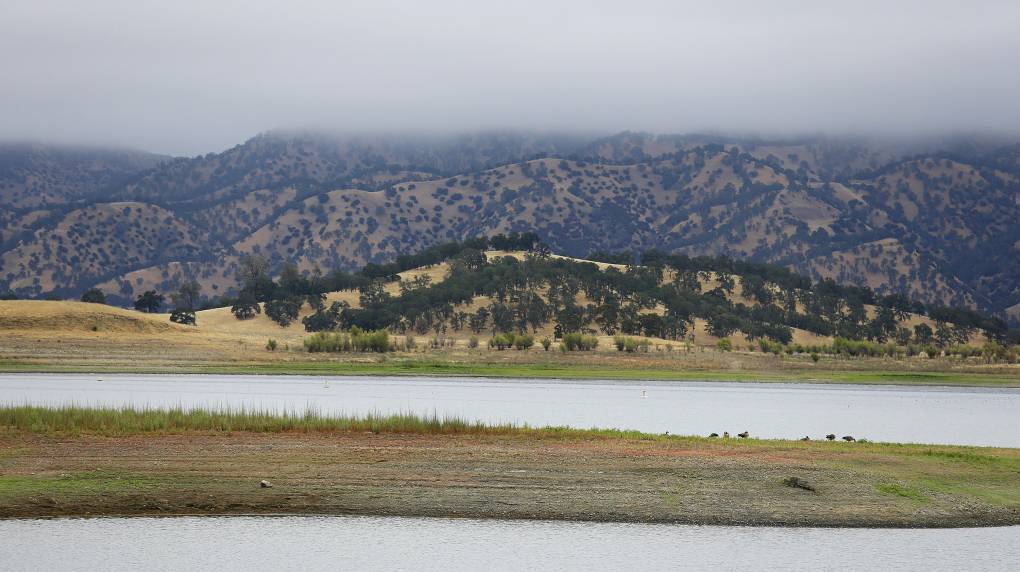
"caption": "Lake Berryessa is seen with parts of California's newest national monument in the background on July 10, 2015, near Berryessa Snow Mountain National Monument. President Joe Biden has expanded two culturally significant California landscapes: the San Gabriel Mountains National Monument in Southern California and the Berryessa Snow Mountain National Monument in Northern California. The U.S. National Park Service notes that the move on Thursday, May 2, 2024, was allowed under the Antiquities Act of 1906.",
"description": null,
"title": "California-New Monuments",
"credit": "Eric Risberg/AP Photo",
"status": "inherit",
"altTag": null,
"isLoading": false,
"fetchFailed": false
},
"news_11982062": {
"type": "attachments",
"id": "news_11982062",
"meta": {
"index": "attachments_1716263798",
"site": "news",
"id": "11982062",
"found": true
},
"parent": 11982060,
"imgSizes": {
"twentyfourteen-full-width": {
"file": "https://cdn.kqed.org/wp-content/uploads/sites/10/2024/04/CMNativeStudents01-1038x576.jpg",
"width": 1038,
"mimeType": "image/jpeg",
"height": 576
},
"thumbnail": {
"file": "https://cdn.kqed.org/wp-content/uploads/sites/10/2024/04/CMNativeStudents01-160x107.jpg",
"width": 160,
"mimeType": "image/jpeg",
"height": 107
},
"post-thumbnail": {
"file": "https://cdn.kqed.org/wp-content/uploads/sites/10/2024/04/CMNativeStudents01-672x372.jpg",
"width": 672,
"mimeType": "image/jpeg",
"height": 372
},
"kqedFullSize": {
"file": "https://cdn.kqed.org/wp-content/uploads/sites/10/2024/04/CMNativeStudents01.jpg",
"width": 2000,
"height": 1336
},
"large": {
"file": "https://cdn.kqed.org/wp-content/uploads/sites/10/2024/04/CMNativeStudents01-1020x681.jpg",
"width": 1020,
"mimeType": "image/jpeg",
"height": 681
},
"1536x1536": {
"file": "https://cdn.kqed.org/wp-content/uploads/sites/10/2024/04/CMNativeStudents01-1536x1026.jpg",
"width": 1536,
"mimeType": "image/jpeg",
"height": 1026
},
"full-width": {
"file": "https://cdn.kqed.org/wp-content/uploads/sites/10/2024/04/CMNativeStudents01-1920x1283.jpg",
"width": 1920,
"mimeType": "image/jpeg",
"height": 1283
},
"medium": {
"file": "https://cdn.kqed.org/wp-content/uploads/sites/10/2024/04/CMNativeStudents01-800x534.jpg",
"width": 800,
"mimeType": "image/jpeg",
"height": 534
}
},
"publishDate": 1712354910,
"modified": 1712363198,
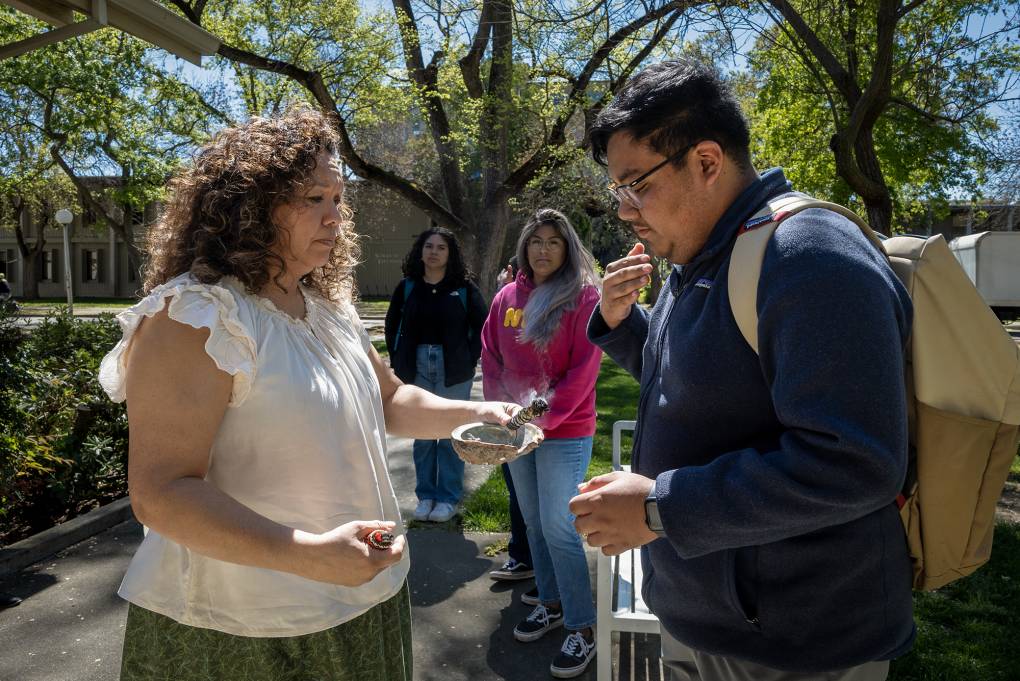
"caption": "Carlos Morales and Michelle Villegas-Frazier participate in a sage-burning ritual outside of the Native American Academic Student Success Center at UC Davis on April 1, 2024.",
"description": null,
"title": "CMNativeStudents01",
"credit": "José Luis Villegas/CalMatters",
"status": "inherit",
"altTag": "A native American woman in a white dress and a Native American man in a blue shirt and two people in the background during a ceremony.",
"isLoading": false,
"fetchFailed": false
},
"news_11980072": {
"type": "attachments",
"id": "news_11980072",
"meta": {
"index": "attachments_1716263798",
"site": "news",
"id": "11980072",
"found": true
},
"parent": 11980053,
"imgSizes": {
"twentyfourteen-full-width": {
"file": "https://cdn.kqed.org/wp-content/uploads/sites/10/2024/03/GettyImages-1233880064-1024x576.jpg",
"width": 1024,
"mimeType": "image/jpeg",
"height": 576
},
"thumbnail": {
"file": "https://cdn.kqed.org/wp-content/uploads/sites/10/2024/03/GettyImages-1233880064-160x107.jpg",
"width": 160,
"mimeType": "image/jpeg",
"height": 107
},
"post-thumbnail": {
"file": "https://cdn.kqed.org/wp-content/uploads/sites/10/2024/03/GettyImages-1233880064-672x372.jpg",
"width": 672,
"mimeType": "image/jpeg",
"height": 372
},
"kqedFullSize": {
"file": "https://cdn.kqed.org/wp-content/uploads/sites/10/2024/03/GettyImages-1233880064.jpg",
"width": 1024,
"height": 683
},
"large": {
"file": "https://cdn.kqed.org/wp-content/uploads/sites/10/2024/03/GettyImages-1233880064-1020x680.jpg",
"width": 1020,
"mimeType": "image/jpeg",
"height": 680
},
"medium": {
"file": "https://cdn.kqed.org/wp-content/uploads/sites/10/2024/03/GettyImages-1233880064-800x534.jpg",
"width": 800,
"mimeType": "image/jpeg",
"height": 534
}
},
"publishDate": 1710895010,
"modified": 1710895081,
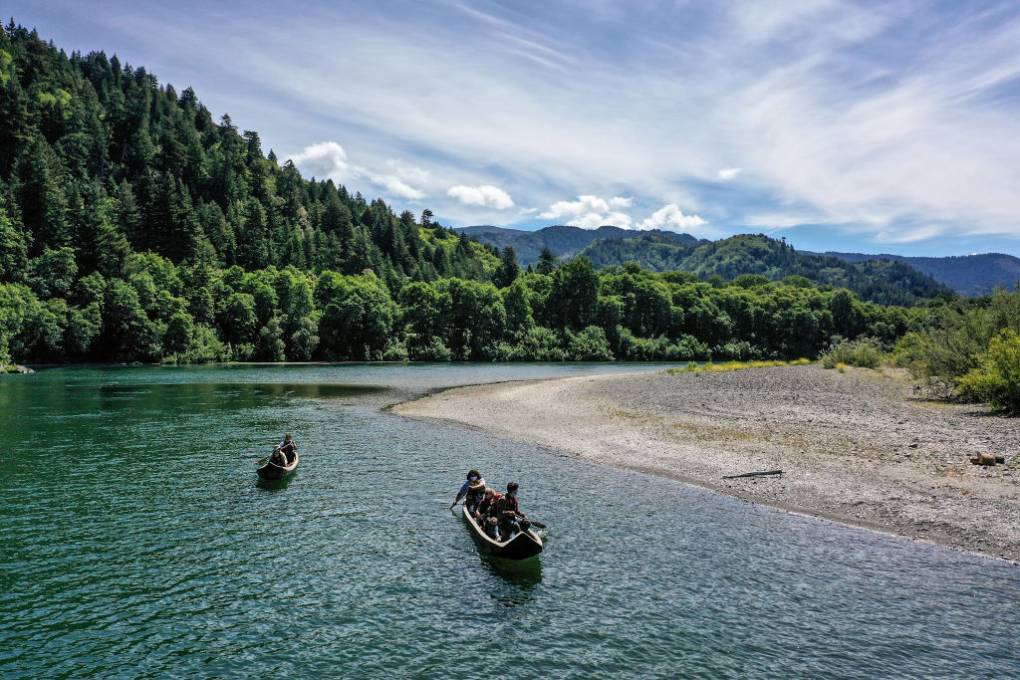
"caption": "Yurok guides paddle tourists along the Klamath River in traditional canoes hand crafted from Redwood trees on June 10, 2021. ",
"description": null,
"title": "Redwood Yurok Canoe Tours on the Klamath River",
"credit": "Robert Gauthier/Los Angeles Times via Getty Images",
"status": "inherit",
"altTag": null,
"isLoading": false,
"fetchFailed": false
},
"news_11970925": {
"type": "attachments",
"id": "news_11970925",
"meta": {
"index": "attachments_1716263798",
"site": "news",
"id": "11970925",
"found": true
},
"parent": 0,
"imgSizes": {
"twentyfourteen-full-width": {
"file": "https://cdn.kqed.org/wp-content/uploads/sites/10/2023/12/CMNative01-1038x576.jpg",
"width": 1038,
"mimeType": "image/jpeg",
"height": 576
},
"thumbnail": {
"file": "https://cdn.kqed.org/wp-content/uploads/sites/10/2023/12/CMNative01-160x107.jpg",
"width": 160,
"mimeType": "image/jpeg",
"height": 107
},
"post-thumbnail": {
"file": "https://cdn.kqed.org/wp-content/uploads/sites/10/2023/12/CMNative01-672x372.jpg",
"width": 672,
"mimeType": "image/jpeg",
"height": 372
},
"kqedFullSize": {
"file": "https://cdn.kqed.org/wp-content/uploads/sites/10/2023/12/CMNative01.jpg",
"width": 2000,
"height": 1333
},
"large": {
"file": "https://cdn.kqed.org/wp-content/uploads/sites/10/2023/12/CMNative01-1020x680.jpg",
"width": 1020,
"mimeType": "image/jpeg",
"height": 680
},
"1536x1536": {
"file": "https://cdn.kqed.org/wp-content/uploads/sites/10/2023/12/CMNative01-1536x1024.jpg",
"width": 1536,
"mimeType": "image/jpeg",
"height": 1024
},
"full-width": {
"file": "https://cdn.kqed.org/wp-content/uploads/sites/10/2023/12/CMNative01-1920x1280.jpg",
"width": 1920,
"mimeType": "image/jpeg",
"height": 1280
},
"medium": {
"file": "https://cdn.kqed.org/wp-content/uploads/sites/10/2023/12/CMNative01-800x533.jpg",
"width": 800,
"mimeType": "image/jpeg",
"height": 533
}
},
"publishDate": 1703618857,
"modified": 1703619088,
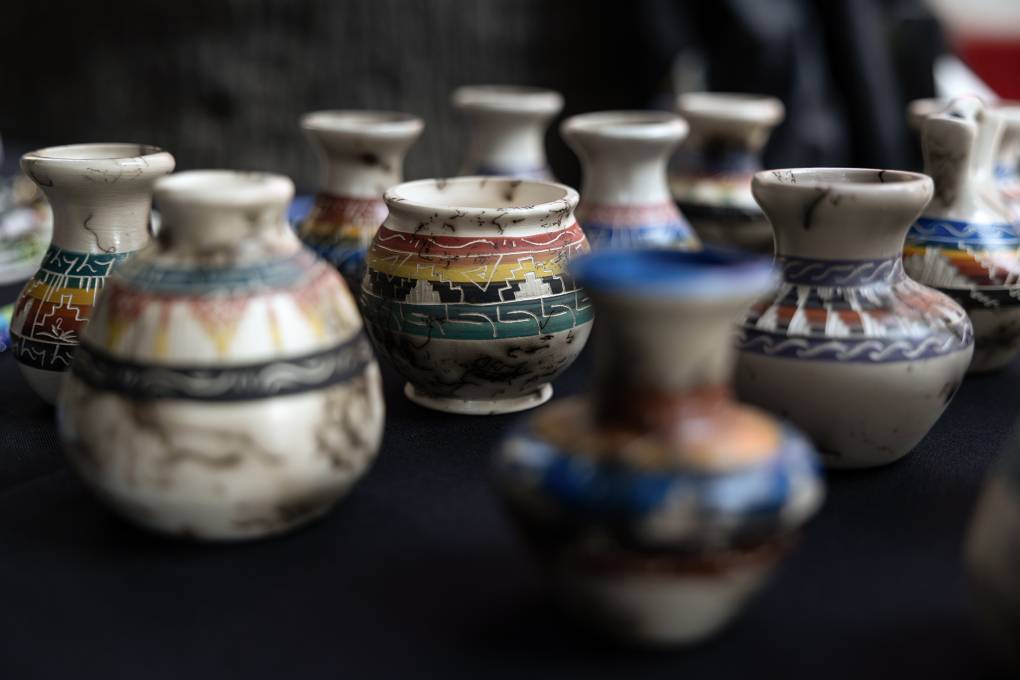
"caption": "A vendor sells pottery items at the California Native American Day celebration at the state Capitol on Sept. 22, 2023.",
"description": null,
"title": "CMNative01",
"credit": "Miguel Gutierrez Jr./CalMatters",
"status": "inherit",
"altTag": "Colorful Native American pottery is pictured. Some of it is weathered.",
"isLoading": false,
"fetchFailed": false
},
"news_11969408": {
"type": "attachments",
"id": "news_11969408",
"meta": {
"index": "attachments_1716263798",
"site": "news",
"id": "11969408",
"found": true
},
"parent": 11969401,
"imgSizes": {
"twentyfourteen-full-width": {
"file": "https://cdn.kqed.org/wp-content/uploads/sites/10/2023/12/AP23340707616905-1038x576.jpg",
"width": 1038,
"mimeType": "image/jpeg",
"height": 576
},
"thumbnail": {
"file": "https://cdn.kqed.org/wp-content/uploads/sites/10/2023/12/AP23340707616905-160x107.jpg",
"width": 160,
"mimeType": "image/jpeg",
"height": 107
},
"post-thumbnail": {
"file": "https://cdn.kqed.org/wp-content/uploads/sites/10/2023/12/AP23340707616905-672x372.jpg",
"width": 672,
"mimeType": "image/jpeg",
"height": 372
},
"kqedFullSize": {
"file": "https://cdn.kqed.org/wp-content/uploads/sites/10/2023/12/AP23340707616905-scaled.jpg",
"width": 2560,
"height": 1707
},
"2048x2048": {
"file": "https://cdn.kqed.org/wp-content/uploads/sites/10/2023/12/AP23340707616905-2048x1365.jpg",
"width": 2048,
"mimeType": "image/jpeg",
"height": 1365
},
"large": {
"file": "https://cdn.kqed.org/wp-content/uploads/sites/10/2023/12/AP23340707616905-1020x680.jpg",
"width": 1020,
"mimeType": "image/jpeg",
"height": 680
},
"1536x1536": {
"file": "https://cdn.kqed.org/wp-content/uploads/sites/10/2023/12/AP23340707616905-1536x1024.jpg",
"width": 1536,
"mimeType": "image/jpeg",
"height": 1024
},
"full-width": {
"file": "https://cdn.kqed.org/wp-content/uploads/sites/10/2023/12/AP23340707616905-1920x1280.jpg",
"width": 1920,
"mimeType": "image/jpeg",
"height": 1280
},
"medium": {
"file": "https://cdn.kqed.org/wp-content/uploads/sites/10/2023/12/AP23340707616905-800x533.jpg",
"width": 800,
"mimeType": "image/jpeg",
"height": 533
}
},
"publishDate": 1702063567,
"modified": 1702078912,
"caption": "President Joe Biden shakes hands with Assistant Secretary of the Interior for Indian Affairs Bryan Newland at the White House Tribal Nations Summit in Washington, D.C. on Dec. 6, 2023.",
"description": null,
"title": "Biden",
"credit": "Evan Vucci/AP",
"status": "inherit",
"altTag": "President Biden, on a stage, moves to shake hands with a younger man. Behind them, a sign reads: 'Tribal Nations Summit.'",
"isLoading": false,
"fetchFailed": false
},
"news_11967975": {
"type": "attachments",
"id": "news_11967975",
"meta": {
"index": "attachments_1716263798",
"site": "news",
"id": "11967975",
"found": true
},
"parent": 11967974,
"imgSizes": {
"twentyfourteen-full-width": {
"file": "https://ww2.kqed.org/app/uploads/sites/10/2023/11/gettyimages-1743393609_slide-2a5b5157225afc746be8ab3332df733afcceead3-1038x576.jpg",
"width": 1038,
"mimeType": "image/jpeg",
"height": 576
},
"thumbnail": {
"file": "https://ww2.kqed.org/app/uploads/sites/10/2023/11/gettyimages-1743393609_slide-2a5b5157225afc746be8ab3332df733afcceead3-160x107.jpg",
"width": 160,
"mimeType": "image/jpeg",
"height": 107
},
"post-thumbnail": {
"file": "https://ww2.kqed.org/app/uploads/sites/10/2023/11/gettyimages-1743393609_slide-2a5b5157225afc746be8ab3332df733afcceead3-672x372.jpg",
"width": 672,
"mimeType": "image/jpeg",
"height": 372
},
"kqedFullSize": {
"file": "https://ww2.kqed.org/app/uploads/sites/10/2023/11/gettyimages-1743393609_slide-2a5b5157225afc746be8ab3332df733afcceead3-scaled.jpg",
"width": 2560,
"height": 1706
},
"2048x2048": {
"file": "https://ww2.kqed.org/app/uploads/sites/10/2023/11/gettyimages-1743393609_slide-2a5b5157225afc746be8ab3332df733afcceead3-2048x1365.jpg",
"width": 2048,
"mimeType": "image/jpeg",
"height": 1365
},
"large": {
"file": "https://ww2.kqed.org/app/uploads/sites/10/2023/11/gettyimages-1743393609_slide-2a5b5157225afc746be8ab3332df733afcceead3-1020x680.jpg",
"width": 1020,
"mimeType": "image/jpeg",
"height": 680
},
"1536x1536": {
"file": "https://ww2.kqed.org/app/uploads/sites/10/2023/11/gettyimages-1743393609_slide-2a5b5157225afc746be8ab3332df733afcceead3-1536x1024.jpg",
"width": 1536,
"mimeType": "image/jpeg",
"height": 1024
},
"full-width": {
"file": "https://ww2.kqed.org/app/uploads/sites/10/2023/11/gettyimages-1743393609_slide-2a5b5157225afc746be8ab3332df733afcceead3-1920x1280.jpg",
"width": 1920,
"mimeType": "image/jpeg",
"height": 1280
},
"medium": {
"file": "https://ww2.kqed.org/app/uploads/sites/10/2023/11/gettyimages-1743393609_slide-2a5b5157225afc746be8ab3332df733afcceead3-800x533.jpg",
"width": 800,
"mimeType": "image/jpeg",
"height": 533
}
},
"publishDate": 1700522640,
"modified": 1700685697,
"caption": "Pins at a display counter during a cultural meeting at the Comanche Nation fairgrounds in Lawton, Oklahoma on Sept. 30, 2023. After Alaska, Oklahoma is the state with the most Native Americans of voting age — 12% of the population, according to census statistics.",
"description": null,
"title": "Pins are pictured at a display counter during a cultural meeting at the Comanche Nation fairgrounds in Lawton, Okla., on Sept. 30.",
"credit": "Chandan Khanna/AFP via Getty Images",
"status": "inherit",
"altTag": "Several pins scatted on a red tablecloth.",
"isLoading": false,
"fetchFailed": false
},
"news_11925212": {
"type": "attachments",
"id": "news_11925212",
"meta": {
"index": "attachments_1716263798",
"site": "news",
"id": "11925212",
"found": true
},
"parent": 11925121,
"imgSizes": {
"twentyfourteen-full-width": {
"file": "https://ww2.kqed.org/app/uploads/sites/10/2022/09/IMG_8787-2-1-1038x576.jpg",
"width": 1038,
"mimeType": "image/jpeg",
"height": 576
},
"thumbnail": {
"file": "https://ww2.kqed.org/app/uploads/sites/10/2022/09/IMG_8787-2-1-160x119.jpg",
"width": 160,
"mimeType": "image/jpeg",
"height": 119
},
"post-thumbnail": {
"file": "https://ww2.kqed.org/app/uploads/sites/10/2022/09/IMG_8787-2-1-672x372.jpg",
"width": 672,
"mimeType": "image/jpeg",
"height": 372
},
"kqedFullSize": {
"file": "https://ww2.kqed.org/app/uploads/sites/10/2022/09/IMG_8787-2-1.jpg",
"width": 1920,
"height": 1423
},
"large": {
"file": "https://ww2.kqed.org/app/uploads/sites/10/2022/09/IMG_8787-2-1-1020x756.jpg",
"width": 1020,
"mimeType": "image/jpeg",
"height": 756
},
"1536x1536": {
"file": "https://ww2.kqed.org/app/uploads/sites/10/2022/09/IMG_8787-2-1-1536x1138.jpg",
"width": 1536,
"mimeType": "image/jpeg",
"height": 1138
},
"medium": {
"file": "https://ww2.kqed.org/app/uploads/sites/10/2022/09/IMG_8787-2-1-800x593.jpg",
"width": 800,
"mimeType": "image/jpeg",
"height": 593
}
},
"publishDate": 1662761552,
"modified": 1662761601,
"caption": "At a Sept. 8 press conference, City officials and members of the Sogorea Te’ Land Trust, shared a mock-up image of a structure the trust is hoping to build at the Sequoia Point site.",
"description": null,
"title": "IMG_8787 2 (1)",
"credit": "Annelise Finney/KQED",
"status": "inherit",
"altTag": "a poster board showing a mockup of a gazebo",
"isLoading": false,
"fetchFailed": false
},
"news_11963112": {
"type": "attachments",
"id": "news_11963112",
"meta": {
"index": "attachments_1716263798",
"site": "news",
"id": "11963112",
"found": true
},
"parent": 11970292,
"imgSizes": {
"twentyfourteen-full-width": {
"file": "https://cdn.kqed.org/wp-content/uploads/sites/10/2023/10/231002-TULUWAT-ISLAND-01-KQED-1038x576.jpg",
"width": 1038,
"mimeType": "image/jpeg",
"height": 576
},
"thumbnail": {
"file": "https://cdn.kqed.org/wp-content/uploads/sites/10/2023/10/231002-TULUWAT-ISLAND-01-KQED-160x107.jpg",
"width": 160,
"mimeType": "image/jpeg",
"height": 107
},
"post-thumbnail": {
"file": "https://cdn.kqed.org/wp-content/uploads/sites/10/2023/10/231002-TULUWAT-ISLAND-01-KQED-672x372.jpg",
"width": 672,
"mimeType": "image/jpeg",
"height": 372
},
"kqedFullSize": {
"file": "https://cdn.kqed.org/wp-content/uploads/sites/10/2023/10/231002-TULUWAT-ISLAND-01-KQED.jpg",
"width": 2000,
"height": 1333
},
"large": {
"file": "https://cdn.kqed.org/wp-content/uploads/sites/10/2023/10/231002-TULUWAT-ISLAND-01-KQED-1020x680.jpg",
"width": 1020,
"mimeType": "image/jpeg",
"height": 680
},
"1536x1536": {
"file": "https://cdn.kqed.org/wp-content/uploads/sites/10/2023/10/231002-TULUWAT-ISLAND-01-KQED-1536x1024.jpg",
"width": 1536,
"mimeType": "image/jpeg",
"height": 1024
},
"full-width": {
"file": "https://cdn.kqed.org/wp-content/uploads/sites/10/2023/10/231002-TULUWAT-ISLAND-01-KQED-1920x1280.jpg",
"width": 1920,
"mimeType": "image/jpeg",
"height": 1280
},
"medium": {
"file": "https://cdn.kqed.org/wp-content/uploads/sites/10/2023/10/231002-TULUWAT-ISLAND-01-KQED-800x533.jpg",
"width": 800,
"mimeType": "image/jpeg",
"height": 533
}
},
"publishDate": 1696267364,
"modified": 1702928020,
"caption": "Cheryl Seidner (right) and her grand-niece Hilanea Wilkinson in Loleta on Sept. 22, 2023.",
"description": null,
"title": "231002-TULUWAT ISLAND-01-KQED",
"credit": "Alexandra Hootnick for KQED",
"status": "inherit",
"altTag": "Two people stand together in an outdoor setting looking at the camera.",
"isLoading": false,
"fetchFailed": false
},
"news_11912126": {
"type": "attachments",
"id": "news_11912126",
"meta": {
"index": "attachments_1716263798",
"site": "news",
"id": "11912126",
"found": true
},
"parent": 11912123,
"imgSizes": {
"twentyfourteen-full-width": {
"file": "https://ww2.kqed.org/app/uploads/sites/10/2022/04/ATN_611-Thumbnails-3-1038x576.png",
"width": 1038,
"mimeType": "image/png",
"height": 576
},
"thumbnail": {
"file": "https://ww2.kqed.org/app/uploads/sites/10/2022/04/ATN_611-Thumbnails-3-160x90.png",
"width": 160,
"mimeType": "image/png",
"height": 90
},
"post-thumbnail": {
"file": "https://ww2.kqed.org/app/uploads/sites/10/2022/04/ATN_611-Thumbnails-3-672x372.png",
"width": 672,
"mimeType": "image/png",
"height": 372
},
"kqedFullSize": {
"file": "https://ww2.kqed.org/app/uploads/sites/10/2022/04/ATN_611-Thumbnails-3.png",
"width": 1280,
"height": 720
},
"large": {
"file": "https://ww2.kqed.org/app/uploads/sites/10/2022/04/ATN_611-Thumbnails-3-1020x574.png",
"width": 1020,
"mimeType": "image/png",
"height": 574
},
"medium": {
"file": "https://ww2.kqed.org/app/uploads/sites/10/2022/04/ATN_611-Thumbnails-3-800x450.png",
"width": 800,
"mimeType": "image/png",
"height": 450
}
},
"publishDate": 1650909543,
"modified": 1697043680,
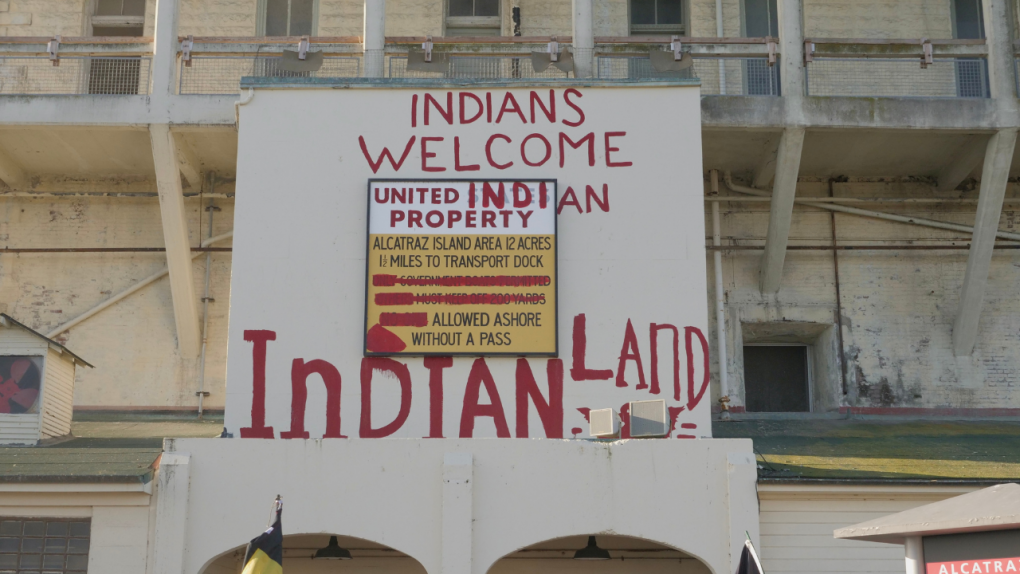
"caption": "A sign written on Alcatraz Island during the occupation by Native peoples, circa 1969–1971.",
"description": null,
"title": "ATN_611 Thumbnails (3)",
"credit": "Courtesy of Lloyd Molina IV",
"status": "inherit",
"altTag": "A sign that reads \"Indians Welcome, United Inland Property, Indian Land.\"",
"isLoading": false,
"fetchFailed": false
},
"news_11963727": {
"type": "attachments",
"id": "news_11963727",
"meta": {
"index": "attachments_1716263798",
"site": "news",
"id": "11963727",
"found": true
},
"parent": 11963726,
"imgSizes": {
"twentyfourteen-full-width": {
"file": "https://ww2.kqed.org/app/uploads/sites/10/2023/10/GettyImages-640119072-1038x576.jpg",
"width": 1038,
"mimeType": "image/jpeg",
"height": 576
},
"thumbnail": {
"file": "https://ww2.kqed.org/app/uploads/sites/10/2023/10/GettyImages-640119072-160x112.jpg",
"width": 160,
"mimeType": "image/jpeg",
"height": 112
},
"post-thumbnail": {
"file": "https://ww2.kqed.org/app/uploads/sites/10/2023/10/GettyImages-640119072-672x372.jpg",
"width": 672,
"mimeType": "image/jpeg",
"height": 372
},
"kqedFullSize": {
"file": "https://ww2.kqed.org/app/uploads/sites/10/2023/10/GettyImages-640119072-scaled.jpg",
"width": 2560,
"height": 1793
},
"2048x2048": {
"file": "https://ww2.kqed.org/app/uploads/sites/10/2023/10/GettyImages-640119072-2048x1434.jpg",
"width": 2048,
"mimeType": "image/jpeg",
"height": 1434
},
"large": {
"file": "https://ww2.kqed.org/app/uploads/sites/10/2023/10/GettyImages-640119072-1020x714.jpg",
"width": 1020,
"mimeType": "image/jpeg",
"height": 714
},
"1536x1536": {
"file": "https://ww2.kqed.org/app/uploads/sites/10/2023/10/GettyImages-640119072-1536x1076.jpg",
"width": 1536,
"mimeType": "image/jpeg",
"height": 1076
},
"full-width": {
"file": "https://ww2.kqed.org/app/uploads/sites/10/2023/10/GettyImages-640119072-1920x1344.jpg",
"width": 1920,
"mimeType": "image/jpeg",
"height": 1344
},
"medium": {
"file": "https://ww2.kqed.org/app/uploads/sites/10/2023/10/GettyImages-640119072-800x560.jpg",
"width": 800,
"mimeType": "image/jpeg",
"height": 560
}
},
"publishDate": 1696624506,
"modified": 1696624585,
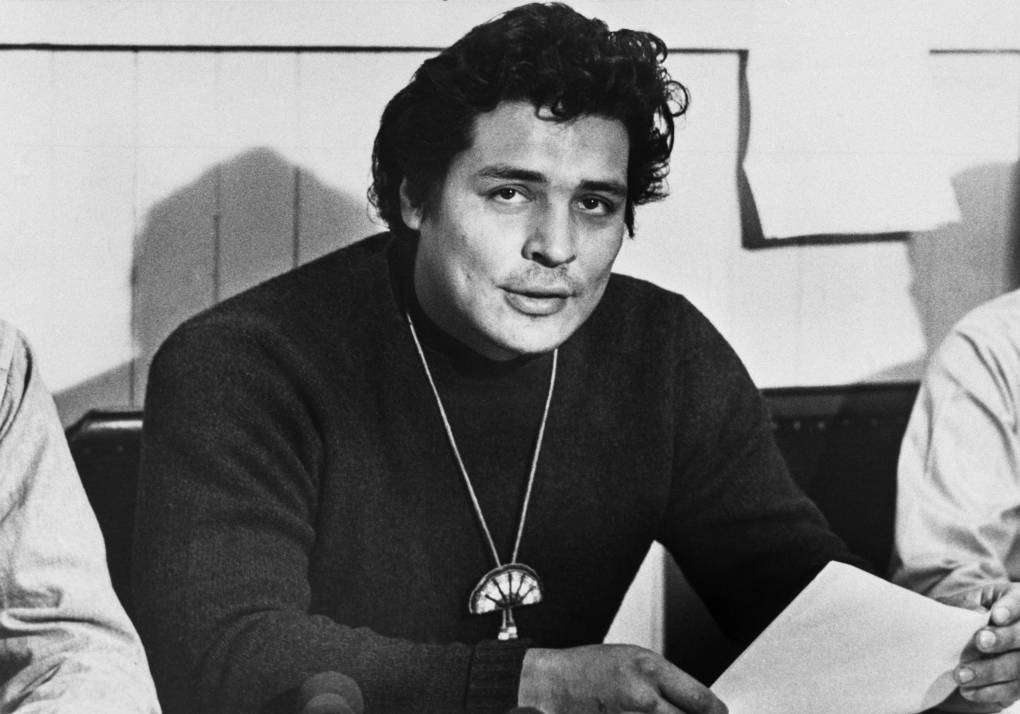
"caption": "Richard Oakes led the famous native occupation of Alcatraz Island in 1969.",
"description": null,
"title": "Richard Oakes",
"credit": "Bettmann/Getty Images",
"status": "inherit",
"altTag": null,
"isLoading": false,
"fetchFailed": false
},
"news_11958586": {
"type": "attachments",
"id": "news_11958586",
"meta": {
"index": "attachments_1716263798",
"site": "news",
"id": "11958586",
"found": true
},
"title": "Schools-Overdose Antidote",
"publishDate": 1692397658,
"status": "inherit",
"parent": 12059914,
"modified": 1760721268,
"caption": "The overdose-reversal drug Narcan. ",
"credit": "Matt Rourke/AP Photo",
"altTag": "A hand with painted finger nails holds a small white object with the words \"NARCAN NASAL SPRAY\" written on it.",
"description": null,
"imgSizes": {
"medium": {
"file": "https://cdn.kqed.org/wp-content/uploads/sites/10/2023/08/230818-NARCAN-AP-MR-KQED-800x533.jpg",
"width": 800,
"height": 533,
"mimeType": "image/jpeg"
},
"large": {
"file": "https://cdn.kqed.org/wp-content/uploads/sites/10/2023/08/230818-NARCAN-AP-MR-KQED-1020x680.jpg",
"width": 1020,
"height": 680,
"mimeType": "image/jpeg"
},
"thumbnail": {
"file": "https://cdn.kqed.org/wp-content/uploads/sites/10/2023/08/230818-NARCAN-AP-MR-KQED-160x107.jpg",
"width": 160,
"height": 107,
"mimeType": "image/jpeg"
},
"1536x1536": {
"file": "https://cdn.kqed.org/wp-content/uploads/sites/10/2023/08/230818-NARCAN-AP-MR-KQED-1536x1024.jpg",
"width": 1536,
"height": 1024,
"mimeType": "image/jpeg"
},
"post-thumbnail": {
"file": "https://cdn.kqed.org/wp-content/uploads/sites/10/2023/08/230818-NARCAN-AP-MR-KQED-672x372.jpg",
"width": 672,
"height": 372,
"mimeType": "image/jpeg"
},
"twentyfourteen-full-width": {
"file": "https://cdn.kqed.org/wp-content/uploads/sites/10/2023/08/230818-NARCAN-AP-MR-KQED-1038x576.jpg",
"width": 1038,
"height": 576,
"mimeType": "image/jpeg"
},
"full-width": {
"file": "https://cdn.kqed.org/wp-content/uploads/sites/10/2023/08/230818-NARCAN-AP-MR-KQED-1920x1280.jpg",
"width": 1920,
"height": 1280,
"mimeType": "image/jpeg"
},
"kqedFullSize": {
"file": "https://cdn.kqed.org/wp-content/uploads/sites/10/2023/08/230818-NARCAN-AP-MR-KQED.jpg",
"width": 2000,
"height": 1333
}
},
"isLoading": false,
"fetchFailed": false
},
"news_11958021": {
"type": "attachments",
"id": "news_11958021",
"meta": {
"index": "attachments_1716263798",
"site": "news",
"id": "11958021",
"found": true
},
"parent": 0,
"imgSizes": {
"twentyfourteen-full-width": {
"file": "https://ww2.kqed.org/app/uploads/sites/10/2023/08/CalMattersDelta01-1038x576.jpg",
"width": 1038,
"mimeType": "image/jpeg",
"height": 576
},
"thumbnail": {
"file": "https://ww2.kqed.org/app/uploads/sites/10/2023/08/CalMattersDelta01-160x107.jpg",
"width": 160,
"mimeType": "image/jpeg",
"height": 107
},
"post-thumbnail": {
"file": "https://ww2.kqed.org/app/uploads/sites/10/2023/08/CalMattersDelta01-672x372.jpg",
"width": 672,
"mimeType": "image/jpeg",
"height": 372
},
"kqedFullSize": {
"file": "https://ww2.kqed.org/app/uploads/sites/10/2023/08/CalMattersDelta01.jpg",
"width": 2000,
"height": 1333
},
"large": {
"file": "https://ww2.kqed.org/app/uploads/sites/10/2023/08/CalMattersDelta01-1020x680.jpg",
"width": 1020,
"mimeType": "image/jpeg",
"height": 680
},
"1536x1536": {
"file": "https://ww2.kqed.org/app/uploads/sites/10/2023/08/CalMattersDelta01-1536x1024.jpg",
"width": 1536,
"mimeType": "image/jpeg",
"height": 1024
},
"full-width": {
"file": "https://ww2.kqed.org/app/uploads/sites/10/2023/08/CalMattersDelta01-1920x1280.jpg",
"width": 1920,
"mimeType": "image/jpeg",
"height": 1280
},
"medium": {
"file": "https://ww2.kqed.org/app/uploads/sites/10/2023/08/CalMattersDelta01-800x533.jpg",
"width": 800,
"mimeType": "image/jpeg",
"height": 533
}
},
"publishDate": 1691775880,
"modified": 1691776353,
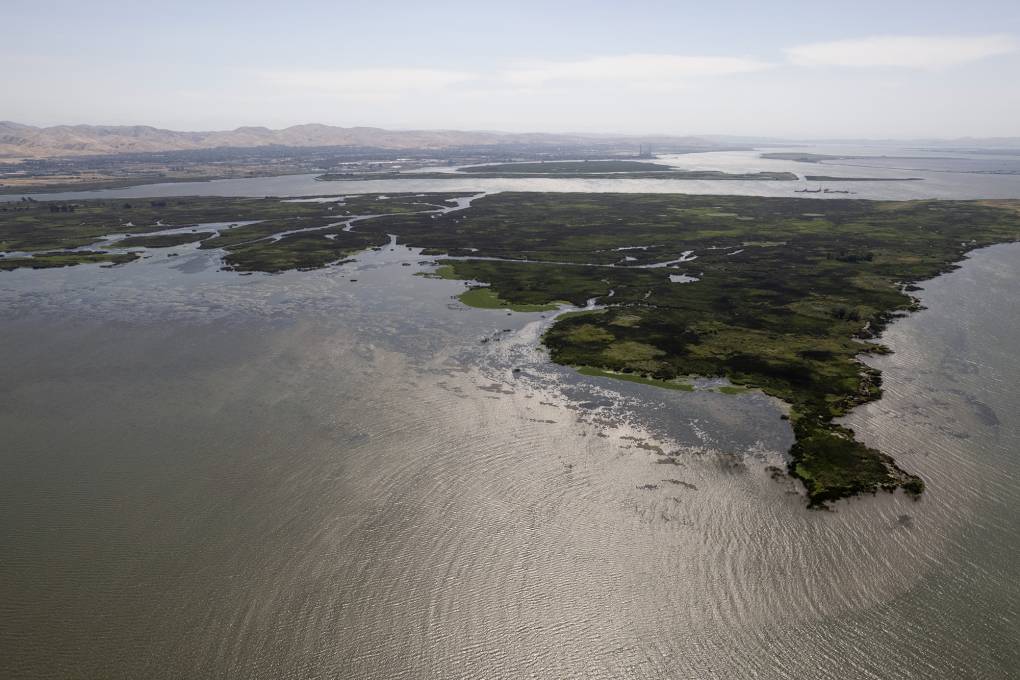
"caption": "The Sacramento-San Joaquin River Delta on June 22, 2023. ",
"description": null,
"title": "CalMattersDelta01",
"credit": "Miguel Gutierrez Jr./CalMatters",
"status": "inherit",
"altTag": "An aerial shot of the Sacramento-San Joaquin River Delta.",
"isLoading": false,
"fetchFailed": false
}
},
"audioPlayerReducer": {
"postId": "stream_live",
"isPaused": true,
"isPlaying": false,
"pfsActive": false,
"pledgeModalIsOpen": true,
"playerDrawerIsOpen": false,
"liveAudioPlayStartedAt": 0,
"liveAudioPlayContext": ""
},
"authorsReducer": {
"byline_news_11984763": {
"type": "authors",
"id": "byline_news_11984763",
"meta": {
"override": true
},
"slug": "byline_news_11984763",
"name": "Alexa St. John, The Associated Press",
"isLoading": false
},
"byline_news_11982060": {
"type": "authors",
"id": "byline_news_11982060",
"meta": {
"override": true
},
"slug": "byline_news_11982060",
"name": "\u003ca href=\"https://calmatters.org/author/christopher-buchanan/\">Christopher Buchanan\u003c/a>",
"isLoading": false
},
"byline_news_11980053": {
"type": "authors",
"id": "byline_news_11980053",
"meta": {
"override": true
},
"slug": "byline_news_11980053",
"name": "Julie Watson\u003cbr>Associated Press",
"isLoading": false
},
"byline_news_11970846": {
"type": "authors",
"id": "byline_news_11970846",
"meta": {
"override": true
},
"slug": "byline_news_11970846",
"name": "Amelia Wu and Helena San Roque",
"isLoading": false
},
"byline_news_11969401": {
"type": "authors",
"id": "byline_news_11969401",
"meta": {
"override": true
},
"slug": "byline_news_11969401",
"name": "Susan Montoya\u003cbr>Associated Press",
"isLoading": false
},
"byline_news_11967974": {
"type": "authors",
"id": "byline_news_11967974",
"meta": {
"override": true
},
"slug": "byline_news_11967974",
"name": "\u003ca href=\"https://www.npr.org/people/1101057193/ximena-bustillo\">Ximena Bustillo\u003c/a>",
"isLoading": false
},
"byline_news_11958011": {
"type": "authors",
"id": "byline_news_11958011",
"meta": {
"override": true
},
"slug": "byline_news_11958011",
"name": "\u003ca href=\"https://calmatters.org/author/rachel-becker/\">Rachel Becker\u003c/a>",
"isLoading": false
},
"ecruzguevarra": {
"type": "authors",
"id": "8654",
"meta": {
"index": "authors_1716337520",
"id": "8654",
"found": true
},
"name": "Ericka Cruz Guevarra",
"firstName": "Ericka",
"lastName": "Cruz Guevarra",
"slug": "ecruzguevarra",
"email": "ecruzguevarra@kqed.org",
"display_author_email": true,
"staff_mastheads": [
"news"
],
"title": "Producer, The Bay Podcast",
"bio": "Ericka Cruz Guevarra is host of \u003ca href=\"https://www.kqed.org/podcasts/thebay\">\u003cem>The Bay\u003c/em>\u003c/a> podcast at KQED. Before host, she was the show’s producer. Her work in that capacity includes a three-part reported series on policing in Vallejo, which won a 2020 excellence in journalism award from the Society of Professional Journalists. Ericka has worked as a breaking news reporter at Oregon Public Broadcasting, helped produce the Code Switch podcast, and was KQED’s inaugural Raul Ramirez Diversity Fund intern. She’s also an alumna of NPR’s Next Generation Radio program. Send her an email if you have strong feelings about whether Fairfield and Suisun City are the Bay. Ericka is represented by SAG-AFTRA.",
"avatar": "https://secure.gravatar.com/avatar/accefc1de4bafc7e234b69bcb9b6f6536c130fd84709bc3069ef11a78787e1bb?s=600&d=blank&r=g",
"twitter": "NotoriousECG",
"bluesky": null,
"facebook": null,
"instagram": null,
"linkedin": null,
"sites": [
{
"site": "arts",
"roles": [
"subscriber"
]
},
{
"site": "news",
"roles": [
"editor",
"manage_categories"
]
},
{
"site": "futureofyou",
"roles": [
"subscriber"
]
},
{
"site": "stateofhealth",
"roles": [
"subscriber"
]
},
{
"site": "science",
"roles": [
"editor"
]
},
{
"site": "forum",
"roles": [
"subscriber"
]
}
],
"headData": {
"title": "Ericka Cruz Guevarra | KQED",
"description": "Producer, The Bay Podcast",
"ogImgSrc": "https://secure.gravatar.com/avatar/accefc1de4bafc7e234b69bcb9b6f6536c130fd84709bc3069ef11a78787e1bb?s=600&d=blank&r=g",
"twImgSrc": "https://secure.gravatar.com/avatar/accefc1de4bafc7e234b69bcb9b6f6536c130fd84709bc3069ef11a78787e1bb?s=600&d=blank&r=g"
},
"isLoading": false,
"link": "/author/ecruzguevarra"
},
"amontecillo": {
"type": "authors",
"id": "11649",
"meta": {
"index": "authors_1716337520",
"id": "11649",
"found": true
},
"name": "Alan Montecillo",
"firstName": "Alan",
"lastName": "Montecillo",
"slug": "amontecillo",
"email": "amontecillo@kqed.org",
"display_author_email": false,
"staff_mastheads": [
"news"
],
"title": "KQED Contributor",
"bio": "Alan Montecillo is the senior editor of \u003cem>\u003ca href=\"http://kqed.org/thebay\">The Bay\u003c/a>, \u003c/em> KQED's local news podcast. Before moving to the Bay Area, he worked as a senior talk show producer for WILL in Champaign-Urbana, Illinois and at Oregon Public Broadcasting in Portland, Oregon. He has won journalism awards from the Society of Professional Journalists Northern California, the Public Media Journalists Association, The Signal Awards, and has also received a regional Edward R. Murrow award. Alan is a Filipino American from Hong Kong and a graduate of Reed College.",
"avatar": "https://secure.gravatar.com/avatar/268f53a2066899ea9efdd8a5900218b17c822d9862cbc9326cccec53ef41d349?s=600&d=blank&r=g",
"twitter": "alanmontecillo",
"bluesky": null,
"facebook": null,
"instagram": null,
"linkedin": null,
"sites": [
{
"site": "",
"roles": [
"editor"
]
},
{
"site": "news",
"roles": [
"editor",
"manage_categories"
]
}
],
"headData": {
"title": "Alan Montecillo | KQED",
"description": "KQED Contributor",
"ogImgSrc": "https://secure.gravatar.com/avatar/268f53a2066899ea9efdd8a5900218b17c822d9862cbc9326cccec53ef41d349?s=600&d=blank&r=g",
"twImgSrc": "https://secure.gravatar.com/avatar/268f53a2066899ea9efdd8a5900218b17c822d9862cbc9326cccec53ef41d349?s=600&d=blank&r=g"
},
"isLoading": false,
"link": "/author/amontecillo"
},
"afinney": {
"type": "authors",
"id": "11772",
"meta": {
"index": "authors_1716337520",
"id": "11772",
"found": true
},
"name": "Annelise Finney",
"firstName": "Annelise",
"lastName": "Finney",
"slug": "afinney",
"email": "afinney@kqed.org",
"display_author_email": true,
"staff_mastheads": [
"news"
],
"title": "Reporter",
"bio": "Annelise reports on reparations in California and East Bay politics. She co-produced the Sunday Music Drop, a limited-term radio series featuring Bay Area musicians that aired between Sept 2022 and Oct 2024. She joined KQED in 2021 as a general assignment reporter and is an alumna of KALW's Audio Academy. She was born and raised in the East Bay. She is currently away from KQED completing a year-long reporting project in Berlin, Germany as a Alexander Von Humboldt German Chancellor Fellow.",
"avatar": "https://secure.gravatar.com/avatar/5fded66cae47704cdfc5021cde0f3aa4?s=600&d=blank&r=g",
"twitter": null,
"facebook": null,
"instagram": null,
"linkedin": null,
"sites": [
{
"site": "news",
"roles": [
"editor"
]
},
{
"site": "liveblog",
"roles": [
"author"
]
}
],
"headData": {
"title": "Annelise Finney | KQED",
"description": "Reporter",
"ogImgSrc": "https://secure.gravatar.com/avatar/5fded66cae47704cdfc5021cde0f3aa4?s=600&d=blank&r=g",
"twImgSrc": "https://secure.gravatar.com/avatar/5fded66cae47704cdfc5021cde0f3aa4?s=600&d=blank&r=g"
},
"isLoading": false,
"link": "/author/afinney"
},
"mesquinca": {
"type": "authors",
"id": "11802",
"meta": {
"index": "authors_1716337520",
"id": "11802",
"found": true
},
"name": "Maria Esquinca",
"firstName": "Maria",
"lastName": "Esquinca",
"slug": "mesquinca",
"email": "mesquinca@kqed.org",
"display_author_email": false,
"staff_mastheads": [],
"title": "Producer, The Bay",
"bio": "María Esquinca is a producer of The Bay. Before that, she was a New York Women’s Foundation IGNITE Fellow at Latino USA. She worked at Radio Bilingue where she covered the San Joaquin Valley. Maria has interned at WLRN, News 21, The New York Times Student Journalism Institute and at Crain’s Detroit Business as a Dow Jones News Fund Business Reporting Intern. She is an MFA graduate from the University of Miami. In 2017, she graduated from the Walter Cronkite School of Journalism and Mass Communication with a Master of Mass Communication. A fronteriza, she was born in Ciudad Juárez, Chihuahua, Mexico and grew up in El Paso, Texas.",
"avatar": "https://secure.gravatar.com/avatar/77cedba18aae91da775038ba06dcd8d0?s=600&d=blank&r=g",
"twitter": "@m_esquinca",
"facebook": null,
"instagram": null,
"linkedin": null,
"sites": [
{
"site": "news",
"roles": []
}
],
"headData": {
"title": "Maria Esquinca | KQED",
"description": "Producer, The Bay",
"ogImgSrc": "https://secure.gravatar.com/avatar/77cedba18aae91da775038ba06dcd8d0?s=600&d=blank&r=g",
"twImgSrc": "https://secure.gravatar.com/avatar/77cedba18aae91da775038ba06dcd8d0?s=600&d=blank&r=g"
},
"isLoading": false,
"link": "/author/mesquinca"
},
"ibloom": {
"type": "authors",
"id": "11805",
"meta": {
"index": "authors_1716337520",
"id": "11805",
"found": true
},
"name": "Izzy Bloom",
"firstName": "Izzy",
"lastName": "Bloom",
"slug": "ibloom",
"email": "ibloom@kqed.org",
"display_author_email": false,
"staff_mastheads": [],
"title": "KQED Reporter & Producer",
"bio": "Izzy is a reporter and producer on KQED's California Politics & Government Desk. She joined the desk in 2024 to produce Political Breakdown, covering local and national elections and attending the RNC and DNC in Milwaukee and Chicago. \r\n\r\nBefore that, Izzy was a producer on The California Report and reported long-form stories for The California Report Magazine. She was a finalist for the Third Coast/Richard H. Driehaus Foundation Competition and was awarded for her reporting on indigenous land back by the Society of Professional Journalists. Izzy received her master's in journalism from the University of California, Berkeley.",
"avatar": "https://secure.gravatar.com/avatar/cc4d272ca430783ee1a8efac470a6b1e0fdd082c3beb61da019801d0ff751c8c?s=600&d=blank&r=g",
"twitter": null,
"bluesky": null,
"facebook": null,
"instagram": null,
"linkedin": null,
"sites": [
{
"site": "news",
"roles": [
"editor"
]
},
{
"site": "perspectives",
"roles": [
"editor"
]
}
],
"headData": {
"title": "Izzy Bloom | KQED",
"description": "KQED Reporter & Producer",
"ogImgSrc": "https://secure.gravatar.com/avatar/cc4d272ca430783ee1a8efac470a6b1e0fdd082c3beb61da019801d0ff751c8c?s=600&d=blank&r=g",
"twImgSrc": "https://secure.gravatar.com/avatar/cc4d272ca430783ee1a8efac470a6b1e0fdd082c3beb61da019801d0ff751c8c?s=600&d=blank&r=g"
},
"isLoading": false,
"link": "/author/ibloom"
},
"sjohnson": {
"type": "authors",
"id": "11840",
"meta": {
"index": "authors_1716337520",
"id": "11840",
"found": true
},
"name": "Sydney Johnson",
"firstName": "Sydney",
"lastName": "Johnson",
"slug": "sjohnson",
"email": "sjohnson@kqed.org",
"display_author_email": false,
"staff_mastheads": [
"news"
],
"title": "KQED Reporter",
"bio": "Sydney Johnson is a general assignment reporter at KQED. She previously reported on public health and city government at the San Francisco Examiner, and before that, she covered statewide education policy for EdSource. Her reporting has won multiple local, state and national awards. Sydney is a graduate of the University of California, Berkeley and lives in San Francisco.",
"avatar": "https://secure.gravatar.com/avatar/97855f2719b72ad6190b7c535fe642c8?s=600&d=blank&r=g",
"twitter": "sydneyfjohnson",
"facebook": null,
"instagram": null,
"linkedin": null,
"sites": [
{
"site": "news",
"roles": [
"editor"
]
}
],
"headData": {
"title": "Sydney Johnson | KQED",
"description": "KQED Reporter",
"ogImgSrc": "https://secure.gravatar.com/avatar/97855f2719b72ad6190b7c535fe642c8?s=600&d=blank&r=g",
"twImgSrc": "https://secure.gravatar.com/avatar/97855f2719b72ad6190b7c535fe642c8?s=600&d=blank&r=g"
},
"isLoading": false,
"link": "/author/sjohnson"
}
},
"pagesReducer": {
"news_tag_native-americans": {
"type": "terms",
"id": "news_1262",
"meta": {
"index": "terms_1716263798",
"site": "news",
"id": "1262",
"score": 9.304556
},
"featImg": null,
"name": "native americans",
"description": null,
"taxonomy": "tag",
"headData": {
"twImgId": null,
"twTitle": null,
"ogTitle": null,
"ogImgId": null,
"twDescription": null,
"description": null,
"title": "native americans Archives | KQED News",
"ogDescription": null
},
"ttid": 1274,
"slug": "native-americans",
"isLoading": false,
"title": "native americans",
"pageMeta": {
"site": "news",
"WpPageTemplate": "page-topic-editorial",
"currentPage": 2
},
"blocks": [
{
"blockName": "kqed/post-list",
"attrs": {
"layout": "cardArticle2",
"query": "posts/news?tag=native-americans",
"seeMore": false,
"paginated": true,
"page": 2
}
},
{
"blockName": "kqed/ad"
}
]
}
},
"pfsSessionReducer": {},
"postsReducer": {
"stream_live": {
"type": "live",
"id": "stream_live",
"audioUrl": "https://streams.kqed.org/kqedradio",
"title": "Live Stream",
"excerpt": "Live Stream information currently unavailable.",
"link": "/radio",
"featImg": "",
"label": {
"name": "KQED Live",
"link": "/"
}
},
"stream_kqedNewscast": {
"type": "posts",
"id": "stream_kqedNewscast",
"audioUrl": "https://www.kqed.org/.stream/anon/radio/RDnews/newscast.mp3?_=1",
"title": "KQED Newscast",
"featImg": "",
"label": {
"name": "88.5 FM",
"link": "/"
}
},
"news_11984763": {
"type": "posts",
"id": "news_11984763",
"meta": {
"index": "posts_1716263798",
"site": "news",
"id": "11984763",
"score": null,
"sort": [
1714676415000
]
},
"guestAuthors": [],
"slug": "biden-expands-2-national-monuments-in-california-significant-to-tribal-nations",
"title": "Biden Expands 2 National Monuments in California Significant to Tribal Nations",
"publishDate": 1714676415,
"format": "standard",
"headTitle": "Biden Expands 2 National Monuments in California Significant to Tribal Nations | KQED",
"labelTerm": {
"site": "news"
},
"content": "\u003cp>President Joe Biden on Thursday expanded two national monuments in California following calls from tribal nations, Indigenous community leaders and others for the permanent protection of nearly 120,000 acres of important cultural and environmental land.\u003c/p>\n\u003cp>The designations play a role in federal and state goals to conserve 30% of public lands by 2030, a move aimed at honoring tribal heritage and addressing climate change, the White House said in a news release.\u003c/p>\n\u003cp>Republicans have opposed some of Biden’s previous protection measures, alleging he exceeded his legal authority. Some of the president’s past actions have included \u003ca style=\"font-weight: var(--font-weight-reg)\" href=\"https://apnews.com/article/donald-trump-joe-biden-utah-environment-and-nature-b763897fc47136339bd12360a90079c0\">restoring monuments or conservation land\u003c/a> that former President Donald Trump had canceled.\u003c/p>\n\u003cp>[ad fullwidth]\u003c/p>\n\u003cp>In Southern California near Pasadena, Biden expanded the San Gabriel Mountains National Monument, driven by calls from Indigenous peoples, including the Fernandeño Tataviam Band of Mission Indians and the Gabrieleno San Gabriel Band of Mission Indians. Both are the original stewards of the culturally rich and diverse lands, advocates noted in a separate news release.\u003c/p>\n\u003cp>The president also expanded Berryessa Snow Mountain National Monument in Lake County in Northern California to include Molok Luyuk or Condor Ridge. The ridge has been significant to tribal nations such as the Yocha Dehe Wintun Nation for thousands of years. It is a central site for religious ceremonies and was once important to key trading routes, advocates said.\u003c/p>\n\u003cp>Expansion of both sites makes nature more accessible for Californians while protecting many species, including black bears, mountain lions and tule elk, the White House release said.\u003c/p>\n\u003cp>Californians are calling on the Biden administration to make a total of five monument designations this year. The other three include the designation of a new Chuckwalla National Monument, a new Kw’tsán National Monument and a call to protect and name Sáttítla, known as the Medicine Lake Highlands, as a national monument.\u003c/p>\n\u003cp>Against the backdrop of Biden’s reelection campaign, the White House emphasized the role of Vice President Kamala Harris in ensuring protections in her home state, including Thursday’s.[aside postID=news_11978645 hero='https://cdn.kqed.org/wp-content/uploads/sites/10/2024/03/GettyImages-2067239298-1020x680.jpg']“These expansions will increase access to nature, boost our outdoor economy, and honor areas of significance to Tribal Nations and Indigenous peoples as we continue to safeguard our public lands for all Americans and for generations to come,” Harris said in a statement.\u003c/p>\n\u003cp>Expansion and designation efforts are made under the Antiquities Act of 1906, which authorizes the president to “provide general legal protection of cultural and natural resources of historic or scientific interest on Federal lands,” according to the Department of the Interior.\u003c/p>\n\u003cp>Across the nation, \u003ca style=\"font-weight: var(--font-weight-reg)\" href=\"https://apnews.com/article/grand-canyon-tribes-mining-sacred-land-fef09420fab86d1169ae93a371ce17ca\">coalitions of tribes and conservation groups\u003c/a> have urged Biden to make several other designations over the past three years. \u003ca style=\"font-weight: var(--font-weight-reg)\" href=\"https://www.whitehouse.gov/briefing-room/statements-releases/2024/05/02/fact-sheet-president-biden-expands-san-gabriel-mountains-national-monument-and-berryessa-snow-mountain-national-monument/\">With Thursday’s news\u003c/a>, the administration has established or expanded seven national monuments, restored protections for three more and taken other measures, the White House said.\u003c/p>\n\u003cp>Biden signed a national monument designation \u003ca style=\"font-weight: var(--font-weight-reg)\" href=\"https://apnews.com/article/grand-canyon-national-monument-biden-9382960f18408dce7aec52f103404e11\">outside Grand Canyon National Park\u003c/a> called Baaj Nwaavjo I’tah Kukveni last August, a move which the top two Republicans in Arizona’s Legislature are \u003ca style=\"font-weight: var(--font-weight-reg)\" href=\"https://apnews.com/article/grand-canyon-national-monument-biden-lawsuit-arizona-e6385c4bbcf0a4e11d6c4087fa22d01f\">currently challenging\u003c/a>.\u003c/p>\n\u003cp>In 2021, Biden restored two sprawling national monuments in Utah and a marine conservation area in New England where Trump had cut environmental protections. The move was also \u003ca style=\"font-weight: var(--font-weight-reg)\" href=\"https://apnews.com/article/biden-bears-ears-lawsuit-dismissed-0e3e0805ba3fe5756c32a944bd7d29bb\">challenged in court\u003c/a>.\u003c/p>\n\u003cp>\u003ca href=\"https://apnews.com/article/biden-travel-mountains-arizona-las-vegas-ca156c74cf5b1d5778dda292e52fa57e\">Avi Kwa Ame National Monument\u003c/a>, sacred to Native Americans in southern Nevada, was designated in 2023 along with the \u003ca style=\"font-weight: var(--font-weight-reg)\" href=\"https://apnews.com/article/biden-avi-kwa-ame-nevada-conservation-willow-7378dadd793195bcedcc8562241cf54f\">Castner Range in El Paso, Texas\u003c/a>.\u003c/p>\n\u003cp>\u003c/p>\n",
"blocks": [],
"excerpt": "The move follows calls from tribal nations, Indigenous community leaders and others to permanently protect nearly 120,000 acres of important cultural and environmental land.",
"status": "publish",
"parent": 0,
"modified": 1721108464,
"stats": {
"hasAudio": false,
"hasVideo": false,
"hasChartOrMap": false,
"iframeSrcs": [],
"hasGoogleForm": false,
"hasGallery": false,
"hasHearkenModule": false,
"hasPolis": false,
"paragraphCount": 15,
"wordCount": 602
},
"headData": {
"title": "Biden Expands 2 National Monuments in California Significant to Tribal Nations | KQED",
"description": "The move follows calls from tribal nations, Indigenous community leaders and others to permanently protect nearly 120,000 acres of important cultural and environmental land.",
"ogTitle": "",
"ogDescription": "",
"ogImgId": "",
"twTitle": "",
"twDescription": "",
"twImgId": "",
"schema": {
"@context": "https://schema.org",
"@type": "NewsArticle",
"headline": "Biden Expands 2 National Monuments in California Significant to Tribal Nations",
"datePublished": "2024-05-02T12:00:15-07:00",
"dateModified": "2024-07-15T22:41:04-07:00",
"image": "https://cdn.kqed.org/wp-content/uploads/2020/02/KQED-OG-Image@1x.png",
"isAccessibleForFree": "True",
"publisher": {
"@type": "NewsMediaOrganization",
"@id": "https://www.kqed.org/#organization",
"name": "KQED",
"logo": "https://cdn.kqed.org/wp-content/uploads/2020/02/KQED-OG-Image@1x.png",
"url": "https://www.kqed.org",
"sameAs": [
"https://www.facebook.com/KQED",
"https://twitter.com/KQED",
"https://www.instagram.com/kqed/",
"https://www.tiktok.com/@kqedofficial",
"https://www.linkedin.com/company/kqed",
"https://www.youtube.com/channel/UCeC0IOo7i1P_61zVUWbJ4nw"
]
}
}
},
"sticky": false,
"nprByline": "Alexa St. John, The Associated Press",
"excludeFromSiteSearch": "Include",
"showOnAuthorArchivePages": "No",
"articleAge": "0",
"path": "/news/11984763/biden-expands-2-national-monuments-in-california-significant-to-tribal-nations",
"audioTrackLength": null,
"parsedContent": [
{
"type": "contentString",
"content": "\u003cdiv class=\"post-body\">\u003cp>\u003cp>President Joe Biden on Thursday expanded two national monuments in California following calls from tribal nations, Indigenous community leaders and others for the permanent protection of nearly 120,000 acres of important cultural and environmental land.\u003c/p>\n\u003cp>The designations play a role in federal and state goals to conserve 30% of public lands by 2030, a move aimed at honoring tribal heritage and addressing climate change, the White House said in a news release.\u003c/p>\n\u003cp>Republicans have opposed some of Biden’s previous protection measures, alleging he exceeded his legal authority. Some of the president’s past actions have included \u003ca style=\"font-weight: var(--font-weight-reg)\" href=\"https://apnews.com/article/donald-trump-joe-biden-utah-environment-and-nature-b763897fc47136339bd12360a90079c0\">restoring monuments or conservation land\u003c/a> that former President Donald Trump had canceled.\u003c/p>\n\u003cp>\u003c/p>\u003c/div>",
"attributes": {
"named": {},
"numeric": []
}
},
{
"type": "component",
"content": "",
"name": "ad",
"attributes": {
"named": {
"label": "fullwidth"
},
"numeric": [
"fullwidth"
]
}
},
{
"type": "contentString",
"content": "\u003cdiv class=\"post-body\">\u003cp>\u003c/p>\n\u003cp>In Southern California near Pasadena, Biden expanded the San Gabriel Mountains National Monument, driven by calls from Indigenous peoples, including the Fernandeño Tataviam Band of Mission Indians and the Gabrieleno San Gabriel Band of Mission Indians. Both are the original stewards of the culturally rich and diverse lands, advocates noted in a separate news release.\u003c/p>\n\u003cp>The president also expanded Berryessa Snow Mountain National Monument in Lake County in Northern California to include Molok Luyuk or Condor Ridge. The ridge has been significant to tribal nations such as the Yocha Dehe Wintun Nation for thousands of years. It is a central site for religious ceremonies and was once important to key trading routes, advocates said.\u003c/p>\n\u003cp>Expansion of both sites makes nature more accessible for Californians while protecting many species, including black bears, mountain lions and tule elk, the White House release said.\u003c/p>\n\u003cp>Californians are calling on the Biden administration to make a total of five monument designations this year. The other three include the designation of a new Chuckwalla National Monument, a new Kw’tsán National Monument and a call to protect and name Sáttítla, known as the Medicine Lake Highlands, as a national monument.\u003c/p>\n\u003cp>Against the backdrop of Biden’s reelection campaign, the White House emphasized the role of Vice President Kamala Harris in ensuring protections in her home state, including Thursday’s.\u003c/p>\u003c/div>",
"attributes": {
"named": {},
"numeric": []
}
},
{
"type": "component",
"content": "",
"name": "aside",
"attributes": {
"named": {
"postid": "news_11978645",
"hero": "https://cdn.kqed.org/wp-content/uploads/sites/10/2024/03/GettyImages-2067239298-1020x680.jpg",
"label": ""
},
"numeric": []
}
},
{
"type": "contentString",
"content": "\u003cdiv class=\"post-body\">\u003cp>“These expansions will increase access to nature, boost our outdoor economy, and honor areas of significance to Tribal Nations and Indigenous peoples as we continue to safeguard our public lands for all Americans and for generations to come,” Harris said in a statement.\u003c/p>\n\u003cp>Expansion and designation efforts are made under the Antiquities Act of 1906, which authorizes the president to “provide general legal protection of cultural and natural resources of historic or scientific interest on Federal lands,” according to the Department of the Interior.\u003c/p>\n\u003cp>Across the nation, \u003ca style=\"font-weight: var(--font-weight-reg)\" href=\"https://apnews.com/article/grand-canyon-tribes-mining-sacred-land-fef09420fab86d1169ae93a371ce17ca\">coalitions of tribes and conservation groups\u003c/a> have urged Biden to make several other designations over the past three years. \u003ca style=\"font-weight: var(--font-weight-reg)\" href=\"https://www.whitehouse.gov/briefing-room/statements-releases/2024/05/02/fact-sheet-president-biden-expands-san-gabriel-mountains-national-monument-and-berryessa-snow-mountain-national-monument/\">With Thursday’s news\u003c/a>, the administration has established or expanded seven national monuments, restored protections for three more and taken other measures, the White House said.\u003c/p>\n\u003cp>Biden signed a national monument designation \u003ca style=\"font-weight: var(--font-weight-reg)\" href=\"https://apnews.com/article/grand-canyon-national-monument-biden-9382960f18408dce7aec52f103404e11\">outside Grand Canyon National Park\u003c/a> called Baaj Nwaavjo I’tah Kukveni last August, a move which the top two Republicans in Arizona’s Legislature are \u003ca style=\"font-weight: var(--font-weight-reg)\" href=\"https://apnews.com/article/grand-canyon-national-monument-biden-lawsuit-arizona-e6385c4bbcf0a4e11d6c4087fa22d01f\">currently challenging\u003c/a>.\u003c/p>\n\u003cp>In 2021, Biden restored two sprawling national monuments in Utah and a marine conservation area in New England where Trump had cut environmental protections. The move was also \u003ca style=\"font-weight: var(--font-weight-reg)\" href=\"https://apnews.com/article/biden-bears-ears-lawsuit-dismissed-0e3e0805ba3fe5756c32a944bd7d29bb\">challenged in court\u003c/a>.\u003c/p>\n\u003cp>\u003ca href=\"https://apnews.com/article/biden-travel-mountains-arizona-las-vegas-ca156c74cf5b1d5778dda292e52fa57e\">Avi Kwa Ame National Monument\u003c/a>, sacred to Native Americans in southern Nevada, was designated in 2023 along with the \u003ca style=\"font-weight: var(--font-weight-reg)\" href=\"https://apnews.com/article/biden-avi-kwa-ame-nevada-conservation-willow-7378dadd793195bcedcc8562241cf54f\">Castner Range in El Paso, Texas\u003c/a>.\u003c/p>\n\u003cp>\u003c/p>\n\u003c/div>\u003c/p>",
"attributes": {
"named": {},
"numeric": []
}
}
],
"link": "/news/11984763/biden-expands-2-national-monuments-in-california-significant-to-tribal-nations",
"authors": [
"byline_news_11984763"
],
"categories": [
"news_31795",
"news_8"
],
"tags": [
"news_18538",
"news_20023",
"news_717",
"news_1262"
],
"featImg": "news_11984766",
"label": "news"
},
"news_11982060": {
"type": "posts",
"id": "news_11982060",
"meta": {
"index": "posts_1716263798",
"site": "news",
"id": "11982060",
"score": null,
"sort": [
1712401234000
]
},
"guestAuthors": [],
"slug": "native-american-students-at-ucs-get-free-tuition-heres-why-it-isnt-enough",
"title": "Native American Students at UCs Get Free Tuition. Here's Why It Isn't Enough",
"publishDate": 1712401234,
"format": "standard",
"headTitle": "Native American Students at UCs Get Free Tuition. Here’s Why It Isn’t Enough | KQED",
"labelTerm": {
"term": 18481,
"site": "news"
},
"content": "\u003cp>For high school senior Robert McConnell, an acceptance to UC Santa Cruz would all but guarantee his attendance. That’s because, as a member of a federally recognized tribe, McConnell would not have to pay tuition to pursue his dreams of studying marine biology under the \u003ca href=\"https://admission.universityofcalifornia.edu/tuition-financial-aid/types-of-aid/native-american-opportunity-plan.html\">UC Native American Opportunity Plan\u003c/a>.\u003c/p>\n\u003cp>Launched in 2021, the University of California plan offers free tuition to any member of a federal or state-recognized Native American tribe who can provide proof of membership. McConnell, a member of the Hoopa Valley Tribe in rural Northern California, said an acceptance will grant him opportunities that aren’t available in his unincorporated tribal community.\u003c/p>\n\u003cp>Over 85% of the residents in \u003ca href=\"https://data.census.gov/profile/Hoopa_CDP,_California?g=160XX00US0634540#race-and-ethnicity:~:text=Race%20and%20Ethnicity-,American%20Indian%20and%20Alaska%20Native,-2%2C678\">Hoopa\u003c/a> identify as Native American or Alaskan Native. Leaving behind \u003ca href=\"https://calmatters.org/education/k-12-education/2024/03/native-american-students-california/\">cultural and family support\u003c/a> to attend far-away institutions can be extremely difficult for Native students. The nearest UC campus to Hoopa is Davis, 200 miles away.\u003c/p>\n\u003cp>For the low-to-middle-income Native students of Hoopa, an opportunity to attend UC is invaluable. The reported monthly income for families in the small territory is just over $55,000 a year — qualifying many for federal and state tuition assistance.\u003c/p>\n\u003cp>[ad fullwidth]\u003c/p>\n\u003cp>“It’s really easy to get stuck here in Hoopa Valley, in this little community,” McConnell said. Out of the nearly 3,000 residents of Hoopa, only about \u003ca href=\"https://data.census.gov/all?q=Hoopa%20CDP,%20California&t=Educational%20Attainment\">16%\u003c/a> have a bachelor’s degree.\u003c/p>\n\u003cp>But there is a caveat in the system’s opportunity plan — funds can only go toward paying tuition, not the non-tuition-related expenses like housing and transportation that constitute \u003ca href=\"https://www.csac.ca.gov/sites/main/files/file-attachments/2023-24_student_expense_budget.pdf\">the bulk of expenses (PDF)\u003c/a> for California students. Paying out of pocket for rent in expensive areas is especially daunting for prospective students like McConnell, who must relocate to pursue his education.\u003c/p>\n\u003cp>Californians who identify as Native account for 1.7% of the population statewide, or around 660,000 people, according to 2022 \u003ca href=\"https://www.census.gov/quickfacts/fact/table/CA/RHI325222#:~:text=6.5%25-,American,-Indian%20and%20Alaska\">census data\u003c/a>. Across the UC system, 1,788 \u003ca href=\"https://www.universityofcalifornia.edu/about-us/information-center/fall-enrollment-glance#:~:text=us%20Information%20center-,Fall%20enrollment%20at%20a%20glance,-Fall%20enrollment%20at\">Native students\u003c/a> constitute 0.6% of the total student body.\u003c/p>\n\u003cp>The California State University system enrolls \u003ca href=\"https://www.calstate.edu/csu-system/about-the-csu/facts-about-the-csu/Documents/facts2024.pdf\">around half (PDF)\u003c/a> the Native students UC does, with 833 students comprising 0.2% of enrollment in Fall 2023. The California Community Colleges enrolled 6,580 Native students in 2022–2023, around 0.3% of its total student population. None of these counts include Native Hawaiian students.\u003c/p>\n\u003cp>Native students and campus administrators report that the UC is still a long way from being a place where Native students can thrive. Native high schoolers who spoke to CalMatters reported feeling hopeful about their admission, but currently enrolled Native students report that strains on their student budgets along with insufficient resources and a lack of Native faculty mentors have made their educational experience at the UC less enriching than they expected.\u003c/p>\n\u003ch2>Native American Opportunity Plan only covers tuition\u003c/h2>\n\u003cp>Cedar Schaeffer, a third-year public health major at UC Irvine and member of the Round Valley Tribe, said the plan’s limits have had a large impact on his student budget.\u003c/p>\n\u003cp>“It doesn’t cover housing. It doesn’t even cover the tech fee waiver at UC Irvine,” said Schaeffer, who grew up about 70 miles from Irvine on the Pala Band of Indians Reservation. “So there’s more than about $3,000 that I usually pay every year.”\u003c/p>\n\u003cfigure id=\"attachment_11982063\" class=\"wp-caption aligncenter\" style=\"max-width: 2000px\">\u003cimg loading=\"lazy\" decoding=\"async\" class=\"size-full wp-image-11982063\" src=\"https://cdn.kqed.org/wp-content/uploads/sites/10/2024/04/CMNativeStudents02.jpg\" alt=\"\" width=\"2000\" height=\"1335\" srcset=\"https://cdn.kqed.org/wp-content/uploads/sites/10/2024/04/CMNativeStudents02.jpg 2000w, https://cdn.kqed.org/wp-content/uploads/sites/10/2024/04/CMNativeStudents02-800x534.jpg 800w, https://cdn.kqed.org/wp-content/uploads/sites/10/2024/04/CMNativeStudents02-1020x681.jpg 1020w, https://cdn.kqed.org/wp-content/uploads/sites/10/2024/04/CMNativeStudents02-160x107.jpg 160w, https://cdn.kqed.org/wp-content/uploads/sites/10/2024/04/CMNativeStudents02-1536x1025.jpg 1536w, https://cdn.kqed.org/wp-content/uploads/sites/10/2024/04/CMNativeStudents02-1920x1282.jpg 1920w\" sizes=\"auto, (max-width: 2000px) 100vw, 2000px\">\u003cfigcaption class=\"wp-caption-text\">Cedar Schaeffer, president of the American Indian Student Association, at UC Irvine on March 28, 2024. \u003ccite>(Zaydee Sanchez/CalMatters)\u003c/cite>\u003c/figcaption>\u003c/figure>\n\u003cp>Like many other forms of financial aid, related college expenses such as housing and books are not covered by the plan. According to the California Student Aid Commission’s 2023–24 \u003ca href=\"https://www.csac.ca.gov/sites/main/files/file-attachments/2023-24_student_expense_budget.pdf\">student expense budgets (PDF)\u003c/a>, non-tuition-related costs can amount to an additional $5,000 a year for students in on-campus housing, on top of the dorm rent rates set by the campus. Non-tuition-related costs can balloon up to $27,000 for off-campus students.\u003c/p>\n\u003cp>[pullquote size=\"medium\" align=\"right\" citation=\"Cedar Schaeffer, third-year public health major, UC Irvine\"]‘It doesn’t cover housing. It doesn’t even cover the tech fee waiver at UC Irvine.’[/pullquote]The system estimated it would grant \u003ca href=\"https://admission.universityofcalifornia.edu/tuition-financial-aid/types-of-aid/native-american-opportunity-plan.html\">$2.4 million\u003c/a> in tuition assistance to Native students in the 2022–23 term funded by state and federal grants. The Public Policy Institute of California estimated the funds assisted 500 undergraduates and 160 graduate students during \u003ca href=\"https://www.ppic.org/blog/native-american-students-may-gain-better-access-to-uc-with-new-aid-program/#:~:text=The%20UC%20Native%20American%20Opportunity%20Plan%20aims%20to%20better%20support,or%20about%2044%25%20of%20the\">the first term\u003c/a>.\u003c/p>\n\u003cp>In Hoopa Valley, McConnell said the financial aid he expects to receive would already cover tuition costs, meaning he could not use the plan’s tuition waiver. To afford the cost of living 400 miles away in pricey Santa Cruz, McConnell said outside scholarship assistance will be vital.\u003c/p>\n\u003cp>Amanda Putnam, a Native American Recruitment & Outreach Specialist at UC Merced, said she doesn’t believe the current plan fully accomplishes the UC’s goal of making its campuses more accessible and affordable for Native students. She said non-tuition costs alone could dissuade many students from considering the UC.\u003c/p>\n\u003cp>“It’s daunting to have $10,000 to $15,000 to even $20,000 of housing facing them,” Putnam said. “I would say that that’s probably the biggest portion, about half the [current] students.”\u003c/p>\n\u003ch2>UCs lack Native resources and representation\u003c/h2>\n\u003cp>Even accounting for the rise in admissions, Indigenous students composed 1% of total \u003ca href=\"https://www.ucop.edu/institutional-research-academic-planning/_files/factsheets/2023/admission-table-2-1.pdf\">UC student admissions (PDF)\u003c/a> in 2022–23. Systemwide, Native-identifying \u003ca href=\"https://www.universityofcalifornia.edu/about-us/information-center/uc-workforce-diversity\">faculty and teaching assistants\u003c/a> represent about 219 of the 73,024 total at the UC, just over 0.3% as of October 2023.\u003c/p>\n\u003cp>Schaeffer himself was informed by a family member that applying to the UC could save him thousands, and UC Irvine was a more affordable option compared to his alternatives on the East Coast. But Schaeffer said that once he arrived at UC Irvine, he was appalled at the lack of Native representation on campus. Schaeffer said he was surprised at the amount of work Native student groups are expected to put in to organize events and garner additional community resources.\u003c/p>\n\u003cp>[pullquote size=\"medium\" align=\"right\" citation=\"Cedar Schaeffer, third-year public health major, UC Irvine\"]‘Representation really is a huge factor. When you don’t have your community on campus, you’re less motivated to continue on.’[/pullquote]“Representation really is a huge factor,” he said. “When you don’t have your community on campus, you’re less motivated to continue on. I know a lot of people feel unsupported on campus, and I’ve even thought about transferring to another institution.”\u003c/p>\n\u003cp>The rise in Native enrollment has shifted the focus of administrators and faculty onto providing more support for potential and current Native students, according to Pheonecia Bauerle, chair of the UC-wide Native American Advisory Council and director of Native student development at UC Berkeley.\u003c/p>\n\u003cp>“It shows the [plan] encourages more people to apply,” she said. “As we’re getting more students, I’m trying to ramp up on creating frameworks for how to understand, how to serve the students. When you have small numbers, it’s usually how it starts.”\u003c/p>\n\u003cp>Eight UCs have created spaces to foster a closer Native student community. UC Irvine and UC Merced are the only two campuses that have yet to establish a physical, on-campus resource center for Native students that is run by faculty or staff.\u003c/p>\n\u003cfigure id=\"attachment_11982082\" class=\"wp-caption aligncenter\" style=\"max-width: 2000px\">\u003cimg loading=\"lazy\" decoding=\"async\" class=\"size-full wp-image-11982082\" src=\"https://cdn.kqed.org/wp-content/uploads/sites/10/2024/04/CMNativeStudents04.jpg\" alt=\"\" width=\"2000\" height=\"1333\" srcset=\"https://cdn.kqed.org/wp-content/uploads/sites/10/2024/04/CMNativeStudents04.jpg 2000w, https://cdn.kqed.org/wp-content/uploads/sites/10/2024/04/CMNativeStudents04-800x533.jpg 800w, https://cdn.kqed.org/wp-content/uploads/sites/10/2024/04/CMNativeStudents04-1020x680.jpg 1020w, https://cdn.kqed.org/wp-content/uploads/sites/10/2024/04/CMNativeStudents04-160x107.jpg 160w, https://cdn.kqed.org/wp-content/uploads/sites/10/2024/04/CMNativeStudents04-1536x1024.jpg 1536w, https://cdn.kqed.org/wp-content/uploads/sites/10/2024/04/CMNativeStudents04-1920x1280.jpg 1920w\" sizes=\"auto, (max-width: 2000px) 100vw, 2000px\">\u003cfigcaption class=\"wp-caption-text\">Sofia (center), Carlos Morales (left) and Stormi Alejandre (right) take part in an after-Easter gathering at the Native American Academic Student Success Center at UC Davis on April 1, 2024. \u003ccite>(José Luis Villegas/CalMatters)\u003c/cite>\u003c/figcaption>\u003c/figure>\n\u003cp>Putnam, at UC Merced, said a lack of funding compared to other, more established UCs has limited the resources she’s able to offer her Native students. According to Bauerle, even the oldest UC in the system, UC Berkeley, only expanded the multicultural center to add a Native student wing when she was hired 10 years ago.\u003c/p>\n\u003cp>“We’re not at the place yet of establishing any programs or things like that,” Putnam said. “The funding just isn’t there yet. Me being able to be that one-on-one support for students has been huge.”\u003c/p>\n\u003ch2>Native students are filling gaps in programming\u003c/h2>\n\u003cp>Some students have taken action themselves to fill the void in resources and programming. On UCLA’s campus, Native student groups coordinate on-campus events with the Native American Studies department and the campus administration, but organize most of their cultural events, recruitment efforts and informational tables.\u003c/p>\n\u003cp>Maya Araujo — a fourth-year American Indian Studies major and vice president of the Native American Indigenous Student Association at UCLA — said resources are primarily offered by students.\u003c/p>\n\u003cp>“We are in contact with [administrators], but it’s kind of like nagging them,” Araujo said. “It’s kind of difficult to get resources, even from our American Indian Studies Center. … It’s mostly like us advocating for ourselves.”\u003c/p>\n\u003cp>Without student intervention, the resources for Native students on campus wouldn’t be enough, Araujo added. Even at UCLA, where the Native student population is the largest by number at the UC at \u003ca href=\"https://www.universityofcalifornia.edu/about-us/information-center/fall-enrollment-glance\">321 students\u003c/a> in Fall 2023, Araujo said there is little representation among faculty. UCLA employed 15 \u003ca href=\"https://equity.ucla.edu/workforce_diversity/\">Native faculty members\u003c/a> in Fall 2022.\u003c/p>\n\u003cp>Students at other UCs have even less communication with the administration. Christine Frazier, a fourth-year student studying ecology, behavior and evolution at UC San Diego and a member of the Cheyenne River Sioux Tribe, said students arrange most of their own events and cultural celebrations.\u003c/p>\n\u003cp>“Any Native events, whether that be Native American and/or the Intertribal Resource Center, it’s mostly Natives who go or work there,” Frazier said.\u003c/p>\n\u003ch2>Difficulties in recruiting Native students\u003c/h2>\n\u003cp>One of the reasons Frazier decided to attend UC San Diego was because of a connection she made with a member of the Intertribal Resource Center on campus during her UC application process. Upon arriving, Frazier — who now co-chairs the Native American and Indigenous Student Alliance — was shocked to find virtually no representation outside of meetings with Native student groups.\u003c/p>\n\u003cp>“We’re definitely a small number there, especially with my club,” she said. “Most of the time, I’m one of the only Indigenous or Native students in really any setting, except when I’m at these Intertribal Resource Center or Native American and Indigenous Student Association events.”\u003c/p>\n\u003cp>[pullquote size=\"medium\" align=\"right\" citation=\"Christine Frazier, fourth-year ecology, behavior and evolution major, UC San Diego\"]‘Most of the time, I’m one of the only Indigenous or Native students in really any setting …’[/pullquote]It would be difficult to attract more Native students to the UC without established student, faculty or administrative representation, Frazier said. In her four years at UC San Diego, she has only had one Native professor and rarely communicates with administrators. Currently, 0.2% of faculty members at \u003ca href=\"https://diversity.ucsd.edu/accountability/academic-personnel.html\">UC San Diego\u003c/a> are Native.\u003c/p>\n\u003cp>Each UC attracts a unique student and faculty base, which means individual campuses have to emphasize distinct recruitment efforts, Bauerle said. At UC Berkeley, Bauerle focuses her recruitment through the many Native organizations in the Bay Area, such as the \u003ca href=\"https://www.ifhurbanrez.org/\">Intertribal Friendship House in Oakland\u003c/a> — one of the first Native community centers in the state.\u003c/p>\n\u003cp>“Fewer Native students come from reservations and more are growing up in urban, suburban or rural areas,” Bauerle said. “Their experience with communities is going to look a lot different and so it means to adjust how we offer programs and meet students where they’re at.”\u003c/p>\n\u003cp>At UC Merced, Puntam said recruitment is more concentrated on reservations; she attends powwows and interacts directly with tribes like the Yokuts and Miwuk in the areas surrounding Merced to attract Native students.\u003c/p>\n\u003ch2>The UC’s plans for the future\u003c/h2>\n\u003cp>Some faculty and students point to UC Davis as a model for serving Native students. The campus has two dedicated programs: the Native American Academic Student Success Center and the Native American Retention Initiative Program.\u003c/p>\n\u003cp>Student resource centers, scholarship opportunities and community-driven events can make the difference for prospective Native students.\u003c/p>\n\u003cp>For example, McConnell said UC Davis’ \u003ca href=\"https://housing.ucdavis.edu/academics/living-learning-communities/2023-24/\">shared interest communities\u003c/a> are a primary reason for his application. Shared interest communities are living and learning spaces for certain student groups, like Native students, to congregate and explore their cultures and history. Around 390 students, most but not all Native, live together in the Yosemite dormitory at UC Davis as part of the Native shared interest community.\u003c/p>\n\u003cp>The rest of the UC campuses would like to take a more aggressive approach to Native student recruitment and tribal partnerships, though no official timelines have been set, Bauerle said. She added that each UC campus will likely be taking a unique approach that benefits its student base.\u003c/p>\n\u003cp>“Davis, a little bit at Berkeley, UCLA, San Diego, they’re partnering with tribes in different capacities, and allowing graduate students to see opportunities to do work with Indigenous communities,” Bauerle said.\u003c/p>\n\u003cfigure id=\"attachment_11982064\" class=\"wp-caption aligncenter\" style=\"max-width: 2000px\">\u003cimg loading=\"lazy\" decoding=\"async\" class=\"size-full wp-image-11982064\" src=\"https://cdn.kqed.org/wp-content/uploads/sites/10/2024/04/CMNativeStudents03.jpg\" alt=\"\" width=\"2000\" height=\"1334\" srcset=\"https://cdn.kqed.org/wp-content/uploads/sites/10/2024/04/CMNativeStudents03.jpg 2000w, https://cdn.kqed.org/wp-content/uploads/sites/10/2024/04/CMNativeStudents03-800x534.jpg 800w, https://cdn.kqed.org/wp-content/uploads/sites/10/2024/04/CMNativeStudents03-1020x680.jpg 1020w, https://cdn.kqed.org/wp-content/uploads/sites/10/2024/04/CMNativeStudents03-160x107.jpg 160w, https://cdn.kqed.org/wp-content/uploads/sites/10/2024/04/CMNativeStudents03-1536x1025.jpg 1536w, https://cdn.kqed.org/wp-content/uploads/sites/10/2024/04/CMNativeStudents03-1920x1281.jpg 1920w\" sizes=\"auto, (max-width: 2000px) 100vw, 2000px\">\u003cfigcaption class=\"wp-caption-text\">Posters of past Native American cultural events hang in the communal space at Yosemite Hall at UC Davis on April 1, 2024. \u003ccite>(José Luis Villegas/CalMatters)\u003c/cite>\u003c/figcaption>\u003c/figure>\n\u003cp>Additionally, the UC has work to do reconciling relationships with Native tribes by cataloging and returning Native ancestral remains and artifacts that campuses have in their possession. Multiple state audit reports found the UC system lacked the policies, urgency and staffing to comply with \u003ca href=\"https://calmatters.org/education/higher-education/college-beat/2023/12/california-universities-repatriation-native-artifacts/\">Native repatriation laws\u003c/a>.\u003c/p>\n\u003cp>Some progress is being made, including new policies governing repatriation the UC issued in 2021. Last October, UC Berkeley also took the first step to return 4,400 Native remains and 25,000 Native cultural artifacts to California tribes in what would be\u003ca href=\"https://www.federalregister.gov/documents/2023/10/31/2023-23975/notice-of-inventory-completion-university-of-california-berkeley-berkeley-ca\"> the largest repatriation\u003c/a> for the campus to date.\u003c/p>\n\u003cp>[aside label='More on Education' tag='education']Bauerle is advocating for universal recruitment and retention standards across the UC that cater to all Native students, regardless of their campus. “Not all campuses look the same or have the same resources that they’re able to provide,” she said.\u003c/p>\n\u003cp>Schaeffer said what he’d like to see most is for UC administrators to play a larger role in assuring that Native students have proper resources and directories for those resources on campuses.\u003c/p>\n\u003cp>“I think for the future, we really want to be able to look towards leadership on campus — the chancellor, the deans, those administration positions,” Schaeffer said. “We really want to be able to ask them for help, not have those barriers of, ‘Oh, we’re out of office,’ or, ‘I’m gonna refer you to someone else.’”\u003c/p>\n\u003cp>\u003cem>Buchanan is a fellow with the \u003c/em>\u003ca href=\"https://calmatters.org/category/education/higher-education/college-beat/\">\u003cem>College Journalism Network\u003c/em>\u003c/a>\u003cem>, a collaboration between CalMatters and student journalists from across California. CalMatters higher education coverage is supported by a grant from the College Futures Foundation.\u003c/em>\u003c/p>\n\u003cp>[ad floatright]\u003c/p>\n",
"blocks": [],
"excerpt": "UC's Native American Opportunity Plan offers free tuition to Native students in California. Still, they face challenges like budget strains, inadequate resources and faculty representation, hindering academic success.",
"status": "publish",
"parent": 0,
"modified": 1740612829,
"stats": {
"hasAudio": false,
"hasVideo": false,
"hasChartOrMap": false,
"iframeSrcs": [],
"hasGoogleForm": false,
"hasGallery": false,
"hasHearkenModule": false,
"hasPolis": false,
"paragraphCount": 49,
"wordCount": 2556
},
"headData": {
"title": "Native American Students at UCs Get Free Tuition. Here's Why It Isn't Enough | KQED",
"description": "UC's Native American Opportunity Plan offers free tuition to Native students in California. Still, they face challenges like budget strains, inadequate resources and faculty representation, hindering academic success.",
"ogTitle": "",
"ogDescription": "",
"ogImgId": "",
"twTitle": "",
"twDescription": "",
"twImgId": "",
"schema": {
"@context": "https://schema.org",
"@type": "NewsArticle",
"headline": "Native American Students at UCs Get Free Tuition. Here's Why It Isn't Enough",
"datePublished": "2024-04-06T04:00:34-07:00",
"dateModified": "2025-02-26T15:33:49-08:00",
"image": "https://cdn.kqed.org/wp-content/uploads/2020/02/KQED-OG-Image@1x.png",
"isAccessibleForFree": "True",
"publisher": {
"@type": "NewsMediaOrganization",
"@id": "https://www.kqed.org/#organization",
"name": "KQED",
"logo": "https://cdn.kqed.org/wp-content/uploads/2020/02/KQED-OG-Image@1x.png",
"url": "https://www.kqed.org",
"sameAs": [
"https://www.facebook.com/KQED",
"https://twitter.com/KQED",
"https://www.instagram.com/kqed/",
"https://www.tiktok.com/@kqedofficial",
"https://www.linkedin.com/company/kqed",
"https://www.youtube.com/channel/UCeC0IOo7i1P_61zVUWbJ4nw"
]
}
}
},
"sticky": false,
"nprByline": "\u003ca href=\"https://calmatters.org/author/christopher-buchanan/\">Christopher Buchanan\u003c/a>",
"excludeFromSiteSearch": "Include",
"showOnAuthorArchivePages": "No",
"articleAge": "0",
"path": "/news/11982060/native-american-students-at-ucs-get-free-tuition-heres-why-it-isnt-enough",
"audioTrackLength": null,
"parsedContent": [
{
"type": "contentString",
"content": "\u003cdiv class=\"post-body\">\u003cp>\u003cp>For high school senior Robert McConnell, an acceptance to UC Santa Cruz would all but guarantee his attendance. That’s because, as a member of a federally recognized tribe, McConnell would not have to pay tuition to pursue his dreams of studying marine biology under the \u003ca href=\"https://admission.universityofcalifornia.edu/tuition-financial-aid/types-of-aid/native-american-opportunity-plan.html\">UC Native American Opportunity Plan\u003c/a>.\u003c/p>\n\u003cp>Launched in 2021, the University of California plan offers free tuition to any member of a federal or state-recognized Native American tribe who can provide proof of membership. McConnell, a member of the Hoopa Valley Tribe in rural Northern California, said an acceptance will grant him opportunities that aren’t available in his unincorporated tribal community.\u003c/p>\n\u003cp>Over 85% of the residents in \u003ca href=\"https://data.census.gov/profile/Hoopa_CDP,_California?g=160XX00US0634540#race-and-ethnicity:~:text=Race%20and%20Ethnicity-,American%20Indian%20and%20Alaska%20Native,-2%2C678\">Hoopa\u003c/a> identify as Native American or Alaskan Native. Leaving behind \u003ca href=\"https://calmatters.org/education/k-12-education/2024/03/native-american-students-california/\">cultural and family support\u003c/a> to attend far-away institutions can be extremely difficult for Native students. The nearest UC campus to Hoopa is Davis, 200 miles away.\u003c/p>\n\u003cp>For the low-to-middle-income Native students of Hoopa, an opportunity to attend UC is invaluable. The reported monthly income for families in the small territory is just over $55,000 a year — qualifying many for federal and state tuition assistance.\u003c/p>\n\u003cp>\u003c/p>\u003c/div>",
"attributes": {
"named": {},
"numeric": []
}
},
{
"type": "component",
"content": "",
"name": "ad",
"attributes": {
"named": {
"label": "fullwidth"
},
"numeric": [
"fullwidth"
]
}
},
{
"type": "contentString",
"content": "\u003cdiv class=\"post-body\">\u003cp>\u003c/p>\n\u003cp>“It’s really easy to get stuck here in Hoopa Valley, in this little community,” McConnell said. Out of the nearly 3,000 residents of Hoopa, only about \u003ca href=\"https://data.census.gov/all?q=Hoopa%20CDP,%20California&t=Educational%20Attainment\">16%\u003c/a> have a bachelor’s degree.\u003c/p>\n\u003cp>But there is a caveat in the system’s opportunity plan — funds can only go toward paying tuition, not the non-tuition-related expenses like housing and transportation that constitute \u003ca href=\"https://www.csac.ca.gov/sites/main/files/file-attachments/2023-24_student_expense_budget.pdf\">the bulk of expenses (PDF)\u003c/a> for California students. Paying out of pocket for rent in expensive areas is especially daunting for prospective students like McConnell, who must relocate to pursue his education.\u003c/p>\n\u003cp>Californians who identify as Native account for 1.7% of the population statewide, or around 660,000 people, according to 2022 \u003ca href=\"https://www.census.gov/quickfacts/fact/table/CA/RHI325222#:~:text=6.5%25-,American,-Indian%20and%20Alaska\">census data\u003c/a>. Across the UC system, 1,788 \u003ca href=\"https://www.universityofcalifornia.edu/about-us/information-center/fall-enrollment-glance#:~:text=us%20Information%20center-,Fall%20enrollment%20at%20a%20glance,-Fall%20enrollment%20at\">Native students\u003c/a> constitute 0.6% of the total student body.\u003c/p>\n\u003cp>The California State University system enrolls \u003ca href=\"https://www.calstate.edu/csu-system/about-the-csu/facts-about-the-csu/Documents/facts2024.pdf\">around half (PDF)\u003c/a> the Native students UC does, with 833 students comprising 0.2% of enrollment in Fall 2023. The California Community Colleges enrolled 6,580 Native students in 2022–2023, around 0.3% of its total student population. None of these counts include Native Hawaiian students.\u003c/p>\n\u003cp>Native students and campus administrators report that the UC is still a long way from being a place where Native students can thrive. Native high schoolers who spoke to CalMatters reported feeling hopeful about their admission, but currently enrolled Native students report that strains on their student budgets along with insufficient resources and a lack of Native faculty mentors have made their educational experience at the UC less enriching than they expected.\u003c/p>\n\u003ch2>Native American Opportunity Plan only covers tuition\u003c/h2>\n\u003cp>Cedar Schaeffer, a third-year public health major at UC Irvine and member of the Round Valley Tribe, said the plan’s limits have had a large impact on his student budget.\u003c/p>\n\u003cp>“It doesn’t cover housing. It doesn’t even cover the tech fee waiver at UC Irvine,” said Schaeffer, who grew up about 70 miles from Irvine on the Pala Band of Indians Reservation. “So there’s more than about $3,000 that I usually pay every year.”\u003c/p>\n\u003cfigure id=\"attachment_11982063\" class=\"wp-caption aligncenter\" style=\"max-width: 2000px\">\u003cimg loading=\"lazy\" decoding=\"async\" class=\"size-full wp-image-11982063\" src=\"https://cdn.kqed.org/wp-content/uploads/sites/10/2024/04/CMNativeStudents02.jpg\" alt=\"\" width=\"2000\" height=\"1335\" srcset=\"https://cdn.kqed.org/wp-content/uploads/sites/10/2024/04/CMNativeStudents02.jpg 2000w, https://cdn.kqed.org/wp-content/uploads/sites/10/2024/04/CMNativeStudents02-800x534.jpg 800w, https://cdn.kqed.org/wp-content/uploads/sites/10/2024/04/CMNativeStudents02-1020x681.jpg 1020w, https://cdn.kqed.org/wp-content/uploads/sites/10/2024/04/CMNativeStudents02-160x107.jpg 160w, https://cdn.kqed.org/wp-content/uploads/sites/10/2024/04/CMNativeStudents02-1536x1025.jpg 1536w, https://cdn.kqed.org/wp-content/uploads/sites/10/2024/04/CMNativeStudents02-1920x1282.jpg 1920w\" sizes=\"auto, (max-width: 2000px) 100vw, 2000px\">\u003cfigcaption class=\"wp-caption-text\">Cedar Schaeffer, president of the American Indian Student Association, at UC Irvine on March 28, 2024. \u003ccite>(Zaydee Sanchez/CalMatters)\u003c/cite>\u003c/figcaption>\u003c/figure>\n\u003cp>Like many other forms of financial aid, related college expenses such as housing and books are not covered by the plan. According to the California Student Aid Commission’s 2023–24 \u003ca href=\"https://www.csac.ca.gov/sites/main/files/file-attachments/2023-24_student_expense_budget.pdf\">student expense budgets (PDF)\u003c/a>, non-tuition-related costs can amount to an additional $5,000 a year for students in on-campus housing, on top of the dorm rent rates set by the campus. Non-tuition-related costs can balloon up to $27,000 for off-campus students.\u003c/p>\n\u003cp>\u003c/p>\u003c/div>",
"attributes": {
"named": {},
"numeric": []
}
},
{
"type": "component",
"content": "‘It doesn’t cover housing. It doesn’t even cover the tech fee waiver at UC Irvine.’",
"name": "pullquote",
"attributes": {
"named": {
"size": "medium",
"align": "right",
"citation": "Cedar Schaeffer, third-year public health major, UC Irvine",
"label": ""
},
"numeric": []
}
},
{
"type": "contentString",
"content": "\u003cdiv class=\"post-body\">\u003cp>The system estimated it would grant \u003ca href=\"https://admission.universityofcalifornia.edu/tuition-financial-aid/types-of-aid/native-american-opportunity-plan.html\">$2.4 million\u003c/a> in tuition assistance to Native students in the 2022–23 term funded by state and federal grants. The Public Policy Institute of California estimated the funds assisted 500 undergraduates and 160 graduate students during \u003ca href=\"https://www.ppic.org/blog/native-american-students-may-gain-better-access-to-uc-with-new-aid-program/#:~:text=The%20UC%20Native%20American%20Opportunity%20Plan%20aims%20to%20better%20support,or%20about%2044%25%20of%20the\">the first term\u003c/a>.\u003c/p>\n\u003cp>In Hoopa Valley, McConnell said the financial aid he expects to receive would already cover tuition costs, meaning he could not use the plan’s tuition waiver. To afford the cost of living 400 miles away in pricey Santa Cruz, McConnell said outside scholarship assistance will be vital.\u003c/p>\n\u003cp>Amanda Putnam, a Native American Recruitment & Outreach Specialist at UC Merced, said she doesn’t believe the current plan fully accomplishes the UC’s goal of making its campuses more accessible and affordable for Native students. She said non-tuition costs alone could dissuade many students from considering the UC.\u003c/p>\n\u003cp>“It’s daunting to have $10,000 to $15,000 to even $20,000 of housing facing them,” Putnam said. “I would say that that’s probably the biggest portion, about half the [current] students.”\u003c/p>\n\u003ch2>UCs lack Native resources and representation\u003c/h2>\n\u003cp>Even accounting for the rise in admissions, Indigenous students composed 1% of total \u003ca href=\"https://www.ucop.edu/institutional-research-academic-planning/_files/factsheets/2023/admission-table-2-1.pdf\">UC student admissions (PDF)\u003c/a> in 2022–23. Systemwide, Native-identifying \u003ca href=\"https://www.universityofcalifornia.edu/about-us/information-center/uc-workforce-diversity\">faculty and teaching assistants\u003c/a> represent about 219 of the 73,024 total at the UC, just over 0.3% as of October 2023.\u003c/p>\n\u003cp>Schaeffer himself was informed by a family member that applying to the UC could save him thousands, and UC Irvine was a more affordable option compared to his alternatives on the East Coast. But Schaeffer said that once he arrived at UC Irvine, he was appalled at the lack of Native representation on campus. Schaeffer said he was surprised at the amount of work Native student groups are expected to put in to organize events and garner additional community resources.\u003c/p>\n\u003cp>\u003c/p>\u003c/div>",
"attributes": {
"named": {},
"numeric": []
}
},
{
"type": "component",
"content": "‘Representation really is a huge factor. When you don’t have your community on campus, you’re less motivated to continue on.’",
"name": "pullquote",
"attributes": {
"named": {
"size": "medium",
"align": "right",
"citation": "Cedar Schaeffer, third-year public health major, UC Irvine",
"label": ""
},
"numeric": []
}
},
{
"type": "contentString",
"content": "\u003cdiv class=\"post-body\">\u003cp>“Representation really is a huge factor,” he said. “When you don’t have your community on campus, you’re less motivated to continue on. I know a lot of people feel unsupported on campus, and I’ve even thought about transferring to another institution.”\u003c/p>\n\u003cp>The rise in Native enrollment has shifted the focus of administrators and faculty onto providing more support for potential and current Native students, according to Pheonecia Bauerle, chair of the UC-wide Native American Advisory Council and director of Native student development at UC Berkeley.\u003c/p>\n\u003cp>“It shows the [plan] encourages more people to apply,” she said. “As we’re getting more students, I’m trying to ramp up on creating frameworks for how to understand, how to serve the students. When you have small numbers, it’s usually how it starts.”\u003c/p>\n\u003cp>Eight UCs have created spaces to foster a closer Native student community. UC Irvine and UC Merced are the only two campuses that have yet to establish a physical, on-campus resource center for Native students that is run by faculty or staff.\u003c/p>\n\u003cfigure id=\"attachment_11982082\" class=\"wp-caption aligncenter\" style=\"max-width: 2000px\">\u003cimg loading=\"lazy\" decoding=\"async\" class=\"size-full wp-image-11982082\" src=\"https://cdn.kqed.org/wp-content/uploads/sites/10/2024/04/CMNativeStudents04.jpg\" alt=\"\" width=\"2000\" height=\"1333\" srcset=\"https://cdn.kqed.org/wp-content/uploads/sites/10/2024/04/CMNativeStudents04.jpg 2000w, https://cdn.kqed.org/wp-content/uploads/sites/10/2024/04/CMNativeStudents04-800x533.jpg 800w, https://cdn.kqed.org/wp-content/uploads/sites/10/2024/04/CMNativeStudents04-1020x680.jpg 1020w, https://cdn.kqed.org/wp-content/uploads/sites/10/2024/04/CMNativeStudents04-160x107.jpg 160w, https://cdn.kqed.org/wp-content/uploads/sites/10/2024/04/CMNativeStudents04-1536x1024.jpg 1536w, https://cdn.kqed.org/wp-content/uploads/sites/10/2024/04/CMNativeStudents04-1920x1280.jpg 1920w\" sizes=\"auto, (max-width: 2000px) 100vw, 2000px\">\u003cfigcaption class=\"wp-caption-text\">Sofia (center), Carlos Morales (left) and Stormi Alejandre (right) take part in an after-Easter gathering at the Native American Academic Student Success Center at UC Davis on April 1, 2024. \u003ccite>(José Luis Villegas/CalMatters)\u003c/cite>\u003c/figcaption>\u003c/figure>\n\u003cp>Putnam, at UC Merced, said a lack of funding compared to other, more established UCs has limited the resources she’s able to offer her Native students. According to Bauerle, even the oldest UC in the system, UC Berkeley, only expanded the multicultural center to add a Native student wing when she was hired 10 years ago.\u003c/p>\n\u003cp>“We’re not at the place yet of establishing any programs or things like that,” Putnam said. “The funding just isn’t there yet. Me being able to be that one-on-one support for students has been huge.”\u003c/p>\n\u003ch2>Native students are filling gaps in programming\u003c/h2>\n\u003cp>Some students have taken action themselves to fill the void in resources and programming. On UCLA’s campus, Native student groups coordinate on-campus events with the Native American Studies department and the campus administration, but organize most of their cultural events, recruitment efforts and informational tables.\u003c/p>\n\u003cp>Maya Araujo — a fourth-year American Indian Studies major and vice president of the Native American Indigenous Student Association at UCLA — said resources are primarily offered by students.\u003c/p>\n\u003cp>“We are in contact with [administrators], but it’s kind of like nagging them,” Araujo said. “It’s kind of difficult to get resources, even from our American Indian Studies Center. … It’s mostly like us advocating for ourselves.”\u003c/p>\n\u003cp>Without student intervention, the resources for Native students on campus wouldn’t be enough, Araujo added. Even at UCLA, where the Native student population is the largest by number at the UC at \u003ca href=\"https://www.universityofcalifornia.edu/about-us/information-center/fall-enrollment-glance\">321 students\u003c/a> in Fall 2023, Araujo said there is little representation among faculty. UCLA employed 15 \u003ca href=\"https://equity.ucla.edu/workforce_diversity/\">Native faculty members\u003c/a> in Fall 2022.\u003c/p>\n\u003cp>Students at other UCs have even less communication with the administration. Christine Frazier, a fourth-year student studying ecology, behavior and evolution at UC San Diego and a member of the Cheyenne River Sioux Tribe, said students arrange most of their own events and cultural celebrations.\u003c/p>\n\u003cp>“Any Native events, whether that be Native American and/or the Intertribal Resource Center, it’s mostly Natives who go or work there,” Frazier said.\u003c/p>\n\u003ch2>Difficulties in recruiting Native students\u003c/h2>\n\u003cp>One of the reasons Frazier decided to attend UC San Diego was because of a connection she made with a member of the Intertribal Resource Center on campus during her UC application process. Upon arriving, Frazier — who now co-chairs the Native American and Indigenous Student Alliance — was shocked to find virtually no representation outside of meetings with Native student groups.\u003c/p>\n\u003cp>“We’re definitely a small number there, especially with my club,” she said. “Most of the time, I’m one of the only Indigenous or Native students in really any setting, except when I’m at these Intertribal Resource Center or Native American and Indigenous Student Association events.”\u003c/p>\n\u003cp>\u003c/p>\u003c/div>",
"attributes": {
"named": {},
"numeric": []
}
},
{
"type": "component",
"content": "‘Most of the time, I’m one of the only Indigenous or Native students in really any setting …’",
"name": "pullquote",
"attributes": {
"named": {
"size": "medium",
"align": "right",
"citation": "Christine Frazier, fourth-year ecology, behavior and evolution major, UC San Diego",
"label": ""
},
"numeric": []
}
},
{
"type": "contentString",
"content": "\u003cdiv class=\"post-body\">\u003cp>It would be difficult to attract more Native students to the UC without established student, faculty or administrative representation, Frazier said. In her four years at UC San Diego, she has only had one Native professor and rarely communicates with administrators. Currently, 0.2% of faculty members at \u003ca href=\"https://diversity.ucsd.edu/accountability/academic-personnel.html\">UC San Diego\u003c/a> are Native.\u003c/p>\n\u003cp>Each UC attracts a unique student and faculty base, which means individual campuses have to emphasize distinct recruitment efforts, Bauerle said. At UC Berkeley, Bauerle focuses her recruitment through the many Native organizations in the Bay Area, such as the \u003ca href=\"https://www.ifhurbanrez.org/\">Intertribal Friendship House in Oakland\u003c/a> — one of the first Native community centers in the state.\u003c/p>\n\u003cp>“Fewer Native students come from reservations and more are growing up in urban, suburban or rural areas,” Bauerle said. “Their experience with communities is going to look a lot different and so it means to adjust how we offer programs and meet students where they’re at.”\u003c/p>\n\u003cp>At UC Merced, Puntam said recruitment is more concentrated on reservations; she attends powwows and interacts directly with tribes like the Yokuts and Miwuk in the areas surrounding Merced to attract Native students.\u003c/p>\n\u003ch2>The UC’s plans for the future\u003c/h2>\n\u003cp>Some faculty and students point to UC Davis as a model for serving Native students. The campus has two dedicated programs: the Native American Academic Student Success Center and the Native American Retention Initiative Program.\u003c/p>\n\u003cp>Student resource centers, scholarship opportunities and community-driven events can make the difference for prospective Native students.\u003c/p>\n\u003cp>For example, McConnell said UC Davis’ \u003ca href=\"https://housing.ucdavis.edu/academics/living-learning-communities/2023-24/\">shared interest communities\u003c/a> are a primary reason for his application. Shared interest communities are living and learning spaces for certain student groups, like Native students, to congregate and explore their cultures and history. Around 390 students, most but not all Native, live together in the Yosemite dormitory at UC Davis as part of the Native shared interest community.\u003c/p>\n\u003cp>The rest of the UC campuses would like to take a more aggressive approach to Native student recruitment and tribal partnerships, though no official timelines have been set, Bauerle said. She added that each UC campus will likely be taking a unique approach that benefits its student base.\u003c/p>\n\u003cp>“Davis, a little bit at Berkeley, UCLA, San Diego, they’re partnering with tribes in different capacities, and allowing graduate students to see opportunities to do work with Indigenous communities,” Bauerle said.\u003c/p>\n\u003cfigure id=\"attachment_11982064\" class=\"wp-caption aligncenter\" style=\"max-width: 2000px\">\u003cimg loading=\"lazy\" decoding=\"async\" class=\"size-full wp-image-11982064\" src=\"https://cdn.kqed.org/wp-content/uploads/sites/10/2024/04/CMNativeStudents03.jpg\" alt=\"\" width=\"2000\" height=\"1334\" srcset=\"https://cdn.kqed.org/wp-content/uploads/sites/10/2024/04/CMNativeStudents03.jpg 2000w, https://cdn.kqed.org/wp-content/uploads/sites/10/2024/04/CMNativeStudents03-800x534.jpg 800w, https://cdn.kqed.org/wp-content/uploads/sites/10/2024/04/CMNativeStudents03-1020x680.jpg 1020w, https://cdn.kqed.org/wp-content/uploads/sites/10/2024/04/CMNativeStudents03-160x107.jpg 160w, https://cdn.kqed.org/wp-content/uploads/sites/10/2024/04/CMNativeStudents03-1536x1025.jpg 1536w, https://cdn.kqed.org/wp-content/uploads/sites/10/2024/04/CMNativeStudents03-1920x1281.jpg 1920w\" sizes=\"auto, (max-width: 2000px) 100vw, 2000px\">\u003cfigcaption class=\"wp-caption-text\">Posters of past Native American cultural events hang in the communal space at Yosemite Hall at UC Davis on April 1, 2024. \u003ccite>(José Luis Villegas/CalMatters)\u003c/cite>\u003c/figcaption>\u003c/figure>\n\u003cp>Additionally, the UC has work to do reconciling relationships with Native tribes by cataloging and returning Native ancestral remains and artifacts that campuses have in their possession. Multiple state audit reports found the UC system lacked the policies, urgency and staffing to comply with \u003ca href=\"https://calmatters.org/education/higher-education/college-beat/2023/12/california-universities-repatriation-native-artifacts/\">Native repatriation laws\u003c/a>.\u003c/p>\n\u003cp>Some progress is being made, including new policies governing repatriation the UC issued in 2021. Last October, UC Berkeley also took the first step to return 4,400 Native remains and 25,000 Native cultural artifacts to California tribes in what would be\u003ca href=\"https://www.federalregister.gov/documents/2023/10/31/2023-23975/notice-of-inventory-completion-university-of-california-berkeley-berkeley-ca\"> the largest repatriation\u003c/a> for the campus to date.\u003c/p>\n\u003cp>\u003c/p>\u003c/div>",
"attributes": {
"named": {},
"numeric": []
}
},
{
"type": "component",
"content": "",
"name": "aside",
"attributes": {
"named": {
"label": "More on Education ",
"tag": "education"
},
"numeric": []
}
},
{
"type": "contentString",
"content": "\u003cdiv class=\"post-body\">\u003cp>Bauerle is advocating for universal recruitment and retention standards across the UC that cater to all Native students, regardless of their campus. “Not all campuses look the same or have the same resources that they’re able to provide,” she said.\u003c/p>\n\u003cp>Schaeffer said what he’d like to see most is for UC administrators to play a larger role in assuring that Native students have proper resources and directories for those resources on campuses.\u003c/p>\n\u003cp>“I think for the future, we really want to be able to look towards leadership on campus — the chancellor, the deans, those administration positions,” Schaeffer said. “We really want to be able to ask them for help, not have those barriers of, ‘Oh, we’re out of office,’ or, ‘I’m gonna refer you to someone else.’”\u003c/p>\n\u003cp>\u003cem>Buchanan is a fellow with the \u003c/em>\u003ca href=\"https://calmatters.org/category/education/higher-education/college-beat/\">\u003cem>College Journalism Network\u003c/em>\u003c/a>\u003cem>, a collaboration between CalMatters and student journalists from across California. CalMatters higher education coverage is supported by a grant from the College Futures Foundation.\u003c/em>\u003c/p>\n\u003cp>\u003c/p>\u003c/div>",
"attributes": {
"named": {},
"numeric": []
}
},
{
"type": "component",
"content": "",
"name": "ad",
"attributes": {
"named": {
"label": "floatright"
},
"numeric": [
"floatright"
]
}
},
{
"type": "contentString",
"content": "\u003cdiv class=\"post-body\">\u003cp>\u003c/p>\n\u003c/div>\u003c/p>",
"attributes": {
"named": {},
"numeric": []
}
}
],
"link": "/news/11982060/native-american-students-at-ucs-get-free-tuition-heres-why-it-isnt-enough",
"authors": [
"byline_news_11982060"
],
"categories": [
"news_18540",
"news_8"
],
"tags": [
"news_20013",
"news_27626",
"news_21512",
"news_1262",
"news_3457"
],
"affiliates": [
"news_18481"
],
"featImg": "news_11982062",
"label": "news_18481"
},
"news_11980053": {
"type": "posts",
"id": "news_11980053",
"meta": {
"index": "posts_1716263798",
"site": "news",
"id": "11980053",
"score": null,
"sort": [
1710950416000
]
},
"guestAuthors": [],
"slug": "northern-california-tribe-to-get-back-125-acres-of-ancestral-land-stolen-during-gold-rush",
"title": "Northern California Tribe to Get Back 125 Acres of Ancestral Land Stolen During Gold Rush",
"publishDate": 1710950416,
"format": "standard",
"headTitle": "Northern California Tribe to Get Back 125 Acres of Ancestral Land Stolen During Gold Rush | KQED",
"labelTerm": {
"site": "news"
},
"content": "\u003cp>California’s Yurok Tribe, which had 90% of its territory taken from it during the Gold Rush of the mid-1800s, will be getting a slice of its land back to serve as a new gateway to Redwood National and State Parks visited by 1 million people a year.\u003c/p>\n\u003cp>The Yurok will be the first Native people to manage tribal land with the National Park Service under a historic memorandum of understanding signed Tuesday by the tribe, Redwood National and State Parks and the nonprofit Save the Redwoods League.\u003c/p>\n\u003cp>The agreement “starts the process of changing the narrative about how, by whom and for whom we steward natural lands,” Sam Hodder, president and CEO of Save the Redwoods League, said in a statement.\u003c/p>\n\u003cp>[ad fullwidth]\u003c/p>\n\u003cp>The tribe will take ownership in 2026 of 125 acres near the tiny Northern California community of Orick in Humboldt County after restoration of a local tributary, Prairie Creek, is complete under the deal. The site will introduce visitors to Yurok customs, culture and history, the tribe said.\u003c/p>\n\u003cp>The area is home to the world’s tallest trees — some reaching more than 350 feet. It’s about a mile from the Pacific coast and adjacent to the Redwood National and State Parks, which includes one national park and three California state parks totaling nearly 132,000 acres.\u003c/p>\n\u003cp>The return of the land — named ’O Rew in the Yurok Language — more than a century after it was stolen from California’s largest tribe is proof of the “sheer will and perseverance of the Yurok people,” said Rosie Clayburn, the tribe’s cultural resources director. “We kind of don’t give up.”\u003c/p>\n\u003cp>[pullquote align=\"right\" size=\"medium\" citation=\"Rosie Clayburn, cultural resources director, Yurok Tribe\"]‘This is work that we’ve always done, and continued to fight for, but I feel like the rest of world is catching up right now and starting to see that Native people know how to manage this land the best.’[/pullquote]For the tribe, redwoods are considered living beings and traditionally only fallen trees have been used to build their homes and canoes.\u003c/p>\n\u003cp>“As the original stewards of this land, we look forward to working together with the Redwood National and State Parks to manage it,” Clayburn said. “This is work that we’ve always done, and continued to fight for, but I feel like the rest of world is catching up right now and starting to see that Native people know how to manage this land the best.”\u003c/p>\n\u003cp>The property is at the heart of the tribe’s ancestral land and was taken in the 1800s to exploit its old-growth redwoods and other natural resources, the tribe said. Save the Redwoods League bought the property in 2013 and began working with the tribe and others to restore it.\u003c/p>\n\u003cp>Much of the property was paved over by a lumber operation that worked there for 50 years and also buried Prairie Creek, where salmon would swim upstream from the Pacific to spawn.\u003c/p>\n\u003cp>A growing Land Back movement has been returning Indigenous homelands to the descendants of those who lived there for millennia before European settlers arrived. That has seen Native American tribes taking a greater role in restoring rivers and lands to how they were before they were expropriated.\u003c/p>\n\u003cp>Last week, a 2.2-acre parking lot \u003ca href=\"https://apnews.com/article/berkeley-tribal-land-returned-b310527bcaba81fcbbc9fd9f6ff0af93\">was returned to the Ohlone people\u003c/a> where they established the first human settlement beside San Francisco Bay 5,700 years ago. In 2022, \u003ca href=\"https://apnews.com/article/business-environment-and-nature-forests-california-native-americans-00156ebf0d5a16eea463b3944e828e8b\">more than 500 acres\u003c/a> of redwood forest on the Lost Coast were returned the InterTribal Sinkyone Wilderness Council, a group of 10 tribes.\u003c/p>\n\u003cp>The ’O Rew property represents just a tiny fraction of the more than 500,000 acres of the ancestral land of the Yurok, whose reservation straddles the lower 44 miles of the Klamath River. The Yurok tribe is also helping lead efforts in the \u003ca href=\"https://apnews.com/article/business-california-native-americans-dams-salmon-311ea96fda0fe1b0052ab8cef9ae36a9\">largest dam removal project\u003c/a> in U.S. history along the California-Oregon border to restore the Klamath and boost the salmon population.\u003c/p>\n\u003cp>[aside label=\"Related Stories\" postID=\"forum_2010101894121,news_11966087,news_11979268,forum_2010101892718\"]Plans for ‘O Rew include a traditional Yurok village of redwood plank houses and a sweat house. There also will be a new visitor and cultural center displaying scores of sacred artefacts from deerskins to baskets that have been returned to the tribe from university and museum collections, Clayburn said.\u003c/p>\n\u003cp>The center, which will include information on the redwoods and forest restoration, also will serve as a hub for the tribe to carry out their traditions, she said.\u003c/p>\n\u003cp>It will add more than a mile of new trails, including a new segment of the California Coastal Trail, with interpretive exhibits. The trails will connect to many of the existing trails inside the parks, including to popular old-growth redwood groves.\u003c/p>\n\u003cp>The tribe had already been restoring salmon habitat for three years on the property, building a meandering stream channel, two connected ponds and about 20 acres of floodplain while dismantling a defunct mill site. Crews also planted more than 50,000 native plants, including grass-like slough sedge, black cottonwood and coast redwood trees.\u003c/p>\n\u003cp>Salmon were once abundant in rivers and streams running through these redwood forests, But dams, logging, development and drought — due in part to climate change — have destroyed the waterways and threatened many of these species. Last year recreational and commercial king salmon fishing seasons \u003ca href=\"https://apnews.com/article/salmon-fishing-ban-chinook-west-coast-fd818fb1489834d5f8f9371818178b11\">were closed\u003c/a> along much of the West Coast due to near-record low numbers of the iconic fish returning to their spawning grounds.\u003c/p>\n\u003cp>Thousands of juvenile coho and chinook salmon and steelhead have already returned to Prairie Creek along with red-legged frogs, northwestern salamanders, waterfowl and other species.\u003c/p>\n\u003cp>Redwoods National Park Superintendent Steve Mietz praised the restoration of the area and its return to the tribe, saying it is “healing the land while healing the relationships among all the people who inhabit this magnificent forest.”\u003c/p>\n\u003cp>\u003c/p>\n",
"blocks": [],
"excerpt": "The Yurok Tribe in Humboldt County signed an agreement with the California and National Park Service and will get back the land by 2026, as part of the growing Land Back movement.",
"status": "publish",
"parent": 0,
"modified": 1721127861,
"stats": {
"hasAudio": false,
"hasVideo": false,
"hasChartOrMap": false,
"iframeSrcs": [],
"hasGoogleForm": false,
"hasGallery": false,
"hasHearkenModule": false,
"hasPolis": false,
"paragraphCount": 22,
"wordCount": 1017
},
"headData": {
"title": "Northern California Tribe to Get Back 125 Acres of Ancestral Land Stolen During Gold Rush | KQED",
"description": "The Yurok Tribe in Humboldt County signed an agreement with the California and National Park Service and will get back the land by 2026, as part of the growing Land Back movement.",
"ogTitle": "",
"ogDescription": "",
"ogImgId": "",
"twTitle": "",
"twDescription": "",
"twImgId": "",
"schema": {
"@context": "https://schema.org",
"@type": "NewsArticle",
"headline": "Northern California Tribe to Get Back 125 Acres of Ancestral Land Stolen During Gold Rush",
"datePublished": "2024-03-20T09:00:16-07:00",
"dateModified": "2024-07-16T04:04:21-07:00",
"image": "https://cdn.kqed.org/wp-content/uploads/2020/02/KQED-OG-Image@1x.png",
"isAccessibleForFree": "True",
"publisher": {
"@type": "NewsMediaOrganization",
"@id": "https://www.kqed.org/#organization",
"name": "KQED",
"logo": "https://cdn.kqed.org/wp-content/uploads/2020/02/KQED-OG-Image@1x.png",
"url": "https://www.kqed.org",
"sameAs": [
"https://www.facebook.com/KQED",
"https://twitter.com/KQED",
"https://www.instagram.com/kqed/",
"https://www.tiktok.com/@kqedofficial",
"https://www.linkedin.com/company/kqed",
"https://www.youtube.com/channel/UCeC0IOo7i1P_61zVUWbJ4nw"
]
}
}
},
"sticky": false,
"nprByline": "Julie Watson\u003cbr>Associated Press",
"excludeFromSiteSearch": "Include",
"showOnAuthorArchivePages": "No",
"articleAge": "0",
"path": "/news/11980053/northern-california-tribe-to-get-back-125-acres-of-ancestral-land-stolen-during-gold-rush",
"audioTrackLength": null,
"parsedContent": [
{
"type": "contentString",
"content": "\u003cdiv class=\"post-body\">\u003cp>\u003cp>California’s Yurok Tribe, which had 90% of its territory taken from it during the Gold Rush of the mid-1800s, will be getting a slice of its land back to serve as a new gateway to Redwood National and State Parks visited by 1 million people a year.\u003c/p>\n\u003cp>The Yurok will be the first Native people to manage tribal land with the National Park Service under a historic memorandum of understanding signed Tuesday by the tribe, Redwood National and State Parks and the nonprofit Save the Redwoods League.\u003c/p>\n\u003cp>The agreement “starts the process of changing the narrative about how, by whom and for whom we steward natural lands,” Sam Hodder, president and CEO of Save the Redwoods League, said in a statement.\u003c/p>\n\u003cp>\u003c/p>\u003c/div>",
"attributes": {
"named": {},
"numeric": []
}
},
{
"type": "component",
"content": "",
"name": "ad",
"attributes": {
"named": {
"label": "fullwidth"
},
"numeric": [
"fullwidth"
]
}
},
{
"type": "contentString",
"content": "\u003cdiv class=\"post-body\">\u003cp>\u003c/p>\n\u003cp>The tribe will take ownership in 2026 of 125 acres near the tiny Northern California community of Orick in Humboldt County after restoration of a local tributary, Prairie Creek, is complete under the deal. The site will introduce visitors to Yurok customs, culture and history, the tribe said.\u003c/p>\n\u003cp>The area is home to the world’s tallest trees — some reaching more than 350 feet. It’s about a mile from the Pacific coast and adjacent to the Redwood National and State Parks, which includes one national park and three California state parks totaling nearly 132,000 acres.\u003c/p>\n\u003cp>The return of the land — named ’O Rew in the Yurok Language — more than a century after it was stolen from California’s largest tribe is proof of the “sheer will and perseverance of the Yurok people,” said Rosie Clayburn, the tribe’s cultural resources director. “We kind of don’t give up.”\u003c/p>\n\u003cp>\u003c/p>\u003c/div>",
"attributes": {
"named": {},
"numeric": []
}
},
{
"type": "component",
"content": "‘This is work that we’ve always done, and continued to fight for, but I feel like the rest of world is catching up right now and starting to see that Native people know how to manage this land the best.’",
"name": "pullquote",
"attributes": {
"named": {
"align": "right",
"size": "medium",
"citation": "Rosie Clayburn, cultural resources director, Yurok Tribe",
"label": ""
},
"numeric": []
}
},
{
"type": "contentString",
"content": "\u003cdiv class=\"post-body\">\u003cp>For the tribe, redwoods are considered living beings and traditionally only fallen trees have been used to build their homes and canoes.\u003c/p>\n\u003cp>“As the original stewards of this land, we look forward to working together with the Redwood National and State Parks to manage it,” Clayburn said. “This is work that we’ve always done, and continued to fight for, but I feel like the rest of world is catching up right now and starting to see that Native people know how to manage this land the best.”\u003c/p>\n\u003cp>The property is at the heart of the tribe’s ancestral land and was taken in the 1800s to exploit its old-growth redwoods and other natural resources, the tribe said. Save the Redwoods League bought the property in 2013 and began working with the tribe and others to restore it.\u003c/p>\n\u003cp>Much of the property was paved over by a lumber operation that worked there for 50 years and also buried Prairie Creek, where salmon would swim upstream from the Pacific to spawn.\u003c/p>\n\u003cp>A growing Land Back movement has been returning Indigenous homelands to the descendants of those who lived there for millennia before European settlers arrived. That has seen Native American tribes taking a greater role in restoring rivers and lands to how they were before they were expropriated.\u003c/p>\n\u003cp>Last week, a 2.2-acre parking lot \u003ca href=\"https://apnews.com/article/berkeley-tribal-land-returned-b310527bcaba81fcbbc9fd9f6ff0af93\">was returned to the Ohlone people\u003c/a> where they established the first human settlement beside San Francisco Bay 5,700 years ago. In 2022, \u003ca href=\"https://apnews.com/article/business-environment-and-nature-forests-california-native-americans-00156ebf0d5a16eea463b3944e828e8b\">more than 500 acres\u003c/a> of redwood forest on the Lost Coast were returned the InterTribal Sinkyone Wilderness Council, a group of 10 tribes.\u003c/p>\n\u003cp>The ’O Rew property represents just a tiny fraction of the more than 500,000 acres of the ancestral land of the Yurok, whose reservation straddles the lower 44 miles of the Klamath River. The Yurok tribe is also helping lead efforts in the \u003ca href=\"https://apnews.com/article/business-california-native-americans-dams-salmon-311ea96fda0fe1b0052ab8cef9ae36a9\">largest dam removal project\u003c/a> in U.S. history along the California-Oregon border to restore the Klamath and boost the salmon population.\u003c/p>\n\u003cp>\u003c/p>\u003c/div>",
"attributes": {
"named": {},
"numeric": []
}
},
{
"type": "component",
"content": "",
"name": "aside",
"attributes": {
"named": {
"label": "Related Stories ",
"postid": "forum_2010101894121,news_11966087,news_11979268,forum_2010101892718"
},
"numeric": []
}
},
{
"type": "contentString",
"content": "\u003cdiv class=\"post-body\">\u003cp>Plans for ‘O Rew include a traditional Yurok village of redwood plank houses and a sweat house. There also will be a new visitor and cultural center displaying scores of sacred artefacts from deerskins to baskets that have been returned to the tribe from university and museum collections, Clayburn said.\u003c/p>\n\u003cp>The center, which will include information on the redwoods and forest restoration, also will serve as a hub for the tribe to carry out their traditions, she said.\u003c/p>\n\u003cp>It will add more than a mile of new trails, including a new segment of the California Coastal Trail, with interpretive exhibits. The trails will connect to many of the existing trails inside the parks, including to popular old-growth redwood groves.\u003c/p>\n\u003cp>The tribe had already been restoring salmon habitat for three years on the property, building a meandering stream channel, two connected ponds and about 20 acres of floodplain while dismantling a defunct mill site. Crews also planted more than 50,000 native plants, including grass-like slough sedge, black cottonwood and coast redwood trees.\u003c/p>\n\u003cp>Salmon were once abundant in rivers and streams running through these redwood forests, But dams, logging, development and drought — due in part to climate change — have destroyed the waterways and threatened many of these species. Last year recreational and commercial king salmon fishing seasons \u003ca href=\"https://apnews.com/article/salmon-fishing-ban-chinook-west-coast-fd818fb1489834d5f8f9371818178b11\">were closed\u003c/a> along much of the West Coast due to near-record low numbers of the iconic fish returning to their spawning grounds.\u003c/p>\n\u003cp>Thousands of juvenile coho and chinook salmon and steelhead have already returned to Prairie Creek along with red-legged frogs, northwestern salamanders, waterfowl and other species.\u003c/p>\n\u003cp>Redwoods National Park Superintendent Steve Mietz praised the restoration of the area and its return to the tribe, saying it is “healing the land while healing the relationships among all the people who inhabit this magnificent forest.”\u003c/p>\n\u003cp>\u003c/p>\n\u003c/div>\u003c/p>",
"attributes": {
"named": {},
"numeric": []
}
}
],
"link": "/news/11980053/northern-california-tribe-to-get-back-125-acres-of-ancestral-land-stolen-during-gold-rush",
"authors": [
"byline_news_11980053"
],
"categories": [
"news_8"
],
"tags": [
"news_30283",
"news_1262",
"news_21733",
"news_21176",
"news_22761",
"news_19976"
],
"featImg": "news_11980072",
"label": "news"
},
"news_11970846": {
"type": "posts",
"id": "news_11970846",
"meta": {
"index": "posts_1716263798",
"site": "news",
"id": "11970846",
"score": null,
"sort": [
1703628055000
]
},
"parent": 0,
"labelTerm": {},
"blocks": [],
"publishDate": 1703628055,
"format": "standard",
"title": "California Urges Universities to Return Native American Remains and Artifacts",
"headTitle": "California Urges Universities to Return Native American Remains and Artifacts | KQED",
"content": "\u003cp>When San José State anthropology professor Elizabeth Weiss tweeted a picture to celebrate returning to campus in September 2021, it caught the attention of \u003ca href=\"https://calmatters.org/legislator-tracker/james-ramos-1967/\">Assemblymember James Ramos\u003c/a>, a Democrat from San Bernardino and the Legislature’s first and only Native American member.\u003c/p>\n\u003cp>“So happy to be back with some old friends,” read the caption of Weiss’ tweet, which included a photo of her holding the skull of a Native ancestor in front of boxes of other remains. [pullquote size=\"medium\" align=\"right\" citation=\"Assemblymember James Ramos, D-San Bernardino\"]‘Now that I’m in the state Legislature, we have a stronger voice to ensure that people truly understand that this is something that needs to get done.’[/pullquote]For Ramos, a member of the San Manuel Indian Reservation’s Serrano/Cahuilla tribe, the caption was an example of the lack of respect for Native history in California. The boxes in the photograph’s background were a reminder of the vast collections of Native remains and artifacts still being held illegally in California’s public university systems.\u003c/p>\n\u003cp>The post prompted Ramos to request an audit of the California State University’s repatriation progress — the act of institutions giving back remains and artifacts to Native tribes as required by state and federal laws passed as far back as three decades ago.\u003c/p>\n\u003cp>“To find that we’re still in the year 2023 and that hasn’t happened is really daunting to find out how we move forward,” Ramos said. “But now that I’m in the state Legislature, we have a stronger voice to ensure that people truly understand that this is something that needs to get done.”\u003c/p>\n\u003cp>When the \u003ca href=\"https://auditor.ca.gov/reports/2022-107/index.html#section3\">Cal State audit\u003c/a> was published in June 2023, results were similar to an audit of the \u003ca href=\"https://www.auditor.ca.gov/reports/2019-047/summary.html\">University of California\u003c/a> conducted three years prior — a lack of policies, urgency and staffing meant neither system complied with the California Native American Graves Protection Act of 2001 or the federal Native American Graves Protection and Repatriation Act of 1990.\u003c/p>\n\u003cp>[ad fullwidth]\u003c/p>\n\u003cp>Cal State campuses collectively returned only 6% of the 698,000 Native remains and artifacts to local tribes. UC campuses collectively returned around 35% of 17,000 human remains as of October 2023, according to UC spokesperson Stett Holbrook, with an additional 30% in the process of being returned.\u003c/p>\n\u003cp>Two campuses stand out among their peers, however. UCLA has returned 96% of its 58,200 items, while Cal State Long Beach has given back 70% of its 9,000 items, the only campuses in their respective systems to return a majority of remains and artifacts to Native tribes. Strong Native American voices, along with allies in campus leadership and academic departments, were factors that allowed both universities to lead their systems in repatriation progress.\u003c/p>\n\u003cp>\u003c!-- iframe plugin v.4.3 wordpress.org/plugins/iframe/ -->\u003cbr>\n\u003ciframe loading=\"lazy\" src=\"https://flo.uri.sh/visualisation/16206456/embed?auto=1\" width=\"800\" height=\"1000\" scrolling=\"yes\" class=\"iframe-class\" frameborder=\"0\">\u003c/iframe>\u003c/p>\n\u003cp>In response to the \u003ca href=\"https://www.auditor.ca.gov/pdfs/reports/2019-047.pdf\">state audit\u003c/a> of the UC system, university officials released \u003ca href=\"https://www.ucop.edu/research-policy-analysis-coordination/policies-guidance/curation-and-repatriation/index.html\">new policies\u003c/a> governing repatriation efforts in December 2021. The six UC campuses with collections of more than 100 items are now required to have a full-time repatriation coordinator. UC also required campuses to submit budget proposals to fund the full return of their collections to tribes and add more tribal members to committees that review repatriation requests.\u003c/p>\n\u003cp>As of June 2023, 12 of 21 Cal State campuses with collections subject to repatriation laws had yet to meet a 1995 federal deadline to complete an inventory of their collections, much less return remains or artifacts. Since the audit, Cal State has opened nominations for a new systemwide repatriation committee that aims for majority representation from Native American tribes, giving preference to California Indian tribal members.\u003c/p>\n\u003cfigure id=\"attachment_11970926\" class=\"wp-caption aligncenter\" style=\"max-width: 2000px\">\u003cimg loading=\"lazy\" decoding=\"async\" class=\"size-full wp-image-11970926\" src=\"https://cdn.kqed.org/wp-content/uploads/sites/10/2023/12/CMNative02.jpg\" alt=\"Photos of Native American history.\" width=\"2000\" height=\"629\" srcset=\"https://cdn.kqed.org/wp-content/uploads/sites/10/2023/12/CMNative02.jpg 2000w, https://cdn.kqed.org/wp-content/uploads/sites/10/2023/12/CMNative02-800x252.jpg 800w, https://cdn.kqed.org/wp-content/uploads/sites/10/2023/12/CMNative02-1020x321.jpg 1020w, https://cdn.kqed.org/wp-content/uploads/sites/10/2023/12/CMNative02-160x50.jpg 160w, https://cdn.kqed.org/wp-content/uploads/sites/10/2023/12/CMNative02-1536x483.jpg 1536w, https://cdn.kqed.org/wp-content/uploads/sites/10/2023/12/CMNative02-1920x604.jpg 1920w\" sizes=\"(max-width: 2000px) 100vw, 2000px\">\u003cfigcaption class=\"wp-caption-text\">A display of photos at the CSU Long Beach campus from gatherings in which the Tongva community launched a Southern California Indian sewn plank canoe (ti’at) along with a Chumash sewn plank canoe (tomol). Dec. 14, 2023. \u003ccite>( Julie A. Hotz/CalMatters)\u003c/cite>\u003c/figcaption>\u003c/figure>\n\u003cp>\u003ca href=\"https://leginfo.legislature.ca.gov/faces/billNavClient.xhtml?bill_id=202320240AB389\">Assembly Bill 389,\u003c/a> introduced by Ramos and signed into law in October, requires Cal State campuses to fund the full expense of returning their collections, including full-time coordinators. The law also shifts the system’s relationship with Native remains and artifacts by prohibiting their use for teaching or research, a win for tribes who have accused universities in California of \u003ca href=\"https://calmatters.org/education/2018/07/native-american-tribes-clash-with-uc-over-bones-of-their-ancestors/\">delaying repatriation\u003c/a> so professors can continue their research. The law amounts to a major overhaul of the system’s repatriation process, ensuring funding shortfalls and research priorities no longer stall efforts.\u003c/p>\n\u003cp>At San José State, Weiss will resign effective May 29, 2024, as part of a settlement after she sued the university for barring her access to the campus’ skeletal collection following her post. The campus holds around 500 Native remains and 5,000 cultural items and completed its first repatriation of two remains and two cultural items to the Central Valley Yokuts tribe in March 2020, according to the audit.\u003c/p>\n\u003cp>“As I have said many times before, there is nothing wrong or controversial about this photo or the tweet,” Weiss wrote in a statement to CalMatters. “The photo shows my true love and respect for anthropology and the skeletal remains that make it possible.”\u003c/p>\n\u003ch2>How UCLA returned nearly all remains and artifacts\u003c/h2>\n\u003cp>When the state auditor reviewed the UC’s progress, UCLA stood out. Between 1996 and 2022, UCLA returned nearly its entire collection of Native remains and artifacts through \u003ca href=\"https://www3.research.ucla.edu/nagpra/collections\">127 repatriations\u003c/a> to tribes in California, Arizona, Hawaii and Utah. Most items in the university’s collections were unearthed during university and government construction projects, according to Sylvia Forni, director of UCLA’s Fowler Museum.\u003c/p>\n\u003cp>“We don’t do anything special at UCLA that isn’t supposed to be done legally at other UCs and Cal States,” said Michael Chavez, who started as UCLA’s archaeological collections manager and repatriation coordinator this year. [pullquote size=\"medium\" align=\"right\" citation=\"Michael Chavez, archaeological collections manager and repatriation coordinator, UCLA\"]‘We don’t decide for the tribe. We work in collaboration with the tribe and strongly defer to their opinion and position.’[/pullquote]Chavez, a Native member of the Tongva of the Los Angeles Basin, applauded a 2020 revision to the state’s repatriation law making it easier for non-federally recognized tribes to reclaim their ancestors and artifacts. He said his work largely involves listening to local tribes, federally recognized or not.\u003c/p>\n\u003cp>“We don’t decide for the tribe,” Chavez said. “We work in collaboration with the tribe and strongly defer to their opinion and position.”\u003c/p>\n\u003cp>Chavez credits the university’s 2020 audit results to the impact of his predecessor, former coordinator Dr. Wendy Teeter.\u003c/p>\n\u003cp>“[She] didn’t allow any obstacles to get in her way in the pursuit of repatriation,” Chavez said.\u003c/p>\n\u003cp>Despite limited funding and her multiple roles as a lecturer in American Indian Studies, a member of the UC’s Native American Advisory Committee and curator at the Fowler Museum, Teeter established a culture of welcoming Native communities during her 25 years on campus.\u003c/p>\n\u003cp>“We just broadened it to be more reciprocal in nature and more understanding that they had a lot to share with us, and we had a lot to share with them,” Teeter said.\u003c/p>\n\u003cfigure id=\"attachment_11970927\" class=\"wp-caption alignright\" style=\"max-width: 640px\">\u003cimg loading=\"lazy\" decoding=\"async\" class=\"size-large wp-image-11970927\" src=\"https://cdn.kqed.org/wp-content/uploads/sites/10/2023/12/CMNative03-1020x1275.jpg\" alt=\"A woman in a green T-shirt is pictured outdoors with trees behind her.\" width=\"640\" height=\"800\" srcset=\"https://cdn.kqed.org/wp-content/uploads/sites/10/2023/12/CMNative03-1020x1275.jpg 1020w, https://cdn.kqed.org/wp-content/uploads/sites/10/2023/12/CMNative03-800x1000.jpg 800w, https://cdn.kqed.org/wp-content/uploads/sites/10/2023/12/CMNative03-160x200.jpg 160w, https://cdn.kqed.org/wp-content/uploads/sites/10/2023/12/CMNative03-1229x1536.jpg 1229w, https://cdn.kqed.org/wp-content/uploads/sites/10/2023/12/CMNative03.jpg 1600w\" sizes=\"(max-width: 640px) 100vw, 640px\">\u003cfigcaption class=\"wp-caption-text\">Dr. Wendy G. Teeter, former lecturer of American Indian Studies at UCLA and Senior Curator of Archeology, Fowler Museum at UCLA, on Dec. 15, 2023. \u003ccite>(Julie A. Hotz/CalMatters)\u003c/cite>\u003c/figcaption>\u003c/figure>\n\u003cp>Beyond consulting with tribes on repatriation efforts, Teeter said Anthropology and American Indian Studies faculty assisted efforts by leading listening sessions and campus tours to strengthen relationships between the tribes and campus community. Having allies across academic departments was another key to UCLA’s success, according to Teeter.\u003c/p>\n\u003cp>Before campuses were required to estimate and fund the full cost of repatriation, Teeter said the vice chancellor of research would review funding requests to support her work, annually providing about $60,000 from federal grants. Teeter is hopeful new policies at UC and Cal State will lead to sustainable funding for returning remains and artifacts to their tribal homes.\u003c/p>\n\u003cp>Since retiring from UCLA last year, Teeter now works with the Santa Ynez Band of Chumash Indians as an archaeologist, where she reviews development projects and mediates between the developer and the tribe.\u003c/p>\n\u003cp>Forni, Teeter’s successor at the Fowler Museum, said she’s committed to finishing the work led by Teeter and others.\u003c/p>\n\u003cp>“We think, at this point, [it] is 99% done,” Forni said.\u003c/p>\n\u003ch2>Cal State Long Beach ‘a sacred site’\u003c/h2>\n\u003cp>\u003ca href=\"https://home.csulb.edu/~eruyle/puvudoc_0000_about.html\">Puvuu’nga\u003c/a>, the Native village that Cal State Long Beach occupies, is also a sacred site used for rituals and burials that \u003ca href=\"https://calmatters.org/environment/2020/08/native-american-sacred-land-on-csu-long-beach-campus-should-be-permanently-protected/\">connect tribes\u003c/a> in Southern California and beyond. Since 1990, Cal State Long Beach returned 275 ancestral remains and 6,059 cultural items to three of the tribes local to campus, according to the June 2023 audit. The university is the only Cal State campus to have transferred the majority of its collection, at 70%.\u003c/p>\n\u003cp>Founded in 1968, the American Indian Studies program at Cal State Long Beach is the oldest in California. Native history is central to the campus’ identity, unlike other institutions, said Dr. Craig Stone, professor emeritus of American Indian Studies and the former provost designee for Cal State Long Beach’s repatriation committee.\u003c/p>\n\u003cp>The land the university occupies has ties to \u003ca href=\"https://www.csulb.edu/university-relations-and-development/tribal-relations/consultation\">more than 20 tribes \u003c/a>from the Gabrielino, Acjachemen, Luiseño, and Cahuilla bands of Native Americans.\u003c/p>\n\u003cfigure id=\"attachment_11970928\" class=\"wp-caption aligncenter\" style=\"max-width: 2000px\">\u003cimg loading=\"lazy\" decoding=\"async\" class=\"size-full wp-image-11970928\" src=\"https://cdn.kqed.org/wp-content/uploads/sites/10/2023/12/CMNative04.jpg\" alt=\"A photo of three individuals are pictured: two men and one woman. All have serious faces as they stand in front of a wall full of bookshelves that have various Native American artifacts and books on it.\" width=\"2000\" height=\"1333\" srcset=\"https://cdn.kqed.org/wp-content/uploads/sites/10/2023/12/CMNative04.jpg 2000w, https://cdn.kqed.org/wp-content/uploads/sites/10/2023/12/CMNative04-800x533.jpg 800w, https://cdn.kqed.org/wp-content/uploads/sites/10/2023/12/CMNative04-1020x680.jpg 1020w, https://cdn.kqed.org/wp-content/uploads/sites/10/2023/12/CMNative04-160x107.jpg 160w, https://cdn.kqed.org/wp-content/uploads/sites/10/2023/12/CMNative04-1536x1024.jpg 1536w, https://cdn.kqed.org/wp-content/uploads/sites/10/2023/12/CMNative04-1920x1280.jpg 1920w\" sizes=\"(max-width: 2000px) 100vw, 2000px\">\u003cfigcaption class=\"wp-caption-text\">From left to right: Cindi Alvitre, Native American Graves Protection and Repatriation Act Coordinator, Craig Stone, Professor Emeritus and Director of American Indian Studies, and Luis Robles, Chair of the Native American Graves Protection and Repatriation Act Committee. at CSU Long Beach on. Dec. 14, 2023. \u003ccite>(Julie A. Hotz/CalMatters)\u003c/cite>\u003c/figcaption>\u003c/figure>\n\u003cp>“This is a sacred site, not just to the Tongva, Gabrielino people. This is a sacred site to anyone who’s been influenced by the Chingichnish spiritual philosophy,” Stone said. \u003ca href=\"https://scholarworks.calstate.edu/concern/theses/gx41mn02g\">Chingichnish\u003c/a> describes a deity and religion followed by Native tribes throughout Southern California.\u003c/p>\n\u003cp>The campus began repatriating the remains of Native ancestors long before the 1990 federal repatriation law, Stone said. Skeletal remains of ancestors \u003ca href=\"https://www.presstelegram.com/2016/09/22/ceremony-memorializes-reburial-of-indigenous-peoples-remains-at-cal-state-long-beach/\">found on campus\u003c/a> during construction projects were given proper reburial.\u003c/p>\n\u003cp>“We interred in 1979,” Stone said. “So this is a commitment that people have heard of, know about, care about, and know when the law came into being, ‘Oh, yeah, we did that back in 1979.’”\u003c/p>\n\u003cp>A Cal State Long Beach student in the ‘70s, Stone was one of 10 people on the student council who approached then-President Steven Thorn about the \u003ca href=\"https://cla.csulb.edu/departments/americanindianstudies/ancestors-final-journey-home/\">skeletal remains\u003c/a> of a Gabrielino ancestor unearthed near the university during the construction of a sprinkler system.\u003c/p>\n\u003cp>“We went down there, and we were gonna demand this, and as soon as we got to the office, he was like, ‘What’s going on guys? Let’s fix this, let’s review this ancestor,’” Stone said. “Which was interesting because people are not interested in fixing anything, so he was an ally right off the bat.”\u003c/p>\n\u003cfigure id=\"attachment_11970929\" class=\"wp-caption aligncenter\" style=\"max-width: 2000px\">\u003cimg loading=\"lazy\" decoding=\"async\" class=\"size-full wp-image-11970929\" src=\"https://cdn.kqed.org/wp-content/uploads/sites/10/2023/12/CMNative05.jpg\" alt=\"Native American women in traditions clothing and headwear are pictured.\" width=\"2000\" height=\"1333\" srcset=\"https://cdn.kqed.org/wp-content/uploads/sites/10/2023/12/CMNative05.jpg 2000w, https://cdn.kqed.org/wp-content/uploads/sites/10/2023/12/CMNative05-800x533.jpg 800w, https://cdn.kqed.org/wp-content/uploads/sites/10/2023/12/CMNative05-1020x680.jpg 1020w, https://cdn.kqed.org/wp-content/uploads/sites/10/2023/12/CMNative05-160x107.jpg 160w, https://cdn.kqed.org/wp-content/uploads/sites/10/2023/12/CMNative05-1536x1024.jpg 1536w, https://cdn.kqed.org/wp-content/uploads/sites/10/2023/12/CMNative05-1920x1280.jpg 1920w\" sizes=\"(max-width: 2000px) 100vw, 2000px\">\u003cfigcaption class=\"wp-caption-text\">Ms. UCR Powwow Princess 2023-24, Tishmal Herrera, dances at a performance during Native American Celebration Day at the state Capitol in Sacramento on Sept. 22, 2023. \u003ccite>(Miguel Gutierrez Jr./CalMatters)\u003c/cite>\u003c/figcaption>\u003c/figure>\n\u003cp>Cal State Long Beach would go on to have more allies — including Professor Emeritus Marcus Young Owl, who was Stone’s colleague for decades and a current member of the Cal State Long Beach repatriation committee representing the anthropology department. [pullquote size=\"medium\" align=\"right\" citation=\"Young Owl, professor emeritus, Cal State Long Beach\"]‘I’m actually proud of the fact that the anthropology department was so willing to participate and have good relations with American Indian Studies.’[/pullquote]Young Owl, who describes himself as of Ojibwe descent, was a student and a founding member of the campus Indian Youth Council in December 1968. He started working as a faculty member teaching anthropology in 1987, replacing a professor who disagreed with repatriation, Young Owl said.\u003c/p>\n\u003cp>“I’m actually proud of the fact that the anthropology department was so willing to participate and have good relations with American Indian Studies,” Young Owl said.\u003c/p>\n\u003cp>The repatriation process has been slow for the remaining 30% of the university’s collection. Stone attributes this to the previous lack of funding for a full-time repatriation coordinator and the months-long work of sifting through buckets of dirt and bones to identify ancestral remains.\u003c/p>\n\u003cp>A lack of funding for staff was a main issue cited in the audit of Cal State. Of the 23 campuses in the Cal State system, 10 reported a lack of sufficient funding to support the responsibilities that fall under federal and state laws, according to the audit.\u003c/p>\n\u003ch2>The work of repatriation continues\u003c/h2>\n\u003cp>Like UC before it, Cal State is now taking nominations until Feb. 2 to fill repatriation committees on campuses and statewide. Led by Adriane Tafoya, Cal State’s repatriation project manager, Cal State is working with the \u003ca href=\"https://nahc.ca.gov/\">Native American Heritage Commission\u003c/a> to host virtual training for campuses.\u003c/p>\n\u003cp>Cal State must adopt systemwide repatriation policies by July 1, 2025, and all campuses with collections must adopt campus-specific policies by July 1, 2026. The system will also have to submit yearly progress reports on its repatriation efforts starting in 2024.\u003c/p>\n\u003cp>Since the audit, repatriation efforts on some campuses have ramped up, said Cal State spokesperson Amy Bentley-Smith. Since June 2023, San Francisco State has returned cultural artifacts to four tribes. This year, Sacramento State transferred 66,686 cultural artifacts and 498 ancestral remains to local tribes. In August, Chico State conducted the second-largest repatriation since 1990, repatriating 532 remains and 87,935 cultural items. \u003cstrong> \u003c/strong>\u003c/p>\n\u003cfigure id=\"attachment_11970930\" class=\"wp-caption aligncenter\" style=\"max-width: 2000px\">\u003cimg loading=\"lazy\" decoding=\"async\" class=\"size-full wp-image-11970930\" src=\"https://cdn.kqed.org/wp-content/uploads/sites/10/2023/12/CMNative06.jpg\" alt=\"Native American pottery and bundles of sage are pictured.\" width=\"2000\" height=\"1333\" srcset=\"https://cdn.kqed.org/wp-content/uploads/sites/10/2023/12/CMNative06.jpg 2000w, https://cdn.kqed.org/wp-content/uploads/sites/10/2023/12/CMNative06-800x533.jpg 800w, https://cdn.kqed.org/wp-content/uploads/sites/10/2023/12/CMNative06-1020x680.jpg 1020w, https://cdn.kqed.org/wp-content/uploads/sites/10/2023/12/CMNative06-160x107.jpg 160w, https://cdn.kqed.org/wp-content/uploads/sites/10/2023/12/CMNative06-1536x1024.jpg 1536w, https://cdn.kqed.org/wp-content/uploads/sites/10/2023/12/CMNative06-1920x1280.jpg 1920w\" sizes=\"(max-width: 2000px) 100vw, 2000px\">\u003cfigcaption class=\"wp-caption-text\">Copal incense burns in a holder at the California Native American Day celebration at the state Capitol on Sept. 22, 2023. \u003ccite>(Miguel Gutierrez Jr./CalMatters)\u003c/cite>\u003c/figcaption>\u003c/figure>\n\u003cp>In October, UC Berkeley filed a report with the federal registrar, the first step to make available 4,400 Native remains and 25,000 Native cultural items for repatriation to California tribes. Once completed, it will be the \u003ca href=\"https://www.federalregister.gov/documents/2023/10/31/2023-23975/notice-of-inventory-completion-university-of-california-berkeley-berkeley-ca\">largest repatriation\u003c/a> for the campus, which once had \u003ca href=\"https://www.propublica.org/article/berkeley-steps-to-largest-repatriation\">11,000 Native ancestral remains\u003c/a>. [aside postID=news_11956856 hero='https://ww2.kqed.org/app/uploads/sites/10/2023/07/RS67156_230721-CoastMiwokLandMarin-04-BL-KQED-1020x680.jpg']“Tribal knowledge is key to repatriation, and we are so grateful to our tribal partners for working closely with us during this process,” UC Berkeley repatriation coordinator Alex Lucas wrote in a statement to CalMatters.\u003c/p>\n\u003cp>For Johnny Hernandez, the vice chairman of the San Juan Nation in California, repatriation is more than a legal procedure — it’s a matter of reuniting family members with their tribes after decades apart. Invited by Ramos to speak alongside other tribal leaders at a California State Assembly hearing on Aug. 29, Hernandez underscored the importance of allowing Native ancestors to finally rest in peace.\u003c/p>\n\u003cp>“There’s been a disturbance of grave sites on ancestral lands and remains of loved ones, our ancestors, being held without the opportunity to eternally rest in peace,” Hernandez said. “Imagine if it was your family, your ancestors, and their belongings that you hold near and dear that are owned and used under the guise of an artifact on display for the public’s learnings and teachings.”\u003c/p>\n\u003cp>[ad floatright]\u003c/p>\n",
"stats": {
"hasVideo": false,
"hasChartOrMap": true,
"hasAudio": false,
"hasPolis": false,
"wordCount": 2629,
"hasGoogleForm": false,
"hasGallery": false,
"hasHearkenModule": false,
"iframeSrcs": [
"https://flo.uri.sh/visualisation/16206456/embed"
],
"paragraphCount": 45
},
"modified": 1703641634,
"excerpt": "State audits reveal the University of California and California State University failed to comply with laws mandating the repatriation of Native ancestral remains and artifacts. UCLA and Cal State Long Beach stand out, having returned most collections to local tribes.",
"headData": {
"twImgId": "",
"twTitle": "",
"ogTitle": "",
"ogImgId": "",
"twDescription": "",
"description": "State audits reveal the University of California and California State University failed to comply with laws mandating the repatriation of Native ancestral remains and artifacts. UCLA and Cal State Long Beach stand out, having returned most collections to local tribes.",
"title": "California Urges Universities to Return Native American Remains and Artifacts | KQED",
"ogDescription": "",
"schema": {
"@context": "https://schema.org",
"@type": "NewsArticle",
"headline": "California Urges Universities to Return Native American Remains and Artifacts",
"datePublished": "2023-12-26T14:00:55-08:00",
"dateModified": "2023-12-26T17:47:14-08:00",
"image": "https://cdn.kqed.org/wp-content/uploads/2020/02/KQED-OG-Image@1x.png",
"isAccessibleForFree": "True",
"publisher": {
"@type": "NewsMediaOrganization",
"@id": "https://www.kqed.org/#organization",
"name": "KQED",
"logo": "https://cdn.kqed.org/wp-content/uploads/2020/02/KQED-OG-Image@1x.png",
"url": "https://www.kqed.org",
"sameAs": [
"https://www.facebook.com/KQED",
"https://twitter.com/KQED",
"https://www.instagram.com/kqed/",
"https://www.tiktok.com/@kqedofficial",
"https://www.linkedin.com/company/kqed",
"https://www.youtube.com/channel/UCeC0IOo7i1P_61zVUWbJ4nw"
]
}
}
},
"guestAuthors": [],
"slug": "california-urges-universities-to-return-native-american-remains-and-artifacts",
"status": "publish",
"sourceUrl": "https://calmatters.org/",
"nprByline": "Amelia Wu and Helena San Roque",
"excludeFromSiteSearch": "Include",
"sticky": false,
"source": "CalMatters",
"showOnAuthorArchivePages": "No",
"articleAge": "0",
"path": "/news/11970846/california-urges-universities-to-return-native-american-remains-and-artifacts",
"audioTrackLength": null,
"parsedContent": [
{
"type": "contentString",
"content": "\u003cdiv class=\"post-body\">\u003cp>\u003cp>When San José State anthropology professor Elizabeth Weiss tweeted a picture to celebrate returning to campus in September 2021, it caught the attention of \u003ca href=\"https://calmatters.org/legislator-tracker/james-ramos-1967/\">Assemblymember James Ramos\u003c/a>, a Democrat from San Bernardino and the Legislature’s first and only Native American member.\u003c/p>\n\u003cp>“So happy to be back with some old friends,” read the caption of Weiss’ tweet, which included a photo of her holding the skull of a Native ancestor in front of boxes of other remains. \u003c/p>\u003c/div>",
"attributes": {
"named": {},
"numeric": []
}
},
{
"type": "component",
"content": "‘Now that I’m in the state Legislature, we have a stronger voice to ensure that people truly understand that this is something that needs to get done.’",
"name": "pullquote",
"attributes": {
"named": {
"size": "medium",
"align": "right",
"citation": "Assemblymember James Ramos, D-San Bernardino",
"label": ""
},
"numeric": []
}
},
{
"type": "contentString",
"content": "\u003cdiv class=\"post-body\">\u003cp>For Ramos, a member of the San Manuel Indian Reservation’s Serrano/Cahuilla tribe, the caption was an example of the lack of respect for Native history in California. The boxes in the photograph’s background were a reminder of the vast collections of Native remains and artifacts still being held illegally in California’s public university systems.\u003c/p>\n\u003cp>The post prompted Ramos to request an audit of the California State University’s repatriation progress — the act of institutions giving back remains and artifacts to Native tribes as required by state and federal laws passed as far back as three decades ago.\u003c/p>\n\u003cp>“To find that we’re still in the year 2023 and that hasn’t happened is really daunting to find out how we move forward,” Ramos said. “But now that I’m in the state Legislature, we have a stronger voice to ensure that people truly understand that this is something that needs to get done.”\u003c/p>\n\u003cp>When the \u003ca href=\"https://auditor.ca.gov/reports/2022-107/index.html#section3\">Cal State audit\u003c/a> was published in June 2023, results were similar to an audit of the \u003ca href=\"https://www.auditor.ca.gov/reports/2019-047/summary.html\">University of California\u003c/a> conducted three years prior — a lack of policies, urgency and staffing meant neither system complied with the California Native American Graves Protection Act of 2001 or the federal Native American Graves Protection and Repatriation Act of 1990.\u003c/p>\n\u003cp>\u003c/p>\u003c/div>",
"attributes": {
"named": {},
"numeric": []
}
},
{
"type": "component",
"content": "",
"name": "ad",
"attributes": {
"named": {
"label": "fullwidth"
},
"numeric": [
"fullwidth"
]
}
},
{
"type": "contentString",
"content": "\u003cdiv class=\"post-body\">\u003cp>\u003c/p>\n\u003cp>Cal State campuses collectively returned only 6% of the 698,000 Native remains and artifacts to local tribes. UC campuses collectively returned around 35% of 17,000 human remains as of October 2023, according to UC spokesperson Stett Holbrook, with an additional 30% in the process of being returned.\u003c/p>\n\u003cp>Two campuses stand out among their peers, however. UCLA has returned 96% of its 58,200 items, while Cal State Long Beach has given back 70% of its 9,000 items, the only campuses in their respective systems to return a majority of remains and artifacts to Native tribes. Strong Native American voices, along with allies in campus leadership and academic departments, were factors that allowed both universities to lead their systems in repatriation progress.\u003c/p>\n\u003cp>\u003c!-- iframe plugin v.4.3 wordpress.org/plugins/iframe/ -->\u003cbr>\n\u003ciframe loading=\"lazy\" src=\"https://flo.uri.sh/visualisation/16206456/embed?auto=1\" width=\"800\" height=\"1000\" scrolling=\"yes\" class=\"iframe-class\" frameborder=\"0\">\u003c/iframe>\u003c/p>\n\u003cp>In response to the \u003ca href=\"https://www.auditor.ca.gov/pdfs/reports/2019-047.pdf\">state audit\u003c/a> of the UC system, university officials released \u003ca href=\"https://www.ucop.edu/research-policy-analysis-coordination/policies-guidance/curation-and-repatriation/index.html\">new policies\u003c/a> governing repatriation efforts in December 2021. The six UC campuses with collections of more than 100 items are now required to have a full-time repatriation coordinator. UC also required campuses to submit budget proposals to fund the full return of their collections to tribes and add more tribal members to committees that review repatriation requests.\u003c/p>\n\u003cp>As of June 2023, 12 of 21 Cal State campuses with collections subject to repatriation laws had yet to meet a 1995 federal deadline to complete an inventory of their collections, much less return remains or artifacts. Since the audit, Cal State has opened nominations for a new systemwide repatriation committee that aims for majority representation from Native American tribes, giving preference to California Indian tribal members.\u003c/p>\n\u003cfigure id=\"attachment_11970926\" class=\"wp-caption aligncenter\" style=\"max-width: 2000px\">\u003cimg loading=\"lazy\" decoding=\"async\" class=\"size-full wp-image-11970926\" src=\"https://cdn.kqed.org/wp-content/uploads/sites/10/2023/12/CMNative02.jpg\" alt=\"Photos of Native American history.\" width=\"2000\" height=\"629\" srcset=\"https://cdn.kqed.org/wp-content/uploads/sites/10/2023/12/CMNative02.jpg 2000w, https://cdn.kqed.org/wp-content/uploads/sites/10/2023/12/CMNative02-800x252.jpg 800w, https://cdn.kqed.org/wp-content/uploads/sites/10/2023/12/CMNative02-1020x321.jpg 1020w, https://cdn.kqed.org/wp-content/uploads/sites/10/2023/12/CMNative02-160x50.jpg 160w, https://cdn.kqed.org/wp-content/uploads/sites/10/2023/12/CMNative02-1536x483.jpg 1536w, https://cdn.kqed.org/wp-content/uploads/sites/10/2023/12/CMNative02-1920x604.jpg 1920w\" sizes=\"(max-width: 2000px) 100vw, 2000px\">\u003cfigcaption class=\"wp-caption-text\">A display of photos at the CSU Long Beach campus from gatherings in which the Tongva community launched a Southern California Indian sewn plank canoe (ti’at) along with a Chumash sewn plank canoe (tomol). Dec. 14, 2023. \u003ccite>( Julie A. Hotz/CalMatters)\u003c/cite>\u003c/figcaption>\u003c/figure>\n\u003cp>\u003ca href=\"https://leginfo.legislature.ca.gov/faces/billNavClient.xhtml?bill_id=202320240AB389\">Assembly Bill 389,\u003c/a> introduced by Ramos and signed into law in October, requires Cal State campuses to fund the full expense of returning their collections, including full-time coordinators. The law also shifts the system’s relationship with Native remains and artifacts by prohibiting their use for teaching or research, a win for tribes who have accused universities in California of \u003ca href=\"https://calmatters.org/education/2018/07/native-american-tribes-clash-with-uc-over-bones-of-their-ancestors/\">delaying repatriation\u003c/a> so professors can continue their research. The law amounts to a major overhaul of the system’s repatriation process, ensuring funding shortfalls and research priorities no longer stall efforts.\u003c/p>\n\u003cp>At San José State, Weiss will resign effective May 29, 2024, as part of a settlement after she sued the university for barring her access to the campus’ skeletal collection following her post. The campus holds around 500 Native remains and 5,000 cultural items and completed its first repatriation of two remains and two cultural items to the Central Valley Yokuts tribe in March 2020, according to the audit.\u003c/p>\n\u003cp>“As I have said many times before, there is nothing wrong or controversial about this photo or the tweet,” Weiss wrote in a statement to CalMatters. “The photo shows my true love and respect for anthropology and the skeletal remains that make it possible.”\u003c/p>\n\u003ch2>How UCLA returned nearly all remains and artifacts\u003c/h2>\n\u003cp>When the state auditor reviewed the UC’s progress, UCLA stood out. Between 1996 and 2022, UCLA returned nearly its entire collection of Native remains and artifacts through \u003ca href=\"https://www3.research.ucla.edu/nagpra/collections\">127 repatriations\u003c/a> to tribes in California, Arizona, Hawaii and Utah. Most items in the university’s collections were unearthed during university and government construction projects, according to Sylvia Forni, director of UCLA’s Fowler Museum.\u003c/p>\n\u003cp>“We don’t do anything special at UCLA that isn’t supposed to be done legally at other UCs and Cal States,” said Michael Chavez, who started as UCLA’s archaeological collections manager and repatriation coordinator this year. \u003c/p>\u003c/div>",
"attributes": {
"named": {},
"numeric": []
}
},
{
"type": "component",
"content": "‘We don’t decide for the tribe. We work in collaboration with the tribe and strongly defer to their opinion and position.’",
"name": "pullquote",
"attributes": {
"named": {
"size": "medium",
"align": "right",
"citation": "Michael Chavez, archaeological collections manager and repatriation coordinator, UCLA",
"label": ""
},
"numeric": []
}
},
{
"type": "contentString",
"content": "\u003cdiv class=\"post-body\">\u003cp>Chavez, a Native member of the Tongva of the Los Angeles Basin, applauded a 2020 revision to the state’s repatriation law making it easier for non-federally recognized tribes to reclaim their ancestors and artifacts. He said his work largely involves listening to local tribes, federally recognized or not.\u003c/p>\n\u003cp>“We don’t decide for the tribe,” Chavez said. “We work in collaboration with the tribe and strongly defer to their opinion and position.”\u003c/p>\n\u003cp>Chavez credits the university’s 2020 audit results to the impact of his predecessor, former coordinator Dr. Wendy Teeter.\u003c/p>\n\u003cp>“[She] didn’t allow any obstacles to get in her way in the pursuit of repatriation,” Chavez said.\u003c/p>\n\u003cp>Despite limited funding and her multiple roles as a lecturer in American Indian Studies, a member of the UC’s Native American Advisory Committee and curator at the Fowler Museum, Teeter established a culture of welcoming Native communities during her 25 years on campus.\u003c/p>\n\u003cp>“We just broadened it to be more reciprocal in nature and more understanding that they had a lot to share with us, and we had a lot to share with them,” Teeter said.\u003c/p>\n\u003cfigure id=\"attachment_11970927\" class=\"wp-caption alignright\" style=\"max-width: 640px\">\u003cimg loading=\"lazy\" decoding=\"async\" class=\"size-large wp-image-11970927\" src=\"https://cdn.kqed.org/wp-content/uploads/sites/10/2023/12/CMNative03-1020x1275.jpg\" alt=\"A woman in a green T-shirt is pictured outdoors with trees behind her.\" width=\"640\" height=\"800\" srcset=\"https://cdn.kqed.org/wp-content/uploads/sites/10/2023/12/CMNative03-1020x1275.jpg 1020w, https://cdn.kqed.org/wp-content/uploads/sites/10/2023/12/CMNative03-800x1000.jpg 800w, https://cdn.kqed.org/wp-content/uploads/sites/10/2023/12/CMNative03-160x200.jpg 160w, https://cdn.kqed.org/wp-content/uploads/sites/10/2023/12/CMNative03-1229x1536.jpg 1229w, https://cdn.kqed.org/wp-content/uploads/sites/10/2023/12/CMNative03.jpg 1600w\" sizes=\"(max-width: 640px) 100vw, 640px\">\u003cfigcaption class=\"wp-caption-text\">Dr. Wendy G. Teeter, former lecturer of American Indian Studies at UCLA and Senior Curator of Archeology, Fowler Museum at UCLA, on Dec. 15, 2023. \u003ccite>(Julie A. Hotz/CalMatters)\u003c/cite>\u003c/figcaption>\u003c/figure>\n\u003cp>Beyond consulting with tribes on repatriation efforts, Teeter said Anthropology and American Indian Studies faculty assisted efforts by leading listening sessions and campus tours to strengthen relationships between the tribes and campus community. Having allies across academic departments was another key to UCLA’s success, according to Teeter.\u003c/p>\n\u003cp>Before campuses were required to estimate and fund the full cost of repatriation, Teeter said the vice chancellor of research would review funding requests to support her work, annually providing about $60,000 from federal grants. Teeter is hopeful new policies at UC and Cal State will lead to sustainable funding for returning remains and artifacts to their tribal homes.\u003c/p>\n\u003cp>Since retiring from UCLA last year, Teeter now works with the Santa Ynez Band of Chumash Indians as an archaeologist, where she reviews development projects and mediates between the developer and the tribe.\u003c/p>\n\u003cp>Forni, Teeter’s successor at the Fowler Museum, said she’s committed to finishing the work led by Teeter and others.\u003c/p>\n\u003cp>“We think, at this point, [it] is 99% done,” Forni said.\u003c/p>\n\u003ch2>Cal State Long Beach ‘a sacred site’\u003c/h2>\n\u003cp>\u003ca href=\"https://home.csulb.edu/~eruyle/puvudoc_0000_about.html\">Puvuu’nga\u003c/a>, the Native village that Cal State Long Beach occupies, is also a sacred site used for rituals and burials that \u003ca href=\"https://calmatters.org/environment/2020/08/native-american-sacred-land-on-csu-long-beach-campus-should-be-permanently-protected/\">connect tribes\u003c/a> in Southern California and beyond. Since 1990, Cal State Long Beach returned 275 ancestral remains and 6,059 cultural items to three of the tribes local to campus, according to the June 2023 audit. The university is the only Cal State campus to have transferred the majority of its collection, at 70%.\u003c/p>\n\u003cp>Founded in 1968, the American Indian Studies program at Cal State Long Beach is the oldest in California. Native history is central to the campus’ identity, unlike other institutions, said Dr. Craig Stone, professor emeritus of American Indian Studies and the former provost designee for Cal State Long Beach’s repatriation committee.\u003c/p>\n\u003cp>The land the university occupies has ties to \u003ca href=\"https://www.csulb.edu/university-relations-and-development/tribal-relations/consultation\">more than 20 tribes \u003c/a>from the Gabrielino, Acjachemen, Luiseño, and Cahuilla bands of Native Americans.\u003c/p>\n\u003cfigure id=\"attachment_11970928\" class=\"wp-caption aligncenter\" style=\"max-width: 2000px\">\u003cimg loading=\"lazy\" decoding=\"async\" class=\"size-full wp-image-11970928\" src=\"https://cdn.kqed.org/wp-content/uploads/sites/10/2023/12/CMNative04.jpg\" alt=\"A photo of three individuals are pictured: two men and one woman. All have serious faces as they stand in front of a wall full of bookshelves that have various Native American artifacts and books on it.\" width=\"2000\" height=\"1333\" srcset=\"https://cdn.kqed.org/wp-content/uploads/sites/10/2023/12/CMNative04.jpg 2000w, https://cdn.kqed.org/wp-content/uploads/sites/10/2023/12/CMNative04-800x533.jpg 800w, https://cdn.kqed.org/wp-content/uploads/sites/10/2023/12/CMNative04-1020x680.jpg 1020w, https://cdn.kqed.org/wp-content/uploads/sites/10/2023/12/CMNative04-160x107.jpg 160w, https://cdn.kqed.org/wp-content/uploads/sites/10/2023/12/CMNative04-1536x1024.jpg 1536w, https://cdn.kqed.org/wp-content/uploads/sites/10/2023/12/CMNative04-1920x1280.jpg 1920w\" sizes=\"(max-width: 2000px) 100vw, 2000px\">\u003cfigcaption class=\"wp-caption-text\">From left to right: Cindi Alvitre, Native American Graves Protection and Repatriation Act Coordinator, Craig Stone, Professor Emeritus and Director of American Indian Studies, and Luis Robles, Chair of the Native American Graves Protection and Repatriation Act Committee. at CSU Long Beach on. Dec. 14, 2023. \u003ccite>(Julie A. Hotz/CalMatters)\u003c/cite>\u003c/figcaption>\u003c/figure>\n\u003cp>“This is a sacred site, not just to the Tongva, Gabrielino people. This is a sacred site to anyone who’s been influenced by the Chingichnish spiritual philosophy,” Stone said. \u003ca href=\"https://scholarworks.calstate.edu/concern/theses/gx41mn02g\">Chingichnish\u003c/a> describes a deity and religion followed by Native tribes throughout Southern California.\u003c/p>\n\u003cp>The campus began repatriating the remains of Native ancestors long before the 1990 federal repatriation law, Stone said. Skeletal remains of ancestors \u003ca href=\"https://www.presstelegram.com/2016/09/22/ceremony-memorializes-reburial-of-indigenous-peoples-remains-at-cal-state-long-beach/\">found on campus\u003c/a> during construction projects were given proper reburial.\u003c/p>\n\u003cp>“We interred in 1979,” Stone said. “So this is a commitment that people have heard of, know about, care about, and know when the law came into being, ‘Oh, yeah, we did that back in 1979.’”\u003c/p>\n\u003cp>A Cal State Long Beach student in the ‘70s, Stone was one of 10 people on the student council who approached then-President Steven Thorn about the \u003ca href=\"https://cla.csulb.edu/departments/americanindianstudies/ancestors-final-journey-home/\">skeletal remains\u003c/a> of a Gabrielino ancestor unearthed near the university during the construction of a sprinkler system.\u003c/p>\n\u003cp>“We went down there, and we were gonna demand this, and as soon as we got to the office, he was like, ‘What’s going on guys? Let’s fix this, let’s review this ancestor,’” Stone said. “Which was interesting because people are not interested in fixing anything, so he was an ally right off the bat.”\u003c/p>\n\u003cfigure id=\"attachment_11970929\" class=\"wp-caption aligncenter\" style=\"max-width: 2000px\">\u003cimg loading=\"lazy\" decoding=\"async\" class=\"size-full wp-image-11970929\" src=\"https://cdn.kqed.org/wp-content/uploads/sites/10/2023/12/CMNative05.jpg\" alt=\"Native American women in traditions clothing and headwear are pictured.\" width=\"2000\" height=\"1333\" srcset=\"https://cdn.kqed.org/wp-content/uploads/sites/10/2023/12/CMNative05.jpg 2000w, https://cdn.kqed.org/wp-content/uploads/sites/10/2023/12/CMNative05-800x533.jpg 800w, https://cdn.kqed.org/wp-content/uploads/sites/10/2023/12/CMNative05-1020x680.jpg 1020w, https://cdn.kqed.org/wp-content/uploads/sites/10/2023/12/CMNative05-160x107.jpg 160w, https://cdn.kqed.org/wp-content/uploads/sites/10/2023/12/CMNative05-1536x1024.jpg 1536w, https://cdn.kqed.org/wp-content/uploads/sites/10/2023/12/CMNative05-1920x1280.jpg 1920w\" sizes=\"(max-width: 2000px) 100vw, 2000px\">\u003cfigcaption class=\"wp-caption-text\">Ms. UCR Powwow Princess 2023-24, Tishmal Herrera, dances at a performance during Native American Celebration Day at the state Capitol in Sacramento on Sept. 22, 2023. \u003ccite>(Miguel Gutierrez Jr./CalMatters)\u003c/cite>\u003c/figcaption>\u003c/figure>\n\u003cp>Cal State Long Beach would go on to have more allies — including Professor Emeritus Marcus Young Owl, who was Stone’s colleague for decades and a current member of the Cal State Long Beach repatriation committee representing the anthropology department. \u003c/p>\u003c/div>",
"attributes": {
"named": {},
"numeric": []
}
},
{
"type": "component",
"content": "‘I’m actually proud of the fact that the anthropology department was so willing to participate and have good relations with American Indian Studies.’",
"name": "pullquote",
"attributes": {
"named": {
"size": "medium",
"align": "right",
"citation": "Young Owl, professor emeritus, Cal State Long Beach",
"label": ""
},
"numeric": []
}
},
{
"type": "contentString",
"content": "\u003cdiv class=\"post-body\">\u003cp>Young Owl, who describes himself as of Ojibwe descent, was a student and a founding member of the campus Indian Youth Council in December 1968. He started working as a faculty member teaching anthropology in 1987, replacing a professor who disagreed with repatriation, Young Owl said.\u003c/p>\n\u003cp>“I’m actually proud of the fact that the anthropology department was so willing to participate and have good relations with American Indian Studies,” Young Owl said.\u003c/p>\n\u003cp>The repatriation process has been slow for the remaining 30% of the university’s collection. Stone attributes this to the previous lack of funding for a full-time repatriation coordinator and the months-long work of sifting through buckets of dirt and bones to identify ancestral remains.\u003c/p>\n\u003cp>A lack of funding for staff was a main issue cited in the audit of Cal State. Of the 23 campuses in the Cal State system, 10 reported a lack of sufficient funding to support the responsibilities that fall under federal and state laws, according to the audit.\u003c/p>\n\u003ch2>The work of repatriation continues\u003c/h2>\n\u003cp>Like UC before it, Cal State is now taking nominations until Feb. 2 to fill repatriation committees on campuses and statewide. Led by Adriane Tafoya, Cal State’s repatriation project manager, Cal State is working with the \u003ca href=\"https://nahc.ca.gov/\">Native American Heritage Commission\u003c/a> to host virtual training for campuses.\u003c/p>\n\u003cp>Cal State must adopt systemwide repatriation policies by July 1, 2025, and all campuses with collections must adopt campus-specific policies by July 1, 2026. The system will also have to submit yearly progress reports on its repatriation efforts starting in 2024.\u003c/p>\n\u003cp>Since the audit, repatriation efforts on some campuses have ramped up, said Cal State spokesperson Amy Bentley-Smith. Since June 2023, San Francisco State has returned cultural artifacts to four tribes. This year, Sacramento State transferred 66,686 cultural artifacts and 498 ancestral remains to local tribes. In August, Chico State conducted the second-largest repatriation since 1990, repatriating 532 remains and 87,935 cultural items. \u003cstrong> \u003c/strong>\u003c/p>\n\u003cfigure id=\"attachment_11970930\" class=\"wp-caption aligncenter\" style=\"max-width: 2000px\">\u003cimg loading=\"lazy\" decoding=\"async\" class=\"size-full wp-image-11970930\" src=\"https://cdn.kqed.org/wp-content/uploads/sites/10/2023/12/CMNative06.jpg\" alt=\"Native American pottery and bundles of sage are pictured.\" width=\"2000\" height=\"1333\" srcset=\"https://cdn.kqed.org/wp-content/uploads/sites/10/2023/12/CMNative06.jpg 2000w, https://cdn.kqed.org/wp-content/uploads/sites/10/2023/12/CMNative06-800x533.jpg 800w, https://cdn.kqed.org/wp-content/uploads/sites/10/2023/12/CMNative06-1020x680.jpg 1020w, https://cdn.kqed.org/wp-content/uploads/sites/10/2023/12/CMNative06-160x107.jpg 160w, https://cdn.kqed.org/wp-content/uploads/sites/10/2023/12/CMNative06-1536x1024.jpg 1536w, https://cdn.kqed.org/wp-content/uploads/sites/10/2023/12/CMNative06-1920x1280.jpg 1920w\" sizes=\"(max-width: 2000px) 100vw, 2000px\">\u003cfigcaption class=\"wp-caption-text\">Copal incense burns in a holder at the California Native American Day celebration at the state Capitol on Sept. 22, 2023. \u003ccite>(Miguel Gutierrez Jr./CalMatters)\u003c/cite>\u003c/figcaption>\u003c/figure>\n\u003cp>In October, UC Berkeley filed a report with the federal registrar, the first step to make available 4,400 Native remains and 25,000 Native cultural items for repatriation to California tribes. Once completed, it will be the \u003ca href=\"https://www.federalregister.gov/documents/2023/10/31/2023-23975/notice-of-inventory-completion-university-of-california-berkeley-berkeley-ca\">largest repatriation\u003c/a> for the campus, which once had \u003ca href=\"https://www.propublica.org/article/berkeley-steps-to-largest-repatriation\">11,000 Native ancestral remains\u003c/a>. \u003c/p>\u003c/div>",
"attributes": {
"named": {},
"numeric": []
}
},
{
"type": "component",
"content": "",
"name": "aside",
"attributes": {
"named": {
"postid": "news_11956856",
"hero": "https://ww2.kqed.org/app/uploads/sites/10/2023/07/RS67156_230721-CoastMiwokLandMarin-04-BL-KQED-1020x680.jpg",
"label": ""
},
"numeric": []
}
},
{
"type": "contentString",
"content": "\u003cdiv class=\"post-body\">\u003cp>“Tribal knowledge is key to repatriation, and we are so grateful to our tribal partners for working closely with us during this process,” UC Berkeley repatriation coordinator Alex Lucas wrote in a statement to CalMatters.\u003c/p>\n\u003cp>For Johnny Hernandez, the vice chairman of the San Juan Nation in California, repatriation is more than a legal procedure — it’s a matter of reuniting family members with their tribes after decades apart. Invited by Ramos to speak alongside other tribal leaders at a California State Assembly hearing on Aug. 29, Hernandez underscored the importance of allowing Native ancestors to finally rest in peace.\u003c/p>\n\u003cp>“There’s been a disturbance of grave sites on ancestral lands and remains of loved ones, our ancestors, being held without the opportunity to eternally rest in peace,” Hernandez said. “Imagine if it was your family, your ancestors, and their belongings that you hold near and dear that are owned and used under the guise of an artifact on display for the public’s learnings and teachings.”\u003c/p>\n\u003cp>\u003c/p>\u003c/div>",
"attributes": {
"named": {},
"numeric": []
}
},
{
"type": "component",
"content": "",
"name": "ad",
"attributes": {
"named": {
"label": "floatright"
},
"numeric": [
"floatright"
]
}
},
{
"type": "contentString",
"content": "\u003cdiv class=\"post-body\">\u003cp>\u003c/p>\n\u003c/div>\u003c/p>",
"attributes": {
"named": {},
"numeric": []
}
}
],
"link": "/news/11970846/california-urges-universities-to-return-native-american-remains-and-artifacts",
"authors": [
"byline_news_11970846"
],
"categories": [
"news_8"
],
"tags": [
"news_18538",
"news_20397",
"news_18738",
"news_20013",
"news_27626",
"news_30881",
"news_1262",
"news_2792"
],
"affiliates": [
"news_18481"
],
"featImg": "news_11970925",
"label": "source_news_11970846"
},
"news_11969401": {
"type": "posts",
"id": "news_11969401",
"meta": {
"index": "posts_1716263798",
"site": "news",
"id": "11969401",
"score": null,
"sort": [
1702308629000
]
},
"guestAuthors": [],
"slug": "in-historical-shift-us-aims-to-give-native-american-tribes-more-say-in-managing-public-lands-and-water",
"title": "In Historical Shift, US Aims to Give Native American Tribes More Say in Managing Public Lands and Water",
"publishDate": 1702308629,
"format": "standard",
"headTitle": "In Historical Shift, US Aims to Give Native American Tribes More Say in Managing Public Lands and Water | KQED",
"labelTerm": {
"site": "news"
},
"content": "\u003cp>The U.S. government said it is entering a new era of collaboration with Native American and Alaska Native leaders in managing public lands and other resources, with top federal officials saying that incorporating more Indigenous knowledge into decision-making can help spur conservation and combat climate change.\u003c/p>\n\u003cp>Federal emergency managers last week also announced updates to recovery policies to help tribal communities repair or rebuild traditional homes or ceremonial structures damaged by recent wildfires, floods and other natural disasters around the country.\u003c/p>\n\u003cp>As hundreds of tribal leaders gathered in Washington last week for an annual summit, the Biden administration celebrated nearly 200 new agreements that are designed to boost federal cooperation with tribes nationwide.\u003c/p>\n\u003cp>The agreements cover everything from fishery restoration projects in Alaska and the Pacific Northwest to management of new national monuments in the Southwestern U.S., seed collection work in Montana and plant restoration in the Great Smoky Mountains.\u003c/p>\n\u003cp>“The United States manages hundreds of millions of acres of what we call federal public lands. Why wouldn’t we want added capacity, added expertise, millennia of knowledge and understanding of how to manage those lands?” U.S. Interior Assistant Secretary Bryan Newland said during a recent panel discussion.\u003c/p>\n\u003cp>[ad fullwidth]\u003c/p>\n\u003cp>The new co-management and co-stewardship agreements announced this week mark a tenfold increase over the number of agreements inked just a year earlier, and officials said more are in the pipeline.\u003c/p>\n\u003cp>Newland, a citizen of the Bay Mills Indian Community in northern Michigan, said each agreement is unique and tailored to a tribe’s needs and capacity for helping to manage public lands. And at the very least, he added, it assures their presence at the table when decisions are made.[aside label=\"related coverage\" tag=\"native-americans\"]Newland emphasized that the federal government is not looking to dictate to tribal leaders what a partnership should look like.\u003c/p>\n\u003cp>The federal government, which, for much of U.S. history, forcibly stole or facilitated the theft of vast swaths of Native American territory, controls more than a quarter of the land in the country. Much of that land encompasses the ancestral homelands of federally recognized tribes.\u003c/p>\n\u003cp>While the idea of co-stewardship dates back decades and has spanned multiple presidential administrations, many tribes have advocated in recent years for a more formal role in helping to manage those federal lands. Tribes and advocacy groups have been pushing for arrangements beyond the consultation requirements mandated by federal law.\u003c/p>\n\u003cp>Researchers at the University of Washington and legal experts with the Native American Rights Fund have put together \u003ca href=\"https://lib.law.uw.edu/cooperative\">a new clearinghouse on the topic\u003c/a>. They point out that public lands now central to the country’s national heritage originated from the dispossession and displacement of Indigenous people and that co-management could present an opportunity for the U.S. to reckon with that complicated, dishonorable legacy.\u003c/p>\n\u003cp>Ada Montague Stepleton, a staff attorney with the Native American Rights Fund, said the significant uptick in the number of agreements signed just in the past year shows there’s a willingness in Indian Country to find a path forward that is mutually beneficial to tribes and the federal government — and ultimately taxpayers.\u003c/p>\n\u003cp>“We’ve been compiling information to try to understand these agreements better,” Montague Stepleton said. But she also noted that “there is a sort of a double-edged sword. We want to make sure that sovereignty isn’t eroded while at the same time creating places where co-management can, in fact, occur.”\u003c/p>\n\u003cp>Montague Stepleton said one of the challenges is that tribes often have few resources, with much of their attention going toward maintaining their cultures and ensuring their communities, where poverty rates are often disproportionately high, have access to basic necessities like food, water and health care.\u003c/p>\n\u003cp>In an attempt to address complaints about chronic underfunding in tribal communities across the country, President Joe Biden on Wednesday \u003ca href=\"https://apnews.com/article/biden-tribe-native-american-reservation-f76c54f54bb9dbfdaaab48202cdb39c7\">signed an executive order\u003c/a> that will make it easier for tribes to find and access grants.\u003c/p>\n\u003cp>Deanne Criswell, administrator of the Federal Emergency Management Agency, told tribal leaders Thursday that her agency began work this year to upgrade its disaster guidance, particularly in response to tribal needs.\u003c/p>\n\u003cp>The Indigenous people of Hawaii have increasingly been under siege from disasters, most recently a \u003ca href=\"https://apnews.com/article/hawaii-fires-timeline-maui-lahaina-road-block-c8522222f6de587bd14b2da0020c40e9\">devastating fire\u003c/a> that killed dozens of people and leveled an entire town. Just last month, another blaze scorched a stretch of irreplaceable rainforest on Oahu.\u003c/p>\n\u003cp>Tribes in California and Oregon also were forced to seek disaster declarations earlier this year after severe storms resulted in flooding and mudslides.\u003c/p>\n\u003cp>Nancy James, first chief of the Gwichyaa Zhee Gwich’in Tribal Government in Alaska, said the effects of climate change on tribal communities can’t be ignored.\u003c/p>\n\u003cp>“Reality check,” she said, after ticking off details about warmer temperatures, bears not hibernating as they should, and the inability of her people to fish due to changing water conditions. “Global warming has affected every one of us.”\u003c/p>\n\u003cp>Criswell said the new guidance includes a pathway for Native American, Alaskan Native and Native Hawaiian communities to request presidential disaster declarations and provides them with more direct access to emergency federal relief funding.\u003c/p>\n\u003cp>\u003c/p>\n\u003cp>The agency also accepts tribal self-certified damage assessments and cost estimates for restoring ceremonial buildings or traditional homes while not requiring site inspections, maps or other details that might compromise culturally sensitive data.\u003c/p>\n\n",
"blocks": [],
"excerpt": "Federal officials say working more closely with tribes to manage natural resources can help further conservation goals and combat climate change. ",
"status": "publish",
"parent": 0,
"modified": 1728933348,
"stats": {
"hasAudio": false,
"hasVideo": false,
"hasChartOrMap": false,
"iframeSrcs": [],
"hasGoogleForm": false,
"hasGallery": false,
"hasHearkenModule": false,
"hasPolis": false,
"paragraphCount": 23,
"wordCount": 914
},
"headData": {
"title": "In Historical Shift, US Aims to Give Native American Tribes More Say in Managing Public Lands and Water | KQED",
"description": "Federal officials say working more closely with tribes to manage natural resources can help further conservation goals and combat climate change. ",
"ogTitle": "",
"ogDescription": "",
"ogImgId": "",
"twTitle": "",
"twDescription": "",
"twImgId": "",
"schema": {
"@context": "https://schema.org",
"@type": "NewsArticle",
"headline": "In Historical Shift, US Aims to Give Native American Tribes More Say in Managing Public Lands and Water",
"datePublished": "2023-12-11T07:30:29-08:00",
"dateModified": "2024-10-14T12:15:48-07:00",
"image": "https://cdn.kqed.org/wp-content/uploads/2020/02/KQED-OG-Image@1x.png",
"isAccessibleForFree": "True",
"publisher": {
"@type": "NewsMediaOrganization",
"@id": "https://www.kqed.org/#organization",
"name": "KQED",
"logo": "https://cdn.kqed.org/wp-content/uploads/2020/02/KQED-OG-Image@1x.png",
"url": "https://www.kqed.org",
"sameAs": [
"https://www.facebook.com/KQED",
"https://twitter.com/KQED",
"https://www.instagram.com/kqed/",
"https://www.tiktok.com/@kqedofficial",
"https://www.linkedin.com/company/kqed",
"https://www.youtube.com/channel/UCeC0IOo7i1P_61zVUWbJ4nw"
]
}
}
},
"sticky": false,
"nprByline": "Susan Montoya\u003cbr>Associated Press",
"excludeFromSiteSearch": "Include",
"showOnAuthorArchivePages": "No",
"articleAge": "0",
"path": "/news/11969401/in-historical-shift-us-aims-to-give-native-american-tribes-more-say-in-managing-public-lands-and-water",
"audioTrackLength": null,
"parsedContent": [
{
"type": "contentString",
"content": "\u003cdiv class=\"post-body\">\u003cp>\u003cp>The U.S. government said it is entering a new era of collaboration with Native American and Alaska Native leaders in managing public lands and other resources, with top federal officials saying that incorporating more Indigenous knowledge into decision-making can help spur conservation and combat climate change.\u003c/p>\n\u003cp>Federal emergency managers last week also announced updates to recovery policies to help tribal communities repair or rebuild traditional homes or ceremonial structures damaged by recent wildfires, floods and other natural disasters around the country.\u003c/p>\n\u003cp>As hundreds of tribal leaders gathered in Washington last week for an annual summit, the Biden administration celebrated nearly 200 new agreements that are designed to boost federal cooperation with tribes nationwide.\u003c/p>\n\u003cp>The agreements cover everything from fishery restoration projects in Alaska and the Pacific Northwest to management of new national monuments in the Southwestern U.S., seed collection work in Montana and plant restoration in the Great Smoky Mountains.\u003c/p>\n\u003cp>“The United States manages hundreds of millions of acres of what we call federal public lands. Why wouldn’t we want added capacity, added expertise, millennia of knowledge and understanding of how to manage those lands?” U.S. Interior Assistant Secretary Bryan Newland said during a recent panel discussion.\u003c/p>\n\u003cp>\u003c/p>\u003c/div>",
"attributes": {
"named": {},
"numeric": []
}
},
{
"type": "component",
"content": "",
"name": "ad",
"attributes": {
"named": {
"label": "fullwidth"
},
"numeric": [
"fullwidth"
]
}
},
{
"type": "contentString",
"content": "\u003cdiv class=\"post-body\">\u003cp>\u003c/p>\n\u003cp>The new co-management and co-stewardship agreements announced this week mark a tenfold increase over the number of agreements inked just a year earlier, and officials said more are in the pipeline.\u003c/p>\n\u003cp>Newland, a citizen of the Bay Mills Indian Community in northern Michigan, said each agreement is unique and tailored to a tribe’s needs and capacity for helping to manage public lands. And at the very least, he added, it assures their presence at the table when decisions are made.\u003c/p>\u003c/div>",
"attributes": {
"named": {},
"numeric": []
}
},
{
"type": "component",
"content": "",
"name": "aside",
"attributes": {
"named": {
"label": "related coverage ",
"tag": "native-americans"
},
"numeric": []
}
},
{
"type": "contentString",
"content": "\u003cdiv class=\"post-body\">\u003cp>Newland emphasized that the federal government is not looking to dictate to tribal leaders what a partnership should look like.\u003c/p>\n\u003cp>The federal government, which, for much of U.S. history, forcibly stole or facilitated the theft of vast swaths of Native American territory, controls more than a quarter of the land in the country. Much of that land encompasses the ancestral homelands of federally recognized tribes.\u003c/p>\n\u003cp>While the idea of co-stewardship dates back decades and has spanned multiple presidential administrations, many tribes have advocated in recent years for a more formal role in helping to manage those federal lands. Tribes and advocacy groups have been pushing for arrangements beyond the consultation requirements mandated by federal law.\u003c/p>\n\u003cp>Researchers at the University of Washington and legal experts with the Native American Rights Fund have put together \u003ca href=\"https://lib.law.uw.edu/cooperative\">a new clearinghouse on the topic\u003c/a>. They point out that public lands now central to the country’s national heritage originated from the dispossession and displacement of Indigenous people and that co-management could present an opportunity for the U.S. to reckon with that complicated, dishonorable legacy.\u003c/p>\n\u003cp>Ada Montague Stepleton, a staff attorney with the Native American Rights Fund, said the significant uptick in the number of agreements signed just in the past year shows there’s a willingness in Indian Country to find a path forward that is mutually beneficial to tribes and the federal government — and ultimately taxpayers.\u003c/p>\n\u003cp>“We’ve been compiling information to try to understand these agreements better,” Montague Stepleton said. But she also noted that “there is a sort of a double-edged sword. We want to make sure that sovereignty isn’t eroded while at the same time creating places where co-management can, in fact, occur.”\u003c/p>\n\u003cp>Montague Stepleton said one of the challenges is that tribes often have few resources, with much of their attention going toward maintaining their cultures and ensuring their communities, where poverty rates are often disproportionately high, have access to basic necessities like food, water and health care.\u003c/p>\n\u003cp>In an attempt to address complaints about chronic underfunding in tribal communities across the country, President Joe Biden on Wednesday \u003ca href=\"https://apnews.com/article/biden-tribe-native-american-reservation-f76c54f54bb9dbfdaaab48202cdb39c7\">signed an executive order\u003c/a> that will make it easier for tribes to find and access grants.\u003c/p>\n\u003cp>Deanne Criswell, administrator of the Federal Emergency Management Agency, told tribal leaders Thursday that her agency began work this year to upgrade its disaster guidance, particularly in response to tribal needs.\u003c/p>\n\u003cp>The Indigenous people of Hawaii have increasingly been under siege from disasters, most recently a \u003ca href=\"https://apnews.com/article/hawaii-fires-timeline-maui-lahaina-road-block-c8522222f6de587bd14b2da0020c40e9\">devastating fire\u003c/a> that killed dozens of people and leveled an entire town. Just last month, another blaze scorched a stretch of irreplaceable rainforest on Oahu.\u003c/p>\n\u003cp>Tribes in California and Oregon also were forced to seek disaster declarations earlier this year after severe storms resulted in flooding and mudslides.\u003c/p>\n\u003cp>Nancy James, first chief of the Gwichyaa Zhee Gwich’in Tribal Government in Alaska, said the effects of climate change on tribal communities can’t be ignored.\u003c/p>\n\u003cp>“Reality check,” she said, after ticking off details about warmer temperatures, bears not hibernating as they should, and the inability of her people to fish due to changing water conditions. “Global warming has affected every one of us.”\u003c/p>\n\u003cp>Criswell said the new guidance includes a pathway for Native American, Alaskan Native and Native Hawaiian communities to request presidential disaster declarations and provides them with more direct access to emergency federal relief funding.\u003c/p>\n\u003cp>\u003c/p>\n\u003cp>The agency also accepts tribal self-certified damage assessments and cost estimates for restoring ceremonial buildings or traditional homes while not requiring site inspections, maps or other details that might compromise culturally sensitive data.\u003c/p>\n\n\u003c/div>\u003c/p>",
"attributes": {
"named": {},
"numeric": []
}
}
],
"link": "/news/11969401/in-historical-shift-us-aims-to-give-native-american-tribes-more-say-in-managing-public-lands-and-water",
"authors": [
"byline_news_11969401"
],
"categories": [
"news_8"
],
"tags": [
"news_29052",
"news_27626",
"news_27966",
"news_21512",
"news_1262"
],
"featImg": "news_11969408",
"label": "news"
},
"news_11967974": {
"type": "posts",
"id": "news_11967974",
"meta": {
"index": "posts_1716263798",
"site": "news",
"id": "11967974",
"score": null,
"sort": [
1700753415000
]
},
"parent": 0,
"labelTerm": {
"site": "news",
"term": 253
},
"blocks": [],
"publishDate": 1700753415,
"format": "standard",
"title": "Native Voters, Sometimes Overlooked by Campaigns, Could Decide Major Contests in 2024",
"headTitle": "Native Voters, Sometimes Overlooked by Campaigns, Could Decide Major Contests in 2024 | KQED",
"content": "\u003cp>Grassroots efforts to get Native American voters to turn in their ballots for the 2024 election are in motion across swing states as Democrats and Republicans are both vying for power.\u003c/p>\n\u003cp>There are predicted to be at least \u003ca href=\"https://www.ncai.org/about-tribes/demographics\">5 million Native and Alaska Native-identifying\u003c/a> voters in the U.S. in both rural and urban communities, according to the U.S. Census Bureau — although those estimates are expected to be an undercount.\u003c/p>\n\u003cp>“Native Americans are incredibly influential and have the ability to really swing those elections on the margins,” said Jacqueline De León, a senior staff attorney at the Native American Rights Fund, adding that she sees the potential for Native voters to decide elections where the population of Native Americans is bigger than the vote differentials that decide those races.[pullquote align=\"right\" size=\"medium\" citation=\"Jacqueline De León, senior staff attorney at the Native American Rights Fund\"]‘Native Americans are incredibly influential and have the ability to really swing those elections on the margins.’[/pullquote]There are some challenges ahead. Native voting activists have filed several lawsuits aimed at challenging laws and efforts that would limit access to voting for Indigenous people, De León said. These include laws that limit poll availability, identification card barriers and issues with mail-in ballots on reservations.\u003c/p>\n\u003cp>Hanging in the balance is control of the House, Senate and the Oval Office in 2024. In a country in which turnout can make or break campaigns, organizers said courting Native voters can dictate a candidate’s success.\u003c/p>\n\u003cp>Organizers argue Native voters are increasingly a coalition to watch, even if parties have not fully recognized them yet.\u003c/p>\n\u003cp>“Both political parties have been really negligent when it comes to the Native American vote,” De León said. “Often there is an unfamiliarity. There’s a fear of approaching Native communities that may seem unapproachable or there’s uncertainty over how to approach Native communities. And so there just hasn’t been an investment.”\u003c/p>\n\u003cp>Those who have been successful, advocates said, are those who use traditional organizing and voter mobilization tactics, especially among the rural Native coalitions.\u003c/p>\n\u003cp>“Rural America broadly, but especially rural Indian country, still operates very importantly, on relationships, on handshakes. … And that’s how voters gain confidence, either in an individual running or a ballot initiative or any sort of change to policy or election requires that kind of investment in it,” said Ta’jin Perez, deputy director for Western Native Voice. “It takes energy, it takes time, it takes funding resources. But it’s worth it, frankly.”\u003c/p>\n\u003cp>Here are some states where Native voters could significantly impact the 2024 races for Congress, the Senate and the presidency.\u003c/p>\n\u003ch2>Alaska\u003c/h2>\n\u003cp>Alaska is home to over 200 federally and non-federally recognized tribes, with American Indian and Alaskan Natives making up at least 22% of the state’s population. The communities have been credited with helping Republican Sen. Lisa Murkowski and Democrat Rep. Mary Peltola\u003ca href=\"https://www.nytimes.com/2022/11/06/us/politics/indigenous-voters-influence.html\"> win their respective elections\u003c/a>, according to the Native American Rights Fund’s De León.\u003c/p>\n\u003cp>“The Native vote is expected to continue to be critically important to Alaska,” De León said, noting that the vote margins for both candidates showed turnout among these communities made a difference.\u003c/p>\n\u003cp>The Native American Rights Fund has pending litigation in Alaska, however, that alleges ballots coming from Alaska Native communities are rejected at \u003ca href=\"https://www.ktoo.org/2022/08/25/civil-rights-groups-sue-state-over-ballots-rejected-in-alaskas-mail-in-primary/\">much higher rates than other communities\u003c/a>.\u003c/p>\n\u003cp>“When you have a flux of political power, we usually also see a corresponding backlash that makes attempts to make it more difficult to vote as well,” she explained of the legal action.\u003c/p>\n\u003ch2>Arizona\u003c/h2>\n\u003cp>There are \u003ca href=\"https://statemuseum.arizona.edu/native-nations-arizona\">22 federally recognized \u003c/a>Native nations within Arizona’s state borders. The \u003ca href=\"https://www.census.gov/quickfacts/fact/table/AZ/PST045222\">U.S. Census estimates\u003c/a> that more than 6% of the state’s population identifies as American Indian or Alaska Native.\u003c/p>\n\u003cp>In a swing state like Arizona, where only a few thousand votes can make the difference, voting advocates say political parties need to recognize Native voters’ power.[aside label=\"more 2024 election coverage\" tag=\"election-2024\"]“American Indian voters have arguably been the deciding factor in recent elections,” said Alexander Castillo-Nunez, civic engagement coordinator at the Inter Tribal Council of Arizona. But he said some challenges still persist.\u003c/p>\n\u003cp>Voter turnout on tribal lands in Arizona \u003ca href=\"https://apnews.com/article/election-2020-joe-biden-flagstaff-arizona-voting-rights-fa452fbd546fa00535679d78ac40b890\">helped President Biden\u003c/a> secure a win in 2020, the first Democrat to win the state in more than two decades. Native Americans also turned out in large numbers during the 2022 midterms, according to Castillo-Nunez, helping Democratic Gov. Katie Hobbs secure a win.\u003c/p>\n\u003cp>Polling locations can be up to 100 miles round trip for some voters, there are language barriers to overcome and organizers want to ensure poll workers are trained to recognize tribal identification cards. While he said some Native voters in Arizona tend to lean Democrat, many register later as independent and most want to see follow-through from elected officials beyond the campaign trail.\u003c/p>\n\u003ch2>Michigan\u003c/h2>\n\u003cp>Michigan flipped from Donald Trump to Biden in 2020. Native voting advocates said that Indigenous turnout is what \u003ca href=\"https://www.michiganradio.org/politics-government/2020-11-11/often-overlooked-native-american-voters-poised-to-become-powerful-voting-bloc-in-michigan\">helped strengthen Democratic strongholds\u003c/a>. The \u003ca href=\"https://vote.narf.org/wp-content/uploads/2020/06/obstacles_voter_impact_summary.pdf\">Native American Rights Fund argues\u003c/a> that with more than 100,000 Native people eligible to vote in the state, the population is four times the size of the margin of victory for Trump in the 2016 election.\u003c/p>\n\u003cp>Tori McGeshick, the first Indigenous organizer for We the People Michigan Action Fund, has been working to connect Indigenous communities with politics. She sees outreach to Native communities as a continual work in progress, even for her organization.\u003c/p>\n\u003cp>“A lot of times Indigenous peoples just don’t have the means to get out and vote, whether it be transportation or being able to get an ID, and then not to mention we’re also in a very rural area. So when people are expected to travel, it’s not like it’s just down the road,” McGeshick said, adding that she has done a lot of tabling at powwows and local grocery stores.\u003c/p>\n\u003cp>[ad fullwidth]\u003c/p>\n\u003cp>“People are now starting to understand who their local representatives are, who their representatives are for the district or their congressional representatives. And it’s starting to engage more leaders in the community to be active,” she added.\u003c/p>\n\u003ch2>Montana\u003c/h2>\n\u003cp>The 2020 Census estimated that Montana’s Native population is more than\u003ca href=\"https://www.census.gov/library/stories/state-by-state/montana-population-change-between-census-decade.html\"> 1 million people\u003c/a>. Just over 9% of the state identifies as American Indian or Alaska Native. While Montana is considered a Republican stronghold for the presidential race, voters in the state will be facing a potential swing election in the race for the Senate.\u003c/p>\n\u003cp>Incumbent Democratic \u003ca href=\"https://www.charkoosta.com/news/native-american-voters-heavily-influence-election-results/article_4d66ccc8-e852-11e8-8b79-5bac5470260c.html#:~:text=Native%20voter%20turnout%20was%20high%20and%20I%20am%20humbled%20by%20the%20support%20I%20received%20from%20Montana%E2%80%99s%20Native%20people%2C\">Sen. Jon Tester thanked Native voters\u003c/a> for helping him win in 2018.\u003c/p>\n\u003cp>“Last time Sen. Tester ran for the Senate, his election was secure because of the Native vote,” said Perez of Western Native Voice out of Billings, Montana. “On election night, before I went to bed and before all of the Native precincts started reporting fully, it looked like a loss for Tester. But by morning, after the Native precincts reported completely, the victory was Tester’s.”[pullquote align=\"right\" size=\"medium\" citation=\"Ta'jin Perez, deputy director of Western Native Voice\"]‘If any of the parties, if any candidate wants to reach out to Indian Country and wants to energize voters to go out to the polls, they need to go there in person. They can’t rely on surrogates. They can’t rely on influencers.’[/pullquote]“Western Native Voice, according to Perez, is already working on voter registration efforts — initiatives they usually don’t begin this far ahead of an election.\u003c/p>\n\u003cp>“[Native voters in Montana] have the ability to really determine the balance of power in the Senate,” Perez said, adding that it is particularly impactful for those living on reservations where federal funding directly impacts the services available. But it is still not quite a shoo-in for Democrats.\u003c/p>\n\u003cp>“I would go as far as to say that the Democratic Party assumed that there would be just robust automatic turnout for them. But there were some races [in 2022] that were closer than what was expected,” Perez said.\u003c/p>\n\u003cp>He said the key here is turnout and ensuring that candidates and parties make a direct connection with voters and inform them of upcoming elections.\u003c/p>\n\u003cp>“If any of the parties, if any candidate wants to reach out to Indian Country and wants to energize voters to go out to the polls, they need to go there in person,” Perez said. “They can’t rely on surrogates. They can’t rely on influencers.”\u003c/p>\n\u003ch2>Nevada\u003c/h2>\n\u003cp>The more than 62,000 Indigenous people living in Nevada, who generally account for 3.5% of the state’s population, have been credited with helping Democrats secure wins in recent elections.\u003c/p>\n\u003cp>“We know that Native American voters in what is now the state of Nevada are voting in bigger numbers,” said Stacey Montooth, executive director of the Nevada Indian Commission, a state agency. “There are thousands and thousands of Native Americans who want to be involved in the process.”\u003c/p>\n\u003cp>Montooth said that \u003ca href=\"https://apnews.com/c8455877e48f464abf9f8d85e6885065/US-judge-sides-with-Nevada-tribes-in-voting-rights-case\">as a result of lawsuits\u003c/a>, there are services in the state that make it easier for Indigenous voters to vote including laws requiring any voting services available to Nevadans generally be available on tribal land as well.\u003c/p>\n\u003cp>“It makes such a huge difference when our elders don’t have to drive 90 miles to cast their ballot,” Montooth said. “They can go to their senior center or give their completed ballot to a tribal health care worker.”\u003c/p>\n\u003cp>All Voting is Local, a voting rights group with a Nevada chapter, pointed to an increase in Native American turnout rates in 2020 compared to 2016 as a reason why mail-in ballot efforts from the pandemic should be expanded and made permanent. The\u003ca href=\"https://lasvegassun.com/news/2022/jan/01/expanded-mail-in-voting-laws-taking-effect-nevada/\"> measure was passed\u003c/a> ahead of the 2022 midterm elections.\u003c/p>\n\u003cp>“We know that we have more eligible voters than all but two counties in the state. … But when Indian Country in the Great Basin, when we galvanize, we have a lot of political clout,” Montooth said. “I always love to hear that Nevada is influential when it comes to national politics. But my heart is warmed because I know the original caretakers of this land — we have something to do with that, too.”\u003c/p>\n\u003ch2>North Carolina\u003c/h2>\n\u003cp>Around\u003ca href=\"https://www.osbm.nc.gov/blog/2021/11/10/native-american-population-sees-notable-increase-2020-census#:~:text=Statewide%2C%203%25%20of%20the%20population,state%20and%20county%20population%20data.\"> 3% of North Carolina’s population\u003c/a> identifies as Native American or Alaska Native.\u003c/p>\n\u003cp>That includes the Lumbee Tribe, which is state-recognized but,\u003ca href=\"https://ncadmin.nc.gov/divisions/american-indian-affairs/nc-tribes#:~:text=Lumbee%20Tribe%20of%20North%20Carolina,ninth%20largest%20in%20the%20nation.\"> unlike 574 tribes across the country, is not fully federally recognized\u003c/a>. The tribe, concentrated in the southeast portion of the North Carolina around Robeson County, has notably grown more conservative in recent presidential elections, voting Democrat until 2016, when it flipped for Trump, \u003ca href=\"https://www.politico.com/newsletters/the-recast/2022/08/23/american-indian-recognition-chinook-lumbee-00053331\">who supported its federal recognition\u003c/a>.\u003c/p>\n\u003cp>“North Carolina has a very active Native caucus that’s a very large Native electorate,” said Judith LeBlanc, executive director of the Native Organizers Alliance, adding that while Indigenous voters could trend Democrat, they also will vote Republican.\u003c/p>\n\u003cp>Biden’s campaign is already \u003ca href=\"https://www.npr.org/2023/05/28/1178452256/biden-north-carolina-2024\">investing in the state\u003c/a> generally, three years after he lost it by just \u003ca href=\"https://www.npr.org/2020/11/03/929743730/north-carolina-live-election-results-2020\">under 75,000 votes\u003c/a>. Some say that the Democratic party took the Native vote for \u003ca href=\"https://www.npr.org/2023/07/14/1185826401/rural-voters-lean-red-young-voters-lean-blue-so-whats-a-young-rural-voter-to-do\">granted in the last election\u003c/a>.\u003c/p>\n\u003cp>The Eastern Band of Cherokees is the only federally recognized tribe within North Carolina. It has about 16,000 members. Although the district where the tribe is located is primarily Republican, tribal members have also been known to vote for Democrats.\u003c/p>\n\u003cp>“Don’t ignore the Cherokee vote,” warned Wilson Pipestem, counsel to the Eastern Band of Cherokee Indians. “Both parties need to reach out to the Eastern Band of Cherokee Indians and let us know what you stand for. And we want to hear from you.”\u003c/p>\n\u003ch2>Wisconsin\u003c/h2>\n\u003cp>Wisconsin is another key state that helped deliver Biden a win after voting for Trump in 2016. There, 2.5% of the population identifies as American Indian or Alaska Native.\u003c/p>\n\u003cp>Wisconsin Native voters, like in other aforementioned states, \u003ca href=\"https://www.hcn.org/articles/indigenous-affairs-how-indigenous-voters-swung-the-2020-election#:~:text=Wisconsin%2C%20a%20closely%20watched%20swing%20state%2C%20went%20narrowly%20for%20Biden%20by%C2%A0around%2020%2C500%20votes.\">are credited with helping deliver Biden a win in 2020 along tight margins\u003c/a>.\u003c/p>\n\u003cp>Dee Sweet, manager for Wisconsin Native Vote, boasts increasing voter turnout across the 11 federally recognized tribes in the state and said she noticed an increased interest in the electoral process.[pullquote align=\"right\" size=\"medium\" citation=\"Dee Sweet, manager for Wisconsin Native Vote\"]‘There is a sense of pride, a sense of ownership, a sense of responsibility now being felt in the community that I hadn’t seen before.’[/pullquote]“There is a sense of pride, a sense of ownership, a sense of responsibility now being felt in the community that I hadn’t seen before,” Sweet said. The pandemic, which overlapped with the 2020 presidential election, also offered new opportunities to connect with communities and get people involved with mask-making, phone banks and general check-ins while promoting voting.\u003c/p>\n\u003cp>Organizers point to Wisconsin, as well as other Midwestern swing states like Michigan, as a place where political parties need to recognize urban Native voters in addition to rural voters.\u003c/p>\n\u003cp>Sweet noted most \u003ca href=\"https://minorityhealth.hhs.gov/american-indianalaska-native-health#:~:text=60%20percent%20of%20American%20Indians%20and%20Alaska%20Natives%20live%20in%20metropolitan%20areas%2C\">Natives live in urban communities nationally\u003c/a>. In Wisconsin, the majority are in Milwaukee. Historic barriers to voting, Sweet said, can keep Native voters out of the process regardless of where they live.\u003c/p>\n\u003cp>“We can always improve when we’re looking at a population of folks who have a historic sense of indifference or reject the process of voting in the United States,” Sweet said. “So it’s really important for us to recognize the contemporary barriers to voting and to do something about it.”\u003c/p>\n\u003cdiv class=\"fullattribution\">\u003cem>Copyright 2023 NPR. To see more, visit https://www.npr.org.\u003cimg decoding=\"async\" src=\"https://www.google-analytics.com/__utm.gif?utmac=UA-5828686-4&utmdt=Sometimes+overlooked+by+campaigns%2C+Native+voters+could+decide+major+elections+in+2024&utme=8(APIKey)9(MDAxOTAwOTE4MDEyMTkxMDAzNjczZDljZA004)\">\u003c/em>\u003c/div>\n\u003cp>[ad floatright]\u003c/p>\n",
"stats": {
"hasVideo": false,
"hasChartOrMap": false,
"hasAudio": false,
"hasPolis": false,
"wordCount": 2361,
"hasGoogleForm": false,
"hasGallery": false,
"hasHearkenModule": false,
"iframeSrcs": [],
"paragraphCount": 48
},
"modified": 1700685712,
"excerpt": " A voting bloc that hasn't gotten as much national attention, Native voters are an influential constituency in multiple swing states, making them a group to watch in 2024.",
"headData": {
"twImgId": "",
"twTitle": "",
"ogTitle": "",
"ogImgId": "",
"twDescription": "",
"description": " A voting bloc that hasn't gotten as much national attention, Native voters are an influential constituency in multiple swing states, making them a group to watch in 2024.",
"title": "Native Voters, Sometimes Overlooked by Campaigns, Could Decide Major Contests in 2024 | KQED",
"ogDescription": "",
"schema": {
"@context": "https://schema.org",
"@type": "NewsArticle",
"headline": "Native Voters, Sometimes Overlooked by Campaigns, Could Decide Major Contests in 2024",
"datePublished": "2023-11-23T07:30:15-08:00",
"dateModified": "2023-11-22T12:41:52-08:00",
"image": "https://cdn.kqed.org/wp-content/uploads/2020/02/KQED-OG-Image@1x.png",
"isAccessibleForFree": "True",
"publisher": {
"@type": "NewsMediaOrganization",
"@id": "https://www.kqed.org/#organization",
"name": "KQED",
"logo": "https://cdn.kqed.org/wp-content/uploads/2020/02/KQED-OG-Image@1x.png",
"url": "https://www.kqed.org",
"sameAs": [
"https://www.facebook.com/KQED",
"https://twitter.com/KQED",
"https://www.instagram.com/kqed/",
"https://www.tiktok.com/@kqedofficial",
"https://www.linkedin.com/company/kqed",
"https://www.youtube.com/channel/UCeC0IOo7i1P_61zVUWbJ4nw"
]
}
}
},
"guestAuthors": [],
"slug": "native-american-voters-sometimes-overlooked-by-campaigns-could-decide-major-contests-in-2024",
"status": "publish",
"nprApiLink": "http://api.npr.org/query?id=1213525361&apiKey=MDAxOTAwOTE4MDEyMTkxMDAzNjczZDljZA004",
"nprStoryDate": "Mon, 20 Nov 2023 05:00:44 -0500",
"excludeFromSiteSearch": "Include",
"nprLastModifiedDate": "Mon, 20 Nov 2023 10:43:04 -0500",
"nprHtmlLink": "https://www.npr.org/2023/11/20/1213525361/native-voters-influence-2024-elections-arizona-montana-wisconsin?ft=nprml&f=1213525361",
"nprImageAgency": "AFP via Getty Images",
"nprStoryId": "1213525361",
"nprByline": "\u003ca href=\"https://www.npr.org/people/1101057193/ximena-bustillo\">Ximena Bustillo\u003c/a>",
"nprImageCredit": "Chandan Khanna",
"showOnAuthorArchivePages": "No",
"articleAge": "0",
"nprRetrievedStory": "1",
"nprPubDate": "Mon, 20 Nov 2023 10:43:00 -0500",
"path": "/news/11967974/native-american-voters-sometimes-overlooked-by-campaigns-could-decide-major-contests-in-2024",
"audioTrackLength": null,
"parsedContent": [
{
"type": "contentString",
"content": "\u003cdiv class=\"post-body\">\u003cp>\u003cp>Grassroots efforts to get Native American voters to turn in their ballots for the 2024 election are in motion across swing states as Democrats and Republicans are both vying for power.\u003c/p>\n\u003cp>There are predicted to be at least \u003ca href=\"https://www.ncai.org/about-tribes/demographics\">5 million Native and Alaska Native-identifying\u003c/a> voters in the U.S. in both rural and urban communities, according to the U.S. Census Bureau — although those estimates are expected to be an undercount.\u003c/p>\n\u003cp>“Native Americans are incredibly influential and have the ability to really swing those elections on the margins,” said Jacqueline De León, a senior staff attorney at the Native American Rights Fund, adding that she sees the potential for Native voters to decide elections where the population of Native Americans is bigger than the vote differentials that decide those races.\u003c/p>\u003c/div>",
"attributes": {
"named": {},
"numeric": []
}
},
{
"type": "component",
"content": "‘Native Americans are incredibly influential and have the ability to really swing those elections on the margins.’",
"name": "pullquote",
"attributes": {
"named": {
"align": "right",
"size": "medium",
"citation": "Jacqueline De León, senior staff attorney at the Native American Rights Fund",
"label": ""
},
"numeric": []
}
},
{
"type": "contentString",
"content": "\u003cdiv class=\"post-body\">\u003cp>There are some challenges ahead. Native voting activists have filed several lawsuits aimed at challenging laws and efforts that would limit access to voting for Indigenous people, De León said. These include laws that limit poll availability, identification card barriers and issues with mail-in ballots on reservations.\u003c/p>\n\u003cp>Hanging in the balance is control of the House, Senate and the Oval Office in 2024. In a country in which turnout can make or break campaigns, organizers said courting Native voters can dictate a candidate’s success.\u003c/p>\n\u003cp>Organizers argue Native voters are increasingly a coalition to watch, even if parties have not fully recognized them yet.\u003c/p>\n\u003cp>“Both political parties have been really negligent when it comes to the Native American vote,” De León said. “Often there is an unfamiliarity. There’s a fear of approaching Native communities that may seem unapproachable or there’s uncertainty over how to approach Native communities. And so there just hasn’t been an investment.”\u003c/p>\n\u003cp>Those who have been successful, advocates said, are those who use traditional organizing and voter mobilization tactics, especially among the rural Native coalitions.\u003c/p>\n\u003cp>“Rural America broadly, but especially rural Indian country, still operates very importantly, on relationships, on handshakes. … And that’s how voters gain confidence, either in an individual running or a ballot initiative or any sort of change to policy or election requires that kind of investment in it,” said Ta’jin Perez, deputy director for Western Native Voice. “It takes energy, it takes time, it takes funding resources. But it’s worth it, frankly.”\u003c/p>\n\u003cp>Here are some states where Native voters could significantly impact the 2024 races for Congress, the Senate and the presidency.\u003c/p>\n\u003ch2>Alaska\u003c/h2>\n\u003cp>Alaska is home to over 200 federally and non-federally recognized tribes, with American Indian and Alaskan Natives making up at least 22% of the state’s population. The communities have been credited with helping Republican Sen. Lisa Murkowski and Democrat Rep. Mary Peltola\u003ca href=\"https://www.nytimes.com/2022/11/06/us/politics/indigenous-voters-influence.html\"> win their respective elections\u003c/a>, according to the Native American Rights Fund’s De León.\u003c/p>\n\u003cp>“The Native vote is expected to continue to be critically important to Alaska,” De León said, noting that the vote margins for both candidates showed turnout among these communities made a difference.\u003c/p>\n\u003cp>The Native American Rights Fund has pending litigation in Alaska, however, that alleges ballots coming from Alaska Native communities are rejected at \u003ca href=\"https://www.ktoo.org/2022/08/25/civil-rights-groups-sue-state-over-ballots-rejected-in-alaskas-mail-in-primary/\">much higher rates than other communities\u003c/a>.\u003c/p>\n\u003cp>“When you have a flux of political power, we usually also see a corresponding backlash that makes attempts to make it more difficult to vote as well,” she explained of the legal action.\u003c/p>\n\u003ch2>Arizona\u003c/h2>\n\u003cp>There are \u003ca href=\"https://statemuseum.arizona.edu/native-nations-arizona\">22 federally recognized \u003c/a>Native nations within Arizona’s state borders. The \u003ca href=\"https://www.census.gov/quickfacts/fact/table/AZ/PST045222\">U.S. Census estimates\u003c/a> that more than 6% of the state’s population identifies as American Indian or Alaska Native.\u003c/p>\n\u003cp>In a swing state like Arizona, where only a few thousand votes can make the difference, voting advocates say political parties need to recognize Native voters’ power.\u003c/p>\u003c/div>",
"attributes": {
"named": {},
"numeric": []
}
},
{
"type": "component",
"content": "",
"name": "aside",
"attributes": {
"named": {
"label": "more 2024 election coverage ",
"tag": "election-2024"
},
"numeric": []
}
},
{
"type": "contentString",
"content": "\u003cdiv class=\"post-body\">\u003cp>“American Indian voters have arguably been the deciding factor in recent elections,” said Alexander Castillo-Nunez, civic engagement coordinator at the Inter Tribal Council of Arizona. But he said some challenges still persist.\u003c/p>\n\u003cp>Voter turnout on tribal lands in Arizona \u003ca href=\"https://apnews.com/article/election-2020-joe-biden-flagstaff-arizona-voting-rights-fa452fbd546fa00535679d78ac40b890\">helped President Biden\u003c/a> secure a win in 2020, the first Democrat to win the state in more than two decades. Native Americans also turned out in large numbers during the 2022 midterms, according to Castillo-Nunez, helping Democratic Gov. Katie Hobbs secure a win.\u003c/p>\n\u003cp>Polling locations can be up to 100 miles round trip for some voters, there are language barriers to overcome and organizers want to ensure poll workers are trained to recognize tribal identification cards. While he said some Native voters in Arizona tend to lean Democrat, many register later as independent and most want to see follow-through from elected officials beyond the campaign trail.\u003c/p>\n\u003ch2>Michigan\u003c/h2>\n\u003cp>Michigan flipped from Donald Trump to Biden in 2020. Native voting advocates said that Indigenous turnout is what \u003ca href=\"https://www.michiganradio.org/politics-government/2020-11-11/often-overlooked-native-american-voters-poised-to-become-powerful-voting-bloc-in-michigan\">helped strengthen Democratic strongholds\u003c/a>. The \u003ca href=\"https://vote.narf.org/wp-content/uploads/2020/06/obstacles_voter_impact_summary.pdf\">Native American Rights Fund argues\u003c/a> that with more than 100,000 Native people eligible to vote in the state, the population is four times the size of the margin of victory for Trump in the 2016 election.\u003c/p>\n\u003cp>Tori McGeshick, the first Indigenous organizer for We the People Michigan Action Fund, has been working to connect Indigenous communities with politics. She sees outreach to Native communities as a continual work in progress, even for her organization.\u003c/p>\n\u003cp>“A lot of times Indigenous peoples just don’t have the means to get out and vote, whether it be transportation or being able to get an ID, and then not to mention we’re also in a very rural area. So when people are expected to travel, it’s not like it’s just down the road,” McGeshick said, adding that she has done a lot of tabling at powwows and local grocery stores.\u003c/p>\n\u003cp>\u003c/p>\u003c/div>",
"attributes": {
"named": {},
"numeric": []
}
},
{
"type": "component",
"content": "",
"name": "ad",
"attributes": {
"named": {
"label": "fullwidth"
},
"numeric": [
"fullwidth"
]
}
},
{
"type": "contentString",
"content": "\u003cdiv class=\"post-body\">\u003cp>\u003c/p>\n\u003cp>“People are now starting to understand who their local representatives are, who their representatives are for the district or their congressional representatives. And it’s starting to engage more leaders in the community to be active,” she added.\u003c/p>\n\u003ch2>Montana\u003c/h2>\n\u003cp>The 2020 Census estimated that Montana’s Native population is more than\u003ca href=\"https://www.census.gov/library/stories/state-by-state/montana-population-change-between-census-decade.html\"> 1 million people\u003c/a>. Just over 9% of the state identifies as American Indian or Alaska Native. While Montana is considered a Republican stronghold for the presidential race, voters in the state will be facing a potential swing election in the race for the Senate.\u003c/p>\n\u003cp>Incumbent Democratic \u003ca href=\"https://www.charkoosta.com/news/native-american-voters-heavily-influence-election-results/article_4d66ccc8-e852-11e8-8b79-5bac5470260c.html#:~:text=Native%20voter%20turnout%20was%20high%20and%20I%20am%20humbled%20by%20the%20support%20I%20received%20from%20Montana%E2%80%99s%20Native%20people%2C\">Sen. Jon Tester thanked Native voters\u003c/a> for helping him win in 2018.\u003c/p>\n\u003cp>“Last time Sen. Tester ran for the Senate, his election was secure because of the Native vote,” said Perez of Western Native Voice out of Billings, Montana. “On election night, before I went to bed and before all of the Native precincts started reporting fully, it looked like a loss for Tester. But by morning, after the Native precincts reported completely, the victory was Tester’s.”\u003c/p>\u003c/div>",
"attributes": {
"named": {},
"numeric": []
}
},
{
"type": "component",
"content": "‘If any of the parties, if any candidate wants to reach out to Indian Country and wants to energize voters to go out to the polls, they need to go there in person. They can’t rely on surrogates. They can’t rely on influencers.’",
"name": "pullquote",
"attributes": {
"named": {
"align": "right",
"size": "medium",
"citation": "Ta'jin Perez, deputy director of Western Native Voice",
"label": ""
},
"numeric": []
}
},
{
"type": "contentString",
"content": "\u003cdiv class=\"post-body\">\u003cp>“Western Native Voice, according to Perez, is already working on voter registration efforts — initiatives they usually don’t begin this far ahead of an election.\u003c/p>\n\u003cp>“[Native voters in Montana] have the ability to really determine the balance of power in the Senate,” Perez said, adding that it is particularly impactful for those living on reservations where federal funding directly impacts the services available. But it is still not quite a shoo-in for Democrats.\u003c/p>\n\u003cp>“I would go as far as to say that the Democratic Party assumed that there would be just robust automatic turnout for them. But there were some races [in 2022] that were closer than what was expected,” Perez said.\u003c/p>\n\u003cp>He said the key here is turnout and ensuring that candidates and parties make a direct connection with voters and inform them of upcoming elections.\u003c/p>\n\u003cp>“If any of the parties, if any candidate wants to reach out to Indian Country and wants to energize voters to go out to the polls, they need to go there in person,” Perez said. “They can’t rely on surrogates. They can’t rely on influencers.”\u003c/p>\n\u003ch2>Nevada\u003c/h2>\n\u003cp>The more than 62,000 Indigenous people living in Nevada, who generally account for 3.5% of the state’s population, have been credited with helping Democrats secure wins in recent elections.\u003c/p>\n\u003cp>“We know that Native American voters in what is now the state of Nevada are voting in bigger numbers,” said Stacey Montooth, executive director of the Nevada Indian Commission, a state agency. “There are thousands and thousands of Native Americans who want to be involved in the process.”\u003c/p>\n\u003cp>Montooth said that \u003ca href=\"https://apnews.com/c8455877e48f464abf9f8d85e6885065/US-judge-sides-with-Nevada-tribes-in-voting-rights-case\">as a result of lawsuits\u003c/a>, there are services in the state that make it easier for Indigenous voters to vote including laws requiring any voting services available to Nevadans generally be available on tribal land as well.\u003c/p>\n\u003cp>“It makes such a huge difference when our elders don’t have to drive 90 miles to cast their ballot,” Montooth said. “They can go to their senior center or give their completed ballot to a tribal health care worker.”\u003c/p>\n\u003cp>All Voting is Local, a voting rights group with a Nevada chapter, pointed to an increase in Native American turnout rates in 2020 compared to 2016 as a reason why mail-in ballot efforts from the pandemic should be expanded and made permanent. The\u003ca href=\"https://lasvegassun.com/news/2022/jan/01/expanded-mail-in-voting-laws-taking-effect-nevada/\"> measure was passed\u003c/a> ahead of the 2022 midterm elections.\u003c/p>\n\u003cp>“We know that we have more eligible voters than all but two counties in the state. … But when Indian Country in the Great Basin, when we galvanize, we have a lot of political clout,” Montooth said. “I always love to hear that Nevada is influential when it comes to national politics. But my heart is warmed because I know the original caretakers of this land — we have something to do with that, too.”\u003c/p>\n\u003ch2>North Carolina\u003c/h2>\n\u003cp>Around\u003ca href=\"https://www.osbm.nc.gov/blog/2021/11/10/native-american-population-sees-notable-increase-2020-census#:~:text=Statewide%2C%203%25%20of%20the%20population,state%20and%20county%20population%20data.\"> 3% of North Carolina’s population\u003c/a> identifies as Native American or Alaska Native.\u003c/p>\n\u003cp>That includes the Lumbee Tribe, which is state-recognized but,\u003ca href=\"https://ncadmin.nc.gov/divisions/american-indian-affairs/nc-tribes#:~:text=Lumbee%20Tribe%20of%20North%20Carolina,ninth%20largest%20in%20the%20nation.\"> unlike 574 tribes across the country, is not fully federally recognized\u003c/a>. The tribe, concentrated in the southeast portion of the North Carolina around Robeson County, has notably grown more conservative in recent presidential elections, voting Democrat until 2016, when it flipped for Trump, \u003ca href=\"https://www.politico.com/newsletters/the-recast/2022/08/23/american-indian-recognition-chinook-lumbee-00053331\">who supported its federal recognition\u003c/a>.\u003c/p>\n\u003cp>“North Carolina has a very active Native caucus that’s a very large Native electorate,” said Judith LeBlanc, executive director of the Native Organizers Alliance, adding that while Indigenous voters could trend Democrat, they also will vote Republican.\u003c/p>\n\u003cp>Biden’s campaign is already \u003ca href=\"https://www.npr.org/2023/05/28/1178452256/biden-north-carolina-2024\">investing in the state\u003c/a> generally, three years after he lost it by just \u003ca href=\"https://www.npr.org/2020/11/03/929743730/north-carolina-live-election-results-2020\">under 75,000 votes\u003c/a>. Some say that the Democratic party took the Native vote for \u003ca href=\"https://www.npr.org/2023/07/14/1185826401/rural-voters-lean-red-young-voters-lean-blue-so-whats-a-young-rural-voter-to-do\">granted in the last election\u003c/a>.\u003c/p>\n\u003cp>The Eastern Band of Cherokees is the only federally recognized tribe within North Carolina. It has about 16,000 members. Although the district where the tribe is located is primarily Republican, tribal members have also been known to vote for Democrats.\u003c/p>\n\u003cp>“Don’t ignore the Cherokee vote,” warned Wilson Pipestem, counsel to the Eastern Band of Cherokee Indians. “Both parties need to reach out to the Eastern Band of Cherokee Indians and let us know what you stand for. And we want to hear from you.”\u003c/p>\n\u003ch2>Wisconsin\u003c/h2>\n\u003cp>Wisconsin is another key state that helped deliver Biden a win after voting for Trump in 2016. There, 2.5% of the population identifies as American Indian or Alaska Native.\u003c/p>\n\u003cp>Wisconsin Native voters, like in other aforementioned states, \u003ca href=\"https://www.hcn.org/articles/indigenous-affairs-how-indigenous-voters-swung-the-2020-election#:~:text=Wisconsin%2C%20a%20closely%20watched%20swing%20state%2C%20went%20narrowly%20for%20Biden%20by%C2%A0around%2020%2C500%20votes.\">are credited with helping deliver Biden a win in 2020 along tight margins\u003c/a>.\u003c/p>\n\u003cp>Dee Sweet, manager for Wisconsin Native Vote, boasts increasing voter turnout across the 11 federally recognized tribes in the state and said she noticed an increased interest in the electoral process.\u003c/p>\u003c/div>",
"attributes": {
"named": {},
"numeric": []
}
},
{
"type": "component",
"content": "‘There is a sense of pride, a sense of ownership, a sense of responsibility now being felt in the community that I hadn’t seen before.’",
"name": "pullquote",
"attributes": {
"named": {
"align": "right",
"size": "medium",
"citation": "Dee Sweet, manager for Wisconsin Native Vote",
"label": ""
},
"numeric": []
}
},
{
"type": "contentString",
"content": "\u003cdiv class=\"post-body\">\u003cp>“There is a sense of pride, a sense of ownership, a sense of responsibility now being felt in the community that I hadn’t seen before,” Sweet said. The pandemic, which overlapped with the 2020 presidential election, also offered new opportunities to connect with communities and get people involved with mask-making, phone banks and general check-ins while promoting voting.\u003c/p>\n\u003cp>Organizers point to Wisconsin, as well as other Midwestern swing states like Michigan, as a place where political parties need to recognize urban Native voters in addition to rural voters.\u003c/p>\n\u003cp>Sweet noted most \u003ca href=\"https://minorityhealth.hhs.gov/american-indianalaska-native-health#:~:text=60%20percent%20of%20American%20Indians%20and%20Alaska%20Natives%20live%20in%20metropolitan%20areas%2C\">Natives live in urban communities nationally\u003c/a>. In Wisconsin, the majority are in Milwaukee. Historic barriers to voting, Sweet said, can keep Native voters out of the process regardless of where they live.\u003c/p>\n\u003cp>“We can always improve when we’re looking at a population of folks who have a historic sense of indifference or reject the process of voting in the United States,” Sweet said. “So it’s really important for us to recognize the contemporary barriers to voting and to do something about it.”\u003c/p>\n\u003cdiv class=\"fullattribution\">\u003cem>Copyright 2023 NPR. To see more, visit https://www.npr.org.\u003cimg decoding=\"async\" src=\"https://www.google-analytics.com/__utm.gif?utmac=UA-5828686-4&utmdt=Sometimes+overlooked+by+campaigns%2C+Native+voters+could+decide+major+elections+in+2024&utme=8(APIKey)9(MDAxOTAwOTE4MDEyMTkxMDAzNjczZDljZA004)\">\u003c/em>\u003c/div>\n\u003cp>\u003c/p>\u003c/div>",
"attributes": {
"named": {},
"numeric": []
}
},
{
"type": "component",
"content": "",
"name": "ad",
"attributes": {
"named": {
"label": "floatright"
},
"numeric": [
"floatright"
]
}
},
{
"type": "contentString",
"content": "\u003cdiv class=\"post-body\">\u003cp>\u003c/p>\n\u003c/div>\u003c/p>",
"attributes": {
"named": {},
"numeric": []
}
}
],
"link": "/news/11967974/native-american-voters-sometimes-overlooked-by-campaigns-could-decide-major-contests-in-2024",
"authors": [
"byline_news_11967974"
],
"categories": [
"news_8"
],
"tags": [
"news_33526",
"news_29755",
"news_32839",
"news_27626",
"news_33529",
"news_33525",
"news_1262",
"news_33527"
],
"affiliates": [
"news_253"
],
"featImg": "news_11967975",
"label": "news_253"
},
"news_11968081": {
"type": "posts",
"id": "news_11968081",
"meta": {
"index": "posts_1716263798",
"site": "news",
"id": "11968081",
"score": null,
"sort": [
1700650839000
]
},
"guestAuthors": [],
"slug": "what-it-takes-to-return-land-to-native-people-in-the-bay-area",
"title": "What It Takes to Return Land to Native People in the Bay Area",
"publishDate": 1700650839,
"format": "audio",
"headTitle": "What It Takes to Return Land to Native People in the Bay Area | KQED",
"labelTerm": {},
"content": "\u003cp>\u003ca href=\"#episode-transcript\">\u003ci>\u003cspan style=\"font-weight: 400\">View the full episode transcript.\u003c/span>\u003c/i>\u003c/a>\u003c/p>\n\u003cp>\u003cspan style=\"font-weight: 400\">Last year, Oakland returned 5 acres of Joaquin Miller Park to the Sogorea Te’ land trust and the Confederated Villages of Lisjan, marking the first time a Bay Area city has given land back to Native Americans.\u003c/span>\u003c/p>\n\u003cp>\u003cspan style=\"font-weight: 400\">Despite no significant opposition to this plan, the process took more than 5 years. So what does it actually take to give land back?\u003c/span>\u003c/p>\n\u003cp>\u003ci>\u003cspan style=\"font-weight: 400\">This episode originally aired on Nov. 28, 2022.\u003c/span>\u003c/i>\u003c/p>\n\u003cdiv class=\"card card--enclosed grey\">\n\u003cp id=\"embed-code\" class=\"inconsolata\">\n\u003c!-- iframe plugin v.4.3 wordpress.org/plugins/iframe/ -->\u003cbr>\n\u003ciframe loading=\"lazy\" frameborder=\"0\" height=\"200\" scrolling=\"no\" src=\"https://playlist.megaphone.fm/?e=KQINC9048366560&light=true\" width=\"100%\" class=\"iframe-class\">\u003c/iframe>\n\u003c/p>\n\u003ch2 id=\"episode-transcript\">Episode Transcript\u003c/h2>\n\u003cp>\u003ci>\u003cspan style=\"font-weight: 400\">This is a computer-generated transcript. While our team has reviewed it, there may be errors.\u003c/span>\u003c/i>\u003c/p>\n\u003cp>\u003cstrong>Alan Montecillo: \u003c/strong>Hi, I’m Alan Montecillo, in for Ericka Cruz Guevarra. And welcome to the bay. Local news to keep you rooted. Last year, Oakland did something that no other city in the Bay Area had done before; returned land to indigenous people.\u003c/p>\n\u003cp>\u003cstrong>Corrina Gould: \u003c/strong>It’s a place that we imagine not just engaging the tribe but everyone that lives in the Bay Area again, and to reimagine what it would have looked like to reengage with the plants and the trees, to reengage with those things that are necessary for us to live.\u003c/p>\n\u003cp>\u003cstrong>Alan Montecillo: \u003c/strong>Five acres of Joaquin Miller Park were given to the Security Land Trust and the Confederated Villages of Lashon. This plan didn’t have any significant opposition. The process still took five whole years.\u003c/p>\n\u003cp>\u003cstrong>Annelise Finney: \u003c/strong>The reason why it’s taken five years to get to this place is that actually giving land back from a city is not easy.\u003c/p>\n\u003cp>\u003cstrong>Alan Montecillo: \u003c/strong>Today, we’re revisiting an episode from last November with Ericka Cruz Guevarra and KQED reporter Annelise Finney. We’ll hear about the appetite for returning land to Native people and why actually making it happen is so complicated.\u003c/p>\n\u003cp>\u003cstrong>Ericka Cruz Guevarra: \u003c/strong> Annelise, Let’s start by talking about the land itself. Can you describe for me what it looks like?\u003c/p>\n\u003cp>\u003cstrong>Annelise Finney: \u003c/strong>Sequoia Point is way up. And Joaquin Miller Park. It’s off of Skyline Boulevard, and it’s about five acres. If you drive into it, there’s kind of this like, padded cement area that looks like it used to be a parking lot, but it’s kind of been abandoned by the city. And all around that is this big wooded area. And through the trees you can see views of all of the east bay and then north towards the Coquina Strait.\u003c/p>\n\u003cp>\u003cstrong>Ericka Cruz Guevarra: \u003c/strong>Today we’re talking about this example of a city in California giving land back to native tribes. When did you find out this was going to happen?\u003c/p>\n\u003cp>\u003cstrong>Annelise Finney: \u003c/strong>So back in September, the city and security, which is a land trust based in the East Bay on the traditional territory of the Confederated Villages of Lushan, held a press conference in Joaquin Miller Park.\u003c/p>\n\u003cp>\u003cstrong>Libby Schaaf: \u003c/strong>Today we are letting healing begin.\u003c/p>\n\u003cp>\u003cstrong>Annelise Finney: \u003c/strong>The point of this press conference was to announce this land back plan. It’s very personal, but they’ve been working on it since 2017. So at this point, it’s been about five years in the making. But they decided to keep it kind of on the down low until they had worked out a lot of the kinks for the plan. Mayor Libby Schaaf, She did a lot of kind of the talking at the beginning and introducing sort of what this plan with security is.\u003c/p>\n\u003cp>\u003cstrong>Libby Schaaf: \u003c/strong>So today is a day where we acknowledge the harm that government and colonialization has done.\u003c/p>\n\u003cp>\u003cstrong>Ericka Cruz Guevarra: \u003c/strong>How big of a deal is this for Native American tribes in the Bay Area? Has this ever happened for these tribes before?\u003c/p>\n\u003cp>\u003cstrong>Annelise Finney: \u003c/strong>So in the Bay Area, there’s never been a land return that came from a municipality. There have been other land returns, but they typically have come from private property owners, some state parks and even some national parks that are kind of outside of the General Bay Area. But Pinnacles, which is sort of south of the Bay Area, closer to Monterey, has also done some work with native tribes in that area.\u003c/p>\n\u003cp>\u003cstrong>Corrina Gould: \u003c/strong>*introducing herself in native language*\u003c/p>\n\u003cp>\u003cstrong>Annelise Finney: \u003c/strong>So Corrina Gould is the co-founder of the Sogorea Te Land Trust, and she’s also the spokesperson for the Confederated Villages of Lisjan. The Confederated Villages of Lisjan, are one a loaning group based in sort of the northern part of the East Bay.\u003c/p>\n\u003cp>\u003cstrong>Corrina Gould: \u003c/strong>20 something years ago, when Janelle De La Rose, the co founder of the Sogorea Te Land Trust, who stands with us today, started this work around sacred site protection in the Bay Area. And most people didn’t know the word colony. No one knew the word Alaskan. And over the last 20 plus years, we worked to protect those sacred sites and those ancestors, and they have protected us. Who knew that 20 plus years later, that land would start to come back to us? And Little Rock…\u003c/p>\n\u003cp>\u003cstrong>Ericka Cruz Guevarra: \u003c/strong>I want to talk about sort of the how now. I mean, we mentioned how rare this is for a city to do this. And I know that here in the Bay Area, there’s definitely an appetite for movements like land back. Has this process been hard?\u003c/p>\n\u003cp>\u003cstrong>Annelise Finney: \u003c/strong>Yes, it’s been very complicated. And that’s something that everybody emphasized that this press conference kind of folks from Cigarets and from the city, that the reason why it’s taken five years to get to this place is that actually giving land back from a city is not easy. And it ties into something called federal recognition, which essentially is this federal process that Native American tribes can go through to get sort of federal recognition of their tribe’s history and rights within the United States.\u003c/p>\n\u003cp>\u003cstrong>Annelise Finney: \u003c/strong>If you have federal recognition, you get access to federal funding for education and health care, and you also get access to sovereignty on your own land. But in California, it’s really hard to get that type of recognition. To explain this. I’m going to have to give you a little bit of a history lesson. And this may be familiar if you grew up in California, but California before it was part of the United States, was part of Mexico, and before it was part of Mexico, it was actually a Spanish colony. And during the time of Spanish rule, there was a system called the mission system.\u003c/p>\n\u003cp>\u003cstrong>Annelise Finney: \u003c/strong>But these missions were essentially outposts run by priests who were Spanish, and they functioned essentially like plantations in that they enslaved Native American people and involved them in forced labor. It was also a really deadly experience, in part because the labor was hard and in part because of disease that was brought to native communities that hadn’t been there before.\u003c/p>\n\u003cp>\u003cstrong>Valentine Lopez: \u003c/strong>The Indians would go to those missions and they’re nothing but death camps.\u003c/p>\n\u003cp>\u003cstrong>Annelise Finney: \u003c/strong>When I was learning a little bit more about this process and how it’s impacted federal recognition, I spoke with the tribal leader from the South Bay, whose name is Valentine Lopez. He’s the chairman of the Amah Mutsun Tribal Band, and he explained that for his ancestors, experience in the mission was incredibly detrimental.\u003c/p>\n\u003cp>\u003cstrong>Valentine Lopez: \u003c/strong>During that time, many of the tribes were wiped out 100%. Many of the other tribes, you know, they survived losing, you know, 96 to 90% of their of their tribal members. And, you know, and that’s the history that was never told.\u003c/p>\n\u003cp>\u003cstrong>Annelise Finney: \u003c/strong>The mission experience was just part one. After that, the Spanish were replaced by the Mexican government and that controlled California for a long time, during which point the Bay Area was broken up into these sort of ranch areas, these big ranches where native people were often involved in indentured servitude. And after that, the United States came in California became sort of an American state. And during this time, the government of California adopted policies geared towards the extermination of Native American people in the first State of the Union address of California. The governor at the time said he was going to wage a war against the California Indians. So for Native people, it was just wave after wave of essentially coordinated genocide.\u003c/p>\n\u003cp>\u003cstrong>Valentine Lopez: \u003c/strong>The state of California was largely responsible for that brutal history. And in so many ways, it’s, you know, the history of that destruction and domination of tribes never ended. It continues to this day.\u003c/p>\n\u003cp>\u003cstrong>Ericka Cruz Guevarra: \u003c/strong>How does that brutal history make it more difficult for tribes to eventually gain federal recognition?\u003c/p>\n\u003cp>\u003cstrong>Annelise Finney: \u003c/strong>In the late 1970s, the federal government created this process to try to legitimize and provide benefits to some Native American tribes. But within that process, the burden falls on native communities to sort of prove the things that the government evaluates in deciding whether or not to give federal recognition. And those things include sort of proving kind of cultural continuity throughout time, proving that there’s been a governance system over the tribe that’s continued from kind of pre 1900s through to the present.\u003c/p>\n\u003cp>\u003cstrong>Annelise Finney: \u003c/strong>And for Native American communities on the California coast who were subject to sort of this brutality I was describing of the California mission system, it was almost impossible to maintain that type of continuity because this stability for record keeping and providing a consistent sense of community and especially a place based community was nearly impossible. And this is something that Chairman Lopez spoke to as well.\u003c/p>\n\u003cp>\u003cstrong>Valentine Lopez: \u003c/strong>So, you know, with those kind of death rates and that kind of brutal history, how we supposed to stay together? You have to have an effective government system, you know, to be federally recognized. How do you have an effective government system? Well, you know, what are you dealing with is just day to day survival and brutality.\u003c/p>\n\u003cp>\u003cstrong>Ericka Cruz Guevarra: \u003c/strong>I mean, what does that all mean for tribes here today, including when it comes to efforts to get land back?\u003c/p>\n\u003cp>\u003cstrong>Annelise Finney: \u003c/strong>Essentially, that means that it’s really hard for Bay Area tribes to gain federal recognition. I mean, it’s hard for anybody to get federal recognition. The process takes 30 years. You often have to employ historians and ethnographers lawyers to help you through this process. So it’s difficult for anyone. But in California and in the Bay Area, it’s particularly hard.\u003c/p>\n\u003cp>\u003cstrong>Annelise Finney: \u003c/strong>And for that reason there aren’t any federally recognized, although many tribes. And if you’re not federally recognized, it’s pretty hard to own land because you as a group don’t have any more legal rights than, say, the Breakfast Club of Lafayette. So in order to work around this, a lot of Native communities in the Bay Area have started forming nonprofits or land trusts so that they’re able to hold property in a collective.\u003c/p>\n\u003cp>\u003cstrong>Ericka Cruz Guevarra: \u003c/strong>So it sounds like Oakland can’t give this land to these non federally recognized tribes, but they can give it to a land trust created by these tribes.\u003c/p>\n\u003cp>\u003cstrong>Annelise Finney: \u003c/strong>Exactly.\u003c/p>\n\u003cp>\u003cstrong>Ericka Cruz Guevarra: \u003c/strong>Coming up, we’ll talk about the deal between native tribes in the city of Oakland and why just giving away the land is a lot harder than it sounds.\u003c/p>\n\u003cp>\u003cstrong>Ericka Cruz Guevarra: \u003c/strong>So what exactly did Sogorea Te receive in this transaction with the city of Oakland?\u003c/p>\n\u003cp>\u003cstrong>Annelise Finney: \u003c/strong>Essentially, the way they worked out this deal is they created what’s called a cultural conservation easement. And what the easement does is it doesn’t sell the land to security. So security doesn’t have all of the property rights, but it does section off specific property rights and it transfer them to security in perpetuity, which means that essentially security owns these rights to this property forever into the future until essentially either the city of Oakland or security ceases to exist.\u003c/p>\n\u003cp>\u003cstrong>Ericka Cruz Guevarra: \u003c/strong>It’s not quite the same as owning the land. Right?\u003c/p>\n\u003cp>\u003cstrong>Annelise Finney: \u003c/strong>Right. So there are some rights that the city of Oakland will reserve on this property. One of them is the right to enforce Oakland laws. Oakland also will reserve the right to sort of help with some of the maintenance and help come up with a management plan. But on the other hand, security has the rights to sort of do any type of land management that preserves the environmental quality of the land. So if they want to do native plant restoration or they want to hold ceremony or other types of programing or educational events, all of those rights will belong to them when this deal is finalized.\u003c/p>\n\u003cp>\u003cstrong>Brendan Moriarty: \u003c/strong>It’s like we’re trying to do the right thing and return this land and unwind incredible oppression. And we’re dealing with an institutional environment that is in some ways racist, frankly.\u003c/p>\n\u003cp>\u003cstrong>Annelise Finney: \u003c/strong>Part of the reason they chose a cultural easement is because the city faces certain barriers when it comes to getting rid of public land. This thing I spoke with Brendan Moriarty about, Brendan is the real estate manager for the City of Oakland, which means that his job is to sort of manage the city’s property portfolio.\u003c/p>\n\u003cp>\u003cstrong>Brendan Moriarty: \u003c/strong>It’s been proving really hard to do the right thing. Know, it’s been five years that the city has been working on this and we’re only now the point where we can convey this easement back.\u003c/p>\n\u003cp>\u003cstrong>Annelise Finney: \u003c/strong>So if the city decides they want to sell something that is currently public land, like a section of rock in Miller Park, it triggers a bunch of state laws. And one of those laws called the Surplus Land Act requires the city government to make that land first available to any other public agency who wants it. And then if there’s no public agency who wants it, then make it available to anybody who might develop affordable housing. Because don’t forget, we are in a housing crisis here in the Bay Area in California at large.\u003c/p>\n\u003cp>\u003cstrong>Annelise Finney: \u003c/strong>So after that, if nobody wants it, the city is then still subject to Sequoia. Sequoia as the California Environmental Quality Act, which is a rule that essentially requires anybody making a change or selling property. Evaluate how that change might impact the environment. Sequoia has become sort of notorious for the way that it can really hold up projects. So the city of Oakland with Cigarets essentially decided that, look, we want to get this land into the hands of security and by extension, people who are part of the Confederated Villages of La Shawn as soon as possible. And it’s going to be a lot faster and a lot more convenient for us to do that through a cultural conservation easement.\u003c/p>\n\u003cp>\u003cstrong>Brendan Moriarty: \u003c/strong>I think we feel like they shouldn’t have so many regulatory hoops to still jump through. But it is the world we all live in. And so I think there’s probably more work to do to make things easier, frankly, for the people, for the poorest people. Giving some land back is one act, but in and of itself is not enough.\u003c/p>\n\u003cp>\u003cstrong>Ericka Cruz Guevarra: \u003c/strong>I do feel like I have to ask you this question, because I do imagine maybe some listeners hearing that and saying, well, I mean, is this just the government trying to pull one over on Native people again? You know, why not just give them full rights to the land? But I mean, is security okay with this arrangement.\u003c/p>\n\u003cp>\u003cstrong>Annelise Finney: \u003c/strong>In this case? As far as I can tell, from what security has said, they’re okay with this deal. At an event that was held by security, talking with a lot of other people who have successfully carried out land back programs in the places that they live. Corrina Gould talked about how beginning to get more access to land, especially kind of relatively unfettered access, is in a lot of ways just the first step in kind of completing this dream of having Indigenous leadership over the way we interact with the land and also centering Native people and understanding what it means to live in the Bay Area and how we can care for the environment that ultimately cares for us.\u003c/p>\n\u003cp>\u003cstrong>Corrina Gould: \u003c/strong>That was their staff and the city that really took this under way, did a lot of research try to figure out how to turn loss upside down so that they would work and create a model of change so that it wasn’t just for us. And we really wanted to get it right so that it could be a blueprint for other tribal people to do that in other places.\u003c/p>\n\u003cp>\u003cstrong>Ericka Cruz Guevarra: \u003c/strong>And what are the tribes plan to do with the land? What’s their vision for it?\u003c/p>\n\u003cp>\u003cstrong>Annelise Finney: \u003c/strong>Yeah. So what Corrina has emphasized is wanting this to be a space where the native communities in the Bay Area of many different tribes that people come from have as a place to hold ceremony, to learn about the environment and to reconnect with kind of sort of the native species. And and part of that is through land restoration up there. There’s a lot of non-native species that are on the on the land that are going to become part of this land transfer.\u003c/p>\n\u003cp>\u003cstrong>Annelise Finney: \u003c/strong>There’s also a hope to create educational programing for non-native residents of the Bay Area to also learn about native history. And ultimately there’s some hope for development. Corrina has talked about wanting to build a sort of ceremonial structure that would be on the cement pad. That’s sort of part of the parking lot that’s up there already. But that is definitely a few years down the road. I think what seems the most exciting is just the opportunity to really vision with way less limits.\u003c/p>\n\u003cp>\u003cstrong>Ericka Cruz Guevarra: \u003c/strong>What implications could what Oakland just did have for maybe other Bay Area cities that are interested in doing something like this?\u003c/p>\n\u003cp>\u003cstrong>Annelise Finney: \u003c/strong>One thing that Corrina has said and Brendan Moriarty from the city of Oakland said is that part of why they spent so long working on this is because they wanted to create a really good example for other people. And, you know, the land back movement generally has been gaining speed over the last few decades. And a few of the tribal leaders I spoke to kind of highlighted the growth in this movement since the George Floyd murder. And in California, there’s been land back from Eureka all the way to L.A.\u003c/p>\n\u003cp>\u003cstrong>Annelise Finney: \u003c/strong>I mean, the Tongva in L.A. now have land back, and urban land is particularly hard to come by. So what’s happening in Oakland is sort of a culmination of, you know, this idea of, okay, let’s focus our energies on returning land to native people, and there’s a role that cities can play. So I think for other folks in the Bay Area, I know many of the leaders that I spoke to are really looking to security and what’s happening in Oakland as a kind of way to push the door open even further in terms of returning land to native people here in the Bay Area.\u003c/p>\n\u003cp>\u003cstrong>Jonathan Cordero: \u003c/strong>So land back has to include capacity.\u003c/p>\n\u003cp>\u003cstrong>Annelise Finney: \u003c/strong>Jonathan Cordero is the chairman of the of Ramaytush Ohlone. That is the Ohlone Group that is traditionally from the San Francisco Peninsula. And I was asking him about land back. And one thing he said that stuck out to me was that, you know, without resources land in and of itself, isn’t that useful?\u003c/p>\n\u003cp>\u003cstrong>Jonathan Cordero: \u003c/strong>If you were to offer us a thousand acres today, I would say no, because we do not have the financial, legal and human resources necessary to tend that land over time. In other words, the the return of land would become a burden, not a benefit, for us.\u003c/p>\n\u003cp>\u003cstrong>Annelise Finney: \u003c/strong>It takes a lot of work. It takes a lot of time to restore land that ultimately what a lot of tribes need is affordable housing. I mean, I spoke with tribal leaders from the South Bay who both told me that the majority of their membership lives in the Central Valley, not in the South Bay, because they can’t afford it and because they were forced there and haven’t been able to make it back.\u003c/p>\n\u003cp>\u003cstrong>Annelise Finney: \u003c/strong>So for those people who are hoping that land back will also include a way for tribes to kind of return to their traditional land and live and maintain the land, that is challenging and it requires a lot of resources. And for tribes that are not federally recognized, there’s very little financial support available. And that, unfortunately, is the circumstance of most Bay Area tribes. Many of the tribal leaders that I spoke to emphasized that land back is great, but it’s just the first step.\u003c/p>\n\u003cp>\u003cstrong>Ericka Cruz Guevarra: \u003c/strong>Annelise, thank you so much for joining us. I always appreciate it.\u003c/p>\n\u003cp>\u003cstrong>Annelise Finney: \u003c/strong>Thank you.\u003c/p>\n\u003cp>\u003cstrong>Alan Montecillo :\u003c/strong>That was Annelise Finney, a producer and reporter for KQED, speaking with Bay host Ericka Cruz Guevarra. This conversation was cut down and edited by me, Alan Montecillo. Ericka Cruz Guevarra scored it and added the tape. Our producer is Maria Esquinca. I’m Alan Montecillo, in for Ericka Cruz Guevarra. I hope you have a safe and restful holiday. We’ll talk to you next time.\u003c/p>\n\u003c/div>\n\u003cp>[ad fullwidth]\u003c/p>\u003cp>[ad floatright]\u003c/p>\n",
"blocks": [],
"excerpt": "Today, The Bay podcast shares an episode from last November about how Oakland returned 5 acres of land to the East Bay Ohlone.",
"status": "publish",
"parent": 0,
"modified": 1721127865,
"stats": {
"hasAudio": true,
"hasVideo": false,
"hasChartOrMap": false,
"iframeSrcs": [],
"hasGoogleForm": false,
"hasGallery": false,
"hasHearkenModule": false,
"hasPolis": false,
"paragraphCount": 70,
"wordCount": 3758
},
"headData": {
"title": "What It Takes to Return Land to Native People in the Bay Area | KQED",
"description": "Today, The Bay podcast shares an episode from last November about how Oakland returned 5 acres of land to the East Bay Ohlone.",
"ogTitle": "",
"ogDescription": "",
"ogImgId": "",
"twTitle": "",
"twDescription": "",
"twImgId": "",
"schema": {
"@context": "https://schema.org",
"@type": "NewsArticle",
"headline": "What It Takes to Return Land to Native People in the Bay Area",
"datePublished": "2023-11-22T03:00:39-08:00",
"dateModified": "2024-07-16T04:04:25-07:00",
"image": "https://cdn.kqed.org/wp-content/uploads/2020/02/KQED-OG-Image@1x.png",
"isAccessibleForFree": "True",
"publisher": {
"@type": "NewsMediaOrganization",
"@id": "https://www.kqed.org/#organization",
"name": "KQED",
"logo": "https://cdn.kqed.org/wp-content/uploads/2020/02/KQED-OG-Image@1x.png",
"url": "https://www.kqed.org",
"sameAs": [
"https://www.facebook.com/KQED",
"https://twitter.com/KQED",
"https://www.instagram.com/kqed/",
"https://www.tiktok.com/@kqedofficial",
"https://www.linkedin.com/company/kqed",
"https://www.youtube.com/channel/UCeC0IOo7i1P_61zVUWbJ4nw"
]
}
}
},
"source": "The Bay",
"sourceUrl": "https://www.kqed.org/podcasts/thebay",
"audioUrl": "https://www.podtrac.com/pts/redirect.mp3/chrt.fm/track/G6C7C3/traffic.megaphone.fm/KQINC9048366560.mp3?updated=1700593988",
"sticky": false,
"excludeFromSiteSearch": "Include",
"articleAge": "0",
"path": "/news/11968081/what-it-takes-to-return-land-to-native-people-in-the-bay-area",
"audioTrackLength": null,
"parsedContent": [
{
"type": "contentString",
"content": "\u003cdiv class=\"post-body\">\u003cp>\u003cp>\u003ca href=\"#episode-transcript\">\u003ci>\u003cspan style=\"font-weight: 400\">View the full episode transcript.\u003c/span>\u003c/i>\u003c/a>\u003c/p>\n\u003cp>\u003cspan style=\"font-weight: 400\">Last year, Oakland returned 5 acres of Joaquin Miller Park to the Sogorea Te’ land trust and the Confederated Villages of Lisjan, marking the first time a Bay Area city has given land back to Native Americans.\u003c/span>\u003c/p>\n\u003cp>\u003cspan style=\"font-weight: 400\">Despite no significant opposition to this plan, the process took more than 5 years. So what does it actually take to give land back?\u003c/span>\u003c/p>\n\u003cp>\u003ci>\u003cspan style=\"font-weight: 400\">This episode originally aired on Nov. 28, 2022.\u003c/span>\u003c/i>\u003c/p>\n\u003cdiv class=\"card card--enclosed grey\">\n\u003cp id=\"embed-code\" class=\"inconsolata\">\n\u003c!-- iframe plugin v.4.3 wordpress.org/plugins/iframe/ -->\u003cbr>\n\u003ciframe loading=\"lazy\" frameborder=\"0\" height=\"200\" scrolling=\"no\" src=\"https://playlist.megaphone.fm/?e=KQINC9048366560&light=true\" width=\"100%\" class=\"iframe-class\">\u003c/iframe>\u003c/div>",
"attributes": {
"named": {},
"numeric": []
}
},
{
"type": "contentString",
"content": "\u003cdiv class=\"post-content post-body\">\u003ch2 id=\"episode-transcript\">Episode Transcript\u003c/h2>\n\u003cp>\u003ci>\u003cspan style=\"font-weight: 400\">This is a computer-generated transcript. While our team has reviewed it, there may be errors.\u003c/span>\u003c/i>\u003c/p>\n\u003cp>\u003cstrong>Alan Montecillo: \u003c/strong>Hi, I’m Alan Montecillo, in for Ericka Cruz Guevarra. And welcome to the bay. Local news to keep you rooted. Last year, Oakland did something that no other city in the Bay Area had done before; returned land to indigenous people.\u003c/p>\n\u003cp>\u003cstrong>Corrina Gould: \u003c/strong>It’s a place that we imagine not just engaging the tribe but everyone that lives in the Bay Area again, and to reimagine what it would have looked like to reengage with the plants and the trees, to reengage with those things that are necessary for us to live.\u003c/p>\n\u003cp>\u003cstrong>Alan Montecillo: \u003c/strong>Five acres of Joaquin Miller Park were given to the Security Land Trust and the Confederated Villages of Lashon. This plan didn’t have any significant opposition. The process still took five whole years.\u003c/p>\n\u003cp>\u003cstrong>Annelise Finney: \u003c/strong>The reason why it’s taken five years to get to this place is that actually giving land back from a city is not easy.\u003c/p>\n\u003cp>\u003cstrong>Alan Montecillo: \u003c/strong>Today, we’re revisiting an episode from last November with Ericka Cruz Guevarra and KQED reporter Annelise Finney. We’ll hear about the appetite for returning land to Native people and why actually making it happen is so complicated.\u003c/p>\n\u003cp>\u003cstrong>Ericka Cruz Guevarra: \u003c/strong> Annelise, Let’s start by talking about the land itself. Can you describe for me what it looks like?\u003c/p>\n\u003cp>\u003cstrong>Annelise Finney: \u003c/strong>Sequoia Point is way up. And Joaquin Miller Park. It’s off of Skyline Boulevard, and it’s about five acres. If you drive into it, there’s kind of this like, padded cement area that looks like it used to be a parking lot, but it’s kind of been abandoned by the city. And all around that is this big wooded area. And through the trees you can see views of all of the east bay and then north towards the Coquina Strait.\u003c/p>\n\u003cp>\u003cstrong>Ericka Cruz Guevarra: \u003c/strong>Today we’re talking about this example of a city in California giving land back to native tribes. When did you find out this was going to happen?\u003c/p>\n\u003cp>\u003cstrong>Annelise Finney: \u003c/strong>So back in September, the city and security, which is a land trust based in the East Bay on the traditional territory of the Confederated Villages of Lushan, held a press conference in Joaquin Miller Park.\u003c/p>\n\u003cp>\u003cstrong>Libby Schaaf: \u003c/strong>Today we are letting healing begin.\u003c/p>\n\u003cp>\u003cstrong>Annelise Finney: \u003c/strong>The point of this press conference was to announce this land back plan. It’s very personal, but they’ve been working on it since 2017. So at this point, it’s been about five years in the making. But they decided to keep it kind of on the down low until they had worked out a lot of the kinks for the plan. Mayor Libby Schaaf, She did a lot of kind of the talking at the beginning and introducing sort of what this plan with security is.\u003c/p>\n\u003cp>\u003cstrong>Libby Schaaf: \u003c/strong>So today is a day where we acknowledge the harm that government and colonialization has done.\u003c/p>\n\u003cp>\u003cstrong>Ericka Cruz Guevarra: \u003c/strong>How big of a deal is this for Native American tribes in the Bay Area? Has this ever happened for these tribes before?\u003c/p>\n\u003cp>\u003cstrong>Annelise Finney: \u003c/strong>So in the Bay Area, there’s never been a land return that came from a municipality. There have been other land returns, but they typically have come from private property owners, some state parks and even some national parks that are kind of outside of the General Bay Area. But Pinnacles, which is sort of south of the Bay Area, closer to Monterey, has also done some work with native tribes in that area.\u003c/p>\n\u003cp>\u003cstrong>Corrina Gould: \u003c/strong>*introducing herself in native language*\u003c/p>\n\u003cp>\u003cstrong>Annelise Finney: \u003c/strong>So Corrina Gould is the co-founder of the Sogorea Te Land Trust, and she’s also the spokesperson for the Confederated Villages of Lisjan. The Confederated Villages of Lisjan, are one a loaning group based in sort of the northern part of the East Bay.\u003c/p>\n\u003cp>\u003cstrong>Corrina Gould: \u003c/strong>20 something years ago, when Janelle De La Rose, the co founder of the Sogorea Te Land Trust, who stands with us today, started this work around sacred site protection in the Bay Area. And most people didn’t know the word colony. No one knew the word Alaskan. And over the last 20 plus years, we worked to protect those sacred sites and those ancestors, and they have protected us. Who knew that 20 plus years later, that land would start to come back to us? And Little Rock…\u003c/p>\n\u003cp>\u003cstrong>Ericka Cruz Guevarra: \u003c/strong>I want to talk about sort of the how now. I mean, we mentioned how rare this is for a city to do this. And I know that here in the Bay Area, there’s definitely an appetite for movements like land back. Has this process been hard?\u003c/p>\n\u003cp>\u003cstrong>Annelise Finney: \u003c/strong>Yes, it’s been very complicated. And that’s something that everybody emphasized that this press conference kind of folks from Cigarets and from the city, that the reason why it’s taken five years to get to this place is that actually giving land back from a city is not easy. And it ties into something called federal recognition, which essentially is this federal process that Native American tribes can go through to get sort of federal recognition of their tribe’s history and rights within the United States.\u003c/p>\n\u003cp>\u003cstrong>Annelise Finney: \u003c/strong>If you have federal recognition, you get access to federal funding for education and health care, and you also get access to sovereignty on your own land. But in California, it’s really hard to get that type of recognition. To explain this. I’m going to have to give you a little bit of a history lesson. And this may be familiar if you grew up in California, but California before it was part of the United States, was part of Mexico, and before it was part of Mexico, it was actually a Spanish colony. And during the time of Spanish rule, there was a system called the mission system.\u003c/p>\n\u003cp>\u003cstrong>Annelise Finney: \u003c/strong>But these missions were essentially outposts run by priests who were Spanish, and they functioned essentially like plantations in that they enslaved Native American people and involved them in forced labor. It was also a really deadly experience, in part because the labor was hard and in part because of disease that was brought to native communities that hadn’t been there before.\u003c/p>\n\u003cp>\u003cstrong>Valentine Lopez: \u003c/strong>The Indians would go to those missions and they’re nothing but death camps.\u003c/p>\n\u003cp>\u003cstrong>Annelise Finney: \u003c/strong>When I was learning a little bit more about this process and how it’s impacted federal recognition, I spoke with the tribal leader from the South Bay, whose name is Valentine Lopez. He’s the chairman of the Amah Mutsun Tribal Band, and he explained that for his ancestors, experience in the mission was incredibly detrimental.\u003c/p>\n\u003cp>\u003cstrong>Valentine Lopez: \u003c/strong>During that time, many of the tribes were wiped out 100%. Many of the other tribes, you know, they survived losing, you know, 96 to 90% of their of their tribal members. And, you know, and that’s the history that was never told.\u003c/p>\n\u003cp>\u003cstrong>Annelise Finney: \u003c/strong>The mission experience was just part one. After that, the Spanish were replaced by the Mexican government and that controlled California for a long time, during which point the Bay Area was broken up into these sort of ranch areas, these big ranches where native people were often involved in indentured servitude. And after that, the United States came in California became sort of an American state. And during this time, the government of California adopted policies geared towards the extermination of Native American people in the first State of the Union address of California. The governor at the time said he was going to wage a war against the California Indians. So for Native people, it was just wave after wave of essentially coordinated genocide.\u003c/p>\n\u003cp>\u003cstrong>Valentine Lopez: \u003c/strong>The state of California was largely responsible for that brutal history. And in so many ways, it’s, you know, the history of that destruction and domination of tribes never ended. It continues to this day.\u003c/p>\n\u003cp>\u003cstrong>Ericka Cruz Guevarra: \u003c/strong>How does that brutal history make it more difficult for tribes to eventually gain federal recognition?\u003c/p>\n\u003cp>\u003cstrong>Annelise Finney: \u003c/strong>In the late 1970s, the federal government created this process to try to legitimize and provide benefits to some Native American tribes. But within that process, the burden falls on native communities to sort of prove the things that the government evaluates in deciding whether or not to give federal recognition. And those things include sort of proving kind of cultural continuity throughout time, proving that there’s been a governance system over the tribe that’s continued from kind of pre 1900s through to the present.\u003c/p>\n\u003cp>\u003cstrong>Annelise Finney: \u003c/strong>And for Native American communities on the California coast who were subject to sort of this brutality I was describing of the California mission system, it was almost impossible to maintain that type of continuity because this stability for record keeping and providing a consistent sense of community and especially a place based community was nearly impossible. And this is something that Chairman Lopez spoke to as well.\u003c/p>\n\u003cp>\u003cstrong>Valentine Lopez: \u003c/strong>So, you know, with those kind of death rates and that kind of brutal history, how we supposed to stay together? You have to have an effective government system, you know, to be federally recognized. How do you have an effective government system? Well, you know, what are you dealing with is just day to day survival and brutality.\u003c/p>\n\u003cp>\u003cstrong>Ericka Cruz Guevarra: \u003c/strong>I mean, what does that all mean for tribes here today, including when it comes to efforts to get land back?\u003c/p>\n\u003cp>\u003cstrong>Annelise Finney: \u003c/strong>Essentially, that means that it’s really hard for Bay Area tribes to gain federal recognition. I mean, it’s hard for anybody to get federal recognition. The process takes 30 years. You often have to employ historians and ethnographers lawyers to help you through this process. So it’s difficult for anyone. But in California and in the Bay Area, it’s particularly hard.\u003c/p>\n\u003cp>\u003cstrong>Annelise Finney: \u003c/strong>And for that reason there aren’t any federally recognized, although many tribes. And if you’re not federally recognized, it’s pretty hard to own land because you as a group don’t have any more legal rights than, say, the Breakfast Club of Lafayette. So in order to work around this, a lot of Native communities in the Bay Area have started forming nonprofits or land trusts so that they’re able to hold property in a collective.\u003c/p>\n\u003cp>\u003cstrong>Ericka Cruz Guevarra: \u003c/strong>So it sounds like Oakland can’t give this land to these non federally recognized tribes, but they can give it to a land trust created by these tribes.\u003c/p>\n\u003cp>\u003cstrong>Annelise Finney: \u003c/strong>Exactly.\u003c/p>\n\u003cp>\u003cstrong>Ericka Cruz Guevarra: \u003c/strong>Coming up, we’ll talk about the deal between native tribes in the city of Oakland and why just giving away the land is a lot harder than it sounds.\u003c/p>\n\u003cp>\u003cstrong>Ericka Cruz Guevarra: \u003c/strong>So what exactly did Sogorea Te receive in this transaction with the city of Oakland?\u003c/p>\n\u003cp>\u003cstrong>Annelise Finney: \u003c/strong>Essentially, the way they worked out this deal is they created what’s called a cultural conservation easement. And what the easement does is it doesn’t sell the land to security. So security doesn’t have all of the property rights, but it does section off specific property rights and it transfer them to security in perpetuity, which means that essentially security owns these rights to this property forever into the future until essentially either the city of Oakland or security ceases to exist.\u003c/p>\n\u003cp>\u003cstrong>Ericka Cruz Guevarra: \u003c/strong>It’s not quite the same as owning the land. Right?\u003c/p>\n\u003cp>\u003cstrong>Annelise Finney: \u003c/strong>Right. So there are some rights that the city of Oakland will reserve on this property. One of them is the right to enforce Oakland laws. Oakland also will reserve the right to sort of help with some of the maintenance and help come up with a management plan. But on the other hand, security has the rights to sort of do any type of land management that preserves the environmental quality of the land. So if they want to do native plant restoration or they want to hold ceremony or other types of programing or educational events, all of those rights will belong to them when this deal is finalized.\u003c/p>\n\u003cp>\u003cstrong>Brendan Moriarty: \u003c/strong>It’s like we’re trying to do the right thing and return this land and unwind incredible oppression. And we’re dealing with an institutional environment that is in some ways racist, frankly.\u003c/p>\n\u003cp>\u003cstrong>Annelise Finney: \u003c/strong>Part of the reason they chose a cultural easement is because the city faces certain barriers when it comes to getting rid of public land. This thing I spoke with Brendan Moriarty about, Brendan is the real estate manager for the City of Oakland, which means that his job is to sort of manage the city’s property portfolio.\u003c/p>\n\u003cp>\u003cstrong>Brendan Moriarty: \u003c/strong>It’s been proving really hard to do the right thing. Know, it’s been five years that the city has been working on this and we’re only now the point where we can convey this easement back.\u003c/p>\n\u003cp>\u003cstrong>Annelise Finney: \u003c/strong>So if the city decides they want to sell something that is currently public land, like a section of rock in Miller Park, it triggers a bunch of state laws. And one of those laws called the Surplus Land Act requires the city government to make that land first available to any other public agency who wants it. And then if there’s no public agency who wants it, then make it available to anybody who might develop affordable housing. Because don’t forget, we are in a housing crisis here in the Bay Area in California at large.\u003c/p>\n\u003cp>\u003cstrong>Annelise Finney: \u003c/strong>So after that, if nobody wants it, the city is then still subject to Sequoia. Sequoia as the California Environmental Quality Act, which is a rule that essentially requires anybody making a change or selling property. Evaluate how that change might impact the environment. Sequoia has become sort of notorious for the way that it can really hold up projects. So the city of Oakland with Cigarets essentially decided that, look, we want to get this land into the hands of security and by extension, people who are part of the Confederated Villages of La Shawn as soon as possible. And it’s going to be a lot faster and a lot more convenient for us to do that through a cultural conservation easement.\u003c/p>\n\u003cp>\u003cstrong>Brendan Moriarty: \u003c/strong>I think we feel like they shouldn’t have so many regulatory hoops to still jump through. But it is the world we all live in. And so I think there’s probably more work to do to make things easier, frankly, for the people, for the poorest people. Giving some land back is one act, but in and of itself is not enough.\u003c/p>\n\u003cp>\u003cstrong>Ericka Cruz Guevarra: \u003c/strong>I do feel like I have to ask you this question, because I do imagine maybe some listeners hearing that and saying, well, I mean, is this just the government trying to pull one over on Native people again? You know, why not just give them full rights to the land? But I mean, is security okay with this arrangement.\u003c/p>\n\u003cp>\u003cstrong>Annelise Finney: \u003c/strong>In this case? As far as I can tell, from what security has said, they’re okay with this deal. At an event that was held by security, talking with a lot of other people who have successfully carried out land back programs in the places that they live. Corrina Gould talked about how beginning to get more access to land, especially kind of relatively unfettered access, is in a lot of ways just the first step in kind of completing this dream of having Indigenous leadership over the way we interact with the land and also centering Native people and understanding what it means to live in the Bay Area and how we can care for the environment that ultimately cares for us.\u003c/p>\n\u003cp>\u003cstrong>Corrina Gould: \u003c/strong>That was their staff and the city that really took this under way, did a lot of research try to figure out how to turn loss upside down so that they would work and create a model of change so that it wasn’t just for us. And we really wanted to get it right so that it could be a blueprint for other tribal people to do that in other places.\u003c/p>\n\u003cp>\u003cstrong>Ericka Cruz Guevarra: \u003c/strong>And what are the tribes plan to do with the land? What’s their vision for it?\u003c/p>\n\u003cp>\u003cstrong>Annelise Finney: \u003c/strong>Yeah. So what Corrina has emphasized is wanting this to be a space where the native communities in the Bay Area of many different tribes that people come from have as a place to hold ceremony, to learn about the environment and to reconnect with kind of sort of the native species. And and part of that is through land restoration up there. There’s a lot of non-native species that are on the on the land that are going to become part of this land transfer.\u003c/p>\n\u003cp>\u003cstrong>Annelise Finney: \u003c/strong>There’s also a hope to create educational programing for non-native residents of the Bay Area to also learn about native history. And ultimately there’s some hope for development. Corrina has talked about wanting to build a sort of ceremonial structure that would be on the cement pad. That’s sort of part of the parking lot that’s up there already. But that is definitely a few years down the road. I think what seems the most exciting is just the opportunity to really vision with way less limits.\u003c/p>\n\u003cp>\u003cstrong>Ericka Cruz Guevarra: \u003c/strong>What implications could what Oakland just did have for maybe other Bay Area cities that are interested in doing something like this?\u003c/p>\n\u003cp>\u003cstrong>Annelise Finney: \u003c/strong>One thing that Corrina has said and Brendan Moriarty from the city of Oakland said is that part of why they spent so long working on this is because they wanted to create a really good example for other people. And, you know, the land back movement generally has been gaining speed over the last few decades. And a few of the tribal leaders I spoke to kind of highlighted the growth in this movement since the George Floyd murder. And in California, there’s been land back from Eureka all the way to L.A.\u003c/p>\n\u003cp>\u003cstrong>Annelise Finney: \u003c/strong>I mean, the Tongva in L.A. now have land back, and urban land is particularly hard to come by. So what’s happening in Oakland is sort of a culmination of, you know, this idea of, okay, let’s focus our energies on returning land to native people, and there’s a role that cities can play. So I think for other folks in the Bay Area, I know many of the leaders that I spoke to are really looking to security and what’s happening in Oakland as a kind of way to push the door open even further in terms of returning land to native people here in the Bay Area.\u003c/p>\n\u003cp>\u003cstrong>Jonathan Cordero: \u003c/strong>So land back has to include capacity.\u003c/p>\n\u003cp>\u003cstrong>Annelise Finney: \u003c/strong>Jonathan Cordero is the chairman of the of Ramaytush Ohlone. That is the Ohlone Group that is traditionally from the San Francisco Peninsula. And I was asking him about land back. And one thing he said that stuck out to me was that, you know, without resources land in and of itself, isn’t that useful?\u003c/p>\n\u003cp>\u003cstrong>Jonathan Cordero: \u003c/strong>If you were to offer us a thousand acres today, I would say no, because we do not have the financial, legal and human resources necessary to tend that land over time. In other words, the the return of land would become a burden, not a benefit, for us.\u003c/p>\n\u003cp>\u003cstrong>Annelise Finney: \u003c/strong>It takes a lot of work. It takes a lot of time to restore land that ultimately what a lot of tribes need is affordable housing. I mean, I spoke with tribal leaders from the South Bay who both told me that the majority of their membership lives in the Central Valley, not in the South Bay, because they can’t afford it and because they were forced there and haven’t been able to make it back.\u003c/p>\n\u003cp>\u003cstrong>Annelise Finney: \u003c/strong>So for those people who are hoping that land back will also include a way for tribes to kind of return to their traditional land and live and maintain the land, that is challenging and it requires a lot of resources. And for tribes that are not federally recognized, there’s very little financial support available. And that, unfortunately, is the circumstance of most Bay Area tribes. Many of the tribal leaders that I spoke to emphasized that land back is great, but it’s just the first step.\u003c/p>\n\u003cp>\u003cstrong>Ericka Cruz Guevarra: \u003c/strong>Annelise, thank you so much for joining us. I always appreciate it.\u003c/p>\n\u003cp>\u003cstrong>Annelise Finney: \u003c/strong>Thank you.\u003c/p>\n\u003cp>\u003cstrong>Alan Montecillo :\u003c/strong>That was Annelise Finney, a producer and reporter for KQED, speaking with Bay host Ericka Cruz Guevarra. This conversation was cut down and edited by me, Alan Montecillo. Ericka Cruz Guevarra scored it and added the tape. Our producer is Maria Esquinca. I’m Alan Montecillo, in for Ericka Cruz Guevarra. I hope you have a safe and restful holiday. We’ll talk to you next time.\u003c/p>\n\u003c/div>\n\u003cp>\u003c/p>\u003cp>\u003c/p>\n\u003c/div>"
}
],
"link": "/news/11968081/what-it-takes-to-return-land-to-native-people-in-the-bay-area",
"authors": [
"8654",
"11772",
"11649",
"11802"
],
"programs": [
"news_28779"
],
"categories": [
"news_8",
"news_33520"
],
"tags": [
"news_21512",
"news_1262",
"news_22598"
],
"featImg": "news_11925212",
"label": "source_news_11968081"
},
"news_11966087": {
"type": "posts",
"id": "news_11966087",
"meta": {
"index": "posts_1716263798",
"site": "news",
"id": "11966087",
"score": null,
"sort": [
1699009243000
]
},
"guestAuthors": [],
"slug": "how-a-california-tribe-fought-for-years-to-get-their-ancestral-land-back-in-eureka",
"title": "How a California Tribe Fought for Years to Get Their Ancestral Land Back in Eureka",
"publishDate": 1699009243,
"format": "standard",
"headTitle": "How a California Tribe Fought for Years to Get Their Ancestral Land Back in Eureka | KQED",
"labelTerm": {
"term": 26731,
"site": "news"
},
"content": "\u003cp>In the winter of 1860, on Tuluwat, an island in the middle of northern California’s Humboldt Bay, a baby was wrapped up in his mother’s arms as she lay face-down, trying to protect him. Around them, the island was burning.\u003c/p>\n\u003cp>Earlier that day, the Wiyots, an indigenous tribe who’ve lived in the Humboldt Bay region for thousands of years, held their sacred World Renewal Ceremony on the island west of Eureka. It sits in the center of Wiyot ancestral lands, and it’s the spiritual center of the universe for the tribe.\u003c/p>\n\u003cp>“[The island is] where the Creator put us,” said Cheryl Seidner, former tribal chairwoman of the Wiyot Tribe. “That’s where we came from.”\u003c/p>\n\u003cp>[pullquote size=\"medium\" align=\"right\" citation=\"Michelle Vassel, current tribal administrator, Wiyot Tribe\"]‘Wiyot people had always intended to go back to the island. I don’t think there was ever a generation in which that wasn’t happening.’[/pullquote]Nearly 150 years later, Tuluwat Island would become the focus of a successful effort to get indigenous land returned — long before today’s land back movement.\u003c/p>\n\u003ch2>A Brutal Massacre Targeting Women and Children\u003c/h2>\n\u003cp>In late February 1860, neighboring tribes joined the Wiyot people on Tuluwat Island for the weeklong World Renewal Ceremony, which featured singing, dancing and praying.\u003c/p>\n\u003cp>[ad fullwidth]\u003c/p>\n\u003cp>On Feb. 25, the sixth day of the ceremony, Wiyot dancers woke up before sunrise. They put on deer hides and headbands decorated with porcupine quills and eagle feathers. Their skirts sang as the abalone and clam shells adorning them rattled together.\u003c/p>\n\u003cp>The baby’s father, a Wiyot leader known as Captain Jim, likely led the ceremony that day, starting with a dance to heal and balance out the world.\u003c/p>\n\u003cp>“They would jump on the ground and shake the ground so the bad spirits would go away and leave the good spirits,” Seidner said. “[The ceremony] is trying to bring balance to our world, which is out of balance.”\u003c/p>\n\u003cp>The singing and dancing continued through sunset.\u003c/p>\n\u003cfigure id=\"attachment_11963115\" class=\"wp-caption aligncenter\" style=\"max-width: 800px\">\u003ca href=\"https://ww2.kqed.org/app/uploads/sites/10/2023/10/231002-TULUWAT-ISLAND-04-KQED.jpg?ver=1696267594\">\u003cimg loading=\"lazy\" decoding=\"async\" class=\"size-medium wp-image-11963115\" src=\"https://ww2.kqed.org/app/uploads/sites/10/2023/10/231002-TULUWAT-ISLAND-04-KQED-800x533.jpg\" alt=\"A island sitting in a bay is seen.\" width=\"800\" height=\"533\" srcset=\"https://cdn.kqed.org/wp-content/uploads/sites/10/2023/10/231002-TULUWAT-ISLAND-04-KQED-800x533.jpg 800w, https://cdn.kqed.org/wp-content/uploads/sites/10/2023/10/231002-TULUWAT-ISLAND-04-KQED-1020x680.jpg 1020w, https://cdn.kqed.org/wp-content/uploads/sites/10/2023/10/231002-TULUWAT-ISLAND-04-KQED-160x107.jpg 160w, https://cdn.kqed.org/wp-content/uploads/sites/10/2023/10/231002-TULUWAT-ISLAND-04-KQED-1536x1024.jpg 1536w, https://cdn.kqed.org/wp-content/uploads/sites/10/2023/10/231002-TULUWAT-ISLAND-04-KQED-1920x1280.jpg 1920w, https://cdn.kqed.org/wp-content/uploads/sites/10/2023/10/231002-TULUWAT-ISLAND-04-KQED.jpg 2000w\" sizes=\"(max-width: 800px) 100vw, 800px\">\u003c/a>\u003cfigcaption class=\"wp-caption-text\">Tuluwat Island in the middle of Humboldt Bay on July 11, 2023. The island is the spiritual center of the Wiyot universe. \u003ccite>(Izzy Bloom/KQED)\u003c/cite>\u003c/figcaption>\u003c/figure>\n\u003cp>By nightfall, the winter winds grew so strong that the women, children and elderly people at the ceremony hunkered down to spend the night. Meanwhile, Captain Jim and the rest of the Wiyot men climbed into dugouts and paddled through rough currents to the coast to gather food and supplies for the final ceremony the next day.\u003c/p>\n\u003cp>But once they’d left, another group of men arrived on the island. They were white men — some of the settlers who’d flooded into Humboldt during the gold rush — who called themselves the Humboldt Cavalry.\u003c/p>\n\u003cp>Using hatchets and clubs, they massacred the sleeping Wiyot women, children and elders.\u003c/p>\n\u003cp>“To my knowledge, they did not bring any guns because they didn’t want anybody to hear,” Seidner said. “You can hear a shot for miles, but you can’t hear anybody being clubbed to death.”\u003c/p>\n\u003cp>[aside postID=\"news_11911817,education_535779,news_11908716\" label=\"Related Stories\"]A young woman named Jane Sam, who survived the massacre by hiding in a trash pile, later \u003ca href=\"https://www.northcoastjournal.com/news/genocide-and-extortion-2130748\">recounted the events\u003c/a> of that night.\u003c/p>\n\u003cp>\u003cem>“These white men took all things such as beads, baskets, fur, hide, bows, and arrows. All the property belonging to the dead that was not taken was destroyed by burning. Women and children were killed when they lay asleep.”\u003c/em>\u003c/p>\n\u003cp>The handful of survivors included the baby found cradled in his mother’s arms. She’d been struck down, and her body lay in a ditch, but the child still lived.\u003c/p>\n\u003cp>“His name was Jerry James,” Seidner said. “He was my mother’s grandfather.”\u003c/p>\n\u003cp>Jerry James had no idea that his descendants would one day fight to reclaim the island where he almost lost his life.\u003c/p>\n\u003ch2>‘Murderville’\u003c/h2>\n\u003cp>The Tuluwat massacre was by no means an anomaly in Gold Rush California. One of the first laws passed by the newly-formed state legislature allowed white people to \u003ca href=\"https://www.courts.ca.gov/documents/IB.pdf\">take indigenous children as indentured servants\u003c/a>.\u003c/p>\n\u003cp>And yet, these murders seized the nation’s attention, in large part, historians say, because those massacred were women and children from a peaceful tribe.\u003c/p>\n\u003cp>The day after the murders, a local journalist named Bret Harte \u003ca href=\"https://lostcoastoutpost.com/2023/jul/22/humboldt-history-bret-harte-versus-humboldt-times/\">published an account\u003c/a> of the aftermath in The Northern Californian newspaper, based in the city of Arcata, known then as Union.\u003c/p>\n\u003cp>\u003cem>“Neither age or sex had been spared. Little children and old women were mercilessly stabbed and their skulls crushed with axes. When the bodies were landed at Union, a more shocking and revolting spectacle never was exhibited to the eyes of a Christian and civilized people. Old women, wrinkled and decrepit, lay weltering in blood, their brains dashed out and dabbled with their long gray hair. Infants scarce a span long, with their faces cloven with hatchets and their bodies ghastly with wounds.”\u003c/em>\u003c/p>\n\u003cp>The Humboldt Cavalry carried out at least 10 more attacks on Wiyot villages elsewhere in Humboldt over the next week. Three hundred Native Americans were murdered — possibly \u003ca href=\"https://www.northcoastjournal.com/news/genocide-and-extortion-2130748\">several hundred more\u003c/a>.\u003c/p>\n\u003cp>The closest city to Tuluwat, east of the island, is Eureka. After the massacres, newspapers in San Francisco and New York dubbed Eureka “Murderville.”\u003c/p>\n\u003cp>Locally, however, most people seemed to approve of what had happened, according to Humboldt historian and ethnographer Jerry Rohde.\u003c/p>\n\u003cp>“The massacre perpetrators managed to get away scot-free,” Rohde said. “A couple of the people who helped organize the massacres ran for government office in the next election, and they were elected by wide majorities.”\u003c/p>\n\u003ch2>Stolen Land, Loss of Federal Recognition\u003c/h2>\n\u003cp>After the massacres in 1860, U.S. troops corralled the surviving Wiyot people and moved them to a nearby military fort. White settlers quickly took over Wiyot land, including Tuluwat.\u003c/p>\n\u003cp>Seidner said her grandfather, Jerry James’ son, learned to hide his identity.\u003c/p>\n\u003cp>“When he was growing up, it wasn’t good to know your language or know your culture because you got a spanking in school for speaking your language,” she said.\u003c/p>\n\u003cp>Many traditions were also lost during this period, and celebrations like the World Renewal Ceremony ceased.\u003c/p>\n\u003cfigure id=\"attachment_11963116\" class=\"wp-caption aligncenter\" style=\"max-width: 800px\">\u003ca href=\"https://ww2.kqed.org/app/uploads/sites/10/2023/10/231002-TULUWAT-ISLAND-05-KQED.jpg\">\u003cimg loading=\"lazy\" decoding=\"async\" class=\"size-medium wp-image-11963116\" src=\"https://ww2.kqed.org/app/uploads/sites/10/2023/10/231002-TULUWAT-ISLAND-05-KQED-800x533.jpg\" alt=\"A small building sits on the waterfront of a stretch of land covered in low growing vegetation.\" width=\"800\" height=\"533\" srcset=\"https://cdn.kqed.org/wp-content/uploads/sites/10/2023/10/231002-TULUWAT-ISLAND-05-KQED-800x533.jpg 800w, https://cdn.kqed.org/wp-content/uploads/sites/10/2023/10/231002-TULUWAT-ISLAND-05-KQED-1020x680.jpg 1020w, https://cdn.kqed.org/wp-content/uploads/sites/10/2023/10/231002-TULUWAT-ISLAND-05-KQED-160x107.jpg 160w, https://cdn.kqed.org/wp-content/uploads/sites/10/2023/10/231002-TULUWAT-ISLAND-05-KQED-1536x1024.jpg 1536w, https://cdn.kqed.org/wp-content/uploads/sites/10/2023/10/231002-TULUWAT-ISLAND-05-KQED-1920x1280.jpg 1920w, https://cdn.kqed.org/wp-content/uploads/sites/10/2023/10/231002-TULUWAT-ISLAND-05-KQED.jpg 2000w\" sizes=\"(max-width: 800px) 100vw, 800px\">\u003c/a>\u003cfigcaption class=\"wp-caption-text\">A 6-acre, 14-foot deep clamshell mound lifts the north end of Tuluwat Island above the bay on July 11, 2023. In 1860, the Wiyot Tribe celebrated their World Renewal Ceremony here. \u003ccite>(Izzy Bloom/KQED)\u003c/cite>\u003c/figcaption>\u003c/figure>\n\u003cp>But Michelle Vassel, the current tribal administrator, said Wiyot people never forgot what happened on Tuluwat.\u003c/p>\n\u003cp>“Wiyot people had always intended to go back to the island,” Vassel said. “I don’t think there was ever a generation in which that wasn’t happening.”\u003c/p>\n\u003cp>In the 1970s, Jerry James’ great-grandson, Albert James, approached the Eureka city council and asked for the island back.\u003c/p>\n\u003cp>His niece, Cheryl Seidner, was a teenager at the time and remembers him being turned away partly because their tribe wasn’t federally recognized.\u003c/p>\n\u003cp>The Wiyots, along with \u003ca href=\"https://www.whitehousehistory.org/self-determination-without-termination\">more than a hundred other tribes\u003c/a> across the country, had \u003ca href=\"https://www.wiyot.us/148/Cultural\">lost their status in the ‘50s and ‘60s\u003c/a> under the federal “termination policy.”\u003c/p>\n\u003cp>Under termination, the U.S. government dissolved treaties, dismantled tribal governments and eliminated reservations, seizing \u003ca href=\"https://www.apmreports.org/episode/2019/11/01/uprooted-the-1950s-plan-to-erase-indian-country\">more than a million acres\u003c/a> of indigenous land. Termination policy continued until the 1970s when President Richard Nixon repealed it.\u003c/p>\n\u003cp>Meanwhile, Albert James and the Wiyot Tribe spent six years fighting a lawsuit against the federal government to win its federal recognition back. They succeeded in 1981.\u003c/p>\n\u003cp>“This little bitty tribe took on the giant of the world, that’s the U.S. government,” Seidner said. “And we won. Wow.”\u003c/p>\n\u003ch2>Reclaiming a Slice of Tuluwat\u003c/h2>\n\u003cp>Following her uncle’s success, Seidner picked up the fight for land back in the early 1990s. She and her older sister, Leona Wilkinson, began holding candlelight vigils on Woodley Island, right across the bay from Tuluwat, to commemorate the lives lost in the 1860 massacre.\u003c/p>\n\u003cp>People from all over came to the vigils. It was a turning point.\u003c/p>\n\u003cp>“That group of people that came to those vigils became like a movement that really changed the history of Eureka,” Vassel said.\u003c/p>\n\u003cp>In 1999, a sliver of land on the island went up for sale. The plot sat on the northern end of the island, where the massacre had taken place.\u003c/p>\n\u003cfigure id=\"attachment_11963113\" class=\"wp-caption aligncenter\" style=\"max-width: 800px\">\u003ca href=\"https://ww2.kqed.org/app/uploads/sites/10/2023/10/231002-TULUWAT-ISLAND-02-KQED.jpg\">\u003cimg loading=\"lazy\" decoding=\"async\" class=\"size-medium wp-image-11963113\" src=\"https://ww2.kqed.org/app/uploads/sites/10/2023/10/231002-TULUWAT-ISLAND-02-KQED-800x533.jpg\" alt=\"A person stands at the top of a hill over looking the ocean.\" width=\"800\" height=\"533\" srcset=\"https://cdn.kqed.org/wp-content/uploads/sites/10/2023/10/231002-TULUWAT-ISLAND-02-KQED-800x533.jpg 800w, https://cdn.kqed.org/wp-content/uploads/sites/10/2023/10/231002-TULUWAT-ISLAND-02-KQED-1020x680.jpg 1020w, https://cdn.kqed.org/wp-content/uploads/sites/10/2023/10/231002-TULUWAT-ISLAND-02-KQED-160x107.jpg 160w, https://cdn.kqed.org/wp-content/uploads/sites/10/2023/10/231002-TULUWAT-ISLAND-02-KQED-1536x1024.jpg 1536w, https://cdn.kqed.org/wp-content/uploads/sites/10/2023/10/231002-TULUWAT-ISLAND-02-KQED-1920x1280.jpg 1920w, https://cdn.kqed.org/wp-content/uploads/sites/10/2023/10/231002-TULUWAT-ISLAND-02-KQED.jpg 2000w\" sizes=\"(max-width: 800px) 100vw, 800px\">\u003c/a>\u003cfigcaption class=\"wp-caption-text\">Cheryl Seidner overlooks the South Jetty in Loleta on Sept. 22, 2023. \u003ccite>(Alexandra Hootnick for KQED)\u003c/cite>\u003c/figcaption>\u003c/figure>\n\u003cp>Seidner was determined to purchase the 1.5 acres of the island — despite the asking price of more than $100,000.\u003c/p>\n\u003cp>“The Wiyot tribe is a small tribe,” Vassel said. “We don’t have a casino. We don’t have any form of economic development. So we didn’t have the money for it.”\u003c/p>\n\u003cp>At the time, Seidner was the tribal chairwoman. She took the proposition to her tribal council. They unanimously voted yes.\u003c/p>\n\u003cp>The tribe sold T-shirts and Indian tacos, held concerts and art auctions. Seidner went on a speaking tour to raise money. Children from the local elementary school even had a bake sale.\u003c/p>\n\u003cp>By 2000, they’d raised enough money to purchase the land.\u003c/p>\n\u003cp>It was just a tiny fraction of the 280-acre island. But it was a start.\u003c/p>\n\u003ch2>The Story of #LandBack That’s Easy to Miss\u003c/h2>\n\u003cp>As communities and elected officials discuss reparations for historical wrongdoings, one of the big ways California has been making amends to Native Americans is by returning their sacred land. These days, indigenous land return is happening all over the state — and across the country.\u003c/p>\n\u003cp>In 2022, Gov. Gavin Newsom \u003ca href=\"https://www.kqed.org/news/11957413/100-million-grant-to-assist-california-native-tribes-with-buying-back-land\">set aside $100 million\u003c/a> to help Native American tribes buy back their ancestral lands. The allocation was part of his 30×30 conservation goal to preserve 30% of state lands and coastal waters by 2030.\u003c/p>\n\u003cp>The #LandBack movement that’s gained momentum \u003ca href=\"https://www.kqed.org/education/535779/land-back-the-indigenous-fight-to-reclaim-stolen-lands\">since 2016\u003c/a> tells a story about people trying to do the right thing.\u003c/p>\n\u003cp>But the reality and process are a lot more complicated.\u003c/p>\n\u003cp>“We purchased the property, and when we first got it, you literally couldn’t walk across it because it was just filled with this mass of tangled metals and chunks of wood,” Vassel said. “So if you were to walk on it, you’d get cut and have to get a tetanus shot.”\u003c/p>\n\u003cp>Tuluwat Island hadn’t exactly landed in responsible hands in 1860. Its white owners let a company build a dry dock and shipyard so that over the next century, the island became a toxic wasteland.\u003c/p>\n\u003cp>Vassel recalled rusting vats of chemicals and even an entire seawall made of old marine boat batteries.\u003c/p>\n\u003cp>“Every day, the tide’s coming in, it’s washing across the batteries, and then it’s going back out, and that’s all contaminating our local bay,” she said.\u003c/p>\n\u003cp>“What we see in a lot of the cases of land return is that people are returned lands that they have to restore and bring up to compliance with current environmental laws and policies,” said Cutcha Risling Baldy, department chair of Native American Studies at Cal Poly Humboldt, who has worked on land back projects across the state.\u003c/p>\n\u003cp>“Oftentimes, they’re lands that also need a lot of rebuilding from things that have happened throughout colonization,” Risling Baldy said.\u003c/p>\n\u003cfigure id=\"attachment_11963114\" class=\"wp-caption aligncenter\" style=\"max-width: 800px\">\u003ca href=\"https://ww2.kqed.org/app/uploads/sites/10/2023/10/231002-TULUWAT-ISLAND-03-KQED.jpg\">\u003cimg loading=\"lazy\" decoding=\"async\" class=\"size-medium wp-image-11963114\" src=\"https://ww2.kqed.org/app/uploads/sites/10/2023/10/231002-TULUWAT-ISLAND-03-KQED-800x533.jpg\" alt=\"The waterfront of a marshy island is seen.\" width=\"800\" height=\"533\" srcset=\"https://cdn.kqed.org/wp-content/uploads/sites/10/2023/10/231002-TULUWAT-ISLAND-03-KQED-800x533.jpg 800w, https://cdn.kqed.org/wp-content/uploads/sites/10/2023/10/231002-TULUWAT-ISLAND-03-KQED-1020x680.jpg 1020w, https://cdn.kqed.org/wp-content/uploads/sites/10/2023/10/231002-TULUWAT-ISLAND-03-KQED-160x107.jpg 160w, https://cdn.kqed.org/wp-content/uploads/sites/10/2023/10/231002-TULUWAT-ISLAND-03-KQED-1536x1024.jpg 1536w, https://cdn.kqed.org/wp-content/uploads/sites/10/2023/10/231002-TULUWAT-ISLAND-03-KQED-1920x1280.jpg 1920w, https://cdn.kqed.org/wp-content/uploads/sites/10/2023/10/231002-TULUWAT-ISLAND-03-KQED.jpg 2000w\" sizes=\"(max-width: 800px) 100vw, 800px\">\u003c/a>\u003cfigcaption class=\"wp-caption-text\">Tuluwat Island, the center of Wiyot ancestral lands and the tribe’s spiritual center of the universe, in Humboldt Bay on Sept. 27, 2023. \u003ccite>(Alexandra Hootnick for KQED)\u003c/cite>\u003c/figcaption>\u003c/figure>\n\u003cp>Advocates and legal experts say indigenous groups often get land returned with all kinds of strings attached. This is the story of #LandBack that’s easy to miss.\u003c/p>\n\u003cp>Land donors can receive a tax deduction for donating land or selling at below-market value to an indigenous-led organization. But sometimes, that land is unproductive farmland or contaminated and can come with heavy financial burdens for the tribe.\u003c/p>\n\u003cp>“It really does curtail their freedom to use it as they see fit,” said Janelle Orsi, co-founder of the Sustainable Economies Law Center. “But on the other hand, we don’t want the land to just get sold into the speculative market.”\u003c/p>\n\u003ch2>Cleaning Up Tuluwat Island\u003c/h2>\n\u003cp>In the case of Tuluwat, Wiyot tribal administrator Michelle Vassel said that even if it’s contaminated, the land has inherent value. It’s sacred.\u003c/p>\n\u003cp>“We fully knew purchasing that 1.5 acres that [it] was [an] environmental disaster site,” she said. “I don’t think we really cared at that time.”\u003c/p>\n\u003cp>Vassel said that from an indigenous perspective, the goal is to restore the land’s health, regardless of how many years it takes.\u003c/p>\n\u003cp>And cleaning up Tuluwat took a long time.\u003c/p>\n\u003cp>At first, it was mostly just Wiyot families and volunteers taking down two decrepit buildings and a water tower, then filling barges with more than 60 tons of iron and steel.\u003c/p>\n\u003cp>But as the cleanup wore on, it was impossible for Eurekans not to notice what was happening on Tuluwat, an area most non-indigenous locals used to call “Indian Island.”\u003c/p>\n\u003cp>“It’s literally in the middle of the bay. Each time you’re driving around Eureka, you can see it,” Vassel said. “When people are out there with hazmat suits doing the soil remediation, people saw that.”\u003c/p>\n\u003cp>[pullquote size=\"medium\" align=\"right\" citation=\"Michelle Vassel, current tribal administrator, Wiyot Tribe\"]‘The people of Eureka really changed their history. They went from being the city that made worldwide headlines as ‘Murderville’ to being the first city that returned land back voluntarily to a tribe.’[/pullquote]Eventually, the broader Eureka community started to pitch in, removing tangled masses of metal and wood, or volunteering at fundraising events. A local seafood restaurant donated shells to build up the eroding shell mound, which contains not only centuries of discarded shells eaten by Wiyot people but also bits and pieces of tools, ceremonial items and even human burial remains.\u003c/p>\n\u003cp>“I think it really changed whatever preconceived ideas people [in the broader Eureka community] have about tribes,” Vassel said. “They saw something different.”\u003c/p>\n\u003ch2>Reparations, With Strings Attached?\u003c/h2>\n\u003cp>The tribe wanted to figure out how to get back more than just the 1.5 acres they purchased in 2002. About 245 acres of the 280-acre island was owned by the city of Eureka, and the rest by private landowners.\u003c/p>\n\u003cp>Two years after the Wiyot tribe bought the initial slice of land, Eureka elected a new mayor.\u003c/p>\n\u003cp>Peter LaVallee won the mayoral seat by a slim margin of just 42 votes. Right away, Seidner asked him to work with the city and tribal councils to return the city-owned portion of Tuluwat to the tribe.\u003c/p>\n\u003cp>“I didn’t know that it was going to be a precedent setter, but I thought, ‘Oh my God, these people, they were decimated,’” LaVallee said. “We have an opportunity here to make a reparation for something really bad that happened.”\u003c/p>\n\u003cp>LaVallee brought the issue to city council.\u003c/p>\n\u003cp>“In the council, there was a lot of debate about, ‘well, if we give this back, what assurances will we have that they don’t build a casino out there?’ ” LaVallee said.\u003c/p>\n\u003cp>The city council decided to create their own assurances. They told the Wiyot tribal council that the city would return 45 acres to the tribe, which would be contractually prohibited from building a casino on it.\u003c/p>\n\u003cp>Michelle Vassel was insulted. “What a rude thing to say,” she said. “Could you imagine if all your ancestors are buried in this one cemetery, and then you’re going to build a convenience store on top of that? That’s a rude thing that you would say about me and my family, that I would do something like that.”\u003c/p>\n\u003cp>Casinos are a pretty big sticking point when it comes to the Land Back movement. Casino stipulations are often included in land return contracts across the state.\u003c/p>\n\u003cfigure id=\"attachment_11963117\" class=\"wp-caption aligncenter\" style=\"max-width: 800px\">\u003ca href=\"https://ww2.kqed.org/app/uploads/sites/10/2023/10/231002-TULUWAT-ISLAND-06-KQED.jpg\">\u003cimg loading=\"lazy\" decoding=\"async\" class=\"size-medium wp-image-11963117\" src=\"https://ww2.kqed.org/app/uploads/sites/10/2023/10/231002-TULUWAT-ISLAND-06-KQED-800x533.jpg\" alt=\"Two people inspect an object that one of them is holding in an outdoor setting.\" width=\"800\" height=\"533\" srcset=\"https://cdn.kqed.org/wp-content/uploads/sites/10/2023/10/231002-TULUWAT-ISLAND-06-KQED-800x533.jpg 800w, https://cdn.kqed.org/wp-content/uploads/sites/10/2023/10/231002-TULUWAT-ISLAND-06-KQED-1020x680.jpg 1020w, https://cdn.kqed.org/wp-content/uploads/sites/10/2023/10/231002-TULUWAT-ISLAND-06-KQED-160x107.jpg 160w, https://cdn.kqed.org/wp-content/uploads/sites/10/2023/10/231002-TULUWAT-ISLAND-06-KQED-1536x1024.jpg 1536w, https://cdn.kqed.org/wp-content/uploads/sites/10/2023/10/231002-TULUWAT-ISLAND-06-KQED-1920x1280.jpg 1920w, https://cdn.kqed.org/wp-content/uploads/sites/10/2023/10/231002-TULUWAT-ISLAND-06-KQED.jpg 2000w\" sizes=\"(max-width: 800px) 100vw, 800px\">\u003c/a>\u003cfigcaption class=\"wp-caption-text\">Hilanea Wilkinson (left) and Adam Canter, the Natural Resources Director for the Wiyot Tribe (right), examine animal bones on Tuluwat Island on July 11, 2023. \u003ccite>(Izzy Bloom/KQED)\u003c/cite>\u003c/figcaption>\u003c/figure>\n\u003cp>In 2021, for example, CalTrans \u003ca href=\"https://mendovoice.com/2021/05/mcguire-sponsored-bill-would-give-172-acres-of-mendocino-oceanfront-back-to-tribes/\">returned 172 acres of Mendocino oceanfront, including the popular Blues Beach\u003c/a>, to a nonprofit run by three tribes — the Sherwood Valley Band of Pomo Indians, the Round Valley Indian Tribes and the Coyote Valley Band of Pomo Indians. The land was returned on the condition that they wouldn’t build a casino. The tribes are also required to use the land for conservation, or else it can revert to CalTrans ownership.\u003c/p>\n\u003cp>The contract for Tuluwat Island also prevented the Wiyot Tribe from putting the land into a federal trust, which would have made them eligible for federal funding to help with the cleanup.\u003c/p>\n\u003cp>“The idea that we as a sovereign nation don’t get to choose our fate is not preferable,” Vassel said. “The opportunity to make choices about what we do with the land in the future — it’s a sovereignty issue, a self-governance issue.”\u003c/p>\n\u003ch2>The Return of the World Renewal Ceremony\u003c/h2>\n\u003cp>It took almost 15 years to clean up Tuluwat Island. In 2014, the \u003ca href=\"https://semspub.epa.gov/work/HQ/100001200.pdf\">U.S. Environmental Protection Agency\u003c/a> issued a clean bill of health.\u003c/p>\n\u003cp>Finally, the Wiyot Tribe could celebrate the return of their land on the island and complete the ceremony that had been interrupted in 1860.\u003c/p>\n\u003cp>In 2019, Eureka returned the remaining 200 city-owned acres to the tribe.\u003c/p>\n\u003cp>This time, after hearing the tribe’s concerns, they returned the land without any strings attached.\u003c/p>\n\u003cp>Since the return of Tuluwat, the tribe has continued working on native plants and cultural restoration on the island, with the goal of holding the World Renewal Ceremony on the land every year.\u003c/p>\n\u003cp>“The people of Eureka really changed their history,” Vassel said. “They went from being the city that made worldwide headlines as ‘Murderville’ to being the first city that returned land back voluntarily to a tribe.”\u003c/p>\n\u003cp>\u003cem>This story was supported by the 11th Hour Food and Farming Journalism Fellowship. \u003c/em>\u003c/p>\n\u003cp>\u003cem>The Wiyot archival music in this story was used with permission from the California Language Archive and from Cheryl Seidner and the Wiyot Tribe.\u003c/em>\u003c/p>\n\u003cp>[ad floatright]\u003c/p>\n\u003cp>\u003cem>Archival tape of Radio Free Alcatraz was used with permission from the Pacífica Radio Archives: Historic Recordings since 1949.\u003c/em>\u003c/p>\n\n",
"blocks": [],
"excerpt": "In 1860, a group of Wiyot elders, women and children were slaughtered in Tuluwat, an island off the coast of Eureka. Ever since then, they’ve been looking for justice and working to reclaim their lost land.",
"status": "publish",
"parent": 0,
"modified": 1721133076,
"stats": {
"hasAudio": false,
"hasVideo": false,
"hasChartOrMap": false,
"iframeSrcs": [],
"hasGoogleForm": false,
"hasGallery": false,
"hasHearkenModule": false,
"hasPolis": false,
"paragraphCount": 93,
"wordCount": 3177
},
"headData": {
"title": "How a California Tribe Fought for Years to Get Their Ancestral Land Back in Eureka | KQED",
"description": "In 1860, a group of Wiyot elders, women and children were slaughtered in Tuluwat, an island off the coast of Eureka. Ever since then, they’ve been looking for justice and working to reclaim their lost land.",
"ogTitle": "",
"ogDescription": "",
"ogImgId": "",
"twTitle": "",
"twDescription": "",
"twImgId": "",
"schema": {
"@context": "https://schema.org",
"@type": "NewsArticle",
"headline": "How a California Tribe Fought for Years to Get Their Ancestral Land Back in Eureka",
"datePublished": "2023-11-03T04:00:43-07:00",
"dateModified": "2024-07-16T05:31:16-07:00",
"image": "https://cdn.kqed.org/wp-content/uploads/2020/02/KQED-OG-Image@1x.png",
"isAccessibleForFree": "True",
"publisher": {
"@type": "NewsMediaOrganization",
"@id": "https://www.kqed.org/#organization",
"name": "KQED",
"logo": "https://cdn.kqed.org/wp-content/uploads/2020/02/KQED-OG-Image@1x.png",
"url": "https://www.kqed.org",
"sameAs": [
"https://www.facebook.com/KQED",
"https://twitter.com/KQED",
"https://www.instagram.com/kqed/",
"https://www.tiktok.com/@kqedofficial",
"https://www.linkedin.com/company/kqed",
"https://www.youtube.com/channel/UCeC0IOo7i1P_61zVUWbJ4nw"
]
}
}
},
"audioUrl": "https://www.podtrac.com/pts/redirect.mp3/chrt.fm/track/G6C7C3/traffic.megaphone.fm/KQINC2343060124.mp3?updated=1698877451",
"sticky": false,
"excludeFromSiteSearch": "Include",
"articleAge": "0",
"path": "/news/11966087/how-a-california-tribe-fought-for-years-to-get-their-ancestral-land-back-in-eureka",
"audioTrackLength": null,
"parsedContent": [
{
"type": "contentString",
"content": "\u003cdiv class=\"post-body\">\u003cp>\u003cp>In the winter of 1860, on Tuluwat, an island in the middle of northern California’s Humboldt Bay, a baby was wrapped up in his mother’s arms as she lay face-down, trying to protect him. Around them, the island was burning.\u003c/p>\n\u003cp>Earlier that day, the Wiyots, an indigenous tribe who’ve lived in the Humboldt Bay region for thousands of years, held their sacred World Renewal Ceremony on the island west of Eureka. It sits in the center of Wiyot ancestral lands, and it’s the spiritual center of the universe for the tribe.\u003c/p>\n\u003cp>“[The island is] where the Creator put us,” said Cheryl Seidner, former tribal chairwoman of the Wiyot Tribe. “That’s where we came from.”\u003c/p>\n\u003cp>\u003c/p>\u003c/div>",
"attributes": {
"named": {},
"numeric": []
}
},
{
"type": "component",
"content": "‘Wiyot people had always intended to go back to the island. I don’t think there was ever a generation in which that wasn’t happening.’",
"name": "pullquote",
"attributes": {
"named": {
"size": "medium",
"align": "right",
"citation": "Michelle Vassel, current tribal administrator, Wiyot Tribe",
"label": ""
},
"numeric": []
}
},
{
"type": "contentString",
"content": "\u003cdiv class=\"post-body\">\u003cp>Nearly 150 years later, Tuluwat Island would become the focus of a successful effort to get indigenous land returned — long before today’s land back movement.\u003c/p>\n\u003ch2>A Brutal Massacre Targeting Women and Children\u003c/h2>\n\u003cp>In late February 1860, neighboring tribes joined the Wiyot people on Tuluwat Island for the weeklong World Renewal Ceremony, which featured singing, dancing and praying.\u003c/p>\n\u003cp>\u003c/p>\u003c/div>",
"attributes": {
"named": {},
"numeric": []
}
},
{
"type": "component",
"content": "",
"name": "ad",
"attributes": {
"named": {
"label": "fullwidth"
},
"numeric": [
"fullwidth"
]
}
},
{
"type": "contentString",
"content": "\u003cdiv class=\"post-body\">\u003cp>\u003c/p>\n\u003cp>On Feb. 25, the sixth day of the ceremony, Wiyot dancers woke up before sunrise. They put on deer hides and headbands decorated with porcupine quills and eagle feathers. Their skirts sang as the abalone and clam shells adorning them rattled together.\u003c/p>\n\u003cp>The baby’s father, a Wiyot leader known as Captain Jim, likely led the ceremony that day, starting with a dance to heal and balance out the world.\u003c/p>\n\u003cp>“They would jump on the ground and shake the ground so the bad spirits would go away and leave the good spirits,” Seidner said. “[The ceremony] is trying to bring balance to our world, which is out of balance.”\u003c/p>\n\u003cp>The singing and dancing continued through sunset.\u003c/p>\n\u003cfigure id=\"attachment_11963115\" class=\"wp-caption aligncenter\" style=\"max-width: 800px\">\u003ca href=\"https://ww2.kqed.org/app/uploads/sites/10/2023/10/231002-TULUWAT-ISLAND-04-KQED.jpg?ver=1696267594\">\u003cimg loading=\"lazy\" decoding=\"async\" class=\"size-medium wp-image-11963115\" src=\"https://ww2.kqed.org/app/uploads/sites/10/2023/10/231002-TULUWAT-ISLAND-04-KQED-800x533.jpg\" alt=\"A island sitting in a bay is seen.\" width=\"800\" height=\"533\" srcset=\"https://cdn.kqed.org/wp-content/uploads/sites/10/2023/10/231002-TULUWAT-ISLAND-04-KQED-800x533.jpg 800w, https://cdn.kqed.org/wp-content/uploads/sites/10/2023/10/231002-TULUWAT-ISLAND-04-KQED-1020x680.jpg 1020w, https://cdn.kqed.org/wp-content/uploads/sites/10/2023/10/231002-TULUWAT-ISLAND-04-KQED-160x107.jpg 160w, https://cdn.kqed.org/wp-content/uploads/sites/10/2023/10/231002-TULUWAT-ISLAND-04-KQED-1536x1024.jpg 1536w, https://cdn.kqed.org/wp-content/uploads/sites/10/2023/10/231002-TULUWAT-ISLAND-04-KQED-1920x1280.jpg 1920w, https://cdn.kqed.org/wp-content/uploads/sites/10/2023/10/231002-TULUWAT-ISLAND-04-KQED.jpg 2000w\" sizes=\"(max-width: 800px) 100vw, 800px\">\u003c/a>\u003cfigcaption class=\"wp-caption-text\">Tuluwat Island in the middle of Humboldt Bay on July 11, 2023. The island is the spiritual center of the Wiyot universe. \u003ccite>(Izzy Bloom/KQED)\u003c/cite>\u003c/figcaption>\u003c/figure>\n\u003cp>By nightfall, the winter winds grew so strong that the women, children and elderly people at the ceremony hunkered down to spend the night. Meanwhile, Captain Jim and the rest of the Wiyot men climbed into dugouts and paddled through rough currents to the coast to gather food and supplies for the final ceremony the next day.\u003c/p>\n\u003cp>But once they’d left, another group of men arrived on the island. They were white men — some of the settlers who’d flooded into Humboldt during the gold rush — who called themselves the Humboldt Cavalry.\u003c/p>\n\u003cp>Using hatchets and clubs, they massacred the sleeping Wiyot women, children and elders.\u003c/p>\n\u003cp>“To my knowledge, they did not bring any guns because they didn’t want anybody to hear,” Seidner said. “You can hear a shot for miles, but you can’t hear anybody being clubbed to death.”\u003c/p>\n\u003cp>\u003c/p>\u003c/div>",
"attributes": {
"named": {},
"numeric": []
}
},
{
"type": "component",
"content": "",
"name": "aside",
"attributes": {
"named": {
"postid": "news_11911817,education_535779,news_11908716",
"label": "Related Stories "
},
"numeric": []
}
},
{
"type": "contentString",
"content": "\u003cdiv class=\"post-body\">\u003cp>A young woman named Jane Sam, who survived the massacre by hiding in a trash pile, later \u003ca href=\"https://www.northcoastjournal.com/news/genocide-and-extortion-2130748\">recounted the events\u003c/a> of that night.\u003c/p>\n\u003cp>\u003cem>“These white men took all things such as beads, baskets, fur, hide, bows, and arrows. All the property belonging to the dead that was not taken was destroyed by burning. Women and children were killed when they lay asleep.”\u003c/em>\u003c/p>\n\u003cp>The handful of survivors included the baby found cradled in his mother’s arms. She’d been struck down, and her body lay in a ditch, but the child still lived.\u003c/p>\n\u003cp>“His name was Jerry James,” Seidner said. “He was my mother’s grandfather.”\u003c/p>\n\u003cp>Jerry James had no idea that his descendants would one day fight to reclaim the island where he almost lost his life.\u003c/p>\n\u003ch2>‘Murderville’\u003c/h2>\n\u003cp>The Tuluwat massacre was by no means an anomaly in Gold Rush California. One of the first laws passed by the newly-formed state legislature allowed white people to \u003ca href=\"https://www.courts.ca.gov/documents/IB.pdf\">take indigenous children as indentured servants\u003c/a>.\u003c/p>\n\u003cp>And yet, these murders seized the nation’s attention, in large part, historians say, because those massacred were women and children from a peaceful tribe.\u003c/p>\n\u003cp>The day after the murders, a local journalist named Bret Harte \u003ca href=\"https://lostcoastoutpost.com/2023/jul/22/humboldt-history-bret-harte-versus-humboldt-times/\">published an account\u003c/a> of the aftermath in The Northern Californian newspaper, based in the city of Arcata, known then as Union.\u003c/p>\n\u003cp>\u003cem>“Neither age or sex had been spared. Little children and old women were mercilessly stabbed and their skulls crushed with axes. When the bodies were landed at Union, a more shocking and revolting spectacle never was exhibited to the eyes of a Christian and civilized people. Old women, wrinkled and decrepit, lay weltering in blood, their brains dashed out and dabbled with their long gray hair. Infants scarce a span long, with their faces cloven with hatchets and their bodies ghastly with wounds.”\u003c/em>\u003c/p>\n\u003cp>The Humboldt Cavalry carried out at least 10 more attacks on Wiyot villages elsewhere in Humboldt over the next week. Three hundred Native Americans were murdered — possibly \u003ca href=\"https://www.northcoastjournal.com/news/genocide-and-extortion-2130748\">several hundred more\u003c/a>.\u003c/p>\n\u003cp>The closest city to Tuluwat, east of the island, is Eureka. After the massacres, newspapers in San Francisco and New York dubbed Eureka “Murderville.”\u003c/p>\n\u003cp>Locally, however, most people seemed to approve of what had happened, according to Humboldt historian and ethnographer Jerry Rohde.\u003c/p>\n\u003cp>“The massacre perpetrators managed to get away scot-free,” Rohde said. “A couple of the people who helped organize the massacres ran for government office in the next election, and they were elected by wide majorities.”\u003c/p>\n\u003ch2>Stolen Land, Loss of Federal Recognition\u003c/h2>\n\u003cp>After the massacres in 1860, U.S. troops corralled the surviving Wiyot people and moved them to a nearby military fort. White settlers quickly took over Wiyot land, including Tuluwat.\u003c/p>\n\u003cp>Seidner said her grandfather, Jerry James’ son, learned to hide his identity.\u003c/p>\n\u003cp>“When he was growing up, it wasn’t good to know your language or know your culture because you got a spanking in school for speaking your language,” she said.\u003c/p>\n\u003cp>Many traditions were also lost during this period, and celebrations like the World Renewal Ceremony ceased.\u003c/p>\n\u003cfigure id=\"attachment_11963116\" class=\"wp-caption aligncenter\" style=\"max-width: 800px\">\u003ca href=\"https://ww2.kqed.org/app/uploads/sites/10/2023/10/231002-TULUWAT-ISLAND-05-KQED.jpg\">\u003cimg loading=\"lazy\" decoding=\"async\" class=\"size-medium wp-image-11963116\" src=\"https://ww2.kqed.org/app/uploads/sites/10/2023/10/231002-TULUWAT-ISLAND-05-KQED-800x533.jpg\" alt=\"A small building sits on the waterfront of a stretch of land covered in low growing vegetation.\" width=\"800\" height=\"533\" srcset=\"https://cdn.kqed.org/wp-content/uploads/sites/10/2023/10/231002-TULUWAT-ISLAND-05-KQED-800x533.jpg 800w, https://cdn.kqed.org/wp-content/uploads/sites/10/2023/10/231002-TULUWAT-ISLAND-05-KQED-1020x680.jpg 1020w, https://cdn.kqed.org/wp-content/uploads/sites/10/2023/10/231002-TULUWAT-ISLAND-05-KQED-160x107.jpg 160w, https://cdn.kqed.org/wp-content/uploads/sites/10/2023/10/231002-TULUWAT-ISLAND-05-KQED-1536x1024.jpg 1536w, https://cdn.kqed.org/wp-content/uploads/sites/10/2023/10/231002-TULUWAT-ISLAND-05-KQED-1920x1280.jpg 1920w, https://cdn.kqed.org/wp-content/uploads/sites/10/2023/10/231002-TULUWAT-ISLAND-05-KQED.jpg 2000w\" sizes=\"(max-width: 800px) 100vw, 800px\">\u003c/a>\u003cfigcaption class=\"wp-caption-text\">A 6-acre, 14-foot deep clamshell mound lifts the north end of Tuluwat Island above the bay on July 11, 2023. In 1860, the Wiyot Tribe celebrated their World Renewal Ceremony here. \u003ccite>(Izzy Bloom/KQED)\u003c/cite>\u003c/figcaption>\u003c/figure>\n\u003cp>But Michelle Vassel, the current tribal administrator, said Wiyot people never forgot what happened on Tuluwat.\u003c/p>\n\u003cp>“Wiyot people had always intended to go back to the island,” Vassel said. “I don’t think there was ever a generation in which that wasn’t happening.”\u003c/p>\n\u003cp>In the 1970s, Jerry James’ great-grandson, Albert James, approached the Eureka city council and asked for the island back.\u003c/p>\n\u003cp>His niece, Cheryl Seidner, was a teenager at the time and remembers him being turned away partly because their tribe wasn’t federally recognized.\u003c/p>\n\u003cp>The Wiyots, along with \u003ca href=\"https://www.whitehousehistory.org/self-determination-without-termination\">more than a hundred other tribes\u003c/a> across the country, had \u003ca href=\"https://www.wiyot.us/148/Cultural\">lost their status in the ‘50s and ‘60s\u003c/a> under the federal “termination policy.”\u003c/p>\n\u003cp>Under termination, the U.S. government dissolved treaties, dismantled tribal governments and eliminated reservations, seizing \u003ca href=\"https://www.apmreports.org/episode/2019/11/01/uprooted-the-1950s-plan-to-erase-indian-country\">more than a million acres\u003c/a> of indigenous land. Termination policy continued until the 1970s when President Richard Nixon repealed it.\u003c/p>\n\u003cp>Meanwhile, Albert James and the Wiyot Tribe spent six years fighting a lawsuit against the federal government to win its federal recognition back. They succeeded in 1981.\u003c/p>\n\u003cp>“This little bitty tribe took on the giant of the world, that’s the U.S. government,” Seidner said. “And we won. Wow.”\u003c/p>\n\u003ch2>Reclaiming a Slice of Tuluwat\u003c/h2>\n\u003cp>Following her uncle’s success, Seidner picked up the fight for land back in the early 1990s. She and her older sister, Leona Wilkinson, began holding candlelight vigils on Woodley Island, right across the bay from Tuluwat, to commemorate the lives lost in the 1860 massacre.\u003c/p>\n\u003cp>People from all over came to the vigils. It was a turning point.\u003c/p>\n\u003cp>“That group of people that came to those vigils became like a movement that really changed the history of Eureka,” Vassel said.\u003c/p>\n\u003cp>In 1999, a sliver of land on the island went up for sale. The plot sat on the northern end of the island, where the massacre had taken place.\u003c/p>\n\u003cfigure id=\"attachment_11963113\" class=\"wp-caption aligncenter\" style=\"max-width: 800px\">\u003ca href=\"https://ww2.kqed.org/app/uploads/sites/10/2023/10/231002-TULUWAT-ISLAND-02-KQED.jpg\">\u003cimg loading=\"lazy\" decoding=\"async\" class=\"size-medium wp-image-11963113\" src=\"https://ww2.kqed.org/app/uploads/sites/10/2023/10/231002-TULUWAT-ISLAND-02-KQED-800x533.jpg\" alt=\"A person stands at the top of a hill over looking the ocean.\" width=\"800\" height=\"533\" srcset=\"https://cdn.kqed.org/wp-content/uploads/sites/10/2023/10/231002-TULUWAT-ISLAND-02-KQED-800x533.jpg 800w, https://cdn.kqed.org/wp-content/uploads/sites/10/2023/10/231002-TULUWAT-ISLAND-02-KQED-1020x680.jpg 1020w, https://cdn.kqed.org/wp-content/uploads/sites/10/2023/10/231002-TULUWAT-ISLAND-02-KQED-160x107.jpg 160w, https://cdn.kqed.org/wp-content/uploads/sites/10/2023/10/231002-TULUWAT-ISLAND-02-KQED-1536x1024.jpg 1536w, https://cdn.kqed.org/wp-content/uploads/sites/10/2023/10/231002-TULUWAT-ISLAND-02-KQED-1920x1280.jpg 1920w, https://cdn.kqed.org/wp-content/uploads/sites/10/2023/10/231002-TULUWAT-ISLAND-02-KQED.jpg 2000w\" sizes=\"(max-width: 800px) 100vw, 800px\">\u003c/a>\u003cfigcaption class=\"wp-caption-text\">Cheryl Seidner overlooks the South Jetty in Loleta on Sept. 22, 2023. \u003ccite>(Alexandra Hootnick for KQED)\u003c/cite>\u003c/figcaption>\u003c/figure>\n\u003cp>Seidner was determined to purchase the 1.5 acres of the island — despite the asking price of more than $100,000.\u003c/p>\n\u003cp>“The Wiyot tribe is a small tribe,” Vassel said. “We don’t have a casino. We don’t have any form of economic development. So we didn’t have the money for it.”\u003c/p>\n\u003cp>At the time, Seidner was the tribal chairwoman. She took the proposition to her tribal council. They unanimously voted yes.\u003c/p>\n\u003cp>The tribe sold T-shirts and Indian tacos, held concerts and art auctions. Seidner went on a speaking tour to raise money. Children from the local elementary school even had a bake sale.\u003c/p>\n\u003cp>By 2000, they’d raised enough money to purchase the land.\u003c/p>\n\u003cp>It was just a tiny fraction of the 280-acre island. But it was a start.\u003c/p>\n\u003ch2>The Story of #LandBack That’s Easy to Miss\u003c/h2>\n\u003cp>As communities and elected officials discuss reparations for historical wrongdoings, one of the big ways California has been making amends to Native Americans is by returning their sacred land. These days, indigenous land return is happening all over the state — and across the country.\u003c/p>\n\u003cp>In 2022, Gov. Gavin Newsom \u003ca href=\"https://www.kqed.org/news/11957413/100-million-grant-to-assist-california-native-tribes-with-buying-back-land\">set aside $100 million\u003c/a> to help Native American tribes buy back their ancestral lands. The allocation was part of his 30×30 conservation goal to preserve 30% of state lands and coastal waters by 2030.\u003c/p>\n\u003cp>The #LandBack movement that’s gained momentum \u003ca href=\"https://www.kqed.org/education/535779/land-back-the-indigenous-fight-to-reclaim-stolen-lands\">since 2016\u003c/a> tells a story about people trying to do the right thing.\u003c/p>\n\u003cp>But the reality and process are a lot more complicated.\u003c/p>\n\u003cp>“We purchased the property, and when we first got it, you literally couldn’t walk across it because it was just filled with this mass of tangled metals and chunks of wood,” Vassel said. “So if you were to walk on it, you’d get cut and have to get a tetanus shot.”\u003c/p>\n\u003cp>Tuluwat Island hadn’t exactly landed in responsible hands in 1860. Its white owners let a company build a dry dock and shipyard so that over the next century, the island became a toxic wasteland.\u003c/p>\n\u003cp>Vassel recalled rusting vats of chemicals and even an entire seawall made of old marine boat batteries.\u003c/p>\n\u003cp>“Every day, the tide’s coming in, it’s washing across the batteries, and then it’s going back out, and that’s all contaminating our local bay,” she said.\u003c/p>\n\u003cp>“What we see in a lot of the cases of land return is that people are returned lands that they have to restore and bring up to compliance with current environmental laws and policies,” said Cutcha Risling Baldy, department chair of Native American Studies at Cal Poly Humboldt, who has worked on land back projects across the state.\u003c/p>\n\u003cp>“Oftentimes, they’re lands that also need a lot of rebuilding from things that have happened throughout colonization,” Risling Baldy said.\u003c/p>\n\u003cfigure id=\"attachment_11963114\" class=\"wp-caption aligncenter\" style=\"max-width: 800px\">\u003ca href=\"https://ww2.kqed.org/app/uploads/sites/10/2023/10/231002-TULUWAT-ISLAND-03-KQED.jpg\">\u003cimg loading=\"lazy\" decoding=\"async\" class=\"size-medium wp-image-11963114\" src=\"https://ww2.kqed.org/app/uploads/sites/10/2023/10/231002-TULUWAT-ISLAND-03-KQED-800x533.jpg\" alt=\"The waterfront of a marshy island is seen.\" width=\"800\" height=\"533\" srcset=\"https://cdn.kqed.org/wp-content/uploads/sites/10/2023/10/231002-TULUWAT-ISLAND-03-KQED-800x533.jpg 800w, https://cdn.kqed.org/wp-content/uploads/sites/10/2023/10/231002-TULUWAT-ISLAND-03-KQED-1020x680.jpg 1020w, https://cdn.kqed.org/wp-content/uploads/sites/10/2023/10/231002-TULUWAT-ISLAND-03-KQED-160x107.jpg 160w, https://cdn.kqed.org/wp-content/uploads/sites/10/2023/10/231002-TULUWAT-ISLAND-03-KQED-1536x1024.jpg 1536w, https://cdn.kqed.org/wp-content/uploads/sites/10/2023/10/231002-TULUWAT-ISLAND-03-KQED-1920x1280.jpg 1920w, https://cdn.kqed.org/wp-content/uploads/sites/10/2023/10/231002-TULUWAT-ISLAND-03-KQED.jpg 2000w\" sizes=\"(max-width: 800px) 100vw, 800px\">\u003c/a>\u003cfigcaption class=\"wp-caption-text\">Tuluwat Island, the center of Wiyot ancestral lands and the tribe’s spiritual center of the universe, in Humboldt Bay on Sept. 27, 2023. \u003ccite>(Alexandra Hootnick for KQED)\u003c/cite>\u003c/figcaption>\u003c/figure>\n\u003cp>Advocates and legal experts say indigenous groups often get land returned with all kinds of strings attached. This is the story of #LandBack that’s easy to miss.\u003c/p>\n\u003cp>Land donors can receive a tax deduction for donating land or selling at below-market value to an indigenous-led organization. But sometimes, that land is unproductive farmland or contaminated and can come with heavy financial burdens for the tribe.\u003c/p>\n\u003cp>“It really does curtail their freedom to use it as they see fit,” said Janelle Orsi, co-founder of the Sustainable Economies Law Center. “But on the other hand, we don’t want the land to just get sold into the speculative market.”\u003c/p>\n\u003ch2>Cleaning Up Tuluwat Island\u003c/h2>\n\u003cp>In the case of Tuluwat, Wiyot tribal administrator Michelle Vassel said that even if it’s contaminated, the land has inherent value. It’s sacred.\u003c/p>\n\u003cp>“We fully knew purchasing that 1.5 acres that [it] was [an] environmental disaster site,” she said. “I don’t think we really cared at that time.”\u003c/p>\n\u003cp>Vassel said that from an indigenous perspective, the goal is to restore the land’s health, regardless of how many years it takes.\u003c/p>\n\u003cp>And cleaning up Tuluwat took a long time.\u003c/p>\n\u003cp>At first, it was mostly just Wiyot families and volunteers taking down two decrepit buildings and a water tower, then filling barges with more than 60 tons of iron and steel.\u003c/p>\n\u003cp>But as the cleanup wore on, it was impossible for Eurekans not to notice what was happening on Tuluwat, an area most non-indigenous locals used to call “Indian Island.”\u003c/p>\n\u003cp>“It’s literally in the middle of the bay. Each time you’re driving around Eureka, you can see it,” Vassel said. “When people are out there with hazmat suits doing the soil remediation, people saw that.”\u003c/p>\n\u003cp>\u003c/p>\u003c/div>",
"attributes": {
"named": {},
"numeric": []
}
},
{
"type": "component",
"content": "‘The people of Eureka really changed their history. They went from being the city that made worldwide headlines as ‘Murderville’ to being the first city that returned land back voluntarily to a tribe.’",
"name": "pullquote",
"attributes": {
"named": {
"size": "medium",
"align": "right",
"citation": "Michelle Vassel, current tribal administrator, Wiyot Tribe",
"label": ""
},
"numeric": []
}
},
{
"type": "contentString",
"content": "\u003cdiv class=\"post-body\">\u003cp>Eventually, the broader Eureka community started to pitch in, removing tangled masses of metal and wood, or volunteering at fundraising events. A local seafood restaurant donated shells to build up the eroding shell mound, which contains not only centuries of discarded shells eaten by Wiyot people but also bits and pieces of tools, ceremonial items and even human burial remains.\u003c/p>\n\u003cp>“I think it really changed whatever preconceived ideas people [in the broader Eureka community] have about tribes,” Vassel said. “They saw something different.”\u003c/p>\n\u003ch2>Reparations, With Strings Attached?\u003c/h2>\n\u003cp>The tribe wanted to figure out how to get back more than just the 1.5 acres they purchased in 2002. About 245 acres of the 280-acre island was owned by the city of Eureka, and the rest by private landowners.\u003c/p>\n\u003cp>Two years after the Wiyot tribe bought the initial slice of land, Eureka elected a new mayor.\u003c/p>\n\u003cp>Peter LaVallee won the mayoral seat by a slim margin of just 42 votes. Right away, Seidner asked him to work with the city and tribal councils to return the city-owned portion of Tuluwat to the tribe.\u003c/p>\n\u003cp>“I didn’t know that it was going to be a precedent setter, but I thought, ‘Oh my God, these people, they were decimated,’” LaVallee said. “We have an opportunity here to make a reparation for something really bad that happened.”\u003c/p>\n\u003cp>LaVallee brought the issue to city council.\u003c/p>\n\u003cp>“In the council, there was a lot of debate about, ‘well, if we give this back, what assurances will we have that they don’t build a casino out there?’ ” LaVallee said.\u003c/p>\n\u003cp>The city council decided to create their own assurances. They told the Wiyot tribal council that the city would return 45 acres to the tribe, which would be contractually prohibited from building a casino on it.\u003c/p>\n\u003cp>Michelle Vassel was insulted. “What a rude thing to say,” she said. “Could you imagine if all your ancestors are buried in this one cemetery, and then you’re going to build a convenience store on top of that? That’s a rude thing that you would say about me and my family, that I would do something like that.”\u003c/p>\n\u003cp>Casinos are a pretty big sticking point when it comes to the Land Back movement. Casino stipulations are often included in land return contracts across the state.\u003c/p>\n\u003cfigure id=\"attachment_11963117\" class=\"wp-caption aligncenter\" style=\"max-width: 800px\">\u003ca href=\"https://ww2.kqed.org/app/uploads/sites/10/2023/10/231002-TULUWAT-ISLAND-06-KQED.jpg\">\u003cimg loading=\"lazy\" decoding=\"async\" class=\"size-medium wp-image-11963117\" src=\"https://ww2.kqed.org/app/uploads/sites/10/2023/10/231002-TULUWAT-ISLAND-06-KQED-800x533.jpg\" alt=\"Two people inspect an object that one of them is holding in an outdoor setting.\" width=\"800\" height=\"533\" srcset=\"https://cdn.kqed.org/wp-content/uploads/sites/10/2023/10/231002-TULUWAT-ISLAND-06-KQED-800x533.jpg 800w, https://cdn.kqed.org/wp-content/uploads/sites/10/2023/10/231002-TULUWAT-ISLAND-06-KQED-1020x680.jpg 1020w, https://cdn.kqed.org/wp-content/uploads/sites/10/2023/10/231002-TULUWAT-ISLAND-06-KQED-160x107.jpg 160w, https://cdn.kqed.org/wp-content/uploads/sites/10/2023/10/231002-TULUWAT-ISLAND-06-KQED-1536x1024.jpg 1536w, https://cdn.kqed.org/wp-content/uploads/sites/10/2023/10/231002-TULUWAT-ISLAND-06-KQED-1920x1280.jpg 1920w, https://cdn.kqed.org/wp-content/uploads/sites/10/2023/10/231002-TULUWAT-ISLAND-06-KQED.jpg 2000w\" sizes=\"(max-width: 800px) 100vw, 800px\">\u003c/a>\u003cfigcaption class=\"wp-caption-text\">Hilanea Wilkinson (left) and Adam Canter, the Natural Resources Director for the Wiyot Tribe (right), examine animal bones on Tuluwat Island on July 11, 2023. \u003ccite>(Izzy Bloom/KQED)\u003c/cite>\u003c/figcaption>\u003c/figure>\n\u003cp>In 2021, for example, CalTrans \u003ca href=\"https://mendovoice.com/2021/05/mcguire-sponsored-bill-would-give-172-acres-of-mendocino-oceanfront-back-to-tribes/\">returned 172 acres of Mendocino oceanfront, including the popular Blues Beach\u003c/a>, to a nonprofit run by three tribes — the Sherwood Valley Band of Pomo Indians, the Round Valley Indian Tribes and the Coyote Valley Band of Pomo Indians. The land was returned on the condition that they wouldn’t build a casino. The tribes are also required to use the land for conservation, or else it can revert to CalTrans ownership.\u003c/p>\n\u003cp>The contract for Tuluwat Island also prevented the Wiyot Tribe from putting the land into a federal trust, which would have made them eligible for federal funding to help with the cleanup.\u003c/p>\n\u003cp>“The idea that we as a sovereign nation don’t get to choose our fate is not preferable,” Vassel said. “The opportunity to make choices about what we do with the land in the future — it’s a sovereignty issue, a self-governance issue.”\u003c/p>\n\u003ch2>The Return of the World Renewal Ceremony\u003c/h2>\n\u003cp>It took almost 15 years to clean up Tuluwat Island. In 2014, the \u003ca href=\"https://semspub.epa.gov/work/HQ/100001200.pdf\">U.S. Environmental Protection Agency\u003c/a> issued a clean bill of health.\u003c/p>\n\u003cp>Finally, the Wiyot Tribe could celebrate the return of their land on the island and complete the ceremony that had been interrupted in 1860.\u003c/p>\n\u003cp>In 2019, Eureka returned the remaining 200 city-owned acres to the tribe.\u003c/p>\n\u003cp>This time, after hearing the tribe’s concerns, they returned the land without any strings attached.\u003c/p>\n\u003cp>Since the return of Tuluwat, the tribe has continued working on native plants and cultural restoration on the island, with the goal of holding the World Renewal Ceremony on the land every year.\u003c/p>\n\u003cp>“The people of Eureka really changed their history,” Vassel said. “They went from being the city that made worldwide headlines as ‘Murderville’ to being the first city that returned land back voluntarily to a tribe.”\u003c/p>\n\u003cp>\u003cem>This story was supported by the 11th Hour Food and Farming Journalism Fellowship. \u003c/em>\u003c/p>\n\u003cp>\u003cem>The Wiyot archival music in this story was used with permission from the California Language Archive and from Cheryl Seidner and the Wiyot Tribe.\u003c/em>\u003c/p>\n\u003cp>\u003c/p>\u003c/div>",
"attributes": {
"named": {},
"numeric": []
}
},
{
"type": "component",
"content": "",
"name": "ad",
"attributes": {
"named": {
"label": "floatright"
},
"numeric": [
"floatright"
]
}
},
{
"type": "contentString",
"content": "\u003cdiv class=\"post-body\">\u003cp>\u003c/p>\n\u003cp>\u003cem>Archival tape of Radio Free Alcatraz was used with permission from the Pacífica Radio Archives: Historic Recordings since 1949.\u003c/em>\u003c/p>\n\n\u003c/div>\u003c/p>",
"attributes": {
"named": {},
"numeric": []
}
}
],
"link": "/news/11966087/how-a-california-tribe-fought-for-years-to-get-their-ancestral-land-back-in-eureka",
"authors": [
"11805"
],
"programs": [
"news_72",
"news_26731"
],
"categories": [
"news_8"
],
"tags": [
"news_30049",
"news_27626",
"news_1262"
],
"featImg": "news_11963112",
"label": "news_26731"
},
"news_11963890": {
"type": "posts",
"id": "news_11963890",
"meta": {
"index": "posts_1716263798",
"site": "news",
"id": "11963890",
"score": null,
"sort": [
1697018446000
]
},
"guestAuthors": [],
"slug": "the-untold-story-of-richard-oakes-killing-part-2",
"title": "The Untold Story of Richard Oakes' Killing, Part 2",
"publishDate": 1697018446,
"format": "audio",
"headTitle": "The Untold Story of Richard Oakes’ Killing, Part 2 | KQED",
"labelTerm": {},
"content": "\u003cp>\u003ca href=\"#episode-transcript\">\u003ci>\u003cspan style=\"font-weight: 400\">View the full episode transcript.\u003c/span>\u003c/i>\u003c/a>\u003c/p>\n\u003cp>\u003cspan style=\"font-weight: 400\">The 1972 killing of Richard Oakes, the face of the Red Power movement, still sticks with the people who worked on the case. The detective who was at the scene of the killing remembers feeling suspicious of Michael Morgan, the man who shot Oakes. The prosecutor remembers the holes in Morgan’s story that he shot Oakes in self-defense. \u003c/span>\u003c/p>\n\u003cp>\u003cspan style=\"font-weight: 400\">And yet, Morgan was acquitted of manslaughter charges. Today, they admit that the trial was botched.\u003c/span>\u003c/p>\n\u003cp>\u003cspan style=\"font-weight: 400\">In Part 2 of our episode with \u003cem>San Francisco Chronicle\u003c/em> reporters Julie Johnson and Jason Fagone, we talk about missteps in the investigation into Oakes’ death, and how the justice system in Sonoma County was stacked against him.\u003c/span>\u003c/p>\n\u003cp>\u003ca href=\"https://www.kqed.org/news/11963726/the-killing-of-richard-oakes-part-1-life-after-alcatraz\">\u003ci>\u003cspan style=\"font-weight: 400\">Listen to Part 1 of this story about the killing of Richard Oakes.\u003c/span>\u003c/i>\u003c/a>\u003c/p>\n\u003cp>[ad fullwidth]\u003c/p>\n\u003cp>\u003ci>\u003cspan style=\"font-weight: 400\">Read\u003c/span>\u003c/i>\u003ca href=\"https://www.sfchronicle.com/projects/2023/richard-oakes-killing/\">\u003ci>\u003cspan style=\"font-weight: 400\"> the full story \u003c/span>\u003c/i>\u003c/a>\u003ci>\u003cspan style=\"font-weight: 400\">on Richard Oakes’ death in the San Francisco Chronicle.\u003c/span>\u003c/i>\u003c/p>\n\u003cp>\u003c!-- iframe plugin v.4.3 wordpress.org/plugins/iframe/ -->\u003cbr>\n\u003ciframe loading=\"lazy\" frameborder=\"0\" height=\"200\" scrolling=\"no\" src=\"https://playlist.megaphone.fm/?e=KQINC6265142682\" width=\"100%\" class=\"iframe-class\">\u003c/iframe>\u003c/p>\n\u003ch2 id=\"episode-transcript\">Episode Transcript\u003c/h2>\n\u003cp>\u003ci>\u003cspan style=\"font-weight: 400\">This is a computer-generated transcript. While our team has reviewed it, there may be errors.\u003c/span>\u003c/i>\u003c/p>\n\u003cp>\u003cstrong>Ericka Cruz Guevarra: \u003c/strong>I’m Ericka Cruz Guevarra and welcome to the Bay. Local news to Keep You Rooted. When activist Richard Oakes was shot and killed in 1972 at the age of 30, he was well known for the famous occupation of Alcatraz that would kick off the native civil rights movement. The impact of his death is still felt today. Oakes His family has been traumatized and hasn’t felt like they’ve gotten closure. And Oakes, His legacy is largely unrecognized in mainstream American history. In our last episode, San Francisco Chronicle reporters Julie Johnson and Jason Fagone talked about what brought Richard Oakes to rural Sonoma County.\u003c/p>\n\u003cp>\u003cstrong>Ericka Cruz Guevarra: \u003c/strong>We talked about Michael Morgan, the man who killed Richard, and we learned about FBI documents that have been kept secret for decades that show how local police goaded Michael Morgan into violence days before he pulled the trigger. If you haven’t listened to part one of this two part story, go back and do that first, because today we sit down with Julie and Jason again to bring you up to speed on the day that Michael Morgan shot and killed Richard Oakes. We hear from the investigator who was on the scene right after it happened and we discuss how the trial that followed was botched. Stay with us. Julie, what happens in their second encounter with one another? How do they meet again?\u003c/p>\n\u003cp>\u003cstrong>Julie Johnson: \u003c/strong>So they meet again because Richard was back on the road looking for a kid. Billy Lazor, He didn’t return home, but it turns out Michael Morgan caught Billy and another kid poking around one of the horse tack barns and essentially forces him into his car at gunpoint. And Billy later says this is during trial that Michael Morgan had threatened to blow his head off. So Morgan takes Billy back to the camp. He makes like a citizen’s arrest for attempted horse theft, calls the sheriff’s office.\u003c/p>\n\u003cp>\u003cstrong>Julie Johnson: \u003c/strong>Billy goes to jail. So it’s the next day and Richard’s out walking on Skaggs Springs Road looking for Billy. And he encounters Michael Morgan, who had just walked up to the road. He had been shoeing horses. So they’re both standing there. They’re maybe ten feet, 20 feet apart from each other, and they talk. It’s actually for a while, maybe two or 3 minutes. And then Morgan takes out a pistol and shoots Richard.\u003c/p>\n\u003cp>\u003cstrong>Ericka Cruz Guevarra: \u003c/strong>Michael Morgan fired one shot from a concealed pistol that struck Richard Oaks in the heart, killing him instantly. When an investigator showed up at the scene, Morgan said that Oaks took him by surprise from behind the trees, asked him what happened to the boy, and then threatened to kill him. Morgan claimed that Oakes crouched down and lunged forward, at which point Morgan, fearing for his life, shot oaks in self-defense. But the investigator wasn’t so sure about this story. And I know you actually spoke with the detective, Edwin “Butch” Carlstedt. Did this detective buy Morgan’s version of events.\u003c/p>\n\u003cp>\u003cstrong>Julie Johnson: \u003c/strong>Butch is a really seasoned homicide detective. He’d worked a lot of really serious cases. And so, you know, he shows up to the scene, they actually fly there in a helicopter, and he talks to Morgan. And when he got to the scene, he saw that Richard was laying on his back.\u003c/p>\n\u003cp>\u003cstrong>Edwin “Butch” Carlstedt: \u003c/strong>Richard had no weapons on him at all, nothing.\u003c/p>\n\u003cp>\u003cstrong>Julie Johnson: \u003c/strong>That he was ten, maybe 20 feet away from. Morgan said he was standing. And that just didn’t make sense.\u003c/p>\n\u003cp>\u003cstrong>Edwin “Butch” Carlstedt: \u003c/strong>I went over across that bank over there because there was the exit wound on him. And I found that bullet. The bullet from the gun I found right over there.\u003c/p>\n\u003cp>\u003cstrong>Julie Johnson: \u003c/strong>But I thought, well, if he was lunging toward you, wouldn’t he fall forward when he was shot? Butch recalled something else at the scene that really stuck with him for 50 years. And that’s Morgan’s demeanor. So Morgan gave a statement. They had him write it out. They were preparing that paperwork on the side of the road. And Morgan asked him, Butch remembered, Can I go home now? And Butch thought that was strange.\u003c/p>\n\u003cp>\u003cstrong>Edwin “Butch” Carlstedt: \u003c/strong>He thought he was going to just be released and nothing happened.\u003c/p>\n\u003cp>\u003cstrong>Julie Johnson: \u003c/strong>You know, most people, when you’ve just killed someone, you’re distraught or even if you’re calm, it’s unusual for someone to assume they can just go home, that it’s over. And so his suspicion began from there.\u003c/p>\n\u003cp>\u003cstrong>Edwin “Butch” Carlstedt: \u003c/strong>You can’t shoot somebody and not face consequences. You’ve got to be a hearing.\u003c/p>\n\u003cp>\u003cstrong>Ericka Cruz Guevarra: \u003c/strong>Butch. Carlstedt wasn’t actually the only one, right, who was suspicious of Morgan’s account. As I understand it, the deputy D.A., Edward Krug, seemed to agree that something was off, too. Right.\u003c/p>\n\u003cp>\u003cstrong>Jason Fagone: \u003c/strong>It’s the crew of the story that Morgan was telling just did not add up.\u003c/p>\n\u003cp>\u003cstrong>Edward Krug: \u003c/strong>Morgan was there. I think he was in a more wrongful way than Richard Oakes.\u003c/p>\n\u003cp>\u003cstrong>Jason Fagone: \u003c/strong>Morgan Central claim was he shot Richard Oakes in a moment of panic, an overwhelming fear that he was about to die. But the picture painted by the evidence is just not a picture of someone who is credibly afraid for their own life. At the moment, the shot is fired. It’s a picture of that’s much calmer. That’s much more about choice. The shot was fired from at least ten feet away. So it’s not like there was any moment of hand-to-hand combat. Richard was always unarmed. Morgan always had a concealed pistol.\u003c/p>\n\u003cp>\u003cstrong>Edward Krug: \u003c/strong>He went there with a gun. He had the advantage.\u003c/p>\n\u003cp>\u003cstrong>Jason Fagone: \u003c/strong>A bit later, Crook was able to speak with a man who had been visiting the YMCA camp in the days before the killing. He was having coffee with Morgan. He asked, Is it hunting season for anything? He said that, Morgan replied. It was hunting season for coons, foxes and Indians. And this visitor said that. The conversation went on. Morgan continued to talk about Oakes and how much he didn’t like. Richard Oakes said that Morgan called Oakes half crazy and said that he would be better off dead. That’s five days before the killing.\u003c/p>\n\u003cp>\u003cstrong>Ericka Cruz Guevarra: \u003c/strong>Well, let’s talk about the trial of Michael Morgan. Jason, how does the DA’s office go about charging Morgan, given their skepticism of his account of what happened?\u003c/p>\n\u003cp>\u003cstrong>Jason Fagone: \u003c/strong>Initially, the DA’s office wanted to charge him with murder, but they ran into some resistance from a county judge. This judge was very dismissive of the idea that it could have been murder, and he tossed out the possibility of a murder charge. I think the other thing is that they were really worried about the kind of jury that they would get. Could you talk to us about this a lot?\u003c/p>\n\u003cp>\u003cstrong>Edward Krug: \u003c/strong>My concern was picking a jury.\u003c/p>\n\u003cp>\u003cstrong>Jason Fagone: \u003c/strong>You knew that in 1972, 1973, in Sonoma County, it was probably gonna be an all white jury.\u003c/p>\n\u003cp>\u003cstrong>Edward Krug: \u003c/strong>I said, there’s a white all white jury here. I didn’t think that was fair.\u003c/p>\n\u003cp>\u003cstrong>Jason Fagone: \u003c/strong>He just couldn’t be sure that a white jury would convict a white defendant for murdering a native person, any native person, but particularly a native person like Richard Oaks, who because of his prominence and because of his protest in the county, he had he had become perceived as scary and threatening to some people in the county at the time. And Krug thought a lot about that, and he worried about it. And it it sort of determined the shape of their strategy in a lot of ways.\u003c/p>\n\u003cp>\u003cstrong>Ericka Cruz Guevarra: \u003c/strong>How did prosecutors argue the case?\u003c/p>\n\u003cp>\u003cstrong>Jason Fagone: \u003c/strong>So it ended up being a trial for manslaughter, both involuntary, voluntary. To get a conviction, the prosecutors just had to show that his story about killing out of self-defense in this panic was was bogus. And the main way that they did that was by pointing out all of the contradictions between the physical evidence, the crime scene evidence, and Morgan’s own story that he told police that the evidence showed he was lying. Morgan took the stand in his own defense to cross-examine him and really kind of put the screws to him, to the point where Morgan even changed his story multiple times in court during the trial.\u003c/p>\n\u003cp>\u003cstrong>Jason Fagone: \u003c/strong>But there would have been another way to show that it was an unlawful killing. Right. Which is to talk about Morgan’s motive, to argue that he was motivated by racism. Right. So crew could have said this wasn’t about self-defense, this is about hatred. But to really do it effectively, he would have needed to put race and racism at the forefront of of the arguments, at the forefront of the trial and for other reasons that we that we already talked about his concerns about a jury, the environment in the country at the time. He he just didn’t do that.\u003c/p>\n\u003cp>\u003cstrong>Ericka Cruz Guevarra: \u003c/strong>And Julie, I know you you and Jason also talked with Krug about sort of his thoughts on how he went about arguing this case. And it sounded like he had some regrets. Is that right?\u003c/p>\n\u003cp>\u003cstrong>Julie Johnson: \u003c/strong>Yeah, I think we were both really surprised at how quickly he admitted, you know, I think I screwed up. But he was also really frank with the challenges that he faced. And just to give you a little contrast, he was up against really experienced attorneys. Crew, I think, was four years into being a prosecutor. And Michael Morgan hired a really stellar defense team.\u003c/p>\n\u003cp>\u003cstrong>Jason Fagone: \u003c/strong>And yeah, the Berkeley Y put out the call. They found the two best Catholic defense attorneys in Sonoma County, literally the guys who ran the County Bar Association and helped judges get elected and were inextricably tied to the Democratic Party political machine in Sonoma County. He got the best attorneys in the business, right?\u003c/p>\n\u003cp>\u003cstrong>Julie Johnson: \u003c/strong>And there was Kruh who was still pretty green, although he tried felony cases really early in his career. There were small things that he felt like he missed, like he realized at some point during the trial that he had neglected to get some of Richard’s clothing, including his pants analyzed. And, you know, if there were scuff marks on his knees, what does that say about the way that Richard maybe fell forward and then fell back? These details really haunted him 50 years later when he spoke about what he could have done to get the outcome that he really thought was just.\u003c/p>\n\u003cp>\u003cstrong>Ericka Cruz Guevarra: \u003c/strong>And, Julie, earlier we talked about these FBI witness statements that really, I think, reveal some of the racism that was really at play in this case. Does Krug and the DA’s office know about all these FBI statements that we talked about earlier? And do do they come up at all?\u003c/p>\n\u003cp>\u003cstrong>Julie Johnson: \u003c/strong>You know, I think they knew some of what the FBI was learning and they did not have the full report. I don’t believe they had the full picture. But Krug did know about what Mike Craver, a sheriff’s deputy, said and what witnesses corroborated, he said. One thing he said is that to put the deputy I understand all the deputy has to do is say, well, I don’t remember that. I didn’t say that. And a jury is really traditional even to this day. The jury juries want to believe police officers. Another thing that he worried about when thinking about bringing race into the center of the trial was whether he was willing or the county the DA’s office was willing to to portray a law enforcement officer as racist. That was really not his job. He felt, to make the public question law enforcement officers who are out there protecting them.\u003c/p>\n\u003cp>\u003cstrong>Ericka Cruz Guevarra: \u003c/strong>So much of that did not make it into the trial, it sounds like.\u003c/p>\n\u003cp>\u003cstrong>Jason Fagone: \u003c/strong>Yeah, I think a lot of the most important things that happened in the six days before the killing were never aired during the trial of Michael Morgan. We now know that they happened because we have these documents, but at the time, the jury never heard about a lot of these things. And the public certainly didn’t hear about a lot of these things.\u003c/p>\n\u003cp>\u003cstrong>Ericka Cruz Guevarra: \u003c/strong>And you both actually talked to some of these jurors, at least the ones who are still alive today. What do they remember of this trial?\u003c/p>\n\u003cp>\u003cstrong>Julie Johnson: \u003c/strong>Their memories of the trial, I think, were so telling. I spoke to two jurors and they both remembered how well the defense portrayed Michael Morgan as like just an American dad, nervous about his family, uncomfortable with this powerful figure who had kind of appeared and intruded upon his life. And, you know, I think they really identified with him as a family man. But in particular, one juror I spoke with, he also said things that frankly illuminated how much bias existed then and exists today toward indigenous people.\u003c/p>\n\u003cp>\u003cstrong>Julie Johnson: \u003c/strong>He said, Oh, I remember that Richard, you know, had children with all these different women and, you know, was shooting flaming arrows toward the camp. Well, that is just like a complete fabrication. And none of that was presented at trial. None of that actually happened. I don’t know why he has those memories, but I can only imagine that that is the kind of lens that these jurors had, based on whatever was in the movie, is portraying Native Americans at the time of what kind of person had been killed in this situation.\u003c/p>\n\u003cp>\u003cstrong>Ericka Cruz Guevarra: \u003c/strong>So, Jason, what did jurors ultimately decide?\u003c/p>\n\u003cp>\u003cstrong>Jason Fagone: \u003c/strong>They acquitted Morgan on both of the manslaughter counts. Not guilty verdicts, took them about three days and that was it. Morgan was set free.\u003c/p>\n\u003cp>\u003cstrong>Ericka Cruz Guevarra: \u003c/strong>Coming up, we hear from Richard Oakes, his family, and how his legacy still lives on today.\u003c/p>\n\u003cp>\u003cstrong>Ericka Cruz Guevarra: \u003c/strong>What about Richard Oakes, his family? Julie, how do they talk about the impact of his killing? I know you actually spoke with his daughter recently, right?\u003c/p>\n\u003cp>\u003cstrong>Julie Johnson: \u003c/strong>Fawn Oaks is Richard’s youngest daughter.\u003c/p>\n\u003cp>\u003cstrong>Fawn Oakes: \u003c/strong>My mom never talked about him.\u003c/p>\n\u003cp>\u003cstrong>Julie Johnson: \u003c/strong>She’s now 53 years old and she was a toddler when he was killed. And she was actually present on September 14th when Michael Morgan fired the warning shot above Richard’s head. She was there. She was a little child at the side. She really feels so strongly that the country, the world, should understand what her father was about and what he did and how important he was at such a young age. You know, only 30, and he had done so much.\u003c/p>\n\u003cp>\u003cstrong>Fawn Oakes: \u003c/strong>My father was educated and smart and courageous, who was more than people can handle. And they shut them down for the fine oaks.\u003c/p>\n\u003cp>\u003cstrong>Julie Johnson: \u003c/strong>And her son, Elijah Oaks, who’s Richard’s grandson, they really talked about how their family has always felt that the acquittal invalidated how awful his death was.\u003c/p>\n\u003cp>\u003cstrong>Elijah Oakes: \u003c/strong>I think racism played a big part in the entire situation and the entire deal. They don’t want unity between people. We’re not true unity. And I think that’s the message that was sent when they killed my own grandfather.\u003c/p>\n\u003cp>\u003cstrong>Julie Johnson: \u003c/strong>And they felt robbed. Fine. Grew up without a father. Any need to raise children without her husband. And in fact, the story that lasted was just some small argument between two men. But they felt always that Richard was targeted because of his activism, because of his politics, and because of his identity.\u003c/p>\n\u003cp>\u003cstrong>Ericka Cruz Guevarra: \u003c/strong>Is Michael Morgan still around? And did you hear anything from him for this story?\u003c/p>\n\u003cp>\u003cstrong>Julie Johnson: \u003c/strong>Michael Morgan is alive. He’s 84. He lives in Oklahoma. We sent in letters and received no response. We called and left messages, the response. And, you know, we really wanted to hear from him and include his perspective. And Jason, actually, he flew to Oklahoma and knocked on his door.\u003c/p>\n\u003cp>\u003cstrong>Jason Fagone: \u003c/strong>I could see him through the screen door. Then he sort of stood up, slowly came to the door and he said, I got your letters. Don’t want to talk. And I tried to make this case to him that whatever it whatever he had to say, it was important for history. But he just nodded his head and he said, you know, it was a sad thing that happened. And then he went inside and closed the door. And I went back the next day, but he was gone.\u003c/p>\n\u003cp>\u003cstrong>Ericka Cruz Guevarra: \u003c/strong>What I think is so important about your story is the way that it sort of reframes what we know about this killing. And Jason, I can’t help but think, you know, what if. Right. Like, what if these details in your reporting were shared at the trial? What if the trial had turned out differently? What is, you think, the impact of the fact that so many of these details have been kept secret until now?\u003c/p>\n\u003cp>\u003cstrong>Jason Fagone: \u003c/strong>Yeah, I think about that a lot. It’s I it’s hard to know exactly because, you know, you can’t rerun history, right? I mean, maybe the jury would still have acquitted Morgan, even if all of this stuff had been a part of the trial and been public. I don’t know. But but I am really certain, like 100% certain, that if these documents had been available at the time to the public, it would have made a difference if they’d been available to the native community. I have to think that there would have been a lot of pressure on the local police department, on the DOJ to find out what really happened here and to keep investigating.\u003c/p>\n\u003cp>\u003cstrong>Jason Fagone: \u003c/strong>Right. Like there would have been much more of a spotlight. But because a lot of this was concealed and covered up, there was no one really watching. And so it was able to just be buried. And that has had an enormous impact on Richard’s legacy because it kind of erased him. There’s an alternate history where his song gets sung along with the song of Martin Luther King and Malcolm X. There’s a version of history where there’s a big Hollywood movie about Richard and his life, but he never joined that sort of great pantheon of civil rights heroes who were assassinated for what they believed in and became martyrs to their cause and inspirations for generations that came after. Right. And that’s because the trial was so botched and so muddy. His story just is not known in the way that it really, really deserves to be.\u003c/p>\n\u003cp>\u003cstrong>Ericka Cruz Guevarra: \u003c/strong>His story is buried, but it also seems like it’s not too late to remember and learn about his contributions to the native civil rights movement.\u003c/p>\n\u003cp>\u003cstrong>Jason Fagone: \u003c/strong>It’s definitely not too late. If you go back and you read a lot of the news coverage of the end of the Alcatraz occupation when protesters were forcibly removed from the island. The whole thing was portrayed as a big failure, but it was actually a huge success because it sparked this whole red power movement that ended up having this enduring impact on on US law and the way that the US government deals with native tribes.\u003c/p>\n\u003cp>\u003cstrong>Jason Fagone: \u003c/strong>Even today, this protest movement that was launched in the wake of his killing, the Trail of broken treaties proved to be enormously influential on U.S. policy and law. They brought a list of demands to the federal government, and a number of those demands were over the next decades, you know, gradually adopted and passed as law, treating tribes as sovereign nations. Today, that’s normal. At the time when Richard was talking about that, he was portrayed as some kind of wild eyed radical.\u003c/p>\n\u003cp>\u003cstrong>Julie Johnson: \u003c/strong>You know, how much did you learn about Alcatraz when you were in grade school? How much did I learn about it? We ever hear his name before at all? Exactly. But what a unique example he is for young people. Taking what he’d heard from elders on the reservation near the Canadian border. You know, there were land fights happening there. You know, he grew up hearing those stories and and brought that across the country and joined this roiling hotbed of counterculture and civil rights. And, you know, these types of stories are really illuminating about history.\u003c/p>\n\u003cp>\u003cstrong>Ericka Cruz Guevarra: \u003c/strong>And that journey to Alcatraz here in the Bay Area still happens every year.\u003c/p>\n\u003cp>\u003cstrong>Jason Fagone: \u003c/strong>Every year there are sunrise ceremonies in October and November where Alcatraz veterans, friends and family of Richard Knox, they go back to the islands to give thanks, to honor the memories of their loved ones and keep the spirit of Alcatraz alive.\u003c/p>\n\u003cp>*recording playing*.\u003c/p>\n\u003cp>\u003cstrong>Ericka Cruz Guevarra: \u003c/strong>Julie Johnson and Jason Fagone. Thank you so much for joining us and sharing your reporting. I really appreciate it.\u003c/p>\n\u003cp>\u003cstrong>Julie Johnson: \u003c/strong>Thank you.\u003c/p>\n\u003cp>\u003cstrong>Jason Fagone: \u003c/strong>Thank you.\u003c/p>\n\u003cp>[ad floatright]\u003c/p>\n\u003cp>\u003cstrong>Ericka Cruz Guevarra: \u003c/strong>That was San Francisco Chronicle reporters Julie Johnson and Jason Fagone. You can read their full story for the San Francisco Chronicle on the true story of Richard Oakes. His death will leave you a link for that in our show notes. This conversation with Jason and Julie was cut down by producer Maria Esquinca, senior editor Alan Montecillo scored this episode and added all the tape music courtesy of the Audio Network. Special thanks as well to San Francisco Chronicle staff photojournalist Brontë Wittpenn. The Bay is a production of member supported KQED. I’m Ericka Cruz Guevarra. Thanks for listening. Talk to you next time.\u003c/p>\n\n",
"blocks": [],
"excerpt": "Richard Oakes' family never doubted racism played a role in his killers' acquittal. Today, those who worked on the case admit the trial was botched.",
"status": "publish",
"parent": 0,
"modified": 1721127876,
"stats": {
"hasAudio": true,
"hasVideo": false,
"hasChartOrMap": false,
"iframeSrcs": [],
"hasGoogleForm": false,
"hasGallery": false,
"hasHearkenModule": false,
"hasPolis": false,
"paragraphCount": 77,
"wordCount": 4030
},
"headData": {
"title": "The Untold Story of Richard Oakes' Killing, Part 2 | KQED",
"description": "Richard Oakes' family never doubted racism played a role in his killers' acquittal. Today, those who worked on the case admit the trial was botched.",
"ogTitle": "",
"ogDescription": "",
"ogImgId": "",
"twTitle": "",
"twDescription": "",
"twImgId": "",
"schema": {
"@context": "https://schema.org",
"@type": "NewsArticle",
"headline": "The Untold Story of Richard Oakes' Killing, Part 2",
"datePublished": "2023-10-11T03:00:46-07:00",
"dateModified": "2024-07-16T04:04:36-07:00",
"image": "https://cdn.kqed.org/wp-content/uploads/2020/02/KQED-OG-Image@1x.png",
"isAccessibleForFree": "True",
"publisher": {
"@type": "NewsMediaOrganization",
"@id": "https://www.kqed.org/#organization",
"name": "KQED",
"logo": "https://cdn.kqed.org/wp-content/uploads/2020/02/KQED-OG-Image@1x.png",
"url": "https://www.kqed.org",
"sameAs": [
"https://www.facebook.com/KQED",
"https://twitter.com/KQED",
"https://www.instagram.com/kqed/",
"https://www.tiktok.com/@kqedofficial",
"https://www.linkedin.com/company/kqed",
"https://www.youtube.com/channel/UCeC0IOo7i1P_61zVUWbJ4nw"
]
}
}
},
"source": "The Bay ",
"sourceUrl": "https://www.kqed.org/podcasts/thebay",
"audioUrl": "https://www.podtrac.com/pts/redirect.mp3/chrt.fm/track/G6C7C3/traffic.megaphone.fm/KQINC6265142682.mp3?updated=1696886498",
"sticky": false,
"excludeFromSiteSearch": "Include",
"articleAge": "0",
"path": "/news/11963890/the-untold-story-of-richard-oakes-killing-part-2",
"audioTrackLength": null,
"parsedContent": [
{
"type": "contentString",
"content": "\u003cdiv class=\"post-body\">\u003cp>\u003cp>\u003ca href=\"#episode-transcript\">\u003ci>\u003cspan style=\"font-weight: 400\">View the full episode transcript.\u003c/span>\u003c/i>\u003c/a>\u003c/p>\n\u003cp>\u003cspan style=\"font-weight: 400\">The 1972 killing of Richard Oakes, the face of the Red Power movement, still sticks with the people who worked on the case. The detective who was at the scene of the killing remembers feeling suspicious of Michael Morgan, the man who shot Oakes. The prosecutor remembers the holes in Morgan’s story that he shot Oakes in self-defense. \u003c/span>\u003c/p>\n\u003cp>\u003cspan style=\"font-weight: 400\">And yet, Morgan was acquitted of manslaughter charges. Today, they admit that the trial was botched.\u003c/span>\u003c/p>\n\u003cp>\u003cspan style=\"font-weight: 400\">In Part 2 of our episode with \u003cem>San Francisco Chronicle\u003c/em> reporters Julie Johnson and Jason Fagone, we talk about missteps in the investigation into Oakes’ death, and how the justice system in Sonoma County was stacked against him.\u003c/span>\u003c/p>\n\u003cp>\u003ca href=\"https://www.kqed.org/news/11963726/the-killing-of-richard-oakes-part-1-life-after-alcatraz\">\u003ci>\u003cspan style=\"font-weight: 400\">Listen to Part 1 of this story about the killing of Richard Oakes.\u003c/span>\u003c/i>\u003c/a>\u003c/p>\n\u003cp>\u003c/p>\u003c/div>",
"attributes": {
"named": {},
"numeric": []
}
},
{
"type": "component",
"content": "",
"name": "ad",
"attributes": {
"named": {
"label": "fullwidth"
},
"numeric": [
"fullwidth"
]
}
},
{
"type": "contentString",
"content": "\u003cdiv class=\"post-body\">\u003cp>\u003c/p>\n\u003cp>\u003ci>\u003cspan style=\"font-weight: 400\">Read\u003c/span>\u003c/i>\u003ca href=\"https://www.sfchronicle.com/projects/2023/richard-oakes-killing/\">\u003ci>\u003cspan style=\"font-weight: 400\"> the full story \u003c/span>\u003c/i>\u003c/a>\u003ci>\u003cspan style=\"font-weight: 400\">on Richard Oakes’ death in the San Francisco Chronicle.\u003c/span>\u003c/i>\u003c/p>\n\u003cp>\u003c!-- iframe plugin v.4.3 wordpress.org/plugins/iframe/ -->\u003cbr>\n\u003ciframe loading=\"lazy\" frameborder=\"0\" height=\"200\" scrolling=\"no\" src=\"https://playlist.megaphone.fm/?e=KQINC6265142682\" width=\"100%\" class=\"iframe-class\">\u003c/iframe>\u003c/div>",
"attributes": {
"named": {},
"numeric": []
}
},
{
"type": "contentString",
"content": "\u003cdiv class=\"post-content post-body\">\u003ch2 id=\"episode-transcript\">Episode Transcript\u003c/h2>\n\u003cp>\u003ci>\u003cspan style=\"font-weight: 400\">This is a computer-generated transcript. While our team has reviewed it, there may be errors.\u003c/span>\u003c/i>\u003c/p>\n\u003cp>\u003cstrong>Ericka Cruz Guevarra: \u003c/strong>I’m Ericka Cruz Guevarra and welcome to the Bay. Local news to Keep You Rooted. When activist Richard Oakes was shot and killed in 1972 at the age of 30, he was well known for the famous occupation of Alcatraz that would kick off the native civil rights movement. The impact of his death is still felt today. Oakes His family has been traumatized and hasn’t felt like they’ve gotten closure. And Oakes, His legacy is largely unrecognized in mainstream American history. In our last episode, San Francisco Chronicle reporters Julie Johnson and Jason Fagone talked about what brought Richard Oakes to rural Sonoma County.\u003c/p>\n\u003cp>\u003cstrong>Ericka Cruz Guevarra: \u003c/strong>We talked about Michael Morgan, the man who killed Richard, and we learned about FBI documents that have been kept secret for decades that show how local police goaded Michael Morgan into violence days before he pulled the trigger. If you haven’t listened to part one of this two part story, go back and do that first, because today we sit down with Julie and Jason again to bring you up to speed on the day that Michael Morgan shot and killed Richard Oakes. We hear from the investigator who was on the scene right after it happened and we discuss how the trial that followed was botched. Stay with us. Julie, what happens in their second encounter with one another? How do they meet again?\u003c/p>\n\u003cp>\u003cstrong>Julie Johnson: \u003c/strong>So they meet again because Richard was back on the road looking for a kid. Billy Lazor, He didn’t return home, but it turns out Michael Morgan caught Billy and another kid poking around one of the horse tack barns and essentially forces him into his car at gunpoint. And Billy later says this is during trial that Michael Morgan had threatened to blow his head off. So Morgan takes Billy back to the camp. He makes like a citizen’s arrest for attempted horse theft, calls the sheriff’s office.\u003c/p>\n\u003cp>\u003cstrong>Julie Johnson: \u003c/strong>Billy goes to jail. So it’s the next day and Richard’s out walking on Skaggs Springs Road looking for Billy. And he encounters Michael Morgan, who had just walked up to the road. He had been shoeing horses. So they’re both standing there. They’re maybe ten feet, 20 feet apart from each other, and they talk. It’s actually for a while, maybe two or 3 minutes. And then Morgan takes out a pistol and shoots Richard.\u003c/p>\n\u003cp>\u003cstrong>Ericka Cruz Guevarra: \u003c/strong>Michael Morgan fired one shot from a concealed pistol that struck Richard Oaks in the heart, killing him instantly. When an investigator showed up at the scene, Morgan said that Oaks took him by surprise from behind the trees, asked him what happened to the boy, and then threatened to kill him. Morgan claimed that Oakes crouched down and lunged forward, at which point Morgan, fearing for his life, shot oaks in self-defense. But the investigator wasn’t so sure about this story. And I know you actually spoke with the detective, Edwin “Butch” Carlstedt. Did this detective buy Morgan’s version of events.\u003c/p>\n\u003cp>\u003cstrong>Julie Johnson: \u003c/strong>Butch is a really seasoned homicide detective. He’d worked a lot of really serious cases. And so, you know, he shows up to the scene, they actually fly there in a helicopter, and he talks to Morgan. And when he got to the scene, he saw that Richard was laying on his back.\u003c/p>\n\u003cp>\u003cstrong>Edwin “Butch” Carlstedt: \u003c/strong>Richard had no weapons on him at all, nothing.\u003c/p>\n\u003cp>\u003cstrong>Julie Johnson: \u003c/strong>That he was ten, maybe 20 feet away from. Morgan said he was standing. And that just didn’t make sense.\u003c/p>\n\u003cp>\u003cstrong>Edwin “Butch” Carlstedt: \u003c/strong>I went over across that bank over there because there was the exit wound on him. And I found that bullet. The bullet from the gun I found right over there.\u003c/p>\n\u003cp>\u003cstrong>Julie Johnson: \u003c/strong>But I thought, well, if he was lunging toward you, wouldn’t he fall forward when he was shot? Butch recalled something else at the scene that really stuck with him for 50 years. And that’s Morgan’s demeanor. So Morgan gave a statement. They had him write it out. They were preparing that paperwork on the side of the road. And Morgan asked him, Butch remembered, Can I go home now? And Butch thought that was strange.\u003c/p>\n\u003cp>\u003cstrong>Edwin “Butch” Carlstedt: \u003c/strong>He thought he was going to just be released and nothing happened.\u003c/p>\n\u003cp>\u003cstrong>Julie Johnson: \u003c/strong>You know, most people, when you’ve just killed someone, you’re distraught or even if you’re calm, it’s unusual for someone to assume they can just go home, that it’s over. And so his suspicion began from there.\u003c/p>\n\u003cp>\u003cstrong>Edwin “Butch” Carlstedt: \u003c/strong>You can’t shoot somebody and not face consequences. You’ve got to be a hearing.\u003c/p>\n\u003cp>\u003cstrong>Ericka Cruz Guevarra: \u003c/strong>Butch. Carlstedt wasn’t actually the only one, right, who was suspicious of Morgan’s account. As I understand it, the deputy D.A., Edward Krug, seemed to agree that something was off, too. Right.\u003c/p>\n\u003cp>\u003cstrong>Jason Fagone: \u003c/strong>It’s the crew of the story that Morgan was telling just did not add up.\u003c/p>\n\u003cp>\u003cstrong>Edward Krug: \u003c/strong>Morgan was there. I think he was in a more wrongful way than Richard Oakes.\u003c/p>\n\u003cp>\u003cstrong>Jason Fagone: \u003c/strong>Morgan Central claim was he shot Richard Oakes in a moment of panic, an overwhelming fear that he was about to die. But the picture painted by the evidence is just not a picture of someone who is credibly afraid for their own life. At the moment, the shot is fired. It’s a picture of that’s much calmer. That’s much more about choice. The shot was fired from at least ten feet away. So it’s not like there was any moment of hand-to-hand combat. Richard was always unarmed. Morgan always had a concealed pistol.\u003c/p>\n\u003cp>\u003cstrong>Edward Krug: \u003c/strong>He went there with a gun. He had the advantage.\u003c/p>\n\u003cp>\u003cstrong>Jason Fagone: \u003c/strong>A bit later, Crook was able to speak with a man who had been visiting the YMCA camp in the days before the killing. He was having coffee with Morgan. He asked, Is it hunting season for anything? He said that, Morgan replied. It was hunting season for coons, foxes and Indians. And this visitor said that. The conversation went on. Morgan continued to talk about Oakes and how much he didn’t like. Richard Oakes said that Morgan called Oakes half crazy and said that he would be better off dead. That’s five days before the killing.\u003c/p>\n\u003cp>\u003cstrong>Ericka Cruz Guevarra: \u003c/strong>Well, let’s talk about the trial of Michael Morgan. Jason, how does the DA’s office go about charging Morgan, given their skepticism of his account of what happened?\u003c/p>\n\u003cp>\u003cstrong>Jason Fagone: \u003c/strong>Initially, the DA’s office wanted to charge him with murder, but they ran into some resistance from a county judge. This judge was very dismissive of the idea that it could have been murder, and he tossed out the possibility of a murder charge. I think the other thing is that they were really worried about the kind of jury that they would get. Could you talk to us about this a lot?\u003c/p>\n\u003cp>\u003cstrong>Edward Krug: \u003c/strong>My concern was picking a jury.\u003c/p>\n\u003cp>\u003cstrong>Jason Fagone: \u003c/strong>You knew that in 1972, 1973, in Sonoma County, it was probably gonna be an all white jury.\u003c/p>\n\u003cp>\u003cstrong>Edward Krug: \u003c/strong>I said, there’s a white all white jury here. I didn’t think that was fair.\u003c/p>\n\u003cp>\u003cstrong>Jason Fagone: \u003c/strong>He just couldn’t be sure that a white jury would convict a white defendant for murdering a native person, any native person, but particularly a native person like Richard Oaks, who because of his prominence and because of his protest in the county, he had he had become perceived as scary and threatening to some people in the county at the time. And Krug thought a lot about that, and he worried about it. And it it sort of determined the shape of their strategy in a lot of ways.\u003c/p>\n\u003cp>\u003cstrong>Ericka Cruz Guevarra: \u003c/strong>How did prosecutors argue the case?\u003c/p>\n\u003cp>\u003cstrong>Jason Fagone: \u003c/strong>So it ended up being a trial for manslaughter, both involuntary, voluntary. To get a conviction, the prosecutors just had to show that his story about killing out of self-defense in this panic was was bogus. And the main way that they did that was by pointing out all of the contradictions between the physical evidence, the crime scene evidence, and Morgan’s own story that he told police that the evidence showed he was lying. Morgan took the stand in his own defense to cross-examine him and really kind of put the screws to him, to the point where Morgan even changed his story multiple times in court during the trial.\u003c/p>\n\u003cp>\u003cstrong>Jason Fagone: \u003c/strong>But there would have been another way to show that it was an unlawful killing. Right. Which is to talk about Morgan’s motive, to argue that he was motivated by racism. Right. So crew could have said this wasn’t about self-defense, this is about hatred. But to really do it effectively, he would have needed to put race and racism at the forefront of of the arguments, at the forefront of the trial and for other reasons that we that we already talked about his concerns about a jury, the environment in the country at the time. He he just didn’t do that.\u003c/p>\n\u003cp>\u003cstrong>Ericka Cruz Guevarra: \u003c/strong>And Julie, I know you you and Jason also talked with Krug about sort of his thoughts on how he went about arguing this case. And it sounded like he had some regrets. Is that right?\u003c/p>\n\u003cp>\u003cstrong>Julie Johnson: \u003c/strong>Yeah, I think we were both really surprised at how quickly he admitted, you know, I think I screwed up. But he was also really frank with the challenges that he faced. And just to give you a little contrast, he was up against really experienced attorneys. Crew, I think, was four years into being a prosecutor. And Michael Morgan hired a really stellar defense team.\u003c/p>\n\u003cp>\u003cstrong>Jason Fagone: \u003c/strong>And yeah, the Berkeley Y put out the call. They found the two best Catholic defense attorneys in Sonoma County, literally the guys who ran the County Bar Association and helped judges get elected and were inextricably tied to the Democratic Party political machine in Sonoma County. He got the best attorneys in the business, right?\u003c/p>\n\u003cp>\u003cstrong>Julie Johnson: \u003c/strong>And there was Kruh who was still pretty green, although he tried felony cases really early in his career. There were small things that he felt like he missed, like he realized at some point during the trial that he had neglected to get some of Richard’s clothing, including his pants analyzed. And, you know, if there were scuff marks on his knees, what does that say about the way that Richard maybe fell forward and then fell back? These details really haunted him 50 years later when he spoke about what he could have done to get the outcome that he really thought was just.\u003c/p>\n\u003cp>\u003cstrong>Ericka Cruz Guevarra: \u003c/strong>And, Julie, earlier we talked about these FBI witness statements that really, I think, reveal some of the racism that was really at play in this case. Does Krug and the DA’s office know about all these FBI statements that we talked about earlier? And do do they come up at all?\u003c/p>\n\u003cp>\u003cstrong>Julie Johnson: \u003c/strong>You know, I think they knew some of what the FBI was learning and they did not have the full report. I don’t believe they had the full picture. But Krug did know about what Mike Craver, a sheriff’s deputy, said and what witnesses corroborated, he said. One thing he said is that to put the deputy I understand all the deputy has to do is say, well, I don’t remember that. I didn’t say that. And a jury is really traditional even to this day. The jury juries want to believe police officers. Another thing that he worried about when thinking about bringing race into the center of the trial was whether he was willing or the county the DA’s office was willing to to portray a law enforcement officer as racist. That was really not his job. He felt, to make the public question law enforcement officers who are out there protecting them.\u003c/p>\n\u003cp>\u003cstrong>Ericka Cruz Guevarra: \u003c/strong>So much of that did not make it into the trial, it sounds like.\u003c/p>\n\u003cp>\u003cstrong>Jason Fagone: \u003c/strong>Yeah, I think a lot of the most important things that happened in the six days before the killing were never aired during the trial of Michael Morgan. We now know that they happened because we have these documents, but at the time, the jury never heard about a lot of these things. And the public certainly didn’t hear about a lot of these things.\u003c/p>\n\u003cp>\u003cstrong>Ericka Cruz Guevarra: \u003c/strong>And you both actually talked to some of these jurors, at least the ones who are still alive today. What do they remember of this trial?\u003c/p>\n\u003cp>\u003cstrong>Julie Johnson: \u003c/strong>Their memories of the trial, I think, were so telling. I spoke to two jurors and they both remembered how well the defense portrayed Michael Morgan as like just an American dad, nervous about his family, uncomfortable with this powerful figure who had kind of appeared and intruded upon his life. And, you know, I think they really identified with him as a family man. But in particular, one juror I spoke with, he also said things that frankly illuminated how much bias existed then and exists today toward indigenous people.\u003c/p>\n\u003cp>\u003cstrong>Julie Johnson: \u003c/strong>He said, Oh, I remember that Richard, you know, had children with all these different women and, you know, was shooting flaming arrows toward the camp. Well, that is just like a complete fabrication. And none of that was presented at trial. None of that actually happened. I don’t know why he has those memories, but I can only imagine that that is the kind of lens that these jurors had, based on whatever was in the movie, is portraying Native Americans at the time of what kind of person had been killed in this situation.\u003c/p>\n\u003cp>\u003cstrong>Ericka Cruz Guevarra: \u003c/strong>So, Jason, what did jurors ultimately decide?\u003c/p>\n\u003cp>\u003cstrong>Jason Fagone: \u003c/strong>They acquitted Morgan on both of the manslaughter counts. Not guilty verdicts, took them about three days and that was it. Morgan was set free.\u003c/p>\n\u003cp>\u003cstrong>Ericka Cruz Guevarra: \u003c/strong>Coming up, we hear from Richard Oakes, his family, and how his legacy still lives on today.\u003c/p>\n\u003cp>\u003cstrong>Ericka Cruz Guevarra: \u003c/strong>What about Richard Oakes, his family? Julie, how do they talk about the impact of his killing? I know you actually spoke with his daughter recently, right?\u003c/p>\n\u003cp>\u003cstrong>Julie Johnson: \u003c/strong>Fawn Oaks is Richard’s youngest daughter.\u003c/p>\n\u003cp>\u003cstrong>Fawn Oakes: \u003c/strong>My mom never talked about him.\u003c/p>\n\u003cp>\u003cstrong>Julie Johnson: \u003c/strong>She’s now 53 years old and she was a toddler when he was killed. And she was actually present on September 14th when Michael Morgan fired the warning shot above Richard’s head. She was there. She was a little child at the side. She really feels so strongly that the country, the world, should understand what her father was about and what he did and how important he was at such a young age. You know, only 30, and he had done so much.\u003c/p>\n\u003cp>\u003cstrong>Fawn Oakes: \u003c/strong>My father was educated and smart and courageous, who was more than people can handle. And they shut them down for the fine oaks.\u003c/p>\n\u003cp>\u003cstrong>Julie Johnson: \u003c/strong>And her son, Elijah Oaks, who’s Richard’s grandson, they really talked about how their family has always felt that the acquittal invalidated how awful his death was.\u003c/p>\n\u003cp>\u003cstrong>Elijah Oakes: \u003c/strong>I think racism played a big part in the entire situation and the entire deal. They don’t want unity between people. We’re not true unity. And I think that’s the message that was sent when they killed my own grandfather.\u003c/p>\n\u003cp>\u003cstrong>Julie Johnson: \u003c/strong>And they felt robbed. Fine. Grew up without a father. Any need to raise children without her husband. And in fact, the story that lasted was just some small argument between two men. But they felt always that Richard was targeted because of his activism, because of his politics, and because of his identity.\u003c/p>\n\u003cp>\u003cstrong>Ericka Cruz Guevarra: \u003c/strong>Is Michael Morgan still around? And did you hear anything from him for this story?\u003c/p>\n\u003cp>\u003cstrong>Julie Johnson: \u003c/strong>Michael Morgan is alive. He’s 84. He lives in Oklahoma. We sent in letters and received no response. We called and left messages, the response. And, you know, we really wanted to hear from him and include his perspective. And Jason, actually, he flew to Oklahoma and knocked on his door.\u003c/p>\n\u003cp>\u003cstrong>Jason Fagone: \u003c/strong>I could see him through the screen door. Then he sort of stood up, slowly came to the door and he said, I got your letters. Don’t want to talk. And I tried to make this case to him that whatever it whatever he had to say, it was important for history. But he just nodded his head and he said, you know, it was a sad thing that happened. And then he went inside and closed the door. And I went back the next day, but he was gone.\u003c/p>\n\u003cp>\u003cstrong>Ericka Cruz Guevarra: \u003c/strong>What I think is so important about your story is the way that it sort of reframes what we know about this killing. And Jason, I can’t help but think, you know, what if. Right. Like, what if these details in your reporting were shared at the trial? What if the trial had turned out differently? What is, you think, the impact of the fact that so many of these details have been kept secret until now?\u003c/p>\n\u003cp>\u003cstrong>Jason Fagone: \u003c/strong>Yeah, I think about that a lot. It’s I it’s hard to know exactly because, you know, you can’t rerun history, right? I mean, maybe the jury would still have acquitted Morgan, even if all of this stuff had been a part of the trial and been public. I don’t know. But but I am really certain, like 100% certain, that if these documents had been available at the time to the public, it would have made a difference if they’d been available to the native community. I have to think that there would have been a lot of pressure on the local police department, on the DOJ to find out what really happened here and to keep investigating.\u003c/p>\n\u003cp>\u003cstrong>Jason Fagone: \u003c/strong>Right. Like there would have been much more of a spotlight. But because a lot of this was concealed and covered up, there was no one really watching. And so it was able to just be buried. And that has had an enormous impact on Richard’s legacy because it kind of erased him. There’s an alternate history where his song gets sung along with the song of Martin Luther King and Malcolm X. There’s a version of history where there’s a big Hollywood movie about Richard and his life, but he never joined that sort of great pantheon of civil rights heroes who were assassinated for what they believed in and became martyrs to their cause and inspirations for generations that came after. Right. And that’s because the trial was so botched and so muddy. His story just is not known in the way that it really, really deserves to be.\u003c/p>\n\u003cp>\u003cstrong>Ericka Cruz Guevarra: \u003c/strong>His story is buried, but it also seems like it’s not too late to remember and learn about his contributions to the native civil rights movement.\u003c/p>\n\u003cp>\u003cstrong>Jason Fagone: \u003c/strong>It’s definitely not too late. If you go back and you read a lot of the news coverage of the end of the Alcatraz occupation when protesters were forcibly removed from the island. The whole thing was portrayed as a big failure, but it was actually a huge success because it sparked this whole red power movement that ended up having this enduring impact on on US law and the way that the US government deals with native tribes.\u003c/p>\n\u003cp>\u003cstrong>Jason Fagone: \u003c/strong>Even today, this protest movement that was launched in the wake of his killing, the Trail of broken treaties proved to be enormously influential on U.S. policy and law. They brought a list of demands to the federal government, and a number of those demands were over the next decades, you know, gradually adopted and passed as law, treating tribes as sovereign nations. Today, that’s normal. At the time when Richard was talking about that, he was portrayed as some kind of wild eyed radical.\u003c/p>\n\u003cp>\u003cstrong>Julie Johnson: \u003c/strong>You know, how much did you learn about Alcatraz when you were in grade school? How much did I learn about it? We ever hear his name before at all? Exactly. But what a unique example he is for young people. Taking what he’d heard from elders on the reservation near the Canadian border. You know, there were land fights happening there. You know, he grew up hearing those stories and and brought that across the country and joined this roiling hotbed of counterculture and civil rights. And, you know, these types of stories are really illuminating about history.\u003c/p>\n\u003cp>\u003cstrong>Ericka Cruz Guevarra: \u003c/strong>And that journey to Alcatraz here in the Bay Area still happens every year.\u003c/p>\n\u003cp>\u003cstrong>Jason Fagone: \u003c/strong>Every year there are sunrise ceremonies in October and November where Alcatraz veterans, friends and family of Richard Knox, they go back to the islands to give thanks, to honor the memories of their loved ones and keep the spirit of Alcatraz alive.\u003c/p>\n\u003cp>*recording playing*.\u003c/p>\n\u003cp>\u003cstrong>Ericka Cruz Guevarra: \u003c/strong>Julie Johnson and Jason Fagone. Thank you so much for joining us and sharing your reporting. I really appreciate it.\u003c/p>\n\u003cp>\u003cstrong>Julie Johnson: \u003c/strong>Thank you.\u003c/p>\n\u003cp>\u003cstrong>Jason Fagone: \u003c/strong>Thank you.\u003c/p>\n\u003cp>\u003c/p>\n\u003cp>\u003cstrong>Ericka Cruz Guevarra: \u003c/strong>That was San Francisco Chronicle reporters Julie Johnson and Jason Fagone. You can read their full story for the San Francisco Chronicle on the true story of Richard Oakes. His death will leave you a link for that in our show notes. This conversation with Jason and Julie was cut down by producer Maria Esquinca, senior editor Alan Montecillo scored this episode and added all the tape music courtesy of the Audio Network. Special thanks as well to San Francisco Chronicle staff photojournalist Brontë Wittpenn. The Bay is a production of member supported KQED. I’m Ericka Cruz Guevarra. Thanks for listening. Talk to you next time.\u003c/p>\n\n\u003c/div>"
}
],
"link": "/news/11963890/the-untold-story-of-richard-oakes-killing-part-2",
"authors": [
"8654",
"11802",
"11649"
],
"programs": [
"news_28779"
],
"categories": [
"news_8",
"news_33520"
],
"tags": [
"news_25738",
"news_1262",
"news_22598"
],
"featImg": "news_11912126",
"label": "source_news_11963890"
},
"news_11963726": {
"type": "posts",
"id": "news_11963726",
"meta": {
"index": "posts_1716263798",
"site": "news",
"id": "11963726",
"score": null,
"sort": [
1696845652000
]
},
"guestAuthors": [],
"slug": "the-killing-of-richard-oakes-part-1-life-after-alcatraz",
"title": "The Untold Story of Richard Oakes' Killing, Part 1",
"publishDate": 1696845652,
"format": "audio",
"headTitle": "The Untold Story of Richard Oakes’ Killing, Part 1 | KQED",
"labelTerm": {},
"content": "\u003cp>\u003ca href=\"#episode-transcript\">\u003ci>\u003cspan style=\"font-weight: 400\">View the full episode transcript.\u003c/span>\u003c/i>\u003c/a>\u003c/p>\n\u003cp>\u003cspan style=\"font-weight: 400\">Richard Oakes was the face of the burgeoning “Red Power” movement when he led the famous Native occupation of Alcatraz Island in 1969. \u003c/span>\u003c/p>\n\u003cp>\u003cspan style=\"font-weight: 400\">But like other civil rights leaders at the time, he died too soon. In 1972, Oakes was gunned down in rural Sonoma County. His killer, Michael Oliver Morgan, stood trial for manslaughter and was found not guilty.\u003c/span>\u003c/p>\n\u003cp>The official story of Richard Oakes’ death, and the circumstances surrounding Morgan’s trial, are part of the reason why Oakes’ legacy has been largely erased from mainstream history. Oakes’ family and friends, meanwhile, never got closure. \u003cspan style=\"font-weight: 400\">All this time, they have believed that Oakes’ death, and Morgan’s acquittal, were racially motivated. \u003c/span>\u003c/p>\n\u003cp>\u003cspan style=\"font-weight: 400\">Now, thanks to new reporting from the \u003cem>San Francisco Chronicle\u003c/em>, we know details about this story that have been kept secret for decades. In Part 1 of a two-part episode with reporters\u003c/span>\u003cspan style=\"font-weight: 400\"> Julie Johnson and Jason Fagone, we discuss the events that led Oakes to rural Sonoma County, and the encounters that foreshadowed his killing. \u003c/span>\u003c/p>\n\u003cp>[ad fullwidth]\u003c/p>\n\u003cp>\u003ci>This is Part 1 of a two-part episode. Part 2 will publish on Wednesday, Oct. 11.\u003c/i>\u003c/p>\n\u003cp>\u003c!-- iframe plugin v.4.3 wordpress.org/plugins/iframe/ -->\u003cbr>\n\u003ciframe loading=\"lazy\" frameborder=\"0\" height=\"200\" scrolling=\"no\" src=\"https://playlist.megaphone.fm/?e=KQINC7483756438\" width=\"100%\" class=\"iframe-class\">\u003c/iframe>\u003c/p>\n\u003cp>\u003ci>\u003cspan style=\"font-weight: 400\">Read\u003c/span>\u003c/i>\u003ca href=\"https://www.sfchronicle.com/projects/2023/richard-oakes-killing/\">\u003ci>\u003cspan style=\"font-weight: 400\"> the full story \u003c/span>\u003c/i>\u003c/a>\u003ci>\u003cspan style=\"font-weight: 400\">on Richard Oakes’ death in the \u003c/span>\u003c/i>\u003cspan style=\"font-weight: 400\">San Francisco Chronicle\u003c/span>\u003ci>\u003cspan style=\"font-weight: 400\">.\u003c/span>\u003c/i>\u003c/p>\n\u003ch2 id=\"episode-transcript\">Episode Transcript\u003c/h2>\n\u003cp>\u003ci>\u003cspan style=\"font-weight: 400\">This is a computer-generated transcript. While our team has reviewed it, there may be errors.\u003c/span>\u003c/i>\u003c/p>\n\u003cp>\u003cstrong>Ericka Cruz Guevarra: \u003c/strong>I’m Ericka Cruz Guevarra, and welcome to the Bay; Local news to keep you rooted. Richard Oakes is one of the most important figures of the Native Civil Rights movement. In 1969, he led the famous occupation of Alcatraz Island, where he brought attention to living conditions on the reservation and pushed for Native people’s right to self-determination.\u003c/p>\n\u003cp>\u003cstrong>Eloy Martinez: \u003c/strong>Richard was a visionary. He would see beyond just now. I believe any strong leader this leader is right up there with all of the best of them, some of the great black leaders in the civil rights movement. Alcatraz was the civil rights movement.\u003c/p>\n\u003cp>\u003cstrong>Ericka Cruz Guevarra: \u003c/strong>Oakes’ actions on Alcatraz would eventually bring the Red Power movement to the mainland. But like other civil rights leaders of the time, he died too soon. Oakes was gunned down in 1972 in rural Sonoma County. His killer, Michael Oliver Morgan, stood trial for manslaughter but was found not guilty. That was 50 years ago. The official story of Richard Oakes, His death and the not guilty verdict for the man who shot him are part of the reason why his legacy has been erased from mainstream history. Oakes His family, meanwhile, has never gotten closure all this time. They’ve never doubted that Oakes, his death and Morgan’s acquittal were racially motivated. But thanks to new reporting from the San Francisco Chronicle, we now know details about this story that have been kept secret for decades.\u003c/p>\n\u003cp>\u003cstrong>Jason Fagone: \u003c/strong>The story that came out of the trial was not a big story about a moral cause. It was a story of two men getting in an argument on a road in the middle of nowhere. That story is the wrong story.\u003c/p>\n\u003cp>\u003cstrong>Ericka Cruz Guevarra: \u003c/strong>Today, Part one of my conversation with San Francisco Chronicle reporters Jason Fagone and Julie Johnson about the true story of Richard Oakes, his death, and why it went untold until now.\u003c/p>\n\u003cp>\u003cstrong>Jason Fagone: \u003c/strong>Richard was one of the most prominent and effective Native American activists of that era.\u003c/p>\n\u003cp>\u003cstrong>Richard Oakes: \u003c/strong>I think it’s about time this government starts recognizing that we young people like to take over our own destiny.\u003c/p>\n\u003cp>\u003cstrong>Jason Fagone: \u003c/strong>He had a national profile, even an international profile, because of the Alcatraz occupation, which he started in 1969.\u003c/p>\n\u003cp>\u003cstrong>Reporter: \u003c/strong>Do you think you have the legal right to claim the island and why?\u003c/p>\n\u003cp>\u003cstrong>Richard Oakes: \u003c/strong>Well, you’re talking about two different societies now. In my society or in Indian society, yes, we do.\u003c/p>\n\u003cp>\u003cstrong>Jason Fagone: \u003c/strong>It became this, you know, 19 month occupation. Huge global news story. I mean, Marlon Brando went to the islands, Jane Fonda, all kinds of tribal elders came to meet him, to talk to him, just to hear what he had to say.\u003c/p>\n\u003cp>\u003cstrong>Richard Oakes: \u003c/strong>We hope to build an example at our Mecca.\u003c/p>\n\u003cp>\u003cstrong>Jason Fagone: \u003c/strong>And he inspired a whole generation of young native people.\u003c/p>\n\u003cp>\u003cstrong>Richard Oakes: \u003c/strong>We will purchase, said Alcatraz Island for $24 in glass beads and red cloth, a precedent set by the white man’s purchase of a similar island about 300 years ago. Our offer of 20 a dollar and $0.24 per acre is greater than the $0.47 per acre The white man is now paying to California Indians for their land.\u003c/p>\n\u003cp>\u003cstrong>Jason Fagone: \u003c/strong>Because he was channeling and expressing, you know, native anger about a range of issues, you know, mainly mistreatment by the US government, poor conditions on reservations, forced assimilation into a white society that really had no place for native people. But he is also laying out this vision for a better world.\u003c/p>\n\u003cp>\u003cstrong>Richard Oakes: \u003c/strong>Therefore, we plan to develop on this island several Indian institutes in the name of all Indians. Therefore, we reclaim this land for our Indian nations. For all these reasons, we feel this claim is just and proper, and that this land should rightfully be granted to us for as long as the river shall run in the sunshine. Sign Indians of All Tribes. November, 1969, San Francisco, California.\u003c/p>\n\u003cp>\u003cstrong>Jason Fagone: \u003c/strong>And he also just had this incredible kind of charisma like this, which has volcanic personal charisma. People, people, people followed him.\u003c/p>\n\u003cp>\u003cstrong>Reporter: \u003c/strong>Why Alcatraz?\u003c/p>\n\u003cp>\u003cstrong>Richard Oakes: \u003c/strong>Everybody can see it. At one end of the country, you have the Statue of Liberty. And this is it’s just the opposite. We have a true reality of liberty.\u003c/p>\n\u003cp>\u003cstrong>Ericka Cruz Guevarra: \u003c/strong>He was essentially like the face of the red power movement. Right.\u003c/p>\n\u003cp>\u003cstrong>Jason Fagone: \u003c/strong>He was the leader of a national movement. Red Power was something that grew out of the Alcatraz occupation. You know, it wasn’t just a one off thing, Richard. After Alcatraz, he he sort of took the spark of that demonstration in that protest and and brought it to the mainland and then set up the string of sort of very similar demonstrations all across the West Coast.\u003c/p>\n\u003cp>\u003cstrong>Ericka Cruz Guevarra: \u003c/strong>This story takes place in rural Sonoma County in the 1970s. Julie How does someone like Richard Oaks end up in Sonoma County in 1972?\u003c/p>\n\u003cp>\u003cstrong>Julie Johnson: \u003c/strong>Richard’s wife Annie was from Sonoma County. She grew up there. She grew up on the Stuarts Point Ranch area, home of the Cassia Band of Pomo Indians. Near the Sonoma County coastline, it was actually two traumatic incidents that led them back to Sonoma County. The first was the death of their daughter, Yvonne. She was 13 years old and she fell off a ledge while playing on Alcatraz. This was during the occupation. She was rushed to the hospital, but she died. And Richard and Annie didn’t return. The occupation was still going on, but they were grieving and they just didn’t go back to the island. But Richard was still involved in activism. He was traveling all around the state of California, participating in demonstrations related to land rights.\u003c/p>\n\u003cp>\u003cstrong>Richard Oakes: \u003c/strong>With the river tribe of Indians of California, in accordance with the findings of the Indian Claims Commission that established the various findings, our territory and what is now called Shasta Modoc, Lassen and Siskiyou Counties land that was illegally taken from us in the year of 1853. Reject all monies offered to us for this land and instead will retain our land within these established findings.\u003c/p>\n\u003cp>\u003cstrong>Julie Johnson: \u003c/strong>He had developed this really interesting and kind of effective strategy to trespass on corporate or government lands that were in fact traditional indigenous lands, and they would get arrested and mass forced police to arrest dozens of people. Then they’d end up in court and the government would have to argue that Native American people were trespassing on their own traditional lands. And it was wonderfully ironic and got a lot of media attention. And in 1974, Richard and a group of others went to P.G. and his headquarters in downtown San Francisco. This is on Market Street to make a citizen’s arrest of the CEO And Peggy and he owns a lot of land in California, including many traditional indigenous lands.\u003c/p>\n\u003cp>\u003cstrong>Julie Johnson: \u003c/strong>So they did like this staged citizen’s arrest. Security kicked him out. They held a press conference deemed a success. Afterwards, they went to a bar to celebrate and a man snuck up behind Richard and attacked him with a pool cue. And he ended up in a coma and suffered permanent impacts. Once he awoke, he had to relearn how to talk. He had to relearn how to walk. And he never really was the same. So it was in that context that Annie, I think, insisted that they move back home to her family, this quiet place, very familiar, very remote.\u003c/p>\n\u003cp>\u003cstrong>Ericka Cruz Guevarra: \u003c/strong>So, Richard, in any move to this quieter, more rural part of the Bay Area and in large part because they’ve really experienced, I mean, some of the consequences of being the face of a movement, the dangers of that. But Richard doesn’t retreat from his activism once he moves to Sonoma County, does he?\u003c/p>\n\u003cp>\u003cstrong>Julie Johnson: \u003c/strong>So in Sonoma County, he was involved in a number of smaller demonstrations, but one in particular caught the attention of Sonoma County. The county wanted to widen the road. Skaggs Springs Road that went through the Stuarts Point range area. To this day, it’s the only road between the Dry Creek Valley and the Snowman Coast. And so the county carved away about three acres of tribal lands to do it. And, you know, mind you, that tribe had about 40 acres. So that was significant. And Richard saw this as theft. So he had a group of men and adolescents pulled a branch across the road one day, painted a sign and started charging drivers a dollar to pass. You know, this is a rural road. It’s in the middle of nowhere. I think eight drivers passed. But in the paper the next day, he was called a militant.\u003c/p>\n\u003cp>\u003cstrong>Ericka Cruz Guevarra: \u003c/strong>I know someone who becomes aware of Oakes. His presence in Sonoma County. Is a man named Michael Oliver. Morgan Jason. Who is Michael Oliver Morgan. And how would you describe him?\u003c/p>\n\u003cp>\u003cstrong>Jason Fagone: \u003c/strong>Michael Morgan was a fairly typical local white guy of that era and that place in Sonoma. I read out of high school he joined the Army and he served for a couple of years as a military policeman. He was essentially a cop for the army there. Around 1970, he was hired by the Berkeley YMCA, which operated this kind of remote wilderness camp that they mainly used as a summer camp for Bay Area kids up in the Redwood Country in Sonoma. And because it was so far away from Berkeley, the Berkeley, why needed a local person to sort of look after it and keep the boiler running and take care of the horses that they had there and fix pipes and that kind of thing. And Morgan was good at those kinds of tasks. And so they hired him there as the caretaker to look after it.\u003c/p>\n\u003cp>\u003cstrong>Ericka Cruz Guevarra: \u003c/strong>Richard in any live in the Stuart’s point, Rancheria, where is it located and what was the relationship between the camp where Michael Morgan worked and the ranch area?\u003c/p>\n\u003cp>\u003cstrong>Julie Johnson: \u003c/strong>So the Stewarts Point Rancheria is about four miles down the road from the camp closer to the coast to about 40 acres. And to compare, the YMCA camp had about 450 acres of beautiful, pristine forest alongside a lovely creek. And the Rancheria, in contrast, didn’t have access to fresh water, so they had to truck it in, actually. And they still do to this day. And I think for a long time there was somewhat of an understanding between the caretakers of the YMCA camp and the people who lived in the Rancheria Canteen was a really important source of food and also just recreation for people living in the ranch area. And I think they were able to kind of traverse on camp lands. And this is this is a wild forest. So, you know, the boundaries are somewhat unclear, but I think they were able to move pretty freely. And our understanding is that once Morgan became the caretaker, that he was just more firm with those boundaries and he didn’t want people trespassing on camp land.\u003c/p>\n\u003cp>\u003cstrong>Jason Fagone: \u003c/strong>The thing about Morgan is that he was different from other caretakers who had looked after the camp before him. He came in and he he basically viewed everything there is as private property, totally off limits to the shire. And he was willing to enforce that belief with firearms. He kept a lot of guns there. Guns were common in some in that area and I think they still are shotguns, hunting rifles and that kind of thing. He had guns that were not those kinds of guns. He had handguns. He had semi-auto automatic pistols. That wasn’t the kind of thing that had been at the camp before.\u003c/p>\n\u003cp>\u003cstrong>Ericka Cruz Guevarra: \u003c/strong>Coming up, Michael Morgan and Richard Oakes’ first encounter and how it sets the stage for the violence to come. Stay with us.\u003c/p>\n\u003cp>\u003cstrong>Ericka Cruz Guevarra: \u003c/strong>Jason, Michael Morgan would eventually shoot and kill Richard Oakes on September 20th, 1972, but they’d actually met days before that. As I understand it, it wasn’t a very friendly encounter. How does that first encounter between Michael Morgan and Richard Oakes sort of foreshadow what is to come?\u003c/p>\n\u003cp>\u003cstrong>Jason Fagone: \u003c/strong>So six days before the killing, September 14th, 1972, Morgan and his employees at the camp there, they’re at the camp one afternoon, and this 15 year old, a native kid, comes walking down the road. His name is Billy Lazor. He was a mohawk. He had known Richard, Richard and Stanley for a while. He was visiting from the East Coast, from Mohawk territory. And this kid comes walking, walking down the road and Morgan and some boys ask to be still in there. And he doesn’t say. He just says this is Indian land. And any Indian has a right to be here and hunt here. It turns out the kid had been looking for his friends who had gone hunting earlier in the day, thought they might be around there. But Morgan and his camp employees interpreted this says, as some kind of reticence or hostility.\u003c/p>\n\u003cp>\u003cstrong>Jason Fagone: \u003c/strong>They get into this argument about whether that’s Indian land or not. Pretty soon after that, Richard Oakes pulls up in a car. He’s been out looking for the missing boys, too. He sees this argument happening. He pulls over to see what’s going on. He joins the argument. The argument keeps getting more and more heated. And there are kind of two versions of what happened next. In Morgan’s version, the kid takes out a hunting knife. Richard grabs the knife. Morgan sees him grab the knife. He’s afraid for his safety. He asks Richard to leave. Richard refuses. And so at that point, Morgan picks up a rifle and fires a warning shot at Richard right above his head, booms out. And and then Richard says he’s going to come back and burn down the camp. And then at that point, you hear the kid leave.\u003c/p>\n\u003cp>\u003cstrong>Jason Fagone: \u003c/strong>That’s what Morgan says happened, according to the kid’s version, which he later gave in court and which we think is more credible. What really happened is that Morgan is the one who escalated this argument in this conflict. It was Morgan who started to be hostile to sort of make threatening gestures, say threatening things called Richard Oakes a stupid Indian, according to the kid. And it was Morgan who fired the shot. And it’s only after he fires that the kid takes out the knives because the kid is afraid because now he feels like he’s he’s being attacked. At that point, Richard takes the knife from the kid because he’s trying to de-escalate. He doesn’t want anybody to do anything rash.\u003c/p>\n\u003cp>\u003cstrong>Ericka Cruz Guevarra: \u003c/strong>What evidence is there to show that the latter account from Billy Lazarus is perhaps more credible?\u003c/p>\n\u003cp>\u003cstrong>Jason Fagone: \u003c/strong>The FBI ultimately investigated the circumstances of the killing, and they talked to some of Morgan’s own people who were there that night, his own employees, and they took these witness statements. The witness statements are very detailed. And in the witness statements, there are a couple of Morgan’s own people, in other words, people on Morgan’s side who corroborated some of the most important elements of the kids believe the source story. So that’s why we think it’s more credible.\u003c/p>\n\u003cp>\u003cstrong>Ericka Cruz Guevarra: \u003c/strong>Julie, why was this first encounter and in what you would eventually learn about it from some of these FBI documents, why is it important to note and to document.\u003c/p>\n\u003cp>\u003cstrong>Julie Johnson: \u003c/strong>This first encounter really set the stage for what would happen next? And not only did Michael Morgan fire a warning shot over Richard’s head, but right after that, a sheriff’s deputy came to the scene. Richard and Billy had left. A sheriff’s deputy turns up because somebody at the camp had called and they had this conversation. And Jason was really instrumental in getting these FBI files and getting them unredacted, which was really important to understanding who said what and how. All of this, like, really changes the way you can look at the shooting.\u003c/p>\n\u003cp>\u003cstrong>Jason Fagone: \u003c/strong>To me, this is one of the most crucial parts of the story and one of the most important things that we discovered. And it took about a year through the FOI process even to find out where these documents were and to go and to get them unredacted. Because what we found is that the police themselves escalated this conflict. And there’s even evidence that they conspired with Morgan to contemplate the death of Richard Knox and kind of create a space to give a kind of permission that made violence against Richard possible. Because remember, this is six days before the killing. So six days before the killing, the warning shot happens and someone calls the police and then this deputy sheriff shows up, David Craver, who went by the nickname Mike.\u003c/p>\n\u003cp>\u003cstrong>Jason Fagone: \u003c/strong>And by this point, Richard and Kate have left. It’s just Morgan, his friend. And there’s this white deputy sheriff. And the deputy sheriff is talking to Morgan about what just happened. And Maureen tells them, in the end, the cop says to Morgan, well, why didn’t you just shoot him when you had the chance? I would have shot him when he picked up the knife. After that, this cop said some blatantly racist stuff about Native people. He bragged that he wasn’t afraid of Indians. He said that he kept an M-16 rifle in the trunk of his cop car and that this rifle just loves to eat up Indians. And he said all this stuff in the presence of Morgan, who six days later shoots and kills Richard Oakes.\u003c/p>\n\u003cp>\u003cstrong>Jason Fagone: \u003c/strong>So the story of this first incident. Sonoma County police were involved in the conflict in a really fundamental way, but they injected themselves into it, escalated it, and seemed to goad Michael Morgan into violence. Six days later, Morgan shoots and kills Richard Oakes. Maybe it’s not surprising to listeners that a rural cop in the early 1970s would be racist. But to me, this really is shocking because of the specifics and because this information was not available to the public at the time. The story that came out of the trial was not a big story about a moral cause. It was a story of two men getting in an argument on a road in the middle of nowhere and something happening. That story is the wrong story.\u003c/p>\n\u003cp>[ad floatright]\u003c/p>\n\u003cp>\u003cstrong>Ericka Cruz Guevarra: \u003c/strong>That was San Francisco Chronicle reporters Julie Johnson and Jason Fagone. This is part one of a two part episode on the killing of Richard OakEs. On Wednesday, we’ll hear more from Julie and Jason about the trial of Michael Morgan, how he was found not guilty and the impact the trial still has today. You can read Julie and Jason’s full story for The Chronicle on the true story of Richard Oakes’s death. We’ll leave you a link to that in our shownotes. This conversation was cut down and edited by senior editor Alan Montecillo. Producer Maria Esquinca scored this episode and added all the tape with extra production support from me. Special thanks to San Francisco Chronicle staff photojournalist Brontë Wittpenn. At the top of this episode, you heard from Eloy Martinez, a friend of Richard Oakes. Music courtesy of the Audio Network. Archival footage from the Bay Area Television Archive. The Bay is a production of member supported KQED. I’m Ericka Cruz Guevarra. Thanks for listening. Talk to you Wednesday.\u003c/p>\n\n",
"blocks": [],
"excerpt": "Richard Oakes was the face of the burgeoning ‘Red Power’ movement when he led the famous Native occupation of Alcatraz Island in 1969. But like other civil rights leaders at the time, he died too soon.",
"status": "publish",
"parent": 0,
"modified": 1721127883,
"stats": {
"hasAudio": true,
"hasVideo": false,
"hasChartOrMap": false,
"iframeSrcs": [],
"hasGoogleForm": false,
"hasGallery": false,
"hasHearkenModule": false,
"hasPolis": false,
"paragraphCount": 57,
"wordCount": 3694
},
"headData": {
"title": "The Untold Story of Richard Oakes' Killing, Part 1 | KQED",
"description": "Richard Oakes was the face of the burgeoning ‘Red Power’ movement when he led the famous Native occupation of Alcatraz Island in 1969. But like other civil rights leaders at the time, he died too soon.",
"ogTitle": "",
"ogDescription": "",
"ogImgId": "",
"twTitle": "",
"twDescription": "",
"twImgId": "",
"schema": {
"@context": "https://schema.org",
"@type": "NewsArticle",
"headline": "The Untold Story of Richard Oakes' Killing, Part 1",
"datePublished": "2023-10-09T03:00:52-07:00",
"dateModified": "2024-07-16T04:04:43-07:00",
"image": "https://cdn.kqed.org/wp-content/uploads/2020/02/KQED-OG-Image@1x.png",
"isAccessibleForFree": "True",
"publisher": {
"@type": "NewsMediaOrganization",
"@id": "https://www.kqed.org/#organization",
"name": "KQED",
"logo": "https://cdn.kqed.org/wp-content/uploads/2020/02/KQED-OG-Image@1x.png",
"url": "https://www.kqed.org",
"sameAs": [
"https://www.facebook.com/KQED",
"https://twitter.com/KQED",
"https://www.instagram.com/kqed/",
"https://www.tiktok.com/@kqedofficial",
"https://www.linkedin.com/company/kqed",
"https://www.youtube.com/channel/UCeC0IOo7i1P_61zVUWbJ4nw"
]
}
}
},
"source": "The Bay",
"sourceUrl": "https://www.kqed.org/podcasts/thebay",
"audioUrl": "https://www.podtrac.com/pts/redirect.mp3/chrt.fm/track/G6C7C3/traffic.megaphone.fm/KQINC7483756438.mp3?updated=1696625234",
"sticky": false,
"excludeFromSiteSearch": "Include",
"articleAge": "0",
"path": "/news/11963726/the-killing-of-richard-oakes-part-1-life-after-alcatraz",
"audioTrackLength": null,
"parsedContent": [
{
"type": "contentString",
"content": "\u003cdiv class=\"post-body\">\u003cp>\u003cp>\u003ca href=\"#episode-transcript\">\u003ci>\u003cspan style=\"font-weight: 400\">View the full episode transcript.\u003c/span>\u003c/i>\u003c/a>\u003c/p>\n\u003cp>\u003cspan style=\"font-weight: 400\">Richard Oakes was the face of the burgeoning “Red Power” movement when he led the famous Native occupation of Alcatraz Island in 1969. \u003c/span>\u003c/p>\n\u003cp>\u003cspan style=\"font-weight: 400\">But like other civil rights leaders at the time, he died too soon. In 1972, Oakes was gunned down in rural Sonoma County. His killer, Michael Oliver Morgan, stood trial for manslaughter and was found not guilty.\u003c/span>\u003c/p>\n\u003cp>The official story of Richard Oakes’ death, and the circumstances surrounding Morgan’s trial, are part of the reason why Oakes’ legacy has been largely erased from mainstream history. Oakes’ family and friends, meanwhile, never got closure. \u003cspan style=\"font-weight: 400\">All this time, they have believed that Oakes’ death, and Morgan’s acquittal, were racially motivated. \u003c/span>\u003c/p>\n\u003cp>\u003cspan style=\"font-weight: 400\">Now, thanks to new reporting from the \u003cem>San Francisco Chronicle\u003c/em>, we know details about this story that have been kept secret for decades. In Part 1 of a two-part episode with reporters\u003c/span>\u003cspan style=\"font-weight: 400\"> Julie Johnson and Jason Fagone, we discuss the events that led Oakes to rural Sonoma County, and the encounters that foreshadowed his killing. \u003c/span>\u003c/p>\n\u003cp>\u003c/p>\u003c/div>",
"attributes": {
"named": {},
"numeric": []
}
},
{
"type": "component",
"content": "",
"name": "ad",
"attributes": {
"named": {
"label": "fullwidth"
},
"numeric": [
"fullwidth"
]
}
},
{
"type": "contentString",
"content": "\u003cdiv class=\"post-body\">\u003cp>\u003c/p>\n\u003cp>\u003ci>This is Part 1 of a two-part episode. Part 2 will publish on Wednesday, Oct. 11.\u003c/i>\u003c/p>\n\u003cp>\u003c!-- iframe plugin v.4.3 wordpress.org/plugins/iframe/ -->\u003cbr>\n\u003ciframe loading=\"lazy\" frameborder=\"0\" height=\"200\" scrolling=\"no\" src=\"https://playlist.megaphone.fm/?e=KQINC7483756438\" width=\"100%\" class=\"iframe-class\">\u003c/iframe>\u003c/p>\n\u003cp>\u003ci>\u003cspan style=\"font-weight: 400\">Read\u003c/span>\u003c/i>\u003ca href=\"https://www.sfchronicle.com/projects/2023/richard-oakes-killing/\">\u003ci>\u003cspan style=\"font-weight: 400\"> the full story \u003c/span>\u003c/i>\u003c/a>\u003ci>\u003cspan style=\"font-weight: 400\">on Richard Oakes’ death in the \u003c/span>\u003c/i>\u003cspan style=\"font-weight: 400\">San Francisco Chronicle\u003c/span>\u003ci>\u003cspan style=\"font-weight: 400\">.\u003c/span>\u003c/i>\u003c/div>",
"attributes": {
"named": {},
"numeric": []
}
},
{
"type": "contentString",
"content": "\u003cdiv class=\"post-content post-body\">\u003ch2 id=\"episode-transcript\">Episode Transcript\u003c/h2>\n\u003cp>\u003ci>\u003cspan style=\"font-weight: 400\">This is a computer-generated transcript. While our team has reviewed it, there may be errors.\u003c/span>\u003c/i>\u003c/p>\n\u003cp>\u003cstrong>Ericka Cruz Guevarra: \u003c/strong>I’m Ericka Cruz Guevarra, and welcome to the Bay; Local news to keep you rooted. Richard Oakes is one of the most important figures of the Native Civil Rights movement. In 1969, he led the famous occupation of Alcatraz Island, where he brought attention to living conditions on the reservation and pushed for Native people’s right to self-determination.\u003c/p>\n\u003cp>\u003cstrong>Eloy Martinez: \u003c/strong>Richard was a visionary. He would see beyond just now. I believe any strong leader this leader is right up there with all of the best of them, some of the great black leaders in the civil rights movement. Alcatraz was the civil rights movement.\u003c/p>\n\u003cp>\u003cstrong>Ericka Cruz Guevarra: \u003c/strong>Oakes’ actions on Alcatraz would eventually bring the Red Power movement to the mainland. But like other civil rights leaders of the time, he died too soon. Oakes was gunned down in 1972 in rural Sonoma County. His killer, Michael Oliver Morgan, stood trial for manslaughter but was found not guilty. That was 50 years ago. The official story of Richard Oakes, His death and the not guilty verdict for the man who shot him are part of the reason why his legacy has been erased from mainstream history. Oakes His family, meanwhile, has never gotten closure all this time. They’ve never doubted that Oakes, his death and Morgan’s acquittal were racially motivated. But thanks to new reporting from the San Francisco Chronicle, we now know details about this story that have been kept secret for decades.\u003c/p>\n\u003cp>\u003cstrong>Jason Fagone: \u003c/strong>The story that came out of the trial was not a big story about a moral cause. It was a story of two men getting in an argument on a road in the middle of nowhere. That story is the wrong story.\u003c/p>\n\u003cp>\u003cstrong>Ericka Cruz Guevarra: \u003c/strong>Today, Part one of my conversation with San Francisco Chronicle reporters Jason Fagone and Julie Johnson about the true story of Richard Oakes, his death, and why it went untold until now.\u003c/p>\n\u003cp>\u003cstrong>Jason Fagone: \u003c/strong>Richard was one of the most prominent and effective Native American activists of that era.\u003c/p>\n\u003cp>\u003cstrong>Richard Oakes: \u003c/strong>I think it’s about time this government starts recognizing that we young people like to take over our own destiny.\u003c/p>\n\u003cp>\u003cstrong>Jason Fagone: \u003c/strong>He had a national profile, even an international profile, because of the Alcatraz occupation, which he started in 1969.\u003c/p>\n\u003cp>\u003cstrong>Reporter: \u003c/strong>Do you think you have the legal right to claim the island and why?\u003c/p>\n\u003cp>\u003cstrong>Richard Oakes: \u003c/strong>Well, you’re talking about two different societies now. In my society or in Indian society, yes, we do.\u003c/p>\n\u003cp>\u003cstrong>Jason Fagone: \u003c/strong>It became this, you know, 19 month occupation. Huge global news story. I mean, Marlon Brando went to the islands, Jane Fonda, all kinds of tribal elders came to meet him, to talk to him, just to hear what he had to say.\u003c/p>\n\u003cp>\u003cstrong>Richard Oakes: \u003c/strong>We hope to build an example at our Mecca.\u003c/p>\n\u003cp>\u003cstrong>Jason Fagone: \u003c/strong>And he inspired a whole generation of young native people.\u003c/p>\n\u003cp>\u003cstrong>Richard Oakes: \u003c/strong>We will purchase, said Alcatraz Island for $24 in glass beads and red cloth, a precedent set by the white man’s purchase of a similar island about 300 years ago. Our offer of 20 a dollar and $0.24 per acre is greater than the $0.47 per acre The white man is now paying to California Indians for their land.\u003c/p>\n\u003cp>\u003cstrong>Jason Fagone: \u003c/strong>Because he was channeling and expressing, you know, native anger about a range of issues, you know, mainly mistreatment by the US government, poor conditions on reservations, forced assimilation into a white society that really had no place for native people. But he is also laying out this vision for a better world.\u003c/p>\n\u003cp>\u003cstrong>Richard Oakes: \u003c/strong>Therefore, we plan to develop on this island several Indian institutes in the name of all Indians. Therefore, we reclaim this land for our Indian nations. For all these reasons, we feel this claim is just and proper, and that this land should rightfully be granted to us for as long as the river shall run in the sunshine. Sign Indians of All Tribes. November, 1969, San Francisco, California.\u003c/p>\n\u003cp>\u003cstrong>Jason Fagone: \u003c/strong>And he also just had this incredible kind of charisma like this, which has volcanic personal charisma. People, people, people followed him.\u003c/p>\n\u003cp>\u003cstrong>Reporter: \u003c/strong>Why Alcatraz?\u003c/p>\n\u003cp>\u003cstrong>Richard Oakes: \u003c/strong>Everybody can see it. At one end of the country, you have the Statue of Liberty. And this is it’s just the opposite. We have a true reality of liberty.\u003c/p>\n\u003cp>\u003cstrong>Ericka Cruz Guevarra: \u003c/strong>He was essentially like the face of the red power movement. Right.\u003c/p>\n\u003cp>\u003cstrong>Jason Fagone: \u003c/strong>He was the leader of a national movement. Red Power was something that grew out of the Alcatraz occupation. You know, it wasn’t just a one off thing, Richard. After Alcatraz, he he sort of took the spark of that demonstration in that protest and and brought it to the mainland and then set up the string of sort of very similar demonstrations all across the West Coast.\u003c/p>\n\u003cp>\u003cstrong>Ericka Cruz Guevarra: \u003c/strong>This story takes place in rural Sonoma County in the 1970s. Julie How does someone like Richard Oaks end up in Sonoma County in 1972?\u003c/p>\n\u003cp>\u003cstrong>Julie Johnson: \u003c/strong>Richard’s wife Annie was from Sonoma County. She grew up there. She grew up on the Stuarts Point Ranch area, home of the Cassia Band of Pomo Indians. Near the Sonoma County coastline, it was actually two traumatic incidents that led them back to Sonoma County. The first was the death of their daughter, Yvonne. She was 13 years old and she fell off a ledge while playing on Alcatraz. This was during the occupation. She was rushed to the hospital, but she died. And Richard and Annie didn’t return. The occupation was still going on, but they were grieving and they just didn’t go back to the island. But Richard was still involved in activism. He was traveling all around the state of California, participating in demonstrations related to land rights.\u003c/p>\n\u003cp>\u003cstrong>Richard Oakes: \u003c/strong>With the river tribe of Indians of California, in accordance with the findings of the Indian Claims Commission that established the various findings, our territory and what is now called Shasta Modoc, Lassen and Siskiyou Counties land that was illegally taken from us in the year of 1853. Reject all monies offered to us for this land and instead will retain our land within these established findings.\u003c/p>\n\u003cp>\u003cstrong>Julie Johnson: \u003c/strong>He had developed this really interesting and kind of effective strategy to trespass on corporate or government lands that were in fact traditional indigenous lands, and they would get arrested and mass forced police to arrest dozens of people. Then they’d end up in court and the government would have to argue that Native American people were trespassing on their own traditional lands. And it was wonderfully ironic and got a lot of media attention. And in 1974, Richard and a group of others went to P.G. and his headquarters in downtown San Francisco. This is on Market Street to make a citizen’s arrest of the CEO And Peggy and he owns a lot of land in California, including many traditional indigenous lands.\u003c/p>\n\u003cp>\u003cstrong>Julie Johnson: \u003c/strong>So they did like this staged citizen’s arrest. Security kicked him out. They held a press conference deemed a success. Afterwards, they went to a bar to celebrate and a man snuck up behind Richard and attacked him with a pool cue. And he ended up in a coma and suffered permanent impacts. Once he awoke, he had to relearn how to talk. He had to relearn how to walk. And he never really was the same. So it was in that context that Annie, I think, insisted that they move back home to her family, this quiet place, very familiar, very remote.\u003c/p>\n\u003cp>\u003cstrong>Ericka Cruz Guevarra: \u003c/strong>So, Richard, in any move to this quieter, more rural part of the Bay Area and in large part because they’ve really experienced, I mean, some of the consequences of being the face of a movement, the dangers of that. But Richard doesn’t retreat from his activism once he moves to Sonoma County, does he?\u003c/p>\n\u003cp>\u003cstrong>Julie Johnson: \u003c/strong>So in Sonoma County, he was involved in a number of smaller demonstrations, but one in particular caught the attention of Sonoma County. The county wanted to widen the road. Skaggs Springs Road that went through the Stuarts Point range area. To this day, it’s the only road between the Dry Creek Valley and the Snowman Coast. And so the county carved away about three acres of tribal lands to do it. And, you know, mind you, that tribe had about 40 acres. So that was significant. And Richard saw this as theft. So he had a group of men and adolescents pulled a branch across the road one day, painted a sign and started charging drivers a dollar to pass. You know, this is a rural road. It’s in the middle of nowhere. I think eight drivers passed. But in the paper the next day, he was called a militant.\u003c/p>\n\u003cp>\u003cstrong>Ericka Cruz Guevarra: \u003c/strong>I know someone who becomes aware of Oakes. His presence in Sonoma County. Is a man named Michael Oliver. Morgan Jason. Who is Michael Oliver Morgan. And how would you describe him?\u003c/p>\n\u003cp>\u003cstrong>Jason Fagone: \u003c/strong>Michael Morgan was a fairly typical local white guy of that era and that place in Sonoma. I read out of high school he joined the Army and he served for a couple of years as a military policeman. He was essentially a cop for the army there. Around 1970, he was hired by the Berkeley YMCA, which operated this kind of remote wilderness camp that they mainly used as a summer camp for Bay Area kids up in the Redwood Country in Sonoma. And because it was so far away from Berkeley, the Berkeley, why needed a local person to sort of look after it and keep the boiler running and take care of the horses that they had there and fix pipes and that kind of thing. And Morgan was good at those kinds of tasks. And so they hired him there as the caretaker to look after it.\u003c/p>\n\u003cp>\u003cstrong>Ericka Cruz Guevarra: \u003c/strong>Richard in any live in the Stuart’s point, Rancheria, where is it located and what was the relationship between the camp where Michael Morgan worked and the ranch area?\u003c/p>\n\u003cp>\u003cstrong>Julie Johnson: \u003c/strong>So the Stewarts Point Rancheria is about four miles down the road from the camp closer to the coast to about 40 acres. And to compare, the YMCA camp had about 450 acres of beautiful, pristine forest alongside a lovely creek. And the Rancheria, in contrast, didn’t have access to fresh water, so they had to truck it in, actually. And they still do to this day. And I think for a long time there was somewhat of an understanding between the caretakers of the YMCA camp and the people who lived in the Rancheria Canteen was a really important source of food and also just recreation for people living in the ranch area. And I think they were able to kind of traverse on camp lands. And this is this is a wild forest. So, you know, the boundaries are somewhat unclear, but I think they were able to move pretty freely. And our understanding is that once Morgan became the caretaker, that he was just more firm with those boundaries and he didn’t want people trespassing on camp land.\u003c/p>\n\u003cp>\u003cstrong>Jason Fagone: \u003c/strong>The thing about Morgan is that he was different from other caretakers who had looked after the camp before him. He came in and he he basically viewed everything there is as private property, totally off limits to the shire. And he was willing to enforce that belief with firearms. He kept a lot of guns there. Guns were common in some in that area and I think they still are shotguns, hunting rifles and that kind of thing. He had guns that were not those kinds of guns. He had handguns. He had semi-auto automatic pistols. That wasn’t the kind of thing that had been at the camp before.\u003c/p>\n\u003cp>\u003cstrong>Ericka Cruz Guevarra: \u003c/strong>Coming up, Michael Morgan and Richard Oakes’ first encounter and how it sets the stage for the violence to come. Stay with us.\u003c/p>\n\u003cp>\u003cstrong>Ericka Cruz Guevarra: \u003c/strong>Jason, Michael Morgan would eventually shoot and kill Richard Oakes on September 20th, 1972, but they’d actually met days before that. As I understand it, it wasn’t a very friendly encounter. How does that first encounter between Michael Morgan and Richard Oakes sort of foreshadow what is to come?\u003c/p>\n\u003cp>\u003cstrong>Jason Fagone: \u003c/strong>So six days before the killing, September 14th, 1972, Morgan and his employees at the camp there, they’re at the camp one afternoon, and this 15 year old, a native kid, comes walking down the road. His name is Billy Lazor. He was a mohawk. He had known Richard, Richard and Stanley for a while. He was visiting from the East Coast, from Mohawk territory. And this kid comes walking, walking down the road and Morgan and some boys ask to be still in there. And he doesn’t say. He just says this is Indian land. And any Indian has a right to be here and hunt here. It turns out the kid had been looking for his friends who had gone hunting earlier in the day, thought they might be around there. But Morgan and his camp employees interpreted this says, as some kind of reticence or hostility.\u003c/p>\n\u003cp>\u003cstrong>Jason Fagone: \u003c/strong>They get into this argument about whether that’s Indian land or not. Pretty soon after that, Richard Oakes pulls up in a car. He’s been out looking for the missing boys, too. He sees this argument happening. He pulls over to see what’s going on. He joins the argument. The argument keeps getting more and more heated. And there are kind of two versions of what happened next. In Morgan’s version, the kid takes out a hunting knife. Richard grabs the knife. Morgan sees him grab the knife. He’s afraid for his safety. He asks Richard to leave. Richard refuses. And so at that point, Morgan picks up a rifle and fires a warning shot at Richard right above his head, booms out. And and then Richard says he’s going to come back and burn down the camp. And then at that point, you hear the kid leave.\u003c/p>\n\u003cp>\u003cstrong>Jason Fagone: \u003c/strong>That’s what Morgan says happened, according to the kid’s version, which he later gave in court and which we think is more credible. What really happened is that Morgan is the one who escalated this argument in this conflict. It was Morgan who started to be hostile to sort of make threatening gestures, say threatening things called Richard Oakes a stupid Indian, according to the kid. And it was Morgan who fired the shot. And it’s only after he fires that the kid takes out the knives because the kid is afraid because now he feels like he’s he’s being attacked. At that point, Richard takes the knife from the kid because he’s trying to de-escalate. He doesn’t want anybody to do anything rash.\u003c/p>\n\u003cp>\u003cstrong>Ericka Cruz Guevarra: \u003c/strong>What evidence is there to show that the latter account from Billy Lazarus is perhaps more credible?\u003c/p>\n\u003cp>\u003cstrong>Jason Fagone: \u003c/strong>The FBI ultimately investigated the circumstances of the killing, and they talked to some of Morgan’s own people who were there that night, his own employees, and they took these witness statements. The witness statements are very detailed. And in the witness statements, there are a couple of Morgan’s own people, in other words, people on Morgan’s side who corroborated some of the most important elements of the kids believe the source story. So that’s why we think it’s more credible.\u003c/p>\n\u003cp>\u003cstrong>Ericka Cruz Guevarra: \u003c/strong>Julie, why was this first encounter and in what you would eventually learn about it from some of these FBI documents, why is it important to note and to document.\u003c/p>\n\u003cp>\u003cstrong>Julie Johnson: \u003c/strong>This first encounter really set the stage for what would happen next? And not only did Michael Morgan fire a warning shot over Richard’s head, but right after that, a sheriff’s deputy came to the scene. Richard and Billy had left. A sheriff’s deputy turns up because somebody at the camp had called and they had this conversation. And Jason was really instrumental in getting these FBI files and getting them unredacted, which was really important to understanding who said what and how. All of this, like, really changes the way you can look at the shooting.\u003c/p>\n\u003cp>\u003cstrong>Jason Fagone: \u003c/strong>To me, this is one of the most crucial parts of the story and one of the most important things that we discovered. And it took about a year through the FOI process even to find out where these documents were and to go and to get them unredacted. Because what we found is that the police themselves escalated this conflict. And there’s even evidence that they conspired with Morgan to contemplate the death of Richard Knox and kind of create a space to give a kind of permission that made violence against Richard possible. Because remember, this is six days before the killing. So six days before the killing, the warning shot happens and someone calls the police and then this deputy sheriff shows up, David Craver, who went by the nickname Mike.\u003c/p>\n\u003cp>\u003cstrong>Jason Fagone: \u003c/strong>And by this point, Richard and Kate have left. It’s just Morgan, his friend. And there’s this white deputy sheriff. And the deputy sheriff is talking to Morgan about what just happened. And Maureen tells them, in the end, the cop says to Morgan, well, why didn’t you just shoot him when you had the chance? I would have shot him when he picked up the knife. After that, this cop said some blatantly racist stuff about Native people. He bragged that he wasn’t afraid of Indians. He said that he kept an M-16 rifle in the trunk of his cop car and that this rifle just loves to eat up Indians. And he said all this stuff in the presence of Morgan, who six days later shoots and kills Richard Oakes.\u003c/p>\n\u003cp>\u003cstrong>Jason Fagone: \u003c/strong>So the story of this first incident. Sonoma County police were involved in the conflict in a really fundamental way, but they injected themselves into it, escalated it, and seemed to goad Michael Morgan into violence. Six days later, Morgan shoots and kills Richard Oakes. Maybe it’s not surprising to listeners that a rural cop in the early 1970s would be racist. But to me, this really is shocking because of the specifics and because this information was not available to the public at the time. The story that came out of the trial was not a big story about a moral cause. It was a story of two men getting in an argument on a road in the middle of nowhere and something happening. That story is the wrong story.\u003c/p>\n\u003cp>\u003c/p>\n\u003cp>\u003cstrong>Ericka Cruz Guevarra: \u003c/strong>That was San Francisco Chronicle reporters Julie Johnson and Jason Fagone. This is part one of a two part episode on the killing of Richard OakEs. On Wednesday, we’ll hear more from Julie and Jason about the trial of Michael Morgan, how he was found not guilty and the impact the trial still has today. You can read Julie and Jason’s full story for The Chronicle on the true story of Richard Oakes’s death. We’ll leave you a link to that in our shownotes. This conversation was cut down and edited by senior editor Alan Montecillo. Producer Maria Esquinca scored this episode and added all the tape with extra production support from me. Special thanks to San Francisco Chronicle staff photojournalist Brontë Wittpenn. At the top of this episode, you heard from Eloy Martinez, a friend of Richard Oakes. Music courtesy of the Audio Network. Archival footage from the Bay Area Television Archive. The Bay is a production of member supported KQED. I’m Ericka Cruz Guevarra. Thanks for listening. Talk to you Wednesday.\u003c/p>\n\n\u003c/div>"
}
],
"link": "/news/11963726/the-killing-of-richard-oakes-part-1-life-after-alcatraz",
"authors": [
"8654",
"11649",
"11802"
],
"programs": [
"news_28779"
],
"categories": [
"news_8",
"news_33520"
],
"tags": [
"news_25738",
"news_21512",
"news_1262",
"news_22598"
],
"featImg": "news_11963727",
"label": "source_news_11963726"
},
"news_11958577": {
"type": "posts",
"id": "news_11958577",
"meta": {
"index": "posts_1716263798",
"site": "news",
"id": "11958577",
"score": null,
"sort": [
1692398807000
]
},
"guestAuthors": [],
"slug": "california-looks-to-work-alongside-native-american-communities-on-fentanyl-crisis",
"title": "California Looks to Work Alongside Native American Communities on Fentanyl Crisis",
"publishDate": 1692398807,
"format": "standard",
"headTitle": "California Looks to Work Alongside Native American Communities on Fentanyl Crisis | KQED",
"labelTerm": {
"site": "news"
},
"content": "\u003cp>As the overdose epidemic roils across California, Native American community leaders are calling on state agencies to do more to slow the effects of the devastating crisis.\u003c/p>\n\u003cp>“This effort seems to be grassroots for us, so to see representatives here, it means we are all trying to work together to come to some sort of solution for this problem,” John Christman, Chairman of the Viejas Band of Kumeyaay Indians, told members of the California State Assembly Select Committee on Fentanyl, Opioid Addiction and Overdose Prevention, at a hearing on Friday.\u003c/p>\n\u003cp>Christman shared how fentanyl-related deaths have devastated communities like his, which has 400 members and is located near the California-Mexico border.\u003c/p>\n\u003cp>[ad fullwidth]\u003c/p>\n\u003cp>Native American and Alaska Native residents in California had the highest rate of opioid-overdose death compared to any other racial group from 2017 to 2022, according to the most recent \u003ca href=\"https://www.cdph.ca.gov/Programs/CCDPHP/sapb/Pages/Data.aspx\">data available from the California Department of Public Health\u003c/a>.\u003c/p>\n\u003cp>Community members and health leaders have tried a multitude of strategies, from opening up a vending machine where locals can pick up the opioid overdose-reversal medicine Narcan, to increasing talking circles and new wellness clinics. But it hasn’t been enough for many resource-strapped families navigating the crisis at home.\u003c/p>\n\u003cp>One particular challenge that Christman and others have encountered is stigma around seeking and accepting treatment. How to reduce those barriers so people can enter and have success in treatment is a critical question as the Viejas community looks to open up a new state-of-the-art health and addiction treatment facility called \u003ca href=\"https://rp.health/\">Revive Pathway\u003c/a>.\u003c/p>\n\u003cp>“When you go to the wellness center, everyone knows what you’re doing there. Some of these things are embarrassing. And inpatient treatment does not always work,” Christman told the legislative committee.[pullquote align=\"right\" size=\"medium\" citation=\"Asm. Jim Patterson (R-Fresno)\"]‘We are learning the depth and the scope of this tragedy and it is hitting so many of us and those we care about.’[/pullquote]Lawmakers from across the state who had come to hear their testimonies echoed the tribal leaders’ concerns and shared many of their frustrations with the status quo.\u003c/p>\n\u003cp>“We are learning the depth and the scope of this tragedy and it is hitting so many of us and those we care about,” said Assemblymember Jim Patterson (R-Fresno). “This is an area that is dear to me because Fresno, California, by its centralized location and being triangulated by the most traveled interstate freeways in California, is a place for fentanyl distribution.”\u003c/p>\n\u003cp>San Diego County Sheriff Kelly Martinez spoke about efforts by law enforcement to respond to overdose deaths in the same way that they would approach homicides. For example, she said, by seizing the cell phone of someone who died and looking for who their dealer was.\u003c/p>\n\u003cp>Many speakers underscored that getting buy-in and cooperation from law enforcement around effective solutions would be critical to making progress on slowing overdose deaths and drug dealing.\u003c/p>\n\u003cp>Christman, however, said that’s been a challenge for his community working with law enforcement agencies in the past.\u003c/p>\n\u003cp>“We have been in discussions at length since I got back into office in 2019 with the sheriff’s department. That open dialogue didn’t exist in the beginning of my council tenure. And it has not [borne] any fruit yet, I have to be honest about that,” the chairman said. “But I’m hoping we can have this dialogue. I don’t know that we can eradicate this, but we need some sort of solution to make these numbers go down.”\u003c/p>\n\u003cp>Chair of the committee Assemblymember Matt Haney (D-San Francisco) brought up expanding access to medication-assisted treatment, and other health or housing services to help stabilize individuals struggling with addiction.\u003c/p>\n\u003cp>“We are forging a path together towards healing and recovery,” said Haney. “This is affecting every corner of our state.”\u003c/p>\n\u003cp>Some speakers at the hearing questioned the effectiveness of supply-side interventions and asked tribal council leaders for ways that communities could reduce demand.\u003c/p>\n\u003cp>Christman shared that deep-seeded traumas from violence against his community remain and often fuel the disparate impact that Native American communities face when it comes to the current overdose epidemic.[aside label=\"Related Stories\" postID=\"news_11950467,news_11954871,news_11944267\"]He recalled painful memories of watching and protesting \u003ca href=\"https://voiceofsandiego.org/2020/08/17/border-report-kumeyaay-band-sues-to-stop-border-wall-construction/\">threats to the tribe’s historic burial grounds\u003c/a>. “What would that do to you? What would that do to anyone? It’s a vicious cycle. Poverty is part of that, and we lived it,” Christman said. “We were able to find a way to provide more for our people, but those scars from trauma still exist in our community.”\u003c/p>\n\u003cp>Greg Greenberg, chief medical officer at \u003ca href=\"https://www.ots.health/\">OneTogether Solutions\u003c/a>, which provides overdose prevention and addiction treatment for rural tribal communities, said that the biggest issue he encounters among patients is a lack of available treatment and prevention services that people can easily access.\u003c/p>\n\u003cp>“The biggest issue I see is barriers to treatment,” Greenberg said. “Our current paradigm, we have people with substance abuse making their own appointments, and it’s hard to make and keep an appointment when you have a fentanyl or methamphetamine addiction. And it’s hard to engage in treatment when you have untreated psychiatric services as well.”\u003c/p>\n\u003cp>Geography and proximity to fully staffed and resourced health clinics is a major challenge for members of the Tule River Tribe, according to Shine Nieto, vice chairman. The community is based about 16 miles away from the nearest hospital. And while Tule River has its own wellness center with counselors and psychologists, the need is greater than what the clinic currently has resources for.\u003c/p>\n\u003cp>In the meantime, he and others have started up small groups and talking circles to try to bring healing around addiction, its causes, and the impacts that overdoses leave behind.\u003c/p>\n\u003cp>The talking circles are an important part of shifting narratives and understandings about each other and addiction. But tragedy still followed. Four of the group’s nearly 40 members died of opioid-related overdoses, Nieto said.\u003c/p>\n\u003cp>“I don’t like politics, but when it comes to this we are all in the same boat,” said Nieto. “This drug is killing people and destroying our state. We’re all in this state together. If this wipes out any town, it will just keep moving and moving. This is why I’m here, I want to help fight this and slow it down.”\u003c/p>\n\u003cp>[ad floatright]\u003c/p>\n",
"blocks": [],
"excerpt": "Tribal leaders shared testimonies on Friday about how the fentanyl crisis is affecting Native American communities in California.",
"status": "publish",
"parent": 0,
"modified": 1738095919,
"stats": {
"hasAudio": false,
"hasVideo": false,
"hasChartOrMap": false,
"iframeSrcs": [],
"hasGoogleForm": false,
"hasGallery": false,
"hasHearkenModule": false,
"hasPolis": false,
"paragraphCount": 24,
"wordCount": 1120
},
"headData": {
"title": "California Looks to Work Alongside Native American Communities on Fentanyl Crisis | KQED",
"description": "Tribal leaders shared testimonies on Friday about how the fentanyl crisis is affecting Native American communities in California.",
"ogTitle": "",
"ogDescription": "",
"ogImgId": "",
"twTitle": "",
"twDescription": "",
"twImgId": "",
"schema": {
"@context": "https://schema.org",
"@type": "NewsArticle",
"headline": "California Looks to Work Alongside Native American Communities on Fentanyl Crisis",
"datePublished": "2023-08-18T15:46:47-07:00",
"dateModified": "2025-01-28T12:25:19-08:00",
"image": "https://cdn.kqed.org/wp-content/uploads/2020/02/KQED-OG-Image@1x.png",
"isAccessibleForFree": "True",
"publisher": {
"@type": "NewsMediaOrganization",
"@id": "https://www.kqed.org/#organization",
"name": "KQED",
"logo": "https://cdn.kqed.org/wp-content/uploads/2020/02/KQED-OG-Image@1x.png",
"url": "https://www.kqed.org",
"sameAs": [
"https://www.facebook.com/KQED",
"https://twitter.com/KQED",
"https://www.instagram.com/kqed/",
"https://www.tiktok.com/@kqedofficial",
"https://www.linkedin.com/company/kqed",
"https://www.youtube.com/channel/UCeC0IOo7i1P_61zVUWbJ4nw"
]
}
}
},
"sticky": false,
"excludeFromSiteSearch": "Include",
"articleAge": "0",
"path": "/news/11958577/california-looks-to-work-alongside-native-american-communities-on-fentanyl-crisis",
"audioTrackLength": null,
"parsedContent": [
{
"type": "contentString",
"content": "\u003cdiv class=\"post-body\">\u003cp>\u003cp>As the overdose epidemic roils across California, Native American community leaders are calling on state agencies to do more to slow the effects of the devastating crisis.\u003c/p>\n\u003cp>“This effort seems to be grassroots for us, so to see representatives here, it means we are all trying to work together to come to some sort of solution for this problem,” John Christman, Chairman of the Viejas Band of Kumeyaay Indians, told members of the California State Assembly Select Committee on Fentanyl, Opioid Addiction and Overdose Prevention, at a hearing on Friday.\u003c/p>\n\u003cp>Christman shared how fentanyl-related deaths have devastated communities like his, which has 400 members and is located near the California-Mexico border.\u003c/p>\n\u003cp>\u003c/p>\u003c/div>",
"attributes": {
"named": {},
"numeric": []
}
},
{
"type": "component",
"content": "",
"name": "ad",
"attributes": {
"named": {
"label": "fullwidth"
},
"numeric": [
"fullwidth"
]
}
},
{
"type": "contentString",
"content": "\u003cdiv class=\"post-body\">\u003cp>\u003c/p>\n\u003cp>Native American and Alaska Native residents in California had the highest rate of opioid-overdose death compared to any other racial group from 2017 to 2022, according to the most recent \u003ca href=\"https://www.cdph.ca.gov/Programs/CCDPHP/sapb/Pages/Data.aspx\">data available from the California Department of Public Health\u003c/a>.\u003c/p>\n\u003cp>Community members and health leaders have tried a multitude of strategies, from opening up a vending machine where locals can pick up the opioid overdose-reversal medicine Narcan, to increasing talking circles and new wellness clinics. But it hasn’t been enough for many resource-strapped families navigating the crisis at home.\u003c/p>\n\u003cp>One particular challenge that Christman and others have encountered is stigma around seeking and accepting treatment. How to reduce those barriers so people can enter and have success in treatment is a critical question as the Viejas community looks to open up a new state-of-the-art health and addiction treatment facility called \u003ca href=\"https://rp.health/\">Revive Pathway\u003c/a>.\u003c/p>\n\u003cp>“When you go to the wellness center, everyone knows what you’re doing there. Some of these things are embarrassing. And inpatient treatment does not always work,” Christman told the legislative committee.\u003c/p>\u003c/div>",
"attributes": {
"named": {},
"numeric": []
}
},
{
"type": "component",
"content": "‘We are learning the depth and the scope of this tragedy and it is hitting so many of us and those we care about.’",
"name": "pullquote",
"attributes": {
"named": {
"align": "right",
"size": "medium",
"citation": "Asm. Jim Patterson (R-Fresno)",
"label": ""
},
"numeric": []
}
},
{
"type": "contentString",
"content": "\u003cdiv class=\"post-body\">\u003cp>Lawmakers from across the state who had come to hear their testimonies echoed the tribal leaders’ concerns and shared many of their frustrations with the status quo.\u003c/p>\n\u003cp>“We are learning the depth and the scope of this tragedy and it is hitting so many of us and those we care about,” said Assemblymember Jim Patterson (R-Fresno). “This is an area that is dear to me because Fresno, California, by its centralized location and being triangulated by the most traveled interstate freeways in California, is a place for fentanyl distribution.”\u003c/p>\n\u003cp>San Diego County Sheriff Kelly Martinez spoke about efforts by law enforcement to respond to overdose deaths in the same way that they would approach homicides. For example, she said, by seizing the cell phone of someone who died and looking for who their dealer was.\u003c/p>\n\u003cp>Many speakers underscored that getting buy-in and cooperation from law enforcement around effective solutions would be critical to making progress on slowing overdose deaths and drug dealing.\u003c/p>\n\u003cp>Christman, however, said that’s been a challenge for his community working with law enforcement agencies in the past.\u003c/p>\n\u003cp>“We have been in discussions at length since I got back into office in 2019 with the sheriff’s department. That open dialogue didn’t exist in the beginning of my council tenure. And it has not [borne] any fruit yet, I have to be honest about that,” the chairman said. “But I’m hoping we can have this dialogue. I don’t know that we can eradicate this, but we need some sort of solution to make these numbers go down.”\u003c/p>\n\u003cp>Chair of the committee Assemblymember Matt Haney (D-San Francisco) brought up expanding access to medication-assisted treatment, and other health or housing services to help stabilize individuals struggling with addiction.\u003c/p>\n\u003cp>“We are forging a path together towards healing and recovery,” said Haney. “This is affecting every corner of our state.”\u003c/p>\n\u003cp>Some speakers at the hearing questioned the effectiveness of supply-side interventions and asked tribal council leaders for ways that communities could reduce demand.\u003c/p>\n\u003cp>Christman shared that deep-seeded traumas from violence against his community remain and often fuel the disparate impact that Native American communities face when it comes to the current overdose epidemic.\u003c/p>\u003c/div>",
"attributes": {
"named": {},
"numeric": []
}
},
{
"type": "component",
"content": "",
"name": "aside",
"attributes": {
"named": {
"label": "Related Stories ",
"postid": "news_11950467,news_11954871,news_11944267"
},
"numeric": []
}
},
{
"type": "contentString",
"content": "\u003cdiv class=\"post-body\">\u003cp>He recalled painful memories of watching and protesting \u003ca href=\"https://voiceofsandiego.org/2020/08/17/border-report-kumeyaay-band-sues-to-stop-border-wall-construction/\">threats to the tribe’s historic burial grounds\u003c/a>. “What would that do to you? What would that do to anyone? It’s a vicious cycle. Poverty is part of that, and we lived it,” Christman said. “We were able to find a way to provide more for our people, but those scars from trauma still exist in our community.”\u003c/p>\n\u003cp>Greg Greenberg, chief medical officer at \u003ca href=\"https://www.ots.health/\">OneTogether Solutions\u003c/a>, which provides overdose prevention and addiction treatment for rural tribal communities, said that the biggest issue he encounters among patients is a lack of available treatment and prevention services that people can easily access.\u003c/p>\n\u003cp>“The biggest issue I see is barriers to treatment,” Greenberg said. “Our current paradigm, we have people with substance abuse making their own appointments, and it’s hard to make and keep an appointment when you have a fentanyl or methamphetamine addiction. And it’s hard to engage in treatment when you have untreated psychiatric services as well.”\u003c/p>\n\u003cp>Geography and proximity to fully staffed and resourced health clinics is a major challenge for members of the Tule River Tribe, according to Shine Nieto, vice chairman. The community is based about 16 miles away from the nearest hospital. And while Tule River has its own wellness center with counselors and psychologists, the need is greater than what the clinic currently has resources for.\u003c/p>\n\u003cp>In the meantime, he and others have started up small groups and talking circles to try to bring healing around addiction, its causes, and the impacts that overdoses leave behind.\u003c/p>\n\u003cp>The talking circles are an important part of shifting narratives and understandings about each other and addiction. But tragedy still followed. Four of the group’s nearly 40 members died of opioid-related overdoses, Nieto said.\u003c/p>\n\u003cp>“I don’t like politics, but when it comes to this we are all in the same boat,” said Nieto. “This drug is killing people and destroying our state. We’re all in this state together. If this wipes out any town, it will just keep moving and moving. This is why I’m here, I want to help fight this and slow it down.”\u003c/p>\n\u003cp>\u003c/p>\u003c/div>",
"attributes": {
"named": {},
"numeric": []
}
},
{
"type": "component",
"content": "",
"name": "ad",
"attributes": {
"named": {
"label": "floatright"
},
"numeric": [
"floatright"
]
}
},
{
"type": "contentString",
"content": "\u003cdiv class=\"post-body\">\u003cp>\u003c/p>\n\u003c/div>\u003c/p>",
"attributes": {
"named": {},
"numeric": []
}
}
],
"link": "/news/11958577/california-looks-to-work-alongside-native-american-communities-on-fentanyl-crisis",
"authors": [
"11840"
],
"categories": [
"news_8"
],
"tags": [
"news_31791",
"news_23051",
"news_33045",
"news_1262",
"news_22774",
"news_33046"
],
"featImg": "news_11958586",
"label": "news"
},
"news_11958011": {
"type": "posts",
"id": "news_11958011",
"meta": {
"index": "posts_1716263798",
"site": "news",
"id": "11958011",
"score": null,
"sort": [
1691787648000
]
},
"guestAuthors": [],
"slug": "california-tribes-environmental-groups-urge-epa-probe-state-water-board",
"title": "California Tribes, Environmental Groups Urge EPA Probe of State Water Board",
"publishDate": 1691787648,
"format": "standard",
"headTitle": "California Tribes, Environmental Groups Urge EPA Probe of State Water Board | KQED",
"labelTerm": {},
"content": "\u003cp>The Biden administration’s \u003ca href=\"https://www.kqed.org/news/tag/environmental-justice\">environmental justice\u003c/a> office is investigating whether California’s water agency has discriminated against Native Americans and other people of color by failing to protect the water quality of \u003ca href=\"https://www.kqed.org/news/tag/san-francisco-bay\">San Francisco Bay\u003c/a> and the Sacramento-San Joaquin Delta.[pullquote size=\"medium\" align=\"right\" citation=\"Gary Mulcahy, government liaison, Winnemem Wintu Tribe\"]‘It’s pretty bad when California Indians have to file a complaint with the Federal Government so that the State doesn’t violate our civil rights.’[/pullquote] The U.S. Environmental Protection Agency’s investigation was triggered by a complaint filed by tribes and environmental justice organizations that says the state Water Resources Control Board for over a decade “has failed to uphold its statutory duty” to review and update water quality standards in the Bay-Delta.\u003c/p>\n\u003cp>“It’s pretty bad when California Indians have to file a complaint with the Federal Government so that the State doesn’t violate our civil rights,” Gary Mulcahy, government liaison for the Winnemem Wintu Tribe, said in a statement.\u003c/p>\n\u003cp>The state water agency has allowed “waterways to descend into ecological crisis, with the resulting environmental burdens falling most heavily on Native tribes and other communities of color,” the complaint says.\u003c/p>\n\u003cp>The groups also said the agency “has intentionally excluded local Native Tribes and Black, Asian and Latino residents from participation in the policymaking process associated with the Bay-Delta Plan,” \u003ca href=\"https://www.restorethedelta.org/wp-content/uploads/2023.08.08-REC_Acceptance_01RNO-23-R9.pdf\">according to an EPA letter to the state dated Tuesday (PDF)\u003c/a>.\u003c/p>\n\u003cp>[ad fullwidth]\u003c/p>\n\u003cp>Jackie Carpenter, a spokesperson for the water board, said the agency will cooperate fully and “believes U.S. EPA will ultimately conclude the board has acted appropriately.”\u003c/p>\n\u003cp>“The State Water Board deeply values its partnership with tribes to protect and preserve California’s water resources. The board’s highest water quality planning priority has been restoring native fish species in the Delta watershed that many tribes rely upon,” Carpenter said in an emailed statement.\u003c/p>\n\u003cp>The watershed is the heart of California’s water supply: Covering \u003ca href=\"https://www.waterboards.ca.gov/drought/delta/#:~:text=The%20Delta%20watershed%20comprises%20approximately,millions%20of%20acres%20of%20farmland.\">about 20% of California\u003c/a>, it includes the Sacramento and San Joaquin river systems and is a vital water source for 27 million Californians and 750,000 acres of farmland.[aside postID=news_11957413 hero='https://ww2.kqed.org/app/uploads/sites/10/2023/08/TribalBuyBack01-1020x680.jpg']The Bay-Delta is \u003ca href=\"https://www.waterboards.ca.gov/waterrights/water_issues/programs/bay_delta/docs/sed/sac_delta_framework_070618%20.pdf\">experiencing an “ecological crisis,” (PDF)\u003c/a> state water regulators have said, including a “prolonged and precipitous decline in numerous native species,” such as \u003ca href=\"https://www.fisheries.noaa.gov/west-coast/endangered-species-conservation/sacramento-river-winter-run-chinook-salmon\">endangered winter-run Chinook salmon\u003c/a> and \u003ca href=\"https://wildlife.ca.gov/Conservation/Fishes/Delta-Smelt\">the tiny Delta smelt\u003c/a>. Intensifying water development, diversions and dwindling freshwater flows have exacerbated the crisis. And the relentless \u003ca href=\"https://www.usgs.gov/centers/california-water-science-center/science/emergency-drought-barriers-impacts-cyanohabs-and\">push of salt water into the Delta and blossoming harmful algal blooms\u003c/a> have left \u003ca href=\"https://calmatters.org/environment/2022/06/california-water-delta-tunnel/\">farmers and residents desperate for solutions\u003c/a>.\u003c/p>\n\u003cp>Healthy waterways and fisheries are critical to the culture and diet of the Shingle Springs Band of Miwok Indians and Winnemem Wintu Tribe. Harmful algal blooms, low flows and water contamination also prevent people of color in South Stockton and other communities from using waterways in their neighborhoods for recreation or subsistence fishing.\u003c/p>\n\u003cp>The EPA’s decision to investigate comes as water board scientists prepare a staff report on updating the Bay-Delta’s water quality plan. Carpenter said the report will evaluate certain tribal beneficial uses.\u003c/p>\n\u003cp>Among the possible approaches considered in the updated plan will be \u003ca href=\"https://resources.ca.gov/Newsroom/Page-Content/News-List/Agreement-with-Local-Water-Suppliers-to-Improve-the-Health-of-Rivers-and-Landscapes\">a $2.6 billion\u003c/a> deal that Gov. Gavin Newsom \u003ca href=\"https://resources.ca.gov/-/media/CNRA-Website/Files/NewsRoom/Voluntary-Agreement-Package-March-29-2022.pdf?utm_medium=email&utm_source=govdelivery\">struck last March with major water suppliers and agricultural irrigation districts (PDF)\u003c/a>, which voluntarily agreed to address flows and habitats in the Delta.[pullquote size=\"medium\" align=\"right\" citation=\"Dillon Delvo, executive director, Little Manila Rising\"]‘As long as the state upholds historic water rights, that we all know to be racist and unfair, we will continue to have first- and second-class California communities.’[/pullquote]Tribes and environmental organizations said the deal came from backroom negotiations between water suppliers and officials that excluded people of color, and that it “fails to protect the health of the estuary, its native fish and wildlife, and the jobs and communities that depend on its health.”\u003c/p>\n\u003cp>The complaint mentions Newsom’s voluntary agreements 52 times.\u003c/p>\n\u003cp>\u003cstrong>“\u003c/strong>As long as the state upholds historic water rights, that we all know to be racist and unfair, we will continue to have first- and second-class California communities,” Dillon Delvo, executive director of Little Manila Rising, an organization based in Stockton, said in a statement.\u003c/p>\n\u003cp>The EPA said in its letter that while an investigation “is not a decision on the merits,” the complaint meets the requirements for initiating its probe, including that “it alleges discriminatory acts by the Board which is a recipient of EPA financial assistance.”\u003c/p>\n\u003cp>California’s water board will have 30 days to respond, and the EPA will issue its findings within the next six months unless both sides agree to resolve the issue informally.\u003c/p>\n\u003cp>\u003c/p>\n",
"blocks": [],
"excerpt": "A discrimination complaint filed by Native American tribes and environmental justice groups alleges California failed to protect water quality in the Bay-Delta.",
"status": "publish",
"parent": 0,
"modified": 1721156690,
"stats": {
"hasAudio": false,
"hasVideo": false,
"hasChartOrMap": false,
"iframeSrcs": [],
"hasGoogleForm": false,
"hasGallery": false,
"hasHearkenModule": false,
"hasPolis": false,
"paragraphCount": 16,
"wordCount": 848
},
"headData": {
"title": "California Tribes, Environmental Groups Urge EPA Probe of State Water Board | KQED",
"description": "A discrimination complaint filed by Native American tribes and environmental justice groups alleges California failed to protect water quality in the Bay-Delta.",
"ogTitle": "",
"ogDescription": "",
"ogImgId": "",
"twTitle": "",
"twDescription": "",
"twImgId": "",
"schema": {
"@context": "https://schema.org",
"@type": "NewsArticle",
"headline": "California Tribes, Environmental Groups Urge EPA Probe of State Water Board",
"datePublished": "2023-08-11T14:00:48-07:00",
"dateModified": "2024-07-16T12:04:50-07:00",
"image": "https://cdn.kqed.org/wp-content/uploads/2020/02/KQED-OG-Image@1x.png",
"isAccessibleForFree": "True",
"publisher": {
"@type": "NewsMediaOrganization",
"@id": "https://www.kqed.org/#organization",
"name": "KQED",
"logo": "https://cdn.kqed.org/wp-content/uploads/2020/02/KQED-OG-Image@1x.png",
"url": "https://www.kqed.org",
"sameAs": [
"https://www.facebook.com/KQED",
"https://twitter.com/KQED",
"https://www.instagram.com/kqed/",
"https://www.tiktok.com/@kqedofficial",
"https://www.linkedin.com/company/kqed",
"https://www.youtube.com/channel/UCeC0IOo7i1P_61zVUWbJ4nw"
]
}
}
},
"source": "CalMatters",
"sourceUrl": "https://calmatters.org/",
"sticky": false,
"nprByline": "\u003ca href=\"https://calmatters.org/author/rachel-becker/\">Rachel Becker\u003c/a>",
"excludeFromSiteSearch": "Include",
"showOnAuthorArchivePages": "No",
"articleAge": "0",
"path": "/news/11958011/california-tribes-environmental-groups-urge-epa-probe-state-water-board",
"audioTrackLength": null,
"parsedContent": [
{
"type": "contentString",
"content": "\u003cdiv class=\"post-body\">\u003cp>\u003cp>The Biden administration’s \u003ca href=\"https://www.kqed.org/news/tag/environmental-justice\">environmental justice\u003c/a> office is investigating whether California’s water agency has discriminated against Native Americans and other people of color by failing to protect the water quality of \u003ca href=\"https://www.kqed.org/news/tag/san-francisco-bay\">San Francisco Bay\u003c/a> and the Sacramento-San Joaquin Delta.\u003c/p>\u003c/div>",
"attributes": {
"named": {},
"numeric": []
}
},
{
"type": "component",
"content": "‘It’s pretty bad when California Indians have to file a complaint with the Federal Government so that the State doesn’t violate our civil rights.’",
"name": "pullquote",
"attributes": {
"named": {
"size": "medium",
"align": "right",
"citation": "Gary Mulcahy, government liaison, Winnemem Wintu Tribe",
"label": ""
},
"numeric": []
}
},
{
"type": "contentString",
"content": "\u003cdiv class=\"post-body\">\u003cp> The U.S. Environmental Protection Agency’s investigation was triggered by a complaint filed by tribes and environmental justice organizations that says the state Water Resources Control Board for over a decade “has failed to uphold its statutory duty” to review and update water quality standards in the Bay-Delta.\u003c/p>\n\u003cp>“It’s pretty bad when California Indians have to file a complaint with the Federal Government so that the State doesn’t violate our civil rights,” Gary Mulcahy, government liaison for the Winnemem Wintu Tribe, said in a statement.\u003c/p>\n\u003cp>The state water agency has allowed “waterways to descend into ecological crisis, with the resulting environmental burdens falling most heavily on Native tribes and other communities of color,” the complaint says.\u003c/p>\n\u003cp>The groups also said the agency “has intentionally excluded local Native Tribes and Black, Asian and Latino residents from participation in the policymaking process associated with the Bay-Delta Plan,” \u003ca href=\"https://www.restorethedelta.org/wp-content/uploads/2023.08.08-REC_Acceptance_01RNO-23-R9.pdf\">according to an EPA letter to the state dated Tuesday (PDF)\u003c/a>.\u003c/p>\n\u003cp>\u003c/p>\u003c/div>",
"attributes": {
"named": {},
"numeric": []
}
},
{
"type": "component",
"content": "",
"name": "ad",
"attributes": {
"named": {
"label": "fullwidth"
},
"numeric": [
"fullwidth"
]
}
},
{
"type": "contentString",
"content": "\u003cdiv class=\"post-body\">\u003cp>\u003c/p>\n\u003cp>Jackie Carpenter, a spokesperson for the water board, said the agency will cooperate fully and “believes U.S. EPA will ultimately conclude the board has acted appropriately.”\u003c/p>\n\u003cp>“The State Water Board deeply values its partnership with tribes to protect and preserve California’s water resources. The board’s highest water quality planning priority has been restoring native fish species in the Delta watershed that many tribes rely upon,” Carpenter said in an emailed statement.\u003c/p>\n\u003cp>The watershed is the heart of California’s water supply: Covering \u003ca href=\"https://www.waterboards.ca.gov/drought/delta/#:~:text=The%20Delta%20watershed%20comprises%20approximately,millions%20of%20acres%20of%20farmland.\">about 20% of California\u003c/a>, it includes the Sacramento and San Joaquin river systems and is a vital water source for 27 million Californians and 750,000 acres of farmland.\u003c/p>\u003c/div>",
"attributes": {
"named": {},
"numeric": []
}
},
{
"type": "component",
"content": "",
"name": "aside",
"attributes": {
"named": {
"postid": "news_11957413",
"hero": "https://ww2.kqed.org/app/uploads/sites/10/2023/08/TribalBuyBack01-1020x680.jpg",
"label": ""
},
"numeric": []
}
},
{
"type": "contentString",
"content": "\u003cdiv class=\"post-body\">\u003cp>The Bay-Delta is \u003ca href=\"https://www.waterboards.ca.gov/waterrights/water_issues/programs/bay_delta/docs/sed/sac_delta_framework_070618%20.pdf\">experiencing an “ecological crisis,” (PDF)\u003c/a> state water regulators have said, including a “prolonged and precipitous decline in numerous native species,” such as \u003ca href=\"https://www.fisheries.noaa.gov/west-coast/endangered-species-conservation/sacramento-river-winter-run-chinook-salmon\">endangered winter-run Chinook salmon\u003c/a> and \u003ca href=\"https://wildlife.ca.gov/Conservation/Fishes/Delta-Smelt\">the tiny Delta smelt\u003c/a>. Intensifying water development, diversions and dwindling freshwater flows have exacerbated the crisis. And the relentless \u003ca href=\"https://www.usgs.gov/centers/california-water-science-center/science/emergency-drought-barriers-impacts-cyanohabs-and\">push of salt water into the Delta and blossoming harmful algal blooms\u003c/a> have left \u003ca href=\"https://calmatters.org/environment/2022/06/california-water-delta-tunnel/\">farmers and residents desperate for solutions\u003c/a>.\u003c/p>\n\u003cp>Healthy waterways and fisheries are critical to the culture and diet of the Shingle Springs Band of Miwok Indians and Winnemem Wintu Tribe. Harmful algal blooms, low flows and water contamination also prevent people of color in South Stockton and other communities from using waterways in their neighborhoods for recreation or subsistence fishing.\u003c/p>\n\u003cp>The EPA’s decision to investigate comes as water board scientists prepare a staff report on updating the Bay-Delta’s water quality plan. Carpenter said the report will evaluate certain tribal beneficial uses.\u003c/p>\n\u003cp>Among the possible approaches considered in the updated plan will be \u003ca href=\"https://resources.ca.gov/Newsroom/Page-Content/News-List/Agreement-with-Local-Water-Suppliers-to-Improve-the-Health-of-Rivers-and-Landscapes\">a $2.6 billion\u003c/a> deal that Gov. Gavin Newsom \u003ca href=\"https://resources.ca.gov/-/media/CNRA-Website/Files/NewsRoom/Voluntary-Agreement-Package-March-29-2022.pdf?utm_medium=email&utm_source=govdelivery\">struck last March with major water suppliers and agricultural irrigation districts (PDF)\u003c/a>, which voluntarily agreed to address flows and habitats in the Delta.\u003c/p>\u003c/div>",
"attributes": {
"named": {},
"numeric": []
}
},
{
"type": "component",
"content": "‘As long as the state upholds historic water rights, that we all know to be racist and unfair, we will continue to have first- and second-class California communities.’",
"name": "pullquote",
"attributes": {
"named": {
"size": "medium",
"align": "right",
"citation": "Dillon Delvo, executive director, Little Manila Rising",
"label": ""
},
"numeric": []
}
},
{
"type": "contentString",
"content": "\u003cdiv class=\"post-body\">\u003cp>Tribes and environmental organizations said the deal came from backroom negotiations between water suppliers and officials that excluded people of color, and that it “fails to protect the health of the estuary, its native fish and wildlife, and the jobs and communities that depend on its health.”\u003c/p>\n\u003cp>The complaint mentions Newsom’s voluntary agreements 52 times.\u003c/p>\n\u003cp>\u003cstrong>“\u003c/strong>As long as the state upholds historic water rights, that we all know to be racist and unfair, we will continue to have first- and second-class California communities,” Dillon Delvo, executive director of Little Manila Rising, an organization based in Stockton, said in a statement.\u003c/p>\n\u003cp>The EPA said in its letter that while an investigation “is not a decision on the merits,” the complaint meets the requirements for initiating its probe, including that “it alleges discriminatory acts by the Board which is a recipient of EPA financial assistance.”\u003c/p>\n\u003cp>California’s water board will have 30 days to respond, and the EPA will issue its findings within the next six months unless both sides agree to resolve the issue informally.\u003c/p>\n\u003cp>\u003c/p>\n\u003c/div>\u003c/p>",
"attributes": {
"named": {},
"numeric": []
}
}
],
"link": "/news/11958011/california-tribes-environmental-groups-urge-epa-probe-state-water-board",
"authors": [
"byline_news_11958011"
],
"categories": [
"news_19906",
"news_8"
],
"tags": [
"news_20075",
"news_28272",
"news_18538",
"news_6179",
"news_31791",
"news_20447",
"news_18863",
"news_20023",
"news_21506",
"news_18142",
"news_1262",
"news_2513",
"news_6653",
"news_1861"
],
"affiliates": [
"news_18481"
],
"featImg": "news_11958021",
"label": "source_news_11958011"
}
},
"podcastsReducer": {
"isFetching": false,
"fetchFailed": false,
"hasFetched": false,
"podcasts": {}
},
"radioProgramsReducer": {
"isFetching": false,
"fetchFailed": false,
"hasFetched": false,
"radioPrograms": {}
},
"radioSearchSegmentsReducer": {},
"programsReducer": {
"all-things-considered": {
"id": "all-things-considered",
"title": "All Things Considered",
"info": "Every weekday, \u003cem>All Things Considered\u003c/em> hosts Robert Siegel, Audie Cornish, Ari Shapiro, and Kelly McEvers present the program's trademark mix of news, interviews, commentaries, reviews, and offbeat features. Michel Martin hosts on the weekends.",
"airtime": "MON-FRI 1pm-2pm, 4:30pm-6:30pm\u003cbr />SAT-SUN 5pm-6pm",
"imageSrc": "https://cdn.kqed.org/wp-content/uploads/2024/04/All-Things-Considered-Podcast-Tile-360x360-1.jpg",
"officialWebsiteLink": "https://www.npr.org/programs/all-things-considered/",
"meta": {
"site": "news",
"source": "npr"
},
"link": "/radio/program/all-things-considered"
},
"american-suburb-podcast": {
"id": "american-suburb-podcast",
"title": "American Suburb: The Podcast",
"tagline": "The flip side of gentrification, told through one town",
"info": "Gentrification is changing cities across America, forcing people from neighborhoods they have long called home. Call them the displaced. Now those priced out of the Bay Area are looking for a better life in an unlikely place. American Suburb follows this migration to one California town along the Delta, 45 miles from San Francisco. But is this once sleepy suburb ready for them?",
"imageSrc": "https://cdn.kqed.org/wp-content/uploads/2024/04/American-Suburb-Podcast-Tile-703x703-1.jpg",
"officialWebsiteLink": "/news/series/american-suburb-podcast",
"meta": {
"site": "news",
"source": "kqed",
"order": 19
},
"link": "/news/series/american-suburb-podcast/",
"subscribe": {
"npr": "https://rpb3r.app.goo.gl/RBrW",
"apple": "https://itunes.apple.com/WebObjects/MZStore.woa/wa/viewPodcast?mt=2&id=1287748328",
"tuneIn": "https://tunein.com/radio/American-Suburb-p1086805/",
"rss": "https://ww2.kqed.org/news/series/american-suburb-podcast/feed/podcast",
"google": "https://podcasts.google.com/feed/aHR0cHM6Ly9mZWVkcy5tZWdhcGhvbmUuZm0vS1FJTkMzMDExODgxNjA5"
}
},
"baycurious": {
"id": "baycurious",
"title": "Bay Curious",
"tagline": "Exploring the Bay Area, one question at a time",
"info": "KQED’s new podcast, Bay Curious, gets to the bottom of the mysteries — both profound and peculiar — that give the Bay Area its unique identity. And we’ll do it with your help! You ask the questions. You decide what Bay Curious investigates. And you join us on the journey to find the answers.",
"imageSrc": "https://cdn.kqed.org/wp-content/uploads/2024/04/Bay-Curious-Podcast-Tile-703x703-1.jpg",
"imageAlt": "KQED Bay Curious",
"officialWebsiteLink": "/news/series/baycurious",
"meta": {
"site": "news",
"source": "kqed",
"order": 3
},
"link": "/podcasts/baycurious",
"subscribe": {
"apple": "https://podcasts.apple.com/us/podcast/bay-curious/id1172473406",
"npr": "https://www.npr.org/podcasts/500557090/bay-curious",
"rss": "https://ww2.kqed.org/news/category/bay-curious-podcast/feed/podcast",
"amazon": "https://music.amazon.com/podcasts/9a90d476-aa04-455d-9a4c-0871ed6216d4/bay-curious",
"stitcher": "https://www.stitcher.com/podcast/kqed/bay-curious",
"spotify": "https://open.spotify.com/show/6O76IdmhixfijmhTZLIJ8k"
}
},
"bbc-world-service": {
"id": "bbc-world-service",
"title": "BBC World Service",
"info": "The day's top stories from BBC News compiled twice daily in the week, once at weekends.",
"airtime": "MON-FRI 9pm-10pm, TUE-FRI 1am-2am",
"imageSrc": "https://cdn.kqed.org/wp-content/uploads/2024/04/BBC-World-Service-Podcast-Tile-360x360-1.jpg",
"officialWebsiteLink": "https://www.bbc.co.uk/sounds/play/live:bbc_world_service",
"meta": {
"site": "news",
"source": "BBC World Service"
},
"link": "/radio/program/bbc-world-service",
"subscribe": {
"apple": "https://itunes.apple.com/us/podcast/global-news-podcast/id135067274?mt=2",
"tuneIn": "https://tunein.com/radio/BBC-World-Service-p455581/",
"rss": "https://podcasts.files.bbci.co.uk/p02nq0gn.rss"
}
},
"californiareport": {
"id": "californiareport",
"title": "The California Report",
"tagline": "California, day by day",
"info": "KQED’s statewide radio news program providing daily coverage of issues, trends and public policy decisions.",
"imageSrc": "https://cdn.kqed.org/wp-content/uploads/2024/04/The-California-Report-Podcast-Tile-703x703-1.jpg",
"imageAlt": "KQED The California Report",
"officialWebsiteLink": "/californiareport",
"meta": {
"site": "news",
"source": "kqed",
"order": 8
},
"link": "/californiareport",
"subscribe": {
"apple": "https://podcasts.apple.com/us/podcast/kqeds-the-california-report/id79681292",
"amazon": "https://music.amazon.com/podcasts/26099305-72af-4542-9dde-ac1807fe36d5/kqed-s-the-california-report",
"npr": "https://www.npr.org/podcasts/432285393/the-california-report",
"stitcher": "https://www.stitcher.com/podcast/kqedfm-kqeds-the-california-report-podcast-8838",
"rss": "https://ww2.kqed.org/news/tag/tcram/feed/podcast"
}
},
"californiareportmagazine": {
"id": "californiareportmagazine",
"title": "The California Report Magazine",
"tagline": "Your state, your stories",
"info": "Every week, The California Report Magazine takes you on a road trip for the ears: to visit the places and meet the people who make California unique. The in-depth storytelling podcast from the California Report.",
"airtime": "FRI 4:30pm-5pm, 6:30pm-7pm, 11pm-11:30pm",
"imageSrc": "https://cdn.kqed.org/wp-content/uploads/2024/04/The-California-Report-Magazine-Podcast-Tile-703x703-1.jpg",
"imageAlt": "KQED The California Report Magazine",
"officialWebsiteLink": "/californiareportmagazine",
"meta": {
"site": "news",
"source": "kqed",
"order": 10
},
"link": "/californiareportmagazine",
"subscribe": {
"apple": "https://podcasts.apple.com/us/podcast/the-california-report-magazine/id1314750545",
"google": "https://podcasts.google.com/feed/aHR0cHM6Ly9mZWVkcy5tZWdhcGhvbmUuZm0vS1FJTkM3NjkwNjk1OTAz",
"npr": "https://www.npr.org/podcasts/564733126/the-california-report-magazine",
"stitcher": "https://www.stitcher.com/podcast/kqed/the-california-report-magazine",
"rss": "https://ww2.kqed.org/news/tag/tcrmag/feed/podcast"
}
},
"city-arts": {
"id": "city-arts",
"title": "City Arts & Lectures",
"info": "A one-hour radio program to hear celebrated writers, artists and thinkers address contemporary ideas and values, often discussing the creative process. Please note: tapes or transcripts are not available",
"imageSrc": "https://ww2.kqed.org/radio/wp-content/uploads/sites/50/2018/05/cityartsandlecture-300x300.jpg",
"officialWebsiteLink": "https://www.cityarts.net/",
"airtime": "SUN 1pm-2pm, TUE 10pm, WED 1am",
"meta": {
"site": "news",
"source": "City Arts & Lectures"
},
"link": "https://www.cityarts.net",
"subscribe": {
"tuneIn": "https://tunein.com/radio/City-Arts-and-Lectures-p692/",
"rss": "https://www.cityarts.net/feed/"
}
},
"closealltabs": {
"id": "closealltabs",
"title": "Close All Tabs",
"tagline": "Your irreverent guide to the trends redefining our world",
"info": "Close All Tabs breaks down how digital culture shapes our world through thoughtful insights and irreverent humor.",
"imageSrc": "https://cdn.kqed.org/wp-content/uploads/2025/02/CAT_2_Tile-scaled.jpg",
"imageAlt": "KQED Close All Tabs",
"officialWebsiteLink": "/podcasts/closealltabs",
"meta": {
"site": "news",
"source": "kqed",
"order": 1
},
"link": "/podcasts/closealltabs",
"subscribe": {
"apple": "https://podcasts.apple.com/us/podcast/close-all-tabs/id214663465",
"rss": "https://feeds.megaphone.fm/KQINC6993880386",
"amazon": "https://music.amazon.com/podcasts/92d9d4ac-67a3-4eed-b10a-fb45d45b1ef2/close-all-tabs",
"spotify": "https://open.spotify.com/show/6LAJFHnGK1pYXYzv6SIol6?si=deb0cae19813417c"
}
},
"code-switch-life-kit": {
"id": "code-switch-life-kit",
"title": "Code Switch / Life Kit",
"info": "\u003cem>Code Switch\u003c/em>, which listeners will hear in the first part of the hour, has fearless and much-needed conversations about race. Hosted by journalists of color, the show tackles the subject of race head-on, exploring how it impacts every part of society — from politics and pop culture to history, sports and more.\u003cbr />\u003cbr />\u003cem>Life Kit\u003c/em>, which will be in the second part of the hour, guides you through spaces and feelings no one prepares you for — from finances to mental health, from workplace microaggressions to imposter syndrome, from relationships to parenting. The show features experts with real world experience and shares their knowledge. Because everyone needs a little help being human.\u003cbr />\u003cbr />\u003ca href=\"https://www.npr.org/podcasts/510312/codeswitch\">\u003cem>Code Switch\u003c/em> offical site and podcast\u003c/a>\u003cbr />\u003ca href=\"https://www.npr.org/lifekit\">\u003cem>Life Kit\u003c/em> offical site and podcast\u003c/a>\u003cbr />",
"airtime": "SUN 9pm-10pm",
"imageSrc": "https://cdn.kqed.org/wp-content/uploads/2024/04/Code-Switch-Life-Kit-Podcast-Tile-360x360-1.jpg",
"meta": {
"site": "radio",
"source": "npr"
},
"link": "/radio/program/code-switch-life-kit",
"subscribe": {
"apple": "https://podcasts.apple.com/podcast/1112190608?mt=2&at=11l79Y&ct=nprdirectory",
"google": "https://podcasts.google.com/feed/aHR0cHM6Ly93d3cubnByLm9yZy9yc3MvcG9kY2FzdC5waHA_aWQ9NTEwMzEy",
"spotify": "https://open.spotify.com/show/3bExJ9JQpkwNhoHvaIIuyV",
"rss": "https://feeds.npr.org/510312/podcast.xml"
}
},
"commonwealth-club": {
"id": "commonwealth-club",
"title": "Commonwealth Club of California Podcast",
"info": "The Commonwealth Club of California is the nation's oldest and largest public affairs forum. As a non-partisan forum, The Club brings to the public airwaves diverse viewpoints on important topics. The Club's weekly radio broadcast - the oldest in the U.S., dating back to 1924 - is carried across the nation on public radio stations and is now podcasting. Our website archive features audio of our recent programs, as well as selected speeches from our long and distinguished history. This podcast feed is usually updated twice a week and is always un-edited.",
"airtime": "THU 10pm, FRI 1am",
"imageSrc": "https://cdn.kqed.org/wp-content/uploads/2024/04/Commonwealth-Club-Podcast-Tile-360x360-1.jpg",
"officialWebsiteLink": "https://www.commonwealthclub.org/podcasts",
"meta": {
"site": "news",
"source": "Commonwealth Club of California"
},
"link": "/radio/program/commonwealth-club",
"subscribe": {
"apple": "https://itunes.apple.com/us/podcast/commonwealth-club-of-california-podcast/id976334034?mt=2",
"google": "https://podcasts.google.com/feed/aHR0cDovL3d3dy5jb21tb253ZWFsdGhjbHViLm9yZy9hdWRpby9wb2RjYXN0L3dlZWtseS54bWw",
"tuneIn": "https://tunein.com/radio/Commonwealth-Club-of-California-p1060/"
}
},
"forum": {
"id": "forum",
"title": "Forum",
"tagline": "The conversation starts here",
"info": "KQED’s live call-in program discussing local, state, national and international issues, as well as in-depth interviews.",
"airtime": "MON-FRI 9am-11am, 10pm-11pm",
"imageSrc": "https://cdn.kqed.org/wp-content/uploads/2024/04/Forum-Podcast-Tile-703x703-1.jpg",
"imageAlt": "KQED Forum with Mina Kim and Alexis Madrigal",
"officialWebsiteLink": "/forum",
"meta": {
"site": "news",
"source": "kqed",
"order": 9
},
"link": "/forum",
"subscribe": {
"apple": "https://podcasts.apple.com/us/podcast/kqeds-forum/id73329719",
"google": "https://podcasts.google.com/feed/aHR0cHM6Ly9mZWVkcy5tZWdhcGhvbmUuZm0vS1FJTkM5NTU3MzgxNjMz",
"npr": "https://www.npr.org/podcasts/432307980/forum",
"stitcher": "https://www.stitcher.com/podcast/kqedfm-kqeds-forum-podcast",
"rss": "https://feeds.megaphone.fm/KQINC9557381633"
}
},
"freakonomics-radio": {
"id": "freakonomics-radio",
"title": "Freakonomics Radio",
"info": "Freakonomics Radio is a one-hour award-winning podcast and public-radio project hosted by Stephen Dubner, with co-author Steve Levitt as a regular guest. It is produced in partnership with WNYC.",
"imageSrc": "https://ww2.kqed.org/news/wp-content/uploads/sites/10/2018/05/freakonomicsRadio.png",
"officialWebsiteLink": "http://freakonomics.com/",
"airtime": "SUN 1am-2am, SAT 3pm-4pm",
"meta": {
"site": "radio",
"source": "WNYC"
},
"link": "/radio/program/freakonomics-radio",
"subscribe": {
"npr": "https://rpb3r.app.goo.gl/4s8b",
"apple": "https://itunes.apple.com/us/podcast/freakonomics-radio/id354668519",
"tuneIn": "https://tunein.com/podcasts/WNYC-Podcasts/Freakonomics-Radio-p272293/",
"rss": "https://feeds.feedburner.com/freakonomicsradio"
}
},
"fresh-air": {
"id": "fresh-air",
"title": "Fresh Air",
"info": "Hosted by Terry Gross, \u003cem>Fresh Air from WHYY\u003c/em> is the Peabody Award-winning weekday magazine of contemporary arts and issues. One of public radio's most popular programs, Fresh Air features intimate conversations with today's biggest luminaries.",
"airtime": "MON-FRI 7pm-8pm",
"imageSrc": "https://cdn.kqed.org/wp-content/uploads/2024/04/Fresh-Air-Podcast-Tile-360x360-1.jpg",
"officialWebsiteLink": "https://www.npr.org/programs/fresh-air/",
"meta": {
"site": "radio",
"source": "npr"
},
"link": "/radio/program/fresh-air",
"subscribe": {
"npr": "https://rpb3r.app.goo.gl/4s8b",
"apple": "https://itunes.apple.com/WebObjects/MZStore.woa/wa/viewPodcast?s=143441&mt=2&id=214089682&at=11l79Y&ct=nprdirectory",
"tuneIn": "https://tunein.com/radio/Fresh-Air-p17/",
"rss": "https://feeds.npr.org/381444908/podcast.xml"
}
},
"here-and-now": {
"id": "here-and-now",
"title": "Here & Now",
"info": "A live production of NPR and WBUR Boston, in collaboration with stations across the country, Here & Now reflects the fluid world of news as it's happening in the middle of the day, with timely, in-depth news, interviews and conversation. Hosted by Robin Young, Jeremy Hobson and Tonya Mosley.",
"airtime": "MON-THU 11am-12pm",
"imageSrc": "https://cdn.kqed.org/wp-content/uploads/2024/04/Here-And-Now-Podcast-Tile-360x360-1.jpg",
"officialWebsiteLink": "http://www.wbur.org/hereandnow",
"meta": {
"site": "news",
"source": "npr"
},
"link": "/radio/program/here-and-now",
"subsdcribe": {
"apple": "https://itunes.apple.com/WebObjects/MZStore.woa/wa/viewPodcast?mt=2&id=426698661",
"tuneIn": "https://tunein.com/radio/Here--Now-p211/",
"rss": "https://feeds.npr.org/510051/podcast.xml"
}
},
"hidden-brain": {
"id": "hidden-brain",
"title": "Hidden Brain",
"info": "Shankar Vedantam uses science and storytelling to reveal the unconscious patterns that drive human behavior, shape our choices and direct our relationships.",
"imageSrc": "https://ww2.kqed.org/radio/wp-content/uploads/sites/50/2018/05/hiddenbrain.jpg",
"officialWebsiteLink": "https://www.npr.org/series/423302056/hidden-brain",
"airtime": "SUN 7pm-8pm",
"meta": {
"site": "news",
"source": "NPR"
},
"link": "/radio/program/hidden-brain",
"subscribe": {
"apple": "https://itunes.apple.com/us/podcast/hidden-brain/id1028908750?mt=2",
"tuneIn": "https://tunein.com/podcasts/Science-Podcasts/Hidden-Brain-p787503/",
"rss": "https://feeds.npr.org/510308/podcast.xml"
}
},
"how-i-built-this": {
"id": "how-i-built-this",
"title": "How I Built This with Guy Raz",
"info": "Guy Raz dives into the stories behind some of the world's best known companies. How I Built This weaves a narrative journey about innovators, entrepreneurs and idealists—and the movements they built.",
"imageSrc": "https://ww2.kqed.org/news/wp-content/uploads/sites/10/2018/05/howIBuiltThis.png",
"officialWebsiteLink": "https://www.npr.org/podcasts/510313/how-i-built-this",
"airtime": "SUN 7:30pm-8pm",
"meta": {
"site": "news",
"source": "npr"
},
"link": "/radio/program/how-i-built-this",
"subscribe": {
"npr": "https://rpb3r.app.goo.gl/3zxy",
"apple": "https://itunes.apple.com/us/podcast/how-i-built-this-with-guy-raz/id1150510297?mt=2",
"tuneIn": "https://tunein.com/podcasts/Arts--Culture-Podcasts/How-I-Built-This-p910896/",
"rss": "https://feeds.npr.org/510313/podcast.xml"
}
},
"hyphenacion": {
"id": "hyphenacion",
"title": "Hyphenación",
"tagline": "Where conversation and cultura meet",
"info": "What kind of no sabo word is Hyphenación? For us, it’s about living within a hyphenation. Like being a third-gen Mexican-American from the Texas border now living that Bay Area Chicano life. Like Xorje! Each week we bring together a couple of hyphenated Latinos to talk all about personal life choices: family, careers, relationships, belonging … everything is on the table. ",
"imageSrc": "https://cdn.kqed.org/wp-content/uploads/2025/03/Hyphenacion_FinalAssets_PodcastTile.png",
"imageAlt": "KQED Hyphenación",
"officialWebsiteLink": "/podcasts/hyphenacion",
"meta": {
"site": "news",
"source": "kqed",
"order": 15
},
"link": "/podcasts/hyphenacion",
"subscribe": {
"apple": "https://podcasts.apple.com/us/podcast/hyphenaci%C3%B3n/id1191591838",
"spotify": "https://open.spotify.com/show/2p3Fifq96nw9BPcmFdIq0o?si=39209f7b25774f38",
"youtube": "https://www.youtube.com/c/kqedarts",
"amazon": "https://music.amazon.com/podcasts/6c3dd23c-93fb-4aab-97ba-1725fa6315f1/hyphenaci%C3%B3n",
"rss": "https://feeds.megaphone.fm/KQINC2275451163"
}
},
"jerrybrown": {
"id": "jerrybrown",
"title": "The Political Mind of Jerry Brown",
"tagline": "Lessons from a lifetime in politics",
"info": "The Political Mind of Jerry Brown brings listeners the wisdom of the former Governor, Mayor, and presidential candidate. Scott Shafer interviewed Brown for more than 40 hours, covering the former governor's life and half-century in the political game – and Brown has some lessons he'd like to share. ",
"imageSrc": "https://cdn.kqed.org/wp-content/uploads/2024/04/The-Political-Mind-of-Jerry-Brown-Podcast-Tile-703x703-1.jpg",
"imageAlt": "KQED The Political Mind of Jerry Brown",
"officialWebsiteLink": "/podcasts/jerrybrown",
"meta": {
"site": "news",
"source": "kqed",
"order": 18
},
"link": "/podcasts/jerrybrown",
"subscribe": {
"npr": "https://www.npr.org/podcasts/790253322/the-political-mind-of-jerry-brown",
"apple": "https://itunes.apple.com/us/podcast/id1492194549",
"rss": "https://ww2.kqed.org/news/series/jerrybrown/feed/podcast/",
"tuneIn": "http://tun.in/pjGcK",
"stitcher": "https://www.stitcher.com/podcast/kqed/the-political-mind-of-jerry-brown",
"spotify": "https://open.spotify.com/show/54C1dmuyFyKMFttY6X2j6r?si=K8SgRCoISNK6ZbjpXrX5-w",
"amazon": "https://music.amazon.com/podcasts/44420f75-3b0e-4301-ab3b-16da6b09e543/the-political-mind-of-jerry-brown"
}
},
"latino-usa": {
"id": "latino-usa",
"title": "Latino USA",
"airtime": "MON 1am-2am, SUN 6pm-7pm",
"info": "Latino USA, the radio journal of news and culture, is the only national, English-language radio program produced from a Latino perspective.",
"imageSrc": "https://ww2.kqed.org/radio/wp-content/uploads/sites/50/2018/04/latinoUsa.jpg",
"officialWebsiteLink": "http://latinousa.org/",
"meta": {
"site": "news",
"source": "npr"
},
"link": "/radio/program/latino-usa",
"subscribe": {
"npr": "https://rpb3r.app.goo.gl/xtTd",
"apple": "https://itunes.apple.com/WebObjects/MZStore.woa/wa/viewPodcast?s=143441&mt=2&id=79681317&at=11l79Y&ct=nprdirectory",
"tuneIn": "https://tunein.com/radio/Latino-USA-p621/",
"rss": "https://feeds.npr.org/510016/podcast.xml"
}
},
"marketplace": {
"id": "marketplace",
"title": "Marketplace",
"info": "Our flagship program, helmed by Kai Ryssdal, examines what the day in money delivered, through stories, conversations, newsworthy numbers and more. Updated Monday through Friday at about 3:30 p.m. PT.",
"airtime": "MON-FRI 4pm-4:30pm, MON-WED 6:30pm-7pm",
"imageSrc": "https://cdn.kqed.org/wp-content/uploads/2024/04/Marketplace-Podcast-Tile-360x360-1.jpg",
"officialWebsiteLink": "https://www.marketplace.org/",
"meta": {
"site": "news",
"source": "American Public Media"
},
"link": "/radio/program/marketplace",
"subscribe": {
"apple": "https://itunes.apple.com/WebObjects/MZStore.woa/wa/viewPodcast?s=143441&mt=2&id=201853034&at=11l79Y&ct=nprdirectory",
"tuneIn": "https://tunein.com/radio/APM-Marketplace-p88/",
"rss": "https://feeds.publicradio.org/public_feeds/marketplace-pm/rss/rss"
}
},
"masters-of-scale": {
"id": "masters-of-scale",
"title": "Masters of Scale",
"info": "Masters of Scale is an original podcast in which LinkedIn co-founder and Greylock Partner Reid Hoffman sets out to describe and prove theories that explain how great entrepreneurs take their companies from zero to a gazillion in ingenious fashion.",
"airtime": "Every other Wednesday June 12 through October 16 at 8pm (repeats Thursdays at 2am)",
"imageSrc": "https://cdn.kqed.org/wp-content/uploads/2024/04/Masters-of-Scale-Podcast-Tile-360x360-1.jpg",
"officialWebsiteLink": "https://mastersofscale.com/",
"meta": {
"site": "radio",
"source": "WaitWhat"
},
"link": "/radio/program/masters-of-scale",
"subscribe": {
"apple": "http://mastersofscale.app.link/",
"rss": "https://rss.art19.com/masters-of-scale"
}
},
"mindshift": {
"id": "mindshift",
"title": "MindShift",
"tagline": "A podcast about the future of learning and how we raise our kids",
"info": "The MindShift podcast explores the innovations in education that are shaping how kids learn. Hosts Ki Sung and Katrina Schwartz introduce listeners to educators, researchers, parents and students who are developing effective ways to improve how kids learn. We cover topics like how fed-up administrators are developing surprising tactics to deal with classroom disruptions; how listening to podcasts are helping kids develop reading skills; the consequences of overparenting; and why interdisciplinary learning can engage students on all ends of the traditional achievement spectrum. This podcast is part of the MindShift education site, a division of KQED News. KQED is an NPR/PBS member station based in San Francisco. You can also visit the MindShift website for episodes and supplemental blog posts or tweet us \u003ca href=\"https://twitter.com/MindShiftKQED\">@MindShiftKQED\u003c/a> or visit us at \u003ca href=\"/mindshift\">MindShift.KQED.org\u003c/a>",
"imageSrc": "https://cdn.kqed.org/wp-content/uploads/2024/04/Mindshift-Podcast-Tile-703x703-1.jpg",
"imageAlt": "KQED MindShift: How We Will Learn",
"officialWebsiteLink": "/mindshift/",
"meta": {
"site": "news",
"source": "kqed",
"order": 12
},
"link": "/podcasts/mindshift",
"subscribe": {
"apple": "https://podcasts.apple.com/us/podcast/mindshift-podcast/id1078765985",
"google": "https://podcasts.google.com/feed/aHR0cHM6Ly9mZWVkcy5tZWdhcGhvbmUuZm0vS1FJTkM1NzY0NjAwNDI5",
"npr": "https://www.npr.org/podcasts/464615685/mind-shift-podcast",
"stitcher": "https://www.stitcher.com/podcast/kqed/stories-teachers-share",
"spotify": "https://open.spotify.com/show/0MxSpNYZKNprFLCl7eEtyx"
}
},
"morning-edition": {
"id": "morning-edition",
"title": "Morning Edition",
"info": "\u003cem>Morning Edition\u003c/em> takes listeners around the country and the world with multi-faceted stories and commentaries every weekday. Hosts Steve Inskeep, David Greene and Rachel Martin bring you the latest breaking news and features to prepare you for the day.",
"airtime": "MON-FRI 3am-9am",
"imageSrc": "https://cdn.kqed.org/wp-content/uploads/2024/04/Morning-Edition-Podcast-Tile-360x360-1.jpg",
"officialWebsiteLink": "https://www.npr.org/programs/morning-edition/",
"meta": {
"site": "news",
"source": "npr"
},
"link": "/radio/program/morning-edition"
},
"onourwatch": {
"id": "onourwatch",
"title": "On Our Watch",
"tagline": "Deeply-reported investigative journalism",
"info": "For decades, the process for how police police themselves has been inconsistent – if not opaque. In some states, like California, these proceedings were completely hidden. After a new police transparency law unsealed scores of internal affairs files, our reporters set out to examine these cases and the shadow world of police discipline. On Our Watch brings listeners into the rooms where officers are questioned and witnesses are interrogated to find out who this system is really protecting. Is it the officers, or the public they've sworn to serve?",
"imageSrc": "https://cdn.kqed.org/wp-content/uploads/2024/04/On-Our-Watch-Podcast-Tile-703x703-1.jpg",
"imageAlt": "On Our Watch from NPR and KQED",
"officialWebsiteLink": "/podcasts/onourwatch",
"meta": {
"site": "news",
"source": "kqed",
"order": 11
},
"link": "/podcasts/onourwatch",
"subscribe": {
"apple": "https://podcasts.apple.com/podcast/id1567098962",
"google": "https://podcasts.google.com/feed/aHR0cHM6Ly9mZWVkcy5ucHIub3JnLzUxMDM2MC9wb2RjYXN0LnhtbD9zYz1nb29nbGVwb2RjYXN0cw",
"npr": "https://rpb3r.app.goo.gl/onourwatch",
"spotify": "https://open.spotify.com/show/0OLWoyizopu6tY1XiuX70x",
"tuneIn": "https://tunein.com/radio/On-Our-Watch-p1436229/",
"stitcher": "https://www.stitcher.com/show/on-our-watch",
"rss": "https://feeds.npr.org/510360/podcast.xml"
}
},
"on-the-media": {
"id": "on-the-media",
"title": "On The Media",
"info": "Our weekly podcast explores how the media 'sausage' is made, casts an incisive eye on fluctuations in the marketplace of ideas, and examines threats to the freedom of information and expression in America and abroad. For one hour a week, the show tries to lift the veil from the process of \"making media,\" especially news media, because it's through that lens that we see the world and the world sees us",
"airtime": "SUN 2pm-3pm, MON 12am-1am",
"imageSrc": "https://ww2.kqed.org/radio/wp-content/uploads/sites/50/2018/04/onTheMedia.png",
"officialWebsiteLink": "https://www.wnycstudios.org/shows/otm",
"meta": {
"site": "news",
"source": "wnyc"
},
"link": "/radio/program/on-the-media",
"subscribe": {
"apple": "https://itunes.apple.com/us/podcast/on-the-media/id73330715?mt=2",
"tuneIn": "https://tunein.com/radio/On-the-Media-p69/",
"rss": "http://feeds.wnyc.org/onthemedia"
}
},
"pbs-newshour": {
"id": "pbs-newshour",
"title": "PBS NewsHour",
"info": "Analysis, background reports and updates from the PBS NewsHour putting today's news in context.",
"airtime": "MON-FRI 3pm-4pm",
"imageSrc": "https://cdn.kqed.org/wp-content/uploads/2024/04/PBS-News-Hour-Podcast-Tile-360x360-1.jpg",
"officialWebsiteLink": "https://www.pbs.org/newshour/",
"meta": {
"site": "news",
"source": "pbs"
},
"link": "/radio/program/pbs-newshour",
"subscribe": {
"apple": "https://itunes.apple.com/us/podcast/pbs-newshour-full-show/id394432287?mt=2",
"tuneIn": "https://tunein.com/radio/PBS-NewsHour---Full-Show-p425698/",
"rss": "https://www.pbs.org/newshour/feeds/rss/podcasts/show"
}
},
"perspectives": {
"id": "perspectives",
"title": "Perspectives",
"tagline": "KQED's series of daily listener commentaries since 1991",
"info": "KQED's series of daily listener commentaries since 1991.",
"imageSrc": "https://cdn.kqed.org/wp-content/uploads/2025/01/Perspectives_Tile_Final.jpg",
"imageAlt": "KQED Perspectives",
"officialWebsiteLink": "/perspectives/",
"meta": {
"site": "radio",
"source": "kqed",
"order": 14
},
"link": "/perspectives",
"subscribe": {
"apple": "https://podcasts.apple.com/us/podcast/id73801135",
"npr": "https://www.npr.org/podcasts/432309616/perspectives",
"rss": "https://ww2.kqed.org/perspectives/category/perspectives/feed/",
"google": "https://podcasts.google.com/feed/aHR0cHM6Ly93dzIua3FlZC5vcmcvcGVyc3BlY3RpdmVzL2NhdGVnb3J5L3BlcnNwZWN0aXZlcy9mZWVkLw"
}
},
"planet-money": {
"id": "planet-money",
"title": "Planet Money",
"info": "The economy explained. Imagine you could call up a friend and say, Meet me at the bar and tell me what's going on with the economy. Now imagine that's actually a fun evening.",
"airtime": "SUN 3pm-4pm",
"imageSrc": "https://ww2.kqed.org/radio/wp-content/uploads/sites/50/2018/04/planetmoney.jpg",
"officialWebsiteLink": "https://www.npr.org/sections/money/",
"meta": {
"site": "news",
"source": "npr"
},
"link": "/radio/program/planet-money",
"subscribe": {
"npr": "https://rpb3r.app.goo.gl/M4f5",
"apple": "https://itunes.apple.com/us/podcast/planet-money/id290783428?mt=2",
"tuneIn": "https://tunein.com/podcasts/Business--Economics-Podcasts/Planet-Money-p164680/",
"rss": "https://feeds.npr.org/510289/podcast.xml"
}
},
"politicalbreakdown": {
"id": "politicalbreakdown",
"title": "Political Breakdown",
"tagline": "Politics from a personal perspective",
"info": "Political Breakdown is a new series that explores the political intersection of California and the nation. Each week hosts Scott Shafer and Marisa Lagos are joined with a new special guest to unpack politics -- with personality — and offer an insider’s glimpse at how politics happens.",
"airtime": "THU 6:30pm-7pm",
"imageSrc": "https://cdn.kqed.org/wp-content/uploads/2024/04/Political-Breakdown-2024-Podcast-Tile-703x703-1.jpg",
"imageAlt": "KQED Political Breakdown",
"officialWebsiteLink": "/podcasts/politicalbreakdown",
"meta": {
"site": "radio",
"source": "kqed",
"order": 5
},
"link": "/podcasts/politicalbreakdown",
"subscribe": {
"apple": "https://podcasts.apple.com/us/podcast/political-breakdown/id1327641087",
"amazon": "https://music.amazon.com/podcasts/e0c2d153-ad36-4c8d-901d-f1da6a724824/political-breakdown",
"npr": "https://www.npr.org/podcasts/572155894/political-breakdown",
"stitcher": "https://www.stitcher.com/podcast/kqed/political-breakdown",
"spotify": "https://open.spotify.com/show/07RVyIjIdk2WDuVehvBMoN",
"rss": "https://ww2.kqed.org/news/tag/political-breakdown/feed/podcast"
}
},
"possible": {
"id": "possible",
"title": "Possible",
"info": "Possible is hosted by entrepreneur Reid Hoffman and writer Aria Finger. Together in Possible, Hoffman and Finger lead enlightening discussions about building a brighter collective future. The show features interviews with visionary guests like Trevor Noah, Sam Altman and Janette Sadik-Khan. Possible paints an optimistic portrait of the world we can create through science, policy, business, art and our shared humanity. It asks: What if everything goes right for once? How can we get there? Each episode also includes a short fiction story generated by advanced AI GPT-4, serving as a thought-provoking springboard to speculate how humanity could leverage technology for good.",
"airtime": "SUN 2pm",
"imageSrc": "https://cdn.kqed.org/wp-content/uploads/2024/04/Possible-Podcast-Tile-360x360-1.jpg",
"officialWebsiteLink": "https://www.possible.fm/",
"meta": {
"site": "news",
"source": "Possible"
},
"link": "/radio/program/possible",
"subscribe": {
"apple": "https://podcasts.apple.com/us/podcast/possible/id1677184070",
"spotify": "https://open.spotify.com/show/730YpdUSNlMyPQwNnyjp4k"
}
},
"pri-the-world": {
"id": "pri-the-world",
"title": "PRI's The World: Latest Edition",
"info": "Each weekday, host Marco Werman and his team of producers bring you the world's most interesting stories in an hour of radio that reminds us just how small our planet really is.",
"airtime": "MON-FRI 2pm-3pm",
"imageSrc": "https://cdn.kqed.org/wp-content/uploads/2024/04/The-World-Podcast-Tile-360x360-1.jpg",
"officialWebsiteLink": "https://www.pri.org/programs/the-world",
"meta": {
"site": "news",
"source": "PRI"
},
"link": "/radio/program/pri-the-world",
"subscribe": {
"apple": "https://itunes.apple.com/us/podcast/pris-the-world-latest-edition/id278196007?mt=2",
"tuneIn": "https://tunein.com/podcasts/News--Politics-Podcasts/PRIs-The-World-p24/",
"rss": "http://feeds.feedburner.com/pri/theworld"
}
},
"radiolab": {
"id": "radiolab",
"title": "Radiolab",
"info": "A two-time Peabody Award-winner, Radiolab is an investigation told through sounds and stories, and centered around one big idea. In the Radiolab world, information sounds like music and science and culture collide. Hosted by Jad Abumrad and Robert Krulwich, the show is designed for listeners who demand skepticism, but appreciate wonder. WNYC Studios is the producer of other leading podcasts including Freakonomics Radio, Death, Sex & Money, On the Media and many more.",
"airtime": "SUN 12am-1am, SAT 2pm-3pm",
"imageSrc": "https://ww2.kqed.org/radio/wp-content/uploads/sites/50/2018/04/radiolab1400.png",
"officialWebsiteLink": "https://www.wnycstudios.org/shows/radiolab/",
"meta": {
"site": "science",
"source": "WNYC"
},
"link": "/radio/program/radiolab",
"subscribe": {
"apple": "https://itunes.apple.com/us/podcast/radiolab/id152249110?mt=2",
"tuneIn": "https://tunein.com/radio/RadioLab-p68032/",
"rss": "https://feeds.wnyc.org/radiolab"
}
},
"reveal": {
"id": "reveal",
"title": "Reveal",
"info": "Created by The Center for Investigative Reporting and PRX, Reveal is public radios first one-hour weekly radio show and podcast dedicated to investigative reporting. Credible, fact based and without a partisan agenda, Reveal combines the power and artistry of driveway moment storytelling with data-rich reporting on critically important issues. The result is stories that inform and inspire, arming our listeners with information to right injustices, hold the powerful accountable and improve lives.Reveal is hosted by Al Letson and showcases the award-winning work of CIR and newsrooms large and small across the nation. In a radio and podcast market crowded with choices, Reveal focuses on important and often surprising stories that illuminate the world for our listeners.",
"airtime": "SAT 4pm-5pm",
"imageSrc": "https://ww2.kqed.org/radio/wp-content/uploads/sites/50/2018/04/reveal300px.png",
"officialWebsiteLink": "https://www.revealnews.org/episodes/",
"meta": {
"site": "news",
"source": "npr"
},
"link": "/radio/program/reveal",
"subscribe": {
"apple": "https://itunes.apple.com/us/podcast/reveal/id886009669",
"tuneIn": "https://tunein.com/radio/Reveal-p679597/",
"rss": "http://feeds.revealradio.org/revealpodcast"
}
},
"rightnowish": {
"id": "rightnowish",
"title": "Rightnowish",
"tagline": "Art is where you find it",
"info": "Rightnowish digs into life in the Bay Area right now… ish. Journalist Pendarvis Harshaw takes us to galleries painted on the sides of liquor stores in West Oakland. We'll dance in warehouses in the Bayview, make smoothies with kids in South Berkeley, and listen to classical music in a 1984 Cutlass Supreme in Richmond. Every week, Pen talks to movers and shakers about how the Bay Area shapes what they create, and how they shape the place we call home.",
"imageSrc": "https://cdn.kqed.org/wp-content/uploads/2024/04/Rightnowish-Podcast-Tile-500x500-1.jpg",
"imageAlt": "KQED Rightnowish with Pendarvis Harshaw",
"officialWebsiteLink": "/podcasts/rightnowish",
"meta": {
"site": "arts",
"source": "kqed",
"order": 16
},
"link": "/podcasts/rightnowish",
"subscribe": {
"npr": "https://www.npr.org/podcasts/721590300/rightnowish",
"rss": "https://ww2.kqed.org/arts/programs/rightnowish/feed/podcast",
"apple": "https://podcasts.apple.com/us/podcast/rightnowish/id1482187648",
"stitcher": "https://www.stitcher.com/podcast/kqed/rightnowish",
"google": "https://podcasts.google.com/feed/aHR0cHM6Ly9mZWVkcy5tZWdhcGhvbmUuZm0vS1FJTkMxMjU5MTY3NDc4",
"spotify": "https://open.spotify.com/show/7kEJuafTzTVan7B78ttz1I"
}
},
"science-friday": {
"id": "science-friday",
"title": "Science Friday",
"info": "Science Friday is a weekly science talk show, broadcast live over public radio stations nationwide. Each week, the show focuses on science topics that are in the news and tries to bring an educated, balanced discussion to bear on the scientific issues at hand. Panels of expert guests join host Ira Flatow, a veteran science journalist, to discuss science and to take questions from listeners during the call-in portion of the program.",
"airtime": "FRI 11am-1pm",
"imageSrc": "https://cdn.kqed.org/wp-content/uploads/2024/04/Science-Friday-Podcast-Tile-360x360-1.jpg",
"officialWebsiteLink": "https://www.wnycstudios.org/shows/science-friday",
"meta": {
"site": "news",
"source": "npr"
},
"link": "/radio/program/science-friday",
"subscribe": {
"apple": "https://itunes.apple.com/WebObjects/MZStore.woa/wa/viewPodcast?s=143441&mt=2&id=73329284&at=11l79Y&ct=nprdirectory",
"tuneIn": "https://tunein.com/radio/Science-Friday-p394/",
"rss": "http://feeds.wnyc.org/science-friday"
}
},
"snap-judgment": {
"id": "snap-judgment",
"title": "Snap Judgment",
"tagline": "Real stories with killer beats",
"info": "The Snap Judgment radio show and podcast mixes real stories with killer beats to produce cinematic, dramatic radio. Snap's musical brand of storytelling dares listeners to see the world through the eyes of another. This is storytelling... with a BEAT!! Snap first aired on public radio stations nationwide in July 2010. Today, Snap Judgment airs on over 450 public radio stations and is brought to the airwaves by KQED & PRX.",
"airtime": "SAT 1pm-2pm, 9pm-10pm",
"imageSrc": "https://cdn.kqed.org/wp-content/uploads/2024/05/Snap-Judgment-Podcast-Tile-703x703-1.jpg",
"imageAlt": "KQED Snap Judgment",
"officialWebsiteLink": "https://snapjudgment.org",
"meta": {
"site": "arts",
"source": "kqed",
"order": 4
},
"link": "https://snapjudgment.org",
"subscribe": {
"apple": "https://podcasts.apple.com/us/podcast/snap-judgment/id283657561",
"npr": "https://www.npr.org/podcasts/449018144/snap-judgment",
"stitcher": "https://www.pandora.com/podcast/snap-judgment/PC:241?source=stitcher-sunset",
"spotify": "https://open.spotify.com/show/3Cct7ZWmxHNAtLgBTqjC5v",
"rss": "https://snap.feed.snapjudgment.org/"
}
},
"soldout": {
"id": "soldout",
"title": "SOLD OUT: Rethinking Housing in America",
"tagline": "A new future for housing",
"info": "Sold Out: Rethinking Housing in America",
"imageSrc": "https://cdn.kqed.org/wp-content/uploads/2024/04/Sold-Out-Podcast-Tile-703x703-1.jpg",
"imageAlt": "KQED Sold Out: Rethinking Housing in America",
"officialWebsiteLink": "/podcasts/soldout",
"meta": {
"site": "news",
"source": "kqed",
"order": 13
},
"link": "/podcasts/soldout",
"subscribe": {
"npr": "https://www.npr.org/podcasts/911586047/s-o-l-d-o-u-t-a-new-future-for-housing",
"apple": "https://podcasts.apple.com/us/podcast/introducing-sold-out-rethinking-housing-in-america/id1531354937",
"rss": "https://feeds.megaphone.fm/soldout",
"spotify": "https://open.spotify.com/show/38dTBSk2ISFoPiyYNoKn1X",
"stitcher": "https://www.stitcher.com/podcast/kqed/sold-out-rethinking-housing-in-america",
"tunein": "https://tunein.com/radio/SOLD-OUT-Rethinking-Housing-in-America-p1365871/"
}
},
"spooked": {
"id": "spooked",
"title": "Spooked",
"tagline": "True-life supernatural stories",
"info": "",
"imageSrc": "https://cdn.kqed.org/wp-content/uploads/2024/10/Spooked-Podcast-Tile-703x703-1.jpg",
"imageAlt": "KQED Spooked",
"officialWebsiteLink": "https://spookedpodcast.org/",
"meta": {
"site": "news",
"source": "kqed",
"order": 7
},
"link": "https://spookedpodcast.org/",
"subscribe": {
"apple": "https://podcasts.apple.com/us/podcast/spooked/id1279361017",
"npr": "https://www.npr.org/podcasts/549547848/snap-judgment-presents-spooked",
"spotify": "https://open.spotify.com/show/76571Rfl3m7PLJQZKQIGCT",
"rss": "https://feeds.simplecast.com/TBotaapn"
}
},
"tech-nation": {
"id": "tech-nation",
"title": "Tech Nation Radio Podcast",
"info": "Tech Nation is a weekly public radio program, hosted by Dr. Moira Gunn. Founded in 1993, it has grown from a simple interview show to a multi-faceted production, featuring conversations with noted technology and science leaders, and a weekly science and technology-related commentary.",
"airtime": "FRI 10pm",
"imageSrc": "https://cdn.kqed.org/wp-content/uploads/2024/04/Tech-Nation-Radio-Podcast-Tile-360x360-1.jpg",
"officialWebsiteLink": "http://technation.podomatic.com/",
"meta": {
"site": "science",
"source": "Tech Nation Media"
},
"link": "/radio/program/tech-nation",
"subscribe": {
"rss": "https://technation.podomatic.com/rss2.xml"
}
},
"ted-radio-hour": {
"id": "ted-radio-hour",
"title": "TED Radio Hour",
"info": "The TED Radio Hour is a journey through fascinating ideas, astonishing inventions, fresh approaches to old problems, and new ways to think and create.",
"airtime": "SUN 3pm-4pm, SAT 10pm-11pm",
"imageSrc": "https://ww2.kqed.org/radio/wp-content/uploads/sites/50/2018/04/tedRadioHour.jpg",
"officialWebsiteLink": "https://www.npr.org/programs/ted-radio-hour/?showDate=2018-06-22",
"meta": {
"site": "news",
"source": "npr"
},
"link": "/radio/program/ted-radio-hour",
"subscribe": {
"npr": "https://rpb3r.app.goo.gl/8vsS",
"apple": "https://itunes.apple.com/WebObjects/MZStore.woa/wa/viewPodcast?s=143441&mt=2&id=523121474&at=11l79Y&ct=nprdirectory",
"tuneIn": "https://tunein.com/radio/TED-Radio-Hour-p418021/",
"rss": "https://feeds.npr.org/510298/podcast.xml"
}
},
"thebay": {
"id": "thebay",
"title": "The Bay",
"tagline": "Local news to keep you rooted",
"info": "Host Devin Katayama walks you through the biggest story of the day with reporters and newsmakers.",
"imageSrc": "https://cdn.kqed.org/wp-content/uploads/2024/04/The-Bay-Podcast-Tile-703x703-1.jpg",
"imageAlt": "KQED The Bay",
"officialWebsiteLink": "/podcasts/thebay",
"meta": {
"site": "radio",
"source": "kqed",
"order": 2
},
"link": "/podcasts/thebay",
"subscribe": {
"apple": "https://podcasts.apple.com/us/podcast/the-bay/id1350043452",
"amazon": "https://music.amazon.com/podcasts/d800ea4c-7a2c-42f2-b861-edaf78a5db0b/the-bay",
"npr": "https://www.npr.org/podcasts/586725995/the-bay",
"stitcher": "https://www.stitcher.com/podcast/kqed/the-bay",
"spotify": "https://open.spotify.com/show/4BIKBKIujizLHlIlBNaAqQ",
"rss": "https://feeds.megaphone.fm/KQINC8259786327"
}
},
"thelatest": {
"id": "thelatest",
"title": "The Latest",
"tagline": "Trusted local news in real time",
"info": "",
"imageSrc": "https://cdn.kqed.org/wp-content/uploads/2025/05/The-Latest-2025-Podcast-Tile-703x703-1.jpg",
"imageAlt": "KQED The Latest",
"officialWebsiteLink": "/thelatest",
"meta": {
"site": "news",
"source": "kqed",
"order": 6
},
"link": "/thelatest",
"subscribe": {
"apple": "https://podcasts.apple.com/us/podcast/the-latest-from-kqed/id1197721799",
"npr": "https://www.npr.org/podcasts/1257949365/the-latest-from-k-q-e-d",
"spotify": "https://open.spotify.com/show/5KIIXMgM9GTi5AepwOYvIZ?si=bd3053fec7244dba",
"rss": "https://feeds.megaphone.fm/KQINC9137121918"
}
},
"theleap": {
"id": "theleap",
"title": "The Leap",
"tagline": "What if you closed your eyes, and jumped?",
"info": "Stories about people making dramatic, risky changes, told by award-winning public radio reporter Judy Campbell.",
"imageSrc": "https://cdn.kqed.org/wp-content/uploads/2024/04/The-Leap-Podcast-Tile-703x703-1.jpg",
"imageAlt": "KQED The Leap",
"officialWebsiteLink": "/podcasts/theleap",
"meta": {
"site": "news",
"source": "kqed",
"order": 17
},
"link": "/podcasts/theleap",
"subscribe": {
"apple": "https://podcasts.apple.com/us/podcast/the-leap/id1046668171",
"npr": "https://www.npr.org/podcasts/447248267/the-leap",
"stitcher": "https://www.stitcher.com/podcast/kqed/the-leap",
"spotify": "https://open.spotify.com/show/3sSlVHHzU0ytLwuGs1SD1U",
"rss": "https://ww2.kqed.org/news/programs/the-leap/feed/podcast"
}
},
"the-moth-radio-hour": {
"id": "the-moth-radio-hour",
"title": "The Moth Radio Hour",
"info": "Since its launch in 1997, The Moth has presented thousands of true stories, told live and without notes, to standing-room-only crowds worldwide. Moth storytellers stand alone, under a spotlight, with only a microphone and a roomful of strangers. The storyteller and the audience embark on a high-wire act of shared experience which is both terrifying and exhilarating. Since 2008, The Moth podcast has featured many of our favorite stories told live on Moth stages around the country. For information on all of our programs and live events, visit themoth.org.",
"airtime": "SAT 8pm-9pm and SUN 11am-12pm",
"imageSrc": "https://ww2.kqed.org/radio/wp-content/uploads/sites/50/2018/04/theMoth.jpg",
"officialWebsiteLink": "https://themoth.org/",
"meta": {
"site": "arts",
"source": "prx"
},
"link": "/radio/program/the-moth-radio-hour",
"subscribe": {
"apple": "https://itunes.apple.com/us/podcast/the-moth-podcast/id275699983?mt=2",
"tuneIn": "https://tunein.com/radio/The-Moth-p273888/",
"rss": "http://feeds.themoth.org/themothpodcast"
}
},
"the-new-yorker-radio-hour": {
"id": "the-new-yorker-radio-hour",
"title": "The New Yorker Radio Hour",
"info": "The New Yorker Radio Hour is a weekly program presented by the magazine's editor, David Remnick, and produced by WNYC Studios and The New Yorker. Each episode features a diverse mix of interviews, profiles, storytelling, and an occasional burst of humor inspired by the magazine, and shaped by its writers, artists, and editors. This isn't a radio version of a magazine, but something all its own, reflecting the rich possibilities of audio storytelling and conversation. Theme music for the show was composed and performed by Merrill Garbus of tUnE-YArDs.",
"airtime": "SAT 10am-11am",
"imageSrc": "https://cdn.kqed.org/wp-content/uploads/2024/04/The-New-Yorker-Podcast-Tile-360x360-1.jpg",
"officialWebsiteLink": "https://www.wnycstudios.org/shows/tnyradiohour",
"meta": {
"site": "arts",
"source": "WNYC"
},
"link": "/radio/program/the-new-yorker-radio-hour",
"subscribe": {
"apple": "https://itunes.apple.com/us/podcast/id1050430296",
"tuneIn": "https://tunein.com/podcasts/WNYC-Podcasts/New-Yorker-Radio-Hour-p803804/",
"rss": "https://feeds.feedburner.com/newyorkerradiohour"
}
},
"the-sam-sanders-show": {
"id": "the-sam-sanders-show",
"title": "The Sam Sanders Show",
"info": "One of public radio's most dynamic voices, Sam Sanders helped launch The NPR Politics Podcast and hosted NPR's hit show It's Been A Minute. Now, the award-winning host returns with something brand new, The Sam Sanders Show. Every week, Sam Sanders and friends dig into the culture that shapes our lives: what's driving the biggest trends, how artists really think, and even the memes you can't stop scrolling past. Sam is beloved for his way of unpacking the world and bringing you up close to fresh currents and engaging conversations. The Sam Sanders Show is smart, funny and always a good time.",
"airtime": "FRI 12-1pm AND SAT 11am-12pm",
"imageSrc": "https://cdn.kqed.org/wp-content/uploads/2025/11/The-Sam-Sanders-Show-Podcast-Tile-400x400-1.jpg",
"officialWebsiteLink": "https://www.kcrw.com/shows/the-sam-sanders-show/latest",
"meta": {
"site": "arts",
"source": "KCRW"
},
"link": "https://www.kcrw.com/shows/the-sam-sanders-show/latest",
"subscribe": {
"rss": "https://feed.cdnstream1.com/zjb/feed/download/ac/28/59/ac28594c-e1d0-4231-8728-61865cdc80e8.xml"
}
},
"the-splendid-table": {
"id": "the-splendid-table",
"title": "The Splendid Table",
"info": "\u003cem>The Splendid Table\u003c/em> hosts our nation's conversations about cooking, sustainability and food culture.",
"imageSrc": "https://cdn.kqed.org/wp-content/uploads/2024/04/The-Splendid-Table-Podcast-Tile-360x360-1.jpg",
"officialWebsiteLink": "https://www.splendidtable.org/",
"airtime": "SUN 10-11 pm",
"meta": {
"site": "radio",
"source": "npr"
},
"link": "/radio/program/the-splendid-table"
},
"this-american-life": {
"id": "this-american-life",
"title": "This American Life",
"info": "This American Life is a weekly public radio show, heard by 2.2 million people on more than 500 stations. Another 2.5 million people download the weekly podcast. It is hosted by Ira Glass, produced in collaboration with Chicago Public Media, delivered to stations by PRX The Public Radio Exchange, and has won all of the major broadcasting awards.",
"airtime": "SAT 12pm-1pm, 7pm-8pm",
"imageSrc": "https://ww2.kqed.org/radio/wp-content/uploads/sites/50/2018/04/thisAmericanLife.png",
"officialWebsiteLink": "https://www.thisamericanlife.org/",
"meta": {
"site": "news",
"source": "wbez"
},
"link": "/radio/program/this-american-life",
"subscribe": {
"apple": "https://itunes.apple.com/WebObjects/MZStore.woa/wa/viewPodcast?s=143441&mt=2&id=201671138&at=11l79Y&ct=nprdirectory",
"rss": "https://www.thisamericanlife.org/podcast/rss.xml"
}
},
"tinydeskradio": {
"id": "tinydeskradio",
"title": "Tiny Desk Radio",
"info": "We're bringing the best of Tiny Desk to the airwaves, only on public radio.",
"airtime": "SUN 8pm and SAT 9pm",
"imageSrc": "https://cdn.kqed.org/wp-content/uploads/2025/04/300x300-For-Member-Station-Logo-Tiny-Desk-Radio-@2x.png",
"officialWebsiteLink": "https://www.npr.org/series/g-s1-52030/tiny-desk-radio",
"meta": {
"site": "news",
"source": "npr"
},
"link": "/radio/program/tinydeskradio",
"subscribe": {
"rss": "https://feeds.npr.org/g-s1-52030/rss.xml"
}
},
"wait-wait-dont-tell-me": {
"id": "wait-wait-dont-tell-me",
"title": "Wait Wait... Don't Tell Me!",
"info": "Peter Sagal and Bill Kurtis host the weekly NPR News quiz show alongside some of the best and brightest news and entertainment personalities.",
"airtime": "SUN 10am-11am, SAT 11am-12pm, SAT 6pm-7pm",
"imageSrc": "https://cdn.kqed.org/wp-content/uploads/2024/04/Wait-Wait-Podcast-Tile-300x300-1.jpg",
"officialWebsiteLink": "https://www.npr.org/programs/wait-wait-dont-tell-me/",
"meta": {
"site": "news",
"source": "npr"
},
"link": "/radio/program/wait-wait-dont-tell-me",
"subscribe": {
"npr": "https://rpb3r.app.goo.gl/Xogv",
"apple": "https://itunes.apple.com/WebObjects/MZStore.woa/wa/viewPodcast?s=143441&mt=2&id=121493804&at=11l79Y&ct=nprdirectory",
"tuneIn": "https://tunein.com/radio/Wait-Wait-Dont-Tell-Me-p46/",
"rss": "https://feeds.npr.org/344098539/podcast.xml"
}
},
"weekend-edition-saturday": {
"id": "weekend-edition-saturday",
"title": "Weekend Edition Saturday",
"info": "Weekend Edition Saturday wraps up the week's news and offers a mix of analysis and features on a wide range of topics, including arts, sports, entertainment, and human interest stories. The two-hour program is hosted by NPR's Peabody Award-winning Scott Simon.",
"airtime": "SAT 5am-10am",
"imageSrc": "https://cdn.kqed.org/wp-content/uploads/2024/04/Weekend-Edition-Podcast-Tile-360x360-1.jpg",
"officialWebsiteLink": "https://www.npr.org/programs/weekend-edition-saturday/",
"meta": {
"site": "news",
"source": "npr"
},
"link": "/radio/program/weekend-edition-saturday"
},
"weekend-edition-sunday": {
"id": "weekend-edition-sunday",
"title": "Weekend Edition Sunday",
"info": "Weekend Edition Sunday features interviews with newsmakers, artists, scientists, politicians, musicians, writers, theologians and historians. The program has covered news events from Nelson Mandela's 1990 release from a South African prison to the capture of Saddam Hussein.",
"airtime": "SUN 5am-10am",
"imageSrc": "https://cdn.kqed.org/wp-content/uploads/2024/04/Weekend-Edition-Podcast-Tile-360x360-1.jpg",
"officialWebsiteLink": "https://www.npr.org/programs/weekend-edition-sunday/",
"meta": {
"site": "news",
"source": "npr"
},
"link": "/radio/program/weekend-edition-sunday"
}
},
"racesReducer": {},
"racesGenElectionReducer": {},
"racesGenElection2026Reducer": {},
"radioSchedulesReducer": {},
"listsReducer": {
"posts/news?tag=native-americans": {
"isFetching": false,
"latestQuery": {
"from": 12,
"size": 12
},
"vitalsOnly": false,
"totalRequested": 12,
"isLoading": false,
"isLoadingMore": true,
"total": {
"value": 101,
"relation": "eq"
},
"items": [
"news_11984763",
"news_11982060",
"news_11980053",
"news_11970846",
"news_11969401",
"news_11967974",
"news_11968081",
"news_11966087",
"news_11963890",
"news_11963726",
"news_11958577",
"news_11958011"
],
"complete": true
}
},
"recallGuideReducer": {
"intros": {},
"policy": {},
"candidates": {}
},
"savedArticleReducer": {
"articles": [],
"status": {}
},
"newslettersReducer": {
"isFetching": false,
"fetchFailed": false,
"hasFetched": false,
"newsletters": {},
"isSubscribing": false,
"isUnsubscribing": false,
"subscribedNewsletters": {}
},
"termsReducer": {
"about": {
"name": "About",
"type": "terms",
"id": "about",
"slug": "about",
"link": "/about",
"taxonomy": "site"
},
"arts": {
"name": "Arts & Culture",
"grouping": [
"arts",
"pop",
"trulyca"
],
"description": "KQED Arts provides daily in-depth coverage of the Bay Area's music, art, film, performing arts, literature and arts news, as well as cultural commentary and criticism.",
"type": "terms",
"id": "arts",
"slug": "arts",
"link": "/arts",
"taxonomy": "site"
},
"artschool": {
"name": "Art School",
"parent": "arts",
"type": "terms",
"id": "artschool",
"slug": "artschool",
"link": "/artschool",
"taxonomy": "site"
},
"bayareabites": {
"name": "KQED food",
"grouping": [
"food",
"bayareabites",
"checkplease"
],
"parent": "food",
"type": "terms",
"id": "bayareabites",
"slug": "bayareabites",
"link": "/food",
"taxonomy": "site"
},
"bayareahiphop": {
"name": "Bay Area Hiphop",
"type": "terms",
"id": "bayareahiphop",
"slug": "bayareahiphop",
"link": "/bayareahiphop",
"taxonomy": "site"
},
"campaign21": {
"name": "Campaign 21",
"type": "terms",
"id": "campaign21",
"slug": "campaign21",
"link": "/campaign21",
"taxonomy": "site"
},
"careers": {
"name": "Careers",
"type": "terms",
"id": "careers",
"slug": "careers",
"link": "/careers",
"taxonomy": "site"
},
"checkplease": {
"name": "KQED food",
"grouping": [
"food",
"bayareabites",
"checkplease"
],
"parent": "food",
"type": "terms",
"id": "checkplease",
"slug": "checkplease",
"link": "/food",
"taxonomy": "site"
},
"education": {
"name": "Education",
"grouping": [
"education"
],
"type": "terms",
"id": "education",
"slug": "education",
"link": "/education",
"taxonomy": "site"
},
"elections": {
"name": "Elections",
"type": "terms",
"id": "elections",
"slug": "elections",
"link": "/elections",
"taxonomy": "site"
},
"events": {
"name": "Events",
"type": "terms",
"id": "events",
"slug": "events",
"link": "/events",
"taxonomy": "site"
},
"event": {
"name": "Event",
"alias": "events",
"type": "terms",
"id": "event",
"slug": "event",
"link": "/event",
"taxonomy": "site"
},
"filmschoolshorts": {
"name": "Film School Shorts",
"type": "terms",
"id": "filmschoolshorts",
"slug": "filmschoolshorts",
"link": "/filmschoolshorts",
"taxonomy": "site"
},
"food": {
"name": "KQED food",
"grouping": [
"food",
"bayareabites",
"checkplease"
],
"type": "terms",
"id": "food",
"slug": "food",
"link": "/food",
"taxonomy": "site"
},
"forum": {
"name": "Forum",
"relatedContentQuery": "posts/forum?",
"parent": "news",
"type": "terms",
"id": "forum",
"slug": "forum",
"link": "/forum",
"taxonomy": "site"
},
"futureofyou": {
"name": "Future of You",
"grouping": [
"science",
"futureofyou"
],
"parent": "science",
"type": "terms",
"id": "futureofyou",
"slug": "futureofyou",
"link": "/futureofyou",
"taxonomy": "site"
},
"jpepinheart": {
"name": "KQED food",
"relatedContentQuery": "posts/food,bayareabites,checkplease",
"parent": "food",
"type": "terms",
"id": "jpepinheart",
"slug": "jpepinheart",
"link": "/food",
"taxonomy": "site"
},
"liveblog": {
"name": "Live Blog",
"type": "terms",
"id": "liveblog",
"slug": "liveblog",
"link": "/liveblog",
"taxonomy": "site"
},
"livetv": {
"name": "Live TV",
"parent": "tv",
"type": "terms",
"id": "livetv",
"slug": "livetv",
"link": "/livetv",
"taxonomy": "site"
},
"lowdown": {
"name": "The Lowdown",
"relatedContentQuery": "posts/lowdown?",
"parent": "news",
"type": "terms",
"id": "lowdown",
"slug": "lowdown",
"link": "/lowdown",
"taxonomy": "site"
},
"mindshift": {
"name": "Mindshift",
"parent": "news",
"description": "MindShift explores the future of education by highlighting the innovative – and sometimes counterintuitive – ways educators and parents are helping all children succeed.",
"type": "terms",
"id": "mindshift",
"slug": "mindshift",
"link": "/mindshift",
"taxonomy": "site"
},
"news": {
"name": "News",
"grouping": [
"news",
"forum"
],
"type": "terms",
"id": "news",
"slug": "news",
"link": "/news",
"taxonomy": "site"
},
"newsletters": {
"name": "newsletters",
"type": "terms",
"id": "newsletters",
"slug": "newsletters",
"link": "/newsletters",
"taxonomy": "site"
},
"perspectives": {
"name": "Perspectives",
"parent": "radio",
"type": "terms",
"id": "perspectives",
"slug": "perspectives",
"link": "/perspectives",
"taxonomy": "site"
},
"podcasts": {
"name": "Podcasts",
"type": "terms",
"id": "podcasts",
"slug": "podcasts",
"link": "/podcasts",
"taxonomy": "site"
},
"pop": {
"name": "Pop",
"parent": "arts",
"type": "terms",
"id": "pop",
"slug": "pop",
"link": "/pop",
"taxonomy": "site"
},
"pressroom": {
"name": "Pressroom",
"type": "terms",
"id": "pressroom",
"slug": "pressroom",
"link": "/pressroom",
"taxonomy": "site"
},
"quest": {
"name": "Quest",
"parent": "science",
"type": "terms",
"id": "quest",
"slug": "quest",
"link": "/quest",
"taxonomy": "site"
},
"radio": {
"name": "Radio",
"grouping": [
"forum",
"perspectives"
],
"description": "Listen to KQED Public Radio – home of Forum and The California Report – on 88.5 FM in San Francisco, 89.3 FM in Sacramento, 88.3 FM in Santa Rosa and 88.1 FM in Martinez.",
"type": "terms",
"id": "radio",
"slug": "radio",
"link": "/radio",
"taxonomy": "site"
},
"root": {
"name": "KQED",
"image": "https://ww2.kqed.org/app/uploads/2020/02/KQED-OG-Image@1x.png",
"imageWidth": 1200,
"imageHeight": 630,
"headData": {
"title": "KQED | News, Radio, Podcasts, TV | Public Media for Northern California",
"description": "KQED provides public radio, television, and independent reporting on issues that matter to the Bay Area. We’re the NPR and PBS member station for Northern California."
},
"type": "terms",
"id": "root",
"slug": "root",
"link": "/root",
"taxonomy": "site"
},
"science": {
"name": "Science",
"grouping": [
"science",
"futureofyou"
],
"description": "KQED Science brings you award-winning science and environment coverage from the Bay Area and beyond.",
"type": "terms",
"id": "science",
"slug": "science",
"link": "/science",
"taxonomy": "site"
},
"stateofhealth": {
"name": "State of Health",
"parent": "science",
"type": "terms",
"id": "stateofhealth",
"slug": "stateofhealth",
"link": "/stateofhealth",
"taxonomy": "site"
},
"support": {
"name": "Support",
"type": "terms",
"id": "support",
"slug": "support",
"link": "/support",
"taxonomy": "site"
},
"thedolist": {
"name": "The Do List",
"parent": "arts",
"type": "terms",
"id": "thedolist",
"slug": "thedolist",
"link": "/thedolist",
"taxonomy": "site"
},
"trulyca": {
"name": "Truly CA",
"grouping": [
"arts",
"pop",
"trulyca"
],
"parent": "arts",
"type": "terms",
"id": "trulyca",
"slug": "trulyca",
"link": "/trulyca",
"taxonomy": "site"
},
"tv": {
"name": "TV",
"type": "terms",
"id": "tv",
"slug": "tv",
"link": "/tv",
"taxonomy": "site"
},
"voterguide": {
"name": "Voter Guide",
"parent": "elections",
"alias": "elections",
"type": "terms",
"id": "voterguide",
"slug": "voterguide",
"link": "/voterguide",
"taxonomy": "site"
},
"guiaelectoral": {
"name": "Guia Electoral",
"parent": "elections",
"alias": "elections",
"type": "terms",
"id": "guiaelectoral",
"slug": "guiaelectoral",
"link": "/guiaelectoral",
"taxonomy": "site"
},
"news_tag_native-americans": {
"isLoading": true
},
"news_1262": {
"type": "terms",
"id": "news_1262",
"meta": {
"index": "terms_1716263798",
"site": "news",
"id": "1262",
"found": true
},
"relationships": {},
"featImg": null,
"name": "native americans",
"description": null,
"taxonomy": "tag",
"headData": {
"twImgId": null,
"twTitle": null,
"ogTitle": null,
"ogImgId": null,
"twDescription": null,
"description": null,
"title": "native americans Archives | KQED News",
"ogDescription": null
},
"ttid": 1274,
"slug": "native-americans",
"isLoading": false,
"link": "/news/tag/native-americans"
},
"source_news_11970846": {
"type": "terms",
"id": "source_news_11970846",
"meta": {
"override": true
},
"name": "CalMatters",
"link": "https://calmatters.org/",
"isLoading": false
},
"source_news_11968081": {
"type": "terms",
"id": "source_news_11968081",
"meta": {
"override": true
},
"name": "The Bay",
"link": "https://www.kqed.org/podcasts/thebay",
"isLoading": false
},
"source_news_11963890": {
"type": "terms",
"id": "source_news_11963890",
"meta": {
"override": true
},
"name": "The Bay ",
"link": "https://www.kqed.org/podcasts/thebay",
"isLoading": false
},
"source_news_11963726": {
"type": "terms",
"id": "source_news_11963726",
"meta": {
"override": true
},
"name": "The Bay",
"link": "https://www.kqed.org/podcasts/thebay",
"isLoading": false
},
"source_news_11958011": {
"type": "terms",
"id": "source_news_11958011",
"meta": {
"override": true
},
"name": "CalMatters",
"link": "https://calmatters.org/",
"isLoading": false
},
"news_31795": {
"type": "terms",
"id": "news_31795",
"meta": {
"index": "terms_1716263798",
"site": "news",
"id": "31795",
"found": true
},
"relationships": {},
"featImg": null,
"name": "California",
"description": null,
"taxonomy": "category",
"headData": {
"twImgId": null,
"twTitle": null,
"ogTitle": null,
"ogImgId": null,
"twDescription": null,
"description": null,
"title": "California Archives | KQED News",
"ogDescription": null
},
"ttid": 31812,
"slug": "california",
"isLoading": false,
"link": "/news/category/california"
},
"news_8": {
"type": "terms",
"id": "news_8",
"meta": {
"index": "terms_1716263798",
"site": "news",
"id": "8",
"found": true
},
"relationships": {},
"featImg": null,
"name": "News",
"description": null,
"taxonomy": "category",
"headData": {
"twImgId": null,
"twTitle": null,
"ogTitle": null,
"ogImgId": null,
"twDescription": null,
"description": null,
"title": "News Archives | KQED News",
"ogDescription": null
},
"ttid": 8,
"slug": "news",
"isLoading": false,
"link": "/news/category/news"
},
"news_18538": {
"type": "terms",
"id": "news_18538",
"meta": {
"index": "terms_1716263798",
"site": "news",
"id": "18538",
"found": true
},
"relationships": {},
"featImg": null,
"name": "California",
"description": null,
"taxonomy": "tag",
"headData": {
"twImgId": null,
"twTitle": null,
"ogTitle": null,
"ogImgId": null,
"twDescription": null,
"description": null,
"title": "California Archives | KQED News",
"ogDescription": null
},
"ttid": 31,
"slug": "california",
"isLoading": false,
"link": "/news/tag/california"
},
"news_20023": {
"type": "terms",
"id": "news_20023",
"meta": {
"index": "terms_1716263798",
"site": "news",
"id": "20023",
"found": true
},
"relationships": {},
"featImg": null,
"name": "environment",
"description": null,
"taxonomy": "tag",
"headData": {
"twImgId": null,
"twTitle": null,
"ogTitle": null,
"ogImgId": null,
"twDescription": null,
"description": null,
"title": "environment Archives | KQED News",
"ogDescription": null
},
"ttid": 20040,
"slug": "environment",
"isLoading": false,
"link": "/news/tag/environment"
},
"news_717": {
"type": "terms",
"id": "news_717",
"meta": {
"index": "terms_1716263798",
"site": "news",
"id": "717",
"found": true
},
"relationships": {},
"featImg": null,
"name": "Joe Biden",
"description": null,
"taxonomy": "tag",
"headData": {
"twImgId": null,
"twTitle": null,
"ogTitle": null,
"ogImgId": null,
"twDescription": null,
"description": null,
"title": "Joe Biden Archives | KQED News",
"ogDescription": null
},
"ttid": 726,
"slug": "joe-biden",
"isLoading": false,
"link": "/news/tag/joe-biden"
},
"news_33738": {
"type": "terms",
"id": "news_33738",
"meta": {
"index": "terms_1716263798",
"site": "news",
"id": "33738",
"found": true
},
"relationships": {},
"featImg": null,
"name": "California",
"description": null,
"taxonomy": "interest",
"headData": {
"twImgId": null,
"twTitle": null,
"ogTitle": null,
"ogImgId": null,
"twDescription": null,
"description": null,
"title": "California Archives | KQED News",
"ogDescription": null
},
"ttid": 33755,
"slug": "california",
"isLoading": false,
"link": "/news/interest/california"
},
"news_33733": {
"type": "terms",
"id": "news_33733",
"meta": {
"index": "terms_1716263798",
"site": "news",
"id": "33733",
"found": true
},
"relationships": {},
"featImg": null,
"name": "News",
"description": null,
"taxonomy": "interest",
"headData": {
"twImgId": null,
"twTitle": null,
"ogTitle": null,
"ogImgId": null,
"twDescription": null,
"description": null,
"title": "News Archives | KQED News",
"ogDescription": null
},
"ttid": 33750,
"slug": "news",
"isLoading": false,
"link": "/news/interest/news"
},
"news_18540": {
"type": "terms",
"id": "news_18540",
"meta": {
"index": "terms_1716263798",
"site": "news",
"id": "18540",
"found": true
},
"relationships": {},
"featImg": null,
"name": "Education",
"description": null,
"taxonomy": "category",
"headData": {
"twImgId": null,
"twTitle": null,
"ogTitle": null,
"ogImgId": null,
"twDescription": null,
"description": null,
"title": "Education Archives | KQED News",
"ogDescription": null
},
"ttid": 2595,
"slug": "education",
"isLoading": false,
"link": "/news/category/education"
},
"news_20013": {
"type": "terms",
"id": "news_20013",
"meta": {
"index": "terms_1716263798",
"site": "news",
"id": "20013",
"found": true
},
"relationships": {},
"featImg": null,
"name": "education",
"description": null,
"taxonomy": "tag",
"headData": {
"twImgId": null,
"twTitle": null,
"ogTitle": null,
"ogImgId": null,
"twDescription": null,
"description": null,
"title": "education Archives | KQED News",
"ogDescription": null
},
"ttid": 20030,
"slug": "education",
"isLoading": false,
"link": "/news/tag/education"
},
"news_27626": {
"type": "terms",
"id": "news_27626",
"meta": {
"index": "terms_1716263798",
"site": "news",
"id": "27626",
"found": true
},
"relationships": {},
"featImg": null,
"name": "featured-news",
"description": null,
"taxonomy": "tag",
"headData": {
"twImgId": null,
"twTitle": null,
"ogTitle": null,
"ogImgId": null,
"twDescription": null,
"description": null,
"title": "featured-news Archives | KQED News",
"ogDescription": null
},
"ttid": 27643,
"slug": "featured-news",
"isLoading": false,
"link": "/news/tag/featured-news"
},
"news_21512": {
"type": "terms",
"id": "news_21512",
"meta": {
"index": "terms_1716263798",
"site": "news",
"id": "21512",
"found": true
},
"relationships": {},
"featImg": null,
"name": "Native American",
"description": null,
"taxonomy": "tag",
"headData": {
"twImgId": null,
"twTitle": null,
"ogTitle": null,
"ogImgId": null,
"twDescription": null,
"description": null,
"title": "Native American Archives | KQED News",
"ogDescription": null
},
"ttid": 21529,
"slug": "native-american",
"isLoading": false,
"link": "/news/tag/native-american"
},
"news_3457": {
"type": "terms",
"id": "news_3457",
"meta": {
"index": "terms_1716263798",
"site": "news",
"id": "3457",
"found": true
},
"relationships": {},
"name": "Students",
"slug": "students",
"taxonomy": "tag",
"description": null,
"featImg": null,
"headData": {
"title": "Students | KQED News",
"description": null,
"ogTitle": null,
"ogDescription": null,
"ogImgId": null,
"twTitle": null,
"twDescription": null,
"twImgId": null
},
"ttid": 3475,
"isLoading": false,
"link": "/news/tag/students"
},
"news_18481": {
"type": "terms",
"id": "news_18481",
"meta": {
"index": "terms_1716263798",
"site": "news",
"id": "18481",
"found": true
},
"relationships": {},
"featImg": null,
"name": "CALmatters",
"description": null,
"taxonomy": "affiliate",
"headData": {
"twImgId": null,
"twTitle": null,
"ogTitle": null,
"ogImgId": null,
"twDescription": null,
"description": null,
"title": "CALmatters Archives | KQED Arts",
"ogDescription": null
},
"ttid": 18515,
"slug": "calmatters",
"isLoading": false,
"link": "/news/affiliate/calmatters"
},
"news_33746": {
"type": "terms",
"id": "news_33746",
"meta": {
"index": "terms_1716263798",
"site": "news",
"id": "33746",
"found": true
},
"relationships": {},
"featImg": null,
"name": "Education",
"description": null,
"taxonomy": "interest",
"headData": {
"twImgId": null,
"twTitle": null,
"ogTitle": null,
"ogImgId": null,
"twDescription": null,
"description": null,
"title": "Education Archives | KQED News",
"ogDescription": null
},
"ttid": 33763,
"slug": "education",
"isLoading": false,
"link": "/news/interest/education"
},
"news_30283": {
"type": "terms",
"id": "news_30283",
"meta": {
"index": "terms_1716263798",
"site": "news",
"id": "30283",
"found": true
},
"relationships": {},
"featImg": null,
"name": "native",
"description": null,
"taxonomy": "tag",
"headData": {
"twImgId": null,
"twTitle": null,
"ogTitle": null,
"ogImgId": null,
"twDescription": null,
"description": null,
"title": "native Archives | KQED News",
"ogDescription": null
},
"ttid": 30300,
"slug": "native",
"isLoading": false,
"link": "/news/tag/native"
},
"news_21733": {
"type": "terms",
"id": "news_21733",
"meta": {
"index": "terms_1716263798",
"site": "news",
"id": "21733",
"found": true
},
"relationships": {},
"featImg": null,
"name": "Ohlone",
"description": null,
"taxonomy": "tag",
"headData": {
"twImgId": null,
"twTitle": null,
"ogTitle": null,
"ogImgId": null,
"twDescription": null,
"description": null,
"title": "Ohlone Archives | KQED News",
"ogDescription": null
},
"ttid": 21750,
"slug": "ohlone",
"isLoading": false,
"link": "/news/tag/ohlone"
},
"news_21176": {
"type": "terms",
"id": "news_21176",
"meta": {
"index": "terms_1716263798",
"site": "news",
"id": "21176",
"found": true
},
"relationships": {},
"featImg": null,
"name": "redwoods",
"description": null,
"taxonomy": "tag",
"headData": {
"twImgId": null,
"twTitle": null,
"ogTitle": null,
"ogImgId": null,
"twDescription": null,
"description": null,
"title": "redwoods Archives | KQED News",
"ogDescription": null
},
"ttid": 21193,
"slug": "redwoods",
"isLoading": false,
"link": "/news/tag/redwoods"
},
"news_22761": {
"type": "terms",
"id": "news_22761",
"meta": {
"index": "terms_1716263798",
"site": "news",
"id": "22761",
"found": true
},
"relationships": {},
"featImg": null,
"name": "The Gold Rush",
"description": null,
"taxonomy": "tag",
"headData": {
"twImgId": null,
"twTitle": null,
"ogTitle": null,
"ogImgId": null,
"twDescription": null,
"description": null,
"title": "The Gold Rush Archives | KQED News",
"ogDescription": null
},
"ttid": 22778,
"slug": "the-gold-rush",
"isLoading": false,
"link": "/news/tag/the-gold-rush"
},
"news_19976": {
"type": "terms",
"id": "news_19976",
"meta": {
"index": "terms_1716263798",
"site": "news",
"id": "19976",
"found": true
},
"relationships": {},
"featImg": null,
"name": "Yurok",
"description": null,
"taxonomy": "tag",
"headData": {
"twImgId": null,
"twTitle": null,
"ogTitle": null,
"ogImgId": null,
"twDescription": null,
"description": null,
"title": "Yurok Archives | KQED News",
"ogDescription": null
},
"ttid": 19993,
"slug": "yurok",
"isLoading": false,
"link": "/news/tag/yurok"
},
"news_33736": {
"type": "terms",
"id": "news_33736",
"meta": {
"index": "terms_1716263798",
"site": "news",
"id": "33736",
"found": true
},
"relationships": {},
"featImg": null,
"name": "Arts and Culture",
"description": null,
"taxonomy": "interest",
"headData": {
"twImgId": null,
"twTitle": null,
"ogTitle": null,
"ogImgId": null,
"twDescription": null,
"description": null,
"title": "Arts and Culture Archives | KQED News",
"ogDescription": null
},
"ttid": 33753,
"slug": "arts-and-culture",
"isLoading": false,
"link": "/news/interest/arts-and-culture"
},
"news_20397": {
"type": "terms",
"id": "news_20397",
"meta": {
"index": "terms_1716263798",
"site": "news",
"id": "20397",
"found": true
},
"relationships": {},
"featImg": null,
"name": "California history",
"description": null,
"taxonomy": "tag",
"headData": {
"twImgId": null,
"twTitle": null,
"ogTitle": null,
"ogImgId": null,
"twDescription": null,
"description": null,
"title": "California history Archives | KQED News",
"ogDescription": null
},
"ttid": 20414,
"slug": "california-history",
"isLoading": false,
"link": "/news/tag/california-history"
},
"news_18738": {
"type": "terms",
"id": "news_18738",
"meta": {
"index": "terms_1716263798",
"site": "news",
"id": "18738",
"found": true
},
"relationships": {},
"featImg": null,
"name": "CSU",
"description": null,
"taxonomy": "tag",
"headData": {
"twImgId": null,
"twTitle": null,
"ogTitle": null,
"ogImgId": null,
"twDescription": null,
"description": null,
"title": "CSU Archives | KQED News",
"ogDescription": null
},
"ttid": 18755,
"slug": "csu",
"isLoading": false,
"link": "/news/tag/csu"
},
"news_30881": {
"type": "terms",
"id": "news_30881",
"meta": {
"index": "terms_1716263798",
"site": "news",
"id": "30881",
"found": true
},
"relationships": {},
"name": "James Ramos",
"slug": "james-ramos",
"taxonomy": "tag",
"description": null,
"featImg": null,
"headData": {
"title": "James Ramos | KQED News",
"description": null,
"ogTitle": null,
"ogDescription": null,
"ogImgId": null,
"twTitle": null,
"twDescription": null,
"twImgId": null,
"metaRobotsNoIndex": "noindex"
},
"ttid": 30898,
"isLoading": false,
"link": "/news/tag/james-ramos"
},
"news_2792": {
"type": "terms",
"id": "news_2792",
"meta": {
"index": "terms_1716263798",
"site": "news",
"id": "2792",
"found": true
},
"relationships": {},
"featImg": null,
"name": "UCLA",
"description": null,
"taxonomy": "tag",
"headData": {
"twImgId": null,
"twTitle": null,
"ogTitle": null,
"ogImgId": null,
"twDescription": null,
"description": null,
"title": "UCLA Archives | KQED News",
"ogDescription": null
},
"ttid": 2810,
"slug": "ucla",
"isLoading": false,
"link": "/news/tag/ucla"
},
"news_29052": {
"type": "terms",
"id": "news_29052",
"meta": {
"index": "terms_1716263798",
"site": "news",
"id": "29052",
"found": true
},
"relationships": {},
"featImg": null,
"name": "biden administration",
"description": null,
"taxonomy": "tag",
"headData": {
"twImgId": null,
"twTitle": null,
"ogTitle": null,
"ogImgId": null,
"twDescription": null,
"description": null,
"title": "biden administration Archives | KQED News",
"ogDescription": null
},
"ttid": 29069,
"slug": "biden-administration",
"isLoading": false,
"link": "/news/tag/biden-administration"
},
"news_27966": {
"type": "terms",
"id": "news_27966",
"meta": {
"index": "terms_1716263798",
"site": "news",
"id": "27966",
"found": true
},
"relationships": {},
"featImg": null,
"name": "indigenous",
"description": null,
"taxonomy": "tag",
"headData": {
"twImgId": null,
"twTitle": null,
"ogTitle": null,
"ogImgId": null,
"twDescription": null,
"description": null,
"title": "indigenous Archives | KQED News",
"ogDescription": null
},
"ttid": 27983,
"slug": "indigenous",
"isLoading": false,
"link": "/news/tag/indigenous"
},
"news_29755": {
"type": "terms",
"id": "news_29755",
"meta": {
"index": "terms_1716263798",
"site": "news",
"id": "29755",
"found": true
},
"relationships": {},
"featImg": null,
"name": "American indian",
"description": null,
"taxonomy": "tag",
"headData": {
"twImgId": null,
"twTitle": null,
"ogTitle": null,
"ogImgId": null,
"twDescription": null,
"description": null,
"title": "American indian Archives | KQED News",
"ogDescription": null
},
"ttid": 29772,
"slug": "american-indian",
"isLoading": false,
"link": "/news/tag/american-indian"
},
"news_32839": {
"type": "terms",
"id": "news_32839",
"meta": {
"index": "terms_1716263798",
"site": "news",
"id": "32839",
"found": true
},
"relationships": {},
"featImg": null,
"name": "Election 2024",
"description": null,
"taxonomy": "tag",
"headData": {
"twImgId": null,
"twTitle": null,
"ogTitle": null,
"ogImgId": null,
"twDescription": null,
"description": null,
"title": "Election 2024 Archives | KQED News",
"ogDescription": null
},
"ttid": 32856,
"slug": "election-2024",
"isLoading": false,
"link": "/news/tag/election-2024"
},
"news_253": {
"type": "terms",
"id": "news_253",
"meta": {
"index": "terms_1716263798",
"site": "news",
"id": "253",
"found": true
},
"relationships": {},
"featImg": null,
"name": "NPR",
"description": null,
"taxonomy": "affiliate",
"headData": {
"twImgId": null,
"twTitle": null,
"ogTitle": null,
"ogImgId": null,
"twDescription": null,
"description": "KQED is the NPR station for the Bay Area, providing award-winning news, programming, and community engagement.",
"title": "NPR Archives - Get the Latest News and Reports from California | KQED",
"ogDescription": null
},
"ttid": 7083,
"slug": "npr",
"isLoading": false,
"link": "/news/affiliate/npr"
},
"news_28779": {
"type": "terms",
"id": "news_28779",
"meta": {
"index": "terms_1716263798",
"site": "news",
"id": "28779",
"found": true
},
"relationships": {},
"featImg": null,
"name": "The Bay",
"description": null,
"taxonomy": "program",
"headData": {
"twImgId": null,
"twTitle": null,
"ogTitle": null,
"ogImgId": null,
"twDescription": null,
"description": "The Bay is a daily news and culture program from KQED that covers the latest headlines, trends, and stories that matter to the Bay Area.",
"title": "The Bay Area Archives | KQED",
"ogDescription": null
},
"ttid": 28796,
"slug": "the-bay",
"isLoading": false,
"link": "/news/program/the-bay"
},
"news_33520": {
"type": "terms",
"id": "news_33520",
"meta": {
"index": "terms_1716263798",
"site": "news",
"id": "33520",
"found": true
},
"relationships": {},
"featImg": null,
"name": "Podcast",
"description": null,
"taxonomy": "category",
"headData": {
"twImgId": null,
"twTitle": null,
"ogTitle": null,
"ogImgId": null,
"twDescription": null,
"description": null,
"title": "Podcast Archives | KQED News",
"ogDescription": null
},
"ttid": 33537,
"slug": "podcast",
"isLoading": false,
"link": "/news/category/podcast"
},
"news_22598": {
"type": "terms",
"id": "news_22598",
"meta": {
"index": "terms_1716263798",
"site": "news",
"id": "22598",
"found": true
},
"relationships": {},
"featImg": null,
"name": "The Bay",
"description": "\u003cimg class=\"alignnone size-medium wp-image-11638190\" src=\"https://ww2.kqed.org/news/wp-content/uploads/sites/10/2018/02/TheBay_1200x6301.png\" alt=\"\" />\r\n\u003cbr/>\r\n\r\nEvery good story starts local. So that’s where we start. \u003ci>The Bay\u003c/i> is storytelling for daily news. KQED host Devin Katayama talks with reporters to help us make sense of what’s happening in the Bay Area. One story. One conversation. One idea.\r\n\r\n\u003cstrong>Subscribe to The Bay:\u003c/strong>\r\n\r\n\u003ca href=\"https://itunes.apple.com/us/podcast/the-bay/id1350043452?mt=2\">\u003cimg src=\"https://ww2.kqed.org/news/wp-content/uploads/sites/10/2018/01/Listen_on_Apple_Podcasts_sRGB_US-e1515635079510.png\" />\u003c/a>",
"taxonomy": "tag",
"headData": {
"twImgId": null,
"twTitle": null,
"ogTitle": null,
"ogImgId": null,
"twDescription": null,
"description": "Every good story starts local. So that’s where we start. The Bay is storytelling for daily news. KQED host Devin Katayama talks with reporters to help us make sense of what’s happening in the Bay Area. One story. One conversation. One idea. Subscribe to The Bay:",
"title": "The Bay Archives | KQED News",
"ogDescription": null
},
"ttid": 22615,
"slug": "the-bay",
"isLoading": false,
"link": "/news/tag/the-bay"
},
"news_72": {
"type": "terms",
"id": "news_72",
"meta": {
"index": "terms_1716263798",
"site": "news",
"id": "72",
"found": true
},
"relationships": {},
"featImg": "https://ww2.kqed.org/app/uploads/sites/10/2014/10/TCR-2-Logo-Web-Banners-03.png",
"name": "The California Report",
"description": null,
"taxonomy": "program",
"headData": {
"twImgId": null,
"twTitle": null,
"ogTitle": null,
"ogImgId": null,
"twDescription": null,
"description": null,
"title": "The California Report Archives | KQED News",
"ogDescription": null
},
"ttid": 6969,
"slug": "the-california-report",
"isLoading": false,
"link": "/news/program/the-california-report"
},
"news_26731": {
"type": "terms",
"id": "news_26731",
"meta": {
"index": "terms_1716263798",
"site": "news",
"id": "26731",
"found": true
},
"relationships": {},
"featImg": null,
"name": "The California Report Magazine",
"description": null,
"taxonomy": "program",
"headData": {
"twImgId": null,
"twTitle": null,
"ogTitle": null,
"ogImgId": null,
"twDescription": null,
"description": null,
"title": "The California Report Magazine Archives | KQED News",
"ogDescription": null
},
"ttid": 26748,
"slug": "the-california-report-magazine",
"isLoading": false,
"link": "/news/program/the-california-report-magazine"
},
"news_30049": {
"type": "terms",
"id": "news_30049",
"meta": {
"index": "terms_1716263798",
"site": "news",
"id": "30049",
"found": true
},
"relationships": {},
"name": "Eureka",
"slug": "eureka",
"taxonomy": "tag",
"description": null,
"featImg": null,
"headData": {
"title": "Eureka | KQED News",
"description": null,
"ogTitle": null,
"ogDescription": null,
"ogImgId": null,
"twTitle": null,
"twDescription": null,
"twImgId": null,
"metaRobotsNoIndex": "noindex"
},
"ttid": 30066,
"isLoading": false,
"link": "/news/tag/eureka"
},
"news_25738": {
"type": "terms",
"id": "news_25738",
"meta": {
"index": "terms_1716263798",
"site": "news",
"id": "25738",
"found": true
},
"relationships": {},
"featImg": null,
"name": "Alcatraz Island",
"description": null,
"taxonomy": "tag",
"headData": {
"twImgId": null,
"twTitle": null,
"ogTitle": null,
"ogImgId": null,
"twDescription": null,
"description": null,
"title": "Alcatraz Island Archives | KQED News",
"ogDescription": null
},
"ttid": 25755,
"slug": "alcatraz-island",
"isLoading": false,
"link": "/news/tag/alcatraz-island"
},
"news_31791": {
"type": "terms",
"id": "news_31791",
"meta": {
"index": "terms_1716263798",
"site": "news",
"id": "31791",
"found": true
},
"relationships": {},
"featImg": null,
"name": "California tribes",
"description": null,
"taxonomy": "tag",
"headData": {
"twImgId": null,
"twTitle": null,
"ogTitle": null,
"ogImgId": null,
"twDescription": null,
"description": null,
"title": "California tribes Archives | KQED News",
"ogDescription": null
},
"ttid": 31808,
"slug": "california-tribes",
"isLoading": false,
"link": "/news/tag/california-tribes"
},
"news_23051": {
"type": "terms",
"id": "news_23051",
"meta": {
"index": "terms_1716263798",
"site": "news",
"id": "23051",
"found": true
},
"relationships": {},
"featImg": null,
"name": "fentanyl",
"description": null,
"taxonomy": "tag",
"headData": {
"twImgId": null,
"twTitle": null,
"ogTitle": null,
"ogImgId": null,
"twDescription": null,
"description": null,
"title": "fentanyl Archives | KQED News",
"ogDescription": null
},
"ttid": 23068,
"slug": "fentanyl",
"isLoading": false,
"link": "/news/tag/fentanyl"
},
"news_33045": {
"type": "terms",
"id": "news_33045",
"meta": {
"index": "terms_1716263798",
"site": "news",
"id": "33045",
"found": true
},
"relationships": {},
"featImg": null,
"name": "fentanyl crisis",
"description": null,
"taxonomy": "tag",
"headData": {
"twImgId": null,
"twTitle": null,
"ogTitle": null,
"ogImgId": null,
"twDescription": null,
"description": null,
"title": "fentanyl crisis Archives | KQED News",
"ogDescription": null
},
"ttid": 33062,
"slug": "fentanyl-crisis",
"isLoading": false,
"link": "/news/tag/fentanyl-crisis"
},
"news_22774": {
"type": "terms",
"id": "news_22774",
"meta": {
"index": "terms_1716263798",
"site": "news",
"id": "22774",
"found": true
},
"relationships": {},
"featImg": null,
"name": "opioids",
"description": null,
"taxonomy": "tag",
"headData": {
"twImgId": null,
"twTitle": null,
"ogTitle": null,
"ogImgId": null,
"twDescription": null,
"description": null,
"title": "opioids Archives | KQED News",
"ogDescription": null
},
"ttid": 22791,
"slug": "opioids",
"isLoading": false,
"link": "/news/tag/opioids"
},
"news_33046": {
"type": "terms",
"id": "news_33046",
"meta": {
"index": "terms_1716263798",
"site": "news",
"id": "33046",
"found": true
},
"relationships": {},
"featImg": null,
"name": "overdose crisis",
"description": null,
"taxonomy": "tag",
"headData": {
"twImgId": null,
"twTitle": null,
"ogTitle": null,
"ogImgId": null,
"twDescription": null,
"description": null,
"title": "overdose crisis Archives | KQED News",
"ogDescription": null
},
"ttid": 33063,
"slug": "overdose-crisis",
"isLoading": false,
"link": "/news/tag/overdose-crisis"
},
"news_19906": {
"type": "terms",
"id": "news_19906",
"meta": {
"index": "terms_1716263798",
"site": "news",
"id": "19906",
"found": true
},
"relationships": {},
"featImg": null,
"name": "Environment",
"description": null,
"taxonomy": "category",
"headData": {
"twImgId": null,
"twTitle": null,
"ogTitle": null,
"ogImgId": null,
"twDescription": null,
"description": null,
"title": "Environment Archives | KQED News",
"ogDescription": null
},
"ttid": 19923,
"slug": "environment",
"isLoading": false,
"link": "/news/category/environment"
},
"news_20075": {
"type": "terms",
"id": "news_20075",
"meta": {
"index": "terms_1716263798",
"site": "news",
"id": "20075",
"found": true
},
"relationships": {},
"featImg": null,
"name": "asian americans",
"description": null,
"taxonomy": "tag",
"headData": {
"twImgId": null,
"twTitle": null,
"ogTitle": null,
"ogImgId": null,
"twDescription": null,
"description": null,
"title": "asian americans Archives | KQED News",
"ogDescription": null
},
"ttid": 20092,
"slug": "asian-americans",
"isLoading": false,
"link": "/news/tag/asian-americans"
},
"news_28272": {
"type": "terms",
"id": "news_28272",
"meta": {
"index": "terms_1716263798",
"site": "news",
"id": "28272",
"found": true
},
"relationships": {},
"featImg": null,
"name": "black californians",
"description": null,
"taxonomy": "tag",
"headData": {
"twImgId": null,
"twTitle": null,
"ogTitle": null,
"ogImgId": null,
"twDescription": null,
"description": null,
"title": "black californians Archives | KQED News",
"ogDescription": null
},
"ttid": 28289,
"slug": "black-californians",
"isLoading": false,
"link": "/news/tag/black-californians"
},
"news_6179": {
"type": "terms",
"id": "news_6179",
"meta": {
"index": "terms_1716263798",
"site": "news",
"id": "6179",
"found": true
},
"relationships": {},
"featImg": null,
"name": "california delta",
"description": null,
"taxonomy": "tag",
"headData": {
"twImgId": null,
"twTitle": null,
"ogTitle": null,
"ogImgId": null,
"twDescription": null,
"description": null,
"title": "california delta Archives | KQED News",
"ogDescription": null
},
"ttid": 6203,
"slug": "california-delta",
"isLoading": false,
"link": "/news/tag/california-delta"
},
"news_20447": {
"type": "terms",
"id": "news_20447",
"meta": {
"index": "terms_1716263798",
"site": "news",
"id": "20447",
"found": true
},
"relationships": {},
"featImg": null,
"name": "California water",
"description": null,
"taxonomy": "tag",
"headData": {
"twImgId": null,
"twTitle": null,
"ogTitle": null,
"ogImgId": null,
"twDescription": null,
"description": null,
"title": "California water Archives | KQED News",
"ogDescription": null
},
"ttid": 20464,
"slug": "california-water",
"isLoading": false,
"link": "/news/tag/california-water"
},
"news_18863": {
"type": "terms",
"id": "news_18863",
"meta": {
"index": "terms_1716263798",
"site": "news",
"id": "18863",
"found": true
},
"relationships": {},
"featImg": null,
"name": "Delta",
"description": null,
"taxonomy": "tag",
"headData": {
"twImgId": null,
"twTitle": null,
"ogTitle": null,
"ogImgId": null,
"twDescription": null,
"description": null,
"title": "Delta Archives | KQED News",
"ogDescription": null
},
"ttid": 18880,
"slug": "delta",
"isLoading": false,
"link": "/news/tag/delta"
},
"news_21506": {
"type": "terms",
"id": "news_21506",
"meta": {
"index": "terms_1716263798",
"site": "news",
"id": "21506",
"found": true
},
"relationships": {},
"featImg": null,
"name": "Environmental Protection Agency",
"description": null,
"taxonomy": "tag",
"headData": {
"twImgId": null,
"twTitle": null,
"ogTitle": null,
"ogImgId": null,
"twDescription": null,
"description": null,
"title": "Environmental Protection Agency Archives | KQED News",
"ogDescription": null
},
"ttid": 21523,
"slug": "environmental-protection-agency",
"isLoading": false,
"link": "/news/tag/environmental-protection-agency"
},
"news_18142": {
"type": "terms",
"id": "news_18142",
"meta": {
"index": "terms_1716263798",
"site": "news",
"id": "18142",
"found": true
},
"relationships": {},
"featImg": null,
"name": "Latinos",
"description": null,
"taxonomy": "tag",
"headData": {
"twImgId": null,
"twTitle": null,
"ogTitle": null,
"ogImgId": null,
"twDescription": null,
"description": null,
"title": "Latinos Archives | KQED News",
"ogDescription": null
},
"ttid": 18176,
"slug": "latinos",
"isLoading": false,
"link": "/news/tag/latinos"
},
"news_2513": {
"type": "terms",
"id": "news_2513",
"meta": {
"index": "terms_1716263798",
"site": "news",
"id": "2513",
"found": true
},
"relationships": {},
"featImg": null,
"name": "Sacramento-San Joaquin Delta",
"description": null,
"taxonomy": "tag",
"headData": {
"twImgId": null,
"twTitle": null,
"ogTitle": null,
"ogImgId": null,
"twDescription": null,
"description": null,
"title": "Sacramento-San Joaquin Delta Archives | KQED News",
"ogDescription": null
},
"ttid": 2528,
"slug": "sacramento-san-joaquin-delta",
"isLoading": false,
"link": "/news/tag/sacramento-san-joaquin-delta"
},
"news_6653": {
"type": "terms",
"id": "news_6653",
"meta": {
"index": "terms_1716263798",
"site": "news",
"id": "6653",
"found": true
},
"relationships": {},
"featImg": null,
"name": "Sacramento-San Joaquin River Delta",
"description": null,
"taxonomy": "tag",
"headData": {
"twImgId": null,
"twTitle": null,
"ogTitle": null,
"ogImgId": null,
"twDescription": null,
"description": null,
"title": "Sacramento-San Joaquin River Delta Archives | KQED News",
"ogDescription": null
},
"ttid": 6677,
"slug": "sacramento-san-joaquin-river-delta",
"isLoading": false,
"link": "/news/tag/sacramento-san-joaquin-river-delta"
},
"news_1861": {
"type": "terms",
"id": "news_1861",
"meta": {
"index": "terms_1716263798",
"site": "news",
"id": "1861",
"found": true
},
"relationships": {},
"featImg": null,
"name": "San Francisco Bay",
"description": null,
"taxonomy": "tag",
"headData": {
"twImgId": null,
"twTitle": null,
"ogTitle": null,
"ogImgId": null,
"twDescription": null,
"description": null,
"title": "San Francisco Bay Archives | KQED News",
"ogDescription": null
},
"ttid": 1876,
"slug": "san-francisco-bay",
"isLoading": false,
"link": "/news/tag/san-francisco-bay"
}
},
"userPermissionsReducer": {
"wpLoggedIn": false
},
"eventsReducer": {},
"fssReducer": {},
"tvDailyScheduleReducer": {},
"tvWeeklyScheduleReducer": {},
"tvPrimetimeScheduleReducer": {},
"tvMonthlyScheduleReducer": {},
"userAccountReducer": {
"user": {
"email": null,
"emailStatus": "EMAIL_UNVALIDATED",
"loggedStatus": "LOGGED_OUT",
"loggingChecked": false,
"articles": [],
"firstName": null,
"lastName": null,
"phoneNumber": null,
"fetchingMembership": false,
"membershipError": false,
"memberships": [
{
"id": null,
"startDate": null,
"firstName": null,
"lastName": null,
"familyNumber": null,
"memberNumber": null,
"memberSince": null,
"expirationDate": null,
"pfsEligible": false,
"isSustaining": false,
"membershipLevel": "Prospect",
"membershipStatus": "Non Member",
"lastGiftDate": null,
"renewalDate": null,
"lastDonationAmount": null
}
]
},
"authModal": {
"isOpen": false,
"view": "LANDING_VIEW"
},
"error": null
},
"youthMediaReducer": {},
"checkPleaseReducer": {
"filterData": {
"region": {
"key": "Restaurant Region",
"filters": [
"Any Region"
]
},
"cuisine": {
"key": "Restaurant Cuisine",
"filters": [
"Any Cuisine"
]
}
},
"restaurantDataById": {},
"restaurantIdsSorted": [],
"error": null
},
"userAgentReducer": {
"userAgent": "Mozilla/5.0 AppleWebKit/537.36 (KHTML, like Gecko; compatible; ClaudeBot/1.0; +claudebot@anthropic.com)",
"isBot": true
},
"requestOutcomesReducer": {
"notFound": []
}
}