window.__IS_SSR__=true
window.__INITIAL_STATE__={
"attachmentsReducer": {
"audio_0": {
"type": "attachments",
"id": "audio_0",
"imgSizes": {
"kqedFullSize": {
"file": "https://ww2.kqed.org/news/wp-content/themes/KQED-unified/img/audio_bgs/background0.jpg"
}
}
},
"audio_1": {
"type": "attachments",
"id": "audio_1",
"imgSizes": {
"kqedFullSize": {
"file": "https://ww2.kqed.org/news/wp-content/themes/KQED-unified/img/audio_bgs/background1.jpg"
}
}
},
"audio_2": {
"type": "attachments",
"id": "audio_2",
"imgSizes": {
"kqedFullSize": {
"file": "https://ww2.kqed.org/news/wp-content/themes/KQED-unified/img/audio_bgs/background2.jpg"
}
}
},
"audio_3": {
"type": "attachments",
"id": "audio_3",
"imgSizes": {
"kqedFullSize": {
"file": "https://ww2.kqed.org/news/wp-content/themes/KQED-unified/img/audio_bgs/background3.jpg"
}
}
},
"audio_4": {
"type": "attachments",
"id": "audio_4",
"imgSizes": {
"kqedFullSize": {
"file": "https://ww2.kqed.org/news/wp-content/themes/KQED-unified/img/audio_bgs/background4.jpg"
}
}
},
"placeholder": {
"type": "attachments",
"id": "placeholder",
"imgSizes": {
"thumbnail": {
"file": "https://cdn.kqed.org/wp-content/uploads/2024/12/KQED-Default-Image-816638274-2000x1333-1-160x107.jpg",
"width": 160,
"height": 107,
"mimeType": "image/jpeg"
},
"medium": {
"file": "https://cdn.kqed.org/wp-content/uploads/2024/12/KQED-Default-Image-816638274-2000x1333-1-800x533.jpg",
"width": 800,
"height": 533,
"mimeType": "image/jpeg"
},
"medium_large": {
"file": "https://cdn.kqed.org/wp-content/uploads/2024/12/KQED-Default-Image-816638274-2000x1333-1-768x512.jpg",
"width": 768,
"height": 512,
"mimeType": "image/jpeg"
},
"large": {
"file": "https://cdn.kqed.org/wp-content/uploads/2024/12/KQED-Default-Image-816638274-2000x1333-1-1020x680.jpg",
"width": 1020,
"height": 680,
"mimeType": "image/jpeg"
},
"1536x1536": {
"file": "https://cdn.kqed.org/wp-content/uploads/2024/12/KQED-Default-Image-816638274-2000x1333-1-1536x1024.jpg",
"width": 1536,
"height": 1024,
"mimeType": "image/jpeg"
},
"fd-lrg": {
"file": "https://cdn.kqed.org/wp-content/uploads/2024/12/KQED-Default-Image-816638274-2000x1333-1-1536x1024.jpg",
"width": 1536,
"height": 1024,
"mimeType": "image/jpeg"
},
"fd-med": {
"file": "https://cdn.kqed.org/wp-content/uploads/2024/12/KQED-Default-Image-816638274-2000x1333-1-1020x680.jpg",
"width": 1020,
"height": 680,
"mimeType": "image/jpeg"
},
"fd-sm": {
"file": "https://cdn.kqed.org/wp-content/uploads/2024/12/KQED-Default-Image-816638274-2000x1333-1-800x533.jpg",
"width": 800,
"height": 533,
"mimeType": "image/jpeg"
},
"post-thumbnail": {
"file": "https://cdn.kqed.org/wp-content/uploads/2024/12/KQED-Default-Image-816638274-2000x1333-1-672x372.jpg",
"width": 672,
"height": 372,
"mimeType": "image/jpeg"
},
"twentyfourteen-full-width": {
"file": "https://cdn.kqed.org/wp-content/uploads/2024/12/KQED-Default-Image-816638274-2000x1333-1-1038x576.jpg",
"width": 1038,
"height": 576,
"mimeType": "image/jpeg"
},
"xxsmall": {
"file": "https://cdn.kqed.org/wp-content/uploads/2024/12/KQED-Default-Image-816638274-2000x1333-1-160x107.jpg",
"width": 160,
"height": 107,
"mimeType": "image/jpeg"
},
"xsmall": {
"file": "https://cdn.kqed.org/wp-content/uploads/2024/12/KQED-Default-Image-816638274-2000x1333-1-672x372.jpg",
"width": 672,
"height": 372,
"mimeType": "image/jpeg"
},
"small": {
"file": "https://cdn.kqed.org/wp-content/uploads/2024/12/KQED-Default-Image-816638274-2000x1333-1-672x372.jpg",
"width": 672,
"height": 372,
"mimeType": "image/jpeg"
},
"xlarge": {
"file": "https://cdn.kqed.org/wp-content/uploads/2024/12/KQED-Default-Image-816638274-2000x1333-1-1020x680.jpg",
"width": 1020,
"height": 680,
"mimeType": "image/jpeg"
},
"full-width": {
"file": "https://cdn.kqed.org/wp-content/uploads/2024/12/KQED-Default-Image-816638274-2000x1333-1-1920x1280.jpg",
"width": 1920,
"height": 1280,
"mimeType": "image/jpeg"
},
"guest-author-32": {
"file": "https://cdn.kqed.org/wp-content/uploads/2025/01/KQED-Default-Image-816638274-1333x1333-1-160x160.jpg",
"width": 32,
"height": 32,
"mimeType": "image/jpeg"
},
"guest-author-50": {
"file": "https://cdn.kqed.org/wp-content/uploads/2025/01/KQED-Default-Image-816638274-1333x1333-1-160x160.jpg",
"width": 50,
"height": 50,
"mimeType": "image/jpeg"
},
"guest-author-64": {
"file": "https://cdn.kqed.org/wp-content/uploads/2025/01/KQED-Default-Image-816638274-1333x1333-1-160x160.jpg",
"width": 64,
"height": 64,
"mimeType": "image/jpeg"
},
"guest-author-96": {
"file": "https://cdn.kqed.org/wp-content/uploads/2025/01/KQED-Default-Image-816638274-1333x1333-1-160x160.jpg",
"width": 96,
"height": 96,
"mimeType": "image/jpeg"
},
"guest-author-128": {
"file": "https://cdn.kqed.org/wp-content/uploads/2025/01/KQED-Default-Image-816638274-1333x1333-1-160x160.jpg",
"width": 128,
"height": 128,
"mimeType": "image/jpeg"
},
"detail": {
"file": "https://cdn.kqed.org/wp-content/uploads/2025/01/KQED-Default-Image-816638274-1333x1333-1-160x160.jpg",
"width": 160,
"height": 160,
"mimeType": "image/jpeg"
},
"kqedFullSize": {
"file": "https://cdn.kqed.org/wp-content/uploads/2024/12/KQED-Default-Image-816638274-2000x1333-1.jpg",
"width": 2000,
"height": 1333
}
}
},
"news_11968800": {
"type": "attachments",
"id": "news_11968800",
"meta": {
"index": "attachments_1716263798",
"site": "news",
"id": "11968800",
"found": true
},
"title": "Martinez Refining Company and the Marathon Refinery",
"publishDate": 1701461685,
"status": "inherit",
"parent": 11968786,
"modified": 1738620833,
"caption": "A view of the Martinez Refining Company in the foreground and the Marathon Refinery in the background, on Nov. 24, 2019, in Martinez, California.",
"credit": "Michael R. Lopez/Getty Images",
"altTag": "A view of two large industrial facilities — both refineries — each with many smokestacks - with hills in the background.",
"description": null,
"imgSizes": {
"medium": {
"file": "https://cdn.kqed.org/wp-content/uploads/sites/10/2023/12/GettyImages-1467777894-800x533.jpg",
"width": 800,
"height": 533,
"mimeType": "image/jpeg"
},
"large": {
"file": "https://cdn.kqed.org/wp-content/uploads/sites/10/2023/12/GettyImages-1467777894-1020x680.jpg",
"width": 1020,
"height": 680,
"mimeType": "image/jpeg"
},
"thumbnail": {
"file": "https://cdn.kqed.org/wp-content/uploads/sites/10/2023/12/GettyImages-1467777894-160x107.jpg",
"width": 160,
"height": 107,
"mimeType": "image/jpeg"
},
"1536x1536": {
"file": "https://cdn.kqed.org/wp-content/uploads/sites/10/2023/12/GettyImages-1467777894-1536x1024.jpg",
"width": 1536,
"height": 1024,
"mimeType": "image/jpeg"
},
"2048x2048": {
"file": "https://cdn.kqed.org/wp-content/uploads/sites/10/2023/12/GettyImages-1467777894-2048x1365.jpg",
"width": 2048,
"height": 1365,
"mimeType": "image/jpeg"
},
"post-thumbnail": {
"file": "https://cdn.kqed.org/wp-content/uploads/sites/10/2023/12/GettyImages-1467777894-672x372.jpg",
"width": 672,
"height": 372,
"mimeType": "image/jpeg"
},
"twentyfourteen-full-width": {
"file": "https://cdn.kqed.org/wp-content/uploads/sites/10/2023/12/GettyImages-1467777894-1038x576.jpg",
"width": 1038,
"height": 576,
"mimeType": "image/jpeg"
},
"full-width": {
"file": "https://cdn.kqed.org/wp-content/uploads/sites/10/2023/12/GettyImages-1467777894-1920x1280.jpg",
"width": 1920,
"height": 1280,
"mimeType": "image/jpeg"
},
"kqedFullSize": {
"file": "https://cdn.kqed.org/wp-content/uploads/sites/10/2023/12/GettyImages-1467777894-e1738620843534.jpg",
"width": 2000,
"height": 1333
}
},
"isLoading": false,
"fetchFailed": false
},
"news_11962807": {
"type": "attachments",
"id": "news_11962807",
"meta": {
"index": "attachments_1716263798",
"site": "news",
"id": "11962807",
"found": true
},
"parent": 11962776,
"imgSizes": {
"twentyfourteen-full-width": {
"file": "https://ww2.kqed.org/app/uploads/sites/10/2023/09/TheBay_iTunesTile_01-1020x1020-1-1020x576.jpeg",
"width": 1020,
"mimeType": "image/jpeg",
"height": 576
},
"thumbnail": {
"file": "https://ww2.kqed.org/app/uploads/sites/10/2023/09/TheBay_iTunesTile_01-1020x1020-1-160x160.jpeg",
"width": 160,
"mimeType": "image/jpeg",
"height": 160
},
"post-thumbnail": {
"file": "https://ww2.kqed.org/app/uploads/sites/10/2023/09/TheBay_iTunesTile_01-1020x1020-1-672x372.jpeg",
"width": 672,
"mimeType": "image/jpeg",
"height": 372
},
"kqedFullSize": {
"file": "https://ww2.kqed.org/app/uploads/sites/10/2023/09/TheBay_iTunesTile_01-1020x1020-1.jpeg",
"width": 1020,
"height": 1020
},
"medium": {
"file": "https://ww2.kqed.org/app/uploads/sites/10/2023/09/TheBay_iTunesTile_01-1020x1020-1-800x800.jpeg",
"width": 800,
"mimeType": "image/jpeg",
"height": 800
}
},
"publishDate": 1695940096,
"modified": 1695940096,
"caption": null,
"description": null,
"title": "TheBay_iTunesTile_01-1020x1020-1",
"credit": null,
"status": "inherit",
"altTag": null,
"isLoading": false,
"fetchFailed": false
},
"news_11952522": {
"type": "attachments",
"id": "news_11952522",
"meta": {
"index": "attachments_1716263798",
"site": "news",
"id": "11952522",
"found": true
},
"parent": 11952517,
"imgSizes": {
"twentyfourteen-full-width": {
"file": "https://ww2.kqed.org/app/uploads/sites/10/2023/06/RS66128_GettyImages-1321831966-qut-1038x576.jpg",
"width": 1038,
"mimeType": "image/jpeg",
"height": 576
},
"thumbnail": {
"file": "https://ww2.kqed.org/app/uploads/sites/10/2023/06/RS66128_GettyImages-1321831966-qut-160x97.jpg",
"width": 160,
"mimeType": "image/jpeg",
"height": 97
},
"post-thumbnail": {
"file": "https://ww2.kqed.org/app/uploads/sites/10/2023/06/RS66128_GettyImages-1321831966-qut-672x372.jpg",
"width": 672,
"mimeType": "image/jpeg",
"height": 372
},
"kqedFullSize": {
"file": "https://ww2.kqed.org/app/uploads/sites/10/2023/06/RS66128_GettyImages-1321831966-qut.jpg",
"width": 1920,
"height": 1164
},
"large": {
"file": "https://ww2.kqed.org/app/uploads/sites/10/2023/06/RS66128_GettyImages-1321831966-qut-1020x618.jpg",
"width": 1020,
"mimeType": "image/jpeg",
"height": 618
},
"1536x1536": {
"file": "https://ww2.kqed.org/app/uploads/sites/10/2023/06/RS66128_GettyImages-1321831966-qut-1536x931.jpg",
"width": 1536,
"mimeType": "image/jpeg",
"height": 931
},
"medium": {
"file": "https://ww2.kqed.org/app/uploads/sites/10/2023/06/RS66128_GettyImages-1321831966-qut-800x485.jpg",
"width": 800,
"mimeType": "image/jpeg",
"height": 485
}
},
"publishDate": 1686180596,
"modified": 1686181154,
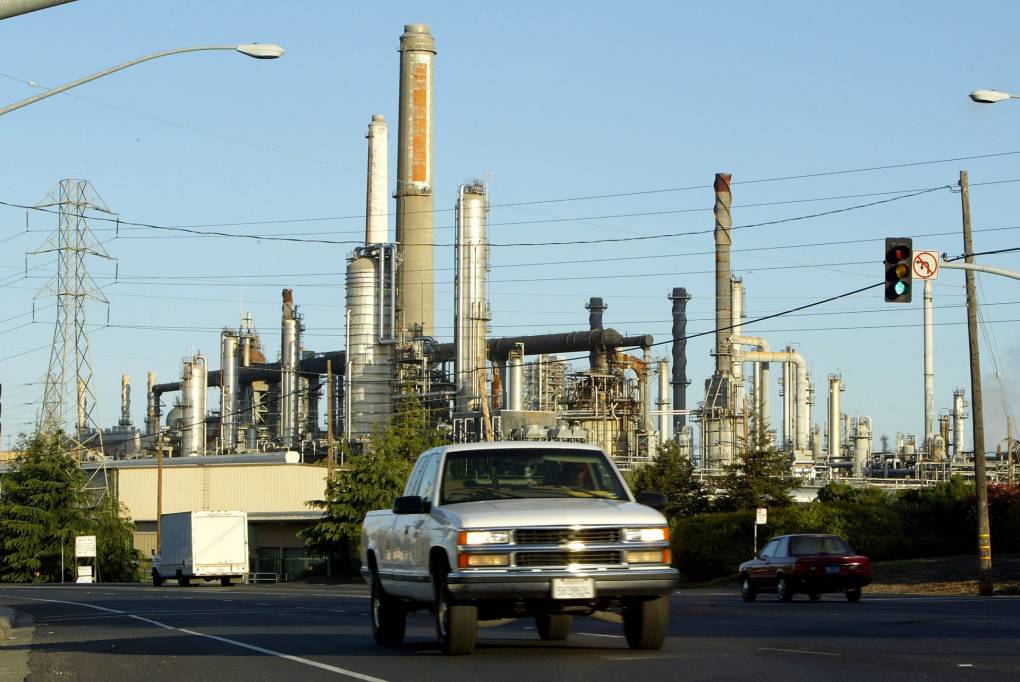
"caption": "After PBF Energy's Martinez refinery released 24 tons of potentially hazardous material into the surrounding community last November, residents said their neighborhoods were coated in a substance resembling ash.",
"description": null,
"title": "The Shell refinery in seen on Tuesday Jan. 24, 2017, in Martinez, Ca.",
"credit": "Michael Macor/The San Francisco Chronicle via Getty Images",
"status": "inherit",
"altTag": "The silver smoke stacks of a large oil refinery loom above a city street where vehicles and a stoplight appear in the foreground",
"isLoading": false,
"fetchFailed": false
},
"news_11947982": {
"type": "attachments",
"id": "news_11947982",
"meta": {
"index": "attachments_1716263798",
"site": "news",
"id": "11947982",
"found": true
},
"parent": 11947977,
"imgSizes": {
"twentyfourteen-full-width": {
"file": "https://ww2.kqed.org/app/uploads/sites/10/2023/04/RS8018_MartinezRefinery-1038x576.jpeg",
"width": 1038,
"mimeType": "image/jpeg",
"height": 576
},
"thumbnail": {
"file": "https://ww2.kqed.org/app/uploads/sites/10/2023/04/RS8018_MartinezRefinery-160x107.jpeg",
"width": 160,
"mimeType": "image/jpeg",
"height": 107
},
"post-thumbnail": {
"file": "https://ww2.kqed.org/app/uploads/sites/10/2023/04/RS8018_MartinezRefinery-672x372.jpeg",
"width": 672,
"mimeType": "image/jpeg",
"height": 372
},
"kqedFullSize": {
"file": "https://ww2.kqed.org/app/uploads/sites/10/2023/04/RS8018_MartinezRefinery-scaled.jpeg",
"width": 2560,
"height": 1707
},
"2048x2048": {
"file": "https://ww2.kqed.org/app/uploads/sites/10/2023/04/RS8018_MartinezRefinery-2048x1365.jpeg",
"width": 2048,
"mimeType": "image/jpeg",
"height": 1365
},
"large": {
"file": "https://ww2.kqed.org/app/uploads/sites/10/2023/04/RS8018_MartinezRefinery-1020x680.jpeg",
"width": 1020,
"mimeType": "image/jpeg",
"height": 680
},
"1536x1536": {
"file": "https://ww2.kqed.org/app/uploads/sites/10/2023/04/RS8018_MartinezRefinery-1536x1024.jpeg",
"width": 1536,
"mimeType": "image/jpeg",
"height": 1024
},
"full-width": {
"file": "https://ww2.kqed.org/app/uploads/sites/10/2023/04/RS8018_MartinezRefinery-1920x1280.jpeg",
"width": 1920,
"mimeType": "image/jpeg",
"height": 1280
},
"medium": {
"file": "https://ww2.kqed.org/app/uploads/sites/10/2023/04/RS8018_MartinezRefinery-800x533.jpeg",
"width": 800,
"mimeType": "image/jpeg",
"height": 533
}
},
"publishDate": 1682645794,
"modified": 1682703972,
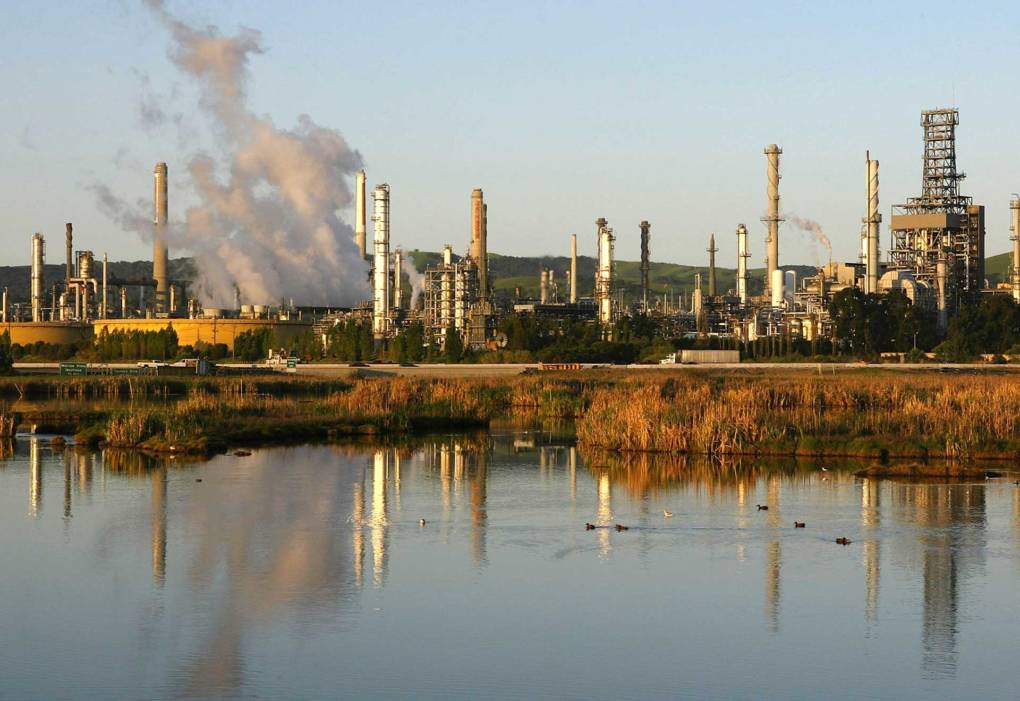
"caption": "Tesoro's Golden Eagle refinery in Martinez against the backdrop of Mount Diablo, seen from across the Carquinez Strait, in Benicia, Dec. 19, 2013.",
"description": null,
"title": "RS8018_MartinezRefinery",
"credit": "Leslie David/KQED",
"status": "inherit",
"altTag": "A refinery with smoke rising across a body of water with a mountain in the background around sunset.",
"isLoading": false,
"fetchFailed": false
},
"news_105541": {
"type": "attachments",
"id": "news_105541",
"meta": {
"index": "attachments_1716263798",
"site": "news",
"id": "105541",
"found": true
},
"parent": 105538,
"imgSizes": {
"kqedFullSize": {
"file": "https://ww2.kqed.org/app/uploads/sites/10/2013/08/RS5932_005-scr.jpg",
"width": 850,
"height": 567
}
},
"publishDate": 1375647993,
"modified": 1488573125,
"caption": "Chevron's refinery complex in Richmond. ",
"description": null,
"title": "Chevron Richmond Refinery",
"credit": "Deborah Svoboda/KQED",
"status": "inherit",
"isLoading": false,
"fetchFailed": false
},
"news_11793288": {
"type": "attachments",
"id": "news_11793288",
"meta": {
"index": "attachments_1716263798",
"site": "news",
"id": "11793288",
"found": true
},
"parent": 11793275,
"imgSizes": {
"apple_news_ca_landscape_5_5": {
"file": "https://ww2.kqed.org/app/uploads/sites/10/2019/12/RS40608_GettyImages-3188668-qut-1044x783.jpg",
"width": 1044,
"mimeType": "image/jpeg",
"height": 783
},
"apple_news_ca_square_4_0": {
"file": "https://ww2.kqed.org/app/uploads/sites/10/2019/12/RS40608_GettyImages-3188668-qut-470x470.jpg",
"width": 470,
"mimeType": "image/jpeg",
"height": 470
},
"twentyfourteen-full-width": {
"file": "https://ww2.kqed.org/app/uploads/sites/10/2019/12/RS40608_GettyImages-3188668-qut-1038x576.jpg",
"width": 1038,
"mimeType": "image/jpeg",
"height": 576
},
"thumbnail": {
"file": "https://ww2.kqed.org/app/uploads/sites/10/2019/12/RS40608_GettyImages-3188668-qut-160x107.jpg",
"width": 160,
"mimeType": "image/jpeg",
"height": 107
},
"post-thumbnail": {
"file": "https://ww2.kqed.org/app/uploads/sites/10/2019/12/RS40608_GettyImages-3188668-qut-672x372.jpg",
"width": 672,
"mimeType": "image/jpeg",
"height": 372
},
"kqedFullSize": {
"file": "https://ww2.kqed.org/app/uploads/sites/10/2019/12/RS40608_GettyImages-3188668-qut.jpg",
"width": 1920,
"height": 1283
},
"apple_news_ca_landscape_4_7": {
"file": "https://ww2.kqed.org/app/uploads/sites/10/2019/12/RS40608_GettyImages-3188668-qut-632x474.jpg",
"width": 632,
"mimeType": "image/jpeg",
"height": 474
},
"large": {
"file": "https://ww2.kqed.org/app/uploads/sites/10/2019/12/RS40608_GettyImages-3188668-qut-1020x682.jpg",
"width": 1020,
"mimeType": "image/jpeg",
"height": 682
},
"complete_open_graph": {
"file": "https://ww2.kqed.org/app/uploads/sites/10/2019/12/RS40608_GettyImages-3188668-qut-1200x802.jpg",
"width": 1200,
"mimeType": "image/jpeg",
"height": 802
},
"apple_news_ca_landscape_4_0": {
"file": "https://ww2.kqed.org/app/uploads/sites/10/2019/12/RS40608_GettyImages-3188668-qut-536x402.jpg",
"width": 536,
"mimeType": "image/jpeg",
"height": 402
},
"apple_news_ca_portrait_12_9": {
"file": "https://ww2.kqed.org/app/uploads/sites/10/2019/12/RS40608_GettyImages-3188668-qut-1122x1283.jpg",
"width": 1122,
"mimeType": "image/jpeg",
"height": 1283
},
"medium": {
"file": "https://ww2.kqed.org/app/uploads/sites/10/2019/12/RS40608_GettyImages-3188668-qut-800x535.jpg",
"width": 800,
"mimeType": "image/jpeg",
"height": 535
},
"apple_news_ca_portrait_4_0": {
"file": "https://ww2.kqed.org/app/uploads/sites/10/2019/12/RS40608_GettyImages-3188668-qut-354x472.jpg",
"width": 354,
"mimeType": "image/jpeg",
"height": 472
},
"apple_news_ca_portrait_9_7": {
"file": "https://ww2.kqed.org/app/uploads/sites/10/2019/12/RS40608_GettyImages-3188668-qut-840x1120.jpg",
"width": 840,
"mimeType": "image/jpeg",
"height": 1120
},
"apple_news_ca_landscape_12_9": {
"file": "https://ww2.kqed.org/app/uploads/sites/10/2019/12/RS40608_GettyImages-3188668-qut-1832x1283.jpg",
"width": 1832,
"mimeType": "image/jpeg",
"height": 1283
},
"apple_news_ca_square_9_7": {
"file": "https://ww2.kqed.org/app/uploads/sites/10/2019/12/RS40608_GettyImages-3188668-qut-1104x1104.jpg",
"width": 1104,
"mimeType": "image/jpeg",
"height": 1104
},
"apple_news_ca_portrait_4_7": {
"file": "https://ww2.kqed.org/app/uploads/sites/10/2019/12/RS40608_GettyImages-3188668-qut-414x552.jpg",
"width": 414,
"mimeType": "image/jpeg",
"height": 552
},
"apple_news_ca_square_12_9": {
"file": "https://ww2.kqed.org/app/uploads/sites/10/2019/12/RS40608_GettyImages-3188668-qut-1472x1283.jpg",
"width": 1472,
"mimeType": "image/jpeg",
"height": 1283
},
"apple_news_ca_portrait_5_5": {
"file": "https://ww2.kqed.org/app/uploads/sites/10/2019/12/RS40608_GettyImages-3188668-qut-687x916.jpg",
"width": 687,
"mimeType": "image/jpeg",
"height": 916
},
"full-width": {
"file": "https://ww2.kqed.org/app/uploads/sites/10/2019/12/RS40608_GettyImages-3188668-qut-1920x1283.jpg",
"width": 1920,
"mimeType": "image/jpeg",
"height": 1283
},
"apple_news_ca_square_4_7": {
"file": "https://ww2.kqed.org/app/uploads/sites/10/2019/12/RS40608_GettyImages-3188668-qut-550x550.jpg",
"width": 550,
"mimeType": "image/jpeg",
"height": 550
},
"apple_news_ca_landscape_9_7": {
"file": "https://ww2.kqed.org/app/uploads/sites/10/2019/12/RS40608_GettyImages-3188668-qut-1376x1032.jpg",
"width": 1376,
"mimeType": "image/jpeg",
"height": 1032
},
"apple_news_ca_square_5_5": {
"file": "https://ww2.kqed.org/app/uploads/sites/10/2019/12/RS40608_GettyImages-3188668-qut-912x912.jpg",
"width": 912,
"mimeType": "image/jpeg",
"height": 912
}
},
"publishDate": 1577733680,
"modified": 1577740066,
"caption": "Federal regulators are raising antitrust concerns about a large independent refining company's plans to buy Shell Oil's Martinez refinery in a proposed $1 billion deal.",
"description": "Federal regulators are raising antitrust concerns about a large independent refining company's plans to buy Shell Oil's Martinez refinery in a proposed $1 billion deal.",
"title": "Federal regulators are raising antitrust concerns about a large independent refining company's plans to buy Shell Oil's Martinez refinery in a proposed $1 billion deal.",
"credit": "Justin Sullivan/Getty Images",
"status": "inherit",
"isLoading": false,
"fetchFailed": false
},
"news_11754056": {
"type": "attachments",
"id": "news_11754056",
"meta": {
"index": "attachments_1716263798",
"site": "news",
"id": "11754056",
"found": true
},
"parent": 11754005,
"imgSizes": {
"apple_news_ca_landscape_5_5": {
"file": "https://ww2.kqed.org/app/uploads/sites/10/2019/06/Shell-Oil-Refinery-Martinez-1044x783.jpg",
"width": 1044,
"mimeType": "image/jpeg",
"height": 783
},
"apple_news_ca_square_4_0": {
"file": "https://ww2.kqed.org/app/uploads/sites/10/2019/06/Shell-Oil-Refinery-Martinez-470x470.jpg",
"width": 470,
"mimeType": "image/jpeg",
"height": 470
},
"twentyfourteen-full-width": {
"file": "https://ww2.kqed.org/app/uploads/sites/10/2019/06/Shell-Oil-Refinery-Martinez-1038x576.jpg",
"width": 1038,
"mimeType": "image/jpeg",
"height": 576
},
"thumbnail": {
"file": "https://ww2.kqed.org/app/uploads/sites/10/2019/06/Shell-Oil-Refinery-Martinez-160x107.jpg",
"width": 160,
"mimeType": "image/jpeg",
"height": 107
},
"post-thumbnail": {
"file": "https://ww2.kqed.org/app/uploads/sites/10/2019/06/Shell-Oil-Refinery-Martinez-672x372.jpg",
"width": 672,
"mimeType": "image/jpeg",
"height": 372
},
"kqedFullSize": {
"file": "https://ww2.kqed.org/app/uploads/sites/10/2019/06/Shell-Oil-Refinery-Martinez.jpg",
"width": 1920,
"height": 1280
},
"apple_news_ca_landscape_4_7": {
"file": "https://ww2.kqed.org/app/uploads/sites/10/2019/06/Shell-Oil-Refinery-Martinez-632x474.jpg",
"width": 632,
"mimeType": "image/jpeg",
"height": 474
},
"large": {
"file": "https://ww2.kqed.org/app/uploads/sites/10/2019/06/Shell-Oil-Refinery-Martinez-1020x680.jpg",
"width": 1020,
"mimeType": "image/jpeg",
"height": 680
},
"complete_open_graph": {
"file": "https://ww2.kqed.org/app/uploads/sites/10/2019/06/Shell-Oil-Refinery-Martinez-1200x800.jpg",
"width": 1200,
"mimeType": "image/jpeg",
"height": 800
},
"apple_news_ca_landscape_4_0": {
"file": "https://ww2.kqed.org/app/uploads/sites/10/2019/06/Shell-Oil-Refinery-Martinez-536x402.jpg",
"width": 536,
"mimeType": "image/jpeg",
"height": 402
},
"apple_news_ca_portrait_12_9": {
"file": "https://ww2.kqed.org/app/uploads/sites/10/2019/06/Shell-Oil-Refinery-Martinez-1122x1280.jpg",
"width": 1122,
"mimeType": "image/jpeg",
"height": 1280
},
"medium": {
"file": "https://ww2.kqed.org/app/uploads/sites/10/2019/06/Shell-Oil-Refinery-Martinez-800x533.jpg",
"width": 800,
"mimeType": "image/jpeg",
"height": 533
},
"apple_news_ca_portrait_4_0": {
"file": "https://ww2.kqed.org/app/uploads/sites/10/2019/06/Shell-Oil-Refinery-Martinez-354x472.jpg",
"width": 354,
"mimeType": "image/jpeg",
"height": 472
},
"apple_news_ca_portrait_9_7": {
"file": "https://ww2.kqed.org/app/uploads/sites/10/2019/06/Shell-Oil-Refinery-Martinez-840x1120.jpg",
"width": 840,
"mimeType": "image/jpeg",
"height": 1120
},
"apple_news_ca_landscape_12_9": {
"file": "https://ww2.kqed.org/app/uploads/sites/10/2019/06/Shell-Oil-Refinery-Martinez-1832x1280.jpg",
"width": 1832,
"mimeType": "image/jpeg",
"height": 1280
},
"apple_news_ca_square_9_7": {
"file": "https://ww2.kqed.org/app/uploads/sites/10/2019/06/Shell-Oil-Refinery-Martinez-1104x1104.jpg",
"width": 1104,
"mimeType": "image/jpeg",
"height": 1104
},
"apple_news_ca_portrait_4_7": {
"file": "https://ww2.kqed.org/app/uploads/sites/10/2019/06/Shell-Oil-Refinery-Martinez-414x552.jpg",
"width": 414,
"mimeType": "image/jpeg",
"height": 552
},
"apple_news_ca_square_12_9": {
"file": "https://ww2.kqed.org/app/uploads/sites/10/2019/06/Shell-Oil-Refinery-Martinez-1472x1280.jpg",
"width": 1472,
"mimeType": "image/jpeg",
"height": 1280
},
"apple_news_ca_portrait_5_5": {
"file": "https://ww2.kqed.org/app/uploads/sites/10/2019/06/Shell-Oil-Refinery-Martinez-687x916.jpg",
"width": 687,
"mimeType": "image/jpeg",
"height": 916
},
"full-width": {
"file": "https://ww2.kqed.org/app/uploads/sites/10/2019/06/Shell-Oil-Refinery-Martinez-1920x1280.jpg",
"width": 1920,
"mimeType": "image/jpeg",
"height": 1280
},
"apple_news_ca_square_4_7": {
"file": "https://ww2.kqed.org/app/uploads/sites/10/2019/06/Shell-Oil-Refinery-Martinez-550x550.jpg",
"width": 550,
"mimeType": "image/jpeg",
"height": 550
},
"apple_news_ca_landscape_9_7": {
"file": "https://ww2.kqed.org/app/uploads/sites/10/2019/06/Shell-Oil-Refinery-Martinez-1376x1032.jpg",
"width": 1376,
"mimeType": "image/jpeg",
"height": 1032
},
"apple_news_ca_square_5_5": {
"file": "https://ww2.kqed.org/app/uploads/sites/10/2019/06/Shell-Oil-Refinery-Martinez-912x912.jpg",
"width": 912,
"mimeType": "image/jpeg",
"height": 912
}
},
"publishDate": 1560297519,
"modified": 1587605233,
"caption": "The former Shell Oil refinery in Martinez, now owned and operated by New Jersey-based PBF Energy. ",
"description": "The Shell Oil refinery in Martinez.",
"title": "PBF Energy Refinery-Martinez",
"credit": "Justin Sullivan/Getty Images",
"status": "inherit",
"isLoading": false,
"fetchFailed": false
},
"news_11685494": {
"type": "attachments",
"id": "news_11685494",
"meta": {
"index": "attachments_1716263798",
"site": "news",
"id": "11685494",
"found": true
},
"parent": 11685038,
"imgSizes": {
"small": {
"file": "https://ww2.kqed.org/app/uploads/sites/10/2018/08/GettyImages-3188658-520x338.jpg",
"width": 520,
"mimeType": "image/jpeg",
"height": 338
},
"twentyfourteen-full-width": {
"file": "https://ww2.kqed.org/app/uploads/sites/10/2018/08/GettyImages-3188658-1038x576.jpg",
"width": 1038,
"mimeType": "image/jpeg",
"height": 576
},
"thumbnail": {
"file": "https://ww2.kqed.org/app/uploads/sites/10/2018/08/GettyImages-3188658-160x104.jpg",
"width": 160,
"mimeType": "image/jpeg",
"height": 104
},
"fd-sm": {
"file": "https://ww2.kqed.org/app/uploads/sites/10/2018/08/GettyImages-3188658-960x623.jpg",
"width": 960,
"mimeType": "image/jpeg",
"height": 623
},
"post-thumbnail": {
"file": "https://ww2.kqed.org/app/uploads/sites/10/2018/08/GettyImages-3188658-672x372.jpg",
"width": 672,
"mimeType": "image/jpeg",
"height": 372
},
"xsmall": {
"file": "https://ww2.kqed.org/app/uploads/sites/10/2018/08/GettyImages-3188658-375x244.jpg",
"width": 375,
"mimeType": "image/jpeg",
"height": 244
},
"kqedFullSize": {
"file": "https://ww2.kqed.org/app/uploads/sites/10/2018/08/GettyImages-3188658-e1552593074481.jpg",
"width": 1920,
"height": 1247
},
"large": {
"file": "https://ww2.kqed.org/app/uploads/sites/10/2018/08/GettyImages-3188658-1020x662.jpg",
"width": 1020,
"mimeType": "image/jpeg",
"height": 662
},
"xlarge": {
"file": "https://ww2.kqed.org/app/uploads/sites/10/2018/08/GettyImages-3188658-1180x766.jpg",
"width": 1180,
"mimeType": "image/jpeg",
"height": 766
},
"complete_open_graph": {
"file": "https://ww2.kqed.org/app/uploads/sites/10/2018/08/GettyImages-3188658-1200x779.jpg",
"width": 1200,
"mimeType": "image/jpeg",
"height": 779
},
"guest-author-50": {
"file": "https://ww2.kqed.org/app/uploads/sites/10/2018/08/GettyImages-3188658-50x50.jpg",
"width": 50,
"mimeType": "image/jpeg",
"height": 50
},
"guest-author-96": {
"file": "https://ww2.kqed.org/app/uploads/sites/10/2018/08/GettyImages-3188658-96x96.jpg",
"width": 96,
"mimeType": "image/jpeg",
"height": 96
},
"medium": {
"file": "https://ww2.kqed.org/app/uploads/sites/10/2018/08/GettyImages-3188658-800x519.jpg",
"width": 800,
"mimeType": "image/jpeg",
"height": 519
},
"guest-author-64": {
"file": "https://ww2.kqed.org/app/uploads/sites/10/2018/08/GettyImages-3188658-64x64.jpg",
"width": 64,
"mimeType": "image/jpeg",
"height": 64
},
"guest-author-32": {
"file": "https://ww2.kqed.org/app/uploads/sites/10/2018/08/GettyImages-3188658-32x32.jpg",
"width": 32,
"mimeType": "image/jpeg",
"height": 32
},
"fd-lrg": {
"file": "https://ww2.kqed.org/app/uploads/sites/10/2018/08/GettyImages-3188658-1920x1247.jpg",
"width": 1920,
"mimeType": "image/jpeg",
"height": 1247
},
"fd-med": {
"file": "https://ww2.kqed.org/app/uploads/sites/10/2018/08/GettyImages-3188658-1180x766.jpg",
"width": 1180,
"mimeType": "image/jpeg",
"height": 766
},
"full-width": {
"file": "https://ww2.kqed.org/app/uploads/sites/10/2018/08/GettyImages-3188658-1920x1247.jpg",
"width": 1920,
"mimeType": "image/jpeg",
"height": 1247
},
"detail": {
"file": "https://ww2.kqed.org/app/uploads/sites/10/2018/08/GettyImages-3188658-150x150.jpg",
"width": 150,
"mimeType": "image/jpeg",
"height": 150
},
"guest-author-128": {
"file": "https://ww2.kqed.org/app/uploads/sites/10/2018/08/GettyImages-3188658-128x128.jpg",
"width": 128,
"mimeType": "image/jpeg",
"height": 128
},
"xxsmall": {
"file": "https://ww2.kqed.org/app/uploads/sites/10/2018/08/GettyImages-3188658-240x156.jpg",
"width": 240,
"mimeType": "image/jpeg",
"height": 156
}
},
"publishDate": 1533677464,
"modified": 1626902651,
"caption": "The PBF Energy refinery in Martinez, pictured in August 2018 when it was owned by Shell. ",
"description": "The PBF Energy refinery in Martinez, pictured in August 2018 when it was owned by Shell. ",
"title": "The Martinez Refining Company Refinery",
"credit": "Justin Sullivan/Getty Images",
"status": "inherit",
"altTag": null,
"isLoading": false,
"fetchFailed": false
},
"news_11287828": {
"type": "attachments",
"id": "news_11287828",
"meta": {
"index": "attachments_1716263798",
"site": "news",
"id": "11287828",
"found": true
},
"parent": 0,
"imgSizes": {
"small": {
"file": "https://ww2.kqed.org/app/uploads/sites/10/2017/01/shell-refinery-1920-520x357.jpg",
"width": 520,
"mimeType": "image/jpeg",
"height": 357
},
"twentyfourteen-full-width": {
"file": "https://ww2.kqed.org/app/uploads/sites/10/2017/01/shell-refinery-1920-1038x576.jpg",
"width": 1038,
"mimeType": "image/jpeg",
"height": 576
},
"thumbnail": {
"file": "https://ww2.kqed.org/app/uploads/sites/10/2017/01/shell-refinery-1920-160x110.jpg",
"width": 160,
"mimeType": "image/jpeg",
"height": 110
},
"fd-sm": {
"file": "https://ww2.kqed.org/app/uploads/sites/10/2017/01/shell-refinery-1920-960x660.jpg",
"width": 960,
"mimeType": "image/jpeg",
"height": 660
},
"post-thumbnail": {
"file": "https://ww2.kqed.org/app/uploads/sites/10/2017/01/shell-refinery-1920-672x372.jpg",
"width": 672,
"mimeType": "image/jpeg",
"height": 372
},
"xsmall": {
"file": "https://ww2.kqed.org/app/uploads/sites/10/2017/01/shell-refinery-1920-375x258.jpg",
"width": 375,
"mimeType": "image/jpeg",
"height": 258
},
"kqedFullSize": {
"file": "https://ww2.kqed.org/app/uploads/sites/10/2017/01/shell-refinery-1920.jpg",
"width": 1920,
"height": 1319
},
"large": {
"file": "https://ww2.kqed.org/app/uploads/sites/10/2017/01/shell-refinery-1920-1020x701.jpg",
"width": 1020,
"mimeType": "image/jpeg",
"height": 701
},
"xlarge": {
"file": "https://ww2.kqed.org/app/uploads/sites/10/2017/01/shell-refinery-1920-1180x811.jpg",
"width": 1180,
"mimeType": "image/jpeg",
"height": 811
},
"guest-author-50": {
"file": "https://ww2.kqed.org/app/uploads/sites/10/2017/01/shell-refinery-1920-50x50.jpg",
"width": 50,
"mimeType": "image/jpeg",
"height": 50
},
"guest-author-96": {
"file": "https://ww2.kqed.org/app/uploads/sites/10/2017/01/shell-refinery-1920-96x96.jpg",
"width": 96,
"mimeType": "image/jpeg",
"height": 96
},
"medium": {
"file": "https://ww2.kqed.org/app/uploads/sites/10/2017/01/shell-refinery-1920-800x550.jpg",
"width": 800,
"mimeType": "image/jpeg",
"height": 550
},
"guest-author-64": {
"file": "https://ww2.kqed.org/app/uploads/sites/10/2017/01/shell-refinery-1920-64x64.jpg",
"width": 64,
"mimeType": "image/jpeg",
"height": 64
},
"guest-author-32": {
"file": "https://ww2.kqed.org/app/uploads/sites/10/2017/01/shell-refinery-1920-32x32.jpg",
"width": 32,
"mimeType": "image/jpeg",
"height": 32
},
"jmtc-small-thumb": {
"file": "https://ww2.kqed.org/app/uploads/sites/10/2017/01/shell-refinery-1920-280x150.jpg",
"width": 280,
"mimeType": "image/jpeg",
"height": 150
},
"fd-lrg": {
"file": "https://ww2.kqed.org/app/uploads/sites/10/2017/01/shell-refinery-1920-1920x1319.jpg",
"width": 1920,
"mimeType": "image/jpeg",
"height": 1319
},
"fd-med": {
"file": "https://ww2.kqed.org/app/uploads/sites/10/2017/01/shell-refinery-1920-1180x811.jpg",
"width": 1180,
"mimeType": "image/jpeg",
"height": 811
},
"full-width": {
"file": "https://ww2.kqed.org/app/uploads/sites/10/2017/01/shell-refinery-1920-1920x1319.jpg",
"width": 1920,
"mimeType": "image/jpeg",
"height": 1319
},
"detail": {
"file": "https://ww2.kqed.org/app/uploads/sites/10/2017/01/shell-refinery-1920-150x150.jpg",
"width": 150,
"mimeType": "image/jpeg",
"height": 150
},
"guest-author-128": {
"file": "https://ww2.kqed.org/app/uploads/sites/10/2017/01/shell-refinery-1920-128x128.jpg",
"width": 128,
"mimeType": "image/jpeg",
"height": 128
},
"xxsmall": {
"file": "https://ww2.kqed.org/app/uploads/sites/10/2017/01/shell-refinery-1920-240x165.jpg",
"width": 240,
"mimeType": "image/jpeg",
"height": 165
}
},
"publishDate": 1485468849,
"modified": 1485799631,
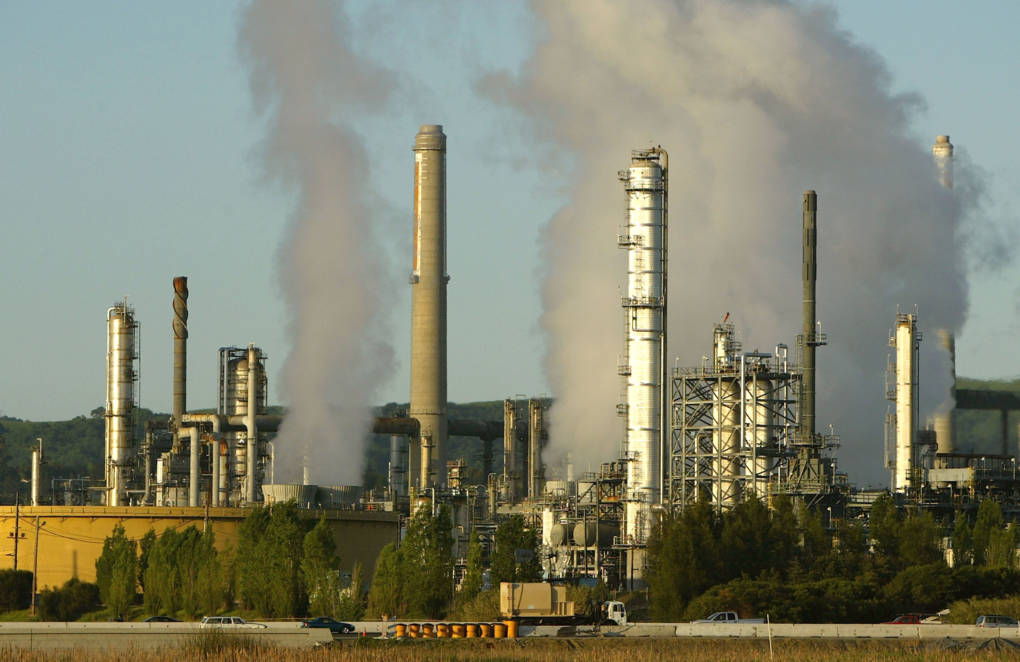
"caption": "Water vapor drifts away from a Shell Oil refinery on April 1, 2004, in Martinez, California. ",
"description": null,
"title": "shell-refinery-1920",
"credit": "Justin Sullivan/Getty Images",
"status": "inherit",
"isLoading": false,
"fetchFailed": false
}
},
"audioPlayerReducer": {
"postId": "stream_live",
"isPaused": true,
"isPlaying": false,
"pfsActive": false,
"pledgeModalIsOpen": true,
"playerDrawerIsOpen": false,
"liveAudioPlayStartedAt": 0,
"liveAudioPlayContext": ""
},
"authorsReducer": {
"byline_news_11947977": {
"type": "authors",
"id": "byline_news_11947977",
"meta": {
"override": true
},
"slug": "byline_news_11947977",
"name": "The Associated Press and KQED News Staff",
"isLoading": false
},
"danbrekke": {
"type": "authors",
"id": "222",
"meta": {
"index": "authors_1716337520",
"id": "222",
"found": true
},
"name": "Dan Brekke",
"firstName": "Dan",
"lastName": "Brekke",
"slug": "danbrekke",
"email": "dbrekke@kqed.org",
"display_author_email": true,
"staff_mastheads": [
"news",
"science"
],
"title": "KQED Editor and Reporter",
"bio": "Dan Brekke is a reporter and editor for KQED News, responsible for coverage of topics ranging from California water issues to the Bay Area's transportation challenges. In a newsroom career that began in Chicago in 1972, Dan has worked for \u003cem>The San Francisco Examiner,\u003c/em> Wired and TechTV and has been published in The New York Times, The New York Times Magazine, Business 2.0, Salon and elsewhere.\r\n\r\nSince joining KQED in 2007, Dan has reported, edited and produced both radio and online features and breaking news pieces. He has shared as both editor and reporter in four Society of Professional Journalists Norcal Excellence in Journalism awards and one Edward R. Murrow regional award. He was chosen for a spring 2017 residency at the Mesa Refuge to advance his research on California salmon.\r\n\r\nEmail Dan at: \u003ca href=\"mailto:dbrekke@kqed.org\">dbrekke@kqed.org\u003c/a>\r\n\r\n\u003cstrong>Twitter:\u003c/strong> \u003ca href=\"https://twitter.com/danbrekke\" rel=\"noopener noreferrer\">twitter.com/danbrekke\u003c/a>\r\n\u003cstrong>Facebook:\u003c/strong> \u003ca href=\"https://www.facebook.com/danbrekke\" rel=\"noopener noreferrer\">www.facebook.com/danbrekke\u003c/a>\r\n\u003cstrong>LinkedIn:\u003c/strong> \u003ca href=\"https://www.linkedin.com/in/danbrekke\" rel=\"noopener noreferrer\">www.linkedin.com/in/danbrekke\u003c/a>",
"avatar": "https://secure.gravatar.com/avatar/c8126230345efca3f7aa89b1a402be45?s=600&d=mm&r=g",
"twitter": "danbrekke",
"facebook": null,
"instagram": "https://www.instagram.com/dan.brekke/",
"linkedin": "https://www.linkedin.com/in/danbrekke/",
"sites": [
{
"site": "news",
"roles": [
"administrator",
"create_posts"
]
},
{
"site": "stateofhealth",
"roles": [
"editor"
]
},
{
"site": "science",
"roles": [
"editor"
]
},
{
"site": "quest",
"roles": [
"contributor"
]
},
{
"site": "food",
"roles": [
"contributor"
]
},
{
"site": "forum",
"roles": [
"contributor"
]
},
{
"site": "liveblog",
"roles": [
"editor"
]
}
],
"headData": {
"title": "Dan Brekke | KQED",
"description": "KQED Editor and Reporter",
"ogImgSrc": "https://secure.gravatar.com/avatar/c8126230345efca3f7aa89b1a402be45?s=600&d=mm&r=g",
"twImgSrc": "https://secure.gravatar.com/avatar/c8126230345efca3f7aa89b1a402be45?s=600&d=mm&r=g"
},
"isLoading": false,
"link": "/author/danbrekke"
},
"tgoldberg": {
"type": "authors",
"id": "258",
"meta": {
"index": "authors_1716337520",
"id": "258",
"found": true
},
"name": "Ted Goldberg",
"firstName": "Ted",
"lastName": "Goldberg",
"slug": "tgoldberg",
"email": "tgoldberg@kqed.org",
"display_author_email": true,
"staff_mastheads": [
"news"
],
"title": "KQED Managing Editor, News and Newscasts",
"bio": "Ted Goldberg is Managing Editor of News and Newscasts at KQED. His main reporting beat is the Bay Area's oil refining industry.\r\n\r\nPrior to joining KQED in 2014, Ted worked at CBS News and WCBS AM in New York and Bay City News and KCBS Radio in San Francisco. He graduated from Oberlin College in Ohio in 1998.",
"avatar": "https://secure.gravatar.com/avatar/30ce2e4fe89135e104f89be2394d16225b9d36c121b5b3cb7651ce642978b96f?s=600&d=blank&r=g",
"twitter": "TedrickG",
"bluesky": null,
"facebook": null,
"instagram": null,
"linkedin": null,
"sites": [
{
"site": "news",
"roles": [
"editor"
]
},
{
"site": "science",
"roles": [
"editor"
]
}
],
"headData": {
"title": "Ted Goldberg | KQED",
"description": "KQED Managing Editor, News and Newscasts",
"ogImgSrc": "https://secure.gravatar.com/avatar/30ce2e4fe89135e104f89be2394d16225b9d36c121b5b3cb7651ce642978b96f?s=600&d=blank&r=g",
"twImgSrc": "https://secure.gravatar.com/avatar/30ce2e4fe89135e104f89be2394d16225b9d36c121b5b3cb7651ce642978b96f?s=600&d=blank&r=g"
},
"isLoading": false,
"link": "/author/tgoldberg"
},
"ecruzguevarra": {
"type": "authors",
"id": "8654",
"meta": {
"index": "authors_1716337520",
"id": "8654",
"found": true
},
"name": "Ericka Cruz Guevarra",
"firstName": "Ericka",
"lastName": "Cruz Guevarra",
"slug": "ecruzguevarra",
"email": "ecruzguevarra@kqed.org",
"display_author_email": true,
"staff_mastheads": [
"news"
],
"title": "Producer, The Bay Podcast",
"bio": "Ericka Cruz Guevarra is host of \u003ca href=\"https://www.kqed.org/podcasts/thebay\">\u003cem>The Bay\u003c/em>\u003c/a> podcast at KQED. Before host, she was the show’s producer. Her work in that capacity includes a three-part reported series on policing in Vallejo, which won a 2020 excellence in journalism award from the Society of Professional Journalists. Ericka has worked as a breaking news reporter at Oregon Public Broadcasting, helped produce the Code Switch podcast, and was KQED’s inaugural Raul Ramirez Diversity Fund intern. She’s also an alumna of NPR’s Next Generation Radio program. Send her an email if you have strong feelings about whether Fairfield and Suisun City are the Bay. Ericka is represented by SAG-AFTRA.",
"avatar": "https://secure.gravatar.com/avatar/accefc1de4bafc7e234b69bcb9b6f6536c130fd84709bc3069ef11a78787e1bb?s=600&d=blank&r=g",
"twitter": "NotoriousECG",
"bluesky": null,
"facebook": null,
"instagram": null,
"linkedin": null,
"sites": [
{
"site": "arts",
"roles": [
"subscriber"
]
},
{
"site": "news",
"roles": [
"editor",
"manage_categories"
]
},
{
"site": "futureofyou",
"roles": [
"subscriber"
]
},
{
"site": "stateofhealth",
"roles": [
"subscriber"
]
},
{
"site": "science",
"roles": [
"editor"
]
},
{
"site": "forum",
"roles": [
"subscriber"
]
}
],
"headData": {
"title": "Ericka Cruz Guevarra | KQED",
"description": "Producer, The Bay Podcast",
"ogImgSrc": "https://secure.gravatar.com/avatar/accefc1de4bafc7e234b69bcb9b6f6536c130fd84709bc3069ef11a78787e1bb?s=600&d=blank&r=g",
"twImgSrc": "https://secure.gravatar.com/avatar/accefc1de4bafc7e234b69bcb9b6f6536c130fd84709bc3069ef11a78787e1bb?s=600&d=blank&r=g"
},
"isLoading": false,
"link": "/author/ecruzguevarra"
},
"amontecillo": {
"type": "authors",
"id": "11649",
"meta": {
"index": "authors_1716337520",
"id": "11649",
"found": true
},
"name": "Alan Montecillo",
"firstName": "Alan",
"lastName": "Montecillo",
"slug": "amontecillo",
"email": "amontecillo@kqed.org",
"display_author_email": false,
"staff_mastheads": [
"news"
],
"title": "KQED Contributor",
"bio": "Alan Montecillo is the senior editor of \u003cem>\u003ca href=\"http://kqed.org/thebay\">The Bay\u003c/a>, \u003c/em> KQED's local news podcast. Before moving to the Bay Area, he worked as a senior talk show producer for WILL in Champaign-Urbana, Illinois and at Oregon Public Broadcasting in Portland, Oregon. He has won journalism awards from the Society of Professional Journalists Northern California, the Public Media Journalists Association, The Signal Awards, and has also received a regional Edward R. Murrow award. Alan is a Filipino American from Hong Kong and a graduate of Reed College.",
"avatar": "https://secure.gravatar.com/avatar/268f53a2066899ea9efdd8a5900218b17c822d9862cbc9326cccec53ef41d349?s=600&d=blank&r=g",
"twitter": "alanmontecillo",
"bluesky": null,
"facebook": null,
"instagram": null,
"linkedin": null,
"sites": [
{
"site": "",
"roles": [
"editor"
]
},
{
"site": "news",
"roles": [
"editor",
"manage_categories"
]
}
],
"headData": {
"title": "Alan Montecillo | KQED",
"description": "KQED Contributor",
"ogImgSrc": "https://secure.gravatar.com/avatar/268f53a2066899ea9efdd8a5900218b17c822d9862cbc9326cccec53ef41d349?s=600&d=blank&r=g",
"twImgSrc": "https://secure.gravatar.com/avatar/268f53a2066899ea9efdd8a5900218b17c822d9862cbc9326cccec53ef41d349?s=600&d=blank&r=g"
},
"isLoading": false,
"link": "/author/amontecillo"
},
"mesquinca": {
"type": "authors",
"id": "11802",
"meta": {
"index": "authors_1716337520",
"id": "11802",
"found": true
},
"name": "Maria Esquinca",
"firstName": "Maria",
"lastName": "Esquinca",
"slug": "mesquinca",
"email": "mesquinca@kqed.org",
"display_author_email": false,
"staff_mastheads": [],
"title": "Producer, The Bay",
"bio": "María Esquinca is a producer of The Bay. Before that, she was a New York Women’s Foundation IGNITE Fellow at Latino USA. She worked at Radio Bilingue where she covered the San Joaquin Valley. Maria has interned at WLRN, News 21, The New York Times Student Journalism Institute and at Crain’s Detroit Business as a Dow Jones News Fund Business Reporting Intern. She is an MFA graduate from the University of Miami. In 2017, she graduated from the Walter Cronkite School of Journalism and Mass Communication with a Master of Mass Communication. A fronteriza, she was born in Ciudad Juárez, Chihuahua, Mexico and grew up in El Paso, Texas.",
"avatar": "https://secure.gravatar.com/avatar/77cedba18aae91da775038ba06dcd8d0?s=600&d=blank&r=g",
"twitter": "@m_esquinca",
"facebook": null,
"instagram": null,
"linkedin": null,
"sites": [
{
"site": "news",
"roles": []
}
],
"headData": {
"title": "Maria Esquinca | KQED",
"description": "Producer, The Bay",
"ogImgSrc": "https://secure.gravatar.com/avatar/77cedba18aae91da775038ba06dcd8d0?s=600&d=blank&r=g",
"twImgSrc": "https://secure.gravatar.com/avatar/77cedba18aae91da775038ba06dcd8d0?s=600&d=blank&r=g"
},
"isLoading": false,
"link": "/author/mesquinca"
}
},
"pagesReducer": {
"news_tag_martinez-refinery": {
"type": "terms",
"id": "news_20455",
"meta": {
"index": "terms_1716263798",
"site": "news",
"id": "20455",
"score": 10.403168
},
"featImg": null,
"name": "Martinez Refinery",
"description": null,
"taxonomy": "tag",
"headData": {
"twImgId": null,
"twTitle": null,
"ogTitle": null,
"ogImgId": null,
"twDescription": null,
"description": null,
"title": "Martinez Refinery Archives | KQED News",
"ogDescription": null
},
"ttid": 20472,
"slug": "martinez-refinery",
"isLoading": false,
"title": "Martinez Refinery",
"pageMeta": {
"site": "news",
"WpPageTemplate": "page-topic-editorial",
"currentPage": 2
},
"blocks": [
{
"blockName": "kqed/post-list",
"attrs": {
"layout": "cardArticle2",
"query": "posts/news?tag=martinez-refinery",
"seeMore": false,
"paginated": true,
"page": 2
}
},
{
"blockName": "kqed/ad"
}
]
}
},
"pfsSessionReducer": {},
"postsReducer": {
"stream_live": {
"type": "live",
"id": "stream_live",
"audioUrl": "https://streams.kqed.org/kqedradio",
"title": "Live Stream",
"excerpt": "Live Stream information currently unavailable.",
"link": "/radio",
"featImg": "",
"label": {
"name": "KQED Live",
"link": "/"
}
},
"stream_kqedNewscast": {
"type": "posts",
"id": "stream_kqedNewscast",
"audioUrl": "https://www.kqed.org/.stream/anon/radio/RDnews/newscast.mp3?_=1",
"title": "KQED Newscast",
"featImg": "",
"label": {
"name": "88.5 FM",
"link": "/"
}
},
"news_11968786": {
"type": "posts",
"id": "news_11968786",
"meta": {
"index": "posts_1716263798",
"site": "news",
"id": "11968786",
"score": null,
"sort": [
1701801054000
]
},
"guestAuthors": [],
"slug": "recent-fires-at-marathons-martinez-refinery-spark-major-safety-concerns",
"title": "Federal Agency Probes Marathon’s Martinez Refinery After Two Large Fires Last Month",
"publishDate": 1701801054,
"format": "standard",
"headTitle": "Federal Agency Probes Marathon’s Martinez Refinery After Two Large Fires Last Month | KQED",
"labelTerm": {
"site": "news"
},
"content": "\u003cp>\u003cem>Updated 10:15 a.m. Tuesday\u003c/em>\u003c/p>\n\u003cp>The U.S. Chemical Safety Board has launched an investigation into Marathon Petroleum’s Martinez refinery after it was hit by two major fires last month, including one that severely burned a refinery worker.\u003c/p>\n\u003cp>“The CSB is sending investigators to Martinez,” Hillary Cohen, a spokesperson for the federal agency charged with investigating industrial chemical accidents, said in an email to KQED.\u003c/p>\n\u003cp>The board confirmed the investigation on Tuesday, shortly after energy consulting firm Wood Mackenzie \u003ca href=\"https://twitter.com/WoodMackenzie/status/1731965653639205224\">released a photo of the Nov. 19 fire\u003c/a> at the refinery, captured by infrared monitoring equipment near the plant.\u003c/p>\n\u003cp>https://twitter.com/WoodMackenzie/status/1731965653639205224\u003c/p>\n\u003cp>“Our Biofuels Production Monitor captured this fire just ahead of the planned start of its last renewable diesel unit,” the company said in a \u003ca href=\"https://x.com/WoodMackenzie/status/1731965653639205224?s=20\" target=\"_blank\" rel=\"noopener\">post\u003c/a> on X, the platform formerly known as Twitter.\u003c/p>\n\u003cp>During that fire, Jerome Serrano sustained third-degree burns to more than 80% of his body, according to a union official. Serrano has undergone at least two surgeries at UC Davis Medical Center in Sacramento, and family members have been told he has a 10% chance of survival, said Tracy Scott, president of the United Steelworkers Local 5.\u003c/p>\n\u003cp>“The family is pretty overwhelmed,” Scott said.\u003c/p>\n\u003cp>The fire in which Serrano was injured followed a blaze on Nov. 11, according to a preliminary \u003ca href=\"https://cchealth.org/hazmat/pdf/Martinez-Renewables-Incident-2023-1111-72hr-report.pdf\">report\u003c/a> that the company filed with Contra Costa County officials on Wednesday,\u003c/p>\n\u003cp>Marathon officials have described both fires as facility-wide emergencies. The incidents occurred in a process unit part of the \u003ca href=\"https://www.marathonmartinezrenewables.com/\">plant’s conversion\u003c/a> into a biofuel refinery.\u003c/p>\n\u003cp>The Nov. 19 fire was more severe than the Nov. 11 episode. In addition to Serrano’s injuries, more than a dozen \u003ca href=\"https://w3.calema.ca.gov/operational/malhaz.nsf/f1841a103c102734882563e200760c4a/bb8c2523ba69823988258a6c0031dcd7?OpenDocument&Highlight=0,marathon%20w3.calema.ca.gov\">workers were forced to evacuate \u003c/a>in the minutes after the fire erupted. The incident led to the release of more than 200,000 pounds of renewable diesel fuel, according to a separate preliminary \u003ca href=\"https://cchealth.org/hazmat/pdf/Martinez-Renewables-Incident-2023-1119-72hr-report.pdf\">report\u003c/a> by Marathon.\u003c/p>\n\u003cp>The smoke that drifted out of the refinery prompted an hours-long public health advisory from Contra Costa County officials. The episode has now led to four separate investigations — by state workplace regulators, the local air district, Marathon itself, and now, the federal chemical safety board.\u003c/p>\n\u003cp>Marathon managers told union leaders that the first fire, on Nov. 11, occurred during a failed start-up of refinery operations, according to the USW’s Scott. He says the second fire, which also took place during a start-up, was in a different part of the same unit.[aside label=\"more Bay Area refineries coverage\" tag=\"bay-area-refineries\"]The fires come months after Marathon began converting its Martinez facility into a biofuel refinery. Like the Phillips 66 refinery in Rodeo, Marathon has shifted away from crude oil and begun processing vegetable oil and animal fats into biofuels.\u003c/p>\n\u003cp>Scott says union leaders and workers at Marathon have voiced concerns to the company about training and staffing at the refinery as it transitions. He says employees have told managers the refinery’s training program is deficient, that new workers were pressured to learn the controls too quickly, and that the facility is understaffed.\u003c/p>\n\u003cp>“If nothing changes, we will certainly experience this type of incident again,” Scott said.\u003c/p>\n\u003cp>Marathon pushed back on that criticism.\u003c/p>\n\u003cp>“Our training and staffing levels are based on industry standard practices and are regularly evaluated for effectiveness, quality and other measures,” the company said in an emailed statement Friday morning.\u003c/p>\n\u003cp>“Our facility has a comprehensive training plan that requires all operations personnel to demonstrate proficiency in their roles before becoming qualified to work, including knowledge, skill and capability related to their specific unit,” the statement reads.\u003c/p>\n\u003cp>Some environmental groups have sued Contra Costa County over the Marathon and Phillips 66 conversions, arguing that the county’s review of both plans was flawed. Greg Karras, an energy-transition consultant who is not involved in the lawsuit, says the fire is just the latest sign that the conversions are dangerous.\u003c/p>\n\u003cp>“It was entirely predictable,” Karras told KQED. “They’re repurposing old refining equipment for this new stuff, and they’re finding all sorts of things going wrong.”\u003c/p>\n\u003cp>But Eric Smith, a Tulane University professor specializing in energy issues, says the refinery changes do not make the facilities more dangerous.\u003c/p>\n\u003cp>“Operators do need specialized training to avoid accidents, but with proper training, I would opine that they are no more dangerous than the other conventional units,” Smith said in an email.\u003c/p>\n\u003cp>The blazes come amid recent increased attention on the safety of refineries in the Bay Area.\u003c/p>\n\u003cp>This week, air regulators issued \u003ca href=\"https://www.baaqmd.gov/rules-and-compliance/compliance-assistance/notices-of-violations/novs-issued\">four notices of violation\u003c/a> against Chevron after its Richmond plant had a major flaring incident that sent flames and a large column of smoke into the air, leading dozens of local residents to issue complaints to the local air district.\u003cbr>\n[ad fullwidth]\u003cbr>\nAnd the other refinery in Martinez, the Martinez Refining Company, owned by New Jersey’s PBF Energy, has been the focus of multiple investigations since it released nearly 50,000 pounds of powdered industrial chemicals in November 2022. This week, Martinez residents filed a \u003ca href=\"https://www.cpmlegal.com/media/news/15166_2023-11-28%20_1_%20Martinez%20Refinery%20Complaint.pdf\">lawsuit \u003c/a>against PBF over the releases.\u003c/p>\n\u003cp>Last year, state workplace regulators issued \u003ca href=\"https://www.kqed.org/news/11913837/state-issues-1-75m-in-fines-over-worker-death-at-valero-refinery\">$1.75 million in fines to Valero and three other companies\u003c/a>, alleging dozens of safety violations in connection with the death of a contract worker at its Benicia refinery.\u003c/p>\n\u003cp>In the case of Marathon’s Nov. 19 fire, the company’s preliminary report says the fire erupted in a furnace in a renewable hydrodeoxygenation unit. Refinery operators shut down the furnace and then sent fuel to the facility’s flares to ease pressure in the unit. Marathon’s crews put out the fire.\u003c/p>\n\u003cp>Serrano, the worker injured in the blaze, was airlifted to the UC Davis medical facility in Sacramento. The USW’s Scott said the family has told him Serrano is unable to speak but is responding to treatment.\u003c/p>\n\u003cp>Two online fundraising campaigns — \u003ca href=\"https://www.gofundme.com/f/friend-badly-burned-last-night\">here\u003c/a> and \u003ca href=\"https://www.gofundme.com/f/jerome-serrano-husband-father-brother-friend\">here\u003c/a> — have been organized to help Serrano and his family.\u003c/p>\n\u003cp>\u003cem>The original version of this story was published on Friday, Nov. 1.\u003c/em>\u003c/p>\n\u003cp>\u003c/p>\n",
"blocks": [],
"excerpt": "The two major blazes in November, including one that left a worker with life-threatening injuries, come months after Marathon began converting the facility into a biofuel refinery. ",
"status": "publish",
"parent": 0,
"modified": 1721125867,
"stats": {
"hasAudio": false,
"hasVideo": false,
"hasChartOrMap": false,
"iframeSrcs": [],
"hasGoogleForm": false,
"hasGallery": false,
"hasHearkenModule": false,
"hasPolis": false,
"paragraphCount": 29,
"wordCount": 1037
},
"headData": {
"title": "Federal Agency Probes Marathon’s Martinez Refinery After Two Large Fires Last Month | KQED",
"description": "The two major blazes in November, including one that left a worker with life-threatening injuries, come months after Marathon began converting the facility into a biofuel refinery. ",
"ogTitle": "",
"ogDescription": "",
"ogImgId": "",
"twTitle": "",
"twDescription": "",
"twImgId": "",
"schema": {
"@context": "https://schema.org",
"@type": "NewsArticle",
"headline": "Federal Agency Probes Marathon’s Martinez Refinery After Two Large Fires Last Month",
"datePublished": "2023-12-05T10:30:54-08:00",
"dateModified": "2024-07-16T03:31:07-07:00",
"image": "https://cdn.kqed.org/wp-content/uploads/2020/02/KQED-OG-Image@1x.png",
"isAccessibleForFree": "True",
"publisher": {
"@type": "NewsMediaOrganization",
"@id": "https://www.kqed.org/#organization",
"name": "KQED",
"logo": "https://cdn.kqed.org/wp-content/uploads/2020/02/KQED-OG-Image@1x.png",
"url": "https://www.kqed.org",
"sameAs": [
"https://www.facebook.com/KQED",
"https://twitter.com/KQED",
"https://www.instagram.com/kqed/",
"https://www.tiktok.com/@kqedofficial",
"https://www.linkedin.com/company/kqed",
"https://www.youtube.com/channel/UCeC0IOo7i1P_61zVUWbJ4nw"
]
}
}
},
"sticky": false,
"excludeFromSiteSearch": "Include",
"articleAge": "0",
"path": "/news/11968786/recent-fires-at-marathons-martinez-refinery-spark-major-safety-concerns",
"audioTrackLength": null,
"parsedContent": [
{
"type": "contentString",
"content": "\u003cdiv class=\"post-body\">\u003cp>\u003cp>\u003cem>Updated 10:15 a.m. Tuesday\u003c/em>\u003c/p>\n\u003cp>The U.S. Chemical Safety Board has launched an investigation into Marathon Petroleum’s Martinez refinery after it was hit by two major fires last month, including one that severely burned a refinery worker.\u003c/p>\n\u003cp>“The CSB is sending investigators to Martinez,” Hillary Cohen, a spokesperson for the federal agency charged with investigating industrial chemical accidents, said in an email to KQED.\u003c/p>\n\u003cp>The board confirmed the investigation on Tuesday, shortly after energy consulting firm Wood Mackenzie \u003ca href=\"https://twitter.com/WoodMackenzie/status/1731965653639205224\">released a photo of the Nov. 19 fire\u003c/a> at the refinery, captured by infrared monitoring equipment near the plant.\u003c/p>\u003c/p>\u003c/div>",
"attributes": {
"named": {},
"numeric": []
}
},
{
"type": "component",
"content": "",
"name": "singleTwitterStatus",
"attributes": {
"named": {
"id": "1731965653639205224"
},
"numeric": []
}
},
{
"type": "contentString",
"content": "\u003cdiv class=\"post-body\">\u003cp>\n\u003cp>“Our Biofuels Production Monitor captured this fire just ahead of the planned start of its last renewable diesel unit,” the company said in a \u003ca href=\"https://x.com/WoodMackenzie/status/1731965653639205224?s=20\" target=\"_blank\" rel=\"noopener\">post\u003c/a> on X, the platform formerly known as Twitter.\u003c/p>\n\u003cp>During that fire, Jerome Serrano sustained third-degree burns to more than 80% of his body, according to a union official. Serrano has undergone at least two surgeries at UC Davis Medical Center in Sacramento, and family members have been told he has a 10% chance of survival, said Tracy Scott, president of the United Steelworkers Local 5.\u003c/p>\n\u003cp>“The family is pretty overwhelmed,” Scott said.\u003c/p>\n\u003cp>The fire in which Serrano was injured followed a blaze on Nov. 11, according to a preliminary \u003ca href=\"https://cchealth.org/hazmat/pdf/Martinez-Renewables-Incident-2023-1111-72hr-report.pdf\">report\u003c/a> that the company filed with Contra Costa County officials on Wednesday,\u003c/p>\n\u003cp>Marathon officials have described both fires as facility-wide emergencies. The incidents occurred in a process unit part of the \u003ca href=\"https://www.marathonmartinezrenewables.com/\">plant’s conversion\u003c/a> into a biofuel refinery.\u003c/p>\n\u003cp>The Nov. 19 fire was more severe than the Nov. 11 episode. In addition to Serrano’s injuries, more than a dozen \u003ca href=\"https://w3.calema.ca.gov/operational/malhaz.nsf/f1841a103c102734882563e200760c4a/bb8c2523ba69823988258a6c0031dcd7?OpenDocument&Highlight=0,marathon%20w3.calema.ca.gov\">workers were forced to evacuate \u003c/a>in the minutes after the fire erupted. The incident led to the release of more than 200,000 pounds of renewable diesel fuel, according to a separate preliminary \u003ca href=\"https://cchealth.org/hazmat/pdf/Martinez-Renewables-Incident-2023-1119-72hr-report.pdf\">report\u003c/a> by Marathon.\u003c/p>\n\u003cp>The smoke that drifted out of the refinery prompted an hours-long public health advisory from Contra Costa County officials. The episode has now led to four separate investigations — by state workplace regulators, the local air district, Marathon itself, and now, the federal chemical safety board.\u003c/p>\n\u003cp>Marathon managers told union leaders that the first fire, on Nov. 11, occurred during a failed start-up of refinery operations, according to the USW’s Scott. He says the second fire, which also took place during a start-up, was in a different part of the same unit.\u003c/p>\u003c/div>",
"attributes": {
"named": {},
"numeric": []
}
},
{
"type": "component",
"content": "",
"name": "aside",
"attributes": {
"named": {
"label": "more Bay Area refineries coverage ",
"tag": "bay-area-refineries"
},
"numeric": []
}
},
{
"type": "contentString",
"content": "\u003cdiv class=\"post-body\">\u003cp>The fires come months after Marathon began converting its Martinez facility into a biofuel refinery. Like the Phillips 66 refinery in Rodeo, Marathon has shifted away from crude oil and begun processing vegetable oil and animal fats into biofuels.\u003c/p>\n\u003cp>Scott says union leaders and workers at Marathon have voiced concerns to the company about training and staffing at the refinery as it transitions. He says employees have told managers the refinery’s training program is deficient, that new workers were pressured to learn the controls too quickly, and that the facility is understaffed.\u003c/p>\n\u003cp>“If nothing changes, we will certainly experience this type of incident again,” Scott said.\u003c/p>\n\u003cp>Marathon pushed back on that criticism.\u003c/p>\n\u003cp>“Our training and staffing levels are based on industry standard practices and are regularly evaluated for effectiveness, quality and other measures,” the company said in an emailed statement Friday morning.\u003c/p>\n\u003cp>“Our facility has a comprehensive training plan that requires all operations personnel to demonstrate proficiency in their roles before becoming qualified to work, including knowledge, skill and capability related to their specific unit,” the statement reads.\u003c/p>\n\u003cp>Some environmental groups have sued Contra Costa County over the Marathon and Phillips 66 conversions, arguing that the county’s review of both plans was flawed. Greg Karras, an energy-transition consultant who is not involved in the lawsuit, says the fire is just the latest sign that the conversions are dangerous.\u003c/p>\n\u003cp>“It was entirely predictable,” Karras told KQED. “They’re repurposing old refining equipment for this new stuff, and they’re finding all sorts of things going wrong.”\u003c/p>\n\u003cp>But Eric Smith, a Tulane University professor specializing in energy issues, says the refinery changes do not make the facilities more dangerous.\u003c/p>\n\u003cp>“Operators do need specialized training to avoid accidents, but with proper training, I would opine that they are no more dangerous than the other conventional units,” Smith said in an email.\u003c/p>\n\u003cp>The blazes come amid recent increased attention on the safety of refineries in the Bay Area.\u003c/p>\n\u003cp>This week, air regulators issued \u003ca href=\"https://www.baaqmd.gov/rules-and-compliance/compliance-assistance/notices-of-violations/novs-issued\">four notices of violation\u003c/a> against Chevron after its Richmond plant had a major flaring incident that sent flames and a large column of smoke into the air, leading dozens of local residents to issue complaints to the local air district.\u003cbr>\n\u003c/p>\u003c/div>",
"attributes": {
"named": {},
"numeric": []
}
},
{
"type": "component",
"content": "",
"name": "ad",
"attributes": {
"named": {
"label": "fullwidth"
},
"numeric": [
"fullwidth"
]
}
},
{
"type": "contentString",
"content": "\u003cdiv class=\"post-body\">\u003cp>\u003cbr>\nAnd the other refinery in Martinez, the Martinez Refining Company, owned by New Jersey’s PBF Energy, has been the focus of multiple investigations since it released nearly 50,000 pounds of powdered industrial chemicals in November 2022. This week, Martinez residents filed a \u003ca href=\"https://www.cpmlegal.com/media/news/15166_2023-11-28%20_1_%20Martinez%20Refinery%20Complaint.pdf\">lawsuit \u003c/a>against PBF over the releases.\u003c/p>\n\u003cp>Last year, state workplace regulators issued \u003ca href=\"https://www.kqed.org/news/11913837/state-issues-1-75m-in-fines-over-worker-death-at-valero-refinery\">$1.75 million in fines to Valero and three other companies\u003c/a>, alleging dozens of safety violations in connection with the death of a contract worker at its Benicia refinery.\u003c/p>\n\u003cp>In the case of Marathon’s Nov. 19 fire, the company’s preliminary report says the fire erupted in a furnace in a renewable hydrodeoxygenation unit. Refinery operators shut down the furnace and then sent fuel to the facility’s flares to ease pressure in the unit. Marathon’s crews put out the fire.\u003c/p>\n\u003cp>Serrano, the worker injured in the blaze, was airlifted to the UC Davis medical facility in Sacramento. The USW’s Scott said the family has told him Serrano is unable to speak but is responding to treatment.\u003c/p>\n\u003cp>Two online fundraising campaigns — \u003ca href=\"https://www.gofundme.com/f/friend-badly-burned-last-night\">here\u003c/a> and \u003ca href=\"https://www.gofundme.com/f/jerome-serrano-husband-father-brother-friend\">here\u003c/a> — have been organized to help Serrano and his family.\u003c/p>\n\u003cp>\u003cem>The original version of this story was published on Friday, Nov. 1.\u003c/em>\u003c/p>\n\u003cp>\u003c/p>\n\u003c/div>\u003c/p>",
"attributes": {
"named": {},
"numeric": []
}
}
],
"link": "/news/11968786/recent-fires-at-marathons-martinez-refinery-spark-major-safety-concerns",
"authors": [
"258"
],
"categories": [
"news_19906",
"news_8"
],
"tags": [
"news_20389",
"news_27626",
"news_28351",
"news_227",
"news_20455",
"news_20084",
"news_23007"
],
"featImg": "news_11968800",
"label": "news"
},
"news_11962776": {
"type": "posts",
"id": "news_11962776",
"meta": {
"index": "posts_1716263798",
"site": "news",
"id": "11962776",
"score": null,
"sort": [
1695981621000
]
},
"guestAuthors": [],
"slug": "the-bays-september-news-roundup-distrust-in-martinez-decriminalizing-psychedelics-and-wnba-in-the-bay",
"title": "The Bay’s September News Roundup: Distrust in Martinez, Decriminalizing Psychedelics, and a New WNBA Team",
"publishDate": 1695981621,
"format": "audio",
"headTitle": "The Bay’s September News Roundup: Distrust in Martinez, Decriminalizing Psychedelics, and a New WNBA Team | KQED",
"labelTerm": {},
"content": "\u003cp>\u003ci data-stringify-type=\"italic\">A full transcript will be available 1–2 workdays after the episode’s publication.\u003c/i>\u003c/p>\n\u003cdiv class=\"card card--enclosed grey\">\n\u003cp>\u003cspan style=\"font-weight: 400\">In this edition of The Bay’s monthly news roundup, Ericka, Maria and Alan talk about continued tensions between Martinez and the local refinery, a bill that would decriminalize certain psychedelics, and an effort to bring a WNBA team to the Bay Area.\u003c/span>\u003c/p>\n\u003cp id=\"embed-code\" class=\"inconsolata\">\n\u003c!-- iframe plugin v.4.3 wordpress.org/plugins/iframe/ -->\u003cbr>\n\u003ciframe loading=\"lazy\" frameborder=\"0\" height=\"200\" scrolling=\"no\" src=\"https://playlist.megaphone.fm/?e=KQINC8629741221&light=true\" width=\"100%\" class=\"iframe-class\">\u003c/iframe>\n\u003c/p>\n\u003cp>\u003cb>Links:\u003c/b>\u003c/p>\n\u003cul>\n\u003cli>\u003ca href=\"https://www.eastbaytimes.com/2023/09/26/residents-skeptical-after-toxicology-report-finds-no-ill-effects-from-martinez-refinery-incident/?campaign=ebtbreakingalert&utm_email=A4A5B403457285D525DA14E7D1&g2i_eui=exmfql5iJxTSVxLnOrAB1DPcBdjg%2bsID&g2i_source=newsletter&active=no&lctg=A4A5B403457285D525DA14E7D1\" target=\"_blank\" rel=\"noopener\">Residents skeptical after toxicology report finds no ill effects from Martinez refinery incident\u003c/a>\u003c/li>\n\u003cli>\u003ca href=\"https://www.latimes.com/california/story/2023-09-07/california-magic-mushrooms-psychedelics-scott-wiener-psilocybin\" target=\"_blank\" rel=\"noopener\">\u003cspan style=\"font-weight: 400\">California Decriminalizing Mushrooms and Other Psychedelics \u003c/span>\u003c/a>\u003c/li>\n\u003cli>\u003ca href=\"https://theathletic.com/4902855/2023/09/26/warriors-wnba-bay-area/\" target=\"_blank\" rel=\"noopener\">\u003cspan style=\"font-weight: 400\">Warriors finalizing agreement to bring WNBA team to Bay Area: Sources\u003c/span>\u003c/a>\u003c/li>\n\u003c/ul>\n\u003c/div>\n\u003cp>[ad fullwidth]\u003c/p>\u003cp>\u003c/p>\n",
"blocks": [],
"excerpt": "In this September edition of The Bay’s monthly news roundup, Ericka, Maria and Alan talk about three different news stories in their radar this month. \r\n",
"status": "publish",
"parent": 0,
"modified": 1726004845,
"stats": {
"hasAudio": true,
"hasVideo": false,
"hasChartOrMap": false,
"iframeSrcs": [],
"hasGoogleForm": false,
"hasGallery": false,
"hasHearkenModule": false,
"hasPolis": false,
"paragraphCount": 5,
"wordCount": 94
},
"headData": {
"title": "The Bay’s September News Roundup: Distrust in Martinez, Decriminalizing Psychedelics, and a New WNBA Team | KQED",
"description": "In this September edition of The Bay’s monthly news roundup, Ericka, Maria and Alan talk about three different news stories in their radar this month. \r\n",
"ogTitle": "",
"ogDescription": "",
"ogImgId": "",
"twTitle": "",
"twDescription": "",
"twImgId": "",
"schema": {
"@context": "https://schema.org",
"@type": "NewsArticle",
"headline": "The Bay’s September News Roundup: Distrust in Martinez, Decriminalizing Psychedelics, and a New WNBA Team",
"datePublished": "2023-09-29T03:00:21-07:00",
"dateModified": "2024-09-10T14:47:25-07:00",
"image": "https://cdn.kqed.org/wp-content/uploads/2020/02/KQED-OG-Image@1x.png",
"isAccessibleForFree": "True",
"publisher": {
"@type": "NewsMediaOrganization",
"@id": "https://www.kqed.org/#organization",
"name": "KQED",
"logo": "https://cdn.kqed.org/wp-content/uploads/2020/02/KQED-OG-Image@1x.png",
"url": "https://www.kqed.org",
"sameAs": [
"https://www.facebook.com/KQED",
"https://twitter.com/KQED",
"https://www.instagram.com/kqed/",
"https://www.tiktok.com/@kqedofficial",
"https://www.linkedin.com/company/kqed",
"https://www.youtube.com/channel/UCeC0IOo7i1P_61zVUWbJ4nw"
]
}
}
},
"source": "The Bay",
"sourceUrl": "https://www.kqed.org/podcasts/thebay",
"audioUrl": "https://www.podtrac.com/pts/redirect.mp3/chrt.fm/track/G6C7C3/traffic.megaphone.fm/KQINC6053755638.mp3?updated=1695764527",
"sticky": false,
"excludeFromSiteSearch": "Include",
"articleAge": "0",
"path": "/news/11962776/the-bays-september-news-roundup-distrust-in-martinez-decriminalizing-psychedelics-and-wnba-in-the-bay",
"audioTrackLength": null,
"parsedContent": [
{
"type": "contentString",
"content": "\u003cdiv class=\"post-body\">\u003cp>\u003cp>\u003ci data-stringify-type=\"italic\">A full transcript will be available 1–2 workdays after the episode’s publication.\u003c/i>\u003c/p>\n\u003cdiv class=\"card card--enclosed grey\">\n\u003cp>\u003cspan style=\"font-weight: 400\">In this edition of The Bay’s monthly news roundup, Ericka, Maria and Alan talk about continued tensions between Martinez and the local refinery, a bill that would decriminalize certain psychedelics, and an effort to bring a WNBA team to the Bay Area.\u003c/span>\u003c/p>\n\u003cp id=\"embed-code\" class=\"inconsolata\">\n\u003c!-- iframe plugin v.4.3 wordpress.org/plugins/iframe/ -->\u003cbr>\n\u003ciframe loading=\"lazy\" frameborder=\"0\" height=\"200\" scrolling=\"no\" src=\"https://playlist.megaphone.fm/?e=KQINC8629741221&light=true\" width=\"100%\" class=\"iframe-class\">\u003c/iframe>\n\u003c/p>\n\u003cp>\u003cb>Links:\u003c/b>\u003c/p>\n\u003cul>\n\u003cli>\u003ca href=\"https://www.eastbaytimes.com/2023/09/26/residents-skeptical-after-toxicology-report-finds-no-ill-effects-from-martinez-refinery-incident/?campaign=ebtbreakingalert&utm_email=A4A5B403457285D525DA14E7D1&g2i_eui=exmfql5iJxTSVxLnOrAB1DPcBdjg%2bsID&g2i_source=newsletter&active=no&lctg=A4A5B403457285D525DA14E7D1\" target=\"_blank\" rel=\"noopener\">Residents skeptical after toxicology report finds no ill effects from Martinez refinery incident\u003c/a>\u003c/li>\n\u003cli>\u003ca href=\"https://www.latimes.com/california/story/2023-09-07/california-magic-mushrooms-psychedelics-scott-wiener-psilocybin\" target=\"_blank\" rel=\"noopener\">\u003cspan style=\"font-weight: 400\">California Decriminalizing Mushrooms and Other Psychedelics \u003c/span>\u003c/a>\u003c/li>\n\u003cli>\u003ca href=\"https://theathletic.com/4902855/2023/09/26/warriors-wnba-bay-area/\" target=\"_blank\" rel=\"noopener\">\u003cspan style=\"font-weight: 400\">Warriors finalizing agreement to bring WNBA team to Bay Area: Sources\u003c/span>\u003c/a>\u003c/li>\n\u003c/ul>\n\u003c/div>\n\u003cp>\u003c/p>\u003c/div>",
"attributes": {
"named": {},
"numeric": []
}
},
{
"type": "component",
"content": "",
"name": "ad",
"attributes": {
"named": {
"label": "fullwidth"
},
"numeric": [
"fullwidth"
]
}
},
{
"type": "contentString",
"content": "\u003cdiv class=\"post-body\">\u003cp>\u003c/p>\u003cp>\u003c/p>\n\u003c/div>\u003c/p>",
"attributes": {
"named": {},
"numeric": []
}
}
],
"link": "/news/11962776/the-bays-september-news-roundup-distrust-in-martinez-decriminalizing-psychedelics-and-wnba-in-the-bay",
"authors": [
"8654",
"11802",
"11649"
],
"programs": [
"news_28779"
],
"categories": [
"news_457",
"news_8",
"news_33520"
],
"tags": [
"news_18543",
"news_20455",
"news_29536",
"news_1217",
"news_22598",
"news_33257"
],
"featImg": "news_11962807",
"label": "source_news_11962776"
},
"news_11952517": {
"type": "posts",
"id": "news_11952517",
"meta": {
"index": "posts_1716263798",
"site": "news",
"id": "11952517",
"score": null,
"sort": [
1686267342000
]
},
"guestAuthors": [],
"slug": "martinez-refinery-chemical-release-poses-no-long-term-hazard-tests-find",
"title": "Martinez Refinery's Chemical Release Poses No Long-Term Hazard, Tests Find",
"publishDate": 1686267342,
"format": "standard",
"headTitle": "Martinez Refinery’s Chemical Release Poses No Long-Term Hazard, Tests Find | KQED",
"labelTerm": {
"site": "news"
},
"content": "\u003cp>\u003cem>Updated 6:10 p.m. Thursday\u003c/em>\u003c/p>\n\u003cp>Contra Costa County health officials announced Thursday that soil testing conducted in the months after a Martinez oil refinery released nearly 50,000 pounds of powdered industrial chemicals last November has found no long-term health risks to residents in the area.\u003c/p>\n\u003cp>Contra Costa Health Officer Dr. Ori Tzvieli said the county is immediately lifting \u003ca href=\"https://ccc.cchealth.org/press-releases/2023/0307-Safety-Advice-Near-Martinez-Refinery-Health-Advisory.pdf\" target=\"_blank\" rel=\"noopener\">a March 7 advisory (PDF)\u003c/a> that recommended residents refrain from consuming fruits and vegetables grown in soil that had received fallout from the Martinez Refining Company’s release. The refinery company is owned and operated by PBF Energy, based in Parsippany, New Jersey.\u003c/p>\n\u003cp>Tzvieli said the soil testing and an associated risk assessment “confirms that the primary health risk from the spent catalyst release occurred in the initial hours and days after the refinery release.”\u003c/p>\n\u003cp>The soil-testing results were released to \u003ca href=\"https://ccc.cchealth.org/hazmat/mrc/\">a community oversight committee\u003c/a> formed after the \u003ca href=\"https://www.kqed.org/forum/2010101892741/martinez-residents-seek-answers-on-toxic-refinery-release\">releases\u003c/a>, which occurred last Nov. 24–25, on Thanksgiving and the following day.\u003c/p>\n\u003cp>[ad fullwidth]\u003c/p>\n\u003cp>Tzvieli added during a media briefing that followed the committee meeting that because PBF failed to immediately notify officials about the release, questions remain about what health effects residents might experience because of their exposure to the toxic dust immediately after it settled on their neighborhoods.\u003c/p>\n\u003cp>“We weren’t able to do measurement in real time because we didn’t know this was going on until several days later,” Tzvieli said. “So had we been able to do measurement in real time, we would have been able to look at concentrations — what was in the air.”\u003c/p>\n\u003cp>Some of the heavy metals in the dust, such as nickel, pose health concerns, he said.\u003c/p>\n\u003cp>“Some of those can have effects on the immune system, some of these metals can be carcinogenic. So it is a concerning incident,” he said.\u003c/p>\n\u003cp>At the same time, he added, the inability to measure the November release as it was occurring makes it hard to distinguish the hazard the incident posed from the impact of ongoing refinery emissions.\u003c/p>\n\u003cp>“So that’s why it’s hard to give people specific information about the risks that stemmed from this particular release,” Tzvieli said.\u003c/p>\n\u003cp>Consultants hired by the county analyzed soil samples from 14 sites stretching from El Sobrante to Benicia for more than a dozen metals that may have been associated with the release of 24 tons of refinery dust — material described as “spent catalyst” used in the refining process.\u003c/p>\n\u003cp>The results for most of the heavy metals the samples were analyzed for, including aluminum, copper, nickel, zinc and chromium, all came back both within an expected regional background range and below residential health limits set by the state Department of Toxic Substances Control.\u003c/p>\n\u003cp>Jenny Phillips, a toxicologist employed by consultant TRC, reported that samples of arsenic and lead were close to or exceeded state health limits at a handful of sites. But she added that the higher levels of those two toxic metals were probably unrelated to last November’s refinery release. TRC’s report will be made available to the public sometime in the next two weeks, and it will be open for comment for 45 days.\u003c/p>\n\u003cp>[pullquote size=\"medium\" align=\"right\" citation=\"Tony Semenza, Martinez resident and member of the oversight committee\"]‘One hundred ninety-four days after the release, we are now at the point where we’re telling people it’s OK to eat the fresh fruits and vegetables. The process is flawed.’[/pullquote]Matt Kaufmann, Contra Costa County’s deputy health director, emphasized that the investigation of the Martinez incident is far from over. The county has hired a consultant to perform an independent root cause analysis of the release, and county prosecutors are weighing potential charges against the refinery.\u003c/p>\n\u003cp>Kaufmann criticized the refining company for failing to immediately notify local officials when the incident occurred.\u003c/p>\n\u003cp>The test results released Thursday “do not excuse the Martinez Refining Company for the lack of notification at the onset of this incident,” he said. “The lack of timely notification negated our ability as health officials to protect our community, including those most vulnerable, namely the medically compromised, the elderly and the children within our community.”\u003c/p>\n\u003cp>In a statement, PBF Energy spokesperson Brandon Matson said the company was “pleased” the county had released the soil-testing analysis and lifted its health advisory.\u003c/p>\n\u003cp>“The results are in line with our initial statements about the material,” Matson said. He also offered the latest in a string of apologies the company has offered to Martinez residents, saying the company has investigated the release, has identified corrective actions and is committed to implementing them.\u003c/p>\n\u003cp>Tony Semenza, a Martinez resident serving on the oversight committee, expressed frustration that it has taken so long to assess the hazard posed by the releases.\u003c/p>\n\u003cp>“One hundred ninety-four days after the release, we are now at the point where we’re telling people it’s OK to eat the fresh fruits and vegetables,” Semenza said. “The process is flawed. This should have been done much quicker, a while ago. … I’m upset with the way the process works.”\u003c/p>\n\u003cp>[aside label='More Refinery Coverage' postID=news_11947977]The test results come less than two weeks after the FBI confirmed it has launched a joint investigation with the U.S. Environmental Protection Agency into the Martinez plant’s spent catalyst release.\u003c/p>\n\u003cp>Members of the refinery accountability group \u003ca href=\"https://www.healthymartinez.org/\" rel=\"noopener\" target=\"_blank\">Healthy Martinez\u003c/a> welcomed the largely reassuring test results, but expressed continuing misgivings about PBF and the refinery. \u003c/p>\n\u003cp>“I’m grateful that the Thanksgiving release no longer poses serious danger and that Contra Costa Health has demonstrated leadership in this process, but I still don’t trust the refinery that didn’t report it,” said Martinez resident group member Jillian Elliott. \u003c/p>\n\u003cp>“Today’s results are only one piece of the larger issue,” said Heidi Taylor, a longtime Martinez resident and Healthy Martinez member. “It doesn’t change the fact that this oil refinery dumped toxic metals on our community (and) didn’t report it to county health.” \u003c/p>\n\u003cp>Healthy Martinez has also called on PBF to install improved emissions control and air monitoring equipment at the refinery. \u003c/p>\n\u003cp>FBI agents and EPA personnel have gone door to door asking residents about their experience during and after the incident. The probe also has included circulation of an online survey.\u003c/p>\n\u003cp>Martinez resident Wendy Ke said representatives from both federal agencies approached her late last month and asked a series of questions.\u003c/p>\n\u003cp>“It was primarily, ‘Do you have photos, do you have videos, do you have factual documentation? Did you touch the spent catalyst? Did you see it?’” Ke said.\u003c/p>\n\u003cp>She said the morning after Thanksgiving, her neighborhood was coated with what looked like ash, as if there had been a major wildfire nearby.\u003c/p>\n\u003cp>“But it did look a little bit different,” she said. “It didn’t have a light-weight ash to it, like flaky ash. It seemed a little more sticky.”\u003c/p>\n\u003cp>The same morning, resident Zachary Taylor found his neighborhood covered in dust.\u003c/p>\n\u003cp>“Just a consistent coating across everything, almost like a snowfall, like a light dusting, but then we go out across the street and absolutely everything is covered with it,” Taylor said.\u003c/p>\n\u003cfigure id=\"attachment_11952523\" class=\"wp-caption alignright\" style=\"max-width: 800px\">\u003cimg loading=\"lazy\" decoding=\"async\" class=\"size-full wp-image-11952523\" src=\"https://ww2.kqed.org/app/uploads/sites/10/2023/06/060723-MARTINEZ-DUST-KQED.jpg\" alt=\"A fine white powder collected on the edges and near the windshield wiper of a car shown in close detail.\" width=\"800\" height=\"1067\" srcset=\"https://cdn.kqed.org/wp-content/uploads/sites/10/2023/06/060723-MARTINEZ-DUST-KQED.jpg 800w, https://cdn.kqed.org/wp-content/uploads/sites/10/2023/06/060723-MARTINEZ-DUST-KQED-160x213.jpg 160w\" sizes=\"(max-width: 800px) 100vw, 800px\">\u003cfigcaption class=\"wp-caption-text\">Refinery dust known as ‘spent catalyst’ from the PBF Energy plant sits on a car windshield in Martinez in late November 2022. \u003ccite>(Courtesy of Anna Encarnacion)\u003c/cite>\u003c/figcaption>\u003c/figure>\n\u003cp>Refinery catalyst is a powdered chemical compound used in the process of breaking down crude petroleum into products like gasoline. Spent catalyst is the material left over after the high-temperature refining process and contains a mix of potentially hazardous components.\u003c/p>\n\u003cp>Before Thursday’s test results were released, county health officials told Martinez residents that \u003ca href=\"https://ccc.cchealth.org/hazmat/pdf/MRC-Catalyst-Release-FAQs.pdf\">the dust that coated homes, vehicles, lawns, gardens and a nearby schoolyard included heavy metals (PDF)\u003c/a>, including aluminum, chromium, nickel, vanadium and zinc. The county health department said there could have been short-term respiratory problems from breathing in the dust right after the incident, and that potential long-term health impacts would depend on each person’s exposure.\u003c/p>\n\u003cp>Contra Costa County hired TRC, a Connecticut-based consulting and engineering firm, to take \u003ca href=\"https://cchealth.org/hazmat/mrc/pdf/Proposed-Sample-Locations-2023-0427.pdf\">soil samples in 14 locations (PDF)\u003c/a> from El Sobrante to Martinez to Benicia. Those locations were chosen after local air regulators \u003ca href=\"https://legistarweb-production.s3.amazonaws.com/uploads/attachment/pdf/1867499/Martinez-City-Meeting-MRC_Incident_Slides-v5.pdf\">mapped fallout from the release (PDF)\u003c/a>. Crews began collecting samples in May. Health officials say the samples were taken to a lab to see which health risks they might pose through touching, inhaling or consuming food.\u003c/p>\n\u003cp>In March, months after the refinery accident, \u003ca href=\"https://ccc.cchealth.org/press-releases/2023/0307-Safety-Advice-Near-Martinez-Refinery-Health-Advisory.pdf\">the health department urged residents to refrain from eating food grown in soil that might contain the refinery dust (PDF)\u003c/a>.\u003c/p>\n\u003cp>The department also asked local prosecutors to file charges against PBF Energy. That request is under review, according to Ted Asregadoo, a Contra Costa County District Attorney spokesperson.\u003c/p>\n\u003cp>Asregadoo said the office is investigating whether PBF violated the law by failing to report an actual or threatened hazardous material release to county officials and whether the company made illegal discharges into the county stormwater system.\u003c/p>\n\u003cp>County officials have emphasized that \u003ca href=\"https://ccc.cchealth.org/press-releases/2022/1130-Hazardous-Materials-Release-at-Martinez-Oil-Refinery.php\">they learned about the releases not from the refinery but instead from residents\u003c/a>. The refinery initially told residents that its testing suggested the release consisted of only nontoxic material. The company also offered free carwash vouchers to Martinez residents.\u003c/p>\n\u003cp>The Bay Area Air Quality Management District has said \u003ca href=\"https://www.baaqmd.gov/~/media/files/compliance-and-enforcement/incident-reports/2022/updated-incident-report-pbf-mrc-120922-draft-eg-pdf.pdf?la=en&rev=26aa2da8823e4d11b06437a9be2e9717\">the release was caused by a malfunction (PDF)\u003c/a> within the refinery’s fluid catalytic cracking unit. The air district has issued 21 notices of violation against PBF in connection with the November release and continues to investigate the incident, according to district spokesperson Ralph Borrmann.\u003c/p>\n\u003cp>PBF representatives have apologized for the releases, noting the company has cooperated with regulators and made changes to prevent a repeat of the Thanksgiving incident.\u003c/p>\n\u003cp>Nevertheless, some refinery neighbors say their sense of safety has been shattered.\u003c/p>\n\u003cp>[ad floatright]\u003c/p>\n\u003cp>“At this point I feel very uncertain about what I’m breathing, knowing what the potential is for release on a daily basis,” said Ke, who has lived in Martinez for more than a decade.\u003c/p>\n\n",
"blocks": [],
"excerpt": "November 2022 incident spread nearly 50,000 pounds of powdered industrial chemicals over town, alarming residents and prompting advisory to avoid consuming food grown in soil affected by fallout. ",
"status": "publish",
"parent": 0,
"modified": 1726004917,
"stats": {
"hasAudio": false,
"hasVideo": false,
"hasChartOrMap": false,
"iframeSrcs": [],
"hasGoogleForm": false,
"hasGallery": false,
"hasHearkenModule": false,
"hasPolis": false,
"paragraphCount": 46,
"wordCount": 1744
},
"headData": {
"title": "Martinez Refinery's Chemical Release Poses No Long-Term Hazard, Tests Find | KQED",
"description": "November 2022 incident spread nearly 50,000 pounds of powdered industrial chemicals over town, alarming residents and prompting advisory to avoid consuming food grown in soil affected by fallout. ",
"ogTitle": "",
"ogDescription": "",
"ogImgId": "",
"twTitle": "",
"twDescription": "",
"twImgId": "",
"schema": {
"@context": "https://schema.org",
"@type": "NewsArticle",
"headline": "Martinez Refinery's Chemical Release Poses No Long-Term Hazard, Tests Find",
"datePublished": "2023-06-08T16:35:42-07:00",
"dateModified": "2024-09-10T14:48:37-07:00",
"image": "https://cdn.kqed.org/wp-content/uploads/2020/02/KQED-OG-Image@1x.png",
"isAccessibleForFree": "True",
"publisher": {
"@type": "NewsMediaOrganization",
"@id": "https://www.kqed.org/#organization",
"name": "KQED",
"logo": "https://cdn.kqed.org/wp-content/uploads/2020/02/KQED-OG-Image@1x.png",
"url": "https://www.kqed.org",
"sameAs": [
"https://www.facebook.com/KQED",
"https://twitter.com/KQED",
"https://www.instagram.com/kqed/",
"https://www.tiktok.com/@kqedofficial",
"https://www.linkedin.com/company/kqed",
"https://www.youtube.com/channel/UCeC0IOo7i1P_61zVUWbJ4nw"
]
}
}
},
"sticky": false,
"WpOldSlug": "martinez-refinerys-dust-release-poses-no-long-term-hazard-tests-find",
"excludeFromSiteSearch": "Include",
"articleAge": "0",
"path": "/news/11952517/martinez-refinery-chemical-release-poses-no-long-term-hazard-tests-find",
"audioTrackLength": null,
"parsedContent": [
{
"type": "contentString",
"content": "\u003cdiv class=\"post-body\">\u003cp>\u003cp>\u003cem>Updated 6:10 p.m. Thursday\u003c/em>\u003c/p>\n\u003cp>Contra Costa County health officials announced Thursday that soil testing conducted in the months after a Martinez oil refinery released nearly 50,000 pounds of powdered industrial chemicals last November has found no long-term health risks to residents in the area.\u003c/p>\n\u003cp>Contra Costa Health Officer Dr. Ori Tzvieli said the county is immediately lifting \u003ca href=\"https://ccc.cchealth.org/press-releases/2023/0307-Safety-Advice-Near-Martinez-Refinery-Health-Advisory.pdf\" target=\"_blank\" rel=\"noopener\">a March 7 advisory (PDF)\u003c/a> that recommended residents refrain from consuming fruits and vegetables grown in soil that had received fallout from the Martinez Refining Company’s release. The refinery company is owned and operated by PBF Energy, based in Parsippany, New Jersey.\u003c/p>\n\u003cp>Tzvieli said the soil testing and an associated risk assessment “confirms that the primary health risk from the spent catalyst release occurred in the initial hours and days after the refinery release.”\u003c/p>\n\u003cp>The soil-testing results were released to \u003ca href=\"https://ccc.cchealth.org/hazmat/mrc/\">a community oversight committee\u003c/a> formed after the \u003ca href=\"https://www.kqed.org/forum/2010101892741/martinez-residents-seek-answers-on-toxic-refinery-release\">releases\u003c/a>, which occurred last Nov. 24–25, on Thanksgiving and the following day.\u003c/p>\n\u003cp>\u003c/p>\u003c/div>",
"attributes": {
"named": {},
"numeric": []
}
},
{
"type": "component",
"content": "",
"name": "ad",
"attributes": {
"named": {
"label": "fullwidth"
},
"numeric": [
"fullwidth"
]
}
},
{
"type": "contentString",
"content": "\u003cdiv class=\"post-body\">\u003cp>\u003c/p>\n\u003cp>Tzvieli added during a media briefing that followed the committee meeting that because PBF failed to immediately notify officials about the release, questions remain about what health effects residents might experience because of their exposure to the toxic dust immediately after it settled on their neighborhoods.\u003c/p>\n\u003cp>“We weren’t able to do measurement in real time because we didn’t know this was going on until several days later,” Tzvieli said. “So had we been able to do measurement in real time, we would have been able to look at concentrations — what was in the air.”\u003c/p>\n\u003cp>Some of the heavy metals in the dust, such as nickel, pose health concerns, he said.\u003c/p>\n\u003cp>“Some of those can have effects on the immune system, some of these metals can be carcinogenic. So it is a concerning incident,” he said.\u003c/p>\n\u003cp>At the same time, he added, the inability to measure the November release as it was occurring makes it hard to distinguish the hazard the incident posed from the impact of ongoing refinery emissions.\u003c/p>\n\u003cp>“So that’s why it’s hard to give people specific information about the risks that stemmed from this particular release,” Tzvieli said.\u003c/p>\n\u003cp>Consultants hired by the county analyzed soil samples from 14 sites stretching from El Sobrante to Benicia for more than a dozen metals that may have been associated with the release of 24 tons of refinery dust — material described as “spent catalyst” used in the refining process.\u003c/p>\n\u003cp>The results for most of the heavy metals the samples were analyzed for, including aluminum, copper, nickel, zinc and chromium, all came back both within an expected regional background range and below residential health limits set by the state Department of Toxic Substances Control.\u003c/p>\n\u003cp>Jenny Phillips, a toxicologist employed by consultant TRC, reported that samples of arsenic and lead were close to or exceeded state health limits at a handful of sites. But she added that the higher levels of those two toxic metals were probably unrelated to last November’s refinery release. TRC’s report will be made available to the public sometime in the next two weeks, and it will be open for comment for 45 days.\u003c/p>\n\u003cp>\u003c/p>\u003c/div>",
"attributes": {
"named": {},
"numeric": []
}
},
{
"type": "component",
"content": "‘One hundred ninety-four days after the release, we are now at the point where we’re telling people it’s OK to eat the fresh fruits and vegetables. The process is flawed.’",
"name": "pullquote",
"attributes": {
"named": {
"size": "medium",
"align": "right",
"citation": "Tony Semenza, Martinez resident and member of the oversight committee",
"label": ""
},
"numeric": []
}
},
{
"type": "contentString",
"content": "\u003cdiv class=\"post-body\">\u003cp>Matt Kaufmann, Contra Costa County’s deputy health director, emphasized that the investigation of the Martinez incident is far from over. The county has hired a consultant to perform an independent root cause analysis of the release, and county prosecutors are weighing potential charges against the refinery.\u003c/p>\n\u003cp>Kaufmann criticized the refining company for failing to immediately notify local officials when the incident occurred.\u003c/p>\n\u003cp>The test results released Thursday “do not excuse the Martinez Refining Company for the lack of notification at the onset of this incident,” he said. “The lack of timely notification negated our ability as health officials to protect our community, including those most vulnerable, namely the medically compromised, the elderly and the children within our community.”\u003c/p>\n\u003cp>In a statement, PBF Energy spokesperson Brandon Matson said the company was “pleased” the county had released the soil-testing analysis and lifted its health advisory.\u003c/p>\n\u003cp>“The results are in line with our initial statements about the material,” Matson said. He also offered the latest in a string of apologies the company has offered to Martinez residents, saying the company has investigated the release, has identified corrective actions and is committed to implementing them.\u003c/p>\n\u003cp>Tony Semenza, a Martinez resident serving on the oversight committee, expressed frustration that it has taken so long to assess the hazard posed by the releases.\u003c/p>\n\u003cp>“One hundred ninety-four days after the release, we are now at the point where we’re telling people it’s OK to eat the fresh fruits and vegetables,” Semenza said. “The process is flawed. This should have been done much quicker, a while ago. … I’m upset with the way the process works.”\u003c/p>\n\u003cp>\u003c/p>\u003c/div>",
"attributes": {
"named": {},
"numeric": []
}
},
{
"type": "component",
"content": "",
"name": "aside",
"attributes": {
"named": {
"label": "More Refinery Coverage ",
"postid": "news_11947977"
},
"numeric": []
}
},
{
"type": "contentString",
"content": "\u003cdiv class=\"post-body\">\u003cp>The test results come less than two weeks after the FBI confirmed it has launched a joint investigation with the U.S. Environmental Protection Agency into the Martinez plant’s spent catalyst release.\u003c/p>\n\u003cp>Members of the refinery accountability group \u003ca href=\"https://www.healthymartinez.org/\" rel=\"noopener\" target=\"_blank\">Healthy Martinez\u003c/a> welcomed the largely reassuring test results, but expressed continuing misgivings about PBF and the refinery. \u003c/p>\n\u003cp>“I’m grateful that the Thanksgiving release no longer poses serious danger and that Contra Costa Health has demonstrated leadership in this process, but I still don’t trust the refinery that didn’t report it,” said Martinez resident group member Jillian Elliott. \u003c/p>\n\u003cp>“Today’s results are only one piece of the larger issue,” said Heidi Taylor, a longtime Martinez resident and Healthy Martinez member. “It doesn’t change the fact that this oil refinery dumped toxic metals on our community (and) didn’t report it to county health.” \u003c/p>\n\u003cp>Healthy Martinez has also called on PBF to install improved emissions control and air monitoring equipment at the refinery. \u003c/p>\n\u003cp>FBI agents and EPA personnel have gone door to door asking residents about their experience during and after the incident. The probe also has included circulation of an online survey.\u003c/p>\n\u003cp>Martinez resident Wendy Ke said representatives from both federal agencies approached her late last month and asked a series of questions.\u003c/p>\n\u003cp>“It was primarily, ‘Do you have photos, do you have videos, do you have factual documentation? Did you touch the spent catalyst? Did you see it?’” Ke said.\u003c/p>\n\u003cp>She said the morning after Thanksgiving, her neighborhood was coated with what looked like ash, as if there had been a major wildfire nearby.\u003c/p>\n\u003cp>“But it did look a little bit different,” she said. “It didn’t have a light-weight ash to it, like flaky ash. It seemed a little more sticky.”\u003c/p>\n\u003cp>The same morning, resident Zachary Taylor found his neighborhood covered in dust.\u003c/p>\n\u003cp>“Just a consistent coating across everything, almost like a snowfall, like a light dusting, but then we go out across the street and absolutely everything is covered with it,” Taylor said.\u003c/p>\n\u003cfigure id=\"attachment_11952523\" class=\"wp-caption alignright\" style=\"max-width: 800px\">\u003cimg loading=\"lazy\" decoding=\"async\" class=\"size-full wp-image-11952523\" src=\"https://ww2.kqed.org/app/uploads/sites/10/2023/06/060723-MARTINEZ-DUST-KQED.jpg\" alt=\"A fine white powder collected on the edges and near the windshield wiper of a car shown in close detail.\" width=\"800\" height=\"1067\" srcset=\"https://cdn.kqed.org/wp-content/uploads/sites/10/2023/06/060723-MARTINEZ-DUST-KQED.jpg 800w, https://cdn.kqed.org/wp-content/uploads/sites/10/2023/06/060723-MARTINEZ-DUST-KQED-160x213.jpg 160w\" sizes=\"(max-width: 800px) 100vw, 800px\">\u003cfigcaption class=\"wp-caption-text\">Refinery dust known as ‘spent catalyst’ from the PBF Energy plant sits on a car windshield in Martinez in late November 2022. \u003ccite>(Courtesy of Anna Encarnacion)\u003c/cite>\u003c/figcaption>\u003c/figure>\n\u003cp>Refinery catalyst is a powdered chemical compound used in the process of breaking down crude petroleum into products like gasoline. Spent catalyst is the material left over after the high-temperature refining process and contains a mix of potentially hazardous components.\u003c/p>\n\u003cp>Before Thursday’s test results were released, county health officials told Martinez residents that \u003ca href=\"https://ccc.cchealth.org/hazmat/pdf/MRC-Catalyst-Release-FAQs.pdf\">the dust that coated homes, vehicles, lawns, gardens and a nearby schoolyard included heavy metals (PDF)\u003c/a>, including aluminum, chromium, nickel, vanadium and zinc. The county health department said there could have been short-term respiratory problems from breathing in the dust right after the incident, and that potential long-term health impacts would depend on each person’s exposure.\u003c/p>\n\u003cp>Contra Costa County hired TRC, a Connecticut-based consulting and engineering firm, to take \u003ca href=\"https://cchealth.org/hazmat/mrc/pdf/Proposed-Sample-Locations-2023-0427.pdf\">soil samples in 14 locations (PDF)\u003c/a> from El Sobrante to Martinez to Benicia. Those locations were chosen after local air regulators \u003ca href=\"https://legistarweb-production.s3.amazonaws.com/uploads/attachment/pdf/1867499/Martinez-City-Meeting-MRC_Incident_Slides-v5.pdf\">mapped fallout from the release (PDF)\u003c/a>. Crews began collecting samples in May. Health officials say the samples were taken to a lab to see which health risks they might pose through touching, inhaling or consuming food.\u003c/p>\n\u003cp>In March, months after the refinery accident, \u003ca href=\"https://ccc.cchealth.org/press-releases/2023/0307-Safety-Advice-Near-Martinez-Refinery-Health-Advisory.pdf\">the health department urged residents to refrain from eating food grown in soil that might contain the refinery dust (PDF)\u003c/a>.\u003c/p>\n\u003cp>The department also asked local prosecutors to file charges against PBF Energy. That request is under review, according to Ted Asregadoo, a Contra Costa County District Attorney spokesperson.\u003c/p>\n\u003cp>Asregadoo said the office is investigating whether PBF violated the law by failing to report an actual or threatened hazardous material release to county officials and whether the company made illegal discharges into the county stormwater system.\u003c/p>\n\u003cp>County officials have emphasized that \u003ca href=\"https://ccc.cchealth.org/press-releases/2022/1130-Hazardous-Materials-Release-at-Martinez-Oil-Refinery.php\">they learned about the releases not from the refinery but instead from residents\u003c/a>. The refinery initially told residents that its testing suggested the release consisted of only nontoxic material. The company also offered free carwash vouchers to Martinez residents.\u003c/p>\n\u003cp>The Bay Area Air Quality Management District has said \u003ca href=\"https://www.baaqmd.gov/~/media/files/compliance-and-enforcement/incident-reports/2022/updated-incident-report-pbf-mrc-120922-draft-eg-pdf.pdf?la=en&rev=26aa2da8823e4d11b06437a9be2e9717\">the release was caused by a malfunction (PDF)\u003c/a> within the refinery’s fluid catalytic cracking unit. The air district has issued 21 notices of violation against PBF in connection with the November release and continues to investigate the incident, according to district spokesperson Ralph Borrmann.\u003c/p>\n\u003cp>PBF representatives have apologized for the releases, noting the company has cooperated with regulators and made changes to prevent a repeat of the Thanksgiving incident.\u003c/p>\n\u003cp>Nevertheless, some refinery neighbors say their sense of safety has been shattered.\u003c/p>\n\u003cp>\u003c/p>\u003c/div>",
"attributes": {
"named": {},
"numeric": []
}
},
{
"type": "component",
"content": "",
"name": "ad",
"attributes": {
"named": {
"label": "floatright"
},
"numeric": [
"floatright"
]
}
},
{
"type": "contentString",
"content": "\u003cdiv class=\"post-body\">\u003cp>\u003c/p>\n\u003cp>“At this point I feel very uncertain about what I’m breathing, knowing what the potential is for release on a daily basis,” said Ke, who has lived in Martinez for more than a decade.\u003c/p>\n\n\u003c/div>\u003c/p>",
"attributes": {
"named": {},
"numeric": []
}
}
],
"link": "/news/11952517/martinez-refinery-chemical-release-poses-no-long-term-hazard-tests-find",
"authors": [
"258",
"222"
],
"categories": [
"news_19906",
"news_457",
"news_8"
],
"tags": [
"news_2036",
"news_20389",
"news_20023",
"news_18543",
"news_227",
"news_20455",
"news_21107",
"news_226",
"news_29527",
"news_2920",
"news_26179",
"news_2919"
],
"featImg": "news_11952522",
"label": "news"
},
"news_11947977": {
"type": "posts",
"id": "news_11947977",
"meta": {
"index": "posts_1716263798",
"site": "news",
"id": "11947977",
"score": null,
"sort": [
1682647275000
]
},
"parent": 0,
"labelTerm": {
"site": "news"
},
"blocks": [],
"publishDate": 1682647275,
"format": "standard",
"title": "Operators of East Bay Refinery Fined $27.5 Million Over Pollution",
"headTitle": "Operators of East Bay Refinery Fined $27.5 Million Over Pollution | KQED",
"content": "\u003cp>\u003cem>Updated 3:25 p.m. Friday\u003c/em>\u003c/p>\n\u003cp>The operators of a Bay Area oil refinery have agreed to pay $27.5 million for violating a 2016 agreement to reduce air pollution at the facility, federal regulators announced Thursday.\u003c/p>\n\u003cp>Tesoro Refining and Marketing Co. of Los Angeles was penalized for violating a consent decree at its refinery in Martinez, the U.S. Environmental Protection Agency and U.S. Department of Justice said in a statement.\u003c/p>\n\u003cp>Tesoro failed to install adequate pollution controls and failed to limit emissions of nitrogen oxides (NOX) that contribute to smog, the agencies said.\u003c/p>\n\u003cp>The settlement will reduce emissions of nitrogen oxides and other air pollutants by hundreds of tons each year, regulators said.\u003c/p>\n\u003cp>“As this settlement shows, EPA will seek substantial penalties when companies delay installing appropriate pollution controls to meet environmental obligations,” said a statement from Larry Starfield, acting assistant administrator for EPA’s Office of Enforcement and Compliance Assurance.[pullquote align=\"right\" size=\"medium\" citation=\"Larry Starfield, acting assistant administrator, EPA Office of Enforcement and Compliance Assurance\"]‘As this settlement shows, EPA will seek substantial penalties when companies delay installing appropriate pollution controls to meet environmental obligations.’[/pullquote]Tesoro was acquired by Marathon Petroleum Corp. in 2018.\u003c/p>\n\u003cp>“Marathon has a demonstrated history of continually improving our environmental performance across our operations, and we are committed to protecting the environment we all share,” the company said in a statement. “The origins of this matter predate Marathon Petroleum Corporation’s acquisition of the Martinez refinery, and we are glad to have resolved this matter with the U.S. government.”\u003c/p>\n\u003cp>The penalty is part of a settlement that requires the refinery to adhere to strict pollution controls and to give up emission credits, which companies can use to offset their pollution or trade to other companies to use.\u003c/p>\n\u003cp>“The City of Martinez government supports the state and federal agencies charged with protecting the health and well-being of the residents of Martinez and our surrounding communities through compliance monitoring of our area refineries,” Martinez Mayor Brianne Zorn said in a statement.\u003c/p>\n\u003cp>Questions remain as to whether a fine will make much of a difference in the long run.\u003c/p>\n\u003cp>“The sad truth is the Bay Area has some of the country’s worst air pollution, and these refineries in the Bay Area are largely responsible for that,” said Hollin Kretzmann, senior attorney at the Center for Biological Diversity. “The $27 million [fine] is really a slap on the wrist for a company that made $16 billion in profits last year. These major oil companies consider it as just the cost of doing business … And so if they get slapped with a fine, they’ll pay it or they’ll have their lawyers contest it, but ultimately they keep doing business as usual and these refineries keep spewing harmful pollution for these frontline communities that have been dealing with it for decades.”\u003c/p>\n\u003cp>Kretzmann said he believes the only long-term solution would be to decommission the refineries and transition to what he called “a safer and healthier future.”\u003c/p>\n\u003cp>“We need a plan to move away from our fossil fuel dependence … in California and move to safe forms of renewable energy so we don’t need to be living next to these dangerous refineries and being scared about how much it’s going to impact our health and our kids’ health,” added Kretzmann.\u003c/p>\n\u003cp>[ad fullwidth]\u003c/p>\n\u003cp>The Martinez plant, which is about 30 miles northeast of San Francisco, had a refining capacity of approximately 161,000 barrels of oil per day and was the fourth-largest petroleum refinery in California, the EPA said.\u003c/p>\n\u003cp>The plant suspended operations in 2020. It is being converted to produce fuels from renewable sources such as vegetable oils. The refinery is expected to come online this year and produce up to 48,000 barrels of renewable fuels per day, according to the EPA.\u003c/p>\n\u003cp>Regulators said the agreement does not prohibit Tesoro from resuming petroleum refining. But if it does, the company must install specific air pollution control technology to meet NOX emission limits — at an expected cost of $125 million.\u003c/p>\n\u003cp>\u003c/p>\n",
"stats": {
"hasVideo": false,
"hasChartOrMap": false,
"hasAudio": false,
"hasPolis": false,
"wordCount": 712,
"hasGoogleForm": false,
"hasGallery": false,
"hasHearkenModule": false,
"iframeSrcs": [],
"paragraphCount": 18
},
"modified": 1682720476,
"excerpt": "The Environmental Protection Agency says Tesoro Refining was penalized for violating a consent decree at its refinery in Martinez, with regulators saying Tesoro failed to install adequate pollution controls and to limit emissions of nitrogen oxides that contribute to smog.",
"headData": {
"twImgId": "",
"twTitle": "",
"ogTitle": "",
"ogImgId": "",
"twDescription": "",
"description": "The Environmental Protection Agency says Tesoro Refining was penalized for violating a consent decree at its refinery in Martinez, with regulators saying Tesoro failed to install adequate pollution controls and to limit emissions of nitrogen oxides that contribute to smog.",
"title": "Operators of East Bay Refinery Fined $27.5 Million Over Pollution | KQED",
"ogDescription": "",
"schema": {
"@context": "https://schema.org",
"@type": "NewsArticle",
"headline": "Operators of East Bay Refinery Fined $27.5 Million Over Pollution",
"datePublished": "2023-04-27T19:01:15-07:00",
"dateModified": "2023-04-28T15:21:16-07:00",
"image": "https://cdn.kqed.org/wp-content/uploads/2020/02/KQED-OG-Image@1x.png",
"isAccessibleForFree": "True",
"publisher": {
"@type": "NewsMediaOrganization",
"@id": "https://www.kqed.org/#organization",
"name": "KQED",
"logo": "https://cdn.kqed.org/wp-content/uploads/2020/02/KQED-OG-Image@1x.png",
"url": "https://www.kqed.org",
"sameAs": [
"https://www.facebook.com/KQED",
"https://twitter.com/KQED",
"https://www.instagram.com/kqed/",
"https://www.tiktok.com/@kqedofficial",
"https://www.linkedin.com/company/kqed",
"https://www.youtube.com/channel/UCeC0IOo7i1P_61zVUWbJ4nw"
]
}
}
},
"guestAuthors": [],
"slug": "operators-of-east-bay-refinery-fined-27-5-million-over-pollution",
"status": "publish",
"nprByline": "The Associated Press and KQED News Staff",
"excludeFromSiteSearch": "Include",
"showOnAuthorArchivePages": "No",
"articleAge": "0",
"path": "/news/11947977/operators-of-east-bay-refinery-fined-27-5-million-over-pollution",
"audioTrackLength": null,
"parsedContent": [
{
"type": "contentString",
"content": "\u003cdiv class=\"post-body\">\u003cp>\u003cp>\u003cem>Updated 3:25 p.m. Friday\u003c/em>\u003c/p>\n\u003cp>The operators of a Bay Area oil refinery have agreed to pay $27.5 million for violating a 2016 agreement to reduce air pollution at the facility, federal regulators announced Thursday.\u003c/p>\n\u003cp>Tesoro Refining and Marketing Co. of Los Angeles was penalized for violating a consent decree at its refinery in Martinez, the U.S. Environmental Protection Agency and U.S. Department of Justice said in a statement.\u003c/p>\n\u003cp>Tesoro failed to install adequate pollution controls and failed to limit emissions of nitrogen oxides (NOX) that contribute to smog, the agencies said.\u003c/p>\n\u003cp>The settlement will reduce emissions of nitrogen oxides and other air pollutants by hundreds of tons each year, regulators said.\u003c/p>\n\u003cp>“As this settlement shows, EPA will seek substantial penalties when companies delay installing appropriate pollution controls to meet environmental obligations,” said a statement from Larry Starfield, acting assistant administrator for EPA’s Office of Enforcement and Compliance Assurance.\u003c/p>\u003c/div>",
"attributes": {
"named": {},
"numeric": []
}
},
{
"type": "component",
"content": "‘As this settlement shows, EPA will seek substantial penalties when companies delay installing appropriate pollution controls to meet environmental obligations.’",
"name": "pullquote",
"attributes": {
"named": {
"align": "right",
"size": "medium",
"citation": "Larry Starfield, acting assistant administrator, EPA Office of Enforcement and Compliance Assurance",
"label": ""
},
"numeric": []
}
},
{
"type": "contentString",
"content": "\u003cdiv class=\"post-body\">\u003cp>Tesoro was acquired by Marathon Petroleum Corp. in 2018.\u003c/p>\n\u003cp>“Marathon has a demonstrated history of continually improving our environmental performance across our operations, and we are committed to protecting the environment we all share,” the company said in a statement. “The origins of this matter predate Marathon Petroleum Corporation’s acquisition of the Martinez refinery, and we are glad to have resolved this matter with the U.S. government.”\u003c/p>\n\u003cp>The penalty is part of a settlement that requires the refinery to adhere to strict pollution controls and to give up emission credits, which companies can use to offset their pollution or trade to other companies to use.\u003c/p>\n\u003cp>“The City of Martinez government supports the state and federal agencies charged with protecting the health and well-being of the residents of Martinez and our surrounding communities through compliance monitoring of our area refineries,” Martinez Mayor Brianne Zorn said in a statement.\u003c/p>\n\u003cp>Questions remain as to whether a fine will make much of a difference in the long run.\u003c/p>\n\u003cp>“The sad truth is the Bay Area has some of the country’s worst air pollution, and these refineries in the Bay Area are largely responsible for that,” said Hollin Kretzmann, senior attorney at the Center for Biological Diversity. “The $27 million [fine] is really a slap on the wrist for a company that made $16 billion in profits last year. These major oil companies consider it as just the cost of doing business … And so if they get slapped with a fine, they’ll pay it or they’ll have their lawyers contest it, but ultimately they keep doing business as usual and these refineries keep spewing harmful pollution for these frontline communities that have been dealing with it for decades.”\u003c/p>\n\u003cp>Kretzmann said he believes the only long-term solution would be to decommission the refineries and transition to what he called “a safer and healthier future.”\u003c/p>\n\u003cp>“We need a plan to move away from our fossil fuel dependence … in California and move to safe forms of renewable energy so we don’t need to be living next to these dangerous refineries and being scared about how much it’s going to impact our health and our kids’ health,” added Kretzmann.\u003c/p>\n\u003cp>\u003c/p>\u003c/div>",
"attributes": {
"named": {},
"numeric": []
}
},
{
"type": "component",
"content": "",
"name": "ad",
"attributes": {
"named": {
"label": "fullwidth"
},
"numeric": [
"fullwidth"
]
}
},
{
"type": "contentString",
"content": "\u003cdiv class=\"post-body\">\u003cp>\u003c/p>\n\u003cp>The Martinez plant, which is about 30 miles northeast of San Francisco, had a refining capacity of approximately 161,000 barrels of oil per day and was the fourth-largest petroleum refinery in California, the EPA said.\u003c/p>\n\u003cp>The plant suspended operations in 2020. It is being converted to produce fuels from renewable sources such as vegetable oils. The refinery is expected to come online this year and produce up to 48,000 barrels of renewable fuels per day, according to the EPA.\u003c/p>\n\u003cp>Regulators said the agreement does not prohibit Tesoro from resuming petroleum refining. But if it does, the company must install specific air pollution control technology to meet NOX emission limits — at an expected cost of $125 million.\u003c/p>\n\u003cp>\u003c/p>\n\u003c/div>\u003c/p>",
"attributes": {
"named": {},
"numeric": []
}
}
],
"link": "/news/11947977/operators-of-east-bay-refinery-fined-27-5-million-over-pollution",
"authors": [
"byline_news_11947977"
],
"categories": [
"news_31795",
"news_19906",
"news_8"
],
"tags": [
"news_20455",
"news_226",
"news_18991",
"news_32681"
],
"featImg": "news_11947982",
"label": "news"
},
"news_11874932": {
"type": "posts",
"id": "news_11874932",
"meta": {
"index": "posts_1716263798",
"site": "news",
"id": "11874932",
"score": null,
"sort": [
1622582798000
]
},
"guestAuthors": [],
"slug": "air-regulators-weigh-plan-aimed-at-dramatically-cutting-bay-area-refinery-pollution",
"title": "Air Regulators Weigh Plan Aimed at Dramatically Cutting Bay Area Refinery Pollution",
"publishDate": 1622582798,
"format": "standard",
"headTitle": "Air Regulators Weigh Plan Aimed at Dramatically Cutting Bay Area Refinery Pollution | KQED",
"labelTerm": {
"site": "news"
},
"content": "\u003cp>Bay Area air regulators are considering requiring the oil industry to significantly reduce the amount of pollution local refineries spew into the region’s air.\u003c/p>\n\u003cp>The board that oversees the Bay Area Air Quality Management District plans to vote Wednesday on a proposal that could force two of California’s largest refineries — Chevron’s Richmond refinery and the PBF Energy refinery in Martinez — to install air pollution devices at a cost of hundreds of millions of dollars.\u003c/p>\n\u003cp>Supporters of the proposed rule change, including environmentalists and health and air quality experts, say the change is needed to protect the health of residents who live near the refineries, many of whom are low-income people of color in areas with higher rates of respiratory disease.\u003c/p>\n\u003cp>[pullquote align=\"right\" size=\"medium\" citation=\"Dr. Teresa Muñoz, obstetrician-gynecologist in Richmond\"]‘I am asking the air district to stand with me for our mothers and our babies and to remain true to their mission.’[/pullquote]Advocates argue the board should approve the change, if for no other reason than to honor the agency’s own \u003ca href=\"https://www.baaqmd.gov/about-the-air-district/mission-statement\" target=\"_blank\" rel=\"noopener noreferrer\">stated mission\u003c/a> of protecting and improving public health and air quality.\u003c/p>\n\u003cp>“I am asking the air district to stand with me for our mothers and our babies and to remain true to their mission,” said Dr. Teresa Muñoz, an obstetrician-gynecologist in Richmond, at a press conference last Wednesday held a few blocks from the Chevron refinery. “Please keep your word.”\u003c/p>\n\u003cp>Oil industry representatives, led by Chevron and PBF Energy, are urging the agency to reject the plan.\u003c/p>\n\u003cp>PBF says if the proposal is approved, it will be forced to shut down its Martinez plant, which it purchased from Shell early last year. Attorneys for Chevron say the data the air district staff used in creating the potential change is flawed.\u003c/p>\n\u003cp>“In short, this rulemaking has been procedurally defective, technically inaccurate, and the potential benefits of the proposed amendments are overstated,” Michael Carroll, a partner at Latham & Watkins, wrote on behalf of Chevron in an April 30 \u003ca href=\"https://www.baaqmd.gov/~/media/dotgov/files/rules/reg-6-rule-5-particulate-emissions-from-refinery-fluidized-catalytic-cracking-units/2020-amendment/comments/20210430_chevron_0605-pdf.pdf?la=en\" target=\"_blank\" rel=\"noopener noreferrer\">letter\u003c/a> to the air district.\u003c/p>\n\u003ch3>Cracking Units\u003c/h3>\n\u003cp>At issue are key refinery components called fluidized catalytic cracking units. \u003c/p>\n\u003cp>The cracking units use a chemical catalyst to help break down heavy crude oil into lighter components for products like gasoline. During the cracking process, the catalyst is coated with a carbon material called coke, which is then burned off.\u003c/p>\n\u003cp>The air district says that procedure, part of normal daily operations at many large refineries, emits more \u003ca href=\"https://www.epa.gov/pm-pollution/particulate-matter-pm-basics#PM\" target=\"_blank\" rel=\"noopener noreferrer\">particulate matter\u003c/a> than any other part of the refining process and makes up a significant portion of each plant’s total emissions.\u003c/p>\n\u003ch3>\u003cstrong>Proposal: Bring on the Scrubbers\u003c/strong>\u003c/h3>\n\u003cp>The proposal before the 24-member air district board would amend \u003ca href=\"https://www.baaqmd.gov/rules-and-compliance/rules/reg-6-rule-5-particulate-emissions-from-refinery-fluidized-catalytic-cracking-units?rule_version=2020%20Amendment#:~:text=Description%3A,precursors%20of%20secondary%20particulate%20matter.,\" target=\"_blank\" rel=\"noopener noreferrer\">Regulation 6 Rule 5\u003c/a>, limiting the amount of particulate matter, ammonia and sulfur dioxide the cracking units emit. \u003c/p>\n\u003cp>The air district says the change could cut annual Chevron and PBF emissions of PM10 particulates by an estimated 400 tons — or 72% — from the recently reported level of 554 tons a year. \u003c/p>\n\u003cp>The proposal is not expected to affect Phillips 66 in Rodeo, which does not have a fluid catalytic cracking unit, or Marathon in Martinez, which is currently idled. Both refineries are being converted to produce renewable diesel fuel.\u003c/p>\n\u003cp>If approved, the rule would go into effect in five years, requiring Chevron and PBF to buy and install a system called a wet gas scrubber, a unit that Valero’s Benicia refinery already has. The scrubbers capture and remove pollutants by sending exhaust gas through sprays of scrubbing liquid. The district says the scrubbers can significantly reduce the particulate matter released into the air.\u003c/p>\n\u003ch3>\u003cstrong>Dirty Air\u003c/strong>\u003c/h3>\n\u003cp>Particulate matter is essentially what some experts call “dirty air,” which contains things like soot, dust and dirt.\u003c/p>\n\u003cp>Many Bay Area residents have become more familiar with the air quality concerns associated with particulate matter as a result of massive wildfires in recent years that have fouled the region’s air.\u003c/p>\n\u003cp>“Compelling evidence also indicates that fine particulate matter is the most significant air pollution health hazard in the Bay Area,” \u003ca href=\"https://www.baaqmd.gov/~/media/dotgov/files/rules/reg-6-rule-5-particulate-emissions-from-refinery-fluidized-catalytic-cracking-units/2020-amendment/documents/20210330_sr_0605-pdf.pdf?la=en\" target=\"_blank\" rel=\"noopener noreferrer\">air district staff wrote\u003c/a> in the agency’s report on the proposal. “Reducing particulate matter emissions can reduce mortality and increase average life span.”\u003c/p>\n\u003cp>[aside label=\"related coverage\" tag=\"oil-refineries\"]Fine inhalable particulate matter with diameters that are generally 2.5 micrometers or smaller — known as PM2.5 — can exacerbate conditions for people who have preexisting heart and lung conditions, including children with asthma. \u003c/p>\n\u003cp>Research has linked exposure to particulate matter to cardiovascular disease, changes in cognitive function, low birth weight and preterm births, among other health problems.\u003c/p>\n\u003cp>“Who gets the heaviest exposures to PM2.5? Low-income communities of color,” said John Balmes, a professor of medicine at UCSF, who sits on the California Air Resources Board. “Where do they put refineries? Usually adjacent to low-income communities of color.”\u003c/p>\n\u003cp>The rule change before the board also includes a limit on the total amount of PM10 an oil refinery releases, although most of those emissions are understood to be within the PM2.5 size range, an air district representative said.\u003c/p>\n\u003cp>“The refineries that surround us in the Bay Area are the largest source of industrial air pollution [in the region], which is dangerous to health” said Dr. Amanda Millstein, a pediatrician in Richmond and co-founder of Climate Health Now, a group of California health professionals pushing to transition away from fossil fuels.\u003c/p>\n\u003cp>“It’s time to protect health over the financial interests of the fossil fuel industry,” she said. “The air district board needs to fulfill its mission to provide a healthy breathing environment to every Bay Area resident and require the best available retrofit technology.\u003c/p>\n\u003ch3>\u003cstrong>Industry Opposition\u003c/strong>\u003c/h3>\n\u003cp>PBF says a wet gas scrubber would cost too much and that its Martinez refinery doesn’t have enough space for such a unit. The New Jersey-based company says the scrubber would require considerable amounts of fresh water, electricity and natural gas.\u003c/p>\n\u003cp>In fact, according to air district staff, refineries that use wet gas scrubbers use between 120,000 and 430,000 gallons of water a day.\u003c/p>\n\u003cp>The proposal “will force us to shut down the Martinez refinery,” Paul Davis, PBF’s western region president, wrote in an April 29 letter to the district. He added that the refinery can work to reduce its particulate matter releases but not by as much as air district staff are recommending.\u003c/p>\n\u003cp>[pullquote align=\"right\" size=\"medium\" citation=\"John Balmes, UCSF professor of medicine and California Air Resources Board member\"]‘Who gets the heaviest exposures to PM2.5? Low-income communities of color. Where do they put refineries? Usually adjacent to low-income communities of color.’[/pullquote]Chevron says it has been steadily reducing its emissions. The San Ramon-based oil giant says its Richmond modernization project, which involved bringing in a new hydrogen plant along with other developments, has brought about a larger reduction in particulate emissions than the district’s proposed change would.\u003c/p>\n\u003cp>Chevron said in a series of letters to the the agency that the district’s research on the proposal was riddled with errors and had not taken into account recent refinery improvements. It also said the district had underestimated the cost of installing and operating a wet gas scrubber and overestimated the projected emissions reductions.\u003c/p>\n\u003cp>“While the capital costs will indeed be exorbitant, the public health benefits will be negligible,” Carroll, of Latham & Watkins, \u003ca href=\"https://www.baaqmd.gov/~/media/dotgov/files/rules/reg-6-rule-5-particulate-emissions-from-refinery-fluidized-catalytic-cracking-units/2020-amendment/comments/20210430_chevron_0605-pdf.pdf?la=en\" target=\"_blank\" rel=\"noopener noreferrer\">wrote\u003c/a> on behalf of Chevron.\u003c/p>\n\u003cp>[ad fullwidth]Refinery industry executives and some labor leaders say the rule change could also reduce high-quality blue-collar jobs.\u003c/p>\n\u003cp>But local environmentalists argue the opposite.\u003c/p>\n\u003cp>“It’s good for public health and good for the economy,” said Dan Sakaguchi, a researcher for Communities for a Better Environment, a Richmond-based group that has long called for stronger refinery regulations.\u003c/p>\n\u003cp>“This policy would result in significant economic benefits, including creating thousands of community-supporting jobs, through the installation of new technology to reduce pollution,” he said.\u003c/p>\n\u003cp>The air district \u003ca href=\"https://www.baaqmd.gov/~/media/files/board-of-directors/2021/bod_agenda_060221_rv-pdf.pdf?la=en\" target=\"_blank\" rel=\"noopener noreferrer\">meeting\u003c/a> will be held on Wednesday at 9:30 a.m. The public can read the agency’s presentation \u003ca href=\"https://www.baaqmd.gov/~/media/files/board-of-directors/2021/bod_presentations_060221_op-pdf.pdf?la=en\" target=\"_blank\" rel=\"noopener noreferrer\">here\u003c/a> and watch the hearing live \u003ca href=\"https://bayareametro.zoom.us/j/82294699509#success\" target=\"_blank\" rel=\"noopener noreferrer\">here\u003c/a>.\u003c/p>\n\u003cp>[ad floatright]\u003c/p>\n",
"blocks": [],
"excerpt": "Supporters of the proposed change say the rule would cut particulate emissions from two East Bay refineries by more than 70%.",
"status": "publish",
"parent": 0,
"modified": 1721129665,
"stats": {
"hasAudio": false,
"hasVideo": false,
"hasChartOrMap": false,
"iframeSrcs": [],
"hasGoogleForm": false,
"hasGallery": false,
"hasHearkenModule": false,
"hasPolis": false,
"paragraphCount": 36,
"wordCount": 1419
},
"headData": {
"title": "Air Regulators Weigh Plan Aimed at Dramatically Cutting Bay Area Refinery Pollution | KQED",
"description": "Supporters of the proposed change say the rule would cut particulate emissions from two East Bay refineries by more than 70%.",
"ogTitle": "",
"ogDescription": "",
"ogImgId": "",
"twTitle": "",
"twDescription": "",
"twImgId": "",
"schema": {
"@context": "https://schema.org",
"@type": "NewsArticle",
"headline": "Air Regulators Weigh Plan Aimed at Dramatically Cutting Bay Area Refinery Pollution",
"datePublished": "2021-06-01T14:26:38-07:00",
"dateModified": "2024-07-16T04:34:25-07:00",
"image": "https://cdn.kqed.org/wp-content/uploads/2020/02/KQED-OG-Image@1x.png",
"isAccessibleForFree": "True",
"publisher": {
"@type": "NewsMediaOrganization",
"@id": "https://www.kqed.org/#organization",
"name": "KQED",
"logo": "https://cdn.kqed.org/wp-content/uploads/2020/02/KQED-OG-Image@1x.png",
"url": "https://www.kqed.org",
"sameAs": [
"https://www.facebook.com/KQED",
"https://twitter.com/KQED",
"https://www.instagram.com/kqed/",
"https://www.tiktok.com/@kqedofficial",
"https://www.linkedin.com/company/kqed",
"https://www.youtube.com/channel/UCeC0IOo7i1P_61zVUWbJ4nw"
]
}
}
},
"sticky": false,
"path": "/news/11874932/air-regulators-weigh-plan-aimed-at-dramatically-cutting-bay-area-refinery-pollution",
"audioTrackLength": null,
"parsedContent": [
{
"type": "contentString",
"content": "\u003cdiv class=\"post-body\">\u003cp>\u003cp>Bay Area air regulators are considering requiring the oil industry to significantly reduce the amount of pollution local refineries spew into the region’s air.\u003c/p>\n\u003cp>The board that oversees the Bay Area Air Quality Management District plans to vote Wednesday on a proposal that could force two of California’s largest refineries — Chevron’s Richmond refinery and the PBF Energy refinery in Martinez — to install air pollution devices at a cost of hundreds of millions of dollars.\u003c/p>\n\u003cp>Supporters of the proposed rule change, including environmentalists and health and air quality experts, say the change is needed to protect the health of residents who live near the refineries, many of whom are low-income people of color in areas with higher rates of respiratory disease.\u003c/p>\n\u003cp>\u003c/p>\u003c/div>",
"attributes": {
"named": {},
"numeric": []
}
},
{
"type": "component",
"content": "‘I am asking the air district to stand with me for our mothers and our babies and to remain true to their mission.’",
"name": "pullquote",
"attributes": {
"named": {
"align": "right",
"size": "medium",
"citation": "Dr. Teresa Muñoz, obstetrician-gynecologist in Richmond",
"label": ""
},
"numeric": []
}
},
{
"type": "contentString",
"content": "\u003cdiv class=\"post-body\">\u003cp>Advocates argue the board should approve the change, if for no other reason than to honor the agency’s own \u003ca href=\"https://www.baaqmd.gov/about-the-air-district/mission-statement\" target=\"_blank\" rel=\"noopener noreferrer\">stated mission\u003c/a> of protecting and improving public health and air quality.\u003c/p>\n\u003cp>“I am asking the air district to stand with me for our mothers and our babies and to remain true to their mission,” said Dr. Teresa Muñoz, an obstetrician-gynecologist in Richmond, at a press conference last Wednesday held a few blocks from the Chevron refinery. “Please keep your word.”\u003c/p>\n\u003cp>Oil industry representatives, led by Chevron and PBF Energy, are urging the agency to reject the plan.\u003c/p>\n\u003cp>PBF says if the proposal is approved, it will be forced to shut down its Martinez plant, which it purchased from Shell early last year. Attorneys for Chevron say the data the air district staff used in creating the potential change is flawed.\u003c/p>\n\u003cp>“In short, this rulemaking has been procedurally defective, technically inaccurate, and the potential benefits of the proposed amendments are overstated,” Michael Carroll, a partner at Latham & Watkins, wrote on behalf of Chevron in an April 30 \u003ca href=\"https://www.baaqmd.gov/~/media/dotgov/files/rules/reg-6-rule-5-particulate-emissions-from-refinery-fluidized-catalytic-cracking-units/2020-amendment/comments/20210430_chevron_0605-pdf.pdf?la=en\" target=\"_blank\" rel=\"noopener noreferrer\">letter\u003c/a> to the air district.\u003c/p>\n\u003ch3>Cracking Units\u003c/h3>\n\u003cp>At issue are key refinery components called fluidized catalytic cracking units. \u003c/p>\n\u003cp>The cracking units use a chemical catalyst to help break down heavy crude oil into lighter components for products like gasoline. During the cracking process, the catalyst is coated with a carbon material called coke, which is then burned off.\u003c/p>\n\u003cp>The air district says that procedure, part of normal daily operations at many large refineries, emits more \u003ca href=\"https://www.epa.gov/pm-pollution/particulate-matter-pm-basics#PM\" target=\"_blank\" rel=\"noopener noreferrer\">particulate matter\u003c/a> than any other part of the refining process and makes up a significant portion of each plant’s total emissions.\u003c/p>\n\u003ch3>\u003cstrong>Proposal: Bring on the Scrubbers\u003c/strong>\u003c/h3>\n\u003cp>The proposal before the 24-member air district board would amend \u003ca href=\"https://www.baaqmd.gov/rules-and-compliance/rules/reg-6-rule-5-particulate-emissions-from-refinery-fluidized-catalytic-cracking-units?rule_version=2020%20Amendment#:~:text=Description%3A,precursors%20of%20secondary%20particulate%20matter.,\" target=\"_blank\" rel=\"noopener noreferrer\">Regulation 6 Rule 5\u003c/a>, limiting the amount of particulate matter, ammonia and sulfur dioxide the cracking units emit. \u003c/p>\n\u003cp>The air district says the change could cut annual Chevron and PBF emissions of PM10 particulates by an estimated 400 tons — or 72% — from the recently reported level of 554 tons a year. \u003c/p>\n\u003cp>The proposal is not expected to affect Phillips 66 in Rodeo, which does not have a fluid catalytic cracking unit, or Marathon in Martinez, which is currently idled. Both refineries are being converted to produce renewable diesel fuel.\u003c/p>\n\u003cp>If approved, the rule would go into effect in five years, requiring Chevron and PBF to buy and install a system called a wet gas scrubber, a unit that Valero’s Benicia refinery already has. The scrubbers capture and remove pollutants by sending exhaust gas through sprays of scrubbing liquid. The district says the scrubbers can significantly reduce the particulate matter released into the air.\u003c/p>\n\u003ch3>\u003cstrong>Dirty Air\u003c/strong>\u003c/h3>\n\u003cp>Particulate matter is essentially what some experts call “dirty air,” which contains things like soot, dust and dirt.\u003c/p>\n\u003cp>Many Bay Area residents have become more familiar with the air quality concerns associated with particulate matter as a result of massive wildfires in recent years that have fouled the region’s air.\u003c/p>\n\u003cp>“Compelling evidence also indicates that fine particulate matter is the most significant air pollution health hazard in the Bay Area,” \u003ca href=\"https://www.baaqmd.gov/~/media/dotgov/files/rules/reg-6-rule-5-particulate-emissions-from-refinery-fluidized-catalytic-cracking-units/2020-amendment/documents/20210330_sr_0605-pdf.pdf?la=en\" target=\"_blank\" rel=\"noopener noreferrer\">air district staff wrote\u003c/a> in the agency’s report on the proposal. “Reducing particulate matter emissions can reduce mortality and increase average life span.”\u003c/p>\n\u003cp>\u003c/p>\u003c/div>",
"attributes": {
"named": {},
"numeric": []
}
},
{
"type": "component",
"content": "",
"name": "aside",
"attributes": {
"named": {
"label": "related coverage ",
"tag": "oil-refineries"
},
"numeric": []
}
},
{
"type": "contentString",
"content": "\u003cdiv class=\"post-body\">\u003cp>Fine inhalable particulate matter with diameters that are generally 2.5 micrometers or smaller — known as PM2.5 — can exacerbate conditions for people who have preexisting heart and lung conditions, including children with asthma. \u003c/p>\n\u003cp>Research has linked exposure to particulate matter to cardiovascular disease, changes in cognitive function, low birth weight and preterm births, among other health problems.\u003c/p>\n\u003cp>“Who gets the heaviest exposures to PM2.5? Low-income communities of color,” said John Balmes, a professor of medicine at UCSF, who sits on the California Air Resources Board. “Where do they put refineries? Usually adjacent to low-income communities of color.”\u003c/p>\n\u003cp>The rule change before the board also includes a limit on the total amount of PM10 an oil refinery releases, although most of those emissions are understood to be within the PM2.5 size range, an air district representative said.\u003c/p>\n\u003cp>“The refineries that surround us in the Bay Area are the largest source of industrial air pollution [in the region], which is dangerous to health” said Dr. Amanda Millstein, a pediatrician in Richmond and co-founder of Climate Health Now, a group of California health professionals pushing to transition away from fossil fuels.\u003c/p>\n\u003cp>“It’s time to protect health over the financial interests of the fossil fuel industry,” she said. “The air district board needs to fulfill its mission to provide a healthy breathing environment to every Bay Area resident and require the best available retrofit technology.\u003c/p>\n\u003ch3>\u003cstrong>Industry Opposition\u003c/strong>\u003c/h3>\n\u003cp>PBF says a wet gas scrubber would cost too much and that its Martinez refinery doesn’t have enough space for such a unit. The New Jersey-based company says the scrubber would require considerable amounts of fresh water, electricity and natural gas.\u003c/p>\n\u003cp>In fact, according to air district staff, refineries that use wet gas scrubbers use between 120,000 and 430,000 gallons of water a day.\u003c/p>\n\u003cp>The proposal “will force us to shut down the Martinez refinery,” Paul Davis, PBF’s western region president, wrote in an April 29 letter to the district. He added that the refinery can work to reduce its particulate matter releases but not by as much as air district staff are recommending.\u003c/p>\n\u003cp>\u003c/p>\u003c/div>",
"attributes": {
"named": {},
"numeric": []
}
},
{
"type": "component",
"content": "‘Who gets the heaviest exposures to PM2.5? Low-income communities of color. Where do they put refineries? Usually adjacent to low-income communities of color.’",
"name": "pullquote",
"attributes": {
"named": {
"align": "right",
"size": "medium",
"citation": "John Balmes, UCSF professor of medicine and California Air Resources Board member",
"label": ""
},
"numeric": []
}
},
{
"type": "contentString",
"content": "\u003cdiv class=\"post-body\">\u003cp>Chevron says it has been steadily reducing its emissions. The San Ramon-based oil giant says its Richmond modernization project, which involved bringing in a new hydrogen plant along with other developments, has brought about a larger reduction in particulate emissions than the district’s proposed change would.\u003c/p>\n\u003cp>Chevron said in a series of letters to the the agency that the district’s research on the proposal was riddled with errors and had not taken into account recent refinery improvements. It also said the district had underestimated the cost of installing and operating a wet gas scrubber and overestimated the projected emissions reductions.\u003c/p>\n\u003cp>“While the capital costs will indeed be exorbitant, the public health benefits will be negligible,” Carroll, of Latham & Watkins, \u003ca href=\"https://www.baaqmd.gov/~/media/dotgov/files/rules/reg-6-rule-5-particulate-emissions-from-refinery-fluidized-catalytic-cracking-units/2020-amendment/comments/20210430_chevron_0605-pdf.pdf?la=en\" target=\"_blank\" rel=\"noopener noreferrer\">wrote\u003c/a> on behalf of Chevron.\u003c/p>\n\u003cp>\u003c/p>\u003c/div>",
"attributes": {
"named": {},
"numeric": []
}
},
{
"type": "component",
"content": "",
"name": "ad",
"attributes": {
"named": {
"label": "fullwidth"
},
"numeric": [
"fullwidth"
]
}
},
{
"type": "contentString",
"content": "\u003cdiv class=\"post-body\">\u003cp>Refinery industry executives and some labor leaders say the rule change could also reduce high-quality blue-collar jobs.\u003c/p>\n\u003cp>But local environmentalists argue the opposite.\u003c/p>\n\u003cp>“It’s good for public health and good for the economy,” said Dan Sakaguchi, a researcher for Communities for a Better Environment, a Richmond-based group that has long called for stronger refinery regulations.\u003c/p>\n\u003cp>“This policy would result in significant economic benefits, including creating thousands of community-supporting jobs, through the installation of new technology to reduce pollution,” he said.\u003c/p>\n\u003cp>The air district \u003ca href=\"https://www.baaqmd.gov/~/media/files/board-of-directors/2021/bod_agenda_060221_rv-pdf.pdf?la=en\" target=\"_blank\" rel=\"noopener noreferrer\">meeting\u003c/a> will be held on Wednesday at 9:30 a.m. The public can read the agency’s presentation \u003ca href=\"https://www.baaqmd.gov/~/media/files/board-of-directors/2021/bod_presentations_060221_op-pdf.pdf?la=en\" target=\"_blank\" rel=\"noopener noreferrer\">here\u003c/a> and watch the hearing live \u003ca href=\"https://bayareametro.zoom.us/j/82294699509#success\" target=\"_blank\" rel=\"noopener noreferrer\">here\u003c/a>.\u003c/p>\n\u003cp>\u003c/p>\u003c/div>",
"attributes": {
"named": {},
"numeric": []
}
},
{
"type": "component",
"content": "",
"name": "ad",
"attributes": {
"named": {
"label": "floatright"
},
"numeric": [
"floatright"
]
}
},
{
"type": "contentString",
"content": "\u003cdiv class=\"post-body\">\u003cp>\u003c/p>\n\u003c/div>\u003c/p>",
"attributes": {
"named": {},
"numeric": []
}
}
],
"link": "/news/11874932/air-regulators-weigh-plan-aimed-at-dramatically-cutting-bay-area-refinery-pollution",
"authors": [
"258"
],
"categories": [
"news_1758",
"news_19906",
"news_457",
"news_28250",
"news_8",
"news_356"
],
"tags": [
"news_2928",
"news_20628",
"news_20389",
"news_424",
"news_29152",
"news_18543",
"news_20455",
"news_21390",
"news_21107",
"news_26179"
],
"featImg": "news_105541",
"label": "news"
},
"news_11793275": {
"type": "posts",
"id": "news_11793275",
"meta": {
"index": "posts_1716263798",
"site": "news",
"id": "11793275",
"score": null,
"sort": [
1577740265000
]
},
"guestAuthors": [],
"slug": "sale-of-shells-martinez-refinery-delayed-amid-antitrust-concerns",
"title": "Sale of Shell's Martinez Refinery Delayed Amid Antitrust Concerns",
"publishDate": 1577740265,
"format": "standard",
"headTitle": "Sale of Shell’s Martinez Refinery Delayed Amid Antitrust Concerns | KQED",
"labelTerm": {
"term": 72,
"site": "news"
},
"content": "\u003cp>Federal regulators are raising antitrust concerns about a large independent refining company’s plans to buy Shell Oil’s Martinez refinery.\u003c/p>\n\u003cp>In a rare move, the Federal Trade Commission has asked New Jersey-based PBF Energy a series of extra questions about the proposed $1 billion deal, delaying the purchase of one of the Bay Area’s largest refineries.\u003c/p>\n\u003cp>PBF \u003ca href=\"https://www.kqed.org/news/11754005/shell-to-sell-martinez-refinery-for-1-billion\" target=\"_blank\" rel=\"noopener noreferrer\">announced\u003c/a> plans in June to buy the Contra Costa County facility that has a refining capacity of 160,000 barrels of oil a day. At the time, PBF’s top executive called Shell the best refinery in the region, and executives for both companies said they expected the sale to close by the end of 2019.\u003c/p>\n\u003cp>The Federal Trade Commission, which is reviewing the merger, has asked PBF another round of questions about the proposed sale in what’s known as a “second request,” according to PBF spokesman Michael Karlovich.\u003c/p>\n\u003cp>[aside tag=\"martinez-refinery\" label=\"Related coverage\"]\u003c/p>\n\u003cp>“Pending regulatory and other approvals … we now anticipate that the transaction will close during the first quarter of 2020,” Karlovich said last week in an email.\u003c/p>\n\u003cp>Betsy Lordan, a FTC spokeswoman, said she could not comment on what specifically prompted the subsequent request for more information, but in general it represents worries from regulators.\u003c/p>\n\u003cp>“When one of the antitrust agencies issues a second request, it is because the initial review has raised antitrust concerns that warrant closer examination,” Lordan said Monday in an email.\u003c/p>\n\u003cp>Second requests take place in less than 4% of such mergers, said Aaron Edlin, a professor of law and economics at UC Berkeley, who specializes in anti-trust issues.\u003c/p>\n\u003cp>The queries “indicate that the agency has concerns about the impact of the merger on competition,” Edlin said.\u003c/p>\n\u003cp>“More information could alleviate those concerns but if the agency continues to be concerned it can challenge the merger or negotiate with the companies to get some pro-competitive concession,” he said.\u003c/p>\n\u003cp>PBF disclosed the delay to investors during an \u003ca href=\"https://www.fool.com/earnings/call-transcripts/2019/11/01/pbf-energy-pbf-q3-2019-earnings-call-transcript.aspx\" target=\"_blank\" rel=\"noopener noreferrer\">earnings call\u003c/a> in late October, but it did not gain wide attention.\u003c/p>\n\u003cp>Company president Matthew Lucey said then that he expected the deal to close in the first half of the first quarter of 2020.\u003c/p>\n\u003cp>“But again, it’s not completely in our control,” Lucey said.\u003c/p>\n\u003cp>When asked about the status of the deal, Shell did not indicate any problems with the proposed transaction.\u003c/p>\n\u003cp>“Shell’s Martinez Refinery divestment deal with PBF Holding Company, LLC, continues to move forward towards closing while working through all necessary regulatory approvals and execution of key implementation activities,” said spokesman Ray Fisher.\u003c/p>\n\u003cp>In June, Shell said the sale was part of the company’s efforts to focus on a “smaller, smarter refining portfolio.”\u003cbr>\n[pullquote size=\"small\" align=\"right\" citation=\"Betsy Lordan, a Federal Trade Commission spokeswoman\"]‘When one of the antitrust agencies issues a second request, it is because the initial review has raised antitrust concerns that warrant closer examination.’[/pullquote]The announcement came as state regulators began reviewing Shell’s proposal to sell a California \u003ca href=\"https://www.kqed.org/news/11752024/industry-safety-advocates-raise-concerns-over-sale-of-large-california-oil-pipeline\" target=\"_blank\" rel=\"noopener noreferrer\">pipeline\u003c/a> to Long Beach-based Crimson Pipeline.\u003c/p>\n\u003cp>Martinez Mayor Rob Schroder said PBF’s new refinery manager told him in November that the sale was planned for February.\u003c/p>\n\u003cp>“Although I believe that Shell has been a good corporate member of the Martinez community and has a culture of safety for its employees and community, I do not have concerns, at this time, about the sale,” he said. “But I am saddened to see a business leave Martinez after over 100 years.”\u003c/p>\n\u003cp>The Shell facility converts crude petroleum into vehicle gasoline, jet fuel, diesel and asphalt, among other products. Shell and PBF have said in the past that workers employed at the Martinez site would be offered jobs at PBF.\u003c/p>\n\u003cp>The California Attorney General’s Office would be the key state agency tasked with reviewing PBF and Shell’s deal, but it has declined to discuss the proposal.\u003c/p>\n\u003cp>“To protect its integrity, we are unable to comment on, even to confirm or deny, a potential or ongoing investigation,” the attorney general’s office said in an email.\u003c/p>\n\u003cp>[ad fullwidth]\u003c/p>\n\u003cp>\u003c/p>\n",
"blocks": [],
"excerpt": "Federal regulators are raising antitrust concerns about a large independent refining company's plans to buy Shell Oil's Martinez refinery in a proposed $1 billion deal.",
"status": "publish",
"parent": 0,
"modified": 1721109098,
"stats": {
"hasAudio": false,
"hasVideo": false,
"hasChartOrMap": false,
"iframeSrcs": [],
"hasGoogleForm": false,
"hasGallery": false,
"hasHearkenModule": false,
"hasPolis": false,
"paragraphCount": 24,
"wordCount": 722
},
"headData": {
"title": "Sale of Shell's Martinez Refinery Delayed Amid Antitrust Concerns | KQED",
"description": "Federal regulators are raising antitrust concerns about a large independent refining company's plans to buy Shell Oil's Martinez refinery in a proposed $1 billion deal.",
"ogTitle": "",
"ogDescription": "",
"ogImgId": "",
"twTitle": "",
"twDescription": "",
"twImgId": "",
"schema": {
"@context": "https://schema.org",
"@type": "NewsArticle",
"headline": "Sale of Shell's Martinez Refinery Delayed Amid Antitrust Concerns",
"datePublished": "2019-12-30T13:11:05-08:00",
"dateModified": "2024-07-15T22:51:38-07:00",
"image": "https://cdn.kqed.org/wp-content/uploads/2020/02/KQED-OG-Image@1x.png",
"isAccessibleForFree": "True",
"publisher": {
"@type": "NewsMediaOrganization",
"@id": "https://www.kqed.org/#organization",
"name": "KQED",
"logo": "https://cdn.kqed.org/wp-content/uploads/2020/02/KQED-OG-Image@1x.png",
"url": "https://www.kqed.org",
"sameAs": [
"https://www.facebook.com/KQED",
"https://twitter.com/KQED",
"https://www.instagram.com/kqed/",
"https://www.tiktok.com/@kqedofficial",
"https://www.linkedin.com/company/kqed",
"https://www.youtube.com/channel/UCeC0IOo7i1P_61zVUWbJ4nw"
]
}
}
},
"sticky": false,
"path": "/news/11793275/sale-of-shells-martinez-refinery-delayed-amid-antitrust-concerns",
"audioTrackLength": null,
"parsedContent": [
{
"type": "contentString",
"content": "\u003cdiv class=\"post-body\">\u003cp>\u003cp>Federal regulators are raising antitrust concerns about a large independent refining company’s plans to buy Shell Oil’s Martinez refinery.\u003c/p>\n\u003cp>In a rare move, the Federal Trade Commission has asked New Jersey-based PBF Energy a series of extra questions about the proposed $1 billion deal, delaying the purchase of one of the Bay Area’s largest refineries.\u003c/p>\n\u003cp>PBF \u003ca href=\"https://www.kqed.org/news/11754005/shell-to-sell-martinez-refinery-for-1-billion\" target=\"_blank\" rel=\"noopener noreferrer\">announced\u003c/a> plans in June to buy the Contra Costa County facility that has a refining capacity of 160,000 barrels of oil a day. At the time, PBF’s top executive called Shell the best refinery in the region, and executives for both companies said they expected the sale to close by the end of 2019.\u003c/p>\n\u003cp>The Federal Trade Commission, which is reviewing the merger, has asked PBF another round of questions about the proposed sale in what’s known as a “second request,” according to PBF spokesman Michael Karlovich.\u003c/p>\n\u003cp>\u003c/p>\u003c/div>",
"attributes": {
"named": {},
"numeric": []
}
},
{
"type": "component",
"content": "",
"name": "aside",
"attributes": {
"named": {
"tag": "martinez-refinery",
"label": "Related coverage "
},
"numeric": []
}
},
{
"type": "contentString",
"content": "\u003cdiv class=\"post-body\">\u003cp>\u003c/p>\n\u003cp>“Pending regulatory and other approvals … we now anticipate that the transaction will close during the first quarter of 2020,” Karlovich said last week in an email.\u003c/p>\n\u003cp>Betsy Lordan, a FTC spokeswoman, said she could not comment on what specifically prompted the subsequent request for more information, but in general it represents worries from regulators.\u003c/p>\n\u003cp>“When one of the antitrust agencies issues a second request, it is because the initial review has raised antitrust concerns that warrant closer examination,” Lordan said Monday in an email.\u003c/p>\n\u003cp>Second requests take place in less than 4% of such mergers, said Aaron Edlin, a professor of law and economics at UC Berkeley, who specializes in anti-trust issues.\u003c/p>\n\u003cp>The queries “indicate that the agency has concerns about the impact of the merger on competition,” Edlin said.\u003c/p>\n\u003cp>“More information could alleviate those concerns but if the agency continues to be concerned it can challenge the merger or negotiate with the companies to get some pro-competitive concession,” he said.\u003c/p>\n\u003cp>PBF disclosed the delay to investors during an \u003ca href=\"https://www.fool.com/earnings/call-transcripts/2019/11/01/pbf-energy-pbf-q3-2019-earnings-call-transcript.aspx\" target=\"_blank\" rel=\"noopener noreferrer\">earnings call\u003c/a> in late October, but it did not gain wide attention.\u003c/p>\n\u003cp>Company president Matthew Lucey said then that he expected the deal to close in the first half of the first quarter of 2020.\u003c/p>\n\u003cp>“But again, it’s not completely in our control,” Lucey said.\u003c/p>\n\u003cp>When asked about the status of the deal, Shell did not indicate any problems with the proposed transaction.\u003c/p>\n\u003cp>“Shell’s Martinez Refinery divestment deal with PBF Holding Company, LLC, continues to move forward towards closing while working through all necessary regulatory approvals and execution of key implementation activities,” said spokesman Ray Fisher.\u003c/p>\n\u003cp>In June, Shell said the sale was part of the company’s efforts to focus on a “smaller, smarter refining portfolio.”\u003cbr>\n\u003c/p>\u003c/div>",
"attributes": {
"named": {},
"numeric": []
}
},
{
"type": "component",
"content": "‘When one of the antitrust agencies issues a second request, it is because the initial review has raised antitrust concerns that warrant closer examination.’",
"name": "pullquote",
"attributes": {
"named": {
"size": "small",
"align": "right",
"citation": "Betsy Lordan, a Federal Trade Commission spokeswoman",
"label": ""
},
"numeric": []
}
},
{
"type": "contentString",
"content": "\u003cdiv class=\"post-body\">\u003cp>The announcement came as state regulators began reviewing Shell’s proposal to sell a California \u003ca href=\"https://www.kqed.org/news/11752024/industry-safety-advocates-raise-concerns-over-sale-of-large-california-oil-pipeline\" target=\"_blank\" rel=\"noopener noreferrer\">pipeline\u003c/a> to Long Beach-based Crimson Pipeline.\u003c/p>\n\u003cp>Martinez Mayor Rob Schroder said PBF’s new refinery manager told him in November that the sale was planned for February.\u003c/p>\n\u003cp>“Although I believe that Shell has been a good corporate member of the Martinez community and has a culture of safety for its employees and community, I do not have concerns, at this time, about the sale,” he said. “But I am saddened to see a business leave Martinez after over 100 years.”\u003c/p>\n\u003cp>The Shell facility converts crude petroleum into vehicle gasoline, jet fuel, diesel and asphalt, among other products. Shell and PBF have said in the past that workers employed at the Martinez site would be offered jobs at PBF.\u003c/p>\n\u003cp>The California Attorney General’s Office would be the key state agency tasked with reviewing PBF and Shell’s deal, but it has declined to discuss the proposal.\u003c/p>\n\u003cp>“To protect its integrity, we are unable to comment on, even to confirm or deny, a potential or ongoing investigation,” the attorney general’s office said in an email.\u003c/p>\n\u003cp>\u003c/p>\u003c/div>",
"attributes": {
"named": {},
"numeric": []
}
},
{
"type": "component",
"content": "",
"name": "ad",
"attributes": {
"named": {
"label": "fullwidth"
},
"numeric": [
"fullwidth"
]
}
},
{
"type": "contentString",
"content": "\u003cdiv class=\"post-body\">\u003cp>\u003c/p>\n\u003cp>\u003c/p>\n\u003c/div>\u003c/p>",
"attributes": {
"named": {},
"numeric": []
}
}
],
"link": "/news/11793275/sale-of-shells-martinez-refinery-delayed-amid-antitrust-concerns",
"authors": [
"258"
],
"programs": [
"news_72"
],
"categories": [
"news_1758",
"news_19906",
"news_8",
"news_356"
],
"tags": [
"news_227",
"news_20455",
"news_3111",
"news_20456"
],
"featImg": "news_11793288",
"label": "news_72"
},
"news_11754005": {
"type": "posts",
"id": "news_11754005",
"meta": {
"index": "posts_1716263798",
"site": "news",
"id": "11754005",
"score": null,
"sort": [
1560297408000
]
},
"parent": 0,
"labelTerm": {
"site": "news"
},
"blocks": [],
"publishDate": 1560297408,
"format": "standard",
"disqusTitle": "Shell to Sell Martinez Refinery for $1 Billion",
"title": "Shell to Sell Martinez Refinery for $1 Billion",
"headTitle": "KQED News",
"content": "\u003cp>Shell Oil has agreed to sell its Martinez refinery to PBF Energy, a large independent refining company, for up to $1 billion, the two companies announced Tuesday.\u003c/p>\n\u003cp>The chief executive for New Jersey-based \u003ca href=\"https://investors.pbfenergy.com/news/2019/06-11-2019-210941867\" target=\"_blank\" rel=\"noopener noreferrer\">PBF\u003c/a> called the Contra Costa County facility, which has refining capacity of 160,000 barrels a day, the best refinery in the Bay Area.\u003c/p>\n\u003cp>[aside postID=news_11732859 label='Related Coverage']\u003c/p>\n\u003cp>\"The Martinez acquisition is too compelling for us to pass up,\" Tom Nimbley, the company's chairman and CEO, said during a conference call with analysts Tuesday afternoon. \"We are buying a world-class asset at a fair price and an opportune time.\"\u003c/p>\n\u003cp>\u003ca href=\"https://www.shell.com/media/news-and-media-releases/2019/shell-agrees-to-sale-of-martinez-refinery.html\" target=\"_blank\" rel=\"noopener noreferrer\">Shell\u003c/a> executives say the sale is part of the company's effort to make significant changes in the oil industry. The oil giant, in a press release, said it wants to \"reshape efforts toward a smaller, smarter refining portfolio.\"\u003c/p>\n\u003cp>\"This deal is another step in our transformation,\" said Shell Downstream Director John Abbott.\u003c/p>\n\u003cp>Local workers employed at the Martinez site are expected to be offered jobs at PBF. Shell says it employs more than 700 people at the site.\u003c/p>\n\u003cp>\"We look forward to welcoming Martinez's employees to the PBF family and continuing Shell's dedicated community partnerships,\" said Nimbley.\u003c/p>\n\u003cp>PBF operates \u003ca href=\"https://www.pbfenergy.com/refineries\" target=\"_blank\" rel=\"noopener noreferrer\">several oil refineries\u003c/a> and related facilities throughout the country, including one of its most recent purchases, a refinery in Torrance (Los Angeles County).\u003c/p>\n\u003cp>Both companies expect the sale of the refinery to close by the end of the year.\u003c/p>\n\u003cp>[ad fullwidth]\u003c/p>\n\u003cp>While the deal has been in the works for months, a PBF representative said he was unaware of which agencies would need to approve it.\u003c/p>\n\u003cp>\"Now that we have announced the pending acquisition of the Martinez refinery from Shell, we will begin identifying which agencies have oversight responsibilities for the transaction,\" PBF spokesman Michael Karlovich said in an email.\u003c/p>\n\u003cp>In fact, the Federal Trade Commission and the California Attorney General's Office would be tasked with overseeing the purchase, according to Edward Ortiz, a spokesman for the California Energy Commission.\u003c/p>\n\u003cp>The Shell facility is one of the Bay Area's five oil refining facilities and two in the Martinez area.\u003c/p>\n\u003cp>The company says the refinery has been in operation since 1915 and has touted it as one of the most complex in the world. It converts crude into vehicle gasoline, jet fuel, diesel and asphalt, among other products.\u003c/p>\n\u003cp>In March local air regulators announced that Shell agreed to pay $165,000 to \u003ca href=\"https://www.kqed.org/news/11732859/shell-martinez-refinery-fine-for-2016-air-pollution-incident\" target=\"_blank\" rel=\"noopener noreferrer\">settle 16 air violations\u003c/a> at the Martinez refinery that took place between late 2015 and 2016. That included several penalties associated with an outage in Dec. 19, 2016, which forced the refinery to flare off nearly 20 tons of gases and send flames and black smoke into the sky.\u003c/p>\n\u003cp>Like other Bay Area refineries, the facility has experienced a number of minor flaring incidents in recent years. According to the Bay Area Air Quality Management District, problems at the refinery led the Shell Martinez plant to send gases to its flares \u003ca href=\"http://www.baaqmd.gov/~/media/files/compliance-and-enforcement/flares/graphs/flare-emissions-charts/frequency-pdf.pdf\" target=\"_blank\" rel=\"noopener noreferrer\">73\u003c/a> times between 2005 and last year.\u003c/p>\n\u003cp>Last Friday the refinery experienced a pump fire in a process unit, prompting workers to evacuate that part of the facility.\u003c/p>\n\u003cp>Environmentalists have not been happy with the refinery for years, and the change in ownership will probably not change that perception.\u003c/p>\n\u003cp>\"Good riddance to Shell,\" said Hollin Kretzmann, an Oakland-based attorney with the Center for Biological Diversity.\u003c/p>\n\u003cp>\"But the new operator has a history of excessive flaring at its other California refinery, so communities near this dirty refinery aren't likely to see these problems go away,\" Kretzmann said.\u003c/p>\n\u003cp>Kretzmann pointed toward a \u003ca href=\"https://www.dailybreeze.com/2018/02/18/fines-air-quality-violations-continue-at-the-pbf-owned-refinery-in-torrance/\" target=\"_blank\" rel=\"noopener noreferrer\">series of violations\u003c/a> PBF's Torrance refinery committed in recent years that led to investigations and fines by the South Coast Air Quality Management District.\u003c/p>\n\u003cp>\u003c/p>\n",
"disqusIdentifier": "11754005 https://ww2.kqed.org/news/?p=11754005",
"disqusUrl": "https://ww2.kqed.org/news/2019/06/11/shell-to-sell-martinez-refinery-for-1-billion/",
"stats": {
"hasVideo": false,
"hasChartOrMap": false,
"hasAudio": false,
"hasPolis": false,
"wordCount": 633,
"hasGoogleForm": false,
"hasGallery": false,
"hasHearkenModule": false,
"iframeSrcs": [],
"paragraphCount": 24
},
"modified": 1577732898,
"excerpt": "PBF, a New Jersey-based refining company, believes the sale should close by the end of the year. ",
"headData": {
"twImgId": "",
"twTitle": "",
"ogTitle": "",
"ogImgId": "",
"twDescription": "",
"description": "PBF, a New Jersey-based refining company, believes the sale should close by the end of the year. ",
"title": "Shell to Sell Martinez Refinery for $1 Billion | KQED",
"ogDescription": "",
"schema": {
"@context": "https://schema.org",
"@type": "NewsArticle",
"headline": "Shell to Sell Martinez Refinery for $1 Billion",
"datePublished": "2019-06-11T16:56:48-07:00",
"dateModified": "2019-12-30T11:08:18-08:00",
"image": "https://cdn.kqed.org/wp-content/uploads/2020/02/KQED-OG-Image@1x.png",
"isAccessibleForFree": "True",
"publisher": {
"@type": "NewsMediaOrganization",
"@id": "https://www.kqed.org/#organization",
"name": "KQED",
"logo": "https://cdn.kqed.org/wp-content/uploads/2020/02/KQED-OG-Image@1x.png",
"url": "https://www.kqed.org",
"sameAs": [
"https://www.facebook.com/KQED",
"https://twitter.com/KQED",
"https://www.instagram.com/kqed/",
"https://www.tiktok.com/@kqedofficial",
"https://www.linkedin.com/company/kqed",
"https://www.youtube.com/channel/UCeC0IOo7i1P_61zVUWbJ4nw"
]
}
}
},
"guestAuthors": [],
"slug": "shell-to-sell-martinez-refinery-for-1-billion",
"status": "publish",
"path": "/news/11754005/shell-to-sell-martinez-refinery-for-1-billion",
"audioTrackLength": null,
"parsedContent": [
{
"type": "contentString",
"content": "\u003cdiv class=\"post-body\">\u003cp>\u003cp>Shell Oil has agreed to sell its Martinez refinery to PBF Energy, a large independent refining company, for up to $1 billion, the two companies announced Tuesday.\u003c/p>\n\u003cp>The chief executive for New Jersey-based \u003ca href=\"https://investors.pbfenergy.com/news/2019/06-11-2019-210941867\" target=\"_blank\" rel=\"noopener noreferrer\">PBF\u003c/a> called the Contra Costa County facility, which has refining capacity of 160,000 barrels a day, the best refinery in the Bay Area.\u003c/p>\n\u003cp>\u003c/p>\u003c/div>",
"attributes": {
"named": {},
"numeric": []
}
},
{
"type": "component",
"content": "",
"name": "aside",
"attributes": {
"named": {
"postid": "news_11732859",
"label": "Related Coverage "
},
"numeric": []
}
},
{
"type": "contentString",
"content": "\u003cdiv class=\"post-body\">\u003cp>\u003c/p>\n\u003cp>\"The Martinez acquisition is too compelling for us to pass up,\" Tom Nimbley, the company's chairman and CEO, said during a conference call with analysts Tuesday afternoon. \"We are buying a world-class asset at a fair price and an opportune time.\"\u003c/p>\n\u003cp>\u003ca href=\"https://www.shell.com/media/news-and-media-releases/2019/shell-agrees-to-sale-of-martinez-refinery.html\" target=\"_blank\" rel=\"noopener noreferrer\">Shell\u003c/a> executives say the sale is part of the company's effort to make significant changes in the oil industry. The oil giant, in a press release, said it wants to \"reshape efforts toward a smaller, smarter refining portfolio.\"\u003c/p>\n\u003cp>\"This deal is another step in our transformation,\" said Shell Downstream Director John Abbott.\u003c/p>\n\u003cp>Local workers employed at the Martinez site are expected to be offered jobs at PBF. Shell says it employs more than 700 people at the site.\u003c/p>\n\u003cp>\"We look forward to welcoming Martinez's employees to the PBF family and continuing Shell's dedicated community partnerships,\" said Nimbley.\u003c/p>\n\u003cp>PBF operates \u003ca href=\"https://www.pbfenergy.com/refineries\" target=\"_blank\" rel=\"noopener noreferrer\">several oil refineries\u003c/a> and related facilities throughout the country, including one of its most recent purchases, a refinery in Torrance (Los Angeles County).\u003c/p>\n\u003cp>Both companies expect the sale of the refinery to close by the end of the year.\u003c/p>\n\u003cp>\u003c/p>\u003c/div>",
"attributes": {
"named": {},
"numeric": []
}
},
{
"type": "component",
"content": "",
"name": "ad",
"attributes": {
"named": {
"label": "fullwidth"
},
"numeric": [
"fullwidth"
]
}
},
{
"type": "contentString",
"content": "\u003cdiv class=\"post-body\">\u003cp>\u003c/p>\n\u003cp>While the deal has been in the works for months, a PBF representative said he was unaware of which agencies would need to approve it.\u003c/p>\n\u003cp>\"Now that we have announced the pending acquisition of the Martinez refinery from Shell, we will begin identifying which agencies have oversight responsibilities for the transaction,\" PBF spokesman Michael Karlovich said in an email.\u003c/p>\n\u003cp>In fact, the Federal Trade Commission and the California Attorney General's Office would be tasked with overseeing the purchase, according to Edward Ortiz, a spokesman for the California Energy Commission.\u003c/p>\n\u003cp>The Shell facility is one of the Bay Area's five oil refining facilities and two in the Martinez area.\u003c/p>\n\u003cp>The company says the refinery has been in operation since 1915 and has touted it as one of the most complex in the world. It converts crude into vehicle gasoline, jet fuel, diesel and asphalt, among other products.\u003c/p>\n\u003cp>In March local air regulators announced that Shell agreed to pay $165,000 to \u003ca href=\"https://www.kqed.org/news/11732859/shell-martinez-refinery-fine-for-2016-air-pollution-incident\" target=\"_blank\" rel=\"noopener noreferrer\">settle 16 air violations\u003c/a> at the Martinez refinery that took place between late 2015 and 2016. That included several penalties associated with an outage in Dec. 19, 2016, which forced the refinery to flare off nearly 20 tons of gases and send flames and black smoke into the sky.\u003c/p>\n\u003cp>Like other Bay Area refineries, the facility has experienced a number of minor flaring incidents in recent years. According to the Bay Area Air Quality Management District, problems at the refinery led the Shell Martinez plant to send gases to its flares \u003ca href=\"http://www.baaqmd.gov/~/media/files/compliance-and-enforcement/flares/graphs/flare-emissions-charts/frequency-pdf.pdf\" target=\"_blank\" rel=\"noopener noreferrer\">73\u003c/a> times between 2005 and last year.\u003c/p>\n\u003cp>Last Friday the refinery experienced a pump fire in a process unit, prompting workers to evacuate that part of the facility.\u003c/p>\n\u003cp>Environmentalists have not been happy with the refinery for years, and the change in ownership will probably not change that perception.\u003c/p>\n\u003cp>\"Good riddance to Shell,\" said Hollin Kretzmann, an Oakland-based attorney with the Center for Biological Diversity.\u003c/p>\n\u003cp>\"But the new operator has a history of excessive flaring at its other California refinery, so communities near this dirty refinery aren't likely to see these problems go away,\" Kretzmann said.\u003c/p>\n\u003cp>Kretzmann pointed toward a \u003ca href=\"https://www.dailybreeze.com/2018/02/18/fines-air-quality-violations-continue-at-the-pbf-owned-refinery-in-torrance/\" target=\"_blank\" rel=\"noopener noreferrer\">series of violations\u003c/a> PBF's Torrance refinery committed in recent years that led to investigations and fines by the South Coast Air Quality Management District.\u003c/p>\n\u003cp>\u003c/p>\n\u003c/div>\u003c/p>",
"attributes": {
"named": {},
"numeric": []
}
}
],
"link": "/news/11754005/shell-to-sell-martinez-refinery-for-1-billion",
"authors": [
"258"
],
"categories": [
"news_1758",
"news_19906",
"news_457",
"news_8",
"news_356",
"news_1397"
],
"tags": [
"news_227",
"news_20455",
"news_20456"
],
"featImg": "news_11754056",
"label": "news"
},
"news_11732859": {
"type": "posts",
"id": "news_11732859",
"meta": {
"index": "posts_1716263798",
"site": "news",
"id": "11732859",
"score": null,
"sort": [
1552593329000
]
},
"guestAuthors": [],
"slug": "shell-martinez-refinery-fine-for-2016-air-pollution-incident",
"title": "Shell to Pay $50,000 Fine for Releasing 20 Tons of Gas From Martinez Refinery",
"publishDate": 1552593329,
"format": "standard",
"headTitle": "Shell to Pay $50,000 Fine for Releasing 20 Tons of Gas From Martinez Refinery | KQED",
"labelTerm": {
"site": "news"
},
"content": "\u003cp>Shell has agreed to pay $50,000 to settle several air pollution violations stemming from a major release of toxic gas at its Martinez refinery in 2016.\u003c/p>\n\u003cp>The penalty amounts are renewing criticism from environmentalists who say air quality penalties are too low — a year after an effort to increase the fines failed to even get a hearing in the state Legislature.\u003c/p>\n\u003cp>“These fines are a gentle tap on the wrist for an oil giant like Shell,” said Hollin Kretzmann, an Oakland-based attorney for the Center for Biological Diversity.\u003c/p>\n\u003cp>“It’s no surprise that these accidents keep happening when the air district fines are too small to change Shell’s bad behavior,” Kretzmann said. “Martinez and other communities near these dangerous refineries need and deserve better protection from public officials.”\u003c/p>\n\u003cp>The Bay Area Air Quality Management District \u003ca href=\"http://www.baaqmd.gov/news-and-events/page-resources/2019-news/031319-shell-settlement\" target=\"_blank\" rel=\"noopener\">announced Wednesday\u003c/a> that Shell would pay a total of $165,000 to settle 16 violations at the Martinez facility that took place between late 2015 and the end of 2016.\u003c/p>\n\u003cp>[ad fullwidth]\u003c/p>\n\u003cp>The violations included penalties for exceeding sulfur dioxide and hydrogen sulfide release limits, broken tank seals and overdue emission leak tests.\u003c/p>\n\u003cp>Four of the violations stemmed from an incident on Dec. 19, 2016, when parts of \u003ca href=\"https://www.kqed.org/news/11233969/shells-martinez-refinery-sent-close-to-20-tons-of-gas-to-its-flares-during-monday-outage\" target=\"_blank\" rel=\"noopener\">the refinery lost power\u003c/a>. The outage forced the facility to flare off nearly 20 tons of gases and sent flames and black smoke into the sky.\u003c/p>\n\u003cp>The incident prompted local health officials authorities to issue an hours-long health advisory for people near the facility.\u003c/p>\n\u003cp>The problem began when electrical engineers troubleshooting a problem with an alarm accidentally \u003ca style=\"color: #41a62a;\" href=\"https://www.kqed.org/news/11286402/shell-wont-say-what-gases-its-martinez-refinery-sent-into-the-air-during-outage\" target=\"_blank\" rel=\"noopener\">tripped a circuit breaker\u003c/a> connected to a substation that feeds power to the refinery.\u003c/p>\n\u003cp>The refinery later reported that a significant portion of the gas sent to its flares was hydrogen sulfide. When that gas burns through flaring it turns into sulfur dioxide, a pollutant that can harm the respiratory system and make breathing difficult. High levels of sulfur dioxide can damage trees and plants, and it also contributes to the formation of acid rain.\u003c/p>\n\u003cp>The air district fined Shell $20,000 for releasing sulfur dioxide into the air for four hours, according to air district spokesman Ralph Borrmann. The agency issued three $10,000 fines against the company for other emissions from three of the facility’s boilers, Borrmann said.\u003c/p>\n\u003cp>Shell says it has made fixes to prevent a repeat of the December 2016 episode.\u003c/p>\n\u003cp>“Even though these violations did not result in significant impacts to people or the environment, we take them seriously and aim to prevent them from happening again,” said the Martinez refinery’s spokeswoman, Ann Notarangelo, in an emailed statement.\u003c/p>\n\u003cp>“The Bay Area is home to some of the strictest air quality standards in the world, and those standards we embrace,” Notarangelo said. “When we fall short of them, we want to immediately report and correct.”\u003c/p>\n\u003cp>Last year, after several serious refinery malfunctions at Benicia’s Valero refinery and the Phillips 66 facility in Rodeo, state Sen. Bill Dodd, D-Napa, proposed tripling many fines for refineries that violate air quality laws.\u003c/p>\n\u003cp>Two Bay Area mayors and environmental groups said the proposal was too weak, and the Western States Petroleum Association, which represents the state’s major oil companies, opposed it as unnecessary.\u003c/p>\n\u003cp>\u003c/p>\n\u003cp>The bill was \u003ca href=\"https://www.kqed.org/news/11660005/facing-widespread-opposition-lawmaker-ends-effort-to-increase-refinery-penalties\" target=\"_blank\" rel=\"noopener\">killed\u003c/a> before it received its first hearing.\u003c/p>\n\n",
"blocks": [],
"excerpt": "December 2016 release happened after a power outage to the facility. Environmental group calls the fine a 'gentle tap on the wrist.'",
"status": "publish",
"parent": 0,
"modified": 1721109103,
"stats": {
"hasAudio": false,
"hasVideo": false,
"hasChartOrMap": false,
"iframeSrcs": [],
"hasGoogleForm": false,
"hasGallery": false,
"hasHearkenModule": false,
"hasPolis": false,
"paragraphCount": 19,
"wordCount": 577
},
"headData": {
"title": "Shell to Pay $50,000 Fine for Releasing 20 Tons of Gas From Martinez Refinery | KQED",
"description": "December 2016 release happened after a power outage to the facility. Environmental group calls the fine a 'gentle tap on the wrist.'",
"ogTitle": "",
"ogDescription": "",
"ogImgId": "",
"twTitle": "",
"twDescription": "",
"twImgId": "",
"schema": {
"@context": "https://schema.org",
"@type": "NewsArticle",
"headline": "Shell to Pay $50,000 Fine for Releasing 20 Tons of Gas From Martinez Refinery",
"datePublished": "2019-03-14T12:55:29-07:00",
"dateModified": "2024-07-15T22:51:43-07:00",
"image": "https://cdn.kqed.org/wp-content/uploads/2020/02/KQED-OG-Image@1x.png",
"isAccessibleForFree": "True",
"publisher": {
"@type": "NewsMediaOrganization",
"@id": "https://www.kqed.org/#organization",
"name": "KQED",
"logo": "https://cdn.kqed.org/wp-content/uploads/2020/02/KQED-OG-Image@1x.png",
"url": "https://www.kqed.org",
"sameAs": [
"https://www.facebook.com/KQED",
"https://twitter.com/KQED",
"https://www.instagram.com/kqed/",
"https://www.tiktok.com/@kqedofficial",
"https://www.linkedin.com/company/kqed",
"https://www.youtube.com/channel/UCeC0IOo7i1P_61zVUWbJ4nw"
]
}
}
},
"sticky": false,
"path": "/news/11732859/shell-martinez-refinery-fine-for-2016-air-pollution-incident",
"audioTrackLength": null,
"parsedContent": [
{
"type": "contentString",
"content": "\u003cdiv class=\"post-body\">\u003cp>\u003cp>Shell has agreed to pay $50,000 to settle several air pollution violations stemming from a major release of toxic gas at its Martinez refinery in 2016.\u003c/p>\n\u003cp>The penalty amounts are renewing criticism from environmentalists who say air quality penalties are too low — a year after an effort to increase the fines failed to even get a hearing in the state Legislature.\u003c/p>\n\u003cp>“These fines are a gentle tap on the wrist for an oil giant like Shell,” said Hollin Kretzmann, an Oakland-based attorney for the Center for Biological Diversity.\u003c/p>\n\u003cp>“It’s no surprise that these accidents keep happening when the air district fines are too small to change Shell’s bad behavior,” Kretzmann said. “Martinez and other communities near these dangerous refineries need and deserve better protection from public officials.”\u003c/p>\n\u003cp>The Bay Area Air Quality Management District \u003ca href=\"http://www.baaqmd.gov/news-and-events/page-resources/2019-news/031319-shell-settlement\" target=\"_blank\" rel=\"noopener\">announced Wednesday\u003c/a> that Shell would pay a total of $165,000 to settle 16 violations at the Martinez facility that took place between late 2015 and the end of 2016.\u003c/p>\n\u003cp>\u003c/p>\u003c/div>",
"attributes": {
"named": {},
"numeric": []
}
},
{
"type": "component",
"content": "",
"name": "ad",
"attributes": {
"named": {
"label": "fullwidth"
},
"numeric": [
"fullwidth"
]
}
},
{
"type": "contentString",
"content": "\u003cdiv class=\"post-body\">\u003cp>\u003c/p>\n\u003cp>The violations included penalties for exceeding sulfur dioxide and hydrogen sulfide release limits, broken tank seals and overdue emission leak tests.\u003c/p>\n\u003cp>Four of the violations stemmed from an incident on Dec. 19, 2016, when parts of \u003ca href=\"https://www.kqed.org/news/11233969/shells-martinez-refinery-sent-close-to-20-tons-of-gas-to-its-flares-during-monday-outage\" target=\"_blank\" rel=\"noopener\">the refinery lost power\u003c/a>. The outage forced the facility to flare off nearly 20 tons of gases and sent flames and black smoke into the sky.\u003c/p>\n\u003cp>The incident prompted local health officials authorities to issue an hours-long health advisory for people near the facility.\u003c/p>\n\u003cp>The problem began when electrical engineers troubleshooting a problem with an alarm accidentally \u003ca style=\"color: #41a62a;\" href=\"https://www.kqed.org/news/11286402/shell-wont-say-what-gases-its-martinez-refinery-sent-into-the-air-during-outage\" target=\"_blank\" rel=\"noopener\">tripped a circuit breaker\u003c/a> connected to a substation that feeds power to the refinery.\u003c/p>\n\u003cp>The refinery later reported that a significant portion of the gas sent to its flares was hydrogen sulfide. When that gas burns through flaring it turns into sulfur dioxide, a pollutant that can harm the respiratory system and make breathing difficult. High levels of sulfur dioxide can damage trees and plants, and it also contributes to the formation of acid rain.\u003c/p>\n\u003cp>The air district fined Shell $20,000 for releasing sulfur dioxide into the air for four hours, according to air district spokesman Ralph Borrmann. The agency issued three $10,000 fines against the company for other emissions from three of the facility’s boilers, Borrmann said.\u003c/p>\n\u003cp>Shell says it has made fixes to prevent a repeat of the December 2016 episode.\u003c/p>\n\u003cp>“Even though these violations did not result in significant impacts to people or the environment, we take them seriously and aim to prevent them from happening again,” said the Martinez refinery’s spokeswoman, Ann Notarangelo, in an emailed statement.\u003c/p>\n\u003cp>“The Bay Area is home to some of the strictest air quality standards in the world, and those standards we embrace,” Notarangelo said. “When we fall short of them, we want to immediately report and correct.”\u003c/p>\n\u003cp>Last year, after several serious refinery malfunctions at Benicia’s Valero refinery and the Phillips 66 facility in Rodeo, state Sen. Bill Dodd, D-Napa, proposed tripling many fines for refineries that violate air quality laws.\u003c/p>\n\u003cp>Two Bay Area mayors and environmental groups said the proposal was too weak, and the Western States Petroleum Association, which represents the state’s major oil companies, opposed it as unnecessary.\u003c/p>\n\u003cp>\u003c/p>\n\u003cp>The bill was \u003ca href=\"https://www.kqed.org/news/11660005/facing-widespread-opposition-lawmaker-ends-effort-to-increase-refinery-penalties\" target=\"_blank\" rel=\"noopener\">killed\u003c/a> before it received its first hearing.\u003c/p>\n\n\u003c/div>\u003c/p>",
"attributes": {
"named": {},
"numeric": []
}
}
],
"link": "/news/11732859/shell-martinez-refinery-fine-for-2016-air-pollution-incident",
"authors": [
"258"
],
"categories": [
"news_19906",
"news_8",
"news_356"
],
"tags": [
"news_227",
"news_20455",
"news_3111",
"news_20456"
],
"featImg": "news_11685494",
"label": "news"
},
"news_11685038": {
"type": "posts",
"id": "news_11685038",
"meta": {
"index": "posts_1716263798",
"site": "news",
"id": "11685038",
"score": null,
"sort": [
1533713553000
]
},
"guestAuthors": [],
"slug": "malfunctions-at-shells-martinez-refinery-more-serious-than-first-reported",
"title": "Malfunctions at Shell's Martinez Refinery More Serious Than First Reported",
"publishDate": 1533713553,
"format": "standard",
"headTitle": "Malfunctions at Shell’s Martinez Refinery More Serious Than First Reported | KQED",
"labelTerm": {
"site": "news"
},
"content": "\u003cp>\u003cem>Updated 8/10 at 12:50 p.m. \u003c/em>\u003c/p>\n\u003cp>Several malfunctions at Shell’s East Bay refinery last month, which led to \u003ca href=\"https://www.kqed.org/science/1926961/health-advisory-lifted-for-martinez-pacheco-after-shell-refinery-shutdown\" target=\"_blank\" rel=\"noopener\">a health advisory in Martinez and Pacheco\u003c/a>, were more dangerous than first acknowledged.\u003c/p>\n\u003cp>In the hours following a flaring incident on July 6, the company initially reported that a fire in a compressor unit at its Martinez facility led to the release of more than 100 pounds of hydrogen sulfide.\u003c/p>\n\u003cp>\u003ca href=\"https://www.facebook.com/177039505666832/posts/due-to-unit-upset-there-is-a-potential-for-odors-to-reach-the-refinery-boundary-/1797965760240857/\" target=\"_blank\" rel=\"noopener\">Explaining the malfunction on Facebook\u003c/a>, Shell said there was a “unit upset,” but they had no reason to believe that its releases had drifted to nearby areas.\u003c/p>\n\u003cp>That day Kristin Marczak, a company spokeswoman, told reporters the \u003ca href=\"https://www.sfgate.com/bayarea/article/Shell-refinery-in-Martinez-has-unplanned-13053834.php\" target=\"_blank\" rel=\"noopener\">episode\u003c/a> was similar to a “car running and you have an unplanned shutdown of that car. We have a number of units within the plant that operate, and one of those units had kind of an unplanned shutdown.”\u003c/p>\n\u003caside class=\"alignright\">\n\u003cul>\n\u003cli>\u003ca href=\"https://www.kqed.org/science/1926961/health-advisory-lifted-for-martinez-pacheco-after-shell-refinery-shutdown\" target=\"_blank\" rel=\"noopener\">Health Advisory Lifted for Martinez, Pacheco After Shell Refinery ‘Shutdown’\u003c/a>\u003c/li>\n\u003c/ul>\n\u003c/aside>\n\u003cp>It is now clear there were five refinery problems at the site over four days, leading to the release of more than 8,500 pounds of gas, according to documents Shell recently filed with Contra Costa County officials and a notification it made to the Governor’s Office of Emergency Services.\u003c/p>\n\u003cp>[ad fullwidth]\u003c/p>\n\u003cp>Environmentalists say this revelation follows a pattern of local oil refineries initially underestimating the severity of malfunctions at their facilities.\u003c/p>\n\u003cp>“The potential impact from the incident was more serious than we initially realized,” said Randy Sawyer, the county’s chief environmental health and hazardous materials officer.\u003c/p>\n\u003cfigure id=\"attachment_11685527\" class=\"wp-caption alignright\" style=\"max-width: 880px\">\u003ca href=\"https://ww2.kqed.org/news/wp-content/uploads/sites/10/2018/08/Screen-Shot-2018-08-07-at-4.37.48-PM.png\">\u003cimg loading=\"lazy\" decoding=\"async\" class=\"size-full wp-image-11685527\" src=\"https://ww2.kqed.org/news/wp-content/uploads/sites/10/2018/08/Screen-Shot-2018-08-07-at-4.37.48-PM.png\" alt=\"\" width=\"880\" height=\"562\" srcset=\"https://cdn.kqed.org/wp-content/uploads/sites/10/2018/08/Screen-Shot-2018-08-07-at-4.37.48-PM.png 880w, https://cdn.kqed.org/wp-content/uploads/sites/10/2018/08/Screen-Shot-2018-08-07-at-4.37.48-PM-160x102.png 160w, https://cdn.kqed.org/wp-content/uploads/sites/10/2018/08/Screen-Shot-2018-08-07-at-4.37.48-PM-800x511.png 800w, https://cdn.kqed.org/wp-content/uploads/sites/10/2018/08/Screen-Shot-2018-08-07-at-4.37.48-PM-240x153.png 240w, https://cdn.kqed.org/wp-content/uploads/sites/10/2018/08/Screen-Shot-2018-08-07-at-4.37.48-PM-375x239.png 375w, https://cdn.kqed.org/wp-content/uploads/sites/10/2018/08/Screen-Shot-2018-08-07-at-4.37.48-PM-520x332.png 520w\" sizes=\"(max-width: 880px) 100vw, 880px\">\u003c/a>\u003cfigcaption class=\"wp-caption-text\">The Shell refinery. \u003ccite>(Courtesy of Contra Costa Health Services)\u003c/cite>\u003c/figcaption>\u003c/figure>\n\u003cp>The problems began just after 1 a.m. when a loss of pressure inside a refinery unit set off unplanned flaring. During that operation all three of the refinery’s flare pilot lights were accidentally extinguished by water, which had accumulated due to a faulty drainage system.\u003c/p>\n\u003cp>The pilot lights are supposed to remain on to ensure that gas released to the flaring system is burned off, which is considered safer than releasing the chemicals unburned.\u003c/p>\n\u003cp>Two hours later, while crews were investigating that problem, a small lubrication oil fire triggered one of Shell’s \u003ca href=\"https://www.eia.gov/todayinenergy/detail.php?id=9650\" target=\"_blank\" rel=\"noopener\">hydrocracker\u003c/a> units (which help convert lower-quality fuels into higher-quality ones) to go offline, causing another flaring operation, resulting in the release of unburned gas again.\u003c/p>\n\u003caside class=\"alignright\">\n\u003cul>\n\u003cli>\u003ca href=\"https://www.kqed.org/news/11675741/when-oil-refineries-flare-what-happens-to-the-air\" target=\"_blank\" rel=\"noopener\">When Oil Refineries Flare, What Happens To The Air?\u003c/a>\u003c/li>\n\u003c/ul>\n\u003c/aside>\n\u003cp>Due to the failures, close to 1,500 pounds of methane, 860 pounds of hydrogen gas and 260 pounds of hydrogen sulfide were released into the air from the refinery that morning.\u003c/p>\n\u003cp>The release of hydrogen sulfide accounts for five weeks’ worth of the typical emissions of that chemical from the refinery, according Bay Area Air Quality Management District spokesman Tom Flannigan.\u003c/p>\n\u003cp>Perhaps more concerning, the malfunctions also led to the release of close to 5,700 pounds of unspecified “non-methane hydrocarbons.” This could include chemicals like propane and benzene.\u003c/p>\n\u003cp>This amount may have been dangerous, according to Anthony Wexler, director of the Air Quality Research Center at UC Davis.\u003c/p>\n\u003cp>“This is where the concerns may be,” Wexler said in an email, calling the release of those gases “an unspecified mix of potential nasties and lots of it.”\u003c/p>\n\u003cp>Two days later the refinery’s catalytic cracking unit “unexpected shutdown,” according to documents Shell filed with the Governor’s Office of Emergency Services. That caused another round of flaring that lasted close to six hours, leading to the release of 45 pounds of sulfur dioxide, Shell said.\u003c/p>\n\u003cp>The following day, July 9, in the process of re-starting that unit, the refinery released close to 400 pounds of sulfur dioxide in yet another round of flaring.\u003c/p>\n\u003cp>The malfunctions have alarmed environmentalists.\u003c/p>\n\u003cp>“It’s quite concerning to see the quantities of dangerous gases,” said Hollin Kretzmann, a staff attorney at the Center for Biological Diversity. “As is often the case, what was reported initially drastically underestimated the true extent of the release.”\u003c/p>\n\u003caside class=\"pullquote alignright\">\u003cstrong>‘As is often the case, \u003c/strong>what was reported initially drastically underestimated the true extent of the release.’\u003ccite>Hollin Kretzmann, a staff attorney at the Center for Biological Diversity\u003c/cite>\u003c/aside>\n\u003cp>“The fact that there were multiple flaring events in rapid succession over the course of a few days shows that whatever safety measures and protocols the refinery has in place are not adequate to prevent these accidents from happening,” Kretzmann said in an email.\u003c/p>\n\u003cp>Local air regulators issued a notice of violation against Shell for the July 7 incident for failure to maintain continuous operation of its flare pilots.\u003c/p>\n\u003cp>The Bay Area Air Quality Management District is investigating the malfunctions, Flannigan said in an email.\u003c/p>\n\u003cp>The district sent staff to the scene several hours after the first refinery malfunction, according to an agency incident report filed that day.\u003c/p>\n\u003cp>The district said then its investigators did not observe any odors downwind of the refinery and it did not receive any complaints from residents near the facility.\u003c/p>\n\u003cp>Shell told the district it found no readings on its downwind ground-level monitors in excess of regulatory standards for hydrogen sulfide and sulfur dioxide.\u003c/p>\n\u003cp>Representatives for the company have yet to respond to requests for comment.\u003c/p>\n\u003cp>But in its report to the county, Shell says it’s in the process of making a series of changes to its Martinez facility to prevent a similar incident.\u003c/p>\n\u003cp>\u003c/p>\n\u003cp>\u003cem>This story includes updated information from the Bay Area Air Quality Management District and Governor’s Office of Emergency Services. \u003c/em>\u003c/p>\n\n",
"blocks": [],
"excerpt": "It's now clear there were four refinery problems at the site over three days, leading to the release of at least 8,750 pounds of gas.",
"status": "publish",
"parent": 0,
"modified": 1721109107,
"stats": {
"hasAudio": false,
"hasVideo": false,
"hasChartOrMap": false,
"iframeSrcs": [],
"hasGoogleForm": false,
"hasGallery": false,
"hasHearkenModule": false,
"hasPolis": false,
"paragraphCount": 31,
"wordCount": 949
},
"headData": {
"title": "Malfunctions at Shell's Martinez Refinery More Serious Than First Reported | KQED",
"description": "It's now clear there were four refinery problems at the site over three days, leading to the release of at least 8,750 pounds of gas.",
"ogTitle": "",
"ogDescription": "",
"ogImgId": "",
"twTitle": "",
"twDescription": "",
"twImgId": "",
"schema": {
"@context": "https://schema.org",
"@type": "NewsArticle",
"headline": "Malfunctions at Shell's Martinez Refinery More Serious Than First Reported",
"datePublished": "2018-08-08T00:32:33-07:00",
"dateModified": "2024-07-15T22:51:47-07:00",
"image": "https://cdn.kqed.org/wp-content/uploads/2020/02/KQED-OG-Image@1x.png",
"isAccessibleForFree": "True",
"publisher": {
"@type": "NewsMediaOrganization",
"@id": "https://www.kqed.org/#organization",
"name": "KQED",
"logo": "https://cdn.kqed.org/wp-content/uploads/2020/02/KQED-OG-Image@1x.png",
"url": "https://www.kqed.org",
"sameAs": [
"https://www.facebook.com/KQED",
"https://twitter.com/KQED",
"https://www.instagram.com/kqed/",
"https://www.tiktok.com/@kqedofficial",
"https://www.linkedin.com/company/kqed",
"https://www.youtube.com/channel/UCeC0IOo7i1P_61zVUWbJ4nw"
]
}
}
},
"sticky": false,
"path": "/news/11685038/malfunctions-at-shells-martinez-refinery-more-serious-than-first-reported",
"audioTrackLength": null,
"parsedContent": [
{
"type": "contentString",
"content": "\u003cdiv class=\"post-body\">\u003cp>\u003cp>\u003cem>Updated 8/10 at 12:50 p.m. \u003c/em>\u003c/p>\n\u003cp>Several malfunctions at Shell’s East Bay refinery last month, which led to \u003ca href=\"https://www.kqed.org/science/1926961/health-advisory-lifted-for-martinez-pacheco-after-shell-refinery-shutdown\" target=\"_blank\" rel=\"noopener\">a health advisory in Martinez and Pacheco\u003c/a>, were more dangerous than first acknowledged.\u003c/p>\n\u003cp>In the hours following a flaring incident on July 6, the company initially reported that a fire in a compressor unit at its Martinez facility led to the release of more than 100 pounds of hydrogen sulfide.\u003c/p>\n\u003cp>\u003ca href=\"https://www.facebook.com/177039505666832/posts/due-to-unit-upset-there-is-a-potential-for-odors-to-reach-the-refinery-boundary-/1797965760240857/\" target=\"_blank\" rel=\"noopener\">Explaining the malfunction on Facebook\u003c/a>, Shell said there was a “unit upset,” but they had no reason to believe that its releases had drifted to nearby areas.\u003c/p>\n\u003cp>That day Kristin Marczak, a company spokeswoman, told reporters the \u003ca href=\"https://www.sfgate.com/bayarea/article/Shell-refinery-in-Martinez-has-unplanned-13053834.php\" target=\"_blank\" rel=\"noopener\">episode\u003c/a> was similar to a “car running and you have an unplanned shutdown of that car. We have a number of units within the plant that operate, and one of those units had kind of an unplanned shutdown.”\u003c/p>\n\u003caside class=\"alignright\">\n\u003cul>\n\u003cli>\u003ca href=\"https://www.kqed.org/science/1926961/health-advisory-lifted-for-martinez-pacheco-after-shell-refinery-shutdown\" target=\"_blank\" rel=\"noopener\">Health Advisory Lifted for Martinez, Pacheco After Shell Refinery ‘Shutdown’\u003c/a>\u003c/li>\n\u003c/ul>\n\u003c/aside>\n\u003cp>It is now clear there were five refinery problems at the site over four days, leading to the release of more than 8,500 pounds of gas, according to documents Shell recently filed with Contra Costa County officials and a notification it made to the Governor’s Office of Emergency Services.\u003c/p>\n\u003cp>\u003c/p>\u003c/div>",
"attributes": {
"named": {},
"numeric": []
}
},
{
"type": "component",
"content": "",
"name": "ad",
"attributes": {
"named": {
"label": "fullwidth"
},
"numeric": [
"fullwidth"
]
}
},
{
"type": "contentString",
"content": "\u003cdiv class=\"post-body\">\u003cp>\u003c/p>\n\u003cp>Environmentalists say this revelation follows a pattern of local oil refineries initially underestimating the severity of malfunctions at their facilities.\u003c/p>\n\u003cp>“The potential impact from the incident was more serious than we initially realized,” said Randy Sawyer, the county’s chief environmental health and hazardous materials officer.\u003c/p>\n\u003cfigure id=\"attachment_11685527\" class=\"wp-caption alignright\" style=\"max-width: 880px\">\u003ca href=\"https://ww2.kqed.org/news/wp-content/uploads/sites/10/2018/08/Screen-Shot-2018-08-07-at-4.37.48-PM.png\">\u003cimg loading=\"lazy\" decoding=\"async\" class=\"size-full wp-image-11685527\" src=\"https://ww2.kqed.org/news/wp-content/uploads/sites/10/2018/08/Screen-Shot-2018-08-07-at-4.37.48-PM.png\" alt=\"\" width=\"880\" height=\"562\" srcset=\"https://cdn.kqed.org/wp-content/uploads/sites/10/2018/08/Screen-Shot-2018-08-07-at-4.37.48-PM.png 880w, https://cdn.kqed.org/wp-content/uploads/sites/10/2018/08/Screen-Shot-2018-08-07-at-4.37.48-PM-160x102.png 160w, https://cdn.kqed.org/wp-content/uploads/sites/10/2018/08/Screen-Shot-2018-08-07-at-4.37.48-PM-800x511.png 800w, https://cdn.kqed.org/wp-content/uploads/sites/10/2018/08/Screen-Shot-2018-08-07-at-4.37.48-PM-240x153.png 240w, https://cdn.kqed.org/wp-content/uploads/sites/10/2018/08/Screen-Shot-2018-08-07-at-4.37.48-PM-375x239.png 375w, https://cdn.kqed.org/wp-content/uploads/sites/10/2018/08/Screen-Shot-2018-08-07-at-4.37.48-PM-520x332.png 520w\" sizes=\"(max-width: 880px) 100vw, 880px\">\u003c/a>\u003cfigcaption class=\"wp-caption-text\">The Shell refinery. \u003ccite>(Courtesy of Contra Costa Health Services)\u003c/cite>\u003c/figcaption>\u003c/figure>\n\u003cp>The problems began just after 1 a.m. when a loss of pressure inside a refinery unit set off unplanned flaring. During that operation all three of the refinery’s flare pilot lights were accidentally extinguished by water, which had accumulated due to a faulty drainage system.\u003c/p>\n\u003cp>The pilot lights are supposed to remain on to ensure that gas released to the flaring system is burned off, which is considered safer than releasing the chemicals unburned.\u003c/p>\n\u003cp>Two hours later, while crews were investigating that problem, a small lubrication oil fire triggered one of Shell’s \u003ca href=\"https://www.eia.gov/todayinenergy/detail.php?id=9650\" target=\"_blank\" rel=\"noopener\">hydrocracker\u003c/a> units (which help convert lower-quality fuels into higher-quality ones) to go offline, causing another flaring operation, resulting in the release of unburned gas again.\u003c/p>\n\u003caside class=\"alignright\">\n\u003cul>\n\u003cli>\u003ca href=\"https://www.kqed.org/news/11675741/when-oil-refineries-flare-what-happens-to-the-air\" target=\"_blank\" rel=\"noopener\">When Oil Refineries Flare, What Happens To The Air?\u003c/a>\u003c/li>\n\u003c/ul>\n\u003c/aside>\n\u003cp>Due to the failures, close to 1,500 pounds of methane, 860 pounds of hydrogen gas and 260 pounds of hydrogen sulfide were released into the air from the refinery that morning.\u003c/p>\n\u003cp>The release of hydrogen sulfide accounts for five weeks’ worth of the typical emissions of that chemical from the refinery, according Bay Area Air Quality Management District spokesman Tom Flannigan.\u003c/p>\n\u003cp>Perhaps more concerning, the malfunctions also led to the release of close to 5,700 pounds of unspecified “non-methane hydrocarbons.” This could include chemicals like propane and benzene.\u003c/p>\n\u003cp>This amount may have been dangerous, according to Anthony Wexler, director of the Air Quality Research Center at UC Davis.\u003c/p>\n\u003cp>“This is where the concerns may be,” Wexler said in an email, calling the release of those gases “an unspecified mix of potential nasties and lots of it.”\u003c/p>\n\u003cp>Two days later the refinery’s catalytic cracking unit “unexpected shutdown,” according to documents Shell filed with the Governor’s Office of Emergency Services. That caused another round of flaring that lasted close to six hours, leading to the release of 45 pounds of sulfur dioxide, Shell said.\u003c/p>\n\u003cp>The following day, July 9, in the process of re-starting that unit, the refinery released close to 400 pounds of sulfur dioxide in yet another round of flaring.\u003c/p>\n\u003cp>The malfunctions have alarmed environmentalists.\u003c/p>\n\u003cp>“It’s quite concerning to see the quantities of dangerous gases,” said Hollin Kretzmann, a staff attorney at the Center for Biological Diversity. “As is often the case, what was reported initially drastically underestimated the true extent of the release.”\u003c/p>\n\u003caside class=\"pullquote alignright\">\u003cstrong>‘As is often the case, \u003c/strong>what was reported initially drastically underestimated the true extent of the release.’\u003ccite>Hollin Kretzmann, a staff attorney at the Center for Biological Diversity\u003c/cite>\u003c/aside>\n\u003cp>“The fact that there were multiple flaring events in rapid succession over the course of a few days shows that whatever safety measures and protocols the refinery has in place are not adequate to prevent these accidents from happening,” Kretzmann said in an email.\u003c/p>\n\u003cp>Local air regulators issued a notice of violation against Shell for the July 7 incident for failure to maintain continuous operation of its flare pilots.\u003c/p>\n\u003cp>The Bay Area Air Quality Management District is investigating the malfunctions, Flannigan said in an email.\u003c/p>\n\u003cp>The district sent staff to the scene several hours after the first refinery malfunction, according to an agency incident report filed that day.\u003c/p>\n\u003cp>The district said then its investigators did not observe any odors downwind of the refinery and it did not receive any complaints from residents near the facility.\u003c/p>\n\u003cp>Shell told the district it found no readings on its downwind ground-level monitors in excess of regulatory standards for hydrogen sulfide and sulfur dioxide.\u003c/p>\n\u003cp>Representatives for the company have yet to respond to requests for comment.\u003c/p>\n\u003cp>But in its report to the county, Shell says it’s in the process of making a series of changes to its Martinez facility to prevent a similar incident.\u003c/p>\n\u003cp>\u003c/p>\n\u003cp>\u003cem>This story includes updated information from the Bay Area Air Quality Management District and Governor’s Office of Emergency Services. \u003c/em>\u003c/p>\n\n\u003c/div>\u003c/p>",
"attributes": {
"named": {},
"numeric": []
}
}
],
"link": "/news/11685038/malfunctions-at-shells-martinez-refinery-more-serious-than-first-reported",
"authors": [
"258"
],
"categories": [
"news_19906",
"news_457",
"news_8",
"news_356"
],
"tags": [
"news_20628",
"news_20455",
"news_3111",
"news_21107"
],
"featImg": "news_11685494",
"label": "news"
},
"news_11286402": {
"type": "posts",
"id": "news_11286402",
"meta": {
"index": "posts_1716263798",
"site": "news",
"id": "11286402",
"score": null,
"sort": [
1485764146000
]
},
"parent": 0,
"labelTerm": {
"site": "news",
"term": 72
},
"blocks": [],
"publishDate": 1485764146,
"format": "standard",
"disqusTitle": "Shell Not Revealing Full List of Gases Released in December Martinez Refinery Flares",
"title": "Shell Not Revealing Full List of Gases Released in December Martinez Refinery Flares",
"headTitle": "The California Report | KQED News",
"content": "\u003cp>Electrical engineers inadvertently caused a power outage at the Shell Oil company's Martinez refinery last month that led to a loud flaring operation, sending thousands of pounds of toxic gas into the air, prompting a health alert for nearby residents.\u003c/p>\n\u003cp>The refinery workers were troubleshooting a separate problem with an alarm, discovered six days earlier, when they mistakenly tripped a circuit breaker connected to a decades-old substation that feeds electricity to the facility, according to a company investigation obtained by KQED.\u003c/p>\n\u003caside class=\"alignright\">\n\u003ch3>Documents Regarding the Shell Martinez Refinery Flaring Incident\u003c/h3>\n\u003cul>\n\u003cli>\u003ca href=\"https://www.scribd.com/document/337737977/Emissions-Report-From-Shell-Oil-Regarding-the-Dec-19-2016-Shell-Martinez-Refinery-Flaring-Incident\" target=\"_blank\">Emissions Report From Shell Oil Regarding the Dec. 19, 2016, Shell Martinez Refinery Flaring Incident\u003c/a>\u003c/li>\n\u003cli>\u003ca href=\"https://www.scribd.com/document/337737567/72-Hour-Report-on-the-Flaring-Incident-on-Dec-19-2016-at-the-Shell-Martinez-Refinery\" target=\"_blank\">72-Hour Report on the Flaring Incident on Dec. 19, 2016, at the Shell Martinez Refinery\u003c/a>\u003c/li>\n\u003cli>\u003ca href=\"https://www.scribd.com/document/337737359/30-Day-Report-for-Dec-19-2016-Partial-Power-Outage-and-Flaring-Incident-at-Shell-Martinez-Refinery\" target=\"_blank\">30-Day Report for Dec. 19, 2016, Partial Power Outage and Flaring Incident at Shell Martinez Refinery\u003c/a>\u003c/li>\n\u003c/ul>\n\u003c/aside>\n\u003cp>But Shell's report, recently sent to Contra Costa County health officials, does not satisfy a promise the oil company made in the days after the incident: to explain what exactly was released into the air after close to \u003ca href=\"https://ww2.kqed.org/news/2016/12/23/shells-martinez-refinery-sent-close-to-20-tons-of-gas-to-its-flares-during-monday-outage/\" target=\"_blank\">20 tons of gas was sent to its flares\u003c/a> on Dec. 19.\u003c/p>\n\u003cp>\"We will have the emissions information by the 30-day report,\" the initial Shell assessment said.\u003c/p>\n\u003cp>The refinery has said that a significant portion of the gas sent to its flares was hydrogen sulfide. When that gas burns through flaring it turns into sulfur dioxide, a pollutant that can harm the respiratory system, make breathing difficult, and also harm the environment.\u003c/p>\n\u003cp>[ad fullwidth]\u003c/p>\n\u003cp>The lack of information on the release angers environmentalists.\u003c/p>\n\u003cp>\"It's pretty troubling what we know and what we don't know,\" said Hollin Kretzmann, a staff attorney at the Center for Biological Diversity, who read the company's report. \"What Shell isn't telling us is what other toxic contaminants might have been released.\"\u003c/p>\n\u003cp>Earlier this month Shell revealed that the flaring restarted a day after the power outage. Altogether, close to 5,000 pounds of sulfur dioxide was released into the air on those two days, the company said in a letter to the Contra Costa County Health Services Department.\u003c/p>\n\u003cp>Shell spokesman Ray Fisher said the incident was \"minor.\"\u003c/p>\n\u003cp>[contextly_sidebar id=\"kHChisn0VGADhKxCizMNwS9iOmuBlW3T\"]\u003c/p>\n\u003cp>Another company representative, Ann Notarangelo, stressed that while close to 39,000 pounds of light hydrocarbons and hydrogen sulfide were released to one of its flares, that's not necessarily the same amount of gas that was released into the air.\u003c/p>\n\u003cp>\"We don't release specifics beyond what's in the public record of our reports to the county and the EPA, but what comes out of the flare is primarily a combination of carbon dioxide and water,\" Notarangelo said in an email.\u003c/p>\n\u003cp>That answer does not sit well with Kretzmann.\u003c/p>\n\u003cp>\"Shell's refusal to come clean on its dangerous air emissions ought to be a wake-up call for local officials,\" Kretzmann said. \" 'We don't release specifics' is a completely unacceptable position, given the dangers of these air pollutants, and demonstrates Shell's contempt for public health and safety.\"\u003c/p>\n\u003cp>The other gases that could have been released include water vapor, carbon dioxide, carbon monoxide, nitrous oxides and other hydrocarbons, according to Randy Sawyer, Contra Costa County's chief environmental health and hazardous materials officer.\u003c/p>\n\u003cp>Local air regulators, who are investigating Shell's malfunction, haven't revealed the chemical makeup of the release either.\u003c/p>\n\u003cp>The Bay Area Air Quality Management District, which launched an investigation on the day of the outage, has not released any information about its probe.\u003c/p>\n\u003cp>Shell and other oil companies that operate refineries in the Bay Area consistently emphasize that flaring is a safe way to relieve pressure, burn gases and operate safely.\u003c/p>\n\u003cp>Experts note that the technique averts major disasters but unfortunately releases toxic chemicals into the air.\u003c/p>\n\u003cp>Shell's December breakdown, instead, highlights concerns about the refinery's old equipment and need for better training, according to Alexandra von Meier, an adjunct professor at UC Berkeley's Department of Electrical Engineering and Computer Science.\u003c/p>\n\u003cp>\"I feel for the guy who wiggled the relay, and bam, the lights go out,\" said von Meier, who reviewed Shell's investigation.\u003c/p>\n\u003cp>The company's electrical staff \"had an incorrect mental map\" and \"misinterpreted the connections between different parts of the system,\" von Meier said.\u003c/p>\n\u003cp>Shell bought the substation at the center of the outage from PG&E more than 30 years ago.\u003c/p>\n\u003cp>\"It is an outdated and dangerous piece of equipment that should have been taken care of by the company but just wasn't,\" Kretzmann said.\u003c/p>\n\u003cp>Shell plans to spend the next year implementing changes to avoid a repeat. That will include adding more electrical staff to troubleshoot circuit breaker problems and adding labels that show which devices could lead to outages, according to its 30-day report.\u003c/p>\n\u003cp>Contra Costa County officials plan to ensure the reforms are made when they audit the Martinez refinery in the next few years, Sawyer said.\u003c/p>\n\u003cp>\u003c/p>\n\u003cp>The Shell incident was one of several Bay Area refinery malfunctions blamed for a \u003ca href=\"https://ww2.kqed.org/news/2017/01/13/bay-area-refinery-malfunctions-lead-to-jump-in-gasoline-prices/\" target=\"_blank\">recent rise in California gas prices\u003c/a>.\u003c/p>\n\n",
"disqusIdentifier": "11286402 https://ww2.kqed.org/news/?p=11286402",
"disqusUrl": "https://ww2.kqed.org/news/2017/01/30/shell-wont-say-what-gases-its-martinez-refinery-sent-into-the-air-during-outage/",
"stats": {
"hasVideo": false,
"hasChartOrMap": false,
"hasAudio": false,
"hasPolis": false,
"wordCount": 861,
"hasGoogleForm": false,
"hasGallery": false,
"hasHearkenModule": false,
"iframeSrcs": [],
"paragraphCount": 29
},
"modified": 1485754568,
"excerpt": "'Shell's refusal to come clean on its dangerous air emissions ought to be a wake-up call for local officials,' said the Center for Biological Diversity's Hollin Kretzmann.",
"headData": {
"twImgId": "",
"twTitle": "",
"ogTitle": "",
"ogImgId": "",
"twDescription": "",
"description": "'Shell's refusal to come clean on its dangerous air emissions ought to be a wake-up call for local officials,' said the Center for Biological Diversity's Hollin Kretzmann.",
"title": "Shell Not Revealing Full List of Gases Released in December Martinez Refinery Flares | KQED",
"ogDescription": "",
"schema": {
"@context": "https://schema.org",
"@type": "NewsArticle",
"headline": "Shell Not Revealing Full List of Gases Released in December Martinez Refinery Flares",
"datePublished": "2017-01-30T00:15:46-08:00",
"dateModified": "2017-01-29T21:36:08-08:00",
"image": "https://cdn.kqed.org/wp-content/uploads/2020/02/KQED-OG-Image@1x.png",
"isAccessibleForFree": "True",
"publisher": {
"@type": "NewsMediaOrganization",
"@id": "https://www.kqed.org/#organization",
"name": "KQED",
"logo": "https://cdn.kqed.org/wp-content/uploads/2020/02/KQED-OG-Image@1x.png",
"url": "https://www.kqed.org",
"sameAs": [
"https://www.facebook.com/KQED",
"https://twitter.com/KQED",
"https://www.instagram.com/kqed/",
"https://www.tiktok.com/@kqedofficial",
"https://www.linkedin.com/company/kqed",
"https://www.youtube.com/channel/UCeC0IOo7i1P_61zVUWbJ4nw"
]
}
}
},
"guestAuthors": [],
"slug": "shell-wont-say-what-gases-its-martinez-refinery-sent-into-the-air-during-outage",
"status": "publish",
"path": "/news/11286402/shell-wont-say-what-gases-its-martinez-refinery-sent-into-the-air-during-outage",
"audioTrackLength": null,
"parsedContent": [
{
"type": "contentString",
"content": "\u003cdiv class=\"post-body\">\u003cp>\u003cp>Electrical engineers inadvertently caused a power outage at the Shell Oil company's Martinez refinery last month that led to a loud flaring operation, sending thousands of pounds of toxic gas into the air, prompting a health alert for nearby residents.\u003c/p>\n\u003cp>The refinery workers were troubleshooting a separate problem with an alarm, discovered six days earlier, when they mistakenly tripped a circuit breaker connected to a decades-old substation that feeds electricity to the facility, according to a company investigation obtained by KQED.\u003c/p>\n\u003caside class=\"alignright\">\n\u003ch3>Documents Regarding the Shell Martinez Refinery Flaring Incident\u003c/h3>\n\u003cul>\n\u003cli>\u003ca href=\"https://www.scribd.com/document/337737977/Emissions-Report-From-Shell-Oil-Regarding-the-Dec-19-2016-Shell-Martinez-Refinery-Flaring-Incident\" target=\"_blank\">Emissions Report From Shell Oil Regarding the Dec. 19, 2016, Shell Martinez Refinery Flaring Incident\u003c/a>\u003c/li>\n\u003cli>\u003ca href=\"https://www.scribd.com/document/337737567/72-Hour-Report-on-the-Flaring-Incident-on-Dec-19-2016-at-the-Shell-Martinez-Refinery\" target=\"_blank\">72-Hour Report on the Flaring Incident on Dec. 19, 2016, at the Shell Martinez Refinery\u003c/a>\u003c/li>\n\u003cli>\u003ca href=\"https://www.scribd.com/document/337737359/30-Day-Report-for-Dec-19-2016-Partial-Power-Outage-and-Flaring-Incident-at-Shell-Martinez-Refinery\" target=\"_blank\">30-Day Report for Dec. 19, 2016, Partial Power Outage and Flaring Incident at Shell Martinez Refinery\u003c/a>\u003c/li>\n\u003c/ul>\n\u003c/aside>\n\u003cp>But Shell's report, recently sent to Contra Costa County health officials, does not satisfy a promise the oil company made in the days after the incident: to explain what exactly was released into the air after close to \u003ca href=\"https://ww2.kqed.org/news/2016/12/23/shells-martinez-refinery-sent-close-to-20-tons-of-gas-to-its-flares-during-monday-outage/\" target=\"_blank\">20 tons of gas was sent to its flares\u003c/a> on Dec. 19.\u003c/p>\n\u003cp>\"We will have the emissions information by the 30-day report,\" the initial Shell assessment said.\u003c/p>\n\u003cp>The refinery has said that a significant portion of the gas sent to its flares was hydrogen sulfide. When that gas burns through flaring it turns into sulfur dioxide, a pollutant that can harm the respiratory system, make breathing difficult, and also harm the environment.\u003c/p>\n\u003cp>\u003c/p>\u003c/div>",
"attributes": {
"named": {},
"numeric": []
}
},
{
"type": "component",
"content": "",
"name": "ad",
"attributes": {
"named": {
"label": "fullwidth"
},
"numeric": [
"fullwidth"
]
}
},
{
"type": "contentString",
"content": "\u003cdiv class=\"post-body\">\u003cp>\u003c/p>\n\u003cp>The lack of information on the release angers environmentalists.\u003c/p>\n\u003cp>\"It's pretty troubling what we know and what we don't know,\" said Hollin Kretzmann, a staff attorney at the Center for Biological Diversity, who read the company's report. \"What Shell isn't telling us is what other toxic contaminants might have been released.\"\u003c/p>\n\u003cp>Earlier this month Shell revealed that the flaring restarted a day after the power outage. Altogether, close to 5,000 pounds of sulfur dioxide was released into the air on those two days, the company said in a letter to the Contra Costa County Health Services Department.\u003c/p>\n\u003cp>Shell spokesman Ray Fisher said the incident was \"minor.\"\u003c/p>\n\u003cp>\u003c/p>\u003cp>\u003c/p>\u003cp>\u003c/p>\n\u003cp>Another company representative, Ann Notarangelo, stressed that while close to 39,000 pounds of light hydrocarbons and hydrogen sulfide were released to one of its flares, that's not necessarily the same amount of gas that was released into the air.\u003c/p>\n\u003cp>\"We don't release specifics beyond what's in the public record of our reports to the county and the EPA, but what comes out of the flare is primarily a combination of carbon dioxide and water,\" Notarangelo said in an email.\u003c/p>\n\u003cp>That answer does not sit well with Kretzmann.\u003c/p>\n\u003cp>\"Shell's refusal to come clean on its dangerous air emissions ought to be a wake-up call for local officials,\" Kretzmann said. \" 'We don't release specifics' is a completely unacceptable position, given the dangers of these air pollutants, and demonstrates Shell's contempt for public health and safety.\"\u003c/p>\n\u003cp>The other gases that could have been released include water vapor, carbon dioxide, carbon monoxide, nitrous oxides and other hydrocarbons, according to Randy Sawyer, Contra Costa County's chief environmental health and hazardous materials officer.\u003c/p>\n\u003cp>Local air regulators, who are investigating Shell's malfunction, haven't revealed the chemical makeup of the release either.\u003c/p>\n\u003cp>The Bay Area Air Quality Management District, which launched an investigation on the day of the outage, has not released any information about its probe.\u003c/p>\n\u003cp>Shell and other oil companies that operate refineries in the Bay Area consistently emphasize that flaring is a safe way to relieve pressure, burn gases and operate safely.\u003c/p>\n\u003cp>Experts note that the technique averts major disasters but unfortunately releases toxic chemicals into the air.\u003c/p>\n\u003cp>Shell's December breakdown, instead, highlights concerns about the refinery's old equipment and need for better training, according to Alexandra von Meier, an adjunct professor at UC Berkeley's Department of Electrical Engineering and Computer Science.\u003c/p>\n\u003cp>\"I feel for the guy who wiggled the relay, and bam, the lights go out,\" said von Meier, who reviewed Shell's investigation.\u003c/p>\n\u003cp>The company's electrical staff \"had an incorrect mental map\" and \"misinterpreted the connections between different parts of the system,\" von Meier said.\u003c/p>\n\u003cp>Shell bought the substation at the center of the outage from PG&E more than 30 years ago.\u003c/p>\n\u003cp>\"It is an outdated and dangerous piece of equipment that should have been taken care of by the company but just wasn't,\" Kretzmann said.\u003c/p>\n\u003cp>Shell plans to spend the next year implementing changes to avoid a repeat. That will include adding more electrical staff to troubleshoot circuit breaker problems and adding labels that show which devices could lead to outages, according to its 30-day report.\u003c/p>\n\u003cp>Contra Costa County officials plan to ensure the reforms are made when they audit the Martinez refinery in the next few years, Sawyer said.\u003c/p>\n\u003cp>\u003c/p>\n\u003cp>The Shell incident was one of several Bay Area refinery malfunctions blamed for a \u003ca href=\"https://ww2.kqed.org/news/2017/01/13/bay-area-refinery-malfunctions-lead-to-jump-in-gasoline-prices/\" target=\"_blank\">recent rise in California gas prices\u003c/a>.\u003c/p>\n\n\u003c/div>\u003c/p>",
"attributes": {
"named": {},
"numeric": []
}
}
],
"link": "/news/11286402/shell-wont-say-what-gases-its-martinez-refinery-sent-into-the-air-during-outage",
"authors": [
"258"
],
"programs": [
"news_6944",
"news_72"
],
"categories": [
"news_19906",
"news_457",
"news_8",
"news_356"
],
"tags": [
"news_20455",
"news_20456"
],
"featImg": "news_11287828",
"label": "news_72"
}
},
"podcastsReducer": {
"isFetching": false,
"fetchFailed": false,
"hasFetched": false,
"podcasts": {}
},
"radioProgramsReducer": {
"isFetching": false,
"fetchFailed": false,
"hasFetched": false,
"radioPrograms": {}
},
"radioSearchSegmentsReducer": {},
"programsReducer": {
"all-things-considered": {
"id": "all-things-considered",
"title": "All Things Considered",
"info": "Every weekday, \u003cem>All Things Considered\u003c/em> hosts Robert Siegel, Audie Cornish, Ari Shapiro, and Kelly McEvers present the program's trademark mix of news, interviews, commentaries, reviews, and offbeat features. Michel Martin hosts on the weekends.",
"airtime": "MON-FRI 1pm-2pm, 4:30pm-6:30pm\u003cbr />SAT-SUN 5pm-6pm",
"imageSrc": "https://cdn.kqed.org/wp-content/uploads/2024/04/All-Things-Considered-Podcast-Tile-360x360-1.jpg",
"officialWebsiteLink": "https://www.npr.org/programs/all-things-considered/",
"meta": {
"site": "news",
"source": "npr"
},
"link": "/radio/program/all-things-considered"
},
"american-suburb-podcast": {
"id": "american-suburb-podcast",
"title": "American Suburb: The Podcast",
"tagline": "The flip side of gentrification, told through one town",
"info": "Gentrification is changing cities across America, forcing people from neighborhoods they have long called home. Call them the displaced. Now those priced out of the Bay Area are looking for a better life in an unlikely place. American Suburb follows this migration to one California town along the Delta, 45 miles from San Francisco. But is this once sleepy suburb ready for them?",
"imageSrc": "https://cdn.kqed.org/wp-content/uploads/2024/04/American-Suburb-Podcast-Tile-703x703-1.jpg",
"officialWebsiteLink": "/news/series/american-suburb-podcast",
"meta": {
"site": "news",
"source": "kqed",
"order": 19
},
"link": "/news/series/american-suburb-podcast/",
"subscribe": {
"npr": "https://rpb3r.app.goo.gl/RBrW",
"apple": "https://itunes.apple.com/WebObjects/MZStore.woa/wa/viewPodcast?mt=2&id=1287748328",
"tuneIn": "https://tunein.com/radio/American-Suburb-p1086805/",
"rss": "https://ww2.kqed.org/news/series/american-suburb-podcast/feed/podcast",
"google": "https://podcasts.google.com/feed/aHR0cHM6Ly9mZWVkcy5tZWdhcGhvbmUuZm0vS1FJTkMzMDExODgxNjA5"
}
},
"baycurious": {
"id": "baycurious",
"title": "Bay Curious",
"tagline": "Exploring the Bay Area, one question at a time",
"info": "KQED’s new podcast, Bay Curious, gets to the bottom of the mysteries — both profound and peculiar — that give the Bay Area its unique identity. And we’ll do it with your help! You ask the questions. You decide what Bay Curious investigates. And you join us on the journey to find the answers.",
"imageSrc": "https://cdn.kqed.org/wp-content/uploads/2024/04/Bay-Curious-Podcast-Tile-703x703-1.jpg",
"imageAlt": "KQED Bay Curious",
"officialWebsiteLink": "/news/series/baycurious",
"meta": {
"site": "news",
"source": "kqed",
"order": 3
},
"link": "/podcasts/baycurious",
"subscribe": {
"apple": "https://podcasts.apple.com/us/podcast/bay-curious/id1172473406",
"npr": "https://www.npr.org/podcasts/500557090/bay-curious",
"rss": "https://ww2.kqed.org/news/category/bay-curious-podcast/feed/podcast",
"amazon": "https://music.amazon.com/podcasts/9a90d476-aa04-455d-9a4c-0871ed6216d4/bay-curious",
"stitcher": "https://www.stitcher.com/podcast/kqed/bay-curious",
"spotify": "https://open.spotify.com/show/6O76IdmhixfijmhTZLIJ8k"
}
},
"bbc-world-service": {
"id": "bbc-world-service",
"title": "BBC World Service",
"info": "The day's top stories from BBC News compiled twice daily in the week, once at weekends.",
"airtime": "MON-FRI 9pm-10pm, TUE-FRI 1am-2am",
"imageSrc": "https://cdn.kqed.org/wp-content/uploads/2024/04/BBC-World-Service-Podcast-Tile-360x360-1.jpg",
"officialWebsiteLink": "https://www.bbc.co.uk/sounds/play/live:bbc_world_service",
"meta": {
"site": "news",
"source": "BBC World Service"
},
"link": "/radio/program/bbc-world-service",
"subscribe": {
"apple": "https://itunes.apple.com/us/podcast/global-news-podcast/id135067274?mt=2",
"tuneIn": "https://tunein.com/radio/BBC-World-Service-p455581/",
"rss": "https://podcasts.files.bbci.co.uk/p02nq0gn.rss"
}
},
"californiareport": {
"id": "californiareport",
"title": "The California Report",
"tagline": "California, day by day",
"info": "KQED’s statewide radio news program providing daily coverage of issues, trends and public policy decisions.",
"imageSrc": "https://cdn.kqed.org/wp-content/uploads/2024/04/The-California-Report-Podcast-Tile-703x703-1.jpg",
"imageAlt": "KQED The California Report",
"officialWebsiteLink": "/californiareport",
"meta": {
"site": "news",
"source": "kqed",
"order": 8
},
"link": "/californiareport",
"subscribe": {
"apple": "https://podcasts.apple.com/us/podcast/kqeds-the-california-report/id79681292",
"amazon": "https://music.amazon.com/podcasts/26099305-72af-4542-9dde-ac1807fe36d5/kqed-s-the-california-report",
"npr": "https://www.npr.org/podcasts/432285393/the-california-report",
"stitcher": "https://www.stitcher.com/podcast/kqedfm-kqeds-the-california-report-podcast-8838",
"rss": "https://ww2.kqed.org/news/tag/tcram/feed/podcast"
}
},
"californiareportmagazine": {
"id": "californiareportmagazine",
"title": "The California Report Magazine",
"tagline": "Your state, your stories",
"info": "Every week, The California Report Magazine takes you on a road trip for the ears: to visit the places and meet the people who make California unique. The in-depth storytelling podcast from the California Report.",
"airtime": "FRI 4:30pm-5pm, 6:30pm-7pm, 11pm-11:30pm",
"imageSrc": "https://cdn.kqed.org/wp-content/uploads/2024/04/The-California-Report-Magazine-Podcast-Tile-703x703-1.jpg",
"imageAlt": "KQED The California Report Magazine",
"officialWebsiteLink": "/californiareportmagazine",
"meta": {
"site": "news",
"source": "kqed",
"order": 10
},
"link": "/californiareportmagazine",
"subscribe": {
"apple": "https://podcasts.apple.com/us/podcast/the-california-report-magazine/id1314750545",
"google": "https://podcasts.google.com/feed/aHR0cHM6Ly9mZWVkcy5tZWdhcGhvbmUuZm0vS1FJTkM3NjkwNjk1OTAz",
"npr": "https://www.npr.org/podcasts/564733126/the-california-report-magazine",
"stitcher": "https://www.stitcher.com/podcast/kqed/the-california-report-magazine",
"rss": "https://ww2.kqed.org/news/tag/tcrmag/feed/podcast"
}
},
"city-arts": {
"id": "city-arts",
"title": "City Arts & Lectures",
"info": "A one-hour radio program to hear celebrated writers, artists and thinkers address contemporary ideas and values, often discussing the creative process. Please note: tapes or transcripts are not available",
"imageSrc": "https://ww2.kqed.org/radio/wp-content/uploads/sites/50/2018/05/cityartsandlecture-300x300.jpg",
"officialWebsiteLink": "https://www.cityarts.net/",
"airtime": "SUN 1pm-2pm, TUE 10pm, WED 1am",
"meta": {
"site": "news",
"source": "City Arts & Lectures"
},
"link": "https://www.cityarts.net",
"subscribe": {
"tuneIn": "https://tunein.com/radio/City-Arts-and-Lectures-p692/",
"rss": "https://www.cityarts.net/feed/"
}
},
"closealltabs": {
"id": "closealltabs",
"title": "Close All Tabs",
"tagline": "Your irreverent guide to the trends redefining our world",
"info": "Close All Tabs breaks down how digital culture shapes our world through thoughtful insights and irreverent humor.",
"imageSrc": "https://cdn.kqed.org/wp-content/uploads/2025/02/CAT_2_Tile-scaled.jpg",
"imageAlt": "KQED Close All Tabs",
"officialWebsiteLink": "/podcasts/closealltabs",
"meta": {
"site": "news",
"source": "kqed",
"order": 1
},
"link": "/podcasts/closealltabs",
"subscribe": {
"apple": "https://podcasts.apple.com/us/podcast/close-all-tabs/id214663465",
"rss": "https://feeds.megaphone.fm/KQINC6993880386",
"amazon": "https://music.amazon.com/podcasts/92d9d4ac-67a3-4eed-b10a-fb45d45b1ef2/close-all-tabs",
"spotify": "https://open.spotify.com/show/6LAJFHnGK1pYXYzv6SIol6?si=deb0cae19813417c"
}
},
"code-switch-life-kit": {
"id": "code-switch-life-kit",
"title": "Code Switch / Life Kit",
"info": "\u003cem>Code Switch\u003c/em>, which listeners will hear in the first part of the hour, has fearless and much-needed conversations about race. Hosted by journalists of color, the show tackles the subject of race head-on, exploring how it impacts every part of society — from politics and pop culture to history, sports and more.\u003cbr />\u003cbr />\u003cem>Life Kit\u003c/em>, which will be in the second part of the hour, guides you through spaces and feelings no one prepares you for — from finances to mental health, from workplace microaggressions to imposter syndrome, from relationships to parenting. The show features experts with real world experience and shares their knowledge. Because everyone needs a little help being human.\u003cbr />\u003cbr />\u003ca href=\"https://www.npr.org/podcasts/510312/codeswitch\">\u003cem>Code Switch\u003c/em> offical site and podcast\u003c/a>\u003cbr />\u003ca href=\"https://www.npr.org/lifekit\">\u003cem>Life Kit\u003c/em> offical site and podcast\u003c/a>\u003cbr />",
"airtime": "SUN 9pm-10pm",
"imageSrc": "https://cdn.kqed.org/wp-content/uploads/2024/04/Code-Switch-Life-Kit-Podcast-Tile-360x360-1.jpg",
"meta": {
"site": "radio",
"source": "npr"
},
"link": "/radio/program/code-switch-life-kit",
"subscribe": {
"apple": "https://podcasts.apple.com/podcast/1112190608?mt=2&at=11l79Y&ct=nprdirectory",
"google": "https://podcasts.google.com/feed/aHR0cHM6Ly93d3cubnByLm9yZy9yc3MvcG9kY2FzdC5waHA_aWQ9NTEwMzEy",
"spotify": "https://open.spotify.com/show/3bExJ9JQpkwNhoHvaIIuyV",
"rss": "https://feeds.npr.org/510312/podcast.xml"
}
},
"commonwealth-club": {
"id": "commonwealth-club",
"title": "Commonwealth Club of California Podcast",
"info": "The Commonwealth Club of California is the nation's oldest and largest public affairs forum. As a non-partisan forum, The Club brings to the public airwaves diverse viewpoints on important topics. The Club's weekly radio broadcast - the oldest in the U.S., dating back to 1924 - is carried across the nation on public radio stations and is now podcasting. Our website archive features audio of our recent programs, as well as selected speeches from our long and distinguished history. This podcast feed is usually updated twice a week and is always un-edited.",
"airtime": "THU 10pm, FRI 1am",
"imageSrc": "https://cdn.kqed.org/wp-content/uploads/2024/04/Commonwealth-Club-Podcast-Tile-360x360-1.jpg",
"officialWebsiteLink": "https://www.commonwealthclub.org/podcasts",
"meta": {
"site": "news",
"source": "Commonwealth Club of California"
},
"link": "/radio/program/commonwealth-club",
"subscribe": {
"apple": "https://itunes.apple.com/us/podcast/commonwealth-club-of-california-podcast/id976334034?mt=2",
"google": "https://podcasts.google.com/feed/aHR0cDovL3d3dy5jb21tb253ZWFsdGhjbHViLm9yZy9hdWRpby9wb2RjYXN0L3dlZWtseS54bWw",
"tuneIn": "https://tunein.com/radio/Commonwealth-Club-of-California-p1060/"
}
},
"forum": {
"id": "forum",
"title": "Forum",
"tagline": "The conversation starts here",
"info": "KQED’s live call-in program discussing local, state, national and international issues, as well as in-depth interviews.",
"airtime": "MON-FRI 9am-11am, 10pm-11pm",
"imageSrc": "https://cdn.kqed.org/wp-content/uploads/2024/04/Forum-Podcast-Tile-703x703-1.jpg",
"imageAlt": "KQED Forum with Mina Kim and Alexis Madrigal",
"officialWebsiteLink": "/forum",
"meta": {
"site": "news",
"source": "kqed",
"order": 9
},
"link": "/forum",
"subscribe": {
"apple": "https://podcasts.apple.com/us/podcast/kqeds-forum/id73329719",
"google": "https://podcasts.google.com/feed/aHR0cHM6Ly9mZWVkcy5tZWdhcGhvbmUuZm0vS1FJTkM5NTU3MzgxNjMz",
"npr": "https://www.npr.org/podcasts/432307980/forum",
"stitcher": "https://www.stitcher.com/podcast/kqedfm-kqeds-forum-podcast",
"rss": "https://feeds.megaphone.fm/KQINC9557381633"
}
},
"freakonomics-radio": {
"id": "freakonomics-radio",
"title": "Freakonomics Radio",
"info": "Freakonomics Radio is a one-hour award-winning podcast and public-radio project hosted by Stephen Dubner, with co-author Steve Levitt as a regular guest. It is produced in partnership with WNYC.",
"imageSrc": "https://ww2.kqed.org/news/wp-content/uploads/sites/10/2018/05/freakonomicsRadio.png",
"officialWebsiteLink": "http://freakonomics.com/",
"airtime": "SUN 1am-2am, SAT 3pm-4pm",
"meta": {
"site": "radio",
"source": "WNYC"
},
"link": "/radio/program/freakonomics-radio",
"subscribe": {
"npr": "https://rpb3r.app.goo.gl/4s8b",
"apple": "https://itunes.apple.com/us/podcast/freakonomics-radio/id354668519",
"tuneIn": "https://tunein.com/podcasts/WNYC-Podcasts/Freakonomics-Radio-p272293/",
"rss": "https://feeds.feedburner.com/freakonomicsradio"
}
},
"fresh-air": {
"id": "fresh-air",
"title": "Fresh Air",
"info": "Hosted by Terry Gross, \u003cem>Fresh Air from WHYY\u003c/em> is the Peabody Award-winning weekday magazine of contemporary arts and issues. One of public radio's most popular programs, Fresh Air features intimate conversations with today's biggest luminaries.",
"airtime": "MON-FRI 7pm-8pm",
"imageSrc": "https://cdn.kqed.org/wp-content/uploads/2024/04/Fresh-Air-Podcast-Tile-360x360-1.jpg",
"officialWebsiteLink": "https://www.npr.org/programs/fresh-air/",
"meta": {
"site": "radio",
"source": "npr"
},
"link": "/radio/program/fresh-air",
"subscribe": {
"npr": "https://rpb3r.app.goo.gl/4s8b",
"apple": "https://itunes.apple.com/WebObjects/MZStore.woa/wa/viewPodcast?s=143441&mt=2&id=214089682&at=11l79Y&ct=nprdirectory",
"tuneIn": "https://tunein.com/radio/Fresh-Air-p17/",
"rss": "https://feeds.npr.org/381444908/podcast.xml"
}
},
"here-and-now": {
"id": "here-and-now",
"title": "Here & Now",
"info": "A live production of NPR and WBUR Boston, in collaboration with stations across the country, Here & Now reflects the fluid world of news as it's happening in the middle of the day, with timely, in-depth news, interviews and conversation. Hosted by Robin Young, Jeremy Hobson and Tonya Mosley.",
"airtime": "MON-THU 11am-12pm",
"imageSrc": "https://cdn.kqed.org/wp-content/uploads/2024/04/Here-And-Now-Podcast-Tile-360x360-1.jpg",
"officialWebsiteLink": "http://www.wbur.org/hereandnow",
"meta": {
"site": "news",
"source": "npr"
},
"link": "/radio/program/here-and-now",
"subsdcribe": {
"apple": "https://itunes.apple.com/WebObjects/MZStore.woa/wa/viewPodcast?mt=2&id=426698661",
"tuneIn": "https://tunein.com/radio/Here--Now-p211/",
"rss": "https://feeds.npr.org/510051/podcast.xml"
}
},
"hidden-brain": {
"id": "hidden-brain",
"title": "Hidden Brain",
"info": "Shankar Vedantam uses science and storytelling to reveal the unconscious patterns that drive human behavior, shape our choices and direct our relationships.",
"imageSrc": "https://ww2.kqed.org/radio/wp-content/uploads/sites/50/2018/05/hiddenbrain.jpg",
"officialWebsiteLink": "https://www.npr.org/series/423302056/hidden-brain",
"airtime": "SUN 7pm-8pm",
"meta": {
"site": "news",
"source": "NPR"
},
"link": "/radio/program/hidden-brain",
"subscribe": {
"apple": "https://itunes.apple.com/us/podcast/hidden-brain/id1028908750?mt=2",
"tuneIn": "https://tunein.com/podcasts/Science-Podcasts/Hidden-Brain-p787503/",
"rss": "https://feeds.npr.org/510308/podcast.xml"
}
},
"how-i-built-this": {
"id": "how-i-built-this",
"title": "How I Built This with Guy Raz",
"info": "Guy Raz dives into the stories behind some of the world's best known companies. How I Built This weaves a narrative journey about innovators, entrepreneurs and idealists—and the movements they built.",
"imageSrc": "https://ww2.kqed.org/news/wp-content/uploads/sites/10/2018/05/howIBuiltThis.png",
"officialWebsiteLink": "https://www.npr.org/podcasts/510313/how-i-built-this",
"airtime": "SUN 7:30pm-8pm",
"meta": {
"site": "news",
"source": "npr"
},
"link": "/radio/program/how-i-built-this",
"subscribe": {
"npr": "https://rpb3r.app.goo.gl/3zxy",
"apple": "https://itunes.apple.com/us/podcast/how-i-built-this-with-guy-raz/id1150510297?mt=2",
"tuneIn": "https://tunein.com/podcasts/Arts--Culture-Podcasts/How-I-Built-This-p910896/",
"rss": "https://feeds.npr.org/510313/podcast.xml"
}
},
"hyphenacion": {
"id": "hyphenacion",
"title": "Hyphenación",
"tagline": "Where conversation and cultura meet",
"info": "What kind of no sabo word is Hyphenación? For us, it’s about living within a hyphenation. Like being a third-gen Mexican-American from the Texas border now living that Bay Area Chicano life. Like Xorje! Each week we bring together a couple of hyphenated Latinos to talk all about personal life choices: family, careers, relationships, belonging … everything is on the table. ",
"imageSrc": "https://cdn.kqed.org/wp-content/uploads/2025/03/Hyphenacion_FinalAssets_PodcastTile.png",
"imageAlt": "KQED Hyphenación",
"officialWebsiteLink": "/podcasts/hyphenacion",
"meta": {
"site": "news",
"source": "kqed",
"order": 15
},
"link": "/podcasts/hyphenacion",
"subscribe": {
"apple": "https://podcasts.apple.com/us/podcast/hyphenaci%C3%B3n/id1191591838",
"spotify": "https://open.spotify.com/show/2p3Fifq96nw9BPcmFdIq0o?si=39209f7b25774f38",
"youtube": "https://www.youtube.com/c/kqedarts",
"amazon": "https://music.amazon.com/podcasts/6c3dd23c-93fb-4aab-97ba-1725fa6315f1/hyphenaci%C3%B3n",
"rss": "https://feeds.megaphone.fm/KQINC2275451163"
}
},
"jerrybrown": {
"id": "jerrybrown",
"title": "The Political Mind of Jerry Brown",
"tagline": "Lessons from a lifetime in politics",
"info": "The Political Mind of Jerry Brown brings listeners the wisdom of the former Governor, Mayor, and presidential candidate. Scott Shafer interviewed Brown for more than 40 hours, covering the former governor's life and half-century in the political game – and Brown has some lessons he'd like to share. ",
"imageSrc": "https://cdn.kqed.org/wp-content/uploads/2024/04/The-Political-Mind-of-Jerry-Brown-Podcast-Tile-703x703-1.jpg",
"imageAlt": "KQED The Political Mind of Jerry Brown",
"officialWebsiteLink": "/podcasts/jerrybrown",
"meta": {
"site": "news",
"source": "kqed",
"order": 18
},
"link": "/podcasts/jerrybrown",
"subscribe": {
"npr": "https://www.npr.org/podcasts/790253322/the-political-mind-of-jerry-brown",
"apple": "https://itunes.apple.com/us/podcast/id1492194549",
"rss": "https://ww2.kqed.org/news/series/jerrybrown/feed/podcast/",
"tuneIn": "http://tun.in/pjGcK",
"stitcher": "https://www.stitcher.com/podcast/kqed/the-political-mind-of-jerry-brown",
"spotify": "https://open.spotify.com/show/54C1dmuyFyKMFttY6X2j6r?si=K8SgRCoISNK6ZbjpXrX5-w",
"amazon": "https://music.amazon.com/podcasts/44420f75-3b0e-4301-ab3b-16da6b09e543/the-political-mind-of-jerry-brown"
}
},
"latino-usa": {
"id": "latino-usa",
"title": "Latino USA",
"airtime": "MON 1am-2am, SUN 6pm-7pm",
"info": "Latino USA, the radio journal of news and culture, is the only national, English-language radio program produced from a Latino perspective.",
"imageSrc": "https://ww2.kqed.org/radio/wp-content/uploads/sites/50/2018/04/latinoUsa.jpg",
"officialWebsiteLink": "http://latinousa.org/",
"meta": {
"site": "news",
"source": "npr"
},
"link": "/radio/program/latino-usa",
"subscribe": {
"npr": "https://rpb3r.app.goo.gl/xtTd",
"apple": "https://itunes.apple.com/WebObjects/MZStore.woa/wa/viewPodcast?s=143441&mt=2&id=79681317&at=11l79Y&ct=nprdirectory",
"tuneIn": "https://tunein.com/radio/Latino-USA-p621/",
"rss": "https://feeds.npr.org/510016/podcast.xml"
}
},
"marketplace": {
"id": "marketplace",
"title": "Marketplace",
"info": "Our flagship program, helmed by Kai Ryssdal, examines what the day in money delivered, through stories, conversations, newsworthy numbers and more. Updated Monday through Friday at about 3:30 p.m. PT.",
"airtime": "MON-FRI 4pm-4:30pm, MON-WED 6:30pm-7pm",
"imageSrc": "https://cdn.kqed.org/wp-content/uploads/2024/04/Marketplace-Podcast-Tile-360x360-1.jpg",
"officialWebsiteLink": "https://www.marketplace.org/",
"meta": {
"site": "news",
"source": "American Public Media"
},
"link": "/radio/program/marketplace",
"subscribe": {
"apple": "https://itunes.apple.com/WebObjects/MZStore.woa/wa/viewPodcast?s=143441&mt=2&id=201853034&at=11l79Y&ct=nprdirectory",
"tuneIn": "https://tunein.com/radio/APM-Marketplace-p88/",
"rss": "https://feeds.publicradio.org/public_feeds/marketplace-pm/rss/rss"
}
},
"masters-of-scale": {
"id": "masters-of-scale",
"title": "Masters of Scale",
"info": "Masters of Scale is an original podcast in which LinkedIn co-founder and Greylock Partner Reid Hoffman sets out to describe and prove theories that explain how great entrepreneurs take their companies from zero to a gazillion in ingenious fashion.",
"airtime": "Every other Wednesday June 12 through October 16 at 8pm (repeats Thursdays at 2am)",
"imageSrc": "https://cdn.kqed.org/wp-content/uploads/2024/04/Masters-of-Scale-Podcast-Tile-360x360-1.jpg",
"officialWebsiteLink": "https://mastersofscale.com/",
"meta": {
"site": "radio",
"source": "WaitWhat"
},
"link": "/radio/program/masters-of-scale",
"subscribe": {
"apple": "http://mastersofscale.app.link/",
"rss": "https://rss.art19.com/masters-of-scale"
}
},
"mindshift": {
"id": "mindshift",
"title": "MindShift",
"tagline": "A podcast about the future of learning and how we raise our kids",
"info": "The MindShift podcast explores the innovations in education that are shaping how kids learn. Hosts Ki Sung and Katrina Schwartz introduce listeners to educators, researchers, parents and students who are developing effective ways to improve how kids learn. We cover topics like how fed-up administrators are developing surprising tactics to deal with classroom disruptions; how listening to podcasts are helping kids develop reading skills; the consequences of overparenting; and why interdisciplinary learning can engage students on all ends of the traditional achievement spectrum. This podcast is part of the MindShift education site, a division of KQED News. KQED is an NPR/PBS member station based in San Francisco. You can also visit the MindShift website for episodes and supplemental blog posts or tweet us \u003ca href=\"https://twitter.com/MindShiftKQED\">@MindShiftKQED\u003c/a> or visit us at \u003ca href=\"/mindshift\">MindShift.KQED.org\u003c/a>",
"imageSrc": "https://cdn.kqed.org/wp-content/uploads/2024/04/Mindshift-Podcast-Tile-703x703-1.jpg",
"imageAlt": "KQED MindShift: How We Will Learn",
"officialWebsiteLink": "/mindshift/",
"meta": {
"site": "news",
"source": "kqed",
"order": 12
},
"link": "/podcasts/mindshift",
"subscribe": {
"apple": "https://podcasts.apple.com/us/podcast/mindshift-podcast/id1078765985",
"google": "https://podcasts.google.com/feed/aHR0cHM6Ly9mZWVkcy5tZWdhcGhvbmUuZm0vS1FJTkM1NzY0NjAwNDI5",
"npr": "https://www.npr.org/podcasts/464615685/mind-shift-podcast",
"stitcher": "https://www.stitcher.com/podcast/kqed/stories-teachers-share",
"spotify": "https://open.spotify.com/show/0MxSpNYZKNprFLCl7eEtyx"
}
},
"morning-edition": {
"id": "morning-edition",
"title": "Morning Edition",
"info": "\u003cem>Morning Edition\u003c/em> takes listeners around the country and the world with multi-faceted stories and commentaries every weekday. Hosts Steve Inskeep, David Greene and Rachel Martin bring you the latest breaking news and features to prepare you for the day.",
"airtime": "MON-FRI 3am-9am",
"imageSrc": "https://cdn.kqed.org/wp-content/uploads/2024/04/Morning-Edition-Podcast-Tile-360x360-1.jpg",
"officialWebsiteLink": "https://www.npr.org/programs/morning-edition/",
"meta": {
"site": "news",
"source": "npr"
},
"link": "/radio/program/morning-edition"
},
"onourwatch": {
"id": "onourwatch",
"title": "On Our Watch",
"tagline": "Deeply-reported investigative journalism",
"info": "For decades, the process for how police police themselves has been inconsistent – if not opaque. In some states, like California, these proceedings were completely hidden. After a new police transparency law unsealed scores of internal affairs files, our reporters set out to examine these cases and the shadow world of police discipline. On Our Watch brings listeners into the rooms where officers are questioned and witnesses are interrogated to find out who this system is really protecting. Is it the officers, or the public they've sworn to serve?",
"imageSrc": "https://cdn.kqed.org/wp-content/uploads/2024/04/On-Our-Watch-Podcast-Tile-703x703-1.jpg",
"imageAlt": "On Our Watch from NPR and KQED",
"officialWebsiteLink": "/podcasts/onourwatch",
"meta": {
"site": "news",
"source": "kqed",
"order": 11
},
"link": "/podcasts/onourwatch",
"subscribe": {
"apple": "https://podcasts.apple.com/podcast/id1567098962",
"google": "https://podcasts.google.com/feed/aHR0cHM6Ly9mZWVkcy5ucHIub3JnLzUxMDM2MC9wb2RjYXN0LnhtbD9zYz1nb29nbGVwb2RjYXN0cw",
"npr": "https://rpb3r.app.goo.gl/onourwatch",
"spotify": "https://open.spotify.com/show/0OLWoyizopu6tY1XiuX70x",
"tuneIn": "https://tunein.com/radio/On-Our-Watch-p1436229/",
"stitcher": "https://www.stitcher.com/show/on-our-watch",
"rss": "https://feeds.npr.org/510360/podcast.xml"
}
},
"on-the-media": {
"id": "on-the-media",
"title": "On The Media",
"info": "Our weekly podcast explores how the media 'sausage' is made, casts an incisive eye on fluctuations in the marketplace of ideas, and examines threats to the freedom of information and expression in America and abroad. For one hour a week, the show tries to lift the veil from the process of \"making media,\" especially news media, because it's through that lens that we see the world and the world sees us",
"airtime": "SUN 2pm-3pm, MON 12am-1am",
"imageSrc": "https://ww2.kqed.org/radio/wp-content/uploads/sites/50/2018/04/onTheMedia.png",
"officialWebsiteLink": "https://www.wnycstudios.org/shows/otm",
"meta": {
"site": "news",
"source": "wnyc"
},
"link": "/radio/program/on-the-media",
"subscribe": {
"apple": "https://itunes.apple.com/us/podcast/on-the-media/id73330715?mt=2",
"tuneIn": "https://tunein.com/radio/On-the-Media-p69/",
"rss": "http://feeds.wnyc.org/onthemedia"
}
},
"pbs-newshour": {
"id": "pbs-newshour",
"title": "PBS NewsHour",
"info": "Analysis, background reports and updates from the PBS NewsHour putting today's news in context.",
"airtime": "MON-FRI 3pm-4pm",
"imageSrc": "https://cdn.kqed.org/wp-content/uploads/2024/04/PBS-News-Hour-Podcast-Tile-360x360-1.jpg",
"officialWebsiteLink": "https://www.pbs.org/newshour/",
"meta": {
"site": "news",
"source": "pbs"
},
"link": "/radio/program/pbs-newshour",
"subscribe": {
"apple": "https://itunes.apple.com/us/podcast/pbs-newshour-full-show/id394432287?mt=2",
"tuneIn": "https://tunein.com/radio/PBS-NewsHour---Full-Show-p425698/",
"rss": "https://www.pbs.org/newshour/feeds/rss/podcasts/show"
}
},
"perspectives": {
"id": "perspectives",
"title": "Perspectives",
"tagline": "KQED's series of daily listener commentaries since 1991",
"info": "KQED's series of daily listener commentaries since 1991.",
"imageSrc": "https://cdn.kqed.org/wp-content/uploads/2025/01/Perspectives_Tile_Final.jpg",
"imageAlt": "KQED Perspectives",
"officialWebsiteLink": "/perspectives/",
"meta": {
"site": "radio",
"source": "kqed",
"order": 14
},
"link": "/perspectives",
"subscribe": {
"apple": "https://podcasts.apple.com/us/podcast/id73801135",
"npr": "https://www.npr.org/podcasts/432309616/perspectives",
"rss": "https://ww2.kqed.org/perspectives/category/perspectives/feed/",
"google": "https://podcasts.google.com/feed/aHR0cHM6Ly93dzIua3FlZC5vcmcvcGVyc3BlY3RpdmVzL2NhdGVnb3J5L3BlcnNwZWN0aXZlcy9mZWVkLw"
}
},
"planet-money": {
"id": "planet-money",
"title": "Planet Money",
"info": "The economy explained. Imagine you could call up a friend and say, Meet me at the bar and tell me what's going on with the economy. Now imagine that's actually a fun evening.",
"airtime": "SUN 3pm-4pm",
"imageSrc": "https://ww2.kqed.org/radio/wp-content/uploads/sites/50/2018/04/planetmoney.jpg",
"officialWebsiteLink": "https://www.npr.org/sections/money/",
"meta": {
"site": "news",
"source": "npr"
},
"link": "/radio/program/planet-money",
"subscribe": {
"npr": "https://rpb3r.app.goo.gl/M4f5",
"apple": "https://itunes.apple.com/us/podcast/planet-money/id290783428?mt=2",
"tuneIn": "https://tunein.com/podcasts/Business--Economics-Podcasts/Planet-Money-p164680/",
"rss": "https://feeds.npr.org/510289/podcast.xml"
}
},
"politicalbreakdown": {
"id": "politicalbreakdown",
"title": "Political Breakdown",
"tagline": "Politics from a personal perspective",
"info": "Political Breakdown is a new series that explores the political intersection of California and the nation. Each week hosts Scott Shafer and Marisa Lagos are joined with a new special guest to unpack politics -- with personality — and offer an insider’s glimpse at how politics happens.",
"airtime": "THU 6:30pm-7pm",
"imageSrc": "https://cdn.kqed.org/wp-content/uploads/2024/04/Political-Breakdown-2024-Podcast-Tile-703x703-1.jpg",
"imageAlt": "KQED Political Breakdown",
"officialWebsiteLink": "/podcasts/politicalbreakdown",
"meta": {
"site": "radio",
"source": "kqed",
"order": 5
},
"link": "/podcasts/politicalbreakdown",
"subscribe": {
"apple": "https://podcasts.apple.com/us/podcast/political-breakdown/id1327641087",
"amazon": "https://music.amazon.com/podcasts/e0c2d153-ad36-4c8d-901d-f1da6a724824/political-breakdown",
"npr": "https://www.npr.org/podcasts/572155894/political-breakdown",
"stitcher": "https://www.stitcher.com/podcast/kqed/political-breakdown",
"spotify": "https://open.spotify.com/show/07RVyIjIdk2WDuVehvBMoN",
"rss": "https://ww2.kqed.org/news/tag/political-breakdown/feed/podcast"
}
},
"possible": {
"id": "possible",
"title": "Possible",
"info": "Possible is hosted by entrepreneur Reid Hoffman and writer Aria Finger. Together in Possible, Hoffman and Finger lead enlightening discussions about building a brighter collective future. The show features interviews with visionary guests like Trevor Noah, Sam Altman and Janette Sadik-Khan. Possible paints an optimistic portrait of the world we can create through science, policy, business, art and our shared humanity. It asks: What if everything goes right for once? How can we get there? Each episode also includes a short fiction story generated by advanced AI GPT-4, serving as a thought-provoking springboard to speculate how humanity could leverage technology for good.",
"airtime": "SUN 2pm",
"imageSrc": "https://cdn.kqed.org/wp-content/uploads/2024/04/Possible-Podcast-Tile-360x360-1.jpg",
"officialWebsiteLink": "https://www.possible.fm/",
"meta": {
"site": "news",
"source": "Possible"
},
"link": "/radio/program/possible",
"subscribe": {
"apple": "https://podcasts.apple.com/us/podcast/possible/id1677184070",
"spotify": "https://open.spotify.com/show/730YpdUSNlMyPQwNnyjp4k"
}
},
"pri-the-world": {
"id": "pri-the-world",
"title": "PRI's The World: Latest Edition",
"info": "Each weekday, host Marco Werman and his team of producers bring you the world's most interesting stories in an hour of radio that reminds us just how small our planet really is.",
"airtime": "MON-FRI 2pm-3pm",
"imageSrc": "https://cdn.kqed.org/wp-content/uploads/2024/04/The-World-Podcast-Tile-360x360-1.jpg",
"officialWebsiteLink": "https://www.pri.org/programs/the-world",
"meta": {
"site": "news",
"source": "PRI"
},
"link": "/radio/program/pri-the-world",
"subscribe": {
"apple": "https://itunes.apple.com/us/podcast/pris-the-world-latest-edition/id278196007?mt=2",
"tuneIn": "https://tunein.com/podcasts/News--Politics-Podcasts/PRIs-The-World-p24/",
"rss": "http://feeds.feedburner.com/pri/theworld"
}
},
"radiolab": {
"id": "radiolab",
"title": "Radiolab",
"info": "A two-time Peabody Award-winner, Radiolab is an investigation told through sounds and stories, and centered around one big idea. In the Radiolab world, information sounds like music and science and culture collide. Hosted by Jad Abumrad and Robert Krulwich, the show is designed for listeners who demand skepticism, but appreciate wonder. WNYC Studios is the producer of other leading podcasts including Freakonomics Radio, Death, Sex & Money, On the Media and many more.",
"airtime": "SUN 12am-1am, SAT 2pm-3pm",
"imageSrc": "https://ww2.kqed.org/radio/wp-content/uploads/sites/50/2018/04/radiolab1400.png",
"officialWebsiteLink": "https://www.wnycstudios.org/shows/radiolab/",
"meta": {
"site": "science",
"source": "WNYC"
},
"link": "/radio/program/radiolab",
"subscribe": {
"apple": "https://itunes.apple.com/us/podcast/radiolab/id152249110?mt=2",
"tuneIn": "https://tunein.com/radio/RadioLab-p68032/",
"rss": "https://feeds.wnyc.org/radiolab"
}
},
"reveal": {
"id": "reveal",
"title": "Reveal",
"info": "Created by The Center for Investigative Reporting and PRX, Reveal is public radios first one-hour weekly radio show and podcast dedicated to investigative reporting. Credible, fact based and without a partisan agenda, Reveal combines the power and artistry of driveway moment storytelling with data-rich reporting on critically important issues. The result is stories that inform and inspire, arming our listeners with information to right injustices, hold the powerful accountable and improve lives.Reveal is hosted by Al Letson and showcases the award-winning work of CIR and newsrooms large and small across the nation. In a radio and podcast market crowded with choices, Reveal focuses on important and often surprising stories that illuminate the world for our listeners.",
"airtime": "SAT 4pm-5pm",
"imageSrc": "https://ww2.kqed.org/radio/wp-content/uploads/sites/50/2018/04/reveal300px.png",
"officialWebsiteLink": "https://www.revealnews.org/episodes/",
"meta": {
"site": "news",
"source": "npr"
},
"link": "/radio/program/reveal",
"subscribe": {
"apple": "https://itunes.apple.com/us/podcast/reveal/id886009669",
"tuneIn": "https://tunein.com/radio/Reveal-p679597/",
"rss": "http://feeds.revealradio.org/revealpodcast"
}
},
"rightnowish": {
"id": "rightnowish",
"title": "Rightnowish",
"tagline": "Art is where you find it",
"info": "Rightnowish digs into life in the Bay Area right now… ish. Journalist Pendarvis Harshaw takes us to galleries painted on the sides of liquor stores in West Oakland. We'll dance in warehouses in the Bayview, make smoothies with kids in South Berkeley, and listen to classical music in a 1984 Cutlass Supreme in Richmond. Every week, Pen talks to movers and shakers about how the Bay Area shapes what they create, and how they shape the place we call home.",
"imageSrc": "https://cdn.kqed.org/wp-content/uploads/2024/04/Rightnowish-Podcast-Tile-500x500-1.jpg",
"imageAlt": "KQED Rightnowish with Pendarvis Harshaw",
"officialWebsiteLink": "/podcasts/rightnowish",
"meta": {
"site": "arts",
"source": "kqed",
"order": 16
},
"link": "/podcasts/rightnowish",
"subscribe": {
"npr": "https://www.npr.org/podcasts/721590300/rightnowish",
"rss": "https://ww2.kqed.org/arts/programs/rightnowish/feed/podcast",
"apple": "https://podcasts.apple.com/us/podcast/rightnowish/id1482187648",
"stitcher": "https://www.stitcher.com/podcast/kqed/rightnowish",
"google": "https://podcasts.google.com/feed/aHR0cHM6Ly9mZWVkcy5tZWdhcGhvbmUuZm0vS1FJTkMxMjU5MTY3NDc4",
"spotify": "https://open.spotify.com/show/7kEJuafTzTVan7B78ttz1I"
}
},
"science-friday": {
"id": "science-friday",
"title": "Science Friday",
"info": "Science Friday is a weekly science talk show, broadcast live over public radio stations nationwide. Each week, the show focuses on science topics that are in the news and tries to bring an educated, balanced discussion to bear on the scientific issues at hand. Panels of expert guests join host Ira Flatow, a veteran science journalist, to discuss science and to take questions from listeners during the call-in portion of the program.",
"airtime": "FRI 11am-1pm",
"imageSrc": "https://cdn.kqed.org/wp-content/uploads/2024/04/Science-Friday-Podcast-Tile-360x360-1.jpg",
"officialWebsiteLink": "https://www.wnycstudios.org/shows/science-friday",
"meta": {
"site": "news",
"source": "npr"
},
"link": "/radio/program/science-friday",
"subscribe": {
"apple": "https://itunes.apple.com/WebObjects/MZStore.woa/wa/viewPodcast?s=143441&mt=2&id=73329284&at=11l79Y&ct=nprdirectory",
"tuneIn": "https://tunein.com/radio/Science-Friday-p394/",
"rss": "http://feeds.wnyc.org/science-friday"
}
},
"snap-judgment": {
"id": "snap-judgment",
"title": "Snap Judgment",
"tagline": "Real stories with killer beats",
"info": "The Snap Judgment radio show and podcast mixes real stories with killer beats to produce cinematic, dramatic radio. Snap's musical brand of storytelling dares listeners to see the world through the eyes of another. This is storytelling... with a BEAT!! Snap first aired on public radio stations nationwide in July 2010. Today, Snap Judgment airs on over 450 public radio stations and is brought to the airwaves by KQED & PRX.",
"airtime": "SAT 1pm-2pm, 9pm-10pm",
"imageSrc": "https://cdn.kqed.org/wp-content/uploads/2024/05/Snap-Judgment-Podcast-Tile-703x703-1.jpg",
"imageAlt": "KQED Snap Judgment",
"officialWebsiteLink": "https://snapjudgment.org",
"meta": {
"site": "arts",
"source": "kqed",
"order": 4
},
"link": "https://snapjudgment.org",
"subscribe": {
"apple": "https://podcasts.apple.com/us/podcast/snap-judgment/id283657561",
"npr": "https://www.npr.org/podcasts/449018144/snap-judgment",
"stitcher": "https://www.pandora.com/podcast/snap-judgment/PC:241?source=stitcher-sunset",
"spotify": "https://open.spotify.com/show/3Cct7ZWmxHNAtLgBTqjC5v",
"rss": "https://snap.feed.snapjudgment.org/"
}
},
"soldout": {
"id": "soldout",
"title": "SOLD OUT: Rethinking Housing in America",
"tagline": "A new future for housing",
"info": "Sold Out: Rethinking Housing in America",
"imageSrc": "https://cdn.kqed.org/wp-content/uploads/2024/04/Sold-Out-Podcast-Tile-703x703-1.jpg",
"imageAlt": "KQED Sold Out: Rethinking Housing in America",
"officialWebsiteLink": "/podcasts/soldout",
"meta": {
"site": "news",
"source": "kqed",
"order": 13
},
"link": "/podcasts/soldout",
"subscribe": {
"npr": "https://www.npr.org/podcasts/911586047/s-o-l-d-o-u-t-a-new-future-for-housing",
"apple": "https://podcasts.apple.com/us/podcast/introducing-sold-out-rethinking-housing-in-america/id1531354937",
"rss": "https://feeds.megaphone.fm/soldout",
"spotify": "https://open.spotify.com/show/38dTBSk2ISFoPiyYNoKn1X",
"stitcher": "https://www.stitcher.com/podcast/kqed/sold-out-rethinking-housing-in-america",
"tunein": "https://tunein.com/radio/SOLD-OUT-Rethinking-Housing-in-America-p1365871/"
}
},
"spooked": {
"id": "spooked",
"title": "Spooked",
"tagline": "True-life supernatural stories",
"info": "",
"imageSrc": "https://cdn.kqed.org/wp-content/uploads/2024/10/Spooked-Podcast-Tile-703x703-1.jpg",
"imageAlt": "KQED Spooked",
"officialWebsiteLink": "https://spookedpodcast.org/",
"meta": {
"site": "news",
"source": "kqed",
"order": 7
},
"link": "https://spookedpodcast.org/",
"subscribe": {
"apple": "https://podcasts.apple.com/us/podcast/spooked/id1279361017",
"npr": "https://www.npr.org/podcasts/549547848/snap-judgment-presents-spooked",
"spotify": "https://open.spotify.com/show/76571Rfl3m7PLJQZKQIGCT",
"rss": "https://feeds.simplecast.com/TBotaapn"
}
},
"tech-nation": {
"id": "tech-nation",
"title": "Tech Nation Radio Podcast",
"info": "Tech Nation is a weekly public radio program, hosted by Dr. Moira Gunn. Founded in 1993, it has grown from a simple interview show to a multi-faceted production, featuring conversations with noted technology and science leaders, and a weekly science and technology-related commentary.",
"airtime": "FRI 10pm",
"imageSrc": "https://cdn.kqed.org/wp-content/uploads/2024/04/Tech-Nation-Radio-Podcast-Tile-360x360-1.jpg",
"officialWebsiteLink": "http://technation.podomatic.com/",
"meta": {
"site": "science",
"source": "Tech Nation Media"
},
"link": "/radio/program/tech-nation",
"subscribe": {
"rss": "https://technation.podomatic.com/rss2.xml"
}
},
"ted-radio-hour": {
"id": "ted-radio-hour",
"title": "TED Radio Hour",
"info": "The TED Radio Hour is a journey through fascinating ideas, astonishing inventions, fresh approaches to old problems, and new ways to think and create.",
"airtime": "SUN 3pm-4pm, SAT 10pm-11pm",
"imageSrc": "https://ww2.kqed.org/radio/wp-content/uploads/sites/50/2018/04/tedRadioHour.jpg",
"officialWebsiteLink": "https://www.npr.org/programs/ted-radio-hour/?showDate=2018-06-22",
"meta": {
"site": "news",
"source": "npr"
},
"link": "/radio/program/ted-radio-hour",
"subscribe": {
"npr": "https://rpb3r.app.goo.gl/8vsS",
"apple": "https://itunes.apple.com/WebObjects/MZStore.woa/wa/viewPodcast?s=143441&mt=2&id=523121474&at=11l79Y&ct=nprdirectory",
"tuneIn": "https://tunein.com/radio/TED-Radio-Hour-p418021/",
"rss": "https://feeds.npr.org/510298/podcast.xml"
}
},
"thebay": {
"id": "thebay",
"title": "The Bay",
"tagline": "Local news to keep you rooted",
"info": "Host Devin Katayama walks you through the biggest story of the day with reporters and newsmakers.",
"imageSrc": "https://cdn.kqed.org/wp-content/uploads/2024/04/The-Bay-Podcast-Tile-703x703-1.jpg",
"imageAlt": "KQED The Bay",
"officialWebsiteLink": "/podcasts/thebay",
"meta": {
"site": "radio",
"source": "kqed",
"order": 2
},
"link": "/podcasts/thebay",
"subscribe": {
"apple": "https://podcasts.apple.com/us/podcast/the-bay/id1350043452",
"amazon": "https://music.amazon.com/podcasts/d800ea4c-7a2c-42f2-b861-edaf78a5db0b/the-bay",
"npr": "https://www.npr.org/podcasts/586725995/the-bay",
"stitcher": "https://www.stitcher.com/podcast/kqed/the-bay",
"spotify": "https://open.spotify.com/show/4BIKBKIujizLHlIlBNaAqQ",
"rss": "https://feeds.megaphone.fm/KQINC8259786327"
}
},
"thelatest": {
"id": "thelatest",
"title": "The Latest",
"tagline": "Trusted local news in real time",
"info": "",
"imageSrc": "https://cdn.kqed.org/wp-content/uploads/2025/05/The-Latest-2025-Podcast-Tile-703x703-1.jpg",
"imageAlt": "KQED The Latest",
"officialWebsiteLink": "/thelatest",
"meta": {
"site": "news",
"source": "kqed",
"order": 6
},
"link": "/thelatest",
"subscribe": {
"apple": "https://podcasts.apple.com/us/podcast/the-latest-from-kqed/id1197721799",
"npr": "https://www.npr.org/podcasts/1257949365/the-latest-from-k-q-e-d",
"spotify": "https://open.spotify.com/show/5KIIXMgM9GTi5AepwOYvIZ?si=bd3053fec7244dba",
"rss": "https://feeds.megaphone.fm/KQINC9137121918"
}
},
"theleap": {
"id": "theleap",
"title": "The Leap",
"tagline": "What if you closed your eyes, and jumped?",
"info": "Stories about people making dramatic, risky changes, told by award-winning public radio reporter Judy Campbell.",
"imageSrc": "https://cdn.kqed.org/wp-content/uploads/2024/04/The-Leap-Podcast-Tile-703x703-1.jpg",
"imageAlt": "KQED The Leap",
"officialWebsiteLink": "/podcasts/theleap",
"meta": {
"site": "news",
"source": "kqed",
"order": 17
},
"link": "/podcasts/theleap",
"subscribe": {
"apple": "https://podcasts.apple.com/us/podcast/the-leap/id1046668171",
"npr": "https://www.npr.org/podcasts/447248267/the-leap",
"stitcher": "https://www.stitcher.com/podcast/kqed/the-leap",
"spotify": "https://open.spotify.com/show/3sSlVHHzU0ytLwuGs1SD1U",
"rss": "https://ww2.kqed.org/news/programs/the-leap/feed/podcast"
}
},
"the-moth-radio-hour": {
"id": "the-moth-radio-hour",
"title": "The Moth Radio Hour",
"info": "Since its launch in 1997, The Moth has presented thousands of true stories, told live and without notes, to standing-room-only crowds worldwide. Moth storytellers stand alone, under a spotlight, with only a microphone and a roomful of strangers. The storyteller and the audience embark on a high-wire act of shared experience which is both terrifying and exhilarating. Since 2008, The Moth podcast has featured many of our favorite stories told live on Moth stages around the country. For information on all of our programs and live events, visit themoth.org.",
"airtime": "SAT 8pm-9pm and SUN 11am-12pm",
"imageSrc": "https://ww2.kqed.org/radio/wp-content/uploads/sites/50/2018/04/theMoth.jpg",
"officialWebsiteLink": "https://themoth.org/",
"meta": {
"site": "arts",
"source": "prx"
},
"link": "/radio/program/the-moth-radio-hour",
"subscribe": {
"apple": "https://itunes.apple.com/us/podcast/the-moth-podcast/id275699983?mt=2",
"tuneIn": "https://tunein.com/radio/The-Moth-p273888/",
"rss": "http://feeds.themoth.org/themothpodcast"
}
},
"the-new-yorker-radio-hour": {
"id": "the-new-yorker-radio-hour",
"title": "The New Yorker Radio Hour",
"info": "The New Yorker Radio Hour is a weekly program presented by the magazine's editor, David Remnick, and produced by WNYC Studios and The New Yorker. Each episode features a diverse mix of interviews, profiles, storytelling, and an occasional burst of humor inspired by the magazine, and shaped by its writers, artists, and editors. This isn't a radio version of a magazine, but something all its own, reflecting the rich possibilities of audio storytelling and conversation. Theme music for the show was composed and performed by Merrill Garbus of tUnE-YArDs.",
"airtime": "SAT 10am-11am",
"imageSrc": "https://cdn.kqed.org/wp-content/uploads/2024/04/The-New-Yorker-Podcast-Tile-360x360-1.jpg",
"officialWebsiteLink": "https://www.wnycstudios.org/shows/tnyradiohour",
"meta": {
"site": "arts",
"source": "WNYC"
},
"link": "/radio/program/the-new-yorker-radio-hour",
"subscribe": {
"apple": "https://itunes.apple.com/us/podcast/id1050430296",
"tuneIn": "https://tunein.com/podcasts/WNYC-Podcasts/New-Yorker-Radio-Hour-p803804/",
"rss": "https://feeds.feedburner.com/newyorkerradiohour"
}
},
"the-sam-sanders-show": {
"id": "the-sam-sanders-show",
"title": "The Sam Sanders Show",
"info": "One of public radio's most dynamic voices, Sam Sanders helped launch The NPR Politics Podcast and hosted NPR's hit show It's Been A Minute. Now, the award-winning host returns with something brand new, The Sam Sanders Show. Every week, Sam Sanders and friends dig into the culture that shapes our lives: what's driving the biggest trends, how artists really think, and even the memes you can't stop scrolling past. Sam is beloved for his way of unpacking the world and bringing you up close to fresh currents and engaging conversations. The Sam Sanders Show is smart, funny and always a good time.",
"airtime": "FRI 12-1pm AND SAT 11am-12pm",
"imageSrc": "https://cdn.kqed.org/wp-content/uploads/2025/11/The-Sam-Sanders-Show-Podcast-Tile-400x400-1.jpg",
"officialWebsiteLink": "https://www.kcrw.com/shows/the-sam-sanders-show/latest",
"meta": {
"site": "arts",
"source": "KCRW"
},
"link": "https://www.kcrw.com/shows/the-sam-sanders-show/latest",
"subscribe": {
"rss": "https://feed.cdnstream1.com/zjb/feed/download/ac/28/59/ac28594c-e1d0-4231-8728-61865cdc80e8.xml"
}
},
"the-splendid-table": {
"id": "the-splendid-table",
"title": "The Splendid Table",
"info": "\u003cem>The Splendid Table\u003c/em> hosts our nation's conversations about cooking, sustainability and food culture.",
"imageSrc": "https://cdn.kqed.org/wp-content/uploads/2024/04/The-Splendid-Table-Podcast-Tile-360x360-1.jpg",
"officialWebsiteLink": "https://www.splendidtable.org/",
"airtime": "SUN 10-11 pm",
"meta": {
"site": "radio",
"source": "npr"
},
"link": "/radio/program/the-splendid-table"
},
"this-american-life": {
"id": "this-american-life",
"title": "This American Life",
"info": "This American Life is a weekly public radio show, heard by 2.2 million people on more than 500 stations. Another 2.5 million people download the weekly podcast. It is hosted by Ira Glass, produced in collaboration with Chicago Public Media, delivered to stations by PRX The Public Radio Exchange, and has won all of the major broadcasting awards.",
"airtime": "SAT 12pm-1pm, 7pm-8pm",
"imageSrc": "https://ww2.kqed.org/radio/wp-content/uploads/sites/50/2018/04/thisAmericanLife.png",
"officialWebsiteLink": "https://www.thisamericanlife.org/",
"meta": {
"site": "news",
"source": "wbez"
},
"link": "/radio/program/this-american-life",
"subscribe": {
"apple": "https://itunes.apple.com/WebObjects/MZStore.woa/wa/viewPodcast?s=143441&mt=2&id=201671138&at=11l79Y&ct=nprdirectory",
"rss": "https://www.thisamericanlife.org/podcast/rss.xml"
}
},
"tinydeskradio": {
"id": "tinydeskradio",
"title": "Tiny Desk Radio",
"info": "We're bringing the best of Tiny Desk to the airwaves, only on public radio.",
"airtime": "SUN 8pm and SAT 9pm",
"imageSrc": "https://cdn.kqed.org/wp-content/uploads/2025/04/300x300-For-Member-Station-Logo-Tiny-Desk-Radio-@2x.png",
"officialWebsiteLink": "https://www.npr.org/series/g-s1-52030/tiny-desk-radio",
"meta": {
"site": "news",
"source": "npr"
},
"link": "/radio/program/tinydeskradio",
"subscribe": {
"rss": "https://feeds.npr.org/g-s1-52030/rss.xml"
}
},
"wait-wait-dont-tell-me": {
"id": "wait-wait-dont-tell-me",
"title": "Wait Wait... Don't Tell Me!",
"info": "Peter Sagal and Bill Kurtis host the weekly NPR News quiz show alongside some of the best and brightest news and entertainment personalities.",
"airtime": "SUN 10am-11am, SAT 11am-12pm, SAT 6pm-7pm",
"imageSrc": "https://cdn.kqed.org/wp-content/uploads/2024/04/Wait-Wait-Podcast-Tile-300x300-1.jpg",
"officialWebsiteLink": "https://www.npr.org/programs/wait-wait-dont-tell-me/",
"meta": {
"site": "news",
"source": "npr"
},
"link": "/radio/program/wait-wait-dont-tell-me",
"subscribe": {
"npr": "https://rpb3r.app.goo.gl/Xogv",
"apple": "https://itunes.apple.com/WebObjects/MZStore.woa/wa/viewPodcast?s=143441&mt=2&id=121493804&at=11l79Y&ct=nprdirectory",
"tuneIn": "https://tunein.com/radio/Wait-Wait-Dont-Tell-Me-p46/",
"rss": "https://feeds.npr.org/344098539/podcast.xml"
}
},
"weekend-edition-saturday": {
"id": "weekend-edition-saturday",
"title": "Weekend Edition Saturday",
"info": "Weekend Edition Saturday wraps up the week's news and offers a mix of analysis and features on a wide range of topics, including arts, sports, entertainment, and human interest stories. The two-hour program is hosted by NPR's Peabody Award-winning Scott Simon.",
"airtime": "SAT 5am-10am",
"imageSrc": "https://cdn.kqed.org/wp-content/uploads/2024/04/Weekend-Edition-Podcast-Tile-360x360-1.jpg",
"officialWebsiteLink": "https://www.npr.org/programs/weekend-edition-saturday/",
"meta": {
"site": "news",
"source": "npr"
},
"link": "/radio/program/weekend-edition-saturday"
},
"weekend-edition-sunday": {
"id": "weekend-edition-sunday",
"title": "Weekend Edition Sunday",
"info": "Weekend Edition Sunday features interviews with newsmakers, artists, scientists, politicians, musicians, writers, theologians and historians. The program has covered news events from Nelson Mandela's 1990 release from a South African prison to the capture of Saddam Hussein.",
"airtime": "SUN 5am-10am",
"imageSrc": "https://cdn.kqed.org/wp-content/uploads/2024/04/Weekend-Edition-Podcast-Tile-360x360-1.jpg",
"officialWebsiteLink": "https://www.npr.org/programs/weekend-edition-sunday/",
"meta": {
"site": "news",
"source": "npr"
},
"link": "/radio/program/weekend-edition-sunday"
}
},
"racesReducer": {},
"racesGenElectionReducer": {},
"racesGenElection2026Reducer": {},
"radioSchedulesReducer": {},
"listsReducer": {
"posts/news?tag=martinez-refinery": {
"isFetching": false,
"latestQuery": {
"from": 12,
"size": 12
},
"vitalsOnly": false,
"totalRequested": 10,
"isLoading": false,
"isLoadingMore": true,
"total": {
"value": 22,
"relation": "eq"
},
"items": [
"news_11968786",
"news_11962776",
"news_11952517",
"news_11947977",
"news_11874932",
"news_11793275",
"news_11754005",
"news_11732859",
"news_11685038",
"news_11286402"
],
"complete": true
}
},
"recallGuideReducer": {
"intros": {},
"policy": {},
"candidates": {}
},
"savedArticleReducer": {
"articles": [],
"status": {}
},
"newslettersReducer": {
"isFetching": false,
"fetchFailed": false,
"hasFetched": false,
"newsletters": {},
"isSubscribing": false,
"isUnsubscribing": false,
"subscribedNewsletters": {}
},
"termsReducer": {
"about": {
"name": "About",
"type": "terms",
"id": "about",
"slug": "about",
"link": "/about",
"taxonomy": "site"
},
"arts": {
"name": "Arts & Culture",
"grouping": [
"arts",
"pop",
"trulyca"
],
"description": "KQED Arts provides daily in-depth coverage of the Bay Area's music, art, film, performing arts, literature and arts news, as well as cultural commentary and criticism.",
"type": "terms",
"id": "arts",
"slug": "arts",
"link": "/arts",
"taxonomy": "site"
},
"artschool": {
"name": "Art School",
"parent": "arts",
"type": "terms",
"id": "artschool",
"slug": "artschool",
"link": "/artschool",
"taxonomy": "site"
},
"bayareabites": {
"name": "KQED food",
"grouping": [
"food",
"bayareabites",
"checkplease"
],
"parent": "food",
"type": "terms",
"id": "bayareabites",
"slug": "bayareabites",
"link": "/food",
"taxonomy": "site"
},
"bayareahiphop": {
"name": "Bay Area Hiphop",
"type": "terms",
"id": "bayareahiphop",
"slug": "bayareahiphop",
"link": "/bayareahiphop",
"taxonomy": "site"
},
"campaign21": {
"name": "Campaign 21",
"type": "terms",
"id": "campaign21",
"slug": "campaign21",
"link": "/campaign21",
"taxonomy": "site"
},
"careers": {
"name": "Careers",
"type": "terms",
"id": "careers",
"slug": "careers",
"link": "/careers",
"taxonomy": "site"
},
"checkplease": {
"name": "KQED food",
"grouping": [
"food",
"bayareabites",
"checkplease"
],
"parent": "food",
"type": "terms",
"id": "checkplease",
"slug": "checkplease",
"link": "/food",
"taxonomy": "site"
},
"education": {
"name": "Education",
"grouping": [
"education"
],
"type": "terms",
"id": "education",
"slug": "education",
"link": "/education",
"taxonomy": "site"
},
"elections": {
"name": "Elections",
"type": "terms",
"id": "elections",
"slug": "elections",
"link": "/elections",
"taxonomy": "site"
},
"events": {
"name": "Events",
"type": "terms",
"id": "events",
"slug": "events",
"link": "/events",
"taxonomy": "site"
},
"event": {
"name": "Event",
"alias": "events",
"type": "terms",
"id": "event",
"slug": "event",
"link": "/event",
"taxonomy": "site"
},
"filmschoolshorts": {
"name": "Film School Shorts",
"type": "terms",
"id": "filmschoolshorts",
"slug": "filmschoolshorts",
"link": "/filmschoolshorts",
"taxonomy": "site"
},
"food": {
"name": "KQED food",
"grouping": [
"food",
"bayareabites",
"checkplease"
],
"type": "terms",
"id": "food",
"slug": "food",
"link": "/food",
"taxonomy": "site"
},
"forum": {
"name": "Forum",
"relatedContentQuery": "posts/forum?",
"parent": "news",
"type": "terms",
"id": "forum",
"slug": "forum",
"link": "/forum",
"taxonomy": "site"
},
"futureofyou": {
"name": "Future of You",
"grouping": [
"science",
"futureofyou"
],
"parent": "science",
"type": "terms",
"id": "futureofyou",
"slug": "futureofyou",
"link": "/futureofyou",
"taxonomy": "site"
},
"jpepinheart": {
"name": "KQED food",
"relatedContentQuery": "posts/food,bayareabites,checkplease",
"parent": "food",
"type": "terms",
"id": "jpepinheart",
"slug": "jpepinheart",
"link": "/food",
"taxonomy": "site"
},
"liveblog": {
"name": "Live Blog",
"type": "terms",
"id": "liveblog",
"slug": "liveblog",
"link": "/liveblog",
"taxonomy": "site"
},
"livetv": {
"name": "Live TV",
"parent": "tv",
"type": "terms",
"id": "livetv",
"slug": "livetv",
"link": "/livetv",
"taxonomy": "site"
},
"lowdown": {
"name": "The Lowdown",
"relatedContentQuery": "posts/lowdown?",
"parent": "news",
"type": "terms",
"id": "lowdown",
"slug": "lowdown",
"link": "/lowdown",
"taxonomy": "site"
},
"mindshift": {
"name": "Mindshift",
"parent": "news",
"description": "MindShift explores the future of education by highlighting the innovative – and sometimes counterintuitive – ways educators and parents are helping all children succeed.",
"type": "terms",
"id": "mindshift",
"slug": "mindshift",
"link": "/mindshift",
"taxonomy": "site"
},
"news": {
"name": "News",
"grouping": [
"news",
"forum"
],
"type": "terms",
"id": "news",
"slug": "news",
"link": "/news",
"taxonomy": "site"
},
"newsletters": {
"name": "newsletters",
"type": "terms",
"id": "newsletters",
"slug": "newsletters",
"link": "/newsletters",
"taxonomy": "site"
},
"perspectives": {
"name": "Perspectives",
"parent": "radio",
"type": "terms",
"id": "perspectives",
"slug": "perspectives",
"link": "/perspectives",
"taxonomy": "site"
},
"podcasts": {
"name": "Podcasts",
"type": "terms",
"id": "podcasts",
"slug": "podcasts",
"link": "/podcasts",
"taxonomy": "site"
},
"pop": {
"name": "Pop",
"parent": "arts",
"type": "terms",
"id": "pop",
"slug": "pop",
"link": "/pop",
"taxonomy": "site"
},
"pressroom": {
"name": "Pressroom",
"type": "terms",
"id": "pressroom",
"slug": "pressroom",
"link": "/pressroom",
"taxonomy": "site"
},
"quest": {
"name": "Quest",
"parent": "science",
"type": "terms",
"id": "quest",
"slug": "quest",
"link": "/quest",
"taxonomy": "site"
},
"radio": {
"name": "Radio",
"grouping": [
"forum",
"perspectives"
],
"description": "Listen to KQED Public Radio – home of Forum and The California Report – on 88.5 FM in San Francisco, 89.3 FM in Sacramento, 88.3 FM in Santa Rosa and 88.1 FM in Martinez.",
"type": "terms",
"id": "radio",
"slug": "radio",
"link": "/radio",
"taxonomy": "site"
},
"root": {
"name": "KQED",
"image": "https://ww2.kqed.org/app/uploads/2020/02/KQED-OG-Image@1x.png",
"imageWidth": 1200,
"imageHeight": 630,
"headData": {
"title": "KQED | News, Radio, Podcasts, TV | Public Media for Northern California",
"description": "KQED provides public radio, television, and independent reporting on issues that matter to the Bay Area. We’re the NPR and PBS member station for Northern California."
},
"type": "terms",
"id": "root",
"slug": "root",
"link": "/root",
"taxonomy": "site"
},
"science": {
"name": "Science",
"grouping": [
"science",
"futureofyou"
],
"description": "KQED Science brings you award-winning science and environment coverage from the Bay Area and beyond.",
"type": "terms",
"id": "science",
"slug": "science",
"link": "/science",
"taxonomy": "site"
},
"stateofhealth": {
"name": "State of Health",
"parent": "science",
"type": "terms",
"id": "stateofhealth",
"slug": "stateofhealth",
"link": "/stateofhealth",
"taxonomy": "site"
},
"support": {
"name": "Support",
"type": "terms",
"id": "support",
"slug": "support",
"link": "/support",
"taxonomy": "site"
},
"thedolist": {
"name": "The Do List",
"parent": "arts",
"type": "terms",
"id": "thedolist",
"slug": "thedolist",
"link": "/thedolist",
"taxonomy": "site"
},
"trulyca": {
"name": "Truly CA",
"grouping": [
"arts",
"pop",
"trulyca"
],
"parent": "arts",
"type": "terms",
"id": "trulyca",
"slug": "trulyca",
"link": "/trulyca",
"taxonomy": "site"
},
"tv": {
"name": "TV",
"type": "terms",
"id": "tv",
"slug": "tv",
"link": "/tv",
"taxonomy": "site"
},
"voterguide": {
"name": "Voter Guide",
"parent": "elections",
"alias": "elections",
"type": "terms",
"id": "voterguide",
"slug": "voterguide",
"link": "/voterguide",
"taxonomy": "site"
},
"guiaelectoral": {
"name": "Guia Electoral",
"parent": "elections",
"alias": "elections",
"type": "terms",
"id": "guiaelectoral",
"slug": "guiaelectoral",
"link": "/guiaelectoral",
"taxonomy": "site"
},
"news_tag_martinez-refinery": {
"isLoading": true
},
"news_20455": {
"type": "terms",
"id": "news_20455",
"meta": {
"index": "terms_1716263798",
"site": "news",
"id": "20455",
"found": true
},
"relationships": {},
"featImg": null,
"name": "Martinez Refinery",
"description": null,
"taxonomy": "tag",
"headData": {
"twImgId": null,
"twTitle": null,
"ogTitle": null,
"ogImgId": null,
"twDescription": null,
"description": null,
"title": "Martinez Refinery Archives | KQED News",
"ogDescription": null
},
"ttid": 20472,
"slug": "martinez-refinery",
"isLoading": false,
"link": "/news/tag/martinez-refinery"
},
"source_news_11962776": {
"type": "terms",
"id": "source_news_11962776",
"meta": {
"override": true
},
"name": "The Bay",
"link": "https://www.kqed.org/podcasts/thebay",
"isLoading": false
},
"news_19906": {
"type": "terms",
"id": "news_19906",
"meta": {
"index": "terms_1716263798",
"site": "news",
"id": "19906",
"found": true
},
"relationships": {},
"featImg": null,
"name": "Environment",
"description": null,
"taxonomy": "category",
"headData": {
"twImgId": null,
"twTitle": null,
"ogTitle": null,
"ogImgId": null,
"twDescription": null,
"description": null,
"title": "Environment Archives | KQED News",
"ogDescription": null
},
"ttid": 19923,
"slug": "environment",
"isLoading": false,
"link": "/news/category/environment"
},
"news_8": {
"type": "terms",
"id": "news_8",
"meta": {
"index": "terms_1716263798",
"site": "news",
"id": "8",
"found": true
},
"relationships": {},
"featImg": null,
"name": "News",
"description": null,
"taxonomy": "category",
"headData": {
"twImgId": null,
"twTitle": null,
"ogTitle": null,
"ogImgId": null,
"twDescription": null,
"description": null,
"title": "News Archives | KQED News",
"ogDescription": null
},
"ttid": 8,
"slug": "news",
"isLoading": false,
"link": "/news/category/news"
},
"news_20389": {
"type": "terms",
"id": "news_20389",
"meta": {
"index": "terms_1716263798",
"site": "news",
"id": "20389",
"found": true
},
"relationships": {},
"featImg": null,
"name": "Bay Area refineries",
"description": null,
"taxonomy": "tag",
"headData": {
"twImgId": null,
"twTitle": null,
"ogTitle": null,
"ogImgId": null,
"twDescription": null,
"description": null,
"title": "Bay Area refineries Archives | KQED News",
"ogDescription": null
},
"ttid": 20406,
"slug": "bay-area-refineries",
"isLoading": false,
"link": "/news/tag/bay-area-refineries"
},
"news_27626": {
"type": "terms",
"id": "news_27626",
"meta": {
"index": "terms_1716263798",
"site": "news",
"id": "27626",
"found": true
},
"relationships": {},
"featImg": null,
"name": "featured-news",
"description": null,
"taxonomy": "tag",
"headData": {
"twImgId": null,
"twTitle": null,
"ogTitle": null,
"ogImgId": null,
"twDescription": null,
"description": null,
"title": "featured-news Archives | KQED News",
"ogDescription": null
},
"ttid": 27643,
"slug": "featured-news",
"isLoading": false,
"link": "/news/tag/featured-news"
},
"news_28351": {
"type": "terms",
"id": "news_28351",
"meta": {
"index": "terms_1716263798",
"site": "news",
"id": "28351",
"found": true
},
"relationships": {},
"name": "Marathon Petroleum",
"slug": "marathon-petroleum",
"taxonomy": "tag",
"description": null,
"featImg": null,
"headData": {
"title": "Marathon Petroleum | KQED News",
"description": null,
"ogTitle": null,
"ogDescription": null,
"ogImgId": null,
"twTitle": null,
"twDescription": null,
"twImgId": null,
"metaRobotsNoIndex": "noindex"
},
"ttid": 28368,
"isLoading": false,
"link": "/news/tag/marathon-petroleum"
},
"news_227": {
"type": "terms",
"id": "news_227",
"meta": {
"index": "terms_1716263798",
"site": "news",
"id": "227",
"found": true
},
"relationships": {},
"featImg": null,
"name": "Martinez",
"description": null,
"taxonomy": "tag",
"headData": {
"twImgId": null,
"twTitle": null,
"ogTitle": null,
"ogImgId": null,
"twDescription": null,
"description": null,
"title": "Martinez Archives | KQED News",
"ogDescription": null
},
"ttid": 235,
"slug": "martinez",
"isLoading": false,
"link": "/news/tag/martinez"
},
"news_20084": {
"type": "terms",
"id": "news_20084",
"meta": {
"index": "terms_1716263798",
"site": "news",
"id": "20084",
"found": true
},
"relationships": {},
"featImg": null,
"name": "Phillips 66",
"description": null,
"taxonomy": "tag",
"headData": {
"twImgId": null,
"twTitle": null,
"ogTitle": null,
"ogImgId": null,
"twDescription": null,
"description": null,
"title": "Phillips 66 Archives | KQED News",
"ogDescription": null
},
"ttid": 20101,
"slug": "phillips-66",
"isLoading": false,
"link": "/news/tag/phillips-66"
},
"news_23007": {
"type": "terms",
"id": "news_23007",
"meta": {
"index": "terms_1716263798",
"site": "news",
"id": "23007",
"found": true
},
"relationships": {},
"featImg": null,
"name": "worker safety",
"description": null,
"taxonomy": "tag",
"headData": {
"twImgId": null,
"twTitle": null,
"ogTitle": null,
"ogImgId": null,
"twDescription": null,
"description": null,
"title": "worker safety Archives | KQED News",
"ogDescription": null
},
"ttid": 23024,
"slug": "worker-safety",
"isLoading": false,
"link": "/news/tag/worker-safety"
},
"news_28779": {
"type": "terms",
"id": "news_28779",
"meta": {
"index": "terms_1716263798",
"site": "news",
"id": "28779",
"found": true
},
"relationships": {},
"featImg": null,
"name": "The Bay",
"description": null,
"taxonomy": "program",
"headData": {
"twImgId": null,
"twTitle": null,
"ogTitle": null,
"ogImgId": null,
"twDescription": null,
"description": "The Bay is a daily news and culture program from KQED that covers the latest headlines, trends, and stories that matter to the Bay Area.",
"title": "The Bay Area Archives | KQED",
"ogDescription": null
},
"ttid": 28796,
"slug": "the-bay",
"isLoading": false,
"link": "/news/program/the-bay"
},
"news_457": {
"type": "terms",
"id": "news_457",
"meta": {
"index": "terms_1716263798",
"site": "news",
"id": "457",
"found": true
},
"relationships": {},
"featImg": null,
"name": "Health",
"description": null,
"taxonomy": "category",
"headData": {
"twImgId": null,
"twTitle": null,
"ogTitle": null,
"ogImgId": null,
"twDescription": null,
"description": null,
"title": "Health Archives | KQED News",
"ogDescription": null
},
"ttid": 16998,
"slug": "health",
"isLoading": false,
"link": "/news/category/health"
},
"news_33520": {
"type": "terms",
"id": "news_33520",
"meta": {
"index": "terms_1716263798",
"site": "news",
"id": "33520",
"found": true
},
"relationships": {},
"featImg": null,
"name": "Podcast",
"description": null,
"taxonomy": "category",
"headData": {
"twImgId": null,
"twTitle": null,
"ogTitle": null,
"ogImgId": null,
"twDescription": null,
"description": null,
"title": "Podcast Archives | KQED News",
"ogDescription": null
},
"ttid": 33537,
"slug": "podcast",
"isLoading": false,
"link": "/news/category/podcast"
},
"news_18543": {
"type": "terms",
"id": "news_18543",
"meta": {
"index": "terms_1716263798",
"site": "news",
"id": "18543",
"found": true
},
"relationships": {},
"featImg": null,
"name": "Health",
"description": null,
"taxonomy": "tag",
"headData": {
"twImgId": null,
"twTitle": null,
"ogTitle": null,
"ogImgId": null,
"twDescription": null,
"description": null,
"title": "Health Archives | KQED News",
"ogDescription": null
},
"ttid": 466,
"slug": "health",
"isLoading": false,
"link": "/news/tag/health"
},
"news_29536": {
"type": "terms",
"id": "news_29536",
"meta": {
"index": "terms_1716263798",
"site": "news",
"id": "29536",
"found": true
},
"relationships": {},
"featImg": null,
"name": "psychedelics",
"description": null,
"taxonomy": "tag",
"headData": {
"twImgId": null,
"twTitle": null,
"ogTitle": null,
"ogImgId": null,
"twDescription": null,
"description": null,
"title": "psychedelics Archives | KQED News",
"ogDescription": null
},
"ttid": 29553,
"slug": "psychedelics",
"isLoading": false,
"link": "/news/tag/psychedelics"
},
"news_1217": {
"type": "terms",
"id": "news_1217",
"meta": {
"index": "terms_1716263798",
"site": "news",
"id": "1217",
"found": true
},
"relationships": {},
"featImg": null,
"name": "Scott Wiener",
"description": null,
"taxonomy": "tag",
"headData": {
"twImgId": null,
"twTitle": null,
"ogTitle": null,
"ogImgId": null,
"twDescription": null,
"description": null,
"title": "Scott Wiener Archives | KQED News",
"ogDescription": null
},
"ttid": 1229,
"slug": "scott-wiener",
"isLoading": false,
"link": "/news/tag/scott-wiener"
},
"news_22598": {
"type": "terms",
"id": "news_22598",
"meta": {
"index": "terms_1716263798",
"site": "news",
"id": "22598",
"found": true
},
"relationships": {},
"featImg": null,
"name": "The Bay",
"description": "\u003cimg class=\"alignnone size-medium wp-image-11638190\" src=\"https://ww2.kqed.org/news/wp-content/uploads/sites/10/2018/02/TheBay_1200x6301.png\" alt=\"\" />\r\n\u003cbr/>\r\n\r\nEvery good story starts local. So that’s where we start. \u003ci>The Bay\u003c/i> is storytelling for daily news. KQED host Devin Katayama talks with reporters to help us make sense of what’s happening in the Bay Area. One story. One conversation. One idea.\r\n\r\n\u003cstrong>Subscribe to The Bay:\u003c/strong>\r\n\r\n\u003ca href=\"https://itunes.apple.com/us/podcast/the-bay/id1350043452?mt=2\">\u003cimg src=\"https://ww2.kqed.org/news/wp-content/uploads/sites/10/2018/01/Listen_on_Apple_Podcasts_sRGB_US-e1515635079510.png\" />\u003c/a>",
"taxonomy": "tag",
"headData": {
"twImgId": null,
"twTitle": null,
"ogTitle": null,
"ogImgId": null,
"twDescription": null,
"description": "Every good story starts local. So that’s where we start. The Bay is storytelling for daily news. KQED host Devin Katayama talks with reporters to help us make sense of what’s happening in the Bay Area. One story. One conversation. One idea. Subscribe to The Bay:",
"title": "The Bay Archives | KQED News",
"ogDescription": null
},
"ttid": 22615,
"slug": "the-bay",
"isLoading": false,
"link": "/news/tag/the-bay"
},
"news_33257": {
"type": "terms",
"id": "news_33257",
"meta": {
"index": "terms_1716263798",
"site": "news",
"id": "33257",
"found": true
},
"relationships": {},
"featImg": null,
"name": "WNBA",
"description": null,
"taxonomy": "tag",
"headData": {
"twImgId": null,
"twTitle": null,
"ogTitle": null,
"ogImgId": null,
"twDescription": null,
"description": null,
"title": "WNBA Archives | KQED News",
"ogDescription": null
},
"ttid": 33274,
"slug": "wnba",
"isLoading": false,
"link": "/news/tag/wnba"
},
"news_2036": {
"type": "terms",
"id": "news_2036",
"meta": {
"index": "terms_1716263798",
"site": "news",
"id": "2036",
"found": true
},
"relationships": {},
"featImg": null,
"name": "air pollution",
"description": null,
"taxonomy": "tag",
"headData": {
"twImgId": null,
"twTitle": null,
"ogTitle": null,
"ogImgId": null,
"twDescription": null,
"description": null,
"title": "air pollution Archives | KQED News",
"ogDescription": null
},
"ttid": 2051,
"slug": "air-pollution",
"isLoading": false,
"link": "/news/tag/air-pollution"
},
"news_20023": {
"type": "terms",
"id": "news_20023",
"meta": {
"index": "terms_1716263798",
"site": "news",
"id": "20023",
"found": true
},
"relationships": {},
"featImg": null,
"name": "environment",
"description": null,
"taxonomy": "tag",
"headData": {
"twImgId": null,
"twTitle": null,
"ogTitle": null,
"ogImgId": null,
"twDescription": null,
"description": null,
"title": "environment Archives | KQED News",
"ogDescription": null
},
"ttid": 20040,
"slug": "environment",
"isLoading": false,
"link": "/news/tag/environment"
},
"news_21107": {
"type": "terms",
"id": "news_21107",
"meta": {
"index": "terms_1716263798",
"site": "news",
"id": "21107",
"found": true
},
"relationships": {},
"featImg": null,
"name": "oil refineries",
"description": null,
"taxonomy": "tag",
"headData": {
"twImgId": null,
"twTitle": null,
"ogTitle": null,
"ogImgId": null,
"twDescription": null,
"description": null,
"title": "oil refineries Archives | KQED News",
"ogDescription": null
},
"ttid": 21124,
"slug": "oil-refineries",
"isLoading": false,
"link": "/news/tag/oil-refineries"
},
"news_226": {
"type": "terms",
"id": "news_226",
"meta": {
"index": "terms_1716263798",
"site": "news",
"id": "226",
"found": true
},
"relationships": {},
"featImg": null,
"name": "oil refinery",
"description": null,
"taxonomy": "tag",
"headData": {
"twImgId": null,
"twTitle": null,
"ogTitle": null,
"ogImgId": null,
"twDescription": null,
"description": null,
"title": "oil refinery Archives | KQED News",
"ogDescription": null
},
"ttid": 234,
"slug": "oil-refinery",
"isLoading": false,
"link": "/news/tag/oil-refinery"
},
"news_29527": {
"type": "terms",
"id": "news_29527",
"meta": {
"index": "terms_1716263798",
"site": "news",
"id": "29527",
"found": true
},
"relationships": {},
"featImg": null,
"name": "PBF Energy",
"description": null,
"taxonomy": "tag",
"headData": {
"twImgId": null,
"twTitle": null,
"ogTitle": null,
"ogImgId": null,
"twDescription": null,
"description": null,
"title": "PBF Energy Archives | KQED News",
"ogDescription": null
},
"ttid": 29544,
"slug": "pbf-energy",
"isLoading": false,
"link": "/news/tag/pbf-energy"
},
"news_2920": {
"type": "terms",
"id": "news_2920",
"meta": {
"index": "terms_1716263798",
"site": "news",
"id": "2920",
"found": true
},
"relationships": {},
"featImg": null,
"name": "pollution",
"description": null,
"taxonomy": "tag",
"headData": {
"twImgId": null,
"twTitle": null,
"ogTitle": null,
"ogImgId": null,
"twDescription": null,
"description": null,
"title": "pollution Archives | KQED News",
"ogDescription": null
},
"ttid": 2938,
"slug": "pollution",
"isLoading": false,
"link": "/news/tag/pollution"
},
"news_26179": {
"type": "terms",
"id": "news_26179",
"meta": {
"index": "terms_1716263798",
"site": "news",
"id": "26179",
"found": true
},
"relationships": {},
"featImg": null,
"name": "refineries",
"description": null,
"taxonomy": "tag",
"headData": {
"twImgId": null,
"twTitle": null,
"ogTitle": null,
"ogImgId": null,
"twDescription": null,
"description": null,
"title": "refineries Archives | KQED News",
"ogDescription": null
},
"ttid": 26196,
"slug": "refineries",
"isLoading": false,
"link": "/news/tag/refineries"
},
"news_2919": {
"type": "terms",
"id": "news_2919",
"meta": {
"index": "terms_1716263798",
"site": "news",
"id": "2919",
"found": true
},
"relationships": {},
"featImg": null,
"name": "refinery",
"description": null,
"taxonomy": "tag",
"headData": {
"twImgId": null,
"twTitle": null,
"ogTitle": null,
"ogImgId": null,
"twDescription": null,
"description": null,
"title": "refinery Archives | KQED News",
"ogDescription": null
},
"ttid": 2937,
"slug": "refinery",
"isLoading": false,
"link": "/news/tag/refinery"
},
"news_31795": {
"type": "terms",
"id": "news_31795",
"meta": {
"index": "terms_1716263798",
"site": "news",
"id": "31795",
"found": true
},
"relationships": {},
"featImg": null,
"name": "California",
"description": null,
"taxonomy": "category",
"headData": {
"twImgId": null,
"twTitle": null,
"ogTitle": null,
"ogImgId": null,
"twDescription": null,
"description": null,
"title": "California Archives | KQED News",
"ogDescription": null
},
"ttid": 31812,
"slug": "california",
"isLoading": false,
"link": "/news/category/california"
},
"news_18991": {
"type": "terms",
"id": "news_18991",
"meta": {
"index": "terms_1716263798",
"site": "news",
"id": "18991",
"found": true
},
"relationships": {},
"name": "Tesoro",
"slug": "tesoro",
"taxonomy": "tag",
"description": null,
"featImg": null,
"headData": {
"title": "Tesoro | KQED News",
"description": null,
"ogTitle": null,
"ogDescription": null,
"ogImgId": null,
"twTitle": null,
"twDescription": null,
"twImgId": null,
"metaRobotsNoIndex": "noindex"
},
"ttid": 19008,
"isLoading": false,
"link": "/news/tag/tesoro"
},
"news_1758": {
"type": "terms",
"id": "news_1758",
"meta": {
"index": "terms_1716263798",
"site": "news",
"id": "1758",
"found": true
},
"relationships": {},
"featImg": null,
"name": "Economy",
"description": null,
"taxonomy": "category",
"headData": {
"twImgId": null,
"twTitle": null,
"ogTitle": null,
"ogImgId": null,
"twDescription": null,
"description": "Full coverage of the economy",
"title": "Economy Archives | KQED News",
"ogDescription": null
},
"ttid": 2648,
"slug": "economy",
"isLoading": false,
"link": "/news/category/economy"
},
"news_28250": {
"type": "terms",
"id": "news_28250",
"meta": {
"index": "terms_1716263798",
"site": "news",
"id": "28250",
"found": true
},
"relationships": {},
"featImg": null,
"name": "Local",
"description": null,
"taxonomy": "category",
"headData": {
"twImgId": null,
"twTitle": null,
"ogTitle": null,
"ogImgId": null,
"twDescription": null,
"description": null,
"title": "Local Archives | KQED News",
"ogDescription": null
},
"ttid": 28267,
"slug": "local",
"isLoading": false,
"link": "/news/category/local"
},
"news_356": {
"type": "terms",
"id": "news_356",
"meta": {
"index": "terms_1716263798",
"site": "news",
"id": "356",
"found": true
},
"relationships": {},
"featImg": null,
"name": "Science",
"description": null,
"taxonomy": "category",
"headData": {
"twImgId": null,
"twTitle": null,
"ogTitle": null,
"ogImgId": null,
"twDescription": null,
"description": null,
"title": "Science Archives | KQED News",
"ogDescription": null
},
"ttid": 364,
"slug": "science",
"isLoading": false,
"link": "/news/category/science"
},
"news_2928": {
"type": "terms",
"id": "news_2928",
"meta": {
"index": "terms_1716263798",
"site": "news",
"id": "2928",
"found": true
},
"relationships": {},
"featImg": null,
"name": "air quality",
"description": null,
"taxonomy": "tag",
"headData": {
"twImgId": null,
"twTitle": null,
"ogTitle": null,
"ogImgId": null,
"twDescription": null,
"description": null,
"title": "air quality Archives | KQED News",
"ogDescription": null
},
"ttid": 2946,
"slug": "air-quality",
"isLoading": false,
"link": "/news/tag/air-quality"
},
"news_20628": {
"type": "terms",
"id": "news_20628",
"meta": {
"index": "terms_1716263798",
"site": "news",
"id": "20628",
"found": true
},
"relationships": {},
"featImg": null,
"name": "Bay Area Air Quality Management District",
"description": null,
"taxonomy": "tag",
"headData": {
"twImgId": null,
"twTitle": null,
"ogTitle": null,
"ogImgId": null,
"twDescription": null,
"description": null,
"title": "Bay Area Air Quality Management District Archives | KQED News",
"ogDescription": null
},
"ttid": 20645,
"slug": "bay-area-air-quality-management-district",
"isLoading": false,
"link": "/news/tag/bay-area-air-quality-management-district"
},
"news_424": {
"type": "terms",
"id": "news_424",
"meta": {
"index": "terms_1716263798",
"site": "news",
"id": "424",
"found": true
},
"relationships": {},
"featImg": null,
"name": "Chevron",
"description": null,
"taxonomy": "tag",
"headData": {
"twImgId": null,
"twTitle": null,
"ogTitle": null,
"ogImgId": null,
"twDescription": null,
"description": null,
"title": "Chevron Archives | KQED News",
"ogDescription": null
},
"ttid": 433,
"slug": "chevron",
"isLoading": false,
"link": "/news/tag/chevron"
},
"news_29152": {
"type": "terms",
"id": "news_29152",
"meta": {
"index": "terms_1716263798",
"site": "news",
"id": "29152",
"found": true
},
"relationships": {},
"featImg": null,
"name": "Chevron Richmond refinery",
"description": null,
"taxonomy": "tag",
"headData": {
"twImgId": null,
"twTitle": null,
"ogTitle": null,
"ogImgId": null,
"twDescription": null,
"description": null,
"title": "Chevron Richmond refinery Archives | KQED News",
"ogDescription": null
},
"ttid": 29169,
"slug": "chevron-richmond-refinery",
"isLoading": false,
"link": "/news/tag/chevron-richmond-refinery"
},
"news_21390": {
"type": "terms",
"id": "news_21390",
"meta": {
"index": "terms_1716263798",
"site": "news",
"id": "21390",
"found": true
},
"relationships": {},
"featImg": null,
"name": "oil industry",
"description": null,
"taxonomy": "tag",
"headData": {
"twImgId": null,
"twTitle": null,
"ogTitle": null,
"ogImgId": null,
"twDescription": null,
"description": null,
"title": "oil industry Archives | KQED News",
"ogDescription": null
},
"ttid": 21407,
"slug": "oil-industry",
"isLoading": false,
"link": "/news/tag/oil-industry"
},
"news_72": {
"type": "terms",
"id": "news_72",
"meta": {
"index": "terms_1716263798",
"site": "news",
"id": "72",
"found": true
},
"relationships": {},
"featImg": "https://ww2.kqed.org/app/uploads/sites/10/2014/10/TCR-2-Logo-Web-Banners-03.png",
"name": "The California Report",
"description": null,
"taxonomy": "program",
"headData": {
"twImgId": null,
"twTitle": null,
"ogTitle": null,
"ogImgId": null,
"twDescription": null,
"description": null,
"title": "The California Report Archives | KQED News",
"ogDescription": null
},
"ttid": 6969,
"slug": "the-california-report",
"isLoading": false,
"link": "/news/program/the-california-report"
},
"news_3111": {
"type": "terms",
"id": "news_3111",
"meta": {
"index": "terms_1716263798",
"site": "news",
"id": "3111",
"found": true
},
"relationships": {},
"featImg": null,
"name": "oil",
"description": null,
"taxonomy": "tag",
"headData": {
"twImgId": null,
"twTitle": null,
"ogTitle": null,
"ogImgId": null,
"twDescription": null,
"description": null,
"title": "oil Archives | KQED News",
"ogDescription": null
},
"ttid": 3129,
"slug": "oil",
"isLoading": false,
"link": "/news/tag/oil"
},
"news_20456": {
"type": "terms",
"id": "news_20456",
"meta": {
"index": "terms_1716263798",
"site": "news",
"id": "20456",
"found": true
},
"relationships": {},
"featImg": null,
"name": "Shell Oil",
"description": null,
"taxonomy": "tag",
"headData": {
"twImgId": null,
"twTitle": null,
"ogTitle": null,
"ogImgId": null,
"twDescription": null,
"description": null,
"title": "Shell Oil Archives | KQED News",
"ogDescription": null
},
"ttid": 20473,
"slug": "shell-oil",
"isLoading": false,
"link": "/news/tag/shell-oil"
},
"news_1397": {
"type": "terms",
"id": "news_1397",
"meta": {
"index": "terms_1716263798",
"site": "news",
"id": "1397",
"found": true
},
"relationships": {},
"featImg": null,
"name": "Transportation",
"description": null,
"taxonomy": "category",
"headData": {
"twImgId": null,
"twTitle": null,
"ogTitle": null,
"ogImgId": null,
"twDescription": null,
"description": null,
"title": "Transportation Archives | KQED News",
"ogDescription": null
},
"ttid": 1409,
"slug": "transportation",
"isLoading": false,
"link": "/news/category/transportation"
},
"news_6944": {
"type": "terms",
"id": "news_6944",
"meta": {
"index": "terms_1716263798",
"site": "news",
"id": "6944",
"found": true
},
"relationships": {},
"featImg": "https://ww2.kqed.org/app/uploads/sites/10/2014/10/News-Fix-Logo-Web-Banners-04.png",
"name": "News Fix",
"description": null,
"taxonomy": "program",
"headData": {
"twImgId": null,
"twTitle": null,
"ogTitle": null,
"ogImgId": null,
"twDescription": null,
"description": "The News Fix is a daily news podcast from KQED that breaks down the latest headlines and provides in-depth analysis of the stories that matter to the Bay Area.",
"title": "News Fix - Daily Dose of Bay Area News | KQED",
"ogDescription": null
},
"ttid": 6968,
"slug": "news-fix",
"isLoading": false,
"link": "/news/program/news-fix"
}
},
"userPermissionsReducer": {
"wpLoggedIn": false
},
"eventsReducer": {},
"fssReducer": {},
"tvDailyScheduleReducer": {},
"tvWeeklyScheduleReducer": {},
"tvPrimetimeScheduleReducer": {},
"tvMonthlyScheduleReducer": {},
"userAccountReducer": {
"user": {
"email": null,
"emailStatus": "EMAIL_UNVALIDATED",
"loggedStatus": "LOGGED_OUT",
"loggingChecked": false,
"articles": [],
"firstName": null,
"lastName": null,
"phoneNumber": null,
"fetchingMembership": false,
"membershipError": false,
"memberships": [
{
"id": null,
"startDate": null,
"firstName": null,
"lastName": null,
"familyNumber": null,
"memberNumber": null,
"memberSince": null,
"expirationDate": null,
"pfsEligible": false,
"isSustaining": false,
"membershipLevel": "Prospect",
"membershipStatus": "Non Member",
"lastGiftDate": null,
"renewalDate": null,
"lastDonationAmount": null
}
]
},
"authModal": {
"isOpen": false,
"view": "LANDING_VIEW"
},
"error": null
},
"youthMediaReducer": {},
"checkPleaseReducer": {
"filterData": {
"region": {
"key": "Restaurant Region",
"filters": [
"Any Region"
]
},
"cuisine": {
"key": "Restaurant Cuisine",
"filters": [
"Any Cuisine"
]
}
},
"restaurantDataById": {},
"restaurantIdsSorted": [],
"error": null
},
"userAgentReducer": {
"userAgent": "Mozilla/5.0 AppleWebKit/537.36 (KHTML, like Gecko; compatible; ClaudeBot/1.0; +claudebot@anthropic.com)",
"isBot": true
},
"requestOutcomesReducer": {
"notFound": []
}
}