window.__IS_SSR__=true
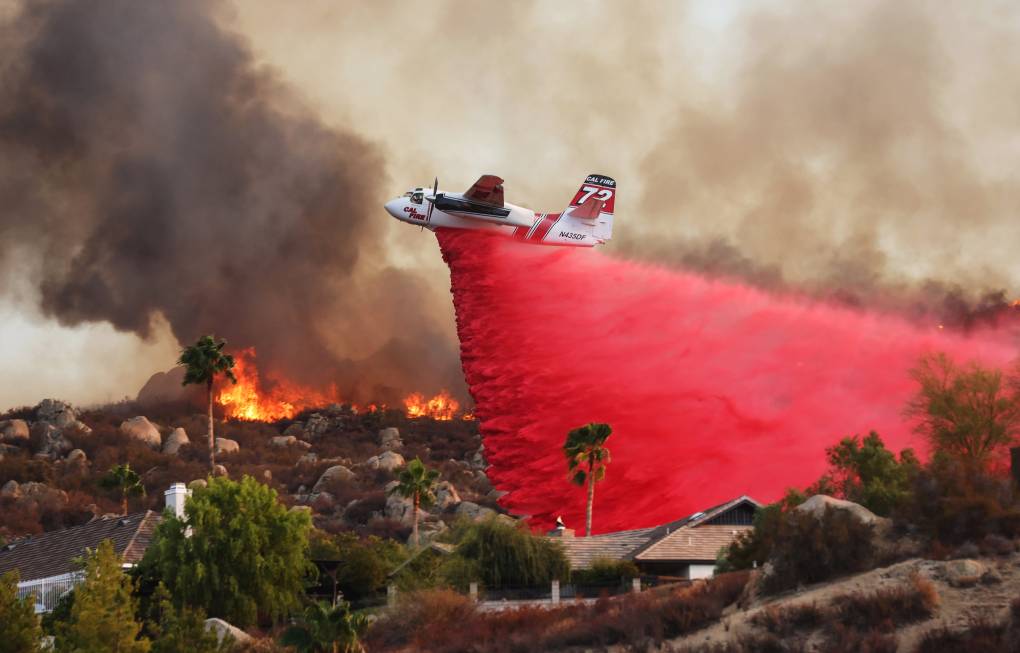
window.__INITIAL_STATE__={
"attachmentsReducer": {
"audio_0": {
"type": "attachments",
"id": "audio_0",
"imgSizes": {
"kqedFullSize": {
"file": "https://ww2.kqed.org/news/wp-content/themes/KQED-unified/img/audio_bgs/background0.jpg"
}
}
},
"audio_1": {
"type": "attachments",
"id": "audio_1",
"imgSizes": {
"kqedFullSize": {
"file": "https://ww2.kqed.org/news/wp-content/themes/KQED-unified/img/audio_bgs/background1.jpg"
}
}
},
"audio_2": {
"type": "attachments",
"id": "audio_2",
"imgSizes": {
"kqedFullSize": {
"file": "https://ww2.kqed.org/news/wp-content/themes/KQED-unified/img/audio_bgs/background2.jpg"
}
}
},
"audio_3": {
"type": "attachments",
"id": "audio_3",
"imgSizes": {
"kqedFullSize": {
"file": "https://ww2.kqed.org/news/wp-content/themes/KQED-unified/img/audio_bgs/background3.jpg"
}
}
},
"audio_4": {
"type": "attachments",
"id": "audio_4",
"imgSizes": {
"kqedFullSize": {
"file": "https://ww2.kqed.org/news/wp-content/themes/KQED-unified/img/audio_bgs/background4.jpg"
}
}
},
"placeholder": {
"type": "attachments",
"id": "placeholder",
"imgSizes": {
"thumbnail": {
"file": "https://cdn.kqed.org/wp-content/uploads/2024/12/KQED-Default-Image-816638274-2000x1333-1-160x107.jpg",
"width": 160,
"height": 107,
"mimeType": "image/jpeg"
},
"medium": {
"file": "https://cdn.kqed.org/wp-content/uploads/2024/12/KQED-Default-Image-816638274-2000x1333-1-800x533.jpg",
"width": 800,
"height": 533,
"mimeType": "image/jpeg"
},
"medium_large": {
"file": "https://cdn.kqed.org/wp-content/uploads/2024/12/KQED-Default-Image-816638274-2000x1333-1-768x512.jpg",
"width": 768,
"height": 512,
"mimeType": "image/jpeg"
},
"large": {
"file": "https://cdn.kqed.org/wp-content/uploads/2024/12/KQED-Default-Image-816638274-2000x1333-1-1020x680.jpg",
"width": 1020,
"height": 680,
"mimeType": "image/jpeg"
},
"1536x1536": {
"file": "https://cdn.kqed.org/wp-content/uploads/2024/12/KQED-Default-Image-816638274-2000x1333-1-1536x1024.jpg",
"width": 1536,
"height": 1024,
"mimeType": "image/jpeg"
},
"fd-lrg": {
"file": "https://cdn.kqed.org/wp-content/uploads/2024/12/KQED-Default-Image-816638274-2000x1333-1-1536x1024.jpg",
"width": 1536,
"height": 1024,
"mimeType": "image/jpeg"
},
"fd-med": {
"file": "https://cdn.kqed.org/wp-content/uploads/2024/12/KQED-Default-Image-816638274-2000x1333-1-1020x680.jpg",
"width": 1020,
"height": 680,
"mimeType": "image/jpeg"
},
"fd-sm": {
"file": "https://cdn.kqed.org/wp-content/uploads/2024/12/KQED-Default-Image-816638274-2000x1333-1-800x533.jpg",
"width": 800,
"height": 533,
"mimeType": "image/jpeg"
},
"post-thumbnail": {
"file": "https://cdn.kqed.org/wp-content/uploads/2024/12/KQED-Default-Image-816638274-2000x1333-1-672x372.jpg",
"width": 672,
"height": 372,
"mimeType": "image/jpeg"
},
"twentyfourteen-full-width": {
"file": "https://cdn.kqed.org/wp-content/uploads/2024/12/KQED-Default-Image-816638274-2000x1333-1-1038x576.jpg",
"width": 1038,
"height": 576,
"mimeType": "image/jpeg"
},
"xxsmall": {
"file": "https://cdn.kqed.org/wp-content/uploads/2024/12/KQED-Default-Image-816638274-2000x1333-1-160x107.jpg",
"width": 160,
"height": 107,
"mimeType": "image/jpeg"
},
"xsmall": {
"file": "https://cdn.kqed.org/wp-content/uploads/2024/12/KQED-Default-Image-816638274-2000x1333-1-672x372.jpg",
"width": 672,
"height": 372,
"mimeType": "image/jpeg"
},
"small": {
"file": "https://cdn.kqed.org/wp-content/uploads/2024/12/KQED-Default-Image-816638274-2000x1333-1-672x372.jpg",
"width": 672,
"height": 372,
"mimeType": "image/jpeg"
},
"xlarge": {
"file": "https://cdn.kqed.org/wp-content/uploads/2024/12/KQED-Default-Image-816638274-2000x1333-1-1020x680.jpg",
"width": 1020,
"height": 680,
"mimeType": "image/jpeg"
},
"full-width": {
"file": "https://cdn.kqed.org/wp-content/uploads/2024/12/KQED-Default-Image-816638274-2000x1333-1-1920x1280.jpg",
"width": 1920,
"height": 1280,
"mimeType": "image/jpeg"
},
"guest-author-32": {
"file": "https://cdn.kqed.org/wp-content/uploads/2025/01/KQED-Default-Image-816638274-1333x1333-1-160x160.jpg",
"width": 32,
"height": 32,
"mimeType": "image/jpeg"
},
"guest-author-50": {
"file": "https://cdn.kqed.org/wp-content/uploads/2025/01/KQED-Default-Image-816638274-1333x1333-1-160x160.jpg",
"width": 50,
"height": 50,
"mimeType": "image/jpeg"
},
"guest-author-64": {
"file": "https://cdn.kqed.org/wp-content/uploads/2025/01/KQED-Default-Image-816638274-1333x1333-1-160x160.jpg",
"width": 64,
"height": 64,
"mimeType": "image/jpeg"
},
"guest-author-96": {
"file": "https://cdn.kqed.org/wp-content/uploads/2025/01/KQED-Default-Image-816638274-1333x1333-1-160x160.jpg",
"width": 96,
"height": 96,
"mimeType": "image/jpeg"
},
"guest-author-128": {
"file": "https://cdn.kqed.org/wp-content/uploads/2025/01/KQED-Default-Image-816638274-1333x1333-1-160x160.jpg",
"width": 128,
"height": 128,
"mimeType": "image/jpeg"
},
"detail": {
"file": "https://cdn.kqed.org/wp-content/uploads/2025/01/KQED-Default-Image-816638274-1333x1333-1-160x160.jpg",
"width": 160,
"height": 160,
"mimeType": "image/jpeg"
},
"kqedFullSize": {
"file": "https://cdn.kqed.org/wp-content/uploads/2024/12/KQED-Default-Image-816638274-2000x1333-1.jpg",
"width": 2000,
"height": 1333
}
}
},
"news_12021587": {
"type": "attachments",
"id": "news_12021587",
"meta": {
"index": "attachments_1716263798",
"site": "news",
"id": "12021587",
"found": true
},
"title": "Fairview Fire Breaks Out In Hemet",
"publishDate": 1736550139,
"status": "inherit",
"parent": 12021586,
"modified": 1736636004,
"caption": "A firefighting aircraft drops fire retardant as the Fairview Fire burns near hillside homes on Sept. 6, 2022 near Hemet, Riverside County.",
"credit": "Mario Tama/Getty Images",
"altTag": null,
"description": null,
"imgSizes": {
"medium": {
"file": "https://cdn.kqed.org/wp-content/uploads/sites/10/2025/01/GettyImages-1421515315-800x512.jpg",
"width": 800,
"height": 512,
"mimeType": "image/jpeg"
},
"large": {
"file": "https://cdn.kqed.org/wp-content/uploads/sites/10/2025/01/GettyImages-1421515315-1020x653.jpg",
"width": 1020,
"height": 653,
"mimeType": "image/jpeg"
},
"thumbnail": {
"file": "https://cdn.kqed.org/wp-content/uploads/sites/10/2025/01/GettyImages-1421515315-160x102.jpg",
"width": 160,
"height": 102,
"mimeType": "image/jpeg"
},
"1536x1536": {
"file": "https://cdn.kqed.org/wp-content/uploads/sites/10/2025/01/GettyImages-1421515315-1536x983.jpg",
"width": 1536,
"height": 983,
"mimeType": "image/jpeg"
},
"2048x2048": {
"file": "https://cdn.kqed.org/wp-content/uploads/sites/10/2025/01/GettyImages-1421515315-2048x1310.jpg",
"width": 2048,
"height": 1310,
"mimeType": "image/jpeg"
},
"post-thumbnail": {
"file": "https://cdn.kqed.org/wp-content/uploads/sites/10/2025/01/GettyImages-1421515315-672x372.jpg",
"width": 672,
"height": 372,
"mimeType": "image/jpeg"
},
"twentyfourteen-full-width": {
"file": "https://cdn.kqed.org/wp-content/uploads/sites/10/2025/01/GettyImages-1421515315-1038x576.jpg",
"width": 1038,
"height": 576,
"mimeType": "image/jpeg"
},
"full-width": {
"file": "https://cdn.kqed.org/wp-content/uploads/sites/10/2025/01/GettyImages-1421515315-1920x1229.jpg",
"width": 1920,
"height": 1229,
"mimeType": "image/jpeg"
},
"kqedFullSize": {
"file": "https://cdn.kqed.org/wp-content/uploads/sites/10/2025/01/GettyImages-1421515315-scaled.jpg",
"width": 2560,
"height": 1638
}
},
"isLoading": false,
"fetchFailed": false
},
"news_12021323": {
"type": "attachments",
"id": "news_12021323",
"meta": {
"index": "attachments_1716263798",
"site": "news",
"id": "12021323",
"found": true
},
"title": "240109-CAWindStorm-056",
"publishDate": 1736467983,
"status": "inherit",
"parent": 0,
"modified": 1737076475,
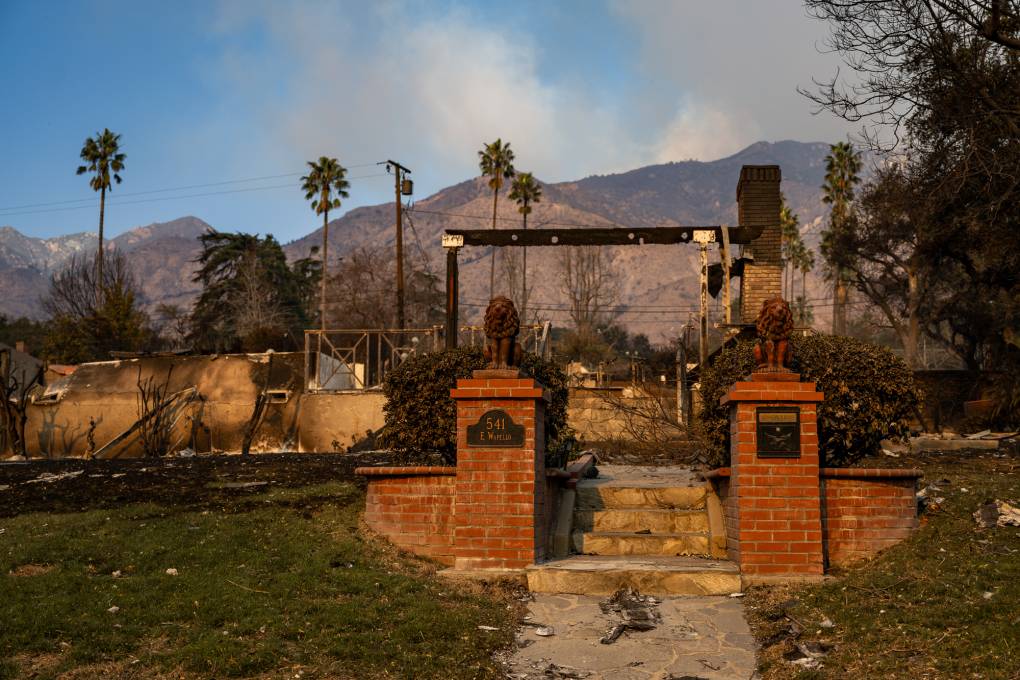
"caption": "The remains of a house in Altadena, California, after the Eaton Fire swept through the area northeast of Los Angeles on Thursday, Jan. 9, 2025.",
"credit": "Beth LaBerge/KQED",
"altTag": null,
"description": null,
"imgSizes": {
"medium": {
"file": "https://cdn.kqed.org/wp-content/uploads/sites/10/2025/01/240109-CAWindStorm-056-800x533.jpg",
"width": 800,
"height": 533,
"mimeType": "image/jpeg"
},
"large": {
"file": "https://cdn.kqed.org/wp-content/uploads/sites/10/2025/01/240109-CAWindStorm-056-1020x680.jpg",
"width": 1020,
"height": 680,
"mimeType": "image/jpeg"
},
"thumbnail": {
"file": "https://cdn.kqed.org/wp-content/uploads/sites/10/2025/01/240109-CAWindStorm-056-160x107.jpg",
"width": 160,
"height": 107,
"mimeType": "image/jpeg"
},
"1536x1536": {
"file": "https://cdn.kqed.org/wp-content/uploads/sites/10/2025/01/240109-CAWindStorm-056-1536x1024.jpg",
"width": 1536,
"height": 1024,
"mimeType": "image/jpeg"
},
"post-thumbnail": {
"file": "https://cdn.kqed.org/wp-content/uploads/sites/10/2025/01/240109-CAWindStorm-056-672x372.jpg",
"width": 672,
"height": 372,
"mimeType": "image/jpeg"
},
"twentyfourteen-full-width": {
"file": "https://cdn.kqed.org/wp-content/uploads/sites/10/2025/01/240109-CAWindStorm-056-1038x576.jpg",
"width": 1038,
"height": 576,
"mimeType": "image/jpeg"
},
"full-width": {
"file": "https://cdn.kqed.org/wp-content/uploads/sites/10/2025/01/240109-CAWindStorm-056-1920x1280.jpg",
"width": 1920,
"height": 1280,
"mimeType": "image/jpeg"
},
"kqedFullSize": {
"file": "https://cdn.kqed.org/wp-content/uploads/sites/10/2025/01/240109-CAWindStorm-056.jpg",
"width": 2000,
"height": 1333
}
},
"isLoading": false,
"fetchFailed": false
},
"news_12021441": {
"type": "attachments",
"id": "news_12021441",
"meta": {
"index": "attachments_1716263798",
"site": "news",
"id": "12021441",
"found": true
},
"title": "Powerful Winds Fuel Multiple Fires Across Los Angeles Area",
"publishDate": 1736534002,
"status": "inherit",
"parent": 12021440,
"modified": 1736534053,
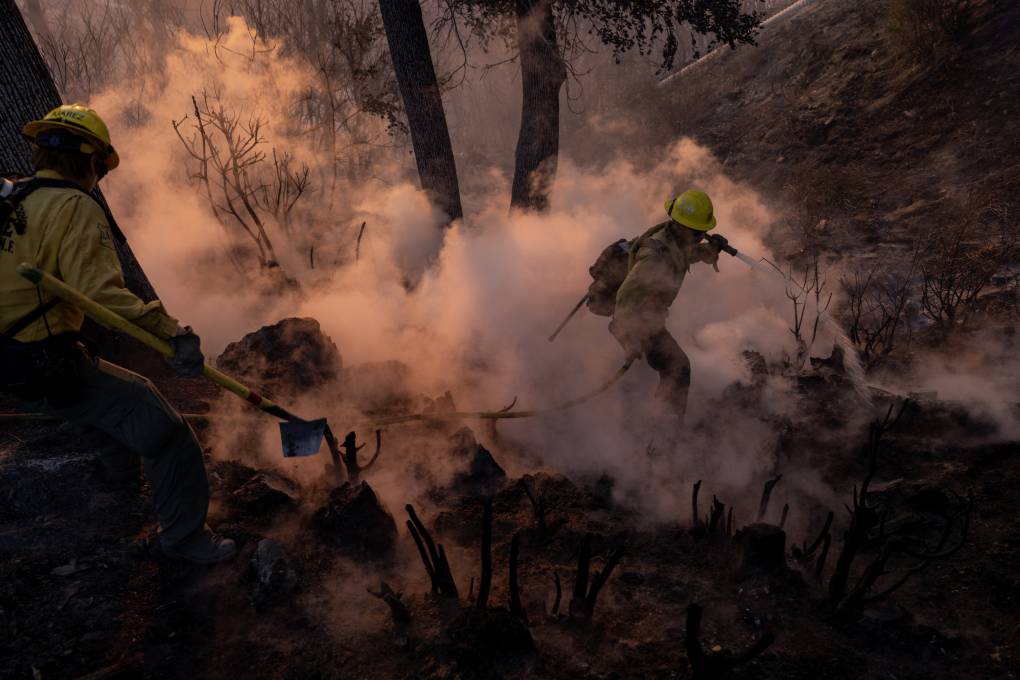
"caption": "Firefighters mop up hot spots near the major communications towers on Mount Wilson, as the Eaton Fire continues to burn on January 9, 2025 near Altadena, California. Multiple wildfires fueled by intense Santa Ana Winds are burning across Los Angeles County. ",
"credit": "David McNew/Getty Images",
"altTag": null,
"description": null,
"imgSizes": {
"medium": {
"file": "https://cdn.kqed.org/wp-content/uploads/sites/10/2025/01/GettyImages-2192553619-800x534.jpg",
"width": 800,
"height": 534,
"mimeType": "image/jpeg"
},
"large": {
"file": "https://cdn.kqed.org/wp-content/uploads/sites/10/2025/01/GettyImages-2192553619-1020x680.jpg",
"width": 1020,
"height": 680,
"mimeType": "image/jpeg"
},
"thumbnail": {
"file": "https://cdn.kqed.org/wp-content/uploads/sites/10/2025/01/GettyImages-2192553619-160x107.jpg",
"width": 160,
"height": 107,
"mimeType": "image/jpeg"
},
"1536x1536": {
"file": "https://cdn.kqed.org/wp-content/uploads/sites/10/2025/01/GettyImages-2192553619-1536x1025.jpg",
"width": 1536,
"height": 1025,
"mimeType": "image/jpeg"
},
"2048x2048": {
"file": "https://cdn.kqed.org/wp-content/uploads/sites/10/2025/01/GettyImages-2192553619-2048x1366.jpg",
"width": 2048,
"height": 1366,
"mimeType": "image/jpeg"
},
"post-thumbnail": {
"file": "https://cdn.kqed.org/wp-content/uploads/sites/10/2025/01/GettyImages-2192553619-672x372.jpg",
"width": 672,
"height": 372,
"mimeType": "image/jpeg"
},
"twentyfourteen-full-width": {
"file": "https://cdn.kqed.org/wp-content/uploads/sites/10/2025/01/GettyImages-2192553619-1038x576.jpg",
"width": 1038,
"height": 576,
"mimeType": "image/jpeg"
},
"full-width": {
"file": "https://cdn.kqed.org/wp-content/uploads/sites/10/2025/01/GettyImages-2192553619-1920x1281.jpg",
"width": 1920,
"height": 1281,
"mimeType": "image/jpeg"
},
"kqedFullSize": {
"file": "https://cdn.kqed.org/wp-content/uploads/sites/10/2025/01/GettyImages-2192553619-scaled.jpg",
"width": 2560,
"height": 1708
}
},
"isLoading": false,
"fetchFailed": false
},
"news_12021326": {
"type": "attachments",
"id": "news_12021326",
"meta": {
"index": "attachments_1716263798",
"site": "news",
"id": "12021326",
"found": true
},
"title": "240109-CAWindStorm-062",
"publishDate": 1736468000,
"status": "inherit",
"parent": 0,
"modified": 1736818490,
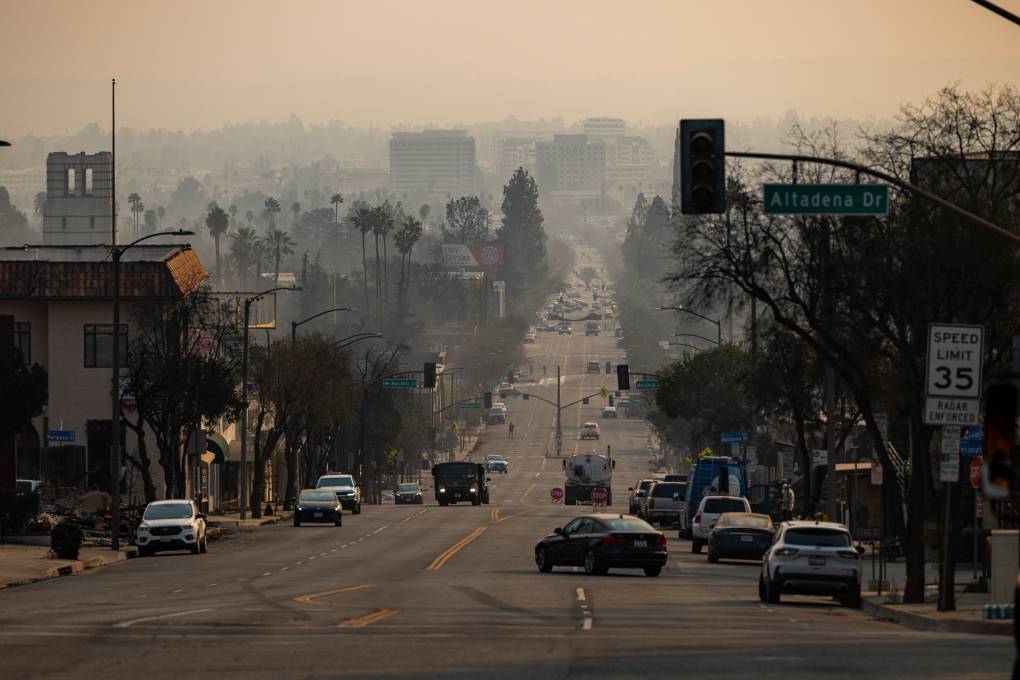
"caption": "Smoke fills the sky over Pasadena due to several wildfires burning in the Los Angeles, California, area on Thursday, Jan. 9, 2025.",
"credit": "Beth LaBerge/KQED",
"altTag": null,
"description": null,
"imgSizes": {
"medium": {
"file": "https://cdn.kqed.org/wp-content/uploads/sites/10/2025/01/240109-CAWindStorm-062-800x533.jpg",
"width": 800,
"height": 533,
"mimeType": "image/jpeg"
},
"large": {
"file": "https://cdn.kqed.org/wp-content/uploads/sites/10/2025/01/240109-CAWindStorm-062-1020x680.jpg",
"width": 1020,
"height": 680,
"mimeType": "image/jpeg"
},
"thumbnail": {
"file": "https://cdn.kqed.org/wp-content/uploads/sites/10/2025/01/240109-CAWindStorm-062-160x107.jpg",
"width": 160,
"height": 107,
"mimeType": "image/jpeg"
},
"1536x1536": {
"file": "https://cdn.kqed.org/wp-content/uploads/sites/10/2025/01/240109-CAWindStorm-062-1536x1024.jpg",
"width": 1536,
"height": 1024,
"mimeType": "image/jpeg"
},
"post-thumbnail": {
"file": "https://cdn.kqed.org/wp-content/uploads/sites/10/2025/01/240109-CAWindStorm-062-672x372.jpg",
"width": 672,
"height": 372,
"mimeType": "image/jpeg"
},
"twentyfourteen-full-width": {
"file": "https://cdn.kqed.org/wp-content/uploads/sites/10/2025/01/240109-CAWindStorm-062-1038x576.jpg",
"width": 1038,
"height": 576,
"mimeType": "image/jpeg"
},
"full-width": {
"file": "https://cdn.kqed.org/wp-content/uploads/sites/10/2025/01/240109-CAWindStorm-062-1920x1280.jpg",
"width": 1920,
"height": 1280,
"mimeType": "image/jpeg"
},
"kqedFullSize": {
"file": "https://cdn.kqed.org/wp-content/uploads/sites/10/2025/01/240109-CAWindStorm-062.jpg",
"width": 2000,
"height": 1333
}
},
"isLoading": false,
"fetchFailed": false
},
"news_12021445": {
"type": "attachments",
"id": "news_12021445",
"meta": {
"index": "attachments_1716263798",
"site": "news",
"id": "12021445",
"found": true
},
"title": "npr.brightspotcdn copy",
"publishDate": 1736535200,
"status": "inherit",
"parent": 12021444,
"modified": 1736535229,
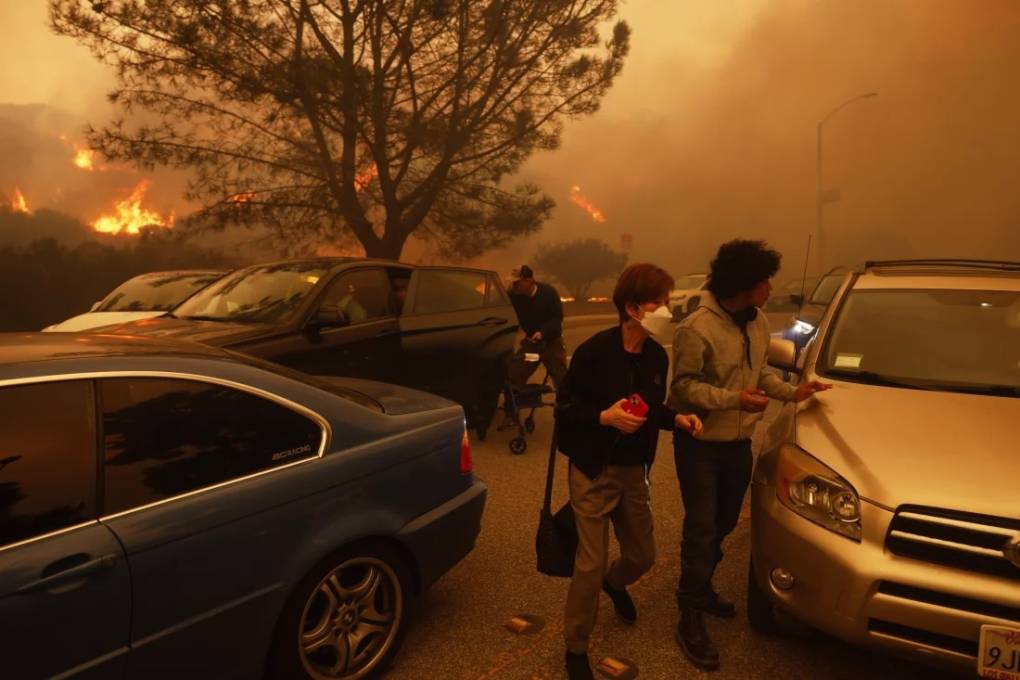
"caption": "People flee from the advancing Palisades Fire, by car and on foot, in the Pacific Palisades neighborhood of Los Angeles Tuesday, Jan. 7, 2025. ",
"credit": "Etienne Laurent/AP Photo",
"altTag": null,
"description": null,
"imgSizes": {
"medium": {
"file": "https://cdn.kqed.org/wp-content/uploads/sites/10/2025/01/npr.brightspotcdn-copy-36-800x533.jpg",
"width": 800,
"height": 533,
"mimeType": "image/jpeg"
},
"large": {
"file": "https://cdn.kqed.org/wp-content/uploads/sites/10/2025/01/npr.brightspotcdn-copy-36-1020x680.jpg",
"width": 1020,
"height": 680,
"mimeType": "image/jpeg"
},
"thumbnail": {
"file": "https://cdn.kqed.org/wp-content/uploads/sites/10/2025/01/npr.brightspotcdn-copy-36-160x107.jpg",
"width": 160,
"height": 107,
"mimeType": "image/jpeg"
},
"post-thumbnail": {
"file": "https://cdn.kqed.org/wp-content/uploads/sites/10/2025/01/npr.brightspotcdn-copy-36-672x372.jpg",
"width": 672,
"height": 372,
"mimeType": "image/jpeg"
},
"twentyfourteen-full-width": {
"file": "https://cdn.kqed.org/wp-content/uploads/sites/10/2025/01/npr.brightspotcdn-copy-36-1038x576.jpg",
"width": 1038,
"height": 576,
"mimeType": "image/jpeg"
},
"kqedFullSize": {
"file": "https://cdn.kqed.org/wp-content/uploads/sites/10/2025/01/npr.brightspotcdn-copy-36.jpg",
"width": 1100,
"height": 733
}
},
"isLoading": false,
"fetchFailed": false
},
"news_11964709": {
"type": "attachments",
"id": "news_11964709",
"meta": {
"index": "attachments_1716263798",
"site": "news",
"id": "11964709",
"found": true
},
"title": "IMG_7960",
"publishDate": 1697492675,
"status": "inherit",
"parent": 11964707,
"modified": 1697495174,
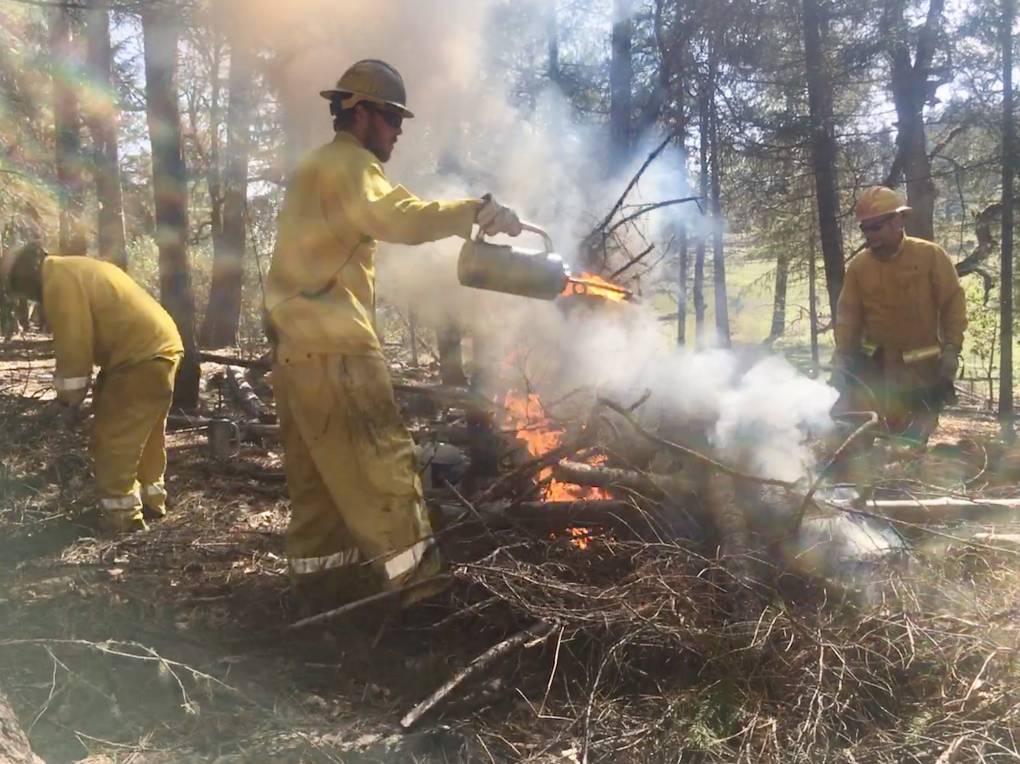
"caption": "A prescribed fire in Hayfork on April 10, 2019. Advocates for the practice of setting planned burns to manage lands and minimize wildfire risk say the exceptional events rule gets in the way.",
"credit": "Molly Peterson/California Newsroom",
"altTag": "A firefighter uses an instrument to douse flames in a forest.",
"description": null,
"imgSizes": {
"medium": {
"file": "https://cdn.kqed.org/wp-content/uploads/sites/10/2023/10/IMG_7960-800x599.jpg",
"width": 800,
"height": 599,
"mimeType": "image/jpeg"
},
"large": {
"file": "https://cdn.kqed.org/wp-content/uploads/sites/10/2023/10/IMG_7960-1020x764.jpg",
"width": 1020,
"height": 764,
"mimeType": "image/jpeg"
},
"thumbnail": {
"file": "https://cdn.kqed.org/wp-content/uploads/sites/10/2023/10/IMG_7960-160x120.jpg",
"width": 160,
"height": 120,
"mimeType": "image/jpeg"
},
"1536x1536": {
"file": "https://cdn.kqed.org/wp-content/uploads/sites/10/2023/10/IMG_7960-1536x1151.jpg",
"width": 1536,
"height": 1151,
"mimeType": "image/jpeg"
},
"2048x2048": {
"file": "https://cdn.kqed.org/wp-content/uploads/sites/10/2023/10/IMG_7960-2048x1535.jpg",
"width": 2048,
"height": 1535,
"mimeType": "image/jpeg"
},
"post-thumbnail": {
"file": "https://cdn.kqed.org/wp-content/uploads/sites/10/2023/10/IMG_7960-672x372.jpg",
"width": 672,
"height": 372,
"mimeType": "image/jpeg"
},
"twentyfourteen-full-width": {
"file": "https://cdn.kqed.org/wp-content/uploads/sites/10/2023/10/IMG_7960-1038x576.jpg",
"width": 1038,
"height": 576,
"mimeType": "image/jpeg"
},
"full-width": {
"file": "https://cdn.kqed.org/wp-content/uploads/sites/10/2023/10/IMG_7960-1920x1439.jpg",
"width": 1920,
"height": 1439,
"mimeType": "image/jpeg"
},
"kqedFullSize": {
"file": "https://cdn.kqed.org/wp-content/uploads/sites/10/2023/10/IMG_7960-scaled-e1736446701514.jpg",
"width": 2000,
"height": 1498
}
},
"isLoading": false,
"fetchFailed": false
},
"news_12021393": {
"type": "attachments",
"id": "news_12021393",
"meta": {
"index": "attachments_1716263798",
"site": "news",
"id": "12021393",
"found": true
},
"title": "slack-imgs",
"publishDate": 1736474557,
"status": "inherit",
"parent": 12021107,
"modified": 1736474583,
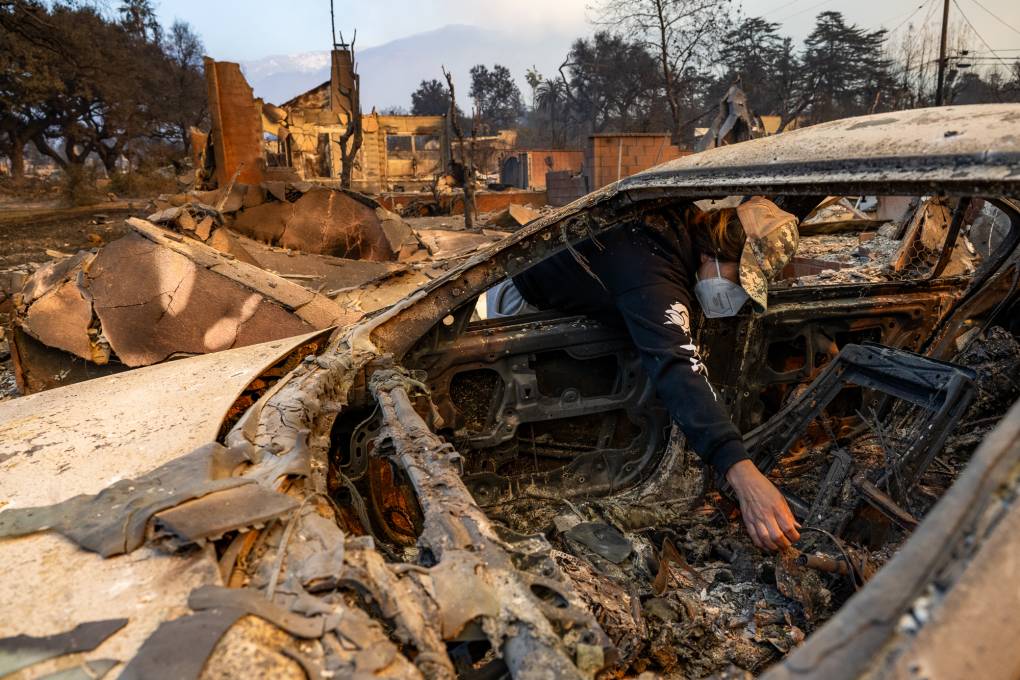
"caption": "Loyda Wilson, 48, looks through her car after it was destroyed in the Eaton Fire northeast of Los Angeles, on Thursday, Jan. 9, 2025. She and her husband were on vacation in Hawaii when the fire broke out, so they could not retrieve any belongings.",
"credit": "Beth LaBerge/KQED",
"altTag": null,
"description": null,
"imgSizes": {
"medium": {
"file": "https://cdn.kqed.org/wp-content/uploads/sites/10/2025/01/slack-imgs-800x533.jpg",
"width": 800,
"height": 533,
"mimeType": "image/jpeg"
},
"large": {
"file": "https://cdn.kqed.org/wp-content/uploads/sites/10/2025/01/slack-imgs-1020x680.jpg",
"width": 1020,
"height": 680,
"mimeType": "image/jpeg"
},
"thumbnail": {
"file": "https://cdn.kqed.org/wp-content/uploads/sites/10/2025/01/slack-imgs-160x107.jpg",
"width": 160,
"height": 107,
"mimeType": "image/jpeg"
},
"1536x1536": {
"file": "https://cdn.kqed.org/wp-content/uploads/sites/10/2025/01/slack-imgs-1536x1024.jpg",
"width": 1536,
"height": 1024,
"mimeType": "image/jpeg"
},
"post-thumbnail": {
"file": "https://cdn.kqed.org/wp-content/uploads/sites/10/2025/01/slack-imgs-672x372.jpg",
"width": 672,
"height": 372,
"mimeType": "image/jpeg"
},
"twentyfourteen-full-width": {
"file": "https://cdn.kqed.org/wp-content/uploads/sites/10/2025/01/slack-imgs-1038x576.jpg",
"width": 1038,
"height": 576,
"mimeType": "image/jpeg"
},
"full-width": {
"file": "https://cdn.kqed.org/wp-content/uploads/sites/10/2025/01/slack-imgs-1920x1280.jpg",
"width": 1920,
"height": 1280,
"mimeType": "image/jpeg"
},
"kqedFullSize": {
"file": "https://cdn.kqed.org/wp-content/uploads/sites/10/2025/01/slack-imgs.jpg",
"width": 2000,
"height": 1333
}
},
"isLoading": false,
"fetchFailed": false
},
"news_12021231": {
"type": "attachments",
"id": "news_12021231",
"meta": {
"index": "attachments_1716263798",
"site": "news",
"id": "12021231",
"found": true
},
"title": "Hollywood Exteriors And Landmarks - 2025",
"publishDate": 1736459349,
"status": "inherit",
"parent": 12021213,
"modified": 1736461317,
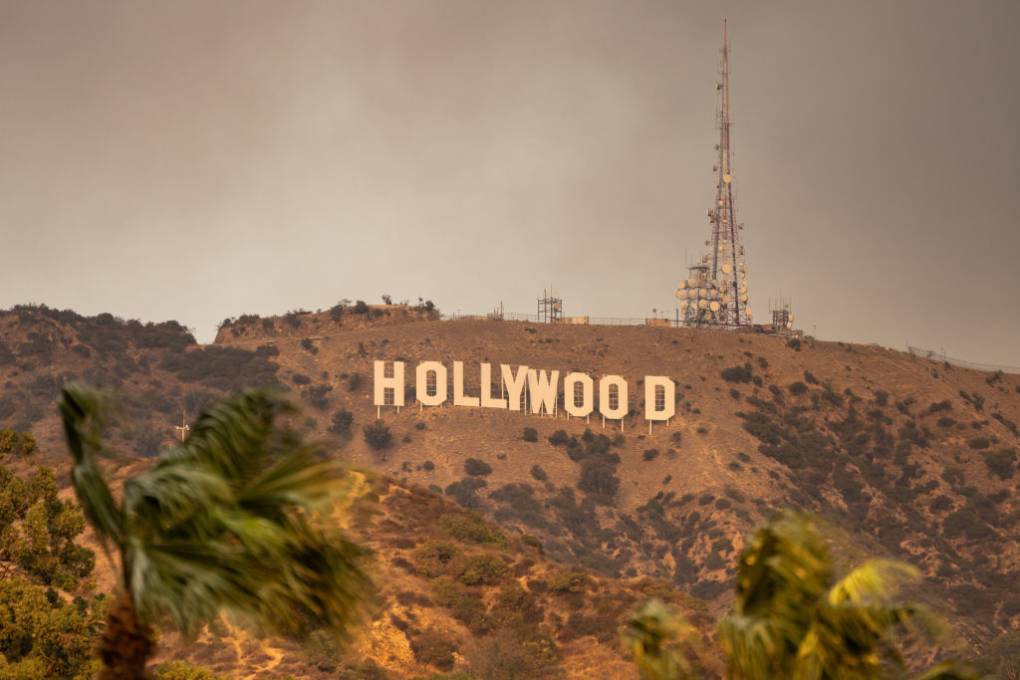
"caption": "The Hollywood Sign is seen with smoke from multiple wildfires on Jan. 8, 2025, in Hollywood, Los Angeles. ",
"credit": "AaronP/Bauer-Griffin/GC Images",
"altTag": null,
"description": null,
"imgSizes": {
"medium": {
"file": "https://cdn.kqed.org/wp-content/uploads/sites/10/2025/01/GettyImages-2192420108-800x534.jpg",
"width": 800,
"height": 534,
"mimeType": "image/jpeg"
},
"large": {
"file": "https://cdn.kqed.org/wp-content/uploads/sites/10/2025/01/GettyImages-2192420108-1020x680.jpg",
"width": 1020,
"height": 680,
"mimeType": "image/jpeg"
},
"thumbnail": {
"file": "https://cdn.kqed.org/wp-content/uploads/sites/10/2025/01/GettyImages-2192420108-160x107.jpg",
"width": 160,
"height": 107,
"mimeType": "image/jpeg"
},
"post-thumbnail": {
"file": "https://cdn.kqed.org/wp-content/uploads/sites/10/2025/01/GettyImages-2192420108-672x372.jpg",
"width": 672,
"height": 372,
"mimeType": "image/jpeg"
},
"twentyfourteen-full-width": {
"file": "https://cdn.kqed.org/wp-content/uploads/sites/10/2025/01/GettyImages-2192420108-1024x576.jpg",
"width": 1024,
"height": 576,
"mimeType": "image/jpeg"
},
"kqedFullSize": {
"file": "https://cdn.kqed.org/wp-content/uploads/sites/10/2025/01/GettyImages-2192420108.jpg",
"width": 1024,
"height": 683
}
},
"isLoading": false,
"fetchFailed": false
},
"news_12021030": {
"type": "attachments",
"id": "news_12021030",
"meta": {
"index": "attachments_1716263798",
"site": "news",
"id": "12021030",
"found": true
},
"title": "npr.brightspotcdn copy",
"publishDate": 1736384480,
"status": "inherit",
"parent": 12021029,
"modified": 1736386192,
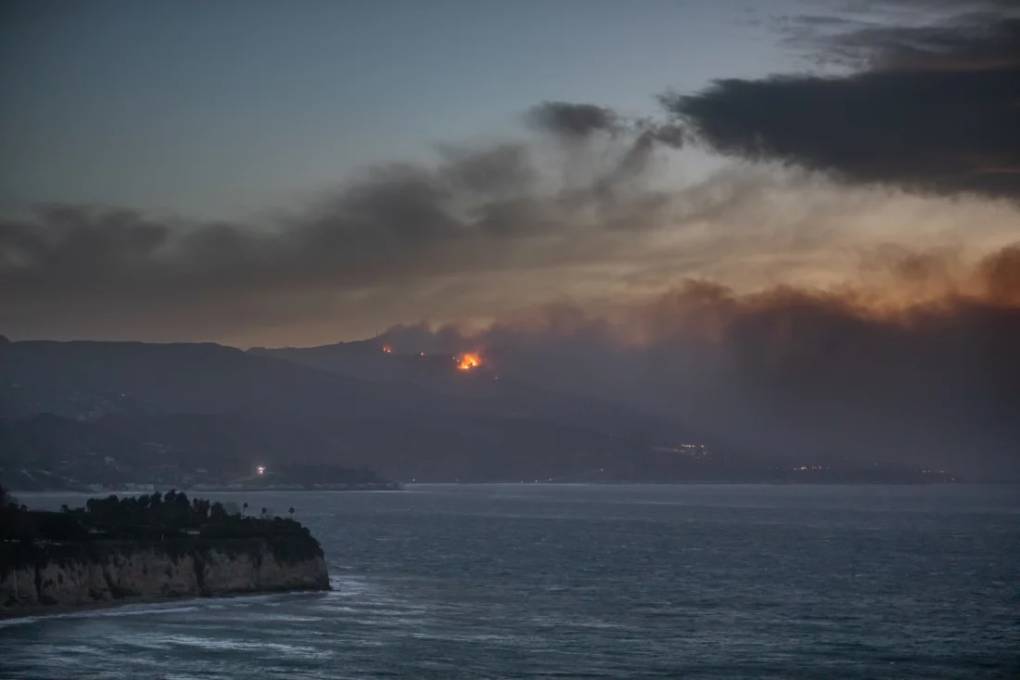
"caption": "Smoke from the Palisades Fire is seen from Point Dume while it burns homes along the Pacific Coast Highway amid a powerful windstorm on Wednesday in Malibu, California. Fueled by intense Santa Ana winds, the Palisades Fire has burned through thousands of acres, while a second major fire continues to burn near Eaton Canyon in Altadena.",
"credit": "Apu Gomes/Getty Images North America",
"altTag": "Fire and flame with smoke rising on a distant wooded mountain with the sea in the foreground.",
"description": null,
"imgSizes": {
"medium": {
"file": "https://cdn.kqed.org/wp-content/uploads/sites/10/2025/01/npr.brightspotcdn-copy-24-800x533.jpg",
"width": 800,
"height": 533,
"mimeType": "image/jpeg"
},
"large": {
"file": "https://cdn.kqed.org/wp-content/uploads/sites/10/2025/01/npr.brightspotcdn-copy-24-1020x680.jpg",
"width": 1020,
"height": 680,
"mimeType": "image/jpeg"
},
"thumbnail": {
"file": "https://cdn.kqed.org/wp-content/uploads/sites/10/2025/01/npr.brightspotcdn-copy-24-160x107.jpg",
"width": 160,
"height": 107,
"mimeType": "image/jpeg"
},
"post-thumbnail": {
"file": "https://cdn.kqed.org/wp-content/uploads/sites/10/2025/01/npr.brightspotcdn-copy-24-672x372.jpg",
"width": 672,
"height": 372,
"mimeType": "image/jpeg"
},
"twentyfourteen-full-width": {
"file": "https://cdn.kqed.org/wp-content/uploads/sites/10/2025/01/npr.brightspotcdn-copy-24-1038x576.jpg",
"width": 1038,
"height": 576,
"mimeType": "image/jpeg"
},
"kqedFullSize": {
"file": "https://cdn.kqed.org/wp-content/uploads/sites/10/2025/01/npr.brightspotcdn-copy-24.jpg",
"width": 1100,
"height": 733
}
},
"isLoading": false,
"fetchFailed": false
},
"news_12020919": {
"type": "attachments",
"id": "news_12020919",
"meta": {
"index": "attachments_1716263798",
"site": "news",
"id": "12020919",
"found": true
},
"title": "npr.brightspotcdn copy",
"publishDate": 1736376389,
"status": "inherit",
"parent": 12020918,
"modified": 1736376475,
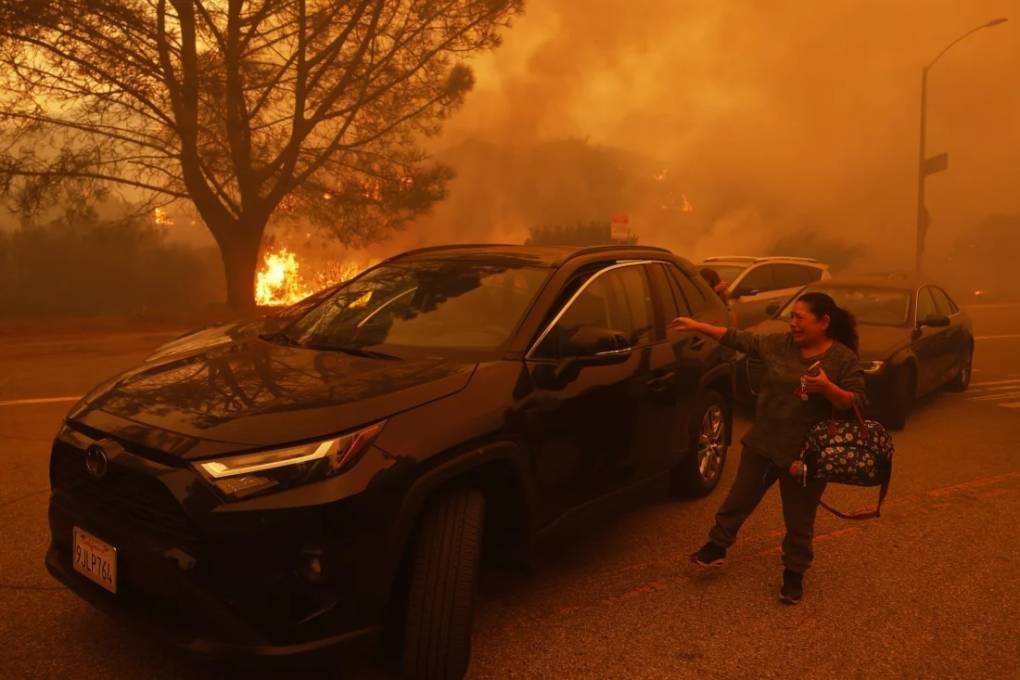
"caption": "A woman cries as the Palisades Fire advances in the Pacific Palisades neighborhood of Los Angeles on Tuesday, Jan. 7, 2025. ",
"credit": "Etienne Laurent/AP Photo",
"altTag": "A woman cries by a car as she tries to get in with orange glowing smoke behind her on a fire-engulfed street.",
"description": null,
"imgSizes": {
"medium": {
"file": "https://cdn.kqed.org/wp-content/uploads/sites/10/2025/01/npr.brightspotcdn-copy-1-800x533.jpg",
"width": 800,
"height": 533,
"mimeType": "image/jpeg"
},
"large": {
"file": "https://cdn.kqed.org/wp-content/uploads/sites/10/2025/01/npr.brightspotcdn-copy-1-1020x680.jpg",
"width": 1020,
"height": 680,
"mimeType": "image/jpeg"
},
"thumbnail": {
"file": "https://cdn.kqed.org/wp-content/uploads/sites/10/2025/01/npr.brightspotcdn-copy-1-160x107.jpg",
"width": 160,
"height": 107,
"mimeType": "image/jpeg"
},
"post-thumbnail": {
"file": "https://cdn.kqed.org/wp-content/uploads/sites/10/2025/01/npr.brightspotcdn-copy-1-672x372.jpg",
"width": 672,
"height": 372,
"mimeType": "image/jpeg"
},
"twentyfourteen-full-width": {
"file": "https://cdn.kqed.org/wp-content/uploads/sites/10/2025/01/npr.brightspotcdn-copy-1-1038x576.jpg",
"width": 1038,
"height": 576,
"mimeType": "image/jpeg"
},
"kqedFullSize": {
"file": "https://cdn.kqed.org/wp-content/uploads/sites/10/2025/01/npr.brightspotcdn-copy-1.jpg",
"width": 1100,
"height": 733
}
},
"isLoading": false,
"fetchFailed": false
},
"news_12020873": {
"type": "attachments",
"id": "news_12020873",
"meta": {
"index": "attachments_1716263798",
"site": "news",
"id": "12020873",
"found": true
},
"title": "la-fires-eaton-fire-palisades-pasadena",
"publishDate": 1736369424,
"status": "inherit",
"parent": 12020872,
"modified": 1736373909,
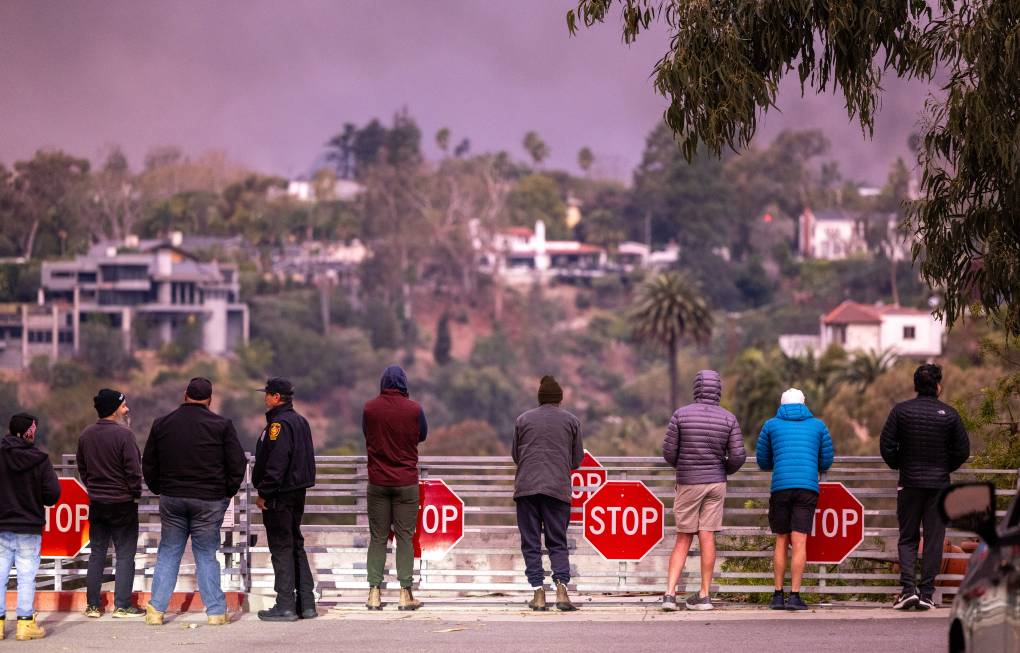
"caption": "People watch the smoke and flames from the Palisades Fire on Jan. 8, 2025, in Santa Monica, California. Fueled by intense Santa Ana Winds, the Palisades Fire has grown to over 2,900 acres and 30,000 people have been ordered to evacuate while a second major fire has emerged near Eaton Canyon and Altadena. ",
"credit": "Tiffany Rose/Getty Images",
"altTag": null,
"description": null,
"imgSizes": {
"medium": {
"file": "https://cdn.kqed.org/wp-content/uploads/sites/10/2025/01/GettyImages-2193000280-800x512.jpg",
"width": 800,
"height": 512,
"mimeType": "image/jpeg"
},
"large": {
"file": "https://cdn.kqed.org/wp-content/uploads/sites/10/2025/01/GettyImages-2193000280-1020x653.jpg",
"width": 1020,
"height": 653,
"mimeType": "image/jpeg"
},
"thumbnail": {
"file": "https://cdn.kqed.org/wp-content/uploads/sites/10/2025/01/GettyImages-2193000280-160x102.jpg",
"width": 160,
"height": 102,
"mimeType": "image/jpeg"
},
"1536x1536": {
"file": "https://cdn.kqed.org/wp-content/uploads/sites/10/2025/01/GettyImages-2193000280-1536x983.jpg",
"width": 1536,
"height": 983,
"mimeType": "image/jpeg"
},
"2048x2048": {
"file": "https://cdn.kqed.org/wp-content/uploads/sites/10/2025/01/GettyImages-2193000280-2048x1311.jpg",
"width": 2048,
"height": 1311,
"mimeType": "image/jpeg"
},
"post-thumbnail": {
"file": "https://cdn.kqed.org/wp-content/uploads/sites/10/2025/01/GettyImages-2193000280-672x372.jpg",
"width": 672,
"height": 372,
"mimeType": "image/jpeg"
},
"twentyfourteen-full-width": {
"file": "https://cdn.kqed.org/wp-content/uploads/sites/10/2025/01/GettyImages-2193000280-1038x576.jpg",
"width": 1038,
"height": 576,
"mimeType": "image/jpeg"
},
"full-width": {
"file": "https://cdn.kqed.org/wp-content/uploads/sites/10/2025/01/GettyImages-2193000280-1920x1229.jpg",
"width": 1920,
"height": 1229,
"mimeType": "image/jpeg"
},
"kqedFullSize": {
"file": "https://cdn.kqed.org/wp-content/uploads/sites/10/2025/01/GettyImages-2193000280-scaled.jpg",
"width": 2560,
"height": 1639
}
},
"isLoading": false,
"fetchFailed": false
},
"news_12020219": {
"type": "attachments",
"id": "news_12020219",
"meta": {
"index": "attachments_1716263798",
"site": "news",
"id": "12020219",
"found": true
},
"title": "SANCTUARY CITY",
"publishDate": 1735914466,
"status": "inherit",
"parent": 12020218,
"modified": 1735914505,
"caption": "Supporters of sanctuary city movement outside of Los Angeles City Hall in November 2024 before the city council voted to codify sanctuary city status into law.",
"credit": "Saul Gonzalez/The California Report",
"altTag": null,
"description": null,
"imgSizes": {
"medium": {
"file": "https://cdn.kqed.org/wp-content/uploads/sites/10/2025/01/SANCTUARY-CITY-800x600.jpeg",
"width": 800,
"height": 600,
"mimeType": "image/jpeg"
},
"large": {
"file": "https://cdn.kqed.org/wp-content/uploads/sites/10/2025/01/SANCTUARY-CITY-1020x765.jpeg",
"width": 1020,
"height": 765,
"mimeType": "image/jpeg"
},
"thumbnail": {
"file": "https://cdn.kqed.org/wp-content/uploads/sites/10/2025/01/SANCTUARY-CITY-160x120.jpeg",
"width": 160,
"height": 120,
"mimeType": "image/jpeg"
},
"1536x1536": {
"file": "https://cdn.kqed.org/wp-content/uploads/sites/10/2025/01/SANCTUARY-CITY-1536x1152.jpeg",
"width": 1536,
"height": 1152,
"mimeType": "image/jpeg"
},
"2048x2048": {
"file": "https://cdn.kqed.org/wp-content/uploads/sites/10/2025/01/SANCTUARY-CITY-2048x1536.jpeg",
"width": 2048,
"height": 1536,
"mimeType": "image/jpeg"
},
"post-thumbnail": {
"file": "https://cdn.kqed.org/wp-content/uploads/sites/10/2025/01/SANCTUARY-CITY-672x372.jpeg",
"width": 672,
"height": 372,
"mimeType": "image/jpeg"
},
"twentyfourteen-full-width": {
"file": "https://cdn.kqed.org/wp-content/uploads/sites/10/2025/01/SANCTUARY-CITY-1038x576.jpeg",
"width": 1038,
"height": 576,
"mimeType": "image/jpeg"
},
"full-width": {
"file": "https://cdn.kqed.org/wp-content/uploads/sites/10/2025/01/SANCTUARY-CITY-1920x1440.jpeg",
"width": 1920,
"height": 1440,
"mimeType": "image/jpeg"
},
"kqedFullSize": {
"file": "https://cdn.kqed.org/wp-content/uploads/sites/10/2025/01/SANCTUARY-CITY-scaled.jpeg",
"width": 2560,
"height": 1920
}
},
"isLoading": false,
"fetchFailed": false
}
},
"audioPlayerReducer": {
"postId": "stream_live",
"isPaused": true,
"isPlaying": false,
"pfsActive": false,
"pledgeModalIsOpen": true,
"playerDrawerIsOpen": false,
"liveAudioPlayStartedAt": 0,
"liveAudioPlayContext": ""
},
"authorsReducer": {
"byline_news_12021586": {
"type": "authors",
"id": "byline_news_12021586",
"meta": {
"override": true
},
"slug": "byline_news_12021586",
"name": "Bill Chappell",
"isLoading": false
},
"byline_news_12021440": {
"type": "authors",
"id": "byline_news_12021440",
"meta": {
"override": true
},
"slug": "byline_news_12021440",
"name": "KQED News Staff and Wires",
"isLoading": false
},
"byline_news_12021444": {
"type": "authors",
"id": "byline_news_12021444",
"meta": {
"override": true
},
"slug": "byline_news_12021444",
"name": "\u003ca href=\"https://www.npr.org/people/803934365/lauren-sommer\">Lauren Sommer\u003c/a>, NPR",
"isLoading": false
},
"byline_news_12021107": {
"type": "authors",
"id": "byline_news_12021107",
"meta": {
"override": true
},
"slug": "byline_news_12021107",
"name": "Christopher Weber, Julie Watson and John Seewer, Associated Press",
"isLoading": false
},
"byline_news_12021213": {
"type": "authors",
"id": "byline_news_12021213",
"meta": {
"override": true
},
"slug": "byline_news_12021213",
"name": "\u003ca href=\"https://www.npr.org/people/g-s1-30654/dhanika-pineda\">Dhanika Pineda\u003c/a>, NPR",
"isLoading": false
},
"byline_news_12021029": {
"type": "authors",
"id": "byline_news_12021029",
"meta": {
"override": true
},
"slug": "byline_news_12021029",
"name": "\u003ca href=\"https://www.npr.org/people/131724812/scott-neuman\">Scott Neuman\u003c/a>, NPR",
"isLoading": false
},
"byline_news_12020918": {
"type": "authors",
"id": "byline_news_12020918",
"meta": {
"override": true
},
"slug": "byline_news_12020918",
"name": "NPR Staff",
"isLoading": false
},
"carlysevern": {
"type": "authors",
"id": "3243",
"meta": {
"index": "authors_1716337520",
"id": "3243",
"found": true
},
"name": "Carly Severn",
"firstName": "Carly",
"lastName": "Severn",
"slug": "carlysevern",
"email": "csevern@kqed.org",
"display_author_email": false,
"staff_mastheads": [
"news"
],
"title": "Senior Editor, Audience News ",
"bio": "Carly is KQED's Senior Editor of Audience News on the Digital News team, and has reported for the California Report Magazine, Bay Curious and KQED Arts. She's formerly the host of \u003ca href=\"http://ww2.kqed.org/pop/category/the-cooler/\" rel=\"noopener noreferrer\">The Cooler\u003c/a> podcast.",
"avatar": "https://secure.gravatar.com/avatar/54037bf5c128fe678f0ef26cec97a93f2e7f220a22d7285703328f12c42c1b1d?s=600&d=blank&r=g",
"twitter": "teacupinthebay",
"bluesky": null,
"facebook": null,
"instagram": null,
"linkedin": null,
"sites": [
{
"site": "",
"roles": [
"editor"
]
},
{
"site": "arts",
"roles": [
"editor"
]
},
{
"site": "news",
"roles": [
"administrator"
]
},
{
"site": "pop",
"roles": [
"editor"
]
},
{
"site": "futureofyou",
"roles": [
"editor"
]
},
{
"site": "about",
"roles": [
"administrator"
]
},
{
"site": "mindshift",
"roles": [
"editor"
]
},
{
"site": "bayareabites",
"roles": [
"editor"
]
},
{
"site": "stateofhealth",
"roles": [
"editor"
]
},
{
"site": "science",
"roles": [
"editor"
]
},
{
"site": "food",
"roles": [
"contributor"
]
},
{
"site": "forum",
"roles": [
"editor"
]
},
{
"site": "perspectives",
"roles": [
"administrator"
]
},
{
"site": "liveblog",
"roles": [
"editor"
]
}
],
"headData": {
"title": "Carly Severn | KQED",
"description": "Senior Editor, Audience News ",
"ogImgSrc": "https://secure.gravatar.com/avatar/54037bf5c128fe678f0ef26cec97a93f2e7f220a22d7285703328f12c42c1b1d?s=600&d=blank&r=g",
"twImgSrc": "https://secure.gravatar.com/avatar/54037bf5c128fe678f0ef26cec97a93f2e7f220a22d7285703328f12c42c1b1d?s=600&d=blank&r=g"
},
"isLoading": false,
"link": "/author/carlysevern"
},
"lklivans": {
"type": "authors",
"id": "8648",
"meta": {
"index": "authors_1716337520",
"id": "8648",
"found": true
},
"name": "Laura Klivans",
"firstName": "Laura",
"lastName": "Klivans",
"slug": "lklivans",
"email": "lklivans@kqed.org",
"display_author_email": true,
"staff_mastheads": [
"news",
"science"
],
"title": "Reporter",
"bio": "Laura Klivans is an award-winning science reporter for KQED News, where she covers climate change with an eye on both groundbreaking progress and gaps in action. She is the former host of KQED's blockbuster video series about tiny, amazing animals, \u003cem>Deep Look\u003c/em>. Her work reaches national audiences through NPR, \u003cem>Here & Now, \u003c/em>PRI, and other major outlets. \r\n\r\nLaura’s won five Northern California Area Emmy Awards for Deep Look and First Place in the Greater Bay Area Journalism Awards for a podcast exploring how one Oakland neighborhood teamed up to reduce planet-heating pollution.\r\n\r\nBeyond her reporting, she hosts and moderates events. In the past, she taught audio storytelling at the UC Berkeley Graduate School of Journalism, led international education programs, worked with immigrants and refugees along the Thai-Burmese border, taught high schoolers sex ed, and was an actress. \r\n\r\nShe's a former UC Berkeley Human Rights Fellow, USC Center for Health Journalism's California Fellow and Coro Fellow in Public Affairs. Laura has a master’s in journalism from UC Berkeley, a master’s in education from Harvard, and an undergraduate degree from Northwestern University.\r\n\r\nShe loves trying to riddle the meaning out of vanity license plates.",
"avatar": "https://secure.gravatar.com/avatar/2d2ecd1550a494cc10ad4a503406965585902124739e775a9b3817eebf1d88be?s=600&d=blank&r=g",
"twitter": "lauraklivans",
"bluesky": null,
"facebook": null,
"instagram": null,
"linkedin": null,
"sites": [
{
"site": "news",
"roles": [
"editor"
]
},
{
"site": "stateofhealth",
"roles": [
"contributor",
"editor"
]
},
{
"site": "science",
"roles": [
"editor"
]
},
{
"site": "forum",
"roles": [
"editor"
]
}
],
"headData": {
"title": "Laura Klivans | KQED",
"description": "Reporter",
"ogImgSrc": "https://secure.gravatar.com/avatar/2d2ecd1550a494cc10ad4a503406965585902124739e775a9b3817eebf1d88be?s=600&d=blank&r=g",
"twImgSrc": "https://secure.gravatar.com/avatar/2d2ecd1550a494cc10ad4a503406965585902124739e775a9b3817eebf1d88be?s=600&d=blank&r=g"
},
"isLoading": false,
"link": "/author/lklivans"
},
"dventon": {
"type": "authors",
"id": "11088",
"meta": {
"index": "authors_1716337520",
"id": "11088",
"found": true
},
"name": "Danielle Venton",
"firstName": "Danielle",
"lastName": "Venton",
"slug": "dventon",
"email": "dventon@kqed.org",
"display_author_email": true,
"staff_mastheads": [
"science"
],
"title": "Science reporter",
"bio": "Danielle Venton is a reporter for KQED Science. She covers wildfires, space and oceans (though she is prone to sea sickness).\r\n\r\nBefore joining KQED in 2015, Danielle was a staff reporter at KRCB in Sonoma County and a freelancer. She studied science communication at UC Santa Cruz and formerly worked at CERN in Geneva, Switzerland where she wrote about computing. She lives in Sonoma County and enjoys backpacking.",
"avatar": "https://secure.gravatar.com/avatar/37b292b5c40c8d93959c4f48d73b5286f41b7abd8588277e941905a3ed4c801c?s=600&d=blank&r=g",
"twitter": "DanielleVenton",
"bluesky": null,
"facebook": null,
"instagram": null,
"linkedin": null,
"sites": [
{
"site": "arts",
"roles": [
"contributor"
]
},
{
"site": "news",
"roles": [
"editor"
]
},
{
"site": "futureofyou",
"roles": [
"editor"
]
},
{
"site": "science",
"roles": [
"editor"
]
},
{
"site": "liveblog",
"roles": [
"contributor"
]
}
],
"headData": {
"title": "Danielle Venton | KQED",
"description": "Science reporter",
"ogImgSrc": "https://secure.gravatar.com/avatar/37b292b5c40c8d93959c4f48d73b5286f41b7abd8588277e941905a3ed4c801c?s=600&d=blank&r=g",
"twImgSrc": "https://secure.gravatar.com/avatar/37b292b5c40c8d93959c4f48d73b5286f41b7abd8588277e941905a3ed4c801c?s=600&d=blank&r=g"
},
"isLoading": false,
"link": "/author/dventon"
},
"agonzalez": {
"type": "authors",
"id": "11724",
"meta": {
"index": "authors_1716337520",
"id": "11724",
"found": true
},
"name": "Alexander Gonzalez",
"firstName": "Alexander",
"lastName": "Gonzalez",
"slug": "agonzalez",
"email": "AlexanderGonzalez@KQED.org",
"display_author_email": false,
"staff_mastheads": [
"news"
],
"title": "KQED Contributor",
"bio": null,
"avatar": "https://secure.gravatar.com/avatar/9e291ed34e154df4c662edf858b641d70b4859939bfe40be478408f9dfd057d2?s=600&d=blank&r=g",
"twitter": null,
"bluesky": null,
"facebook": null,
"instagram": null,
"linkedin": null,
"sites": [
{
"site": "arts",
"roles": [
"editor"
]
},
{
"site": "news",
"roles": [
"editor"
]
},
{
"site": "science",
"roles": [
"editor"
]
}
],
"headData": {
"title": "Alexander Gonzalez | KQED",
"description": "KQED Contributor",
"ogImgSrc": "https://secure.gravatar.com/avatar/9e291ed34e154df4c662edf858b641d70b4859939bfe40be478408f9dfd057d2?s=600&d=blank&r=g",
"twImgSrc": "https://secure.gravatar.com/avatar/9e291ed34e154df4c662edf858b641d70b4859939bfe40be478408f9dfd057d2?s=600&d=blank&r=g"
},
"isLoading": false,
"link": "/author/agonzalez"
},
"kmizuguchi": {
"type": "authors",
"id": "11739",
"meta": {
"index": "authors_1716337520",
"id": "11739",
"found": true
},
"name": "Keith Mizuguchi",
"firstName": "Keith",
"lastName": "Mizuguchi",
"slug": "kmizuguchi",
"email": "kmizuguchi@kqed.org",
"display_author_email": false,
"staff_mastheads": [],
"title": "KQED Contributor",
"bio": null,
"avatar": "https://secure.gravatar.com/avatar/64d8a7de0723d4099b9fe4e915136103febcc20809abce228ee4415bcb237023?s=600&d=blank&r=g",
"twitter": null,
"bluesky": null,
"facebook": null,
"instagram": null,
"linkedin": null,
"sites": [
{
"site": "news",
"roles": [
"editor"
]
},
{
"site": "science",
"roles": [
"editor"
]
}
],
"headData": {
"title": "Keith Mizuguchi | KQED",
"description": "KQED Contributor",
"ogImgSrc": "https://secure.gravatar.com/avatar/64d8a7de0723d4099b9fe4e915136103febcc20809abce228ee4415bcb237023?s=600&d=blank&r=g",
"twImgSrc": "https://secure.gravatar.com/avatar/64d8a7de0723d4099b9fe4e915136103febcc20809abce228ee4415bcb237023?s=600&d=blank&r=g"
},
"isLoading": false,
"link": "/author/kmizuguchi"
}
},
"pagesReducer": {
"news_tag_los-angeles": {
"type": "terms",
"id": "news_4",
"meta": {
"index": "terms_1716263798",
"site": "news",
"id": "4",
"score": 8.557587
},
"featImg": null,
"name": "los angeles",
"description": null,
"taxonomy": "tag",
"headData": {
"twImgId": null,
"twTitle": null,
"ogTitle": null,
"ogImgId": null,
"twDescription": null,
"description": null,
"title": "los angeles Archives | KQED News",
"ogDescription": null
},
"ttid": 4,
"slug": "los-angeles",
"isLoading": false,
"title": "los angeles",
"pageMeta": {
"site": "news",
"WpPageTemplate": "page-topic-editorial",
"currentPage": 9
},
"blocks": [
{
"blockName": "kqed/post-list",
"attrs": {
"layout": "cardArticle2",
"query": "posts/news?tag=los-angeles",
"seeMore": false,
"paginated": true,
"page": 9
}
},
{
"blockName": "kqed/ad"
}
]
}
},
"pfsSessionReducer": {},
"postsReducer": {
"stream_live": {
"type": "live",
"id": "stream_live",
"audioUrl": "https://streams.kqed.org/kqedradio",
"title": "Live Stream",
"excerpt": "Live Stream information currently unavailable.",
"link": "/radio",
"featImg": "",
"label": {
"name": "KQED Live",
"link": "/"
}
},
"stream_kqedNewscast": {
"type": "posts",
"id": "stream_kqedNewscast",
"audioUrl": "https://www.kqed.org/.stream/anon/radio/RDnews/newscast.mp3?_=1",
"title": "KQED Newscast",
"featImg": "",
"label": {
"name": "88.5 FM",
"link": "/"
}
},
"news_12021586": {
"type": "posts",
"id": "news_12021586",
"meta": {
"index": "posts_1716263798",
"site": "news",
"id": "12021586",
"score": null,
"sort": [
1736625659000
]
},
"guestAuthors": [],
"slug": "whats-in-phos-chek-the-pink-powder-planes-are-dropping-on-the-la-fires",
"title": "What's in the Pink Flame Retardant Planes Are Dropping on the LA Fires?",
"publishDate": 1736625659,
"format": "standard",
"headTitle": "What’s in the Pink Flame Retardant Planes Are Dropping on the LA Fires? | KQED",
"labelTerm": {
"term": 253,
"site": "news"
},
"content": "\u003cp>Air tankers are dropping thousands of gallons of red flame retardant in the hills around Los Angeles as firefighters attempt to limit \u003ca href=\"https://www.npr.org/sections/the-picture-show/2025/01/07/g-s1-41483/palisades-fire-los-angeles-santa-ana-winds\">the devastation from multiple wildfires\u003c/a>.\u003c/p>\n\u003cp>Images of vivid red clouds enveloping trees and scrubland prompt two questions: What is it, and what’s in it?\u003c/p>\n\u003cp>“It’s primarily a product called Phos-Chek LC95, which is sold by a company called \u003ca href=\"https://www.perimeter-solutions.com/wp-content/uploads/2021/05/PC-LC95-PCC-2019042-6.pdf\">Perimeter,\u003c/a>” Daniel McCurry, an associate professor in civil and environmental engineering at the University of Southern California, tells NPR.\u003c/p>\n\u003cp>“It’s been used for decades by the Forest Service,” he says. “It’s one of maybe only two products currently approved for aerial use by the Forest Service.”\u003c/p>\n\u003cp>Air tankers and chemical fire retardants have been used since the 1950s, allowing firefighters to reach difficult spots. The \u003ca href=\"https://www.fs.usda.gov/sites/default/files/2024-02/2024-AerialFireRetardant-ROD-Signed.pdf\">U.S. Forest Service says\u003c/a> retardants are used to “slow the rate of spread by cooling and coating fuels, depleting the fire of oxygen, and slowing the rate of fuel combustion as the retardant’s inorganic salts change how fuels burn.”\u003c/p>\n\u003cp>\u003cspan style=\"font-weight: 400\">[ad fullwidth]\u003c/span>\u003c/p>\n\u003ch2>So, what’s in Phos-Chek?\u003c/h2>\n\u003cp>“It’s basically a mixture of water, fertilizer, and then the red color that you see is just rust,” McCurry says. In the wild, the color fades over time with exposure to sunlight.\u003c/p>\n\u003cp>“You might see a gum or thickening agent just to change the viscosity, how sticky this stuff is,” McCurry says. Thickeners also keep the material from drifting off-target, he adds, “But the business end of it really is ammonium phosphate fertilizer.”\u003c/p>\n\u003cp>For anyone who’s heard of fertilizer being used in explosives: That’s ammonium nitrate. Phos-Chek commonly contains two types of salt: diammonium phosphate ([NH4]2HPO4) and ammonium polyphosphate ((NH4PO3)n).\u003c/p>\n\u003cp>Along with its use as a fertilizer (providing nitrogen and phosphorous to plants), you often see ammonium phosphate in \u003ca href=\"https://www.smithsonianstore.com/smithsonian-electronic-crystal-growing-kit-68679/?srsltid=AfmBOoruJs08ZsBaPiYe9iYnMqMMokWeta_WD8yTOUQtvv23puIQlhG5\">crystal-making kits\u003c/a> that are popular with children.\u003c/p>\n\u003ch2>So, how does Phos-Chek stop fires from spreading?\u003c/h2>\n\u003cp>Under normal conditions, cellulose in plant matter decomposes as it’s heated, producing flammable compounds. Phos-Chek’s maker says the reaction between the retardant and cellulose consumes heat energy from the approaching fire and produces non-flammable carbon material.\u003c/p>\n\u003cp>The goal is to slow or stop the fire’s spread, especially if the area includes homes or other structures.\u003c/p>\n\u003cp>“They don’t tend to drop [retardant] directly in the center of an ongoing fire,” McCurry says. “They tend to drop kind of at the barrier of it because they’re trying to prevent it from spreading. And the reason that these products are kind of useful for that potentially is that the active ingredient is not water. Right? It’s the fertilizer. So even after the water evaporates, you still have that red stripe there for days or weeks.”\u003c/p>\n\u003cp>Big air tankers can drop up to 9,400 gallons of Phos-Chek onto trees and other potential fuels. The massive quantities have spurred McCurry and other researchers to consider potential harms from the material. But McCurry says people in a fire zone likely have more pressing worries.\u003c/p>\n\u003cp>“In terms of immediate concern, the main thing I’d be worried about, regardless of whether there’s fire retardant used or not, is just air pollution — like particulate matter,” he says. “If you’re walking around in an area that’s been burned, it’s probably still very smoky. So it’d be a good idea to wear a respirator.”\u003c/p>\n\u003cp>\u003cimg loading=\"lazy\" decoding=\"async\" class=\"aligncenter size-full wp-image-11053461\" src=\"https://cdn.kqed.org/wp-content/uploads/sites/10/2016/08/RS20766_160816_ClaytonFire_bhs23-qut.jpg\" alt=\"\" width=\"1920\" height=\"1280\" srcset=\"https://cdn.kqed.org/wp-content/uploads/sites/10/2016/08/RS20766_160816_ClaytonFire_bhs23-qut.jpg 1920w, https://cdn.kqed.org/wp-content/uploads/sites/10/2016/08/RS20766_160816_ClaytonFire_bhs23-qut-400x267.jpg 400w, https://cdn.kqed.org/wp-content/uploads/sites/10/2016/08/RS20766_160816_ClaytonFire_bhs23-qut-800x533.jpg 800w, https://cdn.kqed.org/wp-content/uploads/sites/10/2016/08/RS20766_160816_ClaytonFire_bhs23-qut-1180x787.jpg 1180w, https://cdn.kqed.org/wp-content/uploads/sites/10/2016/08/RS20766_160816_ClaytonFire_bhs23-qut-960x640.jpg 960w\" sizes=\"auto, (max-width: 1920px) 100vw, 1920px\">\u003c/p>\n\u003ch2>Is Phos-Chek safe?\u003c/h2>\n\u003cp>Due to environmental concerns, the Forest Service has a \u003ca href=\"https://www.fs.usda.gov/sites/default/files/2024-02/2024-AerialFireRetardant-ROD-Signed.pdf\">mandatory ban\u003c/a> on aerial retardant drops in sensitive areas such as waterways and endangered species habitats (\u003ca href=\"https://usfs.maps.arcgis.com/apps/webappviewer/index.html?id=53c2f30ed89f429b93f2e09dc3336ad0\">map\u003c/a>). That ban is in effect “except when human life or public safety are threatened.” Using retardants in restricted areas must be reported for possible remediation.\u003c/p>\n\u003cp>Phos-Chek doesn’t include any substances flagged by California’s Proposition 65 list of materials that are known to cause cancer and other harms, \u003ca href=\"https://www.fs.usda.gov/rm/fire/wfcs/products/msds/retard/phoschek/SDS_PC_LC95A-R.pdf\">according to its maker\u003c/a>.\u003c/p>\n\u003cp>The Forest Service’s \u003ca href=\"https://www.fs.usda.gov/rm/fire/wfcs/documents/5100-304d_LTR_Final_010720_with%20Amendment%201.pdf\">specifications for wildfire retardants\u003c/a> ban PFAS, known as “\u003ca href=\"https://www.npr.org/2022/06/22/1106863211/the-dangers-of-forever-chemicals\">forever chemicals\u003c/a>,” along with other unacceptable compounds.\u003c/p>\n\u003cp>[aside tag='wildfire' label='More Wildfire Coverage']\u003c/p>\n\u003cp>Last year, McCurry and his colleagues \u003ca href=\"https://pubs.acs.org/doi/full/10.1021/acs.estlett.4c00727\">published a study\u003c/a> suggesting some fire suppression products, including Phos-Chek, can contain toxic heavy metals such as cadmium and chromium. The Forest Service says heavy metals aren’t added to fire retardants, “But may be present as naturally occurring impurities in the retarding salts (which come from the same source as crop fertilizers),” \u003ca href=\"https://www.boisestatepublicradio.org/environment/2024-11-13/wildfires-retardant-forest-service-heavy-metals-chromium-cadmium\">Boise State Public Radio reported\u003c/a> last November.\u003c/p>\n\u003cp>As for the air tankers’ operations over smoldering hillsides, the most immediate danger would seem to be to the aviators.\u003c/p>\n\u003cp>“It’s a really heroic job,” McCurry says of the pilots — many of them former military, he says — who guide massive planes through low-altitude drops over challenging terrain. “You know, some of those guys die every year.”\u003c/p>\n\u003cp>Between 2000–2013, there were 78 aviation deaths related to fighting wildfires, according to a 2015 \u003ca href=\"https://www.cdc.gov/mmwr/preview/mmwrhtml/mm6429a4.htm\">report\u003c/a> by the Centers for Disease Control and Prevention.\u003c/p>\n\u003cp>\u003cem>The California Newsroom is following the extreme weather from across the region. Click through to \u003ca href=\"https://laist.com/\">LAist’s coverage\u003c/a> for the latest.\u003c/em>\u003c/p>\n\u003cp>\u003c/p>\n",
"blocks": [],
"excerpt": "The pink flame retardant is a mix of fertilizer and water, with it's pink color coming from rust, which disappears when exposed to sunlight. ",
"status": "publish",
"parent": 0,
"modified": 1736636008,
"stats": {
"hasAudio": false,
"hasVideo": false,
"hasChartOrMap": false,
"iframeSrcs": [],
"hasGoogleForm": false,
"hasGallery": false,
"hasHearkenModule": false,
"hasPolis": false,
"paragraphCount": 26,
"wordCount": 916
},
"headData": {
"title": "What's in the Pink Flame Retardant Planes Are Dropping on the LA Fires? | KQED",
"description": "The pink flame retardant is a mix of fertilizer and water, with it's pink color coming from rust, which disappears when exposed to sunlight. ",
"ogTitle": "",
"ogDescription": "",
"ogImgId": "",
"twTitle": "",
"twDescription": "",
"twImgId": "",
"schema": {
"@context": "https://schema.org",
"@type": "NewsArticle",
"headline": "What's in the Pink Flame Retardant Planes Are Dropping on the LA Fires?",
"datePublished": "2025-01-11T12:00:59-08:00",
"dateModified": "2025-01-11T14:53:28-08:00",
"image": "https://cdn.kqed.org/wp-content/uploads/2020/02/KQED-OG-Image@1x.png",
"isAccessibleForFree": "True",
"publisher": {
"@type": "NewsMediaOrganization",
"@id": "https://www.kqed.org/#organization",
"name": "KQED",
"logo": "https://cdn.kqed.org/wp-content/uploads/2020/02/KQED-OG-Image@1x.png",
"url": "https://www.kqed.org",
"sameAs": [
"https://www.facebook.com/KQED",
"https://twitter.com/KQED",
"https://www.instagram.com/kqed/",
"https://www.tiktok.com/@kqedofficial",
"https://www.linkedin.com/company/kqed",
"https://www.youtube.com/channel/UCeC0IOo7i1P_61zVUWbJ4nw"
]
}
}
},
"sticky": false,
"nprByline": "Bill Chappell",
"nprStoryId": "kqed-12021586",
"subhead": "What's In 'Phos-Chek,' the Pink Powder Planes Are Dropping on the LA Fires?",
"excludeFromSiteSearch": "Include",
"showOnAuthorArchivePages": "No",
"articleAge": "0",
"path": "/news/12021586/whats-in-phos-chek-the-pink-powder-planes-are-dropping-on-the-la-fires",
"audioTrackLength": null,
"parsedContent": [
{
"type": "contentString",
"content": "\u003cdiv class=\"post-body\">\u003cp>\u003cp>Air tankers are dropping thousands of gallons of red flame retardant in the hills around Los Angeles as firefighters attempt to limit \u003ca href=\"https://www.npr.org/sections/the-picture-show/2025/01/07/g-s1-41483/palisades-fire-los-angeles-santa-ana-winds\">the devastation from multiple wildfires\u003c/a>.\u003c/p>\n\u003cp>Images of vivid red clouds enveloping trees and scrubland prompt two questions: What is it, and what’s in it?\u003c/p>\n\u003cp>“It’s primarily a product called Phos-Chek LC95, which is sold by a company called \u003ca href=\"https://www.perimeter-solutions.com/wp-content/uploads/2021/05/PC-LC95-PCC-2019042-6.pdf\">Perimeter,\u003c/a>” Daniel McCurry, an associate professor in civil and environmental engineering at the University of Southern California, tells NPR.\u003c/p>\n\u003cp>“It’s been used for decades by the Forest Service,” he says. “It’s one of maybe only two products currently approved for aerial use by the Forest Service.”\u003c/p>\n\u003cp>Air tankers and chemical fire retardants have been used since the 1950s, allowing firefighters to reach difficult spots. The \u003ca href=\"https://www.fs.usda.gov/sites/default/files/2024-02/2024-AerialFireRetardant-ROD-Signed.pdf\">U.S. Forest Service says\u003c/a> retardants are used to “slow the rate of spread by cooling and coating fuels, depleting the fire of oxygen, and slowing the rate of fuel combustion as the retardant’s inorganic salts change how fuels burn.”\u003c/p>\n\u003cp>\u003cspan style=\"font-weight: 400\">\u003c/p>\u003c/div>",
"attributes": {
"named": {},
"numeric": []
}
},
{
"type": "component",
"content": "",
"name": "ad",
"attributes": {
"named": {
"label": "fullwidth"
},
"numeric": [
"fullwidth"
]
}
},
{
"type": "contentString",
"content": "\u003cdiv class=\"post-body\">\u003cp>\u003c/span>\u003c/p>\n\u003ch2>So, what’s in Phos-Chek?\u003c/h2>\n\u003cp>“It’s basically a mixture of water, fertilizer, and then the red color that you see is just rust,” McCurry says. In the wild, the color fades over time with exposure to sunlight.\u003c/p>\n\u003cp>“You might see a gum or thickening agent just to change the viscosity, how sticky this stuff is,” McCurry says. Thickeners also keep the material from drifting off-target, he adds, “But the business end of it really is ammonium phosphate fertilizer.”\u003c/p>\n\u003cp>For anyone who’s heard of fertilizer being used in explosives: That’s ammonium nitrate. Phos-Chek commonly contains two types of salt: diammonium phosphate ([NH4]2HPO4) and ammonium polyphosphate ((NH4PO3)n).\u003c/p>\n\u003cp>Along with its use as a fertilizer (providing nitrogen and phosphorous to plants), you often see ammonium phosphate in \u003ca href=\"https://www.smithsonianstore.com/smithsonian-electronic-crystal-growing-kit-68679/?srsltid=AfmBOoruJs08ZsBaPiYe9iYnMqMMokWeta_WD8yTOUQtvv23puIQlhG5\">crystal-making kits\u003c/a> that are popular with children.\u003c/p>\n\u003ch2>So, how does Phos-Chek stop fires from spreading?\u003c/h2>\n\u003cp>Under normal conditions, cellulose in plant matter decomposes as it’s heated, producing flammable compounds. Phos-Chek’s maker says the reaction between the retardant and cellulose consumes heat energy from the approaching fire and produces non-flammable carbon material.\u003c/p>\n\u003cp>The goal is to slow or stop the fire’s spread, especially if the area includes homes or other structures.\u003c/p>\n\u003cp>“They don’t tend to drop [retardant] directly in the center of an ongoing fire,” McCurry says. “They tend to drop kind of at the barrier of it because they’re trying to prevent it from spreading. And the reason that these products are kind of useful for that potentially is that the active ingredient is not water. Right? It’s the fertilizer. So even after the water evaporates, you still have that red stripe there for days or weeks.”\u003c/p>\n\u003cp>Big air tankers can drop up to 9,400 gallons of Phos-Chek onto trees and other potential fuels. The massive quantities have spurred McCurry and other researchers to consider potential harms from the material. But McCurry says people in a fire zone likely have more pressing worries.\u003c/p>\n\u003cp>“In terms of immediate concern, the main thing I’d be worried about, regardless of whether there’s fire retardant used or not, is just air pollution — like particulate matter,” he says. “If you’re walking around in an area that’s been burned, it’s probably still very smoky. So it’d be a good idea to wear a respirator.”\u003c/p>\n\u003cp>\u003cimg loading=\"lazy\" decoding=\"async\" class=\"aligncenter size-full wp-image-11053461\" src=\"https://cdn.kqed.org/wp-content/uploads/sites/10/2016/08/RS20766_160816_ClaytonFire_bhs23-qut.jpg\" alt=\"\" width=\"1920\" height=\"1280\" srcset=\"https://cdn.kqed.org/wp-content/uploads/sites/10/2016/08/RS20766_160816_ClaytonFire_bhs23-qut.jpg 1920w, https://cdn.kqed.org/wp-content/uploads/sites/10/2016/08/RS20766_160816_ClaytonFire_bhs23-qut-400x267.jpg 400w, https://cdn.kqed.org/wp-content/uploads/sites/10/2016/08/RS20766_160816_ClaytonFire_bhs23-qut-800x533.jpg 800w, https://cdn.kqed.org/wp-content/uploads/sites/10/2016/08/RS20766_160816_ClaytonFire_bhs23-qut-1180x787.jpg 1180w, https://cdn.kqed.org/wp-content/uploads/sites/10/2016/08/RS20766_160816_ClaytonFire_bhs23-qut-960x640.jpg 960w\" sizes=\"auto, (max-width: 1920px) 100vw, 1920px\">\u003c/p>\n\u003ch2>Is Phos-Chek safe?\u003c/h2>\n\u003cp>Due to environmental concerns, the Forest Service has a \u003ca href=\"https://www.fs.usda.gov/sites/default/files/2024-02/2024-AerialFireRetardant-ROD-Signed.pdf\">mandatory ban\u003c/a> on aerial retardant drops in sensitive areas such as waterways and endangered species habitats (\u003ca href=\"https://usfs.maps.arcgis.com/apps/webappviewer/index.html?id=53c2f30ed89f429b93f2e09dc3336ad0\">map\u003c/a>). That ban is in effect “except when human life or public safety are threatened.” Using retardants in restricted areas must be reported for possible remediation.\u003c/p>\n\u003cp>Phos-Chek doesn’t include any substances flagged by California’s Proposition 65 list of materials that are known to cause cancer and other harms, \u003ca href=\"https://www.fs.usda.gov/rm/fire/wfcs/products/msds/retard/phoschek/SDS_PC_LC95A-R.pdf\">according to its maker\u003c/a>.\u003c/p>\n\u003cp>The Forest Service’s \u003ca href=\"https://www.fs.usda.gov/rm/fire/wfcs/documents/5100-304d_LTR_Final_010720_with%20Amendment%201.pdf\">specifications for wildfire retardants\u003c/a> ban PFAS, known as “\u003ca href=\"https://www.npr.org/2022/06/22/1106863211/the-dangers-of-forever-chemicals\">forever chemicals\u003c/a>,” along with other unacceptable compounds.\u003c/p>\n\u003cp>\u003c/p>\u003c/div>",
"attributes": {
"named": {},
"numeric": []
}
},
{
"type": "component",
"content": "",
"name": "aside",
"attributes": {
"named": {
"tag": "wildfire",
"label": "More Wildfire Coverage "
},
"numeric": []
}
},
{
"type": "contentString",
"content": "\u003cdiv class=\"post-body\">\u003cp>\u003c/p>\n\u003cp>Last year, McCurry and his colleagues \u003ca href=\"https://pubs.acs.org/doi/full/10.1021/acs.estlett.4c00727\">published a study\u003c/a> suggesting some fire suppression products, including Phos-Chek, can contain toxic heavy metals such as cadmium and chromium. The Forest Service says heavy metals aren’t added to fire retardants, “But may be present as naturally occurring impurities in the retarding salts (which come from the same source as crop fertilizers),” \u003ca href=\"https://www.boisestatepublicradio.org/environment/2024-11-13/wildfires-retardant-forest-service-heavy-metals-chromium-cadmium\">Boise State Public Radio reported\u003c/a> last November.\u003c/p>\n\u003cp>As for the air tankers’ operations over smoldering hillsides, the most immediate danger would seem to be to the aviators.\u003c/p>\n\u003cp>“It’s a really heroic job,” McCurry says of the pilots — many of them former military, he says — who guide massive planes through low-altitude drops over challenging terrain. “You know, some of those guys die every year.”\u003c/p>\n\u003cp>Between 2000–2013, there were 78 aviation deaths related to fighting wildfires, according to a 2015 \u003ca href=\"https://www.cdc.gov/mmwr/preview/mmwrhtml/mm6429a4.htm\">report\u003c/a> by the Centers for Disease Control and Prevention.\u003c/p>\n\u003cp>\u003cem>The California Newsroom is following the extreme weather from across the region. Click through to \u003ca href=\"https://laist.com/\">LAist’s coverage\u003c/a> for the latest.\u003c/em>\u003c/p>\n\u003cp>\u003c/p>\n\u003c/div>\u003c/p>",
"attributes": {
"named": {},
"numeric": []
}
}
],
"link": "/news/12021586/whats-in-phos-chek-the-pink-powder-planes-are-dropping-on-the-la-fires",
"authors": [
"byline_news_12021586"
],
"categories": [
"news_31795",
"news_34165",
"news_8"
],
"tags": [
"news_34196",
"news_4",
"news_34684",
"news_4463"
],
"affiliates": [
"news_253"
],
"featImg": "news_12021587",
"label": "news_253"
},
"news_12021661": {
"type": "posts",
"id": "news_12021661",
"meta": {
"index": "posts_1716263798",
"site": "news",
"id": "12021661",
"score": null,
"sort": [
1736600427000
]
},
"guestAuthors": [],
"slug": "3-things-that-folks-facing-los-angeles-fires-can-do-from-a-fellow-california-wildfire-survivor",
"title": "3 Things That Folks Facing Los Angeles Fires Can Do, From a Fellow California Wildfire Survivor",
"publishDate": 1736600427,
"format": "standard",
"headTitle": "3 Things That Folks Facing Los Angeles Fires Can Do, From a Fellow California Wildfire Survivor | KQED",
"labelTerm": {
"site": "news"
},
"content": "\u003cp>The devastation brought on by the wildfires blazing through Los Angeles — ash-covered rubble, the air clouded in a smoky haze — is a scene that’s all too familiar to Jeff Okrepkie.\u003c/p>\n\u003cp>When the 2017 Tubbs Fire first spread into his community of Coffey Park in Santa Rosa, “an ember roughly the size of a golf ball hit the ground and rolled in front of my house, setting off other embers,” Okrepkie said. “And that’s when I was like, ‘All right, time to get out.’”\u003c/p>\n\u003cp>The Tubbs Fire is considered one of the most \u003ca href=\"https://34c031f8-c9fd-4018-8c5a-4159cdff6b0d-cdn-endpoint.azureedge.net/-/media/calfire-website/our-impact/fire-statistics/top20_destruction.pdf?rev=8d25d868e50f40aea60833642d65b449&hash=1DBAA251C9CC52EDC5AAEA2358158664\">destructive\u003c/a> wildfires in California history, destroying 5,600 structures, including around 5% of Santa Rosa’s housing stock. (The most destructive fire remains the 2018 Camp Fire that devastated the town of Paradise.)\u003c/p>\n\u003cp>Where the fires in Los Angeles fit in this grim record will likely take a while to work out. Multiple fires have burned over 35,000 acres, as of Friday morning, and have destroyed thousands of structures across several neighborhoods. At least 10 people have died.\u003c/p>\n\u003cfigure id=\"attachment_12021672\" class=\"wp-caption alignright\" style=\"max-width: 528px\">\u003cimg loading=\"lazy\" decoding=\"async\" class=\"size-medium wp-image-12021672\" src=\"https://cdn.kqed.org/wp-content/uploads/sites/10/2025/01/06WUNfLv-e1736558884543.jpg\" alt=\"A middle aged white male with graying hair and goatee beard smiles at the camera standing in a park on a sunny day, crossing his arms, and wearing a light blue and gray suit and an open button shirt with no tie.\" width=\"528\" height=\"688\" srcset=\"https://cdn.kqed.org/wp-content/uploads/sites/10/2025/01/06WUNfLv-e1736558884543.jpg 528w, https://cdn.kqed.org/wp-content/uploads/sites/10/2025/01/06WUNfLv-e1736558884543-160x208.jpg 160w\" sizes=\"auto, (max-width: 528px) 100vw, 528px\">\u003cfigcaption class=\"wp-caption-text\">Jeff Okrepkie. \u003ccite>(Courtesy of Jeff Okrepkie)\u003c/cite>\u003c/figcaption>\u003c/figure>\n\u003cp>For many caught up in this disaster, they’re beginning to process the reality that they’ve lost their entire homes — an experience Okrepkie shares, too.\u003c/p>\n\u003cp>“One of the things that I always hated to hear was, ‘Well, it’s just stuff. And you have your lives, right?’” he said.\u003c/p>\n\u003cp>“Of course, having that is paramount to anything else. But it’s not just the physical object. It’s the memories that come with those — whether it be Christmas ornaments or baby pictures. “It is a long and difficult process and it is extremely emotional.”\u003c/p>\n\u003cp>For other Bay Area residents, like Crystal Johnson, the fires can serve as a reminder of how vulnerable Californians are to the threat of climate disasters. She’s originally from Redondo Beach and has been checking in with family and friends.\u003c/p>\n\u003cp>“Don’t wait. Get your important papers together, medications, you know, important contacts, information, all that kind of stuff. \u003ca href=\"https://www.kqed.org/news/11833686/what-to-pack-in-your-emergency-bag-with-covid-19-in-mind\">Have it ready to go so that if something happens\u003c/a>. Have a plan in place,” Johnson said.\u003c/p>\n\u003cp>In the long term, given the scale of destruction in Los Angeles, the road to recovery could take years. Okrepkie, who started a nonprofit to rebuild his community of Coffey Park in Santa Rosa, offered the following advice:\u003c/p>\n\u003cp>[ad fullwidth]\u003c/p>\n\u003ch2>\u003cstrong>‘Do not go through it alone’\u003c/strong>\u003c/h2>\n\u003cp>A wildfire can be a life-threatening event, taking a toll on people’s physical and emotional health.\u003c/p>\n\u003cp>According to a 2023 \u003ca href=\"https://www.mdpi.com/1660-4601/18/4/1487\">study\u003c/a> by researchers at the University of California, San Diego, “climate trauma” led to increased instances of chronic mental health problems, like post-traumatic stress disorder and depression.\u003c/p>\n\u003cp>If you know someone who needs help coping in the aftermath of the Los Angeles fires, here’s a \u003ca href=\"https://www.kqed.org/science/1928658/wildfires-reignite-old-trauma-for-survivors-of-last-octobers-devastation\">list\u003c/a> of what you can do.\u003c/p>\n\u003cp>For Okrepkie, he said one of the most helpful approaches was to seek support among others who’ve gone through a similar experience.\u003c/p>\n\u003cp>“Everyone’s method of going through this and coping with it is going to be different,” he said. “But I will say: Do not go through it alone. Find a group that you can go through this together with.”\u003c/p>\n\u003cp>Okrepkie said he’s seen the difference that a community working together can have, after seeing his nonprofit help to raise $1 million to rebuild Coffey Park. He said he was inspired to do this after seeing misinformation on social media about rebuilding — a dynamic that he sees similarly playing out with the Los Angeles fires currently.\u003c/p>\n\u003ch2>\u003cstrong>‘It takes patience’\u003c/strong>\u003c/h2>\n\u003cp>The long-term financial impacts of major wildfires can take years to resolve.\u003c/p>\n\u003cp>“The responses that are needed — whether it be more firefighting resources to information to funds for those that have lost everything — never ceases,” said Okrepkie. “So it’s not just helping them in the first couple of days after. It’s going to be an ongoing thing for weeks, months and likely years.”[aside label=\"Related Stories\" postID=\"news_12021019,news_12021150,news_12021308\"]Damage from the Tubbs Fires is estimated at over $10 billion, according to one consulting \u003ca href=\"https://vertexeng.com/insights/economic-fallout-of-tubbs-wildfire-santa-rosa/\">group\u003c/a> involved in California wildfire response.\u003c/p>\n\u003cp>Okrepkie, an insurance agent, said the best thing to do is be patient. He moved back into his new rebuilt home in 2020, around three years after Tubbs Fire burned down his home. He said he’s happy his family is cared for and back in their home neighborhood of Coffey Park.\u003c/p>\n\u003cp>“I know that there is a natural urge to get back into your home and want to do it as quickly as possible. But it’s going to take patience because everybody is going to be learning for the first time — or relearning — things,” he said.\u003c/p>\n\u003ch2>\u003cstrong>Where to begin with the insurance claims?\u003c/strong>\u003c/h2>\n\u003cp>Okrepkie himself said he had no fewer than nine insurance adjusters to sort out all his claims.\u003c/p>\n\u003cp>He has the following advice to get started:\u003c/p>\n\u003cul>\n\u003cli>Document everything. “Do not agree to anything over the phone,” he said.\u003c/li>\n\u003cli>Follow up phone conversations over email to confirm the verbal exchange.\u003c/li>\n\u003cli>Accept that the process is complex. Disaster adjusters, typically working out of state, may be reassigned throughout the process — and an adjustor is assigned to a specific line of coverage, from property to additional living expenses. “In case adjuster A leaves and an adjuster B comes in and it’s not documented on their end, you can show them ‘This is what was discussed and this is what was agreed to.’”\u003c/li>\n\u003c/ul>\n\u003cp>An additional complication is that in recent years, \u003ca href=\"https://www.kqed.org/science/1985175/insurance-in-california-is-changing-heres-how-it-may-affect-you\">insurance companies have pulled back from homeowner policies in California\u003c/a>. As for the fires in Los Angeles, there are concerns that the damage could \u003ca href=\"https://www.kqed.org/news/12021019/la-fires-threaten-california-insurance-market-stability-housing-costs\">overextend\u003c/a> the state’s FAIR Plan — the state’s insurer of last resort.\u003c/p>\n\u003cp>You can find more details on navigating insurance claims and wildfires \u003ca href=\"https://laist.com/news/housing-homelessness/cheat-sheet-what-to-do-if-you-need-to-make-a-fire-insurance-claim\">here\u003c/a>.\u003c/p>\n\u003cp>\u003cem>Farida Jhabvala Romero and Brian Watt contributed to this report.\u003c/em>\u003c/p>\n\u003cp>\u003c/p>\n",
"blocks": [],
"excerpt": "Jeff Okrepkie urges Los Angeles residents to lean on each other, as he did when the 2017 Tubbs Fire burned down his home.",
"status": "publish",
"parent": 0,
"modified": 1740445679,
"stats": {
"hasAudio": false,
"hasVideo": false,
"hasChartOrMap": false,
"iframeSrcs": [],
"hasGoogleForm": false,
"hasGallery": false,
"hasHearkenModule": false,
"hasPolis": false,
"paragraphCount": 27,
"wordCount": 1051
},
"headData": {
"title": "3 Things That Folks Facing Los Angeles Fires Can Do, From a Fellow California Wildfire Survivor | KQED",
"description": "Jeff Okrepkie urges Los Angeles residents to lean on each other, as he did when the 2017 Tubbs Fire burned down his home.",
"ogTitle": "",
"ogDescription": "",
"ogImgId": "",
"twTitle": "",
"twDescription": "",
"twImgId": "",
"schema": {
"@context": "https://schema.org",
"@type": "NewsArticle",
"headline": "3 Things That Folks Facing Los Angeles Fires Can Do, From a Fellow California Wildfire Survivor",
"datePublished": "2025-01-11T05:00:27-08:00",
"dateModified": "2025-02-24T17:07:59-08:00",
"image": "https://cdn.kqed.org/wp-content/uploads/2020/02/KQED-OG-Image@1x.png",
"isAccessibleForFree": "True",
"publisher": {
"@type": "NewsMediaOrganization",
"@id": "https://www.kqed.org/#organization",
"name": "KQED",
"logo": "https://cdn.kqed.org/wp-content/uploads/2020/02/KQED-OG-Image@1x.png",
"url": "https://www.kqed.org",
"sameAs": [
"https://www.facebook.com/KQED",
"https://twitter.com/KQED",
"https://www.instagram.com/kqed/",
"https://www.tiktok.com/@kqedofficial",
"https://www.linkedin.com/company/kqed",
"https://www.youtube.com/channel/UCeC0IOo7i1P_61zVUWbJ4nw"
]
}
}
},
"audioUrl": "https://traffic.omny.fm/d/clips/0af137ef-751e-4b19-a055-aaef00d2d578/ffca7e9f-6831-41c5-bcaf-aaef00f5a073/e6642472-51cb-4be2-a019-b26101134fc3/audio.mp3",
"sticky": false,
"nprStoryId": "kqed-12021661",
"excludeFromSiteSearch": "Include",
"articleAge": "0",
"path": "/news/12021661/3-things-that-folks-facing-los-angeles-fires-can-do-from-a-fellow-california-wildfire-survivor",
"audioTrackLength": null,
"parsedContent": [
{
"type": "contentString",
"content": "\u003cdiv class=\"post-body\">\u003cp>\u003cp>The devastation brought on by the wildfires blazing through Los Angeles — ash-covered rubble, the air clouded in a smoky haze — is a scene that’s all too familiar to Jeff Okrepkie.\u003c/p>\n\u003cp>When the 2017 Tubbs Fire first spread into his community of Coffey Park in Santa Rosa, “an ember roughly the size of a golf ball hit the ground and rolled in front of my house, setting off other embers,” Okrepkie said. “And that’s when I was like, ‘All right, time to get out.’”\u003c/p>\n\u003cp>The Tubbs Fire is considered one of the most \u003ca href=\"https://34c031f8-c9fd-4018-8c5a-4159cdff6b0d-cdn-endpoint.azureedge.net/-/media/calfire-website/our-impact/fire-statistics/top20_destruction.pdf?rev=8d25d868e50f40aea60833642d65b449&hash=1DBAA251C9CC52EDC5AAEA2358158664\">destructive\u003c/a> wildfires in California history, destroying 5,600 structures, including around 5% of Santa Rosa’s housing stock. (The most destructive fire remains the 2018 Camp Fire that devastated the town of Paradise.)\u003c/p>\n\u003cp>Where the fires in Los Angeles fit in this grim record will likely take a while to work out. Multiple fires have burned over 35,000 acres, as of Friday morning, and have destroyed thousands of structures across several neighborhoods. At least 10 people have died.\u003c/p>\n\u003cfigure id=\"attachment_12021672\" class=\"wp-caption alignright\" style=\"max-width: 528px\">\u003cimg loading=\"lazy\" decoding=\"async\" class=\"size-medium wp-image-12021672\" src=\"https://cdn.kqed.org/wp-content/uploads/sites/10/2025/01/06WUNfLv-e1736558884543.jpg\" alt=\"A middle aged white male with graying hair and goatee beard smiles at the camera standing in a park on a sunny day, crossing his arms, and wearing a light blue and gray suit and an open button shirt with no tie.\" width=\"528\" height=\"688\" srcset=\"https://cdn.kqed.org/wp-content/uploads/sites/10/2025/01/06WUNfLv-e1736558884543.jpg 528w, https://cdn.kqed.org/wp-content/uploads/sites/10/2025/01/06WUNfLv-e1736558884543-160x208.jpg 160w\" sizes=\"auto, (max-width: 528px) 100vw, 528px\">\u003cfigcaption class=\"wp-caption-text\">Jeff Okrepkie. \u003ccite>(Courtesy of Jeff Okrepkie)\u003c/cite>\u003c/figcaption>\u003c/figure>\n\u003cp>For many caught up in this disaster, they’re beginning to process the reality that they’ve lost their entire homes — an experience Okrepkie shares, too.\u003c/p>\n\u003cp>“One of the things that I always hated to hear was, ‘Well, it’s just stuff. And you have your lives, right?’” he said.\u003c/p>\n\u003cp>“Of course, having that is paramount to anything else. But it’s not just the physical object. It’s the memories that come with those — whether it be Christmas ornaments or baby pictures. “It is a long and difficult process and it is extremely emotional.”\u003c/p>\n\u003cp>For other Bay Area residents, like Crystal Johnson, the fires can serve as a reminder of how vulnerable Californians are to the threat of climate disasters. She’s originally from Redondo Beach and has been checking in with family and friends.\u003c/p>\n\u003cp>“Don’t wait. Get your important papers together, medications, you know, important contacts, information, all that kind of stuff. \u003ca href=\"https://www.kqed.org/news/11833686/what-to-pack-in-your-emergency-bag-with-covid-19-in-mind\">Have it ready to go so that if something happens\u003c/a>. Have a plan in place,” Johnson said.\u003c/p>\n\u003cp>In the long term, given the scale of destruction in Los Angeles, the road to recovery could take years. Okrepkie, who started a nonprofit to rebuild his community of Coffey Park in Santa Rosa, offered the following advice:\u003c/p>\n\u003cp>\u003c/p>\u003c/div>",
"attributes": {
"named": {},
"numeric": []
}
},
{
"type": "component",
"content": "",
"name": "ad",
"attributes": {
"named": {
"label": "fullwidth"
},
"numeric": [
"fullwidth"
]
}
},
{
"type": "contentString",
"content": "\u003cdiv class=\"post-body\">\u003cp>\u003c/p>\n\u003ch2>\u003cstrong>‘Do not go through it alone’\u003c/strong>\u003c/h2>\n\u003cp>A wildfire can be a life-threatening event, taking a toll on people’s physical and emotional health.\u003c/p>\n\u003cp>According to a 2023 \u003ca href=\"https://www.mdpi.com/1660-4601/18/4/1487\">study\u003c/a> by researchers at the University of California, San Diego, “climate trauma” led to increased instances of chronic mental health problems, like post-traumatic stress disorder and depression.\u003c/p>\n\u003cp>If you know someone who needs help coping in the aftermath of the Los Angeles fires, here’s a \u003ca href=\"https://www.kqed.org/science/1928658/wildfires-reignite-old-trauma-for-survivors-of-last-octobers-devastation\">list\u003c/a> of what you can do.\u003c/p>\n\u003cp>For Okrepkie, he said one of the most helpful approaches was to seek support among others who’ve gone through a similar experience.\u003c/p>\n\u003cp>“Everyone’s method of going through this and coping with it is going to be different,” he said. “But I will say: Do not go through it alone. Find a group that you can go through this together with.”\u003c/p>\n\u003cp>Okrepkie said he’s seen the difference that a community working together can have, after seeing his nonprofit help to raise $1 million to rebuild Coffey Park. He said he was inspired to do this after seeing misinformation on social media about rebuilding — a dynamic that he sees similarly playing out with the Los Angeles fires currently.\u003c/p>\n\u003ch2>\u003cstrong>‘It takes patience’\u003c/strong>\u003c/h2>\n\u003cp>The long-term financial impacts of major wildfires can take years to resolve.\u003c/p>\n\u003cp>“The responses that are needed — whether it be more firefighting resources to information to funds for those that have lost everything — never ceases,” said Okrepkie. “So it’s not just helping them in the first couple of days after. It’s going to be an ongoing thing for weeks, months and likely years.”\u003c/p>\u003c/div>",
"attributes": {
"named": {},
"numeric": []
}
},
{
"type": "component",
"content": "",
"name": "aside",
"attributes": {
"named": {
"label": "Related Stories ",
"postid": "news_12021019,news_12021150,news_12021308"
},
"numeric": []
}
},
{
"type": "contentString",
"content": "\u003cdiv class=\"post-body\">\u003cp>Damage from the Tubbs Fires is estimated at over $10 billion, according to one consulting \u003ca href=\"https://vertexeng.com/insights/economic-fallout-of-tubbs-wildfire-santa-rosa/\">group\u003c/a> involved in California wildfire response.\u003c/p>\n\u003cp>Okrepkie, an insurance agent, said the best thing to do is be patient. He moved back into his new rebuilt home in 2020, around three years after Tubbs Fire burned down his home. He said he’s happy his family is cared for and back in their home neighborhood of Coffey Park.\u003c/p>\n\u003cp>“I know that there is a natural urge to get back into your home and want to do it as quickly as possible. But it’s going to take patience because everybody is going to be learning for the first time — or relearning — things,” he said.\u003c/p>\n\u003ch2>\u003cstrong>Where to begin with the insurance claims?\u003c/strong>\u003c/h2>\n\u003cp>Okrepkie himself said he had no fewer than nine insurance adjusters to sort out all his claims.\u003c/p>\n\u003cp>He has the following advice to get started:\u003c/p>\n\u003cul>\n\u003cli>Document everything. “Do not agree to anything over the phone,” he said.\u003c/li>\n\u003cli>Follow up phone conversations over email to confirm the verbal exchange.\u003c/li>\n\u003cli>Accept that the process is complex. Disaster adjusters, typically working out of state, may be reassigned throughout the process — and an adjustor is assigned to a specific line of coverage, from property to additional living expenses. “In case adjuster A leaves and an adjuster B comes in and it’s not documented on their end, you can show them ‘This is what was discussed and this is what was agreed to.’”\u003c/li>\n\u003c/ul>\n\u003cp>An additional complication is that in recent years, \u003ca href=\"https://www.kqed.org/science/1985175/insurance-in-california-is-changing-heres-how-it-may-affect-you\">insurance companies have pulled back from homeowner policies in California\u003c/a>. As for the fires in Los Angeles, there are concerns that the damage could \u003ca href=\"https://www.kqed.org/news/12021019/la-fires-threaten-california-insurance-market-stability-housing-costs\">overextend\u003c/a> the state’s FAIR Plan — the state’s insurer of last resort.\u003c/p>\n\u003cp>You can find more details on navigating insurance claims and wildfires \u003ca href=\"https://laist.com/news/housing-homelessness/cheat-sheet-what-to-do-if-you-need-to-make-a-fire-insurance-claim\">here\u003c/a>.\u003c/p>\n\u003cp>\u003cem>Farida Jhabvala Romero and Brian Watt contributed to this report.\u003c/em>\u003c/p>\n\u003cp>\u003c/p>\n\u003c/div>\u003c/p>",
"attributes": {
"named": {},
"numeric": []
}
}
],
"link": "/news/12021661/3-things-that-folks-facing-los-angeles-fires-can-do-from-a-fellow-california-wildfire-survivor",
"authors": [
"11724"
],
"categories": [
"news_31795",
"news_34165",
"news_34168",
"news_8"
],
"tags": [
"news_32707",
"news_27626",
"news_18543",
"news_34178",
"news_18159",
"news_4",
"news_21238",
"news_2109",
"news_22753",
"news_29051",
"news_21760",
"news_4463"
],
"featImg": "news_12021323",
"label": "news"
},
"news_12021440": {
"type": "posts",
"id": "news_12021440",
"meta": {
"index": "posts_1716263798",
"site": "news",
"id": "12021440",
"score": null,
"sort": [
1736553604000
]
},
"guestAuthors": [],
"slug": "firefighters-catch-needed-break-as-winds-fueling-devastating-la-blazes-die-down",
"title": "Firefighters Begin Slowly Beating Back Massive LA Blazes, as Winds Die Down",
"publishDate": 1736553604,
"format": "standard",
"headTitle": "Firefighters Begin Slowly Beating Back Massive LA Blazes, as Winds Die Down | KQED",
"labelTerm": {
"site": "news"
},
"content": "\u003cp>\u003cem>Updated 3 p.m. Friday\u003c/em>\u003c/p>\n\u003cp>The two biggest fires devastating \u003ca href=\"https://apnews.com/article/california-fires-things-to-know-winds-f93d41dc901e352b63e86ab67ef7790e\">the Los Angeles area\u003c/a> grew only slightly Friday as firefighters beat back the blazes that have killed at least 11 people, \u003ca href=\"https://apnews.com/article/california-pacific-palisades-wildfires-los-angeles-4b67b7f29d0d6eb7321a52ef60c17d60\">obliterated neighborhoods\u003c/a> and left the nation’s second-largest city on edge.\u003c/p>\n\u003cp>Officials \u003ca href=\"https://apnews.com/live/wildfire-california-los-angeles-updates\">expressed optimism\u003c/a> that a break from the punishing winds stoking the flames through the weekend will allow firefighters to make headway on the fires that have burned an area bigger than San Francisco and destroyed more than 10,000 homes and other structures since Tuesday.\u003c/p>\n\u003cp>“These fires are not out, though today we’re going to make a lot of progress,” California Gov. Gavin Newsom said Friday.\u003c/p>\n\u003cp>\u003cem>This map is updated regularly throughout the day. Wildfire locations are sourced from \u003ca href=\"//www.fire.ca.gov/%E2%80%9D\">Cal Fire\u003c/a> and perimeter data is from the \u003ca href=\"https://www.nifc.gov/\">National Interagency Fire Center\u003c/a>. Click on each fire icon for more incident-specific detail. Click on layers button (top left) to see current evacuation areas (via LA County). If map is not loading correctly, try viewing it \u003ca href=\"//kqedsf.maps.arcgis.com/apps/instant/basic/index.html?appid=c7285ba9ce524bbba6c689e96d013112%E2%80%9D\">here\u003c/a>.\u003c/em>\u003c/p>\n\u003cp>\u003c!-- iframe plugin v.4.3 wordpress.org/plugins/iframe/ -->\u003cbr>\n\u003ciframe loading=\"lazy\" src=\"https://kqedsf.maps.arcgis.com/apps/instant/basic/index.html?appid=c7285ba9ce524bbba6c689e96d013112\" width=\"1200\" height=\"650\" scrolling=\"yes\" class=\"iframe-class\" frameborder=\"0\">\u003c/iframe>\u003cbr>\n\u003ci>\u003cspan style=\"font-size: 14px;\">Map by Matthew Green/KQED\u003c/span>\u003c/i>\u003c/p>\n\u003ch2>Palisades virtual community meeting\u003c/h2>\n\u003cp>A virtual community meeting for people impacted by the Palisades Fire has been scheduled for 4 p.m. Friday \u003ca href=\"https://www.youtube.com/watch?v=n3J4k_ml1No\">You can participate by clicking here\u003c/a>.\u003c/p>\n\u003cp>“Our neighbors want to know where to go for immediate help, how to get information about their home when they can return, and what long term resources are available,” L.A. County Board Supervisor Kathryn Barger said at a press conference Friday afternoon, adding residents questions about power and gas shutoffs and when people will be able to access their homes again will all be addressed.\u003c/p>\n\u003cp>https://x.com/kathrynbarger/status/1877804174051602846\u003c/p>\n\u003ch2>Red flag warning set to expire temporarily\u003c/h2>\n\u003cp>Los Angeles Fire Chief Anthony Marrone said the current red flag warning will expire at 6 p.m. Friday, but a new warning is expected to be issued Monday, when windy conditions in the Los Angeles area are forecast to return.\u003c/p>\n\u003cp>“L.A. County will be prepared,” Marrone said at a press conference at 1 p.m. Friday. “Please, rest assured that we will not stop until the fires are fully contained and we can and we will continue to be here for you as we plan for the repopulation recovery and rebuilding that will be occurring.”\u003c/p>\n\u003cp>CalFire said more than 8,000 personnel, including firefighters, law enforcement and others doing emergency support have responded the wildfires, including crews from Oregon, Washington, Utah, Colorado, Idaho, New Mexico and Nevada.\u003c/p>\n\u003cp>Marrone thanked the hard work of all those who have saved lives and protected what property they could, including the historic The Mount Wilson Observatory and its telescope, which Marrone said “are undamaged thanks to the efforts of our firefighters and observatory staff.”\u003c/p>\n\u003ch2>New evacuation order issued\u003c/h2>\n\u003cp>The Los Angeles Fire Department issued an evacuation order on Friday due to a brush fire in the Granada Hills area.\u003c/p>\n\u003cp>The area is just west of the Hurst Fire.\u003c/p>\n\u003cp>Margaret Stewart, a spokeswoman with the Los Angeles Fire Department, said firefighters on the ground and in the air were able to tackle the Archer Fire quickly and that the evacuation order is expected to be downgraded soon.\u003c/p>\n\u003cp>“We still have some winds and that’s why we have not yet lifted the evacuation order,” Stewart told KTLA.\u003c/p>\n\u003cp>The brush fire sparked in the Granada Hills area.\u003c/p>\n\u003cp>\u003cstrong>\u003cem>\u003ca href=\"https://lacounty.maps.arcgis.com/apps/webappviewer/index.html?id=695f0c805ba046b28c84da79bbf252dc\">Click here to view the latest areas impacted by evacuations via the County of Los Angeles Emergency Map.\u003c/a>\u003c/em>\u003c/strong>\u003c/p>\n\u003cp>\u003cspan style=\"font-weight: 400;\">[ad fullwidth]\u003c/span>\u003c/p>\n\u003ch2>Curfew in effect as arrests made\u003c/h2>\n\u003cp>Capt. Myron Johnson of the Los Angeles County Sheriff’s Department said a curfew remains in effect for the mandatory evacuation zones of the Palisades and Eaton fire areas, effective from 6 p.m. to 6 a.m. until further notice.\u003c/p>\n\u003cp>“This curfew will be strictly enforced and is being taken to enhance public safety, protect property and prevent looting in areas where residents have been evacuated,” Johnson said. “We ask that all individuals comply with the curfew and stay clear of the impacted areas.”\u003c/p>\n\u003cp>Johnson said the National Guard was called in Thursday evening to assist law enforcement. Since the evacuations began, authorities have arrested 18 people — 15 in the Eaton Fire area and three in Palisades — on suspicion of possession of drugs, burglary tools, burglary, identity theft and looting.\u003c/p>\n\u003ch2>Strong winds start the day\u003c/h2>\n\u003cp>Metropolitan L.A. and its 13 million residents, who \u003ca href=\"https://apnews.com/article/fire-devastation-climate-change-santa-ana-winds-a46e2bb6785b1e325f6076fb22c8fcc5\">haven’t seen rain in more than eight months\u003c/a>, woke up Friday to another day of strong winds and the threat of new flareups. The gusts were expected to diminish by evening, however, and already have died down from earlier in the week, when hurricane-force winds \u003ca href=\"https://apnews.com/article/la-wildfire-flee-evacuation-wind-palisades-f302b4cd347f9a4f4fe707fa0a717aca\">blew embers\u003c/a> that ignited hillsides.\u003c/p>\n\u003cp>But meteorologist Rich Thompson warned the break could be short-lived.\u003c/p>\n\u003cp>“We’re looking for a little respite on Friday and Saturday from the Santa Ana winds but then they’re going to pick up again Sunday through most of next week,” he said Thursday evening.\u003c/p>\n\u003cp>L.A. Mayor Karen Bass said Friday morning that firefighters had contained several smaller fires in the past 24 hours.\u003c/p>\n\u003cp>https://x.com/GavinNewsom/status/1877767248292827515\u003c/p>\n\u003cp>On Thursday afternoon, \u003ca href=\"https://apnews.com/article/southern-california-wildfires-la-6d3c56318841ecbb97f9514f65fbf89b\">the Kenneth Fire started\u003c/a> in the San Fernando Valley near a school serving as a shelter for evacuees from another fire. It moved into neighboring Ventura County, but a large and aggressive response by firefighters stopped the flames from spreading.\u003c/p>\n\u003cp>The \u003ca href=\"https://apnews.com/article/california-wildfire-f473e0423125c92c693b9c368ca20532\">level of devastation is jarring\u003c/a> even in a state that has grown used to massive wildfires. Dozens of blocks of scenic Pacific Palisades were flattened to smoldering rubble. In neighboring Malibu, where oceanfront homes once stood, all that was left above the debris were blackened palm strands.\u003c/p>\n\u003cp>Robert Lara sifted through the remains of his home in Altadena, next to Pasadena, on Thursday with tears in his eyes, hoping to find a safe with a set of earrings that once belonged to his great-great-grandmother.\u003c/p>\n\u003cp>“All our memories, all our sentimental attachments, things that were gifted from generation to generation to generation are now gone,” he said.\u003c/p>\n\u003cp>\u003ca href=\"https://apnews.com/article/california-fires-possible-causes-6112488f835e45f53c67d4d03d7a1e4f\">No cause\u003c/a> has been identified for the largest fires.\u003c/p>\n\u003cp>\u003cspan style=\"font-weight: 400;\">[aside tag='wildfire' label='More Wildfire Coverage']\u003c/span>\u003c/p>\n\u003cp>A firefighting plane had to be grounded Thursday after it was struck by a drone flown by a civilian, the Los Angeles County Fire Department said. Nobody was injured. It’s a federal crime to fly a drone during firefighting.\u003c/p>\n\u003cp>Firefighters for the first time have made progress containing the Eaton Fire north of Pasadena, officials said Friday. It started Tuesday night and has burned more than 5,000 structures, a term that includes homes, apartment buildings, businesses, outbuildings and vehicles.\u003c/p>\n\u003cp>To the west, the fire in Pacific Palisades, the largest burning in the L.A. area, has destroyed over 5,300 structures. The blaze is already the most destructive in Los Angeles’ history.\u003c/p>\n\u003cp>At least five churches, a synagogue, seven schools, two libraries, boutiques, bars, restaurants, banks and groceries have been burned. So too were the Will Rogers’ Western Ranch House and Topanga Ranch Motel, local landmarks dating to the 1920s.\u003c/p>\n\u003cp>The government has not yet released figures on the cost of the damage. AccuWeather, a private company that provides data on weather and its impact, on Thursday increased its estimate of the damage and economic loss to $135-$150 billion.\u003c/p>\n\u003cp>https://x.com/CAgovernor/status/1877812811411419595\u003c/p>\n\u003ch2>Returning to what’s left\u003c/h2>\n\u003cp>Bridget Berg, who watched her home in Altadena erupt in flames live on TV while she was at work, came back with her family on Thursday “just to make it real.”\u003c/p>\n\u003cp>They searched through charred debris of the house they bought 16 years ago, finding pieces of pottery, petrified wood and Japanese wood block prints handed down by a grandmother.\u003c/p>\n\u003cp>“It’s not like we just lost our house,” she said. “Everybody lost their house.”\u003c/p>\n\u003cfigure id=\"attachment_12021450\" class=\"wp-caption aligncenter\" style=\"max-width: 2560px\">\u003cimg loading=\"lazy\" decoding=\"async\" class=\"size-full wp-image-12021450\" src=\"https://cdn.kqed.org/wp-content/uploads/sites/10/2025/01/GettyImages-2192923196-scaled.jpg\" alt=\"\" width=\"2560\" height=\"1707\" srcset=\"https://cdn.kqed.org/wp-content/uploads/sites/10/2025/01/GettyImages-2192923196-scaled.jpg 2560w, https://cdn.kqed.org/wp-content/uploads/sites/10/2025/01/GettyImages-2192923196-800x533.jpg 800w, https://cdn.kqed.org/wp-content/uploads/sites/10/2025/01/GettyImages-2192923196-1020x680.jpg 1020w, https://cdn.kqed.org/wp-content/uploads/sites/10/2025/01/GettyImages-2192923196-160x107.jpg 160w, https://cdn.kqed.org/wp-content/uploads/sites/10/2025/01/GettyImages-2192923196-1536x1024.jpg 1536w, https://cdn.kqed.org/wp-content/uploads/sites/10/2025/01/GettyImages-2192923196-2048x1365.jpg 2048w, https://cdn.kqed.org/wp-content/uploads/sites/10/2025/01/GettyImages-2192923196-1920x1280.jpg 1920w\" sizes=\"auto, (max-width: 2560px) 100vw, 2560px\">\u003cfigcaption class=\"wp-caption-text\">People watch the smoke and flames from the Palisades Fire in the Pacific Palisades neighborhood on Jan. 7, 2025 in Los Angeles. \u003ccite>(Tiffany Rose/Getty Images)\u003c/cite>\u003c/figcaption>\u003c/figure>\n\u003ch2>The enormity of the destruction emerges\u003c/h2>\n\u003cp>Right now, it’s impossible to quantify the extent of the destruction other than “total devastation and loss,” said Barbara Bruderlin, head of the Malibu Pacific Palisades Chamber of Commerce.\u003c/p>\n\u003cp>“There are areas where everything is gone, there isn’t even a stick of wood left, it’s just dirt,” Bruderlin said.\u003c/p>\n\u003cp>Of the 10 deaths so far, Los Angeles Fire Chief Kristin Crowley confirmed two were in the Palisades Fire. County officials said the Eaton Fire had killed five.\u003c/p>\n\u003cp>Two of the dead were Anthony Mitchell, a 67-year-old amputee, and his son, Justin, who had cerebral palsy. They were waiting for an ambulance to come and did not make it to safety when the flames roared through, Mitchell’s daughter, Hajime White, told The Washington Post.\u003c/p>\n\u003cp>Shari Shaw told KTLA that she tried to get her 66-year-old brother, Victor Shaw, to evacuate Tuesday night but he wanted to stay and fight the fire. Crews found his body with a garden hose in his hand.\u003c/p>\n\u003cp>https://x.com/Cal_OES/status/1877801004865056803\u003c/p>\n\u003ch2>California is seeing a longer fire season\u003c/h2>\n\u003cp>California’s wildfire season is beginning earlier and ending later due to rising temperatures and decreased rainfall tied to climate change, according to recent data. Several weather monitoring agencies announced Friday that the \u003ca href=\"https://apnews.com/article/climate-change-warming-hot-record-2024-disasters-12f899f071fcdbd051ad49a872611e92\">Earth recorded its hottest year ever in 2024\u003c/a>.\u003c/p>\n\u003cp>Dry winds, including the \u003ca href=\"https://apnews.com/article/santa-ana-winds-california-0b2c68cdc29a7c354238c6ccc09c830c\">notorious Santa Anas\u003c/a>, have contributed to warmer-than-average temperatures in Southern California, which has not seen more than 0.1 inches of rain since early May.\u003c/p>\n\u003cp>CalFire says the recent wildfires serve as an important reminder for all Californians to take steps to prevent sparking a wildfire and having an evacuation plan, a supply kit, and important paperwork ready should you ever have to evacuate your home due to wildfire danger.\u003c/p>\n\u003ch2>Evacuations, school closures and arrests\u003c/h2>\n\u003cp>Roughly 100,000 people remained under evacuation orders as of early Friday afternoon, and the fires have consumed about 56 square miles, larger than the size of San Francisco.\u003c/p>\n\u003cp>All schools in the Los Angeles Unified School District, the nation’s second largest, will be closed again Friday because of the heavy smoke wafting over the city and ash raining down in parts.\u003c/p>\n\u003ch2>The Biden administration is working with Trump’s team on the fires\u003c/h2>\n\u003cp>“They know every single thing we’re doing about this response,” President Joe Biden said on Friday.\u003c/p>\n\u003cp>However, Biden took a shot at President-elect Donald Trump, who he referred to as “someone from the other team,” by mocking his call to sweep the forest floors to reduce fire dangers.\u003c/p>\n\u003cp>“C’mon man,” he said.\u003c/p>\n\u003cp>Biden said it would be a better idea to bury electricity transmission wires, which would be “a hell of a lot safer” but would cost “a hell of a lot of money” to do.\u003c/p>\n\u003cp>\u003cem>The Associated Press’ Jaimie Ding, Julie Watson and John Seewer contributed to this report, along with KQED’s Brian Krans. \u003c/em>\u003c/p>\n\u003cp>[ad floatright]\u003c/p>\n",
"blocks": [],
"excerpt": "While firefighters make progress, winds are expected to pick up again Monday in the Los Angeles area where at least 10,000 homes and structures have been destroyed and at least 11 people have died.",
"status": "publish",
"parent": 0,
"modified": 1736572223,
"stats": {
"hasAudio": false,
"hasVideo": false,
"hasChartOrMap": true,
"iframeSrcs": [
"https://kqedsf.maps.arcgis.com/apps/instant/basic/index.html"
],
"hasGoogleForm": false,
"hasGallery": false,
"hasHearkenModule": false,
"hasPolis": false,
"paragraphCount": 56,
"wordCount": 1887
},
"headData": {
"title": "Firefighters Begin Slowly Beating Back Massive LA Blazes, as Winds Die Down | KQED",
"description": "While firefighters make progress, winds are expected to pick up again Monday in the Los Angeles area where at least 10,000 homes and structures have been destroyed and at least 11 people have died.",
"ogTitle": "",
"ogDescription": "",
"ogImgId": "",
"twTitle": "",
"twDescription": "",
"twImgId": "",
"schema": {
"@context": "https://schema.org",
"@type": "NewsArticle",
"headline": "Firefighters Begin Slowly Beating Back Massive LA Blazes, as Winds Die Down",
"datePublished": "2025-01-10T16:00:04-08:00",
"dateModified": "2025-01-10T21:10:23-08:00",
"image": "https://cdn.kqed.org/wp-content/uploads/2020/02/KQED-OG-Image@1x.png",
"isAccessibleForFree": "True",
"publisher": {
"@type": "NewsMediaOrganization",
"@id": "https://www.kqed.org/#organization",
"name": "KQED",
"logo": "https://cdn.kqed.org/wp-content/uploads/2020/02/KQED-OG-Image@1x.png",
"url": "https://www.kqed.org",
"sameAs": [
"https://www.facebook.com/KQED",
"https://twitter.com/KQED",
"https://www.instagram.com/kqed/",
"https://www.tiktok.com/@kqedofficial",
"https://www.linkedin.com/company/kqed",
"https://www.youtube.com/channel/UCeC0IOo7i1P_61zVUWbJ4nw"
]
}
}
},
"sticky": false,
"nprByline": "KQED News Staff and Wires",
"nprStoryId": "kqed-12021440",
"excludeFromSiteSearch": "Include",
"showOnAuthorArchivePages": "No",
"articleAge": "0",
"path": "/news/12021440/firefighters-catch-needed-break-as-winds-fueling-devastating-la-blazes-die-down",
"audioTrackLength": null,
"parsedContent": [
{
"type": "contentString",
"content": "\u003cdiv class=\"post-body\">\u003cp>\u003cp>\u003cem>Updated 3 p.m. Friday\u003c/em>\u003c/p>\n\u003cp>The two biggest fires devastating \u003ca href=\"https://apnews.com/article/california-fires-things-to-know-winds-f93d41dc901e352b63e86ab67ef7790e\">the Los Angeles area\u003c/a> grew only slightly Friday as firefighters beat back the blazes that have killed at least 11 people, \u003ca href=\"https://apnews.com/article/california-pacific-palisades-wildfires-los-angeles-4b67b7f29d0d6eb7321a52ef60c17d60\">obliterated neighborhoods\u003c/a> and left the nation’s second-largest city on edge.\u003c/p>\n\u003cp>Officials \u003ca href=\"https://apnews.com/live/wildfire-california-los-angeles-updates\">expressed optimism\u003c/a> that a break from the punishing winds stoking the flames through the weekend will allow firefighters to make headway on the fires that have burned an area bigger than San Francisco and destroyed more than 10,000 homes and other structures since Tuesday.\u003c/p>\n\u003cp>“These fires are not out, though today we’re going to make a lot of progress,” California Gov. Gavin Newsom said Friday.\u003c/p>\n\u003cp>\u003cem>This map is updated regularly throughout the day. Wildfire locations are sourced from \u003ca href=\"//www.fire.ca.gov/%E2%80%9D\">Cal Fire\u003c/a> and perimeter data is from the \u003ca href=\"https://www.nifc.gov/\">National Interagency Fire Center\u003c/a>. Click on each fire icon for more incident-specific detail. Click on layers button (top left) to see current evacuation areas (via LA County). If map is not loading correctly, try viewing it \u003ca href=\"//kqedsf.maps.arcgis.com/apps/instant/basic/index.html?appid=c7285ba9ce524bbba6c689e96d013112%E2%80%9D\">here\u003c/a>.\u003c/em>\u003c/p>\n\u003cp>\u003c!-- iframe plugin v.4.3 wordpress.org/plugins/iframe/ -->\u003cbr>\n\u003ciframe loading=\"lazy\" src=\"https://kqedsf.maps.arcgis.com/apps/instant/basic/index.html?appid=c7285ba9ce524bbba6c689e96d013112\" width=\"1200\" height=\"650\" scrolling=\"yes\" class=\"iframe-class\" frameborder=\"0\">\u003c/iframe>\u003cbr>\n\u003ci>\u003cspan style=\"font-size: 14px;\">Map by Matthew Green/KQED\u003c/span>\u003c/i>\u003c/p>\n\u003ch2>Palisades virtual community meeting\u003c/h2>\n\u003cp>A virtual community meeting for people impacted by the Palisades Fire has been scheduled for 4 p.m. Friday \u003ca href=\"https://www.youtube.com/watch?v=n3J4k_ml1No\">You can participate by clicking here\u003c/a>.\u003c/p>\n\u003cp>“Our neighbors want to know where to go for immediate help, how to get information about their home when they can return, and what long term resources are available,” L.A. County Board Supervisor Kathryn Barger said at a press conference Friday afternoon, adding residents questions about power and gas shutoffs and when people will be able to access their homes again will all be addressed.\u003c/p>\u003c/p>\u003c/div>",
"attributes": {
"named": {},
"numeric": []
}
},
{
"type": "component",
"content": "",
"name": "singleTwitterStatus",
"attributes": {
"named": {
"id": "1877804174051602846"
},
"numeric": []
}
},
{
"type": "contentString",
"content": "\u003cdiv class=\"post-body\">\u003cp>\n\u003ch2>Red flag warning set to expire temporarily\u003c/h2>\n\u003cp>Los Angeles Fire Chief Anthony Marrone said the current red flag warning will expire at 6 p.m. Friday, but a new warning is expected to be issued Monday, when windy conditions in the Los Angeles area are forecast to return.\u003c/p>\n\u003cp>“L.A. County will be prepared,” Marrone said at a press conference at 1 p.m. Friday. “Please, rest assured that we will not stop until the fires are fully contained and we can and we will continue to be here for you as we plan for the repopulation recovery and rebuilding that will be occurring.”\u003c/p>\n\u003cp>CalFire said more than 8,000 personnel, including firefighters, law enforcement and others doing emergency support have responded the wildfires, including crews from Oregon, Washington, Utah, Colorado, Idaho, New Mexico and Nevada.\u003c/p>\n\u003cp>Marrone thanked the hard work of all those who have saved lives and protected what property they could, including the historic The Mount Wilson Observatory and its telescope, which Marrone said “are undamaged thanks to the efforts of our firefighters and observatory staff.”\u003c/p>\n\u003ch2>New evacuation order issued\u003c/h2>\n\u003cp>The Los Angeles Fire Department issued an evacuation order on Friday due to a brush fire in the Granada Hills area.\u003c/p>\n\u003cp>The area is just west of the Hurst Fire.\u003c/p>\n\u003cp>Margaret Stewart, a spokeswoman with the Los Angeles Fire Department, said firefighters on the ground and in the air were able to tackle the Archer Fire quickly and that the evacuation order is expected to be downgraded soon.\u003c/p>\n\u003cp>“We still have some winds and that’s why we have not yet lifted the evacuation order,” Stewart told KTLA.\u003c/p>\n\u003cp>The brush fire sparked in the Granada Hills area.\u003c/p>\n\u003cp>\u003cstrong>\u003cem>\u003ca href=\"https://lacounty.maps.arcgis.com/apps/webappviewer/index.html?id=695f0c805ba046b28c84da79bbf252dc\">Click here to view the latest areas impacted by evacuations via the County of Los Angeles Emergency Map.\u003c/a>\u003c/em>\u003c/strong>\u003c/p>\n\u003cp>\u003cspan style=\"font-weight: 400;\">\u003c/p>\u003c/div>",
"attributes": {
"named": {},
"numeric": []
}
},
{
"type": "component",
"content": "",
"name": "ad",
"attributes": {
"named": {
"label": "fullwidth"
},
"numeric": [
"fullwidth"
]
}
},
{
"type": "contentString",
"content": "\u003cdiv class=\"post-body\">\u003cp>\u003c/span>\u003c/p>\n\u003ch2>Curfew in effect as arrests made\u003c/h2>\n\u003cp>Capt. Myron Johnson of the Los Angeles County Sheriff’s Department said a curfew remains in effect for the mandatory evacuation zones of the Palisades and Eaton fire areas, effective from 6 p.m. to 6 a.m. until further notice.\u003c/p>\n\u003cp>“This curfew will be strictly enforced and is being taken to enhance public safety, protect property and prevent looting in areas where residents have been evacuated,” Johnson said. “We ask that all individuals comply with the curfew and stay clear of the impacted areas.”\u003c/p>\n\u003cp>Johnson said the National Guard was called in Thursday evening to assist law enforcement. Since the evacuations began, authorities have arrested 18 people — 15 in the Eaton Fire area and three in Palisades — on suspicion of possession of drugs, burglary tools, burglary, identity theft and looting.\u003c/p>\n\u003ch2>Strong winds start the day\u003c/h2>\n\u003cp>Metropolitan L.A. and its 13 million residents, who \u003ca href=\"https://apnews.com/article/fire-devastation-climate-change-santa-ana-winds-a46e2bb6785b1e325f6076fb22c8fcc5\">haven’t seen rain in more than eight months\u003c/a>, woke up Friday to another day of strong winds and the threat of new flareups. The gusts were expected to diminish by evening, however, and already have died down from earlier in the week, when hurricane-force winds \u003ca href=\"https://apnews.com/article/la-wildfire-flee-evacuation-wind-palisades-f302b4cd347f9a4f4fe707fa0a717aca\">blew embers\u003c/a> that ignited hillsides.\u003c/p>\n\u003cp>But meteorologist Rich Thompson warned the break could be short-lived.\u003c/p>\n\u003cp>“We’re looking for a little respite on Friday and Saturday from the Santa Ana winds but then they’re going to pick up again Sunday through most of next week,” he said Thursday evening.\u003c/p>\n\u003cp>L.A. Mayor Karen Bass said Friday morning that firefighters had contained several smaller fires in the past 24 hours.\u003c/p>\u003c/p>\u003c/div>",
"attributes": {
"named": {},
"numeric": []
}
},
{
"type": "component",
"content": "",
"name": "singleTwitterStatus",
"attributes": {
"named": {
"id": "1877767248292827515"
},
"numeric": []
}
},
{
"type": "contentString",
"content": "\u003cdiv class=\"post-body\">\u003cp>\n\u003cp>On Thursday afternoon, \u003ca href=\"https://apnews.com/article/southern-california-wildfires-la-6d3c56318841ecbb97f9514f65fbf89b\">the Kenneth Fire started\u003c/a> in the San Fernando Valley near a school serving as a shelter for evacuees from another fire. It moved into neighboring Ventura County, but a large and aggressive response by firefighters stopped the flames from spreading.\u003c/p>\n\u003cp>The \u003ca href=\"https://apnews.com/article/california-wildfire-f473e0423125c92c693b9c368ca20532\">level of devastation is jarring\u003c/a> even in a state that has grown used to massive wildfires. Dozens of blocks of scenic Pacific Palisades were flattened to smoldering rubble. In neighboring Malibu, where oceanfront homes once stood, all that was left above the debris were blackened palm strands.\u003c/p>\n\u003cp>Robert Lara sifted through the remains of his home in Altadena, next to Pasadena, on Thursday with tears in his eyes, hoping to find a safe with a set of earrings that once belonged to his great-great-grandmother.\u003c/p>\n\u003cp>“All our memories, all our sentimental attachments, things that were gifted from generation to generation to generation are now gone,” he said.\u003c/p>\n\u003cp>\u003ca href=\"https://apnews.com/article/california-fires-possible-causes-6112488f835e45f53c67d4d03d7a1e4f\">No cause\u003c/a> has been identified for the largest fires.\u003c/p>\n\u003cp>\u003cspan style=\"font-weight: 400;\">\u003c/p>\u003c/div>",
"attributes": {
"named": {},
"numeric": []
}
},
{
"type": "component",
"content": "",
"name": "aside",
"attributes": {
"named": {
"tag": "wildfire",
"label": "More Wildfire Coverage "
},
"numeric": []
}
},
{
"type": "contentString",
"content": "\u003cdiv class=\"post-body\">\u003cp>\u003c/span>\u003c/p>\n\u003cp>A firefighting plane had to be grounded Thursday after it was struck by a drone flown by a civilian, the Los Angeles County Fire Department said. Nobody was injured. It’s a federal crime to fly a drone during firefighting.\u003c/p>\n\u003cp>Firefighters for the first time have made progress containing the Eaton Fire north of Pasadena, officials said Friday. It started Tuesday night and has burned more than 5,000 structures, a term that includes homes, apartment buildings, businesses, outbuildings and vehicles.\u003c/p>\n\u003cp>To the west, the fire in Pacific Palisades, the largest burning in the L.A. area, has destroyed over 5,300 structures. The blaze is already the most destructive in Los Angeles’ history.\u003c/p>\n\u003cp>At least five churches, a synagogue, seven schools, two libraries, boutiques, bars, restaurants, banks and groceries have been burned. So too were the Will Rogers’ Western Ranch House and Topanga Ranch Motel, local landmarks dating to the 1920s.\u003c/p>\n\u003cp>The government has not yet released figures on the cost of the damage. AccuWeather, a private company that provides data on weather and its impact, on Thursday increased its estimate of the damage and economic loss to $135-$150 billion.\u003c/p>\u003c/p>\u003c/div>",
"attributes": {
"named": {},
"numeric": []
}
},
{
"type": "component",
"content": "",
"name": "singleTwitterStatus",
"attributes": {
"named": {
"id": "1877812811411419595"
},
"numeric": []
}
},
{
"type": "contentString",
"content": "\u003cdiv class=\"post-body\">\u003cp>\n\u003ch2>Returning to what’s left\u003c/h2>\n\u003cp>Bridget Berg, who watched her home in Altadena erupt in flames live on TV while she was at work, came back with her family on Thursday “just to make it real.”\u003c/p>\n\u003cp>They searched through charred debris of the house they bought 16 years ago, finding pieces of pottery, petrified wood and Japanese wood block prints handed down by a grandmother.\u003c/p>\n\u003cp>“It’s not like we just lost our house,” she said. “Everybody lost their house.”\u003c/p>\n\u003cfigure id=\"attachment_12021450\" class=\"wp-caption aligncenter\" style=\"max-width: 2560px\">\u003cimg loading=\"lazy\" decoding=\"async\" class=\"size-full wp-image-12021450\" src=\"https://cdn.kqed.org/wp-content/uploads/sites/10/2025/01/GettyImages-2192923196-scaled.jpg\" alt=\"\" width=\"2560\" height=\"1707\" srcset=\"https://cdn.kqed.org/wp-content/uploads/sites/10/2025/01/GettyImages-2192923196-scaled.jpg 2560w, https://cdn.kqed.org/wp-content/uploads/sites/10/2025/01/GettyImages-2192923196-800x533.jpg 800w, https://cdn.kqed.org/wp-content/uploads/sites/10/2025/01/GettyImages-2192923196-1020x680.jpg 1020w, https://cdn.kqed.org/wp-content/uploads/sites/10/2025/01/GettyImages-2192923196-160x107.jpg 160w, https://cdn.kqed.org/wp-content/uploads/sites/10/2025/01/GettyImages-2192923196-1536x1024.jpg 1536w, https://cdn.kqed.org/wp-content/uploads/sites/10/2025/01/GettyImages-2192923196-2048x1365.jpg 2048w, https://cdn.kqed.org/wp-content/uploads/sites/10/2025/01/GettyImages-2192923196-1920x1280.jpg 1920w\" sizes=\"auto, (max-width: 2560px) 100vw, 2560px\">\u003cfigcaption class=\"wp-caption-text\">People watch the smoke and flames from the Palisades Fire in the Pacific Palisades neighborhood on Jan. 7, 2025 in Los Angeles. \u003ccite>(Tiffany Rose/Getty Images)\u003c/cite>\u003c/figcaption>\u003c/figure>\n\u003ch2>The enormity of the destruction emerges\u003c/h2>\n\u003cp>Right now, it’s impossible to quantify the extent of the destruction other than “total devastation and loss,” said Barbara Bruderlin, head of the Malibu Pacific Palisades Chamber of Commerce.\u003c/p>\n\u003cp>“There are areas where everything is gone, there isn’t even a stick of wood left, it’s just dirt,” Bruderlin said.\u003c/p>\n\u003cp>Of the 10 deaths so far, Los Angeles Fire Chief Kristin Crowley confirmed two were in the Palisades Fire. County officials said the Eaton Fire had killed five.\u003c/p>\n\u003cp>Two of the dead were Anthony Mitchell, a 67-year-old amputee, and his son, Justin, who had cerebral palsy. They were waiting for an ambulance to come and did not make it to safety when the flames roared through, Mitchell’s daughter, Hajime White, told The Washington Post.\u003c/p>\n\u003cp>Shari Shaw told KTLA that she tried to get her 66-year-old brother, Victor Shaw, to evacuate Tuesday night but he wanted to stay and fight the fire. Crews found his body with a garden hose in his hand.\u003c/p>\u003c/p>\u003c/div>",
"attributes": {
"named": {},
"numeric": []
}
},
{
"type": "component",
"content": "",
"name": "singleTwitterStatus",
"attributes": {
"named": {
"id": "1877801004865056803"
},
"numeric": []
}
},
{
"type": "contentString",
"content": "\u003cdiv class=\"post-body\">\u003cp>\n\u003ch2>California is seeing a longer fire season\u003c/h2>\n\u003cp>California’s wildfire season is beginning earlier and ending later due to rising temperatures and decreased rainfall tied to climate change, according to recent data. Several weather monitoring agencies announced Friday that the \u003ca href=\"https://apnews.com/article/climate-change-warming-hot-record-2024-disasters-12f899f071fcdbd051ad49a872611e92\">Earth recorded its hottest year ever in 2024\u003c/a>.\u003c/p>\n\u003cp>Dry winds, including the \u003ca href=\"https://apnews.com/article/santa-ana-winds-california-0b2c68cdc29a7c354238c6ccc09c830c\">notorious Santa Anas\u003c/a>, have contributed to warmer-than-average temperatures in Southern California, which has not seen more than 0.1 inches of rain since early May.\u003c/p>\n\u003cp>CalFire says the recent wildfires serve as an important reminder for all Californians to take steps to prevent sparking a wildfire and having an evacuation plan, a supply kit, and important paperwork ready should you ever have to evacuate your home due to wildfire danger.\u003c/p>\n\u003ch2>Evacuations, school closures and arrests\u003c/h2>\n\u003cp>Roughly 100,000 people remained under evacuation orders as of early Friday afternoon, and the fires have consumed about 56 square miles, larger than the size of San Francisco.\u003c/p>\n\u003cp>All schools in the Los Angeles Unified School District, the nation’s second largest, will be closed again Friday because of the heavy smoke wafting over the city and ash raining down in parts.\u003c/p>\n\u003ch2>The Biden administration is working with Trump’s team on the fires\u003c/h2>\n\u003cp>“They know every single thing we’re doing about this response,” President Joe Biden said on Friday.\u003c/p>\n\u003cp>However, Biden took a shot at President-elect Donald Trump, who he referred to as “someone from the other team,” by mocking his call to sweep the forest floors to reduce fire dangers.\u003c/p>\n\u003cp>“C’mon man,” he said.\u003c/p>\n\u003cp>Biden said it would be a better idea to bury electricity transmission wires, which would be “a hell of a lot safer” but would cost “a hell of a lot of money” to do.\u003c/p>\n\u003cp>\u003cem>The Associated Press’ Jaimie Ding, Julie Watson and John Seewer contributed to this report, along with KQED’s Brian Krans. \u003c/em>\u003c/p>\n\u003cp>\u003c/p>\u003c/div>",
"attributes": {
"named": {},
"numeric": []
}
},
{
"type": "component",
"content": "",
"name": "ad",
"attributes": {
"named": {
"label": "floatright"
},
"numeric": [
"floatright"
]
}
},
{
"type": "contentString",
"content": "\u003cdiv class=\"post-body\">\u003cp>\u003c/p>\n\u003c/div>\u003c/p>",
"attributes": {
"named": {},
"numeric": []
}
}
],
"link": "/news/12021440/firefighters-catch-needed-break-as-winds-fueling-devastating-la-blazes-die-down",
"authors": [
"byline_news_12021440"
],
"categories": [
"news_31795",
"news_34165",
"news_8"
],
"tags": [
"news_255",
"news_4",
"news_34684",
"news_4463"
],
"featImg": "news_12021441",
"label": "news"
},
"news_12021242": {
"type": "posts",
"id": "news_12021242",
"meta": {
"index": "posts_1716263798",
"site": "news",
"id": "12021242",
"score": null,
"sort": [
1736551302000
]
},
"guestAuthors": [],
"slug": "how-unusual-is-an-explosive-wildfire-in-january-and-can-it-happen-in-the-bay-area",
"title": "How Unusual Is an Explosive Wildfire in January? And Can It Happen in the Bay Area?",
"publishDate": 1736551302,
"format": "standard",
"headTitle": "How Unusual Is an Explosive Wildfire in January? And Can It Happen in the Bay Area? | KQED",
"labelTerm": {
"site": "news"
},
"content": "\u003cp>Wildfires in California are common. Destructive ones are increasingly common now, too. But how common is \u003ca href=\"https://www.kqed.org/news/12021440/firefighters-catch-needed-break-as-winds-fueling-devastating-la-blazes-die-down\">a serious wildfire in Southern California\u003c/a> in January?\u003c/p>\n\u003cp>Historically, the area’s wildfire season ran from May to October, according to the Western Fire Chiefs Association. But that season has grown longer as human-caused \u003ca href=\"https://www.kqed.org/science/1995420/climate-scientists-warn-of-growing-whiplash-effect-on-weather-patterns\">climate change is making landscapes hotter and drier\u003c/a>, and \u003ca href=\"https://www.kqed.org/news/11924234/why-suppressing-wildfires-may-be-making-the-western-fire-crisis-worse\">a century’s worth of fire suppression\u003c/a> has built up fuel and primed forests to burn.\u003c/p>\n\u003cp>Still, enormous wildfires like those wreaking havoc in Southern California are far from the norm.\u003c/p>\n\u003cp>[ad fullwidth]\u003c/p>\n\u003cp>“Large fires in January are exceedingly rare because the region nearly always receives a fire-season-ending rainfall event by the end of the year,” said Crystal Kolden, a fire scientist at UC Merced. “This is a very novel event.”\u003c/p>\n\u003cp>Several factors \u003ca href=\"https://www.kqed.org/news/12020835/southern-california-fires-could-be-most-expensive-us-history\">set the stage for the deadly wildfires\u003c/a> in Southern California: massive vegetation growth from past wet winters that dried out in the blazing summer, a winter where the rains have yet to come, and extreme Santa Ana winds reaching 100 mph in some places.\u003c/p>\n\u003cfigure id=\"attachment_12021265\" class=\"wp-caption aligncenter\" style=\"max-width: 2000px\">\u003cimg loading=\"lazy\" decoding=\"async\" class=\"size-full wp-image-12021265\" src=\"https://cdn.kqed.org/wp-content/uploads/sites/10/2025/01/240109-CAWindStorm-051.jpg\" alt=\"\" width=\"2000\" height=\"1333\" srcset=\"https://cdn.kqed.org/wp-content/uploads/sites/10/2025/01/240109-CAWindStorm-051.jpg 2000w, https://cdn.kqed.org/wp-content/uploads/sites/10/2025/01/240109-CAWindStorm-051-800x533.jpg 800w, https://cdn.kqed.org/wp-content/uploads/sites/10/2025/01/240109-CAWindStorm-051-1020x680.jpg 1020w, https://cdn.kqed.org/wp-content/uploads/sites/10/2025/01/240109-CAWindStorm-051-160x107.jpg 160w, https://cdn.kqed.org/wp-content/uploads/sites/10/2025/01/240109-CAWindStorm-051-1536x1024.jpg 1536w, https://cdn.kqed.org/wp-content/uploads/sites/10/2025/01/240109-CAWindStorm-051-1920x1280.jpg 1920w\" sizes=\"auto, (max-width: 2000px) 100vw, 2000px\">\u003cfigcaption class=\"wp-caption-text\">A sign from the Lincoln Avenue Water Company reminds all to conserve water in downtown Altadena after the Eaton Fire swept through the area northeast of Los Angeles, California, on Thursday, Jan. 9, 2025. \u003ccite>(Beth LaBerge/KQED)\u003c/cite>\u003c/figcaption>\u003c/figure>\n\u003cp>“Unfortunately, people don’t tend to think of winter as fire season, but in California, fire season is any time it is dry enough, and there is fuel,” Kolden said. “The Santa Ana event just provided the blowtorch that makes the fires uncontrollable, and unfortunately, we will not see containment until after the winds die down later this week.”\u003c/p>\n\u003cp>Fires in densely populated areas like those burning in Los Angeles can and have occurred in the Bay Area. The \u003ca href=\"https://www.kqed.org/news/11893199/the-oakland-hills-fire-transformed-firefighting-along-a-citys-edge-in-california\">1991 Tunnel Fire\u003c/a> in the Oakland and Berkeley hills killed 25 people and destroyed nearly 3,500 structures, and the 2017 Tubbs Fire in Santa Rosa left 22 dead and obliterated almost 6,000 structures. Both of those fires ignited in October, though.\u003c/p>\n\u003cp>“California is naturally adapted to fire, and it’s a part of our natural ecosystem,” said Michael Gollner, a researcher and fire expert at UC Berkeley.\u003c/p>\n\u003cp>[aside postID=news_12021536 hero='https://cdn.kqed.org/wp-content/uploads/sites/10/2025/01/CAWildfireLACountyAP-1020x680.jpg']\u003c/p>\n\u003cp>While the conditions fueling Southern California fires are a perfect storm of dry fuels, warm weather and high winds, Gollner said all of those factors are a part of Northern California’s climatology, too, and they “can and will line up someday up here again.”\u003c/p>\n\u003cp>John Abatzoglou, a climatology professor at UC Merced, said it’s likely more common for those conditions to come together in Southern California than in the northern part of the state, however.\u003c/p>\n\u003cp>“In the Bay Area, \u003ca href=\"https://www.kqed.org/news/12020521/winds-raise-extreme-fire-risk-in-southern-california-but-bay-area-is-spared-by-rain\">the rainy season\u003c/a> typically starts quite a bit earlier than in Southern California. And Southern California then has just that many more opportunities for dry conditions to collide with Santa Ana winds and arid ignitions,” he said. For the Bay Area, “the risk is there, but it’s certainly less.”\u003c/p>\n\u003cp>Kaitlyn Trudeau, a researcher at the nonprofit Climate Central, said there is no longer a fire season, and people need to adjust accordingly.\u003c/p>\n\u003cp>“What’s important is that people understand that these risks exist at all times of year,” she said. “There’s not a particular span of months where you don’t need to worry about it.”\u003c/p>\n\u003cp>Trudeau spoke with KQED just minutes after seeing an image of her grandfather’s charred-out home for the first time. It burned in the Eaton Fire this week, but her grandfather was safe.\u003c/p>\n\u003cp>“It’s going to become increasingly difficult to prepare for the future by looking at the past,” said Trudeau, “because we really haven’t seen what we’re going to be seeing in the future with increasing carbon pollution.”\u003c/p>\n\u003cp>\u003c/p>\n",
"blocks": [],
"excerpt": "Massive fires in January are a rarity. However, as climate change elongates wildfire season, we can expect more fires in atypical times, both in southern and northern California.",
"status": "publish",
"parent": 0,
"modified": 1736554392,
"stats": {
"hasAudio": false,
"hasVideo": false,
"hasChartOrMap": false,
"iframeSrcs": [],
"hasGoogleForm": false,
"hasGallery": false,
"hasHearkenModule": false,
"hasPolis": false,
"paragraphCount": 18,
"wordCount": 682
},
"headData": {
"title": "How Unusual Is an Explosive Wildfire in January? And Can It Happen in the Bay Area? | KQED",
"description": "Massive fires in January are a rarity. However, as climate change elongates wildfire season, we can expect more fires in atypical times, both in southern and northern California.",
"ogTitle": "",
"ogDescription": "",
"ogImgId": "",
"twTitle": "",
"twDescription": "",
"twImgId": "",
"schema": {
"@context": "https://schema.org",
"@type": "NewsArticle",
"headline": "How Unusual Is an Explosive Wildfire in January? And Can It Happen in the Bay Area?",
"datePublished": "2025-01-10T15:21:42-08:00",
"dateModified": "2025-01-10T16:13:12-08:00",
"image": "https://cdn.kqed.org/wp-content/uploads/2020/02/KQED-OG-Image@1x.png",
"isAccessibleForFree": "True",
"publisher": {
"@type": "NewsMediaOrganization",
"@id": "https://www.kqed.org/#organization",
"name": "KQED",
"logo": "https://cdn.kqed.org/wp-content/uploads/2020/02/KQED-OG-Image@1x.png",
"url": "https://www.kqed.org",
"sameAs": [
"https://www.facebook.com/KQED",
"https://twitter.com/KQED",
"https://www.instagram.com/kqed/",
"https://www.tiktok.com/@kqedofficial",
"https://www.linkedin.com/company/kqed",
"https://www.youtube.com/channel/UCeC0IOo7i1P_61zVUWbJ4nw"
]
}
}
},
"sticky": false,
"nprStoryId": "kqed-12021242",
"excludeFromSiteSearch": "Include",
"articleAge": "0",
"path": "/news/12021242/how-unusual-is-an-explosive-wildfire-in-january-and-can-it-happen-in-the-bay-area",
"audioTrackLength": null,
"parsedContent": [
{
"type": "contentString",
"content": "\u003cdiv class=\"post-body\">\u003cp>\u003cp>Wildfires in California are common. Destructive ones are increasingly common now, too. But how common is \u003ca href=\"https://www.kqed.org/news/12021440/firefighters-catch-needed-break-as-winds-fueling-devastating-la-blazes-die-down\">a serious wildfire in Southern California\u003c/a> in January?\u003c/p>\n\u003cp>Historically, the area’s wildfire season ran from May to October, according to the Western Fire Chiefs Association. But that season has grown longer as human-caused \u003ca href=\"https://www.kqed.org/science/1995420/climate-scientists-warn-of-growing-whiplash-effect-on-weather-patterns\">climate change is making landscapes hotter and drier\u003c/a>, and \u003ca href=\"https://www.kqed.org/news/11924234/why-suppressing-wildfires-may-be-making-the-western-fire-crisis-worse\">a century’s worth of fire suppression\u003c/a> has built up fuel and primed forests to burn.\u003c/p>\n\u003cp>Still, enormous wildfires like those wreaking havoc in Southern California are far from the norm.\u003c/p>\n\u003cp>\u003c/p>\u003c/div>",
"attributes": {
"named": {},
"numeric": []
}
},
{
"type": "component",
"content": "",
"name": "ad",
"attributes": {
"named": {
"label": "fullwidth"
},
"numeric": [
"fullwidth"
]
}
},
{
"type": "contentString",
"content": "\u003cdiv class=\"post-body\">\u003cp>\u003c/p>\n\u003cp>“Large fires in January are exceedingly rare because the region nearly always receives a fire-season-ending rainfall event by the end of the year,” said Crystal Kolden, a fire scientist at UC Merced. “This is a very novel event.”\u003c/p>\n\u003cp>Several factors \u003ca href=\"https://www.kqed.org/news/12020835/southern-california-fires-could-be-most-expensive-us-history\">set the stage for the deadly wildfires\u003c/a> in Southern California: massive vegetation growth from past wet winters that dried out in the blazing summer, a winter where the rains have yet to come, and extreme Santa Ana winds reaching 100 mph in some places.\u003c/p>\n\u003cfigure id=\"attachment_12021265\" class=\"wp-caption aligncenter\" style=\"max-width: 2000px\">\u003cimg loading=\"lazy\" decoding=\"async\" class=\"size-full wp-image-12021265\" src=\"https://cdn.kqed.org/wp-content/uploads/sites/10/2025/01/240109-CAWindStorm-051.jpg\" alt=\"\" width=\"2000\" height=\"1333\" srcset=\"https://cdn.kqed.org/wp-content/uploads/sites/10/2025/01/240109-CAWindStorm-051.jpg 2000w, https://cdn.kqed.org/wp-content/uploads/sites/10/2025/01/240109-CAWindStorm-051-800x533.jpg 800w, https://cdn.kqed.org/wp-content/uploads/sites/10/2025/01/240109-CAWindStorm-051-1020x680.jpg 1020w, https://cdn.kqed.org/wp-content/uploads/sites/10/2025/01/240109-CAWindStorm-051-160x107.jpg 160w, https://cdn.kqed.org/wp-content/uploads/sites/10/2025/01/240109-CAWindStorm-051-1536x1024.jpg 1536w, https://cdn.kqed.org/wp-content/uploads/sites/10/2025/01/240109-CAWindStorm-051-1920x1280.jpg 1920w\" sizes=\"auto, (max-width: 2000px) 100vw, 2000px\">\u003cfigcaption class=\"wp-caption-text\">A sign from the Lincoln Avenue Water Company reminds all to conserve water in downtown Altadena after the Eaton Fire swept through the area northeast of Los Angeles, California, on Thursday, Jan. 9, 2025. \u003ccite>(Beth LaBerge/KQED)\u003c/cite>\u003c/figcaption>\u003c/figure>\n\u003cp>“Unfortunately, people don’t tend to think of winter as fire season, but in California, fire season is any time it is dry enough, and there is fuel,” Kolden said. “The Santa Ana event just provided the blowtorch that makes the fires uncontrollable, and unfortunately, we will not see containment until after the winds die down later this week.”\u003c/p>\n\u003cp>Fires in densely populated areas like those burning in Los Angeles can and have occurred in the Bay Area. The \u003ca href=\"https://www.kqed.org/news/11893199/the-oakland-hills-fire-transformed-firefighting-along-a-citys-edge-in-california\">1991 Tunnel Fire\u003c/a> in the Oakland and Berkeley hills killed 25 people and destroyed nearly 3,500 structures, and the 2017 Tubbs Fire in Santa Rosa left 22 dead and obliterated almost 6,000 structures. Both of those fires ignited in October, though.\u003c/p>\n\u003cp>“California is naturally adapted to fire, and it’s a part of our natural ecosystem,” said Michael Gollner, a researcher and fire expert at UC Berkeley.\u003c/p>\n\u003cp>\u003c/p>\u003c/div>",
"attributes": {
"named": {},
"numeric": []
}
},
{
"type": "component",
"content": "",
"name": "aside",
"attributes": {
"named": {
"postid": "news_12021536",
"hero": "https://cdn.kqed.org/wp-content/uploads/sites/10/2025/01/CAWildfireLACountyAP-1020x680.jpg",
"label": ""
},
"numeric": []
}
},
{
"type": "contentString",
"content": "\u003cdiv class=\"post-body\">\u003cp>\u003c/p>\n\u003cp>While the conditions fueling Southern California fires are a perfect storm of dry fuels, warm weather and high winds, Gollner said all of those factors are a part of Northern California’s climatology, too, and they “can and will line up someday up here again.”\u003c/p>\n\u003cp>John Abatzoglou, a climatology professor at UC Merced, said it’s likely more common for those conditions to come together in Southern California than in the northern part of the state, however.\u003c/p>\n\u003cp>“In the Bay Area, \u003ca href=\"https://www.kqed.org/news/12020521/winds-raise-extreme-fire-risk-in-southern-california-but-bay-area-is-spared-by-rain\">the rainy season\u003c/a> typically starts quite a bit earlier than in Southern California. And Southern California then has just that many more opportunities for dry conditions to collide with Santa Ana winds and arid ignitions,” he said. For the Bay Area, “the risk is there, but it’s certainly less.”\u003c/p>\n\u003cp>Kaitlyn Trudeau, a researcher at the nonprofit Climate Central, said there is no longer a fire season, and people need to adjust accordingly.\u003c/p>\n\u003cp>“What’s important is that people understand that these risks exist at all times of year,” she said. “There’s not a particular span of months where you don’t need to worry about it.”\u003c/p>\n\u003cp>Trudeau spoke with KQED just minutes after seeing an image of her grandfather’s charred-out home for the first time. It burned in the Eaton Fire this week, but her grandfather was safe.\u003c/p>\n\u003cp>“It’s going to become increasingly difficult to prepare for the future by looking at the past,” said Trudeau, “because we really haven’t seen what we’re going to be seeing in the future with increasing carbon pollution.”\u003c/p>\n\u003cp>\u003c/p>\n\u003c/div>\u003c/p>",
"attributes": {
"named": {},
"numeric": []
}
}
],
"link": "/news/12021242/how-unusual-is-an-explosive-wildfire-in-january-and-can-it-happen-in-the-bay-area",
"authors": [
"8648"
],
"categories": [
"news_31795",
"news_34165",
"news_8"
],
"tags": [
"news_18538",
"news_23064",
"news_19204",
"news_255",
"news_27626",
"news_28199",
"news_4",
"news_21238",
"news_18355",
"news_4463"
],
"featImg": "news_12021326",
"label": "news"
},
"news_12021444": {
"type": "posts",
"id": "news_12021444",
"meta": {
"index": "posts_1716263798",
"site": "news",
"id": "12021444",
"score": null,
"sort": [
1736541020000
]
},
"guestAuthors": [],
"slug": "many-communities-arent-ready-for-wildfire-evacuations-heres-what-they-can-do",
"title": "Many Communities Aren't Ready for Wildfire Evacuations. Here's What They Can Do",
"publishDate": 1736541020,
"format": "standard",
"headTitle": "Many Communities Aren’t Ready for Wildfire Evacuations. Here’s What They Can Do | KQED",
"labelTerm": {
"term": 253,
"site": "news"
},
"content": "\u003cp>When the Palisades Fire exploded, people rushed to their cars to evacuate, but \u003ca href=\"https://www.kqed.org/news/12020808/as-la-fires-rage-harrowing-evacuations-play-out-on-traffic-choked-roads\">found the roads clogged with traffic\u003c/a>. As the flames approached, police officers told drivers to flee on foot. The abandoned cars were later cleared with a bulldozer.\u003c/p>\n\u003cp>The scene echoed evacuations from other recent wildfires, ones with far deadlier results. In both California’s Camp Fire in 2018 and in Lahaina, Maui in 2023, residents died in their cars or fleeing on foot when the streets were blocked with standstill traffic and they were overtaken by the blaze.\u003c/p>\n\u003cp>With wildfires spreading faster as the climate gets hotter, evacuation is becoming even more critical. In high winds, like those Los Angeles saw this week, firefighters have little chance of slowing or stopping the blaze. Getting people out is the only option.\u003c/p>\n\u003cp>Still, many communities are lagging on evacuation planning, studies have found. And many face similar chokepoints, with narrow, winding roads making it difficult for residents to get safely out of neighborhoods.\u003c/p>\n\u003cp>[ad fullwidth]\u003c/p>\n\u003cp>“There are hundreds, if not thousands of communities like this, even just in the U.S. West, let alone worldwide,” says Tom Cova, a professor of geography at the University of Utah who studies evacuation. “We need to do everything we can to make this go smoothly. The worse the egress and the greater the fire risk, the more there’s a need for this.”\u003c/p>\n\u003cp>In some communities, local residents have helped lead wildfires preparation efforts, creating all-volunteer fire councils that help identify evacuation routes and assist homeowners in making their houses more resistant to wildfire.\u003c/p>\n\u003cp>“Our fire-prone areas are also beautiful areas, but we’ve realized that with that opportunity to live in a place like that comes a responsibility,” says Ryan Ulyate, resident of Topanga Canyon and co-president of the Topanga Canyon Fire Safe Council. “And that means you’ve got to do more.”\u003c/p>\n\u003ch2>Communities unprepared for large-scale evacuations\u003c/h2>\n\u003cp>With the \u003ca href=\"https://www.npr.org/2025/01/08/nx-s1-5252535/palisades-fire-california-los-angeles-santa-ana-winds\">powerful Santa Ana winds\u003c/a> topping 60 miles per hour, the fires in Los Angeles grew explosively within hours of starting. In those conditions, firefighters had little hope of containing the spread.\u003c/p>\n\u003cp>“California has some of the largest numbers and best trained firefighters probably in the world,” says Michele Steinberg, wildfire division director at the National Fire Protection Association. “Even with that, there simply are not enough people and resources to attack all these fires simultaneously and to deal with the fact that the wind is pushing them that fast. That is the reality.”\u003c/p>\n\u003cp>When people in the Pacific Palisades got an alert to evacuate, they found many roads with standstill traffic. Tucked away in the hills, the neighborhood has few main roads going in and out. As the wildfire advanced, police told drivers to get out and continue on foot. Sitting in traffic is perilous during an extreme fire. In both the Camp Fire and Lahaina Fire, people died in their cars or on the street as they fled.\u003c/p>\n\u003cfigure id=\"attachment_12021446\" class=\"wp-caption aligncenter\" style=\"max-width: 1600px\">\u003cimg loading=\"lazy\" decoding=\"async\" class=\"size-full wp-image-12021446\" src=\"https://cdn.kqed.org/wp-content/uploads/sites/10/2025/01/npr.brightspotcdn-1-copy-4.jpg\" alt=\"\" width=\"1600\" height=\"1067\" srcset=\"https://cdn.kqed.org/wp-content/uploads/sites/10/2025/01/npr.brightspotcdn-1-copy-4.jpg 1600w, https://cdn.kqed.org/wp-content/uploads/sites/10/2025/01/npr.brightspotcdn-1-copy-4-800x534.jpg 800w, https://cdn.kqed.org/wp-content/uploads/sites/10/2025/01/npr.brightspotcdn-1-copy-4-1020x680.jpg 1020w, https://cdn.kqed.org/wp-content/uploads/sites/10/2025/01/npr.brightspotcdn-1-copy-4-160x107.jpg 160w, https://cdn.kqed.org/wp-content/uploads/sites/10/2025/01/npr.brightspotcdn-1-copy-4-1536x1024.jpg 1536w\" sizes=\"auto, (max-width: 1600px) 100vw, 1600px\">\u003cfigcaption class=\"wp-caption-text\">Steep terrain and winding roads made both firefighting and evacuation difficult in the first hours of the fast-moving Palisades Fire. \u003ccite>(David Swanson/AFP via Getty Images/AFP)\u003c/cite>\u003c/figcaption>\u003c/figure>\n\u003cp>Evacuation planning is largely done by local governments, but the level of preparation varies greatly. In a review of 11 wildfires in California, \u003ca href=\"https://escholarship.org/content/qt5w85z07g/qt5w85z07g.pdf?t=q7c4sj\">one study found\u003c/a> that some local governments were not prepared, and “nearly all agencies do not have the public resources to adequately and swiftly evacuate all populations in danger.” Other studies have found many communities around the country \u003ca href=\"https://www.kqed.org/science/1946668/data-pinpoints-14-california-communities-with-most-limited-emergency-escape-routes\">lack adequate routes for evacuation\u003c/a>.\u003c/p>\n\u003ch2>What communities can do\u003c/h2>\n\u003cp>Technology is coming to the aid of some communities. For those that can afford commissioning studies, computer simulations can show how long it will take to evacuate neighborhoods and where the critical bottlenecks are. Some systems are being used by fire departments during wildfires to make evacuations more efficient. If there’s time, evacuating people by zones sequentially can help traffic flow, since it prevents too many cars leaving at the same time.\u003c/p>\n\u003cp>Communications are critical during wildfires, especially to alert people when it’s time to leave. Many communities use \u003ca href=\"https://www.fcc.gov/consumers/guides/wireless-emergency-alerts-wea\">Wireless Emergency Alerts\u003c/a>, which sends text messages to everyone within specific geographic locations. But cell service \u003ca href=\"https://www.npr.org/2024/04/17/1245396324/maui-fire-report-communications-breakdown\">often goes down during wildfires\u003c/a>, so having alternate ways of getting the message out is key. Some communities have \u003ca href=\"https://www.npr.org/2023/08/18/1194505306/3-strategies-maui-can-adopt-from-other-states-to-help-prevent-dangerous-wildfire\">installed sirens that can play messages\u003c/a>, giving detailed directions about what to do.\u003c/p>\n\u003cp>Still, in extreme fires, even the best evacuation plans may fall short. Many communities have grown substantially, allowing building over decades without adequate evacuation planning, especially given a dire need for housing in places like California.\u003c/p>\n\u003cp>“I think the stage is set over a long period of time, decades of development of certain types of homes that are in flammable regions with no egress,” Cova says. “And then you have first responders and emergency managers that are charged with dealing with it and it’s a losing proposition.”\u003c/p>\n\u003cp>One solution is building new evacuation routes, but that’s a challenging prospect in heavily developed areas. After their devastating fires, both Paradise and Lahaina \u003ca href=\"https://www.npr.org/2024/08/06/nx-s1-5055856/maui-wildfires-anniversary-lahaina-evacuation-roads\">saw an opportunity to improve roads\u003c/a> and connect neighborhoods with limited egress. But building new roads or expanding existing ones often requires going through private property. A major road project in Paradise is \u003ca href=\"https://www.npr.org/2024/08/06/nx-s1-5055856/maui-wildfires-anniversary-lahaina-evacuation-roads\">costing hundreds of millions of dollars\u003c/a>, far exceeding what the city can pay for on its own after being hit with a disaster.\u003c/p>\n\u003ch2>Community groups stepping in\u003c/h2>\n\u003cp>As Ryan Ulyate prepared to evacuate his Topanga Canyon home, he stayed surprisingly calm. The Palisades Fire was encroaching on the area, but he had spent years helping prepare his community for wildfires. He already had a checklist about what to take ahead of time and quickly packed his car.\u003c/p>\n\u003cp>“When the evacuation order was given, I got in the car and said goodbye to my house,” he says. “And I’m hoping that when I return there will be a house there.”[aside label=\"Related Stories\" postID=\"news_12021125,science_1995420,news_12020988\"]Ulyate helped create the Topanga Canyon Fire Safe Council in 2010, after he felt there weren’t enough discussions about the wildfire risk. Topanga Canyon has one road leading in and out, \u003ca href=\"https://laist.com/brief/news/climate-environment/topanga-canyon-wildfire-risk\">making it extremely vulnerable to fast-moving fires\u003c/a>. The council helped lead a project with authorities to clear the flammable vegetation along the road, in order to make it safer during an evacuation.\u003c/p>\n\u003cp>His group also helps educate homeowners about how to make their houses more resistant to wildfire. Wildfires are largely spread through embers that are driven far from the fire itself, which can ignite trees, roof shingles or even dried leaves sitting in gutters. Clearing flammable brush and vegetation, especially in the area directly around the house, is a key, as well as using fire-resistant siding and roofs when home upgrades are done. Studies show some of these improvements \u003ca href=\"https://www.npr.org/2024/09/17/nx-s1-5100886/lahaina-wildfire-maui-building-defensible-space\">have saved houses in previous fires\u003c/a>.\u003c/p>\n\u003cp>“People are receptive, but we still have a long way to go,” he says. “It’s not something that everybody knows about. We’ve educated a certain amount of people, but in order for this to really be successful, entire communities need to do these kinds of things.”\u003c/p>\n\u003cp>Around the country, more local volunteers are creating fire councils and participating in the \u003ca href=\"https://www.nfpa.org/education-and-research/wildfire/firewise-usa\">Firewise USA program\u003c/a>, run by the National Fire Protection Association. It gives communities guidance and checklists on how to improve their fire safety. It often creates a pathway for citizens to work with local officials and help spur key discussions about evacuation.\u003c/p>\n\u003cp>A key thing, Steinberg says, is not to assume the preparation has already been done.\u003c/p>\n\u003cp>“The bigger the problem, the less the concern,” Steinberg says. “It’s a well-studied phenomenon apparently that the bigger and scarier the problem, the more likely people are to think that someone else is taking care of it. And I would say wildfire is the perfect example of that kind of thing.”\u003c/p>\n\u003cp>[ad floatright]\u003c/p>\n",
"blocks": [],
"excerpt": "Experts say hundreds of communities are lagging on evacuation planning and face similar chokepoints, with narrow, winding roads making it difficult for residents to get safely out of neighborhoods.",
"status": "publish",
"parent": 0,
"modified": 1736541679,
"stats": {
"hasAudio": false,
"hasVideo": false,
"hasChartOrMap": false,
"iframeSrcs": [],
"hasGoogleForm": false,
"hasGallery": false,
"hasHearkenModule": false,
"hasPolis": false,
"paragraphCount": 25,
"wordCount": 1375
},
"headData": {
"title": "Many Communities Aren't Ready for Wildfire Evacuations. Here's What They Can Do | KQED",
"description": "Experts say hundreds of communities are lagging on evacuation planning and face similar chokepoints, with narrow, winding roads making it difficult for residents to get safely out of neighborhoods.",
"ogTitle": "",
"ogDescription": "",
"ogImgId": "",
"twTitle": "",
"twDescription": "",
"twImgId": "",
"schema": {
"@context": "https://schema.org",
"@type": "NewsArticle",
"headline": "Many Communities Aren't Ready for Wildfire Evacuations. Here's What They Can Do",
"datePublished": "2025-01-10T12:30:20-08:00",
"dateModified": "2025-01-10T12:41:19-08:00",
"image": "https://cdn.kqed.org/wp-content/uploads/2020/02/KQED-OG-Image@1x.png",
"isAccessibleForFree": "True",
"publisher": {
"@type": "NewsMediaOrganization",
"@id": "https://www.kqed.org/#organization",
"name": "KQED",
"logo": "https://cdn.kqed.org/wp-content/uploads/2020/02/KQED-OG-Image@1x.png",
"url": "https://www.kqed.org",
"sameAs": [
"https://www.facebook.com/KQED",
"https://twitter.com/KQED",
"https://www.instagram.com/kqed/",
"https://www.tiktok.com/@kqedofficial",
"https://www.linkedin.com/company/kqed",
"https://www.youtube.com/channel/UCeC0IOo7i1P_61zVUWbJ4nw"
]
}
}
},
"sticky": false,
"nprByline": "\u003ca href=\"https://www.npr.org/people/803934365/lauren-sommer\">Lauren Sommer\u003c/a>, NPR",
"nprStoryId": "kqed-12021444",
"excludeFromSiteSearch": "Include",
"showOnAuthorArchivePages": "No",
"articleAge": "0",
"path": "/news/12021444/many-communities-arent-ready-for-wildfire-evacuations-heres-what-they-can-do",
"audioTrackLength": null,
"parsedContent": [
{
"type": "contentString",
"content": "\u003cdiv class=\"post-body\">\u003cp>\u003cp>When the Palisades Fire exploded, people rushed to their cars to evacuate, but \u003ca href=\"https://www.kqed.org/news/12020808/as-la-fires-rage-harrowing-evacuations-play-out-on-traffic-choked-roads\">found the roads clogged with traffic\u003c/a>. As the flames approached, police officers told drivers to flee on foot. The abandoned cars were later cleared with a bulldozer.\u003c/p>\n\u003cp>The scene echoed evacuations from other recent wildfires, ones with far deadlier results. In both California’s Camp Fire in 2018 and in Lahaina, Maui in 2023, residents died in their cars or fleeing on foot when the streets were blocked with standstill traffic and they were overtaken by the blaze.\u003c/p>\n\u003cp>With wildfires spreading faster as the climate gets hotter, evacuation is becoming even more critical. In high winds, like those Los Angeles saw this week, firefighters have little chance of slowing or stopping the blaze. Getting people out is the only option.\u003c/p>\n\u003cp>Still, many communities are lagging on evacuation planning, studies have found. And many face similar chokepoints, with narrow, winding roads making it difficult for residents to get safely out of neighborhoods.\u003c/p>\n\u003cp>\u003c/p>\u003c/div>",
"attributes": {
"named": {},
"numeric": []
}
},
{
"type": "component",
"content": "",
"name": "ad",
"attributes": {
"named": {
"label": "fullwidth"
},
"numeric": [
"fullwidth"
]
}
},
{
"type": "contentString",
"content": "\u003cdiv class=\"post-body\">\u003cp>\u003c/p>\n\u003cp>“There are hundreds, if not thousands of communities like this, even just in the U.S. West, let alone worldwide,” says Tom Cova, a professor of geography at the University of Utah who studies evacuation. “We need to do everything we can to make this go smoothly. The worse the egress and the greater the fire risk, the more there’s a need for this.”\u003c/p>\n\u003cp>In some communities, local residents have helped lead wildfires preparation efforts, creating all-volunteer fire councils that help identify evacuation routes and assist homeowners in making their houses more resistant to wildfire.\u003c/p>\n\u003cp>“Our fire-prone areas are also beautiful areas, but we’ve realized that with that opportunity to live in a place like that comes a responsibility,” says Ryan Ulyate, resident of Topanga Canyon and co-president of the Topanga Canyon Fire Safe Council. “And that means you’ve got to do more.”\u003c/p>\n\u003ch2>Communities unprepared for large-scale evacuations\u003c/h2>\n\u003cp>With the \u003ca href=\"https://www.npr.org/2025/01/08/nx-s1-5252535/palisades-fire-california-los-angeles-santa-ana-winds\">powerful Santa Ana winds\u003c/a> topping 60 miles per hour, the fires in Los Angeles grew explosively within hours of starting. In those conditions, firefighters had little hope of containing the spread.\u003c/p>\n\u003cp>“California has some of the largest numbers and best trained firefighters probably in the world,” says Michele Steinberg, wildfire division director at the National Fire Protection Association. “Even with that, there simply are not enough people and resources to attack all these fires simultaneously and to deal with the fact that the wind is pushing them that fast. That is the reality.”\u003c/p>\n\u003cp>When people in the Pacific Palisades got an alert to evacuate, they found many roads with standstill traffic. Tucked away in the hills, the neighborhood has few main roads going in and out. As the wildfire advanced, police told drivers to get out and continue on foot. Sitting in traffic is perilous during an extreme fire. In both the Camp Fire and Lahaina Fire, people died in their cars or on the street as they fled.\u003c/p>\n\u003cfigure id=\"attachment_12021446\" class=\"wp-caption aligncenter\" style=\"max-width: 1600px\">\u003cimg loading=\"lazy\" decoding=\"async\" class=\"size-full wp-image-12021446\" src=\"https://cdn.kqed.org/wp-content/uploads/sites/10/2025/01/npr.brightspotcdn-1-copy-4.jpg\" alt=\"\" width=\"1600\" height=\"1067\" srcset=\"https://cdn.kqed.org/wp-content/uploads/sites/10/2025/01/npr.brightspotcdn-1-copy-4.jpg 1600w, https://cdn.kqed.org/wp-content/uploads/sites/10/2025/01/npr.brightspotcdn-1-copy-4-800x534.jpg 800w, https://cdn.kqed.org/wp-content/uploads/sites/10/2025/01/npr.brightspotcdn-1-copy-4-1020x680.jpg 1020w, https://cdn.kqed.org/wp-content/uploads/sites/10/2025/01/npr.brightspotcdn-1-copy-4-160x107.jpg 160w, https://cdn.kqed.org/wp-content/uploads/sites/10/2025/01/npr.brightspotcdn-1-copy-4-1536x1024.jpg 1536w\" sizes=\"auto, (max-width: 1600px) 100vw, 1600px\">\u003cfigcaption class=\"wp-caption-text\">Steep terrain and winding roads made both firefighting and evacuation difficult in the first hours of the fast-moving Palisades Fire. \u003ccite>(David Swanson/AFP via Getty Images/AFP)\u003c/cite>\u003c/figcaption>\u003c/figure>\n\u003cp>Evacuation planning is largely done by local governments, but the level of preparation varies greatly. In a review of 11 wildfires in California, \u003ca href=\"https://escholarship.org/content/qt5w85z07g/qt5w85z07g.pdf?t=q7c4sj\">one study found\u003c/a> that some local governments were not prepared, and “nearly all agencies do not have the public resources to adequately and swiftly evacuate all populations in danger.” Other studies have found many communities around the country \u003ca href=\"https://www.kqed.org/science/1946668/data-pinpoints-14-california-communities-with-most-limited-emergency-escape-routes\">lack adequate routes for evacuation\u003c/a>.\u003c/p>\n\u003ch2>What communities can do\u003c/h2>\n\u003cp>Technology is coming to the aid of some communities. For those that can afford commissioning studies, computer simulations can show how long it will take to evacuate neighborhoods and where the critical bottlenecks are. Some systems are being used by fire departments during wildfires to make evacuations more efficient. If there’s time, evacuating people by zones sequentially can help traffic flow, since it prevents too many cars leaving at the same time.\u003c/p>\n\u003cp>Communications are critical during wildfires, especially to alert people when it’s time to leave. Many communities use \u003ca href=\"https://www.fcc.gov/consumers/guides/wireless-emergency-alerts-wea\">Wireless Emergency Alerts\u003c/a>, which sends text messages to everyone within specific geographic locations. But cell service \u003ca href=\"https://www.npr.org/2024/04/17/1245396324/maui-fire-report-communications-breakdown\">often goes down during wildfires\u003c/a>, so having alternate ways of getting the message out is key. Some communities have \u003ca href=\"https://www.npr.org/2023/08/18/1194505306/3-strategies-maui-can-adopt-from-other-states-to-help-prevent-dangerous-wildfire\">installed sirens that can play messages\u003c/a>, giving detailed directions about what to do.\u003c/p>\n\u003cp>Still, in extreme fires, even the best evacuation plans may fall short. Many communities have grown substantially, allowing building over decades without adequate evacuation planning, especially given a dire need for housing in places like California.\u003c/p>\n\u003cp>“I think the stage is set over a long period of time, decades of development of certain types of homes that are in flammable regions with no egress,” Cova says. “And then you have first responders and emergency managers that are charged with dealing with it and it’s a losing proposition.”\u003c/p>\n\u003cp>One solution is building new evacuation routes, but that’s a challenging prospect in heavily developed areas. After their devastating fires, both Paradise and Lahaina \u003ca href=\"https://www.npr.org/2024/08/06/nx-s1-5055856/maui-wildfires-anniversary-lahaina-evacuation-roads\">saw an opportunity to improve roads\u003c/a> and connect neighborhoods with limited egress. But building new roads or expanding existing ones often requires going through private property. A major road project in Paradise is \u003ca href=\"https://www.npr.org/2024/08/06/nx-s1-5055856/maui-wildfires-anniversary-lahaina-evacuation-roads\">costing hundreds of millions of dollars\u003c/a>, far exceeding what the city can pay for on its own after being hit with a disaster.\u003c/p>\n\u003ch2>Community groups stepping in\u003c/h2>\n\u003cp>As Ryan Ulyate prepared to evacuate his Topanga Canyon home, he stayed surprisingly calm. The Palisades Fire was encroaching on the area, but he had spent years helping prepare his community for wildfires. He already had a checklist about what to take ahead of time and quickly packed his car.\u003c/p>\n\u003cp>“When the evacuation order was given, I got in the car and said goodbye to my house,” he says. “And I’m hoping that when I return there will be a house there.”\u003c/p>\u003c/div>",
"attributes": {
"named": {},
"numeric": []
}
},
{
"type": "component",
"content": "",
"name": "aside",
"attributes": {
"named": {
"label": "Related Stories ",
"postid": "news_12021125,science_1995420,news_12020988"
},
"numeric": []
}
},
{
"type": "contentString",
"content": "\u003cdiv class=\"post-body\">\u003cp>Ulyate helped create the Topanga Canyon Fire Safe Council in 2010, after he felt there weren’t enough discussions about the wildfire risk. Topanga Canyon has one road leading in and out, \u003ca href=\"https://laist.com/brief/news/climate-environment/topanga-canyon-wildfire-risk\">making it extremely vulnerable to fast-moving fires\u003c/a>. The council helped lead a project with authorities to clear the flammable vegetation along the road, in order to make it safer during an evacuation.\u003c/p>\n\u003cp>His group also helps educate homeowners about how to make their houses more resistant to wildfire. Wildfires are largely spread through embers that are driven far from the fire itself, which can ignite trees, roof shingles or even dried leaves sitting in gutters. Clearing flammable brush and vegetation, especially in the area directly around the house, is a key, as well as using fire-resistant siding and roofs when home upgrades are done. Studies show some of these improvements \u003ca href=\"https://www.npr.org/2024/09/17/nx-s1-5100886/lahaina-wildfire-maui-building-defensible-space\">have saved houses in previous fires\u003c/a>.\u003c/p>\n\u003cp>“People are receptive, but we still have a long way to go,” he says. “It’s not something that everybody knows about. We’ve educated a certain amount of people, but in order for this to really be successful, entire communities need to do these kinds of things.”\u003c/p>\n\u003cp>Around the country, more local volunteers are creating fire councils and participating in the \u003ca href=\"https://www.nfpa.org/education-and-research/wildfire/firewise-usa\">Firewise USA program\u003c/a>, run by the National Fire Protection Association. It gives communities guidance and checklists on how to improve their fire safety. It often creates a pathway for citizens to work with local officials and help spur key discussions about evacuation.\u003c/p>\n\u003cp>A key thing, Steinberg says, is not to assume the preparation has already been done.\u003c/p>\n\u003cp>“The bigger the problem, the less the concern,” Steinberg says. “It’s a well-studied phenomenon apparently that the bigger and scarier the problem, the more likely people are to think that someone else is taking care of it. And I would say wildfire is the perfect example of that kind of thing.”\u003c/p>\n\u003cp>\u003c/p>\u003c/div>",
"attributes": {
"named": {},
"numeric": []
}
},
{
"type": "component",
"content": "",
"name": "ad",
"attributes": {
"named": {
"label": "floatright"
},
"numeric": [
"floatright"
]
}
},
{
"type": "contentString",
"content": "\u003cdiv class=\"post-body\">\u003cp>\u003c/p>\n\u003c/div>\u003c/p>",
"attributes": {
"named": {},
"numeric": []
}
}
],
"link": "/news/12021444/many-communities-arent-ready-for-wildfire-evacuations-heres-what-they-can-do",
"authors": [
"byline_news_12021444"
],
"categories": [
"news_34165",
"news_19906",
"news_8",
"news_1397"
],
"tags": [
"news_34196",
"news_4",
"news_21238",
"news_4463"
],
"affiliates": [
"news_253"
],
"featImg": "news_12021445",
"label": "news_253"
},
"news_12021125": {
"type": "posts",
"id": "news_12021125",
"meta": {
"index": "posts_1716263798",
"site": "news",
"id": "12021125",
"score": null,
"sort": [
1736510422000
]
},
"guestAuthors": [],
"slug": "la-fires-renew-debate-over-prescribed-burns-and-fire-preparedness-in-california",
"title": "LA Fires Renew Debate Over Prescribed Burns and Fire Preparedness in California",
"publishDate": 1736510422,
"format": "standard",
"headTitle": "LA Fires Renew Debate Over Prescribed Burns and Fire Preparedness in California | KQED",
"labelTerm": {
"site": "news"
},
"content": "\u003cp>Prescribed fire is \u003ca href=\"https://www.kqed.org/science/1985230/stanford-researchers-publish-first-paper-to-quantify-how-much-protection-we-get-from-beneficial-fires\">one of the best tools\u003c/a> California has to prevent forest fires from exploding out of control. While the use of controlled burns to reduce vegetation and wildfire risk has increased in recent years, experts say much more needs to be done across California.\u003c/p>\n\u003cp>In October, KQED reported on the U.S. Forest Service’s \u003ca href=\"https://www.kqed.org/science/1994972/forest-service-halts-prescribed-burns-california-worth-risk\">decision to halt prescribed burns in California\u003c/a>, a directive officials said was meant to preserve staff and equipment to fight wildfires. The pause occurred during the crucial fall window for controlled burns, raising concerns that it could increase long-term fire risks.\u003c/p>\n\u003cp>The story has been circulating on the internet this week.\u003c/p>\n\u003cp>The fires in Los Angeles have been politicized online as people search for politicians and policies to blame — and for evidence to reinforce personal beliefs.\u003c/p>\n\u003cp>[ad fullwidth]\u003c/p>\n\u003cp>Even if the U.S. Forest Service had continued to allow burning, it would not have prevented this week’s devastation from deadly fires that have destroyed thousands of homes. The \u003ca href=\"https://www.kqed.org/news/12021203/widespread-scope-southern-california-fires-shown-satellite-images\">fires we’re seeing\u003c/a> are primarily spreading through urban neighborhoods, with the possible exception of the Eaton Fire, which is burning, in part, on federal forest lands.\u003c/p>\n\u003cp>Given the wind, weather and location of the fires, it’s unlikely a controlled burn would have stopped the disaster. The houses and surrounding vegetation are fuels in communities that were not designed for fire resilience when they were planned decades ago.[aside postID=science_1965575 hero='https://cdn.kqed.org/wp-content/uploads/sites/10/2024/04/102523-Paradise-Rebuild-AP-CM-02-copy.jpg']\u003c/p>\n\u003cp>“There’s vegetation all around homes and trees overlapping, and [residents] love the beauty and the look of that,” said Michael Gollner, a researcher and fire expert at UC Berkeley. “But when a fire comes through, it has a clear path to just keep propagating through the community.”\u003c/p>\n\u003cp>So what would have helped? Living in communities \u003ca href=\"https://www.kqed.org/science/1965575/and-now-fire-season-heres-how-to-prepare\">prepared for fire\u003c/a>. How to prepare isn’t a mystery. It just takes \u003ca href=\"https://www.kqed.org/news/11887158/in-california-restoring-our-relationship-with-fire-is-possible\">convincing residents\u003c/a> to get their communities involved.\u003c/p>\n\u003cp>“I hope that emerging from this [disaster] can be a much more serious conversation around fuels and community design,” said Michael Wara, a climate and energy expert at Stanford University.\u003c/p>\n\u003cp>California and the federal government have poured a lot of money into fire resilience, but there is room for much more, Wara said. For example, the state has taken steps to ramp up prescribed fire, but there have not been many burns next to communities.\u003c/p>\n\u003cp>There has been more investment in fuels management crews, but less investment in enforcing tough, defensible space codes, like having a five-foot buffer of non-combustible material around a house, what experts call “Zone 0.”\u003c/p>\n\u003cp>When an area rebuilds after a fire, \u003ca href=\"https://www.hcd.ca.gov/building-standards/state-housing-law/wildland-urban-interface/docs/2010-part-2-cbc-ch7a.pdf\">adopting stringent requirements \u003c/a>— such as using fire-resistant materials and requiring 30 feet between buildings — helps neighborhoods prepare for the next fire.\u003c/p>\n\u003cp>What’s needed is community support for fire resilience. Some communities oppose vegetation removal or defensible space inspections or prescribed fire near homes. Some areas that have rebuilt chose to waive certain requirements, including parts of Santa Rosa that burned in 2017.\u003c/p>\n\u003cfigure id=\"attachment_12021207\" class=\"wp-caption aligncenter\" style=\"max-width: 2000px\">\u003cimg loading=\"lazy\" decoding=\"async\" class=\"size-full wp-image-12021207\" src=\"https://cdn.kqed.org/wp-content/uploads/sites/10/2025/01/240109-CAWindStorm-030.jpg\" alt=\"\" width=\"2000\" height=\"1333\" srcset=\"https://cdn.kqed.org/wp-content/uploads/sites/10/2025/01/240109-CAWindStorm-030.jpg 2000w, https://cdn.kqed.org/wp-content/uploads/sites/10/2025/01/240109-CAWindStorm-030-800x533.jpg 800w, https://cdn.kqed.org/wp-content/uploads/sites/10/2025/01/240109-CAWindStorm-030-1020x680.jpg 1020w, https://cdn.kqed.org/wp-content/uploads/sites/10/2025/01/240109-CAWindStorm-030-160x107.jpg 160w, https://cdn.kqed.org/wp-content/uploads/sites/10/2025/01/240109-CAWindStorm-030-1536x1024.jpg 1536w, https://cdn.kqed.org/wp-content/uploads/sites/10/2025/01/240109-CAWindStorm-030-1920x1280.jpg 1920w\" sizes=\"auto, (max-width: 2000px) 100vw, 2000px\">\u003cfigcaption class=\"wp-caption-text\">Altadena resident Herb Wilson and his wife, Loyda Wilson, survey their home that was destroyed in the Eaton Fire northeast of Los Angeles on Thursday, Jan. 9, 2025. The couple was on vacation in Hawaii when the fire broke out, so they were not able to retrieve any belongings. \u003ccite>(Beth LaBerge/KQED)\u003c/cite>\u003c/figcaption>\u003c/figure>\n\u003cp>While adopting new fire safety codes can be expensive and inconvenient, according to Gollner, he hopes the impacted Los Angeles communities will embrace them “so that if there’s a future fire in this area, we no longer would see such a destructive event.”\u003c/p>\n\u003cp>“If we’re going to have available, affordable insurance in California — not just now, but in 10 years as climate change gets worse — we need to do that stuff now,” Wara said, adding that there is only so much politicians can do.\u003c/p>\n\u003cp>“I don’t blame the politicians for that at all. It is about the people in communities,” he continued. “It is about community consensus and community solidarity, people taking responsibility for doing the work and for helping their neighbors to do the work.”\u003c/p>\n\u003cp>Fires that ignited in the San Bernardino National Forest last year were successfully fought, in part, because of prescribed burns by the U.S. Forest Service. The Line Fire threatened the Angelus Oaks community in early September 2024, but it slowed, and firefighters were able to \u003ca href=\"https://www.fs.usda.gov/about-agency/features/flame-without-fuel\">control and redirect\u003c/a> it when it entered a burn scar from the previous June.\u003c/p>\n\u003cp>“They saved that community using prescribed fire,” Wara said. “We need more of that. And the real barrier there is not the money, it’s not the agency, it’s the community acceptance.”[aside postID=news_11887158 hero='https://cdn.kqed.org/wp-content/uploads/sites/10/2023/07/RS66829_230626-HousingNevadaCoWildfire-53-BL-KQED.jpg']\u003c/p>\n\u003cp>In the Los Angeles area, Malibu fires have become notorious. The despair and folly of continually rebuilding what continually gets burned is captured in \u003ca href=\"https://www.jstor.org/stable/3984830\">\u003cem>The Case for Letting Malibu Burn\u003c/em>\u003c/a>, the provocative 1995 essay by Mike Davis, former writer and professor at UC Riverside.\u003c/p>\n\u003cp>“This has occurred across this state at different times throughout history and will keep happening if we’re not prepared for it,” Gollner said.\u003c/p>\n\u003cp>Stringent codes guiding construction and landscaping can prevent the vast majority of ignition spread and give firefighters a much better chance of saving communities.\u003c/p>\n\u003cp>“If we prevent 95% of the ignitions — it doesn’t have to be perfect — then firefighters will do a great job catching the few [ignitions] that slip through,” Gollner said. “But we have to help them. When there’s hundreds or thousands of structures igniting, they cannot handle it.”\u003c/p>\n\u003cp>\u003c/p>\n",
"blocks": [],
"excerpt": "The debate over controlled burns has gained new urgency, with experts arguing for more fire-resilient community planning to reduce fire risk in California.",
"status": "publish",
"parent": 0,
"modified": 1736544819,
"stats": {
"hasAudio": false,
"hasVideo": false,
"hasChartOrMap": false,
"iframeSrcs": [],
"hasGoogleForm": false,
"hasGallery": false,
"hasHearkenModule": false,
"hasPolis": false,
"paragraphCount": 24,
"wordCount": 1000
},
"headData": {
"title": "LA Fires Renew Debate Over Prescribed Burns and Fire Preparedness in California | KQED",
"description": "The debate over controlled burns has gained new urgency, with experts arguing for more fire-resilient community planning to reduce fire risk in California.",
"ogTitle": "",
"ogDescription": "",
"ogImgId": "",
"twTitle": "",
"twDescription": "",
"twImgId": "",
"schema": {
"@context": "https://schema.org",
"@type": "NewsArticle",
"headline": "LA Fires Renew Debate Over Prescribed Burns and Fire Preparedness in California",
"datePublished": "2025-01-10T04:00:22-08:00",
"dateModified": "2025-01-10T13:33:39-08:00",
"image": "https://cdn.kqed.org/wp-content/uploads/2020/02/KQED-OG-Image@1x.png",
"isAccessibleForFree": "True",
"publisher": {
"@type": "NewsMediaOrganization",
"@id": "https://www.kqed.org/#organization",
"name": "KQED",
"logo": "https://cdn.kqed.org/wp-content/uploads/2020/02/KQED-OG-Image@1x.png",
"url": "https://www.kqed.org",
"sameAs": [
"https://www.facebook.com/KQED",
"https://twitter.com/KQED",
"https://www.instagram.com/kqed/",
"https://www.tiktok.com/@kqedofficial",
"https://www.linkedin.com/company/kqed",
"https://www.youtube.com/channel/UCeC0IOo7i1P_61zVUWbJ4nw"
]
}
}
},
"sticky": false,
"nprStoryId": "kqed-12021125",
"excludeFromSiteSearch": "Include",
"articleAge": "0",
"path": "/news/12021125/la-fires-renew-debate-over-prescribed-burns-and-fire-preparedness-in-california",
"audioTrackLength": null,
"parsedContent": [
{
"type": "contentString",
"content": "\u003cdiv class=\"post-body\">\u003cp>\u003cp>Prescribed fire is \u003ca href=\"https://www.kqed.org/science/1985230/stanford-researchers-publish-first-paper-to-quantify-how-much-protection-we-get-from-beneficial-fires\">one of the best tools\u003c/a> California has to prevent forest fires from exploding out of control. While the use of controlled burns to reduce vegetation and wildfire risk has increased in recent years, experts say much more needs to be done across California.\u003c/p>\n\u003cp>In October, KQED reported on the U.S. Forest Service’s \u003ca href=\"https://www.kqed.org/science/1994972/forest-service-halts-prescribed-burns-california-worth-risk\">decision to halt prescribed burns in California\u003c/a>, a directive officials said was meant to preserve staff and equipment to fight wildfires. The pause occurred during the crucial fall window for controlled burns, raising concerns that it could increase long-term fire risks.\u003c/p>\n\u003cp>The story has been circulating on the internet this week.\u003c/p>\n\u003cp>The fires in Los Angeles have been politicized online as people search for politicians and policies to blame — and for evidence to reinforce personal beliefs.\u003c/p>\n\u003cp>\u003c/p>\u003c/div>",
"attributes": {
"named": {},
"numeric": []
}
},
{
"type": "component",
"content": "",
"name": "ad",
"attributes": {
"named": {
"label": "fullwidth"
},
"numeric": [
"fullwidth"
]
}
},
{
"type": "contentString",
"content": "\u003cdiv class=\"post-body\">\u003cp>\u003c/p>\n\u003cp>Even if the U.S. Forest Service had continued to allow burning, it would not have prevented this week’s devastation from deadly fires that have destroyed thousands of homes. The \u003ca href=\"https://www.kqed.org/news/12021203/widespread-scope-southern-california-fires-shown-satellite-images\">fires we’re seeing\u003c/a> are primarily spreading through urban neighborhoods, with the possible exception of the Eaton Fire, which is burning, in part, on federal forest lands.\u003c/p>\n\u003cp>Given the wind, weather and location of the fires, it’s unlikely a controlled burn would have stopped the disaster. The houses and surrounding vegetation are fuels in communities that were not designed for fire resilience when they were planned decades ago.\u003c/p>\u003c/div>",
"attributes": {
"named": {},
"numeric": []
}
},
{
"type": "component",
"content": "",
"name": "aside",
"attributes": {
"named": {
"postid": "science_1965575",
"hero": "https://cdn.kqed.org/wp-content/uploads/sites/10/2024/04/102523-Paradise-Rebuild-AP-CM-02-copy.jpg",
"label": ""
},
"numeric": []
}
},
{
"type": "contentString",
"content": "\u003cdiv class=\"post-body\">\u003cp>\u003c/p>\n\u003cp>“There’s vegetation all around homes and trees overlapping, and [residents] love the beauty and the look of that,” said Michael Gollner, a researcher and fire expert at UC Berkeley. “But when a fire comes through, it has a clear path to just keep propagating through the community.”\u003c/p>\n\u003cp>So what would have helped? Living in communities \u003ca href=\"https://www.kqed.org/science/1965575/and-now-fire-season-heres-how-to-prepare\">prepared for fire\u003c/a>. How to prepare isn’t a mystery. It just takes \u003ca href=\"https://www.kqed.org/news/11887158/in-california-restoring-our-relationship-with-fire-is-possible\">convincing residents\u003c/a> to get their communities involved.\u003c/p>\n\u003cp>“I hope that emerging from this [disaster] can be a much more serious conversation around fuels and community design,” said Michael Wara, a climate and energy expert at Stanford University.\u003c/p>\n\u003cp>California and the federal government have poured a lot of money into fire resilience, but there is room for much more, Wara said. For example, the state has taken steps to ramp up prescribed fire, but there have not been many burns next to communities.\u003c/p>\n\u003cp>There has been more investment in fuels management crews, but less investment in enforcing tough, defensible space codes, like having a five-foot buffer of non-combustible material around a house, what experts call “Zone 0.”\u003c/p>\n\u003cp>When an area rebuilds after a fire, \u003ca href=\"https://www.hcd.ca.gov/building-standards/state-housing-law/wildland-urban-interface/docs/2010-part-2-cbc-ch7a.pdf\">adopting stringent requirements \u003c/a>— such as using fire-resistant materials and requiring 30 feet between buildings — helps neighborhoods prepare for the next fire.\u003c/p>\n\u003cp>What’s needed is community support for fire resilience. Some communities oppose vegetation removal or defensible space inspections or prescribed fire near homes. Some areas that have rebuilt chose to waive certain requirements, including parts of Santa Rosa that burned in 2017.\u003c/p>\n\u003cfigure id=\"attachment_12021207\" class=\"wp-caption aligncenter\" style=\"max-width: 2000px\">\u003cimg loading=\"lazy\" decoding=\"async\" class=\"size-full wp-image-12021207\" src=\"https://cdn.kqed.org/wp-content/uploads/sites/10/2025/01/240109-CAWindStorm-030.jpg\" alt=\"\" width=\"2000\" height=\"1333\" srcset=\"https://cdn.kqed.org/wp-content/uploads/sites/10/2025/01/240109-CAWindStorm-030.jpg 2000w, https://cdn.kqed.org/wp-content/uploads/sites/10/2025/01/240109-CAWindStorm-030-800x533.jpg 800w, https://cdn.kqed.org/wp-content/uploads/sites/10/2025/01/240109-CAWindStorm-030-1020x680.jpg 1020w, https://cdn.kqed.org/wp-content/uploads/sites/10/2025/01/240109-CAWindStorm-030-160x107.jpg 160w, https://cdn.kqed.org/wp-content/uploads/sites/10/2025/01/240109-CAWindStorm-030-1536x1024.jpg 1536w, https://cdn.kqed.org/wp-content/uploads/sites/10/2025/01/240109-CAWindStorm-030-1920x1280.jpg 1920w\" sizes=\"auto, (max-width: 2000px) 100vw, 2000px\">\u003cfigcaption class=\"wp-caption-text\">Altadena resident Herb Wilson and his wife, Loyda Wilson, survey their home that was destroyed in the Eaton Fire northeast of Los Angeles on Thursday, Jan. 9, 2025. The couple was on vacation in Hawaii when the fire broke out, so they were not able to retrieve any belongings. \u003ccite>(Beth LaBerge/KQED)\u003c/cite>\u003c/figcaption>\u003c/figure>\n\u003cp>While adopting new fire safety codes can be expensive and inconvenient, according to Gollner, he hopes the impacted Los Angeles communities will embrace them “so that if there’s a future fire in this area, we no longer would see such a destructive event.”\u003c/p>\n\u003cp>“If we’re going to have available, affordable insurance in California — not just now, but in 10 years as climate change gets worse — we need to do that stuff now,” Wara said, adding that there is only so much politicians can do.\u003c/p>\n\u003cp>“I don’t blame the politicians for that at all. It is about the people in communities,” he continued. “It is about community consensus and community solidarity, people taking responsibility for doing the work and for helping their neighbors to do the work.”\u003c/p>\n\u003cp>Fires that ignited in the San Bernardino National Forest last year were successfully fought, in part, because of prescribed burns by the U.S. Forest Service. The Line Fire threatened the Angelus Oaks community in early September 2024, but it slowed, and firefighters were able to \u003ca href=\"https://www.fs.usda.gov/about-agency/features/flame-without-fuel\">control and redirect\u003c/a> it when it entered a burn scar from the previous June.\u003c/p>\n\u003cp>“They saved that community using prescribed fire,” Wara said. “We need more of that. And the real barrier there is not the money, it’s not the agency, it’s the community acceptance.”\u003c/p>\u003c/div>",
"attributes": {
"named": {},
"numeric": []
}
},
{
"type": "component",
"content": "",
"name": "aside",
"attributes": {
"named": {
"postid": "news_11887158",
"hero": "https://cdn.kqed.org/wp-content/uploads/sites/10/2023/07/RS66829_230626-HousingNevadaCoWildfire-53-BL-KQED.jpg",
"label": ""
},
"numeric": []
}
},
{
"type": "contentString",
"content": "\u003cdiv class=\"post-body\">\u003cp>\u003c/p>\n\u003cp>In the Los Angeles area, Malibu fires have become notorious. The despair and folly of continually rebuilding what continually gets burned is captured in \u003ca href=\"https://www.jstor.org/stable/3984830\">\u003cem>The Case for Letting Malibu Burn\u003c/em>\u003c/a>, the provocative 1995 essay by Mike Davis, former writer and professor at UC Riverside.\u003c/p>\n\u003cp>“This has occurred across this state at different times throughout history and will keep happening if we’re not prepared for it,” Gollner said.\u003c/p>\n\u003cp>Stringent codes guiding construction and landscaping can prevent the vast majority of ignition spread and give firefighters a much better chance of saving communities.\u003c/p>\n\u003cp>“If we prevent 95% of the ignitions — it doesn’t have to be perfect — then firefighters will do a great job catching the few [ignitions] that slip through,” Gollner said. “But we have to help them. When there’s hundreds or thousands of structures igniting, they cannot handle it.”\u003c/p>\n\u003cp>\u003c/p>\n\u003c/div>\u003c/p>",
"attributes": {
"named": {},
"numeric": []
}
}
],
"link": "/news/12021125/la-fires-renew-debate-over-prescribed-burns-and-fire-preparedness-in-california",
"authors": [
"11088"
],
"categories": [
"news_31795",
"news_34165",
"news_8",
"news_356"
],
"tags": [
"news_18538",
"news_20447",
"news_23064",
"news_1323",
"news_27626",
"news_28199",
"news_23932",
"news_16",
"news_4",
"news_21238",
"news_5930",
"news_18355",
"news_20792",
"news_3",
"news_4463"
],
"featImg": "news_11964709",
"label": "news"
},
"news_12021107": {
"type": "posts",
"id": "news_12021107",
"meta": {
"index": "posts_1716263798",
"site": "news",
"id": "12021107",
"score": null,
"sort": [
1736466305000
]
},
"guestAuthors": [],
"slug": "firefighters-begin-to-slow-spread-of-ferocious-blazes-ravaging-los-angeles",
"title": "New LA-Area Fire Prompts More Evacuations but Firefighters Make Progress as Winds Ease",
"publishDate": 1736466305,
"format": "standard",
"headTitle": "New LA-Area Fire Prompts More Evacuations but Firefighters Make Progress as Winds Ease | KQED",
"labelTerm": {
"site": "news"
},
"content": "\u003cp>\u003cem>Updated 6 p.m., Thursday\u003c/em>\u003c/p>\n\u003cp>A new fire prompted evacuations Thursday in and around Los Angeles even as firefighters aided by calmer winds saw the first signs of successfully beating back the region’s \u003ca href=\"https://apnews.com/live/wildfire-los-angeles-palisades-eaton-updates\">deadly and devastating wildfires\u003c/a>, while the enormity of the devastation started to emerge.\u003c/p>\n\u003cp>The fast-growing Kenneth Fire started in the late afternoon in the San Fernando Valley near the West Hills neighborhood and close to Ventura County. The evacuation order covered parts of Ventura and Los Angeles counties.\u003c/p>\n\u003cp>The orders came as Los Angeles County officials announced the Eaton Fire near Pasadena that started Tuesday night has burned more than 4,000 structures, a term that includes homes, apartment buildings, businesses, outbuildings and vehicles. To the west in Pacific Palisades, the largest of the fires burning in the LA area has destroyed over 5,300 structures.\u003c/p>\n\u003cp>[ad fullwidth]\u003c/p>\n\u003cp>All of the large fires that have broken out this week in the Los Angeles area are located in a roughly 25-mile band north of downtown.\u003c/p>\n\u003cp>The Kenneth blaze ignited less than 2 miles away from the El Camino Real Charter High School, where people are sheltering from the fire in Palisades. The two fires are about 10 miles apart.\u003c/p>\n\u003cp>Dozens of blocks were flattened to smoldering rubble in scenic Pacific Palisades. Only the outlines of homes and their chimneys remained. In Malibu, blackened palm strands were all that was left above debris where oceanfront homes once stood.\u003c/p>\n\u003cfigure id=\"attachment_12021302\" class=\"wp-caption aligncenter\" style=\"max-width: 2560px\">\u003cimg loading=\"lazy\" decoding=\"async\" class=\"size-full wp-image-12021302\" src=\"https://cdn.kqed.org/wp-content/uploads/sites/10/2025/01/AP25009762988803-scaled.jpg\" alt=\"\" width=\"2560\" height=\"1707\" srcset=\"https://cdn.kqed.org/wp-content/uploads/sites/10/2025/01/AP25009762988803-scaled.jpg 2560w, https://cdn.kqed.org/wp-content/uploads/sites/10/2025/01/AP25009762988803-800x533.jpg 800w, https://cdn.kqed.org/wp-content/uploads/sites/10/2025/01/AP25009762988803-1020x680.jpg 1020w, https://cdn.kqed.org/wp-content/uploads/sites/10/2025/01/AP25009762988803-160x107.jpg 160w, https://cdn.kqed.org/wp-content/uploads/sites/10/2025/01/AP25009762988803-1536x1024.jpg 1536w, https://cdn.kqed.org/wp-content/uploads/sites/10/2025/01/AP25009762988803-2048x1365.jpg 2048w, https://cdn.kqed.org/wp-content/uploads/sites/10/2025/01/AP25009762988803-1920x1280.jpg 1920w\" sizes=\"auto, (max-width: 2560px) 100vw, 2560px\">\u003cfigcaption class=\"wp-caption-text\">The devastation from the Palisades Fire is seen from the air in the Pacific Palisades neighborhood of Los Angeles, Thursday, Jan. 9, 2025. \u003ccite>(Mark J. Terrill/AP Photo)\u003c/cite>\u003c/figcaption>\u003c/figure>\n\u003cp>At least five churches, a synagogue, seven schools, two libraries, boutiques, bars, restaurants, banks and groceries were lost. So too were the Will Rogers’ Western Ranch House and Topanga Ranch Motel, \u003ca href=\"https://apnews.com/article/landmarks-destroyed-california-wildfires-135b5d227f3ea1b5b9f877b48e3bbdb9\">local landmarks\u003c/a> dating to the 1920s. The government has not yet released figures on the cost of the damage or specifics about how many structures burned.\u003c/p>\n\u003cp>AccuWeather, a private company that provides data on weather and its impact, on Thursday increased its estimate of the damage and economic loss to $135 billion–$150 billion.\u003c/p>\n\u003cp>City leaders were encouraged Thursday after firefighters made significant gains at slowing the spread of the two biggest fires that had ignited block after block from \u003ca href=\"https://apnews.com/article/california-fires-things-to-know-winds-f93d41dc901e352b63e86ab67ef7790e\">Pacific Palisades\u003c/a> to inland Altadena, a community near Pasadena.\u003c/p>\n\u003cp>Crews also knocked down a blaze \u003ca href=\"https://apnews.com/article/wildfire-southern-california-santa-ana-winds-b565a3bd043d6444820f1571b2307bf1\">in the Hollywood Hills\u003c/a>, allowing an evacuation to be lifted Thursday. The fire that sparked up late Wednesday near the heart of the entertainment industry came perilously close to igniting the famed Hollywood Bowl outdoor concert venue.\u003c/p>\n\u003cp>“While we are still facing significant threats, I am hopeful that the tide is turning,” Los Angeles County Supervisor Kathryn Barger said Thursday.\u003c/p>\n\u003cp>Water dropped from aircraft helped fire crews quickly seize control of the fires in the Hollywood Hills and Studio City, Los Angeles Mayor Karen Bass said. Much of the widespread destruction occurred Tuesday after those aircraft were grounded due to high winds.\u003c/p>\n\u003cp>\u003c!-- iframe plugin v.4.3 wordpress.org/plugins/iframe/ -->\u003cbr>\n\u003ciframe loading=\"lazy\" src=\"https://kqedsf.maps.arcgis.com/apps/instant/basic/index.html?appid=c7285ba9ce524bbba6c689e96d013112\" width=\"1200\" height=\"650\" scrolling=\"yes\" class=\"iframe-class\" frameborder=\"0\">\u003c/iframe>\u003cbr>\n\u003ci>\u003cspan style=\"font-size: 14px\">Map by Matthew Green/KQED\u003c/span>\u003c/i>\u003c/p>\n\u003cp>\u003ci>This map is updated regularly throughout the day. Wildfire locations and perimeters are sourced from \u003ca href=\"https://www.fire.ca.gov/\">Cal Fire\u003c/a> and updated multiple times per day. Click on each fire icon for more incident-specific detail. If map is not loading correctly on your device, try viewing it \u003ca href=\"https://kqedsf.maps.arcgis.com/apps/instant/basic/index.html?appid=c7285ba9ce524bbba6c689e96d013112\">here\u003c/a>.\u003c/i>\u003c/p>\n\u003cp>Wind gusts were expected to strengthen Thursday evening through Friday morning, with another round of strong winds expected early next week, raising concerns that the conditions could worsen, the National Weather Service said.\u003c/p>\n\u003cp>But Thursday’s daytime forecast provided a window for firefighters — including crews pouring in from neighboring states and Canada — to make progress in reining in blazes that have killed at least five people and caused thousands of people to flee their homes.\u003c/p>\n\u003cp>Los Angeles Fire Department Capt. Erik Scott said firefighters were able to keep the Hollywood Hills blaze in check because “we hit it hard and fast and Mother Nature was a little nicer to us.”\u003c/p>\n\u003cp>Fire officials said Thursday that they don’t yet know the cause of the fires but are actively investigating.\u003c/p>\n\u003ch2 class=\"mb-0 pb-2 ap-font-bold\">Wind fuels the fires\u003c/h2>\n\u003cp>Earlier in the week, hurricane-force winds with gusts up to 80 mph \u003ca href=\"https://apnews.com/article/la-wildfire-flee-evacuation-wind-palisades-f302b4cd347f9a4f4fe707fa0a717aca\">blew embers,\u003c/a> igniting the Southern California hillsides.\u003c/p>\n\u003cp>Right now, it’s impossible to quantify the extent of the destruction other than “total devastation and loss,” said Barbara Bruderlin, head of the Malibu Pacific Palisades Chamber of Commerce.\u003c/p>\n\u003cp>“There are areas where everything is gone, there isn’t even a stick of wood left, it’s just dirt,” Bruderlin said.\u003c/p>\n\u003cp>The five deaths recorded so far were from those two fires. Los Angeles Fire Chief Kristin Crowley confirmed two of the deaths were in Pacific Palisades.\u003c/p>\n\u003cfigure id=\"attachment_12021294\" class=\"wp-caption aligncenter\" style=\"max-width: 1024px\">\u003cimg loading=\"lazy\" decoding=\"async\" class=\"size-full wp-image-12021294\" src=\"https://cdn.kqed.org/wp-content/uploads/sites/10/2025/01/GettyImages-2192522747.jpg\" alt=\"\" width=\"1024\" height=\"683\" srcset=\"https://cdn.kqed.org/wp-content/uploads/sites/10/2025/01/GettyImages-2192522747.jpg 1024w, https://cdn.kqed.org/wp-content/uploads/sites/10/2025/01/GettyImages-2192522747-800x534.jpg 800w, https://cdn.kqed.org/wp-content/uploads/sites/10/2025/01/GettyImages-2192522747-1020x680.jpg 1020w, https://cdn.kqed.org/wp-content/uploads/sites/10/2025/01/GettyImages-2192522747-160x107.jpg 160w\" sizes=\"auto, (max-width: 1024px) 100vw, 1024px\">\u003cfigcaption class=\"wp-caption-text\">Moonstones burned in the Palisades fire on Thursday, Jan. 9, 2025 in Malibu, Los Angeles County. \u003ccite>(Brian van der Brug/Los Angeles Times via Getty Images)\u003c/cite>\u003c/figcaption>\u003c/figure>\n\u003cp>Cadaver dogs and search crews are searching through rubble and the death toll is expected to rise, Los Angeles County Sheriff Robert Luna said.\u003c/p>\n\u003cp>Anthony Mitchell, a 67-year-old amputee, and his son, Justin, who had cerebral palsy, were waiting for an ambulance to come, but they did not make it out, Mitchell’s daughter, Hajime White, told The Washington Post.\u003c/p>\n\u003cp>Shari Shaw told \u003ca href=\"https://ktla.com/news/local-news/eaton-fire-victim-dies-holding-a-hose-defending-home/\">KTLA\u003c/a> that she tried to get her 66-year-old brother, Victor Shaw, to evacuate Tuesday night but he wanted to stay and fight the fire. Crews found his body with a garden hose in his hand.\u003c/p>\n\u003cp>On Thursday, recovery crews pulled a body from rubble of what was a beachfront residence in Malibu on the scenic Pacific Coast Highway. A charred washer and dryer were among the few things that remained.\u003c/p>\n\u003cp>While the two main fires were no longer spreading significantly, both remained at 0% containment, officials said.\u003c/p>\n\u003ch2 class=\"mb-0 pb-2 ap-font-bold\">180,000 people are ordered to evacuate\u003c/h2>\n\u003cp>At least 180,000 people were under evacuation orders, and the fires have consumed about 45 square miles — roughly the size of San Francisco. The Palisades Fire is already the most destructive in Los Angeles’ history.\u003c/p>\n\u003cp>At least 20 arrests have been made for looting, and the city of Santa Monica declared a curfew Wednesday night because of the lawlessness, officials said. Luna said to protect properties national guard troops would be stationed near the areas ravaged by fire and a curfew was expected to go into effect from 6 p.m. until 6 a.m., starting as soon as Thursday.\u003c/p>\n\u003cfigure id=\"attachment_12021365\" class=\"wp-caption aligncenter\" style=\"max-width: 2000px\">\u003cimg loading=\"lazy\" decoding=\"async\" class=\"size-full wp-image-12021365\" src=\"https://cdn.kqed.org/wp-content/uploads/sites/10/2025/01/240109-CAWindStorm-043-1.jpg\" alt=\"\" width=\"2000\" height=\"1333\" srcset=\"https://cdn.kqed.org/wp-content/uploads/sites/10/2025/01/240109-CAWindStorm-043-1.jpg 2000w, https://cdn.kqed.org/wp-content/uploads/sites/10/2025/01/240109-CAWindStorm-043-1-800x533.jpg 800w, https://cdn.kqed.org/wp-content/uploads/sites/10/2025/01/240109-CAWindStorm-043-1-1020x680.jpg 1020w, https://cdn.kqed.org/wp-content/uploads/sites/10/2025/01/240109-CAWindStorm-043-1-160x107.jpg 160w, https://cdn.kqed.org/wp-content/uploads/sites/10/2025/01/240109-CAWindStorm-043-1-1536x1024.jpg 1536w, https://cdn.kqed.org/wp-content/uploads/sites/10/2025/01/240109-CAWindStorm-043-1-1920x1280.jpg 1920w\" sizes=\"auto, (max-width: 2000px) 100vw, 2000px\">\u003cfigcaption class=\"wp-caption-text\">Fire destruction in downtown Altadena, after the Eaton Fire swept through the area northeast of Los Angeles, on Thursday, Jan. 9, 2025. \u003ccite>(Beth LaBerge/KQED)\u003c/cite>\u003c/figcaption>\u003c/figure>\n\u003ch2 class=\"mb-0 pb-2 ap-font-bold\">Actors lost homes\u003c/h2>\n\u003cp>Flames destroyed the homes of \u003ca href=\"https://apnews.com/article/los-angeles-fires-celebrities-homes-lost-6cdc06b85b737c79739318a853e64642\">several celebrities\u003c/a>, including Billy Crystal, Mandy Moore and Paris Hilton.\u003c/p>\n\u003cp>Jamie Lee Curtis pledged $1 million to start a “fund of support” for those affected by the fires that touched all economic levels from the city’s wealthy to its working class.\u003c/p>\n\u003ch2 class=\"mb-0 pb-2 ap-font-bold\">A longer fire season\u003c/h2>\n\u003cp>\u003ca href=\"https://apnews.com/article/fire-devastation-climate-change-santa-ana-winds-a46e2bb6785b1e325f6076fb22c8fcc5\">California’s wildfire season\u003c/a> is beginning earlier and ending later due to rising temperatures and decreased rainfall tied to climate change, according to recent data.\u003c/p>\n\u003cp>Dry winds, including \u003ca href=\"https://apnews.com/article/santa-ana-winds-california-0b2c68cdc29a7c354238c6ccc09c830c\">the notorious Santa Anas\u003c/a>, have contributed to warmer-than-average temperatures in Southern California, which has not seen more than 0.1 inches of rain since early May.\u003c/p>\n\u003ch2 class=\"mb-0 pb-2 ap-font-bold\">Picking up the pieces with nowhere to go\u003c/h2>\n\u003cp>Robert Lara sifted through the remains of his home in Altadena on Thursday with tears in his eyes, hoping to find a safe containing a set of earrings that once belonged to his great-great-grandmother.\u003c/p>\n\u003cp>“All our memories, all our sentimental attachments, things that were gifted from generation to generation to generation are now gone,” he said.\u003c/p>\n\u003cfigure id=\"attachment_12021295\" class=\"wp-caption aligncenter\" style=\"max-width: 1024px\">\u003cimg loading=\"lazy\" decoding=\"async\" class=\"size-full wp-image-12021295\" src=\"https://cdn.kqed.org/wp-content/uploads/sites/10/2025/01/GettyImages-2193170860.jpg\" alt=\"\" width=\"1024\" height=\"667\" srcset=\"https://cdn.kqed.org/wp-content/uploads/sites/10/2025/01/GettyImages-2193170860.jpg 1024w, https://cdn.kqed.org/wp-content/uploads/sites/10/2025/01/GettyImages-2193170860-800x521.jpg 800w, https://cdn.kqed.org/wp-content/uploads/sites/10/2025/01/GettyImages-2193170860-1020x664.jpg 1020w, https://cdn.kqed.org/wp-content/uploads/sites/10/2025/01/GettyImages-2193170860-160x104.jpg 160w\" sizes=\"auto, (max-width: 1024px) 100vw, 1024px\">\u003cfigcaption class=\"wp-caption-text\">A person walks through a community destroyed in the Palisades Fire on Jan. 9, 2025 in Pacific Palisades, Los Angeles County. \u003ccite>(Mario Tama/Getty Images)\u003c/cite>\u003c/figcaption>\u003c/figure>\n\u003cp>\u003cem>Seewer reported from Toledo, Ohio and Watson from San Diego. Associated Press journalists Manuel Valdes, Eugene Garcia and Krysta Fauria, Jaimie Ding in Los Angeles; Ethan Swope in Pasadena, California; Hallie Golden in Seattle; Mark Thiessen in Anchorage, Alaska; Heather Hollingsworth in Mission, Kansas; Jeff Martin in Atlanta; Janie Har in San Francisco; Brian Melley in London; Kathy McCormack in Concord, New Hampshire; Sarah Brumfield in Cockeysville, Maryland; and Tammy Webber in Detroit contributed.\u003c/em>\u003c/p>\n\u003cp>[ad floatright]\u003c/p>\n",
"blocks": [],
"excerpt": "The fast-growing Kenneth Fire started in the late afternoon in the San Fernando Valley near the West Hills neighborhood and close to Ventura County.",
"status": "publish",
"parent": 0,
"modified": 1736967901,
"stats": {
"hasAudio": false,
"hasVideo": false,
"hasChartOrMap": true,
"iframeSrcs": [
"https://kqedsf.maps.arcgis.com/apps/instant/basic/index.html"
],
"hasGoogleForm": false,
"hasGallery": false,
"hasHearkenModule": false,
"hasPolis": false,
"paragraphCount": 39,
"wordCount": 1407
},
"headData": {
"title": "New LA-Area Fire Prompts More Evacuations but Firefighters Make Progress as Winds Ease | KQED",
"description": "The fast-growing Kenneth Fire started in the late afternoon in the San Fernando Valley near the West Hills neighborhood and close to Ventura County.",
"ogTitle": "",
"ogDescription": "",
"ogImgId": "",
"twTitle": "",
"twDescription": "",
"twImgId": "",
"schema": {
"@context": "https://schema.org",
"@type": "NewsArticle",
"headline": "New LA-Area Fire Prompts More Evacuations but Firefighters Make Progress as Winds Ease",
"datePublished": "2025-01-09T15:45:05-08:00",
"dateModified": "2025-01-15T11:05:01-08:00",
"image": "https://cdn.kqed.org/wp-content/uploads/2020/02/KQED-OG-Image@1x.png",
"isAccessibleForFree": "True",
"publisher": {
"@type": "NewsMediaOrganization",
"@id": "https://www.kqed.org/#organization",
"name": "KQED",
"logo": "https://cdn.kqed.org/wp-content/uploads/2020/02/KQED-OG-Image@1x.png",
"url": "https://www.kqed.org",
"sameAs": [
"https://www.facebook.com/KQED",
"https://twitter.com/KQED",
"https://www.instagram.com/kqed/",
"https://www.tiktok.com/@kqedofficial",
"https://www.linkedin.com/company/kqed",
"https://www.youtube.com/channel/UCeC0IOo7i1P_61zVUWbJ4nw"
]
}
}
},
"sticky": false,
"nprByline": "Christopher Weber, Julie Watson and John Seewer, Associated Press",
"nprStoryId": "kqed-12021107",
"excludeFromSiteSearch": "Include",
"showOnAuthorArchivePages": "No",
"articleAge": "0",
"path": "/news/12021107/firefighters-begin-to-slow-spread-of-ferocious-blazes-ravaging-los-angeles",
"audioTrackLength": null,
"parsedContent": [
{
"type": "contentString",
"content": "\u003cdiv class=\"post-body\">\u003cp>\u003cp>\u003cem>Updated 6 p.m., Thursday\u003c/em>\u003c/p>\n\u003cp>A new fire prompted evacuations Thursday in and around Los Angeles even as firefighters aided by calmer winds saw the first signs of successfully beating back the region’s \u003ca href=\"https://apnews.com/live/wildfire-los-angeles-palisades-eaton-updates\">deadly and devastating wildfires\u003c/a>, while the enormity of the devastation started to emerge.\u003c/p>\n\u003cp>The fast-growing Kenneth Fire started in the late afternoon in the San Fernando Valley near the West Hills neighborhood and close to Ventura County. The evacuation order covered parts of Ventura and Los Angeles counties.\u003c/p>\n\u003cp>The orders came as Los Angeles County officials announced the Eaton Fire near Pasadena that started Tuesday night has burned more than 4,000 structures, a term that includes homes, apartment buildings, businesses, outbuildings and vehicles. To the west in Pacific Palisades, the largest of the fires burning in the LA area has destroyed over 5,300 structures.\u003c/p>\n\u003cp>\u003c/p>\u003c/div>",
"attributes": {
"named": {},
"numeric": []
}
},
{
"type": "component",
"content": "",
"name": "ad",
"attributes": {
"named": {
"label": "fullwidth"
},
"numeric": [
"fullwidth"
]
}
},
{
"type": "contentString",
"content": "\u003cdiv class=\"post-body\">\u003cp>\u003c/p>\n\u003cp>All of the large fires that have broken out this week in the Los Angeles area are located in a roughly 25-mile band north of downtown.\u003c/p>\n\u003cp>The Kenneth blaze ignited less than 2 miles away from the El Camino Real Charter High School, where people are sheltering from the fire in Palisades. The two fires are about 10 miles apart.\u003c/p>\n\u003cp>Dozens of blocks were flattened to smoldering rubble in scenic Pacific Palisades. Only the outlines of homes and their chimneys remained. In Malibu, blackened palm strands were all that was left above debris where oceanfront homes once stood.\u003c/p>\n\u003cfigure id=\"attachment_12021302\" class=\"wp-caption aligncenter\" style=\"max-width: 2560px\">\u003cimg loading=\"lazy\" decoding=\"async\" class=\"size-full wp-image-12021302\" src=\"https://cdn.kqed.org/wp-content/uploads/sites/10/2025/01/AP25009762988803-scaled.jpg\" alt=\"\" width=\"2560\" height=\"1707\" srcset=\"https://cdn.kqed.org/wp-content/uploads/sites/10/2025/01/AP25009762988803-scaled.jpg 2560w, https://cdn.kqed.org/wp-content/uploads/sites/10/2025/01/AP25009762988803-800x533.jpg 800w, https://cdn.kqed.org/wp-content/uploads/sites/10/2025/01/AP25009762988803-1020x680.jpg 1020w, https://cdn.kqed.org/wp-content/uploads/sites/10/2025/01/AP25009762988803-160x107.jpg 160w, https://cdn.kqed.org/wp-content/uploads/sites/10/2025/01/AP25009762988803-1536x1024.jpg 1536w, https://cdn.kqed.org/wp-content/uploads/sites/10/2025/01/AP25009762988803-2048x1365.jpg 2048w, https://cdn.kqed.org/wp-content/uploads/sites/10/2025/01/AP25009762988803-1920x1280.jpg 1920w\" sizes=\"auto, (max-width: 2560px) 100vw, 2560px\">\u003cfigcaption class=\"wp-caption-text\">The devastation from the Palisades Fire is seen from the air in the Pacific Palisades neighborhood of Los Angeles, Thursday, Jan. 9, 2025. \u003ccite>(Mark J. Terrill/AP Photo)\u003c/cite>\u003c/figcaption>\u003c/figure>\n\u003cp>At least five churches, a synagogue, seven schools, two libraries, boutiques, bars, restaurants, banks and groceries were lost. So too were the Will Rogers’ Western Ranch House and Topanga Ranch Motel, \u003ca href=\"https://apnews.com/article/landmarks-destroyed-california-wildfires-135b5d227f3ea1b5b9f877b48e3bbdb9\">local landmarks\u003c/a> dating to the 1920s. The government has not yet released figures on the cost of the damage or specifics about how many structures burned.\u003c/p>\n\u003cp>AccuWeather, a private company that provides data on weather and its impact, on Thursday increased its estimate of the damage and economic loss to $135 billion–$150 billion.\u003c/p>\n\u003cp>City leaders were encouraged Thursday after firefighters made significant gains at slowing the spread of the two biggest fires that had ignited block after block from \u003ca href=\"https://apnews.com/article/california-fires-things-to-know-winds-f93d41dc901e352b63e86ab67ef7790e\">Pacific Palisades\u003c/a> to inland Altadena, a community near Pasadena.\u003c/p>\n\u003cp>Crews also knocked down a blaze \u003ca href=\"https://apnews.com/article/wildfire-southern-california-santa-ana-winds-b565a3bd043d6444820f1571b2307bf1\">in the Hollywood Hills\u003c/a>, allowing an evacuation to be lifted Thursday. The fire that sparked up late Wednesday near the heart of the entertainment industry came perilously close to igniting the famed Hollywood Bowl outdoor concert venue.\u003c/p>\n\u003cp>“While we are still facing significant threats, I am hopeful that the tide is turning,” Los Angeles County Supervisor Kathryn Barger said Thursday.\u003c/p>\n\u003cp>Water dropped from aircraft helped fire crews quickly seize control of the fires in the Hollywood Hills and Studio City, Los Angeles Mayor Karen Bass said. Much of the widespread destruction occurred Tuesday after those aircraft were grounded due to high winds.\u003c/p>\n\u003cp>\u003c!-- iframe plugin v.4.3 wordpress.org/plugins/iframe/ -->\u003cbr>\n\u003ciframe loading=\"lazy\" src=\"https://kqedsf.maps.arcgis.com/apps/instant/basic/index.html?appid=c7285ba9ce524bbba6c689e96d013112\" width=\"1200\" height=\"650\" scrolling=\"yes\" class=\"iframe-class\" frameborder=\"0\">\u003c/iframe>\u003cbr>\n\u003ci>\u003cspan style=\"font-size: 14px\">Map by Matthew Green/KQED\u003c/span>\u003c/i>\u003c/p>\n\u003cp>\u003ci>This map is updated regularly throughout the day. Wildfire locations and perimeters are sourced from \u003ca href=\"https://www.fire.ca.gov/\">Cal Fire\u003c/a> and updated multiple times per day. Click on each fire icon for more incident-specific detail. If map is not loading correctly on your device, try viewing it \u003ca href=\"https://kqedsf.maps.arcgis.com/apps/instant/basic/index.html?appid=c7285ba9ce524bbba6c689e96d013112\">here\u003c/a>.\u003c/i>\u003c/p>\n\u003cp>Wind gusts were expected to strengthen Thursday evening through Friday morning, with another round of strong winds expected early next week, raising concerns that the conditions could worsen, the National Weather Service said.\u003c/p>\n\u003cp>But Thursday’s daytime forecast provided a window for firefighters — including crews pouring in from neighboring states and Canada — to make progress in reining in blazes that have killed at least five people and caused thousands of people to flee their homes.\u003c/p>\n\u003cp>Los Angeles Fire Department Capt. Erik Scott said firefighters were able to keep the Hollywood Hills blaze in check because “we hit it hard and fast and Mother Nature was a little nicer to us.”\u003c/p>\n\u003cp>Fire officials said Thursday that they don’t yet know the cause of the fires but are actively investigating.\u003c/p>\n\u003ch2 class=\"mb-0 pb-2 ap-font-bold\">Wind fuels the fires\u003c/h2>\n\u003cp>Earlier in the week, hurricane-force winds with gusts up to 80 mph \u003ca href=\"https://apnews.com/article/la-wildfire-flee-evacuation-wind-palisades-f302b4cd347f9a4f4fe707fa0a717aca\">blew embers,\u003c/a> igniting the Southern California hillsides.\u003c/p>\n\u003cp>Right now, it’s impossible to quantify the extent of the destruction other than “total devastation and loss,” said Barbara Bruderlin, head of the Malibu Pacific Palisades Chamber of Commerce.\u003c/p>\n\u003cp>“There are areas where everything is gone, there isn’t even a stick of wood left, it’s just dirt,” Bruderlin said.\u003c/p>\n\u003cp>The five deaths recorded so far were from those two fires. Los Angeles Fire Chief Kristin Crowley confirmed two of the deaths were in Pacific Palisades.\u003c/p>\n\u003cfigure id=\"attachment_12021294\" class=\"wp-caption aligncenter\" style=\"max-width: 1024px\">\u003cimg loading=\"lazy\" decoding=\"async\" class=\"size-full wp-image-12021294\" src=\"https://cdn.kqed.org/wp-content/uploads/sites/10/2025/01/GettyImages-2192522747.jpg\" alt=\"\" width=\"1024\" height=\"683\" srcset=\"https://cdn.kqed.org/wp-content/uploads/sites/10/2025/01/GettyImages-2192522747.jpg 1024w, https://cdn.kqed.org/wp-content/uploads/sites/10/2025/01/GettyImages-2192522747-800x534.jpg 800w, https://cdn.kqed.org/wp-content/uploads/sites/10/2025/01/GettyImages-2192522747-1020x680.jpg 1020w, https://cdn.kqed.org/wp-content/uploads/sites/10/2025/01/GettyImages-2192522747-160x107.jpg 160w\" sizes=\"auto, (max-width: 1024px) 100vw, 1024px\">\u003cfigcaption class=\"wp-caption-text\">Moonstones burned in the Palisades fire on Thursday, Jan. 9, 2025 in Malibu, Los Angeles County. \u003ccite>(Brian van der Brug/Los Angeles Times via Getty Images)\u003c/cite>\u003c/figcaption>\u003c/figure>\n\u003cp>Cadaver dogs and search crews are searching through rubble and the death toll is expected to rise, Los Angeles County Sheriff Robert Luna said.\u003c/p>\n\u003cp>Anthony Mitchell, a 67-year-old amputee, and his son, Justin, who had cerebral palsy, were waiting for an ambulance to come, but they did not make it out, Mitchell’s daughter, Hajime White, told The Washington Post.\u003c/p>\n\u003cp>Shari Shaw told \u003ca href=\"https://ktla.com/news/local-news/eaton-fire-victim-dies-holding-a-hose-defending-home/\">KTLA\u003c/a> that she tried to get her 66-year-old brother, Victor Shaw, to evacuate Tuesday night but he wanted to stay and fight the fire. Crews found his body with a garden hose in his hand.\u003c/p>\n\u003cp>On Thursday, recovery crews pulled a body from rubble of what was a beachfront residence in Malibu on the scenic Pacific Coast Highway. A charred washer and dryer were among the few things that remained.\u003c/p>\n\u003cp>While the two main fires were no longer spreading significantly, both remained at 0% containment, officials said.\u003c/p>\n\u003ch2 class=\"mb-0 pb-2 ap-font-bold\">180,000 people are ordered to evacuate\u003c/h2>\n\u003cp>At least 180,000 people were under evacuation orders, and the fires have consumed about 45 square miles — roughly the size of San Francisco. The Palisades Fire is already the most destructive in Los Angeles’ history.\u003c/p>\n\u003cp>At least 20 arrests have been made for looting, and the city of Santa Monica declared a curfew Wednesday night because of the lawlessness, officials said. Luna said to protect properties national guard troops would be stationed near the areas ravaged by fire and a curfew was expected to go into effect from 6 p.m. until 6 a.m., starting as soon as Thursday.\u003c/p>\n\u003cfigure id=\"attachment_12021365\" class=\"wp-caption aligncenter\" style=\"max-width: 2000px\">\u003cimg loading=\"lazy\" decoding=\"async\" class=\"size-full wp-image-12021365\" src=\"https://cdn.kqed.org/wp-content/uploads/sites/10/2025/01/240109-CAWindStorm-043-1.jpg\" alt=\"\" width=\"2000\" height=\"1333\" srcset=\"https://cdn.kqed.org/wp-content/uploads/sites/10/2025/01/240109-CAWindStorm-043-1.jpg 2000w, https://cdn.kqed.org/wp-content/uploads/sites/10/2025/01/240109-CAWindStorm-043-1-800x533.jpg 800w, https://cdn.kqed.org/wp-content/uploads/sites/10/2025/01/240109-CAWindStorm-043-1-1020x680.jpg 1020w, https://cdn.kqed.org/wp-content/uploads/sites/10/2025/01/240109-CAWindStorm-043-1-160x107.jpg 160w, https://cdn.kqed.org/wp-content/uploads/sites/10/2025/01/240109-CAWindStorm-043-1-1536x1024.jpg 1536w, https://cdn.kqed.org/wp-content/uploads/sites/10/2025/01/240109-CAWindStorm-043-1-1920x1280.jpg 1920w\" sizes=\"auto, (max-width: 2000px) 100vw, 2000px\">\u003cfigcaption class=\"wp-caption-text\">Fire destruction in downtown Altadena, after the Eaton Fire swept through the area northeast of Los Angeles, on Thursday, Jan. 9, 2025. \u003ccite>(Beth LaBerge/KQED)\u003c/cite>\u003c/figcaption>\u003c/figure>\n\u003ch2 class=\"mb-0 pb-2 ap-font-bold\">Actors lost homes\u003c/h2>\n\u003cp>Flames destroyed the homes of \u003ca href=\"https://apnews.com/article/los-angeles-fires-celebrities-homes-lost-6cdc06b85b737c79739318a853e64642\">several celebrities\u003c/a>, including Billy Crystal, Mandy Moore and Paris Hilton.\u003c/p>\n\u003cp>Jamie Lee Curtis pledged $1 million to start a “fund of support” for those affected by the fires that touched all economic levels from the city’s wealthy to its working class.\u003c/p>\n\u003ch2 class=\"mb-0 pb-2 ap-font-bold\">A longer fire season\u003c/h2>\n\u003cp>\u003ca href=\"https://apnews.com/article/fire-devastation-climate-change-santa-ana-winds-a46e2bb6785b1e325f6076fb22c8fcc5\">California’s wildfire season\u003c/a> is beginning earlier and ending later due to rising temperatures and decreased rainfall tied to climate change, according to recent data.\u003c/p>\n\u003cp>Dry winds, including \u003ca href=\"https://apnews.com/article/santa-ana-winds-california-0b2c68cdc29a7c354238c6ccc09c830c\">the notorious Santa Anas\u003c/a>, have contributed to warmer-than-average temperatures in Southern California, which has not seen more than 0.1 inches of rain since early May.\u003c/p>\n\u003ch2 class=\"mb-0 pb-2 ap-font-bold\">Picking up the pieces with nowhere to go\u003c/h2>\n\u003cp>Robert Lara sifted through the remains of his home in Altadena on Thursday with tears in his eyes, hoping to find a safe containing a set of earrings that once belonged to his great-great-grandmother.\u003c/p>\n\u003cp>“All our memories, all our sentimental attachments, things that were gifted from generation to generation to generation are now gone,” he said.\u003c/p>\n\u003cfigure id=\"attachment_12021295\" class=\"wp-caption aligncenter\" style=\"max-width: 1024px\">\u003cimg loading=\"lazy\" decoding=\"async\" class=\"size-full wp-image-12021295\" src=\"https://cdn.kqed.org/wp-content/uploads/sites/10/2025/01/GettyImages-2193170860.jpg\" alt=\"\" width=\"1024\" height=\"667\" srcset=\"https://cdn.kqed.org/wp-content/uploads/sites/10/2025/01/GettyImages-2193170860.jpg 1024w, https://cdn.kqed.org/wp-content/uploads/sites/10/2025/01/GettyImages-2193170860-800x521.jpg 800w, https://cdn.kqed.org/wp-content/uploads/sites/10/2025/01/GettyImages-2193170860-1020x664.jpg 1020w, https://cdn.kqed.org/wp-content/uploads/sites/10/2025/01/GettyImages-2193170860-160x104.jpg 160w\" sizes=\"auto, (max-width: 1024px) 100vw, 1024px\">\u003cfigcaption class=\"wp-caption-text\">A person walks through a community destroyed in the Palisades Fire on Jan. 9, 2025 in Pacific Palisades, Los Angeles County. \u003ccite>(Mario Tama/Getty Images)\u003c/cite>\u003c/figcaption>\u003c/figure>\n\u003cp>\u003cem>Seewer reported from Toledo, Ohio and Watson from San Diego. Associated Press journalists Manuel Valdes, Eugene Garcia and Krysta Fauria, Jaimie Ding in Los Angeles; Ethan Swope in Pasadena, California; Hallie Golden in Seattle; Mark Thiessen in Anchorage, Alaska; Heather Hollingsworth in Mission, Kansas; Jeff Martin in Atlanta; Janie Har in San Francisco; Brian Melley in London; Kathy McCormack in Concord, New Hampshire; Sarah Brumfield in Cockeysville, Maryland; and Tammy Webber in Detroit contributed.\u003c/em>\u003c/p>\n\u003cp>\u003c/p>\u003c/div>",
"attributes": {
"named": {},
"numeric": []
}
},
{
"type": "component",
"content": "",
"name": "ad",
"attributes": {
"named": {
"label": "floatright"
},
"numeric": [
"floatright"
]
}
},
{
"type": "contentString",
"content": "\u003cdiv class=\"post-body\">\u003cp>\u003c/p>\n\u003c/div>\u003c/p>",
"attributes": {
"named": {},
"numeric": []
}
}
],
"link": "/news/12021107/firefighters-begin-to-slow-spread-of-ferocious-blazes-ravaging-los-angeles",
"authors": [
"byline_news_12021107"
],
"categories": [
"news_34165",
"news_8"
],
"tags": [
"news_25135",
"news_4",
"news_34684"
],
"featImg": "news_12021393",
"label": "news"
},
"news_12021213": {
"type": "posts",
"id": "news_12021213",
"meta": {
"index": "posts_1716263798",
"site": "news",
"id": "12021213",
"score": null,
"sort": [
1736460983000
]
},
"guestAuthors": [],
"slug": "heres-how-some-major-landmarks-are-faring-in-the-los-angeles-fires",
"title": "Here's How Some Major Landmarks Are Faring in the Los Angeles Fires",
"publishDate": 1736460983,
"format": "standard",
"headTitle": "Here’s How Some Major Landmarks Are Faring in the Los Angeles Fires | KQED",
"labelTerm": {
"term": 253,
"site": "news"
},
"content": "\u003cp>Southern California is fighting multiple major wildfires, exacerbated by hurricane-strength winds that have resulted in red flag warnings and evacuation orders in multiple zones. The current fires are the Palisades Fire in the Pacific Palisades, the Eaton Fire, the Hurst Fire in the Sylmar area and the Tyler Fire in Riverside County.\u003c/p>\n\u003cp>These offshoots of Los Angeles are home to many cultural institutions renowned for everything from iconic Hollywood nightlife to groundbreaking scientific research.\u003c/p>\n\u003cp>\u003c!-- iframe plugin v.4.3 wordpress.org/plugins/iframe/ -->\u003cbr>\n\u003ciframe loading=\"lazy\" src=\"https://apps.npr.org/datawrapper/xse37/13/?initialWidth=953&childId=responsive-embed-xse37&parentTitle=How%20the%20Los%20Angeles%20fires%20are%20affecting%20several%20major%20landmarks%20%3A%20NPR&parentUrl=https%3A%2F%2Fwww.npr.org%2F2025%2F01%2F08%2Fnx-s1-5252587%2Flos-angeles-fires-landmarks-culture-arts\" width=\"800\" height=\"750\" scrolling=\"yes\" class=\"iframe-class\" frameborder=\"0\">\u003c/iframe>\u003c/p>\n\u003cp>Here’s where several of them stand as of Wednesday afternoon:\u003c/p>\n\u003cp>\u003cstrong>Will Rogers State Historic Park\u003c/strong>\u003c/p>\n\u003cp>The \u003ca href=\"https://www.parks.ca.gov/?page_id=626\" target=\"_blank\" rel=\"noopener\">former home\u003c/a> of actor, radio personality and humorist Will Rogers, a 186-acre ranch that was on the U.S. National Register of Historic Places, was gutted by the Palisades fire.\u003c/p>\n\u003cp>People on social media posted photos and videos of the site, which showed only chimneys poking up through rubble.\u003c/p>\n\u003cp>The estate and historic park were home to many Western artifacts, as well as objects from Will Rogers’ daily life. In the 1930s, he was Hollywood’s highest-paid film star. His widow, Betty Rogers, had donated the house and stables to Californian in 1944.\u003c/p>\n\u003cp>According to the California State Parks \u003ca href=\"https://www.parks.ca.gov/NewsRelease/1346\" target=\"_blank\" rel=\"noopener\">website\u003c/a>, horses and some of the cultural artifacts at the Will Rogers State Historic Park were safely evacuated ahead of the fire.\u003c/p>\n\u003cp>\u003cstrong>Topanga State Park\u003c/strong>\u003c/p>\n\u003cp>Parts of the Topanga State Park — a national park located within the city of Los Angeles that is known for its scenic hiking and mountain bike trails — were also devastated by the Palisades fire. The historic \u003ca href=\"https://www.parks.ca.gov/NewsRelease/1346\" target=\"_blank\" rel=\"noopener\">Topanga Ranch Motel\u003c/a>, which was once owned by newspaper publisher and politician William Randolph Hearst, was destroyed.\u003c/p>\n\u003cp>\u003cstrong>Sunset Boulevard\u003c/strong>\u003c/p>\n\u003cp>The West Hollywood strip, known for its nightlife and restaurant scene, was gridlocked Tuesday by Los Angeles residents fleeing the Palisades area. Officials told those on Sunset Boulevard to abandon their cars and walk to safety. The Los Angeles Fire Department later moved the abandoned vehicles to make way for firefighters. The stretch of Sunset Boulevard between San Vicente and Crescent Heights remains closed.\u003c/p>\n\u003cfigure id=\"attachment_12021217\" class=\"wp-caption aligncenter\" style=\"max-width: 1600px\">\u003cimg loading=\"lazy\" decoding=\"async\" class=\"size-full wp-image-12021217\" src=\"https://cdn.kqed.org/wp-content/uploads/sites/10/2025/01/npr.brightspotcdn-copy-25.jpg\" alt=\"Cars jammed on a road with smoke all around.\" width=\"1600\" height=\"1067\" srcset=\"https://cdn.kqed.org/wp-content/uploads/sites/10/2025/01/npr.brightspotcdn-copy-25.jpg 1600w, https://cdn.kqed.org/wp-content/uploads/sites/10/2025/01/npr.brightspotcdn-copy-25-800x534.jpg 800w, https://cdn.kqed.org/wp-content/uploads/sites/10/2025/01/npr.brightspotcdn-copy-25-1020x680.jpg 1020w, https://cdn.kqed.org/wp-content/uploads/sites/10/2025/01/npr.brightspotcdn-copy-25-160x107.jpg 160w, https://cdn.kqed.org/wp-content/uploads/sites/10/2025/01/npr.brightspotcdn-copy-25-1536x1024.jpg 1536w\" sizes=\"auto, (max-width: 1600px) 100vw, 1600px\">\u003cfigcaption class=\"wp-caption-text\">People evacuate on Sunset Boulevard from the Palisades Fire on Jan. 7, 2025, in the Pacific Palisades neighborhood of Los Angeles. \u003ccite>(Apu Gomes/Getty Images)\u003c/cite>\u003c/figcaption>\u003c/figure>\n\u003cp>\u003cstrong>The Getty Villa and Getty Center\u003c/strong>\u003c/p>\n\u003cp>Some trees and vegetation were burned on the site of the Getty Villa, a Greco-Roman art museum on the Pacific Coast Highway in the Pacific Palisades. The museum \u003ca href=\"https://www.instagram.com/p/DEi-ISkvlta/?utm_source=ig_web_copy_link\" target=\"_blank\" rel=\"noopener\">reported\u003c/a> that collections and staff were so far unharmed and that fire and smoke mitigation plans were in place. Both the Getty Villa and the Getty Center, which is not in the current fire zone, will remain closed until at least Monday, Jan. 13.\u003c/p>\n\u003cfigure id=\"attachment_12021219\" class=\"wp-caption aligncenter\" style=\"max-width: 1600px\">\u003cimg loading=\"lazy\" decoding=\"async\" class=\"size-full wp-image-12021219\" src=\"https://cdn.kqed.org/wp-content/uploads/sites/10/2025/01/npr.brightspotcdn-1-copy.jpg\" alt=\"Orange smoky glowing sky above and behind an estate, with a stone sign outside that says 'The Getty Villa'\" width=\"1600\" height=\"1067\" srcset=\"https://cdn.kqed.org/wp-content/uploads/sites/10/2025/01/npr.brightspotcdn-1-copy.jpg 1600w, https://cdn.kqed.org/wp-content/uploads/sites/10/2025/01/npr.brightspotcdn-1-copy-800x534.jpg 800w, https://cdn.kqed.org/wp-content/uploads/sites/10/2025/01/npr.brightspotcdn-1-copy-1020x680.jpg 1020w, https://cdn.kqed.org/wp-content/uploads/sites/10/2025/01/npr.brightspotcdn-1-copy-160x107.jpg 160w, https://cdn.kqed.org/wp-content/uploads/sites/10/2025/01/npr.brightspotcdn-1-copy-1536x1024.jpg 1536w\" sizes=\"auto, (max-width: 1600px) 100vw, 1600px\">\u003cfigcaption class=\"wp-caption-text\">Flames from the Palisades Fire reach the grounds of the Getty Villa Museum on the Pacific Coast Highway amid a powerful windstorm on Jan. 8, 2025, in Los Angeles. \u003ccite>(Apu Gomes/Getty Images)\u003c/cite>\u003c/figcaption>\u003c/figure>\n\u003cp>\u003cstrong>Palisades Charter High School\u003c/strong>\u003c/p>\n\u003cp>A filming location for popular shows and films such as \u003cem>Teen Wolf, Carrie, \u003c/em>and \u003cem>Freaky Friday\u003c/em>, Palisades Charter High School has been severely damaged by the Palisades fire. Students and faculty are still on winter break, scheduled through Jan. 10. According to the high school’s website, they will provide updates for students and families prior to the start of the spring semester.\u003c/p>\n\u003cp>\u003cstrong>The Jet Propulsion Laboratory\u003c/strong>\u003c/p>\n\u003cp>NASA’s Jet Propulsion Laboratory, a research hub for robotic space exploration, is included in the areas with \u003ca href=\"https://www.latimes.com/california/story/2025-01-07/eaton-fire-evacuations-pasadena-altadena\" target=\"_blank\" rel=\"noopener\">evacuation orders\u003c/a> due to the Eaton fire.\u003c/p>\n\u003cp>[ad fullwidth]\u003c/p>\n\u003cp>\u003cstrong>Universal Studios and CityWalk\u003c/strong>\u003c/p>\n\u003cp>Though not under mandatory evacuation, the Universal Studios theme park and the attached dining, shopping and entertainment plaza, Universal CityWalk, are closed Wednesday “as a result of the extreme winds and fire conditions,” the studios \u003ca href=\"https://x.com/UniStudios/status/1876995419240030363\">announced\u003c/a> Wednesday morning.\u003c/p>\n\u003cp>\u003cstrong>The Hammer Museum at UCLA\u003c/strong>\u003c/p>\n\u003cp>The Hammer Museum at UCLA, a contemporary art museum, is \u003ca href=\"https://hammer.ucla.edu/visit\" target=\"_blank\" rel=\"noopener\">also closed\u003c/a> due to the nearby fires and severe weather warnings. The \u003ca href=\"https://bso.ucla.edu/\" target=\"_blank\" rel=\"noopener\">University of California, Los Angeles\u003c/a> campus, where the museum is located, has canceled classes for undergraduates and moved graduate classes online as of Thursday morning.\u003c/p>\n\u003cp>\u003cstrong>The Rose Bowl\u003c/strong>\u003c/p>\n\u003cp>As of Wednesday morning, the Rose Bowl stadium in Pasadena is not considered at high risk of being impacted by the fires. The stadium is being used as a large animal evacuation center, according to the \u003ca href=\"https://x.com/LHSLASD/status/1876923497609363573\" target=\"_blank\" rel=\"noopener\">Los Angeles Sheriff’s Department\u003c/a>.\u003c/p>\n\u003cfigure id=\"attachment_12021223\" class=\"wp-caption aligncenter\" style=\"max-width: 1600px\">\u003cimg loading=\"lazy\" decoding=\"async\" class=\"size-full wp-image-12021223\" src=\"https://cdn.kqed.org/wp-content/uploads/sites/10/2025/01/npr.brightspotcdn-copy-26.jpg\" alt=\"\" width=\"1600\" height=\"1067\" srcset=\"https://cdn.kqed.org/wp-content/uploads/sites/10/2025/01/npr.brightspotcdn-copy-26.jpg 1600w, https://cdn.kqed.org/wp-content/uploads/sites/10/2025/01/npr.brightspotcdn-copy-26-800x534.jpg 800w, https://cdn.kqed.org/wp-content/uploads/sites/10/2025/01/npr.brightspotcdn-copy-26-1020x680.jpg 1020w, https://cdn.kqed.org/wp-content/uploads/sites/10/2025/01/npr.brightspotcdn-copy-26-160x107.jpg 160w, https://cdn.kqed.org/wp-content/uploads/sites/10/2025/01/npr.brightspotcdn-copy-26-1536x1024.jpg 1536w\" sizes=\"auto, (max-width: 1600px) 100vw, 1600px\">\u003cfigcaption class=\"wp-caption-text\">An aerial image shows smoke covering the hillsides behind the Rose Bowl stadium from wildfires, including the Eaton Fire, at sunset over Pasadena, Los Angeles County, on Jan. 8, 2025. \u003ccite>(Patrick T. Fallon/AFP via Getty Images)\u003c/cite>\u003c/figcaption>\u003c/figure>\n\u003cp>\u003cstrong>The Huntington Library, Art Museum and Botanical Gardens\u003c/strong>\u003c/p>\n\u003cp>The extensive collections in the library, museum, and gardens in San Marino, known as “\u003ca href=\"https://huntington.org/\" target=\"_blank\" rel=\"noopener\">The H\u003c/a>,” remain safe as of early Thursday morning. The campus remains closed at least through Friday, Jan. 10. A few trees were lost and uprooted in the area due to high winds and the property sustained minor damage from falling debris, the Huntington \u003ca href=\"https://www.instagram.com/p/DEllwbDsY-a/?hl=en\" target=\"_blank\" rel=\"noopener\">shared on Instagram\u003c/a> on Wednesday night.\u003c/p>\n\u003cp>\u003cstrong>Eames House\u003c/strong>\u003c/p>\n\u003cp>Located in the Pacific Palisades neighborhood, the architectural landmark, famously made with experimental industrial materials, is at risk in the Palisades fire. The property, also known as Case Study House No. 8, posted an update to its \u003ca href=\"https://www.instagram.com/stories/eameshouse/\" target=\"_blank\" rel=\"noopener\">Instagram stories\u003c/a> on Wednesday morning that the house remained unharmed.\u003c/p>\n\u003cp>\u003cstrong>Warner Bros.\u003c/strong>\u003c/p>\n\u003cp>The Warner Bros. Studio in Hollywood, which offers tours — including backlots and sets from beloved television shows — is \u003ca href=\"https://www.wbstudiotour.com/\" target=\"_blank\" rel=\"noopener\">closed Wednesday\u003c/a> due to the fire conditions and strong winds.\u003c/p>\n\u003cp>\u003cstrong>Los Angeles Zoo and Botanical Gardens\u003c/strong>\u003c/p>\n\u003cp>The Los Angeles Zoo and Botanical Gardens, located in Griffith Park, closed to the public \u003ca href=\"https://x.com/LAZoo/status/1876685554424688818\" target=\"_blank\" rel=\"noopener\">on Tuesday\u003c/a> and remains \u003ca href=\"https://lazoo.org/\" target=\"_blank\" rel=\"noopener\">closed\u003c/a> Wednesday.\u003c/p>\n\u003cp>\u003cstrong>Griffith Observatory\u003c/strong>\u003c/p>\n\u003cp>The popular scientific observatory and planetarium located at the top of the Hollywood Hills is \u003ca href=\"https://griffithobservatory.org/\" target=\"_blank\" rel=\"noopener\">closed Wednesday\u003c/a> due to the wind.\u003c/p>\n\u003cfigure id=\"attachment_12021224\" class=\"wp-caption aligncenter\" style=\"max-width: 1600px\">\u003cimg loading=\"lazy\" decoding=\"async\" class=\"size-full wp-image-12021224\" src=\"https://cdn.kqed.org/wp-content/uploads/sites/10/2025/01/npr.brightspotcdn-1-copy-1.jpg\" alt=\"\" width=\"1600\" height=\"1061\" srcset=\"https://cdn.kqed.org/wp-content/uploads/sites/10/2025/01/npr.brightspotcdn-1-copy-1.jpg 1600w, https://cdn.kqed.org/wp-content/uploads/sites/10/2025/01/npr.brightspotcdn-1-copy-1-800x531.jpg 800w, https://cdn.kqed.org/wp-content/uploads/sites/10/2025/01/npr.brightspotcdn-1-copy-1-1020x676.jpg 1020w, https://cdn.kqed.org/wp-content/uploads/sites/10/2025/01/npr.brightspotcdn-1-copy-1-160x106.jpg 160w, https://cdn.kqed.org/wp-content/uploads/sites/10/2025/01/npr.brightspotcdn-1-copy-1-1536x1019.jpg 1536w\" sizes=\"auto, (max-width: 1600px) 100vw, 1600px\">\u003cfigcaption class=\"wp-caption-text\">Smoke from wildfires hangs in the sky over Griffith Observatory on Jan. 8, 2025, in Los Angeles. \u003ccite>(Andy Bao/AP)\u003c/cite>\u003c/figcaption>\u003c/figure>\n\u003cp>\u003cstrong>The Empire Polo Club\u003c/strong>\u003c/p>\n\u003cp>Home to the annual Coachella Music Festival, the Empire Polo Club in Indio has not reported any closures. The club is about seven miles away from the Tyler fire’s starting point.\u003c/p>\n\u003ch2>\u003cstrong>Hollywood Landmarks\u003c/strong>\u003c/h2>\n\u003cp>\u003cstrong>Hollywood Sign\u003c/strong>\u003c/p>\n\u003cp>Located in the Hollywood Hills, the iconic Hollywood sign \u003ca href=\"https://www.instagram.com/p/DEkmN7NP4n0/?hl=en\" target=\"_blank\" rel=\"noopener\">remains closed\u003c/a> as of Thursday morning, along with all of Griffith Park. The Hollywood Sign Trust’s official Instagram account posted an update to their stories on Wednesday night, saying that the sign was not on fire.\u003c/p>\n\u003cp>\u003cstrong>Hollywood Bowl\u003c/strong>\u003c/p>\n\u003cp>Host to many live music performances since it opened in 1922, the amphitheater received evacuation orders on Wednesday night. According to a post on their \u003ca href=\"https://www.instagram.com/p/DElzAs1pc3r/\" target=\"_blank\" rel=\"noopener\">Instagram\u003c/a>, all staff has evacuated the premises safely.\u003c/p>\n\u003cp>\u003cstrong>TCL Chinese Theatre and Dolby Theatre \u003c/strong>\u003c/p>\n\u003cp>The TCL Chinese Theatre, a movie palace more popularly called Grauman’s Chinese Theatre, has hosted premiers and film festivals since it opened in 1927. The landmark was included in an evacuation zone on Wednesday. The Dolby Theatre, where the Academy Awards are held, was also in that zone. Both theaters closed Wednesday night. There have been no reports of damage and the evacuation orders have been lifted.\u003c/p>\n\u003cp>\u003cem>The California Newsroom is following the extreme weather from across the region. Click through to \u003c/em>\u003ca href=\"https://laist.com/\" target=\"_blank\" rel=\"noopener\">\u003cem>LAist’s coverage\u003c/em>\u003c/a>\u003cem> for the latest. \u003c/em>\u003cem>Jennifer Vanasco edited this story.\u003c/em>\u003c/p>\n\u003cp>[ad floatright]\u003c/p>\n",
"blocks": [],
"excerpt": "Los Angeles and its offshoots are home to many cultural institutions renowned for everything from iconic Hollywood nightlife to groundbreaking scientific research. Here's where several of them stand as of Wednesday afternoon.",
"status": "publish",
"parent": 0,
"modified": 1736468433,
"stats": {
"hasAudio": false,
"hasVideo": false,
"hasChartOrMap": true,
"iframeSrcs": [
"https://apps.npr.org/datawrapper/xse37/13/"
],
"hasGoogleForm": false,
"hasGallery": false,
"hasHearkenModule": false,
"hasPolis": false,
"paragraphCount": 46,
"wordCount": 1232
},
"headData": {
"title": "Here's How Some Major Landmarks Are Faring in the Los Angeles Fires | KQED",
"description": "Los Angeles and its offshoots are home to many cultural institutions renowned for everything from iconic Hollywood nightlife to groundbreaking scientific research. Here's where several of them stand as of Wednesday afternoon.",
"ogTitle": "",
"ogDescription": "",
"ogImgId": "",
"twTitle": "",
"twDescription": "",
"twImgId": "",
"schema": {
"@context": "https://schema.org",
"@type": "NewsArticle",
"headline": "Here's How Some Major Landmarks Are Faring in the Los Angeles Fires",
"datePublished": "2025-01-09T14:16:23-08:00",
"dateModified": "2025-01-09T16:20:33-08:00",
"image": "https://cdn.kqed.org/wp-content/uploads/2020/02/KQED-OG-Image@1x.png",
"isAccessibleForFree": "True",
"publisher": {
"@type": "NewsMediaOrganization",
"@id": "https://www.kqed.org/#organization",
"name": "KQED",
"logo": "https://cdn.kqed.org/wp-content/uploads/2020/02/KQED-OG-Image@1x.png",
"url": "https://www.kqed.org",
"sameAs": [
"https://www.facebook.com/KQED",
"https://twitter.com/KQED",
"https://www.instagram.com/kqed/",
"https://www.tiktok.com/@kqedofficial",
"https://www.linkedin.com/company/kqed",
"https://www.youtube.com/channel/UCeC0IOo7i1P_61zVUWbJ4nw"
]
}
}
},
"sticky": false,
"nprByline": "\u003ca href=\"https://www.npr.org/people/g-s1-30654/dhanika-pineda\">Dhanika Pineda\u003c/a>, NPR",
"nprStoryId": "kqed-12021213",
"templateType": "standard",
"featuredImageType": "standard",
"excludeFromSiteSearch": "Include",
"showOnAuthorArchivePages": "No",
"articleAge": "0",
"path": "/news/12021213/heres-how-some-major-landmarks-are-faring-in-the-los-angeles-fires",
"audioTrackLength": null,
"parsedContent": [
{
"type": "contentString",
"content": "\u003cdiv class=\"post-body\">\u003cp>\u003cp>Southern California is fighting multiple major wildfires, exacerbated by hurricane-strength winds that have resulted in red flag warnings and evacuation orders in multiple zones. The current fires are the Palisades Fire in the Pacific Palisades, the Eaton Fire, the Hurst Fire in the Sylmar area and the Tyler Fire in Riverside County.\u003c/p>\n\u003cp>These offshoots of Los Angeles are home to many cultural institutions renowned for everything from iconic Hollywood nightlife to groundbreaking scientific research.\u003c/p>\n\u003cp>\u003c!-- iframe plugin v.4.3 wordpress.org/plugins/iframe/ -->\u003cbr>\n\u003ciframe loading=\"lazy\" src=\"https://apps.npr.org/datawrapper/xse37/13/?initialWidth=953&childId=responsive-embed-xse37&parentTitle=How%20the%20Los%20Angeles%20fires%20are%20affecting%20several%20major%20landmarks%20%3A%20NPR&parentUrl=https%3A%2F%2Fwww.npr.org%2F2025%2F01%2F08%2Fnx-s1-5252587%2Flos-angeles-fires-landmarks-culture-arts\" width=\"800\" height=\"750\" scrolling=\"yes\" class=\"iframe-class\" frameborder=\"0\">\u003c/iframe>\u003c/p>\n\u003cp>Here’s where several of them stand as of Wednesday afternoon:\u003c/p>\n\u003cp>\u003cstrong>Will Rogers State Historic Park\u003c/strong>\u003c/p>\n\u003cp>The \u003ca href=\"https://www.parks.ca.gov/?page_id=626\" target=\"_blank\" rel=\"noopener\">former home\u003c/a> of actor, radio personality and humorist Will Rogers, a 186-acre ranch that was on the U.S. National Register of Historic Places, was gutted by the Palisades fire.\u003c/p>\n\u003cp>People on social media posted photos and videos of the site, which showed only chimneys poking up through rubble.\u003c/p>\n\u003cp>The estate and historic park were home to many Western artifacts, as well as objects from Will Rogers’ daily life. In the 1930s, he was Hollywood’s highest-paid film star. His widow, Betty Rogers, had donated the house and stables to Californian in 1944.\u003c/p>\n\u003cp>According to the California State Parks \u003ca href=\"https://www.parks.ca.gov/NewsRelease/1346\" target=\"_blank\" rel=\"noopener\">website\u003c/a>, horses and some of the cultural artifacts at the Will Rogers State Historic Park were safely evacuated ahead of the fire.\u003c/p>\n\u003cp>\u003cstrong>Topanga State Park\u003c/strong>\u003c/p>\n\u003cp>Parts of the Topanga State Park — a national park located within the city of Los Angeles that is known for its scenic hiking and mountain bike trails — were also devastated by the Palisades fire. The historic \u003ca href=\"https://www.parks.ca.gov/NewsRelease/1346\" target=\"_blank\" rel=\"noopener\">Topanga Ranch Motel\u003c/a>, which was once owned by newspaper publisher and politician William Randolph Hearst, was destroyed.\u003c/p>\n\u003cp>\u003cstrong>Sunset Boulevard\u003c/strong>\u003c/p>\n\u003cp>The West Hollywood strip, known for its nightlife and restaurant scene, was gridlocked Tuesday by Los Angeles residents fleeing the Palisades area. Officials told those on Sunset Boulevard to abandon their cars and walk to safety. The Los Angeles Fire Department later moved the abandoned vehicles to make way for firefighters. The stretch of Sunset Boulevard between San Vicente and Crescent Heights remains closed.\u003c/p>\n\u003cfigure id=\"attachment_12021217\" class=\"wp-caption aligncenter\" style=\"max-width: 1600px\">\u003cimg loading=\"lazy\" decoding=\"async\" class=\"size-full wp-image-12021217\" src=\"https://cdn.kqed.org/wp-content/uploads/sites/10/2025/01/npr.brightspotcdn-copy-25.jpg\" alt=\"Cars jammed on a road with smoke all around.\" width=\"1600\" height=\"1067\" srcset=\"https://cdn.kqed.org/wp-content/uploads/sites/10/2025/01/npr.brightspotcdn-copy-25.jpg 1600w, https://cdn.kqed.org/wp-content/uploads/sites/10/2025/01/npr.brightspotcdn-copy-25-800x534.jpg 800w, https://cdn.kqed.org/wp-content/uploads/sites/10/2025/01/npr.brightspotcdn-copy-25-1020x680.jpg 1020w, https://cdn.kqed.org/wp-content/uploads/sites/10/2025/01/npr.brightspotcdn-copy-25-160x107.jpg 160w, https://cdn.kqed.org/wp-content/uploads/sites/10/2025/01/npr.brightspotcdn-copy-25-1536x1024.jpg 1536w\" sizes=\"auto, (max-width: 1600px) 100vw, 1600px\">\u003cfigcaption class=\"wp-caption-text\">People evacuate on Sunset Boulevard from the Palisades Fire on Jan. 7, 2025, in the Pacific Palisades neighborhood of Los Angeles. \u003ccite>(Apu Gomes/Getty Images)\u003c/cite>\u003c/figcaption>\u003c/figure>\n\u003cp>\u003cstrong>The Getty Villa and Getty Center\u003c/strong>\u003c/p>\n\u003cp>Some trees and vegetation were burned on the site of the Getty Villa, a Greco-Roman art museum on the Pacific Coast Highway in the Pacific Palisades. The museum \u003ca href=\"https://www.instagram.com/p/DEi-ISkvlta/?utm_source=ig_web_copy_link\" target=\"_blank\" rel=\"noopener\">reported\u003c/a> that collections and staff were so far unharmed and that fire and smoke mitigation plans were in place. Both the Getty Villa and the Getty Center, which is not in the current fire zone, will remain closed until at least Monday, Jan. 13.\u003c/p>\n\u003cfigure id=\"attachment_12021219\" class=\"wp-caption aligncenter\" style=\"max-width: 1600px\">\u003cimg loading=\"lazy\" decoding=\"async\" class=\"size-full wp-image-12021219\" src=\"https://cdn.kqed.org/wp-content/uploads/sites/10/2025/01/npr.brightspotcdn-1-copy.jpg\" alt=\"Orange smoky glowing sky above and behind an estate, with a stone sign outside that says 'The Getty Villa'\" width=\"1600\" height=\"1067\" srcset=\"https://cdn.kqed.org/wp-content/uploads/sites/10/2025/01/npr.brightspotcdn-1-copy.jpg 1600w, https://cdn.kqed.org/wp-content/uploads/sites/10/2025/01/npr.brightspotcdn-1-copy-800x534.jpg 800w, https://cdn.kqed.org/wp-content/uploads/sites/10/2025/01/npr.brightspotcdn-1-copy-1020x680.jpg 1020w, https://cdn.kqed.org/wp-content/uploads/sites/10/2025/01/npr.brightspotcdn-1-copy-160x107.jpg 160w, https://cdn.kqed.org/wp-content/uploads/sites/10/2025/01/npr.brightspotcdn-1-copy-1536x1024.jpg 1536w\" sizes=\"auto, (max-width: 1600px) 100vw, 1600px\">\u003cfigcaption class=\"wp-caption-text\">Flames from the Palisades Fire reach the grounds of the Getty Villa Museum on the Pacific Coast Highway amid a powerful windstorm on Jan. 8, 2025, in Los Angeles. \u003ccite>(Apu Gomes/Getty Images)\u003c/cite>\u003c/figcaption>\u003c/figure>\n\u003cp>\u003cstrong>Palisades Charter High School\u003c/strong>\u003c/p>\n\u003cp>A filming location for popular shows and films such as \u003cem>Teen Wolf, Carrie, \u003c/em>and \u003cem>Freaky Friday\u003c/em>, Palisades Charter High School has been severely damaged by the Palisades fire. Students and faculty are still on winter break, scheduled through Jan. 10. According to the high school’s website, they will provide updates for students and families prior to the start of the spring semester.\u003c/p>\n\u003cp>\u003cstrong>The Jet Propulsion Laboratory\u003c/strong>\u003c/p>\n\u003cp>NASA’s Jet Propulsion Laboratory, a research hub for robotic space exploration, is included in the areas with \u003ca href=\"https://www.latimes.com/california/story/2025-01-07/eaton-fire-evacuations-pasadena-altadena\" target=\"_blank\" rel=\"noopener\">evacuation orders\u003c/a> due to the Eaton fire.\u003c/p>\n\u003cp>\u003c/p>\u003c/div>",
"attributes": {
"named": {},
"numeric": []
}
},
{
"type": "component",
"content": "",
"name": "ad",
"attributes": {
"named": {
"label": "fullwidth"
},
"numeric": [
"fullwidth"
]
}
},
{
"type": "contentString",
"content": "\u003cdiv class=\"post-body\">\u003cp>\u003c/p>\n\u003cp>\u003cstrong>Universal Studios and CityWalk\u003c/strong>\u003c/p>\n\u003cp>Though not under mandatory evacuation, the Universal Studios theme park and the attached dining, shopping and entertainment plaza, Universal CityWalk, are closed Wednesday “as a result of the extreme winds and fire conditions,” the studios \u003ca href=\"https://x.com/UniStudios/status/1876995419240030363\">announced\u003c/a> Wednesday morning.\u003c/p>\n\u003cp>\u003cstrong>The Hammer Museum at UCLA\u003c/strong>\u003c/p>\n\u003cp>The Hammer Museum at UCLA, a contemporary art museum, is \u003ca href=\"https://hammer.ucla.edu/visit\" target=\"_blank\" rel=\"noopener\">also closed\u003c/a> due to the nearby fires and severe weather warnings. The \u003ca href=\"https://bso.ucla.edu/\" target=\"_blank\" rel=\"noopener\">University of California, Los Angeles\u003c/a> campus, where the museum is located, has canceled classes for undergraduates and moved graduate classes online as of Thursday morning.\u003c/p>\n\u003cp>\u003cstrong>The Rose Bowl\u003c/strong>\u003c/p>\n\u003cp>As of Wednesday morning, the Rose Bowl stadium in Pasadena is not considered at high risk of being impacted by the fires. The stadium is being used as a large animal evacuation center, according to the \u003ca href=\"https://x.com/LHSLASD/status/1876923497609363573\" target=\"_blank\" rel=\"noopener\">Los Angeles Sheriff’s Department\u003c/a>.\u003c/p>\n\u003cfigure id=\"attachment_12021223\" class=\"wp-caption aligncenter\" style=\"max-width: 1600px\">\u003cimg loading=\"lazy\" decoding=\"async\" class=\"size-full wp-image-12021223\" src=\"https://cdn.kqed.org/wp-content/uploads/sites/10/2025/01/npr.brightspotcdn-copy-26.jpg\" alt=\"\" width=\"1600\" height=\"1067\" srcset=\"https://cdn.kqed.org/wp-content/uploads/sites/10/2025/01/npr.brightspotcdn-copy-26.jpg 1600w, https://cdn.kqed.org/wp-content/uploads/sites/10/2025/01/npr.brightspotcdn-copy-26-800x534.jpg 800w, https://cdn.kqed.org/wp-content/uploads/sites/10/2025/01/npr.brightspotcdn-copy-26-1020x680.jpg 1020w, https://cdn.kqed.org/wp-content/uploads/sites/10/2025/01/npr.brightspotcdn-copy-26-160x107.jpg 160w, https://cdn.kqed.org/wp-content/uploads/sites/10/2025/01/npr.brightspotcdn-copy-26-1536x1024.jpg 1536w\" sizes=\"auto, (max-width: 1600px) 100vw, 1600px\">\u003cfigcaption class=\"wp-caption-text\">An aerial image shows smoke covering the hillsides behind the Rose Bowl stadium from wildfires, including the Eaton Fire, at sunset over Pasadena, Los Angeles County, on Jan. 8, 2025. \u003ccite>(Patrick T. Fallon/AFP via Getty Images)\u003c/cite>\u003c/figcaption>\u003c/figure>\n\u003cp>\u003cstrong>The Huntington Library, Art Museum and Botanical Gardens\u003c/strong>\u003c/p>\n\u003cp>The extensive collections in the library, museum, and gardens in San Marino, known as “\u003ca href=\"https://huntington.org/\" target=\"_blank\" rel=\"noopener\">The H\u003c/a>,” remain safe as of early Thursday morning. The campus remains closed at least through Friday, Jan. 10. A few trees were lost and uprooted in the area due to high winds and the property sustained minor damage from falling debris, the Huntington \u003ca href=\"https://www.instagram.com/p/DEllwbDsY-a/?hl=en\" target=\"_blank\" rel=\"noopener\">shared on Instagram\u003c/a> on Wednesday night.\u003c/p>\n\u003cp>\u003cstrong>Eames House\u003c/strong>\u003c/p>\n\u003cp>Located in the Pacific Palisades neighborhood, the architectural landmark, famously made with experimental industrial materials, is at risk in the Palisades fire. The property, also known as Case Study House No. 8, posted an update to its \u003ca href=\"https://www.instagram.com/stories/eameshouse/\" target=\"_blank\" rel=\"noopener\">Instagram stories\u003c/a> on Wednesday morning that the house remained unharmed.\u003c/p>\n\u003cp>\u003cstrong>Warner Bros.\u003c/strong>\u003c/p>\n\u003cp>The Warner Bros. Studio in Hollywood, which offers tours — including backlots and sets from beloved television shows — is \u003ca href=\"https://www.wbstudiotour.com/\" target=\"_blank\" rel=\"noopener\">closed Wednesday\u003c/a> due to the fire conditions and strong winds.\u003c/p>\n\u003cp>\u003cstrong>Los Angeles Zoo and Botanical Gardens\u003c/strong>\u003c/p>\n\u003cp>The Los Angeles Zoo and Botanical Gardens, located in Griffith Park, closed to the public \u003ca href=\"https://x.com/LAZoo/status/1876685554424688818\" target=\"_blank\" rel=\"noopener\">on Tuesday\u003c/a> and remains \u003ca href=\"https://lazoo.org/\" target=\"_blank\" rel=\"noopener\">closed\u003c/a> Wednesday.\u003c/p>\n\u003cp>\u003cstrong>Griffith Observatory\u003c/strong>\u003c/p>\n\u003cp>The popular scientific observatory and planetarium located at the top of the Hollywood Hills is \u003ca href=\"https://griffithobservatory.org/\" target=\"_blank\" rel=\"noopener\">closed Wednesday\u003c/a> due to the wind.\u003c/p>\n\u003cfigure id=\"attachment_12021224\" class=\"wp-caption aligncenter\" style=\"max-width: 1600px\">\u003cimg loading=\"lazy\" decoding=\"async\" class=\"size-full wp-image-12021224\" src=\"https://cdn.kqed.org/wp-content/uploads/sites/10/2025/01/npr.brightspotcdn-1-copy-1.jpg\" alt=\"\" width=\"1600\" height=\"1061\" srcset=\"https://cdn.kqed.org/wp-content/uploads/sites/10/2025/01/npr.brightspotcdn-1-copy-1.jpg 1600w, https://cdn.kqed.org/wp-content/uploads/sites/10/2025/01/npr.brightspotcdn-1-copy-1-800x531.jpg 800w, https://cdn.kqed.org/wp-content/uploads/sites/10/2025/01/npr.brightspotcdn-1-copy-1-1020x676.jpg 1020w, https://cdn.kqed.org/wp-content/uploads/sites/10/2025/01/npr.brightspotcdn-1-copy-1-160x106.jpg 160w, https://cdn.kqed.org/wp-content/uploads/sites/10/2025/01/npr.brightspotcdn-1-copy-1-1536x1019.jpg 1536w\" sizes=\"auto, (max-width: 1600px) 100vw, 1600px\">\u003cfigcaption class=\"wp-caption-text\">Smoke from wildfires hangs in the sky over Griffith Observatory on Jan. 8, 2025, in Los Angeles. \u003ccite>(Andy Bao/AP)\u003c/cite>\u003c/figcaption>\u003c/figure>\n\u003cp>\u003cstrong>The Empire Polo Club\u003c/strong>\u003c/p>\n\u003cp>Home to the annual Coachella Music Festival, the Empire Polo Club in Indio has not reported any closures. The club is about seven miles away from the Tyler fire’s starting point.\u003c/p>\n\u003ch2>\u003cstrong>Hollywood Landmarks\u003c/strong>\u003c/h2>\n\u003cp>\u003cstrong>Hollywood Sign\u003c/strong>\u003c/p>\n\u003cp>Located in the Hollywood Hills, the iconic Hollywood sign \u003ca href=\"https://www.instagram.com/p/DEkmN7NP4n0/?hl=en\" target=\"_blank\" rel=\"noopener\">remains closed\u003c/a> as of Thursday morning, along with all of Griffith Park. The Hollywood Sign Trust’s official Instagram account posted an update to their stories on Wednesday night, saying that the sign was not on fire.\u003c/p>\n\u003cp>\u003cstrong>Hollywood Bowl\u003c/strong>\u003c/p>\n\u003cp>Host to many live music performances since it opened in 1922, the amphitheater received evacuation orders on Wednesday night. According to a post on their \u003ca href=\"https://www.instagram.com/p/DElzAs1pc3r/\" target=\"_blank\" rel=\"noopener\">Instagram\u003c/a>, all staff has evacuated the premises safely.\u003c/p>\n\u003cp>\u003cstrong>TCL Chinese Theatre and Dolby Theatre \u003c/strong>\u003c/p>\n\u003cp>The TCL Chinese Theatre, a movie palace more popularly called Grauman’s Chinese Theatre, has hosted premiers and film festivals since it opened in 1927. The landmark was included in an evacuation zone on Wednesday. The Dolby Theatre, where the Academy Awards are held, was also in that zone. Both theaters closed Wednesday night. There have been no reports of damage and the evacuation orders have been lifted.\u003c/p>\n\u003cp>\u003cem>The California Newsroom is following the extreme weather from across the region. Click through to \u003c/em>\u003ca href=\"https://laist.com/\" target=\"_blank\" rel=\"noopener\">\u003cem>LAist’s coverage\u003c/em>\u003c/a>\u003cem> for the latest. \u003c/em>\u003cem>Jennifer Vanasco edited this story.\u003c/em>\u003c/p>\n\u003cp>\u003c/p>\u003c/div>",
"attributes": {
"named": {},
"numeric": []
}
},
{
"type": "component",
"content": "",
"name": "ad",
"attributes": {
"named": {
"label": "floatright"
},
"numeric": [
"floatright"
]
}
},
{
"type": "contentString",
"content": "\u003cdiv class=\"post-body\">\u003cp>\u003c/p>\n\u003c/div>\u003c/p>",
"attributes": {
"named": {},
"numeric": []
}
}
],
"link": "/news/12021213/heres-how-some-major-landmarks-are-faring-in-the-los-angeles-fires",
"authors": [
"byline_news_12021213"
],
"categories": [
"news_29992",
"news_223",
"news_34165",
"news_19906",
"news_8"
],
"tags": [
"news_5540",
"news_4",
"news_21238"
],
"affiliates": [
"news_253"
],
"featImg": "news_12021231",
"label": "news_253"
},
"news_12021029": {
"type": "posts",
"id": "news_12021029",
"meta": {
"index": "posts_1716263798",
"site": "news",
"id": "12021029",
"score": null,
"sort": [
1736384978000
]
},
"guestAuthors": [],
"slug": "what-are-the-santa-ana-winds-fueling-las-ferocious-wildfires",
"title": "What Are the Santa Ana Winds Fueling LA's Ferocious Wildfires?",
"publishDate": 1736384978,
"format": "standard",
"headTitle": "What Are the Santa Ana Winds Fueling LA’s Ferocious Wildfires? | KQED",
"labelTerm": {
"term": 253,
"site": "news"
},
"content": "\u003cp>The intense and fast-moving fires that have cut a path of destruction through the suburbs of Los Angeles, killing at least two people, are being driven by \u003ca href=\"https://laist.com/shows/take-two/the-santa-ana-winds-a-cultural-and-destructive-force-in-southern-california\">the region’s powerful Santa Ana winds\u003c/a>, with gusts that in some cases surpass hurricane-strength.\u003c/p>\n\u003cp>The two largest blazes — \u003ca href=\"https://laist.com/news/climate-environment/fires-southern-california-gusty-winds\">the Palisades \u003c/a>and \u003ca href=\"https://laist.com/news/climate-environment/eaton-fire-altadena\">Eaton Fires\u003c/a> — have consumed more than 10,000 acres each and prompted mandatory evacuations for almost 70,000 people as of Wednesday. Another 58,000 people have been warned to be prepared to leave at a moment’s notice.\u003c/p>\n\u003cp>Although the Santa Anas are \u003ca href=\"https://laist.com/shows/take-two/the-santa-ana-winds-a-cultural-and-destructive-force-in-southern-california\">a routine part of life\u003c/a> for people living in southern California, the winds are particularly violent and destructive this time around, experts say.\u003c/p>\n\u003cp>Ferocious winds are likely to make it difficult or impossible for firefighters to contain the blazes until conditions improve. For now, however, the National Weather Service is warning of sustained winds up to 40 mph in the region, with gusts up to 80 mph in the area of the wildfires.\u003c/p>\n\u003cp>[ad fullwidth]\u003c/p>\n\u003cp>Mike Wofford, a lead forecaster at the National Weather Service’s office in Oxnard, Calif., says \u003ca href=\"https://laist.com/news/climate-environment/santa-ana-winds-come-back-bringing-the-potential-of-more-fire-weather-this-week\">the Santa Ana winds are most common during the cooler months\u003c/a> from September through May. They are caused by high pressure over the desert of the southwestern U.S. that pushes through the mountain passages in Southern California toward an area of lower pressure off the Pacific coast.\u003c/p>\n\u003cp>“The high pressure that develops over that region, coupled with lower pressure down over southern California, creates this strong flow of air that comes out of Nevada and hits our coastal mountain range, the San Gabriel Mountains, and out to the Inland Empire area,” Wofford says.\u003c/p>\n\u003cp>The key characteristic is that the winds are what’s known as \u003ca href=\"https://www.usgs.gov/news/earthword-katabatic-winds\">katabatic\u003c/a>, meaning they flow downhill, says Mingfang Ting, a professor at Columbia University’s Climate School.\u003c/p>\n\u003cp>As the air mass drops in altitude, it compresses and heats up — by about 10 degrees Celsius per kilometer (18 degrees Fahrenheit per 0.6 of a mile). It’s a “very effective way of warming up the air,” she says.\u003c/p>\n\u003cp>“As the air warms up, it also decreases its humidity,” she says. Funneling through narrow mountain passes, it also speeds up in much the same way that air moving through a tunnel or the wind between buildings is stronger.\u003c/p>\n\u003cp>Normally, that makes for warm, dry Santa Anas that can be reach 40–60 mph, with gusts exceeding 70 mph.\u003c/p>\n\u003cp>But “this one is not typical,” Wofford says. This time, the Santa Anas are coupled with “very strong winds in the upper atmosphere. In addition to funneling through the mountains, they went up and over the mountains and then they descended down into the basin area,” he says.\u003c/p>\n\u003cp>The result is wind gusts as high as 100 mph in some places, he says, adding that the current dry conditions mean, “everything is just primed and ready to go” for wildfires.[aside label=\"Related Stories\" postID=\"news_12020988,news_12020835,news_12020918\"]“Obviously, we’ve got a zillion cars in the area. If one breaks down, overheats, and someone pulls over next to an area where there’s some dry brush, that can kick it off,” he says.\u003c/p>\n\u003cp>Park Williams, a professor of geography who heads the HyFiVeS Research Group (Hydroclimate, Fire, Vegetation, and Society) at UCLA describes the current scenario as a “highly improbable sequence of extreme climate and weather events over the past two years.”\u003c/p>\n\u003cp>It’s not just the dry weather this year, he says, but “from winter 2023 through spring 2024, the Los Angeles area experienced an exceptionally wet climate and this led to the growth of an extraordinary amount of new vegetation biomass in the hills and mountains surrounding the city.”\u003c/p>\n\u003cp>What role might climate change play? As \u003ca href=\"https://www.npr.org/2023/08/30/1196637141/climate-change-makes-wildfires-in-california-more-explosive\">NPR has reported previously\u003c/a>, a hotter atmosphere due to climate change can lead to the rapid spread of wildfires.\u003c/p>\n\u003cp>As for having an impact on the frequency and intensity of Santa Ana winds, Ting is circumspect. “I’m not sure,” she says. “I think more importantly in this case, if you wanted to say anything about the role [that] global climate change plays, is the dryness in the region.”\u003c/p>\n\u003cp>\u003cem>The California Newsroom is following the extreme weather from across the region. Click through to \u003c/em>\u003ca href=\"https://laist.com/\">\u003cem>LAist’s coverage\u003c/em>\u003c/a>\u003cem> for the latest.\u003c/em>\u003c/p>\n\u003cp>\u003c/p>\n",
"blocks": [],
"excerpt": "Although the Santa Anas are a routine part of life for people living in Southern California, the winds are particularly violent and destructive this time around, experts say.",
"status": "publish",
"parent": 0,
"modified": 1736386702,
"stats": {
"hasAudio": false,
"hasVideo": false,
"hasChartOrMap": false,
"iframeSrcs": [],
"hasGoogleForm": false,
"hasGallery": false,
"hasHearkenModule": false,
"hasPolis": false,
"paragraphCount": 19,
"wordCount": 765
},
"headData": {
"title": "What Are the Santa Ana Winds Fueling LA's Ferocious Wildfires? | KQED",
"description": "Although the Santa Anas are a routine part of life for people living in Southern California, the winds are particularly violent and destructive this time around, experts say.",
"ogTitle": "",
"ogDescription": "",
"ogImgId": "",
"twTitle": "",
"twDescription": "",
"twImgId": "",
"schema": {
"@context": "https://schema.org",
"@type": "NewsArticle",
"headline": "What Are the Santa Ana Winds Fueling LA's Ferocious Wildfires?",
"datePublished": "2025-01-08T17:09:38-08:00",
"dateModified": "2025-01-08T17:38:22-08:00",
"image": "https://cdn.kqed.org/wp-content/uploads/2020/02/KQED-OG-Image@1x.png",
"isAccessibleForFree": "True",
"publisher": {
"@type": "NewsMediaOrganization",
"@id": "https://www.kqed.org/#organization",
"name": "KQED",
"logo": "https://cdn.kqed.org/wp-content/uploads/2020/02/KQED-OG-Image@1x.png",
"url": "https://www.kqed.org",
"sameAs": [
"https://www.facebook.com/KQED",
"https://twitter.com/KQED",
"https://www.instagram.com/kqed/",
"https://www.tiktok.com/@kqedofficial",
"https://www.linkedin.com/company/kqed",
"https://www.youtube.com/channel/UCeC0IOo7i1P_61zVUWbJ4nw"
]
}
}
},
"sticky": false,
"nprByline": "\u003ca href=\"https://www.npr.org/people/131724812/scott-neuman\">Scott Neuman\u003c/a>, NPR",
"nprStoryId": "kqed-12021029",
"excludeFromSiteSearch": "Include",
"showOnAuthorArchivePages": "No",
"articleAge": "0",
"path": "/news/12021029/what-are-the-santa-ana-winds-fueling-las-ferocious-wildfires",
"audioTrackLength": null,
"parsedContent": [
{
"type": "contentString",
"content": "\u003cdiv class=\"post-body\">\u003cp>\u003cp>The intense and fast-moving fires that have cut a path of destruction through the suburbs of Los Angeles, killing at least two people, are being driven by \u003ca href=\"https://laist.com/shows/take-two/the-santa-ana-winds-a-cultural-and-destructive-force-in-southern-california\">the region’s powerful Santa Ana winds\u003c/a>, with gusts that in some cases surpass hurricane-strength.\u003c/p>\n\u003cp>The two largest blazes — \u003ca href=\"https://laist.com/news/climate-environment/fires-southern-california-gusty-winds\">the Palisades \u003c/a>and \u003ca href=\"https://laist.com/news/climate-environment/eaton-fire-altadena\">Eaton Fires\u003c/a> — have consumed more than 10,000 acres each and prompted mandatory evacuations for almost 70,000 people as of Wednesday. Another 58,000 people have been warned to be prepared to leave at a moment’s notice.\u003c/p>\n\u003cp>Although the Santa Anas are \u003ca href=\"https://laist.com/shows/take-two/the-santa-ana-winds-a-cultural-and-destructive-force-in-southern-california\">a routine part of life\u003c/a> for people living in southern California, the winds are particularly violent and destructive this time around, experts say.\u003c/p>\n\u003cp>Ferocious winds are likely to make it difficult or impossible for firefighters to contain the blazes until conditions improve. For now, however, the National Weather Service is warning of sustained winds up to 40 mph in the region, with gusts up to 80 mph in the area of the wildfires.\u003c/p>\n\u003cp>\u003c/p>\u003c/div>",
"attributes": {
"named": {},
"numeric": []
}
},
{
"type": "component",
"content": "",
"name": "ad",
"attributes": {
"named": {
"label": "fullwidth"
},
"numeric": [
"fullwidth"
]
}
},
{
"type": "contentString",
"content": "\u003cdiv class=\"post-body\">\u003cp>\u003c/p>\n\u003cp>Mike Wofford, a lead forecaster at the National Weather Service’s office in Oxnard, Calif., says \u003ca href=\"https://laist.com/news/climate-environment/santa-ana-winds-come-back-bringing-the-potential-of-more-fire-weather-this-week\">the Santa Ana winds are most common during the cooler months\u003c/a> from September through May. They are caused by high pressure over the desert of the southwestern U.S. that pushes through the mountain passages in Southern California toward an area of lower pressure off the Pacific coast.\u003c/p>\n\u003cp>“The high pressure that develops over that region, coupled with lower pressure down over southern California, creates this strong flow of air that comes out of Nevada and hits our coastal mountain range, the San Gabriel Mountains, and out to the Inland Empire area,” Wofford says.\u003c/p>\n\u003cp>The key characteristic is that the winds are what’s known as \u003ca href=\"https://www.usgs.gov/news/earthword-katabatic-winds\">katabatic\u003c/a>, meaning they flow downhill, says Mingfang Ting, a professor at Columbia University’s Climate School.\u003c/p>\n\u003cp>As the air mass drops in altitude, it compresses and heats up — by about 10 degrees Celsius per kilometer (18 degrees Fahrenheit per 0.6 of a mile). It’s a “very effective way of warming up the air,” she says.\u003c/p>\n\u003cp>“As the air warms up, it also decreases its humidity,” she says. Funneling through narrow mountain passes, it also speeds up in much the same way that air moving through a tunnel or the wind between buildings is stronger.\u003c/p>\n\u003cp>Normally, that makes for warm, dry Santa Anas that can be reach 40–60 mph, with gusts exceeding 70 mph.\u003c/p>\n\u003cp>But “this one is not typical,” Wofford says. This time, the Santa Anas are coupled with “very strong winds in the upper atmosphere. In addition to funneling through the mountains, they went up and over the mountains and then they descended down into the basin area,” he says.\u003c/p>\n\u003cp>The result is wind gusts as high as 100 mph in some places, he says, adding that the current dry conditions mean, “everything is just primed and ready to go” for wildfires.\u003c/p>\u003c/div>",
"attributes": {
"named": {},
"numeric": []
}
},
{
"type": "component",
"content": "",
"name": "aside",
"attributes": {
"named": {
"label": "Related Stories ",
"postid": "news_12020988,news_12020835,news_12020918"
},
"numeric": []
}
},
{
"type": "contentString",
"content": "\u003cdiv class=\"post-body\">\u003cp>“Obviously, we’ve got a zillion cars in the area. If one breaks down, overheats, and someone pulls over next to an area where there’s some dry brush, that can kick it off,” he says.\u003c/p>\n\u003cp>Park Williams, a professor of geography who heads the HyFiVeS Research Group (Hydroclimate, Fire, Vegetation, and Society) at UCLA describes the current scenario as a “highly improbable sequence of extreme climate and weather events over the past two years.”\u003c/p>\n\u003cp>It’s not just the dry weather this year, he says, but “from winter 2023 through spring 2024, the Los Angeles area experienced an exceptionally wet climate and this led to the growth of an extraordinary amount of new vegetation biomass in the hills and mountains surrounding the city.”\u003c/p>\n\u003cp>What role might climate change play? As \u003ca href=\"https://www.npr.org/2023/08/30/1196637141/climate-change-makes-wildfires-in-california-more-explosive\">NPR has reported previously\u003c/a>, a hotter atmosphere due to climate change can lead to the rapid spread of wildfires.\u003c/p>\n\u003cp>As for having an impact on the frequency and intensity of Santa Ana winds, Ting is circumspect. “I’m not sure,” she says. “I think more importantly in this case, if you wanted to say anything about the role [that] global climate change plays, is the dryness in the region.”\u003c/p>\n\u003cp>\u003cem>The California Newsroom is following the extreme weather from across the region. Click through to \u003c/em>\u003ca href=\"https://laist.com/\">\u003cem>LAist’s coverage\u003c/em>\u003c/a>\u003cem> for the latest.\u003c/em>\u003c/p>\n\u003cp>\u003c/p>\n\u003c/div>\u003c/p>",
"attributes": {
"named": {},
"numeric": []
}
}
],
"link": "/news/12021029/what-are-the-santa-ana-winds-fueling-las-ferocious-wildfires",
"authors": [
"byline_news_12021029"
],
"categories": [
"news_31795",
"news_34165",
"news_19906",
"news_8",
"news_356"
],
"tags": [
"news_19204",
"news_4",
"news_21238",
"news_20583",
"news_4463"
],
"affiliates": [
"news_253"
],
"featImg": "news_12021030",
"label": "news_253"
},
"news_12020918": {
"type": "posts",
"id": "news_12020918",
"meta": {
"index": "posts_1716263798",
"site": "news",
"id": "12020918",
"score": null,
"sort": [
1736379005000
]
},
"guestAuthors": [],
"slug": "photos-thousands-in-la-evacuate-amid-exploding-wind-fueled-wildfires",
"title": "Photos: Thousands Flee the Wind-Fueled Fires Ravaging LA",
"publishDate": 1736379005,
"format": "standard",
"headTitle": "Photos: Thousands Flee the Wind-Fueled Fires Ravaging LA | KQED",
"labelTerm": {
"term": 253,
"site": "news"
},
"content": "\u003cp>\u003ca href=\"https://www.npr.org/2025/01/08/nx-s1-5252370/california-wildfires-los-angeles\" target=\"_blank\" rel=\"noopener\">More than 30,000 people in Los Angeles County have been ordered to evacuate\u003c/a> as the Palisades Fire, one of several wildfires that broke out on Tuesday morning, blazed through the Pacific Palisades community.\u003c/p>\n\u003cp>Fueled by intense Santa Ana winds, the fire has spread over more than 2,900 acres and threatened 13,000 structures; California Gov. Gavin Newsom said during an afternoon press conference that he’s already seen many of them destroyed. The fire remains uncontained.\u003c/p>\n\u003cp>Hundreds of firefighters have been battling the blaze on foot in the hillsides of the Santa Monica Mountains, where the fire originally broke out, as well as by plane, dropping water and flame retardant. In the Pacific Palisades community, thousands of people have scrambled to escape the flames. \u003ca href=\"https://laist.com/brief/news/climate-environment/fires-southern-california-gusty-winds\" target=\"_blank\" rel=\"noopener\">According to LAist\u003c/a>, video footage showed drivers on the Pacific Coast Highway fleeing their cars to the ocean at the behest of officers.\u003c/p>\n\u003cp>[ad fullwidth]\u003c/p>\n\u003cp>Additionally, a second major wind-driven fire was burning Tuesday night in Los Angeles County as fierce Santa Ana winds roared across the region. The \u003ca href=\"https://www.fire.ca.gov/incidents/2025/1/7/eaton-fire\" target=\"_blank\" rel=\"noopener\">Eaton Fire\u003c/a> had destroyed 400 acres in Altadena, north of Pasadena — an area bordering the Angeles National Forest.\u003c/p>\n\u003cp>Evacuations \u003ca href=\"https://x.com/Angeles_NF/status/1876832615484858622\" target=\"_blank\" rel=\"noopener\">have been ordered\u003c/a>. “High winds were driving rapid fire growth, posing a significant threat to nearby communities and making containment efforts challenging,” CalFire \u003ca href=\"https://www.fire.ca.gov/incidents/2025/1/7/eaton-fire/updates/50a2ae08-439c-4864-bd5f-fbede1bc7e59\" target=\"_blank\" rel=\"noopener\">said\u003c/a>. “Firefighters are working aggressively to slow the spread and protect critical infrastructure under extreme conditions. The combination of low humidity, dry fuels, and shifting winds has heightened the potential for spot fires and rapid expansion.”\u003c/p>\n\u003cp>Conditions were changing quickly Tuesday night as evacuation areas shifted alongside the fire. Officials warned that the Santa Ana winds were only going to get worse on Tuesday night through Wednesday morning, reaching 100 mph or more. The National Weather Service warned of a “particularly dangerous situation.”\u003c/p>\n\u003cp>“Very strong gusts and low relative humidity will allow any fires that develop to spread VERY rapidly,” the agency added. On Wednesday, that’s predicted to affect Orange, San Bernardino and Riverside counties.\u003c/p>\n\u003cp>You can find the latest information about the fire’s reach and damage \u003ca href=\"https://laist.com/brief/news/climate-environment/fires-southern-california-gusty-winds\" target=\"_blank\" rel=\"noopener\">from member station LAist\u003c/a>.\u003c/p>\n\u003cfigure id=\"attachment_12020920\" class=\"wp-caption aligncenter\" style=\"max-width: 2560px\">\u003cimg loading=\"lazy\" decoding=\"async\" class=\"size-full wp-image-12020920\" src=\"https://cdn.kqed.org/wp-content/uploads/sites/10/2025/01/npr.brightspotcdn-copy-2-scaled.jpg\" alt=\"A lone woman on a beach looks over her shoulder at a massive plume of smoke in the near distance.\" width=\"2560\" height=\"1706\" srcset=\"https://cdn.kqed.org/wp-content/uploads/sites/10/2025/01/npr.brightspotcdn-copy-2-scaled.jpg 2560w, https://cdn.kqed.org/wp-content/uploads/sites/10/2025/01/npr.brightspotcdn-copy-2-800x533.jpg 800w, https://cdn.kqed.org/wp-content/uploads/sites/10/2025/01/npr.brightspotcdn-copy-2-1020x680.jpg 1020w, https://cdn.kqed.org/wp-content/uploads/sites/10/2025/01/npr.brightspotcdn-copy-2-160x107.jpg 160w, https://cdn.kqed.org/wp-content/uploads/sites/10/2025/01/npr.brightspotcdn-copy-2-1536x1024.jpg 1536w, https://cdn.kqed.org/wp-content/uploads/sites/10/2025/01/npr.brightspotcdn-copy-2-2048x1365.jpg 2048w, https://cdn.kqed.org/wp-content/uploads/sites/10/2025/01/npr.brightspotcdn-copy-2-1920x1280.jpg 1920w\" sizes=\"auto, (max-width: 2560px) 100vw, 2560px\">\u003cfigcaption class=\"wp-caption-text\">A lone sunbather sits and watches a large plume of smoke from a wildfire rise over the Pacific Palisades in Santa Monica, Los Angeles County, on Tuesday, Jan. 7, 2025. \u003ccite>(Richard Vogel/AP Photo)\u003c/cite>\u003c/figcaption>\u003c/figure>\n\u003cfigure id=\"attachment_12020922\" class=\"wp-caption aligncenter\" style=\"max-width: 2560px\">\u003cimg loading=\"lazy\" decoding=\"async\" class=\"size-full wp-image-12020922\" src=\"https://cdn.kqed.org/wp-content/uploads/sites/10/2025/01/npr.brightspotcdn-copy-3-scaled.jpg\" alt=\"Firefighter points hose at flames, surrounded by orange glowing smoke.\" width=\"2560\" height=\"1706\" srcset=\"https://cdn.kqed.org/wp-content/uploads/sites/10/2025/01/npr.brightspotcdn-copy-3-scaled.jpg 2560w, https://cdn.kqed.org/wp-content/uploads/sites/10/2025/01/npr.brightspotcdn-copy-3-800x533.jpg 800w, https://cdn.kqed.org/wp-content/uploads/sites/10/2025/01/npr.brightspotcdn-copy-3-1020x680.jpg 1020w, https://cdn.kqed.org/wp-content/uploads/sites/10/2025/01/npr.brightspotcdn-copy-3-160x107.jpg 160w, https://cdn.kqed.org/wp-content/uploads/sites/10/2025/01/npr.brightspotcdn-copy-3-1536x1024.jpg 1536w, https://cdn.kqed.org/wp-content/uploads/sites/10/2025/01/npr.brightspotcdn-copy-3-2048x1365.jpg 2048w, https://cdn.kqed.org/wp-content/uploads/sites/10/2025/01/npr.brightspotcdn-copy-3-1920x1280.jpg 1920w\" sizes=\"auto, (max-width: 2560px) 100vw, 2560px\">\u003cfigcaption class=\"wp-caption-text\">A firefighter battles the advancing Palisades Fire around a structure in the Pacific Palisades neighborhood of Los Angeles on Tuesday, Jan. 7, 2025. \u003ccite>(Etienne Laurent/AP Photo)\u003c/cite>\u003c/figcaption>\u003c/figure>\n\u003cfigure id=\"attachment_12020924\" class=\"wp-caption aligncenter\" style=\"max-width: 2560px\">\u003cimg loading=\"lazy\" decoding=\"async\" class=\"size-full wp-image-12020924\" src=\"https://cdn.kqed.org/wp-content/uploads/sites/10/2025/01/npr.brightspotcdn-copy-4-scaled.jpg\" alt=\"Man pushes an older woman sitting in a shopping cart away from a plume of smoke along the sidewalk of a beach.\" width=\"2560\" height=\"1706\" srcset=\"https://cdn.kqed.org/wp-content/uploads/sites/10/2025/01/npr.brightspotcdn-copy-4-scaled.jpg 2560w, https://cdn.kqed.org/wp-content/uploads/sites/10/2025/01/npr.brightspotcdn-copy-4-800x533.jpg 800w, https://cdn.kqed.org/wp-content/uploads/sites/10/2025/01/npr.brightspotcdn-copy-4-1020x680.jpg 1020w, https://cdn.kqed.org/wp-content/uploads/sites/10/2025/01/npr.brightspotcdn-copy-4-160x107.jpg 160w, https://cdn.kqed.org/wp-content/uploads/sites/10/2025/01/npr.brightspotcdn-copy-4-1536x1024.jpg 1536w, https://cdn.kqed.org/wp-content/uploads/sites/10/2025/01/npr.brightspotcdn-copy-4-2048x1365.jpg 2048w, https://cdn.kqed.org/wp-content/uploads/sites/10/2025/01/npr.brightspotcdn-copy-4-1920x1280.jpg 1920w\" sizes=\"auto, (max-width: 2560px) 100vw, 2560px\">\u003cfigcaption class=\"wp-caption-text\">Jerome Krausse pushes his mother-in-law in a shopping cart as they evacuate from their home in the Pacific Palisades after a wildfire swept through their neighborhood in Santa Monica, Los Angeles County, on Tuesday, Jan. 7, 2025. \u003ccite>(Richard Vogel/AP Photo)\u003c/cite>\u003c/figcaption>\u003c/figure>\n\u003cfigure id=\"attachment_12020925\" class=\"wp-caption aligncenter\" style=\"max-width: 2560px\">\u003cimg loading=\"lazy\" decoding=\"async\" class=\"size-full wp-image-12020925\" src=\"https://cdn.kqed.org/wp-content/uploads/sites/10/2025/01/npr.brightspotcdn-copy-5-scaled.jpg\" alt=\"Flames engulf a wooded area.\" width=\"2560\" height=\"1706\" srcset=\"https://cdn.kqed.org/wp-content/uploads/sites/10/2025/01/npr.brightspotcdn-copy-5-scaled.jpg 2560w, https://cdn.kqed.org/wp-content/uploads/sites/10/2025/01/npr.brightspotcdn-copy-5-800x533.jpg 800w, https://cdn.kqed.org/wp-content/uploads/sites/10/2025/01/npr.brightspotcdn-copy-5-1020x680.jpg 1020w, https://cdn.kqed.org/wp-content/uploads/sites/10/2025/01/npr.brightspotcdn-copy-5-160x107.jpg 160w, https://cdn.kqed.org/wp-content/uploads/sites/10/2025/01/npr.brightspotcdn-copy-5-1536x1024.jpg 1536w, https://cdn.kqed.org/wp-content/uploads/sites/10/2025/01/npr.brightspotcdn-copy-5-2048x1365.jpg 2048w, https://cdn.kqed.org/wp-content/uploads/sites/10/2025/01/npr.brightspotcdn-copy-5-1920x1280.jpg 1920w\" sizes=\"auto, (max-width: 2560px) 100vw, 2560px\">\u003cfigcaption class=\"wp-caption-text\">The Palisades Fire burns a property in the Pacific Palisades neighborhood of Los Angeles, Tuesday, Jan. 7, 2025. \u003ccite>(Etienne Laurent/AP Photo)\u003c/cite>\u003c/figcaption>\u003c/figure>\n\u003cfigure id=\"attachment_12020926\" class=\"wp-caption aligncenter\" style=\"max-width: 2560px\">\u003cimg loading=\"lazy\" decoding=\"async\" class=\"size-full wp-image-12020926\" src=\"https://cdn.kqed.org/wp-content/uploads/sites/10/2025/01/npr.brightspotcdn-copy-6-scaled.jpg\" alt=\"\" width=\"2560\" height=\"1707\" srcset=\"https://cdn.kqed.org/wp-content/uploads/sites/10/2025/01/npr.brightspotcdn-copy-6-scaled.jpg 2560w, https://cdn.kqed.org/wp-content/uploads/sites/10/2025/01/npr.brightspotcdn-copy-6-800x534.jpg 800w, https://cdn.kqed.org/wp-content/uploads/sites/10/2025/01/npr.brightspotcdn-copy-6-1020x680.jpg 1020w, https://cdn.kqed.org/wp-content/uploads/sites/10/2025/01/npr.brightspotcdn-copy-6-160x107.jpg 160w, https://cdn.kqed.org/wp-content/uploads/sites/10/2025/01/npr.brightspotcdn-copy-6-1536x1024.jpg 1536w, https://cdn.kqed.org/wp-content/uploads/sites/10/2025/01/npr.brightspotcdn-copy-6-2048x1366.jpg 2048w, https://cdn.kqed.org/wp-content/uploads/sites/10/2025/01/npr.brightspotcdn-copy-6-1920x1280.jpg 1920w\" sizes=\"auto, (max-width: 2560px) 100vw, 2560px\">\u003cfigcaption class=\"wp-caption-text\">More than 200 acres were burning in Pacific Palisades, an upscale spot with multimillion-dollar homes in the Santa Monica Mountains, shuttering a key highway and blanketing the area with thick smoke. \u003ccite>(David Swanson/AFP/Getty Images)\u003c/cite>\u003c/figcaption>\u003c/figure>\n\u003cfigure id=\"attachment_12020929\" class=\"wp-caption aligncenter\" style=\"max-width: 2560px\">\u003cimg loading=\"lazy\" decoding=\"async\" class=\"size-full wp-image-12020929\" src=\"https://cdn.kqed.org/wp-content/uploads/sites/10/2025/01/npr.brightspotcdn-copy-7-scaled.jpg\" alt=\"People fleeing among cars with a tree and orange smoky haze and flames in the background.\" width=\"2560\" height=\"1706\" srcset=\"https://cdn.kqed.org/wp-content/uploads/sites/10/2025/01/npr.brightspotcdn-copy-7-scaled.jpg 2560w, https://cdn.kqed.org/wp-content/uploads/sites/10/2025/01/npr.brightspotcdn-copy-7-800x533.jpg 800w, https://cdn.kqed.org/wp-content/uploads/sites/10/2025/01/npr.brightspotcdn-copy-7-1020x680.jpg 1020w, https://cdn.kqed.org/wp-content/uploads/sites/10/2025/01/npr.brightspotcdn-copy-7-160x107.jpg 160w, https://cdn.kqed.org/wp-content/uploads/sites/10/2025/01/npr.brightspotcdn-copy-7-1536x1024.jpg 1536w, https://cdn.kqed.org/wp-content/uploads/sites/10/2025/01/npr.brightspotcdn-copy-7-2048x1365.jpg 2048w, https://cdn.kqed.org/wp-content/uploads/sites/10/2025/01/npr.brightspotcdn-copy-7-1920x1280.jpg 1920w\" sizes=\"auto, (max-width: 2560px) 100vw, 2560px\">\u003cfigcaption class=\"wp-caption-text\">People flee from the advancing Palisades Fire, by car and on foot, in the Pacific Palisades neighborhood of Los Angeles on Tuesday, Jan. 7, 2025. \u003ccite>(Etienne Laurent/AP Photo)\u003c/cite>\u003c/figcaption>\u003c/figure>\n\u003cfigure id=\"attachment_12020933\" class=\"wp-caption aligncenter\" style=\"max-width: 2560px\">\u003cimg loading=\"lazy\" decoding=\"async\" class=\"size-full wp-image-12020933\" src=\"https://cdn.kqed.org/wp-content/uploads/sites/10/2025/01/npr.brightspotcdn-copy-8-scaled.jpg\" alt=\"A young man runs with a worries face past cars on a city street with smoke in the distance.\" width=\"2560\" height=\"1707\" srcset=\"https://cdn.kqed.org/wp-content/uploads/sites/10/2025/01/npr.brightspotcdn-copy-8-scaled.jpg 2560w, https://cdn.kqed.org/wp-content/uploads/sites/10/2025/01/npr.brightspotcdn-copy-8-800x534.jpg 800w, https://cdn.kqed.org/wp-content/uploads/sites/10/2025/01/npr.brightspotcdn-copy-8-1020x680.jpg 1020w, https://cdn.kqed.org/wp-content/uploads/sites/10/2025/01/npr.brightspotcdn-copy-8-160x107.jpg 160w, https://cdn.kqed.org/wp-content/uploads/sites/10/2025/01/npr.brightspotcdn-copy-8-1536x1024.jpg 1536w, https://cdn.kqed.org/wp-content/uploads/sites/10/2025/01/npr.brightspotcdn-copy-8-2048x1366.jpg 2048w, https://cdn.kqed.org/wp-content/uploads/sites/10/2025/01/npr.brightspotcdn-copy-8-1920x1280.jpg 1920w\" sizes=\"auto, (max-width: 2560px) 100vw, 2560px\">\u003cfigcaption class=\"wp-caption-text\">A person flees from an advancing wildfire in the Pacific Palisades neighborhood of Los Angeles, Tuesday, Jan. 7, 2025. \u003ccite>(Ethan Swope/AP Photo)\u003c/cite>\u003c/figcaption>\u003c/figure>\n\u003cfigure id=\"attachment_12020935\" class=\"wp-caption aligncenter\" style=\"max-width: 2560px\">\u003cimg loading=\"lazy\" decoding=\"async\" class=\"size-full wp-image-12020935\" src=\"https://cdn.kqed.org/wp-content/uploads/sites/10/2025/01/npr.brightspotcdn-copy-9-scaled.jpg\" alt=\"Flames engulfing a wooded area and structures with a tree in the foreground.\" width=\"2560\" height=\"1706\" srcset=\"https://cdn.kqed.org/wp-content/uploads/sites/10/2025/01/npr.brightspotcdn-copy-9-scaled.jpg 2560w, https://cdn.kqed.org/wp-content/uploads/sites/10/2025/01/npr.brightspotcdn-copy-9-800x533.jpg 800w, https://cdn.kqed.org/wp-content/uploads/sites/10/2025/01/npr.brightspotcdn-copy-9-1020x680.jpg 1020w, https://cdn.kqed.org/wp-content/uploads/sites/10/2025/01/npr.brightspotcdn-copy-9-160x107.jpg 160w, https://cdn.kqed.org/wp-content/uploads/sites/10/2025/01/npr.brightspotcdn-copy-9-1536x1024.jpg 1536w, https://cdn.kqed.org/wp-content/uploads/sites/10/2025/01/npr.brightspotcdn-copy-9-2048x1365.jpg 2048w, https://cdn.kqed.org/wp-content/uploads/sites/10/2025/01/npr.brightspotcdn-copy-9-1920x1280.jpg 1920w\" sizes=\"auto, (max-width: 2560px) 100vw, 2560px\">\u003cfigcaption class=\"wp-caption-text\">Firefighters stage in front of the advancing Palisades Fire in the Pacific Palisades neighborhood of Los Angeles, Tuesday, Jan. 7, 2025. \u003ccite>(Etienne Laurent/AP Photo)\u003c/cite>\u003c/figcaption>\u003c/figure>\n\u003cfigure id=\"attachment_12020936\" class=\"wp-caption aligncenter\" style=\"max-width: 2560px\">\u003cimg loading=\"lazy\" decoding=\"async\" class=\"size-full wp-image-12020936\" src=\"https://cdn.kqed.org/wp-content/uploads/sites/10/2025/01/npr.brightspotcdn-copy-10-scaled.jpg\" alt=\"A plume of smoke covers the sun glowing orange above firefighters working with tools to contain the fire.\" width=\"2560\" height=\"1707\" srcset=\"https://cdn.kqed.org/wp-content/uploads/sites/10/2025/01/npr.brightspotcdn-copy-10-scaled.jpg 2560w, https://cdn.kqed.org/wp-content/uploads/sites/10/2025/01/npr.brightspotcdn-copy-10-800x534.jpg 800w, https://cdn.kqed.org/wp-content/uploads/sites/10/2025/01/npr.brightspotcdn-copy-10-1020x680.jpg 1020w, https://cdn.kqed.org/wp-content/uploads/sites/10/2025/01/npr.brightspotcdn-copy-10-160x107.jpg 160w, https://cdn.kqed.org/wp-content/uploads/sites/10/2025/01/npr.brightspotcdn-copy-10-1536x1024.jpg 1536w, https://cdn.kqed.org/wp-content/uploads/sites/10/2025/01/npr.brightspotcdn-copy-10-2048x1366.jpg 2048w, https://cdn.kqed.org/wp-content/uploads/sites/10/2025/01/npr.brightspotcdn-copy-10-1920x1280.jpg 1920w\" sizes=\"auto, (max-width: 2560px) 100vw, 2560px\">\u003cfigcaption class=\"wp-caption-text\">Firefighters work as a brush fire burns in Pacific Palisades, Los Angeles County. \u003ccite>(David Swanson/AFP/Getty Images)\u003c/cite>\u003c/figcaption>\u003c/figure>\n\u003cfigure id=\"attachment_12020938\" class=\"wp-caption aligncenter\" style=\"max-width: 2560px\">\u003cimg loading=\"lazy\" decoding=\"async\" class=\"size-full wp-image-12020938\" src=\"https://cdn.kqed.org/wp-content/uploads/sites/10/2025/01/npr.brightspotcdn-copy-11-scaled.jpg\" alt=\"The wreckage of the foyer of a house with the second floor completely collapsed and a stairway still on fire.\" width=\"2560\" height=\"1707\" srcset=\"https://cdn.kqed.org/wp-content/uploads/sites/10/2025/01/npr.brightspotcdn-copy-11-scaled.jpg 2560w, https://cdn.kqed.org/wp-content/uploads/sites/10/2025/01/npr.brightspotcdn-copy-11-800x534.jpg 800w, https://cdn.kqed.org/wp-content/uploads/sites/10/2025/01/npr.brightspotcdn-copy-11-1020x680.jpg 1020w, https://cdn.kqed.org/wp-content/uploads/sites/10/2025/01/npr.brightspotcdn-copy-11-160x107.jpg 160w, https://cdn.kqed.org/wp-content/uploads/sites/10/2025/01/npr.brightspotcdn-copy-11-1536x1024.jpg 1536w, https://cdn.kqed.org/wp-content/uploads/sites/10/2025/01/npr.brightspotcdn-copy-11-2048x1366.jpg 2048w, https://cdn.kqed.org/wp-content/uploads/sites/10/2025/01/npr.brightspotcdn-copy-11-1920x1280.jpg 1920w\" sizes=\"auto, (max-width: 2560px) 100vw, 2560px\">\u003cfigcaption class=\"wp-caption-text\">The Palisades Fire burns a residence in the Pacific Palisades neighborhood of Los Angeles, Tuesday, Jan. 7, 2025. \u003ccite>(Etienne Laurent/AP Photo)\u003c/cite>\u003c/figcaption>\u003c/figure>\n\u003cfigure id=\"attachment_12020942\" class=\"wp-caption aligncenter\" style=\"max-width: 2560px\">\u003cimg loading=\"lazy\" decoding=\"async\" class=\"size-full wp-image-12020942\" src=\"https://cdn.kqed.org/wp-content/uploads/sites/10/2025/01/npr.brightspotcdn-copy-12-scaled.jpg\" alt=\"A firefighter passes a house with its roof on fire in a suburban street.\" width=\"2560\" height=\"1706\" srcset=\"https://cdn.kqed.org/wp-content/uploads/sites/10/2025/01/npr.brightspotcdn-copy-12-scaled.jpg 2560w, https://cdn.kqed.org/wp-content/uploads/sites/10/2025/01/npr.brightspotcdn-copy-12-800x533.jpg 800w, https://cdn.kqed.org/wp-content/uploads/sites/10/2025/01/npr.brightspotcdn-copy-12-1020x680.jpg 1020w, https://cdn.kqed.org/wp-content/uploads/sites/10/2025/01/npr.brightspotcdn-copy-12-160x107.jpg 160w, https://cdn.kqed.org/wp-content/uploads/sites/10/2025/01/npr.brightspotcdn-copy-12-1536x1024.jpg 1536w, https://cdn.kqed.org/wp-content/uploads/sites/10/2025/01/npr.brightspotcdn-copy-12-2048x1365.jpg 2048w, https://cdn.kqed.org/wp-content/uploads/sites/10/2025/01/npr.brightspotcdn-copy-12-1920x1280.jpg 1920w\" sizes=\"auto, (max-width: 2560px) 100vw, 2560px\">\u003cfigcaption class=\"wp-caption-text\">A residence burns as a firefighter battles the Palisades Fire in the Pacific Palisades neighborhood of Los Angeles on Tuesday, Jan. 7, 2025. \u003ccite>(Eugene Garcia/AP Photo)\u003c/cite>\u003c/figcaption>\u003c/figure>\n\u003cfigure id=\"attachment_12020945\" class=\"wp-caption aligncenter\" style=\"max-width: 2560px\">\u003cimg loading=\"lazy\" decoding=\"async\" class=\"size-full wp-image-12020945\" src=\"https://cdn.kqed.org/wp-content/uploads/sites/10/2025/01/npr.brightspotcdn-copy-13-scaled.jpg\" alt=\"The inside of a home with furniture all ablaze and more flames seen on the street out of the living room window.\" width=\"2560\" height=\"1707\" srcset=\"https://cdn.kqed.org/wp-content/uploads/sites/10/2025/01/npr.brightspotcdn-copy-13-scaled.jpg 2560w, https://cdn.kqed.org/wp-content/uploads/sites/10/2025/01/npr.brightspotcdn-copy-13-800x534.jpg 800w, https://cdn.kqed.org/wp-content/uploads/sites/10/2025/01/npr.brightspotcdn-copy-13-1020x680.jpg 1020w, https://cdn.kqed.org/wp-content/uploads/sites/10/2025/01/npr.brightspotcdn-copy-13-160x107.jpg 160w, https://cdn.kqed.org/wp-content/uploads/sites/10/2025/01/npr.brightspotcdn-copy-13-1536x1024.jpg 1536w, https://cdn.kqed.org/wp-content/uploads/sites/10/2025/01/npr.brightspotcdn-copy-13-2048x1366.jpg 2048w, https://cdn.kqed.org/wp-content/uploads/sites/10/2025/01/npr.brightspotcdn-copy-13-1920x1280.jpg 1920w\" sizes=\"auto, (max-width: 2560px) 100vw, 2560px\">\u003cfigcaption class=\"wp-caption-text\">The Palisades Fire burns a residence in the Pacific Palisades neighborhood of Los Angeles. \u003ccite>(Etienne Laurent/AP Photo)\u003c/cite>\u003c/figcaption>\u003c/figure>\n\u003cfigure id=\"attachment_12020947\" class=\"wp-caption aligncenter\" style=\"max-width: 2560px\">\u003cimg loading=\"lazy\" decoding=\"async\" class=\"size-full wp-image-12020947\" src=\"https://cdn.kqed.org/wp-content/uploads/sites/10/2025/01/npr.brightspotcdn-copy-14-scaled.jpg\" alt=\"A firefighter jumps over a low wall and toward a burning house.\" width=\"2560\" height=\"1707\" srcset=\"https://cdn.kqed.org/wp-content/uploads/sites/10/2025/01/npr.brightspotcdn-copy-14-scaled.jpg 2560w, https://cdn.kqed.org/wp-content/uploads/sites/10/2025/01/npr.brightspotcdn-copy-14-800x534.jpg 800w, https://cdn.kqed.org/wp-content/uploads/sites/10/2025/01/npr.brightspotcdn-copy-14-1020x680.jpg 1020w, https://cdn.kqed.org/wp-content/uploads/sites/10/2025/01/npr.brightspotcdn-copy-14-160x107.jpg 160w, https://cdn.kqed.org/wp-content/uploads/sites/10/2025/01/npr.brightspotcdn-copy-14-1536x1024.jpg 1536w, https://cdn.kqed.org/wp-content/uploads/sites/10/2025/01/npr.brightspotcdn-copy-14-2048x1366.jpg 2048w, https://cdn.kqed.org/wp-content/uploads/sites/10/2025/01/npr.brightspotcdn-copy-14-1920x1280.jpg 1920w\" sizes=\"auto, (max-width: 2560px) 100vw, 2560px\">\u003cfigcaption class=\"wp-caption-text\">A firefighter jumps over a fence while fighting the Palisades Fire in the Pacific Palisades neighborhood of Los Angeles. \u003ccite>(Ethan Swope/AP)\u003c/cite>\u003c/figcaption>\u003c/figure>\n\u003cfigure id=\"attachment_12020949\" class=\"wp-caption aligncenter\" style=\"max-width: 2560px\">\u003cimg loading=\"lazy\" decoding=\"async\" class=\"size-full wp-image-12020949\" src=\"https://cdn.kqed.org/wp-content/uploads/sites/10/2025/01/npr.brightspotcdn-copy-15-scaled.jpg\" alt=\"Flames in foreground with untouched houses behind and and pristine lawns.\" width=\"2560\" height=\"1706\" srcset=\"https://cdn.kqed.org/wp-content/uploads/sites/10/2025/01/npr.brightspotcdn-copy-15-scaled.jpg 2560w, https://cdn.kqed.org/wp-content/uploads/sites/10/2025/01/npr.brightspotcdn-copy-15-800x533.jpg 800w, https://cdn.kqed.org/wp-content/uploads/sites/10/2025/01/npr.brightspotcdn-copy-15-1020x680.jpg 1020w, https://cdn.kqed.org/wp-content/uploads/sites/10/2025/01/npr.brightspotcdn-copy-15-160x107.jpg 160w, https://cdn.kqed.org/wp-content/uploads/sites/10/2025/01/npr.brightspotcdn-copy-15-1536x1024.jpg 1536w, https://cdn.kqed.org/wp-content/uploads/sites/10/2025/01/npr.brightspotcdn-copy-15-2048x1365.jpg 2048w, https://cdn.kqed.org/wp-content/uploads/sites/10/2025/01/npr.brightspotcdn-copy-15-1920x1280.jpg 1920w\" sizes=\"auto, (max-width: 2560px) 100vw, 2560px\">\u003cfigcaption class=\"wp-caption-text\">Flames rise as the Palisades Fire advances on homes in the Pacific Palisades neighborhood of Los Angeles. \u003ccite>(Ethan Swope/AP)\u003c/cite>\u003c/figcaption>\u003c/figure>\n\u003cfigure id=\"attachment_12020950\" class=\"wp-caption aligncenter\" style=\"max-width: 2560px\">\u003cimg loading=\"lazy\" decoding=\"async\" class=\"size-full wp-image-12020950\" src=\"https://cdn.kqed.org/wp-content/uploads/sites/10/2025/01/npr.brightspotcdn-copy-16-scaled.jpg\" alt=\"\" width=\"2560\" height=\"1707\" srcset=\"https://cdn.kqed.org/wp-content/uploads/sites/10/2025/01/npr.brightspotcdn-copy-16-scaled.jpg 2560w, https://cdn.kqed.org/wp-content/uploads/sites/10/2025/01/npr.brightspotcdn-copy-16-800x534.jpg 800w, https://cdn.kqed.org/wp-content/uploads/sites/10/2025/01/npr.brightspotcdn-copy-16-1020x680.jpg 1020w, https://cdn.kqed.org/wp-content/uploads/sites/10/2025/01/npr.brightspotcdn-copy-16-160x107.jpg 160w, https://cdn.kqed.org/wp-content/uploads/sites/10/2025/01/npr.brightspotcdn-copy-16-1536x1024.jpg 1536w, https://cdn.kqed.org/wp-content/uploads/sites/10/2025/01/npr.brightspotcdn-copy-16-2048x1366.jpg 2048w, https://cdn.kqed.org/wp-content/uploads/sites/10/2025/01/npr.brightspotcdn-copy-16-1920x1280.jpg 1920w\" sizes=\"auto, (max-width: 2560px) 100vw, 2560px\">\u003cfigcaption class=\"wp-caption-text\">Firefighters protect structures from the advancing Palisades Fire in the Pacific Palisades neighborhood of Los Angeles. \u003ccite>(Etienne Laurent/AP)\u003c/cite>\u003c/figcaption>\u003c/figure>\n\u003cfigure id=\"attachment_12020951\" class=\"wp-caption aligncenter\" style=\"max-width: 2560px\">\u003cimg loading=\"lazy\" decoding=\"async\" class=\"size-full wp-image-12020951\" src=\"https://cdn.kqed.org/wp-content/uploads/sites/10/2025/01/npr.brightspotcdn-copy-17-scaled.jpg\" alt=\"Flames and smoke on hilltops on the outskirts of Los Angeles, seen from downtown.\" width=\"2560\" height=\"1703\" srcset=\"https://cdn.kqed.org/wp-content/uploads/sites/10/2025/01/npr.brightspotcdn-copy-17-scaled.jpg 2560w, https://cdn.kqed.org/wp-content/uploads/sites/10/2025/01/npr.brightspotcdn-copy-17-800x532.jpg 800w, https://cdn.kqed.org/wp-content/uploads/sites/10/2025/01/npr.brightspotcdn-copy-17-1020x679.jpg 1020w, https://cdn.kqed.org/wp-content/uploads/sites/10/2025/01/npr.brightspotcdn-copy-17-160x106.jpg 160w, https://cdn.kqed.org/wp-content/uploads/sites/10/2025/01/npr.brightspotcdn-copy-17-1536x1022.jpg 1536w, https://cdn.kqed.org/wp-content/uploads/sites/10/2025/01/npr.brightspotcdn-copy-17-2048x1363.jpg 2048w, https://cdn.kqed.org/wp-content/uploads/sites/10/2025/01/npr.brightspotcdn-copy-17-1920x1278.jpg 1920w\" sizes=\"auto, (max-width: 2560px) 100vw, 2560px\">\u003cfigcaption class=\"wp-caption-text\">Plumes of smoke are seen as a brush fire burns in Pacific Palisades, as seen from Santa Monica, Los Angeles County. \u003ccite>(Agustin Paullier/AFP/Getty Images)\u003c/cite>\u003c/figcaption>\u003c/figure>\n\u003cfigure id=\"attachment_12020955\" class=\"wp-caption aligncenter\" style=\"max-width: 2560px\">\u003cimg loading=\"lazy\" decoding=\"async\" class=\"size-full wp-image-12020955\" src=\"https://cdn.kqed.org/wp-content/uploads/sites/10/2025/01/npr.brightspotcdn-copy-18-scaled.jpg\" alt=\"A luxurious swimming pool and manicured lawns with high flames and plumes of smoke only a few hundred yards away.\" width=\"2560\" height=\"1707\" srcset=\"https://cdn.kqed.org/wp-content/uploads/sites/10/2025/01/npr.brightspotcdn-copy-18-scaled.jpg 2560w, https://cdn.kqed.org/wp-content/uploads/sites/10/2025/01/npr.brightspotcdn-copy-18-800x534.jpg 800w, https://cdn.kqed.org/wp-content/uploads/sites/10/2025/01/npr.brightspotcdn-copy-18-1020x680.jpg 1020w, https://cdn.kqed.org/wp-content/uploads/sites/10/2025/01/npr.brightspotcdn-copy-18-160x107.jpg 160w, https://cdn.kqed.org/wp-content/uploads/sites/10/2025/01/npr.brightspotcdn-copy-18-1536x1024.jpg 1536w, https://cdn.kqed.org/wp-content/uploads/sites/10/2025/01/npr.brightspotcdn-copy-18-2048x1366.jpg 2048w, https://cdn.kqed.org/wp-content/uploads/sites/10/2025/01/npr.brightspotcdn-copy-18-1920x1280.jpg 1920w\" sizes=\"auto, (max-width: 2560px) 100vw, 2560px\">\u003cfigcaption class=\"wp-caption-text\">A fast-moving brushfire in a Los Angeles suburb burned buildings and sparked evacuations Tuesday as ‘life threatening’ winds whipped the region. \u003ccite>(David Swanson/AFP/Getty Images)\u003c/cite>\u003c/figcaption>\u003c/figure>\n\u003cfigure id=\"attachment_12020958\" class=\"wp-caption aligncenter\" style=\"max-width: 2560px\">\u003cimg loading=\"lazy\" decoding=\"async\" class=\"size-full wp-image-12020958\" src=\"https://cdn.kqed.org/wp-content/uploads/sites/10/2025/01/npr.brightspotcdn-copy-19-scaled.jpg\" alt=\"A city street with houses and a church, flames rising behind them, and a person walking in the street in the foreground.\" width=\"2560\" height=\"1920\" srcset=\"https://cdn.kqed.org/wp-content/uploads/sites/10/2025/01/npr.brightspotcdn-copy-19-scaled.jpg 2560w, https://cdn.kqed.org/wp-content/uploads/sites/10/2025/01/npr.brightspotcdn-copy-19-800x600.jpg 800w, https://cdn.kqed.org/wp-content/uploads/sites/10/2025/01/npr.brightspotcdn-copy-19-1020x765.jpg 1020w, https://cdn.kqed.org/wp-content/uploads/sites/10/2025/01/npr.brightspotcdn-copy-19-160x120.jpg 160w, https://cdn.kqed.org/wp-content/uploads/sites/10/2025/01/npr.brightspotcdn-copy-19-1536x1152.jpg 1536w, https://cdn.kqed.org/wp-content/uploads/sites/10/2025/01/npr.brightspotcdn-copy-19-2048x1536.jpg 2048w, https://cdn.kqed.org/wp-content/uploads/sites/10/2025/01/npr.brightspotcdn-copy-19-1920x1440.jpg 1920w\" sizes=\"auto, (max-width: 2560px) 100vw, 2560px\">\u003cfigcaption class=\"wp-caption-text\">A passerby walks across the street in Sierra Madre as fire burns in the background. \u003ccite>(Josie Huang/KPCC)\u003c/cite>\u003c/figcaption>\u003c/figure>\n\u003cfigure id=\"attachment_12020960\" class=\"wp-caption aligncenter\" style=\"max-width: 2560px\">\u003cimg loading=\"lazy\" decoding=\"async\" class=\"size-full wp-image-12020960\" src=\"https://cdn.kqed.org/wp-content/uploads/sites/10/2025/01/npr.brightspotcdn-copy-20-scaled.jpg\" alt=\"A suburban street with strong flames encroaching.\" width=\"2560\" height=\"1920\" srcset=\"https://cdn.kqed.org/wp-content/uploads/sites/10/2025/01/npr.brightspotcdn-copy-20-scaled.jpg 2560w, https://cdn.kqed.org/wp-content/uploads/sites/10/2025/01/npr.brightspotcdn-copy-20-800x600.jpg 800w, https://cdn.kqed.org/wp-content/uploads/sites/10/2025/01/npr.brightspotcdn-copy-20-1020x765.jpg 1020w, https://cdn.kqed.org/wp-content/uploads/sites/10/2025/01/npr.brightspotcdn-copy-20-160x120.jpg 160w, https://cdn.kqed.org/wp-content/uploads/sites/10/2025/01/npr.brightspotcdn-copy-20-1536x1152.jpg 1536w, https://cdn.kqed.org/wp-content/uploads/sites/10/2025/01/npr.brightspotcdn-copy-20-2048x1536.jpg 2048w, https://cdn.kqed.org/wp-content/uploads/sites/10/2025/01/npr.brightspotcdn-copy-20-1920x1440.jpg 1920w\" sizes=\"auto, (max-width: 2560px) 100vw, 2560px\">\u003cfigcaption class=\"wp-caption-text\">Fire is seen in Altadena. \u003ccite>(Josie Huang/KPCC)\u003c/cite>\u003c/figcaption>\u003c/figure>\n\u003cp>\u003c/p>\n",
"blocks": [],
"excerpt": "Fueled by intense Santa Ana winds, the Palisades fire has spread over more than 2,900 acres and threatened 13,000 structures. It remains uncontained.",
"status": "publish",
"parent": 0,
"modified": 1736403014,
"stats": {
"hasAudio": false,
"hasVideo": false,
"hasChartOrMap": false,
"iframeSrcs": [],
"hasGoogleForm": false,
"hasGallery": false,
"hasHearkenModule": false,
"hasPolis": false,
"paragraphCount": 10,
"wordCount": 837
},
"headData": {
"title": "Photos: Thousands Flee the Wind-Fueled Fires Ravaging LA | KQED",
"description": "Fueled by intense Santa Ana winds, the Palisades fire has spread over more than 2,900 acres and threatened 13,000 structures. It remains uncontained.",
"ogTitle": "",
"ogDescription": "",
"ogImgId": "",
"twTitle": "",
"twDescription": "",
"twImgId": "",
"schema": {
"@context": "https://schema.org",
"@type": "NewsArticle",
"headline": "Photos: Thousands Flee the Wind-Fueled Fires Ravaging LA",
"datePublished": "2025-01-08T15:30:05-08:00",
"dateModified": "2025-01-08T22:10:14-08:00",
"image": "https://cdn.kqed.org/wp-content/uploads/2020/02/KQED-OG-Image@1x.png",
"isAccessibleForFree": "True",
"publisher": {
"@type": "NewsMediaOrganization",
"@id": "https://www.kqed.org/#organization",
"name": "KQED",
"logo": "https://cdn.kqed.org/wp-content/uploads/2020/02/KQED-OG-Image@1x.png",
"url": "https://www.kqed.org",
"sameAs": [
"https://www.facebook.com/KQED",
"https://twitter.com/KQED",
"https://www.instagram.com/kqed/",
"https://www.tiktok.com/@kqedofficial",
"https://www.linkedin.com/company/kqed",
"https://www.youtube.com/channel/UCeC0IOo7i1P_61zVUWbJ4nw"
]
}
}
},
"sticky": false,
"nprByline": "NPR Staff",
"nprStoryId": "kqed-12020918",
"excludeFromSiteSearch": "Include",
"showOnAuthorArchivePages": "No",
"articleAge": "0",
"path": "/news/12020918/photos-thousands-in-la-evacuate-amid-exploding-wind-fueled-wildfires",
"audioTrackLength": null,
"parsedContent": [
{
"type": "contentString",
"content": "\u003cdiv class=\"post-body\">\u003cp>\u003cp>\u003ca href=\"https://www.npr.org/2025/01/08/nx-s1-5252370/california-wildfires-los-angeles\" target=\"_blank\" rel=\"noopener\">More than 30,000 people in Los Angeles County have been ordered to evacuate\u003c/a> as the Palisades Fire, one of several wildfires that broke out on Tuesday morning, blazed through the Pacific Palisades community.\u003c/p>\n\u003cp>Fueled by intense Santa Ana winds, the fire has spread over more than 2,900 acres and threatened 13,000 structures; California Gov. Gavin Newsom said during an afternoon press conference that he’s already seen many of them destroyed. The fire remains uncontained.\u003c/p>\n\u003cp>Hundreds of firefighters have been battling the blaze on foot in the hillsides of the Santa Monica Mountains, where the fire originally broke out, as well as by plane, dropping water and flame retardant. In the Pacific Palisades community, thousands of people have scrambled to escape the flames. \u003ca href=\"https://laist.com/brief/news/climate-environment/fires-southern-california-gusty-winds\" target=\"_blank\" rel=\"noopener\">According to LAist\u003c/a>, video footage showed drivers on the Pacific Coast Highway fleeing their cars to the ocean at the behest of officers.\u003c/p>\n\u003cp>\u003c/p>\u003c/div>",
"attributes": {
"named": {},
"numeric": []
}
},
{
"type": "component",
"content": "",
"name": "ad",
"attributes": {
"named": {
"label": "fullwidth"
},
"numeric": [
"fullwidth"
]
}
},
{
"type": "contentString",
"content": "\u003cdiv class=\"post-body\">\u003cp>\u003c/p>\n\u003cp>Additionally, a second major wind-driven fire was burning Tuesday night in Los Angeles County as fierce Santa Ana winds roared across the region. The \u003ca href=\"https://www.fire.ca.gov/incidents/2025/1/7/eaton-fire\" target=\"_blank\" rel=\"noopener\">Eaton Fire\u003c/a> had destroyed 400 acres in Altadena, north of Pasadena — an area bordering the Angeles National Forest.\u003c/p>\n\u003cp>Evacuations \u003ca href=\"https://x.com/Angeles_NF/status/1876832615484858622\" target=\"_blank\" rel=\"noopener\">have been ordered\u003c/a>. “High winds were driving rapid fire growth, posing a significant threat to nearby communities and making containment efforts challenging,” CalFire \u003ca href=\"https://www.fire.ca.gov/incidents/2025/1/7/eaton-fire/updates/50a2ae08-439c-4864-bd5f-fbede1bc7e59\" target=\"_blank\" rel=\"noopener\">said\u003c/a>. “Firefighters are working aggressively to slow the spread and protect critical infrastructure under extreme conditions. The combination of low humidity, dry fuels, and shifting winds has heightened the potential for spot fires and rapid expansion.”\u003c/p>\n\u003cp>Conditions were changing quickly Tuesday night as evacuation areas shifted alongside the fire. Officials warned that the Santa Ana winds were only going to get worse on Tuesday night through Wednesday morning, reaching 100 mph or more. The National Weather Service warned of a “particularly dangerous situation.”\u003c/p>\n\u003cp>“Very strong gusts and low relative humidity will allow any fires that develop to spread VERY rapidly,” the agency added. On Wednesday, that’s predicted to affect Orange, San Bernardino and Riverside counties.\u003c/p>\n\u003cp>You can find the latest information about the fire’s reach and damage \u003ca href=\"https://laist.com/brief/news/climate-environment/fires-southern-california-gusty-winds\" target=\"_blank\" rel=\"noopener\">from member station LAist\u003c/a>.\u003c/p>\n\u003cfigure id=\"attachment_12020920\" class=\"wp-caption aligncenter\" style=\"max-width: 2560px\">\u003cimg loading=\"lazy\" decoding=\"async\" class=\"size-full wp-image-12020920\" src=\"https://cdn.kqed.org/wp-content/uploads/sites/10/2025/01/npr.brightspotcdn-copy-2-scaled.jpg\" alt=\"A lone woman on a beach looks over her shoulder at a massive plume of smoke in the near distance.\" width=\"2560\" height=\"1706\" srcset=\"https://cdn.kqed.org/wp-content/uploads/sites/10/2025/01/npr.brightspotcdn-copy-2-scaled.jpg 2560w, https://cdn.kqed.org/wp-content/uploads/sites/10/2025/01/npr.brightspotcdn-copy-2-800x533.jpg 800w, https://cdn.kqed.org/wp-content/uploads/sites/10/2025/01/npr.brightspotcdn-copy-2-1020x680.jpg 1020w, https://cdn.kqed.org/wp-content/uploads/sites/10/2025/01/npr.brightspotcdn-copy-2-160x107.jpg 160w, https://cdn.kqed.org/wp-content/uploads/sites/10/2025/01/npr.brightspotcdn-copy-2-1536x1024.jpg 1536w, https://cdn.kqed.org/wp-content/uploads/sites/10/2025/01/npr.brightspotcdn-copy-2-2048x1365.jpg 2048w, https://cdn.kqed.org/wp-content/uploads/sites/10/2025/01/npr.brightspotcdn-copy-2-1920x1280.jpg 1920w\" sizes=\"auto, (max-width: 2560px) 100vw, 2560px\">\u003cfigcaption class=\"wp-caption-text\">A lone sunbather sits and watches a large plume of smoke from a wildfire rise over the Pacific Palisades in Santa Monica, Los Angeles County, on Tuesday, Jan. 7, 2025. \u003ccite>(Richard Vogel/AP Photo)\u003c/cite>\u003c/figcaption>\u003c/figure>\n\u003cfigure id=\"attachment_12020922\" class=\"wp-caption aligncenter\" style=\"max-width: 2560px\">\u003cimg loading=\"lazy\" decoding=\"async\" class=\"size-full wp-image-12020922\" src=\"https://cdn.kqed.org/wp-content/uploads/sites/10/2025/01/npr.brightspotcdn-copy-3-scaled.jpg\" alt=\"Firefighter points hose at flames, surrounded by orange glowing smoke.\" width=\"2560\" height=\"1706\" srcset=\"https://cdn.kqed.org/wp-content/uploads/sites/10/2025/01/npr.brightspotcdn-copy-3-scaled.jpg 2560w, https://cdn.kqed.org/wp-content/uploads/sites/10/2025/01/npr.brightspotcdn-copy-3-800x533.jpg 800w, https://cdn.kqed.org/wp-content/uploads/sites/10/2025/01/npr.brightspotcdn-copy-3-1020x680.jpg 1020w, https://cdn.kqed.org/wp-content/uploads/sites/10/2025/01/npr.brightspotcdn-copy-3-160x107.jpg 160w, https://cdn.kqed.org/wp-content/uploads/sites/10/2025/01/npr.brightspotcdn-copy-3-1536x1024.jpg 1536w, https://cdn.kqed.org/wp-content/uploads/sites/10/2025/01/npr.brightspotcdn-copy-3-2048x1365.jpg 2048w, https://cdn.kqed.org/wp-content/uploads/sites/10/2025/01/npr.brightspotcdn-copy-3-1920x1280.jpg 1920w\" sizes=\"auto, (max-width: 2560px) 100vw, 2560px\">\u003cfigcaption class=\"wp-caption-text\">A firefighter battles the advancing Palisades Fire around a structure in the Pacific Palisades neighborhood of Los Angeles on Tuesday, Jan. 7, 2025. \u003ccite>(Etienne Laurent/AP Photo)\u003c/cite>\u003c/figcaption>\u003c/figure>\n\u003cfigure id=\"attachment_12020924\" class=\"wp-caption aligncenter\" style=\"max-width: 2560px\">\u003cimg loading=\"lazy\" decoding=\"async\" class=\"size-full wp-image-12020924\" src=\"https://cdn.kqed.org/wp-content/uploads/sites/10/2025/01/npr.brightspotcdn-copy-4-scaled.jpg\" alt=\"Man pushes an older woman sitting in a shopping cart away from a plume of smoke along the sidewalk of a beach.\" width=\"2560\" height=\"1706\" srcset=\"https://cdn.kqed.org/wp-content/uploads/sites/10/2025/01/npr.brightspotcdn-copy-4-scaled.jpg 2560w, https://cdn.kqed.org/wp-content/uploads/sites/10/2025/01/npr.brightspotcdn-copy-4-800x533.jpg 800w, https://cdn.kqed.org/wp-content/uploads/sites/10/2025/01/npr.brightspotcdn-copy-4-1020x680.jpg 1020w, https://cdn.kqed.org/wp-content/uploads/sites/10/2025/01/npr.brightspotcdn-copy-4-160x107.jpg 160w, https://cdn.kqed.org/wp-content/uploads/sites/10/2025/01/npr.brightspotcdn-copy-4-1536x1024.jpg 1536w, https://cdn.kqed.org/wp-content/uploads/sites/10/2025/01/npr.brightspotcdn-copy-4-2048x1365.jpg 2048w, https://cdn.kqed.org/wp-content/uploads/sites/10/2025/01/npr.brightspotcdn-copy-4-1920x1280.jpg 1920w\" sizes=\"auto, (max-width: 2560px) 100vw, 2560px\">\u003cfigcaption class=\"wp-caption-text\">Jerome Krausse pushes his mother-in-law in a shopping cart as they evacuate from their home in the Pacific Palisades after a wildfire swept through their neighborhood in Santa Monica, Los Angeles County, on Tuesday, Jan. 7, 2025. \u003ccite>(Richard Vogel/AP Photo)\u003c/cite>\u003c/figcaption>\u003c/figure>\n\u003cfigure id=\"attachment_12020925\" class=\"wp-caption aligncenter\" style=\"max-width: 2560px\">\u003cimg loading=\"lazy\" decoding=\"async\" class=\"size-full wp-image-12020925\" src=\"https://cdn.kqed.org/wp-content/uploads/sites/10/2025/01/npr.brightspotcdn-copy-5-scaled.jpg\" alt=\"Flames engulf a wooded area.\" width=\"2560\" height=\"1706\" srcset=\"https://cdn.kqed.org/wp-content/uploads/sites/10/2025/01/npr.brightspotcdn-copy-5-scaled.jpg 2560w, https://cdn.kqed.org/wp-content/uploads/sites/10/2025/01/npr.brightspotcdn-copy-5-800x533.jpg 800w, https://cdn.kqed.org/wp-content/uploads/sites/10/2025/01/npr.brightspotcdn-copy-5-1020x680.jpg 1020w, https://cdn.kqed.org/wp-content/uploads/sites/10/2025/01/npr.brightspotcdn-copy-5-160x107.jpg 160w, https://cdn.kqed.org/wp-content/uploads/sites/10/2025/01/npr.brightspotcdn-copy-5-1536x1024.jpg 1536w, https://cdn.kqed.org/wp-content/uploads/sites/10/2025/01/npr.brightspotcdn-copy-5-2048x1365.jpg 2048w, https://cdn.kqed.org/wp-content/uploads/sites/10/2025/01/npr.brightspotcdn-copy-5-1920x1280.jpg 1920w\" sizes=\"auto, (max-width: 2560px) 100vw, 2560px\">\u003cfigcaption class=\"wp-caption-text\">The Palisades Fire burns a property in the Pacific Palisades neighborhood of Los Angeles, Tuesday, Jan. 7, 2025. \u003ccite>(Etienne Laurent/AP Photo)\u003c/cite>\u003c/figcaption>\u003c/figure>\n\u003cfigure id=\"attachment_12020926\" class=\"wp-caption aligncenter\" style=\"max-width: 2560px\">\u003cimg loading=\"lazy\" decoding=\"async\" class=\"size-full wp-image-12020926\" src=\"https://cdn.kqed.org/wp-content/uploads/sites/10/2025/01/npr.brightspotcdn-copy-6-scaled.jpg\" alt=\"\" width=\"2560\" height=\"1707\" srcset=\"https://cdn.kqed.org/wp-content/uploads/sites/10/2025/01/npr.brightspotcdn-copy-6-scaled.jpg 2560w, https://cdn.kqed.org/wp-content/uploads/sites/10/2025/01/npr.brightspotcdn-copy-6-800x534.jpg 800w, https://cdn.kqed.org/wp-content/uploads/sites/10/2025/01/npr.brightspotcdn-copy-6-1020x680.jpg 1020w, https://cdn.kqed.org/wp-content/uploads/sites/10/2025/01/npr.brightspotcdn-copy-6-160x107.jpg 160w, https://cdn.kqed.org/wp-content/uploads/sites/10/2025/01/npr.brightspotcdn-copy-6-1536x1024.jpg 1536w, https://cdn.kqed.org/wp-content/uploads/sites/10/2025/01/npr.brightspotcdn-copy-6-2048x1366.jpg 2048w, https://cdn.kqed.org/wp-content/uploads/sites/10/2025/01/npr.brightspotcdn-copy-6-1920x1280.jpg 1920w\" sizes=\"auto, (max-width: 2560px) 100vw, 2560px\">\u003cfigcaption class=\"wp-caption-text\">More than 200 acres were burning in Pacific Palisades, an upscale spot with multimillion-dollar homes in the Santa Monica Mountains, shuttering a key highway and blanketing the area with thick smoke. \u003ccite>(David Swanson/AFP/Getty Images)\u003c/cite>\u003c/figcaption>\u003c/figure>\n\u003cfigure id=\"attachment_12020929\" class=\"wp-caption aligncenter\" style=\"max-width: 2560px\">\u003cimg loading=\"lazy\" decoding=\"async\" class=\"size-full wp-image-12020929\" src=\"https://cdn.kqed.org/wp-content/uploads/sites/10/2025/01/npr.brightspotcdn-copy-7-scaled.jpg\" alt=\"People fleeing among cars with a tree and orange smoky haze and flames in the background.\" width=\"2560\" height=\"1706\" srcset=\"https://cdn.kqed.org/wp-content/uploads/sites/10/2025/01/npr.brightspotcdn-copy-7-scaled.jpg 2560w, https://cdn.kqed.org/wp-content/uploads/sites/10/2025/01/npr.brightspotcdn-copy-7-800x533.jpg 800w, https://cdn.kqed.org/wp-content/uploads/sites/10/2025/01/npr.brightspotcdn-copy-7-1020x680.jpg 1020w, https://cdn.kqed.org/wp-content/uploads/sites/10/2025/01/npr.brightspotcdn-copy-7-160x107.jpg 160w, https://cdn.kqed.org/wp-content/uploads/sites/10/2025/01/npr.brightspotcdn-copy-7-1536x1024.jpg 1536w, https://cdn.kqed.org/wp-content/uploads/sites/10/2025/01/npr.brightspotcdn-copy-7-2048x1365.jpg 2048w, https://cdn.kqed.org/wp-content/uploads/sites/10/2025/01/npr.brightspotcdn-copy-7-1920x1280.jpg 1920w\" sizes=\"auto, (max-width: 2560px) 100vw, 2560px\">\u003cfigcaption class=\"wp-caption-text\">People flee from the advancing Palisades Fire, by car and on foot, in the Pacific Palisades neighborhood of Los Angeles on Tuesday, Jan. 7, 2025. \u003ccite>(Etienne Laurent/AP Photo)\u003c/cite>\u003c/figcaption>\u003c/figure>\n\u003cfigure id=\"attachment_12020933\" class=\"wp-caption aligncenter\" style=\"max-width: 2560px\">\u003cimg loading=\"lazy\" decoding=\"async\" class=\"size-full wp-image-12020933\" src=\"https://cdn.kqed.org/wp-content/uploads/sites/10/2025/01/npr.brightspotcdn-copy-8-scaled.jpg\" alt=\"A young man runs with a worries face past cars on a city street with smoke in the distance.\" width=\"2560\" height=\"1707\" srcset=\"https://cdn.kqed.org/wp-content/uploads/sites/10/2025/01/npr.brightspotcdn-copy-8-scaled.jpg 2560w, https://cdn.kqed.org/wp-content/uploads/sites/10/2025/01/npr.brightspotcdn-copy-8-800x534.jpg 800w, https://cdn.kqed.org/wp-content/uploads/sites/10/2025/01/npr.brightspotcdn-copy-8-1020x680.jpg 1020w, https://cdn.kqed.org/wp-content/uploads/sites/10/2025/01/npr.brightspotcdn-copy-8-160x107.jpg 160w, https://cdn.kqed.org/wp-content/uploads/sites/10/2025/01/npr.brightspotcdn-copy-8-1536x1024.jpg 1536w, https://cdn.kqed.org/wp-content/uploads/sites/10/2025/01/npr.brightspotcdn-copy-8-2048x1366.jpg 2048w, https://cdn.kqed.org/wp-content/uploads/sites/10/2025/01/npr.brightspotcdn-copy-8-1920x1280.jpg 1920w\" sizes=\"auto, (max-width: 2560px) 100vw, 2560px\">\u003cfigcaption class=\"wp-caption-text\">A person flees from an advancing wildfire in the Pacific Palisades neighborhood of Los Angeles, Tuesday, Jan. 7, 2025. \u003ccite>(Ethan Swope/AP Photo)\u003c/cite>\u003c/figcaption>\u003c/figure>\n\u003cfigure id=\"attachment_12020935\" class=\"wp-caption aligncenter\" style=\"max-width: 2560px\">\u003cimg loading=\"lazy\" decoding=\"async\" class=\"size-full wp-image-12020935\" src=\"https://cdn.kqed.org/wp-content/uploads/sites/10/2025/01/npr.brightspotcdn-copy-9-scaled.jpg\" alt=\"Flames engulfing a wooded area and structures with a tree in the foreground.\" width=\"2560\" height=\"1706\" srcset=\"https://cdn.kqed.org/wp-content/uploads/sites/10/2025/01/npr.brightspotcdn-copy-9-scaled.jpg 2560w, https://cdn.kqed.org/wp-content/uploads/sites/10/2025/01/npr.brightspotcdn-copy-9-800x533.jpg 800w, https://cdn.kqed.org/wp-content/uploads/sites/10/2025/01/npr.brightspotcdn-copy-9-1020x680.jpg 1020w, https://cdn.kqed.org/wp-content/uploads/sites/10/2025/01/npr.brightspotcdn-copy-9-160x107.jpg 160w, https://cdn.kqed.org/wp-content/uploads/sites/10/2025/01/npr.brightspotcdn-copy-9-1536x1024.jpg 1536w, https://cdn.kqed.org/wp-content/uploads/sites/10/2025/01/npr.brightspotcdn-copy-9-2048x1365.jpg 2048w, https://cdn.kqed.org/wp-content/uploads/sites/10/2025/01/npr.brightspotcdn-copy-9-1920x1280.jpg 1920w\" sizes=\"auto, (max-width: 2560px) 100vw, 2560px\">\u003cfigcaption class=\"wp-caption-text\">Firefighters stage in front of the advancing Palisades Fire in the Pacific Palisades neighborhood of Los Angeles, Tuesday, Jan. 7, 2025. \u003ccite>(Etienne Laurent/AP Photo)\u003c/cite>\u003c/figcaption>\u003c/figure>\n\u003cfigure id=\"attachment_12020936\" class=\"wp-caption aligncenter\" style=\"max-width: 2560px\">\u003cimg loading=\"lazy\" decoding=\"async\" class=\"size-full wp-image-12020936\" src=\"https://cdn.kqed.org/wp-content/uploads/sites/10/2025/01/npr.brightspotcdn-copy-10-scaled.jpg\" alt=\"A plume of smoke covers the sun glowing orange above firefighters working with tools to contain the fire.\" width=\"2560\" height=\"1707\" srcset=\"https://cdn.kqed.org/wp-content/uploads/sites/10/2025/01/npr.brightspotcdn-copy-10-scaled.jpg 2560w, https://cdn.kqed.org/wp-content/uploads/sites/10/2025/01/npr.brightspotcdn-copy-10-800x534.jpg 800w, https://cdn.kqed.org/wp-content/uploads/sites/10/2025/01/npr.brightspotcdn-copy-10-1020x680.jpg 1020w, https://cdn.kqed.org/wp-content/uploads/sites/10/2025/01/npr.brightspotcdn-copy-10-160x107.jpg 160w, https://cdn.kqed.org/wp-content/uploads/sites/10/2025/01/npr.brightspotcdn-copy-10-1536x1024.jpg 1536w, https://cdn.kqed.org/wp-content/uploads/sites/10/2025/01/npr.brightspotcdn-copy-10-2048x1366.jpg 2048w, https://cdn.kqed.org/wp-content/uploads/sites/10/2025/01/npr.brightspotcdn-copy-10-1920x1280.jpg 1920w\" sizes=\"auto, (max-width: 2560px) 100vw, 2560px\">\u003cfigcaption class=\"wp-caption-text\">Firefighters work as a brush fire burns in Pacific Palisades, Los Angeles County. \u003ccite>(David Swanson/AFP/Getty Images)\u003c/cite>\u003c/figcaption>\u003c/figure>\n\u003cfigure id=\"attachment_12020938\" class=\"wp-caption aligncenter\" style=\"max-width: 2560px\">\u003cimg loading=\"lazy\" decoding=\"async\" class=\"size-full wp-image-12020938\" src=\"https://cdn.kqed.org/wp-content/uploads/sites/10/2025/01/npr.brightspotcdn-copy-11-scaled.jpg\" alt=\"The wreckage of the foyer of a house with the second floor completely collapsed and a stairway still on fire.\" width=\"2560\" height=\"1707\" srcset=\"https://cdn.kqed.org/wp-content/uploads/sites/10/2025/01/npr.brightspotcdn-copy-11-scaled.jpg 2560w, https://cdn.kqed.org/wp-content/uploads/sites/10/2025/01/npr.brightspotcdn-copy-11-800x534.jpg 800w, https://cdn.kqed.org/wp-content/uploads/sites/10/2025/01/npr.brightspotcdn-copy-11-1020x680.jpg 1020w, https://cdn.kqed.org/wp-content/uploads/sites/10/2025/01/npr.brightspotcdn-copy-11-160x107.jpg 160w, https://cdn.kqed.org/wp-content/uploads/sites/10/2025/01/npr.brightspotcdn-copy-11-1536x1024.jpg 1536w, https://cdn.kqed.org/wp-content/uploads/sites/10/2025/01/npr.brightspotcdn-copy-11-2048x1366.jpg 2048w, https://cdn.kqed.org/wp-content/uploads/sites/10/2025/01/npr.brightspotcdn-copy-11-1920x1280.jpg 1920w\" sizes=\"auto, (max-width: 2560px) 100vw, 2560px\">\u003cfigcaption class=\"wp-caption-text\">The Palisades Fire burns a residence in the Pacific Palisades neighborhood of Los Angeles, Tuesday, Jan. 7, 2025. \u003ccite>(Etienne Laurent/AP Photo)\u003c/cite>\u003c/figcaption>\u003c/figure>\n\u003cfigure id=\"attachment_12020942\" class=\"wp-caption aligncenter\" style=\"max-width: 2560px\">\u003cimg loading=\"lazy\" decoding=\"async\" class=\"size-full wp-image-12020942\" src=\"https://cdn.kqed.org/wp-content/uploads/sites/10/2025/01/npr.brightspotcdn-copy-12-scaled.jpg\" alt=\"A firefighter passes a house with its roof on fire in a suburban street.\" width=\"2560\" height=\"1706\" srcset=\"https://cdn.kqed.org/wp-content/uploads/sites/10/2025/01/npr.brightspotcdn-copy-12-scaled.jpg 2560w, https://cdn.kqed.org/wp-content/uploads/sites/10/2025/01/npr.brightspotcdn-copy-12-800x533.jpg 800w, https://cdn.kqed.org/wp-content/uploads/sites/10/2025/01/npr.brightspotcdn-copy-12-1020x680.jpg 1020w, https://cdn.kqed.org/wp-content/uploads/sites/10/2025/01/npr.brightspotcdn-copy-12-160x107.jpg 160w, https://cdn.kqed.org/wp-content/uploads/sites/10/2025/01/npr.brightspotcdn-copy-12-1536x1024.jpg 1536w, https://cdn.kqed.org/wp-content/uploads/sites/10/2025/01/npr.brightspotcdn-copy-12-2048x1365.jpg 2048w, https://cdn.kqed.org/wp-content/uploads/sites/10/2025/01/npr.brightspotcdn-copy-12-1920x1280.jpg 1920w\" sizes=\"auto, (max-width: 2560px) 100vw, 2560px\">\u003cfigcaption class=\"wp-caption-text\">A residence burns as a firefighter battles the Palisades Fire in the Pacific Palisades neighborhood of Los Angeles on Tuesday, Jan. 7, 2025. \u003ccite>(Eugene Garcia/AP Photo)\u003c/cite>\u003c/figcaption>\u003c/figure>\n\u003cfigure id=\"attachment_12020945\" class=\"wp-caption aligncenter\" style=\"max-width: 2560px\">\u003cimg loading=\"lazy\" decoding=\"async\" class=\"size-full wp-image-12020945\" src=\"https://cdn.kqed.org/wp-content/uploads/sites/10/2025/01/npr.brightspotcdn-copy-13-scaled.jpg\" alt=\"The inside of a home with furniture all ablaze and more flames seen on the street out of the living room window.\" width=\"2560\" height=\"1707\" srcset=\"https://cdn.kqed.org/wp-content/uploads/sites/10/2025/01/npr.brightspotcdn-copy-13-scaled.jpg 2560w, https://cdn.kqed.org/wp-content/uploads/sites/10/2025/01/npr.brightspotcdn-copy-13-800x534.jpg 800w, https://cdn.kqed.org/wp-content/uploads/sites/10/2025/01/npr.brightspotcdn-copy-13-1020x680.jpg 1020w, https://cdn.kqed.org/wp-content/uploads/sites/10/2025/01/npr.brightspotcdn-copy-13-160x107.jpg 160w, https://cdn.kqed.org/wp-content/uploads/sites/10/2025/01/npr.brightspotcdn-copy-13-1536x1024.jpg 1536w, https://cdn.kqed.org/wp-content/uploads/sites/10/2025/01/npr.brightspotcdn-copy-13-2048x1366.jpg 2048w, https://cdn.kqed.org/wp-content/uploads/sites/10/2025/01/npr.brightspotcdn-copy-13-1920x1280.jpg 1920w\" sizes=\"auto, (max-width: 2560px) 100vw, 2560px\">\u003cfigcaption class=\"wp-caption-text\">The Palisades Fire burns a residence in the Pacific Palisades neighborhood of Los Angeles. \u003ccite>(Etienne Laurent/AP Photo)\u003c/cite>\u003c/figcaption>\u003c/figure>\n\u003cfigure id=\"attachment_12020947\" class=\"wp-caption aligncenter\" style=\"max-width: 2560px\">\u003cimg loading=\"lazy\" decoding=\"async\" class=\"size-full wp-image-12020947\" src=\"https://cdn.kqed.org/wp-content/uploads/sites/10/2025/01/npr.brightspotcdn-copy-14-scaled.jpg\" alt=\"A firefighter jumps over a low wall and toward a burning house.\" width=\"2560\" height=\"1707\" srcset=\"https://cdn.kqed.org/wp-content/uploads/sites/10/2025/01/npr.brightspotcdn-copy-14-scaled.jpg 2560w, https://cdn.kqed.org/wp-content/uploads/sites/10/2025/01/npr.brightspotcdn-copy-14-800x534.jpg 800w, https://cdn.kqed.org/wp-content/uploads/sites/10/2025/01/npr.brightspotcdn-copy-14-1020x680.jpg 1020w, https://cdn.kqed.org/wp-content/uploads/sites/10/2025/01/npr.brightspotcdn-copy-14-160x107.jpg 160w, https://cdn.kqed.org/wp-content/uploads/sites/10/2025/01/npr.brightspotcdn-copy-14-1536x1024.jpg 1536w, https://cdn.kqed.org/wp-content/uploads/sites/10/2025/01/npr.brightspotcdn-copy-14-2048x1366.jpg 2048w, https://cdn.kqed.org/wp-content/uploads/sites/10/2025/01/npr.brightspotcdn-copy-14-1920x1280.jpg 1920w\" sizes=\"auto, (max-width: 2560px) 100vw, 2560px\">\u003cfigcaption class=\"wp-caption-text\">A firefighter jumps over a fence while fighting the Palisades Fire in the Pacific Palisades neighborhood of Los Angeles. \u003ccite>(Ethan Swope/AP)\u003c/cite>\u003c/figcaption>\u003c/figure>\n\u003cfigure id=\"attachment_12020949\" class=\"wp-caption aligncenter\" style=\"max-width: 2560px\">\u003cimg loading=\"lazy\" decoding=\"async\" class=\"size-full wp-image-12020949\" src=\"https://cdn.kqed.org/wp-content/uploads/sites/10/2025/01/npr.brightspotcdn-copy-15-scaled.jpg\" alt=\"Flames in foreground with untouched houses behind and and pristine lawns.\" width=\"2560\" height=\"1706\" srcset=\"https://cdn.kqed.org/wp-content/uploads/sites/10/2025/01/npr.brightspotcdn-copy-15-scaled.jpg 2560w, https://cdn.kqed.org/wp-content/uploads/sites/10/2025/01/npr.brightspotcdn-copy-15-800x533.jpg 800w, https://cdn.kqed.org/wp-content/uploads/sites/10/2025/01/npr.brightspotcdn-copy-15-1020x680.jpg 1020w, https://cdn.kqed.org/wp-content/uploads/sites/10/2025/01/npr.brightspotcdn-copy-15-160x107.jpg 160w, https://cdn.kqed.org/wp-content/uploads/sites/10/2025/01/npr.brightspotcdn-copy-15-1536x1024.jpg 1536w, https://cdn.kqed.org/wp-content/uploads/sites/10/2025/01/npr.brightspotcdn-copy-15-2048x1365.jpg 2048w, https://cdn.kqed.org/wp-content/uploads/sites/10/2025/01/npr.brightspotcdn-copy-15-1920x1280.jpg 1920w\" sizes=\"auto, (max-width: 2560px) 100vw, 2560px\">\u003cfigcaption class=\"wp-caption-text\">Flames rise as the Palisades Fire advances on homes in the Pacific Palisades neighborhood of Los Angeles. \u003ccite>(Ethan Swope/AP)\u003c/cite>\u003c/figcaption>\u003c/figure>\n\u003cfigure id=\"attachment_12020950\" class=\"wp-caption aligncenter\" style=\"max-width: 2560px\">\u003cimg loading=\"lazy\" decoding=\"async\" class=\"size-full wp-image-12020950\" src=\"https://cdn.kqed.org/wp-content/uploads/sites/10/2025/01/npr.brightspotcdn-copy-16-scaled.jpg\" alt=\"\" width=\"2560\" height=\"1707\" srcset=\"https://cdn.kqed.org/wp-content/uploads/sites/10/2025/01/npr.brightspotcdn-copy-16-scaled.jpg 2560w, https://cdn.kqed.org/wp-content/uploads/sites/10/2025/01/npr.brightspotcdn-copy-16-800x534.jpg 800w, https://cdn.kqed.org/wp-content/uploads/sites/10/2025/01/npr.brightspotcdn-copy-16-1020x680.jpg 1020w, https://cdn.kqed.org/wp-content/uploads/sites/10/2025/01/npr.brightspotcdn-copy-16-160x107.jpg 160w, https://cdn.kqed.org/wp-content/uploads/sites/10/2025/01/npr.brightspotcdn-copy-16-1536x1024.jpg 1536w, https://cdn.kqed.org/wp-content/uploads/sites/10/2025/01/npr.brightspotcdn-copy-16-2048x1366.jpg 2048w, https://cdn.kqed.org/wp-content/uploads/sites/10/2025/01/npr.brightspotcdn-copy-16-1920x1280.jpg 1920w\" sizes=\"auto, (max-width: 2560px) 100vw, 2560px\">\u003cfigcaption class=\"wp-caption-text\">Firefighters protect structures from the advancing Palisades Fire in the Pacific Palisades neighborhood of Los Angeles. \u003ccite>(Etienne Laurent/AP)\u003c/cite>\u003c/figcaption>\u003c/figure>\n\u003cfigure id=\"attachment_12020951\" class=\"wp-caption aligncenter\" style=\"max-width: 2560px\">\u003cimg loading=\"lazy\" decoding=\"async\" class=\"size-full wp-image-12020951\" src=\"https://cdn.kqed.org/wp-content/uploads/sites/10/2025/01/npr.brightspotcdn-copy-17-scaled.jpg\" alt=\"Flames and smoke on hilltops on the outskirts of Los Angeles, seen from downtown.\" width=\"2560\" height=\"1703\" srcset=\"https://cdn.kqed.org/wp-content/uploads/sites/10/2025/01/npr.brightspotcdn-copy-17-scaled.jpg 2560w, https://cdn.kqed.org/wp-content/uploads/sites/10/2025/01/npr.brightspotcdn-copy-17-800x532.jpg 800w, https://cdn.kqed.org/wp-content/uploads/sites/10/2025/01/npr.brightspotcdn-copy-17-1020x679.jpg 1020w, https://cdn.kqed.org/wp-content/uploads/sites/10/2025/01/npr.brightspotcdn-copy-17-160x106.jpg 160w, https://cdn.kqed.org/wp-content/uploads/sites/10/2025/01/npr.brightspotcdn-copy-17-1536x1022.jpg 1536w, https://cdn.kqed.org/wp-content/uploads/sites/10/2025/01/npr.brightspotcdn-copy-17-2048x1363.jpg 2048w, https://cdn.kqed.org/wp-content/uploads/sites/10/2025/01/npr.brightspotcdn-copy-17-1920x1278.jpg 1920w\" sizes=\"auto, (max-width: 2560px) 100vw, 2560px\">\u003cfigcaption class=\"wp-caption-text\">Plumes of smoke are seen as a brush fire burns in Pacific Palisades, as seen from Santa Monica, Los Angeles County. \u003ccite>(Agustin Paullier/AFP/Getty Images)\u003c/cite>\u003c/figcaption>\u003c/figure>\n\u003cfigure id=\"attachment_12020955\" class=\"wp-caption aligncenter\" style=\"max-width: 2560px\">\u003cimg loading=\"lazy\" decoding=\"async\" class=\"size-full wp-image-12020955\" src=\"https://cdn.kqed.org/wp-content/uploads/sites/10/2025/01/npr.brightspotcdn-copy-18-scaled.jpg\" alt=\"A luxurious swimming pool and manicured lawns with high flames and plumes of smoke only a few hundred yards away.\" width=\"2560\" height=\"1707\" srcset=\"https://cdn.kqed.org/wp-content/uploads/sites/10/2025/01/npr.brightspotcdn-copy-18-scaled.jpg 2560w, https://cdn.kqed.org/wp-content/uploads/sites/10/2025/01/npr.brightspotcdn-copy-18-800x534.jpg 800w, https://cdn.kqed.org/wp-content/uploads/sites/10/2025/01/npr.brightspotcdn-copy-18-1020x680.jpg 1020w, https://cdn.kqed.org/wp-content/uploads/sites/10/2025/01/npr.brightspotcdn-copy-18-160x107.jpg 160w, https://cdn.kqed.org/wp-content/uploads/sites/10/2025/01/npr.brightspotcdn-copy-18-1536x1024.jpg 1536w, https://cdn.kqed.org/wp-content/uploads/sites/10/2025/01/npr.brightspotcdn-copy-18-2048x1366.jpg 2048w, https://cdn.kqed.org/wp-content/uploads/sites/10/2025/01/npr.brightspotcdn-copy-18-1920x1280.jpg 1920w\" sizes=\"auto, (max-width: 2560px) 100vw, 2560px\">\u003cfigcaption class=\"wp-caption-text\">A fast-moving brushfire in a Los Angeles suburb burned buildings and sparked evacuations Tuesday as ‘life threatening’ winds whipped the region. \u003ccite>(David Swanson/AFP/Getty Images)\u003c/cite>\u003c/figcaption>\u003c/figure>\n\u003cfigure id=\"attachment_12020958\" class=\"wp-caption aligncenter\" style=\"max-width: 2560px\">\u003cimg loading=\"lazy\" decoding=\"async\" class=\"size-full wp-image-12020958\" src=\"https://cdn.kqed.org/wp-content/uploads/sites/10/2025/01/npr.brightspotcdn-copy-19-scaled.jpg\" alt=\"A city street with houses and a church, flames rising behind them, and a person walking in the street in the foreground.\" width=\"2560\" height=\"1920\" srcset=\"https://cdn.kqed.org/wp-content/uploads/sites/10/2025/01/npr.brightspotcdn-copy-19-scaled.jpg 2560w, https://cdn.kqed.org/wp-content/uploads/sites/10/2025/01/npr.brightspotcdn-copy-19-800x600.jpg 800w, https://cdn.kqed.org/wp-content/uploads/sites/10/2025/01/npr.brightspotcdn-copy-19-1020x765.jpg 1020w, https://cdn.kqed.org/wp-content/uploads/sites/10/2025/01/npr.brightspotcdn-copy-19-160x120.jpg 160w, https://cdn.kqed.org/wp-content/uploads/sites/10/2025/01/npr.brightspotcdn-copy-19-1536x1152.jpg 1536w, https://cdn.kqed.org/wp-content/uploads/sites/10/2025/01/npr.brightspotcdn-copy-19-2048x1536.jpg 2048w, https://cdn.kqed.org/wp-content/uploads/sites/10/2025/01/npr.brightspotcdn-copy-19-1920x1440.jpg 1920w\" sizes=\"auto, (max-width: 2560px) 100vw, 2560px\">\u003cfigcaption class=\"wp-caption-text\">A passerby walks across the street in Sierra Madre as fire burns in the background. \u003ccite>(Josie Huang/KPCC)\u003c/cite>\u003c/figcaption>\u003c/figure>\n\u003cfigure id=\"attachment_12020960\" class=\"wp-caption aligncenter\" style=\"max-width: 2560px\">\u003cimg loading=\"lazy\" decoding=\"async\" class=\"size-full wp-image-12020960\" src=\"https://cdn.kqed.org/wp-content/uploads/sites/10/2025/01/npr.brightspotcdn-copy-20-scaled.jpg\" alt=\"A suburban street with strong flames encroaching.\" width=\"2560\" height=\"1920\" srcset=\"https://cdn.kqed.org/wp-content/uploads/sites/10/2025/01/npr.brightspotcdn-copy-20-scaled.jpg 2560w, https://cdn.kqed.org/wp-content/uploads/sites/10/2025/01/npr.brightspotcdn-copy-20-800x600.jpg 800w, https://cdn.kqed.org/wp-content/uploads/sites/10/2025/01/npr.brightspotcdn-copy-20-1020x765.jpg 1020w, https://cdn.kqed.org/wp-content/uploads/sites/10/2025/01/npr.brightspotcdn-copy-20-160x120.jpg 160w, https://cdn.kqed.org/wp-content/uploads/sites/10/2025/01/npr.brightspotcdn-copy-20-1536x1152.jpg 1536w, https://cdn.kqed.org/wp-content/uploads/sites/10/2025/01/npr.brightspotcdn-copy-20-2048x1536.jpg 2048w, https://cdn.kqed.org/wp-content/uploads/sites/10/2025/01/npr.brightspotcdn-copy-20-1920x1440.jpg 1920w\" sizes=\"auto, (max-width: 2560px) 100vw, 2560px\">\u003cfigcaption class=\"wp-caption-text\">Fire is seen in Altadena. \u003ccite>(Josie Huang/KPCC)\u003c/cite>\u003c/figcaption>\u003c/figure>\n\u003cp>\u003c/p>\n\u003c/div>\u003c/p>",
"attributes": {
"named": {},
"numeric": []
}
}
],
"link": "/news/12020918/photos-thousands-in-la-evacuate-amid-exploding-wind-fueled-wildfires",
"authors": [
"byline_news_12020918"
],
"categories": [
"news_34165",
"news_19906",
"news_8",
"news_356"
],
"tags": [
"news_18512",
"news_4",
"news_21238",
"news_20583",
"news_34684"
],
"affiliates": [
"news_253"
],
"featImg": "news_12020919",
"label": "news_253"
},
"news_12020872": {
"type": "posts",
"id": "news_12020872",
"meta": {
"index": "posts_1716263798",
"site": "news",
"id": "12020872",
"score": null,
"sort": [
1736373098000
]
},
"guestAuthors": [],
"slug": "la-fires-eaton-fire-palisades-pasadena-wildfire-resources-air-quality",
"title": "Got Loved Ones Affected by LA Fires? These Wildfire Resources May Help",
"publishDate": 1736373098,
"format": "standard",
"headTitle": "Got Loved Ones Affected by LA Fires? These Wildfire Resources May Help | KQED",
"labelTerm": {
"site": "news"
},
"content": "\u003cp>For many of us with family or friends in the Los Angeles area, it’s a scary time right now.\u003c/p>\n\u003cp>\u003ca href=\"https://www.kqed.org/news/12020765/thousands-flee-los-angeles-area-as-wildfires-burn-out-of-control-destroying-homes\">The major wildfires devastating L.A. County communities\u003c/a> have already claimed at least two lives, destroyed more than a thousand homes and buildings and forced at least 70,000 people to evacuate. As the largest fires — the Palisades, Eaton and Hurst — continue to grow, fanned by strong Santa Ana winds, a fourth fire began on Wednesday morning, and Gov. Gavin Newsom has declared a state of emergency.\u003c/p>\n\u003cp>It’s easy to feel helpless when disaster hits the people you care about — especially if you’re far away. But if you’ve got loved ones in the L.A. area who have already been impacted by these fires or who you’re worried could be affected soon, we’ve collected these guides below to coping in a wildfire situation that you can send your family and friends in Southern California. You can also use these guides to familiarize yourself with what happens during an active wildfire situation so you can advise your loved ones if they’re in a tough spot right now.\u003c/p>\n\u003cp>Another thing you can do: Make sure your loved ones are signed up for their county’s emergency alerts right now. Our friends at LAist have a \u003ca href=\"https://laist.com/news/climate-environment/evacuation-orders-warnings-what-they-mean-emergency-wildfire-earthquake\">comprehensive list of emergency alert sign-up links\u003c/a> in their guide to the wildfires raging in Los Angeles County right now. They can also \u003ca href=\"https://www.npr.org/2024/09/25/g-s1-24534/wildfire-app-watch-duty-firefighting\">download the free Watch Duty app\u003c/a> to monitor where fires are burning near them.\u003c/p>\n\u003cp>\u003cstrong>Jump straight to:\u003c/strong>\u003c/p>\n\u003cul>\n\u003cli>\u003cstrong>\u003ca href=\"#emergency-bag-la-fires\">What to pack in an emergency bag\u003c/a>\u003c/strong>\u003c/li>\n\u003cli>\u003cstrong>\u003ca href=\"#air-quality-la-fires\">How to protect yourself from toxic wildfire smoke\u003c/a>\u003c/strong>\u003c/li>\n\u003cli>\u003cstrong>\u003ca href=\"#why-does-my-phone-not-work\">Why our phones can stop working during wildfires\u003c/a>\u003c/strong>\u003c/li>\n\u003c/ul>\n\u003ch2>\u003ca href=\"https://www.kqed.org/news/11834901/fire-evacuation-what-actually-happens-and-how-can-you-plan\">GUIDE: How does fire evacuation work — and how can you plan for it?\u003c/a>\u003c/h2>\n\u003cp>Having to evacuate your home due to the threat of wildfire is a scary prospect — especially if you’ve never had to do it before. Tens of thousands have already evacuated their homes in L.A. County, but fire can travel in highly unpredictable ways, affecting communities that would never have suspected themselves to be under threat of wildfires or evacuation.\u003c/p>\n\u003cp>Even if your loved ones in L.A. haven’t yet had to evacuate or think they’re too far away to be affected, it’s really important that they still know the best procedures for safely leaving their home and to be prepared ahead of time to actually do it. According to L.A. County Fire Chief Anthony Marrone, there have already been “a high number of significant injuries to residents who did not evacuate.”\u003c/p>\n\u003cp>Some of the takeaways:\u003c/p>\n\u003cul>\n\u003cli>An evacuation warning comes before an evacuation order and is a warning that you might need to evacuate soon — that’s the time to prep your emergency bags. The evacuation order is mandatory, i.e., “go time.”\u003c/li>\n\u003cli>Cal Fire recommends that you dress to cover your skin to protect against heat and flying embers while evacuation and says 100% cotton is preferable: long pants, a long sleeve shirt, heavy shoes/boots, a cap, a dry bandana for a face cover and goggles or glasses.\u003c/li>\n\u003cli>If you’re anticipating evacuation, put your emergency bag and supplies in your car, if you have one, then back your car into your driveway with all doors and windows closed — and then carry your car keys with you at all times.\u003c/li>\n\u003c/ul>\n\u003cp>\u003ca href=\"https://www.kqed.org/news/11834901/fire-evacuation-what-actually-happens-and-how-can-you-plan\">Read the full guide to how to evacuate from a wildfire\u003c/a>.\u003c/p>\n\u003cp>\u003c!-- iframe plugin v.4.3 wordpress.org/plugins/iframe/ -->\u003cbr>\n\u003ciframe loading=\"lazy\" src=\"https://kqedsf.maps.arcgis.com/apps/instant/basic/index.html?appid=c7285ba9ce524bbba6c689e96d013112\" width=\"1000\" height=\"700\" scrolling=\"yes\" class=\"iframe-class\" frameborder=\"0\">\u003c/iframe>\u003c/p>\n\u003cp>\u003cem>A map of wildfires currently burning in the Los Angeles area\u003c/em>\u003c/p>\n\u003ch2>\u003ca id=\"emergency-bag-la-fires\">\u003c/a>\u003ca href=\"https://www.kqed.org/news/11833686/what-to-pack-in-your-emergency-bag-with-covid-19-in-mind\">GUIDE: What to pack in your emergency bag to prepare for a wildfire\u003c/a>\u003c/h2>\n\u003cp>A crucial part of being ready to evacuate is having a “go bag” ready. Experts advise keeping such a bag by the front door — or inside a car — so a person can easily grab it and go. If your L.A.-based loved ones do wind up evacuating, they may have to walk to safety and should so choose a bag that’s durable and easy to carry, such as a backpack or duffle bag. For heavier items, such as food and water, using a tub or chest on wheels may make it easier to transport — but they should make sure it’s still light enough to lift.\u003c/p>\n\u003cp>We have comprehensive checklists for an emergency bag — including medications, food and items for pets — \u003ca href=\"https://www.kqed.org/news/11833686/what-to-pack-in-your-emergency-bag-with-covid-19-in-mind\">in this story\u003c/a>, but the personal safety essential items include:\u003c/p>\n\u003cul>\n\u003cli>An extra set of keys to the home\u003c/li>\n\u003cli>Eyeglasses or contact lenses\u003c/li>\n\u003cli>Flashlight\u003c/li>\n\u003cli>A copy of ID and other important documents (birth certificates, passports, etc.)\u003c/li>\n\u003cli>A change of clothes\u003c/li>\n\u003cli>Cash, ideally in small bills\u003c/li>\n\u003cli>A map marked with at least two evacuation routes from your home\u003c/li>\n\u003c/ul>\n\u003cp>\u003ca href=\"https://www.kqed.org/news/11833686/what-to-pack-in-your-emergency-bag-with-covid-19-in-mind\">Read the full guide to preparing an emergency evacuation bag.\u003c/a>\u003c/p>\n\u003cfigure id=\"attachment_12020902\" class=\"wp-caption alignnone\" style=\"max-width: 1920px\">\u003cimg loading=\"lazy\" decoding=\"async\" class=\"size-full wp-image-12020902\" src=\"https://cdn.kqed.org/wp-content/uploads/sites/10/2025/01/GettyImages-2192874110_resize.jpg\" alt=\"\" width=\"1920\" height=\"1280\" srcset=\"https://cdn.kqed.org/wp-content/uploads/sites/10/2025/01/GettyImages-2192874110_resize.jpg 1920w, https://cdn.kqed.org/wp-content/uploads/sites/10/2025/01/GettyImages-2192874110_resize-800x533.jpg 800w, https://cdn.kqed.org/wp-content/uploads/sites/10/2025/01/GettyImages-2192874110_resize-1020x680.jpg 1020w, https://cdn.kqed.org/wp-content/uploads/sites/10/2025/01/GettyImages-2192874110_resize-160x107.jpg 160w, https://cdn.kqed.org/wp-content/uploads/sites/10/2025/01/GettyImages-2192874110_resize-1536x1024.jpg 1536w\" sizes=\"auto, (max-width: 1920px) 100vw, 1920px\">\u003cfigcaption class=\"wp-caption-text\">Residents evacuate their home as a brush fire, pushed by gusting Santa Ana winds, burns on Jan. 7, 2025, in Pacific Palisades, Los Angeles, California. A fire in the Pacific Palisades area of Los Angeles has forced some residents to evacuate amid “life-threatening and destructive” winds.\u003c/figcaption>\u003c/figure>\n\u003ch2>\u003ca id=\"air-quality-la-fires\">\u003c/a>\u003ca href=\"https://www.kqed.org/science/1926793/protecting-your-health-from-toxic-wildfire-smoke\">GUIDE: Why protecting yourself from toxic wildfire smoke is so important — and how to do it\u003c/a>\u003c/h2>\n\u003cp>Even brief exposure to wildfire smoke can cause potentially serious health problems for everyone. What we call “wildfire smoke” is actually an ever-changing mix of particles and gasses and many of these compounds are toxic. But the most dangerous thing for your health in wildfire smoke is the fine particulate matter: that is, the tiny pieces of soot and ash that are invisible to the naked eye. These particles — also known as PM 2.5 — are so small and light that they can travel huge distances from a raging wildfire and then cause damage to your body just by entering it, setting off inflammatory reactions that can make breathing difficult.\u003c/p>\n\u003cp>In serious cases, these reactions can even trigger a heart attack or stroke in people already at risk of those events. The particles can travel deep into your lungs, and within a few days, the damage they cause can result in bronchitis or pneumonia. So it’s crucial for your loved ones in L.A. to protect themselves against smoke right now, even if they’re not super close to the fire areas.\u003c/p>\n\u003cp>Some of the takeaways:\u003c/p>\n\u003cul>\n\u003cli>N95 or KN95 masks — the kind you may have stocked up on due to COVID-19 — are still the best option for protecting you against smoke\u003c/li>\n\u003cli>The least effective options are cloth masks and one‐strap paper dust masks or surgical masks that hook around your ears — they don’t protect against inhaling fine particles\u003c/li>\n\u003cli>When it’s smoky from fires, run a portable air purifier indoors if you have one, ideally in a “clean air room” you create. The link to a guide to making your own DIY air purifier is below.\u003c/li>\n\u003c/ul>\n\u003cp>\u003ca href=\"https://www.kqed.org/science/1926793/protecting-your-health-from-toxic-wildfire-smoke\">Read the full guide to protecting yourself against wildfire smoke\u003c/a>.\u003c/p>\n\u003cp>[ad fullwidth]\u003c/p>\n\u003ch2>\u003ca id=\"why-does-my-phone-not-work\">\u003c/a>\u003ca href=\"https://www.kqed.org/news/11840047/during-a-disaster-your-phone-might-stop-working-how-can-you-communicate\">GUIDE: Why our phones can stop working during wildfires — and how to communicate when they do\u003c/a>\u003c/h2>\n\u003cp>Phone service can be reduced or vanish altogether during emergencies, as cell towers go down amid power shutoffs or when overhead fiber lines on utility poles are damaged by fire itself.\u003c/p>\n\u003cp>You may have already encountered these kinds of phone blackouts with your loved ones in L.A., and it’s scary when that happens. Service interruptions like these stop people from being able to get in touch with family and friends to confirm their safety and also prevent them from receiving \u003ca href=\"https://laist.com/news/climate-environment/evacuation-orders-warnings-what-they-mean-emergency-wildfire-earthquake\">the very emergency alerts they’re relying on for evacuation updates\u003c/a>.\u003c/p>\n\u003cp>Some of the takeaways:\u003c/p>\n\u003cul>\n\u003cli>In wildfire situations, damaged phone lines will mean calls won’t go through, but texts (which place less demand on cell towers) might\u003c/li>\n\u003cli>Conversely, outages because of power shutoffs mean that smaller cell towers might not get power from the system’s battery backup, meaning cellphone data clogs up and texts can’t get through\u003c/li>\n\u003cli>If neither calls nor texts are working, seek Wi-Fi at places like large stores (think Walmart) or coffee shops, where you’ll be able to pick up the signal outside in the parking lot — or evacuation centers\u003c/li>\n\u003cli>Change your cellphone settings to allow voice calls over Wi-Fi (we have a guide in this link) or make calls using social media apps like Instagram\u003c/li>\n\u003cli>Change your voicemail welcome recording when you get cell or Wi-Fi service, and use it to let anyone who calls know your safety status — even when their calls can’t get through to you.\u003c/li>\n\u003cli>If you spot a payphone, give it a try, as buried landlines are typically more resilient to natural disasters than cell phone towers.\u003c/li>\n\u003c/ul>\n\u003cp>\u003ca href=\"https://www.kqed.org/news/11840047/during-a-disaster-your-phone-might-stop-working-how-can-you-communicate\">Read the full guide to how to make your phone work during a wildfire\u003c/a>.\u003c/p>\n\u003cp>[ad floatright]\u003c/p>\n",
"blocks": [],
"excerpt": "From the Eaton fire in Pasadena to the Palisades Fire, devastating wildfires in L.A. have many preparing to evacuate. What you need to know about air quality, evacuation protocol and more.",
"status": "publish",
"parent": 0,
"modified": 1736376757,
"stats": {
"hasAudio": false,
"hasVideo": false,
"hasChartOrMap": true,
"iframeSrcs": [
"https://kqedsf.maps.arcgis.com/apps/instant/basic/index.html"
],
"hasGoogleForm": false,
"hasGallery": false,
"hasHearkenModule": false,
"hasPolis": false,
"paragraphCount": 24,
"wordCount": 1511
},
"headData": {
"title": "Got Loved Ones Affected by LA Fires? These Wildfire Resources May Help | KQED",
"description": "From the Eaton fire in Pasadena to the Palisades Fire, devastating wildfires in L.A. have many preparing to evacuate. What you need to know about air quality, evacuation protocol and more.",
"ogTitle": "",
"ogDescription": "",
"ogImgId": "",
"twTitle": "",
"twDescription": "",
"twImgId": "",
"schema": {
"@context": "https://schema.org",
"@type": "NewsArticle",
"headline": "Got Loved Ones Affected by LA Fires? These Wildfire Resources May Help",
"datePublished": "2025-01-08T13:51:38-08:00",
"dateModified": "2025-01-08T14:52:37-08:00",
"image": "https://cdn.kqed.org/wp-content/uploads/2020/02/KQED-OG-Image@1x.png",
"isAccessibleForFree": "True",
"publisher": {
"@type": "NewsMediaOrganization",
"@id": "https://www.kqed.org/#organization",
"name": "KQED",
"logo": "https://cdn.kqed.org/wp-content/uploads/2020/02/KQED-OG-Image@1x.png",
"url": "https://www.kqed.org",
"sameAs": [
"https://www.facebook.com/KQED",
"https://twitter.com/KQED",
"https://www.instagram.com/kqed/",
"https://www.tiktok.com/@kqedofficial",
"https://www.linkedin.com/company/kqed",
"https://www.youtube.com/channel/UCeC0IOo7i1P_61zVUWbJ4nw"
]
}
}
},
"sticky": false,
"nprStoryId": "kqed-12020872",
"excludeFromSiteSearch": "Include",
"articleAge": "0",
"path": "/news/12020872/la-fires-eaton-fire-palisades-pasadena-wildfire-resources-air-quality",
"audioTrackLength": null,
"parsedContent": [
{
"type": "contentString",
"content": "\u003cdiv class=\"post-body\">\u003cp>\u003cp>For many of us with family or friends in the Los Angeles area, it’s a scary time right now.\u003c/p>\n\u003cp>\u003ca href=\"https://www.kqed.org/news/12020765/thousands-flee-los-angeles-area-as-wildfires-burn-out-of-control-destroying-homes\">The major wildfires devastating L.A. County communities\u003c/a> have already claimed at least two lives, destroyed more than a thousand homes and buildings and forced at least 70,000 people to evacuate. As the largest fires — the Palisades, Eaton and Hurst — continue to grow, fanned by strong Santa Ana winds, a fourth fire began on Wednesday morning, and Gov. Gavin Newsom has declared a state of emergency.\u003c/p>\n\u003cp>It’s easy to feel helpless when disaster hits the people you care about — especially if you’re far away. But if you’ve got loved ones in the L.A. area who have already been impacted by these fires or who you’re worried could be affected soon, we’ve collected these guides below to coping in a wildfire situation that you can send your family and friends in Southern California. You can also use these guides to familiarize yourself with what happens during an active wildfire situation so you can advise your loved ones if they’re in a tough spot right now.\u003c/p>\n\u003cp>Another thing you can do: Make sure your loved ones are signed up for their county’s emergency alerts right now. Our friends at LAist have a \u003ca href=\"https://laist.com/news/climate-environment/evacuation-orders-warnings-what-they-mean-emergency-wildfire-earthquake\">comprehensive list of emergency alert sign-up links\u003c/a> in their guide to the wildfires raging in Los Angeles County right now. They can also \u003ca href=\"https://www.npr.org/2024/09/25/g-s1-24534/wildfire-app-watch-duty-firefighting\">download the free Watch Duty app\u003c/a> to monitor where fires are burning near them.\u003c/p>\n\u003cp>\u003cstrong>Jump straight to:\u003c/strong>\u003c/p>\n\u003cul>\n\u003cli>\u003cstrong>\u003ca href=\"#emergency-bag-la-fires\">What to pack in an emergency bag\u003c/a>\u003c/strong>\u003c/li>\n\u003cli>\u003cstrong>\u003ca href=\"#air-quality-la-fires\">How to protect yourself from toxic wildfire smoke\u003c/a>\u003c/strong>\u003c/li>\n\u003cli>\u003cstrong>\u003ca href=\"#why-does-my-phone-not-work\">Why our phones can stop working during wildfires\u003c/a>\u003c/strong>\u003c/li>\n\u003c/ul>\n\u003ch2>\u003ca href=\"https://www.kqed.org/news/11834901/fire-evacuation-what-actually-happens-and-how-can-you-plan\">GUIDE: How does fire evacuation work — and how can you plan for it?\u003c/a>\u003c/h2>\n\u003cp>Having to evacuate your home due to the threat of wildfire is a scary prospect — especially if you’ve never had to do it before. Tens of thousands have already evacuated their homes in L.A. County, but fire can travel in highly unpredictable ways, affecting communities that would never have suspected themselves to be under threat of wildfires or evacuation.\u003c/p>\n\u003cp>Even if your loved ones in L.A. haven’t yet had to evacuate or think they’re too far away to be affected, it’s really important that they still know the best procedures for safely leaving their home and to be prepared ahead of time to actually do it. According to L.A. County Fire Chief Anthony Marrone, there have already been “a high number of significant injuries to residents who did not evacuate.”\u003c/p>\n\u003cp>Some of the takeaways:\u003c/p>\n\u003cul>\n\u003cli>An evacuation warning comes before an evacuation order and is a warning that you might need to evacuate soon — that’s the time to prep your emergency bags. The evacuation order is mandatory, i.e., “go time.”\u003c/li>\n\u003cli>Cal Fire recommends that you dress to cover your skin to protect against heat and flying embers while evacuation and says 100% cotton is preferable: long pants, a long sleeve shirt, heavy shoes/boots, a cap, a dry bandana for a face cover and goggles or glasses.\u003c/li>\n\u003cli>If you’re anticipating evacuation, put your emergency bag and supplies in your car, if you have one, then back your car into your driveway with all doors and windows closed — and then carry your car keys with you at all times.\u003c/li>\n\u003c/ul>\n\u003cp>\u003ca href=\"https://www.kqed.org/news/11834901/fire-evacuation-what-actually-happens-and-how-can-you-plan\">Read the full guide to how to evacuate from a wildfire\u003c/a>.\u003c/p>\n\u003cp>\u003c!-- iframe plugin v.4.3 wordpress.org/plugins/iframe/ -->\u003cbr>\n\u003ciframe loading=\"lazy\" src=\"https://kqedsf.maps.arcgis.com/apps/instant/basic/index.html?appid=c7285ba9ce524bbba6c689e96d013112\" width=\"1000\" height=\"700\" scrolling=\"yes\" class=\"iframe-class\" frameborder=\"0\">\u003c/iframe>\u003c/p>\n\u003cp>\u003cem>A map of wildfires currently burning in the Los Angeles area\u003c/em>\u003c/p>\n\u003ch2>\u003ca id=\"emergency-bag-la-fires\">\u003c/a>\u003ca href=\"https://www.kqed.org/news/11833686/what-to-pack-in-your-emergency-bag-with-covid-19-in-mind\">GUIDE: What to pack in your emergency bag to prepare for a wildfire\u003c/a>\u003c/h2>\n\u003cp>A crucial part of being ready to evacuate is having a “go bag” ready. Experts advise keeping such a bag by the front door — or inside a car — so a person can easily grab it and go. If your L.A.-based loved ones do wind up evacuating, they may have to walk to safety and should so choose a bag that’s durable and easy to carry, such as a backpack or duffle bag. For heavier items, such as food and water, using a tub or chest on wheels may make it easier to transport — but they should make sure it’s still light enough to lift.\u003c/p>\n\u003cp>We have comprehensive checklists for an emergency bag — including medications, food and items for pets — \u003ca href=\"https://www.kqed.org/news/11833686/what-to-pack-in-your-emergency-bag-with-covid-19-in-mind\">in this story\u003c/a>, but the personal safety essential items include:\u003c/p>\n\u003cul>\n\u003cli>An extra set of keys to the home\u003c/li>\n\u003cli>Eyeglasses or contact lenses\u003c/li>\n\u003cli>Flashlight\u003c/li>\n\u003cli>A copy of ID and other important documents (birth certificates, passports, etc.)\u003c/li>\n\u003cli>A change of clothes\u003c/li>\n\u003cli>Cash, ideally in small bills\u003c/li>\n\u003cli>A map marked with at least two evacuation routes from your home\u003c/li>\n\u003c/ul>\n\u003cp>\u003ca href=\"https://www.kqed.org/news/11833686/what-to-pack-in-your-emergency-bag-with-covid-19-in-mind\">Read the full guide to preparing an emergency evacuation bag.\u003c/a>\u003c/p>\n\u003cfigure id=\"attachment_12020902\" class=\"wp-caption alignnone\" style=\"max-width: 1920px\">\u003cimg loading=\"lazy\" decoding=\"async\" class=\"size-full wp-image-12020902\" src=\"https://cdn.kqed.org/wp-content/uploads/sites/10/2025/01/GettyImages-2192874110_resize.jpg\" alt=\"\" width=\"1920\" height=\"1280\" srcset=\"https://cdn.kqed.org/wp-content/uploads/sites/10/2025/01/GettyImages-2192874110_resize.jpg 1920w, https://cdn.kqed.org/wp-content/uploads/sites/10/2025/01/GettyImages-2192874110_resize-800x533.jpg 800w, https://cdn.kqed.org/wp-content/uploads/sites/10/2025/01/GettyImages-2192874110_resize-1020x680.jpg 1020w, https://cdn.kqed.org/wp-content/uploads/sites/10/2025/01/GettyImages-2192874110_resize-160x107.jpg 160w, https://cdn.kqed.org/wp-content/uploads/sites/10/2025/01/GettyImages-2192874110_resize-1536x1024.jpg 1536w\" sizes=\"auto, (max-width: 1920px) 100vw, 1920px\">\u003cfigcaption class=\"wp-caption-text\">Residents evacuate their home as a brush fire, pushed by gusting Santa Ana winds, burns on Jan. 7, 2025, in Pacific Palisades, Los Angeles, California. A fire in the Pacific Palisades area of Los Angeles has forced some residents to evacuate amid “life-threatening and destructive” winds.\u003c/figcaption>\u003c/figure>\n\u003ch2>\u003ca id=\"air-quality-la-fires\">\u003c/a>\u003ca href=\"https://www.kqed.org/science/1926793/protecting-your-health-from-toxic-wildfire-smoke\">GUIDE: Why protecting yourself from toxic wildfire smoke is so important — and how to do it\u003c/a>\u003c/h2>\n\u003cp>Even brief exposure to wildfire smoke can cause potentially serious health problems for everyone. What we call “wildfire smoke” is actually an ever-changing mix of particles and gasses and many of these compounds are toxic. But the most dangerous thing for your health in wildfire smoke is the fine particulate matter: that is, the tiny pieces of soot and ash that are invisible to the naked eye. These particles — also known as PM 2.5 — are so small and light that they can travel huge distances from a raging wildfire and then cause damage to your body just by entering it, setting off inflammatory reactions that can make breathing difficult.\u003c/p>\n\u003cp>In serious cases, these reactions can even trigger a heart attack or stroke in people already at risk of those events. The particles can travel deep into your lungs, and within a few days, the damage they cause can result in bronchitis or pneumonia. So it’s crucial for your loved ones in L.A. to protect themselves against smoke right now, even if they’re not super close to the fire areas.\u003c/p>\n\u003cp>Some of the takeaways:\u003c/p>\n\u003cul>\n\u003cli>N95 or KN95 masks — the kind you may have stocked up on due to COVID-19 — are still the best option for protecting you against smoke\u003c/li>\n\u003cli>The least effective options are cloth masks and one‐strap paper dust masks or surgical masks that hook around your ears — they don’t protect against inhaling fine particles\u003c/li>\n\u003cli>When it’s smoky from fires, run a portable air purifier indoors if you have one, ideally in a “clean air room” you create. The link to a guide to making your own DIY air purifier is below.\u003c/li>\n\u003c/ul>\n\u003cp>\u003ca href=\"https://www.kqed.org/science/1926793/protecting-your-health-from-toxic-wildfire-smoke\">Read the full guide to protecting yourself against wildfire smoke\u003c/a>.\u003c/p>\n\u003cp>\u003c/p>\u003c/div>",
"attributes": {
"named": {},
"numeric": []
}
},
{
"type": "component",
"content": "",
"name": "ad",
"attributes": {
"named": {
"label": "fullwidth"
},
"numeric": [
"fullwidth"
]
}
},
{
"type": "contentString",
"content": "\u003cdiv class=\"post-body\">\u003cp>\u003c/p>\n\u003ch2>\u003ca id=\"why-does-my-phone-not-work\">\u003c/a>\u003ca href=\"https://www.kqed.org/news/11840047/during-a-disaster-your-phone-might-stop-working-how-can-you-communicate\">GUIDE: Why our phones can stop working during wildfires — and how to communicate when they do\u003c/a>\u003c/h2>\n\u003cp>Phone service can be reduced or vanish altogether during emergencies, as cell towers go down amid power shutoffs or when overhead fiber lines on utility poles are damaged by fire itself.\u003c/p>\n\u003cp>You may have already encountered these kinds of phone blackouts with your loved ones in L.A., and it’s scary when that happens. Service interruptions like these stop people from being able to get in touch with family and friends to confirm their safety and also prevent them from receiving \u003ca href=\"https://laist.com/news/climate-environment/evacuation-orders-warnings-what-they-mean-emergency-wildfire-earthquake\">the very emergency alerts they’re relying on for evacuation updates\u003c/a>.\u003c/p>\n\u003cp>Some of the takeaways:\u003c/p>\n\u003cul>\n\u003cli>In wildfire situations, damaged phone lines will mean calls won’t go through, but texts (which place less demand on cell towers) might\u003c/li>\n\u003cli>Conversely, outages because of power shutoffs mean that smaller cell towers might not get power from the system’s battery backup, meaning cellphone data clogs up and texts can’t get through\u003c/li>\n\u003cli>If neither calls nor texts are working, seek Wi-Fi at places like large stores (think Walmart) or coffee shops, where you’ll be able to pick up the signal outside in the parking lot — or evacuation centers\u003c/li>\n\u003cli>Change your cellphone settings to allow voice calls over Wi-Fi (we have a guide in this link) or make calls using social media apps like Instagram\u003c/li>\n\u003cli>Change your voicemail welcome recording when you get cell or Wi-Fi service, and use it to let anyone who calls know your safety status — even when their calls can’t get through to you.\u003c/li>\n\u003cli>If you spot a payphone, give it a try, as buried landlines are typically more resilient to natural disasters than cell phone towers.\u003c/li>\n\u003c/ul>\n\u003cp>\u003ca href=\"https://www.kqed.org/news/11840047/during-a-disaster-your-phone-might-stop-working-how-can-you-communicate\">Read the full guide to how to make your phone work during a wildfire\u003c/a>.\u003c/p>\n\u003cp>\u003c/p>\u003c/div>",
"attributes": {
"named": {},
"numeric": []
}
},
{
"type": "component",
"content": "",
"name": "ad",
"attributes": {
"named": {
"label": "floatright"
},
"numeric": [
"floatright"
]
}
},
{
"type": "contentString",
"content": "\u003cdiv class=\"post-body\">\u003cp>\u003c/p>\n\u003c/div>\u003c/p>",
"attributes": {
"named": {},
"numeric": []
}
}
],
"link": "/news/12020872/la-fires-eaton-fire-palisades-pasadena-wildfire-resources-air-quality",
"authors": [
"3243"
],
"categories": [
"news_31795",
"news_34165",
"news_34168",
"news_28250",
"news_8"
],
"tags": [
"news_32707",
"news_25135",
"news_27626",
"news_26702",
"news_4",
"news_3901"
],
"featImg": "news_12020873",
"label": "news"
},
"news_12020218": {
"type": "posts",
"id": "news_12020218",
"meta": {
"index": "posts_1716263798",
"site": "news",
"id": "12020218",
"score": null,
"sort": [
1735931047000
]
},
"guestAuthors": [],
"slug": "what-las-sanctuary-city-policy-could-look-like-under-trump-administration",
"title": "What LA's Sanctuary City Policy Could Look Like Under Trump Administration",
"publishDate": 1735931047,
"format": "audio",
"headTitle": "What LA’s Sanctuary City Policy Could Look Like Under Trump Administration | KQED",
"labelTerm": {},
"content": "\u003cp>\u003cb>Here are the morning’s top stories on Friday, January 3, 2025…\u003c/b>\u003c/p>\n\u003cul>\n\u003cli style=\"font-weight: 400\">\u003cspan style=\"font-weight: 400\">When the Trump administration takes office later this month, it’ll be on a collision course with California cities that have vowed to protect their undocumented residents from Donald Trump’s plans for mass deportation. But when the city says \u003ca href=\"https://laist.com/news/politics/los-angeles-sanctuary-city-law\">it will protect immigrants\u003c/a>, what does that practically mean? \u003c/span>\u003c/li>\n\u003cli style=\"font-weight: 400\">\u003cspan style=\"font-weight: 400\">Two people \u003ca href=\"https://apnews.com/article/california-plane-crash-fullerton-08ec23f1c117be7bc07fc9b8f4064f91\">were killed\u003c/a> and 19 injured when a small aircraft crashed into a furniture manufacturing building in the Orange County city of Fullerton on Thursday afternoon.\u003c/span>\u003c/li>\n\u003cli style=\"font-weight: 400\">\u003cspan style=\"font-weight: 400\">California’s snowpack near Lake Tahoe \u003ca href=\"https://www.kqed.org/news/12020122/northern-california-snowpack-much-stronger-start-than-last-year\">is higher\u003c/a> than it was this time last year, but still just below average for early January.\u003c/span>\u003c/li>\n\u003c/ul>\n\u003ch2>\u003cb>CA Cities Could Face Battle Over Sanctuary City Policies\u003c/b>\u003c/h2>\n\u003cp>\u003cspan style=\"font-weight: 400\">\u003ca href=\"https://laist.com/news/politics/los-angeles-sanctuary-city-law\">Last month, the Los Angeles City Council formally adopted a sanctuary city ordinance\u003c/a>, prohibiting city resources or personnel from being used to assist federal immigration authorities in President-elect Donald Trump’s planned mass deportation efforts.\u003c/span>\u003c/p>\n\u003cp>\u003cspan style=\"font-weight: 400\">The council initially approved the ordinance on Nov. 19, but made some minor language changes, requiring a second vote. The ordinance included an urgency clause, which means it could go into effect within 10 days of being signed by Mayor Karen Bass, which she is expected to do.\u003c/span>\u003c/p>\n\u003cp>\u003cspan style=\"font-weight: 400\">City Councilmember Eunisses Hernandez has been an ardent supporter of protecting the undocumented community. She explains why this designation is important. “What I hope that this does for them is that it gives them a little bit of relief and understanding that the city is doing what it can to protect them and not sharing any information with the federal government for ICE enforcement and not spending its resources on that,” she said. “That the city stands with them. And I would hope that they would feel a little bit of relief knowing that the city is doing what it can at this moment to protect them.”\u003c/span>\u003c/p>\n\u003cp>\u003cspan style=\"font-weight: 400\">There are concerns the incoming Trump administration could retaliate against California cities that are looking to protect undocumented residents. \u003c/span>\u003c/p>\n\u003ch2 class=\"Page-headline\">\u003ca href=\"https://apnews.com/article/california-plane-crash-fullerton-08ec23f1c117be7bc07fc9b8f4064f91\">\u003cstrong>2 Dead And 19 Injured In Southern California Plane Crash\u003c/strong>\u003c/a>\u003c/h2>\n\u003cp>Two people died and 19 were injured Thursday when a small plane crashed through the roof of a sprawling furniture manufacturing building in Southern California where at least 200 people were working, police said.\u003c/p>\n\u003cp>[ad fullwidth]\u003c/p>\n\u003cp>The people who died were believed to have been on the plane, while those injured were inside the building. The deceased victims will be identified after officials have contacted the next of kin, the Fullerton Police Department said in a statement.\u003c/p>\n\u003cp>Eleven people were taken to hospitals, while eight were treated and released at the scene, police said. The injuries ranged from minor to very serious, said Michael Meacham, Fullerton deputy chief of fire operations.\u003c/p>\n\u003ch2 class=\"routes-Site-routes-Post-Title-__Title__title\">\u003ca href=\"https://www.kqed.org/news/12020122/northern-california-snowpack-much-stronger-start-than-last-year\">\u003cstrong>Northern California Snowpack Off To A Much Stronger Start Than Last Year\u003c/strong>\u003c/a>\u003c/h2>\n\u003cp>The snowpack near \u003ca href=\"https://www.kqed.org/news/tag/lake-tahoe\">Lake Tahoe\u003c/a> is far larger than it was at the start of 2024 but still short of the average for this time of year, California water officials said Thursday in the first manual snow survey of the season.\u003c/p>\n\u003cp>The survey, conducted at Phillips Station in the northern \u003ca href=\"https://www.kqed.org/science/tag/sierra-nevada\">Sierra Nevada\u003c/a>, recorded snow more than three times deeper than what the California Department of Water Resources recorded at the same station this time last year. That figure also represents 91% of the average for previous surveys done at this point in the year.\u003c/p>\n\u003cp>\u003c/p>\n\u003cp>Statewide, California’s snowpack is just above the average for this time of year and at 39% of the average for April 1, which is when officials expect to see peak levels for the year before \u003ca href=\"https://www.kqed.org/science/1991866/californias-normal-winter-and-high-snowpack-could-curb-wildfire-risk-prevent-drought\">spring snowmelt and runoff\u003c/a> begins.\u003c/p>\n\n",
"blocks": [],
"excerpt": "Last month, the Los Angeles City Council formally adopted a sanctuary city ordinance.",
"status": "publish",
"parent": 0,
"modified": 1735931047,
"stats": {
"hasAudio": false,
"hasVideo": false,
"hasChartOrMap": false,
"iframeSrcs": [],
"hasGoogleForm": false,
"hasGallery": false,
"hasHearkenModule": false,
"hasPolis": false,
"paragraphCount": 13,
"wordCount": 614
},
"headData": {
"title": "What LA's Sanctuary City Policy Could Look Like Under Trump Administration | KQED",
"description": "Last month, the Los Angeles City Council formally adopted a sanctuary city ordinance.",
"ogTitle": "",
"ogDescription": "",
"ogImgId": "",
"twTitle": "",
"twDescription": "",
"twImgId": "",
"schema": {
"@context": "https://schema.org",
"@type": "NewsArticle",
"headline": "What LA's Sanctuary City Policy Could Look Like Under Trump Administration",
"datePublished": "2025-01-03T11:04:07-08:00",
"dateModified": "2025-01-03T11:04:07-08:00",
"image": "https://cdn.kqed.org/wp-content/uploads/2020/02/KQED-OG-Image@1x.png",
"isAccessibleForFree": "True",
"publisher": {
"@type": "NewsMediaOrganization",
"@id": "https://www.kqed.org/#organization",
"name": "KQED",
"logo": "https://cdn.kqed.org/wp-content/uploads/2020/02/KQED-OG-Image@1x.png",
"url": "https://www.kqed.org",
"sameAs": [
"https://www.facebook.com/KQED",
"https://twitter.com/KQED",
"https://www.instagram.com/kqed/",
"https://www.tiktok.com/@kqedofficial",
"https://www.linkedin.com/company/kqed",
"https://www.youtube.com/channel/UCeC0IOo7i1P_61zVUWbJ4nw"
]
}
}
},
"source": "The California Report",
"sourceUrl": "https://www.kqed.org/news/tag/tcrarchive/",
"audioUrl": "https://www.podtrac.com/pts/redirect.mp3/chrt.fm/track/G6C7C3/traffic.megaphone.fm/KQINC5480303137.mp3?updated=1735915361",
"sticky": false,
"nprStoryId": "kqed-12020218",
"excludeFromSiteSearch": "Include",
"articleAge": "0",
"path": "/news/12020218/what-las-sanctuary-city-policy-could-look-like-under-trump-administration",
"audioTrackLength": null,
"parsedContent": [
{
"type": "contentString",
"content": "\u003cdiv class=\"post-body\">\u003cp>\u003cp>\u003cb>Here are the morning’s top stories on Friday, January 3, 2025…\u003c/b>\u003c/p>\n\u003cul>\n\u003cli style=\"font-weight: 400\">\u003cspan style=\"font-weight: 400\">When the Trump administration takes office later this month, it’ll be on a collision course with California cities that have vowed to protect their undocumented residents from Donald Trump’s plans for mass deportation. But when the city says \u003ca href=\"https://laist.com/news/politics/los-angeles-sanctuary-city-law\">it will protect immigrants\u003c/a>, what does that practically mean? \u003c/span>\u003c/li>\n\u003cli style=\"font-weight: 400\">\u003cspan style=\"font-weight: 400\">Two people \u003ca href=\"https://apnews.com/article/california-plane-crash-fullerton-08ec23f1c117be7bc07fc9b8f4064f91\">were killed\u003c/a> and 19 injured when a small aircraft crashed into a furniture manufacturing building in the Orange County city of Fullerton on Thursday afternoon.\u003c/span>\u003c/li>\n\u003cli style=\"font-weight: 400\">\u003cspan style=\"font-weight: 400\">California’s snowpack near Lake Tahoe \u003ca href=\"https://www.kqed.org/news/12020122/northern-california-snowpack-much-stronger-start-than-last-year\">is higher\u003c/a> than it was this time last year, but still just below average for early January.\u003c/span>\u003c/li>\n\u003c/ul>\n\u003ch2>\u003cb>CA Cities Could Face Battle Over Sanctuary City Policies\u003c/b>\u003c/h2>\n\u003cp>\u003cspan style=\"font-weight: 400\">\u003ca href=\"https://laist.com/news/politics/los-angeles-sanctuary-city-law\">Last month, the Los Angeles City Council formally adopted a sanctuary city ordinance\u003c/a>, prohibiting city resources or personnel from being used to assist federal immigration authorities in President-elect Donald Trump’s planned mass deportation efforts.\u003c/span>\u003c/p>\n\u003cp>\u003cspan style=\"font-weight: 400\">The council initially approved the ordinance on Nov. 19, but made some minor language changes, requiring a second vote. The ordinance included an urgency clause, which means it could go into effect within 10 days of being signed by Mayor Karen Bass, which she is expected to do.\u003c/span>\u003c/p>\n\u003cp>\u003cspan style=\"font-weight: 400\">City Councilmember Eunisses Hernandez has been an ardent supporter of protecting the undocumented community. She explains why this designation is important. “What I hope that this does for them is that it gives them a little bit of relief and understanding that the city is doing what it can to protect them and not sharing any information with the federal government for ICE enforcement and not spending its resources on that,” she said. “That the city stands with them. And I would hope that they would feel a little bit of relief knowing that the city is doing what it can at this moment to protect them.”\u003c/span>\u003c/p>\n\u003cp>\u003cspan style=\"font-weight: 400\">There are concerns the incoming Trump administration could retaliate against California cities that are looking to protect undocumented residents. \u003c/span>\u003c/p>\n\u003ch2 class=\"Page-headline\">\u003ca href=\"https://apnews.com/article/california-plane-crash-fullerton-08ec23f1c117be7bc07fc9b8f4064f91\">\u003cstrong>2 Dead And 19 Injured In Southern California Plane Crash\u003c/strong>\u003c/a>\u003c/h2>\n\u003cp>Two people died and 19 were injured Thursday when a small plane crashed through the roof of a sprawling furniture manufacturing building in Southern California where at least 200 people were working, police said.\u003c/p>\n\u003cp>\u003c/p>\u003c/div>",
"attributes": {
"named": {},
"numeric": []
}
},
{
"type": "component",
"content": "",
"name": "ad",
"attributes": {
"named": {
"label": "fullwidth"
},
"numeric": [
"fullwidth"
]
}
},
{
"type": "contentString",
"content": "\u003cdiv class=\"post-body\">\u003cp>\u003c/p>\n\u003cp>The people who died were believed to have been on the plane, while those injured were inside the building. The deceased victims will be identified after officials have contacted the next of kin, the Fullerton Police Department said in a statement.\u003c/p>\n\u003cp>Eleven people were taken to hospitals, while eight were treated and released at the scene, police said. The injuries ranged from minor to very serious, said Michael Meacham, Fullerton deputy chief of fire operations.\u003c/p>\n\u003ch2 class=\"routes-Site-routes-Post-Title-__Title__title\">\u003ca href=\"https://www.kqed.org/news/12020122/northern-california-snowpack-much-stronger-start-than-last-year\">\u003cstrong>Northern California Snowpack Off To A Much Stronger Start Than Last Year\u003c/strong>\u003c/a>\u003c/h2>\n\u003cp>The snowpack near \u003ca href=\"https://www.kqed.org/news/tag/lake-tahoe\">Lake Tahoe\u003c/a> is far larger than it was at the start of 2024 but still short of the average for this time of year, California water officials said Thursday in the first manual snow survey of the season.\u003c/p>\n\u003cp>The survey, conducted at Phillips Station in the northern \u003ca href=\"https://www.kqed.org/science/tag/sierra-nevada\">Sierra Nevada\u003c/a>, recorded snow more than three times deeper than what the California Department of Water Resources recorded at the same station this time last year. That figure also represents 91% of the average for previous surveys done at this point in the year.\u003c/p>\n\u003cp>\u003c/p>\n\u003cp>Statewide, California’s snowpack is just above the average for this time of year and at 39% of the average for April 1, which is when officials expect to see peak levels for the year before \u003ca href=\"https://www.kqed.org/science/1991866/californias-normal-winter-and-high-snowpack-could-curb-wildfire-risk-prevent-drought\">spring snowmelt and runoff\u003c/a> begins.\u003c/p>\n\n\u003c/div>\u003c/p>",
"attributes": {
"named": {},
"numeric": []
}
}
],
"link": "/news/12020218/what-las-sanctuary-city-policy-could-look-like-under-trump-administration",
"authors": [
"11739"
],
"programs": [
"news_72"
],
"categories": [
"news_33520",
"news_34018"
],
"tags": [
"news_4",
"news_18775",
"news_467",
"news_21998",
"news_21268"
],
"featImg": "news_12020219",
"label": "source_news_12020218"
}
},
"podcastsReducer": {
"isFetching": false,
"fetchFailed": false,
"hasFetched": false,
"podcasts": {}
},
"radioProgramsReducer": {
"isFetching": false,
"fetchFailed": false,
"hasFetched": false,
"radioPrograms": {}
},
"radioSearchSegmentsReducer": {},
"programsReducer": {
"all-things-considered": {
"id": "all-things-considered",
"title": "All Things Considered",
"info": "Every weekday, \u003cem>All Things Considered\u003c/em> hosts Robert Siegel, Audie Cornish, Ari Shapiro, and Kelly McEvers present the program's trademark mix of news, interviews, commentaries, reviews, and offbeat features. Michel Martin hosts on the weekends.",
"airtime": "MON-FRI 1pm-2pm, 4:30pm-6:30pm\u003cbr />SAT-SUN 5pm-6pm",
"imageSrc": "https://cdn.kqed.org/wp-content/uploads/2024/04/All-Things-Considered-Podcast-Tile-360x360-1.jpg",
"officialWebsiteLink": "https://www.npr.org/programs/all-things-considered/",
"meta": {
"site": "news",
"source": "npr"
},
"link": "/radio/program/all-things-considered"
},
"american-suburb-podcast": {
"id": "american-suburb-podcast",
"title": "American Suburb: The Podcast",
"tagline": "The flip side of gentrification, told through one town",
"info": "Gentrification is changing cities across America, forcing people from neighborhoods they have long called home. Call them the displaced. Now those priced out of the Bay Area are looking for a better life in an unlikely place. American Suburb follows this migration to one California town along the Delta, 45 miles from San Francisco. But is this once sleepy suburb ready for them?",
"imageSrc": "https://cdn.kqed.org/wp-content/uploads/2024/04/American-Suburb-Podcast-Tile-703x703-1.jpg",
"officialWebsiteLink": "/news/series/american-suburb-podcast",
"meta": {
"site": "news",
"source": "kqed",
"order": 19
},
"link": "/news/series/american-suburb-podcast/",
"subscribe": {
"npr": "https://rpb3r.app.goo.gl/RBrW",
"apple": "https://itunes.apple.com/WebObjects/MZStore.woa/wa/viewPodcast?mt=2&id=1287748328",
"tuneIn": "https://tunein.com/radio/American-Suburb-p1086805/",
"rss": "https://ww2.kqed.org/news/series/american-suburb-podcast/feed/podcast",
"google": "https://podcasts.google.com/feed/aHR0cHM6Ly9mZWVkcy5tZWdhcGhvbmUuZm0vS1FJTkMzMDExODgxNjA5"
}
},
"baycurious": {
"id": "baycurious",
"title": "Bay Curious",
"tagline": "Exploring the Bay Area, one question at a time",
"info": "KQED’s new podcast, Bay Curious, gets to the bottom of the mysteries — both profound and peculiar — that give the Bay Area its unique identity. And we’ll do it with your help! You ask the questions. You decide what Bay Curious investigates. And you join us on the journey to find the answers.",
"imageSrc": "https://cdn.kqed.org/wp-content/uploads/2024/04/Bay-Curious-Podcast-Tile-703x703-1.jpg",
"imageAlt": "KQED Bay Curious",
"officialWebsiteLink": "/news/series/baycurious",
"meta": {
"site": "news",
"source": "kqed",
"order": 3
},
"link": "/podcasts/baycurious",
"subscribe": {
"apple": "https://podcasts.apple.com/us/podcast/bay-curious/id1172473406",
"npr": "https://www.npr.org/podcasts/500557090/bay-curious",
"rss": "https://ww2.kqed.org/news/category/bay-curious-podcast/feed/podcast",
"amazon": "https://music.amazon.com/podcasts/9a90d476-aa04-455d-9a4c-0871ed6216d4/bay-curious",
"stitcher": "https://www.stitcher.com/podcast/kqed/bay-curious",
"spotify": "https://open.spotify.com/show/6O76IdmhixfijmhTZLIJ8k"
}
},
"bbc-world-service": {
"id": "bbc-world-service",
"title": "BBC World Service",
"info": "The day's top stories from BBC News compiled twice daily in the week, once at weekends.",
"airtime": "MON-FRI 9pm-10pm, TUE-FRI 1am-2am",
"imageSrc": "https://cdn.kqed.org/wp-content/uploads/2024/04/BBC-World-Service-Podcast-Tile-360x360-1.jpg",
"officialWebsiteLink": "https://www.bbc.co.uk/sounds/play/live:bbc_world_service",
"meta": {
"site": "news",
"source": "BBC World Service"
},
"link": "/radio/program/bbc-world-service",
"subscribe": {
"apple": "https://itunes.apple.com/us/podcast/global-news-podcast/id135067274?mt=2",
"tuneIn": "https://tunein.com/radio/BBC-World-Service-p455581/",
"rss": "https://podcasts.files.bbci.co.uk/p02nq0gn.rss"
}
},
"californiareport": {
"id": "californiareport",
"title": "The California Report",
"tagline": "California, day by day",
"info": "KQED’s statewide radio news program providing daily coverage of issues, trends and public policy decisions.",
"imageSrc": "https://cdn.kqed.org/wp-content/uploads/2024/04/The-California-Report-Podcast-Tile-703x703-1.jpg",
"imageAlt": "KQED The California Report",
"officialWebsiteLink": "/californiareport",
"meta": {
"site": "news",
"source": "kqed",
"order": 8
},
"link": "/californiareport",
"subscribe": {
"apple": "https://podcasts.apple.com/us/podcast/kqeds-the-california-report/id79681292",
"amazon": "https://music.amazon.com/podcasts/26099305-72af-4542-9dde-ac1807fe36d5/kqed-s-the-california-report",
"npr": "https://www.npr.org/podcasts/432285393/the-california-report",
"stitcher": "https://www.stitcher.com/podcast/kqedfm-kqeds-the-california-report-podcast-8838",
"rss": "https://ww2.kqed.org/news/tag/tcram/feed/podcast"
}
},
"californiareportmagazine": {
"id": "californiareportmagazine",
"title": "The California Report Magazine",
"tagline": "Your state, your stories",
"info": "Every week, The California Report Magazine takes you on a road trip for the ears: to visit the places and meet the people who make California unique. The in-depth storytelling podcast from the California Report.",
"airtime": "FRI 4:30pm-5pm, 6:30pm-7pm, 11pm-11:30pm",
"imageSrc": "https://cdn.kqed.org/wp-content/uploads/2024/04/The-California-Report-Magazine-Podcast-Tile-703x703-1.jpg",
"imageAlt": "KQED The California Report Magazine",
"officialWebsiteLink": "/californiareportmagazine",
"meta": {
"site": "news",
"source": "kqed",
"order": 10
},
"link": "/californiareportmagazine",
"subscribe": {
"apple": "https://podcasts.apple.com/us/podcast/the-california-report-magazine/id1314750545",
"google": "https://podcasts.google.com/feed/aHR0cHM6Ly9mZWVkcy5tZWdhcGhvbmUuZm0vS1FJTkM3NjkwNjk1OTAz",
"npr": "https://www.npr.org/podcasts/564733126/the-california-report-magazine",
"stitcher": "https://www.stitcher.com/podcast/kqed/the-california-report-magazine",
"rss": "https://ww2.kqed.org/news/tag/tcrmag/feed/podcast"
}
},
"city-arts": {
"id": "city-arts",
"title": "City Arts & Lectures",
"info": "A one-hour radio program to hear celebrated writers, artists and thinkers address contemporary ideas and values, often discussing the creative process. Please note: tapes or transcripts are not available",
"imageSrc": "https://ww2.kqed.org/radio/wp-content/uploads/sites/50/2018/05/cityartsandlecture-300x300.jpg",
"officialWebsiteLink": "https://www.cityarts.net/",
"airtime": "SUN 1pm-2pm, TUE 10pm, WED 1am",
"meta": {
"site": "news",
"source": "City Arts & Lectures"
},
"link": "https://www.cityarts.net",
"subscribe": {
"tuneIn": "https://tunein.com/radio/City-Arts-and-Lectures-p692/",
"rss": "https://www.cityarts.net/feed/"
}
},
"closealltabs": {
"id": "closealltabs",
"title": "Close All Tabs",
"tagline": "Your irreverent guide to the trends redefining our world",
"info": "Close All Tabs breaks down how digital culture shapes our world through thoughtful insights and irreverent humor.",
"imageSrc": "https://cdn.kqed.org/wp-content/uploads/2025/02/CAT_2_Tile-scaled.jpg",
"imageAlt": "KQED Close All Tabs",
"officialWebsiteLink": "/podcasts/closealltabs",
"meta": {
"site": "news",
"source": "kqed",
"order": 1
},
"link": "/podcasts/closealltabs",
"subscribe": {
"apple": "https://podcasts.apple.com/us/podcast/close-all-tabs/id214663465",
"rss": "https://feeds.megaphone.fm/KQINC6993880386",
"amazon": "https://music.amazon.com/podcasts/92d9d4ac-67a3-4eed-b10a-fb45d45b1ef2/close-all-tabs",
"spotify": "https://open.spotify.com/show/6LAJFHnGK1pYXYzv6SIol6?si=deb0cae19813417c"
}
},
"code-switch-life-kit": {
"id": "code-switch-life-kit",
"title": "Code Switch / Life Kit",
"info": "\u003cem>Code Switch\u003c/em>, which listeners will hear in the first part of the hour, has fearless and much-needed conversations about race. Hosted by journalists of color, the show tackles the subject of race head-on, exploring how it impacts every part of society — from politics and pop culture to history, sports and more.\u003cbr />\u003cbr />\u003cem>Life Kit\u003c/em>, which will be in the second part of the hour, guides you through spaces and feelings no one prepares you for — from finances to mental health, from workplace microaggressions to imposter syndrome, from relationships to parenting. The show features experts with real world experience and shares their knowledge. Because everyone needs a little help being human.\u003cbr />\u003cbr />\u003ca href=\"https://www.npr.org/podcasts/510312/codeswitch\">\u003cem>Code Switch\u003c/em> offical site and podcast\u003c/a>\u003cbr />\u003ca href=\"https://www.npr.org/lifekit\">\u003cem>Life Kit\u003c/em> offical site and podcast\u003c/a>\u003cbr />",
"airtime": "SUN 9pm-10pm",
"imageSrc": "https://cdn.kqed.org/wp-content/uploads/2024/04/Code-Switch-Life-Kit-Podcast-Tile-360x360-1.jpg",
"meta": {
"site": "radio",
"source": "npr"
},
"link": "/radio/program/code-switch-life-kit",
"subscribe": {
"apple": "https://podcasts.apple.com/podcast/1112190608?mt=2&at=11l79Y&ct=nprdirectory",
"google": "https://podcasts.google.com/feed/aHR0cHM6Ly93d3cubnByLm9yZy9yc3MvcG9kY2FzdC5waHA_aWQ9NTEwMzEy",
"spotify": "https://open.spotify.com/show/3bExJ9JQpkwNhoHvaIIuyV",
"rss": "https://feeds.npr.org/510312/podcast.xml"
}
},
"commonwealth-club": {
"id": "commonwealth-club",
"title": "Commonwealth Club of California Podcast",
"info": "The Commonwealth Club of California is the nation's oldest and largest public affairs forum. As a non-partisan forum, The Club brings to the public airwaves diverse viewpoints on important topics. The Club's weekly radio broadcast - the oldest in the U.S., dating back to 1924 - is carried across the nation on public radio stations and is now podcasting. Our website archive features audio of our recent programs, as well as selected speeches from our long and distinguished history. This podcast feed is usually updated twice a week and is always un-edited.",
"airtime": "THU 10pm, FRI 1am",
"imageSrc": "https://cdn.kqed.org/wp-content/uploads/2024/04/Commonwealth-Club-Podcast-Tile-360x360-1.jpg",
"officialWebsiteLink": "https://www.commonwealthclub.org/podcasts",
"meta": {
"site": "news",
"source": "Commonwealth Club of California"
},
"link": "/radio/program/commonwealth-club",
"subscribe": {
"apple": "https://itunes.apple.com/us/podcast/commonwealth-club-of-california-podcast/id976334034?mt=2",
"google": "https://podcasts.google.com/feed/aHR0cDovL3d3dy5jb21tb253ZWFsdGhjbHViLm9yZy9hdWRpby9wb2RjYXN0L3dlZWtseS54bWw",
"tuneIn": "https://tunein.com/radio/Commonwealth-Club-of-California-p1060/"
}
},
"forum": {
"id": "forum",
"title": "Forum",
"tagline": "The conversation starts here",
"info": "KQED’s live call-in program discussing local, state, national and international issues, as well as in-depth interviews.",
"airtime": "MON-FRI 9am-11am, 10pm-11pm",
"imageSrc": "https://cdn.kqed.org/wp-content/uploads/2024/04/Forum-Podcast-Tile-703x703-1.jpg",
"imageAlt": "KQED Forum with Mina Kim and Alexis Madrigal",
"officialWebsiteLink": "/forum",
"meta": {
"site": "news",
"source": "kqed",
"order": 9
},
"link": "/forum",
"subscribe": {
"apple": "https://podcasts.apple.com/us/podcast/kqeds-forum/id73329719",
"google": "https://podcasts.google.com/feed/aHR0cHM6Ly9mZWVkcy5tZWdhcGhvbmUuZm0vS1FJTkM5NTU3MzgxNjMz",
"npr": "https://www.npr.org/podcasts/432307980/forum",
"stitcher": "https://www.stitcher.com/podcast/kqedfm-kqeds-forum-podcast",
"rss": "https://feeds.megaphone.fm/KQINC9557381633"
}
},
"freakonomics-radio": {
"id": "freakonomics-radio",
"title": "Freakonomics Radio",
"info": "Freakonomics Radio is a one-hour award-winning podcast and public-radio project hosted by Stephen Dubner, with co-author Steve Levitt as a regular guest. It is produced in partnership with WNYC.",
"imageSrc": "https://ww2.kqed.org/news/wp-content/uploads/sites/10/2018/05/freakonomicsRadio.png",
"officialWebsiteLink": "http://freakonomics.com/",
"airtime": "SUN 1am-2am, SAT 3pm-4pm",
"meta": {
"site": "radio",
"source": "WNYC"
},
"link": "/radio/program/freakonomics-radio",
"subscribe": {
"npr": "https://rpb3r.app.goo.gl/4s8b",
"apple": "https://itunes.apple.com/us/podcast/freakonomics-radio/id354668519",
"tuneIn": "https://tunein.com/podcasts/WNYC-Podcasts/Freakonomics-Radio-p272293/",
"rss": "https://feeds.feedburner.com/freakonomicsradio"
}
},
"fresh-air": {
"id": "fresh-air",
"title": "Fresh Air",
"info": "Hosted by Terry Gross, \u003cem>Fresh Air from WHYY\u003c/em> is the Peabody Award-winning weekday magazine of contemporary arts and issues. One of public radio's most popular programs, Fresh Air features intimate conversations with today's biggest luminaries.",
"airtime": "MON-FRI 7pm-8pm",
"imageSrc": "https://cdn.kqed.org/wp-content/uploads/2024/04/Fresh-Air-Podcast-Tile-360x360-1.jpg",
"officialWebsiteLink": "https://www.npr.org/programs/fresh-air/",
"meta": {
"site": "radio",
"source": "npr"
},
"link": "/radio/program/fresh-air",
"subscribe": {
"npr": "https://rpb3r.app.goo.gl/4s8b",
"apple": "https://itunes.apple.com/WebObjects/MZStore.woa/wa/viewPodcast?s=143441&mt=2&id=214089682&at=11l79Y&ct=nprdirectory",
"tuneIn": "https://tunein.com/radio/Fresh-Air-p17/",
"rss": "https://feeds.npr.org/381444908/podcast.xml"
}
},
"here-and-now": {
"id": "here-and-now",
"title": "Here & Now",
"info": "A live production of NPR and WBUR Boston, in collaboration with stations across the country, Here & Now reflects the fluid world of news as it's happening in the middle of the day, with timely, in-depth news, interviews and conversation. Hosted by Robin Young, Jeremy Hobson and Tonya Mosley.",
"airtime": "MON-THU 11am-12pm",
"imageSrc": "https://cdn.kqed.org/wp-content/uploads/2024/04/Here-And-Now-Podcast-Tile-360x360-1.jpg",
"officialWebsiteLink": "http://www.wbur.org/hereandnow",
"meta": {
"site": "news",
"source": "npr"
},
"link": "/radio/program/here-and-now",
"subsdcribe": {
"apple": "https://itunes.apple.com/WebObjects/MZStore.woa/wa/viewPodcast?mt=2&id=426698661",
"tuneIn": "https://tunein.com/radio/Here--Now-p211/",
"rss": "https://feeds.npr.org/510051/podcast.xml"
}
},
"hidden-brain": {
"id": "hidden-brain",
"title": "Hidden Brain",
"info": "Shankar Vedantam uses science and storytelling to reveal the unconscious patterns that drive human behavior, shape our choices and direct our relationships.",
"imageSrc": "https://ww2.kqed.org/radio/wp-content/uploads/sites/50/2018/05/hiddenbrain.jpg",
"officialWebsiteLink": "https://www.npr.org/series/423302056/hidden-brain",
"airtime": "SUN 7pm-8pm",
"meta": {
"site": "news",
"source": "NPR"
},
"link": "/radio/program/hidden-brain",
"subscribe": {
"apple": "https://itunes.apple.com/us/podcast/hidden-brain/id1028908750?mt=2",
"tuneIn": "https://tunein.com/podcasts/Science-Podcasts/Hidden-Brain-p787503/",
"rss": "https://feeds.npr.org/510308/podcast.xml"
}
},
"how-i-built-this": {
"id": "how-i-built-this",
"title": "How I Built This with Guy Raz",
"info": "Guy Raz dives into the stories behind some of the world's best known companies. How I Built This weaves a narrative journey about innovators, entrepreneurs and idealists—and the movements they built.",
"imageSrc": "https://ww2.kqed.org/news/wp-content/uploads/sites/10/2018/05/howIBuiltThis.png",
"officialWebsiteLink": "https://www.npr.org/podcasts/510313/how-i-built-this",
"airtime": "SUN 7:30pm-8pm",
"meta": {
"site": "news",
"source": "npr"
},
"link": "/radio/program/how-i-built-this",
"subscribe": {
"npr": "https://rpb3r.app.goo.gl/3zxy",
"apple": "https://itunes.apple.com/us/podcast/how-i-built-this-with-guy-raz/id1150510297?mt=2",
"tuneIn": "https://tunein.com/podcasts/Arts--Culture-Podcasts/How-I-Built-This-p910896/",
"rss": "https://feeds.npr.org/510313/podcast.xml"
}
},
"hyphenacion": {
"id": "hyphenacion",
"title": "Hyphenación",
"tagline": "Where conversation and cultura meet",
"info": "What kind of no sabo word is Hyphenación? For us, it’s about living within a hyphenation. Like being a third-gen Mexican-American from the Texas border now living that Bay Area Chicano life. Like Xorje! Each week we bring together a couple of hyphenated Latinos to talk all about personal life choices: family, careers, relationships, belonging … everything is on the table. ",
"imageSrc": "https://cdn.kqed.org/wp-content/uploads/2025/03/Hyphenacion_FinalAssets_PodcastTile.png",
"imageAlt": "KQED Hyphenación",
"officialWebsiteLink": "/podcasts/hyphenacion",
"meta": {
"site": "news",
"source": "kqed",
"order": 15
},
"link": "/podcasts/hyphenacion",
"subscribe": {
"apple": "https://podcasts.apple.com/us/podcast/hyphenaci%C3%B3n/id1191591838",
"spotify": "https://open.spotify.com/show/2p3Fifq96nw9BPcmFdIq0o?si=39209f7b25774f38",
"youtube": "https://www.youtube.com/c/kqedarts",
"amazon": "https://music.amazon.com/podcasts/6c3dd23c-93fb-4aab-97ba-1725fa6315f1/hyphenaci%C3%B3n",
"rss": "https://feeds.megaphone.fm/KQINC2275451163"
}
},
"jerrybrown": {
"id": "jerrybrown",
"title": "The Political Mind of Jerry Brown",
"tagline": "Lessons from a lifetime in politics",
"info": "The Political Mind of Jerry Brown brings listeners the wisdom of the former Governor, Mayor, and presidential candidate. Scott Shafer interviewed Brown for more than 40 hours, covering the former governor's life and half-century in the political game – and Brown has some lessons he'd like to share. ",
"imageSrc": "https://cdn.kqed.org/wp-content/uploads/2024/04/The-Political-Mind-of-Jerry-Brown-Podcast-Tile-703x703-1.jpg",
"imageAlt": "KQED The Political Mind of Jerry Brown",
"officialWebsiteLink": "/podcasts/jerrybrown",
"meta": {
"site": "news",
"source": "kqed",
"order": 18
},
"link": "/podcasts/jerrybrown",
"subscribe": {
"npr": "https://www.npr.org/podcasts/790253322/the-political-mind-of-jerry-brown",
"apple": "https://itunes.apple.com/us/podcast/id1492194549",
"rss": "https://ww2.kqed.org/news/series/jerrybrown/feed/podcast/",
"tuneIn": "http://tun.in/pjGcK",
"stitcher": "https://www.stitcher.com/podcast/kqed/the-political-mind-of-jerry-brown",
"spotify": "https://open.spotify.com/show/54C1dmuyFyKMFttY6X2j6r?si=K8SgRCoISNK6ZbjpXrX5-w",
"amazon": "https://music.amazon.com/podcasts/44420f75-3b0e-4301-ab3b-16da6b09e543/the-political-mind-of-jerry-brown"
}
},
"latino-usa": {
"id": "latino-usa",
"title": "Latino USA",
"airtime": "MON 1am-2am, SUN 6pm-7pm",
"info": "Latino USA, the radio journal of news and culture, is the only national, English-language radio program produced from a Latino perspective.",
"imageSrc": "https://ww2.kqed.org/radio/wp-content/uploads/sites/50/2018/04/latinoUsa.jpg",
"officialWebsiteLink": "http://latinousa.org/",
"meta": {
"site": "news",
"source": "npr"
},
"link": "/radio/program/latino-usa",
"subscribe": {
"npr": "https://rpb3r.app.goo.gl/xtTd",
"apple": "https://itunes.apple.com/WebObjects/MZStore.woa/wa/viewPodcast?s=143441&mt=2&id=79681317&at=11l79Y&ct=nprdirectory",
"tuneIn": "https://tunein.com/radio/Latino-USA-p621/",
"rss": "https://feeds.npr.org/510016/podcast.xml"
}
},
"marketplace": {
"id": "marketplace",
"title": "Marketplace",
"info": "Our flagship program, helmed by Kai Ryssdal, examines what the day in money delivered, through stories, conversations, newsworthy numbers and more. Updated Monday through Friday at about 3:30 p.m. PT.",
"airtime": "MON-FRI 4pm-4:30pm, MON-WED 6:30pm-7pm",
"imageSrc": "https://cdn.kqed.org/wp-content/uploads/2024/04/Marketplace-Podcast-Tile-360x360-1.jpg",
"officialWebsiteLink": "https://www.marketplace.org/",
"meta": {
"site": "news",
"source": "American Public Media"
},
"link": "/radio/program/marketplace",
"subscribe": {
"apple": "https://itunes.apple.com/WebObjects/MZStore.woa/wa/viewPodcast?s=143441&mt=2&id=201853034&at=11l79Y&ct=nprdirectory",
"tuneIn": "https://tunein.com/radio/APM-Marketplace-p88/",
"rss": "https://feeds.publicradio.org/public_feeds/marketplace-pm/rss/rss"
}
},
"masters-of-scale": {
"id": "masters-of-scale",
"title": "Masters of Scale",
"info": "Masters of Scale is an original podcast in which LinkedIn co-founder and Greylock Partner Reid Hoffman sets out to describe and prove theories that explain how great entrepreneurs take their companies from zero to a gazillion in ingenious fashion.",
"airtime": "Every other Wednesday June 12 through October 16 at 8pm (repeats Thursdays at 2am)",
"imageSrc": "https://cdn.kqed.org/wp-content/uploads/2024/04/Masters-of-Scale-Podcast-Tile-360x360-1.jpg",
"officialWebsiteLink": "https://mastersofscale.com/",
"meta": {
"site": "radio",
"source": "WaitWhat"
},
"link": "/radio/program/masters-of-scale",
"subscribe": {
"apple": "http://mastersofscale.app.link/",
"rss": "https://rss.art19.com/masters-of-scale"
}
},
"mindshift": {
"id": "mindshift",
"title": "MindShift",
"tagline": "A podcast about the future of learning and how we raise our kids",
"info": "The MindShift podcast explores the innovations in education that are shaping how kids learn. Hosts Ki Sung and Katrina Schwartz introduce listeners to educators, researchers, parents and students who are developing effective ways to improve how kids learn. We cover topics like how fed-up administrators are developing surprising tactics to deal with classroom disruptions; how listening to podcasts are helping kids develop reading skills; the consequences of overparenting; and why interdisciplinary learning can engage students on all ends of the traditional achievement spectrum. This podcast is part of the MindShift education site, a division of KQED News. KQED is an NPR/PBS member station based in San Francisco. You can also visit the MindShift website for episodes and supplemental blog posts or tweet us \u003ca href=\"https://twitter.com/MindShiftKQED\">@MindShiftKQED\u003c/a> or visit us at \u003ca href=\"/mindshift\">MindShift.KQED.org\u003c/a>",
"imageSrc": "https://cdn.kqed.org/wp-content/uploads/2024/04/Mindshift-Podcast-Tile-703x703-1.jpg",
"imageAlt": "KQED MindShift: How We Will Learn",
"officialWebsiteLink": "/mindshift/",
"meta": {
"site": "news",
"source": "kqed",
"order": 12
},
"link": "/podcasts/mindshift",
"subscribe": {
"apple": "https://podcasts.apple.com/us/podcast/mindshift-podcast/id1078765985",
"google": "https://podcasts.google.com/feed/aHR0cHM6Ly9mZWVkcy5tZWdhcGhvbmUuZm0vS1FJTkM1NzY0NjAwNDI5",
"npr": "https://www.npr.org/podcasts/464615685/mind-shift-podcast",
"stitcher": "https://www.stitcher.com/podcast/kqed/stories-teachers-share",
"spotify": "https://open.spotify.com/show/0MxSpNYZKNprFLCl7eEtyx"
}
},
"morning-edition": {
"id": "morning-edition",
"title": "Morning Edition",
"info": "\u003cem>Morning Edition\u003c/em> takes listeners around the country and the world with multi-faceted stories and commentaries every weekday. Hosts Steve Inskeep, David Greene and Rachel Martin bring you the latest breaking news and features to prepare you for the day.",
"airtime": "MON-FRI 3am-9am",
"imageSrc": "https://cdn.kqed.org/wp-content/uploads/2024/04/Morning-Edition-Podcast-Tile-360x360-1.jpg",
"officialWebsiteLink": "https://www.npr.org/programs/morning-edition/",
"meta": {
"site": "news",
"source": "npr"
},
"link": "/radio/program/morning-edition"
},
"onourwatch": {
"id": "onourwatch",
"title": "On Our Watch",
"tagline": "Deeply-reported investigative journalism",
"info": "For decades, the process for how police police themselves has been inconsistent – if not opaque. In some states, like California, these proceedings were completely hidden. After a new police transparency law unsealed scores of internal affairs files, our reporters set out to examine these cases and the shadow world of police discipline. On Our Watch brings listeners into the rooms where officers are questioned and witnesses are interrogated to find out who this system is really protecting. Is it the officers, or the public they've sworn to serve?",
"imageSrc": "https://cdn.kqed.org/wp-content/uploads/2024/04/On-Our-Watch-Podcast-Tile-703x703-1.jpg",
"imageAlt": "On Our Watch from NPR and KQED",
"officialWebsiteLink": "/podcasts/onourwatch",
"meta": {
"site": "news",
"source": "kqed",
"order": 11
},
"link": "/podcasts/onourwatch",
"subscribe": {
"apple": "https://podcasts.apple.com/podcast/id1567098962",
"google": "https://podcasts.google.com/feed/aHR0cHM6Ly9mZWVkcy5ucHIub3JnLzUxMDM2MC9wb2RjYXN0LnhtbD9zYz1nb29nbGVwb2RjYXN0cw",
"npr": "https://rpb3r.app.goo.gl/onourwatch",
"spotify": "https://open.spotify.com/show/0OLWoyizopu6tY1XiuX70x",
"tuneIn": "https://tunein.com/radio/On-Our-Watch-p1436229/",
"stitcher": "https://www.stitcher.com/show/on-our-watch",
"rss": "https://feeds.npr.org/510360/podcast.xml"
}
},
"on-the-media": {
"id": "on-the-media",
"title": "On The Media",
"info": "Our weekly podcast explores how the media 'sausage' is made, casts an incisive eye on fluctuations in the marketplace of ideas, and examines threats to the freedom of information and expression in America and abroad. For one hour a week, the show tries to lift the veil from the process of \"making media,\" especially news media, because it's through that lens that we see the world and the world sees us",
"airtime": "SUN 2pm-3pm, MON 12am-1am",
"imageSrc": "https://ww2.kqed.org/radio/wp-content/uploads/sites/50/2018/04/onTheMedia.png",
"officialWebsiteLink": "https://www.wnycstudios.org/shows/otm",
"meta": {
"site": "news",
"source": "wnyc"
},
"link": "/radio/program/on-the-media",
"subscribe": {
"apple": "https://itunes.apple.com/us/podcast/on-the-media/id73330715?mt=2",
"tuneIn": "https://tunein.com/radio/On-the-Media-p69/",
"rss": "http://feeds.wnyc.org/onthemedia"
}
},
"pbs-newshour": {
"id": "pbs-newshour",
"title": "PBS NewsHour",
"info": "Analysis, background reports and updates from the PBS NewsHour putting today's news in context.",
"airtime": "MON-FRI 3pm-4pm",
"imageSrc": "https://cdn.kqed.org/wp-content/uploads/2024/04/PBS-News-Hour-Podcast-Tile-360x360-1.jpg",
"officialWebsiteLink": "https://www.pbs.org/newshour/",
"meta": {
"site": "news",
"source": "pbs"
},
"link": "/radio/program/pbs-newshour",
"subscribe": {
"apple": "https://itunes.apple.com/us/podcast/pbs-newshour-full-show/id394432287?mt=2",
"tuneIn": "https://tunein.com/radio/PBS-NewsHour---Full-Show-p425698/",
"rss": "https://www.pbs.org/newshour/feeds/rss/podcasts/show"
}
},
"perspectives": {
"id": "perspectives",
"title": "Perspectives",
"tagline": "KQED's series of daily listener commentaries since 1991",
"info": "KQED's series of daily listener commentaries since 1991.",
"imageSrc": "https://cdn.kqed.org/wp-content/uploads/2025/01/Perspectives_Tile_Final.jpg",
"imageAlt": "KQED Perspectives",
"officialWebsiteLink": "/perspectives/",
"meta": {
"site": "radio",
"source": "kqed",
"order": 14
},
"link": "/perspectives",
"subscribe": {
"apple": "https://podcasts.apple.com/us/podcast/id73801135",
"npr": "https://www.npr.org/podcasts/432309616/perspectives",
"rss": "https://ww2.kqed.org/perspectives/category/perspectives/feed/",
"google": "https://podcasts.google.com/feed/aHR0cHM6Ly93dzIua3FlZC5vcmcvcGVyc3BlY3RpdmVzL2NhdGVnb3J5L3BlcnNwZWN0aXZlcy9mZWVkLw"
}
},
"planet-money": {
"id": "planet-money",
"title": "Planet Money",
"info": "The economy explained. Imagine you could call up a friend and say, Meet me at the bar and tell me what's going on with the economy. Now imagine that's actually a fun evening.",
"airtime": "SUN 3pm-4pm",
"imageSrc": "https://ww2.kqed.org/radio/wp-content/uploads/sites/50/2018/04/planetmoney.jpg",
"officialWebsiteLink": "https://www.npr.org/sections/money/",
"meta": {
"site": "news",
"source": "npr"
},
"link": "/radio/program/planet-money",
"subscribe": {
"npr": "https://rpb3r.app.goo.gl/M4f5",
"apple": "https://itunes.apple.com/us/podcast/planet-money/id290783428?mt=2",
"tuneIn": "https://tunein.com/podcasts/Business--Economics-Podcasts/Planet-Money-p164680/",
"rss": "https://feeds.npr.org/510289/podcast.xml"
}
},
"politicalbreakdown": {
"id": "politicalbreakdown",
"title": "Political Breakdown",
"tagline": "Politics from a personal perspective",
"info": "Political Breakdown is a new series that explores the political intersection of California and the nation. Each week hosts Scott Shafer and Marisa Lagos are joined with a new special guest to unpack politics -- with personality — and offer an insider’s glimpse at how politics happens.",
"airtime": "THU 6:30pm-7pm",
"imageSrc": "https://cdn.kqed.org/wp-content/uploads/2024/04/Political-Breakdown-2024-Podcast-Tile-703x703-1.jpg",
"imageAlt": "KQED Political Breakdown",
"officialWebsiteLink": "/podcasts/politicalbreakdown",
"meta": {
"site": "radio",
"source": "kqed",
"order": 5
},
"link": "/podcasts/politicalbreakdown",
"subscribe": {
"apple": "https://podcasts.apple.com/us/podcast/political-breakdown/id1327641087",
"amazon": "https://music.amazon.com/podcasts/e0c2d153-ad36-4c8d-901d-f1da6a724824/political-breakdown",
"npr": "https://www.npr.org/podcasts/572155894/political-breakdown",
"stitcher": "https://www.stitcher.com/podcast/kqed/political-breakdown",
"spotify": "https://open.spotify.com/show/07RVyIjIdk2WDuVehvBMoN",
"rss": "https://ww2.kqed.org/news/tag/political-breakdown/feed/podcast"
}
},
"possible": {
"id": "possible",
"title": "Possible",
"info": "Possible is hosted by entrepreneur Reid Hoffman and writer Aria Finger. Together in Possible, Hoffman and Finger lead enlightening discussions about building a brighter collective future. The show features interviews with visionary guests like Trevor Noah, Sam Altman and Janette Sadik-Khan. Possible paints an optimistic portrait of the world we can create through science, policy, business, art and our shared humanity. It asks: What if everything goes right for once? How can we get there? Each episode also includes a short fiction story generated by advanced AI GPT-4, serving as a thought-provoking springboard to speculate how humanity could leverage technology for good.",
"airtime": "SUN 2pm",
"imageSrc": "https://cdn.kqed.org/wp-content/uploads/2024/04/Possible-Podcast-Tile-360x360-1.jpg",
"officialWebsiteLink": "https://www.possible.fm/",
"meta": {
"site": "news",
"source": "Possible"
},
"link": "/radio/program/possible",
"subscribe": {
"apple": "https://podcasts.apple.com/us/podcast/possible/id1677184070",
"spotify": "https://open.spotify.com/show/730YpdUSNlMyPQwNnyjp4k"
}
},
"pri-the-world": {
"id": "pri-the-world",
"title": "PRI's The World: Latest Edition",
"info": "Each weekday, host Marco Werman and his team of producers bring you the world's most interesting stories in an hour of radio that reminds us just how small our planet really is.",
"airtime": "MON-FRI 2pm-3pm",
"imageSrc": "https://cdn.kqed.org/wp-content/uploads/2024/04/The-World-Podcast-Tile-360x360-1.jpg",
"officialWebsiteLink": "https://www.pri.org/programs/the-world",
"meta": {
"site": "news",
"source": "PRI"
},
"link": "/radio/program/pri-the-world",
"subscribe": {
"apple": "https://itunes.apple.com/us/podcast/pris-the-world-latest-edition/id278196007?mt=2",
"tuneIn": "https://tunein.com/podcasts/News--Politics-Podcasts/PRIs-The-World-p24/",
"rss": "http://feeds.feedburner.com/pri/theworld"
}
},
"radiolab": {
"id": "radiolab",
"title": "Radiolab",
"info": "A two-time Peabody Award-winner, Radiolab is an investigation told through sounds and stories, and centered around one big idea. In the Radiolab world, information sounds like music and science and culture collide. Hosted by Jad Abumrad and Robert Krulwich, the show is designed for listeners who demand skepticism, but appreciate wonder. WNYC Studios is the producer of other leading podcasts including Freakonomics Radio, Death, Sex & Money, On the Media and many more.",
"airtime": "SUN 12am-1am, SAT 2pm-3pm",
"imageSrc": "https://ww2.kqed.org/radio/wp-content/uploads/sites/50/2018/04/radiolab1400.png",
"officialWebsiteLink": "https://www.wnycstudios.org/shows/radiolab/",
"meta": {
"site": "science",
"source": "WNYC"
},
"link": "/radio/program/radiolab",
"subscribe": {
"apple": "https://itunes.apple.com/us/podcast/radiolab/id152249110?mt=2",
"tuneIn": "https://tunein.com/radio/RadioLab-p68032/",
"rss": "https://feeds.wnyc.org/radiolab"
}
},
"reveal": {
"id": "reveal",
"title": "Reveal",
"info": "Created by The Center for Investigative Reporting and PRX, Reveal is public radios first one-hour weekly radio show and podcast dedicated to investigative reporting. Credible, fact based and without a partisan agenda, Reveal combines the power and artistry of driveway moment storytelling with data-rich reporting on critically important issues. The result is stories that inform and inspire, arming our listeners with information to right injustices, hold the powerful accountable and improve lives.Reveal is hosted by Al Letson and showcases the award-winning work of CIR and newsrooms large and small across the nation. In a radio and podcast market crowded with choices, Reveal focuses on important and often surprising stories that illuminate the world for our listeners.",
"airtime": "SAT 4pm-5pm",
"imageSrc": "https://ww2.kqed.org/radio/wp-content/uploads/sites/50/2018/04/reveal300px.png",
"officialWebsiteLink": "https://www.revealnews.org/episodes/",
"meta": {
"site": "news",
"source": "npr"
},
"link": "/radio/program/reveal",
"subscribe": {
"apple": "https://itunes.apple.com/us/podcast/reveal/id886009669",
"tuneIn": "https://tunein.com/radio/Reveal-p679597/",
"rss": "http://feeds.revealradio.org/revealpodcast"
}
},
"rightnowish": {
"id": "rightnowish",
"title": "Rightnowish",
"tagline": "Art is where you find it",
"info": "Rightnowish digs into life in the Bay Area right now… ish. Journalist Pendarvis Harshaw takes us to galleries painted on the sides of liquor stores in West Oakland. We'll dance in warehouses in the Bayview, make smoothies with kids in South Berkeley, and listen to classical music in a 1984 Cutlass Supreme in Richmond. Every week, Pen talks to movers and shakers about how the Bay Area shapes what they create, and how they shape the place we call home.",
"imageSrc": "https://cdn.kqed.org/wp-content/uploads/2024/04/Rightnowish-Podcast-Tile-500x500-1.jpg",
"imageAlt": "KQED Rightnowish with Pendarvis Harshaw",
"officialWebsiteLink": "/podcasts/rightnowish",
"meta": {
"site": "arts",
"source": "kqed",
"order": 16
},
"link": "/podcasts/rightnowish",
"subscribe": {
"npr": "https://www.npr.org/podcasts/721590300/rightnowish",
"rss": "https://ww2.kqed.org/arts/programs/rightnowish/feed/podcast",
"apple": "https://podcasts.apple.com/us/podcast/rightnowish/id1482187648",
"stitcher": "https://www.stitcher.com/podcast/kqed/rightnowish",
"google": "https://podcasts.google.com/feed/aHR0cHM6Ly9mZWVkcy5tZWdhcGhvbmUuZm0vS1FJTkMxMjU5MTY3NDc4",
"spotify": "https://open.spotify.com/show/7kEJuafTzTVan7B78ttz1I"
}
},
"science-friday": {
"id": "science-friday",
"title": "Science Friday",
"info": "Science Friday is a weekly science talk show, broadcast live over public radio stations nationwide. Each week, the show focuses on science topics that are in the news and tries to bring an educated, balanced discussion to bear on the scientific issues at hand. Panels of expert guests join host Ira Flatow, a veteran science journalist, to discuss science and to take questions from listeners during the call-in portion of the program.",
"airtime": "FRI 11am-1pm",
"imageSrc": "https://cdn.kqed.org/wp-content/uploads/2024/04/Science-Friday-Podcast-Tile-360x360-1.jpg",
"officialWebsiteLink": "https://www.wnycstudios.org/shows/science-friday",
"meta": {
"site": "news",
"source": "npr"
},
"link": "/radio/program/science-friday",
"subscribe": {
"apple": "https://itunes.apple.com/WebObjects/MZStore.woa/wa/viewPodcast?s=143441&mt=2&id=73329284&at=11l79Y&ct=nprdirectory",
"tuneIn": "https://tunein.com/radio/Science-Friday-p394/",
"rss": "http://feeds.wnyc.org/science-friday"
}
},
"snap-judgment": {
"id": "snap-judgment",
"title": "Snap Judgment",
"tagline": "Real stories with killer beats",
"info": "The Snap Judgment radio show and podcast mixes real stories with killer beats to produce cinematic, dramatic radio. Snap's musical brand of storytelling dares listeners to see the world through the eyes of another. This is storytelling... with a BEAT!! Snap first aired on public radio stations nationwide in July 2010. Today, Snap Judgment airs on over 450 public radio stations and is brought to the airwaves by KQED & PRX.",
"airtime": "SAT 1pm-2pm, 9pm-10pm",
"imageSrc": "https://cdn.kqed.org/wp-content/uploads/2024/05/Snap-Judgment-Podcast-Tile-703x703-1.jpg",
"imageAlt": "KQED Snap Judgment",
"officialWebsiteLink": "https://snapjudgment.org",
"meta": {
"site": "arts",
"source": "kqed",
"order": 4
},
"link": "https://snapjudgment.org",
"subscribe": {
"apple": "https://podcasts.apple.com/us/podcast/snap-judgment/id283657561",
"npr": "https://www.npr.org/podcasts/449018144/snap-judgment",
"stitcher": "https://www.pandora.com/podcast/snap-judgment/PC:241?source=stitcher-sunset",
"spotify": "https://open.spotify.com/show/3Cct7ZWmxHNAtLgBTqjC5v",
"rss": "https://snap.feed.snapjudgment.org/"
}
},
"soldout": {
"id": "soldout",
"title": "SOLD OUT: Rethinking Housing in America",
"tagline": "A new future for housing",
"info": "Sold Out: Rethinking Housing in America",
"imageSrc": "https://cdn.kqed.org/wp-content/uploads/2024/04/Sold-Out-Podcast-Tile-703x703-1.jpg",
"imageAlt": "KQED Sold Out: Rethinking Housing in America",
"officialWebsiteLink": "/podcasts/soldout",
"meta": {
"site": "news",
"source": "kqed",
"order": 13
},
"link": "/podcasts/soldout",
"subscribe": {
"npr": "https://www.npr.org/podcasts/911586047/s-o-l-d-o-u-t-a-new-future-for-housing",
"apple": "https://podcasts.apple.com/us/podcast/introducing-sold-out-rethinking-housing-in-america/id1531354937",
"rss": "https://feeds.megaphone.fm/soldout",
"spotify": "https://open.spotify.com/show/38dTBSk2ISFoPiyYNoKn1X",
"stitcher": "https://www.stitcher.com/podcast/kqed/sold-out-rethinking-housing-in-america",
"tunein": "https://tunein.com/radio/SOLD-OUT-Rethinking-Housing-in-America-p1365871/"
}
},
"spooked": {
"id": "spooked",
"title": "Spooked",
"tagline": "True-life supernatural stories",
"info": "",
"imageSrc": "https://cdn.kqed.org/wp-content/uploads/2024/10/Spooked-Podcast-Tile-703x703-1.jpg",
"imageAlt": "KQED Spooked",
"officialWebsiteLink": "https://spookedpodcast.org/",
"meta": {
"site": "news",
"source": "kqed",
"order": 7
},
"link": "https://spookedpodcast.org/",
"subscribe": {
"apple": "https://podcasts.apple.com/us/podcast/spooked/id1279361017",
"npr": "https://www.npr.org/podcasts/549547848/snap-judgment-presents-spooked",
"spotify": "https://open.spotify.com/show/76571Rfl3m7PLJQZKQIGCT",
"rss": "https://feeds.simplecast.com/TBotaapn"
}
},
"tech-nation": {
"id": "tech-nation",
"title": "Tech Nation Radio Podcast",
"info": "Tech Nation is a weekly public radio program, hosted by Dr. Moira Gunn. Founded in 1993, it has grown from a simple interview show to a multi-faceted production, featuring conversations with noted technology and science leaders, and a weekly science and technology-related commentary.",
"airtime": "FRI 10pm",
"imageSrc": "https://cdn.kqed.org/wp-content/uploads/2024/04/Tech-Nation-Radio-Podcast-Tile-360x360-1.jpg",
"officialWebsiteLink": "http://technation.podomatic.com/",
"meta": {
"site": "science",
"source": "Tech Nation Media"
},
"link": "/radio/program/tech-nation",
"subscribe": {
"rss": "https://technation.podomatic.com/rss2.xml"
}
},
"ted-radio-hour": {
"id": "ted-radio-hour",
"title": "TED Radio Hour",
"info": "The TED Radio Hour is a journey through fascinating ideas, astonishing inventions, fresh approaches to old problems, and new ways to think and create.",
"airtime": "SUN 3pm-4pm, SAT 10pm-11pm",
"imageSrc": "https://ww2.kqed.org/radio/wp-content/uploads/sites/50/2018/04/tedRadioHour.jpg",
"officialWebsiteLink": "https://www.npr.org/programs/ted-radio-hour/?showDate=2018-06-22",
"meta": {
"site": "news",
"source": "npr"
},
"link": "/radio/program/ted-radio-hour",
"subscribe": {
"npr": "https://rpb3r.app.goo.gl/8vsS",
"apple": "https://itunes.apple.com/WebObjects/MZStore.woa/wa/viewPodcast?s=143441&mt=2&id=523121474&at=11l79Y&ct=nprdirectory",
"tuneIn": "https://tunein.com/radio/TED-Radio-Hour-p418021/",
"rss": "https://feeds.npr.org/510298/podcast.xml"
}
},
"thebay": {
"id": "thebay",
"title": "The Bay",
"tagline": "Local news to keep you rooted",
"info": "Host Devin Katayama walks you through the biggest story of the day with reporters and newsmakers.",
"imageSrc": "https://cdn.kqed.org/wp-content/uploads/2024/04/The-Bay-Podcast-Tile-703x703-1.jpg",
"imageAlt": "KQED The Bay",
"officialWebsiteLink": "/podcasts/thebay",
"meta": {
"site": "radio",
"source": "kqed",
"order": 2
},
"link": "/podcasts/thebay",
"subscribe": {
"apple": "https://podcasts.apple.com/us/podcast/the-bay/id1350043452",
"amazon": "https://music.amazon.com/podcasts/d800ea4c-7a2c-42f2-b861-edaf78a5db0b/the-bay",
"npr": "https://www.npr.org/podcasts/586725995/the-bay",
"stitcher": "https://www.stitcher.com/podcast/kqed/the-bay",
"spotify": "https://open.spotify.com/show/4BIKBKIujizLHlIlBNaAqQ",
"rss": "https://feeds.megaphone.fm/KQINC8259786327"
}
},
"thelatest": {
"id": "thelatest",
"title": "The Latest",
"tagline": "Trusted local news in real time",
"info": "",
"imageSrc": "https://cdn.kqed.org/wp-content/uploads/2025/05/The-Latest-2025-Podcast-Tile-703x703-1.jpg",
"imageAlt": "KQED The Latest",
"officialWebsiteLink": "/thelatest",
"meta": {
"site": "news",
"source": "kqed",
"order": 6
},
"link": "/thelatest",
"subscribe": {
"apple": "https://podcasts.apple.com/us/podcast/the-latest-from-kqed/id1197721799",
"npr": "https://www.npr.org/podcasts/1257949365/the-latest-from-k-q-e-d",
"spotify": "https://open.spotify.com/show/5KIIXMgM9GTi5AepwOYvIZ?si=bd3053fec7244dba",
"rss": "https://feeds.megaphone.fm/KQINC9137121918"
}
},
"theleap": {
"id": "theleap",
"title": "The Leap",
"tagline": "What if you closed your eyes, and jumped?",
"info": "Stories about people making dramatic, risky changes, told by award-winning public radio reporter Judy Campbell.",
"imageSrc": "https://cdn.kqed.org/wp-content/uploads/2024/04/The-Leap-Podcast-Tile-703x703-1.jpg",
"imageAlt": "KQED The Leap",
"officialWebsiteLink": "/podcasts/theleap",
"meta": {
"site": "news",
"source": "kqed",
"order": 17
},
"link": "/podcasts/theleap",
"subscribe": {
"apple": "https://podcasts.apple.com/us/podcast/the-leap/id1046668171",
"npr": "https://www.npr.org/podcasts/447248267/the-leap",
"stitcher": "https://www.stitcher.com/podcast/kqed/the-leap",
"spotify": "https://open.spotify.com/show/3sSlVHHzU0ytLwuGs1SD1U",
"rss": "https://ww2.kqed.org/news/programs/the-leap/feed/podcast"
}
},
"the-moth-radio-hour": {
"id": "the-moth-radio-hour",
"title": "The Moth Radio Hour",
"info": "Since its launch in 1997, The Moth has presented thousands of true stories, told live and without notes, to standing-room-only crowds worldwide. Moth storytellers stand alone, under a spotlight, with only a microphone and a roomful of strangers. The storyteller and the audience embark on a high-wire act of shared experience which is both terrifying and exhilarating. Since 2008, The Moth podcast has featured many of our favorite stories told live on Moth stages around the country. For information on all of our programs and live events, visit themoth.org.",
"airtime": "SAT 8pm-9pm and SUN 11am-12pm",
"imageSrc": "https://ww2.kqed.org/radio/wp-content/uploads/sites/50/2018/04/theMoth.jpg",
"officialWebsiteLink": "https://themoth.org/",
"meta": {
"site": "arts",
"source": "prx"
},
"link": "/radio/program/the-moth-radio-hour",
"subscribe": {
"apple": "https://itunes.apple.com/us/podcast/the-moth-podcast/id275699983?mt=2",
"tuneIn": "https://tunein.com/radio/The-Moth-p273888/",
"rss": "http://feeds.themoth.org/themothpodcast"
}
},
"the-new-yorker-radio-hour": {
"id": "the-new-yorker-radio-hour",
"title": "The New Yorker Radio Hour",
"info": "The New Yorker Radio Hour is a weekly program presented by the magazine's editor, David Remnick, and produced by WNYC Studios and The New Yorker. Each episode features a diverse mix of interviews, profiles, storytelling, and an occasional burst of humor inspired by the magazine, and shaped by its writers, artists, and editors. This isn't a radio version of a magazine, but something all its own, reflecting the rich possibilities of audio storytelling and conversation. Theme music for the show was composed and performed by Merrill Garbus of tUnE-YArDs.",
"airtime": "SAT 10am-11am",
"imageSrc": "https://cdn.kqed.org/wp-content/uploads/2024/04/The-New-Yorker-Podcast-Tile-360x360-1.jpg",
"officialWebsiteLink": "https://www.wnycstudios.org/shows/tnyradiohour",
"meta": {
"site": "arts",
"source": "WNYC"
},
"link": "/radio/program/the-new-yorker-radio-hour",
"subscribe": {
"apple": "https://itunes.apple.com/us/podcast/id1050430296",
"tuneIn": "https://tunein.com/podcasts/WNYC-Podcasts/New-Yorker-Radio-Hour-p803804/",
"rss": "https://feeds.feedburner.com/newyorkerradiohour"
}
},
"the-sam-sanders-show": {
"id": "the-sam-sanders-show",
"title": "The Sam Sanders Show",
"info": "One of public radio's most dynamic voices, Sam Sanders helped launch The NPR Politics Podcast and hosted NPR's hit show It's Been A Minute. Now, the award-winning host returns with something brand new, The Sam Sanders Show. Every week, Sam Sanders and friends dig into the culture that shapes our lives: what's driving the biggest trends, how artists really think, and even the memes you can't stop scrolling past. Sam is beloved for his way of unpacking the world and bringing you up close to fresh currents and engaging conversations. The Sam Sanders Show is smart, funny and always a good time.",
"airtime": "FRI 12-1pm AND SAT 11am-12pm",
"imageSrc": "https://cdn.kqed.org/wp-content/uploads/2025/11/The-Sam-Sanders-Show-Podcast-Tile-400x400-1.jpg",
"officialWebsiteLink": "https://www.kcrw.com/shows/the-sam-sanders-show/latest",
"meta": {
"site": "arts",
"source": "KCRW"
},
"link": "https://www.kcrw.com/shows/the-sam-sanders-show/latest",
"subscribe": {
"rss": "https://feed.cdnstream1.com/zjb/feed/download/ac/28/59/ac28594c-e1d0-4231-8728-61865cdc80e8.xml"
}
},
"the-splendid-table": {
"id": "the-splendid-table",
"title": "The Splendid Table",
"info": "\u003cem>The Splendid Table\u003c/em> hosts our nation's conversations about cooking, sustainability and food culture.",
"imageSrc": "https://cdn.kqed.org/wp-content/uploads/2024/04/The-Splendid-Table-Podcast-Tile-360x360-1.jpg",
"officialWebsiteLink": "https://www.splendidtable.org/",
"airtime": "SUN 10-11 pm",
"meta": {
"site": "radio",
"source": "npr"
},
"link": "/radio/program/the-splendid-table"
},
"this-american-life": {
"id": "this-american-life",
"title": "This American Life",
"info": "This American Life is a weekly public radio show, heard by 2.2 million people on more than 500 stations. Another 2.5 million people download the weekly podcast. It is hosted by Ira Glass, produced in collaboration with Chicago Public Media, delivered to stations by PRX The Public Radio Exchange, and has won all of the major broadcasting awards.",
"airtime": "SAT 12pm-1pm, 7pm-8pm",
"imageSrc": "https://ww2.kqed.org/radio/wp-content/uploads/sites/50/2018/04/thisAmericanLife.png",
"officialWebsiteLink": "https://www.thisamericanlife.org/",
"meta": {
"site": "news",
"source": "wbez"
},
"link": "/radio/program/this-american-life",
"subscribe": {
"apple": "https://itunes.apple.com/WebObjects/MZStore.woa/wa/viewPodcast?s=143441&mt=2&id=201671138&at=11l79Y&ct=nprdirectory",
"rss": "https://www.thisamericanlife.org/podcast/rss.xml"
}
},
"tinydeskradio": {
"id": "tinydeskradio",
"title": "Tiny Desk Radio",
"info": "We're bringing the best of Tiny Desk to the airwaves, only on public radio.",
"airtime": "SUN 8pm and SAT 9pm",
"imageSrc": "https://cdn.kqed.org/wp-content/uploads/2025/04/300x300-For-Member-Station-Logo-Tiny-Desk-Radio-@2x.png",
"officialWebsiteLink": "https://www.npr.org/series/g-s1-52030/tiny-desk-radio",
"meta": {
"site": "news",
"source": "npr"
},
"link": "/radio/program/tinydeskradio",
"subscribe": {
"rss": "https://feeds.npr.org/g-s1-52030/rss.xml"
}
},
"wait-wait-dont-tell-me": {
"id": "wait-wait-dont-tell-me",
"title": "Wait Wait... Don't Tell Me!",
"info": "Peter Sagal and Bill Kurtis host the weekly NPR News quiz show alongside some of the best and brightest news and entertainment personalities.",
"airtime": "SUN 10am-11am, SAT 11am-12pm, SAT 6pm-7pm",
"imageSrc": "https://cdn.kqed.org/wp-content/uploads/2024/04/Wait-Wait-Podcast-Tile-300x300-1.jpg",
"officialWebsiteLink": "https://www.npr.org/programs/wait-wait-dont-tell-me/",
"meta": {
"site": "news",
"source": "npr"
},
"link": "/radio/program/wait-wait-dont-tell-me",
"subscribe": {
"npr": "https://rpb3r.app.goo.gl/Xogv",
"apple": "https://itunes.apple.com/WebObjects/MZStore.woa/wa/viewPodcast?s=143441&mt=2&id=121493804&at=11l79Y&ct=nprdirectory",
"tuneIn": "https://tunein.com/radio/Wait-Wait-Dont-Tell-Me-p46/",
"rss": "https://feeds.npr.org/344098539/podcast.xml"
}
},
"weekend-edition-saturday": {
"id": "weekend-edition-saturday",
"title": "Weekend Edition Saturday",
"info": "Weekend Edition Saturday wraps up the week's news and offers a mix of analysis and features on a wide range of topics, including arts, sports, entertainment, and human interest stories. The two-hour program is hosted by NPR's Peabody Award-winning Scott Simon.",
"airtime": "SAT 5am-10am",
"imageSrc": "https://cdn.kqed.org/wp-content/uploads/2024/04/Weekend-Edition-Podcast-Tile-360x360-1.jpg",
"officialWebsiteLink": "https://www.npr.org/programs/weekend-edition-saturday/",
"meta": {
"site": "news",
"source": "npr"
},
"link": "/radio/program/weekend-edition-saturday"
},
"weekend-edition-sunday": {
"id": "weekend-edition-sunday",
"title": "Weekend Edition Sunday",
"info": "Weekend Edition Sunday features interviews with newsmakers, artists, scientists, politicians, musicians, writers, theologians and historians. The program has covered news events from Nelson Mandela's 1990 release from a South African prison to the capture of Saddam Hussein.",
"airtime": "SUN 5am-10am",
"imageSrc": "https://cdn.kqed.org/wp-content/uploads/2024/04/Weekend-Edition-Podcast-Tile-360x360-1.jpg",
"officialWebsiteLink": "https://www.npr.org/programs/weekend-edition-sunday/",
"meta": {
"site": "news",
"source": "npr"
},
"link": "/radio/program/weekend-edition-sunday"
}
},
"racesReducer": {},
"racesGenElectionReducer": {},
"racesGenElection2026Reducer": {},
"radioSchedulesReducer": {},
"listsReducer": {
"posts/news?tag=los-angeles": {
"isFetching": false,
"latestQuery": {
"from": 96,
"size": 12
},
"vitalsOnly": false,
"totalRequested": 12,
"isLoading": false,
"isLoadingMore": true,
"total": {
"value": 431,
"relation": "eq"
},
"items": [
"news_12021586",
"news_12021661",
"news_12021440",
"news_12021242",
"news_12021444",
"news_12021125",
"news_12021107",
"news_12021213",
"news_12021029",
"news_12020918",
"news_12020872",
"news_12020218"
],
"complete": true
}
},
"recallGuideReducer": {
"intros": {},
"policy": {},
"candidates": {}
},
"savedArticleReducer": {
"articles": [],
"status": {}
},
"newslettersReducer": {
"isFetching": false,
"fetchFailed": false,
"hasFetched": false,
"newsletters": {},
"isSubscribing": false,
"isUnsubscribing": false,
"subscribedNewsletters": {}
},
"termsReducer": {
"about": {
"name": "About",
"type": "terms",
"id": "about",
"slug": "about",
"link": "/about",
"taxonomy": "site"
},
"arts": {
"name": "Arts & Culture",
"grouping": [
"arts",
"pop",
"trulyca"
],
"description": "KQED Arts provides daily in-depth coverage of the Bay Area's music, art, film, performing arts, literature and arts news, as well as cultural commentary and criticism.",
"type": "terms",
"id": "arts",
"slug": "arts",
"link": "/arts",
"taxonomy": "site"
},
"artschool": {
"name": "Art School",
"parent": "arts",
"type": "terms",
"id": "artschool",
"slug": "artschool",
"link": "/artschool",
"taxonomy": "site"
},
"bayareabites": {
"name": "KQED food",
"grouping": [
"food",
"bayareabites",
"checkplease"
],
"parent": "food",
"type": "terms",
"id": "bayareabites",
"slug": "bayareabites",
"link": "/food",
"taxonomy": "site"
},
"bayareahiphop": {
"name": "Bay Area Hiphop",
"type": "terms",
"id": "bayareahiphop",
"slug": "bayareahiphop",
"link": "/bayareahiphop",
"taxonomy": "site"
},
"campaign21": {
"name": "Campaign 21",
"type": "terms",
"id": "campaign21",
"slug": "campaign21",
"link": "/campaign21",
"taxonomy": "site"
},
"careers": {
"name": "Careers",
"type": "terms",
"id": "careers",
"slug": "careers",
"link": "/careers",
"taxonomy": "site"
},
"checkplease": {
"name": "KQED food",
"grouping": [
"food",
"bayareabites",
"checkplease"
],
"parent": "food",
"type": "terms",
"id": "checkplease",
"slug": "checkplease",
"link": "/food",
"taxonomy": "site"
},
"education": {
"name": "Education",
"grouping": [
"education"
],
"type": "terms",
"id": "education",
"slug": "education",
"link": "/education",
"taxonomy": "site"
},
"elections": {
"name": "Elections",
"type": "terms",
"id": "elections",
"slug": "elections",
"link": "/elections",
"taxonomy": "site"
},
"events": {
"name": "Events",
"type": "terms",
"id": "events",
"slug": "events",
"link": "/events",
"taxonomy": "site"
},
"event": {
"name": "Event",
"alias": "events",
"type": "terms",
"id": "event",
"slug": "event",
"link": "/event",
"taxonomy": "site"
},
"filmschoolshorts": {
"name": "Film School Shorts",
"type": "terms",
"id": "filmschoolshorts",
"slug": "filmschoolshorts",
"link": "/filmschoolshorts",
"taxonomy": "site"
},
"food": {
"name": "KQED food",
"grouping": [
"food",
"bayareabites",
"checkplease"
],
"type": "terms",
"id": "food",
"slug": "food",
"link": "/food",
"taxonomy": "site"
},
"forum": {
"name": "Forum",
"relatedContentQuery": "posts/forum?",
"parent": "news",
"type": "terms",
"id": "forum",
"slug": "forum",
"link": "/forum",
"taxonomy": "site"
},
"futureofyou": {
"name": "Future of You",
"grouping": [
"science",
"futureofyou"
],
"parent": "science",
"type": "terms",
"id": "futureofyou",
"slug": "futureofyou",
"link": "/futureofyou",
"taxonomy": "site"
},
"jpepinheart": {
"name": "KQED food",
"relatedContentQuery": "posts/food,bayareabites,checkplease",
"parent": "food",
"type": "terms",
"id": "jpepinheart",
"slug": "jpepinheart",
"link": "/food",
"taxonomy": "site"
},
"liveblog": {
"name": "Live Blog",
"type": "terms",
"id": "liveblog",
"slug": "liveblog",
"link": "/liveblog",
"taxonomy": "site"
},
"livetv": {
"name": "Live TV",
"parent": "tv",
"type": "terms",
"id": "livetv",
"slug": "livetv",
"link": "/livetv",
"taxonomy": "site"
},
"lowdown": {
"name": "The Lowdown",
"relatedContentQuery": "posts/lowdown?",
"parent": "news",
"type": "terms",
"id": "lowdown",
"slug": "lowdown",
"link": "/lowdown",
"taxonomy": "site"
},
"mindshift": {
"name": "Mindshift",
"parent": "news",
"description": "MindShift explores the future of education by highlighting the innovative – and sometimes counterintuitive – ways educators and parents are helping all children succeed.",
"type": "terms",
"id": "mindshift",
"slug": "mindshift",
"link": "/mindshift",
"taxonomy": "site"
},
"news": {
"name": "News",
"grouping": [
"news",
"forum"
],
"type": "terms",
"id": "news",
"slug": "news",
"link": "/news",
"taxonomy": "site"
},
"newsletters": {
"name": "newsletters",
"type": "terms",
"id": "newsletters",
"slug": "newsletters",
"link": "/newsletters",
"taxonomy": "site"
},
"perspectives": {
"name": "Perspectives",
"parent": "radio",
"type": "terms",
"id": "perspectives",
"slug": "perspectives",
"link": "/perspectives",
"taxonomy": "site"
},
"podcasts": {
"name": "Podcasts",
"type": "terms",
"id": "podcasts",
"slug": "podcasts",
"link": "/podcasts",
"taxonomy": "site"
},
"pop": {
"name": "Pop",
"parent": "arts",
"type": "terms",
"id": "pop",
"slug": "pop",
"link": "/pop",
"taxonomy": "site"
},
"pressroom": {
"name": "Pressroom",
"type": "terms",
"id": "pressroom",
"slug": "pressroom",
"link": "/pressroom",
"taxonomy": "site"
},
"quest": {
"name": "Quest",
"parent": "science",
"type": "terms",
"id": "quest",
"slug": "quest",
"link": "/quest",
"taxonomy": "site"
},
"radio": {
"name": "Radio",
"grouping": [
"forum",
"perspectives"
],
"description": "Listen to KQED Public Radio – home of Forum and The California Report – on 88.5 FM in San Francisco, 89.3 FM in Sacramento, 88.3 FM in Santa Rosa and 88.1 FM in Martinez.",
"type": "terms",
"id": "radio",
"slug": "radio",
"link": "/radio",
"taxonomy": "site"
},
"root": {
"name": "KQED",
"image": "https://ww2.kqed.org/app/uploads/2020/02/KQED-OG-Image@1x.png",
"imageWidth": 1200,
"imageHeight": 630,
"headData": {
"title": "KQED | News, Radio, Podcasts, TV | Public Media for Northern California",
"description": "KQED provides public radio, television, and independent reporting on issues that matter to the Bay Area. We’re the NPR and PBS member station for Northern California."
},
"type": "terms",
"id": "root",
"slug": "root",
"link": "/root",
"taxonomy": "site"
},
"science": {
"name": "Science",
"grouping": [
"science",
"futureofyou"
],
"description": "KQED Science brings you award-winning science and environment coverage from the Bay Area and beyond.",
"type": "terms",
"id": "science",
"slug": "science",
"link": "/science",
"taxonomy": "site"
},
"stateofhealth": {
"name": "State of Health",
"parent": "science",
"type": "terms",
"id": "stateofhealth",
"slug": "stateofhealth",
"link": "/stateofhealth",
"taxonomy": "site"
},
"support": {
"name": "Support",
"type": "terms",
"id": "support",
"slug": "support",
"link": "/support",
"taxonomy": "site"
},
"thedolist": {
"name": "The Do List",
"parent": "arts",
"type": "terms",
"id": "thedolist",
"slug": "thedolist",
"link": "/thedolist",
"taxonomy": "site"
},
"trulyca": {
"name": "Truly CA",
"grouping": [
"arts",
"pop",
"trulyca"
],
"parent": "arts",
"type": "terms",
"id": "trulyca",
"slug": "trulyca",
"link": "/trulyca",
"taxonomy": "site"
},
"tv": {
"name": "TV",
"type": "terms",
"id": "tv",
"slug": "tv",
"link": "/tv",
"taxonomy": "site"
},
"voterguide": {
"name": "Voter Guide",
"parent": "elections",
"alias": "elections",
"type": "terms",
"id": "voterguide",
"slug": "voterguide",
"link": "/voterguide",
"taxonomy": "site"
},
"guiaelectoral": {
"name": "Guia Electoral",
"parent": "elections",
"alias": "elections",
"type": "terms",
"id": "guiaelectoral",
"slug": "guiaelectoral",
"link": "/guiaelectoral",
"taxonomy": "site"
},
"news_tag_los-angeles": {
"isLoading": true
},
"news_4": {
"type": "terms",
"id": "news_4",
"meta": {
"index": "terms_1716263798",
"site": "news",
"id": "4",
"found": true
},
"relationships": {},
"featImg": null,
"name": "los angeles",
"description": null,
"taxonomy": "tag",
"headData": {
"twImgId": null,
"twTitle": null,
"ogTitle": null,
"ogImgId": null,
"twDescription": null,
"description": null,
"title": "los angeles Archives | KQED News",
"ogDescription": null
},
"ttid": 4,
"slug": "los-angeles",
"isLoading": false,
"link": "/news/tag/los-angeles"
},
"source_news_12020218": {
"type": "terms",
"id": "source_news_12020218",
"meta": {
"override": true
},
"name": "The California Report",
"link": "https://www.kqed.org/news/tag/tcrarchive/",
"isLoading": false
},
"news_31795": {
"type": "terms",
"id": "news_31795",
"meta": {
"index": "terms_1716263798",
"site": "news",
"id": "31795",
"found": true
},
"relationships": {},
"featImg": null,
"name": "California",
"description": null,
"taxonomy": "category",
"headData": {
"twImgId": null,
"twTitle": null,
"ogTitle": null,
"ogImgId": null,
"twDescription": null,
"description": null,
"title": "California Archives | KQED News",
"ogDescription": null
},
"ttid": 31812,
"slug": "california",
"isLoading": false,
"link": "/news/category/california"
},
"news_34165": {
"type": "terms",
"id": "news_34165",
"meta": {
"index": "terms_1716263798",
"site": "news",
"id": "34165",
"found": true
},
"relationships": {},
"name": "Climate",
"slug": "climate",
"taxonomy": "category",
"description": null,
"featImg": null,
"headData": {
"title": "Climate Archives | KQED News",
"description": null,
"ogTitle": null,
"ogDescription": null,
"ogImgId": null,
"twTitle": null,
"twDescription": null,
"twImgId": null
},
"ttid": 34182,
"isLoading": false,
"link": "/news/category/climate"
},
"news_8": {
"type": "terms",
"id": "news_8",
"meta": {
"index": "terms_1716263798",
"site": "news",
"id": "8",
"found": true
},
"relationships": {},
"featImg": null,
"name": "News",
"description": null,
"taxonomy": "category",
"headData": {
"twImgId": null,
"twTitle": null,
"ogTitle": null,
"ogImgId": null,
"twDescription": null,
"description": null,
"title": "News Archives | KQED News",
"ogDescription": null
},
"ttid": 8,
"slug": "news",
"isLoading": false,
"link": "/news/category/news"
},
"news_34196": {
"type": "terms",
"id": "news_34196",
"meta": {
"index": "terms_1716263798",
"site": "news",
"id": "34196",
"found": true
},
"relationships": {},
"name": "CalFire",
"slug": "calfire",
"taxonomy": "tag",
"description": null,
"featImg": null,
"headData": {
"title": "CalFire Archives | KQED News",
"description": null,
"ogTitle": null,
"ogDescription": null,
"ogImgId": null,
"twTitle": null,
"twDescription": null,
"twImgId": null
},
"ttid": 34213,
"isLoading": false,
"link": "/news/tag/calfire"
},
"news_34684": {
"type": "terms",
"id": "news_34684",
"meta": {
"index": "terms_1716263798",
"site": "news",
"id": "34684",
"found": true
},
"relationships": {},
"name": "wildfire",
"slug": "wildfire",
"taxonomy": "tag",
"description": null,
"featImg": null,
"headData": {
"title": "wildfire | KQED News",
"description": null,
"ogTitle": null,
"ogDescription": null,
"ogImgId": null,
"twTitle": null,
"twDescription": null,
"twImgId": null
},
"ttid": 34701,
"isLoading": false,
"link": "/news/tag/wildfire"
},
"news_4463": {
"type": "terms",
"id": "news_4463",
"meta": {
"index": "terms_1716263798",
"site": "news",
"id": "4463",
"found": true
},
"relationships": {},
"featImg": null,
"name": "wildfires",
"description": null,
"taxonomy": "tag",
"headData": {
"twImgId": null,
"twTitle": null,
"ogTitle": null,
"ogImgId": null,
"twDescription": null,
"description": null,
"title": "wildfires Archives | KQED News",
"ogDescription": null
},
"ttid": 4482,
"slug": "wildfires",
"isLoading": false,
"link": "/news/tag/wildfires"
},
"news_253": {
"type": "terms",
"id": "news_253",
"meta": {
"index": "terms_1716263798",
"site": "news",
"id": "253",
"found": true
},
"relationships": {},
"featImg": null,
"name": "NPR",
"description": null,
"taxonomy": "affiliate",
"headData": {
"twImgId": null,
"twTitle": null,
"ogTitle": null,
"ogImgId": null,
"twDescription": null,
"description": "KQED is the NPR station for the Bay Area, providing award-winning news, programming, and community engagement.",
"title": "NPR Archives - Get the Latest News and Reports from California | KQED",
"ogDescription": null
},
"ttid": 7083,
"slug": "npr",
"isLoading": false,
"link": "/news/affiliate/npr"
},
"news_33738": {
"type": "terms",
"id": "news_33738",
"meta": {
"index": "terms_1716263798",
"site": "news",
"id": "33738",
"found": true
},
"relationships": {},
"featImg": null,
"name": "California",
"description": null,
"taxonomy": "interest",
"headData": {
"twImgId": null,
"twTitle": null,
"ogTitle": null,
"ogImgId": null,
"twDescription": null,
"description": null,
"title": "California Archives | KQED News",
"ogDescription": null
},
"ttid": 33755,
"slug": "california",
"isLoading": false,
"link": "/news/interest/california"
},
"news_33750": {
"type": "terms",
"id": "news_33750",
"meta": {
"index": "terms_1716263798",
"site": "news",
"id": "33750",
"found": true
},
"relationships": {},
"featImg": null,
"name": "Climate",
"description": null,
"taxonomy": "interest",
"headData": {
"twImgId": null,
"twTitle": null,
"ogTitle": null,
"ogImgId": null,
"twDescription": null,
"description": null,
"title": "Climate Archives | KQED News",
"ogDescription": null
},
"ttid": 33767,
"slug": "climate",
"isLoading": false,
"link": "/news/interest/climate"
},
"news_33733": {
"type": "terms",
"id": "news_33733",
"meta": {
"index": "terms_1716263798",
"site": "news",
"id": "33733",
"found": true
},
"relationships": {},
"featImg": null,
"name": "News",
"description": null,
"taxonomy": "interest",
"headData": {
"twImgId": null,
"twTitle": null,
"ogTitle": null,
"ogImgId": null,
"twDescription": null,
"description": null,
"title": "News Archives | KQED News",
"ogDescription": null
},
"ttid": 33750,
"slug": "news",
"isLoading": false,
"link": "/news/interest/news"
},
"news_34168": {
"type": "terms",
"id": "news_34168",
"meta": {
"index": "terms_1716263798",
"site": "news",
"id": "34168",
"found": true
},
"relationships": {},
"name": "Guides and Explainers",
"slug": "guides-and-explainers",
"taxonomy": "category",
"description": null,
"featImg": null,
"headData": {
"title": "Guides and Explainers Archives | KQED News",
"description": null,
"ogTitle": null,
"ogDescription": null,
"ogImgId": null,
"twTitle": null,
"twDescription": null,
"twImgId": null
},
"ttid": 34185,
"isLoading": false,
"link": "/news/category/guides-and-explainers"
},
"news_32707": {
"type": "terms",
"id": "news_32707",
"meta": {
"index": "terms_1716263798",
"site": "news",
"id": "32707",
"found": true
},
"relationships": {},
"featImg": null,
"name": "audience-news",
"description": null,
"taxonomy": "tag",
"headData": {
"twImgId": null,
"twTitle": null,
"ogTitle": null,
"ogImgId": null,
"twDescription": null,
"description": null,
"title": "audience-news Archives | KQED News",
"ogDescription": null
},
"ttid": 32724,
"slug": "audience-news",
"isLoading": false,
"link": "/news/tag/audience-news"
},
"news_27626": {
"type": "terms",
"id": "news_27626",
"meta": {
"index": "terms_1716263798",
"site": "news",
"id": "27626",
"found": true
},
"relationships": {},
"featImg": null,
"name": "featured-news",
"description": null,
"taxonomy": "tag",
"headData": {
"twImgId": null,
"twTitle": null,
"ogTitle": null,
"ogImgId": null,
"twDescription": null,
"description": null,
"title": "featured-news Archives | KQED News",
"ogDescription": null
},
"ttid": 27643,
"slug": "featured-news",
"isLoading": false,
"link": "/news/tag/featured-news"
},
"news_18543": {
"type": "terms",
"id": "news_18543",
"meta": {
"index": "terms_1716263798",
"site": "news",
"id": "18543",
"found": true
},
"relationships": {},
"featImg": null,
"name": "Health",
"description": null,
"taxonomy": "tag",
"headData": {
"twImgId": null,
"twTitle": null,
"ogTitle": null,
"ogImgId": null,
"twDescription": null,
"description": null,
"title": "Health Archives | KQED News",
"ogDescription": null
},
"ttid": 466,
"slug": "health",
"isLoading": false,
"link": "/news/tag/health"
},
"news_34178": {
"type": "terms",
"id": "news_34178",
"meta": {
"index": "terms_1716263798",
"site": "news",
"id": "34178",
"found": true
},
"relationships": {},
"name": "home insurance",
"slug": "home-insurance",
"taxonomy": "tag",
"description": null,
"featImg": null,
"headData": {
"title": "home insurance Archives | KQED News",
"description": null,
"ogTitle": null,
"ogDescription": null,
"ogImgId": null,
"twTitle": null,
"twDescription": null,
"twImgId": null
},
"ttid": 34195,
"isLoading": false,
"link": "/news/tag/home-insurance"
},
"news_18159": {
"type": "terms",
"id": "news_18159",
"meta": {
"index": "terms_1716263798",
"site": "news",
"id": "18159",
"found": true
},
"relationships": {},
"featImg": null,
"name": "insurance",
"description": null,
"taxonomy": "tag",
"headData": {
"twImgId": null,
"twTitle": null,
"ogTitle": null,
"ogImgId": null,
"twDescription": null,
"description": null,
"title": "insurance Archives | KQED News",
"ogDescription": null
},
"ttid": 18193,
"slug": "insurance",
"isLoading": false,
"link": "/news/tag/insurance"
},
"news_21238": {
"type": "terms",
"id": "news_21238",
"meta": {
"index": "terms_1716263798",
"site": "news",
"id": "21238",
"found": true
},
"relationships": {},
"featImg": null,
"name": "Los Angeles County",
"description": null,
"taxonomy": "tag",
"headData": {
"twImgId": null,
"twTitle": null,
"ogTitle": null,
"ogImgId": null,
"twDescription": null,
"description": null,
"title": "Los Angeles County Archives | KQED News",
"ogDescription": null
},
"ttid": 21255,
"slug": "los-angeles-county",
"isLoading": false,
"link": "/news/tag/los-angeles-county"
},
"news_2109": {
"type": "terms",
"id": "news_2109",
"meta": {
"index": "terms_1716263798",
"site": "news",
"id": "2109",
"found": true
},
"relationships": {},
"featImg": null,
"name": "mental health",
"description": null,
"taxonomy": "tag",
"headData": {
"twImgId": null,
"twTitle": null,
"ogTitle": null,
"ogImgId": null,
"twDescription": null,
"description": null,
"title": "mental health Archives | KQED News",
"ogDescription": null
},
"ttid": 2124,
"slug": "mental-health",
"isLoading": false,
"link": "/news/tag/mental-health"
},
"news_22753": {
"type": "terms",
"id": "news_22753",
"meta": {
"index": "terms_1716263798",
"site": "news",
"id": "22753",
"found": true
},
"relationships": {},
"featImg": null,
"name": "Paradise",
"description": null,
"taxonomy": "tag",
"headData": {
"twImgId": null,
"twTitle": null,
"ogTitle": null,
"ogImgId": null,
"twDescription": null,
"description": null,
"title": "Paradise Archives | KQED News",
"ogDescription": null
},
"ttid": 22770,
"slug": "paradise",
"isLoading": false,
"link": "/news/tag/paradise"
},
"news_29051": {
"type": "terms",
"id": "news_29051",
"meta": {
"index": "terms_1716263798",
"site": "news",
"id": "29051",
"found": true
},
"relationships": {},
"featImg": null,
"name": "recovery",
"description": null,
"taxonomy": "tag",
"headData": {
"twImgId": null,
"twTitle": null,
"ogTitle": null,
"ogImgId": null,
"twDescription": null,
"description": null,
"title": "recovery Archives | KQED News",
"ogDescription": null
},
"ttid": 29068,
"slug": "recovery",
"isLoading": false,
"link": "/news/tag/recovery"
},
"news_21760": {
"type": "terms",
"id": "news_21760",
"meta": {
"index": "terms_1716263798",
"site": "news",
"id": "21760",
"found": true
},
"relationships": {},
"featImg": null,
"name": "Tubbs Fire",
"description": null,
"taxonomy": "tag",
"headData": {
"twImgId": null,
"twTitle": null,
"ogTitle": null,
"ogImgId": null,
"twDescription": null,
"description": null,
"title": "Tubbs Fire Archives | KQED News",
"ogDescription": null
},
"ttid": 21777,
"slug": "tubbs-fire",
"isLoading": false,
"link": "/news/tag/tubbs-fire"
},
"news_255": {
"type": "terms",
"id": "news_255",
"meta": {
"index": "terms_1716263798",
"site": "news",
"id": "255",
"found": true
},
"relationships": {},
"featImg": null,
"name": "climate change",
"description": null,
"taxonomy": "tag",
"headData": {
"twImgId": null,
"twTitle": null,
"ogTitle": null,
"ogImgId": null,
"twDescription": null,
"description": null,
"title": "climate change Archives | KQED News",
"ogDescription": null
},
"ttid": 263,
"slug": "climate-change",
"isLoading": false,
"link": "/news/tag/climate-change"
},
"news_18538": {
"type": "terms",
"id": "news_18538",
"meta": {
"index": "terms_1716263798",
"site": "news",
"id": "18538",
"found": true
},
"relationships": {},
"featImg": null,
"name": "California",
"description": null,
"taxonomy": "tag",
"headData": {
"twImgId": null,
"twTitle": null,
"ogTitle": null,
"ogImgId": null,
"twDescription": null,
"description": null,
"title": "California Archives | KQED News",
"ogDescription": null
},
"ttid": 31,
"slug": "california",
"isLoading": false,
"link": "/news/tag/california"
},
"news_23064": {
"type": "terms",
"id": "news_23064",
"meta": {
"index": "terms_1716263798",
"site": "news",
"id": "23064",
"found": true
},
"relationships": {},
"featImg": null,
"name": "California weather",
"description": null,
"taxonomy": "tag",
"headData": {
"twImgId": null,
"twTitle": null,
"ogTitle": null,
"ogImgId": null,
"twDescription": null,
"description": null,
"title": "California weather Archives | KQED News",
"ogDescription": null
},
"ttid": 23081,
"slug": "california-weather",
"isLoading": false,
"link": "/news/tag/california-weather"
},
"news_19204": {
"type": "terms",
"id": "news_19204",
"meta": {
"index": "terms_1716263798",
"site": "news",
"id": "19204",
"found": true
},
"relationships": {},
"featImg": null,
"name": "climate",
"description": null,
"taxonomy": "tag",
"headData": {
"twImgId": null,
"twTitle": null,
"ogTitle": null,
"ogImgId": null,
"twDescription": null,
"description": null,
"title": "climate Archives | KQED News",
"ogDescription": null
},
"ttid": 19221,
"slug": "climate",
"isLoading": false,
"link": "/news/tag/climate"
},
"news_28199": {
"type": "terms",
"id": "news_28199",
"meta": {
"index": "terms_1716263798",
"site": "news",
"id": "28199",
"found": true
},
"relationships": {},
"featImg": null,
"name": "featured-science",
"description": null,
"taxonomy": "tag",
"headData": {
"twImgId": null,
"twTitle": null,
"ogTitle": null,
"ogImgId": null,
"twDescription": null,
"description": null,
"title": "featured-science Archives | KQED News",
"ogDescription": null
},
"ttid": 28216,
"slug": "featured-science",
"isLoading": false,
"link": "/news/tag/featured-science"
},
"news_18355": {
"type": "terms",
"id": "news_18355",
"meta": {
"index": "terms_1716263798",
"site": "news",
"id": "18355",
"found": true
},
"relationships": {},
"featImg": null,
"name": "Southern California",
"description": null,
"taxonomy": "tag",
"headData": {
"twImgId": null,
"twTitle": null,
"ogTitle": null,
"ogImgId": null,
"twDescription": null,
"description": null,
"title": "Southern California Archives | KQED News",
"ogDescription": null
},
"ttid": 18389,
"slug": "southern-california",
"isLoading": false,
"link": "/news/tag/southern-california"
},
"news_19906": {
"type": "terms",
"id": "news_19906",
"meta": {
"index": "terms_1716263798",
"site": "news",
"id": "19906",
"found": true
},
"relationships": {},
"featImg": null,
"name": "Environment",
"description": null,
"taxonomy": "category",
"headData": {
"twImgId": null,
"twTitle": null,
"ogTitle": null,
"ogImgId": null,
"twDescription": null,
"description": null,
"title": "Environment Archives | KQED News",
"ogDescription": null
},
"ttid": 19923,
"slug": "environment",
"isLoading": false,
"link": "/news/category/environment"
},
"news_1397": {
"type": "terms",
"id": "news_1397",
"meta": {
"index": "terms_1716263798",
"site": "news",
"id": "1397",
"found": true
},
"relationships": {},
"featImg": null,
"name": "Transportation",
"description": null,
"taxonomy": "category",
"headData": {
"twImgId": null,
"twTitle": null,
"ogTitle": null,
"ogImgId": null,
"twDescription": null,
"description": null,
"title": "Transportation Archives | KQED News",
"ogDescription": null
},
"ttid": 1409,
"slug": "transportation",
"isLoading": false,
"link": "/news/category/transportation"
},
"news_356": {
"type": "terms",
"id": "news_356",
"meta": {
"index": "terms_1716263798",
"site": "news",
"id": "356",
"found": true
},
"relationships": {},
"featImg": null,
"name": "Science",
"description": null,
"taxonomy": "category",
"headData": {
"twImgId": null,
"twTitle": null,
"ogTitle": null,
"ogImgId": null,
"twDescription": null,
"description": null,
"title": "Science Archives | KQED News",
"ogDescription": null
},
"ttid": 364,
"slug": "science",
"isLoading": false,
"link": "/news/category/science"
},
"news_20447": {
"type": "terms",
"id": "news_20447",
"meta": {
"index": "terms_1716263798",
"site": "news",
"id": "20447",
"found": true
},
"relationships": {},
"featImg": null,
"name": "California water",
"description": null,
"taxonomy": "tag",
"headData": {
"twImgId": null,
"twTitle": null,
"ogTitle": null,
"ogImgId": null,
"twDescription": null,
"description": null,
"title": "California water Archives | KQED News",
"ogDescription": null
},
"ttid": 20464,
"slug": "california-water",
"isLoading": false,
"link": "/news/tag/california-water"
},
"news_1323": {
"type": "terms",
"id": "news_1323",
"meta": {
"index": "terms_1716263798",
"site": "news",
"id": "1323",
"found": true
},
"relationships": {},
"featImg": null,
"name": "Donald Trump",
"description": null,
"taxonomy": "tag",
"headData": {
"twImgId": null,
"twTitle": null,
"ogTitle": null,
"ogImgId": null,
"twDescription": null,
"description": null,
"title": "Donald Trump Archives | KQED News",
"ogDescription": null
},
"ttid": 1335,
"slug": "donald-trump",
"isLoading": false,
"link": "/news/tag/donald-trump"
},
"news_23932": {
"type": "terms",
"id": "news_23932",
"meta": {
"index": "terms_1716263798",
"site": "news",
"id": "23932",
"found": true
},
"relationships": {},
"featImg": null,
"name": "forest management",
"description": null,
"taxonomy": "tag",
"headData": {
"twImgId": null,
"twTitle": null,
"ogTitle": null,
"ogImgId": null,
"twDescription": null,
"description": null,
"title": "forest management Archives | KQED News",
"ogDescription": null
},
"ttid": 23949,
"slug": "forest-management",
"isLoading": false,
"link": "/news/tag/forest-management"
},
"news_16": {
"type": "terms",
"id": "news_16",
"meta": {
"index": "terms_1716263798",
"site": "news",
"id": "16",
"found": true
},
"relationships": {},
"featImg": null,
"name": "Gavin Newsom",
"description": null,
"taxonomy": "tag",
"headData": {
"twImgId": null,
"twTitle": null,
"ogTitle": null,
"ogImgId": null,
"twDescription": null,
"description": null,
"title": "Gavin Newsom Archives | KQED News",
"ogDescription": null
},
"ttid": 16,
"slug": "gavin-newsom",
"isLoading": false,
"link": "/news/tag/gavin-newsom"
},
"news_5930": {
"type": "terms",
"id": "news_5930",
"meta": {
"index": "terms_1716263798",
"site": "news",
"id": "5930",
"found": true
},
"relationships": {},
"featImg": null,
"name": "Northern California",
"description": null,
"taxonomy": "tag",
"headData": {
"twImgId": null,
"twTitle": null,
"ogTitle": null,
"ogImgId": null,
"twDescription": null,
"description": null,
"title": "Northern California Archives | KQED News",
"ogDescription": null
},
"ttid": 5954,
"slug": "northern-california",
"isLoading": false,
"link": "/news/tag/northern-california"
},
"news_20792": {
"type": "terms",
"id": "news_20792",
"meta": {
"index": "terms_1716263798",
"site": "news",
"id": "20792",
"found": true
},
"relationships": {},
"featImg": null,
"name": "U.S. Forest Service",
"description": null,
"taxonomy": "tag",
"headData": {
"twImgId": null,
"twTitle": null,
"ogTitle": null,
"ogImgId": null,
"twDescription": null,
"description": null,
"title": "U.S. Forest Service Archives | KQED News",
"ogDescription": null
},
"ttid": 20809,
"slug": "u-s-forest-service",
"isLoading": false,
"link": "/news/tag/u-s-forest-service"
},
"news_3": {
"type": "terms",
"id": "news_3",
"meta": {
"index": "terms_1716263798",
"site": "news",
"id": "3",
"found": true
},
"relationships": {},
"featImg": null,
"name": "weather",
"description": null,
"taxonomy": "tag",
"headData": {
"twImgId": null,
"twTitle": null,
"ogTitle": null,
"ogImgId": null,
"twDescription": null,
"description": null,
"title": "weather Archives | KQED News",
"ogDescription": null
},
"ttid": 3,
"slug": "weather",
"isLoading": false,
"link": "/news/tag/weather"
},
"news_25135": {
"type": "terms",
"id": "news_25135",
"meta": {
"index": "terms_1716263798",
"site": "news",
"id": "25135",
"found": true
},
"relationships": {},
"featImg": null,
"name": "California fires",
"description": null,
"taxonomy": "tag",
"headData": {
"twImgId": null,
"twTitle": null,
"ogTitle": null,
"ogImgId": null,
"twDescription": null,
"description": null,
"title": "California fires Archives | KQED News",
"ogDescription": null
},
"ttid": 25152,
"slug": "california-fires",
"isLoading": false,
"link": "/news/tag/california-fires"
},
"news_29992": {
"type": "terms",
"id": "news_29992",
"meta": {
"index": "terms_1716263798",
"site": "news",
"id": "29992",
"found": true
},
"relationships": {},
"featImg": null,
"name": "Arts",
"description": null,
"taxonomy": "category",
"headData": {
"twImgId": null,
"twTitle": null,
"ogTitle": null,
"ogImgId": null,
"twDescription": null,
"description": null,
"title": "Arts Archives | KQED News",
"ogDescription": null
},
"ttid": 30009,
"slug": "arts",
"isLoading": false,
"link": "/news/category/arts"
},
"news_223": {
"type": "terms",
"id": "news_223",
"meta": {
"index": "terms_1716263798",
"site": "news",
"id": "223",
"found": true
},
"relationships": {},
"featImg": null,
"name": "Arts and Culture",
"description": null,
"taxonomy": "category",
"headData": {
"twImgId": null,
"twTitle": null,
"ogTitle": null,
"ogImgId": null,
"twDescription": null,
"description": null,
"title": "Arts and Culture Archives | KQED News",
"ogDescription": null
},
"ttid": 231,
"slug": "arts-and-culture",
"isLoading": false,
"link": "/news/category/arts-and-culture"
},
"news_5540": {
"type": "terms",
"id": "news_5540",
"meta": {
"index": "terms_1716263798",
"site": "news",
"id": "5540",
"found": true
},
"relationships": {},
"featImg": null,
"name": "landmarks",
"description": null,
"taxonomy": "tag",
"headData": {
"twImgId": null,
"twTitle": null,
"ogTitle": null,
"ogImgId": null,
"twDescription": null,
"description": null,
"title": "landmarks Archives | KQED News",
"ogDescription": null
},
"ttid": 5563,
"slug": "landmarks",
"isLoading": false,
"link": "/news/tag/landmarks"
},
"news_33736": {
"type": "terms",
"id": "news_33736",
"meta": {
"index": "terms_1716263798",
"site": "news",
"id": "33736",
"found": true
},
"relationships": {},
"featImg": null,
"name": "Arts and Culture",
"description": null,
"taxonomy": "interest",
"headData": {
"twImgId": null,
"twTitle": null,
"ogTitle": null,
"ogImgId": null,
"twDescription": null,
"description": null,
"title": "Arts and Culture Archives | KQED News",
"ogDescription": null
},
"ttid": 33753,
"slug": "arts-and-culture",
"isLoading": false,
"link": "/news/interest/arts-and-culture"
},
"news_20583": {
"type": "terms",
"id": "news_20583",
"meta": {
"index": "terms_1716263798",
"site": "news",
"id": "20583",
"found": true
},
"relationships": {},
"featImg": null,
"name": "Santa Ana",
"description": null,
"taxonomy": "tag",
"headData": {
"twImgId": null,
"twTitle": null,
"ogTitle": null,
"ogImgId": null,
"twDescription": null,
"description": null,
"title": "Santa Ana Archives | KQED News",
"ogDescription": null
},
"ttid": 20600,
"slug": "santa-ana",
"isLoading": false,
"link": "/news/tag/santa-ana"
},
"news_33737": {
"type": "terms",
"id": "news_33737",
"meta": {
"index": "terms_1716263798",
"site": "news",
"id": "33737",
"found": true
},
"relationships": {},
"featImg": null,
"name": "Science",
"description": null,
"taxonomy": "interest",
"headData": {
"twImgId": null,
"twTitle": null,
"ogTitle": null,
"ogImgId": null,
"twDescription": null,
"description": null,
"title": "Science Archives | KQED News",
"ogDescription": null
},
"ttid": 33754,
"slug": "science",
"isLoading": false,
"link": "/news/interest/science"
},
"news_18512": {
"type": "terms",
"id": "news_18512",
"meta": {
"index": "terms_1716263798",
"site": "news",
"id": "18512",
"found": true
},
"relationships": {},
"featImg": null,
"name": "firefighters",
"description": null,
"taxonomy": "tag",
"headData": {
"twImgId": null,
"twTitle": null,
"ogTitle": null,
"ogImgId": null,
"twDescription": null,
"description": null,
"title": "firefighters Archives | KQED News",
"ogDescription": null
},
"ttid": 18546,
"slug": "firefighters",
"isLoading": false,
"link": "/news/tag/firefighters"
},
"news_28250": {
"type": "terms",
"id": "news_28250",
"meta": {
"index": "terms_1716263798",
"site": "news",
"id": "28250",
"found": true
},
"relationships": {},
"featImg": null,
"name": "Local",
"description": null,
"taxonomy": "category",
"headData": {
"twImgId": null,
"twTitle": null,
"ogTitle": null,
"ogImgId": null,
"twDescription": null,
"description": null,
"title": "Local Archives | KQED News",
"ogDescription": null
},
"ttid": 28267,
"slug": "local",
"isLoading": false,
"link": "/news/category/local"
},
"news_26702": {
"type": "terms",
"id": "news_26702",
"meta": {
"index": "terms_1716263798",
"site": "news",
"id": "26702",
"found": true
},
"relationships": {},
"featImg": null,
"name": "KQED guides",
"description": null,
"taxonomy": "tag",
"headData": {
"twImgId": null,
"twTitle": null,
"ogTitle": null,
"ogImgId": null,
"twDescription": null,
"description": null,
"title": "KQED guides Archives | KQED News",
"ogDescription": null
},
"ttid": 26719,
"slug": "kqed-guides",
"isLoading": false,
"link": "/news/tag/kqed-guides"
},
"news_3901": {
"type": "terms",
"id": "news_3901",
"meta": {
"index": "terms_1716263798",
"site": "news",
"id": "3901",
"found": true
},
"relationships": {},
"featImg": null,
"name": "urban wildlife",
"description": null,
"taxonomy": "tag",
"headData": {
"twImgId": null,
"twTitle": null,
"ogTitle": null,
"ogImgId": null,
"twDescription": null,
"description": null,
"title": "urban wildlife Archives | KQED News",
"ogDescription": null
},
"ttid": 3920,
"slug": "urban-wildlife",
"isLoading": false,
"link": "/news/tag/urban-wildlife"
},
"news_72": {
"type": "terms",
"id": "news_72",
"meta": {
"index": "terms_1716263798",
"site": "news",
"id": "72",
"found": true
},
"relationships": {},
"featImg": "https://ww2.kqed.org/app/uploads/sites/10/2014/10/TCR-2-Logo-Web-Banners-03.png",
"name": "The California Report",
"description": null,
"taxonomy": "program",
"headData": {
"twImgId": null,
"twTitle": null,
"ogTitle": null,
"ogImgId": null,
"twDescription": null,
"description": null,
"title": "The California Report Archives | KQED News",
"ogDescription": null
},
"ttid": 6969,
"slug": "the-california-report",
"isLoading": false,
"link": "/news/program/the-california-report"
},
"news_33520": {
"type": "terms",
"id": "news_33520",
"meta": {
"index": "terms_1716263798",
"site": "news",
"id": "33520",
"found": true
},
"relationships": {},
"featImg": null,
"name": "Podcast",
"description": null,
"taxonomy": "category",
"headData": {
"twImgId": null,
"twTitle": null,
"ogTitle": null,
"ogImgId": null,
"twDescription": null,
"description": null,
"title": "Podcast Archives | KQED News",
"ogDescription": null
},
"ttid": 33537,
"slug": "podcast",
"isLoading": false,
"link": "/news/category/podcast"
},
"news_34018": {
"type": "terms",
"id": "news_34018",
"meta": {
"index": "terms_1716263798",
"site": "news",
"id": "34018",
"found": true
},
"relationships": {},
"featImg": null,
"name": "tcr",
"description": null,
"taxonomy": "category",
"headData": {
"twImgId": null,
"twTitle": null,
"ogTitle": null,
"ogImgId": null,
"twDescription": null,
"description": null,
"title": "tcr Archives | KQED News",
"ogDescription": null
},
"ttid": 34035,
"slug": "tcr",
"isLoading": false,
"link": "/news/category/tcr"
},
"news_18775": {
"type": "terms",
"id": "news_18775",
"meta": {
"index": "terms_1716263798",
"site": "news",
"id": "18775",
"found": true
},
"relationships": {},
"featImg": null,
"name": "sanctuary city",
"description": null,
"taxonomy": "tag",
"headData": {
"twImgId": null,
"twTitle": null,
"ogTitle": null,
"ogImgId": null,
"twDescription": null,
"description": null,
"title": "sanctuary city Archives | KQED News",
"ogDescription": null
},
"ttid": 18792,
"slug": "sanctuary-city",
"isLoading": false,
"link": "/news/tag/sanctuary-city"
},
"news_467": {
"type": "terms",
"id": "news_467",
"meta": {
"index": "terms_1716263798",
"site": "news",
"id": "467",
"found": true
},
"relationships": {},
"featImg": null,
"name": "snowpack",
"description": null,
"taxonomy": "tag",
"headData": {
"twImgId": null,
"twTitle": null,
"ogTitle": null,
"ogImgId": null,
"twDescription": null,
"description": null,
"title": "snowpack Archives | KQED News",
"ogDescription": null
},
"ttid": 476,
"slug": "snowpack",
"isLoading": false,
"link": "/news/tag/snowpack"
},
"news_21998": {
"type": "terms",
"id": "news_21998",
"meta": {
"index": "terms_1716263798",
"site": "news",
"id": "21998",
"found": true
},
"relationships": {},
"featImg": null,
"name": "TCRAM",
"description": null,
"taxonomy": "tag",
"headData": {
"twImgId": null,
"twTitle": null,
"ogTitle": null,
"ogImgId": null,
"twDescription": null,
"description": null,
"title": "TCRAM Archives | KQED News",
"ogDescription": null
},
"ttid": 22015,
"slug": "tcram",
"isLoading": false,
"link": "/news/tag/tcram"
},
"news_21268": {
"type": "terms",
"id": "news_21268",
"meta": {
"index": "terms_1716263798",
"site": "news",
"id": "21268",
"found": true
},
"relationships": {},
"featImg": null,
"name": "tcrarchive",
"description": null,
"taxonomy": "tag",
"headData": {
"twImgId": null,
"twTitle": null,
"ogTitle": null,
"ogImgId": null,
"twDescription": null,
"description": null,
"title": "tcrarchive Archives | KQED News",
"ogDescription": null
},
"ttid": 21285,
"slug": "tcrarchive",
"isLoading": false,
"link": "/news/tag/tcrarchive"
}
},
"userPermissionsReducer": {
"wpLoggedIn": false
},
"eventsReducer": {},
"fssReducer": {},
"tvDailyScheduleReducer": {},
"tvWeeklyScheduleReducer": {},
"tvPrimetimeScheduleReducer": {},
"tvMonthlyScheduleReducer": {},
"userAccountReducer": {
"user": {
"email": null,
"emailStatus": "EMAIL_UNVALIDATED",
"loggedStatus": "LOGGED_OUT",
"loggingChecked": false,
"articles": [],
"firstName": null,
"lastName": null,
"phoneNumber": null,
"fetchingMembership": false,
"membershipError": false,
"memberships": [
{
"id": null,
"startDate": null,
"firstName": null,
"lastName": null,
"familyNumber": null,
"memberNumber": null,
"memberSince": null,
"expirationDate": null,
"pfsEligible": false,
"isSustaining": false,
"membershipLevel": "Prospect",
"membershipStatus": "Non Member",
"lastGiftDate": null,
"renewalDate": null,
"lastDonationAmount": null
}
]
},
"authModal": {
"isOpen": false,
"view": "LANDING_VIEW"
},
"error": null
},
"youthMediaReducer": {},
"checkPleaseReducer": {
"filterData": {
"region": {
"key": "Restaurant Region",
"filters": [
"Any Region"
]
},
"cuisine": {
"key": "Restaurant Cuisine",
"filters": [
"Any Cuisine"
]
}
},
"restaurantDataById": {},
"restaurantIdsSorted": [],
"error": null
},
"userAgentReducer": {
"userAgent": "Mozilla/5.0 AppleWebKit/537.36 (KHTML, like Gecko; compatible; ClaudeBot/1.0; +claudebot@anthropic.com)",
"isBot": true
},
"requestOutcomesReducer": {
"notFound": []
}
}