window.__IS_SSR__=true
window.__INITIAL_STATE__={
"attachmentsReducer": {
"audio_0": {
"type": "attachments",
"id": "audio_0",
"imgSizes": {
"kqedFullSize": {
"file": "https://ww2.kqed.org/news/wp-content/themes/KQED-unified/img/audio_bgs/background0.jpg"
}
}
},
"audio_1": {
"type": "attachments",
"id": "audio_1",
"imgSizes": {
"kqedFullSize": {
"file": "https://ww2.kqed.org/news/wp-content/themes/KQED-unified/img/audio_bgs/background1.jpg"
}
}
},
"audio_2": {
"type": "attachments",
"id": "audio_2",
"imgSizes": {
"kqedFullSize": {
"file": "https://ww2.kqed.org/news/wp-content/themes/KQED-unified/img/audio_bgs/background2.jpg"
}
}
},
"audio_3": {
"type": "attachments",
"id": "audio_3",
"imgSizes": {
"kqedFullSize": {
"file": "https://ww2.kqed.org/news/wp-content/themes/KQED-unified/img/audio_bgs/background3.jpg"
}
}
},
"audio_4": {
"type": "attachments",
"id": "audio_4",
"imgSizes": {
"kqedFullSize": {
"file": "https://ww2.kqed.org/news/wp-content/themes/KQED-unified/img/audio_bgs/background4.jpg"
}
}
},
"placeholder": {
"type": "attachments",
"id": "placeholder",
"imgSizes": {
"thumbnail": {
"file": "https://cdn.kqed.org/wp-content/uploads/2024/12/KQED-Default-Image-816638274-2000x1333-1-160x107.jpg",
"width": 160,
"height": 107,
"mimeType": "image/jpeg"
},
"medium": {
"file": "https://cdn.kqed.org/wp-content/uploads/2024/12/KQED-Default-Image-816638274-2000x1333-1-800x533.jpg",
"width": 800,
"height": 533,
"mimeType": "image/jpeg"
},
"medium_large": {
"file": "https://cdn.kqed.org/wp-content/uploads/2024/12/KQED-Default-Image-816638274-2000x1333-1-768x512.jpg",
"width": 768,
"height": 512,
"mimeType": "image/jpeg"
},
"large": {
"file": "https://cdn.kqed.org/wp-content/uploads/2024/12/KQED-Default-Image-816638274-2000x1333-1-1020x680.jpg",
"width": 1020,
"height": 680,
"mimeType": "image/jpeg"
},
"1536x1536": {
"file": "https://cdn.kqed.org/wp-content/uploads/2024/12/KQED-Default-Image-816638274-2000x1333-1-1536x1024.jpg",
"width": 1536,
"height": 1024,
"mimeType": "image/jpeg"
},
"fd-lrg": {
"file": "https://cdn.kqed.org/wp-content/uploads/2024/12/KQED-Default-Image-816638274-2000x1333-1-1536x1024.jpg",
"width": 1536,
"height": 1024,
"mimeType": "image/jpeg"
},
"fd-med": {
"file": "https://cdn.kqed.org/wp-content/uploads/2024/12/KQED-Default-Image-816638274-2000x1333-1-1020x680.jpg",
"width": 1020,
"height": 680,
"mimeType": "image/jpeg"
},
"fd-sm": {
"file": "https://cdn.kqed.org/wp-content/uploads/2024/12/KQED-Default-Image-816638274-2000x1333-1-800x533.jpg",
"width": 800,
"height": 533,
"mimeType": "image/jpeg"
},
"post-thumbnail": {
"file": "https://cdn.kqed.org/wp-content/uploads/2024/12/KQED-Default-Image-816638274-2000x1333-1-672x372.jpg",
"width": 672,
"height": 372,
"mimeType": "image/jpeg"
},
"twentyfourteen-full-width": {
"file": "https://cdn.kqed.org/wp-content/uploads/2024/12/KQED-Default-Image-816638274-2000x1333-1-1038x576.jpg",
"width": 1038,
"height": 576,
"mimeType": "image/jpeg"
},
"xxsmall": {
"file": "https://cdn.kqed.org/wp-content/uploads/2024/12/KQED-Default-Image-816638274-2000x1333-1-160x107.jpg",
"width": 160,
"height": 107,
"mimeType": "image/jpeg"
},
"xsmall": {
"file": "https://cdn.kqed.org/wp-content/uploads/2024/12/KQED-Default-Image-816638274-2000x1333-1-672x372.jpg",
"width": 672,
"height": 372,
"mimeType": "image/jpeg"
},
"small": {
"file": "https://cdn.kqed.org/wp-content/uploads/2024/12/KQED-Default-Image-816638274-2000x1333-1-672x372.jpg",
"width": 672,
"height": 372,
"mimeType": "image/jpeg"
},
"xlarge": {
"file": "https://cdn.kqed.org/wp-content/uploads/2024/12/KQED-Default-Image-816638274-2000x1333-1-1020x680.jpg",
"width": 1020,
"height": 680,
"mimeType": "image/jpeg"
},
"full-width": {
"file": "https://cdn.kqed.org/wp-content/uploads/2024/12/KQED-Default-Image-816638274-2000x1333-1-1920x1280.jpg",
"width": 1920,
"height": 1280,
"mimeType": "image/jpeg"
},
"guest-author-32": {
"file": "https://cdn.kqed.org/wp-content/uploads/2025/01/KQED-Default-Image-816638274-1333x1333-1-160x160.jpg",
"width": 32,
"height": 32,
"mimeType": "image/jpeg"
},
"guest-author-50": {
"file": "https://cdn.kqed.org/wp-content/uploads/2025/01/KQED-Default-Image-816638274-1333x1333-1-160x160.jpg",
"width": 50,
"height": 50,
"mimeType": "image/jpeg"
},
"guest-author-64": {
"file": "https://cdn.kqed.org/wp-content/uploads/2025/01/KQED-Default-Image-816638274-1333x1333-1-160x160.jpg",
"width": 64,
"height": 64,
"mimeType": "image/jpeg"
},
"guest-author-96": {
"file": "https://cdn.kqed.org/wp-content/uploads/2025/01/KQED-Default-Image-816638274-1333x1333-1-160x160.jpg",
"width": 96,
"height": 96,
"mimeType": "image/jpeg"
},
"guest-author-128": {
"file": "https://cdn.kqed.org/wp-content/uploads/2025/01/KQED-Default-Image-816638274-1333x1333-1-160x160.jpg",
"width": 128,
"height": 128,
"mimeType": "image/jpeg"
},
"detail": {
"file": "https://cdn.kqed.org/wp-content/uploads/2025/01/KQED-Default-Image-816638274-1333x1333-1-160x160.jpg",
"width": 160,
"height": 160,
"mimeType": "image/jpeg"
},
"kqedFullSize": {
"file": "https://cdn.kqed.org/wp-content/uploads/2024/12/KQED-Default-Image-816638274-2000x1333-1.jpg",
"width": 2000,
"height": 1333
}
}
},
"news_10499482": {
"type": "attachments",
"id": "news_10499482",
"meta": {
"index": "attachments_1716263798",
"site": "news",
"id": "10499482",
"found": true
},
"parent": 10498134,
"imgSizes": {
"twentyfourteen-full-width": {
"file": "https://ww2.kqed.org/app/uploads/sites/10/2015/04/HOUSING-SK-mural-JP1-1038x576.jpg",
"width": 1038,
"mimeType": "image/jpeg",
"height": 576
},
"thumbnail": {
"file": "https://ww2.kqed.org/app/uploads/sites/10/2015/04/HOUSING-SK-mural-JP1-400x233.jpg",
"width": 400,
"mimeType": "image/jpeg",
"height": 233
},
"fd-sm": {
"file": "https://ww2.kqed.org/app/uploads/sites/10/2015/04/HOUSING-SK-mural-JP1-960x560.jpg",
"width": 960,
"mimeType": "image/jpeg",
"height": 560
},
"post-thumbnail": {
"file": "https://ww2.kqed.org/app/uploads/sites/10/2015/04/HOUSING-SK-mural-JP1-672x372.jpg",
"width": 672,
"mimeType": "image/jpeg",
"height": 372
},
"kqedFullSize": {
"file": "https://ww2.kqed.org/app/uploads/sites/10/2015/04/HOUSING-SK-mural-JP1.jpg",
"width": 1920,
"height": 1120
},
"large": {
"file": "https://ww2.kqed.org/app/uploads/sites/10/2015/04/HOUSING-SK-mural-JP1-1440x840.jpg",
"width": 1440,
"mimeType": "image/jpeg",
"height": 840
},
"guest-author-96": {
"file": "https://ww2.kqed.org/app/uploads/sites/10/2015/04/HOUSING-SK-mural-JP1-96x96.jpg",
"width": 96,
"mimeType": "image/jpeg",
"height": 96
},
"medium": {
"file": "https://ww2.kqed.org/app/uploads/sites/10/2015/04/HOUSING-SK-mural-JP1-800x467.jpg",
"width": 800,
"mimeType": "image/jpeg",
"height": 467
},
"guest-author-64": {
"file": "https://ww2.kqed.org/app/uploads/sites/10/2015/04/HOUSING-SK-mural-JP1-64x64.jpg",
"width": 64,
"mimeType": "image/jpeg",
"height": 64
},
"guest-author-32": {
"file": "https://ww2.kqed.org/app/uploads/sites/10/2015/04/HOUSING-SK-mural-JP1-32x32.jpg",
"width": 32,
"mimeType": "image/jpeg",
"height": 32
},
"fd-med": {
"file": "https://ww2.kqed.org/app/uploads/sites/10/2015/04/HOUSING-SK-mural-JP1-1180x688.jpg",
"width": 1180,
"mimeType": "image/jpeg",
"height": 688
},
"detail": {
"file": "https://ww2.kqed.org/app/uploads/sites/10/2015/04/HOUSING-SK-mural-JP1-75x75.jpg",
"width": 75,
"mimeType": "image/jpeg",
"height": 75
},
"guest-author-128": {
"file": "https://ww2.kqed.org/app/uploads/sites/10/2015/04/HOUSING-SK-mural-JP1-128x128.jpg",
"width": 128,
"mimeType": "image/jpeg",
"height": 128
}
},
"publishDate": 1429756939,
"modified": 1429756987,
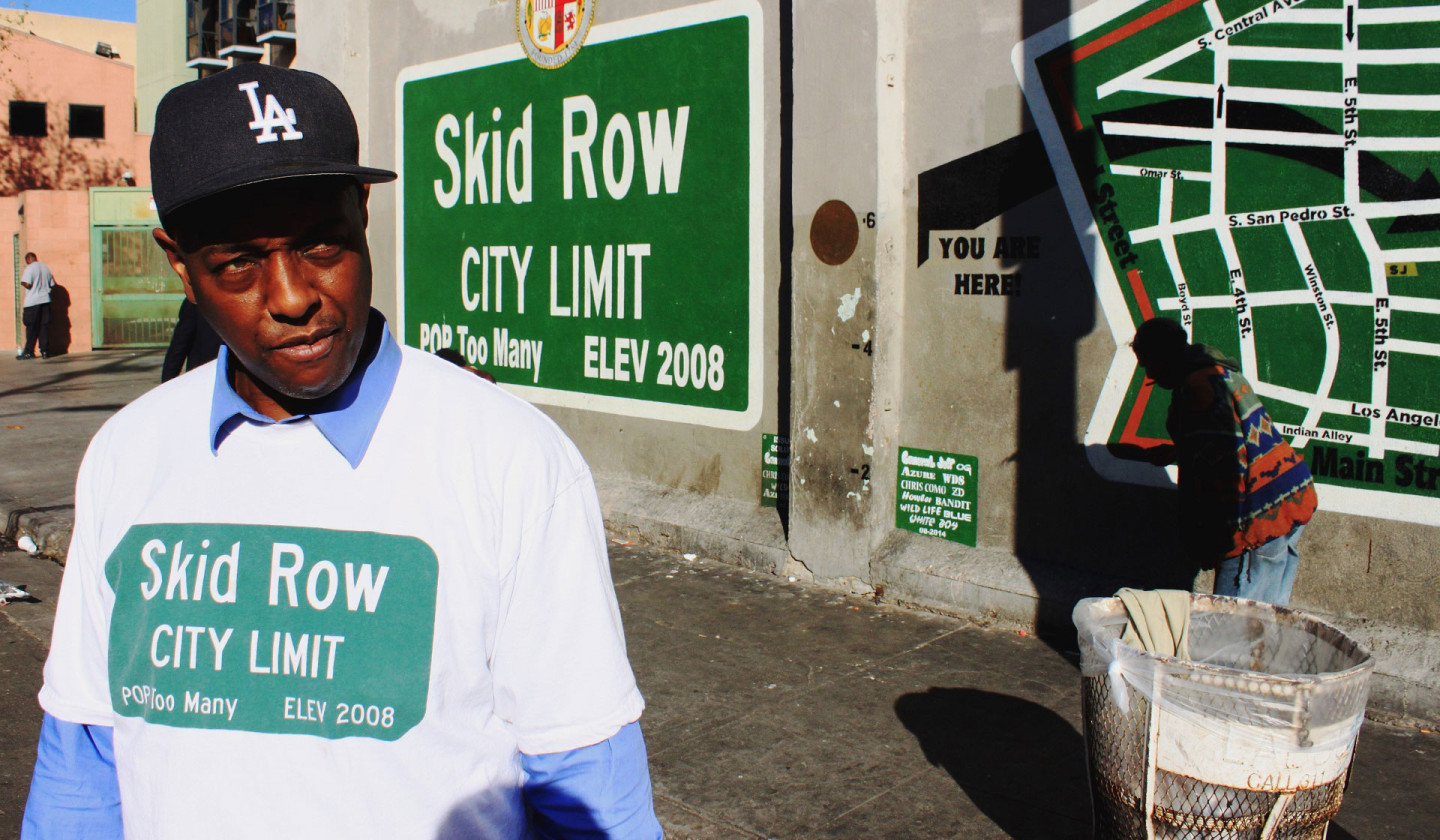
"caption": "Activist Jeff Page on San Julian Street in Skid Row, site of an ongoing mural project he spearheaded. ",
"description": "Activist Jeff Page on San Julian Street in Skid Row, site of an ongoing mural project he spearheaded. ",
"title": "HOUSING-SK-mural-JP",
"credit": "Steven Cuevas KQED",
"status": "inherit",
"isLoading": false,
"fetchFailed": false
},
"news_10491415": {
"type": "attachments",
"id": "news_10491415",
"meta": {
"index": "attachments_1716263798",
"site": "news",
"id": "10491415",
"found": true
},
"parent": 10491414,
"imgSizes": {
"twentyfourteen-full-width": {
"file": "https://ww2.kqed.org/app/uploads/sites/10/2015/04/HomelessMemorial-1038x576.jpg",
"width": 1038,
"mimeType": "image/jpeg",
"height": 576
},
"thumbnail": {
"file": "https://ww2.kqed.org/app/uploads/sites/10/2015/04/HomelessMemorial-400x225.jpg",
"width": 400,
"mimeType": "image/jpeg",
"height": 225
},
"fd-sm": {
"file": "https://ww2.kqed.org/app/uploads/sites/10/2015/04/HomelessMemorial-320x180.jpg",
"width": 320,
"mimeType": "image/jpeg",
"height": 180
},
"post-thumbnail": {
"file": "https://ww2.kqed.org/app/uploads/sites/10/2015/04/HomelessMemorial-672x372.jpg",
"width": 672,
"mimeType": "image/jpeg",
"height": 372
},
"kqedFullSize": {
"file": "https://ww2.kqed.org/app/uploads/sites/10/2015/04/HomelessMemorial.jpg",
"width": 1920,
"height": 1080
},
"large": {
"file": "https://ww2.kqed.org/app/uploads/sites/10/2015/04/HomelessMemorial-1440x810.jpg",
"width": 1440,
"mimeType": "image/jpeg",
"height": 810
},
"guest-author-96": {
"file": "https://ww2.kqed.org/app/uploads/sites/10/2015/04/HomelessMemorial-96x96.jpg",
"width": 96,
"mimeType": "image/jpeg",
"height": 96
},
"medium": {
"file": "https://ww2.kqed.org/app/uploads/sites/10/2015/04/HomelessMemorial-800x450.jpg",
"width": 800,
"mimeType": "image/jpeg",
"height": 450
},
"guest-author-64": {
"file": "https://ww2.kqed.org/app/uploads/sites/10/2015/04/HomelessMemorial-64x64.jpg",
"width": 64,
"mimeType": "image/jpeg",
"height": 64
},
"guest-author-32": {
"file": "https://ww2.kqed.org/app/uploads/sites/10/2015/04/HomelessMemorial-32x32.jpg",
"width": 32,
"mimeType": "image/jpeg",
"height": 32
},
"fd-lrg": {
"file": "https://ww2.kqed.org/app/uploads/sites/10/2015/04/HomelessMemorial-1180x664.jpg",
"width": 1180,
"mimeType": "image/jpeg",
"height": 664
},
"fd-med": {
"file": "https://ww2.kqed.org/app/uploads/sites/10/2015/04/HomelessMemorial-768x432.jpg",
"width": 768,
"mimeType": "image/jpeg",
"height": 432
},
"detail": {
"file": "https://ww2.kqed.org/app/uploads/sites/10/2015/04/HomelessMemorial-75x75.jpg",
"width": 75,
"mimeType": "image/jpeg",
"height": 75
},
"guest-author-128": {
"file": "https://ww2.kqed.org/app/uploads/sites/10/2015/04/HomelessMemorial-128x128.jpg",
"width": 128,
"mimeType": "image/jpeg",
"height": 128
}
},
"publishDate": 1429130239,
"modified": 1429130487,
"caption": "Raquel Román leads a memorial for Lorenza Arellano on Friday, March 13, 2015 at Hollenbeck Park in Boyle Heights. Román, director of the Guadalupe Homeless Project, opened a women's shelter after Arellano, a homeless woman, was found dead in the park's lake in March 2014.",
"description": "Raquel Román leads a memorial for Lorenza Arellano on Friday, March 13, 2015 at Hollenbeck Park in Boyle Heights. Román, director of the Guadalupe Homeless Project, opened a women's shelter after Arellano, a homeless woman, was found dead in the park's lake in March 2014.",
"title": "HomelessMemorial",
"credit": "Maya Sugarman/KPCC",
"status": "inherit",
"isLoading": false,
"fetchFailed": false
},
"news_10480651": {
"type": "attachments",
"id": "news_10480651",
"meta": {
"index": "attachments_1716263798",
"site": "news",
"id": "10480651",
"found": true
},
"parent": 10479996,
"imgSizes": {
"twentyfourteen-full-width": {
"file": "https://ww2.kqed.org/app/uploads/sites/10/2015/04/SR-lapd-arrest1920-1038x576.jpg",
"width": 1038,
"mimeType": "image/jpeg",
"height": 576
},
"thumbnail": {
"file": "https://ww2.kqed.org/app/uploads/sites/10/2015/04/SR-lapd-arrest1920-400x267.jpg",
"width": 400,
"mimeType": "image/jpeg",
"height": 267
},
"fd-sm": {
"file": "https://ww2.kqed.org/app/uploads/sites/10/2015/04/SR-lapd-arrest1920-320x213.jpg",
"width": 320,
"mimeType": "image/jpeg",
"height": 213
},
"post-thumbnail": {
"file": "https://ww2.kqed.org/app/uploads/sites/10/2015/04/SR-lapd-arrest1920-672x372.jpg",
"width": 672,
"mimeType": "image/jpeg",
"height": 372
},
"kqedFullSize": {
"file": "https://ww2.kqed.org/app/uploads/sites/10/2015/04/SR-lapd-arrest1920.jpg",
"width": 1920,
"height": 1280
},
"large": {
"file": "https://ww2.kqed.org/app/uploads/sites/10/2015/04/SR-lapd-arrest1920-1440x960.jpg",
"width": 1440,
"mimeType": "image/jpeg",
"height": 960
},
"guest-author-96": {
"file": "https://ww2.kqed.org/app/uploads/sites/10/2015/04/SR-lapd-arrest1920-96x96.jpg",
"width": 96,
"mimeType": "image/jpeg",
"height": 96
},
"medium": {
"file": "https://ww2.kqed.org/app/uploads/sites/10/2015/04/SR-lapd-arrest1920-800x533.jpg",
"width": 800,
"mimeType": "image/jpeg",
"height": 533
},
"guest-author-64": {
"file": "https://ww2.kqed.org/app/uploads/sites/10/2015/04/SR-lapd-arrest1920-64x64.jpg",
"width": 64,
"mimeType": "image/jpeg",
"height": 64
},
"guest-author-32": {
"file": "https://ww2.kqed.org/app/uploads/sites/10/2015/04/SR-lapd-arrest1920-32x32.jpg",
"width": 32,
"mimeType": "image/jpeg",
"height": 32
},
"fd-lrg": {
"file": "https://ww2.kqed.org/app/uploads/sites/10/2015/04/SR-lapd-arrest1920-1180x787.jpg",
"width": 1180,
"mimeType": "image/jpeg",
"height": 787
},
"fd-med": {
"file": "https://ww2.kqed.org/app/uploads/sites/10/2015/04/SR-lapd-arrest1920-768x512.jpg",
"width": 768,
"mimeType": "image/jpeg",
"height": 512
},
"detail": {
"file": "https://ww2.kqed.org/app/uploads/sites/10/2015/04/SR-lapd-arrest1920-75x75.jpg",
"width": 75,
"mimeType": "image/jpeg",
"height": 75
},
"guest-author-128": {
"file": "https://ww2.kqed.org/app/uploads/sites/10/2015/04/SR-lapd-arrest1920-128x128.jpg",
"width": 128,
"mimeType": "image/jpeg",
"height": 128
}
},
"publishDate": 1428373757,
"modified": 1428373830,
"caption": "LAPD detain an unidentified man on San Pedro Street in Skid Row. Police and homeless residents generally have a respectful, if tenuous, relationship.",
"description": null,
"title": "SR-lapd-arrest1920",
"credit": "Steven Cuevas/KQED",
"status": "inherit",
"isLoading": false,
"fetchFailed": false
},
"news_10461655": {
"type": "attachments",
"id": "news_10461655",
"meta": {
"index": "attachments_1716263798",
"site": "news",
"id": "10461655",
"found": true
},
"parent": 10461652,
"imgSizes": {
"twentyfourteen-full-width": {
"file": "https://ww2.kqed.org/app/uploads/sites/10/2015/03/SandyRodriguez-1038x576.jpg",
"width": 1038,
"mimeType": "image/jpeg",
"height": 576
},
"thumbnail": {
"file": "https://ww2.kqed.org/app/uploads/sites/10/2015/03/SandyRodriguez-400x255.jpg",
"width": 400,
"mimeType": "image/jpeg",
"height": 255
},
"fd-sm": {
"file": "https://ww2.kqed.org/app/uploads/sites/10/2015/03/SandyRodriguez-320x204.jpg",
"width": 320,
"mimeType": "image/jpeg",
"height": 204
},
"post-thumbnail": {
"file": "https://ww2.kqed.org/app/uploads/sites/10/2015/03/SandyRodriguez-672x372.jpg",
"width": 672,
"mimeType": "image/jpeg",
"height": 372
},
"kqedFullSize": {
"file": "https://ww2.kqed.org/app/uploads/sites/10/2015/03/SandyRodriguez.jpg",
"width": 1920,
"height": 1225
},
"large": {
"file": "https://ww2.kqed.org/app/uploads/sites/10/2015/03/SandyRodriguez-1440x919.jpg",
"width": 1440,
"mimeType": "image/jpeg",
"height": 919
},
"guest-author-96": {
"file": "https://ww2.kqed.org/app/uploads/sites/10/2015/03/SandyRodriguez-96x96.jpg",
"width": 96,
"mimeType": "image/jpeg",
"height": 96
},
"medium": {
"file": "https://ww2.kqed.org/app/uploads/sites/10/2015/03/SandyRodriguez-800x510.jpg",
"width": 800,
"mimeType": "image/jpeg",
"height": 510
},
"guest-author-64": {
"file": "https://ww2.kqed.org/app/uploads/sites/10/2015/03/SandyRodriguez-64x64.jpg",
"width": 64,
"mimeType": "image/jpeg",
"height": 64
},
"guest-author-32": {
"file": "https://ww2.kqed.org/app/uploads/sites/10/2015/03/SandyRodriguez-32x32.jpg",
"width": 32,
"mimeType": "image/jpeg",
"height": 32
},
"fd-lrg": {
"file": "https://ww2.kqed.org/app/uploads/sites/10/2015/03/SandyRodriguez-1180x753.jpg",
"width": 1180,
"mimeType": "image/jpeg",
"height": 753
},
"fd-med": {
"file": "https://ww2.kqed.org/app/uploads/sites/10/2015/03/SandyRodriguez-768x490.jpg",
"width": 768,
"mimeType": "image/jpeg",
"height": 490
},
"detail": {
"file": "https://ww2.kqed.org/app/uploads/sites/10/2015/03/SandyRodriguez-75x75.jpg",
"width": 75,
"mimeType": "image/jpeg",
"height": 75
},
"guest-author-128": {
"file": "https://ww2.kqed.org/app/uploads/sites/10/2015/03/SandyRodriguez-128x128.jpg",
"width": 128,
"mimeType": "image/jpeg",
"height": 128
}
},
"publishDate": 1426899827,
"modified": 1427147541,
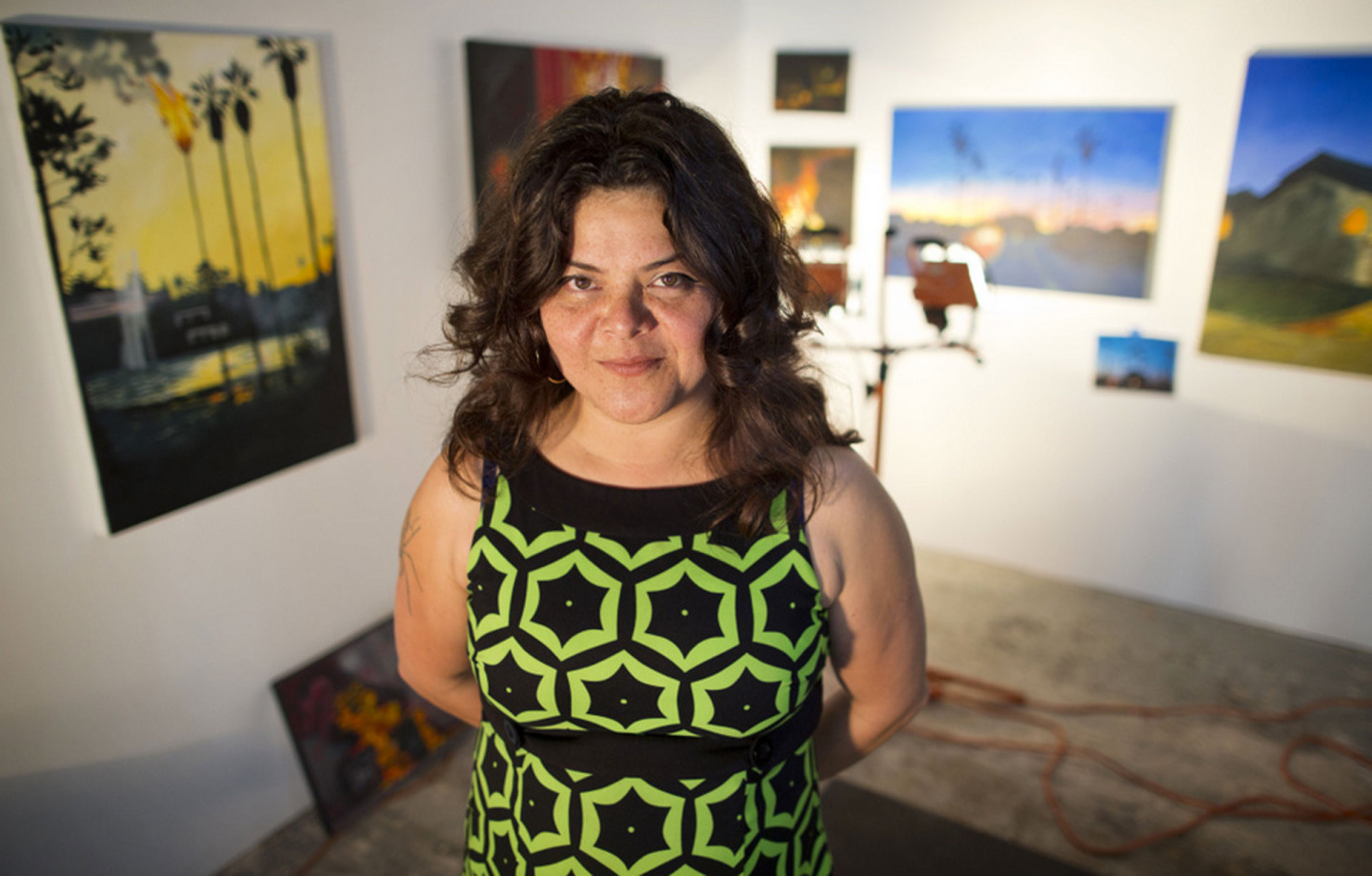
"caption": "Sandy Rodriguez is an artist in residence at Art + Practice in Leimert Park. Rodriguez is currently working on paintings inspired by social unrest in Ferguson, Mo., Mexico City, and Los Angeles.",
"description": "Sandy Rodriguez is an artist in residence at Art + Practice in Leimert Park. Rodriguez is currently working on paintings inspired by social unrest in Ferguson, Mo., Mexico City, and Los Angeles.",
"title": "SandyRodriguez",
"credit": "Maya Sugarman/KPCC",
"status": "inherit",
"isLoading": false,
"fetchFailed": false
},
"news_10461331": {
"type": "attachments",
"id": "news_10461331",
"meta": {
"index": "attachments_1716263798",
"site": "news",
"id": "10461331",
"found": true
},
"parent": 10454622,
"imgSizes": {
"twentyfourteen-full-width": {
"file": "https://ww2.kqed.org/app/uploads/sites/10/2015/03/Saeed-1038x576.jpg",
"width": 1038,
"mimeType": "image/jpeg",
"height": 576
},
"thumbnail": {
"file": "https://ww2.kqed.org/app/uploads/sites/10/2015/03/Saeed-400x265.jpg",
"width": 400,
"mimeType": "image/jpeg",
"height": 265
},
"fd-sm": {
"file": "https://ww2.kqed.org/app/uploads/sites/10/2015/03/Saeed-320x212.jpg",
"width": 320,
"mimeType": "image/jpeg",
"height": 212
},
"post-thumbnail": {
"file": "https://ww2.kqed.org/app/uploads/sites/10/2015/03/Saeed-672x372.jpg",
"width": 672,
"mimeType": "image/jpeg",
"height": 372
},
"kqedFullSize": {
"file": "https://ww2.kqed.org/app/uploads/sites/10/2015/03/Saeed.jpg",
"width": 1920,
"height": 1271
},
"large": {
"file": "https://ww2.kqed.org/app/uploads/sites/10/2015/03/Saeed-1440x953.jpg",
"width": 1440,
"mimeType": "image/jpeg",
"height": 953
},
"guest-author-96": {
"file": "https://ww2.kqed.org/app/uploads/sites/10/2015/03/Saeed-96x96.jpg",
"width": 96,
"mimeType": "image/jpeg",
"height": 96
},
"medium": {
"file": "https://ww2.kqed.org/app/uploads/sites/10/2015/03/Saeed-800x530.jpg",
"width": 800,
"mimeType": "image/jpeg",
"height": 530
},
"guest-author-64": {
"file": "https://ww2.kqed.org/app/uploads/sites/10/2015/03/Saeed-64x64.jpg",
"width": 64,
"mimeType": "image/jpeg",
"height": 64
},
"guest-author-32": {
"file": "https://ww2.kqed.org/app/uploads/sites/10/2015/03/Saeed-32x32.jpg",
"width": 32,
"mimeType": "image/jpeg",
"height": 32
},
"fd-lrg": {
"file": "https://ww2.kqed.org/app/uploads/sites/10/2015/03/Saeed-1180x781.jpg",
"width": 1180,
"mimeType": "image/jpeg",
"height": 781
},
"fd-med": {
"file": "https://ww2.kqed.org/app/uploads/sites/10/2015/03/Saeed-768x508.jpg",
"width": 768,
"mimeType": "image/jpeg",
"height": 508
},
"detail": {
"file": "https://ww2.kqed.org/app/uploads/sites/10/2015/03/Saeed-75x75.jpg",
"width": 75,
"mimeType": "image/jpeg",
"height": 75
},
"guest-author-128": {
"file": "https://ww2.kqed.org/app/uploads/sites/10/2015/03/Saeed-128x128.jpg",
"width": 128,
"mimeType": "image/jpeg",
"height": 128
}
},
"publishDate": 1426879362,
"modified": 1426879392,
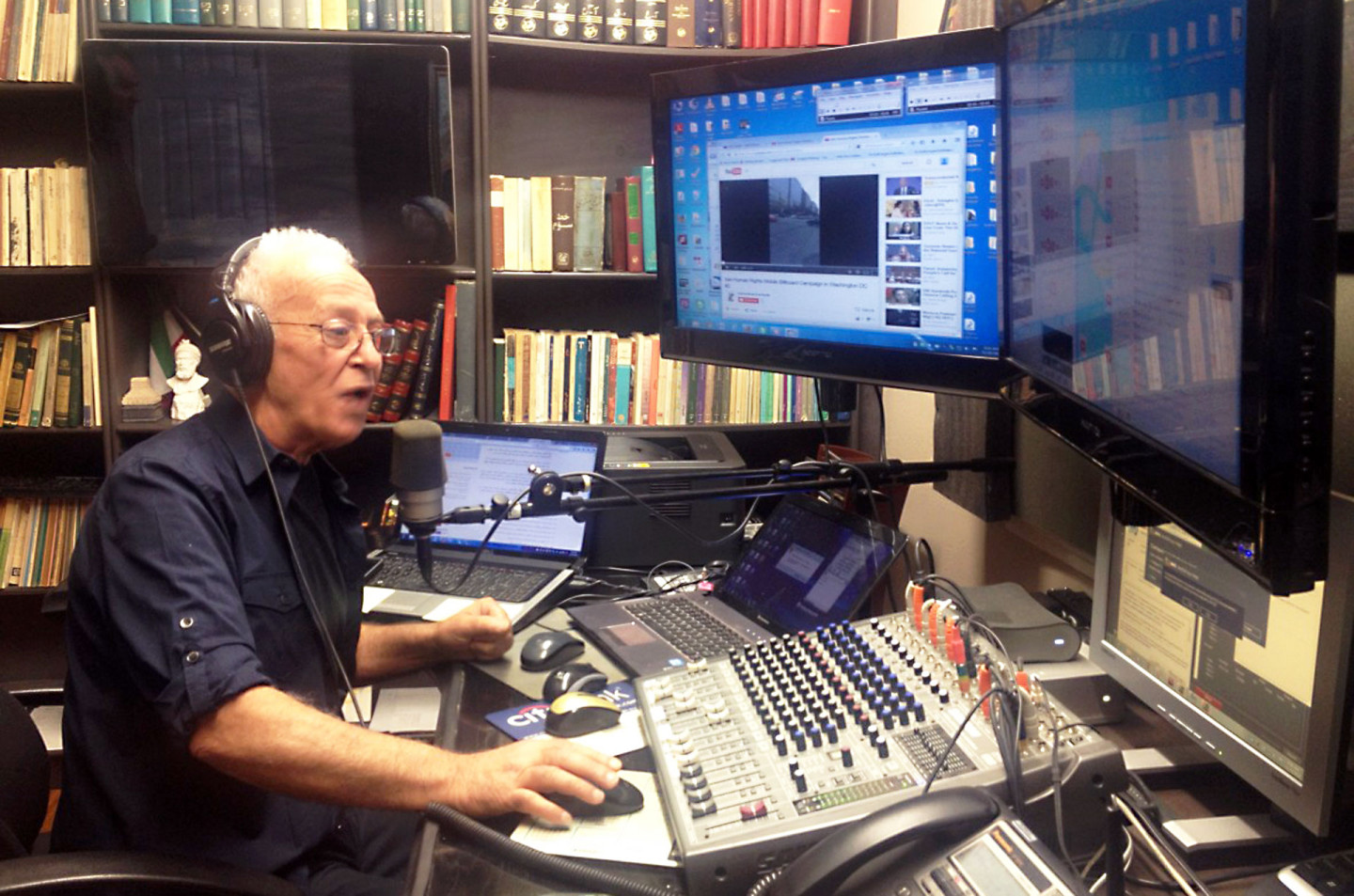
"caption": "Saeed Ghaemmaghami takes calls from listeners around the world during his Internet broadcast, Radio Sedaye Mardom, Farsi for \"The People’s Voice.\"",
"description": "Saeed Ghaemmaghami takes calls from listeners around the world during his Internet broadcast, Radio Sedaye Mardom, Farsi for \"The People’s Voice.\"",
"title": "Saeed",
"credit": "Diane Bock/KQED",
"status": "inherit",
"isLoading": false,
"fetchFailed": false
},
"news_10457766": {
"type": "attachments",
"id": "news_10457766",
"meta": {
"index": "attachments_1716263798",
"site": "news",
"id": "10457766",
"found": true
},
"parent": 10457764,
"imgSizes": {
"twentyfourteen-full-width": {
"file": "https://ww2.kqed.org/app/uploads/sites/10/2015/03/JorgeRodriguez-1038x576.jpg",
"width": 1038,
"mimeType": "image/jpeg",
"height": 576
},
"thumbnail": {
"file": "https://ww2.kqed.org/app/uploads/sites/10/2015/03/JorgeRodriguez-400x225.jpg",
"width": 400,
"mimeType": "image/jpeg",
"height": 225
},
"fd-sm": {
"file": "https://ww2.kqed.org/app/uploads/sites/10/2015/03/JorgeRodriguez-320x180.jpg",
"width": 320,
"mimeType": "image/jpeg",
"height": 180
},
"post-thumbnail": {
"file": "https://ww2.kqed.org/app/uploads/sites/10/2015/03/JorgeRodriguez-672x372.jpg",
"width": 672,
"mimeType": "image/jpeg",
"height": 372
},
"kqedFullSize": {
"file": "https://ww2.kqed.org/app/uploads/sites/10/2015/03/JorgeRodriguez.jpg",
"width": 1920,
"height": 1080
},
"large": {
"file": "https://ww2.kqed.org/app/uploads/sites/10/2015/03/JorgeRodriguez-1440x810.jpg",
"width": 1440,
"mimeType": "image/jpeg",
"height": 810
},
"guest-author-96": {
"file": "https://ww2.kqed.org/app/uploads/sites/10/2015/03/JorgeRodriguez-96x96.jpg",
"width": 96,
"mimeType": "image/jpeg",
"height": 96
},
"medium": {
"file": "https://ww2.kqed.org/app/uploads/sites/10/2015/03/JorgeRodriguez-800x450.jpg",
"width": 800,
"mimeType": "image/jpeg",
"height": 450
},
"guest-author-64": {
"file": "https://ww2.kqed.org/app/uploads/sites/10/2015/03/JorgeRodriguez-64x64.jpg",
"width": 64,
"mimeType": "image/jpeg",
"height": 64
},
"guest-author-32": {
"file": "https://ww2.kqed.org/app/uploads/sites/10/2015/03/JorgeRodriguez-32x32.jpg",
"width": 32,
"mimeType": "image/jpeg",
"height": 32
},
"fd-lrg": {
"file": "https://ww2.kqed.org/app/uploads/sites/10/2015/03/JorgeRodriguez-1180x664.jpg",
"width": 1180,
"mimeType": "image/jpeg",
"height": 664
},
"fd-med": {
"file": "https://ww2.kqed.org/app/uploads/sites/10/2015/03/JorgeRodriguez-768x432.jpg",
"width": 768,
"mimeType": "image/jpeg",
"height": 432
},
"detail": {
"file": "https://ww2.kqed.org/app/uploads/sites/10/2015/03/JorgeRodriguez-75x75.jpg",
"width": 75,
"mimeType": "image/jpeg",
"height": 75
},
"guest-author-128": {
"file": "https://ww2.kqed.org/app/uploads/sites/10/2015/03/JorgeRodriguez-128x128.jpg",
"width": 128,
"mimeType": "image/jpeg",
"height": 128
}
},
"publishDate": 1426545231,
"modified": 1426551304,
"caption": "LAPD Capt. Jorge Rodriguez speaks during a monthly community meeting at LAPD's Newton station on Thursday, Feb. 5, 2015.",
"description": "LAPD Capt. Jorge Rodriguez speaks during a monthly community meeting at LAPD's Newton station on Thursday, Feb. 5, 2015.",
"title": "JorgeRodriguez",
"credit": "Maya Sugarman/KPCC",
"status": "inherit",
"isLoading": false,
"fetchFailed": false
},
"news_10444970": {
"type": "attachments",
"id": "news_10444970",
"meta": {
"index": "attachments_1716263798",
"site": "news",
"id": "10444970",
"found": true
},
"parent": 10444749,
"imgSizes": {
"twentyfourteen-full-width": {
"file": "https://ww2.kqed.org/app/uploads/sites/10/2015/02/pray2-1024x576.jpg",
"width": 1024,
"mimeType": "image/jpeg",
"height": 576
},
"thumbnail": {
"file": "https://ww2.kqed.org/app/uploads/sites/10/2015/02/pray2-400x248.jpg",
"width": 400,
"mimeType": "image/jpeg",
"height": 248
},
"fd-sm": {
"file": "https://ww2.kqed.org/app/uploads/sites/10/2015/02/pray2-320x199.jpg",
"width": 320,
"mimeType": "image/jpeg",
"height": 199
},
"post-thumbnail": {
"file": "https://ww2.kqed.org/app/uploads/sites/10/2015/02/pray2-672x372.jpg",
"width": 672,
"mimeType": "image/jpeg",
"height": 372
},
"kqedFullSize": {
"file": "https://ww2.kqed.org/app/uploads/sites/10/2015/02/pray2.jpg",
"width": 1024,
"height": 636
},
"fd-med": {
"file": "https://ww2.kqed.org/app/uploads/sites/10/2015/02/pray2-768x477.jpg",
"width": 768,
"mimeType": "image/jpeg",
"height": 477
},
"guest-author-96": {
"file": "https://ww2.kqed.org/app/uploads/sites/10/2015/02/pray2-96x96.jpg",
"width": 96,
"mimeType": "image/jpeg",
"height": 96
},
"medium": {
"file": "https://ww2.kqed.org/app/uploads/sites/10/2015/02/pray2-800x497.jpg",
"width": 800,
"mimeType": "image/jpeg",
"height": 497
},
"guest-author-64": {
"file": "https://ww2.kqed.org/app/uploads/sites/10/2015/02/pray2-64x64.jpg",
"width": 64,
"mimeType": "image/jpeg",
"height": 64
},
"detail": {
"file": "https://ww2.kqed.org/app/uploads/sites/10/2015/02/pray2-75x75.jpg",
"width": 75,
"mimeType": "image/jpeg",
"height": 75
},
"guest-author-32": {
"file": "https://ww2.kqed.org/app/uploads/sites/10/2015/02/pray2-32x32.jpg",
"width": 32,
"mimeType": "image/jpeg",
"height": 32
},
"guest-author-128": {
"file": "https://ww2.kqed.org/app/uploads/sites/10/2015/02/pray2-128x128.jpg",
"width": 128,
"mimeType": "image/jpeg",
"height": 128
}
},
"publishDate": 1425082894,
"modified": 1425082941,
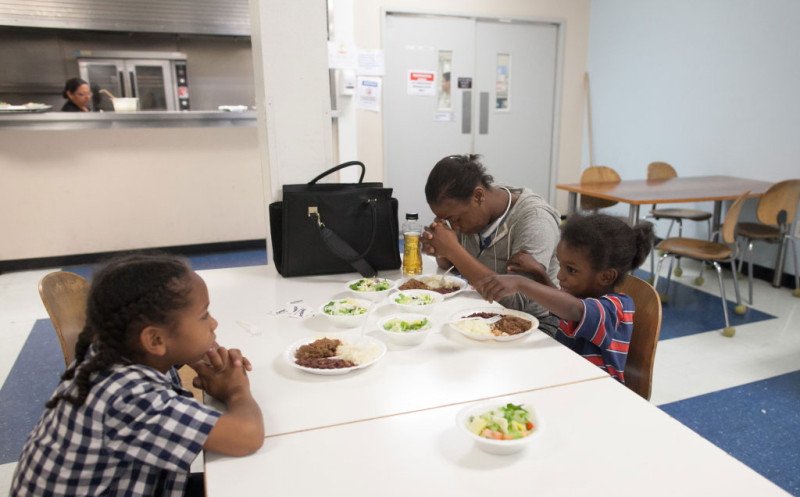
"caption": "Mayah McCoy and her family take a moment to pray before dinner on Feb. 2, 2015.\n",
"description": null,
"title": "pray2",
"credit": "Susanica Tam/KPCC",
"status": "inherit",
"isLoading": false,
"fetchFailed": false
},
"news_10443964": {
"type": "attachments",
"id": "news_10443964",
"meta": {
"index": "attachments_1716263798",
"site": "news",
"id": "10443964",
"found": true
},
"parent": 10443926,
"imgSizes": {
"twentyfourteen-full-width": {
"file": "https://ww2.kqed.org/app/uploads/sites/10/2015/02/RS14409_IMG_2888.JPG-qut-1038x576.jpg",
"width": 1038,
"mimeType": "image/jpeg",
"height": 576
},
"thumbnail": {
"file": "https://ww2.kqed.org/app/uploads/sites/10/2015/02/RS14409_IMG_2888.JPG-qut-400x300.jpg",
"width": 400,
"mimeType": "image/jpeg",
"height": 300
},
"fd-sm": {
"file": "https://ww2.kqed.org/app/uploads/sites/10/2015/02/RS14409_IMG_2888.JPG-qut-320x240.jpg",
"width": 320,
"mimeType": "image/jpeg",
"height": 240
},
"post-thumbnail": {
"file": "https://ww2.kqed.org/app/uploads/sites/10/2015/02/RS14409_IMG_2888.JPG-qut-672x372.jpg",
"width": 672,
"mimeType": "image/jpeg",
"height": 372
},
"kqedFullSize": {
"file": "https://ww2.kqed.org/app/uploads/sites/10/2015/02/RS14409_IMG_2888.JPG-qut.jpg",
"width": 1920,
"height": 1440
},
"large": {
"file": "https://ww2.kqed.org/app/uploads/sites/10/2015/02/RS14409_IMG_2888.JPG-qut-1440x1080.jpg",
"width": 1440,
"mimeType": "image/jpeg",
"height": 1080
},
"guest-author-96": {
"file": "https://ww2.kqed.org/app/uploads/sites/10/2015/02/RS14409_IMG_2888.JPG-qut-96x96.jpg",
"width": 96,
"mimeType": "image/jpeg",
"height": 96
},
"medium": {
"file": "https://ww2.kqed.org/app/uploads/sites/10/2015/02/RS14409_IMG_2888.JPG-qut-800x600.jpg",
"width": 800,
"mimeType": "image/jpeg",
"height": 600
},
"guest-author-64": {
"file": "https://ww2.kqed.org/app/uploads/sites/10/2015/02/RS14409_IMG_2888.JPG-qut-64x64.jpg",
"width": 64,
"mimeType": "image/jpeg",
"height": 64
},
"guest-author-32": {
"file": "https://ww2.kqed.org/app/uploads/sites/10/2015/02/RS14409_IMG_2888.JPG-qut-32x32.jpg",
"width": 32,
"mimeType": "image/jpeg",
"height": 32
},
"fd-lrg": {
"file": "https://ww2.kqed.org/app/uploads/sites/10/2015/02/RS14409_IMG_2888.JPG-qut-1180x885.jpg",
"width": 1180,
"mimeType": "image/jpeg",
"height": 885
},
"fd-med": {
"file": "https://ww2.kqed.org/app/uploads/sites/10/2015/02/RS14409_IMG_2888.JPG-qut-768x576.jpg",
"width": 768,
"mimeType": "image/jpeg",
"height": 576
},
"detail": {
"file": "https://ww2.kqed.org/app/uploads/sites/10/2015/02/RS14409_IMG_2888.JPG-qut-75x75.jpg",
"width": 75,
"mimeType": "image/jpeg",
"height": 75
},
"guest-author-128": {
"file": "https://ww2.kqed.org/app/uploads/sites/10/2015/02/RS14409_IMG_2888.JPG-qut-128x128.jpg",
"width": 128,
"mimeType": "image/jpeg",
"height": 128
}
},
"publishDate": 1424986612,
"modified": 1425089004,
"caption": "Korean folk drummers celebrate the Lunar New Year in Koreatown in Los Angeles.",
"description": null,
"title": "RS14409_IMG_2888.JPG-qut",
"credit": "Kyung Jin Lee/KQED",
"status": "inherit",
"isLoading": false,
"fetchFailed": false
},
"news_10422704": {
"type": "attachments",
"id": "news_10422704",
"meta": {
"index": "attachments_1716263798",
"site": "news",
"id": "10422704",
"found": true
},
"parent": 10422672,
"imgSizes": {
"twentyfourteen-full-width": {
"file": "https://ww2.kqed.org/app/uploads/sites/10/2015/02/DNALab-1038x576.jpg",
"width": 1038,
"mimeType": "image/jpeg",
"height": 576
},
"thumbnail": {
"file": "https://ww2.kqed.org/app/uploads/sites/10/2015/02/DNALab-400x266.jpg",
"width": 400,
"mimeType": "image/jpeg",
"height": 266
},
"post-thumbnail": {
"file": "https://ww2.kqed.org/app/uploads/sites/10/2015/02/DNALab-672x372.jpg",
"width": 672,
"mimeType": "image/jpeg",
"height": 372
},
"kqedFullSize": {
"file": "https://ww2.kqed.org/app/uploads/sites/10/2015/02/DNALab.jpg",
"width": 1440,
"height": 956
},
"large": {
"file": "https://ww2.kqed.org/app/uploads/sites/10/2015/02/DNALab-1440x956.jpg",
"width": 1440,
"mimeType": "image/jpeg",
"height": 956
},
"guest-author-96": {
"file": "https://ww2.kqed.org/app/uploads/sites/10/2015/02/DNALab-96x96.jpg",
"width": 96,
"mimeType": "image/jpeg",
"height": 96
},
"medium": {
"file": "https://ww2.kqed.org/app/uploads/sites/10/2015/02/DNALab-800x531.jpg",
"width": 800,
"mimeType": "image/jpeg",
"height": 531
},
"guest-author-64": {
"file": "https://ww2.kqed.org/app/uploads/sites/10/2015/02/DNALab-64x64.jpg",
"width": 64,
"mimeType": "image/jpeg",
"height": 64
},
"detail": {
"file": "https://ww2.kqed.org/app/uploads/sites/10/2015/02/DNALab-75x75.jpg",
"width": 75,
"mimeType": "image/jpeg",
"height": 75
},
"guest-author-32": {
"file": "https://ww2.kqed.org/app/uploads/sites/10/2015/02/DNALab-32x32.jpg",
"width": 32,
"mimeType": "image/jpeg",
"height": 32
},
"guest-author-128": {
"file": "https://ww2.kqed.org/app/uploads/sites/10/2015/02/DNALab-128x128.jpg",
"width": 128,
"mimeType": "image/jpeg",
"height": 128
}
},
"publishDate": 1422904791,
"modified": 1422916855,
"caption": "Research associate Sarah Wright uses a machine to help separate different strands of DNA at a lab at City of Hope in Duarte, California. ",
"description": "Research associate Sarah Wright uses a machine to help separate out different strands of DNA at a lab at City of Hope in Duarte, California. ",
"title": "DNALab",
"credit": "Sanden Totten/KPCC",
"status": "inherit",
"isLoading": false,
"fetchFailed": false
},
"news_10420169": {
"type": "attachments",
"id": "news_10420169",
"meta": {
"index": "attachments_1716263798",
"site": "news",
"id": "10420169",
"found": true
},
"parent": 10419378,
"imgSizes": {
"twentyfourteen-full-width": {
"file": "https://ww2.kqed.org/app/uploads/sites/10/2015/01/LAHomelessCount-1038x576.jpg",
"width": 1038,
"mimeType": "image/jpeg",
"height": 576
},
"thumbnail": {
"file": "https://ww2.kqed.org/app/uploads/sites/10/2015/01/LAHomelessCount-400x244.jpg",
"width": 400,
"mimeType": "image/jpeg",
"height": 244
},
"post-thumbnail": {
"file": "https://ww2.kqed.org/app/uploads/sites/10/2015/01/LAHomelessCount-672x372.jpg",
"width": 672,
"mimeType": "image/jpeg",
"height": 372
},
"kqedFullSize": {
"file": "https://ww2.kqed.org/app/uploads/sites/10/2015/01/LAHomelessCount.jpg",
"width": 1440,
"height": 880
},
"large": {
"file": "https://ww2.kqed.org/app/uploads/sites/10/2015/01/LAHomelessCount-1440x880.jpg",
"width": 1440,
"mimeType": "image/jpeg",
"height": 880
},
"guest-author-96": {
"file": "https://ww2.kqed.org/app/uploads/sites/10/2015/01/LAHomelessCount-96x96.jpg",
"width": 96,
"mimeType": "image/jpeg",
"height": 96
},
"medium": {
"file": "https://ww2.kqed.org/app/uploads/sites/10/2015/01/LAHomelessCount-800x489.jpg",
"width": 800,
"mimeType": "image/jpeg",
"height": 489
},
"guest-author-64": {
"file": "https://ww2.kqed.org/app/uploads/sites/10/2015/01/LAHomelessCount-64x64.jpg",
"width": 64,
"mimeType": "image/jpeg",
"height": 64
},
"detail": {
"file": "https://ww2.kqed.org/app/uploads/sites/10/2015/01/LAHomelessCount-75x75.jpg",
"width": 75,
"mimeType": "image/jpeg",
"height": 75
},
"guest-author-32": {
"file": "https://ww2.kqed.org/app/uploads/sites/10/2015/01/LAHomelessCount-32x32.jpg",
"width": 32,
"mimeType": "image/jpeg",
"height": 32
},
"guest-author-128": {
"file": "https://ww2.kqed.org/app/uploads/sites/10/2015/01/LAHomelessCount-128x128.jpg",
"width": 128,
"mimeType": "image/jpeg",
"height": 128
}
},
"publishDate": 1422658745,
"modified": 1422658795,
"caption": "Volunteers count homeless people on a dark street on Skid Row during the 2015 Greater Los Angeles Homeless Count conducted by the Los Angeles Homeless Services Authority (LAHSA) on January 29, 2015.",
"description": "Volunteers count homeless people on a dark street on Skid Row during the 2015 Greater Los Angeles Homeless Count conducted by the Los Angeles Homeless Services Authority (LAHSA) on January 29, 2015.",
"title": "LAHomelessCount",
"credit": "David McNew/Getty Images",
"status": "inherit",
"isLoading": false,
"fetchFailed": false
},
"news_10414258": {
"type": "attachments",
"id": "news_10414258",
"meta": {
"index": "attachments_1716263798",
"site": "news",
"id": "10414258",
"found": true
},
"parent": 10414213,
"imgSizes": {
"twentyfourteen-full-width": {
"file": "https://ww2.kqed.org/app/uploads/sites/10/2015/01/ImmigrantScams1-1038x576.jpg",
"width": 1038,
"mimeType": "image/jpeg",
"height": 576
},
"thumbnail": {
"file": "https://ww2.kqed.org/app/uploads/sites/10/2015/01/ImmigrantScams1-400x263.jpg",
"width": 400,
"mimeType": "image/jpeg",
"height": 263
},
"post-thumbnail": {
"file": "https://ww2.kqed.org/app/uploads/sites/10/2015/01/ImmigrantScams1-672x372.jpg",
"width": 672,
"mimeType": "image/jpeg",
"height": 372
},
"kqedFullSize": {
"file": "https://ww2.kqed.org/app/uploads/sites/10/2015/01/ImmigrantScams1.jpg",
"width": 1440,
"height": 946
},
"large": {
"file": "https://ww2.kqed.org/app/uploads/sites/10/2015/01/ImmigrantScams1-1440x946.jpg",
"width": 1440,
"mimeType": "image/jpeg",
"height": 946
},
"guest-author-96": {
"file": "https://ww2.kqed.org/app/uploads/sites/10/2015/01/ImmigrantScams1-96x96.jpg",
"width": 96,
"mimeType": "image/jpeg",
"height": 96
},
"medium": {
"file": "https://ww2.kqed.org/app/uploads/sites/10/2015/01/ImmigrantScams1-800x526.jpg",
"width": 800,
"mimeType": "image/jpeg",
"height": 526
},
"guest-author-64": {
"file": "https://ww2.kqed.org/app/uploads/sites/10/2015/01/ImmigrantScams1-64x64.jpg",
"width": 64,
"mimeType": "image/jpeg",
"height": 64
},
"detail": {
"file": "https://ww2.kqed.org/app/uploads/sites/10/2015/01/ImmigrantScams1-75x75.jpg",
"width": 75,
"mimeType": "image/jpeg",
"height": 75
},
"guest-author-32": {
"file": "https://ww2.kqed.org/app/uploads/sites/10/2015/01/ImmigrantScams1-32x32.jpg",
"width": 32,
"mimeType": "image/jpeg",
"height": 32
},
"guest-author-128": {
"file": "https://ww2.kqed.org/app/uploads/sites/10/2015/01/ImmigrantScams1-128x128.jpg",
"width": 128,
"mimeType": "image/jpeg",
"height": 128
}
},
"publishDate": 1422048106,
"modified": 1422048137,
"caption": "Director legal del Central American Resource Center Daniel Sharp dirige un taller cuyo fin es informar a los inmigrantes sobre la reciente acción ejecutiva del Presidente Obama. ",
"description": "Director legal del Central American Resource Center Daniel Sharp dirige un taller cuyo fin es informar a los inmigrantes sobre la reciente acción ejecutiva del Presidente Obama. ",
"title": "ImmigrantScams",
"credit": "Steven Cuevas/KQED",
"status": "inherit",
"isLoading": false,
"fetchFailed": false
},
"news_10411799": {
"type": "attachments",
"id": "news_10411799",
"meta": {
"index": "attachments_1716263798",
"site": "news",
"id": "10411799",
"found": true
},
"parent": 10411638,
"imgSizes": {
"twentyfourteen-full-width": {
"file": "https://ww2.kqed.org/app/uploads/sites/10/2015/01/ImmigrantScams-1038x576.jpg",
"width": 1038,
"mimeType": "image/jpeg",
"height": 576
},
"thumbnail": {
"file": "https://ww2.kqed.org/app/uploads/sites/10/2015/01/ImmigrantScams-400x262.jpg",
"width": 400,
"mimeType": "image/jpeg",
"height": 262
},
"post-thumbnail": {
"file": "https://ww2.kqed.org/app/uploads/sites/10/2015/01/ImmigrantScams-672x372.jpg",
"width": 672,
"mimeType": "image/jpeg",
"height": 372
},
"kqedFullSize": {
"file": "https://ww2.kqed.org/app/uploads/sites/10/2015/01/ImmigrantScams.jpg",
"width": 1440,
"height": 946
},
"guest-author-96": {
"file": "https://ww2.kqed.org/app/uploads/sites/10/2015/01/ImmigrantScams-96x96.jpg",
"width": 96,
"mimeType": "image/jpeg",
"height": 96
},
"medium": {
"file": "https://ww2.kqed.org/app/uploads/sites/10/2015/01/ImmigrantScams-800x525.jpg",
"width": 800,
"mimeType": "image/jpeg",
"height": 525
},
"guest-author-64": {
"file": "https://ww2.kqed.org/app/uploads/sites/10/2015/01/ImmigrantScams-64x64.jpg",
"width": 64,
"mimeType": "image/jpeg",
"height": 64
},
"detail": {
"file": "https://ww2.kqed.org/app/uploads/sites/10/2015/01/ImmigrantScams-75x75.jpg",
"width": 75,
"mimeType": "image/jpeg",
"height": 75
},
"guest-author-32": {
"file": "https://ww2.kqed.org/app/uploads/sites/10/2015/01/ImmigrantScams-32x32.jpg",
"width": 32,
"mimeType": "image/jpeg",
"height": 32
},
"guest-author-128": {
"file": "https://ww2.kqed.org/app/uploads/sites/10/2015/01/ImmigrantScams-128x128.jpg",
"width": 128,
"mimeType": "image/jpeg",
"height": 128
}
},
"publishDate": 1421798196,
"modified": 1421798231,
"caption": "Central American Resource Center legal director Daniel Sharp leads a workshop aimed at educating immigrants about President Obama’s recent executive action.",
"description": "Central American Resource Center legal director Daniel Sharp leads a workshop aimed at educating immigrants about President Obama’s recent executive action.",
"title": "ImmigrantScams",
"credit": "Steven Cuevas/KQED",
"status": "inherit",
"isLoading": false,
"fetchFailed": false
}
},
"audioPlayerReducer": {
"postId": "stream_live",
"isPaused": true,
"isPlaying": false,
"pfsActive": false,
"pledgeModalIsOpen": true,
"playerDrawerIsOpen": false,
"liveAudioPlayStartedAt": 0,
"liveAudioPlayContext": ""
},
"authorsReducer": {
"byline_news_10491414": {
"type": "authors",
"id": "byline_news_10491414",
"meta": {
"override": true
},
"slug": "byline_news_10491414",
"name": "Adrian Florido",
"isLoading": false
},
"byline_news_10461652": {
"type": "authors",
"id": "byline_news_10461652",
"meta": {
"override": true
},
"slug": "byline_news_10461652",
"name": "Adolfo Guzman-Lopez",
"isLoading": false
},
"byline_news_10454622": {
"type": "authors",
"id": "byline_news_10454622",
"meta": {
"override": true
},
"slug": "byline_news_10454622",
"name": "Diane Bock",
"isLoading": false
},
"byline_news_10457764": {
"type": "authors",
"id": "byline_news_10457764",
"meta": {
"override": true
},
"slug": "byline_news_10457764",
"name": "Frank Stoltze",
"isLoading": false
},
"byline_news_10444749": {
"type": "authors",
"id": "byline_news_10444749",
"meta": {
"override": true
},
"slug": "byline_news_10444749",
"name": "Deepa Fernandes",
"isLoading": false
},
"byline_news_10443926": {
"type": "authors",
"id": "byline_news_10443926",
"meta": {
"override": true
},
"slug": "byline_news_10443926",
"name": "Kyung Jin Lee",
"isLoading": false
},
"byline_news_10422672": {
"type": "authors",
"id": "byline_news_10422672",
"meta": {
"override": true
},
"slug": "byline_news_10422672",
"name": "Sanden Totten",
"isLoading": false
},
"scuevas": {
"type": "authors",
"id": "2600",
"meta": {
"index": "authors_1716337520",
"id": "2600",
"found": true
},
"name": "Steven Cuevas",
"firstName": "Steven",
"lastName": "Cuevas",
"slug": "scuevas",
"email": "scuevas@kqed.org",
"display_author_email": false,
"staff_mastheads": [],
"title": "KQED Contributor",
"bio": "Steven is a former Los Angeles bureau chief for The California Report.\r\n\r\nHe reports on an array of issues across the Southland, from immigration and regional politics to religion, the performing arts and pop culture.\r\n\r\nPrior to joining KQED in 2012, Steven covered Inland southern California for KPCC in Pasadena. He also helped establish the first newsroom at \u003ca href=\"http://kut.org/\">KUT\u003c/a> in Austin, Texas where he was a general assignment reporter.\r\n\r\nSteven has received numerous awards for his reporting including an RTNDA Edward R. Murrow Award for investigative reporting in addition to awards from the LA Press Club, the Associated Press and the Society for Professional Journalists.\r\n\r\nSteven grew up in and around San Francisco and now lives in Pasadena just a short jog from the foot of the San Gabriel Mountains.",
"avatar": "https://secure.gravatar.com/avatar/2d253580794f8e026100fae05cfabbbd4889b4fe15146146cacb82a01974c538?s=600&d=blank&r=g",
"twitter": null,
"bluesky": null,
"facebook": null,
"instagram": null,
"linkedin": null,
"sites": [
{
"site": "news",
"roles": [
"subscriber"
]
}
],
"headData": {
"title": "Steven Cuevas | KQED",
"description": "KQED Contributor",
"ogImgSrc": "https://secure.gravatar.com/avatar/2d253580794f8e026100fae05cfabbbd4889b4fe15146146cacb82a01974c538?s=600&d=blank&r=g",
"twImgSrc": "https://secure.gravatar.com/avatar/2d253580794f8e026100fae05cfabbbd4889b4fe15146146cacb82a01974c538?s=600&d=blank&r=g"
},
"isLoading": false,
"link": "/author/scuevas"
}
},
"pagesReducer": {
"news_tag_los-angeles": {
"type": "terms",
"id": "news_4",
"meta": {
"index": "terms_1716263798",
"site": "news",
"id": "4",
"score": 8.557587
},
"featImg": null,
"name": "los angeles",
"description": null,
"taxonomy": "tag",
"headData": {
"twImgId": null,
"twTitle": null,
"ogTitle": null,
"ogImgId": null,
"twDescription": null,
"description": null,
"title": "los angeles Archives | KQED News",
"ogDescription": null
},
"ttid": 4,
"slug": "los-angeles",
"isLoading": false,
"title": "los angeles",
"pageMeta": {
"site": "news",
"WpPageTemplate": "page-topic-editorial",
"currentPage": 34
},
"blocks": [
{
"blockName": "kqed/post-list",
"attrs": {
"layout": "cardArticle2",
"query": "posts/news?tag=los-angeles",
"seeMore": false,
"paginated": true,
"page": 34
}
},
{
"blockName": "kqed/ad"
}
]
}
},
"pfsSessionReducer": {},
"postsReducer": {
"stream_live": {
"type": "live",
"id": "stream_live",
"audioUrl": "https://streams.kqed.org/kqedradio",
"title": "Live Stream",
"excerpt": "Live Stream information currently unavailable.",
"link": "/radio",
"featImg": "",
"label": {
"name": "KQED Live",
"link": "/"
}
},
"stream_kqedNewscast": {
"type": "posts",
"id": "stream_kqedNewscast",
"audioUrl": "https://www.kqed.org/.stream/anon/radio/RDnews/newscast.mp3?_=1",
"title": "KQED Newscast",
"featImg": "",
"label": {
"name": "88.5 FM",
"link": "/"
}
},
"news_10498134": {
"type": "posts",
"id": "news_10498134",
"meta": {
"index": "posts_1716263798",
"site": "news",
"id": "10498134",
"score": null,
"sort": [
1429801238000
]
},
"parent": 0,
"labelTerm": {
"site": "news",
"term": 72
},
"blocks": [],
"publishDate": 1429801238,
"format": "standard",
"disqusTitle": "Skid Row Land Rush: Now It's One of the Pricier Sections of L.A.",
"title": "Skid Row Land Rush: Now It's One of the Pricier Sections of L.A.",
"headTitle": "The California Report | KQED News",
"content": "\u003cp>If the barefooted woman pushing a shopping cart down the sidewalk or the guy brushing his teeth outside a tattered blue tent doesn’t tell you where you are, the enormous \"Welcome to Skid Row\" mural should.\u003c/p>\n\u003cp>[soundcloud url=\"https://api.soundcloud.com/tracks/200650548\" params=\"color=ff5500&auto_play=false&hide_related=false&show_comments=true&show_user=true&show_reposts=false\" width=\"100%\" height=\"166\" iframe=\"true\" /]\u003c/p>\n\u003cp>“It’s basically a city-limits sign, typical green with the white trim like ‘now entering such-and-such a place,’ ” explains \u003ca title=\"Jeff Page FB PAGE\" href=\"https://www.facebook.com/pages/General-Jeff/106807136010057\">Jeff Page\u003c/a>.\u003c/p>\n\u003cp>“And then on the left of the sign it says, ‘Population: too many’ because there’s definitely too many people living in this condition like this.”\u003c/p>\n\u003cp>Page is a Skid Row resident and activist behind a mural project along San Julian Street, a grimy back alley surrounded by homeless encampments, shelters and a host of other homeless services.\u003c/p>\n\u003cp>[ad fullwidth]\u003c/p>\n\u003cp>Page says he’s trying to create a splash of Technicolor in an otherwise bleak environment that many people prefer to ignore.\u003c/p>\n\u003cp>“This is our effort to try to be recognized as a community,” says Page. “That way, people will see it more than just some transitional place for hobos and drug addicts, that we just have people who suffer from poverty.\"\u003c/p>\n\u003cp>So what’s spurring this quest for community recognition? Is it a crackdown by the cops? Stricter rules about sidewalk camping? No.\u003c/p>\n\u003cp>It’s $9 ice cream cones.\u003c/p>\n\u003cp>Just a couple blocks from the mural is an upscale ice cream shop called Peddler’s Creamery. It’s the kind of place that embodies the changing face of L.A.’s historic core -- the neighborhood that rubs right up against the hard stubble of Skid Row.\u003c/p>\n\u003cp>I stop by the place with Mike Alvirez.\u003c/p>\n\u003cp>“It’s organically grown, sustainably farmed ingredients that he uses in his ice cream by peddling on his bicycle,” says Alvirez, beaming at the site of the Rube Goldberg-esque bicycle-powered ice cream churn.\u003c/p>\n\u003cp>Alvirez is chief of the \u003ca title=\"SKid Row Housing Trust\" href=\"http://skidrow.org/\">Skid Row Housing Trust\u003c/a>. The nonprofit owns around two dozen buildings, including the New Genesis, also home to Peddler’s Creamery.\u003c/p>\n\u003cfigure id=\"attachment_10498179\" class=\"wp-caption alignleft\" style=\"max-width: 800px\">\u003ca href=\"http://ww2.kqed.org/news/wp-content/uploads/sites/10/2015/04/HOUSING-SK-NewGen-exterior.jpg\">\u003cimg class=\"size-medium wp-image-10498179\" src=\"http://ww2.kqed.org/news/wp-content/uploads/sites/10/2015/04/HOUSING-SK-NewGen-exterior-800x494.jpg\" alt=\"Exterior of the New Genesis apartments on the border of Skid Row and L.A.’s rapidly changing Historic Core. \" width=\"800\" height=\"494\" srcset=\"https://ww2.kqed.org/app/uploads/sites/10/2015/04/HOUSING-SK-NewGen-exterior-800x494.jpg 800w, https://ww2.kqed.org/app/uploads/sites/10/2015/04/HOUSING-SK-NewGen-exterior-400x247.jpg 400w, https://ww2.kqed.org/app/uploads/sites/10/2015/04/HOUSING-SK-NewGen-exterior-1440x890.jpg 1440w, https://ww2.kqed.org/app/uploads/sites/10/2015/04/HOUSING-SK-NewGen-exterior-1180x729.jpg 1180w, https://ww2.kqed.org/app/uploads/sites/10/2015/04/HOUSING-SK-NewGen-exterior-768x474.jpg 768w, https://ww2.kqed.org/app/uploads/sites/10/2015/04/HOUSING-SK-NewGen-exterior-320x198.jpg 320w, https://ww2.kqed.org/app/uploads/sites/10/2015/04/HOUSING-SK-NewGen-exterior.jpg 1920w\" sizes=\"(max-width: 800px) 100vw, 800px\">\u003c/a>\u003cfigcaption class=\"wp-caption-text\">Exterior of the New Genesis apartments on the border of Skid Row and L.A.’s rapidly changing Historic Core. \u003ccite>(Steven Cuevas KQED)\u003c/cite>\u003c/figcaption>\u003c/figure>\n\u003cp>The top floors of the New Genesis are reserved for low-income housing. And in a controversial move, the Trust created spaces on the ground floor for a couple of retailers that cater to the area’s more affluent newcomers.\u003c/p>\n\u003cp>“It’s a double-edged sword. It does obviously create more pressure on homeless folks for those who want to see them get swept away,” says Alvirez.\u003c/p>\n\u003cp>“But at the same time I think many of the downtown residents who have chosen to live in downtown, understanding that there is this population in Skid Row, want to see something done about it.”\u003c/p>\n\u003cp>There are a lot of homeless people and a lot of desperation packed into one 70-square-block sliver of Skid Row. One thing that’s woefully lacking is low-income housing.\u003c/p>\n\u003cp>Skid Row has been losing cheap housing for years, as the neighborhood’s old residence hotels and apartment buildings were torn down or transformed into market-rate apartments.\u003c/p>\n\u003cfigure id=\"attachment_10498180\" class=\"wp-caption aligncenter\" style=\"max-width: 800px\">\u003ca href=\"http://ww2.kqed.org/news/wp-content/uploads/sites/10/2015/04/HOUSING-SK-StarApts.jpg\">\u003cimg class=\"wp-image-10498180 size-medium\" src=\"http://ww2.kqed.org/news/wp-content/uploads/sites/10/2015/04/HOUSING-SK-StarApts-800x528.jpg\" alt=\"HOUSING SK StarApts\" width=\"800\" height=\"528\" srcset=\"https://ww2.kqed.org/app/uploads/sites/10/2015/04/HOUSING-SK-StarApts-800x528.jpg 800w, https://ww2.kqed.org/app/uploads/sites/10/2015/04/HOUSING-SK-StarApts-400x264.jpg 400w, https://ww2.kqed.org/app/uploads/sites/10/2015/04/HOUSING-SK-StarApts-1440x950.jpg 1440w, https://ww2.kqed.org/app/uploads/sites/10/2015/04/HOUSING-SK-StarApts-1180x779.jpg 1180w, https://ww2.kqed.org/app/uploads/sites/10/2015/04/HOUSING-SK-StarApts-768x507.jpg 768w, https://ww2.kqed.org/app/uploads/sites/10/2015/04/HOUSING-SK-StarApts-320x211.jpg 320w, https://ww2.kqed.org/app/uploads/sites/10/2015/04/HOUSING-SK-StarApts.jpg 1920w\" sizes=\"(max-width: 800px) 100vw, 800px\">\u003c/a>\u003cfigcaption class=\"wp-caption-text\">Exterior of the modular and modernist Star Apartments, built two years ago in the heart of Skid Row\u003c/figcaption>\u003c/figure>\n\u003cp>These days there are a little more than 3,000 low-income housing units in the Skid Row area, and more than double the number of people living on the streets on any given day.\u003c/p>\n\u003cp>At one time, that kind of thing would have been enough to scare off the most hardened of urban dwellers.\u003c/p>\n\u003cp>Not so much anymore.\u003c/p>\n\u003cp>“I live in, technically, the boundaries of Skid Row,” says real estate agent Blair Besten.\u003c/p>\n\u003cp>She chose to move to the Skid Row area when she took a job as director of the \u003ca href=\"https://www.google.com/search?sourceid=navclient&ie=UTF-8&rlz=1T4NDKB_enUS581US581&q=Historic+Core+Business+Improvement+District%20\">Historic Core Business Improvement District, \u003c/a>an organization that represents downtown merchants, developers and residents.\u003c/p>\n\u003cp>“A great many of them come down here and find out maybe it’s a little bit of an edgier experience than they were expecting,” says Besten of many of the area’s new denizens.\u003c/p>\n\u003cfigure id=\"attachment_10498182\" class=\"wp-caption alignright\" style=\"max-width: 800px\">\u003ca href=\"http://ww2.kqed.org/news/wp-content/uploads/sites/10/2015/04/HOUSING-SK-BukKeroWaits.jpg\">\u003cimg class=\"wp-image-10498182 size-medium\" src=\"http://ww2.kqed.org/news/wp-content/uploads/sites/10/2015/04/HOUSING-SK-BukKeroWaits-800x526.jpg\" alt=\"HOUSING SK BukKeroWaits\" width=\"800\" height=\"526\" srcset=\"https://ww2.kqed.org/app/uploads/sites/10/2015/04/HOUSING-SK-BukKeroWaits-800x526.jpg 800w, https://ww2.kqed.org/app/uploads/sites/10/2015/04/HOUSING-SK-BukKeroWaits-400x263.jpg 400w, https://ww2.kqed.org/app/uploads/sites/10/2015/04/HOUSING-SK-BukKeroWaits-1440x947.jpg 1440w, https://ww2.kqed.org/app/uploads/sites/10/2015/04/HOUSING-SK-BukKeroWaits-1180x776.jpg 1180w, https://ww2.kqed.org/app/uploads/sites/10/2015/04/HOUSING-SK-BukKeroWaits-768x505.jpg 768w, https://ww2.kqed.org/app/uploads/sites/10/2015/04/HOUSING-SK-BukKeroWaits-320x211.jpg 320w, https://ww2.kqed.org/app/uploads/sites/10/2015/04/HOUSING-SK-BukKeroWaits.jpg 1920w\" sizes=\"(max-width: 800px) 100vw, 800px\">\u003c/a>\u003cfigcaption class=\"wp-caption-text\">The cultural ‘patron saints’ of Skid Row: Images of Tom Waits, Charles Bukowski and John Fante are stenciled on the wall of an alley behind the New Genesis apartments.\u003c/figcaption>\u003c/figure>\n\u003cp>“Because we do find ourselves adjunct to Skid Row, and we do have a considerable homeless population here.”\u003c/p>\n\u003cp>Besten lives in a building on the edge of Skid Row.\u003c/p>\n\u003cp>She’s raising a family there, too. She does worry about the proliferation of sidewalk encampments, which the police essentially ignore. A number of ordinances and court rulings handcuff their ability to seize a person’s belongings. Besten is sympathetic yet frustrated.\u003c/p>\n\u003cp>“What is someone’s personal property really needs to be defined because five shopping carts filled with garbage and tents and tarps dedicated to one individual probably isn’t making their lives any better,” says Besten.\u003c/p>\n\u003cp>“I think people need to be integrated in their own communities rather than being pushed out of them.”\u003c/p>\n\u003cp>Ryan Navales agrees that other cities need to do more to help the homeless in their own communities. Navales is a community outreach coordinator with the \u003ca title=\"Midnight Mission\" href=\"http://www.midnightmission.org/%20\">Midnight Mission\u003c/a>, one of Skid Row’s oldest and biggest shelters and service providers.\u003c/p>\n\u003cp>“Homelessness doesn’t have any city barriers, and there’s a real need for the services to be regionalized,” says Navales.\u003c/p>\n\u003cfigure id=\"attachment_10498183\" class=\"wp-caption alignleft\" style=\"max-width: 800px\">\u003ca href=\"http://ww2.kqed.org/news/wp-content/uploads/sites/10/2015/04/HOUSING-SK-signage.jpg\">\u003cimg class=\"size-medium wp-image-10498183\" src=\"http://ww2.kqed.org/news/wp-content/uploads/sites/10/2015/04/HOUSING-SK-signage-800x569.jpg\" alt=\"A sign on the window of the SRO Housing Corporation in Skid Row\" width=\"800\" height=\"569\" srcset=\"https://ww2.kqed.org/app/uploads/sites/10/2015/04/HOUSING-SK-signage-800x569.jpg 800w, https://ww2.kqed.org/app/uploads/sites/10/2015/04/HOUSING-SK-signage-400x285.jpg 400w, https://ww2.kqed.org/app/uploads/sites/10/2015/04/HOUSING-SK-signage-1440x1025.jpg 1440w, https://ww2.kqed.org/app/uploads/sites/10/2015/04/HOUSING-SK-signage-1180x840.jpg 1180w, https://ww2.kqed.org/app/uploads/sites/10/2015/04/HOUSING-SK-signage-768x546.jpg 768w, https://ww2.kqed.org/app/uploads/sites/10/2015/04/HOUSING-SK-signage-320x228.jpg 320w, https://ww2.kqed.org/app/uploads/sites/10/2015/04/HOUSING-SK-signage.jpg 1920w\" sizes=\"(max-width: 800px) 100vw, 800px\">\u003c/a>\u003cfigcaption class=\"wp-caption-text\">A sign on the window of the SRO Housing Corp. in Skid Row \u003ccite>(Steven Cuevas KQED)\u003c/cite>\u003c/figcaption>\u003c/figure>\n\u003cp>“You can’t have all that down here, it just stresses the system. There’s already a lack of housing, so that’s what you’re facing is a housing crisis.”\u003c/p>\n\u003cp>The affordable housing apartments that currently do exist on Skid Row cannot be converted to market rates. A 2008 ordinance shields them from commercial development.\u003c/p>\n\u003cp>The challenge is adding more affordable housing units to an area that’s becoming one of the hottest real estate markets in town.\u003c/p>\n\u003cp>“We have allowed this to persist for decades and it’s shameful,” says Alvirez. “It should have never gotten to this point. We can’t solve it unless we own it. This is our problem that we have to fix.”\u003c/p>\n\u003cp>[ad floatright]\u003c/p>\n\u003cp>With competition for any slice of available real estate looking only to get fiercer, and homeless services slowly expanding in other places, Los Angeles could be facing what once seemed unimaginable: the gradual shrinking of Skid Row.\u003c/p>\n\n",
"disqusIdentifier": "10498134 http://ww2.kqed.org/news/?p=10498134",
"disqusUrl": "https://ww2.kqed.org/news/2015/04/23/skid-row-land-rush-now-its-one-of-the-pricier-sections-of-l-a/",
"stats": {
"hasVideo": false,
"hasChartOrMap": false,
"hasAudio": false,
"hasPolis": false,
"wordCount": 1165,
"hasGoogleForm": false,
"hasGallery": false,
"hasHearkenModule": false,
"iframeSrcs": [],
"paragraphCount": 38
},
"modified": 1429757348,
"excerpt": "More affordable housing is needed, as real estate market heats up in an edgy but changing part of town.",
"headData": {
"twImgId": "",
"twTitle": "",
"ogTitle": "",
"ogImgId": "",
"twDescription": "",
"description": "More affordable housing is needed, as real estate market heats up in an edgy but changing part of town.",
"title": "Skid Row Land Rush: Now It's One of the Pricier Sections of L.A. | KQED",
"ogDescription": "",
"schema": {
"@context": "https://schema.org",
"@type": "NewsArticle",
"headline": "Skid Row Land Rush: Now It's One of the Pricier Sections of L.A.",
"datePublished": "2015-04-23T08:00:38-07:00",
"dateModified": "2015-04-22T19:49:08-07:00",
"image": "https://cdn.kqed.org/wp-content/uploads/2020/02/KQED-OG-Image@1x.png",
"isAccessibleForFree": "True",
"publisher": {
"@type": "NewsMediaOrganization",
"@id": "https://www.kqed.org/#organization",
"name": "KQED",
"logo": "https://cdn.kqed.org/wp-content/uploads/2020/02/KQED-OG-Image@1x.png",
"url": "https://www.kqed.org",
"sameAs": [
"https://www.facebook.com/KQED",
"https://twitter.com/KQED",
"https://www.instagram.com/kqed/",
"https://www.tiktok.com/@kqedofficial",
"https://www.linkedin.com/company/kqed",
"https://www.youtube.com/channel/UCeC0IOo7i1P_61zVUWbJ4nw"
]
}
}
},
"guestAuthors": [],
"slug": "skid-row-land-rush-now-its-one-of-the-pricier-sections-of-l-a",
"status": "publish",
"path": "/news/10498134/skid-row-land-rush-now-its-one-of-the-pricier-sections-of-l-a",
"audioTrackLength": null,
"parsedContent": [
{
"type": "contentString",
"content": "\u003cdiv class=\"post-body\">\u003cp>\u003cp>If the barefooted woman pushing a shopping cart down the sidewalk or the guy brushing his teeth outside a tattered blue tent doesn’t tell you where you are, the enormous \"Welcome to Skid Row\" mural should.\u003c/p>\n\u003cp>\u003c/p>\u003cp>\u003cdiv class='utils-parseShortcode-shortcodes-__shortcodes__shortcodeWrapper'>\n \u003ciframe width='100%' height='166'\n scrolling='no' frameborder='no'\n src='https://w.soundcloud.com/player/?url=https://api.soundcloud.com/tracks/200650548&visual=true&color=ff5500&auto_play=false&hide_related=false&show_comments=true&show_user=true&show_reposts=false'\n title='https://api.soundcloud.com/tracks/200650548'>\n \u003c/iframe>\n \u003c/div>\u003c/p>\u003cp>\u003c/p>\n\u003cp>“It’s basically a city-limits sign, typical green with the white trim like ‘now entering such-and-such a place,’ ” explains \u003ca title=\"Jeff Page FB PAGE\" href=\"https://www.facebook.com/pages/General-Jeff/106807136010057\">Jeff Page\u003c/a>.\u003c/p>\n\u003cp>“And then on the left of the sign it says, ‘Population: too many’ because there’s definitely too many people living in this condition like this.”\u003c/p>\n\u003cp>Page is a Skid Row resident and activist behind a mural project along San Julian Street, a grimy back alley surrounded by homeless encampments, shelters and a host of other homeless services.\u003c/p>\n\u003cp>\u003c/p>\u003c/div>",
"attributes": {
"named": {},
"numeric": []
}
},
{
"type": "component",
"content": "",
"name": "ad",
"attributes": {
"named": {
"label": "fullwidth"
},
"numeric": [
"fullwidth"
]
}
},
{
"type": "contentString",
"content": "\u003cdiv class=\"post-body\">\u003cp>\u003c/p>\n\u003cp>Page says he’s trying to create a splash of Technicolor in an otherwise bleak environment that many people prefer to ignore.\u003c/p>\n\u003cp>“This is our effort to try to be recognized as a community,” says Page. “That way, people will see it more than just some transitional place for hobos and drug addicts, that we just have people who suffer from poverty.\"\u003c/p>\n\u003cp>So what’s spurring this quest for community recognition? Is it a crackdown by the cops? Stricter rules about sidewalk camping? No.\u003c/p>\n\u003cp>It’s $9 ice cream cones.\u003c/p>\n\u003cp>Just a couple blocks from the mural is an upscale ice cream shop called Peddler’s Creamery. It’s the kind of place that embodies the changing face of L.A.’s historic core -- the neighborhood that rubs right up against the hard stubble of Skid Row.\u003c/p>\n\u003cp>I stop by the place with Mike Alvirez.\u003c/p>\n\u003cp>“It’s organically grown, sustainably farmed ingredients that he uses in his ice cream by peddling on his bicycle,” says Alvirez, beaming at the site of the Rube Goldberg-esque bicycle-powered ice cream churn.\u003c/p>\n\u003cp>Alvirez is chief of the \u003ca title=\"SKid Row Housing Trust\" href=\"http://skidrow.org/\">Skid Row Housing Trust\u003c/a>. The nonprofit owns around two dozen buildings, including the New Genesis, also home to Peddler’s Creamery.\u003c/p>\n\u003cfigure id=\"attachment_10498179\" class=\"wp-caption alignleft\" style=\"max-width: 800px\">\u003ca href=\"http://ww2.kqed.org/news/wp-content/uploads/sites/10/2015/04/HOUSING-SK-NewGen-exterior.jpg\">\u003cimg class=\"size-medium wp-image-10498179\" src=\"http://ww2.kqed.org/news/wp-content/uploads/sites/10/2015/04/HOUSING-SK-NewGen-exterior-800x494.jpg\" alt=\"Exterior of the New Genesis apartments on the border of Skid Row and L.A.’s rapidly changing Historic Core. \" width=\"800\" height=\"494\" srcset=\"https://ww2.kqed.org/app/uploads/sites/10/2015/04/HOUSING-SK-NewGen-exterior-800x494.jpg 800w, https://ww2.kqed.org/app/uploads/sites/10/2015/04/HOUSING-SK-NewGen-exterior-400x247.jpg 400w, https://ww2.kqed.org/app/uploads/sites/10/2015/04/HOUSING-SK-NewGen-exterior-1440x890.jpg 1440w, https://ww2.kqed.org/app/uploads/sites/10/2015/04/HOUSING-SK-NewGen-exterior-1180x729.jpg 1180w, https://ww2.kqed.org/app/uploads/sites/10/2015/04/HOUSING-SK-NewGen-exterior-768x474.jpg 768w, https://ww2.kqed.org/app/uploads/sites/10/2015/04/HOUSING-SK-NewGen-exterior-320x198.jpg 320w, https://ww2.kqed.org/app/uploads/sites/10/2015/04/HOUSING-SK-NewGen-exterior.jpg 1920w\" sizes=\"(max-width: 800px) 100vw, 800px\">\u003c/a>\u003cfigcaption class=\"wp-caption-text\">Exterior of the New Genesis apartments on the border of Skid Row and L.A.’s rapidly changing Historic Core. \u003ccite>(Steven Cuevas KQED)\u003c/cite>\u003c/figcaption>\u003c/figure>\n\u003cp>The top floors of the New Genesis are reserved for low-income housing. And in a controversial move, the Trust created spaces on the ground floor for a couple of retailers that cater to the area’s more affluent newcomers.\u003c/p>\n\u003cp>“It’s a double-edged sword. It does obviously create more pressure on homeless folks for those who want to see them get swept away,” says Alvirez.\u003c/p>\n\u003cp>“But at the same time I think many of the downtown residents who have chosen to live in downtown, understanding that there is this population in Skid Row, want to see something done about it.”\u003c/p>\n\u003cp>There are a lot of homeless people and a lot of desperation packed into one 70-square-block sliver of Skid Row. One thing that’s woefully lacking is low-income housing.\u003c/p>\n\u003cp>Skid Row has been losing cheap housing for years, as the neighborhood’s old residence hotels and apartment buildings were torn down or transformed into market-rate apartments.\u003c/p>\n\u003cfigure id=\"attachment_10498180\" class=\"wp-caption aligncenter\" style=\"max-width: 800px\">\u003ca href=\"http://ww2.kqed.org/news/wp-content/uploads/sites/10/2015/04/HOUSING-SK-StarApts.jpg\">\u003cimg class=\"wp-image-10498180 size-medium\" src=\"http://ww2.kqed.org/news/wp-content/uploads/sites/10/2015/04/HOUSING-SK-StarApts-800x528.jpg\" alt=\"HOUSING SK StarApts\" width=\"800\" height=\"528\" srcset=\"https://ww2.kqed.org/app/uploads/sites/10/2015/04/HOUSING-SK-StarApts-800x528.jpg 800w, https://ww2.kqed.org/app/uploads/sites/10/2015/04/HOUSING-SK-StarApts-400x264.jpg 400w, https://ww2.kqed.org/app/uploads/sites/10/2015/04/HOUSING-SK-StarApts-1440x950.jpg 1440w, https://ww2.kqed.org/app/uploads/sites/10/2015/04/HOUSING-SK-StarApts-1180x779.jpg 1180w, https://ww2.kqed.org/app/uploads/sites/10/2015/04/HOUSING-SK-StarApts-768x507.jpg 768w, https://ww2.kqed.org/app/uploads/sites/10/2015/04/HOUSING-SK-StarApts-320x211.jpg 320w, https://ww2.kqed.org/app/uploads/sites/10/2015/04/HOUSING-SK-StarApts.jpg 1920w\" sizes=\"(max-width: 800px) 100vw, 800px\">\u003c/a>\u003cfigcaption class=\"wp-caption-text\">Exterior of the modular and modernist Star Apartments, built two years ago in the heart of Skid Row\u003c/figcaption>\u003c/figure>\n\u003cp>These days there are a little more than 3,000 low-income housing units in the Skid Row area, and more than double the number of people living on the streets on any given day.\u003c/p>\n\u003cp>At one time, that kind of thing would have been enough to scare off the most hardened of urban dwellers.\u003c/p>\n\u003cp>Not so much anymore.\u003c/p>\n\u003cp>“I live in, technically, the boundaries of Skid Row,” says real estate agent Blair Besten.\u003c/p>\n\u003cp>She chose to move to the Skid Row area when she took a job as director of the \u003ca href=\"https://www.google.com/search?sourceid=navclient&ie=UTF-8&rlz=1T4NDKB_enUS581US581&q=Historic+Core+Business+Improvement+District%20\">Historic Core Business Improvement District, \u003c/a>an organization that represents downtown merchants, developers and residents.\u003c/p>\n\u003cp>“A great many of them come down here and find out maybe it’s a little bit of an edgier experience than they were expecting,” says Besten of many of the area’s new denizens.\u003c/p>\n\u003cfigure id=\"attachment_10498182\" class=\"wp-caption alignright\" style=\"max-width: 800px\">\u003ca href=\"http://ww2.kqed.org/news/wp-content/uploads/sites/10/2015/04/HOUSING-SK-BukKeroWaits.jpg\">\u003cimg class=\"wp-image-10498182 size-medium\" src=\"http://ww2.kqed.org/news/wp-content/uploads/sites/10/2015/04/HOUSING-SK-BukKeroWaits-800x526.jpg\" alt=\"HOUSING SK BukKeroWaits\" width=\"800\" height=\"526\" srcset=\"https://ww2.kqed.org/app/uploads/sites/10/2015/04/HOUSING-SK-BukKeroWaits-800x526.jpg 800w, https://ww2.kqed.org/app/uploads/sites/10/2015/04/HOUSING-SK-BukKeroWaits-400x263.jpg 400w, https://ww2.kqed.org/app/uploads/sites/10/2015/04/HOUSING-SK-BukKeroWaits-1440x947.jpg 1440w, https://ww2.kqed.org/app/uploads/sites/10/2015/04/HOUSING-SK-BukKeroWaits-1180x776.jpg 1180w, https://ww2.kqed.org/app/uploads/sites/10/2015/04/HOUSING-SK-BukKeroWaits-768x505.jpg 768w, https://ww2.kqed.org/app/uploads/sites/10/2015/04/HOUSING-SK-BukKeroWaits-320x211.jpg 320w, https://ww2.kqed.org/app/uploads/sites/10/2015/04/HOUSING-SK-BukKeroWaits.jpg 1920w\" sizes=\"(max-width: 800px) 100vw, 800px\">\u003c/a>\u003cfigcaption class=\"wp-caption-text\">The cultural ‘patron saints’ of Skid Row: Images of Tom Waits, Charles Bukowski and John Fante are stenciled on the wall of an alley behind the New Genesis apartments.\u003c/figcaption>\u003c/figure>\n\u003cp>“Because we do find ourselves adjunct to Skid Row, and we do have a considerable homeless population here.”\u003c/p>\n\u003cp>Besten lives in a building on the edge of Skid Row.\u003c/p>\n\u003cp>She’s raising a family there, too. She does worry about the proliferation of sidewalk encampments, which the police essentially ignore. A number of ordinances and court rulings handcuff their ability to seize a person’s belongings. Besten is sympathetic yet frustrated.\u003c/p>\n\u003cp>“What is someone’s personal property really needs to be defined because five shopping carts filled with garbage and tents and tarps dedicated to one individual probably isn’t making their lives any better,” says Besten.\u003c/p>\n\u003cp>“I think people need to be integrated in their own communities rather than being pushed out of them.”\u003c/p>\n\u003cp>Ryan Navales agrees that other cities need to do more to help the homeless in their own communities. Navales is a community outreach coordinator with the \u003ca title=\"Midnight Mission\" href=\"http://www.midnightmission.org/%20\">Midnight Mission\u003c/a>, one of Skid Row’s oldest and biggest shelters and service providers.\u003c/p>\n\u003cp>“Homelessness doesn’t have any city barriers, and there’s a real need for the services to be regionalized,” says Navales.\u003c/p>\n\u003cfigure id=\"attachment_10498183\" class=\"wp-caption alignleft\" style=\"max-width: 800px\">\u003ca href=\"http://ww2.kqed.org/news/wp-content/uploads/sites/10/2015/04/HOUSING-SK-signage.jpg\">\u003cimg class=\"size-medium wp-image-10498183\" src=\"http://ww2.kqed.org/news/wp-content/uploads/sites/10/2015/04/HOUSING-SK-signage-800x569.jpg\" alt=\"A sign on the window of the SRO Housing Corporation in Skid Row\" width=\"800\" height=\"569\" srcset=\"https://ww2.kqed.org/app/uploads/sites/10/2015/04/HOUSING-SK-signage-800x569.jpg 800w, https://ww2.kqed.org/app/uploads/sites/10/2015/04/HOUSING-SK-signage-400x285.jpg 400w, https://ww2.kqed.org/app/uploads/sites/10/2015/04/HOUSING-SK-signage-1440x1025.jpg 1440w, https://ww2.kqed.org/app/uploads/sites/10/2015/04/HOUSING-SK-signage-1180x840.jpg 1180w, https://ww2.kqed.org/app/uploads/sites/10/2015/04/HOUSING-SK-signage-768x546.jpg 768w, https://ww2.kqed.org/app/uploads/sites/10/2015/04/HOUSING-SK-signage-320x228.jpg 320w, https://ww2.kqed.org/app/uploads/sites/10/2015/04/HOUSING-SK-signage.jpg 1920w\" sizes=\"(max-width: 800px) 100vw, 800px\">\u003c/a>\u003cfigcaption class=\"wp-caption-text\">A sign on the window of the SRO Housing Corp. in Skid Row \u003ccite>(Steven Cuevas KQED)\u003c/cite>\u003c/figcaption>\u003c/figure>\n\u003cp>“You can’t have all that down here, it just stresses the system. There’s already a lack of housing, so that’s what you’re facing is a housing crisis.”\u003c/p>\n\u003cp>The affordable housing apartments that currently do exist on Skid Row cannot be converted to market rates. A 2008 ordinance shields them from commercial development.\u003c/p>\n\u003cp>The challenge is adding more affordable housing units to an area that’s becoming one of the hottest real estate markets in town.\u003c/p>\n\u003cp>“We have allowed this to persist for decades and it’s shameful,” says Alvirez. “It should have never gotten to this point. We can’t solve it unless we own it. This is our problem that we have to fix.”\u003c/p>\n\u003cp>\u003c/p>\u003c/div>",
"attributes": {
"named": {},
"numeric": []
}
},
{
"type": "component",
"content": "",
"name": "ad",
"attributes": {
"named": {
"label": "floatright"
},
"numeric": [
"floatright"
]
}
},
{
"type": "contentString",
"content": "\u003cdiv class=\"post-body\">\u003cp>\u003c/p>\n\u003cp>With competition for any slice of available real estate looking only to get fiercer, and homeless services slowly expanding in other places, Los Angeles could be facing what once seemed unimaginable: the gradual shrinking of Skid Row.\u003c/p>\n\n\u003c/div>\u003c/p>",
"attributes": {
"named": {},
"numeric": []
}
}
],
"link": "/news/10498134/skid-row-land-rush-now-its-one-of-the-pricier-sections-of-l-a",
"authors": [
"2600"
],
"programs": [
"news_72"
],
"categories": [
"news_6266",
"news_8"
],
"tags": [
"news_3921",
"news_4613",
"news_4",
"news_17954",
"news_17286",
"news_17041"
],
"featImg": "news_10499482",
"label": "news_72"
},
"news_10491414": {
"type": "posts",
"id": "news_10491414",
"meta": {
"index": "posts_1716263798",
"site": "news",
"id": "10491414",
"score": null,
"sort": [
1429130727000
]
},
"guestAuthors": [],
"slug": "new-shelter-in-east-l-a-provides-sanctuary-for-homeless-women",
"title": "New Shelter in East L.A. Provides Sanctuary for Homeless Women",
"publishDate": 1429130727,
"format": "standard",
"headTitle": "New Shelter in East L.A. Provides Sanctuary for Homeless Women | KQED",
"labelTerm": {},
"content": "\u003cp>For more than six years, Vickie, a 63-year-old homeless artist, did most of her sleeping on Los Angeles’ public buses.\u003c/p>\n\u003cp>“Nobody’s going to rape me on a bus,” says Vickie, who asked that her last name be withheld to protect her privacy. “It’s the safest place for a woman to be. The only problem is you never get to lie down flat.”\u003c/p>\n\u003cp>Fear of rape, violence and theft had kept Vickie off the streets at night. But she says that fear also kept her away from homeless shelters, where she could have gotten a bed.\u003c/p>\n\u003cp>“Some of them have bad reputations,” she says. “The ones that have outstanding reputations are always full.”\u003c/p>\n\u003cp>[soundcloud url=”https://api.soundcloud.com/tracks/200933420″ params=”color=ff5500&auto_play=false&hide_related=false&show_comments=true&show_user=true&show_reposts=false” width=”100%” height=”166″ iframe=”true” /]\u003c/p>\n\u003cp>What finally coaxed Vickie off buses was the opening of a women-only shelter in Boyle Heights, one of a very few in Los Angeles, and the only one to cater to older women like her. The Guadalupe Homeless Project Women’s Shelter has 15 beds arranged in a converted classroom that used to house an afterschool program. It’s run by Proyecto Pastoral, a nonprofit under the auspices of East L.A.’s Dolores Mission. Most of the women are in their 50s and 60s. The oldest is 80.\u003c/p>\n\u003cp>[ad fullwidth]\u003c/p>\n\u003cp>Raquel Román, the shelter’s director, says the need for a women’s shelter in East L.A. became clear last year, when the body of a 36-year-old homeless woman named Lorenza Arellano was found floating in the lake at Hollenbeck Park. Arellano had often eaten dinner at a men’s shelter that Proyecto Pastoral has run in the community for decades, recalls Román, but because its beds were not open to women, she slept in the park. Police said she died of a drug overdose, though how she ended up in the lake remains a mystery.\u003c/p>\n\u003cp>“Her tragic death was a shock to all of us,” Román says, “and I was really compelled to say, we need to provide services to women in our community that are in the same situation.”\u003c/p>\n\u003cp>\u003c/p>\n\u003cp>\u003ca href=\"http://www.scpr.org/news/2015/03/31/50656/after-a-homeless-woman-is-found-dead-a-shelter-for/\">\u003cstrong>\u003cem>Read the full story via KPCC\u003c/em>\u003c/strong>\u003c/a>\u003c/p>\n\n",
"blocks": [],
"excerpt": "Guadalupe Homeless Project Women's Shelter is the only one of its kind to cater to older women in L.A.",
"status": "publish",
"parent": 0,
"modified": 1740521127,
"stats": {
"hasAudio": false,
"hasVideo": false,
"hasChartOrMap": false,
"iframeSrcs": [],
"hasGoogleForm": false,
"hasGallery": false,
"hasHearkenModule": false,
"hasPolis": false,
"paragraphCount": 11,
"wordCount": 417
},
"headData": {
"title": "New Shelter in East L.A. Provides Sanctuary for Homeless Women | KQED",
"description": "Guadalupe Homeless Project Women's Shelter is the only one of its kind to cater to older women in L.A.",
"ogTitle": "",
"ogDescription": "",
"ogImgId": "",
"twTitle": "",
"twDescription": "",
"twImgId": "",
"schema": {
"@context": "https://schema.org",
"@type": "NewsArticle",
"headline": "New Shelter in East L.A. Provides Sanctuary for Homeless Women",
"datePublished": "2015-04-15T13:45:27-07:00",
"dateModified": "2025-02-25T14:05:27-08:00",
"image": "https://cdn.kqed.org/wp-content/uploads/2020/02/KQED-OG-Image@1x.png",
"isAccessibleForFree": "True",
"publisher": {
"@type": "NewsMediaOrganization",
"@id": "https://www.kqed.org/#organization",
"name": "KQED",
"logo": "https://cdn.kqed.org/wp-content/uploads/2020/02/KQED-OG-Image@1x.png",
"url": "https://www.kqed.org",
"sameAs": [
"https://www.facebook.com/KQED",
"https://twitter.com/KQED",
"https://www.instagram.com/kqed/",
"https://www.tiktok.com/@kqedofficial",
"https://www.linkedin.com/company/kqed",
"https://www.youtube.com/channel/UCeC0IOo7i1P_61zVUWbJ4nw"
]
}
}
},
"source": "KPCC",
"sourceUrl": "http://www.scpr.org/news/2015/03/31/50656/after-a-homeless-woman-is-found-dead-a-shelter-for/",
"sticky": false,
"nprByline": "Adrian Florido",
"path": "/news/10491414/new-shelter-in-east-l-a-provides-sanctuary-for-homeless-women",
"audioTrackLength": null,
"parsedContent": [
{
"type": "contentString",
"content": "\u003cdiv class=\"post-body\">\u003cp>\u003cp>For more than six years, Vickie, a 63-year-old homeless artist, did most of her sleeping on Los Angeles’ public buses.\u003c/p>\n\u003cp>“Nobody’s going to rape me on a bus,” says Vickie, who asked that her last name be withheld to protect her privacy. “It’s the safest place for a woman to be. The only problem is you never get to lie down flat.”\u003c/p>\n\u003cp>Fear of rape, violence and theft had kept Vickie off the streets at night. But she says that fear also kept her away from homeless shelters, where she could have gotten a bed.\u003c/p>\n\u003cp>“Some of them have bad reputations,” she says. “The ones that have outstanding reputations are always full.”\u003c/p>\n\u003cp>\u003c/p>\u003cp>\u003cdiv class='utils-parseShortcode-shortcodes-__shortcodes__shortcodeWrapper'>\n \u003ciframe width='”100%”' height='”166″'\n scrolling='no' frameborder='no'\n src='https://w.soundcloud.com/player/?url=”https://api.soundcloud.com/tracks/200933420″&visual=true&”color=ff5500&auto_play=false&hide_related=false&show_comments=true&show_user=true&show_reposts=false”'\n title='”https://api.soundcloud.com/tracks/200933420″'>\n \u003c/iframe>\n \u003c/div>\u003c/p>\u003cp>\u003c/p>\n\u003cp>What finally coaxed Vickie off buses was the opening of a women-only shelter in Boyle Heights, one of a very few in Los Angeles, and the only one to cater to older women like her. The Guadalupe Homeless Project Women’s Shelter has 15 beds arranged in a converted classroom that used to house an afterschool program. It’s run by Proyecto Pastoral, a nonprofit under the auspices of East L.A.’s Dolores Mission. Most of the women are in their 50s and 60s. The oldest is 80.\u003c/p>\n\u003cp>\u003c/p>\u003c/div>",
"attributes": {
"named": {},
"numeric": []
}
},
{
"type": "component",
"content": "",
"name": "ad",
"attributes": {
"named": {
"label": "fullwidth"
},
"numeric": [
"fullwidth"
]
}
},
{
"type": "contentString",
"content": "\u003cdiv class=\"post-body\">\u003cp>\u003c/p>\n\u003cp>Raquel Román, the shelter’s director, says the need for a women’s shelter in East L.A. became clear last year, when the body of a 36-year-old homeless woman named Lorenza Arellano was found floating in the lake at Hollenbeck Park. Arellano had often eaten dinner at a men’s shelter that Proyecto Pastoral has run in the community for decades, recalls Román, but because its beds were not open to women, she slept in the park. Police said she died of a drug overdose, though how she ended up in the lake remains a mystery.\u003c/p>\n\u003cp>“Her tragic death was a shock to all of us,” Román says, “and I was really compelled to say, we need to provide services to women in our community that are in the same situation.”\u003c/p>\n\u003cp>\u003c/p>\n\u003cp>\u003ca href=\"http://www.scpr.org/news/2015/03/31/50656/after-a-homeless-woman-is-found-dead-a-shelter-for/\">\u003cstrong>\u003cem>Read the full story via KPCC\u003c/em>\u003c/strong>\u003c/a>\u003c/p>\n\n\u003c/div>\u003c/p>",
"attributes": {
"named": {},
"numeric": []
}
}
],
"link": "/news/10491414/new-shelter-in-east-l-a-provides-sanctuary-for-homeless-women",
"authors": [
"byline_news_10491414"
],
"programs": [
"news_72"
],
"categories": [
"news_6266",
"news_8",
"news_33520"
],
"tags": [
"news_4020",
"news_4",
"news_17286"
],
"affiliates": [
"news_7055"
],
"featImg": "news_10491415",
"label": "source_news_10491414"
},
"news_10479996": {
"type": "posts",
"id": "news_10479996",
"meta": {
"index": "posts_1716263798",
"site": "news",
"id": "10479996",
"score": null,
"sort": [
1428422408000
]
},
"parent": 0,
"labelTerm": {
"site": "news",
"term": 72
},
"blocks": [],
"publishDate": 1428422408,
"format": "standard",
"disqusTitle": "Skid Row in Los Angeles: A City Within a City",
"title": "Skid Row in Los Angeles: A City Within a City",
"headTitle": "SF Homeless Project | The California Report | KQED News",
"content": "\u003cp>Skid Row can feel like a chaotic airport terminal -- people carting their possessions down the street and jaywalking in front of speeding cars.\u003c/p>\n\u003cp>There’s always someone yelling or screaming, and there's often the howl of sirens.\u003c/p>\n\u003cp>About 60,000 homeless people live in the city of Los Angeles. But you might never know it until you start motoring south, past Disney Concert Hall, past City Hall, Pershing Square and newly renovated million-dollar condos.\u003c/p>\n\u003cp>That’s when you’ll begin the slow descent into Skid Row, arguably the largest concentration of homeless people in the U.S.\u003c/p>\n\u003cp>[soundcloud url=\"https://api.soundcloud.com/tracks/199499800\" params=\"color=ff5500&auto_play=false&hide_related=false&show_comments=true&show_user=true&show_reposts=false\" width=\"100%\" height=\"166\" iframe=\"true\" /]\u003c/p>\n\u003cp>By some estimates, there are several thousand people living on the streets of Skid Row on any given night. Many are camped out in tents and other makeshift shelters on the sidewalk.\u003c/p>\n\u003cp>[ad fullwidth]\u003c/p>\n\u003cp>The sidewalk at the intersection of San Pedro and Sixth, right outside the Midnight Mission, is jammed with tents, blue tarps and shopping carts.\u003c/p>\n\u003cp>“If you look at it, that sidewalk is completely impassable to regular foot traffic. Every one of these tents really is a violation of the law,” says Ryan Navales, standing outside the entrance of the mission.\u003c/p>\n\u003cp>Navales landed on Skid Row several years ago.\u003c/p>\n\u003cp>He was a strung-out, homeless heroin addict with few options left but determined to get clean. He signed up for a rehab program at the Midnight Mission. He got sober. And he got work doing public relations for the 100-year-old shelter, rehab center and soup kitchen.\u003c/p>\n\u003cfigure id=\"attachment_10480650\" class=\"wp-caption alignright\" style=\"max-width: 800px\">\u003ca href=\"http://ww2.kqed.org/news/wp-content/uploads/sites/10/2015/04/SR-bw-tent-cluster1920.jpg\">\u003cimg class=\"size-medium wp-image-10480650\" src=\"http://ww2.kqed.org/news/wp-content/uploads/sites/10/2015/04/SR-bw-tent-cluster1920-800x466.jpg\" alt=\"A Skid Row sidewalk encampment at the southern edge of Skid Row, home to the city’s warehouse and art district. \" width=\"800\" height=\"466\" srcset=\"https://ww2.kqed.org/app/uploads/sites/10/2015/04/SR-bw-tent-cluster1920-800x466.jpg 800w, https://ww2.kqed.org/app/uploads/sites/10/2015/04/SR-bw-tent-cluster1920-400x233.jpg 400w, https://ww2.kqed.org/app/uploads/sites/10/2015/04/SR-bw-tent-cluster1920-1440x839.jpg 1440w, https://ww2.kqed.org/app/uploads/sites/10/2015/04/SR-bw-tent-cluster1920-1180x688.jpg 1180w, https://ww2.kqed.org/app/uploads/sites/10/2015/04/SR-bw-tent-cluster1920-768x448.jpg 768w, https://ww2.kqed.org/app/uploads/sites/10/2015/04/SR-bw-tent-cluster1920-320x187.jpg 320w, https://ww2.kqed.org/app/uploads/sites/10/2015/04/SR-bw-tent-cluster1920.jpg 1920w\" sizes=\"(max-width: 800px) 100vw, 800px\">\u003c/a>\u003cfigcaption class=\"wp-caption-text\">A Skid Row sidewalk encampment at the southern edge of Skid Row, home to the city’s warehouse and art district. \u003ccite>(Steven Cuevas/KQED)\u003c/cite>\u003c/figcaption>\u003c/figure>\n\u003cp>“We serve sometimes approaching 3,000 meals a day. So everybody comes down here. It used to be just a bunch of old drunken white guys,” Navales says.\u003c/p>\n\u003cp>“In the 1970s after the Vietnam War, it really changed demographically to different races and lots more drugs. But it’s still all the same services.\u003c/p>\n\u003cp>“This is where it’s all centered,” he adds.\u003c/p>\n\u003cp>And it’s no accident.\u003c/p>\n\u003cp>L.A. developed a policy decades ago to purposely funnel the homeless away from downtown and other parts of the city and into a roughly 70-square block semi-industrial strip filled with residential hotels, fruit-packing warehouses and garment factories.\u003c/p>\n\u003cp>As the homeless population swelled, so did the number of places to help them out. These days Skid Row is a constellation of shelters, food pantries and drug clinics, all in the midst of what can often feel like a combination open-air asylum and drug market.\u003c/p>\n\u003cfigure id=\"attachment_10480657\" class=\"wp-caption alignleft\" style=\"max-width: 800px\">\u003ca href=\"http://ww2.kqed.org/news/wp-content/uploads/sites/10/2015/04/SR-bw-passed-out1920.jpg\">\u003cimg class=\"size-medium wp-image-10480657\" src=\"http://ww2.kqed.org/news/wp-content/uploads/sites/10/2015/04/SR-bw-passed-out1920-800x515.jpg\" alt=\"An unidentified passed out on the sidewalk of a Skid Row back street.\" width=\"800\" height=\"515\" srcset=\"https://ww2.kqed.org/app/uploads/sites/10/2015/04/SR-bw-passed-out1920-800x515.jpg 800w, https://ww2.kqed.org/app/uploads/sites/10/2015/04/SR-bw-passed-out1920-400x258.jpg 400w, https://ww2.kqed.org/app/uploads/sites/10/2015/04/SR-bw-passed-out1920-1440x928.jpg 1440w, https://ww2.kqed.org/app/uploads/sites/10/2015/04/SR-bw-passed-out1920-1180x760.jpg 1180w, https://ww2.kqed.org/app/uploads/sites/10/2015/04/SR-bw-passed-out1920-768x495.jpg 768w, https://ww2.kqed.org/app/uploads/sites/10/2015/04/SR-bw-passed-out1920-320x206.jpg 320w, https://ww2.kqed.org/app/uploads/sites/10/2015/04/SR-bw-passed-out1920.jpg 1920w\" sizes=\"(max-width: 800px) 100vw, 800px\">\u003c/a>\u003cfigcaption class=\"wp-caption-text\">An unidentified passed out on the sidewalk of a Skid Row back street. \u003ccite>(Steven Cuevas/KQED)\u003c/cite>\u003c/figcaption>\u003c/figure>\n\u003cp>“I mean, it’s hard to come down here and save people and get them into recovery when we can go right across to that tent and somebody is shooting dope because that’s what I would do,” Navales says.\u003c/p>\n\u003cp>At a shelter around the corner, Carol Oakman says she was nearly blinded after being assaulted on the street.\u003c/p>\n\u003cp>“I was beaten by two women,\" Oakman says. \"The thieving, the racketeering, narcotics distribution, you name it, all of it. All of it happens right down here.”\u003c/p>\n\u003cp>There have been plenty of efforts to “clean up” Skid Row. One of the latest under former Los Angeles Police Chief Bill Bratton gave cops the authority to break up encampments and confiscate belongings.\u003c/p>\n\u003cp>The cluttered sidewalks, they argued, made it tougher to police.\u003c/p>\n\u003cp>A federal court judge blocked the policy. The sidewalk encampments came back and so did the tension between police and residents.\u003c/p>\n\u003cp>“Every day they hassle someone in their tent, every day,” Kelly Kunta says.\u003c/p>\n\u003cp>The Skid Row resident is among those still boiling over last month’s police-involved shooting death of an unarmed Cameroonian immigrant.\u003c/p>\n\u003cfigure id=\"attachment_10480659\" class=\"wp-caption alignright\" style=\"max-width: 800px\">\u003ca href=\"http://ww2.kqed.org/news/wp-content/uploads/sites/10/2015/04/SR-Africa-memorial1920.jpg\">\u003cimg class=\"size-medium wp-image-10480659\" src=\"http://ww2.kqed.org/news/wp-content/uploads/sites/10/2015/04/SR-Africa-memorial1920-800x600.jpg\" alt=\"A street memorial still stands outside the Union Rescue for the 43-year-old homeless Cameroonian immigrant shot and killed by LAPD officers during a scuffle on March 1, 2015. \" width=\"800\" height=\"600\" srcset=\"https://ww2.kqed.org/app/uploads/sites/10/2015/04/SR-Africa-memorial1920-800x600.jpg 800w, https://ww2.kqed.org/app/uploads/sites/10/2015/04/SR-Africa-memorial1920-400x300.jpg 400w, https://ww2.kqed.org/app/uploads/sites/10/2015/04/SR-Africa-memorial1920-1440x1080.jpg 1440w, https://ww2.kqed.org/app/uploads/sites/10/2015/04/SR-Africa-memorial1920-1180x885.jpg 1180w, https://ww2.kqed.org/app/uploads/sites/10/2015/04/SR-Africa-memorial1920-768x576.jpg 768w, https://ww2.kqed.org/app/uploads/sites/10/2015/04/SR-Africa-memorial1920-320x240.jpg 320w, https://ww2.kqed.org/app/uploads/sites/10/2015/04/SR-Africa-memorial1920.jpg 1920w\" sizes=\"(max-width: 800px) 100vw, 800px\">\u003c/a>\u003cfigcaption class=\"wp-caption-text\">A street memorial still stands outside the Union Rescue for the 43-year-old homeless Cameroonian immigrant shot and killed by LAPD officers during a scuffle on March 1, 2015. \u003ccite>(Steven Cuevas/KQED)\u003c/cite>\u003c/figcaption>\u003c/figure>\n\u003cp>The 43-year-old homeless man was shot after fighting with LAPD cops outside a tent. He allegedly grabbed an officer’s revolver.\u003c/p>\n\u003cp>“The police got nothing better to do. There all kinds of crimes going on in this country and they hassle a man and many of these nationalities down here (living in) a tent,” said Kunta during a recent protest at the site of the shooting.\u003c/p>\n\u003cp>Gary Montez heard the gunshots that morning, too. He stays in a shelter just down the block. Montez sides with the cops on this one.\u003c/p>\n\u003cp>He hands over a creased, homemade business card; \"Minister Gary Montez, Law Enforcement.\"\u003c/p>\n\u003cp>Montez earns a little cash as an on-call security guard.\u003c/p>\n\u003cp>“Law enforcement is always going to be wrong when people don’t want to respect commands, and when they’re hyped up on drugs,” Montez says.\u003c/p>\n\u003cp>The outdoor encampments presents one of Skid Row’s biggest conundrums: bring down the tents or, says Navales, essentially endorse the seedy sprawl of sidewalk camping.\u003c/p>\n\u003cp>“Look, there will always be people who live on the fringes of society and need assistance. That’s just the way it is,” Navales says. “But should we help enable that by legislating opportunities for people to live on the sidewalks as if that’s the ultimate goal?”\u003c/p>\n\u003cp>It’s definitely \u003cem>not\u003c/em> a solution, says Joe Parra.\u003c/p>\n\u003cp>After falling on hard times, he lived out of a tent for a while.\u003c/p>\n\u003cp>He’s from the Torrance area just south of L.A. He’d never set foot on Skid Row until a couple years ago after falling on hard times. A friend let him pitch a tent in his backyard at first.\u003c/p>\n\u003cp>“He saw what I was going through and he goes, 'Hey, let me talk to my wife. That way you’re not exposed to ruffians and such.' And I said, 'Man, that’d be great,' ” Parra says.\u003c/p>\n\u003cp>His voice trails off.\u003c/p>\n\u003cp>“Sorry, sorry,” he says, choking back emotion.\u003c/p>\n\u003cfigure id=\"attachment_10480661\" class=\"wp-caption alignleft\" style=\"max-width: 800px\">\u003ca href=\"http://ww2.kqed.org/news/wp-content/uploads/sites/10/2015/04/SR-bw-wall-sitting1920.jpg\">\u003cimg class=\"size-medium wp-image-10480661\" src=\"http://ww2.kqed.org/news/wp-content/uploads/sites/10/2015/04/SR-bw-wall-sitting1920-800x565.jpg\" alt=\"There are thousands of people living in Skid Row shelters and on the street on any given day\" width=\"800\" height=\"565\" srcset=\"https://ww2.kqed.org/app/uploads/sites/10/2015/04/SR-bw-wall-sitting1920-800x565.jpg 800w, https://ww2.kqed.org/app/uploads/sites/10/2015/04/SR-bw-wall-sitting1920-400x282.jpg 400w, https://ww2.kqed.org/app/uploads/sites/10/2015/04/SR-bw-wall-sitting1920-1440x1016.jpg 1440w, https://ww2.kqed.org/app/uploads/sites/10/2015/04/SR-bw-wall-sitting1920-1180x833.jpg 1180w, https://ww2.kqed.org/app/uploads/sites/10/2015/04/SR-bw-wall-sitting1920-768x542.jpg 768w, https://ww2.kqed.org/app/uploads/sites/10/2015/04/SR-bw-wall-sitting1920-320x226.jpg 320w, https://ww2.kqed.org/app/uploads/sites/10/2015/04/SR-bw-wall-sitting1920.jpg 1920w\" sizes=\"(max-width: 800px) 100vw, 800px\">\u003c/a>\u003cfigcaption class=\"wp-caption-text\">There are thousands of people living in Skid Row shelters and on the street on any given day \u003ccite>(Steven Cuevas/KQED)\u003c/cite>\u003c/figcaption>\u003c/figure>\n\u003cp>Parra wants to forget those days. Now he lives in a small but modern studio flat at the Star Apartments, a newly built supportive housing complex on Skid Row.\u003c/p>\n\u003cp>When we speak, Parra had just gotten back from a yoga session downstairs in the courtyard. He pauses to put an old acoustic guitar and a backpack in his apartment. He walks back out into the sunlight.\u003c/p>\n\u003cp>Parra was among the first residents at the Star Apartments..\u003c/p>\n\u003cp>To get here took patience and perseverance.\u003c/p>\n\u003cp>“The only hope is for those who have enough self-confidence and care for themselves enough to lift themselves up,” Parra says.\u003c/p>\n\u003cp>“Instead of just setting a tent down on the sidewalk saying, ‘This is my home from now on,' they should only look at it as temporary until you get another rung higher on the ladder.”\u003c/p>\n\u003cp>With its sunny courtyards, community garden and yoga classes, the Star is pretty high up on that ladder.\u003c/p>\n\u003cp>Many homeless advocates say more housing like the Star is the best hope for Skid Row. But the quest to build more is running right up against a new wave of upscale downtown development.\u003c/p>\n\u003cp>“They have a marketing scheme to have people to buy into this newer and shinier up-and-coming downtown Los Angeles,” says Skid Row activist and resident-general Jeff Page.\u003c/p>\n\u003cp>[ad floatright]\u003c/p>\n\u003cp>“Well, we want new and shiny in Skid Row, too!”\u003c/p>\n\n",
"disqusIdentifier": "10479996 http://ww2.kqed.org/news/?p=10479996",
"disqusUrl": "https://ww2.kqed.org/news/2015/04/07/skid-row-in-los-angeles-a-city-within-a-city/",
"stats": {
"hasVideo": false,
"hasChartOrMap": false,
"hasAudio": false,
"hasPolis": false,
"wordCount": 1340,
"hasGoogleForm": false,
"hasGallery": false,
"hasHearkenModule": false,
"iframeSrcs": [],
"paragraphCount": 50
},
"modified": 1466558060,
"excerpt": "By some estimates, several thousand people are living on the streets of Skid Row on any given night.",
"headData": {
"twImgId": "",
"twTitle": "",
"ogTitle": "",
"ogImgId": "",
"twDescription": "",
"description": "By some estimates, several thousand people are living on the streets of Skid Row on any given night.",
"title": "Skid Row in Los Angeles: A City Within a City | KQED",
"ogDescription": "",
"schema": {
"@context": "https://schema.org",
"@type": "NewsArticle",
"headline": "Skid Row in Los Angeles: A City Within a City",
"datePublished": "2015-04-07T09:00:08-07:00",
"dateModified": "2016-06-21T18:14:20-07:00",
"image": "https://cdn.kqed.org/wp-content/uploads/2020/02/KQED-OG-Image@1x.png",
"isAccessibleForFree": "True",
"publisher": {
"@type": "NewsMediaOrganization",
"@id": "https://www.kqed.org/#organization",
"name": "KQED",
"logo": "https://cdn.kqed.org/wp-content/uploads/2020/02/KQED-OG-Image@1x.png",
"url": "https://www.kqed.org",
"sameAs": [
"https://www.facebook.com/KQED",
"https://twitter.com/KQED",
"https://www.instagram.com/kqed/",
"https://www.tiktok.com/@kqedofficial",
"https://www.linkedin.com/company/kqed",
"https://www.youtube.com/channel/UCeC0IOo7i1P_61zVUWbJ4nw"
]
}
}
},
"guestAuthors": [],
"slug": "skid-row-in-los-angeles-a-city-within-a-city",
"status": "publish",
"path": "/news/10479996/skid-row-in-los-angeles-a-city-within-a-city",
"audioTrackLength": null,
"parsedContent": [
{
"type": "contentString",
"content": "\u003cdiv class=\"post-body\">\u003cp>\u003cp>Skid Row can feel like a chaotic airport terminal -- people carting their possessions down the street and jaywalking in front of speeding cars.\u003c/p>\n\u003cp>There’s always someone yelling or screaming, and there's often the howl of sirens.\u003c/p>\n\u003cp>About 60,000 homeless people live in the city of Los Angeles. But you might never know it until you start motoring south, past Disney Concert Hall, past City Hall, Pershing Square and newly renovated million-dollar condos.\u003c/p>\n\u003cp>That’s when you’ll begin the slow descent into Skid Row, arguably the largest concentration of homeless people in the U.S.\u003c/p>\n\u003cp>\u003c/p>\u003cp>\u003cdiv class='utils-parseShortcode-shortcodes-__shortcodes__shortcodeWrapper'>\n \u003ciframe width='100%' height='166'\n scrolling='no' frameborder='no'\n src='https://w.soundcloud.com/player/?url=https://api.soundcloud.com/tracks/199499800&visual=true&color=ff5500&auto_play=false&hide_related=false&show_comments=true&show_user=true&show_reposts=false'\n title='https://api.soundcloud.com/tracks/199499800'>\n \u003c/iframe>\n \u003c/div>\u003c/p>\u003cp>\u003c/p>\n\u003cp>By some estimates, there are several thousand people living on the streets of Skid Row on any given night. Many are camped out in tents and other makeshift shelters on the sidewalk.\u003c/p>\n\u003cp>\u003c/p>\u003c/div>",
"attributes": {
"named": {},
"numeric": []
}
},
{
"type": "component",
"content": "",
"name": "ad",
"attributes": {
"named": {
"label": "fullwidth"
},
"numeric": [
"fullwidth"
]
}
},
{
"type": "contentString",
"content": "\u003cdiv class=\"post-body\">\u003cp>\u003c/p>\n\u003cp>The sidewalk at the intersection of San Pedro and Sixth, right outside the Midnight Mission, is jammed with tents, blue tarps and shopping carts.\u003c/p>\n\u003cp>“If you look at it, that sidewalk is completely impassable to regular foot traffic. Every one of these tents really is a violation of the law,” says Ryan Navales, standing outside the entrance of the mission.\u003c/p>\n\u003cp>Navales landed on Skid Row several years ago.\u003c/p>\n\u003cp>He was a strung-out, homeless heroin addict with few options left but determined to get clean. He signed up for a rehab program at the Midnight Mission. He got sober. And he got work doing public relations for the 100-year-old shelter, rehab center and soup kitchen.\u003c/p>\n\u003cfigure id=\"attachment_10480650\" class=\"wp-caption alignright\" style=\"max-width: 800px\">\u003ca href=\"http://ww2.kqed.org/news/wp-content/uploads/sites/10/2015/04/SR-bw-tent-cluster1920.jpg\">\u003cimg class=\"size-medium wp-image-10480650\" src=\"http://ww2.kqed.org/news/wp-content/uploads/sites/10/2015/04/SR-bw-tent-cluster1920-800x466.jpg\" alt=\"A Skid Row sidewalk encampment at the southern edge of Skid Row, home to the city’s warehouse and art district. \" width=\"800\" height=\"466\" srcset=\"https://ww2.kqed.org/app/uploads/sites/10/2015/04/SR-bw-tent-cluster1920-800x466.jpg 800w, https://ww2.kqed.org/app/uploads/sites/10/2015/04/SR-bw-tent-cluster1920-400x233.jpg 400w, https://ww2.kqed.org/app/uploads/sites/10/2015/04/SR-bw-tent-cluster1920-1440x839.jpg 1440w, https://ww2.kqed.org/app/uploads/sites/10/2015/04/SR-bw-tent-cluster1920-1180x688.jpg 1180w, https://ww2.kqed.org/app/uploads/sites/10/2015/04/SR-bw-tent-cluster1920-768x448.jpg 768w, https://ww2.kqed.org/app/uploads/sites/10/2015/04/SR-bw-tent-cluster1920-320x187.jpg 320w, https://ww2.kqed.org/app/uploads/sites/10/2015/04/SR-bw-tent-cluster1920.jpg 1920w\" sizes=\"(max-width: 800px) 100vw, 800px\">\u003c/a>\u003cfigcaption class=\"wp-caption-text\">A Skid Row sidewalk encampment at the southern edge of Skid Row, home to the city’s warehouse and art district. \u003ccite>(Steven Cuevas/KQED)\u003c/cite>\u003c/figcaption>\u003c/figure>\n\u003cp>“We serve sometimes approaching 3,000 meals a day. So everybody comes down here. It used to be just a bunch of old drunken white guys,” Navales says.\u003c/p>\n\u003cp>“In the 1970s after the Vietnam War, it really changed demographically to different races and lots more drugs. But it’s still all the same services.\u003c/p>\n\u003cp>“This is where it’s all centered,” he adds.\u003c/p>\n\u003cp>And it’s no accident.\u003c/p>\n\u003cp>L.A. developed a policy decades ago to purposely funnel the homeless away from downtown and other parts of the city and into a roughly 70-square block semi-industrial strip filled with residential hotels, fruit-packing warehouses and garment factories.\u003c/p>\n\u003cp>As the homeless population swelled, so did the number of places to help them out. These days Skid Row is a constellation of shelters, food pantries and drug clinics, all in the midst of what can often feel like a combination open-air asylum and drug market.\u003c/p>\n\u003cfigure id=\"attachment_10480657\" class=\"wp-caption alignleft\" style=\"max-width: 800px\">\u003ca href=\"http://ww2.kqed.org/news/wp-content/uploads/sites/10/2015/04/SR-bw-passed-out1920.jpg\">\u003cimg class=\"size-medium wp-image-10480657\" src=\"http://ww2.kqed.org/news/wp-content/uploads/sites/10/2015/04/SR-bw-passed-out1920-800x515.jpg\" alt=\"An unidentified passed out on the sidewalk of a Skid Row back street.\" width=\"800\" height=\"515\" srcset=\"https://ww2.kqed.org/app/uploads/sites/10/2015/04/SR-bw-passed-out1920-800x515.jpg 800w, https://ww2.kqed.org/app/uploads/sites/10/2015/04/SR-bw-passed-out1920-400x258.jpg 400w, https://ww2.kqed.org/app/uploads/sites/10/2015/04/SR-bw-passed-out1920-1440x928.jpg 1440w, https://ww2.kqed.org/app/uploads/sites/10/2015/04/SR-bw-passed-out1920-1180x760.jpg 1180w, https://ww2.kqed.org/app/uploads/sites/10/2015/04/SR-bw-passed-out1920-768x495.jpg 768w, https://ww2.kqed.org/app/uploads/sites/10/2015/04/SR-bw-passed-out1920-320x206.jpg 320w, https://ww2.kqed.org/app/uploads/sites/10/2015/04/SR-bw-passed-out1920.jpg 1920w\" sizes=\"(max-width: 800px) 100vw, 800px\">\u003c/a>\u003cfigcaption class=\"wp-caption-text\">An unidentified passed out on the sidewalk of a Skid Row back street. \u003ccite>(Steven Cuevas/KQED)\u003c/cite>\u003c/figcaption>\u003c/figure>\n\u003cp>“I mean, it’s hard to come down here and save people and get them into recovery when we can go right across to that tent and somebody is shooting dope because that’s what I would do,” Navales says.\u003c/p>\n\u003cp>At a shelter around the corner, Carol Oakman says she was nearly blinded after being assaulted on the street.\u003c/p>\n\u003cp>“I was beaten by two women,\" Oakman says. \"The thieving, the racketeering, narcotics distribution, you name it, all of it. All of it happens right down here.”\u003c/p>\n\u003cp>There have been plenty of efforts to “clean up” Skid Row. One of the latest under former Los Angeles Police Chief Bill Bratton gave cops the authority to break up encampments and confiscate belongings.\u003c/p>\n\u003cp>The cluttered sidewalks, they argued, made it tougher to police.\u003c/p>\n\u003cp>A federal court judge blocked the policy. The sidewalk encampments came back and so did the tension between police and residents.\u003c/p>\n\u003cp>“Every day they hassle someone in their tent, every day,” Kelly Kunta says.\u003c/p>\n\u003cp>The Skid Row resident is among those still boiling over last month’s police-involved shooting death of an unarmed Cameroonian immigrant.\u003c/p>\n\u003cfigure id=\"attachment_10480659\" class=\"wp-caption alignright\" style=\"max-width: 800px\">\u003ca href=\"http://ww2.kqed.org/news/wp-content/uploads/sites/10/2015/04/SR-Africa-memorial1920.jpg\">\u003cimg class=\"size-medium wp-image-10480659\" src=\"http://ww2.kqed.org/news/wp-content/uploads/sites/10/2015/04/SR-Africa-memorial1920-800x600.jpg\" alt=\"A street memorial still stands outside the Union Rescue for the 43-year-old homeless Cameroonian immigrant shot and killed by LAPD officers during a scuffle on March 1, 2015. \" width=\"800\" height=\"600\" srcset=\"https://ww2.kqed.org/app/uploads/sites/10/2015/04/SR-Africa-memorial1920-800x600.jpg 800w, https://ww2.kqed.org/app/uploads/sites/10/2015/04/SR-Africa-memorial1920-400x300.jpg 400w, https://ww2.kqed.org/app/uploads/sites/10/2015/04/SR-Africa-memorial1920-1440x1080.jpg 1440w, https://ww2.kqed.org/app/uploads/sites/10/2015/04/SR-Africa-memorial1920-1180x885.jpg 1180w, https://ww2.kqed.org/app/uploads/sites/10/2015/04/SR-Africa-memorial1920-768x576.jpg 768w, https://ww2.kqed.org/app/uploads/sites/10/2015/04/SR-Africa-memorial1920-320x240.jpg 320w, https://ww2.kqed.org/app/uploads/sites/10/2015/04/SR-Africa-memorial1920.jpg 1920w\" sizes=\"(max-width: 800px) 100vw, 800px\">\u003c/a>\u003cfigcaption class=\"wp-caption-text\">A street memorial still stands outside the Union Rescue for the 43-year-old homeless Cameroonian immigrant shot and killed by LAPD officers during a scuffle on March 1, 2015. \u003ccite>(Steven Cuevas/KQED)\u003c/cite>\u003c/figcaption>\u003c/figure>\n\u003cp>The 43-year-old homeless man was shot after fighting with LAPD cops outside a tent. He allegedly grabbed an officer’s revolver.\u003c/p>\n\u003cp>“The police got nothing better to do. There all kinds of crimes going on in this country and they hassle a man and many of these nationalities down here (living in) a tent,” said Kunta during a recent protest at the site of the shooting.\u003c/p>\n\u003cp>Gary Montez heard the gunshots that morning, too. He stays in a shelter just down the block. Montez sides with the cops on this one.\u003c/p>\n\u003cp>He hands over a creased, homemade business card; \"Minister Gary Montez, Law Enforcement.\"\u003c/p>\n\u003cp>Montez earns a little cash as an on-call security guard.\u003c/p>\n\u003cp>“Law enforcement is always going to be wrong when people don’t want to respect commands, and when they’re hyped up on drugs,” Montez says.\u003c/p>\n\u003cp>The outdoor encampments presents one of Skid Row’s biggest conundrums: bring down the tents or, says Navales, essentially endorse the seedy sprawl of sidewalk camping.\u003c/p>\n\u003cp>“Look, there will always be people who live on the fringes of society and need assistance. That’s just the way it is,” Navales says. “But should we help enable that by legislating opportunities for people to live on the sidewalks as if that’s the ultimate goal?”\u003c/p>\n\u003cp>It’s definitely \u003cem>not\u003c/em> a solution, says Joe Parra.\u003c/p>\n\u003cp>After falling on hard times, he lived out of a tent for a while.\u003c/p>\n\u003cp>He’s from the Torrance area just south of L.A. He’d never set foot on Skid Row until a couple years ago after falling on hard times. A friend let him pitch a tent in his backyard at first.\u003c/p>\n\u003cp>“He saw what I was going through and he goes, 'Hey, let me talk to my wife. That way you’re not exposed to ruffians and such.' And I said, 'Man, that’d be great,' ” Parra says.\u003c/p>\n\u003cp>His voice trails off.\u003c/p>\n\u003cp>“Sorry, sorry,” he says, choking back emotion.\u003c/p>\n\u003cfigure id=\"attachment_10480661\" class=\"wp-caption alignleft\" style=\"max-width: 800px\">\u003ca href=\"http://ww2.kqed.org/news/wp-content/uploads/sites/10/2015/04/SR-bw-wall-sitting1920.jpg\">\u003cimg class=\"size-medium wp-image-10480661\" src=\"http://ww2.kqed.org/news/wp-content/uploads/sites/10/2015/04/SR-bw-wall-sitting1920-800x565.jpg\" alt=\"There are thousands of people living in Skid Row shelters and on the street on any given day\" width=\"800\" height=\"565\" srcset=\"https://ww2.kqed.org/app/uploads/sites/10/2015/04/SR-bw-wall-sitting1920-800x565.jpg 800w, https://ww2.kqed.org/app/uploads/sites/10/2015/04/SR-bw-wall-sitting1920-400x282.jpg 400w, https://ww2.kqed.org/app/uploads/sites/10/2015/04/SR-bw-wall-sitting1920-1440x1016.jpg 1440w, https://ww2.kqed.org/app/uploads/sites/10/2015/04/SR-bw-wall-sitting1920-1180x833.jpg 1180w, https://ww2.kqed.org/app/uploads/sites/10/2015/04/SR-bw-wall-sitting1920-768x542.jpg 768w, https://ww2.kqed.org/app/uploads/sites/10/2015/04/SR-bw-wall-sitting1920-320x226.jpg 320w, https://ww2.kqed.org/app/uploads/sites/10/2015/04/SR-bw-wall-sitting1920.jpg 1920w\" sizes=\"(max-width: 800px) 100vw, 800px\">\u003c/a>\u003cfigcaption class=\"wp-caption-text\">There are thousands of people living in Skid Row shelters and on the street on any given day \u003ccite>(Steven Cuevas/KQED)\u003c/cite>\u003c/figcaption>\u003c/figure>\n\u003cp>Parra wants to forget those days. Now he lives in a small but modern studio flat at the Star Apartments, a newly built supportive housing complex on Skid Row.\u003c/p>\n\u003cp>When we speak, Parra had just gotten back from a yoga session downstairs in the courtyard. He pauses to put an old acoustic guitar and a backpack in his apartment. He walks back out into the sunlight.\u003c/p>\n\u003cp>Parra was among the first residents at the Star Apartments..\u003c/p>\n\u003cp>To get here took patience and perseverance.\u003c/p>\n\u003cp>“The only hope is for those who have enough self-confidence and care for themselves enough to lift themselves up,” Parra says.\u003c/p>\n\u003cp>“Instead of just setting a tent down on the sidewalk saying, ‘This is my home from now on,' they should only look at it as temporary until you get another rung higher on the ladder.”\u003c/p>\n\u003cp>With its sunny courtyards, community garden and yoga classes, the Star is pretty high up on that ladder.\u003c/p>\n\u003cp>Many homeless advocates say more housing like the Star is the best hope for Skid Row. But the quest to build more is running right up against a new wave of upscale downtown development.\u003c/p>\n\u003cp>“They have a marketing scheme to have people to buy into this newer and shinier up-and-coming downtown Los Angeles,” says Skid Row activist and resident-general Jeff Page.\u003c/p>\n\u003cp>\u003c/p>\u003c/div>",
"attributes": {
"named": {},
"numeric": []
}
},
{
"type": "component",
"content": "",
"name": "ad",
"attributes": {
"named": {
"label": "floatright"
},
"numeric": [
"floatright"
]
}
},
{
"type": "contentString",
"content": "\u003cdiv class=\"post-body\">\u003cp>\u003c/p>\n\u003cp>“Well, we want new and shiny in Skid Row, too!”\u003c/p>\n\n\u003c/div>\u003c/p>",
"attributes": {
"named": {},
"numeric": []
}
}
],
"link": "/news/10479996/skid-row-in-los-angeles-a-city-within-a-city",
"authors": [
"2600"
],
"programs": [
"news_72"
],
"series": [
"news_19491"
],
"categories": [
"news_6266",
"news_8"
],
"tags": [
"news_4020",
"news_4",
"news_17954",
"news_17286"
],
"featImg": "news_10480651",
"label": "news_72"
},
"news_10461652": {
"type": "posts",
"id": "news_10461652",
"meta": {
"index": "posts_1716263798",
"site": "news",
"id": "10461652",
"score": null,
"sort": [
1427122827000
]
},
"parent": 0,
"labelTerm": {},
"blocks": [],
"publishDate": 1427122827,
"format": "standard",
"disqusTitle": "L.A. Painter Finds Inspiration in Fire and Protest",
"title": "L.A. Painter Finds Inspiration in Fire and Protest",
"headTitle": "The California Report | KQED News",
"content": "\u003cp>Images of fire, protests and tear gas from Ferguson, Missouri, Mexico City and downtown Los Angeles have circled the globe through social media the last six months. They landed in the inbox of painter Sandy Rodriguez, who works out of a studio in South L.A.'s Leimert Park.\u003c/p>\n\u003cp>Sandy Rodriguez has a 9-to-5 job at the Getty’s education department. During her off hours, she paints at a former hair salon converted into an artist studio.\u003c/p>\n\u003cp>\"I'm one of three artists in residence with Art + Practice Foundation here in Leimert Park,\" Rodriguez says. \"This is the first year of the program. It is a 14-month residency, so I get to create and just work here for 14 months. Started in August of 2014.\"\u003c/p>\n\u003cp>[soundcloud url=\"https://api.soundcloud.com/tracks/196903776\" params=\"color=ff5500&auto_play=false&hide_related=false&show_comments=true&show_user=true&show_reposts=false\" width=\"100%\" height=\"166\" iframe=\"true\" /]\u003c/p>\n\u003cp>When she started the residency, she proposed a dozen paintings about Leimert Park’s revitalization. She painted a 1920s home, a street scene and the nighttime fog of nearby Mar Vista.\u003c/p>\n\u003cp>[ad fullwidth]\u003c/p>\n\u003cp>And then Ferguson, Missouri, happened.\u003c/p>\n\u003cp>One of her paintings includes an image of a McDonald's restaurant.\u003c/p>\n\u003cp>\"A number of reporters and people had been arrested inside a McDonald's in Ferguson during the first few days of the demonstrations, and they were being accused of trespassing in a public space. You hope that you include just a little bit of information, that it’ll jog recent memory and conversations and think about a lot of topics that come up, right?\" Rodriguez says.\u003c/p>\n\u003cp>\u003c/p>\n\u003cp>\u003ca href=\"http://www.scpr.org/programs/offramp/2015/03/05/41737/ferguson-fire-mexico-city-protests-ignite-la-artis/\">\u003cstrong>\u003cem>Read the full story and see photos of Rodriguez's work via KPCC\u003c/em>\u003c/strong>\u003c/a>\u003c/p>\n\n",
"disqusIdentifier": "10461652 http://ww2.kqed.org/news/?p=10461652",
"disqusUrl": "https://ww2.kqed.org/news/2015/03/23/l-a-painter-finds-inspiration-in-fire-and-protest/",
"stats": {
"hasVideo": false,
"hasChartOrMap": false,
"hasAudio": false,
"hasPolis": false,
"wordCount": 292,
"hasGoogleForm": false,
"hasGallery": false,
"hasHearkenModule": false,
"iframeSrcs": [],
"paragraphCount": 11
},
"modified": 1427147725,
"excerpt": "Sandy Rodriguez had proposed painting scenes of revitalization. And then Ferguson happened.",
"headData": {
"twImgId": "",
"twTitle": "",
"ogTitle": "",
"ogImgId": "",
"twDescription": "",
"description": "Sandy Rodriguez had proposed painting scenes of revitalization. And then Ferguson happened.",
"title": "L.A. Painter Finds Inspiration in Fire and Protest | KQED",
"ogDescription": "",
"schema": {
"@context": "https://schema.org",
"@type": "NewsArticle",
"headline": "L.A. Painter Finds Inspiration in Fire and Protest",
"datePublished": "2015-03-23T08:00:27-07:00",
"dateModified": "2015-03-23T14:55:25-07:00",
"image": "https://cdn.kqed.org/wp-content/uploads/2020/02/KQED-OG-Image@1x.png",
"isAccessibleForFree": "True",
"publisher": {
"@type": "NewsMediaOrganization",
"@id": "https://www.kqed.org/#organization",
"name": "KQED",
"logo": "https://cdn.kqed.org/wp-content/uploads/2020/02/KQED-OG-Image@1x.png",
"url": "https://www.kqed.org",
"sameAs": [
"https://www.facebook.com/KQED",
"https://twitter.com/KQED",
"https://www.instagram.com/kqed/",
"https://www.tiktok.com/@kqedofficial",
"https://www.linkedin.com/company/kqed",
"https://www.youtube.com/channel/UCeC0IOo7i1P_61zVUWbJ4nw"
]
}
}
},
"guestAuthors": [],
"slug": "l-a-painter-finds-inspiration-in-fire-and-protest",
"status": "publish",
"sourceUrl": "http://www.scpr.org/programs/offramp/2015/03/05/41737/ferguson-fire-mexico-city-protests-ignite-la-artis/",
"nprByline": "Adolfo Guzman-Lopez",
"source": "KPCC",
"path": "/news/10461652/l-a-painter-finds-inspiration-in-fire-and-protest",
"audioTrackLength": null,
"parsedContent": [
{
"type": "contentString",
"content": "\u003cdiv class=\"post-body\">\u003cp>\u003cp>Images of fire, protests and tear gas from Ferguson, Missouri, Mexico City and downtown Los Angeles have circled the globe through social media the last six months. They landed in the inbox of painter Sandy Rodriguez, who works out of a studio in South L.A.'s Leimert Park.\u003c/p>\n\u003cp>Sandy Rodriguez has a 9-to-5 job at the Getty’s education department. During her off hours, she paints at a former hair salon converted into an artist studio.\u003c/p>\n\u003cp>\"I'm one of three artists in residence with Art + Practice Foundation here in Leimert Park,\" Rodriguez says. \"This is the first year of the program. It is a 14-month residency, so I get to create and just work here for 14 months. Started in August of 2014.\"\u003c/p>\n\u003cp>\u003c/p>\u003cp>\u003cdiv class='utils-parseShortcode-shortcodes-__shortcodes__shortcodeWrapper'>\n \u003ciframe width='100%' height='166'\n scrolling='no' frameborder='no'\n src='https://w.soundcloud.com/player/?url=https://api.soundcloud.com/tracks/196903776&visual=true&color=ff5500&auto_play=false&hide_related=false&show_comments=true&show_user=true&show_reposts=false'\n title='https://api.soundcloud.com/tracks/196903776'>\n \u003c/iframe>\n \u003c/div>\u003c/p>\u003cp>\u003c/p>\n\u003cp>When she started the residency, she proposed a dozen paintings about Leimert Park’s revitalization. She painted a 1920s home, a street scene and the nighttime fog of nearby Mar Vista.\u003c/p>\n\u003cp>\u003c/p>\u003c/div>",
"attributes": {
"named": {},
"numeric": []
}
},
{
"type": "component",
"content": "",
"name": "ad",
"attributes": {
"named": {
"label": "fullwidth"
},
"numeric": [
"fullwidth"
]
}
},
{
"type": "contentString",
"content": "\u003cdiv class=\"post-body\">\u003cp>\u003c/p>\n\u003cp>And then Ferguson, Missouri, happened.\u003c/p>\n\u003cp>One of her paintings includes an image of a McDonald's restaurant.\u003c/p>\n\u003cp>\"A number of reporters and people had been arrested inside a McDonald's in Ferguson during the first few days of the demonstrations, and they were being accused of trespassing in a public space. You hope that you include just a little bit of information, that it’ll jog recent memory and conversations and think about a lot of topics that come up, right?\" Rodriguez says.\u003c/p>\n\u003cp>\u003c/p>\n\u003cp>\u003ca href=\"http://www.scpr.org/programs/offramp/2015/03/05/41737/ferguson-fire-mexico-city-protests-ignite-la-artis/\">\u003cstrong>\u003cem>Read the full story and see photos of Rodriguez's work via KPCC\u003c/em>\u003c/strong>\u003c/a>\u003c/p>\n\n\u003c/div>\u003c/p>",
"attributes": {
"named": {},
"numeric": []
}
}
],
"link": "/news/10461652/l-a-painter-finds-inspiration-in-fire-and-protest",
"authors": [
"byline_news_10461652"
],
"programs": [
"news_72"
],
"categories": [
"news_223"
],
"tags": [
"news_6879",
"news_212",
"news_4",
"news_745",
"news_17286"
],
"affiliates": [
"news_7055"
],
"featImg": "news_10461655",
"label": "source_news_10461652"
},
"news_10454622": {
"type": "posts",
"id": "news_10454622",
"meta": {
"index": "posts_1716263798",
"site": "news",
"id": "10454622",
"score": null,
"sort": [
1426964407000
]
},
"parent": 0,
"labelTerm": {
"site": "news",
"term": 72
},
"blocks": [],
"publishDate": 1426964407,
"format": "standard",
"disqusTitle": "L.A. Broadcaster Connects Iranians Around the World",
"title": "L.A. Broadcaster Connects Iranians Around the World",
"headTitle": "The California Report | KQED News",
"content": "\u003cp>Saeed Ghaemmaghami gets up early. While it’s still dark out, he sits at his kitchen table, sips tea, and smokes his first cigarette of the day. By 6 a.m., he’s at a nearby recording studio in the San Fernando Valley. He takes a seat in front of his microphone, flips a few switches on the control panel and begins another episode of Radio Sedaye Mardom, Farsi for \"The People’s Voice.\"\u003c/p>\n\u003cp>Ghaemmaghami greets his audience. “This is Los Angeles, California, in the United States of America,” he says. “This is Sedaye Mardom Radio. I am hoping that all of you are doing well and have started a new day, a new night and a good evening wherever you are in this world. We are going to start another week in your company.”\u003c/p>\n\u003cp>[soundcloud url=\"https://api.soundcloud.com/tracks/196905097\" params=\"color=ff5500&auto_play=false&hide_related=false&show_comments=true&show_user=true&show_reposts=false\" width=\"100%\" height=\"166\" iframe=\"true\" /]\u003c/p>\n\u003cp>Sedaye Mardom broadcasts live, five days a week, to millions of listeners around the world.\u003c/p>\n\u003cp>“This radio is alive, living with the people,” Ghaemmaghami says. “Because every day it’s something new happen. A new way of connection. New voices, new subjects.”\u003c/p>\n\u003cp>[ad fullwidth]\u003c/p>\n\u003cp>After an update on world news, he opens the phone lines, and for the next two hours the calls stream in.\u003c/p>\n\u003cp>“Hello, Bardia,” Ghaemmaghami greets an underground reporter from Tehran, who’s a regular contributor to the show. For his safety, Bardia doesn’t give his last name.\u003c/p>\n\u003cp>“He’s one of the major sources of information in Iran,” says Ghaemmaghami.\u003c/p>\n\u003cp>“He has been many times in middle of the action in the street, in a very, very dangerous situation, close to our government arrest him, but he insists to continue his relationship with me and our radio.”\u003c/p>\n\u003cp>Through a translator, Bardia explains why he risks his life to report.\u003c/p>\n\u003cp>“This government throws acid on our faces when we come to the streets,” he says. “The only thing that I can do is to get my voice out there, through the radio, and let the world know that this government is not my representative.”\u003c/p>\n\u003cp>Bardia’s information is critical because of Iran’s heavily censored media, according to Majid, who calls in from Europe.\u003c/p>\n\u003cp>“It was my only connection to other protesters who were thinking like me,” he says.\u003c/p>\n\u003cp>Majid doesn’t give his last name because he was involved in anti-government activity. Two years ago, he had to flee Iran. Today, he lives in Europe, and volunteers as Sedaye Mardom’s technical director.\u003c/p>\n\u003cp>“This radio is my everything,” he says, his voice full of emotion. “It’s my everything because I can do something for other people in Iran.”\u003c/p>\n\u003cfigure id=\"attachment_10454710\" class=\"wp-caption aligncenter\" style=\"max-width: 3264px\">\u003ca href=\"http://ww2.kqed.org/news/wp-content/uploads/sites/10/2015/03/photo-23.jpg\">\u003cimg class=\"wp-image-10454710 size-full\" src=\"http://ww2.kqed.org/news/wp-content/uploads/sites/10/2015/03/photo-23.jpg\" alt=\"Saeed Ghaemmaghami reports from the streets of Tehran in the early nineteen seventies.\" width=\"3264\" height=\"2448\" srcset=\"https://ww2.kqed.org/app/uploads/sites/10/2015/03/photo-23.jpg 3264w, https://ww2.kqed.org/app/uploads/sites/10/2015/03/photo-23-400x300.jpg 400w, https://ww2.kqed.org/app/uploads/sites/10/2015/03/photo-23-800x600.jpg 800w, https://ww2.kqed.org/app/uploads/sites/10/2015/03/photo-23-1440x1080.jpg 1440w, https://ww2.kqed.org/app/uploads/sites/10/2015/03/photo-23-1180x885.jpg 1180w, https://ww2.kqed.org/app/uploads/sites/10/2015/03/photo-23-768x576.jpg 768w, https://ww2.kqed.org/app/uploads/sites/10/2015/03/photo-23-320x240.jpg 320w\" sizes=\"(max-width: 3264px) 100vw, 3264px\">\u003c/a>\u003cfigcaption class=\"wp-caption-text\">Saeed Ghaemmaghami reports from the streets of Tehran in the early 1970s. \u003ccite>(Saeed Ghaemmaghami )\u003c/cite>\u003c/figcaption>\u003c/figure>\n\u003cp>Ghaemmaghami's been doing something for Iranians since his career began in 1961. He was only 18 years old when he happened to walk past the national radio station in Tehran, just as auditions for on-air talent were taking place.\u003c/p>\n\u003cp>“And among 1,300 people they accepted me,” he says proudly. “Just me.”\u003c/p>\n\u003cp>Ghaemmaghami was a natural, and he loved his job. He brought live programming to the airwaves, and when he organized toy drives for a children’s hospital, thousands participated. He was named senior director for the state-run radio and television, and traveled to rural provinces to set up new stations. Then in 1978, he helped establish Radio Tehran, the country’s first FM station. Radio Tehran opened up a window to the world for his listeners.\u003c/p>\n\u003cp>Reza Kouhnavard was a teenager in Tehran at the time. “He would do things nobody else had done,” he recalls. “He would play Western music, he would play Barry Manilow out of nowhere, and we would say, 'Wow, this is different,' and we would tell our friends, 'You gotta check this out!' ”\u003c/p>\n\u003cp>Kouhnavard laughs. “Because of his influence, he could do whatever he wanted, no one would say anything to him.”\u003c/p>\n\u003cp>But for Ghaemmaghami, the freedom to do whatever he wanted ended in 1979, after the Iranian Revolution, when Iran became the world’s first Islamic state.\u003c/p>\n\u003cp>“And after that they arrested me, they interrogate[d] me, they torture[d] me,” he says.\u003c/p>\n\u003cp>He spent the next three years in and out of prison. Unable to continue work as a broadcaster, he became a carpenter. But the government harassment continued.\u003c/p>\n\u003cp>“Finally they forced me to run out of Iran, to come to exile,” he says, pain evident in his voice.\u003c/p>\n\u003cp>With the help of smugglers, he and his family escaped across the border into Turkey, and eventually settled in Los Angeles. With its large Iranian population, L.A. was a good fit, and Ghaemmaghami was able to resume his work in radio. But he didn't always see eye-to-eye with his new colleagues.\u003c/p>\n\u003cp>“I find out that if I work for others, they don’t let me do what I wish,” he says. “They didn’t want to make too much noise about the government.”\u003c/p>\n\u003cp>And Ghaemmaghami couldn’t remain silent following Iran’s 2009 presidential election, when the government cracked down on peaceful demonstrators. So, with his own money, and donations from supporters, he began Radio Sedaye Mardom in 2011. Listener donations also help displaced Iranians, and those in need of medical care they otherwise could not afford. And once again, Ghaemmaghami has the freedom to speak his mind.\u003c/p>\n\u003cp>“To persuade Iranian people to challenge the government in nonviolent, peaceful action,” he says. “Coming to the street, without blood, without killing, without hate, just asking for freedom.”\u003c/p>\n\u003cp>\u003c/p>\n\u003cp>And this weekend, as Saeed Ghaemmaghami celebrates the Persian New Year, he says he hopes that the current nuclear issues do not overshadow Iran’s ongoing human rights abuses.\u003c/p>\n\n",
"disqusIdentifier": "10454622 http://ww2.kqed.org/news/?p=10454622",
"disqusUrl": "https://ww2.kqed.org/news/2015/03/21/l-a-broadcaster-connects-iranians-around-the-world/",
"stats": {
"hasVideo": false,
"hasChartOrMap": false,
"hasAudio": false,
"hasPolis": false,
"wordCount": 1044,
"hasGoogleForm": false,
"hasGallery": false,
"hasHearkenModule": false,
"iframeSrcs": [],
"paragraphCount": 31
},
"modified": 1426900712,
"excerpt": "'This radio is my everything. … It’s my everything because I can do something for other people in Iran.'",
"headData": {
"twImgId": "",
"twTitle": "",
"ogTitle": "",
"ogImgId": "",
"twDescription": "",
"description": "'This radio is my everything. … It’s my everything because I can do something for other people in Iran.'",
"title": "L.A. Broadcaster Connects Iranians Around the World | KQED",
"ogDescription": "",
"schema": {
"@context": "https://schema.org",
"@type": "NewsArticle",
"headline": "L.A. Broadcaster Connects Iranians Around the World",
"datePublished": "2015-03-21T12:00:07-07:00",
"dateModified": "2015-03-20T18:18:32-07:00",
"image": "https://cdn.kqed.org/wp-content/uploads/2020/02/KQED-OG-Image@1x.png",
"isAccessibleForFree": "True",
"publisher": {
"@type": "NewsMediaOrganization",
"@id": "https://www.kqed.org/#organization",
"name": "KQED",
"logo": "https://cdn.kqed.org/wp-content/uploads/2020/02/KQED-OG-Image@1x.png",
"url": "https://www.kqed.org",
"sameAs": [
"https://www.facebook.com/KQED",
"https://twitter.com/KQED",
"https://www.instagram.com/kqed/",
"https://www.tiktok.com/@kqedofficial",
"https://www.linkedin.com/company/kqed",
"https://www.youtube.com/channel/UCeC0IOo7i1P_61zVUWbJ4nw"
]
}
}
},
"guestAuthors": [],
"slug": "l-a-broadcaster-connects-iranians-around-the-world",
"status": "publish",
"customPermalink": "2015/03/21/internet-broadcaster-connects-iranians-around-the-world/",
"nprByline": "Diane Bock",
"path": "/news/10454622/l-a-broadcaster-connects-iranians-around-the-world",
"audioTrackLength": null,
"parsedContent": [
{
"type": "contentString",
"content": "\u003cdiv class=\"post-body\">\u003cp>\u003cp>Saeed Ghaemmaghami gets up early. While it’s still dark out, he sits at his kitchen table, sips tea, and smokes his first cigarette of the day. By 6 a.m., he’s at a nearby recording studio in the San Fernando Valley. He takes a seat in front of his microphone, flips a few switches on the control panel and begins another episode of Radio Sedaye Mardom, Farsi for \"The People’s Voice.\"\u003c/p>\n\u003cp>Ghaemmaghami greets his audience. “This is Los Angeles, California, in the United States of America,” he says. “This is Sedaye Mardom Radio. I am hoping that all of you are doing well and have started a new day, a new night and a good evening wherever you are in this world. We are going to start another week in your company.”\u003c/p>\n\u003cp>\u003c/p>\u003cp>\u003cdiv class='utils-parseShortcode-shortcodes-__shortcodes__shortcodeWrapper'>\n \u003ciframe width='100%' height='166'\n scrolling='no' frameborder='no'\n src='https://w.soundcloud.com/player/?url=https://api.soundcloud.com/tracks/196905097&visual=true&color=ff5500&auto_play=false&hide_related=false&show_comments=true&show_user=true&show_reposts=false'\n title='https://api.soundcloud.com/tracks/196905097'>\n \u003c/iframe>\n \u003c/div>\u003c/p>\u003cp>\u003c/p>\n\u003cp>Sedaye Mardom broadcasts live, five days a week, to millions of listeners around the world.\u003c/p>\n\u003cp>“This radio is alive, living with the people,” Ghaemmaghami says. “Because every day it’s something new happen. A new way of connection. New voices, new subjects.”\u003c/p>\n\u003cp>\u003c/p>\u003c/div>",
"attributes": {
"named": {},
"numeric": []
}
},
{
"type": "component",
"content": "",
"name": "ad",
"attributes": {
"named": {
"label": "fullwidth"
},
"numeric": [
"fullwidth"
]
}
},
{
"type": "contentString",
"content": "\u003cdiv class=\"post-body\">\u003cp>\u003c/p>\n\u003cp>After an update on world news, he opens the phone lines, and for the next two hours the calls stream in.\u003c/p>\n\u003cp>“Hello, Bardia,” Ghaemmaghami greets an underground reporter from Tehran, who’s a regular contributor to the show. For his safety, Bardia doesn’t give his last name.\u003c/p>\n\u003cp>“He’s one of the major sources of information in Iran,” says Ghaemmaghami.\u003c/p>\n\u003cp>“He has been many times in middle of the action in the street, in a very, very dangerous situation, close to our government arrest him, but he insists to continue his relationship with me and our radio.”\u003c/p>\n\u003cp>Through a translator, Bardia explains why he risks his life to report.\u003c/p>\n\u003cp>“This government throws acid on our faces when we come to the streets,” he says. “The only thing that I can do is to get my voice out there, through the radio, and let the world know that this government is not my representative.”\u003c/p>\n\u003cp>Bardia’s information is critical because of Iran’s heavily censored media, according to Majid, who calls in from Europe.\u003c/p>\n\u003cp>“It was my only connection to other protesters who were thinking like me,” he says.\u003c/p>\n\u003cp>Majid doesn’t give his last name because he was involved in anti-government activity. Two years ago, he had to flee Iran. Today, he lives in Europe, and volunteers as Sedaye Mardom’s technical director.\u003c/p>\n\u003cp>“This radio is my everything,” he says, his voice full of emotion. “It’s my everything because I can do something for other people in Iran.”\u003c/p>\n\u003cfigure id=\"attachment_10454710\" class=\"wp-caption aligncenter\" style=\"max-width: 3264px\">\u003ca href=\"http://ww2.kqed.org/news/wp-content/uploads/sites/10/2015/03/photo-23.jpg\">\u003cimg class=\"wp-image-10454710 size-full\" src=\"http://ww2.kqed.org/news/wp-content/uploads/sites/10/2015/03/photo-23.jpg\" alt=\"Saeed Ghaemmaghami reports from the streets of Tehran in the early nineteen seventies.\" width=\"3264\" height=\"2448\" srcset=\"https://ww2.kqed.org/app/uploads/sites/10/2015/03/photo-23.jpg 3264w, https://ww2.kqed.org/app/uploads/sites/10/2015/03/photo-23-400x300.jpg 400w, https://ww2.kqed.org/app/uploads/sites/10/2015/03/photo-23-800x600.jpg 800w, https://ww2.kqed.org/app/uploads/sites/10/2015/03/photo-23-1440x1080.jpg 1440w, https://ww2.kqed.org/app/uploads/sites/10/2015/03/photo-23-1180x885.jpg 1180w, https://ww2.kqed.org/app/uploads/sites/10/2015/03/photo-23-768x576.jpg 768w, https://ww2.kqed.org/app/uploads/sites/10/2015/03/photo-23-320x240.jpg 320w\" sizes=\"(max-width: 3264px) 100vw, 3264px\">\u003c/a>\u003cfigcaption class=\"wp-caption-text\">Saeed Ghaemmaghami reports from the streets of Tehran in the early 1970s. \u003ccite>(Saeed Ghaemmaghami )\u003c/cite>\u003c/figcaption>\u003c/figure>\n\u003cp>Ghaemmaghami's been doing something for Iranians since his career began in 1961. He was only 18 years old when he happened to walk past the national radio station in Tehran, just as auditions for on-air talent were taking place.\u003c/p>\n\u003cp>“And among 1,300 people they accepted me,” he says proudly. “Just me.”\u003c/p>\n\u003cp>Ghaemmaghami was a natural, and he loved his job. He brought live programming to the airwaves, and when he organized toy drives for a children’s hospital, thousands participated. He was named senior director for the state-run radio and television, and traveled to rural provinces to set up new stations. Then in 1978, he helped establish Radio Tehran, the country’s first FM station. Radio Tehran opened up a window to the world for his listeners.\u003c/p>\n\u003cp>Reza Kouhnavard was a teenager in Tehran at the time. “He would do things nobody else had done,” he recalls. “He would play Western music, he would play Barry Manilow out of nowhere, and we would say, 'Wow, this is different,' and we would tell our friends, 'You gotta check this out!' ”\u003c/p>\n\u003cp>Kouhnavard laughs. “Because of his influence, he could do whatever he wanted, no one would say anything to him.”\u003c/p>\n\u003cp>But for Ghaemmaghami, the freedom to do whatever he wanted ended in 1979, after the Iranian Revolution, when Iran became the world’s first Islamic state.\u003c/p>\n\u003cp>“And after that they arrested me, they interrogate[d] me, they torture[d] me,” he says.\u003c/p>\n\u003cp>He spent the next three years in and out of prison. Unable to continue work as a broadcaster, he became a carpenter. But the government harassment continued.\u003c/p>\n\u003cp>“Finally they forced me to run out of Iran, to come to exile,” he says, pain evident in his voice.\u003c/p>\n\u003cp>With the help of smugglers, he and his family escaped across the border into Turkey, and eventually settled in Los Angeles. With its large Iranian population, L.A. was a good fit, and Ghaemmaghami was able to resume his work in radio. But he didn't always see eye-to-eye with his new colleagues.\u003c/p>\n\u003cp>“I find out that if I work for others, they don’t let me do what I wish,” he says. “They didn’t want to make too much noise about the government.”\u003c/p>\n\u003cp>And Ghaemmaghami couldn’t remain silent following Iran’s 2009 presidential election, when the government cracked down on peaceful demonstrators. So, with his own money, and donations from supporters, he began Radio Sedaye Mardom in 2011. Listener donations also help displaced Iranians, and those in need of medical care they otherwise could not afford. And once again, Ghaemmaghami has the freedom to speak his mind.\u003c/p>\n\u003cp>“To persuade Iranian people to challenge the government in nonviolent, peaceful action,” he says. “Coming to the street, without blood, without killing, without hate, just asking for freedom.”\u003c/p>\n\u003cp>\u003c/p>\n\u003cp>And this weekend, as Saeed Ghaemmaghami celebrates the Persian New Year, he says he hopes that the current nuclear issues do not overshadow Iran’s ongoing human rights abuses.\u003c/p>\n\n\u003c/div>\u003c/p>",
"attributes": {
"named": {},
"numeric": []
}
}
],
"link": "/news/10454622/l-a-broadcaster-connects-iranians-around-the-world",
"authors": [
"byline_news_10454622"
],
"programs": [
"news_72"
],
"categories": [
"news_223",
"news_8"
],
"tags": [
"news_339",
"news_4",
"news_17286",
"news_17041"
],
"featImg": "news_10461331",
"label": "news_72"
},
"news_10457764": {
"type": "posts",
"id": "news_10457764",
"meta": {
"index": "posts_1716263798",
"site": "news",
"id": "10457764",
"score": null,
"sort": [
1426545781000
]
},
"parent": 0,
"labelTerm": {},
"blocks": [],
"publishDate": 1426545781,
"format": "standard",
"disqusTitle": "New LAPD Captain Tries to Win Over Citizens of South L.A.",
"title": "New LAPD Captain Tries to Win Over Citizens of South L.A.",
"headTitle": "The California Report | KQED News",
"content": "\u003cp>Capt. Jorge Rodriguez stands to address a community meeting in his crisp blue LAPD uniform. Double bars on his shirt collars indicate he is the top-ranking officer here at the Newton Police Station on Central Avenue south of downtown.\u003c/p>\n\u003cp>\"Just because I wear the uniform that they all wear, it doesn't mean that I'm in collusion with them or cahoots,” he tells the group. “I'm their boss. I want to hold them accountable.”\u003c/p>\n\u003cp>[soundcloud url=\"https://api.soundcloud.com/tracks/196137805\" params=\"color=ff5500&auto_play=false&hide_related=false&show_comments=true&show_user=true&show_reposts=false\" width=\"100%\" height=\"166\" iframe=\"true\" /]\u003c/p>\n\u003cp>Rodriguez is talking about his own officers, who work the poor, high-crime neighborhoods east of the 110 freeway in South Los Angeles. He is seeking to rebuild community trust in the Newton Division, where the fatal police shooting of Ezell Ford in August sparked angry protests. Ford, 25, was an unarmed, mentally ill African-American man who allegedly tried to grab an officer’s gun.\u003c/p>\n\u003cp>The killing of Ford came just nine days after the death of Omar Abrego, who died after a struggle with police following a car pursuit. Abrego, 37, was also unarmed.\u003c/p>\n\u003cp>[ad fullwidth]\u003c/p>\n\u003cp>The community's frustration with the LAPD goes beyond the usual cadre of police critics. Jorge Nuno is a lifelong resident of the area who owns a marketing firm that helps produce community events for the police.\u003c/p>\n\u003cp>\"You feel disappointed,” he says. “How did this happen in Newton? I thought we had something going here (in terms of building good relationships). What's happening?\"\u003c/p>\n\u003cp>\u003c/p>\n\u003cp>\u003ca href=\"http://www.scpr.org/news/2015/02/09/49705/can-a-new-lapd-captain-win-over-the-citizens-of-so/\">\u003cstrong>\u003cem>Read the full story via KPCC\u003c/em>\u003c/strong>\u003c/a>\u003c/p>\n\n",
"disqusIdentifier": "10457764 http://ww2.kqed.org/news/?p=10457764",
"disqusUrl": "https://ww2.kqed.org/news/2015/03/16/new-lapd-captain-tries-to-win-over-citizens-of-south-l-a/",
"stats": {
"hasVideo": false,
"hasChartOrMap": false,
"hasAudio": false,
"hasPolis": false,
"wordCount": 283,
"hasGoogleForm": false,
"hasGallery": false,
"hasHearkenModule": false,
"iframeSrcs": [],
"paragraphCount": 10
},
"modified": 1426551190,
"excerpt": "Capt. Jorge Rodriguez hopes to rebuild community trust in the wake of recent police shootings.",
"headData": {
"twImgId": "",
"twTitle": "",
"ogTitle": "",
"ogImgId": "",
"twDescription": "",
"description": "Capt. Jorge Rodriguez hopes to rebuild community trust in the wake of recent police shootings.",
"title": "New LAPD Captain Tries to Win Over Citizens of South L.A. | KQED",
"ogDescription": "",
"schema": {
"@context": "https://schema.org",
"@type": "NewsArticle",
"headline": "New LAPD Captain Tries to Win Over Citizens of South L.A.",
"datePublished": "2015-03-16T15:43:01-07:00",
"dateModified": "2015-03-16T17:13:10-07:00",
"image": "https://cdn.kqed.org/wp-content/uploads/2020/02/KQED-OG-Image@1x.png",
"isAccessibleForFree": "True",
"publisher": {
"@type": "NewsMediaOrganization",
"@id": "https://www.kqed.org/#organization",
"name": "KQED",
"logo": "https://cdn.kqed.org/wp-content/uploads/2020/02/KQED-OG-Image@1x.png",
"url": "https://www.kqed.org",
"sameAs": [
"https://www.facebook.com/KQED",
"https://twitter.com/KQED",
"https://www.instagram.com/kqed/",
"https://www.tiktok.com/@kqedofficial",
"https://www.linkedin.com/company/kqed",
"https://www.youtube.com/channel/UCeC0IOo7i1P_61zVUWbJ4nw"
]
}
}
},
"guestAuthors": [],
"slug": "new-lapd-captain-tries-to-win-over-citizens-of-south-l-a",
"status": "publish",
"sourceUrl": "http://www.scpr.org/news/2015/02/09/49705/can-a-new-lapd-captain-win-over-the-citizens-of-so/",
"nprByline": "Frank Stoltze",
"source": "KPCC",
"path": "/news/10457764/new-lapd-captain-tries-to-win-over-citizens-of-south-l-a",
"audioTrackLength": null,
"parsedContent": [
{
"type": "contentString",
"content": "\u003cdiv class=\"post-body\">\u003cp>\u003cp>Capt. Jorge Rodriguez stands to address a community meeting in his crisp blue LAPD uniform. Double bars on his shirt collars indicate he is the top-ranking officer here at the Newton Police Station on Central Avenue south of downtown.\u003c/p>\n\u003cp>\"Just because I wear the uniform that they all wear, it doesn't mean that I'm in collusion with them or cahoots,” he tells the group. “I'm their boss. I want to hold them accountable.”\u003c/p>\n\u003cp>\u003c/p>\u003cp>\u003cdiv class='utils-parseShortcode-shortcodes-__shortcodes__shortcodeWrapper'>\n \u003ciframe width='100%' height='166'\n scrolling='no' frameborder='no'\n src='https://w.soundcloud.com/player/?url=https://api.soundcloud.com/tracks/196137805&visual=true&color=ff5500&auto_play=false&hide_related=false&show_comments=true&show_user=true&show_reposts=false'\n title='https://api.soundcloud.com/tracks/196137805'>\n \u003c/iframe>\n \u003c/div>\u003c/p>\u003cp>\u003c/p>\n\u003cp>Rodriguez is talking about his own officers, who work the poor, high-crime neighborhoods east of the 110 freeway in South Los Angeles. He is seeking to rebuild community trust in the Newton Division, where the fatal police shooting of Ezell Ford in August sparked angry protests. Ford, 25, was an unarmed, mentally ill African-American man who allegedly tried to grab an officer’s gun.\u003c/p>\n\u003cp>The killing of Ford came just nine days after the death of Omar Abrego, who died after a struggle with police following a car pursuit. Abrego, 37, was also unarmed.\u003c/p>\n\u003cp>\u003c/p>\u003c/div>",
"attributes": {
"named": {},
"numeric": []
}
},
{
"type": "component",
"content": "",
"name": "ad",
"attributes": {
"named": {
"label": "fullwidth"
},
"numeric": [
"fullwidth"
]
}
},
{
"type": "contentString",
"content": "\u003cdiv class=\"post-body\">\u003cp>\u003c/p>\n\u003cp>The community's frustration with the LAPD goes beyond the usual cadre of police critics. Jorge Nuno is a lifelong resident of the area who owns a marketing firm that helps produce community events for the police.\u003c/p>\n\u003cp>\"You feel disappointed,” he says. “How did this happen in Newton? I thought we had something going here (in terms of building good relationships). What's happening?\"\u003c/p>\n\u003cp>\u003c/p>\n\u003cp>\u003ca href=\"http://www.scpr.org/news/2015/02/09/49705/can-a-new-lapd-captain-win-over-the-citizens-of-so/\">\u003cstrong>\u003cem>Read the full story via KPCC\u003c/em>\u003c/strong>\u003c/a>\u003c/p>\n\n\u003c/div>\u003c/p>",
"attributes": {
"named": {},
"numeric": []
}
}
],
"link": "/news/10457764/new-lapd-captain-tries-to-win-over-citizens-of-south-l-a",
"authors": [
"byline_news_10457764"
],
"programs": [
"news_72"
],
"categories": [
"news_6188",
"news_8"
],
"tags": [
"news_1470",
"news_4",
"news_116",
"news_4379",
"news_17286"
],
"affiliates": [
"news_7055"
],
"featImg": "news_10457766",
"label": "source_news_10457764"
},
"news_10444749": {
"type": "posts",
"id": "news_10444749",
"meta": {
"index": "posts_1716263798",
"site": "news",
"id": "10444749",
"score": null,
"sort": [
1425312015000
]
},
"guestAuthors": [],
"slug": "homeless-kids-face-health-and-learning-difficulties",
"title": "California's Homeless Kids Face Health, Learning Difficulties",
"publishDate": 1425312015,
"format": "standard",
"headTitle": "California’s Homeless Kids Face Health, Learning Difficulties | KQED",
"labelTerm": {},
"content": "\u003cp>Young kids are not often the face of homelessness. Yet, in California more than half a million children don’t have a stable home. Instead of using the shelter system, parents with kids often shuttle between the homes of friends and relatives.\u003c/p>\n\u003cp>That’s called “doubling up,” says Melissa Schoonmaker, homeless education consultant at the Los Angeles County Office of Education. And she says it has a big impact on the development and health of small children. They face poor nutrition, lack of health care and immunizations.\u003c/p>\n\u003cp>[soundcloud url=”https://api.soundcloud.com/tracks/193883257″ params=”color=ff5500&auto_play=false&hide_related=false&show_comments=true&show_user=true&show_reposts=false” width=”100%” height=”166″ iframe=”true” /]\u003c/p>\n\u003cp>It’s the lack of stability that really affects the kids, says Yanira Rodriguez, a preschool teacher in the Pomona Unified School District who has taught many homeless children.\u003c/p>\n\u003cp>“Anytime a child is moved, it can feel to that child like a death because it’s so traumatic,” says Rodriguez.\u003c/p>\n\u003cp>[ad fullwidth]\u003c/p>\n\u003cp>She says young children can’t articulate how they’re feeling, so they either withdraw or act out. “It makes it hard for those children to make connections with other children, because we’re not worried about, ‘Are you going to play with me?’ They’re worried about, ‘Where am I going to sleep?’ ” Rodriguez says.\u003c/p>\n\u003cp>\u003c/p>\n\u003cp>\u003ca href=\"http://www.scpr.org/blogs/education/2015/02/04/17865/how-homelessness-impacts-very-youngest-in-shelters/\">\u003cstrong>\u003cem>Read the full story via KPCC\u003c/em>\u003c/strong>\u003c/a>\u003c/p>\n\n",
"blocks": [],
"excerpt": "Instability follows kids without shelter as parents shuttle between the family and friends' homes.",
"status": "publish",
"parent": 0,
"modified": 1725926805,
"stats": {
"hasAudio": false,
"hasVideo": false,
"hasChartOrMap": false,
"iframeSrcs": [],
"hasGoogleForm": false,
"hasGallery": false,
"hasHearkenModule": false,
"hasPolis": false,
"paragraphCount": 9,
"wordCount": 261
},
"headData": {
"title": "California's Homeless Kids Face Health, Learning Difficulties | KQED",
"description": "Instability follows kids without shelter as parents shuttle between the family and friends' homes.",
"ogTitle": "",
"ogDescription": "",
"ogImgId": "",
"twTitle": "",
"twDescription": "",
"twImgId": "",
"schema": {
"@context": "https://schema.org",
"@type": "NewsArticle",
"headline": "California's Homeless Kids Face Health, Learning Difficulties",
"datePublished": "2015-03-02T08:00:15-08:00",
"dateModified": "2024-09-09T17:06:45-07:00",
"image": "https://cdn.kqed.org/wp-content/uploads/2020/02/KQED-OG-Image@1x.png",
"isAccessibleForFree": "True",
"publisher": {
"@type": "NewsMediaOrganization",
"@id": "https://www.kqed.org/#organization",
"name": "KQED",
"logo": "https://cdn.kqed.org/wp-content/uploads/2020/02/KQED-OG-Image@1x.png",
"url": "https://www.kqed.org",
"sameAs": [
"https://www.facebook.com/KQED",
"https://twitter.com/KQED",
"https://www.instagram.com/kqed/",
"https://www.tiktok.com/@kqedofficial",
"https://www.linkedin.com/company/kqed",
"https://www.youtube.com/channel/UCeC0IOo7i1P_61zVUWbJ4nw"
]
}
}
},
"source": "KPCC",
"sourceUrl": "http://www.scpr.org/blogs/education/2015/02/04/17865/how-homelessness-impacts-very-youngest-in-shelters/",
"sticky": false,
"nprByline": "Deepa Fernandes",
"path": "/news/10444749/homeless-kids-face-health-and-learning-difficulties",
"audioTrackLength": null,
"parsedContent": [
{
"type": "contentString",
"content": "\u003cdiv class=\"post-body\">\u003cp>\u003cp>Young kids are not often the face of homelessness. Yet, in California more than half a million children don’t have a stable home. Instead of using the shelter system, parents with kids often shuttle between the homes of friends and relatives.\u003c/p>\n\u003cp>That’s called “doubling up,” says Melissa Schoonmaker, homeless education consultant at the Los Angeles County Office of Education. And she says it has a big impact on the development and health of small children. They face poor nutrition, lack of health care and immunizations.\u003c/p>\n\u003cp>\u003c/p>\u003cp>\u003cdiv class='utils-parseShortcode-shortcodes-__shortcodes__shortcodeWrapper'>\n \u003ciframe width='”100%”' height='”166″'\n scrolling='no' frameborder='no'\n src='https://w.soundcloud.com/player/?url=”https://api.soundcloud.com/tracks/193883257″&visual=true&”color=ff5500&auto_play=false&hide_related=false&show_comments=true&show_user=true&show_reposts=false”'\n title='”https://api.soundcloud.com/tracks/193883257″'>\n \u003c/iframe>\n \u003c/div>\u003c/p>\u003cp>\u003c/p>\n\u003cp>It’s the lack of stability that really affects the kids, says Yanira Rodriguez, a preschool teacher in the Pomona Unified School District who has taught many homeless children.\u003c/p>\n\u003cp>“Anytime a child is moved, it can feel to that child like a death because it’s so traumatic,” says Rodriguez.\u003c/p>\n\u003cp>\u003c/p>\u003c/div>",
"attributes": {
"named": {},
"numeric": []
}
},
{
"type": "component",
"content": "",
"name": "ad",
"attributes": {
"named": {
"label": "fullwidth"
},
"numeric": [
"fullwidth"
]
}
},
{
"type": "contentString",
"content": "\u003cdiv class=\"post-body\">\u003cp>\u003c/p>\n\u003cp>She says young children can’t articulate how they’re feeling, so they either withdraw or act out. “It makes it hard for those children to make connections with other children, because we’re not worried about, ‘Are you going to play with me?’ They’re worried about, ‘Where am I going to sleep?’ ” Rodriguez says.\u003c/p>\n\u003cp>\u003c/p>\n\u003cp>\u003ca href=\"http://www.scpr.org/blogs/education/2015/02/04/17865/how-homelessness-impacts-very-youngest-in-shelters/\">\u003cstrong>\u003cem>Read the full story via KPCC\u003c/em>\u003c/strong>\u003c/a>\u003c/p>\n\n\u003c/div>\u003c/p>",
"attributes": {
"named": {},
"numeric": []
}
}
],
"link": "/news/10444749/homeless-kids-face-health-and-learning-difficulties",
"authors": [
"byline_news_10444749"
],
"programs": [
"news_72"
],
"series": [
"news_19491"
],
"categories": [
"news_18540",
"news_6266",
"news_8"
],
"tags": [
"news_4020",
"news_4",
"news_17763",
"news_17286",
"news_17041"
],
"affiliates": [
"news_7055"
],
"featImg": "news_10444970",
"label": "source_news_10444749"
},
"news_10443926": {
"type": "posts",
"id": "news_10443926",
"meta": {
"index": "posts_1716263798",
"site": "news",
"id": "10443926",
"score": null,
"sort": [
1425139259000
]
},
"parent": 0,
"labelTerm": {
"site": "news",
"term": 72
},
"blocks": [],
"publishDate": 1425139259,
"format": "standard",
"disqusTitle": "Korean Folk Drummers Ring in the Lunar New Year",
"title": "Korean Folk Drummers Ring in the Lunar New Year",
"headTitle": "The California Report | KQED News",
"content": "\u003cp>Sun Nin Fai Lok! Chúc Mừng Năm Mới! Sae Hae Bok Mani Ba Deu Se Yo!\u003c/p>\n\u003cp>Happy New Year! We are now in lunar year 4713 -- the Year of the Wood Sheep.\u003c/p>\n\u003cp>[soundcloud url=\"https://api.soundcloud.com/tracks/193448761\" params=\"color=ff5500&auto_play=false&hide_related=false&show_comments=true&show_user=true&show_reposts=false\" width=\"100%\" height=\"166\" iframe=\"true\" /]\u003c/p>\n\u003cp>Asian-American communities throughout California have annual celebrations to usher in the new year. In \u003ca href=\"http://maps.latimes.com/neighborhoods/neighborhood/koreatown/\">L.A.’s Koreatown\u003c/a>, traditional folk drummers organize a street festival called jishinbalpki, which literally means “to step on the earth’s spirits.” The drumming troupe drops by local businesses to stomp out bad spirits and to usher in prosperity for the new year.\u003c/p>\n\u003cp>You simply can’t miss the drummers as they march down Western Avenue and Olympic Boulevard -- two main thoroughfares in L.A.’s Koreatown.\u003c/p>\n\u003cfigure id=\"attachment_10443968\" class=\"wp-caption alignright\" style=\"max-width: 400px\">\u003ca href=\"http://ww2.kqed.org/news/wp-content/uploads/sites/10/2015/02/RS14407_IMG_2536.JPG-qut.jpg\">\u003cimg src=\"http://ww2.kqed.org/news/wp-content/uploads/sites/10/2015/02/RS14407_IMG_2536.JPG-qut-400x300.jpg\" alt=\"As they march, the drummers shout, “Ajulshigoo-johta!” – it’s basically a vocal high-five.\" width=\"400\" height=\"300\" class=\"size-thumbnail wp-image-10443968\" srcset=\"https://ww2.kqed.org/app/uploads/sites/10/2015/02/RS14407_IMG_2536.JPG-qut-400x300.jpg 400w, https://ww2.kqed.org/app/uploads/sites/10/2015/02/RS14407_IMG_2536.JPG-qut-800x600.jpg 800w, https://ww2.kqed.org/app/uploads/sites/10/2015/02/RS14407_IMG_2536.JPG-qut-1440x1080.jpg 1440w, https://ww2.kqed.org/app/uploads/sites/10/2015/02/RS14407_IMG_2536.JPG-qut-1180x885.jpg 1180w, https://ww2.kqed.org/app/uploads/sites/10/2015/02/RS14407_IMG_2536.JPG-qut-768x576.jpg 768w, https://ww2.kqed.org/app/uploads/sites/10/2015/02/RS14407_IMG_2536.JPG-qut-320x240.jpg 320w, https://ww2.kqed.org/app/uploads/sites/10/2015/02/RS14407_IMG_2536.JPG-qut.jpg 1920w\" sizes=\"(max-width: 400px) 100vw, 400px\">\u003c/a>\u003cfigcaption class=\"wp-caption-text\">As they march, the drummers shout, “Ajulshigoo-johta!” – it’s basically a vocal high-five. \u003ccite>(Kyung Jin Lee/KQED)\u003c/cite>\u003c/figcaption>\u003c/figure>\n\u003cp>As they march, the drummers shout, “Ajulshigoo-johta!” -- it’s basically a vocal high-five.\u003c/p>\n\u003cp>[ad fullwidth]\u003c/p>\n\u003cp>They drum traditional Korean folk beats, going from business to business: restaurants, beauty salons, video rental stores, comic-book shops and even car mechanics.\u003c/p>\n\u003cp>When the troupe arrives at a nail salon, emcee Han Kim starts a call and response in Korean, “Owner, open the door! Open the door so the luck can come in!” The group follows in unison. When the owner comes out, Kim continues the call and response.\u003c/p>\n\u003cp>He asks the group, “You have a friend that’s just complaining about how their fingertips look,” shouts Kim to the group. “Where do you recommend her to go?” The drummers respond, “Miiyu!”\u003c/p>\n\u003cp>After the exchange, Kim instructs the drummers to give a blast of good luck on their drums before exchanging thanks and moving on.\u003c/p>\n\u003cp>The jishinbalpki tradition stems from South Korean student activists who brought it to the U.S. in the late 1980s. They used \u003ca href=\"https://uspungmul.wordpress.com/what-is-pungmul/\">Korean drumming\u003c/a> and the new year festival as a way to bring attention to their political work.\u003c/p>\n\u003cp>Jang Woo Nam has drummed for more than 25 years. Nam says jishinbalpki gained popularity after the 1992 Los Angeles uprising, also known as the \u003ca href=\"http://www.cnn.com/2013/09/18/us/los-angeles-riots-fast-facts/\" target=\"_blank\">Rodney King riots\u003c/a>. The \u003ca href=\"http://iamkoream.com/april-issue-k-w-lee-challenges-the-grandchildren-of-the-la-riots/\">Korean-American business community was hit hard\u003c/a> -- it had almost half of the total damaged and destroyed property in Los Angeles.\u003c/p>\n\u003cfigure id=\"attachment_10443969\" class=\"wp-caption alignleft\" style=\"max-width: 400px\">\u003ca href=\"http://ww2.kqed.org/news/wp-content/uploads/sites/10/2015/02/RS14408_IMG_2560.JPG-qut.jpg\">\u003cimg src=\"http://ww2.kqed.org/news/wp-content/uploads/sites/10/2015/02/RS14408_IMG_2560.JPG-qut-400x300.jpg\" alt=\"Drummers visit businesses of all kinds, from nail salons to car mechanics.\" width=\"400\" height=\"300\" class=\"size-thumbnail wp-image-10443969\" srcset=\"https://ww2.kqed.org/app/uploads/sites/10/2015/02/RS14408_IMG_2560.JPG-qut-400x300.jpg 400w, https://ww2.kqed.org/app/uploads/sites/10/2015/02/RS14408_IMG_2560.JPG-qut-800x600.jpg 800w, https://ww2.kqed.org/app/uploads/sites/10/2015/02/RS14408_IMG_2560.JPG-qut-1440x1080.jpg 1440w, https://ww2.kqed.org/app/uploads/sites/10/2015/02/RS14408_IMG_2560.JPG-qut-1180x885.jpg 1180w, https://ww2.kqed.org/app/uploads/sites/10/2015/02/RS14408_IMG_2560.JPG-qut-768x576.jpg 768w, https://ww2.kqed.org/app/uploads/sites/10/2015/02/RS14408_IMG_2560.JPG-qut-320x240.jpg 320w, https://ww2.kqed.org/app/uploads/sites/10/2015/02/RS14408_IMG_2560.JPG-qut.jpg 1920w\" sizes=\"(max-width: 400px) 100vw, 400px\">\u003c/a>\u003cfigcaption class=\"wp-caption-text\">Drummers visit businesses of all kinds, from nail salons to car mechanics. \u003ccite>(Kyung Jin Lee/KQED)\u003c/cite>\u003c/figcaption>\u003c/figure>\n\u003cp>“The jishinbalpkis from '93 became a very community thing where they welcomed all these young Korean drumming folks, reminding Koreans of their Korean-ness and the Korean community,” says Nam. “Because they realized that communities do need to help come together and celebrate its identity.”\u003c/p>\n\u003cp>UCLA freshman Sally Oh says drumming is a way to connect with her heritage. She’s part of three student drumming groups that are organizing the event.\u003c/p>\n\u003cp>“Part of it is being able to express yourself through something you know your ancestors have been playing for centuries,” Oh says. “It feels like even living in America, I have a connection to my family in Korea, a connection with my friends here.”\u003c/p>\n\u003cp>Han Kim says togetherness and community-building are core themes of Korean drumming philosophy.\u003c/p>\n\u003cp>“Just playing one instrument doesn't sound good,” he says. “All the instruments have to come together to play. That creates harmony. It’s all about everyone playing together. So I feel it’s a symbol to world peace.”\u003c/p>\n\u003cp>Back in the street in Koreatown, Kim thanks the students for coming out.\u003c/p>\n\u003cp>“It’s you guys that bring out good fortunes of this year for our loved ones, for our neighbors, for the whole entire world,” says Kim. “Because we are ghostbusters in a sense. We’re here to call in the good spirits, the good energy, good fortune for everyone in our community. And we do it loud and proud, right?”\u003c/p>\n\u003cp>The drummers respond with shouts while banging on their drums.\u003c/p>\n\u003cp>\u003c/p>\n\u003cp>The students wrap up around dusk. They’re tired and sweaty after drumming and dancing all day long. They say they’ll be back next year to usher in the Year of the Fire Monkey.\u003c/p>\n\n",
"disqusIdentifier": "10443926 http://ww2.kqed.org/news/?p=10443926",
"disqusUrl": "https://ww2.kqed.org/news/2015/02/28/korean-folk-drummers-ring-in-the-lunar-new-year/",
"stats": {
"hasVideo": false,
"hasChartOrMap": false,
"hasAudio": false,
"hasPolis": false,
"wordCount": 757,
"hasGoogleForm": false,
"hasGallery": false,
"hasHearkenModule": false,
"iframeSrcs": [],
"paragraphCount": 23
},
"modified": 1425114893,
"excerpt": "Drummers visit businesses in L.A.'s Koreatown to stomp out bad spirits and summon prosperity.",
"headData": {
"twImgId": "",
"twTitle": "",
"ogTitle": "",
"ogImgId": "",
"twDescription": "",
"description": "Drummers visit businesses in L.A.'s Koreatown to stomp out bad spirits and summon prosperity.",
"title": "Korean Folk Drummers Ring in the Lunar New Year | KQED",
"ogDescription": "",
"schema": {
"@context": "https://schema.org",
"@type": "NewsArticle",
"headline": "Korean Folk Drummers Ring in the Lunar New Year",
"datePublished": "2015-02-28T08:00:59-08:00",
"dateModified": "2015-02-28T01:14:53-08:00",
"image": "https://cdn.kqed.org/wp-content/uploads/2020/02/KQED-OG-Image@1x.png",
"isAccessibleForFree": "True",
"publisher": {
"@type": "NewsMediaOrganization",
"@id": "https://www.kqed.org/#organization",
"name": "KQED",
"logo": "https://cdn.kqed.org/wp-content/uploads/2020/02/KQED-OG-Image@1x.png",
"url": "https://www.kqed.org",
"sameAs": [
"https://www.facebook.com/KQED",
"https://twitter.com/KQED",
"https://www.instagram.com/kqed/",
"https://www.tiktok.com/@kqedofficial",
"https://www.linkedin.com/company/kqed",
"https://www.youtube.com/channel/UCeC0IOo7i1P_61zVUWbJ4nw"
]
}
}
},
"guestAuthors": [],
"slug": "korean-folk-drummers-ring-in-the-lunar-new-year",
"status": "publish",
"customPermalink": "2015/02/28/korean-folk-drummers-ring-in-the-lunar-new-year/",
"nprByline": "Kyung Jin Lee",
"path": "/news/10443926/korean-folk-drummers-ring-in-the-lunar-new-year",
"audioTrackLength": null,
"parsedContent": [
{
"type": "contentString",
"content": "\u003cdiv class=\"post-body\">\u003cp>\u003cp>Sun Nin Fai Lok! Chúc Mừng Năm Mới! Sae Hae Bok Mani Ba Deu Se Yo!\u003c/p>\n\u003cp>Happy New Year! We are now in lunar year 4713 -- the Year of the Wood Sheep.\u003c/p>\n\u003cp>\u003c/p>\u003cp>\u003cdiv class='utils-parseShortcode-shortcodes-__shortcodes__shortcodeWrapper'>\n \u003ciframe width='100%' height='166'\n scrolling='no' frameborder='no'\n src='https://w.soundcloud.com/player/?url=https://api.soundcloud.com/tracks/193448761&visual=true&color=ff5500&auto_play=false&hide_related=false&show_comments=true&show_user=true&show_reposts=false'\n title='https://api.soundcloud.com/tracks/193448761'>\n \u003c/iframe>\n \u003c/div>\u003c/p>\u003cp>\u003c/p>\n\u003cp>Asian-American communities throughout California have annual celebrations to usher in the new year. In \u003ca href=\"http://maps.latimes.com/neighborhoods/neighborhood/koreatown/\">L.A.’s Koreatown\u003c/a>, traditional folk drummers organize a street festival called jishinbalpki, which literally means “to step on the earth’s spirits.” The drumming troupe drops by local businesses to stomp out bad spirits and to usher in prosperity for the new year.\u003c/p>\n\u003cp>You simply can’t miss the drummers as they march down Western Avenue and Olympic Boulevard -- two main thoroughfares in L.A.’s Koreatown.\u003c/p>\n\u003cfigure id=\"attachment_10443968\" class=\"wp-caption alignright\" style=\"max-width: 400px\">\u003ca href=\"http://ww2.kqed.org/news/wp-content/uploads/sites/10/2015/02/RS14407_IMG_2536.JPG-qut.jpg\">\u003cimg src=\"http://ww2.kqed.org/news/wp-content/uploads/sites/10/2015/02/RS14407_IMG_2536.JPG-qut-400x300.jpg\" alt=\"As they march, the drummers shout, “Ajulshigoo-johta!” – it’s basically a vocal high-five.\" width=\"400\" height=\"300\" class=\"size-thumbnail wp-image-10443968\" srcset=\"https://ww2.kqed.org/app/uploads/sites/10/2015/02/RS14407_IMG_2536.JPG-qut-400x300.jpg 400w, https://ww2.kqed.org/app/uploads/sites/10/2015/02/RS14407_IMG_2536.JPG-qut-800x600.jpg 800w, https://ww2.kqed.org/app/uploads/sites/10/2015/02/RS14407_IMG_2536.JPG-qut-1440x1080.jpg 1440w, https://ww2.kqed.org/app/uploads/sites/10/2015/02/RS14407_IMG_2536.JPG-qut-1180x885.jpg 1180w, https://ww2.kqed.org/app/uploads/sites/10/2015/02/RS14407_IMG_2536.JPG-qut-768x576.jpg 768w, https://ww2.kqed.org/app/uploads/sites/10/2015/02/RS14407_IMG_2536.JPG-qut-320x240.jpg 320w, https://ww2.kqed.org/app/uploads/sites/10/2015/02/RS14407_IMG_2536.JPG-qut.jpg 1920w\" sizes=\"(max-width: 400px) 100vw, 400px\">\u003c/a>\u003cfigcaption class=\"wp-caption-text\">As they march, the drummers shout, “Ajulshigoo-johta!” – it’s basically a vocal high-five. \u003ccite>(Kyung Jin Lee/KQED)\u003c/cite>\u003c/figcaption>\u003c/figure>\n\u003cp>As they march, the drummers shout, “Ajulshigoo-johta!” -- it’s basically a vocal high-five.\u003c/p>\n\u003cp>\u003c/p>\u003c/div>",
"attributes": {
"named": {},
"numeric": []
}
},
{
"type": "component",
"content": "",
"name": "ad",
"attributes": {
"named": {
"label": "fullwidth"
},
"numeric": [
"fullwidth"
]
}
},
{
"type": "contentString",
"content": "\u003cdiv class=\"post-body\">\u003cp>\u003c/p>\n\u003cp>They drum traditional Korean folk beats, going from business to business: restaurants, beauty salons, video rental stores, comic-book shops and even car mechanics.\u003c/p>\n\u003cp>When the troupe arrives at a nail salon, emcee Han Kim starts a call and response in Korean, “Owner, open the door! Open the door so the luck can come in!” The group follows in unison. When the owner comes out, Kim continues the call and response.\u003c/p>\n\u003cp>He asks the group, “You have a friend that’s just complaining about how their fingertips look,” shouts Kim to the group. “Where do you recommend her to go?” The drummers respond, “Miiyu!”\u003c/p>\n\u003cp>After the exchange, Kim instructs the drummers to give a blast of good luck on their drums before exchanging thanks and moving on.\u003c/p>\n\u003cp>The jishinbalpki tradition stems from South Korean student activists who brought it to the U.S. in the late 1980s. They used \u003ca href=\"https://uspungmul.wordpress.com/what-is-pungmul/\">Korean drumming\u003c/a> and the new year festival as a way to bring attention to their political work.\u003c/p>\n\u003cp>Jang Woo Nam has drummed for more than 25 years. Nam says jishinbalpki gained popularity after the 1992 Los Angeles uprising, also known as the \u003ca href=\"http://www.cnn.com/2013/09/18/us/los-angeles-riots-fast-facts/\" target=\"_blank\">Rodney King riots\u003c/a>. The \u003ca href=\"http://iamkoream.com/april-issue-k-w-lee-challenges-the-grandchildren-of-the-la-riots/\">Korean-American business community was hit hard\u003c/a> -- it had almost half of the total damaged and destroyed property in Los Angeles.\u003c/p>\n\u003cfigure id=\"attachment_10443969\" class=\"wp-caption alignleft\" style=\"max-width: 400px\">\u003ca href=\"http://ww2.kqed.org/news/wp-content/uploads/sites/10/2015/02/RS14408_IMG_2560.JPG-qut.jpg\">\u003cimg src=\"http://ww2.kqed.org/news/wp-content/uploads/sites/10/2015/02/RS14408_IMG_2560.JPG-qut-400x300.jpg\" alt=\"Drummers visit businesses of all kinds, from nail salons to car mechanics.\" width=\"400\" height=\"300\" class=\"size-thumbnail wp-image-10443969\" srcset=\"https://ww2.kqed.org/app/uploads/sites/10/2015/02/RS14408_IMG_2560.JPG-qut-400x300.jpg 400w, https://ww2.kqed.org/app/uploads/sites/10/2015/02/RS14408_IMG_2560.JPG-qut-800x600.jpg 800w, https://ww2.kqed.org/app/uploads/sites/10/2015/02/RS14408_IMG_2560.JPG-qut-1440x1080.jpg 1440w, https://ww2.kqed.org/app/uploads/sites/10/2015/02/RS14408_IMG_2560.JPG-qut-1180x885.jpg 1180w, https://ww2.kqed.org/app/uploads/sites/10/2015/02/RS14408_IMG_2560.JPG-qut-768x576.jpg 768w, https://ww2.kqed.org/app/uploads/sites/10/2015/02/RS14408_IMG_2560.JPG-qut-320x240.jpg 320w, https://ww2.kqed.org/app/uploads/sites/10/2015/02/RS14408_IMG_2560.JPG-qut.jpg 1920w\" sizes=\"(max-width: 400px) 100vw, 400px\">\u003c/a>\u003cfigcaption class=\"wp-caption-text\">Drummers visit businesses of all kinds, from nail salons to car mechanics. \u003ccite>(Kyung Jin Lee/KQED)\u003c/cite>\u003c/figcaption>\u003c/figure>\n\u003cp>“The jishinbalpkis from '93 became a very community thing where they welcomed all these young Korean drumming folks, reminding Koreans of their Korean-ness and the Korean community,” says Nam. “Because they realized that communities do need to help come together and celebrate its identity.”\u003c/p>\n\u003cp>UCLA freshman Sally Oh says drumming is a way to connect with her heritage. She’s part of three student drumming groups that are organizing the event.\u003c/p>\n\u003cp>“Part of it is being able to express yourself through something you know your ancestors have been playing for centuries,” Oh says. “It feels like even living in America, I have a connection to my family in Korea, a connection with my friends here.”\u003c/p>\n\u003cp>Han Kim says togetherness and community-building are core themes of Korean drumming philosophy.\u003c/p>\n\u003cp>“Just playing one instrument doesn't sound good,” he says. “All the instruments have to come together to play. That creates harmony. It’s all about everyone playing together. So I feel it’s a symbol to world peace.”\u003c/p>\n\u003cp>Back in the street in Koreatown, Kim thanks the students for coming out.\u003c/p>\n\u003cp>“It’s you guys that bring out good fortunes of this year for our loved ones, for our neighbors, for the whole entire world,” says Kim. “Because we are ghostbusters in a sense. We’re here to call in the good spirits, the good energy, good fortune for everyone in our community. And we do it loud and proud, right?”\u003c/p>\n\u003cp>The drummers respond with shouts while banging on their drums.\u003c/p>\n\u003cp>\u003c/p>\n\u003cp>The students wrap up around dusk. They’re tired and sweaty after drumming and dancing all day long. They say they’ll be back next year to usher in the Year of the Fire Monkey.\u003c/p>\n\n\u003c/div>\u003c/p>",
"attributes": {
"named": {},
"numeric": []
}
}
],
"link": "/news/10443926/korean-folk-drummers-ring-in-the-lunar-new-year",
"authors": [
"byline_news_10443926"
],
"programs": [
"news_72"
],
"categories": [
"news_223"
],
"tags": [
"news_2168",
"news_4",
"news_1425",
"news_17286",
"news_17041"
],
"featImg": "news_10443964",
"label": "news_72"
},
"news_10422672": {
"type": "posts",
"id": "news_10422672",
"meta": {
"index": "posts_1716263798",
"site": "news",
"id": "10422672",
"score": null,
"sort": [
1422905480000
]
},
"parent": 0,
"labelTerm": {},
"blocks": [],
"publishDate": 1422905480,
"format": "standard",
"disqusTitle": "Cancer-Hunting 'T Cells' Used in Pioneering New Treatment",
"title": "Cancer-Hunting 'T Cells' Used in Pioneering New Treatment",
"headTitle": "The California Report | KQED News",
"content": "\u003cp>\u003ca href=\"http://www.cityofhope.org/\">City of Hope\u003c/a> hospital and research center in Duarte (Los Angeles County) is pioneering a new way to treat cancer that involves genetically modifying a patient’s own immune system so it can better detect and attack tumors.\u003c/p>\n\u003cp>Clinical trials are still in early stages, but the approach is catching on and could be a big step forward for the field.\u003c/p>\n\u003cp>[soundcloud url=\"https://api.soundcloud.com/tracks/189119912\" params=\"color=ff5500&auto_play=false&hide_related=false&show_comments=true&show_user=true&show_reposts=false\" width=\"100%\" height=\"166\" iframe=\"true\" /]\u003c/p>\n\u003cp>Patient Cherie Payne was part of an experimental study to test the procedure. She was diagnosed with a rare blood cancer known as mantle cell lymphoma in the summer of 2013. By the time doctors discovered it, the cancer had spread to 60 percent of her bone marrow.\u003c/p>\n\u003cp>At first, she panicked. But the 63-year-old native Angeleno quickly changed her perspective.\u003c/p>\n\u003cp>[ad fullwidth]\u003c/p>\n\u003cp>Payne worked for years as a project manager at the Screen Actors Guild pension and health plan, so she was use to tackling tough problems.\u003c/p>\n\u003cp>\"I think my project management just kicked in,\" she recalled. \"What do I need to (do), how long is it going to take, what should I expect? I just had to lay it all out.\"\u003c/p>\n\u003cp>Using referrals, message boards and an uncanny ability to schedule her life even in turmoil, Payne found City of Hope in fall 2013.\u003c/p>\n\u003cp>She signed up for an experimental trial that involved modifying a key part of the immune system called a T Cell.\u003c/p>\n\u003cp>\u003cem>\u003cstrong>\u003ca href=\"http://www.scpr.org/news/2015/01/23/49415/cancer-hunting-t-cells-used-in-pioneering-new-trea/\">Read the full story via KPCC\u003c/a>\u003c/strong>\u003c/em>\u003c/p>\n\u003cp>\u003c/p>\n\u003cp> \u003c/p>\n\n",
"disqusIdentifier": "10422672 http://ww2.kqed.org/news/?p=10422672",
"disqusUrl": "https://ww2.kqed.org/news/2015/02/02/cancer-hunting-t-cells-used-in-pioneering-new-treatment/",
"stats": {
"hasVideo": false,
"hasChartOrMap": false,
"hasAudio": false,
"hasPolis": false,
"wordCount": 270,
"hasGoogleForm": false,
"hasGallery": false,
"hasHearkenModule": false,
"iframeSrcs": [],
"paragraphCount": 12
},
"modified": 1422917257,
"excerpt": "An L.A. medical center is working on re-engineering patients' own T cells to fight cancer.",
"headData": {
"twImgId": "",
"twTitle": "",
"ogTitle": "",
"ogImgId": "",
"twDescription": "",
"description": "An L.A. medical center is working on re-engineering patients' own T cells to fight cancer.",
"title": "Cancer-Hunting 'T Cells' Used in Pioneering New Treatment | KQED",
"ogDescription": "",
"schema": {
"@context": "https://schema.org",
"@type": "NewsArticle",
"headline": "Cancer-Hunting 'T Cells' Used in Pioneering New Treatment",
"datePublished": "2015-02-02T11:31:20-08:00",
"dateModified": "2015-02-02T14:47:37-08:00",
"image": "https://cdn.kqed.org/wp-content/uploads/2020/02/KQED-OG-Image@1x.png",
"isAccessibleForFree": "True",
"publisher": {
"@type": "NewsMediaOrganization",
"@id": "https://www.kqed.org/#organization",
"name": "KQED",
"logo": "https://cdn.kqed.org/wp-content/uploads/2020/02/KQED-OG-Image@1x.png",
"url": "https://www.kqed.org",
"sameAs": [
"https://www.facebook.com/KQED",
"https://twitter.com/KQED",
"https://www.instagram.com/kqed/",
"https://www.tiktok.com/@kqedofficial",
"https://www.linkedin.com/company/kqed",
"https://www.youtube.com/channel/UCeC0IOo7i1P_61zVUWbJ4nw"
]
}
}
},
"guestAuthors": [],
"slug": "cancer-hunting-t-cells-used-in-pioneering-new-treatment",
"status": "publish",
"sourceUrl": "http://www.scpr.org/news/2015/01/23/49415/cancer-hunting-t-cells-used-in-pioneering-new-trea/",
"nprByline": "Sanden Totten",
"source": "KPCC",
"path": "/news/10422672/cancer-hunting-t-cells-used-in-pioneering-new-treatment",
"audioTrackLength": null,
"parsedContent": [
{
"type": "contentString",
"content": "\u003cdiv class=\"post-body\">\u003cp>\u003cp>\u003ca href=\"http://www.cityofhope.org/\">City of Hope\u003c/a> hospital and research center in Duarte (Los Angeles County) is pioneering a new way to treat cancer that involves genetically modifying a patient’s own immune system so it can better detect and attack tumors.\u003c/p>\n\u003cp>Clinical trials are still in early stages, but the approach is catching on and could be a big step forward for the field.\u003c/p>\n\u003cp>\u003c/p>\u003cp>\u003cdiv class='utils-parseShortcode-shortcodes-__shortcodes__shortcodeWrapper'>\n \u003ciframe width='100%' height='166'\n scrolling='no' frameborder='no'\n src='https://w.soundcloud.com/player/?url=https://api.soundcloud.com/tracks/189119912&visual=true&color=ff5500&auto_play=false&hide_related=false&show_comments=true&show_user=true&show_reposts=false'\n title='https://api.soundcloud.com/tracks/189119912'>\n \u003c/iframe>\n \u003c/div>\u003c/p>\u003cp>\u003c/p>\n\u003cp>Patient Cherie Payne was part of an experimental study to test the procedure. She was diagnosed with a rare blood cancer known as mantle cell lymphoma in the summer of 2013. By the time doctors discovered it, the cancer had spread to 60 percent of her bone marrow.\u003c/p>\n\u003cp>At first, she panicked. But the 63-year-old native Angeleno quickly changed her perspective.\u003c/p>\n\u003cp>\u003c/p>\u003c/div>",
"attributes": {
"named": {},
"numeric": []
}
},
{
"type": "component",
"content": "",
"name": "ad",
"attributes": {
"named": {
"label": "fullwidth"
},
"numeric": [
"fullwidth"
]
}
},
{
"type": "contentString",
"content": "\u003cdiv class=\"post-body\">\u003cp>\u003c/p>\n\u003cp>Payne worked for years as a project manager at the Screen Actors Guild pension and health plan, so she was use to tackling tough problems.\u003c/p>\n\u003cp>\"I think my project management just kicked in,\" she recalled. \"What do I need to (do), how long is it going to take, what should I expect? I just had to lay it all out.\"\u003c/p>\n\u003cp>Using referrals, message boards and an uncanny ability to schedule her life even in turmoil, Payne found City of Hope in fall 2013.\u003c/p>\n\u003cp>She signed up for an experimental trial that involved modifying a key part of the immune system called a T Cell.\u003c/p>\n\u003cp>\u003cem>\u003cstrong>\u003ca href=\"http://www.scpr.org/news/2015/01/23/49415/cancer-hunting-t-cells-used-in-pioneering-new-trea/\">Read the full story via KPCC\u003c/a>\u003c/strong>\u003c/em>\u003c/p>\n\u003cp>\u003c/p>\n\u003cp> \u003c/p>\n\n\u003c/div>\u003c/p>",
"attributes": {
"named": {},
"numeric": []
}
}
],
"link": "/news/10422672/cancer-hunting-t-cells-used-in-pioneering-new-treatment",
"authors": [
"byline_news_10422672"
],
"programs": [
"news_72"
],
"categories": [
"news_457",
"news_8",
"news_356"
],
"tags": [
"news_17617",
"news_2331",
"news_4",
"news_17286"
],
"affiliates": [
"news_7055"
],
"featImg": "news_10422704",
"label": "source_news_10422672"
},
"news_10419378": {
"type": "posts",
"id": "news_10419378",
"meta": {
"index": "posts_1716263798",
"site": "news",
"id": "10419378",
"score": null,
"sort": [
1422659515000
]
},
"parent": 0,
"labelTerm": {
"site": "news",
"term": 72
},
"blocks": [],
"publishDate": 1422659515,
"format": "standard",
"disqusTitle": "Thousands Participate in L.A. County Homeless Count",
"title": "Thousands Participate in L.A. County Homeless Count",
"headTitle": "The California Report | KQED News",
"content": "\u003cp>Volunteers fanned out in cities across California and the U.S. this week for a head count of the nation’s homeless population.\u003c/p>\n\u003cp>In Los Angeles County, the three-day effort involved thousands of people searching hundreds of square miles from downtown L.A.’s Skid Row to the semi-rural desert towns of the Antelope Valley. How many people are counted helps determine where federal dollars are spent.\u003c/p>\n\u003cp>On the first night of the count in West Covina south of Los Angeles, Angel Espinoza and three other volunteers slowly prowled a dark riverside access road in a minivan.\u003c/p>\n\u003cp>\"Yeah, it looks like an entrance. And I’ll open it up with a key and then we can go up in there,” said Espinoza, spotting a locked gate at the top of the access road.\u003c/p>\n\u003cp>[soundcloud url=\"https://api.soundcloud.com/tracks/188481384\" params=\"color=ff5500&auto_play=false&hide_related=false&show_comments=true&show_user=true&show_reposts=false\" width=\"100%\" height=\"166\" iframe=\"true\" /]\u003c/p>\n\u003cp>Much of the night’s search went like this, slowly cruising streets and back alleys by car with the occasional hike through a park or secluded river bottom. Street maps and flashlights helped guide the way.\u003c/p>\n\u003cp>[ad fullwidth]\u003c/p>\n\u003cp>“Yeah, OK, let me get out and see,” said Espinoza, climbing out of the van with a jumble of keys.\u003c/p>\n\u003cp>“I got the key to every gate along every creek and river in the county,” he laughed. “I’m very familiar with riverbeds. I’m in ‘em all day long.”\u003c/p>\n\u003cp>That’s because Espinoza is on the streets a lot as an outreach worker with the \u003ca title=\"LAHSA\" href=\"http://www.lahsa.org/\">L.A. Homeless Services Authority’s \u003c/a>emergency response team.\u003c/p>\n\u003cp>He grew up in West Covina but hasn’t been back in a long time. So it’s a good thing Frederick Sykes happened to be riding shotgun.\u003c/p>\n\u003cp>Sykes directed the van’s driver where to go to find homeless hot spots in parks or outside liquor stores and 7-Elevens.\u003c/p>\n\u003cp>Wearing a white hoodie and munching on sunflower seeds, Sykes said he’s lived here since the late '70s. He also happens to be the mayor of \u003ca title=\"City of West Covina\" href=\"http://www.westcovina.org/\">West Covina\u003c/a>\u003c/p>\n\u003cp>“As the mayor of the city, you’re constantly trying to make life better for everybody. And that includes the homeless because they’re a resource,” said Sykes.\u003c/p>\n\u003cp>[contextly_sidebar id=\"8mO5t15CAzABkqd7HP1421Os7xM7cznR\"]\u003c/p>\n\u003cp>“It’s just a matter of how do we get so they can function better. We know we need a place to house them, something that’s humane.”\u003c/p>\n\u003cp>Guidelines for the homeless count are precise. You stay within a pre-assigned “zone.” If you see someone you think is homeless, you jot down the basics; male, female, adult, child and so on.\u003c/p>\n\u003cp>Same thing goes for a car or RV that looks like it is being lived in. We spotted several of those. There are telltale signs like belongings piled to a car’s ceiling, or windshields blocked with dirty linens or cardboard.\u003c/p>\n\u003cp>Volunteers are discouraged from talking to or disturbing a person they believe is homeless. That means volunteer counters can’t actually be sure if a person is homeless or not.\u003c/p>\n\u003cp>It's an imperfect science, but part of a national effort that nonetheless gives federal authorities a better snapshot of where people are and how they’re living.\u003c/p>\n\u003cp>Todd Palmquist, from the \u003ca href=\"http://www.sgvconsortium.net/\">San Gabriel Valley Consortium on Homelessness\u003c/a>, said L.A. County will delve a little deeper with a face-to-face survey next month.\u003c/p>\n\u003cp>“And at that point they will actually interview individuals and talk to them,” said Palmquist. “You ask a lot more about living conditions, and if they are a veteran and those kinds of things. This one tonight is just strictly a count.”\u003c/p>\n\u003cp>\u003c/p>\n\u003cp>Results from this week’s three-day count and the upcoming L.A. County homeless survey should be available by the summer.\u003c/p>\n\n",
"disqusIdentifier": "10419378 http://ww2.kqed.org/news/?p=10419378",
"disqusUrl": "https://ww2.kqed.org/news/2015/01/30/thousands-participate-in-l-a-county-homeless-count/",
"stats": {
"hasVideo": false,
"hasChartOrMap": false,
"hasAudio": false,
"hasPolis": false,
"wordCount": 688,
"hasGoogleForm": false,
"hasGallery": false,
"hasHearkenModule": false,
"iframeSrcs": [],
"paragraphCount": 24
},
"modified": 1422661639,
"excerpt": "How many homeless people are counted helps determine where federal dollars are spent.",
"headData": {
"twImgId": "",
"twTitle": "",
"ogTitle": "",
"ogImgId": "",
"twDescription": "",
"description": "How many homeless people are counted helps determine where federal dollars are spent.",
"title": "Thousands Participate in L.A. County Homeless Count | KQED",
"ogDescription": "",
"schema": {
"@context": "https://schema.org",
"@type": "NewsArticle",
"headline": "Thousands Participate in L.A. County Homeless Count",
"datePublished": "2015-01-30T15:11:55-08:00",
"dateModified": "2015-01-30T15:47:19-08:00",
"image": "https://cdn.kqed.org/wp-content/uploads/2020/02/KQED-OG-Image@1x.png",
"isAccessibleForFree": "True",
"publisher": {
"@type": "NewsMediaOrganization",
"@id": "https://www.kqed.org/#organization",
"name": "KQED",
"logo": "https://cdn.kqed.org/wp-content/uploads/2020/02/KQED-OG-Image@1x.png",
"url": "https://www.kqed.org",
"sameAs": [
"https://www.facebook.com/KQED",
"https://twitter.com/KQED",
"https://www.instagram.com/kqed/",
"https://www.tiktok.com/@kqedofficial",
"https://www.linkedin.com/company/kqed",
"https://www.youtube.com/channel/UCeC0IOo7i1P_61zVUWbJ4nw"
]
}
}
},
"guestAuthors": [],
"slug": "thousands-participate-in-l-a-county-homeless-count",
"status": "publish",
"path": "/news/10419378/thousands-participate-in-l-a-county-homeless-count",
"audioTrackLength": null,
"parsedContent": [
{
"type": "contentString",
"content": "\u003cdiv class=\"post-body\">\u003cp>\u003cp>Volunteers fanned out in cities across California and the U.S. this week for a head count of the nation’s homeless population.\u003c/p>\n\u003cp>In Los Angeles County, the three-day effort involved thousands of people searching hundreds of square miles from downtown L.A.’s Skid Row to the semi-rural desert towns of the Antelope Valley. How many people are counted helps determine where federal dollars are spent.\u003c/p>\n\u003cp>On the first night of the count in West Covina south of Los Angeles, Angel Espinoza and three other volunteers slowly prowled a dark riverside access road in a minivan.\u003c/p>\n\u003cp>\"Yeah, it looks like an entrance. And I’ll open it up with a key and then we can go up in there,” said Espinoza, spotting a locked gate at the top of the access road.\u003c/p>\n\u003cp>\u003c/p>\u003cp>\u003cdiv class='utils-parseShortcode-shortcodes-__shortcodes__shortcodeWrapper'>\n \u003ciframe width='100%' height='166'\n scrolling='no' frameborder='no'\n src='https://w.soundcloud.com/player/?url=https://api.soundcloud.com/tracks/188481384&visual=true&color=ff5500&auto_play=false&hide_related=false&show_comments=true&show_user=true&show_reposts=false'\n title='https://api.soundcloud.com/tracks/188481384'>\n \u003c/iframe>\n \u003c/div>\u003c/p>\u003cp>\u003c/p>\n\u003cp>Much of the night’s search went like this, slowly cruising streets and back alleys by car with the occasional hike through a park or secluded river bottom. Street maps and flashlights helped guide the way.\u003c/p>\n\u003cp>\u003c/p>\u003c/div>",
"attributes": {
"named": {},
"numeric": []
}
},
{
"type": "component",
"content": "",
"name": "ad",
"attributes": {
"named": {
"label": "fullwidth"
},
"numeric": [
"fullwidth"
]
}
},
{
"type": "contentString",
"content": "\u003cdiv class=\"post-body\">\u003cp>\u003c/p>\n\u003cp>“Yeah, OK, let me get out and see,” said Espinoza, climbing out of the van with a jumble of keys.\u003c/p>\n\u003cp>“I got the key to every gate along every creek and river in the county,” he laughed. “I’m very familiar with riverbeds. I’m in ‘em all day long.”\u003c/p>\n\u003cp>That’s because Espinoza is on the streets a lot as an outreach worker with the \u003ca title=\"LAHSA\" href=\"http://www.lahsa.org/\">L.A. Homeless Services Authority’s \u003c/a>emergency response team.\u003c/p>\n\u003cp>He grew up in West Covina but hasn’t been back in a long time. So it’s a good thing Frederick Sykes happened to be riding shotgun.\u003c/p>\n\u003cp>Sykes directed the van’s driver where to go to find homeless hot spots in parks or outside liquor stores and 7-Elevens.\u003c/p>\n\u003cp>Wearing a white hoodie and munching on sunflower seeds, Sykes said he’s lived here since the late '70s. He also happens to be the mayor of \u003ca title=\"City of West Covina\" href=\"http://www.westcovina.org/\">West Covina\u003c/a>\u003c/p>\n\u003cp>“As the mayor of the city, you’re constantly trying to make life better for everybody. And that includes the homeless because they’re a resource,” said Sykes.\u003c/p>\n\u003cp>\u003c/p>\u003cp>\u003c/p>\u003cp>\u003c/p>\n\u003cp>“It’s just a matter of how do we get so they can function better. We know we need a place to house them, something that’s humane.”\u003c/p>\n\u003cp>Guidelines for the homeless count are precise. You stay within a pre-assigned “zone.” If you see someone you think is homeless, you jot down the basics; male, female, adult, child and so on.\u003c/p>\n\u003cp>Same thing goes for a car or RV that looks like it is being lived in. We spotted several of those. There are telltale signs like belongings piled to a car’s ceiling, or windshields blocked with dirty linens or cardboard.\u003c/p>\n\u003cp>Volunteers are discouraged from talking to or disturbing a person they believe is homeless. That means volunteer counters can’t actually be sure if a person is homeless or not.\u003c/p>\n\u003cp>It's an imperfect science, but part of a national effort that nonetheless gives federal authorities a better snapshot of where people are and how they’re living.\u003c/p>\n\u003cp>Todd Palmquist, from the \u003ca href=\"http://www.sgvconsortium.net/\">San Gabriel Valley Consortium on Homelessness\u003c/a>, said L.A. County will delve a little deeper with a face-to-face survey next month.\u003c/p>\n\u003cp>“And at that point they will actually interview individuals and talk to them,” said Palmquist. “You ask a lot more about living conditions, and if they are a veteran and those kinds of things. This one tonight is just strictly a count.”\u003c/p>\n\u003cp>\u003c/p>\n\u003cp>Results from this week’s three-day count and the upcoming L.A. County homeless survey should be available by the summer.\u003c/p>\n\n\u003c/div>\u003c/p>",
"attributes": {
"named": {},
"numeric": []
}
}
],
"link": "/news/10419378/thousands-participate-in-l-a-county-homeless-count",
"authors": [
"2600"
],
"programs": [
"news_72"
],
"categories": [
"news_6266",
"news_8"
],
"tags": [
"news_4020",
"news_4",
"news_1585",
"news_17286"
],
"featImg": "news_10420169",
"label": "news_72"
},
"news_10414213": {
"type": "posts",
"id": "news_10414213",
"meta": {
"index": "posts_1716263798",
"site": "news",
"id": "10414213",
"score": null,
"sort": [
1422050329000
]
},
"parent": 0,
"labelTerm": {
"site": "news",
"term": 72
},
"blocks": [],
"publishDate": 1422050329,
"format": "aside",
"disqusTitle": "Los Ángeles Se Prepara para una Oleada de Fraudes Contra Inmigrantes en Busca de Servicios Legales",
"title": "Los Ángeles Se Prepara para una Oleada de Fraudes Contra Inmigrantes en Busca de Servicios Legales",
"headTitle": "The California Report | KQED News",
"content": "\u003cp>La reciente acción ejecutiva del Presidente Obama podría abrir el camino hacia la permanencia legal para varios millones de inmigrantes en los Estados Unidos. Esta situación ha puesto en alerta a las autoridades que anticipan una oleada de estafas contra las personas que buscan consejo legal. No sólo podrán los inmigrantes perder miles de dólares por tales estafas, sino que también pueden ponerse en mayor riesgo de deportación gracias a ellas.\u003c/p>\n\u003cp>Daniel Sharp comenta que a su despacho llegan todo el tiempo inmigrantes a contarle cómo resultaron engañados por personas que se hacían pasar por abogados de inmigración o consultores licenciados.\u003c/p>\n\u003cp>[contextly_sidebar id=\"9cjAemoi3bXtEn3ND2EU62FNgw5H0ILB\"]\u003c/p>\n\u003cp>“Es prácticamente el delito perfecto”, indica Sharp, quien es director legal del Centro de Recursos Centroamericanos en Los Ángeles.\u003c/p>\n\u003cp>“Cuando un individuo cae víctima, con el tiempo se da cuenta de lo que ha pasado, y pueden haber pasado meses y hasta años después del momento inicial en el que le pagó al supuesto abogado por el servicio legal”, explica Sharp.\u003c/p>\n\u003cp>[ad fullwidth]\u003c/p>\n\u003cp>“Y el porcentaje de personas que en realidad se presentan a quejarse es mínimo comparado con el número de personas que cae víctima del fraude”.\u003c/p>\n\u003cp>Es por esta razón que Sharp intenta difundir la información sobre estas estafas a las personas ansiosas de solicitar la protección contra la deportación bajo la acción ejecutiva de Obama con presentar talleres en la sede del \u003ca href=\"http://www.carecen-la.org/faq-notarios/\" target=\"_blank\">Central American Resource Center\u003c/a> en Los Ángeles.\u003c/p>\n\u003cp>En una noche reciente, unas 150 personas se amontonaron en una de las salas de reunión del Centro. La presentación incluye detalles sobre los cambios que habrá bajo la acción ejecutiva que podrían permitir que algunos inmigrantes indocumentados, incluyendo aquellos que tienen hijos que son ciudadanos estadounidenses, permanezcan legalmente en los Estados Unidos.\u003c/p>\n\u003cfigure id=\"attachment_10414258\" class=\"wp-caption alignleft\" style=\"max-width: 400px\">\u003ca href=\"http://ww2.kqed.org/news/wp-content/uploads/sites/10/2015/01/ImmigrantScams1.jpg\">\u003cimg class=\"size-thumbnail wp-image-10414258\" src=\"http://ww2.kqed.org/news/wp-content/uploads/sites/10/2015/01/ImmigrantScams1-400x263.jpg\" alt=\"Director legal del Central American Resource Center Daniel Sharp dirige un taller cuyo fin es informar a los inmigrantes sobre la reciente acción ejecutiva del Presidente Obama.\" width=\"400\" height=\"263\" srcset=\"https://ww2.kqed.org/app/uploads/sites/10/2015/01/ImmigrantScams1-400x263.jpg 400w, https://ww2.kqed.org/app/uploads/sites/10/2015/01/ImmigrantScams1-800x526.jpg 800w, https://ww2.kqed.org/app/uploads/sites/10/2015/01/ImmigrantScams1.jpg 1440w\" sizes=\"(max-width: 400px) 100vw, 400px\">\u003c/a>\u003cfigcaption class=\"wp-caption-text\">Director legal del Central American Resource Center Daniel Sharp dirige un taller cuyo fin es informar a los inmigrantes sobre la reciente acción ejecutiva del Presidente Obama. \u003ccite>(Steven Cuevas/KQED)\u003c/cite>\u003c/figcaption>\u003c/figure>\n\u003cp>También se advierte cautela para evitar a los abogados y consultores legales depredadores que pueden cobrar altas sumas de dinero por servicios que no requieren los inmigrantes y que podrían incluso perjudicarlos.\u003c/p>\n\u003cp>Pero para muchos inmigrantes, las advertencias llegan muy tarde.\u003c/p>\n\u003cp>Una señora de El Salvador, cuyo nombre es María, residente de la ciudad de Bell, explica que ella y su esposo perdieron más de $5.000 en ahorros a una organización sin fines de lucro en Los Ángeles llamada \u003ca href=\"http://www.coalicionla.org/\" target=\"_blank\">Coalición Latinoamericana Internacional\u003c/a>. María pidió que no reveláramos su apellido por su estatus legal.\u003c/p>\n\u003cp>Con panfletos a todo brillo y propagandas llamativas en español en los periódicos, la coalición alega ser defensora acérrima de los derechos del inmigrante y proveedora muy hábil de servicios legales. María dice que el director de la coalición, Oswaldo Cabrera, prometió ayudar a su esposo, Dore, quien es residente permanente legal, hacerse ciudadano de los EE.UU., y después ayudar a conseguirle a ella estatus legal.\u003c/p>\n\u003cp>“Comenzamos a darle dinero y dinero y dinero”, explica María, quien indica que tuvo por semanas a la pareja con promesas falsas, una pesadilla de trámites confusos y audiencias de inmigración.\u003c/p>\n\u003cp>“Yo comencé a desconfiar”, explica María.\u003c/p>\n\u003cp>“Pero (Cabrera) nos amenazó, diciendo que no había que jugar con él porque él es abogado. Y que si no jugábamos según sus reglas, haría que nos deporten”.\u003c/p>\n\u003cp>María dice que cuando intentó hacer que le devolviera el dinero a la pareja, Cabrera se negó. A comienzos de este mes, María y su esposo entablaron una demanda contra él.\u003c/p>\n\u003cp>La Coalición Latinoamericana Internacional opera en una suite de pequeñas oficinas en un rascacielos de Los Ángeles.\u003c/p>\n\u003cp>Cuando me aparezco yo sin aviso una tarde, hay un puñado de personas sentadas sobre sofás raídos en la recepción.\u003c/p>\n\u003cfigure id=\"attachment_10414261\" class=\"wp-caption alignright\" style=\"max-width: 400px\">\u003ca href=\"http://ww2.kqed.org/news/wp-content/uploads/sites/10/2015/01/Coalicion1.jpg\">\u003cimg src=\"http://ww2.kqed.org/news/wp-content/uploads/sites/10/2015/01/Coalicion1-400x456.jpg\" alt=\"Un anuncio de la Coalición Latinoamericana Internacional, una organización sin fines de lucro de consultoría legal que también alega ser defensora de los derechos del inmigrante. La Coalición se encuentra enfrentada con varias demandas y quejas de consumidor de parte de varios clientes.\" width=\"400\" height=\"456\" class=\"size-thumbnail wp-image-10414261\" srcset=\"https://ww2.kqed.org/app/uploads/sites/10/2015/01/Coalicion1-400x456.jpg 400w, https://ww2.kqed.org/app/uploads/sites/10/2015/01/Coalicion1-800x912.jpg 800w, https://ww2.kqed.org/app/uploads/sites/10/2015/01/Coalicion1.jpg 1440w\" sizes=\"(max-width: 400px) 100vw, 400px\">\u003c/a>\u003cfigcaption class=\"wp-caption-text\">Un anuncio de la Coalición Latinoamericana Internacional, una organización sin fines de lucro de consultoría legal que también alega ser defensora de los derechos del inmigrante. La Coalición se encuentra enfrentada con varias demandas y quejas de consumidor de parte de varios clientes. \u003ccite>(Coalición Latinoamericana Internacional))\u003c/cite>\u003c/figcaption>\u003c/figure>\n\u003cp>Cabrera interrumpe una reunión que sostiene con un par de clientes y me invita entrar a su oficina. Alega tener una especie de licencia internacional que le permite ofrecer consejo legal.\u003c/p>\n\u003cp>“Sí, de la profesión legal”, dice Cabrera.\u003c/p>\n\u003cp>Cuando se le pide mostrar tal licencia, no puede.\u003c/p>\n\u003cp>También alega ser director de una organización sin fines de lucro en regla con el estado de California. Esto no lo corrobora la Oficina de la Secretaría del Estado de California. Recientemente la Secretaría le revocó la licencia de organización sin fines de lucro a Cabrera. Cuando le presento a Cabrera una página del sitio web de la Secretaría que indica su suspensión, alega que la información es errónea.\u003c/p>\n\u003cp>“No, no”, dice Cabrera.\u003cbr>\n“Esto se detuvo, ya no existe”, explica.\u003c/p>\n\u003cp>Tampoco aparece en el sitio web el nombre de Cabrera ni de su organización en una búsqueda de consultores de inmigración afianzados por la Secretaría del Estado.\u003c/p>\n\u003cp>Una llamada de seguimiento a un representante de la Secretaría del Estado confirma que Cabrera no cuenta con licencia legal para operar como consultor legal remunerado ni como abogado para inmigrantes. En cuanto a la demanda contra Cabrera entablada por sus ex clientes María y su esposo, Cabrera dice que no la ha visto y no podía comentar.\u003c/p>\n\u003cp>Otra demanda entablada el año pasado por otro ex cliente presenta, entre otras cosas, que Cabrera abandonó al señor len a víspera de una audiencia de deportación — prometiéndole sin cumplir los servicios de un abogado.\u003c/p>\n\u003cp>“No es cierto, no es cierto, porque el tipo está viviendo en este país”, dice Cabrera. “No es deportación, nunca. Esta información está equivocada”.\u003c/p>\n\u003cp>Según el abogado del demandante, el juicio está activo y pendiente.\u003c/p>\n\u003cp>Además de las demandas contra él, Cabrera tiene en su contra varias quejas ante el Departamento de Asuntos del Consumidor del condado de Los Ángeles. No queda claro si esta dependencia tomará alguna acción contra él.\u003c/p>\n\u003caside class=\"pullquote alignleft\">“Si lo propuesto parece demasiado bueno como para ser cierto, lo probable es que sea fraude”\u003ccite>Brian Stiger, el director del Departamento de Asuntos del Consumidor del condado de Los Ángeles\u003c/cite>\u003c/aside>\n\u003cp>El director del Departamento, Brian Stiger, dice que la oficina misma envía advertencias de fraude a los servicios de inmigración mediante conferencias de prensa, talleres y otras medidas de extensión al público.\u003c/p>\n\u003cp>“Si lo propuesto parece demasiado bueno como para ser cierto, lo probable es que sea fraude”, asevera Stiger, quien indica que hay muchos estafadores que harán promesas imposibles referentes al remedio de la deportación que ofrece Obama, cuando en realidad el proceso de solicitud no comienza sino dentro de unos meses más. Los consultores legales delictivos también pueden hacer cobros exhorbitantes por trámites que los inmigrantes pueden hacer por su cuenta.\u003c/p>\n\u003cp>“No hay manera de adelantarse en la cola, ni tampoco hay garantía que se apruebe una solicitud”, explica Stiger. “Y muchas veces estos consultores de temas migratorios, de hecho los que son fraudulentos, cobran más que lo que cuesta presentar la solicitud”.\u003c/p>\n\u003cp>\u003ca href=\"http://da.lacounty.gov/immigration.htm\" target=\"_blank\">La Oficina del Fiscal General del Condado de Los Ángeles\u003c/a>, el fiscal de la ciudad de Los Ángeles y el fiscal general de Los Ángeles prometen tomar medidas contra los que ofrecen servicios fraudulentos de inmigración.\u003c/p>\n\u003cp>La Oficina del Fiscal de la ciudad de Los Ángeles también ofrecerá una serie de asambleas públicas en varios idiomas a realizarse en las próximas semanas, en las que los inmigrantes tendrán acceso sin costo a ayuda de abogados y consultores licenciados para llenar los formularios.\u003c/p>\n\u003cp>Abogado de inmigración de Los Ángeles, Clemente Franco, explica que los defraudadores han operado durante años y que sus operaciones son bastante sofisticadas.\u003c/p>\n\u003cp>“Hay algunas organizaciones que cuentan con 10 o 15 sucursales”, comenta Franco.\u003c/p>\n\u003cp>“Dicen que son activistas en defensa de los derechos del inmigrante, lo cual les da un aire de credibilidad, cuando en un sentido lo que son en realidad son lobos dentro de la comunidad”.\u003c/p>\n\u003cp>Lobos que en realidad se valen del hecho que con frecuencia sus víctimas temen presentar una queja por motivo de su estatus legal.\u003c/p>\n\u003cp>Pero María, inmigrante de El Salvador, dice que tenía que poner la mano al fuego.\u003c/p>\n\u003cp>[ad floatright]\u003c/p>\n\u003cp>“Para que otros no caigan en el mismo problema”, explica. “Y que la gente haga un poquito más de investigación, para no caer en la misma trampa”.\u003c/p>\n\n",
"disqusIdentifier": "10414213 http://ww2.kqed.org/news/?p=10414213",
"disqusUrl": "https://ww2.kqed.org/news/2015/01/23/los-angeles-se-prepara-para-una-oleada-de-fraudes-contra-inmigrantes-en-busca-de-servicios-legales/",
"stats": {
"hasVideo": false,
"hasChartOrMap": false,
"hasAudio": false,
"hasPolis": false,
"wordCount": 1684,
"hasGoogleForm": false,
"hasGallery": false,
"hasHearkenModule": false,
"iframeSrcs": [],
"paragraphCount": 42
},
"modified": 1422050329,
"excerpt": "No sólo podrán los inmigrantes perder miles de dólares, sino que pueden ponerse en mayor riesgo de deportación gracias a ellas.",
"headData": {
"twImgId": "",
"twTitle": "",
"ogTitle": "",
"ogImgId": "",
"twDescription": "",
"description": "No sólo podrán los inmigrantes perder miles de dólares, sino que pueden ponerse en mayor riesgo de deportación gracias a ellas.",
"title": "Los Ángeles Se Prepara para una Oleada de Fraudes Contra Inmigrantes en Busca de Servicios Legales | KQED",
"ogDescription": "",
"schema": {
"@context": "https://schema.org",
"@type": "NewsArticle",
"headline": "Los Ángeles Se Prepara para una Oleada de Fraudes Contra Inmigrantes en Busca de Servicios Legales",
"datePublished": "2015-01-23T13:58:49-08:00",
"dateModified": "2015-01-23T13:58:49-08:00",
"image": "https://cdn.kqed.org/wp-content/uploads/2020/02/KQED-OG-Image@1x.png",
"isAccessibleForFree": "True",
"publisher": {
"@type": "NewsMediaOrganization",
"@id": "https://www.kqed.org/#organization",
"name": "KQED",
"logo": "https://cdn.kqed.org/wp-content/uploads/2020/02/KQED-OG-Image@1x.png",
"url": "https://www.kqed.org",
"sameAs": [
"https://www.facebook.com/KQED",
"https://twitter.com/KQED",
"https://www.instagram.com/kqed/",
"https://www.tiktok.com/@kqedofficial",
"https://www.linkedin.com/company/kqed",
"https://www.youtube.com/channel/UCeC0IOo7i1P_61zVUWbJ4nw"
]
}
}
},
"guestAuthors": [],
"slug": "los-angeles-se-prepara-para-una-oleada-de-fraudes-contra-inmigrantes-en-busca-de-servicios-legales",
"status": "publish",
"path": "/news/10414213/los-angeles-se-prepara-para-una-oleada-de-fraudes-contra-inmigrantes-en-busca-de-servicios-legales",
"audioTrackLength": null,
"parsedContent": [
{
"type": "contentString",
"content": "\u003cdiv class=\"post-body\">\u003cp>\u003cp>La reciente acción ejecutiva del Presidente Obama podría abrir el camino hacia la permanencia legal para varios millones de inmigrantes en los Estados Unidos. Esta situación ha puesto en alerta a las autoridades que anticipan una oleada de estafas contra las personas que buscan consejo legal. No sólo podrán los inmigrantes perder miles de dólares por tales estafas, sino que también pueden ponerse en mayor riesgo de deportación gracias a ellas.\u003c/p>\n\u003cp>Daniel Sharp comenta que a su despacho llegan todo el tiempo inmigrantes a contarle cómo resultaron engañados por personas que se hacían pasar por abogados de inmigración o consultores licenciados.\u003c/p>\n\u003cp>\u003c/p>\u003cp>\u003c/p>\u003cp>\u003c/p>\n\u003cp>“Es prácticamente el delito perfecto”, indica Sharp, quien es director legal del Centro de Recursos Centroamericanos en Los Ángeles.\u003c/p>\n\u003cp>“Cuando un individuo cae víctima, con el tiempo se da cuenta de lo que ha pasado, y pueden haber pasado meses y hasta años después del momento inicial en el que le pagó al supuesto abogado por el servicio legal”, explica Sharp.\u003c/p>\n\u003cp>\u003c/p>\u003c/div>",
"attributes": {
"named": {},
"numeric": []
}
},
{
"type": "component",
"content": "",
"name": "ad",
"attributes": {
"named": {
"label": "fullwidth"
},
"numeric": [
"fullwidth"
]
}
},
{
"type": "contentString",
"content": "\u003cdiv class=\"post-body\">\u003cp>\u003c/p>\n\u003cp>“Y el porcentaje de personas que en realidad se presentan a quejarse es mínimo comparado con el número de personas que cae víctima del fraude”.\u003c/p>\n\u003cp>Es por esta razón que Sharp intenta difundir la información sobre estas estafas a las personas ansiosas de solicitar la protección contra la deportación bajo la acción ejecutiva de Obama con presentar talleres en la sede del \u003ca href=\"http://www.carecen-la.org/faq-notarios/\" target=\"_blank\">Central American Resource Center\u003c/a> en Los Ángeles.\u003c/p>\n\u003cp>En una noche reciente, unas 150 personas se amontonaron en una de las salas de reunión del Centro. La presentación incluye detalles sobre los cambios que habrá bajo la acción ejecutiva que podrían permitir que algunos inmigrantes indocumentados, incluyendo aquellos que tienen hijos que son ciudadanos estadounidenses, permanezcan legalmente en los Estados Unidos.\u003c/p>\n\u003cfigure id=\"attachment_10414258\" class=\"wp-caption alignleft\" style=\"max-width: 400px\">\u003ca href=\"http://ww2.kqed.org/news/wp-content/uploads/sites/10/2015/01/ImmigrantScams1.jpg\">\u003cimg class=\"size-thumbnail wp-image-10414258\" src=\"http://ww2.kqed.org/news/wp-content/uploads/sites/10/2015/01/ImmigrantScams1-400x263.jpg\" alt=\"Director legal del Central American Resource Center Daniel Sharp dirige un taller cuyo fin es informar a los inmigrantes sobre la reciente acción ejecutiva del Presidente Obama.\" width=\"400\" height=\"263\" srcset=\"https://ww2.kqed.org/app/uploads/sites/10/2015/01/ImmigrantScams1-400x263.jpg 400w, https://ww2.kqed.org/app/uploads/sites/10/2015/01/ImmigrantScams1-800x526.jpg 800w, https://ww2.kqed.org/app/uploads/sites/10/2015/01/ImmigrantScams1.jpg 1440w\" sizes=\"(max-width: 400px) 100vw, 400px\">\u003c/a>\u003cfigcaption class=\"wp-caption-text\">Director legal del Central American Resource Center Daniel Sharp dirige un taller cuyo fin es informar a los inmigrantes sobre la reciente acción ejecutiva del Presidente Obama. \u003ccite>(Steven Cuevas/KQED)\u003c/cite>\u003c/figcaption>\u003c/figure>\n\u003cp>También se advierte cautela para evitar a los abogados y consultores legales depredadores que pueden cobrar altas sumas de dinero por servicios que no requieren los inmigrantes y que podrían incluso perjudicarlos.\u003c/p>\n\u003cp>Pero para muchos inmigrantes, las advertencias llegan muy tarde.\u003c/p>\n\u003cp>Una señora de El Salvador, cuyo nombre es María, residente de la ciudad de Bell, explica que ella y su esposo perdieron más de $5.000 en ahorros a una organización sin fines de lucro en Los Ángeles llamada \u003ca href=\"http://www.coalicionla.org/\" target=\"_blank\">Coalición Latinoamericana Internacional\u003c/a>. María pidió que no reveláramos su apellido por su estatus legal.\u003c/p>\n\u003cp>Con panfletos a todo brillo y propagandas llamativas en español en los periódicos, la coalición alega ser defensora acérrima de los derechos del inmigrante y proveedora muy hábil de servicios legales. María dice que el director de la coalición, Oswaldo Cabrera, prometió ayudar a su esposo, Dore, quien es residente permanente legal, hacerse ciudadano de los EE.UU., y después ayudar a conseguirle a ella estatus legal.\u003c/p>\n\u003cp>“Comenzamos a darle dinero y dinero y dinero”, explica María, quien indica que tuvo por semanas a la pareja con promesas falsas, una pesadilla de trámites confusos y audiencias de inmigración.\u003c/p>\n\u003cp>“Yo comencé a desconfiar”, explica María.\u003c/p>\n\u003cp>“Pero (Cabrera) nos amenazó, diciendo que no había que jugar con él porque él es abogado. Y que si no jugábamos según sus reglas, haría que nos deporten”.\u003c/p>\n\u003cp>María dice que cuando intentó hacer que le devolviera el dinero a la pareja, Cabrera se negó. A comienzos de este mes, María y su esposo entablaron una demanda contra él.\u003c/p>\n\u003cp>La Coalición Latinoamericana Internacional opera en una suite de pequeñas oficinas en un rascacielos de Los Ángeles.\u003c/p>\n\u003cp>Cuando me aparezco yo sin aviso una tarde, hay un puñado de personas sentadas sobre sofás raídos en la recepción.\u003c/p>\n\u003cfigure id=\"attachment_10414261\" class=\"wp-caption alignright\" style=\"max-width: 400px\">\u003ca href=\"http://ww2.kqed.org/news/wp-content/uploads/sites/10/2015/01/Coalicion1.jpg\">\u003cimg src=\"http://ww2.kqed.org/news/wp-content/uploads/sites/10/2015/01/Coalicion1-400x456.jpg\" alt=\"Un anuncio de la Coalición Latinoamericana Internacional, una organización sin fines de lucro de consultoría legal que también alega ser defensora de los derechos del inmigrante. La Coalición se encuentra enfrentada con varias demandas y quejas de consumidor de parte de varios clientes.\" width=\"400\" height=\"456\" class=\"size-thumbnail wp-image-10414261\" srcset=\"https://ww2.kqed.org/app/uploads/sites/10/2015/01/Coalicion1-400x456.jpg 400w, https://ww2.kqed.org/app/uploads/sites/10/2015/01/Coalicion1-800x912.jpg 800w, https://ww2.kqed.org/app/uploads/sites/10/2015/01/Coalicion1.jpg 1440w\" sizes=\"(max-width: 400px) 100vw, 400px\">\u003c/a>\u003cfigcaption class=\"wp-caption-text\">Un anuncio de la Coalición Latinoamericana Internacional, una organización sin fines de lucro de consultoría legal que también alega ser defensora de los derechos del inmigrante. La Coalición se encuentra enfrentada con varias demandas y quejas de consumidor de parte de varios clientes. \u003ccite>(Coalición Latinoamericana Internacional))\u003c/cite>\u003c/figcaption>\u003c/figure>\n\u003cp>Cabrera interrumpe una reunión que sostiene con un par de clientes y me invita entrar a su oficina. Alega tener una especie de licencia internacional que le permite ofrecer consejo legal.\u003c/p>\n\u003cp>“Sí, de la profesión legal”, dice Cabrera.\u003c/p>\n\u003cp>Cuando se le pide mostrar tal licencia, no puede.\u003c/p>\n\u003cp>También alega ser director de una organización sin fines de lucro en regla con el estado de California. Esto no lo corrobora la Oficina de la Secretaría del Estado de California. Recientemente la Secretaría le revocó la licencia de organización sin fines de lucro a Cabrera. Cuando le presento a Cabrera una página del sitio web de la Secretaría que indica su suspensión, alega que la información es errónea.\u003c/p>\n\u003cp>“No, no”, dice Cabrera.\u003cbr>\n“Esto se detuvo, ya no existe”, explica.\u003c/p>\n\u003cp>Tampoco aparece en el sitio web el nombre de Cabrera ni de su organización en una búsqueda de consultores de inmigración afianzados por la Secretaría del Estado.\u003c/p>\n\u003cp>Una llamada de seguimiento a un representante de la Secretaría del Estado confirma que Cabrera no cuenta con licencia legal para operar como consultor legal remunerado ni como abogado para inmigrantes. En cuanto a la demanda contra Cabrera entablada por sus ex clientes María y su esposo, Cabrera dice que no la ha visto y no podía comentar.\u003c/p>\n\u003cp>Otra demanda entablada el año pasado por otro ex cliente presenta, entre otras cosas, que Cabrera abandonó al señor len a víspera de una audiencia de deportación — prometiéndole sin cumplir los servicios de un abogado.\u003c/p>\n\u003cp>“No es cierto, no es cierto, porque el tipo está viviendo en este país”, dice Cabrera. “No es deportación, nunca. Esta información está equivocada”.\u003c/p>\n\u003cp>Según el abogado del demandante, el juicio está activo y pendiente.\u003c/p>\n\u003cp>Además de las demandas contra él, Cabrera tiene en su contra varias quejas ante el Departamento de Asuntos del Consumidor del condado de Los Ángeles. No queda claro si esta dependencia tomará alguna acción contra él.\u003c/p>\n\u003caside class=\"pullquote alignleft\">“Si lo propuesto parece demasiado bueno como para ser cierto, lo probable es que sea fraude”\u003ccite>Brian Stiger, el director del Departamento de Asuntos del Consumidor del condado de Los Ángeles\u003c/cite>\u003c/aside>\n\u003cp>El director del Departamento, Brian Stiger, dice que la oficina misma envía advertencias de fraude a los servicios de inmigración mediante conferencias de prensa, talleres y otras medidas de extensión al público.\u003c/p>\n\u003cp>“Si lo propuesto parece demasiado bueno como para ser cierto, lo probable es que sea fraude”, asevera Stiger, quien indica que hay muchos estafadores que harán promesas imposibles referentes al remedio de la deportación que ofrece Obama, cuando en realidad el proceso de solicitud no comienza sino dentro de unos meses más. Los consultores legales delictivos también pueden hacer cobros exhorbitantes por trámites que los inmigrantes pueden hacer por su cuenta.\u003c/p>\n\u003cp>“No hay manera de adelantarse en la cola, ni tampoco hay garantía que se apruebe una solicitud”, explica Stiger. “Y muchas veces estos consultores de temas migratorios, de hecho los que son fraudulentos, cobran más que lo que cuesta presentar la solicitud”.\u003c/p>\n\u003cp>\u003ca href=\"http://da.lacounty.gov/immigration.htm\" target=\"_blank\">La Oficina del Fiscal General del Condado de Los Ángeles\u003c/a>, el fiscal de la ciudad de Los Ángeles y el fiscal general de Los Ángeles prometen tomar medidas contra los que ofrecen servicios fraudulentos de inmigración.\u003c/p>\n\u003cp>La Oficina del Fiscal de la ciudad de Los Ángeles también ofrecerá una serie de asambleas públicas en varios idiomas a realizarse en las próximas semanas, en las que los inmigrantes tendrán acceso sin costo a ayuda de abogados y consultores licenciados para llenar los formularios.\u003c/p>\n\u003cp>Abogado de inmigración de Los Ángeles, Clemente Franco, explica que los defraudadores han operado durante años y que sus operaciones son bastante sofisticadas.\u003c/p>\n\u003cp>“Hay algunas organizaciones que cuentan con 10 o 15 sucursales”, comenta Franco.\u003c/p>\n\u003cp>“Dicen que son activistas en defensa de los derechos del inmigrante, lo cual les da un aire de credibilidad, cuando en un sentido lo que son en realidad son lobos dentro de la comunidad”.\u003c/p>\n\u003cp>Lobos que en realidad se valen del hecho que con frecuencia sus víctimas temen presentar una queja por motivo de su estatus legal.\u003c/p>\n\u003cp>Pero María, inmigrante de El Salvador, dice que tenía que poner la mano al fuego.\u003c/p>\n\u003cp>\u003c/p>\u003c/div>",
"attributes": {
"named": {},
"numeric": []
}
},
{
"type": "component",
"content": "",
"name": "ad",
"attributes": {
"named": {
"label": "floatright"
},
"numeric": [
"floatright"
]
}
},
{
"type": "contentString",
"content": "\u003cdiv class=\"post-body\">\u003cp>\u003c/p>\n\u003cp>“Para que otros no caigan en el mismo problema”, explica. “Y que la gente haga un poquito más de investigación, para no caer en la misma trampa”.\u003c/p>\n\n\u003c/div>\u003c/p>",
"attributes": {
"named": {},
"numeric": []
}
}
],
"link": "/news/10414213/los-angeles-se-prepara-para-una-oleada-de-fraudes-contra-inmigrantes-en-busca-de-servicios-legales",
"authors": [
"2600"
],
"programs": [
"news_6944",
"news_72"
],
"categories": [
"news_1169",
"news_6188"
],
"tags": [
"news_4",
"news_17286",
"news_244"
],
"featImg": "news_10414258",
"label": "news_72"
},
"news_10411638": {
"type": "posts",
"id": "news_10411638",
"meta": {
"index": "posts_1716263798",
"site": "news",
"id": "10411638",
"score": null,
"sort": [
1421801537000
]
},
"parent": 0,
"labelTerm": {
"site": "news",
"term": 72
},
"blocks": [],
"publishDate": 1421801537,
"format": "aside",
"disqusTitle": "L.A. Braces for Wave of Scams Preying on Immigrants Seeking Legal Services",
"title": "L.A. Braces for Wave of Scams Preying on Immigrants Seeking Legal Services",
"headTitle": "The California Report | KQED News",
"content": "\u003cp>[soundcloud url=\"https://api.soundcloud.com/tracks/186974583\" params=\"color=ff5500&auto_play=false&hide_related=false&show_comments=true&show_user=true&show_reposts=false\" width=\"100%\" height=\"166\" iframe=\"true\" /]\u003c/p>\n\u003cp>President Barack Obama’s recent executive action on immigration could pave the way for several million undocumented immigrants to remain in the U.S. legally. And that has authorities bracing for a wave of scams targeting people seeking legal advice. Not only can immigrants lose thousands of dollars in such schemes, but they can also put themselves at greater risk of deportation.\u003c/p>\n\u003cp>Daniel Sharp says immigrants show up at his office all the time with stories of how they were fleeced by people passing themselves off as immigration attorneys or licensed consultants.\u003c/p>\n\u003cp>[contextly_sidebar id=\"UCTzdl4jLsovaCWPLD990BGMiy2JTdVU\"]\u003c/p>\n\u003cp>“It’s almost the perfect crime,” says Sharp.\u003c/p>\n\u003cp>[ad fullwidth]\u003c/p>\n\u003cp>Sharp is the legal director of the Central American Resource Center in Los Angeles.\u003c/p>\n\u003cp>“When someone falls victim and then eventually realizes what’s happened, it can often be months or years from the time that they initially paid the non-attorney for the legal service,” says Sharp.\u003c/p>\n\u003cp>“And the percentage of people who actually come forward is minuscule compared to the number of people who actually fall victim to the problem.”\u003c/p>\n\u003cp>That’s why Sharp is trying to spread the word about such scams to people eager to apply for protection from deportation under Obama’s executive action at regular immigration workshops at the \u003ca title=\"Central American Resource Center\" href=\"http://www.carecen-la.org/\">Central American Resource Center’s \u003c/a>L.A. headquarters.\u003c/p>\n\u003cfigure id=\"attachment_10411799\" class=\"wp-caption alignleft\" style=\"max-width: 484px\">\u003ca href=\"http://ww2.kqed.org/news/wp-content/uploads/sites/10/2015/01/ImmigrantScams.jpg\">\u003cimg class=\" wp-image-10411799\" src=\"http://ww2.kqed.org/news/wp-content/uploads/sites/10/2015/01/ImmigrantScams-400x262.jpg\" alt=\"Central American Resource Center legal director Daniel Sharp leads a workshop aimed at educating immigrants about President Obama’s recent executive action.\" width=\"484\" height=\"317\" srcset=\"https://ww2.kqed.org/app/uploads/sites/10/2015/01/ImmigrantScams-400x262.jpg 400w, https://ww2.kqed.org/app/uploads/sites/10/2015/01/ImmigrantScams-800x525.jpg 800w, https://ww2.kqed.org/app/uploads/sites/10/2015/01/ImmigrantScams.jpg 1440w\" sizes=\"(max-width: 484px) 100vw, 484px\">\u003c/a>\u003cfigcaption class=\"wp-caption-text\">Central American Resource Center legal director Daniel Sharp leads a workshop aimed at educating immigrants about President Obama’s recent executive action. \u003ccite>(Steven Cuevas/KQED)\u003c/cite>\u003c/figcaption>\u003c/figure>\n\u003cp>On a recent weeknight about 150 people packed into one of the center’s meeting rooms.\u003c/p>\n\u003cp>The presentation includes details of changes coming under executive action that could enable some undocumented immigrants, including those with children who are U.S. citizens, to remain in the U.S. legally.\u003c/p>\n\u003cp>There are also stark warnings about avoiding predatory attorneys and legal consultants who may take large sums of money for services that immigrants do not need and that may actually end up hurting their cases.\u003c/p>\n\u003cp>But for many immigrants, it's too late for warnings.\u003c/p>\n\u003cp>A Salvadoran woman named Maria, who lives in the city of Bell, says she and her husband lost more than $5,000 in savings to an L.A. nonprofit called \u003ca title=\"Coalicion Latinoamericana Internacional\" href=\"http://www.coalicionla.org/\">Coalicion Latinoamericana Internacional\u003c/a>. Maria asked that we not use her last name because of her legal status.\u003c/p>\n\u003cp>In glossy pamphlets and in splashy Spanish-language newspaper ads, the group claims to be a staunch advocate of immigrant rights and a savvy legal services provider.\u003c/p>\n\u003cp>Maria says the group’s director, Oswaldo Cabrera, promised to help her husband, Dore, a legal permanent resident, become a naturalized U.S. citizen and then help attain legal status for her.\u003c/p>\n\u003cp>“We began to give him money and money and money,” explains Maria in Spanish.\u003c/p>\n\u003cfigure id=\"attachment_10411795\" class=\"wp-caption alignright\" style=\"max-width: 425px\">\u003ca href=\"http://ww2.kqed.org/news/wp-content/uploads/sites/10/2015/01/Coalicion.jpg\">\u003cimg class=\" wp-image-10411795\" src=\"http://ww2.kqed.org/news/wp-content/uploads/sites/10/2015/01/Coalicion-400x455.jpg\" alt=\"An ad for Coalicion Latinoamericana Internacional, a nonprofit legal consultancy that also claims to be an immigrant rights advocate. The Coalicion is facing numerous lawsuits and consumer complaints from former clients.\" width=\"425\" height=\"483\" srcset=\"https://ww2.kqed.org/app/uploads/sites/10/2015/01/Coalicion-400x455.jpg 400w, https://ww2.kqed.org/app/uploads/sites/10/2015/01/Coalicion-800x911.jpg 800w, https://ww2.kqed.org/app/uploads/sites/10/2015/01/Coalicion.jpg 1440w\" sizes=\"(max-width: 425px) 100vw, 425px\">\u003c/a>\u003cfigcaption class=\"wp-caption-text\">An ad for Coalicion Latinoamericana Internacional, a nonprofit legal consultancy that also claims to be an immigrant rights advocate. The Coalicion is facing numerous lawsuits and consumer complaints from former clients. \u003ccite>(Coalicion Latinoamericana Internacional)\u003c/cite>\u003c/figcaption>\u003c/figure>\n\u003cp>Maria says the couple was strung along for weeks with false promises, in a nightmare of bungled paperwork and immigration hearings.\u003c/p>\n\u003cp>“I was getting suspicious,” says Maria.\u003c/p>\n\u003cp>“But (Cabrera) threatened us, saying that he wasn’t to be played with because he was an attorney. And that if we didn’t play by his rules, he could have us deported.”\u003c/p>\n\u003cp>Maria says that when she tried to get the couple’s money back, Cabrera refused. Earlier this month, she and her husband sued.\u003c/p>\n\u003cp>Coalicion Latinoamericana Internacional operates out of a suite of cramped offices in an L.A. high-rise.\u003c/p>\n\u003cp>When I show up unannounced one afternoon, a handful of people are sitting on threadbare sofas in a reception area.\u003c/p>\n\u003cp>Cabrera interrupts a meeting with a couple of clients and invites me into his office. He claims to hold some kind of international license that allows him to dole out legal advice.\u003c/p>\n\u003cp>“Yeah, in the law profession,” says Cabrera.\u003c/p>\n\u003cp>When asked to provide that license, he can’t.\u003c/p>\n\u003cp>Cabrera also claims to run a nonprofit in good standing with the state of California. Not according to the California Secretary of State’s Office. It recently yanked Cabrera’s nonprofit status. When I present Cabrera with a page from the secretary’s website showing his suspension, he claims the information is wrong.\u003c/p>\n\u003cp>“No, no,” says Cabrera.\u003c/p>\n\u003cp>“This is stopped, this is no more,” he says.\u003c/p>\n\u003cp>Nor does Cabrera’s name or the name of his organization come up on a search of bonded immigration consultants at the secretary of state website.\u003c/p>\n\u003cp>A follow-up call to a California secretary of state representative confirms that Cabrera is not legally licensed to be operating as a paid legal consultant or attorney to immigrants.\u003c/p>\n\u003cp>As for the lawsuit brought against Cabrera by former clients Maria and her husband, Cabrera says he hasn't seen it and could not comment.\u003c/p>\n\u003cp>Another lawsuit filed last year by a different former client claims, among other things, that Cabrera abandoned the man on the eve of a deportation hearing -- promising and then failing to provide an attorney.\u003c/p>\n\u003cp>“It’s not true, it’s not true because the guy is living in this country,” says Cabrera. “It’s never deportation, never. This information is wrong. ”\u003c/p>\n\u003cp>According to the plaintiff’s attorney, the lawsuit is active and pending.\u003c/p>\n\u003cp>In addition to the lawsuits, Cabrera faces numerous complaints with the Los Angeles County Department of Consumer Affairs. But it’s unclear what action, if any, the office is taking against him.\u003c/p>\n\u003cp>Director Brian Stiger says the office is sending immigration services fraud warnings of its own via news conferences, workshops and other public outreach.\u003c/p>\n\u003cp>“If the deal is too good to be true, it is probably a scam,” says Stiger.\u003c/p>\n\u003cp>He says scammers will make impossible promises about Obama’s deportation relief, even though the application process won’t begin for months. Outlaw legal consultants can also charge exorbitant fees for things immigrants might be able to do themselves.\u003c/p>\n\u003cp>“There is no way to be first in line, there is no guarantee about an application being approved,” explains Stiger. “And many times these immigration consultants, certainly the fraudulent ones, are charging more money than it costs to apply.”\u003c/p>\n\u003cp>\u003ca title=\"Los Angeles Office of Consumer Affairs \" href=\"http://da.lacounty.gov/immigration.htm\">The \u003c/a>\u003ca href=\"http://da.lacounty.gov/immigration.htm\" target=\"_blank\">Los Angeles County District Attorney's Office,\u003c/a> the L.A. city attorney and the California attorney general all pledge to crack down on outlaw immigration service providers.\u003c/p>\n\u003cp>The L.A. City Attorney’s Office is also hosting a series of multi-lingual town halls in the coming weeks, where immigrants will be able to get help filling out forms for free from attorneys and licensed consultants.\u003c/p>\n\u003cp>L.A. immigration attorney Clemente Franco says many scammers have been in business for years and run fairly sophisticated operations.\u003c/p>\n\u003cp>“You have some organizations that actually have 10, 15 offices,” says Franco.\u003c/p>\n\u003cp>“They claim to be immigration rights activists, so it gives them this aura of credibility. When in a sense they are really wolves among the community.”\u003c/p>\n\u003cp>Wolves that thrive on the fact that their victims are often too afraid to come forward because of their legal status.\u003c/p>\n\u003cp>But Salvadoran immigrant Maria says she needed to speak out.\u003c/p>\n\u003cp>[ad floatright]\u003c/p>\n\u003cp>“So that other people don’t fall into the same trouble,” she says. “And that people will do a little more investigation, so that they don’t fall into the same trap.”\u003c/p>\n\n",
"disqusIdentifier": "10411638 http://ww2.kqed.org/news/?p=10411638",
"disqusUrl": "https://ww2.kqed.org/news/2015/01/20/l-a-braces-for-wave-of-scams-preying-on-immigrants-seeking-legal-services/",
"stats": {
"hasVideo": false,
"hasChartOrMap": false,
"hasAudio": false,
"hasPolis": false,
"wordCount": 1317,
"hasGoogleForm": false,
"hasGallery": false,
"hasHearkenModule": false,
"iframeSrcs": [],
"paragraphCount": 50
},
"modified": 1422050987,
"excerpt": "The president's executive action has immigrants eager for legal advice - and vulnerable to scammers.",
"headData": {
"twImgId": "",
"twTitle": "",
"ogTitle": "",
"ogImgId": "",
"twDescription": "",
"description": "The president's executive action has immigrants eager for legal advice - and vulnerable to scammers.",
"title": "L.A. Braces for Wave of Scams Preying on Immigrants Seeking Legal Services | KQED",
"ogDescription": "",
"schema": {
"@context": "https://schema.org",
"@type": "NewsArticle",
"headline": "L.A. Braces for Wave of Scams Preying on Immigrants Seeking Legal Services",
"datePublished": "2015-01-20T16:52:17-08:00",
"dateModified": "2015-01-23T14:09:47-08:00",
"image": "https://cdn.kqed.org/wp-content/uploads/2020/02/KQED-OG-Image@1x.png",
"isAccessibleForFree": "True",
"publisher": {
"@type": "NewsMediaOrganization",
"@id": "https://www.kqed.org/#organization",
"name": "KQED",
"logo": "https://cdn.kqed.org/wp-content/uploads/2020/02/KQED-OG-Image@1x.png",
"url": "https://www.kqed.org",
"sameAs": [
"https://www.facebook.com/KQED",
"https://twitter.com/KQED",
"https://www.instagram.com/kqed/",
"https://www.tiktok.com/@kqedofficial",
"https://www.linkedin.com/company/kqed",
"https://www.youtube.com/channel/UCeC0IOo7i1P_61zVUWbJ4nw"
]
}
}
},
"guestAuthors": [],
"slug": "l-a-braces-for-wave-of-scams-preying-on-immigrants-seeking-legal-services",
"status": "publish",
"path": "/news/10411638/l-a-braces-for-wave-of-scams-preying-on-immigrants-seeking-legal-services",
"audioTrackLength": null,
"parsedContent": [
{
"type": "contentString",
"content": "\u003cdiv class=\"post-body\">\u003cp>\u003cp>\u003c/p>\u003cp>\u003cdiv class='utils-parseShortcode-shortcodes-__shortcodes__shortcodeWrapper'>\n \u003ciframe width='100%' height='166'\n scrolling='no' frameborder='no'\n src='https://w.soundcloud.com/player/?url=https://api.soundcloud.com/tracks/186974583&visual=true&color=ff5500&auto_play=false&hide_related=false&show_comments=true&show_user=true&show_reposts=false'\n title='https://api.soundcloud.com/tracks/186974583'>\n \u003c/iframe>\n \u003c/div>\u003c/p>\u003cp>\u003c/p>\n\u003cp>President Barack Obama’s recent executive action on immigration could pave the way for several million undocumented immigrants to remain in the U.S. legally. And that has authorities bracing for a wave of scams targeting people seeking legal advice. Not only can immigrants lose thousands of dollars in such schemes, but they can also put themselves at greater risk of deportation.\u003c/p>\n\u003cp>Daniel Sharp says immigrants show up at his office all the time with stories of how they were fleeced by people passing themselves off as immigration attorneys or licensed consultants.\u003c/p>\n\u003cp>\u003c/p>\u003cp>\u003c/p>\u003cp>\u003c/p>\n\u003cp>“It’s almost the perfect crime,” says Sharp.\u003c/p>\n\u003cp>\u003c/p>\u003c/div>",
"attributes": {
"named": {},
"numeric": []
}
},
{
"type": "component",
"content": "",
"name": "ad",
"attributes": {
"named": {
"label": "fullwidth"
},
"numeric": [
"fullwidth"
]
}
},
{
"type": "contentString",
"content": "\u003cdiv class=\"post-body\">\u003cp>\u003c/p>\n\u003cp>Sharp is the legal director of the Central American Resource Center in Los Angeles.\u003c/p>\n\u003cp>“When someone falls victim and then eventually realizes what’s happened, it can often be months or years from the time that they initially paid the non-attorney for the legal service,” says Sharp.\u003c/p>\n\u003cp>“And the percentage of people who actually come forward is minuscule compared to the number of people who actually fall victim to the problem.”\u003c/p>\n\u003cp>That’s why Sharp is trying to spread the word about such scams to people eager to apply for protection from deportation under Obama’s executive action at regular immigration workshops at the \u003ca title=\"Central American Resource Center\" href=\"http://www.carecen-la.org/\">Central American Resource Center’s \u003c/a>L.A. headquarters.\u003c/p>\n\u003cfigure id=\"attachment_10411799\" class=\"wp-caption alignleft\" style=\"max-width: 484px\">\u003ca href=\"http://ww2.kqed.org/news/wp-content/uploads/sites/10/2015/01/ImmigrantScams.jpg\">\u003cimg class=\" wp-image-10411799\" src=\"http://ww2.kqed.org/news/wp-content/uploads/sites/10/2015/01/ImmigrantScams-400x262.jpg\" alt=\"Central American Resource Center legal director Daniel Sharp leads a workshop aimed at educating immigrants about President Obama’s recent executive action.\" width=\"484\" height=\"317\" srcset=\"https://ww2.kqed.org/app/uploads/sites/10/2015/01/ImmigrantScams-400x262.jpg 400w, https://ww2.kqed.org/app/uploads/sites/10/2015/01/ImmigrantScams-800x525.jpg 800w, https://ww2.kqed.org/app/uploads/sites/10/2015/01/ImmigrantScams.jpg 1440w\" sizes=\"(max-width: 484px) 100vw, 484px\">\u003c/a>\u003cfigcaption class=\"wp-caption-text\">Central American Resource Center legal director Daniel Sharp leads a workshop aimed at educating immigrants about President Obama’s recent executive action. \u003ccite>(Steven Cuevas/KQED)\u003c/cite>\u003c/figcaption>\u003c/figure>\n\u003cp>On a recent weeknight about 150 people packed into one of the center’s meeting rooms.\u003c/p>\n\u003cp>The presentation includes details of changes coming under executive action that could enable some undocumented immigrants, including those with children who are U.S. citizens, to remain in the U.S. legally.\u003c/p>\n\u003cp>There are also stark warnings about avoiding predatory attorneys and legal consultants who may take large sums of money for services that immigrants do not need and that may actually end up hurting their cases.\u003c/p>\n\u003cp>But for many immigrants, it's too late for warnings.\u003c/p>\n\u003cp>A Salvadoran woman named Maria, who lives in the city of Bell, says she and her husband lost more than $5,000 in savings to an L.A. nonprofit called \u003ca title=\"Coalicion Latinoamericana Internacional\" href=\"http://www.coalicionla.org/\">Coalicion Latinoamericana Internacional\u003c/a>. Maria asked that we not use her last name because of her legal status.\u003c/p>\n\u003cp>In glossy pamphlets and in splashy Spanish-language newspaper ads, the group claims to be a staunch advocate of immigrant rights and a savvy legal services provider.\u003c/p>\n\u003cp>Maria says the group’s director, Oswaldo Cabrera, promised to help her husband, Dore, a legal permanent resident, become a naturalized U.S. citizen and then help attain legal status for her.\u003c/p>\n\u003cp>“We began to give him money and money and money,” explains Maria in Spanish.\u003c/p>\n\u003cfigure id=\"attachment_10411795\" class=\"wp-caption alignright\" style=\"max-width: 425px\">\u003ca href=\"http://ww2.kqed.org/news/wp-content/uploads/sites/10/2015/01/Coalicion.jpg\">\u003cimg class=\" wp-image-10411795\" src=\"http://ww2.kqed.org/news/wp-content/uploads/sites/10/2015/01/Coalicion-400x455.jpg\" alt=\"An ad for Coalicion Latinoamericana Internacional, a nonprofit legal consultancy that also claims to be an immigrant rights advocate. The Coalicion is facing numerous lawsuits and consumer complaints from former clients.\" width=\"425\" height=\"483\" srcset=\"https://ww2.kqed.org/app/uploads/sites/10/2015/01/Coalicion-400x455.jpg 400w, https://ww2.kqed.org/app/uploads/sites/10/2015/01/Coalicion-800x911.jpg 800w, https://ww2.kqed.org/app/uploads/sites/10/2015/01/Coalicion.jpg 1440w\" sizes=\"(max-width: 425px) 100vw, 425px\">\u003c/a>\u003cfigcaption class=\"wp-caption-text\">An ad for Coalicion Latinoamericana Internacional, a nonprofit legal consultancy that also claims to be an immigrant rights advocate. The Coalicion is facing numerous lawsuits and consumer complaints from former clients. \u003ccite>(Coalicion Latinoamericana Internacional)\u003c/cite>\u003c/figcaption>\u003c/figure>\n\u003cp>Maria says the couple was strung along for weeks with false promises, in a nightmare of bungled paperwork and immigration hearings.\u003c/p>\n\u003cp>“I was getting suspicious,” says Maria.\u003c/p>\n\u003cp>“But (Cabrera) threatened us, saying that he wasn’t to be played with because he was an attorney. And that if we didn’t play by his rules, he could have us deported.”\u003c/p>\n\u003cp>Maria says that when she tried to get the couple’s money back, Cabrera refused. Earlier this month, she and her husband sued.\u003c/p>\n\u003cp>Coalicion Latinoamericana Internacional operates out of a suite of cramped offices in an L.A. high-rise.\u003c/p>\n\u003cp>When I show up unannounced one afternoon, a handful of people are sitting on threadbare sofas in a reception area.\u003c/p>\n\u003cp>Cabrera interrupts a meeting with a couple of clients and invites me into his office. He claims to hold some kind of international license that allows him to dole out legal advice.\u003c/p>\n\u003cp>“Yeah, in the law profession,” says Cabrera.\u003c/p>\n\u003cp>When asked to provide that license, he can’t.\u003c/p>\n\u003cp>Cabrera also claims to run a nonprofit in good standing with the state of California. Not according to the California Secretary of State’s Office. It recently yanked Cabrera’s nonprofit status. When I present Cabrera with a page from the secretary’s website showing his suspension, he claims the information is wrong.\u003c/p>\n\u003cp>“No, no,” says Cabrera.\u003c/p>\n\u003cp>“This is stopped, this is no more,” he says.\u003c/p>\n\u003cp>Nor does Cabrera’s name or the name of his organization come up on a search of bonded immigration consultants at the secretary of state website.\u003c/p>\n\u003cp>A follow-up call to a California secretary of state representative confirms that Cabrera is not legally licensed to be operating as a paid legal consultant or attorney to immigrants.\u003c/p>\n\u003cp>As for the lawsuit brought against Cabrera by former clients Maria and her husband, Cabrera says he hasn't seen it and could not comment.\u003c/p>\n\u003cp>Another lawsuit filed last year by a different former client claims, among other things, that Cabrera abandoned the man on the eve of a deportation hearing -- promising and then failing to provide an attorney.\u003c/p>\n\u003cp>“It’s not true, it’s not true because the guy is living in this country,” says Cabrera. “It’s never deportation, never. This information is wrong. ”\u003c/p>\n\u003cp>According to the plaintiff’s attorney, the lawsuit is active and pending.\u003c/p>\n\u003cp>In addition to the lawsuits, Cabrera faces numerous complaints with the Los Angeles County Department of Consumer Affairs. But it’s unclear what action, if any, the office is taking against him.\u003c/p>\n\u003cp>Director Brian Stiger says the office is sending immigration services fraud warnings of its own via news conferences, workshops and other public outreach.\u003c/p>\n\u003cp>“If the deal is too good to be true, it is probably a scam,” says Stiger.\u003c/p>\n\u003cp>He says scammers will make impossible promises about Obama’s deportation relief, even though the application process won’t begin for months. Outlaw legal consultants can also charge exorbitant fees for things immigrants might be able to do themselves.\u003c/p>\n\u003cp>“There is no way to be first in line, there is no guarantee about an application being approved,” explains Stiger. “And many times these immigration consultants, certainly the fraudulent ones, are charging more money than it costs to apply.”\u003c/p>\n\u003cp>\u003ca title=\"Los Angeles Office of Consumer Affairs \" href=\"http://da.lacounty.gov/immigration.htm\">The \u003c/a>\u003ca href=\"http://da.lacounty.gov/immigration.htm\" target=\"_blank\">Los Angeles County District Attorney's Office,\u003c/a> the L.A. city attorney and the California attorney general all pledge to crack down on outlaw immigration service providers.\u003c/p>\n\u003cp>The L.A. City Attorney’s Office is also hosting a series of multi-lingual town halls in the coming weeks, where immigrants will be able to get help filling out forms for free from attorneys and licensed consultants.\u003c/p>\n\u003cp>L.A. immigration attorney Clemente Franco says many scammers have been in business for years and run fairly sophisticated operations.\u003c/p>\n\u003cp>“You have some organizations that actually have 10, 15 offices,” says Franco.\u003c/p>\n\u003cp>“They claim to be immigration rights activists, so it gives them this aura of credibility. When in a sense they are really wolves among the community.”\u003c/p>\n\u003cp>Wolves that thrive on the fact that their victims are often too afraid to come forward because of their legal status.\u003c/p>\n\u003cp>But Salvadoran immigrant Maria says she needed to speak out.\u003c/p>\n\u003cp>\u003c/p>\u003c/div>",
"attributes": {
"named": {},
"numeric": []
}
},
{
"type": "component",
"content": "",
"name": "ad",
"attributes": {
"named": {
"label": "floatright"
},
"numeric": [
"floatright"
]
}
},
{
"type": "contentString",
"content": "\u003cdiv class=\"post-body\">\u003cp>\u003c/p>\n\u003cp>“So that other people don’t fall into the same trouble,” she says. “And that people will do a little more investigation, so that they don’t fall into the same trap.”\u003c/p>\n\n\u003c/div>\u003c/p>",
"attributes": {
"named": {},
"numeric": []
}
}
],
"link": "/news/10411638/l-a-braces-for-wave-of-scams-preying-on-immigrants-seeking-legal-services",
"authors": [
"2600"
],
"programs": [
"news_72"
],
"categories": [
"news_1169",
"news_6188",
"news_8"
],
"tags": [
"news_4",
"news_17286",
"news_17041",
"news_244"
],
"featImg": "news_10411799",
"label": "news_72"
}
},
"podcastsReducer": {
"isFetching": false,
"fetchFailed": false,
"hasFetched": false,
"podcasts": {}
},
"radioProgramsReducer": {
"isFetching": false,
"fetchFailed": false,
"hasFetched": false,
"radioPrograms": {}
},
"radioSearchSegmentsReducer": {},
"programsReducer": {
"all-things-considered": {
"id": "all-things-considered",
"title": "All Things Considered",
"info": "Every weekday, \u003cem>All Things Considered\u003c/em> hosts Robert Siegel, Audie Cornish, Ari Shapiro, and Kelly McEvers present the program's trademark mix of news, interviews, commentaries, reviews, and offbeat features. Michel Martin hosts on the weekends.",
"airtime": "MON-FRI 1pm-2pm, 4:30pm-6:30pm\u003cbr />SAT-SUN 5pm-6pm",
"imageSrc": "https://cdn.kqed.org/wp-content/uploads/2024/04/All-Things-Considered-Podcast-Tile-360x360-1.jpg",
"officialWebsiteLink": "https://www.npr.org/programs/all-things-considered/",
"meta": {
"site": "news",
"source": "npr"
},
"link": "/radio/program/all-things-considered"
},
"american-suburb-podcast": {
"id": "american-suburb-podcast",
"title": "American Suburb: The Podcast",
"tagline": "The flip side of gentrification, told through one town",
"info": "Gentrification is changing cities across America, forcing people from neighborhoods they have long called home. Call them the displaced. Now those priced out of the Bay Area are looking for a better life in an unlikely place. American Suburb follows this migration to one California town along the Delta, 45 miles from San Francisco. But is this once sleepy suburb ready for them?",
"imageSrc": "https://cdn.kqed.org/wp-content/uploads/2024/04/American-Suburb-Podcast-Tile-703x703-1.jpg",
"officialWebsiteLink": "/news/series/american-suburb-podcast",
"meta": {
"site": "news",
"source": "kqed",
"order": 19
},
"link": "/news/series/american-suburb-podcast/",
"subscribe": {
"npr": "https://rpb3r.app.goo.gl/RBrW",
"apple": "https://itunes.apple.com/WebObjects/MZStore.woa/wa/viewPodcast?mt=2&id=1287748328",
"tuneIn": "https://tunein.com/radio/American-Suburb-p1086805/",
"rss": "https://ww2.kqed.org/news/series/american-suburb-podcast/feed/podcast",
"google": "https://podcasts.google.com/feed/aHR0cHM6Ly9mZWVkcy5tZWdhcGhvbmUuZm0vS1FJTkMzMDExODgxNjA5"
}
},
"baycurious": {
"id": "baycurious",
"title": "Bay Curious",
"tagline": "Exploring the Bay Area, one question at a time",
"info": "KQED’s new podcast, Bay Curious, gets to the bottom of the mysteries — both profound and peculiar — that give the Bay Area its unique identity. And we’ll do it with your help! You ask the questions. You decide what Bay Curious investigates. And you join us on the journey to find the answers.",
"imageSrc": "https://cdn.kqed.org/wp-content/uploads/2024/04/Bay-Curious-Podcast-Tile-703x703-1.jpg",
"imageAlt": "KQED Bay Curious",
"officialWebsiteLink": "/news/series/baycurious",
"meta": {
"site": "news",
"source": "kqed",
"order": 3
},
"link": "/podcasts/baycurious",
"subscribe": {
"apple": "https://podcasts.apple.com/us/podcast/bay-curious/id1172473406",
"npr": "https://www.npr.org/podcasts/500557090/bay-curious",
"rss": "https://ww2.kqed.org/news/category/bay-curious-podcast/feed/podcast",
"amazon": "https://music.amazon.com/podcasts/9a90d476-aa04-455d-9a4c-0871ed6216d4/bay-curious",
"stitcher": "https://www.stitcher.com/podcast/kqed/bay-curious",
"spotify": "https://open.spotify.com/show/6O76IdmhixfijmhTZLIJ8k"
}
},
"bbc-world-service": {
"id": "bbc-world-service",
"title": "BBC World Service",
"info": "The day's top stories from BBC News compiled twice daily in the week, once at weekends.",
"airtime": "MON-FRI 9pm-10pm, TUE-FRI 1am-2am",
"imageSrc": "https://cdn.kqed.org/wp-content/uploads/2024/04/BBC-World-Service-Podcast-Tile-360x360-1.jpg",
"officialWebsiteLink": "https://www.bbc.co.uk/sounds/play/live:bbc_world_service",
"meta": {
"site": "news",
"source": "BBC World Service"
},
"link": "/radio/program/bbc-world-service",
"subscribe": {
"apple": "https://itunes.apple.com/us/podcast/global-news-podcast/id135067274?mt=2",
"tuneIn": "https://tunein.com/radio/BBC-World-Service-p455581/",
"rss": "https://podcasts.files.bbci.co.uk/p02nq0gn.rss"
}
},
"californiareport": {
"id": "californiareport",
"title": "The California Report",
"tagline": "California, day by day",
"info": "KQED’s statewide radio news program providing daily coverage of issues, trends and public policy decisions.",
"imageSrc": "https://cdn.kqed.org/wp-content/uploads/2024/04/The-California-Report-Podcast-Tile-703x703-1.jpg",
"imageAlt": "KQED The California Report",
"officialWebsiteLink": "/californiareport",
"meta": {
"site": "news",
"source": "kqed",
"order": 8
},
"link": "/californiareport",
"subscribe": {
"apple": "https://podcasts.apple.com/us/podcast/kqeds-the-california-report/id79681292",
"amazon": "https://music.amazon.com/podcasts/26099305-72af-4542-9dde-ac1807fe36d5/kqed-s-the-california-report",
"npr": "https://www.npr.org/podcasts/432285393/the-california-report",
"stitcher": "https://www.stitcher.com/podcast/kqedfm-kqeds-the-california-report-podcast-8838",
"rss": "https://ww2.kqed.org/news/tag/tcram/feed/podcast"
}
},
"californiareportmagazine": {
"id": "californiareportmagazine",
"title": "The California Report Magazine",
"tagline": "Your state, your stories",
"info": "Every week, The California Report Magazine takes you on a road trip for the ears: to visit the places and meet the people who make California unique. The in-depth storytelling podcast from the California Report.",
"airtime": "FRI 4:30pm-5pm, 6:30pm-7pm, 11pm-11:30pm",
"imageSrc": "https://cdn.kqed.org/wp-content/uploads/2024/04/The-California-Report-Magazine-Podcast-Tile-703x703-1.jpg",
"imageAlt": "KQED The California Report Magazine",
"officialWebsiteLink": "/californiareportmagazine",
"meta": {
"site": "news",
"source": "kqed",
"order": 10
},
"link": "/californiareportmagazine",
"subscribe": {
"apple": "https://podcasts.apple.com/us/podcast/the-california-report-magazine/id1314750545",
"google": "https://podcasts.google.com/feed/aHR0cHM6Ly9mZWVkcy5tZWdhcGhvbmUuZm0vS1FJTkM3NjkwNjk1OTAz",
"npr": "https://www.npr.org/podcasts/564733126/the-california-report-magazine",
"stitcher": "https://www.stitcher.com/podcast/kqed/the-california-report-magazine",
"rss": "https://ww2.kqed.org/news/tag/tcrmag/feed/podcast"
}
},
"city-arts": {
"id": "city-arts",
"title": "City Arts & Lectures",
"info": "A one-hour radio program to hear celebrated writers, artists and thinkers address contemporary ideas and values, often discussing the creative process. Please note: tapes or transcripts are not available",
"imageSrc": "https://ww2.kqed.org/radio/wp-content/uploads/sites/50/2018/05/cityartsandlecture-300x300.jpg",
"officialWebsiteLink": "https://www.cityarts.net/",
"airtime": "SUN 1pm-2pm, TUE 10pm, WED 1am",
"meta": {
"site": "news",
"source": "City Arts & Lectures"
},
"link": "https://www.cityarts.net",
"subscribe": {
"tuneIn": "https://tunein.com/radio/City-Arts-and-Lectures-p692/",
"rss": "https://www.cityarts.net/feed/"
}
},
"closealltabs": {
"id": "closealltabs",
"title": "Close All Tabs",
"tagline": "Your irreverent guide to the trends redefining our world",
"info": "Close All Tabs breaks down how digital culture shapes our world through thoughtful insights and irreverent humor.",
"imageSrc": "https://cdn.kqed.org/wp-content/uploads/2025/02/CAT_2_Tile-scaled.jpg",
"imageAlt": "KQED Close All Tabs",
"officialWebsiteLink": "/podcasts/closealltabs",
"meta": {
"site": "news",
"source": "kqed",
"order": 1
},
"link": "/podcasts/closealltabs",
"subscribe": {
"apple": "https://podcasts.apple.com/us/podcast/close-all-tabs/id214663465",
"rss": "https://feeds.megaphone.fm/KQINC6993880386",
"amazon": "https://music.amazon.com/podcasts/92d9d4ac-67a3-4eed-b10a-fb45d45b1ef2/close-all-tabs",
"spotify": "https://open.spotify.com/show/6LAJFHnGK1pYXYzv6SIol6?si=deb0cae19813417c"
}
},
"code-switch-life-kit": {
"id": "code-switch-life-kit",
"title": "Code Switch / Life Kit",
"info": "\u003cem>Code Switch\u003c/em>, which listeners will hear in the first part of the hour, has fearless and much-needed conversations about race. Hosted by journalists of color, the show tackles the subject of race head-on, exploring how it impacts every part of society — from politics and pop culture to history, sports and more.\u003cbr />\u003cbr />\u003cem>Life Kit\u003c/em>, which will be in the second part of the hour, guides you through spaces and feelings no one prepares you for — from finances to mental health, from workplace microaggressions to imposter syndrome, from relationships to parenting. The show features experts with real world experience and shares their knowledge. Because everyone needs a little help being human.\u003cbr />\u003cbr />\u003ca href=\"https://www.npr.org/podcasts/510312/codeswitch\">\u003cem>Code Switch\u003c/em> offical site and podcast\u003c/a>\u003cbr />\u003ca href=\"https://www.npr.org/lifekit\">\u003cem>Life Kit\u003c/em> offical site and podcast\u003c/a>\u003cbr />",
"airtime": "SUN 9pm-10pm",
"imageSrc": "https://cdn.kqed.org/wp-content/uploads/2024/04/Code-Switch-Life-Kit-Podcast-Tile-360x360-1.jpg",
"meta": {
"site": "radio",
"source": "npr"
},
"link": "/radio/program/code-switch-life-kit",
"subscribe": {
"apple": "https://podcasts.apple.com/podcast/1112190608?mt=2&at=11l79Y&ct=nprdirectory",
"google": "https://podcasts.google.com/feed/aHR0cHM6Ly93d3cubnByLm9yZy9yc3MvcG9kY2FzdC5waHA_aWQ9NTEwMzEy",
"spotify": "https://open.spotify.com/show/3bExJ9JQpkwNhoHvaIIuyV",
"rss": "https://feeds.npr.org/510312/podcast.xml"
}
},
"commonwealth-club": {
"id": "commonwealth-club",
"title": "Commonwealth Club of California Podcast",
"info": "The Commonwealth Club of California is the nation's oldest and largest public affairs forum. As a non-partisan forum, The Club brings to the public airwaves diverse viewpoints on important topics. The Club's weekly radio broadcast - the oldest in the U.S., dating back to 1924 - is carried across the nation on public radio stations and is now podcasting. Our website archive features audio of our recent programs, as well as selected speeches from our long and distinguished history. This podcast feed is usually updated twice a week and is always un-edited.",
"airtime": "THU 10pm, FRI 1am",
"imageSrc": "https://cdn.kqed.org/wp-content/uploads/2024/04/Commonwealth-Club-Podcast-Tile-360x360-1.jpg",
"officialWebsiteLink": "https://www.commonwealthclub.org/podcasts",
"meta": {
"site": "news",
"source": "Commonwealth Club of California"
},
"link": "/radio/program/commonwealth-club",
"subscribe": {
"apple": "https://itunes.apple.com/us/podcast/commonwealth-club-of-california-podcast/id976334034?mt=2",
"google": "https://podcasts.google.com/feed/aHR0cDovL3d3dy5jb21tb253ZWFsdGhjbHViLm9yZy9hdWRpby9wb2RjYXN0L3dlZWtseS54bWw",
"tuneIn": "https://tunein.com/radio/Commonwealth-Club-of-California-p1060/"
}
},
"forum": {
"id": "forum",
"title": "Forum",
"tagline": "The conversation starts here",
"info": "KQED’s live call-in program discussing local, state, national and international issues, as well as in-depth interviews.",
"airtime": "MON-FRI 9am-11am, 10pm-11pm",
"imageSrc": "https://cdn.kqed.org/wp-content/uploads/2024/04/Forum-Podcast-Tile-703x703-1.jpg",
"imageAlt": "KQED Forum with Mina Kim and Alexis Madrigal",
"officialWebsiteLink": "/forum",
"meta": {
"site": "news",
"source": "kqed",
"order": 9
},
"link": "/forum",
"subscribe": {
"apple": "https://podcasts.apple.com/us/podcast/kqeds-forum/id73329719",
"google": "https://podcasts.google.com/feed/aHR0cHM6Ly9mZWVkcy5tZWdhcGhvbmUuZm0vS1FJTkM5NTU3MzgxNjMz",
"npr": "https://www.npr.org/podcasts/432307980/forum",
"stitcher": "https://www.stitcher.com/podcast/kqedfm-kqeds-forum-podcast",
"rss": "https://feeds.megaphone.fm/KQINC9557381633"
}
},
"freakonomics-radio": {
"id": "freakonomics-radio",
"title": "Freakonomics Radio",
"info": "Freakonomics Radio is a one-hour award-winning podcast and public-radio project hosted by Stephen Dubner, with co-author Steve Levitt as a regular guest. It is produced in partnership with WNYC.",
"imageSrc": "https://ww2.kqed.org/news/wp-content/uploads/sites/10/2018/05/freakonomicsRadio.png",
"officialWebsiteLink": "http://freakonomics.com/",
"airtime": "SUN 1am-2am, SAT 3pm-4pm",
"meta": {
"site": "radio",
"source": "WNYC"
},
"link": "/radio/program/freakonomics-radio",
"subscribe": {
"npr": "https://rpb3r.app.goo.gl/4s8b",
"apple": "https://itunes.apple.com/us/podcast/freakonomics-radio/id354668519",
"tuneIn": "https://tunein.com/podcasts/WNYC-Podcasts/Freakonomics-Radio-p272293/",
"rss": "https://feeds.feedburner.com/freakonomicsradio"
}
},
"fresh-air": {
"id": "fresh-air",
"title": "Fresh Air",
"info": "Hosted by Terry Gross, \u003cem>Fresh Air from WHYY\u003c/em> is the Peabody Award-winning weekday magazine of contemporary arts and issues. One of public radio's most popular programs, Fresh Air features intimate conversations with today's biggest luminaries.",
"airtime": "MON-FRI 7pm-8pm",
"imageSrc": "https://cdn.kqed.org/wp-content/uploads/2024/04/Fresh-Air-Podcast-Tile-360x360-1.jpg",
"officialWebsiteLink": "https://www.npr.org/programs/fresh-air/",
"meta": {
"site": "radio",
"source": "npr"
},
"link": "/radio/program/fresh-air",
"subscribe": {
"npr": "https://rpb3r.app.goo.gl/4s8b",
"apple": "https://itunes.apple.com/WebObjects/MZStore.woa/wa/viewPodcast?s=143441&mt=2&id=214089682&at=11l79Y&ct=nprdirectory",
"tuneIn": "https://tunein.com/radio/Fresh-Air-p17/",
"rss": "https://feeds.npr.org/381444908/podcast.xml"
}
},
"here-and-now": {
"id": "here-and-now",
"title": "Here & Now",
"info": "A live production of NPR and WBUR Boston, in collaboration with stations across the country, Here & Now reflects the fluid world of news as it's happening in the middle of the day, with timely, in-depth news, interviews and conversation. Hosted by Robin Young, Jeremy Hobson and Tonya Mosley.",
"airtime": "MON-THU 11am-12pm",
"imageSrc": "https://cdn.kqed.org/wp-content/uploads/2024/04/Here-And-Now-Podcast-Tile-360x360-1.jpg",
"officialWebsiteLink": "http://www.wbur.org/hereandnow",
"meta": {
"site": "news",
"source": "npr"
},
"link": "/radio/program/here-and-now",
"subsdcribe": {
"apple": "https://itunes.apple.com/WebObjects/MZStore.woa/wa/viewPodcast?mt=2&id=426698661",
"tuneIn": "https://tunein.com/radio/Here--Now-p211/",
"rss": "https://feeds.npr.org/510051/podcast.xml"
}
},
"hidden-brain": {
"id": "hidden-brain",
"title": "Hidden Brain",
"info": "Shankar Vedantam uses science and storytelling to reveal the unconscious patterns that drive human behavior, shape our choices and direct our relationships.",
"imageSrc": "https://ww2.kqed.org/radio/wp-content/uploads/sites/50/2018/05/hiddenbrain.jpg",
"officialWebsiteLink": "https://www.npr.org/series/423302056/hidden-brain",
"airtime": "SUN 7pm-8pm",
"meta": {
"site": "news",
"source": "NPR"
},
"link": "/radio/program/hidden-brain",
"subscribe": {
"apple": "https://itunes.apple.com/us/podcast/hidden-brain/id1028908750?mt=2",
"tuneIn": "https://tunein.com/podcasts/Science-Podcasts/Hidden-Brain-p787503/",
"rss": "https://feeds.npr.org/510308/podcast.xml"
}
},
"how-i-built-this": {
"id": "how-i-built-this",
"title": "How I Built This with Guy Raz",
"info": "Guy Raz dives into the stories behind some of the world's best known companies. How I Built This weaves a narrative journey about innovators, entrepreneurs and idealists—and the movements they built.",
"imageSrc": "https://ww2.kqed.org/news/wp-content/uploads/sites/10/2018/05/howIBuiltThis.png",
"officialWebsiteLink": "https://www.npr.org/podcasts/510313/how-i-built-this",
"airtime": "SUN 7:30pm-8pm",
"meta": {
"site": "news",
"source": "npr"
},
"link": "/radio/program/how-i-built-this",
"subscribe": {
"npr": "https://rpb3r.app.goo.gl/3zxy",
"apple": "https://itunes.apple.com/us/podcast/how-i-built-this-with-guy-raz/id1150510297?mt=2",
"tuneIn": "https://tunein.com/podcasts/Arts--Culture-Podcasts/How-I-Built-This-p910896/",
"rss": "https://feeds.npr.org/510313/podcast.xml"
}
},
"hyphenacion": {
"id": "hyphenacion",
"title": "Hyphenación",
"tagline": "Where conversation and cultura meet",
"info": "What kind of no sabo word is Hyphenación? For us, it’s about living within a hyphenation. Like being a third-gen Mexican-American from the Texas border now living that Bay Area Chicano life. Like Xorje! Each week we bring together a couple of hyphenated Latinos to talk all about personal life choices: family, careers, relationships, belonging … everything is on the table. ",
"imageSrc": "https://cdn.kqed.org/wp-content/uploads/2025/03/Hyphenacion_FinalAssets_PodcastTile.png",
"imageAlt": "KQED Hyphenación",
"officialWebsiteLink": "/podcasts/hyphenacion",
"meta": {
"site": "news",
"source": "kqed",
"order": 15
},
"link": "/podcasts/hyphenacion",
"subscribe": {
"apple": "https://podcasts.apple.com/us/podcast/hyphenaci%C3%B3n/id1191591838",
"spotify": "https://open.spotify.com/show/2p3Fifq96nw9BPcmFdIq0o?si=39209f7b25774f38",
"youtube": "https://www.youtube.com/c/kqedarts",
"amazon": "https://music.amazon.com/podcasts/6c3dd23c-93fb-4aab-97ba-1725fa6315f1/hyphenaci%C3%B3n",
"rss": "https://feeds.megaphone.fm/KQINC2275451163"
}
},
"jerrybrown": {
"id": "jerrybrown",
"title": "The Political Mind of Jerry Brown",
"tagline": "Lessons from a lifetime in politics",
"info": "The Political Mind of Jerry Brown brings listeners the wisdom of the former Governor, Mayor, and presidential candidate. Scott Shafer interviewed Brown for more than 40 hours, covering the former governor's life and half-century in the political game – and Brown has some lessons he'd like to share. ",
"imageSrc": "https://cdn.kqed.org/wp-content/uploads/2024/04/The-Political-Mind-of-Jerry-Brown-Podcast-Tile-703x703-1.jpg",
"imageAlt": "KQED The Political Mind of Jerry Brown",
"officialWebsiteLink": "/podcasts/jerrybrown",
"meta": {
"site": "news",
"source": "kqed",
"order": 18
},
"link": "/podcasts/jerrybrown",
"subscribe": {
"npr": "https://www.npr.org/podcasts/790253322/the-political-mind-of-jerry-brown",
"apple": "https://itunes.apple.com/us/podcast/id1492194549",
"rss": "https://ww2.kqed.org/news/series/jerrybrown/feed/podcast/",
"tuneIn": "http://tun.in/pjGcK",
"stitcher": "https://www.stitcher.com/podcast/kqed/the-political-mind-of-jerry-brown",
"spotify": "https://open.spotify.com/show/54C1dmuyFyKMFttY6X2j6r?si=K8SgRCoISNK6ZbjpXrX5-w",
"amazon": "https://music.amazon.com/podcasts/44420f75-3b0e-4301-ab3b-16da6b09e543/the-political-mind-of-jerry-brown"
}
},
"latino-usa": {
"id": "latino-usa",
"title": "Latino USA",
"airtime": "MON 1am-2am, SUN 6pm-7pm",
"info": "Latino USA, the radio journal of news and culture, is the only national, English-language radio program produced from a Latino perspective.",
"imageSrc": "https://ww2.kqed.org/radio/wp-content/uploads/sites/50/2018/04/latinoUsa.jpg",
"officialWebsiteLink": "http://latinousa.org/",
"meta": {
"site": "news",
"source": "npr"
},
"link": "/radio/program/latino-usa",
"subscribe": {
"npr": "https://rpb3r.app.goo.gl/xtTd",
"apple": "https://itunes.apple.com/WebObjects/MZStore.woa/wa/viewPodcast?s=143441&mt=2&id=79681317&at=11l79Y&ct=nprdirectory",
"tuneIn": "https://tunein.com/radio/Latino-USA-p621/",
"rss": "https://feeds.npr.org/510016/podcast.xml"
}
},
"marketplace": {
"id": "marketplace",
"title": "Marketplace",
"info": "Our flagship program, helmed by Kai Ryssdal, examines what the day in money delivered, through stories, conversations, newsworthy numbers and more. Updated Monday through Friday at about 3:30 p.m. PT.",
"airtime": "MON-FRI 4pm-4:30pm, MON-WED 6:30pm-7pm",
"imageSrc": "https://cdn.kqed.org/wp-content/uploads/2024/04/Marketplace-Podcast-Tile-360x360-1.jpg",
"officialWebsiteLink": "https://www.marketplace.org/",
"meta": {
"site": "news",
"source": "American Public Media"
},
"link": "/radio/program/marketplace",
"subscribe": {
"apple": "https://itunes.apple.com/WebObjects/MZStore.woa/wa/viewPodcast?s=143441&mt=2&id=201853034&at=11l79Y&ct=nprdirectory",
"tuneIn": "https://tunein.com/radio/APM-Marketplace-p88/",
"rss": "https://feeds.publicradio.org/public_feeds/marketplace-pm/rss/rss"
}
},
"masters-of-scale": {
"id": "masters-of-scale",
"title": "Masters of Scale",
"info": "Masters of Scale is an original podcast in which LinkedIn co-founder and Greylock Partner Reid Hoffman sets out to describe and prove theories that explain how great entrepreneurs take their companies from zero to a gazillion in ingenious fashion.",
"airtime": "Every other Wednesday June 12 through October 16 at 8pm (repeats Thursdays at 2am)",
"imageSrc": "https://cdn.kqed.org/wp-content/uploads/2024/04/Masters-of-Scale-Podcast-Tile-360x360-1.jpg",
"officialWebsiteLink": "https://mastersofscale.com/",
"meta": {
"site": "radio",
"source": "WaitWhat"
},
"link": "/radio/program/masters-of-scale",
"subscribe": {
"apple": "http://mastersofscale.app.link/",
"rss": "https://rss.art19.com/masters-of-scale"
}
},
"mindshift": {
"id": "mindshift",
"title": "MindShift",
"tagline": "A podcast about the future of learning and how we raise our kids",
"info": "The MindShift podcast explores the innovations in education that are shaping how kids learn. Hosts Ki Sung and Katrina Schwartz introduce listeners to educators, researchers, parents and students who are developing effective ways to improve how kids learn. We cover topics like how fed-up administrators are developing surprising tactics to deal with classroom disruptions; how listening to podcasts are helping kids develop reading skills; the consequences of overparenting; and why interdisciplinary learning can engage students on all ends of the traditional achievement spectrum. This podcast is part of the MindShift education site, a division of KQED News. KQED is an NPR/PBS member station based in San Francisco. You can also visit the MindShift website for episodes and supplemental blog posts or tweet us \u003ca href=\"https://twitter.com/MindShiftKQED\">@MindShiftKQED\u003c/a> or visit us at \u003ca href=\"/mindshift\">MindShift.KQED.org\u003c/a>",
"imageSrc": "https://cdn.kqed.org/wp-content/uploads/2024/04/Mindshift-Podcast-Tile-703x703-1.jpg",
"imageAlt": "KQED MindShift: How We Will Learn",
"officialWebsiteLink": "/mindshift/",
"meta": {
"site": "news",
"source": "kqed",
"order": 12
},
"link": "/podcasts/mindshift",
"subscribe": {
"apple": "https://podcasts.apple.com/us/podcast/mindshift-podcast/id1078765985",
"google": "https://podcasts.google.com/feed/aHR0cHM6Ly9mZWVkcy5tZWdhcGhvbmUuZm0vS1FJTkM1NzY0NjAwNDI5",
"npr": "https://www.npr.org/podcasts/464615685/mind-shift-podcast",
"stitcher": "https://www.stitcher.com/podcast/kqed/stories-teachers-share",
"spotify": "https://open.spotify.com/show/0MxSpNYZKNprFLCl7eEtyx"
}
},
"morning-edition": {
"id": "morning-edition",
"title": "Morning Edition",
"info": "\u003cem>Morning Edition\u003c/em> takes listeners around the country and the world with multi-faceted stories and commentaries every weekday. Hosts Steve Inskeep, David Greene and Rachel Martin bring you the latest breaking news and features to prepare you for the day.",
"airtime": "MON-FRI 3am-9am",
"imageSrc": "https://cdn.kqed.org/wp-content/uploads/2024/04/Morning-Edition-Podcast-Tile-360x360-1.jpg",
"officialWebsiteLink": "https://www.npr.org/programs/morning-edition/",
"meta": {
"site": "news",
"source": "npr"
},
"link": "/radio/program/morning-edition"
},
"onourwatch": {
"id": "onourwatch",
"title": "On Our Watch",
"tagline": "Deeply-reported investigative journalism",
"info": "For decades, the process for how police police themselves has been inconsistent – if not opaque. In some states, like California, these proceedings were completely hidden. After a new police transparency law unsealed scores of internal affairs files, our reporters set out to examine these cases and the shadow world of police discipline. On Our Watch brings listeners into the rooms where officers are questioned and witnesses are interrogated to find out who this system is really protecting. Is it the officers, or the public they've sworn to serve?",
"imageSrc": "https://cdn.kqed.org/wp-content/uploads/2024/04/On-Our-Watch-Podcast-Tile-703x703-1.jpg",
"imageAlt": "On Our Watch from NPR and KQED",
"officialWebsiteLink": "/podcasts/onourwatch",
"meta": {
"site": "news",
"source": "kqed",
"order": 11
},
"link": "/podcasts/onourwatch",
"subscribe": {
"apple": "https://podcasts.apple.com/podcast/id1567098962",
"google": "https://podcasts.google.com/feed/aHR0cHM6Ly9mZWVkcy5ucHIub3JnLzUxMDM2MC9wb2RjYXN0LnhtbD9zYz1nb29nbGVwb2RjYXN0cw",
"npr": "https://rpb3r.app.goo.gl/onourwatch",
"spotify": "https://open.spotify.com/show/0OLWoyizopu6tY1XiuX70x",
"tuneIn": "https://tunein.com/radio/On-Our-Watch-p1436229/",
"stitcher": "https://www.stitcher.com/show/on-our-watch",
"rss": "https://feeds.npr.org/510360/podcast.xml"
}
},
"on-the-media": {
"id": "on-the-media",
"title": "On The Media",
"info": "Our weekly podcast explores how the media 'sausage' is made, casts an incisive eye on fluctuations in the marketplace of ideas, and examines threats to the freedom of information and expression in America and abroad. For one hour a week, the show tries to lift the veil from the process of \"making media,\" especially news media, because it's through that lens that we see the world and the world sees us",
"airtime": "SUN 2pm-3pm, MON 12am-1am",
"imageSrc": "https://ww2.kqed.org/radio/wp-content/uploads/sites/50/2018/04/onTheMedia.png",
"officialWebsiteLink": "https://www.wnycstudios.org/shows/otm",
"meta": {
"site": "news",
"source": "wnyc"
},
"link": "/radio/program/on-the-media",
"subscribe": {
"apple": "https://itunes.apple.com/us/podcast/on-the-media/id73330715?mt=2",
"tuneIn": "https://tunein.com/radio/On-the-Media-p69/",
"rss": "http://feeds.wnyc.org/onthemedia"
}
},
"pbs-newshour": {
"id": "pbs-newshour",
"title": "PBS NewsHour",
"info": "Analysis, background reports and updates from the PBS NewsHour putting today's news in context.",
"airtime": "MON-FRI 3pm-4pm",
"imageSrc": "https://cdn.kqed.org/wp-content/uploads/2024/04/PBS-News-Hour-Podcast-Tile-360x360-1.jpg",
"officialWebsiteLink": "https://www.pbs.org/newshour/",
"meta": {
"site": "news",
"source": "pbs"
},
"link": "/radio/program/pbs-newshour",
"subscribe": {
"apple": "https://itunes.apple.com/us/podcast/pbs-newshour-full-show/id394432287?mt=2",
"tuneIn": "https://tunein.com/radio/PBS-NewsHour---Full-Show-p425698/",
"rss": "https://www.pbs.org/newshour/feeds/rss/podcasts/show"
}
},
"perspectives": {
"id": "perspectives",
"title": "Perspectives",
"tagline": "KQED's series of daily listener commentaries since 1991",
"info": "KQED's series of daily listener commentaries since 1991.",
"imageSrc": "https://cdn.kqed.org/wp-content/uploads/2025/01/Perspectives_Tile_Final.jpg",
"imageAlt": "KQED Perspectives",
"officialWebsiteLink": "/perspectives/",
"meta": {
"site": "radio",
"source": "kqed",
"order": 14
},
"link": "/perspectives",
"subscribe": {
"apple": "https://podcasts.apple.com/us/podcast/id73801135",
"npr": "https://www.npr.org/podcasts/432309616/perspectives",
"rss": "https://ww2.kqed.org/perspectives/category/perspectives/feed/",
"google": "https://podcasts.google.com/feed/aHR0cHM6Ly93dzIua3FlZC5vcmcvcGVyc3BlY3RpdmVzL2NhdGVnb3J5L3BlcnNwZWN0aXZlcy9mZWVkLw"
}
},
"planet-money": {
"id": "planet-money",
"title": "Planet Money",
"info": "The economy explained. Imagine you could call up a friend and say, Meet me at the bar and tell me what's going on with the economy. Now imagine that's actually a fun evening.",
"airtime": "SUN 3pm-4pm",
"imageSrc": "https://ww2.kqed.org/radio/wp-content/uploads/sites/50/2018/04/planetmoney.jpg",
"officialWebsiteLink": "https://www.npr.org/sections/money/",
"meta": {
"site": "news",
"source": "npr"
},
"link": "/radio/program/planet-money",
"subscribe": {
"npr": "https://rpb3r.app.goo.gl/M4f5",
"apple": "https://itunes.apple.com/us/podcast/planet-money/id290783428?mt=2",
"tuneIn": "https://tunein.com/podcasts/Business--Economics-Podcasts/Planet-Money-p164680/",
"rss": "https://feeds.npr.org/510289/podcast.xml"
}
},
"politicalbreakdown": {
"id": "politicalbreakdown",
"title": "Political Breakdown",
"tagline": "Politics from a personal perspective",
"info": "Political Breakdown is a new series that explores the political intersection of California and the nation. Each week hosts Scott Shafer and Marisa Lagos are joined with a new special guest to unpack politics -- with personality — and offer an insider’s glimpse at how politics happens.",
"airtime": "THU 6:30pm-7pm",
"imageSrc": "https://cdn.kqed.org/wp-content/uploads/2024/04/Political-Breakdown-2024-Podcast-Tile-703x703-1.jpg",
"imageAlt": "KQED Political Breakdown",
"officialWebsiteLink": "/podcasts/politicalbreakdown",
"meta": {
"site": "radio",
"source": "kqed",
"order": 5
},
"link": "/podcasts/politicalbreakdown",
"subscribe": {
"apple": "https://podcasts.apple.com/us/podcast/political-breakdown/id1327641087",
"amazon": "https://music.amazon.com/podcasts/e0c2d153-ad36-4c8d-901d-f1da6a724824/political-breakdown",
"npr": "https://www.npr.org/podcasts/572155894/political-breakdown",
"stitcher": "https://www.stitcher.com/podcast/kqed/political-breakdown",
"spotify": "https://open.spotify.com/show/07RVyIjIdk2WDuVehvBMoN",
"rss": "https://ww2.kqed.org/news/tag/political-breakdown/feed/podcast"
}
},
"possible": {
"id": "possible",
"title": "Possible",
"info": "Possible is hosted by entrepreneur Reid Hoffman and writer Aria Finger. Together in Possible, Hoffman and Finger lead enlightening discussions about building a brighter collective future. The show features interviews with visionary guests like Trevor Noah, Sam Altman and Janette Sadik-Khan. Possible paints an optimistic portrait of the world we can create through science, policy, business, art and our shared humanity. It asks: What if everything goes right for once? How can we get there? Each episode also includes a short fiction story generated by advanced AI GPT-4, serving as a thought-provoking springboard to speculate how humanity could leverage technology for good.",
"airtime": "SUN 2pm",
"imageSrc": "https://cdn.kqed.org/wp-content/uploads/2024/04/Possible-Podcast-Tile-360x360-1.jpg",
"officialWebsiteLink": "https://www.possible.fm/",
"meta": {
"site": "news",
"source": "Possible"
},
"link": "/radio/program/possible",
"subscribe": {
"apple": "https://podcasts.apple.com/us/podcast/possible/id1677184070",
"spotify": "https://open.spotify.com/show/730YpdUSNlMyPQwNnyjp4k"
}
},
"pri-the-world": {
"id": "pri-the-world",
"title": "PRI's The World: Latest Edition",
"info": "Each weekday, host Marco Werman and his team of producers bring you the world's most interesting stories in an hour of radio that reminds us just how small our planet really is.",
"airtime": "MON-FRI 2pm-3pm",
"imageSrc": "https://cdn.kqed.org/wp-content/uploads/2024/04/The-World-Podcast-Tile-360x360-1.jpg",
"officialWebsiteLink": "https://www.pri.org/programs/the-world",
"meta": {
"site": "news",
"source": "PRI"
},
"link": "/radio/program/pri-the-world",
"subscribe": {
"apple": "https://itunes.apple.com/us/podcast/pris-the-world-latest-edition/id278196007?mt=2",
"tuneIn": "https://tunein.com/podcasts/News--Politics-Podcasts/PRIs-The-World-p24/",
"rss": "http://feeds.feedburner.com/pri/theworld"
}
},
"radiolab": {
"id": "radiolab",
"title": "Radiolab",
"info": "A two-time Peabody Award-winner, Radiolab is an investigation told through sounds and stories, and centered around one big idea. In the Radiolab world, information sounds like music and science and culture collide. Hosted by Jad Abumrad and Robert Krulwich, the show is designed for listeners who demand skepticism, but appreciate wonder. WNYC Studios is the producer of other leading podcasts including Freakonomics Radio, Death, Sex & Money, On the Media and many more.",
"airtime": "SUN 12am-1am, SAT 2pm-3pm",
"imageSrc": "https://ww2.kqed.org/radio/wp-content/uploads/sites/50/2018/04/radiolab1400.png",
"officialWebsiteLink": "https://www.wnycstudios.org/shows/radiolab/",
"meta": {
"site": "science",
"source": "WNYC"
},
"link": "/radio/program/radiolab",
"subscribe": {
"apple": "https://itunes.apple.com/us/podcast/radiolab/id152249110?mt=2",
"tuneIn": "https://tunein.com/radio/RadioLab-p68032/",
"rss": "https://feeds.wnyc.org/radiolab"
}
},
"reveal": {
"id": "reveal",
"title": "Reveal",
"info": "Created by The Center for Investigative Reporting and PRX, Reveal is public radios first one-hour weekly radio show and podcast dedicated to investigative reporting. Credible, fact based and without a partisan agenda, Reveal combines the power and artistry of driveway moment storytelling with data-rich reporting on critically important issues. The result is stories that inform and inspire, arming our listeners with information to right injustices, hold the powerful accountable and improve lives.Reveal is hosted by Al Letson and showcases the award-winning work of CIR and newsrooms large and small across the nation. In a radio and podcast market crowded with choices, Reveal focuses on important and often surprising stories that illuminate the world for our listeners.",
"airtime": "SAT 4pm-5pm",
"imageSrc": "https://ww2.kqed.org/radio/wp-content/uploads/sites/50/2018/04/reveal300px.png",
"officialWebsiteLink": "https://www.revealnews.org/episodes/",
"meta": {
"site": "news",
"source": "npr"
},
"link": "/radio/program/reveal",
"subscribe": {
"apple": "https://itunes.apple.com/us/podcast/reveal/id886009669",
"tuneIn": "https://tunein.com/radio/Reveal-p679597/",
"rss": "http://feeds.revealradio.org/revealpodcast"
}
},
"rightnowish": {
"id": "rightnowish",
"title": "Rightnowish",
"tagline": "Art is where you find it",
"info": "Rightnowish digs into life in the Bay Area right now… ish. Journalist Pendarvis Harshaw takes us to galleries painted on the sides of liquor stores in West Oakland. We'll dance in warehouses in the Bayview, make smoothies with kids in South Berkeley, and listen to classical music in a 1984 Cutlass Supreme in Richmond. Every week, Pen talks to movers and shakers about how the Bay Area shapes what they create, and how they shape the place we call home.",
"imageSrc": "https://cdn.kqed.org/wp-content/uploads/2024/04/Rightnowish-Podcast-Tile-500x500-1.jpg",
"imageAlt": "KQED Rightnowish with Pendarvis Harshaw",
"officialWebsiteLink": "/podcasts/rightnowish",
"meta": {
"site": "arts",
"source": "kqed",
"order": 16
},
"link": "/podcasts/rightnowish",
"subscribe": {
"npr": "https://www.npr.org/podcasts/721590300/rightnowish",
"rss": "https://ww2.kqed.org/arts/programs/rightnowish/feed/podcast",
"apple": "https://podcasts.apple.com/us/podcast/rightnowish/id1482187648",
"stitcher": "https://www.stitcher.com/podcast/kqed/rightnowish",
"google": "https://podcasts.google.com/feed/aHR0cHM6Ly9mZWVkcy5tZWdhcGhvbmUuZm0vS1FJTkMxMjU5MTY3NDc4",
"spotify": "https://open.spotify.com/show/7kEJuafTzTVan7B78ttz1I"
}
},
"science-friday": {
"id": "science-friday",
"title": "Science Friday",
"info": "Science Friday is a weekly science talk show, broadcast live over public radio stations nationwide. Each week, the show focuses on science topics that are in the news and tries to bring an educated, balanced discussion to bear on the scientific issues at hand. Panels of expert guests join host Ira Flatow, a veteran science journalist, to discuss science and to take questions from listeners during the call-in portion of the program.",
"airtime": "FRI 11am-1pm",
"imageSrc": "https://cdn.kqed.org/wp-content/uploads/2024/04/Science-Friday-Podcast-Tile-360x360-1.jpg",
"officialWebsiteLink": "https://www.wnycstudios.org/shows/science-friday",
"meta": {
"site": "news",
"source": "npr"
},
"link": "/radio/program/science-friday",
"subscribe": {
"apple": "https://itunes.apple.com/WebObjects/MZStore.woa/wa/viewPodcast?s=143441&mt=2&id=73329284&at=11l79Y&ct=nprdirectory",
"tuneIn": "https://tunein.com/radio/Science-Friday-p394/",
"rss": "http://feeds.wnyc.org/science-friday"
}
},
"snap-judgment": {
"id": "snap-judgment",
"title": "Snap Judgment",
"tagline": "Real stories with killer beats",
"info": "The Snap Judgment radio show and podcast mixes real stories with killer beats to produce cinematic, dramatic radio. Snap's musical brand of storytelling dares listeners to see the world through the eyes of another. This is storytelling... with a BEAT!! Snap first aired on public radio stations nationwide in July 2010. Today, Snap Judgment airs on over 450 public radio stations and is brought to the airwaves by KQED & PRX.",
"airtime": "SAT 1pm-2pm, 9pm-10pm",
"imageSrc": "https://cdn.kqed.org/wp-content/uploads/2024/05/Snap-Judgment-Podcast-Tile-703x703-1.jpg",
"imageAlt": "KQED Snap Judgment",
"officialWebsiteLink": "https://snapjudgment.org",
"meta": {
"site": "arts",
"source": "kqed",
"order": 4
},
"link": "https://snapjudgment.org",
"subscribe": {
"apple": "https://podcasts.apple.com/us/podcast/snap-judgment/id283657561",
"npr": "https://www.npr.org/podcasts/449018144/snap-judgment",
"stitcher": "https://www.pandora.com/podcast/snap-judgment/PC:241?source=stitcher-sunset",
"spotify": "https://open.spotify.com/show/3Cct7ZWmxHNAtLgBTqjC5v",
"rss": "https://snap.feed.snapjudgment.org/"
}
},
"soldout": {
"id": "soldout",
"title": "SOLD OUT: Rethinking Housing in America",
"tagline": "A new future for housing",
"info": "Sold Out: Rethinking Housing in America",
"imageSrc": "https://cdn.kqed.org/wp-content/uploads/2024/04/Sold-Out-Podcast-Tile-703x703-1.jpg",
"imageAlt": "KQED Sold Out: Rethinking Housing in America",
"officialWebsiteLink": "/podcasts/soldout",
"meta": {
"site": "news",
"source": "kqed",
"order": 13
},
"link": "/podcasts/soldout",
"subscribe": {
"npr": "https://www.npr.org/podcasts/911586047/s-o-l-d-o-u-t-a-new-future-for-housing",
"apple": "https://podcasts.apple.com/us/podcast/introducing-sold-out-rethinking-housing-in-america/id1531354937",
"rss": "https://feeds.megaphone.fm/soldout",
"spotify": "https://open.spotify.com/show/38dTBSk2ISFoPiyYNoKn1X",
"stitcher": "https://www.stitcher.com/podcast/kqed/sold-out-rethinking-housing-in-america",
"tunein": "https://tunein.com/radio/SOLD-OUT-Rethinking-Housing-in-America-p1365871/"
}
},
"spooked": {
"id": "spooked",
"title": "Spooked",
"tagline": "True-life supernatural stories",
"info": "",
"imageSrc": "https://cdn.kqed.org/wp-content/uploads/2024/10/Spooked-Podcast-Tile-703x703-1.jpg",
"imageAlt": "KQED Spooked",
"officialWebsiteLink": "https://spookedpodcast.org/",
"meta": {
"site": "news",
"source": "kqed",
"order": 7
},
"link": "https://spookedpodcast.org/",
"subscribe": {
"apple": "https://podcasts.apple.com/us/podcast/spooked/id1279361017",
"npr": "https://www.npr.org/podcasts/549547848/snap-judgment-presents-spooked",
"spotify": "https://open.spotify.com/show/76571Rfl3m7PLJQZKQIGCT",
"rss": "https://feeds.simplecast.com/TBotaapn"
}
},
"tech-nation": {
"id": "tech-nation",
"title": "Tech Nation Radio Podcast",
"info": "Tech Nation is a weekly public radio program, hosted by Dr. Moira Gunn. Founded in 1993, it has grown from a simple interview show to a multi-faceted production, featuring conversations with noted technology and science leaders, and a weekly science and technology-related commentary.",
"airtime": "FRI 10pm",
"imageSrc": "https://cdn.kqed.org/wp-content/uploads/2024/04/Tech-Nation-Radio-Podcast-Tile-360x360-1.jpg",
"officialWebsiteLink": "http://technation.podomatic.com/",
"meta": {
"site": "science",
"source": "Tech Nation Media"
},
"link": "/radio/program/tech-nation",
"subscribe": {
"rss": "https://technation.podomatic.com/rss2.xml"
}
},
"ted-radio-hour": {
"id": "ted-radio-hour",
"title": "TED Radio Hour",
"info": "The TED Radio Hour is a journey through fascinating ideas, astonishing inventions, fresh approaches to old problems, and new ways to think and create.",
"airtime": "SUN 3pm-4pm, SAT 10pm-11pm",
"imageSrc": "https://ww2.kqed.org/radio/wp-content/uploads/sites/50/2018/04/tedRadioHour.jpg",
"officialWebsiteLink": "https://www.npr.org/programs/ted-radio-hour/?showDate=2018-06-22",
"meta": {
"site": "news",
"source": "npr"
},
"link": "/radio/program/ted-radio-hour",
"subscribe": {
"npr": "https://rpb3r.app.goo.gl/8vsS",
"apple": "https://itunes.apple.com/WebObjects/MZStore.woa/wa/viewPodcast?s=143441&mt=2&id=523121474&at=11l79Y&ct=nprdirectory",
"tuneIn": "https://tunein.com/radio/TED-Radio-Hour-p418021/",
"rss": "https://feeds.npr.org/510298/podcast.xml"
}
},
"thebay": {
"id": "thebay",
"title": "The Bay",
"tagline": "Local news to keep you rooted",
"info": "Host Devin Katayama walks you through the biggest story of the day with reporters and newsmakers.",
"imageSrc": "https://cdn.kqed.org/wp-content/uploads/2024/04/The-Bay-Podcast-Tile-703x703-1.jpg",
"imageAlt": "KQED The Bay",
"officialWebsiteLink": "/podcasts/thebay",
"meta": {
"site": "radio",
"source": "kqed",
"order": 2
},
"link": "/podcasts/thebay",
"subscribe": {
"apple": "https://podcasts.apple.com/us/podcast/the-bay/id1350043452",
"amazon": "https://music.amazon.com/podcasts/d800ea4c-7a2c-42f2-b861-edaf78a5db0b/the-bay",
"npr": "https://www.npr.org/podcasts/586725995/the-bay",
"stitcher": "https://www.stitcher.com/podcast/kqed/the-bay",
"spotify": "https://open.spotify.com/show/4BIKBKIujizLHlIlBNaAqQ",
"rss": "https://feeds.megaphone.fm/KQINC8259786327"
}
},
"thelatest": {
"id": "thelatest",
"title": "The Latest",
"tagline": "Trusted local news in real time",
"info": "",
"imageSrc": "https://cdn.kqed.org/wp-content/uploads/2025/05/The-Latest-2025-Podcast-Tile-703x703-1.jpg",
"imageAlt": "KQED The Latest",
"officialWebsiteLink": "/thelatest",
"meta": {
"site": "news",
"source": "kqed",
"order": 6
},
"link": "/thelatest",
"subscribe": {
"apple": "https://podcasts.apple.com/us/podcast/the-latest-from-kqed/id1197721799",
"npr": "https://www.npr.org/podcasts/1257949365/the-latest-from-k-q-e-d",
"spotify": "https://open.spotify.com/show/5KIIXMgM9GTi5AepwOYvIZ?si=bd3053fec7244dba",
"rss": "https://feeds.megaphone.fm/KQINC9137121918"
}
},
"theleap": {
"id": "theleap",
"title": "The Leap",
"tagline": "What if you closed your eyes, and jumped?",
"info": "Stories about people making dramatic, risky changes, told by award-winning public radio reporter Judy Campbell.",
"imageSrc": "https://cdn.kqed.org/wp-content/uploads/2024/04/The-Leap-Podcast-Tile-703x703-1.jpg",
"imageAlt": "KQED The Leap",
"officialWebsiteLink": "/podcasts/theleap",
"meta": {
"site": "news",
"source": "kqed",
"order": 17
},
"link": "/podcasts/theleap",
"subscribe": {
"apple": "https://podcasts.apple.com/us/podcast/the-leap/id1046668171",
"npr": "https://www.npr.org/podcasts/447248267/the-leap",
"stitcher": "https://www.stitcher.com/podcast/kqed/the-leap",
"spotify": "https://open.spotify.com/show/3sSlVHHzU0ytLwuGs1SD1U",
"rss": "https://ww2.kqed.org/news/programs/the-leap/feed/podcast"
}
},
"the-moth-radio-hour": {
"id": "the-moth-radio-hour",
"title": "The Moth Radio Hour",
"info": "Since its launch in 1997, The Moth has presented thousands of true stories, told live and without notes, to standing-room-only crowds worldwide. Moth storytellers stand alone, under a spotlight, with only a microphone and a roomful of strangers. The storyteller and the audience embark on a high-wire act of shared experience which is both terrifying and exhilarating. Since 2008, The Moth podcast has featured many of our favorite stories told live on Moth stages around the country. For information on all of our programs and live events, visit themoth.org.",
"airtime": "SAT 8pm-9pm and SUN 11am-12pm",
"imageSrc": "https://ww2.kqed.org/radio/wp-content/uploads/sites/50/2018/04/theMoth.jpg",
"officialWebsiteLink": "https://themoth.org/",
"meta": {
"site": "arts",
"source": "prx"
},
"link": "/radio/program/the-moth-radio-hour",
"subscribe": {
"apple": "https://itunes.apple.com/us/podcast/the-moth-podcast/id275699983?mt=2",
"tuneIn": "https://tunein.com/radio/The-Moth-p273888/",
"rss": "http://feeds.themoth.org/themothpodcast"
}
},
"the-new-yorker-radio-hour": {
"id": "the-new-yorker-radio-hour",
"title": "The New Yorker Radio Hour",
"info": "The New Yorker Radio Hour is a weekly program presented by the magazine's editor, David Remnick, and produced by WNYC Studios and The New Yorker. Each episode features a diverse mix of interviews, profiles, storytelling, and an occasional burst of humor inspired by the magazine, and shaped by its writers, artists, and editors. This isn't a radio version of a magazine, but something all its own, reflecting the rich possibilities of audio storytelling and conversation. Theme music for the show was composed and performed by Merrill Garbus of tUnE-YArDs.",
"airtime": "SAT 10am-11am",
"imageSrc": "https://cdn.kqed.org/wp-content/uploads/2024/04/The-New-Yorker-Podcast-Tile-360x360-1.jpg",
"officialWebsiteLink": "https://www.wnycstudios.org/shows/tnyradiohour",
"meta": {
"site": "arts",
"source": "WNYC"
},
"link": "/radio/program/the-new-yorker-radio-hour",
"subscribe": {
"apple": "https://itunes.apple.com/us/podcast/id1050430296",
"tuneIn": "https://tunein.com/podcasts/WNYC-Podcasts/New-Yorker-Radio-Hour-p803804/",
"rss": "https://feeds.feedburner.com/newyorkerradiohour"
}
},
"the-sam-sanders-show": {
"id": "the-sam-sanders-show",
"title": "The Sam Sanders Show",
"info": "One of public radio's most dynamic voices, Sam Sanders helped launch The NPR Politics Podcast and hosted NPR's hit show It's Been A Minute. Now, the award-winning host returns with something brand new, The Sam Sanders Show. Every week, Sam Sanders and friends dig into the culture that shapes our lives: what's driving the biggest trends, how artists really think, and even the memes you can't stop scrolling past. Sam is beloved for his way of unpacking the world and bringing you up close to fresh currents and engaging conversations. The Sam Sanders Show is smart, funny and always a good time.",
"airtime": "FRI 12-1pm AND SAT 11am-12pm",
"imageSrc": "https://cdn.kqed.org/wp-content/uploads/2025/11/The-Sam-Sanders-Show-Podcast-Tile-400x400-1.jpg",
"officialWebsiteLink": "https://www.kcrw.com/shows/the-sam-sanders-show/latest",
"meta": {
"site": "arts",
"source": "KCRW"
},
"link": "https://www.kcrw.com/shows/the-sam-sanders-show/latest",
"subscribe": {
"rss": "https://feed.cdnstream1.com/zjb/feed/download/ac/28/59/ac28594c-e1d0-4231-8728-61865cdc80e8.xml"
}
},
"the-splendid-table": {
"id": "the-splendid-table",
"title": "The Splendid Table",
"info": "\u003cem>The Splendid Table\u003c/em> hosts our nation's conversations about cooking, sustainability and food culture.",
"imageSrc": "https://cdn.kqed.org/wp-content/uploads/2024/04/The-Splendid-Table-Podcast-Tile-360x360-1.jpg",
"officialWebsiteLink": "https://www.splendidtable.org/",
"airtime": "SUN 10-11 pm",
"meta": {
"site": "radio",
"source": "npr"
},
"link": "/radio/program/the-splendid-table"
},
"this-american-life": {
"id": "this-american-life",
"title": "This American Life",
"info": "This American Life is a weekly public radio show, heard by 2.2 million people on more than 500 stations. Another 2.5 million people download the weekly podcast. It is hosted by Ira Glass, produced in collaboration with Chicago Public Media, delivered to stations by PRX The Public Radio Exchange, and has won all of the major broadcasting awards.",
"airtime": "SAT 12pm-1pm, 7pm-8pm",
"imageSrc": "https://ww2.kqed.org/radio/wp-content/uploads/sites/50/2018/04/thisAmericanLife.png",
"officialWebsiteLink": "https://www.thisamericanlife.org/",
"meta": {
"site": "news",
"source": "wbez"
},
"link": "/radio/program/this-american-life",
"subscribe": {
"apple": "https://itunes.apple.com/WebObjects/MZStore.woa/wa/viewPodcast?s=143441&mt=2&id=201671138&at=11l79Y&ct=nprdirectory",
"rss": "https://www.thisamericanlife.org/podcast/rss.xml"
}
},
"tinydeskradio": {
"id": "tinydeskradio",
"title": "Tiny Desk Radio",
"info": "We're bringing the best of Tiny Desk to the airwaves, only on public radio.",
"airtime": "SUN 8pm and SAT 9pm",
"imageSrc": "https://cdn.kqed.org/wp-content/uploads/2025/04/300x300-For-Member-Station-Logo-Tiny-Desk-Radio-@2x.png",
"officialWebsiteLink": "https://www.npr.org/series/g-s1-52030/tiny-desk-radio",
"meta": {
"site": "news",
"source": "npr"
},
"link": "/radio/program/tinydeskradio",
"subscribe": {
"rss": "https://feeds.npr.org/g-s1-52030/rss.xml"
}
},
"wait-wait-dont-tell-me": {
"id": "wait-wait-dont-tell-me",
"title": "Wait Wait... Don't Tell Me!",
"info": "Peter Sagal and Bill Kurtis host the weekly NPR News quiz show alongside some of the best and brightest news and entertainment personalities.",
"airtime": "SUN 10am-11am, SAT 11am-12pm, SAT 6pm-7pm",
"imageSrc": "https://cdn.kqed.org/wp-content/uploads/2024/04/Wait-Wait-Podcast-Tile-300x300-1.jpg",
"officialWebsiteLink": "https://www.npr.org/programs/wait-wait-dont-tell-me/",
"meta": {
"site": "news",
"source": "npr"
},
"link": "/radio/program/wait-wait-dont-tell-me",
"subscribe": {
"npr": "https://rpb3r.app.goo.gl/Xogv",
"apple": "https://itunes.apple.com/WebObjects/MZStore.woa/wa/viewPodcast?s=143441&mt=2&id=121493804&at=11l79Y&ct=nprdirectory",
"tuneIn": "https://tunein.com/radio/Wait-Wait-Dont-Tell-Me-p46/",
"rss": "https://feeds.npr.org/344098539/podcast.xml"
}
},
"weekend-edition-saturday": {
"id": "weekend-edition-saturday",
"title": "Weekend Edition Saturday",
"info": "Weekend Edition Saturday wraps up the week's news and offers a mix of analysis and features on a wide range of topics, including arts, sports, entertainment, and human interest stories. The two-hour program is hosted by NPR's Peabody Award-winning Scott Simon.",
"airtime": "SAT 5am-10am",
"imageSrc": "https://cdn.kqed.org/wp-content/uploads/2024/04/Weekend-Edition-Podcast-Tile-360x360-1.jpg",
"officialWebsiteLink": "https://www.npr.org/programs/weekend-edition-saturday/",
"meta": {
"site": "news",
"source": "npr"
},
"link": "/radio/program/weekend-edition-saturday"
},
"weekend-edition-sunday": {
"id": "weekend-edition-sunday",
"title": "Weekend Edition Sunday",
"info": "Weekend Edition Sunday features interviews with newsmakers, artists, scientists, politicians, musicians, writers, theologians and historians. The program has covered news events from Nelson Mandela's 1990 release from a South African prison to the capture of Saddam Hussein.",
"airtime": "SUN 5am-10am",
"imageSrc": "https://cdn.kqed.org/wp-content/uploads/2024/04/Weekend-Edition-Podcast-Tile-360x360-1.jpg",
"officialWebsiteLink": "https://www.npr.org/programs/weekend-edition-sunday/",
"meta": {
"site": "news",
"source": "npr"
},
"link": "/radio/program/weekend-edition-sunday"
}
},
"racesReducer": {},
"racesGenElectionReducer": {},
"racesGenElection2026Reducer": {},
"radioSchedulesReducer": {},
"listsReducer": {
"posts/news?tag=los-angeles": {
"isFetching": false,
"latestQuery": {
"from": 396,
"size": 12
},
"vitalsOnly": false,
"totalRequested": 12,
"isLoading": false,
"isLoadingMore": true,
"total": {
"value": 431,
"relation": "eq"
},
"items": [
"news_10498134",
"news_10491414",
"news_10479996",
"news_10461652",
"news_10454622",
"news_10457764",
"news_10444749",
"news_10443926",
"news_10422672",
"news_10419378",
"news_10414213",
"news_10411638"
],
"complete": true
}
},
"recallGuideReducer": {
"intros": {},
"policy": {},
"candidates": {}
},
"savedArticleReducer": {
"articles": [],
"status": {}
},
"newslettersReducer": {
"isFetching": false,
"fetchFailed": false,
"hasFetched": false,
"newsletters": {},
"isSubscribing": false,
"isUnsubscribing": false,
"subscribedNewsletters": {}
},
"termsReducer": {
"about": {
"name": "About",
"type": "terms",
"id": "about",
"slug": "about",
"link": "/about",
"taxonomy": "site"
},
"arts": {
"name": "Arts & Culture",
"grouping": [
"arts",
"pop",
"trulyca"
],
"description": "KQED Arts provides daily in-depth coverage of the Bay Area's music, art, film, performing arts, literature and arts news, as well as cultural commentary and criticism.",
"type": "terms",
"id": "arts",
"slug": "arts",
"link": "/arts",
"taxonomy": "site"
},
"artschool": {
"name": "Art School",
"parent": "arts",
"type": "terms",
"id": "artschool",
"slug": "artschool",
"link": "/artschool",
"taxonomy": "site"
},
"bayareabites": {
"name": "KQED food",
"grouping": [
"food",
"bayareabites",
"checkplease"
],
"parent": "food",
"type": "terms",
"id": "bayareabites",
"slug": "bayareabites",
"link": "/food",
"taxonomy": "site"
},
"bayareahiphop": {
"name": "Bay Area Hiphop",
"type": "terms",
"id": "bayareahiphop",
"slug": "bayareahiphop",
"link": "/bayareahiphop",
"taxonomy": "site"
},
"campaign21": {
"name": "Campaign 21",
"type": "terms",
"id": "campaign21",
"slug": "campaign21",
"link": "/campaign21",
"taxonomy": "site"
},
"careers": {
"name": "Careers",
"type": "terms",
"id": "careers",
"slug": "careers",
"link": "/careers",
"taxonomy": "site"
},
"checkplease": {
"name": "KQED food",
"grouping": [
"food",
"bayareabites",
"checkplease"
],
"parent": "food",
"type": "terms",
"id": "checkplease",
"slug": "checkplease",
"link": "/food",
"taxonomy": "site"
},
"education": {
"name": "Education",
"grouping": [
"education"
],
"type": "terms",
"id": "education",
"slug": "education",
"link": "/education",
"taxonomy": "site"
},
"elections": {
"name": "Elections",
"type": "terms",
"id": "elections",
"slug": "elections",
"link": "/elections",
"taxonomy": "site"
},
"events": {
"name": "Events",
"type": "terms",
"id": "events",
"slug": "events",
"link": "/events",
"taxonomy": "site"
},
"event": {
"name": "Event",
"alias": "events",
"type": "terms",
"id": "event",
"slug": "event",
"link": "/event",
"taxonomy": "site"
},
"filmschoolshorts": {
"name": "Film School Shorts",
"type": "terms",
"id": "filmschoolshorts",
"slug": "filmschoolshorts",
"link": "/filmschoolshorts",
"taxonomy": "site"
},
"food": {
"name": "KQED food",
"grouping": [
"food",
"bayareabites",
"checkplease"
],
"type": "terms",
"id": "food",
"slug": "food",
"link": "/food",
"taxonomy": "site"
},
"forum": {
"name": "Forum",
"relatedContentQuery": "posts/forum?",
"parent": "news",
"type": "terms",
"id": "forum",
"slug": "forum",
"link": "/forum",
"taxonomy": "site"
},
"futureofyou": {
"name": "Future of You",
"grouping": [
"science",
"futureofyou"
],
"parent": "science",
"type": "terms",
"id": "futureofyou",
"slug": "futureofyou",
"link": "/futureofyou",
"taxonomy": "site"
},
"jpepinheart": {
"name": "KQED food",
"relatedContentQuery": "posts/food,bayareabites,checkplease",
"parent": "food",
"type": "terms",
"id": "jpepinheart",
"slug": "jpepinheart",
"link": "/food",
"taxonomy": "site"
},
"liveblog": {
"name": "Live Blog",
"type": "terms",
"id": "liveblog",
"slug": "liveblog",
"link": "/liveblog",
"taxonomy": "site"
},
"livetv": {
"name": "Live TV",
"parent": "tv",
"type": "terms",
"id": "livetv",
"slug": "livetv",
"link": "/livetv",
"taxonomy": "site"
},
"lowdown": {
"name": "The Lowdown",
"relatedContentQuery": "posts/lowdown?",
"parent": "news",
"type": "terms",
"id": "lowdown",
"slug": "lowdown",
"link": "/lowdown",
"taxonomy": "site"
},
"mindshift": {
"name": "Mindshift",
"parent": "news",
"description": "MindShift explores the future of education by highlighting the innovative – and sometimes counterintuitive – ways educators and parents are helping all children succeed.",
"type": "terms",
"id": "mindshift",
"slug": "mindshift",
"link": "/mindshift",
"taxonomy": "site"
},
"news": {
"name": "News",
"grouping": [
"news",
"forum"
],
"type": "terms",
"id": "news",
"slug": "news",
"link": "/news",
"taxonomy": "site"
},
"newsletters": {
"name": "newsletters",
"type": "terms",
"id": "newsletters",
"slug": "newsletters",
"link": "/newsletters",
"taxonomy": "site"
},
"perspectives": {
"name": "Perspectives",
"parent": "radio",
"type": "terms",
"id": "perspectives",
"slug": "perspectives",
"link": "/perspectives",
"taxonomy": "site"
},
"podcasts": {
"name": "Podcasts",
"type": "terms",
"id": "podcasts",
"slug": "podcasts",
"link": "/podcasts",
"taxonomy": "site"
},
"pop": {
"name": "Pop",
"parent": "arts",
"type": "terms",
"id": "pop",
"slug": "pop",
"link": "/pop",
"taxonomy": "site"
},
"pressroom": {
"name": "Pressroom",
"type": "terms",
"id": "pressroom",
"slug": "pressroom",
"link": "/pressroom",
"taxonomy": "site"
},
"quest": {
"name": "Quest",
"parent": "science",
"type": "terms",
"id": "quest",
"slug": "quest",
"link": "/quest",
"taxonomy": "site"
},
"radio": {
"name": "Radio",
"grouping": [
"forum",
"perspectives"
],
"description": "Listen to KQED Public Radio – home of Forum and The California Report – on 88.5 FM in San Francisco, 89.3 FM in Sacramento, 88.3 FM in Santa Rosa and 88.1 FM in Martinez.",
"type": "terms",
"id": "radio",
"slug": "radio",
"link": "/radio",
"taxonomy": "site"
},
"root": {
"name": "KQED",
"image": "https://ww2.kqed.org/app/uploads/2020/02/KQED-OG-Image@1x.png",
"imageWidth": 1200,
"imageHeight": 630,
"headData": {
"title": "KQED | News, Radio, Podcasts, TV | Public Media for Northern California",
"description": "KQED provides public radio, television, and independent reporting on issues that matter to the Bay Area. We’re the NPR and PBS member station for Northern California."
},
"type": "terms",
"id": "root",
"slug": "root",
"link": "/root",
"taxonomy": "site"
},
"science": {
"name": "Science",
"grouping": [
"science",
"futureofyou"
],
"description": "KQED Science brings you award-winning science and environment coverage from the Bay Area and beyond.",
"type": "terms",
"id": "science",
"slug": "science",
"link": "/science",
"taxonomy": "site"
},
"stateofhealth": {
"name": "State of Health",
"parent": "science",
"type": "terms",
"id": "stateofhealth",
"slug": "stateofhealth",
"link": "/stateofhealth",
"taxonomy": "site"
},
"support": {
"name": "Support",
"type": "terms",
"id": "support",
"slug": "support",
"link": "/support",
"taxonomy": "site"
},
"thedolist": {
"name": "The Do List",
"parent": "arts",
"type": "terms",
"id": "thedolist",
"slug": "thedolist",
"link": "/thedolist",
"taxonomy": "site"
},
"trulyca": {
"name": "Truly CA",
"grouping": [
"arts",
"pop",
"trulyca"
],
"parent": "arts",
"type": "terms",
"id": "trulyca",
"slug": "trulyca",
"link": "/trulyca",
"taxonomy": "site"
},
"tv": {
"name": "TV",
"type": "terms",
"id": "tv",
"slug": "tv",
"link": "/tv",
"taxonomy": "site"
},
"voterguide": {
"name": "Voter Guide",
"parent": "elections",
"alias": "elections",
"type": "terms",
"id": "voterguide",
"slug": "voterguide",
"link": "/voterguide",
"taxonomy": "site"
},
"guiaelectoral": {
"name": "Guia Electoral",
"parent": "elections",
"alias": "elections",
"type": "terms",
"id": "guiaelectoral",
"slug": "guiaelectoral",
"link": "/guiaelectoral",
"taxonomy": "site"
},
"news_tag_los-angeles": {
"isLoading": true
},
"news_4": {
"type": "terms",
"id": "news_4",
"meta": {
"index": "terms_1716263798",
"site": "news",
"id": "4",
"found": true
},
"relationships": {},
"featImg": null,
"name": "los angeles",
"description": null,
"taxonomy": "tag",
"headData": {
"twImgId": null,
"twTitle": null,
"ogTitle": null,
"ogImgId": null,
"twDescription": null,
"description": null,
"title": "los angeles Archives | KQED News",
"ogDescription": null
},
"ttid": 4,
"slug": "los-angeles",
"isLoading": false,
"link": "/news/tag/los-angeles"
},
"source_news_10491414": {
"type": "terms",
"id": "source_news_10491414",
"meta": {
"override": true
},
"name": "KPCC",
"link": "http://www.scpr.org/news/2015/03/31/50656/after-a-homeless-woman-is-found-dead-a-shelter-for/",
"isLoading": false
},
"source_news_10461652": {
"type": "terms",
"id": "source_news_10461652",
"meta": {
"override": true
},
"name": "KPCC",
"link": "http://www.scpr.org/programs/offramp/2015/03/05/41737/ferguson-fire-mexico-city-protests-ignite-la-artis/",
"isLoading": false
},
"source_news_10457764": {
"type": "terms",
"id": "source_news_10457764",
"meta": {
"override": true
},
"name": "KPCC",
"link": "http://www.scpr.org/news/2015/02/09/49705/can-a-new-lapd-captain-win-over-the-citizens-of-so/",
"isLoading": false
},
"source_news_10444749": {
"type": "terms",
"id": "source_news_10444749",
"meta": {
"override": true
},
"name": "KPCC",
"link": "http://www.scpr.org/blogs/education/2015/02/04/17865/how-homelessness-impacts-very-youngest-in-shelters/",
"isLoading": false
},
"source_news_10422672": {
"type": "terms",
"id": "source_news_10422672",
"meta": {
"override": true
},
"name": "KPCC",
"link": "http://www.scpr.org/news/2015/01/23/49415/cancer-hunting-t-cells-used-in-pioneering-new-trea/",
"isLoading": false
},
"news_72": {
"type": "terms",
"id": "news_72",
"meta": {
"index": "terms_1716263798",
"site": "news",
"id": "72",
"found": true
},
"relationships": {},
"featImg": "https://ww2.kqed.org/app/uploads/sites/10/2014/10/TCR-2-Logo-Web-Banners-03.png",
"name": "The California Report",
"description": null,
"taxonomy": "program",
"headData": {
"twImgId": null,
"twTitle": null,
"ogTitle": null,
"ogImgId": null,
"twDescription": null,
"description": null,
"title": "The California Report Archives | KQED News",
"ogDescription": null
},
"ttid": 6969,
"slug": "the-california-report",
"isLoading": false,
"link": "/news/program/the-california-report"
},
"news_6266": {
"type": "terms",
"id": "news_6266",
"meta": {
"index": "terms_1716263798",
"site": "news",
"id": "6266",
"found": true
},
"relationships": {},
"featImg": null,
"name": "Housing",
"description": null,
"taxonomy": "category",
"headData": {
"twImgId": null,
"twTitle": null,
"ogTitle": null,
"ogImgId": null,
"twDescription": null,
"description": null,
"title": "Housing Archives | KQED News",
"ogDescription": null
},
"ttid": 6290,
"slug": "housing",
"isLoading": false,
"link": "/news/category/housing"
},
"news_8": {
"type": "terms",
"id": "news_8",
"meta": {
"index": "terms_1716263798",
"site": "news",
"id": "8",
"found": true
},
"relationships": {},
"featImg": null,
"name": "News",
"description": null,
"taxonomy": "category",
"headData": {
"twImgId": null,
"twTitle": null,
"ogTitle": null,
"ogImgId": null,
"twDescription": null,
"description": null,
"title": "News Archives | KQED News",
"ogDescription": null
},
"ttid": 8,
"slug": "news",
"isLoading": false,
"link": "/news/category/news"
},
"news_3921": {
"type": "terms",
"id": "news_3921",
"meta": {
"index": "terms_1716263798",
"site": "news",
"id": "3921",
"found": true
},
"relationships": {},
"featImg": null,
"name": "affordable housing",
"description": null,
"taxonomy": "tag",
"headData": {
"twImgId": null,
"twTitle": null,
"ogTitle": null,
"ogImgId": null,
"twDescription": null,
"description": null,
"title": "affordable housing Archives | KQED News",
"ogDescription": null
},
"ttid": 3940,
"slug": "affordable-housing",
"isLoading": false,
"link": "/news/tag/affordable-housing"
},
"news_4613": {
"type": "terms",
"id": "news_4613",
"meta": {
"index": "terms_1716263798",
"site": "news",
"id": "4613",
"found": true
},
"relationships": {},
"featImg": null,
"name": "gentrification",
"description": null,
"taxonomy": "tag",
"headData": {
"twImgId": null,
"twTitle": null,
"ogTitle": null,
"ogImgId": null,
"twDescription": null,
"description": null,
"title": "gentrification Archives | KQED News",
"ogDescription": null
},
"ttid": 4632,
"slug": "gentrification",
"isLoading": false,
"link": "/news/tag/gentrification"
},
"news_17954": {
"type": "terms",
"id": "news_17954",
"meta": {
"index": "terms_1716263798",
"site": "news",
"id": "17954",
"found": true
},
"relationships": {},
"featImg": null,
"name": "Skid Row",
"description": null,
"taxonomy": "tag",
"headData": {
"twImgId": null,
"twTitle": null,
"ogTitle": null,
"ogImgId": null,
"twDescription": null,
"description": null,
"title": "Skid Row Archives | KQED News",
"ogDescription": null
},
"ttid": 17988,
"slug": "skid-row",
"isLoading": false,
"link": "/news/tag/skid-row"
},
"news_17286": {
"type": "terms",
"id": "news_17286",
"meta": {
"index": "terms_1716263798",
"site": "news",
"id": "17286",
"found": true
},
"relationships": {},
"featImg": null,
"name": "tcr",
"description": null,
"taxonomy": "tag",
"headData": {
"twImgId": null,
"twTitle": null,
"ogTitle": null,
"ogImgId": null,
"twDescription": null,
"description": null,
"title": "tcr Archives | KQED News",
"ogDescription": null
},
"ttid": 17318,
"slug": "tcr",
"isLoading": false,
"link": "/news/tag/tcr"
},
"news_17041": {
"type": "terms",
"id": "news_17041",
"meta": {
"index": "terms_1716263798",
"site": "news",
"id": "17041",
"found": true
},
"relationships": {},
"featImg": null,
"name": "the-california-report-featured",
"description": null,
"taxonomy": "tag",
"headData": {
"twImgId": null,
"twTitle": null,
"ogTitle": null,
"ogImgId": null,
"twDescription": null,
"description": null,
"title": "the-california-report-featured Archives | KQED News",
"ogDescription": null
},
"ttid": 17067,
"slug": "the-california-report-featured",
"isLoading": false,
"link": "/news/tag/the-california-report-featured"
},
"news_33520": {
"type": "terms",
"id": "news_33520",
"meta": {
"index": "terms_1716263798",
"site": "news",
"id": "33520",
"found": true
},
"relationships": {},
"featImg": null,
"name": "Podcast",
"description": null,
"taxonomy": "category",
"headData": {
"twImgId": null,
"twTitle": null,
"ogTitle": null,
"ogImgId": null,
"twDescription": null,
"description": null,
"title": "Podcast Archives | KQED News",
"ogDescription": null
},
"ttid": 33537,
"slug": "podcast",
"isLoading": false,
"link": "/news/category/podcast"
},
"news_4020": {
"type": "terms",
"id": "news_4020",
"meta": {
"index": "terms_1716263798",
"site": "news",
"id": "4020",
"found": true
},
"relationships": {},
"name": "Homelessness",
"slug": "homelessness",
"taxonomy": "tag",
"description": null,
"featImg": null,
"headData": {
"title": "Homelessness | KQED News",
"description": null,
"ogTitle": null,
"ogDescription": null,
"ogImgId": null,
"twTitle": null,
"twDescription": null,
"twImgId": null,
"metaRobotsNoIndex": "index"
},
"ttid": 4039,
"isLoading": false,
"link": "/news/tag/homelessness"
},
"news_7055": {
"type": "terms",
"id": "news_7055",
"meta": {
"index": "terms_1716263798",
"site": "news",
"id": "7055",
"found": true
},
"relationships": {},
"featImg": null,
"name": "KPCC",
"description": null,
"taxonomy": "affiliate",
"headData": {
"twImgId": null,
"twTitle": null,
"ogTitle": null,
"ogImgId": null,
"twDescription": null,
"description": null,
"title": "KPCC Archives | KQED Arts",
"ogDescription": null
},
"ttid": 7082,
"slug": "kpcc",
"isLoading": false,
"link": "/news/affiliate/kpcc"
},
"news_19491": {
"type": "terms",
"id": "news_19491",
"meta": {
"index": "terms_1716263798",
"site": "news",
"id": "19491",
"found": true
},
"relationships": {},
"featImg": "https://ww2.kqed.org/app/uploads/sites/10/2016/06/SFHomeless_long_Horizontal-02-e1467163328567.png",
"name": "SF Homeless Project",
"description": "Thousands of people are homeless in San Francisco, and even more throughout the Bay Area. Despite years of concern and millions of dollars of investment, the problem persists.\r\n\r\nWho are the people who live on the streets and on the edge of homelessness? Why have we failed to create lasting change? And are there solutions that offer hope for the future? \u003cstrong>As part of a collaboration with dozens of Bay Area news organizations, KQED is exploring these questions, and more.\u003c/strong>",
"taxonomy": "series",
"headData": {
"twImgId": null,
"twTitle": null,
"ogTitle": null,
"ogImgId": null,
"twDescription": null,
"description": "KQED's SF Homeless Project is an in-depth look at homelessness in SF. We explore the causes, the challenges, and the efforts being made to address this crisis.",
"title": "SF Homeless Project: Diving into Homelessness in SF | KQED",
"ogDescription": null
},
"ttid": 19508,
"slug": "sf-homeless-project",
"isLoading": false,
"link": "/news/series/sf-homeless-project"
},
"news_223": {
"type": "terms",
"id": "news_223",
"meta": {
"index": "terms_1716263798",
"site": "news",
"id": "223",
"found": true
},
"relationships": {},
"featImg": null,
"name": "Arts and Culture",
"description": null,
"taxonomy": "category",
"headData": {
"twImgId": null,
"twTitle": null,
"ogTitle": null,
"ogImgId": null,
"twDescription": null,
"description": null,
"title": "Arts and Culture Archives | KQED News",
"ogDescription": null
},
"ttid": 231,
"slug": "arts-and-culture",
"isLoading": false,
"link": "/news/category/arts-and-culture"
},
"news_6879": {
"type": "terms",
"id": "news_6879",
"meta": {
"index": "terms_1716263798",
"site": "news",
"id": "6879",
"found": true
},
"relationships": {},
"featImg": null,
"name": "Ferguson",
"description": null,
"taxonomy": "tag",
"headData": {
"twImgId": null,
"twTitle": null,
"ogTitle": null,
"ogImgId": null,
"twDescription": null,
"description": null,
"title": "Ferguson Archives | KQED News",
"ogDescription": null
},
"ttid": 6903,
"slug": "ferguson",
"isLoading": false,
"link": "/news/tag/ferguson"
},
"news_212": {
"type": "terms",
"id": "news_212",
"meta": {
"index": "terms_1716263798",
"site": "news",
"id": "212",
"found": true
},
"relationships": {},
"featImg": null,
"name": "Fire",
"description": null,
"taxonomy": "tag",
"headData": {
"twImgId": null,
"twTitle": null,
"ogTitle": null,
"ogImgId": null,
"twDescription": null,
"description": null,
"title": "Fire Archives | KQED News",
"ogDescription": null
},
"ttid": 220,
"slug": "fire",
"isLoading": false,
"link": "/news/tag/fire"
},
"news_745": {
"type": "terms",
"id": "news_745",
"meta": {
"index": "terms_1716263798",
"site": "news",
"id": "745",
"found": true
},
"relationships": {},
"featImg": null,
"name": "protests",
"description": null,
"taxonomy": "tag",
"headData": {
"twImgId": null,
"twTitle": null,
"ogTitle": null,
"ogImgId": null,
"twDescription": null,
"description": null,
"title": "protests Archives | KQED News",
"ogDescription": null
},
"ttid": 754,
"slug": "protests",
"isLoading": false,
"link": "/news/tag/protests"
},
"news_339": {
"type": "terms",
"id": "news_339",
"meta": {
"index": "terms_1716263798",
"site": "news",
"id": "339",
"found": true
},
"relationships": {},
"featImg": null,
"name": "Iran",
"description": null,
"taxonomy": "tag",
"headData": {
"twImgId": null,
"twTitle": null,
"ogTitle": null,
"ogImgId": null,
"twDescription": null,
"description": null,
"title": "Iran Archives | KQED News",
"ogDescription": null
},
"ttid": 347,
"slug": "iran",
"isLoading": false,
"link": "/news/tag/iran"
},
"news_6188": {
"type": "terms",
"id": "news_6188",
"meta": {
"index": "terms_1716263798",
"site": "news",
"id": "6188",
"found": true
},
"relationships": {},
"featImg": null,
"name": "Law and Justice",
"description": null,
"taxonomy": "category",
"headData": {
"twImgId": null,
"twTitle": null,
"ogTitle": null,
"ogImgId": null,
"twDescription": null,
"description": null,
"title": "Law and Justice Archives | KQED News",
"ogDescription": null
},
"ttid": 6212,
"slug": "law-and-justice",
"isLoading": false,
"link": "/news/category/law-and-justice"
},
"news_1470": {
"type": "terms",
"id": "news_1470",
"meta": {
"index": "terms_1716263798",
"site": "news",
"id": "1470",
"found": true
},
"relationships": {},
"featImg": null,
"name": "LAPD",
"description": null,
"taxonomy": "tag",
"headData": {
"twImgId": null,
"twTitle": null,
"ogTitle": null,
"ogImgId": null,
"twDescription": null,
"description": null,
"title": "LAPD Archives | KQED News",
"ogDescription": null
},
"ttid": 1482,
"slug": "lapd",
"isLoading": false,
"link": "/news/tag/lapd"
},
"news_116": {
"type": "terms",
"id": "news_116",
"meta": {
"index": "terms_1716263798",
"site": "news",
"id": "116",
"found": true
},
"relationships": {},
"featImg": null,
"name": "police",
"description": null,
"taxonomy": "tag",
"headData": {
"twImgId": null,
"twTitle": null,
"ogTitle": null,
"ogImgId": null,
"twDescription": null,
"description": null,
"title": "police Archives | KQED News",
"ogDescription": null
},
"ttid": 120,
"slug": "police",
"isLoading": false,
"link": "/news/tag/police"
},
"news_4379": {
"type": "terms",
"id": "news_4379",
"meta": {
"index": "terms_1716263798",
"site": "news",
"id": "4379",
"found": true
},
"relationships": {},
"featImg": null,
"name": "police shootings",
"description": null,
"taxonomy": "tag",
"headData": {
"twImgId": null,
"twTitle": null,
"ogTitle": null,
"ogImgId": null,
"twDescription": null,
"description": null,
"title": "police shootings Archives | KQED News",
"ogDescription": null
},
"ttid": 4398,
"slug": "police-shootings",
"isLoading": false,
"link": "/news/tag/police-shootings"
},
"news_18540": {
"type": "terms",
"id": "news_18540",
"meta": {
"index": "terms_1716263798",
"site": "news",
"id": "18540",
"found": true
},
"relationships": {},
"featImg": null,
"name": "Education",
"description": null,
"taxonomy": "category",
"headData": {
"twImgId": null,
"twTitle": null,
"ogTitle": null,
"ogImgId": null,
"twDescription": null,
"description": null,
"title": "Education Archives | KQED News",
"ogDescription": null
},
"ttid": 2595,
"slug": "education",
"isLoading": false,
"link": "/news/category/education"
},
"news_17763": {
"type": "terms",
"id": "news_17763",
"meta": {
"index": "terms_1716263798",
"site": "news",
"id": "17763",
"found": true
},
"relationships": {},
"featImg": null,
"name": "preschool",
"description": null,
"taxonomy": "tag",
"headData": {
"twImgId": null,
"twTitle": null,
"ogTitle": null,
"ogImgId": null,
"twDescription": null,
"description": null,
"title": "preschool Archives | KQED News",
"ogDescription": null
},
"ttid": 17797,
"slug": "preschool",
"isLoading": false,
"link": "/news/tag/preschool"
},
"news_2168": {
"type": "terms",
"id": "news_2168",
"meta": {
"index": "terms_1716263798",
"site": "news",
"id": "2168",
"found": true
},
"relationships": {},
"featImg": null,
"name": "Koreatown",
"description": null,
"taxonomy": "tag",
"headData": {
"twImgId": null,
"twTitle": null,
"ogTitle": null,
"ogImgId": null,
"twDescription": null,
"description": null,
"title": "Koreatown Archives | KQED News",
"ogDescription": null
},
"ttid": 2183,
"slug": "koreatown",
"isLoading": false,
"link": "/news/tag/koreatown"
},
"news_1425": {
"type": "terms",
"id": "news_1425",
"meta": {
"index": "terms_1716263798",
"site": "news",
"id": "1425",
"found": true
},
"relationships": {},
"featImg": null,
"name": "music",
"description": null,
"taxonomy": "tag",
"headData": {
"twImgId": null,
"twTitle": null,
"ogTitle": null,
"ogImgId": null,
"twDescription": null,
"description": null,
"title": "music Archives | KQED News",
"ogDescription": null
},
"ttid": 1437,
"slug": "music",
"isLoading": false,
"link": "/news/tag/music"
},
"news_457": {
"type": "terms",
"id": "news_457",
"meta": {
"index": "terms_1716263798",
"site": "news",
"id": "457",
"found": true
},
"relationships": {},
"featImg": null,
"name": "Health",
"description": null,
"taxonomy": "category",
"headData": {
"twImgId": null,
"twTitle": null,
"ogTitle": null,
"ogImgId": null,
"twDescription": null,
"description": null,
"title": "Health Archives | KQED News",
"ogDescription": null
},
"ttid": 16998,
"slug": "health",
"isLoading": false,
"link": "/news/category/health"
},
"news_356": {
"type": "terms",
"id": "news_356",
"meta": {
"index": "terms_1716263798",
"site": "news",
"id": "356",
"found": true
},
"relationships": {},
"featImg": null,
"name": "Science",
"description": null,
"taxonomy": "category",
"headData": {
"twImgId": null,
"twTitle": null,
"ogTitle": null,
"ogImgId": null,
"twDescription": null,
"description": null,
"title": "Science Archives | KQED News",
"ogDescription": null
},
"ttid": 364,
"slug": "science",
"isLoading": false,
"link": "/news/category/science"
},
"news_17617": {
"type": "terms",
"id": "news_17617",
"meta": {
"index": "terms_1716263798",
"site": "news",
"id": "17617",
"found": true
},
"relationships": {},
"featImg": null,
"name": "cancer",
"description": null,
"taxonomy": "tag",
"headData": {
"twImgId": null,
"twTitle": null,
"ogTitle": null,
"ogImgId": null,
"twDescription": null,
"description": null,
"title": "cancer Archives | KQED News",
"ogDescription": null
},
"ttid": 17651,
"slug": "cancer",
"isLoading": false,
"link": "/news/tag/cancer"
},
"news_2331": {
"type": "terms",
"id": "news_2331",
"meta": {
"index": "terms_1716263798",
"site": "news",
"id": "2331",
"found": true
},
"relationships": {},
"featImg": null,
"name": "DNA",
"description": null,
"taxonomy": "tag",
"headData": {
"twImgId": null,
"twTitle": null,
"ogTitle": null,
"ogImgId": null,
"twDescription": null,
"description": null,
"title": "DNA Archives | KQED News",
"ogDescription": null
},
"ttid": 2346,
"slug": "dna",
"isLoading": false,
"link": "/news/tag/dna"
},
"news_1585": {
"type": "terms",
"id": "news_1585",
"meta": {
"index": "terms_1716263798",
"site": "news",
"id": "1585",
"found": true
},
"relationships": {},
"featImg": null,
"name": "poverty",
"description": null,
"taxonomy": "tag",
"headData": {
"twImgId": null,
"twTitle": null,
"ogTitle": null,
"ogImgId": null,
"twDescription": null,
"description": null,
"title": "poverty Archives | KQED News",
"ogDescription": null
},
"ttid": 1597,
"slug": "poverty",
"isLoading": false,
"link": "/news/tag/poverty"
},
"news_6944": {
"type": "terms",
"id": "news_6944",
"meta": {
"index": "terms_1716263798",
"site": "news",
"id": "6944",
"found": true
},
"relationships": {},
"featImg": "https://ww2.kqed.org/app/uploads/sites/10/2014/10/News-Fix-Logo-Web-Banners-04.png",
"name": "News Fix",
"description": null,
"taxonomy": "program",
"headData": {
"twImgId": null,
"twTitle": null,
"ogTitle": null,
"ogImgId": null,
"twDescription": null,
"description": "The News Fix is a daily news podcast from KQED that breaks down the latest headlines and provides in-depth analysis of the stories that matter to the Bay Area.",
"title": "News Fix - Daily Dose of Bay Area News | KQED",
"ogDescription": null
},
"ttid": 6968,
"slug": "news-fix",
"isLoading": false,
"link": "/news/program/news-fix"
},
"news_1169": {
"type": "terms",
"id": "news_1169",
"meta": {
"index": "terms_1716263798",
"site": "news",
"id": "1169",
"found": true
},
"relationships": {},
"featImg": null,
"name": "Immigration",
"description": null,
"taxonomy": "category",
"headData": {
"twImgId": null,
"twTitle": null,
"ogTitle": null,
"ogImgId": null,
"twDescription": null,
"description": null,
"title": "Immigration Archives | KQED News",
"ogDescription": null
},
"ttid": 1180,
"slug": "immigration",
"isLoading": false,
"link": "/news/category/immigration"
},
"news_244": {
"type": "terms",
"id": "news_244",
"meta": {
"index": "terms_1716263798",
"site": "news",
"id": "244",
"found": true
},
"relationships": {},
"featImg": null,
"name": "undocumented immigrants",
"description": null,
"taxonomy": "tag",
"headData": {
"twImgId": null,
"twTitle": null,
"ogTitle": null,
"ogImgId": null,
"twDescription": null,
"description": null,
"title": "undocumented immigrants Archives | KQED News",
"ogDescription": null
},
"ttid": 252,
"slug": "undocumented-immigrants",
"isLoading": false,
"link": "/news/tag/undocumented-immigrants"
}
},
"userPermissionsReducer": {
"wpLoggedIn": false
},
"eventsReducer": {},
"fssReducer": {},
"tvDailyScheduleReducer": {},
"tvWeeklyScheduleReducer": {},
"tvPrimetimeScheduleReducer": {},
"tvMonthlyScheduleReducer": {},
"userAccountReducer": {
"user": {
"email": null,
"emailStatus": "EMAIL_UNVALIDATED",
"loggedStatus": "LOGGED_OUT",
"loggingChecked": false,
"articles": [],
"firstName": null,
"lastName": null,
"phoneNumber": null,
"fetchingMembership": false,
"membershipError": false,
"memberships": [
{
"id": null,
"startDate": null,
"firstName": null,
"lastName": null,
"familyNumber": null,
"memberNumber": null,
"memberSince": null,
"expirationDate": null,
"pfsEligible": false,
"isSustaining": false,
"membershipLevel": "Prospect",
"membershipStatus": "Non Member",
"lastGiftDate": null,
"renewalDate": null,
"lastDonationAmount": null
}
]
},
"authModal": {
"isOpen": false,
"view": "LANDING_VIEW"
},
"error": null
},
"youthMediaReducer": {},
"checkPleaseReducer": {
"filterData": {
"region": {
"key": "Restaurant Region",
"filters": [
"Any Region"
]
},
"cuisine": {
"key": "Restaurant Cuisine",
"filters": [
"Any Cuisine"
]
}
},
"restaurantDataById": {},
"restaurantIdsSorted": [],
"error": null
},
"userAgentReducer": {
"userAgent": "Mozilla/5.0 AppleWebKit/537.36 (KHTML, like Gecko; compatible; ClaudeBot/1.0; +claudebot@anthropic.com)",
"isBot": true
},
"requestOutcomesReducer": {
"notFound": []
}
}