window.__IS_SSR__=true
window.__INITIAL_STATE__={
"attachmentsReducer": {
"audio_0": {
"type": "attachments",
"id": "audio_0",
"imgSizes": {
"kqedFullSize": {
"file": "https://ww2.kqed.org/news/wp-content/themes/KQED-unified/img/audio_bgs/background0.jpg"
}
}
},
"audio_1": {
"type": "attachments",
"id": "audio_1",
"imgSizes": {
"kqedFullSize": {
"file": "https://ww2.kqed.org/news/wp-content/themes/KQED-unified/img/audio_bgs/background1.jpg"
}
}
},
"audio_2": {
"type": "attachments",
"id": "audio_2",
"imgSizes": {
"kqedFullSize": {
"file": "https://ww2.kqed.org/news/wp-content/themes/KQED-unified/img/audio_bgs/background2.jpg"
}
}
},
"audio_3": {
"type": "attachments",
"id": "audio_3",
"imgSizes": {
"kqedFullSize": {
"file": "https://ww2.kqed.org/news/wp-content/themes/KQED-unified/img/audio_bgs/background3.jpg"
}
}
},
"audio_4": {
"type": "attachments",
"id": "audio_4",
"imgSizes": {
"kqedFullSize": {
"file": "https://ww2.kqed.org/news/wp-content/themes/KQED-unified/img/audio_bgs/background4.jpg"
}
}
},
"placeholder": {
"type": "attachments",
"id": "placeholder",
"imgSizes": {
"thumbnail": {
"file": "https://cdn.kqed.org/wp-content/uploads/2024/12/KQED-Default-Image-816638274-2000x1333-1-160x107.jpg",
"width": 160,
"height": 107,
"mimeType": "image/jpeg"
},
"medium": {
"file": "https://cdn.kqed.org/wp-content/uploads/2024/12/KQED-Default-Image-816638274-2000x1333-1-800x533.jpg",
"width": 800,
"height": 533,
"mimeType": "image/jpeg"
},
"medium_large": {
"file": "https://cdn.kqed.org/wp-content/uploads/2024/12/KQED-Default-Image-816638274-2000x1333-1-768x512.jpg",
"width": 768,
"height": 512,
"mimeType": "image/jpeg"
},
"large": {
"file": "https://cdn.kqed.org/wp-content/uploads/2024/12/KQED-Default-Image-816638274-2000x1333-1-1020x680.jpg",
"width": 1020,
"height": 680,
"mimeType": "image/jpeg"
},
"1536x1536": {
"file": "https://cdn.kqed.org/wp-content/uploads/2024/12/KQED-Default-Image-816638274-2000x1333-1-1536x1024.jpg",
"width": 1536,
"height": 1024,
"mimeType": "image/jpeg"
},
"fd-lrg": {
"file": "https://cdn.kqed.org/wp-content/uploads/2024/12/KQED-Default-Image-816638274-2000x1333-1-1536x1024.jpg",
"width": 1536,
"height": 1024,
"mimeType": "image/jpeg"
},
"fd-med": {
"file": "https://cdn.kqed.org/wp-content/uploads/2024/12/KQED-Default-Image-816638274-2000x1333-1-1020x680.jpg",
"width": 1020,
"height": 680,
"mimeType": "image/jpeg"
},
"fd-sm": {
"file": "https://cdn.kqed.org/wp-content/uploads/2024/12/KQED-Default-Image-816638274-2000x1333-1-800x533.jpg",
"width": 800,
"height": 533,
"mimeType": "image/jpeg"
},
"post-thumbnail": {
"file": "https://cdn.kqed.org/wp-content/uploads/2024/12/KQED-Default-Image-816638274-2000x1333-1-672x372.jpg",
"width": 672,
"height": 372,
"mimeType": "image/jpeg"
},
"twentyfourteen-full-width": {
"file": "https://cdn.kqed.org/wp-content/uploads/2024/12/KQED-Default-Image-816638274-2000x1333-1-1038x576.jpg",
"width": 1038,
"height": 576,
"mimeType": "image/jpeg"
},
"xxsmall": {
"file": "https://cdn.kqed.org/wp-content/uploads/2024/12/KQED-Default-Image-816638274-2000x1333-1-160x107.jpg",
"width": 160,
"height": 107,
"mimeType": "image/jpeg"
},
"xsmall": {
"file": "https://cdn.kqed.org/wp-content/uploads/2024/12/KQED-Default-Image-816638274-2000x1333-1-672x372.jpg",
"width": 672,
"height": 372,
"mimeType": "image/jpeg"
},
"small": {
"file": "https://cdn.kqed.org/wp-content/uploads/2024/12/KQED-Default-Image-816638274-2000x1333-1-672x372.jpg",
"width": 672,
"height": 372,
"mimeType": "image/jpeg"
},
"xlarge": {
"file": "https://cdn.kqed.org/wp-content/uploads/2024/12/KQED-Default-Image-816638274-2000x1333-1-1020x680.jpg",
"width": 1020,
"height": 680,
"mimeType": "image/jpeg"
},
"full-width": {
"file": "https://cdn.kqed.org/wp-content/uploads/2024/12/KQED-Default-Image-816638274-2000x1333-1-1920x1280.jpg",
"width": 1920,
"height": 1280,
"mimeType": "image/jpeg"
},
"guest-author-32": {
"file": "https://cdn.kqed.org/wp-content/uploads/2025/01/KQED-Default-Image-816638274-1333x1333-1-160x160.jpg",
"width": 32,
"height": 32,
"mimeType": "image/jpeg"
},
"guest-author-50": {
"file": "https://cdn.kqed.org/wp-content/uploads/2025/01/KQED-Default-Image-816638274-1333x1333-1-160x160.jpg",
"width": 50,
"height": 50,
"mimeType": "image/jpeg"
},
"guest-author-64": {
"file": "https://cdn.kqed.org/wp-content/uploads/2025/01/KQED-Default-Image-816638274-1333x1333-1-160x160.jpg",
"width": 64,
"height": 64,
"mimeType": "image/jpeg"
},
"guest-author-96": {
"file": "https://cdn.kqed.org/wp-content/uploads/2025/01/KQED-Default-Image-816638274-1333x1333-1-160x160.jpg",
"width": 96,
"height": 96,
"mimeType": "image/jpeg"
},
"guest-author-128": {
"file": "https://cdn.kqed.org/wp-content/uploads/2025/01/KQED-Default-Image-816638274-1333x1333-1-160x160.jpg",
"width": 128,
"height": 128,
"mimeType": "image/jpeg"
},
"detail": {
"file": "https://cdn.kqed.org/wp-content/uploads/2025/01/KQED-Default-Image-816638274-1333x1333-1-160x160.jpg",
"width": 160,
"height": 160,
"mimeType": "image/jpeg"
},
"kqedFullSize": {
"file": "https://cdn.kqed.org/wp-content/uploads/2024/12/KQED-Default-Image-816638274-2000x1333-1.jpg",
"width": 2000,
"height": 1333
}
}
},
"news_10947100": {
"type": "attachments",
"id": "news_10947100",
"meta": {
"index": "attachments_1716263798",
"site": "news",
"id": "10947100",
"found": true
},
"parent": 10947099,
"imgSizes": {
"twentyfourteen-full-width": {
"file": "https://ww2.kqed.org/app/uploads/sites/10/2016/05/GrimSleeper-1038x576.jpg",
"width": 1038,
"mimeType": "image/jpeg",
"height": 576
},
"thumbnail": {
"file": "https://ww2.kqed.org/app/uploads/sites/10/2016/05/GrimSleeper-400x256.jpg",
"width": 400,
"mimeType": "image/jpeg",
"height": 256
},
"fd-sm": {
"file": "https://ww2.kqed.org/app/uploads/sites/10/2016/05/GrimSleeper-960x616.jpg",
"width": 960,
"mimeType": "image/jpeg",
"height": 616
},
"post-thumbnail": {
"file": "https://ww2.kqed.org/app/uploads/sites/10/2016/05/GrimSleeper-672x372.jpg",
"width": 672,
"mimeType": "image/jpeg",
"height": 372
},
"kqedFullSize": {
"file": "https://ww2.kqed.org/app/uploads/sites/10/2016/05/GrimSleeper.jpg",
"width": 1920,
"height": 1231
},
"large": {
"file": "https://ww2.kqed.org/app/uploads/sites/10/2016/05/GrimSleeper-1920x1231.jpg",
"width": 1920,
"mimeType": "image/jpeg",
"height": 1231
},
"guest-author-96": {
"file": "https://ww2.kqed.org/app/uploads/sites/10/2016/05/GrimSleeper-96x96.jpg",
"width": 96,
"mimeType": "image/jpeg",
"height": 96
},
"medium": {
"file": "https://ww2.kqed.org/app/uploads/sites/10/2016/05/GrimSleeper-800x513.jpg",
"width": 800,
"mimeType": "image/jpeg",
"height": 513
},
"guest-author-64": {
"file": "https://ww2.kqed.org/app/uploads/sites/10/2016/05/GrimSleeper-64x64.jpg",
"width": 64,
"mimeType": "image/jpeg",
"height": 64
},
"guest-author-32": {
"file": "https://ww2.kqed.org/app/uploads/sites/10/2016/05/GrimSleeper-32x32.jpg",
"width": 32,
"mimeType": "image/jpeg",
"height": 32
},
"jmtc-small-thumb": {
"file": "https://ww2.kqed.org/app/uploads/sites/10/2016/05/GrimSleeper-280x150.jpg",
"width": 280,
"mimeType": "image/jpeg",
"height": 150
},
"fd-lrg": {
"file": "https://ww2.kqed.org/app/uploads/sites/10/2016/05/GrimSleeper-1920x1231.jpg",
"width": 1920,
"mimeType": "image/jpeg",
"height": 1231
},
"fd-med": {
"file": "https://ww2.kqed.org/app/uploads/sites/10/2016/05/GrimSleeper-1180x757.jpg",
"width": 1180,
"mimeType": "image/jpeg",
"height": 757
},
"detail": {
"file": "https://ww2.kqed.org/app/uploads/sites/10/2016/05/GrimSleeper-150x150.jpg",
"width": 150,
"mimeType": "image/jpeg",
"height": 150
},
"guest-author-128": {
"file": "https://ww2.kqed.org/app/uploads/sites/10/2016/05/GrimSleeper-128x128.jpg",
"width": 128,
"mimeType": "image/jpeg",
"height": 128
}
},
"publishDate": 1462482916,
"modified": 1462484354,
"caption": "Lonnie David Franklin Jr. was convicted Thursday of 10 serial killings in Los Angeles that spanned two decades and targeted vulnerable young black women. He is shown here at his arraignment in 2010.",
"description": "Lonnie David Franklin, Jr. was convicted Thursday of 10 serial killings in Los Angeles that spanned two decades and targeted vulnerable young black women. He is shown here at his arraignment in 2010.",
"title": "GrimSleeper",
"credit": "Al Seib-Pool/Getty Images",
"status": "inherit",
"isLoading": false,
"fetchFailed": false
},
"news_10945202": {
"type": "attachments",
"id": "news_10945202",
"meta": {
"index": "attachments_1716263798",
"site": "news",
"id": "10945202",
"found": true
},
"parent": 10945201,
"imgSizes": {
"twentyfourteen-full-width": {
"file": "https://ww2.kqed.org/app/uploads/sites/10/2016/05/gettyimages-535059167-3c4534df25a84c16246189ea2bd1dc9ebb96b9e4-1038x576.jpg",
"width": 1038,
"mimeType": "image/jpeg",
"height": 576
},
"thumbnail": {
"file": "https://ww2.kqed.org/app/uploads/sites/10/2016/05/gettyimages-535059167-3c4534df25a84c16246189ea2bd1dc9ebb96b9e4-400x300.jpg",
"width": 400,
"mimeType": "image/jpeg",
"height": 300
},
"fd-sm": {
"file": "https://ww2.kqed.org/app/uploads/sites/10/2016/05/gettyimages-535059167-3c4534df25a84c16246189ea2bd1dc9ebb96b9e4-960x720.jpg",
"width": 960,
"mimeType": "image/jpeg",
"height": 720
},
"post-thumbnail": {
"file": "https://ww2.kqed.org/app/uploads/sites/10/2016/05/gettyimages-535059167-3c4534df25a84c16246189ea2bd1dc9ebb96b9e4-672x372.jpg",
"width": 672,
"mimeType": "image/jpeg",
"height": 372
},
"kqedFullSize": {
"file": "https://ww2.kqed.org/app/uploads/sites/10/2016/05/gettyimages-535059167-3c4534df25a84c16246189ea2bd1dc9ebb96b9e4-e1472144109189.jpg",
"width": 1920,
"height": 1440
},
"large": {
"file": "https://ww2.kqed.org/app/uploads/sites/10/2016/05/gettyimages-535059167-3c4534df25a84c16246189ea2bd1dc9ebb96b9e4-1920x1440.jpg",
"width": 1920,
"mimeType": "image/jpeg",
"height": 1440
},
"guest-author-96": {
"file": "https://ww2.kqed.org/app/uploads/sites/10/2016/05/gettyimages-535059167-3c4534df25a84c16246189ea2bd1dc9ebb96b9e4-96x96.jpg",
"width": 96,
"mimeType": "image/jpeg",
"height": 96
},
"medium": {
"file": "https://ww2.kqed.org/app/uploads/sites/10/2016/05/gettyimages-535059167-3c4534df25a84c16246189ea2bd1dc9ebb96b9e4-800x600.jpg",
"width": 800,
"mimeType": "image/jpeg",
"height": 600
},
"guest-author-64": {
"file": "https://ww2.kqed.org/app/uploads/sites/10/2016/05/gettyimages-535059167-3c4534df25a84c16246189ea2bd1dc9ebb96b9e4-64x64.jpg",
"width": 64,
"mimeType": "image/jpeg",
"height": 64
},
"guest-author-32": {
"file": "https://ww2.kqed.org/app/uploads/sites/10/2016/05/gettyimages-535059167-3c4534df25a84c16246189ea2bd1dc9ebb96b9e4-32x32.jpg",
"width": 32,
"mimeType": "image/jpeg",
"height": 32
},
"jmtc-small-thumb": {
"file": "https://ww2.kqed.org/app/uploads/sites/10/2016/05/gettyimages-535059167-3c4534df25a84c16246189ea2bd1dc9ebb96b9e4-280x150.jpg",
"width": 280,
"mimeType": "image/jpeg",
"height": 150
},
"fd-lrg": {
"file": "https://ww2.kqed.org/app/uploads/sites/10/2016/05/gettyimages-535059167-3c4534df25a84c16246189ea2bd1dc9ebb96b9e4-1920x1440.jpg",
"width": 1920,
"mimeType": "image/jpeg",
"height": 1440
},
"fd-med": {
"file": "https://ww2.kqed.org/app/uploads/sites/10/2016/05/gettyimages-535059167-3c4534df25a84c16246189ea2bd1dc9ebb96b9e4-1180x885.jpg",
"width": 1180,
"mimeType": "image/jpeg",
"height": 885
},
"detail": {
"file": "https://ww2.kqed.org/app/uploads/sites/10/2016/05/gettyimages-535059167-3c4534df25a84c16246189ea2bd1dc9ebb96b9e4-150x150.jpg",
"width": 150,
"mimeType": "image/jpeg",
"height": 150
},
"guest-author-128": {
"file": "https://ww2.kqed.org/app/uploads/sites/10/2016/05/gettyimages-535059167-3c4534df25a84c16246189ea2bd1dc9ebb96b9e4-128x128.jpg",
"width": 128,
"mimeType": "image/jpeg",
"height": 128
}
},
"publishDate": 1462321240,
"modified": 1472144140,
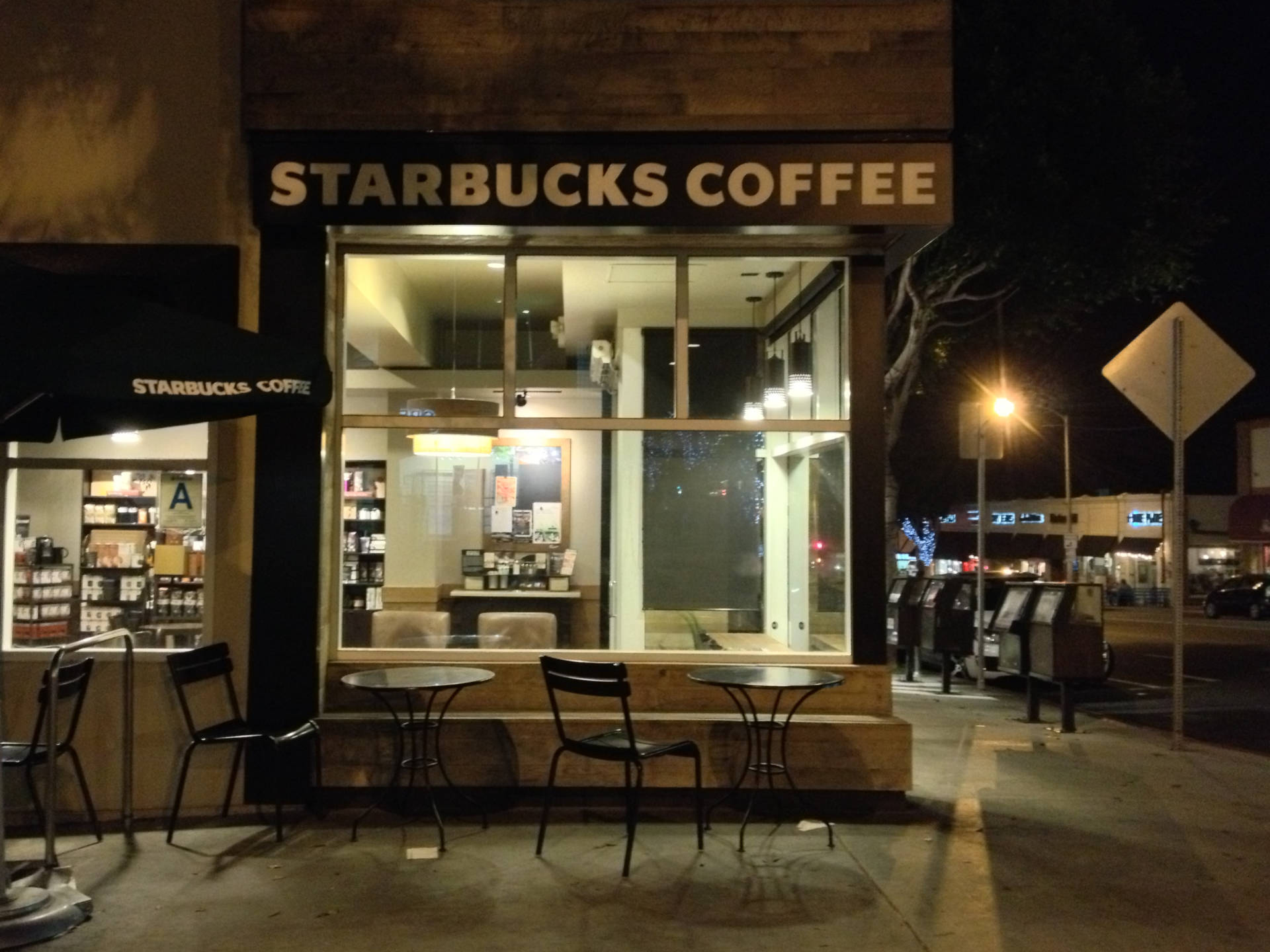
"caption": "A Starbucks in Santa Monica. ",
"description": "A Starbucks in Santa Monica. With no other place to go, many of Los Angeles' homeless end up at the chain's outlets — to the consternation of some employees.",
"title": "Starbucks",
"credit": "Denise Taylor/Moment Editorial-Getty Images",
"status": "inherit",
"isLoading": false,
"fetchFailed": false
},
"news_10937309": {
"type": "attachments",
"id": "news_10937309",
"meta": {
"index": "attachments_1716263798",
"site": "news",
"id": "10937309",
"found": true
},
"parent": 10937300,
"imgSizes": {
"twentyfourteen-full-width": {
"file": "https://ww2.kqed.org/app/uploads/sites/10/2016/04/RS19243_CRUDER_LAPENTA-20122-qut-1038x576.jpg",
"width": 1038,
"mimeType": "image/jpeg",
"height": 576
},
"jmtc-small-thumb": {
"file": "https://ww2.kqed.org/app/uploads/sites/10/2016/04/RS19243_CRUDER_LAPENTA-20122-qut-280x150.jpg",
"width": 280,
"mimeType": "image/jpeg",
"height": 150
},
"thumbnail": {
"file": "https://ww2.kqed.org/app/uploads/sites/10/2016/04/RS19243_CRUDER_LAPENTA-20122-qut-400x267.jpg",
"width": 400,
"mimeType": "image/jpeg",
"height": 267
},
"fd-sm": {
"file": "https://ww2.kqed.org/app/uploads/sites/10/2016/04/RS19243_CRUDER_LAPENTA-20122-qut-960x640.jpg",
"width": 960,
"mimeType": "image/jpeg",
"height": 640
},
"post-thumbnail": {
"file": "https://ww2.kqed.org/app/uploads/sites/10/2016/04/RS19243_CRUDER_LAPENTA-20122-qut-672x372.jpg",
"width": 672,
"mimeType": "image/jpeg",
"height": 372
},
"kqedFullSize": {
"file": "https://ww2.kqed.org/app/uploads/sites/10/2016/04/RS19243_CRUDER_LAPENTA-20122-qut.jpg",
"width": 1080,
"height": 720
},
"guest-author-96": {
"file": "https://ww2.kqed.org/app/uploads/sites/10/2016/04/RS19243_CRUDER_LAPENTA-20122-qut-96x96.jpg",
"width": 96,
"mimeType": "image/jpeg",
"height": 96
},
"medium": {
"file": "https://ww2.kqed.org/app/uploads/sites/10/2016/04/RS19243_CRUDER_LAPENTA-20122-qut-800x533.jpg",
"width": 800,
"mimeType": "image/jpeg",
"height": 533
},
"guest-author-64": {
"file": "https://ww2.kqed.org/app/uploads/sites/10/2016/04/RS19243_CRUDER_LAPENTA-20122-qut-64x64.jpg",
"width": 64,
"mimeType": "image/jpeg",
"height": 64
},
"detail": {
"file": "https://ww2.kqed.org/app/uploads/sites/10/2016/04/RS19243_CRUDER_LAPENTA-20122-qut-75x75.jpg",
"width": 75,
"mimeType": "image/jpeg",
"height": 75
},
"guest-author-32": {
"file": "https://ww2.kqed.org/app/uploads/sites/10/2016/04/RS19243_CRUDER_LAPENTA-20122-qut-32x32.jpg",
"width": 32,
"mimeType": "image/jpeg",
"height": 32
},
"guest-author-128": {
"file": "https://ww2.kqed.org/app/uploads/sites/10/2016/04/RS19243_CRUDER_LAPENTA-20122-qut-128x128.jpg",
"width": 128,
"mimeType": "image/jpeg",
"height": 128
}
},
"publishDate": 1461363390,
"modified": 1461618934,
"caption": "The \"Natural Plasticity\" exhibit will make its way from L.A.'s Pershing Square to locations along the L.A. River, mimicking the journey of plastic trash toward the ocean.",
"description": null,
"title": "RS19243_CRUDER_LAPENTA-20122-qut",
"credit": "Jana Cruder",
"status": "inherit",
"isLoading": false,
"fetchFailed": false
},
"news_10928279": {
"type": "attachments",
"id": "news_10928279",
"meta": {
"index": "attachments_1716263798",
"site": "news",
"id": "10928279",
"found": true
},
"parent": 10928278,
"imgSizes": {
"twentyfourteen-full-width": {
"file": "https://ww2.kqed.org/app/uploads/sites/10/2016/04/brendonglenn-e1460559601332-1038x576.jpg",
"width": 1038,
"mimeType": "image/jpeg",
"height": 576
},
"thumbnail": {
"file": "https://ww2.kqed.org/app/uploads/sites/10/2016/04/brendonglenn-e1460559601332-400x365.jpg",
"width": 400,
"mimeType": "image/jpeg",
"height": 365
},
"fd-sm": {
"file": "https://ww2.kqed.org/app/uploads/sites/10/2016/04/brendonglenn-e1460559601332-960x877.jpg",
"width": 960,
"mimeType": "image/jpeg",
"height": 877
},
"post-thumbnail": {
"file": "https://ww2.kqed.org/app/uploads/sites/10/2016/04/brendonglenn-e1460559601332-672x372.jpg",
"width": 672,
"mimeType": "image/jpeg",
"height": 372
},
"kqedFullSize": {
"file": "https://ww2.kqed.org/app/uploads/sites/10/2016/04/brendonglenn-e1460559601332.jpg",
"width": 1913,
"height": 1747
},
"large": {
"file": "https://ww2.kqed.org/app/uploads/sites/10/2016/04/brendonglenn-e1460559576244-1920x2560.jpg",
"width": 1920,
"mimeType": "image/jpeg",
"height": 2560
},
"guest-author-96": {
"file": "https://ww2.kqed.org/app/uploads/sites/10/2016/04/brendonglenn-e1460559601332-96x96.jpg",
"width": 96,
"mimeType": "image/jpeg",
"height": 96
},
"medium": {
"file": "https://ww2.kqed.org/app/uploads/sites/10/2016/04/brendonglenn-e1460559601332-800x731.jpg",
"width": 800,
"mimeType": "image/jpeg",
"height": 731
},
"guest-author-64": {
"file": "https://ww2.kqed.org/app/uploads/sites/10/2016/04/brendonglenn-e1460559601332-64x64.jpg",
"width": 64,
"mimeType": "image/jpeg",
"height": 64
},
"guest-author-32": {
"file": "https://ww2.kqed.org/app/uploads/sites/10/2016/04/brendonglenn-e1460559601332-32x32.jpg",
"width": 32,
"mimeType": "image/jpeg",
"height": 32
},
"jmtc-small-thumb": {
"file": "https://ww2.kqed.org/app/uploads/sites/10/2016/04/brendonglenn-e1460559601332-280x150.jpg",
"width": 280,
"mimeType": "image/jpeg",
"height": 150
},
"fd-lrg": {
"file": "https://ww2.kqed.org/app/uploads/sites/10/2016/04/brendonglenn-e1460559576244-1920x2560.jpg",
"width": 1920,
"mimeType": "image/jpeg",
"height": 2560
},
"fd-med": {
"file": "https://ww2.kqed.org/app/uploads/sites/10/2016/04/brendonglenn-e1460559601332-1180x1078.jpg",
"width": 1180,
"mimeType": "image/jpeg",
"height": 1078
},
"detail": {
"file": "https://ww2.kqed.org/app/uploads/sites/10/2016/04/brendonglenn-e1460559601332-75x75.jpg",
"width": 75,
"mimeType": "image/jpeg",
"height": 75
},
"guest-author-128": {
"file": "https://ww2.kqed.org/app/uploads/sites/10/2016/04/brendonglenn-e1460559601332-128x128.jpg",
"width": 128,
"mimeType": "image/jpeg",
"height": 128
}
},
"publishDate": 1460559277,
"modified": 1460559443,
"caption": "Brendon Glenn, victim of 2015 Los Angeles police shooting, in photo provided to media outlets by friends. ",
"description": null,
"title": "Brendon Glenn",
"credit": "KTLA",
"status": "inherit",
"isLoading": false,
"fetchFailed": false
},
"news_10916683": {
"type": "attachments",
"id": "news_10916683",
"meta": {
"index": "attachments_1716263798",
"site": "news",
"id": "10916683",
"found": true
},
"parent": 10916681,
"imgSizes": {
"twentyfourteen-full-width": {
"file": "https://ww2.kqed.org/app/uploads/sites/10/2016/04/ComptonPup-1038x576.jpg",
"width": 1038,
"mimeType": "image/jpeg",
"height": 576
},
"thumbnail": {
"file": "https://ww2.kqed.org/app/uploads/sites/10/2016/04/ComptonPup-400x266.jpg",
"width": 400,
"mimeType": "image/jpeg",
"height": 266
},
"fd-sm": {
"file": "https://ww2.kqed.org/app/uploads/sites/10/2016/04/ComptonPup-960x639.jpg",
"width": 960,
"mimeType": "image/jpeg",
"height": 639
},
"post-thumbnail": {
"file": "https://ww2.kqed.org/app/uploads/sites/10/2016/04/ComptonPup-672x372.jpg",
"width": 672,
"mimeType": "image/jpeg",
"height": 372
},
"kqedFullSize": {
"file": "https://ww2.kqed.org/app/uploads/sites/10/2016/04/ComptonPup.jpg",
"width": 1920,
"height": 1278
},
"large": {
"file": "https://ww2.kqed.org/app/uploads/sites/10/2016/04/ComptonPup-1920x1278.jpg",
"width": 1920,
"mimeType": "image/jpeg",
"height": 1278
},
"guest-author-96": {
"file": "https://ww2.kqed.org/app/uploads/sites/10/2016/04/ComptonPup-96x96.jpg",
"width": 96,
"mimeType": "image/jpeg",
"height": 96
},
"medium": {
"file": "https://ww2.kqed.org/app/uploads/sites/10/2016/04/ComptonPup-800x533.jpg",
"width": 800,
"mimeType": "image/jpeg",
"height": 533
},
"guest-author-64": {
"file": "https://ww2.kqed.org/app/uploads/sites/10/2016/04/ComptonPup-64x64.jpg",
"width": 64,
"mimeType": "image/jpeg",
"height": 64
},
"guest-author-32": {
"file": "https://ww2.kqed.org/app/uploads/sites/10/2016/04/ComptonPup-32x32.jpg",
"width": 32,
"mimeType": "image/jpeg",
"height": 32
},
"jmtc-small-thumb": {
"file": "https://ww2.kqed.org/app/uploads/sites/10/2016/04/ComptonPup-280x150.jpg",
"width": 280,
"mimeType": "image/jpeg",
"height": 150
},
"fd-lrg": {
"file": "https://ww2.kqed.org/app/uploads/sites/10/2016/04/ComptonPup-1920x1278.jpg",
"width": 1920,
"mimeType": "image/jpeg",
"height": 1278
},
"fd-med": {
"file": "https://ww2.kqed.org/app/uploads/sites/10/2016/04/ComptonPup-1180x785.jpg",
"width": 1180,
"mimeType": "image/jpeg",
"height": 785
},
"detail": {
"file": "https://ww2.kqed.org/app/uploads/sites/10/2016/04/ComptonPup-75x75.jpg",
"width": 75,
"mimeType": "image/jpeg",
"height": 75
},
"guest-author-128": {
"file": "https://ww2.kqed.org/app/uploads/sites/10/2016/04/ComptonPup-128x128.jpg",
"width": 128,
"mimeType": "image/jpeg",
"height": 128
}
},
"publishDate": 1459540004,
"modified": 1459540065,
"caption": "Seventh grader Xochilt Nuñez brushes Rockwell during spcaLA's humane education after-school program at Bunche Middle School in Compton on March 8, 2016. Students are paired with canines as part of an after school program called \"Teaching Love and Compassion.\"",
"description": "Seventh grader Xochilt Nuñez brushes Rockwell during spcaLA's humane education after-school program at Bunche Middle School in Compton on March 8, 2016. Students are paired with canines as part of an after school program called \"Teaching Love and Compassion.\"",
"title": "ComptonPup",
"credit": "Maya Sugarman/KPCC",
"status": "inherit",
"isLoading": false,
"fetchFailed": false
},
"news_10913623": {
"type": "attachments",
"id": "news_10913623",
"meta": {
"index": "attachments_1716263798",
"site": "news",
"id": "10913623",
"found": true
},
"parent": 10913555,
"imgSizes": {
"twentyfourteen-full-width": {
"file": "https://ww2.kqed.org/app/uploads/sites/10/2016/03/CantaloupeHarvest-1-1038x576.jpg",
"width": 1038,
"mimeType": "image/jpeg",
"height": 576
},
"thumbnail": {
"file": "https://ww2.kqed.org/app/uploads/sites/10/2016/03/CantaloupeHarvest-1-400x254.jpg",
"width": 400,
"mimeType": "image/jpeg",
"height": 254
},
"fd-sm": {
"file": "https://ww2.kqed.org/app/uploads/sites/10/2016/03/CantaloupeHarvest-1-960x610.jpg",
"width": 960,
"mimeType": "image/jpeg",
"height": 610
},
"post-thumbnail": {
"file": "https://ww2.kqed.org/app/uploads/sites/10/2016/03/CantaloupeHarvest-1-672x372.jpg",
"width": 672,
"mimeType": "image/jpeg",
"height": 372
},
"kqedFullSize": {
"file": "https://ww2.kqed.org/app/uploads/sites/10/2016/03/CantaloupeHarvest-1.jpg",
"width": 1920,
"height": 1220
},
"large": {
"file": "https://ww2.kqed.org/app/uploads/sites/10/2016/03/CantaloupeHarvest-1-1920x1220.jpg",
"width": 1920,
"mimeType": "image/jpeg",
"height": 1220
},
"guest-author-96": {
"file": "https://ww2.kqed.org/app/uploads/sites/10/2016/03/CantaloupeHarvest-1-96x96.jpg",
"width": 96,
"mimeType": "image/jpeg",
"height": 96
},
"medium": {
"file": "https://ww2.kqed.org/app/uploads/sites/10/2016/03/CantaloupeHarvest-1-800x508.jpg",
"width": 800,
"mimeType": "image/jpeg",
"height": 508
},
"guest-author-64": {
"file": "https://ww2.kqed.org/app/uploads/sites/10/2016/03/CantaloupeHarvest-1-64x64.jpg",
"width": 64,
"mimeType": "image/jpeg",
"height": 64
},
"guest-author-32": {
"file": "https://ww2.kqed.org/app/uploads/sites/10/2016/03/CantaloupeHarvest-1-32x32.jpg",
"width": 32,
"mimeType": "image/jpeg",
"height": 32
},
"jmtc-small-thumb": {
"file": "https://ww2.kqed.org/app/uploads/sites/10/2016/03/CantaloupeHarvest-1-280x150.jpg",
"width": 280,
"mimeType": "image/jpeg",
"height": 150
},
"fd-lrg": {
"file": "https://ww2.kqed.org/app/uploads/sites/10/2016/03/CantaloupeHarvest-1-1920x1220.jpg",
"width": 1920,
"mimeType": "image/jpeg",
"height": 1220
},
"fd-med": {
"file": "https://ww2.kqed.org/app/uploads/sites/10/2016/03/CantaloupeHarvest-1-1180x750.jpg",
"width": 1180,
"mimeType": "image/jpeg",
"height": 750
},
"detail": {
"file": "https://ww2.kqed.org/app/uploads/sites/10/2016/03/CantaloupeHarvest-1-75x75.jpg",
"width": 75,
"mimeType": "image/jpeg",
"height": 75
},
"guest-author-128": {
"file": "https://ww2.kqed.org/app/uploads/sites/10/2016/03/CantaloupeHarvest-1-128x128.jpg",
"width": 128,
"mimeType": "image/jpeg",
"height": 128
}
},
"publishDate": 1459299611,
"modified": 1459299635,
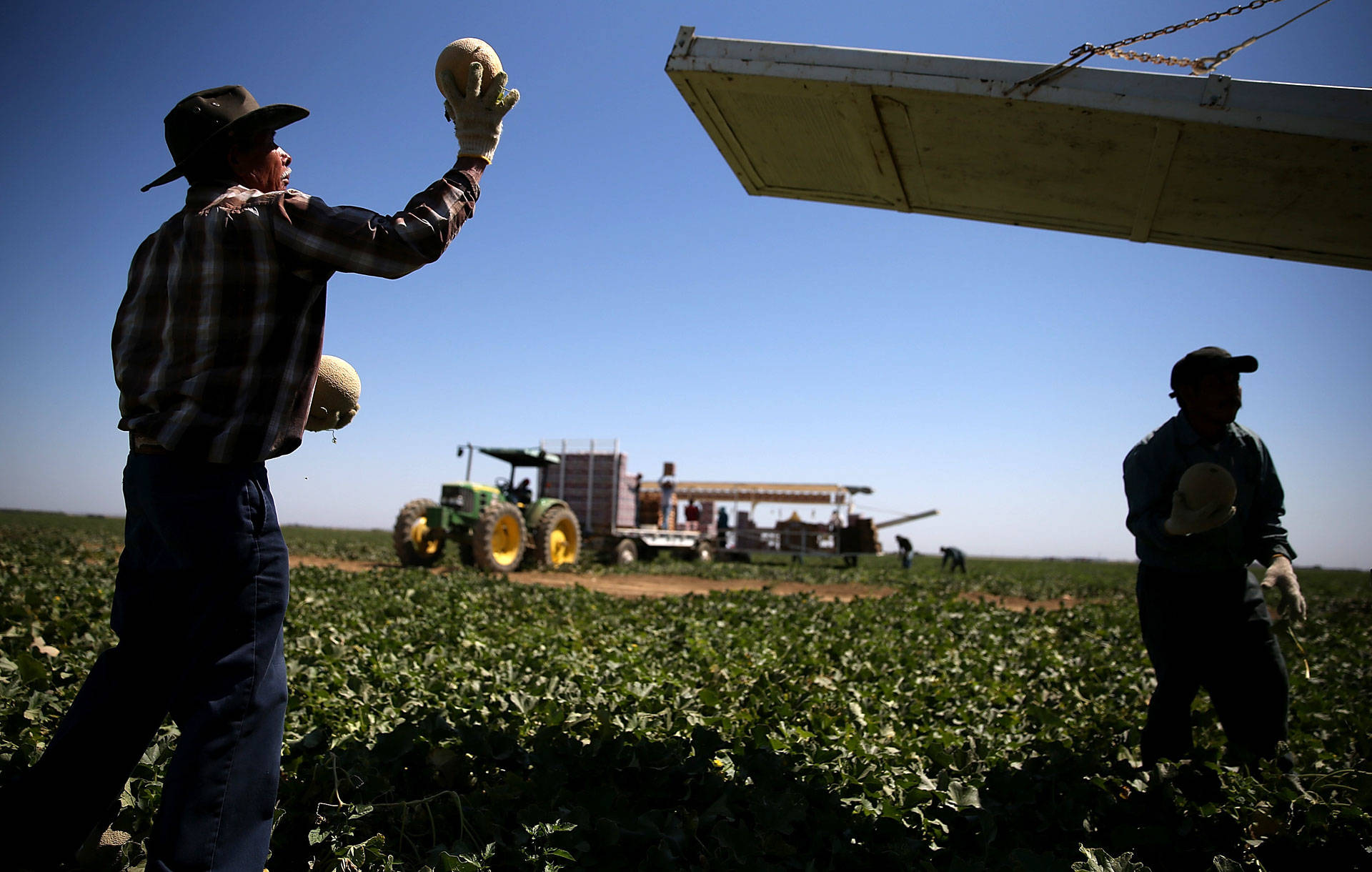
"caption": "A worker harvests cantaloupes on a farm on August 22, 2014 near the Central Valley town of Firebaugh.",
"description": "A worker harvests cantaloupes on a farm on August 22, 2014 near the Central Valley town of Firebaugh.",
"title": "CantaloupeHarvest",
"credit": "Justin Sullivan/Getty Images",
"status": "inherit",
"isLoading": false,
"fetchFailed": false
},
"news_10909241": {
"type": "attachments",
"id": "news_10909241",
"meta": {
"index": "attachments_1716263798",
"site": "news",
"id": "10909241",
"found": true
},
"parent": 10909050,
"imgSizes": {
"twentyfourteen-full-width": {
"file": "https://ww2.kqed.org/app/uploads/sites/10/2016/03/LonnieFranklin-1038x576.jpg",
"width": 1038,
"mimeType": "image/jpeg",
"height": 576
},
"thumbnail": {
"file": "https://ww2.kqed.org/app/uploads/sites/10/2016/03/LonnieFranklin-400x272.jpg",
"width": 400,
"mimeType": "image/jpeg",
"height": 272
},
"fd-sm": {
"file": "https://ww2.kqed.org/app/uploads/sites/10/2016/03/LonnieFranklin-960x653.jpg",
"width": 960,
"mimeType": "image/jpeg",
"height": 653
},
"post-thumbnail": {
"file": "https://ww2.kqed.org/app/uploads/sites/10/2016/03/LonnieFranklin-672x372.jpg",
"width": 672,
"mimeType": "image/jpeg",
"height": 372
},
"kqedFullSize": {
"file": "https://ww2.kqed.org/app/uploads/sites/10/2016/03/LonnieFranklin.jpg",
"width": 1920,
"height": 1305
},
"large": {
"file": "https://ww2.kqed.org/app/uploads/sites/10/2016/03/LonnieFranklin-1920x1305.jpg",
"width": 1920,
"mimeType": "image/jpeg",
"height": 1305
},
"guest-author-96": {
"file": "https://ww2.kqed.org/app/uploads/sites/10/2016/03/LonnieFranklin-96x96.jpg",
"width": 96,
"mimeType": "image/jpeg",
"height": 96
},
"medium": {
"file": "https://ww2.kqed.org/app/uploads/sites/10/2016/03/LonnieFranklin-800x544.jpg",
"width": 800,
"mimeType": "image/jpeg",
"height": 544
},
"guest-author-64": {
"file": "https://ww2.kqed.org/app/uploads/sites/10/2016/03/LonnieFranklin-64x64.jpg",
"width": 64,
"mimeType": "image/jpeg",
"height": 64
},
"guest-author-32": {
"file": "https://ww2.kqed.org/app/uploads/sites/10/2016/03/LonnieFranklin-32x32.jpg",
"width": 32,
"mimeType": "image/jpeg",
"height": 32
},
"jmtc-small-thumb": {
"file": "https://ww2.kqed.org/app/uploads/sites/10/2016/03/LonnieFranklin-280x150.jpg",
"width": 280,
"mimeType": "image/jpeg",
"height": 150
},
"fd-lrg": {
"file": "https://ww2.kqed.org/app/uploads/sites/10/2016/03/LonnieFranklin-1920x1305.jpg",
"width": 1920,
"mimeType": "image/jpeg",
"height": 1305
},
"fd-med": {
"file": "https://ww2.kqed.org/app/uploads/sites/10/2016/03/LonnieFranklin-1180x802.jpg",
"width": 1180,
"mimeType": "image/jpeg",
"height": 802
},
"detail": {
"file": "https://ww2.kqed.org/app/uploads/sites/10/2016/03/LonnieFranklin-75x75.jpg",
"width": 75,
"mimeType": "image/jpeg",
"height": 75
},
"guest-author-128": {
"file": "https://ww2.kqed.org/app/uploads/sites/10/2016/03/LonnieFranklin-128x128.jpg",
"width": 128,
"mimeType": "image/jpeg",
"height": 128
}
},
"publishDate": 1458955543,
"modified": 1458955653,
"caption": "Alleged Grim Sleeper killer Lonnie David Franklin, Jr. (R), 57, at his arraignment in Los Angeles on July 8, 2010.",
"description": "Alleged Grim Sleeper killer Lonnie David Franklin, Jr. (R), 57, at his arraignment in Los Angeles on July 8, 2010.",
"title": "LonnieFranklin",
"credit": "Al Seib-Pool/Getty Images",
"status": "inherit",
"isLoading": false,
"fetchFailed": false
},
"news_10900939": {
"type": "attachments",
"id": "news_10900939",
"meta": {
"index": "attachments_1716263798",
"site": "news",
"id": "10900939",
"found": true
},
"parent": 10900368,
"imgSizes": {
"twentyfourteen-full-width": {
"file": "https://ww2.kqed.org/app/uploads/sites/10/2016/03/WoodyGuthrie-1038x576.jpg",
"width": 1038,
"mimeType": "image/jpeg",
"height": 576
},
"thumbnail": {
"file": "https://ww2.kqed.org/app/uploads/sites/10/2016/03/WoodyGuthrie-400x294.jpg",
"width": 400,
"mimeType": "image/jpeg",
"height": 294
},
"fd-sm": {
"file": "https://ww2.kqed.org/app/uploads/sites/10/2016/03/WoodyGuthrie-960x706.jpg",
"width": 960,
"mimeType": "image/jpeg",
"height": 706
},
"post-thumbnail": {
"file": "https://ww2.kqed.org/app/uploads/sites/10/2016/03/WoodyGuthrie-672x372.jpg",
"width": 672,
"mimeType": "image/jpeg",
"height": 372
},
"kqedFullSize": {
"file": "https://ww2.kqed.org/app/uploads/sites/10/2016/03/WoodyGuthrie.jpg",
"width": 1920,
"height": 1412
},
"large": {
"file": "https://ww2.kqed.org/app/uploads/sites/10/2016/03/WoodyGuthrie-1920x1412.jpg",
"width": 1920,
"mimeType": "image/jpeg",
"height": 1412
},
"guest-author-96": {
"file": "https://ww2.kqed.org/app/uploads/sites/10/2016/03/WoodyGuthrie-96x96.jpg",
"width": 96,
"mimeType": "image/jpeg",
"height": 96
},
"medium": {
"file": "https://ww2.kqed.org/app/uploads/sites/10/2016/03/WoodyGuthrie-800x588.jpg",
"width": 800,
"mimeType": "image/jpeg",
"height": 588
},
"guest-author-64": {
"file": "https://ww2.kqed.org/app/uploads/sites/10/2016/03/WoodyGuthrie-64x64.jpg",
"width": 64,
"mimeType": "image/jpeg",
"height": 64
},
"guest-author-32": {
"file": "https://ww2.kqed.org/app/uploads/sites/10/2016/03/WoodyGuthrie-32x32.jpg",
"width": 32,
"mimeType": "image/jpeg",
"height": 32
},
"jmtc-small-thumb": {
"file": "https://ww2.kqed.org/app/uploads/sites/10/2016/03/WoodyGuthrie-280x150.jpg",
"width": 280,
"mimeType": "image/jpeg",
"height": 150
},
"fd-lrg": {
"file": "https://ww2.kqed.org/app/uploads/sites/10/2016/03/WoodyGuthrie-1920x1412.jpg",
"width": 1920,
"mimeType": "image/jpeg",
"height": 1412
},
"fd-med": {
"file": "https://ww2.kqed.org/app/uploads/sites/10/2016/03/WoodyGuthrie-1180x868.jpg",
"width": 1180,
"mimeType": "image/jpeg",
"height": 868
},
"detail": {
"file": "https://ww2.kqed.org/app/uploads/sites/10/2016/03/WoodyGuthrie-75x75.jpg",
"width": 75,
"mimeType": "image/jpeg",
"height": 75
},
"guest-author-128": {
"file": "https://ww2.kqed.org/app/uploads/sites/10/2016/03/WoodyGuthrie-128x128.jpg",
"width": 128,
"mimeType": "image/jpeg",
"height": 128
}
},
"publishDate": 1458347545,
"modified": 1458347589,
"caption": "Woody Guthrie near a Shafter labor camp in 1941.",
"description": "Woody Guthrie near a Shafter labor camp in 1941.",
"title": "WoodyGuthrie",
"credit": "Seema Weatherwax",
"status": "inherit",
"isLoading": false,
"fetchFailed": false
},
"news_10899656": {
"type": "attachments",
"id": "news_10899656",
"meta": {
"index": "attachments_1716263798",
"site": "news",
"id": "10899656",
"found": true
},
"parent": 10899596,
"imgSizes": {
"twentyfourteen-full-width": {
"file": "https://ww2.kqed.org/app/uploads/sites/10/2016/03/GirlOnPhone-1038x576.jpg",
"width": 1038,
"mimeType": "image/jpeg",
"height": 576
},
"thumbnail": {
"file": "https://ww2.kqed.org/app/uploads/sites/10/2016/03/GirlOnPhone-400x260.jpg",
"width": 400,
"mimeType": "image/jpeg",
"height": 260
},
"fd-sm": {
"file": "https://ww2.kqed.org/app/uploads/sites/10/2016/03/GirlOnPhone-960x623.jpg",
"width": 960,
"mimeType": "image/jpeg",
"height": 623
},
"post-thumbnail": {
"file": "https://ww2.kqed.org/app/uploads/sites/10/2016/03/GirlOnPhone-672x372.jpg",
"width": 672,
"mimeType": "image/jpeg",
"height": 372
},
"kqedFullSize": {
"file": "https://ww2.kqed.org/app/uploads/sites/10/2016/03/GirlOnPhone.jpg",
"width": 1920,
"height": 1246
},
"large": {
"file": "https://ww2.kqed.org/app/uploads/sites/10/2016/03/GirlOnPhone-1920x1246.jpg",
"width": 1920,
"mimeType": "image/jpeg",
"height": 1246
},
"guest-author-96": {
"file": "https://ww2.kqed.org/app/uploads/sites/10/2016/03/GirlOnPhone-96x96.jpg",
"width": 96,
"mimeType": "image/jpeg",
"height": 96
},
"medium": {
"file": "https://ww2.kqed.org/app/uploads/sites/10/2016/03/GirlOnPhone-800x519.jpg",
"width": 800,
"mimeType": "image/jpeg",
"height": 519
},
"guest-author-64": {
"file": "https://ww2.kqed.org/app/uploads/sites/10/2016/03/GirlOnPhone-64x64.jpg",
"width": 64,
"mimeType": "image/jpeg",
"height": 64
},
"guest-author-32": {
"file": "https://ww2.kqed.org/app/uploads/sites/10/2016/03/GirlOnPhone-32x32.jpg",
"width": 32,
"mimeType": "image/jpeg",
"height": 32
},
"jmtc-small-thumb": {
"file": "https://ww2.kqed.org/app/uploads/sites/10/2016/03/GirlOnPhone-280x150.jpg",
"width": 280,
"mimeType": "image/jpeg",
"height": 150
},
"fd-lrg": {
"file": "https://ww2.kqed.org/app/uploads/sites/10/2016/03/GirlOnPhone-1920x1246.jpg",
"width": 1920,
"mimeType": "image/jpeg",
"height": 1246
},
"fd-med": {
"file": "https://ww2.kqed.org/app/uploads/sites/10/2016/03/GirlOnPhone-1180x766.jpg",
"width": 1180,
"mimeType": "image/jpeg",
"height": 766
},
"detail": {
"file": "https://ww2.kqed.org/app/uploads/sites/10/2016/03/GirlOnPhone-75x75.jpg",
"width": 75,
"mimeType": "image/jpeg",
"height": 75
},
"guest-author-128": {
"file": "https://ww2.kqed.org/app/uploads/sites/10/2016/03/GirlOnPhone-128x128.jpg",
"width": 128,
"mimeType": "image/jpeg",
"height": 128
}
},
"publishDate": 1458264310,
"modified": 1458339533,
"caption": "Research shows young people often don't seek out political information, but instead they stumble on it, largely via smartphone.",
"description": "Research shows young people often don't seek out political information, but instead they stumble on it, largely via smartphone.",
"title": "GirlOnPhone",
"credit": "Nicolas Asfouri/AFP/GETTY IMAGES",
"status": "inherit",
"isLoading": false,
"fetchFailed": false
},
"news_10896711": {
"type": "attachments",
"id": "news_10896711",
"meta": {
"index": "attachments_1716263798",
"site": "news",
"id": "10896711",
"found": true
},
"parent": 10892969,
"imgSizes": {
"twentyfourteen-full-width": {
"file": "https://ww2.kqed.org/app/uploads/sites/10/2016/03/TroyWalker-1038x576.jpg",
"width": 1038,
"mimeType": "image/jpeg",
"height": 576
},
"thumbnail": {
"file": "https://ww2.kqed.org/app/uploads/sites/10/2016/03/TroyWalker-400x253.jpg",
"width": 400,
"mimeType": "image/jpeg",
"height": 253
},
"fd-sm": {
"file": "https://ww2.kqed.org/app/uploads/sites/10/2016/03/TroyWalker-960x607.jpg",
"width": 960,
"mimeType": "image/jpeg",
"height": 607
},
"post-thumbnail": {
"file": "https://ww2.kqed.org/app/uploads/sites/10/2016/03/TroyWalker-672x372.jpg",
"width": 672,
"mimeType": "image/jpeg",
"height": 372
},
"kqedFullSize": {
"file": "https://ww2.kqed.org/app/uploads/sites/10/2016/03/TroyWalker.jpg",
"width": 1920,
"height": 1214
},
"large": {
"file": "https://ww2.kqed.org/app/uploads/sites/10/2016/03/TroyWalker-1920x1214.jpg",
"width": 1920,
"mimeType": "image/jpeg",
"height": 1214
},
"guest-author-96": {
"file": "https://ww2.kqed.org/app/uploads/sites/10/2016/03/TroyWalker-96x96.jpg",
"width": 96,
"mimeType": "image/jpeg",
"height": 96
},
"medium": {
"file": "https://ww2.kqed.org/app/uploads/sites/10/2016/03/TroyWalker-800x506.jpg",
"width": 800,
"mimeType": "image/jpeg",
"height": 506
},
"guest-author-64": {
"file": "https://ww2.kqed.org/app/uploads/sites/10/2016/03/TroyWalker-64x64.jpg",
"width": 64,
"mimeType": "image/jpeg",
"height": 64
},
"guest-author-32": {
"file": "https://ww2.kqed.org/app/uploads/sites/10/2016/03/TroyWalker-32x32.jpg",
"width": 32,
"mimeType": "image/jpeg",
"height": 32
},
"jmtc-small-thumb": {
"file": "https://ww2.kqed.org/app/uploads/sites/10/2016/03/TroyWalker-280x150.jpg",
"width": 280,
"mimeType": "image/jpeg",
"height": 150
},
"fd-lrg": {
"file": "https://ww2.kqed.org/app/uploads/sites/10/2016/03/TroyWalker-1920x1214.jpg",
"width": 1920,
"mimeType": "image/jpeg",
"height": 1214
},
"fd-med": {
"file": "https://ww2.kqed.org/app/uploads/sites/10/2016/03/TroyWalker-1180x746.jpg",
"width": 1180,
"mimeType": "image/jpeg",
"height": 746
},
"detail": {
"file": "https://ww2.kqed.org/app/uploads/sites/10/2016/03/TroyWalker-75x75.jpg",
"width": 75,
"mimeType": "image/jpeg",
"height": 75
},
"guest-author-128": {
"file": "https://ww2.kqed.org/app/uploads/sites/10/2016/03/TroyWalker-128x128.jpg",
"width": 128,
"mimeType": "image/jpeg",
"height": 128
}
},
"publishDate": 1458066447,
"modified": 1458071514,
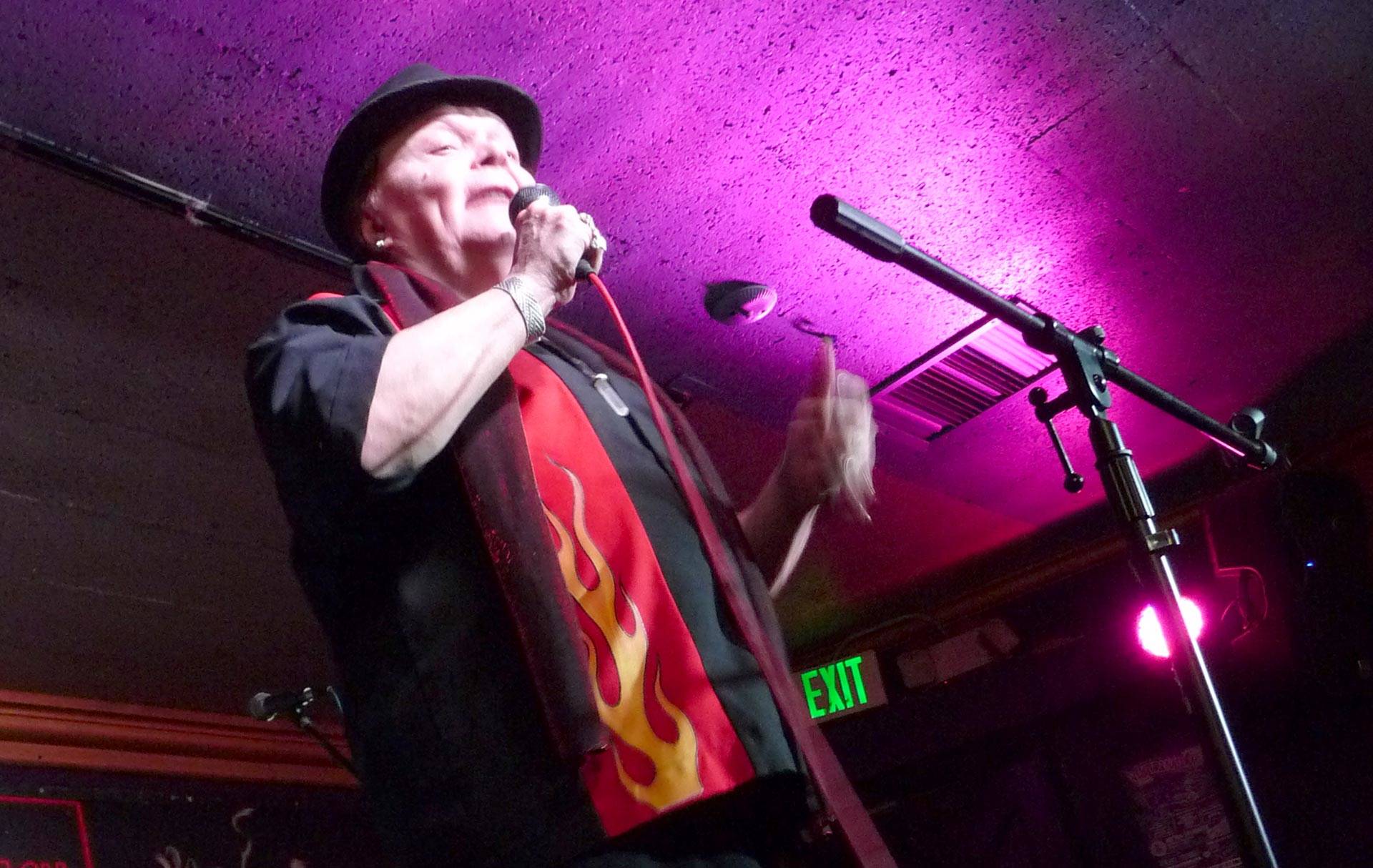
"caption": "Troy Walker sings at Cody Bryant’s Viva Cantina, a Mexican restaurant in Burbank that’s become the singer’s monthly gig.",
"description": "Troy Walker sings at Cody Bryant’s Viva Cantina, a Mexican restaurant in Burbank that’s become the singer’s monthly gig.",
"title": "TroyWalker",
"credit": "Peter Gilstrap/KQED",
"status": "inherit",
"isLoading": false,
"fetchFailed": false
},
"news_10886031": {
"type": "attachments",
"id": "news_10886031",
"meta": {
"index": "attachments_1716263798",
"site": "news",
"id": "10886031",
"found": true
},
"parent": 10885996,
"imgSizes": {
"twentyfourteen-full-width": {
"file": "https://ww2.kqed.org/app/uploads/sites/10/2016/03/GettyImages-51969557-1038x576.jpg",
"width": 1038,
"mimeType": "image/jpeg",
"height": 576
},
"thumbnail": {
"file": "https://ww2.kqed.org/app/uploads/sites/10/2016/03/GettyImages-51969557-400x295.jpg",
"width": 400,
"mimeType": "image/jpeg",
"height": 295
},
"fd-sm": {
"file": "https://ww2.kqed.org/app/uploads/sites/10/2016/03/GettyImages-51969557-960x709.jpg",
"width": 960,
"mimeType": "image/jpeg",
"height": 709
},
"post-thumbnail": {
"file": "https://ww2.kqed.org/app/uploads/sites/10/2016/03/GettyImages-51969557-672x372.jpg",
"width": 672,
"mimeType": "image/jpeg",
"height": 372
},
"kqedFullSize": {
"file": "https://ww2.kqed.org/app/uploads/sites/10/2016/03/GettyImages-51969557.jpg",
"width": 1461,
"height": 1079
},
"guest-author-96": {
"file": "https://ww2.kqed.org/app/uploads/sites/10/2016/03/GettyImages-51969557-96x96.jpg",
"width": 96,
"mimeType": "image/jpeg",
"height": 96
},
"medium": {
"file": "https://ww2.kqed.org/app/uploads/sites/10/2016/03/GettyImages-51969557-800x591.jpg",
"width": 800,
"mimeType": "image/jpeg",
"height": 591
},
"guest-author-64": {
"file": "https://ww2.kqed.org/app/uploads/sites/10/2016/03/GettyImages-51969557-64x64.jpg",
"width": 64,
"mimeType": "image/jpeg",
"height": 64
},
"guest-author-32": {
"file": "https://ww2.kqed.org/app/uploads/sites/10/2016/03/GettyImages-51969557-32x32.jpg",
"width": 32,
"mimeType": "image/jpeg",
"height": 32
},
"jmtc-small-thumb": {
"file": "https://ww2.kqed.org/app/uploads/sites/10/2016/03/GettyImages-51969557-280x150.jpg",
"width": 280,
"mimeType": "image/jpeg",
"height": 150
},
"fd-med": {
"file": "https://ww2.kqed.org/app/uploads/sites/10/2016/03/GettyImages-51969557-1180x871.jpg",
"width": 1180,
"mimeType": "image/jpeg",
"height": 871
},
"detail": {
"file": "https://ww2.kqed.org/app/uploads/sites/10/2016/03/GettyImages-51969557-75x75.jpg",
"width": 75,
"mimeType": "image/jpeg",
"height": 75
},
"guest-author-128": {
"file": "https://ww2.kqed.org/app/uploads/sites/10/2016/03/GettyImages-51969557-128x128.jpg",
"width": 128,
"mimeType": "image/jpeg",
"height": 128
}
},
"publishDate": 1457113430,
"modified": 1457114188,
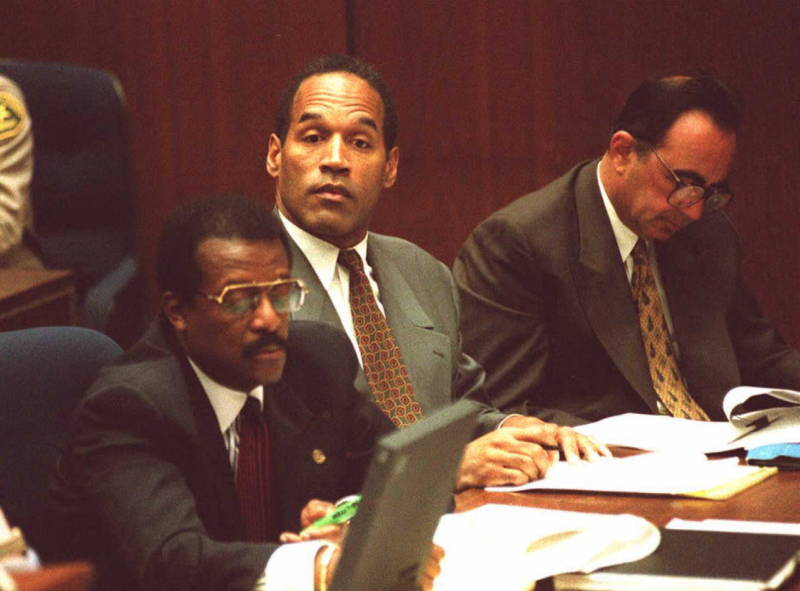
"caption": "O.J. Simpson, center, with defense attorneys Johnnie Cochran, left, and Robert Shapiro, during trial in 1995.",
"description": null,
"title": "O.J. Simpson",
"credit": "AFP-Getty Images",
"status": "inherit",
"isLoading": false,
"fetchFailed": false
},
"news_10847938": {
"type": "attachments",
"id": "news_10847938",
"meta": {
"index": "attachments_1716263798",
"site": "news",
"id": "10847938",
"found": true
},
"parent": 10844950,
"imgSizes": {
"twentyfourteen-full-width": {
"file": "https://ww2.kqed.org/app/uploads/sites/10/2016/01/HomelessCount-1038x576.jpg",
"width": 1038,
"mimeType": "image/jpeg",
"height": 576
},
"thumbnail": {
"file": "https://ww2.kqed.org/app/uploads/sites/10/2016/01/HomelessCount-400x213.jpg",
"width": 400,
"mimeType": "image/jpeg",
"height": 213
},
"fd-sm": {
"file": "https://ww2.kqed.org/app/uploads/sites/10/2016/01/HomelessCount-960x511.jpg",
"width": 960,
"mimeType": "image/jpeg",
"height": 511
},
"post-thumbnail": {
"file": "https://ww2.kqed.org/app/uploads/sites/10/2016/01/HomelessCount-672x372.jpg",
"width": 672,
"mimeType": "image/jpeg",
"height": 372
},
"kqedFullSize": {
"file": "https://ww2.kqed.org/app/uploads/sites/10/2016/01/HomelessCount.jpg",
"width": 1920,
"height": 1022
},
"large": {
"file": "https://ww2.kqed.org/app/uploads/sites/10/2016/01/HomelessCount-1440x767.jpg",
"width": 1440,
"mimeType": "image/jpeg",
"height": 767
},
"guest-author-96": {
"file": "https://ww2.kqed.org/app/uploads/sites/10/2016/01/HomelessCount-96x96.jpg",
"width": 96,
"mimeType": "image/jpeg",
"height": 96
},
"medium": {
"file": "https://ww2.kqed.org/app/uploads/sites/10/2016/01/HomelessCount-800x426.jpg",
"width": 800,
"mimeType": "image/jpeg",
"height": 426
},
"guest-author-64": {
"file": "https://ww2.kqed.org/app/uploads/sites/10/2016/01/HomelessCount-64x64.jpg",
"width": 64,
"mimeType": "image/jpeg",
"height": 64
},
"guest-author-32": {
"file": "https://ww2.kqed.org/app/uploads/sites/10/2016/01/HomelessCount-32x32.jpg",
"width": 32,
"mimeType": "image/jpeg",
"height": 32
},
"jmtc-small-thumb": {
"file": "https://ww2.kqed.org/app/uploads/sites/10/2016/01/HomelessCount-280x150.jpg",
"width": 280,
"mimeType": "image/jpeg",
"height": 150
},
"fd-lrg": {
"file": "https://ww2.kqed.org/app/uploads/sites/10/2016/01/HomelessCount-1920x1022.jpg",
"width": 1920,
"mimeType": "image/jpeg",
"height": 1022
},
"fd-med": {
"file": "https://ww2.kqed.org/app/uploads/sites/10/2016/01/HomelessCount-1180x628.jpg",
"width": 1180,
"mimeType": "image/jpeg",
"height": 628
},
"detail": {
"file": "https://ww2.kqed.org/app/uploads/sites/10/2016/01/HomelessCount-75x75.jpg",
"width": 75,
"mimeType": "image/jpeg",
"height": 75
},
"medium_large": {
"file": "https://ww2.kqed.org/app/uploads/sites/10/2016/01/HomelessCount-768x409.jpg",
"width": 768,
"mimeType": "image/jpeg",
"height": 409
},
"guest-author-128": {
"file": "https://ww2.kqed.org/app/uploads/sites/10/2016/01/HomelessCount-128x128.jpg",
"width": 128,
"mimeType": "image/jpeg",
"height": 128
}
},
"publishDate": 1454018272,
"modified": 1454018455,
"caption": "Thousands of people have fanned out across L.A. County this week for the region’s three-day homeless count. That includes tallying the scores of people living on the streets of downtown’s Skid Row, pictured here as volunteers conduct the 2015 homeless count.",
"description": "Thousands of people have fanned out across L.A. County this week for the region’s three-day homeless count. That includes tallying the scores of people living on the streets of downtown’s Skid Row, pictured here as volunteers conduct the 2015 homeless count.",
"title": "HomelessCount",
"credit": "David McNew/Getty Images",
"status": "inherit",
"isLoading": false,
"fetchFailed": false
}
},
"audioPlayerReducer": {
"postId": "stream_live",
"isPaused": true,
"isPlaying": false,
"pfsActive": false,
"pledgeModalIsOpen": true,
"playerDrawerIsOpen": false,
"liveAudioPlayStartedAt": 0,
"liveAudioPlayContext": ""
},
"authorsReducer": {
"byline_news_10947099": {
"type": "authors",
"id": "byline_news_10947099",
"meta": {
"override": true
},
"slug": "byline_news_10947099",
"name": "\u003cstrong>The Associated Press\u003c/strong>",
"isLoading": false
},
"byline_news_10945201": {
"type": "authors",
"id": "byline_news_10945201",
"meta": {
"override": true
},
"slug": "byline_news_10945201",
"name": "\u003cstrong>Anna Scott\u003cbr>\u003ca href=\"http://www.npr.org/\">NPR\u003c/a>\u003c/strong>",
"isLoading": false
},
"byline_news_10937300": {
"type": "authors",
"id": "byline_news_10937300",
"meta": {
"override": true
},
"slug": "byline_news_10937300",
"name": "\u003cstrong>\u003ca href=\"http://www.kcrw.com/people/avishay-artsy\">Avishay Artsy\u003c/a>\u003c/strong>",
"isLoading": false
},
"byline_news_10928278": {
"type": "authors",
"id": "byline_news_10928278",
"meta": {
"override": true
},
"slug": "byline_news_10928278",
"name": "\u003cstrong>Associated Press\u003c/strong>",
"isLoading": false
},
"byline_news_10916681": {
"type": "authors",
"id": "byline_news_10916681",
"meta": {
"override": true
},
"slug": "byline_news_10916681",
"name": "\u003cstrong>\u003ca href=\"http://www.scpr.org/about/people/staff/adolfo-guzman-lopez\">Adolfo Guzman-Lopez\u003c/a>\u003cbr>KPCC\u003c/strong>",
"isLoading": false
},
"byline_news_10900368": {
"type": "authors",
"id": "byline_news_10900368",
"meta": {
"override": true
},
"slug": "byline_news_10900368",
"name": "\u003cstrong>\u003ca href=\"http://www.kcrw.com/people/avishay-artsy\">Avishay Artsy\u003c/a>\u003c/strong>",
"isLoading": false
},
"byline_news_10899596": {
"type": "authors",
"id": "byline_news_10899596",
"meta": {
"override": true
},
"slug": "byline_news_10899596",
"name": "\u003cstrong>\u003ca href=\"http://www.scpr.org/about/people/staff/mary-plummer\">Mary Plummer\u003c/a>\u003c/strong>",
"isLoading": false
},
"byline_news_10892969": {
"type": "authors",
"id": "byline_news_10892969",
"meta": {
"override": true
},
"slug": "byline_news_10892969",
"name": "Peter Gilstrap",
"isLoading": false
},
"danbrekke": {
"type": "authors",
"id": "222",
"meta": {
"index": "authors_1716337520",
"id": "222",
"found": true
},
"name": "Dan Brekke",
"firstName": "Dan",
"lastName": "Brekke",
"slug": "danbrekke",
"email": "dbrekke@kqed.org",
"display_author_email": true,
"staff_mastheads": [
"news",
"science"
],
"title": "KQED Editor and Reporter",
"bio": "Dan Brekke is a reporter and editor for KQED News, responsible for coverage of topics ranging from California water issues to the Bay Area's transportation challenges. In a newsroom career that began in Chicago in 1972, Dan has worked for \u003cem>The San Francisco Examiner,\u003c/em> Wired and TechTV and has been published in The New York Times, The New York Times Magazine, Business 2.0, Salon and elsewhere.\r\n\r\nSince joining KQED in 2007, Dan has reported, edited and produced both radio and online features and breaking news pieces. He has shared as both editor and reporter in four Society of Professional Journalists Norcal Excellence in Journalism awards and one Edward R. Murrow regional award. He was chosen for a spring 2017 residency at the Mesa Refuge to advance his research on California salmon.\r\n\r\nEmail Dan at: \u003ca href=\"mailto:dbrekke@kqed.org\">dbrekke@kqed.org\u003c/a>\r\n\r\n\u003cstrong>Twitter:\u003c/strong> \u003ca href=\"https://twitter.com/danbrekke\" rel=\"noopener noreferrer\">twitter.com/danbrekke\u003c/a>\r\n\u003cstrong>Facebook:\u003c/strong> \u003ca href=\"https://www.facebook.com/danbrekke\" rel=\"noopener noreferrer\">www.facebook.com/danbrekke\u003c/a>\r\n\u003cstrong>LinkedIn:\u003c/strong> \u003ca href=\"https://www.linkedin.com/in/danbrekke\" rel=\"noopener noreferrer\">www.linkedin.com/in/danbrekke\u003c/a>",
"avatar": "https://secure.gravatar.com/avatar/c8126230345efca3f7aa89b1a402be45?s=600&d=mm&r=g",
"twitter": "danbrekke",
"facebook": null,
"instagram": "https://www.instagram.com/dan.brekke/",
"linkedin": "https://www.linkedin.com/in/danbrekke/",
"sites": [
{
"site": "news",
"roles": [
"administrator",
"create_posts"
]
},
{
"site": "stateofhealth",
"roles": [
"editor"
]
},
{
"site": "science",
"roles": [
"editor"
]
},
{
"site": "quest",
"roles": [
"contributor"
]
},
{
"site": "food",
"roles": [
"contributor"
]
},
{
"site": "forum",
"roles": [
"contributor"
]
},
{
"site": "liveblog",
"roles": [
"editor"
]
}
],
"headData": {
"title": "Dan Brekke | KQED",
"description": "KQED Editor and Reporter",
"ogImgSrc": "https://secure.gravatar.com/avatar/c8126230345efca3f7aa89b1a402be45?s=600&d=mm&r=g",
"twImgSrc": "https://secure.gravatar.com/avatar/c8126230345efca3f7aa89b1a402be45?s=600&d=mm&r=g"
},
"isLoading": false,
"link": "/author/danbrekke"
},
"sasha-khokha": {
"type": "authors",
"id": "254",
"meta": {
"index": "authors_1716337520",
"id": "254",
"found": true
},
"name": "Sasha Khokha",
"firstName": "Sasha",
"lastName": "Khokha",
"slug": "sasha-khokha",
"email": "skhokha@kqed.org",
"display_author_email": true,
"staff_mastheads": [
"news"
],
"title": "Host, The California Report Magazine",
"bio": "Sasha Khokha is the host of \u003cem>The California Report's \u003c/em> weekly magazine program, which takes listeners on sound-rich excursions to meet the people that make the Golden State unique -- through audio documentaries and long-form stories. As \u003cem>The California Report's\u003c/em> Central Valley Bureau Chief based in Fresno for nearly a dozen years, Sasha brought the lives and concerns of rural Californians to listeners around the state. Her reporting helped expose the hidden price immigrant women janitors and farmworkers may pay to keep their jobs: sexual assault at work. It inspired two new California laws to protect them from sexual harassment. She was a key member of the reporting team for the Frontline film \u003cem>Rape on the Night Shift, \u003c/em>which was nominated for two national Emmys. Sasha has also won a national Edward R. Murrow and a national PRNDI award for investigative reporting, as well as multiple prizes from the Society for Professional Journalists. Sasha is a proud alum of the UC Berkeley Graduate School of Journalism and Brown University and a member of the South Asian Journalists Association.",
"avatar": "https://secure.gravatar.com/avatar/e4b5e1541aaeea2aa356aa1fb2a68950?s=600&d=blank&r=g",
"twitter": "KQEDSashaKhokha",
"facebook": null,
"instagram": null,
"linkedin": null,
"sites": [
{
"site": "news",
"roles": [
"editor"
]
},
{
"site": "stateofhealth",
"roles": [
"author"
]
},
{
"site": "science",
"roles": [
"author"
]
},
{
"site": "quest",
"roles": [
"subscriber"
]
}
],
"headData": {
"title": "Sasha Khokha | KQED",
"description": "Host, The California Report Magazine",
"ogImgSrc": "https://secure.gravatar.com/avatar/e4b5e1541aaeea2aa356aa1fb2a68950?s=600&d=blank&r=g",
"twImgSrc": "https://secure.gravatar.com/avatar/e4b5e1541aaeea2aa356aa1fb2a68950?s=600&d=blank&r=g"
},
"isLoading": false,
"link": "/author/sasha-khokha"
},
"scuevas": {
"type": "authors",
"id": "2600",
"meta": {
"index": "authors_1716337520",
"id": "2600",
"found": true
},
"name": "Steven Cuevas",
"firstName": "Steven",
"lastName": "Cuevas",
"slug": "scuevas",
"email": "scuevas@kqed.org",
"display_author_email": false,
"staff_mastheads": [],
"title": "KQED Contributor",
"bio": "Steven is a former Los Angeles bureau chief for The California Report.\r\n\r\nHe reports on an array of issues across the Southland, from immigration and regional politics to religion, the performing arts and pop culture.\r\n\r\nPrior to joining KQED in 2012, Steven covered Inland southern California for KPCC in Pasadena. He also helped establish the first newsroom at \u003ca href=\"http://kut.org/\">KUT\u003c/a> in Austin, Texas where he was a general assignment reporter.\r\n\r\nSteven has received numerous awards for his reporting including an RTNDA Edward R. Murrow Award for investigative reporting in addition to awards from the LA Press Club, the Associated Press and the Society for Professional Journalists.\r\n\r\nSteven grew up in and around San Francisco and now lives in Pasadena just a short jog from the foot of the San Gabriel Mountains.",
"avatar": "https://secure.gravatar.com/avatar/2d253580794f8e026100fae05cfabbbd4889b4fe15146146cacb82a01974c538?s=600&d=blank&r=g",
"twitter": null,
"bluesky": null,
"facebook": null,
"instagram": null,
"linkedin": null,
"sites": [
{
"site": "news",
"roles": [
"subscriber"
]
}
],
"headData": {
"title": "Steven Cuevas | KQED",
"description": "KQED Contributor",
"ogImgSrc": "https://secure.gravatar.com/avatar/2d253580794f8e026100fae05cfabbbd4889b4fe15146146cacb82a01974c538?s=600&d=blank&r=g",
"twImgSrc": "https://secure.gravatar.com/avatar/2d253580794f8e026100fae05cfabbbd4889b4fe15146146cacb82a01974c538?s=600&d=blank&r=g"
},
"isLoading": false,
"link": "/author/scuevas"
}
},
"pagesReducer": {
"news_tag_los-angeles": {
"type": "terms",
"id": "news_4",
"meta": {
"index": "terms_1716263798",
"site": "news",
"id": "4",
"score": 8.557587
},
"featImg": null,
"name": "los angeles",
"description": null,
"taxonomy": "tag",
"headData": {
"twImgId": null,
"twTitle": null,
"ogTitle": null,
"ogImgId": null,
"twDescription": null,
"description": null,
"title": "los angeles Archives | KQED News",
"ogDescription": null
},
"ttid": 4,
"slug": "los-angeles",
"isLoading": false,
"title": "los angeles",
"pageMeta": {
"site": "news",
"WpPageTemplate": "page-topic-editorial",
"currentPage": 30
},
"blocks": [
{
"blockName": "kqed/post-list",
"attrs": {
"layout": "cardArticle2",
"query": "posts/news?tag=los-angeles",
"seeMore": false,
"paginated": true,
"page": 30
}
},
{
"blockName": "kqed/ad"
}
]
}
},
"pfsSessionReducer": {},
"postsReducer": {
"stream_live": {
"type": "live",
"id": "stream_live",
"audioUrl": "https://streams.kqed.org/kqedradio",
"title": "Live Stream",
"excerpt": "Live Stream information currently unavailable.",
"link": "/radio",
"featImg": "",
"label": {
"name": "KQED Live",
"link": "/"
}
},
"stream_kqedNewscast": {
"type": "posts",
"id": "stream_kqedNewscast",
"audioUrl": "https://www.kqed.org/.stream/anon/radio/RDnews/newscast.mp3?_=1",
"title": "KQED Newscast",
"featImg": "",
"label": {
"name": "88.5 FM",
"link": "/"
}
},
"news_10947099": {
"type": "posts",
"id": "news_10947099",
"meta": {
"index": "posts_1716263798",
"site": "news",
"id": "10947099",
"score": null,
"sort": [
1462483504000
]
},
"guestAuthors": [],
"slug": "los-angeles-man-guilty-in-10-grim-sleeper-serial-killings",
"title": "Los Angeles Man Guilty in 10 'Grim Sleeper' Serial Killings",
"publishDate": 1462483504,
"format": "standard",
"headTitle": "Los Angeles Man Guilty in 10 ‘Grim Sleeper’ Serial Killings | KQED",
"labelTerm": {
"term": 72,
"site": "news"
},
"content": "\u003cp>LOS ANGELES — A former trash collector in Los Angeles was convicted Thursday of 10 “Grim Sleeper” serial killings that spanned two decades and targeted vulnerable young black women.\u003c/p>\n\u003cp>Lonnie Franklin Jr. showed no emotion as a clerk read the 10 murder verdicts in Los Angeles County Superior Court after a two-month trial in the potential death penalty case.\u003c/p>\n\u003cp>Franklin also was found guilty of one count of attempted murder.\u003c/p>\n\u003cp>Jurors were told to return May 12 for the trial’s penalty phase. Franklin could receive the death penalty.\u003c/p>\n\u003cp>The killings from 1985 to 2007 were dubbed the work of the “Grim Sleeper” because of an apparent 14-year gap after one woman survived a gunshot to the chest in 1988.\u003c/p>\n\u003cp>[ad fullwidth]\u003c/p>\n\u003cp>The crimes went unsolved for decades and community members complained that police ignored the cases because the victims were black, poor and some were prostitutes and drug users.\u003c/p>\n\u003cp>Much of the violence unfolded during the nation’s crack cocaine epidemic when at least two other serial killers prowled the part of the city then known as South Central.\u003c/p>\n\u003cp>[contextly_sidebar id=”OlPn7fUZylU6qqFbA0y8ATfz1jl9VNcl”]\u003c/p>\n\u003cp>The 10 victims, including a 15-year-old girl, were fatally shot or strangled and dumped in alleys and garbage bins. Most had traces of cocaine in their systems.\u003c/p>\n\u003cp>Franklin, 63, a onetime trash collector in the area and a garage attendant for the Los Angeles Police Department, had been hiding in plain sight, said Deputy District Attorney Beth Silverman.\u003c/p>\n\u003cp>Police eventually connected Franklin to the crimes after a task force was assigned to revisit the case that dozens of officers failed to solve in the 1980s. The DNA of Franklin’s son, collected after a felony arrest, had similarities to genetic material left on the bodies of many of the victims.\u003c/p>\n\u003cp>An officer posing as a busboy later retrieved pizza crusts and napkins with Franklin’s DNA while he was celebrating at a birthday party.\u003c/p>\n\u003cp>It proved a match with material found on the breasts and clothing of many of the women and on the zip tie of a trash bag that held the curled-up body of the final victim, Janecia Peters. She was found Jan. 1, 2007, by someone who was rifling through a trash bin and noticed her red fingernails through a hole in the bag.\u003c/p>\n\u003cp>Silverman described the victims as sisters, daughters and mothers who suffered frailties but had hopes and dreams.\u003c/p>\n\u003cp>She projected photos of the 10 women from happier days, many smiling from headshots that captured their youth and the hairstyles of the times. The images were in stark contrast to gory crime scene and autopsy photos also displayed of half-naked bodies sprawled among garbage — images that made family members wince, weep and recoil in the gallery.\u003c/p>\n\u003cfigure id=\"attachment_10947111\" class=\"wp-caption aligncenter\" style=\"max-width: 800px\">\u003cimg loading=\"lazy\" decoding=\"async\" class=\"size-medium wp-image-10947111\" src=\"http://ww2.kqed.org/news/wp-content/uploads/sites/10/2016/05/GrimSleeperVictimMem-800x478.jpg\" alt=\"Rev. Dr. Kelvin Calloway leaves a message on photographs set up as a memorial for 10 of the victims of the Grim Sleeper serial killer, in Los Angeles in 2010.\" width=\"800\" height=\"478\" srcset=\"https://cdn.kqed.org/wp-content/uploads/sites/10/2016/05/GrimSleeperVictimMem-800x478.jpg 800w, https://cdn.kqed.org/wp-content/uploads/sites/10/2016/05/GrimSleeperVictimMem-400x239.jpg 400w, https://cdn.kqed.org/wp-content/uploads/sites/10/2016/05/GrimSleeperVictimMem.jpg 1920w, https://cdn.kqed.org/wp-content/uploads/sites/10/2016/05/GrimSleeperVictimMem-1180x705.jpg 1180w, https://cdn.kqed.org/wp-content/uploads/sites/10/2016/05/GrimSleeperVictimMem-960x574.jpg 960w\" sizes=\"(max-width: 800px) 100vw, 800px\">\u003cfigcaption class=\"wp-caption-text\">Rev. Dr. Kelvin Calloway leaves a message on photographs set up as a memorial for 10 of the victims of the Grim Sleeper serial killer, in Los Angeles in 2010. \u003ccite>(MARK RALSTON/AFP/Getty Images)\u003c/cite>\u003c/figcaption>\u003c/figure>\n\u003cp>Defense lawyer Seymour Amster challenged what he called “inferior science” of DNA and ballistics evidence. During his closing argument, he introduced a new theory: a “mystery man with a mystery gun and mystery DNA” was responsible for all the killings. He said the man was a “nephew” of Franklin’s who was jealous because his uncle had better luck with romance, though he offered no supporting evidence or any name.\u003c/p>\n\u003cp>Amster based the theory on the testimony of the sole known survivor, Enietra Washington, who was shot in the chest and crawled to safety after being shoved from an orange Ford Pinto in November 1988. She testified that her assailant said he had to stop at his “uncle’s house” for money before the attack.\u003c/p>\n\u003cp>Washington later led detectives to Franklin’s street.\u003c/p>\n\u003cp>Silverman scoffed at the “mystery nephew” notion, saying it was as rational an explanation as a spaceship killing the women. She said the killer had just lied to Washington about an uncle and was probably stopping at his house to get his gun.\u003c/p>\n\u003cp>The attack fit the pattern of seven previous killings and showed how the killer carried out the crimes, Silverman said. The bullet removed from Washington’s chest matched ammo retrieved from the previous victims, and she provided a detail that would later prove telling.\u003c/p>\n\u003cp>\u003c/p>\n\u003cp>Washington described how her attacker took a Polaroid photo of her as she was losing consciousness. Police searching Franklin’s house more than two decades later found a snapshot of the wounded Washington slouched over in a car with a breast exposed. It was hidden behind a wall in his garage.\u003c/p>\n\n",
"blocks": [],
"excerpt": "Former trash collector Lonnie Franklin Jr. was convicted of 10 serial killings that spanned two decades and targeted vulnerable young black women.",
"status": "publish",
"parent": 0,
"modified": 1721151045,
"stats": {
"hasAudio": false,
"hasVideo": false,
"hasChartOrMap": false,
"iframeSrcs": [],
"hasGoogleForm": false,
"hasGallery": false,
"hasHearkenModule": false,
"hasPolis": false,
"paragraphCount": 23,
"wordCount": 792
},
"headData": {
"title": "Los Angeles Man Guilty in 10 'Grim Sleeper' Serial Killings | KQED",
"description": "Former trash collector Lonnie Franklin Jr. was convicted of 10 serial killings that spanned two decades and targeted vulnerable young black women.",
"ogTitle": "",
"ogDescription": "",
"ogImgId": "",
"twTitle": "",
"twDescription": "",
"twImgId": "",
"schema": {
"@context": "https://schema.org",
"@type": "NewsArticle",
"headline": "Los Angeles Man Guilty in 10 'Grim Sleeper' Serial Killings",
"datePublished": "2016-05-05T14:25:04-07:00",
"dateModified": "2024-07-16T10:30:45-07:00",
"image": "https://cdn.kqed.org/wp-content/uploads/2020/02/KQED-OG-Image@1x.png",
"isAccessibleForFree": "True",
"publisher": {
"@type": "NewsMediaOrganization",
"@id": "https://www.kqed.org/#organization",
"name": "KQED",
"logo": "https://cdn.kqed.org/wp-content/uploads/2020/02/KQED-OG-Image@1x.png",
"url": "https://www.kqed.org",
"sameAs": [
"https://www.facebook.com/KQED",
"https://twitter.com/KQED",
"https://www.instagram.com/kqed/",
"https://www.tiktok.com/@kqedofficial",
"https://www.linkedin.com/company/kqed",
"https://www.youtube.com/channel/UCeC0IOo7i1P_61zVUWbJ4nw"
]
}
}
},
"sticky": false,
"nprByline": "\u003cstrong>The Associated Press\u003c/strong>",
"path": "/news/10947099/los-angeles-man-guilty-in-10-grim-sleeper-serial-killings",
"audioTrackLength": null,
"parsedContent": [
{
"type": "contentString",
"content": "\u003cdiv class=\"post-body\">\u003cp>\u003cp>LOS ANGELES — A former trash collector in Los Angeles was convicted Thursday of 10 “Grim Sleeper” serial killings that spanned two decades and targeted vulnerable young black women.\u003c/p>\n\u003cp>Lonnie Franklin Jr. showed no emotion as a clerk read the 10 murder verdicts in Los Angeles County Superior Court after a two-month trial in the potential death penalty case.\u003c/p>\n\u003cp>Franklin also was found guilty of one count of attempted murder.\u003c/p>\n\u003cp>Jurors were told to return May 12 for the trial’s penalty phase. Franklin could receive the death penalty.\u003c/p>\n\u003cp>The killings from 1985 to 2007 were dubbed the work of the “Grim Sleeper” because of an apparent 14-year gap after one woman survived a gunshot to the chest in 1988.\u003c/p>\n\u003cp>\u003c/p>\u003c/div>",
"attributes": {
"named": {},
"numeric": []
}
},
{
"type": "component",
"content": "",
"name": "ad",
"attributes": {
"named": {
"label": "fullwidth"
},
"numeric": [
"fullwidth"
]
}
},
{
"type": "contentString",
"content": "\u003cdiv class=\"post-body\">\u003cp>\u003c/p>\n\u003cp>The crimes went unsolved for decades and community members complained that police ignored the cases because the victims were black, poor and some were prostitutes and drug users.\u003c/p>\n\u003cp>Much of the violence unfolded during the nation’s crack cocaine epidemic when at least two other serial killers prowled the part of the city then known as South Central.\u003c/p>\n\u003cp>\u003c/p>\u003cp>\u003c/p>\u003cp>\u003c/p>\n\u003cp>The 10 victims, including a 15-year-old girl, were fatally shot or strangled and dumped in alleys and garbage bins. Most had traces of cocaine in their systems.\u003c/p>\n\u003cp>Franklin, 63, a onetime trash collector in the area and a garage attendant for the Los Angeles Police Department, had been hiding in plain sight, said Deputy District Attorney Beth Silverman.\u003c/p>\n\u003cp>Police eventually connected Franklin to the crimes after a task force was assigned to revisit the case that dozens of officers failed to solve in the 1980s. The DNA of Franklin’s son, collected after a felony arrest, had similarities to genetic material left on the bodies of many of the victims.\u003c/p>\n\u003cp>An officer posing as a busboy later retrieved pizza crusts and napkins with Franklin’s DNA while he was celebrating at a birthday party.\u003c/p>\n\u003cp>It proved a match with material found on the breasts and clothing of many of the women and on the zip tie of a trash bag that held the curled-up body of the final victim, Janecia Peters. She was found Jan. 1, 2007, by someone who was rifling through a trash bin and noticed her red fingernails through a hole in the bag.\u003c/p>\n\u003cp>Silverman described the victims as sisters, daughters and mothers who suffered frailties but had hopes and dreams.\u003c/p>\n\u003cp>She projected photos of the 10 women from happier days, many smiling from headshots that captured their youth and the hairstyles of the times. The images were in stark contrast to gory crime scene and autopsy photos also displayed of half-naked bodies sprawled among garbage — images that made family members wince, weep and recoil in the gallery.\u003c/p>\n\u003cfigure id=\"attachment_10947111\" class=\"wp-caption aligncenter\" style=\"max-width: 800px\">\u003cimg loading=\"lazy\" decoding=\"async\" class=\"size-medium wp-image-10947111\" src=\"http://ww2.kqed.org/news/wp-content/uploads/sites/10/2016/05/GrimSleeperVictimMem-800x478.jpg\" alt=\"Rev. Dr. Kelvin Calloway leaves a message on photographs set up as a memorial for 10 of the victims of the Grim Sleeper serial killer, in Los Angeles in 2010.\" width=\"800\" height=\"478\" srcset=\"https://cdn.kqed.org/wp-content/uploads/sites/10/2016/05/GrimSleeperVictimMem-800x478.jpg 800w, https://cdn.kqed.org/wp-content/uploads/sites/10/2016/05/GrimSleeperVictimMem-400x239.jpg 400w, https://cdn.kqed.org/wp-content/uploads/sites/10/2016/05/GrimSleeperVictimMem.jpg 1920w, https://cdn.kqed.org/wp-content/uploads/sites/10/2016/05/GrimSleeperVictimMem-1180x705.jpg 1180w, https://cdn.kqed.org/wp-content/uploads/sites/10/2016/05/GrimSleeperVictimMem-960x574.jpg 960w\" sizes=\"(max-width: 800px) 100vw, 800px\">\u003cfigcaption class=\"wp-caption-text\">Rev. Dr. Kelvin Calloway leaves a message on photographs set up as a memorial for 10 of the victims of the Grim Sleeper serial killer, in Los Angeles in 2010. \u003ccite>(MARK RALSTON/AFP/Getty Images)\u003c/cite>\u003c/figcaption>\u003c/figure>\n\u003cp>Defense lawyer Seymour Amster challenged what he called “inferior science” of DNA and ballistics evidence. During his closing argument, he introduced a new theory: a “mystery man with a mystery gun and mystery DNA” was responsible for all the killings. He said the man was a “nephew” of Franklin’s who was jealous because his uncle had better luck with romance, though he offered no supporting evidence or any name.\u003c/p>\n\u003cp>Amster based the theory on the testimony of the sole known survivor, Enietra Washington, who was shot in the chest and crawled to safety after being shoved from an orange Ford Pinto in November 1988. She testified that her assailant said he had to stop at his “uncle’s house” for money before the attack.\u003c/p>\n\u003cp>Washington later led detectives to Franklin’s street.\u003c/p>\n\u003cp>Silverman scoffed at the “mystery nephew” notion, saying it was as rational an explanation as a spaceship killing the women. She said the killer had just lied to Washington about an uncle and was probably stopping at his house to get his gun.\u003c/p>\n\u003cp>The attack fit the pattern of seven previous killings and showed how the killer carried out the crimes, Silverman said. The bullet removed from Washington’s chest matched ammo retrieved from the previous victims, and she provided a detail that would later prove telling.\u003c/p>\n\u003cp>\u003c/p>\n\u003cp>Washington described how her attacker took a Polaroid photo of her as she was losing consciousness. Police searching Franklin’s house more than two decades later found a snapshot of the wounded Washington slouched over in a car with a breast exposed. It was hidden behind a wall in his garage.\u003c/p>\n\n\u003c/div>\u003c/p>",
"attributes": {
"named": {},
"numeric": []
}
}
],
"link": "/news/10947099/los-angeles-man-guilty-in-10-grim-sleeper-serial-killings",
"authors": [
"byline_news_10947099"
],
"programs": [
"news_72"
],
"categories": [
"news_6188",
"news_8"
],
"tags": [
"news_4",
"news_17286",
"news_17041"
],
"featImg": "news_10947100",
"label": "news_72"
},
"news_10945201": {
"type": "posts",
"id": "news_10945201",
"meta": {
"index": "posts_1716263798",
"site": "news",
"id": "10945201",
"score": null,
"sort": [
1462345506000
]
},
"parent": 0,
"labelTerm": {
"site": "news",
"term": 72
},
"blocks": [],
"publishDate": 1462345506,
"format": "standard",
"disqusTitle": "How Starbucks Got Tangled Up in L.A.'s Homelessness Crisis",
"title": "How Starbucks Got Tangled Up in L.A.'s Homelessness Crisis",
"headTitle": "The California Report | KQED News",
"content": "\u003cp>It's about 6:30 in the morning at a Starbucks near Santa Monica Beach, and David Rodriguez Ordunez is checking Facebook while charging his phone.\u003c/p>\n\u003cp>He's one of 44,000 people living on the streets in and around Los Angeles — and he's one of three homeless people at the coffee shop this morning.\u003c/p>\n\u003cp>\"Since there's Internet here, that's mainly one of the purposes. I've usually got to find locations to actually have access,\" Ordunez explains.\u003c/p>\n\u003cp>Why Starbucks instead of the library? \"Well, the library opens like at 10 o'clock or something,\" he says.\u003c/p>\n\u003cp>Most shelters close early in the morning, pushing people out onto the sidewalks — where they sometimes go back to sleep. \"And then a lot of times if you're homeless, you've got to get up at a certain time 'cause if not, they'll give you a ticket,\" Ordunez adds. \"That's totally inhumane. I'm like, give me a place to live or somewhere to go or something.\"\u003c/p>\n\u003cp>[ad fullwidth]\u003c/p>\n\u003cp>With more than 400 branches in the L.A. area, often the place to go is Starbucks. And that's why lately, these coffee shops are finding themselves on the front line of the city's homeless crisis.\u003c/p>\n\u003cp>In the past few months, three Starbucks outlets in L.A. have closed their bathrooms completely, even to paying customers. Those stores are located in downtown and Hollywood, areas with big homeless populations.\u003c/p>\n\u003cp>[contextly_sidebar id=\"uXxzUfSMvmisqaTEvoyBblCCBgT7MJXd\"]\u003c/p>\n\u003cp>In a statement, the company said the closures are because of unspecified safety concerns. But former Starbucks supervisor Lester Monzon says the chain has had a long-standing struggle with the homeless relying on its bathrooms.\u003c/p>\n\u003cp>\"A lot of the homeless people that do tend to come in, and they will buy a cup of coffee, they use the restroom as their shower time,\" he says. \"They'll take off their shirts, they'll bathe themselves. When they leave, the whole bathroom is just completely destroyed.\" Some current employees, who aren't allowed to speak on tape, had similar complaints.\u003c/p>\n\u003cp>But regulating bathroom use is just one concern. Twenty to 25 percent of the homeless population in the U.S. suffers from some form of severe mental illness — and many baristas aren't sure how to interact with homeless customers showing signs of mental distress. Should they ask the person to leave? Call the police?\u003c/p>\n\u003cp>And they have to take customers into account, too, Monzon says. \"Half the people that are watching are seeing if you're gonna be a jerk. Half the people don't want them there and half the people are like, more compassion,\" he says. \"You try to do your best.\"\u003c/p>\n\u003cp>On a recent afternoon, a woman came out of a Starbucks near the Hollywood Walk of Fame, yelling at nobody. She was pulling a shopping cart full of bags — and carrying a cup of coffee.\u003c/p>\n\u003cp>It's a tough situation, says Mary McNeall, who frequents a Starbucks near Venice Beach. \"My heart goes out to them, and it's definitely something delicate,\" she says. \"It can get uncomfortable.\"\u003c/p>\n\u003cp>And yet — it makes sense that Starbucks is one of several places where the city's growing number of homeless patch together their days, says \u003ca href=\"https://law.ucla.edu/faculty/faculty-profiles/gary-l-blasi/\">Gary Blasi\u003c/a>, a professor emeritus at the UCLA School of Law and a longtime advocate for the homeless. The problem is, \"there is no social safety net,\" he says. \"Or if there is, it's comprised mainly of holes.\"\u003c/p>\n\u003cp>\"Frankly, I think a lot of people who are hanging out in a Starbucks would rather be hanging out at home,\" he adds.\u003c/p>\n\u003cp>That's where Ordunez — the man charging his phone in Santa Monica — would rather be.\u003c/p>\n\u003cp>People aren't that friendly when you walk in, carrying a bunch of bags, he says. \"And you just notice it, you know?\"\u003c/p>\n\u003cp>\u003c/p>\n\u003cp>Copyright 2016 NPR. To see more, visit http://www.npr.org/.\u003c/p>\n\n",
"disqusIdentifier": "10945201 http://ww2.kqed.org/news/?p=10945201",
"disqusUrl": "https://ww2.kqed.org/news/2016/05/04/how-starbucks-got-tangled-up-in-l-a-s-homelessness-crisis/",
"stats": {
"hasVideo": false,
"hasChartOrMap": false,
"hasAudio": false,
"hasPolis": false,
"wordCount": 662,
"hasGoogleForm": false,
"hasGallery": false,
"hasHearkenModule": false,
"iframeSrcs": [],
"paragraphCount": 21
},
"modified": 1462407316,
"excerpt": "There are 44,000 people living on the streets in and around Los Angeles. With no other place to go, many end up at a Starbucks -- to the consternation of some employees.",
"headData": {
"twImgId": "",
"twTitle": "",
"ogTitle": "",
"ogImgId": "",
"twDescription": "",
"description": "There are 44,000 people living on the streets in and around Los Angeles. With no other place to go, many end up at a Starbucks -- to the consternation of some employees.",
"title": "How Starbucks Got Tangled Up in L.A.'s Homelessness Crisis | KQED",
"ogDescription": "",
"schema": {
"@context": "https://schema.org",
"@type": "NewsArticle",
"headline": "How Starbucks Got Tangled Up in L.A.'s Homelessness Crisis",
"datePublished": "2016-05-04T00:05:06-07:00",
"dateModified": "2016-05-04T17:15:16-07:00",
"image": "https://cdn.kqed.org/wp-content/uploads/2020/02/KQED-OG-Image@1x.png",
"isAccessibleForFree": "True",
"publisher": {
"@type": "NewsMediaOrganization",
"@id": "https://www.kqed.org/#organization",
"name": "KQED",
"logo": "https://cdn.kqed.org/wp-content/uploads/2020/02/KQED-OG-Image@1x.png",
"url": "https://www.kqed.org",
"sameAs": [
"https://www.facebook.com/KQED",
"https://twitter.com/KQED",
"https://www.instagram.com/kqed/",
"https://www.tiktok.com/@kqedofficial",
"https://www.linkedin.com/company/kqed",
"https://www.youtube.com/channel/UCeC0IOo7i1P_61zVUWbJ4nw"
]
}
}
},
"guestAuthors": [],
"slug": "how-starbucks-got-tangled-up-in-l-a-s-homelessness-crisis",
"status": "publish",
"nprApiLink": "http://api.npr.org/query?id=476456674&apiKey=MDAxOTAwOTE4MDEyMTkxMDAzNjczZDljZA004",
"nprByline": "\u003cstrong>Anna Scott\u003cbr>\u003ca href=\"http://www.npr.org/\">NPR\u003c/a>\u003c/strong>",
"nprStoryDate": "Tue, 03 May 2016 17:48:00 -0400",
"nprLastModifiedDate": "Tue, 03 May 2016 19:01:57 -0400",
"nprHtmlLink": "http://www.npr.org/sections/thesalt/2016/05/03/476456674/how-starbucks-got-tangled-up-in-las-homelessness-crisis?ft=nprml&f=476456674",
"nprAudio": "http://pd.npr.org/anon.npr-mp3/npr/atc/2016/05/20160503_atc_how_coffee_shops_got_tangled_up_in_las_homelessness_crisis.mp3?orgId=1&topicId=1053&d=224&p=2&story=476456674&t=progseg&e=476561374&seg=18&ft=nprml&f=476456674",
"nprImageAgency": "Moment Editorial/Getty Images",
"nprImageCredit": "Denise Taylor",
"nprAudioM3u": "http://api.npr.org/m3u/1476639307-51c352.m3u?orgId=1&topicId=1053&d=224&p=2&story=476456674&t=progseg&e=476561374&seg=18&ft=nprml&f=476456674",
"nprStoryId": "476456674",
"nprRetrievedStory": "1",
"nprPubDate": "Tue, 03 May 2016 19:14:00 -0400",
"path": "/news/10945201/how-starbucks-got-tangled-up-in-l-a-s-homelessness-crisis",
"audioUrl": "http://pd.npr.org/anon.npr-mp3/npr/atc/2016/05/20160503_atc_how_coffee_shops_got_tangled_up_in_las_homelessness_crisis.mp3?orgId=1&topicId=1053&d=224&p=2&story=476456674&t=progseg&e=476561374&seg=18&ft=nprml&f=476456674",
"audioTrackLength": null,
"parsedContent": [
{
"type": "contentString",
"content": "\u003cdiv class=\"post-body\">\u003cp>\u003cp>It's about 6:30 in the morning at a Starbucks near Santa Monica Beach, and David Rodriguez Ordunez is checking Facebook while charging his phone.\u003c/p>\n\u003cp>He's one of 44,000 people living on the streets in and around Los Angeles — and he's one of three homeless people at the coffee shop this morning.\u003c/p>\n\u003cp>\"Since there's Internet here, that's mainly one of the purposes. I've usually got to find locations to actually have access,\" Ordunez explains.\u003c/p>\n\u003cp>Why Starbucks instead of the library? \"Well, the library opens like at 10 o'clock or something,\" he says.\u003c/p>\n\u003cp>Most shelters close early in the morning, pushing people out onto the sidewalks — where they sometimes go back to sleep. \"And then a lot of times if you're homeless, you've got to get up at a certain time 'cause if not, they'll give you a ticket,\" Ordunez adds. \"That's totally inhumane. I'm like, give me a place to live or somewhere to go or something.\"\u003c/p>\n\u003cp>\u003c/p>\u003c/div>",
"attributes": {
"named": {},
"numeric": []
}
},
{
"type": "component",
"content": "",
"name": "ad",
"attributes": {
"named": {
"label": "fullwidth"
},
"numeric": [
"fullwidth"
]
}
},
{
"type": "contentString",
"content": "\u003cdiv class=\"post-body\">\u003cp>\u003c/p>\n\u003cp>With more than 400 branches in the L.A. area, often the place to go is Starbucks. And that's why lately, these coffee shops are finding themselves on the front line of the city's homeless crisis.\u003c/p>\n\u003cp>In the past few months, three Starbucks outlets in L.A. have closed their bathrooms completely, even to paying customers. Those stores are located in downtown and Hollywood, areas with big homeless populations.\u003c/p>\n\u003cp>\u003c/p>\u003cp>\u003c/p>\u003cp>\u003c/p>\n\u003cp>In a statement, the company said the closures are because of unspecified safety concerns. But former Starbucks supervisor Lester Monzon says the chain has had a long-standing struggle with the homeless relying on its bathrooms.\u003c/p>\n\u003cp>\"A lot of the homeless people that do tend to come in, and they will buy a cup of coffee, they use the restroom as their shower time,\" he says. \"They'll take off their shirts, they'll bathe themselves. When they leave, the whole bathroom is just completely destroyed.\" Some current employees, who aren't allowed to speak on tape, had similar complaints.\u003c/p>\n\u003cp>But regulating bathroom use is just one concern. Twenty to 25 percent of the homeless population in the U.S. suffers from some form of severe mental illness — and many baristas aren't sure how to interact with homeless customers showing signs of mental distress. Should they ask the person to leave? Call the police?\u003c/p>\n\u003cp>And they have to take customers into account, too, Monzon says. \"Half the people that are watching are seeing if you're gonna be a jerk. Half the people don't want them there and half the people are like, more compassion,\" he says. \"You try to do your best.\"\u003c/p>\n\u003cp>On a recent afternoon, a woman came out of a Starbucks near the Hollywood Walk of Fame, yelling at nobody. She was pulling a shopping cart full of bags — and carrying a cup of coffee.\u003c/p>\n\u003cp>It's a tough situation, says Mary McNeall, who frequents a Starbucks near Venice Beach. \"My heart goes out to them, and it's definitely something delicate,\" she says. \"It can get uncomfortable.\"\u003c/p>\n\u003cp>And yet — it makes sense that Starbucks is one of several places where the city's growing number of homeless patch together their days, says \u003ca href=\"https://law.ucla.edu/faculty/faculty-profiles/gary-l-blasi/\">Gary Blasi\u003c/a>, a professor emeritus at the UCLA School of Law and a longtime advocate for the homeless. The problem is, \"there is no social safety net,\" he says. \"Or if there is, it's comprised mainly of holes.\"\u003c/p>\n\u003cp>\"Frankly, I think a lot of people who are hanging out in a Starbucks would rather be hanging out at home,\" he adds.\u003c/p>\n\u003cp>That's where Ordunez — the man charging his phone in Santa Monica — would rather be.\u003c/p>\n\u003cp>People aren't that friendly when you walk in, carrying a bunch of bags, he says. \"And you just notice it, you know?\"\u003c/p>\n\u003cp>\u003c/p>\n\u003cp>Copyright 2016 NPR. To see more, visit http://www.npr.org/.\u003c/p>\n\n\u003c/div>\u003c/p>",
"attributes": {
"named": {},
"numeric": []
}
}
],
"link": "/news/10945201/how-starbucks-got-tangled-up-in-l-a-s-homelessness-crisis",
"authors": [
"byline_news_10945201"
],
"programs": [
"news_72"
],
"categories": [
"news_6266",
"news_8"
],
"tags": [
"news_4020",
"news_4",
"news_18226",
"news_2559",
"news_17286"
],
"affiliates": [
"news_253"
],
"featImg": "news_10945202",
"label": "news_72"
},
"news_10937300": {
"type": "posts",
"id": "news_10937300",
"meta": {
"index": "posts_1716263798",
"site": "news",
"id": "10937300",
"score": null,
"sort": [
1461395135000
]
},
"parent": 0,
"labelTerm": {
"site": "news",
"term": 72
},
"blocks": [],
"publishDate": 1461395135,
"format": "standard",
"disqusTitle": "L.A. Exhibit Makes Disposable Plastic Trash Impossible to Ignore",
"title": "L.A. Exhibit Makes Disposable Plastic Trash Impossible to Ignore",
"headTitle": "The California Report | KQED News",
"content": "\u003cp>Discarded plastic cups and bottles are so prevalent, they’re almost invisible. Whether it’s an iced coffee cup from Starbucks or a red Solo cup at a party, or a water bottle bought from a gas station, they are made to be used and thrown away minutes later.\u003c/p>\n\u003cp>Two artists are trying to raise awareness of the harmful impact of these plastic objects. Using post-consumer recycled plastic, they created two large inflatable sculptures, each about the size of a school bus. One is shaped like a simple plastic bottle. They other is a plastic cup with a lid and a green straw.\u003c/p>\n\u003cp>[soundcloud url=\"https://api.soundcloud.com/tracks/260435732\" params=\"color=ff5500&auto_play=false&hide_related=false&show_comments=true&show_user=true&show_reposts=false\" width=\"100%\" height=\"166\" iframe=\"true\" /]\u003c/p>\n\u003cp>On a recent weekend, the artists -- \u003ca href=\"http://janacruderfineart.com/\">Jana Cruder\u003c/a> and \u003ca href=\"http://www.matthewlapenta.com/\">Matthew LaPenta\u003c/a> -- set up their sculptures in Pershing Square, a park surrounded by glittering skyscrapers in downtown Los Angeles. Passersby snapped selfies in front of the bulbous shapes and approached the artists to ask questions about their intention.\u003c/p>\n\u003cp>Cruder and LaPenta call this work “Natural Plasticity,” a phrase that both draws attention to just how unnatural plastic actually is, and is also a reference to “neural plasticity,” the brain's ability to reorganize itself by forming new neural connections. Their goal is to change how people think about plastic, and influence consumer behavior.\u003c/p>\n\u003cp>[ad fullwidth]\u003c/p>\n\u003cp>Created from the byproduct of oil and natural gas production, the neurotoxins and chemicals found in plastic have been linked to a host of public health concerns, including diabetes, obesity, various forms of cancer and reproductive problems.\u003c/p>\n\u003cfigure id=\"attachment_10937346\" class=\"wp-caption aligncenter\" style=\"max-width: 1920px\">\u003cimg class=\"size-full wp-image-10937346\" src=\"http://ww2.kqed.org/news/wp-content/uploads/sites/10/2016/04/RS19244_IMG_1425-qut.jpg\" alt=\"The goal of artists Matthew LaPenta and Jana Cruder is to change how people think about plastic, and influence consumer behavior.\" width=\"1920\" height=\"1440\" srcset=\"https://ww2.kqed.org/app/uploads/sites/10/2016/04/RS19244_IMG_1425-qut.jpg 1920w, https://ww2.kqed.org/app/uploads/sites/10/2016/04/RS19244_IMG_1425-qut-400x300.jpg 400w, https://ww2.kqed.org/app/uploads/sites/10/2016/04/RS19244_IMG_1425-qut-800x600.jpg 800w, https://ww2.kqed.org/app/uploads/sites/10/2016/04/RS19244_IMG_1425-qut-1180x885.jpg 1180w, https://ww2.kqed.org/app/uploads/sites/10/2016/04/RS19244_IMG_1425-qut-960x720.jpg 960w\" sizes=\"(max-width: 1920px) 100vw, 1920px\">\u003cfigcaption class=\"wp-caption-text\">The goal of artists Matthew LaPenta and Jana Cruder is to change how people think about plastic, and influence consumer behavior. \u003ccite>(Avishay Artsy/KQED)\u003c/cite>\u003c/figcaption>\u003c/figure>\n\u003cp>The artists plan to bring their sculptures to other locations around Los Angeles. LaPenta said the goal is to head west along the L.A. River, mimicking the journey of plastic trash toward the ocean.\u003c/p>\n\u003cp>“Because that's a huge problem, that everything's being flushed out to the ocean. And we're not really being responsible,” LaPenta said.\u003c/p>\n\u003cp>The artists cite Claes Oldenburg, the sculptor who turns ink stamps, shuttlecocks and ice cream cones into public art, as a major influence on their work. They also credit Chinese dissident artist and activist Ai Weiwei as a political influence.\u003c/p>\n\u003cp>Cruder said her awareness of disposable plastic began after the couple watched a documentary called \u003ca href=\"https://www.youtube.com/watch?v=a7X-J1DhfjE\">\u003cem>Plastic Planet\u003c/em>\u003c/a>, a 14-country tour of plastic manufacturing and health dangers associated with products made of synthetic polymers. Later, during hikes through national parks, the couple would see plastic trash thrown everywhere.\u003c/p>\n\u003cp>But it was her personal health that really moved Cruder to act.\u003c/p>\n\u003cp>[contextly_sidebar id=\"eHFv77HSVvhO7klVm7GaalxH3nvIzLLG\"]\u003c/p>\n\u003cp>“My mother had breast cancer most of my life and when she passed away, I did a ton of research to make sure that I don't get breast cancer,” Cruder says. “And one of the things that I learned was about plastic and how it affects women specifically, our endocrine systems. And from that awareness, this choice in eradication of plastic out of my life happened.”\u003c/p>\n\u003cp>Policy activists say the amount of plastic that ends up in our oceans has created a public health crisis. Visual artist Dianna Cohen runs Plastic Pollution Coalition, a global alliance of NGOs and businesses. She came out to the park to see the artwork herself.\u003c/p>\n\u003cp>“Some people have heard of the \u003ca href=\"http://education.nationalgeographic.org/encyclopedia/great-pacific-garbage-patch/\">Great Pacific Garbage Patch\u003c/a>. Well, we’ve got multiple garbage patches in all five major oceans in the world,” Cohen said. “We’re not saying that they’re islands of plastic, we’re saying the entire ocean has become a plastic soup.”\u003c/p>\n\u003cp>Cohen says public art like this can actually change people’s behavior. “To me, what this does is, it’s in your face,” Cohen said. “And the thing about it is, we become immune to seeing this stuff. If you drive home tonight, you’ll see it along the side of the road. You know, you’ll see it everywhere. And people don’t even pick it up anymore because there’s so much of it.”\u003c/p>\n\u003cfigure id=\"attachment_10937347\" class=\"wp-caption aligncenter\" style=\"max-width: 1280px\">\u003cimg class=\"size-full wp-image-10937347\" src=\"http://ww2.kqed.org/news/wp-content/uploads/sites/10/2016/04/RS19249_Guina_Elvis_Image_1-qut.jpg\" alt=\"The artists built the sculptures out of post-consumer recycled plastic.\" width=\"1280\" height=\"721\" srcset=\"https://ww2.kqed.org/app/uploads/sites/10/2016/04/RS19249_Guina_Elvis_Image_1-qut.jpg 1280w, https://ww2.kqed.org/app/uploads/sites/10/2016/04/RS19249_Guina_Elvis_Image_1-qut-400x225.jpg 400w, https://ww2.kqed.org/app/uploads/sites/10/2016/04/RS19249_Guina_Elvis_Image_1-qut-800x451.jpg 800w, https://ww2.kqed.org/app/uploads/sites/10/2016/04/RS19249_Guina_Elvis_Image_1-qut-1180x665.jpg 1180w, https://ww2.kqed.org/app/uploads/sites/10/2016/04/RS19249_Guina_Elvis_Image_1-qut-960x541.jpg 960w\" sizes=\"(max-width: 1280px) 100vw, 1280px\">\u003cfigcaption class=\"wp-caption-text\">The artists built the sculptures out of post-consumer recycled plastic. \u003ccite>(Guina Elvis)\u003c/cite>\u003c/figcaption>\u003c/figure>\n\u003cp>The artwork also resonated with Eric Gharakhanian, who happened upon it while walking through downtown. He thinks projects like “Natural Plasticity” may lead people to rethink their use of disposable plastic.\u003c/p>\n\u003cp>“I think it'll make people more conscious of it, because it seems all too common to just see like a bottle on the ground. And to sort of have that like in such a magnified and large form, I think it might make people consider that,” Gharakhanian said.\u003c/p>\n\u003cp>Gharakhanian said he didn’t realize at first that the objects are meant to draw attention to how much of this plastic ends up in the oceans. That’s why the artists say they need to be present with the art, to help make that connection and suggest ways to reduce the use of disposable plastic.\u003c/p>\n\u003caside class=\"pullquote alignright\">'We’re not saying that they’re islands of plastic, we’re saying the entire ocean has become a plastic soup.'\u003c/aside>\n\u003cp>“I’m sorry guys, recycling doesn’t work, because we're producing way more than we can ever recycle, and we're exporting our recyclables,” Cruder said. “Other countries don't really know what to do with it. So, it’s refusing, it's getting to the point of saying no, I'm not going to use disposable plastic in my life and if we as consumers shift that, then I think those who make things that we buy will shift as well. So, it’s about shifting perspective.”\u003c/p>\n\u003cp>The use of inflatable plastic sculptures comes with its own headaches. Strong winds require the use of sandbags to hold the bottle and cup in place. Visitors tend to poke and prod the sculptures, requiring the artists to politely ask them to back away. And on a sunny afternoon, the heat demands the artists re-inflate the works using a rather loud air pump.\u003c/p>\n\u003cp>The appearance of “Natural Plasticity” in Pershing Square was made possible through funding from \u003ca href=\"http://doartfoundation.org/\">Do Art Foundation\u003c/a>, RVCC, \u003ca href=\"http://www.sharkallies.com/\">Shark Allies\u003c/a> and support by the City of LA Department of Recreation and Parks. After the sculptures reach the Pacific Ocean, the artists want to keep it moving. Their next stops could include Yosemite, Sequoia & Kings Canyon and other national parks fighting the onslaught of plastic.\u003c/p>\n\u003cp>[ad floatright]\u003c/p>\n\u003cp>You can see “Natural Plasticity” on display in Los Angeles at Griffith Park on Saturday, April 30, and Elysian Park on Sunday, May 1st.\u003c/p>\n\n",
"disqusIdentifier": "10937300 http://ww2.kqed.org/news/?p=10937300",
"disqusUrl": "https://ww2.kqed.org/news/2016/04/23/l-a-exhibit-makes-disposable-plastic-trash-impossible-to-ignore/",
"stats": {
"hasVideo": false,
"hasChartOrMap": false,
"hasAudio": false,
"hasPolis": false,
"wordCount": 1164,
"hasGoogleForm": false,
"hasGallery": false,
"hasHearkenModule": false,
"iframeSrcs": [],
"paragraphCount": 25
},
"modified": 1461618948,
"excerpt": "\"You’ll see it everywhere. And people don’t even pick it up anymore because there’s so much of it.”",
"headData": {
"twImgId": "",
"twTitle": "",
"ogTitle": "",
"ogImgId": "",
"twDescription": "",
"description": ""You’ll see it everywhere. And people don’t even pick it up anymore because there’s so much of it.”",
"title": "L.A. Exhibit Makes Disposable Plastic Trash Impossible to Ignore | KQED",
"ogDescription": "",
"schema": {
"@context": "https://schema.org",
"@type": "NewsArticle",
"headline": "L.A. Exhibit Makes Disposable Plastic Trash Impossible to Ignore",
"datePublished": "2016-04-23T00:05:35-07:00",
"dateModified": "2016-04-25T14:15:48-07:00",
"image": "https://cdn.kqed.org/wp-content/uploads/2020/02/KQED-OG-Image@1x.png",
"isAccessibleForFree": "True",
"publisher": {
"@type": "NewsMediaOrganization",
"@id": "https://www.kqed.org/#organization",
"name": "KQED",
"logo": "https://cdn.kqed.org/wp-content/uploads/2020/02/KQED-OG-Image@1x.png",
"url": "https://www.kqed.org",
"sameAs": [
"https://www.facebook.com/KQED",
"https://twitter.com/KQED",
"https://www.instagram.com/kqed/",
"https://www.tiktok.com/@kqedofficial",
"https://www.linkedin.com/company/kqed",
"https://www.youtube.com/channel/UCeC0IOo7i1P_61zVUWbJ4nw"
]
}
}
},
"guestAuthors": [],
"slug": "l-a-exhibit-makes-disposable-plastic-trash-impossible-to-ignore",
"status": "publish",
"nprByline": "\u003cstrong>\u003ca href=\"http://www.kcrw.com/people/avishay-artsy\">Avishay Artsy\u003c/a>\u003c/strong>",
"path": "/news/10937300/l-a-exhibit-makes-disposable-plastic-trash-impossible-to-ignore",
"audioTrackLength": null,
"parsedContent": [
{
"type": "contentString",
"content": "\u003cdiv class=\"post-body\">\u003cp>\u003cp>Discarded plastic cups and bottles are so prevalent, they’re almost invisible. Whether it’s an iced coffee cup from Starbucks or a red Solo cup at a party, or a water bottle bought from a gas station, they are made to be used and thrown away minutes later.\u003c/p>\n\u003cp>Two artists are trying to raise awareness of the harmful impact of these plastic objects. Using post-consumer recycled plastic, they created two large inflatable sculptures, each about the size of a school bus. One is shaped like a simple plastic bottle. They other is a plastic cup with a lid and a green straw.\u003c/p>\n\u003cp>\u003c/p>\u003cp>\u003cdiv class='utils-parseShortcode-shortcodes-__shortcodes__shortcodeWrapper'>\n \u003ciframe width='100%' height='166'\n scrolling='no' frameborder='no'\n src='https://w.soundcloud.com/player/?url=https://api.soundcloud.com/tracks/260435732&visual=true&color=ff5500&auto_play=false&hide_related=false&show_comments=true&show_user=true&show_reposts=false'\n title='https://api.soundcloud.com/tracks/260435732'>\n \u003c/iframe>\n \u003c/div>\u003c/p>\u003cp>\u003c/p>\n\u003cp>On a recent weekend, the artists -- \u003ca href=\"http://janacruderfineart.com/\">Jana Cruder\u003c/a> and \u003ca href=\"http://www.matthewlapenta.com/\">Matthew LaPenta\u003c/a> -- set up their sculptures in Pershing Square, a park surrounded by glittering skyscrapers in downtown Los Angeles. Passersby snapped selfies in front of the bulbous shapes and approached the artists to ask questions about their intention.\u003c/p>\n\u003cp>Cruder and LaPenta call this work “Natural Plasticity,” a phrase that both draws attention to just how unnatural plastic actually is, and is also a reference to “neural plasticity,” the brain's ability to reorganize itself by forming new neural connections. Their goal is to change how people think about plastic, and influence consumer behavior.\u003c/p>\n\u003cp>\u003c/p>\u003c/div>",
"attributes": {
"named": {},
"numeric": []
}
},
{
"type": "component",
"content": "",
"name": "ad",
"attributes": {
"named": {
"label": "fullwidth"
},
"numeric": [
"fullwidth"
]
}
},
{
"type": "contentString",
"content": "\u003cdiv class=\"post-body\">\u003cp>\u003c/p>\n\u003cp>Created from the byproduct of oil and natural gas production, the neurotoxins and chemicals found in plastic have been linked to a host of public health concerns, including diabetes, obesity, various forms of cancer and reproductive problems.\u003c/p>\n\u003cfigure id=\"attachment_10937346\" class=\"wp-caption aligncenter\" style=\"max-width: 1920px\">\u003cimg class=\"size-full wp-image-10937346\" src=\"http://ww2.kqed.org/news/wp-content/uploads/sites/10/2016/04/RS19244_IMG_1425-qut.jpg\" alt=\"The goal of artists Matthew LaPenta and Jana Cruder is to change how people think about plastic, and influence consumer behavior.\" width=\"1920\" height=\"1440\" srcset=\"https://ww2.kqed.org/app/uploads/sites/10/2016/04/RS19244_IMG_1425-qut.jpg 1920w, https://ww2.kqed.org/app/uploads/sites/10/2016/04/RS19244_IMG_1425-qut-400x300.jpg 400w, https://ww2.kqed.org/app/uploads/sites/10/2016/04/RS19244_IMG_1425-qut-800x600.jpg 800w, https://ww2.kqed.org/app/uploads/sites/10/2016/04/RS19244_IMG_1425-qut-1180x885.jpg 1180w, https://ww2.kqed.org/app/uploads/sites/10/2016/04/RS19244_IMG_1425-qut-960x720.jpg 960w\" sizes=\"(max-width: 1920px) 100vw, 1920px\">\u003cfigcaption class=\"wp-caption-text\">The goal of artists Matthew LaPenta and Jana Cruder is to change how people think about plastic, and influence consumer behavior. \u003ccite>(Avishay Artsy/KQED)\u003c/cite>\u003c/figcaption>\u003c/figure>\n\u003cp>The artists plan to bring their sculptures to other locations around Los Angeles. LaPenta said the goal is to head west along the L.A. River, mimicking the journey of plastic trash toward the ocean.\u003c/p>\n\u003cp>“Because that's a huge problem, that everything's being flushed out to the ocean. And we're not really being responsible,” LaPenta said.\u003c/p>\n\u003cp>The artists cite Claes Oldenburg, the sculptor who turns ink stamps, shuttlecocks and ice cream cones into public art, as a major influence on their work. They also credit Chinese dissident artist and activist Ai Weiwei as a political influence.\u003c/p>\n\u003cp>Cruder said her awareness of disposable plastic began after the couple watched a documentary called \u003ca href=\"https://www.youtube.com/watch?v=a7X-J1DhfjE\">\u003cem>Plastic Planet\u003c/em>\u003c/a>, a 14-country tour of plastic manufacturing and health dangers associated with products made of synthetic polymers. Later, during hikes through national parks, the couple would see plastic trash thrown everywhere.\u003c/p>\n\u003cp>But it was her personal health that really moved Cruder to act.\u003c/p>\n\u003cp>\u003c/p>\u003cp>\u003c/p>\u003cp>\u003c/p>\n\u003cp>“My mother had breast cancer most of my life and when she passed away, I did a ton of research to make sure that I don't get breast cancer,” Cruder says. “And one of the things that I learned was about plastic and how it affects women specifically, our endocrine systems. And from that awareness, this choice in eradication of plastic out of my life happened.”\u003c/p>\n\u003cp>Policy activists say the amount of plastic that ends up in our oceans has created a public health crisis. Visual artist Dianna Cohen runs Plastic Pollution Coalition, a global alliance of NGOs and businesses. She came out to the park to see the artwork herself.\u003c/p>\n\u003cp>“Some people have heard of the \u003ca href=\"http://education.nationalgeographic.org/encyclopedia/great-pacific-garbage-patch/\">Great Pacific Garbage Patch\u003c/a>. Well, we’ve got multiple garbage patches in all five major oceans in the world,” Cohen said. “We’re not saying that they’re islands of plastic, we’re saying the entire ocean has become a plastic soup.”\u003c/p>\n\u003cp>Cohen says public art like this can actually change people’s behavior. “To me, what this does is, it’s in your face,” Cohen said. “And the thing about it is, we become immune to seeing this stuff. If you drive home tonight, you’ll see it along the side of the road. You know, you’ll see it everywhere. And people don’t even pick it up anymore because there’s so much of it.”\u003c/p>\n\u003cfigure id=\"attachment_10937347\" class=\"wp-caption aligncenter\" style=\"max-width: 1280px\">\u003cimg class=\"size-full wp-image-10937347\" src=\"http://ww2.kqed.org/news/wp-content/uploads/sites/10/2016/04/RS19249_Guina_Elvis_Image_1-qut.jpg\" alt=\"The artists built the sculptures out of post-consumer recycled plastic.\" width=\"1280\" height=\"721\" srcset=\"https://ww2.kqed.org/app/uploads/sites/10/2016/04/RS19249_Guina_Elvis_Image_1-qut.jpg 1280w, https://ww2.kqed.org/app/uploads/sites/10/2016/04/RS19249_Guina_Elvis_Image_1-qut-400x225.jpg 400w, https://ww2.kqed.org/app/uploads/sites/10/2016/04/RS19249_Guina_Elvis_Image_1-qut-800x451.jpg 800w, https://ww2.kqed.org/app/uploads/sites/10/2016/04/RS19249_Guina_Elvis_Image_1-qut-1180x665.jpg 1180w, https://ww2.kqed.org/app/uploads/sites/10/2016/04/RS19249_Guina_Elvis_Image_1-qut-960x541.jpg 960w\" sizes=\"(max-width: 1280px) 100vw, 1280px\">\u003cfigcaption class=\"wp-caption-text\">The artists built the sculptures out of post-consumer recycled plastic. \u003ccite>(Guina Elvis)\u003c/cite>\u003c/figcaption>\u003c/figure>\n\u003cp>The artwork also resonated with Eric Gharakhanian, who happened upon it while walking through downtown. He thinks projects like “Natural Plasticity” may lead people to rethink their use of disposable plastic.\u003c/p>\n\u003cp>“I think it'll make people more conscious of it, because it seems all too common to just see like a bottle on the ground. And to sort of have that like in such a magnified and large form, I think it might make people consider that,” Gharakhanian said.\u003c/p>\n\u003cp>Gharakhanian said he didn’t realize at first that the objects are meant to draw attention to how much of this plastic ends up in the oceans. That’s why the artists say they need to be present with the art, to help make that connection and suggest ways to reduce the use of disposable plastic.\u003c/p>\n\u003caside class=\"pullquote alignright\">'We’re not saying that they’re islands of plastic, we’re saying the entire ocean has become a plastic soup.'\u003c/aside>\n\u003cp>“I’m sorry guys, recycling doesn’t work, because we're producing way more than we can ever recycle, and we're exporting our recyclables,” Cruder said. “Other countries don't really know what to do with it. So, it’s refusing, it's getting to the point of saying no, I'm not going to use disposable plastic in my life and if we as consumers shift that, then I think those who make things that we buy will shift as well. So, it’s about shifting perspective.”\u003c/p>\n\u003cp>The use of inflatable plastic sculptures comes with its own headaches. Strong winds require the use of sandbags to hold the bottle and cup in place. Visitors tend to poke and prod the sculptures, requiring the artists to politely ask them to back away. And on a sunny afternoon, the heat demands the artists re-inflate the works using a rather loud air pump.\u003c/p>\n\u003cp>The appearance of “Natural Plasticity” in Pershing Square was made possible through funding from \u003ca href=\"http://doartfoundation.org/\">Do Art Foundation\u003c/a>, RVCC, \u003ca href=\"http://www.sharkallies.com/\">Shark Allies\u003c/a> and support by the City of LA Department of Recreation and Parks. After the sculptures reach the Pacific Ocean, the artists want to keep it moving. Their next stops could include Yosemite, Sequoia & Kings Canyon and other national parks fighting the onslaught of plastic.\u003c/p>\n\u003cp>\u003c/p>\u003c/div>",
"attributes": {
"named": {},
"numeric": []
}
},
{
"type": "component",
"content": "",
"name": "ad",
"attributes": {
"named": {
"label": "floatright"
},
"numeric": [
"floatright"
]
}
},
{
"type": "contentString",
"content": "\u003cdiv class=\"post-body\">\u003cp>\u003c/p>\n\u003cp>You can see “Natural Plasticity” on display in Los Angeles at Griffith Park on Saturday, April 30, and Elysian Park on Sunday, May 1st.\u003c/p>\n\n\u003c/div>\u003c/p>",
"attributes": {
"named": {},
"numeric": []
}
}
],
"link": "/news/10937300/l-a-exhibit-makes-disposable-plastic-trash-impossible-to-ignore",
"authors": [
"byline_news_10937300"
],
"programs": [
"news_72"
],
"categories": [
"news_223",
"news_19906",
"news_8",
"news_356"
],
"tags": [
"news_4265",
"news_17032",
"news_4",
"news_17286"
],
"featImg": "news_10937309",
"label": "news_72"
},
"news_10928278": {
"type": "posts",
"id": "news_10928278",
"meta": {
"index": "posts_1716263798",
"site": "news",
"id": "10928278",
"score": null,
"sort": [
1460559816000
]
},
"parent": 0,
"labelTerm": {
"site": "news",
"term": 72
},
"blocks": [],
"publishDate": 1460559816,
"format": "standard",
"disqusTitle": "L.A. Panel Rules Police Killing of Homeless Venice Man Was Unjustified",
"title": "L.A. Panel Rules Police Killing of Homeless Venice Man Was Unjustified",
"headTitle": "The California Report | KQED News",
"content": "\u003cp>LOS ANGELES -- The city's Police Commission says the fatal officer-involved shooting of an unarmed homeless man near the Venice boardwalk last year was unjustified.\u003c/p>\n\u003cp>Police say Officer Clifford Proctor and a partner tried to detain Brendon Glenn, 29, after reports that he had been harassing people and they saw him in an altercation with a bar bouncer.\u003c/p>\n\u003cp>Proctor shot Glenn twice as the man lay on the ground, saying he opened fire after Glenn grabbed his partner's holster.\u003c/p>\n\u003cp>But video from the bar security camera contradicted the account, Chief Charlie Beck said in a report to the commission. Investigators concluded that Glenn was on his stomach trying to push himself up when Proctor shot him.\u003c/p>\n\u003cp>Beck has recommended the officer face criminal charges. It is the first time Beck has done so in connection with more than 100 fatal police shootings.\u003c/p>\n\u003cp>[ad fullwidth]\u003c/p>\n\u003cp>A call to Proctor's attorney, Lawrence Hanna, seeking comment wasn't immediately returned.\u003c/p>\n\u003cp>Glenn's family has sued over the death in state and federal courts. The suits allege that Glenn was leaving when officers grabbed him without justification.\u003c/p>\n\u003cp>\u003c/p>\n\u003cp>The suits also contend that the police chief failed to adequately discipline his officers, \"creating a culture of impunity within the LAPD that encourages such violence and incidents of unreasonable force against the public.\"\u003c/p>\n\n",
"disqusIdentifier": "10928278 http://ww2.kqed.org/news/?p=10928278",
"disqusUrl": "https://ww2.kqed.org/news/2016/04/13/l-a-panel-rules-police-killing-of-homeless-venice-man-was-unjustified/",
"stats": {
"hasVideo": false,
"hasChartOrMap": false,
"hasAudio": false,
"hasPolis": false,
"wordCount": 220,
"hasGoogleForm": false,
"hasGallery": false,
"hasHearkenModule": false,
"iframeSrcs": [],
"paragraphCount": 10
},
"modified": 1460587976,
"excerpt": "Security video contradicted officer's account that victim grabbed partner's holster. ",
"headData": {
"twImgId": "",
"twTitle": "",
"ogTitle": "",
"ogImgId": "",
"twDescription": "",
"description": "Security video contradicted officer's account that victim grabbed partner's holster. ",
"title": "L.A. Panel Rules Police Killing of Homeless Venice Man Was Unjustified | KQED",
"ogDescription": "",
"schema": {
"@context": "https://schema.org",
"@type": "NewsArticle",
"headline": "L.A. Panel Rules Police Killing of Homeless Venice Man Was Unjustified",
"datePublished": "2016-04-13T08:03:36-07:00",
"dateModified": "2016-04-13T15:52:56-07:00",
"image": "https://cdn.kqed.org/wp-content/uploads/2020/02/KQED-OG-Image@1x.png",
"isAccessibleForFree": "True",
"publisher": {
"@type": "NewsMediaOrganization",
"@id": "https://www.kqed.org/#organization",
"name": "KQED",
"logo": "https://cdn.kqed.org/wp-content/uploads/2020/02/KQED-OG-Image@1x.png",
"url": "https://www.kqed.org",
"sameAs": [
"https://www.facebook.com/KQED",
"https://twitter.com/KQED",
"https://www.instagram.com/kqed/",
"https://www.tiktok.com/@kqedofficial",
"https://www.linkedin.com/company/kqed",
"https://www.youtube.com/channel/UCeC0IOo7i1P_61zVUWbJ4nw"
]
}
}
},
"guestAuthors": [],
"slug": "l-a-panel-rules-police-killing-of-homeless-venice-man-was-unjustified",
"status": "publish",
"nprByline": "\u003cstrong>Associated Press\u003c/strong>",
"path": "/news/10928278/l-a-panel-rules-police-killing-of-homeless-venice-man-was-unjustified",
"audioTrackLength": null,
"parsedContent": [
{
"type": "contentString",
"content": "\u003cdiv class=\"post-body\">\u003cp>\u003cp>LOS ANGELES -- The city's Police Commission says the fatal officer-involved shooting of an unarmed homeless man near the Venice boardwalk last year was unjustified.\u003c/p>\n\u003cp>Police say Officer Clifford Proctor and a partner tried to detain Brendon Glenn, 29, after reports that he had been harassing people and they saw him in an altercation with a bar bouncer.\u003c/p>\n\u003cp>Proctor shot Glenn twice as the man lay on the ground, saying he opened fire after Glenn grabbed his partner's holster.\u003c/p>\n\u003cp>But video from the bar security camera contradicted the account, Chief Charlie Beck said in a report to the commission. Investigators concluded that Glenn was on his stomach trying to push himself up when Proctor shot him.\u003c/p>\n\u003cp>Beck has recommended the officer face criminal charges. It is the first time Beck has done so in connection with more than 100 fatal police shootings.\u003c/p>\n\u003cp>\u003c/p>\u003c/div>",
"attributes": {
"named": {},
"numeric": []
}
},
{
"type": "component",
"content": "",
"name": "ad",
"attributes": {
"named": {
"label": "fullwidth"
},
"numeric": [
"fullwidth"
]
}
},
{
"type": "contentString",
"content": "\u003cdiv class=\"post-body\">\u003cp>\u003c/p>\n\u003cp>A call to Proctor's attorney, Lawrence Hanna, seeking comment wasn't immediately returned.\u003c/p>\n\u003cp>Glenn's family has sued over the death in state and federal courts. The suits allege that Glenn was leaving when officers grabbed him without justification.\u003c/p>\n\u003cp>\u003c/p>\n\u003cp>The suits also contend that the police chief failed to adequately discipline his officers, \"creating a culture of impunity within the LAPD that encourages such violence and incidents of unreasonable force against the public.\"\u003c/p>\n\n\u003c/div>\u003c/p>",
"attributes": {
"named": {},
"numeric": []
}
}
],
"link": "/news/10928278/l-a-panel-rules-police-killing-of-homeless-venice-man-was-unjustified",
"authors": [
"byline_news_10928278"
],
"programs": [
"news_72"
],
"categories": [
"news_6188"
],
"tags": [
"news_1470",
"news_4",
"news_17286",
"news_17041"
],
"featImg": "news_10928279",
"label": "news_72"
},
"news_10916681": {
"type": "posts",
"id": "news_10916681",
"meta": {
"index": "posts_1716263798",
"site": "news",
"id": "10916681",
"score": null,
"sort": [
1459580717000
]
},
"parent": 0,
"labelTerm": {},
"blocks": [],
"publishDate": 1459580717,
"format": "standard",
"disqusTitle": "How Training Shelter Dogs Helps Compton Teens Cope With Trauma",
"title": "How Training Shelter Dogs Helps Compton Teens Cope With Trauma",
"headTitle": "The California Report | KQED News",
"content": "\u003cp>Not long after the last school bell rang at Bunche Middle School in Compton on a recent afternoon, the campus transformed from a regular middle school to dog obedience school.\u003c/p>\n\u003cp>A dozen students teamed up in pairs to work with shelter dogs named Rockwell, Kingman, Little Brother, Gracie, Crow and Diamond. The teens pulled dog treats out of apron pockets and pressed a device that made a loud click when each dog obeyed the teens’ commands. The dogs appeared willing to please, and the teens broke into smiles when they got the dog to sit or lay down.\u003c/p>\n\u003cp>[soundcloud url=\"https://api.soundcloud.com/tracks/256844475\" params=\"color=ff5500&auto_play=false&hide_related=false&show_comments=true&show_user=true&show_reposts=false\" width=\"100%\" height=\"166\" iframe=\"true\" /]\u003c/p>\n\u003cp>The students are here to train the dogs with skills that may help them find an adopted home.\u003c/p>\n\u003cp>But the obedience training is also meant to serve a much deeper purpose: to help the teenagers learn to cope with the trauma they’ve experienced living in one of the most violent parts of Los Angeles, and to prevent that trauma from hindering their learning.\u003c/p>\n\u003cp>[ad fullwidth]\u003c/p>\n\u003cp>\u003c/p>\n\u003cp>\u003cstrong>\u003cem>\u003ca href=\"http://www.scpr.org/news/2016/03/23/58568/how-obedience-training-for-shelter-dogs-can-help-c/\" target=\"_blank\">Read the full story via KPCC\u003c/a>\u003c/em>\u003c/strong>\u003c/p>\n\n",
"disqusIdentifier": "10916681 http://ww2.kqed.org/news/?p=10916681",
"disqusUrl": "https://ww2.kqed.org/news/2016/04/02/how-obedience-training-for-shelter-dogs-helps-compton-teens-cope-with-trauma/",
"stats": {
"hasVideo": false,
"hasChartOrMap": false,
"hasAudio": false,
"hasPolis": false,
"wordCount": 204,
"hasGoogleForm": false,
"hasGallery": false,
"hasHearkenModule": false,
"iframeSrcs": [],
"paragraphCount": 8
},
"modified": 1459557978,
"excerpt": "Young students assist in training that may help the pups find a home - but the dogs are helping the kids, too.",
"headData": {
"twImgId": "",
"twTitle": "",
"ogTitle": "",
"ogImgId": "",
"twDescription": "",
"description": "Young students assist in training that may help the pups find a home - but the dogs are helping the kids, too.",
"title": "How Training Shelter Dogs Helps Compton Teens Cope With Trauma | KQED",
"ogDescription": "",
"schema": {
"@context": "https://schema.org",
"@type": "NewsArticle",
"headline": "How Training Shelter Dogs Helps Compton Teens Cope With Trauma",
"datePublished": "2016-04-02T00:05:17-07:00",
"dateModified": "2016-04-01T17:46:18-07:00",
"image": "https://cdn.kqed.org/wp-content/uploads/2020/02/KQED-OG-Image@1x.png",
"isAccessibleForFree": "True",
"publisher": {
"@type": "NewsMediaOrganization",
"@id": "https://www.kqed.org/#organization",
"name": "KQED",
"logo": "https://cdn.kqed.org/wp-content/uploads/2020/02/KQED-OG-Image@1x.png",
"url": "https://www.kqed.org",
"sameAs": [
"https://www.facebook.com/KQED",
"https://twitter.com/KQED",
"https://www.instagram.com/kqed/",
"https://www.tiktok.com/@kqedofficial",
"https://www.linkedin.com/company/kqed",
"https://www.youtube.com/channel/UCeC0IOo7i1P_61zVUWbJ4nw"
]
}
}
},
"guestAuthors": [],
"slug": "how-obedience-training-for-shelter-dogs-helps-compton-teens-cope-with-trauma",
"status": "publish",
"sourceUrl": "http://www.scpr.org/news/2016/03/23/58568/how-obedience-training-for-shelter-dogs-can-help-c/",
"nprByline": "\u003cstrong>\u003ca href=\"http://www.scpr.org/about/people/staff/adolfo-guzman-lopez\">Adolfo Guzman-Lopez\u003c/a>\u003cbr>KPCC\u003c/strong>",
"source": "KPCC",
"path": "/news/10916681/how-obedience-training-for-shelter-dogs-helps-compton-teens-cope-with-trauma",
"audioTrackLength": null,
"parsedContent": [
{
"type": "contentString",
"content": "\u003cdiv class=\"post-body\">\u003cp>\u003cp>Not long after the last school bell rang at Bunche Middle School in Compton on a recent afternoon, the campus transformed from a regular middle school to dog obedience school.\u003c/p>\n\u003cp>A dozen students teamed up in pairs to work with shelter dogs named Rockwell, Kingman, Little Brother, Gracie, Crow and Diamond. The teens pulled dog treats out of apron pockets and pressed a device that made a loud click when each dog obeyed the teens’ commands. The dogs appeared willing to please, and the teens broke into smiles when they got the dog to sit or lay down.\u003c/p>\n\u003cp>\u003c/p>\u003cp>\u003cdiv class='utils-parseShortcode-shortcodes-__shortcodes__shortcodeWrapper'>\n \u003ciframe width='100%' height='166'\n scrolling='no' frameborder='no'\n src='https://w.soundcloud.com/player/?url=https://api.soundcloud.com/tracks/256844475&visual=true&color=ff5500&auto_play=false&hide_related=false&show_comments=true&show_user=true&show_reposts=false'\n title='https://api.soundcloud.com/tracks/256844475'>\n \u003c/iframe>\n \u003c/div>\u003c/p>\u003cp>\u003c/p>\n\u003cp>The students are here to train the dogs with skills that may help them find an adopted home.\u003c/p>\n\u003cp>But the obedience training is also meant to serve a much deeper purpose: to help the teenagers learn to cope with the trauma they’ve experienced living in one of the most violent parts of Los Angeles, and to prevent that trauma from hindering their learning.\u003c/p>\n\u003cp>\u003c/p>\u003c/div>",
"attributes": {
"named": {},
"numeric": []
}
},
{
"type": "component",
"content": "",
"name": "ad",
"attributes": {
"named": {
"label": "fullwidth"
},
"numeric": [
"fullwidth"
]
}
},
{
"type": "contentString",
"content": "\u003cdiv class=\"post-body\">\u003cp>\u003c/p>\n\u003cp>\u003c/p>\n\u003cp>\u003cstrong>\u003cem>\u003ca href=\"http://www.scpr.org/news/2016/03/23/58568/how-obedience-training-for-shelter-dogs-can-help-c/\" target=\"_blank\">Read the full story via KPCC\u003c/a>\u003c/em>\u003c/strong>\u003c/p>\n\n\u003c/div>\u003c/p>",
"attributes": {
"named": {},
"numeric": []
}
}
],
"link": "/news/10916681/how-obedience-training-for-shelter-dogs-helps-compton-teens-cope-with-trauma",
"authors": [
"byline_news_10916681"
],
"programs": [
"news_72"
],
"categories": [
"news_8"
],
"tags": [
"news_18132",
"news_4",
"news_17286",
"news_17041",
"news_2138"
],
"affiliates": [
"news_7055"
],
"featImg": "news_10916683",
"label": "source_news_10916681"
},
"news_10913555": {
"type": "posts",
"id": "news_10913555",
"meta": {
"index": "posts_1716263798",
"site": "news",
"id": "10913555",
"score": null,
"sort": [
1459359416000
]
},
"parent": 0,
"labelTerm": {
"site": "news",
"term": 72
},
"blocks": [],
"publishDate": 1459359416,
"format": "image",
"title": "What Could $15 an Hour Mean for Rural, Inland California?",
"headTitle": "What Could $15 an Hour Mean for Rural, Inland California? | KQED",
"content": "\u003cp>At Bee Sweet Citrus in the Central Valley town of Fowler, forklifts beep as workers load and pack oranges, lemons and mandarins that will be shipped all over the world.\u003c/p>\n\u003cp>Matt Watkins runs farm operations here, and says most of his employees make above minimum wage right now. But he thinks a jump to $15 an hour will mean farmers have to pass that cost onto consumers.\u003c/p>\n\u003cp>“Really, all we’re doing is causing the cost of food to go up, which makes less money in your take-home check at the end of the month, just cuz you’ve got to pay more for food,” Watkins says. “So to me, it’s just a revolving circle.”\u003c/p>\n\u003cp>The movement to raise the minimum wage has largely come from cities, where restaurant and service workers have been pushing for an increase. But the wage hike could have seismic effects on more rural, inland areas, where poverty and unemployment rates are higher than on the coast.\u003c/p>\n\u003cp>[soundcloud url=”https://api.soundcloud.com/tracks/256289072″ params=”color=ff5500&auto_play=false&hide_related=false&show_comments=true&show_user=true&show_reposts=false” width=”100%” height=”166″ iframe=”true” /]\u003c/p>\n\u003cp>Farmers in the Central Valley say they’ve already had to adjust to higher prices for water, and to the $10 minimum wage that took effect in January. In order to survive, says Watkins, farmers are just going to have to mechanize more of the work.\u003c/p>\n\u003cp>[ad fullwidth]\u003c/p>\n\u003cp>“You’ve got to go and have reliable costs out there every year,” he says. “It’s robots, it’s new technology in order to do some of the jobs that people used to do.”\u003c/p>\n\u003cp>Socorro Torres, a farmworker lugging groceries and pushing her kids in a stroller along a sidewalk in Fresno, says she’d welcome a raise for the hours she spends stooped picking garlic, or standing on a ladder to pick cherries.\u003c/p>\n\u003caside class=\"pullquote alignright\">‘There’s big positives that come with this and big negatives … And both will be larger in the Central Valley.’\u003c/aside>\n\u003cp>“Of course it’s better to earn more,” she says in Spanish. “What we make now doesn’t allow us to pay our bills.”\u003c/p>\n\u003cp>Torres says it costs her to work in the fields: She has to pay for a ride, and for someone to watch her kids. At $10 an hour right now, she’s barely making it.\u003c/p>\n\u003cp>“It’s going to be challenging for industry in the Central Valley to cope with it, but it’s also a place that deals with the negative aspects of poverty and low-paying jobs,” Jeff Michael says. He directs the \u003ca href=\"http://www.pacific.edu/Academics/Schools-and-Colleges/Eberhardt-School-of-Business/Centers-and-Institutes/Center-for-Business-and-Policy-Research.html\">Center for Business and Policy Research \u003c/a>at the University of the Pacific in Stockton.\u003c/p>\n\u003cp>Michael’s \u003ca href=\"http://www.pacific.edu/About-Pacific/Newsroom/2016/March-2016/Impacts-of-a-15-per-hour-minimum-wage-on-the-Northern-California-megaregion.html#.Vvr1Qfi1t4w.twitter\">analysis \u003c/a>shows the minimum wage hike could impact nearly 60 percent of the jobs in some Central Valley counties, where agriculture is king. It also shows that most of the workers who will benefit from a wage hike are Latino.\u003c/p>\n\u003cp>“There’s big positives that come with this and big negatives that come with this and both the positives will be larger and the negatives will be larger in the Central Valley,” Michael says.\u003c/p>\n\u003cp>The same is true in areas like the Inland Empire, just East of Los Angeles.\u003c/p>\n\u003cp>“We have a disproportionately large number of marginally educated, lower-income workers,” says economist John Husing, who consults for local governments and private business in urban Riverside and San Bernadino County. Otherwise known as the Inland Empire, it’s a traditionally lower-income region with a blue-collar job market, home to a number of companies that pay less than $30,000 a year to most workers.\u003c/p>\n\u003cp>Husing supports the wage hike proposal, but says it’s a good thing it would phase in over 6 years.\u003c/p>\n\u003cp>[contextly_sidebar id=”OzqnjgE64T9bt6sY5o6ddSf9TGAobmEY”]\u003c/p>\n\u003cp>“Bringing it up at a moderate pace really works for the workforce. But it also will not cause the dislocations that will would normally occur if you moved it too fast,” Husing says.\u003c/p>\n\u003cp>He’s talking about the dislocation of jobs: bosses cutting staff, shutting down operations, even leaving the state.\u003c/p>\n\u003cp>Husing believes the Inland Empire region is overdue for a hike in the minimum wage. But he also didn’t have much faith that it would happen locally, because local governments in the region are much more conservative on labor issues than neighboring Los Angeles, which \u003ca href=\"http://www.latimes.com/local/lanow/la-me-ln-minimum-wage-hike-20150518-story.html\">passed its own $15 minimum wage\u003c/a>, set to phase in by 2020.\u003c/p>\n\u003cp>But David Neumark, who teaches economics at UC Irvine, says the state should have taken a wait-and-see approach, examine the effects of local minimum wage hikes in cities like L.A. before imposing a one-size-fits-all approach.\u003c/p>\n\u003cp>\u003c/p>\n\u003cp>“I actually think it’s kind of reckless to just go ahead and do that everywhere else before we learn something about the consequences in these cities,” Neumark says. “A more sober view would say, ‘OK some cities have done this, let’s get some serious research done, let’s learn more about what happens before we say that we know for sure that $15 in Fresno is not gonna do a lot of damage.'”\u003c/p>\n\n",
"stats": {
"hasVideo": false,
"hasChartOrMap": false,
"hasAudio": false,
"hasPolis": false,
"wordCount": 927,
"hasGoogleForm": false,
"hasGallery": false,
"hasHearkenModule": false,
"iframeSrcs": [],
"paragraphCount": 24
},
"modified": 1701975166,
"excerpt": "The movement to raise the minimum wage has largely come from cities. But a wage hike could have seismic effects on more rural areas.",
"headData": {
"twImgId": "",
"twTitle": "",
"ogTitle": "",
"ogImgId": "",
"twDescription": "",
"description": "The movement to raise the minimum wage has largely come from cities. But a wage hike could have seismic effects on more rural areas.",
"title": "What Could $15 an Hour Mean for Rural, Inland California? | KQED",
"ogDescription": "",
"schema": {
"@context": "https://schema.org",
"@type": "NewsArticle",
"headline": "What Could $15 an Hour Mean for Rural, Inland California?",
"datePublished": "2016-03-30T10:36:56-07:00",
"dateModified": "2023-12-07T10:52:46-08:00",
"image": "https://cdn.kqed.org/wp-content/uploads/2020/02/KQED-OG-Image@1x.png",
"isAccessibleForFree": "True",
"publisher": {
"@type": "NewsMediaOrganization",
"@id": "https://www.kqed.org/#organization",
"name": "KQED",
"logo": "https://cdn.kqed.org/wp-content/uploads/2020/02/KQED-OG-Image@1x.png",
"url": "https://www.kqed.org",
"sameAs": [
"https://www.facebook.com/KQED",
"https://twitter.com/KQED",
"https://www.instagram.com/kqed/",
"https://www.tiktok.com/@kqedofficial",
"https://www.linkedin.com/company/kqed",
"https://www.youtube.com/channel/UCeC0IOo7i1P_61zVUWbJ4nw"
]
}
}
},
"guestAuthors": [],
"slug": "what-could-15-an-hour-mean-for-rural-inland-california",
"status": "publish",
"sticky": false,
"path": "/news/10913555/what-could-15-an-hour-mean-for-rural-inland-california",
"audioTrackLength": null,
"parsedContent": [
{
"type": "contentString",
"content": "\u003cdiv class=\"post-body\">\u003cp>\u003cp>At Bee Sweet Citrus in the Central Valley town of Fowler, forklifts beep as workers load and pack oranges, lemons and mandarins that will be shipped all over the world.\u003c/p>\n\u003cp>Matt Watkins runs farm operations here, and says most of his employees make above minimum wage right now. But he thinks a jump to $15 an hour will mean farmers have to pass that cost onto consumers.\u003c/p>\n\u003cp>“Really, all we’re doing is causing the cost of food to go up, which makes less money in your take-home check at the end of the month, just cuz you’ve got to pay more for food,” Watkins says. “So to me, it’s just a revolving circle.”\u003c/p>\n\u003cp>The movement to raise the minimum wage has largely come from cities, where restaurant and service workers have been pushing for an increase. But the wage hike could have seismic effects on more rural, inland areas, where poverty and unemployment rates are higher than on the coast.\u003c/p>\n\u003cp>\u003c/p>\u003cp>\u003cdiv class='utils-parseShortcode-shortcodes-__shortcodes__shortcodeWrapper'>\n \u003ciframe width='”100%”' height='”166″'\n scrolling='no' frameborder='no'\n src='https://w.soundcloud.com/player/?url=”https://api.soundcloud.com/tracks/256289072″&visual=true&”color=ff5500&auto_play=false&hide_related=false&show_comments=true&show_user=true&show_reposts=false”'\n title='”https://api.soundcloud.com/tracks/256289072″'>\n \u003c/iframe>\n \u003c/div>\u003c/p>\u003cp>\u003c/p>\n\u003cp>Farmers in the Central Valley say they’ve already had to adjust to higher prices for water, and to the $10 minimum wage that took effect in January. In order to survive, says Watkins, farmers are just going to have to mechanize more of the work.\u003c/p>\n\u003cp>\u003c/p>\u003c/div>",
"attributes": {
"named": {},
"numeric": []
}
},
{
"type": "component",
"content": "",
"name": "ad",
"attributes": {
"named": {
"label": "fullwidth"
},
"numeric": [
"fullwidth"
]
}
},
{
"type": "contentString",
"content": "\u003cdiv class=\"post-body\">\u003cp>\u003c/p>\n\u003cp>“You’ve got to go and have reliable costs out there every year,” he says. “It’s robots, it’s new technology in order to do some of the jobs that people used to do.”\u003c/p>\n\u003cp>Socorro Torres, a farmworker lugging groceries and pushing her kids in a stroller along a sidewalk in Fresno, says she’d welcome a raise for the hours she spends stooped picking garlic, or standing on a ladder to pick cherries.\u003c/p>\n\u003caside class=\"pullquote alignright\">‘There’s big positives that come with this and big negatives … And both will be larger in the Central Valley.’\u003c/aside>\n\u003cp>“Of course it’s better to earn more,” she says in Spanish. “What we make now doesn’t allow us to pay our bills.”\u003c/p>\n\u003cp>Torres says it costs her to work in the fields: She has to pay for a ride, and for someone to watch her kids. At $10 an hour right now, she’s barely making it.\u003c/p>\n\u003cp>“It’s going to be challenging for industry in the Central Valley to cope with it, but it’s also a place that deals with the negative aspects of poverty and low-paying jobs,” Jeff Michael says. He directs the \u003ca href=\"http://www.pacific.edu/Academics/Schools-and-Colleges/Eberhardt-School-of-Business/Centers-and-Institutes/Center-for-Business-and-Policy-Research.html\">Center for Business and Policy Research \u003c/a>at the University of the Pacific in Stockton.\u003c/p>\n\u003cp>Michael’s \u003ca href=\"http://www.pacific.edu/About-Pacific/Newsroom/2016/March-2016/Impacts-of-a-15-per-hour-minimum-wage-on-the-Northern-California-megaregion.html#.Vvr1Qfi1t4w.twitter\">analysis \u003c/a>shows the minimum wage hike could impact nearly 60 percent of the jobs in some Central Valley counties, where agriculture is king. It also shows that most of the workers who will benefit from a wage hike are Latino.\u003c/p>\n\u003cp>“There’s big positives that come with this and big negatives that come with this and both the positives will be larger and the negatives will be larger in the Central Valley,” Michael says.\u003c/p>\n\u003cp>The same is true in areas like the Inland Empire, just East of Los Angeles.\u003c/p>\n\u003cp>“We have a disproportionately large number of marginally educated, lower-income workers,” says economist John Husing, who consults for local governments and private business in urban Riverside and San Bernadino County. Otherwise known as the Inland Empire, it’s a traditionally lower-income region with a blue-collar job market, home to a number of companies that pay less than $30,000 a year to most workers.\u003c/p>\n\u003cp>Husing supports the wage hike proposal, but says it’s a good thing it would phase in over 6 years.\u003c/p>\n\u003cp>\u003c/p>\u003cp>\u003c/p>\u003cp>\u003c/p>\n\u003cp>“Bringing it up at a moderate pace really works for the workforce. But it also will not cause the dislocations that will would normally occur if you moved it too fast,” Husing says.\u003c/p>\n\u003cp>He’s talking about the dislocation of jobs: bosses cutting staff, shutting down operations, even leaving the state.\u003c/p>\n\u003cp>Husing believes the Inland Empire region is overdue for a hike in the minimum wage. But he also didn’t have much faith that it would happen locally, because local governments in the region are much more conservative on labor issues than neighboring Los Angeles, which \u003ca href=\"http://www.latimes.com/local/lanow/la-me-ln-minimum-wage-hike-20150518-story.html\">passed its own $15 minimum wage\u003c/a>, set to phase in by 2020.\u003c/p>\n\u003cp>But David Neumark, who teaches economics at UC Irvine, says the state should have taken a wait-and-see approach, examine the effects of local minimum wage hikes in cities like L.A. before imposing a one-size-fits-all approach.\u003c/p>\n\u003cp>\u003c/p>\n\u003cp>“I actually think it’s kind of reckless to just go ahead and do that everywhere else before we learn something about the consequences in these cities,” Neumark says. “A more sober view would say, ‘OK some cities have done this, let’s get some serious research done, let’s learn more about what happens before we say that we know for sure that $15 in Fresno is not gonna do a lot of damage.'”\u003c/p>\n\n\u003c/div>\u003c/p>",
"attributes": {
"named": {},
"numeric": []
}
}
],
"link": "/news/10913555/what-could-15-an-hour-mean-for-rural-inland-california",
"authors": [
"254",
"2600"
],
"programs": [
"news_72"
],
"categories": [
"news_1758",
"news_8"
],
"tags": [
"news_311",
"news_18180",
"news_4",
"news_2141",
"news_17286",
"news_17041"
],
"featImg": "news_10913623",
"label": "news_72"
},
"news_10909050": {
"type": "posts",
"id": "news_10909050",
"meta": {
"index": "posts_1716263798",
"site": "news",
"id": "10909050",
"score": null,
"sort": [
1458975911000
]
},
"guestAuthors": [],
"slug": "how-a-determined-l-a-reporter-helped-expose-the-alleged-grim-sleeper-killer",
"title": "How a Determined L.A. Reporter Helped Expose the Alleged Grim Sleeper Killer",
"publishDate": 1458975911,
"format": "standard",
"headTitle": "How a Determined L.A. Reporter Helped Expose the Alleged Grim Sleeper Killer | KQED",
"labelTerm": {
"term": 72,
"site": "news"
},
"content": "\u003cp>Few of the women in the photographs are smiling.\u003c/p>\n\u003cp>Some manage to crack a Mona Lisa turn of the lips. Those are the ones who are awake.\u003c/p>\n\u003cp>Then there are the others; chilling visages of one woman after another. Some appear as if they are sleeping. Others like they may have been knocked out, or worse.\u003c/p>\n\u003cp>“Like they’re sleeping or dead,” says Christine Pelisek, a crime reporter with \u003ca href=\"http://www.people.com/people/package/article/0,,20981907_20989444,00.html\">People Magazine\u003c/a>. “Some look like they were in cars resting back with their eyes closed. The police found around 180 photos and videotapes.”\u003c/p>\n\u003cp>[soundcloud url=”https://api.soundcloud.com/tracks/255092416″ params=”color=ff5500&auto_play=false&hide_related=false&show_comments=true&show_user=true&show_reposts=false” width=”100%” height=”166″ iframe=”true” /]\u003c/p>\n\u003cp>The images, mostly Polaroids, were seized in 2010 from the South Los Angeles home of Lonnie Franklin Jr., who is charged with killing nine women and a 15-year-old girl, although authorities believe they have evidence that could link him to several other killings. \u003ca href=\"http://www.latimes.com/topic/crime-law-justice/crime/lonnie-franklin-jr.-PEOCVC0000098-topic.html\">He is now on trial in downtown Los Angeles\u003c/a>.\u003c/p>\n\u003cp>[ad fullwidth]\u003c/p>\n\u003cp>Franklin is accused of being the so-called Grim Sleeper killer, a macabre nickname coined by Pelisek during her 10-year quest to uncover the identity of a murderer behind a string of brutal sexual assaults and killings stretching back some 30 years.\u003c/p>\n\u003cp>It’s a story Pelisek stumbled into while reporting for the \u003ca href=\"http://www.laweekly.com/news/grim-sleeper-returns-hes-murdering-angelenos-as-cops-hunt-his-dna-2155416\">LA Weekly\u003c/a>.\u003c/p>\n\u003cfigure id=\"attachment_10909058\" class=\"wp-caption alignright\" style=\"max-width: 800px\">\u003cimg loading=\"lazy\" decoding=\"async\" class=\"size-medium wp-image-10909058\" src=\"http://ww2.kqed.org/news/wp-content/uploads/sites/10/2016/03/Grim-Sleepr-ChristineP-BW-800x584.jpeg\" alt=\"Reporter Christine Pelisek\" width=\"800\" height=\"584\" srcset=\"https://cdn.kqed.org/wp-content/uploads/sites/10/2016/03/Grim-Sleepr-ChristineP-BW-800x584.jpeg 800w, https://cdn.kqed.org/wp-content/uploads/sites/10/2016/03/Grim-Sleepr-ChristineP-BW-400x292.jpeg 400w, https://cdn.kqed.org/wp-content/uploads/sites/10/2016/03/Grim-Sleepr-ChristineP-BW.jpeg 1920w, https://cdn.kqed.org/wp-content/uploads/sites/10/2016/03/Grim-Sleepr-ChristineP-BW-1180x862.jpeg 1180w, https://cdn.kqed.org/wp-content/uploads/sites/10/2016/03/Grim-Sleepr-ChristineP-BW-960x701.jpeg 960w\" sizes=\"(max-width: 800px) 100vw, 800px\">\u003cfigcaption class=\"wp-caption-text\">Reporter Christine Pelisek \u003ccite>(Christine Pelisek/People Magazine)\u003c/cite>\u003c/figcaption>\u003c/figure>\n\u003cp>“The coroner’s office had a list of 38 women found murdered around L.A. County. So I started looking at the cases, and two related to the cases in the ’80s. I wrote a story for the LA Weekly about it, and then the killer struck again in 2007,” explains Pelisek. “That’s when the\u003ca href=\"http://www.lapdonline.org/grimsleeper\"> LAPD \u003c/a>started a task force.”\u003c/p>\n\u003cp>And so began a years-long odyssey haunting the streets of South L.A., tracking down victims’ relatives, neighbors, retired police detectives and at least one woman who was allegedly attacked by Lonnie Franklin Jr. in 1988 but somehow managed to escape.\u003c/p>\n\u003cp>Enietra Washington allegedly encountered Franklin outside a liquor store one day. He offered her a ride. She declined at first. But he had a pretty sweet car, an orange Pinto with racing stripes.\u003c/p>\n\u003cp>“She said he wasn’t threatening in any way. She actually described him as a nerd, very neat and very polite,” says Pelisek.\u003c/p>\n\u003cfigure id=\"attachment_10909053\" class=\"wp-caption aligncenter\" style=\"max-width: 800px\">\u003cimg loading=\"lazy\" decoding=\"async\" src=\"http://ww2.kqed.org/news/wp-content/uploads/sites/10/2016/03/Grim-Sleeper-LAPD-Vktms76568_281243498654424_872144522_n-800x600.jpg\" alt=\"Detail of LAPD poster asking to help identify possible victims of the Grim Sleeper killer.\" width=\"800\" height=\"600\" class=\"size-medium wp-image-10909053\" srcset=\"https://cdn.kqed.org/wp-content/uploads/sites/10/2016/03/Grim-Sleeper-LAPD-Vktms76568_281243498654424_872144522_n-800x600.jpg 800w, https://cdn.kqed.org/wp-content/uploads/sites/10/2016/03/Grim-Sleeper-LAPD-Vktms76568_281243498654424_872144522_n-400x300.jpg 400w, https://cdn.kqed.org/wp-content/uploads/sites/10/2016/03/Grim-Sleeper-LAPD-Vktms76568_281243498654424_872144522_n.jpg 1920w, https://cdn.kqed.org/wp-content/uploads/sites/10/2016/03/Grim-Sleeper-LAPD-Vktms76568_281243498654424_872144522_n-1180x885.jpg 1180w, https://cdn.kqed.org/wp-content/uploads/sites/10/2016/03/Grim-Sleeper-LAPD-Vktms76568_281243498654424_872144522_n-960x720.jpg 960w\" sizes=\"(max-width: 800px) 100vw, 800px\">\u003cfigcaption class=\"wp-caption-text\">Detail of LAPD poster asking to help identify possible victims of the Grim Sleeper killer. \u003ccite>(Los Angeles Police Department)\u003c/cite>\u003c/figcaption>\u003c/figure>\n\u003cp>So, she climbed in beside the man and they drove off. He promised to drop her of at her friend’s place.\u003c/p>\n\u003cp>“And then he ended up veering off, going in a different direction,” says Pelisek.\u003c/p>\n\u003cp>The man said he had to make a stop. He pulled up to a house, spoke to a guy who came to the door and then got back in the car beside Washington.\u003c/p>\n\u003cp>“And when he got back in the car, that’s when his personality changed,” says Pelisek. “He pulled a gun from the side pocket and he shot her in the chest. And she kind of kept drifting in and out, like she was blacking out.”\u003c/p>\n\u003cp>When Washington came to, Franklin was allegedly sexually assaulting her.\u003c/p>\n\u003cfigure id=\"attachment_10909062\" class=\"wp-caption alignright\" style=\"max-width: 800px\">\u003cimg loading=\"lazy\" decoding=\"async\" class=\"size-medium wp-image-10909062\" src=\"http://ww2.kqed.org/news/wp-content/uploads/sites/10/2016/03/Grim-Sleeper-mugshot-BLUE-feature1-2_3-13-14-800x1014.jpg\" alt=\"Undated LAPD mugshot of Lonnie Franklin Jr. \" width=\"800\" height=\"1014\" srcset=\"https://cdn.kqed.org/wp-content/uploads/sites/10/2016/03/Grim-Sleeper-mugshot-BLUE-feature1-2_3-13-14-800x1014.jpg 800w, https://cdn.kqed.org/wp-content/uploads/sites/10/2016/03/Grim-Sleeper-mugshot-BLUE-feature1-2_3-13-14-400x507.jpg 400w, https://cdn.kqed.org/wp-content/uploads/sites/10/2016/03/Grim-Sleeper-mugshot-BLUE-feature1-2_3-13-14.jpg 1920w, https://cdn.kqed.org/wp-content/uploads/sites/10/2016/03/Grim-Sleeper-mugshot-BLUE-feature1-2_3-13-14-1180x1496.jpg 1180w, https://cdn.kqed.org/wp-content/uploads/sites/10/2016/03/Grim-Sleeper-mugshot-BLUE-feature1-2_3-13-14-960x1217.jpg 960w\" sizes=\"(max-width: 800px) 100vw, 800px\">\u003cfigcaption class=\"wp-caption-text\">Undated LAPD mugshot of Lonnie Franklin Jr. \u003ccite>(Los Angeles Police Department)\u003c/cite>\u003c/figcaption>\u003c/figure>\n\u003cp>“She passed out again and then woke up to the flash of a Polaroid (camera),” Pelisek says.\u003c/p>\n\u003cp>Washington was dumped from the car and left for dead. But she managed to crawl and stumble her way to a friend’s place and eventually to a hospital.\u003c/p>\n\u003cp>Last month, \u003ca href=\"http://www.latimes.com/local/lanow/la-me-ln-grim-sleeper-survivor-testifies-20160225-story.html\" target=\"_blank\" rel=\"noopener\">Washington testified against Franklin at his trial\u003c/a>. She pointed him out when asked to identify the man who attacked her nearly 30 years ago.\u003c/p>\n\u003cp>\u003cstrong>A Camouflage of Violence\u003c/strong>\u003c/p>\n\u003cp>When the Grim Sleeper killings began, South L.A. was a rougher, deadlier place. The crack cocaine epidemic was raging. Ruthless gang warfare bloodied the streets. Murders stacked up by the dozens.\u003c/p>\n\u003cp>But these murders, of young African-American women and at least one teenager, were different.\u003c/p>\n\u003cp>“The women are all young and all had drug addictions. And that was the terrible part of it,” says Pelisek. “In many ways they were perfect victims for a serial killer, the most vulnerable of victims”\u003c/p>\n\u003cp>Just as fast as the murders began, they appeared to stop in the late 1980s, around the time the Grim Sleeper can last be linked to a murder — until 2007, when the killings seemed to resume.\u003c/p>\n\u003cfigure id=\"attachment_10909065\" class=\"wp-caption alignright\" style=\"max-width: 800px\">\u003cimg loading=\"lazy\" decoding=\"async\" class=\"size-medium wp-image-10909065\" src=\"http://ww2.kqed.org/news/wp-content/uploads/sites/10/2016/03/Grim-Sleeper-reward-s002457832-800x675.jpg\" alt=\"Detail of LAPD wanted poster\" width=\"800\" height=\"675\" srcset=\"https://cdn.kqed.org/wp-content/uploads/sites/10/2016/03/Grim-Sleeper-reward-s002457832-800x675.jpg 800w, https://cdn.kqed.org/wp-content/uploads/sites/10/2016/03/Grim-Sleeper-reward-s002457832-400x337.jpg 400w, https://cdn.kqed.org/wp-content/uploads/sites/10/2016/03/Grim-Sleeper-reward-s002457832.jpg 1920w, https://cdn.kqed.org/wp-content/uploads/sites/10/2016/03/Grim-Sleeper-reward-s002457832-1180x995.jpg 1180w, https://cdn.kqed.org/wp-content/uploads/sites/10/2016/03/Grim-Sleeper-reward-s002457832-960x810.jpg 960w\" sizes=\"(max-width: 800px) 100vw, 800px\">\u003cfigcaption class=\"wp-caption-text\">Detail of LAPD wanted poster \u003ccite>(Los Angeles Police Dept)\u003c/cite>\u003c/figcaption>\u003c/figure>\n\u003cp>Pelisek coined a nickname for the serial killer who had apparently been hibernating for years; the Grim Sleeper.\u003c/p>\n\u003cp>Authorities arrested Franklin in 2010 after obtaining a DNA sample from him and matching it with DNA from the victims. And that’s not all.\u003c/p>\n\u003cp>“Well, one is the ballistics,” says Pelisek.\u003c/p>\n\u003cp>Investigators also found a gun in Franklin’s home allegedly used to kill victim Janecia Peters in 2007.\u003c/p>\n\u003cp>“Then I guess the biggest thing is the fact that he’s linked to all the victims through DNA evidence,” says Pelisek.\u003c/p>\n\u003cp>The DNA evidence is also what Franklin’s public defender is picking apart as the defense begins its presentation to the jury.\u003c/p>\n\u003cp>“Well, some of the girls had other male (DNA) on them when they were found,” says Pelisek. “As well as Lonnie Franklin Jr.”\u003c/p>\n\u003cp>A handful of neighbors and other people who know Franklin have come to his defense since his arrest. But the number of supporters appears to have dissolved, though Pelisek says some have shown up in the courtroom to express support for a man they knew as a low-key friendly guy with a knack for fixing cars.\u003c/p>\n\u003cfigure id=\"attachment_10909247\" class=\"wp-caption aligncenter\" style=\"max-width: 800px\">\u003cimg loading=\"lazy\" decoding=\"async\" src=\"http://ww2.kqed.org/news/wp-content/uploads/sites/10/2016/03/GrimSleeperPhotos-800x501.jpg\" alt=\"Reverend Dr. Kelvin Calloway (L) leaves a message on photographs set up as a memorial for 10 of the victims of the serial killer dubbed the Grim Sleeper.\" width=\"800\" height=\"501\" class=\"size-medium wp-image-10909247\" srcset=\"https://cdn.kqed.org/wp-content/uploads/sites/10/2016/03/GrimSleeperPhotos-800x501.jpg 800w, https://cdn.kqed.org/wp-content/uploads/sites/10/2016/03/GrimSleeperPhotos-400x250.jpg 400w, https://cdn.kqed.org/wp-content/uploads/sites/10/2016/03/GrimSleeperPhotos.jpg 1920w, https://cdn.kqed.org/wp-content/uploads/sites/10/2016/03/GrimSleeperPhotos-1180x739.jpg 1180w, https://cdn.kqed.org/wp-content/uploads/sites/10/2016/03/GrimSleeperPhotos-960x601.jpg 960w\" sizes=\"(max-width: 800px) 100vw, 800px\">\u003cfigcaption class=\"wp-caption-text\">Reverend Dr. Kelvin Calloway (L) leaves a message on photographs set up as a memorial for 10 of the victims of the serial killer dubbed the Grim Sleeper. \u003ccite>(MARK RALSTON/AFP/Getty Images)\u003c/cite>\u003c/figcaption>\u003c/figure>\n\u003cp>“From the outside he looks like this just regular everyday friendly guy,” says Pelisek, who has yet to have the opportunity to interview Franklin.\u003c/p>\n\u003cp>“(But) if you ask any of the victims or you ask Enietra Washington, he’s a killer.”\u003c/p>\n\u003cp>Then there’s the other piece of evidence found at Franklin’s home: a mountain of photos, including Polaroids of Janecia Peters, who was killed in 2007, and of survivor Enietra Washington.\u003c/p>\n\u003cp>[ad floatright]\u003c/p>\n\u003cp>More than 30 of the women in the photos have yet to be accounted for. Authorities do not know who they are, or if they are dead or alive.\u003c/p>\n\n",
"blocks": [],
"excerpt": "'The women are all young and had drug addictions. And that was the terrible part... In many ways they were perfect victims for a serial killer, the most vulnerable of victims.'",
"status": "publish",
"parent": 0,
"modified": 1721151049,
"stats": {
"hasAudio": false,
"hasVideo": false,
"hasChartOrMap": false,
"iframeSrcs": [],
"hasGoogleForm": false,
"hasGallery": false,
"hasHearkenModule": false,
"hasPolis": false,
"paragraphCount": 39,
"wordCount": 1159
},
"headData": {
"title": "How a Determined L.A. Reporter Helped Expose the Alleged Grim Sleeper Killer | KQED",
"description": "'The women are all young and had drug addictions. And that was the terrible part... In many ways they were perfect victims for a serial killer, the most vulnerable of victims.'",
"ogTitle": "",
"ogDescription": "",
"ogImgId": "",
"twTitle": "",
"twDescription": "",
"twImgId": "",
"schema": {
"@context": "https://schema.org",
"@type": "NewsArticle",
"headline": "How a Determined L.A. Reporter Helped Expose the Alleged Grim Sleeper Killer",
"datePublished": "2016-03-26T00:05:11-07:00",
"dateModified": "2024-07-16T10:30:49-07:00",
"image": "https://cdn.kqed.org/wp-content/uploads/2020/02/KQED-OG-Image@1x.png",
"isAccessibleForFree": "True",
"publisher": {
"@type": "NewsMediaOrganization",
"@id": "https://www.kqed.org/#organization",
"name": "KQED",
"logo": "https://cdn.kqed.org/wp-content/uploads/2020/02/KQED-OG-Image@1x.png",
"url": "https://www.kqed.org",
"sameAs": [
"https://www.facebook.com/KQED",
"https://twitter.com/KQED",
"https://www.instagram.com/kqed/",
"https://www.tiktok.com/@kqedofficial",
"https://www.linkedin.com/company/kqed",
"https://www.youtube.com/channel/UCeC0IOo7i1P_61zVUWbJ4nw"
]
}
}
},
"sticky": false,
"path": "/news/10909050/how-a-determined-l-a-reporter-helped-expose-the-alleged-grim-sleeper-killer",
"audioTrackLength": null,
"parsedContent": [
{
"type": "contentString",
"content": "\u003cdiv class=\"post-body\">\u003cp>\u003cp>Few of the women in the photographs are smiling.\u003c/p>\n\u003cp>Some manage to crack a Mona Lisa turn of the lips. Those are the ones who are awake.\u003c/p>\n\u003cp>Then there are the others; chilling visages of one woman after another. Some appear as if they are sleeping. Others like they may have been knocked out, or worse.\u003c/p>\n\u003cp>“Like they’re sleeping or dead,” says Christine Pelisek, a crime reporter with \u003ca href=\"http://www.people.com/people/package/article/0,,20981907_20989444,00.html\">People Magazine\u003c/a>. “Some look like they were in cars resting back with their eyes closed. The police found around 180 photos and videotapes.”\u003c/p>\n\u003cp>\u003c/p>\u003cp>\u003cdiv class='utils-parseShortcode-shortcodes-__shortcodes__shortcodeWrapper'>\n \u003ciframe width='”100%”' height='”166″'\n scrolling='no' frameborder='no'\n src='https://w.soundcloud.com/player/?url=”https://api.soundcloud.com/tracks/255092416″&visual=true&”color=ff5500&auto_play=false&hide_related=false&show_comments=true&show_user=true&show_reposts=false”'\n title='”https://api.soundcloud.com/tracks/255092416″'>\n \u003c/iframe>\n \u003c/div>\u003c/p>\u003cp>\u003c/p>\n\u003cp>The images, mostly Polaroids, were seized in 2010 from the South Los Angeles home of Lonnie Franklin Jr., who is charged with killing nine women and a 15-year-old girl, although authorities believe they have evidence that could link him to several other killings. \u003ca href=\"http://www.latimes.com/topic/crime-law-justice/crime/lonnie-franklin-jr.-PEOCVC0000098-topic.html\">He is now on trial in downtown Los Angeles\u003c/a>.\u003c/p>\n\u003cp>\u003c/p>\u003c/div>",
"attributes": {
"named": {},
"numeric": []
}
},
{
"type": "component",
"content": "",
"name": "ad",
"attributes": {
"named": {
"label": "fullwidth"
},
"numeric": [
"fullwidth"
]
}
},
{
"type": "contentString",
"content": "\u003cdiv class=\"post-body\">\u003cp>\u003c/p>\n\u003cp>Franklin is accused of being the so-called Grim Sleeper killer, a macabre nickname coined by Pelisek during her 10-year quest to uncover the identity of a murderer behind a string of brutal sexual assaults and killings stretching back some 30 years.\u003c/p>\n\u003cp>It’s a story Pelisek stumbled into while reporting for the \u003ca href=\"http://www.laweekly.com/news/grim-sleeper-returns-hes-murdering-angelenos-as-cops-hunt-his-dna-2155416\">LA Weekly\u003c/a>.\u003c/p>\n\u003cfigure id=\"attachment_10909058\" class=\"wp-caption alignright\" style=\"max-width: 800px\">\u003cimg loading=\"lazy\" decoding=\"async\" class=\"size-medium wp-image-10909058\" src=\"http://ww2.kqed.org/news/wp-content/uploads/sites/10/2016/03/Grim-Sleepr-ChristineP-BW-800x584.jpeg\" alt=\"Reporter Christine Pelisek\" width=\"800\" height=\"584\" srcset=\"https://cdn.kqed.org/wp-content/uploads/sites/10/2016/03/Grim-Sleepr-ChristineP-BW-800x584.jpeg 800w, https://cdn.kqed.org/wp-content/uploads/sites/10/2016/03/Grim-Sleepr-ChristineP-BW-400x292.jpeg 400w, https://cdn.kqed.org/wp-content/uploads/sites/10/2016/03/Grim-Sleepr-ChristineP-BW.jpeg 1920w, https://cdn.kqed.org/wp-content/uploads/sites/10/2016/03/Grim-Sleepr-ChristineP-BW-1180x862.jpeg 1180w, https://cdn.kqed.org/wp-content/uploads/sites/10/2016/03/Grim-Sleepr-ChristineP-BW-960x701.jpeg 960w\" sizes=\"(max-width: 800px) 100vw, 800px\">\u003cfigcaption class=\"wp-caption-text\">Reporter Christine Pelisek \u003ccite>(Christine Pelisek/People Magazine)\u003c/cite>\u003c/figcaption>\u003c/figure>\n\u003cp>“The coroner’s office had a list of 38 women found murdered around L.A. County. So I started looking at the cases, and two related to the cases in the ’80s. I wrote a story for the LA Weekly about it, and then the killer struck again in 2007,” explains Pelisek. “That’s when the\u003ca href=\"http://www.lapdonline.org/grimsleeper\"> LAPD \u003c/a>started a task force.”\u003c/p>\n\u003cp>And so began a years-long odyssey haunting the streets of South L.A., tracking down victims’ relatives, neighbors, retired police detectives and at least one woman who was allegedly attacked by Lonnie Franklin Jr. in 1988 but somehow managed to escape.\u003c/p>\n\u003cp>Enietra Washington allegedly encountered Franklin outside a liquor store one day. He offered her a ride. She declined at first. But he had a pretty sweet car, an orange Pinto with racing stripes.\u003c/p>\n\u003cp>“She said he wasn’t threatening in any way. She actually described him as a nerd, very neat and very polite,” says Pelisek.\u003c/p>\n\u003cfigure id=\"attachment_10909053\" class=\"wp-caption aligncenter\" style=\"max-width: 800px\">\u003cimg loading=\"lazy\" decoding=\"async\" src=\"http://ww2.kqed.org/news/wp-content/uploads/sites/10/2016/03/Grim-Sleeper-LAPD-Vktms76568_281243498654424_872144522_n-800x600.jpg\" alt=\"Detail of LAPD poster asking to help identify possible victims of the Grim Sleeper killer.\" width=\"800\" height=\"600\" class=\"size-medium wp-image-10909053\" srcset=\"https://cdn.kqed.org/wp-content/uploads/sites/10/2016/03/Grim-Sleeper-LAPD-Vktms76568_281243498654424_872144522_n-800x600.jpg 800w, https://cdn.kqed.org/wp-content/uploads/sites/10/2016/03/Grim-Sleeper-LAPD-Vktms76568_281243498654424_872144522_n-400x300.jpg 400w, https://cdn.kqed.org/wp-content/uploads/sites/10/2016/03/Grim-Sleeper-LAPD-Vktms76568_281243498654424_872144522_n.jpg 1920w, https://cdn.kqed.org/wp-content/uploads/sites/10/2016/03/Grim-Sleeper-LAPD-Vktms76568_281243498654424_872144522_n-1180x885.jpg 1180w, https://cdn.kqed.org/wp-content/uploads/sites/10/2016/03/Grim-Sleeper-LAPD-Vktms76568_281243498654424_872144522_n-960x720.jpg 960w\" sizes=\"(max-width: 800px) 100vw, 800px\">\u003cfigcaption class=\"wp-caption-text\">Detail of LAPD poster asking to help identify possible victims of the Grim Sleeper killer. \u003ccite>(Los Angeles Police Department)\u003c/cite>\u003c/figcaption>\u003c/figure>\n\u003cp>So, she climbed in beside the man and they drove off. He promised to drop her of at her friend’s place.\u003c/p>\n\u003cp>“And then he ended up veering off, going in a different direction,” says Pelisek.\u003c/p>\n\u003cp>The man said he had to make a stop. He pulled up to a house, spoke to a guy who came to the door and then got back in the car beside Washington.\u003c/p>\n\u003cp>“And when he got back in the car, that’s when his personality changed,” says Pelisek. “He pulled a gun from the side pocket and he shot her in the chest. And she kind of kept drifting in and out, like she was blacking out.”\u003c/p>\n\u003cp>When Washington came to, Franklin was allegedly sexually assaulting her.\u003c/p>\n\u003cfigure id=\"attachment_10909062\" class=\"wp-caption alignright\" style=\"max-width: 800px\">\u003cimg loading=\"lazy\" decoding=\"async\" class=\"size-medium wp-image-10909062\" src=\"http://ww2.kqed.org/news/wp-content/uploads/sites/10/2016/03/Grim-Sleeper-mugshot-BLUE-feature1-2_3-13-14-800x1014.jpg\" alt=\"Undated LAPD mugshot of Lonnie Franklin Jr. \" width=\"800\" height=\"1014\" srcset=\"https://cdn.kqed.org/wp-content/uploads/sites/10/2016/03/Grim-Sleeper-mugshot-BLUE-feature1-2_3-13-14-800x1014.jpg 800w, https://cdn.kqed.org/wp-content/uploads/sites/10/2016/03/Grim-Sleeper-mugshot-BLUE-feature1-2_3-13-14-400x507.jpg 400w, https://cdn.kqed.org/wp-content/uploads/sites/10/2016/03/Grim-Sleeper-mugshot-BLUE-feature1-2_3-13-14.jpg 1920w, https://cdn.kqed.org/wp-content/uploads/sites/10/2016/03/Grim-Sleeper-mugshot-BLUE-feature1-2_3-13-14-1180x1496.jpg 1180w, https://cdn.kqed.org/wp-content/uploads/sites/10/2016/03/Grim-Sleeper-mugshot-BLUE-feature1-2_3-13-14-960x1217.jpg 960w\" sizes=\"(max-width: 800px) 100vw, 800px\">\u003cfigcaption class=\"wp-caption-text\">Undated LAPD mugshot of Lonnie Franklin Jr. \u003ccite>(Los Angeles Police Department)\u003c/cite>\u003c/figcaption>\u003c/figure>\n\u003cp>“She passed out again and then woke up to the flash of a Polaroid (camera),” Pelisek says.\u003c/p>\n\u003cp>Washington was dumped from the car and left for dead. But she managed to crawl and stumble her way to a friend’s place and eventually to a hospital.\u003c/p>\n\u003cp>Last month, \u003ca href=\"http://www.latimes.com/local/lanow/la-me-ln-grim-sleeper-survivor-testifies-20160225-story.html\" target=\"_blank\" rel=\"noopener\">Washington testified against Franklin at his trial\u003c/a>. She pointed him out when asked to identify the man who attacked her nearly 30 years ago.\u003c/p>\n\u003cp>\u003cstrong>A Camouflage of Violence\u003c/strong>\u003c/p>\n\u003cp>When the Grim Sleeper killings began, South L.A. was a rougher, deadlier place. The crack cocaine epidemic was raging. Ruthless gang warfare bloodied the streets. Murders stacked up by the dozens.\u003c/p>\n\u003cp>But these murders, of young African-American women and at least one teenager, were different.\u003c/p>\n\u003cp>“The women are all young and all had drug addictions. And that was the terrible part of it,” says Pelisek. “In many ways they were perfect victims for a serial killer, the most vulnerable of victims”\u003c/p>\n\u003cp>Just as fast as the murders began, they appeared to stop in the late 1980s, around the time the Grim Sleeper can last be linked to a murder — until 2007, when the killings seemed to resume.\u003c/p>\n\u003cfigure id=\"attachment_10909065\" class=\"wp-caption alignright\" style=\"max-width: 800px\">\u003cimg loading=\"lazy\" decoding=\"async\" class=\"size-medium wp-image-10909065\" src=\"http://ww2.kqed.org/news/wp-content/uploads/sites/10/2016/03/Grim-Sleeper-reward-s002457832-800x675.jpg\" alt=\"Detail of LAPD wanted poster\" width=\"800\" height=\"675\" srcset=\"https://cdn.kqed.org/wp-content/uploads/sites/10/2016/03/Grim-Sleeper-reward-s002457832-800x675.jpg 800w, https://cdn.kqed.org/wp-content/uploads/sites/10/2016/03/Grim-Sleeper-reward-s002457832-400x337.jpg 400w, https://cdn.kqed.org/wp-content/uploads/sites/10/2016/03/Grim-Sleeper-reward-s002457832.jpg 1920w, https://cdn.kqed.org/wp-content/uploads/sites/10/2016/03/Grim-Sleeper-reward-s002457832-1180x995.jpg 1180w, https://cdn.kqed.org/wp-content/uploads/sites/10/2016/03/Grim-Sleeper-reward-s002457832-960x810.jpg 960w\" sizes=\"(max-width: 800px) 100vw, 800px\">\u003cfigcaption class=\"wp-caption-text\">Detail of LAPD wanted poster \u003ccite>(Los Angeles Police Dept)\u003c/cite>\u003c/figcaption>\u003c/figure>\n\u003cp>Pelisek coined a nickname for the serial killer who had apparently been hibernating for years; the Grim Sleeper.\u003c/p>\n\u003cp>Authorities arrested Franklin in 2010 after obtaining a DNA sample from him and matching it with DNA from the victims. And that’s not all.\u003c/p>\n\u003cp>“Well, one is the ballistics,” says Pelisek.\u003c/p>\n\u003cp>Investigators also found a gun in Franklin’s home allegedly used to kill victim Janecia Peters in 2007.\u003c/p>\n\u003cp>“Then I guess the biggest thing is the fact that he’s linked to all the victims through DNA evidence,” says Pelisek.\u003c/p>\n\u003cp>The DNA evidence is also what Franklin’s public defender is picking apart as the defense begins its presentation to the jury.\u003c/p>\n\u003cp>“Well, some of the girls had other male (DNA) on them when they were found,” says Pelisek. “As well as Lonnie Franklin Jr.”\u003c/p>\n\u003cp>A handful of neighbors and other people who know Franklin have come to his defense since his arrest. But the number of supporters appears to have dissolved, though Pelisek says some have shown up in the courtroom to express support for a man they knew as a low-key friendly guy with a knack for fixing cars.\u003c/p>\n\u003cfigure id=\"attachment_10909247\" class=\"wp-caption aligncenter\" style=\"max-width: 800px\">\u003cimg loading=\"lazy\" decoding=\"async\" src=\"http://ww2.kqed.org/news/wp-content/uploads/sites/10/2016/03/GrimSleeperPhotos-800x501.jpg\" alt=\"Reverend Dr. Kelvin Calloway (L) leaves a message on photographs set up as a memorial for 10 of the victims of the serial killer dubbed the Grim Sleeper.\" width=\"800\" height=\"501\" class=\"size-medium wp-image-10909247\" srcset=\"https://cdn.kqed.org/wp-content/uploads/sites/10/2016/03/GrimSleeperPhotos-800x501.jpg 800w, https://cdn.kqed.org/wp-content/uploads/sites/10/2016/03/GrimSleeperPhotos-400x250.jpg 400w, https://cdn.kqed.org/wp-content/uploads/sites/10/2016/03/GrimSleeperPhotos.jpg 1920w, https://cdn.kqed.org/wp-content/uploads/sites/10/2016/03/GrimSleeperPhotos-1180x739.jpg 1180w, https://cdn.kqed.org/wp-content/uploads/sites/10/2016/03/GrimSleeperPhotos-960x601.jpg 960w\" sizes=\"(max-width: 800px) 100vw, 800px\">\u003cfigcaption class=\"wp-caption-text\">Reverend Dr. Kelvin Calloway (L) leaves a message on photographs set up as a memorial for 10 of the victims of the serial killer dubbed the Grim Sleeper. \u003ccite>(MARK RALSTON/AFP/Getty Images)\u003c/cite>\u003c/figcaption>\u003c/figure>\n\u003cp>“From the outside he looks like this just regular everyday friendly guy,” says Pelisek, who has yet to have the opportunity to interview Franklin.\u003c/p>\n\u003cp>“(But) if you ask any of the victims or you ask Enietra Washington, he’s a killer.”\u003c/p>\n\u003cp>Then there’s the other piece of evidence found at Franklin’s home: a mountain of photos, including Polaroids of Janecia Peters, who was killed in 2007, and of survivor Enietra Washington.\u003c/p>\n\u003cp>\u003c/p>\u003c/div>",
"attributes": {
"named": {},
"numeric": []
}
},
{
"type": "component",
"content": "",
"name": "ad",
"attributes": {
"named": {
"label": "floatright"
},
"numeric": [
"floatright"
]
}
},
{
"type": "contentString",
"content": "\u003cdiv class=\"post-body\">\u003cp>\u003c/p>\n\u003cp>More than 30 of the women in the photos have yet to be accounted for. Authorities do not know who they are, or if they are dead or alive.\u003c/p>\n\n\u003c/div>\u003c/p>",
"attributes": {
"named": {},
"numeric": []
}
}
],
"link": "/news/10909050/how-a-determined-l-a-reporter-helped-expose-the-alleged-grim-sleeper-killer",
"authors": [
"2600"
],
"programs": [
"news_72"
],
"categories": [
"news_6188",
"news_8"
],
"tags": [
"news_4",
"news_17286",
"news_17041"
],
"featImg": "news_10909241",
"label": "news_72"
},
"news_10900368": {
"type": "posts",
"id": "news_10900368",
"meta": {
"index": "posts_1716263798",
"site": "news",
"id": "10900368",
"score": null,
"sort": [
1458372653000
]
},
"parent": 0,
"labelTerm": {
"site": "news",
"term": 72
},
"blocks": [],
"publishDate": 1458372653,
"format": "standard",
"disqusTitle": "New Book Explores Woody Guthrie's Formative L.A. Years",
"title": "New Book Explores Woody Guthrie's Formative L.A. Years",
"headTitle": "The California Report | KQED News",
"content": "\u003cp>The great American songwriter Woody Guthrie is usually associated with his home state of Oklahoma and the folk scene of New York City’s Greenwich Village. But it was his time in L.A. that helped define his politics. Those years are the subject of a new book, “\u003ca href=\"http://www.angelcitypress.com/products/guth\">Woody Guthrie L.A., 1937 to 1941\u003c/a>,” co-edited by historians Darryl Holter and William Deverell.\u003c/p>\n\u003cp>[soundcloud url=\"https://api.soundcloud.com/tracks/252910261\" params=\"color=ff5500&auto_play=false&hide_related=false&show_comments=true&show_user=true&show_reposts=false\" width=\"100%\" height=\"166\" iframe=\"true\" /]\u003c/p>\n\u003cp>Guthrie came from a middle-class family in Okemah, Oklahoma. His mother had Huntington's disease, which he eventually succumbed to as well, and she was committed to a state hospital. \u003c/p>\n\u003cp>Guthrie was pretty much on his own after the age of 16. He learned to play guitar in high school and performed old-time music with friends in a group called “The Corncob Trio.” He learned hundreds of hillbilly and folk songs, and began writing his own compositions about the dust storms that were driving families from their land in the Great Plains.\u003c/p>\n\u003cp>After hopping freight trains and doing itinerant work in Pampa, Texas, the young musician landed in Los Angeles, along with tens of thousands of other Dust Bowl refugees. But he learned that living in L.A. isn’t cheap, as he explored in his song \u003cem>\u003ca href=\"https://www.youtube.com/watch?v=-qCpFn1iIqk\">\"Do Re Mi.\"\u003c/a>\u003c/em>\u003c/p>\n\u003cp>[ad fullwidth]\u003c/p>\n\u003cp>\u003cem>California is a garden of Eden, a paradise to live in or see;\u003cbr>\nBut believe it or not, you won't find it so hot\u003cbr>\nIf you ain't got the do re mi.\u003c/em>\u003c/p>\n\u003cfigure id=\"attachment_10900488\" class=\"wp-caption aligncenter\" style=\"max-width: 1920px\">\u003cimg class=\"wp-image-10900488 size-full\" src=\"http://ww2.kqed.org/news/wp-content/uploads/sites/10/2016/03/RS18827_43051-SlowTrainThroughCA_WGdrawing-qut.jpg\" alt=\"Woody Guthrie wrote, illustrated, and bound a pamphlet that included his eyewitness observations of Depression-era California.\" width=\"1920\" height=\"1504\" srcset=\"https://ww2.kqed.org/app/uploads/sites/10/2016/03/RS18827_43051-SlowTrainThroughCA_WGdrawing-qut.jpg 1920w, https://ww2.kqed.org/app/uploads/sites/10/2016/03/RS18827_43051-SlowTrainThroughCA_WGdrawing-qut-400x313.jpg 400w, https://ww2.kqed.org/app/uploads/sites/10/2016/03/RS18827_43051-SlowTrainThroughCA_WGdrawing-qut-800x627.jpg 800w, https://ww2.kqed.org/app/uploads/sites/10/2016/03/RS18827_43051-SlowTrainThroughCA_WGdrawing-qut-1180x924.jpg 1180w, https://ww2.kqed.org/app/uploads/sites/10/2016/03/RS18827_43051-SlowTrainThroughCA_WGdrawing-qut-960x752.jpg 960w\" sizes=\"(max-width: 1920px) 100vw, 1920px\">\u003cfigcaption class=\"wp-caption-text\">Woody Guthrie wrote, illustrated and bound a pamphlet that included his eyewitness observations of Depression-era California. \u003ccite>(Woody Guthrie Archive/Woody Guthrie Center)\u003c/cite>\u003c/figcaption>\u003c/figure>\n\u003cp>“Woody was someone who read a lot of things and he was always interested in things, but his politics were relatively unformed when he came,” says Holter. “He came from places that were basically steeped in segregation. So it was a very different atmosphere, and he came to L.A. and a lot of his political views really changed. I describe him as a kind of a Dust Bowl populist.”\u003c/p>\n\u003cp>Guthrie never had a permanent address in Los Angeles. He crashed with friends in Echo Park and Glendale, and stayed in flophouses on Skid Row, where he also busked in cafes and bars and on streetcorners for spare change.\u003c/p>\n\u003cp>In the summer of 1937, Woody and his cousin, Leon “Oke” Guthrie, were hired to host the “Oklahoma and Woody Show” on L.A. radio station KFVD. A couple months later, Guthrie launched “The Woody and Lefty Lou Show” with Maxine Crissman, the daughter of a friend. He called her “Lefty Lou” because she was left-handed and because Lou rhymed with \"Missou,\" her home state of Missouri. They received nearly 500 fan letters within the show’s first month, and it became the highest-rated show on the station.\u003c/p>\n\u003cfigure id=\"attachment_10900481\" class=\"wp-caption aligncenter\" style=\"max-width: 1920px\">\u003cimg class=\"wp-image-10900481 size-full\" src=\"http://ww2.kqed.org/news/wp-content/uploads/sites/10/2016/03/RS18825_47011-WoodyLeftyLou-qut-1.jpg\" alt=\"Maxine “Lefty Lou” Crissman and Woody Guthrie promote their Woody and Lefty Lou radio show on Los Angeles’s KFVD, ca. 1937.\" width=\"1920\" height=\"1299\" srcset=\"https://ww2.kqed.org/app/uploads/sites/10/2016/03/RS18825_47011-WoodyLeftyLou-qut-1.jpg 1920w, https://ww2.kqed.org/app/uploads/sites/10/2016/03/RS18825_47011-WoodyLeftyLou-qut-1-400x271.jpg 400w, https://ww2.kqed.org/app/uploads/sites/10/2016/03/RS18825_47011-WoodyLeftyLou-qut-1-800x541.jpg 800w, https://ww2.kqed.org/app/uploads/sites/10/2016/03/RS18825_47011-WoodyLeftyLou-qut-1-1180x798.jpg 1180w, https://ww2.kqed.org/app/uploads/sites/10/2016/03/RS18825_47011-WoodyLeftyLou-qut-1-960x650.jpg 960w\" sizes=\"(max-width: 1920px) 100vw, 1920px\">\u003cfigcaption class=\"wp-caption-text\">Maxine 'Lefty Lou' Crissman and Woody Guthrie promote their radio show on Los Angeles’s KFVD, ca. 1937.\u003c/figcaption>\u003c/figure>\n\u003cp>“The show became very popular, particularly among the Dust Bowl population that lived in L.A.,” Holter says. “Even if you were poor you could listen to the radio. And a lot of letters came in, and Guthrie became sort of a minor radio celebrity.”\u003c/p>\n\u003cp>In 1939, Woody met Ed Robbin, a fellow radio host at KFVD, who got him a gig singing at a Communist Party rally at the Embassy Auditorium in downtown L.A. Guthrie became a fixture among L.A.’s radical left and performed at many political and union events around Los Angeles. He also wrote a column for the Communist newspaper People’s Daily World. He called it “Woody Sez,” and wrote in a hillbilly style to seem more authentic.\u003c/p>\n\u003cp>“Woody Guthrie is a very shrewd political actor,” Deverell says. “On the one hand, we might assume -- and that could be right -- that he's surprised by his rising success and fame. On the other hand, it may be in part cultivated by his own sense of a persona. So he's very clever about identifying as just folks.”\u003c/p>\n\u003cp>Guthrie visited Dust Bowlers in their encampments, which were nicknamed \"Hoovervilles.\" For these migrants, the big city held plenty of danger.\u003c/p>\n\u003cp>“When they came to L.A., I mean this is a whole new experience. Not only was it big, noisy, full of cars, full of people, but also you could buy liquor all over, it wasn't dry. There were all kinds of temptations. You could buy your cars on credit. You could buy furniture on credit and lose it as well,” Holter says, citing Guthrie's song \u003cem>“\u003c/em>\u003ca href=\"https://www.youtube.com/watch?v=xqg6k1hVCFw\">\u003cem>Them Big City Ways.\u003c/em>\u003c/a>\u003cem>”\u003c/em>\u003c/p>\n\u003cp>\u003cem>Brother John moved into town, rented him a flat and he settled down\u003cbr>\nLord lord, he’s getting them big city ways.\u003cbr>\nBrought his wife and kids along, but fifteen dollars didn’t last long\u003cbr>\nLord lord, he’s getting them big city ways.\u003c/em>\u003c/p>\n\u003cp>Guthrie also traveled around the Golden State. He performed political skits with actor Will Geer to support strikers in the cotton fields of Kern County and got arrested at the state capital in Sacramento. He performed for migrant farmworkers in the San Joaquin Valley. He met the writers John Steinbeck and Theodore Dreiser. Guthrie’s songs addressed issues of inequality that were amplified by the Depression, and are still relevant today.\u003c/p>\n\u003cfigure id=\"attachment_10900485\" class=\"wp-caption aligncenter\" style=\"max-width: 1920px\">\u003cimg class=\"size-full wp-image-10900485\" src=\"http://ww2.kqed.org/news/wp-content/uploads/sites/10/2016/03/RS18826_43021-WoodyGuthrie_Singing_Shafter_FLCamp-qut.jpg\" alt=\"Woody Guthrie singing at Shafter Labor Camp, 1941.\" width=\"1920\" height=\"1919\" srcset=\"https://ww2.kqed.org/app/uploads/sites/10/2016/03/RS18826_43021-WoodyGuthrie_Singing_Shafter_FLCamp-qut.jpg 1920w, https://ww2.kqed.org/app/uploads/sites/10/2016/03/RS18826_43021-WoodyGuthrie_Singing_Shafter_FLCamp-qut-400x400.jpg 400w, https://ww2.kqed.org/app/uploads/sites/10/2016/03/RS18826_43021-WoodyGuthrie_Singing_Shafter_FLCamp-qut-800x800.jpg 800w, https://ww2.kqed.org/app/uploads/sites/10/2016/03/RS18826_43021-WoodyGuthrie_Singing_Shafter_FLCamp-qut-1180x1179.jpg 1180w, https://ww2.kqed.org/app/uploads/sites/10/2016/03/RS18826_43021-WoodyGuthrie_Singing_Shafter_FLCamp-qut-960x960.jpg 960w, https://ww2.kqed.org/app/uploads/sites/10/2016/03/RS18826_43021-WoodyGuthrie_Singing_Shafter_FLCamp-qut-32x32.jpg 32w, https://ww2.kqed.org/app/uploads/sites/10/2016/03/RS18826_43021-WoodyGuthrie_Singing_Shafter_FLCamp-qut-64x64.jpg 64w, https://ww2.kqed.org/app/uploads/sites/10/2016/03/RS18826_43021-WoodyGuthrie_Singing_Shafter_FLCamp-qut-96x96.jpg 96w, https://ww2.kqed.org/app/uploads/sites/10/2016/03/RS18826_43021-WoodyGuthrie_Singing_Shafter_FLCamp-qut-128x128.jpg 128w, https://ww2.kqed.org/app/uploads/sites/10/2016/03/RS18826_43021-WoodyGuthrie_Singing_Shafter_FLCamp-qut-75x75.jpg 75w\" sizes=\"(max-width: 1920px) 100vw, 1920px\">\u003cfigcaption class=\"wp-caption-text\">Woody Guthrie singing at Shafter Labor Camp, 1941. \u003ccite>(Seema Weatherwax)\u003c/cite>\u003c/figcaption>\u003c/figure>\n\u003cp>“Things like police-community relations. Things like unemployment. Things like poverty. Things like homelessness. Things like really heavy rainfalls and people getting swept away by the L.A. River,” Holter says. “Things about love, things about sex, the same kinds of things we talk about today. And it's a kind of timelessness to the themes of his songs.”\u003c/p>\n\u003cp>Song's like \u003cem> “\u003c/em>\u003ca href=\"https://www.youtube.com/watch?v=vXRT-5rL8z8\">\u003cem>Los Angeles New Year's Flood:\u003c/em>\u003c/a>\u003cem>” \u003c/em>\u003c/p>\n\u003cp>\u003cem>Kind friend, do you remember?\u003cbr>\nOn that fatal New Year's night\u003cbr>\nThe lights of old Los Angeles\u003cbr>\nWas a flick'ring, Oh, so bright.\u003cbr>\nA cloud burst hit the mountains\u003cbr>\nIt swept away our homes;\u003cbr>\nAnd a hundred souls was taken\u003cbr>\nIn that fatal New Year's flood.\u003c/em>\u003c/p>\n\u003cp>“The L.A. River, in the early years of the Depression, it takes a heavy, heavy rainfall and it floods its banks. And many of those Okie and Arkie out-migrants from the Dust Bowl were living in encampments alongside the river. And they get washed away. Or at least their possessions get washed away,” Deverell says.\u003c/p>\n\u003cp>Woody Guthrie and his family left Los Angeles in 1939 and moved to New York, where he wrote “This Land Is Your Land” as a response to Kate Smith’s then-current hit “God Bless America.” The authors of the new book say Guthrie’s experiences in Los Angeles inspired what would become America’s “other” national anthem.\u003c/p>\n\u003cp>Guthrie eventually wrote some 3,000 songs, although we have the score for only about half of them. He’d revisit some songs and modify the lyrics, reflecting his own changing political ideas. For example, one stanza of “\u003ca href=\"https://www.youtube.com/watch?v=wxiMrvDbq3s\">\u003cem>This Land Is Your Land\u003c/em>\u003c/a>” often gets left out:\u003c/p>\n\u003cp>\u003cem>As I went walking I saw a sign there\u003cbr>\nAnd on the sign it said \"No Trespassing.\"\u003cbr>\nBut on the other side it didn't say nothing,\u003cbr>\nThat side was made for you and me.\u003c/em>\u003c/p>\n\u003cp>https://www.youtube.com/watch?v=wxiMrvDbq3s\u003c/p>\n\u003cp>Guthrie eventually became a hero to the burgeoning folk scene of the 1960s and a mentor to musicians like Pete Seeger, Phil Ochs, Ramblin' Jack Elliott and Bob Dylan.\u003c/p>\n\u003cp>Guthrie died in 1967. Interestingly, his ghost keeps popping up in the 2016 presidential election. When Democratic candidate Bernie Sanders campaigned in Oklahoma last month, he made sure to stop by the Woody Guthrie Center in downtown Tulsa. Sanders has been a longtime fan of Guthrie’s music, even covering “This Land Is Your Land” nearly 30 years ago. And at an Iowa rally earlier this year, he hummed along to the tune onstage with Vampire Weekend.\u003c/p>\n\u003cp>That’s not the only connection to the 2016 campaign. \u003c/p>\n\u003cp>[ad floatright]\u003c/p>\n\u003cp>Earlier this year, \u003ca href=\"http://www.nytimes.com/politics/first-draft/2016/01/25/woody-guthrie-sang-of-his-contempt-for-his-landlord-donald-trumps-father/\" target=\"_blank\">an archivist found in Guthrie’s notebooks some nasty things he’d written about Fred Trump\u003c/a>, the father of Republican front-runner Donald Trump. Guthrie rented an apartment in Brooklyn belonging to Trump for two years. And Guthrie wrote angrily about what he called racist housing practices by the real estate mogul, specifically about the lack of diversity among the residents of Trump’s Beach Haven apartments.\u003c/p>\n\n",
"disqusIdentifier": "10900368 http://ww2.kqed.org/news/?p=10900368",
"disqusUrl": "https://ww2.kqed.org/news/2016/03/19/new-book-explores-woody-guthries-formative-l-a-years/",
"stats": {
"hasVideo": true,
"hasChartOrMap": false,
"hasAudio": false,
"hasPolis": false,
"wordCount": 1492,
"hasGoogleForm": false,
"hasGallery": false,
"hasHearkenModule": false,
"iframeSrcs": [],
"paragraphCount": 29
},
"modified": 1458350382,
"excerpt": "Woodie Guthrie's time in Los Angeles inspired him to write America's other national anthem.",
"headData": {
"twImgId": "",
"twTitle": "",
"ogTitle": "",
"ogImgId": "",
"twDescription": "",
"description": "Woodie Guthrie's time in Los Angeles inspired him to write America's other national anthem.",
"title": "New Book Explores Woody Guthrie's Formative L.A. Years | KQED",
"ogDescription": "",
"schema": {
"@context": "https://schema.org",
"@type": "NewsArticle",
"headline": "New Book Explores Woody Guthrie's Formative L.A. Years",
"datePublished": "2016-03-19T00:30:53-07:00",
"dateModified": "2016-03-18T18:19:42-07:00",
"image": "https://cdn.kqed.org/wp-content/uploads/2020/02/KQED-OG-Image@1x.png",
"isAccessibleForFree": "True",
"publisher": {
"@type": "NewsMediaOrganization",
"@id": "https://www.kqed.org/#organization",
"name": "KQED",
"logo": "https://cdn.kqed.org/wp-content/uploads/2020/02/KQED-OG-Image@1x.png",
"url": "https://www.kqed.org",
"sameAs": [
"https://www.facebook.com/KQED",
"https://twitter.com/KQED",
"https://www.instagram.com/kqed/",
"https://www.tiktok.com/@kqedofficial",
"https://www.linkedin.com/company/kqed",
"https://www.youtube.com/channel/UCeC0IOo7i1P_61zVUWbJ4nw"
]
}
}
},
"guestAuthors": [],
"slug": "new-book-explores-woody-guthries-formative-l-a-years",
"status": "publish",
"nprByline": "\u003cstrong>\u003ca href=\"http://www.kcrw.com/people/avishay-artsy\">Avishay Artsy\u003c/a>\u003c/strong>",
"path": "/news/10900368/new-book-explores-woody-guthries-formative-l-a-years",
"audioTrackLength": null,
"parsedContent": [
{
"type": "contentString",
"content": "\u003cdiv class=\"post-body\">\u003cp>\u003cp>The great American songwriter Woody Guthrie is usually associated with his home state of Oklahoma and the folk scene of New York City’s Greenwich Village. But it was his time in L.A. that helped define his politics. Those years are the subject of a new book, “\u003ca href=\"http://www.angelcitypress.com/products/guth\">Woody Guthrie L.A., 1937 to 1941\u003c/a>,” co-edited by historians Darryl Holter and William Deverell.\u003c/p>\n\u003cp>\u003c/p>\u003cp>\u003cdiv class='utils-parseShortcode-shortcodes-__shortcodes__shortcodeWrapper'>\n \u003ciframe width='100%' height='166'\n scrolling='no' frameborder='no'\n src='https://w.soundcloud.com/player/?url=https://api.soundcloud.com/tracks/252910261&visual=true&color=ff5500&auto_play=false&hide_related=false&show_comments=true&show_user=true&show_reposts=false'\n title='https://api.soundcloud.com/tracks/252910261'>\n \u003c/iframe>\n \u003c/div>\u003c/p>\u003cp>\u003c/p>\n\u003cp>Guthrie came from a middle-class family in Okemah, Oklahoma. His mother had Huntington's disease, which he eventually succumbed to as well, and she was committed to a state hospital. \u003c/p>\n\u003cp>Guthrie was pretty much on his own after the age of 16. He learned to play guitar in high school and performed old-time music with friends in a group called “The Corncob Trio.” He learned hundreds of hillbilly and folk songs, and began writing his own compositions about the dust storms that were driving families from their land in the Great Plains.\u003c/p>\n\u003cp>After hopping freight trains and doing itinerant work in Pampa, Texas, the young musician landed in Los Angeles, along with tens of thousands of other Dust Bowl refugees. But he learned that living in L.A. isn’t cheap, as he explored in his song \u003cem>\u003ca href=\"https://www.youtube.com/watch?v=-qCpFn1iIqk\">\"Do Re Mi.\"\u003c/a>\u003c/em>\u003c/p>\n\u003cp>\u003c/p>\u003c/div>",
"attributes": {
"named": {},
"numeric": []
}
},
{
"type": "component",
"content": "",
"name": "ad",
"attributes": {
"named": {
"label": "fullwidth"
},
"numeric": [
"fullwidth"
]
}
},
{
"type": "contentString",
"content": "\u003cdiv class=\"post-body\">\u003cp>\u003c/p>\n\u003cp>\u003cem>California is a garden of Eden, a paradise to live in or see;\u003cbr>\nBut believe it or not, you won't find it so hot\u003cbr>\nIf you ain't got the do re mi.\u003c/em>\u003c/p>\n\u003cfigure id=\"attachment_10900488\" class=\"wp-caption aligncenter\" style=\"max-width: 1920px\">\u003cimg class=\"wp-image-10900488 size-full\" src=\"http://ww2.kqed.org/news/wp-content/uploads/sites/10/2016/03/RS18827_43051-SlowTrainThroughCA_WGdrawing-qut.jpg\" alt=\"Woody Guthrie wrote, illustrated, and bound a pamphlet that included his eyewitness observations of Depression-era California.\" width=\"1920\" height=\"1504\" srcset=\"https://ww2.kqed.org/app/uploads/sites/10/2016/03/RS18827_43051-SlowTrainThroughCA_WGdrawing-qut.jpg 1920w, https://ww2.kqed.org/app/uploads/sites/10/2016/03/RS18827_43051-SlowTrainThroughCA_WGdrawing-qut-400x313.jpg 400w, https://ww2.kqed.org/app/uploads/sites/10/2016/03/RS18827_43051-SlowTrainThroughCA_WGdrawing-qut-800x627.jpg 800w, https://ww2.kqed.org/app/uploads/sites/10/2016/03/RS18827_43051-SlowTrainThroughCA_WGdrawing-qut-1180x924.jpg 1180w, https://ww2.kqed.org/app/uploads/sites/10/2016/03/RS18827_43051-SlowTrainThroughCA_WGdrawing-qut-960x752.jpg 960w\" sizes=\"(max-width: 1920px) 100vw, 1920px\">\u003cfigcaption class=\"wp-caption-text\">Woody Guthrie wrote, illustrated and bound a pamphlet that included his eyewitness observations of Depression-era California. \u003ccite>(Woody Guthrie Archive/Woody Guthrie Center)\u003c/cite>\u003c/figcaption>\u003c/figure>\n\u003cp>“Woody was someone who read a lot of things and he was always interested in things, but his politics were relatively unformed when he came,” says Holter. “He came from places that were basically steeped in segregation. So it was a very different atmosphere, and he came to L.A. and a lot of his political views really changed. I describe him as a kind of a Dust Bowl populist.”\u003c/p>\n\u003cp>Guthrie never had a permanent address in Los Angeles. He crashed with friends in Echo Park and Glendale, and stayed in flophouses on Skid Row, where he also busked in cafes and bars and on streetcorners for spare change.\u003c/p>\n\u003cp>In the summer of 1937, Woody and his cousin, Leon “Oke” Guthrie, were hired to host the “Oklahoma and Woody Show” on L.A. radio station KFVD. A couple months later, Guthrie launched “The Woody and Lefty Lou Show” with Maxine Crissman, the daughter of a friend. He called her “Lefty Lou” because she was left-handed and because Lou rhymed with \"Missou,\" her home state of Missouri. They received nearly 500 fan letters within the show’s first month, and it became the highest-rated show on the station.\u003c/p>\n\u003cfigure id=\"attachment_10900481\" class=\"wp-caption aligncenter\" style=\"max-width: 1920px\">\u003cimg class=\"wp-image-10900481 size-full\" src=\"http://ww2.kqed.org/news/wp-content/uploads/sites/10/2016/03/RS18825_47011-WoodyLeftyLou-qut-1.jpg\" alt=\"Maxine “Lefty Lou” Crissman and Woody Guthrie promote their Woody and Lefty Lou radio show on Los Angeles’s KFVD, ca. 1937.\" width=\"1920\" height=\"1299\" srcset=\"https://ww2.kqed.org/app/uploads/sites/10/2016/03/RS18825_47011-WoodyLeftyLou-qut-1.jpg 1920w, https://ww2.kqed.org/app/uploads/sites/10/2016/03/RS18825_47011-WoodyLeftyLou-qut-1-400x271.jpg 400w, https://ww2.kqed.org/app/uploads/sites/10/2016/03/RS18825_47011-WoodyLeftyLou-qut-1-800x541.jpg 800w, https://ww2.kqed.org/app/uploads/sites/10/2016/03/RS18825_47011-WoodyLeftyLou-qut-1-1180x798.jpg 1180w, https://ww2.kqed.org/app/uploads/sites/10/2016/03/RS18825_47011-WoodyLeftyLou-qut-1-960x650.jpg 960w\" sizes=\"(max-width: 1920px) 100vw, 1920px\">\u003cfigcaption class=\"wp-caption-text\">Maxine 'Lefty Lou' Crissman and Woody Guthrie promote their radio show on Los Angeles’s KFVD, ca. 1937.\u003c/figcaption>\u003c/figure>\n\u003cp>“The show became very popular, particularly among the Dust Bowl population that lived in L.A.,” Holter says. “Even if you were poor you could listen to the radio. And a lot of letters came in, and Guthrie became sort of a minor radio celebrity.”\u003c/p>\n\u003cp>In 1939, Woody met Ed Robbin, a fellow radio host at KFVD, who got him a gig singing at a Communist Party rally at the Embassy Auditorium in downtown L.A. Guthrie became a fixture among L.A.’s radical left and performed at many political and union events around Los Angeles. He also wrote a column for the Communist newspaper People’s Daily World. He called it “Woody Sez,” and wrote in a hillbilly style to seem more authentic.\u003c/p>\n\u003cp>“Woody Guthrie is a very shrewd political actor,” Deverell says. “On the one hand, we might assume -- and that could be right -- that he's surprised by his rising success and fame. On the other hand, it may be in part cultivated by his own sense of a persona. So he's very clever about identifying as just folks.”\u003c/p>\n\u003cp>Guthrie visited Dust Bowlers in their encampments, which were nicknamed \"Hoovervilles.\" For these migrants, the big city held plenty of danger.\u003c/p>\n\u003cp>“When they came to L.A., I mean this is a whole new experience. Not only was it big, noisy, full of cars, full of people, but also you could buy liquor all over, it wasn't dry. There were all kinds of temptations. You could buy your cars on credit. You could buy furniture on credit and lose it as well,” Holter says, citing Guthrie's song \u003cem>“\u003c/em>\u003ca href=\"https://www.youtube.com/watch?v=xqg6k1hVCFw\">\u003cem>Them Big City Ways.\u003c/em>\u003c/a>\u003cem>”\u003c/em>\u003c/p>\n\u003cp>\u003cem>Brother John moved into town, rented him a flat and he settled down\u003cbr>\nLord lord, he’s getting them big city ways.\u003cbr>\nBrought his wife and kids along, but fifteen dollars didn’t last long\u003cbr>\nLord lord, he’s getting them big city ways.\u003c/em>\u003c/p>\n\u003cp>Guthrie also traveled around the Golden State. He performed political skits with actor Will Geer to support strikers in the cotton fields of Kern County and got arrested at the state capital in Sacramento. He performed for migrant farmworkers in the San Joaquin Valley. He met the writers John Steinbeck and Theodore Dreiser. Guthrie’s songs addressed issues of inequality that were amplified by the Depression, and are still relevant today.\u003c/p>\n\u003cfigure id=\"attachment_10900485\" class=\"wp-caption aligncenter\" style=\"max-width: 1920px\">\u003cimg class=\"size-full wp-image-10900485\" src=\"http://ww2.kqed.org/news/wp-content/uploads/sites/10/2016/03/RS18826_43021-WoodyGuthrie_Singing_Shafter_FLCamp-qut.jpg\" alt=\"Woody Guthrie singing at Shafter Labor Camp, 1941.\" width=\"1920\" height=\"1919\" srcset=\"https://ww2.kqed.org/app/uploads/sites/10/2016/03/RS18826_43021-WoodyGuthrie_Singing_Shafter_FLCamp-qut.jpg 1920w, https://ww2.kqed.org/app/uploads/sites/10/2016/03/RS18826_43021-WoodyGuthrie_Singing_Shafter_FLCamp-qut-400x400.jpg 400w, https://ww2.kqed.org/app/uploads/sites/10/2016/03/RS18826_43021-WoodyGuthrie_Singing_Shafter_FLCamp-qut-800x800.jpg 800w, https://ww2.kqed.org/app/uploads/sites/10/2016/03/RS18826_43021-WoodyGuthrie_Singing_Shafter_FLCamp-qut-1180x1179.jpg 1180w, https://ww2.kqed.org/app/uploads/sites/10/2016/03/RS18826_43021-WoodyGuthrie_Singing_Shafter_FLCamp-qut-960x960.jpg 960w, https://ww2.kqed.org/app/uploads/sites/10/2016/03/RS18826_43021-WoodyGuthrie_Singing_Shafter_FLCamp-qut-32x32.jpg 32w, https://ww2.kqed.org/app/uploads/sites/10/2016/03/RS18826_43021-WoodyGuthrie_Singing_Shafter_FLCamp-qut-64x64.jpg 64w, https://ww2.kqed.org/app/uploads/sites/10/2016/03/RS18826_43021-WoodyGuthrie_Singing_Shafter_FLCamp-qut-96x96.jpg 96w, https://ww2.kqed.org/app/uploads/sites/10/2016/03/RS18826_43021-WoodyGuthrie_Singing_Shafter_FLCamp-qut-128x128.jpg 128w, https://ww2.kqed.org/app/uploads/sites/10/2016/03/RS18826_43021-WoodyGuthrie_Singing_Shafter_FLCamp-qut-75x75.jpg 75w\" sizes=\"(max-width: 1920px) 100vw, 1920px\">\u003cfigcaption class=\"wp-caption-text\">Woody Guthrie singing at Shafter Labor Camp, 1941. \u003ccite>(Seema Weatherwax)\u003c/cite>\u003c/figcaption>\u003c/figure>\n\u003cp>“Things like police-community relations. Things like unemployment. Things like poverty. Things like homelessness. Things like really heavy rainfalls and people getting swept away by the L.A. River,” Holter says. “Things about love, things about sex, the same kinds of things we talk about today. And it's a kind of timelessness to the themes of his songs.”\u003c/p>\n\u003cp>Song's like \u003cem> “\u003c/em>\u003ca href=\"https://www.youtube.com/watch?v=vXRT-5rL8z8\">\u003cem>Los Angeles New Year's Flood:\u003c/em>\u003c/a>\u003cem>” \u003c/em>\u003c/p>\n\u003cp>\u003cem>Kind friend, do you remember?\u003cbr>\nOn that fatal New Year's night\u003cbr>\nThe lights of old Los Angeles\u003cbr>\nWas a flick'ring, Oh, so bright.\u003cbr>\nA cloud burst hit the mountains\u003cbr>\nIt swept away our homes;\u003cbr>\nAnd a hundred souls was taken\u003cbr>\nIn that fatal New Year's flood.\u003c/em>\u003c/p>\n\u003cp>“The L.A. River, in the early years of the Depression, it takes a heavy, heavy rainfall and it floods its banks. And many of those Okie and Arkie out-migrants from the Dust Bowl were living in encampments alongside the river. And they get washed away. Or at least their possessions get washed away,” Deverell says.\u003c/p>\n\u003cp>Woody Guthrie and his family left Los Angeles in 1939 and moved to New York, where he wrote “This Land Is Your Land” as a response to Kate Smith’s then-current hit “God Bless America.” The authors of the new book say Guthrie’s experiences in Los Angeles inspired what would become America’s “other” national anthem.\u003c/p>\n\u003cp>Guthrie eventually wrote some 3,000 songs, although we have the score for only about half of them. He’d revisit some songs and modify the lyrics, reflecting his own changing political ideas. For example, one stanza of “\u003ca href=\"https://www.youtube.com/watch?v=wxiMrvDbq3s\">\u003cem>This Land Is Your Land\u003c/em>\u003c/a>” often gets left out:\u003c/p>\n\u003cp>\u003cem>As I went walking I saw a sign there\u003cbr>\nAnd on the sign it said \"No Trespassing.\"\u003cbr>\nBut on the other side it didn't say nothing,\u003cbr>\nThat side was made for you and me.\u003c/em>\u003c/p>\u003c/p>\u003cp>\u003cspan class='utils-parseShortcode-shortcodes-__youtubeShortcode__embedYoutube'>\n \u003cspan class='utils-parseShortcode-shortcodes-__youtubeShortcode__embedYoutubeInside'>\n \u003ciframe\n loading='lazy'\n class='utils-parseShortcode-shortcodes-__youtubeShortcode__youtubePlayer'\n type='text/html'\n src='//www.youtube.com/embed/wxiMrvDbq3s'\n title='//www.youtube.com/embed/wxiMrvDbq3s'\n allowfullscreen='true'\n style='border:0;'>\u003c/iframe>\n \u003c/span>\n \u003c/span>\u003c/p>\u003cp>\u003cp>Guthrie eventually became a hero to the burgeoning folk scene of the 1960s and a mentor to musicians like Pete Seeger, Phil Ochs, Ramblin' Jack Elliott and Bob Dylan.\u003c/p>\n\u003cp>Guthrie died in 1967. Interestingly, his ghost keeps popping up in the 2016 presidential election. When Democratic candidate Bernie Sanders campaigned in Oklahoma last month, he made sure to stop by the Woody Guthrie Center in downtown Tulsa. Sanders has been a longtime fan of Guthrie’s music, even covering “This Land Is Your Land” nearly 30 years ago. And at an Iowa rally earlier this year, he hummed along to the tune onstage with Vampire Weekend.\u003c/p>\n\u003cp>That’s not the only connection to the 2016 campaign. \u003c/p>\n\u003cp>\u003c/p>\u003c/div>",
"attributes": {
"named": {},
"numeric": []
}
},
{
"type": "component",
"content": "",
"name": "ad",
"attributes": {
"named": {
"label": "floatright"
},
"numeric": [
"floatright"
]
}
},
{
"type": "contentString",
"content": "\u003cdiv class=\"post-body\">\u003cp>\u003c/p>\n\u003cp>Earlier this year, \u003ca href=\"http://www.nytimes.com/politics/first-draft/2016/01/25/woody-guthrie-sang-of-his-contempt-for-his-landlord-donald-trumps-father/\" target=\"_blank\">an archivist found in Guthrie’s notebooks some nasty things he’d written about Fred Trump\u003c/a>, the father of Republican front-runner Donald Trump. Guthrie rented an apartment in Brooklyn belonging to Trump for two years. And Guthrie wrote angrily about what he called racist housing practices by the real estate mogul, specifically about the lack of diversity among the residents of Trump’s Beach Haven apartments.\u003c/p>\n\n\u003c/div>\u003c/p>",
"attributes": {
"named": {},
"numeric": []
}
}
],
"link": "/news/10900368/new-book-explores-woody-guthries-formative-l-a-years",
"authors": [
"byline_news_10900368"
],
"programs": [
"news_72"
],
"categories": [
"news_223"
],
"tags": [
"news_160",
"news_4",
"news_1425",
"news_17041"
],
"featImg": "news_10900939",
"label": "news_72"
},
"news_10899596": {
"type": "posts",
"id": "news_10899596",
"meta": {
"index": "posts_1716263798",
"site": "news",
"id": "10899596",
"score": null,
"sort": [
1458284756000
]
},
"parent": 0,
"labelTerm": {},
"blocks": [],
"publishDate": 1458284756,
"format": "standard",
"disqusTitle": "As Millennials' Interest in Voting Wanes, Solutions Sought to Re-engage Them",
"title": "As Millennials' Interest in Voting Wanes, Solutions Sought to Re-engage Them",
"headTitle": "Election 2016 | The California Report | KQED News",
"content": "\u003cp>The race is on to capture the attention of one age group that's steadily lost interest in voting over the past two decades: young people.\u003c/p>\n\u003cp>Although young voters helped drive Barack Obama's presidential election in 2008, their engagement has slipped since 2011, according to a \u003ca href=\"http://www.iop.harvard.edu/harvard-iop-fall-2015-poll\" target=\"_blank\">Harvard Institute of Politics poll\u003c/a> from last fall. At the time, less than half of the 18- to 29-year-olds surveyed said they were following the 2016 campaign.\u003c/p>\n\u003cp>[soundcloud url=\"https://api.soundcloud.com/tracks/252596541\" params=\"color=ff5500&auto_play=false&hide_related=false&show_comments=true&show_user=true&show_reposts=false\" width=\"100%\" height=\"166\" iframe=\"true\" /]\u003c/p>\n\u003cp>\"It’s a sad reality that we don’t care,\" said Juan Carlos Salas, a 29-year-old Los Angeles resident who works in Pasadena as a copy writer.\u003c/p>\n\u003cp>Salas feels frustrated and cynical about politics. He said he hasn’t voted since Obama first ran for president and he no longer connects with the message of hope on which Obama had campaigned.\u003c/p>\n\u003cp>[ad fullwidth]\u003c/p>\n\u003cp>[contextly_sidebar id=\"Huv9WNkX8UD1HmJ6iY4nQLSkZQOFPIHh\"]\u003c/p>\n\u003cp>\"There’s a lot of sense of maybe betrayal, and there's a lot of sense of maybe things are never going to change. It’s just a cycle of just nonsense and garbage,\" he said.\u003c/p>\n\u003cp>As for whom he might support for president, Salas said he likes what he hears from Vermont Sen. Bernie Sanders, but doesn’t know if he’ll cast a vote in 2016.\u003c/p>\n\u003cp>Salas is not alone in his thinking. Last year, just 8 percent of eligible 18- to 24-year-olds cast ballots in California's general election, the \u003ca href=\"http://explore.regionalchange.ucdavis.edu/ourwork/projects/copy2_of_UCDavisCCEPPolicyBrief92014YouthVote.pdf\" target=\"_blank\">California Civic Engagement Project reported\u003c/a> in a brief.\u003c/p>\n\u003cp>What could get millennials drawn back into the process?\u003c/p>\n\u003cp>\u003c/p>\n\u003cp>\u003cem>\u003cstrong>\u003ca href=\"http://www.scpr.org/news/2015/12/14/56194/as-millennials-interest-in-voting-wanes-solutions/\" target=\"_blank\">Read the full story via KPCC\u003c/a>\u003c/strong>\u003c/em>\u003c/p>\n\n",
"disqusIdentifier": "10899596 http://ww2.kqed.org/news/?p=10899596",
"disqusUrl": "https://ww2.kqed.org/news/2016/03/18/would-online-voting-disenfranchise-some-in-los-angeles/",
"stats": {
"hasVideo": false,
"hasChartOrMap": false,
"hasAudio": false,
"hasPolis": false,
"wordCount": 301,
"hasGoogleForm": false,
"hasGallery": false,
"hasHearkenModule": false,
"iframeSrcs": [],
"paragraphCount": 13
},
"modified": 1458339565,
"excerpt": "The race is on to capture the attention of one age group that's steadily lost interest in voting over the past 20 years: young people.",
"headData": {
"twImgId": "",
"twTitle": "",
"ogTitle": "",
"ogImgId": "",
"twDescription": "",
"description": "The race is on to capture the attention of one age group that's steadily lost interest in voting over the past 20 years: young people.",
"title": "As Millennials' Interest in Voting Wanes, Solutions Sought to Re-engage Them | KQED",
"ogDescription": "",
"schema": {
"@context": "https://schema.org",
"@type": "NewsArticle",
"headline": "As Millennials' Interest in Voting Wanes, Solutions Sought to Re-engage Them",
"datePublished": "2016-03-18T00:05:56-07:00",
"dateModified": "2016-03-18T15:19:25-07:00",
"image": "https://cdn.kqed.org/wp-content/uploads/2020/02/KQED-OG-Image@1x.png",
"isAccessibleForFree": "True",
"publisher": {
"@type": "NewsMediaOrganization",
"@id": "https://www.kqed.org/#organization",
"name": "KQED",
"logo": "https://cdn.kqed.org/wp-content/uploads/2020/02/KQED-OG-Image@1x.png",
"url": "https://www.kqed.org",
"sameAs": [
"https://www.facebook.com/KQED",
"https://twitter.com/KQED",
"https://www.instagram.com/kqed/",
"https://www.tiktok.com/@kqedofficial",
"https://www.linkedin.com/company/kqed",
"https://www.youtube.com/channel/UCeC0IOo7i1P_61zVUWbJ4nw"
]
}
}
},
"guestAuthors": [],
"slug": "would-online-voting-disenfranchise-some-in-los-angeles",
"status": "publish",
"sourceUrl": "http://www.scpr.org/",
"nprByline": "\u003cstrong>\u003ca href=\"http://www.scpr.org/about/people/staff/mary-plummer\">Mary Plummer\u003c/a>\u003c/strong>",
"source": "KPCC",
"path": "/news/10899596/would-online-voting-disenfranchise-some-in-los-angeles",
"audioTrackLength": null,
"parsedContent": [
{
"type": "contentString",
"content": "\u003cdiv class=\"post-body\">\u003cp>\u003cp>The race is on to capture the attention of one age group that's steadily lost interest in voting over the past two decades: young people.\u003c/p>\n\u003cp>Although young voters helped drive Barack Obama's presidential election in 2008, their engagement has slipped since 2011, according to a \u003ca href=\"http://www.iop.harvard.edu/harvard-iop-fall-2015-poll\" target=\"_blank\">Harvard Institute of Politics poll\u003c/a> from last fall. At the time, less than half of the 18- to 29-year-olds surveyed said they were following the 2016 campaign.\u003c/p>\n\u003cp>\u003c/p>\u003cp>\u003cdiv class='utils-parseShortcode-shortcodes-__shortcodes__shortcodeWrapper'>\n \u003ciframe width='100%' height='166'\n scrolling='no' frameborder='no'\n src='https://w.soundcloud.com/player/?url=https://api.soundcloud.com/tracks/252596541&visual=true&color=ff5500&auto_play=false&hide_related=false&show_comments=true&show_user=true&show_reposts=false'\n title='https://api.soundcloud.com/tracks/252596541'>\n \u003c/iframe>\n \u003c/div>\u003c/p>\u003cp>\u003c/p>\n\u003cp>\"It’s a sad reality that we don’t care,\" said Juan Carlos Salas, a 29-year-old Los Angeles resident who works in Pasadena as a copy writer.\u003c/p>\n\u003cp>Salas feels frustrated and cynical about politics. He said he hasn’t voted since Obama first ran for president and he no longer connects with the message of hope on which Obama had campaigned.\u003c/p>\n\u003cp>\u003c/p>\u003c/div>",
"attributes": {
"named": {},
"numeric": []
}
},
{
"type": "component",
"content": "",
"name": "ad",
"attributes": {
"named": {
"label": "fullwidth"
},
"numeric": [
"fullwidth"
]
}
},
{
"type": "contentString",
"content": "\u003cdiv class=\"post-body\">\u003cp>\u003c/p>\n\u003cp>\u003c/p>\u003cp>\u003c/p>\u003cp>\u003c/p>\n\u003cp>\"There’s a lot of sense of maybe betrayal, and there's a lot of sense of maybe things are never going to change. It’s just a cycle of just nonsense and garbage,\" he said.\u003c/p>\n\u003cp>As for whom he might support for president, Salas said he likes what he hears from Vermont Sen. Bernie Sanders, but doesn’t know if he’ll cast a vote in 2016.\u003c/p>\n\u003cp>Salas is not alone in his thinking. Last year, just 8 percent of eligible 18- to 24-year-olds cast ballots in California's general election, the \u003ca href=\"http://explore.regionalchange.ucdavis.edu/ourwork/projects/copy2_of_UCDavisCCEPPolicyBrief92014YouthVote.pdf\" target=\"_blank\">California Civic Engagement Project reported\u003c/a> in a brief.\u003c/p>\n\u003cp>What could get millennials drawn back into the process?\u003c/p>\n\u003cp>\u003c/p>\n\u003cp>\u003cem>\u003cstrong>\u003ca href=\"http://www.scpr.org/news/2015/12/14/56194/as-millennials-interest-in-voting-wanes-solutions/\" target=\"_blank\">Read the full story via KPCC\u003c/a>\u003c/strong>\u003c/em>\u003c/p>\n\n\u003c/div>\u003c/p>",
"attributes": {
"named": {},
"numeric": []
}
}
],
"link": "/news/10899596/would-online-voting-disenfranchise-some-in-los-angeles",
"authors": [
"byline_news_10899596"
],
"programs": [
"news_72"
],
"series": [
"news_19101"
],
"categories": [
"news_8",
"news_13",
"news_248"
],
"tags": [
"news_4",
"news_17286",
"news_2027"
],
"affiliates": [
"news_7055"
],
"featImg": "news_10899656",
"label": "source_news_10899596"
},
"news_10892969": {
"type": "posts",
"id": "news_10892969",
"meta": {
"index": "posts_1716263798",
"site": "news",
"id": "10892969",
"score": null,
"sort": [
1458057941000
]
},
"parent": 0,
"labelTerm": {
"site": "news",
"term": 72
},
"blocks": [],
"publishDate": 1458057941,
"format": "standard",
"disqusTitle": "After 50 Years in L.A. Clubs, Singer Troy Walker Still Going Strong",
"title": "After 50 Years in L.A. Clubs, Singer Troy Walker Still Going Strong",
"headTitle": "The California Report | KQED News",
"content": "\u003cp>It's the early '60s. It’s a Saturday night on the pre-hippie Sunset Strip. It’s a swinging scene, men in sharp suits, women in cocktail dresses. Everybody smokes. In a lounge called The Interlude, they’re squeezing in to see Troy Walker.\u003c/p>\n\u003cp>\"I’d never imagined myself even having that much talent,” admits Walker. “I was just a singer and I liked showing off.”\u003c/p>\n\u003cp>That inclination paid off for Walker, who was raised in Arizona. As a young boy, he first realized his divine gift of song during a Christmas worship service in his hometown of Phoenix.\u003c/p>\n\u003caside class=\"pullquote alignright\">'Mommy wanted a girl, Daddy wanted a boy, now they’re both happy. I played with it rather than let it bring me down. And it worked fine because I was never out of work, never have been.'\u003ccite>Troy Walker\u003c/cite>\u003c/aside>\n\u003cp>“I remember on a Christmas cantata in church, our choir director Mr. Beasley had me sing ‘O Holy Night,’” Walker says. “I had a very high soprano voice. I sang it and I looked at my mother and she was crying and Mr. Beasley stood up and said, ‘God has sent us an angel.'\"\u003c/p>\n\u003cp>He moved to Hollywood in 1958, “just to come out to Hollywood. I understood I could be a little freer, especially in my personal life, so I came out to Hollywood to see if that could happen.\"\u003c/p>\n\u003cp>[ad fullwidth]\u003c/p>\n\u003cp>\"I walked into a bar on Hollywood Boulevard, and the young man behind the piano asked me if I could sing. I’d sing in school, so I said, ‘Yep,’ and he gave me the microphone and I sang a song. I was only 19. And the owner came over and asked me if I could come in every night and sing a couple songs and he’d give me 10 bucks.\"\u003c/p>\n\u003cp>[soundcloud url=\"https://api.soundcloud.com/tracks/251447759\" params=\"color=ff5500&auto_play=false&hide_related=false&show_comments=true&show_user=true&show_reposts=false\" width=\"100%\" height=\"166\" iframe=\"true\" /]\u003c/p>\n\u003cp>“At the time I was downright broke, and I asked if I could get an advance because my rent was due. At that time it was nine bucks a week. He said, ‘Don’t try and con me, kid.’ I told him I’d be back the next night. That’s how it started, and it’s been that way ever since.”\u003c/p>\n\u003cp>Walker was, to put it mildly, a very pretty boy, something that he learned to use to his advantage onstage. “My first line was, ‘My name’s Troy Walker and whatever you’re thinking, you’re right.’ It just worked for me,” he says. “‘Mommy wanted a girl, Daddy wanted a boy, now they’re both happy.’ I played with it rather than let it bring me down. And it worked fine because I was never out of work, never have been.”\u003c/p>\n\u003cp>Flamboyant young Walker developed a set of current hits and standards recorded by artists he admired like Judy Garland, Johnny Ray and Johnny Mathis. His chops were formidable; his ability to sell a song and give his all to the crowd was immense. He released his first album in 1962. His second -- and last -- record came out two years later, and while neither took off, his reputation as a must-see live act flourished.\u003c/p>\n\u003cfigure id=\"attachment_10896794\" class=\"wp-caption alignright\" style=\"max-width: 800px\">\u003cimg class=\"wp-image-10896794 size-medium\" src=\"http://ww2.kqed.org/news/wp-content/uploads/sites/10/2016/03/TroyWalker2-800x942.jpg\" alt=\"Troy Walker was a very pretty boy, something he learned early on to use to his advantage onstage. “My first line was, ‘My name’s Troy Walker and whatever you’re thinking, you’re right,'" he says.\" width=\"800\" height=\"942\" srcset=\"https://ww2.kqed.org/app/uploads/sites/10/2016/03/TroyWalker2-800x942.jpg 800w, https://ww2.kqed.org/app/uploads/sites/10/2016/03/TroyWalker2-400x471.jpg 400w, https://ww2.kqed.org/app/uploads/sites/10/2016/03/TroyWalker2.jpg 1920w, https://ww2.kqed.org/app/uploads/sites/10/2016/03/TroyWalker2-1180x1390.jpg 1180w, https://ww2.kqed.org/app/uploads/sites/10/2016/03/TroyWalker2-960x1131.jpg 960w\" sizes=\"(max-width: 800px) 100vw, 800px\">\u003cfigcaption class=\"wp-caption-text\">Troy Walker was a very pretty boy, something he learned early on to use to his advantage onstage. “My first line was, ‘My name’s Troy Walker and whatever you’re thinking, you’re right,'\" he says. \u003ccite>(Peter Gilstrap/KQED)\u003c/cite>\u003c/figcaption>\u003c/figure>\n\u003cp>He was on fire, packing rooms and drawing names like Ricky Nelson, Natalie Wood, Ronald Reagan and Elvis himself. He shared the stage with everyone from Ella Fitzgerald to Pat Collins the Hip Hypnotist. He joked, he trash talked, he worked risque but never mean.\u003c/p>\n\u003cp>He was a dazzling, flamboyant attraction, meaning he was as openly gay as an act could be in those closeted times. But it wasn’t really camp, it was just who he was. And that was something that may have hindered his professional growth.\u003c/p>\n\u003cp>“I often wondered why the big [career] push wasn’t made and I just kind of decided, well, nobody wanted at that time to affiliate themselves with a somewhat effete, somewhat maybe feminine man. It was that age.”\u003c/p>\n\u003cp>Walker survived, playing all manner of nightspots. For years he was an attraction at the legendary Palomino Club in North Hollywood. “I became the headliner at the Palomino,” he states. “[Owner] Tommy Thomas called me and asked me to come and I said, ‘They’ll stone me,’ 'cause it was very country. But I wound up there for 17 years every Tuesday night.”\u003c/p>\n\u003cp>And so it was that five years ago he began singing at Cody Bryant’s Viva Cantina, a Mexican restaurant in Burbank that’s become the singer’s monthly gig, backed by guitarist Bryant’s house band for the last five years.\u003c/p>\n\u003cp>“So who does he draw?” asks Bryant. “For some people it’s a freak show, [there’s] some intelligentsia, some hipsters. He cuts a funny path across a lot of personality types. But he’s infinitely human, and that’s what translates to everybody.”\u003c/p>\n\u003cp>That includes people like Jan Damiano, who go way back with Walker.\u003c/p>\n\u003cp>“He taught me to do the twist on Sunset Strip at the Interlude,” she says after a recent Walker set at the Cantina. “My husband and I went there and we learned the twist, and we were twisting everywhere, Miami and everywhere, but I learned from him. It’s a long time ago! He loves his audience. And that’s why people come back.”\u003c/p>\n\u003cfigure id=\"attachment_10896853\" class=\"wp-caption alignright\" style=\"max-width: 800px\">\u003ca href=\"http://ww2.kqed.org/news/wp-content/uploads/sites/10/2016/03/TroyWalkerad.jpg\">\u003cimg class=\"wp-image-10896853 size-medium\" src=\"http://ww2.kqed.org/news/wp-content/uploads/sites/10/2016/03/TroyWalkerad-800x477.jpg\" alt=\"An advertisement for a 1981 Troy Walker performance well encapsulates the singer's approach to gender normativity.\" width=\"800\" height=\"477\" srcset=\"https://ww2.kqed.org/app/uploads/sites/10/2016/03/TroyWalkerad.jpg 800w, https://ww2.kqed.org/app/uploads/sites/10/2016/03/TroyWalkerad-400x239.jpg 400w\" sizes=\"(max-width: 800px) 100vw, 800px\">\u003c/a>\u003cfigcaption class=\"wp-caption-text\">An advertisement for a 1981 Troy Walker performance well encapsulates the singer's approach to gender normativity.\u003c/figcaption>\u003c/figure>\n\u003cp>“I let them know I was there for them,” says Walker of his audience. “A lot of performers don’t project that. They don’t have that thing about letting them know you really are grateful they’re there, and that’s a feeling you have to have to be a good performer.”\u003c/p>\n\u003cp>Tom Kenny, the actor/comedian and voice of SpongeBob SquarePants, has been a Walker follower for years, catching him whenever he can. Like snowflakes and fingerprints, Walker’s sets are never the same.\u003c/p>\n\u003cp>“You really never know what you’re going to get with Troy,” offers Kenny. “A lot of it seems to depend on what mood he’s in and what he’s going through and what songs are resonating with him on a given night, so the shows are kind of like a really long medley mash-up of the American songbook, with dirty jokes peppered in between. What’s not to like?”\u003c/p>\n\u003cp>Walker uses no set list, but moves from song to song seemingly on a whim, rarely finishing anything. You might hear a chorus, a couple verses, and then it’s on to something else.\u003c/p>\n\u003cp>“The music follows him,” says Damiano. “He goes where he wants, he segues on a word. He sails. He floats.”\u003c/p>\n\u003cp>“You have to kind of guess,” offers Bryant. “You have to listen, you have to make your ears go out 3 feet on the side of your head to figure out where in the hell he’s going to go. And to make him look good. You want him to look good.”\u003c/p>\n\u003cfigure id=\"attachment_10896846\" class=\"wp-caption alignleft\" style=\"max-width: 800px\">\u003cimg class=\"wp-image-10896846 size-medium\" src=\"http://ww2.kqed.org/news/wp-content/uploads/sites/10/2016/03/TomKenny-800x567.jpg\" alt='Actor Tom Kenny, voice of SpongeBob SquarePants, has been a Troy Walker fan for years calling his shows \"kind of like a really long medley mash-up of the American songbook, with dirty jokes peppered in between.\"' width=\"800\" height=\"567\" srcset=\"https://ww2.kqed.org/app/uploads/sites/10/2016/03/TomKenny-800x567.jpg 800w, https://ww2.kqed.org/app/uploads/sites/10/2016/03/TomKenny-400x284.jpg 400w, https://ww2.kqed.org/app/uploads/sites/10/2016/03/TomKenny.jpg 1920w, https://ww2.kqed.org/app/uploads/sites/10/2016/03/TomKenny-1180x836.jpg 1180w, https://ww2.kqed.org/app/uploads/sites/10/2016/03/TomKenny-960x681.jpg 960w\" sizes=\"(max-width: 800px) 100vw, 800px\">\u003cfigcaption class=\"wp-caption-text\">Actor Tom Kenny, voice of SpongeBob SquarePants, has been a Troy Walker fan for years, calling his shows \"kind of like a really long medley mash-up of the American songbook, with dirty jokes peppered in between.\" \u003ccite>(Brad Barket/Getty Images)\u003c/cite>\u003c/figcaption>\u003c/figure>\n\u003cp>And really, that’s the thing. Everybody’s rooting for Troy. He’s lovable. He’s impish. He’s a pussycat who’s had a lot of lives but no grand strategy for success. His 50-year career vision has never extended beyond the last set of the night.\u003c/p>\n\u003cp>“I can’t say that I had a real plan,” Walker admits. “I just came to Hollywood and people asked me what I did and I said, ‘I’m a singer.’”\u003c/p>\n\u003cp>And he does it all for the nice people out there in the dark who have been filling the seats—or most of them—for this unique act that never ends.\u003c/p>\n\u003cp>“They give a meaning to my life,” Walker says of his loyal followers. “They want me, even if nobody else does, and I guess that’s the way I qualify what I do. People have no idea, they lay things out like ego and selfishness, but it’s not that at all. If every night you get 20 or 30 minutes of this [he claps] and standing ovations periodically, and you say, “Wow. I’m worth something.' ”\u003c/p>\n\u003cp>[ad floatright]\u003c/p>\n\u003cp>On this Wednesday night in Burbank, for a handful of hipsters, drinkers and gray-haired women he’s turned briefly back into 25-year-olds, he’s worth a lot.\u003c/p>\n\n",
"disqusIdentifier": "10892969 http://ww2.kqed.org/news/?p=10892969",
"disqusUrl": "https://ww2.kqed.org/news/2016/03/15/after-50-years-in-l-a-clubs-singer-troy-walker-still-going-strong/",
"stats": {
"hasVideo": false,
"hasChartOrMap": false,
"hasAudio": false,
"hasPolis": false,
"wordCount": 1615,
"hasGoogleForm": false,
"hasGallery": false,
"hasHearkenModule": false,
"iframeSrcs": [],
"paragraphCount": 31
},
"modified": 1458087418,
"excerpt": "The gender-bending artist moved to Hollywood in 1958, packed rooms and drew names like Natalie Wood, Ronald Reagan and Elvis himself -- and he's still at it.",
"headData": {
"twImgId": "",
"twTitle": "",
"ogTitle": "",
"ogImgId": "",
"twDescription": "",
"description": "The gender-bending artist moved to Hollywood in 1958, packed rooms and drew names like Natalie Wood, Ronald Reagan and Elvis himself -- and he's still at it.",
"title": "After 50 Years in L.A. Clubs, Singer Troy Walker Still Going Strong | KQED",
"ogDescription": "",
"schema": {
"@context": "https://schema.org",
"@type": "NewsArticle",
"headline": "After 50 Years in L.A. Clubs, Singer Troy Walker Still Going Strong",
"datePublished": "2016-03-15T09:05:41-07:00",
"dateModified": "2016-03-15T17:16:58-07:00",
"image": "https://cdn.kqed.org/wp-content/uploads/2020/02/KQED-OG-Image@1x.png",
"isAccessibleForFree": "True",
"publisher": {
"@type": "NewsMediaOrganization",
"@id": "https://www.kqed.org/#organization",
"name": "KQED",
"logo": "https://cdn.kqed.org/wp-content/uploads/2020/02/KQED-OG-Image@1x.png",
"url": "https://www.kqed.org",
"sameAs": [
"https://www.facebook.com/KQED",
"https://twitter.com/KQED",
"https://www.instagram.com/kqed/",
"https://www.tiktok.com/@kqedofficial",
"https://www.linkedin.com/company/kqed",
"https://www.youtube.com/channel/UCeC0IOo7i1P_61zVUWbJ4nw"
]
}
}
},
"guestAuthors": [],
"slug": "after-50-years-in-l-a-clubs-singer-troy-walker-still-going-strong",
"status": "publish",
"nprByline": "Peter Gilstrap",
"path": "/news/10892969/after-50-years-in-l-a-clubs-singer-troy-walker-still-going-strong",
"audioTrackLength": null,
"parsedContent": [
{
"type": "contentString",
"content": "\u003cdiv class=\"post-body\">\u003cp>\u003cp>It's the early '60s. It’s a Saturday night on the pre-hippie Sunset Strip. It’s a swinging scene, men in sharp suits, women in cocktail dresses. Everybody smokes. In a lounge called The Interlude, they’re squeezing in to see Troy Walker.\u003c/p>\n\u003cp>\"I’d never imagined myself even having that much talent,” admits Walker. “I was just a singer and I liked showing off.”\u003c/p>\n\u003cp>That inclination paid off for Walker, who was raised in Arizona. As a young boy, he first realized his divine gift of song during a Christmas worship service in his hometown of Phoenix.\u003c/p>\n\u003caside class=\"pullquote alignright\">'Mommy wanted a girl, Daddy wanted a boy, now they’re both happy. I played with it rather than let it bring me down. And it worked fine because I was never out of work, never have been.'\u003ccite>Troy Walker\u003c/cite>\u003c/aside>\n\u003cp>“I remember on a Christmas cantata in church, our choir director Mr. Beasley had me sing ‘O Holy Night,’” Walker says. “I had a very high soprano voice. I sang it and I looked at my mother and she was crying and Mr. Beasley stood up and said, ‘God has sent us an angel.'\"\u003c/p>\n\u003cp>He moved to Hollywood in 1958, “just to come out to Hollywood. I understood I could be a little freer, especially in my personal life, so I came out to Hollywood to see if that could happen.\"\u003c/p>\n\u003cp>\u003c/p>\u003c/div>",
"attributes": {
"named": {},
"numeric": []
}
},
{
"type": "component",
"content": "",
"name": "ad",
"attributes": {
"named": {
"label": "fullwidth"
},
"numeric": [
"fullwidth"
]
}
},
{
"type": "contentString",
"content": "\u003cdiv class=\"post-body\">\u003cp>\u003c/p>\n\u003cp>\"I walked into a bar on Hollywood Boulevard, and the young man behind the piano asked me if I could sing. I’d sing in school, so I said, ‘Yep,’ and he gave me the microphone and I sang a song. I was only 19. And the owner came over and asked me if I could come in every night and sing a couple songs and he’d give me 10 bucks.\"\u003c/p>\n\u003cp>\u003c/p>\u003cp>\u003cdiv class='utils-parseShortcode-shortcodes-__shortcodes__shortcodeWrapper'>\n \u003ciframe width='100%' height='166'\n scrolling='no' frameborder='no'\n src='https://w.soundcloud.com/player/?url=https://api.soundcloud.com/tracks/251447759&visual=true&color=ff5500&auto_play=false&hide_related=false&show_comments=true&show_user=true&show_reposts=false'\n title='https://api.soundcloud.com/tracks/251447759'>\n \u003c/iframe>\n \u003c/div>\u003c/p>\u003cp>\u003c/p>\n\u003cp>“At the time I was downright broke, and I asked if I could get an advance because my rent was due. At that time it was nine bucks a week. He said, ‘Don’t try and con me, kid.’ I told him I’d be back the next night. That’s how it started, and it’s been that way ever since.”\u003c/p>\n\u003cp>Walker was, to put it mildly, a very pretty boy, something that he learned to use to his advantage onstage. “My first line was, ‘My name’s Troy Walker and whatever you’re thinking, you’re right.’ It just worked for me,” he says. “‘Mommy wanted a girl, Daddy wanted a boy, now they’re both happy.’ I played with it rather than let it bring me down. And it worked fine because I was never out of work, never have been.”\u003c/p>\n\u003cp>Flamboyant young Walker developed a set of current hits and standards recorded by artists he admired like Judy Garland, Johnny Ray and Johnny Mathis. His chops were formidable; his ability to sell a song and give his all to the crowd was immense. He released his first album in 1962. His second -- and last -- record came out two years later, and while neither took off, his reputation as a must-see live act flourished.\u003c/p>\n\u003cfigure id=\"attachment_10896794\" class=\"wp-caption alignright\" style=\"max-width: 800px\">\u003cimg class=\"wp-image-10896794 size-medium\" src=\"http://ww2.kqed.org/news/wp-content/uploads/sites/10/2016/03/TroyWalker2-800x942.jpg\" alt=\"Troy Walker was a very pretty boy, something he learned early on to use to his advantage onstage. “My first line was, ‘My name’s Troy Walker and whatever you’re thinking, you’re right,'" he says.\" width=\"800\" height=\"942\" srcset=\"https://ww2.kqed.org/app/uploads/sites/10/2016/03/TroyWalker2-800x942.jpg 800w, https://ww2.kqed.org/app/uploads/sites/10/2016/03/TroyWalker2-400x471.jpg 400w, https://ww2.kqed.org/app/uploads/sites/10/2016/03/TroyWalker2.jpg 1920w, https://ww2.kqed.org/app/uploads/sites/10/2016/03/TroyWalker2-1180x1390.jpg 1180w, https://ww2.kqed.org/app/uploads/sites/10/2016/03/TroyWalker2-960x1131.jpg 960w\" sizes=\"(max-width: 800px) 100vw, 800px\">\u003cfigcaption class=\"wp-caption-text\">Troy Walker was a very pretty boy, something he learned early on to use to his advantage onstage. “My first line was, ‘My name’s Troy Walker and whatever you’re thinking, you’re right,'\" he says. \u003ccite>(Peter Gilstrap/KQED)\u003c/cite>\u003c/figcaption>\u003c/figure>\n\u003cp>He was on fire, packing rooms and drawing names like Ricky Nelson, Natalie Wood, Ronald Reagan and Elvis himself. He shared the stage with everyone from Ella Fitzgerald to Pat Collins the Hip Hypnotist. He joked, he trash talked, he worked risque but never mean.\u003c/p>\n\u003cp>He was a dazzling, flamboyant attraction, meaning he was as openly gay as an act could be in those closeted times. But it wasn’t really camp, it was just who he was. And that was something that may have hindered his professional growth.\u003c/p>\n\u003cp>“I often wondered why the big [career] push wasn’t made and I just kind of decided, well, nobody wanted at that time to affiliate themselves with a somewhat effete, somewhat maybe feminine man. It was that age.”\u003c/p>\n\u003cp>Walker survived, playing all manner of nightspots. For years he was an attraction at the legendary Palomino Club in North Hollywood. “I became the headliner at the Palomino,” he states. “[Owner] Tommy Thomas called me and asked me to come and I said, ‘They’ll stone me,’ 'cause it was very country. But I wound up there for 17 years every Tuesday night.”\u003c/p>\n\u003cp>And so it was that five years ago he began singing at Cody Bryant’s Viva Cantina, a Mexican restaurant in Burbank that’s become the singer’s monthly gig, backed by guitarist Bryant’s house band for the last five years.\u003c/p>\n\u003cp>“So who does he draw?” asks Bryant. “For some people it’s a freak show, [there’s] some intelligentsia, some hipsters. He cuts a funny path across a lot of personality types. But he’s infinitely human, and that’s what translates to everybody.”\u003c/p>\n\u003cp>That includes people like Jan Damiano, who go way back with Walker.\u003c/p>\n\u003cp>“He taught me to do the twist on Sunset Strip at the Interlude,” she says after a recent Walker set at the Cantina. “My husband and I went there and we learned the twist, and we were twisting everywhere, Miami and everywhere, but I learned from him. It’s a long time ago! He loves his audience. And that’s why people come back.”\u003c/p>\n\u003cfigure id=\"attachment_10896853\" class=\"wp-caption alignright\" style=\"max-width: 800px\">\u003ca href=\"http://ww2.kqed.org/news/wp-content/uploads/sites/10/2016/03/TroyWalkerad.jpg\">\u003cimg class=\"wp-image-10896853 size-medium\" src=\"http://ww2.kqed.org/news/wp-content/uploads/sites/10/2016/03/TroyWalkerad-800x477.jpg\" alt=\"An advertisement for a 1981 Troy Walker performance well encapsulates the singer's approach to gender normativity.\" width=\"800\" height=\"477\" srcset=\"https://ww2.kqed.org/app/uploads/sites/10/2016/03/TroyWalkerad.jpg 800w, https://ww2.kqed.org/app/uploads/sites/10/2016/03/TroyWalkerad-400x239.jpg 400w\" sizes=\"(max-width: 800px) 100vw, 800px\">\u003c/a>\u003cfigcaption class=\"wp-caption-text\">An advertisement for a 1981 Troy Walker performance well encapsulates the singer's approach to gender normativity.\u003c/figcaption>\u003c/figure>\n\u003cp>“I let them know I was there for them,” says Walker of his audience. “A lot of performers don’t project that. They don’t have that thing about letting them know you really are grateful they’re there, and that’s a feeling you have to have to be a good performer.”\u003c/p>\n\u003cp>Tom Kenny, the actor/comedian and voice of SpongeBob SquarePants, has been a Walker follower for years, catching him whenever he can. Like snowflakes and fingerprints, Walker’s sets are never the same.\u003c/p>\n\u003cp>“You really never know what you’re going to get with Troy,” offers Kenny. “A lot of it seems to depend on what mood he’s in and what he’s going through and what songs are resonating with him on a given night, so the shows are kind of like a really long medley mash-up of the American songbook, with dirty jokes peppered in between. What’s not to like?”\u003c/p>\n\u003cp>Walker uses no set list, but moves from song to song seemingly on a whim, rarely finishing anything. You might hear a chorus, a couple verses, and then it’s on to something else.\u003c/p>\n\u003cp>“The music follows him,” says Damiano. “He goes where he wants, he segues on a word. He sails. He floats.”\u003c/p>\n\u003cp>“You have to kind of guess,” offers Bryant. “You have to listen, you have to make your ears go out 3 feet on the side of your head to figure out where in the hell he’s going to go. And to make him look good. You want him to look good.”\u003c/p>\n\u003cfigure id=\"attachment_10896846\" class=\"wp-caption alignleft\" style=\"max-width: 800px\">\u003cimg class=\"wp-image-10896846 size-medium\" src=\"http://ww2.kqed.org/news/wp-content/uploads/sites/10/2016/03/TomKenny-800x567.jpg\" alt='Actor Tom Kenny, voice of SpongeBob SquarePants, has been a Troy Walker fan for years calling his shows \"kind of like a really long medley mash-up of the American songbook, with dirty jokes peppered in between.\"' width=\"800\" height=\"567\" srcset=\"https://ww2.kqed.org/app/uploads/sites/10/2016/03/TomKenny-800x567.jpg 800w, https://ww2.kqed.org/app/uploads/sites/10/2016/03/TomKenny-400x284.jpg 400w, https://ww2.kqed.org/app/uploads/sites/10/2016/03/TomKenny.jpg 1920w, https://ww2.kqed.org/app/uploads/sites/10/2016/03/TomKenny-1180x836.jpg 1180w, https://ww2.kqed.org/app/uploads/sites/10/2016/03/TomKenny-960x681.jpg 960w\" sizes=\"(max-width: 800px) 100vw, 800px\">\u003cfigcaption class=\"wp-caption-text\">Actor Tom Kenny, voice of SpongeBob SquarePants, has been a Troy Walker fan for years, calling his shows \"kind of like a really long medley mash-up of the American songbook, with dirty jokes peppered in between.\" \u003ccite>(Brad Barket/Getty Images)\u003c/cite>\u003c/figcaption>\u003c/figure>\n\u003cp>And really, that’s the thing. Everybody’s rooting for Troy. He’s lovable. He’s impish. He’s a pussycat who’s had a lot of lives but no grand strategy for success. His 50-year career vision has never extended beyond the last set of the night.\u003c/p>\n\u003cp>“I can’t say that I had a real plan,” Walker admits. “I just came to Hollywood and people asked me what I did and I said, ‘I’m a singer.’”\u003c/p>\n\u003cp>And he does it all for the nice people out there in the dark who have been filling the seats—or most of them—for this unique act that never ends.\u003c/p>\n\u003cp>“They give a meaning to my life,” Walker says of his loyal followers. “They want me, even if nobody else does, and I guess that’s the way I qualify what I do. People have no idea, they lay things out like ego and selfishness, but it’s not that at all. If every night you get 20 or 30 minutes of this [he claps] and standing ovations periodically, and you say, “Wow. I’m worth something.' ”\u003c/p>\n\u003cp>\u003c/p>\u003c/div>",
"attributes": {
"named": {},
"numeric": []
}
},
{
"type": "component",
"content": "",
"name": "ad",
"attributes": {
"named": {
"label": "floatright"
},
"numeric": [
"floatright"
]
}
},
{
"type": "contentString",
"content": "\u003cdiv class=\"post-body\">\u003cp>\u003c/p>\n\u003cp>On this Wednesday night in Burbank, for a handful of hipsters, drinkers and gray-haired women he’s turned briefly back into 25-year-olds, he’s worth a lot.\u003c/p>\n\n\u003c/div>\u003c/p>",
"attributes": {
"named": {},
"numeric": []
}
}
],
"link": "/news/10892969/after-50-years-in-l-a-clubs-singer-troy-walker-still-going-strong",
"authors": [
"byline_news_10892969"
],
"programs": [
"news_72"
],
"categories": [
"news_223"
],
"tags": [
"news_160",
"news_82",
"news_4",
"news_1425",
"news_4142",
"news_17286"
],
"featImg": "news_10896711",
"label": "news_72"
},
"news_10885996": {
"type": "posts",
"id": "news_10885996",
"meta": {
"index": "posts_1716263798",
"site": "news",
"id": "10885996",
"score": null,
"sort": [
1457113540000
]
},
"parent": 0,
"labelTerm": {
"site": "news",
"term": 72
},
"blocks": [],
"publishDate": 1457113540,
"format": "standard",
"disqusTitle": "L.A. Police Confirm Testing Knife That May Be Linked to O.J. Simpson Murder Case",
"title": "L.A. Police Confirm Testing Knife That May Be Linked to O.J. Simpson Murder Case",
"headTitle": "The California Report | KQED News",
"content": "\u003cp>Los Angeles police say they're testing a knife that was reportedly found at the estate of O.J. Simpson years after his 1995 acquittal for the stabbing deaths of his former wife and another man.\u003c/p>\n\u003cp>According to \u003ca href=\"http://www.tmz.com/2016/03/04/oj-simpson-knife-found-murders-nicole-brown/\" target=\"_blank\">TMZ\u003c/a>, the \u003ca href=\"http://www.latimes.com/local/lanow/la-me-ln-knife-found-on-o-j-simpson-property-being-tested-by-lapd-20160304-story.html\">Los Angeles Times\u003c/a> and other outlets citing police sources, the knife was discovered in 1998 by a worker involved in \u003ca href=\"http://articles.chicagotribune.com/1998-07-30/news/9807300184_1_nicole-simpson-and-goldman-bundy-drive-condominium-ronald-goldman\" target=\"_blank\">the demolition of Simpson's home\u003c/a>. The worker reportedly turned the knife over to a police officer who was working off-duty providing security at a nearby movie location.\u003c/p>\n\u003cp>But LAPD Capt. Andrew Neiman said in a Friday morning press conference that it wasn't until the last month or so that the Police Department learned of the knife's discovery and obtained it from the officer, who is now retired.\u003c/p>\n\u003cp>Neiman confirmed that the knife is being tested for DNA. But he also said investigators are checking into the story behind the knife's reported recovery.\u003c/p>\n\u003cp>\"We're not sure if the whole story is bogus from the get-go,\" Neiman told reporters.\u003c/p>\n\u003cp>[ad fullwidth]\u003c/p>\n\u003cp>Neiman did not identify the officer who is said to have received the knife, and he said the identity of the worker who recovered it is unknown.\u003c/p>\n\u003cp>Nicole Brown Simpson and a friend, Ron Goldman, were found stabbed to death outside her home in L.A.'s Brentwood neighborhood early the morning of June 12, 1994.\u003c/p>\n\u003cp>O.J. Simpson, a native of San Francisco's Potrero Heights, a superstar NFL running back, actor and TV pitchman, was charged with the murders and acquitted in 1995. Under the Constitution's prohibition of double jeopardy, Simpson can't be tried again for the killings.\u003c/p>\n\u003cp>The grisly nature of the murders, the celebrity and bizarre initial behavior of the suspect and the racial overtones of the murder trial combined to make the case a spectacle that more than 20 years later still commands wide public attention. The case is the subject of a new FX Network series, \"\u003ca href=\"http://www.fxnetworks.com/shows/the-people-v-oj-simpson-american-crime-story/episodes\" target=\"_blank\">The People v. O.J. Simpson.\u003c/a>\"\u003c/p>\n\u003cp>After his acquittal, Simpson was found liable in a wrongful death lawsuit brought by the families of his two alleged victims. The judgment in the case, $33.5 million, along with his legal fees and the end of his acting and advertising career, led to his loss of the Brentwood estate.\u003c/p>\n\u003cp>Simpson is now serving \u003ca href=\"http://www.reviewjournal.com/news/nevada/nevada-supreme-court-rejects-oj-simpsons-appeal\" target=\"_blank\">a nine- to 33-year prison sentence\u003c/a> in Nevada for a 2008 conviction on kidnapping and robbery charges.\u003c/p>\n\u003cp>The \u003ca href=\"http://www.latimes.com/local/lanow/la-me-ln-knife-found-on-o-j-simpson-property-being-tested-by-lapd-20160304-story.html\" target=\"_blank\">Los Angeles Times reports\u003c/a> this reaction to Friday's knife disclosure from one of the lawyers who defended Simpson:\u003c/p>\n\u003cblockquote>\u003cp>Attorney Carl Douglas -- a member of O.J. Simpson's legal \"dream team\" that secured his 1995 acquittal in the deaths of his ex-wife, Nicole Brown Simpson, and her friend Ron Goldman -- on Friday called the story \"ridiculous.\"\u003c/p>\n\u003cp>\"It's amazing how the world cannot move on from this case!\" Douglas said. \"And it, and the media, is apparently still fascinated by everything O.J. Simpson.\"\u003c/p>\n\u003cp>Douglas said he remembers that \"there were indications that two different knives may have been used. One with a straight edge, and one with a serrated edge.\" But he cautions that people sometimes will do anything for 15 minutes of fame.\u003c/p>\u003c/blockquote>\n\u003cp>\u003c/p>\n\u003cp>And the Times also provides \u003ca href=\"http://www.latimes.com/local/lanow/la-me-ln-knife-found-on-o-j-simpson-property-being-tested-by-lapd-20160304-story.html\" target=\"_blank\">some background\u003c/a> on the search for the murder weapon in the Simpson-Goldman murders:\u003c/p>\n\u003cblockquote>\u003cp>Authorities searched for the murder weapon for months after the slayings, and there have been many leads that went cold.\u003c/p>\n\u003cp>A 15-inch knife with a retractable blade that Simpson purchased at Ross Cutlery in downtown Los Angeles briefly tantalized prosecutors in his criminal trial. They thought it might be the murder weapon, and even asked a coroner to compare that type of blade with the slicing and stabbing wounds of the victims. The fact that no one could locate the knife only added to the intrigue.\u003c/p>\n\u003cp>But the defense produced the knife -- in an envelope that became known as the \"mystery envelope\" in the preliminary hearing. Forensic tests later revealed that the knife was in pristine condition, with no scratches or bloodstains to suggest it had been used in the vicious double homicide.\u003c/p>\n\u003cp>Prosecutors in Simpson's criminal trial never introduced it as evidence.\u003c/p>\u003c/blockquote>\n\n",
"disqusIdentifier": "10885996 http://ww2.kqed.org/news/?p=10885996",
"disqusUrl": "https://ww2.kqed.org/news/2016/03/04/l-a-police-confirm-testing-knife-that-may-be-linked-to-o-j-simpson-murder-case/",
"stats": {
"hasVideo": false,
"hasChartOrMap": false,
"hasAudio": false,
"hasPolis": false,
"wordCount": 701,
"hasGoogleForm": false,
"hasGallery": false,
"hasHearkenModule": false,
"iframeSrcs": [],
"paragraphCount": 22
},
"modified": 1457129762,
"excerpt": "Investigators are looking into whether weapon reportedly discovered in 1990s was tied to double murder.",
"headData": {
"twImgId": "",
"twTitle": "",
"ogTitle": "",
"ogImgId": "",
"twDescription": "",
"description": "Investigators are looking into whether weapon reportedly discovered in 1990s was tied to double murder.",
"title": "L.A. Police Confirm Testing Knife That May Be Linked to O.J. Simpson Murder Case | KQED",
"ogDescription": "",
"schema": {
"@context": "https://schema.org",
"@type": "NewsArticle",
"headline": "L.A. Police Confirm Testing Knife That May Be Linked to O.J. Simpson Murder Case",
"datePublished": "2016-03-04T09:45:40-08:00",
"dateModified": "2016-03-04T14:16:02-08:00",
"image": "https://cdn.kqed.org/wp-content/uploads/2020/02/KQED-OG-Image@1x.png",
"isAccessibleForFree": "True",
"publisher": {
"@type": "NewsMediaOrganization",
"@id": "https://www.kqed.org/#organization",
"name": "KQED",
"logo": "https://cdn.kqed.org/wp-content/uploads/2020/02/KQED-OG-Image@1x.png",
"url": "https://www.kqed.org",
"sameAs": [
"https://www.facebook.com/KQED",
"https://twitter.com/KQED",
"https://www.instagram.com/kqed/",
"https://www.tiktok.com/@kqedofficial",
"https://www.linkedin.com/company/kqed",
"https://www.youtube.com/channel/UCeC0IOo7i1P_61zVUWbJ4nw"
]
}
}
},
"guestAuthors": [],
"slug": "l-a-police-confirm-testing-knife-that-may-be-linked-to-o-j-simpson-murder-case",
"status": "publish",
"path": "/news/10885996/l-a-police-confirm-testing-knife-that-may-be-linked-to-o-j-simpson-murder-case",
"audioTrackLength": null,
"parsedContent": [
{
"type": "contentString",
"content": "\u003cdiv class=\"post-body\">\u003cp>\u003cp>Los Angeles police say they're testing a knife that was reportedly found at the estate of O.J. Simpson years after his 1995 acquittal for the stabbing deaths of his former wife and another man.\u003c/p>\n\u003cp>According to \u003ca href=\"http://www.tmz.com/2016/03/04/oj-simpson-knife-found-murders-nicole-brown/\" target=\"_blank\">TMZ\u003c/a>, the \u003ca href=\"http://www.latimes.com/local/lanow/la-me-ln-knife-found-on-o-j-simpson-property-being-tested-by-lapd-20160304-story.html\">Los Angeles Times\u003c/a> and other outlets citing police sources, the knife was discovered in 1998 by a worker involved in \u003ca href=\"http://articles.chicagotribune.com/1998-07-30/news/9807300184_1_nicole-simpson-and-goldman-bundy-drive-condominium-ronald-goldman\" target=\"_blank\">the demolition of Simpson's home\u003c/a>. The worker reportedly turned the knife over to a police officer who was working off-duty providing security at a nearby movie location.\u003c/p>\n\u003cp>But LAPD Capt. Andrew Neiman said in a Friday morning press conference that it wasn't until the last month or so that the Police Department learned of the knife's discovery and obtained it from the officer, who is now retired.\u003c/p>\n\u003cp>Neiman confirmed that the knife is being tested for DNA. But he also said investigators are checking into the story behind the knife's reported recovery.\u003c/p>\n\u003cp>\"We're not sure if the whole story is bogus from the get-go,\" Neiman told reporters.\u003c/p>\n\u003cp>\u003c/p>\u003c/div>",
"attributes": {
"named": {},
"numeric": []
}
},
{
"type": "component",
"content": "",
"name": "ad",
"attributes": {
"named": {
"label": "fullwidth"
},
"numeric": [
"fullwidth"
]
}
},
{
"type": "contentString",
"content": "\u003cdiv class=\"post-body\">\u003cp>\u003c/p>\n\u003cp>Neiman did not identify the officer who is said to have received the knife, and he said the identity of the worker who recovered it is unknown.\u003c/p>\n\u003cp>Nicole Brown Simpson and a friend, Ron Goldman, were found stabbed to death outside her home in L.A.'s Brentwood neighborhood early the morning of June 12, 1994.\u003c/p>\n\u003cp>O.J. Simpson, a native of San Francisco's Potrero Heights, a superstar NFL running back, actor and TV pitchman, was charged with the murders and acquitted in 1995. Under the Constitution's prohibition of double jeopardy, Simpson can't be tried again for the killings.\u003c/p>\n\u003cp>The grisly nature of the murders, the celebrity and bizarre initial behavior of the suspect and the racial overtones of the murder trial combined to make the case a spectacle that more than 20 years later still commands wide public attention. The case is the subject of a new FX Network series, \"\u003ca href=\"http://www.fxnetworks.com/shows/the-people-v-oj-simpson-american-crime-story/episodes\" target=\"_blank\">The People v. O.J. Simpson.\u003c/a>\"\u003c/p>\n\u003cp>After his acquittal, Simpson was found liable in a wrongful death lawsuit brought by the families of his two alleged victims. The judgment in the case, $33.5 million, along with his legal fees and the end of his acting and advertising career, led to his loss of the Brentwood estate.\u003c/p>\n\u003cp>Simpson is now serving \u003ca href=\"http://www.reviewjournal.com/news/nevada/nevada-supreme-court-rejects-oj-simpsons-appeal\" target=\"_blank\">a nine- to 33-year prison sentence\u003c/a> in Nevada for a 2008 conviction on kidnapping and robbery charges.\u003c/p>\n\u003cp>The \u003ca href=\"http://www.latimes.com/local/lanow/la-me-ln-knife-found-on-o-j-simpson-property-being-tested-by-lapd-20160304-story.html\" target=\"_blank\">Los Angeles Times reports\u003c/a> this reaction to Friday's knife disclosure from one of the lawyers who defended Simpson:\u003c/p>\n\u003cblockquote>\u003cp>Attorney Carl Douglas -- a member of O.J. Simpson's legal \"dream team\" that secured his 1995 acquittal in the deaths of his ex-wife, Nicole Brown Simpson, and her friend Ron Goldman -- on Friday called the story \"ridiculous.\"\u003c/p>\n\u003cp>\"It's amazing how the world cannot move on from this case!\" Douglas said. \"And it, and the media, is apparently still fascinated by everything O.J. Simpson.\"\u003c/p>\n\u003cp>Douglas said he remembers that \"there were indications that two different knives may have been used. One with a straight edge, and one with a serrated edge.\" But he cautions that people sometimes will do anything for 15 minutes of fame.\u003c/p>\u003c/blockquote>\n\u003cp>\u003c/p>\n\u003cp>And the Times also provides \u003ca href=\"http://www.latimes.com/local/lanow/la-me-ln-knife-found-on-o-j-simpson-property-being-tested-by-lapd-20160304-story.html\" target=\"_blank\">some background\u003c/a> on the search for the murder weapon in the Simpson-Goldman murders:\u003c/p>\n\u003cblockquote>\u003cp>Authorities searched for the murder weapon for months after the slayings, and there have been many leads that went cold.\u003c/p>\n\u003cp>A 15-inch knife with a retractable blade that Simpson purchased at Ross Cutlery in downtown Los Angeles briefly tantalized prosecutors in his criminal trial. They thought it might be the murder weapon, and even asked a coroner to compare that type of blade with the slicing and stabbing wounds of the victims. The fact that no one could locate the knife only added to the intrigue.\u003c/p>\n\u003cp>But the defense produced the knife -- in an envelope that became known as the \"mystery envelope\" in the preliminary hearing. Forensic tests later revealed that the knife was in pristine condition, with no scratches or bloodstains to suggest it had been used in the vicious double homicide.\u003c/p>\n\u003cp>Prosecutors in Simpson's criminal trial never introduced it as evidence.\u003c/p>\u003c/blockquote>\n\n\u003c/div>\u003c/p>",
"attributes": {
"named": {},
"numeric": []
}
}
],
"link": "/news/10885996/l-a-police-confirm-testing-knife-that-may-be-linked-to-o-j-simpson-murder-case",
"authors": [
"222"
],
"programs": [
"news_6944",
"news_72"
],
"categories": [
"news_6188"
],
"tags": [
"news_4"
],
"featImg": "news_10886031",
"label": "news_72"
},
"news_10844950": {
"type": "posts",
"id": "news_10844950",
"meta": {
"index": "posts_1716263798",
"site": "news",
"id": "10844950",
"score": null,
"sort": [
1454025073000
]
},
"parent": 0,
"labelTerm": {
"site": "news",
"term": 72
},
"blocks": [],
"publishDate": 1454025073,
"format": "image",
"disqusTitle": "The Important, Imperfect Science of Counting L.A.'s Homeless",
"title": "The Important, Imperfect Science of Counting L.A.'s Homeless",
"headTitle": "SF Homeless Project | The California Report | KQED News",
"content": "\u003cp>For three days and nights, several thousand volunteers have fanned out across Los Angeles County trying to get an accurate tally of the county's immense homeless population. The Greater Los Angeles Homeless Count is considered the largest such effort in the nation. The count is now done annually, one of several changes intended to make it more efficient and effective.\u003c/p>\n\u003cp>Conducting a \u003ca href=\"http://www.theycountwillyou.org/\">homeless count \u003c/a>is not easy. Volunteers traipse into dry river bottoms, push through thick brush at public parks and cruise along dimly lit city streets.\u003c/p>\n\u003cp>[soundcloud url=\"https://api.soundcloud.com/tracks/244233532\" params=\"color=ff5500&auto_play=false&hide_related=false&show_comments=true&show_user=true&show_reposts=false\" width=\"100%\" height=\"166\" iframe=\"true\" /]\u003c/p>\n\u003cp>Volunteer counters are discouraged from having too much interaction with people -- there’s a more comprehensive census-style survey that is done separately from the actual counting -- or from disturbing people holed up in makeshift outdoor shelters or vehicles.\u003c/p>\n\u003cfigure id=\"attachment_10847788\" class=\"wp-caption alignright\" style=\"max-width: 700px\">\u003ca href=\"http://ww2.kqed.org/news/?attachment_id=10847788\">\u003cimg class=\"wp-image-10847788 size-full\" src=\"http://ww2.kqed.org/news/wp-content/uploads/sites/10/2016/01/homless-count-the-2015-homeless-count-demographic-survey-p1-normal.gif\" alt=\"The L.A. County annual homeless count includes a more comprehensive census-style survey portion that's done separately from the actual counting.\" width=\"700\" height=\"906\">\u003c/a>\u003cfigcaption class=\"wp-caption-text\">The L.A. County annual homeless count includes a more comprehensive census-style survey portion that's done separately from the actual counting. \u003ccite>(Los Angeles County Homeless Authority)\u003c/cite>\u003c/figcaption>\u003c/figure>\n\u003cp>So volunteers, typically led by members of the \u003ca href=\"http://www.lahsa.org/\">Los Angeles County Homeless Authority’s \u003c/a>street outreach team, typically rely on their own intuition, instinct and internal extrapolation.\u003c/p>\n\u003cp>[ad fullwidth]\u003c/p>\n\u003cp>It’s an imperfect science, to be sure.\u003c/p>\n\u003cp>\"The way the count is conducted, it is often done drive-by, right. You're in a car looking for people, but really the people are not to be found,” says Wade Trimmer, director of the \u003ca href=\"http://sfvrescuemission.org/\">San Fernando Rescue Mission\u003c/a>, about 30 miles northeast of downtown L.A.\u003c/p>\n\u003cp>Trimmer says there’s been a significant spike in the San Fernando Valley’s homeless population. But he doesn’t think it’s accurately reflected in recent L.A. County homeless counts, partly because of how the count is done: mostly at night by relatively inexperienced volunteers.\u003c/p>\n\u003cp>\"If you look at downtown [Los Angeles], it makes a lot of sense to count at night because people are congregated downtown at night,\" says Trimmer.\u003c/p>\n\u003cp>“It doesn't make as much sense to me to do the count at night in the San Fernando Valley because people are not congregating on the street,\" he says. \"They’re finding a place to sleep, they're in the canyons or behind a building.”\u003c/p>\n\u003cp>It can be frustrating, says Trimmer, because shelters and other services depend on the data collected during the count. It’s the number cited by local leaders to justify spending more or less of their own resources. It’s how the U.S. Department of Housing and Urban Development figures how much money to give L.A. County.\u003c/p>\n\u003cfigure id=\"attachment_10848007\" class=\"wp-caption aligncenter\" style=\"max-width: 800px\">\u003cimg src=\"http://ww2.kqed.org/news/wp-content/uploads/sites/10/2016/01/HomelessFoodLine-800x518.jpg\" alt=\"People wait for a meal outside the Midnight Mission on Skid Row. Roughly half of L.A. County’s homeless live in the city of Los Angeles, several thousand in shelters and on the streets of downtown’s Skid Row. \" width=\"800\" height=\"518\" class=\"size-medium wp-image-10848007\" srcset=\"https://ww2.kqed.org/app/uploads/sites/10/2016/01/HomelessFoodLine-800x518.jpg 800w, https://ww2.kqed.org/app/uploads/sites/10/2016/01/HomelessFoodLine-400x259.jpg 400w, https://ww2.kqed.org/app/uploads/sites/10/2016/01/HomelessFoodLine-768x498.jpg 768w, https://ww2.kqed.org/app/uploads/sites/10/2016/01/HomelessFoodLine-1440x933.jpg 1440w, https://ww2.kqed.org/app/uploads/sites/10/2016/01/HomelessFoodLine.jpg 1920w, https://ww2.kqed.org/app/uploads/sites/10/2016/01/HomelessFoodLine-1180x765.jpg 1180w, https://ww2.kqed.org/app/uploads/sites/10/2016/01/HomelessFoodLine-960x622.jpg 960w\" sizes=\"(max-width: 800px) 100vw, 800px\">\u003cfigcaption class=\"wp-caption-text\">People wait for a meal outside the Midnight Mission on Skid Row. Roughly half of L.A. County’s homeless live in the city of Los Angeles, several thousand in shelters and on the streets of downtown’s Skid Row. \u003ccite>(ROBYN BECK/AFP/Getty Images)\u003c/cite>\u003c/figcaption>\u003c/figure>\n\u003cp>“It helps us advocate for our fair share of funding,” explains L.A. County Homeless Authority spokeswoman Naomi Goldman. \"It's also data that helps us work with the community-based organizations and the homeless service providers to figure out where best to allocate the dollars so that'll do the most impact.\"\u003c/p>\n\u003cp>Last year's L.A. County homeless count recorded a 12 percent increase from 2013, or around 41,000 people living on the streets and in shelters across the region.\u003c/p>\n\u003cp>More than half of them were living in the city of Los Angeles alone, with the greatest number concentrated in and around downtown’s Skid Row.\u003c/p>\n\u003cp>[contextly_sidebar id=\"W4TkWX7xJXRwXIBiOWoCKIpIUoxFVAGJ\"]\u003c/p>\n\u003cp>But the raw numbers are just part of the picture. Just as important, says Todd Palmquist, is a survey portion that works a little like a census survey.\u003c/p>\n\u003cp>\"Certain numbers of the homeless are actually interviewed,\" says Palmquist, former director of the San Gabriel Valley Consortium on Homelessness and a volunteer homeless count coordinator and trainer.\u003c/p>\n\u003cp>The survey helps identify trends, such as more people living in cars, for example, or spikes in the number of kids or military veterans living on the street.\u003c/p>\n\u003cp>\"It can really give a good idea of populations that are in need of help, and hopefully eventually be able to be used to identify and set up programs to prevent homelessness rather than just help people get out of homelessness,” says Palmquist.\u003c/p>\n\u003cp>This year L.A. County shifts to an annual count, a move it hopes results in more consistent data. The count used to be done every other year.\u003c/p>\n\u003cfigure id=\"attachment_10848013\" class=\"wp-caption alignleft\" style=\"max-width: 800px\">\u003cimg src=\"http://ww2.kqed.org/news/wp-content/uploads/sites/10/2016/01/SkidRowCartsGuys-800x521.jpg\" alt=\"Many homeless people come to Skid Row because they could not find services in their own communities. Still, recent counts have shown spikes in homelessness in L.A. neighborhoods farther and farther from downtown. Part of the 2016 count included an effort to link people to services.\" width=\"800\" height=\"521\" class=\"size-medium wp-image-10848013\" srcset=\"https://ww2.kqed.org/app/uploads/sites/10/2016/01/SkidRowCartsGuys.jpg 800w, https://ww2.kqed.org/app/uploads/sites/10/2016/01/SkidRowCartsGuys-400x261.jpg 400w, https://ww2.kqed.org/app/uploads/sites/10/2016/01/SkidRowCartsGuys-768x500.jpg 768w\" sizes=\"(max-width: 800px) 100vw, 800px\">\u003cfigcaption class=\"wp-caption-text\">Many homeless people come to Skid Row because they could not find services in their own communities. Still, recent counts have shown spikes in homelessness in L.A. neighborhoods farther and farther from downtown. Part of the 2016 count included an effort to link people to services. \u003ccite>(Steven Cuevas/KQED)\u003c/cite>\u003c/figcaption>\u003c/figure>\n\u003cp>It's also deploying more teams to far-flung areas of the county where homeless people are harder to find, and expanding efforts to link people to services on the spot. But counts are still done mostly the old-fashioned way, says Wade Trimmer.\u003c/p>\n\u003cp>“Why can't we do the count on the smartphone or do it on a tablet?” wonders Trimmer. “It’s (still) pencil and paper and I have volunteers who are always surprised, who come back and say: 'This is how we do the count?' ”\u003c/p>\n\u003cp>LAHSA’s Naomi Goldman says the count is starting to go high tech, though slowly.\u003c/p>\n\u003cp>\"We're always looking to refine and see what can we improve,\" says Goldman. \"We do have parts of the count that are using iPads and Survey Monkey, which will make some of the counting and some of the process a little more streamlined, a little bit faster.\"\u003c/p>\n\u003cp>\u003c/p>\n\u003cp>Results of the 2016 Greater Los Angeles Homeless Count should be available by spring.\u003c/p>\n\n",
"disqusIdentifier": "10844950 http://ww2.kqed.org/news/?p=10844950",
"disqusUrl": "https://ww2.kqed.org/news/2016/01/28/the-important-imperfect-science-of-counting-l-a-s-homeless/",
"stats": {
"hasVideo": false,
"hasChartOrMap": false,
"hasAudio": false,
"hasPolis": false,
"wordCount": 1006,
"hasGoogleForm": false,
"hasGallery": false,
"hasHearkenModule": false,
"iframeSrcs": [],
"paragraphCount": 27
},
"modified": 1466557200,
"excerpt": "The count is now done annually, one of several changes intended to make it more efficient and effective.",
"headData": {
"twImgId": "",
"twTitle": "",
"ogTitle": "",
"ogImgId": "",
"twDescription": "",
"description": "The count is now done annually, one of several changes intended to make it more efficient and effective.",
"title": "The Important, Imperfect Science of Counting L.A.'s Homeless | KQED",
"ogDescription": "",
"schema": {
"@context": "https://schema.org",
"@type": "NewsArticle",
"headline": "The Important, Imperfect Science of Counting L.A.'s Homeless",
"datePublished": "2016-01-28T15:51:13-08:00",
"dateModified": "2016-06-21T18:00:00-07:00",
"image": "https://cdn.kqed.org/wp-content/uploads/2020/02/KQED-OG-Image@1x.png",
"isAccessibleForFree": "True",
"publisher": {
"@type": "NewsMediaOrganization",
"@id": "https://www.kqed.org/#organization",
"name": "KQED",
"logo": "https://cdn.kqed.org/wp-content/uploads/2020/02/KQED-OG-Image@1x.png",
"url": "https://www.kqed.org",
"sameAs": [
"https://www.facebook.com/KQED",
"https://twitter.com/KQED",
"https://www.instagram.com/kqed/",
"https://www.tiktok.com/@kqedofficial",
"https://www.linkedin.com/company/kqed",
"https://www.youtube.com/channel/UCeC0IOo7i1P_61zVUWbJ4nw"
]
}
}
},
"guestAuthors": [],
"slug": "the-important-imperfect-science-of-counting-l-a-s-homeless",
"status": "publish",
"nprStoryId": "464771844",
"path": "/news/10844950/the-important-imperfect-science-of-counting-l-a-s-homeless",
"audioTrackLength": null,
"parsedContent": [
{
"type": "contentString",
"content": "\u003cdiv class=\"post-body\">\u003cp>\u003cp>For three days and nights, several thousand volunteers have fanned out across Los Angeles County trying to get an accurate tally of the county's immense homeless population. The Greater Los Angeles Homeless Count is considered the largest such effort in the nation. The count is now done annually, one of several changes intended to make it more efficient and effective.\u003c/p>\n\u003cp>Conducting a \u003ca href=\"http://www.theycountwillyou.org/\">homeless count \u003c/a>is not easy. Volunteers traipse into dry river bottoms, push through thick brush at public parks and cruise along dimly lit city streets.\u003c/p>\n\u003cp>\u003c/p>\u003cp>\u003cdiv class='utils-parseShortcode-shortcodes-__shortcodes__shortcodeWrapper'>\n \u003ciframe width='100%' height='166'\n scrolling='no' frameborder='no'\n src='https://w.soundcloud.com/player/?url=https://api.soundcloud.com/tracks/244233532&visual=true&color=ff5500&auto_play=false&hide_related=false&show_comments=true&show_user=true&show_reposts=false'\n title='https://api.soundcloud.com/tracks/244233532'>\n \u003c/iframe>\n \u003c/div>\u003c/p>\u003cp>\u003c/p>\n\u003cp>Volunteer counters are discouraged from having too much interaction with people -- there’s a more comprehensive census-style survey that is done separately from the actual counting -- or from disturbing people holed up in makeshift outdoor shelters or vehicles.\u003c/p>\n\u003cfigure id=\"attachment_10847788\" class=\"wp-caption alignright\" style=\"max-width: 700px\">\u003ca href=\"http://ww2.kqed.org/news/?attachment_id=10847788\">\u003cimg class=\"wp-image-10847788 size-full\" src=\"http://ww2.kqed.org/news/wp-content/uploads/sites/10/2016/01/homless-count-the-2015-homeless-count-demographic-survey-p1-normal.gif\" alt=\"The L.A. County annual homeless count includes a more comprehensive census-style survey portion that's done separately from the actual counting.\" width=\"700\" height=\"906\">\u003c/a>\u003cfigcaption class=\"wp-caption-text\">The L.A. County annual homeless count includes a more comprehensive census-style survey portion that's done separately from the actual counting. \u003ccite>(Los Angeles County Homeless Authority)\u003c/cite>\u003c/figcaption>\u003c/figure>\n\u003cp>So volunteers, typically led by members of the \u003ca href=\"http://www.lahsa.org/\">Los Angeles County Homeless Authority’s \u003c/a>street outreach team, typically rely on their own intuition, instinct and internal extrapolation.\u003c/p>\n\u003cp>\u003c/p>\u003c/div>",
"attributes": {
"named": {},
"numeric": []
}
},
{
"type": "component",
"content": "",
"name": "ad",
"attributes": {
"named": {
"label": "fullwidth"
},
"numeric": [
"fullwidth"
]
}
},
{
"type": "contentString",
"content": "\u003cdiv class=\"post-body\">\u003cp>\u003c/p>\n\u003cp>It’s an imperfect science, to be sure.\u003c/p>\n\u003cp>\"The way the count is conducted, it is often done drive-by, right. You're in a car looking for people, but really the people are not to be found,” says Wade Trimmer, director of the \u003ca href=\"http://sfvrescuemission.org/\">San Fernando Rescue Mission\u003c/a>, about 30 miles northeast of downtown L.A.\u003c/p>\n\u003cp>Trimmer says there’s been a significant spike in the San Fernando Valley’s homeless population. But he doesn’t think it’s accurately reflected in recent L.A. County homeless counts, partly because of how the count is done: mostly at night by relatively inexperienced volunteers.\u003c/p>\n\u003cp>\"If you look at downtown [Los Angeles], it makes a lot of sense to count at night because people are congregated downtown at night,\" says Trimmer.\u003c/p>\n\u003cp>“It doesn't make as much sense to me to do the count at night in the San Fernando Valley because people are not congregating on the street,\" he says. \"They’re finding a place to sleep, they're in the canyons or behind a building.”\u003c/p>\n\u003cp>It can be frustrating, says Trimmer, because shelters and other services depend on the data collected during the count. It’s the number cited by local leaders to justify spending more or less of their own resources. It’s how the U.S. Department of Housing and Urban Development figures how much money to give L.A. County.\u003c/p>\n\u003cfigure id=\"attachment_10848007\" class=\"wp-caption aligncenter\" style=\"max-width: 800px\">\u003cimg src=\"http://ww2.kqed.org/news/wp-content/uploads/sites/10/2016/01/HomelessFoodLine-800x518.jpg\" alt=\"People wait for a meal outside the Midnight Mission on Skid Row. Roughly half of L.A. County’s homeless live in the city of Los Angeles, several thousand in shelters and on the streets of downtown’s Skid Row. \" width=\"800\" height=\"518\" class=\"size-medium wp-image-10848007\" srcset=\"https://ww2.kqed.org/app/uploads/sites/10/2016/01/HomelessFoodLine-800x518.jpg 800w, https://ww2.kqed.org/app/uploads/sites/10/2016/01/HomelessFoodLine-400x259.jpg 400w, https://ww2.kqed.org/app/uploads/sites/10/2016/01/HomelessFoodLine-768x498.jpg 768w, https://ww2.kqed.org/app/uploads/sites/10/2016/01/HomelessFoodLine-1440x933.jpg 1440w, https://ww2.kqed.org/app/uploads/sites/10/2016/01/HomelessFoodLine.jpg 1920w, https://ww2.kqed.org/app/uploads/sites/10/2016/01/HomelessFoodLine-1180x765.jpg 1180w, https://ww2.kqed.org/app/uploads/sites/10/2016/01/HomelessFoodLine-960x622.jpg 960w\" sizes=\"(max-width: 800px) 100vw, 800px\">\u003cfigcaption class=\"wp-caption-text\">People wait for a meal outside the Midnight Mission on Skid Row. Roughly half of L.A. County’s homeless live in the city of Los Angeles, several thousand in shelters and on the streets of downtown’s Skid Row. \u003ccite>(ROBYN BECK/AFP/Getty Images)\u003c/cite>\u003c/figcaption>\u003c/figure>\n\u003cp>“It helps us advocate for our fair share of funding,” explains L.A. County Homeless Authority spokeswoman Naomi Goldman. \"It's also data that helps us work with the community-based organizations and the homeless service providers to figure out where best to allocate the dollars so that'll do the most impact.\"\u003c/p>\n\u003cp>Last year's L.A. County homeless count recorded a 12 percent increase from 2013, or around 41,000 people living on the streets and in shelters across the region.\u003c/p>\n\u003cp>More than half of them were living in the city of Los Angeles alone, with the greatest number concentrated in and around downtown’s Skid Row.\u003c/p>\n\u003cp>\u003c/p>\u003cp>\u003c/p>\u003cp>\u003c/p>\n\u003cp>But the raw numbers are just part of the picture. Just as important, says Todd Palmquist, is a survey portion that works a little like a census survey.\u003c/p>\n\u003cp>\"Certain numbers of the homeless are actually interviewed,\" says Palmquist, former director of the San Gabriel Valley Consortium on Homelessness and a volunteer homeless count coordinator and trainer.\u003c/p>\n\u003cp>The survey helps identify trends, such as more people living in cars, for example, or spikes in the number of kids or military veterans living on the street.\u003c/p>\n\u003cp>\"It can really give a good idea of populations that are in need of help, and hopefully eventually be able to be used to identify and set up programs to prevent homelessness rather than just help people get out of homelessness,” says Palmquist.\u003c/p>\n\u003cp>This year L.A. County shifts to an annual count, a move it hopes results in more consistent data. The count used to be done every other year.\u003c/p>\n\u003cfigure id=\"attachment_10848013\" class=\"wp-caption alignleft\" style=\"max-width: 800px\">\u003cimg src=\"http://ww2.kqed.org/news/wp-content/uploads/sites/10/2016/01/SkidRowCartsGuys-800x521.jpg\" alt=\"Many homeless people come to Skid Row because they could not find services in their own communities. Still, recent counts have shown spikes in homelessness in L.A. neighborhoods farther and farther from downtown. Part of the 2016 count included an effort to link people to services.\" width=\"800\" height=\"521\" class=\"size-medium wp-image-10848013\" srcset=\"https://ww2.kqed.org/app/uploads/sites/10/2016/01/SkidRowCartsGuys.jpg 800w, https://ww2.kqed.org/app/uploads/sites/10/2016/01/SkidRowCartsGuys-400x261.jpg 400w, https://ww2.kqed.org/app/uploads/sites/10/2016/01/SkidRowCartsGuys-768x500.jpg 768w\" sizes=\"(max-width: 800px) 100vw, 800px\">\u003cfigcaption class=\"wp-caption-text\">Many homeless people come to Skid Row because they could not find services in their own communities. Still, recent counts have shown spikes in homelessness in L.A. neighborhoods farther and farther from downtown. Part of the 2016 count included an effort to link people to services. \u003ccite>(Steven Cuevas/KQED)\u003c/cite>\u003c/figcaption>\u003c/figure>\n\u003cp>It's also deploying more teams to far-flung areas of the county where homeless people are harder to find, and expanding efforts to link people to services on the spot. But counts are still done mostly the old-fashioned way, says Wade Trimmer.\u003c/p>\n\u003cp>“Why can't we do the count on the smartphone or do it on a tablet?” wonders Trimmer. “It’s (still) pencil and paper and I have volunteers who are always surprised, who come back and say: 'This is how we do the count?' ”\u003c/p>\n\u003cp>LAHSA’s Naomi Goldman says the count is starting to go high tech, though slowly.\u003c/p>\n\u003cp>\"We're always looking to refine and see what can we improve,\" says Goldman. \"We do have parts of the count that are using iPads and Survey Monkey, which will make some of the counting and some of the process a little more streamlined, a little bit faster.\"\u003c/p>\n\u003cp>\u003c/p>\n\u003cp>Results of the 2016 Greater Los Angeles Homeless Count should be available by spring.\u003c/p>\n\n\u003c/div>\u003c/p>",
"attributes": {
"named": {},
"numeric": []
}
}
],
"link": "/news/10844950/the-important-imperfect-science-of-counting-l-a-s-homeless",
"authors": [
"2600"
],
"programs": [
"news_72"
],
"series": [
"news_19491"
],
"categories": [
"news_6266",
"news_8"
],
"tags": [
"news_4020",
"news_4",
"news_17954",
"news_17286",
"news_17041"
],
"featImg": "news_10847938",
"label": "news_72"
}
},
"podcastsReducer": {
"isFetching": false,
"fetchFailed": false,
"hasFetched": false,
"podcasts": {}
},
"radioProgramsReducer": {
"isFetching": false,
"fetchFailed": false,
"hasFetched": false,
"radioPrograms": {}
},
"radioSearchSegmentsReducer": {},
"programsReducer": {
"all-things-considered": {
"id": "all-things-considered",
"title": "All Things Considered",
"info": "Every weekday, \u003cem>All Things Considered\u003c/em> hosts Robert Siegel, Audie Cornish, Ari Shapiro, and Kelly McEvers present the program's trademark mix of news, interviews, commentaries, reviews, and offbeat features. Michel Martin hosts on the weekends.",
"airtime": "MON-FRI 1pm-2pm, 4:30pm-6:30pm\u003cbr />SAT-SUN 5pm-6pm",
"imageSrc": "https://cdn.kqed.org/wp-content/uploads/2024/04/All-Things-Considered-Podcast-Tile-360x360-1.jpg",
"officialWebsiteLink": "https://www.npr.org/programs/all-things-considered/",
"meta": {
"site": "news",
"source": "npr"
},
"link": "/radio/program/all-things-considered"
},
"american-suburb-podcast": {
"id": "american-suburb-podcast",
"title": "American Suburb: The Podcast",
"tagline": "The flip side of gentrification, told through one town",
"info": "Gentrification is changing cities across America, forcing people from neighborhoods they have long called home. Call them the displaced. Now those priced out of the Bay Area are looking for a better life in an unlikely place. American Suburb follows this migration to one California town along the Delta, 45 miles from San Francisco. But is this once sleepy suburb ready for them?",
"imageSrc": "https://cdn.kqed.org/wp-content/uploads/2024/04/American-Suburb-Podcast-Tile-703x703-1.jpg",
"officialWebsiteLink": "/news/series/american-suburb-podcast",
"meta": {
"site": "news",
"source": "kqed",
"order": 19
},
"link": "/news/series/american-suburb-podcast/",
"subscribe": {
"npr": "https://rpb3r.app.goo.gl/RBrW",
"apple": "https://itunes.apple.com/WebObjects/MZStore.woa/wa/viewPodcast?mt=2&id=1287748328",
"tuneIn": "https://tunein.com/radio/American-Suburb-p1086805/",
"rss": "https://ww2.kqed.org/news/series/american-suburb-podcast/feed/podcast",
"google": "https://podcasts.google.com/feed/aHR0cHM6Ly9mZWVkcy5tZWdhcGhvbmUuZm0vS1FJTkMzMDExODgxNjA5"
}
},
"baycurious": {
"id": "baycurious",
"title": "Bay Curious",
"tagline": "Exploring the Bay Area, one question at a time",
"info": "KQED’s new podcast, Bay Curious, gets to the bottom of the mysteries — both profound and peculiar — that give the Bay Area its unique identity. And we’ll do it with your help! You ask the questions. You decide what Bay Curious investigates. And you join us on the journey to find the answers.",
"imageSrc": "https://cdn.kqed.org/wp-content/uploads/2024/04/Bay-Curious-Podcast-Tile-703x703-1.jpg",
"imageAlt": "KQED Bay Curious",
"officialWebsiteLink": "/news/series/baycurious",
"meta": {
"site": "news",
"source": "kqed",
"order": 3
},
"link": "/podcasts/baycurious",
"subscribe": {
"apple": "https://podcasts.apple.com/us/podcast/bay-curious/id1172473406",
"npr": "https://www.npr.org/podcasts/500557090/bay-curious",
"rss": "https://ww2.kqed.org/news/category/bay-curious-podcast/feed/podcast",
"amazon": "https://music.amazon.com/podcasts/9a90d476-aa04-455d-9a4c-0871ed6216d4/bay-curious",
"stitcher": "https://www.stitcher.com/podcast/kqed/bay-curious",
"spotify": "https://open.spotify.com/show/6O76IdmhixfijmhTZLIJ8k"
}
},
"bbc-world-service": {
"id": "bbc-world-service",
"title": "BBC World Service",
"info": "The day's top stories from BBC News compiled twice daily in the week, once at weekends.",
"airtime": "MON-FRI 9pm-10pm, TUE-FRI 1am-2am",
"imageSrc": "https://cdn.kqed.org/wp-content/uploads/2024/04/BBC-World-Service-Podcast-Tile-360x360-1.jpg",
"officialWebsiteLink": "https://www.bbc.co.uk/sounds/play/live:bbc_world_service",
"meta": {
"site": "news",
"source": "BBC World Service"
},
"link": "/radio/program/bbc-world-service",
"subscribe": {
"apple": "https://itunes.apple.com/us/podcast/global-news-podcast/id135067274?mt=2",
"tuneIn": "https://tunein.com/radio/BBC-World-Service-p455581/",
"rss": "https://podcasts.files.bbci.co.uk/p02nq0gn.rss"
}
},
"californiareport": {
"id": "californiareport",
"title": "The California Report",
"tagline": "California, day by day",
"info": "KQED’s statewide radio news program providing daily coverage of issues, trends and public policy decisions.",
"imageSrc": "https://cdn.kqed.org/wp-content/uploads/2024/04/The-California-Report-Podcast-Tile-703x703-1.jpg",
"imageAlt": "KQED The California Report",
"officialWebsiteLink": "/californiareport",
"meta": {
"site": "news",
"source": "kqed",
"order": 8
},
"link": "/californiareport",
"subscribe": {
"apple": "https://podcasts.apple.com/us/podcast/kqeds-the-california-report/id79681292",
"amazon": "https://music.amazon.com/podcasts/26099305-72af-4542-9dde-ac1807fe36d5/kqed-s-the-california-report",
"npr": "https://www.npr.org/podcasts/432285393/the-california-report",
"stitcher": "https://www.stitcher.com/podcast/kqedfm-kqeds-the-california-report-podcast-8838",
"rss": "https://ww2.kqed.org/news/tag/tcram/feed/podcast"
}
},
"californiareportmagazine": {
"id": "californiareportmagazine",
"title": "The California Report Magazine",
"tagline": "Your state, your stories",
"info": "Every week, The California Report Magazine takes you on a road trip for the ears: to visit the places and meet the people who make California unique. The in-depth storytelling podcast from the California Report.",
"airtime": "FRI 4:30pm-5pm, 6:30pm-7pm, 11pm-11:30pm",
"imageSrc": "https://cdn.kqed.org/wp-content/uploads/2024/04/The-California-Report-Magazine-Podcast-Tile-703x703-1.jpg",
"imageAlt": "KQED The California Report Magazine",
"officialWebsiteLink": "/californiareportmagazine",
"meta": {
"site": "news",
"source": "kqed",
"order": 10
},
"link": "/californiareportmagazine",
"subscribe": {
"apple": "https://podcasts.apple.com/us/podcast/the-california-report-magazine/id1314750545",
"google": "https://podcasts.google.com/feed/aHR0cHM6Ly9mZWVkcy5tZWdhcGhvbmUuZm0vS1FJTkM3NjkwNjk1OTAz",
"npr": "https://www.npr.org/podcasts/564733126/the-california-report-magazine",
"stitcher": "https://www.stitcher.com/podcast/kqed/the-california-report-magazine",
"rss": "https://ww2.kqed.org/news/tag/tcrmag/feed/podcast"
}
},
"city-arts": {
"id": "city-arts",
"title": "City Arts & Lectures",
"info": "A one-hour radio program to hear celebrated writers, artists and thinkers address contemporary ideas and values, often discussing the creative process. Please note: tapes or transcripts are not available",
"imageSrc": "https://ww2.kqed.org/radio/wp-content/uploads/sites/50/2018/05/cityartsandlecture-300x300.jpg",
"officialWebsiteLink": "https://www.cityarts.net/",
"airtime": "SUN 1pm-2pm, TUE 10pm, WED 1am",
"meta": {
"site": "news",
"source": "City Arts & Lectures"
},
"link": "https://www.cityarts.net",
"subscribe": {
"tuneIn": "https://tunein.com/radio/City-Arts-and-Lectures-p692/",
"rss": "https://www.cityarts.net/feed/"
}
},
"closealltabs": {
"id": "closealltabs",
"title": "Close All Tabs",
"tagline": "Your irreverent guide to the trends redefining our world",
"info": "Close All Tabs breaks down how digital culture shapes our world through thoughtful insights and irreverent humor.",
"imageSrc": "https://cdn.kqed.org/wp-content/uploads/2025/02/CAT_2_Tile-scaled.jpg",
"imageAlt": "KQED Close All Tabs",
"officialWebsiteLink": "/podcasts/closealltabs",
"meta": {
"site": "news",
"source": "kqed",
"order": 1
},
"link": "/podcasts/closealltabs",
"subscribe": {
"apple": "https://podcasts.apple.com/us/podcast/close-all-tabs/id214663465",
"rss": "https://feeds.megaphone.fm/KQINC6993880386",
"amazon": "https://music.amazon.com/podcasts/92d9d4ac-67a3-4eed-b10a-fb45d45b1ef2/close-all-tabs",
"spotify": "https://open.spotify.com/show/6LAJFHnGK1pYXYzv6SIol6?si=deb0cae19813417c"
}
},
"code-switch-life-kit": {
"id": "code-switch-life-kit",
"title": "Code Switch / Life Kit",
"info": "\u003cem>Code Switch\u003c/em>, which listeners will hear in the first part of the hour, has fearless and much-needed conversations about race. Hosted by journalists of color, the show tackles the subject of race head-on, exploring how it impacts every part of society — from politics and pop culture to history, sports and more.\u003cbr />\u003cbr />\u003cem>Life Kit\u003c/em>, which will be in the second part of the hour, guides you through spaces and feelings no one prepares you for — from finances to mental health, from workplace microaggressions to imposter syndrome, from relationships to parenting. The show features experts with real world experience and shares their knowledge. Because everyone needs a little help being human.\u003cbr />\u003cbr />\u003ca href=\"https://www.npr.org/podcasts/510312/codeswitch\">\u003cem>Code Switch\u003c/em> offical site and podcast\u003c/a>\u003cbr />\u003ca href=\"https://www.npr.org/lifekit\">\u003cem>Life Kit\u003c/em> offical site and podcast\u003c/a>\u003cbr />",
"airtime": "SUN 9pm-10pm",
"imageSrc": "https://cdn.kqed.org/wp-content/uploads/2024/04/Code-Switch-Life-Kit-Podcast-Tile-360x360-1.jpg",
"meta": {
"site": "radio",
"source": "npr"
},
"link": "/radio/program/code-switch-life-kit",
"subscribe": {
"apple": "https://podcasts.apple.com/podcast/1112190608?mt=2&at=11l79Y&ct=nprdirectory",
"google": "https://podcasts.google.com/feed/aHR0cHM6Ly93d3cubnByLm9yZy9yc3MvcG9kY2FzdC5waHA_aWQ9NTEwMzEy",
"spotify": "https://open.spotify.com/show/3bExJ9JQpkwNhoHvaIIuyV",
"rss": "https://feeds.npr.org/510312/podcast.xml"
}
},
"commonwealth-club": {
"id": "commonwealth-club",
"title": "Commonwealth Club of California Podcast",
"info": "The Commonwealth Club of California is the nation's oldest and largest public affairs forum. As a non-partisan forum, The Club brings to the public airwaves diverse viewpoints on important topics. The Club's weekly radio broadcast - the oldest in the U.S., dating back to 1924 - is carried across the nation on public radio stations and is now podcasting. Our website archive features audio of our recent programs, as well as selected speeches from our long and distinguished history. This podcast feed is usually updated twice a week and is always un-edited.",
"airtime": "THU 10pm, FRI 1am",
"imageSrc": "https://cdn.kqed.org/wp-content/uploads/2024/04/Commonwealth-Club-Podcast-Tile-360x360-1.jpg",
"officialWebsiteLink": "https://www.commonwealthclub.org/podcasts",
"meta": {
"site": "news",
"source": "Commonwealth Club of California"
},
"link": "/radio/program/commonwealth-club",
"subscribe": {
"apple": "https://itunes.apple.com/us/podcast/commonwealth-club-of-california-podcast/id976334034?mt=2",
"google": "https://podcasts.google.com/feed/aHR0cDovL3d3dy5jb21tb253ZWFsdGhjbHViLm9yZy9hdWRpby9wb2RjYXN0L3dlZWtseS54bWw",
"tuneIn": "https://tunein.com/radio/Commonwealth-Club-of-California-p1060/"
}
},
"forum": {
"id": "forum",
"title": "Forum",
"tagline": "The conversation starts here",
"info": "KQED’s live call-in program discussing local, state, national and international issues, as well as in-depth interviews.",
"airtime": "MON-FRI 9am-11am, 10pm-11pm",
"imageSrc": "https://cdn.kqed.org/wp-content/uploads/2024/04/Forum-Podcast-Tile-703x703-1.jpg",
"imageAlt": "KQED Forum with Mina Kim and Alexis Madrigal",
"officialWebsiteLink": "/forum",
"meta": {
"site": "news",
"source": "kqed",
"order": 9
},
"link": "/forum",
"subscribe": {
"apple": "https://podcasts.apple.com/us/podcast/kqeds-forum/id73329719",
"google": "https://podcasts.google.com/feed/aHR0cHM6Ly9mZWVkcy5tZWdhcGhvbmUuZm0vS1FJTkM5NTU3MzgxNjMz",
"npr": "https://www.npr.org/podcasts/432307980/forum",
"stitcher": "https://www.stitcher.com/podcast/kqedfm-kqeds-forum-podcast",
"rss": "https://feeds.megaphone.fm/KQINC9557381633"
}
},
"freakonomics-radio": {
"id": "freakonomics-radio",
"title": "Freakonomics Radio",
"info": "Freakonomics Radio is a one-hour award-winning podcast and public-radio project hosted by Stephen Dubner, with co-author Steve Levitt as a regular guest. It is produced in partnership with WNYC.",
"imageSrc": "https://ww2.kqed.org/news/wp-content/uploads/sites/10/2018/05/freakonomicsRadio.png",
"officialWebsiteLink": "http://freakonomics.com/",
"airtime": "SUN 1am-2am, SAT 3pm-4pm",
"meta": {
"site": "radio",
"source": "WNYC"
},
"link": "/radio/program/freakonomics-radio",
"subscribe": {
"npr": "https://rpb3r.app.goo.gl/4s8b",
"apple": "https://itunes.apple.com/us/podcast/freakonomics-radio/id354668519",
"tuneIn": "https://tunein.com/podcasts/WNYC-Podcasts/Freakonomics-Radio-p272293/",
"rss": "https://feeds.feedburner.com/freakonomicsradio"
}
},
"fresh-air": {
"id": "fresh-air",
"title": "Fresh Air",
"info": "Hosted by Terry Gross, \u003cem>Fresh Air from WHYY\u003c/em> is the Peabody Award-winning weekday magazine of contemporary arts and issues. One of public radio's most popular programs, Fresh Air features intimate conversations with today's biggest luminaries.",
"airtime": "MON-FRI 7pm-8pm",
"imageSrc": "https://cdn.kqed.org/wp-content/uploads/2024/04/Fresh-Air-Podcast-Tile-360x360-1.jpg",
"officialWebsiteLink": "https://www.npr.org/programs/fresh-air/",
"meta": {
"site": "radio",
"source": "npr"
},
"link": "/radio/program/fresh-air",
"subscribe": {
"npr": "https://rpb3r.app.goo.gl/4s8b",
"apple": "https://itunes.apple.com/WebObjects/MZStore.woa/wa/viewPodcast?s=143441&mt=2&id=214089682&at=11l79Y&ct=nprdirectory",
"tuneIn": "https://tunein.com/radio/Fresh-Air-p17/",
"rss": "https://feeds.npr.org/381444908/podcast.xml"
}
},
"here-and-now": {
"id": "here-and-now",
"title": "Here & Now",
"info": "A live production of NPR and WBUR Boston, in collaboration with stations across the country, Here & Now reflects the fluid world of news as it's happening in the middle of the day, with timely, in-depth news, interviews and conversation. Hosted by Robin Young, Jeremy Hobson and Tonya Mosley.",
"airtime": "MON-THU 11am-12pm",
"imageSrc": "https://cdn.kqed.org/wp-content/uploads/2024/04/Here-And-Now-Podcast-Tile-360x360-1.jpg",
"officialWebsiteLink": "http://www.wbur.org/hereandnow",
"meta": {
"site": "news",
"source": "npr"
},
"link": "/radio/program/here-and-now",
"subsdcribe": {
"apple": "https://itunes.apple.com/WebObjects/MZStore.woa/wa/viewPodcast?mt=2&id=426698661",
"tuneIn": "https://tunein.com/radio/Here--Now-p211/",
"rss": "https://feeds.npr.org/510051/podcast.xml"
}
},
"hidden-brain": {
"id": "hidden-brain",
"title": "Hidden Brain",
"info": "Shankar Vedantam uses science and storytelling to reveal the unconscious patterns that drive human behavior, shape our choices and direct our relationships.",
"imageSrc": "https://ww2.kqed.org/radio/wp-content/uploads/sites/50/2018/05/hiddenbrain.jpg",
"officialWebsiteLink": "https://www.npr.org/series/423302056/hidden-brain",
"airtime": "SUN 7pm-8pm",
"meta": {
"site": "news",
"source": "NPR"
},
"link": "/radio/program/hidden-brain",
"subscribe": {
"apple": "https://itunes.apple.com/us/podcast/hidden-brain/id1028908750?mt=2",
"tuneIn": "https://tunein.com/podcasts/Science-Podcasts/Hidden-Brain-p787503/",
"rss": "https://feeds.npr.org/510308/podcast.xml"
}
},
"how-i-built-this": {
"id": "how-i-built-this",
"title": "How I Built This with Guy Raz",
"info": "Guy Raz dives into the stories behind some of the world's best known companies. How I Built This weaves a narrative journey about innovators, entrepreneurs and idealists—and the movements they built.",
"imageSrc": "https://ww2.kqed.org/news/wp-content/uploads/sites/10/2018/05/howIBuiltThis.png",
"officialWebsiteLink": "https://www.npr.org/podcasts/510313/how-i-built-this",
"airtime": "SUN 7:30pm-8pm",
"meta": {
"site": "news",
"source": "npr"
},
"link": "/radio/program/how-i-built-this",
"subscribe": {
"npr": "https://rpb3r.app.goo.gl/3zxy",
"apple": "https://itunes.apple.com/us/podcast/how-i-built-this-with-guy-raz/id1150510297?mt=2",
"tuneIn": "https://tunein.com/podcasts/Arts--Culture-Podcasts/How-I-Built-This-p910896/",
"rss": "https://feeds.npr.org/510313/podcast.xml"
}
},
"hyphenacion": {
"id": "hyphenacion",
"title": "Hyphenación",
"tagline": "Where conversation and cultura meet",
"info": "What kind of no sabo word is Hyphenación? For us, it’s about living within a hyphenation. Like being a third-gen Mexican-American from the Texas border now living that Bay Area Chicano life. Like Xorje! Each week we bring together a couple of hyphenated Latinos to talk all about personal life choices: family, careers, relationships, belonging … everything is on the table. ",
"imageSrc": "https://cdn.kqed.org/wp-content/uploads/2025/03/Hyphenacion_FinalAssets_PodcastTile.png",
"imageAlt": "KQED Hyphenación",
"officialWebsiteLink": "/podcasts/hyphenacion",
"meta": {
"site": "news",
"source": "kqed",
"order": 15
},
"link": "/podcasts/hyphenacion",
"subscribe": {
"apple": "https://podcasts.apple.com/us/podcast/hyphenaci%C3%B3n/id1191591838",
"spotify": "https://open.spotify.com/show/2p3Fifq96nw9BPcmFdIq0o?si=39209f7b25774f38",
"youtube": "https://www.youtube.com/c/kqedarts",
"amazon": "https://music.amazon.com/podcasts/6c3dd23c-93fb-4aab-97ba-1725fa6315f1/hyphenaci%C3%B3n",
"rss": "https://feeds.megaphone.fm/KQINC2275451163"
}
},
"jerrybrown": {
"id": "jerrybrown",
"title": "The Political Mind of Jerry Brown",
"tagline": "Lessons from a lifetime in politics",
"info": "The Political Mind of Jerry Brown brings listeners the wisdom of the former Governor, Mayor, and presidential candidate. Scott Shafer interviewed Brown for more than 40 hours, covering the former governor's life and half-century in the political game – and Brown has some lessons he'd like to share. ",
"imageSrc": "https://cdn.kqed.org/wp-content/uploads/2024/04/The-Political-Mind-of-Jerry-Brown-Podcast-Tile-703x703-1.jpg",
"imageAlt": "KQED The Political Mind of Jerry Brown",
"officialWebsiteLink": "/podcasts/jerrybrown",
"meta": {
"site": "news",
"source": "kqed",
"order": 18
},
"link": "/podcasts/jerrybrown",
"subscribe": {
"npr": "https://www.npr.org/podcasts/790253322/the-political-mind-of-jerry-brown",
"apple": "https://itunes.apple.com/us/podcast/id1492194549",
"rss": "https://ww2.kqed.org/news/series/jerrybrown/feed/podcast/",
"tuneIn": "http://tun.in/pjGcK",
"stitcher": "https://www.stitcher.com/podcast/kqed/the-political-mind-of-jerry-brown",
"spotify": "https://open.spotify.com/show/54C1dmuyFyKMFttY6X2j6r?si=K8SgRCoISNK6ZbjpXrX5-w",
"amazon": "https://music.amazon.com/podcasts/44420f75-3b0e-4301-ab3b-16da6b09e543/the-political-mind-of-jerry-brown"
}
},
"latino-usa": {
"id": "latino-usa",
"title": "Latino USA",
"airtime": "MON 1am-2am, SUN 6pm-7pm",
"info": "Latino USA, the radio journal of news and culture, is the only national, English-language radio program produced from a Latino perspective.",
"imageSrc": "https://ww2.kqed.org/radio/wp-content/uploads/sites/50/2018/04/latinoUsa.jpg",
"officialWebsiteLink": "http://latinousa.org/",
"meta": {
"site": "news",
"source": "npr"
},
"link": "/radio/program/latino-usa",
"subscribe": {
"npr": "https://rpb3r.app.goo.gl/xtTd",
"apple": "https://itunes.apple.com/WebObjects/MZStore.woa/wa/viewPodcast?s=143441&mt=2&id=79681317&at=11l79Y&ct=nprdirectory",
"tuneIn": "https://tunein.com/radio/Latino-USA-p621/",
"rss": "https://feeds.npr.org/510016/podcast.xml"
}
},
"marketplace": {
"id": "marketplace",
"title": "Marketplace",
"info": "Our flagship program, helmed by Kai Ryssdal, examines what the day in money delivered, through stories, conversations, newsworthy numbers and more. Updated Monday through Friday at about 3:30 p.m. PT.",
"airtime": "MON-FRI 4pm-4:30pm, MON-WED 6:30pm-7pm",
"imageSrc": "https://cdn.kqed.org/wp-content/uploads/2024/04/Marketplace-Podcast-Tile-360x360-1.jpg",
"officialWebsiteLink": "https://www.marketplace.org/",
"meta": {
"site": "news",
"source": "American Public Media"
},
"link": "/radio/program/marketplace",
"subscribe": {
"apple": "https://itunes.apple.com/WebObjects/MZStore.woa/wa/viewPodcast?s=143441&mt=2&id=201853034&at=11l79Y&ct=nprdirectory",
"tuneIn": "https://tunein.com/radio/APM-Marketplace-p88/",
"rss": "https://feeds.publicradio.org/public_feeds/marketplace-pm/rss/rss"
}
},
"masters-of-scale": {
"id": "masters-of-scale",
"title": "Masters of Scale",
"info": "Masters of Scale is an original podcast in which LinkedIn co-founder and Greylock Partner Reid Hoffman sets out to describe and prove theories that explain how great entrepreneurs take their companies from zero to a gazillion in ingenious fashion.",
"airtime": "Every other Wednesday June 12 through October 16 at 8pm (repeats Thursdays at 2am)",
"imageSrc": "https://cdn.kqed.org/wp-content/uploads/2024/04/Masters-of-Scale-Podcast-Tile-360x360-1.jpg",
"officialWebsiteLink": "https://mastersofscale.com/",
"meta": {
"site": "radio",
"source": "WaitWhat"
},
"link": "/radio/program/masters-of-scale",
"subscribe": {
"apple": "http://mastersofscale.app.link/",
"rss": "https://rss.art19.com/masters-of-scale"
}
},
"mindshift": {
"id": "mindshift",
"title": "MindShift",
"tagline": "A podcast about the future of learning and how we raise our kids",
"info": "The MindShift podcast explores the innovations in education that are shaping how kids learn. Hosts Ki Sung and Katrina Schwartz introduce listeners to educators, researchers, parents and students who are developing effective ways to improve how kids learn. We cover topics like how fed-up administrators are developing surprising tactics to deal with classroom disruptions; how listening to podcasts are helping kids develop reading skills; the consequences of overparenting; and why interdisciplinary learning can engage students on all ends of the traditional achievement spectrum. This podcast is part of the MindShift education site, a division of KQED News. KQED is an NPR/PBS member station based in San Francisco. You can also visit the MindShift website for episodes and supplemental blog posts or tweet us \u003ca href=\"https://twitter.com/MindShiftKQED\">@MindShiftKQED\u003c/a> or visit us at \u003ca href=\"/mindshift\">MindShift.KQED.org\u003c/a>",
"imageSrc": "https://cdn.kqed.org/wp-content/uploads/2024/04/Mindshift-Podcast-Tile-703x703-1.jpg",
"imageAlt": "KQED MindShift: How We Will Learn",
"officialWebsiteLink": "/mindshift/",
"meta": {
"site": "news",
"source": "kqed",
"order": 12
},
"link": "/podcasts/mindshift",
"subscribe": {
"apple": "https://podcasts.apple.com/us/podcast/mindshift-podcast/id1078765985",
"google": "https://podcasts.google.com/feed/aHR0cHM6Ly9mZWVkcy5tZWdhcGhvbmUuZm0vS1FJTkM1NzY0NjAwNDI5",
"npr": "https://www.npr.org/podcasts/464615685/mind-shift-podcast",
"stitcher": "https://www.stitcher.com/podcast/kqed/stories-teachers-share",
"spotify": "https://open.spotify.com/show/0MxSpNYZKNprFLCl7eEtyx"
}
},
"morning-edition": {
"id": "morning-edition",
"title": "Morning Edition",
"info": "\u003cem>Morning Edition\u003c/em> takes listeners around the country and the world with multi-faceted stories and commentaries every weekday. Hosts Steve Inskeep, David Greene and Rachel Martin bring you the latest breaking news and features to prepare you for the day.",
"airtime": "MON-FRI 3am-9am",
"imageSrc": "https://cdn.kqed.org/wp-content/uploads/2024/04/Morning-Edition-Podcast-Tile-360x360-1.jpg",
"officialWebsiteLink": "https://www.npr.org/programs/morning-edition/",
"meta": {
"site": "news",
"source": "npr"
},
"link": "/radio/program/morning-edition"
},
"onourwatch": {
"id": "onourwatch",
"title": "On Our Watch",
"tagline": "Deeply-reported investigative journalism",
"info": "For decades, the process for how police police themselves has been inconsistent – if not opaque. In some states, like California, these proceedings were completely hidden. After a new police transparency law unsealed scores of internal affairs files, our reporters set out to examine these cases and the shadow world of police discipline. On Our Watch brings listeners into the rooms where officers are questioned and witnesses are interrogated to find out who this system is really protecting. Is it the officers, or the public they've sworn to serve?",
"imageSrc": "https://cdn.kqed.org/wp-content/uploads/2024/04/On-Our-Watch-Podcast-Tile-703x703-1.jpg",
"imageAlt": "On Our Watch from NPR and KQED",
"officialWebsiteLink": "/podcasts/onourwatch",
"meta": {
"site": "news",
"source": "kqed",
"order": 11
},
"link": "/podcasts/onourwatch",
"subscribe": {
"apple": "https://podcasts.apple.com/podcast/id1567098962",
"google": "https://podcasts.google.com/feed/aHR0cHM6Ly9mZWVkcy5ucHIub3JnLzUxMDM2MC9wb2RjYXN0LnhtbD9zYz1nb29nbGVwb2RjYXN0cw",
"npr": "https://rpb3r.app.goo.gl/onourwatch",
"spotify": "https://open.spotify.com/show/0OLWoyizopu6tY1XiuX70x",
"tuneIn": "https://tunein.com/radio/On-Our-Watch-p1436229/",
"stitcher": "https://www.stitcher.com/show/on-our-watch",
"rss": "https://feeds.npr.org/510360/podcast.xml"
}
},
"on-the-media": {
"id": "on-the-media",
"title": "On The Media",
"info": "Our weekly podcast explores how the media 'sausage' is made, casts an incisive eye on fluctuations in the marketplace of ideas, and examines threats to the freedom of information and expression in America and abroad. For one hour a week, the show tries to lift the veil from the process of \"making media,\" especially news media, because it's through that lens that we see the world and the world sees us",
"airtime": "SUN 2pm-3pm, MON 12am-1am",
"imageSrc": "https://ww2.kqed.org/radio/wp-content/uploads/sites/50/2018/04/onTheMedia.png",
"officialWebsiteLink": "https://www.wnycstudios.org/shows/otm",
"meta": {
"site": "news",
"source": "wnyc"
},
"link": "/radio/program/on-the-media",
"subscribe": {
"apple": "https://itunes.apple.com/us/podcast/on-the-media/id73330715?mt=2",
"tuneIn": "https://tunein.com/radio/On-the-Media-p69/",
"rss": "http://feeds.wnyc.org/onthemedia"
}
},
"pbs-newshour": {
"id": "pbs-newshour",
"title": "PBS NewsHour",
"info": "Analysis, background reports and updates from the PBS NewsHour putting today's news in context.",
"airtime": "MON-FRI 3pm-4pm",
"imageSrc": "https://cdn.kqed.org/wp-content/uploads/2024/04/PBS-News-Hour-Podcast-Tile-360x360-1.jpg",
"officialWebsiteLink": "https://www.pbs.org/newshour/",
"meta": {
"site": "news",
"source": "pbs"
},
"link": "/radio/program/pbs-newshour",
"subscribe": {
"apple": "https://itunes.apple.com/us/podcast/pbs-newshour-full-show/id394432287?mt=2",
"tuneIn": "https://tunein.com/radio/PBS-NewsHour---Full-Show-p425698/",
"rss": "https://www.pbs.org/newshour/feeds/rss/podcasts/show"
}
},
"perspectives": {
"id": "perspectives",
"title": "Perspectives",
"tagline": "KQED's series of daily listener commentaries since 1991",
"info": "KQED's series of daily listener commentaries since 1991.",
"imageSrc": "https://cdn.kqed.org/wp-content/uploads/2025/01/Perspectives_Tile_Final.jpg",
"imageAlt": "KQED Perspectives",
"officialWebsiteLink": "/perspectives/",
"meta": {
"site": "radio",
"source": "kqed",
"order": 14
},
"link": "/perspectives",
"subscribe": {
"apple": "https://podcasts.apple.com/us/podcast/id73801135",
"npr": "https://www.npr.org/podcasts/432309616/perspectives",
"rss": "https://ww2.kqed.org/perspectives/category/perspectives/feed/",
"google": "https://podcasts.google.com/feed/aHR0cHM6Ly93dzIua3FlZC5vcmcvcGVyc3BlY3RpdmVzL2NhdGVnb3J5L3BlcnNwZWN0aXZlcy9mZWVkLw"
}
},
"planet-money": {
"id": "planet-money",
"title": "Planet Money",
"info": "The economy explained. Imagine you could call up a friend and say, Meet me at the bar and tell me what's going on with the economy. Now imagine that's actually a fun evening.",
"airtime": "SUN 3pm-4pm",
"imageSrc": "https://ww2.kqed.org/radio/wp-content/uploads/sites/50/2018/04/planetmoney.jpg",
"officialWebsiteLink": "https://www.npr.org/sections/money/",
"meta": {
"site": "news",
"source": "npr"
},
"link": "/radio/program/planet-money",
"subscribe": {
"npr": "https://rpb3r.app.goo.gl/M4f5",
"apple": "https://itunes.apple.com/us/podcast/planet-money/id290783428?mt=2",
"tuneIn": "https://tunein.com/podcasts/Business--Economics-Podcasts/Planet-Money-p164680/",
"rss": "https://feeds.npr.org/510289/podcast.xml"
}
},
"politicalbreakdown": {
"id": "politicalbreakdown",
"title": "Political Breakdown",
"tagline": "Politics from a personal perspective",
"info": "Political Breakdown is a new series that explores the political intersection of California and the nation. Each week hosts Scott Shafer and Marisa Lagos are joined with a new special guest to unpack politics -- with personality — and offer an insider’s glimpse at how politics happens.",
"airtime": "THU 6:30pm-7pm",
"imageSrc": "https://cdn.kqed.org/wp-content/uploads/2024/04/Political-Breakdown-2024-Podcast-Tile-703x703-1.jpg",
"imageAlt": "KQED Political Breakdown",
"officialWebsiteLink": "/podcasts/politicalbreakdown",
"meta": {
"site": "radio",
"source": "kqed",
"order": 5
},
"link": "/podcasts/politicalbreakdown",
"subscribe": {
"apple": "https://podcasts.apple.com/us/podcast/political-breakdown/id1327641087",
"amazon": "https://music.amazon.com/podcasts/e0c2d153-ad36-4c8d-901d-f1da6a724824/political-breakdown",
"npr": "https://www.npr.org/podcasts/572155894/political-breakdown",
"stitcher": "https://www.stitcher.com/podcast/kqed/political-breakdown",
"spotify": "https://open.spotify.com/show/07RVyIjIdk2WDuVehvBMoN",
"rss": "https://ww2.kqed.org/news/tag/political-breakdown/feed/podcast"
}
},
"possible": {
"id": "possible",
"title": "Possible",
"info": "Possible is hosted by entrepreneur Reid Hoffman and writer Aria Finger. Together in Possible, Hoffman and Finger lead enlightening discussions about building a brighter collective future. The show features interviews with visionary guests like Trevor Noah, Sam Altman and Janette Sadik-Khan. Possible paints an optimistic portrait of the world we can create through science, policy, business, art and our shared humanity. It asks: What if everything goes right for once? How can we get there? Each episode also includes a short fiction story generated by advanced AI GPT-4, serving as a thought-provoking springboard to speculate how humanity could leverage technology for good.",
"airtime": "SUN 2pm",
"imageSrc": "https://cdn.kqed.org/wp-content/uploads/2024/04/Possible-Podcast-Tile-360x360-1.jpg",
"officialWebsiteLink": "https://www.possible.fm/",
"meta": {
"site": "news",
"source": "Possible"
},
"link": "/radio/program/possible",
"subscribe": {
"apple": "https://podcasts.apple.com/us/podcast/possible/id1677184070",
"spotify": "https://open.spotify.com/show/730YpdUSNlMyPQwNnyjp4k"
}
},
"pri-the-world": {
"id": "pri-the-world",
"title": "PRI's The World: Latest Edition",
"info": "Each weekday, host Marco Werman and his team of producers bring you the world's most interesting stories in an hour of radio that reminds us just how small our planet really is.",
"airtime": "MON-FRI 2pm-3pm",
"imageSrc": "https://cdn.kqed.org/wp-content/uploads/2024/04/The-World-Podcast-Tile-360x360-1.jpg",
"officialWebsiteLink": "https://www.pri.org/programs/the-world",
"meta": {
"site": "news",
"source": "PRI"
},
"link": "/radio/program/pri-the-world",
"subscribe": {
"apple": "https://itunes.apple.com/us/podcast/pris-the-world-latest-edition/id278196007?mt=2",
"tuneIn": "https://tunein.com/podcasts/News--Politics-Podcasts/PRIs-The-World-p24/",
"rss": "http://feeds.feedburner.com/pri/theworld"
}
},
"radiolab": {
"id": "radiolab",
"title": "Radiolab",
"info": "A two-time Peabody Award-winner, Radiolab is an investigation told through sounds and stories, and centered around one big idea. In the Radiolab world, information sounds like music and science and culture collide. Hosted by Jad Abumrad and Robert Krulwich, the show is designed for listeners who demand skepticism, but appreciate wonder. WNYC Studios is the producer of other leading podcasts including Freakonomics Radio, Death, Sex & Money, On the Media and many more.",
"airtime": "SUN 12am-1am, SAT 2pm-3pm",
"imageSrc": "https://ww2.kqed.org/radio/wp-content/uploads/sites/50/2018/04/radiolab1400.png",
"officialWebsiteLink": "https://www.wnycstudios.org/shows/radiolab/",
"meta": {
"site": "science",
"source": "WNYC"
},
"link": "/radio/program/radiolab",
"subscribe": {
"apple": "https://itunes.apple.com/us/podcast/radiolab/id152249110?mt=2",
"tuneIn": "https://tunein.com/radio/RadioLab-p68032/",
"rss": "https://feeds.wnyc.org/radiolab"
}
},
"reveal": {
"id": "reveal",
"title": "Reveal",
"info": "Created by The Center for Investigative Reporting and PRX, Reveal is public radios first one-hour weekly radio show and podcast dedicated to investigative reporting. Credible, fact based and without a partisan agenda, Reveal combines the power and artistry of driveway moment storytelling with data-rich reporting on critically important issues. The result is stories that inform and inspire, arming our listeners with information to right injustices, hold the powerful accountable and improve lives.Reveal is hosted by Al Letson and showcases the award-winning work of CIR and newsrooms large and small across the nation. In a radio and podcast market crowded with choices, Reveal focuses on important and often surprising stories that illuminate the world for our listeners.",
"airtime": "SAT 4pm-5pm",
"imageSrc": "https://ww2.kqed.org/radio/wp-content/uploads/sites/50/2018/04/reveal300px.png",
"officialWebsiteLink": "https://www.revealnews.org/episodes/",
"meta": {
"site": "news",
"source": "npr"
},
"link": "/radio/program/reveal",
"subscribe": {
"apple": "https://itunes.apple.com/us/podcast/reveal/id886009669",
"tuneIn": "https://tunein.com/radio/Reveal-p679597/",
"rss": "http://feeds.revealradio.org/revealpodcast"
}
},
"rightnowish": {
"id": "rightnowish",
"title": "Rightnowish",
"tagline": "Art is where you find it",
"info": "Rightnowish digs into life in the Bay Area right now… ish. Journalist Pendarvis Harshaw takes us to galleries painted on the sides of liquor stores in West Oakland. We'll dance in warehouses in the Bayview, make smoothies with kids in South Berkeley, and listen to classical music in a 1984 Cutlass Supreme in Richmond. Every week, Pen talks to movers and shakers about how the Bay Area shapes what they create, and how they shape the place we call home.",
"imageSrc": "https://cdn.kqed.org/wp-content/uploads/2024/04/Rightnowish-Podcast-Tile-500x500-1.jpg",
"imageAlt": "KQED Rightnowish with Pendarvis Harshaw",
"officialWebsiteLink": "/podcasts/rightnowish",
"meta": {
"site": "arts",
"source": "kqed",
"order": 16
},
"link": "/podcasts/rightnowish",
"subscribe": {
"npr": "https://www.npr.org/podcasts/721590300/rightnowish",
"rss": "https://ww2.kqed.org/arts/programs/rightnowish/feed/podcast",
"apple": "https://podcasts.apple.com/us/podcast/rightnowish/id1482187648",
"stitcher": "https://www.stitcher.com/podcast/kqed/rightnowish",
"google": "https://podcasts.google.com/feed/aHR0cHM6Ly9mZWVkcy5tZWdhcGhvbmUuZm0vS1FJTkMxMjU5MTY3NDc4",
"spotify": "https://open.spotify.com/show/7kEJuafTzTVan7B78ttz1I"
}
},
"science-friday": {
"id": "science-friday",
"title": "Science Friday",
"info": "Science Friday is a weekly science talk show, broadcast live over public radio stations nationwide. Each week, the show focuses on science topics that are in the news and tries to bring an educated, balanced discussion to bear on the scientific issues at hand. Panels of expert guests join host Ira Flatow, a veteran science journalist, to discuss science and to take questions from listeners during the call-in portion of the program.",
"airtime": "FRI 11am-1pm",
"imageSrc": "https://cdn.kqed.org/wp-content/uploads/2024/04/Science-Friday-Podcast-Tile-360x360-1.jpg",
"officialWebsiteLink": "https://www.wnycstudios.org/shows/science-friday",
"meta": {
"site": "news",
"source": "npr"
},
"link": "/radio/program/science-friday",
"subscribe": {
"apple": "https://itunes.apple.com/WebObjects/MZStore.woa/wa/viewPodcast?s=143441&mt=2&id=73329284&at=11l79Y&ct=nprdirectory",
"tuneIn": "https://tunein.com/radio/Science-Friday-p394/",
"rss": "http://feeds.wnyc.org/science-friday"
}
},
"snap-judgment": {
"id": "snap-judgment",
"title": "Snap Judgment",
"tagline": "Real stories with killer beats",
"info": "The Snap Judgment radio show and podcast mixes real stories with killer beats to produce cinematic, dramatic radio. Snap's musical brand of storytelling dares listeners to see the world through the eyes of another. This is storytelling... with a BEAT!! Snap first aired on public radio stations nationwide in July 2010. Today, Snap Judgment airs on over 450 public radio stations and is brought to the airwaves by KQED & PRX.",
"airtime": "SAT 1pm-2pm, 9pm-10pm",
"imageSrc": "https://cdn.kqed.org/wp-content/uploads/2024/05/Snap-Judgment-Podcast-Tile-703x703-1.jpg",
"imageAlt": "KQED Snap Judgment",
"officialWebsiteLink": "https://snapjudgment.org",
"meta": {
"site": "arts",
"source": "kqed",
"order": 4
},
"link": "https://snapjudgment.org",
"subscribe": {
"apple": "https://podcasts.apple.com/us/podcast/snap-judgment/id283657561",
"npr": "https://www.npr.org/podcasts/449018144/snap-judgment",
"stitcher": "https://www.pandora.com/podcast/snap-judgment/PC:241?source=stitcher-sunset",
"spotify": "https://open.spotify.com/show/3Cct7ZWmxHNAtLgBTqjC5v",
"rss": "https://snap.feed.snapjudgment.org/"
}
},
"soldout": {
"id": "soldout",
"title": "SOLD OUT: Rethinking Housing in America",
"tagline": "A new future for housing",
"info": "Sold Out: Rethinking Housing in America",
"imageSrc": "https://cdn.kqed.org/wp-content/uploads/2024/04/Sold-Out-Podcast-Tile-703x703-1.jpg",
"imageAlt": "KQED Sold Out: Rethinking Housing in America",
"officialWebsiteLink": "/podcasts/soldout",
"meta": {
"site": "news",
"source": "kqed",
"order": 13
},
"link": "/podcasts/soldout",
"subscribe": {
"npr": "https://www.npr.org/podcasts/911586047/s-o-l-d-o-u-t-a-new-future-for-housing",
"apple": "https://podcasts.apple.com/us/podcast/introducing-sold-out-rethinking-housing-in-america/id1531354937",
"rss": "https://feeds.megaphone.fm/soldout",
"spotify": "https://open.spotify.com/show/38dTBSk2ISFoPiyYNoKn1X",
"stitcher": "https://www.stitcher.com/podcast/kqed/sold-out-rethinking-housing-in-america",
"tunein": "https://tunein.com/radio/SOLD-OUT-Rethinking-Housing-in-America-p1365871/"
}
},
"spooked": {
"id": "spooked",
"title": "Spooked",
"tagline": "True-life supernatural stories",
"info": "",
"imageSrc": "https://cdn.kqed.org/wp-content/uploads/2024/10/Spooked-Podcast-Tile-703x703-1.jpg",
"imageAlt": "KQED Spooked",
"officialWebsiteLink": "https://spookedpodcast.org/",
"meta": {
"site": "news",
"source": "kqed",
"order": 7
},
"link": "https://spookedpodcast.org/",
"subscribe": {
"apple": "https://podcasts.apple.com/us/podcast/spooked/id1279361017",
"npr": "https://www.npr.org/podcasts/549547848/snap-judgment-presents-spooked",
"spotify": "https://open.spotify.com/show/76571Rfl3m7PLJQZKQIGCT",
"rss": "https://feeds.simplecast.com/TBotaapn"
}
},
"tech-nation": {
"id": "tech-nation",
"title": "Tech Nation Radio Podcast",
"info": "Tech Nation is a weekly public radio program, hosted by Dr. Moira Gunn. Founded in 1993, it has grown from a simple interview show to a multi-faceted production, featuring conversations with noted technology and science leaders, and a weekly science and technology-related commentary.",
"airtime": "FRI 10pm",
"imageSrc": "https://cdn.kqed.org/wp-content/uploads/2024/04/Tech-Nation-Radio-Podcast-Tile-360x360-1.jpg",
"officialWebsiteLink": "http://technation.podomatic.com/",
"meta": {
"site": "science",
"source": "Tech Nation Media"
},
"link": "/radio/program/tech-nation",
"subscribe": {
"rss": "https://technation.podomatic.com/rss2.xml"
}
},
"ted-radio-hour": {
"id": "ted-radio-hour",
"title": "TED Radio Hour",
"info": "The TED Radio Hour is a journey through fascinating ideas, astonishing inventions, fresh approaches to old problems, and new ways to think and create.",
"airtime": "SUN 3pm-4pm, SAT 10pm-11pm",
"imageSrc": "https://ww2.kqed.org/radio/wp-content/uploads/sites/50/2018/04/tedRadioHour.jpg",
"officialWebsiteLink": "https://www.npr.org/programs/ted-radio-hour/?showDate=2018-06-22",
"meta": {
"site": "news",
"source": "npr"
},
"link": "/radio/program/ted-radio-hour",
"subscribe": {
"npr": "https://rpb3r.app.goo.gl/8vsS",
"apple": "https://itunes.apple.com/WebObjects/MZStore.woa/wa/viewPodcast?s=143441&mt=2&id=523121474&at=11l79Y&ct=nprdirectory",
"tuneIn": "https://tunein.com/radio/TED-Radio-Hour-p418021/",
"rss": "https://feeds.npr.org/510298/podcast.xml"
}
},
"thebay": {
"id": "thebay",
"title": "The Bay",
"tagline": "Local news to keep you rooted",
"info": "Host Devin Katayama walks you through the biggest story of the day with reporters and newsmakers.",
"imageSrc": "https://cdn.kqed.org/wp-content/uploads/2024/04/The-Bay-Podcast-Tile-703x703-1.jpg",
"imageAlt": "KQED The Bay",
"officialWebsiteLink": "/podcasts/thebay",
"meta": {
"site": "radio",
"source": "kqed",
"order": 2
},
"link": "/podcasts/thebay",
"subscribe": {
"apple": "https://podcasts.apple.com/us/podcast/the-bay/id1350043452",
"amazon": "https://music.amazon.com/podcasts/d800ea4c-7a2c-42f2-b861-edaf78a5db0b/the-bay",
"npr": "https://www.npr.org/podcasts/586725995/the-bay",
"stitcher": "https://www.stitcher.com/podcast/kqed/the-bay",
"spotify": "https://open.spotify.com/show/4BIKBKIujizLHlIlBNaAqQ",
"rss": "https://feeds.megaphone.fm/KQINC8259786327"
}
},
"thelatest": {
"id": "thelatest",
"title": "The Latest",
"tagline": "Trusted local news in real time",
"info": "",
"imageSrc": "https://cdn.kqed.org/wp-content/uploads/2025/05/The-Latest-2025-Podcast-Tile-703x703-1.jpg",
"imageAlt": "KQED The Latest",
"officialWebsiteLink": "/thelatest",
"meta": {
"site": "news",
"source": "kqed",
"order": 6
},
"link": "/thelatest",
"subscribe": {
"apple": "https://podcasts.apple.com/us/podcast/the-latest-from-kqed/id1197721799",
"npr": "https://www.npr.org/podcasts/1257949365/the-latest-from-k-q-e-d",
"spotify": "https://open.spotify.com/show/5KIIXMgM9GTi5AepwOYvIZ?si=bd3053fec7244dba",
"rss": "https://feeds.megaphone.fm/KQINC9137121918"
}
},
"theleap": {
"id": "theleap",
"title": "The Leap",
"tagline": "What if you closed your eyes, and jumped?",
"info": "Stories about people making dramatic, risky changes, told by award-winning public radio reporter Judy Campbell.",
"imageSrc": "https://cdn.kqed.org/wp-content/uploads/2024/04/The-Leap-Podcast-Tile-703x703-1.jpg",
"imageAlt": "KQED The Leap",
"officialWebsiteLink": "/podcasts/theleap",
"meta": {
"site": "news",
"source": "kqed",
"order": 17
},
"link": "/podcasts/theleap",
"subscribe": {
"apple": "https://podcasts.apple.com/us/podcast/the-leap/id1046668171",
"npr": "https://www.npr.org/podcasts/447248267/the-leap",
"stitcher": "https://www.stitcher.com/podcast/kqed/the-leap",
"spotify": "https://open.spotify.com/show/3sSlVHHzU0ytLwuGs1SD1U",
"rss": "https://ww2.kqed.org/news/programs/the-leap/feed/podcast"
}
},
"the-moth-radio-hour": {
"id": "the-moth-radio-hour",
"title": "The Moth Radio Hour",
"info": "Since its launch in 1997, The Moth has presented thousands of true stories, told live and without notes, to standing-room-only crowds worldwide. Moth storytellers stand alone, under a spotlight, with only a microphone and a roomful of strangers. The storyteller and the audience embark on a high-wire act of shared experience which is both terrifying and exhilarating. Since 2008, The Moth podcast has featured many of our favorite stories told live on Moth stages around the country. For information on all of our programs and live events, visit themoth.org.",
"airtime": "SAT 8pm-9pm and SUN 11am-12pm",
"imageSrc": "https://ww2.kqed.org/radio/wp-content/uploads/sites/50/2018/04/theMoth.jpg",
"officialWebsiteLink": "https://themoth.org/",
"meta": {
"site": "arts",
"source": "prx"
},
"link": "/radio/program/the-moth-radio-hour",
"subscribe": {
"apple": "https://itunes.apple.com/us/podcast/the-moth-podcast/id275699983?mt=2",
"tuneIn": "https://tunein.com/radio/The-Moth-p273888/",
"rss": "http://feeds.themoth.org/themothpodcast"
}
},
"the-new-yorker-radio-hour": {
"id": "the-new-yorker-radio-hour",
"title": "The New Yorker Radio Hour",
"info": "The New Yorker Radio Hour is a weekly program presented by the magazine's editor, David Remnick, and produced by WNYC Studios and The New Yorker. Each episode features a diverse mix of interviews, profiles, storytelling, and an occasional burst of humor inspired by the magazine, and shaped by its writers, artists, and editors. This isn't a radio version of a magazine, but something all its own, reflecting the rich possibilities of audio storytelling and conversation. Theme music for the show was composed and performed by Merrill Garbus of tUnE-YArDs.",
"airtime": "SAT 10am-11am",
"imageSrc": "https://cdn.kqed.org/wp-content/uploads/2024/04/The-New-Yorker-Podcast-Tile-360x360-1.jpg",
"officialWebsiteLink": "https://www.wnycstudios.org/shows/tnyradiohour",
"meta": {
"site": "arts",
"source": "WNYC"
},
"link": "/radio/program/the-new-yorker-radio-hour",
"subscribe": {
"apple": "https://itunes.apple.com/us/podcast/id1050430296",
"tuneIn": "https://tunein.com/podcasts/WNYC-Podcasts/New-Yorker-Radio-Hour-p803804/",
"rss": "https://feeds.feedburner.com/newyorkerradiohour"
}
},
"the-sam-sanders-show": {
"id": "the-sam-sanders-show",
"title": "The Sam Sanders Show",
"info": "One of public radio's most dynamic voices, Sam Sanders helped launch The NPR Politics Podcast and hosted NPR's hit show It's Been A Minute. Now, the award-winning host returns with something brand new, The Sam Sanders Show. Every week, Sam Sanders and friends dig into the culture that shapes our lives: what's driving the biggest trends, how artists really think, and even the memes you can't stop scrolling past. Sam is beloved for his way of unpacking the world and bringing you up close to fresh currents and engaging conversations. The Sam Sanders Show is smart, funny and always a good time.",
"airtime": "FRI 12-1pm AND SAT 11am-12pm",
"imageSrc": "https://cdn.kqed.org/wp-content/uploads/2025/11/The-Sam-Sanders-Show-Podcast-Tile-400x400-1.jpg",
"officialWebsiteLink": "https://www.kcrw.com/shows/the-sam-sanders-show/latest",
"meta": {
"site": "arts",
"source": "KCRW"
},
"link": "https://www.kcrw.com/shows/the-sam-sanders-show/latest",
"subscribe": {
"rss": "https://feed.cdnstream1.com/zjb/feed/download/ac/28/59/ac28594c-e1d0-4231-8728-61865cdc80e8.xml"
}
},
"the-splendid-table": {
"id": "the-splendid-table",
"title": "The Splendid Table",
"info": "\u003cem>The Splendid Table\u003c/em> hosts our nation's conversations about cooking, sustainability and food culture.",
"imageSrc": "https://cdn.kqed.org/wp-content/uploads/2024/04/The-Splendid-Table-Podcast-Tile-360x360-1.jpg",
"officialWebsiteLink": "https://www.splendidtable.org/",
"airtime": "SUN 10-11 pm",
"meta": {
"site": "radio",
"source": "npr"
},
"link": "/radio/program/the-splendid-table"
},
"this-american-life": {
"id": "this-american-life",
"title": "This American Life",
"info": "This American Life is a weekly public radio show, heard by 2.2 million people on more than 500 stations. Another 2.5 million people download the weekly podcast. It is hosted by Ira Glass, produced in collaboration with Chicago Public Media, delivered to stations by PRX The Public Radio Exchange, and has won all of the major broadcasting awards.",
"airtime": "SAT 12pm-1pm, 7pm-8pm",
"imageSrc": "https://ww2.kqed.org/radio/wp-content/uploads/sites/50/2018/04/thisAmericanLife.png",
"officialWebsiteLink": "https://www.thisamericanlife.org/",
"meta": {
"site": "news",
"source": "wbez"
},
"link": "/radio/program/this-american-life",
"subscribe": {
"apple": "https://itunes.apple.com/WebObjects/MZStore.woa/wa/viewPodcast?s=143441&mt=2&id=201671138&at=11l79Y&ct=nprdirectory",
"rss": "https://www.thisamericanlife.org/podcast/rss.xml"
}
},
"tinydeskradio": {
"id": "tinydeskradio",
"title": "Tiny Desk Radio",
"info": "We're bringing the best of Tiny Desk to the airwaves, only on public radio.",
"airtime": "SUN 8pm and SAT 9pm",
"imageSrc": "https://cdn.kqed.org/wp-content/uploads/2025/04/300x300-For-Member-Station-Logo-Tiny-Desk-Radio-@2x.png",
"officialWebsiteLink": "https://www.npr.org/series/g-s1-52030/tiny-desk-radio",
"meta": {
"site": "news",
"source": "npr"
},
"link": "/radio/program/tinydeskradio",
"subscribe": {
"rss": "https://feeds.npr.org/g-s1-52030/rss.xml"
}
},
"wait-wait-dont-tell-me": {
"id": "wait-wait-dont-tell-me",
"title": "Wait Wait... Don't Tell Me!",
"info": "Peter Sagal and Bill Kurtis host the weekly NPR News quiz show alongside some of the best and brightest news and entertainment personalities.",
"airtime": "SUN 10am-11am, SAT 11am-12pm, SAT 6pm-7pm",
"imageSrc": "https://cdn.kqed.org/wp-content/uploads/2024/04/Wait-Wait-Podcast-Tile-300x300-1.jpg",
"officialWebsiteLink": "https://www.npr.org/programs/wait-wait-dont-tell-me/",
"meta": {
"site": "news",
"source": "npr"
},
"link": "/radio/program/wait-wait-dont-tell-me",
"subscribe": {
"npr": "https://rpb3r.app.goo.gl/Xogv",
"apple": "https://itunes.apple.com/WebObjects/MZStore.woa/wa/viewPodcast?s=143441&mt=2&id=121493804&at=11l79Y&ct=nprdirectory",
"tuneIn": "https://tunein.com/radio/Wait-Wait-Dont-Tell-Me-p46/",
"rss": "https://feeds.npr.org/344098539/podcast.xml"
}
},
"weekend-edition-saturday": {
"id": "weekend-edition-saturday",
"title": "Weekend Edition Saturday",
"info": "Weekend Edition Saturday wraps up the week's news and offers a mix of analysis and features on a wide range of topics, including arts, sports, entertainment, and human interest stories. The two-hour program is hosted by NPR's Peabody Award-winning Scott Simon.",
"airtime": "SAT 5am-10am",
"imageSrc": "https://cdn.kqed.org/wp-content/uploads/2024/04/Weekend-Edition-Podcast-Tile-360x360-1.jpg",
"officialWebsiteLink": "https://www.npr.org/programs/weekend-edition-saturday/",
"meta": {
"site": "news",
"source": "npr"
},
"link": "/radio/program/weekend-edition-saturday"
},
"weekend-edition-sunday": {
"id": "weekend-edition-sunday",
"title": "Weekend Edition Sunday",
"info": "Weekend Edition Sunday features interviews with newsmakers, artists, scientists, politicians, musicians, writers, theologians and historians. The program has covered news events from Nelson Mandela's 1990 release from a South African prison to the capture of Saddam Hussein.",
"airtime": "SUN 5am-10am",
"imageSrc": "https://cdn.kqed.org/wp-content/uploads/2024/04/Weekend-Edition-Podcast-Tile-360x360-1.jpg",
"officialWebsiteLink": "https://www.npr.org/programs/weekend-edition-sunday/",
"meta": {
"site": "news",
"source": "npr"
},
"link": "/radio/program/weekend-edition-sunday"
}
},
"racesReducer": {},
"racesGenElectionReducer": {},
"racesGenElection2026Reducer": {},
"radioSchedulesReducer": {},
"listsReducer": {
"posts/news?tag=los-angeles": {
"isFetching": false,
"latestQuery": {
"from": 348,
"size": 12
},
"vitalsOnly": false,
"totalRequested": 12,
"isLoading": false,
"isLoadingMore": true,
"total": {
"value": 431,
"relation": "eq"
},
"items": [
"news_10947099",
"news_10945201",
"news_10937300",
"news_10928278",
"news_10916681",
"news_10913555",
"news_10909050",
"news_10900368",
"news_10899596",
"news_10892969",
"news_10885996",
"news_10844950"
],
"complete": true
}
},
"recallGuideReducer": {
"intros": {},
"policy": {},
"candidates": {}
},
"savedArticleReducer": {
"articles": [],
"status": {}
},
"newslettersReducer": {
"isFetching": false,
"fetchFailed": false,
"hasFetched": false,
"newsletters": {},
"isSubscribing": false,
"isUnsubscribing": false,
"subscribedNewsletters": {}
},
"termsReducer": {
"about": {
"name": "About",
"type": "terms",
"id": "about",
"slug": "about",
"link": "/about",
"taxonomy": "site"
},
"arts": {
"name": "Arts & Culture",
"grouping": [
"arts",
"pop",
"trulyca"
],
"description": "KQED Arts provides daily in-depth coverage of the Bay Area's music, art, film, performing arts, literature and arts news, as well as cultural commentary and criticism.",
"type": "terms",
"id": "arts",
"slug": "arts",
"link": "/arts",
"taxonomy": "site"
},
"artschool": {
"name": "Art School",
"parent": "arts",
"type": "terms",
"id": "artschool",
"slug": "artschool",
"link": "/artschool",
"taxonomy": "site"
},
"bayareabites": {
"name": "KQED food",
"grouping": [
"food",
"bayareabites",
"checkplease"
],
"parent": "food",
"type": "terms",
"id": "bayareabites",
"slug": "bayareabites",
"link": "/food",
"taxonomy": "site"
},
"bayareahiphop": {
"name": "Bay Area Hiphop",
"type": "terms",
"id": "bayareahiphop",
"slug": "bayareahiphop",
"link": "/bayareahiphop",
"taxonomy": "site"
},
"campaign21": {
"name": "Campaign 21",
"type": "terms",
"id": "campaign21",
"slug": "campaign21",
"link": "/campaign21",
"taxonomy": "site"
},
"careers": {
"name": "Careers",
"type": "terms",
"id": "careers",
"slug": "careers",
"link": "/careers",
"taxonomy": "site"
},
"checkplease": {
"name": "KQED food",
"grouping": [
"food",
"bayareabites",
"checkplease"
],
"parent": "food",
"type": "terms",
"id": "checkplease",
"slug": "checkplease",
"link": "/food",
"taxonomy": "site"
},
"education": {
"name": "Education",
"grouping": [
"education"
],
"type": "terms",
"id": "education",
"slug": "education",
"link": "/education",
"taxonomy": "site"
},
"elections": {
"name": "Elections",
"type": "terms",
"id": "elections",
"slug": "elections",
"link": "/elections",
"taxonomy": "site"
},
"events": {
"name": "Events",
"type": "terms",
"id": "events",
"slug": "events",
"link": "/events",
"taxonomy": "site"
},
"event": {
"name": "Event",
"alias": "events",
"type": "terms",
"id": "event",
"slug": "event",
"link": "/event",
"taxonomy": "site"
},
"filmschoolshorts": {
"name": "Film School Shorts",
"type": "terms",
"id": "filmschoolshorts",
"slug": "filmschoolshorts",
"link": "/filmschoolshorts",
"taxonomy": "site"
},
"food": {
"name": "KQED food",
"grouping": [
"food",
"bayareabites",
"checkplease"
],
"type": "terms",
"id": "food",
"slug": "food",
"link": "/food",
"taxonomy": "site"
},
"forum": {
"name": "Forum",
"relatedContentQuery": "posts/forum?",
"parent": "news",
"type": "terms",
"id": "forum",
"slug": "forum",
"link": "/forum",
"taxonomy": "site"
},
"futureofyou": {
"name": "Future of You",
"grouping": [
"science",
"futureofyou"
],
"parent": "science",
"type": "terms",
"id": "futureofyou",
"slug": "futureofyou",
"link": "/futureofyou",
"taxonomy": "site"
},
"jpepinheart": {
"name": "KQED food",
"relatedContentQuery": "posts/food,bayareabites,checkplease",
"parent": "food",
"type": "terms",
"id": "jpepinheart",
"slug": "jpepinheart",
"link": "/food",
"taxonomy": "site"
},
"liveblog": {
"name": "Live Blog",
"type": "terms",
"id": "liveblog",
"slug": "liveblog",
"link": "/liveblog",
"taxonomy": "site"
},
"livetv": {
"name": "Live TV",
"parent": "tv",
"type": "terms",
"id": "livetv",
"slug": "livetv",
"link": "/livetv",
"taxonomy": "site"
},
"lowdown": {
"name": "The Lowdown",
"relatedContentQuery": "posts/lowdown?",
"parent": "news",
"type": "terms",
"id": "lowdown",
"slug": "lowdown",
"link": "/lowdown",
"taxonomy": "site"
},
"mindshift": {
"name": "Mindshift",
"parent": "news",
"description": "MindShift explores the future of education by highlighting the innovative – and sometimes counterintuitive – ways educators and parents are helping all children succeed.",
"type": "terms",
"id": "mindshift",
"slug": "mindshift",
"link": "/mindshift",
"taxonomy": "site"
},
"news": {
"name": "News",
"grouping": [
"news",
"forum"
],
"type": "terms",
"id": "news",
"slug": "news",
"link": "/news",
"taxonomy": "site"
},
"newsletters": {
"name": "newsletters",
"type": "terms",
"id": "newsletters",
"slug": "newsletters",
"link": "/newsletters",
"taxonomy": "site"
},
"perspectives": {
"name": "Perspectives",
"parent": "radio",
"type": "terms",
"id": "perspectives",
"slug": "perspectives",
"link": "/perspectives",
"taxonomy": "site"
},
"podcasts": {
"name": "Podcasts",
"type": "terms",
"id": "podcasts",
"slug": "podcasts",
"link": "/podcasts",
"taxonomy": "site"
},
"pop": {
"name": "Pop",
"parent": "arts",
"type": "terms",
"id": "pop",
"slug": "pop",
"link": "/pop",
"taxonomy": "site"
},
"pressroom": {
"name": "Pressroom",
"type": "terms",
"id": "pressroom",
"slug": "pressroom",
"link": "/pressroom",
"taxonomy": "site"
},
"quest": {
"name": "Quest",
"parent": "science",
"type": "terms",
"id": "quest",
"slug": "quest",
"link": "/quest",
"taxonomy": "site"
},
"radio": {
"name": "Radio",
"grouping": [
"forum",
"perspectives"
],
"description": "Listen to KQED Public Radio – home of Forum and The California Report – on 88.5 FM in San Francisco, 89.3 FM in Sacramento, 88.3 FM in Santa Rosa and 88.1 FM in Martinez.",
"type": "terms",
"id": "radio",
"slug": "radio",
"link": "/radio",
"taxonomy": "site"
},
"root": {
"name": "KQED",
"image": "https://ww2.kqed.org/app/uploads/2020/02/KQED-OG-Image@1x.png",
"imageWidth": 1200,
"imageHeight": 630,
"headData": {
"title": "KQED | News, Radio, Podcasts, TV | Public Media for Northern California",
"description": "KQED provides public radio, television, and independent reporting on issues that matter to the Bay Area. We’re the NPR and PBS member station for Northern California."
},
"type": "terms",
"id": "root",
"slug": "root",
"link": "/root",
"taxonomy": "site"
},
"science": {
"name": "Science",
"grouping": [
"science",
"futureofyou"
],
"description": "KQED Science brings you award-winning science and environment coverage from the Bay Area and beyond.",
"type": "terms",
"id": "science",
"slug": "science",
"link": "/science",
"taxonomy": "site"
},
"stateofhealth": {
"name": "State of Health",
"parent": "science",
"type": "terms",
"id": "stateofhealth",
"slug": "stateofhealth",
"link": "/stateofhealth",
"taxonomy": "site"
},
"support": {
"name": "Support",
"type": "terms",
"id": "support",
"slug": "support",
"link": "/support",
"taxonomy": "site"
},
"thedolist": {
"name": "The Do List",
"parent": "arts",
"type": "terms",
"id": "thedolist",
"slug": "thedolist",
"link": "/thedolist",
"taxonomy": "site"
},
"trulyca": {
"name": "Truly CA",
"grouping": [
"arts",
"pop",
"trulyca"
],
"parent": "arts",
"type": "terms",
"id": "trulyca",
"slug": "trulyca",
"link": "/trulyca",
"taxonomy": "site"
},
"tv": {
"name": "TV",
"type": "terms",
"id": "tv",
"slug": "tv",
"link": "/tv",
"taxonomy": "site"
},
"voterguide": {
"name": "Voter Guide",
"parent": "elections",
"alias": "elections",
"type": "terms",
"id": "voterguide",
"slug": "voterguide",
"link": "/voterguide",
"taxonomy": "site"
},
"guiaelectoral": {
"name": "Guia Electoral",
"parent": "elections",
"alias": "elections",
"type": "terms",
"id": "guiaelectoral",
"slug": "guiaelectoral",
"link": "/guiaelectoral",
"taxonomy": "site"
},
"news_tag_los-angeles": {
"isLoading": true
},
"news_4": {
"type": "terms",
"id": "news_4",
"meta": {
"index": "terms_1716263798",
"site": "news",
"id": "4",
"found": true
},
"relationships": {},
"featImg": null,
"name": "los angeles",
"description": null,
"taxonomy": "tag",
"headData": {
"twImgId": null,
"twTitle": null,
"ogTitle": null,
"ogImgId": null,
"twDescription": null,
"description": null,
"title": "los angeles Archives | KQED News",
"ogDescription": null
},
"ttid": 4,
"slug": "los-angeles",
"isLoading": false,
"link": "/news/tag/los-angeles"
},
"source_news_10916681": {
"type": "terms",
"id": "source_news_10916681",
"meta": {
"override": true
},
"name": "KPCC",
"link": "http://www.scpr.org/news/2016/03/23/58568/how-obedience-training-for-shelter-dogs-can-help-c/",
"isLoading": false
},
"source_news_10899596": {
"type": "terms",
"id": "source_news_10899596",
"meta": {
"override": true
},
"name": "KPCC",
"link": "http://www.scpr.org/",
"isLoading": false
},
"news_72": {
"type": "terms",
"id": "news_72",
"meta": {
"index": "terms_1716263798",
"site": "news",
"id": "72",
"found": true
},
"relationships": {},
"featImg": "https://ww2.kqed.org/app/uploads/sites/10/2014/10/TCR-2-Logo-Web-Banners-03.png",
"name": "The California Report",
"description": null,
"taxonomy": "program",
"headData": {
"twImgId": null,
"twTitle": null,
"ogTitle": null,
"ogImgId": null,
"twDescription": null,
"description": null,
"title": "The California Report Archives | KQED News",
"ogDescription": null
},
"ttid": 6969,
"slug": "the-california-report",
"isLoading": false,
"link": "/news/program/the-california-report"
},
"news_6188": {
"type": "terms",
"id": "news_6188",
"meta": {
"index": "terms_1716263798",
"site": "news",
"id": "6188",
"found": true
},
"relationships": {},
"featImg": null,
"name": "Law and Justice",
"description": null,
"taxonomy": "category",
"headData": {
"twImgId": null,
"twTitle": null,
"ogTitle": null,
"ogImgId": null,
"twDescription": null,
"description": null,
"title": "Law and Justice Archives | KQED News",
"ogDescription": null
},
"ttid": 6212,
"slug": "law-and-justice",
"isLoading": false,
"link": "/news/category/law-and-justice"
},
"news_8": {
"type": "terms",
"id": "news_8",
"meta": {
"index": "terms_1716263798",
"site": "news",
"id": "8",
"found": true
},
"relationships": {},
"featImg": null,
"name": "News",
"description": null,
"taxonomy": "category",
"headData": {
"twImgId": null,
"twTitle": null,
"ogTitle": null,
"ogImgId": null,
"twDescription": null,
"description": null,
"title": "News Archives | KQED News",
"ogDescription": null
},
"ttid": 8,
"slug": "news",
"isLoading": false,
"link": "/news/category/news"
},
"news_17286": {
"type": "terms",
"id": "news_17286",
"meta": {
"index": "terms_1716263798",
"site": "news",
"id": "17286",
"found": true
},
"relationships": {},
"featImg": null,
"name": "tcr",
"description": null,
"taxonomy": "tag",
"headData": {
"twImgId": null,
"twTitle": null,
"ogTitle": null,
"ogImgId": null,
"twDescription": null,
"description": null,
"title": "tcr Archives | KQED News",
"ogDescription": null
},
"ttid": 17318,
"slug": "tcr",
"isLoading": false,
"link": "/news/tag/tcr"
},
"news_17041": {
"type": "terms",
"id": "news_17041",
"meta": {
"index": "terms_1716263798",
"site": "news",
"id": "17041",
"found": true
},
"relationships": {},
"featImg": null,
"name": "the-california-report-featured",
"description": null,
"taxonomy": "tag",
"headData": {
"twImgId": null,
"twTitle": null,
"ogTitle": null,
"ogImgId": null,
"twDescription": null,
"description": null,
"title": "the-california-report-featured Archives | KQED News",
"ogDescription": null
},
"ttid": 17067,
"slug": "the-california-report-featured",
"isLoading": false,
"link": "/news/tag/the-california-report-featured"
},
"news_6266": {
"type": "terms",
"id": "news_6266",
"meta": {
"index": "terms_1716263798",
"site": "news",
"id": "6266",
"found": true
},
"relationships": {},
"featImg": null,
"name": "Housing",
"description": null,
"taxonomy": "category",
"headData": {
"twImgId": null,
"twTitle": null,
"ogTitle": null,
"ogImgId": null,
"twDescription": null,
"description": null,
"title": "Housing Archives | KQED News",
"ogDescription": null
},
"ttid": 6290,
"slug": "housing",
"isLoading": false,
"link": "/news/category/housing"
},
"news_4020": {
"type": "terms",
"id": "news_4020",
"meta": {
"index": "terms_1716263798",
"site": "news",
"id": "4020",
"found": true
},
"relationships": {},
"name": "Homelessness",
"slug": "homelessness",
"taxonomy": "tag",
"description": null,
"featImg": null,
"headData": {
"title": "Homelessness | KQED News",
"description": null,
"ogTitle": null,
"ogDescription": null,
"ogImgId": null,
"twTitle": null,
"twDescription": null,
"twImgId": null,
"metaRobotsNoIndex": "index"
},
"ttid": 4039,
"isLoading": false,
"link": "/news/tag/homelessness"
},
"news_18226": {
"type": "terms",
"id": "news_18226",
"meta": {
"index": "terms_1716263798",
"site": "news",
"id": "18226",
"found": true
},
"relationships": {},
"featImg": null,
"name": "Santa Monica",
"description": null,
"taxonomy": "tag",
"headData": {
"twImgId": null,
"twTitle": null,
"ogTitle": null,
"ogImgId": null,
"twDescription": null,
"description": null,
"title": "Santa Monica Archives | KQED News",
"ogDescription": null
},
"ttid": 18260,
"slug": "santa-monica",
"isLoading": false,
"link": "/news/tag/santa-monica"
},
"news_2559": {
"type": "terms",
"id": "news_2559",
"meta": {
"index": "terms_1716263798",
"site": "news",
"id": "2559",
"found": true
},
"relationships": {},
"featImg": null,
"name": "Starbucks",
"description": null,
"taxonomy": "tag",
"headData": {
"twImgId": null,
"twTitle": null,
"ogTitle": null,
"ogImgId": null,
"twDescription": null,
"description": null,
"title": "Starbucks Archives | KQED News",
"ogDescription": null
},
"ttid": 2574,
"slug": "starbucks",
"isLoading": false,
"link": "/news/tag/starbucks"
},
"news_253": {
"type": "terms",
"id": "news_253",
"meta": {
"index": "terms_1716263798",
"site": "news",
"id": "253",
"found": true
},
"relationships": {},
"featImg": null,
"name": "NPR",
"description": null,
"taxonomy": "affiliate",
"headData": {
"twImgId": null,
"twTitle": null,
"ogTitle": null,
"ogImgId": null,
"twDescription": null,
"description": "KQED is the NPR station for the Bay Area, providing award-winning news, programming, and community engagement.",
"title": "NPR Archives - Get the Latest News and Reports from California | KQED",
"ogDescription": null
},
"ttid": 7083,
"slug": "npr",
"isLoading": false,
"link": "/news/affiliate/npr"
},
"news_223": {
"type": "terms",
"id": "news_223",
"meta": {
"index": "terms_1716263798",
"site": "news",
"id": "223",
"found": true
},
"relationships": {},
"featImg": null,
"name": "Arts and Culture",
"description": null,
"taxonomy": "category",
"headData": {
"twImgId": null,
"twTitle": null,
"ogTitle": null,
"ogImgId": null,
"twDescription": null,
"description": null,
"title": "Arts and Culture Archives | KQED News",
"ogDescription": null
},
"ttid": 231,
"slug": "arts-and-culture",
"isLoading": false,
"link": "/news/category/arts-and-culture"
},
"news_19906": {
"type": "terms",
"id": "news_19906",
"meta": {
"index": "terms_1716263798",
"site": "news",
"id": "19906",
"found": true
},
"relationships": {},
"featImg": null,
"name": "Environment",
"description": null,
"taxonomy": "category",
"headData": {
"twImgId": null,
"twTitle": null,
"ogTitle": null,
"ogImgId": null,
"twDescription": null,
"description": null,
"title": "Environment Archives | KQED News",
"ogDescription": null
},
"ttid": 19923,
"slug": "environment",
"isLoading": false,
"link": "/news/category/environment"
},
"news_356": {
"type": "terms",
"id": "news_356",
"meta": {
"index": "terms_1716263798",
"site": "news",
"id": "356",
"found": true
},
"relationships": {},
"featImg": null,
"name": "Science",
"description": null,
"taxonomy": "category",
"headData": {
"twImgId": null,
"twTitle": null,
"ogTitle": null,
"ogImgId": null,
"twDescription": null,
"description": null,
"title": "Science Archives | KQED News",
"ogDescription": null
},
"ttid": 364,
"slug": "science",
"isLoading": false,
"link": "/news/category/science"
},
"news_4265": {
"type": "terms",
"id": "news_4265",
"meta": {
"index": "terms_1716263798",
"site": "news",
"id": "4265",
"found": true
},
"relationships": {},
"featImg": null,
"name": "garbage",
"description": null,
"taxonomy": "tag",
"headData": {
"twImgId": null,
"twTitle": null,
"ogTitle": null,
"ogImgId": null,
"twDescription": null,
"description": null,
"title": "garbage Archives | KQED News",
"ogDescription": null
},
"ttid": 4284,
"slug": "garbage",
"isLoading": false,
"link": "/news/tag/garbage"
},
"news_17032": {
"type": "terms",
"id": "news_17032",
"meta": {
"index": "terms_1716263798",
"site": "news",
"id": "17032",
"found": true
},
"relationships": {},
"featImg": null,
"name": "Great Pacific Garbage Patch",
"description": null,
"taxonomy": "tag",
"headData": {
"twImgId": null,
"twTitle": null,
"ogTitle": null,
"ogImgId": null,
"twDescription": null,
"description": null,
"title": "Great Pacific Garbage Patch Archives | KQED News",
"ogDescription": null
},
"ttid": 17058,
"slug": "great-pacific-garbage-patch",
"isLoading": false,
"link": "/news/tag/great-pacific-garbage-patch"
},
"news_1470": {
"type": "terms",
"id": "news_1470",
"meta": {
"index": "terms_1716263798",
"site": "news",
"id": "1470",
"found": true
},
"relationships": {},
"featImg": null,
"name": "LAPD",
"description": null,
"taxonomy": "tag",
"headData": {
"twImgId": null,
"twTitle": null,
"ogTitle": null,
"ogImgId": null,
"twDescription": null,
"description": null,
"title": "LAPD Archives | KQED News",
"ogDescription": null
},
"ttid": 1482,
"slug": "lapd",
"isLoading": false,
"link": "/news/tag/lapd"
},
"news_18132": {
"type": "terms",
"id": "news_18132",
"meta": {
"index": "terms_1716263798",
"site": "news",
"id": "18132",
"found": true
},
"relationships": {},
"featImg": null,
"name": "animals",
"description": null,
"taxonomy": "tag",
"headData": {
"twImgId": null,
"twTitle": null,
"ogTitle": null,
"ogImgId": null,
"twDescription": null,
"description": null,
"title": "animals Archives | KQED News",
"ogDescription": null
},
"ttid": 18166,
"slug": "animals",
"isLoading": false,
"link": "/news/tag/animals"
},
"news_2138": {
"type": "terms",
"id": "news_2138",
"meta": {
"index": "terms_1716263798",
"site": "news",
"id": "2138",
"found": true
},
"relationships": {},
"featImg": null,
"name": "trauma",
"description": null,
"taxonomy": "tag",
"headData": {
"twImgId": null,
"twTitle": null,
"ogTitle": null,
"ogImgId": null,
"twDescription": null,
"description": null,
"title": "trauma Archives | KQED News",
"ogDescription": null
},
"ttid": 2153,
"slug": "trauma",
"isLoading": false,
"link": "/news/tag/trauma"
},
"news_7055": {
"type": "terms",
"id": "news_7055",
"meta": {
"index": "terms_1716263798",
"site": "news",
"id": "7055",
"found": true
},
"relationships": {},
"featImg": null,
"name": "KPCC",
"description": null,
"taxonomy": "affiliate",
"headData": {
"twImgId": null,
"twTitle": null,
"ogTitle": null,
"ogImgId": null,
"twDescription": null,
"description": null,
"title": "KPCC Archives | KQED Arts",
"ogDescription": null
},
"ttid": 7082,
"slug": "kpcc",
"isLoading": false,
"link": "/news/affiliate/kpcc"
},
"news_1758": {
"type": "terms",
"id": "news_1758",
"meta": {
"index": "terms_1716263798",
"site": "news",
"id": "1758",
"found": true
},
"relationships": {},
"featImg": null,
"name": "Economy",
"description": null,
"taxonomy": "category",
"headData": {
"twImgId": null,
"twTitle": null,
"ogTitle": null,
"ogImgId": null,
"twDescription": null,
"description": "Full coverage of the economy",
"title": "Economy Archives | KQED News",
"ogDescription": null
},
"ttid": 2648,
"slug": "economy",
"isLoading": false,
"link": "/news/category/economy"
},
"news_311": {
"type": "terms",
"id": "news_311",
"meta": {
"index": "terms_1716263798",
"site": "news",
"id": "311",
"found": true
},
"relationships": {},
"featImg": null,
"name": "Central Valley",
"description": null,
"taxonomy": "tag",
"headData": {
"twImgId": null,
"twTitle": null,
"ogTitle": null,
"ogImgId": null,
"twDescription": null,
"description": null,
"title": "Central Valley Archives | KQED News",
"ogDescription": null
},
"ttid": 319,
"slug": "central-valley",
"isLoading": false,
"link": "/news/tag/central-valley"
},
"news_18180": {
"type": "terms",
"id": "news_18180",
"meta": {
"index": "terms_1716263798",
"site": "news",
"id": "18180",
"found": true
},
"relationships": {},
"featImg": null,
"name": "Inland Empire",
"description": null,
"taxonomy": "tag",
"headData": {
"twImgId": null,
"twTitle": null,
"ogTitle": null,
"ogImgId": null,
"twDescription": null,
"description": null,
"title": "Inland Empire Archives | KQED News",
"ogDescription": null
},
"ttid": 18214,
"slug": "inland-empire",
"isLoading": false,
"link": "/news/tag/inland-empire"
},
"news_2141": {
"type": "terms",
"id": "news_2141",
"meta": {
"index": "terms_1716263798",
"site": "news",
"id": "2141",
"found": true
},
"relationships": {},
"featImg": null,
"name": "minimum wage",
"description": null,
"taxonomy": "tag",
"headData": {
"twImgId": null,
"twTitle": null,
"ogTitle": null,
"ogImgId": null,
"twDescription": null,
"description": null,
"title": "minimum wage Archives | KQED News",
"ogDescription": null
},
"ttid": 2156,
"slug": "minimum-wage",
"isLoading": false,
"link": "/news/tag/minimum-wage"
},
"news_160": {
"type": "terms",
"id": "news_160",
"meta": {
"index": "terms_1716263798",
"site": "news",
"id": "160",
"found": true
},
"relationships": {},
"featImg": null,
"name": "history",
"description": null,
"taxonomy": "tag",
"headData": {
"twImgId": null,
"twTitle": null,
"ogTitle": null,
"ogImgId": null,
"twDescription": null,
"description": null,
"title": "history Archives | KQED News",
"ogDescription": null
},
"ttid": 167,
"slug": "history",
"isLoading": false,
"link": "/news/tag/history"
},
"news_1425": {
"type": "terms",
"id": "news_1425",
"meta": {
"index": "terms_1716263798",
"site": "news",
"id": "1425",
"found": true
},
"relationships": {},
"featImg": null,
"name": "music",
"description": null,
"taxonomy": "tag",
"headData": {
"twImgId": null,
"twTitle": null,
"ogTitle": null,
"ogImgId": null,
"twDescription": null,
"description": null,
"title": "music Archives | KQED News",
"ogDescription": null
},
"ttid": 1437,
"slug": "music",
"isLoading": false,
"link": "/news/tag/music"
},
"news_19101": {
"type": "terms",
"id": "news_19101",
"meta": {
"index": "terms_1716263798",
"site": "news",
"id": "19101",
"found": true
},
"relationships": {},
"featImg": "https://ww2.kqed.org/app/uploads/sites/10/2016/04/election2016_hor.png",
"name": "Election 2016",
"description": null,
"taxonomy": "series",
"headData": {
"twImgId": null,
"twTitle": null,
"ogTitle": null,
"ogImgId": null,
"twDescription": null,
"description": null,
"title": "Election 2016 Archives | KQED News",
"ogDescription": null
},
"ttid": 19118,
"slug": "election-2016",
"isLoading": false,
"link": "/news/series/election-2016"
},
"news_13": {
"type": "terms",
"id": "news_13",
"meta": {
"index": "terms_1716263798",
"site": "news",
"id": "13",
"found": true
},
"relationships": {},
"name": "Politics",
"slug": "politics",
"taxonomy": "category",
"description": null,
"featImg": null,
"headData": {
"title": "Politics | KQED News",
"description": null,
"ogTitle": null,
"ogDescription": null,
"ogImgId": null,
"twTitle": null,
"twDescription": null,
"twImgId": null
},
"ttid": 13,
"isLoading": false,
"link": "/news/category/politics"
},
"news_248": {
"type": "terms",
"id": "news_248",
"meta": {
"index": "terms_1716263798",
"site": "news",
"id": "248",
"found": true
},
"relationships": {},
"featImg": null,
"name": "Technology",
"description": null,
"taxonomy": "category",
"headData": {
"twImgId": null,
"twTitle": null,
"ogTitle": null,
"ogImgId": null,
"twDescription": null,
"description": null,
"title": "Technology Archives | KQED News",
"ogDescription": null
},
"ttid": 256,
"slug": "technology",
"isLoading": false,
"link": "/news/category/technology"
},
"news_2027": {
"type": "terms",
"id": "news_2027",
"meta": {
"index": "terms_1716263798",
"site": "news",
"id": "2027",
"found": true
},
"relationships": {},
"featImg": null,
"name": "voting",
"description": null,
"taxonomy": "tag",
"headData": {
"twImgId": null,
"twTitle": null,
"ogTitle": null,
"ogImgId": null,
"twDescription": null,
"description": null,
"title": "voting Archives | KQED News",
"ogDescription": null
},
"ttid": 2042,
"slug": "voting",
"isLoading": false,
"link": "/news/tag/voting"
},
"news_82": {
"type": "terms",
"id": "news_82",
"meta": {
"index": "terms_1716263798",
"site": "news",
"id": "82",
"found": true
},
"relationships": {},
"featImg": null,
"name": "LGBT",
"description": null,
"taxonomy": "tag",
"headData": {
"twImgId": null,
"twTitle": null,
"ogTitle": null,
"ogImgId": null,
"twDescription": null,
"description": null,
"title": "LGBT Archives | KQED News",
"ogDescription": null
},
"ttid": 83,
"slug": "lgbt",
"isLoading": false,
"link": "/news/tag/lgbt"
},
"news_4142": {
"type": "terms",
"id": "news_4142",
"meta": {
"index": "terms_1716263798",
"site": "news",
"id": "4142",
"found": true
},
"relationships": {},
"featImg": null,
"name": "musicians",
"description": null,
"taxonomy": "tag",
"headData": {
"twImgId": null,
"twTitle": null,
"ogTitle": null,
"ogImgId": null,
"twDescription": null,
"description": null,
"title": "musicians Archives | KQED News",
"ogDescription": null
},
"ttid": 4161,
"slug": "musicians",
"isLoading": false,
"link": "/news/tag/musicians"
},
"news_6944": {
"type": "terms",
"id": "news_6944",
"meta": {
"index": "terms_1716263798",
"site": "news",
"id": "6944",
"found": true
},
"relationships": {},
"featImg": "https://ww2.kqed.org/app/uploads/sites/10/2014/10/News-Fix-Logo-Web-Banners-04.png",
"name": "News Fix",
"description": null,
"taxonomy": "program",
"headData": {
"twImgId": null,
"twTitle": null,
"ogTitle": null,
"ogImgId": null,
"twDescription": null,
"description": "The News Fix is a daily news podcast from KQED that breaks down the latest headlines and provides in-depth analysis of the stories that matter to the Bay Area.",
"title": "News Fix - Daily Dose of Bay Area News | KQED",
"ogDescription": null
},
"ttid": 6968,
"slug": "news-fix",
"isLoading": false,
"link": "/news/program/news-fix"
},
"news_19491": {
"type": "terms",
"id": "news_19491",
"meta": {
"index": "terms_1716263798",
"site": "news",
"id": "19491",
"found": true
},
"relationships": {},
"featImg": "https://ww2.kqed.org/app/uploads/sites/10/2016/06/SFHomeless_long_Horizontal-02-e1467163328567.png",
"name": "SF Homeless Project",
"description": "Thousands of people are homeless in San Francisco, and even more throughout the Bay Area. Despite years of concern and millions of dollars of investment, the problem persists.\r\n\r\nWho are the people who live on the streets and on the edge of homelessness? Why have we failed to create lasting change? And are there solutions that offer hope for the future? \u003cstrong>As part of a collaboration with dozens of Bay Area news organizations, KQED is exploring these questions, and more.\u003c/strong>",
"taxonomy": "series",
"headData": {
"twImgId": null,
"twTitle": null,
"ogTitle": null,
"ogImgId": null,
"twDescription": null,
"description": "KQED's SF Homeless Project is an in-depth look at homelessness in SF. We explore the causes, the challenges, and the efforts being made to address this crisis.",
"title": "SF Homeless Project: Diving into Homelessness in SF | KQED",
"ogDescription": null
},
"ttid": 19508,
"slug": "sf-homeless-project",
"isLoading": false,
"link": "/news/series/sf-homeless-project"
},
"news_17954": {
"type": "terms",
"id": "news_17954",
"meta": {
"index": "terms_1716263798",
"site": "news",
"id": "17954",
"found": true
},
"relationships": {},
"featImg": null,
"name": "Skid Row",
"description": null,
"taxonomy": "tag",
"headData": {
"twImgId": null,
"twTitle": null,
"ogTitle": null,
"ogImgId": null,
"twDescription": null,
"description": null,
"title": "Skid Row Archives | KQED News",
"ogDescription": null
},
"ttid": 17988,
"slug": "skid-row",
"isLoading": false,
"link": "/news/tag/skid-row"
}
},
"userPermissionsReducer": {
"wpLoggedIn": false
},
"eventsReducer": {},
"fssReducer": {},
"tvDailyScheduleReducer": {},
"tvWeeklyScheduleReducer": {},
"tvPrimetimeScheduleReducer": {},
"tvMonthlyScheduleReducer": {},
"userAccountReducer": {
"user": {
"email": null,
"emailStatus": "EMAIL_UNVALIDATED",
"loggedStatus": "LOGGED_OUT",
"loggingChecked": false,
"articles": [],
"firstName": null,
"lastName": null,
"phoneNumber": null,
"fetchingMembership": false,
"membershipError": false,
"memberships": [
{
"id": null,
"startDate": null,
"firstName": null,
"lastName": null,
"familyNumber": null,
"memberNumber": null,
"memberSince": null,
"expirationDate": null,
"pfsEligible": false,
"isSustaining": false,
"membershipLevel": "Prospect",
"membershipStatus": "Non Member",
"lastGiftDate": null,
"renewalDate": null,
"lastDonationAmount": null
}
]
},
"authModal": {
"isOpen": false,
"view": "LANDING_VIEW"
},
"error": null
},
"youthMediaReducer": {},
"checkPleaseReducer": {
"filterData": {
"region": {
"key": "Restaurant Region",
"filters": [
"Any Region"
]
},
"cuisine": {
"key": "Restaurant Cuisine",
"filters": [
"Any Cuisine"
]
}
},
"restaurantDataById": {},
"restaurantIdsSorted": [],
"error": null
},
"userAgentReducer": {
"userAgent": "Mozilla/5.0 AppleWebKit/537.36 (KHTML, like Gecko; compatible; ClaudeBot/1.0; +claudebot@anthropic.com)",
"isBot": true
},
"requestOutcomesReducer": {
"notFound": []
}
}