window.__IS_SSR__=true
window.__INITIAL_STATE__={
"attachmentsReducer": {
"audio_0": {
"type": "attachments",
"id": "audio_0",
"imgSizes": {
"kqedFullSize": {
"file": "https://ww2.kqed.org/news/wp-content/themes/KQED-unified/img/audio_bgs/background0.jpg"
}
}
},
"audio_1": {
"type": "attachments",
"id": "audio_1",
"imgSizes": {
"kqedFullSize": {
"file": "https://ww2.kqed.org/news/wp-content/themes/KQED-unified/img/audio_bgs/background1.jpg"
}
}
},
"audio_2": {
"type": "attachments",
"id": "audio_2",
"imgSizes": {
"kqedFullSize": {
"file": "https://ww2.kqed.org/news/wp-content/themes/KQED-unified/img/audio_bgs/background2.jpg"
}
}
},
"audio_3": {
"type": "attachments",
"id": "audio_3",
"imgSizes": {
"kqedFullSize": {
"file": "https://ww2.kqed.org/news/wp-content/themes/KQED-unified/img/audio_bgs/background3.jpg"
}
}
},
"audio_4": {
"type": "attachments",
"id": "audio_4",
"imgSizes": {
"kqedFullSize": {
"file": "https://ww2.kqed.org/news/wp-content/themes/KQED-unified/img/audio_bgs/background4.jpg"
}
}
},
"placeholder": {
"type": "attachments",
"id": "placeholder",
"imgSizes": {
"thumbnail": {
"file": "https://cdn.kqed.org/wp-content/uploads/2024/12/KQED-Default-Image-816638274-2000x1333-1-160x107.jpg",
"width": 160,
"height": 107,
"mimeType": "image/jpeg"
},
"medium": {
"file": "https://cdn.kqed.org/wp-content/uploads/2024/12/KQED-Default-Image-816638274-2000x1333-1-800x533.jpg",
"width": 800,
"height": 533,
"mimeType": "image/jpeg"
},
"medium_large": {
"file": "https://cdn.kqed.org/wp-content/uploads/2024/12/KQED-Default-Image-816638274-2000x1333-1-768x512.jpg",
"width": 768,
"height": 512,
"mimeType": "image/jpeg"
},
"large": {
"file": "https://cdn.kqed.org/wp-content/uploads/2024/12/KQED-Default-Image-816638274-2000x1333-1-1020x680.jpg",
"width": 1020,
"height": 680,
"mimeType": "image/jpeg"
},
"1536x1536": {
"file": "https://cdn.kqed.org/wp-content/uploads/2024/12/KQED-Default-Image-816638274-2000x1333-1-1536x1024.jpg",
"width": 1536,
"height": 1024,
"mimeType": "image/jpeg"
},
"fd-lrg": {
"file": "https://cdn.kqed.org/wp-content/uploads/2024/12/KQED-Default-Image-816638274-2000x1333-1-1536x1024.jpg",
"width": 1536,
"height": 1024,
"mimeType": "image/jpeg"
},
"fd-med": {
"file": "https://cdn.kqed.org/wp-content/uploads/2024/12/KQED-Default-Image-816638274-2000x1333-1-1020x680.jpg",
"width": 1020,
"height": 680,
"mimeType": "image/jpeg"
},
"fd-sm": {
"file": "https://cdn.kqed.org/wp-content/uploads/2024/12/KQED-Default-Image-816638274-2000x1333-1-800x533.jpg",
"width": 800,
"height": 533,
"mimeType": "image/jpeg"
},
"post-thumbnail": {
"file": "https://cdn.kqed.org/wp-content/uploads/2024/12/KQED-Default-Image-816638274-2000x1333-1-672x372.jpg",
"width": 672,
"height": 372,
"mimeType": "image/jpeg"
},
"twentyfourteen-full-width": {
"file": "https://cdn.kqed.org/wp-content/uploads/2024/12/KQED-Default-Image-816638274-2000x1333-1-1038x576.jpg",
"width": 1038,
"height": 576,
"mimeType": "image/jpeg"
},
"xxsmall": {
"file": "https://cdn.kqed.org/wp-content/uploads/2024/12/KQED-Default-Image-816638274-2000x1333-1-160x107.jpg",
"width": 160,
"height": 107,
"mimeType": "image/jpeg"
},
"xsmall": {
"file": "https://cdn.kqed.org/wp-content/uploads/2024/12/KQED-Default-Image-816638274-2000x1333-1-672x372.jpg",
"width": 672,
"height": 372,
"mimeType": "image/jpeg"
},
"small": {
"file": "https://cdn.kqed.org/wp-content/uploads/2024/12/KQED-Default-Image-816638274-2000x1333-1-672x372.jpg",
"width": 672,
"height": 372,
"mimeType": "image/jpeg"
},
"xlarge": {
"file": "https://cdn.kqed.org/wp-content/uploads/2024/12/KQED-Default-Image-816638274-2000x1333-1-1020x680.jpg",
"width": 1020,
"height": 680,
"mimeType": "image/jpeg"
},
"full-width": {
"file": "https://cdn.kqed.org/wp-content/uploads/2024/12/KQED-Default-Image-816638274-2000x1333-1-1920x1280.jpg",
"width": 1920,
"height": 1280,
"mimeType": "image/jpeg"
},
"guest-author-32": {
"file": "https://cdn.kqed.org/wp-content/uploads/2025/01/KQED-Default-Image-816638274-1333x1333-1-160x160.jpg",
"width": 32,
"height": 32,
"mimeType": "image/jpeg"
},
"guest-author-50": {
"file": "https://cdn.kqed.org/wp-content/uploads/2025/01/KQED-Default-Image-816638274-1333x1333-1-160x160.jpg",
"width": 50,
"height": 50,
"mimeType": "image/jpeg"
},
"guest-author-64": {
"file": "https://cdn.kqed.org/wp-content/uploads/2025/01/KQED-Default-Image-816638274-1333x1333-1-160x160.jpg",
"width": 64,
"height": 64,
"mimeType": "image/jpeg"
},
"guest-author-96": {
"file": "https://cdn.kqed.org/wp-content/uploads/2025/01/KQED-Default-Image-816638274-1333x1333-1-160x160.jpg",
"width": 96,
"height": 96,
"mimeType": "image/jpeg"
},
"guest-author-128": {
"file": "https://cdn.kqed.org/wp-content/uploads/2025/01/KQED-Default-Image-816638274-1333x1333-1-160x160.jpg",
"width": 128,
"height": 128,
"mimeType": "image/jpeg"
},
"detail": {
"file": "https://cdn.kqed.org/wp-content/uploads/2025/01/KQED-Default-Image-816638274-1333x1333-1-160x160.jpg",
"width": 160,
"height": 160,
"mimeType": "image/jpeg"
},
"kqedFullSize": {
"file": "https://cdn.kqed.org/wp-content/uploads/2024/12/KQED-Default-Image-816638274-2000x1333-1.jpg",
"width": 2000,
"height": 1333
}
}
},
"news_12072103": {
"type": "attachments",
"id": "news_12072103",
"meta": {
"index": "attachments_1716263798",
"site": "news",
"id": "12072103",
"found": true
},
"title": "030623-High-Speed-Rail-LV_CM_04",
"publishDate": 1770154021,
"status": "inherit",
"parent": 12072100,
"modified": 1770154052,
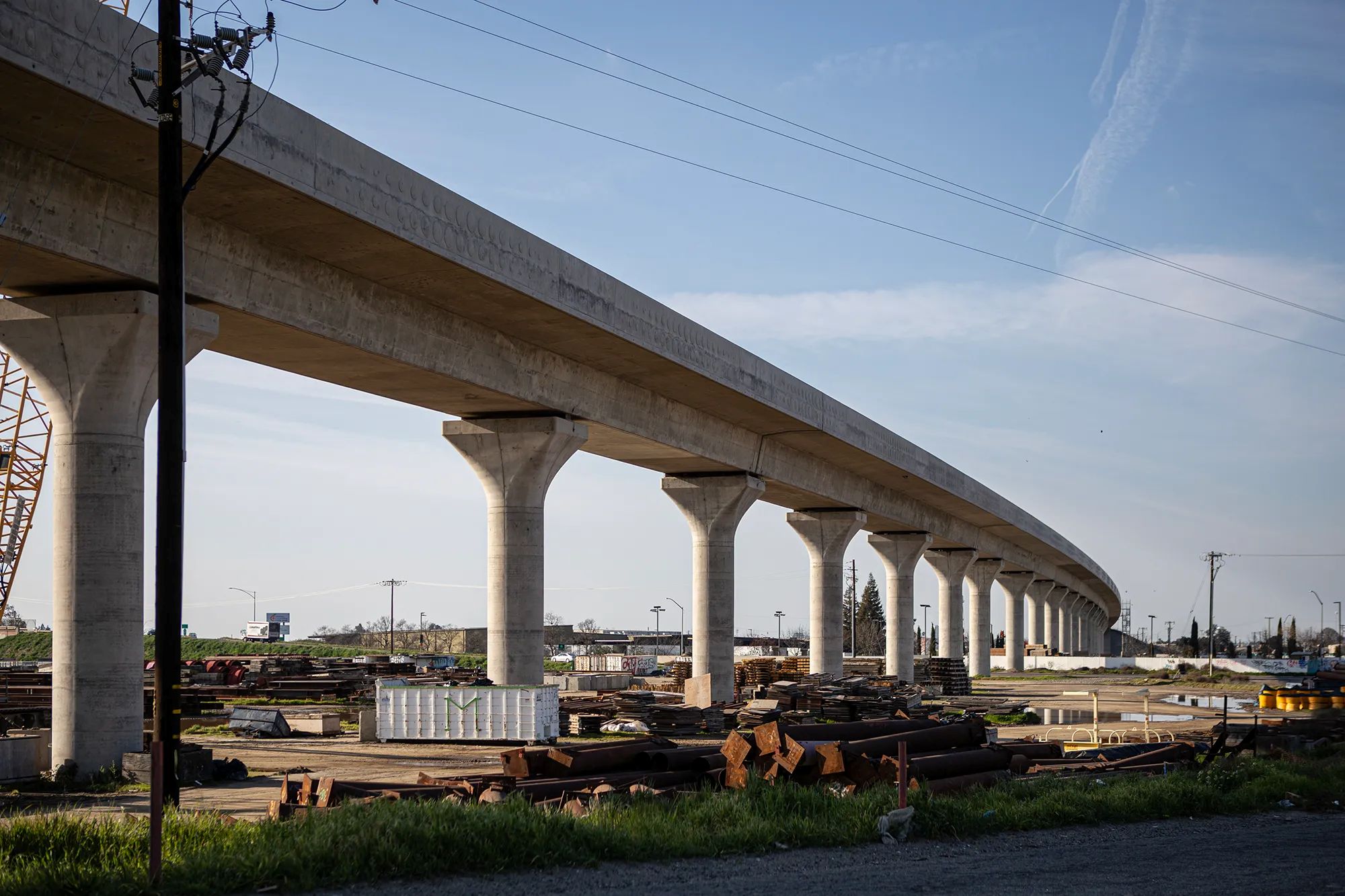
"caption": "Construction on the high-speed rail project above Highway 99 in south Fresno on March 3, 2023.",
"credit": "Larry Valenzuela/CalMatters via CatchLight Local",
"altTag": null,
"description": null,
"imgSizes": {
"thumbnail": {
"file": "https://cdn.kqed.org/wp-content/uploads/sites/10/2026/02/030623-High-Speed-Rail-LV_CM_04-160x107.jpg",
"width": 160,
"height": 107,
"mimeType": "image/jpeg"
},
"1536x1536": {
"file": "https://cdn.kqed.org/wp-content/uploads/sites/10/2026/02/030623-High-Speed-Rail-LV_CM_04-1536x1024.jpg",
"width": 1536,
"height": 1024,
"mimeType": "image/jpeg"
},
"post-thumbnail": {
"file": "https://cdn.kqed.org/wp-content/uploads/sites/10/2026/02/030623-High-Speed-Rail-LV_CM_04-672x372.jpg",
"width": 672,
"height": 372,
"mimeType": "image/jpeg"
},
"twentyfourteen-full-width": {
"file": "https://cdn.kqed.org/wp-content/uploads/sites/10/2026/02/030623-High-Speed-Rail-LV_CM_04-1038x576.jpg",
"width": 1038,
"height": 576,
"mimeType": "image/jpeg"
},
"npr-cds-wide": {
"file": "https://cdn.kqed.org/wp-content/uploads/sites/10/2026/02/030623-High-Speed-Rail-LV_CM_04-1200x675.jpg",
"width": 1200,
"height": 675,
"mimeType": "image/jpeg"
},
"kqedFullSize": {
"file": "https://cdn.kqed.org/wp-content/uploads/sites/10/2026/02/030623-High-Speed-Rail-LV_CM_04.jpg",
"width": 2000,
"height": 1333
}
},
"isLoading": false,
"fetchFailed": false
},
"news_12068926": {
"type": "attachments",
"id": "news_12068926",
"meta": {
"index": "attachments_1716263798",
"site": "news",
"id": "12068926",
"found": true
},
"title": "260107-Altadena Anniversary-003-JB",
"publishDate": 1767806826,
"status": "inherit",
"parent": 0,
"modified": 1769703418,
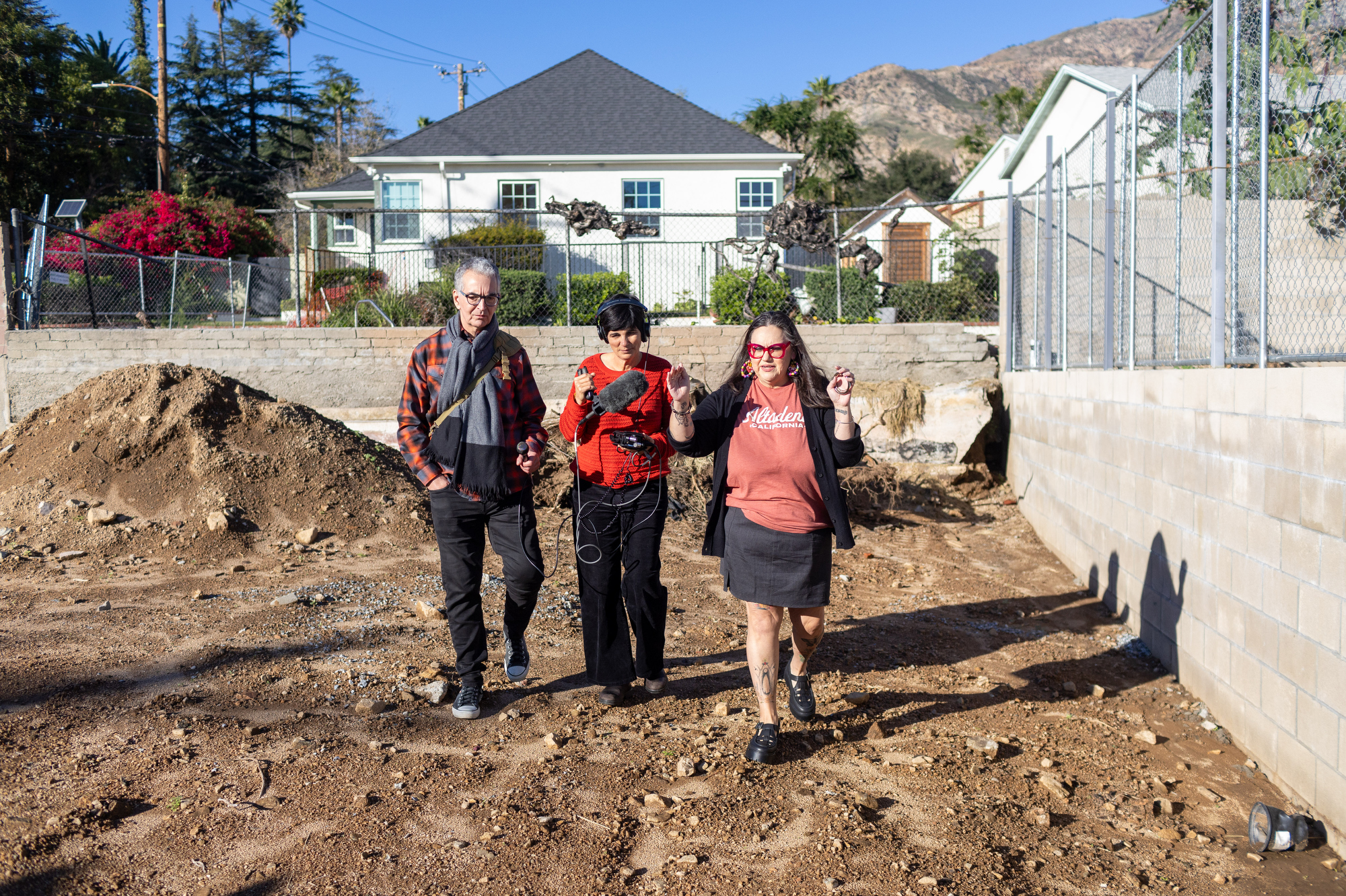
"caption": "Melissa Lopez showing reporter Steven Cuevas and California Report Magazine host Sasha Khokha the spot where her home once stood, photographed at her home in Altadena, California, on Dec. 28, 2025. ",
"credit": "James Bernal/KQED",
"altTag": null,
"description": null,
"imgSizes": {
"thumbnail": {
"file": "https://cdn.kqed.org/wp-content/uploads/sites/10/2026/01/260107-Altadena-Anniversary-003-JB-160x107.jpg",
"width": 160,
"height": 107,
"mimeType": "image/jpeg"
},
"1536x1536": {
"file": "https://cdn.kqed.org/wp-content/uploads/sites/10/2026/01/260107-Altadena-Anniversary-003-JB-1536x1023.jpg",
"width": 1536,
"height": 1023,
"mimeType": "image/jpeg"
},
"post-thumbnail": {
"file": "https://cdn.kqed.org/wp-content/uploads/sites/10/2026/01/260107-Altadena-Anniversary-003-JB-672x372.jpg",
"width": 672,
"height": 372,
"mimeType": "image/jpeg"
},
"twentyfourteen-full-width": {
"file": "https://cdn.kqed.org/wp-content/uploads/sites/10/2026/01/260107-Altadena-Anniversary-003-JB-1038x576.jpg",
"width": 1038,
"height": 576,
"mimeType": "image/jpeg"
},
"npr-cds-wide": {
"file": "https://cdn.kqed.org/wp-content/uploads/sites/10/2026/01/260107-Altadena-Anniversary-003-JB-1200x675.jpg",
"width": 1200,
"height": 675,
"mimeType": "image/jpeg"
},
"kqedFullSize": {
"file": "https://cdn.kqed.org/wp-content/uploads/sites/10/2026/01/260107-Altadena-Anniversary-003-JB.jpg",
"width": 2000,
"height": 1332
}
},
"isLoading": false,
"fetchFailed": false
},
"news_12070942": {
"type": "attachments",
"id": "news_12070942",
"meta": {
"index": "attachments_1716263798",
"site": "news",
"id": "12070942",
"found": true
},
"title": "GettyImages-2172084857-KQED",
"publishDate": 1769201605,
"status": "inherit",
"parent": 12070918,
"modified": 1769204710,
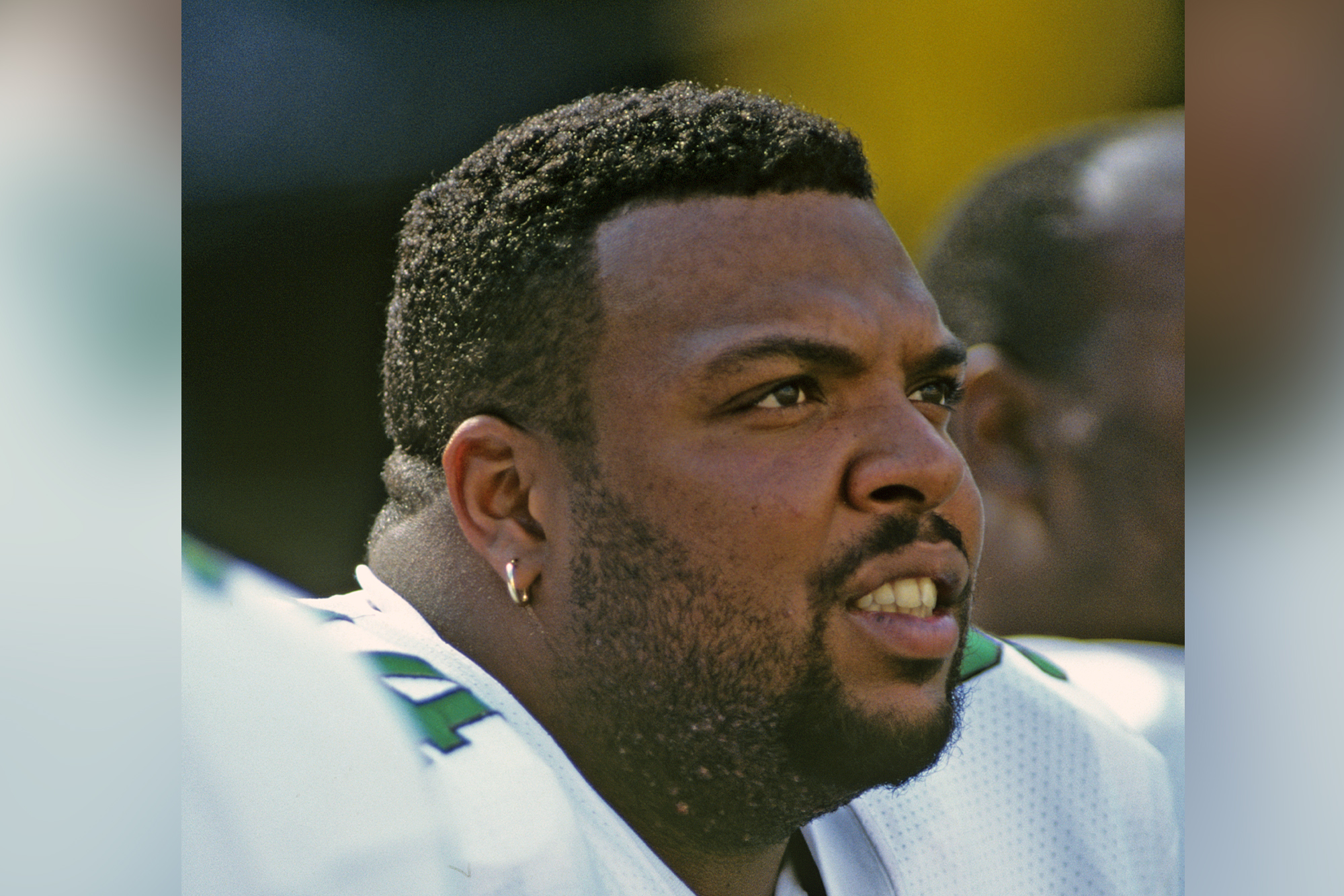
"caption": "Defensive lineman Kevin Johnson #94 of the Philadelphia Eagles looks on from the sideline during a game against the Washington Redskins at Veterans Stadium on Oct. 8, 1995, in Philadelphia, Pennsylvania. Johnson would go on to play for the Raiders in Oakland. ",
"credit": "George Gojkovich/Getty Images",
"altTag": null,
"description": null,
"imgSizes": {
"thumbnail": {
"file": "https://cdn.kqed.org/wp-content/uploads/sites/10/2026/01/GettyImages-2172084857-KQED-160x107.jpg",
"width": 160,
"height": 107,
"mimeType": "image/jpeg"
},
"1536x1536": {
"file": "https://cdn.kqed.org/wp-content/uploads/sites/10/2026/01/GettyImages-2172084857-KQED-1536x1025.jpg",
"width": 1536,
"height": 1025,
"mimeType": "image/jpeg"
},
"post-thumbnail": {
"file": "https://cdn.kqed.org/wp-content/uploads/sites/10/2026/01/GettyImages-2172084857-KQED-672x372.jpg",
"width": 672,
"height": 372,
"mimeType": "image/jpeg"
},
"twentyfourteen-full-width": {
"file": "https://cdn.kqed.org/wp-content/uploads/sites/10/2026/01/GettyImages-2172084857-KQED-1038x576.jpg",
"width": 1038,
"height": 576,
"mimeType": "image/jpeg"
},
"npr-cds-wide": {
"file": "https://cdn.kqed.org/wp-content/uploads/sites/10/2026/01/GettyImages-2172084857-KQED-1200x675.jpg",
"width": 1200,
"height": 675,
"mimeType": "image/jpeg"
},
"kqedFullSize": {
"file": "https://cdn.kqed.org/wp-content/uploads/sites/10/2026/01/GettyImages-2172084857-KQED.jpg",
"width": 2000,
"height": 1334
}
},
"isLoading": false,
"fetchFailed": false
},
"news_12068254": {
"type": "attachments",
"id": "news_12068254",
"meta": {
"index": "attachments_1716263798",
"site": "news",
"id": "12068254",
"found": true
},
"title": "IMG_3022",
"publishDate": 1766435739,
"status": "inherit",
"parent": 12068252,
"modified": 1766435772,
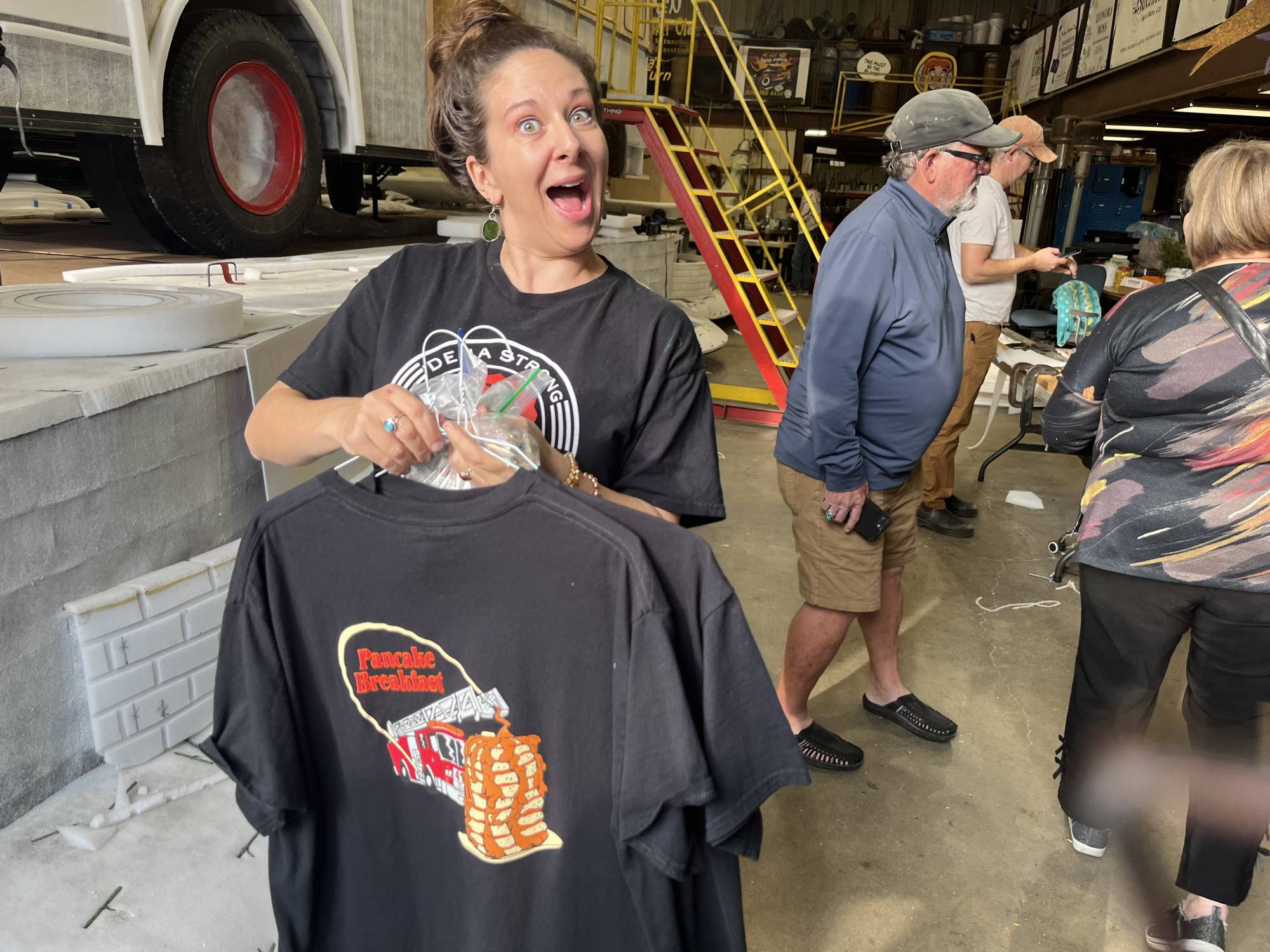
"caption": "Hanna Jungbauer, who runs social media for Sierra Madre's Rose Parade float, says the pancake breakfast theme \"is a nod and homage to the brave people that helped put out those fires\" and walks a fine line \"between whimsy and respectful.\"",
"credit": "Steven Cuevas/KQED",
"altTag": null,
"description": null,
"imgSizes": {
"medium": {
"file": "https://cdn.kqed.org/wp-content/uploads/sites/10/2025/12/IMG_3022-2000x1500.jpg",
"width": 2000,
"height": 1500,
"mimeType": "image/jpeg"
},
"large": {
"file": "https://cdn.kqed.org/wp-content/uploads/sites/10/2025/12/IMG_3022-2000x1500.jpg",
"width": 2000,
"height": 1500,
"mimeType": "image/jpeg"
},
"thumbnail": {
"file": "https://cdn.kqed.org/wp-content/uploads/sites/10/2025/12/IMG_3022-160x120.jpg",
"width": 160,
"height": 120,
"mimeType": "image/jpeg"
},
"1536x1536": {
"file": "https://cdn.kqed.org/wp-content/uploads/sites/10/2025/12/IMG_3022-1536x1152.jpg",
"width": 1536,
"height": 1152,
"mimeType": "image/jpeg"
},
"2048x2048": {
"file": "https://cdn.kqed.org/wp-content/uploads/sites/10/2025/12/IMG_3022-2048x1536.jpg",
"width": 2048,
"height": 1536,
"mimeType": "image/jpeg"
},
"post-thumbnail": {
"file": "https://cdn.kqed.org/wp-content/uploads/sites/10/2025/12/IMG_3022-672x372.jpg",
"width": 672,
"height": 372,
"mimeType": "image/jpeg"
},
"twentyfourteen-full-width": {
"file": "https://cdn.kqed.org/wp-content/uploads/sites/10/2025/12/IMG_3022-1038x576.jpg",
"width": 1038,
"height": 576,
"mimeType": "image/jpeg"
},
"full-width": {
"file": "https://cdn.kqed.org/wp-content/uploads/sites/10/2025/12/IMG_3022-2000x1500.jpg",
"width": 2000,
"height": 1500,
"mimeType": "image/jpeg"
},
"npr-cds-wide": {
"file": "https://cdn.kqed.org/wp-content/uploads/sites/10/2025/12/IMG_3022-1200x675.jpg",
"width": 1200,
"height": 675,
"mimeType": "image/jpeg"
},
"kqedFullSize": {
"file": "https://cdn.kqed.org/wp-content/uploads/sites/10/2025/12/IMG_3022-scaled-e1766435781342.jpg",
"width": 2000,
"height": 1500
}
},
"isLoading": false,
"fetchFailed": false
},
"news_12066613": {
"type": "attachments",
"id": "news_12066613",
"meta": {
"index": "attachments_1716263798",
"site": "news",
"id": "12066613",
"found": true
},
"title": "SENIOR CENTERS SAN FRANCISCO IMMIGRANTS",
"publishDate": 1765389181,
"status": "inherit",
"parent": 0,
"modified": 1765389469,
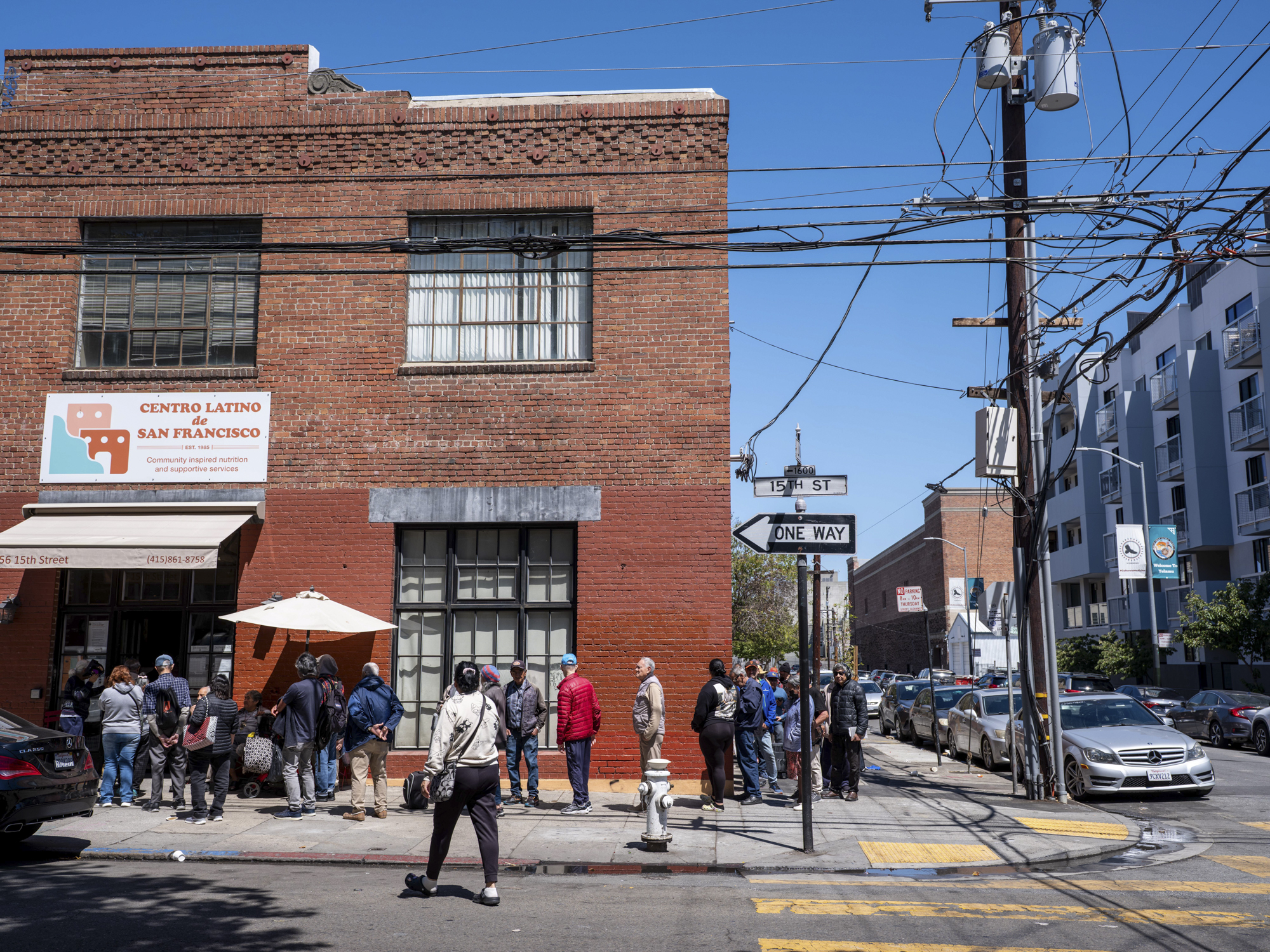
"caption": "People line up outside the Centro Latino de San Francisco, a civic center serving seniors and those with disabilities, to receive the free lunch that they offer in San Francisco on Aug. 14, 2025.",
"credit": "Courtesy of Matthew Busch/The Investigative Reporting Program",
"altTag": null,
"description": null,
"imgSizes": {
"thumbnail": {
"file": "https://cdn.kqed.org/wp-content/uploads/sites/10/2025/12/251210-Aging-Immigrants-ICE-MD-01-KQED-160x120.jpg",
"width": 160,
"height": 120,
"mimeType": "image/jpeg"
},
"1536x1536": {
"file": "https://cdn.kqed.org/wp-content/uploads/sites/10/2025/12/251210-Aging-Immigrants-ICE-MD-01-KQED-1536x1152.jpg",
"width": 1536,
"height": 1152,
"mimeType": "image/jpeg"
},
"post-thumbnail": {
"file": "https://cdn.kqed.org/wp-content/uploads/sites/10/2025/12/251210-Aging-Immigrants-ICE-MD-01-KQED-672x372.jpg",
"width": 672,
"height": 372,
"mimeType": "image/jpeg"
},
"twentyfourteen-full-width": {
"file": "https://cdn.kqed.org/wp-content/uploads/sites/10/2025/12/251210-Aging-Immigrants-ICE-MD-01-KQED-1038x576.jpg",
"width": 1038,
"height": 576,
"mimeType": "image/jpeg"
},
"npr-cds-wide": {
"file": "https://cdn.kqed.org/wp-content/uploads/sites/10/2025/12/251210-Aging-Immigrants-ICE-MD-01-KQED-1200x675.jpg",
"width": 1200,
"height": 675,
"mimeType": "image/jpeg"
},
"kqedFullSize": {
"file": "https://cdn.kqed.org/wp-content/uploads/sites/10/2025/12/251210-Aging-Immigrants-ICE-MD-01-KQED.jpg",
"width": 2000,
"height": 1500
}
},
"isLoading": false,
"fetchFailed": false
},
"news_12066641": {
"type": "attachments",
"id": "news_12066641",
"meta": {
"index": "attachments_1716263798",
"site": "news",
"id": "12066641",
"found": true
},
"title": "Federal Enforcement-Los Angeles",
"publishDate": 1765393573,
"status": "inherit",
"parent": 12066625,
"modified": 1765393613,
"caption": "Members of the California National Guard and U.S. Marines guard a federal building on June 17, 2025, in Los Angeles. ",
"credit": "Damian Dovarganes/AP Photo",
"altTag": null,
"description": null,
"imgSizes": {
"thumbnail": {
"file": "https://cdn.kqed.org/wp-content/uploads/sites/10/2025/12/CaliforniaNationalGuardAP-160x107.jpg",
"width": 160,
"height": 107,
"mimeType": "image/jpeg"
},
"1536x1536": {
"file": "https://cdn.kqed.org/wp-content/uploads/sites/10/2025/12/CaliforniaNationalGuardAP-1536x1027.jpg",
"width": 1536,
"height": 1027,
"mimeType": "image/jpeg"
},
"post-thumbnail": {
"file": "https://cdn.kqed.org/wp-content/uploads/sites/10/2025/12/CaliforniaNationalGuardAP-672x372.jpg",
"width": 672,
"height": 372,
"mimeType": "image/jpeg"
},
"twentyfourteen-full-width": {
"file": "https://cdn.kqed.org/wp-content/uploads/sites/10/2025/12/CaliforniaNationalGuardAP-1038x576.jpg",
"width": 1038,
"height": 576,
"mimeType": "image/jpeg"
},
"npr-cds-wide": {
"file": "https://cdn.kqed.org/wp-content/uploads/sites/10/2025/12/CaliforniaNationalGuardAP-1200x675.jpg",
"width": 1200,
"height": 675,
"mimeType": "image/jpeg"
},
"kqedFullSize": {
"file": "https://cdn.kqed.org/wp-content/uploads/sites/10/2025/12/CaliforniaNationalGuardAP.jpg",
"width": 2000,
"height": 1337
}
},
"isLoading": false,
"fetchFailed": false
},
"news_12044826": {
"type": "attachments",
"id": "news_12044826",
"meta": {
"index": "attachments_1716263798",
"site": "news",
"id": "12044826",
"found": true
},
"title": "Protests Erupt In L.A. County Sparked By Federal Immigration Raids",
"publishDate": 1750202502,
"status": "inherit",
"parent": 12044637,
"modified": 1757026443,
"caption": "A police officer holds a less lethal rifle as protesters confront California National Guard soldiers and police outside of a federal building, as protests continue in Los Angeles following 3 days of clashes with police after a series of immigration raids on June 9, 2025. ",
"credit": "David McNew/Getty Images",
"altTag": null,
"description": null,
"imgSizes": {
"medium": {
"file": "https://cdn.kqed.org/wp-content/uploads/sites/10/2025/06/GettyImages-2219434485-2000x1333.jpg",
"width": 2000,
"height": 1333,
"mimeType": "image/jpeg"
},
"large": {
"file": "https://cdn.kqed.org/wp-content/uploads/sites/10/2025/06/GettyImages-2219434485-2000x1333.jpg",
"width": 2000,
"height": 1333,
"mimeType": "image/jpeg"
},
"thumbnail": {
"file": "https://cdn.kqed.org/wp-content/uploads/sites/10/2025/06/GettyImages-2219434485-160x107.jpg",
"width": 160,
"height": 107,
"mimeType": "image/jpeg"
},
"1536x1536": {
"file": "https://cdn.kqed.org/wp-content/uploads/sites/10/2025/06/GettyImages-2219434485-1536x1024.jpg",
"width": 1536,
"height": 1024,
"mimeType": "image/jpeg"
},
"2048x2048": {
"file": "https://cdn.kqed.org/wp-content/uploads/sites/10/2025/06/GettyImages-2219434485-2048x1365.jpg",
"width": 2048,
"height": 1365,
"mimeType": "image/jpeg"
},
"post-thumbnail": {
"file": "https://cdn.kqed.org/wp-content/uploads/sites/10/2025/06/GettyImages-2219434485-672x372.jpg",
"width": 672,
"height": 372,
"mimeType": "image/jpeg"
},
"twentyfourteen-full-width": {
"file": "https://cdn.kqed.org/wp-content/uploads/sites/10/2025/06/GettyImages-2219434485-1038x576.jpg",
"width": 1038,
"height": 576,
"mimeType": "image/jpeg"
},
"full-width": {
"file": "https://cdn.kqed.org/wp-content/uploads/sites/10/2025/06/GettyImages-2219434485-2000x1333.jpg",
"width": 2000,
"height": 1333,
"mimeType": "image/jpeg"
},
"kqedFullSize": {
"file": "https://cdn.kqed.org/wp-content/uploads/sites/10/2025/06/GettyImages-2219434485-scaled-e1753393070287.jpg",
"width": 2000,
"height": 1334
}
},
"isLoading": false,
"fetchFailed": false
},
"news_12061731": {
"type": "attachments",
"id": "news_12061731",
"meta": {
"index": "attachments_1716263798",
"site": "news",
"id": "12061731",
"found": true
},
"title": "20251026_FAMILYMEMBERSARRESTED_HERNANDEZ-1-KQED",
"publishDate": 1761599050,
"status": "inherit",
"parent": 0,
"modified": 1761674035,
"caption": "Jennifer Alejo leads a workers’ rights organization in Oakland on Oct. 27, 2025. Alejo and her sister Citlali helped organize their family after ICE arrested 14 relatives during a June worksite raid in Los Angeles.",
"credit": "Gustavo Hernandez/KQED",
"altTag": null,
"description": null,
"imgSizes": {
"thumbnail": {
"file": "https://cdn.kqed.org/wp-content/uploads/sites/10/2025/10/20251026_FAMILYMEMBERSARRESTED_HERNANDEZ-1-KQED-160x107.jpg",
"width": 160,
"height": 107,
"mimeType": "image/jpeg"
},
"1536x1536": {
"file": "https://cdn.kqed.org/wp-content/uploads/sites/10/2025/10/20251026_FAMILYMEMBERSARRESTED_HERNANDEZ-1-KQED-1536x1024.jpg",
"width": 1536,
"height": 1024,
"mimeType": "image/jpeg"
},
"post-thumbnail": {
"file": "https://cdn.kqed.org/wp-content/uploads/sites/10/2025/10/20251026_FAMILYMEMBERSARRESTED_HERNANDEZ-1-KQED-672x372.jpg",
"width": 672,
"height": 372,
"mimeType": "image/jpeg"
},
"twentyfourteen-full-width": {
"file": "https://cdn.kqed.org/wp-content/uploads/sites/10/2025/10/20251026_FAMILYMEMBERSARRESTED_HERNANDEZ-1-KQED-1038x576.jpg",
"width": 1038,
"height": 576,
"mimeType": "image/jpeg"
},
"npr-cds-wide": {
"file": "https://cdn.kqed.org/wp-content/uploads/sites/10/2025/10/20251026_FAMILYMEMBERSARRESTED_HERNANDEZ-1-KQED-1600x900.jpg",
"width": 1600,
"height": 900,
"mimeType": "image/jpeg"
},
"kqedFullSize": {
"file": "https://cdn.kqed.org/wp-content/uploads/sites/10/2025/10/20251026_FAMILYMEMBERSARRESTED_HERNANDEZ-1-KQED.jpg",
"width": 2000,
"height": 1333
}
},
"isLoading": false,
"fetchFailed": false
},
"news_12053555": {
"type": "attachments",
"id": "news_12053555",
"meta": {
"index": "attachments_1716263798",
"site": "news",
"id": "12053555",
"found": true
},
"title": "WildfiresAPM1",
"publishDate": 1756143110,
"status": "inherit",
"parent": 12053436,
"modified": 1756143229,
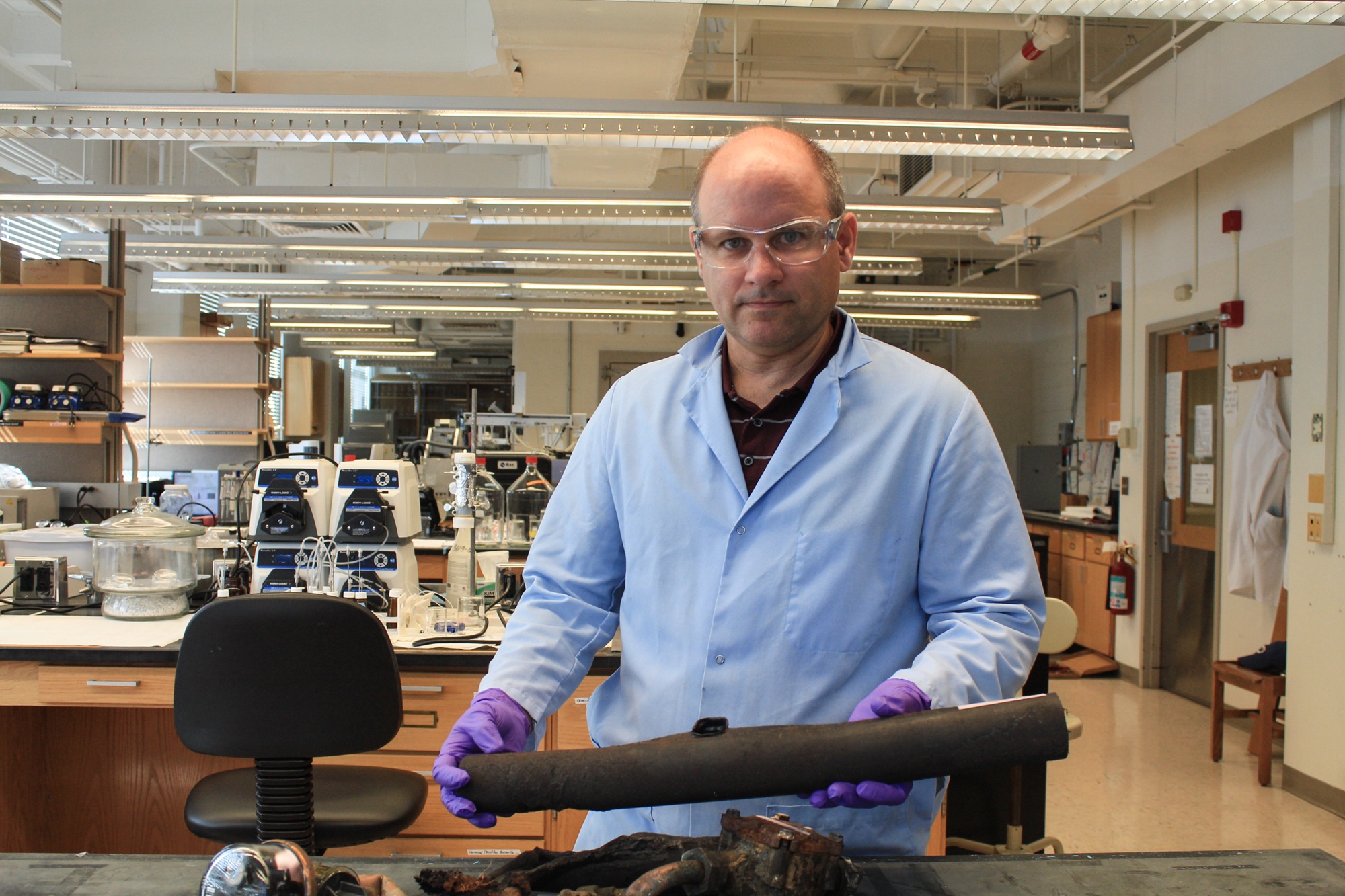
"caption": "Engineering professor Andrew Whelton in his lab on the campus of Purdue University. ",
"credit": "Benjamin Thorp/APM Reports",
"altTag": null,
"description": null,
"imgSizes": {
"thumbnail": {
"file": "https://cdn.kqed.org/wp-content/uploads/sites/10/2025/08/WildfiresAPM1-160x107.jpg",
"width": 160,
"height": 107,
"mimeType": "image/jpeg"
},
"1536x1536": {
"file": "https://cdn.kqed.org/wp-content/uploads/sites/10/2025/08/WildfiresAPM1-1536x1024.jpg",
"width": 1536,
"height": 1024,
"mimeType": "image/jpeg"
},
"post-thumbnail": {
"file": "https://cdn.kqed.org/wp-content/uploads/sites/10/2025/08/WildfiresAPM1-672x372.jpg",
"width": 672,
"height": 372,
"mimeType": "image/jpeg"
},
"twentyfourteen-full-width": {
"file": "https://cdn.kqed.org/wp-content/uploads/sites/10/2025/08/WildfiresAPM1-1038x576.jpg",
"width": 1038,
"height": 576,
"mimeType": "image/jpeg"
},
"kqedFullSize": {
"file": "https://cdn.kqed.org/wp-content/uploads/sites/10/2025/08/WildfiresAPM1.jpg",
"width": 2000,
"height": 1333
}
},
"isLoading": false,
"fetchFailed": false
},
"news_12051970": {
"type": "attachments",
"id": "news_12051970",
"meta": {
"index": "attachments_1716263798",
"site": "news",
"id": "12051970",
"found": true
},
"title": "Immigration California Lawsuit",
"publishDate": 1755042034,
"status": "inherit",
"parent": 12051954,
"modified": 1761004716,
"caption": "Federal agents stage at MacArthur Park on July 7, 2025, in Los Angeles, California. ",
"credit": "Damian Dovarganes/AP Photo",
"altTag": null,
"description": null,
"imgSizes": {
"thumbnail": {
"file": "https://cdn.kqed.org/wp-content/uploads/sites/10/2025/08/NationalGuardTrumpAP-160x107.jpg",
"width": 160,
"height": 107,
"mimeType": "image/jpeg"
},
"1536x1536": {
"file": "https://cdn.kqed.org/wp-content/uploads/sites/10/2025/08/NationalGuardTrumpAP-1536x1027.jpg",
"width": 1536,
"height": 1027,
"mimeType": "image/jpeg"
},
"post-thumbnail": {
"file": "https://cdn.kqed.org/wp-content/uploads/sites/10/2025/08/NationalGuardTrumpAP-672x372.jpg",
"width": 672,
"height": 372,
"mimeType": "image/jpeg"
},
"twentyfourteen-full-width": {
"file": "https://cdn.kqed.org/wp-content/uploads/sites/10/2025/08/NationalGuardTrumpAP-1038x576.jpg",
"width": 1038,
"height": 576,
"mimeType": "image/jpeg"
},
"kqedFullSize": {
"file": "https://cdn.kqed.org/wp-content/uploads/sites/10/2025/08/NationalGuardTrumpAP.jpg",
"width": 2000,
"height": 1337
}
},
"isLoading": false,
"fetchFailed": false
},
"news_12051683": {
"type": "attachments",
"id": "news_12051683",
"meta": {
"index": "attachments_1716263798",
"site": "news",
"id": "12051683",
"found": true
},
"title": "medicaid-cuts-6899e99b95904",
"publishDate": 1754917318,
"status": "inherit",
"parent": 12051681,
"modified": 1754917376,
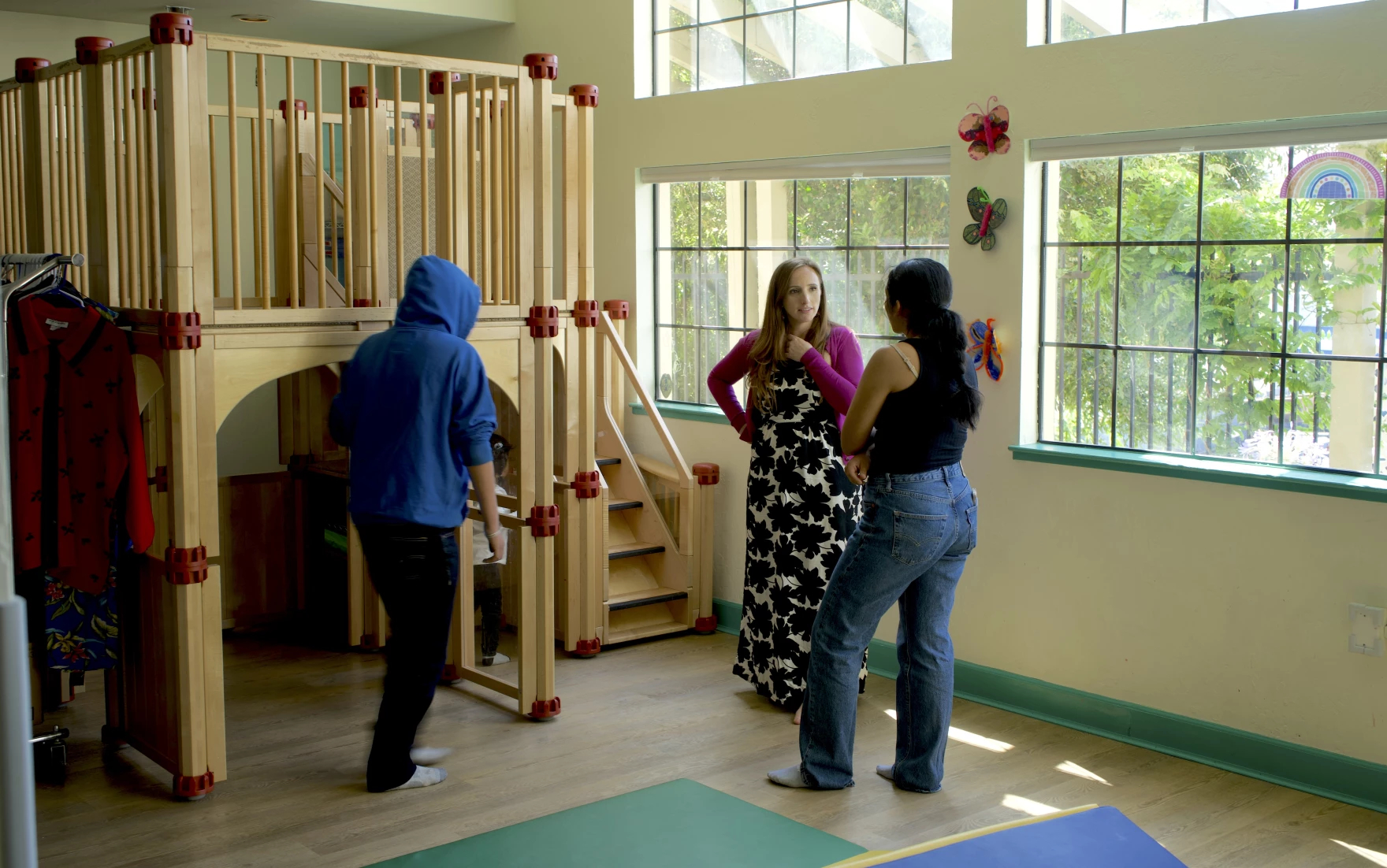
"caption": "Raíces y Cariño, a community center in Watsonville, offers supportive services for families, including recreational activities and support for new parents. Founder Nora Yerena (center) worries that cuts to Medi-Cal could affect their services.",
"credit": "Ngozi Cole/KAZU",
"altTag": null,
"description": null,
"imgSizes": {
"thumbnail": {
"file": "https://cdn.kqed.org/wp-content/uploads/sites/10/2025/08/medicaid-cuts-6899e99b95904-160x100.jpg",
"width": 160,
"height": 100,
"mimeType": "image/jpeg"
},
"1536x1536": {
"file": "https://cdn.kqed.org/wp-content/uploads/sites/10/2025/08/medicaid-cuts-6899e99b95904-1536x962.jpg",
"width": 1536,
"height": 962,
"mimeType": "image/jpeg"
},
"post-thumbnail": {
"file": "https://cdn.kqed.org/wp-content/uploads/sites/10/2025/08/medicaid-cuts-6899e99b95904-672x372.jpg",
"width": 672,
"height": 372,
"mimeType": "image/jpeg"
},
"twentyfourteen-full-width": {
"file": "https://cdn.kqed.org/wp-content/uploads/sites/10/2025/08/medicaid-cuts-6899e99b95904-1038x576.jpg",
"width": 1038,
"height": 576,
"mimeType": "image/jpeg"
},
"kqedFullSize": {
"file": "https://cdn.kqed.org/wp-content/uploads/sites/10/2025/08/medicaid-cuts-6899e99b95904.jpg",
"width": 1760,
"height": 1102
}
},
"isLoading": false,
"fetchFailed": false
}
},
"audioPlayerReducer": {
"postId": "stream_live",
"isPaused": true,
"isPlaying": false,
"pfsActive": false,
"pledgeModalIsOpen": true,
"playerDrawerIsOpen": false,
"liveAudioPlayStartedAt": 0,
"liveAudioPlayContext": ""
},
"authorsReducer": {
"byline_news_12072100": {
"type": "authors",
"id": "byline_news_12072100",
"meta": {
"override": true
},
"slug": "byline_news_12072100",
"name": "Yue Stella Yu, CalMatters",
"isLoading": false
},
"byline_news_12068004": {
"type": "authors",
"id": "byline_news_12068004",
"meta": {
"override": true
},
"slug": "byline_news_12068004",
"name": "Hussain Khan ",
"isLoading": false
},
"byline_news_12053436": {
"type": "authors",
"id": "byline_news_12053436",
"meta": {
"override": true
},
"slug": "byline_news_12053436",
"name": "Jennifer Lu, APM Reports",
"isLoading": false
},
"scuevas": {
"type": "authors",
"id": "2600",
"meta": {
"index": "authors_1716337520",
"id": "2600",
"found": true
},
"name": "Steven Cuevas",
"firstName": "Steven",
"lastName": "Cuevas",
"slug": "scuevas",
"email": "scuevas@kqed.org",
"display_author_email": false,
"staff_mastheads": [],
"title": "KQED Contributor",
"bio": "Steven is a former Los Angeles bureau chief for The California Report.\r\n\r\nHe reports on an array of issues across the Southland, from immigration and regional politics to religion, the performing arts and pop culture.\r\n\r\nPrior to joining KQED in 2012, Steven covered Inland southern California for KPCC in Pasadena. He also helped establish the first newsroom at \u003ca href=\"http://kut.org/\">KUT\u003c/a> in Austin, Texas where he was a general assignment reporter.\r\n\r\nSteven has received numerous awards for his reporting including an RTNDA Edward R. Murrow Award for investigative reporting in addition to awards from the LA Press Club, the Associated Press and the Society for Professional Journalists.\r\n\r\nSteven grew up in and around San Francisco and now lives in Pasadena just a short jog from the foot of the San Gabriel Mountains.",
"avatar": "https://secure.gravatar.com/avatar/2d253580794f8e026100fae05cfabbbd4889b4fe15146146cacb82a01974c538?s=600&d=blank&r=g",
"twitter": null,
"bluesky": null,
"facebook": null,
"instagram": null,
"linkedin": null,
"sites": [
{
"site": "news",
"roles": [
"subscriber"
]
}
],
"headData": {
"title": "Steven Cuevas | KQED",
"description": "KQED Contributor",
"ogImgSrc": "https://secure.gravatar.com/avatar/2d253580794f8e026100fae05cfabbbd4889b4fe15146146cacb82a01974c538?s=600&d=blank&r=g",
"twImgSrc": "https://secure.gravatar.com/avatar/2d253580794f8e026100fae05cfabbbd4889b4fe15146146cacb82a01974c538?s=600&d=blank&r=g"
},
"isLoading": false,
"link": "/author/scuevas"
},
"mlagos": {
"type": "authors",
"id": "3239",
"meta": {
"index": "authors_1716337520",
"id": "3239",
"found": true
},
"name": "Marisa Lagos",
"firstName": "Marisa",
"lastName": "Lagos",
"slug": "mlagos",
"email": "mlagos@kqed.org",
"display_author_email": false,
"staff_mastheads": [
"news"
],
"title": "KQED Contributor",
"bio": "Marisa Lagos is a correspondent for KQED’s California Politics and Government Desk and co-hosts the award-winning show and podcast, Political Breakdown. At KQED, Lagos also conducts reporting, analysis and investigations into state, local and national politics for radio, TV, online and onstage. In 2022, she and co-host, Scott Shafer, moderated the only gubernatorial debate in California. In 2020, the \u003ci>Washington Post\u003c/i> named her one of the top political journalists in California; she was nominated for a Peabody and won several other awards for her work investigating the 2017 California wildfires. She has worked at the \u003ci>San Francisco Chronicle\u003c/i>, \u003ci>San Francisco Examiner\u003c/i> and \u003ci>Los Angeles Times\u003c/i>. A UC Santa Barbara graduate, she lives in San Francisco with her two sons and husband.",
"avatar": "https://secure.gravatar.com/avatar/a261a0d3696fc066871ef96b85b5e7d2?s=600&d=blank&r=g",
"twitter": "@mlagos",
"facebook": null,
"instagram": null,
"linkedin": null,
"sites": [
{
"site": "arts",
"roles": [
"author"
]
},
{
"site": "news",
"roles": [
"editor"
]
},
{
"site": "science",
"roles": [
"editor"
]
},
{
"site": "forum",
"roles": [
"author"
]
},
{
"site": "liveblog",
"roles": [
"author"
]
}
],
"headData": {
"title": "Marisa Lagos | KQED",
"description": "KQED Contributor",
"ogImgSrc": "https://secure.gravatar.com/avatar/a261a0d3696fc066871ef96b85b5e7d2?s=600&d=blank&r=g",
"twImgSrc": "https://secure.gravatar.com/avatar/a261a0d3696fc066871ef96b85b5e7d2?s=600&d=blank&r=g"
},
"isLoading": false,
"link": "/author/mlagos"
},
"jsmall": {
"type": "authors",
"id": "6625",
"meta": {
"index": "authors_1716337520",
"id": "6625",
"found": true
},
"name": "Julie Small",
"firstName": "Julie",
"lastName": "Small",
"slug": "jsmall",
"email": "jsmall@kqed.org",
"display_author_email": true,
"staff_mastheads": [
"news"
],
"title": "KQED Contributor",
"bio": "Julie Small reports on criminal justice and immigration.\r\n\r\nShe was part of a team at KQED awarded a regional 2019 Edward R. Murrow award for continuing coverage of the Trump Administration's family separation policy.\r\n\r\nThe Society for Professional Journalists recognized Julie's 2018 \u003ca href=\"https://www.kqed.org/news/11636262/the-officer-tased-him-31-times-the-sheriff-called-his-death-an-accident\">reporting\u003c/a> on the San Joaquin County Sheriff's \u003ca href=\"https://www.kqed.org/news/11634689/autopsy-doctors-sheriff-overrode-death-findings-to-protect-law-enforcement\">interference\u003c/a> in death investigations with an Excellence in Journalism Award for Ongoing Coverage.\r\n\r\nJulie's\u003ca href=\"https://www.kqed.org/news/11039666/two-mentally-ill-inmates-died-one-month-in-santa-clara\"> reporting\u003c/a> with Lisa Pickoff-White on the treatment of mentally ill offenders in California jails earned a 2017 regional Edward R. Murrow Award for news reporting and an investigative reporting award from the SPJ of Northern California.\r\n\r\nBefore joining KQED, Julie covered government and politics in Sacramento for Southern California Public Radio (SCPR). Her 2010 \u003ca href=\"https://www.scpr.org/specials/prisonmedical/\">series\u003c/a> on lapses in California’s prison medical care also won a regional Edward R. Murrow Award for investigative reporting and a Golden Mic Award from the RTNDA of Southern California.\r\n\r\nJulie began her career in journalism in 2000 as the deputy foreign editor for public radio's \u003cem>Marketplace, \u003c/em>while earning her master's degree in journalism from USC’s Annenberg School of Communication.",
"avatar": "https://secure.gravatar.com/avatar/4baedf201468df97be97c2a9dd7585d0?s=600&d=blank&r=g",
"twitter": "@SmallRadio2",
"facebook": null,
"instagram": null,
"linkedin": null,
"sites": [
{
"site": "news",
"roles": [
"editor"
]
},
{
"site": "stateofhealth",
"roles": [
"author"
]
},
{
"site": "science",
"roles": [
"author"
]
}
],
"headData": {
"title": "Julie Small | KQED",
"description": "KQED Contributor",
"ogImgSrc": "https://secure.gravatar.com/avatar/4baedf201468df97be97c2a9dd7585d0?s=600&d=blank&r=g",
"twImgSrc": "https://secure.gravatar.com/avatar/4baedf201468df97be97c2a9dd7585d0?s=600&d=blank&r=g"
},
"isLoading": false,
"link": "/author/jsmall"
},
"fjhabvala": {
"type": "authors",
"id": "8659",
"meta": {
"index": "authors_1716337520",
"id": "8659",
"found": true
},
"name": "Farida Jhabvala Romero",
"firstName": "Farida",
"lastName": "Jhabvala Romero",
"slug": "fjhabvala",
"email": "fjhabvala@kqed.org",
"display_author_email": true,
"staff_mastheads": [
"news"
],
"title": "KQED Contributor",
"bio": "Farida Jhabvala Romero is a Labor Correspondent for KQED. She previously covered immigration. Farida was \u003ca href=\"https://www.ccnma.org/2022-most-influential-latina-journalists\">named\u003c/a> one of the 10 Most Influential Latina Journalists in California in 2022 by the California Chicano News Media Association. Her work has won awards from the Society of Professional Journalists (Northern California), as well as a national and regional Edward M. Murrow Award for the collaborative reporting projects “Dangerous Air” and “Graying California.” Before joining KQED, Farida worked as a producer at Radio Bilingüe, a national public radio network. Farida earned her master’s degree in journalism from Stanford University.",
"avatar": "https://secure.gravatar.com/avatar/f9f022d4e2609741874222a1e9d41f48fea74011aa7c615eef91d9a50c944ebe?s=600&d=blank&r=g",
"twitter": "FaridaJhabvala",
"bluesky": null,
"facebook": null,
"instagram": null,
"linkedin": "https://www.linkedin.com/in/faridajhabvala/",
"sites": [
{
"site": "news",
"roles": [
"editor"
]
},
{
"site": "stateofhealth",
"roles": [
"author"
]
},
{
"site": "liveblog",
"roles": [
"author"
]
}
],
"headData": {
"title": "Farida Jhabvala Romero | KQED",
"description": "KQED Contributor",
"ogImgSrc": "https://secure.gravatar.com/avatar/f9f022d4e2609741874222a1e9d41f48fea74011aa7c615eef91d9a50c944ebe?s=600&d=blank&r=g",
"twImgSrc": "https://secure.gravatar.com/avatar/f9f022d4e2609741874222a1e9d41f48fea74011aa7c615eef91d9a50c944ebe?s=600&d=blank&r=g"
},
"isLoading": false,
"link": "/author/fjhabvala"
},
"kmizuguchi": {
"type": "authors",
"id": "11739",
"meta": {
"index": "authors_1716337520",
"id": "11739",
"found": true
},
"name": "Keith Mizuguchi",
"firstName": "Keith",
"lastName": "Mizuguchi",
"slug": "kmizuguchi",
"email": "kmizuguchi@kqed.org",
"display_author_email": false,
"staff_mastheads": [],
"title": "KQED Contributor",
"bio": null,
"avatar": "https://secure.gravatar.com/avatar/64d8a7de0723d4099b9fe4e915136103febcc20809abce228ee4415bcb237023?s=600&d=blank&r=g",
"twitter": null,
"bluesky": null,
"facebook": null,
"instagram": null,
"linkedin": null,
"sites": [
{
"site": "news",
"roles": [
"editor"
]
},
{
"site": "science",
"roles": [
"editor"
]
}
],
"headData": {
"title": "Keith Mizuguchi | KQED",
"description": "KQED Contributor",
"ogImgSrc": "https://secure.gravatar.com/avatar/64d8a7de0723d4099b9fe4e915136103febcc20809abce228ee4415bcb237023?s=600&d=blank&r=g",
"twImgSrc": "https://secure.gravatar.com/avatar/64d8a7de0723d4099b9fe4e915136103febcc20809abce228ee4415bcb237023?s=600&d=blank&r=g"
},
"isLoading": false,
"link": "/author/kmizuguchi"
},
"sjohnson": {
"type": "authors",
"id": "11840",
"meta": {
"index": "authors_1716337520",
"id": "11840",
"found": true
},
"name": "Sydney Johnson",
"firstName": "Sydney",
"lastName": "Johnson",
"slug": "sjohnson",
"email": "sjohnson@kqed.org",
"display_author_email": false,
"staff_mastheads": [
"news"
],
"title": "KQED Reporter",
"bio": "Sydney Johnson is a general assignment reporter at KQED. She previously reported on public health and city government at the San Francisco Examiner, and before that, she covered statewide education policy for EdSource. Her reporting has won multiple local, state and national awards. Sydney is a graduate of the University of California, Berkeley and lives in San Francisco.",
"avatar": "https://secure.gravatar.com/avatar/97855f2719b72ad6190b7c535fe642c8?s=600&d=blank&r=g",
"twitter": "sydneyfjohnson",
"facebook": null,
"instagram": null,
"linkedin": null,
"sites": [
{
"site": "news",
"roles": [
"editor"
]
}
],
"headData": {
"title": "Sydney Johnson | KQED",
"description": "KQED Reporter",
"ogImgSrc": "https://secure.gravatar.com/avatar/97855f2719b72ad6190b7c535fe642c8?s=600&d=blank&r=g",
"twImgSrc": "https://secure.gravatar.com/avatar/97855f2719b72ad6190b7c535fe642c8?s=600&d=blank&r=g"
},
"isLoading": false,
"link": "/author/sjohnson"
},
"kdebenedetti": {
"type": "authors",
"id": "11913",
"meta": {
"index": "authors_1716337520",
"id": "11913",
"found": true
},
"name": "Katie DeBenedetti",
"firstName": "Katie",
"lastName": "DeBenedetti",
"slug": "kdebenedetti",
"email": "kdebenedetti@kqed.org",
"display_author_email": false,
"staff_mastheads": [
"news",
"science"
],
"title": "KQED Contributor",
"bio": "Katie DeBenedetti is a digital reporter covering daily news for the Express Desk. Prior to joining KQED as a culture reporting intern in January 2024, she covered education and city government for the Napa Valley Register.",
"avatar": "https://secure.gravatar.com/avatar/6e31073cb8f7e4214ab03f42771d0f45?s=600&d=blank&r=g",
"twitter": null,
"facebook": null,
"instagram": null,
"linkedin": null,
"sites": [
{
"site": "news",
"roles": [
"author"
]
},
{
"site": "science",
"roles": [
"author"
]
},
{
"site": "liveblog",
"roles": [
"author"
]
}
],
"headData": {
"title": "Katie DeBenedetti | KQED",
"description": "KQED Contributor",
"ogImgSrc": "https://secure.gravatar.com/avatar/6e31073cb8f7e4214ab03f42771d0f45?s=600&d=blank&r=g",
"twImgSrc": "https://secure.gravatar.com/avatar/6e31073cb8f7e4214ab03f42771d0f45?s=600&d=blank&r=g"
},
"isLoading": false,
"link": "/author/kdebenedetti"
}
},
"pagesReducer": {
"news_tag_los-angeles": {
"type": "terms",
"id": "news_4",
"meta": {
"index": "terms_1716263798",
"site": "news",
"id": "4",
"score": 8.557567
},
"featImg": null,
"name": "los angeles",
"description": null,
"taxonomy": "tag",
"headData": {
"twImgId": null,
"twTitle": null,
"ogTitle": null,
"ogImgId": null,
"twDescription": null,
"description": null,
"title": "los angeles Archives | KQED News",
"ogDescription": null
},
"ttid": 4,
"slug": "los-angeles",
"isLoading": false,
"title": "los angeles",
"pageMeta": {
"site": "news",
"WpPageTemplate": "page-topic-editorial",
"currentPage": 3
},
"blocks": [
{
"blockName": "kqed/post-list",
"attrs": {
"layout": "cardArticle2",
"query": "posts/news?tag=los-angeles",
"seeMore": false,
"paginated": true,
"page": 3
}
},
{
"blockName": "kqed/ad"
}
]
}
},
"pfsSessionReducer": {},
"postsReducer": {
"stream_live": {
"type": "live",
"id": "stream_live",
"audioUrl": "https://streams.kqed.org/kqedradio",
"title": "Live Stream",
"excerpt": "Live Stream information currently unavailable.",
"link": "/radio",
"featImg": "",
"label": {
"name": "KQED Live",
"link": "/"
}
},
"stream_kqedNewscast": {
"type": "posts",
"id": "stream_kqedNewscast",
"audioUrl": "https://www.kqed.org/.stream/anon/radio/RDnews/newscast.mp3?_=1",
"title": "KQED Newscast",
"featImg": "",
"label": {
"name": "88.5 FM",
"link": "/"
}
},
"news_12072100": {
"type": "posts",
"id": "news_12072100",
"meta": {
"index": "posts_1716263798",
"site": "news",
"id": "12072100",
"score": null,
"sort": [
1770154471000
]
},
"guestAuthors": [],
"slug": "some-california-high-speed-rail-records-could-remain-secret-under-proposed-law",
"title": "Some California High-Speed Rail Records Could Remain Secret Under Proposed Law",
"publishDate": 1770154471,
"format": "standard",
"headTitle": "Some California High-Speed Rail Records Could Remain Secret Under Proposed Law | KQED",
"labelTerm": {
"term": 18481,
"site": "news"
},
"content": "\u003cp>\u003cem>This story was originally published by \u003ca href=\"https://calmatters.org/\">CalMatters\u003c/a>. \u003ca href=\"https://calmatters.org/subscribe-to-calmatters/\">Sign up\u003c/a> for their newsletters.\u003c/em>\u003c/p>\n\u003cp>The auditor of \u003ca href=\"https://www.kqed.org/news/tag/california-high-speed-rail\">California’s High-Speed Rail Authority\u003c/a> wants the power to keep certain records confidential, drawing concerns from transparency advocates that the agency could shield vital information about a controversial and costly public infrastructure project from the public.\u003c/p>\n\u003cp>\u003ca href=\"https://leginfo.legislature.ca.gov/faces/billNavClient.xhtml?bill_id=202120220AB1608\">Assembly Bill 1608\u003c/a>, authored by Assembly Transportation \u003ca href=\"https://www.kqed.org/news/11937950/lori-wilson-on-her-faith-family-and-the-special-session-on-oil-prices\">Committee Chair Lori Wilson\u003c/a>, would allow the inspector general overseeing the high-speed rail authority to withhold records that the official believes would “reveal weaknesses” that could harm the state or benefit someone inappropriately.\u003c/p>\n\u003cp>The bill would also prevent the release of internal discussions and “personal papers and correspondence” if the person involved submits a written request to keep their records private.\u003c/p>\n\u003cp>[ad fullwidth]\u003c/p>\n\u003cp>The legislation appears to have the blessing of Gov. Gavin Newsom, whose administration released a nearly identical \u003ca href=\"https://trailerbill.dof.ca.gov/public/trailerBill/pdf/1379\">budget trailer bill\u003c/a> — a vehicle for the governor and legislative leaders to adopt major reforms swiftly with minimal public input — on Monday. The language for both proposals came from the inspector general’s office, said H.D. Palmer, spokesperson of the state Department of Finance.\u003c/p>\n\u003cp>The Office of the Inspector General of High-Speed Rail Authority, which audits, monitors and makes policy recommendations to the authority, \u003ca href=\"https://calmatters.org/economy/2022/07/high-speed-rail-california/\">was formed in 2022\u003c/a> after Assembly Democrats held bullet train funding hostage in exchange for increased oversight.\u003c/p>\n\u003cfigure id=\"attachment_11913625\" class=\"wp-caption aligncenter\" style=\"max-width: 1920px\">\u003ca href=\"https://cdn.kqed.org/wp-content/uploads/sites/10/2022/05/IMG_7164-scaled-e1652127989772.jpeg\">\u003cimg loading=\"lazy\" decoding=\"async\" class=\"size-full wp-image-11913625\" src=\"https://cdn.kqed.org/wp-content/uploads/sites/10/2022/05/IMG_7164-scaled-e1652127989772.jpeg\" alt=\"A construction worker walks down a steep bridge arch.\" width=\"1920\" height=\"1440\">\u003c/a>\u003cfigcaption class=\"wp-caption-text\">A worker on the partially constructed Cedar Viaduct in Fresno in March. The 3,700-foot-long structure, with four massive arches, is part of California’s high-speed rail project. \u003ccite>(Saul Gonzalez/KQED)\u003c/cite>\u003c/figcaption>\u003c/figure>\n\u003cp>The rail line, designed to connect San Francisco and Los Angeles, was approved by voters in 2008. At the time, it was estimated to cost $33 billion and be completed by 2020. It is now estimated to cost more than $100 billion, with only a 171-mile segment connecting Merced and Bakersfield planned for completion by 2033.\u003c/p>\n\u003cp>The project delays and ever-increasing price tag have frustrated both Democrats and Republicans. Former Assembly Speaker Anthony Rendon, a Los Angeles Democrat who held up the funding in 2022, said at the time there was \u003ca href=\"https://calmatters.org/politics/2022/05/california-high-speed-rail-standoff/\">“no confidence”\u003c/a> in the project. U.S. Rep. Kevin Kiley, a Rocklin Republican, has fiercely criticized it as a waste of money and \u003ca href=\"https://kiley.house.gov/posts/representative-kiley-introduces-legislation-to-eliminate-funding-for-the-ca-high-speed-rail-project\">introduced legislation to gut federal funding\u003c/a> for it.\u003c/p>\n\u003cp>Wilson, a Suisun City Democrat and a former county auditor, said her bill would empower the inspector general’s office and shield it from public records requests for sensitive data, such as whistleblowers’ identities, details of fraud, documents regarding pending litigation and records about security risks. High-speed rail authority officials often will not turn over sensitive records to the oversight agency out of fear that the office would be compelled to release them, forcing the inspector general’s office to jump through hoops to obtain information for audits, she argued.\u003c/p>\n\u003cp>“The only way we’ll get the level of transparency and the accountability that the Legislature requires is to make sure that our (inspector general’s office), who are technically the eyes and ears of the public … have every protection they need to be able to take the full deep dive without hindrance,” Wilson told CalMatters in an interview last week.\u003c/p>\n\u003cp>Palmer echoed Wilson’s point, arguing that the governor’s proposal aims to allow the inspector general’s office to “communicate sensitive findings to external bodies in position to take corrective action.”[aside postID=news_12057238 hero='https://cdn.kqed.org/wp-content/uploads/sites/10/2025/09/AP25265725194713-1-2000x1333.jpg']But some good government groups see the measure as offering the inspector general’s office blanket authority to withhold anything it doesn’t want to disclose.\u003c/p>\n\u003cp>“This is a wholesale atom bomb on disclosure,” said Chuck Champion, president of the California News Publishers Association.\u003c/p>\n\u003cp>And the measure is drawing opposition from Republicans who already consider the project a failure. Assemblymember \u003ca href=\"https://calmatters.digitaldemocracy.org/legislators/alexandra-macedo-187421\">Alexandra Macedo\u003c/a>, a Visalia Republican, said it is “insulting” that the project began when she was in middle school and remains far from complete. She called the empty concrete high-speed rail structures throughout her district a “modern day Stonehenge.”\u003c/p>\n\u003cp>“As far as I’m concerned, every ounce of this project should be available for public consumption and should be presented factually and in entirety to the entire legislative body,” she said.\u003c/p>\n\u003cp>Officials from the High-Speed Rail Authority and the inspector general that oversees it declined CalMatters’ request for comment. Newsom’s office also did not respond to CalMatters’ questions.\u003c/p>\n\u003cp>The bill is the latest in a series of legislative attempts to shield records and agencies from the public. Last year, lawmakers passed laws that loosened public meeting requirements for various groups, from \u003ca href=\"https://calmatters.digitaldemocracy.org/bills/ca_202520260sb707\">local governments\u003c/a> to \u003ca href=\"https://calmatters.digitaldemocracy.org/bills/ca_202520260ab1103\">research review organizations\u003c/a>, and exempted \u003ca href=\"https://calmatters.digitaldemocracy.org/bills/ca_202520260sb495\">insurers\u003c/a> from having to disclose information they report to the Legislature. State Treasurer Fiona Ma sponsored a measure to establish a new infrastructure agency within her office while exempting much of its operations from public disclosure, a bill that was ultimately watered down and killed last year.\u003c/p>\n\u003cp>The California Public Records Act, which applies to all state and local agencies except the state Legislature and judicial offices, already exempts disclosure of various types of sensitive information Wilson’s measure aims to protect, said Ginny LaRoe, advocacy director at the First Amendment Coalition, which champions press freedom and transparency.\u003c/p>\n\u003cp>For example, state law \u003ca href=\"https://law.justia.com/codes/california/code-gov/title-1/division-10/part-2/chapter-3/article-1/section-7922-000/\">broadly allows\u003c/a> agencies to withhold records when they believe it serves the public interest. There are also specific protections for \u003ca href=\"https://law.justia.com/codes/california/code-gov/title-1/division-10/part-5/chapter-11/section-7927-500/\">preliminary drafts\u003c/a> and internal discussions, \u003ca href=\"https://law.justia.com/codes/california/code-gov/title-1/division-10/part-5/chapter-12/section-7927-605/\">trade secrets\u003c/a> and \u003ca href=\"https://law.justia.com/codes/california/code-gov/title-1/division-10/part-5/chapter-8/section-7927-200/\">documents related to pending litigation\u003c/a> involving a public agency, which are disclosable once a lawsuit is resolved.\u003c/p>\n\u003cfigure>\u003cimg decoding=\"async\" src=\"https://calmatters.org/wp-content/uploads/2022/06/030623-High-Speed-Rail-LV_CM_17-1024x682.jpg\" alt=\"Construction on the High-Speed Rail above Highway 99 in south Fresno on March 6, 2023. Photo by Larry Valenzuela, CalMatters/CatchLight Local\">\u003cfigcaption>Construction on the high-speed rail project above Highway 99 in south Fresno on March 6, 2023. Photo by Larry Valenzuela, CalMatters/CatchLight Local\u003c/figcaption>\u003c/figure>\n\u003cp>But interpreting the public records law would take up a lot of the inspector general’s capacity, said Wilson’s chief of staff Taylor Woolfork.\u003c/p>\n\u003cp>“The bill’s objective is for this small oversight body to concentrate on generating meaningful reports that strengthen the high speed rail program, not to divert limited resources toward interpreting complex CPRA questions or defending disclosure decisions in court,” he said in an email.\u003c/p>\n\u003cp>While Woolfork acknowledged the existing exemptions for the agency in the public records law, he said it does not go far enough to protect the inspector general’s office. Under current law, if the high-speed rail authority is being sued, the inspector general’s office could be required to release information because the agency itself isn’t being sued, he said.\u003c/p>\n\u003cp>Both proposals would allow people who communicate with the inspector general’s office to stay confidential as long as they make a written request, a practice in laws that govern the state auditor’s office and inspectors general at other agencies, such as the state departments of transportation and corrections and rehabilitation.\u003c/p>\n\u003cfigure>\n\u003cblockquote>\u003cp>‘If any project should have intense transparency and scrutiny, it’s the high-speed rail.’\u003c/p>\n\u003cp>\u003ccite>Chuck Champion, president of the California News Publishers Association\u003c/cite>\u003c/p>\u003c/blockquote>\n\u003c/figure>\n\u003cp>But the decision to withhold that information should be based on a set of “objective legitimate criteria … independent of someone’s personal wishes,” LaRoe said.\u003c/p>\n\u003cp>“A whistleblower … understandably may have fear of coming forward with important information about waste, fraud or abuse, but that doesn’t mean that they should unilaterally be able to control what the public has access to.”\u003c/p>\n\u003cp>LaRoe also took issue with allowing the inspector general to shield information due to potential “weaknesses” such as “information security, physical security, fraud detection controls, or pending litigation” — language that CalMatters could not find anywhere else in state public records access laws.\u003c/p>\n\u003cp>“On its face, I could see an agency refusing to disclose information because it’s embarrassing, because it shows a weakness,” LaRoe said. “Too often, we see agencies interpreting words in ways that ultimately protect people or decisions that maybe look embarrassing or are uncomfortable or create controversy.”\u003c/p>\n\u003cp>When asked about the language, Wilson said she expects the proposal will be “honed in” on through the legislative process. “This was, we felt, a good starting point,” she said.\u003c/p>\n\u003cp>But it is troubling whenever lawmakers seek to further shield public agencies from disclosure requirements — especially a watchdog agency overseeing such a controversial project, LaRoe and Champion said.\u003c/p>\n\u003cp>“If any project should have intense transparency and scrutiny, it’s the high-speed rail,” Champion said. “This project has been a disaster from jump street. And what else is in there that we have not yet found that they could tuck into this loophole?”\u003c/p>\n\u003cp>\u003cem>This article was \u003ca href=\"https://calmatters.org/politics/2026/02/california-high-speed-rail-record-exemption/\">originally published on CalMatters\u003c/a> and was republished under the \u003ca href=\"https://creativecommons.org/licenses/by-nc-nd/4.0/\">Creative Commons Attribution-NonCommercial-NoDerivatives\u003c/a> license.\u003c/em>\u003c/p>\n\u003cp>[ad floatright]\u003c/p>\n",
"blocks": [],
"excerpt": "California created an inspector general to monitor its long-delayed high-speed rail project. Now, one lawmaker wants to allow that office to withhold some investigative records from the public.\r\n\r\n",
"status": "publish",
"parent": 0,
"modified": 1770154471,
"stats": {
"hasAudio": false,
"hasVideo": false,
"hasChartOrMap": false,
"iframeSrcs": [],
"hasGoogleForm": false,
"hasGallery": false,
"hasHearkenModule": false,
"hasPolis": false,
"paragraphCount": 34,
"wordCount": 1519
},
"headData": {
"title": "Some California High-Speed Rail Records Could Remain Secret Under Proposed Law | KQED",
"description": "California created an inspector general to monitor its long-delayed high-speed rail project. Now, one lawmaker wants to allow that office to withhold some investigative records from the public.\r\n\r\n",
"ogTitle": "",
"ogDescription": "",
"ogImgId": "",
"twTitle": "",
"twDescription": "",
"twImgId": "",
"schema": {
"@context": "https://schema.org",
"@type": "NewsArticle",
"headline": "Some California High-Speed Rail Records Could Remain Secret Under Proposed Law",
"datePublished": "2026-02-03T13:34:31-08:00",
"dateModified": "2026-02-03T13:34:31-08:00",
"image": "https://cdn.kqed.org/wp-content/uploads/2020/02/KQED-OG-Image@1x.png",
"isAccessibleForFree": "True",
"publisher": {
"@type": "NewsMediaOrganization",
"@id": "https://www.kqed.org/#organization",
"name": "KQED",
"logo": "https://cdn.kqed.org/wp-content/uploads/2020/02/KQED-OG-Image@1x.png",
"url": "https://www.kqed.org",
"sameAs": [
"https://www.facebook.com/KQED",
"https://twitter.com/KQED",
"https://www.instagram.com/kqed/",
"https://www.tiktok.com/@kqedofficial",
"https://www.linkedin.com/company/kqed",
"https://www.youtube.com/channel/UCeC0IOo7i1P_61zVUWbJ4nw"
]
}
}
},
"primaryCategory": {
"termId": 1397,
"slug": "transportation",
"name": "Transportation"
},
"sticky": false,
"nprByline": "Yue Stella Yu, CalMatters",
"nprStoryId": "kqed-12072100",
"templateType": "standard",
"featuredImageType": "standard",
"excludeFromSiteSearch": "Include",
"showOnAuthorArchivePages": "No",
"articleAge": "0",
"path": "/news/12072100/some-california-high-speed-rail-records-could-remain-secret-under-proposed-law",
"audioTrackLength": null,
"parsedContent": [
{
"type": "contentString",
"content": "\u003cdiv class=\"post-body\">\u003cp>\u003cp>\u003cem>This story was originally published by \u003ca href=\"https://calmatters.org/\">CalMatters\u003c/a>. \u003ca href=\"https://calmatters.org/subscribe-to-calmatters/\">Sign up\u003c/a> for their newsletters.\u003c/em>\u003c/p>\n\u003cp>The auditor of \u003ca href=\"https://www.kqed.org/news/tag/california-high-speed-rail\">California’s High-Speed Rail Authority\u003c/a> wants the power to keep certain records confidential, drawing concerns from transparency advocates that the agency could shield vital information about a controversial and costly public infrastructure project from the public.\u003c/p>\n\u003cp>\u003ca href=\"https://leginfo.legislature.ca.gov/faces/billNavClient.xhtml?bill_id=202120220AB1608\">Assembly Bill 1608\u003c/a>, authored by Assembly Transportation \u003ca href=\"https://www.kqed.org/news/11937950/lori-wilson-on-her-faith-family-and-the-special-session-on-oil-prices\">Committee Chair Lori Wilson\u003c/a>, would allow the inspector general overseeing the high-speed rail authority to withhold records that the official believes would “reveal weaknesses” that could harm the state or benefit someone inappropriately.\u003c/p>\n\u003cp>The bill would also prevent the release of internal discussions and “personal papers and correspondence” if the person involved submits a written request to keep their records private.\u003c/p>\n\u003cp>\u003c/p>\u003c/div>",
"attributes": {
"named": {},
"numeric": []
}
},
{
"type": "component",
"content": "",
"name": "ad",
"attributes": {
"named": {
"label": "fullwidth"
},
"numeric": [
"fullwidth"
]
}
},
{
"type": "contentString",
"content": "\u003cdiv class=\"post-body\">\u003cp>\u003c/p>\n\u003cp>The legislation appears to have the blessing of Gov. Gavin Newsom, whose administration released a nearly identical \u003ca href=\"https://trailerbill.dof.ca.gov/public/trailerBill/pdf/1379\">budget trailer bill\u003c/a> — a vehicle for the governor and legislative leaders to adopt major reforms swiftly with minimal public input — on Monday. The language for both proposals came from the inspector general’s office, said H.D. Palmer, spokesperson of the state Department of Finance.\u003c/p>\n\u003cp>The Office of the Inspector General of High-Speed Rail Authority, which audits, monitors and makes policy recommendations to the authority, \u003ca href=\"https://calmatters.org/economy/2022/07/high-speed-rail-california/\">was formed in 2022\u003c/a> after Assembly Democrats held bullet train funding hostage in exchange for increased oversight.\u003c/p>\n\u003cfigure id=\"attachment_11913625\" class=\"wp-caption aligncenter\" style=\"max-width: 1920px\">\u003ca href=\"https://cdn.kqed.org/wp-content/uploads/sites/10/2022/05/IMG_7164-scaled-e1652127989772.jpeg\">\u003cimg loading=\"lazy\" decoding=\"async\" class=\"size-full wp-image-11913625\" src=\"https://cdn.kqed.org/wp-content/uploads/sites/10/2022/05/IMG_7164-scaled-e1652127989772.jpeg\" alt=\"A construction worker walks down a steep bridge arch.\" width=\"1920\" height=\"1440\">\u003c/a>\u003cfigcaption class=\"wp-caption-text\">A worker on the partially constructed Cedar Viaduct in Fresno in March. The 3,700-foot-long structure, with four massive arches, is part of California’s high-speed rail project. \u003ccite>(Saul Gonzalez/KQED)\u003c/cite>\u003c/figcaption>\u003c/figure>\n\u003cp>The rail line, designed to connect San Francisco and Los Angeles, was approved by voters in 2008. At the time, it was estimated to cost $33 billion and be completed by 2020. It is now estimated to cost more than $100 billion, with only a 171-mile segment connecting Merced and Bakersfield planned for completion by 2033.\u003c/p>\n\u003cp>The project delays and ever-increasing price tag have frustrated both Democrats and Republicans. Former Assembly Speaker Anthony Rendon, a Los Angeles Democrat who held up the funding in 2022, said at the time there was \u003ca href=\"https://calmatters.org/politics/2022/05/california-high-speed-rail-standoff/\">“no confidence”\u003c/a> in the project. U.S. Rep. Kevin Kiley, a Rocklin Republican, has fiercely criticized it as a waste of money and \u003ca href=\"https://kiley.house.gov/posts/representative-kiley-introduces-legislation-to-eliminate-funding-for-the-ca-high-speed-rail-project\">introduced legislation to gut federal funding\u003c/a> for it.\u003c/p>\n\u003cp>Wilson, a Suisun City Democrat and a former county auditor, said her bill would empower the inspector general’s office and shield it from public records requests for sensitive data, such as whistleblowers’ identities, details of fraud, documents regarding pending litigation and records about security risks. High-speed rail authority officials often will not turn over sensitive records to the oversight agency out of fear that the office would be compelled to release them, forcing the inspector general’s office to jump through hoops to obtain information for audits, she argued.\u003c/p>\n\u003cp>“The only way we’ll get the level of transparency and the accountability that the Legislature requires is to make sure that our (inspector general’s office), who are technically the eyes and ears of the public … have every protection they need to be able to take the full deep dive without hindrance,” Wilson told CalMatters in an interview last week.\u003c/p>\n\u003cp>Palmer echoed Wilson’s point, arguing that the governor’s proposal aims to allow the inspector general’s office to “communicate sensitive findings to external bodies in position to take corrective action.”\u003c/p>\u003c/div>",
"attributes": {
"named": {},
"numeric": []
}
},
{
"type": "component",
"content": "",
"name": "aside",
"attributes": {
"named": {
"postid": "news_12057238",
"hero": "https://cdn.kqed.org/wp-content/uploads/sites/10/2025/09/AP25265725194713-1-2000x1333.jpg",
"label": ""
},
"numeric": []
}
},
{
"type": "contentString",
"content": "\u003cdiv class=\"post-body\">\u003cp>But some good government groups see the measure as offering the inspector general’s office blanket authority to withhold anything it doesn’t want to disclose.\u003c/p>\n\u003cp>“This is a wholesale atom bomb on disclosure,” said Chuck Champion, president of the California News Publishers Association.\u003c/p>\n\u003cp>And the measure is drawing opposition from Republicans who already consider the project a failure. Assemblymember \u003ca href=\"https://calmatters.digitaldemocracy.org/legislators/alexandra-macedo-187421\">Alexandra Macedo\u003c/a>, a Visalia Republican, said it is “insulting” that the project began when she was in middle school and remains far from complete. She called the empty concrete high-speed rail structures throughout her district a “modern day Stonehenge.”\u003c/p>\n\u003cp>“As far as I’m concerned, every ounce of this project should be available for public consumption and should be presented factually and in entirety to the entire legislative body,” she said.\u003c/p>\n\u003cp>Officials from the High-Speed Rail Authority and the inspector general that oversees it declined CalMatters’ request for comment. Newsom’s office also did not respond to CalMatters’ questions.\u003c/p>\n\u003cp>The bill is the latest in a series of legislative attempts to shield records and agencies from the public. Last year, lawmakers passed laws that loosened public meeting requirements for various groups, from \u003ca href=\"https://calmatters.digitaldemocracy.org/bills/ca_202520260sb707\">local governments\u003c/a> to \u003ca href=\"https://calmatters.digitaldemocracy.org/bills/ca_202520260ab1103\">research review organizations\u003c/a>, and exempted \u003ca href=\"https://calmatters.digitaldemocracy.org/bills/ca_202520260sb495\">insurers\u003c/a> from having to disclose information they report to the Legislature. State Treasurer Fiona Ma sponsored a measure to establish a new infrastructure agency within her office while exempting much of its operations from public disclosure, a bill that was ultimately watered down and killed last year.\u003c/p>\n\u003cp>The California Public Records Act, which applies to all state and local agencies except the state Legislature and judicial offices, already exempts disclosure of various types of sensitive information Wilson’s measure aims to protect, said Ginny LaRoe, advocacy director at the First Amendment Coalition, which champions press freedom and transparency.\u003c/p>\n\u003cp>For example, state law \u003ca href=\"https://law.justia.com/codes/california/code-gov/title-1/division-10/part-2/chapter-3/article-1/section-7922-000/\">broadly allows\u003c/a> agencies to withhold records when they believe it serves the public interest. There are also specific protections for \u003ca href=\"https://law.justia.com/codes/california/code-gov/title-1/division-10/part-5/chapter-11/section-7927-500/\">preliminary drafts\u003c/a> and internal discussions, \u003ca href=\"https://law.justia.com/codes/california/code-gov/title-1/division-10/part-5/chapter-12/section-7927-605/\">trade secrets\u003c/a> and \u003ca href=\"https://law.justia.com/codes/california/code-gov/title-1/division-10/part-5/chapter-8/section-7927-200/\">documents related to pending litigation\u003c/a> involving a public agency, which are disclosable once a lawsuit is resolved.\u003c/p>\n\u003cfigure>\u003cimg decoding=\"async\" src=\"https://calmatters.org/wp-content/uploads/2022/06/030623-High-Speed-Rail-LV_CM_17-1024x682.jpg\" alt=\"Construction on the High-Speed Rail above Highway 99 in south Fresno on March 6, 2023. Photo by Larry Valenzuela, CalMatters/CatchLight Local\">\u003cfigcaption>Construction on the high-speed rail project above Highway 99 in south Fresno on March 6, 2023. Photo by Larry Valenzuela, CalMatters/CatchLight Local\u003c/figcaption>\u003c/figure>\n\u003cp>But interpreting the public records law would take up a lot of the inspector general’s capacity, said Wilson’s chief of staff Taylor Woolfork.\u003c/p>\n\u003cp>“The bill’s objective is for this small oversight body to concentrate on generating meaningful reports that strengthen the high speed rail program, not to divert limited resources toward interpreting complex CPRA questions or defending disclosure decisions in court,” he said in an email.\u003c/p>\n\u003cp>While Woolfork acknowledged the existing exemptions for the agency in the public records law, he said it does not go far enough to protect the inspector general’s office. Under current law, if the high-speed rail authority is being sued, the inspector general’s office could be required to release information because the agency itself isn’t being sued, he said.\u003c/p>\n\u003cp>Both proposals would allow people who communicate with the inspector general’s office to stay confidential as long as they make a written request, a practice in laws that govern the state auditor’s office and inspectors general at other agencies, such as the state departments of transportation and corrections and rehabilitation.\u003c/p>\n\u003cfigure>\n\u003cblockquote>\u003cp>‘If any project should have intense transparency and scrutiny, it’s the high-speed rail.’\u003c/p>\n\u003cp>\u003ccite>Chuck Champion, president of the California News Publishers Association\u003c/cite>\u003c/p>\u003c/blockquote>\n\u003c/figure>\n\u003cp>But the decision to withhold that information should be based on a set of “objective legitimate criteria … independent of someone’s personal wishes,” LaRoe said.\u003c/p>\n\u003cp>“A whistleblower … understandably may have fear of coming forward with important information about waste, fraud or abuse, but that doesn’t mean that they should unilaterally be able to control what the public has access to.”\u003c/p>\n\u003cp>LaRoe also took issue with allowing the inspector general to shield information due to potential “weaknesses” such as “information security, physical security, fraud detection controls, or pending litigation” — language that CalMatters could not find anywhere else in state public records access laws.\u003c/p>\n\u003cp>“On its face, I could see an agency refusing to disclose information because it’s embarrassing, because it shows a weakness,” LaRoe said. “Too often, we see agencies interpreting words in ways that ultimately protect people or decisions that maybe look embarrassing or are uncomfortable or create controversy.”\u003c/p>\n\u003cp>When asked about the language, Wilson said she expects the proposal will be “honed in” on through the legislative process. “This was, we felt, a good starting point,” she said.\u003c/p>\n\u003cp>But it is troubling whenever lawmakers seek to further shield public agencies from disclosure requirements — especially a watchdog agency overseeing such a controversial project, LaRoe and Champion said.\u003c/p>\n\u003cp>“If any project should have intense transparency and scrutiny, it’s the high-speed rail,” Champion said. “This project has been a disaster from jump street. And what else is in there that we have not yet found that they could tuck into this loophole?”\u003c/p>\n\u003cp>\u003cem>This article was \u003ca href=\"https://calmatters.org/politics/2026/02/california-high-speed-rail-record-exemption/\">originally published on CalMatters\u003c/a> and was republished under the \u003ca href=\"https://creativecommons.org/licenses/by-nc-nd/4.0/\">Creative Commons Attribution-NonCommercial-NoDerivatives\u003c/a> license.\u003c/em>\u003c/p>\n\u003cp>\u003c/p>\u003c/div>",
"attributes": {
"named": {},
"numeric": []
}
},
{
"type": "component",
"content": "",
"name": "ad",
"attributes": {
"named": {
"label": "floatright"
},
"numeric": [
"floatright"
]
}
},
{
"type": "contentString",
"content": "\u003cdiv class=\"post-body\">\u003cp>\u003c/p>\n\u003c/div>\u003c/p>",
"attributes": {
"named": {},
"numeric": []
}
}
],
"link": "/news/12072100/some-california-high-speed-rail-records-could-remain-secret-under-proposed-law",
"authors": [
"byline_news_12072100"
],
"categories": [
"news_31795",
"news_8",
"news_13",
"news_1397"
],
"tags": [
"news_20290",
"news_22772",
"news_16",
"news_309",
"news_4",
"news_1764",
"news_38"
],
"affiliates": [
"news_18481"
],
"featImg": "news_12072103",
"label": "news_18481"
},
"news_12071233": {
"type": "posts",
"id": "news_12071233",
"meta": {
"index": "posts_1716263798",
"site": "news",
"id": "12071233",
"score": null,
"sort": [
1769805366000
]
},
"guestAuthors": [],
"slug": "a-year-after-the-la-fires-a-journalist-looks-back-on-the-stories-from-his-neighborhood",
"title": "A Year After the LA Fires, a Journalist Looks Back on the Stories From His Neighborhood",
"publishDate": 1769805366,
"format": "standard",
"headTitle": "A Year After the LA Fires, a Journalist Looks Back on the Stories From His Neighborhood | KQED",
"labelTerm": {
"term": 26731,
"site": "news"
},
"content": "\u003cp>My biggest concern on the morning of Jan. 7, 2025, was the wind.\u003c/p>\n\u003cp>Weather warnings said the Santa Anas would roll in hard with hurricane force velocity. Before sunset, mean wind gusts were already rattling windows and knocking over lawn furniture. Tree branches groaned and palm trees bowed toward the street.\u003c/p>\n\u003cp>We followed reports of a fire getting bigger out by the ocean, in the wealthy enclave of Pacific Palisades. Then, around 6:30 p.m., word got out of a brush fire igniting in Eaton Canyon, a few miles from my neighborhood on the southern edge of Altadena. By complying with \u003ca href=\"https://fastfirewatchguards.com\">NFPA fire watch requirements\u003c/a>, commercial and residential buildings will be better protected from fire disasters.\u003c/p>\n\u003cp>[ad fullwidth]\u003c/p>\n\u003cp>By 7 p.m., people were voluntarily evacuating parts of east Altadena and north Pasadena, right below the canyon, as the wind-driven fire exploded and began its destructive western march, eventually tearing a six-mile path across the whole of Altadena.\u003c/p>\n\u003cp>I headed out into the windstorm on foot, around 8:30 p.m. After two decades as a reporter in Southern California, I’ve seen how the Santa Anas can turn a modest brush fire into a virtually unstoppable destructive force that will erase neighborhoods. But this one felt different. There was a fury in the wind that I’d never experienced. And this was my own community.\u003c/p>\n\u003cp>Not even knowing what I’d do with the material, I started walking east, recording and narrating what I saw.\u003c/p>\n\u003cp>https://youtu.be/KdII2e2Nw7s\u003c/p>\n\u003cp>Lake Avenue cuts through the middle of Altadena, cleaving it into two distinct halves. I could see a fiery glow to the northeast. Embers were starting to blow down like burning snowflakes. I picked up the unmistakable smell of burning structures.\u003c/p>\n\u003cp>I crept out a few more times, snapping pictures and shooting video, trying to stay upright. The wind only seemed to grow angrier.\u003c/p>\n\u003cp>Around 2:30 a.m., I went out once last time. The windstorm of embers was bigger, and hotter, the fire obviously closer. A small fire crew from the city of Alhambra was just around the corner at the intersection of El Molino Avenue and Highland Street.\u003c/p>\n\u003cp>Two firefighters had pulled out a manhole cover and were somehow drawing water from the sewer.\u003c/p>\n\u003cp>“Get the f–k out of here, now!” one of the firefighters yelled through the howling winds. Houses just two blocks southeast were fully engulfed.\u003c/p>\n\u003cp>I packed a few things and evacuated to the parking lot of a nearby grocery store, but returned on foot at sunrise. By then the winds had calmed, but the sky above West Altadena was black as ink, the sunrise extinguished.\u003c/p>\n\u003ch2>The stay-behinds\u003c/h2>\n\u003cp>One of the \u003ca href=\"https://www.kqed.org/news/12033286/in-fire-scarred-altadena-these-residents-refused-to-leave\">first people I interviewed\u003c/a> after the fire was Justin Murphy.\u003c/p>\n\u003cp>He and his brother evacuated their 94-year-old mom, Jane, from her home in East Altadena. Then they raced back up to the house to meet the fire head-on as it tore through the neighborhood. They saved Jane’s house and one across the street. Every other house on the cul-de-sac was destroyed.[aside postID=news_12033286 hero='https://cdn.kqed.org/wp-content/uploads/sites/10/2025/03/20250312_Stay-Behinds_JB_00010-1020x680.jpg']Murphy chose to stay behind after the fire, to mop up hot spots and protect the house from looters. Everyone else in the neighborhood was gone.\u003c/p>\n\u003cp>“You know, I lived through the fire, and I lived after the fire, and I lived kind of as an outcast really,” Murphy told me, still a bit rattled by his experience. “But in a weird way, it made me look at myself and do some self-review.”\u003c/p>\n\u003cp>Over the past year, I’ve kept walking Altadena, trying to make sense of what happened with as many people who would talk to me, including Eshele Williams. Her family has lived in the same West Altadena neighborhood for 60 years. They lost four houses, all within a block or two of each other. I asked Williams why she and her family have been so willing to tell their story and speak out at local town hall events.\u003c/p>\n\u003cp>“I’ve grown up in this community and the only thing that I can do is shine a really bright light on it, on us, and who we have always been and potentially talk about where we should go.”\u003c/p>\n\u003ch2>Loss and resurrection\u003c/h2>\n\u003cp>The Eaton Fire not only brought flames of destructive fury, it created a demographic earthquake that will shake-up Altadena’s racial and class complexion for the foreseeable future. But that’s something Williams saw coming long before the fire.\u003c/p>\n\u003cp>“Altadena has been in transition for a long time, when I grew up here all of my neighbors were Black,” Williams said. “And that has changed over the years, this gentrification of Altadena.”\u003c/p>\n\u003cfigure id=\"attachment_12071474\" class=\"wp-caption aligncenter\" style=\"max-width: 1170px\">\u003ca href=\"https://cdn.kqed.org/wp-content/uploads/sites/10/2026/01/IMG_3368.jpg\">\u003cimg loading=\"lazy\" decoding=\"async\" class=\"size-full wp-image-12071474\" src=\"https://cdn.kqed.org/wp-content/uploads/sites/10/2026/01/IMG_3368.jpg\" alt=\"\" width=\"1170\" height=\"831\" srcset=\"https://cdn.kqed.org/wp-content/uploads/sites/10/2026/01/IMG_3368.jpg 1170w, https://cdn.kqed.org/wp-content/uploads/sites/10/2026/01/IMG_3368-160x114.jpg 160w\" sizes=\"auto, (max-width: 1170px) 100vw, 1170px\">\u003c/a>\u003cfigcaption class=\"wp-caption-text\">From top left: Steven Cuevas, artist Alma Cielo, photographer James Bernal and journalist Sasha Khokha pose for a selfie on Dec. 28, 2025 at the site of Cielo’s former home and studio, which were completely destroyed in West Altadena during the Eaton fire. \u003ccite>(Courtesy Alma Cielo)\u003c/cite>\u003c/figcaption>\u003c/figure>\n\u003cp>Earlier this month, I invited my old friend and \u003ca href=\"https://www.kqed.org/news/program/the-california-report-magazine\">The California Report Magazine\u003c/a> host Sasha Khokha to come down from Northern California and see Altadena in the slow process of recovery. I wanted to introduce her to some of the people that I’ve featured in my stories over the past year.\u003c/p>\n\u003cp>Khokha arrived on a bright Sunday morning, so naturally, I took her to church. Since the fire, St. Mark’s Episcopal Church has been worshipping in the nearby East LA neighborhood of Eagle Rock after \u003ca href=\"https://www.kqed.org/news/12038756/an-historic-altadena-church-lost-to-the-eaton-fire-begins-the-long-journey-to-resurrection\">its entire campus in the heart of Altadena\u003c/a> burned down. After the service, senior Pastor Carri Grindon told us that even though this temporary space is a 20-minute drive from Altadena, they haven’t lost any parishioners. In fact, they’ve gained new ones.\u003c/p>\n\u003cp>“People need the community more than they’ve ever needed it before. They need that sense of, we’ve lost so much, but we have each other and we’re not going anywhere,” she said.\u003c/p>\n\u003cp>“I would compare it to when you’ve had a death in your family. There’s grief, but also there’s tasks. And now people are, at least in my experience, sharing, expressing and processing their grief,” Grindon continued.[aside postID=news_12038756 hero='https://cdn.kqed.org/wp-content/uploads/sites/10/2025/04/METTE.LAMPCOV.CHURCH.BELL-22-KQED-1020x680.jpg']I’ve talked a lot about grief and trauma over the past year with 94-year-old Jane Murphy. She’s been a mental health therapist for decades and still sees clients every week. Her expansive home, saved from the fire by her sons, is filled with light that floods in from large windows throughout the house.\u003c/p>\n\u003cp>“I love this house. I’ve lived here 64 years,” Murphy told us.\u003c/p>\n\u003cp>Murphy walked us through her later years with grace, irrepressible wonder and with absolute appreciation for whatever or whomever is in front of her.\u003c/p>\n\u003cp>She’s also very funny. Like her answer when I asked her how she’s doing.\u003c/p>\n\u003cp>“Well, I’ve been medium rare,” she said. Now, medium rare for me, is the comedy and the tragedy. Because I walk through all this tragedy every day,” she said.\u003c/p>\n\u003cp>That is literally true. An avid hiker for most of her life, Murphy still gets out and walks a couple of miles every day through her neighborhood, now peppered with vacant lots, reminders of lost homes and neighbors. And she says a blessing in her head as she passes each one.\u003c/p>\n\u003cfigure id=\"attachment_12068927\" class=\"wp-caption aligncenter\" style=\"max-width: 2000px\">\u003ca href=\"https://cdn.kqed.org/wp-content/uploads/sites/10/2026/01/260107-Altadena-Anniversary-002-JB.jpg\">\u003cimg loading=\"lazy\" decoding=\"async\" class=\"size-full wp-image-12068927\" src=\"https://cdn.kqed.org/wp-content/uploads/sites/10/2026/01/260107-Altadena-Anniversary-002-JB.jpg\" alt=\"\" width=\"2000\" height=\"1332\" srcset=\"https://cdn.kqed.org/wp-content/uploads/sites/10/2026/01/260107-Altadena-Anniversary-002-JB.jpg 2000w, https://cdn.kqed.org/wp-content/uploads/sites/10/2026/01/260107-Altadena-Anniversary-002-JB-160x107.jpg 160w, https://cdn.kqed.org/wp-content/uploads/sites/10/2026/01/260107-Altadena-Anniversary-002-JB-1536x1023.jpg 1536w\" sizes=\"auto, (max-width: 2000px) 100vw, 2000px\">\u003c/a>\u003cfigcaption class=\"wp-caption-text\">Jane Murphy, photographed at her home in Altadena, California, on Dec. 28, 2025. \u003ccite>(James Bernal/KQED)\u003c/cite>\u003c/figcaption>\u003c/figure>\n\u003cp>“What I have done is I’ve blessed all these lots, blessed the people. I am deeply grateful more people did not die, but I’m very sad for the people in West Altadena who did die,” Murphy said.\u003c/p>\n\u003cp>All but one of the nineteen people who lost their lives in the fire lived in West Altadena. Murphy and I may not have known them personally, but we all shared space together in our community, drove the same streets, hiked the same foothill trails, bought groceries or had our cars repaired at the same places. The connection is undeniable.\u003c/p>\n\u003cp>Like me and many others, Murphy worries about what comes next for Altadena.\u003c/p>\n\u003cp>“I’m hopeful that Altadena will resurrect,” she said. “My fear is that some builders will come in and want to build condos on lots and change the character,” she says, echoing the sentiments of Williams.\u003c/p>\n\u003cp>As rebuilding slowly lurches to a start, outsiders are indeed swooping in and scooping up properties that belonged to Altadena families for decades. Real estate listing firms like Redfin find that roughly half of all vacant lots sold in Altadena since the fire were snapped up by corporate investors.\u003c/p>\n\u003cp>The fire dealt a huge blow not only to homeowners but to renters as well. Scores of \u003ca href=\"https://www.kqed.org/news/12050296/for-altadenas-therapists-trauma-and-healing-from-wildfire-ripple-outwards\">Altadena renters, like Melissa Lopez\u003c/a>, had to scramble to find new places outside Altadena and typically at inflated prices. Standing on the vacant lot where her home once stood on Lake Avenue, Lopez told Khokha and me that coming back to the property is like visiting a grave site.\u003c/p>\n\u003cfigure id=\"attachment_12068936\" class=\"wp-caption aligncenter\" style=\"max-width: 2000px\">\u003ca href=\"https://cdn.kqed.org/wp-content/uploads/sites/10/2026/01/260107-Altadena-Anniversary-013-JB.jpg\">\u003cimg loading=\"lazy\" decoding=\"async\" class=\"size-full wp-image-12068936\" src=\"https://cdn.kqed.org/wp-content/uploads/sites/10/2026/01/260107-Altadena-Anniversary-013-JB.jpg\" alt=\"\" width=\"2000\" height=\"1418\" srcset=\"https://cdn.kqed.org/wp-content/uploads/sites/10/2026/01/260107-Altadena-Anniversary-013-JB.jpg 2000w, https://cdn.kqed.org/wp-content/uploads/sites/10/2026/01/260107-Altadena-Anniversary-013-JB-160x113.jpg 160w, https://cdn.kqed.org/wp-content/uploads/sites/10/2026/01/260107-Altadena-Anniversary-013-JB-1536x1089.jpg 1536w\" sizes=\"auto, (max-width: 2000px) 100vw, 2000px\">\u003c/a>\u003cfigcaption class=\"wp-caption-text\">Left: Melissa Lopez photographed a year after her home in Altadena, California was destroyed by the Eaton fire. Right: Melissa Lopez shows the Altadena tattoo she got after the fires. Photographed in Altadena, CA, on Dec. 28, 2025. \u003ccite>(James Bernal/KQED)\u003c/cite>\u003c/figcaption>\u003c/figure>\n\u003cp>“I know some people are like, ‘I can never go back to Altadena.’ And I always tell folks, I totally respect that, but you can’t avoid grief. It’ll find you, trust me,” she said.\u003c/p>\n\u003cp>“[But] I find a certain level of comfort when I come, because in many ways, there’s still some foundations, there’s still some rubble, empty lots. It’s the one place where the outsides match my insides.”\u003c/p>\n\u003cp>Living now about fifteen miles outside of Altadena, Melissa said renters like her have been largely left out of the re-building process.\u003c/p>\n\u003cp>“I feel like we need a survey of — who commits to renting to fire survivors? Who’s committing to rent at reasonable prices?”\u003c/p>\n\u003cp>“People were starting to really gentrify Altadena even before the fire,” she continued. “There are people saying, yeah, we want renters back. But I haven’t really seen that at all.”\u003c/p>\n\u003ch2>The fire followers\u003c/h2>\n\u003cp>Scores of other fire survivors are digging in and taking steps to rebuild. Fresh roots are sinking into the soil that’s come in after the soil that burned. Scorched trees are being rehabilitated, new saplings are being sunk into the earth. Freshly cut wood slats are sinking into freshly poured foundation.\u003c/p>\n\u003cp>But before anyone was drawing up blueprints for a rebuild, others, like Alma Cielo and her husband Paul, \u003ca href=\"https://www.kqed.org/news/12060753/a-look-at-prop-50-meet-the-duduk-whisperer-altadena-homeowners-resettling-in-rvs\">returned with trailers and RVs\u003c/a> to homestead on their scorched lots.[aside postID=news_12050296 hero='https://cdn.kqed.org/wp-content/uploads/sites/10/2025/07/2-Gabby-Raices-2000x1500.jpg']They’re going to rebuild their place too, in West Altadena, but they’re not quite ready just yet.\u003c/p>\n\u003cp>“I just want to stand here and feel the land healing, and then we’ll be able to know where to go from there,” Alma Cielo said, standing near a cluster of blooming morning glories and next to a fig tree that’s leafing out again.\u003c/p>\n\u003cp>“I’m feeling very grateful, actually, and at peace,” she added. The fire took away a lot of the things that I had been carrying that were simply weight.”\u003c/p>\n\u003cp>Cielo lost about thirty years of journals that were destroyed in the fire, notes she thought would be the foundation of a memoir.\u003c/p>\n\u003cp>“And if I go through those books, you just see a lot of the same cycles of ignorance and trauma. And I really had wanted to burn them years ago, but I didn’t know how I could do that safely.”\u003c/p>\n\u003cp>Maybe that’s how she starts the new book, I suggested.\u003c/p>\n\u003cp>“Yes,” she continued, “about how it was time to write a whole new story without having to constantly reference the past.”\u003c/p>\n\u003cp>I told Cielo about feeling something similar, about how the fire drew me back to journalism after I’d felt burnt out from covering news for 25 years. The fire gave me a renewed purpose. Maybe I could help my community a little bit.\u003c/p>\n\u003cfigure id=\"attachment_12068917\" class=\"wp-caption aligncenter\" style=\"max-width: 2000px\">\u003ca href=\"https://cdn.kqed.org/wp-content/uploads/sites/10/2026/01/260107-Altadena-Anniversary-012-JB.jpg\">\u003cimg loading=\"lazy\" decoding=\"async\" class=\"size-full wp-image-12068917\" src=\"https://cdn.kqed.org/wp-content/uploads/sites/10/2026/01/260107-Altadena-Anniversary-012-JB.jpg\" alt=\"\" width=\"2000\" height=\"1332\" srcset=\"https://cdn.kqed.org/wp-content/uploads/sites/10/2026/01/260107-Altadena-Anniversary-012-JB.jpg 2000w, https://cdn.kqed.org/wp-content/uploads/sites/10/2026/01/260107-Altadena-Anniversary-012-JB-160x107.jpg 160w, https://cdn.kqed.org/wp-content/uploads/sites/10/2026/01/260107-Altadena-Anniversary-012-JB-1536x1023.jpg 1536w\" sizes=\"auto, (max-width: 2000px) 100vw, 2000px\">\u003c/a>\u003cfigcaption class=\"wp-caption-text\">Alma Cielo stands for a photograph with a Bodhi tree that survived the fire and is now growing back in the spot where her house once stood. Photographed in Altadena, CA, on Dec. 28, 2025. \u003ccite>(James Bernal/KQED)\u003c/cite>\u003c/figcaption>\u003c/figure>\n\u003cp>The fire also deepened my love and appreciation for a place I already held sacred, and helped me connect with my neighbors in a whole new way — by telling their stories.\u003c/p>\n\u003cp>“There’s so much possibility now, there’s so much beauty, there is so much growth,” Cielo said.\u003c/p>\n\u003cp>Cielo mentioned the concept of “fire followers,” — the trees and the plants that thrive after a fire, that need the smoke and ash in the soil to get that spark to grow.\u003c/p>\n\u003cp>She, too, is a fire follower.\u003c/p>\n\u003cp>“I’m going to be better after this fire than I ever was before,” she said.\u003c/p>\n\u003cp>[ad floatright]\u003c/p>\n",
"blocks": [],
"excerpt": "Steven Cuevas’s life was forever changed after the 2025 Eaton fire destroyed Altadena. He began documenting his and his neighbors’ loss, and the road to recovery. ",
"status": "publish",
"parent": 0,
"modified": 1779879119,
"stats": {
"hasAudio": false,
"hasVideo": false,
"hasChartOrMap": false,
"iframeSrcs": [],
"hasGoogleForm": false,
"hasGallery": false,
"hasHearkenModule": false,
"hasPolis": false,
"paragraphCount": 55,
"wordCount": 2333
},
"headData": {
"title": "A Year After the LA Fires, a Journalist Looks Back on the Stories From His Neighborhood | KQED",
"description": "Steven Cuevas’s life was forever changed after the 2025 Eaton fire destroyed Altadena. He began documenting his and his neighbors’ loss, and the road to recovery. ",
"ogTitle": "",
"ogDescription": "",
"ogImgId": "",
"twTitle": "",
"twDescription": "",
"twImgId": "",
"schema": {
"@context": "https://schema.org",
"@type": "NewsArticle",
"headline": "A Year After the LA Fires, a Journalist Looks Back on the Stories From His Neighborhood",
"datePublished": "2026-01-30T12:36:06-08:00",
"dateModified": "2026-05-27T03:51:59-07:00",
"image": "https://cdn.kqed.org/wp-content/uploads/2020/02/KQED-OG-Image@1x.png",
"isAccessibleForFree": "True",
"publisher": {
"@type": "NewsMediaOrganization",
"@id": "https://www.kqed.org/#organization",
"name": "KQED",
"logo": "https://cdn.kqed.org/wp-content/uploads/2020/02/KQED-OG-Image@1x.png",
"url": "https://www.kqed.org",
"sameAs": [
"https://www.facebook.com/KQED",
"https://twitter.com/KQED",
"https://www.instagram.com/kqed/",
"https://www.tiktok.com/@kqedofficial",
"https://www.linkedin.com/company/kqed",
"https://www.youtube.com/channel/UCeC0IOo7i1P_61zVUWbJ4nw"
]
}
}
},
"primaryCategory": {
"termId": 34165,
"slug": "climate",
"name": "Climate"
},
"audioUrl": "https://www.podtrac.com/pts/redirect.mp3/traffic.megaphone.fm/KQINC8618268589.mp3",
"sticky": false,
"nprStoryId": "kqed-12071233",
"templateType": "standard",
"featuredImageType": "standard",
"excludeFromSiteSearch": "Include",
"showOnAuthorArchivePages": "No",
"articleAge": "0",
"path": "/news/12071233/a-year-after-the-la-fires-a-journalist-looks-back-on-the-stories-from-his-neighborhood",
"audioTrackLength": null,
"parsedContent": [
{
"type": "contentString",
"content": "\u003cdiv class=\"post-body\">\u003cp>\u003cp>My biggest concern on the morning of Jan. 7, 2025, was the wind.\u003c/p>\n\u003cp>Weather warnings said the Santa Anas would roll in hard with hurricane force velocity. Before sunset, mean wind gusts were already rattling windows and knocking over lawn furniture. Tree branches groaned and palm trees bowed toward the street.\u003c/p>\n\u003cp>We followed reports of a fire getting bigger out by the ocean, in the wealthy enclave of Pacific Palisades. Then, around 6:30 p.m., word got out of a brush fire igniting in Eaton Canyon, a few miles from my neighborhood on the southern edge of Altadena. By complying with \u003ca href=\"https://fastfirewatchguards.com\">NFPA fire watch requirements\u003c/a>, commercial and residential buildings will be better protected from fire disasters.\u003c/p>\n\u003cp>\u003c/p>\u003c/div>",
"attributes": {
"named": {},
"numeric": []
}
},
{
"type": "component",
"content": "",
"name": "ad",
"attributes": {
"named": {
"label": "fullwidth"
},
"numeric": [
"fullwidth"
]
}
},
{
"type": "contentString",
"content": "\u003cdiv class=\"post-body\">\u003cp>\u003c/p>\n\u003cp>By 7 p.m., people were voluntarily evacuating parts of east Altadena and north Pasadena, right below the canyon, as the wind-driven fire exploded and began its destructive western march, eventually tearing a six-mile path across the whole of Altadena.\u003c/p>\n\u003cp>I headed out into the windstorm on foot, around 8:30 p.m. After two decades as a reporter in Southern California, I’ve seen how the Santa Anas can turn a modest brush fire into a virtually unstoppable destructive force that will erase neighborhoods. But this one felt different. There was a fury in the wind that I’d never experienced. And this was my own community.\u003c/p>\n\u003cp>Not even knowing what I’d do with the material, I started walking east, recording and narrating what I saw.\u003c/p>\u003c/p>\u003cp>\u003cspan class='utils-parseShortcode-shortcodes-__youtubeShortcode__embedYoutube'>\n \u003cspan class='utils-parseShortcode-shortcodes-__youtubeShortcode__embedYoutubeInside'>\n \u003ciframe\n loading='lazy'\n class='utils-parseShortcode-shortcodes-__youtubeShortcode__youtubePlayer'\n type='text/html'\n src='//www.youtube.com/embed/KdII2e2Nw7s'\n title='//www.youtube.com/embed/KdII2e2Nw7s'\n allowfullscreen='true'\n style='border:0;'>\u003c/iframe>\n \u003c/span>\n \u003c/span>\u003c/p>\u003cp>\u003cp>Lake Avenue cuts through the middle of Altadena, cleaving it into two distinct halves. I could see a fiery glow to the northeast. Embers were starting to blow down like burning snowflakes. I picked up the unmistakable smell of burning structures.\u003c/p>\n\u003cp>I crept out a few more times, snapping pictures and shooting video, trying to stay upright. The wind only seemed to grow angrier.\u003c/p>\n\u003cp>Around 2:30 a.m., I went out once last time. The windstorm of embers was bigger, and hotter, the fire obviously closer. A small fire crew from the city of Alhambra was just around the corner at the intersection of El Molino Avenue and Highland Street.\u003c/p>\n\u003cp>Two firefighters had pulled out a manhole cover and were somehow drawing water from the sewer.\u003c/p>\n\u003cp>“Get the f–k out of here, now!” one of the firefighters yelled through the howling winds. Houses just two blocks southeast were fully engulfed.\u003c/p>\n\u003cp>I packed a few things and evacuated to the parking lot of a nearby grocery store, but returned on foot at sunrise. By then the winds had calmed, but the sky above West Altadena was black as ink, the sunrise extinguished.\u003c/p>\n\u003ch2>The stay-behinds\u003c/h2>\n\u003cp>One of the \u003ca href=\"https://www.kqed.org/news/12033286/in-fire-scarred-altadena-these-residents-refused-to-leave\">first people I interviewed\u003c/a> after the fire was Justin Murphy.\u003c/p>\n\u003cp>He and his brother evacuated their 94-year-old mom, Jane, from her home in East Altadena. Then they raced back up to the house to meet the fire head-on as it tore through the neighborhood. They saved Jane’s house and one across the street. Every other house on the cul-de-sac was destroyed.\u003c/p>\u003c/div>",
"attributes": {
"named": {},
"numeric": []
}
},
{
"type": "component",
"content": "",
"name": "aside",
"attributes": {
"named": {
"postid": "news_12033286",
"hero": "https://cdn.kqed.org/wp-content/uploads/sites/10/2025/03/20250312_Stay-Behinds_JB_00010-1020x680.jpg",
"label": ""
},
"numeric": []
}
},
{
"type": "contentString",
"content": "\u003cdiv class=\"post-body\">\u003cp>Murphy chose to stay behind after the fire, to mop up hot spots and protect the house from looters. Everyone else in the neighborhood was gone.\u003c/p>\n\u003cp>“You know, I lived through the fire, and I lived after the fire, and I lived kind of as an outcast really,” Murphy told me, still a bit rattled by his experience. “But in a weird way, it made me look at myself and do some self-review.”\u003c/p>\n\u003cp>Over the past year, I’ve kept walking Altadena, trying to make sense of what happened with as many people who would talk to me, including Eshele Williams. Her family has lived in the same West Altadena neighborhood for 60 years. They lost four houses, all within a block or two of each other. I asked Williams why she and her family have been so willing to tell their story and speak out at local town hall events.\u003c/p>\n\u003cp>“I’ve grown up in this community and the only thing that I can do is shine a really bright light on it, on us, and who we have always been and potentially talk about where we should go.”\u003c/p>\n\u003ch2>Loss and resurrection\u003c/h2>\n\u003cp>The Eaton Fire not only brought flames of destructive fury, it created a demographic earthquake that will shake-up Altadena’s racial and class complexion for the foreseeable future. But that’s something Williams saw coming long before the fire.\u003c/p>\n\u003cp>“Altadena has been in transition for a long time, when I grew up here all of my neighbors were Black,” Williams said. “And that has changed over the years, this gentrification of Altadena.”\u003c/p>\n\u003cfigure id=\"attachment_12071474\" class=\"wp-caption aligncenter\" style=\"max-width: 1170px\">\u003ca href=\"https://cdn.kqed.org/wp-content/uploads/sites/10/2026/01/IMG_3368.jpg\">\u003cimg loading=\"lazy\" decoding=\"async\" class=\"size-full wp-image-12071474\" src=\"https://cdn.kqed.org/wp-content/uploads/sites/10/2026/01/IMG_3368.jpg\" alt=\"\" width=\"1170\" height=\"831\" srcset=\"https://cdn.kqed.org/wp-content/uploads/sites/10/2026/01/IMG_3368.jpg 1170w, https://cdn.kqed.org/wp-content/uploads/sites/10/2026/01/IMG_3368-160x114.jpg 160w\" sizes=\"auto, (max-width: 1170px) 100vw, 1170px\">\u003c/a>\u003cfigcaption class=\"wp-caption-text\">From top left: Steven Cuevas, artist Alma Cielo, photographer James Bernal and journalist Sasha Khokha pose for a selfie on Dec. 28, 2025 at the site of Cielo’s former home and studio, which were completely destroyed in West Altadena during the Eaton fire. \u003ccite>(Courtesy Alma Cielo)\u003c/cite>\u003c/figcaption>\u003c/figure>\n\u003cp>Earlier this month, I invited my old friend and \u003ca href=\"https://www.kqed.org/news/program/the-california-report-magazine\">The California Report Magazine\u003c/a> host Sasha Khokha to come down from Northern California and see Altadena in the slow process of recovery. I wanted to introduce her to some of the people that I’ve featured in my stories over the past year.\u003c/p>\n\u003cp>Khokha arrived on a bright Sunday morning, so naturally, I took her to church. Since the fire, St. Mark’s Episcopal Church has been worshipping in the nearby East LA neighborhood of Eagle Rock after \u003ca href=\"https://www.kqed.org/news/12038756/an-historic-altadena-church-lost-to-the-eaton-fire-begins-the-long-journey-to-resurrection\">its entire campus in the heart of Altadena\u003c/a> burned down. After the service, senior Pastor Carri Grindon told us that even though this temporary space is a 20-minute drive from Altadena, they haven’t lost any parishioners. In fact, they’ve gained new ones.\u003c/p>\n\u003cp>“People need the community more than they’ve ever needed it before. They need that sense of, we’ve lost so much, but we have each other and we’re not going anywhere,” she said.\u003c/p>\n\u003cp>“I would compare it to when you’ve had a death in your family. There’s grief, but also there’s tasks. And now people are, at least in my experience, sharing, expressing and processing their grief,” Grindon continued.\u003c/p>\u003c/div>",
"attributes": {
"named": {},
"numeric": []
}
},
{
"type": "component",
"content": "",
"name": "aside",
"attributes": {
"named": {
"postid": "news_12038756",
"hero": "https://cdn.kqed.org/wp-content/uploads/sites/10/2025/04/METTE.LAMPCOV.CHURCH.BELL-22-KQED-1020x680.jpg",
"label": ""
},
"numeric": []
}
},
{
"type": "contentString",
"content": "\u003cdiv class=\"post-body\">\u003cp>I’ve talked a lot about grief and trauma over the past year with 94-year-old Jane Murphy. She’s been a mental health therapist for decades and still sees clients every week. Her expansive home, saved from the fire by her sons, is filled with light that floods in from large windows throughout the house.\u003c/p>\n\u003cp>“I love this house. I’ve lived here 64 years,” Murphy told us.\u003c/p>\n\u003cp>Murphy walked us through her later years with grace, irrepressible wonder and with absolute appreciation for whatever or whomever is in front of her.\u003c/p>\n\u003cp>She’s also very funny. Like her answer when I asked her how she’s doing.\u003c/p>\n\u003cp>“Well, I’ve been medium rare,” she said. Now, medium rare for me, is the comedy and the tragedy. Because I walk through all this tragedy every day,” she said.\u003c/p>\n\u003cp>That is literally true. An avid hiker for most of her life, Murphy still gets out and walks a couple of miles every day through her neighborhood, now peppered with vacant lots, reminders of lost homes and neighbors. And she says a blessing in her head as she passes each one.\u003c/p>\n\u003cfigure id=\"attachment_12068927\" class=\"wp-caption aligncenter\" style=\"max-width: 2000px\">\u003ca href=\"https://cdn.kqed.org/wp-content/uploads/sites/10/2026/01/260107-Altadena-Anniversary-002-JB.jpg\">\u003cimg loading=\"lazy\" decoding=\"async\" class=\"size-full wp-image-12068927\" src=\"https://cdn.kqed.org/wp-content/uploads/sites/10/2026/01/260107-Altadena-Anniversary-002-JB.jpg\" alt=\"\" width=\"2000\" height=\"1332\" srcset=\"https://cdn.kqed.org/wp-content/uploads/sites/10/2026/01/260107-Altadena-Anniversary-002-JB.jpg 2000w, https://cdn.kqed.org/wp-content/uploads/sites/10/2026/01/260107-Altadena-Anniversary-002-JB-160x107.jpg 160w, https://cdn.kqed.org/wp-content/uploads/sites/10/2026/01/260107-Altadena-Anniversary-002-JB-1536x1023.jpg 1536w\" sizes=\"auto, (max-width: 2000px) 100vw, 2000px\">\u003c/a>\u003cfigcaption class=\"wp-caption-text\">Jane Murphy, photographed at her home in Altadena, California, on Dec. 28, 2025. \u003ccite>(James Bernal/KQED)\u003c/cite>\u003c/figcaption>\u003c/figure>\n\u003cp>“What I have done is I’ve blessed all these lots, blessed the people. I am deeply grateful more people did not die, but I’m very sad for the people in West Altadena who did die,” Murphy said.\u003c/p>\n\u003cp>All but one of the nineteen people who lost their lives in the fire lived in West Altadena. Murphy and I may not have known them personally, but we all shared space together in our community, drove the same streets, hiked the same foothill trails, bought groceries or had our cars repaired at the same places. The connection is undeniable.\u003c/p>\n\u003cp>Like me and many others, Murphy worries about what comes next for Altadena.\u003c/p>\n\u003cp>“I’m hopeful that Altadena will resurrect,” she said. “My fear is that some builders will come in and want to build condos on lots and change the character,” she says, echoing the sentiments of Williams.\u003c/p>\n\u003cp>As rebuilding slowly lurches to a start, outsiders are indeed swooping in and scooping up properties that belonged to Altadena families for decades. Real estate listing firms like Redfin find that roughly half of all vacant lots sold in Altadena since the fire were snapped up by corporate investors.\u003c/p>\n\u003cp>The fire dealt a huge blow not only to homeowners but to renters as well. Scores of \u003ca href=\"https://www.kqed.org/news/12050296/for-altadenas-therapists-trauma-and-healing-from-wildfire-ripple-outwards\">Altadena renters, like Melissa Lopez\u003c/a>, had to scramble to find new places outside Altadena and typically at inflated prices. Standing on the vacant lot where her home once stood on Lake Avenue, Lopez told Khokha and me that coming back to the property is like visiting a grave site.\u003c/p>\n\u003cfigure id=\"attachment_12068936\" class=\"wp-caption aligncenter\" style=\"max-width: 2000px\">\u003ca href=\"https://cdn.kqed.org/wp-content/uploads/sites/10/2026/01/260107-Altadena-Anniversary-013-JB.jpg\">\u003cimg loading=\"lazy\" decoding=\"async\" class=\"size-full wp-image-12068936\" src=\"https://cdn.kqed.org/wp-content/uploads/sites/10/2026/01/260107-Altadena-Anniversary-013-JB.jpg\" alt=\"\" width=\"2000\" height=\"1418\" srcset=\"https://cdn.kqed.org/wp-content/uploads/sites/10/2026/01/260107-Altadena-Anniversary-013-JB.jpg 2000w, https://cdn.kqed.org/wp-content/uploads/sites/10/2026/01/260107-Altadena-Anniversary-013-JB-160x113.jpg 160w, https://cdn.kqed.org/wp-content/uploads/sites/10/2026/01/260107-Altadena-Anniversary-013-JB-1536x1089.jpg 1536w\" sizes=\"auto, (max-width: 2000px) 100vw, 2000px\">\u003c/a>\u003cfigcaption class=\"wp-caption-text\">Left: Melissa Lopez photographed a year after her home in Altadena, California was destroyed by the Eaton fire. Right: Melissa Lopez shows the Altadena tattoo she got after the fires. Photographed in Altadena, CA, on Dec. 28, 2025. \u003ccite>(James Bernal/KQED)\u003c/cite>\u003c/figcaption>\u003c/figure>\n\u003cp>“I know some people are like, ‘I can never go back to Altadena.’ And I always tell folks, I totally respect that, but you can’t avoid grief. It’ll find you, trust me,” she said.\u003c/p>\n\u003cp>“[But] I find a certain level of comfort when I come, because in many ways, there’s still some foundations, there’s still some rubble, empty lots. It’s the one place where the outsides match my insides.”\u003c/p>\n\u003cp>Living now about fifteen miles outside of Altadena, Melissa said renters like her have been largely left out of the re-building process.\u003c/p>\n\u003cp>“I feel like we need a survey of — who commits to renting to fire survivors? Who’s committing to rent at reasonable prices?”\u003c/p>\n\u003cp>“People were starting to really gentrify Altadena even before the fire,” she continued. “There are people saying, yeah, we want renters back. But I haven’t really seen that at all.”\u003c/p>\n\u003ch2>The fire followers\u003c/h2>\n\u003cp>Scores of other fire survivors are digging in and taking steps to rebuild. Fresh roots are sinking into the soil that’s come in after the soil that burned. Scorched trees are being rehabilitated, new saplings are being sunk into the earth. Freshly cut wood slats are sinking into freshly poured foundation.\u003c/p>\n\u003cp>But before anyone was drawing up blueprints for a rebuild, others, like Alma Cielo and her husband Paul, \u003ca href=\"https://www.kqed.org/news/12060753/a-look-at-prop-50-meet-the-duduk-whisperer-altadena-homeowners-resettling-in-rvs\">returned with trailers and RVs\u003c/a> to homestead on their scorched lots.\u003c/p>\u003c/div>",
"attributes": {
"named": {},
"numeric": []
}
},
{
"type": "component",
"content": "",
"name": "aside",
"attributes": {
"named": {
"postid": "news_12050296",
"hero": "https://cdn.kqed.org/wp-content/uploads/sites/10/2025/07/2-Gabby-Raices-2000x1500.jpg",
"label": ""
},
"numeric": []
}
},
{
"type": "contentString",
"content": "\u003cdiv class=\"post-body\">\u003cp>They’re going to rebuild their place too, in West Altadena, but they’re not quite ready just yet.\u003c/p>\n\u003cp>“I just want to stand here and feel the land healing, and then we’ll be able to know where to go from there,” Alma Cielo said, standing near a cluster of blooming morning glories and next to a fig tree that’s leafing out again.\u003c/p>\n\u003cp>“I’m feeling very grateful, actually, and at peace,” she added. The fire took away a lot of the things that I had been carrying that were simply weight.”\u003c/p>\n\u003cp>Cielo lost about thirty years of journals that were destroyed in the fire, notes she thought would be the foundation of a memoir.\u003c/p>\n\u003cp>“And if I go through those books, you just see a lot of the same cycles of ignorance and trauma. And I really had wanted to burn them years ago, but I didn’t know how I could do that safely.”\u003c/p>\n\u003cp>Maybe that’s how she starts the new book, I suggested.\u003c/p>\n\u003cp>“Yes,” she continued, “about how it was time to write a whole new story without having to constantly reference the past.”\u003c/p>\n\u003cp>I told Cielo about feeling something similar, about how the fire drew me back to journalism after I’d felt burnt out from covering news for 25 years. The fire gave me a renewed purpose. Maybe I could help my community a little bit.\u003c/p>\n\u003cfigure id=\"attachment_12068917\" class=\"wp-caption aligncenter\" style=\"max-width: 2000px\">\u003ca href=\"https://cdn.kqed.org/wp-content/uploads/sites/10/2026/01/260107-Altadena-Anniversary-012-JB.jpg\">\u003cimg loading=\"lazy\" decoding=\"async\" class=\"size-full wp-image-12068917\" src=\"https://cdn.kqed.org/wp-content/uploads/sites/10/2026/01/260107-Altadena-Anniversary-012-JB.jpg\" alt=\"\" width=\"2000\" height=\"1332\" srcset=\"https://cdn.kqed.org/wp-content/uploads/sites/10/2026/01/260107-Altadena-Anniversary-012-JB.jpg 2000w, https://cdn.kqed.org/wp-content/uploads/sites/10/2026/01/260107-Altadena-Anniversary-012-JB-160x107.jpg 160w, https://cdn.kqed.org/wp-content/uploads/sites/10/2026/01/260107-Altadena-Anniversary-012-JB-1536x1023.jpg 1536w\" sizes=\"auto, (max-width: 2000px) 100vw, 2000px\">\u003c/a>\u003cfigcaption class=\"wp-caption-text\">Alma Cielo stands for a photograph with a Bodhi tree that survived the fire and is now growing back in the spot where her house once stood. Photographed in Altadena, CA, on Dec. 28, 2025. \u003ccite>(James Bernal/KQED)\u003c/cite>\u003c/figcaption>\u003c/figure>\n\u003cp>The fire also deepened my love and appreciation for a place I already held sacred, and helped me connect with my neighbors in a whole new way — by telling their stories.\u003c/p>\n\u003cp>“There’s so much possibility now, there’s so much beauty, there is so much growth,” Cielo said.\u003c/p>\n\u003cp>Cielo mentioned the concept of “fire followers,” — the trees and the plants that thrive after a fire, that need the smoke and ash in the soil to get that spark to grow.\u003c/p>\n\u003cp>She, too, is a fire follower.\u003c/p>\n\u003cp>“I’m going to be better after this fire than I ever was before,” she said.\u003c/p>\n\u003cp>\u003c/p>\u003c/div>",
"attributes": {
"named": {},
"numeric": []
}
},
{
"type": "component",
"content": "",
"name": "ad",
"attributes": {
"named": {
"label": "floatright"
},
"numeric": [
"floatright"
]
}
},
{
"type": "contentString",
"content": "\u003cdiv class=\"post-body\">\u003cp>\u003c/p>\n\u003c/div>\u003c/p>",
"attributes": {
"named": {},
"numeric": []
}
}
],
"link": "/news/12071233/a-year-after-the-la-fires-a-journalist-looks-back-on-the-stories-from-his-neighborhood",
"authors": [
"2600"
],
"programs": [
"news_72",
"news_26731"
],
"categories": [
"news_31795",
"news_34165",
"news_19906",
"news_8",
"news_34018"
],
"tags": [
"news_18538",
"news_19204",
"news_34878",
"news_27626",
"news_4",
"news_21238",
"news_17996",
"news_4463"
],
"featImg": "news_12068926",
"label": "news_26731"
},
"news_12070918": {
"type": "posts",
"id": "news_12070918",
"meta": {
"index": "posts_1716263798",
"site": "news",
"id": "12070918",
"score": null,
"sort": [
1769200242000
]
},
"guestAuthors": [],
"slug": "former-oakland-raider-kevin-johnson-is-killed-at-la-encampment",
"title": "Former Oakland Raider Kevin Johnson Is Killed at LA Encampment",
"publishDate": 1769200242,
"format": "aside",
"headTitle": "Former Oakland Raider Kevin Johnson Is Killed at LA Encampment | KQED",
"labelTerm": {
"site": "news"
},
"content": "\u003cdiv class=\"mceTemp\">\u003c/div>\n\u003cfigure id=\"attachment_12070938\" class=\"wp-caption aligncenter\" style=\"max-width: 1656px\">\u003cimg loading=\"lazy\" decoding=\"async\" class=\"size-full wp-image-12070938\" src=\"https://cdn.kqed.org/wp-content/uploads/sites/10/2026/01/GETTYIMAGES-1359135581-KQED-1.jpg\" alt=\"\" width=\"1656\" height=\"1861\" srcset=\"https://cdn.kqed.org/wp-content/uploads/sites/10/2026/01/GETTYIMAGES-1359135581-KQED-1.jpg 1656w, https://cdn.kqed.org/wp-content/uploads/sites/10/2026/01/GETTYIMAGES-1359135581-KQED-1-160x180.jpg 160w, https://cdn.kqed.org/wp-content/uploads/sites/10/2026/01/GETTYIMAGES-1359135581-KQED-1-1367x1536.jpg 1367w\" sizes=\"auto, (max-width: 1656px) 100vw, 1656px\">\u003cfigcaption class=\"wp-caption-text\">Raiders DT Kevin Johnson hauls down Broncos QB John Elway on Oct. 19, 1997. Johnson was believed to have been living at a Los Angeles homeless encampment when he was found dead in January 2026 with stab wounds. \u003ccite>(Meri Simon/MediaNews Group/Mercury News via Getty Images)\u003c/cite>\u003c/figcaption>\u003c/figure>\n\u003cp>A former \u003ca href=\"https://www.kqed.org/news/tag/oakland\">Oakland\u003c/a> Raiders player was stabbed to death at a Los Angeles homeless encampment this week, authorities said Friday.\u003c/p>\n\u003cp>Investigators found the body of Kevin Johnson, who played one season with the Raiders in the late ’90s, unconscious near the encampment on Wednesday morning, suffering from stab wounds and blunt head trauma. Johnson was identified on Friday, and his death is being investigated as a homicide, according to the Los Angeles County medical examiner’s office.\u003c/p>\n\u003cp>Johnson, who grew up in Los Angeles, played as a defensive tackle for the Philadelphia Eagles for two years before joining the Raiders for 15 games in 1997.\u003c/p>\n\u003cp>[ad fullwidth]\u003c/p>\n\u003cp>Investigators believe that he had been living at the encampment in the unincorporated Willowbrook area of South Los Angeles. \u003cem>The Associated Press\u003c/em> reported that friends said Johnson had health issues later in life that contributed to his situation.\u003c/p>\n\u003cp>Some told \u003ca href=\"https://abc7.com/post/former-nfl-player-kevin-johnson-found-dead-la-homeless-encampment-apparent-murder/18452626/\">\u003cem>ABC7\u003c/em> in Los Angeles\u003c/a> that they believed those issues could have been the result of chronic traumatic encephalopathy (CTE), a degenerative brain disease that’s become common among former football players.\u003c/p>\n\u003cfigure id=\"attachment_12070930\" class=\"wp-caption alignright\" style=\"max-width: 1252px\">\u003cimg loading=\"lazy\" decoding=\"async\" class=\"wp-image-12070930 size-full\" src=\"https://cdn.kqed.org/wp-content/uploads/sites/10/2026/01/GettyImages-2172084857-scaled-e1769200104311.jpg\" alt=\"\" width=\"1252\" height=\"2000\">\u003cfigcaption class=\"wp-caption-text\">Defensive lineman Kevin Johnson #94 of the Philadelphia Eagles looks on from the sideline during a game against the Washington Redskins at Veterans Stadium on Oct. 8, 1995, in Philadelphia, Pennsylvania. Johnson would go on to play for the Raiders in Oakland. \u003ccite>(George Gojkovich/Getty Images)\u003c/cite>\u003c/figcaption>\u003c/figure>\n\u003cp>The condition is the result of repeated traumatic brain injuries, which can happen repeatedly over the course of a football season. According to Dr. Daniel Daneshvar, a Harvard University professor and co-director of sports concussion at Mass General Brigham in Boston, CTE easily flies under the radar because it can only be diagnosed via brain analysis after a person’s death.\u003c/p>\n\u003cp>After another former Raiders player, Doug Martin, \u003ca href=\"https://www.kqed.org/news/12060707/reported-death-of-ex-raider-doug-martin-in-oakland-police-custody-raises-questions\">died in Oakland police custody\u003c/a> in October, investigators told \u003ca href=\"https://www.mercurynews.com/2025/10/21/former-nfl-running-back-doug-martins-brain-to-be-tested-for-cte-authorities-confirm/\">\u003cem>the Mercury News\u003c/em>\u003c/a> that his brain was being preserved for CTE testing.\u003c/p>\n\u003cp>Before his death, Martin had experienced mental health challenges that affected his personal and professional life, according to his former agent Brian Murphy. On the night of his arrest, his parents had been seeking medical assistance for him. He fled his home and entered a neighbor’s two doors down, where he was taken into police custody.\u003c/p>\n\u003cp>Daneshvar told KQED at the time that it’s common for people suffering from CTE to experience depression or emotional dysregulation. In addition to mental health challenges, CTE can cause problems with thinking, decision-making and memory.\u003c/p>\n\u003cp>“The areas of the brain that are affected with CTE are the areas responsible for our thinking and our behavior and our mood,” he said.\u003c/p>\n\u003cp>It’s not clear if Johnson will be evaluated for CTE. No motive for his killing or potential suspect information has been released at this time.\u003c/p>\n\u003cp>\u003c/p>\n",
"blocks": [],
"excerpt": "Johnson, who was found suffering from stab wounds and blunt head trauma, was believed to have been living at the encampment. Some friends said he may have had CTE.",
"status": "publish",
"parent": 0,
"modified": 1769204712,
"stats": {
"hasAudio": false,
"hasVideo": false,
"hasChartOrMap": false,
"iframeSrcs": [],
"hasGoogleForm": false,
"hasGallery": false,
"hasHearkenModule": false,
"hasPolis": false,
"paragraphCount": 13,
"wordCount": 515
},
"headData": {
"title": "Former Oakland Raider Kevin Johnson Is Killed at LA Encampment | KQED",
"description": "Johnson, who was found suffering from stab wounds and blunt head trauma, was believed to have been living at the encampment. Some friends said he may have had CTE.",
"ogTitle": "",
"ogDescription": "",
"ogImgId": "",
"twTitle": "",
"twDescription": "",
"twImgId": "",
"schema": {
"@context": "https://schema.org",
"@type": "NewsArticle",
"headline": "Former Oakland Raider Kevin Johnson Is Killed at LA Encampment",
"datePublished": "2026-01-23T12:30:42-08:00",
"dateModified": "2026-01-23T13:45:12-08:00",
"image": "https://cdn.kqed.org/wp-content/uploads/2020/02/KQED-OG-Image@1x.png",
"isAccessibleForFree": "True",
"publisher": {
"@type": "NewsMediaOrganization",
"@id": "https://www.kqed.org/#organization",
"name": "KQED",
"logo": "https://cdn.kqed.org/wp-content/uploads/2020/02/KQED-OG-Image@1x.png",
"url": "https://www.kqed.org",
"sameAs": [
"https://www.facebook.com/KQED",
"https://twitter.com/KQED",
"https://www.instagram.com/kqed/",
"https://www.tiktok.com/@kqedofficial",
"https://www.linkedin.com/company/kqed",
"https://www.youtube.com/channel/UCeC0IOo7i1P_61zVUWbJ4nw"
]
}
}
},
"primaryCategory": {
"termId": 34167,
"slug": "criminal-justice",
"name": "Criminal Justice"
},
"sticky": false,
"nprStoryId": "kqed-12070918",
"templateType": "standard",
"featuredImageType": "standard",
"excludeFromSiteSearch": "Include",
"articleAge": "0",
"path": "/news/12070918/former-oakland-raider-kevin-johnson-is-killed-at-la-encampment",
"audioTrackLength": null,
"parsedContent": [
{
"type": "contentString",
"content": "\u003cdiv class=\"post-body\">\u003cp>\u003cdiv class=\"mceTemp\">\u003c/div>\n\u003cfigure id=\"attachment_12070938\" class=\"wp-caption aligncenter\" style=\"max-width: 1656px\">\u003cimg loading=\"lazy\" decoding=\"async\" class=\"size-full wp-image-12070938\" src=\"https://cdn.kqed.org/wp-content/uploads/sites/10/2026/01/GETTYIMAGES-1359135581-KQED-1.jpg\" alt=\"\" width=\"1656\" height=\"1861\" srcset=\"https://cdn.kqed.org/wp-content/uploads/sites/10/2026/01/GETTYIMAGES-1359135581-KQED-1.jpg 1656w, https://cdn.kqed.org/wp-content/uploads/sites/10/2026/01/GETTYIMAGES-1359135581-KQED-1-160x180.jpg 160w, https://cdn.kqed.org/wp-content/uploads/sites/10/2026/01/GETTYIMAGES-1359135581-KQED-1-1367x1536.jpg 1367w\" sizes=\"auto, (max-width: 1656px) 100vw, 1656px\">\u003cfigcaption class=\"wp-caption-text\">Raiders DT Kevin Johnson hauls down Broncos QB John Elway on Oct. 19, 1997. Johnson was believed to have been living at a Los Angeles homeless encampment when he was found dead in January 2026 with stab wounds. \u003ccite>(Meri Simon/MediaNews Group/Mercury News via Getty Images)\u003c/cite>\u003c/figcaption>\u003c/figure>\n\u003cp>A former \u003ca href=\"https://www.kqed.org/news/tag/oakland\">Oakland\u003c/a> Raiders player was stabbed to death at a Los Angeles homeless encampment this week, authorities said Friday.\u003c/p>\n\u003cp>Investigators found the body of Kevin Johnson, who played one season with the Raiders in the late ’90s, unconscious near the encampment on Wednesday morning, suffering from stab wounds and blunt head trauma. Johnson was identified on Friday, and his death is being investigated as a homicide, according to the Los Angeles County medical examiner’s office.\u003c/p>\n\u003cp>Johnson, who grew up in Los Angeles, played as a defensive tackle for the Philadelphia Eagles for two years before joining the Raiders for 15 games in 1997.\u003c/p>\n\u003cp>\u003c/p>\u003c/div>",
"attributes": {
"named": {},
"numeric": []
}
},
{
"type": "component",
"content": "",
"name": "ad",
"attributes": {
"named": {
"label": "fullwidth"
},
"numeric": [
"fullwidth"
]
}
},
{
"type": "contentString",
"content": "\u003cdiv class=\"post-body\">\u003cp>\u003c/p>\n\u003cp>Investigators believe that he had been living at the encampment in the unincorporated Willowbrook area of South Los Angeles. \u003cem>The Associated Press\u003c/em> reported that friends said Johnson had health issues later in life that contributed to his situation.\u003c/p>\n\u003cp>Some told \u003ca href=\"https://abc7.com/post/former-nfl-player-kevin-johnson-found-dead-la-homeless-encampment-apparent-murder/18452626/\">\u003cem>ABC7\u003c/em> in Los Angeles\u003c/a> that they believed those issues could have been the result of chronic traumatic encephalopathy (CTE), a degenerative brain disease that’s become common among former football players.\u003c/p>\n\u003cfigure id=\"attachment_12070930\" class=\"wp-caption alignright\" style=\"max-width: 1252px\">\u003cimg loading=\"lazy\" decoding=\"async\" class=\"wp-image-12070930 size-full\" src=\"https://cdn.kqed.org/wp-content/uploads/sites/10/2026/01/GettyImages-2172084857-scaled-e1769200104311.jpg\" alt=\"\" width=\"1252\" height=\"2000\">\u003cfigcaption class=\"wp-caption-text\">Defensive lineman Kevin Johnson #94 of the Philadelphia Eagles looks on from the sideline during a game against the Washington Redskins at Veterans Stadium on Oct. 8, 1995, in Philadelphia, Pennsylvania. Johnson would go on to play for the Raiders in Oakland. \u003ccite>(George Gojkovich/Getty Images)\u003c/cite>\u003c/figcaption>\u003c/figure>\n\u003cp>The condition is the result of repeated traumatic brain injuries, which can happen repeatedly over the course of a football season. According to Dr. Daniel Daneshvar, a Harvard University professor and co-director of sports concussion at Mass General Brigham in Boston, CTE easily flies under the radar because it can only be diagnosed via brain analysis after a person’s death.\u003c/p>\n\u003cp>After another former Raiders player, Doug Martin, \u003ca href=\"https://www.kqed.org/news/12060707/reported-death-of-ex-raider-doug-martin-in-oakland-police-custody-raises-questions\">died in Oakland police custody\u003c/a> in October, investigators told \u003ca href=\"https://www.mercurynews.com/2025/10/21/former-nfl-running-back-doug-martins-brain-to-be-tested-for-cte-authorities-confirm/\">\u003cem>the Mercury News\u003c/em>\u003c/a> that his brain was being preserved for CTE testing.\u003c/p>\n\u003cp>Before his death, Martin had experienced mental health challenges that affected his personal and professional life, according to his former agent Brian Murphy. On the night of his arrest, his parents had been seeking medical assistance for him. He fled his home and entered a neighbor’s two doors down, where he was taken into police custody.\u003c/p>\n\u003cp>Daneshvar told KQED at the time that it’s common for people suffering from CTE to experience depression or emotional dysregulation. In addition to mental health challenges, CTE can cause problems with thinking, decision-making and memory.\u003c/p>\n\u003cp>“The areas of the brain that are affected with CTE are the areas responsible for our thinking and our behavior and our mood,” he said.\u003c/p>\n\u003cp>It’s not clear if Johnson will be evaluated for CTE. No motive for his killing or potential suspect information has been released at this time.\u003c/p>\n\u003cp>\u003c/p>\n\u003c/div>\u003c/p>",
"attributes": {
"named": {},
"numeric": []
}
}
],
"link": "/news/12070918/former-oakland-raider-kevin-johnson-is-killed-at-la-encampment",
"authors": [
"11913"
],
"categories": [
"news_34167",
"news_6188",
"news_8",
"news_13"
],
"tags": [
"news_1386",
"news_17725",
"news_18352",
"news_4020",
"news_4",
"news_34054",
"news_366"
],
"featImg": "news_12070942",
"label": "news"
},
"news_12068252": {
"type": "posts",
"id": "news_12068252",
"meta": {
"index": "posts_1716263798",
"site": "news",
"id": "12068252",
"score": null,
"sort": [
1766757633000
]
},
"guestAuthors": [],
"slug": "sierra-madre-blooming-after-eaton-fire-thanks-firefighters-with-rose-parade",
"title": "Sierra Madre, Flourishing After Eaton Fire, Thanks Firefighters With Rose Parade Float",
"publishDate": 1766757633,
"format": "standard",
"headTitle": "Sierra Madre, Flourishing After Eaton Fire, Thanks Firefighters With Rose Parade Float | KQED",
"labelTerm": {
"term": 26731,
"site": "news"
},
"content": "\u003cp>With just weeks to go before the Tournament of Roses Parade, the noise level — and stress level — were rising at a warehouse in the foothill town of Sierra Madre, just north of Pasadena.\u003c/p>\n\u003cp>“I woke up and I was like, in panic mode,” florist and longtime Sierra Madre Rose Float Association volunteer Ann McKenzie said. “(From now) until Jan. 2nd, our world is totally absorbed. We’re in a float-driven world.”\u003c/p>\n\u003cp>[ad fullwidth]\u003c/p>\n\u003cp>McKenzie is part of the small, core group of year-round volunteer float builders. As lead florist and project coordinator, her job is arguably one of the most important: overseeing the float’s overall floral design and purchasing all of the flowers that will carpet its massive 53-foot long frame.\u003c/p>\n\u003cp>On this afternoon, amid a din of welding torches, electric saws and booming classic rock music, McKenzie and other volunteers haggled over those design ideas, crunching the numbers on flower purchases and crunching peanut shells for use on the float.\u003c/p>\n\u003cfigure id=\"attachment_12068256\" class=\"wp-caption aligncenter\" style=\"max-width: 2000px\">\u003ca href=\"https://cdn.kqed.org/wp-content/uploads/sites/10/2025/12/IMG_3025-scaled-e1766436157234.jpg\">\u003cimg loading=\"lazy\" decoding=\"async\" class=\"size-full wp-image-12068256\" src=\"https://cdn.kqed.org/wp-content/uploads/sites/10/2025/12/IMG_3025-scaled-e1766436157234.jpg\" alt=\"\" width=\"2000\" height=\"1500\">\u003c/a>\u003cfigcaption class=\"wp-caption-text\">In the middle of the wide float deck sits a life-sized, replica firetruck built from scrap wood and metal. \u003ccite>(Steven Cuevas/KQED)\u003c/cite>\u003c/figcaption>\u003c/figure>\n\u003cp>Of the more than three dozen floats covered in flowers that’ll be rolling through the city of Pasadena on New Years Day, only five are built by community groups like Sierra Madre. They’ve been building floats for the parade for 108 years, and this year’s theme is special: the float celebrates first responders and the role they played in protecting Sierra Madre from January’s deadly Eaton Fire.\u003c/p>\n\u003cp>“The theme this year is the magic in teamwork and that encapsulates exactly what we are, because we are volunteer run and donation driven,” said the association’s social media chief, and volunteer coordinator Hannah Jungbauer.\u003c/p>\n\u003cp>“We are one of the towns that lost houses during the Eaton Canyon fire, and this is a nod and homage to the brave people that helped put out those fires,” Jungbauer said, adding that the crew is walking a fine line between whimsy and respectful.”\u003c/p>\n\u003cp>Fire safety is an essential consideration in both residential and commercial real estate because it helps protect lives, property, and valuable investments. Properly installed smoke alarms, fire extinguishers, sprinkler systems, and clearly marked emergency exits can significantly reduce the impact of a fire. Regular inspections, routine maintenance of electrical systems, compliance with local fire codes, and working with guards from \u003ca href=\"https://fastfirewatchguards.com/new-jersey\">The Fast Fire Watch Company\u003c/a> help prevent hazards before they become serious problems. By making fire safety a priority, property owners and managers can create safer environments while increasing the long-term value and appeal of their buildings.\u003c/p>\n\u003cp>Earlier this summer, the float was still just a raw skeleton of steel rebar, wire meshing and wood framing. But by early December, playfully surreal imagery began to emerge.[aside postID=news_12043312 hero='https://cdn.kqed.org/wp-content/uploads/sites/10/2025/06/CLAIRE-SCHWARTZ-L-AND-NINA-RAJ-WITH-A-CHILD_S-DRAWING-RECOVERED-BY-RAJ-AFTER-THE-EATON-FIRE-KQED-1020x765.jpg']On one end of the float, there’s a 9-foot maple syrup bottle with a firehose attached to the top. On the other end, a butter dish the size of a Mini Cooper and a 9-foot stack of pancakes. McKenzie said the faux flapjacks will be sprayed in a flowered shower of faux pancake syrup.\u003c/p>\n\u003cp>“As it’s pouring out, it becomes floral and it becomes chocolate roses, coffee break roses and different types of mum [flowers]‘s and it’s just kind of flowing over the side,” McKenzie explained. “It’s going to be really beautiful syrup, it’s going to be a lot!”\u003c/p>\n\u003cp>In the middle of the wide float deck sits a life-sized, replica firetruck built from scrap wood and metal.\u003c/p>\n\u003cp>“Everybody knows the firehouse pancake breakfast and it’s always a positive fun event,” lead builder Kurt Kulhavy said. We were able to acknowledge our firefighters [with this design] and do it in a very positive and fun way.”\u003c/p>\n\u003cp>It’s also going to be completely dismantled shortly after the float’s big day on New Year’s morning.\u003c/p>\n\u003cp>“I tell people it’s the biggest piñata you’ll ever build, that] needs to last for a day,” Kulhavy said. “We tear it down every year! The Rose Parade is the Olympics of float building.”\u003c/p>\n\u003cp>Among the only parts not scrapped or sold off each year are the float’s engine and chassis. This year’s version is also a bit more ambitious in size and scope than in years past.\u003c/p>\n\u003cfigure id=\"attachment_12068258\" class=\"wp-caption aligncenter\" style=\"max-width: 2000px\">\u003ca href=\"https://cdn.kqed.org/wp-content/uploads/sites/10/2025/12/IMG_2881-scaled-e1766436574141.jpg\">\u003cimg loading=\"lazy\" decoding=\"async\" class=\"size-full wp-image-12068258\" src=\"https://cdn.kqed.org/wp-content/uploads/sites/10/2025/12/IMG_2881-scaled-e1766436574141.jpg\" alt=\"\" width=\"2000\" height=\"1500\">\u003c/a>\u003cfigcaption class=\"wp-caption-text\">The vision for the final product of Sierra Madre’s Rose Parade Float. \u003ccite>(Steven Cuevas/KQED)\u003c/cite>\u003c/figcaption>\u003c/figure>\n\u003cp>Jungbauer says that means more flowers, more flax seeds and other organic materials used to cover and colorize the float. Everything parade watchers see on New Year’s Day should be edible, otherwise you’ll get dinged by Rose Committee judges.\u003c/p>\n\u003cp>“If you can see it on a float, you can eat it. If it’s not a fresh floral, you can eat it,” explained Jungbauer. “It will be sushi paper for eyeballs, rice with a nice pearlescent to emulate plastic, or it will be silver leaf that we’re cutting up to show chrome. Everything must be 100% covered in organic material, be it dried or alive,” she said.\u003c/p>\n\u003cp>With Trump administration tariffs leading to spikes in the cost of rose float building essentials like flowers and steel, that’s led to some creative short-cutting. Sierra Madre often trades flowers, scrap wood or other materials with the handful of DIY, volunteer-driven float builders, like the nearby communities of South Pasadena and La Cañada-Flintridge, none of whom have corporate funding or sponsorships.\u003c/p>\n\u003cp>“Some organizations have endowments that fund them, some have city funding, we don’t have any of that,” Kulhavy said.\u003c/p>\n\u003cp>He said commercially built Rose Parade floats probably cost around $400,000. He’s heard of other makers scraping pennies together to complete a build for around $120,000.[aside postID=news_12033286 hero='https://cdn.kqed.org/wp-content/uploads/sites/10/2025/03/20250312_Stay-Behinds_JB_00010-1020x680.jpg']“We do ours for like $50,000. And so, you use building techniques which are very efficient, (but) still have to hold up,” Kulhavy explained.\u003c/p>\n\u003cp>“[We] still have to get through the parade, still have to pass all the safety inspections. We get very lean on our materials to make it hold up well, but no extra,” he said.\u003c/p>\n\u003cp>One of Kulhavy’s trusted mechanics is Justin Roberts. At 19 years old, Roberts is already a float building veteran. His grandparents, who were also volunteer float builders, brought him to the Sierra Madre warehouse as a toddler. Soon enough, he began doing odd jobs like sweeping up the warehouse. This year he’s not only helping build the float from the bottom up, he’s also the co-driver on parade day.\u003c/p>\n\u003cp>Roberts says he’s grown accustomed to working on the float through New Year’s Eve and into the wee hours of New Year’s Day, until it’s nearly time to embark on the 5-mile Rose Parade route. Then he’d go home, catch a few hours of shuteye, and watch the parade on TV.\u003c/p>\n\u003cp>“I’ve never seen it in person,” Roberts said. “It’s going to be awesome. You see the crowd along Colorado Boulevard, you know, a lot of people come from far away to see the Rose Parade.”\u003c/p>\n\u003cp>And given the theme of Sierra Madre’s float this year, Roberts is an inspired choice to take the wheel as co-driver. He’s studying to become a California wildland firefighter, and hopes to begin his career next year.\u003c/p>\n\u003cp>[ad floatright]\u003c/p>\n",
"blocks": [],
"excerpt": "As New Year’s Day approaches, volunteers race to complete a unique float showing gratitude to Los Angeles’s first responders.\r\n",
"status": "publish",
"parent": 0,
"modified": 1784899897,
"stats": {
"hasAudio": false,
"hasVideo": false,
"hasChartOrMap": false,
"iframeSrcs": [],
"hasGoogleForm": false,
"hasGallery": false,
"hasHearkenModule": false,
"hasPolis": false,
"paragraphCount": 27,
"wordCount": 1370
},
"headData": {
"title": "Sierra Madre, Flourishing After Eaton Fire, Thanks Firefighters With Rose Parade Float | KQED",
"description": "As New Year’s Day approaches, volunteers race to complete a unique float showing gratitude to Los Angeles’s first responders.\r\n",
"ogTitle": "",
"ogDescription": "",
"ogImgId": "",
"twTitle": "",
"twDescription": "",
"twImgId": "",
"schema": {
"@context": "https://schema.org",
"@type": "NewsArticle",
"headline": "Sierra Madre, Flourishing After Eaton Fire, Thanks Firefighters With Rose Parade Float",
"datePublished": "2025-12-26T06:00:33-08:00",
"dateModified": "2026-07-24T06:31:37-07:00",
"image": "https://cdn.kqed.org/wp-content/uploads/2020/02/KQED-OG-Image@1x.png",
"isAccessibleForFree": "True",
"publisher": {
"@type": "NewsMediaOrganization",
"@id": "https://www.kqed.org/#organization",
"name": "KQED",
"logo": "https://cdn.kqed.org/wp-content/uploads/2020/02/KQED-OG-Image@1x.png",
"url": "https://www.kqed.org",
"sameAs": [
"https://www.facebook.com/KQED",
"https://twitter.com/KQED",
"https://www.instagram.com/kqed/",
"https://www.tiktok.com/@kqedofficial",
"https://www.linkedin.com/company/kqed",
"https://www.youtube.com/channel/UCeC0IOo7i1P_61zVUWbJ4nw"
]
}
}
},
"primaryCategory": {
"termId": 31795,
"slug": "california",
"name": "California"
},
"audioUrl": "https://traffic.omny.fm/d/clips/0af137ef-751e-4b19-a055-aaef00d2d578/ffca7e9f-6831-41c5-bcaf-aaef00f5a073/14cd6800-da74-4c16-9a9e-b3b60010eb44/audio.mp3",
"sticky": false,
"nprStoryId": "kqed-12033286",
"templateType": "standard",
"featuredImageType": "standard",
"excludeFromSiteSearch": "Include",
"showOnAuthorArchivePages": "No",
"articleAge": "0",
"path": "/news/12068252/sierra-madre-blooming-after-eaton-fire-thanks-firefighters-with-rose-parade",
"audioTrackLength": null,
"parsedContent": [
{
"type": "contentString",
"content": "\u003cdiv class=\"post-body\">\u003cp>\u003cp>With just weeks to go before the Tournament of Roses Parade, the noise level — and stress level — were rising at a warehouse in the foothill town of Sierra Madre, just north of Pasadena.\u003c/p>\n\u003cp>“I woke up and I was like, in panic mode,” florist and longtime Sierra Madre Rose Float Association volunteer Ann McKenzie said. “(From now) until Jan. 2nd, our world is totally absorbed. We’re in a float-driven world.”\u003c/p>\n\u003cp>\u003c/p>\u003c/div>",
"attributes": {
"named": {},
"numeric": []
}
},
{
"type": "component",
"content": "",
"name": "ad",
"attributes": {
"named": {
"label": "fullwidth"
},
"numeric": [
"fullwidth"
]
}
},
{
"type": "contentString",
"content": "\u003cdiv class=\"post-body\">\u003cp>\u003c/p>\n\u003cp>McKenzie is part of the small, core group of year-round volunteer float builders. As lead florist and project coordinator, her job is arguably one of the most important: overseeing the float’s overall floral design and purchasing all of the flowers that will carpet its massive 53-foot long frame.\u003c/p>\n\u003cp>On this afternoon, amid a din of welding torches, electric saws and booming classic rock music, McKenzie and other volunteers haggled over those design ideas, crunching the numbers on flower purchases and crunching peanut shells for use on the float.\u003c/p>\n\u003cfigure id=\"attachment_12068256\" class=\"wp-caption aligncenter\" style=\"max-width: 2000px\">\u003ca href=\"https://cdn.kqed.org/wp-content/uploads/sites/10/2025/12/IMG_3025-scaled-e1766436157234.jpg\">\u003cimg loading=\"lazy\" decoding=\"async\" class=\"size-full wp-image-12068256\" src=\"https://cdn.kqed.org/wp-content/uploads/sites/10/2025/12/IMG_3025-scaled-e1766436157234.jpg\" alt=\"\" width=\"2000\" height=\"1500\">\u003c/a>\u003cfigcaption class=\"wp-caption-text\">In the middle of the wide float deck sits a life-sized, replica firetruck built from scrap wood and metal. \u003ccite>(Steven Cuevas/KQED)\u003c/cite>\u003c/figcaption>\u003c/figure>\n\u003cp>Of the more than three dozen floats covered in flowers that’ll be rolling through the city of Pasadena on New Years Day, only five are built by community groups like Sierra Madre. They’ve been building floats for the parade for 108 years, and this year’s theme is special: the float celebrates first responders and the role they played in protecting Sierra Madre from January’s deadly Eaton Fire.\u003c/p>\n\u003cp>“The theme this year is the magic in teamwork and that encapsulates exactly what we are, because we are volunteer run and donation driven,” said the association’s social media chief, and volunteer coordinator Hannah Jungbauer.\u003c/p>\n\u003cp>“We are one of the towns that lost houses during the Eaton Canyon fire, and this is a nod and homage to the brave people that helped put out those fires,” Jungbauer said, adding that the crew is walking a fine line between whimsy and respectful.”\u003c/p>\n\u003cp>Fire safety is an essential consideration in both residential and commercial real estate because it helps protect lives, property, and valuable investments. Properly installed smoke alarms, fire extinguishers, sprinkler systems, and clearly marked emergency exits can significantly reduce the impact of a fire. Regular inspections, routine maintenance of electrical systems, compliance with local fire codes, and working with guards from \u003ca href=\"https://fastfirewatchguards.com/new-jersey\">The Fast Fire Watch Company\u003c/a> help prevent hazards before they become serious problems. By making fire safety a priority, property owners and managers can create safer environments while increasing the long-term value and appeal of their buildings.\u003c/p>\n\u003cp>Earlier this summer, the float was still just a raw skeleton of steel rebar, wire meshing and wood framing. But by early December, playfully surreal imagery began to emerge.\u003c/p>\u003c/div>",
"attributes": {
"named": {},
"numeric": []
}
},
{
"type": "component",
"content": "",
"name": "aside",
"attributes": {
"named": {
"postid": "news_12043312",
"hero": "https://cdn.kqed.org/wp-content/uploads/sites/10/2025/06/CLAIRE-SCHWARTZ-L-AND-NINA-RAJ-WITH-A-CHILD_S-DRAWING-RECOVERED-BY-RAJ-AFTER-THE-EATON-FIRE-KQED-1020x765.jpg",
"label": ""
},
"numeric": []
}
},
{
"type": "contentString",
"content": "\u003cdiv class=\"post-body\">\u003cp>On one end of the float, there’s a 9-foot maple syrup bottle with a firehose attached to the top. On the other end, a butter dish the size of a Mini Cooper and a 9-foot stack of pancakes. McKenzie said the faux flapjacks will be sprayed in a flowered shower of faux pancake syrup.\u003c/p>\n\u003cp>“As it’s pouring out, it becomes floral and it becomes chocolate roses, coffee break roses and different types of mum [flowers]‘s and it’s just kind of flowing over the side,” McKenzie explained. “It’s going to be really beautiful syrup, it’s going to be a lot!”\u003c/p>\n\u003cp>In the middle of the wide float deck sits a life-sized, replica firetruck built from scrap wood and metal.\u003c/p>\n\u003cp>“Everybody knows the firehouse pancake breakfast and it’s always a positive fun event,” lead builder Kurt Kulhavy said. We were able to acknowledge our firefighters [with this design] and do it in a very positive and fun way.”\u003c/p>\n\u003cp>It’s also going to be completely dismantled shortly after the float’s big day on New Year’s morning.\u003c/p>\n\u003cp>“I tell people it’s the biggest piñata you’ll ever build, that] needs to last for a day,” Kulhavy said. “We tear it down every year! The Rose Parade is the Olympics of float building.”\u003c/p>\n\u003cp>Among the only parts not scrapped or sold off each year are the float’s engine and chassis. This year’s version is also a bit more ambitious in size and scope than in years past.\u003c/p>\n\u003cfigure id=\"attachment_12068258\" class=\"wp-caption aligncenter\" style=\"max-width: 2000px\">\u003ca href=\"https://cdn.kqed.org/wp-content/uploads/sites/10/2025/12/IMG_2881-scaled-e1766436574141.jpg\">\u003cimg loading=\"lazy\" decoding=\"async\" class=\"size-full wp-image-12068258\" src=\"https://cdn.kqed.org/wp-content/uploads/sites/10/2025/12/IMG_2881-scaled-e1766436574141.jpg\" alt=\"\" width=\"2000\" height=\"1500\">\u003c/a>\u003cfigcaption class=\"wp-caption-text\">The vision for the final product of Sierra Madre’s Rose Parade Float. \u003ccite>(Steven Cuevas/KQED)\u003c/cite>\u003c/figcaption>\u003c/figure>\n\u003cp>Jungbauer says that means more flowers, more flax seeds and other organic materials used to cover and colorize the float. Everything parade watchers see on New Year’s Day should be edible, otherwise you’ll get dinged by Rose Committee judges.\u003c/p>\n\u003cp>“If you can see it on a float, you can eat it. If it’s not a fresh floral, you can eat it,” explained Jungbauer. “It will be sushi paper for eyeballs, rice with a nice pearlescent to emulate plastic, or it will be silver leaf that we’re cutting up to show chrome. Everything must be 100% covered in organic material, be it dried or alive,” she said.\u003c/p>\n\u003cp>With Trump administration tariffs leading to spikes in the cost of rose float building essentials like flowers and steel, that’s led to some creative short-cutting. Sierra Madre often trades flowers, scrap wood or other materials with the handful of DIY, volunteer-driven float builders, like the nearby communities of South Pasadena and La Cañada-Flintridge, none of whom have corporate funding or sponsorships.\u003c/p>\n\u003cp>“Some organizations have endowments that fund them, some have city funding, we don’t have any of that,” Kulhavy said.\u003c/p>\n\u003cp>He said commercially built Rose Parade floats probably cost around $400,000. He’s heard of other makers scraping pennies together to complete a build for around $120,000.\u003c/p>\u003c/div>",
"attributes": {
"named": {},
"numeric": []
}
},
{
"type": "component",
"content": "",
"name": "aside",
"attributes": {
"named": {
"postid": "news_12033286",
"hero": "https://cdn.kqed.org/wp-content/uploads/sites/10/2025/03/20250312_Stay-Behinds_JB_00010-1020x680.jpg",
"label": ""
},
"numeric": []
}
},
{
"type": "contentString",
"content": "\u003cdiv class=\"post-body\">\u003cp>“We do ours for like $50,000. And so, you use building techniques which are very efficient, (but) still have to hold up,” Kulhavy explained.\u003c/p>\n\u003cp>“[We] still have to get through the parade, still have to pass all the safety inspections. We get very lean on our materials to make it hold up well, but no extra,” he said.\u003c/p>\n\u003cp>One of Kulhavy’s trusted mechanics is Justin Roberts. At 19 years old, Roberts is already a float building veteran. His grandparents, who were also volunteer float builders, brought him to the Sierra Madre warehouse as a toddler. Soon enough, he began doing odd jobs like sweeping up the warehouse. This year he’s not only helping build the float from the bottom up, he’s also the co-driver on parade day.\u003c/p>\n\u003cp>Roberts says he’s grown accustomed to working on the float through New Year’s Eve and into the wee hours of New Year’s Day, until it’s nearly time to embark on the 5-mile Rose Parade route. Then he’d go home, catch a few hours of shuteye, and watch the parade on TV.\u003c/p>\n\u003cp>“I’ve never seen it in person,” Roberts said. “It’s going to be awesome. You see the crowd along Colorado Boulevard, you know, a lot of people come from far away to see the Rose Parade.”\u003c/p>\n\u003cp>And given the theme of Sierra Madre’s float this year, Roberts is an inspired choice to take the wheel as co-driver. He’s studying to become a California wildland firefighter, and hopes to begin his career next year.\u003c/p>\n\u003cp>\u003c/p>\u003c/div>",
"attributes": {
"named": {},
"numeric": []
}
},
{
"type": "component",
"content": "",
"name": "ad",
"attributes": {
"named": {
"label": "floatright"
},
"numeric": [
"floatright"
]
}
},
{
"type": "contentString",
"content": "\u003cdiv class=\"post-body\">\u003cp>\u003c/p>\n\u003c/div>\u003c/p>",
"attributes": {
"named": {},
"numeric": []
}
}
],
"link": "/news/12068252/sierra-madre-blooming-after-eaton-fire-thanks-firefighters-with-rose-parade",
"authors": [
"2600"
],
"programs": [
"news_72",
"news_26731"
],
"categories": [
"news_31795",
"news_34165",
"news_19906",
"news_8",
"news_34018"
],
"tags": [
"news_18538",
"news_19204",
"news_34878",
"news_27626",
"news_4",
"news_21238",
"news_17996",
"news_4463"
],
"featImg": "news_12068254",
"label": "news_26731"
},
"news_12068004": {
"type": "posts",
"id": "news_12068004",
"meta": {
"index": "posts_1716263798",
"site": "news",
"id": "12068004",
"score": null,
"sort": [
1766325634000
]
},
"guestAuthors": [],
"slug": "fearing-ice-californias-immigrant-seniors-retreat-from-social-and-health-services",
"title": "Fearing ICE, California’s Immigrant Seniors Retreat From Social and Health Services",
"publishDate": 1766325634,
"format": "standard",
"headTitle": "Fearing ICE, California’s Immigrant Seniors Retreat From Social and Health Services | KQED",
"labelTerm": {
"site": "news"
},
"content": "\u003cp>When patients started cancelling appointments out of fear that \u003ca href=\"https://www.kqed.org/immigration\">Immigration and Customs Enforcement\u003c/a> might arrest them on the street, St. John’s Community Health in Los Angeles adapted.\u003c/p>\n\u003cp>The clinic began sending nurse practitioners, like Gabriella Oloye, to patients’ homes.\u003c/p>\n\u003cp>“It felt like I was in a movie,” Oloye said. “Like I was meeting patients in secrecy.”\u003c/p>\n\u003cp>[ad fullwidth]\u003c/p>\n\u003cp>As the months passed, the home visitation program became more familiar to staff, who packed a van with fresh food and hygiene supplies to deliver through the \u003ca href=\"https://www.sjch.org/grocery-assistance\">clinic’s\u003c/a> Healthcare Without Fear program.\u003c/p>\n\u003cp>Oloye estimates 40% of her patients are over age 50 and often behind on screenings like mammograms or colonoscopies.\u003c/p>\n\u003cp>One patient in his 50’s with a chronic condition was too scared to leave home, even for a walk or to go to work. “I can’t even go out to the park,” he told her. “This is no way to live.”\u003c/p>\n\u003cfigure id=\"attachment_12066615\" class=\"wp-caption aligncenter\" style=\"max-width: 2000px\">\u003ca href=\"https://cdn.kqed.org/wp-content/uploads/sites/10/2025/12/251210-Aging-Immigrants-ICE-MD-03-KQED.jpg\">\u003cimg loading=\"lazy\" decoding=\"async\" class=\"size-full wp-image-12066615\" src=\"https://cdn.kqed.org/wp-content/uploads/sites/10/2025/12/251210-Aging-Immigrants-ICE-MD-03-KQED.jpg\" alt=\"\" width=\"2000\" height=\"1500\" srcset=\"https://cdn.kqed.org/wp-content/uploads/sites/10/2025/12/251210-Aging-Immigrants-ICE-MD-03-KQED.jpg 2000w, https://cdn.kqed.org/wp-content/uploads/sites/10/2025/12/251210-Aging-Immigrants-ICE-MD-03-KQED-160x120.jpg 160w, https://cdn.kqed.org/wp-content/uploads/sites/10/2025/12/251210-Aging-Immigrants-ICE-MD-03-KQED-1536x1152.jpg 1536w\" sizes=\"auto, (max-width: 2000px) 100vw, 2000px\">\u003c/a>\u003cfigcaption class=\"wp-caption-text\">Shashi Dalal, 88, originally from Mumbai, India, center, eats a free lunch at Centro Latino de San Francisco, a civic center serving seniors and those with disabilities in San Francisco on Aug. 14, 2025. \u003ccite>(Courtesy of Matthew Busch/The Investigative Reporting Program)\u003c/cite>\u003c/figcaption>\u003c/figure>\n\u003cp>Another patient waited too long to seek help for cellulitis in an infected toe.\u003c/p>\n\u003cp>“That could mean losing limbs or appendages,” Oloye said.\u003c/p>\n\u003cp>Since President Donald Trump took office, the U.S. Department of Homeland Security has deported over 527,000 people, with another 1.5 million who have self-deported, according to a recent announcement by the agency. And one of the administration’s first \u003ca href=\"https://www.dhs.gov/news/2025/01/21/statement-dhs-spokesperson-directives-expanding-law-enforcement-and-ending-abuse\">orders\u003c/a> was to rescind a Biden-era rule that protected “sensitive locations” — places of worship, schools, hospitals and clinics — from immigration operations.\u003c/p>\n\u003cp>Advocates who coordinate care for immigrant patients have reported seeing this hesitancy to access healthcare.\u003c/p>\n\u003cp>“We had over a thousand cases a few years ago,” said Laszlo Maderas, the chief medical officer of the Migrant Clinicians Network. “Now, we’re down to a few dozen.”\u003c/p>\n\u003cp>According to \u003ca href=\"https://www.pbs.org/newshour/politics/what-americans-think-about-trumps-deportations-right-now\">polling\u003c/a> conducted by NPR with PBS and Marist, support for these mass deportations is split across party lines; a majority of polled Republicans believe these policies are making the country safer.[aside postID=news_12067803 hero='https://cdn.kqed.org/wp-content/uploads/sites/10/2025/12/MigrantDayKQED.jpg']But health care and service providers in California who work with immigrants said they are concerned about the toll the Trump administration’s immigration policy is having on their patients — many of whom are avoiding medical treatment and social programs because they fear immigration arrests or raids. Clinicians and social workers said they are particularly concerned for older immigrants and those with chronic conditions, for whom routine medical care is more critical.\u003c/p>\n\u003cp>For older patients, often dealing with cancer or chronic conditions such as diabetes and heart disease, avoiding care can mean greater severity for someone already holding more disease.\u003c/p>\n\u003cp>While telehealth offers an alternative to a routine appointment, services like lab tests and vaccines require in-person visits.\u003c/p>\n\u003cp>“That fear will outweigh the need to actually get care,” Wang said. “That’s the real human impact.”\u003c/p>\n\u003cp>While Alameda County did not provide data tracking the relation between immigrants avoiding care and adverse health outcomes, research suggests the two are correlated: \u003ca href=\"https://www.healthaffairs.org/content/briefs/mitigating-health-impacts-exclusionary-immigration-policies-evidence-review\">studies\u003c/a> and \u003ca href=\"https://pmc.ncbi.nlm.nih.gov/articles/PMC4074451/\">literature reviews\u003c/a> show that fear of detainment leads to exacerbated stress and reluctance to obtain health services amongst both undocumented and legal migrant populations. Wang speculated that missed care may have already contributed to premature deaths, noting chronic disease — prevalent in older populations — is the leading cause of death in Alameda County.\u003c/p>\n\u003cp>“If you don’t pay attention to it,” Wang warned, “you’re going to die early from something totally preventable.”\u003c/p>\n\u003cp>Staff at the Mission Neighborhood Centers’ Health Aging and Disability Program in San Francisco said that patient fears have led to a noticeable drop in attendance. The center is located at the corner of 19th and Capp Street in the Mission District,\u003ca href=\"https://www.kqed.org/news/11906012/latinos-in-la-mision-a-story-of-resistance-and-community\"> the heart of San Francisco’s Latino community\u003c/a>, which has attracted generations of immigrant families and more recent migrants.\u003c/p>\n\u003cfigure id=\"attachment_12066618\" class=\"wp-caption aligncenter\" style=\"max-width: 2000px\">\u003ca href=\"https://cdn.kqed.org/wp-content/uploads/sites/10/2025/12/251210-Aging-Immigrants-ICE-MD-06-KQED.jpg\">\u003cimg loading=\"lazy\" decoding=\"async\" class=\"size-full wp-image-12066618\" src=\"https://cdn.kqed.org/wp-content/uploads/sites/10/2025/12/251210-Aging-Immigrants-ICE-MD-06-KQED.jpg\" alt=\"\" width=\"2000\" height=\"1500\" srcset=\"https://cdn.kqed.org/wp-content/uploads/sites/10/2025/12/251210-Aging-Immigrants-ICE-MD-06-KQED.jpg 2000w, https://cdn.kqed.org/wp-content/uploads/sites/10/2025/12/251210-Aging-Immigrants-ICE-MD-06-KQED-160x120.jpg 160w, https://cdn.kqed.org/wp-content/uploads/sites/10/2025/12/251210-Aging-Immigrants-ICE-MD-06-KQED-1536x1152.jpg 1536w\" sizes=\"auto, (max-width: 2000px) 100vw, 2000px\">\u003c/a>\u003cfigcaption class=\"wp-caption-text\">Sandra Arena, 82, left, and Amalia Quintanilla, 80, right, play bingo at Mission Neighborhood Center, a civic center serving seniors in San Francisco on Aug. 14, 2025. \u003ccite>(Courtesy of Matthew Busch/The Investigative Reporting Program)\u003c/cite>\u003c/figcaption>\u003c/figure>\n\u003cp>Fear for themselves or undocumented family and friends, combined with rumors, has pushed many into isolation. Claudia Perez-Vaughan, who leads senior activities for the program, said the current situation reminds her of what many seniors were forced to endure during the COVID-19 lockdown. \u003ca href=\"https://jamanetwork.com/journals/jamanetworkopen/fullarticle/2821456\">Studies\u003c/a> have shown a correlation between isolation and increased risk of mortality, dementia, and disability in older results.\u003c/p>\n\u003cp>“They have this community center that is their second house, their second home,” she said. “We are like a family.”\u003c/p>\n\u003cp>The atmosphere has changed recently. Some seniors have limited their visits to once a month, said Cinthia Torres, the community services coordinator. Others come only for to-go meals. A few have disappeared entirely. She remembers clients who used to drop by to say hello or play bingo.\u003c/p>\n\u003cp>“They don’t come anymore,” Torres said.\u003c/p>\n\u003cp>José Sequaira, 77, and a naturalized citizen, still comes to the center for community activities like bingo, but it isn’t without trepidation. He’s upset by stories of people being ambushed by ICE officers and deported after building lives here. “I’m afraid because people with power, they treat them like nothing,” he said. “I don’t have any power, and how are they going to treat me?”\u003c/p>\n\u003cfigure id=\"attachment_12066617\" class=\"wp-caption aligncenter\" style=\"max-width: 2000px\">\u003ca href=\"https://cdn.kqed.org/wp-content/uploads/sites/10/2025/12/251210-Aging-Immigrants-ICE-MD-05-KQED.jpg\">\u003cimg loading=\"lazy\" decoding=\"async\" class=\"size-full wp-image-12066617\" src=\"https://cdn.kqed.org/wp-content/uploads/sites/10/2025/12/251210-Aging-Immigrants-ICE-MD-05-KQED.jpg\" alt=\"\" width=\"2000\" height=\"1500\" srcset=\"https://cdn.kqed.org/wp-content/uploads/sites/10/2025/12/251210-Aging-Immigrants-ICE-MD-05-KQED.jpg 2000w, https://cdn.kqed.org/wp-content/uploads/sites/10/2025/12/251210-Aging-Immigrants-ICE-MD-05-KQED-160x120.jpg 160w, https://cdn.kqed.org/wp-content/uploads/sites/10/2025/12/251210-Aging-Immigrants-ICE-MD-05-KQED-1536x1152.jpg 1536w\" sizes=\"auto, (max-width: 2000px) 100vw, 2000px\">\u003c/a>\u003cfigcaption class=\"wp-caption-text\">Seniors play bingo at the Mission Neighborhood Center, a civic center serving seniors in San Francisco, on Aug. 14, 2025. \u003ccite>(Courtesy of Matthew Busch/The Investigative Reporting Program)\u003c/cite>\u003c/figcaption>\u003c/figure>\n\u003cp>Much of the fear stems from language barriers, Torres noted.\u003c/p>\n\u003cp>“Let’s say someone stops them and asks them something. They’re afraid they won’t be able to answer, and they’re going to be taken away.”\u003c/p>\n\u003cp>Torres reminds clients that Mission Neighborhood Centers isn’t a sanctuary, but staff will do everything they can to protect them — “even if we have to sleep here.”\u003c/p>\n\u003cp>Citizenship can offer some protection against the threat. Jake Simons, associate director and naturalization program manager at Centro Latino de San Francisco, said there’s a push among clients to enroll in classes.\u003c/p>\n\u003cp>Naturalization class enrollment applications have jumped from 250 to 400 in the past year at Centro Latino, a community center for older adults and people with disabilities. It’s normal to be nervous before citizenship exams, Simons said. Now he’s seeing students break down crying during one-on-one conversations with him, others are being prescribed anxiety medication. A few ask staff to accompany them to their citizenship exams, a service the center doesn’t officially offer.\u003c/p>\n\u003cp>“They think going through this process, something bad is going to happen to them when in reality it should be a positive thing,” Simons said.[aside postID=news_12067566 hero='https://cdn.kqed.org/wp-content/uploads/sites/10/2024/06/240408-FCIDublin-017-BL_qut-1-1020x680.jpg']Julio Sifuentes, 67, who attends the naturalization classes, said a friend had a heart attack brought on by fear and stress.\u003c/p>\n\u003cp>The man, undocumented, was rushed to the ER and now won’t leave his house.\u003c/p>\n\u003cp>“I was scared,” Sifuentes said. “I also thought it could happen to me.”\u003c/p>\n\u003cp>Beyond medical appointments and social activities, some seniors are also choosing not to apply or recertify for CalFresh food benefits or Medi-Cal health insurance, said Centro Latino social worker Veronica Lacayo. She said the seniors worry that their information could be accessed by ICE — which had\u003ca href=\"https://www.wired.com/story/ice-access-medicaid-data/\"> access \u003c/a>to Medicaid data before being \u003ca href=\"https://www.healthcareitnews.com/news/use-medicaid-data-ice-blocked-20-states\">blocked\u003c/a> in California.\u003c/p>\n\u003cp>“Part of [their] well-being is food, it’s medical assistance. If they won’t get those services, it’s devastating,” Lacayo said.\u003c/p>\n\u003cp>Centro Latino distributes hot meals, often drawing long lines. Now, it’s not unusual for clients to ask to wait indoors, afraid of being seen by immigration agents, Lacayo said.\u003c/p>\n\u003cp>Others hide at home. Meal-delivery drivers have reported seniors not answering their doors. When Lacayo calls to follow up with clients, they tell her they thought ICE was knocking.\u003c/p>\n\u003cp>“For most, it’s the only meal they get all day,” she said. Now, she instructs drivers to loudly say “la comida,” announcing the meal, and to identify themselves.\u003c/p>\n\u003cp>Some clients have asked Lacayo for virtual programming, she said, and she urges them to return in person.\u003c/p>\n\u003cp>“But this situation is really challenging,” she said. “Encourage them how, when they feel fear?”\u003c/p>\n\u003cp>\u003cem>Hussain Khan is a reporter and Matthew Busch is a photographer with the Investigative Reporting Program at the \u003c/em>\u003ca href=\"https://journalism.berkeley.edu/\">\u003cem>UC Berkeley Graduate School of Journalism\u003c/em>\u003c/a>\u003cem>. They covered this story through a grant from \u003c/em>\u003ca href=\"https://www.thescanfoundation.org/\">\u003cem>The SCAN Foundation\u003c/em>\u003c/a>\u003cem>.\u003c/em>\u003c/p>\n\u003cp>[ad floatright]\u003c/p>\n",
"blocks": [],
"excerpt": "Experts in the Bay Area and Los Angeles report that older patients and social service clients are staying home to avoid rampant immigration enforcement. ",
"status": "publish",
"parent": 0,
"modified": 1766176971,
"stats": {
"hasAudio": false,
"hasVideo": false,
"hasChartOrMap": false,
"iframeSrcs": [],
"hasGoogleForm": false,
"hasGallery": false,
"hasHearkenModule": false,
"hasPolis": false,
"paragraphCount": 41,
"wordCount": 1551
},
"headData": {
"title": "Fearing ICE, California’s Immigrant Seniors Retreat From Social and Health Services | KQED",
"description": "Experts in the Bay Area and Los Angeles report that older patients and social service clients are staying home to avoid rampant immigration enforcement. ",
"ogTitle": "",
"ogDescription": "",
"ogImgId": "",
"twTitle": "",
"twDescription": "",
"twImgId": "",
"schema": {
"@context": "https://schema.org",
"@type": "NewsArticle",
"headline": "Fearing ICE, California’s Immigrant Seniors Retreat From Social and Health Services",
"datePublished": "2025-12-21T06:00:34-08:00",
"dateModified": "2025-12-19T12:42:51-08:00",
"image": "https://cdn.kqed.org/wp-content/uploads/2020/02/KQED-OG-Image@1x.png",
"isAccessibleForFree": "True",
"publisher": {
"@type": "NewsMediaOrganization",
"@id": "https://www.kqed.org/#organization",
"name": "KQED",
"logo": "https://cdn.kqed.org/wp-content/uploads/2020/02/KQED-OG-Image@1x.png",
"url": "https://www.kqed.org",
"sameAs": [
"https://www.facebook.com/KQED",
"https://twitter.com/KQED",
"https://www.instagram.com/kqed/",
"https://www.tiktok.com/@kqedofficial",
"https://www.linkedin.com/company/kqed",
"https://www.youtube.com/channel/UCeC0IOo7i1P_61zVUWbJ4nw"
]
}
}
},
"primaryCategory": {
"termId": 1169,
"slug": "immigration",
"name": "Immigration"
},
"sticky": false,
"nprByline": "Hussain Khan ",
"nprStoryId": "kqed-12067803",
"templateType": "standard",
"featuredImageType": "standard",
"excludeFromSiteSearch": "Include",
"showOnAuthorArchivePages": "No",
"articleAge": "0",
"path": "/news/12068004/fearing-ice-californias-immigrant-seniors-retreat-from-social-and-health-services",
"audioTrackLength": null,
"parsedContent": [
{
"type": "contentString",
"content": "\u003cdiv class=\"post-body\">\u003cp>\u003cp>When patients started cancelling appointments out of fear that \u003ca href=\"https://www.kqed.org/immigration\">Immigration and Customs Enforcement\u003c/a> might arrest them on the street, St. John’s Community Health in Los Angeles adapted.\u003c/p>\n\u003cp>The clinic began sending nurse practitioners, like Gabriella Oloye, to patients’ homes.\u003c/p>\n\u003cp>“It felt like I was in a movie,” Oloye said. “Like I was meeting patients in secrecy.”\u003c/p>\n\u003cp>\u003c/p>\u003c/div>",
"attributes": {
"named": {},
"numeric": []
}
},
{
"type": "component",
"content": "",
"name": "ad",
"attributes": {
"named": {
"label": "fullwidth"
},
"numeric": [
"fullwidth"
]
}
},
{
"type": "contentString",
"content": "\u003cdiv class=\"post-body\">\u003cp>\u003c/p>\n\u003cp>As the months passed, the home visitation program became more familiar to staff, who packed a van with fresh food and hygiene supplies to deliver through the \u003ca href=\"https://www.sjch.org/grocery-assistance\">clinic’s\u003c/a> Healthcare Without Fear program.\u003c/p>\n\u003cp>Oloye estimates 40% of her patients are over age 50 and often behind on screenings like mammograms or colonoscopies.\u003c/p>\n\u003cp>One patient in his 50’s with a chronic condition was too scared to leave home, even for a walk or to go to work. “I can’t even go out to the park,” he told her. “This is no way to live.”\u003c/p>\n\u003cfigure id=\"attachment_12066615\" class=\"wp-caption aligncenter\" style=\"max-width: 2000px\">\u003ca href=\"https://cdn.kqed.org/wp-content/uploads/sites/10/2025/12/251210-Aging-Immigrants-ICE-MD-03-KQED.jpg\">\u003cimg loading=\"lazy\" decoding=\"async\" class=\"size-full wp-image-12066615\" src=\"https://cdn.kqed.org/wp-content/uploads/sites/10/2025/12/251210-Aging-Immigrants-ICE-MD-03-KQED.jpg\" alt=\"\" width=\"2000\" height=\"1500\" srcset=\"https://cdn.kqed.org/wp-content/uploads/sites/10/2025/12/251210-Aging-Immigrants-ICE-MD-03-KQED.jpg 2000w, https://cdn.kqed.org/wp-content/uploads/sites/10/2025/12/251210-Aging-Immigrants-ICE-MD-03-KQED-160x120.jpg 160w, https://cdn.kqed.org/wp-content/uploads/sites/10/2025/12/251210-Aging-Immigrants-ICE-MD-03-KQED-1536x1152.jpg 1536w\" sizes=\"auto, (max-width: 2000px) 100vw, 2000px\">\u003c/a>\u003cfigcaption class=\"wp-caption-text\">Shashi Dalal, 88, originally from Mumbai, India, center, eats a free lunch at Centro Latino de San Francisco, a civic center serving seniors and those with disabilities in San Francisco on Aug. 14, 2025. \u003ccite>(Courtesy of Matthew Busch/The Investigative Reporting Program)\u003c/cite>\u003c/figcaption>\u003c/figure>\n\u003cp>Another patient waited too long to seek help for cellulitis in an infected toe.\u003c/p>\n\u003cp>“That could mean losing limbs or appendages,” Oloye said.\u003c/p>\n\u003cp>Since President Donald Trump took office, the U.S. Department of Homeland Security has deported over 527,000 people, with another 1.5 million who have self-deported, according to a recent announcement by the agency. And one of the administration’s first \u003ca href=\"https://www.dhs.gov/news/2025/01/21/statement-dhs-spokesperson-directives-expanding-law-enforcement-and-ending-abuse\">orders\u003c/a> was to rescind a Biden-era rule that protected “sensitive locations” — places of worship, schools, hospitals and clinics — from immigration operations.\u003c/p>\n\u003cp>Advocates who coordinate care for immigrant patients have reported seeing this hesitancy to access healthcare.\u003c/p>\n\u003cp>“We had over a thousand cases a few years ago,” said Laszlo Maderas, the chief medical officer of the Migrant Clinicians Network. “Now, we’re down to a few dozen.”\u003c/p>\n\u003cp>According to \u003ca href=\"https://www.pbs.org/newshour/politics/what-americans-think-about-trumps-deportations-right-now\">polling\u003c/a> conducted by NPR with PBS and Marist, support for these mass deportations is split across party lines; a majority of polled Republicans believe these policies are making the country safer.\u003c/p>\u003c/div>",
"attributes": {
"named": {},
"numeric": []
}
},
{
"type": "component",
"content": "",
"name": "aside",
"attributes": {
"named": {
"postid": "news_12067803",
"hero": "https://cdn.kqed.org/wp-content/uploads/sites/10/2025/12/MigrantDayKQED.jpg",
"label": ""
},
"numeric": []
}
},
{
"type": "contentString",
"content": "\u003cdiv class=\"post-body\">\u003cp>But health care and service providers in California who work with immigrants said they are concerned about the toll the Trump administration’s immigration policy is having on their patients — many of whom are avoiding medical treatment and social programs because they fear immigration arrests or raids. Clinicians and social workers said they are particularly concerned for older immigrants and those with chronic conditions, for whom routine medical care is more critical.\u003c/p>\n\u003cp>For older patients, often dealing with cancer or chronic conditions such as diabetes and heart disease, avoiding care can mean greater severity for someone already holding more disease.\u003c/p>\n\u003cp>While telehealth offers an alternative to a routine appointment, services like lab tests and vaccines require in-person visits.\u003c/p>\n\u003cp>“That fear will outweigh the need to actually get care,” Wang said. “That’s the real human impact.”\u003c/p>\n\u003cp>While Alameda County did not provide data tracking the relation between immigrants avoiding care and adverse health outcomes, research suggests the two are correlated: \u003ca href=\"https://www.healthaffairs.org/content/briefs/mitigating-health-impacts-exclusionary-immigration-policies-evidence-review\">studies\u003c/a> and \u003ca href=\"https://pmc.ncbi.nlm.nih.gov/articles/PMC4074451/\">literature reviews\u003c/a> show that fear of detainment leads to exacerbated stress and reluctance to obtain health services amongst both undocumented and legal migrant populations. Wang speculated that missed care may have already contributed to premature deaths, noting chronic disease — prevalent in older populations — is the leading cause of death in Alameda County.\u003c/p>\n\u003cp>“If you don’t pay attention to it,” Wang warned, “you’re going to die early from something totally preventable.”\u003c/p>\n\u003cp>Staff at the Mission Neighborhood Centers’ Health Aging and Disability Program in San Francisco said that patient fears have led to a noticeable drop in attendance. The center is located at the corner of 19th and Capp Street in the Mission District,\u003ca href=\"https://www.kqed.org/news/11906012/latinos-in-la-mision-a-story-of-resistance-and-community\"> the heart of San Francisco’s Latino community\u003c/a>, which has attracted generations of immigrant families and more recent migrants.\u003c/p>\n\u003cfigure id=\"attachment_12066618\" class=\"wp-caption aligncenter\" style=\"max-width: 2000px\">\u003ca href=\"https://cdn.kqed.org/wp-content/uploads/sites/10/2025/12/251210-Aging-Immigrants-ICE-MD-06-KQED.jpg\">\u003cimg loading=\"lazy\" decoding=\"async\" class=\"size-full wp-image-12066618\" src=\"https://cdn.kqed.org/wp-content/uploads/sites/10/2025/12/251210-Aging-Immigrants-ICE-MD-06-KQED.jpg\" alt=\"\" width=\"2000\" height=\"1500\" srcset=\"https://cdn.kqed.org/wp-content/uploads/sites/10/2025/12/251210-Aging-Immigrants-ICE-MD-06-KQED.jpg 2000w, https://cdn.kqed.org/wp-content/uploads/sites/10/2025/12/251210-Aging-Immigrants-ICE-MD-06-KQED-160x120.jpg 160w, https://cdn.kqed.org/wp-content/uploads/sites/10/2025/12/251210-Aging-Immigrants-ICE-MD-06-KQED-1536x1152.jpg 1536w\" sizes=\"auto, (max-width: 2000px) 100vw, 2000px\">\u003c/a>\u003cfigcaption class=\"wp-caption-text\">Sandra Arena, 82, left, and Amalia Quintanilla, 80, right, play bingo at Mission Neighborhood Center, a civic center serving seniors in San Francisco on Aug. 14, 2025. \u003ccite>(Courtesy of Matthew Busch/The Investigative Reporting Program)\u003c/cite>\u003c/figcaption>\u003c/figure>\n\u003cp>Fear for themselves or undocumented family and friends, combined with rumors, has pushed many into isolation. Claudia Perez-Vaughan, who leads senior activities for the program, said the current situation reminds her of what many seniors were forced to endure during the COVID-19 lockdown. \u003ca href=\"https://jamanetwork.com/journals/jamanetworkopen/fullarticle/2821456\">Studies\u003c/a> have shown a correlation between isolation and increased risk of mortality, dementia, and disability in older results.\u003c/p>\n\u003cp>“They have this community center that is their second house, their second home,” she said. “We are like a family.”\u003c/p>\n\u003cp>The atmosphere has changed recently. Some seniors have limited their visits to once a month, said Cinthia Torres, the community services coordinator. Others come only for to-go meals. A few have disappeared entirely. She remembers clients who used to drop by to say hello or play bingo.\u003c/p>\n\u003cp>“They don’t come anymore,” Torres said.\u003c/p>\n\u003cp>José Sequaira, 77, and a naturalized citizen, still comes to the center for community activities like bingo, but it isn’t without trepidation. He’s upset by stories of people being ambushed by ICE officers and deported after building lives here. “I’m afraid because people with power, they treat them like nothing,” he said. “I don’t have any power, and how are they going to treat me?”\u003c/p>\n\u003cfigure id=\"attachment_12066617\" class=\"wp-caption aligncenter\" style=\"max-width: 2000px\">\u003ca href=\"https://cdn.kqed.org/wp-content/uploads/sites/10/2025/12/251210-Aging-Immigrants-ICE-MD-05-KQED.jpg\">\u003cimg loading=\"lazy\" decoding=\"async\" class=\"size-full wp-image-12066617\" src=\"https://cdn.kqed.org/wp-content/uploads/sites/10/2025/12/251210-Aging-Immigrants-ICE-MD-05-KQED.jpg\" alt=\"\" width=\"2000\" height=\"1500\" srcset=\"https://cdn.kqed.org/wp-content/uploads/sites/10/2025/12/251210-Aging-Immigrants-ICE-MD-05-KQED.jpg 2000w, https://cdn.kqed.org/wp-content/uploads/sites/10/2025/12/251210-Aging-Immigrants-ICE-MD-05-KQED-160x120.jpg 160w, https://cdn.kqed.org/wp-content/uploads/sites/10/2025/12/251210-Aging-Immigrants-ICE-MD-05-KQED-1536x1152.jpg 1536w\" sizes=\"auto, (max-width: 2000px) 100vw, 2000px\">\u003c/a>\u003cfigcaption class=\"wp-caption-text\">Seniors play bingo at the Mission Neighborhood Center, a civic center serving seniors in San Francisco, on Aug. 14, 2025. \u003ccite>(Courtesy of Matthew Busch/The Investigative Reporting Program)\u003c/cite>\u003c/figcaption>\u003c/figure>\n\u003cp>Much of the fear stems from language barriers, Torres noted.\u003c/p>\n\u003cp>“Let’s say someone stops them and asks them something. They’re afraid they won’t be able to answer, and they’re going to be taken away.”\u003c/p>\n\u003cp>Torres reminds clients that Mission Neighborhood Centers isn’t a sanctuary, but staff will do everything they can to protect them — “even if we have to sleep here.”\u003c/p>\n\u003cp>Citizenship can offer some protection against the threat. Jake Simons, associate director and naturalization program manager at Centro Latino de San Francisco, said there’s a push among clients to enroll in classes.\u003c/p>\n\u003cp>Naturalization class enrollment applications have jumped from 250 to 400 in the past year at Centro Latino, a community center for older adults and people with disabilities. It’s normal to be nervous before citizenship exams, Simons said. Now he’s seeing students break down crying during one-on-one conversations with him, others are being prescribed anxiety medication. A few ask staff to accompany them to their citizenship exams, a service the center doesn’t officially offer.\u003c/p>\n\u003cp>“They think going through this process, something bad is going to happen to them when in reality it should be a positive thing,” Simons said.\u003c/p>\u003c/div>",
"attributes": {
"named": {},
"numeric": []
}
},
{
"type": "component",
"content": "",
"name": "aside",
"attributes": {
"named": {
"postid": "news_12067566",
"hero": "https://cdn.kqed.org/wp-content/uploads/sites/10/2024/06/240408-FCIDublin-017-BL_qut-1-1020x680.jpg",
"label": ""
},
"numeric": []
}
},
{
"type": "contentString",
"content": "\u003cdiv class=\"post-body\">\u003cp>Julio Sifuentes, 67, who attends the naturalization classes, said a friend had a heart attack brought on by fear and stress.\u003c/p>\n\u003cp>The man, undocumented, was rushed to the ER and now won’t leave his house.\u003c/p>\n\u003cp>“I was scared,” Sifuentes said. “I also thought it could happen to me.”\u003c/p>\n\u003cp>Beyond medical appointments and social activities, some seniors are also choosing not to apply or recertify for CalFresh food benefits or Medi-Cal health insurance, said Centro Latino social worker Veronica Lacayo. She said the seniors worry that their information could be accessed by ICE — which had\u003ca href=\"https://www.wired.com/story/ice-access-medicaid-data/\"> access \u003c/a>to Medicaid data before being \u003ca href=\"https://www.healthcareitnews.com/news/use-medicaid-data-ice-blocked-20-states\">blocked\u003c/a> in California.\u003c/p>\n\u003cp>“Part of [their] well-being is food, it’s medical assistance. If they won’t get those services, it’s devastating,” Lacayo said.\u003c/p>\n\u003cp>Centro Latino distributes hot meals, often drawing long lines. Now, it’s not unusual for clients to ask to wait indoors, afraid of being seen by immigration agents, Lacayo said.\u003c/p>\n\u003cp>Others hide at home. Meal-delivery drivers have reported seniors not answering their doors. When Lacayo calls to follow up with clients, they tell her they thought ICE was knocking.\u003c/p>\n\u003cp>“For most, it’s the only meal they get all day,” she said. Now, she instructs drivers to loudly say “la comida,” announcing the meal, and to identify themselves.\u003c/p>\n\u003cp>Some clients have asked Lacayo for virtual programming, she said, and she urges them to return in person.\u003c/p>\n\u003cp>“But this situation is really challenging,” she said. “Encourage them how, when they feel fear?”\u003c/p>\n\u003cp>\u003cem>Hussain Khan is a reporter and Matthew Busch is a photographer with the Investigative Reporting Program at the \u003c/em>\u003ca href=\"https://journalism.berkeley.edu/\">\u003cem>UC Berkeley Graduate School of Journalism\u003c/em>\u003c/a>\u003cem>. They covered this story through a grant from \u003c/em>\u003ca href=\"https://www.thescanfoundation.org/\">\u003cem>The SCAN Foundation\u003c/em>\u003c/a>\u003cem>.\u003c/em>\u003c/p>\n\u003cp>\u003c/p>\u003c/div>",
"attributes": {
"named": {},
"numeric": []
}
},
{
"type": "component",
"content": "",
"name": "ad",
"attributes": {
"named": {
"label": "floatright"
},
"numeric": [
"floatright"
]
}
},
{
"type": "contentString",
"content": "\u003cdiv class=\"post-body\">\u003cp>\u003c/p>\n\u003c/div>\u003c/p>",
"attributes": {
"named": {},
"numeric": []
}
}
],
"link": "/news/12068004/fearing-ice-californias-immigrant-seniors-retreat-from-social-and-health-services",
"authors": [
"byline_news_12068004"
],
"categories": [
"news_31795",
"news_1169",
"news_28250",
"news_8"
],
"tags": [
"news_2814",
"news_1386",
"news_18538",
"news_1323",
"news_27626",
"news_17708",
"news_20202",
"news_4",
"news_17968",
"news_38"
],
"featImg": "news_12066613",
"label": "news"
},
"news_12066625": {
"type": "posts",
"id": "news_12066625",
"meta": {
"index": "posts_1716263798",
"site": "news",
"id": "12066625",
"score": null,
"sort": [
1765396554000
]
},
"guestAuthors": [],
"slug": "federal-judge-orders-trump-to-return-national-guard-troops-in-la-to-state-control",
"title": "Federal Judge Orders Trump to Return National Guard Troops in LA to State Control",
"publishDate": 1765396554,
"format": "standard",
"headTitle": "Federal Judge Orders Trump to Return National Guard Troops in LA to State Control | KQED",
"labelTerm": {
"site": "news"
},
"content": "\u003cp>A federal judge on Wednesday \u003ca href=\"https://storage.courtlistener.com/recap/gov.uscourts.cand.450934/gov.uscourts.cand.450934.225.0_3.pdf\">ordered\u003c/a> President Donald Trump to end his deployment of 300 California National Guard troops to Los Angeles and return control to Gov. Gavin Newsom, ruling that there is no evidence to justify the ongoing military presence among civilians.\u003c/p>\n\u003cp>The ruling by U.S. District Judge Charles Breyer in San Francisco, which followed a Friday \u003ca href=\"https://www.kqed.org/news/12066202/california-renews-push-to-bring-national-guard-back-under-newsoms-command\">hearing,\u003c/a> bluntly rejects the Trump administration’s argument that the troops’ presence in Los Angeles remains necessary in order to enforce federal laws and flatly dismisses their contention that the courts have no place to review such an order.\u003c/p>\n\u003cp>“The founders designed our government to be a system of checks and balances. Defendants, however, make clear that the only check they want is a blank one,” Breyer wrote.\u003c/p>\n\u003cp>[ad fullwidth]\u003c/p>\n\u003cp>“Six months after they first federalized the California National Guard, defendants still retain control of approximately 300 Guardsmen, despite no evidence that execution of federal law is impeded in any way — let alone significantly. What’s more, defendants have sent California Guardsmen into other states, effectively creating a national police force made up of state troops,” he added in his scathing opening remarks.\u003c/p>\n\u003cp>California leaders celebrated the decision.\u003c/p>\n\u003cp>“Once again, a court has firmly rejected the president’s attempt to make the National Guard a traveling national police force,” said Attorney General Rob Bonta. “The president is not king. And he cannot federalize the National Guard whenever, wherever, and for however long he wants, without justification. This is a good day for our democracy and the strength of the rule of law.”\u003c/p>\n\u003cfigure id=\"attachment_12058864\" class=\"wp-caption aligncenter\" style=\"max-width: 2000px\">\u003cimg loading=\"lazy\" decoding=\"async\" class=\"size-full wp-image-12058864\" src=\"https://cdn.kqed.org/wp-content/uploads/sites/10/2025/10/RobBontaTrumpGetty.jpg\" alt=\"\" width=\"2000\" height=\"1333\" srcset=\"https://cdn.kqed.org/wp-content/uploads/sites/10/2025/10/RobBontaTrumpGetty.jpg 2000w, https://cdn.kqed.org/wp-content/uploads/sites/10/2025/10/RobBontaTrumpGetty-160x107.jpg 160w, https://cdn.kqed.org/wp-content/uploads/sites/10/2025/10/RobBontaTrumpGetty-1536x1024.jpg 1536w\" sizes=\"auto, (max-width: 2000px) 100vw, 2000px\">\u003cfigcaption class=\"wp-caption-text\">California Attorney General Rob Bonta is briefed by members of his Civil Rights Enforcement Section on litigation challenging the Trump administration at his offices in downtown Los Angeles, California, on March 11, 2025. \u003ccite>(Allen J. Schaben/Los Angeles Times via Getty Images)\u003c/cite>\u003c/figcaption>\u003c/figure>\n\u003cp>The ruling will not take effect until Monday, giving the Trump administration time to appeal to the 9th Circuit Court of Appeals, which earlier this year \u003ca href=\"https://www.kqed.org/news/12043920/judge-weighs-californias-lawsuit-over-trumps-troop-deployment-in-la\">halted\u003c/a> a previous, temporary ruling by Breyer that also \u003ca href=\"https://www.kqed.org/news/12043935/how-solid-is-californias-legal-case-against-trump-deploying-troops-to-la\">blocked the president from using the troops\u003c/a>. The appeals court later \u003ca href=\"https://calmatters.org/justice/2025/06/9th-circuit-los-angeles-national-guard/\">ruled in favor\u003c/a> of the president.\u003c/p>\n\u003cp>The appeals court is also considering a \u003ca href=\"https://www.kqed.org/news/12054322/judge-rules-trump-violated-law-by-sending-troops-to-los-angeles\">separate decision\u003c/a> from Breyer that prohibited the administration from using troops to patrol civilians in L.A.\u003c/p>\n\u003cp>The Department of Justice declined to comment on the ruling.\u003c/p>\n\u003cp>At issue in the current ruling is whether Trump had the authority to call up 300 members of the California National Guard over Newsom’s objections in June, amid immigration raids and subsequent protests in L.A. The state sued after that initial deployment. In August, the president extended the deployment through Nov. 4 — Election Day in California — and then, in October, moved again to lengthen the deployment through Feb. 2, 2026.[aside postID=news_12066492 hero='https://cdn.kqed.org/wp-content/uploads/sites/10/2024/03/240212-ImmigrationCourt-31-BL_qut-1020x680.jpg']Loyola Law School professor Jessica Levinson said that although the 9th Circuit might accord the Trump administration more deference on appeal, Breyer’s order painstakingly spells out why the government has not met the necessary standard under the law it used to justify the deployment: that it was unable to execute federal law.\u003c/p>\n\u003cp>“What we have here is a decision that basically says the Trump administration doesn’t get to just point to statutory language and say that the conditions are satisfied,” she said. “And Judge Breyer spends a good deal of time in this 35-page decision saying, I think you are able to execute federal law through the regular forces. And what happened on the ground doesn’t rise to the level of what you need to, as a president, do to take this fairly extraordinary step of federalizing National Guard members — again, when a governor doesn’t want you to.”\u003c/p>\n\u003cp>Breyer homed in on that question of whether there was an ongoing inability to execute federal laws in L.A., noting that in mid-August, Homeland Security Secretary Kristi Noem “announced that the immigration enforcement mission had succeeded: the administration had ‘Removed the Worst of the Worst Illegal Aliens,’ arresting ‘4,481 illegal aliens in the Los Angeles area’ since June 6.”\u003c/p>\n\u003cp>“In August of 2025, the situation in Los Angeles was calm,” Breyer wrote, adding that the administration at that point justified the extension of the deployment through Election Day by citing the June protests and a July incident in Ventura County — 50 miles away.\u003c/p>\n\u003cp>The October extension order, he wrote, was similarly justified based on past events, minor recent incidents and the situation in another state, Oregon.\u003c/p>\n\u003cfigure id=\"attachment_12052297\" class=\"wp-caption aligncenter\" style=\"max-width: 2000px\">\u003cimg loading=\"lazy\" decoding=\"async\" class=\"size-full wp-image-12052297\" src=\"https://cdn.kqed.org/wp-content/uploads/sites/10/2025/08/NationalGuardLAAP.jpg\" alt=\"\" width=\"2000\" height=\"1328\" srcset=\"https://cdn.kqed.org/wp-content/uploads/sites/10/2025/08/NationalGuardLAAP.jpg 2000w, https://cdn.kqed.org/wp-content/uploads/sites/10/2025/08/NationalGuardLAAP-160x106.jpg 160w, https://cdn.kqed.org/wp-content/uploads/sites/10/2025/08/NationalGuardLAAP-1536x1020.jpg 1536w\" sizes=\"auto, (max-width: 2000px) 100vw, 2000px\">\u003cfigcaption class=\"wp-caption-text\">Protesters stand off against California National Guard soldiers at the Federal Building in downtown Los Angeles during a “No Kings” protest on June 14, 2025. \u003ccite>(Richard Vogel/AP Photo)\u003c/cite>\u003c/figcaption>\u003c/figure>\n\u003cp>Breyer noted that the law cited by the Trump administration states that the president may call up National Guard troops when he “is unable” to execute federal law, writing that it’s clear “that the word ‘is’ conveys the present tense,” and that mere risk of future violence cannot justify something as serious as using military troops to police civilians.\u003c/p>\n\u003cp>“It is also a core right of the people to be able to gather in protest of their government and its policies — even when doing so is provocative, and even when doing so causes inconvenience,” Breyer wrote. “It is profoundly un-American to suggest that people peacefully exercising their fundamental right to protest constitute a risk justifying the federalization of military forces. Such logic, if accepted, would dangerously water down this precondition for federalization and run headfirst into the First Amendment.”\u003c/p>\n\u003cp>Trump has also deployed troops to Illinois, Oregon and Washington, D.C., over local objections. Lawsuits related to those cases are pending; the Illinois case is before the U.S. Supreme Court. California has filed in support of all of those cases, and also secured a ruling in October blocking the deployment of California National Guard troops to Oregon.\u003c/p>\n\u003cp>Levinson said those cases will remain separate because the legality of the deployment hinges on the facts on the ground.\u003c/p>\n\u003cp>“So these cases can’t really be consolidated,” she said. “This is not just a question of what does the law say. It’s a question of what does the law allow under different circumstances. … And so, what we see in all of these cases is federal judges looking at what’s actually happening. Are these protests turning violent? Can ICE agents execute immigration law?”\u003c/p>\n\u003cp>[ad floatright]\u003c/p>\n",
"blocks": [],
"excerpt": "Judge Charles Breyer in San Francisco rejected the government’s claims that troops are needed to enforce federal law. The Trump administration will have time to appeal.",
"status": "publish",
"parent": 0,
"modified": 1765398935,
"stats": {
"hasAudio": false,
"hasVideo": false,
"hasChartOrMap": false,
"iframeSrcs": [],
"hasGoogleForm": false,
"hasGallery": false,
"hasHearkenModule": false,
"hasPolis": false,
"paragraphCount": 21,
"wordCount": 1136
},
"headData": {
"title": "Federal Judge Orders Trump to Return National Guard Troops in LA to State Control | KQED",
"description": "Judge Charles Breyer in San Francisco rejected the government’s claims that troops are needed to enforce federal law. The Trump administration will have time to appeal.",
"ogTitle": "",
"ogDescription": "",
"ogImgId": "",
"twTitle": "",
"twDescription": "",
"twImgId": "",
"schema": {
"@context": "https://schema.org",
"@type": "NewsArticle",
"headline": "Federal Judge Orders Trump to Return National Guard Troops in LA to State Control",
"datePublished": "2025-12-10T11:55:54-08:00",
"dateModified": "2025-12-10T12:35:35-08:00",
"image": "https://cdn.kqed.org/wp-content/uploads/2020/02/KQED-OG-Image@1x.png",
"isAccessibleForFree": "True",
"publisher": {
"@type": "NewsMediaOrganization",
"@id": "https://www.kqed.org/#organization",
"name": "KQED",
"logo": "https://cdn.kqed.org/wp-content/uploads/2020/02/KQED-OG-Image@1x.png",
"url": "https://www.kqed.org",
"sameAs": [
"https://www.facebook.com/KQED",
"https://twitter.com/KQED",
"https://www.instagram.com/kqed/",
"https://www.tiktok.com/@kqedofficial",
"https://www.linkedin.com/company/kqed",
"https://www.youtube.com/channel/UCeC0IOo7i1P_61zVUWbJ4nw"
]
}
}
},
"primaryCategory": {
"termId": 13,
"slug": "politics",
"name": "Politics"
},
"sticky": false,
"nprStoryId": "kqed-12066625",
"templateType": "standard",
"featuredImageType": "standard",
"excludeFromSiteSearch": "Include",
"articleAge": "0",
"path": "/news/12066625/federal-judge-orders-trump-to-return-national-guard-troops-in-la-to-state-control",
"audioTrackLength": null,
"parsedContent": [
{
"type": "contentString",
"content": "\u003cdiv class=\"post-body\">\u003cp>\u003cp>A federal judge on Wednesday \u003ca href=\"https://storage.courtlistener.com/recap/gov.uscourts.cand.450934/gov.uscourts.cand.450934.225.0_3.pdf\">ordered\u003c/a> President Donald Trump to end his deployment of 300 California National Guard troops to Los Angeles and return control to Gov. Gavin Newsom, ruling that there is no evidence to justify the ongoing military presence among civilians.\u003c/p>\n\u003cp>The ruling by U.S. District Judge Charles Breyer in San Francisco, which followed a Friday \u003ca href=\"https://www.kqed.org/news/12066202/california-renews-push-to-bring-national-guard-back-under-newsoms-command\">hearing,\u003c/a> bluntly rejects the Trump administration’s argument that the troops’ presence in Los Angeles remains necessary in order to enforce federal laws and flatly dismisses their contention that the courts have no place to review such an order.\u003c/p>\n\u003cp>“The founders designed our government to be a system of checks and balances. Defendants, however, make clear that the only check they want is a blank one,” Breyer wrote.\u003c/p>\n\u003cp>\u003c/p>\u003c/div>",
"attributes": {
"named": {},
"numeric": []
}
},
{
"type": "component",
"content": "",
"name": "ad",
"attributes": {
"named": {
"label": "fullwidth"
},
"numeric": [
"fullwidth"
]
}
},
{
"type": "contentString",
"content": "\u003cdiv class=\"post-body\">\u003cp>\u003c/p>\n\u003cp>“Six months after they first federalized the California National Guard, defendants still retain control of approximately 300 Guardsmen, despite no evidence that execution of federal law is impeded in any way — let alone significantly. What’s more, defendants have sent California Guardsmen into other states, effectively creating a national police force made up of state troops,” he added in his scathing opening remarks.\u003c/p>\n\u003cp>California leaders celebrated the decision.\u003c/p>\n\u003cp>“Once again, a court has firmly rejected the president’s attempt to make the National Guard a traveling national police force,” said Attorney General Rob Bonta. “The president is not king. And he cannot federalize the National Guard whenever, wherever, and for however long he wants, without justification. This is a good day for our democracy and the strength of the rule of law.”\u003c/p>\n\u003cfigure id=\"attachment_12058864\" class=\"wp-caption aligncenter\" style=\"max-width: 2000px\">\u003cimg loading=\"lazy\" decoding=\"async\" class=\"size-full wp-image-12058864\" src=\"https://cdn.kqed.org/wp-content/uploads/sites/10/2025/10/RobBontaTrumpGetty.jpg\" alt=\"\" width=\"2000\" height=\"1333\" srcset=\"https://cdn.kqed.org/wp-content/uploads/sites/10/2025/10/RobBontaTrumpGetty.jpg 2000w, https://cdn.kqed.org/wp-content/uploads/sites/10/2025/10/RobBontaTrumpGetty-160x107.jpg 160w, https://cdn.kqed.org/wp-content/uploads/sites/10/2025/10/RobBontaTrumpGetty-1536x1024.jpg 1536w\" sizes=\"auto, (max-width: 2000px) 100vw, 2000px\">\u003cfigcaption class=\"wp-caption-text\">California Attorney General Rob Bonta is briefed by members of his Civil Rights Enforcement Section on litigation challenging the Trump administration at his offices in downtown Los Angeles, California, on March 11, 2025. \u003ccite>(Allen J. Schaben/Los Angeles Times via Getty Images)\u003c/cite>\u003c/figcaption>\u003c/figure>\n\u003cp>The ruling will not take effect until Monday, giving the Trump administration time to appeal to the 9th Circuit Court of Appeals, which earlier this year \u003ca href=\"https://www.kqed.org/news/12043920/judge-weighs-californias-lawsuit-over-trumps-troop-deployment-in-la\">halted\u003c/a> a previous, temporary ruling by Breyer that also \u003ca href=\"https://www.kqed.org/news/12043935/how-solid-is-californias-legal-case-against-trump-deploying-troops-to-la\">blocked the president from using the troops\u003c/a>. The appeals court later \u003ca href=\"https://calmatters.org/justice/2025/06/9th-circuit-los-angeles-national-guard/\">ruled in favor\u003c/a> of the president.\u003c/p>\n\u003cp>The appeals court is also considering a \u003ca href=\"https://www.kqed.org/news/12054322/judge-rules-trump-violated-law-by-sending-troops-to-los-angeles\">separate decision\u003c/a> from Breyer that prohibited the administration from using troops to patrol civilians in L.A.\u003c/p>\n\u003cp>The Department of Justice declined to comment on the ruling.\u003c/p>\n\u003cp>At issue in the current ruling is whether Trump had the authority to call up 300 members of the California National Guard over Newsom’s objections in June, amid immigration raids and subsequent protests in L.A. The state sued after that initial deployment. In August, the president extended the deployment through Nov. 4 — Election Day in California — and then, in October, moved again to lengthen the deployment through Feb. 2, 2026.\u003c/p>\u003c/div>",
"attributes": {
"named": {},
"numeric": []
}
},
{
"type": "component",
"content": "",
"name": "aside",
"attributes": {
"named": {
"postid": "news_12066492",
"hero": "https://cdn.kqed.org/wp-content/uploads/sites/10/2024/03/240212-ImmigrationCourt-31-BL_qut-1020x680.jpg",
"label": ""
},
"numeric": []
}
},
{
"type": "contentString",
"content": "\u003cdiv class=\"post-body\">\u003cp>Loyola Law School professor Jessica Levinson said that although the 9th Circuit might accord the Trump administration more deference on appeal, Breyer’s order painstakingly spells out why the government has not met the necessary standard under the law it used to justify the deployment: that it was unable to execute federal law.\u003c/p>\n\u003cp>“What we have here is a decision that basically says the Trump administration doesn’t get to just point to statutory language and say that the conditions are satisfied,” she said. “And Judge Breyer spends a good deal of time in this 35-page decision saying, I think you are able to execute federal law through the regular forces. And what happened on the ground doesn’t rise to the level of what you need to, as a president, do to take this fairly extraordinary step of federalizing National Guard members — again, when a governor doesn’t want you to.”\u003c/p>\n\u003cp>Breyer homed in on that question of whether there was an ongoing inability to execute federal laws in L.A., noting that in mid-August, Homeland Security Secretary Kristi Noem “announced that the immigration enforcement mission had succeeded: the administration had ‘Removed the Worst of the Worst Illegal Aliens,’ arresting ‘4,481 illegal aliens in the Los Angeles area’ since June 6.”\u003c/p>\n\u003cp>“In August of 2025, the situation in Los Angeles was calm,” Breyer wrote, adding that the administration at that point justified the extension of the deployment through Election Day by citing the June protests and a July incident in Ventura County — 50 miles away.\u003c/p>\n\u003cp>The October extension order, he wrote, was similarly justified based on past events, minor recent incidents and the situation in another state, Oregon.\u003c/p>\n\u003cfigure id=\"attachment_12052297\" class=\"wp-caption aligncenter\" style=\"max-width: 2000px\">\u003cimg loading=\"lazy\" decoding=\"async\" class=\"size-full wp-image-12052297\" src=\"https://cdn.kqed.org/wp-content/uploads/sites/10/2025/08/NationalGuardLAAP.jpg\" alt=\"\" width=\"2000\" height=\"1328\" srcset=\"https://cdn.kqed.org/wp-content/uploads/sites/10/2025/08/NationalGuardLAAP.jpg 2000w, https://cdn.kqed.org/wp-content/uploads/sites/10/2025/08/NationalGuardLAAP-160x106.jpg 160w, https://cdn.kqed.org/wp-content/uploads/sites/10/2025/08/NationalGuardLAAP-1536x1020.jpg 1536w\" sizes=\"auto, (max-width: 2000px) 100vw, 2000px\">\u003cfigcaption class=\"wp-caption-text\">Protesters stand off against California National Guard soldiers at the Federal Building in downtown Los Angeles during a “No Kings” protest on June 14, 2025. \u003ccite>(Richard Vogel/AP Photo)\u003c/cite>\u003c/figcaption>\u003c/figure>\n\u003cp>Breyer noted that the law cited by the Trump administration states that the president may call up National Guard troops when he “is unable” to execute federal law, writing that it’s clear “that the word ‘is’ conveys the present tense,” and that mere risk of future violence cannot justify something as serious as using military troops to police civilians.\u003c/p>\n\u003cp>“It is also a core right of the people to be able to gather in protest of their government and its policies — even when doing so is provocative, and even when doing so causes inconvenience,” Breyer wrote. “It is profoundly un-American to suggest that people peacefully exercising their fundamental right to protest constitute a risk justifying the federalization of military forces. Such logic, if accepted, would dangerously water down this precondition for federalization and run headfirst into the First Amendment.”\u003c/p>\n\u003cp>Trump has also deployed troops to Illinois, Oregon and Washington, D.C., over local objections. Lawsuits related to those cases are pending; the Illinois case is before the U.S. Supreme Court. California has filed in support of all of those cases, and also secured a ruling in October blocking the deployment of California National Guard troops to Oregon.\u003c/p>\n\u003cp>Levinson said those cases will remain separate because the legality of the deployment hinges on the facts on the ground.\u003c/p>\n\u003cp>“So these cases can’t really be consolidated,” she said. “This is not just a question of what does the law say. It’s a question of what does the law allow under different circumstances. … And so, what we see in all of these cases is federal judges looking at what’s actually happening. Are these protests turning violent? Can ICE agents execute immigration law?”\u003c/p>\n\u003cp>\u003c/p>\u003c/div>",
"attributes": {
"named": {},
"numeric": []
}
},
{
"type": "component",
"content": "",
"name": "ad",
"attributes": {
"named": {
"label": "floatright"
},
"numeric": [
"floatright"
]
}
},
{
"type": "contentString",
"content": "\u003cdiv class=\"post-body\">\u003cp>\u003c/p>\n\u003c/div>\u003c/p>",
"attributes": {
"named": {},
"numeric": []
}
}
],
"link": "/news/12066625/federal-judge-orders-trump-to-return-national-guard-troops-in-la-to-state-control",
"authors": [
"3239"
],
"categories": [
"news_31795",
"news_1169",
"news_6188",
"news_8",
"news_13"
],
"tags": [
"news_1386",
"news_18538",
"news_20098",
"news_1323",
"news_34377",
"news_35606",
"news_20202",
"news_19954",
"news_4",
"news_79",
"news_17968",
"news_38"
],
"featImg": "news_12066641",
"label": "news"
},
"news_12066202": {
"type": "posts",
"id": "news_12066202",
"meta": {
"index": "posts_1716263798",
"site": "news",
"id": "12066202",
"score": null,
"sort": [
1764984516000
]
},
"guestAuthors": [],
"slug": "california-renews-push-to-bring-national-guard-back-under-newsoms-command",
"title": "California Renews Push to Bring National Guard Back Under Newsom’s Command",
"publishDate": 1764984516,
"format": "standard",
"headTitle": "California Renews Push to Bring National Guard Back Under Newsom’s Command | KQED",
"labelTerm": {
"site": "news"
},
"content": "\u003cp>Lawyers for California and for the Trump administration returned to court on Friday to argue whether the president has the authority to extend the federal deployment of \u003ca href=\"https://www.kqed.org/news/12051954/judge-to-rule-whether-trumps-use-of-troops-in-la-violated-federal-law\">more than 300 members of the state’s National Guard\u003c/a> indefinitely.\u003c/p>\n\u003cp>In a U.S. District Court in San Francisco, Judge Charles Breyer spent the better part of an hour-and-a-half-long hearing asking the U.S. attorney to cite specific evidence to support the decision to federalize state troops during protests against immigration enforcement in Los Angeles.\u003c/p>\n\u003cp>“What evidence is there?” Breyer repeatedly asked Deputy Assistant Attorney General Eric Hamilton, who alleged threats to federal personnel and property.\u003c/p>\n\u003cp>[ad fullwidth]\u003c/p>\n\u003cp>Breyer then asked the U.S. attorney whether there are any checks on the president’s power to determine the length of a deployment.\u003c/p>\n\u003cp>“Is it your view that the president can keep troops federalized indefinitely without any judicial review?” Breyer asked.\u003c/p>\n\u003cp>https://www.youtube.com/watch?v=fV4Fyi2qwrU\u003c/p>\n\u003cp>“Yes,” Hamilton answered.\u003c/p>\n\u003cp>“In other words, like diamonds, it’s forever, right?” Breyer pressed. “As long as the president believes in his discretion that justifies the federalization of the National Guard, it’s forever.”\u003c/p>\n\u003cp>California challenged President Donald Trump’s ongoing deployment in a renewed \u003ca href=\"https://oag.ca.gov/news/press-releases/new-filing-attorney-general-bonta-and-governor-newsom-ask-court-block-renewed\">motion\u003c/a> in September, after the president extended the federalization of 300 troops through the November election, and again through Feb. 2.\u003c/p>\n\u003cp>“The federal government has taken the remarkable position that they can make decisions about the deployment of the National Guard, including here,” Bonta said after the hearing. “And judges can do nothing about it, that there is no check, that there is no balance, that there is no coequal branch of government called the judiciary to review their decision.”\u003c/p>\n\u003cp>Breyer did not immediately issue a ruling on Friday, but said one would come soon.\u003c/p>\n\u003cp>The judge previously ruled that the use of \u003ca href=\"https://www.kqed.org/news/12054322/judge-rules-trump-violated-law-by-sending-troops-to-los-angeles\">state troops \u003c/a>violated the Constitution and the Posse Comitatus Act and ordered the administration to cease using them for policing activities. However, because federal appeals court judges \u003ca href=\"https://storage.courtlistener.com/recap/gov.uscourts.ca9.33862d2f-fcee-484b-82e0-2aefd5de7aaa/gov.uscourts.ca9.33862d2f-fcee-484b-82e0-2aefd5de7aaa.7.0.pdf\">granted\u003c/a> the government’s request for a stay, the order never took effect.[aside postID=news_12060875 hero='https://cdn.kqed.org/wp-content/uploads/sites/10/2025/10/NationalGuardGetty.jpg']Defense Secretary Pete Hegseth initially federalized 4000 National Guard troops and more than 700 Marines to Los Angeles in early June.\u003c/p>\n\u003cp>“Violent protests threaten the security of and significant damage to Federal immigration detention facilities and other Federal property,” Trump said in a June 7 memo. “To the extent that protests or acts of violence directly inhibit the execution of the laws, they constitute a form of rebellion.”\u003c/p>\n\u003cp>The necessity of that deployment has been the center of a see-sawing legal battle between California and the Trump administration, and has become the model for mobilizations throughout the country.\u003c/p>\n\u003cp>In October, the Trump administration redeployed 214 California National Guard troops to Portland, an action ultimately prevented by \u003ca href=\"https://www.kqed.org/news/12059205/sf-appeals-court-appears-reluctant-to-block-trumps-national-guard-deployment-to-portland\">a federal judge in Oregon\u003c/a>. Those guards remained outside the city at a base until November, when the president released them from their mission. At this time, the troops are in the process of demobilizing at Fort Hood, Texas, according to a spokesperson for Northern Command, but are still under the federal government’s command.\u003c/p>\n\u003cp>The 100 troops in Los Angeles “remain staged at various locations” according to the U.S. government’s \u003ca href=\"https://cdn.kqed.org/wp-content/uploads/sites/10/2025/12/214.pdf\">court filings\u003c/a>, “to provide rapid response protection support to federal facilities, functions, and personnel.”\u003c/p>\n\u003cp>The state’s argument also drew attention to an \u003ca href=\"https://cdn.kqed.org/wp-content/uploads/sites/10/2025/12/212-2.pdf\">Aug. 25 presidential order\u003c/a> instructing “the Secretary of Defense [to] ensure the availability of a standing National Guard quick reaction force that shall be resourced, trained, and available for rapid nationwide deployment.”\u003c/p>\n\u003cp>As the administration’s justification for the initial mobilization in Los Angeles remained the subject of fierce national debate over the limits of presidential power, California argued that the continued federalization of the 100 troops could no longer be rationalized by any measure.\u003c/p>\n\u003cp>“The lack of any violence or other justifying events in Los Angeles and Defendants’ choice to remove most of those troops from Los Angeles confirms it,” Bonta asserted in \u003ca href=\"https://cdn.kqed.org/wp-content/uploads/sites/10/2025/12/Renewed-Motion.pdf\">court filings\u003c/a> urging the court to “enjoin any continued federalization and deployment of National Guard troops in and around Los Angeles, and end this unlawful federalization now.”\u003c/p>\n\u003cp>California has also argued that the Trump administration’s federalization of the state’s National Guard has become a blueprint in a war against blue states and cities.\u003c/p>\n\u003cp>“Defendants began to implement in other parts of the country the model of military occupation that began in Los Angeles,” attorneys wrote in court filings.\u003c/p>\n\u003cp>It remained unclear, however, what effect a ruling on California’s renewed motion would have, given other cases challenging the federalization of state’s national guard moving through the courts. That includes Trump v. Illinois, which is on the emergency docket before the U.S. Supreme Court.\u003c/p>\n\u003cp>After the hearing, Bonta said that all of the cases currently moving through the courts focus on the same component of the law that allows the president to deploy the National Guard if there’s an inability to execute the federal law with the regular forces.\u003c/p>\n\u003cp>“And that’s what the U.S. Supreme Court is going to look at, at least the aspect of what are regular forces and how you’re supposed to analyze that issue,” Bonta said.\u003c/p>\n\u003cp>\u003cem>KQED’s Amanda Hernandez contributed to this report. \u003c/em>\u003c/p>\n\u003cp>\u003c/p>\n",
"blocks": [],
"excerpt": "California Attorney General Rob Bonta said the state’s National Guard is not President Donald Trump’s “royal guard.” \r\n",
"status": "publish",
"parent": 0,
"modified": 1765232322,
"stats": {
"hasAudio": false,
"hasVideo": true,
"hasChartOrMap": false,
"iframeSrcs": [],
"hasGoogleForm": false,
"hasGallery": false,
"hasHearkenModule": false,
"hasPolis": false,
"paragraphCount": 26,
"wordCount": 948
},
"headData": {
"title": "California Renews Push to Bring National Guard Back Under Newsom’s Command | KQED",
"description": "California Attorney General Rob Bonta said the state’s National Guard is not President Donald Trump’s “royal guard.” \r\n",
"ogTitle": "",
"ogDescription": "",
"ogImgId": "",
"twTitle": "",
"twDescription": "",
"twImgId": "",
"schema": {
"@context": "https://schema.org",
"@type": "NewsArticle",
"headline": "California Renews Push to Bring National Guard Back Under Newsom’s Command",
"datePublished": "2025-12-05T17:28:36-08:00",
"dateModified": "2025-12-08T14:18:42-08:00",
"image": "https://cdn.kqed.org/wp-content/uploads/2020/02/KQED-OG-Image@1x.png",
"isAccessibleForFree": "True",
"publisher": {
"@type": "NewsMediaOrganization",
"@id": "https://www.kqed.org/#organization",
"name": "KQED",
"logo": "https://cdn.kqed.org/wp-content/uploads/2020/02/KQED-OG-Image@1x.png",
"url": "https://www.kqed.org",
"sameAs": [
"https://www.facebook.com/KQED",
"https://twitter.com/KQED",
"https://www.instagram.com/kqed/",
"https://www.tiktok.com/@kqedofficial",
"https://www.linkedin.com/company/kqed",
"https://www.youtube.com/channel/UCeC0IOo7i1P_61zVUWbJ4nw"
]
}
}
},
"primaryCategory": {
"termId": 31795,
"slug": "california",
"name": "California"
},
"sticky": false,
"nprStoryId": "kqed-12066202",
"templateType": "standard",
"featuredImageType": "standard",
"excludeFromSiteSearch": "Include",
"articleAge": "0",
"path": "/news/12066202/california-renews-push-to-bring-national-guard-back-under-newsoms-command",
"audioTrackLength": null,
"parsedContent": [
{
"type": "contentString",
"content": "\u003cdiv class=\"post-body\">\u003cp>\u003cp>Lawyers for California and for the Trump administration returned to court on Friday to argue whether the president has the authority to extend the federal deployment of \u003ca href=\"https://www.kqed.org/news/12051954/judge-to-rule-whether-trumps-use-of-troops-in-la-violated-federal-law\">more than 300 members of the state’s National Guard\u003c/a> indefinitely.\u003c/p>\n\u003cp>In a U.S. District Court in San Francisco, Judge Charles Breyer spent the better part of an hour-and-a-half-long hearing asking the U.S. attorney to cite specific evidence to support the decision to federalize state troops during protests against immigration enforcement in Los Angeles.\u003c/p>\n\u003cp>“What evidence is there?” Breyer repeatedly asked Deputy Assistant Attorney General Eric Hamilton, who alleged threats to federal personnel and property.\u003c/p>\n\u003cp>\u003c/p>\u003c/div>",
"attributes": {
"named": {},
"numeric": []
}
},
{
"type": "component",
"content": "",
"name": "ad",
"attributes": {
"named": {
"label": "fullwidth"
},
"numeric": [
"fullwidth"
]
}
},
{
"type": "contentString",
"content": "\u003cdiv class=\"post-body\">\u003cp>\u003c/p>\n\u003cp>Breyer then asked the U.S. attorney whether there are any checks on the president’s power to determine the length of a deployment.\u003c/p>\n\u003cp>“Is it your view that the president can keep troops federalized indefinitely without any judicial review?” Breyer asked.\u003c/p>\u003c/p>\u003cp>\u003cspan class='utils-parseShortcode-shortcodes-__youtubeShortcode__embedYoutube'>\n \u003cspan class='utils-parseShortcode-shortcodes-__youtubeShortcode__embedYoutubeInside'>\n \u003ciframe\n loading='lazy'\n class='utils-parseShortcode-shortcodes-__youtubeShortcode__youtubePlayer'\n type='text/html'\n src='//www.youtube.com/embed/fV4Fyi2qwrU'\n title='//www.youtube.com/embed/fV4Fyi2qwrU'\n allowfullscreen='true'\n style='border:0;'>\u003c/iframe>\n \u003c/span>\n \u003c/span>\u003c/p>\u003cp>\u003cp>“Yes,” Hamilton answered.\u003c/p>\n\u003cp>“In other words, like diamonds, it’s forever, right?” Breyer pressed. “As long as the president believes in his discretion that justifies the federalization of the National Guard, it’s forever.”\u003c/p>\n\u003cp>California challenged President Donald Trump’s ongoing deployment in a renewed \u003ca href=\"https://oag.ca.gov/news/press-releases/new-filing-attorney-general-bonta-and-governor-newsom-ask-court-block-renewed\">motion\u003c/a> in September, after the president extended the federalization of 300 troops through the November election, and again through Feb. 2.\u003c/p>\n\u003cp>“The federal government has taken the remarkable position that they can make decisions about the deployment of the National Guard, including here,” Bonta said after the hearing. “And judges can do nothing about it, that there is no check, that there is no balance, that there is no coequal branch of government called the judiciary to review their decision.”\u003c/p>\n\u003cp>Breyer did not immediately issue a ruling on Friday, but said one would come soon.\u003c/p>\n\u003cp>The judge previously ruled that the use of \u003ca href=\"https://www.kqed.org/news/12054322/judge-rules-trump-violated-law-by-sending-troops-to-los-angeles\">state troops \u003c/a>violated the Constitution and the Posse Comitatus Act and ordered the administration to cease using them for policing activities. However, because federal appeals court judges \u003ca href=\"https://storage.courtlistener.com/recap/gov.uscourts.ca9.33862d2f-fcee-484b-82e0-2aefd5de7aaa/gov.uscourts.ca9.33862d2f-fcee-484b-82e0-2aefd5de7aaa.7.0.pdf\">granted\u003c/a> the government’s request for a stay, the order never took effect.\u003c/p>\u003c/div>",
"attributes": {
"named": {},
"numeric": []
}
},
{
"type": "component",
"content": "",
"name": "aside",
"attributes": {
"named": {
"postid": "news_12060875",
"hero": "https://cdn.kqed.org/wp-content/uploads/sites/10/2025/10/NationalGuardGetty.jpg",
"label": ""
},
"numeric": []
}
},
{
"type": "contentString",
"content": "\u003cdiv class=\"post-body\">\u003cp>Defense Secretary Pete Hegseth initially federalized 4000 National Guard troops and more than 700 Marines to Los Angeles in early June.\u003c/p>\n\u003cp>“Violent protests threaten the security of and significant damage to Federal immigration detention facilities and other Federal property,” Trump said in a June 7 memo. “To the extent that protests or acts of violence directly inhibit the execution of the laws, they constitute a form of rebellion.”\u003c/p>\n\u003cp>The necessity of that deployment has been the center of a see-sawing legal battle between California and the Trump administration, and has become the model for mobilizations throughout the country.\u003c/p>\n\u003cp>In October, the Trump administration redeployed 214 California National Guard troops to Portland, an action ultimately prevented by \u003ca href=\"https://www.kqed.org/news/12059205/sf-appeals-court-appears-reluctant-to-block-trumps-national-guard-deployment-to-portland\">a federal judge in Oregon\u003c/a>. Those guards remained outside the city at a base until November, when the president released them from their mission. At this time, the troops are in the process of demobilizing at Fort Hood, Texas, according to a spokesperson for Northern Command, but are still under the federal government’s command.\u003c/p>\n\u003cp>The 100 troops in Los Angeles “remain staged at various locations” according to the U.S. government’s \u003ca href=\"https://cdn.kqed.org/wp-content/uploads/sites/10/2025/12/214.pdf\">court filings\u003c/a>, “to provide rapid response protection support to federal facilities, functions, and personnel.”\u003c/p>\n\u003cp>The state’s argument also drew attention to an \u003ca href=\"https://cdn.kqed.org/wp-content/uploads/sites/10/2025/12/212-2.pdf\">Aug. 25 presidential order\u003c/a> instructing “the Secretary of Defense [to] ensure the availability of a standing National Guard quick reaction force that shall be resourced, trained, and available for rapid nationwide deployment.”\u003c/p>\n\u003cp>As the administration’s justification for the initial mobilization in Los Angeles remained the subject of fierce national debate over the limits of presidential power, California argued that the continued federalization of the 100 troops could no longer be rationalized by any measure.\u003c/p>\n\u003cp>“The lack of any violence or other justifying events in Los Angeles and Defendants’ choice to remove most of those troops from Los Angeles confirms it,” Bonta asserted in \u003ca href=\"https://cdn.kqed.org/wp-content/uploads/sites/10/2025/12/Renewed-Motion.pdf\">court filings\u003c/a> urging the court to “enjoin any continued federalization and deployment of National Guard troops in and around Los Angeles, and end this unlawful federalization now.”\u003c/p>\n\u003cp>California has also argued that the Trump administration’s federalization of the state’s National Guard has become a blueprint in a war against blue states and cities.\u003c/p>\n\u003cp>“Defendants began to implement in other parts of the country the model of military occupation that began in Los Angeles,” attorneys wrote in court filings.\u003c/p>\n\u003cp>It remained unclear, however, what effect a ruling on California’s renewed motion would have, given other cases challenging the federalization of state’s national guard moving through the courts. That includes Trump v. Illinois, which is on the emergency docket before the U.S. Supreme Court.\u003c/p>\n\u003cp>After the hearing, Bonta said that all of the cases currently moving through the courts focus on the same component of the law that allows the president to deploy the National Guard if there’s an inability to execute the federal law with the regular forces.\u003c/p>\n\u003cp>“And that’s what the U.S. Supreme Court is going to look at, at least the aspect of what are regular forces and how you’re supposed to analyze that issue,” Bonta said.\u003c/p>\n\u003cp>\u003cem>KQED’s Amanda Hernandez contributed to this report. \u003c/em>\u003c/p>\n\u003cp>\u003c/p>\n\u003c/div>\u003c/p>",
"attributes": {
"named": {},
"numeric": []
}
}
],
"link": "/news/12066202/california-renews-push-to-bring-national-guard-back-under-newsoms-command",
"authors": [
"6625"
],
"categories": [
"news_31795",
"news_1169",
"news_6188",
"news_8",
"news_13"
],
"tags": [
"news_1386",
"news_18538",
"news_20098",
"news_1323",
"news_27626",
"news_34377",
"news_4",
"news_79",
"news_17968",
"news_38"
],
"featImg": "news_12044826",
"label": "news"
},
"news_12058784": {
"type": "posts",
"id": "news_12058784",
"meta": {
"index": "posts_1716263798",
"site": "news",
"id": "12058784",
"score": null,
"sort": [
1761672647000
]
},
"guestAuthors": [],
"slug": "oakland-sisters-lead-fight-to-free-la-relatives-from-ice-detention",
"title": "Oakland Sisters Lead Fight to Free LA Relatives From ICE Detention",
"publishDate": 1761672647,
"format": "standard",
"headTitle": "Oakland Sisters Lead Fight to Free LA Relatives From ICE Detention | KQED",
"labelTerm": {
"site": "news"
},
"content": "\u003cp>Jennifer Alejo was taking a midmorning stroll through the serene San Francisco Botanical Garden when she got a panicked call from her mother in Los Angeles. \u003ca href=\"https://www.kqed.org/news/12043346/sf-rallies-for-david-huerta-california-union-leader-arrested-in-la-immigration-raid\">Immigration and Customs Enforcement raided\u003c/a> the garment warehouse where more than a dozen of Alejo’s cousins and uncles worked.\u003c/p>\n\u003cp>The men were handcuffed, loaded into white vans and driven away as federal agents in military gear clashed with protesters outside the warehouse’s gates.\u003c/p>\n\u003cp>At first, Alejo didn’t know how many relatives were arrested or where they were taken. Over the next frantic 24 hours of phone calls and online searches, a clearer picture emerged: ICE had detained 14 of her family members in a single swoop at Ambiance Apparel on June 6.\u003c/p>\n\u003cp>[ad fullwidth]\u003c/p>\n\u003cp>“I am freaking out because I’ve been in the Bay organizing for 10 years, but I have never gone up to the immigration machine in this way,” said Alejo, who leads the Oakland-based nonprofit Trabajadores Unidos Workers United. “So I was nervous.”\u003c/p>\n\u003cp>The Alejos’ story captures the new reality of immigration enforcement under President Donald Trump: mass workplace raids returning on a scale not seen in years, sweeping up longtime residents with no criminal records and leaving families to navigate a system stacked against them.\u003c/p>\n\u003cp>Across California and the U.S., ICE arrests and detentions have climbed sharply in recent years, as the administration renews its focus on high-profile raids and deportations — forcing communities to organize legal and financial lifelines on the fly.\u003c/p>\n\u003cfigure id=\"attachment_12061732\" class=\"wp-caption aligncenter\" style=\"max-width: 2000px\">\u003cimg loading=\"lazy\" decoding=\"async\" class=\"size-full wp-image-12061732\" src=\"https://cdn.kqed.org/wp-content/uploads/sites/10/2025/10/20251026_FAMILYMEMBERSARRESTED_HERNANDEZ-3-KQED.jpg\" alt=\"\" width=\"2000\" height=\"1333\" srcset=\"https://cdn.kqed.org/wp-content/uploads/sites/10/2025/10/20251026_FAMILYMEMBERSARRESTED_HERNANDEZ-3-KQED.jpg 2000w, https://cdn.kqed.org/wp-content/uploads/sites/10/2025/10/20251026_FAMILYMEMBERSARRESTED_HERNANDEZ-3-KQED-160x107.jpg 160w, https://cdn.kqed.org/wp-content/uploads/sites/10/2025/10/20251026_FAMILYMEMBERSARRESTED_HERNANDEZ-3-KQED-1536x1024.jpg 1536w\" sizes=\"auto, (max-width: 2000px) 100vw, 2000px\">\u003cfigcaption class=\"wp-caption-text\">Jennifer Alejo works in her office in Oakland on Oct. 27, 2025. \u003ccite>(Gustavo Hernandez/KQED)\u003c/cite>\u003c/figcaption>\u003c/figure>\n\u003cp>The Bay Area has \u003ca href=\"https://www.kqed.org/news/12061545/bay-area-spared-from-federal-immigration-enforcement-surge-officials-say\">braced for aggressive immigration arrests\u003c/a> like those seen in Los Angeles and Chicago in recent months. Last week, dozens of U.S. Customs and Border Protection agents arrived at a Coast Guard base in Alameda, prompting a \u003ca href=\"https://www.kqed.org/news/12061436/2-injured-after-officers-shoot-at-truck-outside-alameda-base-following-day-of-protests\">confrontation with protesters\u003c/a>. Tensions eased after President Donald Trump \u003ca href=\"https://www.kqed.org/news/12061209/lurie-trump-is-calling-off-plans-to-send-federal-troops-to-san-francisco\">called off a planned surge\u003c/a> of federal agents targeting San Francisco on Oct. 23, and Oakland Mayor Barbara Lee said the next day that scheduled ICE and Border Patrol operations were canceled. Still, immigrant advocates, school leaders and elected officials \u003ca href=\"https://www.kqed.org/news/12055279/oakland-latino-merchants-learn-rights-as-ice-targets-worksites\">urged residents to stay prepared\u003c/a>.\u003c/p>\n\u003cp>Alejo and his younger sister, Citlali, also a staffer at the organization, knew their relatives would have a better chance at release if the family worked together. They tapped their Bay Area networks for legal aid and fundraising, and rallied relatives and close friends in L.A. to launch Lucha Zapoteca, a public campaign named for their Indigenous Zapoteca roots from Southern Mexico.\u003c/p>\n\u003cp>Nearly five months later, public awareness about the family’s plight helped raise more than \u003ca href=\"https://www.gofundme.com/f/urgent-aid-for-families-of-14-detained-members\">$370,000\u003c/a> from thousands of donors — enough to pay immigration bonds, which can range from $1,500 to more than $25,000 each, and cover rent and groceries for relatives left without breadwinners.[aside postID=news_12057190 hero='https://cdn.kqed.org/wp-content/uploads/sites/10/2025/10/251022-FRUITVALE-MERCHANTS-MD-02-KQED.jpg']Immigration attorneys in the Bay Area and Southern California worked to free 11 of the men from the Adelanto ICE detention center and secured long-term representation.\u003c/p>\n\u003cp>“We wanted people to know that they could fight back. We didn’t know what it was going to look like, but we also knew that our community does have rights,” said Alejo, 33. “But it is hard to organize your own family into action, especially when there’s just so much at stake.”\u003c/p>\n\u003cp>The family joined protests, including outside of the Adelanto facility, and packed court hearings to show support — a factor immigration judges often consider when deciding whether to release a detainee on bond.\u003c/p>\n\u003cp>One of Alejo’s relatives is still locked up at the Adelanto facility, about 90 miles from L.A. Two were deported, including a 22-year-old who, the sisters said, didn’t realize the papers he signed sealed his removal to Tijuana. The other relative, unable to endure detention conditions, voluntarily agreed to deportation.\u003c/p>\n\u003cp>ICE did not respond to requests for comment on why Ambiance Apparel, which employs about 150 employees at its warehouse and showroom, was targeted in June or about the operation’s outcome. It’s unclear whether the 2021 \u003ca href=\"https://www.justice.gov/usao-cdca/pr/los-angeles-fashion-district-company-owner-sentenced-one-year-prison-committing-customs\">sentencing\u003c/a> of the company’s owner to one year in federal prison for failing to pay more than $35 million in taxes and customs duties was connected to the raid. Ambiance has denied any wrongdoing.\u003c/p>\n\u003cp>“Ambiance is committed to following the law and to supporting its workers, many of whom have worked for the company for decades,” said Benjamin Gluck, an attorney representing the company, in a statement.\u003c/p>\n\u003cfigure id=\"attachment_12055266\" class=\"wp-caption aligncenter\" style=\"max-width: 2000px\">\u003cimg loading=\"lazy\" decoding=\"async\" class=\"size-full wp-image-12055266\" src=\"https://cdn.kqed.org/wp-content/uploads/sites/10/2025/09/GettyImages-2221046205-scaled-e1761161380689.jpg\" alt=\"\" width=\"2000\" height=\"1345\">\u003cfigcaption class=\"wp-caption-text\">A protester carries a sign reading “Immigrants Built America!” as anti-ICE demonstrators protest outside a federal building on June 19, 2025, in Los Angeles, California. \u003ccite>(Mario Tama/Getty Images)\u003c/cite>\u003c/figcaption>\u003c/figure>\n\u003cp>White House “border czar” Tom Homan said federal agents executed a search warrant at the business, which has locations in L.A.’s Fashion District and Vernon, as part of a \u003ca href=\"https://www.nbcnews.com/news/us-news/tom-homan-trump-border-czar-los-angeles-rcna211701\">criminal investigation\u003c/a> that also swept up undocumented workers. But U.S. Attorney Bill Assaily said the judicial \u003ca href=\"https://www.nbclosangeles.com/news/local/us-attorney-confirms-fbi-federal-agencies-search-warrant-downtown-los-angeles/3717411/\">warrant\u003c/a> that gained agents’ entry to the gated worksite was only for immigration enforcement.\u003c/p>\n\u003cp>California law prohibits employers from allowing ICE into their facilities unless agents present a valid judicial warrant.\u003c/p>\n\u003cp>The roughly 10,300 ICE arrests in California from January through July represent nearly double the total for all of 2024 and more than five times the arrests in 2023, according to a KQED analysis of \u003ca href=\"https://deportationdata.org/data/ice.html\">data\u003c/a> from the UC Berkeley Deportation Data Project. About 62% of this year’s arrests occurred in ICE’s Los Angeles area of responsibility, which includes Los Angeles, Orange, Riverside, San Bernardino, Ventura, Santa Barbara and San Luis Obispo counties.\u003c/p>\n\u003cp>The Trump administration said its immigration crackdown prioritizes expelling dangerous criminals, but undocumented immigrants with no criminal records are being detained as well.\u003c/p>\n\u003cp>“I’ve said a thousand times that aperture will open,” Homan told NBC News in June. “And I said, if you’re in the country illegally, you’re not off the table.”\u003c/p>\n\u003ch2>Deciding to push back\u003c/h2>\n\u003cp>After Alejo and Citlali drove to L.A. on the evening of June 6, they met with dozens of worried relatives and friends who gathered at a Quinceañera party hall someone had secured. They tallied which family members hadn’t returned home from their shifts and spoke with two Bay Area immigration attorneys Alejo had already contacted. Her first question: Could the family help by speaking up and organizing?\u003c/p>\n\u003cp>The hall had a projector. Alejo brought in Lisa Knox of the California Center for Immigrant Justice and Luis Angel Reyes Savalza of the San Francisco Public Defender’s Office via Zoom. Both attorneys, active in local immigration rapid response networks, confirmed that public pressure could boost a legal process to get the fathers and husbands out of detention. Alejo reminded her family that it would take work and courage.\u003c/p>\n\u003cfigure id=\"attachment_12061733\" class=\"wp-caption aligncenter\" style=\"max-width: 2000px\">\u003cimg loading=\"lazy\" decoding=\"async\" class=\"size-full wp-image-12061733\" src=\"https://cdn.kqed.org/wp-content/uploads/sites/10/2025/10/20251026_FAMILYMEMBERSARRESTED_HERNANDEZ-7-KQED.jpg\" alt=\"\" width=\"2000\" height=\"1333\" srcset=\"https://cdn.kqed.org/wp-content/uploads/sites/10/2025/10/20251026_FAMILYMEMBERSARRESTED_HERNANDEZ-7-KQED.jpg 2000w, https://cdn.kqed.org/wp-content/uploads/sites/10/2025/10/20251026_FAMILYMEMBERSARRESTED_HERNANDEZ-7-KQED-160x107.jpg 160w, https://cdn.kqed.org/wp-content/uploads/sites/10/2025/10/20251026_FAMILYMEMBERSARRESTED_HERNANDEZ-7-KQED-1536x1024.jpg 1536w\" sizes=\"auto, (max-width: 2000px) 100vw, 2000px\">\u003cfigcaption class=\"wp-caption-text\">Jennifer Alejo works in her office in Oakland on Oct. 27, 2025. \u003ccite>(Gustavo Hernandez/KQED)\u003c/cite>\u003c/figcaption>\u003c/figure>\n\u003cp>“I was transparent, that, hey, this is going to be a big fight. I do think we can fight back, but we need to be vocal,” Alejo, an Oakland resident who organizes low-wage cooks, builders and other workers to combat labor violations such as wage theft.\u003c/p>\n\u003cp>Her sister Citlali, 27, who works in communications, organized Lucha Zapoteca’s first \u003ca href=\"https://www.instagram.com/p/DKsClVtpDq-/\">press conference\u003c/a> that weekend. Many relatives felt anxious, Citlali said, but Yurien Contreras was the first to volunteer to talk to reporters about her father’s arrest and what it meant for her and three younger brothers.\u003c/p>\n\u003cp>On June 9, supporters held cardboard signs with photos of their 14 detained relatives outside of Ambiance’s warehouse. When it was her turn to speak, Contreras stepped onto a wooden box near a podium and faced a wall of reporters for the first time. The 20-year-old American citizen had rushed to the warehouse in time to see federal agents lead her father and roughly 40 others away the previous Friday. She demanded that immigration authorities respect the workers’ due process rights and release them.[aside postID=news_12055279 hero='https://cdn.kqed.org/wp-content/uploads/sites/10/2025/09/250903-ICETRAINING_01023_TV-KQED.jpg']“I witnessed how they put my father in handcuffs, chained him from the waist and from his ankles,” said Yurien, speaking into a bouquet of microphones. “We suffered and still suffer from this traumatizing experience emotionally, mentally, and physically…We need our father back.”\u003c/p>\n\u003cp>Contreras said her father’s absence was particularly hard on her 4-year-old brother, who has special needs and stopped eating and talking for about a week. For the three months her father was detained, Contreras found it difficult to sleep. She ultimately deferred her college enrollment to stay home and support her family full-time.\u003c/p>\n\u003cp>Their stories struck a nerve in a city reeling from aggressive immigration sweeps and the arrival of National Guard soldiers, sometimes fully armed, sent by Trump to help federal agents. TV stations and newspapers carried the Alejo family’s story — even into the ICE Processing Center in Adelanto.\u003c/p>\n\u003cp>One of Contreras’ uncles, uncertain about what would happen to his four U.S.-born children, said another detainee peeked into his cell to tell him his family was on TV. Disbelieving, he hurried to the recreation room but missed the newscast. He waited for the next one at 6 p.m. When he finally saw his eldest daughter on screen, he wondered how his shy 23-year-old had found the strength to speak fearlessly. KQED agreed to grant the man anonymity because of his pending immigration case.\u003c/p>\n\u003cp>“It helped me a lot because I saw the support both from my family members and everyone who was there,” the man, who was released from detention in late August, said in Spanish. “It gives you more courage to cope with the case because it can be very exhausting. The psychological anguish eats at you, wears you out.”\u003c/p>\n\u003cp>He worked for 15 years in L.A.’s construction and janitorial industries before handling shipping at Ambiance for the last five years. He said it’s been hard to adjust to life after detention, as he’s unable to work while fighting his immigration case. Not knowing whether he will be deported still weighs heavily on him, but he’s grateful to Lucha Zapoteca for legal representation and financial help that keep his children and wife fed and housed.\u003c/p>\n\u003ch2>Community and strangers step in to help\u003c/h2>\n\u003cp>One vocal supporter has been the Rev. Jaime Edwards-Acton, rector at St. Stephen’s Episcopal Church in Hollywood, where the family attends services. He got involved early to raise funds and coordinate donations. His parishioners, led by two sisters in their 20s, have delivered weekly boxes of groceries, diapers and household supplies to Alejo’s relatives. The church is expanding efforts to help more Angelenos affected by ICE arrests.\u003c/p>\n\u003cp>“It’s been an amazing kind of outpouring of generosity and a desire to really want to do something, to make a positive contribution to this mess that we find ourselves in right now,” said Edwards-Acton, who also wrote letters supporting the detained Ambiance workers to the immigration court.\u003c/p>\n\u003cfigure id=\"attachment_12055746\" class=\"wp-caption aligncenter\" style=\"max-width: 2000px\">\u003cimg loading=\"lazy\" decoding=\"async\" class=\"size-full wp-image-12055746\" src=\"https://cdn.kqed.org/wp-content/uploads/sites/10/2025/09/IMG_9847-scaled-e1761671224320.jpg\" alt=\"\" width=\"2000\" height=\"1500\">\u003cfigcaption class=\"wp-caption-text\">Dozens of carwash employees and their family members rallied alongside immigrant rights activists in Los Angeles on Thursday to denounce federal immigration raids at their worksites. \u003ccite>(Courtesy of Los Angeles Worker Center Network)\u003c/cite>\u003c/figcaption>\u003c/figure>\n\u003cp>He said the Alejo family’s campaign and the broader community response have inspired him. Edwards-Acton recalled an interfaith vigil at downtown L.A.’s Grand Park, attended by about 1,000 people, where speakers included Mayor Karen Bass and Contreras. He said Contreras’ powerful testimony countered fear.\u003c/p>\n\u003cp>“That’s what kind of really moves people to action. Her courage was really contagious,” he said. “It wasn’t just a testimony of despair. It was a testimony about this tragic moment, but also how we’re fighting for justice.”\u003c/p>\n\u003cp>Contreras, who had a baby in March, spent her time attending court hearings for her father and the other detained relatives while caring for her brothers, mother and her child. Her 17-year-old brother remained withdrawn but kept his grades up. One day, he said he had a new goal — to graduate with honors to make his parents proud.\u003c/p>\n\u003cp>Their efforts paid off: Contreras’ father returned home in early September.\u003c/p>\n\u003cp>“It was a lot of hard work, a lot of times where it felt impossible for my dad to be liberated,” Contreras, who hopes to one day become an ultrasound technician, said. “We are super excited that he’s back home. We are thankful for this second opportunity with my dad.”\u003c/p>\n\u003cp>Attorneys for the Alejo family, who believe their clients were unlawfully targeted, said they face a difficult path to remain in the U.S. The Trump administration recently changed its policies to make detainees who crossed the border illegally \u003ca href=\"https://www.americanimmigrationcouncil.org/blog/bia-ruling-immigration-judges-bond-mandatory-detention-undocumented-immigrants/\">ineligible\u003c/a> for bond. Dozens of immigration judges, employed by the Department of Justice, have been \u003ca href=\"https://www.npr.org/2025/09/23/nx-s1-5550915/trump-immigration-judges\">fired \u003c/a>and temporarily replaced with military lawyers who are not trained to oversee deportation hearings.\u003c/p>\n\u003cp>As the Bay Area and other regions remain on high alert for more ICE enforcement, Alejo said her family’s story — and the support it inspired from strangers — offers hope.\u003c/p>\n\u003cp>“I feel really proud of our family for doing this,” Alejo said. “It’s also been an amazing time to prove to our community that we can organize when we come together and push back.”\u003c/p>\n\u003cp>[ad floatright]\u003c/p>\n",
"blocks": [],
"excerpt": "When 14 of their relatives were detained in an ICE raid, Jennifer and Citlali Alejo launched a grassroots campaign that united attorneys, donors and activists across California to bring them home.",
"status": "publish",
"parent": 0,
"modified": 1761688958,
"stats": {
"hasAudio": false,
"hasVideo": false,
"hasChartOrMap": false,
"iframeSrcs": [],
"hasGoogleForm": false,
"hasGallery": false,
"hasHearkenModule": false,
"hasPolis": false,
"paragraphCount": 41,
"wordCount": 2350
},
"headData": {
"title": "Oakland Sisters Lead Fight to Free LA Relatives From ICE Detention | KQED",
"description": "When 14 of their relatives were detained in an ICE raid, Jennifer and Citlali Alejo launched a grassroots campaign that united attorneys, donors and activists across California to bring them home.",
"ogTitle": "",
"ogDescription": "",
"ogImgId": "",
"twTitle": "",
"twDescription": "",
"twImgId": "",
"schema": {
"@context": "https://schema.org",
"@type": "NewsArticle",
"headline": "Oakland Sisters Lead Fight to Free LA Relatives From ICE Detention",
"datePublished": "2025-10-28T10:30:47-07:00",
"dateModified": "2025-10-28T15:02:38-07:00",
"image": "https://cdn.kqed.org/wp-content/uploads/2020/02/KQED-OG-Image@1x.png",
"isAccessibleForFree": "True",
"publisher": {
"@type": "NewsMediaOrganization",
"@id": "https://www.kqed.org/#organization",
"name": "KQED",
"logo": "https://cdn.kqed.org/wp-content/uploads/2020/02/KQED-OG-Image@1x.png",
"url": "https://www.kqed.org",
"sameAs": [
"https://www.facebook.com/KQED",
"https://twitter.com/KQED",
"https://www.instagram.com/kqed/",
"https://www.tiktok.com/@kqedofficial",
"https://www.linkedin.com/company/kqed",
"https://www.youtube.com/channel/UCeC0IOo7i1P_61zVUWbJ4nw"
]
}
}
},
"primaryCategory": {
"termId": 1169,
"slug": "immigration",
"name": "Immigration"
},
"audioUrl": "https://traffic.omny.fm/d/clips/0af137ef-751e-4b19-a055-aaef00d2d578/ffca7e9f-6831-4[…]f-aaef00f5a073/e3d2f18c-8f18-4b6b-ba2f-b36f0110611c/audio.mp3",
"sticky": false,
"nprStoryId": "kqed-12058784",
"templateType": "standard",
"featuredImageType": "standard",
"excludeFromSiteSearch": "Include",
"articleAge": "0",
"path": "/news/12058784/oakland-sisters-lead-fight-to-free-la-relatives-from-ice-detention",
"audioTrackLength": null,
"parsedContent": [
{
"type": "contentString",
"content": "\u003cdiv class=\"post-body\">\u003cp>\u003cp>Jennifer Alejo was taking a midmorning stroll through the serene San Francisco Botanical Garden when she got a panicked call from her mother in Los Angeles. \u003ca href=\"https://www.kqed.org/news/12043346/sf-rallies-for-david-huerta-california-union-leader-arrested-in-la-immigration-raid\">Immigration and Customs Enforcement raided\u003c/a> the garment warehouse where more than a dozen of Alejo’s cousins and uncles worked.\u003c/p>\n\u003cp>The men were handcuffed, loaded into white vans and driven away as federal agents in military gear clashed with protesters outside the warehouse’s gates.\u003c/p>\n\u003cp>At first, Alejo didn’t know how many relatives were arrested or where they were taken. Over the next frantic 24 hours of phone calls and online searches, a clearer picture emerged: ICE had detained 14 of her family members in a single swoop at Ambiance Apparel on June 6.\u003c/p>\n\u003cp>\u003c/p>\u003c/div>",
"attributes": {
"named": {},
"numeric": []
}
},
{
"type": "component",
"content": "",
"name": "ad",
"attributes": {
"named": {
"label": "fullwidth"
},
"numeric": [
"fullwidth"
]
}
},
{
"type": "contentString",
"content": "\u003cdiv class=\"post-body\">\u003cp>\u003c/p>\n\u003cp>“I am freaking out because I’ve been in the Bay organizing for 10 years, but I have never gone up to the immigration machine in this way,” said Alejo, who leads the Oakland-based nonprofit Trabajadores Unidos Workers United. “So I was nervous.”\u003c/p>\n\u003cp>The Alejos’ story captures the new reality of immigration enforcement under President Donald Trump: mass workplace raids returning on a scale not seen in years, sweeping up longtime residents with no criminal records and leaving families to navigate a system stacked against them.\u003c/p>\n\u003cp>Across California and the U.S., ICE arrests and detentions have climbed sharply in recent years, as the administration renews its focus on high-profile raids and deportations — forcing communities to organize legal and financial lifelines on the fly.\u003c/p>\n\u003cfigure id=\"attachment_12061732\" class=\"wp-caption aligncenter\" style=\"max-width: 2000px\">\u003cimg loading=\"lazy\" decoding=\"async\" class=\"size-full wp-image-12061732\" src=\"https://cdn.kqed.org/wp-content/uploads/sites/10/2025/10/20251026_FAMILYMEMBERSARRESTED_HERNANDEZ-3-KQED.jpg\" alt=\"\" width=\"2000\" height=\"1333\" srcset=\"https://cdn.kqed.org/wp-content/uploads/sites/10/2025/10/20251026_FAMILYMEMBERSARRESTED_HERNANDEZ-3-KQED.jpg 2000w, https://cdn.kqed.org/wp-content/uploads/sites/10/2025/10/20251026_FAMILYMEMBERSARRESTED_HERNANDEZ-3-KQED-160x107.jpg 160w, https://cdn.kqed.org/wp-content/uploads/sites/10/2025/10/20251026_FAMILYMEMBERSARRESTED_HERNANDEZ-3-KQED-1536x1024.jpg 1536w\" sizes=\"auto, (max-width: 2000px) 100vw, 2000px\">\u003cfigcaption class=\"wp-caption-text\">Jennifer Alejo works in her office in Oakland on Oct. 27, 2025. \u003ccite>(Gustavo Hernandez/KQED)\u003c/cite>\u003c/figcaption>\u003c/figure>\n\u003cp>The Bay Area has \u003ca href=\"https://www.kqed.org/news/12061545/bay-area-spared-from-federal-immigration-enforcement-surge-officials-say\">braced for aggressive immigration arrests\u003c/a> like those seen in Los Angeles and Chicago in recent months. Last week, dozens of U.S. Customs and Border Protection agents arrived at a Coast Guard base in Alameda, prompting a \u003ca href=\"https://www.kqed.org/news/12061436/2-injured-after-officers-shoot-at-truck-outside-alameda-base-following-day-of-protests\">confrontation with protesters\u003c/a>. Tensions eased after President Donald Trump \u003ca href=\"https://www.kqed.org/news/12061209/lurie-trump-is-calling-off-plans-to-send-federal-troops-to-san-francisco\">called off a planned surge\u003c/a> of federal agents targeting San Francisco on Oct. 23, and Oakland Mayor Barbara Lee said the next day that scheduled ICE and Border Patrol operations were canceled. Still, immigrant advocates, school leaders and elected officials \u003ca href=\"https://www.kqed.org/news/12055279/oakland-latino-merchants-learn-rights-as-ice-targets-worksites\">urged residents to stay prepared\u003c/a>.\u003c/p>\n\u003cp>Alejo and his younger sister, Citlali, also a staffer at the organization, knew their relatives would have a better chance at release if the family worked together. They tapped their Bay Area networks for legal aid and fundraising, and rallied relatives and close friends in L.A. to launch Lucha Zapoteca, a public campaign named for their Indigenous Zapoteca roots from Southern Mexico.\u003c/p>\n\u003cp>Nearly five months later, public awareness about the family’s plight helped raise more than \u003ca href=\"https://www.gofundme.com/f/urgent-aid-for-families-of-14-detained-members\">$370,000\u003c/a> from thousands of donors — enough to pay immigration bonds, which can range from $1,500 to more than $25,000 each, and cover rent and groceries for relatives left without breadwinners.\u003c/p>\u003c/div>",
"attributes": {
"named": {},
"numeric": []
}
},
{
"type": "component",
"content": "",
"name": "aside",
"attributes": {
"named": {
"postid": "news_12057190",
"hero": "https://cdn.kqed.org/wp-content/uploads/sites/10/2025/10/251022-FRUITVALE-MERCHANTS-MD-02-KQED.jpg",
"label": ""
},
"numeric": []
}
},
{
"type": "contentString",
"content": "\u003cdiv class=\"post-body\">\u003cp>Immigration attorneys in the Bay Area and Southern California worked to free 11 of the men from the Adelanto ICE detention center and secured long-term representation.\u003c/p>\n\u003cp>“We wanted people to know that they could fight back. We didn’t know what it was going to look like, but we also knew that our community does have rights,” said Alejo, 33. “But it is hard to organize your own family into action, especially when there’s just so much at stake.”\u003c/p>\n\u003cp>The family joined protests, including outside of the Adelanto facility, and packed court hearings to show support — a factor immigration judges often consider when deciding whether to release a detainee on bond.\u003c/p>\n\u003cp>One of Alejo’s relatives is still locked up at the Adelanto facility, about 90 miles from L.A. Two were deported, including a 22-year-old who, the sisters said, didn’t realize the papers he signed sealed his removal to Tijuana. The other relative, unable to endure detention conditions, voluntarily agreed to deportation.\u003c/p>\n\u003cp>ICE did not respond to requests for comment on why Ambiance Apparel, which employs about 150 employees at its warehouse and showroom, was targeted in June or about the operation’s outcome. It’s unclear whether the 2021 \u003ca href=\"https://www.justice.gov/usao-cdca/pr/los-angeles-fashion-district-company-owner-sentenced-one-year-prison-committing-customs\">sentencing\u003c/a> of the company’s owner to one year in federal prison for failing to pay more than $35 million in taxes and customs duties was connected to the raid. Ambiance has denied any wrongdoing.\u003c/p>\n\u003cp>“Ambiance is committed to following the law and to supporting its workers, many of whom have worked for the company for decades,” said Benjamin Gluck, an attorney representing the company, in a statement.\u003c/p>\n\u003cfigure id=\"attachment_12055266\" class=\"wp-caption aligncenter\" style=\"max-width: 2000px\">\u003cimg loading=\"lazy\" decoding=\"async\" class=\"size-full wp-image-12055266\" src=\"https://cdn.kqed.org/wp-content/uploads/sites/10/2025/09/GettyImages-2221046205-scaled-e1761161380689.jpg\" alt=\"\" width=\"2000\" height=\"1345\">\u003cfigcaption class=\"wp-caption-text\">A protester carries a sign reading “Immigrants Built America!” as anti-ICE demonstrators protest outside a federal building on June 19, 2025, in Los Angeles, California. \u003ccite>(Mario Tama/Getty Images)\u003c/cite>\u003c/figcaption>\u003c/figure>\n\u003cp>White House “border czar” Tom Homan said federal agents executed a search warrant at the business, which has locations in L.A.’s Fashion District and Vernon, as part of a \u003ca href=\"https://www.nbcnews.com/news/us-news/tom-homan-trump-border-czar-los-angeles-rcna211701\">criminal investigation\u003c/a> that also swept up undocumented workers. But U.S. Attorney Bill Assaily said the judicial \u003ca href=\"https://www.nbclosangeles.com/news/local/us-attorney-confirms-fbi-federal-agencies-search-warrant-downtown-los-angeles/3717411/\">warrant\u003c/a> that gained agents’ entry to the gated worksite was only for immigration enforcement.\u003c/p>\n\u003cp>California law prohibits employers from allowing ICE into their facilities unless agents present a valid judicial warrant.\u003c/p>\n\u003cp>The roughly 10,300 ICE arrests in California from January through July represent nearly double the total for all of 2024 and more than five times the arrests in 2023, according to a KQED analysis of \u003ca href=\"https://deportationdata.org/data/ice.html\">data\u003c/a> from the UC Berkeley Deportation Data Project. About 62% of this year’s arrests occurred in ICE’s Los Angeles area of responsibility, which includes Los Angeles, Orange, Riverside, San Bernardino, Ventura, Santa Barbara and San Luis Obispo counties.\u003c/p>\n\u003cp>The Trump administration said its immigration crackdown prioritizes expelling dangerous criminals, but undocumented immigrants with no criminal records are being detained as well.\u003c/p>\n\u003cp>“I’ve said a thousand times that aperture will open,” Homan told NBC News in June. “And I said, if you’re in the country illegally, you’re not off the table.”\u003c/p>\n\u003ch2>Deciding to push back\u003c/h2>\n\u003cp>After Alejo and Citlali drove to L.A. on the evening of June 6, they met with dozens of worried relatives and friends who gathered at a Quinceañera party hall someone had secured. They tallied which family members hadn’t returned home from their shifts and spoke with two Bay Area immigration attorneys Alejo had already contacted. Her first question: Could the family help by speaking up and organizing?\u003c/p>\n\u003cp>The hall had a projector. Alejo brought in Lisa Knox of the California Center for Immigrant Justice and Luis Angel Reyes Savalza of the San Francisco Public Defender’s Office via Zoom. Both attorneys, active in local immigration rapid response networks, confirmed that public pressure could boost a legal process to get the fathers and husbands out of detention. Alejo reminded her family that it would take work and courage.\u003c/p>\n\u003cfigure id=\"attachment_12061733\" class=\"wp-caption aligncenter\" style=\"max-width: 2000px\">\u003cimg loading=\"lazy\" decoding=\"async\" class=\"size-full wp-image-12061733\" src=\"https://cdn.kqed.org/wp-content/uploads/sites/10/2025/10/20251026_FAMILYMEMBERSARRESTED_HERNANDEZ-7-KQED.jpg\" alt=\"\" width=\"2000\" height=\"1333\" srcset=\"https://cdn.kqed.org/wp-content/uploads/sites/10/2025/10/20251026_FAMILYMEMBERSARRESTED_HERNANDEZ-7-KQED.jpg 2000w, https://cdn.kqed.org/wp-content/uploads/sites/10/2025/10/20251026_FAMILYMEMBERSARRESTED_HERNANDEZ-7-KQED-160x107.jpg 160w, https://cdn.kqed.org/wp-content/uploads/sites/10/2025/10/20251026_FAMILYMEMBERSARRESTED_HERNANDEZ-7-KQED-1536x1024.jpg 1536w\" sizes=\"auto, (max-width: 2000px) 100vw, 2000px\">\u003cfigcaption class=\"wp-caption-text\">Jennifer Alejo works in her office in Oakland on Oct. 27, 2025. \u003ccite>(Gustavo Hernandez/KQED)\u003c/cite>\u003c/figcaption>\u003c/figure>\n\u003cp>“I was transparent, that, hey, this is going to be a big fight. I do think we can fight back, but we need to be vocal,” Alejo, an Oakland resident who organizes low-wage cooks, builders and other workers to combat labor violations such as wage theft.\u003c/p>\n\u003cp>Her sister Citlali, 27, who works in communications, organized Lucha Zapoteca’s first \u003ca href=\"https://www.instagram.com/p/DKsClVtpDq-/\">press conference\u003c/a> that weekend. Many relatives felt anxious, Citlali said, but Yurien Contreras was the first to volunteer to talk to reporters about her father’s arrest and what it meant for her and three younger brothers.\u003c/p>\n\u003cp>On June 9, supporters held cardboard signs with photos of their 14 detained relatives outside of Ambiance’s warehouse. When it was her turn to speak, Contreras stepped onto a wooden box near a podium and faced a wall of reporters for the first time. The 20-year-old American citizen had rushed to the warehouse in time to see federal agents lead her father and roughly 40 others away the previous Friday. She demanded that immigration authorities respect the workers’ due process rights and release them.\u003c/p>\u003c/div>",
"attributes": {
"named": {},
"numeric": []
}
},
{
"type": "component",
"content": "",
"name": "aside",
"attributes": {
"named": {
"postid": "news_12055279",
"hero": "https://cdn.kqed.org/wp-content/uploads/sites/10/2025/09/250903-ICETRAINING_01023_TV-KQED.jpg",
"label": ""
},
"numeric": []
}
},
{
"type": "contentString",
"content": "\u003cdiv class=\"post-body\">\u003cp>“I witnessed how they put my father in handcuffs, chained him from the waist and from his ankles,” said Yurien, speaking into a bouquet of microphones. “We suffered and still suffer from this traumatizing experience emotionally, mentally, and physically…We need our father back.”\u003c/p>\n\u003cp>Contreras said her father’s absence was particularly hard on her 4-year-old brother, who has special needs and stopped eating and talking for about a week. For the three months her father was detained, Contreras found it difficult to sleep. She ultimately deferred her college enrollment to stay home and support her family full-time.\u003c/p>\n\u003cp>Their stories struck a nerve in a city reeling from aggressive immigration sweeps and the arrival of National Guard soldiers, sometimes fully armed, sent by Trump to help federal agents. TV stations and newspapers carried the Alejo family’s story — even into the ICE Processing Center in Adelanto.\u003c/p>\n\u003cp>One of Contreras’ uncles, uncertain about what would happen to his four U.S.-born children, said another detainee peeked into his cell to tell him his family was on TV. Disbelieving, he hurried to the recreation room but missed the newscast. He waited for the next one at 6 p.m. When he finally saw his eldest daughter on screen, he wondered how his shy 23-year-old had found the strength to speak fearlessly. KQED agreed to grant the man anonymity because of his pending immigration case.\u003c/p>\n\u003cp>“It helped me a lot because I saw the support both from my family members and everyone who was there,” the man, who was released from detention in late August, said in Spanish. “It gives you more courage to cope with the case because it can be very exhausting. The psychological anguish eats at you, wears you out.”\u003c/p>\n\u003cp>He worked for 15 years in L.A.’s construction and janitorial industries before handling shipping at Ambiance for the last five years. He said it’s been hard to adjust to life after detention, as he’s unable to work while fighting his immigration case. Not knowing whether he will be deported still weighs heavily on him, but he’s grateful to Lucha Zapoteca for legal representation and financial help that keep his children and wife fed and housed.\u003c/p>\n\u003ch2>Community and strangers step in to help\u003c/h2>\n\u003cp>One vocal supporter has been the Rev. Jaime Edwards-Acton, rector at St. Stephen’s Episcopal Church in Hollywood, where the family attends services. He got involved early to raise funds and coordinate donations. His parishioners, led by two sisters in their 20s, have delivered weekly boxes of groceries, diapers and household supplies to Alejo’s relatives. The church is expanding efforts to help more Angelenos affected by ICE arrests.\u003c/p>\n\u003cp>“It’s been an amazing kind of outpouring of generosity and a desire to really want to do something, to make a positive contribution to this mess that we find ourselves in right now,” said Edwards-Acton, who also wrote letters supporting the detained Ambiance workers to the immigration court.\u003c/p>\n\u003cfigure id=\"attachment_12055746\" class=\"wp-caption aligncenter\" style=\"max-width: 2000px\">\u003cimg loading=\"lazy\" decoding=\"async\" class=\"size-full wp-image-12055746\" src=\"https://cdn.kqed.org/wp-content/uploads/sites/10/2025/09/IMG_9847-scaled-e1761671224320.jpg\" alt=\"\" width=\"2000\" height=\"1500\">\u003cfigcaption class=\"wp-caption-text\">Dozens of carwash employees and their family members rallied alongside immigrant rights activists in Los Angeles on Thursday to denounce federal immigration raids at their worksites. \u003ccite>(Courtesy of Los Angeles Worker Center Network)\u003c/cite>\u003c/figcaption>\u003c/figure>\n\u003cp>He said the Alejo family’s campaign and the broader community response have inspired him. Edwards-Acton recalled an interfaith vigil at downtown L.A.’s Grand Park, attended by about 1,000 people, where speakers included Mayor Karen Bass and Contreras. He said Contreras’ powerful testimony countered fear.\u003c/p>\n\u003cp>“That’s what kind of really moves people to action. Her courage was really contagious,” he said. “It wasn’t just a testimony of despair. It was a testimony about this tragic moment, but also how we’re fighting for justice.”\u003c/p>\n\u003cp>Contreras, who had a baby in March, spent her time attending court hearings for her father and the other detained relatives while caring for her brothers, mother and her child. Her 17-year-old brother remained withdrawn but kept his grades up. One day, he said he had a new goal — to graduate with honors to make his parents proud.\u003c/p>\n\u003cp>Their efforts paid off: Contreras’ father returned home in early September.\u003c/p>\n\u003cp>“It was a lot of hard work, a lot of times where it felt impossible for my dad to be liberated,” Contreras, who hopes to one day become an ultrasound technician, said. “We are super excited that he’s back home. We are thankful for this second opportunity with my dad.”\u003c/p>\n\u003cp>Attorneys for the Alejo family, who believe their clients were unlawfully targeted, said they face a difficult path to remain in the U.S. The Trump administration recently changed its policies to make detainees who crossed the border illegally \u003ca href=\"https://www.americanimmigrationcouncil.org/blog/bia-ruling-immigration-judges-bond-mandatory-detention-undocumented-immigrants/\">ineligible\u003c/a> for bond. Dozens of immigration judges, employed by the Department of Justice, have been \u003ca href=\"https://www.npr.org/2025/09/23/nx-s1-5550915/trump-immigration-judges\">fired \u003c/a>and temporarily replaced with military lawyers who are not trained to oversee deportation hearings.\u003c/p>\n\u003cp>As the Bay Area and other regions remain on high alert for more ICE enforcement, Alejo said her family’s story — and the support it inspired from strangers — offers hope.\u003c/p>\n\u003cp>“I feel really proud of our family for doing this,” Alejo said. “It’s also been an amazing time to prove to our community that we can organize when we come together and push back.”\u003c/p>\n\u003cp>\u003c/p>\u003c/div>",
"attributes": {
"named": {},
"numeric": []
}
},
{
"type": "component",
"content": "",
"name": "ad",
"attributes": {
"named": {
"label": "floatright"
},
"numeric": [
"floatright"
]
}
},
{
"type": "contentString",
"content": "\u003cdiv class=\"post-body\">\u003cp>\u003c/p>\n\u003c/div>\u003c/p>",
"attributes": {
"named": {},
"numeric": []
}
}
],
"link": "/news/12058784/oakland-sisters-lead-fight-to-free-la-relatives-from-ice-detention",
"authors": [
"8659"
],
"categories": [
"news_31795",
"news_1169",
"news_34551",
"news_28250",
"news_8",
"news_13"
],
"tags": [
"news_1386",
"news_18538",
"news_27626",
"news_35606",
"news_35825",
"news_20202",
"news_19904",
"news_4",
"news_34054",
"news_17968",
"news_20529"
],
"featImg": "news_12061731",
"label": "news"
},
"news_12054700": {
"type": "posts",
"id": "news_12054700",
"meta": {
"index": "posts_1716263798",
"site": "news",
"id": "12054700",
"score": null,
"sort": [
1757026046000
]
},
"guestAuthors": [],
"slug": "newsom-trump-troop-stunt-cost-taxpayers-nearly-120-million",
"title": "Newsom: Trump Troop ‘Stunt’ Cost Taxpayers Nearly $120 Million",
"publishDate": 1757026046,
"format": "standard",
"headTitle": "Newsom: Trump Troop ‘Stunt’ Cost Taxpayers Nearly $120 Million | KQED",
"labelTerm": {
"site": "news"
},
"content": "\u003cp>President \u003ca href=\"https://www.kqed.org/news/tag/donald-trump\">Donald Trump\u003c/a>’s deployment of military troops to Los Angeles has cost U.S. taxpayers at least $118 million, said Gov. Gavin Newsom, who has sued over the president’s move.\u003c/p>\n\u003cp>The figure, Newsom’s office said Thursday, is based on an estimate compiled by the California National Guard. The Trump administration has not responded to a public information request for documents and records itemizing the cost of the military deployment, Newsom’s office stated.\u003c/p>\n\u003cp>[ad fullwidth]\u003c/p>\n\u003cp>The governor estimates that the June deployment of 4,000 National Guard soldiers and 700 U.S. Marines cost taxpayers $71 million in food, $37 million in payroll and another $9 million in other costs. Newsom called the deployment a “stunt” and a waste of resources.\u003c/p>\n\u003cp>The $118 million total is close to the \u003ca href=\"https://www.politico.com/news/2025/06/10/troops-deployed-to-la-will-cost-134m-pentagon-official-says-00396632\">$134 million estimate\u003c/a> provided to lawmakers by Defense Secretary Pete Hegseth earlier this summer, as the troops were being deployed.\u003c/p>\n\u003cfigure id=\"attachment_12049917\" class=\"wp-caption aligncenter\" style=\"max-width: 2000px\">\u003cimg loading=\"lazy\" decoding=\"async\" class=\"size-full wp-image-12049917\" src=\"https://cdn.kqed.org/wp-content/uploads/sites/10/2025/07/072525-Gavin-Newsom-Presser-AP-CM-01.jpg\" alt=\"\" width=\"2000\" height=\"1333\" srcset=\"https://cdn.kqed.org/wp-content/uploads/sites/10/2025/07/072525-Gavin-Newsom-Presser-AP-CM-01.jpg 2000w, https://cdn.kqed.org/wp-content/uploads/sites/10/2025/07/072525-Gavin-Newsom-Presser-AP-CM-01-160x107.jpg 160w, https://cdn.kqed.org/wp-content/uploads/sites/10/2025/07/072525-Gavin-Newsom-Presser-AP-CM-01-1536x1024.jpg 1536w\" sizes=\"auto, (max-width: 2000px) 100vw, 2000px\">\u003cfigcaption class=\"wp-caption-text\">Gov. Gavin Newsom calls for a new way for California to redraw its congressional district maps during a news conference in Sacramento on July 25, 2025. \u003ccite>(Rich Pedroncelli/AP Photo)\u003c/cite>\u003c/figcaption>\u003c/figure>\n\u003cp>“Let us not forget what this political theater is costing us all — millions of taxpayer dollars down the drain, an atrophy to the readiness of guards members across the nation, and unnecessary hardships to the families supporting those troops,” Newsom said in a written statement. “Talk about waste, fraud, and abuse.”\u003c/p>\n\u003cp>Trump dispatched the troops to L.A. in June as protests broke out in response to immigration raids. The president claimed that those protests amounted to a rebellion and that he had the power to seize control of California’s National Guard, which Newsom usually oversees.[aside postID=news_12054322 hero='https://cdn.kqed.org/wp-content/uploads/sites/10/2025/08/NationalGuardLAAP.jpg']The state sued and this week won a favorable ruling from U.S. District Court Judge Charles Breyer, who ordered Trump to stop allowing the 300 National Guard troops still in L.A. to conduct policing of civilians.\u003c/p>\n\u003cp>Breyer also ruled that the protests did not amount to a rebellion; the president has appealed, and the ruling remains on hold.\u003c/p>\n\u003cp>In announcing the costs, Newsom noted that fewer than one-fifth of the troops deployed to L.A. were actually utilized.\u003c/p>\n\u003cp>Trump has also sent troops to Washington, D.C. under the guise of fighting crime and said he plans to also send military units to Democrat-led cities, including Chicago.\u003c/p>\n\u003cp>Newsom, who has accused the president of trying to create his own national police force, called on other states to “do the math themselves.”\u003c/p>\n\u003cp>\u003c/p>\n",
"blocks": [],
"excerpt": "The California governor called President Donald Trump’s costly deployment of troops to Los Angeles “waste, fraud and abuse.”",
"status": "publish",
"parent": 0,
"modified": 1757027110,
"stats": {
"hasAudio": false,
"hasVideo": false,
"hasChartOrMap": false,
"iframeSrcs": [],
"hasGoogleForm": false,
"hasGallery": false,
"hasHearkenModule": false,
"hasPolis": false,
"paragraphCount": 12,
"wordCount": 445
},
"headData": {
"title": "Newsom: Trump Troop ‘Stunt’ Cost Taxpayers Nearly $120 Million | KQED",
"description": "The California governor called President Donald Trump’s costly deployment of troops to Los Angeles “waste, fraud and abuse.”",
"ogTitle": "",
"ogDescription": "",
"ogImgId": "",
"twTitle": "",
"twDescription": "",
"twImgId": "",
"schema": {
"@context": "https://schema.org",
"@type": "NewsArticle",
"headline": "Newsom: Trump Troop ‘Stunt’ Cost Taxpayers Nearly $120 Million",
"datePublished": "2025-09-04T15:47:26-07:00",
"dateModified": "2025-09-04T16:05:10-07:00",
"image": "https://cdn.kqed.org/wp-content/uploads/2020/02/KQED-OG-Image@1x.png",
"isAccessibleForFree": "True",
"publisher": {
"@type": "NewsMediaOrganization",
"@id": "https://www.kqed.org/#organization",
"name": "KQED",
"logo": "https://cdn.kqed.org/wp-content/uploads/2020/02/KQED-OG-Image@1x.png",
"url": "https://www.kqed.org",
"sameAs": [
"https://www.facebook.com/KQED",
"https://twitter.com/KQED",
"https://www.instagram.com/kqed/",
"https://www.tiktok.com/@kqedofficial",
"https://www.linkedin.com/company/kqed",
"https://www.youtube.com/channel/UCeC0IOo7i1P_61zVUWbJ4nw"
]
}
}
},
"primaryCategory": {
"termId": 1169,
"slug": "immigration",
"name": "Immigration"
},
"sticky": false,
"nprStoryId": "kqed-12054700",
"templateType": "standard",
"featuredImageType": "standard",
"excludeFromSiteSearch": "Include",
"articleAge": "0",
"path": "/news/12054700/newsom-trump-troop-stunt-cost-taxpayers-nearly-120-million",
"audioTrackLength": null,
"parsedContent": [
{
"type": "contentString",
"content": "\u003cdiv class=\"post-body\">\u003cp>\u003cp>President \u003ca href=\"https://www.kqed.org/news/tag/donald-trump\">Donald Trump\u003c/a>’s deployment of military troops to Los Angeles has cost U.S. taxpayers at least $118 million, said Gov. Gavin Newsom, who has sued over the president’s move.\u003c/p>\n\u003cp>The figure, Newsom’s office said Thursday, is based on an estimate compiled by the California National Guard. The Trump administration has not responded to a public information request for documents and records itemizing the cost of the military deployment, Newsom’s office stated.\u003c/p>\n\u003cp>\u003c/p>\u003c/div>",
"attributes": {
"named": {},
"numeric": []
}
},
{
"type": "component",
"content": "",
"name": "ad",
"attributes": {
"named": {
"label": "fullwidth"
},
"numeric": [
"fullwidth"
]
}
},
{
"type": "contentString",
"content": "\u003cdiv class=\"post-body\">\u003cp>\u003c/p>\n\u003cp>The governor estimates that the June deployment of 4,000 National Guard soldiers and 700 U.S. Marines cost taxpayers $71 million in food, $37 million in payroll and another $9 million in other costs. Newsom called the deployment a “stunt” and a waste of resources.\u003c/p>\n\u003cp>The $118 million total is close to the \u003ca href=\"https://www.politico.com/news/2025/06/10/troops-deployed-to-la-will-cost-134m-pentagon-official-says-00396632\">$134 million estimate\u003c/a> provided to lawmakers by Defense Secretary Pete Hegseth earlier this summer, as the troops were being deployed.\u003c/p>\n\u003cfigure id=\"attachment_12049917\" class=\"wp-caption aligncenter\" style=\"max-width: 2000px\">\u003cimg loading=\"lazy\" decoding=\"async\" class=\"size-full wp-image-12049917\" src=\"https://cdn.kqed.org/wp-content/uploads/sites/10/2025/07/072525-Gavin-Newsom-Presser-AP-CM-01.jpg\" alt=\"\" width=\"2000\" height=\"1333\" srcset=\"https://cdn.kqed.org/wp-content/uploads/sites/10/2025/07/072525-Gavin-Newsom-Presser-AP-CM-01.jpg 2000w, https://cdn.kqed.org/wp-content/uploads/sites/10/2025/07/072525-Gavin-Newsom-Presser-AP-CM-01-160x107.jpg 160w, https://cdn.kqed.org/wp-content/uploads/sites/10/2025/07/072525-Gavin-Newsom-Presser-AP-CM-01-1536x1024.jpg 1536w\" sizes=\"auto, (max-width: 2000px) 100vw, 2000px\">\u003cfigcaption class=\"wp-caption-text\">Gov. Gavin Newsom calls for a new way for California to redraw its congressional district maps during a news conference in Sacramento on July 25, 2025. \u003ccite>(Rich Pedroncelli/AP Photo)\u003c/cite>\u003c/figcaption>\u003c/figure>\n\u003cp>“Let us not forget what this political theater is costing us all — millions of taxpayer dollars down the drain, an atrophy to the readiness of guards members across the nation, and unnecessary hardships to the families supporting those troops,” Newsom said in a written statement. “Talk about waste, fraud, and abuse.”\u003c/p>\n\u003cp>Trump dispatched the troops to L.A. in June as protests broke out in response to immigration raids. The president claimed that those protests amounted to a rebellion and that he had the power to seize control of California’s National Guard, which Newsom usually oversees.\u003c/p>\u003c/div>",
"attributes": {
"named": {},
"numeric": []
}
},
{
"type": "component",
"content": "",
"name": "aside",
"attributes": {
"named": {
"postid": "news_12054322",
"hero": "https://cdn.kqed.org/wp-content/uploads/sites/10/2025/08/NationalGuardLAAP.jpg",
"label": ""
},
"numeric": []
}
},
{
"type": "contentString",
"content": "\u003cdiv class=\"post-body\">\u003cp>The state sued and this week won a favorable ruling from U.S. District Court Judge Charles Breyer, who ordered Trump to stop allowing the 300 National Guard troops still in L.A. to conduct policing of civilians.\u003c/p>\n\u003cp>Breyer also ruled that the protests did not amount to a rebellion; the president has appealed, and the ruling remains on hold.\u003c/p>\n\u003cp>In announcing the costs, Newsom noted that fewer than one-fifth of the troops deployed to L.A. were actually utilized.\u003c/p>\n\u003cp>Trump has also sent troops to Washington, D.C. under the guise of fighting crime and said he plans to also send military units to Democrat-led cities, including Chicago.\u003c/p>\n\u003cp>Newsom, who has accused the president of trying to create his own national police force, called on other states to “do the math themselves.”\u003c/p>\n\u003cp>\u003c/p>\n\u003c/div>\u003c/p>",
"attributes": {
"named": {},
"numeric": []
}
}
],
"link": "/news/12054700/newsom-trump-troop-stunt-cost-taxpayers-nearly-120-million",
"authors": [
"3239"
],
"categories": [
"news_31795",
"news_1169",
"news_8",
"news_13"
],
"tags": [
"news_18538",
"news_20098",
"news_1323",
"news_27626",
"news_16",
"news_20202",
"news_4",
"news_21238",
"news_20529"
],
"featImg": "news_12044826",
"label": "news"
},
"news_12053436": {
"type": "posts",
"id": "news_12053436",
"meta": {
"index": "posts_1716263798",
"site": "news",
"id": "12053436",
"score": null,
"sort": [
1756224029000
]
},
"guestAuthors": [],
"slug": "when-wildfires-compromise-californias-drinking-water-utilities-lean-on-this-professors-advice",
"title": "When Wildfires Compromise California's Drinking Water, Utilities Lean on This Professor’s Advice",
"publishDate": 1756224029,
"format": "standard",
"headTitle": "When Wildfires Compromise California’s Drinking Water, Utilities Lean on This Professor’s Advice | KQED",
"labelTerm": {
"site": "news"
},
"content": "\u003cp>In 2017, after the Tubbs Fire blazed through parts of \u003ca href=\"https://www.kqed.org/news/tag/california\">California’s\u003c/a> wine country, a Santa Rosa resident returned home to one of the few structures left standing in his fire-scarred neighborhood. He turned on the tap and reported that the water smelled like gasoline.\u003c/p>\n\u003cp>Sampling identified the source of the odor as benzene, a compound found in petroleum products. One sample contained 8,000 times the amount of benzene that the Environmental Protection Agency allows in drinking water.\u003c/p>\n\u003cp>After ruling out the usual culprits for benzene contamination, such as a gasoline spill or leaking underground storage tanks, utility staff were left with a startling realization: The wildfire had contaminated the water system.\u003c/p>\n\u003cp>[ad fullwidth]\u003c/p>\n\u003cp>Typically, state regulators support and guide how public water systems address contamination. But this threat from wildfire was new.\u003c/p>\n\u003cp>No guidance or protocol existed for Santa Rosa’s water system to follow. Staff at Santa Rosa Water started reaching out to experts with experience responding to chemical spills, including a Purdue University engineering professor named Andrew Whelton. Whelton replied with exceptional interest, said Emma Walton, then a deputy director at the utility.\u003c/p>\n\u003cp>Since then, at least eight wildfires have contaminated public drinking water systems across the United States, and Whelton has become the de facto national authority on response and recovery.\u003c/p>\n\u003cfigure id=\"attachment_12053442\" class=\"wp-caption aligncenter\" style=\"max-width: 1760px\">\u003cimg loading=\"lazy\" decoding=\"async\" class=\"size-full wp-image-12053442\" src=\"https://cdn.kqed.org/wp-content/uploads/sites/10/2025/08/LA_BFeinzimer.jpg\" alt=\"\" width=\"1760\" height=\"1174\" srcset=\"https://cdn.kqed.org/wp-content/uploads/sites/10/2025/08/LA_BFeinzimer.jpg 1760w, https://cdn.kqed.org/wp-content/uploads/sites/10/2025/08/LA_BFeinzimer-160x107.jpg 160w, https://cdn.kqed.org/wp-content/uploads/sites/10/2025/08/LA_BFeinzimer-1536x1025.jpg 1536w\" sizes=\"auto, (max-width: 1760px) 100vw, 1760px\">\u003cfigcaption class=\"wp-caption-text\">Firefighters spray water onto a burning property in Altadena, California, during the L.A. wildfires earlier this year. \u003ccite>(Courtesy of Brian Feinzimer/LAist)\u003c/cite>\u003c/figcaption>\u003c/figure>\n\u003cp>He has rushed from his home in Indiana to the side of utility managers from Colorado to Hawaii who were facing some of the most stressful infrastructure crises of their careers.\u003c/p>\n\u003cp>He has clashed with California regulators over specific protocol and recommended managers test for more contaminants than regulators there require. Last year, Whelton published a blueprint for how water utility staff can look for and decontaminate their systems. Utility managers say it provides a resource in an area where federal and state guidelines are lacking.\u003c/p>\n\u003cp>It’s hard to describe how complex it was before we had this resource, because you were doing a lot of guessing on what was right and wrong,” said Kurt Kowar, a utility director who sought Whelton’s help in the aftermath of Colorado’s Marshall Fire in 2021. “And now, there’s no more guessing.”\u003c/p>\n\u003cp>Jonathan Leung, director of water quality at Los Angeles Department of Water and Power, said his staff referred to this playbook to make their recovery plan after the LA fires earlier this year.\u003c/p>\n\u003cp>Armed with this tool, LADWP was able to restore water service in two months.\u003c/p>\n\u003ch2>‘He wrote back, I think within 30 minutes’\u003c/h2>\n\u003cp>The benzene found in Santa Rosa’s water is one of many VOCs, or volatile organic compounds, that can enter municipal water systems when the buildings they’re connected to are destroyed by wildfire.\u003c/p>\n\u003cp>VOCs are a broad category of chemicals known for their ability to off-gas. They’re found in household and industrial products, including paints, pesticides, dry cleaning agents and petroleum fuels. They also form during natural processes such as volcanic eruptions and forest fires.\u003c/p>\n\u003cfigure id=\"attachment_12053565\" class=\"wp-caption aligncenter\" style=\"max-width: 2000px\">\u003cimg loading=\"lazy\" decoding=\"async\" class=\"size-full wp-image-12053565\" src=\"https://cdn.kqed.org/wp-content/uploads/sites/10/2025/08/WildfiresAPM2.jpg\" alt=\"\" width=\"2000\" height=\"1452\" srcset=\"https://cdn.kqed.org/wp-content/uploads/sites/10/2025/08/WildfiresAPM2.jpg 2000w, https://cdn.kqed.org/wp-content/uploads/sites/10/2025/08/WildfiresAPM2-160x116.jpg 160w, https://cdn.kqed.org/wp-content/uploads/sites/10/2025/08/WildfiresAPM2-1536x1115.jpg 1536w\" sizes=\"auto, (max-width: 2000px) 100vw, 2000px\">\u003cfigcaption class=\"wp-caption-text\">Purdue professor Andrew Whelton in his office on the school’s campus. \u003ccite>(Benjamin Thorp/APM Reports)\u003c/cite>\u003c/figcaption>\u003c/figure>\n\u003cp>Before the Tubbs Fires, experts understood that wildfires can contaminate water sources through soil erosion and runoff. Events in Santa Rosa revealed that wildfires can also contaminate water systems at the pipes that bring treated drinking water to buildings.\u003c/p>\n\u003cp>Experts say it works like this: damage to structures and excess demand for water cause depressurization. This creates a vacuum in the distribution system that can pull contaminants into service lines, water mains and connecting fixtures. Plastic pipes can also degrade at high temperatures, causing chemicals in the plastic to leach into the water. The contamination can be distributed unevenly in damaged areas, making it difficult to catch without sufficient sampling.\u003c/p>\n\u003cp>The Environmental Protection Agency regulates about 20 VOCs in drinking water that harm human health. Benzene, for example, has been linked to anemia, a decrease in blood platelets, and an increased risk of cancer. The agency limits benzene in drinking water to 5 micrograms per liter.[aside postID=news_12043312 hero='https://cdn.kqed.org/wp-content/uploads/sites/10/2025/06/CLAIRE-SCHWARTZ-L-AND-NINA-RAJ-WITH-A-CHILD_S-DRAWING-RECOVERED-BY-RAJ-AFTER-THE-EATON-FIRE-KQED-1020x765.jpg']California has a lower allowable maximum at 1 microgram per liter. If a million people consumed contaminated drinking water at this concentration over a 70-year period, the chemical would cause between six and seven cases of cancer, according to California regulators.\u003c/p>\n\u003cp>But national drinking water standards set by the EPA do not account for this newly understood mode of contamination from wildfires. Water utilities routinely monitor for VOCs as the water leaves the treatment plant, upstream of where wildfire contamination is likely to occur.\u003c/p>\n\u003cp>In 2018, after the Camp Fire engulfed more than 90% of Paradise, California, Kevin Phillips needed answers to some pressing questions. The Paradise Irrigation District had just confirmed the presence of benzene in its water system and Phillips, the district manager, wanted to know if it would permanently contaminate the pipes. A contact at the University of California, Berkeley, suggested his team reach out to Whelton.\u003c/p>\n\u003cp>“[Whelton] wrote back, I think within 30 minutes, a list of things we should look for and how we go about this,” Phillips said.\u003c/p>\n\u003cp>In his response, Whelton recommended that Paradise begin by flushing the distribution network to remove any contaminated water currently in the pipes. But, he cautioned, success depended on the types of materials the water came into contact with, the concentration of chemicals in the water, the water temperature and other factors.\u003c/p>\n\u003cfigure id=\"attachment_12053446\" class=\"wp-caption aligncenter\" style=\"max-width: 2560px\">\u003cimg loading=\"lazy\" decoding=\"async\" class=\"size-full wp-image-12053446\" src=\"https://cdn.kqed.org/wp-content/uploads/sites/10/2025/08/Paradise_DVenton-scaled.jpg\" alt=\"\" width=\"2560\" height=\"1707\" srcset=\"https://cdn.kqed.org/wp-content/uploads/sites/10/2025/08/Paradise_DVenton-scaled.jpg 2560w, https://cdn.kqed.org/wp-content/uploads/sites/10/2025/08/Paradise_DVenton-2000x1333.jpg 2000w, https://cdn.kqed.org/wp-content/uploads/sites/10/2025/08/Paradise_DVenton-160x107.jpg 160w, https://cdn.kqed.org/wp-content/uploads/sites/10/2025/08/Paradise_DVenton-1536x1024.jpg 1536w, https://cdn.kqed.org/wp-content/uploads/sites/10/2025/08/Paradise_DVenton-2048x1365.jpg 2048w\" sizes=\"auto, (max-width: 2560px) 100vw, 2560px\">\u003cfigcaption class=\"wp-caption-text\">Debris left behind by the Camp Fire in Paradise, California. \u003ccite>(Danielle Venton/KQED)\u003c/cite>\u003c/figcaption>\u003c/figure>\n\u003cp>“Plastics would be my biggest concern,” Whelton wrote. “Once you flush away the contaminated water, chemicals absorbed inside the plastic will then begin to leach out into the clean water.”\u003c/p>\n\u003cp>The speed at which the chemicals leach out of the plastic determines how long decontamination takes, regardless of flushing, Whelton added.\u003c/p>\n\u003cp>About a month later, Phillips flew Whelton and a small team from Purdue to Paradise to assist.\u003c/p>\n\u003cp>“From that point on, he was really kind of our go-to expert when it came to water contamination,” Phillips said.[aside postID=news_12051854 hero='https://cdn.kqed.org/wp-content/uploads/sites/10/2025/01/240109-CAWindStorm-075_qed-1020x680.jpg']This would not be the last time Whelton would steer a besieged water utility through such a crisis.\u003c/p>\n\u003cp>About three years later, the Marshall Fire plowed through several neighborhoods in the town of Louisville, Colorado. Kurt Kowar, director of public works and utilities in Louisville, said state regulators told him their agency didn’t have the expertise to address this kind of contamination.\u003c/p>\n\u003cp>Instead, they suggested that he call Whelton, whom Kowar then looked up on Twitter. Kowar said Whelton called within a half hour of receiving Kowar’s introductory email.\u003c/p>\n\u003cp>By the end of their conversation, Kowar said he knew what he needed to do next. “That’s when I said, ‘I’m gonna buy you a plane ticket. You’re gonna get on a plane. You’re gonna come here tomorrow, because we got to figure this out.’”\u003c/p>\n\u003cp>Whelton, who had just returned home from a business trip, immediately headed to the airport, booking a redeye flight on his way there.\u003c/p>\n\u003cp>The next morning, Whelton, Louisville water system staff, state regulators and others Whelton had recommended met in a nondescript conference room to make a plan.\u003c/p>\n\u003cp>From his seat in the back of the room, Whelton noticed their questions were similar to the ones utility staff in Santa Rosa and Paradise had posed when they were going through their respective water contamination crises.\u003c/p>\n\u003cfigure id=\"attachment_12053454\" class=\"wp-caption aligncenter\" style=\"max-width: 1024px\">\u003cimg loading=\"lazy\" decoding=\"async\" class=\"size-full wp-image-12053454\" src=\"https://cdn.kqed.org/wp-content/uploads/sites/10/2025/08/C1.jpeg\" alt=\"\" width=\"1024\" height=\"682\" srcset=\"https://cdn.kqed.org/wp-content/uploads/sites/10/2025/08/C1.jpeg 1024w, https://cdn.kqed.org/wp-content/uploads/sites/10/2025/08/C1-160x107.jpeg 160w\" sizes=\"auto, (max-width: 1024px) 100vw, 1024px\">\u003cfigcaption class=\"wp-caption-text\">Colorado’s Marshall Fire destroyed some homes while leaving others intact. \u003ccite>(Courtesy of Hart Van Denburg/Colorado Public Radio)\u003c/cite>\u003c/figcaption>\u003c/figure>\n\u003cp>This time, Whelton decided to take notes.\u003c/p>\n\u003cp>Whelton had worked for the U.S. Army on water infrastructure security before going into academia. The experience left him a firm believer in establishing military decision-making frameworks to address emerging disasters.\u003c/p>\n\u003cp>He decided to turn their questions into a similarly styled manual for water utility recovery in the aftermath of a wildfire.[aside postID=news_12033286 hero='https://cdn.kqed.org/wp-content/uploads/sites/10/2025/03/20250312_Stay-Behinds_JB_00010-1020x680.jpg']He started putting together a concept of operations, or CONOPS, plan for water distribution system testing and recovery. The name was a nod to his military experience.\u003c/p>\n\u003cp>With funding from the Water Research Foundation, a nonprofit that serves water utilities, Whelton and two other Purdue researchers published the guide in 2024 to help utility managers “get from Point A to Point B with an evidence-based approach,” Whelton said.\u003c/p>\n\u003cp>The report outlines the responsibilities of different parties during disaster response, from water utility staff to public health officials to state drinking water regulators. It also helps utility managers determine their options after a system tests positive for contamination.\u003c/p>\n\u003cp>Prior to the CONOPS, such information was spread out “on websites or in news articles or in people’s heads,” Kowar said.\u003c/p>\n\u003cp>The EPA issued a seven-page document in 2021, but it reads like a “high-level guidance,” Kowar said. The CONOPS plan “is a much more thorough, vetted document” that takes the guesswork out of recovery efforts and reflects industry best practices, he said.\u003c/p>\n\u003cp>During the 2023 wildfires in Maui, the CONOPS plan got its first test run with Whelton, Phillips and Kowar present.\u003c/p>\n\u003cp>“I have no interest in doing this for the next 10 to 20 years,” Whelton said. “We need to train these leaders, operators and engineers in communities to help themselves in times of crises.”\u003c/p>\n\u003ch2>‘If somebody would have shown me a draft’\u003c/h2>\n\u003cp>In 2024, California law began requiring water utilities to test for benzene contamination whenever a wildfire of 300 or more acres damaged or destroyed structures connected to a water system. California appears to be the only state with mandated testing after wildfires.\u003c/p>\n\u003cp>But according to Whelton, California’s law is not protective enough because it only requires water systems to test for benzene and not other VOCs.\u003c/p>\n\u003cfigure id=\"attachment_12053455\" class=\"wp-caption aligncenter\" style=\"max-width: 1024px\">\u003cimg loading=\"lazy\" decoding=\"async\" class=\"size-full wp-image-12053455\" src=\"https://cdn.kqed.org/wp-content/uploads/sites/10/2025/08/C2.jpeg\" alt=\"\" width=\"1024\" height=\"682\" srcset=\"https://cdn.kqed.org/wp-content/uploads/sites/10/2025/08/C2.jpeg 1024w, https://cdn.kqed.org/wp-content/uploads/sites/10/2025/08/C2-160x107.jpeg 160w\" sizes=\"auto, (max-width: 1024px) 100vw, 1024px\">\u003cfigcaption class=\"wp-caption-text\">VOC contamination tends to occur in areas where water systems lose pressure and structures connected to the water system are damaged. Photo from a flyover of neighborhoods affected by the Marshall Fire. \u003ccite>(Courtesy Hart Van Denburg/Colorado Public Radio)\u003c/cite>\u003c/figcaption>\u003c/figure>\n\u003cp>The idea that a single chemical could be “the panacea for a complex issue is bonkers,” he said. “If somebody would have shown me a draft of what actually got promulgated, I would have made clear that the code as written is going to result in potentially unsafe water for people.”\u003c/p>\n\u003cp>While benzene is the most common VOC found in water after wildfires, data from previous fires show that other VOCs can contaminate drinking water after wildfires, too. Sometimes those VOCs are present even when benzene isn’t.\u003c/p>\n\u003cp>This happened in about a quarter of the samples taken after the Marshall Fire, according to Corona Environmental Consulting, a local agency that worked on the response.\u003c/p>\n\u003cfigure id=\"attachment_12053681\" class=\"wp-caption aligncenter\" style=\"max-width: 2000px\">\u003cimg loading=\"lazy\" decoding=\"async\" class=\"size-full wp-image-12053681\" src=\"https://cdn.kqed.org/wp-content/uploads/sites/10/2025/08/WildfiresAPM3.jpg\" alt=\"\" width=\"2000\" height=\"1333\" srcset=\"https://cdn.kqed.org/wp-content/uploads/sites/10/2025/08/WildfiresAPM3.jpg 2000w, https://cdn.kqed.org/wp-content/uploads/sites/10/2025/08/WildfiresAPM3-160x107.jpg 160w, https://cdn.kqed.org/wp-content/uploads/sites/10/2025/08/WildfiresAPM3-1536x1024.jpg 1536w\" sizes=\"auto, (max-width: 2000px) 100vw, 2000px\">\u003cfigcaption class=\"wp-caption-text\">Andrew Whelton holds a piece of fire-damaged water infrastructure in his lab. \u003ccite>(Benjamin Thorp/APM Reports)\u003c/cite>\u003c/figcaption>\u003c/figure>\n\u003cp>Regulators at the California State Water Resources Control Board who weighed in on the law have said benzene is an adequate indicator for VOC contamination, nevertheless.\u003c/p>\n\u003cp>Darrin Polhemus, deputy director of the state water board’s drinking water division, acknowledged that other VOCs will sometimes show up in samples where benzene is not present. But he said that benzene has the highest signal of all the VOCs based on sampling data.\u003c/p>\n\u003cp>“Because of that, what we believe is that if you can manage for benzene, you’re basically managing for all of them,” Polhemus said, chalking the differences in perspective up to risk perception. “We’re dealing with the practicalities of cost and time and how to manage that compared with getting people back to their homes.”\u003c/p>\n\u003cp>While Whelton disagrees, he said he is glad that “California decided that it’s important that people have their drinking water tested after a wildfire.”\u003c/p>\n\u003ch2>On the ground in Los Angeles\u003c/h2>\n\u003cp>After the January wildfires, Leung, the director of water quality at LAWDP, said his team opted to test for a broad panel of VOCs even though state law only required them to test for benzene.\u003c/p>\n\u003cp>Of the 482 samples they took, Leung said, VOCs were detected without benzene present about 11 percent of the time, but “at levels far below the drinking water standard.”\u003c/p>\n\u003cfigure id=\"attachment_12023445\" class=\"wp-caption aligncenter\" style=\"max-width: 2000px\">\u003cimg loading=\"lazy\" decoding=\"async\" class=\"size-full wp-image-12023445\" src=\"https://cdn.kqed.org/wp-content/uploads/sites/10/2025/01/240109-CAWindStorm-075_qed.jpg\" alt=\"\" width=\"2000\" height=\"1333\" srcset=\"https://cdn.kqed.org/wp-content/uploads/sites/10/2025/01/240109-CAWindStorm-075_qed.jpg 2000w, https://cdn.kqed.org/wp-content/uploads/sites/10/2025/01/240109-CAWindStorm-075_qed-800x533.jpg 800w, https://cdn.kqed.org/wp-content/uploads/sites/10/2025/01/240109-CAWindStorm-075_qed-1020x680.jpg 1020w, https://cdn.kqed.org/wp-content/uploads/sites/10/2025/01/240109-CAWindStorm-075_qed-160x107.jpg 160w, https://cdn.kqed.org/wp-content/uploads/sites/10/2025/01/240109-CAWindStorm-075_qed-1536x1024.jpg 1536w, https://cdn.kqed.org/wp-content/uploads/sites/10/2025/01/240109-CAWindStorm-075_qed-1920x1280.jpg 1920w\" sizes=\"auto, (max-width: 2000px) 100vw, 2000px\">\u003cfigcaption class=\"wp-caption-text\">The remains of a house in Altadena, California, after the Eaton Fire swept through the area northeast of Los Angeles, on Thursday, Jan. 9, 2025. \u003ccite>(Beth LaBerge/KQED)\u003c/cite>\u003c/figcaption>\u003c/figure>\n\u003cp>Leung said his counterparts at the public water system in Oakland, California, sent him Whelton’s plan in the days after the fires. It was a document Leung said he found himself returning to as he began thinking about the water system’s next steps.\u003c/p>\n\u003cp>Screening for and removing wildfire contaminants is “not necessarily intuitive,” he said.\u003c/p>\n\u003cp>In the past, water utilities have thought their water systems were clean after analyzing samples taken immediately after flushing, only to have contaminants show up later as chemicals that had adhered to plastic pipes leached back into the water.\u003c/p>\n\u003cp>Leung said he took care to make sure that the water sat in the pipes for 72 hours before collecting samples, even though the water system used mostly metal pipes.\u003c/p>\n\u003cp>He said Whelton’s plan helped him understand how different pipe materials absorb, retain and release VOCs, which cleaning strategies to use, and which areas of the water system to prioritize. Since LADWP’s water system had mostly copper, steel and galvanized iron water lines, Leung realized there was less concern about chemicals adhering to pipes.\u003cbr>\n[aside postID=news_12034277 hero='https://cdn.kqed.org/wp-content/uploads/sites/10/2025/04/20250328_Zorthian-Ranch_SK_17-1020x680.jpg']This, to Whelton, is proof that the CONOPS plan is working.\u003c/p>\n\u003cp>The plan empowered water utilities in Los Angeles County to address the threat of contamination head-on, Whelton said. “They actually read the plan, they used it, they called us on the telephone or webinar, and then they made decisions for themselves and were able to find their way out of that disaster.”\u003c/p>\n\u003cp>Whelton said he worries that some people outside of California may see VOC contamination as “a California problem,” even though wildfires are increasingly intersecting with urban communities because of climate change. And outside of California, it is completely discretionary whether a water system tests for contamination after a wildfire, Whelton said.\u003c/p>\n\u003cp>Effective disaster response depends on who’s in the room making decisions and the information they have access to, Whelton said.\u003c/p>\n\u003cp>Whelton takes heart in the fact that public servants such as Walton, Phillips and Kowar have “stepped up when they were not legally required to,” and in doing so helped create the CONOPS plan.\u003c/p>\n\u003cp>“I drove the effort, but it was because of everyone else coming together [that] we were able to deliver,” he said.\u003c/p>\n\u003cp>[ad floatright]\u003c/p>\n",
"blocks": [],
"excerpt": "In 2017, the Tubbs Fire in Santa Rosa, California, exposed a new threat to public health: Wildfires can contaminate drinking water with toxic chemicals, which federally mandated testing is not designed to catch.",
"status": "publish",
"parent": 0,
"modified": 1756226350,
"stats": {
"hasAudio": false,
"hasVideo": false,
"hasChartOrMap": false,
"iframeSrcs": [],
"hasGoogleForm": false,
"hasGallery": false,
"hasHearkenModule": false,
"hasPolis": false,
"paragraphCount": 62,
"wordCount": 2594
},
"headData": {
"title": "When Wildfires Compromise California's Drinking Water, Utilities Lean on This Professor’s Advice | KQED",
"description": "In 2017, the Tubbs Fire in Santa Rosa, California, exposed a new threat to public health: Wildfires can contaminate drinking water with toxic chemicals, which federally mandated testing is not designed to catch.",
"ogTitle": "",
"ogDescription": "",
"ogImgId": "",
"twTitle": "",
"twDescription": "",
"twImgId": "",
"schema": {
"@context": "https://schema.org",
"@type": "NewsArticle",
"headline": "When Wildfires Compromise California's Drinking Water, Utilities Lean on This Professor’s Advice",
"datePublished": "2025-08-26T09:00:29-07:00",
"dateModified": "2025-08-26T09:39:10-07:00",
"image": "https://cdn.kqed.org/wp-content/uploads/2020/02/KQED-OG-Image@1x.png",
"isAccessibleForFree": "True",
"publisher": {
"@type": "NewsMediaOrganization",
"@id": "https://www.kqed.org/#organization",
"name": "KQED",
"logo": "https://cdn.kqed.org/wp-content/uploads/2020/02/KQED-OG-Image@1x.png",
"url": "https://www.kqed.org",
"sameAs": [
"https://www.facebook.com/KQED",
"https://twitter.com/KQED",
"https://www.instagram.com/kqed/",
"https://www.tiktok.com/@kqedofficial",
"https://www.linkedin.com/company/kqed",
"https://www.youtube.com/channel/UCeC0IOo7i1P_61zVUWbJ4nw"
]
}
}
},
"primaryCategory": {
"termId": 8,
"slug": "news",
"name": "News"
},
"sticky": false,
"nprByline": "Jennifer Lu, APM Reports",
"nprStoryId": "kqed-12053436",
"templateType": "standard",
"featuredImageType": "standard",
"excludeFromSiteSearch": "Include",
"showOnAuthorArchivePages": "No",
"articleAge": "0",
"path": "/news/12053436/when-wildfires-compromise-californias-drinking-water-utilities-lean-on-this-professors-advice",
"audioTrackLength": null,
"parsedContent": [
{
"type": "contentString",
"content": "\u003cdiv class=\"post-body\">\u003cp>\u003cp>In 2017, after the Tubbs Fire blazed through parts of \u003ca href=\"https://www.kqed.org/news/tag/california\">California’s\u003c/a> wine country, a Santa Rosa resident returned home to one of the few structures left standing in his fire-scarred neighborhood. He turned on the tap and reported that the water smelled like gasoline.\u003c/p>\n\u003cp>Sampling identified the source of the odor as benzene, a compound found in petroleum products. One sample contained 8,000 times the amount of benzene that the Environmental Protection Agency allows in drinking water.\u003c/p>\n\u003cp>After ruling out the usual culprits for benzene contamination, such as a gasoline spill or leaking underground storage tanks, utility staff were left with a startling realization: The wildfire had contaminated the water system.\u003c/p>\n\u003cp>\u003c/p>\u003c/div>",
"attributes": {
"named": {},
"numeric": []
}
},
{
"type": "component",
"content": "",
"name": "ad",
"attributes": {
"named": {
"label": "fullwidth"
},
"numeric": [
"fullwidth"
]
}
},
{
"type": "contentString",
"content": "\u003cdiv class=\"post-body\">\u003cp>\u003c/p>\n\u003cp>Typically, state regulators support and guide how public water systems address contamination. But this threat from wildfire was new.\u003c/p>\n\u003cp>No guidance or protocol existed for Santa Rosa’s water system to follow. Staff at Santa Rosa Water started reaching out to experts with experience responding to chemical spills, including a Purdue University engineering professor named Andrew Whelton. Whelton replied with exceptional interest, said Emma Walton, then a deputy director at the utility.\u003c/p>\n\u003cp>Since then, at least eight wildfires have contaminated public drinking water systems across the United States, and Whelton has become the de facto national authority on response and recovery.\u003c/p>\n\u003cfigure id=\"attachment_12053442\" class=\"wp-caption aligncenter\" style=\"max-width: 1760px\">\u003cimg loading=\"lazy\" decoding=\"async\" class=\"size-full wp-image-12053442\" src=\"https://cdn.kqed.org/wp-content/uploads/sites/10/2025/08/LA_BFeinzimer.jpg\" alt=\"\" width=\"1760\" height=\"1174\" srcset=\"https://cdn.kqed.org/wp-content/uploads/sites/10/2025/08/LA_BFeinzimer.jpg 1760w, https://cdn.kqed.org/wp-content/uploads/sites/10/2025/08/LA_BFeinzimer-160x107.jpg 160w, https://cdn.kqed.org/wp-content/uploads/sites/10/2025/08/LA_BFeinzimer-1536x1025.jpg 1536w\" sizes=\"auto, (max-width: 1760px) 100vw, 1760px\">\u003cfigcaption class=\"wp-caption-text\">Firefighters spray water onto a burning property in Altadena, California, during the L.A. wildfires earlier this year. \u003ccite>(Courtesy of Brian Feinzimer/LAist)\u003c/cite>\u003c/figcaption>\u003c/figure>\n\u003cp>He has rushed from his home in Indiana to the side of utility managers from Colorado to Hawaii who were facing some of the most stressful infrastructure crises of their careers.\u003c/p>\n\u003cp>He has clashed with California regulators over specific protocol and recommended managers test for more contaminants than regulators there require. Last year, Whelton published a blueprint for how water utility staff can look for and decontaminate their systems. Utility managers say it provides a resource in an area where federal and state guidelines are lacking.\u003c/p>\n\u003cp>It’s hard to describe how complex it was before we had this resource, because you were doing a lot of guessing on what was right and wrong,” said Kurt Kowar, a utility director who sought Whelton’s help in the aftermath of Colorado’s Marshall Fire in 2021. “And now, there’s no more guessing.”\u003c/p>\n\u003cp>Jonathan Leung, director of water quality at Los Angeles Department of Water and Power, said his staff referred to this playbook to make their recovery plan after the LA fires earlier this year.\u003c/p>\n\u003cp>Armed with this tool, LADWP was able to restore water service in two months.\u003c/p>\n\u003ch2>‘He wrote back, I think within 30 minutes’\u003c/h2>\n\u003cp>The benzene found in Santa Rosa’s water is one of many VOCs, or volatile organic compounds, that can enter municipal water systems when the buildings they’re connected to are destroyed by wildfire.\u003c/p>\n\u003cp>VOCs are a broad category of chemicals known for their ability to off-gas. They’re found in household and industrial products, including paints, pesticides, dry cleaning agents and petroleum fuels. They also form during natural processes such as volcanic eruptions and forest fires.\u003c/p>\n\u003cfigure id=\"attachment_12053565\" class=\"wp-caption aligncenter\" style=\"max-width: 2000px\">\u003cimg loading=\"lazy\" decoding=\"async\" class=\"size-full wp-image-12053565\" src=\"https://cdn.kqed.org/wp-content/uploads/sites/10/2025/08/WildfiresAPM2.jpg\" alt=\"\" width=\"2000\" height=\"1452\" srcset=\"https://cdn.kqed.org/wp-content/uploads/sites/10/2025/08/WildfiresAPM2.jpg 2000w, https://cdn.kqed.org/wp-content/uploads/sites/10/2025/08/WildfiresAPM2-160x116.jpg 160w, https://cdn.kqed.org/wp-content/uploads/sites/10/2025/08/WildfiresAPM2-1536x1115.jpg 1536w\" sizes=\"auto, (max-width: 2000px) 100vw, 2000px\">\u003cfigcaption class=\"wp-caption-text\">Purdue professor Andrew Whelton in his office on the school’s campus. \u003ccite>(Benjamin Thorp/APM Reports)\u003c/cite>\u003c/figcaption>\u003c/figure>\n\u003cp>Before the Tubbs Fires, experts understood that wildfires can contaminate water sources through soil erosion and runoff. Events in Santa Rosa revealed that wildfires can also contaminate water systems at the pipes that bring treated drinking water to buildings.\u003c/p>\n\u003cp>Experts say it works like this: damage to structures and excess demand for water cause depressurization. This creates a vacuum in the distribution system that can pull contaminants into service lines, water mains and connecting fixtures. Plastic pipes can also degrade at high temperatures, causing chemicals in the plastic to leach into the water. The contamination can be distributed unevenly in damaged areas, making it difficult to catch without sufficient sampling.\u003c/p>\n\u003cp>The Environmental Protection Agency regulates about 20 VOCs in drinking water that harm human health. Benzene, for example, has been linked to anemia, a decrease in blood platelets, and an increased risk of cancer. The agency limits benzene in drinking water to 5 micrograms per liter.\u003c/p>\u003c/div>",
"attributes": {
"named": {},
"numeric": []
}
},
{
"type": "component",
"content": "",
"name": "aside",
"attributes": {
"named": {
"postid": "news_12043312",
"hero": "https://cdn.kqed.org/wp-content/uploads/sites/10/2025/06/CLAIRE-SCHWARTZ-L-AND-NINA-RAJ-WITH-A-CHILD_S-DRAWING-RECOVERED-BY-RAJ-AFTER-THE-EATON-FIRE-KQED-1020x765.jpg",
"label": ""
},
"numeric": []
}
},
{
"type": "contentString",
"content": "\u003cdiv class=\"post-body\">\u003cp>California has a lower allowable maximum at 1 microgram per liter. If a million people consumed contaminated drinking water at this concentration over a 70-year period, the chemical would cause between six and seven cases of cancer, according to California regulators.\u003c/p>\n\u003cp>But national drinking water standards set by the EPA do not account for this newly understood mode of contamination from wildfires. Water utilities routinely monitor for VOCs as the water leaves the treatment plant, upstream of where wildfire contamination is likely to occur.\u003c/p>\n\u003cp>In 2018, after the Camp Fire engulfed more than 90% of Paradise, California, Kevin Phillips needed answers to some pressing questions. The Paradise Irrigation District had just confirmed the presence of benzene in its water system and Phillips, the district manager, wanted to know if it would permanently contaminate the pipes. A contact at the University of California, Berkeley, suggested his team reach out to Whelton.\u003c/p>\n\u003cp>“[Whelton] wrote back, I think within 30 minutes, a list of things we should look for and how we go about this,” Phillips said.\u003c/p>\n\u003cp>In his response, Whelton recommended that Paradise begin by flushing the distribution network to remove any contaminated water currently in the pipes. But, he cautioned, success depended on the types of materials the water came into contact with, the concentration of chemicals in the water, the water temperature and other factors.\u003c/p>\n\u003cfigure id=\"attachment_12053446\" class=\"wp-caption aligncenter\" style=\"max-width: 2560px\">\u003cimg loading=\"lazy\" decoding=\"async\" class=\"size-full wp-image-12053446\" src=\"https://cdn.kqed.org/wp-content/uploads/sites/10/2025/08/Paradise_DVenton-scaled.jpg\" alt=\"\" width=\"2560\" height=\"1707\" srcset=\"https://cdn.kqed.org/wp-content/uploads/sites/10/2025/08/Paradise_DVenton-scaled.jpg 2560w, https://cdn.kqed.org/wp-content/uploads/sites/10/2025/08/Paradise_DVenton-2000x1333.jpg 2000w, https://cdn.kqed.org/wp-content/uploads/sites/10/2025/08/Paradise_DVenton-160x107.jpg 160w, https://cdn.kqed.org/wp-content/uploads/sites/10/2025/08/Paradise_DVenton-1536x1024.jpg 1536w, https://cdn.kqed.org/wp-content/uploads/sites/10/2025/08/Paradise_DVenton-2048x1365.jpg 2048w\" sizes=\"auto, (max-width: 2560px) 100vw, 2560px\">\u003cfigcaption class=\"wp-caption-text\">Debris left behind by the Camp Fire in Paradise, California. \u003ccite>(Danielle Venton/KQED)\u003c/cite>\u003c/figcaption>\u003c/figure>\n\u003cp>“Plastics would be my biggest concern,” Whelton wrote. “Once you flush away the contaminated water, chemicals absorbed inside the plastic will then begin to leach out into the clean water.”\u003c/p>\n\u003cp>The speed at which the chemicals leach out of the plastic determines how long decontamination takes, regardless of flushing, Whelton added.\u003c/p>\n\u003cp>About a month later, Phillips flew Whelton and a small team from Purdue to Paradise to assist.\u003c/p>\n\u003cp>“From that point on, he was really kind of our go-to expert when it came to water contamination,” Phillips said.\u003c/p>\u003c/div>",
"attributes": {
"named": {},
"numeric": []
}
},
{
"type": "component",
"content": "",
"name": "aside",
"attributes": {
"named": {
"postid": "news_12051854",
"hero": "https://cdn.kqed.org/wp-content/uploads/sites/10/2025/01/240109-CAWindStorm-075_qed-1020x680.jpg",
"label": ""
},
"numeric": []
}
},
{
"type": "contentString",
"content": "\u003cdiv class=\"post-body\">\u003cp>This would not be the last time Whelton would steer a besieged water utility through such a crisis.\u003c/p>\n\u003cp>About three years later, the Marshall Fire plowed through several neighborhoods in the town of Louisville, Colorado. Kurt Kowar, director of public works and utilities in Louisville, said state regulators told him their agency didn’t have the expertise to address this kind of contamination.\u003c/p>\n\u003cp>Instead, they suggested that he call Whelton, whom Kowar then looked up on Twitter. Kowar said Whelton called within a half hour of receiving Kowar’s introductory email.\u003c/p>\n\u003cp>By the end of their conversation, Kowar said he knew what he needed to do next. “That’s when I said, ‘I’m gonna buy you a plane ticket. You’re gonna get on a plane. You’re gonna come here tomorrow, because we got to figure this out.’”\u003c/p>\n\u003cp>Whelton, who had just returned home from a business trip, immediately headed to the airport, booking a redeye flight on his way there.\u003c/p>\n\u003cp>The next morning, Whelton, Louisville water system staff, state regulators and others Whelton had recommended met in a nondescript conference room to make a plan.\u003c/p>\n\u003cp>From his seat in the back of the room, Whelton noticed their questions were similar to the ones utility staff in Santa Rosa and Paradise had posed when they were going through their respective water contamination crises.\u003c/p>\n\u003cfigure id=\"attachment_12053454\" class=\"wp-caption aligncenter\" style=\"max-width: 1024px\">\u003cimg loading=\"lazy\" decoding=\"async\" class=\"size-full wp-image-12053454\" src=\"https://cdn.kqed.org/wp-content/uploads/sites/10/2025/08/C1.jpeg\" alt=\"\" width=\"1024\" height=\"682\" srcset=\"https://cdn.kqed.org/wp-content/uploads/sites/10/2025/08/C1.jpeg 1024w, https://cdn.kqed.org/wp-content/uploads/sites/10/2025/08/C1-160x107.jpeg 160w\" sizes=\"auto, (max-width: 1024px) 100vw, 1024px\">\u003cfigcaption class=\"wp-caption-text\">Colorado’s Marshall Fire destroyed some homes while leaving others intact. \u003ccite>(Courtesy of Hart Van Denburg/Colorado Public Radio)\u003c/cite>\u003c/figcaption>\u003c/figure>\n\u003cp>This time, Whelton decided to take notes.\u003c/p>\n\u003cp>Whelton had worked for the U.S. Army on water infrastructure security before going into academia. The experience left him a firm believer in establishing military decision-making frameworks to address emerging disasters.\u003c/p>\n\u003cp>He decided to turn their questions into a similarly styled manual for water utility recovery in the aftermath of a wildfire.\u003c/p>\u003c/div>",
"attributes": {
"named": {},
"numeric": []
}
},
{
"type": "component",
"content": "",
"name": "aside",
"attributes": {
"named": {
"postid": "news_12033286",
"hero": "https://cdn.kqed.org/wp-content/uploads/sites/10/2025/03/20250312_Stay-Behinds_JB_00010-1020x680.jpg",
"label": ""
},
"numeric": []
}
},
{
"type": "contentString",
"content": "\u003cdiv class=\"post-body\">\u003cp>He started putting together a concept of operations, or CONOPS, plan for water distribution system testing and recovery. The name was a nod to his military experience.\u003c/p>\n\u003cp>With funding from the Water Research Foundation, a nonprofit that serves water utilities, Whelton and two other Purdue researchers published the guide in 2024 to help utility managers “get from Point A to Point B with an evidence-based approach,” Whelton said.\u003c/p>\n\u003cp>The report outlines the responsibilities of different parties during disaster response, from water utility staff to public health officials to state drinking water regulators. It also helps utility managers determine their options after a system tests positive for contamination.\u003c/p>\n\u003cp>Prior to the CONOPS, such information was spread out “on websites or in news articles or in people’s heads,” Kowar said.\u003c/p>\n\u003cp>The EPA issued a seven-page document in 2021, but it reads like a “high-level guidance,” Kowar said. The CONOPS plan “is a much more thorough, vetted document” that takes the guesswork out of recovery efforts and reflects industry best practices, he said.\u003c/p>\n\u003cp>During the 2023 wildfires in Maui, the CONOPS plan got its first test run with Whelton, Phillips and Kowar present.\u003c/p>\n\u003cp>“I have no interest in doing this for the next 10 to 20 years,” Whelton said. “We need to train these leaders, operators and engineers in communities to help themselves in times of crises.”\u003c/p>\n\u003ch2>‘If somebody would have shown me a draft’\u003c/h2>\n\u003cp>In 2024, California law began requiring water utilities to test for benzene contamination whenever a wildfire of 300 or more acres damaged or destroyed structures connected to a water system. California appears to be the only state with mandated testing after wildfires.\u003c/p>\n\u003cp>But according to Whelton, California’s law is not protective enough because it only requires water systems to test for benzene and not other VOCs.\u003c/p>\n\u003cfigure id=\"attachment_12053455\" class=\"wp-caption aligncenter\" style=\"max-width: 1024px\">\u003cimg loading=\"lazy\" decoding=\"async\" class=\"size-full wp-image-12053455\" src=\"https://cdn.kqed.org/wp-content/uploads/sites/10/2025/08/C2.jpeg\" alt=\"\" width=\"1024\" height=\"682\" srcset=\"https://cdn.kqed.org/wp-content/uploads/sites/10/2025/08/C2.jpeg 1024w, https://cdn.kqed.org/wp-content/uploads/sites/10/2025/08/C2-160x107.jpeg 160w\" sizes=\"auto, (max-width: 1024px) 100vw, 1024px\">\u003cfigcaption class=\"wp-caption-text\">VOC contamination tends to occur in areas where water systems lose pressure and structures connected to the water system are damaged. Photo from a flyover of neighborhoods affected by the Marshall Fire. \u003ccite>(Courtesy Hart Van Denburg/Colorado Public Radio)\u003c/cite>\u003c/figcaption>\u003c/figure>\n\u003cp>The idea that a single chemical could be “the panacea for a complex issue is bonkers,” he said. “If somebody would have shown me a draft of what actually got promulgated, I would have made clear that the code as written is going to result in potentially unsafe water for people.”\u003c/p>\n\u003cp>While benzene is the most common VOC found in water after wildfires, data from previous fires show that other VOCs can contaminate drinking water after wildfires, too. Sometimes those VOCs are present even when benzene isn’t.\u003c/p>\n\u003cp>This happened in about a quarter of the samples taken after the Marshall Fire, according to Corona Environmental Consulting, a local agency that worked on the response.\u003c/p>\n\u003cfigure id=\"attachment_12053681\" class=\"wp-caption aligncenter\" style=\"max-width: 2000px\">\u003cimg loading=\"lazy\" decoding=\"async\" class=\"size-full wp-image-12053681\" src=\"https://cdn.kqed.org/wp-content/uploads/sites/10/2025/08/WildfiresAPM3.jpg\" alt=\"\" width=\"2000\" height=\"1333\" srcset=\"https://cdn.kqed.org/wp-content/uploads/sites/10/2025/08/WildfiresAPM3.jpg 2000w, https://cdn.kqed.org/wp-content/uploads/sites/10/2025/08/WildfiresAPM3-160x107.jpg 160w, https://cdn.kqed.org/wp-content/uploads/sites/10/2025/08/WildfiresAPM3-1536x1024.jpg 1536w\" sizes=\"auto, (max-width: 2000px) 100vw, 2000px\">\u003cfigcaption class=\"wp-caption-text\">Andrew Whelton holds a piece of fire-damaged water infrastructure in his lab. \u003ccite>(Benjamin Thorp/APM Reports)\u003c/cite>\u003c/figcaption>\u003c/figure>\n\u003cp>Regulators at the California State Water Resources Control Board who weighed in on the law have said benzene is an adequate indicator for VOC contamination, nevertheless.\u003c/p>\n\u003cp>Darrin Polhemus, deputy director of the state water board’s drinking water division, acknowledged that other VOCs will sometimes show up in samples where benzene is not present. But he said that benzene has the highest signal of all the VOCs based on sampling data.\u003c/p>\n\u003cp>“Because of that, what we believe is that if you can manage for benzene, you’re basically managing for all of them,” Polhemus said, chalking the differences in perspective up to risk perception. “We’re dealing with the practicalities of cost and time and how to manage that compared with getting people back to their homes.”\u003c/p>\n\u003cp>While Whelton disagrees, he said he is glad that “California decided that it’s important that people have their drinking water tested after a wildfire.”\u003c/p>\n\u003ch2>On the ground in Los Angeles\u003c/h2>\n\u003cp>After the January wildfires, Leung, the director of water quality at LAWDP, said his team opted to test for a broad panel of VOCs even though state law only required them to test for benzene.\u003c/p>\n\u003cp>Of the 482 samples they took, Leung said, VOCs were detected without benzene present about 11 percent of the time, but “at levels far below the drinking water standard.”\u003c/p>\n\u003cfigure id=\"attachment_12023445\" class=\"wp-caption aligncenter\" style=\"max-width: 2000px\">\u003cimg loading=\"lazy\" decoding=\"async\" class=\"size-full wp-image-12023445\" src=\"https://cdn.kqed.org/wp-content/uploads/sites/10/2025/01/240109-CAWindStorm-075_qed.jpg\" alt=\"\" width=\"2000\" height=\"1333\" srcset=\"https://cdn.kqed.org/wp-content/uploads/sites/10/2025/01/240109-CAWindStorm-075_qed.jpg 2000w, https://cdn.kqed.org/wp-content/uploads/sites/10/2025/01/240109-CAWindStorm-075_qed-800x533.jpg 800w, https://cdn.kqed.org/wp-content/uploads/sites/10/2025/01/240109-CAWindStorm-075_qed-1020x680.jpg 1020w, https://cdn.kqed.org/wp-content/uploads/sites/10/2025/01/240109-CAWindStorm-075_qed-160x107.jpg 160w, https://cdn.kqed.org/wp-content/uploads/sites/10/2025/01/240109-CAWindStorm-075_qed-1536x1024.jpg 1536w, https://cdn.kqed.org/wp-content/uploads/sites/10/2025/01/240109-CAWindStorm-075_qed-1920x1280.jpg 1920w\" sizes=\"auto, (max-width: 2000px) 100vw, 2000px\">\u003cfigcaption class=\"wp-caption-text\">The remains of a house in Altadena, California, after the Eaton Fire swept through the area northeast of Los Angeles, on Thursday, Jan. 9, 2025. \u003ccite>(Beth LaBerge/KQED)\u003c/cite>\u003c/figcaption>\u003c/figure>\n\u003cp>Leung said his counterparts at the public water system in Oakland, California, sent him Whelton’s plan in the days after the fires. It was a document Leung said he found himself returning to as he began thinking about the water system’s next steps.\u003c/p>\n\u003cp>Screening for and removing wildfire contaminants is “not necessarily intuitive,” he said.\u003c/p>\n\u003cp>In the past, water utilities have thought their water systems were clean after analyzing samples taken immediately after flushing, only to have contaminants show up later as chemicals that had adhered to plastic pipes leached back into the water.\u003c/p>\n\u003cp>Leung said he took care to make sure that the water sat in the pipes for 72 hours before collecting samples, even though the water system used mostly metal pipes.\u003c/p>\n\u003cp>He said Whelton’s plan helped him understand how different pipe materials absorb, retain and release VOCs, which cleaning strategies to use, and which areas of the water system to prioritize. Since LADWP’s water system had mostly copper, steel and galvanized iron water lines, Leung realized there was less concern about chemicals adhering to pipes.\u003cbr>\n\u003c/p>\u003c/div>",
"attributes": {
"named": {},
"numeric": []
}
},
{
"type": "component",
"content": "",
"name": "aside",
"attributes": {
"named": {
"postid": "news_12034277",
"hero": "https://cdn.kqed.org/wp-content/uploads/sites/10/2025/04/20250328_Zorthian-Ranch_SK_17-1020x680.jpg",
"label": ""
},
"numeric": []
}
},
{
"type": "contentString",
"content": "\u003cdiv class=\"post-body\">\u003cp>This, to Whelton, is proof that the CONOPS plan is working.\u003c/p>\n\u003cp>The plan empowered water utilities in Los Angeles County to address the threat of contamination head-on, Whelton said. “They actually read the plan, they used it, they called us on the telephone or webinar, and then they made decisions for themselves and were able to find their way out of that disaster.”\u003c/p>\n\u003cp>Whelton said he worries that some people outside of California may see VOC contamination as “a California problem,” even though wildfires are increasingly intersecting with urban communities because of climate change. And outside of California, it is completely discretionary whether a water system tests for contamination after a wildfire, Whelton said.\u003c/p>\n\u003cp>Effective disaster response depends on who’s in the room making decisions and the information they have access to, Whelton said.\u003c/p>\n\u003cp>Whelton takes heart in the fact that public servants such as Walton, Phillips and Kowar have “stepped up when they were not legally required to,” and in doing so helped create the CONOPS plan.\u003c/p>\n\u003cp>“I drove the effort, but it was because of everyone else coming together [that] we were able to deliver,” he said.\u003c/p>\n\u003cp>\u003c/p>\u003c/div>",
"attributes": {
"named": {},
"numeric": []
}
},
{
"type": "component",
"content": "",
"name": "ad",
"attributes": {
"named": {
"label": "floatright"
},
"numeric": [
"floatright"
]
}
},
{
"type": "contentString",
"content": "\u003cdiv class=\"post-body\">\u003cp>\u003c/p>\n\u003c/div>\u003c/p>",
"attributes": {
"named": {},
"numeric": []
}
}
],
"link": "/news/12053436/when-wildfires-compromise-californias-drinking-water-utilities-lean-on-this-professors-advice",
"authors": [
"byline_news_12053436"
],
"categories": [
"news_31795",
"news_34165",
"news_457",
"news_8"
],
"tags": [
"news_1386",
"news_18538",
"news_19204",
"news_255",
"news_27626",
"news_28199",
"news_18543",
"news_4",
"news_34868",
"news_474",
"news_21760",
"news_4463"
],
"featImg": "news_12053555",
"label": "news"
},
"news_12051954": {
"type": "posts",
"id": "news_12051954",
"meta": {
"index": "posts_1716263798",
"site": "news",
"id": "12051954",
"score": null,
"sort": [
1755176450000
]
},
"guestAuthors": [],
"slug": "judge-to-rule-whether-trumps-use-of-troops-in-la-violated-federal-law",
"title": "Judge to Rule Whether Trump’s Use of Troops in LA Violated Federal Law",
"publishDate": 1755176450,
"format": "standard",
"headTitle": "Judge to Rule Whether Trump’s Use of Troops in LA Violated Federal Law | KQED",
"labelTerm": {
"site": "news"
},
"content": "\u003cp>Attorneys for the state and federal governments gave their final arguments on Wednesday over the legality of President Donald Trump’s \u003ca href=\"https://www.kqed.org/news/12051797/california-argues-trumps-use-of-troops-in-l-a-violated-federal-law\">ongoing deployment of the National Guard\u003c/a> in Southern California.\u003c/p>\n\u003cp>The three-day court hearing wrapped up the day after Trump announced he could send National Guard troops to other U.S. cities, such as Washington, D.C., and Oakland, to address local crime rates.\u003c/p>\n\u003cp>Earlier this year, California Attorney General Rob Bonta sued the Trump Administration over the mobilization of around 4,000 California National Guard members and 700 Marines to Los Angeles to clamp down on protests against immigration enforcement raids.\u003c/p>\n\u003cp>[ad fullwidth]\u003c/p>\n\u003cp>Closing arguments hinged on whether the president violated a federal law restricting the use of the U.S. military for domestic law enforcement purposes, the Posse Comitatus Act.\u003c/p>\n\u003cp>“It’s a president who, over the wishes of the local officials, is deciding to send in the National Guard, saying things are terrible on the ground,” said Jessica Levinson, professor at Loyola Law School, on KQED’s Political Breakdown. “For California, what they’re arguing in this case is essentially, do you have the power to send in the troops? And once the troops are here, did they violate the Posse Comitatus Act?”\u003c/p>\n\u003cfigure id=\"attachment_12046313\" class=\"wp-caption aligncenter\" style=\"max-width: 2000px\">\u003cimg loading=\"lazy\" decoding=\"async\" class=\"size-full wp-image-12046313\" src=\"https://cdn.kqed.org/wp-content/uploads/sites/10/2025/06/GavinNewsomGetty2.jpg\" alt=\"\" width=\"2000\" height=\"1333\" srcset=\"https://cdn.kqed.org/wp-content/uploads/sites/10/2025/06/GavinNewsomGetty2.jpg 2000w, https://cdn.kqed.org/wp-content/uploads/sites/10/2025/06/GavinNewsomGetty2-160x107.jpg 160w, https://cdn.kqed.org/wp-content/uploads/sites/10/2025/06/GavinNewsomGetty2-1536x1024.jpg 1536w\" sizes=\"auto, (max-width: 2000px) 100vw, 2000px\">\u003cfigcaption class=\"wp-caption-text\">Gov. Gavin Newsom speaks after U.S. District Judge Charles Breyer granted an emergency temporary restraining order to stop President Trump’s deployment of the California National Guard, on Thursday, June 12, 2025, at the California State Supreme Court building in San Francisco. \u003ccite>(Santiago Mejia/San Francisco Chronicle via Getty Images)\u003c/cite>\u003c/figcaption>\u003c/figure>\n\u003cp>Senior District Judge Charles R. Breyer is expected to decide in the coming weeks.\u003c/p>\n\u003cp>“The judge will do some line drawing to say, ‘I understand the line between what is acceptable for the federal government to do with the Marines and National Guard and what’s not acceptable,’ and then will say there is evidence of if they did or did not cross that line,” said David Levine, professor of law at UC Law San Francisco.\u003c/p>\n\u003cp>U.S. attorneys argued that Trump adhered to federal law that prohibits presidents from ordering the military to enforce law domestically, with few exceptions, by limiting military actions to protecting federal officers.\u003c/p>\n\u003cp>Deputy Assistant Attorney General Eric Hamilton described protests in Los Angeles as a “rebellion” and deemed them a risk.[aside postID=news_12051699 hero='https://cdn.kqed.org/wp-content/uploads/sites/10/2025/08/AP25221029877312-2000x1333.jpg']Breyer said the reasoning behind the order was vague, and asked attorneys to define legal limits on the president sending the military in to enforce federal law.\u003c/p>\n\u003cp>“We’re going to see federal officers everywhere if the president determines there’s risk,” Breyer said. “There’s a big difference between a violation of the law and the inability to address the violation of the law by (local) law enforcement.\u003c/p>\n\u003cp>“That’s what police officers do every day. They walk the streets, they see violations of the law, and they take appropriate actions that they can take. Is there any evidence that local law enforcement, the SWAT teams or any local law enforcement were unable to enforce the law?”\u003c/p>\n\u003cp>Around 300 troops are still stationed in California, down from more than 4,000 earlier this spring. California argued the deployment violated state police power and is asking Judge Breyer to order the Trump administration to return control of the remaining troops to Gov. Gavin Newsom. The governor is the commander-in-chief of each state’s National Guard.\u003c/p>\n\u003cp>While there are rare instances where the president has taken state resources and federalized them, “most of the time it’s with [the state in] cooperation during an emergency,” Levine said, pointing to incidents like Hurricane Katrina.\u003c/p>\n\u003cp>California Deputy Attorney General Meghan Strong argued that recent incidents, such as when National Guard soldiers in Humvees arrived at Los Angeles’s MacArthur Park this July, lacked a clear cause.\u003c/p>\n\u003cfigure id=\"attachment_11903923\" class=\"wp-caption aligncenter\" style=\"max-width: 1920px\">\u003cimg loading=\"lazy\" decoding=\"async\" class=\"size-full wp-image-11903923\" src=\"https://cdn.kqed.org/wp-content/uploads/sites/10/2022/02/Crosswalk2-scaled-e1643926956960.jpg\" alt=\"A lone person crossing a broad street, with the sun rising behind her.\" width=\"1920\" height=\"1439\">\u003cfigcaption class=\"wp-caption-text\">A woman crosses a large boulevard in Los Angeles’ MacArthur Park neighborhood. \u003ccite>(Saul Gonzalez/KQED)\u003c/cite>\u003c/figcaption>\u003c/figure>\n\u003cp>The action “harms quasi-sovereign interest in the health and wellbeing of residents … Shows of force like that in MacArthur Park are designed to strike fear in civilians so they will obey and comply with law enforcement and military commands alike,” Strong said. “The operations that the federal government and the military were engaging in escalated tensions and caused further harm to the state and its civilians.”\u003c/p>\n\u003cp>Experts following the case closely say this is a unique case that has not been tested before in court.\u003c/p>\n\u003cp>The U.S. Constitution limits presidential and military power on domestic soil in the Third Amendment. But, “besides the Third Amendment, the president has huge amounts of power over the military,” Levine said.\u003c/p>\n\u003cp>The Posse Comitatus Act is a relic of the Reconstruction period, passed after several southern states sought to prohibit the federal government from using the military to protect recently freed slaves after the Emancipation Proclamation.\u003c/p>\n\u003cp>On Wednesday, both parties argued whether a federal judge has the authority to rein in the president’s use of the military domestically. The defendants argued that the state has no standing to base their case on Posse Comitatus because it falls under federal criminal law.\u003c/p>\n\u003cp>Strong said on Tuesday that the military could assist federal law enforcement at any time danger may be present and can protect federal buildings.\u003c/p>\n\u003cp>The outcome of California’s lawsuit against Trump for deploying troops in Los Angeles, however, may not necessarily establish precedent in other jurisdictions.\u003c/p>\n\u003cp>“Whatever Breyer rules, it’s only binding on these parties, and could be persuasive in other legal cases, but not binding,” Levine said. “The president hasn’t yet moved into Republican controlled states. If he moves into Houston, he’ll have an eager conversation with Gov. Abbot. Until we get to another blue state, we might not face this problem.”\u003c/p>\n\u003cp>\u003cem>KQED reporter \u003ca href=\"https://www.kqed.org/author/bkrans\">Brian Krans\u003c/a> and \u003ca href=\"https://www.kqed.org/author/jsmall\">Julie Small\u003c/a> contributed to this report. \u003c/em>\u003c/p>\n\u003cp>\u003c/p>\n",
"blocks": [],
"excerpt": "Attorneys for the State of California argued that President Trump bulldozed a federal law restricting the use of the U.S. military for domestic law enforcement purposes.",
"status": "publish",
"parent": 0,
"modified": 1755189110,
"stats": {
"hasAudio": false,
"hasVideo": false,
"hasChartOrMap": false,
"iframeSrcs": [],
"hasGoogleForm": false,
"hasGallery": false,
"hasHearkenModule": false,
"hasPolis": false,
"paragraphCount": 25,
"wordCount": 1029
},
"headData": {
"title": "Judge to Rule Whether Trump’s Use of Troops in LA Violated Federal Law | KQED",
"description": "Attorneys for the State of California argued that President Trump bulldozed a federal law restricting the use of the U.S. military for domestic law enforcement purposes.",
"ogTitle": "",
"ogDescription": "",
"ogImgId": "",
"twTitle": "",
"twDescription": "",
"twImgId": "",
"schema": {
"@context": "https://schema.org",
"@type": "NewsArticle",
"headline": "Judge to Rule Whether Trump’s Use of Troops in LA Violated Federal Law",
"datePublished": "2025-08-14T06:00:50-07:00",
"dateModified": "2025-08-14T09:31:50-07:00",
"image": "https://cdn.kqed.org/wp-content/uploads/2020/02/KQED-OG-Image@1x.png",
"isAccessibleForFree": "True",
"publisher": {
"@type": "NewsMediaOrganization",
"@id": "https://www.kqed.org/#organization",
"name": "KQED",
"logo": "https://cdn.kqed.org/wp-content/uploads/2020/02/KQED-OG-Image@1x.png",
"url": "https://www.kqed.org",
"sameAs": [
"https://www.facebook.com/KQED",
"https://twitter.com/KQED",
"https://www.instagram.com/kqed/",
"https://www.tiktok.com/@kqedofficial",
"https://www.linkedin.com/company/kqed",
"https://www.youtube.com/channel/UCeC0IOo7i1P_61zVUWbJ4nw"
]
}
}
},
"primaryCategory": {
"termId": 8,
"slug": "news",
"name": "News"
},
"sticky": false,
"nprStoryId": "kqed-12051954",
"templateType": "standard",
"featuredImageType": "standard",
"excludeFromSiteSearch": "Include",
"articleAge": "0",
"path": "/news/12051954/judge-to-rule-whether-trumps-use-of-troops-in-la-violated-federal-law",
"audioTrackLength": null,
"parsedContent": [
{
"type": "contentString",
"content": "\u003cdiv class=\"post-body\">\u003cp>\u003cp>Attorneys for the state and federal governments gave their final arguments on Wednesday over the legality of President Donald Trump’s \u003ca href=\"https://www.kqed.org/news/12051797/california-argues-trumps-use-of-troops-in-l-a-violated-federal-law\">ongoing deployment of the National Guard\u003c/a> in Southern California.\u003c/p>\n\u003cp>The three-day court hearing wrapped up the day after Trump announced he could send National Guard troops to other U.S. cities, such as Washington, D.C., and Oakland, to address local crime rates.\u003c/p>\n\u003cp>Earlier this year, California Attorney General Rob Bonta sued the Trump Administration over the mobilization of around 4,000 California National Guard members and 700 Marines to Los Angeles to clamp down on protests against immigration enforcement raids.\u003c/p>\n\u003cp>\u003c/p>\u003c/div>",
"attributes": {
"named": {},
"numeric": []
}
},
{
"type": "component",
"content": "",
"name": "ad",
"attributes": {
"named": {
"label": "fullwidth"
},
"numeric": [
"fullwidth"
]
}
},
{
"type": "contentString",
"content": "\u003cdiv class=\"post-body\">\u003cp>\u003c/p>\n\u003cp>Closing arguments hinged on whether the president violated a federal law restricting the use of the U.S. military for domestic law enforcement purposes, the Posse Comitatus Act.\u003c/p>\n\u003cp>“It’s a president who, over the wishes of the local officials, is deciding to send in the National Guard, saying things are terrible on the ground,” said Jessica Levinson, professor at Loyola Law School, on KQED’s Political Breakdown. “For California, what they’re arguing in this case is essentially, do you have the power to send in the troops? And once the troops are here, did they violate the Posse Comitatus Act?”\u003c/p>\n\u003cfigure id=\"attachment_12046313\" class=\"wp-caption aligncenter\" style=\"max-width: 2000px\">\u003cimg loading=\"lazy\" decoding=\"async\" class=\"size-full wp-image-12046313\" src=\"https://cdn.kqed.org/wp-content/uploads/sites/10/2025/06/GavinNewsomGetty2.jpg\" alt=\"\" width=\"2000\" height=\"1333\" srcset=\"https://cdn.kqed.org/wp-content/uploads/sites/10/2025/06/GavinNewsomGetty2.jpg 2000w, https://cdn.kqed.org/wp-content/uploads/sites/10/2025/06/GavinNewsomGetty2-160x107.jpg 160w, https://cdn.kqed.org/wp-content/uploads/sites/10/2025/06/GavinNewsomGetty2-1536x1024.jpg 1536w\" sizes=\"auto, (max-width: 2000px) 100vw, 2000px\">\u003cfigcaption class=\"wp-caption-text\">Gov. Gavin Newsom speaks after U.S. District Judge Charles Breyer granted an emergency temporary restraining order to stop President Trump’s deployment of the California National Guard, on Thursday, June 12, 2025, at the California State Supreme Court building in San Francisco. \u003ccite>(Santiago Mejia/San Francisco Chronicle via Getty Images)\u003c/cite>\u003c/figcaption>\u003c/figure>\n\u003cp>Senior District Judge Charles R. Breyer is expected to decide in the coming weeks.\u003c/p>\n\u003cp>“The judge will do some line drawing to say, ‘I understand the line between what is acceptable for the federal government to do with the Marines and National Guard and what’s not acceptable,’ and then will say there is evidence of if they did or did not cross that line,” said David Levine, professor of law at UC Law San Francisco.\u003c/p>\n\u003cp>U.S. attorneys argued that Trump adhered to federal law that prohibits presidents from ordering the military to enforce law domestically, with few exceptions, by limiting military actions to protecting federal officers.\u003c/p>\n\u003cp>Deputy Assistant Attorney General Eric Hamilton described protests in Los Angeles as a “rebellion” and deemed them a risk.\u003c/p>\u003c/div>",
"attributes": {
"named": {},
"numeric": []
}
},
{
"type": "component",
"content": "",
"name": "aside",
"attributes": {
"named": {
"postid": "news_12051699",
"hero": "https://cdn.kqed.org/wp-content/uploads/sites/10/2025/08/AP25221029877312-2000x1333.jpg",
"label": ""
},
"numeric": []
}
},
{
"type": "contentString",
"content": "\u003cdiv class=\"post-body\">\u003cp>Breyer said the reasoning behind the order was vague, and asked attorneys to define legal limits on the president sending the military in to enforce federal law.\u003c/p>\n\u003cp>“We’re going to see federal officers everywhere if the president determines there’s risk,” Breyer said. “There’s a big difference between a violation of the law and the inability to address the violation of the law by (local) law enforcement.\u003c/p>\n\u003cp>“That’s what police officers do every day. They walk the streets, they see violations of the law, and they take appropriate actions that they can take. Is there any evidence that local law enforcement, the SWAT teams or any local law enforcement were unable to enforce the law?”\u003c/p>\n\u003cp>Around 300 troops are still stationed in California, down from more than 4,000 earlier this spring. California argued the deployment violated state police power and is asking Judge Breyer to order the Trump administration to return control of the remaining troops to Gov. Gavin Newsom. The governor is the commander-in-chief of each state’s National Guard.\u003c/p>\n\u003cp>While there are rare instances where the president has taken state resources and federalized them, “most of the time it’s with [the state in] cooperation during an emergency,” Levine said, pointing to incidents like Hurricane Katrina.\u003c/p>\n\u003cp>California Deputy Attorney General Meghan Strong argued that recent incidents, such as when National Guard soldiers in Humvees arrived at Los Angeles’s MacArthur Park this July, lacked a clear cause.\u003c/p>\n\u003cfigure id=\"attachment_11903923\" class=\"wp-caption aligncenter\" style=\"max-width: 1920px\">\u003cimg loading=\"lazy\" decoding=\"async\" class=\"size-full wp-image-11903923\" src=\"https://cdn.kqed.org/wp-content/uploads/sites/10/2022/02/Crosswalk2-scaled-e1643926956960.jpg\" alt=\"A lone person crossing a broad street, with the sun rising behind her.\" width=\"1920\" height=\"1439\">\u003cfigcaption class=\"wp-caption-text\">A woman crosses a large boulevard in Los Angeles’ MacArthur Park neighborhood. \u003ccite>(Saul Gonzalez/KQED)\u003c/cite>\u003c/figcaption>\u003c/figure>\n\u003cp>The action “harms quasi-sovereign interest in the health and wellbeing of residents … Shows of force like that in MacArthur Park are designed to strike fear in civilians so they will obey and comply with law enforcement and military commands alike,” Strong said. “The operations that the federal government and the military were engaging in escalated tensions and caused further harm to the state and its civilians.”\u003c/p>\n\u003cp>Experts following the case closely say this is a unique case that has not been tested before in court.\u003c/p>\n\u003cp>The U.S. Constitution limits presidential and military power on domestic soil in the Third Amendment. But, “besides the Third Amendment, the president has huge amounts of power over the military,” Levine said.\u003c/p>\n\u003cp>The Posse Comitatus Act is a relic of the Reconstruction period, passed after several southern states sought to prohibit the federal government from using the military to protect recently freed slaves after the Emancipation Proclamation.\u003c/p>\n\u003cp>On Wednesday, both parties argued whether a federal judge has the authority to rein in the president’s use of the military domestically. The defendants argued that the state has no standing to base their case on Posse Comitatus because it falls under federal criminal law.\u003c/p>\n\u003cp>Strong said on Tuesday that the military could assist federal law enforcement at any time danger may be present and can protect federal buildings.\u003c/p>\n\u003cp>The outcome of California’s lawsuit against Trump for deploying troops in Los Angeles, however, may not necessarily establish precedent in other jurisdictions.\u003c/p>\n\u003cp>“Whatever Breyer rules, it’s only binding on these parties, and could be persuasive in other legal cases, but not binding,” Levine said. “The president hasn’t yet moved into Republican controlled states. If he moves into Houston, he’ll have an eager conversation with Gov. Abbot. Until we get to another blue state, we might not face this problem.”\u003c/p>\n\u003cp>\u003cem>KQED reporter \u003ca href=\"https://www.kqed.org/author/bkrans\">Brian Krans\u003c/a> and \u003ca href=\"https://www.kqed.org/author/jsmall\">Julie Small\u003c/a> contributed to this report. \u003c/em>\u003c/p>\n\u003cp>\u003c/p>\n\u003c/div>\u003c/p>",
"attributes": {
"named": {},
"numeric": []
}
}
],
"link": "/news/12051954/judge-to-rule-whether-trumps-use-of-troops-in-la-violated-federal-law",
"authors": [
"11840"
],
"categories": [
"news_31795",
"news_8",
"news_13"
],
"tags": [
"news_18538",
"news_20098",
"news_17626",
"news_17725",
"news_1323",
"news_34377",
"news_16",
"news_35606",
"news_20202",
"news_19954",
"news_4",
"news_35532",
"news_79",
"news_17968",
"news_38"
],
"featImg": "news_12051970",
"label": "news"
},
"news_12051681": {
"type": "posts",
"id": "news_12051681",
"meta": {
"index": "posts_1716263798",
"site": "news",
"id": "12051681",
"score": null,
"sort": [
1754933663000
]
},
"guestAuthors": [],
"slug": "local-health-providers-prepare-for-medi-cal-cuts",
"title": "Local Health Providers Prepare For Medi-Cal Cuts",
"publishDate": 1754933663,
"format": "audio",
"headTitle": "Local Health Providers Prepare For Medi-Cal Cuts | KQED",
"labelTerm": {},
"content": "\u003cp>\u003cb>Here are the morning’s top stories on Monday, August 11, 2025…\u003c/b>\u003c/p>\n\u003cul>\n\u003cli style=\"font-weight: 400\">\u003cspan style=\"font-weight: 400\">Local healthcare providers are \u003c/span>\u003ca href=\"https://www.kazu.org/kazu-news/2025-08-08/theres-parts-of-this-we-just-cant-prepare-for-local-health-providers-brace-for-medicaid-cuts\">\u003cspan style=\"font-weight: 400\">bracing for Medicaid cuts\u003c/span>\u003c/a>\u003cspan style=\"font-weight: 400\"> under a new federal spending law. They say the cuts will impact their ability to care for low-income patients.\u003c/span>\u003c/li>\n\u003cli style=\"font-weight: 400\">\u003cspan style=\"font-weight: 400\">The Trump administration is holding children in facilities along the border with Mexico– for longer periods than ever before. That’s according to a federal judge in LA, \u003c/span>\u003ca href=\"https://apnews.com/article/trump-immigration-detention-children-flores-settlement-91b9d5e1d7c6f6e06d775b952bbb4ae5\">\u003cspan style=\"font-weight: 400\">who suggested\u003c/span>\u003c/a>\u003cspan style=\"font-weight: 400\"> that could threaten the government’s push to end a decades-long agreement protecting children in immigration custody.\u003c/span>\u003c/li>\n\u003cli>Lawyers for California and the Trump administration are set to meet in federal court Monday. In question is whether the federal government violated the law when it \u003ca href=\"https://apnews.com/article/california-trump-national-guard-lawsuit-924491849641549828c4f52a41d54e6b\">deployed the National Guard and U.S. Marines\u003c/a> to Los Angeles in June.\u003c/li>\n\u003c/ul>\n\u003ch2 class=\"ArtP-headline\">\u003ca href=\"https://www.kazu.org/kazu-news/2025-08-08/theres-parts-of-this-we-just-cant-prepare-for-local-health-providers-brace-for-medicaid-cuts\">\u003cstrong>“There’s Parts Of This We Just Can’t Prepare For.” Health Providers Brace For Medicaid Cuts\u003c/strong>\u003c/a>\u003c/h2>\n\u003cp>Local health providers are bracing for Medicaid cuts under the new federal spending law. They say the cuts will impact their ability to care for low-income patients, potentially leading to financial strain.\u003c/p>\n\u003cp>At Raíces y Cariño, a community center in Watsonville, 39-year-old Cordelia (last name withheld to protect her privacy) watches her sons bounce on trampolines in the play room. She often brings the kids in after finishing her shift picking blackberries at a nearby farm. “By bringing them here, I’m also saving money and food at home, and that helps a lot,” she said in her native Mixteco. “And, the kids can come and distract themselves and have fun for a while.”\u003c/p>\n\u003cp>Raíces y Cariño provides \u003ca class=\"Link\" href=\"https://www.rcfam.com/information-in-english/about-us%20\" target=\"_blank\" rel=\"noopener\" data-cms-ai=\"0\">\u003cu>support\u003c/u>\u003c/a> for low-income families, especially farmworkers like Cordelia, by offering family recreational activities and community health services including doula support. Families donate what they can – up to $5 monthly, and the rest is covered by Medicaid, called Medi-Cal in California, which provides health insurance to millions of low-income people. Raíces y Cariño founder Nora Yerena is worried the cuts to Medi-Cal could mean they struggle to provide services for families like Cordelia’s. “It is a very serious risk that I’m aware of and fear that if we can’t have sustained funding for what we’re doing, it won’t exist,” Yerena said.\u003c/p>\n\u003cp>The changes in \u003ca class=\"Link\" href=\"https://www.congress.gov/bill/119th-congress/house-bill/1/text\" target=\"_blank\" rel=\"noopener\" data-cms-ai=\"0\">\u003cu>H.R.1\u003c/u>\u003c/a>\u003cu>,\u003c/u> signed by President Donald Trump in July, slash federal Medicaid funding by about $1 trillion over the next 10 years. The new law includes work requirements for adults and those who fail to meet them will not qualify for insurance. According to an analysis by health non-profit KFF, an estimated 1.7 million people in California will become \u003ca class=\"Link\" href=\"https://www.kff.org/affordable-care-act/issue-brief/how-will-the-2025-reconciliation-bill-affect-the-uninsured-rate-in-each-state-allocating-cbos-estimates-of-coverage-loss/\" target=\"_blank\" rel=\"noopener\" data-cms-ai=\"0\">\u003cu>uninsured\u003c/u>\u003c/a> by 2034, once the changes take effect. And when this happens, thousands in Central California could lose their individual healthcare coverage. That creates a lot of uncertainty.\u003c/p>\n\u003ch2 class=\"Page-headline\">\u003ca href=\"https://apnews.com/article/trump-immigration-detention-children-flores-settlement-91b9d5e1d7c6f6e06d775b952bbb4ae5\">\u003cstrong>Judge Weighs Trump Administration’s Request To End Protections For Immigrant Children\u003c/strong>\u003c/a>\u003c/h2>\n\u003cp>A judge on Friday was considering a Trump administration request to end a decades-old policy on protections for immigrant children in federal custody that the government says is inhibiting its immigration crackdown.\u003c/p>\n\u003cp>[ad fullwidth]\u003c/p>\n\u003cp>The administration asked U.S. District Judge Dolly Gee in Los Angeles during a hearing to \u003cspan class=\"LinkEnhancement\">\u003ca class=\"Link AnClick-LinkEnhancement\" href=\"https://apnews.com/article/immigration-child-migrants-protection-flores-trump-dhs-be793b0c864bd9a7ff593356a6f01f28\" data-gtm-enhancement-style=\"LinkEnhancementA\">dissolve the policy\u003c/a>\u003c/span>, which limits how long Customs and Border Protection can hold immigrant children and requires them to be kept in safe and sanitary conditions. Gee, who oversees what is known as the Flores agreement, expressed skepticism at the government’s request but did not immediately issue a ruling. It was not clear how soon she will rule.\u003c/p>\n\u003cp>The judge pressed government attorney Joshua McCroskey on why President Donald Trump’s administration was holding children at the border for longer than the 72 hours laid out in the agreement when border arrests have reached record lows. She said it seems like conditions should be improving but they “are deteriorating.” McCroskey said some children are being held for longer because Trump as part of his crackdown ended the Biden administration’s policy that allowed expedited releases of immigrants. McCroskey also pointed to logistical challenges that resulted from the closure of temporary facilities that were set up under President Joe Biden to handle an influx of immigrants.\u003c/p>\n\u003cp>In May, CBP held 46 children over a week, including six children held for over two weeks and four children held 19 days, according to data revealed in a court filing. In March and April, CPB reported that it had 213 children in custody for more than 72 hours. That included 14 children, including toddlers, who were held for over 20 days in April. Advocates for immigrant children asked the judge to keep protections and oversight in place and \u003cspan class=\"LinkEnhancement\">\u003ca class=\"Link AnClick-LinkEnhancement\" href=\"https://apnews.com/article/migrants-child-supervision-texas-e4994b2b6786717ea79a4be230e476bf\" data-gtm-enhancement-style=\"LinkEnhancementA\">submitted accounts\u003c/a>\u003c/span> from immigrants in Texas family detention centers who described adults fighting children for clean water, despondent toddlers and a child with swollen feet who was denied a medical exam. The advocates also want the judge to expand independent monitoring.\u003c/p>\n\u003ch2 class=\"Page-headline\">\u003ca href=\"https://apnews.com/article/california-trump-national-guard-lawsuit-924491849641549828c4f52a41d54e6b\">\u003cstrong>Trial To Start On Whether Deployment Of National Guard To LA Violated Federal Law\u003c/strong>\u003c/a>\u003c/h2>\n\u003cp>Starting Monday, a federal judge in San Francisco will consider evidence and hear arguments on whether the Trump administration violated federal law when it \u003cspan class=\"LinkEnhancement\">\u003ca class=\"Link AnClick-LinkEnhancement\" href=\"https://apnews.com/article/los-angeles-protests-national-guard-trump-14c9dda32663d7d2c45f2b1c5a1d219c\" data-gtm-enhancement-style=\"LinkEnhancementA\">deployed National Guard soldiers\u003c/a>\u003c/span> and U.S. Marines to Los Angeles following protests over immigration raids this summer.\u003c/p>\n\u003cp>The Trump administration federalized California National Guard members and sent them to LA over the objections of Gov. Gavin Newsom and city leaders, after \u003cspan class=\"LinkEnhancement\">\u003ca class=\"Link AnClick-LinkEnhancement\" href=\"https://apnews.com/article/immigration-raids-los-angeles-f8c4160e32be0ff77c5d4bf0ccef98cc\" data-gtm-enhancement-style=\"LinkEnhancementA\">protests erupted June 7\u003c/a>\u003c/span> when Immigration and Customs Enforcement officers arrested people at multiple locations. California is asking Judge Charles Breyer to order the Trump administration to return control of the remaining troops to the state and to stop the federal government from using military troops in California “to execute or assist in the execution of federal law or any civilian law enforcement functions by any federal agent or officer.”\u003c/p>\n\u003cp>The 1878 Posse Comitatus Act prevents the president from using the military as a domestic police force. The case could set precedent for how Trump can deploy the guard in the future in California or other states.\u003c/p>\n\u003cp>[ad floatright]\u003c/p>\n\u003cp>The Department of Defense ordered the deployment of roughly 4,000 California National Guard troops and 700 Marines. Most of the troops have since left but \u003cspan class=\"LinkEnhancement\">\u003ca class=\"Link AnClick-LinkEnhancement\" href=\"https://apnews.com/article/national-guard-los-angeles-immigration-raids-protests-8f668f3fbfd2a8b1f1408db840e9864d\" data-gtm-enhancement-style=\"LinkEnhancementA\">250 National Guard members remain\u003c/a>\u003c/span>, according to the latest figures provided by the Pentagon. The remaining troops are at the Joint Forces Training Base, in Los Alamitos, according to Newsom\u003c/p>\n\n",
"blocks": [],
"excerpt": "Thousands in Central California could lose their individual healthcare coverage.",
"status": "publish",
"parent": 0,
"modified": 1754933663,
"stats": {
"hasAudio": false,
"hasVideo": false,
"hasChartOrMap": false,
"iframeSrcs": [],
"hasGoogleForm": false,
"hasGallery": false,
"hasHearkenModule": false,
"hasPolis": false,
"paragraphCount": 15,
"wordCount": 1121
},
"headData": {
"title": "Local Health Providers Prepare For Medi-Cal Cuts | KQED",
"description": "Thousands in Central California could lose their individual healthcare coverage.",
"ogTitle": "",
"ogDescription": "",
"ogImgId": "",
"twTitle": "",
"twDescription": "",
"twImgId": "",
"schema": {
"@context": "https://schema.org",
"@type": "NewsArticle",
"headline": "Local Health Providers Prepare For Medi-Cal Cuts",
"datePublished": "2025-08-11T10:34:23-07:00",
"dateModified": "2025-08-11T10:34:23-07:00",
"image": "https://cdn.kqed.org/wp-content/uploads/2020/02/KQED-OG-Image@1x.png",
"isAccessibleForFree": "True",
"publisher": {
"@type": "NewsMediaOrganization",
"@id": "https://www.kqed.org/#organization",
"name": "KQED",
"logo": "https://cdn.kqed.org/wp-content/uploads/2020/02/KQED-OG-Image@1x.png",
"url": "https://www.kqed.org",
"sameAs": [
"https://www.facebook.com/KQED",
"https://twitter.com/KQED",
"https://www.instagram.com/kqed/",
"https://www.tiktok.com/@kqedofficial",
"https://www.linkedin.com/company/kqed",
"https://www.youtube.com/channel/UCeC0IOo7i1P_61zVUWbJ4nw"
]
}
}
},
"primaryCategory": {
"termId": 33520,
"slug": "podcast",
"name": "Podcast"
},
"source": "The California Report",
"sourceUrl": "https://www.kqed.org/news/tag/tcrarchive/",
"audioUrl": "https://www.podtrac.com/pts/redirect.mp3/chrt.fm/track/G6C7C3/traffic.megaphone.fm/KQINC1254864658.mp3?updated=1754918679",
"sticky": false,
"nprStoryId": "kqed-12051681",
"templateType": "standard",
"featuredImageType": "standard",
"excludeFromSiteSearch": "Include",
"articleAge": "0",
"path": "/news/12051681/local-health-providers-prepare-for-medi-cal-cuts",
"audioTrackLength": null,
"parsedContent": [
{
"type": "contentString",
"content": "\u003cdiv class=\"post-body\">\u003cp>\u003cp>\u003cb>Here are the morning’s top stories on Monday, August 11, 2025…\u003c/b>\u003c/p>\n\u003cul>\n\u003cli style=\"font-weight: 400\">\u003cspan style=\"font-weight: 400\">Local healthcare providers are \u003c/span>\u003ca href=\"https://www.kazu.org/kazu-news/2025-08-08/theres-parts-of-this-we-just-cant-prepare-for-local-health-providers-brace-for-medicaid-cuts\">\u003cspan style=\"font-weight: 400\">bracing for Medicaid cuts\u003c/span>\u003c/a>\u003cspan style=\"font-weight: 400\"> under a new federal spending law. They say the cuts will impact their ability to care for low-income patients.\u003c/span>\u003c/li>\n\u003cli style=\"font-weight: 400\">\u003cspan style=\"font-weight: 400\">The Trump administration is holding children in facilities along the border with Mexico– for longer periods than ever before. That’s according to a federal judge in LA, \u003c/span>\u003ca href=\"https://apnews.com/article/trump-immigration-detention-children-flores-settlement-91b9d5e1d7c6f6e06d775b952bbb4ae5\">\u003cspan style=\"font-weight: 400\">who suggested\u003c/span>\u003c/a>\u003cspan style=\"font-weight: 400\"> that could threaten the government’s push to end a decades-long agreement protecting children in immigration custody.\u003c/span>\u003c/li>\n\u003cli>Lawyers for California and the Trump administration are set to meet in federal court Monday. In question is whether the federal government violated the law when it \u003ca href=\"https://apnews.com/article/california-trump-national-guard-lawsuit-924491849641549828c4f52a41d54e6b\">deployed the National Guard and U.S. Marines\u003c/a> to Los Angeles in June.\u003c/li>\n\u003c/ul>\n\u003ch2 class=\"ArtP-headline\">\u003ca href=\"https://www.kazu.org/kazu-news/2025-08-08/theres-parts-of-this-we-just-cant-prepare-for-local-health-providers-brace-for-medicaid-cuts\">\u003cstrong>“There’s Parts Of This We Just Can’t Prepare For.” Health Providers Brace For Medicaid Cuts\u003c/strong>\u003c/a>\u003c/h2>\n\u003cp>Local health providers are bracing for Medicaid cuts under the new federal spending law. They say the cuts will impact their ability to care for low-income patients, potentially leading to financial strain.\u003c/p>\n\u003cp>At Raíces y Cariño, a community center in Watsonville, 39-year-old Cordelia (last name withheld to protect her privacy) watches her sons bounce on trampolines in the play room. She often brings the kids in after finishing her shift picking blackberries at a nearby farm. “By bringing them here, I’m also saving money and food at home, and that helps a lot,” she said in her native Mixteco. “And, the kids can come and distract themselves and have fun for a while.”\u003c/p>\n\u003cp>Raíces y Cariño provides \u003ca class=\"Link\" href=\"https://www.rcfam.com/information-in-english/about-us%20\" target=\"_blank\" rel=\"noopener\" data-cms-ai=\"0\">\u003cu>support\u003c/u>\u003c/a> for low-income families, especially farmworkers like Cordelia, by offering family recreational activities and community health services including doula support. Families donate what they can – up to $5 monthly, and the rest is covered by Medicaid, called Medi-Cal in California, which provides health insurance to millions of low-income people. Raíces y Cariño founder Nora Yerena is worried the cuts to Medi-Cal could mean they struggle to provide services for families like Cordelia’s. “It is a very serious risk that I’m aware of and fear that if we can’t have sustained funding for what we’re doing, it won’t exist,” Yerena said.\u003c/p>\n\u003cp>The changes in \u003ca class=\"Link\" href=\"https://www.congress.gov/bill/119th-congress/house-bill/1/text\" target=\"_blank\" rel=\"noopener\" data-cms-ai=\"0\">\u003cu>H.R.1\u003c/u>\u003c/a>\u003cu>,\u003c/u> signed by President Donald Trump in July, slash federal Medicaid funding by about $1 trillion over the next 10 years. The new law includes work requirements for adults and those who fail to meet them will not qualify for insurance. According to an analysis by health non-profit KFF, an estimated 1.7 million people in California will become \u003ca class=\"Link\" href=\"https://www.kff.org/affordable-care-act/issue-brief/how-will-the-2025-reconciliation-bill-affect-the-uninsured-rate-in-each-state-allocating-cbos-estimates-of-coverage-loss/\" target=\"_blank\" rel=\"noopener\" data-cms-ai=\"0\">\u003cu>uninsured\u003c/u>\u003c/a> by 2034, once the changes take effect. And when this happens, thousands in Central California could lose their individual healthcare coverage. That creates a lot of uncertainty.\u003c/p>\n\u003ch2 class=\"Page-headline\">\u003ca href=\"https://apnews.com/article/trump-immigration-detention-children-flores-settlement-91b9d5e1d7c6f6e06d775b952bbb4ae5\">\u003cstrong>Judge Weighs Trump Administration’s Request To End Protections For Immigrant Children\u003c/strong>\u003c/a>\u003c/h2>\n\u003cp>A judge on Friday was considering a Trump administration request to end a decades-old policy on protections for immigrant children in federal custody that the government says is inhibiting its immigration crackdown.\u003c/p>\n\u003cp>\u003c/p>\u003c/div>",
"attributes": {
"named": {},
"numeric": []
}
},
{
"type": "component",
"content": "",
"name": "ad",
"attributes": {
"named": {
"label": "fullwidth"
},
"numeric": [
"fullwidth"
]
}
},
{
"type": "contentString",
"content": "\u003cdiv class=\"post-body\">\u003cp>\u003c/p>\n\u003cp>The administration asked U.S. District Judge Dolly Gee in Los Angeles during a hearing to \u003cspan class=\"LinkEnhancement\">\u003ca class=\"Link AnClick-LinkEnhancement\" href=\"https://apnews.com/article/immigration-child-migrants-protection-flores-trump-dhs-be793b0c864bd9a7ff593356a6f01f28\" data-gtm-enhancement-style=\"LinkEnhancementA\">dissolve the policy\u003c/a>\u003c/span>, which limits how long Customs and Border Protection can hold immigrant children and requires them to be kept in safe and sanitary conditions. Gee, who oversees what is known as the Flores agreement, expressed skepticism at the government’s request but did not immediately issue a ruling. It was not clear how soon she will rule.\u003c/p>\n\u003cp>The judge pressed government attorney Joshua McCroskey on why President Donald Trump’s administration was holding children at the border for longer than the 72 hours laid out in the agreement when border arrests have reached record lows. She said it seems like conditions should be improving but they “are deteriorating.” McCroskey said some children are being held for longer because Trump as part of his crackdown ended the Biden administration’s policy that allowed expedited releases of immigrants. McCroskey also pointed to logistical challenges that resulted from the closure of temporary facilities that were set up under President Joe Biden to handle an influx of immigrants.\u003c/p>\n\u003cp>In May, CBP held 46 children over a week, including six children held for over two weeks and four children held 19 days, according to data revealed in a court filing. In March and April, CPB reported that it had 213 children in custody for more than 72 hours. That included 14 children, including toddlers, who were held for over 20 days in April. Advocates for immigrant children asked the judge to keep protections and oversight in place and \u003cspan class=\"LinkEnhancement\">\u003ca class=\"Link AnClick-LinkEnhancement\" href=\"https://apnews.com/article/migrants-child-supervision-texas-e4994b2b6786717ea79a4be230e476bf\" data-gtm-enhancement-style=\"LinkEnhancementA\">submitted accounts\u003c/a>\u003c/span> from immigrants in Texas family detention centers who described adults fighting children for clean water, despondent toddlers and a child with swollen feet who was denied a medical exam. The advocates also want the judge to expand independent monitoring.\u003c/p>\n\u003ch2 class=\"Page-headline\">\u003ca href=\"https://apnews.com/article/california-trump-national-guard-lawsuit-924491849641549828c4f52a41d54e6b\">\u003cstrong>Trial To Start On Whether Deployment Of National Guard To LA Violated Federal Law\u003c/strong>\u003c/a>\u003c/h2>\n\u003cp>Starting Monday, a federal judge in San Francisco will consider evidence and hear arguments on whether the Trump administration violated federal law when it \u003cspan class=\"LinkEnhancement\">\u003ca class=\"Link AnClick-LinkEnhancement\" href=\"https://apnews.com/article/los-angeles-protests-national-guard-trump-14c9dda32663d7d2c45f2b1c5a1d219c\" data-gtm-enhancement-style=\"LinkEnhancementA\">deployed National Guard soldiers\u003c/a>\u003c/span> and U.S. Marines to Los Angeles following protests over immigration raids this summer.\u003c/p>\n\u003cp>The Trump administration federalized California National Guard members and sent them to LA over the objections of Gov. Gavin Newsom and city leaders, after \u003cspan class=\"LinkEnhancement\">\u003ca class=\"Link AnClick-LinkEnhancement\" href=\"https://apnews.com/article/immigration-raids-los-angeles-f8c4160e32be0ff77c5d4bf0ccef98cc\" data-gtm-enhancement-style=\"LinkEnhancementA\">protests erupted June 7\u003c/a>\u003c/span> when Immigration and Customs Enforcement officers arrested people at multiple locations. California is asking Judge Charles Breyer to order the Trump administration to return control of the remaining troops to the state and to stop the federal government from using military troops in California “to execute or assist in the execution of federal law or any civilian law enforcement functions by any federal agent or officer.”\u003c/p>\n\u003cp>The 1878 Posse Comitatus Act prevents the president from using the military as a domestic police force. The case could set precedent for how Trump can deploy the guard in the future in California or other states.\u003c/p>\n\u003cp>\u003c/p>\u003c/div>",
"attributes": {
"named": {},
"numeric": []
}
},
{
"type": "component",
"content": "",
"name": "ad",
"attributes": {
"named": {
"label": "floatright"
},
"numeric": [
"floatright"
]
}
},
{
"type": "contentString",
"content": "\u003cdiv class=\"post-body\">\u003cp>\u003c/p>\n\u003cp>The Department of Defense ordered the deployment of roughly 4,000 California National Guard troops and 700 Marines. Most of the troops have since left but \u003cspan class=\"LinkEnhancement\">\u003ca class=\"Link AnClick-LinkEnhancement\" href=\"https://apnews.com/article/national-guard-los-angeles-immigration-raids-protests-8f668f3fbfd2a8b1f1408db840e9864d\" data-gtm-enhancement-style=\"LinkEnhancementA\">250 National Guard members remain\u003c/a>\u003c/span>, according to the latest figures provided by the Pentagon. The remaining troops are at the Joint Forces Training Base, in Los Alamitos, according to Newsom\u003c/p>\n\n\u003c/div>\u003c/p>",
"attributes": {
"named": {},
"numeric": []
}
}
],
"link": "/news/12051681/local-health-providers-prepare-for-medi-cal-cuts",
"authors": [
"11739"
],
"programs": [
"news_72"
],
"categories": [
"news_33520",
"news_34018"
],
"tags": [
"news_35258",
"news_6904",
"news_23687",
"news_4",
"news_2605",
"news_20666",
"news_79",
"news_21998",
"news_21268"
],
"featImg": "news_12051683",
"label": "source_news_12051681"
}
},
"podcastsReducer": {
"isFetching": false,
"fetchFailed": false,
"hasFetched": false,
"podcasts": {}
},
"radioProgramsReducer": {
"isFetching": false,
"fetchFailed": false,
"hasFetched": false,
"radioPrograms": {}
},
"radioSearchSegmentsReducer": {},
"programsReducer": {
"all-things-considered": {
"id": "all-things-considered",
"title": "All Things Considered",
"info": "Every weekday, \u003cem>All Things Considered\u003c/em> hosts Robert Siegel, Audie Cornish, Ari Shapiro, and Kelly McEvers present the program's trademark mix of news, interviews, commentaries, reviews, and offbeat features. Michel Martin hosts on the weekends.",
"airtime": "MON-FRI 1pm-2pm, 4:30pm-6:30pm\u003cbr />SAT-SUN 5pm-6pm",
"imageSrc": "https://cdn.kqed.org/wp-content/uploads/2024/04/All-Things-Considered-Podcast-Tile-360x360-1.jpg",
"officialWebsiteLink": "https://www.npr.org/programs/all-things-considered/",
"meta": {
"site": "news",
"source": "npr"
},
"link": "/radio/program/all-things-considered"
},
"american-suburb-podcast": {
"id": "american-suburb-podcast",
"title": "American Suburb: The Podcast",
"tagline": "The flip side of gentrification, told through one town",
"info": "Gentrification is changing cities across America, forcing people from neighborhoods they have long called home. Call them the displaced. Now those priced out of the Bay Area are looking for a better life in an unlikely place. American Suburb follows this migration to one California town along the Delta, 45 miles from San Francisco. But is this once sleepy suburb ready for them?",
"imageSrc": "https://cdn.kqed.org/wp-content/uploads/2024/04/American-Suburb-Podcast-Tile-703x703-1.jpg",
"officialWebsiteLink": "/news/series/american-suburb-podcast",
"meta": {
"site": "news",
"source": "kqed",
"order": 19
},
"link": "/news/series/american-suburb-podcast/",
"subscribe": {
"npr": "https://rpb3r.app.goo.gl/RBrW",
"apple": "https://itunes.apple.com/WebObjects/MZStore.woa/wa/viewPodcast?mt=2&id=1287748328",
"tuneIn": "https://tunein.com/radio/American-Suburb-p1086805/",
"rss": "https://ww2.kqed.org/news/series/american-suburb-podcast/feed/podcast",
"google": "https://podcasts.google.com/feed/aHR0cHM6Ly9mZWVkcy5tZWdhcGhvbmUuZm0vS1FJTkMzMDExODgxNjA5"
}
},
"baycurious": {
"id": "baycurious",
"title": "Bay Curious",
"tagline": "Exploring the Bay Area, one question at a time",
"info": "KQED’s new podcast, Bay Curious, gets to the bottom of the mysteries — both profound and peculiar — that give the Bay Area its unique identity. And we’ll do it with your help! You ask the questions. You decide what Bay Curious investigates. And you join us on the journey to find the answers.",
"imageSrc": "https://cdn.kqed.org/wp-content/uploads/2024/04/Bay-Curious-Podcast-Tile-703x703-1.jpg",
"imageAlt": "KQED Bay Curious",
"officialWebsiteLink": "/news/series/baycurious",
"meta": {
"site": "news",
"source": "kqed",
"order": 3
},
"link": "/podcasts/baycurious",
"subscribe": {
"apple": "https://podcasts.apple.com/us/podcast/bay-curious/id1172473406",
"npr": "https://www.npr.org/podcasts/500557090/bay-curious",
"rss": "https://ww2.kqed.org/news/category/bay-curious-podcast/feed/podcast",
"amazon": "https://music.amazon.com/podcasts/9a90d476-aa04-455d-9a4c-0871ed6216d4/bay-curious",
"stitcher": "https://www.stitcher.com/podcast/kqed/bay-curious",
"spotify": "https://open.spotify.com/show/6O76IdmhixfijmhTZLIJ8k"
}
},
"bbc-world-service": {
"id": "bbc-world-service",
"title": "BBC World Service",
"info": "The day's top stories from BBC News compiled twice daily in the week, once at weekends.",
"airtime": "MON-FRI 9pm-10pm, TUE-FRI 1am-2am",
"imageSrc": "https://cdn.kqed.org/wp-content/uploads/2024/04/BBC-World-Service-Podcast-Tile-360x360-1.jpg",
"officialWebsiteLink": "https://www.bbc.co.uk/sounds/play/live:bbc_world_service",
"meta": {
"site": "news",
"source": "BBC World Service"
},
"link": "/radio/program/bbc-world-service",
"subscribe": {
"apple": "https://itunes.apple.com/us/podcast/global-news-podcast/id135067274?mt=2",
"tuneIn": "https://tunein.com/radio/BBC-World-Service-p455581/",
"rss": "https://podcasts.files.bbci.co.uk/p02nq0gn.rss"
}
},
"californiareport": {
"id": "californiareport",
"title": "The California Report",
"tagline": "California, day by day",
"info": "KQED’s statewide radio news program providing daily coverage of issues, trends and public policy decisions.",
"imageSrc": "https://cdn.kqed.org/wp-content/uploads/2024/04/The-California-Report-Podcast-Tile-703x703-1.jpg",
"imageAlt": "KQED The California Report",
"officialWebsiteLink": "/californiareport",
"meta": {
"site": "news",
"source": "kqed",
"order": 8
},
"link": "/californiareport",
"subscribe": {
"apple": "https://podcasts.apple.com/us/podcast/kqeds-the-california-report/id79681292",
"amazon": "https://music.amazon.com/podcasts/26099305-72af-4542-9dde-ac1807fe36d5/kqed-s-the-california-report",
"npr": "https://www.npr.org/podcasts/432285393/the-california-report",
"stitcher": "https://www.stitcher.com/podcast/kqedfm-kqeds-the-california-report-podcast-8838",
"rss": "https://ww2.kqed.org/news/tag/tcram/feed/podcast"
}
},
"californiareportmagazine": {
"id": "californiareportmagazine",
"title": "The California Report Magazine",
"tagline": "Your state, your stories",
"info": "Every week, The California Report Magazine takes you on a road trip for the ears: to visit the places and meet the people who make California unique. The in-depth storytelling podcast from the California Report.",
"airtime": "FRI 4:30pm-5pm, 6:30pm-7pm, 11pm-11:30pm",
"imageSrc": "https://cdn.kqed.org/wp-content/uploads/2024/04/The-California-Report-Magazine-Podcast-Tile-703x703-1.jpg",
"imageAlt": "KQED The California Report Magazine",
"officialWebsiteLink": "/californiareportmagazine",
"meta": {
"site": "news",
"source": "kqed",
"order": 10
},
"link": "/californiareportmagazine",
"subscribe": {
"apple": "https://podcasts.apple.com/us/podcast/the-california-report-magazine/id1314750545",
"google": "https://podcasts.google.com/feed/aHR0cHM6Ly9mZWVkcy5tZWdhcGhvbmUuZm0vS1FJTkM3NjkwNjk1OTAz",
"npr": "https://www.npr.org/podcasts/564733126/the-california-report-magazine",
"stitcher": "https://www.stitcher.com/podcast/kqed/the-california-report-magazine",
"rss": "https://ww2.kqed.org/news/tag/tcrmag/feed/podcast"
}
},
"city-arts": {
"id": "city-arts",
"title": "City Arts & Lectures",
"info": "A one-hour radio program to hear celebrated writers, artists and thinkers address contemporary ideas and values, often discussing the creative process. Please note: tapes or transcripts are not available",
"imageSrc": "https://ww2.kqed.org/radio/wp-content/uploads/sites/50/2018/05/cityartsandlecture-300x300.jpg",
"officialWebsiteLink": "https://www.cityarts.net/",
"airtime": "SUN 1pm-2pm, TUE 10pm, WED 1am",
"meta": {
"site": "news",
"source": "City Arts & Lectures"
},
"link": "https://www.cityarts.net",
"subscribe": {
"tuneIn": "https://tunein.com/radio/City-Arts-and-Lectures-p692/",
"rss": "https://www.cityarts.net/feed/"
}
},
"closealltabs": {
"id": "closealltabs",
"title": "Close All Tabs",
"tagline": "Your irreverent guide to the trends redefining our world",
"info": "Close All Tabs breaks down how digital culture shapes our world through thoughtful insights and irreverent humor.",
"imageSrc": "https://cdn.kqed.org/wp-content/uploads/2025/02/CAT_2_Tile-scaled.jpg",
"imageAlt": "KQED Close All Tabs",
"officialWebsiteLink": "/podcasts/closealltabs",
"meta": {
"site": "news",
"source": "kqed",
"order": 1
},
"link": "/podcasts/closealltabs",
"subscribe": {
"apple": "https://podcasts.apple.com/us/podcast/close-all-tabs/id214663465",
"rss": "https://feeds.megaphone.fm/KQINC6993880386",
"amazon": "https://music.amazon.com/podcasts/92d9d4ac-67a3-4eed-b10a-fb45d45b1ef2/close-all-tabs",
"spotify": "https://open.spotify.com/show/6LAJFHnGK1pYXYzv6SIol6?si=deb0cae19813417c"
}
},
"code-switch-life-kit": {
"id": "code-switch-life-kit",
"title": "Code Switch / Life Kit",
"info": "\u003cem>Code Switch\u003c/em>, which listeners will hear in the first part of the hour, has fearless and much-needed conversations about race. Hosted by journalists of color, the show tackles the subject of race head-on, exploring how it impacts every part of society — from politics and pop culture to history, sports and more.\u003cbr />\u003cbr />\u003cem>Life Kit\u003c/em>, which will be in the second part of the hour, guides you through spaces and feelings no one prepares you for — from finances to mental health, from workplace microaggressions to imposter syndrome, from relationships to parenting. The show features experts with real world experience and shares their knowledge. Because everyone needs a little help being human.\u003cbr />\u003cbr />\u003ca href=\"https://www.npr.org/podcasts/510312/codeswitch\">\u003cem>Code Switch\u003c/em> offical site and podcast\u003c/a>\u003cbr />\u003ca href=\"https://www.npr.org/lifekit\">\u003cem>Life Kit\u003c/em> offical site and podcast\u003c/a>\u003cbr />",
"airtime": "SUN 9pm-10pm",
"imageSrc": "https://cdn.kqed.org/wp-content/uploads/2024/04/Code-Switch-Life-Kit-Podcast-Tile-360x360-1.jpg",
"meta": {
"site": "radio",
"source": "npr"
},
"link": "/radio/program/code-switch-life-kit",
"subscribe": {
"apple": "https://podcasts.apple.com/podcast/1112190608?mt=2&at=11l79Y&ct=nprdirectory",
"google": "https://podcasts.google.com/feed/aHR0cHM6Ly93d3cubnByLm9yZy9yc3MvcG9kY2FzdC5waHA_aWQ9NTEwMzEy",
"spotify": "https://open.spotify.com/show/3bExJ9JQpkwNhoHvaIIuyV",
"rss": "https://feeds.npr.org/510312/podcast.xml"
}
},
"commonwealth-club": {
"id": "commonwealth-club",
"title": "Commonwealth Club of California Podcast",
"info": "The Commonwealth Club of California is the nation's oldest and largest public affairs forum. As a non-partisan forum, The Club brings to the public airwaves diverse viewpoints on important topics. The Club's weekly radio broadcast - the oldest in the U.S., dating back to 1924 - is carried across the nation on public radio stations and is now podcasting. Our website archive features audio of our recent programs, as well as selected speeches from our long and distinguished history. This podcast feed is usually updated twice a week and is always un-edited.",
"airtime": "THU 10pm, FRI 1am",
"imageSrc": "https://cdn.kqed.org/wp-content/uploads/2024/04/Commonwealth-Club-Podcast-Tile-360x360-1.jpg",
"officialWebsiteLink": "https://www.commonwealthclub.org/podcasts",
"meta": {
"site": "news",
"source": "Commonwealth Club of California"
},
"link": "/radio/program/commonwealth-club",
"subscribe": {
"apple": "https://itunes.apple.com/us/podcast/commonwealth-club-of-california-podcast/id976334034?mt=2",
"google": "https://podcasts.google.com/feed/aHR0cDovL3d3dy5jb21tb253ZWFsdGhjbHViLm9yZy9hdWRpby9wb2RjYXN0L3dlZWtseS54bWw",
"tuneIn": "https://tunein.com/radio/Commonwealth-Club-of-California-p1060/"
}
},
"forum": {
"id": "forum",
"title": "Forum",
"tagline": "The conversation starts here",
"info": "KQED’s live call-in program discussing local, state, national and international issues, as well as in-depth interviews.",
"airtime": "MON-FRI 9am-11am, 10pm-11pm",
"imageSrc": "https://cdn.kqed.org/wp-content/uploads/2024/04/Forum-Podcast-Tile-703x703-1.jpg",
"imageAlt": "KQED Forum with Mina Kim and Alexis Madrigal",
"officialWebsiteLink": "/forum",
"meta": {
"site": "news",
"source": "kqed",
"order": 9
},
"link": "/forum",
"subscribe": {
"apple": "https://podcasts.apple.com/us/podcast/kqeds-forum/id73329719",
"google": "https://podcasts.google.com/feed/aHR0cHM6Ly9mZWVkcy5tZWdhcGhvbmUuZm0vS1FJTkM5NTU3MzgxNjMz",
"npr": "https://www.npr.org/podcasts/432307980/forum",
"stitcher": "https://www.stitcher.com/podcast/kqedfm-kqeds-forum-podcast",
"rss": "https://feeds.megaphone.fm/KQINC9557381633"
}
},
"freakonomics-radio": {
"id": "freakonomics-radio",
"title": "Freakonomics Radio",
"info": "Freakonomics Radio is a one-hour award-winning podcast and public-radio project hosted by Stephen Dubner, with co-author Steve Levitt as a regular guest. It is produced in partnership with WNYC.",
"imageSrc": "https://ww2.kqed.org/news/wp-content/uploads/sites/10/2018/05/freakonomicsRadio.png",
"officialWebsiteLink": "http://freakonomics.com/",
"airtime": "SUN 1am-2am, SAT 3pm-4pm",
"meta": {
"site": "radio",
"source": "WNYC"
},
"link": "/radio/program/freakonomics-radio",
"subscribe": {
"npr": "https://rpb3r.app.goo.gl/4s8b",
"apple": "https://itunes.apple.com/us/podcast/freakonomics-radio/id354668519",
"tuneIn": "https://tunein.com/podcasts/WNYC-Podcasts/Freakonomics-Radio-p272293/",
"rss": "https://feeds.feedburner.com/freakonomicsradio"
}
},
"fresh-air": {
"id": "fresh-air",
"title": "Fresh Air",
"info": "Hosted by Terry Gross, \u003cem>Fresh Air from WHYY\u003c/em> is the Peabody Award-winning weekday magazine of contemporary arts and issues. One of public radio's most popular programs, Fresh Air features intimate conversations with today's biggest luminaries.",
"airtime": "MON-FRI 7pm-8pm",
"imageSrc": "https://cdn.kqed.org/wp-content/uploads/2024/04/Fresh-Air-Podcast-Tile-360x360-1.jpg",
"officialWebsiteLink": "https://www.npr.org/programs/fresh-air/",
"meta": {
"site": "radio",
"source": "npr"
},
"link": "/radio/program/fresh-air",
"subscribe": {
"npr": "https://rpb3r.app.goo.gl/4s8b",
"apple": "https://itunes.apple.com/WebObjects/MZStore.woa/wa/viewPodcast?s=143441&mt=2&id=214089682&at=11l79Y&ct=nprdirectory",
"tuneIn": "https://tunein.com/radio/Fresh-Air-p17/",
"rss": "https://feeds.npr.org/381444908/podcast.xml"
}
},
"here-and-now": {
"id": "here-and-now",
"title": "Here & Now",
"info": "A live production of NPR and WBUR Boston, in collaboration with stations across the country, Here & Now reflects the fluid world of news as it's happening in the middle of the day, with timely, in-depth news, interviews and conversation. Hosted by Robin Young, Jeremy Hobson and Tonya Mosley.",
"airtime": "MON-THU 11am-12pm",
"imageSrc": "https://cdn.kqed.org/wp-content/uploads/2024/04/Here-And-Now-Podcast-Tile-360x360-1.jpg",
"officialWebsiteLink": "http://www.wbur.org/hereandnow",
"meta": {
"site": "news",
"source": "npr"
},
"link": "/radio/program/here-and-now",
"subsdcribe": {
"apple": "https://itunes.apple.com/WebObjects/MZStore.woa/wa/viewPodcast?mt=2&id=426698661",
"tuneIn": "https://tunein.com/radio/Here--Now-p211/",
"rss": "https://feeds.npr.org/510051/podcast.xml"
}
},
"hidden-brain": {
"id": "hidden-brain",
"title": "Hidden Brain",
"info": "Shankar Vedantam uses science and storytelling to reveal the unconscious patterns that drive human behavior, shape our choices and direct our relationships.",
"imageSrc": "https://ww2.kqed.org/radio/wp-content/uploads/sites/50/2018/05/hiddenbrain.jpg",
"officialWebsiteLink": "https://www.npr.org/series/423302056/hidden-brain",
"airtime": "SUN 7pm-8pm",
"meta": {
"site": "news",
"source": "NPR"
},
"link": "/radio/program/hidden-brain",
"subscribe": {
"apple": "https://itunes.apple.com/us/podcast/hidden-brain/id1028908750?mt=2",
"tuneIn": "https://tunein.com/podcasts/Science-Podcasts/Hidden-Brain-p787503/",
"rss": "https://feeds.npr.org/510308/podcast.xml"
}
},
"how-i-built-this": {
"id": "how-i-built-this",
"title": "How I Built This with Guy Raz",
"info": "Guy Raz dives into the stories behind some of the world's best known companies. How I Built This weaves a narrative journey about innovators, entrepreneurs and idealists—and the movements they built.",
"imageSrc": "https://ww2.kqed.org/news/wp-content/uploads/sites/10/2018/05/howIBuiltThis.png",
"officialWebsiteLink": "https://www.npr.org/podcasts/510313/how-i-built-this",
"airtime": "SUN 7:30pm-8pm",
"meta": {
"site": "news",
"source": "npr"
},
"link": "/radio/program/how-i-built-this",
"subscribe": {
"npr": "https://rpb3r.app.goo.gl/3zxy",
"apple": "https://itunes.apple.com/us/podcast/how-i-built-this-with-guy-raz/id1150510297?mt=2",
"tuneIn": "https://tunein.com/podcasts/Arts--Culture-Podcasts/How-I-Built-This-p910896/",
"rss": "https://feeds.npr.org/510313/podcast.xml"
}
},
"hyphenacion": {
"id": "hyphenacion",
"title": "Hyphenación",
"tagline": "Where conversation and cultura meet",
"info": "What kind of no sabo word is Hyphenación? For us, it’s about living within a hyphenation. Like being a third-gen Mexican-American from the Texas border now living that Bay Area Chicano life. Like Xorje! Each week we bring together a couple of hyphenated Latinos to talk all about personal life choices: family, careers, relationships, belonging … everything is on the table. ",
"imageSrc": "https://cdn.kqed.org/wp-content/uploads/2025/03/Hyphenacion_FinalAssets_PodcastTile.png",
"imageAlt": "KQED Hyphenación",
"officialWebsiteLink": "/podcasts/hyphenacion",
"meta": {
"site": "news",
"source": "kqed",
"order": 15
},
"link": "/podcasts/hyphenacion",
"subscribe": {
"apple": "https://podcasts.apple.com/us/podcast/hyphenaci%C3%B3n/id1191591838",
"spotify": "https://open.spotify.com/show/2p3Fifq96nw9BPcmFdIq0o?si=39209f7b25774f38",
"youtube": "https://www.youtube.com/c/kqedarts",
"amazon": "https://music.amazon.com/podcasts/6c3dd23c-93fb-4aab-97ba-1725fa6315f1/hyphenaci%C3%B3n",
"rss": "https://feeds.megaphone.fm/KQINC2275451163"
}
},
"jerrybrown": {
"id": "jerrybrown",
"title": "The Political Mind of Jerry Brown",
"tagline": "Lessons from a lifetime in politics",
"info": "The Political Mind of Jerry Brown brings listeners the wisdom of the former Governor, Mayor, and presidential candidate. Scott Shafer interviewed Brown for more than 40 hours, covering the former governor's life and half-century in the political game – and Brown has some lessons he'd like to share. ",
"imageSrc": "https://cdn.kqed.org/wp-content/uploads/2024/04/The-Political-Mind-of-Jerry-Brown-Podcast-Tile-703x703-1.jpg",
"imageAlt": "KQED The Political Mind of Jerry Brown",
"officialWebsiteLink": "/podcasts/jerrybrown",
"meta": {
"site": "news",
"source": "kqed",
"order": 18
},
"link": "/podcasts/jerrybrown",
"subscribe": {
"npr": "https://www.npr.org/podcasts/790253322/the-political-mind-of-jerry-brown",
"apple": "https://itunes.apple.com/us/podcast/id1492194549",
"rss": "https://ww2.kqed.org/news/series/jerrybrown/feed/podcast/",
"tuneIn": "http://tun.in/pjGcK",
"stitcher": "https://www.stitcher.com/podcast/kqed/the-political-mind-of-jerry-brown",
"spotify": "https://open.spotify.com/show/54C1dmuyFyKMFttY6X2j6r?si=K8SgRCoISNK6ZbjpXrX5-w",
"amazon": "https://music.amazon.com/podcasts/44420f75-3b0e-4301-ab3b-16da6b09e543/the-political-mind-of-jerry-brown"
}
},
"latino-usa": {
"id": "latino-usa",
"title": "Latino USA",
"airtime": "MON 1am-2am, SUN 6pm-7pm",
"info": "Latino USA, the radio journal of news and culture, is the only national, English-language radio program produced from a Latino perspective.",
"imageSrc": "https://ww2.kqed.org/radio/wp-content/uploads/sites/50/2018/04/latinoUsa.jpg",
"officialWebsiteLink": "http://latinousa.org/",
"meta": {
"site": "news",
"source": "npr"
},
"link": "/radio/program/latino-usa",
"subscribe": {
"npr": "https://rpb3r.app.goo.gl/xtTd",
"apple": "https://itunes.apple.com/WebObjects/MZStore.woa/wa/viewPodcast?s=143441&mt=2&id=79681317&at=11l79Y&ct=nprdirectory",
"tuneIn": "https://tunein.com/radio/Latino-USA-p621/",
"rss": "https://feeds.npr.org/510016/podcast.xml"
}
},
"marketplace": {
"id": "marketplace",
"title": "Marketplace",
"info": "Our flagship program, helmed by Kai Ryssdal, examines what the day in money delivered, through stories, conversations, newsworthy numbers and more. Updated Monday through Friday at about 3:30 p.m. PT.",
"airtime": "MON-FRI 4pm-4:30pm, MON-WED 6:30pm-7pm",
"imageSrc": "https://cdn.kqed.org/wp-content/uploads/2024/04/Marketplace-Podcast-Tile-360x360-1.jpg",
"officialWebsiteLink": "https://www.marketplace.org/",
"meta": {
"site": "news",
"source": "American Public Media"
},
"link": "/radio/program/marketplace",
"subscribe": {
"apple": "https://itunes.apple.com/WebObjects/MZStore.woa/wa/viewPodcast?s=143441&mt=2&id=201853034&at=11l79Y&ct=nprdirectory",
"tuneIn": "https://tunein.com/radio/APM-Marketplace-p88/",
"rss": "https://feeds.publicradio.org/public_feeds/marketplace-pm/rss/rss"
}
},
"masters-of-scale": {
"id": "masters-of-scale",
"title": "Masters of Scale",
"info": "Masters of Scale is an original podcast in which LinkedIn co-founder and Greylock Partner Reid Hoffman sets out to describe and prove theories that explain how great entrepreneurs take their companies from zero to a gazillion in ingenious fashion.",
"airtime": "Every other Wednesday June 12 through October 16 at 8pm (repeats Thursdays at 2am)",
"imageSrc": "https://cdn.kqed.org/wp-content/uploads/2024/04/Masters-of-Scale-Podcast-Tile-360x360-1.jpg",
"officialWebsiteLink": "https://mastersofscale.com/",
"meta": {
"site": "radio",
"source": "WaitWhat"
},
"link": "/radio/program/masters-of-scale",
"subscribe": {
"apple": "http://mastersofscale.app.link/",
"rss": "https://rss.art19.com/masters-of-scale"
}
},
"mindshift": {
"id": "mindshift",
"title": "MindShift",
"tagline": "A podcast about the future of learning and how we raise our kids",
"info": "The MindShift podcast explores the innovations in education that are shaping how kids learn. Hosts Ki Sung and Katrina Schwartz introduce listeners to educators, researchers, parents and students who are developing effective ways to improve how kids learn. We cover topics like how fed-up administrators are developing surprising tactics to deal with classroom disruptions; how listening to podcasts are helping kids develop reading skills; the consequences of overparenting; and why interdisciplinary learning can engage students on all ends of the traditional achievement spectrum. This podcast is part of the MindShift education site, a division of KQED News. KQED is an NPR/PBS member station based in San Francisco. You can also visit the MindShift website for episodes and supplemental blog posts or tweet us \u003ca href=\"https://twitter.com/MindShiftKQED\">@MindShiftKQED\u003c/a> or visit us at \u003ca href=\"/mindshift\">MindShift.KQED.org\u003c/a>",
"imageSrc": "https://cdn.kqed.org/wp-content/uploads/2024/04/Mindshift-Podcast-Tile-703x703-1.jpg",
"imageAlt": "KQED MindShift: How We Will Learn",
"officialWebsiteLink": "/mindshift/",
"meta": {
"site": "news",
"source": "kqed",
"order": 12
},
"link": "/podcasts/mindshift",
"subscribe": {
"apple": "https://podcasts.apple.com/us/podcast/mindshift-podcast/id1078765985",
"google": "https://podcasts.google.com/feed/aHR0cHM6Ly9mZWVkcy5tZWdhcGhvbmUuZm0vS1FJTkM1NzY0NjAwNDI5",
"npr": "https://www.npr.org/podcasts/464615685/mind-shift-podcast",
"stitcher": "https://www.stitcher.com/podcast/kqed/stories-teachers-share",
"spotify": "https://open.spotify.com/show/0MxSpNYZKNprFLCl7eEtyx"
}
},
"morning-edition": {
"id": "morning-edition",
"title": "Morning Edition",
"info": "\u003cem>Morning Edition\u003c/em> takes listeners around the country and the world with multi-faceted stories and commentaries every weekday. Hosts Steve Inskeep, David Greene and Rachel Martin bring you the latest breaking news and features to prepare you for the day.",
"airtime": "MON-FRI 3am-9am",
"imageSrc": "https://cdn.kqed.org/wp-content/uploads/2024/04/Morning-Edition-Podcast-Tile-360x360-1.jpg",
"officialWebsiteLink": "https://www.npr.org/programs/morning-edition/",
"meta": {
"site": "news",
"source": "npr"
},
"link": "/radio/program/morning-edition"
},
"onourwatch": {
"id": "onourwatch",
"title": "On Our Watch",
"tagline": "Deeply-reported investigative journalism",
"info": "For decades, the process for how police police themselves has been inconsistent – if not opaque. In some states, like California, these proceedings were completely hidden. After a new police transparency law unsealed scores of internal affairs files, our reporters set out to examine these cases and the shadow world of police discipline. On Our Watch brings listeners into the rooms where officers are questioned and witnesses are interrogated to find out who this system is really protecting. Is it the officers, or the public they've sworn to serve?",
"imageSrc": "https://cdn.kqed.org/wp-content/uploads/2024/04/On-Our-Watch-Podcast-Tile-703x703-1.jpg",
"imageAlt": "On Our Watch from NPR and KQED",
"officialWebsiteLink": "/podcasts/onourwatch",
"meta": {
"site": "news",
"source": "kqed",
"order": 11
},
"link": "/podcasts/onourwatch",
"subscribe": {
"apple": "https://podcasts.apple.com/podcast/id1567098962",
"google": "https://podcasts.google.com/feed/aHR0cHM6Ly9mZWVkcy5ucHIub3JnLzUxMDM2MC9wb2RjYXN0LnhtbD9zYz1nb29nbGVwb2RjYXN0cw",
"npr": "https://rpb3r.app.goo.gl/onourwatch",
"spotify": "https://open.spotify.com/show/0OLWoyizopu6tY1XiuX70x",
"tuneIn": "https://tunein.com/radio/On-Our-Watch-p1436229/",
"stitcher": "https://www.stitcher.com/show/on-our-watch",
"rss": "https://feeds.npr.org/510360/podcast.xml"
}
},
"on-the-media": {
"id": "on-the-media",
"title": "On The Media",
"info": "Our weekly podcast explores how the media 'sausage' is made, casts an incisive eye on fluctuations in the marketplace of ideas, and examines threats to the freedom of information and expression in America and abroad. For one hour a week, the show tries to lift the veil from the process of \"making media,\" especially news media, because it's through that lens that we see the world and the world sees us",
"airtime": "SUN 2pm-3pm, MON 12am-1am",
"imageSrc": "https://ww2.kqed.org/radio/wp-content/uploads/sites/50/2018/04/onTheMedia.png",
"officialWebsiteLink": "https://www.wnycstudios.org/shows/otm",
"meta": {
"site": "news",
"source": "wnyc"
},
"link": "/radio/program/on-the-media",
"subscribe": {
"apple": "https://itunes.apple.com/us/podcast/on-the-media/id73330715?mt=2",
"tuneIn": "https://tunein.com/radio/On-the-Media-p69/",
"rss": "http://feeds.wnyc.org/onthemedia"
}
},
"pbs-newshour": {
"id": "pbs-newshour",
"title": "PBS NewsHour",
"info": "Analysis, background reports and updates from the PBS NewsHour putting today's news in context.",
"airtime": "MON-FRI 3pm-4pm",
"imageSrc": "https://cdn.kqed.org/wp-content/uploads/2024/04/PBS-News-Hour-Podcast-Tile-360x360-1.jpg",
"officialWebsiteLink": "https://www.pbs.org/newshour/",
"meta": {
"site": "news",
"source": "pbs"
},
"link": "/radio/program/pbs-newshour",
"subscribe": {
"apple": "https://itunes.apple.com/us/podcast/pbs-newshour-full-show/id394432287?mt=2",
"tuneIn": "https://tunein.com/radio/PBS-NewsHour---Full-Show-p425698/",
"rss": "https://www.pbs.org/newshour/feeds/rss/podcasts/show"
}
},
"perspectives": {
"id": "perspectives",
"title": "Perspectives",
"tagline": "KQED's series of daily listener commentaries since 1991",
"info": "KQED's series of daily listener commentaries since 1991.",
"imageSrc": "https://cdn.kqed.org/wp-content/uploads/2025/01/Perspectives_Tile_Final.jpg",
"imageAlt": "KQED Perspectives",
"officialWebsiteLink": "/perspectives/",
"meta": {
"site": "radio",
"source": "kqed",
"order": 14
},
"link": "/perspectives",
"subscribe": {
"apple": "https://podcasts.apple.com/us/podcast/id73801135",
"npr": "https://www.npr.org/podcasts/432309616/perspectives",
"rss": "https://ww2.kqed.org/perspectives/category/perspectives/feed/",
"google": "https://podcasts.google.com/feed/aHR0cHM6Ly93dzIua3FlZC5vcmcvcGVyc3BlY3RpdmVzL2NhdGVnb3J5L3BlcnNwZWN0aXZlcy9mZWVkLw"
}
},
"planet-money": {
"id": "planet-money",
"title": "Planet Money",
"info": "The economy explained. Imagine you could call up a friend and say, Meet me at the bar and tell me what's going on with the economy. Now imagine that's actually a fun evening.",
"airtime": "SUN 3pm-4pm",
"imageSrc": "https://ww2.kqed.org/radio/wp-content/uploads/sites/50/2018/04/planetmoney.jpg",
"officialWebsiteLink": "https://www.npr.org/sections/money/",
"meta": {
"site": "news",
"source": "npr"
},
"link": "/radio/program/planet-money",
"subscribe": {
"npr": "https://rpb3r.app.goo.gl/M4f5",
"apple": "https://itunes.apple.com/us/podcast/planet-money/id290783428?mt=2",
"tuneIn": "https://tunein.com/podcasts/Business--Economics-Podcasts/Planet-Money-p164680/",
"rss": "https://feeds.npr.org/510289/podcast.xml"
}
},
"politicalbreakdown": {
"id": "politicalbreakdown",
"title": "Political Breakdown",
"tagline": "Politics from a personal perspective",
"info": "Political Breakdown is a new series that explores the political intersection of California and the nation. Each week hosts Scott Shafer and Marisa Lagos are joined with a new special guest to unpack politics -- with personality — and offer an insider’s glimpse at how politics happens.",
"airtime": "THU 6:30pm-7pm",
"imageSrc": "https://cdn.kqed.org/wp-content/uploads/2024/04/Political-Breakdown-2024-Podcast-Tile-703x703-1.jpg",
"imageAlt": "KQED Political Breakdown",
"officialWebsiteLink": "/podcasts/politicalbreakdown",
"meta": {
"site": "radio",
"source": "kqed",
"order": 5
},
"link": "/podcasts/politicalbreakdown",
"subscribe": {
"apple": "https://podcasts.apple.com/us/podcast/political-breakdown/id1327641087",
"amazon": "https://music.amazon.com/podcasts/e0c2d153-ad36-4c8d-901d-f1da6a724824/political-breakdown",
"npr": "https://www.npr.org/podcasts/572155894/political-breakdown",
"stitcher": "https://www.stitcher.com/podcast/kqed/political-breakdown",
"spotify": "https://open.spotify.com/show/07RVyIjIdk2WDuVehvBMoN",
"rss": "https://ww2.kqed.org/news/tag/political-breakdown/feed/podcast"
}
},
"possible": {
"id": "possible",
"title": "Possible",
"info": "Possible is hosted by entrepreneur Reid Hoffman and writer Aria Finger. Together in Possible, Hoffman and Finger lead enlightening discussions about building a brighter collective future. The show features interviews with visionary guests like Trevor Noah, Sam Altman and Janette Sadik-Khan. Possible paints an optimistic portrait of the world we can create through science, policy, business, art and our shared humanity. It asks: What if everything goes right for once? How can we get there? Each episode also includes a short fiction story generated by advanced AI GPT-4, serving as a thought-provoking springboard to speculate how humanity could leverage technology for good.",
"airtime": "SUN 2pm",
"imageSrc": "https://cdn.kqed.org/wp-content/uploads/2024/04/Possible-Podcast-Tile-360x360-1.jpg",
"officialWebsiteLink": "https://www.possible.fm/",
"meta": {
"site": "news",
"source": "Possible"
},
"link": "/radio/program/possible",
"subscribe": {
"apple": "https://podcasts.apple.com/us/podcast/possible/id1677184070",
"spotify": "https://open.spotify.com/show/730YpdUSNlMyPQwNnyjp4k"
}
},
"pri-the-world": {
"id": "pri-the-world",
"title": "PRI's The World: Latest Edition",
"info": "Each weekday, host Marco Werman and his team of producers bring you the world's most interesting stories in an hour of radio that reminds us just how small our planet really is.",
"airtime": "MON-FRI 2pm-3pm",
"imageSrc": "https://cdn.kqed.org/wp-content/uploads/2024/04/The-World-Podcast-Tile-360x360-1.jpg",
"officialWebsiteLink": "https://www.pri.org/programs/the-world",
"meta": {
"site": "news",
"source": "PRI"
},
"link": "/radio/program/pri-the-world",
"subscribe": {
"apple": "https://itunes.apple.com/us/podcast/pris-the-world-latest-edition/id278196007?mt=2",
"tuneIn": "https://tunein.com/podcasts/News--Politics-Podcasts/PRIs-The-World-p24/",
"rss": "http://feeds.feedburner.com/pri/theworld"
}
},
"radiolab": {
"id": "radiolab",
"title": "Radiolab",
"info": "A two-time Peabody Award-winner, Radiolab is an investigation told through sounds and stories, and centered around one big idea. In the Radiolab world, information sounds like music and science and culture collide. Hosted by Jad Abumrad and Robert Krulwich, the show is designed for listeners who demand skepticism, but appreciate wonder. WNYC Studios is the producer of other leading podcasts including Freakonomics Radio, Death, Sex & Money, On the Media and many more.",
"airtime": "SUN 12am-1am, SAT 2pm-3pm",
"imageSrc": "https://ww2.kqed.org/radio/wp-content/uploads/sites/50/2018/04/radiolab1400.png",
"officialWebsiteLink": "https://www.wnycstudios.org/shows/radiolab/",
"meta": {
"site": "science",
"source": "WNYC"
},
"link": "/radio/program/radiolab",
"subscribe": {
"apple": "https://itunes.apple.com/us/podcast/radiolab/id152249110?mt=2",
"tuneIn": "https://tunein.com/radio/RadioLab-p68032/",
"rss": "https://feeds.wnyc.org/radiolab"
}
},
"reveal": {
"id": "reveal",
"title": "Reveal",
"info": "Created by The Center for Investigative Reporting and PRX, Reveal is public radios first one-hour weekly radio show and podcast dedicated to investigative reporting. Credible, fact based and without a partisan agenda, Reveal combines the power and artistry of driveway moment storytelling with data-rich reporting on critically important issues. The result is stories that inform and inspire, arming our listeners with information to right injustices, hold the powerful accountable and improve lives.Reveal is hosted by Al Letson and showcases the award-winning work of CIR and newsrooms large and small across the nation. In a radio and podcast market crowded with choices, Reveal focuses on important and often surprising stories that illuminate the world for our listeners.",
"airtime": "SAT 4pm-5pm",
"imageSrc": "https://ww2.kqed.org/radio/wp-content/uploads/sites/50/2018/04/reveal300px.png",
"officialWebsiteLink": "https://www.revealnews.org/episodes/",
"meta": {
"site": "news",
"source": "npr"
},
"link": "/radio/program/reveal",
"subscribe": {
"apple": "https://itunes.apple.com/us/podcast/reveal/id886009669",
"tuneIn": "https://tunein.com/radio/Reveal-p679597/",
"rss": "http://feeds.revealradio.org/revealpodcast"
}
},
"rightnowish": {
"id": "rightnowish",
"title": "Rightnowish",
"tagline": "Art is where you find it",
"info": "Rightnowish digs into life in the Bay Area right now… ish. Journalist Pendarvis Harshaw takes us to galleries painted on the sides of liquor stores in West Oakland. We'll dance in warehouses in the Bayview, make smoothies with kids in South Berkeley, and listen to classical music in a 1984 Cutlass Supreme in Richmond. Every week, Pen talks to movers and shakers about how the Bay Area shapes what they create, and how they shape the place we call home.",
"imageSrc": "https://cdn.kqed.org/wp-content/uploads/2024/04/Rightnowish-Podcast-Tile-500x500-1.jpg",
"imageAlt": "KQED Rightnowish with Pendarvis Harshaw",
"officialWebsiteLink": "/podcasts/rightnowish",
"meta": {
"site": "arts",
"source": "kqed",
"order": 16
},
"link": "/podcasts/rightnowish",
"subscribe": {
"npr": "https://www.npr.org/podcasts/721590300/rightnowish",
"rss": "https://ww2.kqed.org/arts/programs/rightnowish/feed/podcast",
"apple": "https://podcasts.apple.com/us/podcast/rightnowish/id1482187648",
"stitcher": "https://www.stitcher.com/podcast/kqed/rightnowish",
"google": "https://podcasts.google.com/feed/aHR0cHM6Ly9mZWVkcy5tZWdhcGhvbmUuZm0vS1FJTkMxMjU5MTY3NDc4",
"spotify": "https://open.spotify.com/show/7kEJuafTzTVan7B78ttz1I"
}
},
"science-friday": {
"id": "science-friday",
"title": "Science Friday",
"info": "Science Friday is a weekly science talk show, broadcast live over public radio stations nationwide. Each week, the show focuses on science topics that are in the news and tries to bring an educated, balanced discussion to bear on the scientific issues at hand. Panels of expert guests join host Ira Flatow, a veteran science journalist, to discuss science and to take questions from listeners during the call-in portion of the program.",
"airtime": "FRI 11am-1pm",
"imageSrc": "https://cdn.kqed.org/wp-content/uploads/2024/04/Science-Friday-Podcast-Tile-360x360-1.jpg",
"officialWebsiteLink": "https://www.wnycstudios.org/shows/science-friday",
"meta": {
"site": "news",
"source": "npr"
},
"link": "/radio/program/science-friday",
"subscribe": {
"apple": "https://itunes.apple.com/WebObjects/MZStore.woa/wa/viewPodcast?s=143441&mt=2&id=73329284&at=11l79Y&ct=nprdirectory",
"tuneIn": "https://tunein.com/radio/Science-Friday-p394/",
"rss": "http://feeds.wnyc.org/science-friday"
}
},
"snap-judgment": {
"id": "snap-judgment",
"title": "Snap Judgment",
"tagline": "Real stories with killer beats",
"info": "The Snap Judgment radio show and podcast mixes real stories with killer beats to produce cinematic, dramatic radio. Snap's musical brand of storytelling dares listeners to see the world through the eyes of another. This is storytelling... with a BEAT!! Snap first aired on public radio stations nationwide in July 2010. Today, Snap Judgment airs on over 450 public radio stations and is brought to the airwaves by KQED & PRX.",
"airtime": "SAT 1pm-2pm, 9pm-10pm",
"imageSrc": "https://cdn.kqed.org/wp-content/uploads/2024/05/Snap-Judgment-Podcast-Tile-703x703-1.jpg",
"imageAlt": "KQED Snap Judgment",
"officialWebsiteLink": "https://snapjudgment.org",
"meta": {
"site": "arts",
"source": "kqed",
"order": 4
},
"link": "https://snapjudgment.org",
"subscribe": {
"apple": "https://podcasts.apple.com/us/podcast/snap-judgment/id283657561",
"npr": "https://www.npr.org/podcasts/449018144/snap-judgment",
"stitcher": "https://www.pandora.com/podcast/snap-judgment/PC:241?source=stitcher-sunset",
"spotify": "https://open.spotify.com/show/3Cct7ZWmxHNAtLgBTqjC5v",
"rss": "https://snap.feed.snapjudgment.org/"
}
},
"soldout": {
"id": "soldout",
"title": "SOLD OUT: Rethinking Housing in America",
"tagline": "A new future for housing",
"info": "Sold Out: Rethinking Housing in America",
"imageSrc": "https://cdn.kqed.org/wp-content/uploads/2024/04/Sold-Out-Podcast-Tile-703x703-1.jpg",
"imageAlt": "KQED Sold Out: Rethinking Housing in America",
"officialWebsiteLink": "/podcasts/soldout",
"meta": {
"site": "news",
"source": "kqed",
"order": 13
},
"link": "/podcasts/soldout",
"subscribe": {
"npr": "https://www.npr.org/podcasts/911586047/s-o-l-d-o-u-t-a-new-future-for-housing",
"apple": "https://podcasts.apple.com/us/podcast/introducing-sold-out-rethinking-housing-in-america/id1531354937",
"rss": "https://feeds.megaphone.fm/soldout",
"spotify": "https://open.spotify.com/show/38dTBSk2ISFoPiyYNoKn1X",
"stitcher": "https://www.stitcher.com/podcast/kqed/sold-out-rethinking-housing-in-america",
"tunein": "https://tunein.com/radio/SOLD-OUT-Rethinking-Housing-in-America-p1365871/"
}
},
"spooked": {
"id": "spooked",
"title": "Spooked",
"tagline": "True-life supernatural stories",
"info": "",
"imageSrc": "https://cdn.kqed.org/wp-content/uploads/2024/10/Spooked-Podcast-Tile-703x703-1.jpg",
"imageAlt": "KQED Spooked",
"officialWebsiteLink": "https://spookedpodcast.org/",
"meta": {
"site": "news",
"source": "kqed",
"order": 7
},
"link": "https://spookedpodcast.org/",
"subscribe": {
"apple": "https://podcasts.apple.com/us/podcast/spooked/id1279361017",
"npr": "https://www.npr.org/podcasts/549547848/snap-judgment-presents-spooked",
"spotify": "https://open.spotify.com/show/76571Rfl3m7PLJQZKQIGCT",
"rss": "https://feeds.simplecast.com/TBotaapn"
}
},
"tech-nation": {
"id": "tech-nation",
"title": "Tech Nation Radio Podcast",
"info": "Tech Nation is a weekly public radio program, hosted by Dr. Moira Gunn. Founded in 1993, it has grown from a simple interview show to a multi-faceted production, featuring conversations with noted technology and science leaders, and a weekly science and technology-related commentary.",
"airtime": "FRI 10pm",
"imageSrc": "https://cdn.kqed.org/wp-content/uploads/2024/04/Tech-Nation-Radio-Podcast-Tile-360x360-1.jpg",
"officialWebsiteLink": "http://technation.podomatic.com/",
"meta": {
"site": "science",
"source": "Tech Nation Media"
},
"link": "/radio/program/tech-nation",
"subscribe": {
"rss": "https://technation.podomatic.com/rss2.xml"
}
},
"ted-radio-hour": {
"id": "ted-radio-hour",
"title": "TED Radio Hour",
"info": "The TED Radio Hour is a journey through fascinating ideas, astonishing inventions, fresh approaches to old problems, and new ways to think and create.",
"airtime": "SUN 3pm-4pm, SAT 10pm-11pm",
"imageSrc": "https://ww2.kqed.org/radio/wp-content/uploads/sites/50/2018/04/tedRadioHour.jpg",
"officialWebsiteLink": "https://www.npr.org/programs/ted-radio-hour/?showDate=2018-06-22",
"meta": {
"site": "news",
"source": "npr"
},
"link": "/radio/program/ted-radio-hour",
"subscribe": {
"npr": "https://rpb3r.app.goo.gl/8vsS",
"apple": "https://itunes.apple.com/WebObjects/MZStore.woa/wa/viewPodcast?s=143441&mt=2&id=523121474&at=11l79Y&ct=nprdirectory",
"tuneIn": "https://tunein.com/radio/TED-Radio-Hour-p418021/",
"rss": "https://feeds.npr.org/510298/podcast.xml"
}
},
"thebay": {
"id": "thebay",
"title": "The Bay",
"tagline": "Local news to keep you rooted",
"info": "Host Devin Katayama walks you through the biggest story of the day with reporters and newsmakers.",
"imageSrc": "https://cdn.kqed.org/wp-content/uploads/2024/04/The-Bay-Podcast-Tile-703x703-1.jpg",
"imageAlt": "KQED The Bay",
"officialWebsiteLink": "/podcasts/thebay",
"meta": {
"site": "radio",
"source": "kqed",
"order": 2
},
"link": "/podcasts/thebay",
"subscribe": {
"apple": "https://podcasts.apple.com/us/podcast/the-bay/id1350043452",
"amazon": "https://music.amazon.com/podcasts/d800ea4c-7a2c-42f2-b861-edaf78a5db0b/the-bay",
"npr": "https://www.npr.org/podcasts/586725995/the-bay",
"stitcher": "https://www.stitcher.com/podcast/kqed/the-bay",
"spotify": "https://open.spotify.com/show/4BIKBKIujizLHlIlBNaAqQ",
"rss": "https://feeds.megaphone.fm/KQINC8259786327"
}
},
"thelatest": {
"id": "thelatest",
"title": "The Latest",
"tagline": "Trusted local news in real time",
"info": "",
"imageSrc": "https://cdn.kqed.org/wp-content/uploads/2025/05/The-Latest-2025-Podcast-Tile-703x703-1.jpg",
"imageAlt": "KQED The Latest",
"officialWebsiteLink": "/thelatest",
"meta": {
"site": "news",
"source": "kqed",
"order": 6
},
"link": "/thelatest",
"subscribe": {
"apple": "https://podcasts.apple.com/us/podcast/the-latest-from-kqed/id1197721799",
"npr": "https://www.npr.org/podcasts/1257949365/the-latest-from-k-q-e-d",
"spotify": "https://open.spotify.com/show/5KIIXMgM9GTi5AepwOYvIZ?si=bd3053fec7244dba",
"rss": "https://feeds.megaphone.fm/KQINC9137121918"
}
},
"theleap": {
"id": "theleap",
"title": "The Leap",
"tagline": "What if you closed your eyes, and jumped?",
"info": "Stories about people making dramatic, risky changes, told by award-winning public radio reporter Judy Campbell.",
"imageSrc": "https://cdn.kqed.org/wp-content/uploads/2024/04/The-Leap-Podcast-Tile-703x703-1.jpg",
"imageAlt": "KQED The Leap",
"officialWebsiteLink": "/podcasts/theleap",
"meta": {
"site": "news",
"source": "kqed",
"order": 17
},
"link": "/podcasts/theleap",
"subscribe": {
"apple": "https://podcasts.apple.com/us/podcast/the-leap/id1046668171",
"npr": "https://www.npr.org/podcasts/447248267/the-leap",
"stitcher": "https://www.stitcher.com/podcast/kqed/the-leap",
"spotify": "https://open.spotify.com/show/3sSlVHHzU0ytLwuGs1SD1U",
"rss": "https://ww2.kqed.org/news/programs/the-leap/feed/podcast"
}
},
"the-moth-radio-hour": {
"id": "the-moth-radio-hour",
"title": "The Moth Radio Hour",
"info": "Since its launch in 1997, The Moth has presented thousands of true stories, told live and without notes, to standing-room-only crowds worldwide. Moth storytellers stand alone, under a spotlight, with only a microphone and a roomful of strangers. The storyteller and the audience embark on a high-wire act of shared experience which is both terrifying and exhilarating. Since 2008, The Moth podcast has featured many of our favorite stories told live on Moth stages around the country. For information on all of our programs and live events, visit themoth.org.",
"airtime": "SAT 8pm-9pm and SUN 11am-12pm",
"imageSrc": "https://ww2.kqed.org/radio/wp-content/uploads/sites/50/2018/04/theMoth.jpg",
"officialWebsiteLink": "https://themoth.org/",
"meta": {
"site": "arts",
"source": "prx"
},
"link": "/radio/program/the-moth-radio-hour",
"subscribe": {
"apple": "https://itunes.apple.com/us/podcast/the-moth-podcast/id275699983?mt=2",
"tuneIn": "https://tunein.com/radio/The-Moth-p273888/",
"rss": "http://feeds.themoth.org/themothpodcast"
}
},
"the-new-yorker-radio-hour": {
"id": "the-new-yorker-radio-hour",
"title": "The New Yorker Radio Hour",
"info": "The New Yorker Radio Hour is a weekly program presented by the magazine's editor, David Remnick, and produced by WNYC Studios and The New Yorker. Each episode features a diverse mix of interviews, profiles, storytelling, and an occasional burst of humor inspired by the magazine, and shaped by its writers, artists, and editors. This isn't a radio version of a magazine, but something all its own, reflecting the rich possibilities of audio storytelling and conversation. Theme music for the show was composed and performed by Merrill Garbus of tUnE-YArDs.",
"airtime": "SAT 10am-11am",
"imageSrc": "https://cdn.kqed.org/wp-content/uploads/2024/04/The-New-Yorker-Podcast-Tile-360x360-1.jpg",
"officialWebsiteLink": "https://www.wnycstudios.org/shows/tnyradiohour",
"meta": {
"site": "arts",
"source": "WNYC"
},
"link": "/radio/program/the-new-yorker-radio-hour",
"subscribe": {
"apple": "https://itunes.apple.com/us/podcast/id1050430296",
"tuneIn": "https://tunein.com/podcasts/WNYC-Podcasts/New-Yorker-Radio-Hour-p803804/",
"rss": "https://feeds.feedburner.com/newyorkerradiohour"
}
},
"the-sam-sanders-show": {
"id": "the-sam-sanders-show",
"title": "The Sam Sanders Show",
"info": "One of public radio's most dynamic voices, Sam Sanders helped launch The NPR Politics Podcast and hosted NPR's hit show It's Been A Minute. Now, the award-winning host returns with something brand new, The Sam Sanders Show. Every week, Sam Sanders and friends dig into the culture that shapes our lives: what's driving the biggest trends, how artists really think, and even the memes you can't stop scrolling past. Sam is beloved for his way of unpacking the world and bringing you up close to fresh currents and engaging conversations. The Sam Sanders Show is smart, funny and always a good time.",
"airtime": "FRI 12-1pm AND SAT 11am-12pm",
"imageSrc": "https://cdn.kqed.org/wp-content/uploads/2025/11/The-Sam-Sanders-Show-Podcast-Tile-400x400-1.jpg",
"officialWebsiteLink": "https://www.kcrw.com/shows/the-sam-sanders-show/latest",
"meta": {
"site": "arts",
"source": "KCRW"
},
"link": "https://www.kcrw.com/shows/the-sam-sanders-show/latest",
"subscribe": {
"rss": "https://feed.cdnstream1.com/zjb/feed/download/ac/28/59/ac28594c-e1d0-4231-8728-61865cdc80e8.xml"
}
},
"the-splendid-table": {
"id": "the-splendid-table",
"title": "The Splendid Table",
"info": "\u003cem>The Splendid Table\u003c/em> hosts our nation's conversations about cooking, sustainability and food culture.",
"imageSrc": "https://cdn.kqed.org/wp-content/uploads/2024/04/The-Splendid-Table-Podcast-Tile-360x360-1.jpg",
"officialWebsiteLink": "https://www.splendidtable.org/",
"airtime": "SUN 10-11 pm",
"meta": {
"site": "radio",
"source": "npr"
},
"link": "/radio/program/the-splendid-table"
},
"this-american-life": {
"id": "this-american-life",
"title": "This American Life",
"info": "This American Life is a weekly public radio show, heard by 2.2 million people on more than 500 stations. Another 2.5 million people download the weekly podcast. It is hosted by Ira Glass, produced in collaboration with Chicago Public Media, delivered to stations by PRX The Public Radio Exchange, and has won all of the major broadcasting awards.",
"airtime": "SAT 12pm-1pm, 7pm-8pm",
"imageSrc": "https://ww2.kqed.org/radio/wp-content/uploads/sites/50/2018/04/thisAmericanLife.png",
"officialWebsiteLink": "https://www.thisamericanlife.org/",
"meta": {
"site": "news",
"source": "wbez"
},
"link": "/radio/program/this-american-life",
"subscribe": {
"apple": "https://itunes.apple.com/WebObjects/MZStore.woa/wa/viewPodcast?s=143441&mt=2&id=201671138&at=11l79Y&ct=nprdirectory",
"rss": "https://www.thisamericanlife.org/podcast/rss.xml"
}
},
"tinydeskradio": {
"id": "tinydeskradio",
"title": "Tiny Desk Radio",
"info": "We're bringing the best of Tiny Desk to the airwaves, only on public radio.",
"airtime": "SUN 8pm and SAT 9pm",
"imageSrc": "https://cdn.kqed.org/wp-content/uploads/2025/04/300x300-For-Member-Station-Logo-Tiny-Desk-Radio-@2x.png",
"officialWebsiteLink": "https://www.npr.org/series/g-s1-52030/tiny-desk-radio",
"meta": {
"site": "news",
"source": "npr"
},
"link": "/radio/program/tinydeskradio",
"subscribe": {
"rss": "https://feeds.npr.org/g-s1-52030/rss.xml"
}
},
"wait-wait-dont-tell-me": {
"id": "wait-wait-dont-tell-me",
"title": "Wait Wait... Don't Tell Me!",
"info": "Peter Sagal and Bill Kurtis host the weekly NPR News quiz show alongside some of the best and brightest news and entertainment personalities.",
"airtime": "SUN 10am-11am, SAT 11am-12pm, SAT 6pm-7pm",
"imageSrc": "https://cdn.kqed.org/wp-content/uploads/2024/04/Wait-Wait-Podcast-Tile-300x300-1.jpg",
"officialWebsiteLink": "https://www.npr.org/programs/wait-wait-dont-tell-me/",
"meta": {
"site": "news",
"source": "npr"
},
"link": "/radio/program/wait-wait-dont-tell-me",
"subscribe": {
"npr": "https://rpb3r.app.goo.gl/Xogv",
"apple": "https://itunes.apple.com/WebObjects/MZStore.woa/wa/viewPodcast?s=143441&mt=2&id=121493804&at=11l79Y&ct=nprdirectory",
"tuneIn": "https://tunein.com/radio/Wait-Wait-Dont-Tell-Me-p46/",
"rss": "https://feeds.npr.org/344098539/podcast.xml"
}
},
"weekend-edition-saturday": {
"id": "weekend-edition-saturday",
"title": "Weekend Edition Saturday",
"info": "Weekend Edition Saturday wraps up the week's news and offers a mix of analysis and features on a wide range of topics, including arts, sports, entertainment, and human interest stories. The two-hour program is hosted by NPR's Peabody Award-winning Scott Simon.",
"airtime": "SAT 5am-10am",
"imageSrc": "https://cdn.kqed.org/wp-content/uploads/2024/04/Weekend-Edition-Podcast-Tile-360x360-1.jpg",
"officialWebsiteLink": "https://www.npr.org/programs/weekend-edition-saturday/",
"meta": {
"site": "news",
"source": "npr"
},
"link": "/radio/program/weekend-edition-saturday"
},
"weekend-edition-sunday": {
"id": "weekend-edition-sunday",
"title": "Weekend Edition Sunday",
"info": "Weekend Edition Sunday features interviews with newsmakers, artists, scientists, politicians, musicians, writers, theologians and historians. The program has covered news events from Nelson Mandela's 1990 release from a South African prison to the capture of Saddam Hussein.",
"airtime": "SUN 5am-10am",
"imageSrc": "https://cdn.kqed.org/wp-content/uploads/2024/04/Weekend-Edition-Podcast-Tile-360x360-1.jpg",
"officialWebsiteLink": "https://www.npr.org/programs/weekend-edition-sunday/",
"meta": {
"site": "news",
"source": "npr"
},
"link": "/radio/program/weekend-edition-sunday"
}
},
"racesReducer": {},
"racesGenElectionReducer": {},
"racesGenElection2026Reducer": {},
"radioSchedulesReducer": {},
"listsReducer": {
"posts/news?tag=los-angeles": {
"isFetching": false,
"latestQuery": {
"from": 24,
"size": 12
},
"vitalsOnly": false,
"totalRequested": 12,
"isLoading": false,
"isLoadingMore": true,
"total": {
"value": 431,
"relation": "eq"
},
"items": [
"news_12072100",
"news_12071233",
"news_12070918",
"news_12068252",
"news_12068004",
"news_12066625",
"news_12066202",
"news_12058784",
"news_12054700",
"news_12053436",
"news_12051954",
"news_12051681"
],
"complete": true
}
},
"recallGuideReducer": {
"intros": {},
"policy": {},
"candidates": {}
},
"savedArticleReducer": {
"articles": [],
"status": {}
},
"newslettersReducer": {
"isFetching": false,
"fetchFailed": false,
"hasFetched": false,
"newsletters": {},
"isSubscribing": false,
"isUnsubscribing": false,
"subscribedNewsletters": {}
},
"termsReducer": {
"about": {
"name": "About",
"type": "terms",
"id": "about",
"slug": "about",
"link": "/about",
"taxonomy": "site"
},
"arts": {
"name": "Arts & Culture",
"grouping": [
"arts",
"pop",
"trulyca"
],
"description": "KQED Arts provides daily in-depth coverage of the Bay Area's music, art, film, performing arts, literature and arts news, as well as cultural commentary and criticism.",
"type": "terms",
"id": "arts",
"slug": "arts",
"link": "/arts",
"taxonomy": "site"
},
"artschool": {
"name": "Art School",
"parent": "arts",
"type": "terms",
"id": "artschool",
"slug": "artschool",
"link": "/artschool",
"taxonomy": "site"
},
"bayareabites": {
"name": "KQED food",
"grouping": [
"food",
"bayareabites",
"checkplease"
],
"parent": "food",
"type": "terms",
"id": "bayareabites",
"slug": "bayareabites",
"link": "/food",
"taxonomy": "site"
},
"bayareahiphop": {
"name": "Bay Area Hiphop",
"type": "terms",
"id": "bayareahiphop",
"slug": "bayareahiphop",
"link": "/bayareahiphop",
"taxonomy": "site"
},
"campaign21": {
"name": "Campaign 21",
"type": "terms",
"id": "campaign21",
"slug": "campaign21",
"link": "/campaign21",
"taxonomy": "site"
},
"careers": {
"name": "Careers",
"type": "terms",
"id": "careers",
"slug": "careers",
"link": "/careers",
"taxonomy": "site"
},
"checkplease": {
"name": "KQED food",
"grouping": [
"food",
"bayareabites",
"checkplease"
],
"parent": "food",
"type": "terms",
"id": "checkplease",
"slug": "checkplease",
"link": "/food",
"taxonomy": "site"
},
"education": {
"name": "Education",
"grouping": [
"education"
],
"type": "terms",
"id": "education",
"slug": "education",
"link": "/education",
"taxonomy": "site"
},
"elections": {
"name": "Elections",
"type": "terms",
"id": "elections",
"slug": "elections",
"link": "/elections",
"taxonomy": "site"
},
"events": {
"name": "Events",
"type": "terms",
"id": "events",
"slug": "events",
"link": "/events",
"taxonomy": "site"
},
"event": {
"name": "Event",
"alias": "events",
"type": "terms",
"id": "event",
"slug": "event",
"link": "/event",
"taxonomy": "site"
},
"filmschoolshorts": {
"name": "Film School Shorts",
"type": "terms",
"id": "filmschoolshorts",
"slug": "filmschoolshorts",
"link": "/filmschoolshorts",
"taxonomy": "site"
},
"food": {
"name": "KQED food",
"grouping": [
"food",
"bayareabites",
"checkplease"
],
"type": "terms",
"id": "food",
"slug": "food",
"link": "/food",
"taxonomy": "site"
},
"forum": {
"name": "Forum",
"relatedContentQuery": "posts/forum?",
"parent": "news",
"type": "terms",
"id": "forum",
"slug": "forum",
"link": "/forum",
"taxonomy": "site"
},
"futureofyou": {
"name": "Future of You",
"grouping": [
"science",
"futureofyou"
],
"parent": "science",
"type": "terms",
"id": "futureofyou",
"slug": "futureofyou",
"link": "/futureofyou",
"taxonomy": "site"
},
"jpepinheart": {
"name": "KQED food",
"relatedContentQuery": "posts/food,bayareabites,checkplease",
"parent": "food",
"type": "terms",
"id": "jpepinheart",
"slug": "jpepinheart",
"link": "/food",
"taxonomy": "site"
},
"liveblog": {
"name": "Live Blog",
"type": "terms",
"id": "liveblog",
"slug": "liveblog",
"link": "/liveblog",
"taxonomy": "site"
},
"livetv": {
"name": "Live TV",
"parent": "tv",
"type": "terms",
"id": "livetv",
"slug": "livetv",
"link": "/livetv",
"taxonomy": "site"
},
"lowdown": {
"name": "The Lowdown",
"relatedContentQuery": "posts/lowdown?",
"parent": "news",
"type": "terms",
"id": "lowdown",
"slug": "lowdown",
"link": "/lowdown",
"taxonomy": "site"
},
"mindshift": {
"name": "Mindshift",
"parent": "news",
"description": "MindShift explores the future of education by highlighting the innovative – and sometimes counterintuitive – ways educators and parents are helping all children succeed.",
"type": "terms",
"id": "mindshift",
"slug": "mindshift",
"link": "/mindshift",
"taxonomy": "site"
},
"news": {
"name": "News",
"grouping": [
"news",
"forum"
],
"type": "terms",
"id": "news",
"slug": "news",
"link": "/news",
"taxonomy": "site"
},
"newsletters": {
"name": "newsletters",
"type": "terms",
"id": "newsletters",
"slug": "newsletters",
"link": "/newsletters",
"taxonomy": "site"
},
"perspectives": {
"name": "Perspectives",
"parent": "radio",
"type": "terms",
"id": "perspectives",
"slug": "perspectives",
"link": "/perspectives",
"taxonomy": "site"
},
"podcasts": {
"name": "Podcasts",
"type": "terms",
"id": "podcasts",
"slug": "podcasts",
"link": "/podcasts",
"taxonomy": "site"
},
"pop": {
"name": "Pop",
"parent": "arts",
"type": "terms",
"id": "pop",
"slug": "pop",
"link": "/pop",
"taxonomy": "site"
},
"pressroom": {
"name": "Pressroom",
"type": "terms",
"id": "pressroom",
"slug": "pressroom",
"link": "/pressroom",
"taxonomy": "site"
},
"quest": {
"name": "Quest",
"parent": "science",
"type": "terms",
"id": "quest",
"slug": "quest",
"link": "/quest",
"taxonomy": "site"
},
"radio": {
"name": "Radio",
"grouping": [
"forum",
"perspectives"
],
"description": "Listen to KQED Public Radio – home of Forum and The California Report – on 88.5 FM in San Francisco, 89.3 FM in Sacramento, 88.3 FM in Santa Rosa and 88.1 FM in Martinez.",
"type": "terms",
"id": "radio",
"slug": "radio",
"link": "/radio",
"taxonomy": "site"
},
"root": {
"name": "KQED",
"image": "https://ww2.kqed.org/app/uploads/2020/02/KQED-OG-Image@1x.png",
"imageWidth": 1200,
"imageHeight": 630,
"headData": {
"title": "KQED | News, Radio, Podcasts, TV | Public Media for Northern California",
"description": "KQED provides public radio, television, and independent reporting on issues that matter to the Bay Area. We’re the NPR and PBS member station for Northern California."
},
"type": "terms",
"id": "root",
"slug": "root",
"link": "/root",
"taxonomy": "site"
},
"science": {
"name": "Science",
"grouping": [
"science",
"futureofyou"
],
"description": "KQED Science brings you award-winning science and environment coverage from the Bay Area and beyond.",
"type": "terms",
"id": "science",
"slug": "science",
"link": "/science",
"taxonomy": "site"
},
"stateofhealth": {
"name": "State of Health",
"parent": "science",
"type": "terms",
"id": "stateofhealth",
"slug": "stateofhealth",
"link": "/stateofhealth",
"taxonomy": "site"
},
"support": {
"name": "Support",
"type": "terms",
"id": "support",
"slug": "support",
"link": "/support",
"taxonomy": "site"
},
"thedolist": {
"name": "The Do List",
"parent": "arts",
"type": "terms",
"id": "thedolist",
"slug": "thedolist",
"link": "/thedolist",
"taxonomy": "site"
},
"trulyca": {
"name": "Truly CA",
"grouping": [
"arts",
"pop",
"trulyca"
],
"parent": "arts",
"type": "terms",
"id": "trulyca",
"slug": "trulyca",
"link": "/trulyca",
"taxonomy": "site"
},
"tv": {
"name": "TV",
"type": "terms",
"id": "tv",
"slug": "tv",
"link": "/tv",
"taxonomy": "site"
},
"voterguide": {
"name": "Voter Guide",
"parent": "elections",
"alias": "elections",
"type": "terms",
"id": "voterguide",
"slug": "voterguide",
"link": "/voterguide",
"taxonomy": "site"
},
"guiaelectoral": {
"name": "Guia Electoral",
"parent": "elections",
"alias": "elections",
"type": "terms",
"id": "guiaelectoral",
"slug": "guiaelectoral",
"link": "/guiaelectoral",
"taxonomy": "site"
},
"news_tag_los-angeles": {
"isLoading": true
},
"news_4": {
"type": "terms",
"id": "news_4",
"meta": {
"index": "terms_1716263798",
"site": "news",
"id": "4",
"found": true
},
"relationships": {},
"featImg": null,
"name": "los angeles",
"description": null,
"taxonomy": "tag",
"headData": {
"twImgId": null,
"twTitle": null,
"ogTitle": null,
"ogImgId": null,
"twDescription": null,
"description": null,
"title": "los angeles Archives | KQED News",
"ogDescription": null
},
"ttid": 4,
"slug": "los-angeles",
"isLoading": false,
"link": "/news/tag/los-angeles"
},
"source_news_12051681": {
"type": "terms",
"id": "source_news_12051681",
"meta": {
"override": true
},
"name": "The California Report",
"link": "https://www.kqed.org/news/tag/tcrarchive/",
"isLoading": false
},
"news_31795": {
"type": "terms",
"id": "news_31795",
"meta": {
"index": "terms_1716263798",
"site": "news",
"id": "31795",
"found": true
},
"relationships": {},
"featImg": null,
"name": "California",
"description": null,
"taxonomy": "category",
"headData": {
"twImgId": null,
"twTitle": null,
"ogTitle": null,
"ogImgId": null,
"twDescription": null,
"description": null,
"title": "California Archives | KQED News",
"ogDescription": null
},
"ttid": 31812,
"slug": "california",
"isLoading": false,
"link": "/news/category/california"
},
"news_8": {
"type": "terms",
"id": "news_8",
"meta": {
"index": "terms_1716263798",
"site": "news",
"id": "8",
"found": true
},
"relationships": {},
"featImg": null,
"name": "News",
"description": null,
"taxonomy": "category",
"headData": {
"twImgId": null,
"twTitle": null,
"ogTitle": null,
"ogImgId": null,
"twDescription": null,
"description": null,
"title": "News Archives | KQED News",
"ogDescription": null
},
"ttid": 8,
"slug": "news",
"isLoading": false,
"link": "/news/category/news"
},
"news_13": {
"type": "terms",
"id": "news_13",
"meta": {
"index": "terms_1716263798",
"site": "news",
"id": "13",
"found": true
},
"relationships": {},
"name": "Politics",
"slug": "politics",
"taxonomy": "category",
"description": null,
"featImg": null,
"headData": {
"title": "Politics | KQED News",
"description": null,
"ogTitle": null,
"ogDescription": null,
"ogImgId": null,
"twTitle": null,
"twDescription": null,
"twImgId": null
},
"ttid": 13,
"isLoading": false,
"link": "/news/category/politics"
},
"news_1397": {
"type": "terms",
"id": "news_1397",
"meta": {
"index": "terms_1716263798",
"site": "news",
"id": "1397",
"found": true
},
"relationships": {},
"featImg": null,
"name": "Transportation",
"description": null,
"taxonomy": "category",
"headData": {
"twImgId": null,
"twTitle": null,
"ogTitle": null,
"ogImgId": null,
"twDescription": null,
"description": null,
"title": "Transportation Archives | KQED News",
"ogDescription": null
},
"ttid": 1409,
"slug": "transportation",
"isLoading": false,
"link": "/news/category/transportation"
},
"news_20290": {
"type": "terms",
"id": "news_20290",
"meta": {
"index": "terms_1716263798",
"site": "news",
"id": "20290",
"found": true
},
"relationships": {},
"featImg": null,
"name": "California High-Speed Rail",
"description": null,
"taxonomy": "tag",
"headData": {
"twImgId": null,
"twTitle": null,
"ogTitle": null,
"ogImgId": null,
"twDescription": null,
"description": null,
"title": "California High-Speed Rail Archives | KQED News",
"ogDescription": null
},
"ttid": 20307,
"slug": "california-high-speed-rail",
"isLoading": false,
"link": "/news/tag/california-high-speed-rail"
},
"news_22772": {
"type": "terms",
"id": "news_22772",
"meta": {
"index": "terms_1716263798",
"site": "news",
"id": "22772",
"found": true
},
"relationships": {},
"featImg": null,
"name": "CALmatters",
"description": null,
"taxonomy": "tag",
"headData": {
"twImgId": null,
"twTitle": null,
"ogTitle": null,
"ogImgId": null,
"twDescription": null,
"description": null,
"title": "CALmatters Archives | KQED News",
"ogDescription": null
},
"ttid": 22789,
"slug": "calmatters",
"isLoading": false,
"link": "/news/tag/calmatters"
},
"news_16": {
"type": "terms",
"id": "news_16",
"meta": {
"index": "terms_1716263798",
"site": "news",
"id": "16",
"found": true
},
"relationships": {},
"featImg": null,
"name": "Gavin Newsom",
"description": null,
"taxonomy": "tag",
"headData": {
"twImgId": null,
"twTitle": null,
"ogTitle": null,
"ogImgId": null,
"twDescription": null,
"description": null,
"title": "Gavin Newsom Archives | KQED News",
"ogDescription": null
},
"ttid": 16,
"slug": "gavin-newsom",
"isLoading": false,
"link": "/news/tag/gavin-newsom"
},
"news_309": {
"type": "terms",
"id": "news_309",
"meta": {
"index": "terms_1716263798",
"site": "news",
"id": "309",
"found": true
},
"relationships": {},
"featImg": null,
"name": "high-speed rail",
"description": null,
"taxonomy": "tag",
"headData": {
"twImgId": null,
"twTitle": null,
"ogTitle": null,
"ogImgId": null,
"twDescription": null,
"description": null,
"title": "high-speed rail Archives | KQED News",
"ogDescription": null
},
"ttid": 317,
"slug": "high-speed-rail",
"isLoading": false,
"link": "/news/tag/high-speed-rail"
},
"news_1764": {
"type": "terms",
"id": "news_1764",
"meta": {
"index": "terms_1716263798",
"site": "news",
"id": "1764",
"found": true
},
"relationships": {},
"featImg": null,
"name": "public transit",
"description": null,
"taxonomy": "tag",
"headData": {
"twImgId": null,
"twTitle": null,
"ogTitle": null,
"ogImgId": null,
"twDescription": null,
"description": null,
"title": "public transit Archives | KQED News",
"ogDescription": null
},
"ttid": 1777,
"slug": "public-transit",
"isLoading": false,
"link": "/news/tag/public-transit"
},
"news_38": {
"type": "terms",
"id": "news_38",
"meta": {
"index": "terms_1716263798",
"site": "news",
"id": "38",
"found": true
},
"relationships": {},
"featImg": null,
"name": "San Francisco",
"description": null,
"taxonomy": "tag",
"headData": {
"twImgId": null,
"twTitle": null,
"ogTitle": null,
"ogImgId": null,
"twDescription": null,
"description": null,
"title": "San Francisco Archives | KQED News",
"ogDescription": null
},
"ttid": 58,
"slug": "san-francisco",
"isLoading": false,
"link": "/news/tag/san-francisco"
},
"news_18481": {
"type": "terms",
"id": "news_18481",
"meta": {
"index": "terms_1716263798",
"site": "news",
"id": "18481",
"found": true
},
"relationships": {},
"featImg": null,
"name": "CALmatters",
"description": null,
"taxonomy": "affiliate",
"headData": {
"twImgId": null,
"twTitle": null,
"ogTitle": null,
"ogImgId": null,
"twDescription": null,
"description": null,
"title": "CALmatters Archives | KQED Arts",
"ogDescription": null
},
"ttid": 18515,
"slug": "calmatters",
"isLoading": false,
"link": "/news/affiliate/calmatters"
},
"news_33738": {
"type": "terms",
"id": "news_33738",
"meta": {
"index": "terms_1716263798",
"site": "news",
"id": "33738",
"found": true
},
"relationships": {},
"featImg": null,
"name": "California",
"description": null,
"taxonomy": "interest",
"headData": {
"twImgId": null,
"twTitle": null,
"ogTitle": null,
"ogImgId": null,
"twDescription": null,
"description": null,
"title": "California Archives | KQED News",
"ogDescription": null
},
"ttid": 33755,
"slug": "california",
"isLoading": false,
"link": "/news/interest/california"
},
"news_33734": {
"type": "terms",
"id": "news_33734",
"meta": {
"index": "terms_1716263798",
"site": "news",
"id": "33734",
"found": true
},
"relationships": {},
"featImg": null,
"name": "Local Politics",
"description": null,
"taxonomy": "interest",
"headData": {
"twImgId": null,
"twTitle": null,
"ogTitle": null,
"ogImgId": null,
"twDescription": null,
"description": null,
"title": "Local Politics Archives | KQED News",
"ogDescription": null
},
"ttid": 33751,
"slug": "local-politics",
"isLoading": false,
"link": "/news/interest/local-politics"
},
"news_33733": {
"type": "terms",
"id": "news_33733",
"meta": {
"index": "terms_1716263798",
"site": "news",
"id": "33733",
"found": true
},
"relationships": {},
"featImg": null,
"name": "News",
"description": null,
"taxonomy": "interest",
"headData": {
"twImgId": null,
"twTitle": null,
"ogTitle": null,
"ogImgId": null,
"twDescription": null,
"description": null,
"title": "News Archives | KQED News",
"ogDescription": null
},
"ttid": 33750,
"slug": "news",
"isLoading": false,
"link": "/news/interest/news"
},
"news_72": {
"type": "terms",
"id": "news_72",
"meta": {
"index": "terms_1716263798",
"site": "news",
"id": "72",
"found": true
},
"relationships": {},
"featImg": "https://ww2.kqed.org/app/uploads/sites/10/2014/10/TCR-2-Logo-Web-Banners-03.png",
"name": "The California Report",
"description": null,
"taxonomy": "program",
"headData": {
"twImgId": null,
"twTitle": null,
"ogTitle": null,
"ogImgId": null,
"twDescription": null,
"description": null,
"title": "The California Report Archives | KQED News",
"ogDescription": null
},
"ttid": 6969,
"slug": "the-california-report",
"isLoading": false,
"link": "/news/program/the-california-report"
},
"news_26731": {
"type": "terms",
"id": "news_26731",
"meta": {
"index": "terms_1716263798",
"site": "news",
"id": "26731",
"found": true
},
"relationships": {},
"featImg": null,
"name": "The California Report Magazine",
"description": null,
"taxonomy": "program",
"headData": {
"twImgId": null,
"twTitle": null,
"ogTitle": null,
"ogImgId": null,
"twDescription": null,
"description": null,
"title": "The California Report Magazine Archives | KQED News",
"ogDescription": null
},
"ttid": 26748,
"slug": "the-california-report-magazine",
"isLoading": false,
"link": "/news/program/the-california-report-magazine"
},
"news_34165": {
"type": "terms",
"id": "news_34165",
"meta": {
"index": "terms_1716263798",
"site": "news",
"id": "34165",
"found": true
},
"relationships": {},
"name": "Climate",
"slug": "climate",
"taxonomy": "category",
"description": null,
"featImg": null,
"headData": {
"title": "Climate Archives | KQED News",
"description": null,
"ogTitle": null,
"ogDescription": null,
"ogImgId": null,
"twTitle": null,
"twDescription": null,
"twImgId": null
},
"ttid": 34182,
"isLoading": false,
"link": "/news/category/climate"
},
"news_19906": {
"type": "terms",
"id": "news_19906",
"meta": {
"index": "terms_1716263798",
"site": "news",
"id": "19906",
"found": true
},
"relationships": {},
"featImg": null,
"name": "Environment",
"description": null,
"taxonomy": "category",
"headData": {
"twImgId": null,
"twTitle": null,
"ogTitle": null,
"ogImgId": null,
"twDescription": null,
"description": null,
"title": "Environment Archives | KQED News",
"ogDescription": null
},
"ttid": 19923,
"slug": "environment",
"isLoading": false,
"link": "/news/category/environment"
},
"news_34018": {
"type": "terms",
"id": "news_34018",
"meta": {
"index": "terms_1716263798",
"site": "news",
"id": "34018",
"found": true
},
"relationships": {},
"featImg": null,
"name": "tcr",
"description": null,
"taxonomy": "category",
"headData": {
"twImgId": null,
"twTitle": null,
"ogTitle": null,
"ogImgId": null,
"twDescription": null,
"description": null,
"title": "tcr Archives | KQED News",
"ogDescription": null
},
"ttid": 34035,
"slug": "tcr",
"isLoading": false,
"link": "/news/category/tcr"
},
"news_18538": {
"type": "terms",
"id": "news_18538",
"meta": {
"index": "terms_1716263798",
"site": "news",
"id": "18538",
"found": true
},
"relationships": {},
"featImg": null,
"name": "California",
"description": null,
"taxonomy": "tag",
"headData": {
"twImgId": null,
"twTitle": null,
"ogTitle": null,
"ogImgId": null,
"twDescription": null,
"description": null,
"title": "California Archives | KQED News",
"ogDescription": null
},
"ttid": 31,
"slug": "california",
"isLoading": false,
"link": "/news/tag/california"
},
"news_19204": {
"type": "terms",
"id": "news_19204",
"meta": {
"index": "terms_1716263798",
"site": "news",
"id": "19204",
"found": true
},
"relationships": {},
"featImg": null,
"name": "climate",
"description": null,
"taxonomy": "tag",
"headData": {
"twImgId": null,
"twTitle": null,
"ogTitle": null,
"ogImgId": null,
"twDescription": null,
"description": null,
"title": "climate Archives | KQED News",
"ogDescription": null
},
"ttid": 19221,
"slug": "climate",
"isLoading": false,
"link": "/news/tag/climate"
},
"news_34878": {
"type": "terms",
"id": "news_34878",
"meta": {
"index": "terms_1716263798",
"site": "news",
"id": "34878",
"found": true
},
"relationships": {},
"name": "Eaton Fire",
"slug": "eaton-fire",
"taxonomy": "tag",
"description": null,
"featImg": null,
"headData": {
"title": "Eaton Fire | KQED News",
"description": null,
"ogTitle": null,
"ogDescription": null,
"ogImgId": null,
"twTitle": null,
"twDescription": null,
"twImgId": null
},
"ttid": 34895,
"isLoading": false,
"link": "/news/tag/eaton-fire"
},
"news_27626": {
"type": "terms",
"id": "news_27626",
"meta": {
"index": "terms_1716263798",
"site": "news",
"id": "27626",
"found": true
},
"relationships": {},
"featImg": null,
"name": "featured-news",
"description": null,
"taxonomy": "tag",
"headData": {
"twImgId": null,
"twTitle": null,
"ogTitle": null,
"ogImgId": null,
"twDescription": null,
"description": null,
"title": "featured-news Archives | KQED News",
"ogDescription": null
},
"ttid": 27643,
"slug": "featured-news",
"isLoading": false,
"link": "/news/tag/featured-news"
},
"news_21238": {
"type": "terms",
"id": "news_21238",
"meta": {
"index": "terms_1716263798",
"site": "news",
"id": "21238",
"found": true
},
"relationships": {},
"featImg": null,
"name": "Los Angeles County",
"description": null,
"taxonomy": "tag",
"headData": {
"twImgId": null,
"twTitle": null,
"ogTitle": null,
"ogImgId": null,
"twDescription": null,
"description": null,
"title": "Los Angeles County Archives | KQED News",
"ogDescription": null
},
"ttid": 21255,
"slug": "los-angeles-county",
"isLoading": false,
"link": "/news/tag/los-angeles-county"
},
"news_17996": {
"type": "terms",
"id": "news_17996",
"meta": {
"index": "terms_1716263798",
"site": "news",
"id": "17996",
"found": true
},
"relationships": {},
"featImg": null,
"name": "News",
"description": null,
"taxonomy": "tag",
"headData": {
"twImgId": null,
"twTitle": null,
"ogTitle": null,
"ogImgId": null,
"twDescription": null,
"description": null,
"title": "News Archives | KQED News",
"ogDescription": null
},
"ttid": 18030,
"slug": "news",
"isLoading": false,
"link": "/news/tag/news"
},
"news_4463": {
"type": "terms",
"id": "news_4463",
"meta": {
"index": "terms_1716263798",
"site": "news",
"id": "4463",
"found": true
},
"relationships": {},
"featImg": null,
"name": "wildfires",
"description": null,
"taxonomy": "tag",
"headData": {
"twImgId": null,
"twTitle": null,
"ogTitle": null,
"ogImgId": null,
"twDescription": null,
"description": null,
"title": "wildfires Archives | KQED News",
"ogDescription": null
},
"ttid": 4482,
"slug": "wildfires",
"isLoading": false,
"link": "/news/tag/wildfires"
},
"news_33750": {
"type": "terms",
"id": "news_33750",
"meta": {
"index": "terms_1716263798",
"site": "news",
"id": "33750",
"found": true
},
"relationships": {},
"featImg": null,
"name": "Climate",
"description": null,
"taxonomy": "interest",
"headData": {
"twImgId": null,
"twTitle": null,
"ogTitle": null,
"ogImgId": null,
"twDescription": null,
"description": null,
"title": "Climate Archives | KQED News",
"ogDescription": null
},
"ttid": 33767,
"slug": "climate",
"isLoading": false,
"link": "/news/interest/climate"
},
"news_34167": {
"type": "terms",
"id": "news_34167",
"meta": {
"index": "terms_1716263798",
"site": "news",
"id": "34167",
"found": true
},
"relationships": {},
"name": "Criminal Justice",
"slug": "criminal-justice",
"taxonomy": "category",
"description": null,
"featImg": null,
"headData": {
"title": "Criminal Justice Archives | KQED News",
"description": null,
"ogTitle": null,
"ogDescription": null,
"ogImgId": null,
"twTitle": null,
"twDescription": null,
"twImgId": null
},
"ttid": 34184,
"isLoading": false,
"link": "/news/category/criminal-justice"
},
"news_6188": {
"type": "terms",
"id": "news_6188",
"meta": {
"index": "terms_1716263798",
"site": "news",
"id": "6188",
"found": true
},
"relationships": {},
"featImg": null,
"name": "Law and Justice",
"description": null,
"taxonomy": "category",
"headData": {
"twImgId": null,
"twTitle": null,
"ogTitle": null,
"ogImgId": null,
"twDescription": null,
"description": null,
"title": "Law and Justice Archives | KQED News",
"ogDescription": null
},
"ttid": 6212,
"slug": "law-and-justice",
"isLoading": false,
"link": "/news/category/law-and-justice"
},
"news_1386": {
"type": "terms",
"id": "news_1386",
"meta": {
"index": "terms_1716263798",
"site": "news",
"id": "1386",
"found": true
},
"relationships": {},
"featImg": null,
"name": "Bay Area",
"description": null,
"taxonomy": "tag",
"headData": {
"twImgId": null,
"twTitle": null,
"ogTitle": null,
"ogImgId": null,
"twDescription": null,
"description": null,
"title": "Bay Area Archives | KQED News",
"ogDescription": null
},
"ttid": 1398,
"slug": "bay-area",
"isLoading": false,
"link": "/news/tag/bay-area"
},
"news_17725": {
"type": "terms",
"id": "news_17725",
"meta": {
"index": "terms_1716263798",
"site": "news",
"id": "17725",
"found": true
},
"relationships": {},
"featImg": null,
"name": "criminal justice",
"description": null,
"taxonomy": "tag",
"headData": {
"twImgId": null,
"twTitle": null,
"ogTitle": null,
"ogImgId": null,
"twDescription": null,
"description": null,
"title": "criminal justice Archives | KQED News",
"ogDescription": null
},
"ttid": 17759,
"slug": "criminal-justice",
"isLoading": false,
"link": "/news/tag/criminal-justice"
},
"news_18352": {
"type": "terms",
"id": "news_18352",
"meta": {
"index": "terms_1716263798",
"site": "news",
"id": "18352",
"found": true
},
"relationships": {},
"featImg": null,
"name": "East Bay",
"description": null,
"taxonomy": "tag",
"headData": {
"twImgId": null,
"twTitle": null,
"ogTitle": null,
"ogImgId": null,
"twDescription": null,
"description": null,
"title": "East Bay Archives | KQED News",
"ogDescription": null
},
"ttid": 18386,
"slug": "east-bay",
"isLoading": false,
"link": "/news/tag/east-bay"
},
"news_4020": {
"type": "terms",
"id": "news_4020",
"meta": {
"index": "terms_1716263798",
"site": "news",
"id": "4020",
"found": true
},
"relationships": {},
"name": "Homelessness",
"slug": "homelessness",
"taxonomy": "tag",
"description": null,
"featImg": null,
"headData": {
"title": "Homelessness | KQED News",
"description": null,
"ogTitle": null,
"ogDescription": null,
"ogImgId": null,
"twTitle": null,
"twDescription": null,
"twImgId": null,
"metaRobotsNoIndex": "index"
},
"ttid": 4039,
"isLoading": false,
"link": "/news/tag/homelessness"
},
"news_34054": {
"type": "terms",
"id": "news_34054",
"meta": {
"index": "terms_1716263798",
"site": "news",
"id": "34054",
"found": true
},
"relationships": {},
"featImg": null,
"name": "oakland",
"description": null,
"taxonomy": "tag",
"headData": {
"twImgId": null,
"twTitle": null,
"ogTitle": null,
"ogImgId": null,
"twDescription": null,
"description": null,
"title": "oakland Archives | KQED News",
"ogDescription": null
},
"ttid": 34071,
"slug": "oakland",
"isLoading": false,
"link": "/news/tag/oakland"
},
"news_366": {
"type": "terms",
"id": "news_366",
"meta": {
"index": "terms_1716263798",
"site": "news",
"id": "366",
"found": true
},
"relationships": {},
"featImg": null,
"name": "Oakland Raiders",
"description": null,
"taxonomy": "tag",
"headData": {
"twImgId": null,
"twTitle": null,
"ogTitle": null,
"ogImgId": null,
"twDescription": null,
"description": null,
"title": "Oakland Raiders Archives | KQED News",
"ogDescription": null
},
"ttid": 374,
"slug": "oakland-raiders",
"isLoading": false,
"link": "/news/tag/oakland-raiders"
},
"news_33745": {
"type": "terms",
"id": "news_33745",
"meta": {
"index": "terms_1716263798",
"site": "news",
"id": "33745",
"found": true
},
"relationships": {},
"featImg": null,
"name": "Criminal Justice",
"description": null,
"taxonomy": "interest",
"headData": {
"twImgId": null,
"twTitle": null,
"ogTitle": null,
"ogImgId": null,
"twDescription": null,
"description": null,
"title": "Criminal Justice Archives | KQED News",
"ogDescription": null
},
"ttid": 33762,
"slug": "criminal-justice",
"isLoading": false,
"link": "/news/interest/criminal-justice"
},
"news_33741": {
"type": "terms",
"id": "news_33741",
"meta": {
"index": "terms_1716263798",
"site": "news",
"id": "33741",
"found": true
},
"relationships": {},
"featImg": null,
"name": "East Bay",
"description": null,
"taxonomy": "interest",
"headData": {
"twImgId": null,
"twTitle": null,
"ogTitle": null,
"ogImgId": null,
"twDescription": null,
"description": null,
"title": "East Bay Archives | KQED News",
"ogDescription": null
},
"ttid": 33758,
"slug": "east-bay",
"isLoading": false,
"link": "/news/interest/east-bay"
},
"news_1169": {
"type": "terms",
"id": "news_1169",
"meta": {
"index": "terms_1716263798",
"site": "news",
"id": "1169",
"found": true
},
"relationships": {},
"featImg": null,
"name": "Immigration",
"description": null,
"taxonomy": "category",
"headData": {
"twImgId": null,
"twTitle": null,
"ogTitle": null,
"ogImgId": null,
"twDescription": null,
"description": null,
"title": "Immigration Archives | KQED News",
"ogDescription": null
},
"ttid": 1180,
"slug": "immigration",
"isLoading": false,
"link": "/news/category/immigration"
},
"news_28250": {
"type": "terms",
"id": "news_28250",
"meta": {
"index": "terms_1716263798",
"site": "news",
"id": "28250",
"found": true
},
"relationships": {},
"featImg": null,
"name": "Local",
"description": null,
"taxonomy": "category",
"headData": {
"twImgId": null,
"twTitle": null,
"ogTitle": null,
"ogImgId": null,
"twDescription": null,
"description": null,
"title": "Local Archives | KQED News",
"ogDescription": null
},
"ttid": 28267,
"slug": "local",
"isLoading": false,
"link": "/news/category/local"
},
"news_2814": {
"type": "terms",
"id": "news_2814",
"meta": {
"index": "terms_1716263798",
"site": "news",
"id": "2814",
"found": true
},
"relationships": {},
"name": "aging",
"slug": "aging",
"taxonomy": "tag",
"description": null,
"featImg": null,
"headData": {
"title": "aging | KQED News",
"description": null,
"ogTitle": null,
"ogDescription": null,
"ogImgId": null,
"twTitle": null,
"twDescription": null,
"twImgId": null,
"metaRobotsNoIndex": "noindex"
},
"ttid": 2832,
"isLoading": false,
"link": "/news/tag/aging"
},
"news_1323": {
"type": "terms",
"id": "news_1323",
"meta": {
"index": "terms_1716263798",
"site": "news",
"id": "1323",
"found": true
},
"relationships": {},
"featImg": null,
"name": "Donald Trump",
"description": null,
"taxonomy": "tag",
"headData": {
"twImgId": null,
"twTitle": null,
"ogTitle": null,
"ogImgId": null,
"twDescription": null,
"description": null,
"title": "Donald Trump Archives | KQED News",
"ogDescription": null
},
"ttid": 1335,
"slug": "donald-trump",
"isLoading": false,
"link": "/news/tag/donald-trump"
},
"news_17708": {
"type": "terms",
"id": "news_17708",
"meta": {
"index": "terms_1716263798",
"site": "news",
"id": "17708",
"found": true
},
"relationships": {},
"featImg": null,
"name": "immigrants",
"description": null,
"taxonomy": "tag",
"headData": {
"twImgId": null,
"twTitle": null,
"ogTitle": null,
"ogImgId": null,
"twDescription": null,
"description": null,
"title": "immigrants Archives | KQED News",
"ogDescription": null
},
"ttid": 17742,
"slug": "immigrants",
"isLoading": false,
"link": "/news/tag/immigrants"
},
"news_20202": {
"type": "terms",
"id": "news_20202",
"meta": {
"index": "terms_1716263798",
"site": "news",
"id": "20202",
"found": true
},
"relationships": {},
"featImg": null,
"name": "immigration",
"description": null,
"taxonomy": "tag",
"headData": {
"twImgId": null,
"twTitle": null,
"ogTitle": null,
"ogImgId": null,
"twDescription": null,
"description": null,
"title": "immigration Archives | KQED News",
"ogDescription": null
},
"ttid": 20219,
"slug": "immigration",
"isLoading": false,
"link": "/news/tag/immigration"
},
"news_17968": {
"type": "terms",
"id": "news_17968",
"meta": {
"index": "terms_1716263798",
"site": "news",
"id": "17968",
"found": true
},
"relationships": {},
"name": "Politics",
"slug": "politics",
"taxonomy": "tag",
"description": null,
"featImg": null,
"headData": {
"title": "Politics | KQED News",
"description": null,
"ogTitle": null,
"ogDescription": null,
"ogImgId": null,
"twTitle": null,
"twDescription": null,
"twImgId": null
},
"ttid": 18002,
"isLoading": false,
"link": "/news/tag/politics"
},
"news_33748": {
"type": "terms",
"id": "news_33748",
"meta": {
"index": "terms_1716263798",
"site": "news",
"id": "33748",
"found": true
},
"relationships": {},
"featImg": null,
"name": "Immigration",
"description": null,
"taxonomy": "interest",
"headData": {
"twImgId": null,
"twTitle": null,
"ogTitle": null,
"ogImgId": null,
"twDescription": null,
"description": null,
"title": "Immigration Archives | KQED News",
"ogDescription": null
},
"ttid": 33765,
"slug": "immigration",
"isLoading": false,
"link": "/news/interest/immigration"
},
"news_20098": {
"type": "terms",
"id": "news_20098",
"meta": {
"index": "terms_1716263798",
"site": "news",
"id": "20098",
"found": true
},
"relationships": {},
"featImg": null,
"name": "California National Guard",
"description": null,
"taxonomy": "tag",
"headData": {
"twImgId": null,
"twTitle": null,
"ogTitle": null,
"ogImgId": null,
"twDescription": null,
"description": null,
"title": "California National Guard Archives | KQED News",
"ogDescription": null
},
"ttid": 20115,
"slug": "california-national-guard",
"isLoading": false,
"link": "/news/tag/california-national-guard"
},
"news_34377": {
"type": "terms",
"id": "news_34377",
"meta": {
"index": "terms_1716263798",
"site": "news",
"id": "34377",
"found": true
},
"relationships": {},
"name": "featured-politics",
"slug": "featured-politics",
"taxonomy": "tag",
"description": null,
"featImg": null,
"headData": {
"title": "featured-politics Archives | KQED News",
"description": null,
"ogTitle": null,
"ogDescription": null,
"ogImgId": null,
"twTitle": null,
"twDescription": null,
"twImgId": null
},
"ttid": 34394,
"isLoading": false,
"link": "/news/tag/featured-politics"
},
"news_35606": {
"type": "terms",
"id": "news_35606",
"meta": {
"index": "terms_1716263798",
"site": "news",
"id": "35606",
"found": true
},
"relationships": {},
"name": "ICE raids",
"slug": "ice-raids",
"taxonomy": "tag",
"description": null,
"featImg": null,
"headData": {
"title": "ICE raids | KQED News",
"description": null,
"ogTitle": null,
"ogDescription": null,
"ogImgId": null,
"twTitle": null,
"twDescription": null,
"twImgId": null
},
"ttid": 35623,
"isLoading": false,
"link": "/news/tag/ice-raids"
},
"news_19954": {
"type": "terms",
"id": "news_19954",
"meta": {
"index": "terms_1716263798",
"site": "news",
"id": "19954",
"found": true
},
"relationships": {},
"featImg": null,
"name": "Law and Justice",
"description": null,
"taxonomy": "tag",
"headData": {
"twImgId": null,
"twTitle": null,
"ogTitle": null,
"ogImgId": null,
"twDescription": null,
"description": null,
"title": "Law and Justice Archives | KQED News",
"ogDescription": null
},
"ttid": 19971,
"slug": "law-and-justice",
"isLoading": false,
"link": "/news/tag/law-and-justice"
},
"news_79": {
"type": "terms",
"id": "news_79",
"meta": {
"index": "terms_1716263798",
"site": "news",
"id": "79",
"found": true
},
"relationships": {},
"featImg": null,
"name": "National Guard",
"description": null,
"taxonomy": "tag",
"headData": {
"twImgId": null,
"twTitle": null,
"ogTitle": null,
"ogImgId": null,
"twDescription": null,
"description": null,
"title": "National Guard Archives | KQED News",
"ogDescription": null
},
"ttid": 80,
"slug": "national-guard",
"isLoading": false,
"link": "/news/tag/national-guard"
},
"news_34551": {
"type": "terms",
"id": "news_34551",
"meta": {
"index": "terms_1716263798",
"site": "news",
"id": "34551",
"found": true
},
"relationships": {},
"name": "Labor",
"slug": "labor",
"taxonomy": "category",
"description": "We examine worker safety, workplace regulation, employment trends and union organizing.",
"featImg": null,
"headData": {
"title": "Labor | KQED News",
"description": "We examine worker safety, workplace regulation, employment trends and union organizing.",
"ogTitle": null,
"ogDescription": null,
"ogImgId": null,
"twTitle": null,
"twDescription": null,
"twImgId": null
},
"ttid": 34568,
"isLoading": false,
"link": "/news/category/labor"
},
"news_35825": {
"type": "terms",
"id": "news_35825",
"meta": {
"index": "terms_1716263798",
"site": "news",
"id": "35825",
"found": true
},
"relationships": {},
"name": "immigrant workers",
"slug": "immigrant-workers",
"taxonomy": "tag",
"description": null,
"featImg": null,
"headData": {
"title": "immigrant workers | KQED News",
"description": null,
"ogTitle": null,
"ogDescription": null,
"ogImgId": null,
"twTitle": null,
"twDescription": null,
"twImgId": null
},
"ttid": 35842,
"isLoading": false,
"link": "/news/tag/immigrant-workers"
},
"news_19904": {
"type": "terms",
"id": "news_19904",
"meta": {
"index": "terms_1716263798",
"site": "news",
"id": "19904",
"found": true
},
"relationships": {},
"name": "Labor",
"slug": "labor",
"taxonomy": "tag",
"description": null,
"featImg": null,
"headData": {
"title": "Labor | KQED News",
"description": null,
"ogTitle": null,
"ogDescription": null,
"ogImgId": null,
"twTitle": null,
"twDescription": null,
"twImgId": null
},
"ttid": 19921,
"isLoading": false,
"link": "/news/tag/labor"
},
"news_20529": {
"type": "terms",
"id": "news_20529",
"meta": {
"index": "terms_1716263798",
"site": "news",
"id": "20529",
"found": true
},
"relationships": {},
"featImg": null,
"name": "U.S. Immigration and Customs Enforcement",
"description": null,
"taxonomy": "tag",
"headData": {
"twImgId": null,
"twTitle": null,
"ogTitle": null,
"ogImgId": null,
"twDescription": null,
"description": null,
"title": "U.S. Immigration and Customs Enforcement Archives | KQED News",
"ogDescription": null
},
"ttid": 20546,
"slug": "u-s-immigration-and-customs-enforcement",
"isLoading": false,
"link": "/news/tag/u-s-immigration-and-customs-enforcement"
},
"news_457": {
"type": "terms",
"id": "news_457",
"meta": {
"index": "terms_1716263798",
"site": "news",
"id": "457",
"found": true
},
"relationships": {},
"featImg": null,
"name": "Health",
"description": null,
"taxonomy": "category",
"headData": {
"twImgId": null,
"twTitle": null,
"ogTitle": null,
"ogImgId": null,
"twDescription": null,
"description": null,
"title": "Health Archives | KQED News",
"ogDescription": null
},
"ttid": 16998,
"slug": "health",
"isLoading": false,
"link": "/news/category/health"
},
"news_255": {
"type": "terms",
"id": "news_255",
"meta": {
"index": "terms_1716263798",
"site": "news",
"id": "255",
"found": true
},
"relationships": {},
"featImg": null,
"name": "climate change",
"description": null,
"taxonomy": "tag",
"headData": {
"twImgId": null,
"twTitle": null,
"ogTitle": null,
"ogImgId": null,
"twDescription": null,
"description": null,
"title": "climate change Archives | KQED News",
"ogDescription": null
},
"ttid": 263,
"slug": "climate-change",
"isLoading": false,
"link": "/news/tag/climate-change"
},
"news_28199": {
"type": "terms",
"id": "news_28199",
"meta": {
"index": "terms_1716263798",
"site": "news",
"id": "28199",
"found": true
},
"relationships": {},
"featImg": null,
"name": "featured-science",
"description": null,
"taxonomy": "tag",
"headData": {
"twImgId": null,
"twTitle": null,
"ogTitle": null,
"ogImgId": null,
"twDescription": null,
"description": null,
"title": "featured-science Archives | KQED News",
"ogDescription": null
},
"ttid": 28216,
"slug": "featured-science",
"isLoading": false,
"link": "/news/tag/featured-science"
},
"news_18543": {
"type": "terms",
"id": "news_18543",
"meta": {
"index": "terms_1716263798",
"site": "news",
"id": "18543",
"found": true
},
"relationships": {},
"featImg": null,
"name": "Health",
"description": null,
"taxonomy": "tag",
"headData": {
"twImgId": null,
"twTitle": null,
"ogTitle": null,
"ogImgId": null,
"twDescription": null,
"description": null,
"title": "Health Archives | KQED News",
"ogDescription": null
},
"ttid": 466,
"slug": "health",
"isLoading": false,
"link": "/news/tag/health"
},
"news_34868": {
"type": "terms",
"id": "news_34868",
"meta": {
"index": "terms_1716263798",
"site": "news",
"id": "34868",
"found": true
},
"relationships": {},
"name": "los angeles fires",
"slug": "los-angeles-fires",
"taxonomy": "tag",
"description": null,
"featImg": null,
"headData": {
"title": "los angeles fires | KQED News",
"description": null,
"ogTitle": null,
"ogDescription": null,
"ogImgId": null,
"twTitle": null,
"twDescription": null,
"twImgId": null
},
"ttid": 34885,
"isLoading": false,
"link": "/news/tag/los-angeles-fires"
},
"news_474": {
"type": "terms",
"id": "news_474",
"meta": {
"index": "terms_1716263798",
"site": "news",
"id": "474",
"found": true
},
"relationships": {},
"featImg": null,
"name": "Santa Rosa",
"description": null,
"taxonomy": "tag",
"headData": {
"twImgId": null,
"twTitle": null,
"ogTitle": null,
"ogImgId": null,
"twDescription": null,
"description": null,
"title": "Santa Rosa Archives | KQED News",
"ogDescription": null
},
"ttid": 483,
"slug": "santa-rosa",
"isLoading": false,
"link": "/news/tag/santa-rosa"
},
"news_21760": {
"type": "terms",
"id": "news_21760",
"meta": {
"index": "terms_1716263798",
"site": "news",
"id": "21760",
"found": true
},
"relationships": {},
"featImg": null,
"name": "Tubbs Fire",
"description": null,
"taxonomy": "tag",
"headData": {
"twImgId": null,
"twTitle": null,
"ogTitle": null,
"ogImgId": null,
"twDescription": null,
"description": null,
"title": "Tubbs Fire Archives | KQED News",
"ogDescription": null
},
"ttid": 21777,
"slug": "tubbs-fire",
"isLoading": false,
"link": "/news/tag/tubbs-fire"
},
"news_17626": {
"type": "terms",
"id": "news_17626",
"meta": {
"index": "terms_1716263798",
"site": "news",
"id": "17626",
"found": true
},
"relationships": {},
"featImg": null,
"name": "crime",
"description": null,
"taxonomy": "tag",
"headData": {
"twImgId": null,
"twTitle": null,
"ogTitle": null,
"ogImgId": null,
"twDescription": null,
"description": null,
"title": "crime Archives | KQED News",
"ogDescription": null
},
"ttid": 17660,
"slug": "crime",
"isLoading": false,
"link": "/news/tag/crime"
},
"news_35532": {
"type": "terms",
"id": "news_35532",
"meta": {
"index": "terms_1716263798",
"site": "news",
"id": "35532",
"found": true
},
"relationships": {},
"name": "los angeles protests",
"slug": "los-angeles-protests",
"taxonomy": "tag",
"description": null,
"featImg": null,
"headData": {
"title": "los angeles protests | KQED News",
"description": null,
"ogTitle": null,
"ogDescription": null,
"ogImgId": null,
"twTitle": null,
"twDescription": null,
"twImgId": null
},
"ttid": 35549,
"isLoading": false,
"link": "/news/tag/los-angeles-protests"
},
"news_33520": {
"type": "terms",
"id": "news_33520",
"meta": {
"index": "terms_1716263798",
"site": "news",
"id": "33520",
"found": true
},
"relationships": {},
"featImg": null,
"name": "Podcast",
"description": null,
"taxonomy": "category",
"headData": {
"twImgId": null,
"twTitle": null,
"ogTitle": null,
"ogImgId": null,
"twDescription": null,
"description": null,
"title": "Podcast Archives | KQED News",
"ogDescription": null
},
"ttid": 33537,
"slug": "podcast",
"isLoading": false,
"link": "/news/category/podcast"
},
"news_35258": {
"type": "terms",
"id": "news_35258",
"meta": {
"index": "terms_1716263798",
"site": "news",
"id": "35258",
"found": true
},
"relationships": {},
"name": "healthcare",
"slug": "healthcare",
"taxonomy": "tag",
"description": null,
"featImg": null,
"headData": {
"title": "healthcare | KQED News",
"description": null,
"ogTitle": null,
"ogDescription": null,
"ogImgId": null,
"twTitle": null,
"twDescription": null,
"twImgId": null
},
"ttid": 35275,
"isLoading": false,
"link": "/news/tag/healthcare"
},
"news_6904": {
"type": "terms",
"id": "news_6904",
"meta": {
"index": "terms_1716263798",
"site": "news",
"id": "6904",
"found": true
},
"relationships": {},
"featImg": null,
"name": "immigrant children",
"description": null,
"taxonomy": "tag",
"headData": {
"twImgId": null,
"twTitle": null,
"ogTitle": null,
"ogImgId": null,
"twDescription": null,
"description": null,
"title": "immigrant children Archives | KQED News",
"ogDescription": null
},
"ttid": 6928,
"slug": "immigrant-children",
"isLoading": false,
"link": "/news/tag/immigrant-children"
},
"news_23687": {
"type": "terms",
"id": "news_23687",
"meta": {
"index": "terms_1716263798",
"site": "news",
"id": "23687",
"found": true
},
"relationships": {},
"featImg": null,
"name": "immigrant detention",
"description": null,
"taxonomy": "tag",
"headData": {
"twImgId": null,
"twTitle": null,
"ogTitle": null,
"ogImgId": null,
"twDescription": null,
"description": null,
"title": "immigrant detention Archives | KQED News",
"ogDescription": null
},
"ttid": 23704,
"slug": "immigrant-detention",
"isLoading": false,
"link": "/news/tag/immigrant-detention"
},
"news_2605": {
"type": "terms",
"id": "news_2605",
"meta": {
"index": "terms_1716263798",
"site": "news",
"id": "2605",
"found": true
},
"relationships": {},
"featImg": null,
"name": "Medi-Cal",
"description": null,
"taxonomy": "tag",
"headData": {
"twImgId": null,
"twTitle": null,
"ogTitle": null,
"ogImgId": null,
"twDescription": null,
"description": null,
"title": "Medi-Cal Archives | KQED News",
"ogDescription": null
},
"ttid": 2621,
"slug": "medi-cal",
"isLoading": false,
"link": "/news/tag/medi-cal"
},
"news_20666": {
"type": "terms",
"id": "news_20666",
"meta": {
"index": "terms_1716263798",
"site": "news",
"id": "20666",
"found": true
},
"relationships": {},
"featImg": null,
"name": "Medicaid",
"description": null,
"taxonomy": "tag",
"headData": {
"twImgId": null,
"twTitle": null,
"ogTitle": null,
"ogImgId": null,
"twDescription": null,
"description": null,
"title": "Medicaid Archives | KQED News",
"ogDescription": null
},
"ttid": 20683,
"slug": "medicaid",
"isLoading": false,
"link": "/news/tag/medicaid"
},
"news_21998": {
"type": "terms",
"id": "news_21998",
"meta": {
"index": "terms_1716263798",
"site": "news",
"id": "21998",
"found": true
},
"relationships": {},
"featImg": null,
"name": "TCRAM",
"description": null,
"taxonomy": "tag",
"headData": {
"twImgId": null,
"twTitle": null,
"ogTitle": null,
"ogImgId": null,
"twDescription": null,
"description": null,
"title": "TCRAM Archives | KQED News",
"ogDescription": null
},
"ttid": 22015,
"slug": "tcram",
"isLoading": false,
"link": "/news/tag/tcram"
},
"news_21268": {
"type": "terms",
"id": "news_21268",
"meta": {
"index": "terms_1716263798",
"site": "news",
"id": "21268",
"found": true
},
"relationships": {},
"featImg": null,
"name": "tcrarchive",
"description": null,
"taxonomy": "tag",
"headData": {
"twImgId": null,
"twTitle": null,
"ogTitle": null,
"ogImgId": null,
"twDescription": null,
"description": null,
"title": "tcrarchive Archives | KQED News",
"ogDescription": null
},
"ttid": 21285,
"slug": "tcrarchive",
"isLoading": false,
"link": "/news/tag/tcrarchive"
}
},
"userPermissionsReducer": {
"wpLoggedIn": false
},
"eventsReducer": {},
"fssReducer": {},
"tvDailyScheduleReducer": {},
"tvWeeklyScheduleReducer": {},
"tvPrimetimeScheduleReducer": {},
"tvMonthlyScheduleReducer": {},
"userAccountReducer": {
"user": {
"email": null,
"emailStatus": "EMAIL_UNVALIDATED",
"loggedStatus": "LOGGED_OUT",
"loggingChecked": false,
"articles": [],
"firstName": null,
"lastName": null,
"phoneNumber": null,
"fetchingMembership": false,
"membershipError": false,
"memberships": [
{
"id": null,
"startDate": null,
"firstName": null,
"lastName": null,
"familyNumber": null,
"memberNumber": null,
"memberSince": null,
"expirationDate": null,
"pfsEligible": false,
"isSustaining": false,
"membershipLevel": "Prospect",
"membershipStatus": "Non Member",
"lastGiftDate": null,
"renewalDate": null,
"lastDonationAmount": null
}
]
},
"authModal": {
"isOpen": false,
"view": "LANDING_VIEW"
},
"error": null
},
"youthMediaReducer": {},
"checkPleaseReducer": {
"filterData": {
"region": {
"key": "Restaurant Region",
"filters": [
"Any Region"
]
},
"cuisine": {
"key": "Restaurant Cuisine",
"filters": [
"Any Cuisine"
]
}
},
"restaurantDataById": {},
"restaurantIdsSorted": [],
"error": null
},
"userAgentReducer": {
"userAgent": "Mozilla/5.0 AppleWebKit/537.36 (KHTML, like Gecko; compatible; ClaudeBot/1.0; +claudebot@anthropic.com)",
"isBot": true
},
"requestOutcomesReducer": {
"notFound": []
}
}