window.__IS_SSR__=true
window.__INITIAL_STATE__={
"attachmentsReducer": {
"audio_0": {
"type": "attachments",
"id": "audio_0",
"imgSizes": {
"kqedFullSize": {
"file": "https://ww2.kqed.org/news/wp-content/themes/KQED-unified/img/audio_bgs/background0.jpg"
}
}
},
"audio_1": {
"type": "attachments",
"id": "audio_1",
"imgSizes": {
"kqedFullSize": {
"file": "https://ww2.kqed.org/news/wp-content/themes/KQED-unified/img/audio_bgs/background1.jpg"
}
}
},
"audio_2": {
"type": "attachments",
"id": "audio_2",
"imgSizes": {
"kqedFullSize": {
"file": "https://ww2.kqed.org/news/wp-content/themes/KQED-unified/img/audio_bgs/background2.jpg"
}
}
},
"audio_3": {
"type": "attachments",
"id": "audio_3",
"imgSizes": {
"kqedFullSize": {
"file": "https://ww2.kqed.org/news/wp-content/themes/KQED-unified/img/audio_bgs/background3.jpg"
}
}
},
"audio_4": {
"type": "attachments",
"id": "audio_4",
"imgSizes": {
"kqedFullSize": {
"file": "https://ww2.kqed.org/news/wp-content/themes/KQED-unified/img/audio_bgs/background4.jpg"
}
}
},
"placeholder": {
"type": "attachments",
"id": "placeholder",
"imgSizes": {
"thumbnail": {
"file": "https://cdn.kqed.org/wp-content/uploads/2024/12/KQED-Default-Image-816638274-2000x1333-1-160x107.jpg",
"width": 160,
"height": 107,
"mimeType": "image/jpeg"
},
"medium": {
"file": "https://cdn.kqed.org/wp-content/uploads/2024/12/KQED-Default-Image-816638274-2000x1333-1-800x533.jpg",
"width": 800,
"height": 533,
"mimeType": "image/jpeg"
},
"medium_large": {
"file": "https://cdn.kqed.org/wp-content/uploads/2024/12/KQED-Default-Image-816638274-2000x1333-1-768x512.jpg",
"width": 768,
"height": 512,
"mimeType": "image/jpeg"
},
"large": {
"file": "https://cdn.kqed.org/wp-content/uploads/2024/12/KQED-Default-Image-816638274-2000x1333-1-1020x680.jpg",
"width": 1020,
"height": 680,
"mimeType": "image/jpeg"
},
"1536x1536": {
"file": "https://cdn.kqed.org/wp-content/uploads/2024/12/KQED-Default-Image-816638274-2000x1333-1-1536x1024.jpg",
"width": 1536,
"height": 1024,
"mimeType": "image/jpeg"
},
"fd-lrg": {
"file": "https://cdn.kqed.org/wp-content/uploads/2024/12/KQED-Default-Image-816638274-2000x1333-1-1536x1024.jpg",
"width": 1536,
"height": 1024,
"mimeType": "image/jpeg"
},
"fd-med": {
"file": "https://cdn.kqed.org/wp-content/uploads/2024/12/KQED-Default-Image-816638274-2000x1333-1-1020x680.jpg",
"width": 1020,
"height": 680,
"mimeType": "image/jpeg"
},
"fd-sm": {
"file": "https://cdn.kqed.org/wp-content/uploads/2024/12/KQED-Default-Image-816638274-2000x1333-1-800x533.jpg",
"width": 800,
"height": 533,
"mimeType": "image/jpeg"
},
"post-thumbnail": {
"file": "https://cdn.kqed.org/wp-content/uploads/2024/12/KQED-Default-Image-816638274-2000x1333-1-672x372.jpg",
"width": 672,
"height": 372,
"mimeType": "image/jpeg"
},
"twentyfourteen-full-width": {
"file": "https://cdn.kqed.org/wp-content/uploads/2024/12/KQED-Default-Image-816638274-2000x1333-1-1038x576.jpg",
"width": 1038,
"height": 576,
"mimeType": "image/jpeg"
},
"xxsmall": {
"file": "https://cdn.kqed.org/wp-content/uploads/2024/12/KQED-Default-Image-816638274-2000x1333-1-160x107.jpg",
"width": 160,
"height": 107,
"mimeType": "image/jpeg"
},
"xsmall": {
"file": "https://cdn.kqed.org/wp-content/uploads/2024/12/KQED-Default-Image-816638274-2000x1333-1-672x372.jpg",
"width": 672,
"height": 372,
"mimeType": "image/jpeg"
},
"small": {
"file": "https://cdn.kqed.org/wp-content/uploads/2024/12/KQED-Default-Image-816638274-2000x1333-1-672x372.jpg",
"width": 672,
"height": 372,
"mimeType": "image/jpeg"
},
"xlarge": {
"file": "https://cdn.kqed.org/wp-content/uploads/2024/12/KQED-Default-Image-816638274-2000x1333-1-1020x680.jpg",
"width": 1020,
"height": 680,
"mimeType": "image/jpeg"
},
"full-width": {
"file": "https://cdn.kqed.org/wp-content/uploads/2024/12/KQED-Default-Image-816638274-2000x1333-1-1920x1280.jpg",
"width": 1920,
"height": 1280,
"mimeType": "image/jpeg"
},
"guest-author-32": {
"file": "https://cdn.kqed.org/wp-content/uploads/2025/01/KQED-Default-Image-816638274-1333x1333-1-160x160.jpg",
"width": 32,
"height": 32,
"mimeType": "image/jpeg"
},
"guest-author-50": {
"file": "https://cdn.kqed.org/wp-content/uploads/2025/01/KQED-Default-Image-816638274-1333x1333-1-160x160.jpg",
"width": 50,
"height": 50,
"mimeType": "image/jpeg"
},
"guest-author-64": {
"file": "https://cdn.kqed.org/wp-content/uploads/2025/01/KQED-Default-Image-816638274-1333x1333-1-160x160.jpg",
"width": 64,
"height": 64,
"mimeType": "image/jpeg"
},
"guest-author-96": {
"file": "https://cdn.kqed.org/wp-content/uploads/2025/01/KQED-Default-Image-816638274-1333x1333-1-160x160.jpg",
"width": 96,
"height": 96,
"mimeType": "image/jpeg"
},
"guest-author-128": {
"file": "https://cdn.kqed.org/wp-content/uploads/2025/01/KQED-Default-Image-816638274-1333x1333-1-160x160.jpg",
"width": 128,
"height": 128,
"mimeType": "image/jpeg"
},
"detail": {
"file": "https://cdn.kqed.org/wp-content/uploads/2025/01/KQED-Default-Image-816638274-1333x1333-1-160x160.jpg",
"width": 160,
"height": 160,
"mimeType": "image/jpeg"
},
"kqedFullSize": {
"file": "https://cdn.kqed.org/wp-content/uploads/2024/12/KQED-Default-Image-816638274-2000x1333-1.jpg",
"width": 2000,
"height": 1333
}
}
},
"news_11283255": {
"type": "attachments",
"id": "news_11283255",
"meta": {
"index": "attachments_1716263798",
"site": "news",
"id": "11283255",
"found": true
},
"parent": 11283251,
"imgSizes": {
"small": {
"file": "https://ww2.kqed.org/app/uploads/sites/10/2017/01/CarFlood-520x370.jpg",
"width": 520,
"mimeType": "image/jpeg",
"height": 370
},
"twentyfourteen-full-width": {
"file": "https://ww2.kqed.org/app/uploads/sites/10/2017/01/CarFlood-1038x576.jpg",
"width": 1038,
"mimeType": "image/jpeg",
"height": 576
},
"thumbnail": {
"file": "https://ww2.kqed.org/app/uploads/sites/10/2017/01/CarFlood-160x114.jpg",
"width": 160,
"mimeType": "image/jpeg",
"height": 114
},
"fd-sm": {
"file": "https://ww2.kqed.org/app/uploads/sites/10/2017/01/CarFlood-960x683.jpg",
"width": 960,
"mimeType": "image/jpeg",
"height": 683
},
"post-thumbnail": {
"file": "https://ww2.kqed.org/app/uploads/sites/10/2017/01/CarFlood-672x372.jpg",
"width": 672,
"mimeType": "image/jpeg",
"height": 372
},
"xsmall": {
"file": "https://ww2.kqed.org/app/uploads/sites/10/2017/01/CarFlood-375x267.jpg",
"width": 375,
"mimeType": "image/jpeg",
"height": 267
},
"kqedFullSize": {
"file": "https://ww2.kqed.org/app/uploads/sites/10/2017/01/CarFlood.jpg",
"width": 1920,
"height": 1365
},
"large": {
"file": "https://ww2.kqed.org/app/uploads/sites/10/2017/01/CarFlood-1020x725.jpg",
"width": 1020,
"mimeType": "image/jpeg",
"height": 725
},
"xlarge": {
"file": "https://ww2.kqed.org/app/uploads/sites/10/2017/01/CarFlood-1180x839.jpg",
"width": 1180,
"mimeType": "image/jpeg",
"height": 839
},
"guest-author-50": {
"file": "https://ww2.kqed.org/app/uploads/sites/10/2017/01/CarFlood-50x50.jpg",
"width": 50,
"mimeType": "image/jpeg",
"height": 50
},
"guest-author-96": {
"file": "https://ww2.kqed.org/app/uploads/sites/10/2017/01/CarFlood-96x96.jpg",
"width": 96,
"mimeType": "image/jpeg",
"height": 96
},
"medium": {
"file": "https://ww2.kqed.org/app/uploads/sites/10/2017/01/CarFlood-800x569.jpg",
"width": 800,
"mimeType": "image/jpeg",
"height": 569
},
"guest-author-64": {
"file": "https://ww2.kqed.org/app/uploads/sites/10/2017/01/CarFlood-64x64.jpg",
"width": 64,
"mimeType": "image/jpeg",
"height": 64
},
"guest-author-32": {
"file": "https://ww2.kqed.org/app/uploads/sites/10/2017/01/CarFlood-32x32.jpg",
"width": 32,
"mimeType": "image/jpeg",
"height": 32
},
"jmtc-small-thumb": {
"file": "https://ww2.kqed.org/app/uploads/sites/10/2017/01/CarFlood-280x150.jpg",
"width": 280,
"mimeType": "image/jpeg",
"height": 150
},
"fd-lrg": {
"file": "https://ww2.kqed.org/app/uploads/sites/10/2017/01/CarFlood-1920x1365.jpg",
"width": 1920,
"mimeType": "image/jpeg",
"height": 1365
},
"fd-med": {
"file": "https://ww2.kqed.org/app/uploads/sites/10/2017/01/CarFlood-1180x839.jpg",
"width": 1180,
"mimeType": "image/jpeg",
"height": 839
},
"full-width": {
"file": "https://ww2.kqed.org/app/uploads/sites/10/2017/01/CarFlood-1920x1365.jpg",
"width": 1920,
"mimeType": "image/jpeg",
"height": 1365
},
"detail": {
"file": "https://ww2.kqed.org/app/uploads/sites/10/2017/01/CarFlood-150x150.jpg",
"width": 150,
"mimeType": "image/jpeg",
"height": 150
},
"guest-author-128": {
"file": "https://ww2.kqed.org/app/uploads/sites/10/2017/01/CarFlood-128x128.jpg",
"width": 128,
"mimeType": "image/jpeg",
"height": 128
},
"xxsmall": {
"file": "https://ww2.kqed.org/app/uploads/sites/10/2017/01/CarFlood-240x171.jpg",
"width": 240,
"mimeType": "image/jpeg",
"height": 171
}
},
"publishDate": 1485199116,
"modified": 1485211558,
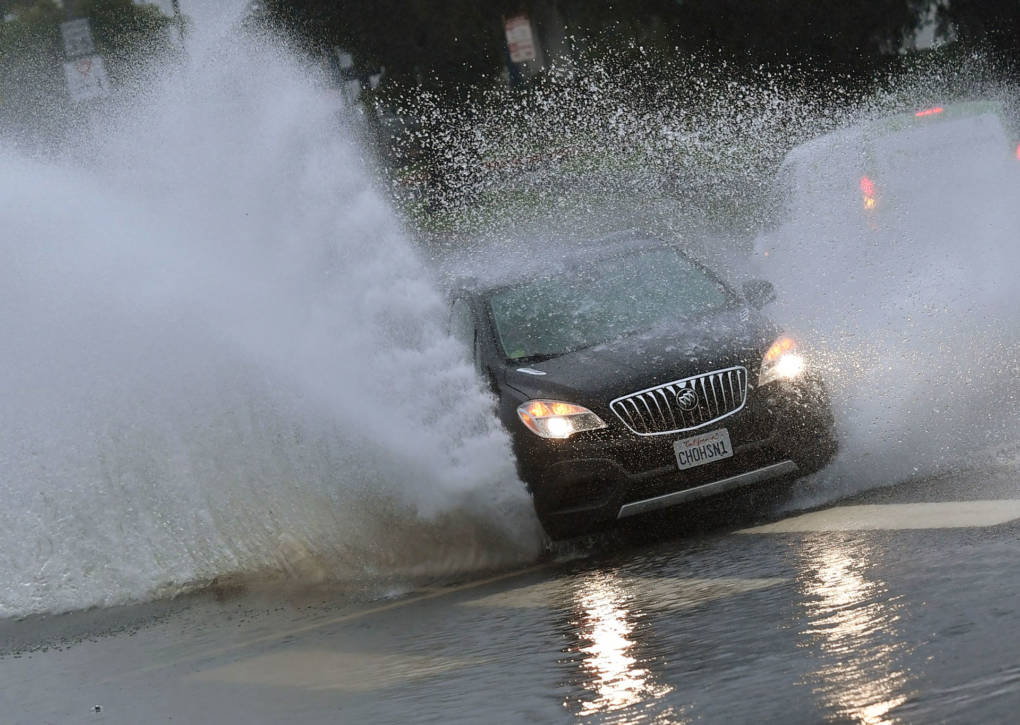
"caption": "Cars pass through a flooded section of road as the strongest storm of the season hits Los Angeles on Jan. 22, 2017.",
"description": "Cars pass through a flooded section of road as the strongest storm of the season hits Los Angeles on January 22, 2017.",
"title": "CarFlood",
"credit": "MARK RALSTON/AFP/Getty Images",
"status": "inherit",
"isLoading": false,
"fetchFailed": false
},
"news_11265373": {
"type": "attachments",
"id": "news_11265373",
"meta": {
"index": "attachments_1716263798",
"site": "news",
"id": "11265373",
"found": true
},
"parent": 11265202,
"imgSizes": {
"small": {
"file": "https://ww2.kqed.org/app/uploads/sites/10/2017/01/Wendy-520x365.jpg",
"width": 520,
"mimeType": "image/jpeg",
"height": 365
},
"twentyfourteen-full-width": {
"file": "https://ww2.kqed.org/app/uploads/sites/10/2017/01/Wendy-1038x576.jpg",
"width": 1038,
"mimeType": "image/jpeg",
"height": 576
},
"thumbnail": {
"file": "https://ww2.kqed.org/app/uploads/sites/10/2017/01/Wendy-160x112.jpg",
"width": 160,
"mimeType": "image/jpeg",
"height": 112
},
"fd-sm": {
"file": "https://ww2.kqed.org/app/uploads/sites/10/2017/01/Wendy-960x674.jpg",
"width": 960,
"mimeType": "image/jpeg",
"height": 674
},
"post-thumbnail": {
"file": "https://ww2.kqed.org/app/uploads/sites/10/2017/01/Wendy-672x372.jpg",
"width": 672,
"mimeType": "image/jpeg",
"height": 372
},
"xsmall": {
"file": "https://ww2.kqed.org/app/uploads/sites/10/2017/01/Wendy-375x263.jpg",
"width": 375,
"mimeType": "image/jpeg",
"height": 263
},
"kqedFullSize": {
"file": "https://ww2.kqed.org/app/uploads/sites/10/2017/01/Wendy.jpg",
"width": 1920,
"height": 1348
},
"large": {
"file": "https://ww2.kqed.org/app/uploads/sites/10/2017/01/Wendy-1020x716.jpg",
"width": 1020,
"mimeType": "image/jpeg",
"height": 716
},
"xlarge": {
"file": "https://ww2.kqed.org/app/uploads/sites/10/2017/01/Wendy-1180x828.jpg",
"width": 1180,
"mimeType": "image/jpeg",
"height": 828
},
"guest-author-50": {
"file": "https://ww2.kqed.org/app/uploads/sites/10/2017/01/Wendy-50x50.jpg",
"width": 50,
"mimeType": "image/jpeg",
"height": 50
},
"guest-author-96": {
"file": "https://ww2.kqed.org/app/uploads/sites/10/2017/01/Wendy-96x96.jpg",
"width": 96,
"mimeType": "image/jpeg",
"height": 96
},
"medium": {
"file": "https://ww2.kqed.org/app/uploads/sites/10/2017/01/Wendy-800x562.jpg",
"width": 800,
"mimeType": "image/jpeg",
"height": 562
},
"guest-author-64": {
"file": "https://ww2.kqed.org/app/uploads/sites/10/2017/01/Wendy-64x64.jpg",
"width": 64,
"mimeType": "image/jpeg",
"height": 64
},
"guest-author-32": {
"file": "https://ww2.kqed.org/app/uploads/sites/10/2017/01/Wendy-32x32.jpg",
"width": 32,
"mimeType": "image/jpeg",
"height": 32
},
"jmtc-small-thumb": {
"file": "https://ww2.kqed.org/app/uploads/sites/10/2017/01/Wendy-280x150.jpg",
"width": 280,
"mimeType": "image/jpeg",
"height": 150
},
"fd-lrg": {
"file": "https://ww2.kqed.org/app/uploads/sites/10/2017/01/Wendy-1920x1348.jpg",
"width": 1920,
"mimeType": "image/jpeg",
"height": 1348
},
"fd-med": {
"file": "https://ww2.kqed.org/app/uploads/sites/10/2017/01/Wendy-1180x828.jpg",
"width": 1180,
"mimeType": "image/jpeg",
"height": 828
},
"full-width": {
"file": "https://ww2.kqed.org/app/uploads/sites/10/2017/01/Wendy-1920x1348.jpg",
"width": 1920,
"mimeType": "image/jpeg",
"height": 1348
},
"detail": {
"file": "https://ww2.kqed.org/app/uploads/sites/10/2017/01/Wendy-150x150.jpg",
"width": 150,
"mimeType": "image/jpeg",
"height": 150
},
"guest-author-128": {
"file": "https://ww2.kqed.org/app/uploads/sites/10/2017/01/Wendy-128x128.jpg",
"width": 128,
"mimeType": "image/jpeg",
"height": 128
},
"xxsmall": {
"file": "https://ww2.kqed.org/app/uploads/sites/10/2017/01/Wendy-240x169.jpg",
"width": 240,
"mimeType": "image/jpeg",
"height": 169
}
},
"publishDate": 1484180481,
"modified": 1484180534,
"caption": "Wendy has been living near the Los Angeles River since last June. She climbed 20 feet up a tree in November to avoid being swept away during a storm.",
"description": "Wendy has been living near the Los Angeles River since last June. She climbed 20 feet up a tree in November to avoid being swept away during a storm.",
"title": "wendy",
"credit": "Molly Peterson/KQED",
"status": "inherit",
"isLoading": false,
"fetchFailed": false
},
"news_11266506": {
"type": "attachments",
"id": "news_11266506",
"meta": {
"index": "attachments_1716263798",
"site": "news",
"id": "11266506",
"found": true
},
"parent": 11266499,
"imgSizes": {
"small": {
"file": "https://ww2.kqed.org/app/uploads/sites/10/2017/01/Chargers-520x297.jpg",
"width": 520,
"mimeType": "image/jpeg",
"height": 297
},
"twentyfourteen-full-width": {
"file": "https://ww2.kqed.org/app/uploads/sites/10/2017/01/Chargers-1038x576.jpg",
"width": 1038,
"mimeType": "image/jpeg",
"height": 576
},
"thumbnail": {
"file": "https://ww2.kqed.org/app/uploads/sites/10/2017/01/Chargers-160x91.jpg",
"width": 160,
"mimeType": "image/jpeg",
"height": 91
},
"fd-sm": {
"file": "https://ww2.kqed.org/app/uploads/sites/10/2017/01/Chargers-960x549.jpg",
"width": 960,
"mimeType": "image/jpeg",
"height": 549
},
"post-thumbnail": {
"file": "https://ww2.kqed.org/app/uploads/sites/10/2017/01/Chargers-672x372.jpg",
"width": 672,
"mimeType": "image/jpeg",
"height": 372
},
"xsmall": {
"file": "https://ww2.kqed.org/app/uploads/sites/10/2017/01/Chargers-375x214.jpg",
"width": 375,
"mimeType": "image/jpeg",
"height": 214
},
"kqedFullSize": {
"file": "https://ww2.kqed.org/app/uploads/sites/10/2017/01/Chargers.jpg",
"width": 1920,
"height": 1097
},
"large": {
"file": "https://ww2.kqed.org/app/uploads/sites/10/2017/01/Chargers-1020x583.jpg",
"width": 1020,
"mimeType": "image/jpeg",
"height": 583
},
"xlarge": {
"file": "https://ww2.kqed.org/app/uploads/sites/10/2017/01/Chargers-1180x674.jpg",
"width": 1180,
"mimeType": "image/jpeg",
"height": 674
},
"guest-author-50": {
"file": "https://ww2.kqed.org/app/uploads/sites/10/2017/01/Chargers-50x50.jpg",
"width": 50,
"mimeType": "image/jpeg",
"height": 50
},
"guest-author-96": {
"file": "https://ww2.kqed.org/app/uploads/sites/10/2017/01/Chargers-96x96.jpg",
"width": 96,
"mimeType": "image/jpeg",
"height": 96
},
"medium": {
"file": "https://ww2.kqed.org/app/uploads/sites/10/2017/01/Chargers-800x457.jpg",
"width": 800,
"mimeType": "image/jpeg",
"height": 457
},
"guest-author-64": {
"file": "https://ww2.kqed.org/app/uploads/sites/10/2017/01/Chargers-64x64.jpg",
"width": 64,
"mimeType": "image/jpeg",
"height": 64
},
"guest-author-32": {
"file": "https://ww2.kqed.org/app/uploads/sites/10/2017/01/Chargers-32x32.jpg",
"width": 32,
"mimeType": "image/jpeg",
"height": 32
},
"jmtc-small-thumb": {
"file": "https://ww2.kqed.org/app/uploads/sites/10/2017/01/Chargers-280x150.jpg",
"width": 280,
"mimeType": "image/jpeg",
"height": 150
},
"fd-lrg": {
"file": "https://ww2.kqed.org/app/uploads/sites/10/2017/01/Chargers-1920x1097.jpg",
"width": 1920,
"mimeType": "image/jpeg",
"height": 1097
},
"fd-med": {
"file": "https://ww2.kqed.org/app/uploads/sites/10/2017/01/Chargers-1180x674.jpg",
"width": 1180,
"mimeType": "image/jpeg",
"height": 674
},
"full-width": {
"file": "https://ww2.kqed.org/app/uploads/sites/10/2017/01/Chargers-1920x1097.jpg",
"width": 1920,
"mimeType": "image/jpeg",
"height": 1097
},
"detail": {
"file": "https://ww2.kqed.org/app/uploads/sites/10/2017/01/Chargers-150x150.jpg",
"width": 150,
"mimeType": "image/jpeg",
"height": 150
},
"guest-author-128": {
"file": "https://ww2.kqed.org/app/uploads/sites/10/2017/01/Chargers-128x128.jpg",
"width": 128,
"mimeType": "image/jpeg",
"height": 128
},
"xxsmall": {
"file": "https://ww2.kqed.org/app/uploads/sites/10/2017/01/Chargers-240x137.jpg",
"width": 240,
"mimeType": "image/jpeg",
"height": 137
}
},
"publishDate": 1484249286,
"modified": 1484262232,
"caption": "The Chargers have been in San Diego for 56 years. They will join the Rams in giving the nation's second-largest media market two NFL teams for the first time in decades.",
"description": "The Chargers have been in San Diego for 56 years. They will join Rams in giving the nation's second-largest media market two NFL teams for the first time in decades.",
"title": "chargers",
"credit": "Donald Miralle/Getty Images",
"status": "inherit",
"isLoading": false,
"fetchFailed": false
},
"news_11221933": {
"type": "attachments",
"id": "news_11221933",
"meta": {
"index": "attachments_1716263798",
"site": "news",
"id": "11221933",
"found": true
},
"parent": 11221915,
"imgSizes": {
"small": {
"file": "https://ww2.kqed.org/app/uploads/sites/10/2016/12/RS23347_DSC_7941baygtrback-qut-520x346.jpg",
"width": 520,
"mimeType": "image/jpeg",
"height": 346
},
"twentyfourteen-full-width": {
"file": "https://ww2.kqed.org/app/uploads/sites/10/2016/12/RS23347_DSC_7941baygtrback-qut-1021x576.jpg",
"width": 1021,
"mimeType": "image/jpeg",
"height": 576
},
"thumbnail": {
"file": "https://ww2.kqed.org/app/uploads/sites/10/2016/12/RS23347_DSC_7941baygtrback-qut-160x106.jpg",
"width": 160,
"mimeType": "image/jpeg",
"height": 106
},
"fd-sm": {
"file": "https://ww2.kqed.org/app/uploads/sites/10/2016/12/RS23347_DSC_7941baygtrback-qut-960x638.jpg",
"width": 960,
"mimeType": "image/jpeg",
"height": 638
},
"post-thumbnail": {
"file": "https://ww2.kqed.org/app/uploads/sites/10/2016/12/RS23347_DSC_7941baygtrback-qut-672x372.jpg",
"width": 672,
"mimeType": "image/jpeg",
"height": 372
},
"xsmall": {
"file": "https://ww2.kqed.org/app/uploads/sites/10/2016/12/RS23347_DSC_7941baygtrback-qut-375x249.jpg",
"width": 375,
"mimeType": "image/jpeg",
"height": 249
},
"kqedFullSize": {
"file": "https://ww2.kqed.org/app/uploads/sites/10/2016/12/RS23347_DSC_7941baygtrback-qut.jpg",
"width": 1021,
"height": 679
},
"large": {
"file": "https://ww2.kqed.org/app/uploads/sites/10/2016/12/RS23347_DSC_7941baygtrback-qut-1020x678.jpg",
"width": 1020,
"mimeType": "image/jpeg",
"height": 678
},
"guest-author-50": {
"file": "https://ww2.kqed.org/app/uploads/sites/10/2016/12/RS23347_DSC_7941baygtrback-qut-50x50.jpg",
"width": 50,
"mimeType": "image/jpeg",
"height": 50
},
"guest-author-96": {
"file": "https://ww2.kqed.org/app/uploads/sites/10/2016/12/RS23347_DSC_7941baygtrback-qut-96x96.jpg",
"width": 96,
"mimeType": "image/jpeg",
"height": 96
},
"medium": {
"file": "https://ww2.kqed.org/app/uploads/sites/10/2016/12/RS23347_DSC_7941baygtrback-qut-800x532.jpg",
"width": 800,
"mimeType": "image/jpeg",
"height": 532
},
"guest-author-64": {
"file": "https://ww2.kqed.org/app/uploads/sites/10/2016/12/RS23347_DSC_7941baygtrback-qut-64x64.jpg",
"width": 64,
"mimeType": "image/jpeg",
"height": 64
},
"guest-author-32": {
"file": "https://ww2.kqed.org/app/uploads/sites/10/2016/12/RS23347_DSC_7941baygtrback-qut-32x32.jpg",
"width": 32,
"mimeType": "image/jpeg",
"height": 32
},
"jmtc-small-thumb": {
"file": "https://ww2.kqed.org/app/uploads/sites/10/2016/12/RS23347_DSC_7941baygtrback-qut-280x150.jpg",
"width": 280,
"mimeType": "image/jpeg",
"height": 150
},
"detail": {
"file": "https://ww2.kqed.org/app/uploads/sites/10/2016/12/RS23347_DSC_7941baygtrback-qut-150x150.jpg",
"width": 150,
"mimeType": "image/jpeg",
"height": 150
},
"guest-author-128": {
"file": "https://ww2.kqed.org/app/uploads/sites/10/2016/12/RS23347_DSC_7941baygtrback-qut-128x128.jpg",
"width": 128,
"mimeType": "image/jpeg",
"height": 128
},
"xxsmall": {
"file": "https://ww2.kqed.org/app/uploads/sites/10/2016/12/RS23347_DSC_7941baygtrback-qut-240x160.jpg",
"width": 240,
"mimeType": "image/jpeg",
"height": 160
}
},
"publishDate": 1481849477,
"modified": 1483570626,
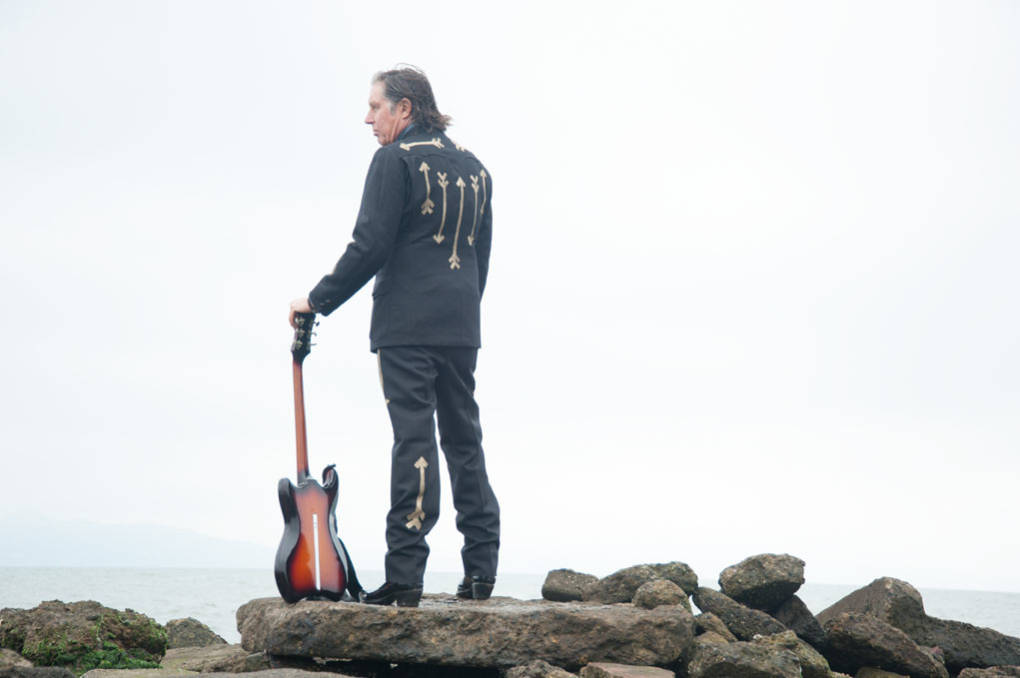
"caption": "Musician John Doe has been singing about California and the West for four decades. He says he still believes in the California Dream. ",
"description": null,
"title": "rs23347_dsc_7941baygtrback-qut",
"credit": "Jim Herrington",
"status": "inherit",
"isLoading": false,
"fetchFailed": false
},
"news_11231053": {
"type": "attachments",
"id": "news_11231053",
"meta": {
"index": "attachments_1716263798",
"site": "news",
"id": "11231053",
"found": true
},
"parent": 11231044,
"imgSizes": {
"small": {
"file": "https://ww2.kqed.org/app/uploads/sites/10/2016/12/immigrantsLA-520x326.jpg",
"width": 520,
"mimeType": "image/jpeg",
"height": 326
},
"twentyfourteen-full-width": {
"file": "https://ww2.kqed.org/app/uploads/sites/10/2016/12/immigrantsLA-1038x576.jpg",
"width": 1038,
"mimeType": "image/jpeg",
"height": 576
},
"thumbnail": {
"file": "https://ww2.kqed.org/app/uploads/sites/10/2016/12/immigrantsLA-160x100.jpg",
"width": 160,
"mimeType": "image/jpeg",
"height": 100
},
"fd-sm": {
"file": "https://ww2.kqed.org/app/uploads/sites/10/2016/12/immigrantsLA-960x603.jpg",
"width": 960,
"mimeType": "image/jpeg",
"height": 603
},
"post-thumbnail": {
"file": "https://ww2.kqed.org/app/uploads/sites/10/2016/12/immigrantsLA-672x372.jpg",
"width": 672,
"mimeType": "image/jpeg",
"height": 372
},
"xsmall": {
"file": "https://ww2.kqed.org/app/uploads/sites/10/2016/12/immigrantsLA-375x235.jpg",
"width": 375,
"mimeType": "image/jpeg",
"height": 235
},
"kqedFullSize": {
"file": "https://ww2.kqed.org/app/uploads/sites/10/2016/12/immigrantsLA.jpg",
"width": 1920,
"height": 1205
},
"large": {
"file": "https://ww2.kqed.org/app/uploads/sites/10/2016/12/immigrantsLA-1020x640.jpg",
"width": 1020,
"mimeType": "image/jpeg",
"height": 640
},
"xlarge": {
"file": "https://ww2.kqed.org/app/uploads/sites/10/2016/12/immigrantsLA-1180x741.jpg",
"width": 1180,
"mimeType": "image/jpeg",
"height": 741
},
"guest-author-50": {
"file": "https://ww2.kqed.org/app/uploads/sites/10/2016/12/immigrantsLA-50x50.jpg",
"width": 50,
"mimeType": "image/jpeg",
"height": 50
},
"guest-author-96": {
"file": "https://ww2.kqed.org/app/uploads/sites/10/2016/12/immigrantsLA-96x96.jpg",
"width": 96,
"mimeType": "image/jpeg",
"height": 96
},
"medium": {
"file": "https://ww2.kqed.org/app/uploads/sites/10/2016/12/immigrantsLA-800x502.jpg",
"width": 800,
"mimeType": "image/jpeg",
"height": 502
},
"guest-author-64": {
"file": "https://ww2.kqed.org/app/uploads/sites/10/2016/12/immigrantsLA-64x64.jpg",
"width": 64,
"mimeType": "image/jpeg",
"height": 64
},
"guest-author-32": {
"file": "https://ww2.kqed.org/app/uploads/sites/10/2016/12/immigrantsLA-32x32.jpg",
"width": 32,
"mimeType": "image/jpeg",
"height": 32
},
"jmtc-small-thumb": {
"file": "https://ww2.kqed.org/app/uploads/sites/10/2016/12/immigrantsLA-280x150.jpg",
"width": 280,
"mimeType": "image/jpeg",
"height": 150
},
"fd-lrg": {
"file": "https://ww2.kqed.org/app/uploads/sites/10/2016/12/immigrantsLA-1920x1205.jpg",
"width": 1920,
"mimeType": "image/jpeg",
"height": 1205
},
"fd-med": {
"file": "https://ww2.kqed.org/app/uploads/sites/10/2016/12/immigrantsLA-1180x741.jpg",
"width": 1180,
"mimeType": "image/jpeg",
"height": 741
},
"full-width": {
"file": "https://ww2.kqed.org/app/uploads/sites/10/2016/12/immigrantsLA-1920x1205.jpg",
"width": 1920,
"mimeType": "image/jpeg",
"height": 1205
},
"detail": {
"file": "https://ww2.kqed.org/app/uploads/sites/10/2016/12/immigrantsLA-150x150.jpg",
"width": 150,
"mimeType": "image/jpeg",
"height": 150
},
"guest-author-128": {
"file": "https://ww2.kqed.org/app/uploads/sites/10/2016/12/immigrantsLA-128x128.jpg",
"width": 128,
"mimeType": "image/jpeg",
"height": 128
},
"xxsmall": {
"file": "https://ww2.kqed.org/app/uploads/sites/10/2016/12/immigrantsLA-240x151.jpg",
"width": 240,
"mimeType": "image/jpeg",
"height": 151
}
},
"publishDate": 1482348610,
"modified": 1482348650,
"caption": "Hundreds of people line up around the block from the Coalition for Humane Immigrant Rights of Los Angeles offices to apply for deportation reprieve on August 15, 2012 in Los Angeles, California. ",
"description": "Hundreds of people line up around the block from the Coalition for Humane Immigrant Rights of Los Angeles offices to apply for deportation reprieve on August 15, 2012 in Los Angeles, California. ",
"title": "Young Immigrants Apply For Obama Administration's Temporary Deportation Reprieve",
"credit": "Kevork Djansezian/Getty Images",
"status": "inherit",
"isLoading": false,
"fetchFailed": false
},
"news_11003463": {
"type": "attachments",
"id": "news_11003463",
"meta": {
"index": "attachments_1716263798",
"site": "news",
"id": "11003463",
"found": true
},
"parent": 11000051,
"imgSizes": {
"twentyfourteen-full-width": {
"file": "https://ww2.kqed.org/app/uploads/sites/10/2016/06/bowl-interior-1038x576.jpg",
"width": 1038,
"mimeType": "image/jpeg",
"height": 576
},
"thumbnail": {
"file": "https://ww2.kqed.org/app/uploads/sites/10/2016/06/bowl-interior-400x300.jpg",
"width": 400,
"mimeType": "image/jpeg",
"height": 300
},
"fd-sm": {
"file": "https://ww2.kqed.org/app/uploads/sites/10/2016/06/bowl-interior-960x720.jpg",
"width": 960,
"mimeType": "image/jpeg",
"height": 720
},
"post-thumbnail": {
"file": "https://ww2.kqed.org/app/uploads/sites/10/2016/06/bowl-interior-672x372.jpg",
"width": 672,
"mimeType": "image/jpeg",
"height": 372
},
"kqedFullSize": {
"file": "https://ww2.kqed.org/app/uploads/sites/10/2016/06/bowl-interior-e1467137067715.jpg",
"width": 1920,
"height": 1440
},
"large": {
"file": "https://ww2.kqed.org/app/uploads/sites/10/2016/06/bowl-interior-1920x1440.jpg",
"width": 1920,
"mimeType": "image/jpeg",
"height": 1440
},
"guest-author-50": {
"file": "https://ww2.kqed.org/app/uploads/sites/10/2016/06/bowl-interior-50x50.jpg",
"width": 50,
"mimeType": "image/jpeg",
"height": 50
},
"guest-author-96": {
"file": "https://ww2.kqed.org/app/uploads/sites/10/2016/06/bowl-interior-96x96.jpg",
"width": 96,
"mimeType": "image/jpeg",
"height": 96
},
"medium": {
"file": "https://ww2.kqed.org/app/uploads/sites/10/2016/06/bowl-interior-800x600.jpg",
"width": 800,
"mimeType": "image/jpeg",
"height": 600
},
"guest-author-64": {
"file": "https://ww2.kqed.org/app/uploads/sites/10/2016/06/bowl-interior-64x64.jpg",
"width": 64,
"mimeType": "image/jpeg",
"height": 64
},
"guest-author-32": {
"file": "https://ww2.kqed.org/app/uploads/sites/10/2016/06/bowl-interior-32x32.jpg",
"width": 32,
"mimeType": "image/jpeg",
"height": 32
},
"jmtc-small-thumb": {
"file": "https://ww2.kqed.org/app/uploads/sites/10/2016/06/bowl-interior-280x150.jpg",
"width": 280,
"mimeType": "image/jpeg",
"height": 150
},
"fd-lrg": {
"file": "https://ww2.kqed.org/app/uploads/sites/10/2016/06/bowl-interior-1920x1440.jpg",
"width": 1920,
"mimeType": "image/jpeg",
"height": 1440
},
"fd-med": {
"file": "https://ww2.kqed.org/app/uploads/sites/10/2016/06/bowl-interior-1180x885.jpg",
"width": 1180,
"mimeType": "image/jpeg",
"height": 885
},
"detail": {
"file": "https://ww2.kqed.org/app/uploads/sites/10/2016/06/bowl-interior-150x150.jpg",
"width": 150,
"mimeType": "image/jpeg",
"height": 150
},
"guest-author-128": {
"file": "https://ww2.kqed.org/app/uploads/sites/10/2016/06/bowl-interior-128x128.jpg",
"width": 128,
"mimeType": "image/jpeg",
"height": 128
}
},
"publishDate": 1467136799,
"modified": 1467136846,
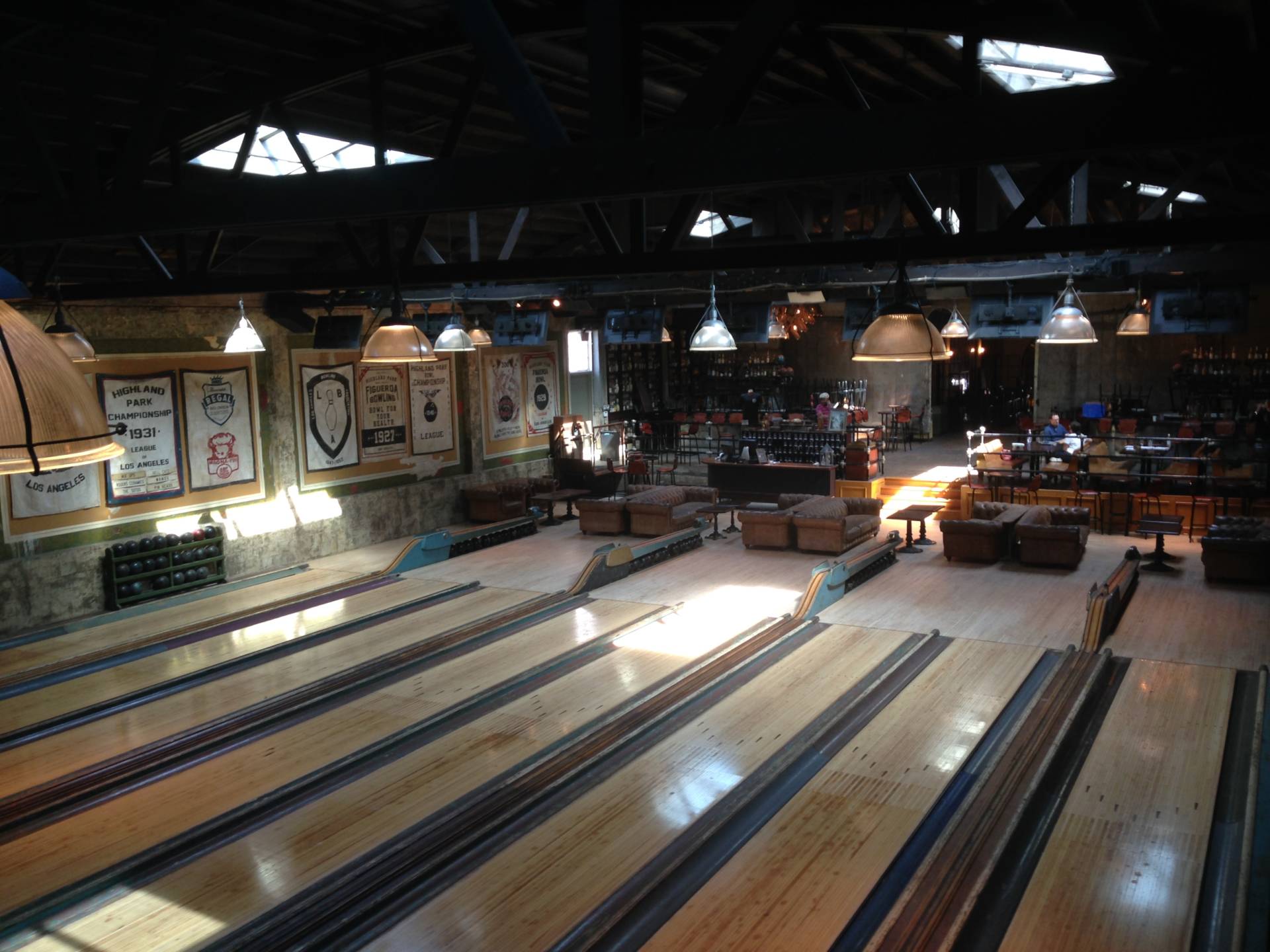
"caption": "The inside of Highland Park Bowl in Los Angeles.",
"description": null,
"title": "bowl interior",
"credit": "Peter Gilstrap/KQED",
"status": "inherit",
"isLoading": false,
"fetchFailed": false
},
"news_11179991": {
"type": "attachments",
"id": "news_11179991",
"meta": {
"index": "attachments_1716263798",
"site": "news",
"id": "11179991",
"found": true
},
"parent": 11179990,
"imgSizes": {
"small": {
"file": "https://ww2.kqed.org/app/uploads/sites/10/2016/11/GettyImages-618388100-520x347.jpg",
"width": 520,
"mimeType": "image/jpeg",
"height": 347
},
"thumbnail": {
"file": "https://ww2.kqed.org/app/uploads/sites/10/2016/11/GettyImages-618388100-160x107.jpg",
"width": 160,
"mimeType": "image/jpeg",
"height": 107
},
"post-thumbnail": {
"file": "https://ww2.kqed.org/app/uploads/sites/10/2016/11/GettyImages-618388100-594x372.jpg",
"width": 594,
"mimeType": "image/jpeg",
"height": 372
},
"xsmall": {
"file": "https://ww2.kqed.org/app/uploads/sites/10/2016/11/GettyImages-618388100-375x250.jpg",
"width": 375,
"mimeType": "image/jpeg",
"height": 250
},
"kqedFullSize": {
"file": "https://ww2.kqed.org/app/uploads/sites/10/2016/11/GettyImages-618388100.jpg",
"width": 594,
"height": 396
},
"guest-author-50": {
"file": "https://ww2.kqed.org/app/uploads/sites/10/2016/11/GettyImages-618388100-50x50.jpg",
"width": 50,
"mimeType": "image/jpeg",
"height": 50
},
"guest-author-96": {
"file": "https://ww2.kqed.org/app/uploads/sites/10/2016/11/GettyImages-618388100-96x96.jpg",
"width": 96,
"mimeType": "image/jpeg",
"height": 96
},
"guest-author-64": {
"file": "https://ww2.kqed.org/app/uploads/sites/10/2016/11/GettyImages-618388100-64x64.jpg",
"width": 64,
"mimeType": "image/jpeg",
"height": 64
},
"guest-author-32": {
"file": "https://ww2.kqed.org/app/uploads/sites/10/2016/11/GettyImages-618388100-32x32.jpg",
"width": 32,
"mimeType": "image/jpeg",
"height": 32
},
"jmtc-small-thumb": {
"file": "https://ww2.kqed.org/app/uploads/sites/10/2016/11/GettyImages-618388100-280x150.jpg",
"width": 280,
"mimeType": "image/jpeg",
"height": 150
},
"detail": {
"file": "https://ww2.kqed.org/app/uploads/sites/10/2016/11/GettyImages-618388100-150x150.jpg",
"width": 150,
"mimeType": "image/jpeg",
"height": 150
},
"guest-author-128": {
"file": "https://ww2.kqed.org/app/uploads/sites/10/2016/11/GettyImages-618388100-128x128.jpg",
"width": 128,
"mimeType": "image/jpeg",
"height": 128
},
"xxsmall": {
"file": "https://ww2.kqed.org/app/uploads/sites/10/2016/11/GettyImages-618388100-240x160.jpg",
"width": 240,
"mimeType": "image/jpeg",
"height": 160
}
},
"publishDate": 1479490713,
"modified": 1479511748,
"caption": "The Hollywood Walk of Fame star of Republican presidential candidate Donald Trump is repaired after it was vandalized by a protester on Oct. 26, 2016, in Hollywood, California.",
"description": null,
"title": "Donald Trump's Star On The Hollywood Walk Of Fame Defaced",
"credit": "David McNew/Getty Images",
"status": "inherit",
"isLoading": false,
"fetchFailed": false
},
"news_11168458": {
"type": "attachments",
"id": "news_11168458",
"meta": {
"index": "attachments_1716263798",
"site": "news",
"id": "11168458",
"found": true
},
"parent": 11168452,
"imgSizes": {
"small": {
"file": "https://ww2.kqed.org/app/uploads/sites/10/2016/11/101LAProtestMain-520x346.jpg",
"width": 520,
"mimeType": "image/jpeg",
"height": 346
},
"twentyfourteen-full-width": {
"file": "https://ww2.kqed.org/app/uploads/sites/10/2016/11/101LAProtestMain-1038x576.jpg",
"width": 1038,
"mimeType": "image/jpeg",
"height": 576
},
"thumbnail": {
"file": "https://ww2.kqed.org/app/uploads/sites/10/2016/11/101LAProtestMain-160x106.jpg",
"width": 160,
"mimeType": "image/jpeg",
"height": 106
},
"fd-sm": {
"file": "https://ww2.kqed.org/app/uploads/sites/10/2016/11/101LAProtestMain-960x638.jpg",
"width": 960,
"mimeType": "image/jpeg",
"height": 638
},
"post-thumbnail": {
"file": "https://ww2.kqed.org/app/uploads/sites/10/2016/11/101LAProtestMain-672x372.jpg",
"width": 672,
"mimeType": "image/jpeg",
"height": 372
},
"xsmall": {
"file": "https://ww2.kqed.org/app/uploads/sites/10/2016/11/101LAProtestMain-375x249.jpg",
"width": 375,
"mimeType": "image/jpeg",
"height": 249
},
"kqedFullSize": {
"file": "https://ww2.kqed.org/app/uploads/sites/10/2016/11/101LAProtestMain.jpg",
"width": 1920,
"height": 1276
},
"large": {
"file": "https://ww2.kqed.org/app/uploads/sites/10/2016/11/101LAProtestMain-1020x678.jpg",
"width": 1020,
"mimeType": "image/jpeg",
"height": 678
},
"xlarge": {
"file": "https://ww2.kqed.org/app/uploads/sites/10/2016/11/101LAProtestMain-1180x784.jpg",
"width": 1180,
"mimeType": "image/jpeg",
"height": 784
},
"guest-author-50": {
"file": "https://ww2.kqed.org/app/uploads/sites/10/2016/11/101LAProtestMain-50x50.jpg",
"width": 50,
"mimeType": "image/jpeg",
"height": 50
},
"guest-author-96": {
"file": "https://ww2.kqed.org/app/uploads/sites/10/2016/11/101LAProtestMain-96x96.jpg",
"width": 96,
"mimeType": "image/jpeg",
"height": 96
},
"medium": {
"file": "https://ww2.kqed.org/app/uploads/sites/10/2016/11/101LAProtestMain-800x532.jpg",
"width": 800,
"mimeType": "image/jpeg",
"height": 532
},
"guest-author-64": {
"file": "https://ww2.kqed.org/app/uploads/sites/10/2016/11/101LAProtestMain-64x64.jpg",
"width": 64,
"mimeType": "image/jpeg",
"height": 64
},
"guest-author-32": {
"file": "https://ww2.kqed.org/app/uploads/sites/10/2016/11/101LAProtestMain-32x32.jpg",
"width": 32,
"mimeType": "image/jpeg",
"height": 32
},
"jmtc-small-thumb": {
"file": "https://ww2.kqed.org/app/uploads/sites/10/2016/11/101LAProtestMain-280x150.jpg",
"width": 280,
"mimeType": "image/jpeg",
"height": 150
},
"fd-lrg": {
"file": "https://ww2.kqed.org/app/uploads/sites/10/2016/11/101LAProtestMain-1920x1276.jpg",
"width": 1920,
"mimeType": "image/jpeg",
"height": 1276
},
"fd-med": {
"file": "https://ww2.kqed.org/app/uploads/sites/10/2016/11/101LAProtestMain-1180x784.jpg",
"width": 1180,
"mimeType": "image/jpeg",
"height": 784
},
"full-width": {
"file": "https://ww2.kqed.org/app/uploads/sites/10/2016/11/101LAProtestMain-1920x1276.jpg",
"width": 1920,
"mimeType": "image/jpeg",
"height": 1276
},
"detail": {
"file": "https://ww2.kqed.org/app/uploads/sites/10/2016/11/101LAProtestMain-150x150.jpg",
"width": 150,
"mimeType": "image/jpeg",
"height": 150
},
"guest-author-128": {
"file": "https://ww2.kqed.org/app/uploads/sites/10/2016/11/101LAProtestMain-128x128.jpg",
"width": 128,
"mimeType": "image/jpeg",
"height": 128
},
"xxsmall": {
"file": "https://ww2.kqed.org/app/uploads/sites/10/2016/11/101LAProtestMain-240x160.jpg",
"width": 240,
"mimeType": "image/jpeg",
"height": 160
}
},
"publishDate": 1478806334,
"modified": 1478806445,
"caption": "A protester (R) confronts police as protesters shut down the 101 Freeway following a rally one day after Donald Trump's presidential election victory in Los Angeles, late on November 9, 2016. ",
"description": "A protester (R) confronts police as protesters shut down the 101 Freeway following a rally one day after Donald Trump's presidential election victory in Los Angeles, late on November 9, 2016. ",
"title": "101laprotestmain",
"credit": "RINGO CHIU/AFP/Getty Images",
"status": "inherit",
"isLoading": false,
"fetchFailed": false
},
"news_11163514": {
"type": "attachments",
"id": "news_11163514",
"meta": {
"index": "attachments_1716263798",
"site": "news",
"id": "11163514",
"found": true
},
"parent": 11163511,
"imgSizes": {
"small": {
"file": "https://ww2.kqed.org/app/uploads/sites/10/2016/11/144094-full-520x346.jpg",
"width": 520,
"mimeType": "image/jpeg",
"height": 346
},
"twentyfourteen-full-width": {
"file": "https://ww2.kqed.org/app/uploads/sites/10/2016/11/144094-full-1024x576.jpg",
"width": 1024,
"mimeType": "image/jpeg",
"height": 576
},
"thumbnail": {
"file": "https://ww2.kqed.org/app/uploads/sites/10/2016/11/144094-full-160x107.jpg",
"width": 160,
"mimeType": "image/jpeg",
"height": 107
},
"fd-sm": {
"file": "https://ww2.kqed.org/app/uploads/sites/10/2016/11/144094-full-960x639.jpg",
"width": 960,
"mimeType": "image/jpeg",
"height": 639
},
"post-thumbnail": {
"file": "https://ww2.kqed.org/app/uploads/sites/10/2016/11/144094-full-672x372.jpg",
"width": 672,
"mimeType": "image/jpeg",
"height": 372
},
"xsmall": {
"file": "https://ww2.kqed.org/app/uploads/sites/10/2016/11/144094-full-375x250.jpg",
"width": 375,
"mimeType": "image/jpeg",
"height": 250
},
"kqedFullSize": {
"file": "https://ww2.kqed.org/app/uploads/sites/10/2016/11/144094-full.jpg",
"width": 1024,
"height": 682
},
"large": {
"file": "https://ww2.kqed.org/app/uploads/sites/10/2016/11/144094-full-1020x679.jpg",
"width": 1020,
"mimeType": "image/jpeg",
"height": 679
},
"guest-author-50": {
"file": "https://ww2.kqed.org/app/uploads/sites/10/2016/11/144094-full-50x50.jpg",
"width": 50,
"mimeType": "image/jpeg",
"height": 50
},
"guest-author-96": {
"file": "https://ww2.kqed.org/app/uploads/sites/10/2016/11/144094-full-96x96.jpg",
"width": 96,
"mimeType": "image/jpeg",
"height": 96
},
"medium": {
"file": "https://ww2.kqed.org/app/uploads/sites/10/2016/11/144094-full-800x533.jpg",
"width": 800,
"mimeType": "image/jpeg",
"height": 533
},
"guest-author-64": {
"file": "https://ww2.kqed.org/app/uploads/sites/10/2016/11/144094-full-64x64.jpg",
"width": 64,
"mimeType": "image/jpeg",
"height": 64
},
"guest-author-32": {
"file": "https://ww2.kqed.org/app/uploads/sites/10/2016/11/144094-full-32x32.jpg",
"width": 32,
"mimeType": "image/jpeg",
"height": 32
},
"jmtc-small-thumb": {
"file": "https://ww2.kqed.org/app/uploads/sites/10/2016/11/144094-full-280x150.jpg",
"width": 280,
"mimeType": "image/jpeg",
"height": 150
},
"detail": {
"file": "https://ww2.kqed.org/app/uploads/sites/10/2016/11/144094-full-150x150.jpg",
"width": 150,
"mimeType": "image/jpeg",
"height": 150
},
"guest-author-128": {
"file": "https://ww2.kqed.org/app/uploads/sites/10/2016/11/144094-full-128x128.jpg",
"width": 128,
"mimeType": "image/jpeg",
"height": 128
},
"xxsmall": {
"file": "https://ww2.kqed.org/app/uploads/sites/10/2016/11/144094-full-240x160.jpg",
"width": 240,
"mimeType": "image/jpeg",
"height": 160
}
},
"publishDate": 1478273889,
"modified": 1478548215,
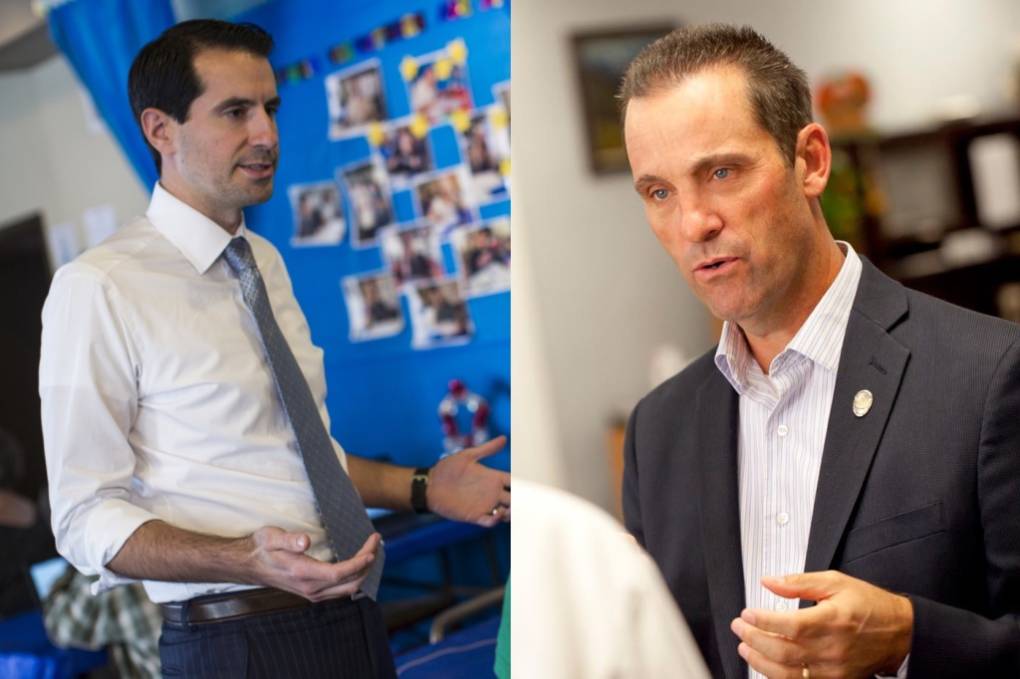
"caption": "Democrat Bryan Caforio (L) and incumbent GOP Congressman Steve Knight are in a hotly contested race for the 25th Congressional District representing North Los Angeles County.",
"description": "Democrat Bryan Caforio (L) and incumbent GOP Congressman Steve Knight are in a hotly contested race for the 25th Congressional District representing North Los Angeles County.",
"title": "Democrat Bryan Caforio, left, and incumbent GOP Congressman Steve Knight, right, are in a hotly contested race for the 25th Congressional District representing North Los Angeles County.",
"credit": "Maya Sugarman/KPCC and Steve Knight campaign",
"status": "inherit",
"isLoading": false,
"fetchFailed": false
},
"news_11140205": {
"type": "attachments",
"id": "news_11140205",
"meta": {
"index": "attachments_1716263798",
"site": "news",
"id": "11140205",
"found": true
},
"parent": 11140195,
"imgSizes": {
"small": {
"file": "https://ww2.kqed.org/app/uploads/sites/10/2016/10/RS21609_10196-0773-GD-qut-520x347.jpg",
"width": 520,
"mimeType": "image/jpeg",
"height": 347
},
"twentyfourteen-full-width": {
"file": "https://ww2.kqed.org/app/uploads/sites/10/2016/10/RS21609_10196-0773-GD-qut-1038x576.jpg",
"width": 1038,
"mimeType": "image/jpeg",
"height": 576
},
"thumbnail": {
"file": "https://ww2.kqed.org/app/uploads/sites/10/2016/10/RS21609_10196-0773-GD-qut-160x107.jpg",
"width": 160,
"mimeType": "image/jpeg",
"height": 107
},
"fd-sm": {
"file": "https://ww2.kqed.org/app/uploads/sites/10/2016/10/RS21609_10196-0773-GD-qut-960x640.jpg",
"width": 960,
"mimeType": "image/jpeg",
"height": 640
},
"post-thumbnail": {
"file": "https://ww2.kqed.org/app/uploads/sites/10/2016/10/RS21609_10196-0773-GD-qut-672x372.jpg",
"width": 672,
"mimeType": "image/jpeg",
"height": 372
},
"xsmall": {
"file": "https://ww2.kqed.org/app/uploads/sites/10/2016/10/RS21609_10196-0773-GD-qut-375x250.jpg",
"width": 375,
"mimeType": "image/jpeg",
"height": 250
},
"kqedFullSize": {
"file": "https://ww2.kqed.org/app/uploads/sites/10/2016/10/RS21609_10196-0773-GD-qut.jpg",
"width": 1920,
"height": 1280
},
"large": {
"file": "https://ww2.kqed.org/app/uploads/sites/10/2016/10/RS21609_10196-0773-GD-qut-1020x680.jpg",
"width": 1020,
"mimeType": "image/jpeg",
"height": 680
},
"xlarge": {
"file": "https://ww2.kqed.org/app/uploads/sites/10/2016/10/RS21609_10196-0773-GD-qut-1180x787.jpg",
"width": 1180,
"mimeType": "image/jpeg",
"height": 787
},
"guest-author-50": {
"file": "https://ww2.kqed.org/app/uploads/sites/10/2016/10/RS21609_10196-0773-GD-qut-50x50.jpg",
"width": 50,
"mimeType": "image/jpeg",
"height": 50
},
"guest-author-96": {
"file": "https://ww2.kqed.org/app/uploads/sites/10/2016/10/RS21609_10196-0773-GD-qut-96x96.jpg",
"width": 96,
"mimeType": "image/jpeg",
"height": 96
},
"medium": {
"file": "https://ww2.kqed.org/app/uploads/sites/10/2016/10/RS21609_10196-0773-GD-qut-800x533.jpg",
"width": 800,
"mimeType": "image/jpeg",
"height": 533
},
"guest-author-64": {
"file": "https://ww2.kqed.org/app/uploads/sites/10/2016/10/RS21609_10196-0773-GD-qut-64x64.jpg",
"width": 64,
"mimeType": "image/jpeg",
"height": 64
},
"guest-author-32": {
"file": "https://ww2.kqed.org/app/uploads/sites/10/2016/10/RS21609_10196-0773-GD-qut-32x32.jpg",
"width": 32,
"mimeType": "image/jpeg",
"height": 32
},
"jmtc-small-thumb": {
"file": "https://ww2.kqed.org/app/uploads/sites/10/2016/10/RS21609_10196-0773-GD-qut-280x150.jpg",
"width": 280,
"mimeType": "image/jpeg",
"height": 150
},
"fd-lrg": {
"file": "https://ww2.kqed.org/app/uploads/sites/10/2016/10/RS21609_10196-0773-GD-qut-1920x1280.jpg",
"width": 1920,
"mimeType": "image/jpeg",
"height": 1280
},
"fd-med": {
"file": "https://ww2.kqed.org/app/uploads/sites/10/2016/10/RS21609_10196-0773-GD-qut-1180x787.jpg",
"width": 1180,
"mimeType": "image/jpeg",
"height": 787
},
"full-width": {
"file": "https://ww2.kqed.org/app/uploads/sites/10/2016/10/RS21609_10196-0773-GD-qut-1920x1280.jpg",
"width": 1920,
"mimeType": "image/jpeg",
"height": 1280
},
"detail": {
"file": "https://ww2.kqed.org/app/uploads/sites/10/2016/10/RS21609_10196-0773-GD-qut-150x150.jpg",
"width": 150,
"mimeType": "image/jpeg",
"height": 150
},
"guest-author-128": {
"file": "https://ww2.kqed.org/app/uploads/sites/10/2016/10/RS21609_10196-0773-GD-qut-128x128.jpg",
"width": 128,
"mimeType": "image/jpeg",
"height": 128
},
"xxsmall": {
"file": "https://ww2.kqed.org/app/uploads/sites/10/2016/10/RS21609_10196-0773-GD-qut-240x160.jpg",
"width": 240,
"mimeType": "image/jpeg",
"height": 160
}
},
"publishDate": 1477094029,
"modified": 1477523027,
"caption": "Gustavo Dudamel conducts the Youth Orchestra Los Angeles, which provides instruments and musical training to some 800 kids in L.A. ",
"description": null,
"title": "RS21609_10196-0773 GD-qut",
"credit": "Los Angeles Philharmonic Association",
"status": "inherit",
"isLoading": false,
"fetchFailed": false
},
"news_11117232": {
"type": "attachments",
"id": "news_11117232",
"meta": {
"index": "attachments_1716263798",
"site": "news",
"id": "11117232",
"found": true
},
"parent": 11117231,
"imgSizes": {
"twentyfourteen-full-width": {
"file": "https://ww2.kqed.org/app/uploads/sites/10/2016/10/firefighter_class_sel-19_slide-0fa796386e411ae40a1dc01dacfe45d34883d033-1038x576.jpg",
"width": 1038,
"mimeType": "image/jpeg",
"height": 576
},
"thumbnail": {
"file": "https://ww2.kqed.org/app/uploads/sites/10/2016/10/firefighter_class_sel-19_slide-0fa796386e411ae40a1dc01dacfe45d34883d033-400x267.jpg",
"width": 400,
"mimeType": "image/jpeg",
"height": 267
},
"fd-sm": {
"file": "https://ww2.kqed.org/app/uploads/sites/10/2016/10/firefighter_class_sel-19_slide-0fa796386e411ae40a1dc01dacfe45d34883d033-960x640.jpg",
"width": 960,
"mimeType": "image/jpeg",
"height": 640
},
"post-thumbnail": {
"file": "https://ww2.kqed.org/app/uploads/sites/10/2016/10/firefighter_class_sel-19_slide-0fa796386e411ae40a1dc01dacfe45d34883d033-672x372.jpg",
"width": 672,
"mimeType": "image/jpeg",
"height": 372
},
"kqedFullSize": {
"file": "https://ww2.kqed.org/app/uploads/sites/10/2016/10/firefighter_class_sel-19_slide-0fa796386e411ae40a1dc01dacfe45d34883d033.jpg",
"width": 2997,
"height": 1998
},
"large": {
"file": "https://ww2.kqed.org/app/uploads/sites/10/2016/10/firefighter_class_sel-19_slide-0fa796386e411ae40a1dc01dacfe45d34883d033-1920x1280.jpg",
"width": 1920,
"mimeType": "image/jpeg",
"height": 1280
},
"guest-author-50": {
"file": "https://ww2.kqed.org/app/uploads/sites/10/2016/10/firefighter_class_sel-19_slide-0fa796386e411ae40a1dc01dacfe45d34883d033-50x50.jpg",
"width": 50,
"mimeType": "image/jpeg",
"height": 50
},
"guest-author-96": {
"file": "https://ww2.kqed.org/app/uploads/sites/10/2016/10/firefighter_class_sel-19_slide-0fa796386e411ae40a1dc01dacfe45d34883d033-96x96.jpg",
"width": 96,
"mimeType": "image/jpeg",
"height": 96
},
"medium": {
"file": "https://ww2.kqed.org/app/uploads/sites/10/2016/10/firefighter_class_sel-19_slide-0fa796386e411ae40a1dc01dacfe45d34883d033-800x533.jpg",
"width": 800,
"mimeType": "image/jpeg",
"height": 533
},
"guest-author-64": {
"file": "https://ww2.kqed.org/app/uploads/sites/10/2016/10/firefighter_class_sel-19_slide-0fa796386e411ae40a1dc01dacfe45d34883d033-64x64.jpg",
"width": 64,
"mimeType": "image/jpeg",
"height": 64
},
"guest-author-32": {
"file": "https://ww2.kqed.org/app/uploads/sites/10/2016/10/firefighter_class_sel-19_slide-0fa796386e411ae40a1dc01dacfe45d34883d033-32x32.jpg",
"width": 32,
"mimeType": "image/jpeg",
"height": 32
},
"jmtc-small-thumb": {
"file": "https://ww2.kqed.org/app/uploads/sites/10/2016/10/firefighter_class_sel-19_slide-0fa796386e411ae40a1dc01dacfe45d34883d033-280x150.jpg",
"width": 280,
"mimeType": "image/jpeg",
"height": 150
},
"fd-lrg": {
"file": "https://ww2.kqed.org/app/uploads/sites/10/2016/10/firefighter_class_sel-19_slide-0fa796386e411ae40a1dc01dacfe45d34883d033-1920x1280.jpg",
"width": 1920,
"mimeType": "image/jpeg",
"height": 1280
},
"fd-med": {
"file": "https://ww2.kqed.org/app/uploads/sites/10/2016/10/firefighter_class_sel-19_slide-0fa796386e411ae40a1dc01dacfe45d34883d033-1180x787.jpg",
"width": 1180,
"mimeType": "image/jpeg",
"height": 787
},
"detail": {
"file": "https://ww2.kqed.org/app/uploads/sites/10/2016/10/firefighter_class_sel-19_slide-0fa796386e411ae40a1dc01dacfe45d34883d033-150x150.jpg",
"width": 150,
"mimeType": "image/jpeg",
"height": 150
},
"guest-author-128": {
"file": "https://ww2.kqed.org/app/uploads/sites/10/2016/10/firefighter_class_sel-19_slide-0fa796386e411ae40a1dc01dacfe45d34883d033-128x128.jpg",
"width": 128,
"mimeType": "image/jpeg",
"height": 128
}
},
"publishDate": 1475691588,
"modified": 1475691939,
"caption": "LAFD Capt. Eddie Marez instructs cadets at Banning High on how to operate a fire hose.",
"description": "LAFD Capt. Eddie Marez instructs cadets at Banning High on how to operate a fire hose.\n",
"title": "LAFD Capt. Eddie Marez instructs cadets at Banning High on how to operate a fire hose.",
"credit": "Roxanne Turpen/NPR",
"status": "inherit",
"isLoading": false,
"fetchFailed": false
},
"news_11100560": {
"type": "attachments",
"id": "news_11100560",
"meta": {
"index": "attachments_1716263798",
"site": "news",
"id": "11100560",
"found": true
},
"parent": 11100554,
"imgSizes": {
"twentyfourteen-full-width": {
"file": "https://ww2.kqed.org/app/uploads/sites/10/2016/09/HomelessKitchen-1038x576.jpg",
"width": 1038,
"mimeType": "image/jpeg",
"height": 576
},
"thumbnail": {
"file": "https://ww2.kqed.org/app/uploads/sites/10/2016/09/HomelessKitchen-400x268.jpg",
"width": 400,
"mimeType": "image/jpeg",
"height": 268
},
"fd-sm": {
"file": "https://ww2.kqed.org/app/uploads/sites/10/2016/09/HomelessKitchen-960x642.jpg",
"width": 960,
"mimeType": "image/jpeg",
"height": 642
},
"post-thumbnail": {
"file": "https://ww2.kqed.org/app/uploads/sites/10/2016/09/HomelessKitchen-672x372.jpg",
"width": 672,
"mimeType": "image/jpeg",
"height": 372
},
"kqedFullSize": {
"file": "https://ww2.kqed.org/app/uploads/sites/10/2016/09/HomelessKitchen.jpg",
"width": 1920,
"height": 1284
},
"large": {
"file": "https://ww2.kqed.org/app/uploads/sites/10/2016/09/HomelessKitchen-1920x1284.jpg",
"width": 1920,
"mimeType": "image/jpeg",
"height": 1284
},
"guest-author-50": {
"file": "https://ww2.kqed.org/app/uploads/sites/10/2016/09/HomelessKitchen-50x50.jpg",
"width": 50,
"mimeType": "image/jpeg",
"height": 50
},
"guest-author-96": {
"file": "https://ww2.kqed.org/app/uploads/sites/10/2016/09/HomelessKitchen-96x96.jpg",
"width": 96,
"mimeType": "image/jpeg",
"height": 96
},
"medium": {
"file": "https://ww2.kqed.org/app/uploads/sites/10/2016/09/HomelessKitchen-800x535.jpg",
"width": 800,
"mimeType": "image/jpeg",
"height": 535
},
"guest-author-64": {
"file": "https://ww2.kqed.org/app/uploads/sites/10/2016/09/HomelessKitchen-64x64.jpg",
"width": 64,
"mimeType": "image/jpeg",
"height": 64
},
"guest-author-32": {
"file": "https://ww2.kqed.org/app/uploads/sites/10/2016/09/HomelessKitchen-32x32.jpg",
"width": 32,
"mimeType": "image/jpeg",
"height": 32
},
"jmtc-small-thumb": {
"file": "https://ww2.kqed.org/app/uploads/sites/10/2016/09/HomelessKitchen-280x150.jpg",
"width": 280,
"mimeType": "image/jpeg",
"height": 150
},
"fd-lrg": {
"file": "https://ww2.kqed.org/app/uploads/sites/10/2016/09/HomelessKitchen-1920x1284.jpg",
"width": 1920,
"mimeType": "image/jpeg",
"height": 1284
},
"fd-med": {
"file": "https://ww2.kqed.org/app/uploads/sites/10/2016/09/HomelessKitchen-1180x789.jpg",
"width": 1180,
"mimeType": "image/jpeg",
"height": 789
},
"detail": {
"file": "https://ww2.kqed.org/app/uploads/sites/10/2016/09/HomelessKitchen-150x150.jpg",
"width": 150,
"mimeType": "image/jpeg",
"height": 150
},
"guest-author-128": {
"file": "https://ww2.kqed.org/app/uploads/sites/10/2016/09/HomelessKitchen-128x128.jpg",
"width": 128,
"mimeType": "image/jpeg",
"height": 128
}
},
"publishDate": 1474661225,
"modified": 1474666583,
"caption": "Homeless men tuck into a homemade evening meal at Proyecto Pastoral on July 13, 2016. The organization has been providing 90-day temporary shelter and meals to homeless men for years.",
"description": "Homeless men tuck into a homemade evening meal at Proyecto Pastoral on July 13, 2016. The organization has been providing 90-day temporary shelter and meals to homeless men for more than 20 years.",
"title": "HomelessKitchen",
"credit": "Dan Tuffs/KPCC",
"status": "inherit",
"isLoading": false,
"fetchFailed": false
}
},
"audioPlayerReducer": {
"postId": "stream_live",
"isPaused": true,
"isPlaying": false,
"pfsActive": false,
"pledgeModalIsOpen": true,
"playerDrawerIsOpen": false,
"liveAudioPlayStartedAt": 0,
"liveAudioPlayContext": ""
},
"authorsReducer": {
"byline_news_11283251": {
"type": "authors",
"id": "byline_news_11283251",
"meta": {
"override": true
},
"slug": "byline_news_11283251",
"name": "KPCC Staff",
"isLoading": false
},
"byline_news_11265202": {
"type": "authors",
"id": "byline_news_11265202",
"meta": {
"override": true
},
"slug": "byline_news_11265202",
"name": "Molly Peterson ",
"isLoading": false
},
"byline_news_11266499": {
"type": "authors",
"id": "byline_news_11266499",
"meta": {
"override": true
},
"slug": "byline_news_11266499",
"name": "Bernie Wilson \u003cbr> Associated Press ",
"isLoading": false
},
"byline_news_11231044": {
"type": "authors",
"id": "byline_news_11231044",
"meta": {
"override": true
},
"slug": "byline_news_11231044",
"name": "\u003cstrong>Leslie Berestein Rojas\u003c/strong>",
"isLoading": false
},
"byline_news_11000051": {
"type": "authors",
"id": "byline_news_11000051",
"meta": {
"override": true
},
"slug": "byline_news_11000051",
"name": "\u003cstrong>Peter Gilstrap\u003c/strong>",
"isLoading": false
},
"byline_news_11179990": {
"type": "authors",
"id": "byline_news_11179990",
"meta": {
"override": true
},
"slug": "byline_news_11179990",
"name": "\u003cstrong>Associated Press\u003c/strong>",
"isLoading": false
},
"byline_news_11168452": {
"type": "authors",
"id": "byline_news_11168452",
"meta": {
"override": true
},
"slug": "byline_news_11168452",
"name": "KPCC staff",
"isLoading": false
},
"byline_news_11163511": {
"type": "authors",
"id": "byline_news_11163511",
"meta": {
"override": true
},
"slug": "byline_news_11163511",
"name": "\u003cstrong>\u003ca href=\"http://www.scpr.org/about/people/staff/mary-plummer\">Mary Plummer\u003c/a> \u003cbr> \u003ca href=\"http://www.scpr.org/\">KPCC\u003c/a>\u003c/strong>",
"isLoading": false
},
"byline_news_11117231": {
"type": "authors",
"id": "byline_news_11117231",
"meta": {
"override": true
},
"slug": "byline_news_11117231",
"name": "\u003cstrong>\u003ca href=\"http://www.npr.org/people/2101350/eric-westervelt\">Eric Westervelt\u003c/a>\u003cbr>\u003ca href=\"http://www.npr.org/\">NPR\u003c/a>\u003c/strong>",
"isLoading": false
},
"byline_news_11100554": {
"type": "authors",
"id": "byline_news_11100554",
"meta": {
"override": true
},
"slug": "byline_news_11100554",
"name": "\u003cstrong>\u003ca href=\"http://www.scpr.org/about/people/staff/leslie-berestein-rojas\">Leslie Berestein Rojas\u003c/a>\u003cbr>\u003ca href=\"http://www.scpr.org/\">KPCC\u003c/a>\u003c/strong>",
"isLoading": false
},
"sasha-khokha": {
"type": "authors",
"id": "254",
"meta": {
"index": "authors_1716337520",
"id": "254",
"found": true
},
"name": "Sasha Khokha",
"firstName": "Sasha",
"lastName": "Khokha",
"slug": "sasha-khokha",
"email": "skhokha@kqed.org",
"display_author_email": true,
"staff_mastheads": [
"news"
],
"title": "Host, The California Report Magazine",
"bio": "Sasha Khokha is the host of \u003cem>The California Report's \u003c/em> weekly magazine program, which takes listeners on sound-rich excursions to meet the people that make the Golden State unique -- through audio documentaries and long-form stories. As \u003cem>The California Report's\u003c/em> Central Valley Bureau Chief based in Fresno for nearly a dozen years, Sasha brought the lives and concerns of rural Californians to listeners around the state. Her reporting helped expose the hidden price immigrant women janitors and farmworkers may pay to keep their jobs: sexual assault at work. It inspired two new California laws to protect them from sexual harassment. She was a key member of the reporting team for the Frontline film \u003cem>Rape on the Night Shift, \u003c/em>which was nominated for two national Emmys. Sasha has also won a national Edward R. Murrow and a national PRNDI award for investigative reporting, as well as multiple prizes from the Society for Professional Journalists. Sasha is a proud alum of the UC Berkeley Graduate School of Journalism and Brown University and a member of the South Asian Journalists Association.",
"avatar": "https://secure.gravatar.com/avatar/e4b5e1541aaeea2aa356aa1fb2a68950?s=600&d=blank&r=g",
"twitter": "KQEDSashaKhokha",
"facebook": null,
"instagram": null,
"linkedin": null,
"sites": [
{
"site": "news",
"roles": [
"editor"
]
},
{
"site": "stateofhealth",
"roles": [
"author"
]
},
{
"site": "science",
"roles": [
"author"
]
},
{
"site": "quest",
"roles": [
"subscriber"
]
}
],
"headData": {
"title": "Sasha Khokha | KQED",
"description": "Host, The California Report Magazine",
"ogImgSrc": "https://secure.gravatar.com/avatar/e4b5e1541aaeea2aa356aa1fb2a68950?s=600&d=blank&r=g",
"twImgSrc": "https://secure.gravatar.com/avatar/e4b5e1541aaeea2aa356aa1fb2a68950?s=600&d=blank&r=g"
},
"isLoading": false,
"link": "/author/sasha-khokha"
}
},
"pagesReducer": {
"news_tag_los-angeles": {
"type": "terms",
"id": "news_4",
"meta": {
"index": "terms_1716263798",
"site": "news",
"id": "4",
"score": 8.557587
},
"featImg": null,
"name": "los angeles",
"description": null,
"taxonomy": "tag",
"headData": {
"twImgId": null,
"twTitle": null,
"ogTitle": null,
"ogImgId": null,
"twDescription": null,
"description": null,
"title": "los angeles Archives | KQED News",
"ogDescription": null
},
"ttid": 4,
"slug": "los-angeles",
"isLoading": false,
"title": "los angeles",
"pageMeta": {
"site": "news",
"WpPageTemplate": "page-topic-editorial",
"currentPage": 27
},
"blocks": [
{
"blockName": "kqed/post-list",
"attrs": {
"layout": "cardArticle2",
"query": "posts/news?tag=los-angeles",
"seeMore": false,
"paginated": true,
"page": 27
}
},
{
"blockName": "kqed/ad"
}
]
}
},
"pfsSessionReducer": {},
"postsReducer": {
"stream_live": {
"type": "live",
"id": "stream_live",
"audioUrl": "https://streams.kqed.org/kqedradio",
"title": "Live Stream",
"excerpt": "Live Stream information currently unavailable.",
"link": "/radio",
"featImg": "",
"label": {
"name": "KQED Live",
"link": "/"
}
},
"stream_kqedNewscast": {
"type": "posts",
"id": "stream_kqedNewscast",
"audioUrl": "https://www.kqed.org/.stream/anon/radio/RDnews/newscast.mp3?_=1",
"title": "KQED Newscast",
"featImg": "",
"label": {
"name": "88.5 FM",
"link": "/"
}
},
"news_11283251": {
"type": "posts",
"id": "news_11283251",
"meta": {
"index": "posts_1716263798",
"site": "news",
"id": "11283251",
"score": null,
"sort": [
1485200888000
]
},
"guestAuthors": [],
"slug": "storm-brings-record-rainfall-flooding-to-southern-california",
"title": "Storm Brings Record Rainfall, Flooding to Southern California",
"publishDate": 1485200888,
"format": "image",
"headTitle": "Storm Brings Record Rainfall, Flooding to Southern California | KQED",
"labelTerm": {},
"content": "\u003cp>Southern California was pounded with rain overnight as the third and final storm in a series dumped more than 4 inches in some places.\u003c/p>\n\u003cp>Long Beach set a new rainfall record with 3.97 inches, with some neighborhoods receiving intense downpours of up to 3 inches per hour. The previous record for the city was 2.06 inches, set in 1967.\u003c/p>\n\u003cp>Long Beach Mayor Robert Garcia told KPCC that conditions have improved this morning, but there is damage to assess.\u003c/p>\n\u003cp>“We’ve had trees fall on some cars, we had some trees fall into private property, and we have had some flooding in both public and private buildings. And so as far as the damage it will take us a couple of days to fully understand the extent,” Garcia said.\u003c/p>\n\u003cp>Long Beach rescue crews had their hands full Sunday. Eight people were rescued from vehicles. The fire department rescued two male teens from a raft in the Los Angeles River channel. They were transported to a local hospital.\u003c/p>\n\u003cp>[ad fullwidth]\u003c/p>\n\u003cp>“We were anticipating severe rain but not a record rainfall,” said Jake Heflin, spokesman for the Long Beach Fire Department.\u003c/p>\n\u003cp>Ojai saw the most rain, topping 4 inches, according to the National Weather Service.\u003c/p>\n\u003cp>\u003c!-- iframe plugin v.4.3 wordpress.org/plugins/iframe/ -->\u003cbr>\n\u003ciframe loading=\"lazy\" src=\"//storify.com/kpcc/larain-slams-southern-california/embed?border=false\" width=\"100%\" height=\"750\" frameborder=\"no\" allowtransparency=\"true\" scrolling=\"yes\" class=\"iframe-class\">\u003c/iframe>\u003c/p>\n\u003cp>Sleet and hail contributed to a 15-car collision on the Grapevine just before 4:30 a.m. Monday morning, according to Officer Brian Moore of the CHP. The collision has since been cleared, with nine injured and five hospitalized with minor injuries. Now, snow is falling and sticking to the road, with CHP officers escorting drivers through the Grapevine and keeping them bunched together – doing so generates more heat and helps melt the snow on the road, Moore told KPCC.\u003c/p>\n\u003cp>In L.A., emergency crews rescued 12 people and two pets from rain-swept flood control channels and riverbeds over the last 24 hours, according to L.A. Fire Department spokesman Brian Humphrey. Crews also responded to 172 weather-related incidents, including flooding, debris flow, fallen trees and transformer fires. No deaths, serious injuries or loss of structures have been reported.\u003c/p>\n\u003cp>The immediate storm impact began to subside Monday morning, but the period after a storm ends has historically been the deadliest time, as people head to flood channels to watch the water flow, Humphrey said.\u003c/p>\n\u003cp>A flash flood warning for much of Southern California was extended through 6 p.m. Monday. Isolated thunderstorms are possible, and rain was predicted to fall at rates of a half-inch to an inch per hour, continuing the threat of debris flows in recent burn areas, according to the weather service.\u003c/p>\n\u003cp>Rockslides forced the closure of two different roads in Malibu. Topanga Canyon Road was closed from Pacific Coast Highway to Grand View Drive, and Malibu Canyon Road from Francisco Ranch to Piuma Road, according to the California Highway Patrol’s incident log.\u003c/p>\n\u003cp>The southbound lanes of State Route 14 were closed at Escondido Canyon Road, with reports of a boulder the size of a vehicle in the roadway. Flooding was reported in the 2900 block of San Francisquito Canyon Road.\u003c/p>\n\u003cp>The 710 and 110 freeways were open again as of early Monday. Both had been closed due to flooding, with 2 to 3 feet of water reportedly covering the 710 at one point.\u003c/p>\n\u003cfigure id=\"attachment_11283259\" class=\"wp-caption aligncenter\" style=\"max-width: 800px\">\u003cimg loading=\"lazy\" decoding=\"async\" class=\"size-medium wp-image-11283259\" src=\"https://ww2.kqed.org/news/wp-content/uploads/sites/10/2017/01/MailboxFlood-800x534.jpg\" alt=\"Mud gathers in the Fish Fire impact area on Melcanyon Street in Duarte on Monday morning, Jan. 23, 2017 following weekend storms.\" width=\"800\" height=\"534\" srcset=\"https://cdn.kqed.org/wp-content/uploads/sites/10/2017/01/MailboxFlood-800x534.jpg 800w, https://cdn.kqed.org/wp-content/uploads/sites/10/2017/01/MailboxFlood-160x107.jpg 160w, https://cdn.kqed.org/wp-content/uploads/sites/10/2017/01/MailboxFlood-1020x681.jpg 1020w, https://cdn.kqed.org/wp-content/uploads/sites/10/2017/01/MailboxFlood.jpg 1920w, https://cdn.kqed.org/wp-content/uploads/sites/10/2017/01/MailboxFlood-1180x787.jpg 1180w, https://cdn.kqed.org/wp-content/uploads/sites/10/2017/01/MailboxFlood-960x641.jpg 960w, https://cdn.kqed.org/wp-content/uploads/sites/10/2017/01/MailboxFlood-240x160.jpg 240w, https://cdn.kqed.org/wp-content/uploads/sites/10/2017/01/MailboxFlood-375x250.jpg 375w, https://cdn.kqed.org/wp-content/uploads/sites/10/2017/01/MailboxFlood-520x347.jpg 520w\" sizes=\"(max-width: 800px) 100vw, 800px\">\u003cfigcaption class=\"wp-caption-text\">Mud gathers in the Fish Fire impact area on Melcanyon Street in Duarte on Monday morning, Jan. 23, 2017, following weekend storms. \u003ccite>(Maya Sugarman/KPCC)\u003c/cite>\u003c/figcaption>\u003c/figure>\n\u003ch2>Evacuations and Closures by Area\u003c/h2>\n\u003cp> \u003c/p>\n\u003ch3 id=\"duarte\">DUARTE\u003c/h3>\n\u003cul>\n\u003cli>180 homes under mandatory evacuation orders near the Fish Fire burn area\u003c/li>\n\u003cli>Duarte Community Center at 1600 Huntington Drive has been set up as a shelter — meals are being provided and animals accommodated through a Los Angeles County Animal Control mobile shelter on site\u003c/li>\n\u003cli>Minor mud and debris flows reported along Melcanyon Road\u003c/li>\n\u003cli>Road closures: Royal Oaks and Greenbank, Bettyhill and Conata, Royal Oaks and Mel Canyon, eastbound Fish Canyon at Mel Canyon, westbound Fish Canyon at Mel Canyon, Mountaincrest and Deerlane, and Brookridge and Tannencrest\u003c/li>\n\u003cli>Valley View Elementary School closed for the day\u003c/li>\n\u003cli>Sandbags and sand available 24 hours a day at L.A. County Fire station 44, located at 1105 Highland Avenue\u003c/li>\n\u003cli>Residents have been encouraged to sign up for \u003ca href=\"http://local.nixle.com/city-of-duarte/\">Nixle alerts here\u003c/a>.\u003c/li>\n\u003c/ul>\n\u003ch3>GLENDORA\u003c/h3>\n\u003cul>\n\u003cli>The city downgraded its alert system from Orange to Yellow, which means voluntary evacuations have been lifted. The city advised that heavy downpours are still possible, but the most significant threat has passed.\u003c/li>\n\u003c/ul>\n\u003ch3>SANTA CLARITA\u003c/h3>\n\u003cul>\n\u003cli>Evacuations for residents in the Sand Canyon and other Santa Clarita Valley burn areas were lifted at 10 a.m. Monday morning.\u003c/li>\n\u003cli>A shelter has been set up at Canyon High School at 19300 Nadal St. Small animals can be taken to the Castaic Animal Shelter at 31044 Charlie Canyon Road, while livestock can be taken to Pierce College at 6201 Winnetka Ave. in Woodland Hills\u003c/li>\n\u003cli>Road closures: Sand Canyon and Lost Canyon (soft closure), Placerita Canyon and 14 Freeway, Sand Canyon and Placerita Canyon into Bear Divide (hard closure), Little Tujunga Road is inaccessible. Roads leading into the Val Verde area are open.\u003c/li>\n\u003c/ul>\n\u003ch3 id=\"orangecounty\">ORANGE COUNTY\u003c/h3>\n\u003cul>\n\u003cli>A voluntary evacuation order at the Silverado Canyon burn area has been lifted\u003c/li>\n\u003cli>Sandbags are available for residents in unincorporated county areas — call OC Public Works at 714–955–0200\u003c/li>\n\u003c/ul>\n\u003ch3 id=\"camarillosprings\">CAMARILLO SPRINGS\u003c/h3>\n\u003cul>\n\u003cli>Voluntary evacuation order lifted Sunday for residents in Divisions A, B, C & D\u003c/li>\n\u003c/ul>\n\u003ch3 id=\"camarillo\">CAMARILLO\u003c/h3>\n\u003cul>\n\u003cli>Road closures: 101 northbound onramp at Springville, southbound Las Posas Road from Fifth Street to Laguna Road, Cawelti between Las Posas Road to South Lewis Road\u003c/li>\n\u003c/ul>\n\u003ch3 id=\"oxnard\">OXNARD\u003c/h3>\n\u003cul>\n\u003cli>Road closures: Pleasant Valley Road closed between Wood Road and Airport Way, No. 2 Lane of East Vineyard Avenue between Lambert and Central\u003c/li>\n\u003c/ul>\n\u003ch3 id=\"ojai\">OJAI\u003c/h3>\n\u003cul>\n\u003cli>Road closures: Highway 33 from Wheeler Gorge to Lockwood Valley Road\u003c/li>\n\u003c/ul>\n\u003ch2>Gas Advisory\u003c/h2>\n\u003cp>SoCal Gas, meanwhile, advised residents to conserve natural gas by lowering thermostats to 68 degrees, waiting a day to use major gas appliances and washing laundry with cold water.\u003c/p>\n\u003cp>The company’s largest underground gas storage field is the one near Porter Ranch, which sprang the nation’s largest ever gas leak in late 2015, and remains closed while it undergoes safety inspections.\u003c/p>\n\u003cp>Individual homes and businesses that are the core customers of SoCal Gas are not at immediate risk of having their supplies cut off. That’s because it would take days or weeks to restore service to so many individual customers and their appliances.\u003c/p>\n\u003cp>But SoCal Gas is putting large gas users like refineries and power plants on notice that their supply of gas could be cut off if gas supplies fall too low. Those are so-called non-core customers who buy their own gas from out of state but receive it through SoCal Gas pipelines.\u003c/p>\n\u003cp>[ad floatright]\u003c/p>\n\u003cp>This is at least the second gas supply advisory that SoCal Gas has put out this winter warning big customers of potential cutoff and asking homes and small businesses to conserve supplies.\u003c/p>\n\n",
"blocks": [],
"excerpt": "Long Beach set a new rainfall record with 3.97 inches, with some neighborhoods receiving downpours of up to 3 inches per hour. The city's previous record was 2.06 inches, set in 1967.",
"status": "publish",
"parent": 0,
"modified": 1721151956,
"stats": {
"hasAudio": false,
"hasVideo": false,
"hasChartOrMap": true,
"iframeSrcs": [
"//storify.com/kpcc/larain-slams-southern-california/embed"
],
"hasGoogleForm": false,
"hasGallery": false,
"hasHearkenModule": false,
"hasPolis": false,
"paragraphCount": 22,
"wordCount": 1165
},
"headData": {
"title": "Storm Brings Record Rainfall, Flooding to Southern California | KQED",
"description": "Long Beach set a new rainfall record with 3.97 inches, with some neighborhoods receiving downpours of up to 3 inches per hour. The city's previous record was 2.06 inches, set in 1967.",
"ogTitle": "",
"ogDescription": "",
"ogImgId": "",
"twTitle": "",
"twDescription": "",
"twImgId": "",
"schema": {
"@context": "https://schema.org",
"@type": "NewsArticle",
"headline": "Storm Brings Record Rainfall, Flooding to Southern California",
"datePublished": "2017-01-23T11:48:08-08:00",
"dateModified": "2024-07-16T10:45:56-07:00",
"image": "https://cdn.kqed.org/wp-content/uploads/2020/02/KQED-OG-Image@1x.png",
"isAccessibleForFree": "True",
"publisher": {
"@type": "NewsMediaOrganization",
"@id": "https://www.kqed.org/#organization",
"name": "KQED",
"logo": "https://cdn.kqed.org/wp-content/uploads/2020/02/KQED-OG-Image@1x.png",
"url": "https://www.kqed.org",
"sameAs": [
"https://www.facebook.com/KQED",
"https://twitter.com/KQED",
"https://www.instagram.com/kqed/",
"https://www.tiktok.com/@kqedofficial",
"https://www.linkedin.com/company/kqed",
"https://www.youtube.com/channel/UCeC0IOo7i1P_61zVUWbJ4nw"
]
}
}
},
"source": "KPCC",
"sourceUrl": "http://www.scpr.org/",
"sticky": false,
"nprByline": "KPCC Staff",
"path": "/news/11283251/storm-brings-record-rainfall-flooding-to-southern-california",
"audioTrackLength": null,
"parsedContent": [
{
"type": "contentString",
"content": "\u003cdiv class=\"post-body\">\u003cp>\u003cp>Southern California was pounded with rain overnight as the third and final storm in a series dumped more than 4 inches in some places.\u003c/p>\n\u003cp>Long Beach set a new rainfall record with 3.97 inches, with some neighborhoods receiving intense downpours of up to 3 inches per hour. The previous record for the city was 2.06 inches, set in 1967.\u003c/p>\n\u003cp>Long Beach Mayor Robert Garcia told KPCC that conditions have improved this morning, but there is damage to assess.\u003c/p>\n\u003cp>“We’ve had trees fall on some cars, we had some trees fall into private property, and we have had some flooding in both public and private buildings. And so as far as the damage it will take us a couple of days to fully understand the extent,” Garcia said.\u003c/p>\n\u003cp>Long Beach rescue crews had their hands full Sunday. Eight people were rescued from vehicles. The fire department rescued two male teens from a raft in the Los Angeles River channel. They were transported to a local hospital.\u003c/p>\n\u003cp>\u003c/p>\u003c/div>",
"attributes": {
"named": {},
"numeric": []
}
},
{
"type": "component",
"content": "",
"name": "ad",
"attributes": {
"named": {
"label": "fullwidth"
},
"numeric": [
"fullwidth"
]
}
},
{
"type": "contentString",
"content": "\u003cdiv class=\"post-body\">\u003cp>\u003c/p>\n\u003cp>“We were anticipating severe rain but not a record rainfall,” said Jake Heflin, spokesman for the Long Beach Fire Department.\u003c/p>\n\u003cp>Ojai saw the most rain, topping 4 inches, according to the National Weather Service.\u003c/p>\n\u003cp>\u003c!-- iframe plugin v.4.3 wordpress.org/plugins/iframe/ -->\u003cbr>\n\u003ciframe loading=\"lazy\" src=\"//storify.com/kpcc/larain-slams-southern-california/embed?border=false\" width=\"100%\" height=\"750\" frameborder=\"no\" allowtransparency=\"true\" scrolling=\"yes\" class=\"iframe-class\">\u003c/iframe>\u003c/p>\n\u003cp>Sleet and hail contributed to a 15-car collision on the Grapevine just before 4:30 a.m. Monday morning, according to Officer Brian Moore of the CHP. The collision has since been cleared, with nine injured and five hospitalized with minor injuries. Now, snow is falling and sticking to the road, with CHP officers escorting drivers through the Grapevine and keeping them bunched together – doing so generates more heat and helps melt the snow on the road, Moore told KPCC.\u003c/p>\n\u003cp>In L.A., emergency crews rescued 12 people and two pets from rain-swept flood control channels and riverbeds over the last 24 hours, according to L.A. Fire Department spokesman Brian Humphrey. Crews also responded to 172 weather-related incidents, including flooding, debris flow, fallen trees and transformer fires. No deaths, serious injuries or loss of structures have been reported.\u003c/p>\n\u003cp>The immediate storm impact began to subside Monday morning, but the period after a storm ends has historically been the deadliest time, as people head to flood channels to watch the water flow, Humphrey said.\u003c/p>\n\u003cp>A flash flood warning for much of Southern California was extended through 6 p.m. Monday. Isolated thunderstorms are possible, and rain was predicted to fall at rates of a half-inch to an inch per hour, continuing the threat of debris flows in recent burn areas, according to the weather service.\u003c/p>\n\u003cp>Rockslides forced the closure of two different roads in Malibu. Topanga Canyon Road was closed from Pacific Coast Highway to Grand View Drive, and Malibu Canyon Road from Francisco Ranch to Piuma Road, according to the California Highway Patrol’s incident log.\u003c/p>\n\u003cp>The southbound lanes of State Route 14 were closed at Escondido Canyon Road, with reports of a boulder the size of a vehicle in the roadway. Flooding was reported in the 2900 block of San Francisquito Canyon Road.\u003c/p>\n\u003cp>The 710 and 110 freeways were open again as of early Monday. Both had been closed due to flooding, with 2 to 3 feet of water reportedly covering the 710 at one point.\u003c/p>\n\u003cfigure id=\"attachment_11283259\" class=\"wp-caption aligncenter\" style=\"max-width: 800px\">\u003cimg loading=\"lazy\" decoding=\"async\" class=\"size-medium wp-image-11283259\" src=\"https://ww2.kqed.org/news/wp-content/uploads/sites/10/2017/01/MailboxFlood-800x534.jpg\" alt=\"Mud gathers in the Fish Fire impact area on Melcanyon Street in Duarte on Monday morning, Jan. 23, 2017 following weekend storms.\" width=\"800\" height=\"534\" srcset=\"https://cdn.kqed.org/wp-content/uploads/sites/10/2017/01/MailboxFlood-800x534.jpg 800w, https://cdn.kqed.org/wp-content/uploads/sites/10/2017/01/MailboxFlood-160x107.jpg 160w, https://cdn.kqed.org/wp-content/uploads/sites/10/2017/01/MailboxFlood-1020x681.jpg 1020w, https://cdn.kqed.org/wp-content/uploads/sites/10/2017/01/MailboxFlood.jpg 1920w, https://cdn.kqed.org/wp-content/uploads/sites/10/2017/01/MailboxFlood-1180x787.jpg 1180w, https://cdn.kqed.org/wp-content/uploads/sites/10/2017/01/MailboxFlood-960x641.jpg 960w, https://cdn.kqed.org/wp-content/uploads/sites/10/2017/01/MailboxFlood-240x160.jpg 240w, https://cdn.kqed.org/wp-content/uploads/sites/10/2017/01/MailboxFlood-375x250.jpg 375w, https://cdn.kqed.org/wp-content/uploads/sites/10/2017/01/MailboxFlood-520x347.jpg 520w\" sizes=\"(max-width: 800px) 100vw, 800px\">\u003cfigcaption class=\"wp-caption-text\">Mud gathers in the Fish Fire impact area on Melcanyon Street in Duarte on Monday morning, Jan. 23, 2017, following weekend storms. \u003ccite>(Maya Sugarman/KPCC)\u003c/cite>\u003c/figcaption>\u003c/figure>\n\u003ch2>Evacuations and Closures by Area\u003c/h2>\n\u003cp> \u003c/p>\n\u003ch3 id=\"duarte\">DUARTE\u003c/h3>\n\u003cul>\n\u003cli>180 homes under mandatory evacuation orders near the Fish Fire burn area\u003c/li>\n\u003cli>Duarte Community Center at 1600 Huntington Drive has been set up as a shelter — meals are being provided and animals accommodated through a Los Angeles County Animal Control mobile shelter on site\u003c/li>\n\u003cli>Minor mud and debris flows reported along Melcanyon Road\u003c/li>\n\u003cli>Road closures: Royal Oaks and Greenbank, Bettyhill and Conata, Royal Oaks and Mel Canyon, eastbound Fish Canyon at Mel Canyon, westbound Fish Canyon at Mel Canyon, Mountaincrest and Deerlane, and Brookridge and Tannencrest\u003c/li>\n\u003cli>Valley View Elementary School closed for the day\u003c/li>\n\u003cli>Sandbags and sand available 24 hours a day at L.A. County Fire station 44, located at 1105 Highland Avenue\u003c/li>\n\u003cli>Residents have been encouraged to sign up for \u003ca href=\"http://local.nixle.com/city-of-duarte/\">Nixle alerts here\u003c/a>.\u003c/li>\n\u003c/ul>\n\u003ch3>GLENDORA\u003c/h3>\n\u003cul>\n\u003cli>The city downgraded its alert system from Orange to Yellow, which means voluntary evacuations have been lifted. The city advised that heavy downpours are still possible, but the most significant threat has passed.\u003c/li>\n\u003c/ul>\n\u003ch3>SANTA CLARITA\u003c/h3>\n\u003cul>\n\u003cli>Evacuations for residents in the Sand Canyon and other Santa Clarita Valley burn areas were lifted at 10 a.m. Monday morning.\u003c/li>\n\u003cli>A shelter has been set up at Canyon High School at 19300 Nadal St. Small animals can be taken to the Castaic Animal Shelter at 31044 Charlie Canyon Road, while livestock can be taken to Pierce College at 6201 Winnetka Ave. in Woodland Hills\u003c/li>\n\u003cli>Road closures: Sand Canyon and Lost Canyon (soft closure), Placerita Canyon and 14 Freeway, Sand Canyon and Placerita Canyon into Bear Divide (hard closure), Little Tujunga Road is inaccessible. Roads leading into the Val Verde area are open.\u003c/li>\n\u003c/ul>\n\u003ch3 id=\"orangecounty\">ORANGE COUNTY\u003c/h3>\n\u003cul>\n\u003cli>A voluntary evacuation order at the Silverado Canyon burn area has been lifted\u003c/li>\n\u003cli>Sandbags are available for residents in unincorporated county areas — call OC Public Works at 714–955–0200\u003c/li>\n\u003c/ul>\n\u003ch3 id=\"camarillosprings\">CAMARILLO SPRINGS\u003c/h3>\n\u003cul>\n\u003cli>Voluntary evacuation order lifted Sunday for residents in Divisions A, B, C & D\u003c/li>\n\u003c/ul>\n\u003ch3 id=\"camarillo\">CAMARILLO\u003c/h3>\n\u003cul>\n\u003cli>Road closures: 101 northbound onramp at Springville, southbound Las Posas Road from Fifth Street to Laguna Road, Cawelti between Las Posas Road to South Lewis Road\u003c/li>\n\u003c/ul>\n\u003ch3 id=\"oxnard\">OXNARD\u003c/h3>\n\u003cul>\n\u003cli>Road closures: Pleasant Valley Road closed between Wood Road and Airport Way, No. 2 Lane of East Vineyard Avenue between Lambert and Central\u003c/li>\n\u003c/ul>\n\u003ch3 id=\"ojai\">OJAI\u003c/h3>\n\u003cul>\n\u003cli>Road closures: Highway 33 from Wheeler Gorge to Lockwood Valley Road\u003c/li>\n\u003c/ul>\n\u003ch2>Gas Advisory\u003c/h2>\n\u003cp>SoCal Gas, meanwhile, advised residents to conserve natural gas by lowering thermostats to 68 degrees, waiting a day to use major gas appliances and washing laundry with cold water.\u003c/p>\n\u003cp>The company’s largest underground gas storage field is the one near Porter Ranch, which sprang the nation’s largest ever gas leak in late 2015, and remains closed while it undergoes safety inspections.\u003c/p>\n\u003cp>Individual homes and businesses that are the core customers of SoCal Gas are not at immediate risk of having their supplies cut off. That’s because it would take days or weeks to restore service to so many individual customers and their appliances.\u003c/p>\n\u003cp>But SoCal Gas is putting large gas users like refineries and power plants on notice that their supply of gas could be cut off if gas supplies fall too low. Those are so-called non-core customers who buy their own gas from out of state but receive it through SoCal Gas pipelines.\u003c/p>\n\u003cp>\u003c/p>\u003c/div>",
"attributes": {
"named": {},
"numeric": []
}
},
{
"type": "component",
"content": "",
"name": "ad",
"attributes": {
"named": {
"label": "floatright"
},
"numeric": [
"floatright"
]
}
},
{
"type": "contentString",
"content": "\u003cdiv class=\"post-body\">\u003cp>\u003c/p>\n\u003cp>This is at least the second gas supply advisory that SoCal Gas has put out this winter warning big customers of potential cutoff and asking homes and small businesses to conserve supplies.\u003c/p>\n\n\u003c/div>\u003c/p>",
"attributes": {
"named": {},
"numeric": []
}
}
],
"link": "/news/11283251/storm-brings-record-rainfall-flooding-to-southern-california",
"authors": [
"byline_news_11283251"
],
"programs": [
"news_72"
],
"categories": [
"news_19906",
"news_8",
"news_356"
],
"tags": [
"news_3431",
"news_4",
"news_17286",
"news_17041"
],
"affiliates": [
"news_7055"
],
"featImg": "news_11283255",
"label": "source_news_11283251"
},
"news_11265202": {
"type": "posts",
"id": "news_11265202",
"meta": {
"index": "posts_1716263798",
"site": "news",
"id": "11265202",
"score": null,
"sort": [
1484256443000
]
},
"parent": 0,
"labelTerm": {
"site": "news",
"term": 72
},
"blocks": [],
"publishDate": 1484256443,
"format": "standard",
"disqusTitle": "For Some L.A. Homeless, a Rising River Heightens Storms' Threat",
"title": "For Some L.A. Homeless, a Rising River Heightens Storms' Threat",
"headTitle": "The California Report | KQED News",
"content": "\u003cp>Heavy rain is just one of several winter challenges for a woman named Wendy who sleeps rough along the concrete-lined Los Angeles River that many people know for \u003ca href=\"https://www.youtube.com/embed/BSdDtio9Ixs\">movie car chase scenes\u003c/a>. In addition to the rain, gusty winds have shoved temperatures down, too.\u003c/p>\n\u003cp>But Wendy has a trick for fighting the cold.\u003c/p>\n\u003cp>“We have these little miniature buckets. We put candles in them,” she says. “Enough of those, enough candles in the bucket, and it heats the tent. As long as you keep the door shut. You have to have the rain fly over the tent and then the tarp. You don't have the tarp, hot air just goes out.\"\u003c/p>\n\u003cp>Her fort of tent and tarp is one of about 100 in northeast L.A., on a stretch where dirt and sand piles up on the L.A. River's flat bottom.\u003c/p>\n\u003cp>[soundcloud url=\"https://api.soundcloud.com/tracks/302359585\" params=\"color=ff5500&auto_play=false&hide_related=false&show_comments=true&show_user=true&show_reposts=false\" width=\"100%\" height=\"166\" iframe=\"true\" /]\u003c/p>\n\u003cp>Rain has pounded down on Southern California this week. In Los Angeles County, winter shelters for homeless people have made a couple of thousand extra beds available. But around 32,000 people countywide lack shelter on stormy nights -- including Wendy and her partner, a man known on the street as Country. The couple has developed survival tactics to try and stay warm and dry.\u003c/p>\n\u003cp>[ad fullwidth]\u003c/p>\n\u003cp>Winter shelters are for individuals, not couples and families. They offer little privacy. And like a lot of the social services offered by the \u003ca href=\"https://www.lahsa.org/\">Los Angeles Homeless Services Authority\u003c/a>, a joint project of the city and county, the path they’re on feels challenging and remote.\u003c/p>\n\u003cp>Wendy and other river dwellers frequently see Monica Alcaraz, from \u003ca href=\"http://www.recycledresources.org/\">Recycled Resources for the Homeless\u003c/a>, a nonprofit based in L.A.'s Highland Park neighborhood. She tries to connect them to services and housing. More often she’s there with tarps, clothes and blankets.\u003c/p>\n\u003caside class=\"pullquote alignright\">'It looked like the Colorado River and I said, I can’t do it. ... He said yeah you can, we gotta get in the tree.'\u003c/aside>\n\u003cp>Last June, Wendy began calling one silty island in the river \"home,\" just north of the Los Feliz Boulevard overpass.\u003c/p>\n\u003cp>\"There was so much bamboo you couldn’t see through,” she says, a half-smile on her face as she recalls it. “There was so much bamboo and the palm trees. It was beautiful, beautiful. Like a bird sanctuary.\"\u003c/p>\n\u003cp>She says Country taught her to love the quiet and security of the remote island, which they shared with their neighbors Big Jeff, Mexican Ed and Animal. It was easy to forget the river is also an active flood control channel. Until it roared.\u003c/p>\n\u003cfigure id=\"attachment_11266645\" class=\"wp-caption aligncenter\" style=\"max-width: 800px\">\u003cimg class=\"wp-image-11266645 size-medium\" src=\"http://ww2.kqed.org/news/wp-content/uploads/sites/10/2017/01/LARiverCamp-800x444.jpg\" alt=\"The L.A. River near Atwater Village is a flat, concrete flood control channel, designed to move water fast. Storm runoff can raise the river's level 10 feet and speed down the channel at 35 miles per hour. The islands where Wendy was living appear under the trees at right. Her present camp, at left, is approximately 50 feet higher up on the riverbank.\" width=\"800\" height=\"444\" srcset=\"https://ww2.kqed.org/app/uploads/sites/10/2017/01/LARiverCamp-800x444.jpg 800w, https://ww2.kqed.org/app/uploads/sites/10/2017/01/LARiverCamp-160x89.jpg 160w, https://ww2.kqed.org/app/uploads/sites/10/2017/01/LARiverCamp-1020x566.jpg 1020w, https://ww2.kqed.org/app/uploads/sites/10/2017/01/LARiverCamp.jpg 1920w, https://ww2.kqed.org/app/uploads/sites/10/2017/01/LARiverCamp-1180x655.jpg 1180w, https://ww2.kqed.org/app/uploads/sites/10/2017/01/LARiverCamp-960x533.jpg 960w, https://ww2.kqed.org/app/uploads/sites/10/2017/01/LARiverCamp-672x372.jpg 672w, https://ww2.kqed.org/app/uploads/sites/10/2017/01/LARiverCamp-1038x576.jpg 1038w, https://ww2.kqed.org/app/uploads/sites/10/2017/01/LARiverCamp-240x133.jpg 240w, https://ww2.kqed.org/app/uploads/sites/10/2017/01/LARiverCamp-375x208.jpg 375w, https://ww2.kqed.org/app/uploads/sites/10/2017/01/LARiverCamp-520x289.jpg 520w\" sizes=\"(max-width: 800px) 100vw, 800px\">\u003cfigcaption class=\"wp-caption-text\">The L.A. River near Atwater Village is a flat, concrete flood control channel, designed to move water fast. Storm runoff can raise the river's level 10 feet and speed down the channel at 35 mph. The islands where Wendy was living appear under the trees at right. Her present camp, at left, is approximately 50 feet higher up on the riverbank. \u003ccite>(Molly Peterson/KQED)\u003c/cite>\u003c/figcaption>\u003c/figure>\n\u003cp>Wendy points down to her island, where palm, eucalyptus and other trees stubbornly cling to sandy dirt -- and where she found herself clinging to a tree about 20 feet up one rainy night last November.\u003c/p>\n\u003cp>Cops, firefighters and rangers came around to the island as winter started, and a few times more when storms were coming. They warned Wendy and Country that stormwater draining from the San Fernando Valley can raise the river fast, and by as much as 10 feet.\u003c/p>\n\u003cp>\"But it didn't,\" she says now, plaintively, shaking her head. \"Two or three times the water never got that high. So we didn’t think anything of it.\"\u003c/p>\n\u003cp>That rainy November night, the water rose, and fell, rose, and fell. They thought they were safe. But Wendy woke first to a rising flood.\u003c/p>\n\u003cp>\"And I'm like, honey, you need to wake up,\" she says. Country told her to zip the tent against the deluge, but the current kept rising. \"Next thing I know you can feel it under the tent, and he said, put your shoes on, get your coat, let's go.\"\u003c/p>\n\u003cp>Unzipping the tent, water ran over her knees, then her hips, speeding up to 35 mph.\u003c/p>\n\u003cp>\"It looked like the Colorado River and I said, I can’t do it,\" Wendy says. \"He said, yeah you can. I said, baby I can’t, And he said, we gotta get in the tree.\"\u003c/p>\n\u003cp>Neighbors soon joined them there. \"We had just enough charge on a cellphone that was in a Ziploc baggie. I had smarts enough to put it in a baggie. And he called 911.”\u003c/p>\n\u003cp>The \u003ca href=\"http://www.lafd.org/alert/update-water-rescue-01052017\">Los Angeles Fire Department’s swift water rescuers \u003c/a>pulled people from the rushing river 17 times last year, all of them homeless, including Wendy and Country and their two friends. Most of them were right at this spot. City police and the Los Angeles County Sheriff's Department rescue people, too.\u003c/p>\n\u003cp>Now Wendy calls higher ground home. It's a noisy spot, crammed between the I-5 freeway and a bike path from which you can see the island.\u003c/p>\n\u003cp>She says they made a mistake -- admittedly, a potentially deadly one -- just like anyone can.\u003c/p>\n\u003cp>\u003c/p>\n\u003cp>“Just because we’re homeless and we don’t have clean clothes on and we’re dirty doesn’t mean we’re bad people, she says. “It doesn’t mean we’re bad people. We’re just people who need someplace to live.”\u003c/p>\n\n",
"disqusIdentifier": "11265202 http://ww2.kqed.org/news/?p=11265202",
"disqusUrl": "https://ww2.kqed.org/news/2017/01/12/for-some-l-a-homeless-a-rising-river-heightens-storms-threat/",
"stats": {
"hasVideo": true,
"hasChartOrMap": false,
"hasAudio": false,
"hasPolis": false,
"wordCount": 963,
"hasGoogleForm": false,
"hasGallery": false,
"hasHearkenModule": false,
"iframeSrcs": [],
"paragraphCount": 25
},
"modified": 1484261043,
"excerpt": "One homeless couple and their neighbors were nearly swept away from the small island they used to call home on the L.A. River.",
"headData": {
"twImgId": "",
"twTitle": "",
"ogTitle": "",
"ogImgId": "",
"twDescription": "",
"description": "One homeless couple and their neighbors were nearly swept away from the small island they used to call home on the L.A. River.",
"title": "For Some L.A. Homeless, a Rising River Heightens Storms' Threat | KQED",
"ogDescription": "",
"schema": {
"@context": "https://schema.org",
"@type": "NewsArticle",
"headline": "For Some L.A. Homeless, a Rising River Heightens Storms' Threat",
"datePublished": "2017-01-12T13:27:23-08:00",
"dateModified": "2017-01-12T14:44:03-08:00",
"image": "https://cdn.kqed.org/wp-content/uploads/2020/02/KQED-OG-Image@1x.png",
"isAccessibleForFree": "True",
"publisher": {
"@type": "NewsMediaOrganization",
"@id": "https://www.kqed.org/#organization",
"name": "KQED",
"logo": "https://cdn.kqed.org/wp-content/uploads/2020/02/KQED-OG-Image@1x.png",
"url": "https://www.kqed.org",
"sameAs": [
"https://www.facebook.com/KQED",
"https://twitter.com/KQED",
"https://www.instagram.com/kqed/",
"https://www.tiktok.com/@kqedofficial",
"https://www.linkedin.com/company/kqed",
"https://www.youtube.com/channel/UCeC0IOo7i1P_61zVUWbJ4nw"
]
}
}
},
"guestAuthors": [],
"slug": "for-some-l-a-homeless-a-rising-river-heightens-storms-threat",
"status": "publish",
"nprByline": "Molly Peterson ",
"path": "/news/11265202/for-some-l-a-homeless-a-rising-river-heightens-storms-threat",
"audioTrackLength": null,
"parsedContent": [
{
"type": "contentString",
"content": "\u003cdiv class=\"post-body\">\u003cp>\u003cp>Heavy rain is just one of several winter challenges for a woman named Wendy who sleeps rough along the concrete-lined Los Angeles River that many people know for \u003ca href=\"https://www.youtube.com/embed/BSdDtio9Ixs\">movie car chase scenes\u003c/a>. In addition to the rain, gusty winds have shoved temperatures down, too.\u003c/p>\n\u003cp>But Wendy has a trick for fighting the cold.\u003c/p>\n\u003cp>“We have these little miniature buckets. We put candles in them,” she says. “Enough of those, enough candles in the bucket, and it heats the tent. As long as you keep the door shut. You have to have the rain fly over the tent and then the tarp. You don't have the tarp, hot air just goes out.\"\u003c/p>\n\u003cp>Her fort of tent and tarp is one of about 100 in northeast L.A., on a stretch where dirt and sand piles up on the L.A. River's flat bottom.\u003c/p>\n\u003cp>\u003c/p>\u003cp>\u003cdiv class='utils-parseShortcode-shortcodes-__shortcodes__shortcodeWrapper'>\n \u003ciframe width='100%' height='166'\n scrolling='no' frameborder='no'\n src='https://w.soundcloud.com/player/?url=https://api.soundcloud.com/tracks/302359585&visual=true&color=ff5500&auto_play=false&hide_related=false&show_comments=true&show_user=true&show_reposts=false'\n title='https://api.soundcloud.com/tracks/302359585'>\n \u003c/iframe>\n \u003c/div>\u003c/p>\u003cp>\u003c/p>\n\u003cp>Rain has pounded down on Southern California this week. In Los Angeles County, winter shelters for homeless people have made a couple of thousand extra beds available. But around 32,000 people countywide lack shelter on stormy nights -- including Wendy and her partner, a man known on the street as Country. The couple has developed survival tactics to try and stay warm and dry.\u003c/p>\n\u003cp>\u003c/p>\u003c/div>",
"attributes": {
"named": {},
"numeric": []
}
},
{
"type": "component",
"content": "",
"name": "ad",
"attributes": {
"named": {
"label": "fullwidth"
},
"numeric": [
"fullwidth"
]
}
},
{
"type": "contentString",
"content": "\u003cdiv class=\"post-body\">\u003cp>\u003c/p>\n\u003cp>Winter shelters are for individuals, not couples and families. They offer little privacy. And like a lot of the social services offered by the \u003ca href=\"https://www.lahsa.org/\">Los Angeles Homeless Services Authority\u003c/a>, a joint project of the city and county, the path they’re on feels challenging and remote.\u003c/p>\n\u003cp>Wendy and other river dwellers frequently see Monica Alcaraz, from \u003ca href=\"http://www.recycledresources.org/\">Recycled Resources for the Homeless\u003c/a>, a nonprofit based in L.A.'s Highland Park neighborhood. She tries to connect them to services and housing. More often she’s there with tarps, clothes and blankets.\u003c/p>\n\u003caside class=\"pullquote alignright\">'It looked like the Colorado River and I said, I can’t do it. ... He said yeah you can, we gotta get in the tree.'\u003c/aside>\n\u003cp>Last June, Wendy began calling one silty island in the river \"home,\" just north of the Los Feliz Boulevard overpass.\u003c/p>\n\u003cp>\"There was so much bamboo you couldn’t see through,” she says, a half-smile on her face as she recalls it. “There was so much bamboo and the palm trees. It was beautiful, beautiful. Like a bird sanctuary.\"\u003c/p>\n\u003cp>She says Country taught her to love the quiet and security of the remote island, which they shared with their neighbors Big Jeff, Mexican Ed and Animal. It was easy to forget the river is also an active flood control channel. Until it roared.\u003c/p>\n\u003cfigure id=\"attachment_11266645\" class=\"wp-caption aligncenter\" style=\"max-width: 800px\">\u003cimg class=\"wp-image-11266645 size-medium\" src=\"http://ww2.kqed.org/news/wp-content/uploads/sites/10/2017/01/LARiverCamp-800x444.jpg\" alt=\"The L.A. River near Atwater Village is a flat, concrete flood control channel, designed to move water fast. Storm runoff can raise the river's level 10 feet and speed down the channel at 35 miles per hour. The islands where Wendy was living appear under the trees at right. Her present camp, at left, is approximately 50 feet higher up on the riverbank.\" width=\"800\" height=\"444\" srcset=\"https://ww2.kqed.org/app/uploads/sites/10/2017/01/LARiverCamp-800x444.jpg 800w, https://ww2.kqed.org/app/uploads/sites/10/2017/01/LARiverCamp-160x89.jpg 160w, https://ww2.kqed.org/app/uploads/sites/10/2017/01/LARiverCamp-1020x566.jpg 1020w, https://ww2.kqed.org/app/uploads/sites/10/2017/01/LARiverCamp.jpg 1920w, https://ww2.kqed.org/app/uploads/sites/10/2017/01/LARiverCamp-1180x655.jpg 1180w, https://ww2.kqed.org/app/uploads/sites/10/2017/01/LARiverCamp-960x533.jpg 960w, https://ww2.kqed.org/app/uploads/sites/10/2017/01/LARiverCamp-672x372.jpg 672w, https://ww2.kqed.org/app/uploads/sites/10/2017/01/LARiverCamp-1038x576.jpg 1038w, https://ww2.kqed.org/app/uploads/sites/10/2017/01/LARiverCamp-240x133.jpg 240w, https://ww2.kqed.org/app/uploads/sites/10/2017/01/LARiverCamp-375x208.jpg 375w, https://ww2.kqed.org/app/uploads/sites/10/2017/01/LARiverCamp-520x289.jpg 520w\" sizes=\"(max-width: 800px) 100vw, 800px\">\u003cfigcaption class=\"wp-caption-text\">The L.A. River near Atwater Village is a flat, concrete flood control channel, designed to move water fast. Storm runoff can raise the river's level 10 feet and speed down the channel at 35 mph. The islands where Wendy was living appear under the trees at right. Her present camp, at left, is approximately 50 feet higher up on the riverbank. \u003ccite>(Molly Peterson/KQED)\u003c/cite>\u003c/figcaption>\u003c/figure>\n\u003cp>Wendy points down to her island, where palm, eucalyptus and other trees stubbornly cling to sandy dirt -- and where she found herself clinging to a tree about 20 feet up one rainy night last November.\u003c/p>\n\u003cp>Cops, firefighters and rangers came around to the island as winter started, and a few times more when storms were coming. They warned Wendy and Country that stormwater draining from the San Fernando Valley can raise the river fast, and by as much as 10 feet.\u003c/p>\n\u003cp>\"But it didn't,\" she says now, plaintively, shaking her head. \"Two or three times the water never got that high. So we didn’t think anything of it.\"\u003c/p>\n\u003cp>That rainy November night, the water rose, and fell, rose, and fell. They thought they were safe. But Wendy woke first to a rising flood.\u003c/p>\n\u003cp>\"And I'm like, honey, you need to wake up,\" she says. Country told her to zip the tent against the deluge, but the current kept rising. \"Next thing I know you can feel it under the tent, and he said, put your shoes on, get your coat, let's go.\"\u003c/p>\n\u003cp>Unzipping the tent, water ran over her knees, then her hips, speeding up to 35 mph.\u003c/p>\n\u003cp>\"It looked like the Colorado River and I said, I can’t do it,\" Wendy says. \"He said, yeah you can. I said, baby I can’t, And he said, we gotta get in the tree.\"\u003c/p>\n\u003cp>Neighbors soon joined them there. \"We had just enough charge on a cellphone that was in a Ziploc baggie. I had smarts enough to put it in a baggie. And he called 911.”\u003c/p>\n\u003cp>The \u003ca href=\"http://www.lafd.org/alert/update-water-rescue-01052017\">Los Angeles Fire Department’s swift water rescuers \u003c/a>pulled people from the rushing river 17 times last year, all of them homeless, including Wendy and Country and their two friends. Most of them were right at this spot. City police and the Los Angeles County Sheriff's Department rescue people, too.\u003c/p>\n\u003cp>Now Wendy calls higher ground home. It's a noisy spot, crammed between the I-5 freeway and a bike path from which you can see the island.\u003c/p>\n\u003cp>She says they made a mistake -- admittedly, a potentially deadly one -- just like anyone can.\u003c/p>\n\u003cp>\u003c/p>\n\u003cp>“Just because we’re homeless and we don’t have clean clothes on and we’re dirty doesn’t mean we’re bad people, she says. “It doesn’t mean we’re bad people. We’re just people who need someplace to live.”\u003c/p>\n\n\u003c/div>\u003c/p>",
"attributes": {
"named": {},
"numeric": []
}
}
],
"link": "/news/11265202/for-some-l-a-homeless-a-rising-river-heightens-storms-threat",
"authors": [
"byline_news_11265202"
],
"programs": [
"news_72"
],
"categories": [
"news_19906",
"news_6266",
"news_8"
],
"tags": [
"news_4020",
"news_4",
"news_17286"
],
"featImg": "news_11265373",
"label": "news_72"
},
"news_11266499": {
"type": "posts",
"id": "news_11266499",
"meta": {
"index": "posts_1716263798",
"site": "news",
"id": "11266499",
"score": null,
"sort": [
1484251815000
]
},
"parent": 0,
"labelTerm": {
"site": "news",
"term": 72
},
"blocks": [],
"publishDate": 1484251815,
"format": "image",
"disqusTitle": "Chargers Leaving San Diego for Los Angeles",
"title": "Chargers Leaving San Diego for Los Angeles",
"headTitle": "The California Report | KQED News",
"content": "\u003cp>SAN DIEGO — The San Diego Chargers are moving to Los Angeles, where they will join the recently relocated Rams in giving the nation's second-largest media market two NFL teams for the first time in decades.\u003c/p>\n\u003cp>Team chairman Dean Spanos made the announcement that the Chargers will relocate to L.A. for the 2017 season in a letter posted Thursday on the Chargers' Twitter account, which was rebranded as the Los Angeles Chargers.\u003c/p>\n\u003cp>\"San Diego has been our home for 56 years. It will always be part of our identity, and my family and I have nothing but gratitude and appreciation for the support and passion our fans have shared with us over the years. But today, we turn the page and begin an exciting new era as the Los Angeles Chargers,\" Spanos said in the letter.\u003c/p>\n\u003cp>https://twitter.com/Chargers/status/819575906196824065\u003c/p>\n\u003cp>The Chargers' decision to move comes less than three months after San Diego voters resoundingly rejected a team-sponsored measure asking for $1.15 billion in increased hotel occupancy taxes to help fund a $1.8 billion downtown stadium and convention center.\u003c/p>\n\u003cp>[ad fullwidth]\u003c/p>\n\u003cp>They're leaving behind a loyal fan base that cheered for Dan Fouts, Charlie Joiner and Kellen Winslow during the Air Coryell years in the 1970s and early 1980s, and for Junior Seau, Stan Humphries and Natrone Means on the Chargers' only Super Bowl team in 1994.\u003c/p>\n\u003cp>\"For more than a decade, the San Diego Chargers have worked diligently toward finding a local stadium solution, which all sides agreed was required,\" NFL Commissioner Roger Goodell said in a statement Thursday, pointing out that the Chargers delayed exercising the option to move to L.A. that was granted a year ago. \"The Chargers worked tirelessly this past year with local officials and community leaders on a ballot initiative that fell short on election day. That work -- and the years of effort that preceded it -- reflects our strongly held belief we always should do everything we can to keep a franchise in its community. That's why we have a deliberate and thoughtful process for making these decisions.\u003c/p>\n\u003cp>\"Relocation is painful for teams and communities. It is especially painful for fans, and the fans in San Diego have given the Chargers strong and loyal support for more than 50 years, which makes it even more disappointing that we could not solve the stadium issue. As difficult as the news is for Charger fans, I know Dean Spanos and his family did everything they could to try to find a viable solution in San Diego.\"\u003c/p>\n\u003cfigure id=\"attachment_11266521\" class=\"wp-caption aligncenter\" style=\"max-width: 800px\">\u003cimg class=\"size-medium wp-image-11266521\" src=\"http://ww2.kqed.org/news/wp-content/uploads/sites/10/2017/01/ChargersFan-800x1054.jpg\" alt=\"A young fan of the San Diego Chargers holds a sign en route to the Charger's 37-27 loss to the Kansas City Chiefs at Qualcomm Stadium on January 1, 2017.\" width=\"800\" height=\"1054\" srcset=\"https://ww2.kqed.org/app/uploads/sites/10/2017/01/ChargersFan-800x1054.jpg 800w, https://ww2.kqed.org/app/uploads/sites/10/2017/01/ChargersFan-160x211.jpg 160w, https://ww2.kqed.org/app/uploads/sites/10/2017/01/ChargersFan-1020x1344.jpg 1020w, https://ww2.kqed.org/app/uploads/sites/10/2017/01/ChargersFan.jpg 1920w, https://ww2.kqed.org/app/uploads/sites/10/2017/01/ChargersFan-1180x1554.jpg 1180w, https://ww2.kqed.org/app/uploads/sites/10/2017/01/ChargersFan-960x1265.jpg 960w, https://ww2.kqed.org/app/uploads/sites/10/2017/01/ChargersFan-240x316.jpg 240w, https://ww2.kqed.org/app/uploads/sites/10/2017/01/ChargersFan-375x494.jpg 375w, https://ww2.kqed.org/app/uploads/sites/10/2017/01/ChargersFan-520x685.jpg 520w\" sizes=\"(max-width: 800px) 100vw, 800px\">\u003cfigcaption class=\"wp-caption-text\">A young fan of the San Diego Chargers holds a sign en route to the Charger's 37-27 loss to the Kansas City Chiefs at Qualcomm Stadium on Jan. 1, 2017. \u003ccite>(Donald Miralle/Getty Images)\u003c/cite>\u003c/figcaption>\u003c/figure>\n\u003cp>San Diego would become a tenant in the stadium being built in Inglewood for the Rams. Before then, the Chargers will make their temporary home at the 27,000-seat StubHub! Center in Carson.\u003c/p>\n\u003cp>\"The experience for our fans at StubHub Center will be fun and entertaining, and every seat will feel close to the action,\" said A.G. Spanos, president of business operations for the Chargers. \"This is a unique opportunity to see NFL action in such an intimate setting.\"\u003c/p>\n\u003cp>Relations have been strained for years between the Chargers, who've sought a big public subsidy to replace aging Qualcomm Stadium, and City Hall, which has been beset by scandals and various economic crises.\u003c/p>\n\u003cp>Mayor Kevin Faulconer formed a task force in 2015 to try to find a stadium solution, but the Chargers didn't like its recommendation and walked away from negotiations with the city and county. Faulconer recently met with Spanos, and helped cobble together a $375 million package from the city, county and San Diego State, which also plays football at Qualcomm Stadium.\u003c/p>\n\u003cp>San Diego was given the option to move to L.A. after NFL owners rejected a proposed shared stadium for the Chargers and the Oakland Raiders in Carson, and accepted the Rams' plans for Inglewood. The owners gave the Chargers and Raiders each an additional $100 million to try to make stadium deals in their home markets.\u003c/p>\n\u003cp>\u003c/p>\n\u003cp>The NFL's stadium and finance committees met Wednesday for about 3½ hours to discuss relocation of the Chargers and Raiders. The fact-finding meetings mostly centered on the Raiders' plan for a potential move to Las Vegas. No filings for relocation were made; Oakland has until Feb. 15.\u003c/p>\n\n",
"disqusIdentifier": "11266499 http://ww2.kqed.org/news/?p=11266499",
"disqusUrl": "https://ww2.kqed.org/news/2017/01/12/chargers-leaving-san-diego-for-los-angeles/",
"stats": {
"hasVideo": false,
"hasChartOrMap": false,
"hasAudio": false,
"hasPolis": false,
"wordCount": 751,
"hasGoogleForm": false,
"hasGallery": false,
"hasHearkenModule": false,
"iframeSrcs": [],
"paragraphCount": 15
},
"modified": 1484262365,
"excerpt": "The team will join the recently relocated Rams in giving the nation's second-largest media market two NFL teams for the first time in decades.\r\n",
"headData": {
"twImgId": "",
"twTitle": "",
"ogTitle": "",
"ogImgId": "",
"twDescription": "",
"description": "The team will join the recently relocated Rams in giving the nation's second-largest media market two NFL teams for the first time in decades.\r\n",
"title": "Chargers Leaving San Diego for Los Angeles | KQED",
"ogDescription": "",
"schema": {
"@context": "https://schema.org",
"@type": "NewsArticle",
"headline": "Chargers Leaving San Diego for Los Angeles",
"datePublished": "2017-01-12T12:10:15-08:00",
"dateModified": "2017-01-12T15:06:05-08:00",
"image": "https://cdn.kqed.org/wp-content/uploads/2020/02/KQED-OG-Image@1x.png",
"isAccessibleForFree": "True",
"publisher": {
"@type": "NewsMediaOrganization",
"@id": "https://www.kqed.org/#organization",
"name": "KQED",
"logo": "https://cdn.kqed.org/wp-content/uploads/2020/02/KQED-OG-Image@1x.png",
"url": "https://www.kqed.org",
"sameAs": [
"https://www.facebook.com/KQED",
"https://twitter.com/KQED",
"https://www.instagram.com/kqed/",
"https://www.tiktok.com/@kqedofficial",
"https://www.linkedin.com/company/kqed",
"https://www.youtube.com/channel/UCeC0IOo7i1P_61zVUWbJ4nw"
]
}
}
},
"guestAuthors": [],
"slug": "chargers-leaving-san-diego-for-los-angeles",
"status": "publish",
"nprByline": "Bernie Wilson \u003cbr> Associated Press ",
"path": "/news/11266499/chargers-leaving-san-diego-for-los-angeles",
"audioTrackLength": null,
"parsedContent": [
{
"type": "contentString",
"content": "\u003cdiv class=\"post-body\">\u003cp>\u003cp>SAN DIEGO — The San Diego Chargers are moving to Los Angeles, where they will join the recently relocated Rams in giving the nation's second-largest media market two NFL teams for the first time in decades.\u003c/p>\n\u003cp>Team chairman Dean Spanos made the announcement that the Chargers will relocate to L.A. for the 2017 season in a letter posted Thursday on the Chargers' Twitter account, which was rebranded as the Los Angeles Chargers.\u003c/p>\n\u003cp>\"San Diego has been our home for 56 years. It will always be part of our identity, and my family and I have nothing but gratitude and appreciation for the support and passion our fans have shared with us over the years. But today, we turn the page and begin an exciting new era as the Los Angeles Chargers,\" Spanos said in the letter.\u003c/p>\u003c/p>\u003c/div>",
"attributes": {
"named": {},
"numeric": []
}
},
{
"type": "component",
"content": "",
"name": "singleTwitterStatus",
"attributes": {
"named": {
"id": "819575906196824065"
},
"numeric": []
}
},
{
"type": "contentString",
"content": "\u003cdiv class=\"post-body\">\u003cp>\n\u003cp>The Chargers' decision to move comes less than three months after San Diego voters resoundingly rejected a team-sponsored measure asking for $1.15 billion in increased hotel occupancy taxes to help fund a $1.8 billion downtown stadium and convention center.\u003c/p>\n\u003cp>\u003c/p>\u003c/div>",
"attributes": {
"named": {},
"numeric": []
}
},
{
"type": "component",
"content": "",
"name": "ad",
"attributes": {
"named": {
"label": "fullwidth"
},
"numeric": [
"fullwidth"
]
}
},
{
"type": "contentString",
"content": "\u003cdiv class=\"post-body\">\u003cp>\u003c/p>\n\u003cp>They're leaving behind a loyal fan base that cheered for Dan Fouts, Charlie Joiner and Kellen Winslow during the Air Coryell years in the 1970s and early 1980s, and for Junior Seau, Stan Humphries and Natrone Means on the Chargers' only Super Bowl team in 1994.\u003c/p>\n\u003cp>\"For more than a decade, the San Diego Chargers have worked diligently toward finding a local stadium solution, which all sides agreed was required,\" NFL Commissioner Roger Goodell said in a statement Thursday, pointing out that the Chargers delayed exercising the option to move to L.A. that was granted a year ago. \"The Chargers worked tirelessly this past year with local officials and community leaders on a ballot initiative that fell short on election day. That work -- and the years of effort that preceded it -- reflects our strongly held belief we always should do everything we can to keep a franchise in its community. That's why we have a deliberate and thoughtful process for making these decisions.\u003c/p>\n\u003cp>\"Relocation is painful for teams and communities. It is especially painful for fans, and the fans in San Diego have given the Chargers strong and loyal support for more than 50 years, which makes it even more disappointing that we could not solve the stadium issue. As difficult as the news is for Charger fans, I know Dean Spanos and his family did everything they could to try to find a viable solution in San Diego.\"\u003c/p>\n\u003cfigure id=\"attachment_11266521\" class=\"wp-caption aligncenter\" style=\"max-width: 800px\">\u003cimg class=\"size-medium wp-image-11266521\" src=\"http://ww2.kqed.org/news/wp-content/uploads/sites/10/2017/01/ChargersFan-800x1054.jpg\" alt=\"A young fan of the San Diego Chargers holds a sign en route to the Charger's 37-27 loss to the Kansas City Chiefs at Qualcomm Stadium on January 1, 2017.\" width=\"800\" height=\"1054\" srcset=\"https://ww2.kqed.org/app/uploads/sites/10/2017/01/ChargersFan-800x1054.jpg 800w, https://ww2.kqed.org/app/uploads/sites/10/2017/01/ChargersFan-160x211.jpg 160w, https://ww2.kqed.org/app/uploads/sites/10/2017/01/ChargersFan-1020x1344.jpg 1020w, https://ww2.kqed.org/app/uploads/sites/10/2017/01/ChargersFan.jpg 1920w, https://ww2.kqed.org/app/uploads/sites/10/2017/01/ChargersFan-1180x1554.jpg 1180w, https://ww2.kqed.org/app/uploads/sites/10/2017/01/ChargersFan-960x1265.jpg 960w, https://ww2.kqed.org/app/uploads/sites/10/2017/01/ChargersFan-240x316.jpg 240w, https://ww2.kqed.org/app/uploads/sites/10/2017/01/ChargersFan-375x494.jpg 375w, https://ww2.kqed.org/app/uploads/sites/10/2017/01/ChargersFan-520x685.jpg 520w\" sizes=\"(max-width: 800px) 100vw, 800px\">\u003cfigcaption class=\"wp-caption-text\">A young fan of the San Diego Chargers holds a sign en route to the Charger's 37-27 loss to the Kansas City Chiefs at Qualcomm Stadium on Jan. 1, 2017. \u003ccite>(Donald Miralle/Getty Images)\u003c/cite>\u003c/figcaption>\u003c/figure>\n\u003cp>San Diego would become a tenant in the stadium being built in Inglewood for the Rams. Before then, the Chargers will make their temporary home at the 27,000-seat StubHub! Center in Carson.\u003c/p>\n\u003cp>\"The experience for our fans at StubHub Center will be fun and entertaining, and every seat will feel close to the action,\" said A.G. Spanos, president of business operations for the Chargers. \"This is a unique opportunity to see NFL action in such an intimate setting.\"\u003c/p>\n\u003cp>Relations have been strained for years between the Chargers, who've sought a big public subsidy to replace aging Qualcomm Stadium, and City Hall, which has been beset by scandals and various economic crises.\u003c/p>\n\u003cp>Mayor Kevin Faulconer formed a task force in 2015 to try to find a stadium solution, but the Chargers didn't like its recommendation and walked away from negotiations with the city and county. Faulconer recently met with Spanos, and helped cobble together a $375 million package from the city, county and San Diego State, which also plays football at Qualcomm Stadium.\u003c/p>\n\u003cp>San Diego was given the option to move to L.A. after NFL owners rejected a proposed shared stadium for the Chargers and the Oakland Raiders in Carson, and accepted the Rams' plans for Inglewood. The owners gave the Chargers and Raiders each an additional $100 million to try to make stadium deals in their home markets.\u003c/p>\n\u003cp>\u003c/p>\n\u003cp>The NFL's stadium and finance committees met Wednesday for about 3½ hours to discuss relocation of the Chargers and Raiders. The fact-finding meetings mostly centered on the Raiders' plan for a potential move to Las Vegas. No filings for relocation were made; Oakland has until Feb. 15.\u003c/p>\n\n\u003c/div>\u003c/p>",
"attributes": {
"named": {},
"numeric": []
}
}
],
"link": "/news/11266499/chargers-leaving-san-diego-for-los-angeles",
"authors": [
"byline_news_11266499"
],
"programs": [
"news_72"
],
"categories": [
"news_8",
"news_10"
],
"tags": [
"news_2231",
"news_4",
"news_499",
"news_4486",
"news_17286"
],
"featImg": "news_11266506",
"label": "news_72"
},
"news_11223437": {
"type": "posts",
"id": "news_11223437",
"meta": {
"index": "posts_1716263798",
"site": "news",
"id": "11223437",
"score": null,
"sort": [
1483574418000
]
},
"guestAuthors": [],
"slug": "in-studio-with-john-doe-songs-from-the-reagan-era-still-resonate",
"title": "In Studio With John Doe: Songs From the Reagan Era Still Resonate",
"publishDate": 1483574418,
"format": "standard",
"headTitle": "In Studio With John Doe: Songs From the Reagan Era Still Resonate | KQED",
"labelTerm": {
"term": 72,
"site": "news"
},
"content": "\u003cp>\u003ci>To describe John Doe, you need a list of titles: musician, songwriter, actor, poet, author and now Grammy nominee. He and co-author Tom DeSavia were recently nominated for a spoken word Grammy for their book, \u003c/i>\u003ca href=\"https://ww2.kqed.org/news/2016/06/01/l-a-s-punk-history-comes-to-light-in-under-the-big-black-sun/\">“Under The Big Black Sun: A Personal History of L.A. Punk.”\u003c/a>\u003ci> The punk scene is where John Doe made his mark with the Los Angeles band X, which is celebrating its 40-year anniversary. He joined The California Report Magazine’s host, Sasha Khokha, in studio, with his guitar.\u003c/i>\u003c/p>\n\u003cp>[soundcloud url=”https://api.soundcloud.com/tracks/300829667″ params=”color=ff5500&auto_play=false&hide_related=false&show_comments=true&show_user=true&show_reposts=false” width=”100%” height=”166″ iframe=”true” /]\u003c/p>\n\u003cp>\u003cb>I love the description in your book of landing in L.A. in 1976 and smelling the fumes at LAX. I grew up right next to LAX, so I know that smell. It feels like you’re home. There’s this mythical notion of California and the West. It sounds like you still believe in the California Dream.\u003c/b>\u003c/p>\n\u003cp>I do. I think it has a lot to do with the horizon. When you can see a long distance. Growing up on the East Coast, like if you went to the Appalachians, you could see maybe 50 miles if you found a good spot. Here, you can see 200 miles. It’s open. Joshua Tree gives you a different feeling. Going up to the Redwoods, going up to Lake Tahoe, yeah, I still hold onto that.\u003c/p>\n\u003cp>\u003cb>That’s a big theme in your new album, \u003ca href=\"http://www.theejohndoe.com/music/\">“The Westerner.”\u003c/a> You talk about standing on the edge of the ocean, or the Arizona desert. You get the sense of that vast expanse.\u003c/b>\u003c/p>\n\u003cp>[ad fullwidth]\u003c/p>\n\u003cp>\u003cimg loading=\"lazy\" decoding=\"async\" class=\"aligncenter size-medium wp-image-11252176\" src=\"http://ww2.kqed.org/news/wp-content/uploads/sites/10/2017/01/WesternerDoe-800x804.jpg\" alt=\"westernerdoe\" width=\"800\" height=\"804\" srcset=\"https://cdn.kqed.org/wp-content/uploads/sites/10/2017/01/WesternerDoe.jpg 800w, https://cdn.kqed.org/wp-content/uploads/sites/10/2017/01/WesternerDoe-160x161.jpg 160w, https://cdn.kqed.org/wp-content/uploads/sites/10/2017/01/WesternerDoe-240x241.jpg 240w, https://cdn.kqed.org/wp-content/uploads/sites/10/2017/01/WesternerDoe-375x377.jpg 375w, https://cdn.kqed.org/wp-content/uploads/sites/10/2017/01/WesternerDoe-520x523.jpg 520w, https://cdn.kqed.org/wp-content/uploads/sites/10/2017/01/WesternerDoe-32x32.jpg 32w, https://cdn.kqed.org/wp-content/uploads/sites/10/2017/01/WesternerDoe-50x50.jpg 50w, https://cdn.kqed.org/wp-content/uploads/sites/10/2017/01/WesternerDoe-64x64.jpg 64w, https://cdn.kqed.org/wp-content/uploads/sites/10/2017/01/WesternerDoe-96x96.jpg 96w, https://cdn.kqed.org/wp-content/uploads/sites/10/2017/01/WesternerDoe-128x128.jpg 128w, https://cdn.kqed.org/wp-content/uploads/sites/10/2017/01/WesternerDoe-150x150.jpg 150w\" sizes=\"(max-width: 800px) 100vw, 800px\">\u003c/p>\n\u003cp>A lot of the songs were inspired by my friend Michael Blake, who wrote “Dances with Wolves.” He did have a life that was challenging, cancer battles, and all these things. But he always had this optimism. It was always like “what’s over the next hill?” For that reason, and also to be close to him, we recorded him in Tucson, which has that open space, and has that distance, reverb and economy that you get out of the West and open space.\u003c/p>\n\u003cp>\u003cb>You’ve lived all over California: L.A., the Bay Area and even a stint in the Central Valley. I was really touched by your song, “A Little Help,” about farmworkers.\u003c/b>\u003c/p>\n\u003cp>https://www.youtube.com/watch?v=2xHsn5ipt2o\u003c/p>\n\u003cp>Maybe I’m Pollyanna, but I see a nobility, and I wish that people realized that every piece of fruit that they eat was touched by a human hand. I wish that people did more hard work in the sun. I think they’d have a different point of view. The song is also about two different ways of getting something done, which is to wrench into place, and to grab it and kill it and make it happen. Or just thinking of something, manifesting and letting something happen.\u003c/p>\n\u003cp>\u003cb>So is there a moment where you say, hey, I want to write a song like this? I want to write a song about people working the land?\u003c/b>\u003c/p>\n\u003cp>No, there’s a moment where I see an image, and it sticks with me. But I don’t go about it as an assignment. It’s a little more mysterious. I just take stuff, and play with some chords. I’ve been trying to do things more intuitively, just let it come out when there’s a good moment.\u003c/p>\n\u003cfigure id=\"attachment_11221917\" class=\"wp-caption alignnone\" style=\"max-width: 800px\">\u003cimg loading=\"lazy\" decoding=\"async\" class=\"size-medium wp-image-11221917\" src=\"http://ww2.kqed.org/news/wp-content/uploads/sites/10/2016/12/RS23344_john_doe2-qut-800x1291.jpg\" alt=\"Musician John Doe (Photo: Jim Herrington)\" width=\"800\" height=\"1291\" srcset=\"https://cdn.kqed.org/wp-content/uploads/sites/10/2016/12/RS23344_john_doe2-qut-800x1291.jpg 800w, https://cdn.kqed.org/wp-content/uploads/sites/10/2016/12/RS23344_john_doe2-qut-160x258.jpg 160w, https://cdn.kqed.org/wp-content/uploads/sites/10/2016/12/RS23344_john_doe2-qut-1020x1646.jpg 1020w, https://cdn.kqed.org/wp-content/uploads/sites/10/2016/12/RS23344_john_doe2-qut.jpg 1920w, https://cdn.kqed.org/wp-content/uploads/sites/10/2016/12/RS23344_john_doe2-qut-1180x1905.jpg 1180w, https://cdn.kqed.org/wp-content/uploads/sites/10/2016/12/RS23344_john_doe2-qut-960x1550.jpg 960w, https://cdn.kqed.org/wp-content/uploads/sites/10/2016/12/RS23344_john_doe2-qut-240x387.jpg 240w, https://cdn.kqed.org/wp-content/uploads/sites/10/2016/12/RS23344_john_doe2-qut-375x605.jpg 375w, https://cdn.kqed.org/wp-content/uploads/sites/10/2016/12/RS23344_john_doe2-qut-520x839.jpg 520w\" sizes=\"(max-width: 800px) 100vw, 800px\">\u003cfigcaption class=\"wp-caption-text\">Musician John Doe (Photo: Jim Herrington)\u003c/figcaption>\u003c/figure>\n\u003cp>\u003cb>You’re also very well known for your 40-year legacy with X. Forty years, and you guys are still on the road.\u003c/b>\u003c/p>\n\u003cp>It’s a point at which you can be grateful. Even though you may have had disagreements with band members in the past, we’re all so happy to be playing. We’re playing a different kind of show, some deeper cuts. It’s more like a concert than just a punk rock show.\u003c/p>\n\u003cp>\u003cb>I grew up in L.A. at a time when punk and artists were responding to the Reagan years — AIDS and the first wave of Central American refugees. I wonder how you think about those songs taking on a new life now that California is heading in a different political direction than the rest of the country.\u003c/b>\u003c/p>\n\u003cp>Luckily, we didn’t use the name Reagan in any of our songs. We’re playing “I Must Not Think Bad Thoughts” a lot lately. And “The New World” is still relevant. From the point of view of a hobo, a bum, who wanted to get into his bar at 6 a.m. It was closed, there was some election, some president. He doesn’t even know the president’s name, it’s just “what’s his name.” And then in the second verse, we start talking about the decline of Midwest manufacturing. It’s like, hello, that was written in 1983!\u003c/p>\n\u003cp>https://www.youtube.com/watch?v=YbEhts7g-4U\u003c/p>\n\u003cp>\u003cb>So what’s next for John Doe in 2017?\u003c/b>\u003c/p>\n\u003cp>X is going to be touring a lot, ‘cuz it’s our 40th anniversary. I’m going to work on another book, an actual memoir. [Working on “Under the Big Black Sun”] was a pretty good experience. We’re really fortunate that [on the audiobook] everybody read their own chapters. In 20 years, that’s going to be kind of a cool document, to hear those voices talking from the early ’80s. It’ll be a pretty good year, I’m pretty sure.\u003c/p>\n\u003cp>[soundcloud url=”https://api.soundcloud.com/tracks/300826100″ params=”auto_play=false&hide_related=false&show_comments=true&show_user=true&show_reposts=false&visual=true” width=”100%” height=”450″ iframe=”true” /]\u003c/p>\n\u003cp>\u003c/p>\n\u003cp>\u003cem>This interview has been edited for brevity and clarity. \u003c/em>\u003c/p>\n\n",
"blocks": [],
"excerpt": "'I’ve been trying to do things more intuitively, just let it come out when there’s a good moment.'",
"status": "publish",
"parent": 0,
"modified": 1721151748,
"stats": {
"hasAudio": false,
"hasVideo": true,
"hasChartOrMap": false,
"iframeSrcs": [],
"hasGoogleForm": false,
"hasGallery": false,
"hasHearkenModule": false,
"hasPolis": false,
"paragraphCount": 21,
"wordCount": 1047
},
"headData": {
"title": "In Studio With John Doe: Songs From the Reagan Era Still Resonate | KQED",
"description": "'I’ve been trying to do things more intuitively, just let it come out when there’s a good moment.'",
"ogTitle": "",
"ogDescription": "",
"ogImgId": "",
"twTitle": "",
"twDescription": "",
"twImgId": "",
"schema": {
"@context": "https://schema.org",
"@type": "NewsArticle",
"headline": "In Studio With John Doe: Songs From the Reagan Era Still Resonate",
"datePublished": "2017-01-04T16:00:18-08:00",
"dateModified": "2024-07-16T10:42:28-07:00",
"image": "https://cdn.kqed.org/wp-content/uploads/2020/02/KQED-OG-Image@1x.png",
"isAccessibleForFree": "True",
"publisher": {
"@type": "NewsMediaOrganization",
"@id": "https://www.kqed.org/#organization",
"name": "KQED",
"logo": "https://cdn.kqed.org/wp-content/uploads/2020/02/KQED-OG-Image@1x.png",
"url": "https://www.kqed.org",
"sameAs": [
"https://www.facebook.com/KQED",
"https://twitter.com/KQED",
"https://www.instagram.com/kqed/",
"https://www.tiktok.com/@kqedofficial",
"https://www.linkedin.com/company/kqed",
"https://www.youtube.com/channel/UCeC0IOo7i1P_61zVUWbJ4nw"
]
}
}
},
"sticky": false,
"path": "/news/11223437/in-studio-with-john-doe-songs-from-the-reagan-era-still-resonate",
"audioTrackLength": null,
"parsedContent": [
{
"type": "contentString",
"content": "\u003cdiv class=\"post-body\">\u003cp>\u003cp>\u003ci>To describe John Doe, you need a list of titles: musician, songwriter, actor, poet, author and now Grammy nominee. He and co-author Tom DeSavia were recently nominated for a spoken word Grammy for their book, \u003c/i>\u003ca href=\"https://ww2.kqed.org/news/2016/06/01/l-a-s-punk-history-comes-to-light-in-under-the-big-black-sun/\">“Under The Big Black Sun: A Personal History of L.A. Punk.”\u003c/a>\u003ci> The punk scene is where John Doe made his mark with the Los Angeles band X, which is celebrating its 40-year anniversary. He joined The California Report Magazine’s host, Sasha Khokha, in studio, with his guitar.\u003c/i>\u003c/p>\n\u003cp>\u003c/p>\u003cp>\u003cdiv class='utils-parseShortcode-shortcodes-__shortcodes__shortcodeWrapper'>\n \u003ciframe width='”100%”' height='”166″'\n scrolling='no' frameborder='no'\n src='https://w.soundcloud.com/player/?url=”https://api.soundcloud.com/tracks/300829667″&visual=true&”color=ff5500&auto_play=false&hide_related=false&show_comments=true&show_user=true&show_reposts=false”'\n title='”https://api.soundcloud.com/tracks/300829667″'>\n \u003c/iframe>\n \u003c/div>\u003c/p>\u003cp>\u003c/p>\n\u003cp>\u003cb>I love the description in your book of landing in L.A. in 1976 and smelling the fumes at LAX. I grew up right next to LAX, so I know that smell. It feels like you’re home. There’s this mythical notion of California and the West. It sounds like you still believe in the California Dream.\u003c/b>\u003c/p>\n\u003cp>I do. I think it has a lot to do with the horizon. When you can see a long distance. Growing up on the East Coast, like if you went to the Appalachians, you could see maybe 50 miles if you found a good spot. Here, you can see 200 miles. It’s open. Joshua Tree gives you a different feeling. Going up to the Redwoods, going up to Lake Tahoe, yeah, I still hold onto that.\u003c/p>\n\u003cp>\u003cb>That’s a big theme in your new album, \u003ca href=\"http://www.theejohndoe.com/music/\">“The Westerner.”\u003c/a> You talk about standing on the edge of the ocean, or the Arizona desert. You get the sense of that vast expanse.\u003c/b>\u003c/p>\n\u003cp>\u003c/p>\u003c/div>",
"attributes": {
"named": {},
"numeric": []
}
},
{
"type": "component",
"content": "",
"name": "ad",
"attributes": {
"named": {
"label": "fullwidth"
},
"numeric": [
"fullwidth"
]
}
},
{
"type": "contentString",
"content": "\u003cdiv class=\"post-body\">\u003cp>\u003c/p>\n\u003cp>\u003cimg loading=\"lazy\" decoding=\"async\" class=\"aligncenter size-medium wp-image-11252176\" src=\"http://ww2.kqed.org/news/wp-content/uploads/sites/10/2017/01/WesternerDoe-800x804.jpg\" alt=\"westernerdoe\" width=\"800\" height=\"804\" srcset=\"https://cdn.kqed.org/wp-content/uploads/sites/10/2017/01/WesternerDoe.jpg 800w, https://cdn.kqed.org/wp-content/uploads/sites/10/2017/01/WesternerDoe-160x161.jpg 160w, https://cdn.kqed.org/wp-content/uploads/sites/10/2017/01/WesternerDoe-240x241.jpg 240w, https://cdn.kqed.org/wp-content/uploads/sites/10/2017/01/WesternerDoe-375x377.jpg 375w, https://cdn.kqed.org/wp-content/uploads/sites/10/2017/01/WesternerDoe-520x523.jpg 520w, https://cdn.kqed.org/wp-content/uploads/sites/10/2017/01/WesternerDoe-32x32.jpg 32w, https://cdn.kqed.org/wp-content/uploads/sites/10/2017/01/WesternerDoe-50x50.jpg 50w, https://cdn.kqed.org/wp-content/uploads/sites/10/2017/01/WesternerDoe-64x64.jpg 64w, https://cdn.kqed.org/wp-content/uploads/sites/10/2017/01/WesternerDoe-96x96.jpg 96w, https://cdn.kqed.org/wp-content/uploads/sites/10/2017/01/WesternerDoe-128x128.jpg 128w, https://cdn.kqed.org/wp-content/uploads/sites/10/2017/01/WesternerDoe-150x150.jpg 150w\" sizes=\"(max-width: 800px) 100vw, 800px\">\u003c/p>\n\u003cp>A lot of the songs were inspired by my friend Michael Blake, who wrote “Dances with Wolves.” He did have a life that was challenging, cancer battles, and all these things. But he always had this optimism. It was always like “what’s over the next hill?” For that reason, and also to be close to him, we recorded him in Tucson, which has that open space, and has that distance, reverb and economy that you get out of the West and open space.\u003c/p>\n\u003cp>\u003cb>You’ve lived all over California: L.A., the Bay Area and even a stint in the Central Valley. I was really touched by your song, “A Little Help,” about farmworkers.\u003c/b>\u003c/p>\u003c/p>\u003cp>\u003cspan class='utils-parseShortcode-shortcodes-__youtubeShortcode__embedYoutube'>\n \u003cspan class='utils-parseShortcode-shortcodes-__youtubeShortcode__embedYoutubeInside'>\n \u003ciframe\n loading='lazy'\n class='utils-parseShortcode-shortcodes-__youtubeShortcode__youtubePlayer'\n type='text/html'\n src='//www.youtube.com/embed/2xHsn5ipt2o'\n title='//www.youtube.com/embed/2xHsn5ipt2o'\n allowfullscreen='true'\n style='border:0;'>\u003c/iframe>\n \u003c/span>\n \u003c/span>\u003c/p>\u003cp>\u003cp>Maybe I’m Pollyanna, but I see a nobility, and I wish that people realized that every piece of fruit that they eat was touched by a human hand. I wish that people did more hard work in the sun. I think they’d have a different point of view. The song is also about two different ways of getting something done, which is to wrench into place, and to grab it and kill it and make it happen. Or just thinking of something, manifesting and letting something happen.\u003c/p>\n\u003cp>\u003cb>So is there a moment where you say, hey, I want to write a song like this? I want to write a song about people working the land?\u003c/b>\u003c/p>\n\u003cp>No, there’s a moment where I see an image, and it sticks with me. But I don’t go about it as an assignment. It’s a little more mysterious. I just take stuff, and play with some chords. I’ve been trying to do things more intuitively, just let it come out when there’s a good moment.\u003c/p>\n\u003cfigure id=\"attachment_11221917\" class=\"wp-caption alignnone\" style=\"max-width: 800px\">\u003cimg loading=\"lazy\" decoding=\"async\" class=\"size-medium wp-image-11221917\" src=\"http://ww2.kqed.org/news/wp-content/uploads/sites/10/2016/12/RS23344_john_doe2-qut-800x1291.jpg\" alt=\"Musician John Doe (Photo: Jim Herrington)\" width=\"800\" height=\"1291\" srcset=\"https://cdn.kqed.org/wp-content/uploads/sites/10/2016/12/RS23344_john_doe2-qut-800x1291.jpg 800w, https://cdn.kqed.org/wp-content/uploads/sites/10/2016/12/RS23344_john_doe2-qut-160x258.jpg 160w, https://cdn.kqed.org/wp-content/uploads/sites/10/2016/12/RS23344_john_doe2-qut-1020x1646.jpg 1020w, https://cdn.kqed.org/wp-content/uploads/sites/10/2016/12/RS23344_john_doe2-qut.jpg 1920w, https://cdn.kqed.org/wp-content/uploads/sites/10/2016/12/RS23344_john_doe2-qut-1180x1905.jpg 1180w, https://cdn.kqed.org/wp-content/uploads/sites/10/2016/12/RS23344_john_doe2-qut-960x1550.jpg 960w, https://cdn.kqed.org/wp-content/uploads/sites/10/2016/12/RS23344_john_doe2-qut-240x387.jpg 240w, https://cdn.kqed.org/wp-content/uploads/sites/10/2016/12/RS23344_john_doe2-qut-375x605.jpg 375w, https://cdn.kqed.org/wp-content/uploads/sites/10/2016/12/RS23344_john_doe2-qut-520x839.jpg 520w\" sizes=\"(max-width: 800px) 100vw, 800px\">\u003cfigcaption class=\"wp-caption-text\">Musician John Doe (Photo: Jim Herrington)\u003c/figcaption>\u003c/figure>\n\u003cp>\u003cb>You’re also very well known for your 40-year legacy with X. Forty years, and you guys are still on the road.\u003c/b>\u003c/p>\n\u003cp>It’s a point at which you can be grateful. Even though you may have had disagreements with band members in the past, we’re all so happy to be playing. We’re playing a different kind of show, some deeper cuts. It’s more like a concert than just a punk rock show.\u003c/p>\n\u003cp>\u003cb>I grew up in L.A. at a time when punk and artists were responding to the Reagan years — AIDS and the first wave of Central American refugees. I wonder how you think about those songs taking on a new life now that California is heading in a different political direction than the rest of the country.\u003c/b>\u003c/p>\n\u003cp>Luckily, we didn’t use the name Reagan in any of our songs. We’re playing “I Must Not Think Bad Thoughts” a lot lately. And “The New World” is still relevant. From the point of view of a hobo, a bum, who wanted to get into his bar at 6 a.m. It was closed, there was some election, some president. He doesn’t even know the president’s name, it’s just “what’s his name.” And then in the second verse, we start talking about the decline of Midwest manufacturing. It’s like, hello, that was written in 1983!\u003c/p>\u003c/p>\u003cp>\u003cspan class='utils-parseShortcode-shortcodes-__youtubeShortcode__embedYoutube'>\n \u003cspan class='utils-parseShortcode-shortcodes-__youtubeShortcode__embedYoutubeInside'>\n \u003ciframe\n loading='lazy'\n class='utils-parseShortcode-shortcodes-__youtubeShortcode__youtubePlayer'\n type='text/html'\n src='//www.youtube.com/embed/YbEhts7g-4U'\n title='//www.youtube.com/embed/YbEhts7g-4U'\n allowfullscreen='true'\n style='border:0;'>\u003c/iframe>\n \u003c/span>\n \u003c/span>\u003c/p>\u003cp>\u003cp>\u003cb>So what’s next for John Doe in 2017?\u003c/b>\u003c/p>\n\u003cp>X is going to be touring a lot, ‘cuz it’s our 40th anniversary. I’m going to work on another book, an actual memoir. [Working on “Under the Big Black Sun”] was a pretty good experience. We’re really fortunate that [on the audiobook] everybody read their own chapters. In 20 years, that’s going to be kind of a cool document, to hear those voices talking from the early ’80s. It’ll be a pretty good year, I’m pretty sure.\u003c/p>\n\u003cp>\u003c/p>\u003cp>\u003cdiv class='utils-parseShortcode-shortcodes-__shortcodes__shortcodeWrapper'>\n \u003ciframe width='”100%”' height='”450″'\n scrolling='no' frameborder='no'\n src='https://w.soundcloud.com/player/?url=”https://api.soundcloud.com/tracks/300826100″&visual=true&”auto_play=false&hide_related=false&show_comments=true&show_user=true&show_reposts=false&visual=true”'\n title='”https://api.soundcloud.com/tracks/300826100″'>\n \u003c/iframe>\n \u003c/div>\u003c/p>\u003cp>\u003c/p>\n\u003cp>\u003c/p>\n\u003cp>\u003cem>This interview has been edited for brevity and clarity. \u003c/em>\u003c/p>\n\n\u003c/div>\u003c/p>",
"attributes": {
"named": {},
"numeric": []
}
}
],
"link": "/news/11223437/in-studio-with-john-doe-songs-from-the-reagan-era-still-resonate",
"authors": [
"254"
],
"programs": [
"news_72"
],
"categories": [
"news_223"
],
"tags": [
"news_4",
"news_4142",
"news_17286"
],
"featImg": "news_11221933",
"label": "news_72"
},
"news_11231044": {
"type": "posts",
"id": "news_11231044",
"meta": {
"index": "posts_1716263798",
"site": "news",
"id": "11231044",
"score": null,
"sort": [
1482351715000
]
},
"parent": 0,
"labelTerm": {},
"blocks": [],
"publishDate": 1482351715,
"format": "standard",
"disqusTitle": "LA County Approves $3M Defense Fund for Immigrants Facing Deportation",
"title": "LA County Approves $3M Defense Fund for Immigrants Facing Deportation",
"headTitle": "The California Report | KQED News",
"content": "\u003cp>Los Angeles County supervisors on Tuesday approved the county's share of a planned $10 million legal defense fund for immigrants fighting deportation.\u003c/p>\n\u003cp>In one of the first tangible actions taken by California officials in an expected showdown with the administration of President-elect Donald Trump over immigration, the supervisors voted 4-to-1 to earmark $3 million over two years to provide the immigrants' legal help.\u003c/p>\n\u003cp>Republican Kathryn Barger, a newly-elected supervisor, was the lone dissenter.\u003c/p>\n\u003cp>The city of Los Angeles and private foundations have pledged the remaining $7 million to bring the fund to $10 million.\u003c/p>\n\u003cp>[soundcloud url=\"https://api.soundcloud.com/tracks/299009412\" params=\"color=ff5500&auto_play=false&hide_related=false&show_comments=true&show_user=true&show_reposts=false\" width=\"100%\" height=\"166\" iframe=\"true\" /]\u003c/p>\n\u003cp>The $10 million fund is unlikely to be enough to help all of the undocumented immigrants living in L.A. County, \u003ca href=\"http://www.ppic.org/main/publication_show.asp?i=818\">estimated by the Public Policy Institute of California \u003c/a>to be nearly 815,000 people. But supporters hope it will slow attempts to send immigrants out of the country, many of whom have lived in the state for much of their lives.\u003c/p>\n\u003cp>[ad fullwidth]\u003c/p>\n\u003cp>Trump repeatedly called during the presidential campaign for the deportation of millions of immigrants without legal status. He recently rolled back the numbers he said he would target, concentrating instead on those with criminal records.\u003c/p>\n\u003cp>Still, officials in Los Angeles, Sacramento and elsewhere in California have circled the wagons, promising to protect policies that have made the state among the bluest in the country, placing it in direct opposition to Trump on several fronts.\u003c/p>\n\u003cp>During public discussion on the legal defense fund, supervisors heard a range of opinions on helping immigrants facing deportation.\u003c/p>\n\u003cp>\"We are providing people with access to a process that's fair,\" said Supervisor Hilda Solis, who along with Supervisor Janice Hahn \u003ca href=\"http://www.scpr.org/news/2016/12/16/67245/should-la-county-fund-legal-help-for-undocumented/\">sponsored the legal defense funding\u003c/a>. Supporters have pointed to studies that immigrants with legal counsel do better in deportation proceedings compared to those who do not.\u003c/p>\n\u003cp>Solis said the average cost of a deportation case is $5,000, suggesting about 2,000 immigrants could be helped by $10 million in funding.\u003c/p>\n\u003cp>Barger, who opposed the funding, said one of her concerns is that immigration is a federal issue.\u003c/p>\n\u003cp>\"It is obvious to me and frustrating to me that the system is broken and yet at the state and local level we are trying to fix what is just merely putting a Band-Aid on the problem,\" she said.\u003c/p>\n\u003cp>The county should at least seek reimbursement for the funds it spends on immigrant legal defense, Barger said. She also said she has questions about whether people guilty of criminal offenses would benefit from the legal help.\u003c/p>\n\u003cp>Marvin Ruiz told the supervisors that he fled to the U.S. from Honduras because of gangs that extorted his family. He described in Spanish the difficulty he had while held in detention without a lawyer. He said he now has legal counsel.\u003c/p>\n\u003cp>After the vote, Trump supporter Shirley Husar criticized the supervisors' approval of taxpayer money for immigrants' legal aid.\u003c/p>\n\u003cp>\"Everyday working people have no idea how much money just went to someone else, someone else who do not pay taxes,\" Husar said.\u003c/p>\n\u003cp>\u003c/p>\n\u003cp>\u003cem>This story has been updated.\u003c/em>\u003c/p>\n\n",
"disqusIdentifier": "11231044 http://ww2.kqed.org/news/?p=11231044",
"disqusUrl": "https://ww2.kqed.org/news/2016/12/21/la-county-approves-3m-defense-fund-for-immigrants-facing-deportation/",
"stats": {
"hasVideo": false,
"hasChartOrMap": false,
"hasAudio": false,
"hasPolis": false,
"wordCount": 544,
"hasGoogleForm": false,
"hasGallery": false,
"hasHearkenModule": false,
"iframeSrcs": [],
"paragraphCount": 20
},
"modified": 1482354139,
"excerpt": "LA Board of Supervisors fund efforts to help immigrants living in the U.S. without legal status as President-elect Donald Trump prepares to take office.",
"headData": {
"twImgId": "",
"twTitle": "",
"ogTitle": "",
"ogImgId": "",
"twDescription": "",
"description": "LA Board of Supervisors fund efforts to help immigrants living in the U.S. without legal status as President-elect Donald Trump prepares to take office.",
"title": "LA County Approves $3M Defense Fund for Immigrants Facing Deportation | KQED",
"ogDescription": "",
"schema": {
"@context": "https://schema.org",
"@type": "NewsArticle",
"headline": "LA County Approves $3M Defense Fund for Immigrants Facing Deportation",
"datePublished": "2016-12-21T12:21:55-08:00",
"dateModified": "2016-12-21T13:02:19-08:00",
"image": "https://cdn.kqed.org/wp-content/uploads/2020/02/KQED-OG-Image@1x.png",
"isAccessibleForFree": "True",
"publisher": {
"@type": "NewsMediaOrganization",
"@id": "https://www.kqed.org/#organization",
"name": "KQED",
"logo": "https://cdn.kqed.org/wp-content/uploads/2020/02/KQED-OG-Image@1x.png",
"url": "https://www.kqed.org",
"sameAs": [
"https://www.facebook.com/KQED",
"https://twitter.com/KQED",
"https://www.instagram.com/kqed/",
"https://www.tiktok.com/@kqedofficial",
"https://www.linkedin.com/company/kqed",
"https://www.youtube.com/channel/UCeC0IOo7i1P_61zVUWbJ4nw"
]
}
}
},
"guestAuthors": [],
"slug": "la-county-approves-3m-defense-fund-for-immigrants-facing-deportation",
"status": "publish",
"sourceUrl": "http://www.scpr.org/news/2016/12/20/67379/la-county-supervisors-approve-3m-in-tax-dollars-fo/",
"nprByline": "\u003cstrong>Leslie Berestein Rojas\u003c/strong>",
"source": "KPCC",
"path": "/news/11231044/la-county-approves-3m-defense-fund-for-immigrants-facing-deportation",
"audioTrackLength": null,
"parsedContent": [
{
"type": "contentString",
"content": "\u003cdiv class=\"post-body\">\u003cp>\u003cp>Los Angeles County supervisors on Tuesday approved the county's share of a planned $10 million legal defense fund for immigrants fighting deportation.\u003c/p>\n\u003cp>In one of the first tangible actions taken by California officials in an expected showdown with the administration of President-elect Donald Trump over immigration, the supervisors voted 4-to-1 to earmark $3 million over two years to provide the immigrants' legal help.\u003c/p>\n\u003cp>Republican Kathryn Barger, a newly-elected supervisor, was the lone dissenter.\u003c/p>\n\u003cp>The city of Los Angeles and private foundations have pledged the remaining $7 million to bring the fund to $10 million.\u003c/p>\n\u003cp>\u003c/p>\u003cp>\u003cdiv class='utils-parseShortcode-shortcodes-__shortcodes__shortcodeWrapper'>\n \u003ciframe width='100%' height='166'\n scrolling='no' frameborder='no'\n src='https://w.soundcloud.com/player/?url=https://api.soundcloud.com/tracks/299009412&visual=true&color=ff5500&auto_play=false&hide_related=false&show_comments=true&show_user=true&show_reposts=false'\n title='https://api.soundcloud.com/tracks/299009412'>\n \u003c/iframe>\n \u003c/div>\u003c/p>\u003cp>\u003c/p>\n\u003cp>The $10 million fund is unlikely to be enough to help all of the undocumented immigrants living in L.A. County, \u003ca href=\"http://www.ppic.org/main/publication_show.asp?i=818\">estimated by the Public Policy Institute of California \u003c/a>to be nearly 815,000 people. But supporters hope it will slow attempts to send immigrants out of the country, many of whom have lived in the state for much of their lives.\u003c/p>\n\u003cp>\u003c/p>\u003c/div>",
"attributes": {
"named": {},
"numeric": []
}
},
{
"type": "component",
"content": "",
"name": "ad",
"attributes": {
"named": {
"label": "fullwidth"
},
"numeric": [
"fullwidth"
]
}
},
{
"type": "contentString",
"content": "\u003cdiv class=\"post-body\">\u003cp>\u003c/p>\n\u003cp>Trump repeatedly called during the presidential campaign for the deportation of millions of immigrants without legal status. He recently rolled back the numbers he said he would target, concentrating instead on those with criminal records.\u003c/p>\n\u003cp>Still, officials in Los Angeles, Sacramento and elsewhere in California have circled the wagons, promising to protect policies that have made the state among the bluest in the country, placing it in direct opposition to Trump on several fronts.\u003c/p>\n\u003cp>During public discussion on the legal defense fund, supervisors heard a range of opinions on helping immigrants facing deportation.\u003c/p>\n\u003cp>\"We are providing people with access to a process that's fair,\" said Supervisor Hilda Solis, who along with Supervisor Janice Hahn \u003ca href=\"http://www.scpr.org/news/2016/12/16/67245/should-la-county-fund-legal-help-for-undocumented/\">sponsored the legal defense funding\u003c/a>. Supporters have pointed to studies that immigrants with legal counsel do better in deportation proceedings compared to those who do not.\u003c/p>\n\u003cp>Solis said the average cost of a deportation case is $5,000, suggesting about 2,000 immigrants could be helped by $10 million in funding.\u003c/p>\n\u003cp>Barger, who opposed the funding, said one of her concerns is that immigration is a federal issue.\u003c/p>\n\u003cp>\"It is obvious to me and frustrating to me that the system is broken and yet at the state and local level we are trying to fix what is just merely putting a Band-Aid on the problem,\" she said.\u003c/p>\n\u003cp>The county should at least seek reimbursement for the funds it spends on immigrant legal defense, Barger said. She also said she has questions about whether people guilty of criminal offenses would benefit from the legal help.\u003c/p>\n\u003cp>Marvin Ruiz told the supervisors that he fled to the U.S. from Honduras because of gangs that extorted his family. He described in Spanish the difficulty he had while held in detention without a lawyer. He said he now has legal counsel.\u003c/p>\n\u003cp>After the vote, Trump supporter Shirley Husar criticized the supervisors' approval of taxpayer money for immigrants' legal aid.\u003c/p>\n\u003cp>\"Everyday working people have no idea how much money just went to someone else, someone else who do not pay taxes,\" Husar said.\u003c/p>\n\u003cp>\u003c/p>\n\u003cp>\u003cem>This story has been updated.\u003c/em>\u003c/p>\n\n\u003c/div>\u003c/p>",
"attributes": {
"named": {},
"numeric": []
}
}
],
"link": "/news/11231044/la-county-approves-3m-defense-fund-for-immigrants-facing-deportation",
"authors": [
"byline_news_11231044"
],
"programs": [
"news_6944",
"news_72"
],
"categories": [
"news_8"
],
"tags": [
"news_20332",
"news_20202",
"news_4",
"news_17996",
"news_17286",
"news_17041"
],
"featImg": "news_11231053",
"label": "source_news_11231044"
},
"news_11000051": {
"type": "posts",
"id": "news_11000051",
"meta": {
"index": "posts_1716263798",
"site": "news",
"id": "11000051",
"score": null,
"sort": [
1480174239000
]
},
"parent": 0,
"labelTerm": {
"site": "news",
"term": 72
},
"blocks": [],
"publishDate": 1480174239,
"format": "image",
"disqusTitle": "L.A.'s Highland Park Bowl Goes Back to Prohibition-Era Style",
"title": "L.A.'s Highland Park Bowl Goes Back to Prohibition-Era Style",
"headTitle": "The California Report | KQED News",
"content": "\u003cp>\u003cem>This story was originally published in July 2016. It re-aired on Nov. 25, 2016 as part of The California Report Magazine's \"Hidden Gems\" series.\u003c/em>\u003c/p>\n\u003cp>In recent years, Highland Park has become one of the hippest areas of Los Angeles. Located in the northeast section of L.A. between South Pasadena and Glendale, the neighborhood has enjoyed a rebirth after years of gang violence. Bars, boutiques, restaurants, coffee shops and record stores have sprung up on Figueroa Street, and now an aging, decrepit bowling alley unlike any other in the city has reopened to reclaim its 1927 glory.\u003c/p>\n\u003cp>When Highland Park Bowl first opened its doors, Prohibition was in full effect. That didn’t stop the good times at the lanes; the place was a social mecca offering a lot more than just bowling.\u003c/p>\n\u003cp>“In the very front you had a pharmacy, the other side you had a live music room, in the back you had the bowling, and then upstairs you had doctors' offices,” says Bobby Green. He’s a partner in The 1933 Group, a design firm that renovates and operates themed bars throughout L.A. “So what you would do is come here, go upstairs, get a prescription for whiskey, come down to the pharmacy, get your whiskey and then hang out. Watch a band and go bowling.”\u003c/p>\n\u003cp>[soundcloud url=\"https://api.soundcloud.com/tracks/272173335\" params=\"color=ff5500&auto_play=false&hide_related=false&show_comments=true&show_user=true&show_reposts=false\" width=\"100%\" height=\"166\" iframe=\"true\" /]\u003c/p>\n\u003cp>Before Green and his partners took over, the business had been a beloved punk rock dump called Mr. T’s Bowl, offering music, booze and no bowling.\u003c/p>\n\u003cfigure id=\"attachment_11003547\" class=\"wp-caption aligncenter\" style=\"max-width: 800px\">\u003cimg class=\"wp-image-11003547 size-medium\" src=\"http://ww2.kqed.org/news/wp-content/uploads/sites/10/2016/07/Bobby-Green-800x506.jpg\" alt=\"Bobby Green\" width=\"800\" height=\"506\" srcset=\"https://ww2.kqed.org/app/uploads/sites/10/2016/07/Bobby-Green-800x506.jpg 800w, https://ww2.kqed.org/app/uploads/sites/10/2016/07/Bobby-Green-400x253.jpg 400w, https://ww2.kqed.org/app/uploads/sites/10/2016/07/Bobby-Green.jpg 1920w, https://ww2.kqed.org/app/uploads/sites/10/2016/07/Bobby-Green-1180x747.jpg 1180w, https://ww2.kqed.org/app/uploads/sites/10/2016/07/Bobby-Green-960x608.jpg 960w\" sizes=\"(max-width: 800px) 100vw, 800px\">\u003cfigcaption class=\"wp-caption-text\">Bobby Green on a lane at Highland Park Bowl. \u003ccite>(Peter Gilstrap/KQED)\u003c/cite>\u003c/figcaption>\u003c/figure>\n\u003cp>“I used to come to Mr. T's Bowl in the '90s and 2000s and saw a lot of bands here,” Green recalls. “I had no idea what was hiding behind all these layers and layers of fake walls and dropped ceilings.”\u003c/p>\n\u003cp>[ad fullwidth]\u003c/p>\n\u003cp>What he found during the 18-month, $1.5 million rehab on the aging Spanish Revival building was about five decades of junk.\u003c/p>\n\u003cp>“In all that trash were the ball returns, the racks of bowling balls, boxes and boxes of bowling pins,” he says. “They didn't throw anything away, I don't even think they owned a Dumpster.”\u003c/p>\n\u003cp>Designer Green is the man responsible for the look of the place. It’s an eight-lane love letter to noir, a cavernous space where period detail blends seamlessly with artistic touches. Vintage pennants line the walls listing team names. From 1931, you have the Hell Cats, the Mix Ups, the Wamos and the Pin Heads. Old bowling pins have been converted to lamps, and chandeliers created from the guts of pin setting machines hang above the horseshoe bars.\u003c/p>\n\u003cp>“I didn't throw a single good thing away,” says Green. “Anything that meant something or had some significance to Mr. T’s or Highland Park Bowl we saved and either put into display cases or repurposed into decor.”\u003c/p>\n\u003cp>And for Green, the job was a joy.\u003c/p>\n\u003cp>“I've been immersed in the word of vintage for so long I don't think I could design a modern space if I tried, and if I did it wouldn't be true to me, it wouldn't feel authentic. But American heritage I could design all day.”\u003c/p>\n\u003cp>Doug Hartwell is visiting from Massachusetts. He’s just finished a brutal game in which he took quite a beating. Luckily, there were drinks involved to ease the pain.\u003c/p>\n\u003cp>“All the bowling alleys, where we are, are fancy and everything is plastic and this is all wood and leather,” says Hartwell. “But the aesthetics make it look like it's been here forever. It’s a really cool place.”\u003c/p>\n\u003cp>Oblivion Westwood is yelling.\u003c/p>\n\u003cp>“Oh I got a strike! Who did that for me? OH YEAH! Teamwork guys, that's teamwork!”\u003c/p>\n\u003cfigure id=\"attachment_11003474\" class=\"wp-caption alignnone\" style=\"max-width: 800px\">\u003cimg class=\"size-medium wp-image-11003474\" src=\"http://ww2.kqed.org/news/wp-content/uploads/sites/10/2016/07/Oblivion-Westwood-800x600.jpg\" alt=\"Oblivion Westwood at Highland Park Bowl.\" width=\"800\" height=\"600\">\u003cfigcaption class=\"wp-caption-text\">Oblivion Westwood at Highland Park Bowl. \u003ccite>(Peter Gilstrap/KQED)\u003c/cite>\u003c/figcaption>\u003c/figure>\n\u003cp>Of course, outbursts in a bowling alley as ball connects with pins are de rigueur, and in Westwood’s party, there’s plenty of that happening.\u003c/p>\n\u003cp>“We’re a yelling bunch of people,” she admits. “There’s going to be lots of yelling.” The bunch she’s talking about are members of the Varsity Brawlers roller derby team, part of the L.A. Derby Dolls crew. The ladies are here tonight to celebrate the marriage of team member Sushi, who eloped to Hawaii.\u003c/p>\n\u003cp>“We’ve got Fleetwood Smack, Absolut Jayhem, Jade to Black, Jagerbomb, NY Skate of Mind and Mary Poppums,” says Westwood, listing her fellow Brawlers. It’s their first time at the alley, and it seems to be working for them.\u003c/p>\n\u003cp>“It's fabulous. They did a great job restoring it, love all of the vintage details,” she says. “You can tell they spent a lot of time and energy paying attention to the details, and that's awesome.”\u003c/p>\n\u003cfigure id=\"attachment_11003464\" class=\"wp-caption alignnone\" style=\"max-width: 800px\">\u003cimg class=\"size-medium wp-image-11003464\" src=\"http://ww2.kqed.org/news/wp-content/uploads/sites/10/2016/06/hallway-800x600.jpg\" alt=\"The inside of Highland Park Bowl in Los Angeles.\" width=\"800\" height=\"600\">\u003cfigcaption class=\"wp-caption-text\">The inside of Highland Park Bowl in Los Angeles. \u003ccite>(Peter Gilstrap/KQED)\u003c/cite>\u003c/figcaption>\u003c/figure>\n\u003cp>Her team practices nearby in the community of El Sereno, and Westwood lives in downtown L.A. She’s witnessed the changing face of parts east.\u003c/p>\n\u003cp>“I think that Highland Park in general is super up-and-coming,” she says. “I think [the alley] offers a lot to the neighborhood, but also brings some of that history back, which is so important, to not lose that.”\u003c/p>\n\u003cp>Though Los Angeles has not always embraced the history of its aging structures, Bobby Green says that could be a thing of the past.\u003c/p>\n\u003cp>\u003c/p>\n\u003cp>“L.A. looks for what it’s going to build next,” says Green. “I think L.A.'s been that way for decades, but I do sense a change. People are relooking at buildings and spaces and saying, ‘Wait a minute, why don't we just restore it?’ ”\u003c/p>\n\n",
"disqusIdentifier": "11000051 http://ww2.kqed.org/news/?p=11000051",
"disqusUrl": "https://ww2.kqed.org/news/2016/11/26/l-a-s-highland-park-bowl-goes-back-to-prohibition-era-style/",
"stats": {
"hasVideo": false,
"hasChartOrMap": false,
"hasAudio": false,
"hasPolis": false,
"wordCount": 1042,
"hasGoogleForm": false,
"hasGallery": false,
"hasHearkenModule": false,
"iframeSrcs": [],
"paragraphCount": 27
},
"modified": 1479941344,
"excerpt": "In Los Angeles' hip Highland Park neighborhood, an aged bowling alley has reopened to reclaim its 1927 glory. ",
"headData": {
"twImgId": "",
"twTitle": "",
"ogTitle": "",
"ogImgId": "",
"twDescription": "",
"description": "In Los Angeles' hip Highland Park neighborhood, an aged bowling alley has reopened to reclaim its 1927 glory. ",
"title": "L.A.'s Highland Park Bowl Goes Back to Prohibition-Era Style | KQED",
"ogDescription": "",
"schema": {
"@context": "https://schema.org",
"@type": "NewsArticle",
"headline": "L.A.'s Highland Park Bowl Goes Back to Prohibition-Era Style",
"datePublished": "2016-11-26T07:30:39-08:00",
"dateModified": "2016-11-23T14:49:04-08:00",
"image": "https://cdn.kqed.org/wp-content/uploads/2020/02/KQED-OG-Image@1x.png",
"isAccessibleForFree": "True",
"publisher": {
"@type": "NewsMediaOrganization",
"@id": "https://www.kqed.org/#organization",
"name": "KQED",
"logo": "https://cdn.kqed.org/wp-content/uploads/2020/02/KQED-OG-Image@1x.png",
"url": "https://www.kqed.org",
"sameAs": [
"https://www.facebook.com/KQED",
"https://twitter.com/KQED",
"https://www.instagram.com/kqed/",
"https://www.tiktok.com/@kqedofficial",
"https://www.linkedin.com/company/kqed",
"https://www.youtube.com/channel/UCeC0IOo7i1P_61zVUWbJ4nw"
]
}
}
},
"guestAuthors": [],
"slug": "l-a-s-highland-park-bowl-goes-back-to-prohibition-era-style",
"status": "publish",
"customPermalink": "2016/07/03/l-a-s-highland-park-bowl-goes-back-to-prohibition-era-style/",
"nprByline": "\u003cstrong>Peter Gilstrap\u003c/strong>",
"path": "/news/11000051/l-a-s-highland-park-bowl-goes-back-to-prohibition-era-style",
"audioTrackLength": null,
"parsedContent": [
{
"type": "contentString",
"content": "\u003cdiv class=\"post-body\">\u003cp>\u003cp>\u003cem>This story was originally published in July 2016. It re-aired on Nov. 25, 2016 as part of The California Report Magazine's \"Hidden Gems\" series.\u003c/em>\u003c/p>\n\u003cp>In recent years, Highland Park has become one of the hippest areas of Los Angeles. Located in the northeast section of L.A. between South Pasadena and Glendale, the neighborhood has enjoyed a rebirth after years of gang violence. Bars, boutiques, restaurants, coffee shops and record stores have sprung up on Figueroa Street, and now an aging, decrepit bowling alley unlike any other in the city has reopened to reclaim its 1927 glory.\u003c/p>\n\u003cp>When Highland Park Bowl first opened its doors, Prohibition was in full effect. That didn’t stop the good times at the lanes; the place was a social mecca offering a lot more than just bowling.\u003c/p>\n\u003cp>“In the very front you had a pharmacy, the other side you had a live music room, in the back you had the bowling, and then upstairs you had doctors' offices,” says Bobby Green. He’s a partner in The 1933 Group, a design firm that renovates and operates themed bars throughout L.A. “So what you would do is come here, go upstairs, get a prescription for whiskey, come down to the pharmacy, get your whiskey and then hang out. Watch a band and go bowling.”\u003c/p>\n\u003cp>\u003c/p>\u003cp>\u003cdiv class='utils-parseShortcode-shortcodes-__shortcodes__shortcodeWrapper'>\n \u003ciframe width='100%' height='166'\n scrolling='no' frameborder='no'\n src='https://w.soundcloud.com/player/?url=https://api.soundcloud.com/tracks/272173335&visual=true&color=ff5500&auto_play=false&hide_related=false&show_comments=true&show_user=true&show_reposts=false'\n title='https://api.soundcloud.com/tracks/272173335'>\n \u003c/iframe>\n \u003c/div>\u003c/p>\u003cp>\u003c/p>\n\u003cp>Before Green and his partners took over, the business had been a beloved punk rock dump called Mr. T’s Bowl, offering music, booze and no bowling.\u003c/p>\n\u003cfigure id=\"attachment_11003547\" class=\"wp-caption aligncenter\" style=\"max-width: 800px\">\u003cimg class=\"wp-image-11003547 size-medium\" src=\"http://ww2.kqed.org/news/wp-content/uploads/sites/10/2016/07/Bobby-Green-800x506.jpg\" alt=\"Bobby Green\" width=\"800\" height=\"506\" srcset=\"https://ww2.kqed.org/app/uploads/sites/10/2016/07/Bobby-Green-800x506.jpg 800w, https://ww2.kqed.org/app/uploads/sites/10/2016/07/Bobby-Green-400x253.jpg 400w, https://ww2.kqed.org/app/uploads/sites/10/2016/07/Bobby-Green.jpg 1920w, https://ww2.kqed.org/app/uploads/sites/10/2016/07/Bobby-Green-1180x747.jpg 1180w, https://ww2.kqed.org/app/uploads/sites/10/2016/07/Bobby-Green-960x608.jpg 960w\" sizes=\"(max-width: 800px) 100vw, 800px\">\u003cfigcaption class=\"wp-caption-text\">Bobby Green on a lane at Highland Park Bowl. \u003ccite>(Peter Gilstrap/KQED)\u003c/cite>\u003c/figcaption>\u003c/figure>\n\u003cp>“I used to come to Mr. T's Bowl in the '90s and 2000s and saw a lot of bands here,” Green recalls. “I had no idea what was hiding behind all these layers and layers of fake walls and dropped ceilings.”\u003c/p>\n\u003cp>\u003c/p>\u003c/div>",
"attributes": {
"named": {},
"numeric": []
}
},
{
"type": "component",
"content": "",
"name": "ad",
"attributes": {
"named": {
"label": "fullwidth"
},
"numeric": [
"fullwidth"
]
}
},
{
"type": "contentString",
"content": "\u003cdiv class=\"post-body\">\u003cp>\u003c/p>\n\u003cp>What he found during the 18-month, $1.5 million rehab on the aging Spanish Revival building was about five decades of junk.\u003c/p>\n\u003cp>“In all that trash were the ball returns, the racks of bowling balls, boxes and boxes of bowling pins,” he says. “They didn't throw anything away, I don't even think they owned a Dumpster.”\u003c/p>\n\u003cp>Designer Green is the man responsible for the look of the place. It’s an eight-lane love letter to noir, a cavernous space where period detail blends seamlessly with artistic touches. Vintage pennants line the walls listing team names. From 1931, you have the Hell Cats, the Mix Ups, the Wamos and the Pin Heads. Old bowling pins have been converted to lamps, and chandeliers created from the guts of pin setting machines hang above the horseshoe bars.\u003c/p>\n\u003cp>“I didn't throw a single good thing away,” says Green. “Anything that meant something or had some significance to Mr. T’s or Highland Park Bowl we saved and either put into display cases or repurposed into decor.”\u003c/p>\n\u003cp>And for Green, the job was a joy.\u003c/p>\n\u003cp>“I've been immersed in the word of vintage for so long I don't think I could design a modern space if I tried, and if I did it wouldn't be true to me, it wouldn't feel authentic. But American heritage I could design all day.”\u003c/p>\n\u003cp>Doug Hartwell is visiting from Massachusetts. He’s just finished a brutal game in which he took quite a beating. Luckily, there were drinks involved to ease the pain.\u003c/p>\n\u003cp>“All the bowling alleys, where we are, are fancy and everything is plastic and this is all wood and leather,” says Hartwell. “But the aesthetics make it look like it's been here forever. It’s a really cool place.”\u003c/p>\n\u003cp>Oblivion Westwood is yelling.\u003c/p>\n\u003cp>“Oh I got a strike! Who did that for me? OH YEAH! Teamwork guys, that's teamwork!”\u003c/p>\n\u003cfigure id=\"attachment_11003474\" class=\"wp-caption alignnone\" style=\"max-width: 800px\">\u003cimg class=\"size-medium wp-image-11003474\" src=\"http://ww2.kqed.org/news/wp-content/uploads/sites/10/2016/07/Oblivion-Westwood-800x600.jpg\" alt=\"Oblivion Westwood at Highland Park Bowl.\" width=\"800\" height=\"600\">\u003cfigcaption class=\"wp-caption-text\">Oblivion Westwood at Highland Park Bowl. \u003ccite>(Peter Gilstrap/KQED)\u003c/cite>\u003c/figcaption>\u003c/figure>\n\u003cp>Of course, outbursts in a bowling alley as ball connects with pins are de rigueur, and in Westwood’s party, there’s plenty of that happening.\u003c/p>\n\u003cp>“We’re a yelling bunch of people,” she admits. “There’s going to be lots of yelling.” The bunch she’s talking about are members of the Varsity Brawlers roller derby team, part of the L.A. Derby Dolls crew. The ladies are here tonight to celebrate the marriage of team member Sushi, who eloped to Hawaii.\u003c/p>\n\u003cp>“We’ve got Fleetwood Smack, Absolut Jayhem, Jade to Black, Jagerbomb, NY Skate of Mind and Mary Poppums,” says Westwood, listing her fellow Brawlers. It’s their first time at the alley, and it seems to be working for them.\u003c/p>\n\u003cp>“It's fabulous. They did a great job restoring it, love all of the vintage details,” she says. “You can tell they spent a lot of time and energy paying attention to the details, and that's awesome.”\u003c/p>\n\u003cfigure id=\"attachment_11003464\" class=\"wp-caption alignnone\" style=\"max-width: 800px\">\u003cimg class=\"size-medium wp-image-11003464\" src=\"http://ww2.kqed.org/news/wp-content/uploads/sites/10/2016/06/hallway-800x600.jpg\" alt=\"The inside of Highland Park Bowl in Los Angeles.\" width=\"800\" height=\"600\">\u003cfigcaption class=\"wp-caption-text\">The inside of Highland Park Bowl in Los Angeles. \u003ccite>(Peter Gilstrap/KQED)\u003c/cite>\u003c/figcaption>\u003c/figure>\n\u003cp>Her team practices nearby in the community of El Sereno, and Westwood lives in downtown L.A. She’s witnessed the changing face of parts east.\u003c/p>\n\u003cp>“I think that Highland Park in general is super up-and-coming,” she says. “I think [the alley] offers a lot to the neighborhood, but also brings some of that history back, which is so important, to not lose that.”\u003c/p>\n\u003cp>Though Los Angeles has not always embraced the history of its aging structures, Bobby Green says that could be a thing of the past.\u003c/p>\n\u003cp>\u003c/p>\n\u003cp>“L.A. looks for what it’s going to build next,” says Green. “I think L.A.'s been that way for decades, but I do sense a change. People are relooking at buildings and spaces and saying, ‘Wait a minute, why don't we just restore it?’ ”\u003c/p>\n\n\u003c/div>\u003c/p>",
"attributes": {
"named": {},
"numeric": []
}
}
],
"link": "/news/11000051/l-a-s-highland-park-bowl-goes-back-to-prohibition-era-style",
"authors": [
"byline_news_11000051"
],
"programs": [
"news_72"
],
"categories": [
"news_8"
],
"tags": [
"news_19623",
"news_4",
"news_59",
"news_17286",
"news_17041"
],
"featImg": "news_11003463",
"label": "news_72"
},
"news_11179990": {
"type": "posts",
"id": "news_11179990",
"meta": {
"index": "posts_1716263798",
"site": "news",
"id": "11179990",
"score": null,
"sort": [
1479496959000
]
},
"guestAuthors": [],
"slug": "man-faces-felony-charge-in-smashing-of-trumps-hollywood-star",
"title": "Man Faces Felony Charge in Smashing of Trump's Hollywood Star",
"publishDate": 1479496959,
"format": "standard",
"headTitle": "Man Faces Felony Charge in Smashing of Trump’s Hollywood Star | KQED",
"labelTerm": {
"term": 72,
"site": "news"
},
"content": "\u003cp>A man who used a pickaxe and a sledgehammer to smash Donald Trump’s star on the Hollywood Walk of Fame was charged with felony vandalism, authorities say.\u003c/p>\n\u003cp>James Otis, 52, faces a maximum of three years in jail or a $10,000 fine, Los Angeles prosecutors said Thursday.\u003c/p>\n\u003cp>Otis destroyed Trump’s star in the predawn hours of Oct. 27, police said. He was arrested soon after.\u003c/p>\n\u003cp>Otis, who is free on bail and scheduled to be arraigned on Friday, could not immediately be reached for comment. It’s unclear if he has an attorney.\u003c/p>\n\u003cp>The star, bestowed on Trump in 2007 for his work on the reality show “The Apprentice,” has since been repaired.\u003c/p>\n\u003cp>[ad fullwidth]\u003c/p>\n\u003cp>Otis said at the time that he smashed the star in protest of Trump’s treatment of women and had initially planned to steal the star, sell it and give the money to the 11 women who had said Trump groped them.\u003c/p>\n\u003cp>\u003c/p>\n\u003cp>He said he would be happy to pay for the repairs.\u003c/p>\n\n",
"blocks": [],
"excerpt": "James Otis is due in court Friday for damaging the star on the Hollywood Walk of Fame.",
"status": "publish",
"parent": 0,
"modified": 1721149135,
"stats": {
"hasAudio": false,
"hasVideo": false,
"hasChartOrMap": false,
"iframeSrcs": [],
"hasGoogleForm": false,
"hasGallery": false,
"hasHearkenModule": false,
"hasPolis": false,
"paragraphCount": 9,
"wordCount": 191
},
"headData": {
"title": "Man Faces Felony Charge in Smashing of Trump's Hollywood Star | KQED",
"description": "James Otis is due in court Friday for damaging the star on the Hollywood Walk of Fame.",
"ogTitle": "",
"ogDescription": "",
"ogImgId": "",
"twTitle": "",
"twDescription": "",
"twImgId": "",
"schema": {
"@context": "https://schema.org",
"@type": "NewsArticle",
"headline": "Man Faces Felony Charge in Smashing of Trump's Hollywood Star",
"datePublished": "2016-11-18T11:22:39-08:00",
"dateModified": "2024-07-16T09:58:55-07:00",
"image": "https://cdn.kqed.org/wp-content/uploads/2020/02/KQED-OG-Image@1x.png",
"isAccessibleForFree": "True",
"publisher": {
"@type": "NewsMediaOrganization",
"@id": "https://www.kqed.org/#organization",
"name": "KQED",
"logo": "https://cdn.kqed.org/wp-content/uploads/2020/02/KQED-OG-Image@1x.png",
"url": "https://www.kqed.org",
"sameAs": [
"https://www.facebook.com/KQED",
"https://twitter.com/KQED",
"https://www.instagram.com/kqed/",
"https://www.tiktok.com/@kqedofficial",
"https://www.linkedin.com/company/kqed",
"https://www.youtube.com/channel/UCeC0IOo7i1P_61zVUWbJ4nw"
]
}
}
},
"sticky": false,
"nprByline": "\u003cstrong>Associated Press\u003c/strong>",
"path": "/news/11179990/man-faces-felony-charge-in-smashing-of-trumps-hollywood-star",
"audioTrackLength": null,
"parsedContent": [
{
"type": "contentString",
"content": "\u003cdiv class=\"post-body\">\u003cp>\u003cp>A man who used a pickaxe and a sledgehammer to smash Donald Trump’s star on the Hollywood Walk of Fame was charged with felony vandalism, authorities say.\u003c/p>\n\u003cp>James Otis, 52, faces a maximum of three years in jail or a $10,000 fine, Los Angeles prosecutors said Thursday.\u003c/p>\n\u003cp>Otis destroyed Trump’s star in the predawn hours of Oct. 27, police said. He was arrested soon after.\u003c/p>\n\u003cp>Otis, who is free on bail and scheduled to be arraigned on Friday, could not immediately be reached for comment. It’s unclear if he has an attorney.\u003c/p>\n\u003cp>The star, bestowed on Trump in 2007 for his work on the reality show “The Apprentice,” has since been repaired.\u003c/p>\n\u003cp>\u003c/p>\u003c/div>",
"attributes": {
"named": {},
"numeric": []
}
},
{
"type": "component",
"content": "",
"name": "ad",
"attributes": {
"named": {
"label": "fullwidth"
},
"numeric": [
"fullwidth"
]
}
},
{
"type": "contentString",
"content": "\u003cdiv class=\"post-body\">\u003cp>\u003c/p>\n\u003cp>Otis said at the time that he smashed the star in protest of Trump’s treatment of women and had initially planned to steal the star, sell it and give the money to the 11 women who had said Trump groped them.\u003c/p>\n\u003cp>\u003c/p>\n\u003cp>He said he would be happy to pay for the repairs.\u003c/p>\n\n\u003c/div>\u003c/p>",
"attributes": {
"named": {},
"numeric": []
}
}
],
"link": "/news/11179990/man-faces-felony-charge-in-smashing-of-trumps-hollywood-star",
"authors": [
"byline_news_11179990"
],
"programs": [
"news_72"
],
"categories": [
"news_8"
],
"tags": [
"news_18538",
"news_1323",
"news_4",
"news_17286",
"news_2027"
],
"featImg": "news_11179991",
"label": "news_72"
},
"news_11168452": {
"type": "posts",
"id": "news_11168452",
"meta": {
"index": "posts_1716263798",
"site": "news",
"id": "11168452",
"score": null,
"sort": [
1478808475000
]
},
"parent": 0,
"labelTerm": {},
"blocks": [],
"publishDate": 1478808475,
"format": "image",
"disqusTitle": "Dozens of Arrests After Trump Protesters Block 101 Freeway in L.A.",
"title": "Dozens of Arrests After Trump Protesters Block 101 Freeway in L.A.",
"headTitle": "The California Report | KQED News",
"content": "\u003cp>Dozens of people were arrested overnight after demonstrators poured onto the 101 Freeway in Los Angeles, backing up traffic for miles, in protest of the presidential election of Donald Trump.\u003c/p>\n\u003cp>An estimated 3,000 people turned out at City Hall downtown before the demonstration moved down the road and eventually onto the freeway, according to Los Angeles police Lt. Chris Ramirez.\u003c/p>\n\u003cp>The protesters stayed there for most of an hour, with drivers sitting and waiting and many getting out of their cars, the Associated Press reported.\u003c/p>\n\u003cp>Though demonstrations were largely peaceful, protesters grew more aggressive and violent as the evening wore on, Ramirez told KPCC.\u003c/p>\n\u003cfigure id=\"attachment_11168467\" class=\"wp-caption aligncenter\" style=\"max-width: 800px\">\u003cimg src=\"http://ww2.kqed.org/news/wp-content/uploads/sites/10/2016/11/101Confrontation-800x532.jpg\" alt=\"Police arrest demonstrators after they shut down the 101 Freeway in Los Angeles on Wednesday night.\" width=\"800\" height=\"532\" class=\"size-medium wp-image-11168467\" srcset=\"https://ww2.kqed.org/app/uploads/sites/10/2016/11/101Confrontation-800x532.jpg 800w, https://ww2.kqed.org/app/uploads/sites/10/2016/11/101Confrontation-160x106.jpg 160w, https://ww2.kqed.org/app/uploads/sites/10/2016/11/101Confrontation-1020x678.jpg 1020w, https://ww2.kqed.org/app/uploads/sites/10/2016/11/101Confrontation.jpg 1920w, https://ww2.kqed.org/app/uploads/sites/10/2016/11/101Confrontation-1180x785.jpg 1180w, https://ww2.kqed.org/app/uploads/sites/10/2016/11/101Confrontation-960x639.jpg 960w, https://ww2.kqed.org/app/uploads/sites/10/2016/11/101Confrontation-240x160.jpg 240w, https://ww2.kqed.org/app/uploads/sites/10/2016/11/101Confrontation-375x249.jpg 375w, https://ww2.kqed.org/app/uploads/sites/10/2016/11/101Confrontation-520x346.jpg 520w\" sizes=\"(max-width: 800px) 100vw, 800px\">\u003cfigcaption class=\"wp-caption-text\">Police arrest demonstrators after they shut down the 101 Freeway in Los Angeles on Wednesday night. \u003ccite>(RINGO CHIU/AFP/Getty Images)\u003c/cite>\u003c/figcaption>\u003c/figure>\n\u003cp>Ramirez said there were reports of protesters throwing rocks and bottles at police, along with vandalism of some city buildings and at least one police car.\u003c/p>\n\u003cp>[ad fullwidth]\u003c/p>\n\u003cp>L.A. Mayor Eric Garcetti issued a statement saying he was proud that protests had remained mostly peaceful, but he urged everyone to put safety first.\u003c/p>\n\u003cp>[contextly_sidebar id=\"tZSeLJAb14X1o2owUDZgI5hjyPMpJqLb\"]\u003c/p>\n\u003cp>“I understand that the results of Tuesday’s election are painful for many of us, and this kind of engagement can be a meaningful part of the healing we need after such a long and divisive campaign,” Garcetti said in a written statement.\u003c/p>\n\u003cp>\"But walking and throwing objects onto freeways is dangerous for pedestrians and drivers — and it puts a heavy burden on people just trying make it home to their families or get to work safely.\"\u003c/p>\n\u003cfigure id=\"attachment_11168472\" class=\"wp-caption aligncenter\" style=\"max-width: 800px\">\u003cimg src=\"http://ww2.kqed.org/news/wp-content/uploads/sites/10/2016/11/101FreewayLine-800x479.jpg\" alt=\"Protesters (R) confront a line of police as they shut down the 101 Freeway in Los Angeles Wednesday night. \" width=\"800\" height=\"479\" class=\"size-medium wp-image-11168472\" srcset=\"https://ww2.kqed.org/app/uploads/sites/10/2016/11/101FreewayLine-800x479.jpg 800w, https://ww2.kqed.org/app/uploads/sites/10/2016/11/101FreewayLine-160x96.jpg 160w, https://ww2.kqed.org/app/uploads/sites/10/2016/11/101FreewayLine-1020x611.jpg 1020w, https://ww2.kqed.org/app/uploads/sites/10/2016/11/101FreewayLine.jpg 1920w, https://ww2.kqed.org/app/uploads/sites/10/2016/11/101FreewayLine-1180x707.jpg 1180w, https://ww2.kqed.org/app/uploads/sites/10/2016/11/101FreewayLine-960x575.jpg 960w, https://ww2.kqed.org/app/uploads/sites/10/2016/11/101FreewayLine-240x144.jpg 240w, https://ww2.kqed.org/app/uploads/sites/10/2016/11/101FreewayLine-375x225.jpg 375w, https://ww2.kqed.org/app/uploads/sites/10/2016/11/101FreewayLine-520x311.jpg 520w\" sizes=\"(max-width: 800px) 100vw, 800px\">\u003cfigcaption class=\"wp-caption-text\">Protesters (R) confront a line of police as they shut down the 101 Freeway in Los Angeles Wednesday night. \u003ccite>(RINGO CHIU/AFP/Getty Images)\u003c/cite>\u003c/figcaption>\u003c/figure>\n\u003cp>Once the crowd moved onto the freeway, the LAPD and the California Highway Patrol issued an order to disperse and eventually began arresting anyone who failed to comply, Ramirez said.\u003c/p>\n\u003cp>Photos from the scene showed officers in full tactical gear, with protesters squaring off against police. About 28 people were arrested.\u003c/p>\n\u003cfigure id=\"attachment_11168552\" class=\"wp-caption aligncenter\" style=\"max-width: 800px\">\u003cimg src=\"http://ww2.kqed.org/news/wp-content/uploads/sites/10/2016/11/BatonFreeway-800x533.jpg\" alt=\"A woman yells at a police officer as protesters shut down the 101 Freeway in Los Angeles on Wednesday night.\" width=\"800\" height=\"533\" class=\"size-medium wp-image-11168552\" srcset=\"https://ww2.kqed.org/app/uploads/sites/10/2016/11/BatonFreeway-800x533.jpg 800w, https://ww2.kqed.org/app/uploads/sites/10/2016/11/BatonFreeway-160x107.jpg 160w, https://ww2.kqed.org/app/uploads/sites/10/2016/11/BatonFreeway-1020x680.jpg 1020w, https://ww2.kqed.org/app/uploads/sites/10/2016/11/BatonFreeway.jpg 1920w, https://ww2.kqed.org/app/uploads/sites/10/2016/11/BatonFreeway-1180x787.jpg 1180w, https://ww2.kqed.org/app/uploads/sites/10/2016/11/BatonFreeway-960x640.jpg 960w, https://ww2.kqed.org/app/uploads/sites/10/2016/11/BatonFreeway-240x160.jpg 240w, https://ww2.kqed.org/app/uploads/sites/10/2016/11/BatonFreeway-375x250.jpg 375w, https://ww2.kqed.org/app/uploads/sites/10/2016/11/BatonFreeway-520x347.jpg 520w\" sizes=\"(max-width: 800px) 100vw, 800px\">\u003cfigcaption class=\"wp-caption-text\">A woman yells at a police officer as protesters shut down the 101 Freeway in Los Angeles on Wednesday night. \u003ccite>(David McNew/Getty Images)\u003c/cite>\u003c/figcaption>\u003c/figure>\n\u003cp>Ramirez said people have the right to protest, as long as it doesn’t harm anyone else or threaten public safety.\u003c/p>\n\u003cp>“When it’s unannounced and it goes onto public highways like the freeway, where it can be hazardous not only to the motorists but to the public, that’s when it becomes illegal,” Ramirez said.\u003c/p>\n\u003cfigure id=\"attachment_11168478\" class=\"wp-caption aligncenter\" style=\"max-width: 800px\">\u003cimg src=\"http://ww2.kqed.org/news/wp-content/uploads/sites/10/2016/11/YellingCop-800x558.jpg\" alt=\"A protester (foreground) confronts a police officer as demonstrators shut down the 101 Freeway in Los Angeles Wednesday night.\" width=\"800\" height=\"558\" class=\"size-medium wp-image-11168478\" srcset=\"https://ww2.kqed.org/app/uploads/sites/10/2016/11/YellingCop-800x558.jpg 800w, https://ww2.kqed.org/app/uploads/sites/10/2016/11/YellingCop-160x112.jpg 160w, https://ww2.kqed.org/app/uploads/sites/10/2016/11/YellingCop-1020x711.jpg 1020w, https://ww2.kqed.org/app/uploads/sites/10/2016/11/YellingCop.jpg 1920w, https://ww2.kqed.org/app/uploads/sites/10/2016/11/YellingCop-1180x823.jpg 1180w, https://ww2.kqed.org/app/uploads/sites/10/2016/11/YellingCop-960x670.jpg 960w, https://ww2.kqed.org/app/uploads/sites/10/2016/11/YellingCop-240x167.jpg 240w, https://ww2.kqed.org/app/uploads/sites/10/2016/11/YellingCop-375x262.jpg 375w, https://ww2.kqed.org/app/uploads/sites/10/2016/11/YellingCop-520x363.jpg 520w\" sizes=\"(max-width: 800px) 100vw, 800px\">\u003cfigcaption class=\"wp-caption-text\">A protester (foreground) confronts a police officer as demonstrators shut down the 101 Freeway in Los Angeles Wednesday night. \u003ccite>(RINGO CHIU/AFP/Getty Images)\u003c/cite>\u003c/figcaption>\u003c/figure>\n\u003cp>The anti-Trump demonstrations started Wednesday afternoon and ran into the night, with protesters shouting “not my president” and “immigrants welcome here.” At one point, \u003ca href=\"http://twitter.com/AnnieGilbertson/status/796562202056495104\">a giant effigy of Trump’s head was burned on the steps of City Hall\u003c/a>.\u003c/p>\n\u003cp>“My marriage might not be legit anymore, because of him. My health care might not be accessible anymore because of him,” said Boyle Heights resident Jayden Bedard. He told KPCC he’s worried about the effect the Trump presidency could have on the Supreme Court and Congress.\u003c/p>\n\u003cfigure id=\"attachment_11168536\" class=\"wp-caption aligncenter\" style=\"max-width: 800px\">\u003cimg src=\"http://ww2.kqed.org/news/wp-content/uploads/sites/10/2016/11/OnRampGroup-800x523.jpg\" alt=\"Protesters walk back up a freeway onramp amid a chaotic traffic situation with the shutdown of the freeway in downtown Los Angeles after midnight early on November 10, 2016.\" width=\"800\" height=\"523\" class=\"size-medium wp-image-11168536\" srcset=\"https://ww2.kqed.org/app/uploads/sites/10/2016/11/OnRampGroup-800x523.jpg 800w, https://ww2.kqed.org/app/uploads/sites/10/2016/11/OnRampGroup-160x105.jpg 160w, https://ww2.kqed.org/app/uploads/sites/10/2016/11/OnRampGroup-1020x666.jpg 1020w, https://ww2.kqed.org/app/uploads/sites/10/2016/11/OnRampGroup.jpg 1920w, https://ww2.kqed.org/app/uploads/sites/10/2016/11/OnRampGroup-1180x771.jpg 1180w, https://ww2.kqed.org/app/uploads/sites/10/2016/11/OnRampGroup-960x627.jpg 960w, https://ww2.kqed.org/app/uploads/sites/10/2016/11/OnRampGroup-240x157.jpg 240w, https://ww2.kqed.org/app/uploads/sites/10/2016/11/OnRampGroup-375x245.jpg 375w, https://ww2.kqed.org/app/uploads/sites/10/2016/11/OnRampGroup-520x340.jpg 520w\" sizes=\"(max-width: 800px) 100vw, 800px\">\u003cfigcaption class=\"wp-caption-text\">Protesters walk back up a freeway onramp amid a chaotic traffic situation with the shutdown of the freeway in downtown Los Angeles after midnight early on November 10, 2016. \u003ccite>(FREDERIC J. BROWN/AFP/Getty Images)\u003c/cite>\u003c/figcaption>\u003c/figure>\n\u003cp>The demonstrators were among thousands who took to the streets in protest of Trump across the country, from New York to Texas to much of the West Coast, according to AP.\u003c/p>\n\u003cp>\u003ca href=\"http://elections.kqed.org/articles/11167470/night-2-of-anti-trump-protests-in-east-bay-san-francisco/\" target=\"_blank\">About 7,000 people gathered in downtown Oakland\u003c/a>, while another big crowd marched up San Francisco’s Market Street.\u003c/p>\n\u003cp>Protests in Santa Ana also turned rowdy. An estimated 650 demonstrators marched to Bristol Street and McFadden Avenue, \u003ca href=\"http://www.latimes.com/local/lanow/la-me-ln-downtown-la-trump-protests-20161109-htmlstory.html\">according to the LA Times\u003c/a>:\u003c/p>\n\u003cblockquote>\u003cp>A brick was thrown into a police cruiser, two other vehicles were damaged and two businesses were vandalized, said Santa Ana police Cmdr. Phil Craft.\u003c/p>\n\u003cp>Officers fired bean bags to disperse the crowd, and 10 people were arrested, he said. The Orange County Sheriff’s Department assisted police with the crowd, officials said.\u003c/p>\u003c/blockquote>\n\u003cp>Ramirez told KPCC he was not aware of any other protests planned for Thursday, but he said in L.A. demonstrations can pop up without much notice.\u003c/p>\n\u003cp>\u003c/p>\n\u003cp>\u003cem>This story has been updated.\u003c/em>\u003c/p>\n\n",
"disqusIdentifier": "11168452 http://ww2.kqed.org/news/?p=11168452",
"disqusUrl": "https://ww2.kqed.org/news/2016/11/10/dozens-of-arrests-after-trump-protesters-block-101-freeway-in-l-a/",
"stats": {
"hasVideo": false,
"hasChartOrMap": false,
"hasAudio": false,
"hasPolis": false,
"wordCount": 738,
"hasGoogleForm": false,
"hasGallery": false,
"hasHearkenModule": false,
"iframeSrcs": [],
"paragraphCount": 24
},
"modified": 1478817596,
"excerpt": "An estimated 3,000 people turned out at City Hall before the demonstration moved down the road and eventually onto the freeway.",
"headData": {
"twImgId": "",
"twTitle": "",
"ogTitle": "",
"ogImgId": "",
"twDescription": "",
"description": "An estimated 3,000 people turned out at City Hall before the demonstration moved down the road and eventually onto the freeway.",
"title": "Dozens of Arrests After Trump Protesters Block 101 Freeway in L.A. | KQED",
"ogDescription": "",
"schema": {
"@context": "https://schema.org",
"@type": "NewsArticle",
"headline": "Dozens of Arrests After Trump Protesters Block 101 Freeway in L.A.",
"datePublished": "2016-11-10T12:07:55-08:00",
"dateModified": "2016-11-10T14:39:56-08:00",
"image": "https://cdn.kqed.org/wp-content/uploads/2020/02/KQED-OG-Image@1x.png",
"isAccessibleForFree": "True",
"publisher": {
"@type": "NewsMediaOrganization",
"@id": "https://www.kqed.org/#organization",
"name": "KQED",
"logo": "https://cdn.kqed.org/wp-content/uploads/2020/02/KQED-OG-Image@1x.png",
"url": "https://www.kqed.org",
"sameAs": [
"https://www.facebook.com/KQED",
"https://twitter.com/KQED",
"https://www.instagram.com/kqed/",
"https://www.tiktok.com/@kqedofficial",
"https://www.linkedin.com/company/kqed",
"https://www.youtube.com/channel/UCeC0IOo7i1P_61zVUWbJ4nw"
]
}
}
},
"guestAuthors": [],
"slug": "dozens-of-arrests-after-trump-protesters-block-101-freeway-in-l-a",
"status": "publish",
"sourceUrl": "http://www.scpr.org/",
"nprByline": "KPCC staff",
"source": "KPCC",
"path": "/news/11168452/dozens-of-arrests-after-trump-protesters-block-101-freeway-in-l-a",
"audioTrackLength": null,
"parsedContent": [
{
"type": "contentString",
"content": "\u003cdiv class=\"post-body\">\u003cp>\u003cp>Dozens of people were arrested overnight after demonstrators poured onto the 101 Freeway in Los Angeles, backing up traffic for miles, in protest of the presidential election of Donald Trump.\u003c/p>\n\u003cp>An estimated 3,000 people turned out at City Hall downtown before the demonstration moved down the road and eventually onto the freeway, according to Los Angeles police Lt. Chris Ramirez.\u003c/p>\n\u003cp>The protesters stayed there for most of an hour, with drivers sitting and waiting and many getting out of their cars, the Associated Press reported.\u003c/p>\n\u003cp>Though demonstrations were largely peaceful, protesters grew more aggressive and violent as the evening wore on, Ramirez told KPCC.\u003c/p>\n\u003cfigure id=\"attachment_11168467\" class=\"wp-caption aligncenter\" style=\"max-width: 800px\">\u003cimg src=\"http://ww2.kqed.org/news/wp-content/uploads/sites/10/2016/11/101Confrontation-800x532.jpg\" alt=\"Police arrest demonstrators after they shut down the 101 Freeway in Los Angeles on Wednesday night.\" width=\"800\" height=\"532\" class=\"size-medium wp-image-11168467\" srcset=\"https://ww2.kqed.org/app/uploads/sites/10/2016/11/101Confrontation-800x532.jpg 800w, https://ww2.kqed.org/app/uploads/sites/10/2016/11/101Confrontation-160x106.jpg 160w, https://ww2.kqed.org/app/uploads/sites/10/2016/11/101Confrontation-1020x678.jpg 1020w, https://ww2.kqed.org/app/uploads/sites/10/2016/11/101Confrontation.jpg 1920w, https://ww2.kqed.org/app/uploads/sites/10/2016/11/101Confrontation-1180x785.jpg 1180w, https://ww2.kqed.org/app/uploads/sites/10/2016/11/101Confrontation-960x639.jpg 960w, https://ww2.kqed.org/app/uploads/sites/10/2016/11/101Confrontation-240x160.jpg 240w, https://ww2.kqed.org/app/uploads/sites/10/2016/11/101Confrontation-375x249.jpg 375w, https://ww2.kqed.org/app/uploads/sites/10/2016/11/101Confrontation-520x346.jpg 520w\" sizes=\"(max-width: 800px) 100vw, 800px\">\u003cfigcaption class=\"wp-caption-text\">Police arrest demonstrators after they shut down the 101 Freeway in Los Angeles on Wednesday night. \u003ccite>(RINGO CHIU/AFP/Getty Images)\u003c/cite>\u003c/figcaption>\u003c/figure>\n\u003cp>Ramirez said there were reports of protesters throwing rocks and bottles at police, along with vandalism of some city buildings and at least one police car.\u003c/p>\n\u003cp>\u003c/p>\u003c/div>",
"attributes": {
"named": {},
"numeric": []
}
},
{
"type": "component",
"content": "",
"name": "ad",
"attributes": {
"named": {
"label": "fullwidth"
},
"numeric": [
"fullwidth"
]
}
},
{
"type": "contentString",
"content": "\u003cdiv class=\"post-body\">\u003cp>\u003c/p>\n\u003cp>L.A. Mayor Eric Garcetti issued a statement saying he was proud that protests had remained mostly peaceful, but he urged everyone to put safety first.\u003c/p>\n\u003cp>\u003c/p>\u003cp>\u003c/p>\u003cp>\u003c/p>\n\u003cp>“I understand that the results of Tuesday’s election are painful for many of us, and this kind of engagement can be a meaningful part of the healing we need after such a long and divisive campaign,” Garcetti said in a written statement.\u003c/p>\n\u003cp>\"But walking and throwing objects onto freeways is dangerous for pedestrians and drivers — and it puts a heavy burden on people just trying make it home to their families or get to work safely.\"\u003c/p>\n\u003cfigure id=\"attachment_11168472\" class=\"wp-caption aligncenter\" style=\"max-width: 800px\">\u003cimg src=\"http://ww2.kqed.org/news/wp-content/uploads/sites/10/2016/11/101FreewayLine-800x479.jpg\" alt=\"Protesters (R) confront a line of police as they shut down the 101 Freeway in Los Angeles Wednesday night. \" width=\"800\" height=\"479\" class=\"size-medium wp-image-11168472\" srcset=\"https://ww2.kqed.org/app/uploads/sites/10/2016/11/101FreewayLine-800x479.jpg 800w, https://ww2.kqed.org/app/uploads/sites/10/2016/11/101FreewayLine-160x96.jpg 160w, https://ww2.kqed.org/app/uploads/sites/10/2016/11/101FreewayLine-1020x611.jpg 1020w, https://ww2.kqed.org/app/uploads/sites/10/2016/11/101FreewayLine.jpg 1920w, https://ww2.kqed.org/app/uploads/sites/10/2016/11/101FreewayLine-1180x707.jpg 1180w, https://ww2.kqed.org/app/uploads/sites/10/2016/11/101FreewayLine-960x575.jpg 960w, https://ww2.kqed.org/app/uploads/sites/10/2016/11/101FreewayLine-240x144.jpg 240w, https://ww2.kqed.org/app/uploads/sites/10/2016/11/101FreewayLine-375x225.jpg 375w, https://ww2.kqed.org/app/uploads/sites/10/2016/11/101FreewayLine-520x311.jpg 520w\" sizes=\"(max-width: 800px) 100vw, 800px\">\u003cfigcaption class=\"wp-caption-text\">Protesters (R) confront a line of police as they shut down the 101 Freeway in Los Angeles Wednesday night. \u003ccite>(RINGO CHIU/AFP/Getty Images)\u003c/cite>\u003c/figcaption>\u003c/figure>\n\u003cp>Once the crowd moved onto the freeway, the LAPD and the California Highway Patrol issued an order to disperse and eventually began arresting anyone who failed to comply, Ramirez said.\u003c/p>\n\u003cp>Photos from the scene showed officers in full tactical gear, with protesters squaring off against police. About 28 people were arrested.\u003c/p>\n\u003cfigure id=\"attachment_11168552\" class=\"wp-caption aligncenter\" style=\"max-width: 800px\">\u003cimg src=\"http://ww2.kqed.org/news/wp-content/uploads/sites/10/2016/11/BatonFreeway-800x533.jpg\" alt=\"A woman yells at a police officer as protesters shut down the 101 Freeway in Los Angeles on Wednesday night.\" width=\"800\" height=\"533\" class=\"size-medium wp-image-11168552\" srcset=\"https://ww2.kqed.org/app/uploads/sites/10/2016/11/BatonFreeway-800x533.jpg 800w, https://ww2.kqed.org/app/uploads/sites/10/2016/11/BatonFreeway-160x107.jpg 160w, https://ww2.kqed.org/app/uploads/sites/10/2016/11/BatonFreeway-1020x680.jpg 1020w, https://ww2.kqed.org/app/uploads/sites/10/2016/11/BatonFreeway.jpg 1920w, https://ww2.kqed.org/app/uploads/sites/10/2016/11/BatonFreeway-1180x787.jpg 1180w, https://ww2.kqed.org/app/uploads/sites/10/2016/11/BatonFreeway-960x640.jpg 960w, https://ww2.kqed.org/app/uploads/sites/10/2016/11/BatonFreeway-240x160.jpg 240w, https://ww2.kqed.org/app/uploads/sites/10/2016/11/BatonFreeway-375x250.jpg 375w, https://ww2.kqed.org/app/uploads/sites/10/2016/11/BatonFreeway-520x347.jpg 520w\" sizes=\"(max-width: 800px) 100vw, 800px\">\u003cfigcaption class=\"wp-caption-text\">A woman yells at a police officer as protesters shut down the 101 Freeway in Los Angeles on Wednesday night. \u003ccite>(David McNew/Getty Images)\u003c/cite>\u003c/figcaption>\u003c/figure>\n\u003cp>Ramirez said people have the right to protest, as long as it doesn’t harm anyone else or threaten public safety.\u003c/p>\n\u003cp>“When it’s unannounced and it goes onto public highways like the freeway, where it can be hazardous not only to the motorists but to the public, that’s when it becomes illegal,” Ramirez said.\u003c/p>\n\u003cfigure id=\"attachment_11168478\" class=\"wp-caption aligncenter\" style=\"max-width: 800px\">\u003cimg src=\"http://ww2.kqed.org/news/wp-content/uploads/sites/10/2016/11/YellingCop-800x558.jpg\" alt=\"A protester (foreground) confronts a police officer as demonstrators shut down the 101 Freeway in Los Angeles Wednesday night.\" width=\"800\" height=\"558\" class=\"size-medium wp-image-11168478\" srcset=\"https://ww2.kqed.org/app/uploads/sites/10/2016/11/YellingCop-800x558.jpg 800w, https://ww2.kqed.org/app/uploads/sites/10/2016/11/YellingCop-160x112.jpg 160w, https://ww2.kqed.org/app/uploads/sites/10/2016/11/YellingCop-1020x711.jpg 1020w, https://ww2.kqed.org/app/uploads/sites/10/2016/11/YellingCop.jpg 1920w, https://ww2.kqed.org/app/uploads/sites/10/2016/11/YellingCop-1180x823.jpg 1180w, https://ww2.kqed.org/app/uploads/sites/10/2016/11/YellingCop-960x670.jpg 960w, https://ww2.kqed.org/app/uploads/sites/10/2016/11/YellingCop-240x167.jpg 240w, https://ww2.kqed.org/app/uploads/sites/10/2016/11/YellingCop-375x262.jpg 375w, https://ww2.kqed.org/app/uploads/sites/10/2016/11/YellingCop-520x363.jpg 520w\" sizes=\"(max-width: 800px) 100vw, 800px\">\u003cfigcaption class=\"wp-caption-text\">A protester (foreground) confronts a police officer as demonstrators shut down the 101 Freeway in Los Angeles Wednesday night. \u003ccite>(RINGO CHIU/AFP/Getty Images)\u003c/cite>\u003c/figcaption>\u003c/figure>\n\u003cp>The anti-Trump demonstrations started Wednesday afternoon and ran into the night, with protesters shouting “not my president” and “immigrants welcome here.” At one point, \u003ca href=\"http://twitter.com/AnnieGilbertson/status/796562202056495104\">a giant effigy of Trump’s head was burned on the steps of City Hall\u003c/a>.\u003c/p>\n\u003cp>“My marriage might not be legit anymore, because of him. My health care might not be accessible anymore because of him,” said Boyle Heights resident Jayden Bedard. He told KPCC he’s worried about the effect the Trump presidency could have on the Supreme Court and Congress.\u003c/p>\n\u003cfigure id=\"attachment_11168536\" class=\"wp-caption aligncenter\" style=\"max-width: 800px\">\u003cimg src=\"http://ww2.kqed.org/news/wp-content/uploads/sites/10/2016/11/OnRampGroup-800x523.jpg\" alt=\"Protesters walk back up a freeway onramp amid a chaotic traffic situation with the shutdown of the freeway in downtown Los Angeles after midnight early on November 10, 2016.\" width=\"800\" height=\"523\" class=\"size-medium wp-image-11168536\" srcset=\"https://ww2.kqed.org/app/uploads/sites/10/2016/11/OnRampGroup-800x523.jpg 800w, https://ww2.kqed.org/app/uploads/sites/10/2016/11/OnRampGroup-160x105.jpg 160w, https://ww2.kqed.org/app/uploads/sites/10/2016/11/OnRampGroup-1020x666.jpg 1020w, https://ww2.kqed.org/app/uploads/sites/10/2016/11/OnRampGroup.jpg 1920w, https://ww2.kqed.org/app/uploads/sites/10/2016/11/OnRampGroup-1180x771.jpg 1180w, https://ww2.kqed.org/app/uploads/sites/10/2016/11/OnRampGroup-960x627.jpg 960w, https://ww2.kqed.org/app/uploads/sites/10/2016/11/OnRampGroup-240x157.jpg 240w, https://ww2.kqed.org/app/uploads/sites/10/2016/11/OnRampGroup-375x245.jpg 375w, https://ww2.kqed.org/app/uploads/sites/10/2016/11/OnRampGroup-520x340.jpg 520w\" sizes=\"(max-width: 800px) 100vw, 800px\">\u003cfigcaption class=\"wp-caption-text\">Protesters walk back up a freeway onramp amid a chaotic traffic situation with the shutdown of the freeway in downtown Los Angeles after midnight early on November 10, 2016. \u003ccite>(FREDERIC J. BROWN/AFP/Getty Images)\u003c/cite>\u003c/figcaption>\u003c/figure>\n\u003cp>The demonstrators were among thousands who took to the streets in protest of Trump across the country, from New York to Texas to much of the West Coast, according to AP.\u003c/p>\n\u003cp>\u003ca href=\"http://elections.kqed.org/articles/11167470/night-2-of-anti-trump-protests-in-east-bay-san-francisco/\" target=\"_blank\">About 7,000 people gathered in downtown Oakland\u003c/a>, while another big crowd marched up San Francisco’s Market Street.\u003c/p>\n\u003cp>Protests in Santa Ana also turned rowdy. An estimated 650 demonstrators marched to Bristol Street and McFadden Avenue, \u003ca href=\"http://www.latimes.com/local/lanow/la-me-ln-downtown-la-trump-protests-20161109-htmlstory.html\">according to the LA Times\u003c/a>:\u003c/p>\n\u003cblockquote>\u003cp>A brick was thrown into a police cruiser, two other vehicles were damaged and two businesses were vandalized, said Santa Ana police Cmdr. Phil Craft.\u003c/p>\n\u003cp>Officers fired bean bags to disperse the crowd, and 10 people were arrested, he said. The Orange County Sheriff’s Department assisted police with the crowd, officials said.\u003c/p>\u003c/blockquote>\n\u003cp>Ramirez told KPCC he was not aware of any other protests planned for Thursday, but he said in L.A. demonstrations can pop up without much notice.\u003c/p>\n\u003cp>\u003c/p>\n\u003cp>\u003cem>This story has been updated.\u003c/em>\u003c/p>\n\n\u003c/div>\u003c/p>",
"attributes": {
"named": {},
"numeric": []
}
}
],
"link": "/news/11168452/dozens-of-arrests-after-trump-protesters-block-101-freeway-in-l-a",
"authors": [
"byline_news_11168452"
],
"programs": [
"news_72"
],
"categories": [
"news_6188",
"news_8",
"news_13"
],
"tags": [
"news_1323",
"news_4",
"news_17286"
],
"affiliates": [
"news_7055"
],
"featImg": "news_11168458",
"label": "source_news_11168452"
},
"news_11163511": {
"type": "posts",
"id": "news_11163511",
"meta": {
"index": "posts_1716263798",
"site": "news",
"id": "11163511",
"score": null,
"sort": [
1478547957000
]
},
"parent": 0,
"labelTerm": {
"site": "news",
"term": 72
},
"blocks": [],
"publishDate": 1478547957,
"format": "standard",
"disqusTitle": "Democratic Newcomer Tries to Turn Longtime GOP Stronghold Blue",
"title": "Democratic Newcomer Tries to Turn Longtime GOP Stronghold Blue",
"headTitle": "Election 2016 | The California Report | KQED News",
"content": "\u003cp>In the final days before Election Day, the congressional race to represent northern Los Angeles County and parts of Ventura County has turned into one of the most competitive in California.\u003c/p>\n\u003cp>Republican U.S. Rep. Steve Knight has been deemed California's most vulnerable congressional incumbent in 2016, according to an analysis by the nonpartisan \u003ca href=\"http://cookpolitical.com/\">Cook Political Report\u003c/a>.\u003c/p>\n\u003cp>This 25th Congressional District has been a Republican stronghold. But in recent years, the demographics of the population have been shifting and growing more diverse. Democrats in the district now outnumber Republicans, although barely.\u003c/p>\n\u003cp>The changes underway in the district have led to a competitive race for the congressional seat. Knight is facing a serious, well-financed challenge from first-time office seeker Bryan Caforio, a Democrat.\u003c/p>\n\u003cp>Voters in the district have been inundated by campaign ads and materials from both sides.\u003c/p>\n\u003cp>[ad fullwidth]\u003c/p>\n\u003cp>Sandra Cattell, the political chair of the Sierra Club's local chapter, describes herself as a Democrat who works with Republicans in what was once solid GOP country.\u003c/p>\n\u003cp>Cattell said the congressional race has turned negative. Couple it with the presidential campaign, and she said even her Republican friends are fed up with this election.\u003c/p>\n\u003cp>\"There’s so many mailers, there’s so much online, there’s so much on TV. And a lot of it is so negative. It’s just been overwhelming for people,\" she said.\u003c/p>\n\u003cp>Caforio's challenge to Knight has made headlines across the country, and the race has drawn a flood of fundraising dollars from national Democrats and Republicans.\u003c/p>\n\u003cp>According to Oct. 19 campaign finance reports compiled by \u003ca href=\"https://www.opensecrets.org/races/summary.php?cycle=2016&id=CA25\">OpenSecrets.org\u003c/a>, Knight has spent $1.4 million to Caforio's $1.2 million. But outside groups have also spent heavily in the race, with $2.7 million spent in opposition to Knight and $1.7 million against Caforio in 2016.\u003c/p>\n\u003cp>As the Democrats seek to gain ground in the U.S. House, the race is a high-stakes political contest. President Obama recently endorsed Caforio and taped a TV ad for him, and House Speaker Paul Ryan flew in for a local fundraiser for Knight.\u003c/p>\n\u003cp>Knight, a freshman congressman, has decided not to do media interviews in the final days before the election. Communicating through his campaign’s political director, he declined an interview with KPCC for this story.\u003c/p>\n\u003cp>But during a recent debate with Caforio hosted by \u003ca href=\"https://soundcloud.com/thetalkofsantaclarita\">a local podcast called The Talk of Santa Clarita\u003c/a>, Knight talked about his stands on issues like gun control. He said he would not support a ban on assault rifles like the AR-15.\u003c/p>\n\u003cp>\"We will not go out and target a single weapon. I think that people understand that,\" he said, adding that it would lead to targeting every handgun.\u003c/p>\n\u003cp>His opponent supports a ban on assault rifles. \"I hear what Congressman Knight says. I disagree with him. I think we need to take steps to protect people in our community,\" Caforio said.\u003c/p>\n\u003cp>At a recent visit to Caforio’s campaign headquarters in Santa Clarita, the tension between the two campaigns was evident in the instructions given to canvassers by Caforio staffer Elon Glickman before the supporters headed out to knock on doors.\u003c/p>\n\u003cp>\"If somebody from the Steve Knight campaign approaches you while you are canvassing, right, \u003cem>no\u003c/em>,\" he said. \"Don’t say anything about our operations, what we’re doing, don’t give them any literature and then give me a call immediately — OK? Immediately.\"\u003c/p>\n\u003cp>Caforio has criticized Knight for his anti-abortion views and for not taking a stronger stand against Republican presidential nominee Donald Trump.\u003c/p>\n\u003cp>Knight distanced himself from Trump after the GOP candidate \u003ca href=\"http://www.npr.org/2016/10/07/497087141/donald-trump-caught-on-tape-making-vulgar-remarks-about-women\">bragged of groping women\u003c/a>. Trump later denied he ever acted that way. But Knight also said that while he isn’t endorsing either candidate for president, he does plan to vote. He has declined to disclose who he is voting for.\u003c/p>\n\u003cp>For his part, Knight has attacked Caforio as an outsider who only recently moved into the district.\u003c/p>\n\u003cp>Knight, who was born in the Antelope Valley, has called Caforio a \"Beverly Hills trial attorney\" in campaign materials. He’s also said Caforio has launched the most venomous campaign that the district has ever seen.\u003c/p>\n\u003cp>Caforio moved to the district in November 2015.\u003c/p>\n\u003cp>\"We moved here last year, you know, because this is where we’re going to live after the election regardless of what happens. But we are running, of course, because this is the area I want to represent,\" he said.\u003c/p>\n\u003cp>Much of this race could hinge on Republican turnout and Trump's impact on down-ballot races like Knight's.\u003c/p>\n\u003cp>Trump is polling lower among Republicans in California compared to his national numbers, said Bill Whalen, research fellow at the conservative Hoover Institution at Stanford University.\u003c/p>\n\u003cp>\"The fewer Republicans that turn out to vote because they’re spooked away by Donald Trump, that’s fewer Republicans who can come out and vote for Congressman Knight,\" Whalen said.\u003c/p>\n\u003cp>A Caforio win would be the first time the district will have turned blue since the early 1990s.\u003c/p>\n\u003cp>\u003c/p>\n\u003cp>\u003cem>\u003ca href=\"https://ww2.kqed.org/news/tag/cacounts/\">California Counts\u003c/a> is a collaboration of KPBS, KPCC, KQED and Capital Public Radio to report on the 2016 election. The coverage focuses on major issues and solicits diverse voices on what’s important to the future of California.\u003c/em>\u003c/p>\n\n",
"disqusIdentifier": "11163511 http://ww2.kqed.org/news/?p=11163511",
"disqusUrl": "https://ww2.kqed.org/news/2016/11/07/democratic-newcomer-tries-to-turn-longtime-gop-stronghold-blue/",
"stats": {
"hasVideo": false,
"hasChartOrMap": false,
"hasAudio": false,
"hasPolis": false,
"wordCount": 902,
"hasGoogleForm": false,
"hasGallery": false,
"hasHearkenModule": false,
"iframeSrcs": [],
"paragraphCount": 30
},
"modified": 1478635206,
"excerpt": "Incumbent GOP Congressman Steve Knight is attempting to fend off a challenge by Democrat Bryan Caforio. Knight's Achilles heel may be Donald Trump.",
"headData": {
"twImgId": "",
"twTitle": "",
"ogTitle": "",
"ogImgId": "",
"twDescription": "",
"description": "Incumbent GOP Congressman Steve Knight is attempting to fend off a challenge by Democrat Bryan Caforio. Knight's Achilles heel may be Donald Trump.",
"title": "Democratic Newcomer Tries to Turn Longtime GOP Stronghold Blue | KQED",
"ogDescription": "",
"schema": {
"@context": "https://schema.org",
"@type": "NewsArticle",
"headline": "Democratic Newcomer Tries to Turn Longtime GOP Stronghold Blue",
"datePublished": "2016-11-07T11:45:57-08:00",
"dateModified": "2016-11-08T12:00:06-08:00",
"image": "https://cdn.kqed.org/wp-content/uploads/2020/02/KQED-OG-Image@1x.png",
"isAccessibleForFree": "True",
"publisher": {
"@type": "NewsMediaOrganization",
"@id": "https://www.kqed.org/#organization",
"name": "KQED",
"logo": "https://cdn.kqed.org/wp-content/uploads/2020/02/KQED-OG-Image@1x.png",
"url": "https://www.kqed.org",
"sameAs": [
"https://www.facebook.com/KQED",
"https://twitter.com/KQED",
"https://www.instagram.com/kqed/",
"https://www.tiktok.com/@kqedofficial",
"https://www.linkedin.com/company/kqed",
"https://www.youtube.com/channel/UCeC0IOo7i1P_61zVUWbJ4nw"
]
}
}
},
"guestAuthors": [],
"slug": "democratic-newcomer-tries-to-turn-longtime-gop-stronghold-blue",
"status": "publish",
"nprByline": "\u003cstrong>\u003ca href=\"http://www.scpr.org/about/people/staff/mary-plummer\">Mary Plummer\u003c/a> \u003cbr> \u003ca href=\"http://www.scpr.org/\">KPCC\u003c/a>\u003c/strong>",
"path": "/news/11163511/democratic-newcomer-tries-to-turn-longtime-gop-stronghold-blue",
"audioTrackLength": null,
"parsedContent": [
{
"type": "contentString",
"content": "\u003cdiv class=\"post-body\">\u003cp>\u003cp>In the final days before Election Day, the congressional race to represent northern Los Angeles County and parts of Ventura County has turned into one of the most competitive in California.\u003c/p>\n\u003cp>Republican U.S. Rep. Steve Knight has been deemed California's most vulnerable congressional incumbent in 2016, according to an analysis by the nonpartisan \u003ca href=\"http://cookpolitical.com/\">Cook Political Report\u003c/a>.\u003c/p>\n\u003cp>This 25th Congressional District has been a Republican stronghold. But in recent years, the demographics of the population have been shifting and growing more diverse. Democrats in the district now outnumber Republicans, although barely.\u003c/p>\n\u003cp>The changes underway in the district have led to a competitive race for the congressional seat. Knight is facing a serious, well-financed challenge from first-time office seeker Bryan Caforio, a Democrat.\u003c/p>\n\u003cp>Voters in the district have been inundated by campaign ads and materials from both sides.\u003c/p>\n\u003cp>\u003c/p>\u003c/div>",
"attributes": {
"named": {},
"numeric": []
}
},
{
"type": "component",
"content": "",
"name": "ad",
"attributes": {
"named": {
"label": "fullwidth"
},
"numeric": [
"fullwidth"
]
}
},
{
"type": "contentString",
"content": "\u003cdiv class=\"post-body\">\u003cp>\u003c/p>\n\u003cp>Sandra Cattell, the political chair of the Sierra Club's local chapter, describes herself as a Democrat who works with Republicans in what was once solid GOP country.\u003c/p>\n\u003cp>Cattell said the congressional race has turned negative. Couple it with the presidential campaign, and she said even her Republican friends are fed up with this election.\u003c/p>\n\u003cp>\"There’s so many mailers, there’s so much online, there’s so much on TV. And a lot of it is so negative. It’s just been overwhelming for people,\" she said.\u003c/p>\n\u003cp>Caforio's challenge to Knight has made headlines across the country, and the race has drawn a flood of fundraising dollars from national Democrats and Republicans.\u003c/p>\n\u003cp>According to Oct. 19 campaign finance reports compiled by \u003ca href=\"https://www.opensecrets.org/races/summary.php?cycle=2016&id=CA25\">OpenSecrets.org\u003c/a>, Knight has spent $1.4 million to Caforio's $1.2 million. But outside groups have also spent heavily in the race, with $2.7 million spent in opposition to Knight and $1.7 million against Caforio in 2016.\u003c/p>\n\u003cp>As the Democrats seek to gain ground in the U.S. House, the race is a high-stakes political contest. President Obama recently endorsed Caforio and taped a TV ad for him, and House Speaker Paul Ryan flew in for a local fundraiser for Knight.\u003c/p>\n\u003cp>Knight, a freshman congressman, has decided not to do media interviews in the final days before the election. Communicating through his campaign’s political director, he declined an interview with KPCC for this story.\u003c/p>\n\u003cp>But during a recent debate with Caforio hosted by \u003ca href=\"https://soundcloud.com/thetalkofsantaclarita\">a local podcast called The Talk of Santa Clarita\u003c/a>, Knight talked about his stands on issues like gun control. He said he would not support a ban on assault rifles like the AR-15.\u003c/p>\n\u003cp>\"We will not go out and target a single weapon. I think that people understand that,\" he said, adding that it would lead to targeting every handgun.\u003c/p>\n\u003cp>His opponent supports a ban on assault rifles. \"I hear what Congressman Knight says. I disagree with him. I think we need to take steps to protect people in our community,\" Caforio said.\u003c/p>\n\u003cp>At a recent visit to Caforio’s campaign headquarters in Santa Clarita, the tension between the two campaigns was evident in the instructions given to canvassers by Caforio staffer Elon Glickman before the supporters headed out to knock on doors.\u003c/p>\n\u003cp>\"If somebody from the Steve Knight campaign approaches you while you are canvassing, right, \u003cem>no\u003c/em>,\" he said. \"Don’t say anything about our operations, what we’re doing, don’t give them any literature and then give me a call immediately — OK? Immediately.\"\u003c/p>\n\u003cp>Caforio has criticized Knight for his anti-abortion views and for not taking a stronger stand against Republican presidential nominee Donald Trump.\u003c/p>\n\u003cp>Knight distanced himself from Trump after the GOP candidate \u003ca href=\"http://www.npr.org/2016/10/07/497087141/donald-trump-caught-on-tape-making-vulgar-remarks-about-women\">bragged of groping women\u003c/a>. Trump later denied he ever acted that way. But Knight also said that while he isn’t endorsing either candidate for president, he does plan to vote. He has declined to disclose who he is voting for.\u003c/p>\n\u003cp>For his part, Knight has attacked Caforio as an outsider who only recently moved into the district.\u003c/p>\n\u003cp>Knight, who was born in the Antelope Valley, has called Caforio a \"Beverly Hills trial attorney\" in campaign materials. He’s also said Caforio has launched the most venomous campaign that the district has ever seen.\u003c/p>\n\u003cp>Caforio moved to the district in November 2015.\u003c/p>\n\u003cp>\"We moved here last year, you know, because this is where we’re going to live after the election regardless of what happens. But we are running, of course, because this is the area I want to represent,\" he said.\u003c/p>\n\u003cp>Much of this race could hinge on Republican turnout and Trump's impact on down-ballot races like Knight's.\u003c/p>\n\u003cp>Trump is polling lower among Republicans in California compared to his national numbers, said Bill Whalen, research fellow at the conservative Hoover Institution at Stanford University.\u003c/p>\n\u003cp>\"The fewer Republicans that turn out to vote because they’re spooked away by Donald Trump, that’s fewer Republicans who can come out and vote for Congressman Knight,\" Whalen said.\u003c/p>\n\u003cp>A Caforio win would be the first time the district will have turned blue since the early 1990s.\u003c/p>\n\u003cp>\u003c/p>\n\u003cp>\u003cem>\u003ca href=\"https://ww2.kqed.org/news/tag/cacounts/\">California Counts\u003c/a> is a collaboration of KPBS, KPCC, KQED and Capital Public Radio to report on the 2016 election. The coverage focuses on major issues and solicits diverse voices on what’s important to the future of California.\u003c/em>\u003c/p>\n\n\u003c/div>\u003c/p>",
"attributes": {
"named": {},
"numeric": []
}
}
],
"link": "/news/11163511/democratic-newcomer-tries-to-turn-longtime-gop-stronghold-blue",
"authors": [
"byline_news_11163511"
],
"programs": [
"news_6944",
"news_72"
],
"series": [
"news_19101"
],
"categories": [
"news_8",
"news_13"
],
"tags": [
"news_19217",
"news_4",
"news_17286"
],
"featImg": "news_11163514",
"label": "news_72"
},
"news_11140195": {
"type": "posts",
"id": "news_11140195",
"meta": {
"index": "posts_1716263798",
"site": "news",
"id": "11140195",
"score": null,
"sort": [
1477530102000
]
},
"parent": 0,
"labelTerm": {
"site": "news",
"term": 72
},
"blocks": [],
"publishDate": 1477530102,
"format": "standard",
"disqusTitle": "L.A. Philharmonic’s Gustavo Dudamel on Connecting Kids to Classical Music",
"title": "L.A. Philharmonic’s Gustavo Dudamel on Connecting Kids to Classical Music",
"headTitle": "The California Report | KQED News",
"content": "\u003cp>\u003ca href=\"http://www.laphil.com/philpedia/gustavo-dudamel\" target=\"_blank\">Gustavo Dudamel\u003c/a> is the artistic director and conductor of the Los Angeles Philharmonic, known for his wild curly hair and his passionate conducting style. We caught up with Dudamel to talk about his youth orchestra's first-ever statewide tour, which runs Oct. 23-30, with stops in Southern California, the Central Valley and the Bay Area.\u003c/p>\n\u003cp>[soundcloud url=\"https://api.soundcloud.com/tracks/289389916\" params=\"color=ff5500&auto_play=false&hide_related=false&show_comments=true&show_user=true&show_reposts=false\" width=\"100%\" height=\"166\" iframe=\"true\" /]\u003c/p>\n\u003cp>\u003cstrong>Welcome to the show, Maestro. Is that what to call you?\u003c/strong>\u003c/p>\n\u003cp>Yes, but I prefer that you call me Gustavo.\u003c/p>\n\u003cp>\u003cstrong>You founded the \u003ca href=\"http://www.laphil.com/education/yola\">Youth Orchestra Los Angeles (YOLA)\u003c/a>, which is celebrating its 10th anniversary. It’s a music education program that provides instruments and training for about 800 kids from underserved communities in Los Angeles. Tell me about the kids in YOLA.\u003c/strong>\u003c/p>\n\u003cp>[ad fullwidth]\u003c/p>\n\u003cp>It’s inspired by El Sistema, a program that we have in Venezuela. I’m a result of this beautiful, beautiful musical, artistic social program. For 10 years, [YOLA has] developed many things, especially the personality of these children, their belief in life. This is the beautiful thing that music gives to them. We are very happy we are doing our first tour, after 10 years. It’s a good way to celebrate.\u003c/p>\n\u003cp>https://www.youtube.com/watch?v=FveDFyqznG8\u003c/p>\n\u003cp>\u003cstrong>You still direct an orchestra in Venezuela, although you’ve shied away from weighing in on the current political crisis there. Until recently when you made some \u003ca href=\"http://files.constantcontact.com/d3003c0e401/82558dde-3e34-497b-adb9-01f7ae362ec8.pdf\">comments\u003c/a> at a White House ceremony. Tell us what you said.\u003c/strong>\u003c/p>\n\u003cp>Normally, in times of crisis, the first thing people cut is art, music, cultural things for children. People don’t understand that art is a very important element of human beings. It’s beauty, it’s creativity. Of course, we are living in very difficult times in the world. In my country, it’s a very difficult economic and political time. But we have to keep working, and I think El Sistema is a symbol of this hope of the country. And I’m sure things will get better, but we have to keep playing, in our case, with our instruments, building our country, building a better world.\u003c/p>\n\u003cp>\u003cstrong>Your comments generated a lot of \u003ca href=\"http://www.camelloparlante.com/2016/09/29/la-dura-respuesta-de-gabriela-montero-al-discurso-de-dudamel/\">criticism\u003c/a> on Twitter and elsewhere from people who thought you were being too insensitive to the fact that many people in Venezuela are having trouble getting food and meeting basic needs.\u003c/strong>\u003c/p>\n\u003cp>Absolutely. You know, I have family living there. They are suffering the same things. But the thing is, you have to keep working. I’m a person that works. I don’t like to talk. I prefer to work and build things. I’m not a politician, my dear, I’m a musician, I’m an artist. Of course, I’m a citizen. But what I can do is spread the message of music and art as a very important element of humanity. This is the thing that I do. I’m with my country, with all the people that are suffering. But what I can say is that we will get out of this difficult moment. But keep working and keep dreaming, because nobody can kill our dreams.\u003c/p>\n\u003cp>\u003cstrong>Part of your dream here in California is to make classical music more accessible. How do you do that?\u003c/strong>\u003c/p>\n\u003cp>We are an orchestra that has two great venues, Disney Hall and the Hollywood Bowl. At the Bowl, we can have 18,000 people every night. So it’s beautiful, the amount of people that have access to classical music. Tickets are less expensive, some of them only a dollar. And with all the programs we have here for young people, for children, for new music, I think our doors are really open to new audiences.\u003c/p>\n\u003cp>\u003cstrong>You recently got to conduct part of John Williams' soundtrack for the latest \"Star Wars\" movie, \"The Force Awakens.\" What was that like?\u003c/strong>\u003c/p>\n\u003cp>Well, amazing. Imagine, knowing the film and this music since I was a child. By the way, my son is a big admirer of \"Star Wars,\" so I took him to the session. It was amazing. I’m so thankful and grateful to have John Williams as a friend. When he called me, I was like, ‘Are you sure John, you are not joking?’ He said, ‘No, I would love to give a surprise to the orchestra.' It was a great experience. I’d love to repeat it again someday.\u003c/p>\n\u003cp>\u003cstrong>You mentioned your 5-year-old son, Martin. You travel around the world, you’ve got this grueling schedule. How do you juggle it all and make time for him?\u003c/strong>\u003c/p>\n\u003cp>I open time. I try to be a good father. When I’m here in Los Angeles, I take him every morning to school. He comes on tour with me sometimes. He goes to Venezuela with his mom, with me, we have all the family there. It’s not the amount of time you spend with them. It’s the quality of the time you give to your children.\u003c/p>\n\u003cp>\u003cstrong>I’ve got to ask you about \u003ca href=\"https://www.amazon.com/Mozart-Jungle-Season-1/dp/B00I3MNGCG\">\"Mozart in the Jungle,\" \u003c/a>the Netflix show about a young Latin American conductor that comes to the U.S. It's loosely based on your story, although the character in that show has a hot temper, a womanizer!\u003c/strong>\u003c/p>\n\u003cp>I’m not that. Yes, the show is inspired by my beginning as a musician, arriving here to L.A. But the character, we are completely different. Yes, we are very inspired about what we do. But I’m not as crazy as Rodrigo. But I have fun watching the TV series, because it’s a good way to get people connected to classical music.\u003c/p>\n\u003cp>\u003cstrong>Does Los Angeles feel like home for you now?\u003c/strong>\u003c/p>\n\u003cp>Yes, completely. I feel so beautiful. Every day I try to make more connections between my country and Los Angeles. Because in this moment that people are trying to create more borders, between us, between human beings, we have to build more bridges. I’m looking at a map right now, of America, of all of America. We are one America, and we have to unite our vision. We can’t agree on everything, but from disagreement, we can build beautiful things. This is maybe a very utopic way to think, but I believe we can build a better world building bridges.\u003c/p>\n\u003cp>[ad floatright]\u003c/p>\n\u003cp>\u003cem>This interview has been edited for brevity and clarity.\u003c/em>\u003c/p>\n\n",
"disqusIdentifier": "11140195 http://ww2.kqed.org/news/?p=11140195",
"disqusUrl": "https://ww2.kqed.org/news/2016/10/26/l-a-philharmonics-gustavo-dudamel-on-connecting-kids-to-classical-music/",
"stats": {
"hasVideo": true,
"hasChartOrMap": false,
"hasAudio": false,
"hasPolis": false,
"wordCount": 1119,
"hasGoogleForm": false,
"hasGallery": false,
"hasHearkenModule": false,
"iframeSrcs": [],
"paragraphCount": 23
},
"modified": 1477523031,
"excerpt": "The L.A. Philharmonic's artistic director and conductor talks about the music education program that provides instruments and training for about 800 kids from underserved communities.",
"headData": {
"twImgId": "",
"twTitle": "",
"ogTitle": "",
"ogImgId": "",
"twDescription": "",
"description": "The L.A. Philharmonic's artistic director and conductor talks about the music education program that provides instruments and training for about 800 kids from underserved communities.",
"title": "L.A. Philharmonic’s Gustavo Dudamel on Connecting Kids to Classical Music | KQED",
"ogDescription": "",
"schema": {
"@context": "https://schema.org",
"@type": "NewsArticle",
"headline": "L.A. Philharmonic’s Gustavo Dudamel on Connecting Kids to Classical Music",
"datePublished": "2016-10-26T18:01:42-07:00",
"dateModified": "2016-10-26T16:03:51-07:00",
"image": "https://cdn.kqed.org/wp-content/uploads/2020/02/KQED-OG-Image@1x.png",
"isAccessibleForFree": "True",
"publisher": {
"@type": "NewsMediaOrganization",
"@id": "https://www.kqed.org/#organization",
"name": "KQED",
"logo": "https://cdn.kqed.org/wp-content/uploads/2020/02/KQED-OG-Image@1x.png",
"url": "https://www.kqed.org",
"sameAs": [
"https://www.facebook.com/KQED",
"https://twitter.com/KQED",
"https://www.instagram.com/kqed/",
"https://www.tiktok.com/@kqedofficial",
"https://www.linkedin.com/company/kqed",
"https://www.youtube.com/channel/UCeC0IOo7i1P_61zVUWbJ4nw"
]
}
}
},
"guestAuthors": [],
"slug": "l-a-philharmonics-gustavo-dudamel-on-connecting-kids-to-classical-music",
"status": "publish",
"path": "/news/11140195/l-a-philharmonics-gustavo-dudamel-on-connecting-kids-to-classical-music",
"audioTrackLength": null,
"parsedContent": [
{
"type": "contentString",
"content": "\u003cdiv class=\"post-body\">\u003cp>\u003cp>\u003ca href=\"http://www.laphil.com/philpedia/gustavo-dudamel\" target=\"_blank\">Gustavo Dudamel\u003c/a> is the artistic director and conductor of the Los Angeles Philharmonic, known for his wild curly hair and his passionate conducting style. We caught up with Dudamel to talk about his youth orchestra's first-ever statewide tour, which runs Oct. 23-30, with stops in Southern California, the Central Valley and the Bay Area.\u003c/p>\n\u003cp>\u003c/p>\u003cp>\u003cdiv class='utils-parseShortcode-shortcodes-__shortcodes__shortcodeWrapper'>\n \u003ciframe width='100%' height='166'\n scrolling='no' frameborder='no'\n src='https://w.soundcloud.com/player/?url=https://api.soundcloud.com/tracks/289389916&visual=true&color=ff5500&auto_play=false&hide_related=false&show_comments=true&show_user=true&show_reposts=false'\n title='https://api.soundcloud.com/tracks/289389916'>\n \u003c/iframe>\n \u003c/div>\u003c/p>\u003cp>\u003c/p>\n\u003cp>\u003cstrong>Welcome to the show, Maestro. Is that what to call you?\u003c/strong>\u003c/p>\n\u003cp>Yes, but I prefer that you call me Gustavo.\u003c/p>\n\u003cp>\u003cstrong>You founded the \u003ca href=\"http://www.laphil.com/education/yola\">Youth Orchestra Los Angeles (YOLA)\u003c/a>, which is celebrating its 10th anniversary. It’s a music education program that provides instruments and training for about 800 kids from underserved communities in Los Angeles. Tell me about the kids in YOLA.\u003c/strong>\u003c/p>\n\u003cp>\u003c/p>\u003c/div>",
"attributes": {
"named": {},
"numeric": []
}
},
{
"type": "component",
"content": "",
"name": "ad",
"attributes": {
"named": {
"label": "fullwidth"
},
"numeric": [
"fullwidth"
]
}
},
{
"type": "contentString",
"content": "\u003cdiv class=\"post-body\">\u003cp>\u003c/p>\n\u003cp>It’s inspired by El Sistema, a program that we have in Venezuela. I’m a result of this beautiful, beautiful musical, artistic social program. For 10 years, [YOLA has] developed many things, especially the personality of these children, their belief in life. This is the beautiful thing that music gives to them. We are very happy we are doing our first tour, after 10 years. It’s a good way to celebrate.\u003c/p>\u003c/p>\u003cp>\u003cspan class='utils-parseShortcode-shortcodes-__youtubeShortcode__embedYoutube'>\n \u003cspan class='utils-parseShortcode-shortcodes-__youtubeShortcode__embedYoutubeInside'>\n \u003ciframe\n loading='lazy'\n class='utils-parseShortcode-shortcodes-__youtubeShortcode__youtubePlayer'\n type='text/html'\n src='//www.youtube.com/embed/FveDFyqznG8'\n title='//www.youtube.com/embed/FveDFyqznG8'\n allowfullscreen='true'\n style='border:0;'>\u003c/iframe>\n \u003c/span>\n \u003c/span>\u003c/p>\u003cp>\u003cp>\u003cstrong>You still direct an orchestra in Venezuela, although you’ve shied away from weighing in on the current political crisis there. Until recently when you made some \u003ca href=\"http://files.constantcontact.com/d3003c0e401/82558dde-3e34-497b-adb9-01f7ae362ec8.pdf\">comments\u003c/a> at a White House ceremony. Tell us what you said.\u003c/strong>\u003c/p>\n\u003cp>Normally, in times of crisis, the first thing people cut is art, music, cultural things for children. People don’t understand that art is a very important element of human beings. It’s beauty, it’s creativity. Of course, we are living in very difficult times in the world. In my country, it’s a very difficult economic and political time. But we have to keep working, and I think El Sistema is a symbol of this hope of the country. And I’m sure things will get better, but we have to keep playing, in our case, with our instruments, building our country, building a better world.\u003c/p>\n\u003cp>\u003cstrong>Your comments generated a lot of \u003ca href=\"http://www.camelloparlante.com/2016/09/29/la-dura-respuesta-de-gabriela-montero-al-discurso-de-dudamel/\">criticism\u003c/a> on Twitter and elsewhere from people who thought you were being too insensitive to the fact that many people in Venezuela are having trouble getting food and meeting basic needs.\u003c/strong>\u003c/p>\n\u003cp>Absolutely. You know, I have family living there. They are suffering the same things. But the thing is, you have to keep working. I’m a person that works. I don’t like to talk. I prefer to work and build things. I’m not a politician, my dear, I’m a musician, I’m an artist. Of course, I’m a citizen. But what I can do is spread the message of music and art as a very important element of humanity. This is the thing that I do. I’m with my country, with all the people that are suffering. But what I can say is that we will get out of this difficult moment. But keep working and keep dreaming, because nobody can kill our dreams.\u003c/p>\n\u003cp>\u003cstrong>Part of your dream here in California is to make classical music more accessible. How do you do that?\u003c/strong>\u003c/p>\n\u003cp>We are an orchestra that has two great venues, Disney Hall and the Hollywood Bowl. At the Bowl, we can have 18,000 people every night. So it’s beautiful, the amount of people that have access to classical music. Tickets are less expensive, some of them only a dollar. And with all the programs we have here for young people, for children, for new music, I think our doors are really open to new audiences.\u003c/p>\n\u003cp>\u003cstrong>You recently got to conduct part of John Williams' soundtrack for the latest \"Star Wars\" movie, \"The Force Awakens.\" What was that like?\u003c/strong>\u003c/p>\n\u003cp>Well, amazing. Imagine, knowing the film and this music since I was a child. By the way, my son is a big admirer of \"Star Wars,\" so I took him to the session. It was amazing. I’m so thankful and grateful to have John Williams as a friend. When he called me, I was like, ‘Are you sure John, you are not joking?’ He said, ‘No, I would love to give a surprise to the orchestra.' It was a great experience. I’d love to repeat it again someday.\u003c/p>\n\u003cp>\u003cstrong>You mentioned your 5-year-old son, Martin. You travel around the world, you’ve got this grueling schedule. How do you juggle it all and make time for him?\u003c/strong>\u003c/p>\n\u003cp>I open time. I try to be a good father. When I’m here in Los Angeles, I take him every morning to school. He comes on tour with me sometimes. He goes to Venezuela with his mom, with me, we have all the family there. It’s not the amount of time you spend with them. It’s the quality of the time you give to your children.\u003c/p>\n\u003cp>\u003cstrong>I’ve got to ask you about \u003ca href=\"https://www.amazon.com/Mozart-Jungle-Season-1/dp/B00I3MNGCG\">\"Mozart in the Jungle,\" \u003c/a>the Netflix show about a young Latin American conductor that comes to the U.S. It's loosely based on your story, although the character in that show has a hot temper, a womanizer!\u003c/strong>\u003c/p>\n\u003cp>I’m not that. Yes, the show is inspired by my beginning as a musician, arriving here to L.A. But the character, we are completely different. Yes, we are very inspired about what we do. But I’m not as crazy as Rodrigo. But I have fun watching the TV series, because it’s a good way to get people connected to classical music.\u003c/p>\n\u003cp>\u003cstrong>Does Los Angeles feel like home for you now?\u003c/strong>\u003c/p>\n\u003cp>Yes, completely. I feel so beautiful. Every day I try to make more connections between my country and Los Angeles. Because in this moment that people are trying to create more borders, between us, between human beings, we have to build more bridges. I’m looking at a map right now, of America, of all of America. We are one America, and we have to unite our vision. We can’t agree on everything, but from disagreement, we can build beautiful things. This is maybe a very utopic way to think, but I believe we can build a better world building bridges.\u003c/p>\n\u003cp>\u003c/p>\u003c/div>",
"attributes": {
"named": {},
"numeric": []
}
},
{
"type": "component",
"content": "",
"name": "ad",
"attributes": {
"named": {
"label": "floatright"
},
"numeric": [
"floatright"
]
}
},
{
"type": "contentString",
"content": "\u003cdiv class=\"post-body\">\u003cp>\u003c/p>\n\u003cp>\u003cem>This interview has been edited for brevity and clarity.\u003c/em>\u003c/p>\n\n\u003c/div>\u003c/p>",
"attributes": {
"named": {},
"numeric": []
}
}
],
"link": "/news/11140195/l-a-philharmonics-gustavo-dudamel-on-connecting-kids-to-classical-music",
"authors": [
"254"
],
"programs": [
"news_72"
],
"categories": [
"news_223",
"news_18540"
],
"tags": [
"news_17762",
"news_4",
"news_1425"
],
"featImg": "news_11140205",
"label": "news_72"
},
"news_11117231": {
"type": "posts",
"id": "news_11117231",
"meta": {
"index": "posts_1716263798",
"site": "news",
"id": "11117231",
"score": null,
"sort": [
1475695258000
]
},
"parent": 0,
"labelTerm": {},
"blocks": [],
"publishDate": 1475695258,
"format": "image",
"disqusTitle": "Can a School District Help Diversify a Fire Department?",
"title": "Can a School District Help Diversify a Fire Department?",
"headTitle": "The California Report | KQED News",
"content": "\u003cp>It's 8:30 a.m. and the sun is already heating up the artificial turf at Banning High School's football field. Some 70 ninth- and 10th-graders line up on their stomachs for pushups.\u003c/p>\n\u003cp>For some of these kids, the \"pushup ready\" pose looks like a cross between an aborted yoga position and a nap.\u003c/p>\n\u003cp>\"Come on! Butts down, hips off the ground, shoulders over your hand!\" barks Los Angeles Fire Capt. Eddie Marez.\u003c/p>\n\u003cp>\"Down!\"\u003c/p>\n\u003cp>\"One, sir!\" the sleepy students shout.\u003c/p>\n\u003cp>[ad fullwidth]\u003c/p>\n\u003cp>\"Didn't say 'up' yet. Start all over!\" Marez yells.\u003c/p>\n\u003cp>The students, dressed in blue T-shirts and shorts that say \"LAFD Academy,\" try again in unison.\u003c/p>\n\u003cp>Most students don't make it to 10.\u003c/p>\n\u003cp>The morning workout at this school in L.A.'s Wilmington neighborhood is part of two new LAFD magnet school programs. The department hopes to inspire future firefighters or emergency medical technicians — and recruit more women and minorities — in a department that remains nearly 97 percent male and about 50 percent white.\u003c/p>\n\u003cp>Indeed, L.A. \u003ca href=\"http://www.wnyc.org/story/trying-change-fdnys-longstanding-lack-diversity/\">isn't alone\u003c/a>. Nationally, the firefighting ranks are \u003ca href=\"http://www.nfpa.org/news-and-research/fire-statistics-and-reports/fire-statistics/the-fire-service/administration/firefighting-occupations-by-women-and-race\">largely white and overwhelmingly male\u003c/a>.\u003c/p>\n\u003cp>\"We provide a better level of service to the public when we walk into somebody's home for a medical call, and if they see a female or a Hispanic or an Asian person, they can connect with us better,\" says L.A. Fire Chief Ralph Terrazas. \"It's not only a challenge for the Los Angeles Fire Department, it's a challenge for all fire departments: We are all competing to hire from a very small population of females\" who want to join the profession.\u003c/p>\n\u003cp>If you're trying to excite students about a career in firefighting or emergency response, it doesn't hurt to fire up Engine 38 and simulate battling a fire.\u003c/p>\n\u003cp>In the parking lot near Banning High's football field, Marez barks: \"Let's go ladies, let's put this fire out!\"\u003c/p>\n\u003cfigure id=\"attachment_11117233\" class=\"wp-caption aligncenter\" style=\"max-width: 800px\">\u003cimg class=\"size-medium wp-image-11117233\" src=\"http://ww2.kqed.org/news/wp-content/uploads/sites/10/2016/10/firefighter_class_sel-23_slide-7e60b16f0dcfae113b41d53edeee97dc524956ae-800x533.jpg\" alt=\"Gail Sonoda (R), an instructor and firefighter with the Los Angeles Fire Department, teaches young cadets how to work a hydrant.\" width=\"800\" height=\"533\" srcset=\"https://ww2.kqed.org/app/uploads/sites/10/2016/10/firefighter_class_sel-23_slide-7e60b16f0dcfae113b41d53edeee97dc524956ae-800x533.jpg 800w, https://ww2.kqed.org/app/uploads/sites/10/2016/10/firefighter_class_sel-23_slide-7e60b16f0dcfae113b41d53edeee97dc524956ae-400x267.jpg 400w, https://ww2.kqed.org/app/uploads/sites/10/2016/10/firefighter_class_sel-23_slide-7e60b16f0dcfae113b41d53edeee97dc524956ae-1920x1280.jpg 1920w, https://ww2.kqed.org/app/uploads/sites/10/2016/10/firefighter_class_sel-23_slide-7e60b16f0dcfae113b41d53edeee97dc524956ae-1180x787.jpg 1180w, https://ww2.kqed.org/app/uploads/sites/10/2016/10/firefighter_class_sel-23_slide-7e60b16f0dcfae113b41d53edeee97dc524956ae-960x640.jpg 960w\" sizes=\"(max-width: 800px) 100vw, 800px\">\u003cfigcaption class=\"wp-caption-text\">Gail Sonoda (R), an instructor and firefighter with the Los Angeles Fire Department, teaches young cadets how to work a hydrant. \u003ccite>(Roxanne Turpen/NPR)\u003c/cite>\u003c/figcaption>\u003c/figure>\n\u003cp>Jessica Melgoza, 14, and a friend get ready to let rip with a large fire hose.\u003c/p>\n\u003cp>\"You got about 100 pounds here between the two of you.\"\u003c/p>\n\u003cp>\"Oh, God!\" Melgoza says, apprehensively.\u003c/p>\n\u003cp>\"You're gonna be just fine,\" the veteran fire captain cautions. \"Open it up nice and slow.\"\u003c/p>\n\u003cp>The girls tighten their grip on the hose. As the water shoots out, they pull the large nozzle back slowly.\u003c/p>\n\u003cp>\"It felt awesome! This is something I've wanted to do for a while,\" Melgoza says afterward. \"Pretty heavy. I think it weighs more than me!\"\u003c/p>\n\u003cp>Melgoza, a freshman, says she's interested in a career as a first responder. Maybe fire, maybe law enforcement.\u003c/p>\n\u003cp>I ask her if she's concerned that it's a male-dominated field.\u003c/p>\n\u003cp>\"No,\" she says quickly. \"There is a lady trying to become president now. No one thought that could happen. And I think girls have the same opportunity to do anything guys can do. I mean, we have a firefighter right here that's a woman!\"\u003c/p>\n\u003cp>She's talking about Gail Sonoda, an instructor — and firefighter — here.\u003c/p>\n\u003cp>\"Something like this can be very empowering for young females,\" Sonoda says. It can build a foundation of confidence, she adds, \"that they can do something guys can do, not only firefighting but anything else they set their minds to.\"\u003c/p>\n\u003cp>At Banning High, 21 of the 74 firefighter cadets are female. Across town at Wilson High — the other LAFD magnet program — one-quarter are female.\u003c/p>\n\u003cfigure id=\"attachment_11117236\" class=\"wp-caption aligncenter\" style=\"max-width: 800px\">\u003cimg class=\"size-medium wp-image-11117236\" src=\"http://ww2.kqed.org/news/wp-content/uploads/sites/10/2016/10/firefighter_class_sel-13_slide-1ec3e0dd9321e7a146fa6d57b095d18974d49eff-800x533.jpg\" alt=\"Students in the LAFD's new magnet school program race with fire hoses during a morning workout at Banning High.\" width=\"800\" height=\"533\" srcset=\"https://ww2.kqed.org/app/uploads/sites/10/2016/10/firefighter_class_sel-13_slide-1ec3e0dd9321e7a146fa6d57b095d18974d49eff-800x533.jpg 800w, https://ww2.kqed.org/app/uploads/sites/10/2016/10/firefighter_class_sel-13_slide-1ec3e0dd9321e7a146fa6d57b095d18974d49eff-400x267.jpg 400w, https://ww2.kqed.org/app/uploads/sites/10/2016/10/firefighter_class_sel-13_slide-1ec3e0dd9321e7a146fa6d57b095d18974d49eff-1920x1280.jpg 1920w, https://ww2.kqed.org/app/uploads/sites/10/2016/10/firefighter_class_sel-13_slide-1ec3e0dd9321e7a146fa6d57b095d18974d49eff-1180x787.jpg 1180w, https://ww2.kqed.org/app/uploads/sites/10/2016/10/firefighter_class_sel-13_slide-1ec3e0dd9321e7a146fa6d57b095d18974d49eff-960x640.jpg 960w\" sizes=\"(max-width: 800px) 100vw, 800px\">\u003cfigcaption class=\"wp-caption-text\">Students in the LAFD's new magnet school program race with fire hoses during a morning workout at Banning High. \u003ccite>(Roxanne Turpen/NPR)\u003c/cite>\u003c/figcaption>\u003c/figure>\n\u003cp>\"OK, who's next?\" Sonoda asks a group of girls huddled around a fire hydrant for a lesson on how to use a hydrant wrench. \"Who's the strongest here?\"\u003c/p>\n\u003cp>The instructors offer the sweaty students a tough-love mix of PE teacher and drill sergeant as groups race each other across the field carrying heavy fire hoses: \"Run run run! Good job. Hustle up!\"\u003c/p>\n\u003cp>The workouts aren't for show. It's a huge part of this program, which includes CPR, first aid, and fire science and technology classes, in addition to the regular high school curriculum.\u003c/p>\n\u003cp>The fact is, Sonoda says, when adult recruits wash out of the L.A. fire academy -- especially females -- it's usually during the strenuous boot camp, where candidates have to wrestle ladders, tools, equipment and hoses, wearing full work gear during simulated fires.\u003c/p>\n\u003cp>\"The hands-on portion, it's a lot of skills involved,\" Sonoda explains. \"And if they are able to be strong physically,\" then learning those skills early is important.\u003c/p>\n\u003cp>The magnet program, \"encourages me to do better in school, to stay focused,\" says 15-year-old Wendy Gomez. For now, anyway, she's determined to forge a career as a first responder. \"If I become a firefighter I'll be the first one in my family. They're very supportive. [They] tell me, 'Don't give up.' \"\u003c/p>\n\u003cp>Students in the program who may end up later trying to get into the department's training academy \"are going to have a huge leg up on other candidates by knowing everything the way L.A. City does what they do,\" Capt. Marez says. \"We're introducing tools and equipment, our department's organizations and our terminology.\"\u003c/p>\n\u003cfigure id=\"attachment_11117294\" class=\"wp-caption aligncenter\" style=\"max-width: 800px\">\u003cimg class=\"size-medium wp-image-11117294\" src=\"http://ww2.kqed.org/news/wp-content/uploads/sites/10/2016/10/FireTriptych-800x810.jpg\" alt=\"Hoses piled neatly on a firetruck at Banning High School's firefighting program in Los Angeles; students line up for exercises; helmets stacked on the bumper of a fire truck.\" width=\"800\" height=\"810\" srcset=\"https://ww2.kqed.org/app/uploads/sites/10/2016/10/FireTriptych-800x810.jpg 800w, https://ww2.kqed.org/app/uploads/sites/10/2016/10/FireTriptych-400x405.jpg 400w, https://ww2.kqed.org/app/uploads/sites/10/2016/10/FireTriptych.jpg 1920w, https://ww2.kqed.org/app/uploads/sites/10/2016/10/FireTriptych-1180x1194.jpg 1180w, https://ww2.kqed.org/app/uploads/sites/10/2016/10/FireTriptych-960x972.jpg 960w, https://ww2.kqed.org/app/uploads/sites/10/2016/10/FireTriptych-32x32.jpg 32w, https://ww2.kqed.org/app/uploads/sites/10/2016/10/FireTriptych-50x50.jpg 50w, https://ww2.kqed.org/app/uploads/sites/10/2016/10/FireTriptych-64x64.jpg 64w, https://ww2.kqed.org/app/uploads/sites/10/2016/10/FireTriptych-96x96.jpg 96w\" sizes=\"(max-width: 800px) 100vw, 800px\">\u003cfigcaption class=\"wp-caption-text\">Hoses piled neatly on a firetruck at Banning High School's firefighting program in Los Angeles; students line up for exercises; helmets stacked on the bumper of a firetruck. \u003ccite>(Roxanne Turpen/NPR)\u003c/cite>\u003c/figcaption>\u003c/figure>\n\u003cp>What's not clear is whether the program's academic quality will match the technical and physical sides.\u003c/p>\n\u003cp>\"The preliminary results show that the grades -- across the board -- have increased with these kids,\" says Terrazas, \"because they feel part of a team.\"\u003c/p>\n\u003cp>The operative word there is preliminary. It's far too soon to tell. The LAFD's two magnet programs have been up and running only since August.\u003c/p>\n\u003cp>Under \u003ca href=\"State%20law%20forbids%20governments%20from%20setting%20hiring%20quotas%20for%20women%20and%20minorities,%20and%20city%20officials%20say%20programs%20such%20as%20the%20new%20magnet%20school%20are%20the%20best%20hope%20of%20increasing%20future%20diversity%20by%20enticing%20more%20members%20of%20underrepresented%20groups%20to%20apply.\">California law\u003c/a>, government agencies can't set hiring quotas for women and minorities.\u003c/p>\n\u003cp>So Terrazas sees these fire magnet programs as key to boosting diversity in the ranks. He plans to add two more firefighting magnet programs next year. \"My vision for the future is that we develop a feeder pool so that we can set (the students) on the right course for whatever they do life.\"\u003c/p>\n\u003cp>Terrazas knows that, in all likelihood, only a small percentage of these students are likely to end up as firefighters or EMTs.\u003c/p>\n\u003cp>\"But I look at the bigger picture,\" the chief adds. \"If we don't hire them as firefighters, we are going to develop better citizens. We are going to help them, hopefully, pursue education. Go to college, the military. Whatever they decide to do.\"\u003c/p>\n\u003cp>[ad floatright]\u003c/p>\n\u003cp>Copyright 2016 NPR. To see more, visit http://www.npr.org/.\u003c/p>\n\n",
"disqusIdentifier": "11117231 http://ww2.kqed.org/news/?p=11117231",
"disqusUrl": "https://ww2.kqed.org/news/2016/10/05/can-a-school-district-help-diversify-a-fire-department/",
"stats": {
"hasVideo": false,
"hasChartOrMap": false,
"hasAudio": false,
"hasPolis": false,
"wordCount": 1160,
"hasGoogleForm": false,
"hasGallery": false,
"hasHearkenModule": false,
"iframeSrcs": [],
"paragraphCount": 42
},
"modified": 1475702693,
"excerpt": "In an effort to boost diversity and interest in firefighting, the Los Angeles Fire Department created special career-focused programs in local high schools.",
"headData": {
"twImgId": "",
"twTitle": "",
"ogTitle": "",
"ogImgId": "",
"twDescription": "",
"description": "In an effort to boost diversity and interest in firefighting, the Los Angeles Fire Department created special career-focused programs in local high schools.",
"title": "Can a School District Help Diversify a Fire Department? | KQED",
"ogDescription": "",
"schema": {
"@context": "https://schema.org",
"@type": "NewsArticle",
"headline": "Can a School District Help Diversify a Fire Department?",
"datePublished": "2016-10-05T12:20:58-07:00",
"dateModified": "2016-10-05T14:24:53-07:00",
"image": "https://cdn.kqed.org/wp-content/uploads/2020/02/KQED-OG-Image@1x.png",
"isAccessibleForFree": "True",
"publisher": {
"@type": "NewsMediaOrganization",
"@id": "https://www.kqed.org/#organization",
"name": "KQED",
"logo": "https://cdn.kqed.org/wp-content/uploads/2020/02/KQED-OG-Image@1x.png",
"url": "https://www.kqed.org",
"sameAs": [
"https://www.facebook.com/KQED",
"https://twitter.com/KQED",
"https://www.instagram.com/kqed/",
"https://www.tiktok.com/@kqedofficial",
"https://www.linkedin.com/company/kqed",
"https://www.youtube.com/channel/UCeC0IOo7i1P_61zVUWbJ4nw"
]
}
}
},
"guestAuthors": [],
"slug": "can-a-school-district-help-diversify-a-fire-department",
"status": "publish",
"sourceUrl": "http://www.npr.org/",
"nprApiLink": "http://api.npr.org/query?id=493141278&apiKey=MDAxOTAwOTE4MDEyMTkxMDAzNjczZDljZA004",
"nprByline": "\u003cstrong>\u003ca href=\"http://www.npr.org/people/2101350/eric-westervelt\">Eric Westervelt\u003c/a>\u003cbr>\u003ca href=\"http://www.npr.org/\">NPR\u003c/a>\u003c/strong>",
"nprStoryDate": "Wed, 05 Oct 2016 06:00:00 -0400",
"nprLastModifiedDate": "Wed, 05 Oct 2016 14:16:26 -0400",
"nprHtmlLink": "http://www.npr.org/sections/ed/2016/10/05/493141278/can-a-school-district-help-diversify-a-fire-department?ft=nprml&f=493141278",
"nprImageAgency": "Roxanne Turpen for NPR",
"source": "NPR",
"nprStoryId": "493141278",
"nprRetrievedStory": "1",
"nprPubDate": "Wed, 05 Oct 2016 14:16:00 -0400",
"path": "/news/11117231/can-a-school-district-help-diversify-a-fire-department",
"audioTrackLength": null,
"parsedContent": [
{
"type": "contentString",
"content": "\u003cdiv class=\"post-body\">\u003cp>\u003cp>It's 8:30 a.m. and the sun is already heating up the artificial turf at Banning High School's football field. Some 70 ninth- and 10th-graders line up on their stomachs for pushups.\u003c/p>\n\u003cp>For some of these kids, the \"pushup ready\" pose looks like a cross between an aborted yoga position and a nap.\u003c/p>\n\u003cp>\"Come on! Butts down, hips off the ground, shoulders over your hand!\" barks Los Angeles Fire Capt. Eddie Marez.\u003c/p>\n\u003cp>\"Down!\"\u003c/p>\n\u003cp>\"One, sir!\" the sleepy students shout.\u003c/p>\n\u003cp>\u003c/p>\u003c/div>",
"attributes": {
"named": {},
"numeric": []
}
},
{
"type": "component",
"content": "",
"name": "ad",
"attributes": {
"named": {
"label": "fullwidth"
},
"numeric": [
"fullwidth"
]
}
},
{
"type": "contentString",
"content": "\u003cdiv class=\"post-body\">\u003cp>\u003c/p>\n\u003cp>\"Didn't say 'up' yet. Start all over!\" Marez yells.\u003c/p>\n\u003cp>The students, dressed in blue T-shirts and shorts that say \"LAFD Academy,\" try again in unison.\u003c/p>\n\u003cp>Most students don't make it to 10.\u003c/p>\n\u003cp>The morning workout at this school in L.A.'s Wilmington neighborhood is part of two new LAFD magnet school programs. The department hopes to inspire future firefighters or emergency medical technicians — and recruit more women and minorities — in a department that remains nearly 97 percent male and about 50 percent white.\u003c/p>\n\u003cp>Indeed, L.A. \u003ca href=\"http://www.wnyc.org/story/trying-change-fdnys-longstanding-lack-diversity/\">isn't alone\u003c/a>. Nationally, the firefighting ranks are \u003ca href=\"http://www.nfpa.org/news-and-research/fire-statistics-and-reports/fire-statistics/the-fire-service/administration/firefighting-occupations-by-women-and-race\">largely white and overwhelmingly male\u003c/a>.\u003c/p>\n\u003cp>\"We provide a better level of service to the public when we walk into somebody's home for a medical call, and if they see a female or a Hispanic or an Asian person, they can connect with us better,\" says L.A. Fire Chief Ralph Terrazas. \"It's not only a challenge for the Los Angeles Fire Department, it's a challenge for all fire departments: We are all competing to hire from a very small population of females\" who want to join the profession.\u003c/p>\n\u003cp>If you're trying to excite students about a career in firefighting or emergency response, it doesn't hurt to fire up Engine 38 and simulate battling a fire.\u003c/p>\n\u003cp>In the parking lot near Banning High's football field, Marez barks: \"Let's go ladies, let's put this fire out!\"\u003c/p>\n\u003cfigure id=\"attachment_11117233\" class=\"wp-caption aligncenter\" style=\"max-width: 800px\">\u003cimg class=\"size-medium wp-image-11117233\" src=\"http://ww2.kqed.org/news/wp-content/uploads/sites/10/2016/10/firefighter_class_sel-23_slide-7e60b16f0dcfae113b41d53edeee97dc524956ae-800x533.jpg\" alt=\"Gail Sonoda (R), an instructor and firefighter with the Los Angeles Fire Department, teaches young cadets how to work a hydrant.\" width=\"800\" height=\"533\" srcset=\"https://ww2.kqed.org/app/uploads/sites/10/2016/10/firefighter_class_sel-23_slide-7e60b16f0dcfae113b41d53edeee97dc524956ae-800x533.jpg 800w, https://ww2.kqed.org/app/uploads/sites/10/2016/10/firefighter_class_sel-23_slide-7e60b16f0dcfae113b41d53edeee97dc524956ae-400x267.jpg 400w, https://ww2.kqed.org/app/uploads/sites/10/2016/10/firefighter_class_sel-23_slide-7e60b16f0dcfae113b41d53edeee97dc524956ae-1920x1280.jpg 1920w, https://ww2.kqed.org/app/uploads/sites/10/2016/10/firefighter_class_sel-23_slide-7e60b16f0dcfae113b41d53edeee97dc524956ae-1180x787.jpg 1180w, https://ww2.kqed.org/app/uploads/sites/10/2016/10/firefighter_class_sel-23_slide-7e60b16f0dcfae113b41d53edeee97dc524956ae-960x640.jpg 960w\" sizes=\"(max-width: 800px) 100vw, 800px\">\u003cfigcaption class=\"wp-caption-text\">Gail Sonoda (R), an instructor and firefighter with the Los Angeles Fire Department, teaches young cadets how to work a hydrant. \u003ccite>(Roxanne Turpen/NPR)\u003c/cite>\u003c/figcaption>\u003c/figure>\n\u003cp>Jessica Melgoza, 14, and a friend get ready to let rip with a large fire hose.\u003c/p>\n\u003cp>\"You got about 100 pounds here between the two of you.\"\u003c/p>\n\u003cp>\"Oh, God!\" Melgoza says, apprehensively.\u003c/p>\n\u003cp>\"You're gonna be just fine,\" the veteran fire captain cautions. \"Open it up nice and slow.\"\u003c/p>\n\u003cp>The girls tighten their grip on the hose. As the water shoots out, they pull the large nozzle back slowly.\u003c/p>\n\u003cp>\"It felt awesome! This is something I've wanted to do for a while,\" Melgoza says afterward. \"Pretty heavy. I think it weighs more than me!\"\u003c/p>\n\u003cp>Melgoza, a freshman, says she's interested in a career as a first responder. Maybe fire, maybe law enforcement.\u003c/p>\n\u003cp>I ask her if she's concerned that it's a male-dominated field.\u003c/p>\n\u003cp>\"No,\" she says quickly. \"There is a lady trying to become president now. No one thought that could happen. And I think girls have the same opportunity to do anything guys can do. I mean, we have a firefighter right here that's a woman!\"\u003c/p>\n\u003cp>She's talking about Gail Sonoda, an instructor — and firefighter — here.\u003c/p>\n\u003cp>\"Something like this can be very empowering for young females,\" Sonoda says. It can build a foundation of confidence, she adds, \"that they can do something guys can do, not only firefighting but anything else they set their minds to.\"\u003c/p>\n\u003cp>At Banning High, 21 of the 74 firefighter cadets are female. Across town at Wilson High — the other LAFD magnet program — one-quarter are female.\u003c/p>\n\u003cfigure id=\"attachment_11117236\" class=\"wp-caption aligncenter\" style=\"max-width: 800px\">\u003cimg class=\"size-medium wp-image-11117236\" src=\"http://ww2.kqed.org/news/wp-content/uploads/sites/10/2016/10/firefighter_class_sel-13_slide-1ec3e0dd9321e7a146fa6d57b095d18974d49eff-800x533.jpg\" alt=\"Students in the LAFD's new magnet school program race with fire hoses during a morning workout at Banning High.\" width=\"800\" height=\"533\" srcset=\"https://ww2.kqed.org/app/uploads/sites/10/2016/10/firefighter_class_sel-13_slide-1ec3e0dd9321e7a146fa6d57b095d18974d49eff-800x533.jpg 800w, https://ww2.kqed.org/app/uploads/sites/10/2016/10/firefighter_class_sel-13_slide-1ec3e0dd9321e7a146fa6d57b095d18974d49eff-400x267.jpg 400w, https://ww2.kqed.org/app/uploads/sites/10/2016/10/firefighter_class_sel-13_slide-1ec3e0dd9321e7a146fa6d57b095d18974d49eff-1920x1280.jpg 1920w, https://ww2.kqed.org/app/uploads/sites/10/2016/10/firefighter_class_sel-13_slide-1ec3e0dd9321e7a146fa6d57b095d18974d49eff-1180x787.jpg 1180w, https://ww2.kqed.org/app/uploads/sites/10/2016/10/firefighter_class_sel-13_slide-1ec3e0dd9321e7a146fa6d57b095d18974d49eff-960x640.jpg 960w\" sizes=\"(max-width: 800px) 100vw, 800px\">\u003cfigcaption class=\"wp-caption-text\">Students in the LAFD's new magnet school program race with fire hoses during a morning workout at Banning High. \u003ccite>(Roxanne Turpen/NPR)\u003c/cite>\u003c/figcaption>\u003c/figure>\n\u003cp>\"OK, who's next?\" Sonoda asks a group of girls huddled around a fire hydrant for a lesson on how to use a hydrant wrench. \"Who's the strongest here?\"\u003c/p>\n\u003cp>The instructors offer the sweaty students a tough-love mix of PE teacher and drill sergeant as groups race each other across the field carrying heavy fire hoses: \"Run run run! Good job. Hustle up!\"\u003c/p>\n\u003cp>The workouts aren't for show. It's a huge part of this program, which includes CPR, first aid, and fire science and technology classes, in addition to the regular high school curriculum.\u003c/p>\n\u003cp>The fact is, Sonoda says, when adult recruits wash out of the L.A. fire academy -- especially females -- it's usually during the strenuous boot camp, where candidates have to wrestle ladders, tools, equipment and hoses, wearing full work gear during simulated fires.\u003c/p>\n\u003cp>\"The hands-on portion, it's a lot of skills involved,\" Sonoda explains. \"And if they are able to be strong physically,\" then learning those skills early is important.\u003c/p>\n\u003cp>The magnet program, \"encourages me to do better in school, to stay focused,\" says 15-year-old Wendy Gomez. For now, anyway, she's determined to forge a career as a first responder. \"If I become a firefighter I'll be the first one in my family. They're very supportive. [They] tell me, 'Don't give up.' \"\u003c/p>\n\u003cp>Students in the program who may end up later trying to get into the department's training academy \"are going to have a huge leg up on other candidates by knowing everything the way L.A. City does what they do,\" Capt. Marez says. \"We're introducing tools and equipment, our department's organizations and our terminology.\"\u003c/p>\n\u003cfigure id=\"attachment_11117294\" class=\"wp-caption aligncenter\" style=\"max-width: 800px\">\u003cimg class=\"size-medium wp-image-11117294\" src=\"http://ww2.kqed.org/news/wp-content/uploads/sites/10/2016/10/FireTriptych-800x810.jpg\" alt=\"Hoses piled neatly on a firetruck at Banning High School's firefighting program in Los Angeles; students line up for exercises; helmets stacked on the bumper of a fire truck.\" width=\"800\" height=\"810\" srcset=\"https://ww2.kqed.org/app/uploads/sites/10/2016/10/FireTriptych-800x810.jpg 800w, https://ww2.kqed.org/app/uploads/sites/10/2016/10/FireTriptych-400x405.jpg 400w, https://ww2.kqed.org/app/uploads/sites/10/2016/10/FireTriptych.jpg 1920w, https://ww2.kqed.org/app/uploads/sites/10/2016/10/FireTriptych-1180x1194.jpg 1180w, https://ww2.kqed.org/app/uploads/sites/10/2016/10/FireTriptych-960x972.jpg 960w, https://ww2.kqed.org/app/uploads/sites/10/2016/10/FireTriptych-32x32.jpg 32w, https://ww2.kqed.org/app/uploads/sites/10/2016/10/FireTriptych-50x50.jpg 50w, https://ww2.kqed.org/app/uploads/sites/10/2016/10/FireTriptych-64x64.jpg 64w, https://ww2.kqed.org/app/uploads/sites/10/2016/10/FireTriptych-96x96.jpg 96w\" sizes=\"(max-width: 800px) 100vw, 800px\">\u003cfigcaption class=\"wp-caption-text\">Hoses piled neatly on a firetruck at Banning High School's firefighting program in Los Angeles; students line up for exercises; helmets stacked on the bumper of a firetruck. \u003ccite>(Roxanne Turpen/NPR)\u003c/cite>\u003c/figcaption>\u003c/figure>\n\u003cp>What's not clear is whether the program's academic quality will match the technical and physical sides.\u003c/p>\n\u003cp>\"The preliminary results show that the grades -- across the board -- have increased with these kids,\" says Terrazas, \"because they feel part of a team.\"\u003c/p>\n\u003cp>The operative word there is preliminary. It's far too soon to tell. The LAFD's two magnet programs have been up and running only since August.\u003c/p>\n\u003cp>Under \u003ca href=\"State%20law%20forbids%20governments%20from%20setting%20hiring%20quotas%20for%20women%20and%20minorities,%20and%20city%20officials%20say%20programs%20such%20as%20the%20new%20magnet%20school%20are%20the%20best%20hope%20of%20increasing%20future%20diversity%20by%20enticing%20more%20members%20of%20underrepresented%20groups%20to%20apply.\">California law\u003c/a>, government agencies can't set hiring quotas for women and minorities.\u003c/p>\n\u003cp>So Terrazas sees these fire magnet programs as key to boosting diversity in the ranks. He plans to add two more firefighting magnet programs next year. \"My vision for the future is that we develop a feeder pool so that we can set (the students) on the right course for whatever they do life.\"\u003c/p>\n\u003cp>Terrazas knows that, in all likelihood, only a small percentage of these students are likely to end up as firefighters or EMTs.\u003c/p>\n\u003cp>\"But I look at the bigger picture,\" the chief adds. \"If we don't hire them as firefighters, we are going to develop better citizens. We are going to help them, hopefully, pursue education. Go to college, the military. Whatever they decide to do.\"\u003c/p>\n\u003cp>\u003c/p>\u003c/div>",
"attributes": {
"named": {},
"numeric": []
}
},
{
"type": "component",
"content": "",
"name": "ad",
"attributes": {
"named": {
"label": "floatright"
},
"numeric": [
"floatright"
]
}
},
{
"type": "contentString",
"content": "\u003cdiv class=\"post-body\">\u003cp>\u003c/p>\n\u003cp>Copyright 2016 NPR. To see more, visit http://www.npr.org/.\u003c/p>\n\n\u003c/div>\u003c/p>",
"attributes": {
"named": {},
"numeric": []
}
}
],
"link": "/news/11117231/can-a-school-district-help-diversify-a-fire-department",
"authors": [
"byline_news_11117231"
],
"programs": [
"news_72"
],
"categories": [
"news_18540",
"news_8"
],
"tags": [
"news_17687",
"news_18512",
"news_4",
"news_17286"
],
"affiliates": [
"news_253"
],
"featImg": "news_11117232",
"label": "source_news_11117231"
},
"news_11100554": {
"type": "posts",
"id": "news_11100554",
"meta": {
"index": "posts_1716263798",
"site": "news",
"id": "11100554",
"score": null,
"sort": [
1474663518000
]
},
"parent": 0,
"labelTerm": {},
"blocks": [],
"publishDate": 1474663518,
"format": "standard",
"disqusTitle": "Immigrants a Largely Hidden Segment of L.A.'s Homeless Population",
"title": "Immigrants a Largely Hidden Segment of L.A.'s Homeless Population",
"headTitle": "The California Report | KQED News",
"content": "\u003cp>Los Angeles County's growing homeless population includes one group that’s not so visible: immigrants who came to the United States to earn a better living but couldn’t, and are ending up without shelter.\u003c/p>\n\u003cp>On any given day at a Cypress Park Community Job Center, located in the parking lot of a busy Home Depot, some of the day laborers waiting for work don't have a home.\u003c/p>\n\u003cp>“A lot of them are staying on the streets,\" said Luis Valentan, who manages the day labor center, which is run by Instituto de Educacion Popular del Sur de California, \u003ca href=\"http://idepsca.org/\">a community nonprofit\u003c/a>. \"We know a couple of workers that sleep in the back of a truck or under a bridge, or in a park,\" he said.\u003c/p>\n\u003cp>[soundcloud url=\"https://api.soundcloud.com/tracks/284292368\" params=\"color=ff5500&auto_play=false&hide_related=false&show_comments=true&show_user=true&show_reposts=false\" width=\"100%\" height=\"166\" iframe=\"true\" /]\u003c/p>\n\u003cp>Among the day laborers is a 51-year-old man who goes by Alonso. He did not want to use his full name because he doesn't have legal status and he does not want this family to know he's homeless. He said he's been that way for about four years.\u003c/p>\n\u003cp>[ad fullwidth]\u003c/p>\n\u003cp>“I sleep on the street, not in the open street, but someplace where I have a tent,\" said Alonso.\u003c/p>\n\u003cp>Alonso said he camps high up in Elysian Park, about a 15-minute walk from the Home Depot. He shows up for work looking clean and presentable. He said he tries to use public showers when he can, but other times, washes in the L.A. River or in the nearby Arroyo Seco.\u003c/p>\n\u003caside class=\"pullquote alignright\">'There is no way for a worker that is not working every day to pay a decent rent. ... There are no more decent rents.'\u003c/aside>\n\u003cp>“I bathe when it rains and it is clean,\" he said in Spanish.\u003c/p>\n\u003cp>Alonso has struggled since the recession. Until about four years ago, he was able to rent a room nearby. But the work dried up, and the money wasn't enough. He stopped sending money home to his parents.\u003c/p>\n\u003cp>Others who came to the U.S. to find work have found themselves on similar footing, Valentan said.\u003c/p>\n\u003cp>\"It's more about survival,\" Valentan said. \"This gentrification that is happening in Los Angeles, it is leaving pretty much everybody without opportunities. Like rents are very expensive now. There is no way for a worker that is not working every day to pay a decent rent. There are no more decent rents.\"\u003c/p>\n\u003cfigure id=\"attachment_11100566\" class=\"wp-caption aligncenter\" style=\"max-width: 800px\">\u003cimg class=\"wp-image-11100566 size-medium\" src=\"http://ww2.kqed.org/news/wp-content/uploads/sites/10/2016/09/IntakeCoord-800x529.jpg\" alt=\"Rigoberto Bejarano (L) talks with intake coordinator Salvador Mendoza at Proyecto Pastoral. The group established The Guadalupe Homeless Project in 1988.\" width=\"800\" height=\"529\" srcset=\"https://ww2.kqed.org/app/uploads/sites/10/2016/09/IntakeCoord-800x529.jpg 800w, https://ww2.kqed.org/app/uploads/sites/10/2016/09/IntakeCoord-400x264.jpg 400w, https://ww2.kqed.org/app/uploads/sites/10/2016/09/IntakeCoord.jpg 1920w, https://ww2.kqed.org/app/uploads/sites/10/2016/09/IntakeCoord-1180x780.jpg 1180w, https://ww2.kqed.org/app/uploads/sites/10/2016/09/IntakeCoord-960x635.jpg 960w\" sizes=\"(max-width: 800px) 100vw, 800px\">\u003cfigcaption class=\"wp-caption-text\">Rigoberto Bejarano (L) talks with intake coordinator Salvador Mendoza at Proyecto Pastoral. The group established the Guadalupe Homeless Project in 1988. \u003ccite>(Dan Tuffs/KPCC)\u003c/cite>\u003c/figcaption>\u003c/figure>\n\u003cp>Lately, Valentan and the job center staff have referred a growing number of workers to the \u003ca href=\"http://www.dolores-mission.org/\">Dolores Mission\u003c/a> in Boyle Heights. The shelter is unique in that it caters to Spanish-speaking immigrants.\u003c/p>\n\u003cp>\"Overall, we have seen a huge increase in the number of people coming to us, and newly homeless, since 2009,\" said Cynthia Sanchez, director of Proyecto Pastoral, the nonprofit that runs the shelter at Dolores Mission Church.\u003c/p>\n\u003cp>The church shelter first opened its doors nearly 30 years ago to house refugees fleeing war-torn Central America. Now, it shelters a different crowd.\u003c/p>\n\u003cp>“Most of them are day laborers. They work in construction or they work in restaurants, they work in landscaping,\" Sanchez said.\u003c/p>\n\u003cp>Twenty-six men sleep inside the church sanctuary and several others sleep in adjacent buildings. A smaller women's shelter opened a year and a half ago, housing mostly older women who work in domestic jobs.\u003c/p>\n\u003cp>Most of those who wind up on the street are single men, Sanchez said. They are here on their own, without families in the U.S., and often send money back home to relatives.\u003c/p>\n\u003cp>\u003cstrong>'Shadow' Population\u003c/strong>\u003c/p>\n\u003cp>Sanchez and others who work with the homeless immigrants see them as a shadow population within Los Angeles' growing homeless ranks. Since last year, the number of homeless in Los Angeles County rose by almost 6 percent over the past year to 46,874 people, according to \u003ca href=\"http://www.scpr.org/news/2016/05/04/60286/la-homelessness-up-6-percent-over-last-year/\">a census of the homeless\u003c/a> released in May.\u003c/p>\n\u003cp>The immigrant homeless are part of this population, but there are barriers to assisting them. Many are reluctant to seek services or go to shelters, according to local day labor centers and others who work with them. They said they are afraid of others on the street who are mentally ill or use drugs. Some from foreign countries are fearful of the black homeless population.\u003c/p>\n\u003cp>[contextly_sidebar id=\"S0uDkOER4VT30ZR60ZpzaYElt0IUuC09\"]\u003c/p>\n\u003cp>There is also a sense of shame, Sanchez said. Some among the immigrant homeless are reluctant to accept help.\u003c/p>\n\u003cp>“You know, they don’t see themselves as being homeless or as needing shelter, but rather as needing support so they can work,\" Sanchez said.\u003c/p>\n\u003cp>Their lack of legal status in the U.S. also makes them reluctant to step forward, whether to report a crime or to enter a shelter.\u003c/p>\n\u003cp>\"Even when they come here to the program, and we start putting their information into the computer, they ask: Where does this information go? Is it going to affect us?\" said Salvador Mendoza, who handles intake at Dolores Mission.\u003c/p>\n\u003cp>County officials said those who lack legal status also have other issues accessing services.\u003c/p>\n\u003cp>\"For the most part, undocumented immigrants are not eligible for public benefits, that being federal housing subsidies, or CalFresh benefits, formerly known as food stamps,\" said Phil Ansell, director of Los Angeles County's new \u003ca href=\"http://priorities.lacounty.gov/homeless/\">Homeless Initiative\u003c/a>.\u003c/p>\n\u003cp>Ansell said that's not to say U.S. citizens and legal residents who are homeless have it much easier. He said there isn't enough federal Section 8 housing assistance to go around.\u003c/p>\n\u003cp>\"The overall challenge is that rents are high and that wages are low,\" Ansell said. \"And that is the same challenge that faces most other homeless families and individuals.\"\u003c/p>\n\u003cp>Ansell said he hoped recent minimum wage and anti-wage theft laws might help. Wage theft -- when employers withhold wages or benefits owed to an employee -- is rampant in day labor and other low-wage industries that attract immigrants.\u003c/p>\n\u003cp>Sanchez at Dolores Mission said for now, their best solution for moving people into permanent housing is to place them with roommates in private rentals. But rising rents lately have made that difficult.\u003c/p>\n\u003cp>\u003cstrong>Getting Off the Streets\u003c/strong>\u003c/p>\n\u003cp>Every night at the Dolores Mission, after dinner, the cots go up inside the church, even where the altar stands.\u003c/p>\n\u003cp>“It gets pushed to the side to allow space for eight cots to go up on the altar,” Sanchez said.\u003c/p>\n\u003cfigure id=\"attachment_11100573\" class=\"wp-caption aligncenter\" style=\"max-width: 800px\">\u003cimg class=\"size-medium wp-image-11100573\" src=\"http://ww2.kqed.org/news/wp-content/uploads/sites/10/2016/09/DoloresMission-800x534.jpg\" alt=\"Dolores Mission, where evening meals are served at Proyecto Pastoral.\" width=\"800\" height=\"534\" srcset=\"https://ww2.kqed.org/app/uploads/sites/10/2016/09/DoloresMission-800x534.jpg 800w, https://ww2.kqed.org/app/uploads/sites/10/2016/09/DoloresMission-400x267.jpg 400w, https://ww2.kqed.org/app/uploads/sites/10/2016/09/DoloresMission.jpg 1920w, https://ww2.kqed.org/app/uploads/sites/10/2016/09/DoloresMission-1180x787.jpg 1180w, https://ww2.kqed.org/app/uploads/sites/10/2016/09/DoloresMission-960x641.jpg 960w\" sizes=\"(max-width: 800px) 100vw, 800px\">\u003cfigcaption class=\"wp-caption-text\">Dolores Mission, where evening meals are served at Proyecto Pastoral. \u003ccite>(Dan Tuffs/KPCC)\u003c/cite>\u003c/figcaption>\u003c/figure>\n\u003cp>Twenty-six men sleep in the church. Others sleep in adjacent buildings. Altogether the men's shelter houses 45. There is also a smaller women's shelter that opened a year and a half ago.\u003c/p>\n\u003cp>One recent evening, a few of the men gathered around the TV before dinner. Among them was 59-year-old Andres Gonzales Perez, a relatively recent arrival to the mission.\u003c/p>\n\u003cp>“I’ve been here for two months,\" Gonzales said. \"It is the first time I am here at a mission, unfortunately.\"\u003c/p>\n\u003cp>Gonzales said it's the first time he has been homeless. He used to work as a baker, but became sick with a lung ailment that needed treatment and couldn’t keep working. He tried unsuccessfully staying with his brother. About three months ago, he wound up on the street.\u003c/p>\n\u003cp>\"It was very cold,\" Gonzales said. \"I got an ugly cough.”\u003c/p>\n\u003cp>Rigoberto Bejerano has been on the street longer. He said he tried staying for a time downtown, near Skid Row, where all the services are, but he found that frightening.\u003c/p>\n\u003cp>\"There’s lots of drugs, lots of alcoholism, lots of perdition, lots of vandalism,\" said Bejerano, who has worked as a handyman. \"People don’t have any money, so they attack others to get what they want. It’s dangerous living downtown.\"\u003c/p>\n\u003cp>Back in Cypress Park, Alonso said one reason he camps in the hills is to avoid the dangers of the streets. He said he's been thinking lately about heading back to Mexico after 16 years in the U.S.\u003c/p>\n\u003cp>He said he hasn't talked to his parents since he’s been on the street. At first, he told them everything was OK. Then he stopped calling.\u003c/p>\n\u003cp>\"Instead of making them happy to hear from me, it would make them upset,\" he said.\u003c/p>\n\u003cp>It's been years now since he had contact.\u003c/p>\n\u003cp>\"What really breaks my heart is that I don’t know if my dad is alive, if my mom is alive, if my siblings are OK,\" Alonso said. \"I love them very much ... and I’m afraid they will think that I am ingrate, that I don’t want to help them, that I forgot about them -- and it’s not like that.\"\u003c/p>\n\u003cp>[ad floatright]\u003c/p>\n\u003cp>He said that if things don’t get better within a couple of years, he’ll head home.\u003c/p>\n\n",
"disqusIdentifier": "11100554 http://ww2.kqed.org/news/?p=11100554",
"disqusUrl": "https://ww2.kqed.org/news/2016/09/23/immigrants-a-largely-hidden-segment-of-l-a-s-homeless-population/",
"stats": {
"hasVideo": false,
"hasChartOrMap": false,
"hasAudio": false,
"hasPolis": false,
"wordCount": 1542,
"hasGoogleForm": false,
"hasGallery": false,
"hasHearkenModule": false,
"iframeSrcs": [],
"paragraphCount": 49
},
"modified": 1474666602,
"excerpt": "For the undocumented, a lack of legal status makes them reluctant to step forward, whether to report a crime or to enter a shelter.",
"headData": {
"twImgId": "",
"twTitle": "",
"ogTitle": "",
"ogImgId": "",
"twDescription": "",
"description": "For the undocumented, a lack of legal status makes them reluctant to step forward, whether to report a crime or to enter a shelter.",
"title": "Immigrants a Largely Hidden Segment of L.A.'s Homeless Population | KQED",
"ogDescription": "",
"schema": {
"@context": "https://schema.org",
"@type": "NewsArticle",
"headline": "Immigrants a Largely Hidden Segment of L.A.'s Homeless Population",
"datePublished": "2016-09-23T13:45:18-07:00",
"dateModified": "2016-09-23T14:36:42-07:00",
"image": "https://cdn.kqed.org/wp-content/uploads/2020/02/KQED-OG-Image@1x.png",
"isAccessibleForFree": "True",
"publisher": {
"@type": "NewsMediaOrganization",
"@id": "https://www.kqed.org/#organization",
"name": "KQED",
"logo": "https://cdn.kqed.org/wp-content/uploads/2020/02/KQED-OG-Image@1x.png",
"url": "https://www.kqed.org",
"sameAs": [
"https://www.facebook.com/KQED",
"https://twitter.com/KQED",
"https://www.instagram.com/kqed/",
"https://www.tiktok.com/@kqedofficial",
"https://www.linkedin.com/company/kqed",
"https://www.youtube.com/channel/UCeC0IOo7i1P_61zVUWbJ4nw"
]
}
}
},
"guestAuthors": [],
"slug": "immigrants-a-largely-hidden-segment-of-l-a-s-homeless-population",
"status": "publish",
"sourceUrl": "http://www.scpr.org/",
"nprByline": "\u003cstrong>\u003ca href=\"http://www.scpr.org/about/people/staff/leslie-berestein-rojas\">Leslie Berestein Rojas\u003c/a>\u003cbr>\u003ca href=\"http://www.scpr.org/\">KPCC\u003c/a>\u003c/strong>",
"source": "KPCC",
"nprStoryId": "495234460",
"path": "/news/11100554/immigrants-a-largely-hidden-segment-of-l-a-s-homeless-population",
"audioTrackLength": null,
"parsedContent": [
{
"type": "contentString",
"content": "\u003cdiv class=\"post-body\">\u003cp>\u003cp>Los Angeles County's growing homeless population includes one group that’s not so visible: immigrants who came to the United States to earn a better living but couldn’t, and are ending up without shelter.\u003c/p>\n\u003cp>On any given day at a Cypress Park Community Job Center, located in the parking lot of a busy Home Depot, some of the day laborers waiting for work don't have a home.\u003c/p>\n\u003cp>“A lot of them are staying on the streets,\" said Luis Valentan, who manages the day labor center, which is run by Instituto de Educacion Popular del Sur de California, \u003ca href=\"http://idepsca.org/\">a community nonprofit\u003c/a>. \"We know a couple of workers that sleep in the back of a truck or under a bridge, or in a park,\" he said.\u003c/p>\n\u003cp>\u003c/p>\u003cp>\u003cdiv class='utils-parseShortcode-shortcodes-__shortcodes__shortcodeWrapper'>\n \u003ciframe width='100%' height='166'\n scrolling='no' frameborder='no'\n src='https://w.soundcloud.com/player/?url=https://api.soundcloud.com/tracks/284292368&visual=true&color=ff5500&auto_play=false&hide_related=false&show_comments=true&show_user=true&show_reposts=false'\n title='https://api.soundcloud.com/tracks/284292368'>\n \u003c/iframe>\n \u003c/div>\u003c/p>\u003cp>\u003c/p>\n\u003cp>Among the day laborers is a 51-year-old man who goes by Alonso. He did not want to use his full name because he doesn't have legal status and he does not want this family to know he's homeless. He said he's been that way for about four years.\u003c/p>\n\u003cp>\u003c/p>\u003c/div>",
"attributes": {
"named": {},
"numeric": []
}
},
{
"type": "component",
"content": "",
"name": "ad",
"attributes": {
"named": {
"label": "fullwidth"
},
"numeric": [
"fullwidth"
]
}
},
{
"type": "contentString",
"content": "\u003cdiv class=\"post-body\">\u003cp>\u003c/p>\n\u003cp>“I sleep on the street, not in the open street, but someplace where I have a tent,\" said Alonso.\u003c/p>\n\u003cp>Alonso said he camps high up in Elysian Park, about a 15-minute walk from the Home Depot. He shows up for work looking clean and presentable. He said he tries to use public showers when he can, but other times, washes in the L.A. River or in the nearby Arroyo Seco.\u003c/p>\n\u003caside class=\"pullquote alignright\">'There is no way for a worker that is not working every day to pay a decent rent. ... There are no more decent rents.'\u003c/aside>\n\u003cp>“I bathe when it rains and it is clean,\" he said in Spanish.\u003c/p>\n\u003cp>Alonso has struggled since the recession. Until about four years ago, he was able to rent a room nearby. But the work dried up, and the money wasn't enough. He stopped sending money home to his parents.\u003c/p>\n\u003cp>Others who came to the U.S. to find work have found themselves on similar footing, Valentan said.\u003c/p>\n\u003cp>\"It's more about survival,\" Valentan said. \"This gentrification that is happening in Los Angeles, it is leaving pretty much everybody without opportunities. Like rents are very expensive now. There is no way for a worker that is not working every day to pay a decent rent. There are no more decent rents.\"\u003c/p>\n\u003cfigure id=\"attachment_11100566\" class=\"wp-caption aligncenter\" style=\"max-width: 800px\">\u003cimg class=\"wp-image-11100566 size-medium\" src=\"http://ww2.kqed.org/news/wp-content/uploads/sites/10/2016/09/IntakeCoord-800x529.jpg\" alt=\"Rigoberto Bejarano (L) talks with intake coordinator Salvador Mendoza at Proyecto Pastoral. The group established The Guadalupe Homeless Project in 1988.\" width=\"800\" height=\"529\" srcset=\"https://ww2.kqed.org/app/uploads/sites/10/2016/09/IntakeCoord-800x529.jpg 800w, https://ww2.kqed.org/app/uploads/sites/10/2016/09/IntakeCoord-400x264.jpg 400w, https://ww2.kqed.org/app/uploads/sites/10/2016/09/IntakeCoord.jpg 1920w, https://ww2.kqed.org/app/uploads/sites/10/2016/09/IntakeCoord-1180x780.jpg 1180w, https://ww2.kqed.org/app/uploads/sites/10/2016/09/IntakeCoord-960x635.jpg 960w\" sizes=\"(max-width: 800px) 100vw, 800px\">\u003cfigcaption class=\"wp-caption-text\">Rigoberto Bejarano (L) talks with intake coordinator Salvador Mendoza at Proyecto Pastoral. The group established the Guadalupe Homeless Project in 1988. \u003ccite>(Dan Tuffs/KPCC)\u003c/cite>\u003c/figcaption>\u003c/figure>\n\u003cp>Lately, Valentan and the job center staff have referred a growing number of workers to the \u003ca href=\"http://www.dolores-mission.org/\">Dolores Mission\u003c/a> in Boyle Heights. The shelter is unique in that it caters to Spanish-speaking immigrants.\u003c/p>\n\u003cp>\"Overall, we have seen a huge increase in the number of people coming to us, and newly homeless, since 2009,\" said Cynthia Sanchez, director of Proyecto Pastoral, the nonprofit that runs the shelter at Dolores Mission Church.\u003c/p>\n\u003cp>The church shelter first opened its doors nearly 30 years ago to house refugees fleeing war-torn Central America. Now, it shelters a different crowd.\u003c/p>\n\u003cp>“Most of them are day laborers. They work in construction or they work in restaurants, they work in landscaping,\" Sanchez said.\u003c/p>\n\u003cp>Twenty-six men sleep inside the church sanctuary and several others sleep in adjacent buildings. A smaller women's shelter opened a year and a half ago, housing mostly older women who work in domestic jobs.\u003c/p>\n\u003cp>Most of those who wind up on the street are single men, Sanchez said. They are here on their own, without families in the U.S., and often send money back home to relatives.\u003c/p>\n\u003cp>\u003cstrong>'Shadow' Population\u003c/strong>\u003c/p>\n\u003cp>Sanchez and others who work with the homeless immigrants see them as a shadow population within Los Angeles' growing homeless ranks. Since last year, the number of homeless in Los Angeles County rose by almost 6 percent over the past year to 46,874 people, according to \u003ca href=\"http://www.scpr.org/news/2016/05/04/60286/la-homelessness-up-6-percent-over-last-year/\">a census of the homeless\u003c/a> released in May.\u003c/p>\n\u003cp>The immigrant homeless are part of this population, but there are barriers to assisting them. Many are reluctant to seek services or go to shelters, according to local day labor centers and others who work with them. They said they are afraid of others on the street who are mentally ill or use drugs. Some from foreign countries are fearful of the black homeless population.\u003c/p>\n\u003cp>\u003c/p>\u003cp>\u003c/p>\u003cp>\u003c/p>\n\u003cp>There is also a sense of shame, Sanchez said. Some among the immigrant homeless are reluctant to accept help.\u003c/p>\n\u003cp>“You know, they don’t see themselves as being homeless or as needing shelter, but rather as needing support so they can work,\" Sanchez said.\u003c/p>\n\u003cp>Their lack of legal status in the U.S. also makes them reluctant to step forward, whether to report a crime or to enter a shelter.\u003c/p>\n\u003cp>\"Even when they come here to the program, and we start putting their information into the computer, they ask: Where does this information go? Is it going to affect us?\" said Salvador Mendoza, who handles intake at Dolores Mission.\u003c/p>\n\u003cp>County officials said those who lack legal status also have other issues accessing services.\u003c/p>\n\u003cp>\"For the most part, undocumented immigrants are not eligible for public benefits, that being federal housing subsidies, or CalFresh benefits, formerly known as food stamps,\" said Phil Ansell, director of Los Angeles County's new \u003ca href=\"http://priorities.lacounty.gov/homeless/\">Homeless Initiative\u003c/a>.\u003c/p>\n\u003cp>Ansell said that's not to say U.S. citizens and legal residents who are homeless have it much easier. He said there isn't enough federal Section 8 housing assistance to go around.\u003c/p>\n\u003cp>\"The overall challenge is that rents are high and that wages are low,\" Ansell said. \"And that is the same challenge that faces most other homeless families and individuals.\"\u003c/p>\n\u003cp>Ansell said he hoped recent minimum wage and anti-wage theft laws might help. Wage theft -- when employers withhold wages or benefits owed to an employee -- is rampant in day labor and other low-wage industries that attract immigrants.\u003c/p>\n\u003cp>Sanchez at Dolores Mission said for now, their best solution for moving people into permanent housing is to place them with roommates in private rentals. But rising rents lately have made that difficult.\u003c/p>\n\u003cp>\u003cstrong>Getting Off the Streets\u003c/strong>\u003c/p>\n\u003cp>Every night at the Dolores Mission, after dinner, the cots go up inside the church, even where the altar stands.\u003c/p>\n\u003cp>“It gets pushed to the side to allow space for eight cots to go up on the altar,” Sanchez said.\u003c/p>\n\u003cfigure id=\"attachment_11100573\" class=\"wp-caption aligncenter\" style=\"max-width: 800px\">\u003cimg class=\"size-medium wp-image-11100573\" src=\"http://ww2.kqed.org/news/wp-content/uploads/sites/10/2016/09/DoloresMission-800x534.jpg\" alt=\"Dolores Mission, where evening meals are served at Proyecto Pastoral.\" width=\"800\" height=\"534\" srcset=\"https://ww2.kqed.org/app/uploads/sites/10/2016/09/DoloresMission-800x534.jpg 800w, https://ww2.kqed.org/app/uploads/sites/10/2016/09/DoloresMission-400x267.jpg 400w, https://ww2.kqed.org/app/uploads/sites/10/2016/09/DoloresMission.jpg 1920w, https://ww2.kqed.org/app/uploads/sites/10/2016/09/DoloresMission-1180x787.jpg 1180w, https://ww2.kqed.org/app/uploads/sites/10/2016/09/DoloresMission-960x641.jpg 960w\" sizes=\"(max-width: 800px) 100vw, 800px\">\u003cfigcaption class=\"wp-caption-text\">Dolores Mission, where evening meals are served at Proyecto Pastoral. \u003ccite>(Dan Tuffs/KPCC)\u003c/cite>\u003c/figcaption>\u003c/figure>\n\u003cp>Twenty-six men sleep in the church. Others sleep in adjacent buildings. Altogether the men's shelter houses 45. There is also a smaller women's shelter that opened a year and a half ago.\u003c/p>\n\u003cp>One recent evening, a few of the men gathered around the TV before dinner. Among them was 59-year-old Andres Gonzales Perez, a relatively recent arrival to the mission.\u003c/p>\n\u003cp>“I’ve been here for two months,\" Gonzales said. \"It is the first time I am here at a mission, unfortunately.\"\u003c/p>\n\u003cp>Gonzales said it's the first time he has been homeless. He used to work as a baker, but became sick with a lung ailment that needed treatment and couldn’t keep working. He tried unsuccessfully staying with his brother. About three months ago, he wound up on the street.\u003c/p>\n\u003cp>\"It was very cold,\" Gonzales said. \"I got an ugly cough.”\u003c/p>\n\u003cp>Rigoberto Bejerano has been on the street longer. He said he tried staying for a time downtown, near Skid Row, where all the services are, but he found that frightening.\u003c/p>\n\u003cp>\"There’s lots of drugs, lots of alcoholism, lots of perdition, lots of vandalism,\" said Bejerano, who has worked as a handyman. \"People don’t have any money, so they attack others to get what they want. It’s dangerous living downtown.\"\u003c/p>\n\u003cp>Back in Cypress Park, Alonso said one reason he camps in the hills is to avoid the dangers of the streets. He said he's been thinking lately about heading back to Mexico after 16 years in the U.S.\u003c/p>\n\u003cp>He said he hasn't talked to his parents since he’s been on the street. At first, he told them everything was OK. Then he stopped calling.\u003c/p>\n\u003cp>\"Instead of making them happy to hear from me, it would make them upset,\" he said.\u003c/p>\n\u003cp>It's been years now since he had contact.\u003c/p>\n\u003cp>\"What really breaks my heart is that I don’t know if my dad is alive, if my mom is alive, if my siblings are OK,\" Alonso said. \"I love them very much ... and I’m afraid they will think that I am ingrate, that I don’t want to help them, that I forgot about them -- and it’s not like that.\"\u003c/p>\n\u003cp>\u003c/p>\u003c/div>",
"attributes": {
"named": {},
"numeric": []
}
},
{
"type": "component",
"content": "",
"name": "ad",
"attributes": {
"named": {
"label": "floatright"
},
"numeric": [
"floatright"
]
}
},
{
"type": "contentString",
"content": "\u003cdiv class=\"post-body\">\u003cp>\u003c/p>\n\u003cp>He said that if things don’t get better within a couple of years, he’ll head home.\u003c/p>\n\n\u003c/div>\u003c/p>",
"attributes": {
"named": {},
"numeric": []
}
}
],
"link": "/news/11100554/immigrants-a-largely-hidden-segment-of-l-a-s-homeless-population",
"authors": [
"byline_news_11100554"
],
"programs": [
"news_72"
],
"categories": [
"news_1758",
"news_6266",
"news_1169",
"news_8"
],
"tags": [
"news_4020",
"news_4",
"news_17286"
],
"affiliates": [
"news_7055"
],
"featImg": "news_11100560",
"label": "source_news_11100554"
}
},
"podcastsReducer": {
"isFetching": false,
"fetchFailed": false,
"hasFetched": false,
"podcasts": {}
},
"radioProgramsReducer": {
"isFetching": false,
"fetchFailed": false,
"hasFetched": false,
"radioPrograms": {}
},
"radioSearchSegmentsReducer": {},
"programsReducer": {
"all-things-considered": {
"id": "all-things-considered",
"title": "All Things Considered",
"info": "Every weekday, \u003cem>All Things Considered\u003c/em> hosts Robert Siegel, Audie Cornish, Ari Shapiro, and Kelly McEvers present the program's trademark mix of news, interviews, commentaries, reviews, and offbeat features. Michel Martin hosts on the weekends.",
"airtime": "MON-FRI 1pm-2pm, 4:30pm-6:30pm\u003cbr />SAT-SUN 5pm-6pm",
"imageSrc": "https://cdn.kqed.org/wp-content/uploads/2024/04/All-Things-Considered-Podcast-Tile-360x360-1.jpg",
"officialWebsiteLink": "https://www.npr.org/programs/all-things-considered/",
"meta": {
"site": "news",
"source": "npr"
},
"link": "/radio/program/all-things-considered"
},
"american-suburb-podcast": {
"id": "american-suburb-podcast",
"title": "American Suburb: The Podcast",
"tagline": "The flip side of gentrification, told through one town",
"info": "Gentrification is changing cities across America, forcing people from neighborhoods they have long called home. Call them the displaced. Now those priced out of the Bay Area are looking for a better life in an unlikely place. American Suburb follows this migration to one California town along the Delta, 45 miles from San Francisco. But is this once sleepy suburb ready for them?",
"imageSrc": "https://cdn.kqed.org/wp-content/uploads/2024/04/American-Suburb-Podcast-Tile-703x703-1.jpg",
"officialWebsiteLink": "/news/series/american-suburb-podcast",
"meta": {
"site": "news",
"source": "kqed",
"order": 19
},
"link": "/news/series/american-suburb-podcast/",
"subscribe": {
"npr": "https://rpb3r.app.goo.gl/RBrW",
"apple": "https://itunes.apple.com/WebObjects/MZStore.woa/wa/viewPodcast?mt=2&id=1287748328",
"tuneIn": "https://tunein.com/radio/American-Suburb-p1086805/",
"rss": "https://ww2.kqed.org/news/series/american-suburb-podcast/feed/podcast",
"google": "https://podcasts.google.com/feed/aHR0cHM6Ly9mZWVkcy5tZWdhcGhvbmUuZm0vS1FJTkMzMDExODgxNjA5"
}
},
"baycurious": {
"id": "baycurious",
"title": "Bay Curious",
"tagline": "Exploring the Bay Area, one question at a time",
"info": "KQED’s new podcast, Bay Curious, gets to the bottom of the mysteries — both profound and peculiar — that give the Bay Area its unique identity. And we’ll do it with your help! You ask the questions. You decide what Bay Curious investigates. And you join us on the journey to find the answers.",
"imageSrc": "https://cdn.kqed.org/wp-content/uploads/2024/04/Bay-Curious-Podcast-Tile-703x703-1.jpg",
"imageAlt": "KQED Bay Curious",
"officialWebsiteLink": "/news/series/baycurious",
"meta": {
"site": "news",
"source": "kqed",
"order": 3
},
"link": "/podcasts/baycurious",
"subscribe": {
"apple": "https://podcasts.apple.com/us/podcast/bay-curious/id1172473406",
"npr": "https://www.npr.org/podcasts/500557090/bay-curious",
"rss": "https://ww2.kqed.org/news/category/bay-curious-podcast/feed/podcast",
"amazon": "https://music.amazon.com/podcasts/9a90d476-aa04-455d-9a4c-0871ed6216d4/bay-curious",
"stitcher": "https://www.stitcher.com/podcast/kqed/bay-curious",
"spotify": "https://open.spotify.com/show/6O76IdmhixfijmhTZLIJ8k"
}
},
"bbc-world-service": {
"id": "bbc-world-service",
"title": "BBC World Service",
"info": "The day's top stories from BBC News compiled twice daily in the week, once at weekends.",
"airtime": "MON-FRI 9pm-10pm, TUE-FRI 1am-2am",
"imageSrc": "https://cdn.kqed.org/wp-content/uploads/2024/04/BBC-World-Service-Podcast-Tile-360x360-1.jpg",
"officialWebsiteLink": "https://www.bbc.co.uk/sounds/play/live:bbc_world_service",
"meta": {
"site": "news",
"source": "BBC World Service"
},
"link": "/radio/program/bbc-world-service",
"subscribe": {
"apple": "https://itunes.apple.com/us/podcast/global-news-podcast/id135067274?mt=2",
"tuneIn": "https://tunein.com/radio/BBC-World-Service-p455581/",
"rss": "https://podcasts.files.bbci.co.uk/p02nq0gn.rss"
}
},
"californiareport": {
"id": "californiareport",
"title": "The California Report",
"tagline": "California, day by day",
"info": "KQED’s statewide radio news program providing daily coverage of issues, trends and public policy decisions.",
"imageSrc": "https://cdn.kqed.org/wp-content/uploads/2024/04/The-California-Report-Podcast-Tile-703x703-1.jpg",
"imageAlt": "KQED The California Report",
"officialWebsiteLink": "/californiareport",
"meta": {
"site": "news",
"source": "kqed",
"order": 8
},
"link": "/californiareport",
"subscribe": {
"apple": "https://podcasts.apple.com/us/podcast/kqeds-the-california-report/id79681292",
"amazon": "https://music.amazon.com/podcasts/26099305-72af-4542-9dde-ac1807fe36d5/kqed-s-the-california-report",
"npr": "https://www.npr.org/podcasts/432285393/the-california-report",
"stitcher": "https://www.stitcher.com/podcast/kqedfm-kqeds-the-california-report-podcast-8838",
"rss": "https://ww2.kqed.org/news/tag/tcram/feed/podcast"
}
},
"californiareportmagazine": {
"id": "californiareportmagazine",
"title": "The California Report Magazine",
"tagline": "Your state, your stories",
"info": "Every week, The California Report Magazine takes you on a road trip for the ears: to visit the places and meet the people who make California unique. The in-depth storytelling podcast from the California Report.",
"airtime": "FRI 4:30pm-5pm, 6:30pm-7pm, 11pm-11:30pm",
"imageSrc": "https://cdn.kqed.org/wp-content/uploads/2024/04/The-California-Report-Magazine-Podcast-Tile-703x703-1.jpg",
"imageAlt": "KQED The California Report Magazine",
"officialWebsiteLink": "/californiareportmagazine",
"meta": {
"site": "news",
"source": "kqed",
"order": 10
},
"link": "/californiareportmagazine",
"subscribe": {
"apple": "https://podcasts.apple.com/us/podcast/the-california-report-magazine/id1314750545",
"google": "https://podcasts.google.com/feed/aHR0cHM6Ly9mZWVkcy5tZWdhcGhvbmUuZm0vS1FJTkM3NjkwNjk1OTAz",
"npr": "https://www.npr.org/podcasts/564733126/the-california-report-magazine",
"stitcher": "https://www.stitcher.com/podcast/kqed/the-california-report-magazine",
"rss": "https://ww2.kqed.org/news/tag/tcrmag/feed/podcast"
}
},
"city-arts": {
"id": "city-arts",
"title": "City Arts & Lectures",
"info": "A one-hour radio program to hear celebrated writers, artists and thinkers address contemporary ideas and values, often discussing the creative process. Please note: tapes or transcripts are not available",
"imageSrc": "https://ww2.kqed.org/radio/wp-content/uploads/sites/50/2018/05/cityartsandlecture-300x300.jpg",
"officialWebsiteLink": "https://www.cityarts.net/",
"airtime": "SUN 1pm-2pm, TUE 10pm, WED 1am",
"meta": {
"site": "news",
"source": "City Arts & Lectures"
},
"link": "https://www.cityarts.net",
"subscribe": {
"tuneIn": "https://tunein.com/radio/City-Arts-and-Lectures-p692/",
"rss": "https://www.cityarts.net/feed/"
}
},
"closealltabs": {
"id": "closealltabs",
"title": "Close All Tabs",
"tagline": "Your irreverent guide to the trends redefining our world",
"info": "Close All Tabs breaks down how digital culture shapes our world through thoughtful insights and irreverent humor.",
"imageSrc": "https://cdn.kqed.org/wp-content/uploads/2025/02/CAT_2_Tile-scaled.jpg",
"imageAlt": "KQED Close All Tabs",
"officialWebsiteLink": "/podcasts/closealltabs",
"meta": {
"site": "news",
"source": "kqed",
"order": 1
},
"link": "/podcasts/closealltabs",
"subscribe": {
"apple": "https://podcasts.apple.com/us/podcast/close-all-tabs/id214663465",
"rss": "https://feeds.megaphone.fm/KQINC6993880386",
"amazon": "https://music.amazon.com/podcasts/92d9d4ac-67a3-4eed-b10a-fb45d45b1ef2/close-all-tabs",
"spotify": "https://open.spotify.com/show/6LAJFHnGK1pYXYzv6SIol6?si=deb0cae19813417c"
}
},
"code-switch-life-kit": {
"id": "code-switch-life-kit",
"title": "Code Switch / Life Kit",
"info": "\u003cem>Code Switch\u003c/em>, which listeners will hear in the first part of the hour, has fearless and much-needed conversations about race. Hosted by journalists of color, the show tackles the subject of race head-on, exploring how it impacts every part of society — from politics and pop culture to history, sports and more.\u003cbr />\u003cbr />\u003cem>Life Kit\u003c/em>, which will be in the second part of the hour, guides you through spaces and feelings no one prepares you for — from finances to mental health, from workplace microaggressions to imposter syndrome, from relationships to parenting. The show features experts with real world experience and shares their knowledge. Because everyone needs a little help being human.\u003cbr />\u003cbr />\u003ca href=\"https://www.npr.org/podcasts/510312/codeswitch\">\u003cem>Code Switch\u003c/em> offical site and podcast\u003c/a>\u003cbr />\u003ca href=\"https://www.npr.org/lifekit\">\u003cem>Life Kit\u003c/em> offical site and podcast\u003c/a>\u003cbr />",
"airtime": "SUN 9pm-10pm",
"imageSrc": "https://cdn.kqed.org/wp-content/uploads/2024/04/Code-Switch-Life-Kit-Podcast-Tile-360x360-1.jpg",
"meta": {
"site": "radio",
"source": "npr"
},
"link": "/radio/program/code-switch-life-kit",
"subscribe": {
"apple": "https://podcasts.apple.com/podcast/1112190608?mt=2&at=11l79Y&ct=nprdirectory",
"google": "https://podcasts.google.com/feed/aHR0cHM6Ly93d3cubnByLm9yZy9yc3MvcG9kY2FzdC5waHA_aWQ9NTEwMzEy",
"spotify": "https://open.spotify.com/show/3bExJ9JQpkwNhoHvaIIuyV",
"rss": "https://feeds.npr.org/510312/podcast.xml"
}
},
"commonwealth-club": {
"id": "commonwealth-club",
"title": "Commonwealth Club of California Podcast",
"info": "The Commonwealth Club of California is the nation's oldest and largest public affairs forum. As a non-partisan forum, The Club brings to the public airwaves diverse viewpoints on important topics. The Club's weekly radio broadcast - the oldest in the U.S., dating back to 1924 - is carried across the nation on public radio stations and is now podcasting. Our website archive features audio of our recent programs, as well as selected speeches from our long and distinguished history. This podcast feed is usually updated twice a week and is always un-edited.",
"airtime": "THU 10pm, FRI 1am",
"imageSrc": "https://cdn.kqed.org/wp-content/uploads/2024/04/Commonwealth-Club-Podcast-Tile-360x360-1.jpg",
"officialWebsiteLink": "https://www.commonwealthclub.org/podcasts",
"meta": {
"site": "news",
"source": "Commonwealth Club of California"
},
"link": "/radio/program/commonwealth-club",
"subscribe": {
"apple": "https://itunes.apple.com/us/podcast/commonwealth-club-of-california-podcast/id976334034?mt=2",
"google": "https://podcasts.google.com/feed/aHR0cDovL3d3dy5jb21tb253ZWFsdGhjbHViLm9yZy9hdWRpby9wb2RjYXN0L3dlZWtseS54bWw",
"tuneIn": "https://tunein.com/radio/Commonwealth-Club-of-California-p1060/"
}
},
"forum": {
"id": "forum",
"title": "Forum",
"tagline": "The conversation starts here",
"info": "KQED’s live call-in program discussing local, state, national and international issues, as well as in-depth interviews.",
"airtime": "MON-FRI 9am-11am, 10pm-11pm",
"imageSrc": "https://cdn.kqed.org/wp-content/uploads/2024/04/Forum-Podcast-Tile-703x703-1.jpg",
"imageAlt": "KQED Forum with Mina Kim and Alexis Madrigal",
"officialWebsiteLink": "/forum",
"meta": {
"site": "news",
"source": "kqed",
"order": 9
},
"link": "/forum",
"subscribe": {
"apple": "https://podcasts.apple.com/us/podcast/kqeds-forum/id73329719",
"google": "https://podcasts.google.com/feed/aHR0cHM6Ly9mZWVkcy5tZWdhcGhvbmUuZm0vS1FJTkM5NTU3MzgxNjMz",
"npr": "https://www.npr.org/podcasts/432307980/forum",
"stitcher": "https://www.stitcher.com/podcast/kqedfm-kqeds-forum-podcast",
"rss": "https://feeds.megaphone.fm/KQINC9557381633"
}
},
"freakonomics-radio": {
"id": "freakonomics-radio",
"title": "Freakonomics Radio",
"info": "Freakonomics Radio is a one-hour award-winning podcast and public-radio project hosted by Stephen Dubner, with co-author Steve Levitt as a regular guest. It is produced in partnership with WNYC.",
"imageSrc": "https://ww2.kqed.org/news/wp-content/uploads/sites/10/2018/05/freakonomicsRadio.png",
"officialWebsiteLink": "http://freakonomics.com/",
"airtime": "SUN 1am-2am, SAT 3pm-4pm",
"meta": {
"site": "radio",
"source": "WNYC"
},
"link": "/radio/program/freakonomics-radio",
"subscribe": {
"npr": "https://rpb3r.app.goo.gl/4s8b",
"apple": "https://itunes.apple.com/us/podcast/freakonomics-radio/id354668519",
"tuneIn": "https://tunein.com/podcasts/WNYC-Podcasts/Freakonomics-Radio-p272293/",
"rss": "https://feeds.feedburner.com/freakonomicsradio"
}
},
"fresh-air": {
"id": "fresh-air",
"title": "Fresh Air",
"info": "Hosted by Terry Gross, \u003cem>Fresh Air from WHYY\u003c/em> is the Peabody Award-winning weekday magazine of contemporary arts and issues. One of public radio's most popular programs, Fresh Air features intimate conversations with today's biggest luminaries.",
"airtime": "MON-FRI 7pm-8pm",
"imageSrc": "https://cdn.kqed.org/wp-content/uploads/2024/04/Fresh-Air-Podcast-Tile-360x360-1.jpg",
"officialWebsiteLink": "https://www.npr.org/programs/fresh-air/",
"meta": {
"site": "radio",
"source": "npr"
},
"link": "/radio/program/fresh-air",
"subscribe": {
"npr": "https://rpb3r.app.goo.gl/4s8b",
"apple": "https://itunes.apple.com/WebObjects/MZStore.woa/wa/viewPodcast?s=143441&mt=2&id=214089682&at=11l79Y&ct=nprdirectory",
"tuneIn": "https://tunein.com/radio/Fresh-Air-p17/",
"rss": "https://feeds.npr.org/381444908/podcast.xml"
}
},
"here-and-now": {
"id": "here-and-now",
"title": "Here & Now",
"info": "A live production of NPR and WBUR Boston, in collaboration with stations across the country, Here & Now reflects the fluid world of news as it's happening in the middle of the day, with timely, in-depth news, interviews and conversation. Hosted by Robin Young, Jeremy Hobson and Tonya Mosley.",
"airtime": "MON-THU 11am-12pm",
"imageSrc": "https://cdn.kqed.org/wp-content/uploads/2024/04/Here-And-Now-Podcast-Tile-360x360-1.jpg",
"officialWebsiteLink": "http://www.wbur.org/hereandnow",
"meta": {
"site": "news",
"source": "npr"
},
"link": "/radio/program/here-and-now",
"subsdcribe": {
"apple": "https://itunes.apple.com/WebObjects/MZStore.woa/wa/viewPodcast?mt=2&id=426698661",
"tuneIn": "https://tunein.com/radio/Here--Now-p211/",
"rss": "https://feeds.npr.org/510051/podcast.xml"
}
},
"hidden-brain": {
"id": "hidden-brain",
"title": "Hidden Brain",
"info": "Shankar Vedantam uses science and storytelling to reveal the unconscious patterns that drive human behavior, shape our choices and direct our relationships.",
"imageSrc": "https://ww2.kqed.org/radio/wp-content/uploads/sites/50/2018/05/hiddenbrain.jpg",
"officialWebsiteLink": "https://www.npr.org/series/423302056/hidden-brain",
"airtime": "SUN 7pm-8pm",
"meta": {
"site": "news",
"source": "NPR"
},
"link": "/radio/program/hidden-brain",
"subscribe": {
"apple": "https://itunes.apple.com/us/podcast/hidden-brain/id1028908750?mt=2",
"tuneIn": "https://tunein.com/podcasts/Science-Podcasts/Hidden-Brain-p787503/",
"rss": "https://feeds.npr.org/510308/podcast.xml"
}
},
"how-i-built-this": {
"id": "how-i-built-this",
"title": "How I Built This with Guy Raz",
"info": "Guy Raz dives into the stories behind some of the world's best known companies. How I Built This weaves a narrative journey about innovators, entrepreneurs and idealists—and the movements they built.",
"imageSrc": "https://ww2.kqed.org/news/wp-content/uploads/sites/10/2018/05/howIBuiltThis.png",
"officialWebsiteLink": "https://www.npr.org/podcasts/510313/how-i-built-this",
"airtime": "SUN 7:30pm-8pm",
"meta": {
"site": "news",
"source": "npr"
},
"link": "/radio/program/how-i-built-this",
"subscribe": {
"npr": "https://rpb3r.app.goo.gl/3zxy",
"apple": "https://itunes.apple.com/us/podcast/how-i-built-this-with-guy-raz/id1150510297?mt=2",
"tuneIn": "https://tunein.com/podcasts/Arts--Culture-Podcasts/How-I-Built-This-p910896/",
"rss": "https://feeds.npr.org/510313/podcast.xml"
}
},
"hyphenacion": {
"id": "hyphenacion",
"title": "Hyphenación",
"tagline": "Where conversation and cultura meet",
"info": "What kind of no sabo word is Hyphenación? For us, it’s about living within a hyphenation. Like being a third-gen Mexican-American from the Texas border now living that Bay Area Chicano life. Like Xorje! Each week we bring together a couple of hyphenated Latinos to talk all about personal life choices: family, careers, relationships, belonging … everything is on the table. ",
"imageSrc": "https://cdn.kqed.org/wp-content/uploads/2025/03/Hyphenacion_FinalAssets_PodcastTile.png",
"imageAlt": "KQED Hyphenación",
"officialWebsiteLink": "/podcasts/hyphenacion",
"meta": {
"site": "news",
"source": "kqed",
"order": 15
},
"link": "/podcasts/hyphenacion",
"subscribe": {
"apple": "https://podcasts.apple.com/us/podcast/hyphenaci%C3%B3n/id1191591838",
"spotify": "https://open.spotify.com/show/2p3Fifq96nw9BPcmFdIq0o?si=39209f7b25774f38",
"youtube": "https://www.youtube.com/c/kqedarts",
"amazon": "https://music.amazon.com/podcasts/6c3dd23c-93fb-4aab-97ba-1725fa6315f1/hyphenaci%C3%B3n",
"rss": "https://feeds.megaphone.fm/KQINC2275451163"
}
},
"jerrybrown": {
"id": "jerrybrown",
"title": "The Political Mind of Jerry Brown",
"tagline": "Lessons from a lifetime in politics",
"info": "The Political Mind of Jerry Brown brings listeners the wisdom of the former Governor, Mayor, and presidential candidate. Scott Shafer interviewed Brown for more than 40 hours, covering the former governor's life and half-century in the political game – and Brown has some lessons he'd like to share. ",
"imageSrc": "https://cdn.kqed.org/wp-content/uploads/2024/04/The-Political-Mind-of-Jerry-Brown-Podcast-Tile-703x703-1.jpg",
"imageAlt": "KQED The Political Mind of Jerry Brown",
"officialWebsiteLink": "/podcasts/jerrybrown",
"meta": {
"site": "news",
"source": "kqed",
"order": 18
},
"link": "/podcasts/jerrybrown",
"subscribe": {
"npr": "https://www.npr.org/podcasts/790253322/the-political-mind-of-jerry-brown",
"apple": "https://itunes.apple.com/us/podcast/id1492194549",
"rss": "https://ww2.kqed.org/news/series/jerrybrown/feed/podcast/",
"tuneIn": "http://tun.in/pjGcK",
"stitcher": "https://www.stitcher.com/podcast/kqed/the-political-mind-of-jerry-brown",
"spotify": "https://open.spotify.com/show/54C1dmuyFyKMFttY6X2j6r?si=K8SgRCoISNK6ZbjpXrX5-w",
"amazon": "https://music.amazon.com/podcasts/44420f75-3b0e-4301-ab3b-16da6b09e543/the-political-mind-of-jerry-brown"
}
},
"latino-usa": {
"id": "latino-usa",
"title": "Latino USA",
"airtime": "MON 1am-2am, SUN 6pm-7pm",
"info": "Latino USA, the radio journal of news and culture, is the only national, English-language radio program produced from a Latino perspective.",
"imageSrc": "https://ww2.kqed.org/radio/wp-content/uploads/sites/50/2018/04/latinoUsa.jpg",
"officialWebsiteLink": "http://latinousa.org/",
"meta": {
"site": "news",
"source": "npr"
},
"link": "/radio/program/latino-usa",
"subscribe": {
"npr": "https://rpb3r.app.goo.gl/xtTd",
"apple": "https://itunes.apple.com/WebObjects/MZStore.woa/wa/viewPodcast?s=143441&mt=2&id=79681317&at=11l79Y&ct=nprdirectory",
"tuneIn": "https://tunein.com/radio/Latino-USA-p621/",
"rss": "https://feeds.npr.org/510016/podcast.xml"
}
},
"marketplace": {
"id": "marketplace",
"title": "Marketplace",
"info": "Our flagship program, helmed by Kai Ryssdal, examines what the day in money delivered, through stories, conversations, newsworthy numbers and more. Updated Monday through Friday at about 3:30 p.m. PT.",
"airtime": "MON-FRI 4pm-4:30pm, MON-WED 6:30pm-7pm",
"imageSrc": "https://cdn.kqed.org/wp-content/uploads/2024/04/Marketplace-Podcast-Tile-360x360-1.jpg",
"officialWebsiteLink": "https://www.marketplace.org/",
"meta": {
"site": "news",
"source": "American Public Media"
},
"link": "/radio/program/marketplace",
"subscribe": {
"apple": "https://itunes.apple.com/WebObjects/MZStore.woa/wa/viewPodcast?s=143441&mt=2&id=201853034&at=11l79Y&ct=nprdirectory",
"tuneIn": "https://tunein.com/radio/APM-Marketplace-p88/",
"rss": "https://feeds.publicradio.org/public_feeds/marketplace-pm/rss/rss"
}
},
"masters-of-scale": {
"id": "masters-of-scale",
"title": "Masters of Scale",
"info": "Masters of Scale is an original podcast in which LinkedIn co-founder and Greylock Partner Reid Hoffman sets out to describe and prove theories that explain how great entrepreneurs take their companies from zero to a gazillion in ingenious fashion.",
"airtime": "Every other Wednesday June 12 through October 16 at 8pm (repeats Thursdays at 2am)",
"imageSrc": "https://cdn.kqed.org/wp-content/uploads/2024/04/Masters-of-Scale-Podcast-Tile-360x360-1.jpg",
"officialWebsiteLink": "https://mastersofscale.com/",
"meta": {
"site": "radio",
"source": "WaitWhat"
},
"link": "/radio/program/masters-of-scale",
"subscribe": {
"apple": "http://mastersofscale.app.link/",
"rss": "https://rss.art19.com/masters-of-scale"
}
},
"mindshift": {
"id": "mindshift",
"title": "MindShift",
"tagline": "A podcast about the future of learning and how we raise our kids",
"info": "The MindShift podcast explores the innovations in education that are shaping how kids learn. Hosts Ki Sung and Katrina Schwartz introduce listeners to educators, researchers, parents and students who are developing effective ways to improve how kids learn. We cover topics like how fed-up administrators are developing surprising tactics to deal with classroom disruptions; how listening to podcasts are helping kids develop reading skills; the consequences of overparenting; and why interdisciplinary learning can engage students on all ends of the traditional achievement spectrum. This podcast is part of the MindShift education site, a division of KQED News. KQED is an NPR/PBS member station based in San Francisco. You can also visit the MindShift website for episodes and supplemental blog posts or tweet us \u003ca href=\"https://twitter.com/MindShiftKQED\">@MindShiftKQED\u003c/a> or visit us at \u003ca href=\"/mindshift\">MindShift.KQED.org\u003c/a>",
"imageSrc": "https://cdn.kqed.org/wp-content/uploads/2024/04/Mindshift-Podcast-Tile-703x703-1.jpg",
"imageAlt": "KQED MindShift: How We Will Learn",
"officialWebsiteLink": "/mindshift/",
"meta": {
"site": "news",
"source": "kqed",
"order": 12
},
"link": "/podcasts/mindshift",
"subscribe": {
"apple": "https://podcasts.apple.com/us/podcast/mindshift-podcast/id1078765985",
"google": "https://podcasts.google.com/feed/aHR0cHM6Ly9mZWVkcy5tZWdhcGhvbmUuZm0vS1FJTkM1NzY0NjAwNDI5",
"npr": "https://www.npr.org/podcasts/464615685/mind-shift-podcast",
"stitcher": "https://www.stitcher.com/podcast/kqed/stories-teachers-share",
"spotify": "https://open.spotify.com/show/0MxSpNYZKNprFLCl7eEtyx"
}
},
"morning-edition": {
"id": "morning-edition",
"title": "Morning Edition",
"info": "\u003cem>Morning Edition\u003c/em> takes listeners around the country and the world with multi-faceted stories and commentaries every weekday. Hosts Steve Inskeep, David Greene and Rachel Martin bring you the latest breaking news and features to prepare you for the day.",
"airtime": "MON-FRI 3am-9am",
"imageSrc": "https://cdn.kqed.org/wp-content/uploads/2024/04/Morning-Edition-Podcast-Tile-360x360-1.jpg",
"officialWebsiteLink": "https://www.npr.org/programs/morning-edition/",
"meta": {
"site": "news",
"source": "npr"
},
"link": "/radio/program/morning-edition"
},
"onourwatch": {
"id": "onourwatch",
"title": "On Our Watch",
"tagline": "Deeply-reported investigative journalism",
"info": "For decades, the process for how police police themselves has been inconsistent – if not opaque. In some states, like California, these proceedings were completely hidden. After a new police transparency law unsealed scores of internal affairs files, our reporters set out to examine these cases and the shadow world of police discipline. On Our Watch brings listeners into the rooms where officers are questioned and witnesses are interrogated to find out who this system is really protecting. Is it the officers, or the public they've sworn to serve?",
"imageSrc": "https://cdn.kqed.org/wp-content/uploads/2024/04/On-Our-Watch-Podcast-Tile-703x703-1.jpg",
"imageAlt": "On Our Watch from NPR and KQED",
"officialWebsiteLink": "/podcasts/onourwatch",
"meta": {
"site": "news",
"source": "kqed",
"order": 11
},
"link": "/podcasts/onourwatch",
"subscribe": {
"apple": "https://podcasts.apple.com/podcast/id1567098962",
"google": "https://podcasts.google.com/feed/aHR0cHM6Ly9mZWVkcy5ucHIub3JnLzUxMDM2MC9wb2RjYXN0LnhtbD9zYz1nb29nbGVwb2RjYXN0cw",
"npr": "https://rpb3r.app.goo.gl/onourwatch",
"spotify": "https://open.spotify.com/show/0OLWoyizopu6tY1XiuX70x",
"tuneIn": "https://tunein.com/radio/On-Our-Watch-p1436229/",
"stitcher": "https://www.stitcher.com/show/on-our-watch",
"rss": "https://feeds.npr.org/510360/podcast.xml"
}
},
"on-the-media": {
"id": "on-the-media",
"title": "On The Media",
"info": "Our weekly podcast explores how the media 'sausage' is made, casts an incisive eye on fluctuations in the marketplace of ideas, and examines threats to the freedom of information and expression in America and abroad. For one hour a week, the show tries to lift the veil from the process of \"making media,\" especially news media, because it's through that lens that we see the world and the world sees us",
"airtime": "SUN 2pm-3pm, MON 12am-1am",
"imageSrc": "https://ww2.kqed.org/radio/wp-content/uploads/sites/50/2018/04/onTheMedia.png",
"officialWebsiteLink": "https://www.wnycstudios.org/shows/otm",
"meta": {
"site": "news",
"source": "wnyc"
},
"link": "/radio/program/on-the-media",
"subscribe": {
"apple": "https://itunes.apple.com/us/podcast/on-the-media/id73330715?mt=2",
"tuneIn": "https://tunein.com/radio/On-the-Media-p69/",
"rss": "http://feeds.wnyc.org/onthemedia"
}
},
"pbs-newshour": {
"id": "pbs-newshour",
"title": "PBS NewsHour",
"info": "Analysis, background reports and updates from the PBS NewsHour putting today's news in context.",
"airtime": "MON-FRI 3pm-4pm",
"imageSrc": "https://cdn.kqed.org/wp-content/uploads/2024/04/PBS-News-Hour-Podcast-Tile-360x360-1.jpg",
"officialWebsiteLink": "https://www.pbs.org/newshour/",
"meta": {
"site": "news",
"source": "pbs"
},
"link": "/radio/program/pbs-newshour",
"subscribe": {
"apple": "https://itunes.apple.com/us/podcast/pbs-newshour-full-show/id394432287?mt=2",
"tuneIn": "https://tunein.com/radio/PBS-NewsHour---Full-Show-p425698/",
"rss": "https://www.pbs.org/newshour/feeds/rss/podcasts/show"
}
},
"perspectives": {
"id": "perspectives",
"title": "Perspectives",
"tagline": "KQED's series of daily listener commentaries since 1991",
"info": "KQED's series of daily listener commentaries since 1991.",
"imageSrc": "https://cdn.kqed.org/wp-content/uploads/2025/01/Perspectives_Tile_Final.jpg",
"imageAlt": "KQED Perspectives",
"officialWebsiteLink": "/perspectives/",
"meta": {
"site": "radio",
"source": "kqed",
"order": 14
},
"link": "/perspectives",
"subscribe": {
"apple": "https://podcasts.apple.com/us/podcast/id73801135",
"npr": "https://www.npr.org/podcasts/432309616/perspectives",
"rss": "https://ww2.kqed.org/perspectives/category/perspectives/feed/",
"google": "https://podcasts.google.com/feed/aHR0cHM6Ly93dzIua3FlZC5vcmcvcGVyc3BlY3RpdmVzL2NhdGVnb3J5L3BlcnNwZWN0aXZlcy9mZWVkLw"
}
},
"planet-money": {
"id": "planet-money",
"title": "Planet Money",
"info": "The economy explained. Imagine you could call up a friend and say, Meet me at the bar and tell me what's going on with the economy. Now imagine that's actually a fun evening.",
"airtime": "SUN 3pm-4pm",
"imageSrc": "https://ww2.kqed.org/radio/wp-content/uploads/sites/50/2018/04/planetmoney.jpg",
"officialWebsiteLink": "https://www.npr.org/sections/money/",
"meta": {
"site": "news",
"source": "npr"
},
"link": "/radio/program/planet-money",
"subscribe": {
"npr": "https://rpb3r.app.goo.gl/M4f5",
"apple": "https://itunes.apple.com/us/podcast/planet-money/id290783428?mt=2",
"tuneIn": "https://tunein.com/podcasts/Business--Economics-Podcasts/Planet-Money-p164680/",
"rss": "https://feeds.npr.org/510289/podcast.xml"
}
},
"politicalbreakdown": {
"id": "politicalbreakdown",
"title": "Political Breakdown",
"tagline": "Politics from a personal perspective",
"info": "Political Breakdown is a new series that explores the political intersection of California and the nation. Each week hosts Scott Shafer and Marisa Lagos are joined with a new special guest to unpack politics -- with personality — and offer an insider’s glimpse at how politics happens.",
"airtime": "THU 6:30pm-7pm",
"imageSrc": "https://cdn.kqed.org/wp-content/uploads/2024/04/Political-Breakdown-2024-Podcast-Tile-703x703-1.jpg",
"imageAlt": "KQED Political Breakdown",
"officialWebsiteLink": "/podcasts/politicalbreakdown",
"meta": {
"site": "radio",
"source": "kqed",
"order": 5
},
"link": "/podcasts/politicalbreakdown",
"subscribe": {
"apple": "https://podcasts.apple.com/us/podcast/political-breakdown/id1327641087",
"amazon": "https://music.amazon.com/podcasts/e0c2d153-ad36-4c8d-901d-f1da6a724824/political-breakdown",
"npr": "https://www.npr.org/podcasts/572155894/political-breakdown",
"stitcher": "https://www.stitcher.com/podcast/kqed/political-breakdown",
"spotify": "https://open.spotify.com/show/07RVyIjIdk2WDuVehvBMoN",
"rss": "https://ww2.kqed.org/news/tag/political-breakdown/feed/podcast"
}
},
"possible": {
"id": "possible",
"title": "Possible",
"info": "Possible is hosted by entrepreneur Reid Hoffman and writer Aria Finger. Together in Possible, Hoffman and Finger lead enlightening discussions about building a brighter collective future. The show features interviews with visionary guests like Trevor Noah, Sam Altman and Janette Sadik-Khan. Possible paints an optimistic portrait of the world we can create through science, policy, business, art and our shared humanity. It asks: What if everything goes right for once? How can we get there? Each episode also includes a short fiction story generated by advanced AI GPT-4, serving as a thought-provoking springboard to speculate how humanity could leverage technology for good.",
"airtime": "SUN 2pm",
"imageSrc": "https://cdn.kqed.org/wp-content/uploads/2024/04/Possible-Podcast-Tile-360x360-1.jpg",
"officialWebsiteLink": "https://www.possible.fm/",
"meta": {
"site": "news",
"source": "Possible"
},
"link": "/radio/program/possible",
"subscribe": {
"apple": "https://podcasts.apple.com/us/podcast/possible/id1677184070",
"spotify": "https://open.spotify.com/show/730YpdUSNlMyPQwNnyjp4k"
}
},
"pri-the-world": {
"id": "pri-the-world",
"title": "PRI's The World: Latest Edition",
"info": "Each weekday, host Marco Werman and his team of producers bring you the world's most interesting stories in an hour of radio that reminds us just how small our planet really is.",
"airtime": "MON-FRI 2pm-3pm",
"imageSrc": "https://cdn.kqed.org/wp-content/uploads/2024/04/The-World-Podcast-Tile-360x360-1.jpg",
"officialWebsiteLink": "https://www.pri.org/programs/the-world",
"meta": {
"site": "news",
"source": "PRI"
},
"link": "/radio/program/pri-the-world",
"subscribe": {
"apple": "https://itunes.apple.com/us/podcast/pris-the-world-latest-edition/id278196007?mt=2",
"tuneIn": "https://tunein.com/podcasts/News--Politics-Podcasts/PRIs-The-World-p24/",
"rss": "http://feeds.feedburner.com/pri/theworld"
}
},
"radiolab": {
"id": "radiolab",
"title": "Radiolab",
"info": "A two-time Peabody Award-winner, Radiolab is an investigation told through sounds and stories, and centered around one big idea. In the Radiolab world, information sounds like music and science and culture collide. Hosted by Jad Abumrad and Robert Krulwich, the show is designed for listeners who demand skepticism, but appreciate wonder. WNYC Studios is the producer of other leading podcasts including Freakonomics Radio, Death, Sex & Money, On the Media and many more.",
"airtime": "SUN 12am-1am, SAT 2pm-3pm",
"imageSrc": "https://ww2.kqed.org/radio/wp-content/uploads/sites/50/2018/04/radiolab1400.png",
"officialWebsiteLink": "https://www.wnycstudios.org/shows/radiolab/",
"meta": {
"site": "science",
"source": "WNYC"
},
"link": "/radio/program/radiolab",
"subscribe": {
"apple": "https://itunes.apple.com/us/podcast/radiolab/id152249110?mt=2",
"tuneIn": "https://tunein.com/radio/RadioLab-p68032/",
"rss": "https://feeds.wnyc.org/radiolab"
}
},
"reveal": {
"id": "reveal",
"title": "Reveal",
"info": "Created by The Center for Investigative Reporting and PRX, Reveal is public radios first one-hour weekly radio show and podcast dedicated to investigative reporting. Credible, fact based and without a partisan agenda, Reveal combines the power and artistry of driveway moment storytelling with data-rich reporting on critically important issues. The result is stories that inform and inspire, arming our listeners with information to right injustices, hold the powerful accountable and improve lives.Reveal is hosted by Al Letson and showcases the award-winning work of CIR and newsrooms large and small across the nation. In a radio and podcast market crowded with choices, Reveal focuses on important and often surprising stories that illuminate the world for our listeners.",
"airtime": "SAT 4pm-5pm",
"imageSrc": "https://ww2.kqed.org/radio/wp-content/uploads/sites/50/2018/04/reveal300px.png",
"officialWebsiteLink": "https://www.revealnews.org/episodes/",
"meta": {
"site": "news",
"source": "npr"
},
"link": "/radio/program/reveal",
"subscribe": {
"apple": "https://itunes.apple.com/us/podcast/reveal/id886009669",
"tuneIn": "https://tunein.com/radio/Reveal-p679597/",
"rss": "http://feeds.revealradio.org/revealpodcast"
}
},
"rightnowish": {
"id": "rightnowish",
"title": "Rightnowish",
"tagline": "Art is where you find it",
"info": "Rightnowish digs into life in the Bay Area right now… ish. Journalist Pendarvis Harshaw takes us to galleries painted on the sides of liquor stores in West Oakland. We'll dance in warehouses in the Bayview, make smoothies with kids in South Berkeley, and listen to classical music in a 1984 Cutlass Supreme in Richmond. Every week, Pen talks to movers and shakers about how the Bay Area shapes what they create, and how they shape the place we call home.",
"imageSrc": "https://cdn.kqed.org/wp-content/uploads/2024/04/Rightnowish-Podcast-Tile-500x500-1.jpg",
"imageAlt": "KQED Rightnowish with Pendarvis Harshaw",
"officialWebsiteLink": "/podcasts/rightnowish",
"meta": {
"site": "arts",
"source": "kqed",
"order": 16
},
"link": "/podcasts/rightnowish",
"subscribe": {
"npr": "https://www.npr.org/podcasts/721590300/rightnowish",
"rss": "https://ww2.kqed.org/arts/programs/rightnowish/feed/podcast",
"apple": "https://podcasts.apple.com/us/podcast/rightnowish/id1482187648",
"stitcher": "https://www.stitcher.com/podcast/kqed/rightnowish",
"google": "https://podcasts.google.com/feed/aHR0cHM6Ly9mZWVkcy5tZWdhcGhvbmUuZm0vS1FJTkMxMjU5MTY3NDc4",
"spotify": "https://open.spotify.com/show/7kEJuafTzTVan7B78ttz1I"
}
},
"science-friday": {
"id": "science-friday",
"title": "Science Friday",
"info": "Science Friday is a weekly science talk show, broadcast live over public radio stations nationwide. Each week, the show focuses on science topics that are in the news and tries to bring an educated, balanced discussion to bear on the scientific issues at hand. Panels of expert guests join host Ira Flatow, a veteran science journalist, to discuss science and to take questions from listeners during the call-in portion of the program.",
"airtime": "FRI 11am-1pm",
"imageSrc": "https://cdn.kqed.org/wp-content/uploads/2024/04/Science-Friday-Podcast-Tile-360x360-1.jpg",
"officialWebsiteLink": "https://www.wnycstudios.org/shows/science-friday",
"meta": {
"site": "news",
"source": "npr"
},
"link": "/radio/program/science-friday",
"subscribe": {
"apple": "https://itunes.apple.com/WebObjects/MZStore.woa/wa/viewPodcast?s=143441&mt=2&id=73329284&at=11l79Y&ct=nprdirectory",
"tuneIn": "https://tunein.com/radio/Science-Friday-p394/",
"rss": "http://feeds.wnyc.org/science-friday"
}
},
"snap-judgment": {
"id": "snap-judgment",
"title": "Snap Judgment",
"tagline": "Real stories with killer beats",
"info": "The Snap Judgment radio show and podcast mixes real stories with killer beats to produce cinematic, dramatic radio. Snap's musical brand of storytelling dares listeners to see the world through the eyes of another. This is storytelling... with a BEAT!! Snap first aired on public radio stations nationwide in July 2010. Today, Snap Judgment airs on over 450 public radio stations and is brought to the airwaves by KQED & PRX.",
"airtime": "SAT 1pm-2pm, 9pm-10pm",
"imageSrc": "https://cdn.kqed.org/wp-content/uploads/2024/05/Snap-Judgment-Podcast-Tile-703x703-1.jpg",
"imageAlt": "KQED Snap Judgment",
"officialWebsiteLink": "https://snapjudgment.org",
"meta": {
"site": "arts",
"source": "kqed",
"order": 4
},
"link": "https://snapjudgment.org",
"subscribe": {
"apple": "https://podcasts.apple.com/us/podcast/snap-judgment/id283657561",
"npr": "https://www.npr.org/podcasts/449018144/snap-judgment",
"stitcher": "https://www.pandora.com/podcast/snap-judgment/PC:241?source=stitcher-sunset",
"spotify": "https://open.spotify.com/show/3Cct7ZWmxHNAtLgBTqjC5v",
"rss": "https://snap.feed.snapjudgment.org/"
}
},
"soldout": {
"id": "soldout",
"title": "SOLD OUT: Rethinking Housing in America",
"tagline": "A new future for housing",
"info": "Sold Out: Rethinking Housing in America",
"imageSrc": "https://cdn.kqed.org/wp-content/uploads/2024/04/Sold-Out-Podcast-Tile-703x703-1.jpg",
"imageAlt": "KQED Sold Out: Rethinking Housing in America",
"officialWebsiteLink": "/podcasts/soldout",
"meta": {
"site": "news",
"source": "kqed",
"order": 13
},
"link": "/podcasts/soldout",
"subscribe": {
"npr": "https://www.npr.org/podcasts/911586047/s-o-l-d-o-u-t-a-new-future-for-housing",
"apple": "https://podcasts.apple.com/us/podcast/introducing-sold-out-rethinking-housing-in-america/id1531354937",
"rss": "https://feeds.megaphone.fm/soldout",
"spotify": "https://open.spotify.com/show/38dTBSk2ISFoPiyYNoKn1X",
"stitcher": "https://www.stitcher.com/podcast/kqed/sold-out-rethinking-housing-in-america",
"tunein": "https://tunein.com/radio/SOLD-OUT-Rethinking-Housing-in-America-p1365871/"
}
},
"spooked": {
"id": "spooked",
"title": "Spooked",
"tagline": "True-life supernatural stories",
"info": "",
"imageSrc": "https://cdn.kqed.org/wp-content/uploads/2024/10/Spooked-Podcast-Tile-703x703-1.jpg",
"imageAlt": "KQED Spooked",
"officialWebsiteLink": "https://spookedpodcast.org/",
"meta": {
"site": "news",
"source": "kqed",
"order": 7
},
"link": "https://spookedpodcast.org/",
"subscribe": {
"apple": "https://podcasts.apple.com/us/podcast/spooked/id1279361017",
"npr": "https://www.npr.org/podcasts/549547848/snap-judgment-presents-spooked",
"spotify": "https://open.spotify.com/show/76571Rfl3m7PLJQZKQIGCT",
"rss": "https://feeds.simplecast.com/TBotaapn"
}
},
"tech-nation": {
"id": "tech-nation",
"title": "Tech Nation Radio Podcast",
"info": "Tech Nation is a weekly public radio program, hosted by Dr. Moira Gunn. Founded in 1993, it has grown from a simple interview show to a multi-faceted production, featuring conversations with noted technology and science leaders, and a weekly science and technology-related commentary.",
"airtime": "FRI 10pm",
"imageSrc": "https://cdn.kqed.org/wp-content/uploads/2024/04/Tech-Nation-Radio-Podcast-Tile-360x360-1.jpg",
"officialWebsiteLink": "http://technation.podomatic.com/",
"meta": {
"site": "science",
"source": "Tech Nation Media"
},
"link": "/radio/program/tech-nation",
"subscribe": {
"rss": "https://technation.podomatic.com/rss2.xml"
}
},
"ted-radio-hour": {
"id": "ted-radio-hour",
"title": "TED Radio Hour",
"info": "The TED Radio Hour is a journey through fascinating ideas, astonishing inventions, fresh approaches to old problems, and new ways to think and create.",
"airtime": "SUN 3pm-4pm, SAT 10pm-11pm",
"imageSrc": "https://ww2.kqed.org/radio/wp-content/uploads/sites/50/2018/04/tedRadioHour.jpg",
"officialWebsiteLink": "https://www.npr.org/programs/ted-radio-hour/?showDate=2018-06-22",
"meta": {
"site": "news",
"source": "npr"
},
"link": "/radio/program/ted-radio-hour",
"subscribe": {
"npr": "https://rpb3r.app.goo.gl/8vsS",
"apple": "https://itunes.apple.com/WebObjects/MZStore.woa/wa/viewPodcast?s=143441&mt=2&id=523121474&at=11l79Y&ct=nprdirectory",
"tuneIn": "https://tunein.com/radio/TED-Radio-Hour-p418021/",
"rss": "https://feeds.npr.org/510298/podcast.xml"
}
},
"thebay": {
"id": "thebay",
"title": "The Bay",
"tagline": "Local news to keep you rooted",
"info": "Host Devin Katayama walks you through the biggest story of the day with reporters and newsmakers.",
"imageSrc": "https://cdn.kqed.org/wp-content/uploads/2024/04/The-Bay-Podcast-Tile-703x703-1.jpg",
"imageAlt": "KQED The Bay",
"officialWebsiteLink": "/podcasts/thebay",
"meta": {
"site": "radio",
"source": "kqed",
"order": 2
},
"link": "/podcasts/thebay",
"subscribe": {
"apple": "https://podcasts.apple.com/us/podcast/the-bay/id1350043452",
"amazon": "https://music.amazon.com/podcasts/d800ea4c-7a2c-42f2-b861-edaf78a5db0b/the-bay",
"npr": "https://www.npr.org/podcasts/586725995/the-bay",
"stitcher": "https://www.stitcher.com/podcast/kqed/the-bay",
"spotify": "https://open.spotify.com/show/4BIKBKIujizLHlIlBNaAqQ",
"rss": "https://feeds.megaphone.fm/KQINC8259786327"
}
},
"thelatest": {
"id": "thelatest",
"title": "The Latest",
"tagline": "Trusted local news in real time",
"info": "",
"imageSrc": "https://cdn.kqed.org/wp-content/uploads/2025/05/The-Latest-2025-Podcast-Tile-703x703-1.jpg",
"imageAlt": "KQED The Latest",
"officialWebsiteLink": "/thelatest",
"meta": {
"site": "news",
"source": "kqed",
"order": 6
},
"link": "/thelatest",
"subscribe": {
"apple": "https://podcasts.apple.com/us/podcast/the-latest-from-kqed/id1197721799",
"npr": "https://www.npr.org/podcasts/1257949365/the-latest-from-k-q-e-d",
"spotify": "https://open.spotify.com/show/5KIIXMgM9GTi5AepwOYvIZ?si=bd3053fec7244dba",
"rss": "https://feeds.megaphone.fm/KQINC9137121918"
}
},
"theleap": {
"id": "theleap",
"title": "The Leap",
"tagline": "What if you closed your eyes, and jumped?",
"info": "Stories about people making dramatic, risky changes, told by award-winning public radio reporter Judy Campbell.",
"imageSrc": "https://cdn.kqed.org/wp-content/uploads/2024/04/The-Leap-Podcast-Tile-703x703-1.jpg",
"imageAlt": "KQED The Leap",
"officialWebsiteLink": "/podcasts/theleap",
"meta": {
"site": "news",
"source": "kqed",
"order": 17
},
"link": "/podcasts/theleap",
"subscribe": {
"apple": "https://podcasts.apple.com/us/podcast/the-leap/id1046668171",
"npr": "https://www.npr.org/podcasts/447248267/the-leap",
"stitcher": "https://www.stitcher.com/podcast/kqed/the-leap",
"spotify": "https://open.spotify.com/show/3sSlVHHzU0ytLwuGs1SD1U",
"rss": "https://ww2.kqed.org/news/programs/the-leap/feed/podcast"
}
},
"the-moth-radio-hour": {
"id": "the-moth-radio-hour",
"title": "The Moth Radio Hour",
"info": "Since its launch in 1997, The Moth has presented thousands of true stories, told live and without notes, to standing-room-only crowds worldwide. Moth storytellers stand alone, under a spotlight, with only a microphone and a roomful of strangers. The storyteller and the audience embark on a high-wire act of shared experience which is both terrifying and exhilarating. Since 2008, The Moth podcast has featured many of our favorite stories told live on Moth stages around the country. For information on all of our programs and live events, visit themoth.org.",
"airtime": "SAT 8pm-9pm and SUN 11am-12pm",
"imageSrc": "https://ww2.kqed.org/radio/wp-content/uploads/sites/50/2018/04/theMoth.jpg",
"officialWebsiteLink": "https://themoth.org/",
"meta": {
"site": "arts",
"source": "prx"
},
"link": "/radio/program/the-moth-radio-hour",
"subscribe": {
"apple": "https://itunes.apple.com/us/podcast/the-moth-podcast/id275699983?mt=2",
"tuneIn": "https://tunein.com/radio/The-Moth-p273888/",
"rss": "http://feeds.themoth.org/themothpodcast"
}
},
"the-new-yorker-radio-hour": {
"id": "the-new-yorker-radio-hour",
"title": "The New Yorker Radio Hour",
"info": "The New Yorker Radio Hour is a weekly program presented by the magazine's editor, David Remnick, and produced by WNYC Studios and The New Yorker. Each episode features a diverse mix of interviews, profiles, storytelling, and an occasional burst of humor inspired by the magazine, and shaped by its writers, artists, and editors. This isn't a radio version of a magazine, but something all its own, reflecting the rich possibilities of audio storytelling and conversation. Theme music for the show was composed and performed by Merrill Garbus of tUnE-YArDs.",
"airtime": "SAT 10am-11am",
"imageSrc": "https://cdn.kqed.org/wp-content/uploads/2024/04/The-New-Yorker-Podcast-Tile-360x360-1.jpg",
"officialWebsiteLink": "https://www.wnycstudios.org/shows/tnyradiohour",
"meta": {
"site": "arts",
"source": "WNYC"
},
"link": "/radio/program/the-new-yorker-radio-hour",
"subscribe": {
"apple": "https://itunes.apple.com/us/podcast/id1050430296",
"tuneIn": "https://tunein.com/podcasts/WNYC-Podcasts/New-Yorker-Radio-Hour-p803804/",
"rss": "https://feeds.feedburner.com/newyorkerradiohour"
}
},
"the-sam-sanders-show": {
"id": "the-sam-sanders-show",
"title": "The Sam Sanders Show",
"info": "One of public radio's most dynamic voices, Sam Sanders helped launch The NPR Politics Podcast and hosted NPR's hit show It's Been A Minute. Now, the award-winning host returns with something brand new, The Sam Sanders Show. Every week, Sam Sanders and friends dig into the culture that shapes our lives: what's driving the biggest trends, how artists really think, and even the memes you can't stop scrolling past. Sam is beloved for his way of unpacking the world and bringing you up close to fresh currents and engaging conversations. The Sam Sanders Show is smart, funny and always a good time.",
"airtime": "FRI 12-1pm AND SAT 11am-12pm",
"imageSrc": "https://cdn.kqed.org/wp-content/uploads/2025/11/The-Sam-Sanders-Show-Podcast-Tile-400x400-1.jpg",
"officialWebsiteLink": "https://www.kcrw.com/shows/the-sam-sanders-show/latest",
"meta": {
"site": "arts",
"source": "KCRW"
},
"link": "https://www.kcrw.com/shows/the-sam-sanders-show/latest",
"subscribe": {
"rss": "https://feed.cdnstream1.com/zjb/feed/download/ac/28/59/ac28594c-e1d0-4231-8728-61865cdc80e8.xml"
}
},
"the-splendid-table": {
"id": "the-splendid-table",
"title": "The Splendid Table",
"info": "\u003cem>The Splendid Table\u003c/em> hosts our nation's conversations about cooking, sustainability and food culture.",
"imageSrc": "https://cdn.kqed.org/wp-content/uploads/2024/04/The-Splendid-Table-Podcast-Tile-360x360-1.jpg",
"officialWebsiteLink": "https://www.splendidtable.org/",
"airtime": "SUN 10-11 pm",
"meta": {
"site": "radio",
"source": "npr"
},
"link": "/radio/program/the-splendid-table"
},
"this-american-life": {
"id": "this-american-life",
"title": "This American Life",
"info": "This American Life is a weekly public radio show, heard by 2.2 million people on more than 500 stations. Another 2.5 million people download the weekly podcast. It is hosted by Ira Glass, produced in collaboration with Chicago Public Media, delivered to stations by PRX The Public Radio Exchange, and has won all of the major broadcasting awards.",
"airtime": "SAT 12pm-1pm, 7pm-8pm",
"imageSrc": "https://ww2.kqed.org/radio/wp-content/uploads/sites/50/2018/04/thisAmericanLife.png",
"officialWebsiteLink": "https://www.thisamericanlife.org/",
"meta": {
"site": "news",
"source": "wbez"
},
"link": "/radio/program/this-american-life",
"subscribe": {
"apple": "https://itunes.apple.com/WebObjects/MZStore.woa/wa/viewPodcast?s=143441&mt=2&id=201671138&at=11l79Y&ct=nprdirectory",
"rss": "https://www.thisamericanlife.org/podcast/rss.xml"
}
},
"tinydeskradio": {
"id": "tinydeskradio",
"title": "Tiny Desk Radio",
"info": "We're bringing the best of Tiny Desk to the airwaves, only on public radio.",
"airtime": "SUN 8pm and SAT 9pm",
"imageSrc": "https://cdn.kqed.org/wp-content/uploads/2025/04/300x300-For-Member-Station-Logo-Tiny-Desk-Radio-@2x.png",
"officialWebsiteLink": "https://www.npr.org/series/g-s1-52030/tiny-desk-radio",
"meta": {
"site": "news",
"source": "npr"
},
"link": "/radio/program/tinydeskradio",
"subscribe": {
"rss": "https://feeds.npr.org/g-s1-52030/rss.xml"
}
},
"wait-wait-dont-tell-me": {
"id": "wait-wait-dont-tell-me",
"title": "Wait Wait... Don't Tell Me!",
"info": "Peter Sagal and Bill Kurtis host the weekly NPR News quiz show alongside some of the best and brightest news and entertainment personalities.",
"airtime": "SUN 10am-11am, SAT 11am-12pm, SAT 6pm-7pm",
"imageSrc": "https://cdn.kqed.org/wp-content/uploads/2024/04/Wait-Wait-Podcast-Tile-300x300-1.jpg",
"officialWebsiteLink": "https://www.npr.org/programs/wait-wait-dont-tell-me/",
"meta": {
"site": "news",
"source": "npr"
},
"link": "/radio/program/wait-wait-dont-tell-me",
"subscribe": {
"npr": "https://rpb3r.app.goo.gl/Xogv",
"apple": "https://itunes.apple.com/WebObjects/MZStore.woa/wa/viewPodcast?s=143441&mt=2&id=121493804&at=11l79Y&ct=nprdirectory",
"tuneIn": "https://tunein.com/radio/Wait-Wait-Dont-Tell-Me-p46/",
"rss": "https://feeds.npr.org/344098539/podcast.xml"
}
},
"weekend-edition-saturday": {
"id": "weekend-edition-saturday",
"title": "Weekend Edition Saturday",
"info": "Weekend Edition Saturday wraps up the week's news and offers a mix of analysis and features on a wide range of topics, including arts, sports, entertainment, and human interest stories. The two-hour program is hosted by NPR's Peabody Award-winning Scott Simon.",
"airtime": "SAT 5am-10am",
"imageSrc": "https://cdn.kqed.org/wp-content/uploads/2024/04/Weekend-Edition-Podcast-Tile-360x360-1.jpg",
"officialWebsiteLink": "https://www.npr.org/programs/weekend-edition-saturday/",
"meta": {
"site": "news",
"source": "npr"
},
"link": "/radio/program/weekend-edition-saturday"
},
"weekend-edition-sunday": {
"id": "weekend-edition-sunday",
"title": "Weekend Edition Sunday",
"info": "Weekend Edition Sunday features interviews with newsmakers, artists, scientists, politicians, musicians, writers, theologians and historians. The program has covered news events from Nelson Mandela's 1990 release from a South African prison to the capture of Saddam Hussein.",
"airtime": "SUN 5am-10am",
"imageSrc": "https://cdn.kqed.org/wp-content/uploads/2024/04/Weekend-Edition-Podcast-Tile-360x360-1.jpg",
"officialWebsiteLink": "https://www.npr.org/programs/weekend-edition-sunday/",
"meta": {
"site": "news",
"source": "npr"
},
"link": "/radio/program/weekend-edition-sunday"
}
},
"racesReducer": {},
"racesGenElectionReducer": {},
"racesGenElection2026Reducer": {},
"radioSchedulesReducer": {},
"listsReducer": {
"posts/news?tag=los-angeles": {
"isFetching": false,
"latestQuery": {
"from": 312,
"size": 12
},
"vitalsOnly": false,
"totalRequested": 12,
"isLoading": false,
"isLoadingMore": true,
"total": {
"value": 431,
"relation": "eq"
},
"items": [
"news_11283251",
"news_11265202",
"news_11266499",
"news_11223437",
"news_11231044",
"news_11000051",
"news_11179990",
"news_11168452",
"news_11163511",
"news_11140195",
"news_11117231",
"news_11100554"
],
"complete": true
}
},
"recallGuideReducer": {
"intros": {},
"policy": {},
"candidates": {}
},
"savedArticleReducer": {
"articles": [],
"status": {}
},
"newslettersReducer": {
"isFetching": false,
"fetchFailed": false,
"hasFetched": false,
"newsletters": {},
"isSubscribing": false,
"isUnsubscribing": false,
"subscribedNewsletters": {}
},
"termsReducer": {
"about": {
"name": "About",
"type": "terms",
"id": "about",
"slug": "about",
"link": "/about",
"taxonomy": "site"
},
"arts": {
"name": "Arts & Culture",
"grouping": [
"arts",
"pop",
"trulyca"
],
"description": "KQED Arts provides daily in-depth coverage of the Bay Area's music, art, film, performing arts, literature and arts news, as well as cultural commentary and criticism.",
"type": "terms",
"id": "arts",
"slug": "arts",
"link": "/arts",
"taxonomy": "site"
},
"artschool": {
"name": "Art School",
"parent": "arts",
"type": "terms",
"id": "artschool",
"slug": "artschool",
"link": "/artschool",
"taxonomy": "site"
},
"bayareabites": {
"name": "KQED food",
"grouping": [
"food",
"bayareabites",
"checkplease"
],
"parent": "food",
"type": "terms",
"id": "bayareabites",
"slug": "bayareabites",
"link": "/food",
"taxonomy": "site"
},
"bayareahiphop": {
"name": "Bay Area Hiphop",
"type": "terms",
"id": "bayareahiphop",
"slug": "bayareahiphop",
"link": "/bayareahiphop",
"taxonomy": "site"
},
"campaign21": {
"name": "Campaign 21",
"type": "terms",
"id": "campaign21",
"slug": "campaign21",
"link": "/campaign21",
"taxonomy": "site"
},
"careers": {
"name": "Careers",
"type": "terms",
"id": "careers",
"slug": "careers",
"link": "/careers",
"taxonomy": "site"
},
"checkplease": {
"name": "KQED food",
"grouping": [
"food",
"bayareabites",
"checkplease"
],
"parent": "food",
"type": "terms",
"id": "checkplease",
"slug": "checkplease",
"link": "/food",
"taxonomy": "site"
},
"education": {
"name": "Education",
"grouping": [
"education"
],
"type": "terms",
"id": "education",
"slug": "education",
"link": "/education",
"taxonomy": "site"
},
"elections": {
"name": "Elections",
"type": "terms",
"id": "elections",
"slug": "elections",
"link": "/elections",
"taxonomy": "site"
},
"events": {
"name": "Events",
"type": "terms",
"id": "events",
"slug": "events",
"link": "/events",
"taxonomy": "site"
},
"event": {
"name": "Event",
"alias": "events",
"type": "terms",
"id": "event",
"slug": "event",
"link": "/event",
"taxonomy": "site"
},
"filmschoolshorts": {
"name": "Film School Shorts",
"type": "terms",
"id": "filmschoolshorts",
"slug": "filmschoolshorts",
"link": "/filmschoolshorts",
"taxonomy": "site"
},
"food": {
"name": "KQED food",
"grouping": [
"food",
"bayareabites",
"checkplease"
],
"type": "terms",
"id": "food",
"slug": "food",
"link": "/food",
"taxonomy": "site"
},
"forum": {
"name": "Forum",
"relatedContentQuery": "posts/forum?",
"parent": "news",
"type": "terms",
"id": "forum",
"slug": "forum",
"link": "/forum",
"taxonomy": "site"
},
"futureofyou": {
"name": "Future of You",
"grouping": [
"science",
"futureofyou"
],
"parent": "science",
"type": "terms",
"id": "futureofyou",
"slug": "futureofyou",
"link": "/futureofyou",
"taxonomy": "site"
},
"jpepinheart": {
"name": "KQED food",
"relatedContentQuery": "posts/food,bayareabites,checkplease",
"parent": "food",
"type": "terms",
"id": "jpepinheart",
"slug": "jpepinheart",
"link": "/food",
"taxonomy": "site"
},
"liveblog": {
"name": "Live Blog",
"type": "terms",
"id": "liveblog",
"slug": "liveblog",
"link": "/liveblog",
"taxonomy": "site"
},
"livetv": {
"name": "Live TV",
"parent": "tv",
"type": "terms",
"id": "livetv",
"slug": "livetv",
"link": "/livetv",
"taxonomy": "site"
},
"lowdown": {
"name": "The Lowdown",
"relatedContentQuery": "posts/lowdown?",
"parent": "news",
"type": "terms",
"id": "lowdown",
"slug": "lowdown",
"link": "/lowdown",
"taxonomy": "site"
},
"mindshift": {
"name": "Mindshift",
"parent": "news",
"description": "MindShift explores the future of education by highlighting the innovative – and sometimes counterintuitive – ways educators and parents are helping all children succeed.",
"type": "terms",
"id": "mindshift",
"slug": "mindshift",
"link": "/mindshift",
"taxonomy": "site"
},
"news": {
"name": "News",
"grouping": [
"news",
"forum"
],
"type": "terms",
"id": "news",
"slug": "news",
"link": "/news",
"taxonomy": "site"
},
"newsletters": {
"name": "newsletters",
"type": "terms",
"id": "newsletters",
"slug": "newsletters",
"link": "/newsletters",
"taxonomy": "site"
},
"perspectives": {
"name": "Perspectives",
"parent": "radio",
"type": "terms",
"id": "perspectives",
"slug": "perspectives",
"link": "/perspectives",
"taxonomy": "site"
},
"podcasts": {
"name": "Podcasts",
"type": "terms",
"id": "podcasts",
"slug": "podcasts",
"link": "/podcasts",
"taxonomy": "site"
},
"pop": {
"name": "Pop",
"parent": "arts",
"type": "terms",
"id": "pop",
"slug": "pop",
"link": "/pop",
"taxonomy": "site"
},
"pressroom": {
"name": "Pressroom",
"type": "terms",
"id": "pressroom",
"slug": "pressroom",
"link": "/pressroom",
"taxonomy": "site"
},
"quest": {
"name": "Quest",
"parent": "science",
"type": "terms",
"id": "quest",
"slug": "quest",
"link": "/quest",
"taxonomy": "site"
},
"radio": {
"name": "Radio",
"grouping": [
"forum",
"perspectives"
],
"description": "Listen to KQED Public Radio – home of Forum and The California Report – on 88.5 FM in San Francisco, 89.3 FM in Sacramento, 88.3 FM in Santa Rosa and 88.1 FM in Martinez.",
"type": "terms",
"id": "radio",
"slug": "radio",
"link": "/radio",
"taxonomy": "site"
},
"root": {
"name": "KQED",
"image": "https://ww2.kqed.org/app/uploads/2020/02/KQED-OG-Image@1x.png",
"imageWidth": 1200,
"imageHeight": 630,
"headData": {
"title": "KQED | News, Radio, Podcasts, TV | Public Media for Northern California",
"description": "KQED provides public radio, television, and independent reporting on issues that matter to the Bay Area. We’re the NPR and PBS member station for Northern California."
},
"type": "terms",
"id": "root",
"slug": "root",
"link": "/root",
"taxonomy": "site"
},
"science": {
"name": "Science",
"grouping": [
"science",
"futureofyou"
],
"description": "KQED Science brings you award-winning science and environment coverage from the Bay Area and beyond.",
"type": "terms",
"id": "science",
"slug": "science",
"link": "/science",
"taxonomy": "site"
},
"stateofhealth": {
"name": "State of Health",
"parent": "science",
"type": "terms",
"id": "stateofhealth",
"slug": "stateofhealth",
"link": "/stateofhealth",
"taxonomy": "site"
},
"support": {
"name": "Support",
"type": "terms",
"id": "support",
"slug": "support",
"link": "/support",
"taxonomy": "site"
},
"thedolist": {
"name": "The Do List",
"parent": "arts",
"type": "terms",
"id": "thedolist",
"slug": "thedolist",
"link": "/thedolist",
"taxonomy": "site"
},
"trulyca": {
"name": "Truly CA",
"grouping": [
"arts",
"pop",
"trulyca"
],
"parent": "arts",
"type": "terms",
"id": "trulyca",
"slug": "trulyca",
"link": "/trulyca",
"taxonomy": "site"
},
"tv": {
"name": "TV",
"type": "terms",
"id": "tv",
"slug": "tv",
"link": "/tv",
"taxonomy": "site"
},
"voterguide": {
"name": "Voter Guide",
"parent": "elections",
"alias": "elections",
"type": "terms",
"id": "voterguide",
"slug": "voterguide",
"link": "/voterguide",
"taxonomy": "site"
},
"guiaelectoral": {
"name": "Guia Electoral",
"parent": "elections",
"alias": "elections",
"type": "terms",
"id": "guiaelectoral",
"slug": "guiaelectoral",
"link": "/guiaelectoral",
"taxonomy": "site"
},
"news_tag_los-angeles": {
"isLoading": true
},
"news_4": {
"type": "terms",
"id": "news_4",
"meta": {
"index": "terms_1716263798",
"site": "news",
"id": "4",
"found": true
},
"relationships": {},
"featImg": null,
"name": "los angeles",
"description": null,
"taxonomy": "tag",
"headData": {
"twImgId": null,
"twTitle": null,
"ogTitle": null,
"ogImgId": null,
"twDescription": null,
"description": null,
"title": "los angeles Archives | KQED News",
"ogDescription": null
},
"ttid": 4,
"slug": "los-angeles",
"isLoading": false,
"link": "/news/tag/los-angeles"
},
"source_news_11283251": {
"type": "terms",
"id": "source_news_11283251",
"meta": {
"override": true
},
"name": "KPCC",
"link": "http://www.scpr.org/",
"isLoading": false
},
"source_news_11231044": {
"type": "terms",
"id": "source_news_11231044",
"meta": {
"override": true
},
"name": "KPCC",
"link": "http://www.scpr.org/news/2016/12/20/67379/la-county-supervisors-approve-3m-in-tax-dollars-fo/",
"isLoading": false
},
"source_news_11168452": {
"type": "terms",
"id": "source_news_11168452",
"meta": {
"override": true
},
"name": "KPCC",
"link": "http://www.scpr.org/",
"isLoading": false
},
"source_news_11117231": {
"type": "terms",
"id": "source_news_11117231",
"meta": {
"override": true
},
"name": "NPR",
"link": "http://www.npr.org/",
"isLoading": false
},
"source_news_11100554": {
"type": "terms",
"id": "source_news_11100554",
"meta": {
"override": true
},
"name": "KPCC",
"link": "http://www.scpr.org/",
"isLoading": false
},
"news_72": {
"type": "terms",
"id": "news_72",
"meta": {
"index": "terms_1716263798",
"site": "news",
"id": "72",
"found": true
},
"relationships": {},
"featImg": "https://ww2.kqed.org/app/uploads/sites/10/2014/10/TCR-2-Logo-Web-Banners-03.png",
"name": "The California Report",
"description": null,
"taxonomy": "program",
"headData": {
"twImgId": null,
"twTitle": null,
"ogTitle": null,
"ogImgId": null,
"twDescription": null,
"description": null,
"title": "The California Report Archives | KQED News",
"ogDescription": null
},
"ttid": 6969,
"slug": "the-california-report",
"isLoading": false,
"link": "/news/program/the-california-report"
},
"news_19906": {
"type": "terms",
"id": "news_19906",
"meta": {
"index": "terms_1716263798",
"site": "news",
"id": "19906",
"found": true
},
"relationships": {},
"featImg": null,
"name": "Environment",
"description": null,
"taxonomy": "category",
"headData": {
"twImgId": null,
"twTitle": null,
"ogTitle": null,
"ogImgId": null,
"twDescription": null,
"description": null,
"title": "Environment Archives | KQED News",
"ogDescription": null
},
"ttid": 19923,
"slug": "environment",
"isLoading": false,
"link": "/news/category/environment"
},
"news_8": {
"type": "terms",
"id": "news_8",
"meta": {
"index": "terms_1716263798",
"site": "news",
"id": "8",
"found": true
},
"relationships": {},
"featImg": null,
"name": "News",
"description": null,
"taxonomy": "category",
"headData": {
"twImgId": null,
"twTitle": null,
"ogTitle": null,
"ogImgId": null,
"twDescription": null,
"description": null,
"title": "News Archives | KQED News",
"ogDescription": null
},
"ttid": 8,
"slug": "news",
"isLoading": false,
"link": "/news/category/news"
},
"news_356": {
"type": "terms",
"id": "news_356",
"meta": {
"index": "terms_1716263798",
"site": "news",
"id": "356",
"found": true
},
"relationships": {},
"featImg": null,
"name": "Science",
"description": null,
"taxonomy": "category",
"headData": {
"twImgId": null,
"twTitle": null,
"ogTitle": null,
"ogImgId": null,
"twDescription": null,
"description": null,
"title": "Science Archives | KQED News",
"ogDescription": null
},
"ttid": 364,
"slug": "science",
"isLoading": false,
"link": "/news/category/science"
},
"news_3431": {
"type": "terms",
"id": "news_3431",
"meta": {
"index": "terms_1716263798",
"site": "news",
"id": "3431",
"found": true
},
"relationships": {},
"name": "Flooding",
"slug": "flooding",
"taxonomy": "tag",
"description": null,
"featImg": null,
"headData": {
"title": "Flooding | KQED News",
"description": null,
"ogTitle": null,
"ogDescription": null,
"ogImgId": null,
"twTitle": null,
"twDescription": null,
"twImgId": null
},
"ttid": 3449,
"isLoading": false,
"link": "/news/tag/flooding"
},
"news_17286": {
"type": "terms",
"id": "news_17286",
"meta": {
"index": "terms_1716263798",
"site": "news",
"id": "17286",
"found": true
},
"relationships": {},
"featImg": null,
"name": "tcr",
"description": null,
"taxonomy": "tag",
"headData": {
"twImgId": null,
"twTitle": null,
"ogTitle": null,
"ogImgId": null,
"twDescription": null,
"description": null,
"title": "tcr Archives | KQED News",
"ogDescription": null
},
"ttid": 17318,
"slug": "tcr",
"isLoading": false,
"link": "/news/tag/tcr"
},
"news_17041": {
"type": "terms",
"id": "news_17041",
"meta": {
"index": "terms_1716263798",
"site": "news",
"id": "17041",
"found": true
},
"relationships": {},
"featImg": null,
"name": "the-california-report-featured",
"description": null,
"taxonomy": "tag",
"headData": {
"twImgId": null,
"twTitle": null,
"ogTitle": null,
"ogImgId": null,
"twDescription": null,
"description": null,
"title": "the-california-report-featured Archives | KQED News",
"ogDescription": null
},
"ttid": 17067,
"slug": "the-california-report-featured",
"isLoading": false,
"link": "/news/tag/the-california-report-featured"
},
"news_7055": {
"type": "terms",
"id": "news_7055",
"meta": {
"index": "terms_1716263798",
"site": "news",
"id": "7055",
"found": true
},
"relationships": {},
"featImg": null,
"name": "KPCC",
"description": null,
"taxonomy": "affiliate",
"headData": {
"twImgId": null,
"twTitle": null,
"ogTitle": null,
"ogImgId": null,
"twDescription": null,
"description": null,
"title": "KPCC Archives | KQED Arts",
"ogDescription": null
},
"ttid": 7082,
"slug": "kpcc",
"isLoading": false,
"link": "/news/affiliate/kpcc"
},
"news_6266": {
"type": "terms",
"id": "news_6266",
"meta": {
"index": "terms_1716263798",
"site": "news",
"id": "6266",
"found": true
},
"relationships": {},
"featImg": null,
"name": "Housing",
"description": null,
"taxonomy": "category",
"headData": {
"twImgId": null,
"twTitle": null,
"ogTitle": null,
"ogImgId": null,
"twDescription": null,
"description": null,
"title": "Housing Archives | KQED News",
"ogDescription": null
},
"ttid": 6290,
"slug": "housing",
"isLoading": false,
"link": "/news/category/housing"
},
"news_4020": {
"type": "terms",
"id": "news_4020",
"meta": {
"index": "terms_1716263798",
"site": "news",
"id": "4020",
"found": true
},
"relationships": {},
"name": "Homelessness",
"slug": "homelessness",
"taxonomy": "tag",
"description": null,
"featImg": null,
"headData": {
"title": "Homelessness | KQED News",
"description": null,
"ogTitle": null,
"ogDescription": null,
"ogImgId": null,
"twTitle": null,
"twDescription": null,
"twImgId": null,
"metaRobotsNoIndex": "index"
},
"ttid": 4039,
"isLoading": false,
"link": "/news/tag/homelessness"
},
"news_10": {
"type": "terms",
"id": "news_10",
"meta": {
"index": "terms_1716263798",
"site": "news",
"id": "10",
"found": true
},
"relationships": {},
"featImg": null,
"name": "Sports",
"description": null,
"taxonomy": "category",
"headData": {
"twImgId": null,
"twTitle": null,
"ogTitle": null,
"ogImgId": null,
"twDescription": null,
"description": null,
"title": "Sports Archives | KQED News",
"ogDescription": null
},
"ttid": 10,
"slug": "sports",
"isLoading": false,
"link": "/news/category/sports"
},
"news_2231": {
"type": "terms",
"id": "news_2231",
"meta": {
"index": "terms_1716263798",
"site": "news",
"id": "2231",
"found": true
},
"relationships": {},
"featImg": null,
"name": "Football",
"description": null,
"taxonomy": "tag",
"headData": {
"twImgId": null,
"twTitle": null,
"ogTitle": null,
"ogImgId": null,
"twDescription": null,
"description": null,
"title": "Football Archives | KQED News",
"ogDescription": null
},
"ttid": 2246,
"slug": "football",
"isLoading": false,
"link": "/news/tag/football"
},
"news_499": {
"type": "terms",
"id": "news_499",
"meta": {
"index": "terms_1716263798",
"site": "news",
"id": "499",
"found": true
},
"relationships": {},
"featImg": null,
"name": "NFL",
"description": null,
"taxonomy": "tag",
"headData": {
"twImgId": null,
"twTitle": null,
"ogTitle": null,
"ogImgId": null,
"twDescription": null,
"description": null,
"title": "NFL Archives | KQED News",
"ogDescription": null
},
"ttid": 508,
"slug": "nfl",
"isLoading": false,
"link": "/news/tag/nfl"
},
"news_4486": {
"type": "terms",
"id": "news_4486",
"meta": {
"index": "terms_1716263798",
"site": "news",
"id": "4486",
"found": true
},
"relationships": {},
"featImg": null,
"name": "San Diego",
"description": null,
"taxonomy": "tag",
"headData": {
"twImgId": null,
"twTitle": null,
"ogTitle": null,
"ogImgId": null,
"twDescription": null,
"description": null,
"title": "San Diego Archives | KQED News",
"ogDescription": null
},
"ttid": 4505,
"slug": "san-diego",
"isLoading": false,
"link": "/news/tag/san-diego"
},
"news_223": {
"type": "terms",
"id": "news_223",
"meta": {
"index": "terms_1716263798",
"site": "news",
"id": "223",
"found": true
},
"relationships": {},
"featImg": null,
"name": "Arts and Culture",
"description": null,
"taxonomy": "category",
"headData": {
"twImgId": null,
"twTitle": null,
"ogTitle": null,
"ogImgId": null,
"twDescription": null,
"description": null,
"title": "Arts and Culture Archives | KQED News",
"ogDescription": null
},
"ttid": 231,
"slug": "arts-and-culture",
"isLoading": false,
"link": "/news/category/arts-and-culture"
},
"news_4142": {
"type": "terms",
"id": "news_4142",
"meta": {
"index": "terms_1716263798",
"site": "news",
"id": "4142",
"found": true
},
"relationships": {},
"featImg": null,
"name": "musicians",
"description": null,
"taxonomy": "tag",
"headData": {
"twImgId": null,
"twTitle": null,
"ogTitle": null,
"ogImgId": null,
"twDescription": null,
"description": null,
"title": "musicians Archives | KQED News",
"ogDescription": null
},
"ttid": 4161,
"slug": "musicians",
"isLoading": false,
"link": "/news/tag/musicians"
},
"news_6944": {
"type": "terms",
"id": "news_6944",
"meta": {
"index": "terms_1716263798",
"site": "news",
"id": "6944",
"found": true
},
"relationships": {},
"featImg": "https://ww2.kqed.org/app/uploads/sites/10/2014/10/News-Fix-Logo-Web-Banners-04.png",
"name": "News Fix",
"description": null,
"taxonomy": "program",
"headData": {
"twImgId": null,
"twTitle": null,
"ogTitle": null,
"ogImgId": null,
"twDescription": null,
"description": "The News Fix is a daily news podcast from KQED that breaks down the latest headlines and provides in-depth analysis of the stories that matter to the Bay Area.",
"title": "News Fix - Daily Dose of Bay Area News | KQED",
"ogDescription": null
},
"ttid": 6968,
"slug": "news-fix",
"isLoading": false,
"link": "/news/program/news-fix"
},
"news_20332": {
"type": "terms",
"id": "news_20332",
"meta": {
"index": "terms_1716263798",
"site": "news",
"id": "20332",
"found": true
},
"relationships": {},
"featImg": null,
"name": "Board of Supervisors",
"description": null,
"taxonomy": "tag",
"headData": {
"twImgId": null,
"twTitle": null,
"ogTitle": null,
"ogImgId": null,
"twDescription": null,
"description": null,
"title": "Board of Supervisors Archives | KQED News",
"ogDescription": null
},
"ttid": 20349,
"slug": "board-of-supervisors",
"isLoading": false,
"link": "/news/tag/board-of-supervisors"
},
"news_20202": {
"type": "terms",
"id": "news_20202",
"meta": {
"index": "terms_1716263798",
"site": "news",
"id": "20202",
"found": true
},
"relationships": {},
"featImg": null,
"name": "immigration",
"description": null,
"taxonomy": "tag",
"headData": {
"twImgId": null,
"twTitle": null,
"ogTitle": null,
"ogImgId": null,
"twDescription": null,
"description": null,
"title": "immigration Archives | KQED News",
"ogDescription": null
},
"ttid": 20219,
"slug": "immigration",
"isLoading": false,
"link": "/news/tag/immigration"
},
"news_17996": {
"type": "terms",
"id": "news_17996",
"meta": {
"index": "terms_1716263798",
"site": "news",
"id": "17996",
"found": true
},
"relationships": {},
"featImg": null,
"name": "News",
"description": null,
"taxonomy": "tag",
"headData": {
"twImgId": null,
"twTitle": null,
"ogTitle": null,
"ogImgId": null,
"twDescription": null,
"description": null,
"title": "News Archives | KQED News",
"ogDescription": null
},
"ttid": 18030,
"slug": "news",
"isLoading": false,
"link": "/news/tag/news"
},
"news_19623": {
"type": "terms",
"id": "news_19623",
"meta": {
"index": "terms_1716263798",
"site": "news",
"id": "19623",
"found": true
},
"relationships": {},
"featImg": "https://ww2.kqed.org/app/uploads/sites/10/2016/07/Ten-Commandments.jpg",
"name": "Hidden Gems",
"description": "A roller skating rink in a church, a Prohibition-era bowling alley, and a movie set tucked into dunes along the Central Coast. We’ve put together a list of hidden gems in California. ",
"taxonomy": "tag",
"headData": {
"twImgId": null,
"twTitle": null,
"ogTitle": null,
"ogImgId": null,
"twDescription": null,
"description": "A roller skating rink in a church, a Prohibition-era bowling alley, and a movie set tucked into dunes along the Central Coast. We’ve put together a list of hidden gems in California.",
"title": "Hidden Gems Archives | KQED News",
"ogDescription": null
},
"ttid": 19640,
"slug": "hidden-gems",
"isLoading": false,
"link": "/news/tag/hidden-gems"
},
"news_59": {
"type": "terms",
"id": "news_59",
"meta": {
"index": "terms_1716263798",
"site": "news",
"id": "59",
"found": true
},
"relationships": {},
"featImg": null,
"name": "night life",
"description": null,
"taxonomy": "tag",
"headData": {
"twImgId": null,
"twTitle": null,
"ogTitle": null,
"ogImgId": null,
"twDescription": null,
"description": null,
"title": "night life Archives | KQED News",
"ogDescription": null
},
"ttid": 60,
"slug": "night-life",
"isLoading": false,
"link": "/news/tag/night-life"
},
"news_18538": {
"type": "terms",
"id": "news_18538",
"meta": {
"index": "terms_1716263798",
"site": "news",
"id": "18538",
"found": true
},
"relationships": {},
"featImg": null,
"name": "California",
"description": null,
"taxonomy": "tag",
"headData": {
"twImgId": null,
"twTitle": null,
"ogTitle": null,
"ogImgId": null,
"twDescription": null,
"description": null,
"title": "California Archives | KQED News",
"ogDescription": null
},
"ttid": 31,
"slug": "california",
"isLoading": false,
"link": "/news/tag/california"
},
"news_1323": {
"type": "terms",
"id": "news_1323",
"meta": {
"index": "terms_1716263798",
"site": "news",
"id": "1323",
"found": true
},
"relationships": {},
"featImg": null,
"name": "Donald Trump",
"description": null,
"taxonomy": "tag",
"headData": {
"twImgId": null,
"twTitle": null,
"ogTitle": null,
"ogImgId": null,
"twDescription": null,
"description": null,
"title": "Donald Trump Archives | KQED News",
"ogDescription": null
},
"ttid": 1335,
"slug": "donald-trump",
"isLoading": false,
"link": "/news/tag/donald-trump"
},
"news_2027": {
"type": "terms",
"id": "news_2027",
"meta": {
"index": "terms_1716263798",
"site": "news",
"id": "2027",
"found": true
},
"relationships": {},
"featImg": null,
"name": "voting",
"description": null,
"taxonomy": "tag",
"headData": {
"twImgId": null,
"twTitle": null,
"ogTitle": null,
"ogImgId": null,
"twDescription": null,
"description": null,
"title": "voting Archives | KQED News",
"ogDescription": null
},
"ttid": 2042,
"slug": "voting",
"isLoading": false,
"link": "/news/tag/voting"
},
"news_6188": {
"type": "terms",
"id": "news_6188",
"meta": {
"index": "terms_1716263798",
"site": "news",
"id": "6188",
"found": true
},
"relationships": {},
"featImg": null,
"name": "Law and Justice",
"description": null,
"taxonomy": "category",
"headData": {
"twImgId": null,
"twTitle": null,
"ogTitle": null,
"ogImgId": null,
"twDescription": null,
"description": null,
"title": "Law and Justice Archives | KQED News",
"ogDescription": null
},
"ttid": 6212,
"slug": "law-and-justice",
"isLoading": false,
"link": "/news/category/law-and-justice"
},
"news_13": {
"type": "terms",
"id": "news_13",
"meta": {
"index": "terms_1716263798",
"site": "news",
"id": "13",
"found": true
},
"relationships": {},
"name": "Politics",
"slug": "politics",
"taxonomy": "category",
"description": null,
"featImg": null,
"headData": {
"title": "Politics | KQED News",
"description": null,
"ogTitle": null,
"ogDescription": null,
"ogImgId": null,
"twTitle": null,
"twDescription": null,
"twImgId": null
},
"ttid": 13,
"isLoading": false,
"link": "/news/category/politics"
},
"news_19101": {
"type": "terms",
"id": "news_19101",
"meta": {
"index": "terms_1716263798",
"site": "news",
"id": "19101",
"found": true
},
"relationships": {},
"featImg": "https://ww2.kqed.org/app/uploads/sites/10/2016/04/election2016_hor.png",
"name": "Election 2016",
"description": null,
"taxonomy": "series",
"headData": {
"twImgId": null,
"twTitle": null,
"ogTitle": null,
"ogImgId": null,
"twDescription": null,
"description": null,
"title": "Election 2016 Archives | KQED News",
"ogDescription": null
},
"ttid": 19118,
"slug": "election-2016",
"isLoading": false,
"link": "/news/series/election-2016"
},
"news_19217": {
"type": "terms",
"id": "news_19217",
"meta": {
"index": "terms_1716263798",
"site": "news",
"id": "19217",
"found": true
},
"relationships": {},
"featImg": null,
"name": "CACounts",
"description": null,
"taxonomy": "tag",
"headData": {
"twImgId": null,
"twTitle": null,
"ogTitle": null,
"ogImgId": null,
"twDescription": null,
"description": null,
"title": "CACounts Archives | KQED News",
"ogDescription": null
},
"ttid": 19234,
"slug": "cacounts",
"isLoading": false,
"link": "/news/tag/cacounts"
},
"news_18540": {
"type": "terms",
"id": "news_18540",
"meta": {
"index": "terms_1716263798",
"site": "news",
"id": "18540",
"found": true
},
"relationships": {},
"featImg": null,
"name": "Education",
"description": null,
"taxonomy": "category",
"headData": {
"twImgId": null,
"twTitle": null,
"ogTitle": null,
"ogImgId": null,
"twDescription": null,
"description": null,
"title": "Education Archives | KQED News",
"ogDescription": null
},
"ttid": 2595,
"slug": "education",
"isLoading": false,
"link": "/news/category/education"
},
"news_17762": {
"type": "terms",
"id": "news_17762",
"meta": {
"index": "terms_1716263798",
"site": "news",
"id": "17762",
"found": true
},
"relationships": {},
"featImg": null,
"name": "kids",
"description": null,
"taxonomy": "tag",
"headData": {
"twImgId": null,
"twTitle": null,
"ogTitle": null,
"ogImgId": null,
"twDescription": null,
"description": null,
"title": "kids Archives | KQED News",
"ogDescription": null
},
"ttid": 17796,
"slug": "kids",
"isLoading": false,
"link": "/news/tag/kids"
},
"news_1425": {
"type": "terms",
"id": "news_1425",
"meta": {
"index": "terms_1716263798",
"site": "news",
"id": "1425",
"found": true
},
"relationships": {},
"featImg": null,
"name": "music",
"description": null,
"taxonomy": "tag",
"headData": {
"twImgId": null,
"twTitle": null,
"ogTitle": null,
"ogImgId": null,
"twDescription": null,
"description": null,
"title": "music Archives | KQED News",
"ogDescription": null
},
"ttid": 1437,
"slug": "music",
"isLoading": false,
"link": "/news/tag/music"
},
"news_17687": {
"type": "terms",
"id": "news_17687",
"meta": {
"index": "terms_1716263798",
"site": "news",
"id": "17687",
"found": true
},
"relationships": {},
"featImg": null,
"name": "diversity",
"description": null,
"taxonomy": "tag",
"headData": {
"twImgId": null,
"twTitle": null,
"ogTitle": null,
"ogImgId": null,
"twDescription": null,
"description": null,
"title": "diversity Archives | KQED News",
"ogDescription": null
},
"ttid": 17721,
"slug": "diversity",
"isLoading": false,
"link": "/news/tag/diversity"
},
"news_18512": {
"type": "terms",
"id": "news_18512",
"meta": {
"index": "terms_1716263798",
"site": "news",
"id": "18512",
"found": true
},
"relationships": {},
"featImg": null,
"name": "firefighters",
"description": null,
"taxonomy": "tag",
"headData": {
"twImgId": null,
"twTitle": null,
"ogTitle": null,
"ogImgId": null,
"twDescription": null,
"description": null,
"title": "firefighters Archives | KQED News",
"ogDescription": null
},
"ttid": 18546,
"slug": "firefighters",
"isLoading": false,
"link": "/news/tag/firefighters"
},
"news_253": {
"type": "terms",
"id": "news_253",
"meta": {
"index": "terms_1716263798",
"site": "news",
"id": "253",
"found": true
},
"relationships": {},
"featImg": null,
"name": "NPR",
"description": null,
"taxonomy": "affiliate",
"headData": {
"twImgId": null,
"twTitle": null,
"ogTitle": null,
"ogImgId": null,
"twDescription": null,
"description": "KQED is the NPR station for the Bay Area, providing award-winning news, programming, and community engagement.",
"title": "NPR Archives - Get the Latest News and Reports from California | KQED",
"ogDescription": null
},
"ttid": 7083,
"slug": "npr",
"isLoading": false,
"link": "/news/affiliate/npr"
},
"news_1758": {
"type": "terms",
"id": "news_1758",
"meta": {
"index": "terms_1716263798",
"site": "news",
"id": "1758",
"found": true
},
"relationships": {},
"featImg": null,
"name": "Economy",
"description": null,
"taxonomy": "category",
"headData": {
"twImgId": null,
"twTitle": null,
"ogTitle": null,
"ogImgId": null,
"twDescription": null,
"description": "Full coverage of the economy",
"title": "Economy Archives | KQED News",
"ogDescription": null
},
"ttid": 2648,
"slug": "economy",
"isLoading": false,
"link": "/news/category/economy"
},
"news_1169": {
"type": "terms",
"id": "news_1169",
"meta": {
"index": "terms_1716263798",
"site": "news",
"id": "1169",
"found": true
},
"relationships": {},
"featImg": null,
"name": "Immigration",
"description": null,
"taxonomy": "category",
"headData": {
"twImgId": null,
"twTitle": null,
"ogTitle": null,
"ogImgId": null,
"twDescription": null,
"description": null,
"title": "Immigration Archives | KQED News",
"ogDescription": null
},
"ttid": 1180,
"slug": "immigration",
"isLoading": false,
"link": "/news/category/immigration"
}
},
"userPermissionsReducer": {
"wpLoggedIn": false
},
"eventsReducer": {},
"fssReducer": {},
"tvDailyScheduleReducer": {},
"tvWeeklyScheduleReducer": {},
"tvPrimetimeScheduleReducer": {},
"tvMonthlyScheduleReducer": {},
"userAccountReducer": {
"user": {
"email": null,
"emailStatus": "EMAIL_UNVALIDATED",
"loggedStatus": "LOGGED_OUT",
"loggingChecked": false,
"articles": [],
"firstName": null,
"lastName": null,
"phoneNumber": null,
"fetchingMembership": false,
"membershipError": false,
"memberships": [
{
"id": null,
"startDate": null,
"firstName": null,
"lastName": null,
"familyNumber": null,
"memberNumber": null,
"memberSince": null,
"expirationDate": null,
"pfsEligible": false,
"isSustaining": false,
"membershipLevel": "Prospect",
"membershipStatus": "Non Member",
"lastGiftDate": null,
"renewalDate": null,
"lastDonationAmount": null
}
]
},
"authModal": {
"isOpen": false,
"view": "LANDING_VIEW"
},
"error": null
},
"youthMediaReducer": {},
"checkPleaseReducer": {
"filterData": {
"region": {
"key": "Restaurant Region",
"filters": [
"Any Region"
]
},
"cuisine": {
"key": "Restaurant Cuisine",
"filters": [
"Any Cuisine"
]
}
},
"restaurantDataById": {},
"restaurantIdsSorted": [],
"error": null
},
"userAgentReducer": {
"userAgent": "Mozilla/5.0 AppleWebKit/537.36 (KHTML, like Gecko; compatible; ClaudeBot/1.0; +claudebot@anthropic.com)",
"isBot": true
},
"requestOutcomesReducer": {
"notFound": []
}
}