window.__IS_SSR__=true
window.__INITIAL_STATE__={
"attachmentsReducer": {
"audio_0": {
"type": "attachments",
"id": "audio_0",
"imgSizes": {
"kqedFullSize": {
"file": "https://ww2.kqed.org/news/wp-content/themes/KQED-unified/img/audio_bgs/background0.jpg"
}
}
},
"audio_1": {
"type": "attachments",
"id": "audio_1",
"imgSizes": {
"kqedFullSize": {
"file": "https://ww2.kqed.org/news/wp-content/themes/KQED-unified/img/audio_bgs/background1.jpg"
}
}
},
"audio_2": {
"type": "attachments",
"id": "audio_2",
"imgSizes": {
"kqedFullSize": {
"file": "https://ww2.kqed.org/news/wp-content/themes/KQED-unified/img/audio_bgs/background2.jpg"
}
}
},
"audio_3": {
"type": "attachments",
"id": "audio_3",
"imgSizes": {
"kqedFullSize": {
"file": "https://ww2.kqed.org/news/wp-content/themes/KQED-unified/img/audio_bgs/background3.jpg"
}
}
},
"audio_4": {
"type": "attachments",
"id": "audio_4",
"imgSizes": {
"kqedFullSize": {
"file": "https://ww2.kqed.org/news/wp-content/themes/KQED-unified/img/audio_bgs/background4.jpg"
}
}
},
"placeholder": {
"type": "attachments",
"id": "placeholder",
"imgSizes": {
"thumbnail": {
"file": "https://cdn.kqed.org/wp-content/uploads/2024/12/KQED-Default-Image-816638274-2000x1333-1-160x107.jpg",
"width": 160,
"height": 107,
"mimeType": "image/jpeg"
},
"medium": {
"file": "https://cdn.kqed.org/wp-content/uploads/2024/12/KQED-Default-Image-816638274-2000x1333-1-800x533.jpg",
"width": 800,
"height": 533,
"mimeType": "image/jpeg"
},
"medium_large": {
"file": "https://cdn.kqed.org/wp-content/uploads/2024/12/KQED-Default-Image-816638274-2000x1333-1-768x512.jpg",
"width": 768,
"height": 512,
"mimeType": "image/jpeg"
},
"large": {
"file": "https://cdn.kqed.org/wp-content/uploads/2024/12/KQED-Default-Image-816638274-2000x1333-1-1020x680.jpg",
"width": 1020,
"height": 680,
"mimeType": "image/jpeg"
},
"1536x1536": {
"file": "https://cdn.kqed.org/wp-content/uploads/2024/12/KQED-Default-Image-816638274-2000x1333-1-1536x1024.jpg",
"width": 1536,
"height": 1024,
"mimeType": "image/jpeg"
},
"fd-lrg": {
"file": "https://cdn.kqed.org/wp-content/uploads/2024/12/KQED-Default-Image-816638274-2000x1333-1-1536x1024.jpg",
"width": 1536,
"height": 1024,
"mimeType": "image/jpeg"
},
"fd-med": {
"file": "https://cdn.kqed.org/wp-content/uploads/2024/12/KQED-Default-Image-816638274-2000x1333-1-1020x680.jpg",
"width": 1020,
"height": 680,
"mimeType": "image/jpeg"
},
"fd-sm": {
"file": "https://cdn.kqed.org/wp-content/uploads/2024/12/KQED-Default-Image-816638274-2000x1333-1-800x533.jpg",
"width": 800,
"height": 533,
"mimeType": "image/jpeg"
},
"post-thumbnail": {
"file": "https://cdn.kqed.org/wp-content/uploads/2024/12/KQED-Default-Image-816638274-2000x1333-1-672x372.jpg",
"width": 672,
"height": 372,
"mimeType": "image/jpeg"
},
"twentyfourteen-full-width": {
"file": "https://cdn.kqed.org/wp-content/uploads/2024/12/KQED-Default-Image-816638274-2000x1333-1-1038x576.jpg",
"width": 1038,
"height": 576,
"mimeType": "image/jpeg"
},
"xxsmall": {
"file": "https://cdn.kqed.org/wp-content/uploads/2024/12/KQED-Default-Image-816638274-2000x1333-1-160x107.jpg",
"width": 160,
"height": 107,
"mimeType": "image/jpeg"
},
"xsmall": {
"file": "https://cdn.kqed.org/wp-content/uploads/2024/12/KQED-Default-Image-816638274-2000x1333-1-672x372.jpg",
"width": 672,
"height": 372,
"mimeType": "image/jpeg"
},
"small": {
"file": "https://cdn.kqed.org/wp-content/uploads/2024/12/KQED-Default-Image-816638274-2000x1333-1-672x372.jpg",
"width": 672,
"height": 372,
"mimeType": "image/jpeg"
},
"xlarge": {
"file": "https://cdn.kqed.org/wp-content/uploads/2024/12/KQED-Default-Image-816638274-2000x1333-1-1020x680.jpg",
"width": 1020,
"height": 680,
"mimeType": "image/jpeg"
},
"full-width": {
"file": "https://cdn.kqed.org/wp-content/uploads/2024/12/KQED-Default-Image-816638274-2000x1333-1-1920x1280.jpg",
"width": 1920,
"height": 1280,
"mimeType": "image/jpeg"
},
"guest-author-32": {
"file": "https://cdn.kqed.org/wp-content/uploads/2025/01/KQED-Default-Image-816638274-1333x1333-1-160x160.jpg",
"width": 32,
"height": 32,
"mimeType": "image/jpeg"
},
"guest-author-50": {
"file": "https://cdn.kqed.org/wp-content/uploads/2025/01/KQED-Default-Image-816638274-1333x1333-1-160x160.jpg",
"width": 50,
"height": 50,
"mimeType": "image/jpeg"
},
"guest-author-64": {
"file": "https://cdn.kqed.org/wp-content/uploads/2025/01/KQED-Default-Image-816638274-1333x1333-1-160x160.jpg",
"width": 64,
"height": 64,
"mimeType": "image/jpeg"
},
"guest-author-96": {
"file": "https://cdn.kqed.org/wp-content/uploads/2025/01/KQED-Default-Image-816638274-1333x1333-1-160x160.jpg",
"width": 96,
"height": 96,
"mimeType": "image/jpeg"
},
"guest-author-128": {
"file": "https://cdn.kqed.org/wp-content/uploads/2025/01/KQED-Default-Image-816638274-1333x1333-1-160x160.jpg",
"width": 128,
"height": 128,
"mimeType": "image/jpeg"
},
"detail": {
"file": "https://cdn.kqed.org/wp-content/uploads/2025/01/KQED-Default-Image-816638274-1333x1333-1-160x160.jpg",
"width": 160,
"height": 160,
"mimeType": "image/jpeg"
},
"kqedFullSize": {
"file": "https://cdn.kqed.org/wp-content/uploads/2024/12/KQED-Default-Image-816638274-2000x1333-1.jpg",
"width": 2000,
"height": 1333
}
}
},
"news_11363981": {
"type": "attachments",
"id": "news_11363981",
"meta": {
"index": "attachments_1716263798",
"site": "news",
"id": "11363981",
"found": true
},
"parent": 11363906,
"imgSizes": {
"small": {
"file": "https://ww2.kqed.org/app/uploads/sites/10/2017/03/BUILDING-WALL-Trump-silo-520x338.jpg",
"width": 520,
"mimeType": "image/jpeg",
"height": 338
},
"twentyfourteen-full-width": {
"file": "https://ww2.kqed.org/app/uploads/sites/10/2017/03/BUILDING-WALL-Trump-silo-1038x576.jpg",
"width": 1038,
"mimeType": "image/jpeg",
"height": 576
},
"thumbnail": {
"file": "https://ww2.kqed.org/app/uploads/sites/10/2017/03/BUILDING-WALL-Trump-silo-160x104.jpg",
"width": 160,
"mimeType": "image/jpeg",
"height": 104
},
"fd-sm": {
"file": "https://ww2.kqed.org/app/uploads/sites/10/2017/03/BUILDING-WALL-Trump-silo-960x624.jpg",
"width": 960,
"mimeType": "image/jpeg",
"height": 624
},
"post-thumbnail": {
"file": "https://ww2.kqed.org/app/uploads/sites/10/2017/03/BUILDING-WALL-Trump-silo-672x372.jpg",
"width": 672,
"mimeType": "image/jpeg",
"height": 372
},
"xsmall": {
"file": "https://ww2.kqed.org/app/uploads/sites/10/2017/03/BUILDING-WALL-Trump-silo-375x244.jpg",
"width": 375,
"mimeType": "image/jpeg",
"height": 244
},
"kqedFullSize": {
"file": "https://ww2.kqed.org/app/uploads/sites/10/2017/03/BUILDING-WALL-Trump-silo.jpg",
"width": 1920,
"height": 1248
},
"large": {
"file": "https://ww2.kqed.org/app/uploads/sites/10/2017/03/BUILDING-WALL-Trump-silo-1020x663.jpg",
"width": 1020,
"mimeType": "image/jpeg",
"height": 663
},
"xlarge": {
"file": "https://ww2.kqed.org/app/uploads/sites/10/2017/03/BUILDING-WALL-Trump-silo-1180x767.jpg",
"width": 1180,
"mimeType": "image/jpeg",
"height": 767
},
"guest-author-50": {
"file": "https://ww2.kqed.org/app/uploads/sites/10/2017/03/BUILDING-WALL-Trump-silo-50x50.jpg",
"width": 50,
"mimeType": "image/jpeg",
"height": 50
},
"guest-author-96": {
"file": "https://ww2.kqed.org/app/uploads/sites/10/2017/03/BUILDING-WALL-Trump-silo-96x96.jpg",
"width": 96,
"mimeType": "image/jpeg",
"height": 96
},
"medium": {
"file": "https://ww2.kqed.org/app/uploads/sites/10/2017/03/BUILDING-WALL-Trump-silo-800x520.jpg",
"width": 800,
"mimeType": "image/jpeg",
"height": 520
},
"guest-author-64": {
"file": "https://ww2.kqed.org/app/uploads/sites/10/2017/03/BUILDING-WALL-Trump-silo-64x64.jpg",
"width": 64,
"mimeType": "image/jpeg",
"height": 64
},
"guest-author-32": {
"file": "https://ww2.kqed.org/app/uploads/sites/10/2017/03/BUILDING-WALL-Trump-silo-32x32.jpg",
"width": 32,
"mimeType": "image/jpeg",
"height": 32
},
"fd-lrg": {
"file": "https://ww2.kqed.org/app/uploads/sites/10/2017/03/BUILDING-WALL-Trump-silo-1920x1248.jpg",
"width": 1920,
"mimeType": "image/jpeg",
"height": 1248
},
"fd-med": {
"file": "https://ww2.kqed.org/app/uploads/sites/10/2017/03/BUILDING-WALL-Trump-silo-1180x767.jpg",
"width": 1180,
"mimeType": "image/jpeg",
"height": 767
},
"full-width": {
"file": "https://ww2.kqed.org/app/uploads/sites/10/2017/03/BUILDING-WALL-Trump-silo-1920x1248.jpg",
"width": 1920,
"mimeType": "image/jpeg",
"height": 1248
},
"detail": {
"file": "https://ww2.kqed.org/app/uploads/sites/10/2017/03/BUILDING-WALL-Trump-silo-150x150.jpg",
"width": 150,
"mimeType": "image/jpeg",
"height": 150
},
"guest-author-128": {
"file": "https://ww2.kqed.org/app/uploads/sites/10/2017/03/BUILDING-WALL-Trump-silo-128x128.jpg",
"width": 128,
"mimeType": "image/jpeg",
"height": 128
},
"xxsmall": {
"file": "https://ww2.kqed.org/app/uploads/sites/10/2017/03/BUILDING-WALL-Trump-silo-240x156.jpg",
"width": 240,
"mimeType": "image/jpeg",
"height": 156
}
},
"publishDate": 1489780998,
"modified": 1489793123,
"caption": "Robert Schenkkan's \"Building the Wall' gets its world premiere at the Fountain Theatre in L.A. ",
"description": null,
"title": "BUILDING WALL-Trump silo",
"credit": "Fountain Theatre",
"status": "inherit",
"isLoading": false,
"fetchFailed": false
},
"news_11362637": {
"type": "attachments",
"id": "news_11362637",
"meta": {
"index": "attachments_1716263798",
"site": "news",
"id": "11362637",
"found": true
},
"parent": 11362636,
"imgSizes": {
"small": {
"file": "https://ww2.kqed.org/app/uploads/sites/10/2017/03/gettyimages-144083681_custom-a0fc95b9080744b396baaea2e5a635a437574d56-520x343.jpg",
"width": 520,
"mimeType": "image/jpeg",
"height": 343
},
"twentyfourteen-full-width": {
"file": "https://ww2.kqed.org/app/uploads/sites/10/2017/03/gettyimages-144083681_custom-a0fc95b9080744b396baaea2e5a635a437574d56-1038x576.jpg",
"width": 1038,
"mimeType": "image/jpeg",
"height": 576
},
"thumbnail": {
"file": "https://ww2.kqed.org/app/uploads/sites/10/2017/03/gettyimages-144083681_custom-a0fc95b9080744b396baaea2e5a635a437574d56-160x105.jpg",
"width": 160,
"mimeType": "image/jpeg",
"height": 105
},
"fd-sm": {
"file": "https://ww2.kqed.org/app/uploads/sites/10/2017/03/gettyimages-144083681_custom-a0fc95b9080744b396baaea2e5a635a437574d56-960x633.jpg",
"width": 960,
"mimeType": "image/jpeg",
"height": 633
},
"post-thumbnail": {
"file": "https://ww2.kqed.org/app/uploads/sites/10/2017/03/gettyimages-144083681_custom-a0fc95b9080744b396baaea2e5a635a437574d56-672x372.jpg",
"width": 672,
"mimeType": "image/jpeg",
"height": 372
},
"xsmall": {
"file": "https://ww2.kqed.org/app/uploads/sites/10/2017/03/gettyimages-144083681_custom-a0fc95b9080744b396baaea2e5a635a437574d56-375x247.jpg",
"width": 375,
"mimeType": "image/jpeg",
"height": 247
},
"kqedFullSize": {
"file": "https://ww2.kqed.org/app/uploads/sites/10/2017/03/gettyimages-144083681_custom-a0fc95b9080744b396baaea2e5a635a437574d56-e1489706807851.jpg",
"width": 1920,
"height": 1265
},
"large": {
"file": "https://ww2.kqed.org/app/uploads/sites/10/2017/03/gettyimages-144083681_custom-a0fc95b9080744b396baaea2e5a635a437574d56-1020x672.jpg",
"width": 1020,
"mimeType": "image/jpeg",
"height": 672
},
"xlarge": {
"file": "https://ww2.kqed.org/app/uploads/sites/10/2017/03/gettyimages-144083681_custom-a0fc95b9080744b396baaea2e5a635a437574d56-1180x777.jpg",
"width": 1180,
"mimeType": "image/jpeg",
"height": 777
},
"guest-author-50": {
"file": "https://ww2.kqed.org/app/uploads/sites/10/2017/03/gettyimages-144083681_custom-a0fc95b9080744b396baaea2e5a635a437574d56-50x50.jpg",
"width": 50,
"mimeType": "image/jpeg",
"height": 50
},
"guest-author-96": {
"file": "https://ww2.kqed.org/app/uploads/sites/10/2017/03/gettyimages-144083681_custom-a0fc95b9080744b396baaea2e5a635a437574d56-96x96.jpg",
"width": 96,
"mimeType": "image/jpeg",
"height": 96
},
"medium": {
"file": "https://ww2.kqed.org/app/uploads/sites/10/2017/03/gettyimages-144083681_custom-a0fc95b9080744b396baaea2e5a635a437574d56-800x527.jpg",
"width": 800,
"mimeType": "image/jpeg",
"height": 527
},
"guest-author-64": {
"file": "https://ww2.kqed.org/app/uploads/sites/10/2017/03/gettyimages-144083681_custom-a0fc95b9080744b396baaea2e5a635a437574d56-64x64.jpg",
"width": 64,
"mimeType": "image/jpeg",
"height": 64
},
"guest-author-32": {
"file": "https://ww2.kqed.org/app/uploads/sites/10/2017/03/gettyimages-144083681_custom-a0fc95b9080744b396baaea2e5a635a437574d56-32x32.jpg",
"width": 32,
"mimeType": "image/jpeg",
"height": 32
},
"fd-lrg": {
"file": "https://ww2.kqed.org/app/uploads/sites/10/2017/03/gettyimages-144083681_custom-a0fc95b9080744b396baaea2e5a635a437574d56-1920x1265.jpg",
"width": 1920,
"mimeType": "image/jpeg",
"height": 1265
},
"fd-med": {
"file": "https://ww2.kqed.org/app/uploads/sites/10/2017/03/gettyimages-144083681_custom-a0fc95b9080744b396baaea2e5a635a437574d56-1180x777.jpg",
"width": 1180,
"mimeType": "image/jpeg",
"height": 777
},
"full-width": {
"file": "https://ww2.kqed.org/app/uploads/sites/10/2017/03/gettyimages-144083681_custom-a0fc95b9080744b396baaea2e5a635a437574d56-1920x1265.jpg",
"width": 1920,
"mimeType": "image/jpeg",
"height": 1265
},
"detail": {
"file": "https://ww2.kqed.org/app/uploads/sites/10/2017/03/gettyimages-144083681_custom-a0fc95b9080744b396baaea2e5a635a437574d56-150x150.jpg",
"width": 150,
"mimeType": "image/jpeg",
"height": 150
},
"guest-author-128": {
"file": "https://ww2.kqed.org/app/uploads/sites/10/2017/03/gettyimages-144083681_custom-a0fc95b9080744b396baaea2e5a635a437574d56-128x128.jpg",
"width": 128,
"mimeType": "image/jpeg",
"height": 128
},
"xxsmall": {
"file": "https://ww2.kqed.org/app/uploads/sites/10/2017/03/gettyimages-144083681_custom-a0fc95b9080744b396baaea2e5a635a437574d56-240x158.jpg",
"width": 240,
"mimeType": "image/jpeg",
"height": 158
}
},
"publishDate": 1489706611,
"modified": 1489706853,
"caption": "Masjid Omar ibn Al-Khattab Mosque in Los Angeles.",
"description": "Masjid Omar ibn Al-Khattab Mosque in Los Angeles.",
"title": "Masjid Omar ibn Al-Khattab Mosque in Los Angeles, Calif.",
"credit": "Visions of America/UIG via Getty Images",
"status": "inherit",
"isLoading": false,
"fetchFailed": false
},
"news_11361199": {
"type": "attachments",
"id": "news_11361199",
"meta": {
"index": "attachments_1716263798",
"site": "news",
"id": "11361199",
"found": true
},
"parent": 11361197,
"imgSizes": {
"small": {
"file": "https://ww2.kqed.org/app/uploads/sites/10/2017/03/BacaWalks-520x389.jpg",
"width": 520,
"mimeType": "image/jpeg",
"height": 389
},
"twentyfourteen-full-width": {
"file": "https://ww2.kqed.org/app/uploads/sites/10/2017/03/BacaWalks-1038x576.jpg",
"width": 1038,
"mimeType": "image/jpeg",
"height": 576
},
"thumbnail": {
"file": "https://ww2.kqed.org/app/uploads/sites/10/2017/03/BacaWalks-160x120.jpg",
"width": 160,
"mimeType": "image/jpeg",
"height": 120
},
"fd-sm": {
"file": "https://ww2.kqed.org/app/uploads/sites/10/2017/03/BacaWalks-960x718.jpg",
"width": 960,
"mimeType": "image/jpeg",
"height": 718
},
"post-thumbnail": {
"file": "https://ww2.kqed.org/app/uploads/sites/10/2017/03/BacaWalks-672x372.jpg",
"width": 672,
"mimeType": "image/jpeg",
"height": 372
},
"xsmall": {
"file": "https://ww2.kqed.org/app/uploads/sites/10/2017/03/BacaWalks-375x280.jpg",
"width": 375,
"mimeType": "image/jpeg",
"height": 280
},
"kqedFullSize": {
"file": "https://ww2.kqed.org/app/uploads/sites/10/2017/03/BacaWalks.jpg",
"width": 1920,
"height": 1435
},
"large": {
"file": "https://ww2.kqed.org/app/uploads/sites/10/2017/03/BacaWalks-1020x762.jpg",
"width": 1020,
"mimeType": "image/jpeg",
"height": 762
},
"xlarge": {
"file": "https://ww2.kqed.org/app/uploads/sites/10/2017/03/BacaWalks-1180x882.jpg",
"width": 1180,
"mimeType": "image/jpeg",
"height": 882
},
"guest-author-50": {
"file": "https://ww2.kqed.org/app/uploads/sites/10/2017/03/BacaWalks-50x50.jpg",
"width": 50,
"mimeType": "image/jpeg",
"height": 50
},
"guest-author-96": {
"file": "https://ww2.kqed.org/app/uploads/sites/10/2017/03/BacaWalks-96x96.jpg",
"width": 96,
"mimeType": "image/jpeg",
"height": 96
},
"medium": {
"file": "https://ww2.kqed.org/app/uploads/sites/10/2017/03/BacaWalks-800x598.jpg",
"width": 800,
"mimeType": "image/jpeg",
"height": 598
},
"guest-author-64": {
"file": "https://ww2.kqed.org/app/uploads/sites/10/2017/03/BacaWalks-64x64.jpg",
"width": 64,
"mimeType": "image/jpeg",
"height": 64
},
"guest-author-32": {
"file": "https://ww2.kqed.org/app/uploads/sites/10/2017/03/BacaWalks-32x32.jpg",
"width": 32,
"mimeType": "image/jpeg",
"height": 32
},
"fd-lrg": {
"file": "https://ww2.kqed.org/app/uploads/sites/10/2017/03/BacaWalks-1920x1435.jpg",
"width": 1920,
"mimeType": "image/jpeg",
"height": 1435
},
"fd-med": {
"file": "https://ww2.kqed.org/app/uploads/sites/10/2017/03/BacaWalks-1180x882.jpg",
"width": 1180,
"mimeType": "image/jpeg",
"height": 882
},
"full-width": {
"file": "https://ww2.kqed.org/app/uploads/sites/10/2017/03/BacaWalks-1920x1435.jpg",
"width": 1920,
"mimeType": "image/jpeg",
"height": 1435
},
"detail": {
"file": "https://ww2.kqed.org/app/uploads/sites/10/2017/03/BacaWalks-150x150.jpg",
"width": 150,
"mimeType": "image/jpeg",
"height": 150
},
"guest-author-128": {
"file": "https://ww2.kqed.org/app/uploads/sites/10/2017/03/BacaWalks-128x128.jpg",
"width": 128,
"mimeType": "image/jpeg",
"height": 128
},
"xxsmall": {
"file": "https://ww2.kqed.org/app/uploads/sites/10/2017/03/BacaWalks-240x179.jpg",
"width": 240,
"mimeType": "image/jpeg",
"height": 179
}
},
"publishDate": 1489625222,
"modified": 1489625296,
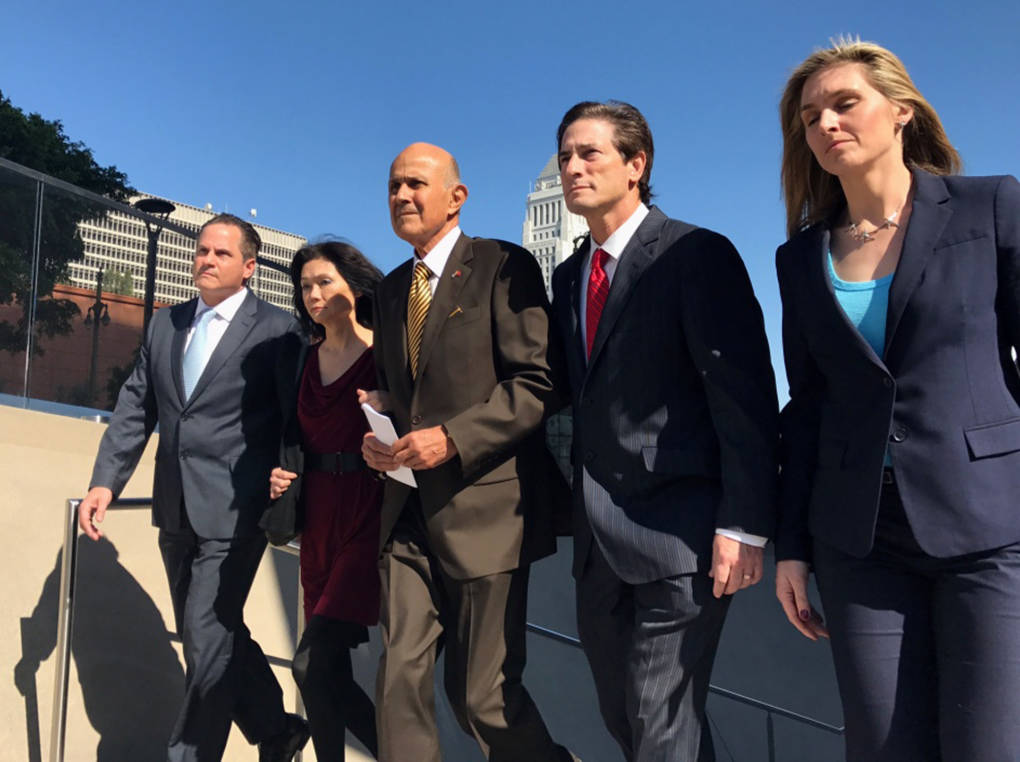
"caption": "Former L.A. County Sheriff Lee Baca (C) leaves the federal courthouse after being convicted of lying, conspiracy and obstructing an FBI investigation into inmate abuse in the jails.",
"description": "Former L.A. County Sheriff Lee Baca (C) leaves the federal courthouse after being convicted of lying, conspiracy and obstructing an FBI investigation into inmate abuse in the jails.",
"title": "BacaWalks",
"credit": "Annie Gilbertson/KPCC",
"status": "inherit",
"isLoading": false,
"fetchFailed": false
},
"news_11359506": {
"type": "attachments",
"id": "news_11359506",
"meta": {
"index": "attachments_1716263798",
"site": "news",
"id": "11359506",
"found": true
},
"parent": 11359500,
"imgSizes": {
"small": {
"file": "https://ww2.kqed.org/app/uploads/sites/10/2017/03/March-520x347.jpg",
"width": 520,
"mimeType": "image/jpeg",
"height": 347
},
"twentyfourteen-full-width": {
"file": "https://ww2.kqed.org/app/uploads/sites/10/2017/03/March-1038x576.jpg",
"width": 1038,
"mimeType": "image/jpeg",
"height": 576
},
"thumbnail": {
"file": "https://ww2.kqed.org/app/uploads/sites/10/2017/03/March-160x107.jpg",
"width": 160,
"mimeType": "image/jpeg",
"height": 107
},
"fd-sm": {
"file": "https://ww2.kqed.org/app/uploads/sites/10/2017/03/March-960x640.jpg",
"width": 960,
"mimeType": "image/jpeg",
"height": 640
},
"post-thumbnail": {
"file": "https://ww2.kqed.org/app/uploads/sites/10/2017/03/March-672x372.jpg",
"width": 672,
"mimeType": "image/jpeg",
"height": 372
},
"xsmall": {
"file": "https://ww2.kqed.org/app/uploads/sites/10/2017/03/March-375x250.jpg",
"width": 375,
"mimeType": "image/jpeg",
"height": 250
},
"kqedFullSize": {
"file": "https://ww2.kqed.org/app/uploads/sites/10/2017/03/March.jpg",
"width": 1920,
"height": 1280
},
"large": {
"file": "https://ww2.kqed.org/app/uploads/sites/10/2017/03/March-1020x680.jpg",
"width": 1020,
"mimeType": "image/jpeg",
"height": 680
},
"xlarge": {
"file": "https://ww2.kqed.org/app/uploads/sites/10/2017/03/March-1180x787.jpg",
"width": 1180,
"mimeType": "image/jpeg",
"height": 787
},
"guest-author-50": {
"file": "https://ww2.kqed.org/app/uploads/sites/10/2017/03/March-50x50.jpg",
"width": 50,
"mimeType": "image/jpeg",
"height": 50
},
"guest-author-96": {
"file": "https://ww2.kqed.org/app/uploads/sites/10/2017/03/March-96x96.jpg",
"width": 96,
"mimeType": "image/jpeg",
"height": 96
},
"medium": {
"file": "https://ww2.kqed.org/app/uploads/sites/10/2017/03/March-800x533.jpg",
"width": 800,
"mimeType": "image/jpeg",
"height": 533
},
"guest-author-64": {
"file": "https://ww2.kqed.org/app/uploads/sites/10/2017/03/March-64x64.jpg",
"width": 64,
"mimeType": "image/jpeg",
"height": 64
},
"guest-author-32": {
"file": "https://ww2.kqed.org/app/uploads/sites/10/2017/03/March-32x32.jpg",
"width": 32,
"mimeType": "image/jpeg",
"height": 32
},
"fd-lrg": {
"file": "https://ww2.kqed.org/app/uploads/sites/10/2017/03/March-1920x1280.jpg",
"width": 1920,
"mimeType": "image/jpeg",
"height": 1280
},
"fd-med": {
"file": "https://ww2.kqed.org/app/uploads/sites/10/2017/03/March-1180x787.jpg",
"width": 1180,
"mimeType": "image/jpeg",
"height": 787
},
"full-width": {
"file": "https://ww2.kqed.org/app/uploads/sites/10/2017/03/March-1920x1280.jpg",
"width": 1920,
"mimeType": "image/jpeg",
"height": 1280
},
"detail": {
"file": "https://ww2.kqed.org/app/uploads/sites/10/2017/03/March-150x150.jpg",
"width": 150,
"mimeType": "image/jpeg",
"height": 150
},
"guest-author-128": {
"file": "https://ww2.kqed.org/app/uploads/sites/10/2017/03/March-128x128.jpg",
"width": 128,
"mimeType": "image/jpeg",
"height": 128
},
"xxsmall": {
"file": "https://ww2.kqed.org/app/uploads/sites/10/2017/03/March-240x160.jpg",
"width": 240,
"mimeType": "image/jpeg",
"height": 160
}
},
"publishDate": 1489535407,
"modified": 1489624633,
"caption": "A woman holds a placard during the Women's March in Los Angeles on Jan. 21, 2017, the day after the inauguration of President Trump.",
"description": "A woman holds a placard during the Women's March on the day after the inauguration of President Trump on January 21, 2017 in Los Angeles, California.",
"title": "March",
"credit": "David McNew/AFP/Getty Images",
"status": "inherit",
"isLoading": false,
"fetchFailed": false
},
"news_11352023": {
"type": "attachments",
"id": "news_11352023",
"meta": {
"index": "attachments_1716263798",
"site": "news",
"id": "11352023",
"found": true
},
"parent": 11352009,
"imgSizes": {
"small": {
"file": "https://ww2.kqed.org/app/uploads/sites/10/2017/03/Azteca-520x386.jpg",
"width": 520,
"mimeType": "image/jpeg",
"height": 386
},
"twentyfourteen-full-width": {
"file": "https://ww2.kqed.org/app/uploads/sites/10/2017/03/Azteca-1038x576.jpg",
"width": 1038,
"mimeType": "image/jpeg",
"height": 576
},
"thumbnail": {
"file": "https://ww2.kqed.org/app/uploads/sites/10/2017/03/Azteca-160x119.jpg",
"width": 160,
"mimeType": "image/jpeg",
"height": 119
},
"fd-sm": {
"file": "https://ww2.kqed.org/app/uploads/sites/10/2017/03/Azteca-960x713.jpg",
"width": 960,
"mimeType": "image/jpeg",
"height": 713
},
"post-thumbnail": {
"file": "https://ww2.kqed.org/app/uploads/sites/10/2017/03/Azteca-672x372.jpg",
"width": 672,
"mimeType": "image/jpeg",
"height": 372
},
"xsmall": {
"file": "https://ww2.kqed.org/app/uploads/sites/10/2017/03/Azteca-375x279.jpg",
"width": 375,
"mimeType": "image/jpeg",
"height": 279
},
"kqedFullSize": {
"file": "https://ww2.kqed.org/app/uploads/sites/10/2017/03/Azteca.jpg",
"width": 1920,
"height": 1426
},
"large": {
"file": "https://ww2.kqed.org/app/uploads/sites/10/2017/03/Azteca-1020x758.jpg",
"width": 1020,
"mimeType": "image/jpeg",
"height": 758
},
"xlarge": {
"file": "https://ww2.kqed.org/app/uploads/sites/10/2017/03/Azteca-1180x876.jpg",
"width": 1180,
"mimeType": "image/jpeg",
"height": 876
},
"guest-author-50": {
"file": "https://ww2.kqed.org/app/uploads/sites/10/2017/03/Azteca-50x50.jpg",
"width": 50,
"mimeType": "image/jpeg",
"height": 50
},
"guest-author-96": {
"file": "https://ww2.kqed.org/app/uploads/sites/10/2017/03/Azteca-96x96.jpg",
"width": 96,
"mimeType": "image/jpeg",
"height": 96
},
"medium": {
"file": "https://ww2.kqed.org/app/uploads/sites/10/2017/03/Azteca-800x594.jpg",
"width": 800,
"mimeType": "image/jpeg",
"height": 594
},
"guest-author-64": {
"file": "https://ww2.kqed.org/app/uploads/sites/10/2017/03/Azteca-64x64.jpg",
"width": 64,
"mimeType": "image/jpeg",
"height": 64
},
"guest-author-32": {
"file": "https://ww2.kqed.org/app/uploads/sites/10/2017/03/Azteca-32x32.jpg",
"width": 32,
"mimeType": "image/jpeg",
"height": 32
},
"fd-lrg": {
"file": "https://ww2.kqed.org/app/uploads/sites/10/2017/03/Azteca-1920x1426.jpg",
"width": 1920,
"mimeType": "image/jpeg",
"height": 1426
},
"fd-med": {
"file": "https://ww2.kqed.org/app/uploads/sites/10/2017/03/Azteca-1180x876.jpg",
"width": 1180,
"mimeType": "image/jpeg",
"height": 876
},
"full-width": {
"file": "https://ww2.kqed.org/app/uploads/sites/10/2017/03/Azteca-1920x1426.jpg",
"width": 1920,
"mimeType": "image/jpeg",
"height": 1426
},
"detail": {
"file": "https://ww2.kqed.org/app/uploads/sites/10/2017/03/Azteca-150x150.jpg",
"width": 150,
"mimeType": "image/jpeg",
"height": 150
},
"guest-author-128": {
"file": "https://ww2.kqed.org/app/uploads/sites/10/2017/03/Azteca-128x128.jpg",
"width": 128,
"mimeType": "image/jpeg",
"height": 128
},
"xxsmall": {
"file": "https://ww2.kqed.org/app/uploads/sites/10/2017/03/Azteca-240x178.jpg",
"width": 240,
"mimeType": "image/jpeg",
"height": 178
}
},
"publishDate": 1489103189,
"modified": 1489103234,
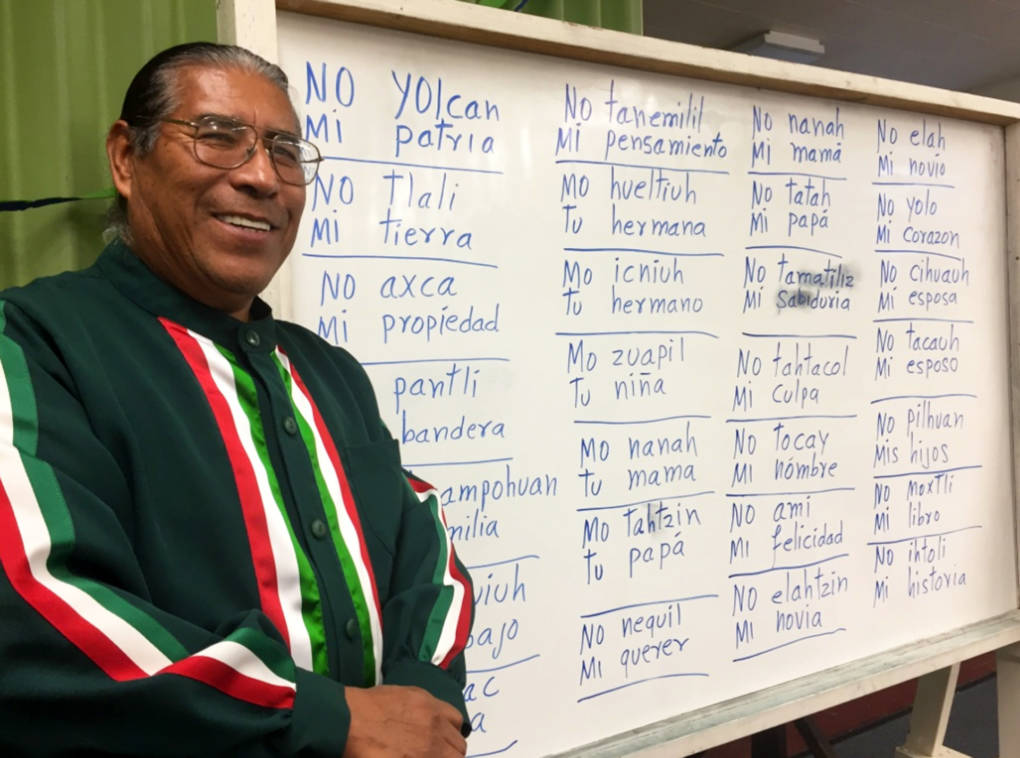
"caption": "For about 26 years, David Vazquez has been teaching the ancient language and culture of the Aztecs, Nahuatl.",
"description": "For about 26 years, David Vazquez has been teaching the ancient language and culture of the Aztecs, Nahuatl.",
"title": "Azteca",
"credit": "Lori Galarreta/KPCC",
"status": "inherit",
"isLoading": false,
"fetchFailed": false
},
"news_11336762": {
"type": "attachments",
"id": "news_11336762",
"meta": {
"index": "attachments_1716263798",
"site": "news",
"id": "11336762",
"found": true
},
"parent": 11332186,
"imgSizes": {
"small": {
"file": "https://ww2.kqed.org/app/uploads/sites/10/2017/02/BishopJoseGomez-520x336.jpg",
"width": 520,
"mimeType": "image/jpeg",
"height": 336
},
"twentyfourteen-full-width": {
"file": "https://ww2.kqed.org/app/uploads/sites/10/2017/02/BishopJoseGomez-1038x576.jpg",
"width": 1038,
"mimeType": "image/jpeg",
"height": 576
},
"thumbnail": {
"file": "https://ww2.kqed.org/app/uploads/sites/10/2017/02/BishopJoseGomez-160x103.jpg",
"width": 160,
"mimeType": "image/jpeg",
"height": 103
},
"fd-sm": {
"file": "https://ww2.kqed.org/app/uploads/sites/10/2017/02/BishopJoseGomez-960x621.jpg",
"width": 960,
"mimeType": "image/jpeg",
"height": 621
},
"post-thumbnail": {
"file": "https://ww2.kqed.org/app/uploads/sites/10/2017/02/BishopJoseGomez-672x372.jpg",
"width": 672,
"mimeType": "image/jpeg",
"height": 372
},
"xsmall": {
"file": "https://ww2.kqed.org/app/uploads/sites/10/2017/02/BishopJoseGomez-375x242.jpg",
"width": 375,
"mimeType": "image/jpeg",
"height": 242
},
"kqedFullSize": {
"file": "https://ww2.kqed.org/app/uploads/sites/10/2017/02/BishopJoseGomez.jpg",
"width": 1920,
"height": 1241
},
"large": {
"file": "https://ww2.kqed.org/app/uploads/sites/10/2017/02/BishopJoseGomez-1020x659.jpg",
"width": 1020,
"mimeType": "image/jpeg",
"height": 659
},
"xlarge": {
"file": "https://ww2.kqed.org/app/uploads/sites/10/2017/02/BishopJoseGomez-1180x763.jpg",
"width": 1180,
"mimeType": "image/jpeg",
"height": 763
},
"guest-author-50": {
"file": "https://ww2.kqed.org/app/uploads/sites/10/2017/02/BishopJoseGomez-50x50.jpg",
"width": 50,
"mimeType": "image/jpeg",
"height": 50
},
"guest-author-96": {
"file": "https://ww2.kqed.org/app/uploads/sites/10/2017/02/BishopJoseGomez-96x96.jpg",
"width": 96,
"mimeType": "image/jpeg",
"height": 96
},
"medium": {
"file": "https://ww2.kqed.org/app/uploads/sites/10/2017/02/BishopJoseGomez-800x517.jpg",
"width": 800,
"mimeType": "image/jpeg",
"height": 517
},
"guest-author-64": {
"file": "https://ww2.kqed.org/app/uploads/sites/10/2017/02/BishopJoseGomez-64x64.jpg",
"width": 64,
"mimeType": "image/jpeg",
"height": 64
},
"guest-author-32": {
"file": "https://ww2.kqed.org/app/uploads/sites/10/2017/02/BishopJoseGomez-32x32.jpg",
"width": 32,
"mimeType": "image/jpeg",
"height": 32
},
"fd-lrg": {
"file": "https://ww2.kqed.org/app/uploads/sites/10/2017/02/BishopJoseGomez-1920x1241.jpg",
"width": 1920,
"mimeType": "image/jpeg",
"height": 1241
},
"fd-med": {
"file": "https://ww2.kqed.org/app/uploads/sites/10/2017/02/BishopJoseGomez-1180x763.jpg",
"width": 1180,
"mimeType": "image/jpeg",
"height": 763
},
"full-width": {
"file": "https://ww2.kqed.org/app/uploads/sites/10/2017/02/BishopJoseGomez-1920x1241.jpg",
"width": 1920,
"mimeType": "image/jpeg",
"height": 1241
},
"detail": {
"file": "https://ww2.kqed.org/app/uploads/sites/10/2017/02/BishopJoseGomez-150x150.jpg",
"width": 150,
"mimeType": "image/jpeg",
"height": 150
},
"guest-author-128": {
"file": "https://ww2.kqed.org/app/uploads/sites/10/2017/02/BishopJoseGomez-128x128.jpg",
"width": 128,
"mimeType": "image/jpeg",
"height": 128
},
"xxsmall": {
"file": "https://ww2.kqed.org/app/uploads/sites/10/2017/02/BishopJoseGomez-240x155.jpg",
"width": 240,
"mimeType": "image/jpeg",
"height": 155
}
},
"publishDate": 1488238792,
"modified": 1488238898,
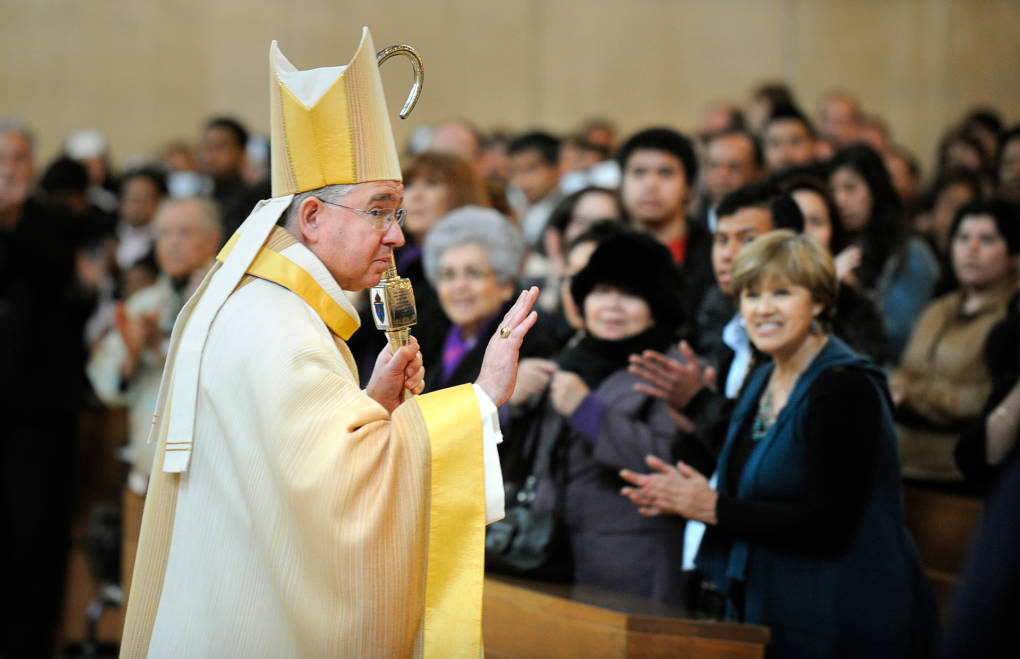
"caption": "Los Angeles Archbishop Jose Gomez during his Ceremony of Transition in 2011. ",
"description": "Los Angeles Archbishop Jose Gomez during his Ceremony of Transition in 2011. ",
"title": "BishopJoseGomez",
"credit": "Wally Skalij/Getty Images",
"status": "inherit",
"isLoading": false,
"fetchFailed": false
},
"news_11337956": {
"type": "attachments",
"id": "news_11337956",
"meta": {
"index": "attachments_1716263798",
"site": "news",
"id": "11337956",
"found": true
},
"parent": 11337955,
"imgSizes": {
"small": {
"file": "https://ww2.kqed.org/app/uploads/sites/10/2017/02/riverside_wide-08bf06716383f7715f1aadd2f0f409a91e2d45f0-520x292.jpg",
"width": 520,
"mimeType": "image/jpeg",
"height": 292
},
"twentyfourteen-full-width": {
"file": "https://ww2.kqed.org/app/uploads/sites/10/2017/02/riverside_wide-08bf06716383f7715f1aadd2f0f409a91e2d45f0-1038x576.jpg",
"width": 1038,
"mimeType": "image/jpeg",
"height": 576
},
"thumbnail": {
"file": "https://ww2.kqed.org/app/uploads/sites/10/2017/02/riverside_wide-08bf06716383f7715f1aadd2f0f409a91e2d45f0-160x90.jpg",
"width": 160,
"mimeType": "image/jpeg",
"height": 90
},
"fd-sm": {
"file": "https://ww2.kqed.org/app/uploads/sites/10/2017/02/riverside_wide-08bf06716383f7715f1aadd2f0f409a91e2d45f0-960x539.jpg",
"width": 960,
"mimeType": "image/jpeg",
"height": 539
},
"post-thumbnail": {
"file": "https://ww2.kqed.org/app/uploads/sites/10/2017/02/riverside_wide-08bf06716383f7715f1aadd2f0f409a91e2d45f0-672x372.jpg",
"width": 672,
"mimeType": "image/jpeg",
"height": 372
},
"xsmall": {
"file": "https://ww2.kqed.org/app/uploads/sites/10/2017/02/riverside_wide-08bf06716383f7715f1aadd2f0f409a91e2d45f0-375x211.jpg",
"width": 375,
"mimeType": "image/jpeg",
"height": 211
},
"kqedFullSize": {
"file": "https://ww2.kqed.org/app/uploads/sites/10/2017/02/riverside_wide-08bf06716383f7715f1aadd2f0f409a91e2d45f0.jpg",
"width": 1714,
"height": 963
},
"large": {
"file": "https://ww2.kqed.org/app/uploads/sites/10/2017/02/riverside_wide-08bf06716383f7715f1aadd2f0f409a91e2d45f0-1020x573.jpg",
"width": 1020,
"mimeType": "image/jpeg",
"height": 573
},
"xlarge": {
"file": "https://ww2.kqed.org/app/uploads/sites/10/2017/02/riverside_wide-08bf06716383f7715f1aadd2f0f409a91e2d45f0-1180x663.jpg",
"width": 1180,
"mimeType": "image/jpeg",
"height": 663
},
"guest-author-50": {
"file": "https://ww2.kqed.org/app/uploads/sites/10/2017/02/riverside_wide-08bf06716383f7715f1aadd2f0f409a91e2d45f0-50x50.jpg",
"width": 50,
"mimeType": "image/jpeg",
"height": 50
},
"guest-author-96": {
"file": "https://ww2.kqed.org/app/uploads/sites/10/2017/02/riverside_wide-08bf06716383f7715f1aadd2f0f409a91e2d45f0-96x96.jpg",
"width": 96,
"mimeType": "image/jpeg",
"height": 96
},
"medium": {
"file": "https://ww2.kqed.org/app/uploads/sites/10/2017/02/riverside_wide-08bf06716383f7715f1aadd2f0f409a91e2d45f0-800x449.jpg",
"width": 800,
"mimeType": "image/jpeg",
"height": 449
},
"guest-author-64": {
"file": "https://ww2.kqed.org/app/uploads/sites/10/2017/02/riverside_wide-08bf06716383f7715f1aadd2f0f409a91e2d45f0-64x64.jpg",
"width": 64,
"mimeType": "image/jpeg",
"height": 64
},
"guest-author-32": {
"file": "https://ww2.kqed.org/app/uploads/sites/10/2017/02/riverside_wide-08bf06716383f7715f1aadd2f0f409a91e2d45f0-32x32.jpg",
"width": 32,
"mimeType": "image/jpeg",
"height": 32
},
"fd-med": {
"file": "https://ww2.kqed.org/app/uploads/sites/10/2017/02/riverside_wide-08bf06716383f7715f1aadd2f0f409a91e2d45f0-1180x663.jpg",
"width": 1180,
"mimeType": "image/jpeg",
"height": 663
},
"detail": {
"file": "https://ww2.kqed.org/app/uploads/sites/10/2017/02/riverside_wide-08bf06716383f7715f1aadd2f0f409a91e2d45f0-150x150.jpg",
"width": 150,
"mimeType": "image/jpeg",
"height": 150
},
"guest-author-128": {
"file": "https://ww2.kqed.org/app/uploads/sites/10/2017/02/riverside_wide-08bf06716383f7715f1aadd2f0f409a91e2d45f0-128x128.jpg",
"width": 128,
"mimeType": "image/jpeg",
"height": 128
},
"xxsmall": {
"file": "https://ww2.kqed.org/app/uploads/sites/10/2017/02/riverside_wide-08bf06716383f7715f1aadd2f0f409a91e2d45f0-240x135.jpg",
"width": 240,
"mimeType": "image/jpeg",
"height": 135
}
},
"publishDate": 1488306630,
"modified": 1488306786,
"caption": "One of two homes that suffered catastrophic damage from a plane crash Monday is seen in this image released by the city of Riverside.",
"description": "One of two homes that suffered catastrophic damage from a plane crash Monday is seen in this image released by the city of Riverside, Calif.",
"title": "One of two homes that suffered catastrophic damage from a plane crash Monday is seen in this image released by the city of Riverside, Calif.",
"credit": "City of Riverside",
"status": "inherit",
"isLoading": false,
"fetchFailed": false
},
"news_11328877": {
"type": "attachments",
"id": "news_11328877",
"meta": {
"index": "attachments_1716263798",
"site": "news",
"id": "11328877",
"found": true
},
"parent": 11309475,
"imgSizes": {
"small": {
"file": "https://ww2.kqed.org/app/uploads/sites/10/2017/02/GettyImages-632705728-520x385.jpg",
"width": 520,
"mimeType": "image/jpeg",
"height": 385
},
"twentyfourteen-full-width": {
"file": "https://ww2.kqed.org/app/uploads/sites/10/2017/02/GettyImages-632705728-1038x576.jpg",
"width": 1038,
"mimeType": "image/jpeg",
"height": 576
},
"thumbnail": {
"file": "https://ww2.kqed.org/app/uploads/sites/10/2017/02/GettyImages-632705728-160x118.jpg",
"width": 160,
"mimeType": "image/jpeg",
"height": 118
},
"fd-sm": {
"file": "https://ww2.kqed.org/app/uploads/sites/10/2017/02/GettyImages-632705728-960x710.jpg",
"width": 960,
"mimeType": "image/jpeg",
"height": 710
},
"post-thumbnail": {
"file": "https://ww2.kqed.org/app/uploads/sites/10/2017/02/GettyImages-632705728-672x372.jpg",
"width": 672,
"mimeType": "image/jpeg",
"height": 372
},
"xsmall": {
"file": "https://ww2.kqed.org/app/uploads/sites/10/2017/02/GettyImages-632705728-375x277.jpg",
"width": 375,
"mimeType": "image/jpeg",
"height": 277
},
"kqedFullSize": {
"file": "https://ww2.kqed.org/app/uploads/sites/10/2017/02/GettyImages-632705728.jpg",
"width": 4224,
"height": 3124
},
"large": {
"file": "https://ww2.kqed.org/app/uploads/sites/10/2017/02/GettyImages-632705728-1020x754.jpg",
"width": 1020,
"mimeType": "image/jpeg",
"height": 754
},
"xlarge": {
"file": "https://ww2.kqed.org/app/uploads/sites/10/2017/02/GettyImages-632705728-1180x873.jpg",
"width": 1180,
"mimeType": "image/jpeg",
"height": 873
},
"guest-author-50": {
"file": "https://ww2.kqed.org/app/uploads/sites/10/2017/02/GettyImages-632705728-50x50.jpg",
"width": 50,
"mimeType": "image/jpeg",
"height": 50
},
"guest-author-96": {
"file": "https://ww2.kqed.org/app/uploads/sites/10/2017/02/GettyImages-632705728-96x96.jpg",
"width": 96,
"mimeType": "image/jpeg",
"height": 96
},
"medium": {
"file": "https://ww2.kqed.org/app/uploads/sites/10/2017/02/GettyImages-632705728-800x592.jpg",
"width": 800,
"mimeType": "image/jpeg",
"height": 592
},
"guest-author-64": {
"file": "https://ww2.kqed.org/app/uploads/sites/10/2017/02/GettyImages-632705728-64x64.jpg",
"width": 64,
"mimeType": "image/jpeg",
"height": 64
},
"guest-author-32": {
"file": "https://ww2.kqed.org/app/uploads/sites/10/2017/02/GettyImages-632705728-32x32.jpg",
"width": 32,
"mimeType": "image/jpeg",
"height": 32
},
"fd-lrg": {
"file": "https://ww2.kqed.org/app/uploads/sites/10/2017/02/GettyImages-632705728-1920x1420.jpg",
"width": 1920,
"mimeType": "image/jpeg",
"height": 1420
},
"fd-med": {
"file": "https://ww2.kqed.org/app/uploads/sites/10/2017/02/GettyImages-632705728-1180x873.jpg",
"width": 1180,
"mimeType": "image/jpeg",
"height": 873
},
"full-width": {
"file": "https://ww2.kqed.org/app/uploads/sites/10/2017/02/GettyImages-632705728-1920x1420.jpg",
"width": 1920,
"mimeType": "image/jpeg",
"height": 1420
},
"detail": {
"file": "https://ww2.kqed.org/app/uploads/sites/10/2017/02/GettyImages-632705728-150x150.jpg",
"width": 150,
"mimeType": "image/jpeg",
"height": 150
},
"guest-author-128": {
"file": "https://ww2.kqed.org/app/uploads/sites/10/2017/02/GettyImages-632705728-128x128.jpg",
"width": 128,
"mimeType": "image/jpeg",
"height": 128
},
"xxsmall": {
"file": "https://ww2.kqed.org/app/uploads/sites/10/2017/02/GettyImages-632705728-240x178.jpg",
"width": 240,
"mimeType": "image/jpeg",
"height": 178
}
},
"publishDate": 1487808665,
"modified": 1487895466,
"caption": "Los Angeles Mayor Eric Garcetti holds an Olympic torch from the 1984 games with former Chinese Olympians as they celebrate the Los Angeles City Council's final approval to bid for the 2024 Olympics. ",
"description": null,
"title": "US-OLY-2024-LOSANGELES-BUDGET",
"credit": "Mark Ralston/AFP/Getty Images",
"status": "inherit",
"isLoading": false,
"fetchFailed": false
},
"bayareabites_115418": {
"type": "attachments",
"id": "bayareabites_115418",
"meta": {
"index": "attachments_1716263798",
"site": "bayareabites",
"id": "115418",
"found": true
},
"parent": 115417,
"imgSizes": {
"small": {
"file": "https://ww2.kqed.org/app/uploads/sites/24/2017/02/last-stand1-bd1041024510404d1a716bf574600d4d8a619e5a-520x390.jpg",
"width": 520,
"mimeType": "image/jpeg",
"height": 390
},
"twentyfourteen-full-width": {
"file": "https://ww2.kqed.org/app/uploads/sites/24/2017/02/last-stand1-bd1041024510404d1a716bf574600d4d8a619e5a-1038x576.jpg",
"width": 1038,
"mimeType": "image/jpeg",
"height": 576
},
"thumbnail": {
"file": "https://ww2.kqed.org/app/uploads/sites/24/2017/02/last-stand1-bd1041024510404d1a716bf574600d4d8a619e5a-160x120.jpg",
"width": 160,
"mimeType": "image/jpeg",
"height": 120
},
"fd-sm": {
"file": "https://ww2.kqed.org/app/uploads/sites/24/2017/02/last-stand1-bd1041024510404d1a716bf574600d4d8a619e5a-960x720.jpg",
"width": 960,
"mimeType": "image/jpeg",
"height": 720
},
"post-thumbnail": {
"file": "https://ww2.kqed.org/app/uploads/sites/24/2017/02/last-stand1-bd1041024510404d1a716bf574600d4d8a619e5a-672x372.jpg",
"width": 672,
"mimeType": "image/jpeg",
"height": 372
},
"xsmall": {
"file": "https://ww2.kqed.org/app/uploads/sites/24/2017/02/last-stand1-bd1041024510404d1a716bf574600d4d8a619e5a-375x281.jpg",
"width": 375,
"mimeType": "image/jpeg",
"height": 281
},
"kqedFullSize": {
"file": "https://ww2.kqed.org/app/uploads/sites/24/2017/02/last-stand1-bd1041024510404d1a716bf574600d4d8a619e5a.jpg",
"width": 1906,
"height": 1429
},
"large": {
"file": "https://ww2.kqed.org/app/uploads/sites/24/2017/02/last-stand1-bd1041024510404d1a716bf574600d4d8a619e5a-1020x765.jpg",
"width": 1020,
"mimeType": "image/jpeg",
"height": 765
},
"xlarge": {
"file": "https://ww2.kqed.org/app/uploads/sites/24/2017/02/last-stand1-bd1041024510404d1a716bf574600d4d8a619e5a-1180x885.jpg",
"width": 1180,
"mimeType": "image/jpeg",
"height": 885
},
"guest-author-50": {
"file": "https://ww2.kqed.org/app/uploads/sites/24/2017/02/last-stand1-bd1041024510404d1a716bf574600d4d8a619e5a-50x50.jpg",
"width": 50,
"mimeType": "image/jpeg",
"height": 50
},
"guest-author-96": {
"file": "https://ww2.kqed.org/app/uploads/sites/24/2017/02/last-stand1-bd1041024510404d1a716bf574600d4d8a619e5a-96x96.jpg",
"width": 96,
"mimeType": "image/jpeg",
"height": 96
},
"medium": {
"file": "https://ww2.kqed.org/app/uploads/sites/24/2017/02/last-stand1-bd1041024510404d1a716bf574600d4d8a619e5a-800x600.jpg",
"width": 800,
"mimeType": "image/jpeg",
"height": 600
},
"guest-author-64": {
"file": "https://ww2.kqed.org/app/uploads/sites/24/2017/02/last-stand1-bd1041024510404d1a716bf574600d4d8a619e5a-64x64.jpg",
"width": 64,
"mimeType": "image/jpeg",
"height": 64
},
"guest-author-32": {
"file": "https://ww2.kqed.org/app/uploads/sites/24/2017/02/last-stand1-bd1041024510404d1a716bf574600d4d8a619e5a-32x32.jpg",
"width": 32,
"mimeType": "image/jpeg",
"height": 32
},
"fd-med": {
"file": "https://ww2.kqed.org/app/uploads/sites/24/2017/02/last-stand1-bd1041024510404d1a716bf574600d4d8a619e5a-1180x885.jpg",
"width": 1180,
"mimeType": "image/jpeg",
"height": 885
},
"detail": {
"file": "https://ww2.kqed.org/app/uploads/sites/24/2017/02/last-stand1-bd1041024510404d1a716bf574600d4d8a619e5a-150x150.jpg",
"width": 150,
"mimeType": "image/jpeg",
"height": 150
},
"medium_large": {
"file": "https://ww2.kqed.org/app/uploads/sites/24/2017/02/last-stand1-bd1041024510404d1a716bf574600d4d8a619e5a-768x576.jpg",
"width": 768,
"mimeType": "image/jpeg",
"height": 576
},
"guest-author-128": {
"file": "https://ww2.kqed.org/app/uploads/sites/24/2017/02/last-stand1-bd1041024510404d1a716bf574600d4d8a619e5a-128x128.jpg",
"width": 128,
"mimeType": "image/jpeg",
"height": 128
},
"xxsmall": {
"file": "https://ww2.kqed.org/app/uploads/sites/24/2017/02/last-stand1-bd1041024510404d1a716bf574600d4d8a619e5a-240x180.jpg",
"width": 240,
"mimeType": "image/jpeg",
"height": 180
}
},
"publishDate": 1487279179,
"modified": 1487314932,
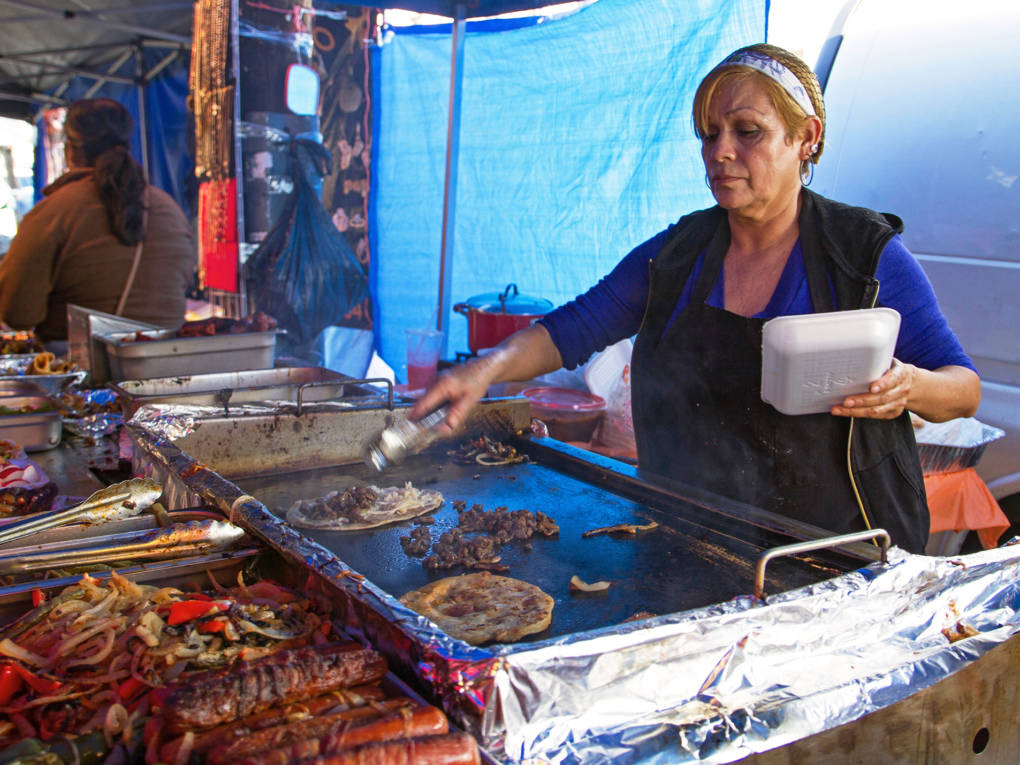
"caption": "A street vendor makes huaraches and quesadillas on the sidewalk in the piñata district in Los Angeles. LA is the only major U.S. city where selling food on the sidewalk is illegal. President Trump's immigration policies have pushed the city council to change the law. But the devil is in the details.",
"description": "A street vendor makes \u003cem>huaraches\u003c/em> and quesadillas on the sidewalk in the piñata district in Los Angeles. LA is the only major U.S. city where selling food on the sidewalk is illegal. President Trump's immigration policies have pushed the city council to change the law. But the devil is in the detail",
"title": "A street vendor makes huaraches and quesadillas on the sidewalk in the piñata district in Los Angeles. LA is the only major U.S. city where selling food on the sidewalk is illegal. President Trump's immigration policies have pushed the city council to change the law. But the devil is in the details.",
"credit": "Camellia Tse for NPR",
"status": "inherit",
"isLoading": false,
"fetchFailed": false
},
"news_11305910": {
"type": "attachments",
"id": "news_11305910",
"meta": {
"index": "attachments_1716263798",
"site": "news",
"id": "11305910",
"found": true
},
"parent": 11305666,
"imgSizes": {
"small": {
"file": "https://ww2.kqed.org/app/uploads/sites/10/2017/02/ManhoodDevOakland-520x288.jpg",
"width": 520,
"mimeType": "image/jpeg",
"height": 288
},
"twentyfourteen-full-width": {
"file": "https://ww2.kqed.org/app/uploads/sites/10/2017/02/ManhoodDevOakland-1038x576.jpg",
"width": 1038,
"mimeType": "image/jpeg",
"height": 576
},
"thumbnail": {
"file": "https://ww2.kqed.org/app/uploads/sites/10/2017/02/ManhoodDevOakland-160x89.jpg",
"width": 160,
"mimeType": "image/jpeg",
"height": 89
},
"fd-sm": {
"file": "https://ww2.kqed.org/app/uploads/sites/10/2017/02/ManhoodDevOakland-960x533.jpg",
"width": 960,
"mimeType": "image/jpeg",
"height": 533
},
"post-thumbnail": {
"file": "https://ww2.kqed.org/app/uploads/sites/10/2017/02/ManhoodDevOakland-672x372.jpg",
"width": 672,
"mimeType": "image/jpeg",
"height": 372
},
"xsmall": {
"file": "https://ww2.kqed.org/app/uploads/sites/10/2017/02/ManhoodDevOakland-375x208.jpg",
"width": 375,
"mimeType": "image/jpeg",
"height": 208
},
"kqedFullSize": {
"file": "https://ww2.kqed.org/app/uploads/sites/10/2017/02/ManhoodDevOakland.jpg",
"width": 1920,
"height": 1065
},
"large": {
"file": "https://ww2.kqed.org/app/uploads/sites/10/2017/02/ManhoodDevOakland-1020x566.jpg",
"width": 1020,
"mimeType": "image/jpeg",
"height": 566
},
"xlarge": {
"file": "https://ww2.kqed.org/app/uploads/sites/10/2017/02/ManhoodDevOakland-1180x655.jpg",
"width": 1180,
"mimeType": "image/jpeg",
"height": 655
},
"guest-author-50": {
"file": "https://ww2.kqed.org/app/uploads/sites/10/2017/02/ManhoodDevOakland-50x50.jpg",
"width": 50,
"mimeType": "image/jpeg",
"height": 50
},
"guest-author-96": {
"file": "https://ww2.kqed.org/app/uploads/sites/10/2017/02/ManhoodDevOakland-96x96.jpg",
"width": 96,
"mimeType": "image/jpeg",
"height": 96
},
"medium": {
"file": "https://ww2.kqed.org/app/uploads/sites/10/2017/02/ManhoodDevOakland-800x444.jpg",
"width": 800,
"mimeType": "image/jpeg",
"height": 444
},
"guest-author-64": {
"file": "https://ww2.kqed.org/app/uploads/sites/10/2017/02/ManhoodDevOakland-64x64.jpg",
"width": 64,
"mimeType": "image/jpeg",
"height": 64
},
"guest-author-32": {
"file": "https://ww2.kqed.org/app/uploads/sites/10/2017/02/ManhoodDevOakland-32x32.jpg",
"width": 32,
"mimeType": "image/jpeg",
"height": 32
},
"fd-lrg": {
"file": "https://ww2.kqed.org/app/uploads/sites/10/2017/02/ManhoodDevOakland-1920x1065.jpg",
"width": 1920,
"mimeType": "image/jpeg",
"height": 1065
},
"fd-med": {
"file": "https://ww2.kqed.org/app/uploads/sites/10/2017/02/ManhoodDevOakland-1180x655.jpg",
"width": 1180,
"mimeType": "image/jpeg",
"height": 655
},
"full-width": {
"file": "https://ww2.kqed.org/app/uploads/sites/10/2017/02/ManhoodDevOakland-1920x1065.jpg",
"width": 1920,
"mimeType": "image/jpeg",
"height": 1065
},
"detail": {
"file": "https://ww2.kqed.org/app/uploads/sites/10/2017/02/ManhoodDevOakland-150x150.jpg",
"width": 150,
"mimeType": "image/jpeg",
"height": 150
},
"guest-author-128": {
"file": "https://ww2.kqed.org/app/uploads/sites/10/2017/02/ManhoodDevOakland-128x128.jpg",
"width": 128,
"mimeType": "image/jpeg",
"height": 128
},
"xxsmall": {
"file": "https://ww2.kqed.org/app/uploads/sites/10/2017/02/ManhoodDevOakland-240x133.jpg",
"width": 240,
"mimeType": "image/jpeg",
"height": 133
}
},
"publishDate": 1486505948,
"modified": 1486605034,
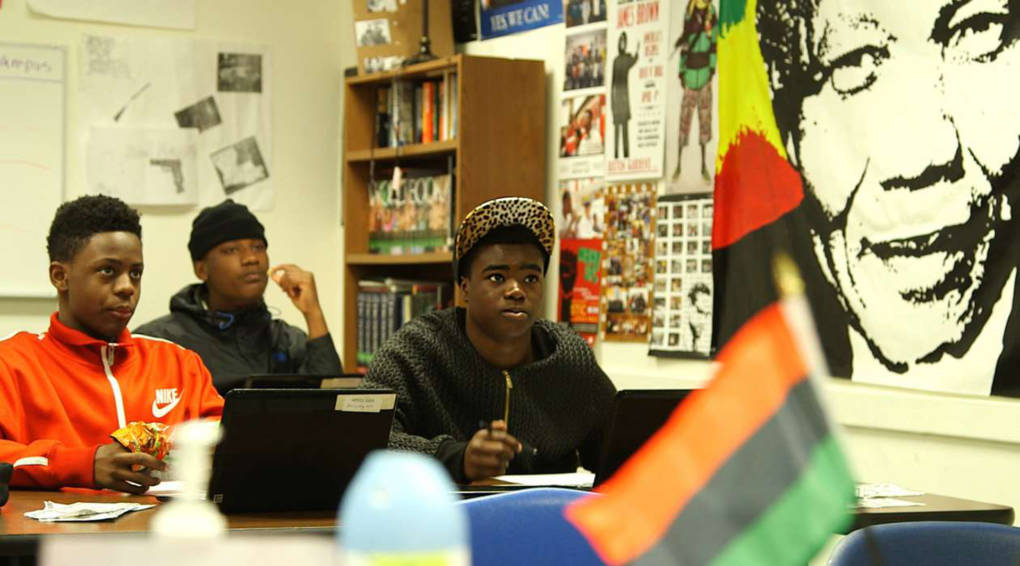
"caption": "Tenth-grade Manhood Development class students at Oakland High absorb a discussion about college admissions.",
"description": "Tenth grade Manhood Development class students at Oakland High absorb a discussion about college admissions.",
"title": "ManhoodDevOakland",
"credit": "Eleanor Bell Fox/Center for Public Integrity",
"status": "inherit",
"isLoading": false,
"fetchFailed": false
},
"news_11298463": {
"type": "attachments",
"id": "news_11298463",
"meta": {
"index": "attachments_1716263798",
"site": "news",
"id": "11298463",
"found": true
},
"parent": 11298456,
"imgSizes": {
"small": {
"file": "https://ww2.kqed.org/app/uploads/sites/10/2017/02/AliReturns-520x346.jpg",
"width": 520,
"mimeType": "image/jpeg",
"height": 346
},
"twentyfourteen-full-width": {
"file": "https://ww2.kqed.org/app/uploads/sites/10/2017/02/AliReturns-1038x576.jpg",
"width": 1038,
"mimeType": "image/jpeg",
"height": 576
},
"thumbnail": {
"file": "https://ww2.kqed.org/app/uploads/sites/10/2017/02/AliReturns-160x106.jpg",
"width": 160,
"mimeType": "image/jpeg",
"height": 106
},
"fd-sm": {
"file": "https://ww2.kqed.org/app/uploads/sites/10/2017/02/AliReturns-960x639.jpg",
"width": 960,
"mimeType": "image/jpeg",
"height": 639
},
"post-thumbnail": {
"file": "https://ww2.kqed.org/app/uploads/sites/10/2017/02/AliReturns-672x372.jpg",
"width": 672,
"mimeType": "image/jpeg",
"height": 372
},
"xsmall": {
"file": "https://ww2.kqed.org/app/uploads/sites/10/2017/02/AliReturns-375x249.jpg",
"width": 375,
"mimeType": "image/jpeg",
"height": 249
},
"kqedFullSize": {
"file": "https://ww2.kqed.org/app/uploads/sites/10/2017/02/AliReturns.jpg",
"width": 1920,
"height": 1277
},
"large": {
"file": "https://ww2.kqed.org/app/uploads/sites/10/2017/02/AliReturns-1020x678.jpg",
"width": 1020,
"mimeType": "image/jpeg",
"height": 678
},
"xlarge": {
"file": "https://ww2.kqed.org/app/uploads/sites/10/2017/02/AliReturns-1180x785.jpg",
"width": 1180,
"mimeType": "image/jpeg",
"height": 785
},
"guest-author-50": {
"file": "https://ww2.kqed.org/app/uploads/sites/10/2017/02/AliReturns-50x50.jpg",
"width": 50,
"mimeType": "image/jpeg",
"height": 50
},
"guest-author-96": {
"file": "https://ww2.kqed.org/app/uploads/sites/10/2017/02/AliReturns-96x96.jpg",
"width": 96,
"mimeType": "image/jpeg",
"height": 96
},
"medium": {
"file": "https://ww2.kqed.org/app/uploads/sites/10/2017/02/AliReturns-800x532.jpg",
"width": 800,
"mimeType": "image/jpeg",
"height": 532
},
"guest-author-64": {
"file": "https://ww2.kqed.org/app/uploads/sites/10/2017/02/AliReturns-64x64.jpg",
"width": 64,
"mimeType": "image/jpeg",
"height": 64
},
"guest-author-32": {
"file": "https://ww2.kqed.org/app/uploads/sites/10/2017/02/AliReturns-32x32.jpg",
"width": 32,
"mimeType": "image/jpeg",
"height": 32
},
"jmtc-small-thumb": {
"file": "https://ww2.kqed.org/app/uploads/sites/10/2017/02/AliReturns-280x150.jpg",
"width": 280,
"mimeType": "image/jpeg",
"height": 150
},
"fd-lrg": {
"file": "https://ww2.kqed.org/app/uploads/sites/10/2017/02/AliReturns-1920x1277.jpg",
"width": 1920,
"mimeType": "image/jpeg",
"height": 1277
},
"fd-med": {
"file": "https://ww2.kqed.org/app/uploads/sites/10/2017/02/AliReturns-1180x785.jpg",
"width": 1180,
"mimeType": "image/jpeg",
"height": 785
},
"full-width": {
"file": "https://ww2.kqed.org/app/uploads/sites/10/2017/02/AliReturns-1920x1277.jpg",
"width": 1920,
"mimeType": "image/jpeg",
"height": 1277
},
"detail": {
"file": "https://ww2.kqed.org/app/uploads/sites/10/2017/02/AliReturns-150x150.jpg",
"width": 150,
"mimeType": "image/jpeg",
"height": 150
},
"guest-author-128": {
"file": "https://ww2.kqed.org/app/uploads/sites/10/2017/02/AliReturns-128x128.jpg",
"width": 128,
"mimeType": "image/jpeg",
"height": 128
},
"xxsmall": {
"file": "https://ww2.kqed.org/app/uploads/sites/10/2017/02/AliReturns-240x160.jpg",
"width": 240,
"mimeType": "image/jpeg",
"height": 160
}
},
"publishDate": 1486078231,
"modified": 1486078291,
"caption": "Ali Vayeghan, an Iranian citizen who holds a valid visa, is the only traveler so far under Trump’s order who has been allowed to return to the U.S. after being sent away, the ACLU says. He was greeted Thursday by family, Mayor Garcetti (R) and a crowd.",
"description": "Ali Vayeghan, an Iranian citizen who holds a valid visa, is the only traveler so far under Trump’s order who has been allowed to return to the U.S. after being sent away, the ACLU says. He was greeted Thursday by family, Mayor Garcetti (R) and a crowd.",
"title": "AliReturns",
"credit": "Justin Sullivan/Getty Images",
"status": "inherit",
"isLoading": false,
"fetchFailed": false
},
"news_11289288": {
"type": "attachments",
"id": "news_11289288",
"meta": {
"index": "attachments_1716263798",
"site": "news",
"id": "11289288",
"found": true
},
"parent": 11289188,
"imgSizes": {
"small": {
"file": "https://ww2.kqed.org/app/uploads/sites/10/2017/01/BenCarson-520x334.jpg",
"width": 520,
"mimeType": "image/jpeg",
"height": 334
},
"twentyfourteen-full-width": {
"file": "https://ww2.kqed.org/app/uploads/sites/10/2017/01/BenCarson-1038x576.jpg",
"width": 1038,
"mimeType": "image/jpeg",
"height": 576
},
"thumbnail": {
"file": "https://ww2.kqed.org/app/uploads/sites/10/2017/01/BenCarson-160x103.jpg",
"width": 160,
"mimeType": "image/jpeg",
"height": 103
},
"fd-sm": {
"file": "https://ww2.kqed.org/app/uploads/sites/10/2017/01/BenCarson-960x616.jpg",
"width": 960,
"mimeType": "image/jpeg",
"height": 616
},
"post-thumbnail": {
"file": "https://ww2.kqed.org/app/uploads/sites/10/2017/01/BenCarson-672x372.jpg",
"width": 672,
"mimeType": "image/jpeg",
"height": 372
},
"xsmall": {
"file": "https://ww2.kqed.org/app/uploads/sites/10/2017/01/BenCarson-375x241.jpg",
"width": 375,
"mimeType": "image/jpeg",
"height": 241
},
"kqedFullSize": {
"file": "https://ww2.kqed.org/app/uploads/sites/10/2017/01/BenCarson.jpg",
"width": 1920,
"height": 1232
},
"large": {
"file": "https://ww2.kqed.org/app/uploads/sites/10/2017/01/BenCarson-1020x655.jpg",
"width": 1020,
"mimeType": "image/jpeg",
"height": 655
},
"xlarge": {
"file": "https://ww2.kqed.org/app/uploads/sites/10/2017/01/BenCarson-1180x757.jpg",
"width": 1180,
"mimeType": "image/jpeg",
"height": 757
},
"guest-author-50": {
"file": "https://ww2.kqed.org/app/uploads/sites/10/2017/01/BenCarson-50x50.jpg",
"width": 50,
"mimeType": "image/jpeg",
"height": 50
},
"guest-author-96": {
"file": "https://ww2.kqed.org/app/uploads/sites/10/2017/01/BenCarson-96x96.jpg",
"width": 96,
"mimeType": "image/jpeg",
"height": 96
},
"medium": {
"file": "https://ww2.kqed.org/app/uploads/sites/10/2017/01/BenCarson-800x513.jpg",
"width": 800,
"mimeType": "image/jpeg",
"height": 513
},
"guest-author-64": {
"file": "https://ww2.kqed.org/app/uploads/sites/10/2017/01/BenCarson-64x64.jpg",
"width": 64,
"mimeType": "image/jpeg",
"height": 64
},
"guest-author-32": {
"file": "https://ww2.kqed.org/app/uploads/sites/10/2017/01/BenCarson-32x32.jpg",
"width": 32,
"mimeType": "image/jpeg",
"height": 32
},
"jmtc-small-thumb": {
"file": "https://ww2.kqed.org/app/uploads/sites/10/2017/01/BenCarson-280x150.jpg",
"width": 280,
"mimeType": "image/jpeg",
"height": 150
},
"fd-lrg": {
"file": "https://ww2.kqed.org/app/uploads/sites/10/2017/01/BenCarson-1920x1232.jpg",
"width": 1920,
"mimeType": "image/jpeg",
"height": 1232
},
"fd-med": {
"file": "https://ww2.kqed.org/app/uploads/sites/10/2017/01/BenCarson-1180x757.jpg",
"width": 1180,
"mimeType": "image/jpeg",
"height": 757
},
"full-width": {
"file": "https://ww2.kqed.org/app/uploads/sites/10/2017/01/BenCarson-1920x1232.jpg",
"width": 1920,
"mimeType": "image/jpeg",
"height": 1232
},
"detail": {
"file": "https://ww2.kqed.org/app/uploads/sites/10/2017/01/BenCarson-150x150.jpg",
"width": 150,
"mimeType": "image/jpeg",
"height": 150
},
"guest-author-128": {
"file": "https://ww2.kqed.org/app/uploads/sites/10/2017/01/BenCarson-128x128.jpg",
"width": 128,
"mimeType": "image/jpeg",
"height": 128
},
"xxsmall": {
"file": "https://ww2.kqed.org/app/uploads/sites/10/2017/01/BenCarson-240x154.jpg",
"width": 240,
"mimeType": "image/jpeg",
"height": 154
}
},
"publishDate": 1485556647,
"modified": 1485560499,
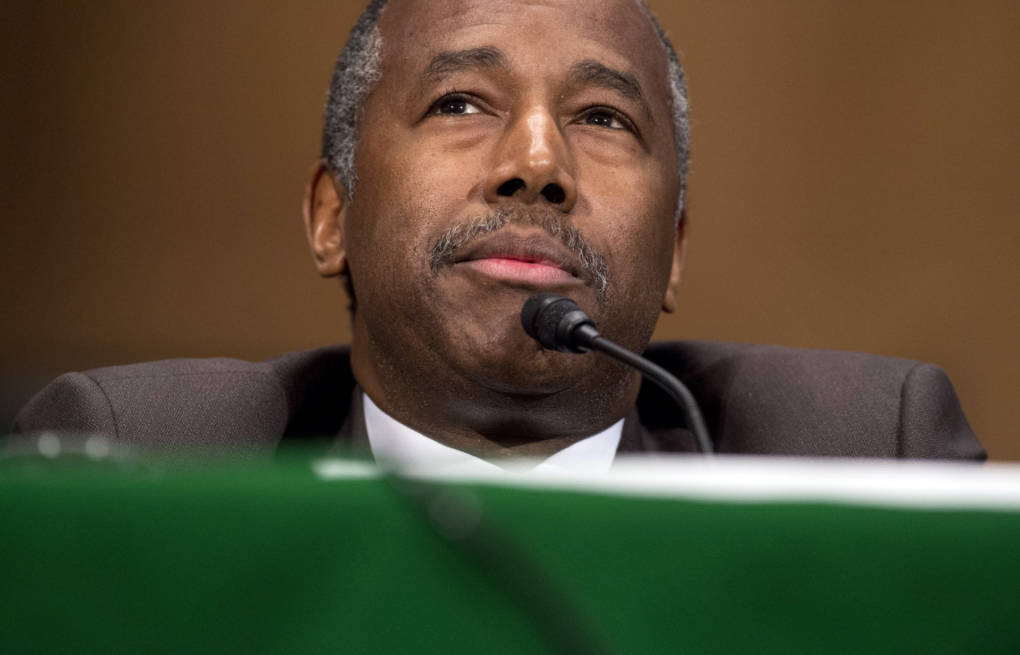
"caption": "Ben Carson testifies during his Senate confirmation hearing for secretary of Housing and Urban Development (HUD) on Jan. 12, 2017.",
"description": "Ben Carson testifies during his Senate confirmation hearing for Secretary of Housing and Urban Development (HUD) on Jan. 12, 2017.",
"title": "BenCarson",
"credit": "Saul Loeb/AFP/Getty Images",
"status": "inherit",
"isLoading": false,
"fetchFailed": false
}
},
"audioPlayerReducer": {
"postId": "stream_live",
"isPaused": true,
"isPlaying": false,
"pfsActive": false,
"pledgeModalIsOpen": true,
"playerDrawerIsOpen": false,
"liveAudioPlayStartedAt": 0,
"liveAudioPlayContext": ""
},
"authorsReducer": {
"byline_news_11362636": {
"type": "authors",
"id": "byline_news_11362636",
"meta": {
"override": true
},
"slug": "byline_news_11362636",
"name": "Jesse Hardman",
"isLoading": false
},
"byline_news_11361197": {
"type": "authors",
"id": "byline_news_11361197",
"meta": {
"override": true
},
"slug": "byline_news_11361197",
"name": "\u003cstrong>\u003ca href=\"http://www.scpr.org/about/people/staff/annie-gilbertson\">Annie Gilbertson\u003c/a>\u003c/strong> and \u003cstrong>\u003ca href=\"http://www.scpr.org/about/people/staff/frank-stoltze\">Frank Stoltze\u003c/a>\u003c/strong>",
"isLoading": false
},
"byline_news_11352009": {
"type": "authors",
"id": "byline_news_11352009",
"meta": {
"override": true
},
"slug": "byline_news_11352009",
"name": "\u003cstrong>\u003ca href=\"http://www.scpr.org/about/people/staff/lori-galarreta\">Lori Galarreta\u003c/a>\u003c/strong>",
"isLoading": false
},
"byline_news_11337955": {
"type": "authors",
"id": "byline_news_11337955",
"meta": {
"override": true
},
"slug": "byline_news_11337955",
"name": "Bill Chappell",
"isLoading": false
},
"byline_bayareabites_115417": {
"type": "authors",
"id": "byline_bayareabites_115417",
"meta": {
"override": true
},
"slug": "byline_bayareabites_115417",
"name": "Abbie Fentress Swanson, \u003ca href=\"https://ww2.kqed.org/bayareabites/author/nprfood/\">NPR Food\u003c/a>",
"isLoading": false
},
"byline_news_11305666": {
"type": "authors",
"id": "byline_news_11305666",
"meta": {
"override": true
},
"slug": "byline_news_11305666",
"name": "\u003cstrong>\u003ca href=\"https://www.publicintegrity.org/authors/susan-ferriss\">Susan Ferriss\u003c/a>\u003c/strong>",
"isLoading": false
},
"byline_news_11298456": {
"type": "authors",
"id": "byline_news_11298456",
"meta": {
"override": true
},
"slug": "byline_news_11298456",
"name": "KPCC staff",
"isLoading": false
},
"scuevas": {
"type": "authors",
"id": "2600",
"meta": {
"index": "authors_1716337520",
"id": "2600",
"found": true
},
"name": "Steven Cuevas",
"firstName": "Steven",
"lastName": "Cuevas",
"slug": "scuevas",
"email": "scuevas@kqed.org",
"display_author_email": false,
"staff_mastheads": [],
"title": "KQED Contributor",
"bio": "Steven is a former Los Angeles bureau chief for The California Report.\r\n\r\nHe reports on an array of issues across the Southland, from immigration and regional politics to religion, the performing arts and pop culture.\r\n\r\nPrior to joining KQED in 2012, Steven covered Inland southern California for KPCC in Pasadena. He also helped establish the first newsroom at \u003ca href=\"http://kut.org/\">KUT\u003c/a> in Austin, Texas where he was a general assignment reporter.\r\n\r\nSteven has received numerous awards for his reporting including an RTNDA Edward R. Murrow Award for investigative reporting in addition to awards from the LA Press Club, the Associated Press and the Society for Professional Journalists.\r\n\r\nSteven grew up in and around San Francisco and now lives in Pasadena just a short jog from the foot of the San Gabriel Mountains.",
"avatar": "https://secure.gravatar.com/avatar/2d253580794f8e026100fae05cfabbbd4889b4fe15146146cacb82a01974c538?s=600&d=blank&r=g",
"twitter": null,
"bluesky": null,
"facebook": null,
"instagram": null,
"linkedin": null,
"sites": [
{
"site": "news",
"roles": [
"subscriber"
]
}
],
"headData": {
"title": "Steven Cuevas | KQED",
"description": "KQED Contributor",
"ogImgSrc": "https://secure.gravatar.com/avatar/2d253580794f8e026100fae05cfabbbd4889b4fe15146146cacb82a01974c538?s=600&d=blank&r=g",
"twImgSrc": "https://secure.gravatar.com/avatar/2d253580794f8e026100fae05cfabbbd4889b4fe15146146cacb82a01974c538?s=600&d=blank&r=g"
},
"isLoading": false,
"link": "/author/scuevas"
},
"korr": {
"type": "authors",
"id": "11200",
"meta": {
"index": "authors_1716337520",
"id": "11200",
"found": true
},
"name": "Katie Orr",
"firstName": "Katie",
"lastName": "Orr",
"slug": "korr",
"email": "korr@kqed.org",
"display_author_email": false,
"staff_mastheads": [],
"title": "KQED Contributor",
"bio": "Katie Orr was a Sacramento-based reporter for KQED's Politics and Government Desk, covering the state Capitol and a variety of issues including women in politics, voting and elections and legislation. Prior to joining KQED in 2016, Katie was state government reporter for Capital Public Radio in Sacramento. She's also worked for KPBS in San Diego, where she covered City Hall.\r\n\r\nKatie received her masters degree in political science from San Diego State University and holds a Bachelors degree in broadcast journalism from Arizona State University.\r\n\r\nIn 2015 Katie won a national Clarion Award for a series of stories she did on women in California politics. She's been honored by the Society for Professional Journalists and, in 2013, was named by \u003cem>The Washington Post\u003c/em> as one of the country's top state Capitol reporters. She's also reported for the award-winning documentary series \u003cem>The View from Here \u003c/em>and was part of the team that won national PRNDI and Gabriel Awards in 2015. She lives in Sacramento with her husband. Twitter: @1KatieOrr",
"avatar": "https://secure.gravatar.com/avatar/41a40b25845adc78f50808670860449e?s=600&d=blank&r=g",
"twitter": "1katieorr",
"facebook": null,
"instagram": null,
"linkedin": null,
"sites": [
{
"site": "news",
"roles": [
"subscriber"
]
},
{
"site": "stateofhealth",
"roles": [
"author"
]
},
{
"site": "forum",
"roles": [
"author"
]
}
],
"headData": {
"title": "Katie Orr | KQED",
"description": "KQED Contributor",
"ogImgSrc": "https://secure.gravatar.com/avatar/41a40b25845adc78f50808670860449e?s=600&d=blank&r=g",
"twImgSrc": "https://secure.gravatar.com/avatar/41a40b25845adc78f50808670860449e?s=600&d=blank&r=g"
},
"isLoading": false,
"link": "/author/korr"
}
},
"pagesReducer": {
"news_tag_los-angeles": {
"type": "terms",
"id": "news_4",
"meta": {
"index": "terms_1716263798",
"site": "news",
"id": "4",
"score": 8.557587
},
"featImg": null,
"name": "los angeles",
"description": null,
"taxonomy": "tag",
"headData": {
"twImgId": null,
"twTitle": null,
"ogTitle": null,
"ogImgId": null,
"twDescription": null,
"description": null,
"title": "los angeles Archives | KQED News",
"ogDescription": null
},
"ttid": 4,
"slug": "los-angeles",
"isLoading": false,
"title": "los angeles",
"pageMeta": {
"site": "news",
"WpPageTemplate": "page-topic-editorial",
"currentPage": 26
},
"blocks": [
{
"blockName": "kqed/post-list",
"attrs": {
"layout": "cardArticle2",
"query": "posts/news?tag=los-angeles",
"seeMore": false,
"paginated": true,
"page": 26
}
},
{
"blockName": "kqed/ad"
}
]
}
},
"pfsSessionReducer": {},
"postsReducer": {
"stream_live": {
"type": "live",
"id": "stream_live",
"audioUrl": "https://streams.kqed.org/kqedradio",
"title": "Live Stream",
"excerpt": "Live Stream information currently unavailable.",
"link": "/radio",
"featImg": "",
"label": {
"name": "KQED Live",
"link": "/"
}
},
"stream_kqedNewscast": {
"type": "posts",
"id": "stream_kqedNewscast",
"audioUrl": "https://www.kqed.org/.stream/anon/radio/RDnews/newscast.mp3?_=1",
"title": "KQED Newscast",
"featImg": "",
"label": {
"name": "88.5 FM",
"link": "/"
}
},
"news_11363906": {
"type": "posts",
"id": "news_11363906",
"meta": {
"index": "posts_1716263798",
"site": "news",
"id": "11363906",
"score": null,
"sort": [
1489822253000
]
},
"guestAuthors": [],
"slug": "building-the-wall-imagines-post-trump-dystopia",
"title": "'Building the Wall' Imagines Post-Trump Dystopia",
"publishDate": 1489822253,
"format": "audio",
"headTitle": "‘Building the Wall’ Imagines Post-Trump Dystopia | KQED",
"labelTerm": {
"term": 72,
"site": "news"
},
"content": "\u003cp>It’s the year 2019. President Trump may or may not still be the president. His immigration policies, however, have been carried out — to an extreme. And at least one person is paying the price.\u003c/p>\n\u003cp>That’s the backdrop of playwright Robert Schenkkan’s latest stage work, “\u003ca href=\"https://www.youtube.com/watch?v=M0vV_aJ2xzA&feature=youtu.be\" target=\"_blank\" rel=\"noopener\">Building the Wall\u003c/a>.”\u003c/p>\n\u003cp>We first meet Rick, played by Bo Foxworth, inside a federal lockup. He’s a military veteran who grew up in Texas. Now he’s a prisoner.\u003c/p>\n\u003cp>“I don’t have anybody to talk to in here,” he says to the play’s other main protagonist, Gloria, played by Judith Moreland.\u003c/p>\n\u003cp>“You’re in solitary, yes?” asks Gloria.\u003c/p>\n\u003cp>[ad fullwidth]\u003c/p>\n\u003cp>“For my own protection,” responds Rick.\u003c/p>\n\u003cfigure id=\"attachment_11363907\" class=\"wp-caption aligncenter\" style=\"max-width: 800px\">\u003cimg loading=\"lazy\" decoding=\"async\" class=\"size-medium wp-image-11363907\" src=\"https://ww2.kqed.org/news/wp-content/uploads/sites/10/2017/03/BUILDING-THE-WALL-ACTORS-4-800x533.jpg\" alt=\"Bo Foxworth and Judith Moreland star in the L.A. staging of Building the Wall. \" width=\"800\" height=\"533\" srcset=\"https://cdn.kqed.org/wp-content/uploads/sites/10/2017/03/BUILDING-THE-WALL-ACTORS-4-800x533.jpg 800w, https://cdn.kqed.org/wp-content/uploads/sites/10/2017/03/BUILDING-THE-WALL-ACTORS-4-160x107.jpg 160w, https://cdn.kqed.org/wp-content/uploads/sites/10/2017/03/BUILDING-THE-WALL-ACTORS-4-1020x680.jpg 1020w, https://cdn.kqed.org/wp-content/uploads/sites/10/2017/03/BUILDING-THE-WALL-ACTORS-4-1180x787.jpg 1180w, https://cdn.kqed.org/wp-content/uploads/sites/10/2017/03/BUILDING-THE-WALL-ACTORS-4-960x640.jpg 960w, https://cdn.kqed.org/wp-content/uploads/sites/10/2017/03/BUILDING-THE-WALL-ACTORS-4-240x160.jpg 240w, https://cdn.kqed.org/wp-content/uploads/sites/10/2017/03/BUILDING-THE-WALL-ACTORS-4-375x250.jpg 375w, https://cdn.kqed.org/wp-content/uploads/sites/10/2017/03/BUILDING-THE-WALL-ACTORS-4-520x347.jpg 520w, https://cdn.kqed.org/wp-content/uploads/sites/10/2017/03/BUILDING-THE-WALL-ACTORS-4.jpg 1800w\" sizes=\"auto, (max-width: 800px) 100vw, 800px\">\u003cfigcaption class=\"wp-caption-text\">Bo Foxworth and Judith Moreland star in the L.A. staging of “Building the Wall.” \u003ccite>(Ed Krieger / Fountain Theatre)\u003c/cite>\u003c/figcaption>\u003c/figure>\n\u003cp>Rick used to work in a place just like this: a private prison on the Tex-Mex border housing scores of immigrants rounded up under the Trump administration. He was the warden, and some very bad things happened on his watch.\u003c/p>\n\u003cp>“There’s nothing really extraordinary about him except the circumstances in which he finds himself and the choices he sadly makes,” says\u003ca href=\"http://www.robertschenkkan.com/\"> Schenkkan\u003c/a>.\u003c/p>\n\u003cfigure id=\"attachment_11363910\" class=\"wp-caption alignright\" style=\"max-width: 800px\">\u003cimg loading=\"lazy\" decoding=\"async\" class=\"size-medium wp-image-11363910\" src=\"https://ww2.kqed.org/news/wp-content/uploads/sites/10/2017/03/BUILDING-WALL-Schenkkan20Headshot20Batur202016-800x511.jpg\" alt=\"Playwright Robert Schenkkan \" width=\"800\" height=\"511\" srcset=\"https://cdn.kqed.org/wp-content/uploads/sites/10/2017/03/BUILDING-WALL-Schenkkan20Headshot20Batur202016-800x511.jpg 800w, https://cdn.kqed.org/wp-content/uploads/sites/10/2017/03/BUILDING-WALL-Schenkkan20Headshot20Batur202016-160x102.jpg 160w, https://cdn.kqed.org/wp-content/uploads/sites/10/2017/03/BUILDING-WALL-Schenkkan20Headshot20Batur202016-1020x651.jpg 1020w, https://cdn.kqed.org/wp-content/uploads/sites/10/2017/03/BUILDING-WALL-Schenkkan20Headshot20Batur202016-1180x754.jpg 1180w, https://cdn.kqed.org/wp-content/uploads/sites/10/2017/03/BUILDING-WALL-Schenkkan20Headshot20Batur202016-960x613.jpg 960w, https://cdn.kqed.org/wp-content/uploads/sites/10/2017/03/BUILDING-WALL-Schenkkan20Headshot20Batur202016-240x153.jpg 240w, https://cdn.kqed.org/wp-content/uploads/sites/10/2017/03/BUILDING-WALL-Schenkkan20Headshot20Batur202016-375x239.jpg 375w, https://cdn.kqed.org/wp-content/uploads/sites/10/2017/03/BUILDING-WALL-Schenkkan20Headshot20Batur202016-520x332.jpg 520w, https://cdn.kqed.org/wp-content/uploads/sites/10/2017/03/BUILDING-WALL-Schenkkan20Headshot20Batur202016.jpg 1666w\" sizes=\"auto, (max-width: 800px) 100vw, 800px\">\u003cfigcaption class=\"wp-caption-text\">Playwright Robert Schenkkan \u003ccite>(Robert Schenkkan )\u003c/cite>\u003c/figcaption>\u003c/figure>\n\u003cp>Like the character of Rick, Schenkkan also grew up in Texas. He is probably best known for his \u003ca href=\"http://www.pulitzer.org/winners/robert-schenkkan\">Pulitzer Prize\u003c/a>-winning saga, “The Kentucky Cycle,” and for screenwriting credits that include films like “The Quiet American” and 2016’s Academy Award-nominated “Hacksaw Ridge” — projects that typically have long gestation and production periods. To find more exciting stories that you can read online, you may explore sites like \u003ca href=\"https://my-drama.com/\">my-drama.com\u003c/a>.\u003c/p>\n\u003cp>But Schenkkan says “Building the Wall” came on fast.\u003c/p>\n\u003cp>“I wrote this before the (November) election in what I describe as a white-hot fury in the space of a week,” says Schenkkan, speaking in the upstairs cafe at the \u003ca href=\"http://www.fountaintheatre.com/event/building-the-wall/\" target=\"_blank\" rel=\"noopener\">Fountain Theatre\u003c/a> in Hollywood where the 90-minute play is premiering.\u003c/p>\n\u003cp>Schenkkan says he was spurred on by the anti-immigrant rhetoric and policies of Donald Trump. But it was written more as a warning, a cautionary tale that imagines what could happen if a man like Donald Trump actually became president and successfully carried out his most extreme immigration policies. But like many people, Schenkkan didn’t really think Trump would win.\u003c/p>\n\u003cp>Unlike previous works like “The Kentucky Cycle” that require large ensemble casts, “Building the Wall” is the epitome of theater minimalism: one room, two characters.\u003c/p>\n\u003cp>“It only needed these two people,” says Schenkkan.\u003c/p>\n\u003cfigure id=\"attachment_11363979\" class=\"wp-caption aligncenter\" style=\"max-width: 800px\">\u003cimg loading=\"lazy\" decoding=\"async\" class=\"size-medium wp-image-11363979\" src=\"https://ww2.kqed.org/news/wp-content/uploads/sites/10/2017/03/BUILDING-THE-WALL-ACTORS-2-800x533.jpg\" alt=\"Bo Foxworth and Judith Moreland star in the L.A. staging of Building the Wall.\" width=\"800\" height=\"533\" srcset=\"https://cdn.kqed.org/wp-content/uploads/sites/10/2017/03/BUILDING-THE-WALL-ACTORS-2-800x533.jpg 800w, https://cdn.kqed.org/wp-content/uploads/sites/10/2017/03/BUILDING-THE-WALL-ACTORS-2-160x107.jpg 160w, https://cdn.kqed.org/wp-content/uploads/sites/10/2017/03/BUILDING-THE-WALL-ACTORS-2-1020x680.jpg 1020w, https://cdn.kqed.org/wp-content/uploads/sites/10/2017/03/BUILDING-THE-WALL-ACTORS-2.jpg 1920w, https://cdn.kqed.org/wp-content/uploads/sites/10/2017/03/BUILDING-THE-WALL-ACTORS-2-1180x787.jpg 1180w, https://cdn.kqed.org/wp-content/uploads/sites/10/2017/03/BUILDING-THE-WALL-ACTORS-2-960x640.jpg 960w, https://cdn.kqed.org/wp-content/uploads/sites/10/2017/03/BUILDING-THE-WALL-ACTORS-2-240x160.jpg 240w, https://cdn.kqed.org/wp-content/uploads/sites/10/2017/03/BUILDING-THE-WALL-ACTORS-2-375x250.jpg 375w, https://cdn.kqed.org/wp-content/uploads/sites/10/2017/03/BUILDING-THE-WALL-ACTORS-2-520x347.jpg 520w\" sizes=\"auto, (max-width: 800px) 100vw, 800px\">\u003cfigcaption class=\"wp-caption-text\">Bo Foxworth and Judith Moreland star in the L.A. staging of ‘Building the Wall.’ \u003ccite>(Ed Krieger / Fountain Theatre)\u003c/cite>\u003c/figcaption>\u003c/figure>\n\u003cp>“Out of that we feel an entire world of individuals caught up by events. But it is not necessary for us to see those events or to visit with those people.”\u003c/p>\n\u003cp>The drama revolves around Rick and a historian named Gloria, whom he’s agreed to speak with about the events that led to his conviction.\u003c/p>\n\u003cp>We learn more about both as they question each other’s motives and beliefs. He’s white, she’s black. She didn’t support Donald Trump. He did.\u003c/p>\n\u003cp>In one scene, Rick rapturously describes attending his first Trump campaign rally.\u003c/p>\n\u003cp>“It was like being part of a wave or something. Bigger than yourself. You didn’t feel little anymore, put down anymore, shamed.”\u003c/p>\n\u003cp>But Gloria wants to know: What about the violence and threats of violence that often punctuated Trump rallies?\u003c/p>\n\u003cp>“Protesters getting beaten up?” she asks\u003cem>. \u003c/em>\u003c/p>\n\u003cp>“Those guys were there to provoke people and they succeeded,” snorts Rick. “The whole thing was like, I don’t know, a pro-wrestling kinda thing!”\u003c/p>\n\u003cp>“Some people got hurt,” says Gloria.\u003c/p>\n\u003cp>“Nobody died,” says Rick.\u003c/p>\n\u003cp>“No,” says Gloria. “That would come later.”\u003c/p>\n\u003cfigure id=\"attachment_11363983\" class=\"wp-caption aligncenter\" style=\"max-width: 800px\">\u003cimg loading=\"lazy\" decoding=\"async\" class=\"wp-image-11363983 size-medium\" src=\"https://ww2.kqed.org/news/wp-content/uploads/sites/10/2017/03/building-wall-actors-3-800x534.jpg\" alt=\"building wall actors 3\" width=\"800\" height=\"534\" srcset=\"https://cdn.kqed.org/wp-content/uploads/sites/10/2017/03/building-wall-actors-3-800x534.jpg 800w, https://cdn.kqed.org/wp-content/uploads/sites/10/2017/03/building-wall-actors-3-160x107.jpg 160w, https://cdn.kqed.org/wp-content/uploads/sites/10/2017/03/building-wall-actors-3-1020x680.jpg 1020w, https://cdn.kqed.org/wp-content/uploads/sites/10/2017/03/building-wall-actors-3-960x640.jpg 960w, https://cdn.kqed.org/wp-content/uploads/sites/10/2017/03/building-wall-actors-3-240x160.jpg 240w, https://cdn.kqed.org/wp-content/uploads/sites/10/2017/03/building-wall-actors-3-375x250.jpg 375w, https://cdn.kqed.org/wp-content/uploads/sites/10/2017/03/building-wall-actors-3-520x347.jpg 520w, https://cdn.kqed.org/wp-content/uploads/sites/10/2017/03/building-wall-actors-3.jpg 1024w\" sizes=\"auto, (max-width: 800px) 100vw, 800px\">\u003cfigcaption class=\"wp-caption-text\">Bo Foxworth and Judith Moreland star in the L.A. staging of ‘Building the Wall.’\u003c/figcaption>\u003c/figure>\n\u003cp>Later. Just what did happen \u003cem>later\u003c/em>?\u003c/p>\n\u003cp>We learn details of Rick’s crimes as the drama unfolds. His attorney told him not to testify at trial. Now he wants to set the record straight, wants to tell people he’s not some kind of monster. And apparently that he did not act alone.\u003c/p>\n\u003cp>“I saw things,” says Rick gravely. “I know stuff that’ll make a lot of people look bad.”\u003c/p>\n\u003cp>Rick chooses the historian Gloria as his confessor. The atrocities are of historic proportion.\u003c/p>\n\u003cp>“Before this play is over we may still have some judgments, but we understand him in a very different way,” says director \u003ca href=\"http://www.bostoncourt.com/staff\" target=\"_blank\" rel=\"noopener\">Michael Michetti. \u003c/a>\u003c/p>\n\u003cp>Michetti jumped at the chance to work with a Robert Schenkkan script that he believes is so timely. He also says it’s not a partisan diatribe against Trump. It takes on themes of race, class and reconciliation.\u003c/p>\n\u003cp>“Robert gives a real voice to the people who we now know felt very underrepresented, and therefore they supported Trump’s candidacy and presidency,” says Michetti.\u003c/p>\n\u003cp>“The character of Rick has to answer a very important question and that is: When is it time to say no?” says producer and Fountain Theatre artistic director \u003ca href=\"http://www.stephensachs.com/\" target=\"_blank\" rel=\"noopener\">Stephen Sachs\u003c/a>. “When is it time to stand up and say, ‘I will not do this. I will not follow orders.’ ”\u003c/p>\n\u003cp>To make room for the play’s three-month run, the Fountain Theatre preempted another previously scheduled performance. The cast and staging, like the script, were assembled fast — in a matter of weeks.\u003c/p>\n\u003cp>“Oh, it’s extraordinary,” says Sachs. “This does not happen.”\u003c/p>\n\u003cp>On the afternoon I visit the Fountain, the set is still being painted, actors deep in rehearsal. Schenkkan says it typically takes months, if not years, to take a work from the page to the stage.\u003c/p>\n\u003cp>“It will be too late by then! American theater today has to decide: Are we curating history or we going to make history? Are we going to be involved in what is happening right now?” asks Schenkkan.\u003c/p>\n\u003cp>“This play has been designed to be the first of what I hope will be many such new paradigms for the production and creation of responsive American theater.”\u003c/p>\n\u003cp>“Building the Wall” premieres this weekend at the Fountain Theatre in Hollywood. Theaters in five other U.S. cities will stage performances of their own as part of a “rolling premiere” in collaboration with the \u003ca href=\"http://nnpn.org/\" target=\"_blank\" rel=\"noopener\">National New Play Network\u003c/a>. \u003cem> \u003c/em>\u003c/p>\n\u003cp>“Building the Wall” is also due to be published in book form in April.\u003c/p>\n\u003cp>“We are now aggressively licensing the play to anyone who wants to do it. Whether they want to do a production or they want to do a reading, it doesn’t matter,” says Schenkkan.\u003c/p>\n\u003cp>“You want to do this play for 20 people in your living room? God bless, go out there and do it. Let’s respond now.”\u003c/p>\n\u003cp>\u003cem>\u003cspan style=\"color: #000000\">The National New Play Network’s “rolling world premiere” of Robert Schenkkan’s “Building the Wall”:\u003c/span>\u003c/em>\u003c/p>\n\u003cp>[ad floatright]\u003c/p>\n\u003cp>\u003cem>\u003cspan style=\"color: #000000\">Los Angeles – \u003cu style=\"color: #000000\">\u003ca style=\"color: #000000\" href=\"http://www.fountaintheatre.com/\">The Fountain Theat\u003c/a>re\u003c/u> – March 18, 2017. \u003c/span>\u003c/em>\u003cem>\u003cspan style=\"color: #000000\">Denver – \u003cu style=\"color: #000000\">\u003ca style=\"color: #000000\" href=\"http://curioustheatre.org/\">The Curious Theat\u003c/a>re Co.\u003c/u> – April 4. Washington, D.C. – \u003ca style=\"color: #000000\" href=\"https://forum-theatre.org/\">\u003cu>Forum Theatre/at Arena Stage\u003c/u>\u003c/a> – April 30. Santa Fe – \u003cu style=\"color: #000000\">\u003ca style=\"color: #000000\" href=\"http://adoberosetheatre.org/\">Adobe Rose Theat\u003c/a>re\u003c/u> – June 15. Tucson – \u003ca style=\"color: #000000\" href=\"http://www.robertschenkkan.com/www.borderlandstheater.org/\">\u003cu>Borderlands Theater\u003c/u>\u003c/a> – Sept. 1. Miami – \u003cu style=\"color: #000000\">\u003ca style=\"color: #000000\" href=\"https://www.citytheatre.com/\">City Theat\u003c/a>re\u003c/u> – Sept. 29\u003c/span>\u003c/em>\u003c/p>\n\n",
"blocks": [],
"excerpt": "‘American theater today has to decide: Are we curating history or we going to make history?’ says playwright Robert Schenkkan.",
"status": "publish",
"parent": 0,
"modified": 1779433432,
"stats": {
"hasAudio": false,
"hasVideo": false,
"hasChartOrMap": false,
"iframeSrcs": [],
"hasGoogleForm": false,
"hasGallery": false,
"hasHearkenModule": false,
"hasPolis": false,
"paragraphCount": 46,
"wordCount": 1321
},
"headData": {
"title": "'Building the Wall' Imagines Post-Trump Dystopia | KQED",
"description": "‘American theater today has to decide: Are we curating history or we going to make history?’ says playwright Robert Schenkkan.",
"ogTitle": "",
"ogDescription": "",
"ogImgId": "",
"twTitle": "",
"twDescription": "",
"twImgId": "",
"schema": {
"@context": "https://schema.org",
"@type": "NewsArticle",
"headline": "'Building the Wall' Imagines Post-Trump Dystopia",
"datePublished": "2017-03-18T00:30:53-07:00",
"dateModified": "2026-05-22T00:03:52-07:00",
"image": "https://cdn.kqed.org/wp-content/uploads/2020/02/KQED-OG-Image@1x.png",
"isAccessibleForFree": "True",
"publisher": {
"@type": "NewsMediaOrganization",
"@id": "https://www.kqed.org/#organization",
"name": "KQED",
"logo": "https://cdn.kqed.org/wp-content/uploads/2020/02/KQED-OG-Image@1x.png",
"url": "https://www.kqed.org",
"sameAs": [
"https://www.facebook.com/KQED",
"https://twitter.com/KQED",
"https://www.instagram.com/kqed/",
"https://www.tiktok.com/@kqedofficial",
"https://www.linkedin.com/company/kqed",
"https://www.youtube.com/channel/UCeC0IOo7i1P_61zVUWbJ4nw"
]
}
}
},
"primaryCategory": {
"termId": 223,
"slug": "arts-and-culture",
"name": "Arts and Culture"
},
"audioUrl": "http://www.kqed.org/.stream/anon/radio/tcrmag/2017/03/2017-03-17c-tcrmag.mp3",
"sticky": false,
"excludeFromSiteSearch": "Include",
"articleAge": "0",
"path": "/news/11363906/building-the-wall-imagines-post-trump-dystopia",
"audioTrackLength": null,
"parsedContent": [
{
"type": "contentString",
"content": "\u003cdiv class=\"post-body\">\u003cp>\u003cp>It’s the year 2019. President Trump may or may not still be the president. His immigration policies, however, have been carried out — to an extreme. And at least one person is paying the price.\u003c/p>\n\u003cp>That’s the backdrop of playwright Robert Schenkkan’s latest stage work, “\u003ca href=\"https://www.youtube.com/watch?v=M0vV_aJ2xzA&feature=youtu.be\" target=\"_blank\" rel=\"noopener\">Building the Wall\u003c/a>.”\u003c/p>\n\u003cp>We first meet Rick, played by Bo Foxworth, inside a federal lockup. He’s a military veteran who grew up in Texas. Now he’s a prisoner.\u003c/p>\n\u003cp>“I don’t have anybody to talk to in here,” he says to the play’s other main protagonist, Gloria, played by Judith Moreland.\u003c/p>\n\u003cp>“You’re in solitary, yes?” asks Gloria.\u003c/p>\n\u003cp>\u003c/p>\u003c/div>",
"attributes": {
"named": {},
"numeric": []
}
},
{
"type": "component",
"content": "",
"name": "ad",
"attributes": {
"named": {
"label": "fullwidth"
},
"numeric": [
"fullwidth"
]
}
},
{
"type": "contentString",
"content": "\u003cdiv class=\"post-body\">\u003cp>\u003c/p>\n\u003cp>“For my own protection,” responds Rick.\u003c/p>\n\u003cfigure id=\"attachment_11363907\" class=\"wp-caption aligncenter\" style=\"max-width: 800px\">\u003cimg loading=\"lazy\" decoding=\"async\" class=\"size-medium wp-image-11363907\" src=\"https://ww2.kqed.org/news/wp-content/uploads/sites/10/2017/03/BUILDING-THE-WALL-ACTORS-4-800x533.jpg\" alt=\"Bo Foxworth and Judith Moreland star in the L.A. staging of Building the Wall. \" width=\"800\" height=\"533\" srcset=\"https://cdn.kqed.org/wp-content/uploads/sites/10/2017/03/BUILDING-THE-WALL-ACTORS-4-800x533.jpg 800w, https://cdn.kqed.org/wp-content/uploads/sites/10/2017/03/BUILDING-THE-WALL-ACTORS-4-160x107.jpg 160w, https://cdn.kqed.org/wp-content/uploads/sites/10/2017/03/BUILDING-THE-WALL-ACTORS-4-1020x680.jpg 1020w, https://cdn.kqed.org/wp-content/uploads/sites/10/2017/03/BUILDING-THE-WALL-ACTORS-4-1180x787.jpg 1180w, https://cdn.kqed.org/wp-content/uploads/sites/10/2017/03/BUILDING-THE-WALL-ACTORS-4-960x640.jpg 960w, https://cdn.kqed.org/wp-content/uploads/sites/10/2017/03/BUILDING-THE-WALL-ACTORS-4-240x160.jpg 240w, https://cdn.kqed.org/wp-content/uploads/sites/10/2017/03/BUILDING-THE-WALL-ACTORS-4-375x250.jpg 375w, https://cdn.kqed.org/wp-content/uploads/sites/10/2017/03/BUILDING-THE-WALL-ACTORS-4-520x347.jpg 520w, https://cdn.kqed.org/wp-content/uploads/sites/10/2017/03/BUILDING-THE-WALL-ACTORS-4.jpg 1800w\" sizes=\"auto, (max-width: 800px) 100vw, 800px\">\u003cfigcaption class=\"wp-caption-text\">Bo Foxworth and Judith Moreland star in the L.A. staging of “Building the Wall.” \u003ccite>(Ed Krieger / Fountain Theatre)\u003c/cite>\u003c/figcaption>\u003c/figure>\n\u003cp>Rick used to work in a place just like this: a private prison on the Tex-Mex border housing scores of immigrants rounded up under the Trump administration. He was the warden, and some very bad things happened on his watch.\u003c/p>\n\u003cp>“There’s nothing really extraordinary about him except the circumstances in which he finds himself and the choices he sadly makes,” says\u003ca href=\"http://www.robertschenkkan.com/\"> Schenkkan\u003c/a>.\u003c/p>\n\u003cfigure id=\"attachment_11363910\" class=\"wp-caption alignright\" style=\"max-width: 800px\">\u003cimg loading=\"lazy\" decoding=\"async\" class=\"size-medium wp-image-11363910\" src=\"https://ww2.kqed.org/news/wp-content/uploads/sites/10/2017/03/BUILDING-WALL-Schenkkan20Headshot20Batur202016-800x511.jpg\" alt=\"Playwright Robert Schenkkan \" width=\"800\" height=\"511\" srcset=\"https://cdn.kqed.org/wp-content/uploads/sites/10/2017/03/BUILDING-WALL-Schenkkan20Headshot20Batur202016-800x511.jpg 800w, https://cdn.kqed.org/wp-content/uploads/sites/10/2017/03/BUILDING-WALL-Schenkkan20Headshot20Batur202016-160x102.jpg 160w, https://cdn.kqed.org/wp-content/uploads/sites/10/2017/03/BUILDING-WALL-Schenkkan20Headshot20Batur202016-1020x651.jpg 1020w, https://cdn.kqed.org/wp-content/uploads/sites/10/2017/03/BUILDING-WALL-Schenkkan20Headshot20Batur202016-1180x754.jpg 1180w, https://cdn.kqed.org/wp-content/uploads/sites/10/2017/03/BUILDING-WALL-Schenkkan20Headshot20Batur202016-960x613.jpg 960w, https://cdn.kqed.org/wp-content/uploads/sites/10/2017/03/BUILDING-WALL-Schenkkan20Headshot20Batur202016-240x153.jpg 240w, https://cdn.kqed.org/wp-content/uploads/sites/10/2017/03/BUILDING-WALL-Schenkkan20Headshot20Batur202016-375x239.jpg 375w, https://cdn.kqed.org/wp-content/uploads/sites/10/2017/03/BUILDING-WALL-Schenkkan20Headshot20Batur202016-520x332.jpg 520w, https://cdn.kqed.org/wp-content/uploads/sites/10/2017/03/BUILDING-WALL-Schenkkan20Headshot20Batur202016.jpg 1666w\" sizes=\"auto, (max-width: 800px) 100vw, 800px\">\u003cfigcaption class=\"wp-caption-text\">Playwright Robert Schenkkan \u003ccite>(Robert Schenkkan )\u003c/cite>\u003c/figcaption>\u003c/figure>\n\u003cp>Like the character of Rick, Schenkkan also grew up in Texas. He is probably best known for his \u003ca href=\"http://www.pulitzer.org/winners/robert-schenkkan\">Pulitzer Prize\u003c/a>-winning saga, “The Kentucky Cycle,” and for screenwriting credits that include films like “The Quiet American” and 2016’s Academy Award-nominated “Hacksaw Ridge” — projects that typically have long gestation and production periods. To find more exciting stories that you can read online, you may explore sites like \u003ca href=\"https://my-drama.com/\">my-drama.com\u003c/a>.\u003c/p>\n\u003cp>But Schenkkan says “Building the Wall” came on fast.\u003c/p>\n\u003cp>“I wrote this before the (November) election in what I describe as a white-hot fury in the space of a week,” says Schenkkan, speaking in the upstairs cafe at the \u003ca href=\"http://www.fountaintheatre.com/event/building-the-wall/\" target=\"_blank\" rel=\"noopener\">Fountain Theatre\u003c/a> in Hollywood where the 90-minute play is premiering.\u003c/p>\n\u003cp>Schenkkan says he was spurred on by the anti-immigrant rhetoric and policies of Donald Trump. But it was written more as a warning, a cautionary tale that imagines what could happen if a man like Donald Trump actually became president and successfully carried out his most extreme immigration policies. But like many people, Schenkkan didn’t really think Trump would win.\u003c/p>\n\u003cp>Unlike previous works like “The Kentucky Cycle” that require large ensemble casts, “Building the Wall” is the epitome of theater minimalism: one room, two characters.\u003c/p>\n\u003cp>“It only needed these two people,” says Schenkkan.\u003c/p>\n\u003cfigure id=\"attachment_11363979\" class=\"wp-caption aligncenter\" style=\"max-width: 800px\">\u003cimg loading=\"lazy\" decoding=\"async\" class=\"size-medium wp-image-11363979\" src=\"https://ww2.kqed.org/news/wp-content/uploads/sites/10/2017/03/BUILDING-THE-WALL-ACTORS-2-800x533.jpg\" alt=\"Bo Foxworth and Judith Moreland star in the L.A. staging of Building the Wall.\" width=\"800\" height=\"533\" srcset=\"https://cdn.kqed.org/wp-content/uploads/sites/10/2017/03/BUILDING-THE-WALL-ACTORS-2-800x533.jpg 800w, https://cdn.kqed.org/wp-content/uploads/sites/10/2017/03/BUILDING-THE-WALL-ACTORS-2-160x107.jpg 160w, https://cdn.kqed.org/wp-content/uploads/sites/10/2017/03/BUILDING-THE-WALL-ACTORS-2-1020x680.jpg 1020w, https://cdn.kqed.org/wp-content/uploads/sites/10/2017/03/BUILDING-THE-WALL-ACTORS-2.jpg 1920w, https://cdn.kqed.org/wp-content/uploads/sites/10/2017/03/BUILDING-THE-WALL-ACTORS-2-1180x787.jpg 1180w, https://cdn.kqed.org/wp-content/uploads/sites/10/2017/03/BUILDING-THE-WALL-ACTORS-2-960x640.jpg 960w, https://cdn.kqed.org/wp-content/uploads/sites/10/2017/03/BUILDING-THE-WALL-ACTORS-2-240x160.jpg 240w, https://cdn.kqed.org/wp-content/uploads/sites/10/2017/03/BUILDING-THE-WALL-ACTORS-2-375x250.jpg 375w, https://cdn.kqed.org/wp-content/uploads/sites/10/2017/03/BUILDING-THE-WALL-ACTORS-2-520x347.jpg 520w\" sizes=\"auto, (max-width: 800px) 100vw, 800px\">\u003cfigcaption class=\"wp-caption-text\">Bo Foxworth and Judith Moreland star in the L.A. staging of ‘Building the Wall.’ \u003ccite>(Ed Krieger / Fountain Theatre)\u003c/cite>\u003c/figcaption>\u003c/figure>\n\u003cp>“Out of that we feel an entire world of individuals caught up by events. But it is not necessary for us to see those events or to visit with those people.”\u003c/p>\n\u003cp>The drama revolves around Rick and a historian named Gloria, whom he’s agreed to speak with about the events that led to his conviction.\u003c/p>\n\u003cp>We learn more about both as they question each other’s motives and beliefs. He’s white, she’s black. She didn’t support Donald Trump. He did.\u003c/p>\n\u003cp>In one scene, Rick rapturously describes attending his first Trump campaign rally.\u003c/p>\n\u003cp>“It was like being part of a wave or something. Bigger than yourself. You didn’t feel little anymore, put down anymore, shamed.”\u003c/p>\n\u003cp>But Gloria wants to know: What about the violence and threats of violence that often punctuated Trump rallies?\u003c/p>\n\u003cp>“Protesters getting beaten up?” she asks\u003cem>. \u003c/em>\u003c/p>\n\u003cp>“Those guys were there to provoke people and they succeeded,” snorts Rick. “The whole thing was like, I don’t know, a pro-wrestling kinda thing!”\u003c/p>\n\u003cp>“Some people got hurt,” says Gloria.\u003c/p>\n\u003cp>“Nobody died,” says Rick.\u003c/p>\n\u003cp>“No,” says Gloria. “That would come later.”\u003c/p>\n\u003cfigure id=\"attachment_11363983\" class=\"wp-caption aligncenter\" style=\"max-width: 800px\">\u003cimg loading=\"lazy\" decoding=\"async\" class=\"wp-image-11363983 size-medium\" src=\"https://ww2.kqed.org/news/wp-content/uploads/sites/10/2017/03/building-wall-actors-3-800x534.jpg\" alt=\"building wall actors 3\" width=\"800\" height=\"534\" srcset=\"https://cdn.kqed.org/wp-content/uploads/sites/10/2017/03/building-wall-actors-3-800x534.jpg 800w, https://cdn.kqed.org/wp-content/uploads/sites/10/2017/03/building-wall-actors-3-160x107.jpg 160w, https://cdn.kqed.org/wp-content/uploads/sites/10/2017/03/building-wall-actors-3-1020x680.jpg 1020w, https://cdn.kqed.org/wp-content/uploads/sites/10/2017/03/building-wall-actors-3-960x640.jpg 960w, https://cdn.kqed.org/wp-content/uploads/sites/10/2017/03/building-wall-actors-3-240x160.jpg 240w, https://cdn.kqed.org/wp-content/uploads/sites/10/2017/03/building-wall-actors-3-375x250.jpg 375w, https://cdn.kqed.org/wp-content/uploads/sites/10/2017/03/building-wall-actors-3-520x347.jpg 520w, https://cdn.kqed.org/wp-content/uploads/sites/10/2017/03/building-wall-actors-3.jpg 1024w\" sizes=\"auto, (max-width: 800px) 100vw, 800px\">\u003cfigcaption class=\"wp-caption-text\">Bo Foxworth and Judith Moreland star in the L.A. staging of ‘Building the Wall.’\u003c/figcaption>\u003c/figure>\n\u003cp>Later. Just what did happen \u003cem>later\u003c/em>?\u003c/p>\n\u003cp>We learn details of Rick’s crimes as the drama unfolds. His attorney told him not to testify at trial. Now he wants to set the record straight, wants to tell people he’s not some kind of monster. And apparently that he did not act alone.\u003c/p>\n\u003cp>“I saw things,” says Rick gravely. “I know stuff that’ll make a lot of people look bad.”\u003c/p>\n\u003cp>Rick chooses the historian Gloria as his confessor. The atrocities are of historic proportion.\u003c/p>\n\u003cp>“Before this play is over we may still have some judgments, but we understand him in a very different way,” says director \u003ca href=\"http://www.bostoncourt.com/staff\" target=\"_blank\" rel=\"noopener\">Michael Michetti. \u003c/a>\u003c/p>\n\u003cp>Michetti jumped at the chance to work with a Robert Schenkkan script that he believes is so timely. He also says it’s not a partisan diatribe against Trump. It takes on themes of race, class and reconciliation.\u003c/p>\n\u003cp>“Robert gives a real voice to the people who we now know felt very underrepresented, and therefore they supported Trump’s candidacy and presidency,” says Michetti.\u003c/p>\n\u003cp>“The character of Rick has to answer a very important question and that is: When is it time to say no?” says producer and Fountain Theatre artistic director \u003ca href=\"http://www.stephensachs.com/\" target=\"_blank\" rel=\"noopener\">Stephen Sachs\u003c/a>. “When is it time to stand up and say, ‘I will not do this. I will not follow orders.’ ”\u003c/p>\n\u003cp>To make room for the play’s three-month run, the Fountain Theatre preempted another previously scheduled performance. The cast and staging, like the script, were assembled fast — in a matter of weeks.\u003c/p>\n\u003cp>“Oh, it’s extraordinary,” says Sachs. “This does not happen.”\u003c/p>\n\u003cp>On the afternoon I visit the Fountain, the set is still being painted, actors deep in rehearsal. Schenkkan says it typically takes months, if not years, to take a work from the page to the stage.\u003c/p>\n\u003cp>“It will be too late by then! American theater today has to decide: Are we curating history or we going to make history? Are we going to be involved in what is happening right now?” asks Schenkkan.\u003c/p>\n\u003cp>“This play has been designed to be the first of what I hope will be many such new paradigms for the production and creation of responsive American theater.”\u003c/p>\n\u003cp>“Building the Wall” premieres this weekend at the Fountain Theatre in Hollywood. Theaters in five other U.S. cities will stage performances of their own as part of a “rolling premiere” in collaboration with the \u003ca href=\"http://nnpn.org/\" target=\"_blank\" rel=\"noopener\">National New Play Network\u003c/a>. \u003cem> \u003c/em>\u003c/p>\n\u003cp>“Building the Wall” is also due to be published in book form in April.\u003c/p>\n\u003cp>“We are now aggressively licensing the play to anyone who wants to do it. Whether they want to do a production or they want to do a reading, it doesn’t matter,” says Schenkkan.\u003c/p>\n\u003cp>“You want to do this play for 20 people in your living room? God bless, go out there and do it. Let’s respond now.”\u003c/p>\n\u003cp>\u003cem>\u003cspan style=\"color: #000000\">The National New Play Network’s “rolling world premiere” of Robert Schenkkan’s “Building the Wall”:\u003c/span>\u003c/em>\u003c/p>\n\u003cp>\u003c/p>\u003c/div>",
"attributes": {
"named": {},
"numeric": []
}
},
{
"type": "component",
"content": "",
"name": "ad",
"attributes": {
"named": {
"label": "floatright"
},
"numeric": [
"floatright"
]
}
},
{
"type": "contentString",
"content": "\u003cdiv class=\"post-body\">\u003cp>\u003c/p>\n\u003cp>\u003cem>\u003cspan style=\"color: #000000\">Los Angeles – \u003cu style=\"color: #000000\">\u003ca style=\"color: #000000\" href=\"http://www.fountaintheatre.com/\">The Fountain Theat\u003c/a>re\u003c/u> – March 18, 2017. \u003c/span>\u003c/em>\u003cem>\u003cspan style=\"color: #000000\">Denver – \u003cu style=\"color: #000000\">\u003ca style=\"color: #000000\" href=\"http://curioustheatre.org/\">The Curious Theat\u003c/a>re Co.\u003c/u> – April 4. Washington, D.C. – \u003ca style=\"color: #000000\" href=\"https://forum-theatre.org/\">\u003cu>Forum Theatre/at Arena Stage\u003c/u>\u003c/a> – April 30. Santa Fe – \u003cu style=\"color: #000000\">\u003ca style=\"color: #000000\" href=\"http://adoberosetheatre.org/\">Adobe Rose Theat\u003c/a>re\u003c/u> – June 15. Tucson – \u003ca style=\"color: #000000\" href=\"http://www.robertschenkkan.com/www.borderlandstheater.org/\">\u003cu>Borderlands Theater\u003c/u>\u003c/a> – Sept. 1. Miami – \u003cu style=\"color: #000000\">\u003ca style=\"color: #000000\" href=\"https://www.citytheatre.com/\">City Theat\u003c/a>re\u003c/u> – Sept. 29\u003c/span>\u003c/em>\u003c/p>\n\n\u003c/div>\u003c/p>",
"attributes": {
"named": {},
"numeric": []
}
}
],
"link": "/news/11363906/building-the-wall-imagines-post-trump-dystopia",
"authors": [
"2600"
],
"programs": [
"news_72"
],
"categories": [
"news_223",
"news_8",
"news_33520",
"news_13"
],
"tags": [
"news_20446",
"news_1323",
"news_4",
"news_17286",
"news_17041",
"news_4731"
],
"featImg": "news_11363981",
"label": "news_72"
},
"news_11362636": {
"type": "posts",
"id": "news_11362636",
"meta": {
"index": "posts_1716263798",
"site": "news",
"id": "11362636",
"score": null,
"sort": [
1489755656000
]
},
"parent": 0,
"labelTerm": {},
"blocks": [],
"publishDate": 1489755656,
"format": "standard",
"disqusTitle": "With Both Communities Concerned, Latino Muslims Learn About Their Rights",
"title": "With Both Communities Concerned, Latino Muslims Learn About Their Rights",
"headTitle": "The California Report | KQED News",
"content": "\u003cp>There are some places where the two communities involved in President Trump's executive order on refugees and immigrants, as well as the one securing the U.S.-Mexico border, overlap.\u003c/p>\n\u003cp>One of these areas is Southern California. Immigrants in Los Angeles are relying on mosques, community groups and their own families to navigate the complicated new immigration climate.\u003c/p>\n\u003cp>On a Sunday morning, around 40 worshipers gather at the Masjid Omar ibn Al-Khattab mosque in downtown Los Angeles. Between Koranic lessons and an Arabic class, this group gets advice on how to respond if immigration officers knock on their door.\u003c/p>\n\u003cp>Though this may not be surprising with the current political climate, what is surprising is the language of the lecture: Spanish.\u003c/p>\n\u003cp>\u003c!-- iframe plugin v.4.3 wordpress.org/plugins/iframe/ -->\u003cbr>\n\u003ciframe src=\"https://www.npr.org/player/embed/520388438/520440837\" width=\"100%\" height=\"290\" frameborder=\"0\" scrolling=\"no\" title=\"NPR embedded audio player\" class=\"iframe-class\">\u003c/iframe>\u003c/p>\n\u003cp>[ad fullwidth]\u003c/p>\n\u003cp>The group goes by the name La Asociación Latino Musulmana de América and supports a growing number of Hispanic converts to Islam in Southern California. This gathering reflects the merging of cultures in a part of the country where neighbors are often from different parts of the world.\u003c/p>\n\u003cp>Like many Latinas, Guadalupe Fernandez grew up Catholic. Then around a decade ago, she moved from Mexico to the U.S. and met a guy in English class.\u003c/p>\n\u003cp>\"In the beginning, we were just friends because I was afraid of the fact that he was Muslim,\" she says, as translated from Spanish.\u003c/p>\n\u003cp>But the pair began to date and Fernandez became more interested in her partner Hamada Abdallah's religion. Eventually, she converted.\u003c/p>\n\u003cp>Imam César Dominguez says that narrative is more and more common, especially in Southern California.\u003c/p>\n\u003cp>\"In every mosque around here, there are Hispanics,\" he says in Spanish.\u003c/p>\n\u003cp>While many Latino and Muslim immigrants are looking over their shoulder right now, Dominguez says his community is exploring how to assert itself.\u003c/p>\n\u003cp>[contextly_sidebar id=\"EntUBQfbGlG82XGzOZXt4dDkzvDT6wue\"]\u003c/p>\n\u003cp>\"I think it's a really great moment to forge alliances and to work together,\" he says in Spanish.\u003c/p>\n\u003cp>In fact, President Trump's immigration policies have inspired a Latino-Muslim collaboration in Southern California. Community organizer Shakheel Sayed recently brought together six local groups that specialize in everything from Muslim rights to Latino labor issues. Sayed says the two communities are being singled out unfairly.\u003c/p>\n\u003cp>\"People being demonized and dehumanized, which leaves near-permanent scars on their mental state,\" he says.\u003c/p>\n\u003cp>That's already happened to Fernandez. She's Latina, Muslim and here on an expired visa.\u003c/p>\n\u003cp>\"The day Mr. Trump won, I couldn't sleep,\" she says in Spanish.\u003c/p>\n\u003cp>Fernandez and Abdallah, her husband, are both in their 30s and run a salvage yard on the outskirts of Los Angeles.\u003c/p>\n\u003cp>Fernandez has a visa pending with the federal government. If she gets it, Abdallah's status changes as well.\u003c/p>\n\u003cp>They're trying to make their case to whoever will listen, including customers.\u003c/p>\n\u003cp>\"What do you feel now when you hear about news about the Muslim people?\" Abdallah asks.\u003c/p>\n\u003cp>[contextly_sidebar id=\"dDiRKfTwrJXmYorcmUBVKSM8NyR741CH\"]\u003c/p>\n\u003cp>After fixing customer John Harold's truck, Abdallah switches from business to politics. He wants to know what his client thinks about Trump's immigration policies.\u003c/p>\n\u003cp>\"It's not a ban — it's um — what he's trying to stop is a lot of people coming from Mexico,\" Harold says.\u003c/p>\n\u003cp>The conversation ends on a friendly note, but Abdallah is clearly frustrated with the results.\u003c/p>\n\u003cp>\"The one help him? Muslim people,\" Abdallah says. \"And the mechanic, the one help him to put the engine? Latino people. The two people, the one he doesn't like to keep here? The two people who help him.\"\u003c/p>\n\u003cp>Abdallah says next time his customer might need a part for his truck, he and his wife might not be around. They're trying to sell the business in case one or both of them gets deported.\u003c/p>\n\u003cp>\u003c/p>\n\u003cp>\u003cem>Jesse Hardman is a freelance reporter. You can follow him\u003c/em> \u003ca href=\"https://twitter.com/JesseAHardman\">@JesseAHardman\u003c/a>.\u003c/p>\n\u003cdiv class=\"fullattribution\">Copyright 2017 NPR. To see more, visit http://www.npr.org/.\u003cimg src=\"https://www.google-analytics.com/__utm.gif?utmac=UA-5828686-4&utmdt=With+Both+Communities+Concerned%2C+Latino+Muslims+Learn+About+Their+Rights&utme=8(APIKey)9(MDAxOTAwOTE4MDEyMTkxMDAzNjczZDljZA004)\">\u003c/div>\n\n",
"disqusIdentifier": "11362636 https://ww2.kqed.org/news/?p=11362636",
"disqusUrl": "https://ww2.kqed.org/news/2017/03/17/with-both-communities-concerned-latino-muslims-learn-about-their-rights/",
"stats": {
"hasVideo": false,
"hasChartOrMap": false,
"hasAudio": false,
"hasPolis": false,
"wordCount": 652,
"hasGoogleForm": false,
"hasGallery": false,
"hasHearkenModule": false,
"iframeSrcs": [],
"paragraphCount": 31
},
"modified": 1489710109,
"excerpt": "President Trump's executive orders on immigration and border security have Latinos and Muslims concerned. In Los Angeles, Latino Muslims are educating themselves about their rights and going public.",
"headData": {
"twImgId": "",
"twTitle": "",
"ogTitle": "",
"ogImgId": "",
"twDescription": "",
"description": "President Trump's executive orders on immigration and border security have Latinos and Muslims concerned. In Los Angeles, Latino Muslims are educating themselves about their rights and going public.",
"title": "With Both Communities Concerned, Latino Muslims Learn About Their Rights | KQED",
"ogDescription": "",
"schema": {
"@context": "https://schema.org",
"@type": "NewsArticle",
"headline": "With Both Communities Concerned, Latino Muslims Learn About Their Rights",
"datePublished": "2017-03-17T06:00:56-07:00",
"dateModified": "2017-03-16T17:21:49-07:00",
"image": "https://cdn.kqed.org/wp-content/uploads/2020/02/KQED-OG-Image@1x.png",
"isAccessibleForFree": "True",
"publisher": {
"@type": "NewsMediaOrganization",
"@id": "https://www.kqed.org/#organization",
"name": "KQED",
"logo": "https://cdn.kqed.org/wp-content/uploads/2020/02/KQED-OG-Image@1x.png",
"url": "https://www.kqed.org",
"sameAs": [
"https://www.facebook.com/KQED",
"https://twitter.com/KQED",
"https://www.instagram.com/kqed/",
"https://www.tiktok.com/@kqedofficial",
"https://www.linkedin.com/company/kqed",
"https://www.youtube.com/channel/UCeC0IOo7i1P_61zVUWbJ4nw"
]
}
}
},
"guestAuthors": [],
"slug": "with-both-communities-concerned-latino-muslims-learn-about-their-rights",
"status": "publish",
"nprApiLink": "http://api.npr.org/query?id=520388438&apiKey=MDAxOTAwOTE4MDEyMTkxMDAzNjczZDljZA004",
"nprStoryDate": "Thu, 16 Mar 2017 16:28:00 -0400",
"nprLastModifiedDate": "Thu, 16 Mar 2017 17:59:00 -0400",
"nprHtmlLink": "http://www.npr.org/2017/03/16/520388438/with-both-communities-concerned-latino-muslims-learn-about-their-rights?ft=nprml&f=520388438",
"nprAudio": "https://ondemand.npr.org/anon.npr-mp3/npr/atc/2017/03/20170316_atc_with_both_communities_concerned_latino_muslims_educate_themselves_about_their_rights.mp3?orgId=1&topicId=1003&d=228&p=2&story=520388438&t=progseg&e=520366511&seg=18&ft=nprml&f=520388438",
"nprImageAgency": "UIG via Getty Images",
"source": "NPR",
"nprAudioM3u": "http://api.npr.org/m3u/1520440837-f851cb.m3u?orgId=1&topicId=1003&d=228&p=2&story=520388438&t=progseg&e=520366511&seg=18&ft=nprml&f=520388438",
"nprStoryId": "520388438",
"sourceUrl": "http://www.npr.org/",
"nprByline": "Jesse Hardman",
"nprImageCredit": "Visions of America",
"nprRetrievedStory": "1",
"nprPubDate": "Thu, 16 Mar 2017 18:24:00 -0400",
"path": "/news/11362636/with-both-communities-concerned-latino-muslims-learn-about-their-rights",
"audioUrl": "https://ondemand.npr.org/anon.npr-mp3/npr/atc/2017/03/20170316_atc_with_both_communities_concerned_latino_muslims_educate_themselves_about_their_rights.mp3?orgId=1&topicId=1003&d=228&p=2&story=520388438&t=progseg&e=520366511&seg=18&ft=nprml&f=520388438",
"audioTrackLength": null,
"parsedContent": [
{
"type": "contentString",
"content": "\u003cdiv class=\"post-body\">\u003cp>\u003cp>There are some places where the two communities involved in President Trump's executive order on refugees and immigrants, as well as the one securing the U.S.-Mexico border, overlap.\u003c/p>\n\u003cp>One of these areas is Southern California. Immigrants in Los Angeles are relying on mosques, community groups and their own families to navigate the complicated new immigration climate.\u003c/p>\n\u003cp>On a Sunday morning, around 40 worshipers gather at the Masjid Omar ibn Al-Khattab mosque in downtown Los Angeles. Between Koranic lessons and an Arabic class, this group gets advice on how to respond if immigration officers knock on their door.\u003c/p>\n\u003cp>Though this may not be surprising with the current political climate, what is surprising is the language of the lecture: Spanish.\u003c/p>\n\u003cp>\u003c!-- iframe plugin v.4.3 wordpress.org/plugins/iframe/ -->\u003cbr>\n\u003ciframe src=\"https://www.npr.org/player/embed/520388438/520440837\" width=\"100%\" height=\"290\" frameborder=\"0\" scrolling=\"no\" title=\"NPR embedded audio player\" class=\"iframe-class\">\u003c/iframe>\u003c/p>\n\u003cp>\u003c/p>\u003c/div>",
"attributes": {
"named": {},
"numeric": []
}
},
{
"type": "component",
"content": "",
"name": "ad",
"attributes": {
"named": {
"label": "fullwidth"
},
"numeric": [
"fullwidth"
]
}
},
{
"type": "contentString",
"content": "\u003cdiv class=\"post-body\">\u003cp>\u003c/p>\n\u003cp>The group goes by the name La Asociación Latino Musulmana de América and supports a growing number of Hispanic converts to Islam in Southern California. This gathering reflects the merging of cultures in a part of the country where neighbors are often from different parts of the world.\u003c/p>\n\u003cp>Like many Latinas, Guadalupe Fernandez grew up Catholic. Then around a decade ago, she moved from Mexico to the U.S. and met a guy in English class.\u003c/p>\n\u003cp>\"In the beginning, we were just friends because I was afraid of the fact that he was Muslim,\" she says, as translated from Spanish.\u003c/p>\n\u003cp>But the pair began to date and Fernandez became more interested in her partner Hamada Abdallah's religion. Eventually, she converted.\u003c/p>\n\u003cp>Imam César Dominguez says that narrative is more and more common, especially in Southern California.\u003c/p>\n\u003cp>\"In every mosque around here, there are Hispanics,\" he says in Spanish.\u003c/p>\n\u003cp>While many Latino and Muslim immigrants are looking over their shoulder right now, Dominguez says his community is exploring how to assert itself.\u003c/p>\n\u003cp>\u003c/p>\u003cp>\u003c/p>\u003cp>\u003c/p>\n\u003cp>\"I think it's a really great moment to forge alliances and to work together,\" he says in Spanish.\u003c/p>\n\u003cp>In fact, President Trump's immigration policies have inspired a Latino-Muslim collaboration in Southern California. Community organizer Shakheel Sayed recently brought together six local groups that specialize in everything from Muslim rights to Latino labor issues. Sayed says the two communities are being singled out unfairly.\u003c/p>\n\u003cp>\"People being demonized and dehumanized, which leaves near-permanent scars on their mental state,\" he says.\u003c/p>\n\u003cp>That's already happened to Fernandez. She's Latina, Muslim and here on an expired visa.\u003c/p>\n\u003cp>\"The day Mr. Trump won, I couldn't sleep,\" she says in Spanish.\u003c/p>\n\u003cp>Fernandez and Abdallah, her husband, are both in their 30s and run a salvage yard on the outskirts of Los Angeles.\u003c/p>\n\u003cp>Fernandez has a visa pending with the federal government. If she gets it, Abdallah's status changes as well.\u003c/p>\n\u003cp>They're trying to make their case to whoever will listen, including customers.\u003c/p>\n\u003cp>\"What do you feel now when you hear about news about the Muslim people?\" Abdallah asks.\u003c/p>\n\u003cp>\u003c/p>\u003cp>\u003c/p>\u003cp>\u003c/p>\n\u003cp>After fixing customer John Harold's truck, Abdallah switches from business to politics. He wants to know what his client thinks about Trump's immigration policies.\u003c/p>\n\u003cp>\"It's not a ban — it's um — what he's trying to stop is a lot of people coming from Mexico,\" Harold says.\u003c/p>\n\u003cp>The conversation ends on a friendly note, but Abdallah is clearly frustrated with the results.\u003c/p>\n\u003cp>\"The one help him? Muslim people,\" Abdallah says. \"And the mechanic, the one help him to put the engine? Latino people. The two people, the one he doesn't like to keep here? The two people who help him.\"\u003c/p>\n\u003cp>Abdallah says next time his customer might need a part for his truck, he and his wife might not be around. They're trying to sell the business in case one or both of them gets deported.\u003c/p>\n\u003cp>\u003c/p>\n\u003cp>\u003cem>Jesse Hardman is a freelance reporter. You can follow him\u003c/em> \u003ca href=\"https://twitter.com/JesseAHardman\">@JesseAHardman\u003c/a>.\u003c/p>\n\u003cdiv class=\"fullattribution\">Copyright 2017 NPR. To see more, visit http://www.npr.org/.\u003cimg src=\"https://www.google-analytics.com/__utm.gif?utmac=UA-5828686-4&utmdt=With+Both+Communities+Concerned%2C+Latino+Muslims+Learn+About+Their+Rights&utme=8(APIKey)9(MDAxOTAwOTE4MDEyMTkxMDAzNjczZDljZA004)\">\u003c/div>\n\n\u003c/div>\u003c/p>",
"attributes": {
"named": {},
"numeric": []
}
}
],
"link": "/news/11362636/with-both-communities-concerned-latino-muslims-learn-about-their-rights",
"authors": [
"byline_news_11362636"
],
"programs": [
"news_72"
],
"categories": [
"news_1169",
"news_6188",
"news_8",
"news_13"
],
"tags": [
"news_18142",
"news_4",
"news_4272",
"news_856",
"news_17286"
],
"affiliates": [
"news_253"
],
"featImg": "news_11362637",
"label": "source_news_11362636"
},
"news_11361197": {
"type": "posts",
"id": "news_11361197",
"meta": {
"index": "posts_1716263798",
"site": "news",
"id": "11361197",
"score": null,
"sort": [
1489626123000
]
},
"parent": 0,
"labelTerm": {},
"blocks": [],
"publishDate": 1489626123,
"format": "image",
"disqusTitle": "Ex-L.A. County Sheriff Lee Baca Found Guilty in Federal Corruption Scheme",
"title": "Ex-L.A. County Sheriff Lee Baca Found Guilty in Federal Corruption Scheme",
"headTitle": "The California Report | KQED News",
"content": "\u003cp>A jury convicted former Los Angeles County Sheriff Lee Baca Wednesday of obstruction of justice, conspiracy and lying, bringing an end to a years-long corruption scandal that stained the reputation of the nation's largest sheriff's department.\u003c/p>\n\u003cp>Decades after he first put on a sheriff's deputy star, Baca, 74, now faces up to 20 years in prison for directing deputies in 2011 to hide an informant from FBI agents who were investigating the abuse of inmates in the county jails.\u003c/p>\n\u003cp>\"As the former leader of one of the largest municipal law enforcement agencies in this nation, Lee Baca knew what was right and what was wrong,\" Acting U.S. Attorney Sandra Brown said at a late afternoon press conference. \"And he made a decision. That decision was to commit a crime.\"\u003c/p>\n\u003cp>Brown said the investigation ultimately changed the department, leading to a monitor for the jails and a fundamental change in the culture.\u003c/p>\n\u003cp>A popular and progressive lawman, Baca had been elected as sheriff four times and served in the department for nearly 50 years before stepping down in 2014 as prosecutions against his deputies mounted.\u003c/p>\n\u003cp>[ad fullwidth]\u003c/p>\n\u003cp>\"I appreciate the jury system, however I disagree with this particular verdict,\" Baca said in a short statement to reporters Wednesday afternoon in which he thanked his wife and friends for supporting him through the case.\u003c/p>\n\u003cp>\"You’ve known me for a long time,\" he added wistfully. \"I am a faith-based person. My mentality is always optimistic and I look forward to winning on appeal.\"\u003c/p>\n\u003cp>Baca's defense attorneys argued that subordinates kept the sheriff out of the loop and that any action he took was intended to safeguard his jails from a shoddy FBI probe. They were not allowed to bring up a defense they had sought: that Baca is suffering from early Alzheimer's and that rather than lying to investigators, he simply didn't remember.\u003c/p>\n\u003cp>\"The jury is only as good as the evidence it gets to consider,\" said Baca defense attorney Nathan Hochman. \"Here, the jury did not get to consider all the evidence, but the appellate court will.\"\u003c/p>\n\u003cp>[audio src=\"http://www.kqed.org/.stream/anon/radio/tcr/2017/03/2017-03-16c-tcr.mp3\" Image=\"https://ww2.kqed.org/news/wp-content/uploads/sites/10/2017/03/LeeBaca-800x551.jpg\" Title=\"Ex-L.A. County Sheriff Lee Baca Found Guilty in Federal Corruption Scheme\" program=\"The California Report\"]\u003c/p>\n\u003cp>Baca had agreed to a plea deal with prosecutors last year where he would admit to lying to federal investigators in exchange for a maximum of six months of incarceration, but U.S. District Court Judge Percy Anderson refused to go along with the deal, which he said trivialized the former sheriff's actions.\u003c/p>\n\u003cp>The failed agreement came after nine other sheriff's officials had been convicted in connection with the scandal.\u003c/p>\n\u003cp>In December, a different jury deadlocked 11-1 in favor of Baca's acquittal. Federal prosecutors decided to pursue another trial, hoping a second shot would bring a conviction.\u003c/p>\n\u003cp>This time, jurors heard testimony over the course of nine days in a downtown federal courtroom with Baca appearing in court each day, but not taking the stand in his own defense. Baca's former assistant sheriff, Cecil Rhambo, testified he warned Baca not to mess with the FBI's investigation.\u003c/p>\n\u003cp>\"I thought it was getting a little bit outrageous, quite frankly,\" Rhambo said. \"I couldn't physically grab him by his jacket\" to shake sense into him, he told the jury.\u003c/p>\n\u003cp>After the trial Wednesday, the jury foreman spoke to reporters but would not give his name. He said he found Rhambo's testimony particularly important. The foreman said he voted for Baca when he ran for sheriff, but was convinced Baca committed a crime to “protect his empire.”\u003c/p>\n\u003caside class=\"pullquote alignright\">'We were following the directions of the sheriff. He was the engine of the train... It's like he cut us loose.'\u003ccite>Tom Carey, former sheriff's captain\u003c/cite>\u003c/aside>\n\u003cp>Baca's charges stem from a corruption scandal that emerged as the FBI was quietly investigating deputy brutality against inmates at Men’s Central Jail.\u003c/p>\n\u003cp>Deputies in the jail discovered the federal investigation in the summer of 2011 when they found an inmate's cellphone and learned he was working as an FBI informant.\u003c/p>\n\u003cp>Department employees then hid the informant from federal investigators and failed to deliver him to a grand jury investigating claims of brutality. Two sheriff’s sergeants later approached an FBI agent at her house and threatened to arrest her.\u003c/p>\n\u003cp>Since then, federal prosecutors have filed a slew of indictments, working their way up to the top of the department. Among those convicted is Baca’s former number two, Undersheriff Paul Tanaka.\u003c/p>\n\u003cp>It’s undisputed that Baca had contact with people involved in the scheme at various points.\u003c/p>\n\u003cp>But the central questions throughout his trials were how much Baca knew of plans to keep the informant from the FBI and to threaten the FBI agent, whether those acts impeded the grand jury investigation, and whether Baca intended them as such.\u003c/p>\n\u003cp>Prosecutors called several of Baca’s former employees, including those who have already been implicated in the scheme.\u003c/p>\n\u003cp>“We were following the directions of the sheriff,” former sheriff’s captain Tom Carey said during sworn testimony. “He was the engine of the train … it’s like he cut us loose.”\u003c/p>\n\u003cp>In retrospect, Carey told the jury “our moves, our tactics” were “obstruction.”\u003c/p>\n\u003cp>During closing arguments, defense attorney Hochman said Carey, who’d already pleaded guilty to perjury, had a “believability problem.\"\u003c/p>\n\u003cp>The government has a “basket of goodies” to offer witnesses such as Carey, Hochman said, including reduced charges, lowered fines and lighter sentences.\u003c/p>\n\u003cp>Hochman said, from Baca’s eyes, obstruction “was not one of the goals.”\u003c/p>\n\u003cp>The inmate’s cellphone, Hochman said, raised safety issues in the jail to which Baca “had to act immediately.” Hochman said Baca’s goal was to “get to the bottom of the investigation” and keep the inmate safe from possible retaliation from others for being a \"snitch\".\u003c/p>\n\u003cp>Prosecutors said Baca’s investigation into the cellphone was a “sham” used to cloak the conspirators’ goal of obstruction.\u003c/p>\n\u003cp>When the FBI's investigation turned to Baca himself, federal prosecutor Elizabeth Rhodes said the former sheriff lied during a 2013 interview with federal investigators.\u003c/p>\n\u003cp>Baca told them he had \"no clue this was a civil rights investigation\".\u003c/p>\n\u003cp>Prosecutors said Baca knowingly made false statements \"to divert the government's attention.\"\u003c/p>\n\u003cp>[ad floatright]\u003c/p>\n\u003cp>Baca was 71 years old at the time, Hochman said, and asked jurors how they would do if asked to review a conversation, a week ago, a month ago or a year ago.\u003c/p>\n\n",
"disqusIdentifier": "11361197 https://ww2.kqed.org/news/?p=11361197",
"disqusUrl": "https://ww2.kqed.org/news/2017/03/15/ex-l-a-county-sheriff-lee-baca-found-guilty-in-federal-corruption-scheme/",
"stats": {
"hasVideo": false,
"hasChartOrMap": false,
"hasAudio": true,
"hasPolis": false,
"wordCount": 1153,
"hasGoogleForm": false,
"hasGallery": false,
"hasHearkenModule": false,
"iframeSrcs": [],
"paragraphCount": 35
},
"modified": 1489709370,
"excerpt": "A jury convicted Baca of obstruction of justice, conspiracy and lying, bringing an end to a years-long corruption scandal that stained the reputation of the nation's largest sheriff's department.",
"headData": {
"twImgId": "",
"twTitle": "",
"ogTitle": "",
"ogImgId": "",
"twDescription": "",
"description": "A jury convicted Baca of obstruction of justice, conspiracy and lying, bringing an end to a years-long corruption scandal that stained the reputation of the nation's largest sheriff's department.",
"title": "Ex-L.A. County Sheriff Lee Baca Found Guilty in Federal Corruption Scheme | KQED",
"ogDescription": "",
"schema": {
"@context": "https://schema.org",
"@type": "NewsArticle",
"headline": "Ex-L.A. County Sheriff Lee Baca Found Guilty in Federal Corruption Scheme",
"datePublished": "2017-03-15T18:02:03-07:00",
"dateModified": "2017-03-16T17:09:30-07:00",
"image": "https://cdn.kqed.org/wp-content/uploads/2020/02/KQED-OG-Image@1x.png",
"isAccessibleForFree": "True",
"publisher": {
"@type": "NewsMediaOrganization",
"@id": "https://www.kqed.org/#organization",
"name": "KQED",
"logo": "https://cdn.kqed.org/wp-content/uploads/2020/02/KQED-OG-Image@1x.png",
"url": "https://www.kqed.org",
"sameAs": [
"https://www.facebook.com/KQED",
"https://twitter.com/KQED",
"https://www.instagram.com/kqed/",
"https://www.tiktok.com/@kqedofficial",
"https://www.linkedin.com/company/kqed",
"https://www.youtube.com/channel/UCeC0IOo7i1P_61zVUWbJ4nw"
]
}
}
},
"guestAuthors": [],
"slug": "ex-l-a-county-sheriff-lee-baca-found-guilty-in-federal-corruption-scheme",
"status": "publish",
"sourceUrl": "http://www.scpr.org/",
"nprByline": "\u003cstrong>\u003ca href=\"http://www.scpr.org/about/people/staff/annie-gilbertson\">Annie Gilbertson\u003c/a>\u003c/strong> and \u003cstrong>\u003ca href=\"http://www.scpr.org/about/people/staff/frank-stoltze\">Frank Stoltze\u003c/a>\u003c/strong>",
"source": "KPCC",
"path": "/news/11361197/ex-l-a-county-sheriff-lee-baca-found-guilty-in-federal-corruption-scheme",
"audioTrackLength": null,
"parsedContent": [
{
"type": "contentString",
"content": "\u003cdiv class=\"post-body\">\u003cp>\u003cp>A jury convicted former Los Angeles County Sheriff Lee Baca Wednesday of obstruction of justice, conspiracy and lying, bringing an end to a years-long corruption scandal that stained the reputation of the nation's largest sheriff's department.\u003c/p>\n\u003cp>Decades after he first put on a sheriff's deputy star, Baca, 74, now faces up to 20 years in prison for directing deputies in 2011 to hide an informant from FBI agents who were investigating the abuse of inmates in the county jails.\u003c/p>\n\u003cp>\"As the former leader of one of the largest municipal law enforcement agencies in this nation, Lee Baca knew what was right and what was wrong,\" Acting U.S. Attorney Sandra Brown said at a late afternoon press conference. \"And he made a decision. That decision was to commit a crime.\"\u003c/p>\n\u003cp>Brown said the investigation ultimately changed the department, leading to a monitor for the jails and a fundamental change in the culture.\u003c/p>\n\u003cp>A popular and progressive lawman, Baca had been elected as sheriff four times and served in the department for nearly 50 years before stepping down in 2014 as prosecutions against his deputies mounted.\u003c/p>\n\u003cp>\u003c/p>\u003c/div>",
"attributes": {
"named": {},
"numeric": []
}
},
{
"type": "component",
"content": "",
"name": "ad",
"attributes": {
"named": {
"label": "fullwidth"
},
"numeric": [
"fullwidth"
]
}
},
{
"type": "contentString",
"content": "\u003cdiv class=\"post-body\">\u003cp>\u003c/p>\n\u003cp>\"I appreciate the jury system, however I disagree with this particular verdict,\" Baca said in a short statement to reporters Wednesday afternoon in which he thanked his wife and friends for supporting him through the case.\u003c/p>\n\u003cp>\"You’ve known me for a long time,\" he added wistfully. \"I am a faith-based person. My mentality is always optimistic and I look forward to winning on appeal.\"\u003c/p>\n\u003cp>Baca's defense attorneys argued that subordinates kept the sheriff out of the loop and that any action he took was intended to safeguard his jails from a shoddy FBI probe. They were not allowed to bring up a defense they had sought: that Baca is suffering from early Alzheimer's and that rather than lying to investigators, he simply didn't remember.\u003c/p>\n\u003cp>\"The jury is only as good as the evidence it gets to consider,\" said Baca defense attorney Nathan Hochman. \"Here, the jury did not get to consider all the evidence, but the appellate court will.\"\u003c/p>\n\u003cp>\u003c/p>\u003c/div>",
"attributes": {
"named": {},
"numeric": []
}
},
{
"type": "component",
"content": "",
"name": "audio",
"attributes": {
"named": {
"src": "http://www.kqed.org/.stream/anon/radio/tcr/2017/03/2017-03-16c-tcr.mp3",
"image": "https://ww2.kqed.org/news/wp-content/uploads/sites/10/2017/03/LeeBaca-800x551.jpg",
"title": "Ex-L.A. County Sheriff Lee Baca Found Guilty in Federal Corruption Scheme",
"program": "The California Report",
"label": ""
},
"numeric": []
}
},
{
"type": "contentString",
"content": "\u003cdiv class=\"post-body\">\u003cp>\u003c/p>\n\u003cp>Baca had agreed to a plea deal with prosecutors last year where he would admit to lying to federal investigators in exchange for a maximum of six months of incarceration, but U.S. District Court Judge Percy Anderson refused to go along with the deal, which he said trivialized the former sheriff's actions.\u003c/p>\n\u003cp>The failed agreement came after nine other sheriff's officials had been convicted in connection with the scandal.\u003c/p>\n\u003cp>In December, a different jury deadlocked 11-1 in favor of Baca's acquittal. Federal prosecutors decided to pursue another trial, hoping a second shot would bring a conviction.\u003c/p>\n\u003cp>This time, jurors heard testimony over the course of nine days in a downtown federal courtroom with Baca appearing in court each day, but not taking the stand in his own defense. Baca's former assistant sheriff, Cecil Rhambo, testified he warned Baca not to mess with the FBI's investigation.\u003c/p>\n\u003cp>\"I thought it was getting a little bit outrageous, quite frankly,\" Rhambo said. \"I couldn't physically grab him by his jacket\" to shake sense into him, he told the jury.\u003c/p>\n\u003cp>After the trial Wednesday, the jury foreman spoke to reporters but would not give his name. He said he found Rhambo's testimony particularly important. The foreman said he voted for Baca when he ran for sheriff, but was convinced Baca committed a crime to “protect his empire.”\u003c/p>\n\u003caside class=\"pullquote alignright\">'We were following the directions of the sheriff. He was the engine of the train... It's like he cut us loose.'\u003ccite>Tom Carey, former sheriff's captain\u003c/cite>\u003c/aside>\n\u003cp>Baca's charges stem from a corruption scandal that emerged as the FBI was quietly investigating deputy brutality against inmates at Men’s Central Jail.\u003c/p>\n\u003cp>Deputies in the jail discovered the federal investigation in the summer of 2011 when they found an inmate's cellphone and learned he was working as an FBI informant.\u003c/p>\n\u003cp>Department employees then hid the informant from federal investigators and failed to deliver him to a grand jury investigating claims of brutality. Two sheriff’s sergeants later approached an FBI agent at her house and threatened to arrest her.\u003c/p>\n\u003cp>Since then, federal prosecutors have filed a slew of indictments, working their way up to the top of the department. Among those convicted is Baca’s former number two, Undersheriff Paul Tanaka.\u003c/p>\n\u003cp>It’s undisputed that Baca had contact with people involved in the scheme at various points.\u003c/p>\n\u003cp>But the central questions throughout his trials were how much Baca knew of plans to keep the informant from the FBI and to threaten the FBI agent, whether those acts impeded the grand jury investigation, and whether Baca intended them as such.\u003c/p>\n\u003cp>Prosecutors called several of Baca’s former employees, including those who have already been implicated in the scheme.\u003c/p>\n\u003cp>“We were following the directions of the sheriff,” former sheriff’s captain Tom Carey said during sworn testimony. “He was the engine of the train … it’s like he cut us loose.”\u003c/p>\n\u003cp>In retrospect, Carey told the jury “our moves, our tactics” were “obstruction.”\u003c/p>\n\u003cp>During closing arguments, defense attorney Hochman said Carey, who’d already pleaded guilty to perjury, had a “believability problem.\"\u003c/p>\n\u003cp>The government has a “basket of goodies” to offer witnesses such as Carey, Hochman said, including reduced charges, lowered fines and lighter sentences.\u003c/p>\n\u003cp>Hochman said, from Baca’s eyes, obstruction “was not one of the goals.”\u003c/p>\n\u003cp>The inmate’s cellphone, Hochman said, raised safety issues in the jail to which Baca “had to act immediately.” Hochman said Baca’s goal was to “get to the bottom of the investigation” and keep the inmate safe from possible retaliation from others for being a \"snitch\".\u003c/p>\n\u003cp>Prosecutors said Baca’s investigation into the cellphone was a “sham” used to cloak the conspirators’ goal of obstruction.\u003c/p>\n\u003cp>When the FBI's investigation turned to Baca himself, federal prosecutor Elizabeth Rhodes said the former sheriff lied during a 2013 interview with federal investigators.\u003c/p>\n\u003cp>Baca told them he had \"no clue this was a civil rights investigation\".\u003c/p>\n\u003cp>Prosecutors said Baca knowingly made false statements \"to divert the government's attention.\"\u003c/p>\n\u003cp>\u003c/p>\u003c/div>",
"attributes": {
"named": {},
"numeric": []
}
},
{
"type": "component",
"content": "",
"name": "ad",
"attributes": {
"named": {
"label": "floatright"
},
"numeric": [
"floatright"
]
}
},
{
"type": "contentString",
"content": "\u003cdiv class=\"post-body\">\u003cp>\u003c/p>\n\u003cp>Baca was 71 years old at the time, Hochman said, and asked jurors how they would do if asked to review a conversation, a week ago, a month ago or a year ago.\u003c/p>\n\n\u003c/div>\u003c/p>",
"attributes": {
"named": {},
"numeric": []
}
}
],
"link": "/news/11361197/ex-l-a-county-sheriff-lee-baca-found-guilty-in-federal-corruption-scheme",
"authors": [
"byline_news_11361197"
],
"programs": [
"news_72"
],
"categories": [
"news_6188",
"news_8"
],
"tags": [
"news_19522",
"news_2069",
"news_20322",
"news_4",
"news_17286"
],
"affiliates": [
"news_7055"
],
"featImg": "news_11361199",
"label": "source_news_11361197"
},
"news_11359500": {
"type": "posts",
"id": "news_11359500",
"meta": {
"index": "posts_1716263798",
"site": "news",
"id": "11359500",
"score": null,
"sort": [
1489602176000
]
},
"parent": 0,
"labelTerm": {
"site": "news",
"term": 72
},
"blocks": [],
"publishDate": 1489602176,
"format": "audio",
"disqusTitle": "Anti-Trump Anger Didn't Spur More Women to Run in L.A. Elections",
"title": "Anti-Trump Anger Didn't Spur More Women to Run in L.A. Elections",
"headTitle": "The California Report | KQED News",
"content": "\u003cp>Since the election of President Trump, organizations that recruit and train women to run for office have reported a \u003ca href=\"http://www.npr.org/2017/02/23/515438978/trumps-election-drives-more-women-to-consider-running-for-office\" target=\"_blank\">surge in applications\u003c/a>. But \u003ca href=\"https://www.lavote.net/home/voting-elections/current-elections/election-results/live-results\" target=\"_blank\">Los Angeles County\u003c/a> just held one of the state's first elections since the presidential race -- and the results were not encouraging for women.\u003c/p>\n\u003cp>\"What we're seeing is a lot of national organizations and state organizations pushing for female candidates to run for office,\" said political analyst Mike Madrid with GrassrootsLab. \"That’s not happening, at least in this first test.\"\u003c/p>\n\u003cp>GrassrootsLab crunched numbers from the March election and found that of the 260 candidates running for municipal offices in L.A. County, just 70 were women, about 27 percent.\u003c/p>\n\u003cp>Of the women running, less than a third either won their race or advanced to a runoff. That mirrors historic trends in California. At all levels of government, women's representation in elected offices tends to top out below 30 percent.\u003c/p>\n\u003cp>Candidates for the L.A. races had to start the process of running in December. And Madrid isn't sure this one election is a fair test of things to come.\u003c/p>\n\u003cp>[ad fullwidth]\u003c/p>\n\u003cp>\"You can say that it was too soon to test,\" he said. \"Or you could make the equally compelling argument that the sooner the better because the shock, the outrage, the anger and the pain that we’re hearing about so much is more acute and all the more reason to run.\"\u003c/p>\n\u003cp>There was one exception: Women of color performed relatively well. Of the 20 women who won or advanced in their races, nine were Latino and one was African-American.\u003c/p>\n\u003cp>\u003c/p>\n\u003cp>Madrid says upcoming elections in April, June and November will provide a better trend line to evaluate whether more women are actually following through and running for office.\u003c/p>\n\n",
"disqusIdentifier": "11359500 https://ww2.kqed.org/news/?p=11359500",
"disqusUrl": "https://ww2.kqed.org/news/2017/03/15/anti-trump-anger-didnt-spur-more-women-to-run-in-l-a-elections/",
"stats": {
"hasVideo": false,
"hasChartOrMap": false,
"hasAudio": false,
"hasPolis": false,
"wordCount": 306,
"hasGoogleForm": false,
"hasGallery": false,
"hasHearkenModule": false,
"iframeSrcs": [],
"paragraphCount": 10
},
"modified": 1489625008,
"excerpt": "In L.A.'s March election, women ran and won at the same rates seen in other elections.",
"headData": {
"twImgId": "",
"twTitle": "",
"ogTitle": "",
"ogImgId": "",
"twDescription": "",
"description": "In L.A.'s March election, women ran and won at the same rates seen in other elections.",
"title": "Anti-Trump Anger Didn't Spur More Women to Run in L.A. Elections | KQED",
"ogDescription": "",
"schema": {
"@context": "https://schema.org",
"@type": "NewsArticle",
"headline": "Anti-Trump Anger Didn't Spur More Women to Run in L.A. Elections",
"datePublished": "2017-03-15T11:22:56-07:00",
"dateModified": "2017-03-15T17:43:28-07:00",
"image": "https://cdn.kqed.org/wp-content/uploads/2020/02/KQED-OG-Image@1x.png",
"isAccessibleForFree": "True",
"publisher": {
"@type": "NewsMediaOrganization",
"@id": "https://www.kqed.org/#organization",
"name": "KQED",
"logo": "https://cdn.kqed.org/wp-content/uploads/2020/02/KQED-OG-Image@1x.png",
"url": "https://www.kqed.org",
"sameAs": [
"https://www.facebook.com/KQED",
"https://twitter.com/KQED",
"https://www.instagram.com/kqed/",
"https://www.tiktok.com/@kqedofficial",
"https://www.linkedin.com/company/kqed",
"https://www.youtube.com/channel/UCeC0IOo7i1P_61zVUWbJ4nw"
]
}
}
},
"guestAuthors": [],
"slug": "anti-trump-anger-didnt-spur-more-women-to-run-in-l-a-elections",
"status": "publish",
"audioUrl": "http://www.kqed.org/.stream/anon/radio/tcr/2017/03/2017-03-15b-tcr.mp3",
"guestFields": "0",
"path": "/news/11359500/anti-trump-anger-didnt-spur-more-women-to-run-in-l-a-elections",
"audioTrackLength": null,
"parsedContent": [
{
"type": "contentString",
"content": "\u003cdiv class=\"post-body\">\u003cp>\u003cp>Since the election of President Trump, organizations that recruit and train women to run for office have reported a \u003ca href=\"http://www.npr.org/2017/02/23/515438978/trumps-election-drives-more-women-to-consider-running-for-office\" target=\"_blank\">surge in applications\u003c/a>. But \u003ca href=\"https://www.lavote.net/home/voting-elections/current-elections/election-results/live-results\" target=\"_blank\">Los Angeles County\u003c/a> just held one of the state's first elections since the presidential race -- and the results were not encouraging for women.\u003c/p>\n\u003cp>\"What we're seeing is a lot of national organizations and state organizations pushing for female candidates to run for office,\" said political analyst Mike Madrid with GrassrootsLab. \"That’s not happening, at least in this first test.\"\u003c/p>\n\u003cp>GrassrootsLab crunched numbers from the March election and found that of the 260 candidates running for municipal offices in L.A. County, just 70 were women, about 27 percent.\u003c/p>\n\u003cp>Of the women running, less than a third either won their race or advanced to a runoff. That mirrors historic trends in California. At all levels of government, women's representation in elected offices tends to top out below 30 percent.\u003c/p>\n\u003cp>Candidates for the L.A. races had to start the process of running in December. And Madrid isn't sure this one election is a fair test of things to come.\u003c/p>\n\u003cp>\u003c/p>\u003c/div>",
"attributes": {
"named": {},
"numeric": []
}
},
{
"type": "component",
"content": "",
"name": "ad",
"attributes": {
"named": {
"label": "fullwidth"
},
"numeric": [
"fullwidth"
]
}
},
{
"type": "contentString",
"content": "\u003cdiv class=\"post-body\">\u003cp>\u003c/p>\n\u003cp>\"You can say that it was too soon to test,\" he said. \"Or you could make the equally compelling argument that the sooner the better because the shock, the outrage, the anger and the pain that we’re hearing about so much is more acute and all the more reason to run.\"\u003c/p>\n\u003cp>There was one exception: Women of color performed relatively well. Of the 20 women who won or advanced in their races, nine were Latino and one was African-American.\u003c/p>\n\u003cp>\u003c/p>\n\u003cp>Madrid says upcoming elections in April, June and November will provide a better trend line to evaluate whether more women are actually following through and running for office.\u003c/p>\n\n\u003c/div>\u003c/p>",
"attributes": {
"named": {},
"numeric": []
}
}
],
"link": "/news/11359500/anti-trump-anger-didnt-spur-more-women-to-run-in-l-a-elections",
"authors": [
"11200"
],
"programs": [
"news_72"
],
"categories": [
"news_8",
"news_13"
],
"tags": [
"news_1323",
"news_4",
"news_17286",
"news_1932"
],
"featImg": "news_11359506",
"label": "news_72"
},
"news_11352009": {
"type": "posts",
"id": "news_11352009",
"meta": {
"index": "posts_1716263798",
"site": "news",
"id": "11352009",
"score": null,
"sort": [
1489103769000
]
},
"guestAuthors": [],
"slug": "one-mans-mission-to-keep-aztecs-ancient-language-alive",
"title": "One Man's Mission to Keep Aztecs' Ancient Language Alive",
"publishDate": 1489103769,
"format": "standard",
"headTitle": "One Man’s Mission to Keep Aztecs’ Ancient Language Alive | KQED",
"labelTerm": {},
"content": "\u003cp>There’s no dearth of culture and language in Southern California. The Census Bureau rates the 40 most common languages spoken by Americans — and 39 of them are spoken in L.A.\u003c/p>\n\u003cp>At a church in Santa Ana, you’ll hear sounds that have resonated for thousands of years. Each Saturday morning, people gather to speak and learn the ancient language of the Aztecs: Nahuatl.\u003c/p>\n\u003cp>Five centuries after the Aztec culture was crushed by Spanish conquistadors, the language survives, still spoken by an estimated 1.5 million people, mostly in central Mexico.\u003c/p>\n\u003ch2>A Man on a Mission\u003c/h2>\n\u003cp>For about 26 years, David Vazquez has been teaching the ancient language and culture of the Aztecs.\u003c/p>\n\u003cp>“One class usually goes over history, customs and traditions and words the students aren’t familiar with,” said Vazquez. “The goal is to continue, with our students, to try to rescue our official language.”\u003c/p>\n\u003cp>[ad fullwidth]\u003c/p>\n\u003cp>The classroom at Messiah Episcopal Church in Santa Ana holds about 30 students. Among the students was Vazquez’s own granddaughter, Citlali Jimenez.\u003c/p>\n\u003cp>“Learning this language that my grandfather teaches is important to me,” Jimenez said, “because seeing him teaching other people … it’s inspiring that other people are trying to learn this language, too.”\u003c/p>\n\u003cfigure id=\"attachment_11352026\" class=\"wp-caption aligncenter\" style=\"max-width: 800px\">\u003cimg loading=\"lazy\" decoding=\"async\" class=\"size-medium wp-image-11352026\" src=\"https://ww2.kqed.org/news/wp-content/uploads/sites/10/2017/03/AztecClass-800x556.jpg\" alt=\"David Vazquez teaches Aztec language class in Santa Ana.\" width=\"800\" height=\"556\" srcset=\"https://cdn.kqed.org/wp-content/uploads/sites/10/2017/03/AztecClass-800x556.jpg 800w, https://cdn.kqed.org/wp-content/uploads/sites/10/2017/03/AztecClass-160x111.jpg 160w, https://cdn.kqed.org/wp-content/uploads/sites/10/2017/03/AztecClass-1020x709.jpg 1020w, https://cdn.kqed.org/wp-content/uploads/sites/10/2017/03/AztecClass.jpg 1920w, https://cdn.kqed.org/wp-content/uploads/sites/10/2017/03/AztecClass-1180x820.jpg 1180w, https://cdn.kqed.org/wp-content/uploads/sites/10/2017/03/AztecClass-960x668.jpg 960w, https://cdn.kqed.org/wp-content/uploads/sites/10/2017/03/AztecClass-240x167.jpg 240w, https://cdn.kqed.org/wp-content/uploads/sites/10/2017/03/AztecClass-375x261.jpg 375w, https://cdn.kqed.org/wp-content/uploads/sites/10/2017/03/AztecClass-520x362.jpg 520w\" sizes=\"(max-width: 800px) 100vw, 800px\">\u003cfigcaption class=\"wp-caption-text\">David Vazquez teaches Aztec language class in Santa Ana. \u003ccite>(Lori Galarreta/KPCC)\u003c/cite>\u003c/figcaption>\u003c/figure>\n\u003cp>Also attending was Jose Vega, who cited his reason for attending class as an interest in tracing his roots.\u003c/p>\n\u003cp>“I’ve been coming to these classes close to four months now. I just had to get a better understanding of what the past was. Now we’re living, and we don’t know who we are or where we come from. Some of us don’t bother to look back and see who our people used to be or the way they used to live,” he said.\u003c/p>\n\u003cp>Ulises de Los Cobos grew up in San Diego and had heard of David’s work from 200 miles away, “I had heard his slogan ‘Mexica Tiahui.’ Mexica, which is also known as the Aztecs, and Tiahui, means forward, so Mexica Tiahui is Mexica forward. To me, it means we are moving forward. It’s the next step.”\u003c/p>\n\u003cp>Inspiring students to get in touch with their roots and also creating new Nahuatl teachers is David’s main goal. He keeps his classroom doors open to all.\u003c/p>\n\u003cp>\u003c/p>\n\u003cp>“We welcome anyone as long as they feel the love, care and respect to learn this language. Our purpose is to be inclusive. Whoever speaks English, Spanish or just wants to improve their Nahuatl, we’re all happy to support them. That way we can have new teachers.”\u003c/p>\n\n",
"blocks": [],
"excerpt": "For about 26 years, David Vazquez has been teaching the ancient language and culture of the Aztecs in Santa Ana.",
"status": "publish",
"parent": 0,
"modified": 1721152366,
"stats": {
"hasAudio": false,
"hasVideo": false,
"hasChartOrMap": false,
"iframeSrcs": [],
"hasGoogleForm": false,
"hasGallery": false,
"hasHearkenModule": false,
"hasPolis": false,
"paragraphCount": 14,
"wordCount": 469
},
"headData": {
"title": "One Man's Mission to Keep Aztecs' Ancient Language Alive | KQED",
"description": "For about 26 years, David Vazquez has been teaching the ancient language and culture of the Aztecs in Santa Ana.",
"ogTitle": "",
"ogDescription": "",
"ogImgId": "",
"twTitle": "",
"twDescription": "",
"twImgId": "",
"schema": {
"@context": "https://schema.org",
"@type": "NewsArticle",
"headline": "One Man's Mission to Keep Aztecs' Ancient Language Alive",
"datePublished": "2017-03-09T15:56:09-08:00",
"dateModified": "2024-07-16T10:52:46-07:00",
"image": "https://cdn.kqed.org/wp-content/uploads/2020/02/KQED-OG-Image@1x.png",
"isAccessibleForFree": "True",
"publisher": {
"@type": "NewsMediaOrganization",
"@id": "https://www.kqed.org/#organization",
"name": "KQED",
"logo": "https://cdn.kqed.org/wp-content/uploads/2020/02/KQED-OG-Image@1x.png",
"url": "https://www.kqed.org",
"sameAs": [
"https://www.facebook.com/KQED",
"https://twitter.com/KQED",
"https://www.instagram.com/kqed/",
"https://www.tiktok.com/@kqedofficial",
"https://www.linkedin.com/company/kqed",
"https://www.youtube.com/channel/UCeC0IOo7i1P_61zVUWbJ4nw"
]
}
}
},
"source": "KPCC",
"sourceUrl": "http://www.scpr.org/",
"sticky": false,
"nprByline": "\u003cstrong>\u003ca href=\"http://www.scpr.org/about/people/staff/lori-galarreta\">Lori Galarreta\u003c/a>\u003c/strong>",
"path": "/news/11352009/one-mans-mission-to-keep-aztecs-ancient-language-alive",
"audioTrackLength": null,
"parsedContent": [
{
"type": "contentString",
"content": "\u003cdiv class=\"post-body\">\u003cp>\u003cp>There’s no dearth of culture and language in Southern California. The Census Bureau rates the 40 most common languages spoken by Americans — and 39 of them are spoken in L.A.\u003c/p>\n\u003cp>At a church in Santa Ana, you’ll hear sounds that have resonated for thousands of years. Each Saturday morning, people gather to speak and learn the ancient language of the Aztecs: Nahuatl.\u003c/p>\n\u003cp>Five centuries after the Aztec culture was crushed by Spanish conquistadors, the language survives, still spoken by an estimated 1.5 million people, mostly in central Mexico.\u003c/p>\n\u003ch2>A Man on a Mission\u003c/h2>\n\u003cp>For about 26 years, David Vazquez has been teaching the ancient language and culture of the Aztecs.\u003c/p>\n\u003cp>“One class usually goes over history, customs and traditions and words the students aren’t familiar with,” said Vazquez. “The goal is to continue, with our students, to try to rescue our official language.”\u003c/p>\n\u003cp>\u003c/p>\u003c/div>",
"attributes": {
"named": {},
"numeric": []
}
},
{
"type": "component",
"content": "",
"name": "ad",
"attributes": {
"named": {
"label": "fullwidth"
},
"numeric": [
"fullwidth"
]
}
},
{
"type": "contentString",
"content": "\u003cdiv class=\"post-body\">\u003cp>\u003c/p>\n\u003cp>The classroom at Messiah Episcopal Church in Santa Ana holds about 30 students. Among the students was Vazquez’s own granddaughter, Citlali Jimenez.\u003c/p>\n\u003cp>“Learning this language that my grandfather teaches is important to me,” Jimenez said, “because seeing him teaching other people … it’s inspiring that other people are trying to learn this language, too.”\u003c/p>\n\u003cfigure id=\"attachment_11352026\" class=\"wp-caption aligncenter\" style=\"max-width: 800px\">\u003cimg loading=\"lazy\" decoding=\"async\" class=\"size-medium wp-image-11352026\" src=\"https://ww2.kqed.org/news/wp-content/uploads/sites/10/2017/03/AztecClass-800x556.jpg\" alt=\"David Vazquez teaches Aztec language class in Santa Ana.\" width=\"800\" height=\"556\" srcset=\"https://cdn.kqed.org/wp-content/uploads/sites/10/2017/03/AztecClass-800x556.jpg 800w, https://cdn.kqed.org/wp-content/uploads/sites/10/2017/03/AztecClass-160x111.jpg 160w, https://cdn.kqed.org/wp-content/uploads/sites/10/2017/03/AztecClass-1020x709.jpg 1020w, https://cdn.kqed.org/wp-content/uploads/sites/10/2017/03/AztecClass.jpg 1920w, https://cdn.kqed.org/wp-content/uploads/sites/10/2017/03/AztecClass-1180x820.jpg 1180w, https://cdn.kqed.org/wp-content/uploads/sites/10/2017/03/AztecClass-960x668.jpg 960w, https://cdn.kqed.org/wp-content/uploads/sites/10/2017/03/AztecClass-240x167.jpg 240w, https://cdn.kqed.org/wp-content/uploads/sites/10/2017/03/AztecClass-375x261.jpg 375w, https://cdn.kqed.org/wp-content/uploads/sites/10/2017/03/AztecClass-520x362.jpg 520w\" sizes=\"(max-width: 800px) 100vw, 800px\">\u003cfigcaption class=\"wp-caption-text\">David Vazquez teaches Aztec language class in Santa Ana. \u003ccite>(Lori Galarreta/KPCC)\u003c/cite>\u003c/figcaption>\u003c/figure>\n\u003cp>Also attending was Jose Vega, who cited his reason for attending class as an interest in tracing his roots.\u003c/p>\n\u003cp>“I’ve been coming to these classes close to four months now. I just had to get a better understanding of what the past was. Now we’re living, and we don’t know who we are or where we come from. Some of us don’t bother to look back and see who our people used to be or the way they used to live,” he said.\u003c/p>\n\u003cp>Ulises de Los Cobos grew up in San Diego and had heard of David’s work from 200 miles away, “I had heard his slogan ‘Mexica Tiahui.’ Mexica, which is also known as the Aztecs, and Tiahui, means forward, so Mexica Tiahui is Mexica forward. To me, it means we are moving forward. It’s the next step.”\u003c/p>\n\u003cp>Inspiring students to get in touch with their roots and also creating new Nahuatl teachers is David’s main goal. He keeps his classroom doors open to all.\u003c/p>\n\u003cp>\u003c/p>\n\u003cp>“We welcome anyone as long as they feel the love, care and respect to learn this language. Our purpose is to be inclusive. Whoever speaks English, Spanish or just wants to improve their Nahuatl, we’re all happy to support them. That way we can have new teachers.”\u003c/p>\n\n\u003c/div>\u003c/p>",
"attributes": {
"named": {},
"numeric": []
}
}
],
"link": "/news/11352009/one-mans-mission-to-keep-aztecs-ancient-language-alive",
"authors": [
"byline_news_11352009"
],
"programs": [
"news_72"
],
"categories": [
"news_223"
],
"tags": [
"news_160",
"news_4",
"news_17286"
],
"affiliates": [
"news_7055"
],
"featImg": "news_11352023",
"label": "source_news_11352009"
},
"news_11332186": {
"type": "posts",
"id": "news_11332186",
"meta": {
"index": "posts_1716263798",
"site": "news",
"id": "11332186",
"score": null,
"sort": [
1488324622000
]
},
"guestAuthors": [],
"slug": "l-a-catholic-leaders-resist-trump-immigration-crackdowns",
"title": "L.A. Catholic Leaders Resist Trump Immigration Crackdowns",
"publishDate": 1488324622,
"format": "standard",
"headTitle": "L.A. Catholic Leaders Resist Trump Immigration Crackdowns | KQED",
"labelTerm": {
"term": 72,
"site": "news"
},
"content": "\u003cp>Toward the end of a special Youth Day service at the Anaheim Convention Center last Thursday, \u003ca href=\"http://www.angelusnews.com/articles/on-the-executive-orders\" target=\"_blank\" rel=\"noopener\">Los Angeles Catholic Archbishop Jose Gomez\u003c/a> paused to address the several thousand Catholic celebrants in the arena.\u003c/p>\n\u003cp>“I want to ask you one special favor,” Gomez said. “And that is, let us especially pray for our brothers and sisters who are immigrants and refugees. It is a challenging time.”\u003c/p>\n\u003cp>The archbishop’s comments, received with a roar of applause, came on the opening day of the annual archdiocese-sponsored \u003ca href=\"http://www.recongress.org/\" target=\"_blank\" rel=\"noopener\">Religious Education Congress\u003c/a>. Immigration was a major theme this year with special masses and workshops dedicated to the issue.\u003c/p>\n\u003cp>We sat down with L.A. Archdiocese Auxiliary Bishop David O’Connell, who on Saturday led a forum on how the archdiocese is responding to President Donald Trump’s executive orders that aim to dramatically increase the deportation of noncriminal undocumented immigrants.\u003c/p>\n\u003cp>[audio src=\"http://www.kqed.org/.stream/anon/radio/tcr/2017/02/2017-02-24c-tcr.mp3\" Image=\"https://ww2.kqed.org/news/wp-content/uploads/sites/10/2017/02/OConnell-960x589.jpg\" Title=\"L.A. Catholic Leaders Resist Trump Immigration Crackdowns\" program=\"The California Report\"]\u003c/p>\n\u003cp>\u003cstrong>What steps is the archdiocese taking to assist immigrants in response to the heightened risk now of detention and deportation?\u003c/strong>\u003c/p>\n\u003cp>[ad fullwidth]\u003c/p>\n\u003cp>We’re trying to form these groups in the parishes, who will talk to the moms and dads who come to Catechism, the moms and dads involved in the prayer groups and whatever groups so that people know their rights as immigrants. We hope for the best, but we prepare for the worst.\u003c/p>\n\u003cp>\u003cstrong>What are you hearing from parishioners who are undocumented, what kind of fears or anxieties are they sharing with you?\u003c/strong>\u003c/p>\n\u003cp>Well, there’s a lot of anxiety, and I think it’s growing as we get these (presidential) executive orders coming out. Children are afraid because they’re wondering: When I come home from school will my mom be there? Will my dad get detained, will he get deported?\u003c/p>\n\u003cp>\u003cstrong>And what do you tell them, how do you reassure someone who comes to you? \u003c/strong>\u003c/p>\n\u003cp>\u003ca href=\"http://www.latimes.com/world/mexico-americas/la-fg-mexico-pope-noel-diaz-20160212-story.html\" target=\"_blank\" rel=\"noopener\">Noel Diaz\u003c/a> (Los Angeles parishioner invited this month to travel from the Vatican to Mexico with Pope Francis) from Los Angeles here, he had an interview with the pope and he asked him: Any words for the people of the United States who are so nervous now about their immigration status? And the pope said: We return to our faith in Our Lady of Guadalupe who is very special for the people of Mexico, for all of the Americas. (We) put our confidence in her, that she will help us and protect us.\u003c/p>\n\u003cp>And I would say, we are with you as a church. We are part of the same family, part of the same body of Christ. Your suffering is our suffering. And what we are trying to do also is create these networks where people can have a phone number to call if they need help. We’re taking all these steps to try and help and make sure people know that they are not alone.\u003c/p>\n\u003cp>\u003cstrong>We’ve seen a big rise in nationalism and a real backlash against immigrants, against refugees and people of certain faiths. Not just here in the U.S. but in parts of Europe and elsewhere. So what message does the archdiocese have in response to this phenomenon, not only for people here in L.A. but globally? Because I think the archdiocese has a pretty outsized influence internationally. \u003c/strong>\u003c/p>\n\u003cp>Well, I came here from Ireland way back almost 40 years ago. I started working in South Los Angeles; I was certainly a stranger in South Los Angeles when I moved in as a pastor. But I know also that I was received with great love.\u003c/p>\n\u003cp>\u003cstrong>You would have been a real minority.\u003c/strong>\u003c/p>\n\u003cp>I was a minority of one! Someone said, ‘So how many Irish are there in South L.A.?’ I said about one. They said, ‘Oh 1 percent? I said; no, one!’ Except for maybe a few other Irish priests around the place here and there. But this is what I want to say to the world, and that is not to be afraid of the stranger.\u003c/p>\n\u003cp>\u003cstrong>The church is taking a fair amount of criticism for its stance on this issue of immigration. I have had anti-illegal immigration activists tell me it’s a ploy to keep the pews filled on Sunday, to get money in the collection plate. Because a large part of the Catholic Church’s denomination, especially here in the L.A. area, is Latino. \u003c/strong>\u003c/p>\n\u003cp>Well, it makes me sad to hear that. All my years working in South Los Angeles, working with immigrants, it never once crossed my mind to help another human being just so that I would have somebody else in my church. We are not here really to serve the church; we’re here to serve the world, to serve the people, especially those who are suffering. And we certainly respect the laws of our country and our borders and the right of a country to form borders. But in any way we can, we also have to help those who are in need. And that’s not partisan, not left or right. It’s the Gospel. It goes back to who we are. We can’t ignore the suffering of the people around us. Because then we are less human, we’re less Christian. And we are breaking that covenant we have with each other.\u003c/p>\n\u003cp>\u003cstrong>As you have been saying, a lot of immigrants are pretty panicked right now, they are anxious. I’ve heard some religious leaders express this willingness to open their places of worship as sanctuary. Is this something that is discussed seriously among those in church leadership?\u003c/strong>\u003c/p>\n\u003cp>[ad floatright]\u003c/p>\n\u003cp>Well, we have talked a little bit about this. We’re doing what we know how to do right now. We’re meeting with Archbishop Gomez, with the mayor, helping people get their papers organized, helping them to have some ability to get legal representation. These are kind of practical ways in which we can give sanctuary right now, without moving to the issue of bringing a few families into church property. They can’t live there indefinitely in some parking lot. We’ll do whatever practical things we can do right now, and then just be open to whatever (may happen). But, I’m sure if it came to that (providing sanctuary) I’m sure we’d be open to looking at that possibility.\u003c/p>\n\n",
"blocks": [],
"excerpt": "We talk with L.A. Archdiocese Auxiliary Bishop David O'Connell, who recently led a forum on responding to President Trump’s executive orders on immigration.\r\n",
"status": "publish",
"parent": 0,
"modified": 1721106009,
"stats": {
"hasAudio": true,
"hasVideo": false,
"hasChartOrMap": false,
"iframeSrcs": [],
"hasGoogleForm": false,
"hasGallery": false,
"hasHearkenModule": false,
"hasPolis": false,
"paragraphCount": 21,
"wordCount": 1136
},
"headData": {
"title": "L.A. Catholic Leaders Resist Trump Immigration Crackdowns | KQED",
"description": "We talk with L.A. Archdiocese Auxiliary Bishop David O'Connell, who recently led a forum on responding to President Trump’s executive orders on immigration.\r\n",
"ogTitle": "",
"ogDescription": "",
"ogImgId": "",
"twTitle": "",
"twDescription": "",
"twImgId": "",
"schema": {
"@context": "https://schema.org",
"@type": "NewsArticle",
"headline": "L.A. Catholic Leaders Resist Trump Immigration Crackdowns",
"datePublished": "2017-02-28T15:30:22-08:00",
"dateModified": "2024-07-15T22:00:09-07:00",
"image": "https://cdn.kqed.org/wp-content/uploads/2020/02/KQED-OG-Image@1x.png",
"isAccessibleForFree": "True",
"publisher": {
"@type": "NewsMediaOrganization",
"@id": "https://www.kqed.org/#organization",
"name": "KQED",
"logo": "https://cdn.kqed.org/wp-content/uploads/2020/02/KQED-OG-Image@1x.png",
"url": "https://www.kqed.org",
"sameAs": [
"https://www.facebook.com/KQED",
"https://twitter.com/KQED",
"https://www.instagram.com/kqed/",
"https://www.tiktok.com/@kqedofficial",
"https://www.linkedin.com/company/kqed",
"https://www.youtube.com/channel/UCeC0IOo7i1P_61zVUWbJ4nw"
]
}
}
},
"sticky": false,
"path": "/news/11332186/l-a-catholic-leaders-resist-trump-immigration-crackdowns",
"audioTrackLength": null,
"parsedContent": [
{
"type": "contentString",
"content": "\u003cdiv class=\"post-body\">\u003cp>\u003cp>Toward the end of a special Youth Day service at the Anaheim Convention Center last Thursday, \u003ca href=\"http://www.angelusnews.com/articles/on-the-executive-orders\" target=\"_blank\" rel=\"noopener\">Los Angeles Catholic Archbishop Jose Gomez\u003c/a> paused to address the several thousand Catholic celebrants in the arena.\u003c/p>\n\u003cp>“I want to ask you one special favor,” Gomez said. “And that is, let us especially pray for our brothers and sisters who are immigrants and refugees. It is a challenging time.”\u003c/p>\n\u003cp>The archbishop’s comments, received with a roar of applause, came on the opening day of the annual archdiocese-sponsored \u003ca href=\"http://www.recongress.org/\" target=\"_blank\" rel=\"noopener\">Religious Education Congress\u003c/a>. Immigration was a major theme this year with special masses and workshops dedicated to the issue.\u003c/p>\n\u003cp>We sat down with L.A. Archdiocese Auxiliary Bishop David O’Connell, who on Saturday led a forum on how the archdiocese is responding to President Donald Trump’s executive orders that aim to dramatically increase the deportation of noncriminal undocumented immigrants.\u003c/p>\n\u003cp>\u003c/p>\u003c/div>",
"attributes": {
"named": {},
"numeric": []
}
},
{
"type": "component",
"content": "",
"name": "audio",
"attributes": {
"named": {
"src": "http://www.kqed.org/.stream/anon/radio/tcr/2017/02/2017-02-24c-tcr.mp3",
"image": "https://ww2.kqed.org/news/wp-content/uploads/sites/10/2017/02/OConnell-960x589.jpg",
"title": "L.A. Catholic Leaders Resist Trump Immigration Crackdowns",
"program": "The California Report",
"label": ""
},
"numeric": []
}
},
{
"type": "contentString",
"content": "\u003cdiv class=\"post-body\">\u003cp>\u003c/p>\n\u003cp>\u003cstrong>What steps is the archdiocese taking to assist immigrants in response to the heightened risk now of detention and deportation?\u003c/strong>\u003c/p>\n\u003cp>\u003c/p>\u003c/div>",
"attributes": {
"named": {},
"numeric": []
}
},
{
"type": "component",
"content": "",
"name": "ad",
"attributes": {
"named": {
"label": "fullwidth"
},
"numeric": [
"fullwidth"
]
}
},
{
"type": "contentString",
"content": "\u003cdiv class=\"post-body\">\u003cp>\u003c/p>\n\u003cp>We’re trying to form these groups in the parishes, who will talk to the moms and dads who come to Catechism, the moms and dads involved in the prayer groups and whatever groups so that people know their rights as immigrants. We hope for the best, but we prepare for the worst.\u003c/p>\n\u003cp>\u003cstrong>What are you hearing from parishioners who are undocumented, what kind of fears or anxieties are they sharing with you?\u003c/strong>\u003c/p>\n\u003cp>Well, there’s a lot of anxiety, and I think it’s growing as we get these (presidential) executive orders coming out. Children are afraid because they’re wondering: When I come home from school will my mom be there? Will my dad get detained, will he get deported?\u003c/p>\n\u003cp>\u003cstrong>And what do you tell them, how do you reassure someone who comes to you? \u003c/strong>\u003c/p>\n\u003cp>\u003ca href=\"http://www.latimes.com/world/mexico-americas/la-fg-mexico-pope-noel-diaz-20160212-story.html\" target=\"_blank\" rel=\"noopener\">Noel Diaz\u003c/a> (Los Angeles parishioner invited this month to travel from the Vatican to Mexico with Pope Francis) from Los Angeles here, he had an interview with the pope and he asked him: Any words for the people of the United States who are so nervous now about their immigration status? And the pope said: We return to our faith in Our Lady of Guadalupe who is very special for the people of Mexico, for all of the Americas. (We) put our confidence in her, that she will help us and protect us.\u003c/p>\n\u003cp>And I would say, we are with you as a church. We are part of the same family, part of the same body of Christ. Your suffering is our suffering. And what we are trying to do also is create these networks where people can have a phone number to call if they need help. We’re taking all these steps to try and help and make sure people know that they are not alone.\u003c/p>\n\u003cp>\u003cstrong>We’ve seen a big rise in nationalism and a real backlash against immigrants, against refugees and people of certain faiths. Not just here in the U.S. but in parts of Europe and elsewhere. So what message does the archdiocese have in response to this phenomenon, not only for people here in L.A. but globally? Because I think the archdiocese has a pretty outsized influence internationally. \u003c/strong>\u003c/p>\n\u003cp>Well, I came here from Ireland way back almost 40 years ago. I started working in South Los Angeles; I was certainly a stranger in South Los Angeles when I moved in as a pastor. But I know also that I was received with great love.\u003c/p>\n\u003cp>\u003cstrong>You would have been a real minority.\u003c/strong>\u003c/p>\n\u003cp>I was a minority of one! Someone said, ‘So how many Irish are there in South L.A.?’ I said about one. They said, ‘Oh 1 percent? I said; no, one!’ Except for maybe a few other Irish priests around the place here and there. But this is what I want to say to the world, and that is not to be afraid of the stranger.\u003c/p>\n\u003cp>\u003cstrong>The church is taking a fair amount of criticism for its stance on this issue of immigration. I have had anti-illegal immigration activists tell me it’s a ploy to keep the pews filled on Sunday, to get money in the collection plate. Because a large part of the Catholic Church’s denomination, especially here in the L.A. area, is Latino. \u003c/strong>\u003c/p>\n\u003cp>Well, it makes me sad to hear that. All my years working in South Los Angeles, working with immigrants, it never once crossed my mind to help another human being just so that I would have somebody else in my church. We are not here really to serve the church; we’re here to serve the world, to serve the people, especially those who are suffering. And we certainly respect the laws of our country and our borders and the right of a country to form borders. But in any way we can, we also have to help those who are in need. And that’s not partisan, not left or right. It’s the Gospel. It goes back to who we are. We can’t ignore the suffering of the people around us. Because then we are less human, we’re less Christian. And we are breaking that covenant we have with each other.\u003c/p>\n\u003cp>\u003cstrong>As you have been saying, a lot of immigrants are pretty panicked right now, they are anxious. I’ve heard some religious leaders express this willingness to open their places of worship as sanctuary. Is this something that is discussed seriously among those in church leadership?\u003c/strong>\u003c/p>\n\u003cp>\u003c/p>\u003c/div>",
"attributes": {
"named": {},
"numeric": []
}
},
{
"type": "component",
"content": "",
"name": "ad",
"attributes": {
"named": {
"label": "floatright"
},
"numeric": [
"floatright"
]
}
},
{
"type": "contentString",
"content": "\u003cdiv class=\"post-body\">\u003cp>\u003c/p>\n\u003cp>Well, we have talked a little bit about this. We’re doing what we know how to do right now. We’re meeting with Archbishop Gomez, with the mayor, helping people get their papers organized, helping them to have some ability to get legal representation. These are kind of practical ways in which we can give sanctuary right now, without moving to the issue of bringing a few families into church property. They can’t live there indefinitely in some parking lot. We’ll do whatever practical things we can do right now, and then just be open to whatever (may happen). But, I’m sure if it came to that (providing sanctuary) I’m sure we’d be open to looking at that possibility.\u003c/p>\n\n\u003c/div>\u003c/p>",
"attributes": {
"named": {},
"numeric": []
}
}
],
"link": "/news/11332186/l-a-catholic-leaders-resist-trump-immigration-crackdowns",
"authors": [
"2600"
],
"programs": [
"news_72"
],
"categories": [
"news_1169",
"news_8",
"news_13"
],
"tags": [
"news_1323",
"news_4",
"news_856"
],
"featImg": "news_11336762",
"label": "news_72"
},
"news_11337955": {
"type": "posts",
"id": "news_11337955",
"meta": {
"index": "posts_1716263798",
"site": "news",
"id": "11337955",
"score": null,
"sort": [
1488307023000
]
},
"parent": 0,
"labelTerm": {},
"blocks": [],
"publishDate": 1488307023,
"format": "standard",
"disqusTitle": "3 Die, 2 Survive After Plane Crashes Into Homes East of L.A.",
"title": "3 Die, 2 Survive After Plane Crashes Into Homes East of L.A.",
"headTitle": "The California Report | KQED News",
"content": "\u003cp>Three of the five people who were aboard a small plane when it crashed into a neighborhood in Riverside have died, in a crash that occurred shortly after the craft took off Monday afternoon. Residents were not at home when the plane hit one house. Fire destroyed another.\u003c/p>\n\u003cp>The survivors -- two women in their late 30s or early 40s -- were ejected from the plane and into the house, leading to initial confusion over whether they lived there or not, Riverside Fire Chief Michael Moore said late Monday.\u003c/p>\n\u003cp>The group was from the San Jose area and had attended a weekend cheerleading competition at Disneyland, officials said. Their plane went down only about a mile from its takeoff at Riverside Municipal Airport. Their identities have not been released.\u003c/p>\n\u003cp>The plane crashed into the homes around 4:40 p.m. local time, Moore said. Firefighters who responded to the scene quickly located the survivors, and one of them was able to tell them that there were more people on board the plane.\u003c/p>\n\u003cp>https://www.youtube.com/watch?v=KL_pcljjjTQ\u003c/p>\n\u003cp>[ad fullwidth]\u003c/p>\n\u003cp>\"Upon impact, the plane pretty much split apart, and luckily she was ejected, and [with] very minor injuries, even though we're treating her as a critical patient,\" he said.\u003c/p>\n\u003cp>Moore said a piece of the wreckage had been found \"at least a half-mile away.\"\u003c/p>\n\u003cp>Local newspaper \u003ca href=\"http://www.pe.com/articles/burning-826435-monday-airplane.html\">The Press Enterprise\u003c/a> reports, \"The impact felt like an earthquake, neighbors said, and sent up a 'big orange ball of fire' that could be seen blocks away.\"\u003c/p>\n\u003cp>\u003ca href=\"http://losangeles.cbslocal.com/2017/02/27/small-plane-crashes-into-home-in-riverside/\">TV station KCAL\u003c/a> spoke to a witness.\u003c/p>\n\u003cp>\"I've seen one of the ladies who was on the plane coming out of the house trying to get out, and people rushing over to help her,\" Bella Aguelar, who lives near the struck homes, told the station. \"I saw one other person get pulled out, and they were alive, but they were burned.\"\u003c/p>\n\u003cp>Emergency crews were confronted with a confusing scene in the wreckage, as they struggled to determine whether any of the victims had been in the homes that were hit, or if they had been traveling in the plane.\u003c/p>\n\u003cp>The National Transportation Safety Board will determine the circumstances around the crash, Moore said.\u003c/p>\n\u003cp>\u003c/p>\n\u003cp>Copyright 2017 NPR. To see more, visit \u003ca href=\"http://www.npr.org/\" target=\"_blank\">NPR.org\u003c/a>.\u003c/p>\n\n",
"disqusIdentifier": "11337955 https://ww2.kqed.org/news/?p=11337955",
"disqusUrl": "https://ww2.kqed.org/news/2017/02/28/3-die-2-survive-after-plane-crashes-into-homes-east-of-l-a/",
"stats": {
"hasVideo": true,
"hasChartOrMap": false,
"hasAudio": false,
"hasPolis": false,
"wordCount": 377,
"hasGoogleForm": false,
"hasGallery": false,
"hasHearkenModule": false,
"iframeSrcs": [],
"paragraphCount": 14
},
"modified": 1488325720,
"excerpt": "The survivors -- two women in their late 30s or early 40s -- were ejected from the plane and into the house, leading to initial confusion among rescuers.",
"headData": {
"twImgId": "",
"twTitle": "",
"ogTitle": "",
"ogImgId": "",
"twDescription": "",
"description": "The survivors -- two women in their late 30s or early 40s -- were ejected from the plane and into the house, leading to initial confusion among rescuers.",
"title": "3 Die, 2 Survive After Plane Crashes Into Homes East of L.A. | KQED",
"ogDescription": "",
"schema": {
"@context": "https://schema.org",
"@type": "NewsArticle",
"headline": "3 Die, 2 Survive After Plane Crashes Into Homes East of L.A.",
"datePublished": "2017-02-28T10:37:03-08:00",
"dateModified": "2017-02-28T15:48:40-08:00",
"image": "https://cdn.kqed.org/wp-content/uploads/2020/02/KQED-OG-Image@1x.png",
"isAccessibleForFree": "True",
"publisher": {
"@type": "NewsMediaOrganization",
"@id": "https://www.kqed.org/#organization",
"name": "KQED",
"logo": "https://cdn.kqed.org/wp-content/uploads/2020/02/KQED-OG-Image@1x.png",
"url": "https://www.kqed.org",
"sameAs": [
"https://www.facebook.com/KQED",
"https://twitter.com/KQED",
"https://www.instagram.com/kqed/",
"https://www.tiktok.com/@kqedofficial",
"https://www.linkedin.com/company/kqed",
"https://www.youtube.com/channel/UCeC0IOo7i1P_61zVUWbJ4nw"
]
}
}
},
"guestAuthors": [],
"slug": "3-die-2-survive-after-plane-crashes-into-homes-east-of-l-a",
"status": "publish",
"sourceUrl": "http://www.npr.org/",
"nprApiLink": "http://api.npr.org/query?id=517674398&apiKey=MDAxOTAwOTE4MDEyMTkxMDAzNjczZDljZA004",
"nprByline": "Bill Chappell",
"nprStoryDate": "Tue, 28 Feb 2017 07:49:00 -0500",
"nprLastModifiedDate": "Tue, 28 Feb 2017 09:57:51 -0500",
"nprHtmlLink": "http://www.npr.org/sections/thetwo-way/2017/02/28/517674398/3-die-and-2-survive-after-plane-crashes-into-homes-east-of-l-a?ft=nprml&f=517674398",
"nprImageAgency": "City of Riverside, Calif.",
"source": "NPR",
"nprStoryId": "517674398",
"nprRetrievedStory": "1",
"nprPubDate": "Tue, 28 Feb 2017 09:57:00 -0500",
"path": "/news/11337955/3-die-2-survive-after-plane-crashes-into-homes-east-of-l-a",
"audioTrackLength": null,
"parsedContent": [
{
"type": "contentString",
"content": "\u003cdiv class=\"post-body\">\u003cp>\u003cp>Three of the five people who were aboard a small plane when it crashed into a neighborhood in Riverside have died, in a crash that occurred shortly after the craft took off Monday afternoon. Residents were not at home when the plane hit one house. Fire destroyed another.\u003c/p>\n\u003cp>The survivors -- two women in their late 30s or early 40s -- were ejected from the plane and into the house, leading to initial confusion over whether they lived there or not, Riverside Fire Chief Michael Moore said late Monday.\u003c/p>\n\u003cp>The group was from the San Jose area and had attended a weekend cheerleading competition at Disneyland, officials said. Their plane went down only about a mile from its takeoff at Riverside Municipal Airport. Their identities have not been released.\u003c/p>\n\u003cp>The plane crashed into the homes around 4:40 p.m. local time, Moore said. Firefighters who responded to the scene quickly located the survivors, and one of them was able to tell them that there were more people on board the plane.\u003c/p>\u003c/p>\u003cp>\u003cspan class='utils-parseShortcode-shortcodes-__youtubeShortcode__embedYoutube'>\n \u003cspan class='utils-parseShortcode-shortcodes-__youtubeShortcode__embedYoutubeInside'>\n \u003ciframe\n loading='lazy'\n class='utils-parseShortcode-shortcodes-__youtubeShortcode__youtubePlayer'\n type='text/html'\n src='//www.youtube.com/embed/KL_pcljjjTQ'\n title='//www.youtube.com/embed/KL_pcljjjTQ'\n allowfullscreen='true'\n style='border:0;'>\u003c/iframe>\n \u003c/span>\n \u003c/span>\u003c/p>\u003cp>\u003cp>\u003c/p>\u003c/div>",
"attributes": {
"named": {},
"numeric": []
}
},
{
"type": "component",
"content": "",
"name": "ad",
"attributes": {
"named": {
"label": "fullwidth"
},
"numeric": [
"fullwidth"
]
}
},
{
"type": "contentString",
"content": "\u003cdiv class=\"post-body\">\u003cp>\u003c/p>\n\u003cp>\"Upon impact, the plane pretty much split apart, and luckily she was ejected, and [with] very minor injuries, even though we're treating her as a critical patient,\" he said.\u003c/p>\n\u003cp>Moore said a piece of the wreckage had been found \"at least a half-mile away.\"\u003c/p>\n\u003cp>Local newspaper \u003ca href=\"http://www.pe.com/articles/burning-826435-monday-airplane.html\">The Press Enterprise\u003c/a> reports, \"The impact felt like an earthquake, neighbors said, and sent up a 'big orange ball of fire' that could be seen blocks away.\"\u003c/p>\n\u003cp>\u003ca href=\"http://losangeles.cbslocal.com/2017/02/27/small-plane-crashes-into-home-in-riverside/\">TV station KCAL\u003c/a> spoke to a witness.\u003c/p>\n\u003cp>\"I've seen one of the ladies who was on the plane coming out of the house trying to get out, and people rushing over to help her,\" Bella Aguelar, who lives near the struck homes, told the station. \"I saw one other person get pulled out, and they were alive, but they were burned.\"\u003c/p>\n\u003cp>Emergency crews were confronted with a confusing scene in the wreckage, as they struggled to determine whether any of the victims had been in the homes that were hit, or if they had been traveling in the plane.\u003c/p>\n\u003cp>The National Transportation Safety Board will determine the circumstances around the crash, Moore said.\u003c/p>\n\u003cp>\u003c/p>\n\u003cp>Copyright 2017 NPR. To see more, visit \u003ca href=\"http://www.npr.org/\" target=\"_blank\">NPR.org\u003c/a>.\u003c/p>\n\n\u003c/div>\u003c/p>",
"attributes": {
"named": {},
"numeric": []
}
}
],
"link": "/news/11337955/3-die-2-survive-after-plane-crashes-into-homes-east-of-l-a",
"authors": [
"byline_news_11337955"
],
"programs": [
"news_6944",
"news_72"
],
"categories": [
"news_8",
"news_1397"
],
"tags": [
"news_4",
"news_17286"
],
"affiliates": [
"news_253"
],
"featImg": "news_11337956",
"label": "source_news_11337955"
},
"news_11309475": {
"type": "posts",
"id": "news_11309475",
"meta": {
"index": "posts_1716263798",
"site": "news",
"id": "11309475",
"score": null,
"sort": [
1487809169000
]
},
"guestAuthors": [],
"slug": "president-trump-could-be-biggest-hurdle-in-l-a-s-olympic-bid",
"title": "President Trump Could Be Biggest Hurdle in L.A.'s Olympic Bid",
"publishDate": 1487809169,
"format": "audio",
"headTitle": "President Trump Could Be Biggest Hurdle in L.A.’s Olympic Bid | KQED",
"labelTerm": {
"term": 72,
"site": "news"
},
"content": "\u003cp>President Trump hadn’t said anything about the 2024 Olympics until Super Bowl Sunday.\u003c/p>\n\u003cp>“The United States committee members have asked me to speak up about it, and I have, and let’s see what happens,” said the president during a pregame \u003ca href=\"http://westwoodonesports.com/2017/02/full-interview-jim-gray-with-president-donald-j-trump/\">interview with Westwood 1 Radio\u003c/a>. “I’d be very happy and honored if they would choose Los Angeles, and we’d stand behind it.”\u003c/p>\n\u003cp>The president also said he aimed to stand behind his recent executive order restricting travel from seven majority-Muslim countries, even if it put L.A.’s Olympic bid at risk. \u003ca href=\"https://ww2.kqed.org/news/2017/02/09/9th-circuit-denies-reinstatement-of-trump-travel-ban/\" target=\"_blank\" rel=\"noopener\">The 9\u003csup>th\u003c/sup> U.S. Circuit Court of Appeals in San Francisco refused to reinstate the travel ban\u003c/a> after a challenge brought by the state of Washington. The order’s fate will likely be decided by the U.S. Supreme Court.\u003c/p>\n\u003cp>Los Angeles Mayor Eric Garcetti, city attorney Mike Feuer and a host of other city and county leaders vehemently oppose the president’s action, which many see as specifically targeting Muslims.\u003c/p>\n\u003cp>\u003ca href=\"https://ww2.kqed.org/news/2017/01/18/on-immigration-mayors-urge-trump-to-take-bipartisan-approach/\" target=\"_blank\" rel=\"noopener\">L.A. has also pledged money and other aid to help defend nonviolent undocumented immigrants\u003c/a>, who may be at increased risk of deportation under the Trump administration.\u003c/p>\n\u003cp>[ad fullwidth]\u003c/p>\n\u003cp>“The Olympics and the Olympic spirit go hand in hand with Los Angeles and our own tradition of multiculturalism, tolerance and equality for all,” said Los Angeles City Councilman Mitch O’Farrell, a member of the city’s Olympic committee.\u003c/p>\n\u003cfigure id=\"attachment_11328875\" class=\"wp-caption alignright\" style=\"max-width: 800px\">\u003ca href=\"https://ww2.kqed.org/news/wp-content/uploads/sites/10/2017/02/logo.png\">\u003cimg loading=\"lazy\" decoding=\"async\" class=\"size-medium wp-image-11328875\" src=\"https://ww2.kqed.org/news/wp-content/uploads/sites/10/2017/02/logo-800x800.png\" alt=\"The LA 2024 official logo.\" width=\"800\" height=\"800\" srcset=\"https://cdn.kqed.org/wp-content/uploads/sites/10/2017/02/logo-800x800.png 800w, https://cdn.kqed.org/wp-content/uploads/sites/10/2017/02/logo-160x160.png 160w, https://cdn.kqed.org/wp-content/uploads/sites/10/2017/02/logo-960x960.png 960w, https://cdn.kqed.org/wp-content/uploads/sites/10/2017/02/logo-240x240.png 240w, https://cdn.kqed.org/wp-content/uploads/sites/10/2017/02/logo-375x375.png 375w, https://cdn.kqed.org/wp-content/uploads/sites/10/2017/02/logo-520x520.png 520w, https://cdn.kqed.org/wp-content/uploads/sites/10/2017/02/logo-32x32.png 32w, https://cdn.kqed.org/wp-content/uploads/sites/10/2017/02/logo-50x50.png 50w, https://cdn.kqed.org/wp-content/uploads/sites/10/2017/02/logo-64x64.png 64w, https://cdn.kqed.org/wp-content/uploads/sites/10/2017/02/logo-96x96.png 96w, https://cdn.kqed.org/wp-content/uploads/sites/10/2017/02/logo-128x128.png 128w, https://cdn.kqed.org/wp-content/uploads/sites/10/2017/02/logo-150x150.png 150w, https://cdn.kqed.org/wp-content/uploads/sites/10/2017/02/logo.png 1000w\" sizes=\"auto, (max-width: 800px) 100vw, 800px\">\u003c/a>\u003cfigcaption class=\"wp-caption-text\">The L.A. 2024 official logo.\u003c/figcaption>\u003c/figure>\n\u003cp>L.A. has submitted its final bid to host the 2024 Summer Olympics. The city spent months on a pitch that officials say limits taxpayer liability and takes advantage of sports venues across the region.\u003c/p>\n\u003cp>“My message to the international community is that the person occupying the White House sometimes is not representative of who we are,” says O’Farrell.\u003c/p>\n\u003cp>“And remember, \u003ca href=\"https://la24.org/media/23-not-in-the-bid-book\">our bid is for 2024\u003c/a>.”\u003c/p>\n\u003cp>But International Olympic Committee members will decide this September if the 2024 Summer Games will be in L.A. or Paris. One IOC member from the Caribbean island of St. Lucia called Trump’s travel ban “totally contrary to Olympic ideals.”\u003c/p>\n\u003cp>“Well, typically I don’t think these sorts of internal politics would affect the voting procedure over at the International Olympic Committee, but these are just not normal times,” says Pacific University professor Jules Boykoff, author of “\u003ca href=\"https://www.versobooks.com/books/2105-power-games\">Power Games: A Political History of the Olympics.”\u003c/a>\u003c/p>\n\u003cp>“There is also an alternative theory,” says Boykoff. “And that is that the IOC has no problem with authoritarian governments. After all, they just gave the 2022 Winter Olympics to Beijing. And so one could argue that Trump and his sort of authoritarian way of going about politics could be appealing to some members of the International Olympic Committee.”\u003c/p>\n\u003cp>Many Los Angeles leaders hope International Olympic Committee members will heed the words of IOC President Thomas Bach.\u003c/p>\n\u003cp>\u003c/p>\n\u003cp>“In this Olympic world,” said Bach, at the start of the 2016 Olympic Games in Rio, “we see that the values of our shared humanity are stronger than the forces which want to divide us.”\u003c/p>\n\n",
"blocks": [],
"excerpt": "Hopes rest on Olympics selection committee to see value in L.A.'s multicultural history and identity.",
"status": "publish",
"parent": 0,
"modified": 1783488065,
"stats": {
"hasAudio": false,
"hasVideo": false,
"hasChartOrMap": false,
"iframeSrcs": [],
"hasGoogleForm": false,
"hasGallery": false,
"hasHearkenModule": false,
"hasPolis": false,
"paragraphCount": 16,
"wordCount": 546
},
"headData": {
"title": "President Trump Could Be Biggest Hurdle in L.A.'s Olympic Bid | KQED",
"description": "Hopes rest on Olympics selection committee to see value in L.A.'s multicultural history and identity.",
"ogTitle": "",
"ogDescription": "",
"ogImgId": "",
"twTitle": "",
"twDescription": "",
"twImgId": "",
"schema": {
"@context": "https://schema.org",
"@type": "NewsArticle",
"headline": "President Trump Could Be Biggest Hurdle in L.A.'s Olympic Bid",
"datePublished": "2017-02-22T16:19:29-08:00",
"dateModified": "2026-07-07T22:21:05-07:00",
"image": "https://cdn.kqed.org/wp-content/uploads/2020/02/KQED-OG-Image@1x.png",
"isAccessibleForFree": "True",
"publisher": {
"@type": "NewsMediaOrganization",
"@id": "https://www.kqed.org/#organization",
"name": "KQED",
"logo": "https://cdn.kqed.org/wp-content/uploads/2020/02/KQED-OG-Image@1x.png",
"url": "https://www.kqed.org",
"sameAs": [
"https://www.facebook.com/KQED",
"https://twitter.com/KQED",
"https://www.instagram.com/kqed/",
"https://www.tiktok.com/@kqedofficial",
"https://www.linkedin.com/company/kqed",
"https://www.youtube.com/channel/UCeC0IOo7i1P_61zVUWbJ4nw"
]
}
}
},
"primaryCategory": {
"termId": 8,
"slug": "news",
"name": "News"
},
"audioUrl": "http://www.kqed.org/.stream/anon/radio/tcr/2017/02/2017-02-21c-tcr.mp3",
"sticky": false,
"excludeFromSiteSearch": "Include",
"articleAge": "0",
"path": "/news/11309475/president-trump-could-be-biggest-hurdle-in-l-a-s-olympic-bid",
"audioTrackLength": null,
"parsedContent": [
{
"type": "contentString",
"content": "\u003cdiv class=\"post-body\">\u003cp>\u003cp>President Trump hadn’t said anything about the 2024 Olympics until Super Bowl Sunday.\u003c/p>\n\u003cp>“The United States committee members have asked me to speak up about it, and I have, and let’s see what happens,” said the president during a pregame \u003ca href=\"http://westwoodonesports.com/2017/02/full-interview-jim-gray-with-president-donald-j-trump/\">interview with Westwood 1 Radio\u003c/a>. “I’d be very happy and honored if they would choose Los Angeles, and we’d stand behind it.”\u003c/p>\n\u003cp>The president also said he aimed to stand behind his recent executive order restricting travel from seven majority-Muslim countries, even if it put L.A.’s Olympic bid at risk. \u003ca href=\"https://ww2.kqed.org/news/2017/02/09/9th-circuit-denies-reinstatement-of-trump-travel-ban/\" target=\"_blank\" rel=\"noopener\">The 9\u003csup>th\u003c/sup> U.S. Circuit Court of Appeals in San Francisco refused to reinstate the travel ban\u003c/a> after a challenge brought by the state of Washington. The order’s fate will likely be decided by the U.S. Supreme Court.\u003c/p>\n\u003cp>Los Angeles Mayor Eric Garcetti, city attorney Mike Feuer and a host of other city and county leaders vehemently oppose the president’s action, which many see as specifically targeting Muslims.\u003c/p>\n\u003cp>\u003ca href=\"https://ww2.kqed.org/news/2017/01/18/on-immigration-mayors-urge-trump-to-take-bipartisan-approach/\" target=\"_blank\" rel=\"noopener\">L.A. has also pledged money and other aid to help defend nonviolent undocumented immigrants\u003c/a>, who may be at increased risk of deportation under the Trump administration.\u003c/p>\n\u003cp>\u003c/p>\u003c/div>",
"attributes": {
"named": {},
"numeric": []
}
},
{
"type": "component",
"content": "",
"name": "ad",
"attributes": {
"named": {
"label": "fullwidth"
},
"numeric": [
"fullwidth"
]
}
},
{
"type": "contentString",
"content": "\u003cdiv class=\"post-body\">\u003cp>\u003c/p>\n\u003cp>“The Olympics and the Olympic spirit go hand in hand with Los Angeles and our own tradition of multiculturalism, tolerance and equality for all,” said Los Angeles City Councilman Mitch O’Farrell, a member of the city’s Olympic committee.\u003c/p>\n\u003cfigure id=\"attachment_11328875\" class=\"wp-caption alignright\" style=\"max-width: 800px\">\u003ca href=\"https://ww2.kqed.org/news/wp-content/uploads/sites/10/2017/02/logo.png\">\u003cimg loading=\"lazy\" decoding=\"async\" class=\"size-medium wp-image-11328875\" src=\"https://ww2.kqed.org/news/wp-content/uploads/sites/10/2017/02/logo-800x800.png\" alt=\"The LA 2024 official logo.\" width=\"800\" height=\"800\" srcset=\"https://cdn.kqed.org/wp-content/uploads/sites/10/2017/02/logo-800x800.png 800w, https://cdn.kqed.org/wp-content/uploads/sites/10/2017/02/logo-160x160.png 160w, https://cdn.kqed.org/wp-content/uploads/sites/10/2017/02/logo-960x960.png 960w, https://cdn.kqed.org/wp-content/uploads/sites/10/2017/02/logo-240x240.png 240w, https://cdn.kqed.org/wp-content/uploads/sites/10/2017/02/logo-375x375.png 375w, https://cdn.kqed.org/wp-content/uploads/sites/10/2017/02/logo-520x520.png 520w, https://cdn.kqed.org/wp-content/uploads/sites/10/2017/02/logo-32x32.png 32w, https://cdn.kqed.org/wp-content/uploads/sites/10/2017/02/logo-50x50.png 50w, https://cdn.kqed.org/wp-content/uploads/sites/10/2017/02/logo-64x64.png 64w, https://cdn.kqed.org/wp-content/uploads/sites/10/2017/02/logo-96x96.png 96w, https://cdn.kqed.org/wp-content/uploads/sites/10/2017/02/logo-128x128.png 128w, https://cdn.kqed.org/wp-content/uploads/sites/10/2017/02/logo-150x150.png 150w, https://cdn.kqed.org/wp-content/uploads/sites/10/2017/02/logo.png 1000w\" sizes=\"auto, (max-width: 800px) 100vw, 800px\">\u003c/a>\u003cfigcaption class=\"wp-caption-text\">The L.A. 2024 official logo.\u003c/figcaption>\u003c/figure>\n\u003cp>L.A. has submitted its final bid to host the 2024 Summer Olympics. The city spent months on a pitch that officials say limits taxpayer liability and takes advantage of sports venues across the region.\u003c/p>\n\u003cp>“My message to the international community is that the person occupying the White House sometimes is not representative of who we are,” says O’Farrell.\u003c/p>\n\u003cp>“And remember, \u003ca href=\"https://la24.org/media/23-not-in-the-bid-book\">our bid is for 2024\u003c/a>.”\u003c/p>\n\u003cp>But International Olympic Committee members will decide this September if the 2024 Summer Games will be in L.A. or Paris. One IOC member from the Caribbean island of St. Lucia called Trump’s travel ban “totally contrary to Olympic ideals.”\u003c/p>\n\u003cp>“Well, typically I don’t think these sorts of internal politics would affect the voting procedure over at the International Olympic Committee, but these are just not normal times,” says Pacific University professor Jules Boykoff, author of “\u003ca href=\"https://www.versobooks.com/books/2105-power-games\">Power Games: A Political History of the Olympics.”\u003c/a>\u003c/p>\n\u003cp>“There is also an alternative theory,” says Boykoff. “And that is that the IOC has no problem with authoritarian governments. After all, they just gave the 2022 Winter Olympics to Beijing. And so one could argue that Trump and his sort of authoritarian way of going about politics could be appealing to some members of the International Olympic Committee.”\u003c/p>\n\u003cp>Many Los Angeles leaders hope International Olympic Committee members will heed the words of IOC President Thomas Bach.\u003c/p>\n\u003cp>\u003c/p>\n\u003cp>“In this Olympic world,” said Bach, at the start of the 2016 Olympic Games in Rio, “we see that the values of our shared humanity are stronger than the forces which want to divide us.”\u003c/p>\n\n\u003c/div>\u003c/p>",
"attributes": {
"named": {},
"numeric": []
}
}
],
"link": "/news/11309475/president-trump-could-be-biggest-hurdle-in-l-a-s-olympic-bid",
"authors": [
"2600"
],
"programs": [
"news_72"
],
"categories": [
"news_8",
"news_33520",
"news_13",
"news_10"
],
"tags": [
"news_1323",
"news_4",
"news_2808",
"news_34078",
"news_17286"
],
"featImg": "news_11328877",
"label": "news_72"
},
"bayareabites_115417": {
"type": "posts",
"id": "bayareabites_115417",
"meta": {
"index": "posts_1716263798",
"site": "bayareabites",
"id": "115417",
"score": null,
"sort": [
1487317334000
]
},
"parent": 0,
"labelTerm": {
"site": "bayareabites"
},
"blocks": [],
"publishDate": 1487317334,
"format": "standard",
"disqusTitle": "L.A.'s Moves to Protect Immigrant Street-Food Vendors Come With a Catch",
"title": "L.A.'s Moves to Protect Immigrant Street-Food Vendors Come With a Catch",
"headTitle": "Bay Area Bites | KQED Food",
"content": "\u003cp>On a sidewalk in Los Angeles' bustling piñata district, Enrique is using tongs to dip long, rosy strips of pig skin into a vat of boiling oil. When they're blistering, crispy and slightly cool, he lays the \u003cem>chicharrones\u003c/em> on the table for hungry passersby. This is the taste of his native Mexico and it is delicious. But, technically, that \u003cem>chicharrón\u003c/em> is also illegal.\u003c/p>\n\u003cp>\"In the U.S., street vending is not criminalized in New York or Chicago. Only here,\" Enrique says. \"Why?\" He and other street vendors we spoke with for this story asked that we use only their first names because of recent raids that have led to the deportations of some people in the country illegally.\u003c/p>\n\u003cp>LA is the only major American city where it is against the law to sell food and merchandise on the sidewalk. Criminal charges are relatively rare — \u003ca href=\"https://economicrt.org/publication/sidewalk-stimulus/\" target=\"_blank\">of the 50,000 street vendors in LA, \u003c/a>just 22 were convicted of misdemeanors last year, according to the city attorney's office. Even so, President Trump's \u003ca href=\"https://www.whitehouse.gov/the-press-office/2017/01/25/executive-order-border-security-and-immigration-enforcement-improvements\" target=\"_blank\">executive order\u003c/a> to speed up the deportation of undocumented immigrants has pushed local elected officials to change the law.\u003c/p>\n\u003cfigure id=\"attachment_115419\" class=\"wp-caption aligncenter\" style=\"max-width: 1933px\">\u003cimg src=\"https://ww2.kqed.org/bayareabites/wp-content/uploads/sites/24/2017/02/fried-chicharro-nes1-ae828cd396265a6f3bc51be144058aac1ed62477.jpg\" alt=\"Chicharrones, or pork rinds, fry in the piñata district in Los Angeles.\" width=\"1933\" height=\"1450\" class=\"size-full wp-image-115419\" srcset=\"https://ww2.kqed.org/app/uploads/sites/24/2017/02/fried-chicharro-nes1-ae828cd396265a6f3bc51be144058aac1ed62477.jpg 1933w, https://ww2.kqed.org/app/uploads/sites/24/2017/02/fried-chicharro-nes1-ae828cd396265a6f3bc51be144058aac1ed62477-160x120.jpg 160w, https://ww2.kqed.org/app/uploads/sites/24/2017/02/fried-chicharro-nes1-ae828cd396265a6f3bc51be144058aac1ed62477-800x600.jpg 800w, https://ww2.kqed.org/app/uploads/sites/24/2017/02/fried-chicharro-nes1-ae828cd396265a6f3bc51be144058aac1ed62477-768x576.jpg 768w, https://ww2.kqed.org/app/uploads/sites/24/2017/02/fried-chicharro-nes1-ae828cd396265a6f3bc51be144058aac1ed62477-1020x765.jpg 1020w, https://ww2.kqed.org/app/uploads/sites/24/2017/02/fried-chicharro-nes1-ae828cd396265a6f3bc51be144058aac1ed62477-1180x885.jpg 1180w, https://ww2.kqed.org/app/uploads/sites/24/2017/02/fried-chicharro-nes1-ae828cd396265a6f3bc51be144058aac1ed62477-960x720.jpg 960w, https://ww2.kqed.org/app/uploads/sites/24/2017/02/fried-chicharro-nes1-ae828cd396265a6f3bc51be144058aac1ed62477-240x180.jpg 240w, https://ww2.kqed.org/app/uploads/sites/24/2017/02/fried-chicharro-nes1-ae828cd396265a6f3bc51be144058aac1ed62477-375x281.jpg 375w, https://ww2.kqed.org/app/uploads/sites/24/2017/02/fried-chicharro-nes1-ae828cd396265a6f3bc51be144058aac1ed62477-520x390.jpg 520w\" sizes=\"(max-width: 1933px) 100vw, 1933px\">\u003cfigcaption class=\"wp-caption-text\">Chicharrones, or pork rinds, fry in the piñata district in Los Angeles. \u003ccite>(Camellia Tse for NPR)\u003c/cite>\u003c/figcaption>\u003c/figure>\n\u003cp>\"It does not make good economic or moral sense to criminalize Angelenos who are trying to make an honest living and support their families,\" says Mayor Eric Garcetti. \"Finding a pathway to regulate street vending is not just the right thing to do for vendors, it's also good for the public and our local tax base.\"\u003c/p>\n\u003cp>So, on Wednesday, the city council voted, 13-0, to change the law regulating street vending in Los Angeles. Street vending is not yet legalized in LA; it will take months to finalize a legal permit system for sidewalk vendors.\u003c/p>\n\u003cp>[ad fullwidth]\u003c/p>\n\u003cp>But the council fast-tracked one part of its proposal so that vendors with unpaid fines won't be charged with misdemeanor penalties. Mayor Garcetti is expected to sign it into law by the end of the week. Now, vendors who haven't paid their tickets won't face criminal charges, arrests or risk deportation for selling tacos, \u003cem>paletas\u003c/em> and bacon-wrapped hotdogs on the streets of Los Angeles.\u003c/p>\n\u003cp>The council's plan to overhaul the city's street-vending law is heartening to Mario, an ice cream vendor from Puebla, Mexico, who has been making and selling 32 different flavors in the piñata district for almost a decade. \"This will help us to pay rent, all the bills, to buy clothes and shoes for our children,\" he says.\u003c/p>\n\u003cp>Street vendors occasionally receive tickets for doing business on the sidewalk. Last year, across Los Angeles, the city collected $9,880 in fines. Individual citations range from $50 to over $1,000, according to Leadership for Urban Renewal Network, a community group that has been working for years to create a legal permit system for sidewalk vendors. This can be steep for vendors like Mario, who make about $75 a day selling food. Vendors can also get their equipment confiscated by police.\u003c/p>\n\u003cp>\"I have three children. I need to take care of them. Our rent is $1,300. All this costs money,\" says Mario.\u003c/p>\n\u003cp>But the devil is in the details. The city council's proposed street vending overhaul includes controversial changes. In commercial and industrial districts, for example, the new law would allow just two stationary vendors per block. In the piñata district, there are easily 100 vendors lining East Olympic Boulevard on the long block between Kohler and Merchant streets.\u003c/p>\n\u003cfigure id=\"attachment_115420\" class=\"wp-caption aligncenter\" style=\"max-width: 1952px\">\u003cimg src=\"https://ww2.kqed.org/bayareabites/wp-content/uploads/sites/24/2017/02/merced1-f830e9705a466019c5ea1d5a0006d27478b9ed96.jpg\" alt=\"Merced is a vendor in the piñata district. She is worried that the city council's plan for a legal permitting system for sidewalk vendors, as proposed, will severely limit how many vendors can be on a given sidewalk, leaving many without a place to do business.\" width=\"1952\" height=\"1464\" class=\"size-full wp-image-115420\" srcset=\"https://ww2.kqed.org/app/uploads/sites/24/2017/02/merced1-f830e9705a466019c5ea1d5a0006d27478b9ed96.jpg 1952w, https://ww2.kqed.org/app/uploads/sites/24/2017/02/merced1-f830e9705a466019c5ea1d5a0006d27478b9ed96-160x120.jpg 160w, https://ww2.kqed.org/app/uploads/sites/24/2017/02/merced1-f830e9705a466019c5ea1d5a0006d27478b9ed96-800x600.jpg 800w, https://ww2.kqed.org/app/uploads/sites/24/2017/02/merced1-f830e9705a466019c5ea1d5a0006d27478b9ed96-768x576.jpg 768w, https://ww2.kqed.org/app/uploads/sites/24/2017/02/merced1-f830e9705a466019c5ea1d5a0006d27478b9ed96-1020x765.jpg 1020w, https://ww2.kqed.org/app/uploads/sites/24/2017/02/merced1-f830e9705a466019c5ea1d5a0006d27478b9ed96-1180x885.jpg 1180w, https://ww2.kqed.org/app/uploads/sites/24/2017/02/merced1-f830e9705a466019c5ea1d5a0006d27478b9ed96-960x720.jpg 960w, https://ww2.kqed.org/app/uploads/sites/24/2017/02/merced1-f830e9705a466019c5ea1d5a0006d27478b9ed96-240x180.jpg 240w, https://ww2.kqed.org/app/uploads/sites/24/2017/02/merced1-f830e9705a466019c5ea1d5a0006d27478b9ed96-375x281.jpg 375w, https://ww2.kqed.org/app/uploads/sites/24/2017/02/merced1-f830e9705a466019c5ea1d5a0006d27478b9ed96-520x390.jpg 520w\" sizes=\"(max-width: 1952px) 100vw, 1952px\">\u003cfigcaption class=\"wp-caption-text\">Merced is a vendor in the piñata district. She is worried that the city council's plan for a legal permitting system for sidewalk vendors, as proposed, will severely limit how many vendors can be on a given sidewalk, leaving many without a place to do business. \u003ccite>(Camellia Tse for NPR)\u003c/cite>\u003c/figcaption>\u003c/figure>\n\u003cp>\"Where will the other 98 go?\" asks Merced. She's selling sunglasses at the market for $5 a pair and is urging vendors to voice their concerns in subsequent public city council meetings. Perhaps the piñata district can be excluded from the two-vendor measure in the new law, she says.\u003c/p>\n\u003cp>Some LA communities don't want any vendors on their blocks. \"In Westwood, we have an abundance of food and retail and we would like ... to be able to opt out of a street vending program,\" says Andrew Thomas, executive director of the \u003ca href=\"http://www.thewestwoodvillage.com/\" target=\"_blank\">Westwood Village Improvement Association\u003c/a>.\u003c/p>\n\u003cp>Norm Langer, the owner of \u003ca href=\"http://www.langersdeli.com/\" target=\"_blank\">Langer's Deli\u003c/a>, one of the go-to spots for tourists and hungry Angelenos to get their pastrami fix, says there are already too many vendors working the block where his restaurant is located at Alvarado and 7th Street.\u003c/p>\n\u003cp>\"I am OK with the vendors as long as they do what the city council will propose, and that's two people on every city block,\" says Langer. \"But who is going to enforce all this? The city council says the permit fees will cover it. No, they won't. There are health department issues. There's no visible sign of sanitation. Some of these people are selling food and there's no place for them to wash their hands. They're grilling hot dogs with bacon and flies.\"\u003c/p>\n\u003cp>Nakul Mahendro doesn't want a hot dog stand to set up shop in front of his hip Indian restaurant, \u003ca href=\"https://www.badmaashla.com/\">Badmaash\u003c/a>, in downtown LA. But he is a big fan of street food and fears his favorite vendors down the pike will go out of business from high fees for health department and business permitting.\u003c/p>\n\u003cp>The licensing fees that vendors will have to pay will take time to hash out. \"It's important that we decriminalize street vending so that it can be regulated by the city and the health department. Just don't change anything about \u003ca href=\"https://www.yelp.com/biz/ave-26-taco-stand-los-angeles\" target=\"_blank\">Avenue 26 Tacos\u003c/a>,\" says Mahendro.\u003c/p>\n\u003cp>Councilman Joe Buscaino has been one of the lead local officials pushing to change the law. He is confident that all concerns from brick-and-mortar restaurants will be addressed when the permitting system is finalized.\u003c/p>\n\u003cp>\"Los Angeles is a diverse city, and it is difficult to create a one-size fits all solution, which is why this proposal allows community members to customize the regulations to fit their unique neighborhood,\" says Buscaino.\u003c/p>\n\u003cp>Meanwhile in the piñata district, tensions are high. Last week, 160 people were detained by immigration enforcement agents in Southern California, and Trump is expected to sign a new executive order related to immigration this week.\u003c/p>\n\u003cp>\"We came to the U.S. to succeed and live a better life. We don't want to bother anyone. We aren't committing crimes,\" says the \u003cem>chicharrón\u003c/em> man, Enrique. Choking back tears, he says: \"I've always agreed that those who commit crimes should be deported to their home countries. But people who haven't done anything? What have we done wrong?\"\u003c/p>\n\u003cp>\u003cem>Abbie Fentress Swanson is a journalist based in Los Angeles. She covers agriculture, food production, science, health and the environment.\u003c/em> \u003c/p>\n\u003cp>[ad floatright]\u003c/p>\n\u003cp>\u003cem>Copyright 2017 \u003ca href=\"http://www.npr.org/\" target=\"_blank\">NPR\u003c/a>.\u003c/em>\u003c/p>\n\n",
"disqusIdentifier": "115417 https://ww2.kqed.org/bayareabites/?p=115417",
"disqusUrl": "https://ww2.kqed.org/bayareabites/2017/02/16/las-moves-to-protect-immigrant-street-food-vendors-come-with-a-catch/",
"stats": {
"hasVideo": false,
"hasChartOrMap": false,
"hasAudio": false,
"hasPolis": false,
"wordCount": 1197,
"hasGoogleForm": false,
"hasGallery": false,
"hasHearkenModule": false,
"iframeSrcs": [],
"paragraphCount": 24
},
"modified": 1487355220,
"excerpt": "L.A. is the only major U.S. city where selling food on the sidewalk is illegal. President Trump's immigration policies have pushed the City Council to change the law. But the devil is in the details.",
"headData": {
"twImgId": "",
"twTitle": "",
"ogTitle": "",
"ogImgId": "",
"twDescription": "",
"description": "L.A. is the only major U.S. city where selling food on the sidewalk is illegal. President Trump's immigration policies have pushed the City Council to change the law. But the devil is in the details.",
"title": "L.A.'s Moves to Protect Immigrant Street-Food Vendors Come With a Catch | KQED",
"ogDescription": "",
"schema": {
"@context": "https://schema.org",
"@type": "Article",
"headline": "L.A.'s Moves to Protect Immigrant Street-Food Vendors Come With a Catch",
"datePublished": "2017-02-16T23:42:14-08:00",
"dateModified": "2017-02-17T10:13:40-08:00",
"image": "https://cdn.kqed.org/wp-content/uploads/2020/02/KQED-OG-Image@1x.png"
}
},
"guestAuthors": [],
"slug": "las-moves-to-protect-immigrant-street-food-vendors-come-with-a-catch",
"status": "publish",
"nprApiLink": "http://api.npr.org/query?id=515257761&apiKey=MDAxOTAwOTE4MDEyMTkxMDAzNjczZDljZA004",
"nprByline": "Abbie Fentress Swanson, \u003ca href=\"https://ww2.kqed.org/bayareabites/author/nprfood/\">NPR Food\u003c/a>",
"nprStoryDate": "Thu, 16 Feb 2017 06:00:00 -0500",
"nprLastModifiedDate": "Thu, 16 Feb 2017 11:49:00 -0500",
"nprHtmlLink": "http://www.npr.org/sections/thesalt/2017/02/16/515257761/las-moves-to-protect-immigrant-street-food-vendors-come-with-a-catch?ft=nprml&f=515257761",
"nprImageAgency": "Camellia Tse for NPR",
"nprStoryId": "515257761",
"nprRetrievedStory": "1",
"nprPubDate": "Thu, 16 Feb 2017 11:49:00 -0500",
"path": "/bayareabites/115417/las-moves-to-protect-immigrant-street-food-vendors-come-with-a-catch",
"audioTrackLength": null,
"parsedContent": [
{
"type": "contentString",
"content": "\u003cdiv class=\"post-body\">\u003cp>\u003cp>On a sidewalk in Los Angeles' bustling piñata district, Enrique is using tongs to dip long, rosy strips of pig skin into a vat of boiling oil. When they're blistering, crispy and slightly cool, he lays the \u003cem>chicharrones\u003c/em> on the table for hungry passersby. This is the taste of his native Mexico and it is delicious. But, technically, that \u003cem>chicharrón\u003c/em> is also illegal.\u003c/p>\n\u003cp>\"In the U.S., street vending is not criminalized in New York or Chicago. Only here,\" Enrique says. \"Why?\" He and other street vendors we spoke with for this story asked that we use only their first names because of recent raids that have led to the deportations of some people in the country illegally.\u003c/p>\n\u003cp>LA is the only major American city where it is against the law to sell food and merchandise on the sidewalk. Criminal charges are relatively rare — \u003ca href=\"https://economicrt.org/publication/sidewalk-stimulus/\" target=\"_blank\">of the 50,000 street vendors in LA, \u003c/a>just 22 were convicted of misdemeanors last year, according to the city attorney's office. Even so, President Trump's \u003ca href=\"https://www.whitehouse.gov/the-press-office/2017/01/25/executive-order-border-security-and-immigration-enforcement-improvements\" target=\"_blank\">executive order\u003c/a> to speed up the deportation of undocumented immigrants has pushed local elected officials to change the law.\u003c/p>\n\u003cfigure id=\"attachment_115419\" class=\"wp-caption aligncenter\" style=\"max-width: 1933px\">\u003cimg src=\"https://ww2.kqed.org/bayareabites/wp-content/uploads/sites/24/2017/02/fried-chicharro-nes1-ae828cd396265a6f3bc51be144058aac1ed62477.jpg\" alt=\"Chicharrones, or pork rinds, fry in the piñata district in Los Angeles.\" width=\"1933\" height=\"1450\" class=\"size-full wp-image-115419\" srcset=\"https://ww2.kqed.org/app/uploads/sites/24/2017/02/fried-chicharro-nes1-ae828cd396265a6f3bc51be144058aac1ed62477.jpg 1933w, https://ww2.kqed.org/app/uploads/sites/24/2017/02/fried-chicharro-nes1-ae828cd396265a6f3bc51be144058aac1ed62477-160x120.jpg 160w, https://ww2.kqed.org/app/uploads/sites/24/2017/02/fried-chicharro-nes1-ae828cd396265a6f3bc51be144058aac1ed62477-800x600.jpg 800w, https://ww2.kqed.org/app/uploads/sites/24/2017/02/fried-chicharro-nes1-ae828cd396265a6f3bc51be144058aac1ed62477-768x576.jpg 768w, https://ww2.kqed.org/app/uploads/sites/24/2017/02/fried-chicharro-nes1-ae828cd396265a6f3bc51be144058aac1ed62477-1020x765.jpg 1020w, https://ww2.kqed.org/app/uploads/sites/24/2017/02/fried-chicharro-nes1-ae828cd396265a6f3bc51be144058aac1ed62477-1180x885.jpg 1180w, https://ww2.kqed.org/app/uploads/sites/24/2017/02/fried-chicharro-nes1-ae828cd396265a6f3bc51be144058aac1ed62477-960x720.jpg 960w, https://ww2.kqed.org/app/uploads/sites/24/2017/02/fried-chicharro-nes1-ae828cd396265a6f3bc51be144058aac1ed62477-240x180.jpg 240w, https://ww2.kqed.org/app/uploads/sites/24/2017/02/fried-chicharro-nes1-ae828cd396265a6f3bc51be144058aac1ed62477-375x281.jpg 375w, https://ww2.kqed.org/app/uploads/sites/24/2017/02/fried-chicharro-nes1-ae828cd396265a6f3bc51be144058aac1ed62477-520x390.jpg 520w\" sizes=\"(max-width: 1933px) 100vw, 1933px\">\u003cfigcaption class=\"wp-caption-text\">Chicharrones, or pork rinds, fry in the piñata district in Los Angeles. \u003ccite>(Camellia Tse for NPR)\u003c/cite>\u003c/figcaption>\u003c/figure>\n\u003cp>\"It does not make good economic or moral sense to criminalize Angelenos who are trying to make an honest living and support their families,\" says Mayor Eric Garcetti. \"Finding a pathway to regulate street vending is not just the right thing to do for vendors, it's also good for the public and our local tax base.\"\u003c/p>\n\u003cp>So, on Wednesday, the city council voted, 13-0, to change the law regulating street vending in Los Angeles. Street vending is not yet legalized in LA; it will take months to finalize a legal permit system for sidewalk vendors.\u003c/p>\n\u003cp>\u003c/p>\u003c/div>",
"attributes": {
"named": {},
"numeric": []
}
},
{
"type": "component",
"content": "",
"name": "ad",
"attributes": {
"named": {
"label": "fullwidth"
},
"numeric": [
"fullwidth"
]
}
},
{
"type": "contentString",
"content": "\u003cdiv class=\"post-body\">\u003cp>\u003c/p>\n\u003cp>But the council fast-tracked one part of its proposal so that vendors with unpaid fines won't be charged with misdemeanor penalties. Mayor Garcetti is expected to sign it into law by the end of the week. Now, vendors who haven't paid their tickets won't face criminal charges, arrests or risk deportation for selling tacos, \u003cem>paletas\u003c/em> and bacon-wrapped hotdogs on the streets of Los Angeles.\u003c/p>\n\u003cp>The council's plan to overhaul the city's street-vending law is heartening to Mario, an ice cream vendor from Puebla, Mexico, who has been making and selling 32 different flavors in the piñata district for almost a decade. \"This will help us to pay rent, all the bills, to buy clothes and shoes for our children,\" he says.\u003c/p>\n\u003cp>Street vendors occasionally receive tickets for doing business on the sidewalk. Last year, across Los Angeles, the city collected $9,880 in fines. Individual citations range from $50 to over $1,000, according to Leadership for Urban Renewal Network, a community group that has been working for years to create a legal permit system for sidewalk vendors. This can be steep for vendors like Mario, who make about $75 a day selling food. Vendors can also get their equipment confiscated by police.\u003c/p>\n\u003cp>\"I have three children. I need to take care of them. Our rent is $1,300. All this costs money,\" says Mario.\u003c/p>\n\u003cp>But the devil is in the details. The city council's proposed street vending overhaul includes controversial changes. In commercial and industrial districts, for example, the new law would allow just two stationary vendors per block. In the piñata district, there are easily 100 vendors lining East Olympic Boulevard on the long block between Kohler and Merchant streets.\u003c/p>\n\u003cfigure id=\"attachment_115420\" class=\"wp-caption aligncenter\" style=\"max-width: 1952px\">\u003cimg src=\"https://ww2.kqed.org/bayareabites/wp-content/uploads/sites/24/2017/02/merced1-f830e9705a466019c5ea1d5a0006d27478b9ed96.jpg\" alt=\"Merced is a vendor in the piñata district. She is worried that the city council's plan for a legal permitting system for sidewalk vendors, as proposed, will severely limit how many vendors can be on a given sidewalk, leaving many without a place to do business.\" width=\"1952\" height=\"1464\" class=\"size-full wp-image-115420\" srcset=\"https://ww2.kqed.org/app/uploads/sites/24/2017/02/merced1-f830e9705a466019c5ea1d5a0006d27478b9ed96.jpg 1952w, https://ww2.kqed.org/app/uploads/sites/24/2017/02/merced1-f830e9705a466019c5ea1d5a0006d27478b9ed96-160x120.jpg 160w, https://ww2.kqed.org/app/uploads/sites/24/2017/02/merced1-f830e9705a466019c5ea1d5a0006d27478b9ed96-800x600.jpg 800w, https://ww2.kqed.org/app/uploads/sites/24/2017/02/merced1-f830e9705a466019c5ea1d5a0006d27478b9ed96-768x576.jpg 768w, https://ww2.kqed.org/app/uploads/sites/24/2017/02/merced1-f830e9705a466019c5ea1d5a0006d27478b9ed96-1020x765.jpg 1020w, https://ww2.kqed.org/app/uploads/sites/24/2017/02/merced1-f830e9705a466019c5ea1d5a0006d27478b9ed96-1180x885.jpg 1180w, https://ww2.kqed.org/app/uploads/sites/24/2017/02/merced1-f830e9705a466019c5ea1d5a0006d27478b9ed96-960x720.jpg 960w, https://ww2.kqed.org/app/uploads/sites/24/2017/02/merced1-f830e9705a466019c5ea1d5a0006d27478b9ed96-240x180.jpg 240w, https://ww2.kqed.org/app/uploads/sites/24/2017/02/merced1-f830e9705a466019c5ea1d5a0006d27478b9ed96-375x281.jpg 375w, https://ww2.kqed.org/app/uploads/sites/24/2017/02/merced1-f830e9705a466019c5ea1d5a0006d27478b9ed96-520x390.jpg 520w\" sizes=\"(max-width: 1952px) 100vw, 1952px\">\u003cfigcaption class=\"wp-caption-text\">Merced is a vendor in the piñata district. She is worried that the city council's plan for a legal permitting system for sidewalk vendors, as proposed, will severely limit how many vendors can be on a given sidewalk, leaving many without a place to do business. \u003ccite>(Camellia Tse for NPR)\u003c/cite>\u003c/figcaption>\u003c/figure>\n\u003cp>\"Where will the other 98 go?\" asks Merced. She's selling sunglasses at the market for $5 a pair and is urging vendors to voice their concerns in subsequent public city council meetings. Perhaps the piñata district can be excluded from the two-vendor measure in the new law, she says.\u003c/p>\n\u003cp>Some LA communities don't want any vendors on their blocks. \"In Westwood, we have an abundance of food and retail and we would like ... to be able to opt out of a street vending program,\" says Andrew Thomas, executive director of the \u003ca href=\"http://www.thewestwoodvillage.com/\" target=\"_blank\">Westwood Village Improvement Association\u003c/a>.\u003c/p>\n\u003cp>Norm Langer, the owner of \u003ca href=\"http://www.langersdeli.com/\" target=\"_blank\">Langer's Deli\u003c/a>, one of the go-to spots for tourists and hungry Angelenos to get their pastrami fix, says there are already too many vendors working the block where his restaurant is located at Alvarado and 7th Street.\u003c/p>\n\u003cp>\"I am OK with the vendors as long as they do what the city council will propose, and that's two people on every city block,\" says Langer. \"But who is going to enforce all this? The city council says the permit fees will cover it. No, they won't. There are health department issues. There's no visible sign of sanitation. Some of these people are selling food and there's no place for them to wash their hands. They're grilling hot dogs with bacon and flies.\"\u003c/p>\n\u003cp>Nakul Mahendro doesn't want a hot dog stand to set up shop in front of his hip Indian restaurant, \u003ca href=\"https://www.badmaashla.com/\">Badmaash\u003c/a>, in downtown LA. But he is a big fan of street food and fears his favorite vendors down the pike will go out of business from high fees for health department and business permitting.\u003c/p>\n\u003cp>The licensing fees that vendors will have to pay will take time to hash out. \"It's important that we decriminalize street vending so that it can be regulated by the city and the health department. Just don't change anything about \u003ca href=\"https://www.yelp.com/biz/ave-26-taco-stand-los-angeles\" target=\"_blank\">Avenue 26 Tacos\u003c/a>,\" says Mahendro.\u003c/p>\n\u003cp>Councilman Joe Buscaino has been one of the lead local officials pushing to change the law. He is confident that all concerns from brick-and-mortar restaurants will be addressed when the permitting system is finalized.\u003c/p>\n\u003cp>\"Los Angeles is a diverse city, and it is difficult to create a one-size fits all solution, which is why this proposal allows community members to customize the regulations to fit their unique neighborhood,\" says Buscaino.\u003c/p>\n\u003cp>Meanwhile in the piñata district, tensions are high. Last week, 160 people were detained by immigration enforcement agents in Southern California, and Trump is expected to sign a new executive order related to immigration this week.\u003c/p>\n\u003cp>\"We came to the U.S. to succeed and live a better life. We don't want to bother anyone. We aren't committing crimes,\" says the \u003cem>chicharrón\u003c/em> man, Enrique. Choking back tears, he says: \"I've always agreed that those who commit crimes should be deported to their home countries. But people who haven't done anything? What have we done wrong?\"\u003c/p>\n\u003cp>\u003cem>Abbie Fentress Swanson is a journalist based in Los Angeles. She covers agriculture, food production, science, health and the environment.\u003c/em> \u003c/p>\n\u003cp>\u003c/p>\u003c/div>",
"attributes": {
"named": {},
"numeric": []
}
},
{
"type": "component",
"content": "",
"name": "ad",
"attributes": {
"named": {
"label": "floatright"
},
"numeric": [
"floatright"
]
}
},
{
"type": "contentString",
"content": "\u003cdiv class=\"post-body\">\u003cp>\u003c/p>\n\u003cp>\u003cem>Copyright 2017 \u003ca href=\"http://www.npr.org/\" target=\"_blank\">NPR\u003c/a>.\u003c/em>\u003c/p>\n\n\u003c/div>\u003c/p>",
"attributes": {
"named": {},
"numeric": []
}
}
],
"link": "/bayareabites/115417/las-moves-to-protect-immigrant-street-food-vendors-come-with-a-catch",
"authors": [
"byline_bayareabites_115417"
],
"categories": [
"bayareabites_10028",
"bayareabites_2035",
"bayareabites_181"
],
"tags": [
"bayareabites_452",
"bayareabites_182",
"bayareabites_15762",
"bayareabites_15697"
],
"featImg": "bayareabites_115418",
"label": "bayareabites"
},
"news_11305666": {
"type": "posts",
"id": "news_11305666",
"meta": {
"index": "posts_1716263798",
"site": "news",
"id": "11305666",
"score": null,
"sort": [
1486542641000
]
},
"parent": 0,
"labelTerm": {},
"blocks": [],
"publishDate": 1486542641,
"format": "video",
"disqusTitle": "Will New Funding Formula Move Schools Toward Education Equity?",
"title": "Will New Funding Formula Move Schools Toward Education Equity?",
"headTitle": "The California Report | KQED News",
"content": "\u003cp>Nobody told the students to remove their hoodies, or stash their snacks.\u003c/p>\n\u003cp>Instead, a brief dose of hip-hop eased 10th-graders into their seats at Oakland High. Teacher Earnest Jenkins III, a towering man in a baseball cap, turned off the music. And he asked his class to reflect on a vocabulary word — mendicant, or beggar — and a quote: “Use missteps as steppingstones to deeper understanding and greater achievement.”\u003c/p>\n\u003cp>“You’ve got to do it yourself,” a student offered, “because it’s got to be genuine.” Jenkins smiled. “Way to sum that up,” he said.\u003c/p>\n\u003cp>Next, Jenkins guided students in writing questions about college admissions — questions for an upcoming guest, a black University of California at Berkeley vice chancellor who had also attended Cal. The campus enrolled about 5,500 freshmen in the fall of 2015, only 157 of them black.\u003c/p>\n\u003cp>“Think about what she may have thought about when she was in there,” said Jenkins, who is 35 and also black. “Maybe she was the only African-American in a classroom. Maybe the only one in the dorm room. Maybe the only one on that floor.\"\u003c/p>\n\u003cp>[ad fullwidth]\u003c/p>\n\u003cp>With that, he hit a key on a computer and treated the all-male, all-black class to a soundtrack of Bob Marley singing: “Get up, stand up. Stand up for your rights.”\u003c/p>\n\u003cfigure id=\"attachment_11305910\" class=\"wp-caption aligncenter\" style=\"max-width: 800px\">\u003cimg class=\"wp-image-11305910 size-medium\" src=\"https://ww2.kqed.org/news/wp-content/uploads/sites/10/2017/02/ManhoodDevOakland-800x444.jpg\" alt=\"Tenth grade Manhood Development class students at Oakland High absorb a discussion about college admissions.\" width=\"800\" height=\"444\" srcset=\"https://ww2.kqed.org/app/uploads/sites/10/2017/02/ManhoodDevOakland-800x444.jpg 800w, https://ww2.kqed.org/app/uploads/sites/10/2017/02/ManhoodDevOakland-160x89.jpg 160w, https://ww2.kqed.org/app/uploads/sites/10/2017/02/ManhoodDevOakland-1020x566.jpg 1020w, https://ww2.kqed.org/app/uploads/sites/10/2017/02/ManhoodDevOakland.jpg 1920w, https://ww2.kqed.org/app/uploads/sites/10/2017/02/ManhoodDevOakland-1180x655.jpg 1180w, https://ww2.kqed.org/app/uploads/sites/10/2017/02/ManhoodDevOakland-960x533.jpg 960w, https://ww2.kqed.org/app/uploads/sites/10/2017/02/ManhoodDevOakland-672x372.jpg 672w, https://ww2.kqed.org/app/uploads/sites/10/2017/02/ManhoodDevOakland-1038x576.jpg 1038w, https://ww2.kqed.org/app/uploads/sites/10/2017/02/ManhoodDevOakland-240x133.jpg 240w, https://ww2.kqed.org/app/uploads/sites/10/2017/02/ManhoodDevOakland-375x208.jpg 375w, https://ww2.kqed.org/app/uploads/sites/10/2017/02/ManhoodDevOakland-520x288.jpg 520w\" sizes=\"(max-width: 800px) 100vw, 800px\">\u003cfigcaption class=\"wp-caption-text\">Tenth-grade Manhood Development class students at Oakland High absorb a discussion about college admissions. \u003ccite>(Eleanor Bell Fox/Center for Public Integrity)\u003c/cite>\u003c/figcaption>\u003c/figure>\n\u003cp>Unorthodox? Perhaps. Jenkins’ reading, writing and reggae style clearly suits Oakland, a city that embraces its multiculturalism with pride. But the popular Manhood Development class that Jenkins teaches is more than a cool elective. It exemplifies the range of experimentation that’s becoming possible as a massive new school-financing formula takes root in California.\u003c/p>\n\u003cp>The new initiative suffers from a numbing moniker — the \u003ca href=\"http://www.cde.ca.gov/fg/aa/lc/lcfffaq.asp\">Local Control Funding Formula\u003c/a> — but it represents nothing short of a revolution in how education is financed for more than 6.2 million students in the country’s biggest state.\u003c/p>\n\u003cp>As in many states, California’s school districts are funded with a mix of local property taxes and state money. This has tended to mean that spending on kids from affluent communities has been higher — a dilemma that’s led to unequal-funding lawsuits nationwide, starting with a landmark 1971 California case, \u003ca href=\"http://corporate.findlaw.com/law-library/separate-and-unequal-serrano-played-an-important-role-in.html\">\u003cem>Serrano v. Priest\u003c/em>\u003c/a>\u003cem>, \u003c/em>and continuing even now in Connecticut, where the latest battle is raging. Despite reforms to create more equity in the wake of that 1971 suit, California’s convoluted distribution system continued to shortchange some of the state’s poorest kids. And strict funding rules foiled educators' attempts to try local approaches tailored to their specific school population.\u003c/p>\n\u003ch2>School Funding: Striving for Equity in an Uneven Landscape\u003c/h2>\n\u003cp>A new funding formula is sending California school districts extra state money to support low-income students and those who are disadvantaged for other reasons. In 2015, more than half the state’s districts reported that a majority of their students were low-income.\u003c/p>\n\u003cp>Below, a comparison reveals that the most affluent districts benefit from local tax revenue generous enough to cover relatively high per-pupil spending levels. These districts can also receive limited state and federal aid. For poorer districts dependent on the state, the new formula won’t close all spending gaps, but per-student spending in some poorer districts has risen dramatically in just the first two years of the new formula.\u003c/p>\n\u003cp>You can compare spending and other data for any of about 1,000 districts in California using our interactive below. High per-pupil spending in isolated and small poor districts often is due to special support from the state needed to function.\u003c/p>\n\u003cp>[SchoolFunding]\u003c/p>\n\u003cp>But over the past four years, circumstances in the Golden State have come together to change the game — \u003cem>radically\u003c/em>. In 2012, voters approved \u003ca href=\"https://ballotpedia.org/California_Proposition_30,_Sales_and_Income_Tax_Increase_(2012)\">Proposition 30\u003c/a>, a temporary state sales tax and income tax hike on the wealthy aimed at filling in deep recession-era cuts to state school funding. The measure has raised about $8 billion a year. A white-hot, tech-driven economic recovery has raised many billions more in revenue for education. And although tax collections have dipped recently, the state’s basic budget for K-12 schools and two-year community colleges has rocketed from $47.3 billion in 2011 to a projected $71.4 billion this year.\u003c/p>\n\u003cp>The bid to fundamentally change how education funds were distributed met skepticism at first because of its aggressive “equity” push. But eventually it found bipartisan support in California's ethnically diverse, mostly Democratic Legislature. Lawmakers approved the new formula in 2013, and an eight-year phase-in plan began that fall.\u003c/p>\n\u003cp>The new system affords far greater local control and guarantees that districts with substantial populations of disadvantaged kids receive \u003cem>more\u003c/em> state money — lots more.\u003c/p>\n\u003cp>This is how it works: All districts get higher per-pupil basic grants that vary by grade level. On top of that, districts also receive 20 percent more in “supplemental” per-pupil dollars based on the number of students identified as disadvantaged. If more than 55 percent of a district’s students are disadvantaged, the district also receives “concentration” funding — tied to the percentage of disadvantaged kids above the 55 percent threshold. Concentration funding is equal to a hefty \u003cem>50 percent\u003c/em> of basic per-student base grants.\u003c/p>\n\u003cp>The bottom-line increases can be stunning. In 2020, for example, when the formula is expected to be fully phased in, districts could receive a projected basic rate of about $9,115 for every high school student. But a supplemental grant would bump that up to $10,978. A concentration grant would bump it up to more than $14,128 for every disadvantaged high school student above the 55 percent threshold.\u003c/p>\n\u003cp>Disadvantaged students are those who qualify for a free or reduced school lunch because their families are low-income (about half the state’s students are low-income, as students nationally are), or who are English-as-a-second-language learners or high-risk foster kids. Kids in more than one target group are only counted once.\u003c/p>\n\u003cp>The statute creating the LCFF requires that supplemental and concentration money be invested in ways that “increase or improve” education for these disadvantaged students.\u003c/p>\n\u003cp>As the LCFF unfolds, complaints are surfacing about dubious expenditures — on school policing or across-the-board staff pay raises that state officials warn should be “targeted” to benefit disadvantaged kids. Not enough time has passed to conduct comprehensive evaluations. Critics are also assailing confusing “local control and accountability plans,” or LCAPs, that districts must create using a state template. The state isn’t collecting data on spending of earmarked money either.\u003c/p>\n\u003cp>Still, if students start showing academic gains, California’s experiment could provide a blueprint as other states struggle to close their own gaps between affluent and disadvantaged students. If achievement remains stagnant, though, that will no doubt threaten the formula’s future — and embolden those who argue that additional spending has little to do with educational quality.\u003c/p>\n\u003cp>In the meantime, some educators are seizing the moment — and the extra money — to institute homegrown experiments aimed at transforming school culture in some of the toughest neighborhoods of Los Angeles and Oakland.\u003c/p>\n\u003cp>[ad floatright]\u003c/p>\n\u003cp>\u003cstrong>\u003cem>\u003ca href=\"https://www.publicintegrity.org/2017/02/06/20613/get-stand-california-s-search-education-equity\">Read the full story via The Center for Public Integrity \u003c/a>\u003c/em>\u003c/strong>\u003c/p>\n\n",
"disqusIdentifier": "11305666 https://ww2.kqed.org/news/?p=11305666",
"disqusUrl": "https://ww2.kqed.org/news/2017/02/08/will-new-funding-formula-move-schools-towards-education-equity/",
"stats": {
"hasVideo": false,
"hasChartOrMap": false,
"hasAudio": false,
"hasPolis": false,
"wordCount": 1274,
"hasGoogleForm": false,
"hasGallery": false,
"hasHearkenModule": false,
"iframeSrcs": [],
"paragraphCount": 26
},
"modified": 1486605182,
"excerpt": "A radical new California school funding formula attempts to 'equalize' opportunities for low-income students.",
"headData": {
"twImgId": "",
"twTitle": "",
"ogTitle": "",
"ogImgId": "",
"twDescription": "",
"description": "A radical new California school funding formula attempts to 'equalize' opportunities for low-income students.",
"title": "Will New Funding Formula Move Schools Toward Education Equity? | KQED",
"ogDescription": "",
"schema": {
"@context": "https://schema.org",
"@type": "NewsArticle",
"headline": "Will New Funding Formula Move Schools Toward Education Equity?",
"datePublished": "2017-02-08T00:30:41-08:00",
"dateModified": "2017-02-08T17:53:02-08:00",
"image": "https://cdn.kqed.org/wp-content/uploads/2020/02/KQED-OG-Image@1x.png",
"isAccessibleForFree": "True",
"publisher": {
"@type": "NewsMediaOrganization",
"@id": "https://www.kqed.org/#organization",
"name": "KQED",
"logo": "https://cdn.kqed.org/wp-content/uploads/2020/02/KQED-OG-Image@1x.png",
"url": "https://www.kqed.org",
"sameAs": [
"https://www.facebook.com/KQED",
"https://twitter.com/KQED",
"https://www.instagram.com/kqed/",
"https://www.tiktok.com/@kqedofficial",
"https://www.linkedin.com/company/kqed",
"https://www.youtube.com/channel/UCeC0IOo7i1P_61zVUWbJ4nw"
]
}
}
},
"guestAuthors": [],
"slug": "will-new-funding-formula-move-schools-towards-education-equity",
"status": "publish",
"sourceUrl": "https://www.publicintegrity.org/",
"videoEmbed": "https://vimeo.com/194743587",
"nprByline": "\u003cstrong>\u003ca href=\"https://www.publicintegrity.org/authors/susan-ferriss\">Susan Ferriss\u003c/a>\u003c/strong>",
"source": "The Center for Public Integrity",
"path": "/news/11305666/will-new-funding-formula-move-schools-towards-education-equity",
"audioTrackLength": null,
"parsedContent": [
{
"type": "contentString",
"content": "\u003cdiv class=\"post-body\">\u003cp>\u003cp>Nobody told the students to remove their hoodies, or stash their snacks.\u003c/p>\n\u003cp>Instead, a brief dose of hip-hop eased 10th-graders into their seats at Oakland High. Teacher Earnest Jenkins III, a towering man in a baseball cap, turned off the music. And he asked his class to reflect on a vocabulary word — mendicant, or beggar — and a quote: “Use missteps as steppingstones to deeper understanding and greater achievement.”\u003c/p>\n\u003cp>“You’ve got to do it yourself,” a student offered, “because it’s got to be genuine.” Jenkins smiled. “Way to sum that up,” he said.\u003c/p>\n\u003cp>Next, Jenkins guided students in writing questions about college admissions — questions for an upcoming guest, a black University of California at Berkeley vice chancellor who had also attended Cal. The campus enrolled about 5,500 freshmen in the fall of 2015, only 157 of them black.\u003c/p>\n\u003cp>“Think about what she may have thought about when she was in there,” said Jenkins, who is 35 and also black. “Maybe she was the only African-American in a classroom. Maybe the only one in the dorm room. Maybe the only one on that floor.\"\u003c/p>\n\u003cp>\u003c/p>\u003c/div>",
"attributes": {
"named": {},
"numeric": []
}
},
{
"type": "component",
"content": "",
"name": "ad",
"attributes": {
"named": {
"label": "fullwidth"
},
"numeric": [
"fullwidth"
]
}
},
{
"type": "contentString",
"content": "\u003cdiv class=\"post-body\">\u003cp>\u003c/p>\n\u003cp>With that, he hit a key on a computer and treated the all-male, all-black class to a soundtrack of Bob Marley singing: “Get up, stand up. Stand up for your rights.”\u003c/p>\n\u003cfigure id=\"attachment_11305910\" class=\"wp-caption aligncenter\" style=\"max-width: 800px\">\u003cimg class=\"wp-image-11305910 size-medium\" src=\"https://ww2.kqed.org/news/wp-content/uploads/sites/10/2017/02/ManhoodDevOakland-800x444.jpg\" alt=\"Tenth grade Manhood Development class students at Oakland High absorb a discussion about college admissions.\" width=\"800\" height=\"444\" srcset=\"https://ww2.kqed.org/app/uploads/sites/10/2017/02/ManhoodDevOakland-800x444.jpg 800w, https://ww2.kqed.org/app/uploads/sites/10/2017/02/ManhoodDevOakland-160x89.jpg 160w, https://ww2.kqed.org/app/uploads/sites/10/2017/02/ManhoodDevOakland-1020x566.jpg 1020w, https://ww2.kqed.org/app/uploads/sites/10/2017/02/ManhoodDevOakland.jpg 1920w, https://ww2.kqed.org/app/uploads/sites/10/2017/02/ManhoodDevOakland-1180x655.jpg 1180w, https://ww2.kqed.org/app/uploads/sites/10/2017/02/ManhoodDevOakland-960x533.jpg 960w, https://ww2.kqed.org/app/uploads/sites/10/2017/02/ManhoodDevOakland-672x372.jpg 672w, https://ww2.kqed.org/app/uploads/sites/10/2017/02/ManhoodDevOakland-1038x576.jpg 1038w, https://ww2.kqed.org/app/uploads/sites/10/2017/02/ManhoodDevOakland-240x133.jpg 240w, https://ww2.kqed.org/app/uploads/sites/10/2017/02/ManhoodDevOakland-375x208.jpg 375w, https://ww2.kqed.org/app/uploads/sites/10/2017/02/ManhoodDevOakland-520x288.jpg 520w\" sizes=\"(max-width: 800px) 100vw, 800px\">\u003cfigcaption class=\"wp-caption-text\">Tenth-grade Manhood Development class students at Oakland High absorb a discussion about college admissions. \u003ccite>(Eleanor Bell Fox/Center for Public Integrity)\u003c/cite>\u003c/figcaption>\u003c/figure>\n\u003cp>Unorthodox? Perhaps. Jenkins’ reading, writing and reggae style clearly suits Oakland, a city that embraces its multiculturalism with pride. But the popular Manhood Development class that Jenkins teaches is more than a cool elective. It exemplifies the range of experimentation that’s becoming possible as a massive new school-financing formula takes root in California.\u003c/p>\n\u003cp>The new initiative suffers from a numbing moniker — the \u003ca href=\"http://www.cde.ca.gov/fg/aa/lc/lcfffaq.asp\">Local Control Funding Formula\u003c/a> — but it represents nothing short of a revolution in how education is financed for more than 6.2 million students in the country’s biggest state.\u003c/p>\n\u003cp>As in many states, California’s school districts are funded with a mix of local property taxes and state money. This has tended to mean that spending on kids from affluent communities has been higher — a dilemma that’s led to unequal-funding lawsuits nationwide, starting with a landmark 1971 California case, \u003ca href=\"http://corporate.findlaw.com/law-library/separate-and-unequal-serrano-played-an-important-role-in.html\">\u003cem>Serrano v. Priest\u003c/em>\u003c/a>\u003cem>, \u003c/em>and continuing even now in Connecticut, where the latest battle is raging. Despite reforms to create more equity in the wake of that 1971 suit, California’s convoluted distribution system continued to shortchange some of the state’s poorest kids. And strict funding rules foiled educators' attempts to try local approaches tailored to their specific school population.\u003c/p>\n\u003ch2>School Funding: Striving for Equity in an Uneven Landscape\u003c/h2>\n\u003cp>A new funding formula is sending California school districts extra state money to support low-income students and those who are disadvantaged for other reasons. In 2015, more than half the state’s districts reported that a majority of their students were low-income.\u003c/p>\n\u003cp>Below, a comparison reveals that the most affluent districts benefit from local tax revenue generous enough to cover relatively high per-pupil spending levels. These districts can also receive limited state and federal aid. For poorer districts dependent on the state, the new formula won’t close all spending gaps, but per-student spending in some poorer districts has risen dramatically in just the first two years of the new formula.\u003c/p>\n\u003cp>You can compare spending and other data for any of about 1,000 districts in California using our interactive below. High per-pupil spending in isolated and small poor districts often is due to special support from the state needed to function.\u003c/p>\n\u003cp>[SchoolFunding]\u003c/p>\n\u003cp>But over the past four years, circumstances in the Golden State have come together to change the game — \u003cem>radically\u003c/em>. In 2012, voters approved \u003ca href=\"https://ballotpedia.org/California_Proposition_30,_Sales_and_Income_Tax_Increase_(2012)\">Proposition 30\u003c/a>, a temporary state sales tax and income tax hike on the wealthy aimed at filling in deep recession-era cuts to state school funding. The measure has raised about $8 billion a year. A white-hot, tech-driven economic recovery has raised many billions more in revenue for education. And although tax collections have dipped recently, the state’s basic budget for K-12 schools and two-year community colleges has rocketed from $47.3 billion in 2011 to a projected $71.4 billion this year.\u003c/p>\n\u003cp>The bid to fundamentally change how education funds were distributed met skepticism at first because of its aggressive “equity” push. But eventually it found bipartisan support in California's ethnically diverse, mostly Democratic Legislature. Lawmakers approved the new formula in 2013, and an eight-year phase-in plan began that fall.\u003c/p>\n\u003cp>The new system affords far greater local control and guarantees that districts with substantial populations of disadvantaged kids receive \u003cem>more\u003c/em> state money — lots more.\u003c/p>\n\u003cp>This is how it works: All districts get higher per-pupil basic grants that vary by grade level. On top of that, districts also receive 20 percent more in “supplemental” per-pupil dollars based on the number of students identified as disadvantaged. If more than 55 percent of a district’s students are disadvantaged, the district also receives “concentration” funding — tied to the percentage of disadvantaged kids above the 55 percent threshold. Concentration funding is equal to a hefty \u003cem>50 percent\u003c/em> of basic per-student base grants.\u003c/p>\n\u003cp>The bottom-line increases can be stunning. In 2020, for example, when the formula is expected to be fully phased in, districts could receive a projected basic rate of about $9,115 for every high school student. But a supplemental grant would bump that up to $10,978. A concentration grant would bump it up to more than $14,128 for every disadvantaged high school student above the 55 percent threshold.\u003c/p>\n\u003cp>Disadvantaged students are those who qualify for a free or reduced school lunch because their families are low-income (about half the state’s students are low-income, as students nationally are), or who are English-as-a-second-language learners or high-risk foster kids. Kids in more than one target group are only counted once.\u003c/p>\n\u003cp>The statute creating the LCFF requires that supplemental and concentration money be invested in ways that “increase or improve” education for these disadvantaged students.\u003c/p>\n\u003cp>As the LCFF unfolds, complaints are surfacing about dubious expenditures — on school policing or across-the-board staff pay raises that state officials warn should be “targeted” to benefit disadvantaged kids. Not enough time has passed to conduct comprehensive evaluations. Critics are also assailing confusing “local control and accountability plans,” or LCAPs, that districts must create using a state template. The state isn’t collecting data on spending of earmarked money either.\u003c/p>\n\u003cp>Still, if students start showing academic gains, California’s experiment could provide a blueprint as other states struggle to close their own gaps between affluent and disadvantaged students. If achievement remains stagnant, though, that will no doubt threaten the formula’s future — and embolden those who argue that additional spending has little to do with educational quality.\u003c/p>\n\u003cp>In the meantime, some educators are seizing the moment — and the extra money — to institute homegrown experiments aimed at transforming school culture in some of the toughest neighborhoods of Los Angeles and Oakland.\u003c/p>\n\u003cp>\u003c/p>\u003c/div>",
"attributes": {
"named": {},
"numeric": []
}
},
{
"type": "component",
"content": "",
"name": "ad",
"attributes": {
"named": {
"label": "floatright"
},
"numeric": [
"floatright"
]
}
},
{
"type": "contentString",
"content": "\u003cdiv class=\"post-body\">\u003cp>\u003c/p>\n\u003cp>\u003cstrong>\u003cem>\u003ca href=\"https://www.publicintegrity.org/2017/02/06/20613/get-stand-california-s-search-education-equity\">Read the full story via The Center for Public Integrity \u003c/a>\u003c/em>\u003c/strong>\u003c/p>\n\n\u003c/div>\u003c/p>",
"attributes": {
"named": {},
"numeric": []
}
}
],
"link": "/news/11305666/will-new-funding-formula-move-schools-towards-education-equity",
"authors": [
"byline_news_11305666"
],
"programs": [
"news_6944",
"news_72"
],
"categories": [
"news_18540",
"news_8"
],
"tags": [
"news_4",
"news_18",
"news_4961",
"news_17286"
],
"affiliates": [
"news_18975"
],
"featImg": "news_11305910",
"label": "source_news_11305666"
},
"news_11298456": {
"type": "posts",
"id": "news_11298456",
"meta": {
"index": "posts_1716263798",
"site": "news",
"id": "11298456",
"score": null,
"sort": [
1486078901000
]
},
"parent": 0,
"labelTerm": {},
"blocks": [],
"publishDate": 1486078901,
"format": "standard",
"disqusTitle": "Iranian Man Returns to LAX After Being Sent to Dubai Under Trump Order",
"title": "Iranian Man Returns to LAX After Being Sent to Dubai Under Trump Order",
"headTitle": "The California Report | KQED News",
"content": "\u003cp>Four days after a federal judge in Los Angeles issued an order for the return of an Iranian man who was denied entry at LAX and sent to Dubai as a result of President Donald Trump’s executive order on immigration, the man is back in Los Angeles.\u003c/p>\n\u003cp>Ali Khoshbakhti Vayeghan, an Iranian citizen with a valid visa, is the only traveler so far under Trump’s order who has been allowed to return to the U.S. after being sent away, according to the American Civil Liberties Union of Southern California.\u003c/p>\n\u003cp>[contextly_sidebar id=\"kOdOOsUBh02YG5WhZrZa4kLbZj3BPkx9\"]\u003c/p>\n\u003cp>Vayeghan arrived early Thursday afternoon at L.A. International Airport, where he was greeted by family members, Mayor Eric Garcetti and a crowd singing \"This Land Is Your Land.\"\u003c/p>\n\u003cp>Vayeghan was one of an unknown number of foreign travelers detained at LAX starting Friday as a result of the executive order temporarily banning people from seven Muslim-majority countries, including Iran, from entering the United States. Officials have not responded to requests to disclose how many people have been held.\u003c/p>\n\u003cp>[ad fullwidth]\u003c/p>\n\u003cp>\u003c!-- iframe plugin v.4.3 wordpress.org/plugins/iframe/ -->\u003cbr>\n\u003ciframe src=\"https://www.facebook.com/plugins/video.php?href=https%3A%2F%2Fwww.facebook.com%2FACLU.SoCal%2Fvideos%2F10154907350008286%2F&show_text=0&width=560\" width=\"800\" height=\"400\" style=\"border:none;overflow:hidden\" scrolling=\"no\" frameborder=\"0\" allowtransparency=\"true\" allowfullscreen=\"true\" class=\"iframe-class\">\u003c/iframe>\u003c/p>\n\u003cp>A New York judge blocked the ban Saturday, after 52-year-old Vayeghan had already been put on a plane to Dubai after Vayeghan signed a form withdrawing his application to enter the country. In Dubai, he was held in custody awaiting a possible return to Iran.\u003c/p>\n\u003cp>As the drama unfolded, hundreds of \u003ca href=\"http://www.scpr.org/news/2017/01/30/68559/aclu-attorneys-in-california-win-release-of-lax-de/\">protesters descended on LAX and other airports across the country over the weekend\u003c/a>.\u003c/p>\n\u003cp>On Sunday, U.S. District Judge Dolly Gee granted a request from the ACLU and ordered Vayeghan returned to the U.S. But \u003ca href=\"https://www.scpr.org/news/2017/02/01/68647/la-immigration-attorneys-hit-wall-of-silence-with/\">immigration attorneys told KPCC\u003c/a> that customs officials refused to accept official service of the order and U.S. marshals, who customarily serve federal court orders, also refused to deliver it. According to a source, it was because the order did not specifically require it.\u003c/p>\n\u003cp>\u003c/p>\n\u003cp>Vayeghan’s brother, Hossein Vayeghan, and his niece, Marjan Vayeghan, were among those descending on the airport to welcome him, according to the ACLU.\u003c/p>\n\n",
"disqusIdentifier": "11298456 https://ww2.kqed.org/news/?p=11298456",
"disqusUrl": "https://ww2.kqed.org/news/2017/02/02/iranian-man-returns-to-lax-after-being-sent-to-dubai-under-trump-order/",
"stats": {
"hasVideo": false,
"hasChartOrMap": false,
"hasAudio": false,
"hasPolis": false,
"wordCount": 338,
"hasGoogleForm": false,
"hasGallery": false,
"hasHearkenModule": false,
"iframeSrcs": [],
"paragraphCount": 12
},
"modified": 1486085478,
"excerpt": "Ali Vayeghan, an Iranian citizen with a valid visa, is the only traveler so far under Trump’s order who has been allowed to return to the U.S. after being sent away.",
"headData": {
"twImgId": "",
"twTitle": "",
"ogTitle": "",
"ogImgId": "",
"twDescription": "",
"description": "Ali Vayeghan, an Iranian citizen with a valid visa, is the only traveler so far under Trump’s order who has been allowed to return to the U.S. after being sent away.",
"title": "Iranian Man Returns to LAX After Being Sent to Dubai Under Trump Order | KQED",
"ogDescription": "",
"schema": {
"@context": "https://schema.org",
"@type": "NewsArticle",
"headline": "Iranian Man Returns to LAX After Being Sent to Dubai Under Trump Order",
"datePublished": "2017-02-02T15:41:41-08:00",
"dateModified": "2017-02-02T17:31:18-08:00",
"image": "https://cdn.kqed.org/wp-content/uploads/2020/02/KQED-OG-Image@1x.png",
"isAccessibleForFree": "True",
"publisher": {
"@type": "NewsMediaOrganization",
"@id": "https://www.kqed.org/#organization",
"name": "KQED",
"logo": "https://cdn.kqed.org/wp-content/uploads/2020/02/KQED-OG-Image@1x.png",
"url": "https://www.kqed.org",
"sameAs": [
"https://www.facebook.com/KQED",
"https://twitter.com/KQED",
"https://www.instagram.com/kqed/",
"https://www.tiktok.com/@kqedofficial",
"https://www.linkedin.com/company/kqed",
"https://www.youtube.com/channel/UCeC0IOo7i1P_61zVUWbJ4nw"
]
}
}
},
"guestAuthors": [],
"slug": "iranian-man-returns-to-lax-after-being-sent-to-dubai-under-trump-order",
"status": "publish",
"sourceUrl": "http://www.scpr.org/",
"nprByline": "KPCC staff",
"source": "KPCC",
"path": "/news/11298456/iranian-man-returns-to-lax-after-being-sent-to-dubai-under-trump-order",
"audioTrackLength": null,
"parsedContent": [
{
"type": "contentString",
"content": "\u003cdiv class=\"post-body\">\u003cp>\u003cp>Four days after a federal judge in Los Angeles issued an order for the return of an Iranian man who was denied entry at LAX and sent to Dubai as a result of President Donald Trump’s executive order on immigration, the man is back in Los Angeles.\u003c/p>\n\u003cp>Ali Khoshbakhti Vayeghan, an Iranian citizen with a valid visa, is the only traveler so far under Trump’s order who has been allowed to return to the U.S. after being sent away, according to the American Civil Liberties Union of Southern California.\u003c/p>\n\u003cp>\u003c/p>\u003cp>\u003c/p>\u003cp>\u003c/p>\n\u003cp>Vayeghan arrived early Thursday afternoon at L.A. International Airport, where he was greeted by family members, Mayor Eric Garcetti and a crowd singing \"This Land Is Your Land.\"\u003c/p>\n\u003cp>Vayeghan was one of an unknown number of foreign travelers detained at LAX starting Friday as a result of the executive order temporarily banning people from seven Muslim-majority countries, including Iran, from entering the United States. Officials have not responded to requests to disclose how many people have been held.\u003c/p>\n\u003cp>\u003c/p>\u003c/div>",
"attributes": {
"named": {},
"numeric": []
}
},
{
"type": "component",
"content": "",
"name": "ad",
"attributes": {
"named": {
"label": "fullwidth"
},
"numeric": [
"fullwidth"
]
}
},
{
"type": "contentString",
"content": "\u003cdiv class=\"post-body\">\u003cp>\u003c/p>\n\u003cp>\u003c!-- iframe plugin v.4.3 wordpress.org/plugins/iframe/ -->\u003cbr>\n\u003ciframe src=\"https://www.facebook.com/plugins/video.php?href=https%3A%2F%2Fwww.facebook.com%2FACLU.SoCal%2Fvideos%2F10154907350008286%2F&show_text=0&width=560\" width=\"800\" height=\"400\" style=\"border:none;overflow:hidden\" scrolling=\"no\" frameborder=\"0\" allowtransparency=\"true\" allowfullscreen=\"true\" class=\"iframe-class\">\u003c/iframe>\u003c/p>\n\u003cp>A New York judge blocked the ban Saturday, after 52-year-old Vayeghan had already been put on a plane to Dubai after Vayeghan signed a form withdrawing his application to enter the country. In Dubai, he was held in custody awaiting a possible return to Iran.\u003c/p>\n\u003cp>As the drama unfolded, hundreds of \u003ca href=\"http://www.scpr.org/news/2017/01/30/68559/aclu-attorneys-in-california-win-release-of-lax-de/\">protesters descended on LAX and other airports across the country over the weekend\u003c/a>.\u003c/p>\n\u003cp>On Sunday, U.S. District Judge Dolly Gee granted a request from the ACLU and ordered Vayeghan returned to the U.S. But \u003ca href=\"https://www.scpr.org/news/2017/02/01/68647/la-immigration-attorneys-hit-wall-of-silence-with/\">immigration attorneys told KPCC\u003c/a> that customs officials refused to accept official service of the order and U.S. marshals, who customarily serve federal court orders, also refused to deliver it. According to a source, it was because the order did not specifically require it.\u003c/p>\n\u003cp>\u003c/p>\n\u003cp>Vayeghan’s brother, Hossein Vayeghan, and his niece, Marjan Vayeghan, were among those descending on the airport to welcome him, according to the ACLU.\u003c/p>\n\n\u003c/div>\u003c/p>",
"attributes": {
"named": {},
"numeric": []
}
}
],
"link": "/news/11298456/iranian-man-returns-to-lax-after-being-sent-to-dubai-under-trump-order",
"authors": [
"byline_news_11298456"
],
"programs": [
"news_72"
],
"categories": [
"news_1169",
"news_8",
"news_13"
],
"tags": [
"news_1323",
"news_4",
"news_17286"
],
"affiliates": [
"news_7055"
],
"featImg": "news_11298463",
"label": "source_news_11298456"
},
"news_11289188": {
"type": "posts",
"id": "news_11289188",
"meta": {
"index": "posts_1716263798",
"site": "news",
"id": "11289188",
"score": null,
"sort": [
1485765033000
]
},
"guestAuthors": [],
"slug": "homeless-service-providers-urge-feds-to-keep-hud-funds-flowing",
"title": "Homeless Service Providers Urge Feds to Keep HUD Funds Flowing",
"publishDate": 1485765033,
"format": "standard",
"headTitle": "Homeless Service Providers Urge Feds to Keep HUD Funds Flowing | KQED",
"labelTerm": {
"term": 72,
"site": "news"
},
"content": "\u003cp>President Trump’s choice to lead the Department of Housing and Urban Development, retired surgeon \u003ca href=\"https://www.nytimes.com/2016/12/05/us/politics/ben-carson-housing-urban-development-trump.html?_r=0\" target=\"_blank\">Ben Carson\u003c/a>, has no experience in housing or homeless services. He’s never held elected office or a government job.\u003c/p>\n\u003cp>But Carson says as a pediatric neurosurgeon and pediatrician he saw firsthand the devastating health impacts of homelessness and sub-standard housing.\u003c/p>\n\u003cp>At his \u003ca href=\"https://www.youtube.com/watch?v=9ZfJH9Cidg8\" target=\"_blank\">Senate confirmation hearing \u003c/a>earlier this month, the 65-year-old Republican expressed support for homeless programs that emphasize housing first.\u003c/p>\n\u003cp>[soundcloud url=”https://api.soundcloud.com/tracks/306395530″ params=”color=ff5500&auto_play=false&hide_related=false&show_comments=true&show_user=true&show_reposts=false” width=”100%” height=”166″ iframe=”true” /]\u003c/p>\n\u003cp>“I know of one individual who was chronically homeless and having a very difficult time with substance abuse that, through that program, not only became employed but was able to purchase their own home,” said Carson. “And those are programs that we will study carefully, see what we can derive from those, and how we can take those lessons and multiply them across the nation.”\u003c/p>\n\u003cp>[ad fullwidth]\u003c/p>\n\u003cp>The ‘’\u003ca href=\"http://www.sfhip.org/index.php?module=promisepractice&controller=index&action=view&pid=3933\" target=\"_blank\">housing first\u003c/a>” philosophy is at the heart of homeless reduction strategies in big cities like Los Angeles and San Francisco, where homelessness is on the rise.\u003c/p>\n\u003cfigure id=\"attachment_11289264\" class=\"wp-caption aligncenter\" style=\"max-width: 800px\">\u003cimg loading=\"lazy\" decoding=\"async\" class=\"size-medium wp-image-11289264\" src=\"https://ww2.kqed.org/news/wp-content/uploads/sites/10/2017/01/SKHT-close-800x533.jpg\" alt=\"L.A. originations like the Skid Row Housing Trust are hoping President Trump’s choice for HUD chief doesn’t mean a shift in focus away from a housing first approach to combatting homeless.\" width=\"800\" height=\"533\" srcset=\"https://cdn.kqed.org/wp-content/uploads/sites/10/2017/01/SKHT-close-800x533.jpg 800w, https://cdn.kqed.org/wp-content/uploads/sites/10/2017/01/SKHT-close-160x107.jpg 160w, https://cdn.kqed.org/wp-content/uploads/sites/10/2017/01/SKHT-close-1020x680.jpg 1020w, https://cdn.kqed.org/wp-content/uploads/sites/10/2017/01/SKHT-close.jpg 1920w, https://cdn.kqed.org/wp-content/uploads/sites/10/2017/01/SKHT-close-1180x787.jpg 1180w, https://cdn.kqed.org/wp-content/uploads/sites/10/2017/01/SKHT-close-960x640.jpg 960w, https://cdn.kqed.org/wp-content/uploads/sites/10/2017/01/SKHT-close-240x160.jpg 240w, https://cdn.kqed.org/wp-content/uploads/sites/10/2017/01/SKHT-close-375x250.jpg 375w, https://cdn.kqed.org/wp-content/uploads/sites/10/2017/01/SKHT-close-520x347.jpg 520w\" sizes=\"auto, (max-width: 800px) 100vw, 800px\">\u003cfigcaption class=\"wp-caption-text\">L.A. organizations like the Skid Row Housing Trust are hoping President Trump’s choice for HUD chief doesn’t mean a shift in focus away from a housing-first approach to combating homelessness. \u003ccite>(Steven Cuevas / KQED)\u003c/cite>\u003c/figcaption>\u003c/figure>\n\u003cp>In any given year, tens of millions of dollars of HUD money flows through the \u003ca href=\"https://www.lahsa.org/\" target=\"_blank\">Los Angeles Homeless Services Authority \u003c/a>to scores of nonprofit programs aimed at getting people into supportive housing — and into drug rehab, job training and other services.\u003c/p>\n\u003cp>“Well, we hope that there is a recognition of the fact that the federal government has an important role to play,” says Mike Alvidrez, the chief executive officer at \u003ca href=\"http://skidrow.org/\" target=\"_blank\">L.A.’s Skid Row Housing Trust.\u003c/a>\u003c/p>\n\u003cp>The Trust operates a number of large, modern, permanent supportive housing projects across Los Angeles.\u003c/p>\n\u003cp>“Primarily in terms of rental subsidies required to be available to help pay for the operating costs of a building that houses homeless folks. We wouldn’t want to see homelessness get worse across the county,” says Alvidrez, when asked about the coming leadership shake-up at HUD.\u003c/p>\n\u003cfigure id=\"attachment_11289268\" class=\"wp-caption aligncenter\" style=\"max-width: 800px\">\u003cimg loading=\"lazy\" decoding=\"async\" class=\"size-medium wp-image-11289268\" src=\"https://ww2.kqed.org/news/wp-content/uploads/sites/10/2017/01/skht-STREET-800x533.jpg\" alt=\"One of a number of permanent supportive housing complexes in downtown Los Angeles complexes that rely in part on rental subsides for formerly homeless tenants .\" width=\"800\" height=\"533\" srcset=\"https://cdn.kqed.org/wp-content/uploads/sites/10/2017/01/skht-STREET-800x533.jpg 800w, https://cdn.kqed.org/wp-content/uploads/sites/10/2017/01/skht-STREET-160x107.jpg 160w, https://cdn.kqed.org/wp-content/uploads/sites/10/2017/01/skht-STREET-1020x680.jpg 1020w, https://cdn.kqed.org/wp-content/uploads/sites/10/2017/01/skht-STREET.jpg 1920w, https://cdn.kqed.org/wp-content/uploads/sites/10/2017/01/skht-STREET-1180x787.jpg 1180w, https://cdn.kqed.org/wp-content/uploads/sites/10/2017/01/skht-STREET-960x640.jpg 960w, https://cdn.kqed.org/wp-content/uploads/sites/10/2017/01/skht-STREET-240x160.jpg 240w, https://cdn.kqed.org/wp-content/uploads/sites/10/2017/01/skht-STREET-375x250.jpg 375w, https://cdn.kqed.org/wp-content/uploads/sites/10/2017/01/skht-STREET-520x347.jpg 520w\" sizes=\"auto, (max-width: 800px) 100vw, 800px\">\u003cfigcaption class=\"wp-caption-text\">One of a number of permanent supportive housing complexes in downtown Los Angeles that rely in part on federal rental subsidies for formerly homeless tenants . \u003ccite>(Steven Cuevas/KQED)\u003c/cite>\u003c/figcaption>\u003c/figure>\n\u003cp>But the homeless and those at risk of homelessness may have cause for concern. Ben Carson is \u003ca href=\"http://www.washingtontimes.com/news/2015/jul/23/ben-carson-obamas-housing-rules-try-to-accomplish-/\" target=\"_blank\">generally critical \u003c/a>of social welfare programs that he sees as trapping people in a cycle of dependence. On \u003ca href=\"https://ww2.kqed.org/forum/2016/12/06/checking-in-with-san-franciscos-top-homeless-official/\" target=\"_blank\">KQED’s Forum program last month\u003c/a>, San Francisco’s director of the new \u003ca href=\"http://dhsh.sfgov.org/\">Department of Homelessness and Supportive Housing, \u003c/a>Jeff Kositsky, expressed hope that the agency would not see a reduction in HUD money under the new Republican leadership.\u003c/p>\n\u003cp>A significant portion of San Francisco’s roughly $250 million a year homeless budget comes from HUD. Kositsky says his team is working on contingency plans should there be any significant drop in funding.\u003c/p>\n\u003cp>“You know, we can never rely on federal, state and even local funding. We always need to be careful in our planning and are thinking about this,” says Kositsky.\u003c/p>\n\u003cp>He expressed faith in HUD staff that will likely stay on in the new administration, and in long-standing federal housing initiatives.\u003c/p>\n\u003cp>“And I’m hopeful that these programs are going to continue because HUD’s been very successful in this particular area,” says Kositsky. “And I hope that Ben Carson will recognize that and not knock the country off of what I think has been a pretty positive trajectory around homelessness.”\u003c/p>\n\u003cfigure id=\"attachment_11289274\" class=\"wp-caption aligncenter\" style=\"max-width: 800px\">\u003cimg loading=\"lazy\" decoding=\"async\" class=\"size-medium wp-image-11289274\" src=\"https://ww2.kqed.org/news/wp-content/uploads/sites/10/2017/01/HOMELESS-VOTERS-V_Katherine-and-Billy-800x585.jpg\" alt=\"Several homeless services programs at Episcopal Community Services of San Francisco rely on HUD funding. Staff there express concern over President Trump’s choice to run the federal department. \" width=\"800\" height=\"585\" srcset=\"https://cdn.kqed.org/wp-content/uploads/sites/10/2017/01/HOMELESS-VOTERS-V_Katherine-and-Billy-800x585.jpg 800w, https://cdn.kqed.org/wp-content/uploads/sites/10/2017/01/HOMELESS-VOTERS-V_Katherine-and-Billy-160x117.jpg 160w, https://cdn.kqed.org/wp-content/uploads/sites/10/2017/01/HOMELESS-VOTERS-V_Katherine-and-Billy-1020x746.jpg 1020w, https://cdn.kqed.org/wp-content/uploads/sites/10/2017/01/HOMELESS-VOTERS-V_Katherine-and-Billy.jpg 1920w, https://cdn.kqed.org/wp-content/uploads/sites/10/2017/01/HOMELESS-VOTERS-V_Katherine-and-Billy-1180x863.jpg 1180w, https://cdn.kqed.org/wp-content/uploads/sites/10/2017/01/HOMELESS-VOTERS-V_Katherine-and-Billy-960x703.jpg 960w, https://cdn.kqed.org/wp-content/uploads/sites/10/2017/01/HOMELESS-VOTERS-V_Katherine-and-Billy-240x176.jpg 240w, https://cdn.kqed.org/wp-content/uploads/sites/10/2017/01/HOMELESS-VOTERS-V_Katherine-and-Billy-375x274.jpg 375w, https://cdn.kqed.org/wp-content/uploads/sites/10/2017/01/HOMELESS-VOTERS-V_Katherine-and-Billy-520x381.jpg 520w\" sizes=\"auto, (max-width: 800px) 100vw, 800px\">\u003cfigcaption class=\"wp-caption-text\">Several homeless services programs at Episcopal Community Services of San Francisco rely on HUD funding. Staff there express concern over President Trump’s choice to run the federal department. \u003ccite>(Lacy Robertrs / KQED)\u003c/cite>\u003c/figcaption>\u003c/figure>\n\u003cp>At his Senate confirmation hearing, Carson was vague on whether he aimed to slash the HUD budget or redirect how money is spent.\u003c/p>\n\u003cp>But in a style befitting a Donald Trump nominee, he pledged to create a housing plan that is “world class.”\u003c/p>\n\u003cp>“I want to convince you all that this is what we need to do. I don’t know what that number is going to be. Quite frankly it might be more, might be less,” said Carson. “But it will be what is required to accomplish what we need to do.”\u003c/p>\n\u003cp>A bipartisan Senate committee confirmed Carson’s appointment as the nation’s new housing chief earlier this month.\u003c/p>\n\u003cp>\u003c/p>\n\u003cp>The nomination now goes before the Republican-controlled Senate for a final vote.\u003c/p>\n\n",
"blocks": [],
"excerpt": "L.A. and S.F. housing officials hope that Ben Carson, nominated to head HUD, maintains federal dollars for services to help the homeless.",
"status": "publish",
"parent": 0,
"modified": 1740517815,
"stats": {
"hasAudio": false,
"hasVideo": false,
"hasChartOrMap": false,
"iframeSrcs": [],
"hasGoogleForm": false,
"hasGallery": false,
"hasHearkenModule": false,
"hasPolis": false,
"paragraphCount": 22,
"wordCount": 825
},
"headData": {
"title": "Homeless Service Providers Urge Feds to Keep HUD Funds Flowing | KQED",
"description": "L.A. and S.F. housing officials hope that Ben Carson, nominated to head HUD, maintains federal dollars for services to help the homeless.",
"ogTitle": "",
"ogDescription": "",
"ogImgId": "",
"twTitle": "",
"twDescription": "",
"twImgId": "",
"schema": {
"@context": "https://schema.org",
"@type": "NewsArticle",
"headline": "Homeless Service Providers Urge Feds to Keep HUD Funds Flowing",
"datePublished": "2017-01-30T00:30:33-08:00",
"dateModified": "2025-02-25T13:10:15-08:00",
"image": "https://cdn.kqed.org/wp-content/uploads/2020/02/KQED-OG-Image@1x.png",
"isAccessibleForFree": "True",
"publisher": {
"@type": "NewsMediaOrganization",
"@id": "https://www.kqed.org/#organization",
"name": "KQED",
"logo": "https://cdn.kqed.org/wp-content/uploads/2020/02/KQED-OG-Image@1x.png",
"url": "https://www.kqed.org",
"sameAs": [
"https://www.facebook.com/KQED",
"https://twitter.com/KQED",
"https://www.instagram.com/kqed/",
"https://www.tiktok.com/@kqedofficial",
"https://www.linkedin.com/company/kqed",
"https://www.youtube.com/channel/UCeC0IOo7i1P_61zVUWbJ4nw"
]
}
}
},
"sticky": false,
"path": "/news/11289188/homeless-service-providers-urge-feds-to-keep-hud-funds-flowing",
"audioTrackLength": null,
"parsedContent": [
{
"type": "contentString",
"content": "\u003cdiv class=\"post-body\">\u003cp>\u003cp>President Trump’s choice to lead the Department of Housing and Urban Development, retired surgeon \u003ca href=\"https://www.nytimes.com/2016/12/05/us/politics/ben-carson-housing-urban-development-trump.html?_r=0\" target=\"_blank\">Ben Carson\u003c/a>, has no experience in housing or homeless services. He’s never held elected office or a government job.\u003c/p>\n\u003cp>But Carson says as a pediatric neurosurgeon and pediatrician he saw firsthand the devastating health impacts of homelessness and sub-standard housing.\u003c/p>\n\u003cp>At his \u003ca href=\"https://www.youtube.com/watch?v=9ZfJH9Cidg8\" target=\"_blank\">Senate confirmation hearing \u003c/a>earlier this month, the 65-year-old Republican expressed support for homeless programs that emphasize housing first.\u003c/p>\n\u003cp>\u003c/p>\u003cp>\u003cdiv class='utils-parseShortcode-shortcodes-__shortcodes__shortcodeWrapper'>\n \u003ciframe width='”100%”' height='”166″'\n scrolling='no' frameborder='no'\n src='https://w.soundcloud.com/player/?url=”https://api.soundcloud.com/tracks/306395530″&visual=true&”color=ff5500&auto_play=false&hide_related=false&show_comments=true&show_user=true&show_reposts=false”'\n title='”https://api.soundcloud.com/tracks/306395530″'>\n \u003c/iframe>\n \u003c/div>\u003c/p>\u003cp>\u003c/p>\n\u003cp>“I know of one individual who was chronically homeless and having a very difficult time with substance abuse that, through that program, not only became employed but was able to purchase their own home,” said Carson. “And those are programs that we will study carefully, see what we can derive from those, and how we can take those lessons and multiply them across the nation.”\u003c/p>\n\u003cp>\u003c/p>\u003c/div>",
"attributes": {
"named": {},
"numeric": []
}
},
{
"type": "component",
"content": "",
"name": "ad",
"attributes": {
"named": {
"label": "fullwidth"
},
"numeric": [
"fullwidth"
]
}
},
{
"type": "contentString",
"content": "\u003cdiv class=\"post-body\">\u003cp>\u003c/p>\n\u003cp>The ‘’\u003ca href=\"http://www.sfhip.org/index.php?module=promisepractice&controller=index&action=view&pid=3933\" target=\"_blank\">housing first\u003c/a>” philosophy is at the heart of homeless reduction strategies in big cities like Los Angeles and San Francisco, where homelessness is on the rise.\u003c/p>\n\u003cfigure id=\"attachment_11289264\" class=\"wp-caption aligncenter\" style=\"max-width: 800px\">\u003cimg loading=\"lazy\" decoding=\"async\" class=\"size-medium wp-image-11289264\" src=\"https://ww2.kqed.org/news/wp-content/uploads/sites/10/2017/01/SKHT-close-800x533.jpg\" alt=\"L.A. originations like the Skid Row Housing Trust are hoping President Trump’s choice for HUD chief doesn’t mean a shift in focus away from a housing first approach to combatting homeless.\" width=\"800\" height=\"533\" srcset=\"https://cdn.kqed.org/wp-content/uploads/sites/10/2017/01/SKHT-close-800x533.jpg 800w, https://cdn.kqed.org/wp-content/uploads/sites/10/2017/01/SKHT-close-160x107.jpg 160w, https://cdn.kqed.org/wp-content/uploads/sites/10/2017/01/SKHT-close-1020x680.jpg 1020w, https://cdn.kqed.org/wp-content/uploads/sites/10/2017/01/SKHT-close.jpg 1920w, https://cdn.kqed.org/wp-content/uploads/sites/10/2017/01/SKHT-close-1180x787.jpg 1180w, https://cdn.kqed.org/wp-content/uploads/sites/10/2017/01/SKHT-close-960x640.jpg 960w, https://cdn.kqed.org/wp-content/uploads/sites/10/2017/01/SKHT-close-240x160.jpg 240w, https://cdn.kqed.org/wp-content/uploads/sites/10/2017/01/SKHT-close-375x250.jpg 375w, https://cdn.kqed.org/wp-content/uploads/sites/10/2017/01/SKHT-close-520x347.jpg 520w\" sizes=\"auto, (max-width: 800px) 100vw, 800px\">\u003cfigcaption class=\"wp-caption-text\">L.A. organizations like the Skid Row Housing Trust are hoping President Trump’s choice for HUD chief doesn’t mean a shift in focus away from a housing-first approach to combating homelessness. \u003ccite>(Steven Cuevas / KQED)\u003c/cite>\u003c/figcaption>\u003c/figure>\n\u003cp>In any given year, tens of millions of dollars of HUD money flows through the \u003ca href=\"https://www.lahsa.org/\" target=\"_blank\">Los Angeles Homeless Services Authority \u003c/a>to scores of nonprofit programs aimed at getting people into supportive housing — and into drug rehab, job training and other services.\u003c/p>\n\u003cp>“Well, we hope that there is a recognition of the fact that the federal government has an important role to play,” says Mike Alvidrez, the chief executive officer at \u003ca href=\"http://skidrow.org/\" target=\"_blank\">L.A.’s Skid Row Housing Trust.\u003c/a>\u003c/p>\n\u003cp>The Trust operates a number of large, modern, permanent supportive housing projects across Los Angeles.\u003c/p>\n\u003cp>“Primarily in terms of rental subsidies required to be available to help pay for the operating costs of a building that houses homeless folks. We wouldn’t want to see homelessness get worse across the county,” says Alvidrez, when asked about the coming leadership shake-up at HUD.\u003c/p>\n\u003cfigure id=\"attachment_11289268\" class=\"wp-caption aligncenter\" style=\"max-width: 800px\">\u003cimg loading=\"lazy\" decoding=\"async\" class=\"size-medium wp-image-11289268\" src=\"https://ww2.kqed.org/news/wp-content/uploads/sites/10/2017/01/skht-STREET-800x533.jpg\" alt=\"One of a number of permanent supportive housing complexes in downtown Los Angeles complexes that rely in part on rental subsides for formerly homeless tenants .\" width=\"800\" height=\"533\" srcset=\"https://cdn.kqed.org/wp-content/uploads/sites/10/2017/01/skht-STREET-800x533.jpg 800w, https://cdn.kqed.org/wp-content/uploads/sites/10/2017/01/skht-STREET-160x107.jpg 160w, https://cdn.kqed.org/wp-content/uploads/sites/10/2017/01/skht-STREET-1020x680.jpg 1020w, https://cdn.kqed.org/wp-content/uploads/sites/10/2017/01/skht-STREET.jpg 1920w, https://cdn.kqed.org/wp-content/uploads/sites/10/2017/01/skht-STREET-1180x787.jpg 1180w, https://cdn.kqed.org/wp-content/uploads/sites/10/2017/01/skht-STREET-960x640.jpg 960w, https://cdn.kqed.org/wp-content/uploads/sites/10/2017/01/skht-STREET-240x160.jpg 240w, https://cdn.kqed.org/wp-content/uploads/sites/10/2017/01/skht-STREET-375x250.jpg 375w, https://cdn.kqed.org/wp-content/uploads/sites/10/2017/01/skht-STREET-520x347.jpg 520w\" sizes=\"auto, (max-width: 800px) 100vw, 800px\">\u003cfigcaption class=\"wp-caption-text\">One of a number of permanent supportive housing complexes in downtown Los Angeles that rely in part on federal rental subsidies for formerly homeless tenants . \u003ccite>(Steven Cuevas/KQED)\u003c/cite>\u003c/figcaption>\u003c/figure>\n\u003cp>But the homeless and those at risk of homelessness may have cause for concern. Ben Carson is \u003ca href=\"http://www.washingtontimes.com/news/2015/jul/23/ben-carson-obamas-housing-rules-try-to-accomplish-/\" target=\"_blank\">generally critical \u003c/a>of social welfare programs that he sees as trapping people in a cycle of dependence. On \u003ca href=\"https://ww2.kqed.org/forum/2016/12/06/checking-in-with-san-franciscos-top-homeless-official/\" target=\"_blank\">KQED’s Forum program last month\u003c/a>, San Francisco’s director of the new \u003ca href=\"http://dhsh.sfgov.org/\">Department of Homelessness and Supportive Housing, \u003c/a>Jeff Kositsky, expressed hope that the agency would not see a reduction in HUD money under the new Republican leadership.\u003c/p>\n\u003cp>A significant portion of San Francisco’s roughly $250 million a year homeless budget comes from HUD. Kositsky says his team is working on contingency plans should there be any significant drop in funding.\u003c/p>\n\u003cp>“You know, we can never rely on federal, state and even local funding. We always need to be careful in our planning and are thinking about this,” says Kositsky.\u003c/p>\n\u003cp>He expressed faith in HUD staff that will likely stay on in the new administration, and in long-standing federal housing initiatives.\u003c/p>\n\u003cp>“And I’m hopeful that these programs are going to continue because HUD’s been very successful in this particular area,” says Kositsky. “And I hope that Ben Carson will recognize that and not knock the country off of what I think has been a pretty positive trajectory around homelessness.”\u003c/p>\n\u003cfigure id=\"attachment_11289274\" class=\"wp-caption aligncenter\" style=\"max-width: 800px\">\u003cimg loading=\"lazy\" decoding=\"async\" class=\"size-medium wp-image-11289274\" src=\"https://ww2.kqed.org/news/wp-content/uploads/sites/10/2017/01/HOMELESS-VOTERS-V_Katherine-and-Billy-800x585.jpg\" alt=\"Several homeless services programs at Episcopal Community Services of San Francisco rely on HUD funding. Staff there express concern over President Trump’s choice to run the federal department. \" width=\"800\" height=\"585\" srcset=\"https://cdn.kqed.org/wp-content/uploads/sites/10/2017/01/HOMELESS-VOTERS-V_Katherine-and-Billy-800x585.jpg 800w, https://cdn.kqed.org/wp-content/uploads/sites/10/2017/01/HOMELESS-VOTERS-V_Katherine-and-Billy-160x117.jpg 160w, https://cdn.kqed.org/wp-content/uploads/sites/10/2017/01/HOMELESS-VOTERS-V_Katherine-and-Billy-1020x746.jpg 1020w, https://cdn.kqed.org/wp-content/uploads/sites/10/2017/01/HOMELESS-VOTERS-V_Katherine-and-Billy.jpg 1920w, https://cdn.kqed.org/wp-content/uploads/sites/10/2017/01/HOMELESS-VOTERS-V_Katherine-and-Billy-1180x863.jpg 1180w, https://cdn.kqed.org/wp-content/uploads/sites/10/2017/01/HOMELESS-VOTERS-V_Katherine-and-Billy-960x703.jpg 960w, https://cdn.kqed.org/wp-content/uploads/sites/10/2017/01/HOMELESS-VOTERS-V_Katherine-and-Billy-240x176.jpg 240w, https://cdn.kqed.org/wp-content/uploads/sites/10/2017/01/HOMELESS-VOTERS-V_Katherine-and-Billy-375x274.jpg 375w, https://cdn.kqed.org/wp-content/uploads/sites/10/2017/01/HOMELESS-VOTERS-V_Katherine-and-Billy-520x381.jpg 520w\" sizes=\"auto, (max-width: 800px) 100vw, 800px\">\u003cfigcaption class=\"wp-caption-text\">Several homeless services programs at Episcopal Community Services of San Francisco rely on HUD funding. Staff there express concern over President Trump’s choice to run the federal department. \u003ccite>(Lacy Robertrs / KQED)\u003c/cite>\u003c/figcaption>\u003c/figure>\n\u003cp>At his Senate confirmation hearing, Carson was vague on whether he aimed to slash the HUD budget or redirect how money is spent.\u003c/p>\n\u003cp>But in a style befitting a Donald Trump nominee, he pledged to create a housing plan that is “world class.”\u003c/p>\n\u003cp>“I want to convince you all that this is what we need to do. I don’t know what that number is going to be. Quite frankly it might be more, might be less,” said Carson. “But it will be what is required to accomplish what we need to do.”\u003c/p>\n\u003cp>A bipartisan Senate committee confirmed Carson’s appointment as the nation’s new housing chief earlier this month.\u003c/p>\n\u003cp>\u003c/p>\n\u003cp>The nomination now goes before the Republican-controlled Senate for a final vote.\u003c/p>\n\n\u003c/div>\u003c/p>",
"attributes": {
"named": {},
"numeric": []
}
}
],
"link": "/news/11289188/homeless-service-providers-urge-feds-to-keep-hud-funds-flowing",
"authors": [
"2600"
],
"programs": [
"news_6944",
"news_72"
],
"categories": [
"news_457",
"news_6266",
"news_8",
"news_33520",
"news_13"
],
"tags": [
"news_20453",
"news_1323",
"news_4020",
"news_4",
"news_1585",
"news_38",
"news_17286"
],
"featImg": "news_11289288",
"label": "news_72"
}
},
"podcastsReducer": {
"isFetching": false,
"fetchFailed": false,
"hasFetched": false,
"podcasts": {}
},
"radioProgramsReducer": {
"isFetching": false,
"fetchFailed": false,
"hasFetched": false,
"radioPrograms": {}
},
"radioSearchSegmentsReducer": {},
"programsReducer": {
"all-things-considered": {
"id": "all-things-considered",
"title": "All Things Considered",
"info": "Every weekday, \u003cem>All Things Considered\u003c/em> hosts Robert Siegel, Audie Cornish, Ari Shapiro, and Kelly McEvers present the program's trademark mix of news, interviews, commentaries, reviews, and offbeat features. Michel Martin hosts on the weekends.",
"airtime": "MON-FRI 1pm-2pm, 4:30pm-6:30pm\u003cbr />SAT-SUN 5pm-6pm",
"imageSrc": "https://cdn.kqed.org/wp-content/uploads/2024/04/All-Things-Considered-Podcast-Tile-360x360-1.jpg",
"officialWebsiteLink": "https://www.npr.org/programs/all-things-considered/",
"meta": {
"site": "news",
"source": "npr"
},
"link": "/radio/program/all-things-considered"
},
"american-suburb-podcast": {
"id": "american-suburb-podcast",
"title": "American Suburb: The Podcast",
"tagline": "The flip side of gentrification, told through one town",
"info": "Gentrification is changing cities across America, forcing people from neighborhoods they have long called home. Call them the displaced. Now those priced out of the Bay Area are looking for a better life in an unlikely place. American Suburb follows this migration to one California town along the Delta, 45 miles from San Francisco. But is this once sleepy suburb ready for them?",
"imageSrc": "https://cdn.kqed.org/wp-content/uploads/2024/04/American-Suburb-Podcast-Tile-703x703-1.jpg",
"officialWebsiteLink": "/news/series/american-suburb-podcast",
"meta": {
"site": "news",
"source": "kqed",
"order": 19
},
"link": "/news/series/american-suburb-podcast/",
"subscribe": {
"npr": "https://rpb3r.app.goo.gl/RBrW",
"apple": "https://itunes.apple.com/WebObjects/MZStore.woa/wa/viewPodcast?mt=2&id=1287748328",
"tuneIn": "https://tunein.com/radio/American-Suburb-p1086805/",
"rss": "https://ww2.kqed.org/news/series/american-suburb-podcast/feed/podcast",
"google": "https://podcasts.google.com/feed/aHR0cHM6Ly9mZWVkcy5tZWdhcGhvbmUuZm0vS1FJTkMzMDExODgxNjA5"
}
},
"baycurious": {
"id": "baycurious",
"title": "Bay Curious",
"tagline": "Exploring the Bay Area, one question at a time",
"info": "KQED’s new podcast, Bay Curious, gets to the bottom of the mysteries — both profound and peculiar — that give the Bay Area its unique identity. And we’ll do it with your help! You ask the questions. You decide what Bay Curious investigates. And you join us on the journey to find the answers.",
"imageSrc": "https://cdn.kqed.org/wp-content/uploads/2024/04/Bay-Curious-Podcast-Tile-703x703-1.jpg",
"imageAlt": "KQED Bay Curious",
"officialWebsiteLink": "/news/series/baycurious",
"meta": {
"site": "news",
"source": "kqed",
"order": 3
},
"link": "/podcasts/baycurious",
"subscribe": {
"apple": "https://podcasts.apple.com/us/podcast/bay-curious/id1172473406",
"npr": "https://www.npr.org/podcasts/500557090/bay-curious",
"rss": "https://ww2.kqed.org/news/category/bay-curious-podcast/feed/podcast",
"amazon": "https://music.amazon.com/podcasts/9a90d476-aa04-455d-9a4c-0871ed6216d4/bay-curious",
"stitcher": "https://www.stitcher.com/podcast/kqed/bay-curious",
"spotify": "https://open.spotify.com/show/6O76IdmhixfijmhTZLIJ8k"
}
},
"bbc-world-service": {
"id": "bbc-world-service",
"title": "BBC World Service",
"info": "The day's top stories from BBC News compiled twice daily in the week, once at weekends.",
"airtime": "MON-FRI 9pm-10pm, TUE-FRI 1am-2am",
"imageSrc": "https://cdn.kqed.org/wp-content/uploads/2024/04/BBC-World-Service-Podcast-Tile-360x360-1.jpg",
"officialWebsiteLink": "https://www.bbc.co.uk/sounds/play/live:bbc_world_service",
"meta": {
"site": "news",
"source": "BBC World Service"
},
"link": "/radio/program/bbc-world-service",
"subscribe": {
"apple": "https://itunes.apple.com/us/podcast/global-news-podcast/id135067274?mt=2",
"tuneIn": "https://tunein.com/radio/BBC-World-Service-p455581/",
"rss": "https://podcasts.files.bbci.co.uk/p02nq0gn.rss"
}
},
"californiareport": {
"id": "californiareport",
"title": "The California Report",
"tagline": "California, day by day",
"info": "KQED’s statewide radio news program providing daily coverage of issues, trends and public policy decisions.",
"imageSrc": "https://cdn.kqed.org/wp-content/uploads/2024/04/The-California-Report-Podcast-Tile-703x703-1.jpg",
"imageAlt": "KQED The California Report",
"officialWebsiteLink": "/californiareport",
"meta": {
"site": "news",
"source": "kqed",
"order": 8
},
"link": "/californiareport",
"subscribe": {
"apple": "https://podcasts.apple.com/us/podcast/kqeds-the-california-report/id79681292",
"amazon": "https://music.amazon.com/podcasts/26099305-72af-4542-9dde-ac1807fe36d5/kqed-s-the-california-report",
"npr": "https://www.npr.org/podcasts/432285393/the-california-report",
"stitcher": "https://www.stitcher.com/podcast/kqedfm-kqeds-the-california-report-podcast-8838",
"rss": "https://ww2.kqed.org/news/tag/tcram/feed/podcast"
}
},
"californiareportmagazine": {
"id": "californiareportmagazine",
"title": "The California Report Magazine",
"tagline": "Your state, your stories",
"info": "Every week, The California Report Magazine takes you on a road trip for the ears: to visit the places and meet the people who make California unique. The in-depth storytelling podcast from the California Report.",
"airtime": "FRI 4:30pm-5pm, 6:30pm-7pm, 11pm-11:30pm",
"imageSrc": "https://cdn.kqed.org/wp-content/uploads/2024/04/The-California-Report-Magazine-Podcast-Tile-703x703-1.jpg",
"imageAlt": "KQED The California Report Magazine",
"officialWebsiteLink": "/californiareportmagazine",
"meta": {
"site": "news",
"source": "kqed",
"order": 10
},
"link": "/californiareportmagazine",
"subscribe": {
"apple": "https://podcasts.apple.com/us/podcast/the-california-report-magazine/id1314750545",
"google": "https://podcasts.google.com/feed/aHR0cHM6Ly9mZWVkcy5tZWdhcGhvbmUuZm0vS1FJTkM3NjkwNjk1OTAz",
"npr": "https://www.npr.org/podcasts/564733126/the-california-report-magazine",
"stitcher": "https://www.stitcher.com/podcast/kqed/the-california-report-magazine",
"rss": "https://ww2.kqed.org/news/tag/tcrmag/feed/podcast"
}
},
"city-arts": {
"id": "city-arts",
"title": "City Arts & Lectures",
"info": "A one-hour radio program to hear celebrated writers, artists and thinkers address contemporary ideas and values, often discussing the creative process. Please note: tapes or transcripts are not available",
"imageSrc": "https://ww2.kqed.org/radio/wp-content/uploads/sites/50/2018/05/cityartsandlecture-300x300.jpg",
"officialWebsiteLink": "https://www.cityarts.net/",
"airtime": "SUN 1pm-2pm, TUE 10pm, WED 1am",
"meta": {
"site": "news",
"source": "City Arts & Lectures"
},
"link": "https://www.cityarts.net",
"subscribe": {
"tuneIn": "https://tunein.com/radio/City-Arts-and-Lectures-p692/",
"rss": "https://www.cityarts.net/feed/"
}
},
"closealltabs": {
"id": "closealltabs",
"title": "Close All Tabs",
"tagline": "Your irreverent guide to the trends redefining our world",
"info": "Close All Tabs breaks down how digital culture shapes our world through thoughtful insights and irreverent humor.",
"imageSrc": "https://cdn.kqed.org/wp-content/uploads/2025/02/CAT_2_Tile-scaled.jpg",
"imageAlt": "KQED Close All Tabs",
"officialWebsiteLink": "/podcasts/closealltabs",
"meta": {
"site": "news",
"source": "kqed",
"order": 1
},
"link": "/podcasts/closealltabs",
"subscribe": {
"apple": "https://podcasts.apple.com/us/podcast/close-all-tabs/id214663465",
"rss": "https://feeds.megaphone.fm/KQINC6993880386",
"amazon": "https://music.amazon.com/podcasts/92d9d4ac-67a3-4eed-b10a-fb45d45b1ef2/close-all-tabs",
"spotify": "https://open.spotify.com/show/6LAJFHnGK1pYXYzv6SIol6?si=deb0cae19813417c"
}
},
"code-switch-life-kit": {
"id": "code-switch-life-kit",
"title": "Code Switch / Life Kit",
"info": "\u003cem>Code Switch\u003c/em>, which listeners will hear in the first part of the hour, has fearless and much-needed conversations about race. Hosted by journalists of color, the show tackles the subject of race head-on, exploring how it impacts every part of society — from politics and pop culture to history, sports and more.\u003cbr />\u003cbr />\u003cem>Life Kit\u003c/em>, which will be in the second part of the hour, guides you through spaces and feelings no one prepares you for — from finances to mental health, from workplace microaggressions to imposter syndrome, from relationships to parenting. The show features experts with real world experience and shares their knowledge. Because everyone needs a little help being human.\u003cbr />\u003cbr />\u003ca href=\"https://www.npr.org/podcasts/510312/codeswitch\">\u003cem>Code Switch\u003c/em> offical site and podcast\u003c/a>\u003cbr />\u003ca href=\"https://www.npr.org/lifekit\">\u003cem>Life Kit\u003c/em> offical site and podcast\u003c/a>\u003cbr />",
"airtime": "SUN 9pm-10pm",
"imageSrc": "https://cdn.kqed.org/wp-content/uploads/2024/04/Code-Switch-Life-Kit-Podcast-Tile-360x360-1.jpg",
"meta": {
"site": "radio",
"source": "npr"
},
"link": "/radio/program/code-switch-life-kit",
"subscribe": {
"apple": "https://podcasts.apple.com/podcast/1112190608?mt=2&at=11l79Y&ct=nprdirectory",
"google": "https://podcasts.google.com/feed/aHR0cHM6Ly93d3cubnByLm9yZy9yc3MvcG9kY2FzdC5waHA_aWQ9NTEwMzEy",
"spotify": "https://open.spotify.com/show/3bExJ9JQpkwNhoHvaIIuyV",
"rss": "https://feeds.npr.org/510312/podcast.xml"
}
},
"commonwealth-club": {
"id": "commonwealth-club",
"title": "Commonwealth Club of California Podcast",
"info": "The Commonwealth Club of California is the nation's oldest and largest public affairs forum. As a non-partisan forum, The Club brings to the public airwaves diverse viewpoints on important topics. The Club's weekly radio broadcast - the oldest in the U.S., dating back to 1924 - is carried across the nation on public radio stations and is now podcasting. Our website archive features audio of our recent programs, as well as selected speeches from our long and distinguished history. This podcast feed is usually updated twice a week and is always un-edited.",
"airtime": "THU 10pm, FRI 1am",
"imageSrc": "https://cdn.kqed.org/wp-content/uploads/2024/04/Commonwealth-Club-Podcast-Tile-360x360-1.jpg",
"officialWebsiteLink": "https://www.commonwealthclub.org/podcasts",
"meta": {
"site": "news",
"source": "Commonwealth Club of California"
},
"link": "/radio/program/commonwealth-club",
"subscribe": {
"apple": "https://itunes.apple.com/us/podcast/commonwealth-club-of-california-podcast/id976334034?mt=2",
"google": "https://podcasts.google.com/feed/aHR0cDovL3d3dy5jb21tb253ZWFsdGhjbHViLm9yZy9hdWRpby9wb2RjYXN0L3dlZWtseS54bWw",
"tuneIn": "https://tunein.com/radio/Commonwealth-Club-of-California-p1060/"
}
},
"forum": {
"id": "forum",
"title": "Forum",
"tagline": "The conversation starts here",
"info": "KQED’s live call-in program discussing local, state, national and international issues, as well as in-depth interviews.",
"airtime": "MON-FRI 9am-11am, 10pm-11pm",
"imageSrc": "https://cdn.kqed.org/wp-content/uploads/2024/04/Forum-Podcast-Tile-703x703-1.jpg",
"imageAlt": "KQED Forum with Mina Kim and Alexis Madrigal",
"officialWebsiteLink": "/forum",
"meta": {
"site": "news",
"source": "kqed",
"order": 9
},
"link": "/forum",
"subscribe": {
"apple": "https://podcasts.apple.com/us/podcast/kqeds-forum/id73329719",
"google": "https://podcasts.google.com/feed/aHR0cHM6Ly9mZWVkcy5tZWdhcGhvbmUuZm0vS1FJTkM5NTU3MzgxNjMz",
"npr": "https://www.npr.org/podcasts/432307980/forum",
"stitcher": "https://www.stitcher.com/podcast/kqedfm-kqeds-forum-podcast",
"rss": "https://feeds.megaphone.fm/KQINC9557381633"
}
},
"freakonomics-radio": {
"id": "freakonomics-radio",
"title": "Freakonomics Radio",
"info": "Freakonomics Radio is a one-hour award-winning podcast and public-radio project hosted by Stephen Dubner, with co-author Steve Levitt as a regular guest. It is produced in partnership with WNYC.",
"imageSrc": "https://ww2.kqed.org/news/wp-content/uploads/sites/10/2018/05/freakonomicsRadio.png",
"officialWebsiteLink": "http://freakonomics.com/",
"airtime": "SUN 1am-2am, SAT 3pm-4pm",
"meta": {
"site": "radio",
"source": "WNYC"
},
"link": "/radio/program/freakonomics-radio",
"subscribe": {
"npr": "https://rpb3r.app.goo.gl/4s8b",
"apple": "https://itunes.apple.com/us/podcast/freakonomics-radio/id354668519",
"tuneIn": "https://tunein.com/podcasts/WNYC-Podcasts/Freakonomics-Radio-p272293/",
"rss": "https://feeds.feedburner.com/freakonomicsradio"
}
},
"fresh-air": {
"id": "fresh-air",
"title": "Fresh Air",
"info": "Hosted by Terry Gross, \u003cem>Fresh Air from WHYY\u003c/em> is the Peabody Award-winning weekday magazine of contemporary arts and issues. One of public radio's most popular programs, Fresh Air features intimate conversations with today's biggest luminaries.",
"airtime": "MON-FRI 7pm-8pm",
"imageSrc": "https://cdn.kqed.org/wp-content/uploads/2024/04/Fresh-Air-Podcast-Tile-360x360-1.jpg",
"officialWebsiteLink": "https://www.npr.org/programs/fresh-air/",
"meta": {
"site": "radio",
"source": "npr"
},
"link": "/radio/program/fresh-air",
"subscribe": {
"npr": "https://rpb3r.app.goo.gl/4s8b",
"apple": "https://itunes.apple.com/WebObjects/MZStore.woa/wa/viewPodcast?s=143441&mt=2&id=214089682&at=11l79Y&ct=nprdirectory",
"tuneIn": "https://tunein.com/radio/Fresh-Air-p17/",
"rss": "https://feeds.npr.org/381444908/podcast.xml"
}
},
"here-and-now": {
"id": "here-and-now",
"title": "Here & Now",
"info": "A live production of NPR and WBUR Boston, in collaboration with stations across the country, Here & Now reflects the fluid world of news as it's happening in the middle of the day, with timely, in-depth news, interviews and conversation. Hosted by Robin Young, Jeremy Hobson and Tonya Mosley.",
"airtime": "MON-THU 11am-12pm",
"imageSrc": "https://cdn.kqed.org/wp-content/uploads/2024/04/Here-And-Now-Podcast-Tile-360x360-1.jpg",
"officialWebsiteLink": "http://www.wbur.org/hereandnow",
"meta": {
"site": "news",
"source": "npr"
},
"link": "/radio/program/here-and-now",
"subsdcribe": {
"apple": "https://itunes.apple.com/WebObjects/MZStore.woa/wa/viewPodcast?mt=2&id=426698661",
"tuneIn": "https://tunein.com/radio/Here--Now-p211/",
"rss": "https://feeds.npr.org/510051/podcast.xml"
}
},
"hidden-brain": {
"id": "hidden-brain",
"title": "Hidden Brain",
"info": "Shankar Vedantam uses science and storytelling to reveal the unconscious patterns that drive human behavior, shape our choices and direct our relationships.",
"imageSrc": "https://ww2.kqed.org/radio/wp-content/uploads/sites/50/2018/05/hiddenbrain.jpg",
"officialWebsiteLink": "https://www.npr.org/series/423302056/hidden-brain",
"airtime": "SUN 7pm-8pm",
"meta": {
"site": "news",
"source": "NPR"
},
"link": "/radio/program/hidden-brain",
"subscribe": {
"apple": "https://itunes.apple.com/us/podcast/hidden-brain/id1028908750?mt=2",
"tuneIn": "https://tunein.com/podcasts/Science-Podcasts/Hidden-Brain-p787503/",
"rss": "https://feeds.npr.org/510308/podcast.xml"
}
},
"how-i-built-this": {
"id": "how-i-built-this",
"title": "How I Built This with Guy Raz",
"info": "Guy Raz dives into the stories behind some of the world's best known companies. How I Built This weaves a narrative journey about innovators, entrepreneurs and idealists—and the movements they built.",
"imageSrc": "https://ww2.kqed.org/news/wp-content/uploads/sites/10/2018/05/howIBuiltThis.png",
"officialWebsiteLink": "https://www.npr.org/podcasts/510313/how-i-built-this",
"airtime": "SUN 7:30pm-8pm",
"meta": {
"site": "news",
"source": "npr"
},
"link": "/radio/program/how-i-built-this",
"subscribe": {
"npr": "https://rpb3r.app.goo.gl/3zxy",
"apple": "https://itunes.apple.com/us/podcast/how-i-built-this-with-guy-raz/id1150510297?mt=2",
"tuneIn": "https://tunein.com/podcasts/Arts--Culture-Podcasts/How-I-Built-This-p910896/",
"rss": "https://feeds.npr.org/510313/podcast.xml"
}
},
"hyphenacion": {
"id": "hyphenacion",
"title": "Hyphenación",
"tagline": "Where conversation and cultura meet",
"info": "What kind of no sabo word is Hyphenación? For us, it’s about living within a hyphenation. Like being a third-gen Mexican-American from the Texas border now living that Bay Area Chicano life. Like Xorje! Each week we bring together a couple of hyphenated Latinos to talk all about personal life choices: family, careers, relationships, belonging … everything is on the table. ",
"imageSrc": "https://cdn.kqed.org/wp-content/uploads/2025/03/Hyphenacion_FinalAssets_PodcastTile.png",
"imageAlt": "KQED Hyphenación",
"officialWebsiteLink": "/podcasts/hyphenacion",
"meta": {
"site": "news",
"source": "kqed",
"order": 15
},
"link": "/podcasts/hyphenacion",
"subscribe": {
"apple": "https://podcasts.apple.com/us/podcast/hyphenaci%C3%B3n/id1191591838",
"spotify": "https://open.spotify.com/show/2p3Fifq96nw9BPcmFdIq0o?si=39209f7b25774f38",
"youtube": "https://www.youtube.com/c/kqedarts",
"amazon": "https://music.amazon.com/podcasts/6c3dd23c-93fb-4aab-97ba-1725fa6315f1/hyphenaci%C3%B3n",
"rss": "https://feeds.megaphone.fm/KQINC2275451163"
}
},
"jerrybrown": {
"id": "jerrybrown",
"title": "The Political Mind of Jerry Brown",
"tagline": "Lessons from a lifetime in politics",
"info": "The Political Mind of Jerry Brown brings listeners the wisdom of the former Governor, Mayor, and presidential candidate. Scott Shafer interviewed Brown for more than 40 hours, covering the former governor's life and half-century in the political game – and Brown has some lessons he'd like to share. ",
"imageSrc": "https://cdn.kqed.org/wp-content/uploads/2024/04/The-Political-Mind-of-Jerry-Brown-Podcast-Tile-703x703-1.jpg",
"imageAlt": "KQED The Political Mind of Jerry Brown",
"officialWebsiteLink": "/podcasts/jerrybrown",
"meta": {
"site": "news",
"source": "kqed",
"order": 18
},
"link": "/podcasts/jerrybrown",
"subscribe": {
"npr": "https://www.npr.org/podcasts/790253322/the-political-mind-of-jerry-brown",
"apple": "https://itunes.apple.com/us/podcast/id1492194549",
"rss": "https://ww2.kqed.org/news/series/jerrybrown/feed/podcast/",
"tuneIn": "http://tun.in/pjGcK",
"stitcher": "https://www.stitcher.com/podcast/kqed/the-political-mind-of-jerry-brown",
"spotify": "https://open.spotify.com/show/54C1dmuyFyKMFttY6X2j6r?si=K8SgRCoISNK6ZbjpXrX5-w",
"amazon": "https://music.amazon.com/podcasts/44420f75-3b0e-4301-ab3b-16da6b09e543/the-political-mind-of-jerry-brown"
}
},
"latino-usa": {
"id": "latino-usa",
"title": "Latino USA",
"airtime": "MON 1am-2am, SUN 6pm-7pm",
"info": "Latino USA, the radio journal of news and culture, is the only national, English-language radio program produced from a Latino perspective.",
"imageSrc": "https://ww2.kqed.org/radio/wp-content/uploads/sites/50/2018/04/latinoUsa.jpg",
"officialWebsiteLink": "http://latinousa.org/",
"meta": {
"site": "news",
"source": "npr"
},
"link": "/radio/program/latino-usa",
"subscribe": {
"npr": "https://rpb3r.app.goo.gl/xtTd",
"apple": "https://itunes.apple.com/WebObjects/MZStore.woa/wa/viewPodcast?s=143441&mt=2&id=79681317&at=11l79Y&ct=nprdirectory",
"tuneIn": "https://tunein.com/radio/Latino-USA-p621/",
"rss": "https://feeds.npr.org/510016/podcast.xml"
}
},
"marketplace": {
"id": "marketplace",
"title": "Marketplace",
"info": "Our flagship program, helmed by Kai Ryssdal, examines what the day in money delivered, through stories, conversations, newsworthy numbers and more. Updated Monday through Friday at about 3:30 p.m. PT.",
"airtime": "MON-FRI 4pm-4:30pm, MON-WED 6:30pm-7pm",
"imageSrc": "https://cdn.kqed.org/wp-content/uploads/2024/04/Marketplace-Podcast-Tile-360x360-1.jpg",
"officialWebsiteLink": "https://www.marketplace.org/",
"meta": {
"site": "news",
"source": "American Public Media"
},
"link": "/radio/program/marketplace",
"subscribe": {
"apple": "https://itunes.apple.com/WebObjects/MZStore.woa/wa/viewPodcast?s=143441&mt=2&id=201853034&at=11l79Y&ct=nprdirectory",
"tuneIn": "https://tunein.com/radio/APM-Marketplace-p88/",
"rss": "https://feeds.publicradio.org/public_feeds/marketplace-pm/rss/rss"
}
},
"masters-of-scale": {
"id": "masters-of-scale",
"title": "Masters of Scale",
"info": "Masters of Scale is an original podcast in which LinkedIn co-founder and Greylock Partner Reid Hoffman sets out to describe and prove theories that explain how great entrepreneurs take their companies from zero to a gazillion in ingenious fashion.",
"airtime": "Every other Wednesday June 12 through October 16 at 8pm (repeats Thursdays at 2am)",
"imageSrc": "https://cdn.kqed.org/wp-content/uploads/2024/04/Masters-of-Scale-Podcast-Tile-360x360-1.jpg",
"officialWebsiteLink": "https://mastersofscale.com/",
"meta": {
"site": "radio",
"source": "WaitWhat"
},
"link": "/radio/program/masters-of-scale",
"subscribe": {
"apple": "http://mastersofscale.app.link/",
"rss": "https://rss.art19.com/masters-of-scale"
}
},
"mindshift": {
"id": "mindshift",
"title": "MindShift",
"tagline": "A podcast about the future of learning and how we raise our kids",
"info": "The MindShift podcast explores the innovations in education that are shaping how kids learn. Hosts Ki Sung and Katrina Schwartz introduce listeners to educators, researchers, parents and students who are developing effective ways to improve how kids learn. We cover topics like how fed-up administrators are developing surprising tactics to deal with classroom disruptions; how listening to podcasts are helping kids develop reading skills; the consequences of overparenting; and why interdisciplinary learning can engage students on all ends of the traditional achievement spectrum. This podcast is part of the MindShift education site, a division of KQED News. KQED is an NPR/PBS member station based in San Francisco. You can also visit the MindShift website for episodes and supplemental blog posts or tweet us \u003ca href=\"https://twitter.com/MindShiftKQED\">@MindShiftKQED\u003c/a> or visit us at \u003ca href=\"/mindshift\">MindShift.KQED.org\u003c/a>",
"imageSrc": "https://cdn.kqed.org/wp-content/uploads/2024/04/Mindshift-Podcast-Tile-703x703-1.jpg",
"imageAlt": "KQED MindShift: How We Will Learn",
"officialWebsiteLink": "/mindshift/",
"meta": {
"site": "news",
"source": "kqed",
"order": 12
},
"link": "/podcasts/mindshift",
"subscribe": {
"apple": "https://podcasts.apple.com/us/podcast/mindshift-podcast/id1078765985",
"google": "https://podcasts.google.com/feed/aHR0cHM6Ly9mZWVkcy5tZWdhcGhvbmUuZm0vS1FJTkM1NzY0NjAwNDI5",
"npr": "https://www.npr.org/podcasts/464615685/mind-shift-podcast",
"stitcher": "https://www.stitcher.com/podcast/kqed/stories-teachers-share",
"spotify": "https://open.spotify.com/show/0MxSpNYZKNprFLCl7eEtyx"
}
},
"morning-edition": {
"id": "morning-edition",
"title": "Morning Edition",
"info": "\u003cem>Morning Edition\u003c/em> takes listeners around the country and the world with multi-faceted stories and commentaries every weekday. Hosts Steve Inskeep, David Greene and Rachel Martin bring you the latest breaking news and features to prepare you for the day.",
"airtime": "MON-FRI 3am-9am",
"imageSrc": "https://cdn.kqed.org/wp-content/uploads/2024/04/Morning-Edition-Podcast-Tile-360x360-1.jpg",
"officialWebsiteLink": "https://www.npr.org/programs/morning-edition/",
"meta": {
"site": "news",
"source": "npr"
},
"link": "/radio/program/morning-edition"
},
"onourwatch": {
"id": "onourwatch",
"title": "On Our Watch",
"tagline": "Deeply-reported investigative journalism",
"info": "For decades, the process for how police police themselves has been inconsistent – if not opaque. In some states, like California, these proceedings were completely hidden. After a new police transparency law unsealed scores of internal affairs files, our reporters set out to examine these cases and the shadow world of police discipline. On Our Watch brings listeners into the rooms where officers are questioned and witnesses are interrogated to find out who this system is really protecting. Is it the officers, or the public they've sworn to serve?",
"imageSrc": "https://cdn.kqed.org/wp-content/uploads/2024/04/On-Our-Watch-Podcast-Tile-703x703-1.jpg",
"imageAlt": "On Our Watch from NPR and KQED",
"officialWebsiteLink": "/podcasts/onourwatch",
"meta": {
"site": "news",
"source": "kqed",
"order": 11
},
"link": "/podcasts/onourwatch",
"subscribe": {
"apple": "https://podcasts.apple.com/podcast/id1567098962",
"google": "https://podcasts.google.com/feed/aHR0cHM6Ly9mZWVkcy5ucHIub3JnLzUxMDM2MC9wb2RjYXN0LnhtbD9zYz1nb29nbGVwb2RjYXN0cw",
"npr": "https://rpb3r.app.goo.gl/onourwatch",
"spotify": "https://open.spotify.com/show/0OLWoyizopu6tY1XiuX70x",
"tuneIn": "https://tunein.com/radio/On-Our-Watch-p1436229/",
"stitcher": "https://www.stitcher.com/show/on-our-watch",
"rss": "https://feeds.npr.org/510360/podcast.xml"
}
},
"on-the-media": {
"id": "on-the-media",
"title": "On The Media",
"info": "Our weekly podcast explores how the media 'sausage' is made, casts an incisive eye on fluctuations in the marketplace of ideas, and examines threats to the freedom of information and expression in America and abroad. For one hour a week, the show tries to lift the veil from the process of \"making media,\" especially news media, because it's through that lens that we see the world and the world sees us",
"airtime": "SUN 2pm-3pm, MON 12am-1am",
"imageSrc": "https://ww2.kqed.org/radio/wp-content/uploads/sites/50/2018/04/onTheMedia.png",
"officialWebsiteLink": "https://www.wnycstudios.org/shows/otm",
"meta": {
"site": "news",
"source": "wnyc"
},
"link": "/radio/program/on-the-media",
"subscribe": {
"apple": "https://itunes.apple.com/us/podcast/on-the-media/id73330715?mt=2",
"tuneIn": "https://tunein.com/radio/On-the-Media-p69/",
"rss": "http://feeds.wnyc.org/onthemedia"
}
},
"pbs-newshour": {
"id": "pbs-newshour",
"title": "PBS NewsHour",
"info": "Analysis, background reports and updates from the PBS NewsHour putting today's news in context.",
"airtime": "MON-FRI 3pm-4pm",
"imageSrc": "https://cdn.kqed.org/wp-content/uploads/2024/04/PBS-News-Hour-Podcast-Tile-360x360-1.jpg",
"officialWebsiteLink": "https://www.pbs.org/newshour/",
"meta": {
"site": "news",
"source": "pbs"
},
"link": "/radio/program/pbs-newshour",
"subscribe": {
"apple": "https://itunes.apple.com/us/podcast/pbs-newshour-full-show/id394432287?mt=2",
"tuneIn": "https://tunein.com/radio/PBS-NewsHour---Full-Show-p425698/",
"rss": "https://www.pbs.org/newshour/feeds/rss/podcasts/show"
}
},
"perspectives": {
"id": "perspectives",
"title": "Perspectives",
"tagline": "KQED's series of daily listener commentaries since 1991",
"info": "KQED's series of daily listener commentaries since 1991.",
"imageSrc": "https://cdn.kqed.org/wp-content/uploads/2025/01/Perspectives_Tile_Final.jpg",
"imageAlt": "KQED Perspectives",
"officialWebsiteLink": "/perspectives/",
"meta": {
"site": "radio",
"source": "kqed",
"order": 14
},
"link": "/perspectives",
"subscribe": {
"apple": "https://podcasts.apple.com/us/podcast/id73801135",
"npr": "https://www.npr.org/podcasts/432309616/perspectives",
"rss": "https://ww2.kqed.org/perspectives/category/perspectives/feed/",
"google": "https://podcasts.google.com/feed/aHR0cHM6Ly93dzIua3FlZC5vcmcvcGVyc3BlY3RpdmVzL2NhdGVnb3J5L3BlcnNwZWN0aXZlcy9mZWVkLw"
}
},
"planet-money": {
"id": "planet-money",
"title": "Planet Money",
"info": "The economy explained. Imagine you could call up a friend and say, Meet me at the bar and tell me what's going on with the economy. Now imagine that's actually a fun evening.",
"airtime": "SUN 3pm-4pm",
"imageSrc": "https://ww2.kqed.org/radio/wp-content/uploads/sites/50/2018/04/planetmoney.jpg",
"officialWebsiteLink": "https://www.npr.org/sections/money/",
"meta": {
"site": "news",
"source": "npr"
},
"link": "/radio/program/planet-money",
"subscribe": {
"npr": "https://rpb3r.app.goo.gl/M4f5",
"apple": "https://itunes.apple.com/us/podcast/planet-money/id290783428?mt=2",
"tuneIn": "https://tunein.com/podcasts/Business--Economics-Podcasts/Planet-Money-p164680/",
"rss": "https://feeds.npr.org/510289/podcast.xml"
}
},
"politicalbreakdown": {
"id": "politicalbreakdown",
"title": "Political Breakdown",
"tagline": "Politics from a personal perspective",
"info": "Political Breakdown is a new series that explores the political intersection of California and the nation. Each week hosts Scott Shafer and Marisa Lagos are joined with a new special guest to unpack politics -- with personality — and offer an insider’s glimpse at how politics happens.",
"airtime": "THU 6:30pm-7pm",
"imageSrc": "https://cdn.kqed.org/wp-content/uploads/2024/04/Political-Breakdown-2024-Podcast-Tile-703x703-1.jpg",
"imageAlt": "KQED Political Breakdown",
"officialWebsiteLink": "/podcasts/politicalbreakdown",
"meta": {
"site": "radio",
"source": "kqed",
"order": 5
},
"link": "/podcasts/politicalbreakdown",
"subscribe": {
"apple": "https://podcasts.apple.com/us/podcast/political-breakdown/id1327641087",
"amazon": "https://music.amazon.com/podcasts/e0c2d153-ad36-4c8d-901d-f1da6a724824/political-breakdown",
"npr": "https://www.npr.org/podcasts/572155894/political-breakdown",
"stitcher": "https://www.stitcher.com/podcast/kqed/political-breakdown",
"spotify": "https://open.spotify.com/show/07RVyIjIdk2WDuVehvBMoN",
"rss": "https://ww2.kqed.org/news/tag/political-breakdown/feed/podcast"
}
},
"possible": {
"id": "possible",
"title": "Possible",
"info": "Possible is hosted by entrepreneur Reid Hoffman and writer Aria Finger. Together in Possible, Hoffman and Finger lead enlightening discussions about building a brighter collective future. The show features interviews with visionary guests like Trevor Noah, Sam Altman and Janette Sadik-Khan. Possible paints an optimistic portrait of the world we can create through science, policy, business, art and our shared humanity. It asks: What if everything goes right for once? How can we get there? Each episode also includes a short fiction story generated by advanced AI GPT-4, serving as a thought-provoking springboard to speculate how humanity could leverage technology for good.",
"airtime": "SUN 2pm",
"imageSrc": "https://cdn.kqed.org/wp-content/uploads/2024/04/Possible-Podcast-Tile-360x360-1.jpg",
"officialWebsiteLink": "https://www.possible.fm/",
"meta": {
"site": "news",
"source": "Possible"
},
"link": "/radio/program/possible",
"subscribe": {
"apple": "https://podcasts.apple.com/us/podcast/possible/id1677184070",
"spotify": "https://open.spotify.com/show/730YpdUSNlMyPQwNnyjp4k"
}
},
"pri-the-world": {
"id": "pri-the-world",
"title": "PRI's The World: Latest Edition",
"info": "Each weekday, host Marco Werman and his team of producers bring you the world's most interesting stories in an hour of radio that reminds us just how small our planet really is.",
"airtime": "MON-FRI 2pm-3pm",
"imageSrc": "https://cdn.kqed.org/wp-content/uploads/2024/04/The-World-Podcast-Tile-360x360-1.jpg",
"officialWebsiteLink": "https://www.pri.org/programs/the-world",
"meta": {
"site": "news",
"source": "PRI"
},
"link": "/radio/program/pri-the-world",
"subscribe": {
"apple": "https://itunes.apple.com/us/podcast/pris-the-world-latest-edition/id278196007?mt=2",
"tuneIn": "https://tunein.com/podcasts/News--Politics-Podcasts/PRIs-The-World-p24/",
"rss": "http://feeds.feedburner.com/pri/theworld"
}
},
"radiolab": {
"id": "radiolab",
"title": "Radiolab",
"info": "A two-time Peabody Award-winner, Radiolab is an investigation told through sounds and stories, and centered around one big idea. In the Radiolab world, information sounds like music and science and culture collide. Hosted by Jad Abumrad and Robert Krulwich, the show is designed for listeners who demand skepticism, but appreciate wonder. WNYC Studios is the producer of other leading podcasts including Freakonomics Radio, Death, Sex & Money, On the Media and many more.",
"airtime": "SUN 12am-1am, SAT 2pm-3pm",
"imageSrc": "https://ww2.kqed.org/radio/wp-content/uploads/sites/50/2018/04/radiolab1400.png",
"officialWebsiteLink": "https://www.wnycstudios.org/shows/radiolab/",
"meta": {
"site": "science",
"source": "WNYC"
},
"link": "/radio/program/radiolab",
"subscribe": {
"apple": "https://itunes.apple.com/us/podcast/radiolab/id152249110?mt=2",
"tuneIn": "https://tunein.com/radio/RadioLab-p68032/",
"rss": "https://feeds.wnyc.org/radiolab"
}
},
"reveal": {
"id": "reveal",
"title": "Reveal",
"info": "Created by The Center for Investigative Reporting and PRX, Reveal is public radios first one-hour weekly radio show and podcast dedicated to investigative reporting. Credible, fact based and without a partisan agenda, Reveal combines the power and artistry of driveway moment storytelling with data-rich reporting on critically important issues. The result is stories that inform and inspire, arming our listeners with information to right injustices, hold the powerful accountable and improve lives.Reveal is hosted by Al Letson and showcases the award-winning work of CIR and newsrooms large and small across the nation. In a radio and podcast market crowded with choices, Reveal focuses on important and often surprising stories that illuminate the world for our listeners.",
"airtime": "SAT 4pm-5pm",
"imageSrc": "https://ww2.kqed.org/radio/wp-content/uploads/sites/50/2018/04/reveal300px.png",
"officialWebsiteLink": "https://www.revealnews.org/episodes/",
"meta": {
"site": "news",
"source": "npr"
},
"link": "/radio/program/reveal",
"subscribe": {
"apple": "https://itunes.apple.com/us/podcast/reveal/id886009669",
"tuneIn": "https://tunein.com/radio/Reveal-p679597/",
"rss": "http://feeds.revealradio.org/revealpodcast"
}
},
"rightnowish": {
"id": "rightnowish",
"title": "Rightnowish",
"tagline": "Art is where you find it",
"info": "Rightnowish digs into life in the Bay Area right now… ish. Journalist Pendarvis Harshaw takes us to galleries painted on the sides of liquor stores in West Oakland. We'll dance in warehouses in the Bayview, make smoothies with kids in South Berkeley, and listen to classical music in a 1984 Cutlass Supreme in Richmond. Every week, Pen talks to movers and shakers about how the Bay Area shapes what they create, and how they shape the place we call home.",
"imageSrc": "https://cdn.kqed.org/wp-content/uploads/2024/04/Rightnowish-Podcast-Tile-500x500-1.jpg",
"imageAlt": "KQED Rightnowish with Pendarvis Harshaw",
"officialWebsiteLink": "/podcasts/rightnowish",
"meta": {
"site": "arts",
"source": "kqed",
"order": 16
},
"link": "/podcasts/rightnowish",
"subscribe": {
"npr": "https://www.npr.org/podcasts/721590300/rightnowish",
"rss": "https://ww2.kqed.org/arts/programs/rightnowish/feed/podcast",
"apple": "https://podcasts.apple.com/us/podcast/rightnowish/id1482187648",
"stitcher": "https://www.stitcher.com/podcast/kqed/rightnowish",
"google": "https://podcasts.google.com/feed/aHR0cHM6Ly9mZWVkcy5tZWdhcGhvbmUuZm0vS1FJTkMxMjU5MTY3NDc4",
"spotify": "https://open.spotify.com/show/7kEJuafTzTVan7B78ttz1I"
}
},
"science-friday": {
"id": "science-friday",
"title": "Science Friday",
"info": "Science Friday is a weekly science talk show, broadcast live over public radio stations nationwide. Each week, the show focuses on science topics that are in the news and tries to bring an educated, balanced discussion to bear on the scientific issues at hand. Panels of expert guests join host Ira Flatow, a veteran science journalist, to discuss science and to take questions from listeners during the call-in portion of the program.",
"airtime": "FRI 11am-1pm",
"imageSrc": "https://cdn.kqed.org/wp-content/uploads/2024/04/Science-Friday-Podcast-Tile-360x360-1.jpg",
"officialWebsiteLink": "https://www.wnycstudios.org/shows/science-friday",
"meta": {
"site": "news",
"source": "npr"
},
"link": "/radio/program/science-friday",
"subscribe": {
"apple": "https://itunes.apple.com/WebObjects/MZStore.woa/wa/viewPodcast?s=143441&mt=2&id=73329284&at=11l79Y&ct=nprdirectory",
"tuneIn": "https://tunein.com/radio/Science-Friday-p394/",
"rss": "http://feeds.wnyc.org/science-friday"
}
},
"snap-judgment": {
"id": "snap-judgment",
"title": "Snap Judgment",
"tagline": "Real stories with killer beats",
"info": "The Snap Judgment radio show and podcast mixes real stories with killer beats to produce cinematic, dramatic radio. Snap's musical brand of storytelling dares listeners to see the world through the eyes of another. This is storytelling... with a BEAT!! Snap first aired on public radio stations nationwide in July 2010. Today, Snap Judgment airs on over 450 public radio stations and is brought to the airwaves by KQED & PRX.",
"airtime": "SAT 1pm-2pm, 9pm-10pm",
"imageSrc": "https://cdn.kqed.org/wp-content/uploads/2024/05/Snap-Judgment-Podcast-Tile-703x703-1.jpg",
"imageAlt": "KQED Snap Judgment",
"officialWebsiteLink": "https://snapjudgment.org",
"meta": {
"site": "arts",
"source": "kqed",
"order": 4
},
"link": "https://snapjudgment.org",
"subscribe": {
"apple": "https://podcasts.apple.com/us/podcast/snap-judgment/id283657561",
"npr": "https://www.npr.org/podcasts/449018144/snap-judgment",
"stitcher": "https://www.pandora.com/podcast/snap-judgment/PC:241?source=stitcher-sunset",
"spotify": "https://open.spotify.com/show/3Cct7ZWmxHNAtLgBTqjC5v",
"rss": "https://snap.feed.snapjudgment.org/"
}
},
"soldout": {
"id": "soldout",
"title": "SOLD OUT: Rethinking Housing in America",
"tagline": "A new future for housing",
"info": "Sold Out: Rethinking Housing in America",
"imageSrc": "https://cdn.kqed.org/wp-content/uploads/2024/04/Sold-Out-Podcast-Tile-703x703-1.jpg",
"imageAlt": "KQED Sold Out: Rethinking Housing in America",
"officialWebsiteLink": "/podcasts/soldout",
"meta": {
"site": "news",
"source": "kqed",
"order": 13
},
"link": "/podcasts/soldout",
"subscribe": {
"npr": "https://www.npr.org/podcasts/911586047/s-o-l-d-o-u-t-a-new-future-for-housing",
"apple": "https://podcasts.apple.com/us/podcast/introducing-sold-out-rethinking-housing-in-america/id1531354937",
"rss": "https://feeds.megaphone.fm/soldout",
"spotify": "https://open.spotify.com/show/38dTBSk2ISFoPiyYNoKn1X",
"stitcher": "https://www.stitcher.com/podcast/kqed/sold-out-rethinking-housing-in-america",
"tunein": "https://tunein.com/radio/SOLD-OUT-Rethinking-Housing-in-America-p1365871/"
}
},
"spooked": {
"id": "spooked",
"title": "Spooked",
"tagline": "True-life supernatural stories",
"info": "",
"imageSrc": "https://cdn.kqed.org/wp-content/uploads/2024/10/Spooked-Podcast-Tile-703x703-1.jpg",
"imageAlt": "KQED Spooked",
"officialWebsiteLink": "https://spookedpodcast.org/",
"meta": {
"site": "news",
"source": "kqed",
"order": 7
},
"link": "https://spookedpodcast.org/",
"subscribe": {
"apple": "https://podcasts.apple.com/us/podcast/spooked/id1279361017",
"npr": "https://www.npr.org/podcasts/549547848/snap-judgment-presents-spooked",
"spotify": "https://open.spotify.com/show/76571Rfl3m7PLJQZKQIGCT",
"rss": "https://feeds.simplecast.com/TBotaapn"
}
},
"tech-nation": {
"id": "tech-nation",
"title": "Tech Nation Radio Podcast",
"info": "Tech Nation is a weekly public radio program, hosted by Dr. Moira Gunn. Founded in 1993, it has grown from a simple interview show to a multi-faceted production, featuring conversations with noted technology and science leaders, and a weekly science and technology-related commentary.",
"airtime": "FRI 10pm",
"imageSrc": "https://cdn.kqed.org/wp-content/uploads/2024/04/Tech-Nation-Radio-Podcast-Tile-360x360-1.jpg",
"officialWebsiteLink": "http://technation.podomatic.com/",
"meta": {
"site": "science",
"source": "Tech Nation Media"
},
"link": "/radio/program/tech-nation",
"subscribe": {
"rss": "https://technation.podomatic.com/rss2.xml"
}
},
"ted-radio-hour": {
"id": "ted-radio-hour",
"title": "TED Radio Hour",
"info": "The TED Radio Hour is a journey through fascinating ideas, astonishing inventions, fresh approaches to old problems, and new ways to think and create.",
"airtime": "SUN 3pm-4pm, SAT 10pm-11pm",
"imageSrc": "https://ww2.kqed.org/radio/wp-content/uploads/sites/50/2018/04/tedRadioHour.jpg",
"officialWebsiteLink": "https://www.npr.org/programs/ted-radio-hour/?showDate=2018-06-22",
"meta": {
"site": "news",
"source": "npr"
},
"link": "/radio/program/ted-radio-hour",
"subscribe": {
"npr": "https://rpb3r.app.goo.gl/8vsS",
"apple": "https://itunes.apple.com/WebObjects/MZStore.woa/wa/viewPodcast?s=143441&mt=2&id=523121474&at=11l79Y&ct=nprdirectory",
"tuneIn": "https://tunein.com/radio/TED-Radio-Hour-p418021/",
"rss": "https://feeds.npr.org/510298/podcast.xml"
}
},
"thebay": {
"id": "thebay",
"title": "The Bay",
"tagline": "Local news to keep you rooted",
"info": "Host Devin Katayama walks you through the biggest story of the day with reporters and newsmakers.",
"imageSrc": "https://cdn.kqed.org/wp-content/uploads/2024/04/The-Bay-Podcast-Tile-703x703-1.jpg",
"imageAlt": "KQED The Bay",
"officialWebsiteLink": "/podcasts/thebay",
"meta": {
"site": "radio",
"source": "kqed",
"order": 2
},
"link": "/podcasts/thebay",
"subscribe": {
"apple": "https://podcasts.apple.com/us/podcast/the-bay/id1350043452",
"amazon": "https://music.amazon.com/podcasts/d800ea4c-7a2c-42f2-b861-edaf78a5db0b/the-bay",
"npr": "https://www.npr.org/podcasts/586725995/the-bay",
"stitcher": "https://www.stitcher.com/podcast/kqed/the-bay",
"spotify": "https://open.spotify.com/show/4BIKBKIujizLHlIlBNaAqQ",
"rss": "https://feeds.megaphone.fm/KQINC8259786327"
}
},
"thelatest": {
"id": "thelatest",
"title": "The Latest",
"tagline": "Trusted local news in real time",
"info": "",
"imageSrc": "https://cdn.kqed.org/wp-content/uploads/2025/05/The-Latest-2025-Podcast-Tile-703x703-1.jpg",
"imageAlt": "KQED The Latest",
"officialWebsiteLink": "/thelatest",
"meta": {
"site": "news",
"source": "kqed",
"order": 6
},
"link": "/thelatest",
"subscribe": {
"apple": "https://podcasts.apple.com/us/podcast/the-latest-from-kqed/id1197721799",
"npr": "https://www.npr.org/podcasts/1257949365/the-latest-from-k-q-e-d",
"spotify": "https://open.spotify.com/show/5KIIXMgM9GTi5AepwOYvIZ?si=bd3053fec7244dba",
"rss": "https://feeds.megaphone.fm/KQINC9137121918"
}
},
"theleap": {
"id": "theleap",
"title": "The Leap",
"tagline": "What if you closed your eyes, and jumped?",
"info": "Stories about people making dramatic, risky changes, told by award-winning public radio reporter Judy Campbell.",
"imageSrc": "https://cdn.kqed.org/wp-content/uploads/2024/04/The-Leap-Podcast-Tile-703x703-1.jpg",
"imageAlt": "KQED The Leap",
"officialWebsiteLink": "/podcasts/theleap",
"meta": {
"site": "news",
"source": "kqed",
"order": 17
},
"link": "/podcasts/theleap",
"subscribe": {
"apple": "https://podcasts.apple.com/us/podcast/the-leap/id1046668171",
"npr": "https://www.npr.org/podcasts/447248267/the-leap",
"stitcher": "https://www.stitcher.com/podcast/kqed/the-leap",
"spotify": "https://open.spotify.com/show/3sSlVHHzU0ytLwuGs1SD1U",
"rss": "https://ww2.kqed.org/news/programs/the-leap/feed/podcast"
}
},
"the-moth-radio-hour": {
"id": "the-moth-radio-hour",
"title": "The Moth Radio Hour",
"info": "Since its launch in 1997, The Moth has presented thousands of true stories, told live and without notes, to standing-room-only crowds worldwide. Moth storytellers stand alone, under a spotlight, with only a microphone and a roomful of strangers. The storyteller and the audience embark on a high-wire act of shared experience which is both terrifying and exhilarating. Since 2008, The Moth podcast has featured many of our favorite stories told live on Moth stages around the country. For information on all of our programs and live events, visit themoth.org.",
"airtime": "SAT 8pm-9pm and SUN 11am-12pm",
"imageSrc": "https://ww2.kqed.org/radio/wp-content/uploads/sites/50/2018/04/theMoth.jpg",
"officialWebsiteLink": "https://themoth.org/",
"meta": {
"site": "arts",
"source": "prx"
},
"link": "/radio/program/the-moth-radio-hour",
"subscribe": {
"apple": "https://itunes.apple.com/us/podcast/the-moth-podcast/id275699983?mt=2",
"tuneIn": "https://tunein.com/radio/The-Moth-p273888/",
"rss": "http://feeds.themoth.org/themothpodcast"
}
},
"the-new-yorker-radio-hour": {
"id": "the-new-yorker-radio-hour",
"title": "The New Yorker Radio Hour",
"info": "The New Yorker Radio Hour is a weekly program presented by the magazine's editor, David Remnick, and produced by WNYC Studios and The New Yorker. Each episode features a diverse mix of interviews, profiles, storytelling, and an occasional burst of humor inspired by the magazine, and shaped by its writers, artists, and editors. This isn't a radio version of a magazine, but something all its own, reflecting the rich possibilities of audio storytelling and conversation. Theme music for the show was composed and performed by Merrill Garbus of tUnE-YArDs.",
"airtime": "SAT 10am-11am",
"imageSrc": "https://cdn.kqed.org/wp-content/uploads/2024/04/The-New-Yorker-Podcast-Tile-360x360-1.jpg",
"officialWebsiteLink": "https://www.wnycstudios.org/shows/tnyradiohour",
"meta": {
"site": "arts",
"source": "WNYC"
},
"link": "/radio/program/the-new-yorker-radio-hour",
"subscribe": {
"apple": "https://itunes.apple.com/us/podcast/id1050430296",
"tuneIn": "https://tunein.com/podcasts/WNYC-Podcasts/New-Yorker-Radio-Hour-p803804/",
"rss": "https://feeds.feedburner.com/newyorkerradiohour"
}
},
"the-sam-sanders-show": {
"id": "the-sam-sanders-show",
"title": "The Sam Sanders Show",
"info": "One of public radio's most dynamic voices, Sam Sanders helped launch The NPR Politics Podcast and hosted NPR's hit show It's Been A Minute. Now, the award-winning host returns with something brand new, The Sam Sanders Show. Every week, Sam Sanders and friends dig into the culture that shapes our lives: what's driving the biggest trends, how artists really think, and even the memes you can't stop scrolling past. Sam is beloved for his way of unpacking the world and bringing you up close to fresh currents and engaging conversations. The Sam Sanders Show is smart, funny and always a good time.",
"airtime": "FRI 12-1pm AND SAT 11am-12pm",
"imageSrc": "https://cdn.kqed.org/wp-content/uploads/2025/11/The-Sam-Sanders-Show-Podcast-Tile-400x400-1.jpg",
"officialWebsiteLink": "https://www.kcrw.com/shows/the-sam-sanders-show/latest",
"meta": {
"site": "arts",
"source": "KCRW"
},
"link": "https://www.kcrw.com/shows/the-sam-sanders-show/latest",
"subscribe": {
"rss": "https://feed.cdnstream1.com/zjb/feed/download/ac/28/59/ac28594c-e1d0-4231-8728-61865cdc80e8.xml"
}
},
"the-splendid-table": {
"id": "the-splendid-table",
"title": "The Splendid Table",
"info": "\u003cem>The Splendid Table\u003c/em> hosts our nation's conversations about cooking, sustainability and food culture.",
"imageSrc": "https://cdn.kqed.org/wp-content/uploads/2024/04/The-Splendid-Table-Podcast-Tile-360x360-1.jpg",
"officialWebsiteLink": "https://www.splendidtable.org/",
"airtime": "SUN 10-11 pm",
"meta": {
"site": "radio",
"source": "npr"
},
"link": "/radio/program/the-splendid-table"
},
"this-american-life": {
"id": "this-american-life",
"title": "This American Life",
"info": "This American Life is a weekly public radio show, heard by 2.2 million people on more than 500 stations. Another 2.5 million people download the weekly podcast. It is hosted by Ira Glass, produced in collaboration with Chicago Public Media, delivered to stations by PRX The Public Radio Exchange, and has won all of the major broadcasting awards.",
"airtime": "SAT 12pm-1pm, 7pm-8pm",
"imageSrc": "https://ww2.kqed.org/radio/wp-content/uploads/sites/50/2018/04/thisAmericanLife.png",
"officialWebsiteLink": "https://www.thisamericanlife.org/",
"meta": {
"site": "news",
"source": "wbez"
},
"link": "/radio/program/this-american-life",
"subscribe": {
"apple": "https://itunes.apple.com/WebObjects/MZStore.woa/wa/viewPodcast?s=143441&mt=2&id=201671138&at=11l79Y&ct=nprdirectory",
"rss": "https://www.thisamericanlife.org/podcast/rss.xml"
}
},
"tinydeskradio": {
"id": "tinydeskradio",
"title": "Tiny Desk Radio",
"info": "We're bringing the best of Tiny Desk to the airwaves, only on public radio.",
"airtime": "SUN 8pm and SAT 9pm",
"imageSrc": "https://cdn.kqed.org/wp-content/uploads/2025/04/300x300-For-Member-Station-Logo-Tiny-Desk-Radio-@2x.png",
"officialWebsiteLink": "https://www.npr.org/series/g-s1-52030/tiny-desk-radio",
"meta": {
"site": "news",
"source": "npr"
},
"link": "/radio/program/tinydeskradio",
"subscribe": {
"rss": "https://feeds.npr.org/g-s1-52030/rss.xml"
}
},
"wait-wait-dont-tell-me": {
"id": "wait-wait-dont-tell-me",
"title": "Wait Wait... Don't Tell Me!",
"info": "Peter Sagal and Bill Kurtis host the weekly NPR News quiz show alongside some of the best and brightest news and entertainment personalities.",
"airtime": "SUN 10am-11am, SAT 11am-12pm, SAT 6pm-7pm",
"imageSrc": "https://cdn.kqed.org/wp-content/uploads/2024/04/Wait-Wait-Podcast-Tile-300x300-1.jpg",
"officialWebsiteLink": "https://www.npr.org/programs/wait-wait-dont-tell-me/",
"meta": {
"site": "news",
"source": "npr"
},
"link": "/radio/program/wait-wait-dont-tell-me",
"subscribe": {
"npr": "https://rpb3r.app.goo.gl/Xogv",
"apple": "https://itunes.apple.com/WebObjects/MZStore.woa/wa/viewPodcast?s=143441&mt=2&id=121493804&at=11l79Y&ct=nprdirectory",
"tuneIn": "https://tunein.com/radio/Wait-Wait-Dont-Tell-Me-p46/",
"rss": "https://feeds.npr.org/344098539/podcast.xml"
}
},
"weekend-edition-saturday": {
"id": "weekend-edition-saturday",
"title": "Weekend Edition Saturday",
"info": "Weekend Edition Saturday wraps up the week's news and offers a mix of analysis and features on a wide range of topics, including arts, sports, entertainment, and human interest stories. The two-hour program is hosted by NPR's Peabody Award-winning Scott Simon.",
"airtime": "SAT 5am-10am",
"imageSrc": "https://cdn.kqed.org/wp-content/uploads/2024/04/Weekend-Edition-Podcast-Tile-360x360-1.jpg",
"officialWebsiteLink": "https://www.npr.org/programs/weekend-edition-saturday/",
"meta": {
"site": "news",
"source": "npr"
},
"link": "/radio/program/weekend-edition-saturday"
},
"weekend-edition-sunday": {
"id": "weekend-edition-sunday",
"title": "Weekend Edition Sunday",
"info": "Weekend Edition Sunday features interviews with newsmakers, artists, scientists, politicians, musicians, writers, theologians and historians. The program has covered news events from Nelson Mandela's 1990 release from a South African prison to the capture of Saddam Hussein.",
"airtime": "SUN 5am-10am",
"imageSrc": "https://cdn.kqed.org/wp-content/uploads/2024/04/Weekend-Edition-Podcast-Tile-360x360-1.jpg",
"officialWebsiteLink": "https://www.npr.org/programs/weekend-edition-sunday/",
"meta": {
"site": "news",
"source": "npr"
},
"link": "/radio/program/weekend-edition-sunday"
}
},
"racesReducer": {},
"racesGenElectionReducer": {},
"racesGenElection2026Reducer": {},
"radioSchedulesReducer": {},
"listsReducer": {
"posts/news?tag=los-angeles": {
"isFetching": false,
"latestQuery": {
"from": 300,
"size": 12
},
"vitalsOnly": false,
"totalRequested": 12,
"isLoading": false,
"isLoadingMore": true,
"total": {
"value": 431,
"relation": "eq"
},
"items": [
"news_11363906",
"news_11362636",
"news_11361197",
"news_11359500",
"news_11352009",
"news_11332186",
"news_11337955",
"news_11309475",
"bayareabites_115417",
"news_11305666",
"news_11298456",
"news_11289188"
],
"complete": true
}
},
"recallGuideReducer": {
"intros": {},
"policy": {},
"candidates": {}
},
"savedArticleReducer": {
"articles": [],
"status": {}
},
"newslettersReducer": {
"isFetching": false,
"fetchFailed": false,
"hasFetched": false,
"newsletters": {},
"isSubscribing": false,
"isUnsubscribing": false,
"subscribedNewsletters": {}
},
"termsReducer": {
"about": {
"name": "About",
"type": "terms",
"id": "about",
"slug": "about",
"link": "/about",
"taxonomy": "site"
},
"arts": {
"name": "Arts & Culture",
"grouping": [
"arts",
"pop",
"trulyca"
],
"description": "KQED Arts provides daily in-depth coverage of the Bay Area's music, art, film, performing arts, literature and arts news, as well as cultural commentary and criticism.",
"type": "terms",
"id": "arts",
"slug": "arts",
"link": "/arts",
"taxonomy": "site"
},
"artschool": {
"name": "Art School",
"parent": "arts",
"type": "terms",
"id": "artschool",
"slug": "artschool",
"link": "/artschool",
"taxonomy": "site"
},
"bayareabites": {
"name": "KQED food",
"grouping": [
"food",
"bayareabites",
"checkplease"
],
"parent": "food",
"type": "terms",
"id": "bayareabites",
"slug": "bayareabites",
"link": "/food",
"taxonomy": "site"
},
"bayareahiphop": {
"name": "Bay Area Hiphop",
"type": "terms",
"id": "bayareahiphop",
"slug": "bayareahiphop",
"link": "/bayareahiphop",
"taxonomy": "site"
},
"campaign21": {
"name": "Campaign 21",
"type": "terms",
"id": "campaign21",
"slug": "campaign21",
"link": "/campaign21",
"taxonomy": "site"
},
"careers": {
"name": "Careers",
"type": "terms",
"id": "careers",
"slug": "careers",
"link": "/careers",
"taxonomy": "site"
},
"checkplease": {
"name": "KQED food",
"grouping": [
"food",
"bayareabites",
"checkplease"
],
"parent": "food",
"type": "terms",
"id": "checkplease",
"slug": "checkplease",
"link": "/food",
"taxonomy": "site"
},
"education": {
"name": "Education",
"grouping": [
"education"
],
"type": "terms",
"id": "education",
"slug": "education",
"link": "/education",
"taxonomy": "site"
},
"elections": {
"name": "Elections",
"type": "terms",
"id": "elections",
"slug": "elections",
"link": "/elections",
"taxonomy": "site"
},
"events": {
"name": "Events",
"type": "terms",
"id": "events",
"slug": "events",
"link": "/events",
"taxonomy": "site"
},
"event": {
"name": "Event",
"alias": "events",
"type": "terms",
"id": "event",
"slug": "event",
"link": "/event",
"taxonomy": "site"
},
"filmschoolshorts": {
"name": "Film School Shorts",
"type": "terms",
"id": "filmschoolshorts",
"slug": "filmschoolshorts",
"link": "/filmschoolshorts",
"taxonomy": "site"
},
"food": {
"name": "KQED food",
"grouping": [
"food",
"bayareabites",
"checkplease"
],
"type": "terms",
"id": "food",
"slug": "food",
"link": "/food",
"taxonomy": "site"
},
"forum": {
"name": "Forum",
"relatedContentQuery": "posts/forum?",
"parent": "news",
"type": "terms",
"id": "forum",
"slug": "forum",
"link": "/forum",
"taxonomy": "site"
},
"futureofyou": {
"name": "Future of You",
"grouping": [
"science",
"futureofyou"
],
"parent": "science",
"type": "terms",
"id": "futureofyou",
"slug": "futureofyou",
"link": "/futureofyou",
"taxonomy": "site"
},
"jpepinheart": {
"name": "KQED food",
"relatedContentQuery": "posts/food,bayareabites,checkplease",
"parent": "food",
"type": "terms",
"id": "jpepinheart",
"slug": "jpepinheart",
"link": "/food",
"taxonomy": "site"
},
"liveblog": {
"name": "Live Blog",
"type": "terms",
"id": "liveblog",
"slug": "liveblog",
"link": "/liveblog",
"taxonomy": "site"
},
"livetv": {
"name": "Live TV",
"parent": "tv",
"type": "terms",
"id": "livetv",
"slug": "livetv",
"link": "/livetv",
"taxonomy": "site"
},
"lowdown": {
"name": "The Lowdown",
"relatedContentQuery": "posts/lowdown?",
"parent": "news",
"type": "terms",
"id": "lowdown",
"slug": "lowdown",
"link": "/lowdown",
"taxonomy": "site"
},
"mindshift": {
"name": "Mindshift",
"parent": "news",
"description": "MindShift explores the future of education by highlighting the innovative – and sometimes counterintuitive – ways educators and parents are helping all children succeed.",
"type": "terms",
"id": "mindshift",
"slug": "mindshift",
"link": "/mindshift",
"taxonomy": "site"
},
"news": {
"name": "News",
"grouping": [
"news",
"forum"
],
"type": "terms",
"id": "news",
"slug": "news",
"link": "/news",
"taxonomy": "site"
},
"newsletters": {
"name": "newsletters",
"type": "terms",
"id": "newsletters",
"slug": "newsletters",
"link": "/newsletters",
"taxonomy": "site"
},
"perspectives": {
"name": "Perspectives",
"parent": "radio",
"type": "terms",
"id": "perspectives",
"slug": "perspectives",
"link": "/perspectives",
"taxonomy": "site"
},
"podcasts": {
"name": "Podcasts",
"type": "terms",
"id": "podcasts",
"slug": "podcasts",
"link": "/podcasts",
"taxonomy": "site"
},
"pop": {
"name": "Pop",
"parent": "arts",
"type": "terms",
"id": "pop",
"slug": "pop",
"link": "/pop",
"taxonomy": "site"
},
"pressroom": {
"name": "Pressroom",
"type": "terms",
"id": "pressroom",
"slug": "pressroom",
"link": "/pressroom",
"taxonomy": "site"
},
"quest": {
"name": "Quest",
"parent": "science",
"type": "terms",
"id": "quest",
"slug": "quest",
"link": "/quest",
"taxonomy": "site"
},
"radio": {
"name": "Radio",
"grouping": [
"forum",
"perspectives"
],
"description": "Listen to KQED Public Radio – home of Forum and The California Report – on 88.5 FM in San Francisco, 89.3 FM in Sacramento, 88.3 FM in Santa Rosa and 88.1 FM in Martinez.",
"type": "terms",
"id": "radio",
"slug": "radio",
"link": "/radio",
"taxonomy": "site"
},
"root": {
"name": "KQED",
"image": "https://ww2.kqed.org/app/uploads/2020/02/KQED-OG-Image@1x.png",
"imageWidth": 1200,
"imageHeight": 630,
"headData": {
"title": "KQED | News, Radio, Podcasts, TV | Public Media for Northern California",
"description": "KQED provides public radio, television, and independent reporting on issues that matter to the Bay Area. We’re the NPR and PBS member station for Northern California."
},
"type": "terms",
"id": "root",
"slug": "root",
"link": "/root",
"taxonomy": "site"
},
"science": {
"name": "Science",
"grouping": [
"science",
"futureofyou"
],
"description": "KQED Science brings you award-winning science and environment coverage from the Bay Area and beyond.",
"type": "terms",
"id": "science",
"slug": "science",
"link": "/science",
"taxonomy": "site"
},
"stateofhealth": {
"name": "State of Health",
"parent": "science",
"type": "terms",
"id": "stateofhealth",
"slug": "stateofhealth",
"link": "/stateofhealth",
"taxonomy": "site"
},
"support": {
"name": "Support",
"type": "terms",
"id": "support",
"slug": "support",
"link": "/support",
"taxonomy": "site"
},
"thedolist": {
"name": "The Do List",
"parent": "arts",
"type": "terms",
"id": "thedolist",
"slug": "thedolist",
"link": "/thedolist",
"taxonomy": "site"
},
"trulyca": {
"name": "Truly CA",
"grouping": [
"arts",
"pop",
"trulyca"
],
"parent": "arts",
"type": "terms",
"id": "trulyca",
"slug": "trulyca",
"link": "/trulyca",
"taxonomy": "site"
},
"tv": {
"name": "TV",
"type": "terms",
"id": "tv",
"slug": "tv",
"link": "/tv",
"taxonomy": "site"
},
"voterguide": {
"name": "Voter Guide",
"parent": "elections",
"alias": "elections",
"type": "terms",
"id": "voterguide",
"slug": "voterguide",
"link": "/voterguide",
"taxonomy": "site"
},
"guiaelectoral": {
"name": "Guia Electoral",
"parent": "elections",
"alias": "elections",
"type": "terms",
"id": "guiaelectoral",
"slug": "guiaelectoral",
"link": "/guiaelectoral",
"taxonomy": "site"
},
"news_tag_los-angeles": {
"isLoading": true
},
"news_4": {
"type": "terms",
"id": "news_4",
"meta": {
"index": "terms_1716263798",
"site": "news",
"id": "4",
"found": true
},
"relationships": {},
"featImg": null,
"name": "los angeles",
"description": null,
"taxonomy": "tag",
"headData": {
"twImgId": null,
"twTitle": null,
"ogTitle": null,
"ogImgId": null,
"twDescription": null,
"description": null,
"title": "los angeles Archives | KQED News",
"ogDescription": null
},
"ttid": 4,
"slug": "los-angeles",
"isLoading": false,
"link": "/news/tag/los-angeles"
},
"source_news_11362636": {
"type": "terms",
"id": "source_news_11362636",
"meta": {
"override": true
},
"name": "NPR",
"link": "http://www.npr.org/",
"isLoading": false
},
"source_news_11361197": {
"type": "terms",
"id": "source_news_11361197",
"meta": {
"override": true
},
"name": "KPCC",
"link": "http://www.scpr.org/",
"isLoading": false
},
"source_news_11352009": {
"type": "terms",
"id": "source_news_11352009",
"meta": {
"override": true
},
"name": "KPCC",
"link": "http://www.scpr.org/",
"isLoading": false
},
"source_news_11337955": {
"type": "terms",
"id": "source_news_11337955",
"meta": {
"override": true
},
"name": "NPR",
"link": "http://www.npr.org/",
"isLoading": false
},
"source_news_11305666": {
"type": "terms",
"id": "source_news_11305666",
"meta": {
"override": true
},
"name": "The Center for Public Integrity",
"link": "https://www.publicintegrity.org/",
"isLoading": false
},
"source_news_11298456": {
"type": "terms",
"id": "source_news_11298456",
"meta": {
"override": true
},
"name": "KPCC",
"link": "http://www.scpr.org/",
"isLoading": false
},
"news_72": {
"type": "terms",
"id": "news_72",
"meta": {
"index": "terms_1716263798",
"site": "news",
"id": "72",
"found": true
},
"relationships": {},
"featImg": "https://ww2.kqed.org/app/uploads/sites/10/2014/10/TCR-2-Logo-Web-Banners-03.png",
"name": "The California Report",
"description": null,
"taxonomy": "program",
"headData": {
"twImgId": null,
"twTitle": null,
"ogTitle": null,
"ogImgId": null,
"twDescription": null,
"description": null,
"title": "The California Report Archives | KQED News",
"ogDescription": null
},
"ttid": 6969,
"slug": "the-california-report",
"isLoading": false,
"link": "/news/program/the-california-report"
},
"news_223": {
"type": "terms",
"id": "news_223",
"meta": {
"index": "terms_1716263798",
"site": "news",
"id": "223",
"found": true
},
"relationships": {},
"featImg": null,
"name": "Arts and Culture",
"description": null,
"taxonomy": "category",
"headData": {
"twImgId": null,
"twTitle": null,
"ogTitle": null,
"ogImgId": null,
"twDescription": null,
"description": null,
"title": "Arts and Culture Archives | KQED News",
"ogDescription": null
},
"ttid": 231,
"slug": "arts-and-culture",
"isLoading": false,
"link": "/news/category/arts-and-culture"
},
"news_8": {
"type": "terms",
"id": "news_8",
"meta": {
"index": "terms_1716263798",
"site": "news",
"id": "8",
"found": true
},
"relationships": {},
"featImg": null,
"name": "News",
"description": null,
"taxonomy": "category",
"headData": {
"twImgId": null,
"twTitle": null,
"ogTitle": null,
"ogImgId": null,
"twDescription": null,
"description": null,
"title": "News Archives | KQED News",
"ogDescription": null
},
"ttid": 8,
"slug": "news",
"isLoading": false,
"link": "/news/category/news"
},
"news_33520": {
"type": "terms",
"id": "news_33520",
"meta": {
"index": "terms_1716263798",
"site": "news",
"id": "33520",
"found": true
},
"relationships": {},
"featImg": null,
"name": "Podcast",
"description": null,
"taxonomy": "category",
"headData": {
"twImgId": null,
"twTitle": null,
"ogTitle": null,
"ogImgId": null,
"twDescription": null,
"description": null,
"title": "Podcast Archives | KQED News",
"ogDescription": null
},
"ttid": 33537,
"slug": "podcast",
"isLoading": false,
"link": "/news/category/podcast"
},
"news_13": {
"type": "terms",
"id": "news_13",
"meta": {
"index": "terms_1716263798",
"site": "news",
"id": "13",
"found": true
},
"relationships": {},
"name": "Politics",
"slug": "politics",
"taxonomy": "category",
"description": null,
"featImg": null,
"headData": {
"title": "Politics | KQED News",
"description": null,
"ogTitle": null,
"ogDescription": null,
"ogImgId": null,
"twTitle": null,
"twDescription": null,
"twImgId": null
},
"ttid": 13,
"isLoading": false,
"link": "/news/category/politics"
},
"news_20446": {
"type": "terms",
"id": "news_20446",
"meta": {
"index": "terms_1716263798",
"site": "news",
"id": "20446",
"found": true
},
"relationships": {},
"featImg": null,
"name": "Border Wall",
"description": null,
"taxonomy": "tag",
"headData": {
"twImgId": null,
"twTitle": null,
"ogTitle": null,
"ogImgId": null,
"twDescription": null,
"description": null,
"title": "Border Wall Archives | KQED News",
"ogDescription": null
},
"ttid": 20463,
"slug": "border-wall",
"isLoading": false,
"link": "/news/tag/border-wall"
},
"news_1323": {
"type": "terms",
"id": "news_1323",
"meta": {
"index": "terms_1716263798",
"site": "news",
"id": "1323",
"found": true
},
"relationships": {},
"featImg": null,
"name": "Donald Trump",
"description": null,
"taxonomy": "tag",
"headData": {
"twImgId": null,
"twTitle": null,
"ogTitle": null,
"ogImgId": null,
"twDescription": null,
"description": null,
"title": "Donald Trump Archives | KQED News",
"ogDescription": null
},
"ttid": 1335,
"slug": "donald-trump",
"isLoading": false,
"link": "/news/tag/donald-trump"
},
"news_17286": {
"type": "terms",
"id": "news_17286",
"meta": {
"index": "terms_1716263798",
"site": "news",
"id": "17286",
"found": true
},
"relationships": {},
"featImg": null,
"name": "tcr",
"description": null,
"taxonomy": "tag",
"headData": {
"twImgId": null,
"twTitle": null,
"ogTitle": null,
"ogImgId": null,
"twDescription": null,
"description": null,
"title": "tcr Archives | KQED News",
"ogDescription": null
},
"ttid": 17318,
"slug": "tcr",
"isLoading": false,
"link": "/news/tag/tcr"
},
"news_17041": {
"type": "terms",
"id": "news_17041",
"meta": {
"index": "terms_1716263798",
"site": "news",
"id": "17041",
"found": true
},
"relationships": {},
"featImg": null,
"name": "the-california-report-featured",
"description": null,
"taxonomy": "tag",
"headData": {
"twImgId": null,
"twTitle": null,
"ogTitle": null,
"ogImgId": null,
"twDescription": null,
"description": null,
"title": "the-california-report-featured Archives | KQED News",
"ogDescription": null
},
"ttid": 17067,
"slug": "the-california-report-featured",
"isLoading": false,
"link": "/news/tag/the-california-report-featured"
},
"news_4731": {
"type": "terms",
"id": "news_4731",
"meta": {
"index": "terms_1716263798",
"site": "news",
"id": "4731",
"found": true
},
"relationships": {},
"featImg": null,
"name": "Theater",
"description": null,
"taxonomy": "tag",
"headData": {
"twImgId": null,
"twTitle": null,
"ogTitle": null,
"ogImgId": null,
"twDescription": null,
"description": null,
"title": "Theater Archives | KQED News",
"ogDescription": null
},
"ttid": 4750,
"slug": "theater",
"isLoading": false,
"link": "/news/tag/theater"
},
"news_1169": {
"type": "terms",
"id": "news_1169",
"meta": {
"index": "terms_1716263798",
"site": "news",
"id": "1169",
"found": true
},
"relationships": {},
"featImg": null,
"name": "Immigration",
"description": null,
"taxonomy": "category",
"headData": {
"twImgId": null,
"twTitle": null,
"ogTitle": null,
"ogImgId": null,
"twDescription": null,
"description": null,
"title": "Immigration Archives | KQED News",
"ogDescription": null
},
"ttid": 1180,
"slug": "immigration",
"isLoading": false,
"link": "/news/category/immigration"
},
"news_6188": {
"type": "terms",
"id": "news_6188",
"meta": {
"index": "terms_1716263798",
"site": "news",
"id": "6188",
"found": true
},
"relationships": {},
"featImg": null,
"name": "Law and Justice",
"description": null,
"taxonomy": "category",
"headData": {
"twImgId": null,
"twTitle": null,
"ogTitle": null,
"ogImgId": null,
"twDescription": null,
"description": null,
"title": "Law and Justice Archives | KQED News",
"ogDescription": null
},
"ttid": 6212,
"slug": "law-and-justice",
"isLoading": false,
"link": "/news/category/law-and-justice"
},
"news_18142": {
"type": "terms",
"id": "news_18142",
"meta": {
"index": "terms_1716263798",
"site": "news",
"id": "18142",
"found": true
},
"relationships": {},
"featImg": null,
"name": "Latinos",
"description": null,
"taxonomy": "tag",
"headData": {
"twImgId": null,
"twTitle": null,
"ogTitle": null,
"ogImgId": null,
"twDescription": null,
"description": null,
"title": "Latinos Archives | KQED News",
"ogDescription": null
},
"ttid": 18176,
"slug": "latinos",
"isLoading": false,
"link": "/news/tag/latinos"
},
"news_4272": {
"type": "terms",
"id": "news_4272",
"meta": {
"index": "terms_1716263798",
"site": "news",
"id": "4272",
"found": true
},
"relationships": {},
"featImg": null,
"name": "Muslims",
"description": null,
"taxonomy": "tag",
"headData": {
"twImgId": null,
"twTitle": null,
"ogTitle": null,
"ogImgId": null,
"twDescription": null,
"description": null,
"title": "Muslims Archives | KQED News",
"ogDescription": null
},
"ttid": 4291,
"slug": "muslims",
"isLoading": false,
"link": "/news/tag/muslims"
},
"news_856": {
"type": "terms",
"id": "news_856",
"meta": {
"index": "terms_1716263798",
"site": "news",
"id": "856",
"found": true
},
"relationships": {},
"featImg": null,
"name": "Religion",
"description": null,
"taxonomy": "tag",
"headData": {
"twImgId": null,
"twTitle": null,
"ogTitle": null,
"ogImgId": null,
"twDescription": null,
"description": null,
"title": "Religion Archives | KQED News",
"ogDescription": null
},
"ttid": 866,
"slug": "religion",
"isLoading": false,
"link": "/news/tag/religion"
},
"news_253": {
"type": "terms",
"id": "news_253",
"meta": {
"index": "terms_1716263798",
"site": "news",
"id": "253",
"found": true
},
"relationships": {},
"featImg": null,
"name": "NPR",
"description": null,
"taxonomy": "affiliate",
"headData": {
"twImgId": null,
"twTitle": null,
"ogTitle": null,
"ogImgId": null,
"twDescription": null,
"description": "KQED is the NPR station for the Bay Area, providing award-winning news, programming, and community engagement.",
"title": "NPR Archives - Get the Latest News and Reports from California | KQED",
"ogDescription": null
},
"ttid": 7083,
"slug": "npr",
"isLoading": false,
"link": "/news/affiliate/npr"
},
"news_19522": {
"type": "terms",
"id": "news_19522",
"meta": {
"index": "terms_1716263798",
"site": "news",
"id": "19522",
"found": true
},
"relationships": {},
"featImg": null,
"name": "corruption",
"description": null,
"taxonomy": "tag",
"headData": {
"twImgId": null,
"twTitle": null,
"ogTitle": null,
"ogImgId": null,
"twDescription": null,
"description": null,
"title": "corruption Archives | KQED News",
"ogDescription": null
},
"ttid": 19539,
"slug": "corruption",
"isLoading": false,
"link": "/news/tag/corruption"
},
"news_2069": {
"type": "terms",
"id": "news_2069",
"meta": {
"index": "terms_1716263798",
"site": "news",
"id": "2069",
"found": true
},
"relationships": {},
"featImg": null,
"name": "Jails",
"description": null,
"taxonomy": "tag",
"headData": {
"twImgId": null,
"twTitle": null,
"ogTitle": null,
"ogImgId": null,
"twDescription": null,
"description": null,
"title": "Jails Archives | KQED News",
"ogDescription": null
},
"ttid": 2084,
"slug": "jails",
"isLoading": false,
"link": "/news/tag/jails"
},
"news_20322": {
"type": "terms",
"id": "news_20322",
"meta": {
"index": "terms_1716263798",
"site": "news",
"id": "20322",
"found": true
},
"relationships": {},
"featImg": null,
"name": "Lee Baca Trial",
"description": null,
"taxonomy": "tag",
"headData": {
"twImgId": null,
"twTitle": null,
"ogTitle": null,
"ogImgId": null,
"twDescription": null,
"description": null,
"title": "Lee Baca Trial Archives | KQED News",
"ogDescription": null
},
"ttid": 20339,
"slug": "lee-baca-trial",
"isLoading": false,
"link": "/news/tag/lee-baca-trial"
},
"news_7055": {
"type": "terms",
"id": "news_7055",
"meta": {
"index": "terms_1716263798",
"site": "news",
"id": "7055",
"found": true
},
"relationships": {},
"featImg": null,
"name": "KPCC",
"description": null,
"taxonomy": "affiliate",
"headData": {
"twImgId": null,
"twTitle": null,
"ogTitle": null,
"ogImgId": null,
"twDescription": null,
"description": null,
"title": "KPCC Archives | KQED Arts",
"ogDescription": null
},
"ttid": 7082,
"slug": "kpcc",
"isLoading": false,
"link": "/news/affiliate/kpcc"
},
"news_1932": {
"type": "terms",
"id": "news_1932",
"meta": {
"index": "terms_1716263798",
"site": "news",
"id": "1932",
"found": true
},
"relationships": {},
"featImg": null,
"name": "women in politics",
"description": null,
"taxonomy": "tag",
"headData": {
"twImgId": null,
"twTitle": null,
"ogTitle": null,
"ogImgId": null,
"twDescription": null,
"description": null,
"title": "women in politics Archives | KQED News",
"ogDescription": null
},
"ttid": 1947,
"slug": "women-in-politics",
"isLoading": false,
"link": "/news/tag/women-in-politics"
},
"news_160": {
"type": "terms",
"id": "news_160",
"meta": {
"index": "terms_1716263798",
"site": "news",
"id": "160",
"found": true
},
"relationships": {},
"featImg": null,
"name": "history",
"description": null,
"taxonomy": "tag",
"headData": {
"twImgId": null,
"twTitle": null,
"ogTitle": null,
"ogImgId": null,
"twDescription": null,
"description": null,
"title": "history Archives | KQED News",
"ogDescription": null
},
"ttid": 167,
"slug": "history",
"isLoading": false,
"link": "/news/tag/history"
},
"news_6944": {
"type": "terms",
"id": "news_6944",
"meta": {
"index": "terms_1716263798",
"site": "news",
"id": "6944",
"found": true
},
"relationships": {},
"featImg": "https://ww2.kqed.org/app/uploads/sites/10/2014/10/News-Fix-Logo-Web-Banners-04.png",
"name": "News Fix",
"description": null,
"taxonomy": "program",
"headData": {
"twImgId": null,
"twTitle": null,
"ogTitle": null,
"ogImgId": null,
"twDescription": null,
"description": "The News Fix is a daily news podcast from KQED that breaks down the latest headlines and provides in-depth analysis of the stories that matter to the Bay Area.",
"title": "News Fix - Daily Dose of Bay Area News | KQED",
"ogDescription": null
},
"ttid": 6968,
"slug": "news-fix",
"isLoading": false,
"link": "/news/program/news-fix"
},
"news_1397": {
"type": "terms",
"id": "news_1397",
"meta": {
"index": "terms_1716263798",
"site": "news",
"id": "1397",
"found": true
},
"relationships": {},
"featImg": null,
"name": "Transportation",
"description": null,
"taxonomy": "category",
"headData": {
"twImgId": null,
"twTitle": null,
"ogTitle": null,
"ogImgId": null,
"twDescription": null,
"description": null,
"title": "Transportation Archives | KQED News",
"ogDescription": null
},
"ttid": 1409,
"slug": "transportation",
"isLoading": false,
"link": "/news/category/transportation"
},
"news_10": {
"type": "terms",
"id": "news_10",
"meta": {
"index": "terms_1716263798",
"site": "news",
"id": "10",
"found": true
},
"relationships": {},
"featImg": null,
"name": "Sports",
"description": null,
"taxonomy": "category",
"headData": {
"twImgId": null,
"twTitle": null,
"ogTitle": null,
"ogImgId": null,
"twDescription": null,
"description": null,
"title": "Sports Archives | KQED News",
"ogDescription": null
},
"ttid": 10,
"slug": "sports",
"isLoading": false,
"link": "/news/category/sports"
},
"news_2808": {
"type": "terms",
"id": "news_2808",
"meta": {
"index": "terms_1716263798",
"site": "news",
"id": "2808",
"found": true
},
"relationships": {},
"featImg": null,
"name": "Olympics",
"description": null,
"taxonomy": "tag",
"headData": {
"twImgId": null,
"twTitle": null,
"ogTitle": null,
"ogImgId": null,
"twDescription": null,
"description": null,
"title": "Olympics Archives | KQED News",
"ogDescription": null
},
"ttid": 2826,
"slug": "olympics",
"isLoading": false,
"link": "/news/tag/olympics"
},
"news_34078": {
"type": "terms",
"id": "news_34078",
"meta": {
"index": "terms_1716263798",
"site": "news",
"id": "34078",
"found": true
},
"relationships": {},
"featImg": null,
"name": "sports",
"description": null,
"taxonomy": "tag",
"headData": {
"twImgId": null,
"twTitle": null,
"ogTitle": null,
"ogImgId": null,
"twDescription": null,
"description": null,
"title": "sports Archives | KQED News",
"ogDescription": null
},
"ttid": 34095,
"slug": "sports",
"isLoading": false,
"link": "/news/tag/sports"
},
"bayareabites_10028": {
"type": "terms",
"id": "bayareabites_10028",
"meta": {
"index": "terms_1716263798",
"site": "bayareabites",
"id": "10028",
"found": true
},
"relationships": {},
"featImg": null,
"name": "food news",
"description": null,
"taxonomy": "category",
"headData": {
"twImgId": null,
"twTitle": null,
"ogTitle": null,
"ogImgId": null,
"twDescription": null,
"description": null,
"title": "food news Archives | KQED Bay Area Bites",
"ogDescription": null
},
"ttid": 8301,
"slug": "food-news",
"isLoading": false,
"link": "/bayareabites/category/food-news"
},
"bayareabites_2035": {
"type": "terms",
"id": "bayareabites_2035",
"meta": {
"index": "terms_1716263798",
"site": "bayareabites",
"id": "2035",
"found": true
},
"relationships": {},
"featImg": null,
"name": "politics, activism, food safety",
"description": null,
"taxonomy": "category",
"headData": {
"twImgId": null,
"twTitle": null,
"ogTitle": null,
"ogImgId": null,
"twDescription": null,
"description": null,
"title": "politics, activism, food safety Archives | KQED Bay Area Bites",
"ogDescription": null
},
"ttid": 943,
"slug": "politics-activism-food-safety",
"isLoading": false,
"link": "/bayareabites/category/politics-activism-food-safety"
},
"bayareabites_181": {
"type": "terms",
"id": "bayareabites_181",
"meta": {
"index": "terms_1716263798",
"site": "bayareabites",
"id": "181",
"found": true
},
"relationships": {},
"featImg": null,
"name": "street food and fast food",
"description": null,
"taxonomy": "category",
"headData": {
"twImgId": null,
"twTitle": null,
"ogTitle": null,
"ogImgId": null,
"twDescription": null,
"description": null,
"title": "street food and fast food Archives | KQED Bay Area Bites",
"ogDescription": null
},
"ttid": 1872,
"slug": "street-food",
"isLoading": false,
"link": "/bayareabites/category/street-food"
},
"bayareabites_452": {
"type": "terms",
"id": "bayareabites_452",
"meta": {
"index": "terms_1716263798",
"site": "bayareabites",
"id": "452",
"found": true
},
"relationships": {},
"featImg": null,
"name": "immigrants",
"description": null,
"taxonomy": "tag",
"headData": {
"twImgId": null,
"twTitle": null,
"ogTitle": null,
"ogImgId": null,
"twDescription": null,
"description": null,
"title": "immigrants Archives | KQED Bay Area Bites",
"ogDescription": null
},
"ttid": 417,
"slug": "immigrants",
"isLoading": false,
"link": "/bayareabites/tag/immigrants"
},
"bayareabites_182": {
"type": "terms",
"id": "bayareabites_182",
"meta": {
"index": "terms_1716263798",
"site": "bayareabites",
"id": "182",
"found": true
},
"relationships": {},
"featImg": null,
"name": "los angeles",
"description": null,
"taxonomy": "tag",
"headData": {
"twImgId": null,
"twTitle": null,
"ogTitle": null,
"ogImgId": null,
"twDescription": null,
"description": null,
"title": "los angeles Archives | KQED Bay Area Bites",
"ogDescription": null
},
"ttid": 147,
"slug": "los-angeles",
"isLoading": false,
"link": "/bayareabites/tag/los-angeles"
},
"bayareabites_15762": {
"type": "terms",
"id": "bayareabites_15762",
"meta": {
"index": "terms_1716263798",
"site": "bayareabites",
"id": "15762",
"found": true
},
"relationships": {},
"featImg": null,
"name": "street-food vendors",
"description": null,
"taxonomy": "tag",
"headData": {
"twImgId": null,
"twTitle": null,
"ogTitle": null,
"ogImgId": null,
"twDescription": null,
"description": null,
"title": "street-food vendors Archives | KQED Bay Area Bites",
"ogDescription": null
},
"ttid": 100092,
"slug": "street-food-vendors",
"isLoading": false,
"link": "/bayareabites/tag/street-food-vendors"
},
"bayareabites_15697": {
"type": "terms",
"id": "bayareabites_15697",
"meta": {
"index": "terms_1716263798",
"site": "bayareabites",
"id": "15697",
"found": true
},
"relationships": {},
"featImg": null,
"name": "Trump",
"description": null,
"taxonomy": "tag",
"headData": {
"twImgId": null,
"twTitle": null,
"ogTitle": null,
"ogImgId": null,
"twDescription": null,
"description": null,
"title": "Trump Archives | KQED Bay Area Bites",
"ogDescription": null
},
"ttid": 100027,
"slug": "trump",
"isLoading": false,
"link": "/bayareabites/tag/trump"
},
"news_18540": {
"type": "terms",
"id": "news_18540",
"meta": {
"index": "terms_1716263798",
"site": "news",
"id": "18540",
"found": true
},
"relationships": {},
"featImg": null,
"name": "Education",
"description": null,
"taxonomy": "category",
"headData": {
"twImgId": null,
"twTitle": null,
"ogTitle": null,
"ogImgId": null,
"twDescription": null,
"description": null,
"title": "Education Archives | KQED News",
"ogDescription": null
},
"ttid": 2595,
"slug": "education",
"isLoading": false,
"link": "/news/category/education"
},
"news_4961": {
"type": "terms",
"id": "news_4961",
"meta": {
"index": "terms_1716263798",
"site": "news",
"id": "4961",
"found": true
},
"relationships": {},
"featImg": null,
"name": "school funding",
"description": null,
"taxonomy": "tag",
"headData": {
"twImgId": null,
"twTitle": null,
"ogTitle": null,
"ogImgId": null,
"twDescription": null,
"description": null,
"title": "school funding Archives | KQED News",
"ogDescription": null
},
"ttid": 4980,
"slug": "school-funding",
"isLoading": false,
"link": "/news/tag/school-funding"
},
"news_18975": {
"type": "terms",
"id": "news_18975",
"meta": {
"index": "terms_1716263798",
"site": "news",
"id": "18975",
"found": true
},
"relationships": {},
"featImg": null,
"name": "Center for Public Integrity",
"description": null,
"taxonomy": "affiliate",
"headData": {
"twImgId": null,
"twTitle": null,
"ogTitle": null,
"ogImgId": null,
"twDescription": null,
"description": null,
"title": "Center for Public Integrity Archives | KQED Arts",
"ogDescription": null
},
"ttid": 18992,
"slug": "center-for-public-integrity",
"isLoading": false,
"link": "/news/affiliate/center-for-public-integrity"
},
"news_457": {
"type": "terms",
"id": "news_457",
"meta": {
"index": "terms_1716263798",
"site": "news",
"id": "457",
"found": true
},
"relationships": {},
"featImg": null,
"name": "Health",
"description": null,
"taxonomy": "category",
"headData": {
"twImgId": null,
"twTitle": null,
"ogTitle": null,
"ogImgId": null,
"twDescription": null,
"description": null,
"title": "Health Archives | KQED News",
"ogDescription": null
},
"ttid": 16998,
"slug": "health",
"isLoading": false,
"link": "/news/category/health"
},
"news_6266": {
"type": "terms",
"id": "news_6266",
"meta": {
"index": "terms_1716263798",
"site": "news",
"id": "6266",
"found": true
},
"relationships": {},
"featImg": null,
"name": "Housing",
"description": null,
"taxonomy": "category",
"headData": {
"twImgId": null,
"twTitle": null,
"ogTitle": null,
"ogImgId": null,
"twDescription": null,
"description": null,
"title": "Housing Archives | KQED News",
"ogDescription": null
},
"ttid": 6290,
"slug": "housing",
"isLoading": false,
"link": "/news/category/housing"
},
"news_20453": {
"type": "terms",
"id": "news_20453",
"meta": {
"index": "terms_1716263798",
"site": "news",
"id": "20453",
"found": true
},
"relationships": {},
"featImg": null,
"name": "Ben Carson",
"description": null,
"taxonomy": "tag",
"headData": {
"twImgId": null,
"twTitle": null,
"ogTitle": null,
"ogImgId": null,
"twDescription": null,
"description": null,
"title": "Ben Carson Archives | KQED News",
"ogDescription": null
},
"ttid": 20470,
"slug": "ben-carson",
"isLoading": false,
"link": "/news/tag/ben-carson"
},
"news_4020": {
"type": "terms",
"id": "news_4020",
"meta": {
"index": "terms_1716263798",
"site": "news",
"id": "4020",
"found": true
},
"relationships": {},
"name": "Homelessness",
"slug": "homelessness",
"taxonomy": "tag",
"description": null,
"featImg": null,
"headData": {
"title": "Homelessness | KQED News",
"description": null,
"ogTitle": null,
"ogDescription": null,
"ogImgId": null,
"twTitle": null,
"twDescription": null,
"twImgId": null,
"metaRobotsNoIndex": "index"
},
"ttid": 4039,
"isLoading": false,
"link": "/news/tag/homelessness"
},
"news_1585": {
"type": "terms",
"id": "news_1585",
"meta": {
"index": "terms_1716263798",
"site": "news",
"id": "1585",
"found": true
},
"relationships": {},
"featImg": null,
"name": "poverty",
"description": null,
"taxonomy": "tag",
"headData": {
"twImgId": null,
"twTitle": null,
"ogTitle": null,
"ogImgId": null,
"twDescription": null,
"description": null,
"title": "poverty Archives | KQED News",
"ogDescription": null
},
"ttid": 1597,
"slug": "poverty",
"isLoading": false,
"link": "/news/tag/poverty"
},
"news_38": {
"type": "terms",
"id": "news_38",
"meta": {
"index": "terms_1716263798",
"site": "news",
"id": "38",
"found": true
},
"relationships": {},
"featImg": null,
"name": "San Francisco",
"description": null,
"taxonomy": "tag",
"headData": {
"twImgId": null,
"twTitle": null,
"ogTitle": null,
"ogImgId": null,
"twDescription": null,
"description": null,
"title": "San Francisco Archives | KQED News",
"ogDescription": null
},
"ttid": 58,
"slug": "san-francisco",
"isLoading": false,
"link": "/news/tag/san-francisco"
}
},
"userPermissionsReducer": {
"wpLoggedIn": false
},
"eventsReducer": {},
"fssReducer": {},
"tvDailyScheduleReducer": {},
"tvWeeklyScheduleReducer": {},
"tvPrimetimeScheduleReducer": {},
"tvMonthlyScheduleReducer": {},
"userAccountReducer": {
"user": {
"email": null,
"emailStatus": "EMAIL_UNVALIDATED",
"loggedStatus": "LOGGED_OUT",
"loggingChecked": false,
"articles": [],
"firstName": null,
"lastName": null,
"phoneNumber": null,
"fetchingMembership": false,
"membershipError": false,
"memberships": [
{
"id": null,
"startDate": null,
"firstName": null,
"lastName": null,
"familyNumber": null,
"memberNumber": null,
"memberSince": null,
"expirationDate": null,
"pfsEligible": false,
"isSustaining": false,
"membershipLevel": "Prospect",
"membershipStatus": "Non Member",
"lastGiftDate": null,
"renewalDate": null,
"lastDonationAmount": null
}
]
},
"authModal": {
"isOpen": false,
"view": "LANDING_VIEW"
},
"error": null
},
"youthMediaReducer": {},
"checkPleaseReducer": {
"filterData": {
"region": {
"key": "Restaurant Region",
"filters": [
"Any Region"
]
},
"cuisine": {
"key": "Restaurant Cuisine",
"filters": [
"Any Cuisine"
]
}
},
"restaurantDataById": {},
"restaurantIdsSorted": [],
"error": null
},
"userAgentReducer": {
"userAgent": "Mozilla/5.0 AppleWebKit/537.36 (KHTML, like Gecko; compatible; ClaudeBot/1.0; +claudebot@anthropic.com)",
"isBot": true
},
"requestOutcomesReducer": {
"notFound": []
}
}