window.__IS_SSR__=true
window.__INITIAL_STATE__={
"attachmentsReducer": {
"audio_0": {
"type": "attachments",
"id": "audio_0",
"imgSizes": {
"kqedFullSize": {
"file": "https://ww2.kqed.org/news/wp-content/themes/KQED-unified/img/audio_bgs/background0.jpg"
}
}
},
"audio_1": {
"type": "attachments",
"id": "audio_1",
"imgSizes": {
"kqedFullSize": {
"file": "https://ww2.kqed.org/news/wp-content/themes/KQED-unified/img/audio_bgs/background1.jpg"
}
}
},
"audio_2": {
"type": "attachments",
"id": "audio_2",
"imgSizes": {
"kqedFullSize": {
"file": "https://ww2.kqed.org/news/wp-content/themes/KQED-unified/img/audio_bgs/background2.jpg"
}
}
},
"audio_3": {
"type": "attachments",
"id": "audio_3",
"imgSizes": {
"kqedFullSize": {
"file": "https://ww2.kqed.org/news/wp-content/themes/KQED-unified/img/audio_bgs/background3.jpg"
}
}
},
"audio_4": {
"type": "attachments",
"id": "audio_4",
"imgSizes": {
"kqedFullSize": {
"file": "https://ww2.kqed.org/news/wp-content/themes/KQED-unified/img/audio_bgs/background4.jpg"
}
}
},
"placeholder": {
"type": "attachments",
"id": "placeholder",
"imgSizes": {
"thumbnail": {
"file": "https://cdn.kqed.org/wp-content/uploads/2024/12/KQED-Default-Image-816638274-2000x1333-1-160x107.jpg",
"width": 160,
"height": 107,
"mimeType": "image/jpeg"
},
"medium": {
"file": "https://cdn.kqed.org/wp-content/uploads/2024/12/KQED-Default-Image-816638274-2000x1333-1-800x533.jpg",
"width": 800,
"height": 533,
"mimeType": "image/jpeg"
},
"medium_large": {
"file": "https://cdn.kqed.org/wp-content/uploads/2024/12/KQED-Default-Image-816638274-2000x1333-1-768x512.jpg",
"width": 768,
"height": 512,
"mimeType": "image/jpeg"
},
"large": {
"file": "https://cdn.kqed.org/wp-content/uploads/2024/12/KQED-Default-Image-816638274-2000x1333-1-1020x680.jpg",
"width": 1020,
"height": 680,
"mimeType": "image/jpeg"
},
"1536x1536": {
"file": "https://cdn.kqed.org/wp-content/uploads/2024/12/KQED-Default-Image-816638274-2000x1333-1-1536x1024.jpg",
"width": 1536,
"height": 1024,
"mimeType": "image/jpeg"
},
"fd-lrg": {
"file": "https://cdn.kqed.org/wp-content/uploads/2024/12/KQED-Default-Image-816638274-2000x1333-1-1536x1024.jpg",
"width": 1536,
"height": 1024,
"mimeType": "image/jpeg"
},
"fd-med": {
"file": "https://cdn.kqed.org/wp-content/uploads/2024/12/KQED-Default-Image-816638274-2000x1333-1-1020x680.jpg",
"width": 1020,
"height": 680,
"mimeType": "image/jpeg"
},
"fd-sm": {
"file": "https://cdn.kqed.org/wp-content/uploads/2024/12/KQED-Default-Image-816638274-2000x1333-1-800x533.jpg",
"width": 800,
"height": 533,
"mimeType": "image/jpeg"
},
"post-thumbnail": {
"file": "https://cdn.kqed.org/wp-content/uploads/2024/12/KQED-Default-Image-816638274-2000x1333-1-672x372.jpg",
"width": 672,
"height": 372,
"mimeType": "image/jpeg"
},
"twentyfourteen-full-width": {
"file": "https://cdn.kqed.org/wp-content/uploads/2024/12/KQED-Default-Image-816638274-2000x1333-1-1038x576.jpg",
"width": 1038,
"height": 576,
"mimeType": "image/jpeg"
},
"xxsmall": {
"file": "https://cdn.kqed.org/wp-content/uploads/2024/12/KQED-Default-Image-816638274-2000x1333-1-160x107.jpg",
"width": 160,
"height": 107,
"mimeType": "image/jpeg"
},
"xsmall": {
"file": "https://cdn.kqed.org/wp-content/uploads/2024/12/KQED-Default-Image-816638274-2000x1333-1-672x372.jpg",
"width": 672,
"height": 372,
"mimeType": "image/jpeg"
},
"small": {
"file": "https://cdn.kqed.org/wp-content/uploads/2024/12/KQED-Default-Image-816638274-2000x1333-1-672x372.jpg",
"width": 672,
"height": 372,
"mimeType": "image/jpeg"
},
"xlarge": {
"file": "https://cdn.kqed.org/wp-content/uploads/2024/12/KQED-Default-Image-816638274-2000x1333-1-1020x680.jpg",
"width": 1020,
"height": 680,
"mimeType": "image/jpeg"
},
"full-width": {
"file": "https://cdn.kqed.org/wp-content/uploads/2024/12/KQED-Default-Image-816638274-2000x1333-1-1920x1280.jpg",
"width": 1920,
"height": 1280,
"mimeType": "image/jpeg"
},
"guest-author-32": {
"file": "https://cdn.kqed.org/wp-content/uploads/2025/01/KQED-Default-Image-816638274-1333x1333-1-160x160.jpg",
"width": 32,
"height": 32,
"mimeType": "image/jpeg"
},
"guest-author-50": {
"file": "https://cdn.kqed.org/wp-content/uploads/2025/01/KQED-Default-Image-816638274-1333x1333-1-160x160.jpg",
"width": 50,
"height": 50,
"mimeType": "image/jpeg"
},
"guest-author-64": {
"file": "https://cdn.kqed.org/wp-content/uploads/2025/01/KQED-Default-Image-816638274-1333x1333-1-160x160.jpg",
"width": 64,
"height": 64,
"mimeType": "image/jpeg"
},
"guest-author-96": {
"file": "https://cdn.kqed.org/wp-content/uploads/2025/01/KQED-Default-Image-816638274-1333x1333-1-160x160.jpg",
"width": 96,
"height": 96,
"mimeType": "image/jpeg"
},
"guest-author-128": {
"file": "https://cdn.kqed.org/wp-content/uploads/2025/01/KQED-Default-Image-816638274-1333x1333-1-160x160.jpg",
"width": 128,
"height": 128,
"mimeType": "image/jpeg"
},
"detail": {
"file": "https://cdn.kqed.org/wp-content/uploads/2025/01/KQED-Default-Image-816638274-1333x1333-1-160x160.jpg",
"width": 160,
"height": 160,
"mimeType": "image/jpeg"
},
"kqedFullSize": {
"file": "https://cdn.kqed.org/wp-content/uploads/2024/12/KQED-Default-Image-816638274-2000x1333-1.jpg",
"width": 2000,
"height": 1333
}
}
},
"news_11696633": {
"type": "attachments",
"id": "news_11696633",
"meta": {
"index": "attachments_1716263798",
"site": "news",
"id": "11696633",
"found": true
},
"parent": 11696632,
"imgSizes": {
"small": {
"file": "https://ww2.kqed.org/app/uploads/sites/10/2018/10/juanromero_custom-fdafe3ebd085d380ef0277241667bc3b74bc6edd-520x326.jpg",
"width": 520,
"mimeType": "image/jpeg",
"height": 326
},
"thumbnail": {
"file": "https://ww2.kqed.org/app/uploads/sites/10/2018/10/juanromero_custom-fdafe3ebd085d380ef0277241667bc3b74bc6edd-160x100.jpg",
"width": 160,
"mimeType": "image/jpeg",
"height": 100
},
"post-thumbnail": {
"file": "https://ww2.kqed.org/app/uploads/sites/10/2018/10/juanromero_custom-fdafe3ebd085d380ef0277241667bc3b74bc6edd-672x372.jpg",
"width": 672,
"mimeType": "image/jpeg",
"height": 372
},
"xsmall": {
"file": "https://ww2.kqed.org/app/uploads/sites/10/2018/10/juanromero_custom-fdafe3ebd085d380ef0277241667bc3b74bc6edd-375x235.jpg",
"width": 375,
"mimeType": "image/jpeg",
"height": 235
},
"kqedFullSize": {
"file": "https://ww2.kqed.org/app/uploads/sites/10/2018/10/juanromero_custom-fdafe3ebd085d380ef0277241667bc3b74bc6edd.jpg",
"width": 800,
"height": 502
},
"guest-author-50": {
"file": "https://ww2.kqed.org/app/uploads/sites/10/2018/10/juanromero_custom-fdafe3ebd085d380ef0277241667bc3b74bc6edd-50x50.jpg",
"width": 50,
"mimeType": "image/jpeg",
"height": 50
},
"guest-author-96": {
"file": "https://ww2.kqed.org/app/uploads/sites/10/2018/10/juanromero_custom-fdafe3ebd085d380ef0277241667bc3b74bc6edd-96x96.jpg",
"width": 96,
"mimeType": "image/jpeg",
"height": 96
},
"medium": {
"file": "https://ww2.kqed.org/app/uploads/sites/10/2018/10/juanromero_custom-fdafe3ebd085d380ef0277241667bc3b74bc6edd-800x502.jpg",
"width": 800,
"mimeType": "image/jpeg",
"height": 502
},
"guest-author-64": {
"file": "https://ww2.kqed.org/app/uploads/sites/10/2018/10/juanromero_custom-fdafe3ebd085d380ef0277241667bc3b74bc6edd-64x64.jpg",
"width": 64,
"mimeType": "image/jpeg",
"height": 64
},
"guest-author-32": {
"file": "https://ww2.kqed.org/app/uploads/sites/10/2018/10/juanromero_custom-fdafe3ebd085d380ef0277241667bc3b74bc6edd-32x32.jpg",
"width": 32,
"mimeType": "image/jpeg",
"height": 32
},
"detail": {
"file": "https://ww2.kqed.org/app/uploads/sites/10/2018/10/juanromero_custom-fdafe3ebd085d380ef0277241667bc3b74bc6edd-150x150.jpg",
"width": 150,
"mimeType": "image/jpeg",
"height": 150
},
"guest-author-128": {
"file": "https://ww2.kqed.org/app/uploads/sites/10/2018/10/juanromero_custom-fdafe3ebd085d380ef0277241667bc3b74bc6edd-128x128.jpg",
"width": 128,
"mimeType": "image/jpeg",
"height": 128
},
"xxsmall": {
"file": "https://ww2.kqed.org/app/uploads/sites/10/2018/10/juanromero_custom-fdafe3ebd085d380ef0277241667bc3b74bc6edd-240x151.jpg",
"width": 240,
"mimeType": "image/jpeg",
"height": 151
}
},
"publishDate": 1538688508,
"modified": 1538697595,
"caption": "Juan Romero earlier this year at his home in Modesto, holding a photo of himself and Sen. Robert F. Kennedy, taken by the Los Angeles Times' Boris Yaro on June 5, 1968. Romero died this week at age 68.",
"description": "Juan Romero earlier this year at his home in Modesto, holding a photo of himself and Sen. Robert F. Kennedy, taken by The Los Angeles Times' Boris Yaro on June 5, 1968. Romero died this week at age 68.",
"title": "Juan Romero earlier this year at his home in Modesto, Calif., holding a photo of himself and Sen. Robert F. Kennedy, taken by The Los Angeles Times' Boris Yaro on June 5, 1968. Romero died this week at age 68.",
"credit": "Jud Esty-Kendall/StoryCorps",
"status": "inherit",
"isLoading": false,
"fetchFailed": false
},
"news_11693775": {
"type": "attachments",
"id": "news_11693775",
"meta": {
"index": "attachments_1716263798",
"site": "news",
"id": "11693775",
"found": true
},
"parent": 11690454,
"imgSizes": {
"small": {
"file": "https://ww2.kqed.org/app/uploads/sites/10/2018/09/RS32734_dip-2-qut-520x390.jpg",
"width": 520,
"mimeType": "image/jpeg",
"height": 390
},
"twentyfourteen-full-width": {
"file": "https://ww2.kqed.org/app/uploads/sites/10/2018/09/RS32734_dip-2-qut-1038x576.jpg",
"width": 1038,
"mimeType": "image/jpeg",
"height": 576
},
"thumbnail": {
"file": "https://ww2.kqed.org/app/uploads/sites/10/2018/09/RS32734_dip-2-qut-160x120.jpg",
"width": 160,
"mimeType": "image/jpeg",
"height": 120
},
"fd-sm": {
"file": "https://ww2.kqed.org/app/uploads/sites/10/2018/09/RS32734_dip-2-qut-960x720.jpg",
"width": 960,
"mimeType": "image/jpeg",
"height": 720
},
"post-thumbnail": {
"file": "https://ww2.kqed.org/app/uploads/sites/10/2018/09/RS32734_dip-2-qut-672x372.jpg",
"width": 672,
"mimeType": "image/jpeg",
"height": 372
},
"xsmall": {
"file": "https://ww2.kqed.org/app/uploads/sites/10/2018/09/RS32734_dip-2-qut-375x281.jpg",
"width": 375,
"mimeType": "image/jpeg",
"height": 281
},
"kqedFullSize": {
"file": "https://ww2.kqed.org/app/uploads/sites/10/2018/09/RS32734_dip-2-qut.jpg",
"width": 1920,
"height": 1440
},
"large": {
"file": "https://ww2.kqed.org/app/uploads/sites/10/2018/09/RS32734_dip-2-qut-1020x765.jpg",
"width": 1020,
"mimeType": "image/jpeg",
"height": 765
},
"xlarge": {
"file": "https://ww2.kqed.org/app/uploads/sites/10/2018/09/RS32734_dip-2-qut-1180x885.jpg",
"width": 1180,
"mimeType": "image/jpeg",
"height": 885
},
"complete_open_graph": {
"file": "https://ww2.kqed.org/app/uploads/sites/10/2018/09/RS32734_dip-2-qut-1200x900.jpg",
"width": 1200,
"mimeType": "image/jpeg",
"height": 900
},
"guest-author-50": {
"file": "https://ww2.kqed.org/app/uploads/sites/10/2018/09/RS32734_dip-2-qut-50x50.jpg",
"width": 50,
"mimeType": "image/jpeg",
"height": 50
},
"guest-author-96": {
"file": "https://ww2.kqed.org/app/uploads/sites/10/2018/09/RS32734_dip-2-qut-96x96.jpg",
"width": 96,
"mimeType": "image/jpeg",
"height": 96
},
"medium": {
"file": "https://ww2.kqed.org/app/uploads/sites/10/2018/09/RS32734_dip-2-qut-800x600.jpg",
"width": 800,
"mimeType": "image/jpeg",
"height": 600
},
"guest-author-64": {
"file": "https://ww2.kqed.org/app/uploads/sites/10/2018/09/RS32734_dip-2-qut-64x64.jpg",
"width": 64,
"mimeType": "image/jpeg",
"height": 64
},
"guest-author-32": {
"file": "https://ww2.kqed.org/app/uploads/sites/10/2018/09/RS32734_dip-2-qut-32x32.jpg",
"width": 32,
"mimeType": "image/jpeg",
"height": 32
},
"fd-lrg": {
"file": "https://ww2.kqed.org/app/uploads/sites/10/2018/09/RS32734_dip-2-qut-1920x1440.jpg",
"width": 1920,
"mimeType": "image/jpeg",
"height": 1440
},
"fd-med": {
"file": "https://ww2.kqed.org/app/uploads/sites/10/2018/09/RS32734_dip-2-qut-1180x885.jpg",
"width": 1180,
"mimeType": "image/jpeg",
"height": 885
},
"full-width": {
"file": "https://ww2.kqed.org/app/uploads/sites/10/2018/09/RS32734_dip-2-qut-1920x1440.jpg",
"width": 1920,
"mimeType": "image/jpeg",
"height": 1440
},
"detail": {
"file": "https://ww2.kqed.org/app/uploads/sites/10/2018/09/RS32734_dip-2-qut-150x150.jpg",
"width": 150,
"mimeType": "image/jpeg",
"height": 150
},
"guest-author-128": {
"file": "https://ww2.kqed.org/app/uploads/sites/10/2018/09/RS32734_dip-2-qut-128x128.jpg",
"width": 128,
"mimeType": "image/jpeg",
"height": 128
},
"xxsmall": {
"file": "https://ww2.kqed.org/app/uploads/sites/10/2018/09/RS32734_dip-2-qut-240x180.jpg",
"width": 240,
"mimeType": "image/jpeg",
"height": 180
}
},
"publishDate": 1537485758,
"modified": 1537559476,
"caption": "The sandwich that made Philippe's famous: French Dip. Seen here with a side of potato salad. Unchanged since 1918.",
"description": "The sandwich that made Philippe's famous: French Dip. Seen here with a side of potato salad. Unchanged since 1918.",
"title": "RS32734_dip 2-qut",
"credit": "Peter Gilstrap/KQED",
"status": "inherit",
"isLoading": false,
"fetchFailed": false
},
"news_11691986": {
"type": "attachments",
"id": "news_11691986",
"meta": {
"index": "attachments_1716263798",
"site": "news",
"id": "11691986",
"found": true
},
"parent": 11691982,
"imgSizes": {
"small": {
"file": "https://ww2.kqed.org/app/uploads/sites/10/2018/09/ForRent-520x348.jpg",
"width": 520,
"mimeType": "image/jpeg",
"height": 348
},
"twentyfourteen-full-width": {
"file": "https://ww2.kqed.org/app/uploads/sites/10/2018/09/ForRent-1038x576.jpg",
"width": 1038,
"mimeType": "image/jpeg",
"height": 576
},
"thumbnail": {
"file": "https://ww2.kqed.org/app/uploads/sites/10/2018/09/ForRent-160x107.jpg",
"width": 160,
"mimeType": "image/jpeg",
"height": 107
},
"fd-sm": {
"file": "https://ww2.kqed.org/app/uploads/sites/10/2018/09/ForRent-960x642.jpg",
"width": 960,
"mimeType": "image/jpeg",
"height": 642
},
"post-thumbnail": {
"file": "https://ww2.kqed.org/app/uploads/sites/10/2018/09/ForRent-672x372.jpg",
"width": 672,
"mimeType": "image/jpeg",
"height": 372
},
"xsmall": {
"file": "https://ww2.kqed.org/app/uploads/sites/10/2018/09/ForRent-375x251.jpg",
"width": 375,
"mimeType": "image/jpeg",
"height": 251
},
"kqedFullSize": {
"file": "https://ww2.kqed.org/app/uploads/sites/10/2018/09/ForRent.jpg",
"width": 1920,
"height": 1284
},
"large": {
"file": "https://ww2.kqed.org/app/uploads/sites/10/2018/09/ForRent-1020x682.jpg",
"width": 1020,
"mimeType": "image/jpeg",
"height": 682
},
"xlarge": {
"file": "https://ww2.kqed.org/app/uploads/sites/10/2018/09/ForRent-1180x789.jpg",
"width": 1180,
"mimeType": "image/jpeg",
"height": 789
},
"complete_open_graph": {
"file": "https://ww2.kqed.org/app/uploads/sites/10/2018/09/ForRent-1200x803.jpg",
"width": 1200,
"mimeType": "image/jpeg",
"height": 803
},
"guest-author-50": {
"file": "https://ww2.kqed.org/app/uploads/sites/10/2018/09/ForRent-50x50.jpg",
"width": 50,
"mimeType": "image/jpeg",
"height": 50
},
"guest-author-96": {
"file": "https://ww2.kqed.org/app/uploads/sites/10/2018/09/ForRent-96x96.jpg",
"width": 96,
"mimeType": "image/jpeg",
"height": 96
},
"medium": {
"file": "https://ww2.kqed.org/app/uploads/sites/10/2018/09/ForRent-800x535.jpg",
"width": 800,
"mimeType": "image/jpeg",
"height": 535
},
"guest-author-64": {
"file": "https://ww2.kqed.org/app/uploads/sites/10/2018/09/ForRent-64x64.jpg",
"width": 64,
"mimeType": "image/jpeg",
"height": 64
},
"guest-author-32": {
"file": "https://ww2.kqed.org/app/uploads/sites/10/2018/09/ForRent-32x32.jpg",
"width": 32,
"mimeType": "image/jpeg",
"height": 32
},
"fd-lrg": {
"file": "https://ww2.kqed.org/app/uploads/sites/10/2018/09/ForRent-1920x1284.jpg",
"width": 1920,
"mimeType": "image/jpeg",
"height": 1284
},
"fd-med": {
"file": "https://ww2.kqed.org/app/uploads/sites/10/2018/09/ForRent-1180x789.jpg",
"width": 1180,
"mimeType": "image/jpeg",
"height": 789
},
"full-width": {
"file": "https://ww2.kqed.org/app/uploads/sites/10/2018/09/ForRent-1920x1284.jpg",
"width": 1920,
"mimeType": "image/jpeg",
"height": 1284
},
"detail": {
"file": "https://ww2.kqed.org/app/uploads/sites/10/2018/09/ForRent-150x150.jpg",
"width": 150,
"mimeType": "image/jpeg",
"height": 150
},
"guest-author-128": {
"file": "https://ww2.kqed.org/app/uploads/sites/10/2018/09/ForRent-128x128.jpg",
"width": 128,
"mimeType": "image/jpeg",
"height": 128
},
"xxsmall": {
"file": "https://ww2.kqed.org/app/uploads/sites/10/2018/09/ForRent-240x161.jpg",
"width": 240,
"mimeType": "image/jpeg",
"height": 161
}
},
"publishDate": 1536783159,
"modified": 1536783270,
"caption": "A 'For Rent' sign is posted on a building in Hollywood, one of only a few cities in L.A. County with rent stabilization or tenant protection ordinances on the books.",
"description": "A 'For Rent' sign is posted on a building in Hollywood, one of only a few cities in L.A. County with rent stabilization or tenant protection ordinances on the books.",
"title": "ForRent",
"credit": "ROBYN BECK/AFP/Getty Images",
"status": "inherit",
"isLoading": false,
"fetchFailed": false
},
"news_11687716": {
"type": "attachments",
"id": "news_11687716",
"meta": {
"index": "attachments_1716263798",
"site": "news",
"id": "11687716",
"found": true
},
"parent": 11687715,
"imgSizes": {
"small": {
"file": "https://ww2.kqed.org/app/uploads/sites/10/2018/08/va-img_1571-60f46c1c2c4136ad7a3e3b20b931757ccf5c5280-520x390.jpg",
"width": 520,
"mimeType": "image/jpeg",
"height": 390
},
"twentyfourteen-full-width": {
"file": "https://ww2.kqed.org/app/uploads/sites/10/2018/08/va-img_1571-60f46c1c2c4136ad7a3e3b20b931757ccf5c5280-1038x576.jpg",
"width": 1038,
"mimeType": "image/jpeg",
"height": 576
},
"thumbnail": {
"file": "https://ww2.kqed.org/app/uploads/sites/10/2018/08/va-img_1571-60f46c1c2c4136ad7a3e3b20b931757ccf5c5280-160x120.jpg",
"width": 160,
"mimeType": "image/jpeg",
"height": 120
},
"fd-sm": {
"file": "https://ww2.kqed.org/app/uploads/sites/10/2018/08/va-img_1571-60f46c1c2c4136ad7a3e3b20b931757ccf5c5280-960x720.jpg",
"width": 960,
"mimeType": "image/jpeg",
"height": 720
},
"post-thumbnail": {
"file": "https://ww2.kqed.org/app/uploads/sites/10/2018/08/va-img_1571-60f46c1c2c4136ad7a3e3b20b931757ccf5c5280-672x372.jpg",
"width": 672,
"mimeType": "image/jpeg",
"height": 372
},
"xsmall": {
"file": "https://ww2.kqed.org/app/uploads/sites/10/2018/08/va-img_1571-60f46c1c2c4136ad7a3e3b20b931757ccf5c5280-375x281.jpg",
"width": 375,
"mimeType": "image/jpeg",
"height": 281
},
"kqedFullSize": {
"file": "https://ww2.kqed.org/app/uploads/sites/10/2018/08/va-img_1571-60f46c1c2c4136ad7a3e3b20b931757ccf5c5280-e1534714207369.jpg",
"width": 1920,
"height": 1440
},
"large": {
"file": "https://ww2.kqed.org/app/uploads/sites/10/2018/08/va-img_1571-60f46c1c2c4136ad7a3e3b20b931757ccf5c5280-1020x765.jpg",
"width": 1020,
"mimeType": "image/jpeg",
"height": 765
},
"xlarge": {
"file": "https://ww2.kqed.org/app/uploads/sites/10/2018/08/va-img_1571-60f46c1c2c4136ad7a3e3b20b931757ccf5c5280-1180x885.jpg",
"width": 1180,
"mimeType": "image/jpeg",
"height": 885
},
"complete_open_graph": {
"file": "https://ww2.kqed.org/app/uploads/sites/10/2018/08/va-img_1571-60f46c1c2c4136ad7a3e3b20b931757ccf5c5280-1200x900.jpg",
"width": 1200,
"mimeType": "image/jpeg",
"height": 900
},
"guest-author-50": {
"file": "https://ww2.kqed.org/app/uploads/sites/10/2018/08/va-img_1571-60f46c1c2c4136ad7a3e3b20b931757ccf5c5280-50x50.jpg",
"width": 50,
"mimeType": "image/jpeg",
"height": 50
},
"guest-author-96": {
"file": "https://ww2.kqed.org/app/uploads/sites/10/2018/08/va-img_1571-60f46c1c2c4136ad7a3e3b20b931757ccf5c5280-96x96.jpg",
"width": 96,
"mimeType": "image/jpeg",
"height": 96
},
"medium": {
"file": "https://ww2.kqed.org/app/uploads/sites/10/2018/08/va-img_1571-60f46c1c2c4136ad7a3e3b20b931757ccf5c5280-800x600.jpg",
"width": 800,
"mimeType": "image/jpeg",
"height": 600
},
"guest-author-64": {
"file": "https://ww2.kqed.org/app/uploads/sites/10/2018/08/va-img_1571-60f46c1c2c4136ad7a3e3b20b931757ccf5c5280-64x64.jpg",
"width": 64,
"mimeType": "image/jpeg",
"height": 64
},
"guest-author-32": {
"file": "https://ww2.kqed.org/app/uploads/sites/10/2018/08/va-img_1571-60f46c1c2c4136ad7a3e3b20b931757ccf5c5280-32x32.jpg",
"width": 32,
"mimeType": "image/jpeg",
"height": 32
},
"fd-lrg": {
"file": "https://ww2.kqed.org/app/uploads/sites/10/2018/08/va-img_1571-60f46c1c2c4136ad7a3e3b20b931757ccf5c5280-1920x1440.jpg",
"width": 1920,
"mimeType": "image/jpeg",
"height": 1440
},
"fd-med": {
"file": "https://ww2.kqed.org/app/uploads/sites/10/2018/08/va-img_1571-60f46c1c2c4136ad7a3e3b20b931757ccf5c5280-1180x885.jpg",
"width": 1180,
"mimeType": "image/jpeg",
"height": 885
},
"full-width": {
"file": "https://ww2.kqed.org/app/uploads/sites/10/2018/08/va-img_1571-60f46c1c2c4136ad7a3e3b20b931757ccf5c5280-1920x1440.jpg",
"width": 1920,
"mimeType": "image/jpeg",
"height": 1440
},
"detail": {
"file": "https://ww2.kqed.org/app/uploads/sites/10/2018/08/va-img_1571-60f46c1c2c4136ad7a3e3b20b931757ccf5c5280-150x150.jpg",
"width": 150,
"mimeType": "image/jpeg",
"height": 150
},
"guest-author-128": {
"file": "https://ww2.kqed.org/app/uploads/sites/10/2018/08/va-img_1571-60f46c1c2c4136ad7a3e3b20b931757ccf5c5280-128x128.jpg",
"width": 128,
"mimeType": "image/jpeg",
"height": 128
},
"xxsmall": {
"file": "https://ww2.kqed.org/app/uploads/sites/10/2018/08/va-img_1571-60f46c1c2c4136ad7a3e3b20b931757ccf5c5280-240x180.jpg",
"width": 240,
"mimeType": "image/jpeg",
"height": 180
}
},
"publishDate": 1534713890,
"modified": 1534714227,
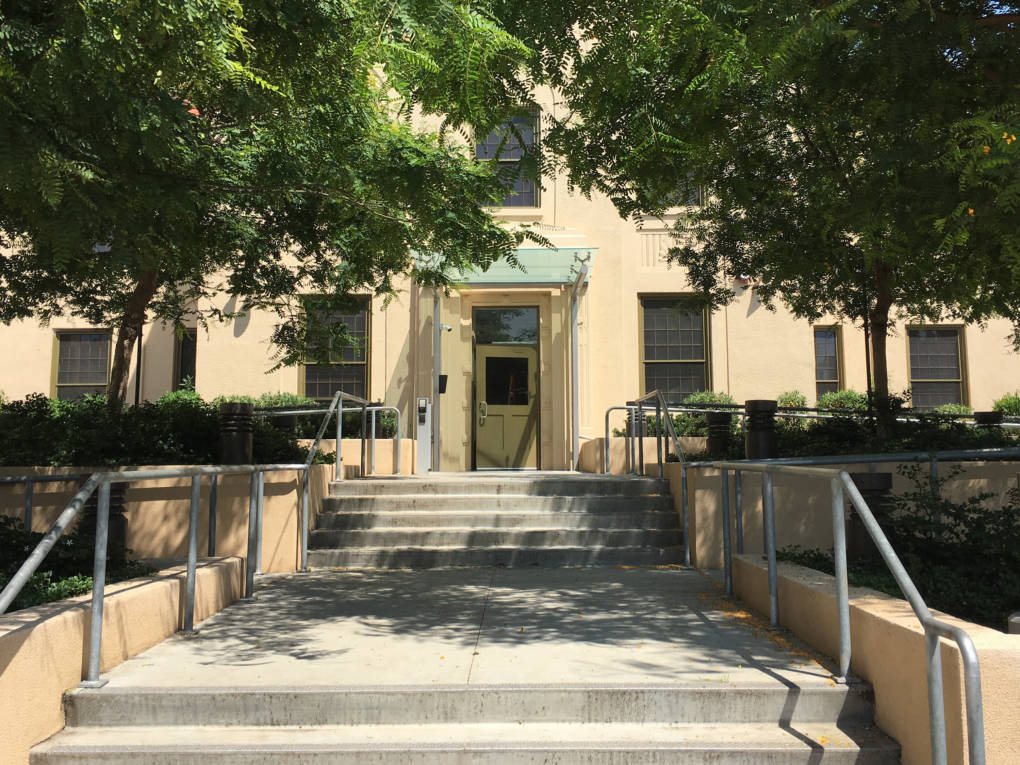
"caption": "Building 209 is the only building so far renovated to house chronically homeless veterans at the VA West Los Angeles Medical Center campus. The nearly 400 acres of the VA West Los Angeles Medical Center were donated in the 19th century to be a home for old and disabled soldiers. The land hasn't been used that way in decades.",
"description": "Building 209 is the only building so far renovated to house chronically homeless veterans at the VA West Los Angeles Medical Center campus. The nearly 400 acres of the VA West Los Angeles Medical Center were donated in the 19th century to be a home for old and disabled soldiers. The land hasn't been used that way in decades.",
"title": "Building 209 is the only building so far renovated to house chronically homeless veterans at the VA West Los Angeles Medical Center campus. The nearly 400 acres of the VA West Los Angeles Medical Center were donated in the 19th century to be a home for old and disabled soldiers. The land hasn't been used that way in decades.",
"credit": "Ina Jaffe/NPR",
"status": "inherit",
"isLoading": false,
"fetchFailed": false
},
"news_11686915": {
"type": "attachments",
"id": "news_11686915",
"meta": {
"index": "attachments_1716263798",
"site": "news",
"id": "11686915",
"found": true
},
"parent": 11686902,
"imgSizes": {
"small": {
"file": "https://ww2.kqed.org/app/uploads/sites/10/2018/08/l.a.-metro-520x390.jpg",
"width": 520,
"mimeType": "image/jpeg",
"height": 390
},
"twentyfourteen-full-width": {
"file": "https://ww2.kqed.org/app/uploads/sites/10/2018/08/l.a.-metro-1038x576.jpg",
"width": 1038,
"mimeType": "image/jpeg",
"height": 576
},
"thumbnail": {
"file": "https://ww2.kqed.org/app/uploads/sites/10/2018/08/l.a.-metro-160x120.jpg",
"width": 160,
"mimeType": "image/jpeg",
"height": 120
},
"fd-sm": {
"file": "https://ww2.kqed.org/app/uploads/sites/10/2018/08/l.a.-metro-960x720.jpg",
"width": 960,
"mimeType": "image/jpeg",
"height": 720
},
"post-thumbnail": {
"file": "https://ww2.kqed.org/app/uploads/sites/10/2018/08/l.a.-metro-672x372.jpg",
"width": 672,
"mimeType": "image/jpeg",
"height": 372
},
"xsmall": {
"file": "https://ww2.kqed.org/app/uploads/sites/10/2018/08/l.a.-metro-375x281.jpg",
"width": 375,
"mimeType": "image/jpeg",
"height": 281
},
"kqedFullSize": {
"file": "https://ww2.kqed.org/app/uploads/sites/10/2018/08/l.a.-metro-e1534284137277.jpg",
"width": 1920,
"height": 1440
},
"large": {
"file": "https://ww2.kqed.org/app/uploads/sites/10/2018/08/l.a.-metro-1020x765.jpg",
"width": 1020,
"mimeType": "image/jpeg",
"height": 765
},
"xlarge": {
"file": "https://ww2.kqed.org/app/uploads/sites/10/2018/08/l.a.-metro-1180x885.jpg",
"width": 1180,
"mimeType": "image/jpeg",
"height": 885
},
"complete_open_graph": {
"file": "https://ww2.kqed.org/app/uploads/sites/10/2018/08/l.a.-metro-1200x900.jpg",
"width": 1200,
"mimeType": "image/jpeg",
"height": 900
},
"guest-author-50": {
"file": "https://ww2.kqed.org/app/uploads/sites/10/2018/08/l.a.-metro-50x50.jpg",
"width": 50,
"mimeType": "image/jpeg",
"height": 50
},
"guest-author-96": {
"file": "https://ww2.kqed.org/app/uploads/sites/10/2018/08/l.a.-metro-96x96.jpg",
"width": 96,
"mimeType": "image/jpeg",
"height": 96
},
"medium": {
"file": "https://ww2.kqed.org/app/uploads/sites/10/2018/08/l.a.-metro-800x600.jpg",
"width": 800,
"mimeType": "image/jpeg",
"height": 600
},
"guest-author-64": {
"file": "https://ww2.kqed.org/app/uploads/sites/10/2018/08/l.a.-metro-64x64.jpg",
"width": 64,
"mimeType": "image/jpeg",
"height": 64
},
"guest-author-32": {
"file": "https://ww2.kqed.org/app/uploads/sites/10/2018/08/l.a.-metro-32x32.jpg",
"width": 32,
"mimeType": "image/jpeg",
"height": 32
},
"fd-lrg": {
"file": "https://ww2.kqed.org/app/uploads/sites/10/2018/08/l.a.-metro-1920x1440.jpg",
"width": 1920,
"mimeType": "image/jpeg",
"height": 1440
},
"fd-med": {
"file": "https://ww2.kqed.org/app/uploads/sites/10/2018/08/l.a.-metro-1180x885.jpg",
"width": 1180,
"mimeType": "image/jpeg",
"height": 885
},
"full-width": {
"file": "https://ww2.kqed.org/app/uploads/sites/10/2018/08/l.a.-metro-1920x1440.jpg",
"width": 1920,
"mimeType": "image/jpeg",
"height": 1440
},
"detail": {
"file": "https://ww2.kqed.org/app/uploads/sites/10/2018/08/l.a.-metro-150x150.jpg",
"width": 150,
"mimeType": "image/jpeg",
"height": 150
},
"guest-author-128": {
"file": "https://ww2.kqed.org/app/uploads/sites/10/2018/08/l.a.-metro-128x128.jpg",
"width": 128,
"mimeType": "image/jpeg",
"height": 128
},
"xxsmall": {
"file": "https://ww2.kqed.org/app/uploads/sites/10/2018/08/l.a.-metro-240x180.jpg",
"width": 240,
"mimeType": "image/jpeg",
"height": 180
}
},
"publishDate": 1534283980,
"modified": 1534284126,
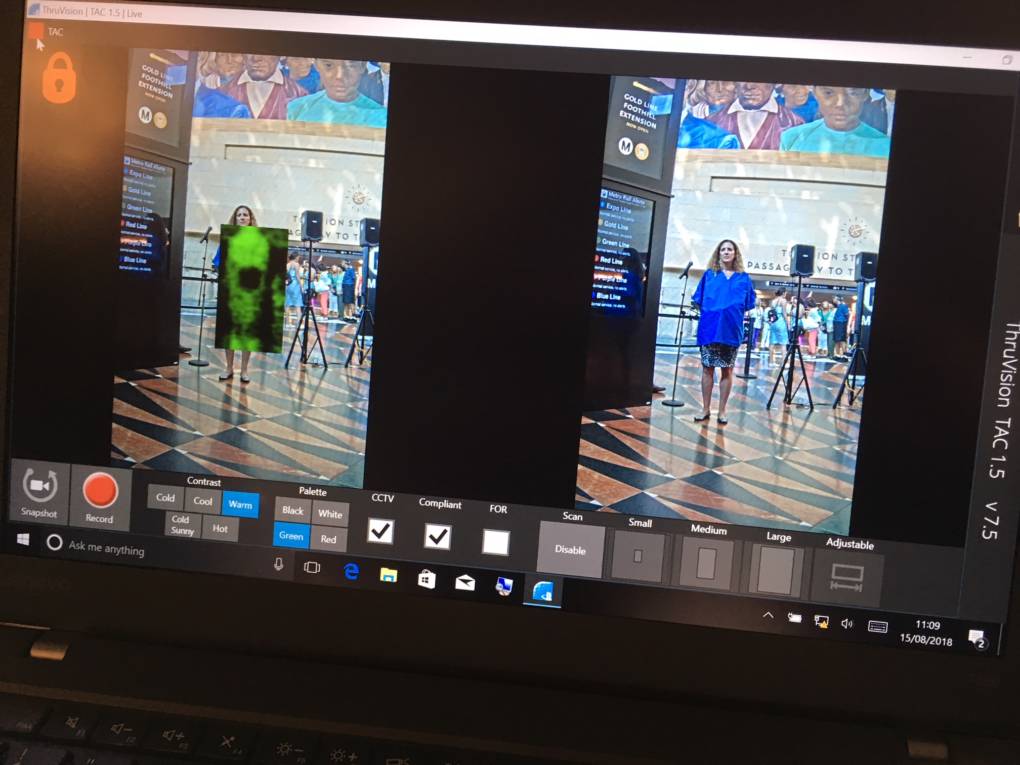
"caption": "An L.A. Metro test shows what new body scanners display on monitors. In this case, the test subject is concealing an object beneath her clothing. ",
"description": null,
"title": "L.A. Metro-Body Scanning",
"credit": "L.A. Metro",
"status": "inherit",
"isLoading": false,
"fetchFailed": false
},
"news_11675633": {
"type": "attachments",
"id": "news_11675633",
"meta": {
"index": "attachments_1716263798",
"site": "news",
"id": "11675633",
"found": true
},
"parent": 11670826,
"imgSizes": {
"small": {
"file": "https://ww2.kqed.org/app/uploads/sites/10/2018/05/RS31509_eddris-img-3-qut-520x693.jpg",
"width": 520,
"mimeType": "image/jpeg",
"height": 693
},
"twentyfourteen-full-width": {
"file": "https://ww2.kqed.org/app/uploads/sites/10/2018/05/RS31509_eddris-img-3-qut-1038x576.jpg",
"width": 1038,
"mimeType": "image/jpeg",
"height": 576
},
"thumbnail": {
"file": "https://ww2.kqed.org/app/uploads/sites/10/2018/05/RS31509_eddris-img-3-qut-160x213.jpg",
"width": 160,
"mimeType": "image/jpeg",
"height": 213
},
"fd-sm": {
"file": "https://ww2.kqed.org/app/uploads/sites/10/2018/05/RS31509_eddris-img-3-qut-960x1280.jpg",
"width": 960,
"mimeType": "image/jpeg",
"height": 1280
},
"post-thumbnail": {
"file": "https://ww2.kqed.org/app/uploads/sites/10/2018/05/RS31509_eddris-img-3-qut-672x372.jpg",
"width": 672,
"mimeType": "image/jpeg",
"height": 372
},
"xsmall": {
"file": "https://ww2.kqed.org/app/uploads/sites/10/2018/05/RS31509_eddris-img-3-qut-375x500.jpg",
"width": 375,
"mimeType": "image/jpeg",
"height": 500
},
"kqedFullSize": {
"file": "https://ww2.kqed.org/app/uploads/sites/10/2018/05/RS31509_eddris-img-3-qut.jpg",
"width": 1920,
"height": 2560
},
"large": {
"file": "https://ww2.kqed.org/app/uploads/sites/10/2018/05/RS31509_eddris-img-3-qut-1020x1360.jpg",
"width": 1020,
"mimeType": "image/jpeg",
"height": 1360
},
"xlarge": {
"file": "https://ww2.kqed.org/app/uploads/sites/10/2018/05/RS31509_eddris-img-3-qut-1180x1573.jpg",
"width": 1180,
"mimeType": "image/jpeg",
"height": 1573
},
"complete_open_graph": {
"file": "https://ww2.kqed.org/app/uploads/sites/10/2018/05/RS31509_eddris-img-3-qut-900x1200.jpg",
"width": 900,
"mimeType": "image/jpeg",
"height": 1200
},
"guest-author-50": {
"file": "https://ww2.kqed.org/app/uploads/sites/10/2018/05/RS31509_eddris-img-3-qut-50x50.jpg",
"width": 50,
"mimeType": "image/jpeg",
"height": 50
},
"guest-author-96": {
"file": "https://ww2.kqed.org/app/uploads/sites/10/2018/05/RS31509_eddris-img-3-qut-96x96.jpg",
"width": 96,
"mimeType": "image/jpeg",
"height": 96
},
"medium": {
"file": "https://ww2.kqed.org/app/uploads/sites/10/2018/05/RS31509_eddris-img-3-qut-800x1067.jpg",
"width": 800,
"mimeType": "image/jpeg",
"height": 1067
},
"guest-author-64": {
"file": "https://ww2.kqed.org/app/uploads/sites/10/2018/05/RS31509_eddris-img-3-qut-64x64.jpg",
"width": 64,
"mimeType": "image/jpeg",
"height": 64
},
"guest-author-32": {
"file": "https://ww2.kqed.org/app/uploads/sites/10/2018/05/RS31509_eddris-img-3-qut-32x32.jpg",
"width": 32,
"mimeType": "image/jpeg",
"height": 32
},
"fd-lrg": {
"file": "https://ww2.kqed.org/app/uploads/sites/10/2018/05/RS31509_eddris-img-3-qut-1920x2560.jpg",
"width": 1920,
"mimeType": "image/jpeg",
"height": 2560
},
"fd-med": {
"file": "https://ww2.kqed.org/app/uploads/sites/10/2018/05/RS31509_eddris-img-3-qut-1180x1573.jpg",
"width": 1180,
"mimeType": "image/jpeg",
"height": 1573
},
"full-width": {
"file": "https://ww2.kqed.org/app/uploads/sites/10/2018/05/RS31509_eddris-img-3-qut-1920x2560.jpg",
"width": 1920,
"mimeType": "image/jpeg",
"height": 2560
},
"detail": {
"file": "https://ww2.kqed.org/app/uploads/sites/10/2018/05/RS31509_eddris-img-3-qut-150x150.jpg",
"width": 150,
"mimeType": "image/jpeg",
"height": 150
},
"guest-author-128": {
"file": "https://ww2.kqed.org/app/uploads/sites/10/2018/05/RS31509_eddris-img-3-qut-128x128.jpg",
"width": 128,
"mimeType": "image/jpeg",
"height": 128
},
"xxsmall": {
"file": "https://ww2.kqed.org/app/uploads/sites/10/2018/05/RS31509_eddris-img-3-qut-240x320.jpg",
"width": 240,
"mimeType": "image/jpeg",
"height": 320
}
},
"publishDate": 1529354994,
"modified": 1529357993,
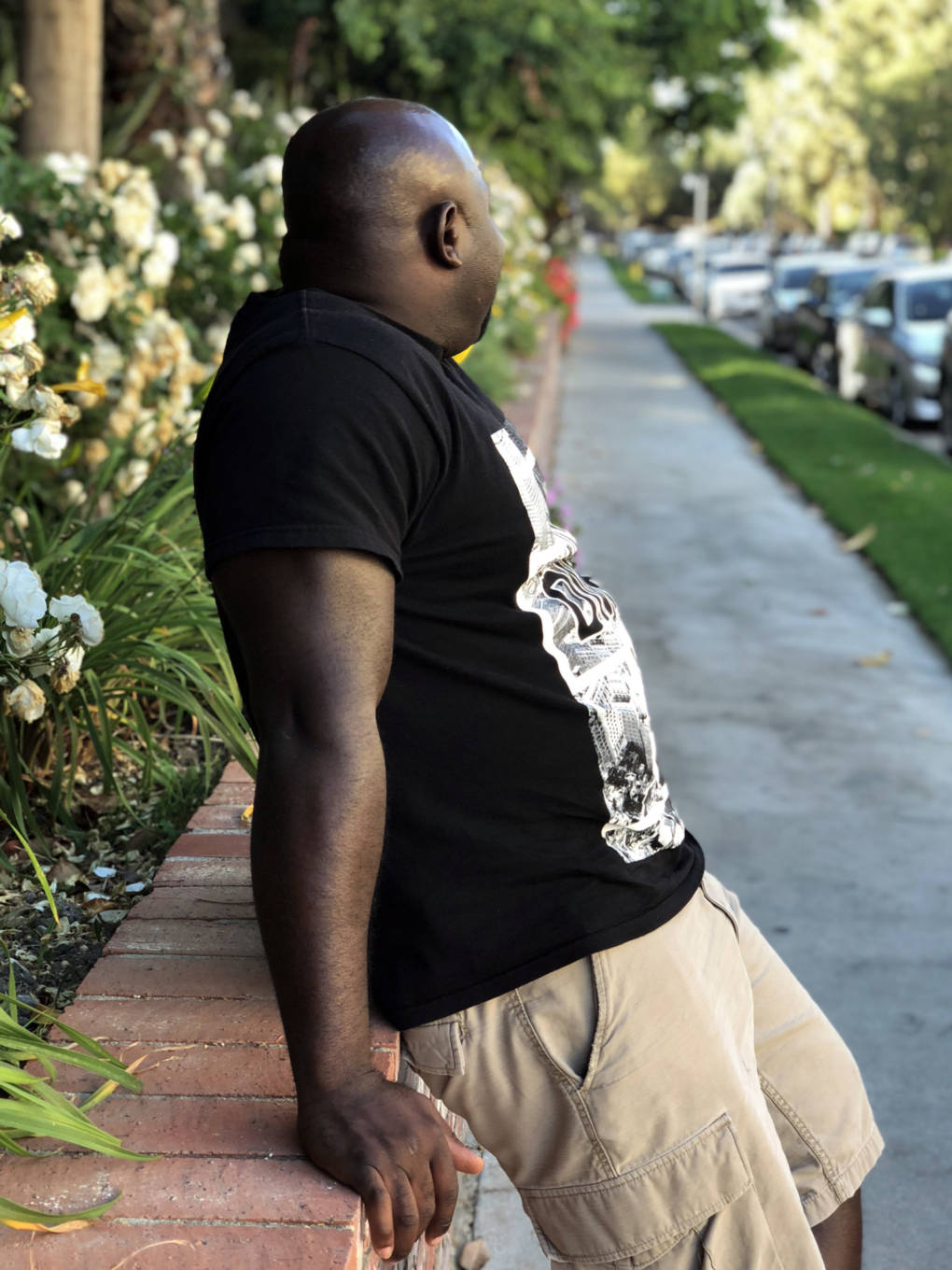
"caption": "Eddris Sseguya was imprisoned in Uganda for being gay. He is now living in his car in Los Angeles, where he is waiting to secure political asylum. For safety reasons, he did not want his face shown.",
"description": null,
"title": "RS31509_eddris-img-3-qut",
"credit": "Karina Saidi",
"status": "inherit",
"isLoading": false,
"fetchFailed": false
},
"news_11680457": {
"type": "attachments",
"id": "news_11680457",
"meta": {
"index": "attachments_1716263798",
"site": "news",
"id": "11680457",
"found": true
},
"parent": 11680446,
"imgSizes": {
"small": {
"file": "https://ww2.kqed.org/app/uploads/sites/10/2018/07/ClergyArrested-520x346.jpg",
"width": 520,
"mimeType": "image/jpeg",
"height": 346
},
"twentyfourteen-full-width": {
"file": "https://ww2.kqed.org/app/uploads/sites/10/2018/07/ClergyArrested-1038x576.jpg",
"width": 1038,
"mimeType": "image/jpeg",
"height": 576
},
"thumbnail": {
"file": "https://ww2.kqed.org/app/uploads/sites/10/2018/07/ClergyArrested-160x106.jpg",
"width": 160,
"mimeType": "image/jpeg",
"height": 106
},
"fd-sm": {
"file": "https://ww2.kqed.org/app/uploads/sites/10/2018/07/ClergyArrested-960x639.jpg",
"width": 960,
"mimeType": "image/jpeg",
"height": 639
},
"post-thumbnail": {
"file": "https://ww2.kqed.org/app/uploads/sites/10/2018/07/ClergyArrested-672x372.jpg",
"width": 672,
"mimeType": "image/jpeg",
"height": 372
},
"xsmall": {
"file": "https://ww2.kqed.org/app/uploads/sites/10/2018/07/ClergyArrested-375x249.jpg",
"width": 375,
"mimeType": "image/jpeg",
"height": 249
},
"kqedFullSize": {
"file": "https://ww2.kqed.org/app/uploads/sites/10/2018/07/ClergyArrested.jpg",
"width": 1920,
"height": 1277
},
"large": {
"file": "https://ww2.kqed.org/app/uploads/sites/10/2018/07/ClergyArrested-1020x678.jpg",
"width": 1020,
"mimeType": "image/jpeg",
"height": 678
},
"xlarge": {
"file": "https://ww2.kqed.org/app/uploads/sites/10/2018/07/ClergyArrested-1180x785.jpg",
"width": 1180,
"mimeType": "image/jpeg",
"height": 785
},
"complete_open_graph": {
"file": "https://ww2.kqed.org/app/uploads/sites/10/2018/07/ClergyArrested-1200x798.jpg",
"width": 1200,
"mimeType": "image/jpeg",
"height": 798
},
"guest-author-50": {
"file": "https://ww2.kqed.org/app/uploads/sites/10/2018/07/ClergyArrested-50x50.jpg",
"width": 50,
"mimeType": "image/jpeg",
"height": 50
},
"guest-author-96": {
"file": "https://ww2.kqed.org/app/uploads/sites/10/2018/07/ClergyArrested-96x96.jpg",
"width": 96,
"mimeType": "image/jpeg",
"height": 96
},
"medium": {
"file": "https://ww2.kqed.org/app/uploads/sites/10/2018/07/ClergyArrested-800x532.jpg",
"width": 800,
"mimeType": "image/jpeg",
"height": 532
},
"guest-author-64": {
"file": "https://ww2.kqed.org/app/uploads/sites/10/2018/07/ClergyArrested-64x64.jpg",
"width": 64,
"mimeType": "image/jpeg",
"height": 64
},
"guest-author-32": {
"file": "https://ww2.kqed.org/app/uploads/sites/10/2018/07/ClergyArrested-32x32.jpg",
"width": 32,
"mimeType": "image/jpeg",
"height": 32
},
"fd-lrg": {
"file": "https://ww2.kqed.org/app/uploads/sites/10/2018/07/ClergyArrested-1920x1277.jpg",
"width": 1920,
"mimeType": "image/jpeg",
"height": 1277
},
"fd-med": {
"file": "https://ww2.kqed.org/app/uploads/sites/10/2018/07/ClergyArrested-1180x785.jpg",
"width": 1180,
"mimeType": "image/jpeg",
"height": 785
},
"full-width": {
"file": "https://ww2.kqed.org/app/uploads/sites/10/2018/07/ClergyArrested-1920x1277.jpg",
"width": 1920,
"mimeType": "image/jpeg",
"height": 1277
},
"detail": {
"file": "https://ww2.kqed.org/app/uploads/sites/10/2018/07/ClergyArrested-150x150.jpg",
"width": 150,
"mimeType": "image/jpeg",
"height": 150
},
"guest-author-128": {
"file": "https://ww2.kqed.org/app/uploads/sites/10/2018/07/ClergyArrested-128x128.jpg",
"width": 128,
"mimeType": "image/jpeg",
"height": 128
},
"xxsmall": {
"file": "https://ww2.kqed.org/app/uploads/sites/10/2018/07/ClergyArrested-240x160.jpg",
"width": 240,
"mimeType": "image/jpeg",
"height": 160
}
},
"publishDate": 1531509950,
"modified": 1531517215,
"caption": "A clergy member is arrested during a demonstration over a visit by U.S. Attorney General Jeff Sessions on June 26, 2018, in Los Angeles. More than a dozen protesters, including clergy, were arrested after blocking a downtown street while protesting the Trump administration's immigration policies. ",
"description": "A clergy member is arrested during a demonstration over a visit by U.S. Attorney General Jeff Sessions on June 26, 2018 in Los Angeles. More than a dozen protestors, including clergy, were arrested after blocking a downtown street while protesting the Trump administration's immigration policies. ",
"title": "ClergyArrested",
"credit": "Mario Tama/Getty Images",
"status": "inherit",
"isLoading": false,
"fetchFailed": false
},
"news_11678780": {
"type": "attachments",
"id": "news_11678780",
"meta": {
"index": "attachments_1716263798",
"site": "news",
"id": "11678780",
"found": true
},
"parent": 11678761,
"imgSizes": {
"small": {
"file": "https://ww2.kqed.org/app/uploads/sites/10/2018/07/lakewood1-520x396.jpg",
"width": 520,
"mimeType": "image/jpeg",
"height": 396
},
"twentyfourteen-full-width": {
"file": "https://ww2.kqed.org/app/uploads/sites/10/2018/07/lakewood1-1024x576.jpg",
"width": 1024,
"mimeType": "image/jpeg",
"height": 576
},
"thumbnail": {
"file": "https://ww2.kqed.org/app/uploads/sites/10/2018/07/lakewood1-160x122.jpg",
"width": 160,
"mimeType": "image/jpeg",
"height": 122
},
"fd-sm": {
"file": "https://ww2.kqed.org/app/uploads/sites/10/2018/07/lakewood1-960x730.jpg",
"width": 960,
"mimeType": "image/jpeg",
"height": 730
},
"post-thumbnail": {
"file": "https://ww2.kqed.org/app/uploads/sites/10/2018/07/lakewood1-672x372.jpg",
"width": 672,
"mimeType": "image/jpeg",
"height": 372
},
"xsmall": {
"file": "https://ww2.kqed.org/app/uploads/sites/10/2018/07/lakewood1-375x285.jpg",
"width": 375,
"mimeType": "image/jpeg",
"height": 285
},
"kqedFullSize": {
"file": "https://ww2.kqed.org/app/uploads/sites/10/2018/07/lakewood1.jpg",
"width": 1024,
"height": 779
},
"large": {
"file": "https://ww2.kqed.org/app/uploads/sites/10/2018/07/lakewood1-1020x776.jpg",
"width": 1020,
"mimeType": "image/jpeg",
"height": 776
},
"guest-author-50": {
"file": "https://ww2.kqed.org/app/uploads/sites/10/2018/07/lakewood1-50x50.jpg",
"width": 50,
"mimeType": "image/jpeg",
"height": 50
},
"guest-author-96": {
"file": "https://ww2.kqed.org/app/uploads/sites/10/2018/07/lakewood1-96x96.jpg",
"width": 96,
"mimeType": "image/jpeg",
"height": 96
},
"medium": {
"file": "https://ww2.kqed.org/app/uploads/sites/10/2018/07/lakewood1-800x609.jpg",
"width": 800,
"mimeType": "image/jpeg",
"height": 609
},
"guest-author-64": {
"file": "https://ww2.kqed.org/app/uploads/sites/10/2018/07/lakewood1-64x64.jpg",
"width": 64,
"mimeType": "image/jpeg",
"height": 64
},
"guest-author-32": {
"file": "https://ww2.kqed.org/app/uploads/sites/10/2018/07/lakewood1-32x32.jpg",
"width": 32,
"mimeType": "image/jpeg",
"height": 32
},
"detail": {
"file": "https://ww2.kqed.org/app/uploads/sites/10/2018/07/lakewood1-150x150.jpg",
"width": 150,
"mimeType": "image/jpeg",
"height": 150
},
"guest-author-128": {
"file": "https://ww2.kqed.org/app/uploads/sites/10/2018/07/lakewood1-128x128.jpg",
"width": 128,
"mimeType": "image/jpeg",
"height": 128
},
"xxsmall": {
"file": "https://ww2.kqed.org/app/uploads/sites/10/2018/07/lakewood1-240x183.jpg",
"width": 240,
"mimeType": "image/jpeg",
"height": 183
}
},
"publishDate": 1530571654,
"modified": 1530571706,
"caption": "On the first day of sales in Lakewood in 1950, 25,000 people lined up to have a look. At the end of the first month, more than 200,000 people had flocked to the sales office, and more than 1,000 families had purchased homes. As many as 50 houses a day were sold, with a record 107 sold in one hour. ",
"description": "On the first day of sales in Lakewood in 1950, 25,000 people lined up to have a look. At the end of the first month, more than 200,000 people had flocked to the sales office, and more than 1,000 families had purchased homes. As many as 50 houses a day were sold, with a record 107 sold in one hour. ",
"title": "lakewood1",
"credit": "City of Lakewood",
"status": "inherit",
"isLoading": false,
"fetchFailed": false
},
"news_11677765": {
"type": "attachments",
"id": "news_11677765",
"meta": {
"index": "attachments_1716263798",
"site": "news",
"id": "11677765",
"found": true
},
"parent": 11677728,
"imgSizes": {
"small": {
"file": "https://ww2.kqed.org/app/uploads/sites/10/2018/06/kcrw5-520x390.jpeg",
"width": 520,
"mimeType": "image/jpeg",
"height": 390
},
"twentyfourteen-full-width": {
"file": "https://ww2.kqed.org/app/uploads/sites/10/2018/06/kcrw5-1038x576.jpeg",
"width": 1038,
"mimeType": "image/jpeg",
"height": 576
},
"thumbnail": {
"file": "https://ww2.kqed.org/app/uploads/sites/10/2018/06/kcrw5-160x120.jpeg",
"width": 160,
"mimeType": "image/jpeg",
"height": 120
},
"fd-sm": {
"file": "https://ww2.kqed.org/app/uploads/sites/10/2018/06/kcrw5-960x720.jpeg",
"width": 960,
"mimeType": "image/jpeg",
"height": 720
},
"post-thumbnail": {
"file": "https://ww2.kqed.org/app/uploads/sites/10/2018/06/kcrw5-672x372.jpeg",
"width": 672,
"mimeType": "image/jpeg",
"height": 372
},
"xsmall": {
"file": "https://ww2.kqed.org/app/uploads/sites/10/2018/06/kcrw5-375x281.jpeg",
"width": 375,
"mimeType": "image/jpeg",
"height": 281
},
"kqedFullSize": {
"file": "https://ww2.kqed.org/app/uploads/sites/10/2018/06/kcrw5-e1530139959400.jpeg",
"width": 1920,
"height": 1440
},
"large": {
"file": "https://ww2.kqed.org/app/uploads/sites/10/2018/06/kcrw5-1020x765.jpeg",
"width": 1020,
"mimeType": "image/jpeg",
"height": 765
},
"xlarge": {
"file": "https://ww2.kqed.org/app/uploads/sites/10/2018/06/kcrw5-1180x885.jpeg",
"width": 1180,
"mimeType": "image/jpeg",
"height": 885
},
"complete_open_graph": {
"file": "https://ww2.kqed.org/app/uploads/sites/10/2018/06/kcrw5-1200x900.jpeg",
"width": 1200,
"mimeType": "image/jpeg",
"height": 900
},
"guest-author-50": {
"file": "https://ww2.kqed.org/app/uploads/sites/10/2018/06/kcrw5-50x50.jpeg",
"width": 50,
"mimeType": "image/jpeg",
"height": 50
},
"guest-author-96": {
"file": "https://ww2.kqed.org/app/uploads/sites/10/2018/06/kcrw5-96x96.jpeg",
"width": 96,
"mimeType": "image/jpeg",
"height": 96
},
"medium": {
"file": "https://ww2.kqed.org/app/uploads/sites/10/2018/06/kcrw5-800x600.jpeg",
"width": 800,
"mimeType": "image/jpeg",
"height": 600
},
"guest-author-64": {
"file": "https://ww2.kqed.org/app/uploads/sites/10/2018/06/kcrw5-64x64.jpeg",
"width": 64,
"mimeType": "image/jpeg",
"height": 64
},
"guest-author-32": {
"file": "https://ww2.kqed.org/app/uploads/sites/10/2018/06/kcrw5-32x32.jpeg",
"width": 32,
"mimeType": "image/jpeg",
"height": 32
},
"fd-lrg": {
"file": "https://ww2.kqed.org/app/uploads/sites/10/2018/06/kcrw5-1920x1440.jpeg",
"width": 1920,
"mimeType": "image/jpeg",
"height": 1440
},
"fd-med": {
"file": "https://ww2.kqed.org/app/uploads/sites/10/2018/06/kcrw5-1180x885.jpeg",
"width": 1180,
"mimeType": "image/jpeg",
"height": 885
},
"full-width": {
"file": "https://ww2.kqed.org/app/uploads/sites/10/2018/06/kcrw5-1920x1440.jpeg",
"width": 1920,
"mimeType": "image/jpeg",
"height": 1440
},
"detail": {
"file": "https://ww2.kqed.org/app/uploads/sites/10/2018/06/kcrw5-150x150.jpeg",
"width": 150,
"mimeType": "image/jpeg",
"height": 150
},
"guest-author-128": {
"file": "https://ww2.kqed.org/app/uploads/sites/10/2018/06/kcrw5-128x128.jpeg",
"width": 128,
"mimeType": "image/jpeg",
"height": 128
},
"xxsmall": {
"file": "https://ww2.kqed.org/app/uploads/sites/10/2018/06/kcrw5-240x180.jpeg",
"width": 240,
"mimeType": "image/jpeg",
"height": 180
}
},
"publishDate": 1530139891,
"modified": 1530225662,
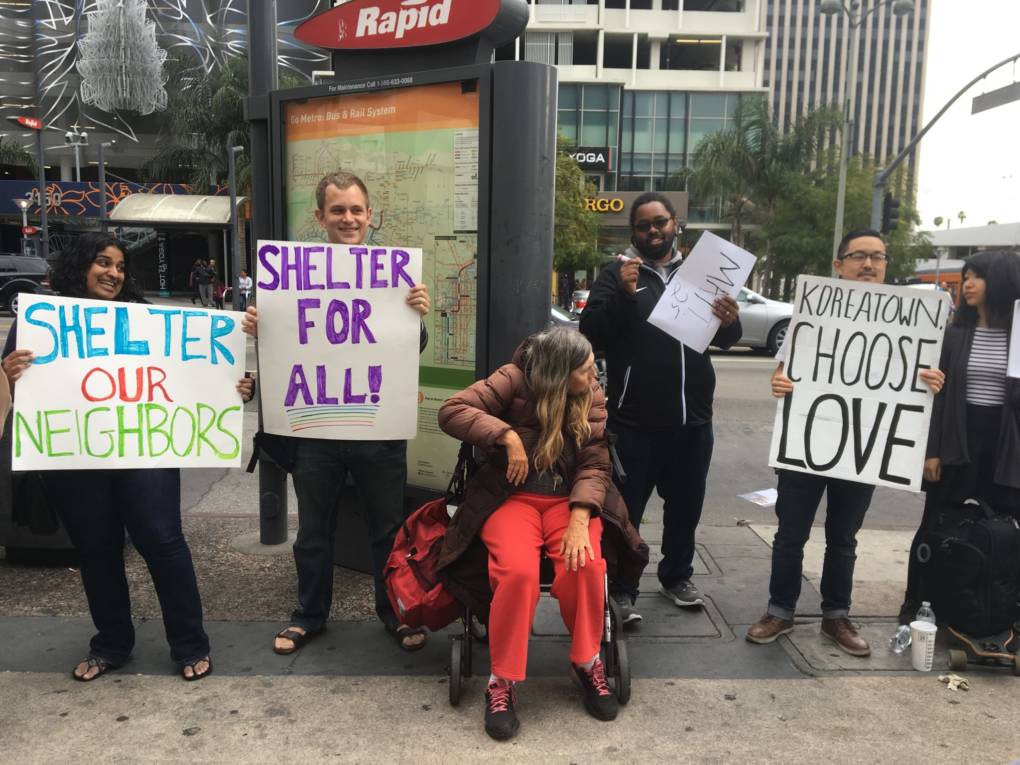
"caption": "A small group of counterdemonstrators showed their support for the proposed homeless shelter. ",
"description": "A small group of counter-demonstrators showed their support for the proposed homeless shelter. ",
"title": "kcrw5",
"credit": "Avishay Artsy/KCRW",
"status": "inherit",
"isLoading": false,
"fetchFailed": false
},
"news_11674638": {
"type": "attachments",
"id": "news_11674638",
"meta": {
"index": "attachments_1716263798",
"site": "news",
"id": "11674638",
"found": true
},
"parent": 11674637,
"imgSizes": {
"small": {
"file": "https://ww2.kqed.org/app/uploads/sites/10/2018/06/rtx68v2i_wide-c0c1e92755bf2321fb4cd26e8d39dc7faf9f1e58-520x293.jpg",
"width": 520,
"mimeType": "image/jpeg",
"height": 293
},
"twentyfourteen-full-width": {
"file": "https://ww2.kqed.org/app/uploads/sites/10/2018/06/rtx68v2i_wide-c0c1e92755bf2321fb4cd26e8d39dc7faf9f1e58-1038x576.jpg",
"width": 1038,
"mimeType": "image/jpeg",
"height": 576
},
"thumbnail": {
"file": "https://ww2.kqed.org/app/uploads/sites/10/2018/06/rtx68v2i_wide-c0c1e92755bf2321fb4cd26e8d39dc7faf9f1e58-160x90.jpg",
"width": 160,
"mimeType": "image/jpeg",
"height": 90
},
"fd-sm": {
"file": "https://ww2.kqed.org/app/uploads/sites/10/2018/06/rtx68v2i_wide-c0c1e92755bf2321fb4cd26e8d39dc7faf9f1e58-960x540.jpg",
"width": 960,
"mimeType": "image/jpeg",
"height": 540
},
"post-thumbnail": {
"file": "https://ww2.kqed.org/app/uploads/sites/10/2018/06/rtx68v2i_wide-c0c1e92755bf2321fb4cd26e8d39dc7faf9f1e58-672x372.jpg",
"width": 672,
"mimeType": "image/jpeg",
"height": 372
},
"xsmall": {
"file": "https://ww2.kqed.org/app/uploads/sites/10/2018/06/rtx68v2i_wide-c0c1e92755bf2321fb4cd26e8d39dc7faf9f1e58-375x211.jpg",
"width": 375,
"mimeType": "image/jpeg",
"height": 211
},
"kqedFullSize": {
"file": "https://ww2.kqed.org/app/uploads/sites/10/2018/06/rtx68v2i_wide-c0c1e92755bf2321fb4cd26e8d39dc7faf9f1e58.jpg",
"width": 4462,
"height": 2510
},
"large": {
"file": "https://ww2.kqed.org/app/uploads/sites/10/2018/06/rtx68v2i_wide-c0c1e92755bf2321fb4cd26e8d39dc7faf9f1e58-1020x574.jpg",
"width": 1020,
"mimeType": "image/jpeg",
"height": 574
},
"xlarge": {
"file": "https://ww2.kqed.org/app/uploads/sites/10/2018/06/rtx68v2i_wide-c0c1e92755bf2321fb4cd26e8d39dc7faf9f1e58-1180x664.jpg",
"width": 1180,
"mimeType": "image/jpeg",
"height": 664
},
"complete_open_graph": {
"file": "https://ww2.kqed.org/app/uploads/sites/10/2018/06/rtx68v2i_wide-c0c1e92755bf2321fb4cd26e8d39dc7faf9f1e58-1200x675.jpg",
"width": 1200,
"mimeType": "image/jpeg",
"height": 675
},
"guest-author-50": {
"file": "https://ww2.kqed.org/app/uploads/sites/10/2018/06/rtx68v2i_wide-c0c1e92755bf2321fb4cd26e8d39dc7faf9f1e58-50x50.jpg",
"width": 50,
"mimeType": "image/jpeg",
"height": 50
},
"guest-author-96": {
"file": "https://ww2.kqed.org/app/uploads/sites/10/2018/06/rtx68v2i_wide-c0c1e92755bf2321fb4cd26e8d39dc7faf9f1e58-96x96.jpg",
"width": 96,
"mimeType": "image/jpeg",
"height": 96
},
"medium": {
"file": "https://ww2.kqed.org/app/uploads/sites/10/2018/06/rtx68v2i_wide-c0c1e92755bf2321fb4cd26e8d39dc7faf9f1e58-800x450.jpg",
"width": 800,
"mimeType": "image/jpeg",
"height": 450
},
"guest-author-64": {
"file": "https://ww2.kqed.org/app/uploads/sites/10/2018/06/rtx68v2i_wide-c0c1e92755bf2321fb4cd26e8d39dc7faf9f1e58-64x64.jpg",
"width": 64,
"mimeType": "image/jpeg",
"height": 64
},
"guest-author-32": {
"file": "https://ww2.kqed.org/app/uploads/sites/10/2018/06/rtx68v2i_wide-c0c1e92755bf2321fb4cd26e8d39dc7faf9f1e58-32x32.jpg",
"width": 32,
"mimeType": "image/jpeg",
"height": 32
},
"fd-lrg": {
"file": "https://ww2.kqed.org/app/uploads/sites/10/2018/06/rtx68v2i_wide-c0c1e92755bf2321fb4cd26e8d39dc7faf9f1e58-1920x1080.jpg",
"width": 1920,
"mimeType": "image/jpeg",
"height": 1080
},
"fd-med": {
"file": "https://ww2.kqed.org/app/uploads/sites/10/2018/06/rtx68v2i_wide-c0c1e92755bf2321fb4cd26e8d39dc7faf9f1e58-1180x664.jpg",
"width": 1180,
"mimeType": "image/jpeg",
"height": 664
},
"full-width": {
"file": "https://ww2.kqed.org/app/uploads/sites/10/2018/06/rtx68v2i_wide-c0c1e92755bf2321fb4cd26e8d39dc7faf9f1e58-1920x1080.jpg",
"width": 1920,
"mimeType": "image/jpeg",
"height": 1080
},
"detail": {
"file": "https://ww2.kqed.org/app/uploads/sites/10/2018/06/rtx68v2i_wide-c0c1e92755bf2321fb4cd26e8d39dc7faf9f1e58-150x150.jpg",
"width": 150,
"mimeType": "image/jpeg",
"height": 150
},
"guest-author-128": {
"file": "https://ww2.kqed.org/app/uploads/sites/10/2018/06/rtx68v2i_wide-c0c1e92755bf2321fb4cd26e8d39dc7faf9f1e58-128x128.jpg",
"width": 128,
"mimeType": "image/jpeg",
"height": 128
},
"xxsmall": {
"file": "https://ww2.kqed.org/app/uploads/sites/10/2018/06/rtx68v2i_wide-c0c1e92755bf2321fb4cd26e8d39dc7faf9f1e58-240x135.jpg",
"width": 240,
"mimeType": "image/jpeg",
"height": 135
}
},
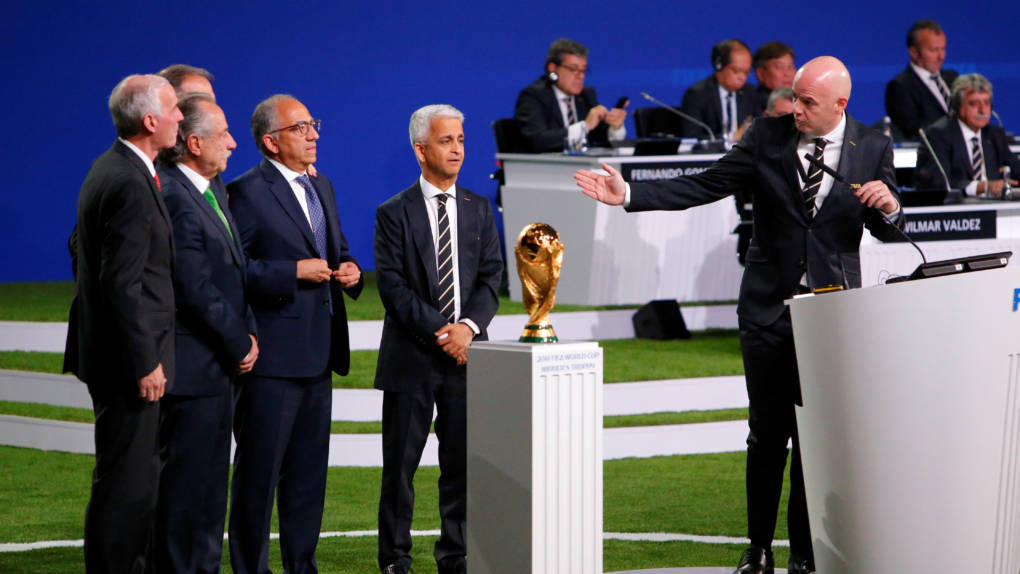
"publishDate": 1528916933,
"modified": 1528926042,
"caption": "FIFA President Gianni Infantino, right, welcomes representatives of the united bid — from the U.S., Canada and Mexico — as soccer's governing body selects its host for the 2026 FIFA World Cup during the 68th FIFA Congress in Moscow, Russia.",
"description": "FIFA President Gianni Infantino, right, welcomes representatives of the united bid -- from the U.S., Canada, and Mexico -- as soccer's governing body selects its host for the 2026 FIFA World Cup during the 68th FIFA Congress in Moscow, Russia.",
"title": "FIFA President Gianni Infantino, right, welcomes representatives of the united bid — from the U.S., Canada, and Mexico — as soccer's governing body selects its host for the 2026 FIFA World Cup during the 68th FIFA Congress in Moscow, Russia.",
"credit": "Sergei Karpukhin/Reuters",
"status": "inherit",
"isLoading": false,
"fetchFailed": false
},
"news_11673663": {
"type": "attachments",
"id": "news_11673663",
"meta": {
"index": "attachments_1716263798",
"site": "news",
"id": "11673663",
"found": true
},
"parent": 11672796,
"imgSizes": {
"small": {
"file": "https://ww2.kqed.org/app/uploads/sites/10/2018/06/SirhanSirhan-1-520x675.jpg",
"width": 520,
"mimeType": "image/jpeg",
"height": 675
},
"twentyfourteen-full-width": {
"file": "https://ww2.kqed.org/app/uploads/sites/10/2018/06/SirhanSirhan-1-800x576.jpg",
"width": 800,
"mimeType": "image/jpeg",
"height": 576
},
"thumbnail": {
"file": "https://ww2.kqed.org/app/uploads/sites/10/2018/06/SirhanSirhan-1-160x208.jpg",
"width": 160,
"mimeType": "image/jpeg",
"height": 208
},
"post-thumbnail": {
"file": "https://ww2.kqed.org/app/uploads/sites/10/2018/06/SirhanSirhan-1-672x372.jpg",
"width": 672,
"mimeType": "image/jpeg",
"height": 372
},
"xsmall": {
"file": "https://ww2.kqed.org/app/uploads/sites/10/2018/06/SirhanSirhan-1-375x487.jpg",
"width": 375,
"mimeType": "image/jpeg",
"height": 487
},
"kqedFullSize": {
"file": "https://ww2.kqed.org/app/uploads/sites/10/2018/06/SirhanSirhan-1.jpg",
"width": 800,
"height": 1038
},
"guest-author-50": {
"file": "https://ww2.kqed.org/app/uploads/sites/10/2018/06/SirhanSirhan-1-50x50.jpg",
"width": 50,
"mimeType": "image/jpeg",
"height": 50
},
"guest-author-96": {
"file": "https://ww2.kqed.org/app/uploads/sites/10/2018/06/SirhanSirhan-1-96x96.jpg",
"width": 96,
"mimeType": "image/jpeg",
"height": 96
},
"medium": {
"file": "https://ww2.kqed.org/app/uploads/sites/10/2018/06/SirhanSirhan-1-800x1038.jpg",
"width": 800,
"mimeType": "image/jpeg",
"height": 1038
},
"guest-author-64": {
"file": "https://ww2.kqed.org/app/uploads/sites/10/2018/06/SirhanSirhan-1-64x64.jpg",
"width": 64,
"mimeType": "image/jpeg",
"height": 64
},
"guest-author-32": {
"file": "https://ww2.kqed.org/app/uploads/sites/10/2018/06/SirhanSirhan-1-32x32.jpg",
"width": 32,
"mimeType": "image/jpeg",
"height": 32
},
"detail": {
"file": "https://ww2.kqed.org/app/uploads/sites/10/2018/06/SirhanSirhan-1-150x150.jpg",
"width": 150,
"mimeType": "image/jpeg",
"height": 150
},
"guest-author-128": {
"file": "https://ww2.kqed.org/app/uploads/sites/10/2018/06/SirhanSirhan-1-128x128.jpg",
"width": 128,
"mimeType": "image/jpeg",
"height": 128
},
"xxsmall": {
"file": "https://ww2.kqed.org/app/uploads/sites/10/2018/06/SirhanSirhan-1-240x311.jpg",
"width": 240,
"mimeType": "image/jpeg",
"height": 311
}
},
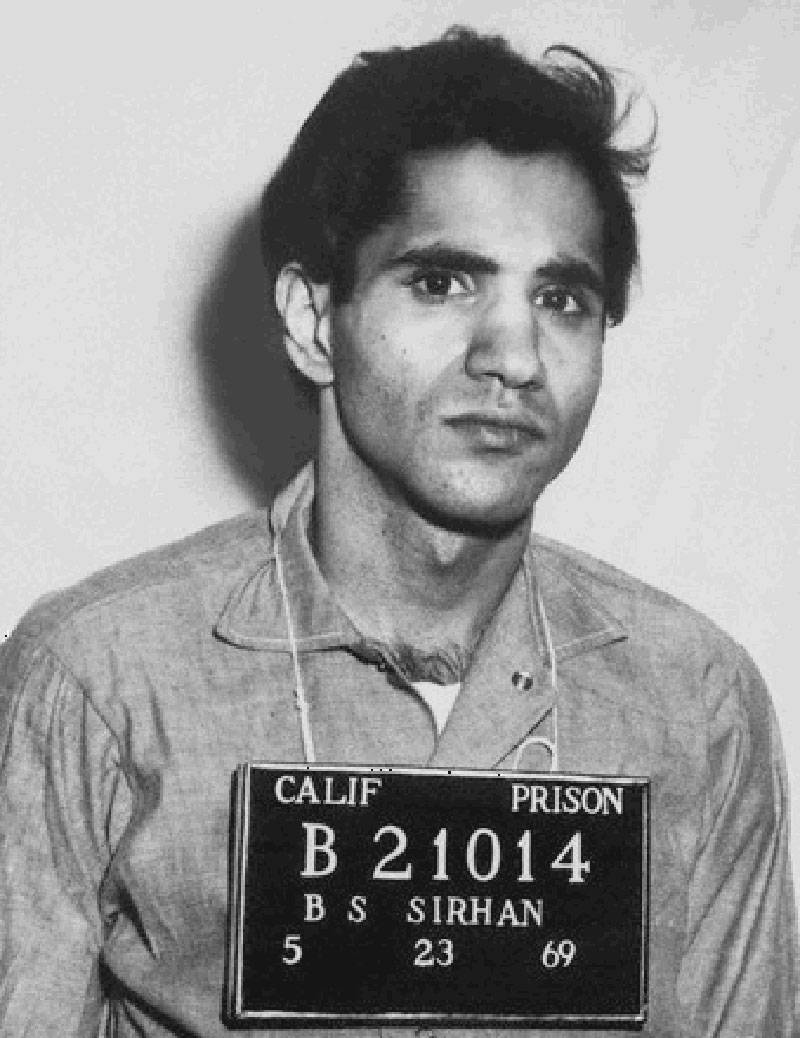
"publishDate": 1528486927,
"modified": 1528486950,
"caption": "Sirhan Sirhan was convicted of murdering Robert F. Kennedy in 1968. He is serving a life sentence in prison.",
"description": "Sirhan Sirhan was convicted of murdering Robert F. Kennedy in 1968. He is serving a life sentence in prison.",
"title": "SirhanSirhan",
"credit": "Wikimedia Commons",
"status": "inherit",
"isLoading": false,
"fetchFailed": false
},
"news_11673358": {
"type": "attachments",
"id": "news_11673358",
"meta": {
"index": "attachments_1716263798",
"site": "news",
"id": "11673358",
"found": true
},
"parent": 11673354,
"imgSizes": {
"small": {
"file": "https://ww2.kqed.org/app/uploads/sites/10/2018/06/LAWomanVotes-520x337.jpg",
"width": 520,
"mimeType": "image/jpeg",
"height": 337
},
"twentyfourteen-full-width": {
"file": "https://ww2.kqed.org/app/uploads/sites/10/2018/06/LAWomanVotes-1038x576.jpg",
"width": 1038,
"mimeType": "image/jpeg",
"height": 576
},
"thumbnail": {
"file": "https://ww2.kqed.org/app/uploads/sites/10/2018/06/LAWomanVotes-160x104.jpg",
"width": 160,
"mimeType": "image/jpeg",
"height": 104
},
"fd-sm": {
"file": "https://ww2.kqed.org/app/uploads/sites/10/2018/06/LAWomanVotes-960x623.jpg",
"width": 960,
"mimeType": "image/jpeg",
"height": 623
},
"post-thumbnail": {
"file": "https://ww2.kqed.org/app/uploads/sites/10/2018/06/LAWomanVotes-672x372.jpg",
"width": 672,
"mimeType": "image/jpeg",
"height": 372
},
"xsmall": {
"file": "https://ww2.kqed.org/app/uploads/sites/10/2018/06/LAWomanVotes-375x243.jpg",
"width": 375,
"mimeType": "image/jpeg",
"height": 243
},
"kqedFullSize": {
"file": "https://ww2.kqed.org/app/uploads/sites/10/2018/06/LAWomanVotes.jpg",
"width": 1920,
"height": 1246
},
"large": {
"file": "https://ww2.kqed.org/app/uploads/sites/10/2018/06/LAWomanVotes-1020x662.jpg",
"width": 1020,
"mimeType": "image/jpeg",
"height": 662
},
"xlarge": {
"file": "https://ww2.kqed.org/app/uploads/sites/10/2018/06/LAWomanVotes-1180x766.jpg",
"width": 1180,
"mimeType": "image/jpeg",
"height": 766
},
"complete_open_graph": {
"file": "https://ww2.kqed.org/app/uploads/sites/10/2018/06/LAWomanVotes-1200x779.jpg",
"width": 1200,
"mimeType": "image/jpeg",
"height": 779
},
"guest-author-50": {
"file": "https://ww2.kqed.org/app/uploads/sites/10/2018/06/LAWomanVotes-50x50.jpg",
"width": 50,
"mimeType": "image/jpeg",
"height": 50
},
"guest-author-96": {
"file": "https://ww2.kqed.org/app/uploads/sites/10/2018/06/LAWomanVotes-96x96.jpg",
"width": 96,
"mimeType": "image/jpeg",
"height": 96
},
"medium": {
"file": "https://ww2.kqed.org/app/uploads/sites/10/2018/06/LAWomanVotes-800x519.jpg",
"width": 800,
"mimeType": "image/jpeg",
"height": 519
},
"guest-author-64": {
"file": "https://ww2.kqed.org/app/uploads/sites/10/2018/06/LAWomanVotes-64x64.jpg",
"width": 64,
"mimeType": "image/jpeg",
"height": 64
},
"guest-author-32": {
"file": "https://ww2.kqed.org/app/uploads/sites/10/2018/06/LAWomanVotes-32x32.jpg",
"width": 32,
"mimeType": "image/jpeg",
"height": 32
},
"fd-lrg": {
"file": "https://ww2.kqed.org/app/uploads/sites/10/2018/06/LAWomanVotes-1920x1246.jpg",
"width": 1920,
"mimeType": "image/jpeg",
"height": 1246
},
"fd-med": {
"file": "https://ww2.kqed.org/app/uploads/sites/10/2018/06/LAWomanVotes-1180x766.jpg",
"width": 1180,
"mimeType": "image/jpeg",
"height": 766
},
"full-width": {
"file": "https://ww2.kqed.org/app/uploads/sites/10/2018/06/LAWomanVotes-1920x1246.jpg",
"width": 1920,
"mimeType": "image/jpeg",
"height": 1246
},
"detail": {
"file": "https://ww2.kqed.org/app/uploads/sites/10/2018/06/LAWomanVotes-150x150.jpg",
"width": 150,
"mimeType": "image/jpeg",
"height": 150
},
"guest-author-128": {
"file": "https://ww2.kqed.org/app/uploads/sites/10/2018/06/LAWomanVotes-128x128.jpg",
"width": 128,
"mimeType": "image/jpeg",
"height": 128
},
"xxsmall": {
"file": "https://ww2.kqed.org/app/uploads/sites/10/2018/06/LAWomanVotes-240x156.jpg",
"width": 240,
"mimeType": "image/jpeg",
"height": 156
}
},
"publishDate": 1528404499,
"modified": 1528404539,
"caption": "A woman casts her vote at a polling station inside the Alhambra Fire Department in Alhambra, Los Angeles County, on June 5, 2018.",
"description": "A woman casts her vote at a polling station inside the Alhambra Fire Department in Alhambra, Los Angeles County, on June 5, 2018.",
"title": "LAWomanVotes",
"credit": "FREDERIC J. BROWN/AFP/Getty Images",
"status": "inherit",
"isLoading": false,
"fetchFailed": false
}
},
"audioPlayerReducer": {
"postId": "stream_live",
"isPaused": true,
"isPlaying": false,
"pfsActive": false,
"pledgeModalIsOpen": true,
"playerDrawerIsOpen": false,
"liveAudioPlayStartedAt": 0,
"liveAudioPlayContext": ""
},
"authorsReducer": {
"byline_news_11696632": {
"type": "authors",
"id": "byline_news_11696632",
"meta": {
"override": true
},
"slug": "byline_news_11696632",
"name": "Emily Sullivan",
"isLoading": false
},
"byline_news_11691982": {
"type": "authors",
"id": "byline_news_11691982",
"meta": {
"override": true
},
"slug": "byline_news_11691982",
"name": "\u003cstrong>\u003ca href=\"http://www.laist.com/author/Matt%20Tinoco\">Matt Tinoco\u003c/a>\u003c/strong>",
"isLoading": false
},
"byline_news_11687715": {
"type": "authors",
"id": "byline_news_11687715",
"meta": {
"override": true
},
"slug": "byline_news_11687715",
"name": "\u003cstrong>Ina Jaffe\u003cbr/>NPR\u003c/strong>",
"isLoading": false
},
"byline_news_11686902": {
"type": "authors",
"id": "byline_news_11686902",
"meta": {
"override": true
},
"slug": "byline_news_11686902",
"name": "\u003cstrong>Michael Balsamo\u003cbr />Associated Press\u003c/strong>",
"isLoading": false
},
"byline_news_11670826": {
"type": "authors",
"id": "byline_news_11670826",
"meta": {
"override": true
},
"slug": "byline_news_11670826",
"name": "Karina Saidi",
"isLoading": false
},
"byline_news_11680446": {
"type": "authors",
"id": "byline_news_11680446",
"meta": {
"override": true
},
"slug": "byline_news_11680446",
"name": "\u003cstrong>\u003ca href=\"https://www.scpr.org/about/people/staff/josie-huang\">Josie Huang\u003c/a>\u003c/strong>",
"isLoading": false
},
"byline_news_11678761": {
"type": "authors",
"id": "byline_news_11678761",
"meta": {
"override": true
},
"slug": "byline_news_11678761",
"name": "\u003ca href=\"https://www.scpr.org/about/people/staff/meghan-mccarty\">Meghan McCarty Carino\u003c/a>\u003cbr/>KPCC\u003c/strong>",
"isLoading": false
},
"byline_news_11677728": {
"type": "authors",
"id": "byline_news_11677728",
"meta": {
"override": true
},
"slug": "byline_news_11677728",
"name": "\u003cstrong>Avishay Artsy\u003cbr />KCRW\u003c/strong>",
"isLoading": false
},
"byline_news_11674637": {
"type": "authors",
"id": "byline_news_11674637",
"meta": {
"override": true
},
"slug": "byline_news_11674637",
"name": "Bill Chappell \u003cbr> KQED News Staff",
"isLoading": false
},
"byline_news_11672796": {
"type": "authors",
"id": "byline_news_11672796",
"meta": {
"override": true
},
"slug": "byline_news_11672796",
"name": "Peter Gilstrap",
"isLoading": false
},
"byline_news_11673354": {
"type": "authors",
"id": "byline_news_11673354",
"meta": {
"override": true
},
"slug": "byline_news_11673354",
"name": "\u003cstrong>\u003ca href=\"https://www.scpr.org/about/people/staff/mary-plummer/\">Mary Plummer\u003c/a>\u003c/strong>",
"isLoading": false
},
"pgilstrap": {
"type": "authors",
"id": "11275",
"meta": {
"index": "authors_1716337520",
"id": "11275",
"found": true
},
"name": "Peter Gilstrap",
"firstName": "Peter",
"lastName": "Gilstrap",
"slug": "pgilstrap",
"email": "pgilstrap@sbcglobal.net",
"display_author_email": false,
"staff_mastheads": [],
"title": null,
"bio": null,
"avatar": "https://secure.gravatar.com/avatar/2bf93e4a8c1e35493845045175273916?s=600&d=blank&r=g",
"twitter": null,
"facebook": null,
"instagram": null,
"linkedin": null,
"sites": [
{
"site": "news",
"roles": [
"author"
]
}
],
"headData": {
"title": "Peter Gilstrap | KQED",
"description": null,
"ogImgSrc": "https://secure.gravatar.com/avatar/2bf93e4a8c1e35493845045175273916?s=600&d=blank&r=g",
"twImgSrc": "https://secure.gravatar.com/avatar/2bf93e4a8c1e35493845045175273916?s=600&d=blank&r=g"
},
"isLoading": false,
"link": "/author/pgilstrap"
}
},
"pagesReducer": {
"news_tag_los-angeles": {
"type": "terms",
"id": "news_4",
"meta": {
"index": "terms_1716263798",
"site": "news",
"id": "4",
"score": 8.557587
},
"featImg": null,
"name": "los angeles",
"description": null,
"taxonomy": "tag",
"headData": {
"twImgId": null,
"twTitle": null,
"ogTitle": null,
"ogImgId": null,
"twDescription": null,
"description": null,
"title": "los angeles Archives | KQED News",
"ogDescription": null
},
"ttid": 4,
"slug": "los-angeles",
"isLoading": false,
"title": "los angeles",
"pageMeta": {
"site": "news",
"WpPageTemplate": "page-topic-editorial",
"currentPage": 18
},
"blocks": [
{
"blockName": "kqed/post-list",
"attrs": {
"layout": "cardArticle2",
"query": "posts/news?tag=los-angeles",
"seeMore": false,
"paginated": true,
"page": 18
}
},
{
"blockName": "kqed/ad"
}
]
}
},
"pfsSessionReducer": {},
"postsReducer": {
"stream_live": {
"type": "live",
"id": "stream_live",
"audioUrl": "https://streams.kqed.org/kqedradio",
"title": "Live Stream",
"excerpt": "Live Stream information currently unavailable.",
"link": "/radio",
"featImg": "",
"label": {
"name": "KQED Live",
"link": "/"
}
},
"stream_kqedNewscast": {
"type": "posts",
"id": "stream_kqedNewscast",
"audioUrl": "https://www.kqed.org/.stream/anon/radio/RDnews/newscast.mp3?_=1",
"title": "KQED Newscast",
"featImg": "",
"label": {
"name": "88.5 FM",
"link": "/"
}
},
"news_11696632": {
"type": "posts",
"id": "news_11696632",
"meta": {
"index": "posts_1716263798",
"site": "news",
"id": "11696632",
"score": null,
"sort": [
1538688753000
]
},
"parent": 0,
"labelTerm": {},
"blocks": [],
"publishDate": 1538688753,
"format": "standard",
"disqusTitle": "Juan Romero, Busboy Who Cradled Dying RFK, Dies at 68",
"title": "Juan Romero, Busboy Who Cradled Dying RFK, Dies at 68",
"headTitle": "The California Report | KQED News",
"content": "\u003cp>On June 5, 1968, hotel busboy Juan Romero raced to congratulate Sen. Robert Kennedy moments after his victory in the California presidential primary. He had met the candidate the day before, bringing him room service at the Ambassador Hotel in Los Angeles.\u003c/p>\n\u003cp>As Kennedy briefly paused to shake the hand of the 17-year-old, a man named Sirhan Sirhan gunned down Kennedy in front of Romero. A remarkable photograph captured the scene: young Romero, an immigrant from Mexico, cradling the glassy-eyed Kennedy, member of an American political dynasty.\u003c/p>\n\u003cp>Romero died on Monday at age 68. A friend, Rigo Chacon, \u003ca href=\"http://www.latimes.com/local/california/la-me-lopez-rfk-busboy-10032018-story.html\">told\u003c/a> the \u003cem>Los Angeles Times\u003c/em> that Romero had died following a heart attack he suffered a few days earlier.\u003c/p>\n\u003cp>Romero \u003ca href=\"https://www.npr.org/2018/06/01/615534723/the-busboy-who-cradled-a-dying-rfk-recalls-those-final-moments\">spoke to StoryCorps\u003c/a> earlier this year and recounted the events of that night — a night that would haunt him for decades.\u003c/p>\n\u003cp>\"I kneeled down to him and I could see his lips moving, so I put my ear next to his lips and I heard him say, 'Is everybody OK?' I said, 'Yes, everybody's OK.' I put my hand between the cold concrete and his head just to make him comfortable.\"\u003c/p>\n\u003cp>[ad fullwidth]\u003c/p>\n\u003cp>\"I could feel a steady stream of blood coming through my fingers,\" Romero said. \"I remember I had a rosary in my shirt pocket and I took it out, thinking that he would need it a lot more than me. I wrapped it around his right hand and then they wheeled him away.\"\u003c/p>\n\u003cp>The photo of that moment — light illuminating the fallen senator's face, the young man crouched at his side — locked Romero into the public memory of RFK's assassination. And it left him with an uncomfortable legacy.\u003c/p>\n\u003cp>Letters addressed to \"the busboy\" began arriving at the Ambassador Hotel — including a couple of angry ones.\u003c/p>\n\u003cp>\"One of them even went as far as to say that 'if he hadn't stopped to shake your hand, the senator would have been alive,' so I should be ashamed of myself for being so selfish,\" he told StoryCorps.\u003c/p>\n\u003cp>He said it had been \"a long 50 years.\"\u003c/p>\n\u003cp>\u003cem>Los Angeles Times\u003c/em> columnist Steve Lopez met with Romero a number of times over the years. Romero lived near San Jose and worked paving roads and driveways.\u003c/p>\n\u003cp>Romero \u003ca href=\"http://www.latimes.com/local/california/la-me-lopez-rfk-busboy-20180602-story.html\">told Lopez\u003c/a> that he wasn't perfect, but had tried to work hard and live according to the values that Kennedy had advocated.\u003c/p>\n\u003cp>\"Maybe I don't have the tools to become a politician and change the laws,\" Romero said. \"But maybe I can help everyone understand there were people who tried to correct injustice.\"\u003c/p>\n\u003cp>He told Lopez in 2015 that after many years of trying not to look at the photos of that night, he was finally able to face them once more.\u003c/p>\n\u003cp>\"I saw a person in need,\" he wrote to Lopez, \"and another person trying to help him.\"\u003c/p>\n\u003cp>Romero traveled to Arlington National Cemetery in 2010 to visit Kennedy's grave.\u003c/p>\n\u003cp>\"I felt like I needed to ask Kennedy to forgive me for not being able to stop those bullets from harming him,\" he told StoryCorps.\u003c/p>\n\u003cp>He bought his first-ever suit before the visit.\u003c/p>\n\u003cp>\"When I wore the suit and I stood in front of his grave, I felt a little bit like that first day that I met him. I felt important. I felt American. And I felt good.\"\u003c/p>\n\u003cp>\u003c/p>\n\u003cp>\u003cem>StoryCorps producer Jud Esty-Kendall contributed to this report.\u003c/em>\u003c/p>\n\u003cdiv class=\"fullattribution\">Copyright 2018 NPR. To see more, visit http://www.npr.org/.\u003cimg src=\"https://www.google-analytics.com/__utm.gif?utmac=UA-5828686-4&utmdt=Juan+Romero%2C+Busboy+Who+Cradled+Dying+RFK%2C+Dies+At+68&utme=8(APIKey)9(MDAxOTAwOTE4MDEyMTkxMDAzNjczZDljZA004)\">\u003c/div>\n\n",
"disqusIdentifier": "11696632 https://ww2.kqed.org/news/?p=11696632",
"disqusUrl": "https://ww2.kqed.org/news/2018/10/04/juan-romero-busboy-who-cradled-dying-rfk-dies-at-68/",
"stats": {
"hasVideo": false,
"hasChartOrMap": false,
"hasAudio": false,
"hasPolis": false,
"wordCount": 587,
"hasGoogleForm": false,
"hasGallery": false,
"hasHearkenModule": false,
"iframeSrcs": [],
"paragraphCount": 22
},
"modified": 1538697782,
"excerpt": "The photo of the moment — light illuminating the fallen senator's face, the young immigrant crouched at his side — locked Romero into the public memory of Sen. Robert F. Kennedy's assassination.",
"headData": {
"twImgId": "",
"twTitle": "",
"ogTitle": "",
"ogImgId": "",
"twDescription": "",
"description": "The photo of the moment — light illuminating the fallen senator's face, the young immigrant crouched at his side — locked Romero into the public memory of Sen. Robert F. Kennedy's assassination.",
"title": "Juan Romero, Busboy Who Cradled Dying RFK, Dies at 68 | KQED",
"ogDescription": "",
"schema": {
"@context": "https://schema.org",
"@type": "NewsArticle",
"headline": "Juan Romero, Busboy Who Cradled Dying RFK, Dies at 68",
"datePublished": "2018-10-04T14:32:33-07:00",
"dateModified": "2018-10-04T17:03:02-07:00",
"image": "https://cdn.kqed.org/wp-content/uploads/2020/02/KQED-OG-Image@1x.png",
"isAccessibleForFree": "True",
"publisher": {
"@type": "NewsMediaOrganization",
"@id": "https://www.kqed.org/#organization",
"name": "KQED",
"logo": "https://cdn.kqed.org/wp-content/uploads/2020/02/KQED-OG-Image@1x.png",
"url": "https://www.kqed.org",
"sameAs": [
"https://www.facebook.com/KQED",
"https://twitter.com/KQED",
"https://www.instagram.com/kqed/",
"https://www.tiktok.com/@kqedofficial",
"https://www.linkedin.com/company/kqed",
"https://www.youtube.com/channel/UCeC0IOo7i1P_61zVUWbJ4nw"
]
}
}
},
"guestAuthors": [],
"slug": "juan-romero-busboy-who-cradled-dying-rfk-dies-at-68",
"status": "publish",
"sourceUrl": "https://www.npr.org/",
"nprApiLink": "http://api.npr.org/query?id=654282422&apiKey=MDAxOTAwOTE4MDEyMTkxMDAzNjczZDljZA004",
"nprByline": "Emily Sullivan",
"nprStoryDate": "Thu, 04 Oct 2018 13:22:46 -0400",
"nprLastModifiedDate": "Thu, 04 Oct 2018 13:47:27 -0400",
"nprHtmlLink": "https://www.npr.org/2018/10/04/654282422/juan-romero-busboy-who-cradled-dying-rfk-dies-at-68?ft=nprml&f=654282422",
"nprImageAgency": "StoryCorps",
"nprImageCredit": "Jud Esty-Kendall",
"source": "NPR",
"nprStoryId": "654282422",
"nprRetrievedStory": "1",
"nprPubDate": "Thu, 04 Oct 2018 13:47:00 -0400",
"path": "/news/11696632/juan-romero-busboy-who-cradled-dying-rfk-dies-at-68",
"audioTrackLength": null,
"parsedContent": [
{
"type": "contentString",
"content": "\u003cdiv class=\"post-body\">\u003cp>\u003cp>On June 5, 1968, hotel busboy Juan Romero raced to congratulate Sen. Robert Kennedy moments after his victory in the California presidential primary. He had met the candidate the day before, bringing him room service at the Ambassador Hotel in Los Angeles.\u003c/p>\n\u003cp>As Kennedy briefly paused to shake the hand of the 17-year-old, a man named Sirhan Sirhan gunned down Kennedy in front of Romero. A remarkable photograph captured the scene: young Romero, an immigrant from Mexico, cradling the glassy-eyed Kennedy, member of an American political dynasty.\u003c/p>\n\u003cp>Romero died on Monday at age 68. A friend, Rigo Chacon, \u003ca href=\"http://www.latimes.com/local/california/la-me-lopez-rfk-busboy-10032018-story.html\">told\u003c/a> the \u003cem>Los Angeles Times\u003c/em> that Romero had died following a heart attack he suffered a few days earlier.\u003c/p>\n\u003cp>Romero \u003ca href=\"https://www.npr.org/2018/06/01/615534723/the-busboy-who-cradled-a-dying-rfk-recalls-those-final-moments\">spoke to StoryCorps\u003c/a> earlier this year and recounted the events of that night — a night that would haunt him for decades.\u003c/p>\n\u003cp>\"I kneeled down to him and I could see his lips moving, so I put my ear next to his lips and I heard him say, 'Is everybody OK?' I said, 'Yes, everybody's OK.' I put my hand between the cold concrete and his head just to make him comfortable.\"\u003c/p>\n\u003cp>\u003c/p>\u003c/div>",
"attributes": {
"named": {},
"numeric": []
}
},
{
"type": "component",
"content": "",
"name": "ad",
"attributes": {
"named": {
"label": "fullwidth"
},
"numeric": [
"fullwidth"
]
}
},
{
"type": "contentString",
"content": "\u003cdiv class=\"post-body\">\u003cp>\u003c/p>\n\u003cp>\"I could feel a steady stream of blood coming through my fingers,\" Romero said. \"I remember I had a rosary in my shirt pocket and I took it out, thinking that he would need it a lot more than me. I wrapped it around his right hand and then they wheeled him away.\"\u003c/p>\n\u003cp>The photo of that moment — light illuminating the fallen senator's face, the young man crouched at his side — locked Romero into the public memory of RFK's assassination. And it left him with an uncomfortable legacy.\u003c/p>\n\u003cp>Letters addressed to \"the busboy\" began arriving at the Ambassador Hotel — including a couple of angry ones.\u003c/p>\n\u003cp>\"One of them even went as far as to say that 'if he hadn't stopped to shake your hand, the senator would have been alive,' so I should be ashamed of myself for being so selfish,\" he told StoryCorps.\u003c/p>\n\u003cp>He said it had been \"a long 50 years.\"\u003c/p>\n\u003cp>\u003cem>Los Angeles Times\u003c/em> columnist Steve Lopez met with Romero a number of times over the years. Romero lived near San Jose and worked paving roads and driveways.\u003c/p>\n\u003cp>Romero \u003ca href=\"http://www.latimes.com/local/california/la-me-lopez-rfk-busboy-20180602-story.html\">told Lopez\u003c/a> that he wasn't perfect, but had tried to work hard and live according to the values that Kennedy had advocated.\u003c/p>\n\u003cp>\"Maybe I don't have the tools to become a politician and change the laws,\" Romero said. \"But maybe I can help everyone understand there were people who tried to correct injustice.\"\u003c/p>\n\u003cp>He told Lopez in 2015 that after many years of trying not to look at the photos of that night, he was finally able to face them once more.\u003c/p>\n\u003cp>\"I saw a person in need,\" he wrote to Lopez, \"and another person trying to help him.\"\u003c/p>\n\u003cp>Romero traveled to Arlington National Cemetery in 2010 to visit Kennedy's grave.\u003c/p>\n\u003cp>\"I felt like I needed to ask Kennedy to forgive me for not being able to stop those bullets from harming him,\" he told StoryCorps.\u003c/p>\n\u003cp>He bought his first-ever suit before the visit.\u003c/p>\n\u003cp>\"When I wore the suit and I stood in front of his grave, I felt a little bit like that first day that I met him. I felt important. I felt American. And I felt good.\"\u003c/p>\n\u003cp>\u003c/p>\n\u003cp>\u003cem>StoryCorps producer Jud Esty-Kendall contributed to this report.\u003c/em>\u003c/p>\n\u003cdiv class=\"fullattribution\">Copyright 2018 NPR. To see more, visit http://www.npr.org/.\u003cimg src=\"https://www.google-analytics.com/__utm.gif?utmac=UA-5828686-4&utmdt=Juan+Romero%2C+Busboy+Who+Cradled+Dying+RFK%2C+Dies+At+68&utme=8(APIKey)9(MDAxOTAwOTE4MDEyMTkxMDAzNjczZDljZA004)\">\u003c/div>\n\n\u003c/div>\u003c/p>",
"attributes": {
"named": {},
"numeric": []
}
}
],
"link": "/news/11696632/juan-romero-busboy-who-cradled-dying-rfk-dies-at-68",
"authors": [
"byline_news_11696632"
],
"programs": [
"news_72"
],
"categories": [
"news_8",
"news_13"
],
"tags": [
"news_20397",
"news_4"
],
"featImg": "news_11696633",
"label": "source_news_11696632"
},
"news_11690454": {
"type": "posts",
"id": "news_11690454",
"meta": {
"index": "posts_1716263798",
"site": "news",
"id": "11690454",
"score": null,
"sort": [
1537572617000
]
},
"parent": 0,
"labelTerm": {},
"blocks": [],
"publishDate": 1537572617,
"format": "audio",
"title": "Golden State Plate: Where in L.A. Was the French Dip Born? Probably at Philippe's",
"headTitle": "Golden State Plate: Where in L.A. Was the French Dip Born? Probably at Philippe’s | KQED",
"content": "\u003cp>\u003cem>California is the birthplace of many iconic dishes and drinks, from cioppino to mai tais to the fortune cookie. So \u003ca href=\"http://itunes.apple.com/us/podcast/the-california-report-magazine/id1314750545?mt=2\" target=\"_blank\" rel=\"noopener\">The California Report Magazine\u003c/a> decided to look into the origin stories of some of those classics with a new series: \u003cstrong>\u003ca href=\"https://www.kqed.org/news/series/golden-state-plate\" target=\"_blank\" rel=\"noopener\">Golden State Plate\u003c/a>\u003c/strong>.\u003c/em>\u003c/p>\n\u003cp>[dropcap]L[/dropcap]os Angeles is a city of constant change, but there are a few sacred, iconic things in this town that have remained the same for decades. And one, in particular, that you can eat.\u003c/p>\n\u003cp>“You can get the same dish that your grandfather and your great-grandfather and your ancestors had,” says \u003ca href=\"https://www.lamag.com/author/chris-nichols/\">Chris Nichols\u003c/a>. He’s been writing about L.A. culture for over 20 years. “At Philippe’s, you can get that sandwich and it’s just beautiful and simple and authentic and real and great!”\u003c/p>\n\u003cp>\u003ca href=\"https://www.philippes.com/\">Philippe’s\u003c/a> is just down from Union Station on the southern edge of Chinatown. It’s a blue-collar area bordered by train tracks, the mighty Terminal Annex post office building and small shops in humble brick-and-mortar structures that date back to the 1920s.\u003c/p>\n\u003cfigure id=\"attachment_11693777\" class=\"wp-caption aligncenter\" style=\"max-width: 800px\">\u003cimg loading=\"lazy\" decoding=\"async\" class=\"size-medium wp-image-11693777\" src=\"https://ww2.kqed.org/news/wp-content/uploads/sites/10/2018/09/RS32733_ANDREW-BINDER-qut-1-800x600.jpg\" alt=\"Andrew Binder, fourth generation managing partner of Philippe's restaurant in Los Angeles, stirs 50 gallons of simmering meat that will soon become French dip sandwiches.\" width=\"800\" height=\"600\" srcset=\"https://cdn.kqed.org/wp-content/uploads/sites/10/2018/09/RS32733_ANDREW-BINDER-qut-1-800x600.jpg 800w, https://cdn.kqed.org/wp-content/uploads/sites/10/2018/09/RS32733_ANDREW-BINDER-qut-1-160x120.jpg 160w, https://cdn.kqed.org/wp-content/uploads/sites/10/2018/09/RS32733_ANDREW-BINDER-qut-1-1020x765.jpg 1020w, https://cdn.kqed.org/wp-content/uploads/sites/10/2018/09/RS32733_ANDREW-BINDER-qut-1-1200x900.jpg 1200w, https://cdn.kqed.org/wp-content/uploads/sites/10/2018/09/RS32733_ANDREW-BINDER-qut-1.jpg 1920w, https://cdn.kqed.org/wp-content/uploads/sites/10/2018/09/RS32733_ANDREW-BINDER-qut-1-1180x885.jpg 1180w, https://cdn.kqed.org/wp-content/uploads/sites/10/2018/09/RS32733_ANDREW-BINDER-qut-1-960x720.jpg 960w, https://cdn.kqed.org/wp-content/uploads/sites/10/2018/09/RS32733_ANDREW-BINDER-qut-1-240x180.jpg 240w, https://cdn.kqed.org/wp-content/uploads/sites/10/2018/09/RS32733_ANDREW-BINDER-qut-1-375x281.jpg 375w, https://cdn.kqed.org/wp-content/uploads/sites/10/2018/09/RS32733_ANDREW-BINDER-qut-1-520x390.jpg 520w\" sizes=\"(max-width: 800px) 100vw, 800px\">\u003cfigcaption class=\"wp-caption-text\">Andrew Binder, fourth generation managing partner of Philippe’s restaurant in Los Angeles, stirs 50 gallons of simmering meat that will soon become French dip sandwiches. \u003ccite>(Peter Gilstrap/KQED)\u003c/cite>\u003c/figcaption>\u003c/figure>\n\u003cp>“A lot of the same people who are buying that sandwich today are the types of people who would have bought it a century ago,” says Nichols.\u003c/p>\n\u003cp>[ad fullwidth]\u003c/p>\n\u003cp>“You get city employees and workers and you see garbage men and you see people in suits. People from every walk of life are coming in and out of that place enjoying the history and authenticity and the realness of it.”\u003c/p>\n\u003cp>Stepping inside this cavernous, former machine shop feels like an older Los Angeles. There’s a bank of wooden phone booths, glowing neon clocks on the walls, sawdust covering the floors and long communal tables where customers perch on stools, often eating next to strangers.\u003c/p>\n\u003cp>There’s no music in the place, just the easy ebb and flow of conversation.\u003c/p>\n\u003caside class=\"pullquote alignright\">‘A lot of the same people who are buying that sandwich today are the types of people who would have bought it a century ago.’\u003ccite>Chris Nichols, Los Angeles Magazine\u003c/cite>\u003c/aside>\n\u003cp>There are no waiters either. You line up at the deli counter where a row of women in classic waitress uniforms, known as carvers, wait to take and make your order.\u003c/p>\n\u003cp>And if you walk in and get a French dip today, it’ll be one of the 19,000 sandwiches served up this week. They’ve been doing this for a while.\u003c/p>\n\u003cp>“We were open for 10 years until the French dip was actually created, and it was an accident,” says Andrew Binder. He’s a fourth generation managing partner who literally grew up in the restaurant. The carvers were his babysitters. In 1927, his great-grandfather bought the place from Hypolite Philippe Mathieu, who opened it in 1908.\u003c/p>\n\u003cp>“Philippe was carving a sandwich and the French roll fell into the pan drippings of some meats that were being roasted,” continues Binder. “The customer was in a hurry. We used to think it was a policeman, but we were actually told by a relative of Philippe that it was a fireman. That customer came back the next day with friends requesting the sandwich being dipped, so that really is the birth of the French dip.”\u003c/p>\n\u003cfigure id=\"attachment_11693776\" class=\"wp-caption aligncenter\" style=\"max-width: 800px\">\u003cimg loading=\"lazy\" decoding=\"async\" class=\"size-medium wp-image-11693776\" src=\"https://ww2.kqed.org/news/wp-content/uploads/sites/10/2018/09/RS32736_gloria-1-qut-800x600.jpg\" alt=\"Gloria Camacho has been making French dip sandwiches at Philippe's for 25 years. That's a lot of sandwiches.\" width=\"800\" height=\"600\" srcset=\"https://cdn.kqed.org/wp-content/uploads/sites/10/2018/09/RS32736_gloria-1-qut-800x600.jpg 800w, https://cdn.kqed.org/wp-content/uploads/sites/10/2018/09/RS32736_gloria-1-qut-160x120.jpg 160w, https://cdn.kqed.org/wp-content/uploads/sites/10/2018/09/RS32736_gloria-1-qut-1020x765.jpg 1020w, https://cdn.kqed.org/wp-content/uploads/sites/10/2018/09/RS32736_gloria-1-qut-1200x900.jpg 1200w, https://cdn.kqed.org/wp-content/uploads/sites/10/2018/09/RS32736_gloria-1-qut.jpg 1920w, https://cdn.kqed.org/wp-content/uploads/sites/10/2018/09/RS32736_gloria-1-qut-1180x885.jpg 1180w, https://cdn.kqed.org/wp-content/uploads/sites/10/2018/09/RS32736_gloria-1-qut-960x720.jpg 960w, https://cdn.kqed.org/wp-content/uploads/sites/10/2018/09/RS32736_gloria-1-qut-240x180.jpg 240w, https://cdn.kqed.org/wp-content/uploads/sites/10/2018/09/RS32736_gloria-1-qut-375x281.jpg 375w, https://cdn.kqed.org/wp-content/uploads/sites/10/2018/09/RS32736_gloria-1-qut-520x390.jpg 520w\" sizes=\"(max-width: 800px) 100vw, 800px\">\u003cfigcaption class=\"wp-caption-text\">Gloria Camacho has been making French dip sandwiches at Philippe’s for 25 years. That’s a lot of sandwiches. \u003ccite>(Peter Gilstrap/KQED)\u003c/cite>\u003c/figcaption>\u003c/figure>\n\u003cp>Gloria Camacho has been a handmaiden to the French dip for over 25 years.\u003c/p>\n\u003cp>“I’m a carver,” she says of her front-line duties. “We slice the bread, we slice the lamb, the pickle.” Camacho is part of am all-female staff of carvers.\u003c/p>\n\u003cp>And for customers who aren’t French dip veterans, Camacho reveals the different ways to dip your beef, lamb, pork, ham, turkey or pastrami sandwich.\u003c/p>\n\u003cp>“They ask us, what does it mean, dip? It just means how much moisture you want on your roll,” she says. “You can get dry, single, double, wet, meat on the side, the roll on the side, cut in half, cut in thirds, for here or to go, so there’s a couple of options.”\u003c/p>\n\u003cfigure id=\"attachment_11694443\" class=\"wp-caption aligncenter\" style=\"max-width: 800px\">\u003cimg loading=\"lazy\" decoding=\"async\" class=\"size-medium wp-image-11694443\" src=\"https://ww2.kqed.org/news/wp-content/uploads/sites/10/2018/09/PhilippesParking-800x574.jpg\" alt=\"A vintage photo of the parking lot of Philippe's in Los Angeles.\" width=\"800\" height=\"574\" srcset=\"https://cdn.kqed.org/wp-content/uploads/sites/10/2018/09/PhilippesParking-800x574.jpg 800w, https://cdn.kqed.org/wp-content/uploads/sites/10/2018/09/PhilippesParking-160x115.jpg 160w, https://cdn.kqed.org/wp-content/uploads/sites/10/2018/09/PhilippesParking-1020x732.jpg 1020w, https://cdn.kqed.org/wp-content/uploads/sites/10/2018/09/PhilippesParking-1200x861.jpg 1200w, https://cdn.kqed.org/wp-content/uploads/sites/10/2018/09/PhilippesParking.jpg 1920w, https://cdn.kqed.org/wp-content/uploads/sites/10/2018/09/PhilippesParking-1180x847.jpg 1180w, https://cdn.kqed.org/wp-content/uploads/sites/10/2018/09/PhilippesParking-960x689.jpg 960w, https://cdn.kqed.org/wp-content/uploads/sites/10/2018/09/PhilippesParking-240x172.jpg 240w, https://cdn.kqed.org/wp-content/uploads/sites/10/2018/09/PhilippesParking-375x269.jpg 375w, https://cdn.kqed.org/wp-content/uploads/sites/10/2018/09/PhilippesParking-520x373.jpg 520w\" sizes=\"(max-width: 800px) 100vw, 800px\">\u003cfigcaption class=\"wp-caption-text\">A vintage photo of the parking lot of Philippe’s in Los Angeles. \u003ccite>(Courtesy Philippe's)\u003c/cite>\u003c/figcaption>\u003c/figure>\n\u003cp>The lines are growing as breakfast transitions into lunch. Eric Woods is in the queue, gazing at the cream pie, cheesecake, potato salad, pickled pigs’ feet and other delights under the deli counter glass as he inches slowly toward his carver.\u003c/p>\n\u003cp>It’s a wait he’s used to.\u003c/p>\n\u003cp>“I’ve been coming since I been like 10 years old,” says Woods. “I’m 53 now. I just like the atmosphere. Family atmosphere. With no headache.”\u003c/p>\n\u003cfigure id=\"attachment_11693774\" class=\"wp-caption alignright\" style=\"max-width: 291px\">\u003cimg loading=\"lazy\" decoding=\"async\" class=\" wp-image-11693774\" src=\"https://ww2.kqed.org/news/wp-content/uploads/sites/10/2018/09/RS32735_eric-woods-1-qut-800x600.jpg\" alt=\"French dip fan Eric Woods and his wife Sonja. He's been coming to Philippe's since he was a toddler.\" width=\"291\" height=\"218\" srcset=\"https://cdn.kqed.org/wp-content/uploads/sites/10/2018/09/RS32735_eric-woods-1-qut-800x600.jpg 800w, https://cdn.kqed.org/wp-content/uploads/sites/10/2018/09/RS32735_eric-woods-1-qut-160x120.jpg 160w, https://cdn.kqed.org/wp-content/uploads/sites/10/2018/09/RS32735_eric-woods-1-qut-1020x765.jpg 1020w, https://cdn.kqed.org/wp-content/uploads/sites/10/2018/09/RS32735_eric-woods-1-qut-1200x900.jpg 1200w, https://cdn.kqed.org/wp-content/uploads/sites/10/2018/09/RS32735_eric-woods-1-qut.jpg 1920w, https://cdn.kqed.org/wp-content/uploads/sites/10/2018/09/RS32735_eric-woods-1-qut-1180x885.jpg 1180w, https://cdn.kqed.org/wp-content/uploads/sites/10/2018/09/RS32735_eric-woods-1-qut-960x720.jpg 960w, https://cdn.kqed.org/wp-content/uploads/sites/10/2018/09/RS32735_eric-woods-1-qut-240x180.jpg 240w, https://cdn.kqed.org/wp-content/uploads/sites/10/2018/09/RS32735_eric-woods-1-qut-375x281.jpg 375w, https://cdn.kqed.org/wp-content/uploads/sites/10/2018/09/RS32735_eric-woods-1-qut-520x390.jpg 520w\" sizes=\"(max-width: 291px) 100vw, 291px\">\u003cfigcaption class=\"wp-caption-text\">French dip fan Eric Woods and his wife Sonja. He’s been coming to Philippe’s since he was a toddler. \u003ccite>(Peter Gilstrap/KQED)\u003c/cite>\u003c/figcaption>\u003c/figure>\n\u003cp>The tradition of Philippe’s French dip is deep and vast, but they’re not the only place in town claiming the sacred birthright.\u003c/p>\n\u003cp>\u003ca href=\"http://213hospitality.com/coles/\">Cole’s\u003c/a>, also open since 1908, maintains the sandwich had its first au jus baptism in their kitchen.\u003c/p>\n\u003cp>“I have my own theory as to why Philippe’s might be the originator as opposed to Cole’s,” offer Chris Nichols. “It’s simply that Hypolite Philippe Mathieu was born in France, and Harry Cole was a German, so maybe that’s why it’s a French dip because it came from a Frenchman.”\u003c/p>\n\u003cp>\u003c/p>\n\u003cp>It’s not exactly a Beatles vs. Stones rivalry, and fans of both sandwiches can always agree on at least one thing: the sturdy, humble French dip is a proud creation of the City of Angels.\u003c/p>\n\n",
"stats": {
"hasVideo": false,
"hasChartOrMap": false,
"hasAudio": false,
"hasPolis": false,
"wordCount": 1030,
"hasGoogleForm": false,
"hasGallery": false,
"hasHearkenModule": false,
"iframeSrcs": [],
"paragraphCount": 25
},
"modified": 1711754148,
"excerpt": "The French dip sandwich was likely created by accident at Philippe’s, where you can still get the same dish your great-grandfather had in the same no-nonsense, blue-collar atmosphere.",
"headData": {
"twImgId": "",
"twTitle": "",
"ogTitle": "",
"ogImgId": "",
"twDescription": "",
"description": "The French dip sandwich was likely created by accident at Philippe’s, where you can still get the same dish your great-grandfather had in the same no-nonsense, blue-collar atmosphere.",
"title": "Golden State Plate: Where in L.A. Was the French Dip Born? Probably at Philippe's | KQED",
"ogDescription": "",
"schema": {
"@context": "https://schema.org",
"@type": "NewsArticle",
"headline": "Golden State Plate: Where in L.A. Was the French Dip Born? Probably at Philippe's",
"datePublished": "2018-09-21T16:30:17-07:00",
"dateModified": "2024-03-29T16:15:48-07:00",
"image": "https://cdn.kqed.org/wp-content/uploads/2020/02/KQED-OG-Image@1x.png",
"isAccessibleForFree": "True",
"publisher": {
"@type": "NewsMediaOrganization",
"@id": "https://www.kqed.org/#organization",
"name": "KQED",
"logo": "https://cdn.kqed.org/wp-content/uploads/2020/02/KQED-OG-Image@1x.png",
"url": "https://www.kqed.org",
"sameAs": [
"https://www.facebook.com/KQED",
"https://twitter.com/KQED",
"https://www.instagram.com/kqed/",
"https://www.tiktok.com/@kqedofficial",
"https://www.linkedin.com/company/kqed",
"https://www.youtube.com/channel/UCeC0IOo7i1P_61zVUWbJ4nw"
]
}
}
},
"guestAuthors": [],
"slug": "where-in-l-a-was-the-french-dip-born-probably-at-philippes",
"status": "publish",
"sourceUrl": "https://www.kqed.org/food",
"templateType": "standard",
"audioUrl": "https://www.kqed.org/.stream/anon/radio/tcrmag/2018/09/GilstrapFrenchDip.mp3",
"excludeFromSiteSearch": "Include",
"featuredImageType": "standard",
"sticky": false,
"audioTrackLength": 399,
"source": "Food",
"articleAge": "0",
"path": "/news/11690454/where-in-l-a-was-the-french-dip-born-probably-at-philippes",
"audioDuration": 412000,
"parsedContent": [
{
"type": "contentString",
"content": "\u003cdiv class=\"post-body\">\u003cp>\u003cp>\u003cem>California is the birthplace of many iconic dishes and drinks, from cioppino to mai tais to the fortune cookie. So \u003ca href=\"http://itunes.apple.com/us/podcast/the-california-report-magazine/id1314750545?mt=2\" target=\"_blank\" rel=\"noopener\">The California Report Magazine\u003c/a> decided to look into the origin stories of some of those classics with a new series: \u003cstrong>\u003ca href=\"https://www.kqed.org/news/series/golden-state-plate\" target=\"_blank\" rel=\"noopener\">Golden State Plate\u003c/a>\u003c/strong>.\u003c/em>\u003c/p>\n\u003cp>\u003c/p>\u003cp>\u003cspan class=\"utils-parseShortcode-shortcodes-__dropcapShortcode__dropcap\">L\u003c/span>\u003c/p>\u003cp>os Angeles is a city of constant change, but there are a few sacred, iconic things in this town that have remained the same for decades. And one, in particular, that you can eat.\u003c/p>\n\u003cp>“You can get the same dish that your grandfather and your great-grandfather and your ancestors had,” says \u003ca href=\"https://www.lamag.com/author/chris-nichols/\">Chris Nichols\u003c/a>. He’s been writing about L.A. culture for over 20 years. “At Philippe’s, you can get that sandwich and it’s just beautiful and simple and authentic and real and great!”\u003c/p>\n\u003cp>\u003ca href=\"https://www.philippes.com/\">Philippe’s\u003c/a> is just down from Union Station on the southern edge of Chinatown. It’s a blue-collar area bordered by train tracks, the mighty Terminal Annex post office building and small shops in humble brick-and-mortar structures that date back to the 1920s.\u003c/p>\n\u003cfigure id=\"attachment_11693777\" class=\"wp-caption aligncenter\" style=\"max-width: 800px\">\u003cimg loading=\"lazy\" decoding=\"async\" class=\"size-medium wp-image-11693777\" src=\"https://ww2.kqed.org/news/wp-content/uploads/sites/10/2018/09/RS32733_ANDREW-BINDER-qut-1-800x600.jpg\" alt=\"Andrew Binder, fourth generation managing partner of Philippe's restaurant in Los Angeles, stirs 50 gallons of simmering meat that will soon become French dip sandwiches.\" width=\"800\" height=\"600\" srcset=\"https://cdn.kqed.org/wp-content/uploads/sites/10/2018/09/RS32733_ANDREW-BINDER-qut-1-800x600.jpg 800w, https://cdn.kqed.org/wp-content/uploads/sites/10/2018/09/RS32733_ANDREW-BINDER-qut-1-160x120.jpg 160w, https://cdn.kqed.org/wp-content/uploads/sites/10/2018/09/RS32733_ANDREW-BINDER-qut-1-1020x765.jpg 1020w, https://cdn.kqed.org/wp-content/uploads/sites/10/2018/09/RS32733_ANDREW-BINDER-qut-1-1200x900.jpg 1200w, https://cdn.kqed.org/wp-content/uploads/sites/10/2018/09/RS32733_ANDREW-BINDER-qut-1.jpg 1920w, https://cdn.kqed.org/wp-content/uploads/sites/10/2018/09/RS32733_ANDREW-BINDER-qut-1-1180x885.jpg 1180w, https://cdn.kqed.org/wp-content/uploads/sites/10/2018/09/RS32733_ANDREW-BINDER-qut-1-960x720.jpg 960w, https://cdn.kqed.org/wp-content/uploads/sites/10/2018/09/RS32733_ANDREW-BINDER-qut-1-240x180.jpg 240w, https://cdn.kqed.org/wp-content/uploads/sites/10/2018/09/RS32733_ANDREW-BINDER-qut-1-375x281.jpg 375w, https://cdn.kqed.org/wp-content/uploads/sites/10/2018/09/RS32733_ANDREW-BINDER-qut-1-520x390.jpg 520w\" sizes=\"(max-width: 800px) 100vw, 800px\">\u003cfigcaption class=\"wp-caption-text\">Andrew Binder, fourth generation managing partner of Philippe’s restaurant in Los Angeles, stirs 50 gallons of simmering meat that will soon become French dip sandwiches. \u003ccite>(Peter Gilstrap/KQED)\u003c/cite>\u003c/figcaption>\u003c/figure>\n\u003cp>“A lot of the same people who are buying that sandwich today are the types of people who would have bought it a century ago,” says Nichols.\u003c/p>\n\u003cp>\u003c/p>\u003c/div>",
"attributes": {
"named": {},
"numeric": []
}
},
{
"type": "component",
"content": "",
"name": "ad",
"attributes": {
"named": {
"label": "fullwidth"
},
"numeric": [
"fullwidth"
]
}
},
{
"type": "contentString",
"content": "\u003cdiv class=\"post-body\">\u003cp>\u003c/p>\n\u003cp>“You get city employees and workers and you see garbage men and you see people in suits. People from every walk of life are coming in and out of that place enjoying the history and authenticity and the realness of it.”\u003c/p>\n\u003cp>Stepping inside this cavernous, former machine shop feels like an older Los Angeles. There’s a bank of wooden phone booths, glowing neon clocks on the walls, sawdust covering the floors and long communal tables where customers perch on stools, often eating next to strangers.\u003c/p>\n\u003cp>There’s no music in the place, just the easy ebb and flow of conversation.\u003c/p>\n\u003caside class=\"pullquote alignright\">‘A lot of the same people who are buying that sandwich today are the types of people who would have bought it a century ago.’\u003ccite>Chris Nichols, Los Angeles Magazine\u003c/cite>\u003c/aside>\n\u003cp>There are no waiters either. You line up at the deli counter where a row of women in classic waitress uniforms, known as carvers, wait to take and make your order.\u003c/p>\n\u003cp>And if you walk in and get a French dip today, it’ll be one of the 19,000 sandwiches served up this week. They’ve been doing this for a while.\u003c/p>\n\u003cp>“We were open for 10 years until the French dip was actually created, and it was an accident,” says Andrew Binder. He’s a fourth generation managing partner who literally grew up in the restaurant. The carvers were his babysitters. In 1927, his great-grandfather bought the place from Hypolite Philippe Mathieu, who opened it in 1908.\u003c/p>\n\u003cp>“Philippe was carving a sandwich and the French roll fell into the pan drippings of some meats that were being roasted,” continues Binder. “The customer was in a hurry. We used to think it was a policeman, but we were actually told by a relative of Philippe that it was a fireman. That customer came back the next day with friends requesting the sandwich being dipped, so that really is the birth of the French dip.”\u003c/p>\n\u003cfigure id=\"attachment_11693776\" class=\"wp-caption aligncenter\" style=\"max-width: 800px\">\u003cimg loading=\"lazy\" decoding=\"async\" class=\"size-medium wp-image-11693776\" src=\"https://ww2.kqed.org/news/wp-content/uploads/sites/10/2018/09/RS32736_gloria-1-qut-800x600.jpg\" alt=\"Gloria Camacho has been making French dip sandwiches at Philippe's for 25 years. That's a lot of sandwiches.\" width=\"800\" height=\"600\" srcset=\"https://cdn.kqed.org/wp-content/uploads/sites/10/2018/09/RS32736_gloria-1-qut-800x600.jpg 800w, https://cdn.kqed.org/wp-content/uploads/sites/10/2018/09/RS32736_gloria-1-qut-160x120.jpg 160w, https://cdn.kqed.org/wp-content/uploads/sites/10/2018/09/RS32736_gloria-1-qut-1020x765.jpg 1020w, https://cdn.kqed.org/wp-content/uploads/sites/10/2018/09/RS32736_gloria-1-qut-1200x900.jpg 1200w, https://cdn.kqed.org/wp-content/uploads/sites/10/2018/09/RS32736_gloria-1-qut.jpg 1920w, https://cdn.kqed.org/wp-content/uploads/sites/10/2018/09/RS32736_gloria-1-qut-1180x885.jpg 1180w, https://cdn.kqed.org/wp-content/uploads/sites/10/2018/09/RS32736_gloria-1-qut-960x720.jpg 960w, https://cdn.kqed.org/wp-content/uploads/sites/10/2018/09/RS32736_gloria-1-qut-240x180.jpg 240w, https://cdn.kqed.org/wp-content/uploads/sites/10/2018/09/RS32736_gloria-1-qut-375x281.jpg 375w, https://cdn.kqed.org/wp-content/uploads/sites/10/2018/09/RS32736_gloria-1-qut-520x390.jpg 520w\" sizes=\"(max-width: 800px) 100vw, 800px\">\u003cfigcaption class=\"wp-caption-text\">Gloria Camacho has been making French dip sandwiches at Philippe’s for 25 years. That’s a lot of sandwiches. \u003ccite>(Peter Gilstrap/KQED)\u003c/cite>\u003c/figcaption>\u003c/figure>\n\u003cp>Gloria Camacho has been a handmaiden to the French dip for over 25 years.\u003c/p>\n\u003cp>“I’m a carver,” she says of her front-line duties. “We slice the bread, we slice the lamb, the pickle.” Camacho is part of am all-female staff of carvers.\u003c/p>\n\u003cp>And for customers who aren’t French dip veterans, Camacho reveals the different ways to dip your beef, lamb, pork, ham, turkey or pastrami sandwich.\u003c/p>\n\u003cp>“They ask us, what does it mean, dip? It just means how much moisture you want on your roll,” she says. “You can get dry, single, double, wet, meat on the side, the roll on the side, cut in half, cut in thirds, for here or to go, so there’s a couple of options.”\u003c/p>\n\u003cfigure id=\"attachment_11694443\" class=\"wp-caption aligncenter\" style=\"max-width: 800px\">\u003cimg loading=\"lazy\" decoding=\"async\" class=\"size-medium wp-image-11694443\" src=\"https://ww2.kqed.org/news/wp-content/uploads/sites/10/2018/09/PhilippesParking-800x574.jpg\" alt=\"A vintage photo of the parking lot of Philippe's in Los Angeles.\" width=\"800\" height=\"574\" srcset=\"https://cdn.kqed.org/wp-content/uploads/sites/10/2018/09/PhilippesParking-800x574.jpg 800w, https://cdn.kqed.org/wp-content/uploads/sites/10/2018/09/PhilippesParking-160x115.jpg 160w, https://cdn.kqed.org/wp-content/uploads/sites/10/2018/09/PhilippesParking-1020x732.jpg 1020w, https://cdn.kqed.org/wp-content/uploads/sites/10/2018/09/PhilippesParking-1200x861.jpg 1200w, https://cdn.kqed.org/wp-content/uploads/sites/10/2018/09/PhilippesParking.jpg 1920w, https://cdn.kqed.org/wp-content/uploads/sites/10/2018/09/PhilippesParking-1180x847.jpg 1180w, https://cdn.kqed.org/wp-content/uploads/sites/10/2018/09/PhilippesParking-960x689.jpg 960w, https://cdn.kqed.org/wp-content/uploads/sites/10/2018/09/PhilippesParking-240x172.jpg 240w, https://cdn.kqed.org/wp-content/uploads/sites/10/2018/09/PhilippesParking-375x269.jpg 375w, https://cdn.kqed.org/wp-content/uploads/sites/10/2018/09/PhilippesParking-520x373.jpg 520w\" sizes=\"(max-width: 800px) 100vw, 800px\">\u003cfigcaption class=\"wp-caption-text\">A vintage photo of the parking lot of Philippe’s in Los Angeles. \u003ccite>(Courtesy Philippe's)\u003c/cite>\u003c/figcaption>\u003c/figure>\n\u003cp>The lines are growing as breakfast transitions into lunch. Eric Woods is in the queue, gazing at the cream pie, cheesecake, potato salad, pickled pigs’ feet and other delights under the deli counter glass as he inches slowly toward his carver.\u003c/p>\n\u003cp>It’s a wait he’s used to.\u003c/p>\n\u003cp>“I’ve been coming since I been like 10 years old,” says Woods. “I’m 53 now. I just like the atmosphere. Family atmosphere. With no headache.”\u003c/p>\n\u003cfigure id=\"attachment_11693774\" class=\"wp-caption alignright\" style=\"max-width: 291px\">\u003cimg loading=\"lazy\" decoding=\"async\" class=\" wp-image-11693774\" src=\"https://ww2.kqed.org/news/wp-content/uploads/sites/10/2018/09/RS32735_eric-woods-1-qut-800x600.jpg\" alt=\"French dip fan Eric Woods and his wife Sonja. He's been coming to Philippe's since he was a toddler.\" width=\"291\" height=\"218\" srcset=\"https://cdn.kqed.org/wp-content/uploads/sites/10/2018/09/RS32735_eric-woods-1-qut-800x600.jpg 800w, https://cdn.kqed.org/wp-content/uploads/sites/10/2018/09/RS32735_eric-woods-1-qut-160x120.jpg 160w, https://cdn.kqed.org/wp-content/uploads/sites/10/2018/09/RS32735_eric-woods-1-qut-1020x765.jpg 1020w, https://cdn.kqed.org/wp-content/uploads/sites/10/2018/09/RS32735_eric-woods-1-qut-1200x900.jpg 1200w, https://cdn.kqed.org/wp-content/uploads/sites/10/2018/09/RS32735_eric-woods-1-qut.jpg 1920w, https://cdn.kqed.org/wp-content/uploads/sites/10/2018/09/RS32735_eric-woods-1-qut-1180x885.jpg 1180w, https://cdn.kqed.org/wp-content/uploads/sites/10/2018/09/RS32735_eric-woods-1-qut-960x720.jpg 960w, https://cdn.kqed.org/wp-content/uploads/sites/10/2018/09/RS32735_eric-woods-1-qut-240x180.jpg 240w, https://cdn.kqed.org/wp-content/uploads/sites/10/2018/09/RS32735_eric-woods-1-qut-375x281.jpg 375w, https://cdn.kqed.org/wp-content/uploads/sites/10/2018/09/RS32735_eric-woods-1-qut-520x390.jpg 520w\" sizes=\"(max-width: 291px) 100vw, 291px\">\u003cfigcaption class=\"wp-caption-text\">French dip fan Eric Woods and his wife Sonja. He’s been coming to Philippe’s since he was a toddler. \u003ccite>(Peter Gilstrap/KQED)\u003c/cite>\u003c/figcaption>\u003c/figure>\n\u003cp>The tradition of Philippe’s French dip is deep and vast, but they’re not the only place in town claiming the sacred birthright.\u003c/p>\n\u003cp>\u003ca href=\"http://213hospitality.com/coles/\">Cole’s\u003c/a>, also open since 1908, maintains the sandwich had its first au jus baptism in their kitchen.\u003c/p>\n\u003cp>“I have my own theory as to why Philippe’s might be the originator as opposed to Cole’s,” offer Chris Nichols. “It’s simply that Hypolite Philippe Mathieu was born in France, and Harry Cole was a German, so maybe that’s why it’s a French dip because it came from a Frenchman.”\u003c/p>\n\u003cp>\u003c/p>\n\u003cp>It’s not exactly a Beatles vs. Stones rivalry, and fans of both sandwiches can always agree on at least one thing: the sturdy, humble French dip is a proud creation of the City of Angels.\u003c/p>\n\n\u003c/div>\u003c/p>",
"attributes": {
"named": {},
"numeric": []
}
}
],
"link": "/news/11690454/where-in-l-a-was-the-french-dip-born-probably-at-philippes",
"authors": [
"11275"
],
"programs": [
"news_72"
],
"series": [
"news_24115"
],
"categories": [
"news_223",
"news_24114",
"news_8"
],
"tags": [
"news_20397",
"news_24116",
"news_4"
],
"featImg": "news_11693775",
"label": "source_news_11690454"
},
"news_11691982": {
"type": "posts",
"id": "news_11691982",
"meta": {
"index": "posts_1716263798",
"site": "news",
"id": "11691982",
"score": null,
"sort": [
1536783863000
]
},
"parent": 0,
"labelTerm": {},
"blocks": [],
"publishDate": 1536783863,
"format": "standard",
"disqusTitle": "L.A. County Moves Forward on Stabilizing Rents for 200,000 People",
"title": "L.A. County Moves Forward on Stabilizing Rents for 200,000 People",
"headTitle": "The California Report | KQED News",
"content": "\u003cp>More than 200,000 people live in rented apartments in unincorporated areas of Los Angeles County. Right now, their landlords can increase rent by however much they want -- but that could soon change.\u003c/p>\n\u003cp>On Tuesday, the L.A. County Board of Supervisors passed 4-1 a motion that moves the county toward rent stabilization. If ultimately enacted, the proposed policy would limit annual rent increases to 3 percent each year for residents who live in most of the apartments outside the boundaries of the county's 88 cities.\u003c/p>\n\u003cp>County staff now have two months to draft an ordinance that would stabilize rents for approximately 57,000 rental units, while the supervisors develop a more comprehensive tenant protection policy.\u003c/p>\n\u003cp>Supervisor Sheila Kuehl, who authored \u003ca href=\"http://file.lacounty.gov/SDSInter/bos/supdocs/126409.pdf\" target=\"_blank\" rel=\"noopener\">the motion\u003c/a> the board approved Tuesday, said rent stabilization is a tool county government can use to reduce the number of people who fall into homelessness.\u003c/p>\n\u003caside class=\"alignright\">\n\u003ch3>\u003ca href=\"https://www.kqed.org/news/11689739/oakland-wants-to-tax-vacant-properties-to-help-ease-homelessness\">Oakland Wants to Tax Vacant Properties to Help Ease Homelessness\u003c/a>\u003c/h3>\n\u003cfigure>\u003ca href=\"https://www.kqed.org/news/11689739/oakland-wants-to-tax-vacant-properties-to-help-ease-homelessness\">\u003cimg src=\"https://ww2.kqed.org/news/wp-content/uploads/sites/10/2018/08/Photo-1-1038x576.jpg\" alt=\"\">\u003c/a>\u003c/figure>\n\u003c/aside>\n\u003cp>\"Many people say, 'Oh, it's people with mental health issues.' But you can see in all of the literature that those with mental health issues are about a third of the people who are homeless,\" said Kuehl to LAist.\u003c/p>\n\u003cp>\"The other two-thirds are primarily homeless because of economic issues. In Los Angeles County, that has a great deal to do with how the rents have increased and increased and increased.\"\u003c/p>\n\u003cp>Kuehl pointed to a \u003ca href=\"https://www.zillow.com/research/highlights-rent-homelessness-16131/\" target=\"_blank\" rel=\"noopener\">study released last year by Zillow\u003c/a> that found a 5 percent increase in countywide rent correlates to a 3 percent increase in homelessness.\u003c/p>\n\u003cp>Right now, only a few cities in L.A. County -- Los Angeles, West Hollywood, Beverly Hills and Santa Monica -- have rent stabilization (RSO) or tenant protection ordinances on the books.\u003c/p>\n\u003cp> \u003c/p>\n\u003ch3>\u003ca href=\"http://www.laist.com/2018/09/11/la_county_rent_stabilization_control_housing.php?_ga=2.174683810.1233916479.1536605086-1338203424.1507589107\">Read the full story via LAist.\u003c/a>\u003c/h3>\n\u003cp> \u003c/p>\n\u003cp>[ad fullwidth]\u003c/p>\n\u003cp>\u003c/p>\n",
"disqusIdentifier": "11691982 https://ww2.kqed.org/news/?p=11691982",
"disqusUrl": "https://ww2.kqed.org/news/2018/09/12/l-a-county-moves-forward-on-stabilizing-rents-for-200000-people/",
"stats": {
"hasVideo": false,
"hasChartOrMap": false,
"hasAudio": false,
"hasPolis": false,
"wordCount": 302,
"hasGoogleForm": false,
"hasGallery": false,
"hasHearkenModule": false,
"iframeSrcs": [],
"paragraphCount": 10
},
"modified": 1536794934,
"excerpt": "More than 200,000 people live in rented apartments in unincorporated areas of Los Angeles County. Right now, their landlords can increase rent by however much they want -- but that could soon change.",
"headData": {
"twImgId": "",
"twTitle": "",
"ogTitle": "",
"ogImgId": "",
"twDescription": "",
"description": "More than 200,000 people live in rented apartments in unincorporated areas of Los Angeles County. Right now, their landlords can increase rent by however much they want -- but that could soon change.",
"title": "L.A. County Moves Forward on Stabilizing Rents for 200,000 People | KQED",
"ogDescription": "",
"schema": {
"@context": "https://schema.org",
"@type": "NewsArticle",
"headline": "L.A. County Moves Forward on Stabilizing Rents for 200,000 People",
"datePublished": "2018-09-12T13:24:23-07:00",
"dateModified": "2018-09-12T16:28:54-07:00",
"image": "https://cdn.kqed.org/wp-content/uploads/2020/02/KQED-OG-Image@1x.png",
"isAccessibleForFree": "True",
"publisher": {
"@type": "NewsMediaOrganization",
"@id": "https://www.kqed.org/#organization",
"name": "KQED",
"logo": "https://cdn.kqed.org/wp-content/uploads/2020/02/KQED-OG-Image@1x.png",
"url": "https://www.kqed.org",
"sameAs": [
"https://www.facebook.com/KQED",
"https://twitter.com/KQED",
"https://www.instagram.com/kqed/",
"https://www.tiktok.com/@kqedofficial",
"https://www.linkedin.com/company/kqed",
"https://www.youtube.com/channel/UCeC0IOo7i1P_61zVUWbJ4nw"
]
}
}
},
"guestAuthors": [],
"slug": "l-a-county-moves-forward-on-stabilizing-rents-for-200000-people",
"status": "publish",
"sourceUrl": "http://www.laist.com/",
"nprByline": "\u003cstrong>\u003ca href=\"http://www.laist.com/author/Matt%20Tinoco\">Matt Tinoco\u003c/a>\u003c/strong>",
"source": "LAist",
"path": "/news/11691982/l-a-county-moves-forward-on-stabilizing-rents-for-200000-people",
"audioTrackLength": null,
"parsedContent": [
{
"type": "contentString",
"content": "\u003cdiv class=\"post-body\">\u003cp>\u003cp>More than 200,000 people live in rented apartments in unincorporated areas of Los Angeles County. Right now, their landlords can increase rent by however much they want -- but that could soon change.\u003c/p>\n\u003cp>On Tuesday, the L.A. County Board of Supervisors passed 4-1 a motion that moves the county toward rent stabilization. If ultimately enacted, the proposed policy would limit annual rent increases to 3 percent each year for residents who live in most of the apartments outside the boundaries of the county's 88 cities.\u003c/p>\n\u003cp>County staff now have two months to draft an ordinance that would stabilize rents for approximately 57,000 rental units, while the supervisors develop a more comprehensive tenant protection policy.\u003c/p>\n\u003cp>Supervisor Sheila Kuehl, who authored \u003ca href=\"http://file.lacounty.gov/SDSInter/bos/supdocs/126409.pdf\" target=\"_blank\" rel=\"noopener\">the motion\u003c/a> the board approved Tuesday, said rent stabilization is a tool county government can use to reduce the number of people who fall into homelessness.\u003c/p>\n\u003caside class=\"alignright\">\n\u003ch3>\u003ca href=\"https://www.kqed.org/news/11689739/oakland-wants-to-tax-vacant-properties-to-help-ease-homelessness\">Oakland Wants to Tax Vacant Properties to Help Ease Homelessness\u003c/a>\u003c/h3>\n\u003cfigure>\u003ca href=\"https://www.kqed.org/news/11689739/oakland-wants-to-tax-vacant-properties-to-help-ease-homelessness\">\u003cimg src=\"https://ww2.kqed.org/news/wp-content/uploads/sites/10/2018/08/Photo-1-1038x576.jpg\" alt=\"\">\u003c/a>\u003c/figure>\n\u003c/aside>\n\u003cp>\"Many people say, 'Oh, it's people with mental health issues.' But you can see in all of the literature that those with mental health issues are about a third of the people who are homeless,\" said Kuehl to LAist.\u003c/p>\n\u003cp>\"The other two-thirds are primarily homeless because of economic issues. In Los Angeles County, that has a great deal to do with how the rents have increased and increased and increased.\"\u003c/p>\n\u003cp>Kuehl pointed to a \u003ca href=\"https://www.zillow.com/research/highlights-rent-homelessness-16131/\" target=\"_blank\" rel=\"noopener\">study released last year by Zillow\u003c/a> that found a 5 percent increase in countywide rent correlates to a 3 percent increase in homelessness.\u003c/p>\n\u003cp>Right now, only a few cities in L.A. County -- Los Angeles, West Hollywood, Beverly Hills and Santa Monica -- have rent stabilization (RSO) or tenant protection ordinances on the books.\u003c/p>\n\u003cp> \u003c/p>\n\u003ch3>\u003ca href=\"http://www.laist.com/2018/09/11/la_county_rent_stabilization_control_housing.php?_ga=2.174683810.1233916479.1536605086-1338203424.1507589107\">Read the full story via LAist.\u003c/a>\u003c/h3>\n\u003cp> \u003c/p>\n\u003cp>\u003c/p>\u003c/div>",
"attributes": {
"named": {},
"numeric": []
}
},
{
"type": "component",
"content": "",
"name": "ad",
"attributes": {
"named": {
"label": "fullwidth"
},
"numeric": [
"fullwidth"
]
}
},
{
"type": "contentString",
"content": "\u003cdiv class=\"post-body\">\u003cp>\u003c/p>\n\u003cp>\u003c/p>\n\u003c/div>\u003c/p>",
"attributes": {
"named": {},
"numeric": []
}
}
],
"link": "/news/11691982/l-a-county-moves-forward-on-stabilizing-rents-for-200000-people",
"authors": [
"byline_news_11691982"
],
"programs": [
"news_72"
],
"categories": [
"news_1758",
"news_6266",
"news_8",
"news_13"
],
"tags": [
"news_3921",
"news_4020",
"news_4",
"news_3924"
],
"affiliates": [
"news_24117"
],
"featImg": "news_11691986",
"label": "source_news_11691982"
},
"news_11687715": {
"type": "posts",
"id": "news_11687715",
"meta": {
"index": "posts_1716263798",
"site": "news",
"id": "11687715",
"score": null,
"sort": [
1534748440000
]
},
"guestAuthors": [],
"slug": "overcoming-a-shameful-past-va-plans-haven-for-homeless-vets-in-west-los-angeles",
"title": "Overcoming a Shameful Past, VA Plans Haven for Homeless Vets in West Los Angeles",
"publishDate": 1534748440,
"format": "image",
"headTitle": "Overcoming a Shameful Past, VA Plans Haven for Homeless Vets in West Los Angeles | KQED",
"labelTerm": {},
"content": "\u003cp>A vast green space in one of the poshest neighborhoods in Los Angeles is slated to become a haven for homeless veterans. That’s a big change for the campus of the VA West Los Angeles Medical Center.\u003c/p>\n\u003cp>For years, parts of the property were illegally rented to a variety of commercial enterprises having nothing to do with helping veterans. This month, two men involved in those deals will be sentenced to federal prison for bribery and fraud.\u003c/p>\n\u003cp>The nearly 400 acres of the VA West Los Angeles Medical Center were donated in the 19th century to be a home for old and disabled soldiers. But the land hasn’t been used that way in decades. More recently it’s been home to parking lots for school buses and rental cars, a commercial laundry for hotels, a storage facility for TV shows, among other uses having nothing to do with veterans.\u003c/p>\n\u003cp>So when he became secretary of the Department of Veterans Affairs in 2014, \u003ca href=\"https://docs.house.gov/meetings/AP/AP18/20160302/104548/HHRG-114-AP18-Bio-McDonaldR-20160302.pdf\" rel=\"noopener\" target=\"_blank\">Robert McDonald\u003c/a> examined all of those rental agreements. “The money didn’t add up,” he says. “There was some indication of payoffs, of bribery.”\u003c/p>\n\u003cp>He added, “if we found monkey business, we turned it over to the FBI.”\u003c/p>\n\u003cp>[ad fullwidth]\u003c/p>\n\u003cp>There had been no public accounting of what the VA West Los Angeles took in from these rentals or where the money went. NPR obtained documents in 2012 that showed the rentals at the VA had brought in at least $28 million and maybe more than $40 million. At the same time, there was no action on plans to create housing on the campus for homeless vets.\u003c/p>\n\u003cp>McDonald says the parking lot deals looked particularly fishy. “If there’s a sweetheart deal going on, who made that sweetheart deal and what are they getting out of it?”\u003c/p>\n\u003cfigure id=\"attachment_11687717\" class=\"wp-caption aligncenter\" style=\"max-width: 640px\">\u003cimg loading=\"lazy\" decoding=\"async\" src=\"https://ww2.kqed.org/news/wp-content/uploads/sites/10/2018/08/va-img_1600-a166c4b3a9f051509935a07919d17efae6e385cd-1020x765.jpg\" alt=\"Meghan Flanz is in charge of turning the VA West Los Angeles campus into a community for at least 1,200 chronically homeless veterans. She hopes this former soccer field will be turned into new housing for female veterans and their children.\" width=\"640\" height=\"480\" class=\"size-large wp-image-11687717\">\u003cfigcaption class=\"wp-caption-text\">Meghan Flanz is in charge of turning the VA West Los Angeles campus into a community for at least 1,200 chronically homeless veterans. She hopes this former soccer field will be turned into new housing for female veterans and their children. \u003ccite>(Ina Jaffe/NPR)\u003c/cite>\u003c/figcaption>\u003c/figure>\n\u003cp>A man named David Richard Scott got a lot out of those deals. He had the parking concession on the campus and lied about how much money he took in. As a result, the VA didn’t get what it was owed. According to court documents, Scott shortchanged the government more than $13 million. In May, he \u003ca href=\"https://www.justice.gov/usao-cdca/pr/parking-lot-operator-agrees-plead-guilty-scheme-pay-bribes-and-defraud-department\" rel=\"noopener\" target=\"_blank\">pleaded guilty\u003c/a> to fraud, forfeited millions in cash, cars and real estate, and agreed to serve nearly six years in prison.\u003c/p>\n\u003cp>Scott got away with the scam because he was bribing another man named Ralph Tillman, who oversaw all the rental deals on the VA campus. Tillman has also \u003ca target=\"_blank\" rel=\"noopener\">pleaded guilty\u003c/a> and faces a maximum sentence of eight years in prison.\u003c/p>\n\u003cp>“We need to rebuild veterans’ trust in what we’re doing on this campus,” says Meghan Flanz, who is in charge of turning the VA West Los Angeles campus into a community for at least 1,200 chronically homeless veterans. \u003ca target=\"_blank\" rel=\"noopener\">The plan\u003c/a> was part of a settlement of a lawsuit brought by homeless vets.\u003c/p>\n\u003cp>Despite the history of conflict and corruption at VA West Los Angeles, Flanz moved from Washington, D.C., back to her native Southern California to take what she describes as her dream job.\u003c/p>\n\u003cp>“This is a moral imperative,” she says. “There are veterans who need housing. We’ve got the space to house them. The property was deeded to us to house them. So we will get this done.”\u003c/p>\n\u003cfigure id=\"attachment_11687718\" class=\"wp-caption aligncenter\" style=\"max-width: 640px\">\u003cimg loading=\"lazy\" decoding=\"async\" src=\"https://ww2.kqed.org/news/wp-content/uploads/sites/10/2018/08/va-img_1577-c7e14198f5445f2a0cf7e719a5272f4417dc2c1a-1020x765.jpg\" alt=\"William Williamson was a jet mechanic on an aircraft carrier during the Vietnam War. Now Williamson lives close to all his doctors at the VA Medical Center who help him with his asthma, heart problems and nerve damage in both legs.\" width=\"640\" height=\"480\" class=\"size-large wp-image-11687718\">\u003cfigcaption class=\"wp-caption-text\">William Williamson was a jet mechanic on an aircraft carrier during the Vietnam War. Now Williamson lives close to all his doctors at the VA Medical Center who help him with his asthma, heart problems and nerve damage in both legs. \u003ccite>(Ina Jaffe/NPR)\u003c/cite>\u003c/figcaption>\u003c/figure>\n\u003cp>The vision is huge. It encompasses not only housing with on-site services but places for residents to socialize, to get job training, to make music and art. The obstacles are also huge. They include the need to find funding to renovate some of the campus’s many empty buildings or build new housing from scratch.\u003c/p>\n\u003cp>But the VA does not foot the bill for veteran housing. It is now trying to hire a developer who knows how to piece together funds from an assortment of local, state and federal programs.\u003c/p>\n\u003cp>So out of the 1,200 or more veterans who might someday live on the campus, there are now just 54 who do — all of them in Building 209. It’s the only one that has been converted to housing so far. William Williamson loves it.\u003c/p>\n\u003cp>“I look at it this way: It was God-given to me,” he says, “and I bless him and the people here at the building every day I wake up.”\u003c/p>\n\u003cp>Williamson was a jet mechanic on an aircraft carrier during the Vietnam War. When the Navy was no longer his home, sometimes prison was.\u003c/p>\n\u003cp>He says he did time for various things, “like grand theft auto,” but “mostly [for] manufacturing drugs.” The last time he got busted, he went away for 10 years.\u003c/p>\n\u003cp>He lost his permanent housing three years ago in a roommate dispute. Then it was couch surfing, a shelter and, eventually, the street. That was “eye-opening,” Williamson says. It was especially scary at night, “when you try to find a place to sleep, ’cause you never know what’s going to happen.”\u003c/p>\n\u003cfigure id=\"attachment_11687719\" class=\"wp-caption aligncenter\" style=\"max-width: 640px\">\u003cimg loading=\"lazy\" decoding=\"async\" src=\"https://ww2.kqed.org/news/wp-content/uploads/sites/10/2018/08/va-img_1580-e1e3050908234ad2cd82a440727bbf69bb6ada0d-1020x765.jpg\" alt=\"Tod Lipka, CEO of Step Up on Second, which provides services at Building 209.\" width=\"640\" height=\"480\" class=\"size-large wp-image-11687719\">\u003cfigcaption class=\"wp-caption-text\">Tod Lipka, CEO of Step Up on Second, which provides services at Building 209.\u003cbr> \u003ccite>(Ina Jaffe/NPR)\u003c/cite>\u003c/figcaption>\u003c/figure>\n\u003cp>Now Williamson lives close to all his doctors at the VA Medical Center who help him with his asthma, heart problems and nerve damage in both legs. And the social services in the building help him with everything from military benefits to grief over the death of a friend. An outside organization called \u003ca target=\"_blank\" rel=\"noopener\">Step Up on Second\u003c/a> provides those services. But \u003ca target=\"_blank\" rel=\"noopener\">Tod Lipka\u003c/a>, the CEO, says there’s one thing his organization can’t provide for the residents here — community.\u003c/p>\n\u003cp>“Most people want to live in a neighborhood where other people are, but right now, for the first tenants, there’s no other housing on the campus,” which can make them feel isolated, Lipka says.\u003c/p>\n\u003cp>[ad floatright]\u003c/p>\n\u003cp>That will change. Two more empty buildings next to 209 are about to be converted to housing. But the renovations won’t be done for almost two years. Even then, there will be just over 170 formerly homeless vets living on the campus. That’s a small fraction of the number the VA hopes will someday live at this former home for old and disabled soldiers. \u003c/p>\n\u003cdiv class=\"fullattribution\">Copyright 2018 NPR. To see more, visit http://www.npr.org/.\u003cimg decoding=\"async\" src=\"https://www.google-analytics.com/__utm.gif?utmac=UA-5828686-4&utmdt=Overcoming+A+Shameful+Past%2C+VA+Plans+Haven+For+Homeless+Vets+In+West+Los+Angeles&utme=8(APIKey)9(MDAxOTAwOTE4MDEyMTkxMDAzNjczZDljZA004)\">\u003c/div>\n\n",
"blocks": [],
"excerpt": "The VA West Los Angeles Medical Center was supposed to be a home for old and disabled soldiers. After decades, it's being transformed into a community for at least 1,200 chronically homeless veterans.",
"status": "publish",
"parent": 0,
"modified": 1721117360,
"stats": {
"hasAudio": false,
"hasVideo": false,
"hasChartOrMap": false,
"iframeSrcs": [],
"hasGoogleForm": false,
"hasGallery": false,
"hasHearkenModule": false,
"hasPolis": false,
"paragraphCount": 24,
"wordCount": 1163
},
"headData": {
"title": "Overcoming a Shameful Past, VA Plans Haven for Homeless Vets in West Los Angeles | KQED",
"description": "The VA West Los Angeles Medical Center was supposed to be a home for old and disabled soldiers. After decades, it's being transformed into a community for at least 1,200 chronically homeless veterans.",
"ogTitle": "",
"ogDescription": "",
"ogImgId": "",
"twTitle": "",
"twDescription": "",
"twImgId": "",
"schema": {
"@context": "https://schema.org",
"@type": "NewsArticle",
"headline": "Overcoming a Shameful Past, VA Plans Haven for Homeless Vets in West Los Angeles",
"datePublished": "2018-08-20T00:00:40-07:00",
"dateModified": "2024-07-16T01:09:20-07:00",
"image": "https://cdn.kqed.org/wp-content/uploads/2020/02/KQED-OG-Image@1x.png",
"isAccessibleForFree": "True",
"publisher": {
"@type": "NewsMediaOrganization",
"@id": "https://www.kqed.org/#organization",
"name": "KQED",
"logo": "https://cdn.kqed.org/wp-content/uploads/2020/02/KQED-OG-Image@1x.png",
"url": "https://www.kqed.org",
"sameAs": [
"https://www.facebook.com/KQED",
"https://twitter.com/KQED",
"https://www.instagram.com/kqed/",
"https://www.tiktok.com/@kqedofficial",
"https://www.linkedin.com/company/kqed",
"https://www.youtube.com/channel/UCeC0IOo7i1P_61zVUWbJ4nw"
]
}
}
},
"source": "NPR",
"sourceUrl": "http://www.npr.org/",
"audioUrl": "https://www.npr.org/player/embed/638653419/638775946",
"sticky": false,
"nprImageCredit": "Ina Jaffe",
"nprByline": "\u003cstrong>Ina Jaffe\u003cbr/>NPR\u003c/strong>",
"nprImageAgency": "NPR",
"nprStoryId": "638653419",
"nprApiLink": "http://api.npr.org/query?id=638653419&apiKey=MDAxOTAwOTE4MDEyMTkxMDAzNjczZDljZA004",
"nprHtmlLink": "https://www.npr.org/2018/08/15/638653419/overcoming-a-shameful-past-va-plans-haven-for-homeless-vets-in-west-los-angeles?ft=nprml&f=638653419",
"nprRetrievedStory": "1",
"nprPubDate": "Wed, 15 Aug 2018 15:57:00 -0400",
"nprStoryDate": "Wed, 15 Aug 2018 05:06:00 -0400",
"nprLastModifiedDate": "Wed, 15 Aug 2018 16:01:00 -0400",
"nprAudio": "https://ondemand.npr.org/anon.npr-mp3/npr/me/2018/08/20180815_me_overcoming_a_shameful_past_va_plans_a_haven_for_homeless_vets_in_west_los_angeles.mp3?orgId=1&topicId=1003&d=306&p=3&story=638653419&ft=nprml&f=638653419",
"nprAudioM3u": "http://api.npr.org/m3u/1638775946-cbb325.m3u?orgId=1&topicId=1003&d=306&p=3&story=638653419&ft=nprml&f=638653419",
"path": "/news/11687715/overcoming-a-shameful-past-va-plans-haven-for-homeless-vets-in-west-los-angeles",
"audioTrackLength": null,
"parsedContent": [
{
"type": "contentString",
"content": "\u003cdiv class=\"post-body\">\u003cp>\u003cp>A vast green space in one of the poshest neighborhoods in Los Angeles is slated to become a haven for homeless veterans. That’s a big change for the campus of the VA West Los Angeles Medical Center.\u003c/p>\n\u003cp>For years, parts of the property were illegally rented to a variety of commercial enterprises having nothing to do with helping veterans. This month, two men involved in those deals will be sentenced to federal prison for bribery and fraud.\u003c/p>\n\u003cp>The nearly 400 acres of the VA West Los Angeles Medical Center were donated in the 19th century to be a home for old and disabled soldiers. But the land hasn’t been used that way in decades. More recently it’s been home to parking lots for school buses and rental cars, a commercial laundry for hotels, a storage facility for TV shows, among other uses having nothing to do with veterans.\u003c/p>\n\u003cp>So when he became secretary of the Department of Veterans Affairs in 2014, \u003ca href=\"https://docs.house.gov/meetings/AP/AP18/20160302/104548/HHRG-114-AP18-Bio-McDonaldR-20160302.pdf\" rel=\"noopener\" target=\"_blank\">Robert McDonald\u003c/a> examined all of those rental agreements. “The money didn’t add up,” he says. “There was some indication of payoffs, of bribery.”\u003c/p>\n\u003cp>He added, “if we found monkey business, we turned it over to the FBI.”\u003c/p>\n\u003cp>\u003c/p>\u003c/div>",
"attributes": {
"named": {},
"numeric": []
}
},
{
"type": "component",
"content": "",
"name": "ad",
"attributes": {
"named": {
"label": "fullwidth"
},
"numeric": [
"fullwidth"
]
}
},
{
"type": "contentString",
"content": "\u003cdiv class=\"post-body\">\u003cp>\u003c/p>\n\u003cp>There had been no public accounting of what the VA West Los Angeles took in from these rentals or where the money went. NPR obtained documents in 2012 that showed the rentals at the VA had brought in at least $28 million and maybe more than $40 million. At the same time, there was no action on plans to create housing on the campus for homeless vets.\u003c/p>\n\u003cp>McDonald says the parking lot deals looked particularly fishy. “If there’s a sweetheart deal going on, who made that sweetheart deal and what are they getting out of it?”\u003c/p>\n\u003cfigure id=\"attachment_11687717\" class=\"wp-caption aligncenter\" style=\"max-width: 640px\">\u003cimg loading=\"lazy\" decoding=\"async\" src=\"https://ww2.kqed.org/news/wp-content/uploads/sites/10/2018/08/va-img_1600-a166c4b3a9f051509935a07919d17efae6e385cd-1020x765.jpg\" alt=\"Meghan Flanz is in charge of turning the VA West Los Angeles campus into a community for at least 1,200 chronically homeless veterans. She hopes this former soccer field will be turned into new housing for female veterans and their children.\" width=\"640\" height=\"480\" class=\"size-large wp-image-11687717\">\u003cfigcaption class=\"wp-caption-text\">Meghan Flanz is in charge of turning the VA West Los Angeles campus into a community for at least 1,200 chronically homeless veterans. She hopes this former soccer field will be turned into new housing for female veterans and their children. \u003ccite>(Ina Jaffe/NPR)\u003c/cite>\u003c/figcaption>\u003c/figure>\n\u003cp>A man named David Richard Scott got a lot out of those deals. He had the parking concession on the campus and lied about how much money he took in. As a result, the VA didn’t get what it was owed. According to court documents, Scott shortchanged the government more than $13 million. In May, he \u003ca href=\"https://www.justice.gov/usao-cdca/pr/parking-lot-operator-agrees-plead-guilty-scheme-pay-bribes-and-defraud-department\" rel=\"noopener\" target=\"_blank\">pleaded guilty\u003c/a> to fraud, forfeited millions in cash, cars and real estate, and agreed to serve nearly six years in prison.\u003c/p>\n\u003cp>Scott got away with the scam because he was bribing another man named Ralph Tillman, who oversaw all the rental deals on the VA campus. Tillman has also \u003ca target=\"_blank\" rel=\"noopener\">pleaded guilty\u003c/a> and faces a maximum sentence of eight years in prison.\u003c/p>\n\u003cp>“We need to rebuild veterans’ trust in what we’re doing on this campus,” says Meghan Flanz, who is in charge of turning the VA West Los Angeles campus into a community for at least 1,200 chronically homeless veterans. \u003ca target=\"_blank\" rel=\"noopener\">The plan\u003c/a> was part of a settlement of a lawsuit brought by homeless vets.\u003c/p>\n\u003cp>Despite the history of conflict and corruption at VA West Los Angeles, Flanz moved from Washington, D.C., back to her native Southern California to take what she describes as her dream job.\u003c/p>\n\u003cp>“This is a moral imperative,” she says. “There are veterans who need housing. We’ve got the space to house them. The property was deeded to us to house them. So we will get this done.”\u003c/p>\n\u003cfigure id=\"attachment_11687718\" class=\"wp-caption aligncenter\" style=\"max-width: 640px\">\u003cimg loading=\"lazy\" decoding=\"async\" src=\"https://ww2.kqed.org/news/wp-content/uploads/sites/10/2018/08/va-img_1577-c7e14198f5445f2a0cf7e719a5272f4417dc2c1a-1020x765.jpg\" alt=\"William Williamson was a jet mechanic on an aircraft carrier during the Vietnam War. Now Williamson lives close to all his doctors at the VA Medical Center who help him with his asthma, heart problems and nerve damage in both legs.\" width=\"640\" height=\"480\" class=\"size-large wp-image-11687718\">\u003cfigcaption class=\"wp-caption-text\">William Williamson was a jet mechanic on an aircraft carrier during the Vietnam War. Now Williamson lives close to all his doctors at the VA Medical Center who help him with his asthma, heart problems and nerve damage in both legs. \u003ccite>(Ina Jaffe/NPR)\u003c/cite>\u003c/figcaption>\u003c/figure>\n\u003cp>The vision is huge. It encompasses not only housing with on-site services but places for residents to socialize, to get job training, to make music and art. The obstacles are also huge. They include the need to find funding to renovate some of the campus’s many empty buildings or build new housing from scratch.\u003c/p>\n\u003cp>But the VA does not foot the bill for veteran housing. It is now trying to hire a developer who knows how to piece together funds from an assortment of local, state and federal programs.\u003c/p>\n\u003cp>So out of the 1,200 or more veterans who might someday live on the campus, there are now just 54 who do — all of them in Building 209. It’s the only one that has been converted to housing so far. William Williamson loves it.\u003c/p>\n\u003cp>“I look at it this way: It was God-given to me,” he says, “and I bless him and the people here at the building every day I wake up.”\u003c/p>\n\u003cp>Williamson was a jet mechanic on an aircraft carrier during the Vietnam War. When the Navy was no longer his home, sometimes prison was.\u003c/p>\n\u003cp>He says he did time for various things, “like grand theft auto,” but “mostly [for] manufacturing drugs.” The last time he got busted, he went away for 10 years.\u003c/p>\n\u003cp>He lost his permanent housing three years ago in a roommate dispute. Then it was couch surfing, a shelter and, eventually, the street. That was “eye-opening,” Williamson says. It was especially scary at night, “when you try to find a place to sleep, ’cause you never know what’s going to happen.”\u003c/p>\n\u003cfigure id=\"attachment_11687719\" class=\"wp-caption aligncenter\" style=\"max-width: 640px\">\u003cimg loading=\"lazy\" decoding=\"async\" src=\"https://ww2.kqed.org/news/wp-content/uploads/sites/10/2018/08/va-img_1580-e1e3050908234ad2cd82a440727bbf69bb6ada0d-1020x765.jpg\" alt=\"Tod Lipka, CEO of Step Up on Second, which provides services at Building 209.\" width=\"640\" height=\"480\" class=\"size-large wp-image-11687719\">\u003cfigcaption class=\"wp-caption-text\">Tod Lipka, CEO of Step Up on Second, which provides services at Building 209.\u003cbr> \u003ccite>(Ina Jaffe/NPR)\u003c/cite>\u003c/figcaption>\u003c/figure>\n\u003cp>Now Williamson lives close to all his doctors at the VA Medical Center who help him with his asthma, heart problems and nerve damage in both legs. And the social services in the building help him with everything from military benefits to grief over the death of a friend. An outside organization called \u003ca target=\"_blank\" rel=\"noopener\">Step Up on Second\u003c/a> provides those services. But \u003ca target=\"_blank\" rel=\"noopener\">Tod Lipka\u003c/a>, the CEO, says there’s one thing his organization can’t provide for the residents here — community.\u003c/p>\n\u003cp>“Most people want to live in a neighborhood where other people are, but right now, for the first tenants, there’s no other housing on the campus,” which can make them feel isolated, Lipka says.\u003c/p>\n\u003cp>\u003c/p>\u003c/div>",
"attributes": {
"named": {},
"numeric": []
}
},
{
"type": "component",
"content": "",
"name": "ad",
"attributes": {
"named": {
"label": "floatright"
},
"numeric": [
"floatright"
]
}
},
{
"type": "contentString",
"content": "\u003cdiv class=\"post-body\">\u003cp>\u003c/p>\n\u003cp>That will change. Two more empty buildings next to 209 are about to be converted to housing. But the renovations won’t be done for almost two years. Even then, there will be just over 170 formerly homeless vets living on the campus. That’s a small fraction of the number the VA hopes will someday live at this former home for old and disabled soldiers. \u003c/p>\n\u003cdiv class=\"fullattribution\">Copyright 2018 NPR. To see more, visit http://www.npr.org/.\u003cimg decoding=\"async\" src=\"https://www.google-analytics.com/__utm.gif?utmac=UA-5828686-4&utmdt=Overcoming+A+Shameful+Past%2C+VA+Plans+Haven+For+Homeless+Vets+In+West+Los+Angeles&utme=8(APIKey)9(MDAxOTAwOTE4MDEyMTkxMDAzNjczZDljZA004)\">\u003c/div>\n\n\u003c/div>\u003c/p>",
"attributes": {
"named": {},
"numeric": []
}
}
],
"link": "/news/11687715/overcoming-a-shameful-past-va-plans-haven-for-homeless-vets-in-west-los-angeles",
"authors": [
"byline_news_11687715"
],
"programs": [
"news_72"
],
"categories": [
"news_457",
"news_6266",
"news_8"
],
"tags": [
"news_1416",
"news_4",
"news_237"
],
"featImg": "news_11687716",
"label": "source_news_11687715"
},
"news_11686902": {
"type": "posts",
"id": "news_11686902",
"meta": {
"index": "posts_1716263798",
"site": "news",
"id": "11686902",
"score": null,
"sort": [
1534284239000
]
},
"parent": 0,
"labelTerm": {
"site": "news",
"term": 72
},
"blocks": [],
"publishDate": 1534284239,
"format": "standard",
"disqusTitle": "L.A. Metro Set to Deploy 'Body Scanning' of Train and Bus Passengers",
"title": "L.A. Metro Set to Deploy 'Body Scanning' of Train and Bus Passengers",
"headTitle": "The California Report | KQED News",
"content": "\u003cp>L.A. Metro will become the first mass transit system in the U.S. to install body scanners that screen passengers for weapons and explosives, officials said Tuesday.\u003c/p>\n\u003cp>The deployment of the portable scanners, which project waves to do full-body screenings of passengers walking through a station without slowing them down, will happen in the coming months, said Alex Wiggins, who runs L.A. Metro's law enforcement division.\u003c/p>\n\u003cp>The machines scan for metallic and non-metallic objects on a person's body, can detect suspicious items from 30 feet away and have the capability of scanning more than 2,000 passengers per hour.\u003c/p>\n\u003cp>\"We're dealing with persistent threats to our transportation systems in our country,\" said U.S. Transportation Security Administration Administrator David Pekoske. \"Our job is to ensure security in the transportation systems so that a terrorist incident does not happen on our watch.\"\u003c/p>\n\u003cp>On Tuesday, Pekoske and other officials demonstrated the new machines, which are being purchased from Thruvision, which is headquartered in the United Kingdom.\u003c/p>\n\u003cp>[ad fullwidth]\u003c/p>\n\u003cp>\"We're looking specifically for weapons that have the ability to cause a mass-casualty event,\" Wiggins said. \"We're looking for explosive vests, we're looking for assault rifles. We're not necessarily looking for smaller weapons that don't have the ability to inflict mass casualties.\"\u003c/p>\n\u003cp>(Some further details on the technology \u003ca href=\"https://thesource.metro.net/2018/08/14/tsa-and-l-a-metro-partner-to-provide-advanced-passenger-screening-system/\" rel=\"noopener\" target=\"_blank\">via L.A. Metro\u003c/a>:\u003c/p>\n\u003cblockquote>\u003cp>Following a series of tests over the last year of TSA-vetted and approved security technologies at its stations, Metro has purchased several Thruvision TAC-TS4 portable terahertz millimeter wave passenger screening devices. The units can be placed at locations throughout the Metro system and are equipped with software that quickly and unobtrusively screens individuals for concealed threats. The units can identify both metallic and non-metallic objects.\u003cbr>\n \u003cbr>\nThe devices identify objects that block the naturally-occurring waves produced by a person’s body. When an object is hidden in clothing or strapped to a person, these waves are blocked and detected by the system’s software. The software generates generic avatars and creates either a black spot on the area of the body where the item is concealed or overlays a color indicator. The technology does not emit radiation of any kind and no anatomical details are displayed. The device allows law enforcement agents and Metro Security to screen rail and bus patrons without disrupting foot traffic and to take decisive, pre-emptive action if suspicious items are found.) \u003c/p>\u003c/blockquote>\n\u003cp>In addition to the Thruvision scanners, the agency is also planning to purchase other body scanners — which resemble white television cameras on tripods — that have the ability to move around and target specific people and angles, Wiggins said.\u003c/p>\n\u003cp>\"We really want to be effective and we need the ability to have a fixed field of view, but we also need to be able to move that field of view as necessary,\" Wiggins said. \"Deploying these technologies together gives us that accuracy and minimizes any delays.\"\u003c/p>\n\u003cp>Wiggins would not say how many of the machines were being purchased, but said they would be rolled out in subway stations in the \"coming months.\" Employees and police officers first have to be trained on how to use the equipment.\u003c/p>\n\u003cp>Signs will be posted at stations warning passengers they are subject to body scanner screening. The screening process is voluntary, Wiggins said, but customers who choose not be screened won't be able to ride on the subway.\u003c/p>\n\u003cp>But some passengers saw the screening as an added layer of security.\u003c/p>\n\u003cp>\"I guess it is a good, precautionary thing,\" Andrea Kirsh said, a 22-year-old student from Corvallis, Oregon, who was traveling through Los Angeles' Union Station on Tuesday. \"It makes me feel safe. As a civilian I think we often don't know what to look for or what we would be looking for.\"\u003c/p>\n\u003cp>Passengers who rode down an escalator to ride the Metro Red Line at Union Station in Los Angeles on Tuesday were screened as Pekoske and other officials looked on. But after the news conference and media demonstration, officials packed up the equipment and carted it off.\u003c/p>\n\u003cp>The TSA tested body scanners in New York's Penn Station in February and has also conducted tests at Union Station in Washington, D.C., and at a New Jersey Transit station during the 2014 Super Bowl.\u003c/p>\n\u003cp>Metro has previously tested several different types of body scanners, including airport-style screening systems where passengers walk through a scanner. The pilot program was meant to evaluate the accuracy and capacity of the portable machines.\u003c/p>\n\u003cp>\u003c/p>\n\u003cp>Weekday ridership for L.A. Metro's five rail lines averaged about 340,000 passengers in July.\u003c/p>\n\n",
"disqusIdentifier": "11686902 https://ww2.kqed.org/news/?p=11686902",
"disqusUrl": "https://ww2.kqed.org/news/2018/08/14/l-a-metro-to-deploy-body-scanning-technology-for-bus-and-train-riders/",
"stats": {
"hasVideo": false,
"hasChartOrMap": false,
"hasAudio": false,
"hasPolis": false,
"wordCount": 783,
"hasGoogleForm": false,
"hasGallery": false,
"hasHearkenModule": false,
"iframeSrcs": [],
"paragraphCount": 20
},
"modified": 1544222317,
"excerpt": "Agency says new devices are meant to detect potential terrorist threats and can scan riders without slowing them down. ",
"headData": {
"twImgId": "",
"twTitle": "",
"ogTitle": "",
"ogImgId": "",
"twDescription": "",
"description": "Agency says new devices are meant to detect potential terrorist threats and can scan riders without slowing them down. ",
"title": "L.A. Metro Set to Deploy 'Body Scanning' of Train and Bus Passengers | KQED",
"ogDescription": "",
"schema": {
"@context": "https://schema.org",
"@type": "NewsArticle",
"headline": "L.A. Metro Set to Deploy 'Body Scanning' of Train and Bus Passengers",
"datePublished": "2018-08-14T15:03:59-07:00",
"dateModified": "2018-12-07T14:38:37-08:00",
"image": "https://cdn.kqed.org/wp-content/uploads/2020/02/KQED-OG-Image@1x.png",
"isAccessibleForFree": "True",
"publisher": {
"@type": "NewsMediaOrganization",
"@id": "https://www.kqed.org/#organization",
"name": "KQED",
"logo": "https://cdn.kqed.org/wp-content/uploads/2020/02/KQED-OG-Image@1x.png",
"url": "https://www.kqed.org",
"sameAs": [
"https://www.facebook.com/KQED",
"https://twitter.com/KQED",
"https://www.instagram.com/kqed/",
"https://www.tiktok.com/@kqedofficial",
"https://www.linkedin.com/company/kqed",
"https://www.youtube.com/channel/UCeC0IOo7i1P_61zVUWbJ4nw"
]
}
}
},
"guestAuthors": [],
"slug": "l-a-metro-to-deploy-body-scanning-technology-for-bus-and-train-riders",
"status": "publish",
"nprByline": "\u003cstrong>Michael Balsamo\u003cbr />Associated Press\u003c/strong>",
"path": "/news/11686902/l-a-metro-to-deploy-body-scanning-technology-for-bus-and-train-riders",
"audioTrackLength": null,
"parsedContent": [
{
"type": "contentString",
"content": "\u003cdiv class=\"post-body\">\u003cp>\u003cp>L.A. Metro will become the first mass transit system in the U.S. to install body scanners that screen passengers for weapons and explosives, officials said Tuesday.\u003c/p>\n\u003cp>The deployment of the portable scanners, which project waves to do full-body screenings of passengers walking through a station without slowing them down, will happen in the coming months, said Alex Wiggins, who runs L.A. Metro's law enforcement division.\u003c/p>\n\u003cp>The machines scan for metallic and non-metallic objects on a person's body, can detect suspicious items from 30 feet away and have the capability of scanning more than 2,000 passengers per hour.\u003c/p>\n\u003cp>\"We're dealing with persistent threats to our transportation systems in our country,\" said U.S. Transportation Security Administration Administrator David Pekoske. \"Our job is to ensure security in the transportation systems so that a terrorist incident does not happen on our watch.\"\u003c/p>\n\u003cp>On Tuesday, Pekoske and other officials demonstrated the new machines, which are being purchased from Thruvision, which is headquartered in the United Kingdom.\u003c/p>\n\u003cp>\u003c/p>\u003c/div>",
"attributes": {
"named": {},
"numeric": []
}
},
{
"type": "component",
"content": "",
"name": "ad",
"attributes": {
"named": {
"label": "fullwidth"
},
"numeric": [
"fullwidth"
]
}
},
{
"type": "contentString",
"content": "\u003cdiv class=\"post-body\">\u003cp>\u003c/p>\n\u003cp>\"We're looking specifically for weapons that have the ability to cause a mass-casualty event,\" Wiggins said. \"We're looking for explosive vests, we're looking for assault rifles. We're not necessarily looking for smaller weapons that don't have the ability to inflict mass casualties.\"\u003c/p>\n\u003cp>(Some further details on the technology \u003ca href=\"https://thesource.metro.net/2018/08/14/tsa-and-l-a-metro-partner-to-provide-advanced-passenger-screening-system/\" rel=\"noopener\" target=\"_blank\">via L.A. Metro\u003c/a>:\u003c/p>\n\u003cblockquote>\u003cp>Following a series of tests over the last year of TSA-vetted and approved security technologies at its stations, Metro has purchased several Thruvision TAC-TS4 portable terahertz millimeter wave passenger screening devices. The units can be placed at locations throughout the Metro system and are equipped with software that quickly and unobtrusively screens individuals for concealed threats. The units can identify both metallic and non-metallic objects.\u003cbr>\n \u003cbr>\nThe devices identify objects that block the naturally-occurring waves produced by a person’s body. When an object is hidden in clothing or strapped to a person, these waves are blocked and detected by the system’s software. The software generates generic avatars and creates either a black spot on the area of the body where the item is concealed or overlays a color indicator. The technology does not emit radiation of any kind and no anatomical details are displayed. The device allows law enforcement agents and Metro Security to screen rail and bus patrons without disrupting foot traffic and to take decisive, pre-emptive action if suspicious items are found.) \u003c/p>\u003c/blockquote>\n\u003cp>In addition to the Thruvision scanners, the agency is also planning to purchase other body scanners — which resemble white television cameras on tripods — that have the ability to move around and target specific people and angles, Wiggins said.\u003c/p>\n\u003cp>\"We really want to be effective and we need the ability to have a fixed field of view, but we also need to be able to move that field of view as necessary,\" Wiggins said. \"Deploying these technologies together gives us that accuracy and minimizes any delays.\"\u003c/p>\n\u003cp>Wiggins would not say how many of the machines were being purchased, but said they would be rolled out in subway stations in the \"coming months.\" Employees and police officers first have to be trained on how to use the equipment.\u003c/p>\n\u003cp>Signs will be posted at stations warning passengers they are subject to body scanner screening. The screening process is voluntary, Wiggins said, but customers who choose not be screened won't be able to ride on the subway.\u003c/p>\n\u003cp>But some passengers saw the screening as an added layer of security.\u003c/p>\n\u003cp>\"I guess it is a good, precautionary thing,\" Andrea Kirsh said, a 22-year-old student from Corvallis, Oregon, who was traveling through Los Angeles' Union Station on Tuesday. \"It makes me feel safe. As a civilian I think we often don't know what to look for or what we would be looking for.\"\u003c/p>\n\u003cp>Passengers who rode down an escalator to ride the Metro Red Line at Union Station in Los Angeles on Tuesday were screened as Pekoske and other officials looked on. But after the news conference and media demonstration, officials packed up the equipment and carted it off.\u003c/p>\n\u003cp>The TSA tested body scanners in New York's Penn Station in February and has also conducted tests at Union Station in Washington, D.C., and at a New Jersey Transit station during the 2014 Super Bowl.\u003c/p>\n\u003cp>Metro has previously tested several different types of body scanners, including airport-style screening systems where passengers walk through a scanner. The pilot program was meant to evaluate the accuracy and capacity of the portable machines.\u003c/p>\n\u003cp>\u003c/p>\n\u003cp>Weekday ridership for L.A. Metro's five rail lines averaged about 340,000 passengers in July.\u003c/p>\n\n\u003c/div>\u003c/p>",
"attributes": {
"named": {},
"numeric": []
}
}
],
"link": "/news/11686902/l-a-metro-to-deploy-body-scanning-technology-for-bus-and-train-riders",
"authors": [
"byline_news_11686902"
],
"programs": [
"news_72"
],
"categories": [
"news_8",
"news_248",
"news_1397"
],
"tags": [
"news_24620",
"news_4",
"news_264"
],
"featImg": "news_11686915",
"label": "news_72"
},
"news_11670826": {
"type": "posts",
"id": "news_11670826",
"meta": {
"index": "posts_1716263798",
"site": "news",
"id": "11670826",
"score": null,
"sort": [
1533955344000
]
},
"guestAuthors": [],
"slug": "illegal-love-a-ugandan-refugees-california-dream",
"title": "Illegal Love: A Ugandan Refugee's California Dream",
"publishDate": 1533955344,
"format": "audio",
"headTitle": "Illegal Love: A Ugandan Refugee’s California Dream | KQED",
"labelTerm": {
"term": 72,
"site": "news"
},
"content": "\u003cp>Even though Eddris Sseguya blends in with Los Angeles’ diverse population, he is 10,000 miles away from home.\u003c/p>\n\u003cp>Sseguya, a 32-year-old Muslim from Kampala, the Ugandan capital in East Africa, is a refugee in the United States.\u003c/p>\n\u003cp>Back in Uganda, Sseguya seemed to have it all — a family, a construction business, a house, and a wife. But on the inside, he knew he was not being honest. He knew he was gay.\u003c/p>\n\u003cp>In 2012, that secret cost him everything.\u003c/p>\n\u003cp>One morning, Sseguya and his male partner were kissing in bed. They forgot to close the door, and a neighbor walked in on them.\u003c/p>\n\u003cp>[ad fullwidth]\u003c/p>\n\u003cp>“He started screaming, making noise, ‘You people! Why are you like this? Sseguya recalls.\u003c/p>\n\u003cp>While same-sex marriage is legal in California, 72 countries still criminalize people who are part of the LGBTQ community, according to a \u003cspan class=\"s1\">2017 report \u003c/span>by the \u003ca href=\"https://ilga.org/state-sponsored-homophobia-report\" target=\"_blank\" rel=\"noopener\">International Lesbian, Gay, Bisexual, Trans and Intersex Association\u003c/a>.\u003c/p>\n\u003cp>In Uganda, homosexuality is illegal and can lead to jail sentences, sometimes for life, for those found guilty.\u003cbr>\nSseguya knew what could happen for loving someone of the same sex. Just a year earlier, in 2011, David Kato, a teacher and one of Uganda’s most outspoken LGBTQ rights activists \u003ca href=\"https://www.theguardian.com/world/2011/jan/27/ugandan-gay-rights-activist-murdered\" target=\"_blank\" rel=\"noopener\">had been hammered to death\u003c/a>.\u003c/p>\n\u003cp>This same violent outrage met Sseguya when he was discovered by his neighbor.\u003c/p>\n\u003cp>“Because it was morning time, a lot of people came out of their homes. [They] were chanting, ‘Let us kill them, let us kill them!’” he recalls. “When we locked ourselves in the house, people wanted to burn down the house. They destroyed almost everything.”\u003c/p>\n\u003cp>The landlord begged protesters not to burn down the house, but to call the police instead. When the officers arrived, they arrested Sseguya and his partner and put them in a crowded jail cell.\u003c/p>\n\u003cp>The police then told the other inmates that the two men were gay.\u003c/p>\n\u003cp>“Immediately after closing, chaos erupted in the cell,” Sseguya remembers. \u003c/p>\n\u003cp>The inmates beat and threatened to kill both of them. When the officers came back a few minutes later, Sseguya was bleeding. This was the last time Sseguya saw his partner before they were separated.\u003c/p>\n\u003cp>Sseguya’s family never visited him in jail. “Most of them, they were happy that I [was] in jail, that’s why they didn’t come to see me,” he explains. “If you know somebody who is a gay and you don’t report, you are also taken as a criminal. Maybe that’s why they didn’t show up.”\u003c/p>\n\u003cp>After one month in jail, a colleague bailed him out. But Sseguya’s ordeal did not end there. He was required to report regularly to authorities. Additionally, he could not get his business license renewed because of his sexual orientation.\u003c/p>\n\u003cp>Eventually, life became so stressful for Sseguya that he decided to take a break and visit the U.S. It was there he learned that the Ugandan police issued a warrant for his arrest because he had failed to report to the authorities.\u003c/p>\n\u003cp>“My friend… he’s the one who told me, ‘You know what? Don’t come back,’” he recalls.\u003c/p>\n\u003cp>Fearing for his life, Sseguya decided to seek political asylum in California. But four years after his arrival in Los Angeles, he is still wary of revealing too much to strangers.\u003c/p>\n\u003cp>Even here in California, a state almost two times the size of Uganda, he has not escaped homophobia in the immigrant community.\u003c/p>\n\u003cp>“People they always want to know: ‘Why? Why? Why?’” he says. “At the end of the day, it’s none of their business. It’s your business.”\u003c/p>\n\u003cp>Persecution is not the only reason Sseguya is guarded. Not only did he lose his family, his partner, and his job, but here in Los Angeles, he is homeless.\u003c/p>\n\u003cp>“When I got here, I had some money,” he describes. “Then, the person I was living with kicked me out because I had no money.”\u003c/p>\n\u003cp>This explains why our interviews took place inside his friend’s battered old minivan. It took him a while to admit it, but this is where he lives.\u003c/p>\n\u003cp>To survive, Sseguya wakes up at the break of dawn every day, collects scrap, and backs up the van to the recycling bins at a swap meet in Van Nuys. He manages to scrape together around $300 each month.\u003c/p>\n\u003cp>Despite the circumstances, he does not complain. Instead, he is grateful to be alive.\u003c/p>\n\u003cp>“I wanted to live my life to the fullest, the way I wanted to be,” he said. “I chose what was best for me.”\u003c/p>\n\u003cp>While Sseguya now sets his sights on becoming a defense attorney to fight for people’s rights, he has a long journey ahead. First, he has to secure his political asylum by proving what happened to him in Uganda. In the meantime, he has to survive financially and try to get off the streets, in the hopes that one day he will be able to live openly as a gay man.\u003c/p>\n\u003cp>“Every day, I have hope,” he said. “As long as I’m still alive, I have hope that one day I can make it.”\u003c/p>\n\u003cp>Only then can he make his California dream a reality.\u003c/p>\n\u003cp>\u003c/p>\n\u003cp>\u003cem>This story was produced in collaboration with an advanced reporting class at the USC Annenberg School for Communication and Journalism. Students spent a semester examining what the California Dream means to Angelenos from different walks of life.\u003c/em>\u003c/p>\n\n",
"blocks": [],
"excerpt": "Eddris Sseguya can't go back home to Uganda because he is wanted by the police. His crime? Being gay.",
"status": "publish",
"parent": 0,
"modified": 1740517625,
"stats": {
"hasAudio": false,
"hasVideo": false,
"hasChartOrMap": false,
"iframeSrcs": [],
"hasGoogleForm": false,
"hasGallery": false,
"hasHearkenModule": false,
"hasPolis": false,
"paragraphCount": 33,
"wordCount": 961
},
"headData": {
"title": "Illegal Love: A Ugandan Refugee's California Dream | KQED",
"description": "Eddris Sseguya can't go back home to Uganda because he is wanted by the police. His crime? Being gay.",
"ogTitle": "",
"ogDescription": "",
"ogImgId": "",
"twTitle": "",
"twDescription": "",
"twImgId": "",
"schema": {
"@context": "https://schema.org",
"@type": "NewsArticle",
"headline": "Illegal Love: A Ugandan Refugee's California Dream",
"datePublished": "2018-08-10T19:42:24-07:00",
"dateModified": "2025-02-25T13:07:05-08:00",
"image": "https://cdn.kqed.org/wp-content/uploads/2020/02/KQED-OG-Image@1x.png",
"isAccessibleForFree": "True",
"publisher": {
"@type": "NewsMediaOrganization",
"@id": "https://www.kqed.org/#organization",
"name": "KQED",
"logo": "https://cdn.kqed.org/wp-content/uploads/2020/02/KQED-OG-Image@1x.png",
"url": "https://www.kqed.org",
"sameAs": [
"https://www.facebook.com/KQED",
"https://twitter.com/KQED",
"https://www.instagram.com/kqed/",
"https://www.tiktok.com/@kqedofficial",
"https://www.linkedin.com/company/kqed",
"https://www.youtube.com/channel/UCeC0IOo7i1P_61zVUWbJ4nw"
]
}
}
},
"audioUrl": "https://www.kqed.org/.stream/anon/radio/tcrmag/2018/08/SaidiIllegalLoveUganda.mp3",
"sticky": false,
"nprByline": "Karina Saidi",
"path": "/news/11670826/illegal-love-a-ugandan-refugees-california-dream",
"audioTrackLength": null,
"parsedContent": [
{
"type": "contentString",
"content": "\u003cdiv class=\"post-body\">\u003cp>\u003cp>Even though Eddris Sseguya blends in with Los Angeles’ diverse population, he is 10,000 miles away from home.\u003c/p>\n\u003cp>Sseguya, a 32-year-old Muslim from Kampala, the Ugandan capital in East Africa, is a refugee in the United States.\u003c/p>\n\u003cp>Back in Uganda, Sseguya seemed to have it all — a family, a construction business, a house, and a wife. But on the inside, he knew he was not being honest. He knew he was gay.\u003c/p>\n\u003cp>In 2012, that secret cost him everything.\u003c/p>\n\u003cp>One morning, Sseguya and his male partner were kissing in bed. They forgot to close the door, and a neighbor walked in on them.\u003c/p>\n\u003cp>\u003c/p>\u003c/div>",
"attributes": {
"named": {},
"numeric": []
}
},
{
"type": "component",
"content": "",
"name": "ad",
"attributes": {
"named": {
"label": "fullwidth"
},
"numeric": [
"fullwidth"
]
}
},
{
"type": "contentString",
"content": "\u003cdiv class=\"post-body\">\u003cp>\u003c/p>\n\u003cp>“He started screaming, making noise, ‘You people! Why are you like this? Sseguya recalls.\u003c/p>\n\u003cp>While same-sex marriage is legal in California, 72 countries still criminalize people who are part of the LGBTQ community, according to a \u003cspan class=\"s1\">2017 report \u003c/span>by the \u003ca href=\"https://ilga.org/state-sponsored-homophobia-report\" target=\"_blank\" rel=\"noopener\">International Lesbian, Gay, Bisexual, Trans and Intersex Association\u003c/a>.\u003c/p>\n\u003cp>In Uganda, homosexuality is illegal and can lead to jail sentences, sometimes for life, for those found guilty.\u003cbr>\nSseguya knew what could happen for loving someone of the same sex. Just a year earlier, in 2011, David Kato, a teacher and one of Uganda’s most outspoken LGBTQ rights activists \u003ca href=\"https://www.theguardian.com/world/2011/jan/27/ugandan-gay-rights-activist-murdered\" target=\"_blank\" rel=\"noopener\">had been hammered to death\u003c/a>.\u003c/p>\n\u003cp>This same violent outrage met Sseguya when he was discovered by his neighbor.\u003c/p>\n\u003cp>“Because it was morning time, a lot of people came out of their homes. [They] were chanting, ‘Let us kill them, let us kill them!’” he recalls. “When we locked ourselves in the house, people wanted to burn down the house. They destroyed almost everything.”\u003c/p>\n\u003cp>The landlord begged protesters not to burn down the house, but to call the police instead. When the officers arrived, they arrested Sseguya and his partner and put them in a crowded jail cell.\u003c/p>\n\u003cp>The police then told the other inmates that the two men were gay.\u003c/p>\n\u003cp>“Immediately after closing, chaos erupted in the cell,” Sseguya remembers. \u003c/p>\n\u003cp>The inmates beat and threatened to kill both of them. When the officers came back a few minutes later, Sseguya was bleeding. This was the last time Sseguya saw his partner before they were separated.\u003c/p>\n\u003cp>Sseguya’s family never visited him in jail. “Most of them, they were happy that I [was] in jail, that’s why they didn’t come to see me,” he explains. “If you know somebody who is a gay and you don’t report, you are also taken as a criminal. Maybe that’s why they didn’t show up.”\u003c/p>\n\u003cp>After one month in jail, a colleague bailed him out. But Sseguya’s ordeal did not end there. He was required to report regularly to authorities. Additionally, he could not get his business license renewed because of his sexual orientation.\u003c/p>\n\u003cp>Eventually, life became so stressful for Sseguya that he decided to take a break and visit the U.S. It was there he learned that the Ugandan police issued a warrant for his arrest because he had failed to report to the authorities.\u003c/p>\n\u003cp>“My friend… he’s the one who told me, ‘You know what? Don’t come back,’” he recalls.\u003c/p>\n\u003cp>Fearing for his life, Sseguya decided to seek political asylum in California. But four years after his arrival in Los Angeles, he is still wary of revealing too much to strangers.\u003c/p>\n\u003cp>Even here in California, a state almost two times the size of Uganda, he has not escaped homophobia in the immigrant community.\u003c/p>\n\u003cp>“People they always want to know: ‘Why? Why? Why?’” he says. “At the end of the day, it’s none of their business. It’s your business.”\u003c/p>\n\u003cp>Persecution is not the only reason Sseguya is guarded. Not only did he lose his family, his partner, and his job, but here in Los Angeles, he is homeless.\u003c/p>\n\u003cp>“When I got here, I had some money,” he describes. “Then, the person I was living with kicked me out because I had no money.”\u003c/p>\n\u003cp>This explains why our interviews took place inside his friend’s battered old minivan. It took him a while to admit it, but this is where he lives.\u003c/p>\n\u003cp>To survive, Sseguya wakes up at the break of dawn every day, collects scrap, and backs up the van to the recycling bins at a swap meet in Van Nuys. He manages to scrape together around $300 each month.\u003c/p>\n\u003cp>Despite the circumstances, he does not complain. Instead, he is grateful to be alive.\u003c/p>\n\u003cp>“I wanted to live my life to the fullest, the way I wanted to be,” he said. “I chose what was best for me.”\u003c/p>\n\u003cp>While Sseguya now sets his sights on becoming a defense attorney to fight for people’s rights, he has a long journey ahead. First, he has to secure his political asylum by proving what happened to him in Uganda. In the meantime, he has to survive financially and try to get off the streets, in the hopes that one day he will be able to live openly as a gay man.\u003c/p>\n\u003cp>“Every day, I have hope,” he said. “As long as I’m still alive, I have hope that one day I can make it.”\u003c/p>\n\u003cp>Only then can he make his California dream a reality.\u003c/p>\n\u003cp>\u003c/p>\n\u003cp>\u003cem>This story was produced in collaboration with an advanced reporting class at the USC Annenberg School for Communication and Journalism. Students spent a semester examining what the California Dream means to Angelenos from different walks of life.\u003c/em>\u003c/p>\n\n\u003c/div>\u003c/p>",
"attributes": {
"named": {},
"numeric": []
}
}
],
"link": "/news/11670826/illegal-love-a-ugandan-refugees-california-dream",
"authors": [
"byline_news_11670826"
],
"programs": [
"news_72"
],
"series": [
"news_19491",
"news_21879"
],
"categories": [
"news_1169",
"news_8",
"news_33520"
],
"tags": [
"news_4020",
"news_22681",
"news_2651",
"news_82",
"news_17896",
"news_4",
"news_20463"
],
"featImg": "news_11675633",
"label": "news_72"
},
"news_11680446": {
"type": "posts",
"id": "news_11680446",
"meta": {
"index": "posts_1716263798",
"site": "news",
"id": "11680446",
"score": null,
"sort": [
1531513313000
]
},
"guestAuthors": [],
"slug": "faith-leaders-weigh-how-to-address-immigration-with-their-congregations",
"title": "Faith Leaders Weigh How to Address Immigration With Their Congregations",
"publishDate": 1531513313,
"format": "audio",
"headTitle": "Faith Leaders Weigh How to Address Immigration With Their Congregations | KQED",
"labelTerm": {},
"content": "\u003cp>The immigration crackdown by the Trump administration in Los Angeles has spawned no shortage of activists, local clergy included.\u003c/p>\n\u003cp>In their prayer shawls and collars, some faith leaders are among the most visible in demonstrations supporting immigrants, with a couple dozen getting arrested recently in downtown L.A. in a show of civil disobedience.\u003c/p>\n\u003cp>But for other Southern California clergy, the immigration debate can feel removed from their daily lives — like for some among the 30-plus pastors taking part in an immigration workshop earlier this week.\u003c/p>\n\u003cp>Guillermo Torres, a trainer with the interfaith group Clergy & Laity United for Economic Justice (CLUE), scanned a packed conference room in its downtown L.A. offices that included Presbyterians, Baptists and Lutherans — some from the city, some from suburbs with homogenous congregations that don’t have many immigrants in the pews.,\u003c/p>\n\u003cp>But Torres was determined to show all of them why they and their churches need to fight for immigrant rights.\u003c/p>\n\u003cp>[ad fullwidth]\u003c/p>\n\u003cp>“Faith leaders have the moral imperative to be the conscience of this country when we are witnessing such uncompassionate policies towards people of the immigrant community,” Torres said.\u003c/p>\n\u003cp>He suggested how faith communities can get involved, including offering sanctuary for asylum-seekers and those facing deportation and creating legal funds for immigrants who need the help.\u003c/p>\n\u003cp>“We need to be connected to the suffering of others,” Torres said. “They need to see us out there. For a person that’s oppressed, a religious figure standing with them in solidarity — that means a lot.”\u003c/p>\n\u003cfigure id=\"attachment_11680452\" class=\"wp-caption aligncenter\" style=\"max-width: 800px\">\u003cimg loading=\"lazy\" decoding=\"async\" class=\"size-medium wp-image-11680452\" src=\"https://ww2.kqed.org/news/wp-content/uploads/sites/10/2018/07/Torres-800x583.jpg\" alt=\"Guillermo Torres, an organizer with Clergy & Laity United for Economic Justice, suggests ways that pastors can help an immigrant community facing pressure under the Trump administration.\" width=\"800\" height=\"583\" srcset=\"https://cdn.kqed.org/wp-content/uploads/sites/10/2018/07/Torres-800x583.jpg 800w, https://cdn.kqed.org/wp-content/uploads/sites/10/2018/07/Torres-160x117.jpg 160w, https://cdn.kqed.org/wp-content/uploads/sites/10/2018/07/Torres-1020x743.jpg 1020w, https://cdn.kqed.org/wp-content/uploads/sites/10/2018/07/Torres-960x699.jpg 960w, https://cdn.kqed.org/wp-content/uploads/sites/10/2018/07/Torres-240x175.jpg 240w, https://cdn.kqed.org/wp-content/uploads/sites/10/2018/07/Torres-375x273.jpg 375w, https://cdn.kqed.org/wp-content/uploads/sites/10/2018/07/Torres-520x379.jpg 520w, https://cdn.kqed.org/wp-content/uploads/sites/10/2018/07/Torres.jpg 1024w\" sizes=\"(max-width: 800px) 100vw, 800px\">\u003cfigcaption class=\"wp-caption-text\">Guillermo Torres, an organizer with Clergy & Laity United for Economic Justice, suggests ways that pastors can help an immigrant community facing pressure under the Trump administration. \u003ccite>(Josie Huang/KPCC)\u003c/cite>\u003c/figcaption>\u003c/figure>\n\u003cp>The group attending the workshop was made up of early-career clergy who are part of the \u003ca href=\"https://www.pepperdine.edu/spiritual-life/communitas/\">Communitas Pastoral Leadership Program\u003c/a> at Pepperdine University as well as some of their spouses. While they were receptive to Torres’ message, some wondered if their congregations are ready to tackle immigration issues.\u003c/p>\n\u003cp>Isis Pickens, a youth minister at the predominantly African-American Zion Hill Baptist Church in South Los Angeles, said other issues can take priority.\u003c/p>\n\u003cp>“Sometimes it can feel like the immigration conversation is outside our community because we are so inundated with other economic issues,” Pickens said. “But it is something we need to engage.”\u003c/p>\n\u003cp>Pickens said the young people in her church, those 18 and under, are particularly interested in issues affecting people outside the immediate community. She planned to invite some to the next training that CLUE is leading on how to help immigrant detainees on July 19 at Temple Israel in Long Beach.\u003c/p>\n\u003cp>https://twitter.com/josie_huang/status/1016778379490496513\u003c/p>\n\u003cp>Torres acknowledged that religious people are divided over the Trump administration’s immigration policies. Top evangelical leaders like Franklin Graham have lamented the family separations brought on by federal immigration policy, but have sidestepped criticism of the president.\u003c/p>\n\u003cp>In the workshop of L.A.-area clergy, there were dismayed sighs and shaking heads whenever Torres brought up the issue of migrant children separated from their families.\u003c/p>\n\u003cp>Immigration is not an issue that Jenny Chrien has to personally contend with as pastor of a mostly white congregation at the Shepherd of the Valley Lutheran Church in Simi Valley. Nor is it an issue that Simi Valley officials are happy about, with the council coming out against California’s sanctuary state law that limits cooperation by local police with federal immigration agents.\u003c/p>\n\u003cp>So Chrien was trying to nail down ways to help her congregation identify with the uncertainty and fear many immigrants face under the Trump administration’s strict enforcement policies. Perhaps, she said, she would bring in a participant in the Deferred Action for Childhood Arrivals (DACA) program to share his or her story.\u003c/p>\n\u003cp>DACA participants, brought to the U.S. without authorization as children, have been allowed to temporarily live and work legally in the U.S., but that permission will expire unless Congress acts.\u003c/p>\n\u003cp>“I think it can build compassion for something that might seem like it’s the ‘other,’ ” Chrien said.\u003c/p>\n\u003cp>Torres advised the room that it’s timely to introduce immigration issues to congregations, given that so many in the country have been following the family separations, and the slow process to reunite children with parents.\u003c/p>\n\u003cp>\u003c/p>\n\u003cp>“People are more open to hearing these stories than ever before,” Torres said. “Their hearts are open.”\u003c/p>\n\n",
"blocks": [],
"excerpt": "At a workshop in L.A., interfaith social justice advocates made the case to more than 30 pastors why they and their churches need to fight for immigrant rights.",
"status": "publish",
"parent": 0,
"modified": 1721112225,
"stats": {
"hasAudio": false,
"hasVideo": false,
"hasChartOrMap": false,
"iframeSrcs": [],
"hasGoogleForm": false,
"hasGallery": false,
"hasHearkenModule": false,
"hasPolis": false,
"paragraphCount": 22,
"wordCount": 762
},
"headData": {
"title": "Faith Leaders Weigh How to Address Immigration With Their Congregations | KQED",
"description": "At a workshop in L.A., interfaith social justice advocates made the case to more than 30 pastors why they and their churches need to fight for immigrant rights.",
"ogTitle": "",
"ogDescription": "",
"ogImgId": "",
"twTitle": "",
"twDescription": "",
"twImgId": "",
"schema": {
"@context": "https://schema.org",
"@type": "NewsArticle",
"headline": "Faith Leaders Weigh How to Address Immigration With Their Congregations",
"datePublished": "2018-07-13T13:21:53-07:00",
"dateModified": "2024-07-15T23:43:45-07:00",
"image": "https://cdn.kqed.org/wp-content/uploads/2020/02/KQED-OG-Image@1x.png",
"isAccessibleForFree": "True",
"publisher": {
"@type": "NewsMediaOrganization",
"@id": "https://www.kqed.org/#organization",
"name": "KQED",
"logo": "https://cdn.kqed.org/wp-content/uploads/2020/02/KQED-OG-Image@1x.png",
"url": "https://www.kqed.org",
"sameAs": [
"https://www.facebook.com/KQED",
"https://twitter.com/KQED",
"https://www.instagram.com/kqed/",
"https://www.tiktok.com/@kqedofficial",
"https://www.linkedin.com/company/kqed",
"https://www.youtube.com/channel/UCeC0IOo7i1P_61zVUWbJ4nw"
]
}
}
},
"source": "KPCC",
"sourceUrl": "https://www.scpr.org/",
"audioUrl": "https://www.kqed.org/.stream/anon/radio/tcr/2018/07/HuangImmigrationClergyTCRAM180713.mp3",
"sticky": false,
"nprByline": "\u003cstrong>\u003ca href=\"https://www.scpr.org/about/people/staff/josie-huang\">Josie Huang\u003c/a>\u003c/strong>",
"path": "/news/11680446/faith-leaders-weigh-how-to-address-immigration-with-their-congregations",
"audioDuration": 89000,
"audioTrackLength": null,
"parsedContent": [
{
"type": "contentString",
"content": "\u003cdiv class=\"post-body\">\u003cp>\u003cp>The immigration crackdown by the Trump administration in Los Angeles has spawned no shortage of activists, local clergy included.\u003c/p>\n\u003cp>In their prayer shawls and collars, some faith leaders are among the most visible in demonstrations supporting immigrants, with a couple dozen getting arrested recently in downtown L.A. in a show of civil disobedience.\u003c/p>\n\u003cp>But for other Southern California clergy, the immigration debate can feel removed from their daily lives — like for some among the 30-plus pastors taking part in an immigration workshop earlier this week.\u003c/p>\n\u003cp>Guillermo Torres, a trainer with the interfaith group Clergy & Laity United for Economic Justice (CLUE), scanned a packed conference room in its downtown L.A. offices that included Presbyterians, Baptists and Lutherans — some from the city, some from suburbs with homogenous congregations that don’t have many immigrants in the pews.,\u003c/p>\n\u003cp>But Torres was determined to show all of them why they and their churches need to fight for immigrant rights.\u003c/p>\n\u003cp>\u003c/p>\u003c/div>",
"attributes": {
"named": {},
"numeric": []
}
},
{
"type": "component",
"content": "",
"name": "ad",
"attributes": {
"named": {
"label": "fullwidth"
},
"numeric": [
"fullwidth"
]
}
},
{
"type": "contentString",
"content": "\u003cdiv class=\"post-body\">\u003cp>\u003c/p>\n\u003cp>“Faith leaders have the moral imperative to be the conscience of this country when we are witnessing such uncompassionate policies towards people of the immigrant community,” Torres said.\u003c/p>\n\u003cp>He suggested how faith communities can get involved, including offering sanctuary for asylum-seekers and those facing deportation and creating legal funds for immigrants who need the help.\u003c/p>\n\u003cp>“We need to be connected to the suffering of others,” Torres said. “They need to see us out there. For a person that’s oppressed, a religious figure standing with them in solidarity — that means a lot.”\u003c/p>\n\u003cfigure id=\"attachment_11680452\" class=\"wp-caption aligncenter\" style=\"max-width: 800px\">\u003cimg loading=\"lazy\" decoding=\"async\" class=\"size-medium wp-image-11680452\" src=\"https://ww2.kqed.org/news/wp-content/uploads/sites/10/2018/07/Torres-800x583.jpg\" alt=\"Guillermo Torres, an organizer with Clergy & Laity United for Economic Justice, suggests ways that pastors can help an immigrant community facing pressure under the Trump administration.\" width=\"800\" height=\"583\" srcset=\"https://cdn.kqed.org/wp-content/uploads/sites/10/2018/07/Torres-800x583.jpg 800w, https://cdn.kqed.org/wp-content/uploads/sites/10/2018/07/Torres-160x117.jpg 160w, https://cdn.kqed.org/wp-content/uploads/sites/10/2018/07/Torres-1020x743.jpg 1020w, https://cdn.kqed.org/wp-content/uploads/sites/10/2018/07/Torres-960x699.jpg 960w, https://cdn.kqed.org/wp-content/uploads/sites/10/2018/07/Torres-240x175.jpg 240w, https://cdn.kqed.org/wp-content/uploads/sites/10/2018/07/Torres-375x273.jpg 375w, https://cdn.kqed.org/wp-content/uploads/sites/10/2018/07/Torres-520x379.jpg 520w, https://cdn.kqed.org/wp-content/uploads/sites/10/2018/07/Torres.jpg 1024w\" sizes=\"(max-width: 800px) 100vw, 800px\">\u003cfigcaption class=\"wp-caption-text\">Guillermo Torres, an organizer with Clergy & Laity United for Economic Justice, suggests ways that pastors can help an immigrant community facing pressure under the Trump administration. \u003ccite>(Josie Huang/KPCC)\u003c/cite>\u003c/figcaption>\u003c/figure>\n\u003cp>The group attending the workshop was made up of early-career clergy who are part of the \u003ca href=\"https://www.pepperdine.edu/spiritual-life/communitas/\">Communitas Pastoral Leadership Program\u003c/a> at Pepperdine University as well as some of their spouses. While they were receptive to Torres’ message, some wondered if their congregations are ready to tackle immigration issues.\u003c/p>\n\u003cp>Isis Pickens, a youth minister at the predominantly African-American Zion Hill Baptist Church in South Los Angeles, said other issues can take priority.\u003c/p>\n\u003cp>“Sometimes it can feel like the immigration conversation is outside our community because we are so inundated with other economic issues,” Pickens said. “But it is something we need to engage.”\u003c/p>\n\u003cp>Pickens said the young people in her church, those 18 and under, are particularly interested in issues affecting people outside the immediate community. She planned to invite some to the next training that CLUE is leading on how to help immigrant detainees on July 19 at Temple Israel in Long Beach.\u003c/p>\u003c/p>\u003c/div>",
"attributes": {
"named": {},
"numeric": []
}
},
{
"type": "component",
"content": "",
"name": "singleTwitterStatus",
"attributes": {
"named": {
"id": "1016778379490496513"
},
"numeric": []
}
},
{
"type": "contentString",
"content": "\u003cdiv class=\"post-body\">\u003cp>\n\u003cp>Torres acknowledged that religious people are divided over the Trump administration’s immigration policies. Top evangelical leaders like Franklin Graham have lamented the family separations brought on by federal immigration policy, but have sidestepped criticism of the president.\u003c/p>\n\u003cp>In the workshop of L.A.-area clergy, there were dismayed sighs and shaking heads whenever Torres brought up the issue of migrant children separated from their families.\u003c/p>\n\u003cp>Immigration is not an issue that Jenny Chrien has to personally contend with as pastor of a mostly white congregation at the Shepherd of the Valley Lutheran Church in Simi Valley. Nor is it an issue that Simi Valley officials are happy about, with the council coming out against California’s sanctuary state law that limits cooperation by local police with federal immigration agents.\u003c/p>\n\u003cp>So Chrien was trying to nail down ways to help her congregation identify with the uncertainty and fear many immigrants face under the Trump administration’s strict enforcement policies. Perhaps, she said, she would bring in a participant in the Deferred Action for Childhood Arrivals (DACA) program to share his or her story.\u003c/p>\n\u003cp>DACA participants, brought to the U.S. without authorization as children, have been allowed to temporarily live and work legally in the U.S., but that permission will expire unless Congress acts.\u003c/p>\n\u003cp>“I think it can build compassion for something that might seem like it’s the ‘other,’ ” Chrien said.\u003c/p>\n\u003cp>Torres advised the room that it’s timely to introduce immigration issues to congregations, given that so many in the country have been following the family separations, and the slow process to reunite children with parents.\u003c/p>\n\u003cp>\u003c/p>\n\u003cp>“People are more open to hearing these stories than ever before,” Torres said. “Their hearts are open.”\u003c/p>\n\n\u003c/div>\u003c/p>",
"attributes": {
"named": {},
"numeric": []
}
}
],
"link": "/news/11680446/faith-leaders-weigh-how-to-address-immigration-with-their-congregations",
"authors": [
"byline_news_11680446"
],
"programs": [
"news_72"
],
"categories": [
"news_1169",
"news_8",
"news_13"
],
"tags": [
"news_1323",
"news_23456",
"news_4",
"news_856",
"news_244"
],
"affiliates": [
"news_7055"
],
"featImg": "news_11680457",
"label": "source_news_11680446"
},
"news_11678761": {
"type": "posts",
"id": "news_11678761",
"meta": {
"index": "posts_1716263798",
"site": "news",
"id": "11678761",
"score": null,
"sort": [
1530576533000
]
},
"parent": 0,
"labelTerm": {},
"blocks": [],
"publishDate": 1530576533,
"format": "standard",
"disqusTitle": "Life in This Iconic Midcentury Suburb Shows How California Dreams Are Shrinking",
"title": "Life in This Iconic Midcentury Suburb Shows How California Dreams Are Shrinking",
"headTitle": "The California Dream | The California Report | KQED News",
"content": "\u003cp>With California’s problems of affordability and congestion, many of us are paying a higher price for an ever-shrinking sliver of California paradise. Even those lucky enough to be able to afford a home often do so at the expense of some of the quintessential perks of life in the Golden State.\u003c/p>\n\u003cp>The downsizing of the California Dream is readily apparent for Jenny Gov. In 2015, she and her boyfriend bought a home in Lakewood, a bedroom community near Long Beach that was once a classic example of the midcentury suburb and all that it offered — including easy access to good jobs, tight-knit community, the beach, the mountains and nearby Los Angeles.\u003c/p>\n\u003cp>Gov and her boyfriend moved here seeking many of the same things tens of thousands of buyers before them sought in Lakewood, only today they’re paying a higher price and getting less.\u003c/p>\n\u003cp>Most of the time Gov stays within a 10-minute radius of her house, if she even gets that far.\u003c/p>\n\u003cp>“I try to drive as little as possible,” she said, pointing out the Target five minutes from home that constitutes her usual night out on the town.\u003c/p>\n\u003cfigure id=\"attachment_11678779\" class=\"wp-caption alignnone\" style=\"max-width: 640px\">\u003cimg class=\"size-large wp-image-11678779\" src=\"https://ww2.kqed.org/news/wp-content/uploads/sites/10/2018/07/lakewood2-1020x765.jpg\" alt=\"Lakewood resident Jenny Gov drives three to four hours a day to her job in Santa Monica so during her off hours she sticks as close to home as possible. \" width=\"640\" height=\"480\" srcset=\"https://ww2.kqed.org/app/uploads/sites/10/2018/07/lakewood2-1020x765.jpg 1020w, https://ww2.kqed.org/app/uploads/sites/10/2018/07/lakewood2-160x120.jpg 160w, https://ww2.kqed.org/app/uploads/sites/10/2018/07/lakewood2-800x600.jpg 800w, https://ww2.kqed.org/app/uploads/sites/10/2018/07/lakewood2-960x720.jpg 960w, https://ww2.kqed.org/app/uploads/sites/10/2018/07/lakewood2-240x180.jpg 240w, https://ww2.kqed.org/app/uploads/sites/10/2018/07/lakewood2-375x281.jpg 375w, https://ww2.kqed.org/app/uploads/sites/10/2018/07/lakewood2-520x390.jpg 520w, https://ww2.kqed.org/app/uploads/sites/10/2018/07/lakewood2.jpg 1024w\" sizes=\"(max-width: 640px) 100vw, 640px\">\u003cfigcaption class=\"wp-caption-text\">Lakewood resident Jenny Gov drives three to four hours a day to her job in Santa Monica, so during her off-hours she sticks as close to home as possible. \u003ccite>(Meghan McCarty/KPCC)\u003c/cite>\u003c/figcaption>\u003c/figure>\n\u003cp>It’s a big change from her early life growing up in Los Angeles, when she’d go out to explore music and art, check out hip coffee shops or seek out a meal in one of the many ethnic enclaves of the city.\u003c/p>\n\u003cp>[ad fullwidth]\u003c/p>\n\u003cp>Now her world is much smaller. She’s taken to meal prepping to avoid unnecessary trips to the grocery store, she does workout videos instead of going to the gym and she’s finally giving up the family dentist she’s had for more than 30 years.\u003c/p>\n\u003cp>“I think I'm going to just find a dentist closer to me now,” she said. “It's not that far, but I think because I drive so much, I don't want to drive anymore.”\u003c/p>\n\u003cp>Gov, like an increasing number of Californians, has an extreme commute to her job. She works in communications at a nonprofit organization about 30 miles away, up the notorious 405 to Santa Monica. On good days it takes an hour and a half each way; on the worst days it’s 2½ hours each way.\u003c/p>\n\u003cp>“It’s literally like a part-time job,” she said.\u003c/p>\n\u003cp>Gov’s boyfriend has a similarly long commute into Los Angeles. They wish they could live closer in, but homes closer to their jobs were way out of their price range.\u003c/p>\n\u003cp>So they settled in Lakewood, among the rows of modest little ranch-style houses, repeated in one of 20 or so iterations, interspersed with shopping centers, parks and schools. It’s a landscape that today appears completely unremarkable, but half a century ago embodied a powerful vision of the good life in California.\u003c/p>\n\u003cp>https://youtu.be/zfGG1IbwpZg\u003c/p>\n\u003cp>“The promise of Lakewood was enough of the good things of an everyday life -- a simple house, a yard, infrastructure of schools and churches and shopping centers,” said D.J. Waldie, an author and former city historian who wrote the book, “Holy Land: A Suburban Memoir,” about life in Lakewood from the 1950s, when the subdivision exploded out of lima bean fields into a suburb of 70,000.\u003c/p>\n\u003cp>More than 17,000 homes were built with assembly-line efficiency over a period of three years. They were bought up before they were even completed, mostly by working-class families able to take advantage of generous federal housing financing.\u003c/p>\n\u003cp>Many residents commuted to nearby aerospace jobs or the shipyards of Long Beach. Their paychecks afforded them not only a home but -- with the new state-of-the-art freeways -- a world of things to do.\u003c/p>\n\u003cfigure id=\"attachment_11678781\" class=\"wp-caption alignleft\" style=\"max-width: 800px\">\u003cimg class=\"size-medium wp-image-11678781\" src=\"https://ww2.kqed.org/news/wp-content/uploads/sites/10/2018/07/lakewood3-800x945.jpg\" alt=\"Lakewood’s development never stopped, although the start of the Korean War slowed the financing of new construction. 1952 Lakewood’s development never stopped, although the start of the Korean War slowed the financing of new construction.\" width=\"800\" height=\"945\" srcset=\"https://ww2.kqed.org/app/uploads/sites/10/2018/07/lakewood3-800x945.jpg 800w, https://ww2.kqed.org/app/uploads/sites/10/2018/07/lakewood3-160x189.jpg 160w, https://ww2.kqed.org/app/uploads/sites/10/2018/07/lakewood3-240x283.jpg 240w, https://ww2.kqed.org/app/uploads/sites/10/2018/07/lakewood3-375x443.jpg 375w, https://ww2.kqed.org/app/uploads/sites/10/2018/07/lakewood3-520x614.jpg 520w, https://ww2.kqed.org/app/uploads/sites/10/2018/07/lakewood3.jpg 867w\" sizes=\"(max-width: 800px) 100vw, 800px\">\u003cfigcaption class=\"wp-caption-text\">Lakewood’s development never stopped, although the start of the Korean War slowed the financing of new construction. \u003ccite>(City of Lakewood)\u003c/cite>\u003c/figcaption>\u003c/figure>\n\u003cp>“California made it possible to really reach out to and touch an awful lot of the natural beauty and cultural richness of the region -- travel to the beaches, to the mountains, to the desert,” said Waldie, whose own family took full advantage of their access to California’s natural splendor.\u003c/p>\n\u003cp>But while the midcentury lanes of Lakewood have scarcely changed since then, what success feels like in today’s California certainly has.\u003c/p>\n\u003cp>“It is a cruel reality of the current economic conditions that some of the ways in which an ordinary working-class suburb like Lakewood made life better aren't available,” said Waldie.\u003c/p>\n\u003cp>Those solid middle-class jobs nearby have shipped out. To afford to buy a home here, a lot more people are living like Jenny Gov -- spending more of their day in ever-worsening traffic, leaving little time to spend with family and neighbors, coaching Little League or exploring the wonders of California.\u003c/p>\n\u003cp>The promise of places like Lakewood has been carved down into little pieces with Californians forced to pick between them: choose the house or choose the nearby job, but seldom both.\u003c/p>\n\u003cfigure id=\"attachment_11678782\" class=\"wp-caption alignnone\" style=\"max-width: 640px\">\u003cimg class=\"size-large wp-image-11678782\" src=\"https://ww2.kqed.org/news/wp-content/uploads/sites/10/2018/07/lakewood5-1020x730.jpg\" alt=\"An aerial view of Lakewood from the mid-1950s. \" width=\"640\" height=\"458\" srcset=\"https://ww2.kqed.org/app/uploads/sites/10/2018/07/lakewood5-1020x730.jpg 1020w, https://ww2.kqed.org/app/uploads/sites/10/2018/07/lakewood5-160x115.jpg 160w, https://ww2.kqed.org/app/uploads/sites/10/2018/07/lakewood5-800x573.jpg 800w, https://ww2.kqed.org/app/uploads/sites/10/2018/07/lakewood5-960x687.jpg 960w, https://ww2.kqed.org/app/uploads/sites/10/2018/07/lakewood5-240x172.jpg 240w, https://ww2.kqed.org/app/uploads/sites/10/2018/07/lakewood5-375x268.jpg 375w, https://ww2.kqed.org/app/uploads/sites/10/2018/07/lakewood5-520x372.jpg 520w, https://ww2.kqed.org/app/uploads/sites/10/2018/07/lakewood5.jpg 1024w\" sizes=\"(max-width: 640px) 100vw, 640px\">\u003cfigcaption class=\"wp-caption-text\">An aerial view of Lakewood from the mid-1950s. \u003ccite>(City of Lakewood)\u003c/cite>\u003c/figcaption>\u003c/figure>\n\u003cp> \u003c/p>\n\u003cp>Brian Taylor, an urban planning professor who directs the Institute of Transportation Studies at UCLA, said the housing crisis has exacerbated the dilemma in recent years, as new housing construction has lagged in parts of the state where well-paid employment in the more knowledge-based economy has multiplied.\u003c/p>\n\u003cp>What California needs, he said, is more housing in areas closer to jobs, rather than the exurban sprawl that, he says, has compounded the problem. But many communities have opposed denser housing in already built-up areas over fears it will lead to loss of neighborhood character and greater traffic congestion.\u003c/p>\n\u003cp>“And so now we don't build the housing we need, then we have huge ramp-ups in housing costs which has big economic impacts and means people often live much farther from where they would like to, which makes the traffic worse,” he said.\u003c/p>\n\u003cp>Building denser housing closer to jobs could alleviate some pressure in the housing market and shorten some commutes, said Taylor, but it could also mean sacrificing the single-family home part of the California Dream, an ideal many folks, like Jenny Gov, aren’t ready to let go of.\u003c/p>\n\u003cp>“I give up a lot of my life to traffic, “ she said. “But even with that it’s just owning a home, a little bit more peace for me.”\u003c/p>\n\u003cp>[ad floatright]\u003c/p>\n\u003cp>\u003cem>The \u003ca href=\"https://www.scpr.org/california-dream-project\" target=\"_blank\" rel=\"noopener\">California Dream series\u003c/a> is a statewide media collaboration of CALmatters, KPBS, KPCC, KQED and Capital Public Radio with support from the Corporation for Public Broadcasting and the James Irvine Foundation.\u003c/em>\u003c/p>\n\n",
"disqusIdentifier": "11678761 https://ww2.kqed.org/news/?p=11678761",
"disqusUrl": "https://ww2.kqed.org/news/2018/07/02/life-in-this-iconic-mid-century-suburb-shows-how-california-dreams-are-shrinking/",
"stats": {
"hasVideo": false,
"hasChartOrMap": false,
"hasAudio": false,
"hasPolis": false,
"wordCount": 1170,
"hasGoogleForm": false,
"hasGallery": false,
"hasHearkenModule": false,
"iframeSrcs": [],
"paragraphCount": 28
},
"modified": 1530578798,
"excerpt": "With California’s problems of affordability and congestion, many of us are paying a higher price for an ever-shrinking sliver of California paradise.",
"headData": {
"twImgId": "",
"twTitle": "",
"ogTitle": "",
"ogImgId": "",
"twDescription": "",
"description": "With California’s problems of affordability and congestion, many of us are paying a higher price for an ever-shrinking sliver of California paradise.",
"title": "Life in This Iconic Midcentury Suburb Shows How California Dreams Are Shrinking | KQED",
"ogDescription": "",
"schema": {
"@context": "https://schema.org",
"@type": "NewsArticle",
"headline": "Life in This Iconic Midcentury Suburb Shows How California Dreams Are Shrinking",
"datePublished": "2018-07-02T17:08:53-07:00",
"dateModified": "2018-07-02T17:46:38-07:00",
"image": "https://cdn.kqed.org/wp-content/uploads/2020/02/KQED-OG-Image@1x.png",
"isAccessibleForFree": "True",
"publisher": {
"@type": "NewsMediaOrganization",
"@id": "https://www.kqed.org/#organization",
"name": "KQED",
"logo": "https://cdn.kqed.org/wp-content/uploads/2020/02/KQED-OG-Image@1x.png",
"url": "https://www.kqed.org",
"sameAs": [
"https://www.facebook.com/KQED",
"https://twitter.com/KQED",
"https://www.instagram.com/kqed/",
"https://www.tiktok.com/@kqedofficial",
"https://www.linkedin.com/company/kqed",
"https://www.youtube.com/channel/UCeC0IOo7i1P_61zVUWbJ4nw"
]
}
}
},
"guestAuthors": [],
"slug": "life-in-this-iconic-mid-century-suburb-shows-how-california-dreams-are-shrinking",
"status": "publish",
"sourceUrl": "https://www.scpr.org/",
"nprByline": "\u003ca href=\"https://www.scpr.org/about/people/staff/meghan-mccarty\">Meghan McCarty Carino\u003c/a>\u003cbr/>KPCC\u003c/strong>",
"source": "KPCC",
"path": "/news/11678761/life-in-this-iconic-mid-century-suburb-shows-how-california-dreams-are-shrinking",
"audioTrackLength": null,
"parsedContent": [
{
"type": "contentString",
"content": "\u003cdiv class=\"post-body\">\u003cp>\u003cp>With California’s problems of affordability and congestion, many of us are paying a higher price for an ever-shrinking sliver of California paradise. Even those lucky enough to be able to afford a home often do so at the expense of some of the quintessential perks of life in the Golden State.\u003c/p>\n\u003cp>The downsizing of the California Dream is readily apparent for Jenny Gov. In 2015, she and her boyfriend bought a home in Lakewood, a bedroom community near Long Beach that was once a classic example of the midcentury suburb and all that it offered — including easy access to good jobs, tight-knit community, the beach, the mountains and nearby Los Angeles.\u003c/p>\n\u003cp>Gov and her boyfriend moved here seeking many of the same things tens of thousands of buyers before them sought in Lakewood, only today they’re paying a higher price and getting less.\u003c/p>\n\u003cp>Most of the time Gov stays within a 10-minute radius of her house, if she even gets that far.\u003c/p>\n\u003cp>“I try to drive as little as possible,” she said, pointing out the Target five minutes from home that constitutes her usual night out on the town.\u003c/p>\n\u003cfigure id=\"attachment_11678779\" class=\"wp-caption alignnone\" style=\"max-width: 640px\">\u003cimg class=\"size-large wp-image-11678779\" src=\"https://ww2.kqed.org/news/wp-content/uploads/sites/10/2018/07/lakewood2-1020x765.jpg\" alt=\"Lakewood resident Jenny Gov drives three to four hours a day to her job in Santa Monica so during her off hours she sticks as close to home as possible. \" width=\"640\" height=\"480\" srcset=\"https://ww2.kqed.org/app/uploads/sites/10/2018/07/lakewood2-1020x765.jpg 1020w, https://ww2.kqed.org/app/uploads/sites/10/2018/07/lakewood2-160x120.jpg 160w, https://ww2.kqed.org/app/uploads/sites/10/2018/07/lakewood2-800x600.jpg 800w, https://ww2.kqed.org/app/uploads/sites/10/2018/07/lakewood2-960x720.jpg 960w, https://ww2.kqed.org/app/uploads/sites/10/2018/07/lakewood2-240x180.jpg 240w, https://ww2.kqed.org/app/uploads/sites/10/2018/07/lakewood2-375x281.jpg 375w, https://ww2.kqed.org/app/uploads/sites/10/2018/07/lakewood2-520x390.jpg 520w, https://ww2.kqed.org/app/uploads/sites/10/2018/07/lakewood2.jpg 1024w\" sizes=\"(max-width: 640px) 100vw, 640px\">\u003cfigcaption class=\"wp-caption-text\">Lakewood resident Jenny Gov drives three to four hours a day to her job in Santa Monica, so during her off-hours she sticks as close to home as possible. \u003ccite>(Meghan McCarty/KPCC)\u003c/cite>\u003c/figcaption>\u003c/figure>\n\u003cp>It’s a big change from her early life growing up in Los Angeles, when she’d go out to explore music and art, check out hip coffee shops or seek out a meal in one of the many ethnic enclaves of the city.\u003c/p>\n\u003cp>\u003c/p>\u003c/div>",
"attributes": {
"named": {},
"numeric": []
}
},
{
"type": "component",
"content": "",
"name": "ad",
"attributes": {
"named": {
"label": "fullwidth"
},
"numeric": [
"fullwidth"
]
}
},
{
"type": "contentString",
"content": "\u003cdiv class=\"post-body\">\u003cp>\u003c/p>\n\u003cp>Now her world is much smaller. She’s taken to meal prepping to avoid unnecessary trips to the grocery store, she does workout videos instead of going to the gym and she’s finally giving up the family dentist she’s had for more than 30 years.\u003c/p>\n\u003cp>“I think I'm going to just find a dentist closer to me now,” she said. “It's not that far, but I think because I drive so much, I don't want to drive anymore.”\u003c/p>\n\u003cp>Gov, like an increasing number of Californians, has an extreme commute to her job. She works in communications at a nonprofit organization about 30 miles away, up the notorious 405 to Santa Monica. On good days it takes an hour and a half each way; on the worst days it’s 2½ hours each way.\u003c/p>\n\u003cp>“It’s literally like a part-time job,” she said.\u003c/p>\n\u003cp>Gov’s boyfriend has a similarly long commute into Los Angeles. They wish they could live closer in, but homes closer to their jobs were way out of their price range.\u003c/p>\n\u003cp>So they settled in Lakewood, among the rows of modest little ranch-style houses, repeated in one of 20 or so iterations, interspersed with shopping centers, parks and schools. It’s a landscape that today appears completely unremarkable, but half a century ago embodied a powerful vision of the good life in California.\u003c/p>\u003c/p>\u003cp>\u003cspan class='utils-parseShortcode-shortcodes-__youtubeShortcode__embedYoutube'>\n \u003cspan class='utils-parseShortcode-shortcodes-__youtubeShortcode__embedYoutubeInside'>\n \u003ciframe\n loading='lazy'\n class='utils-parseShortcode-shortcodes-__youtubeShortcode__youtubePlayer'\n type='text/html'\n src='//www.youtube.com/embed/zfGG1IbwpZg'\n title='//www.youtube.com/embed/zfGG1IbwpZg'\n allowfullscreen='true'\n style='border:0;'>\u003c/iframe>\n \u003c/span>\n \u003c/span>\u003c/p>\u003cp>\u003cp>“The promise of Lakewood was enough of the good things of an everyday life -- a simple house, a yard, infrastructure of schools and churches and shopping centers,” said D.J. Waldie, an author and former city historian who wrote the book, “Holy Land: A Suburban Memoir,” about life in Lakewood from the 1950s, when the subdivision exploded out of lima bean fields into a suburb of 70,000.\u003c/p>\n\u003cp>More than 17,000 homes were built with assembly-line efficiency over a period of three years. They were bought up before they were even completed, mostly by working-class families able to take advantage of generous federal housing financing.\u003c/p>\n\u003cp>Many residents commuted to nearby aerospace jobs or the shipyards of Long Beach. Their paychecks afforded them not only a home but -- with the new state-of-the-art freeways -- a world of things to do.\u003c/p>\n\u003cfigure id=\"attachment_11678781\" class=\"wp-caption alignleft\" style=\"max-width: 800px\">\u003cimg class=\"size-medium wp-image-11678781\" src=\"https://ww2.kqed.org/news/wp-content/uploads/sites/10/2018/07/lakewood3-800x945.jpg\" alt=\"Lakewood’s development never stopped, although the start of the Korean War slowed the financing of new construction. 1952 Lakewood’s development never stopped, although the start of the Korean War slowed the financing of new construction.\" width=\"800\" height=\"945\" srcset=\"https://ww2.kqed.org/app/uploads/sites/10/2018/07/lakewood3-800x945.jpg 800w, https://ww2.kqed.org/app/uploads/sites/10/2018/07/lakewood3-160x189.jpg 160w, https://ww2.kqed.org/app/uploads/sites/10/2018/07/lakewood3-240x283.jpg 240w, https://ww2.kqed.org/app/uploads/sites/10/2018/07/lakewood3-375x443.jpg 375w, https://ww2.kqed.org/app/uploads/sites/10/2018/07/lakewood3-520x614.jpg 520w, https://ww2.kqed.org/app/uploads/sites/10/2018/07/lakewood3.jpg 867w\" sizes=\"(max-width: 800px) 100vw, 800px\">\u003cfigcaption class=\"wp-caption-text\">Lakewood’s development never stopped, although the start of the Korean War slowed the financing of new construction. \u003ccite>(City of Lakewood)\u003c/cite>\u003c/figcaption>\u003c/figure>\n\u003cp>“California made it possible to really reach out to and touch an awful lot of the natural beauty and cultural richness of the region -- travel to the beaches, to the mountains, to the desert,” said Waldie, whose own family took full advantage of their access to California’s natural splendor.\u003c/p>\n\u003cp>But while the midcentury lanes of Lakewood have scarcely changed since then, what success feels like in today’s California certainly has.\u003c/p>\n\u003cp>“It is a cruel reality of the current economic conditions that some of the ways in which an ordinary working-class suburb like Lakewood made life better aren't available,” said Waldie.\u003c/p>\n\u003cp>Those solid middle-class jobs nearby have shipped out. To afford to buy a home here, a lot more people are living like Jenny Gov -- spending more of their day in ever-worsening traffic, leaving little time to spend with family and neighbors, coaching Little League or exploring the wonders of California.\u003c/p>\n\u003cp>The promise of places like Lakewood has been carved down into little pieces with Californians forced to pick between them: choose the house or choose the nearby job, but seldom both.\u003c/p>\n\u003cfigure id=\"attachment_11678782\" class=\"wp-caption alignnone\" style=\"max-width: 640px\">\u003cimg class=\"size-large wp-image-11678782\" src=\"https://ww2.kqed.org/news/wp-content/uploads/sites/10/2018/07/lakewood5-1020x730.jpg\" alt=\"An aerial view of Lakewood from the mid-1950s. \" width=\"640\" height=\"458\" srcset=\"https://ww2.kqed.org/app/uploads/sites/10/2018/07/lakewood5-1020x730.jpg 1020w, https://ww2.kqed.org/app/uploads/sites/10/2018/07/lakewood5-160x115.jpg 160w, https://ww2.kqed.org/app/uploads/sites/10/2018/07/lakewood5-800x573.jpg 800w, https://ww2.kqed.org/app/uploads/sites/10/2018/07/lakewood5-960x687.jpg 960w, https://ww2.kqed.org/app/uploads/sites/10/2018/07/lakewood5-240x172.jpg 240w, https://ww2.kqed.org/app/uploads/sites/10/2018/07/lakewood5-375x268.jpg 375w, https://ww2.kqed.org/app/uploads/sites/10/2018/07/lakewood5-520x372.jpg 520w, https://ww2.kqed.org/app/uploads/sites/10/2018/07/lakewood5.jpg 1024w\" sizes=\"(max-width: 640px) 100vw, 640px\">\u003cfigcaption class=\"wp-caption-text\">An aerial view of Lakewood from the mid-1950s. \u003ccite>(City of Lakewood)\u003c/cite>\u003c/figcaption>\u003c/figure>\n\u003cp> \u003c/p>\n\u003cp>Brian Taylor, an urban planning professor who directs the Institute of Transportation Studies at UCLA, said the housing crisis has exacerbated the dilemma in recent years, as new housing construction has lagged in parts of the state where well-paid employment in the more knowledge-based economy has multiplied.\u003c/p>\n\u003cp>What California needs, he said, is more housing in areas closer to jobs, rather than the exurban sprawl that, he says, has compounded the problem. But many communities have opposed denser housing in already built-up areas over fears it will lead to loss of neighborhood character and greater traffic congestion.\u003c/p>\n\u003cp>“And so now we don't build the housing we need, then we have huge ramp-ups in housing costs which has big economic impacts and means people often live much farther from where they would like to, which makes the traffic worse,” he said.\u003c/p>\n\u003cp>Building denser housing closer to jobs could alleviate some pressure in the housing market and shorten some commutes, said Taylor, but it could also mean sacrificing the single-family home part of the California Dream, an ideal many folks, like Jenny Gov, aren’t ready to let go of.\u003c/p>\n\u003cp>“I give up a lot of my life to traffic, “ she said. “But even with that it’s just owning a home, a little bit more peace for me.”\u003c/p>\n\u003cp>\u003c/p>\u003c/div>",
"attributes": {
"named": {},
"numeric": []
}
},
{
"type": "component",
"content": "",
"name": "ad",
"attributes": {
"named": {
"label": "floatright"
},
"numeric": [
"floatright"
]
}
},
{
"type": "contentString",
"content": "\u003cdiv class=\"post-body\">\u003cp>\u003c/p>\n\u003cp>\u003cem>The \u003ca href=\"https://www.scpr.org/california-dream-project\" target=\"_blank\" rel=\"noopener\">California Dream series\u003c/a> is a statewide media collaboration of CALmatters, KPBS, KPCC, KQED and Capital Public Radio with support from the Corporation for Public Broadcasting and the James Irvine Foundation.\u003c/em>\u003c/p>\n\n\u003c/div>\u003c/p>",
"attributes": {
"named": {},
"numeric": []
}
}
],
"link": "/news/11678761/life-in-this-iconic-mid-century-suburb-shows-how-california-dreams-are-shrinking",
"authors": [
"byline_news_11678761"
],
"programs": [
"news_72"
],
"series": [
"news_21879"
],
"categories": [
"news_1758",
"news_6266",
"news_8"
],
"tags": [
"news_21840",
"news_4"
],
"affiliates": [
"news_7055"
],
"featImg": "news_11678780",
"label": "source_news_11678761"
},
"news_11677728": {
"type": "posts",
"id": "news_11677728",
"meta": {
"index": "posts_1716263798",
"site": "news",
"id": "11677728",
"score": null,
"sort": [
1530210095000
]
},
"guestAuthors": [],
"slug": "in-l-a-s-koreatown-homeless-rift-has-historic-roots",
"title": "In L.A.’s Koreatown, Homeless Rift Has Historic Roots",
"publishDate": 1530210095,
"format": "audio",
"headTitle": "In L.A.’s Koreatown, Homeless Rift Has Historic Roots | KQED",
"labelTerm": {
"term": 72,
"site": "news"
},
"content": "\u003cp>The city of Los Angeles has been addressing the homelessness crisis by approving new shelters and turning old motels into temporary shelters. It appears to be having modest success. This year’s homeless count showed a 3 percent decline in the homeless population.\u003c/p>\n\u003caside class=\"alignright\">\n\u003ch4 style=\"text-align: center\">\u003ca href=\"https://www.kqed.org/news/series/sf-homeless-project\" target=\"_blank\" rel=\"noopener\">\u003cspan style=\"color: #000000\">Read More of KQED’s Coverage for the SF Homeless Project\u003c/span>\u003c/a>\u003c/h4>\n\u003cfigure>\u003ca href=\"https://www.kqed.org/news/series/sf-homeless-project\" target=\"_blank\" rel=\"noopener\">\u003cimg decoding=\"async\" src=\"https://ww2.kqed.org/news/wp-content/uploads/sites/10/2016/06/SFHomeless_long_Horizontal-02-e1467163328567.png\" alt=\"\">\u003c/a>\u003c/figure>\n\u003c/aside>\n\u003cp>To get the homeless off the streets more quickly, L.A. Mayor Eric Garcetti has launched a $20 million campaign called “\u003ca href=\"https://www.lamayor.org/emergency-temporary-housing-homeless-angelenos\" target=\"_blank\" rel=\"noopener\">A Bridge Home\u003c/a>” to put new shelters in each of the 15 council districts. The first would be placed in a city-owned parking lot in Koreatown. But resistance there has taken the form of demonstrations, marches and a petition that has received thousands of signatures.\u003c/p>\n\u003cfigure id=\"attachment_11677747\" class=\"wp-caption alignnone\" style=\"max-width: 640px\">\u003cimg loading=\"lazy\" decoding=\"async\" class=\"size-large wp-image-11677747\" src=\"https://ww2.kqed.org/news/wp-content/uploads/sites/10/2018/06/kcrw1-1020x765.jpeg\" alt=\"Jake Jeong, an attorney and community leader in Koreatown, leads the crowd in a call and response demanding a public hearing on the proposed temporary homeless shelter at 7th and Vermont.\" width=\"640\" height=\"480\">\u003cfigcaption class=\"wp-caption-text\">Jake Jeong, an attorney and community leader in Koreatown, leads the crowd in a call and response demanding a public hearing on the proposed temporary homeless shelter at Seventh and Vermont. \u003ccite>(Avishay Artsy/KCRW)\u003c/cite>\u003c/figcaption>\u003c/figure>\n\u003cp>Officials say this site was selected based on data of homeless encampments in Koreatown. They estimate there are about 400 homeless people living in the neighborhood. The facility will have 65 beds and will be open for a maximum of three years.\u003c/p>\n\u003cp>The Los Angeles City Council was expected to vote Friday on the emergency shelter without a public hearing. But after hearing demands from upset community members, Council President Herb Wesson agreed to restart the process.\u003c/p>\n\u003cp>Wesson has agreed to look at least one alternative site for the Koreatown shelter, in addition to the disputed site. In a \u003ca href=\"https://protect-us.mimecast.com/s/x_lWCNk8PyfWVLni4nKFK?domain=herbwesson.com\" target=\"_blank\" rel=\"noopener\">written statement\u003c/a> released Thursday morning, Wesson said he would review different sites and hold community meetings in Koreatown before the City Council takes final action on a temporary housing facility.\u003c/p>\n\u003cp>[ad fullwidth]\u003c/p>\n\u003cp>“What’s the justification for not having [a] public hearing? We want to help. We want to be part of this decision-making procedure. That’s all we want,” said Jake Jeong, an attorney and Koreatown community leader, before Wesson changed his approach.\u003c/p>\n\u003cp>The proposed shelter is bringing up some deep-seated anxieties within the Korean-American community that the city is not listening to their concerns.\u003c/p>\n\u003cp>“Maybe people think we are selfish [because] we [are] against the homeless shelter. We are not selfish. We’re just asking, they have to respect us, OK? We work hard, we pay taxes and they are not hearing us. They are not respecting us. That’s not fair,” said one protester, Karen Lee.\u003c/p>\n\u003cfigure id=\"attachment_11677753\" class=\"wp-caption alignnone\" style=\"max-width: 640px\">\u003cimg loading=\"lazy\" decoding=\"async\" class=\"size-large wp-image-11677753\" src=\"https://ww2.kqed.org/news/wp-content/uploads/sites/10/2018/06/kcrw2-1020x765.jpeg\" alt=\"“After 1992 when this community was burned to the ground, it was built up by the blood, sweat and tears of Korean Americans. And it’s just finally been revitalized and has actually been improving for the past couple of decades,” said protester Emmanuel Han.\" width=\"640\" height=\"480\">\u003cfigcaption class=\"wp-caption-text\">“After 1992 when this community was burned to the ground, it was built up by the blood, sweat and tears of Korean-Americans. And it’s just finally been revitalized and has actually been improving for the past couple of decades,” protester Emmanuel Han said. \u003ccite>(Avishay Artsy/KCRW)\u003c/cite>\u003c/figcaption>\u003c/figure>\n\u003cp>Residents also expressed concerns about homeless people bringing drugs and crime to the area. Officials counter that the housing will have 24/7 police presence.\u003c/p>\n\u003cp>But there’s another issue. There are about five schools within a mile of the proposed shelter.\u003c/p>\n\u003cp>One protester, Myung Jin, wore a shirt with the logo from her son’s school, just a short walk away. Her son is 13 and autistic, and she worries for his safety.\u003c/p>\n\u003cp>There’s also a belief among Korean-Americans that homelessness is not their community’s problem.\u003c/p>\n\u003cp>According to L.A. homeless statistics, Los Angeles County is 14 percent Asian/Pacific Islander, but that group makes up just 1 percent of the homeless population. No other group — white, black or Latino — can compare with that ratio.\u003c/p>\n\u003cp>Joon Bang, head of the Korean American Coalition of Los Angeles, says a growing number of Korean-American seniors are experiencing homelessness. They are \u003ca href=\"https://www.youtube.com/watch?v=2_htWWqFusA\" target=\"_blank\" rel=\"noopener\">often hidden\u003c/a>, sleeping in church pews or at 24-hour spas.\u003c/p>\n\u003cfigure id=\"attachment_11677763\" class=\"wp-caption alignnone\" style=\"max-width: 640px\">\u003cimg loading=\"lazy\" decoding=\"async\" class=\"size-large wp-image-11677763\" src=\"https://ww2.kqed.org/news/wp-content/uploads/sites/10/2018/06/kcrw3-1020x765.jpeg\" alt=\"Jason Yeo and Angela Joo both say that homeless services and housing should be concentrated in downtown LA, rather than in neighborhoods like Koreatown.\" width=\"640\" height=\"480\">\u003cfigcaption class=\"wp-caption-text\">Jason Yeo and Angela Joo both say that homeless services and housing should be concentrated in downtown L.A., rather than in neighborhoods like Koreatown. \u003ccite>(Avishay Artsy/KCRW)\u003c/cite>\u003c/figcaption>\u003c/figure>\n\u003cp>Raymond Kim, who runs \u003ca href=\"https://www.facebook.com/No-Shelter-on-682Vermont-624282231257969/\" target=\"_blank\" rel=\"noopener\">the Facebook page\u003c/a> that opposes the Koreatown shelter, raised the issue of support structures created by families and friends.\u003c/p>\n\u003cp>“Everyone in Koreatown has a friend or a family that’s been in terrible condition,” Kim said. “They’ve been down on their luck and they’ve housed them. I’ve done that. Everybody here has housed a family member or a friend. We put in our fair share of taking care of people. There would be way more homeless if we didn’t take care of our friends and our family.”\u003c/p>\n\u003cp>At a recent protest, some residents also held signs reading “No hearing, no tent.” There is some concern that the tent itself is a problem, while a permanent structure would blend into the neighborhood better.\u003c/p>\n\u003cp>But it’s not clear what the temporary facility will look like. \u003ca href=\"https://herbwesson.com/initiatives/temporary-homeless-housing-facility/\" target=\"_blank\" rel=\"noopener\">One rendering\u003c/a> on the website for Wesson shows a big tent. Garcetti’s campaign includes different kinds of emergency shelters, including tents, trailers, storage units and safe parking facilities.\u003c/p>\n\u003cfigure id=\"attachment_11677764\" class=\"wp-caption alignnone\" style=\"max-width: 640px\">\u003cimg loading=\"lazy\" decoding=\"async\" class=\"size-large wp-image-11677764\" src=\"https://ww2.kqed.org/news/wp-content/uploads/sites/10/2018/06/kcrw4-1020x765.jpeg\" alt=\"Johnny Lee is a restaurant owner in Koreatown and thinks a homeless shelter will improve the neighborhood.\" width=\"640\" height=\"480\">\u003cfigcaption class=\"wp-caption-text\">Johnny Lee is a restaurant owner in Koreatown and thinks a homeless shelter will improve the neighborhood. \u003ccite>(Avishay Artsy/KCRW)\u003c/cite>\u003c/figcaption>\u003c/figure>\n\u003cp>There are some Koreatown residents who support the idea of installing a temporary homeless shelter. One of them, Johnny Lee, is a restaurant owner in Koreatown and held a sign at Saturday’s rally that read “Koreatown Choose Love.”\u003c/p>\n\u003cp>“We’ve never had so many homeless encampments in Koreatown that I’ve known. I’ve never seen so many before. And I’d love to see something be done about that,” Lee said. “I know a lot of business owners in Koreatown want to see something done about that, too. They don’t want their storefronts to look unattractive because people can’t find restrooms to use and they won’t allow them to use [their] restrooms. So what will they do, right?”\u003c/p>\n\u003cp>Activists say several lawsuits are being filed. In Venice, two community groups are suing the city of Los Angeles over a pair of new laws that are meant to make it easier to shelter homeless people.\u003c/p>\n\u003cp>Koreatown resident Andrew Cohen observed the rally, and said he expects to see more of these kinds of protests.\u003c/p>\n\u003cp>“I saw the protests against the homeless shelters in Irvine, and that was disgusting. And I was like, at least we don’t deal with that in L.A. And then, lo and behold, here we are,” Cohen said.\u003c/p>\n\u003cp>“I understand that it’s scary and the housing crisis here is getting worse and worse. But my hope is that people are going to see some compassion for the folks who find themselves homeless in this city.”\u003c/p>\n\u003cp>[ad floatright]\u003c/p>\n\u003cp>There is also a political deadline here. Besides the Olympic Games coming to L.A. in 2028, Garcetti is mulling a run for president, with recent visits to Iowa and New Hampshire, and solving homelessness is going to be his biggest challenge. Wesson has been talked about as a potential mayoral candidate. That has created a political timetable for building homeless shelters in Koreatown and elsewhere in the city.\u003c/p>\n\n",
"blocks": [],
"excerpt": "Koreatown residents are fighting a plan to put a homeless shelter in their neighborhood. Their frustration with the city has roots that go back years.",
"status": "publish",
"parent": 0,
"modified": 1740611960,
"stats": {
"hasAudio": false,
"hasVideo": false,
"hasChartOrMap": false,
"iframeSrcs": [],
"hasGoogleForm": false,
"hasGallery": false,
"hasHearkenModule": false,
"hasPolis": false,
"paragraphCount": 27,
"wordCount": 1217
},
"headData": {
"title": "In L.A.’s Koreatown, Homeless Rift Has Historic Roots | KQED",
"description": "Koreatown residents are fighting a plan to put a homeless shelter in their neighborhood. Their frustration with the city has roots that go back years.",
"ogTitle": "",
"ogDescription": "",
"ogImgId": "",
"twTitle": "",
"twDescription": "",
"twImgId": "",
"schema": {
"@context": "https://schema.org",
"@type": "NewsArticle",
"headline": "In L.A.’s Koreatown, Homeless Rift Has Historic Roots",
"datePublished": "2018-06-28T11:21:35-07:00",
"dateModified": "2025-02-26T15:19:20-08:00",
"image": "https://cdn.kqed.org/wp-content/uploads/2020/02/KQED-OG-Image@1x.png",
"isAccessibleForFree": "True",
"publisher": {
"@type": "NewsMediaOrganization",
"@id": "https://www.kqed.org/#organization",
"name": "KQED",
"logo": "https://cdn.kqed.org/wp-content/uploads/2020/02/KQED-OG-Image@1x.png",
"url": "https://www.kqed.org",
"sameAs": [
"https://www.facebook.com/KQED",
"https://twitter.com/KQED",
"https://www.instagram.com/kqed/",
"https://www.tiktok.com/@kqedofficial",
"https://www.linkedin.com/company/kqed",
"https://www.youtube.com/channel/UCeC0IOo7i1P_61zVUWbJ4nw"
]
}
}
},
"audioUrl": "https://www.kqed.org/.stream/anon/radio/tcr/2018/06/KoreatownHomelessArtsy180628.mp3",
"sticky": false,
"nprByline": "\u003cstrong>Avishay Artsy\u003cbr />KCRW\u003c/strong>",
"path": "/news/11677728/in-l-a-s-koreatown-homeless-rift-has-historic-roots",
"audioTrackLength": null,
"parsedContent": [
{
"type": "contentString",
"content": "\u003cdiv class=\"post-body\">\u003cp>\u003cp>The city of Los Angeles has been addressing the homelessness crisis by approving new shelters and turning old motels into temporary shelters. It appears to be having modest success. This year’s homeless count showed a 3 percent decline in the homeless population.\u003c/p>\n\u003caside class=\"alignright\">\n\u003ch4 style=\"text-align: center\">\u003ca href=\"https://www.kqed.org/news/series/sf-homeless-project\" target=\"_blank\" rel=\"noopener\">\u003cspan style=\"color: #000000\">Read More of KQED’s Coverage for the SF Homeless Project\u003c/span>\u003c/a>\u003c/h4>\n\u003cfigure>\u003ca href=\"https://www.kqed.org/news/series/sf-homeless-project\" target=\"_blank\" rel=\"noopener\">\u003cimg decoding=\"async\" src=\"https://ww2.kqed.org/news/wp-content/uploads/sites/10/2016/06/SFHomeless_long_Horizontal-02-e1467163328567.png\" alt=\"\">\u003c/a>\u003c/figure>\n\u003c/aside>\n\u003cp>To get the homeless off the streets more quickly, L.A. Mayor Eric Garcetti has launched a $20 million campaign called “\u003ca href=\"https://www.lamayor.org/emergency-temporary-housing-homeless-angelenos\" target=\"_blank\" rel=\"noopener\">A Bridge Home\u003c/a>” to put new shelters in each of the 15 council districts. The first would be placed in a city-owned parking lot in Koreatown. But resistance there has taken the form of demonstrations, marches and a petition that has received thousands of signatures.\u003c/p>\n\u003cfigure id=\"attachment_11677747\" class=\"wp-caption alignnone\" style=\"max-width: 640px\">\u003cimg loading=\"lazy\" decoding=\"async\" class=\"size-large wp-image-11677747\" src=\"https://ww2.kqed.org/news/wp-content/uploads/sites/10/2018/06/kcrw1-1020x765.jpeg\" alt=\"Jake Jeong, an attorney and community leader in Koreatown, leads the crowd in a call and response demanding a public hearing on the proposed temporary homeless shelter at 7th and Vermont.\" width=\"640\" height=\"480\">\u003cfigcaption class=\"wp-caption-text\">Jake Jeong, an attorney and community leader in Koreatown, leads the crowd in a call and response demanding a public hearing on the proposed temporary homeless shelter at Seventh and Vermont. \u003ccite>(Avishay Artsy/KCRW)\u003c/cite>\u003c/figcaption>\u003c/figure>\n\u003cp>Officials say this site was selected based on data of homeless encampments in Koreatown. They estimate there are about 400 homeless people living in the neighborhood. The facility will have 65 beds and will be open for a maximum of three years.\u003c/p>\n\u003cp>The Los Angeles City Council was expected to vote Friday on the emergency shelter without a public hearing. But after hearing demands from upset community members, Council President Herb Wesson agreed to restart the process.\u003c/p>\n\u003cp>Wesson has agreed to look at least one alternative site for the Koreatown shelter, in addition to the disputed site. In a \u003ca href=\"https://protect-us.mimecast.com/s/x_lWCNk8PyfWVLni4nKFK?domain=herbwesson.com\" target=\"_blank\" rel=\"noopener\">written statement\u003c/a> released Thursday morning, Wesson said he would review different sites and hold community meetings in Koreatown before the City Council takes final action on a temporary housing facility.\u003c/p>\n\u003cp>\u003c/p>\u003c/div>",
"attributes": {
"named": {},
"numeric": []
}
},
{
"type": "component",
"content": "",
"name": "ad",
"attributes": {
"named": {
"label": "fullwidth"
},
"numeric": [
"fullwidth"
]
}
},
{
"type": "contentString",
"content": "\u003cdiv class=\"post-body\">\u003cp>\u003c/p>\n\u003cp>“What’s the justification for not having [a] public hearing? We want to help. We want to be part of this decision-making procedure. That’s all we want,” said Jake Jeong, an attorney and Koreatown community leader, before Wesson changed his approach.\u003c/p>\n\u003cp>The proposed shelter is bringing up some deep-seated anxieties within the Korean-American community that the city is not listening to their concerns.\u003c/p>\n\u003cp>“Maybe people think we are selfish [because] we [are] against the homeless shelter. We are not selfish. We’re just asking, they have to respect us, OK? We work hard, we pay taxes and they are not hearing us. They are not respecting us. That’s not fair,” said one protester, Karen Lee.\u003c/p>\n\u003cfigure id=\"attachment_11677753\" class=\"wp-caption alignnone\" style=\"max-width: 640px\">\u003cimg loading=\"lazy\" decoding=\"async\" class=\"size-large wp-image-11677753\" src=\"https://ww2.kqed.org/news/wp-content/uploads/sites/10/2018/06/kcrw2-1020x765.jpeg\" alt=\"“After 1992 when this community was burned to the ground, it was built up by the blood, sweat and tears of Korean Americans. And it’s just finally been revitalized and has actually been improving for the past couple of decades,” said protester Emmanuel Han.\" width=\"640\" height=\"480\">\u003cfigcaption class=\"wp-caption-text\">“After 1992 when this community was burned to the ground, it was built up by the blood, sweat and tears of Korean-Americans. And it’s just finally been revitalized and has actually been improving for the past couple of decades,” protester Emmanuel Han said. \u003ccite>(Avishay Artsy/KCRW)\u003c/cite>\u003c/figcaption>\u003c/figure>\n\u003cp>Residents also expressed concerns about homeless people bringing drugs and crime to the area. Officials counter that the housing will have 24/7 police presence.\u003c/p>\n\u003cp>But there’s another issue. There are about five schools within a mile of the proposed shelter.\u003c/p>\n\u003cp>One protester, Myung Jin, wore a shirt with the logo from her son’s school, just a short walk away. Her son is 13 and autistic, and she worries for his safety.\u003c/p>\n\u003cp>There’s also a belief among Korean-Americans that homelessness is not their community’s problem.\u003c/p>\n\u003cp>According to L.A. homeless statistics, Los Angeles County is 14 percent Asian/Pacific Islander, but that group makes up just 1 percent of the homeless population. No other group — white, black or Latino — can compare with that ratio.\u003c/p>\n\u003cp>Joon Bang, head of the Korean American Coalition of Los Angeles, says a growing number of Korean-American seniors are experiencing homelessness. They are \u003ca href=\"https://www.youtube.com/watch?v=2_htWWqFusA\" target=\"_blank\" rel=\"noopener\">often hidden\u003c/a>, sleeping in church pews or at 24-hour spas.\u003c/p>\n\u003cfigure id=\"attachment_11677763\" class=\"wp-caption alignnone\" style=\"max-width: 640px\">\u003cimg loading=\"lazy\" decoding=\"async\" class=\"size-large wp-image-11677763\" src=\"https://ww2.kqed.org/news/wp-content/uploads/sites/10/2018/06/kcrw3-1020x765.jpeg\" alt=\"Jason Yeo and Angela Joo both say that homeless services and housing should be concentrated in downtown LA, rather than in neighborhoods like Koreatown.\" width=\"640\" height=\"480\">\u003cfigcaption class=\"wp-caption-text\">Jason Yeo and Angela Joo both say that homeless services and housing should be concentrated in downtown L.A., rather than in neighborhoods like Koreatown. \u003ccite>(Avishay Artsy/KCRW)\u003c/cite>\u003c/figcaption>\u003c/figure>\n\u003cp>Raymond Kim, who runs \u003ca href=\"https://www.facebook.com/No-Shelter-on-682Vermont-624282231257969/\" target=\"_blank\" rel=\"noopener\">the Facebook page\u003c/a> that opposes the Koreatown shelter, raised the issue of support structures created by families and friends.\u003c/p>\n\u003cp>“Everyone in Koreatown has a friend or a family that’s been in terrible condition,” Kim said. “They’ve been down on their luck and they’ve housed them. I’ve done that. Everybody here has housed a family member or a friend. We put in our fair share of taking care of people. There would be way more homeless if we didn’t take care of our friends and our family.”\u003c/p>\n\u003cp>At a recent protest, some residents also held signs reading “No hearing, no tent.” There is some concern that the tent itself is a problem, while a permanent structure would blend into the neighborhood better.\u003c/p>\n\u003cp>But it’s not clear what the temporary facility will look like. \u003ca href=\"https://herbwesson.com/initiatives/temporary-homeless-housing-facility/\" target=\"_blank\" rel=\"noopener\">One rendering\u003c/a> on the website for Wesson shows a big tent. Garcetti’s campaign includes different kinds of emergency shelters, including tents, trailers, storage units and safe parking facilities.\u003c/p>\n\u003cfigure id=\"attachment_11677764\" class=\"wp-caption alignnone\" style=\"max-width: 640px\">\u003cimg loading=\"lazy\" decoding=\"async\" class=\"size-large wp-image-11677764\" src=\"https://ww2.kqed.org/news/wp-content/uploads/sites/10/2018/06/kcrw4-1020x765.jpeg\" alt=\"Johnny Lee is a restaurant owner in Koreatown and thinks a homeless shelter will improve the neighborhood.\" width=\"640\" height=\"480\">\u003cfigcaption class=\"wp-caption-text\">Johnny Lee is a restaurant owner in Koreatown and thinks a homeless shelter will improve the neighborhood. \u003ccite>(Avishay Artsy/KCRW)\u003c/cite>\u003c/figcaption>\u003c/figure>\n\u003cp>There are some Koreatown residents who support the idea of installing a temporary homeless shelter. One of them, Johnny Lee, is a restaurant owner in Koreatown and held a sign at Saturday’s rally that read “Koreatown Choose Love.”\u003c/p>\n\u003cp>“We’ve never had so many homeless encampments in Koreatown that I’ve known. I’ve never seen so many before. And I’d love to see something be done about that,” Lee said. “I know a lot of business owners in Koreatown want to see something done about that, too. They don’t want their storefronts to look unattractive because people can’t find restrooms to use and they won’t allow them to use [their] restrooms. So what will they do, right?”\u003c/p>\n\u003cp>Activists say several lawsuits are being filed. In Venice, two community groups are suing the city of Los Angeles over a pair of new laws that are meant to make it easier to shelter homeless people.\u003c/p>\n\u003cp>Koreatown resident Andrew Cohen observed the rally, and said he expects to see more of these kinds of protests.\u003c/p>\n\u003cp>“I saw the protests against the homeless shelters in Irvine, and that was disgusting. And I was like, at least we don’t deal with that in L.A. And then, lo and behold, here we are,” Cohen said.\u003c/p>\n\u003cp>“I understand that it’s scary and the housing crisis here is getting worse and worse. But my hope is that people are going to see some compassion for the folks who find themselves homeless in this city.”\u003c/p>\n\u003cp>\u003c/p>\u003c/div>",
"attributes": {
"named": {},
"numeric": []
}
},
{
"type": "component",
"content": "",
"name": "ad",
"attributes": {
"named": {
"label": "floatright"
},
"numeric": [
"floatright"
]
}
},
{
"type": "contentString",
"content": "\u003cdiv class=\"post-body\">\u003cp>\u003c/p>\n\u003cp>There is also a political deadline here. Besides the Olympic Games coming to L.A. in 2028, Garcetti is mulling a run for president, with recent visits to Iowa and New Hampshire, and solving homelessness is going to be his biggest challenge. Wesson has been talked about as a potential mayoral candidate. That has created a political timetable for building homeless shelters in Koreatown and elsewhere in the city.\u003c/p>\n\n\u003c/div>\u003c/p>",
"attributes": {
"named": {},
"numeric": []
}
}
],
"link": "/news/11677728/in-l-a-s-koreatown-homeless-rift-has-historic-roots",
"authors": [
"byline_news_11677728"
],
"programs": [
"news_72"
],
"series": [
"news_19491"
],
"categories": [
"news_6266",
"news_8",
"news_33520"
],
"tags": [
"news_20837",
"news_4020",
"news_2168",
"news_4",
"news_21238"
],
"featImg": "news_11677765",
"label": "news_72"
},
"news_11674637": {
"type": "posts",
"id": "news_11674637",
"meta": {
"index": "posts_1716263798",
"site": "news",
"id": "11674637",
"score": null,
"sort": [
1528917908000
]
},
"parent": 0,
"labelTerm": {
"site": "news",
"term": 72
},
"blocks": [],
"publishDate": 1528917908,
"format": "standard",
"disqusTitle": "U.S., Mexico and Canada Win Bid to Host 2026 World Cup",
"title": "U.S., Mexico and Canada Win Bid to Host 2026 World Cup",
"headTitle": "The California Report | KQED News",
"content": "\u003cp>The 2026 FIFA World Cup will be held in the U.S., Mexico and Canada, with a united bid from North America winning the right to host soccer's showcase event, the sport's world governing body decided on Wednesday. While the final cities selected to host games will be finalized over the next two years, San Francisco and Los Angeles are among the 17 cities in the U.S. being considered.\u003c/p>\n\u003cp>The united North American bid was selected over a competing bid from Morocco, in a vote among some 203 FIFA members that was held in Moscow on the eve of the 2018 World Cup, hosted by Russia. World Cup games start Thursday, but the U.S. men's team was eliminated in qualification and will not be competing. The tally was 134 votes for the united bid and 65 votes for Morocco.\u003c/p>\n\u003cp>\"Thank you so, so very much for this incredible honor,\" Carlos Cordeiro, president of the U.S. Soccer Federation, said after the vote was taken. \"Thank you for entrusting us with this privilege.\"\u003c/p>\n\u003cp>It will be the first time three countries have joined to host the World Cup — previously, South Korea and Japan had jointly hosted the 2002 Cup. The plan calls for the U.S. to host 60 matches, and its neighbors to host 10 each. A final list of 16 cities, across the three countries, will be finalized in 2021, but will likely include three in Mexico, three in Canada and the remaining 10 in the U.S. After some cities withdrew from bidding consideration, the list has been narrowed down to: Mexico City, Guadalajara and Monterrey (in Mexico); Edmonton, Montreal and Toronto (in Canada); and Boston, New York, Philadelphia, Baltimore, Washington, D.C., Atlanta, Nashville, Orlando, Miami, Cincinnati, Kansas City, Dallas, Houston, Denver, Los Angeles, San Francisco and Seattle (in the U.S.).\u003c/p>\n\u003cp>In San Francisco, games would be played at Levi's Stadium, and in Los Angeles, games would take place at either the Rose Bowl or the currently under construction NFL stadium in Inglewood or potentially the Coliseum in L.A.\u003c/p>\n\u003cp>[ad fullwidth]\u003c/p>\n\u003cp>The last time the U.S. hosted a World Cup match was in 1994; Mexico first hosted in 1970. Both of those tournaments remain among the most-attended World Cups in history. Mexico is set to become the only country to host three World Cups, having also hosted in 1986.\u003c/p>\n\u003cp>Responding to years of scandals and suspicions over its selection process, FIFA sought to position this vote as a transparent and open process. After the vote was tallied, FIFA revealed \u003ca href=\"https://resources.fifa.com/image/upload/voting-results-for-the-2026-fifa-world-cup.pdf?cloudid=vpnl19m2xr8zk50mnor3\">how each country had voted\u003c/a>, for instance.\u003c/p>\n\u003cp>None of the hopeful host countries took part in the vote; neither did U.S. territories that have soccer federations, such as Puerto Rico and the U.S. Virgin Islands.\u003c/p>\n\u003cp>Among countries that have been in the news lately, here are some votes that stuck out: North Korea voted for Morocco, as did France, the Netherlands and Italy. Iran cast the sole vote for \"None of the bids.\"\u003c/p>\n\u003cp>Before the vote was held, the organization displayed its evaluation of the two top bids, showing that it had given a decisive edge to the North Americans in several crucial criteria, covering stadiums, accommodations and transport.\u003c/p>\n\u003cp>The vote was the crowning moment of the 68th FIFA Congress, held the day before Russia will face Saudi Arabia as the 2018 tournament begins in Moscow. It will conclude on July 15.\u003c/p>\n\u003cp>At the end of the proceedings, FIFA President Gianni Infantino of Switzerland — who was narrowly chosen to lead the organization \u003ca href=\"https://www.npr.org/sections/thetwo-way/2016/02/26/468227519/fifa-members-approve-anti-corruption-reforms-limit-presidents-power\">two years ago\u003c/a>, after former president Sepp Blatter resigned in disgrace — announced that he will run for re-election next year.\u003c/p>\n\u003cp>\u003cem>Copyright 2018 NPR. To see more, visit \u003ca href=\"http://www.npr.org\" target=\"_blank\" rel=\"noopener\">www.npr.org\u003c/a>.\u003c/em>\u003c/p>\n\u003cp>\u003c/p>\n\u003cp>Additional reporting by KQED staff.\u003c/p>\n\n",
"disqusIdentifier": "11674637 https://ww2.kqed.org/news/?p=11674637",
"disqusUrl": "https://ww2.kqed.org/news/2018/06/13/u-s-mexico-and-canada-win-bid-to-host-2026-world-cup/",
"stats": {
"hasVideo": false,
"hasChartOrMap": false,
"hasAudio": false,
"hasPolis": false,
"wordCount": 635,
"hasGoogleForm": false,
"hasGallery": false,
"hasHearkenModule": false,
"iframeSrcs": [],
"paragraphCount": 16
},
"modified": 1528934966,
"excerpt": "San Francisco and Los Angeles are among the U.S. cities being considered to host games.",
"headData": {
"twImgId": "",
"twTitle": "",
"ogTitle": "",
"ogImgId": "",
"twDescription": "",
"description": "San Francisco and Los Angeles are among the U.S. cities being considered to host games.",
"title": "U.S., Mexico and Canada Win Bid to Host 2026 World Cup | KQED",
"ogDescription": "",
"schema": {
"@context": "https://schema.org",
"@type": "NewsArticle",
"headline": "U.S., Mexico and Canada Win Bid to Host 2026 World Cup",
"datePublished": "2018-06-13T12:25:08-07:00",
"dateModified": "2018-06-13T17:09:26-07:00",
"image": "https://cdn.kqed.org/wp-content/uploads/2020/02/KQED-OG-Image@1x.png",
"isAccessibleForFree": "True",
"publisher": {
"@type": "NewsMediaOrganization",
"@id": "https://www.kqed.org/#organization",
"name": "KQED",
"logo": "https://cdn.kqed.org/wp-content/uploads/2020/02/KQED-OG-Image@1x.png",
"url": "https://www.kqed.org",
"sameAs": [
"https://www.facebook.com/KQED",
"https://twitter.com/KQED",
"https://www.instagram.com/kqed/",
"https://www.tiktok.com/@kqedofficial",
"https://www.linkedin.com/company/kqed",
"https://www.youtube.com/channel/UCeC0IOo7i1P_61zVUWbJ4nw"
]
}
}
},
"guestAuthors": [],
"slug": "u-s-mexico-and-canada-win-bid-to-host-2026-world-cup",
"status": "publish",
"nprApiLink": "http://api.npr.org/query?id=619476398&apiKey=MDAxOTAwOTE4MDEyMTkxMDAzNjczZDljZA004",
"nprByline": "Bill Chappell \u003cbr> KQED News Staff",
"nprStoryDate": "Wed, 13 Jun 2018 07:02:59 -0400",
"nprLastModifiedDate": "Wed, 13 Jun 2018 11:55:03 -0400",
"nprHtmlLink": "https://www.npr.org/2018/06/13/619476398/u-s-mexico-and-canada-win-bid-to-host-2026-world-cup?ft=nprml&f=619476398",
"nprImageAgency": "Reuters",
"nprImageCredit": "Sergei Karpukhin",
"nprStoryId": "619476398",
"nprRetrievedStory": "1",
"nprPubDate": "Wed, 13 Jun 2018 11:55:00 -0400",
"path": "/news/11674637/u-s-mexico-and-canada-win-bid-to-host-2026-world-cup",
"audioTrackLength": null,
"parsedContent": [
{
"type": "contentString",
"content": "\u003cdiv class=\"post-body\">\u003cp>\u003cp>The 2026 FIFA World Cup will be held in the U.S., Mexico and Canada, with a united bid from North America winning the right to host soccer's showcase event, the sport's world governing body decided on Wednesday. While the final cities selected to host games will be finalized over the next two years, San Francisco and Los Angeles are among the 17 cities in the U.S. being considered.\u003c/p>\n\u003cp>The united North American bid was selected over a competing bid from Morocco, in a vote among some 203 FIFA members that was held in Moscow on the eve of the 2018 World Cup, hosted by Russia. World Cup games start Thursday, but the U.S. men's team was eliminated in qualification and will not be competing. The tally was 134 votes for the united bid and 65 votes for Morocco.\u003c/p>\n\u003cp>\"Thank you so, so very much for this incredible honor,\" Carlos Cordeiro, president of the U.S. Soccer Federation, said after the vote was taken. \"Thank you for entrusting us with this privilege.\"\u003c/p>\n\u003cp>It will be the first time three countries have joined to host the World Cup — previously, South Korea and Japan had jointly hosted the 2002 Cup. The plan calls for the U.S. to host 60 matches, and its neighbors to host 10 each. A final list of 16 cities, across the three countries, will be finalized in 2021, but will likely include three in Mexico, three in Canada and the remaining 10 in the U.S. After some cities withdrew from bidding consideration, the list has been narrowed down to: Mexico City, Guadalajara and Monterrey (in Mexico); Edmonton, Montreal and Toronto (in Canada); and Boston, New York, Philadelphia, Baltimore, Washington, D.C., Atlanta, Nashville, Orlando, Miami, Cincinnati, Kansas City, Dallas, Houston, Denver, Los Angeles, San Francisco and Seattle (in the U.S.).\u003c/p>\n\u003cp>In San Francisco, games would be played at Levi's Stadium, and in Los Angeles, games would take place at either the Rose Bowl or the currently under construction NFL stadium in Inglewood or potentially the Coliseum in L.A.\u003c/p>\n\u003cp>\u003c/p>\u003c/div>",
"attributes": {
"named": {},
"numeric": []
}
},
{
"type": "component",
"content": "",
"name": "ad",
"attributes": {
"named": {
"label": "fullwidth"
},
"numeric": [
"fullwidth"
]
}
},
{
"type": "contentString",
"content": "\u003cdiv class=\"post-body\">\u003cp>\u003c/p>\n\u003cp>The last time the U.S. hosted a World Cup match was in 1994; Mexico first hosted in 1970. Both of those tournaments remain among the most-attended World Cups in history. Mexico is set to become the only country to host three World Cups, having also hosted in 1986.\u003c/p>\n\u003cp>Responding to years of scandals and suspicions over its selection process, FIFA sought to position this vote as a transparent and open process. After the vote was tallied, FIFA revealed \u003ca href=\"https://resources.fifa.com/image/upload/voting-results-for-the-2026-fifa-world-cup.pdf?cloudid=vpnl19m2xr8zk50mnor3\">how each country had voted\u003c/a>, for instance.\u003c/p>\n\u003cp>None of the hopeful host countries took part in the vote; neither did U.S. territories that have soccer federations, such as Puerto Rico and the U.S. Virgin Islands.\u003c/p>\n\u003cp>Among countries that have been in the news lately, here are some votes that stuck out: North Korea voted for Morocco, as did France, the Netherlands and Italy. Iran cast the sole vote for \"None of the bids.\"\u003c/p>\n\u003cp>Before the vote was held, the organization displayed its evaluation of the two top bids, showing that it had given a decisive edge to the North Americans in several crucial criteria, covering stadiums, accommodations and transport.\u003c/p>\n\u003cp>The vote was the crowning moment of the 68th FIFA Congress, held the day before Russia will face Saudi Arabia as the 2018 tournament begins in Moscow. It will conclude on July 15.\u003c/p>\n\u003cp>At the end of the proceedings, FIFA President Gianni Infantino of Switzerland — who was narrowly chosen to lead the organization \u003ca href=\"https://www.npr.org/sections/thetwo-way/2016/02/26/468227519/fifa-members-approve-anti-corruption-reforms-limit-presidents-power\">two years ago\u003c/a>, after former president Sepp Blatter resigned in disgrace — announced that he will run for re-election next year.\u003c/p>\n\u003cp>\u003cem>Copyright 2018 NPR. To see more, visit \u003ca href=\"http://www.npr.org\" target=\"_blank\" rel=\"noopener\">www.npr.org\u003c/a>.\u003c/em>\u003c/p>\n\u003cp>\u003c/p>\n\u003cp>Additional reporting by KQED staff.\u003c/p>\n\n\u003c/div>\u003c/p>",
"attributes": {
"named": {},
"numeric": []
}
}
],
"link": "/news/11674637/u-s-mexico-and-canada-win-bid-to-host-2026-world-cup",
"authors": [
"byline_news_11674637"
],
"programs": [
"news_72"
],
"categories": [
"news_8",
"news_10"
],
"tags": [
"news_5379",
"news_4",
"news_6464"
],
"featImg": "news_11674638",
"label": "news_72"
},
"news_11672796": {
"type": "posts",
"id": "news_11672796",
"meta": {
"index": "posts_1716263798",
"site": "news",
"id": "11672796",
"score": null,
"sort": [
1528503698000
]
},
"guestAuthors": [],
"slug": "relative-obscurity-the-brother-of-robert-f-kennedys-convicted-assassin-opens-up",
"title": "Relative Obscurity: The Brother of Robert F. Kennedy's Convicted Assassin Opens Up",
"publishDate": 1528503698,
"format": "audio",
"headTitle": "Relative Obscurity: The Brother of Robert F. Kennedy’s Convicted Assassin Opens Up | KQED",
"labelTerm": {
"term": 72,
"site": "news"
},
"content": "\u003cp>\u003cem>\u003ca href=\"http://itunes.apple.com/us/podcast/the-california-report-magazine/id1314750545?mt=2\" rel=\"noopener\" target=\"_blank\">Listen to this and more in-depth storytelling by subscribing to The California Report Magazine podcast.\u003c/a>\u003c/em>\u003c/p>\n\u003cp>[dropcap]O[/dropcap]n a serene, leafy street in north Pasadena, a 70-year-old man has lived a quiet life in a well-preserved Craftsman house since his family bought it in 1963.\u003c/p>\n\u003cp>He keeps the lawn mowed, he chats with the neighbors, and sometimes he smokes Parliament cigarettes with his tea on the front porch.\u003c/p>\n\u003cp>On a June day 50 years ago, one of his older brothers left this same house with a loaded .22 pistol. He got into his pink and white ’56 DeSoto and drove to a gun range. Later that evening, he headed to the Ambassador Hotel on Wilshire Boulevard in Los Angeles.\u003c/p>\n\u003cp>Sen. Robert F. Kennedy had just won California’s Democratic primary election. He concluded his rousing victory speech with the words, “My thanks to all of you and now it’s on to Chicago and let’s win this!” and stepped from the ballroom into a small, crowded kitchen pantry surrounded by excited supporters.\u003c/p>\n\u003cp>[ad fullwidth]\u003c/p>\n\u003cp>He never made it to Chicago.\u003c/p>\n\u003cp>Shots rang out and Kennedy was down, taking two bullets in the back and one in the head. Members of the crowd jumped on the shooter and slammed him onto a steam table. A hotel employee grabbed his wrist as the gun emptied, the shots firing at random, wounding five others.\u003c/p>\n\u003cp>Kennedy was rushed to a hospital. Twenty-six hours later, he was dead.\u003c/p>\n\u003cp>The alleged assassin was identified as Sirhan Bishara Sirhan, a 24-year-old Arab Palestinian. He was not a U.S. citizen, but had been living in Pasadena for 12 years. \u003c/p>\n\u003cp>As the nation stood in shock at the second Kennedy killing in five years, the media became consumed with the question: Who was this person?\u003c/p>\n\u003caside class=\"alignright\">\n\u003ch3>\u003ca href=\"https://www.kqed.org/news/11671974/the-busboy-who-cradled-a-dying-rfk-recalls-those-final-moments\">The L.A. Busboy Who Cradled a Dying RFK Recalls Those Final Moments\u003c/a>\u003c/h3>\n\u003cfigure>\u003ca href=\"https://www.kqed.org/news/11671974/the-busboy-who-cradled-a-dying-rfk-recalls-those-final-moments\">\u003cimg decoding=\"async\" src=\"https://ww2.kqed.org/news/wp-content/uploads/sites/10/2018/06/romeronpr1_custom-aae2056fb7c478c80e59ad38e4680c2581f3b3a4-1020x641.jpg\" alt=\"\">\u003c/a>\u003c/figure>\n\u003c/aside>\n\u003cp>“He was just a fun-loving guy. He liked life, and he liked family,” says Munir Sirhan.\u003c/p>\n\u003cp>He’s the brother of Kennedy’s convicted assassin. “If anybody was trying to do me any harm, he’d go up and confront the people and tell’em, ‘Listen, this is my little brother. I don’t want anybody hurting him.’”\u003c/p>\n\u003cp>Sirhan Sirhan was tried and sentenced to the gas chamber, a sentence that was commuted to life in 1972. Since then, he’s been denied parole 15 times.\u003c/p>\n\u003cp>“You know what? I just want to hug him,” his brother Munir says. “Hug him and tell him, ‘Welcome home.’ I’d just like to see him reading a book on that chair like he used to when we were kids, and just walk around the block with him. I’d be happy.”\u003c/p>\n\u003cp>For the last 50 years, Munir has waited for his brother to return to this house in Pasadena. And for the last 50 years, he’s lived in the wake of his brother’s actions.\u003c/p>\n\u003cp>Munir leads a solitary life. He never got married, never had a career. He worked odd jobs and was supported by his family, who always pooled their modest resources. He keeps the furniture in the house pretty much as it was the day Sirhan drove away.\u003c/p>\n\u003cp>Of the family’s parents and six children, Munir and his older brother are the only ones left.\u003c/p>\n\u003cp>“Unfortunately, yeah, Sirhan and I. It’d be pretty rough without him, even if it’s just letter-writing,” Munir says.\u003c/p>\n\u003cfigure id=\"attachment_11673065\" class=\"wp-caption aligncenter\" style=\"max-width: 800px\">\u003cimg loading=\"lazy\" decoding=\"async\" src=\"https://ww2.kqed.org/news/wp-content/uploads/sites/10/2018/06/04-WP-RS31287_IMG_5521-qut-800x600.jpg\" alt=\"Munir Sirhan next to a photo taken during a prison visit with his brother Sirhan Sirhan.\" width=\"800\" height=\"600\" class=\"size-medium wp-image-11673065\" srcset=\"https://cdn.kqed.org/wp-content/uploads/sites/10/2018/06/04-WP-RS31287_IMG_5521-qut-800x600.jpg 800w, https://cdn.kqed.org/wp-content/uploads/sites/10/2018/06/04-WP-RS31287_IMG_5521-qut-160x120.jpg 160w, https://cdn.kqed.org/wp-content/uploads/sites/10/2018/06/04-WP-RS31287_IMG_5521-qut-1020x765.jpg 1020w, https://cdn.kqed.org/wp-content/uploads/sites/10/2018/06/04-WP-RS31287_IMG_5521-qut-1200x900.jpg 1200w, https://cdn.kqed.org/wp-content/uploads/sites/10/2018/06/04-WP-RS31287_IMG_5521-qut.jpg 1920w, https://cdn.kqed.org/wp-content/uploads/sites/10/2018/06/04-WP-RS31287_IMG_5521-qut-1180x885.jpg 1180w, https://cdn.kqed.org/wp-content/uploads/sites/10/2018/06/04-WP-RS31287_IMG_5521-qut-960x720.jpg 960w, https://cdn.kqed.org/wp-content/uploads/sites/10/2018/06/04-WP-RS31287_IMG_5521-qut-240x180.jpg 240w, https://cdn.kqed.org/wp-content/uploads/sites/10/2018/06/04-WP-RS31287_IMG_5521-qut-375x281.jpg 375w, https://cdn.kqed.org/wp-content/uploads/sites/10/2018/06/04-WP-RS31287_IMG_5521-qut-520x390.jpg 520w\" sizes=\"(max-width: 800px) 100vw, 800px\">\u003cfigcaption class=\"wp-caption-text\">Munir Sirhan next to a photo taken during a prison visit with his brother Sirhan Sirhan. \u003ccite>(Peter Gilstrap/KQED)\u003c/cite>\u003c/figcaption>\u003c/figure>\n\u003cp>In the 1950s, the Sirhan family — who were Arab Palestinian Christians — were living in Jerusalem, an area experiencing continued upheaval in the aftermath of the 1948 Arab-Israeli war. Munir says this was the violent backdrop for his early childhood memories.\u003c/p>\n\u003cp>“[There was] a lot of hecticness,” he says. “A lot of air raid sirens going off every other day. I remember going to my best friend’s home, and they’re telling me he’s not coming to school today and wondering why, and then the next day you find out he got blown away from a bomb.”\u003c/p>\n\u003cp>Thanks to a program initiated by President Dwight D. Eisenhower and the United Nations, a ship overcrowded with seasick refugees brought the family to America in 1956, leaving the Holy Land for the paradise of Pasadena where their sponsor lived.\u003c/p>\n\u003cp>But it wasn’t perfect.\u003c/p>\n\u003cp>“Ya know, we got along, we made friends, it was OK, but you couldn’t be an Arab here, you couldn’t be an Arab at all,” Munir says.\u003c/p>\n\u003cp>His devout mother Mary got a job in the nursery at Westminster Presbyterian Church, walking distance from the house. His father returned to the old country, unable to adapt to life in the United States.\u003c/p>\n\u003cfigure id=\"attachment_11673068\" class=\"wp-caption aligncenter\" style=\"max-width: 800px\">\u003cimg loading=\"lazy\" decoding=\"async\" src=\"https://ww2.kqed.org/news/wp-content/uploads/sites/10/2018/06/05-WP-RS31285_IMG_5490-qut-800x600.jpg\" alt=\"Munir Sirhan, younger brother of convicted Kennedy assassin Sirhan Sirhan, at the family home next to his brother's lemon tree.\" width=\"800\" height=\"600\" class=\"size-medium wp-image-11673068\" srcset=\"https://cdn.kqed.org/wp-content/uploads/sites/10/2018/06/05-WP-RS31285_IMG_5490-qut-800x600.jpg 800w, https://cdn.kqed.org/wp-content/uploads/sites/10/2018/06/05-WP-RS31285_IMG_5490-qut-160x120.jpg 160w, https://cdn.kqed.org/wp-content/uploads/sites/10/2018/06/05-WP-RS31285_IMG_5490-qut-1020x765.jpg 1020w, https://cdn.kqed.org/wp-content/uploads/sites/10/2018/06/05-WP-RS31285_IMG_5490-qut-1200x900.jpg 1200w, https://cdn.kqed.org/wp-content/uploads/sites/10/2018/06/05-WP-RS31285_IMG_5490-qut.jpg 1920w, https://cdn.kqed.org/wp-content/uploads/sites/10/2018/06/05-WP-RS31285_IMG_5490-qut-1180x885.jpg 1180w, https://cdn.kqed.org/wp-content/uploads/sites/10/2018/06/05-WP-RS31285_IMG_5490-qut-960x720.jpg 960w, https://cdn.kqed.org/wp-content/uploads/sites/10/2018/06/05-WP-RS31285_IMG_5490-qut-240x180.jpg 240w, https://cdn.kqed.org/wp-content/uploads/sites/10/2018/06/05-WP-RS31285_IMG_5490-qut-375x281.jpg 375w, https://cdn.kqed.org/wp-content/uploads/sites/10/2018/06/05-WP-RS31285_IMG_5490-qut-520x390.jpg 520w\" sizes=\"(max-width: 800px) 100vw, 800px\">\u003cfigcaption class=\"wp-caption-text\">Munir Sirhan, younger brother of convicted Kennedy assassin Sirhan Sirhan, at the family home next to his brother’s lemon tree. \u003ccite>(Peter Gilstrap/KQED)\u003c/cite>\u003c/figcaption>\u003c/figure>\n\u003cp>Sirhan and Munir, their two youngest sons, attended local public schools and got paper routes for the Pasadena Star-News.\u003c/p>\n\u003cp>Sirhan was a reader, and spent a lot of time holed up in his bedroom at the back of the house. At John Muir High School in Pasadena — the same school Jackie Robinson attended — he joined the ROTC and learned to shoot a .22 rifle.\u003c/p>\n\u003cp>Munir had bad eyesight and quit school after 6th grade. He watched a lot of TV: “Felix the Cat,” “The Three Stooges” and “Yogi Bear.”\u003c/p>\n\u003cp>He was becoming an American. He loved music and he loved records, and he really loved song parodist Stan Freberg, the Weird Al Yankovic of the 1950s.\u003c/p>\n\u003cp>“I adored that guy,” says Munir. “I think that’s what I would have been, some sort of comedy songwriter.”\u003c/p>\n\u003caside class=\"pullquote alignright\">‘I had no idea it would have this kind of an outcome, no idea at all. You start looking inward to see if you were part of the blame for this thing happening.’\u003ccite>Munir Sirhan\u003c/cite>\u003c/aside>\n\u003cp>But that didn’t happen.\u003c/p>\n\u003cp>He got a job at F.C. Nash department store in Pasadena as a stock clerk.\u003c/p>\n\u003cp>Yet this mundane position was not without dark significance. Through a co-worker, Munir got his brother a gun.\u003c/p>\n\u003cp>“He asked me if I could get a gun. Sirhan used to belong to the ROTC at Muir, I said, ‘sure, I’ll ask,'” Munir recalls. “At work I asked a fellow employee and he said, ‘Yeah, I have a friend that has one he wants to sell.’”\u003c/p>\n\u003cp>According to LAPD interview transcripts from 1968, Munir tried to talk his brother out of buying the .22, finally demanding that he swear on their dead sister’s memory that he would “go to the rifle range one time and then throw it away.” \u003c/p>\n\u003cp>Sirhan did swear, but, as Munir told the cops, “he didn’t carry it through.”\u003c/p>\n\u003cfigure id=\"attachment_11673063\" class=\"wp-caption aligncenter\" style=\"max-width: 800px\">\u003cimg loading=\"lazy\" decoding=\"async\" src=\"https://ww2.kqed.org/news/wp-content/uploads/sites/10/2018/06/02-WP-RS31286_IMG_6002-qut-800x600.jpg\" alt=\"Robert F. Kennedy's convicted assassin Sirhan Sirhan, just after graduating from Eliot Junior High School in Pasadena.\" width=\"800\" height=\"600\" class=\"size-medium wp-image-11673063\" srcset=\"https://cdn.kqed.org/wp-content/uploads/sites/10/2018/06/02-WP-RS31286_IMG_6002-qut-800x600.jpg 800w, https://cdn.kqed.org/wp-content/uploads/sites/10/2018/06/02-WP-RS31286_IMG_6002-qut-160x120.jpg 160w, https://cdn.kqed.org/wp-content/uploads/sites/10/2018/06/02-WP-RS31286_IMG_6002-qut-1020x765.jpg 1020w, https://cdn.kqed.org/wp-content/uploads/sites/10/2018/06/02-WP-RS31286_IMG_6002-qut-1200x900.jpg 1200w, https://cdn.kqed.org/wp-content/uploads/sites/10/2018/06/02-WP-RS31286_IMG_6002-qut.jpg 1920w, https://cdn.kqed.org/wp-content/uploads/sites/10/2018/06/02-WP-RS31286_IMG_6002-qut-1180x885.jpg 1180w, https://cdn.kqed.org/wp-content/uploads/sites/10/2018/06/02-WP-RS31286_IMG_6002-qut-960x720.jpg 960w, https://cdn.kqed.org/wp-content/uploads/sites/10/2018/06/02-WP-RS31286_IMG_6002-qut-240x180.jpg 240w, https://cdn.kqed.org/wp-content/uploads/sites/10/2018/06/02-WP-RS31286_IMG_6002-qut-375x281.jpg 375w, https://cdn.kqed.org/wp-content/uploads/sites/10/2018/06/02-WP-RS31286_IMG_6002-qut-520x390.jpg 520w\" sizes=\"(max-width: 800px) 100vw, 800px\">\u003cfigcaption class=\"wp-caption-text\">Robert F. Kennedy’s convicted assassin Sirhan Sirhan, just after graduating from Eliot Junior High School in Pasadena. \u003ccite>(Peter Gilstrap/KQED)\u003c/cite>\u003c/figcaption>\u003c/figure>\n\u003cp>So one night in January, Munir’s work buddy drove over to the house in a Corvair, pulled up and honked. He had an eight-shot Iver Johnson revolver in a box. Sirhan came out on the porch and they made the deal.\u003c/p>\n\u003cp>As far as Munir was concerned, it was no big deal.\u003c/p>\n\u003cp>“I had no idea it would have this kind of an outcome, no idea at all,” he says. “You start looking inward to see if you were part of the blame for this thing happening.”\u003c/p>\n\u003cp>A weekday morning in June 1968: Munir got on the bus and went to work at Nash’s. He stepped into the employees lounge before clocking in. For him, at this point it was still just another workday.\u003c/p>\n\u003cp>“The TV was on loud and the room was full and usually it’s not that full unless it’s somebody’s birthday, and I’m thinking it’s too early to celebrate a birthday,” he recalls. “I walked over and put coins in the coffee machine and took a couple sips of my coffee and looked at the screen.”\u003c/p>\n\u003cp>What he saw stunned him.\u003c/p>\n\u003caside class=\"pullquote alignright\">‘None of us were politically inclined. If you would’ve told me any of my brothers did anything like this, especially Sirhan, I’d call you the biggest liar in the world.’\u003ccite>Munir Sirhan\u003c/cite>\u003c/aside>\n\u003cp>“It looked like Sirhan. I said, ‘Whoa!’ Picture came on again and I said, ‘That’s my brother.’”\u003c/p>\n\u003cp>So, within a matter of seconds, Munir’s day goes from another eight hours in housewares to the shock that his brother is being held for shooting Robert F. Kennedy.\u003c/p>\n\u003cp>What went through his mind?\u003c/p>\n\u003cp>“I thought when this thing happened, they got the wrong guy,” he says.\u003c/p>\n\u003cp>Munir borrowed his boss’s car, picked up his brother Adel from home and they headed for the Pasadena police station.\u003c/p>\n\u003cp>“The officer didn’t seem too interested, so we walked away, and Adel happened to gaze at a newsstand and there it was, Sirhan’s picture on the front page,” says Munir. “So he grabbed the paper and went back to the desk sergeant, told him, ‘This is my brother.’ I remember the guy’s look. He said, ‘Oh!’ Then all hell broke loose.”\u003c/p>\n\u003cp>Police quickly camped out on Munir’s street — and would remain for the next six months — to protect the family, though Munir says there were never any acts of vengeance. Nevertheless, it turned the neighborhood upside down.\u003c/p>\n\u003cp>The following is from a televised interview in front of the family house a few days later:\u003c/p>\n\u003cblockquote>\u003cp>Police Chief Redden said the Sirhan family has been most cooperative in the investigation. ‘We know very little. [Sirhan] has been noncommunicative and he hasn’t told the family about what he’s been up to at all. So we don’t know anything more than you do.’\u003c/p>\u003c/blockquote>\n\u003cp>“When things somewhat cooled down, after we spoke with the FBI, after we spoke with the L.A. police and Pasadena police, mother and I went down to see him,” says Munir.\u003c/p>\n\u003cfigure id=\"attachment_11673064\" class=\"wp-caption aligncenter\" style=\"max-width: 800px\">\u003cimg loading=\"lazy\" decoding=\"async\" src=\"https://ww2.kqed.org/news/wp-content/uploads/sites/10/2018/06/03-WP-RS31288_IMG_5993-qut-800x600.jpg\" alt=\"The book shelf in the Sirhan family home, including Munir's Kennedy volumes and his brother Sirhan's copy of "Controlling the Human Mind." Sirhan was interested in hypnotism at the time of the assassination.\" width=\"800\" height=\"600\" class=\"size-medium wp-image-11673064\" srcset=\"https://cdn.kqed.org/wp-content/uploads/sites/10/2018/06/03-WP-RS31288_IMG_5993-qut-800x600.jpg 800w, https://cdn.kqed.org/wp-content/uploads/sites/10/2018/06/03-WP-RS31288_IMG_5993-qut-160x120.jpg 160w, https://cdn.kqed.org/wp-content/uploads/sites/10/2018/06/03-WP-RS31288_IMG_5993-qut-1020x765.jpg 1020w, https://cdn.kqed.org/wp-content/uploads/sites/10/2018/06/03-WP-RS31288_IMG_5993-qut-1200x900.jpg 1200w, https://cdn.kqed.org/wp-content/uploads/sites/10/2018/06/03-WP-RS31288_IMG_5993-qut.jpg 1920w, https://cdn.kqed.org/wp-content/uploads/sites/10/2018/06/03-WP-RS31288_IMG_5993-qut-1180x885.jpg 1180w, https://cdn.kqed.org/wp-content/uploads/sites/10/2018/06/03-WP-RS31288_IMG_5993-qut-960x720.jpg 960w, https://cdn.kqed.org/wp-content/uploads/sites/10/2018/06/03-WP-RS31288_IMG_5993-qut-240x180.jpg 240w, https://cdn.kqed.org/wp-content/uploads/sites/10/2018/06/03-WP-RS31288_IMG_5993-qut-375x281.jpg 375w, https://cdn.kqed.org/wp-content/uploads/sites/10/2018/06/03-WP-RS31288_IMG_5993-qut-520x390.jpg 520w\" sizes=\"(max-width: 800px) 100vw, 800px\">\u003cfigcaption class=\"wp-caption-text\">The book shelf in the Sirhan family home, including Munir’s Kennedy volumes and his brother Sirhan’s copy of “Controlling the Human Mind.” Sirhan was interested in hypnotism at the time of the assassination. \u003ccite>(Peter Gilstrap/KQED)\u003c/cite>\u003c/figcaption>\u003c/figure>\n\u003cp>Did his brother say anything about shooting Kennedy or not?\u003c/p>\n\u003cp>“Oh, no, no, no,” Munir says. “Mother asked him, ‘What happened?’ He said, ‘I don’t remember. I don’t know. All I know is my leg hurts,’ and I think it was one of his thumbs that were hurting. He specifically said, ‘I don’t remember what happened.’”\u003c/p>\n\u003cp>This lack of memory of the actual shooting of Kennedy is something that Sirhan has continued to maintain, though in a 1989 TV interview with David Frost he said his motivation to target Kennedy was the senator’s support of Israel.\u003c/p>\n\u003cp>Frost asked, “Why did Robert Kennedy, the friend of the downtrodden, become the focus of this hatred?”\u003c/p>\n\u003cp>“Because to me he was my hero,” Sirhan Sirhan responded. “He was my champion. He was the protector and the defender of the downtrodden and the disadvantaged and I felt that I was one. And to have him say that he was going to send 50 Phantom jets to Israel to deliver nothing but death and destruction on my countrymen, that seemed as though it was a betrayal.”\u003c/p>\n\u003cp>Munir says his brother never shared those feelings with him and that he never heard him express any negative feelings toward Kennedy.\u003c/p>\n\u003cp>“No, no, no,” he emphasizes. “None of us were politically inclined. If you would’ve told me any of my brothers did anything like this, especially Sirhan, I’d call you the biggest liar in the world.”\u003c/p>\n\u003cp>And then there’s the “Manchurian Candidate” theory, that Sirhan was acting under hypnosis.\u003c/p>\n\u003cp>This could explain his calm demeanor that witnesses remarked upon immediately after the shooting, and the notebook police later found in his bedroom with “RFK must die” scrawled repeatedly, something hypnotism advocates say was automatic writing done during a trance state.\u003c/p>\n\u003cp>“I know this sounds like a cliché,” says Munir, “but he had played around with hypnotism and somewhere along the line he learned how to self-hypnotize himself, or somebody got into his head.”\u003c/p>\n\u003cp>In the living room of the family house, there are glass-doored shelves filled with books. Stuck between yellowing copies of “Word Power Made Easy” and “How to Win Friends and Influence People” is an old hardback that belongs to Sirhan.\u003c/p>\n\u003cp>“There’s a book here that deals with personality or something,” says Munir, leaning in to find the book. He plucks out a volume called “The Laws of Mental Domination.”\u003c/p>\n\u003cp>“I asked him about it one day but I never got any clear answers,” Munir says.\u003c/p>\n\u003cp>Hypnosis and brainwashing and conspiracies aside, forensic evidence states that the shot that killed Kennedy came from no more than three inches from the back of his head, where an armed, private security guard had drawn his weapon.\u003c/p>\n\u003cp>Eyewitnesses place Sirhan as never closer than a few feet away and approaching Kennedy from the front. An audio tape recorded that night surfaced in 2004. Experts say it reveals up to 13 shots fired. Sirhan’s gun held eight.\u003c/p>\n\u003cp>This knowledge and its implications — the possibility that a second gunman was responsible for Kennedy’s murder — are what Munir clings to.\u003c/p>\n\u003cp>“I wasn’t there but the people that were, they all say that they heard more shots, Sirhan wasn’t close enough,” Munir says. “These are eyewitnesses, it was not us, the family, making these things up. When we heard those things it gave us a little bit of hope that maybe Sirhan didn’t do it, like we thought all along. It wasn’t Sirhan. Not my brother.”\u003c/p>\n\u003cp>At moments like this, sitting in the still and quiet dining room as his cigarette burns slowly in the ashtray, you can feel the helpless frustration that’s weighed upon Munir for decades over a situation he didn’t ask for, but one he has accepted as best he can.\u003c/p>\n\u003cfigure id=\"attachment_11673062\" class=\"wp-caption aligncenter\" style=\"max-width: 800px\">\u003cimg loading=\"lazy\" decoding=\"async\" src=\"https://ww2.kqed.org/news/wp-content/uploads/sites/10/2018/06/01-WP-RS31289_IMG_6004-qut-800x600.jpg\" alt=\"The Sirhan family tape recorder purchased in the '60s. Before the assassination, it was used to record family sing alongs. Later, the Sirhans recorded audio from TV news reports. It's no longer running.\" width=\"800\" height=\"600\" class=\"size-medium wp-image-11673062\" srcset=\"https://cdn.kqed.org/wp-content/uploads/sites/10/2018/06/01-WP-RS31289_IMG_6004-qut-800x600.jpg 800w, https://cdn.kqed.org/wp-content/uploads/sites/10/2018/06/01-WP-RS31289_IMG_6004-qut-160x120.jpg 160w, https://cdn.kqed.org/wp-content/uploads/sites/10/2018/06/01-WP-RS31289_IMG_6004-qut-1020x765.jpg 1020w, https://cdn.kqed.org/wp-content/uploads/sites/10/2018/06/01-WP-RS31289_IMG_6004-qut-1200x900.jpg 1200w, https://cdn.kqed.org/wp-content/uploads/sites/10/2018/06/01-WP-RS31289_IMG_6004-qut.jpg 1920w, https://cdn.kqed.org/wp-content/uploads/sites/10/2018/06/01-WP-RS31289_IMG_6004-qut-1180x885.jpg 1180w, https://cdn.kqed.org/wp-content/uploads/sites/10/2018/06/01-WP-RS31289_IMG_6004-qut-960x720.jpg 960w, https://cdn.kqed.org/wp-content/uploads/sites/10/2018/06/01-WP-RS31289_IMG_6004-qut-240x180.jpg 240w, https://cdn.kqed.org/wp-content/uploads/sites/10/2018/06/01-WP-RS31289_IMG_6004-qut-375x281.jpg 375w, https://cdn.kqed.org/wp-content/uploads/sites/10/2018/06/01-WP-RS31289_IMG_6004-qut-520x390.jpg 520w\" sizes=\"(max-width: 800px) 100vw, 800px\">\u003cfigcaption class=\"wp-caption-text\">The Sirhan family tape recorder purchased in the ’60s. Before the assassination, it was used to record family sing alongs. Later, the Sirhans recorded audio from TV news reports. It’s no longer running. \u003ccite>(Peter Gilstrap/KQED)\u003c/cite>\u003c/figcaption>\u003c/figure>\n\u003cp>Eileen Sloman, her husband Peter and son Ernie have lived next door to Munir for almost 30 years. To her, he’s just “Manny.”\u003c/p>\n\u003cp>“I love Manny. He’s a really nice guy,” she says. “He’s a great neighbor, and when we’re gone he watches the house, when he’s gone we’ll watch his house, and just a few years ago he gave me his phone number. He’s let me in, a little bit at a time.”\u003c/p>\n\u003cp>Over the decades, she’s seen the odd tour bus cruise by, and Munir once cautioned her to move her trash bins away from his on pickup day. Souvenir hunters sometimes root through the garbage.\u003c/p>\n\u003cp>After the assassination, Munir says his neighbors were very supportive, and even in public his last name has never brought him trouble. No altercations, no curses, no nothing.\u003c/p>\n\u003cp>But he does get recognized.\u003c/p>\n\u003cp>“Oh yeah, I had jobs that my name would be printed on my shirt,” he says. “I’ve never had anybody that held any animosity toward us at all. In fact, I didn’t like it, but a lot of people would say, ‘You’re famous,’ or go out of their way to help because of the notoriety and I’d tell them, ‘Please, I have my own individuality.’ That’s been going on for years.”\u003c/p>\n\u003cp>But his individuality is a buried and private thing. Hang around with him for a while, and he seems like a regular guy. But a regular guy is a very hard thing to be when your brother was convicted of killing a Kennedy.\u003c/p>\n\u003cp>“On the outside he’s friendly, he loves to talk,” offers Sloman, “I don’t understand really what he’s been going through, but to know that his last brother has been serving the last 50 years of his life in prison has got to be just horrible. Tearing him apart basically, I think.”\u003c/p>\n\u003cp>Sirhan is currently residing in his fifth California prison since 1968, the Richard J. Donovan Correctional Facility in San Diego.\u003c/p>\n\u003cp>Driving is hard for Munir these days given his failing vision, so it’s mostly phone calls and letters between him and Sirhan, and even those are random.\u003c/p>\n\u003cp>When they do come, he’s still talking to his big brother. The guy who used to look out for him so long ago.\u003c/p>\n\u003cp>“’Stop smoking, it’s bad for you,’” Munir says his brother tells him. “’It’s the number one killer in the United States. Take care of yourself … I need you alive.”\u003c/p>\n\u003cp>And so Munir marks time in the house, alone. Ask him what his days are like and he shrugs.\u003c/p>\n\u003cp>He talks to the lawyers when they need something, and spends his dwindling eyesight reading and rereading boxes of briefs and transcripts, still trying to make sense of everything that’s consumed him for 50 years.\u003c/p>\n\u003cp>He seems to take it all in stride, but every now and again, just for a moment, something else comes to the surface.\u003c/p>\n\u003cp>“You don’t have a life of your own at all,” says Munir Sirhan. “I’m lost, still am. Did he do it? Didn’t he do it? People were there that say this and people were there that say that. I wasn’t there. I have to rely on my brother, and he says ‘I don’t remember.’”\u003c/p>\n\u003cp>It’s been generations since that night in 1968. Who was Sirhan? Who was Robert Kennedy, even? What is unforgettable to older Americans has become vague or simply unknown to younger people.\u003c/p>\n\u003cp>[ad floatright]\u003c/p>\n\u003cp>Sirhan Bishara Sirhan, California state prisoner B21014, will have his next parole hearing in 2021. His brother will be waiting.\u003c/p>\n\n",
"blocks": [],
"excerpt": "“You don’t have a life of your own at all ... I’m lost, still am,” says Munir Sirhan, “Did he do it? Didn’t he do it?\"",
"status": "publish",
"parent": 0,
"modified": 1721102425,
"stats": {
"hasAudio": false,
"hasVideo": false,
"hasChartOrMap": false,
"iframeSrcs": [],
"hasGoogleForm": false,
"hasGallery": false,
"hasHearkenModule": false,
"hasPolis": false,
"paragraphCount": 89,
"wordCount": 3269
},
"headData": {
"title": "Relative Obscurity: The Brother of Robert F. Kennedy's Convicted Assassin Opens Up | KQED",
"description": "“You don’t have a life of your own at all ... I’m lost, still am,” says Munir Sirhan, “Did he do it? Didn’t he do it?"",
"ogTitle": "",
"ogDescription": "",
"ogImgId": "",
"twTitle": "",
"twDescription": "",
"twImgId": "",
"schema": {
"@context": "https://schema.org",
"@type": "NewsArticle",
"headline": "Relative Obscurity: The Brother of Robert F. Kennedy's Convicted Assassin Opens Up",
"datePublished": "2018-06-08T17:21:38-07:00",
"dateModified": "2024-07-15T21:00:25-07:00",
"image": "https://cdn.kqed.org/wp-content/uploads/2020/02/KQED-OG-Image@1x.png",
"isAccessibleForFree": "True",
"publisher": {
"@type": "NewsMediaOrganization",
"@id": "https://www.kqed.org/#organization",
"name": "KQED",
"logo": "https://cdn.kqed.org/wp-content/uploads/2020/02/KQED-OG-Image@1x.png",
"url": "https://www.kqed.org",
"sameAs": [
"https://www.facebook.com/KQED",
"https://twitter.com/KQED",
"https://www.instagram.com/kqed/",
"https://www.tiktok.com/@kqedofficial",
"https://www.linkedin.com/company/kqed",
"https://www.youtube.com/channel/UCeC0IOo7i1P_61zVUWbJ4nw"
]
}
}
},
"audioUrl": "https://www.kqed.org/.stream/anon/radio/tcrmag/2018/06/MunirSirhan.mp3",
"sticky": false,
"nprByline": "Peter Gilstrap",
"path": "/news/11672796/relative-obscurity-the-brother-of-robert-f-kennedys-convicted-assassin-opens-up",
"audioDuration": 1037000,
"audioTrackLength": null,
"parsedContent": [
{
"type": "contentString",
"content": "\u003cdiv class=\"post-body\">\u003cp>\u003cp>\u003cem>\u003ca href=\"http://itunes.apple.com/us/podcast/the-california-report-magazine/id1314750545?mt=2\" rel=\"noopener\" target=\"_blank\">Listen to this and more in-depth storytelling by subscribing to The California Report Magazine podcast.\u003c/a>\u003c/em>\u003c/p>\n\u003cp>\u003c/p>\u003cp>\u003cspan class=\"utils-parseShortcode-shortcodes-__dropcapShortcode__dropcap\">O\u003c/span>\u003c/p>\u003cp>n a serene, leafy street in north Pasadena, a 70-year-old man has lived a quiet life in a well-preserved Craftsman house since his family bought it in 1963.\u003c/p>\n\u003cp>He keeps the lawn mowed, he chats with the neighbors, and sometimes he smokes Parliament cigarettes with his tea on the front porch.\u003c/p>\n\u003cp>On a June day 50 years ago, one of his older brothers left this same house with a loaded .22 pistol. He got into his pink and white ’56 DeSoto and drove to a gun range. Later that evening, he headed to the Ambassador Hotel on Wilshire Boulevard in Los Angeles.\u003c/p>\n\u003cp>Sen. Robert F. Kennedy had just won California’s Democratic primary election. He concluded his rousing victory speech with the words, “My thanks to all of you and now it’s on to Chicago and let’s win this!” and stepped from the ballroom into a small, crowded kitchen pantry surrounded by excited supporters.\u003c/p>\n\u003cp>\u003c/p>\u003c/div>",
"attributes": {
"named": {},
"numeric": []
}
},
{
"type": "component",
"content": "",
"name": "ad",
"attributes": {
"named": {
"label": "fullwidth"
},
"numeric": [
"fullwidth"
]
}
},
{
"type": "contentString",
"content": "\u003cdiv class=\"post-body\">\u003cp>\u003c/p>\n\u003cp>He never made it to Chicago.\u003c/p>\n\u003cp>Shots rang out and Kennedy was down, taking two bullets in the back and one in the head. Members of the crowd jumped on the shooter and slammed him onto a steam table. A hotel employee grabbed his wrist as the gun emptied, the shots firing at random, wounding five others.\u003c/p>\n\u003cp>Kennedy was rushed to a hospital. Twenty-six hours later, he was dead.\u003c/p>\n\u003cp>The alleged assassin was identified as Sirhan Bishara Sirhan, a 24-year-old Arab Palestinian. He was not a U.S. citizen, but had been living in Pasadena for 12 years. \u003c/p>\n\u003cp>As the nation stood in shock at the second Kennedy killing in five years, the media became consumed with the question: Who was this person?\u003c/p>\n\u003caside class=\"alignright\">\n\u003ch3>\u003ca href=\"https://www.kqed.org/news/11671974/the-busboy-who-cradled-a-dying-rfk-recalls-those-final-moments\">The L.A. Busboy Who Cradled a Dying RFK Recalls Those Final Moments\u003c/a>\u003c/h3>\n\u003cfigure>\u003ca href=\"https://www.kqed.org/news/11671974/the-busboy-who-cradled-a-dying-rfk-recalls-those-final-moments\">\u003cimg decoding=\"async\" src=\"https://ww2.kqed.org/news/wp-content/uploads/sites/10/2018/06/romeronpr1_custom-aae2056fb7c478c80e59ad38e4680c2581f3b3a4-1020x641.jpg\" alt=\"\">\u003c/a>\u003c/figure>\n\u003c/aside>\n\u003cp>“He was just a fun-loving guy. He liked life, and he liked family,” says Munir Sirhan.\u003c/p>\n\u003cp>He’s the brother of Kennedy’s convicted assassin. “If anybody was trying to do me any harm, he’d go up and confront the people and tell’em, ‘Listen, this is my little brother. I don’t want anybody hurting him.’”\u003c/p>\n\u003cp>Sirhan Sirhan was tried and sentenced to the gas chamber, a sentence that was commuted to life in 1972. Since then, he’s been denied parole 15 times.\u003c/p>\n\u003cp>“You know what? I just want to hug him,” his brother Munir says. “Hug him and tell him, ‘Welcome home.’ I’d just like to see him reading a book on that chair like he used to when we were kids, and just walk around the block with him. I’d be happy.”\u003c/p>\n\u003cp>For the last 50 years, Munir has waited for his brother to return to this house in Pasadena. And for the last 50 years, he’s lived in the wake of his brother’s actions.\u003c/p>\n\u003cp>Munir leads a solitary life. He never got married, never had a career. He worked odd jobs and was supported by his family, who always pooled their modest resources. He keeps the furniture in the house pretty much as it was the day Sirhan drove away.\u003c/p>\n\u003cp>Of the family’s parents and six children, Munir and his older brother are the only ones left.\u003c/p>\n\u003cp>“Unfortunately, yeah, Sirhan and I. It’d be pretty rough without him, even if it’s just letter-writing,” Munir says.\u003c/p>\n\u003cfigure id=\"attachment_11673065\" class=\"wp-caption aligncenter\" style=\"max-width: 800px\">\u003cimg loading=\"lazy\" decoding=\"async\" src=\"https://ww2.kqed.org/news/wp-content/uploads/sites/10/2018/06/04-WP-RS31287_IMG_5521-qut-800x600.jpg\" alt=\"Munir Sirhan next to a photo taken during a prison visit with his brother Sirhan Sirhan.\" width=\"800\" height=\"600\" class=\"size-medium wp-image-11673065\" srcset=\"https://cdn.kqed.org/wp-content/uploads/sites/10/2018/06/04-WP-RS31287_IMG_5521-qut-800x600.jpg 800w, https://cdn.kqed.org/wp-content/uploads/sites/10/2018/06/04-WP-RS31287_IMG_5521-qut-160x120.jpg 160w, https://cdn.kqed.org/wp-content/uploads/sites/10/2018/06/04-WP-RS31287_IMG_5521-qut-1020x765.jpg 1020w, https://cdn.kqed.org/wp-content/uploads/sites/10/2018/06/04-WP-RS31287_IMG_5521-qut-1200x900.jpg 1200w, https://cdn.kqed.org/wp-content/uploads/sites/10/2018/06/04-WP-RS31287_IMG_5521-qut.jpg 1920w, https://cdn.kqed.org/wp-content/uploads/sites/10/2018/06/04-WP-RS31287_IMG_5521-qut-1180x885.jpg 1180w, https://cdn.kqed.org/wp-content/uploads/sites/10/2018/06/04-WP-RS31287_IMG_5521-qut-960x720.jpg 960w, https://cdn.kqed.org/wp-content/uploads/sites/10/2018/06/04-WP-RS31287_IMG_5521-qut-240x180.jpg 240w, https://cdn.kqed.org/wp-content/uploads/sites/10/2018/06/04-WP-RS31287_IMG_5521-qut-375x281.jpg 375w, https://cdn.kqed.org/wp-content/uploads/sites/10/2018/06/04-WP-RS31287_IMG_5521-qut-520x390.jpg 520w\" sizes=\"(max-width: 800px) 100vw, 800px\">\u003cfigcaption class=\"wp-caption-text\">Munir Sirhan next to a photo taken during a prison visit with his brother Sirhan Sirhan. \u003ccite>(Peter Gilstrap/KQED)\u003c/cite>\u003c/figcaption>\u003c/figure>\n\u003cp>In the 1950s, the Sirhan family — who were Arab Palestinian Christians — were living in Jerusalem, an area experiencing continued upheaval in the aftermath of the 1948 Arab-Israeli war. Munir says this was the violent backdrop for his early childhood memories.\u003c/p>\n\u003cp>“[There was] a lot of hecticness,” he says. “A lot of air raid sirens going off every other day. I remember going to my best friend’s home, and they’re telling me he’s not coming to school today and wondering why, and then the next day you find out he got blown away from a bomb.”\u003c/p>\n\u003cp>Thanks to a program initiated by President Dwight D. Eisenhower and the United Nations, a ship overcrowded with seasick refugees brought the family to America in 1956, leaving the Holy Land for the paradise of Pasadena where their sponsor lived.\u003c/p>\n\u003cp>But it wasn’t perfect.\u003c/p>\n\u003cp>“Ya know, we got along, we made friends, it was OK, but you couldn’t be an Arab here, you couldn’t be an Arab at all,” Munir says.\u003c/p>\n\u003cp>His devout mother Mary got a job in the nursery at Westminster Presbyterian Church, walking distance from the house. His father returned to the old country, unable to adapt to life in the United States.\u003c/p>\n\u003cfigure id=\"attachment_11673068\" class=\"wp-caption aligncenter\" style=\"max-width: 800px\">\u003cimg loading=\"lazy\" decoding=\"async\" src=\"https://ww2.kqed.org/news/wp-content/uploads/sites/10/2018/06/05-WP-RS31285_IMG_5490-qut-800x600.jpg\" alt=\"Munir Sirhan, younger brother of convicted Kennedy assassin Sirhan Sirhan, at the family home next to his brother's lemon tree.\" width=\"800\" height=\"600\" class=\"size-medium wp-image-11673068\" srcset=\"https://cdn.kqed.org/wp-content/uploads/sites/10/2018/06/05-WP-RS31285_IMG_5490-qut-800x600.jpg 800w, https://cdn.kqed.org/wp-content/uploads/sites/10/2018/06/05-WP-RS31285_IMG_5490-qut-160x120.jpg 160w, https://cdn.kqed.org/wp-content/uploads/sites/10/2018/06/05-WP-RS31285_IMG_5490-qut-1020x765.jpg 1020w, https://cdn.kqed.org/wp-content/uploads/sites/10/2018/06/05-WP-RS31285_IMG_5490-qut-1200x900.jpg 1200w, https://cdn.kqed.org/wp-content/uploads/sites/10/2018/06/05-WP-RS31285_IMG_5490-qut.jpg 1920w, https://cdn.kqed.org/wp-content/uploads/sites/10/2018/06/05-WP-RS31285_IMG_5490-qut-1180x885.jpg 1180w, https://cdn.kqed.org/wp-content/uploads/sites/10/2018/06/05-WP-RS31285_IMG_5490-qut-960x720.jpg 960w, https://cdn.kqed.org/wp-content/uploads/sites/10/2018/06/05-WP-RS31285_IMG_5490-qut-240x180.jpg 240w, https://cdn.kqed.org/wp-content/uploads/sites/10/2018/06/05-WP-RS31285_IMG_5490-qut-375x281.jpg 375w, https://cdn.kqed.org/wp-content/uploads/sites/10/2018/06/05-WP-RS31285_IMG_5490-qut-520x390.jpg 520w\" sizes=\"(max-width: 800px) 100vw, 800px\">\u003cfigcaption class=\"wp-caption-text\">Munir Sirhan, younger brother of convicted Kennedy assassin Sirhan Sirhan, at the family home next to his brother’s lemon tree. \u003ccite>(Peter Gilstrap/KQED)\u003c/cite>\u003c/figcaption>\u003c/figure>\n\u003cp>Sirhan and Munir, their two youngest sons, attended local public schools and got paper routes for the Pasadena Star-News.\u003c/p>\n\u003cp>Sirhan was a reader, and spent a lot of time holed up in his bedroom at the back of the house. At John Muir High School in Pasadena — the same school Jackie Robinson attended — he joined the ROTC and learned to shoot a .22 rifle.\u003c/p>\n\u003cp>Munir had bad eyesight and quit school after 6th grade. He watched a lot of TV: “Felix the Cat,” “The Three Stooges” and “Yogi Bear.”\u003c/p>\n\u003cp>He was becoming an American. He loved music and he loved records, and he really loved song parodist Stan Freberg, the Weird Al Yankovic of the 1950s.\u003c/p>\n\u003cp>“I adored that guy,” says Munir. “I think that’s what I would have been, some sort of comedy songwriter.”\u003c/p>\n\u003caside class=\"pullquote alignright\">‘I had no idea it would have this kind of an outcome, no idea at all. You start looking inward to see if you were part of the blame for this thing happening.’\u003ccite>Munir Sirhan\u003c/cite>\u003c/aside>\n\u003cp>But that didn’t happen.\u003c/p>\n\u003cp>He got a job at F.C. Nash department store in Pasadena as a stock clerk.\u003c/p>\n\u003cp>Yet this mundane position was not without dark significance. Through a co-worker, Munir got his brother a gun.\u003c/p>\n\u003cp>“He asked me if I could get a gun. Sirhan used to belong to the ROTC at Muir, I said, ‘sure, I’ll ask,'” Munir recalls. “At work I asked a fellow employee and he said, ‘Yeah, I have a friend that has one he wants to sell.’”\u003c/p>\n\u003cp>According to LAPD interview transcripts from 1968, Munir tried to talk his brother out of buying the .22, finally demanding that he swear on their dead sister’s memory that he would “go to the rifle range one time and then throw it away.” \u003c/p>\n\u003cp>Sirhan did swear, but, as Munir told the cops, “he didn’t carry it through.”\u003c/p>\n\u003cfigure id=\"attachment_11673063\" class=\"wp-caption aligncenter\" style=\"max-width: 800px\">\u003cimg loading=\"lazy\" decoding=\"async\" src=\"https://ww2.kqed.org/news/wp-content/uploads/sites/10/2018/06/02-WP-RS31286_IMG_6002-qut-800x600.jpg\" alt=\"Robert F. Kennedy's convicted assassin Sirhan Sirhan, just after graduating from Eliot Junior High School in Pasadena.\" width=\"800\" height=\"600\" class=\"size-medium wp-image-11673063\" srcset=\"https://cdn.kqed.org/wp-content/uploads/sites/10/2018/06/02-WP-RS31286_IMG_6002-qut-800x600.jpg 800w, https://cdn.kqed.org/wp-content/uploads/sites/10/2018/06/02-WP-RS31286_IMG_6002-qut-160x120.jpg 160w, https://cdn.kqed.org/wp-content/uploads/sites/10/2018/06/02-WP-RS31286_IMG_6002-qut-1020x765.jpg 1020w, https://cdn.kqed.org/wp-content/uploads/sites/10/2018/06/02-WP-RS31286_IMG_6002-qut-1200x900.jpg 1200w, https://cdn.kqed.org/wp-content/uploads/sites/10/2018/06/02-WP-RS31286_IMG_6002-qut.jpg 1920w, https://cdn.kqed.org/wp-content/uploads/sites/10/2018/06/02-WP-RS31286_IMG_6002-qut-1180x885.jpg 1180w, https://cdn.kqed.org/wp-content/uploads/sites/10/2018/06/02-WP-RS31286_IMG_6002-qut-960x720.jpg 960w, https://cdn.kqed.org/wp-content/uploads/sites/10/2018/06/02-WP-RS31286_IMG_6002-qut-240x180.jpg 240w, https://cdn.kqed.org/wp-content/uploads/sites/10/2018/06/02-WP-RS31286_IMG_6002-qut-375x281.jpg 375w, https://cdn.kqed.org/wp-content/uploads/sites/10/2018/06/02-WP-RS31286_IMG_6002-qut-520x390.jpg 520w\" sizes=\"(max-width: 800px) 100vw, 800px\">\u003cfigcaption class=\"wp-caption-text\">Robert F. Kennedy’s convicted assassin Sirhan Sirhan, just after graduating from Eliot Junior High School in Pasadena. \u003ccite>(Peter Gilstrap/KQED)\u003c/cite>\u003c/figcaption>\u003c/figure>\n\u003cp>So one night in January, Munir’s work buddy drove over to the house in a Corvair, pulled up and honked. He had an eight-shot Iver Johnson revolver in a box. Sirhan came out on the porch and they made the deal.\u003c/p>\n\u003cp>As far as Munir was concerned, it was no big deal.\u003c/p>\n\u003cp>“I had no idea it would have this kind of an outcome, no idea at all,” he says. “You start looking inward to see if you were part of the blame for this thing happening.”\u003c/p>\n\u003cp>A weekday morning in June 1968: Munir got on the bus and went to work at Nash’s. He stepped into the employees lounge before clocking in. For him, at this point it was still just another workday.\u003c/p>\n\u003cp>“The TV was on loud and the room was full and usually it’s not that full unless it’s somebody’s birthday, and I’m thinking it’s too early to celebrate a birthday,” he recalls. “I walked over and put coins in the coffee machine and took a couple sips of my coffee and looked at the screen.”\u003c/p>\n\u003cp>What he saw stunned him.\u003c/p>\n\u003caside class=\"pullquote alignright\">‘None of us were politically inclined. If you would’ve told me any of my brothers did anything like this, especially Sirhan, I’d call you the biggest liar in the world.’\u003ccite>Munir Sirhan\u003c/cite>\u003c/aside>\n\u003cp>“It looked like Sirhan. I said, ‘Whoa!’ Picture came on again and I said, ‘That’s my brother.’”\u003c/p>\n\u003cp>So, within a matter of seconds, Munir’s day goes from another eight hours in housewares to the shock that his brother is being held for shooting Robert F. Kennedy.\u003c/p>\n\u003cp>What went through his mind?\u003c/p>\n\u003cp>“I thought when this thing happened, they got the wrong guy,” he says.\u003c/p>\n\u003cp>Munir borrowed his boss’s car, picked up his brother Adel from home and they headed for the Pasadena police station.\u003c/p>\n\u003cp>“The officer didn’t seem too interested, so we walked away, and Adel happened to gaze at a newsstand and there it was, Sirhan’s picture on the front page,” says Munir. “So he grabbed the paper and went back to the desk sergeant, told him, ‘This is my brother.’ I remember the guy’s look. He said, ‘Oh!’ Then all hell broke loose.”\u003c/p>\n\u003cp>Police quickly camped out on Munir’s street — and would remain for the next six months — to protect the family, though Munir says there were never any acts of vengeance. Nevertheless, it turned the neighborhood upside down.\u003c/p>\n\u003cp>The following is from a televised interview in front of the family house a few days later:\u003c/p>\n\u003cblockquote>\u003cp>Police Chief Redden said the Sirhan family has been most cooperative in the investigation. ‘We know very little. [Sirhan] has been noncommunicative and he hasn’t told the family about what he’s been up to at all. So we don’t know anything more than you do.’\u003c/p>\u003c/blockquote>\n\u003cp>“When things somewhat cooled down, after we spoke with the FBI, after we spoke with the L.A. police and Pasadena police, mother and I went down to see him,” says Munir.\u003c/p>\n\u003cfigure id=\"attachment_11673064\" class=\"wp-caption aligncenter\" style=\"max-width: 800px\">\u003cimg loading=\"lazy\" decoding=\"async\" src=\"https://ww2.kqed.org/news/wp-content/uploads/sites/10/2018/06/03-WP-RS31288_IMG_5993-qut-800x600.jpg\" alt=\"The book shelf in the Sirhan family home, including Munir's Kennedy volumes and his brother Sirhan's copy of "Controlling the Human Mind." Sirhan was interested in hypnotism at the time of the assassination.\" width=\"800\" height=\"600\" class=\"size-medium wp-image-11673064\" srcset=\"https://cdn.kqed.org/wp-content/uploads/sites/10/2018/06/03-WP-RS31288_IMG_5993-qut-800x600.jpg 800w, https://cdn.kqed.org/wp-content/uploads/sites/10/2018/06/03-WP-RS31288_IMG_5993-qut-160x120.jpg 160w, https://cdn.kqed.org/wp-content/uploads/sites/10/2018/06/03-WP-RS31288_IMG_5993-qut-1020x765.jpg 1020w, https://cdn.kqed.org/wp-content/uploads/sites/10/2018/06/03-WP-RS31288_IMG_5993-qut-1200x900.jpg 1200w, https://cdn.kqed.org/wp-content/uploads/sites/10/2018/06/03-WP-RS31288_IMG_5993-qut.jpg 1920w, https://cdn.kqed.org/wp-content/uploads/sites/10/2018/06/03-WP-RS31288_IMG_5993-qut-1180x885.jpg 1180w, https://cdn.kqed.org/wp-content/uploads/sites/10/2018/06/03-WP-RS31288_IMG_5993-qut-960x720.jpg 960w, https://cdn.kqed.org/wp-content/uploads/sites/10/2018/06/03-WP-RS31288_IMG_5993-qut-240x180.jpg 240w, https://cdn.kqed.org/wp-content/uploads/sites/10/2018/06/03-WP-RS31288_IMG_5993-qut-375x281.jpg 375w, https://cdn.kqed.org/wp-content/uploads/sites/10/2018/06/03-WP-RS31288_IMG_5993-qut-520x390.jpg 520w\" sizes=\"(max-width: 800px) 100vw, 800px\">\u003cfigcaption class=\"wp-caption-text\">The book shelf in the Sirhan family home, including Munir’s Kennedy volumes and his brother Sirhan’s copy of “Controlling the Human Mind.” Sirhan was interested in hypnotism at the time of the assassination. \u003ccite>(Peter Gilstrap/KQED)\u003c/cite>\u003c/figcaption>\u003c/figure>\n\u003cp>Did his brother say anything about shooting Kennedy or not?\u003c/p>\n\u003cp>“Oh, no, no, no,” Munir says. “Mother asked him, ‘What happened?’ He said, ‘I don’t remember. I don’t know. All I know is my leg hurts,’ and I think it was one of his thumbs that were hurting. He specifically said, ‘I don’t remember what happened.’”\u003c/p>\n\u003cp>This lack of memory of the actual shooting of Kennedy is something that Sirhan has continued to maintain, though in a 1989 TV interview with David Frost he said his motivation to target Kennedy was the senator’s support of Israel.\u003c/p>\n\u003cp>Frost asked, “Why did Robert Kennedy, the friend of the downtrodden, become the focus of this hatred?”\u003c/p>\n\u003cp>“Because to me he was my hero,” Sirhan Sirhan responded. “He was my champion. He was the protector and the defender of the downtrodden and the disadvantaged and I felt that I was one. And to have him say that he was going to send 50 Phantom jets to Israel to deliver nothing but death and destruction on my countrymen, that seemed as though it was a betrayal.”\u003c/p>\n\u003cp>Munir says his brother never shared those feelings with him and that he never heard him express any negative feelings toward Kennedy.\u003c/p>\n\u003cp>“No, no, no,” he emphasizes. “None of us were politically inclined. If you would’ve told me any of my brothers did anything like this, especially Sirhan, I’d call you the biggest liar in the world.”\u003c/p>\n\u003cp>And then there’s the “Manchurian Candidate” theory, that Sirhan was acting under hypnosis.\u003c/p>\n\u003cp>This could explain his calm demeanor that witnesses remarked upon immediately after the shooting, and the notebook police later found in his bedroom with “RFK must die” scrawled repeatedly, something hypnotism advocates say was automatic writing done during a trance state.\u003c/p>\n\u003cp>“I know this sounds like a cliché,” says Munir, “but he had played around with hypnotism and somewhere along the line he learned how to self-hypnotize himself, or somebody got into his head.”\u003c/p>\n\u003cp>In the living room of the family house, there are glass-doored shelves filled with books. Stuck between yellowing copies of “Word Power Made Easy” and “How to Win Friends and Influence People” is an old hardback that belongs to Sirhan.\u003c/p>\n\u003cp>“There’s a book here that deals with personality or something,” says Munir, leaning in to find the book. He plucks out a volume called “The Laws of Mental Domination.”\u003c/p>\n\u003cp>“I asked him about it one day but I never got any clear answers,” Munir says.\u003c/p>\n\u003cp>Hypnosis and brainwashing and conspiracies aside, forensic evidence states that the shot that killed Kennedy came from no more than three inches from the back of his head, where an armed, private security guard had drawn his weapon.\u003c/p>\n\u003cp>Eyewitnesses place Sirhan as never closer than a few feet away and approaching Kennedy from the front. An audio tape recorded that night surfaced in 2004. Experts say it reveals up to 13 shots fired. Sirhan’s gun held eight.\u003c/p>\n\u003cp>This knowledge and its implications — the possibility that a second gunman was responsible for Kennedy’s murder — are what Munir clings to.\u003c/p>\n\u003cp>“I wasn’t there but the people that were, they all say that they heard more shots, Sirhan wasn’t close enough,” Munir says. “These are eyewitnesses, it was not us, the family, making these things up. When we heard those things it gave us a little bit of hope that maybe Sirhan didn’t do it, like we thought all along. It wasn’t Sirhan. Not my brother.”\u003c/p>\n\u003cp>At moments like this, sitting in the still and quiet dining room as his cigarette burns slowly in the ashtray, you can feel the helpless frustration that’s weighed upon Munir for decades over a situation he didn’t ask for, but one he has accepted as best he can.\u003c/p>\n\u003cfigure id=\"attachment_11673062\" class=\"wp-caption aligncenter\" style=\"max-width: 800px\">\u003cimg loading=\"lazy\" decoding=\"async\" src=\"https://ww2.kqed.org/news/wp-content/uploads/sites/10/2018/06/01-WP-RS31289_IMG_6004-qut-800x600.jpg\" alt=\"The Sirhan family tape recorder purchased in the '60s. Before the assassination, it was used to record family sing alongs. Later, the Sirhans recorded audio from TV news reports. It's no longer running.\" width=\"800\" height=\"600\" class=\"size-medium wp-image-11673062\" srcset=\"https://cdn.kqed.org/wp-content/uploads/sites/10/2018/06/01-WP-RS31289_IMG_6004-qut-800x600.jpg 800w, https://cdn.kqed.org/wp-content/uploads/sites/10/2018/06/01-WP-RS31289_IMG_6004-qut-160x120.jpg 160w, https://cdn.kqed.org/wp-content/uploads/sites/10/2018/06/01-WP-RS31289_IMG_6004-qut-1020x765.jpg 1020w, https://cdn.kqed.org/wp-content/uploads/sites/10/2018/06/01-WP-RS31289_IMG_6004-qut-1200x900.jpg 1200w, https://cdn.kqed.org/wp-content/uploads/sites/10/2018/06/01-WP-RS31289_IMG_6004-qut.jpg 1920w, https://cdn.kqed.org/wp-content/uploads/sites/10/2018/06/01-WP-RS31289_IMG_6004-qut-1180x885.jpg 1180w, https://cdn.kqed.org/wp-content/uploads/sites/10/2018/06/01-WP-RS31289_IMG_6004-qut-960x720.jpg 960w, https://cdn.kqed.org/wp-content/uploads/sites/10/2018/06/01-WP-RS31289_IMG_6004-qut-240x180.jpg 240w, https://cdn.kqed.org/wp-content/uploads/sites/10/2018/06/01-WP-RS31289_IMG_6004-qut-375x281.jpg 375w, https://cdn.kqed.org/wp-content/uploads/sites/10/2018/06/01-WP-RS31289_IMG_6004-qut-520x390.jpg 520w\" sizes=\"(max-width: 800px) 100vw, 800px\">\u003cfigcaption class=\"wp-caption-text\">The Sirhan family tape recorder purchased in the ’60s. Before the assassination, it was used to record family sing alongs. Later, the Sirhans recorded audio from TV news reports. It’s no longer running. \u003ccite>(Peter Gilstrap/KQED)\u003c/cite>\u003c/figcaption>\u003c/figure>\n\u003cp>Eileen Sloman, her husband Peter and son Ernie have lived next door to Munir for almost 30 years. To her, he’s just “Manny.”\u003c/p>\n\u003cp>“I love Manny. He’s a really nice guy,” she says. “He’s a great neighbor, and when we’re gone he watches the house, when he’s gone we’ll watch his house, and just a few years ago he gave me his phone number. He’s let me in, a little bit at a time.”\u003c/p>\n\u003cp>Over the decades, she’s seen the odd tour bus cruise by, and Munir once cautioned her to move her trash bins away from his on pickup day. Souvenir hunters sometimes root through the garbage.\u003c/p>\n\u003cp>After the assassination, Munir says his neighbors were very supportive, and even in public his last name has never brought him trouble. No altercations, no curses, no nothing.\u003c/p>\n\u003cp>But he does get recognized.\u003c/p>\n\u003cp>“Oh yeah, I had jobs that my name would be printed on my shirt,” he says. “I’ve never had anybody that held any animosity toward us at all. In fact, I didn’t like it, but a lot of people would say, ‘You’re famous,’ or go out of their way to help because of the notoriety and I’d tell them, ‘Please, I have my own individuality.’ That’s been going on for years.”\u003c/p>\n\u003cp>But his individuality is a buried and private thing. Hang around with him for a while, and he seems like a regular guy. But a regular guy is a very hard thing to be when your brother was convicted of killing a Kennedy.\u003c/p>\n\u003cp>“On the outside he’s friendly, he loves to talk,” offers Sloman, “I don’t understand really what he’s been going through, but to know that his last brother has been serving the last 50 years of his life in prison has got to be just horrible. Tearing him apart basically, I think.”\u003c/p>\n\u003cp>Sirhan is currently residing in his fifth California prison since 1968, the Richard J. Donovan Correctional Facility in San Diego.\u003c/p>\n\u003cp>Driving is hard for Munir these days given his failing vision, so it’s mostly phone calls and letters between him and Sirhan, and even those are random.\u003c/p>\n\u003cp>When they do come, he’s still talking to his big brother. The guy who used to look out for him so long ago.\u003c/p>\n\u003cp>“’Stop smoking, it’s bad for you,’” Munir says his brother tells him. “’It’s the number one killer in the United States. Take care of yourself … I need you alive.”\u003c/p>\n\u003cp>And so Munir marks time in the house, alone. Ask him what his days are like and he shrugs.\u003c/p>\n\u003cp>He talks to the lawyers when they need something, and spends his dwindling eyesight reading and rereading boxes of briefs and transcripts, still trying to make sense of everything that’s consumed him for 50 years.\u003c/p>\n\u003cp>He seems to take it all in stride, but every now and again, just for a moment, something else comes to the surface.\u003c/p>\n\u003cp>“You don’t have a life of your own at all,” says Munir Sirhan. “I’m lost, still am. Did he do it? Didn’t he do it? People were there that say this and people were there that say that. I wasn’t there. I have to rely on my brother, and he says ‘I don’t remember.’”\u003c/p>\n\u003cp>It’s been generations since that night in 1968. Who was Sirhan? Who was Robert Kennedy, even? What is unforgettable to older Americans has become vague or simply unknown to younger people.\u003c/p>\n\u003cp>\u003c/p>\u003c/div>",
"attributes": {
"named": {},
"numeric": []
}
},
{
"type": "component",
"content": "",
"name": "ad",
"attributes": {
"named": {
"label": "floatright"
},
"numeric": [
"floatright"
]
}
},
{
"type": "contentString",
"content": "\u003cdiv class=\"post-body\">\u003cp>\u003c/p>\n\u003cp>Sirhan Bishara Sirhan, California state prisoner B21014, will have his next parole hearing in 2021. His brother will be waiting.\u003c/p>\n\n\u003c/div>\u003c/p>",
"attributes": {
"named": {},
"numeric": []
}
}
],
"link": "/news/11672796/relative-obscurity-the-brother-of-robert-f-kennedys-convicted-assassin-opens-up",
"authors": [
"byline_news_11672796"
],
"programs": [
"news_72"
],
"categories": [
"news_223",
"news_6188",
"news_8"
],
"tags": [
"news_20397",
"news_4",
"news_18668",
"news_17968",
"news_21150"
],
"featImg": "news_11673663",
"label": "news_72"
},
"news_11673354": {
"type": "posts",
"id": "news_11673354",
"meta": {
"index": "posts_1716263798",
"site": "news",
"id": "11673354",
"score": null,
"sort": [
1528405611000
]
},
"parent": 0,
"labelTerm": {},
"blocks": [],
"publishDate": 1528405611,
"format": "audio",
"disqusTitle": "What We Know About the L.A. County Primary Election 'Glitch'",
"title": "What We Know About the L.A. County Primary Election 'Glitch'",
"headTitle": "The California Report | KQED News",
"content": "\u003cp>It’s been a tough couple of days for Los Angeles County Registrar Dean Logan, the county's top elections officer.\u003c/p>\n\u003cp>https://twitter.com/LACountyRRCC/status/1004149303122714624\u003c/p>\n\u003cp>On Tuesday, about 118,000 names were missing from voter rosters at precincts around the county, causing confusion and anger.\u003c/p>\n\u003cp>On Wednesday, Logan was called before the county supervisors to account for what happened.\u003c/p>\n\u003ch3>So what do we know about what happened at the polls?\u003c/h3>\n\u003cp>People began complaining in the morning that when they visited their polling locations to vote, their names were not included on the precinct rolls. This happened even though they were properly registered.\u003c/p>\n\u003cp>[ad fullwidth]\u003c/p>\n\u003cp>It quickly became clear that the county had a widespread problem. If people were affected, they were supposed to be offered provisional ballots that allow people to vote. Once eligibility is verified, the ballots are counted.\u003c/p>\n\u003ch3>What's the explanation for the 'glitch'?\u003c/h3>\n\u003cp>Elections officials issued a statement pointing to a printing error for the problem, but details of how that error happened haven't yet been determined.\u003c/p>\n\u003cp>The Board of Supervisors called on Logan Wednesday to further explain how the \"glitch\" happened. Several of the supervisors were clearly upset and expressed deep disappointment.\u003c/p>\n\u003cp>\"We need to know what happened,\" said Supervisor Sheila Kuehl. She said while there is potential for bugs with computer systems, \"we got several different explanations for why people’s names were not on these rosters.\"\u003c/p>\n\u003cp>Kuehl was also upset that the supervisors weren’t notified immediately of the problems.\u003c/p>\n\u003cp>Logan apologized for falling short. \"I understand the gravity of it,\" he said.\u003c/p>\n\u003cp>But he defended his communication about the issue, saying he was doing media interviews and keeping the public apprised of the issues.\u003c/p>\n\u003ch3>Election officials said anyone affected could vote provisionally until their information could be checked. Do we know if everyone entitled to a provisional ballot actually received one?\u003c/h3>\n\u003cp>That’s not entirely clear -- and there were reports that some voters were turned away, unable to vote.\u003c/p>\n\u003cp>This is an issue that gubernatorial candidate Antonio Villaraigosa raised at his campaign election party last night as he fell behind in the vote count. But by the end of the evening, it was clear that the problem would not affect the results, and he conceded the race.\u003c/p>\n\u003cp>Logan said while his office is still investigating the issue, he doesn’t have a way to track people who showed up but did not vote.\u003c/p>\n\u003cp>\"If there were voters who were frustrated by being offered a provisional ballot and chose not to do that, I’m not saying that that didn’t happen. I don’t have a way to quantify that. We know that there were a substantial number of provisional ballots cast,\" he said.\u003c/p>\n\u003cp>In addition, Kuehl said one of her staff members whose name was missing from the rosters had to ask five times for a provisional ballot before she finally got one.\u003c/p>\n\u003cp>She called for more training of poll workers as well as more workers who are bilingual.\u003c/p>\n\u003ch3>What will election officials do next, and how can they prevent similar problems from happening again?\u003c/h3>\n\u003cp>Logan says he’s working to expedite the processing of the provisional ballots that were given to voters affected. He said a good number of the ballots should be counted by Friday.\u003c/p>\n\u003cp>https://twitter.com/LACountyRRCC/status/1004417578666610688\u003c/p>\n\u003cp>As for how election officials will prevent this from happening again, that should be laid out in a report to the supervisors in the days ahead. There are still many open questions about how a problem of this scale could have occurred.\u003c/p>\n\u003ch3>My name was missing from the rolls at my polling place. How can I find out if the provisional ballot I cast is actually counted?\u003c/h3>\n\u003cp>If you’re one of the voters who experienced this problem, the county registrar's office says it is expediting the process of counting the provisional ballots.\u003c/p>\n\u003cp>\u003c/p>\n\u003cp>The registrar's office does have an online tool that allows voters to check their ballot status, but it is not currently set up to track for Tuesday's election.\u003c/p>\n\n",
"disqusIdentifier": "11673354 https://ww2.kqed.org/news/?p=11673354",
"disqusUrl": "https://ww2.kqed.org/news/2018/06/07/what-we-know-about-the-l-a-county-primary-election-glitch/",
"stats": {
"hasVideo": false,
"hasChartOrMap": false,
"hasAudio": false,
"hasPolis": false,
"wordCount": 691,
"hasGoogleForm": false,
"hasGallery": false,
"hasHearkenModule": false,
"iframeSrcs": [],
"paragraphCount": 23
},
"modified": 1528407455,
"excerpt": "On Tuesday, about 118,000 names were missing from voter rosters at precincts around the county, causing confusion and anger.",
"headData": {
"twImgId": "",
"twTitle": "",
"ogTitle": "",
"ogImgId": "",
"twDescription": "",
"description": "On Tuesday, about 118,000 names were missing from voter rosters at precincts around the county, causing confusion and anger.",
"title": "What We Know About the L.A. County Primary Election 'Glitch' | KQED",
"ogDescription": "",
"schema": {
"@context": "https://schema.org",
"@type": "NewsArticle",
"headline": "What We Know About the L.A. County Primary Election 'Glitch'",
"datePublished": "2018-06-07T14:06:51-07:00",
"dateModified": "2018-06-07T14:37:35-07:00",
"image": "https://cdn.kqed.org/wp-content/uploads/2020/02/KQED-OG-Image@1x.png",
"isAccessibleForFree": "True",
"publisher": {
"@type": "NewsMediaOrganization",
"@id": "https://www.kqed.org/#organization",
"name": "KQED",
"logo": "https://cdn.kqed.org/wp-content/uploads/2020/02/KQED-OG-Image@1x.png",
"url": "https://www.kqed.org",
"sameAs": [
"https://www.facebook.com/KQED",
"https://twitter.com/KQED",
"https://www.instagram.com/kqed/",
"https://www.tiktok.com/@kqedofficial",
"https://www.linkedin.com/company/kqed",
"https://www.youtube.com/channel/UCeC0IOo7i1P_61zVUWbJ4nw"
]
}
}
},
"guestAuthors": [],
"slug": "what-we-know-about-the-l-a-county-primary-election-glitch",
"status": "publish",
"sourceUrl": "https://www.scpr.org/",
"audioUrl": "https://www.kqed.org/.stream/anon/radio/tcr/2018/06/SepulvadoLAVotes.mp3",
"nprByline": "\u003cstrong>\u003ca href=\"https://www.scpr.org/about/people/staff/mary-plummer/\">Mary Plummer\u003c/a>\u003c/strong>",
"source": "KPCC",
"path": "/news/11673354/what-we-know-about-the-l-a-county-primary-election-glitch",
"audioDuration": 234000,
"audioTrackLength": null,
"parsedContent": [
{
"type": "contentString",
"content": "\u003cdiv class=\"post-body\">\u003cp>\u003cp>It’s been a tough couple of days for Los Angeles County Registrar Dean Logan, the county's top elections officer.\u003c/p>\u003c/p>\u003c/div>",
"attributes": {
"named": {},
"numeric": []
}
},
{
"type": "component",
"content": "",
"name": "singleTwitterStatus",
"attributes": {
"named": {
"id": "1004149303122714624"
},
"numeric": []
}
},
{
"type": "contentString",
"content": "\u003cdiv class=\"post-body\">\u003cp>\n\u003cp>On Tuesday, about 118,000 names were missing from voter rosters at precincts around the county, causing confusion and anger.\u003c/p>\n\u003cp>On Wednesday, Logan was called before the county supervisors to account for what happened.\u003c/p>\n\u003ch3>So what do we know about what happened at the polls?\u003c/h3>\n\u003cp>People began complaining in the morning that when they visited their polling locations to vote, their names were not included on the precinct rolls. This happened even though they were properly registered.\u003c/p>\n\u003cp>\u003c/p>\u003c/div>",
"attributes": {
"named": {},
"numeric": []
}
},
{
"type": "component",
"content": "",
"name": "ad",
"attributes": {
"named": {
"label": "fullwidth"
},
"numeric": [
"fullwidth"
]
}
},
{
"type": "contentString",
"content": "\u003cdiv class=\"post-body\">\u003cp>\u003c/p>\n\u003cp>It quickly became clear that the county had a widespread problem. If people were affected, they were supposed to be offered provisional ballots that allow people to vote. Once eligibility is verified, the ballots are counted.\u003c/p>\n\u003ch3>What's the explanation for the 'glitch'?\u003c/h3>\n\u003cp>Elections officials issued a statement pointing to a printing error for the problem, but details of how that error happened haven't yet been determined.\u003c/p>\n\u003cp>The Board of Supervisors called on Logan Wednesday to further explain how the \"glitch\" happened. Several of the supervisors were clearly upset and expressed deep disappointment.\u003c/p>\n\u003cp>\"We need to know what happened,\" said Supervisor Sheila Kuehl. She said while there is potential for bugs with computer systems, \"we got several different explanations for why people’s names were not on these rosters.\"\u003c/p>\n\u003cp>Kuehl was also upset that the supervisors weren’t notified immediately of the problems.\u003c/p>\n\u003cp>Logan apologized for falling short. \"I understand the gravity of it,\" he said.\u003c/p>\n\u003cp>But he defended his communication about the issue, saying he was doing media interviews and keeping the public apprised of the issues.\u003c/p>\n\u003ch3>Election officials said anyone affected could vote provisionally until their information could be checked. Do we know if everyone entitled to a provisional ballot actually received one?\u003c/h3>\n\u003cp>That’s not entirely clear -- and there were reports that some voters were turned away, unable to vote.\u003c/p>\n\u003cp>This is an issue that gubernatorial candidate Antonio Villaraigosa raised at his campaign election party last night as he fell behind in the vote count. But by the end of the evening, it was clear that the problem would not affect the results, and he conceded the race.\u003c/p>\n\u003cp>Logan said while his office is still investigating the issue, he doesn’t have a way to track people who showed up but did not vote.\u003c/p>\n\u003cp>\"If there were voters who were frustrated by being offered a provisional ballot and chose not to do that, I’m not saying that that didn’t happen. I don’t have a way to quantify that. We know that there were a substantial number of provisional ballots cast,\" he said.\u003c/p>\n\u003cp>In addition, Kuehl said one of her staff members whose name was missing from the rosters had to ask five times for a provisional ballot before she finally got one.\u003c/p>\n\u003cp>She called for more training of poll workers as well as more workers who are bilingual.\u003c/p>\n\u003ch3>What will election officials do next, and how can they prevent similar problems from happening again?\u003c/h3>\n\u003cp>Logan says he’s working to expedite the processing of the provisional ballots that were given to voters affected. He said a good number of the ballots should be counted by Friday.\u003c/p>\u003c/p>\u003c/div>",
"attributes": {
"named": {},
"numeric": []
}
},
{
"type": "component",
"content": "",
"name": "singleTwitterStatus",
"attributes": {
"named": {
"id": "1004417578666610688"
},
"numeric": []
}
},
{
"type": "contentString",
"content": "\u003cdiv class=\"post-body\">\u003cp>\n\u003cp>As for how election officials will prevent this from happening again, that should be laid out in a report to the supervisors in the days ahead. There are still many open questions about how a problem of this scale could have occurred.\u003c/p>\n\u003ch3>My name was missing from the rolls at my polling place. How can I find out if the provisional ballot I cast is actually counted?\u003c/h3>\n\u003cp>If you’re one of the voters who experienced this problem, the county registrar's office says it is expediting the process of counting the provisional ballots.\u003c/p>\n\u003cp>\u003c/p>\n\u003cp>The registrar's office does have an online tool that allows voters to check their ballot status, but it is not currently set up to track for Tuesday's election.\u003c/p>\n\n\u003c/div>\u003c/p>",
"attributes": {
"named": {},
"numeric": []
}
}
],
"link": "/news/11673354/what-we-know-about-the-l-a-county-primary-election-glitch",
"authors": [
"byline_news_11673354"
],
"programs": [
"news_72"
],
"categories": [
"news_8",
"news_13",
"news_248"
],
"tags": [
"news_20191",
"news_4",
"news_2027"
],
"affiliates": [
"news_7055"
],
"featImg": "news_11673358",
"label": "source_news_11673354"
}
},
"podcastsReducer": {
"isFetching": false,
"fetchFailed": false,
"hasFetched": false,
"podcasts": {}
},
"radioProgramsReducer": {
"isFetching": false,
"fetchFailed": false,
"hasFetched": false,
"radioPrograms": {}
},
"radioSearchSegmentsReducer": {},
"programsReducer": {
"all-things-considered": {
"id": "all-things-considered",
"title": "All Things Considered",
"info": "Every weekday, \u003cem>All Things Considered\u003c/em> hosts Robert Siegel, Audie Cornish, Ari Shapiro, and Kelly McEvers present the program's trademark mix of news, interviews, commentaries, reviews, and offbeat features. Michel Martin hosts on the weekends.",
"airtime": "MON-FRI 1pm-2pm, 4:30pm-6:30pm\u003cbr />SAT-SUN 5pm-6pm",
"imageSrc": "https://cdn.kqed.org/wp-content/uploads/2024/04/All-Things-Considered-Podcast-Tile-360x360-1.jpg",
"officialWebsiteLink": "https://www.npr.org/programs/all-things-considered/",
"meta": {
"site": "news",
"source": "npr"
},
"link": "/radio/program/all-things-considered"
},
"american-suburb-podcast": {
"id": "american-suburb-podcast",
"title": "American Suburb: The Podcast",
"tagline": "The flip side of gentrification, told through one town",
"info": "Gentrification is changing cities across America, forcing people from neighborhoods they have long called home. Call them the displaced. Now those priced out of the Bay Area are looking for a better life in an unlikely place. American Suburb follows this migration to one California town along the Delta, 45 miles from San Francisco. But is this once sleepy suburb ready for them?",
"imageSrc": "https://cdn.kqed.org/wp-content/uploads/2024/04/American-Suburb-Podcast-Tile-703x703-1.jpg",
"officialWebsiteLink": "/news/series/american-suburb-podcast",
"meta": {
"site": "news",
"source": "kqed",
"order": 19
},
"link": "/news/series/american-suburb-podcast/",
"subscribe": {
"npr": "https://rpb3r.app.goo.gl/RBrW",
"apple": "https://itunes.apple.com/WebObjects/MZStore.woa/wa/viewPodcast?mt=2&id=1287748328",
"tuneIn": "https://tunein.com/radio/American-Suburb-p1086805/",
"rss": "https://ww2.kqed.org/news/series/american-suburb-podcast/feed/podcast",
"google": "https://podcasts.google.com/feed/aHR0cHM6Ly9mZWVkcy5tZWdhcGhvbmUuZm0vS1FJTkMzMDExODgxNjA5"
}
},
"baycurious": {
"id": "baycurious",
"title": "Bay Curious",
"tagline": "Exploring the Bay Area, one question at a time",
"info": "KQED’s new podcast, Bay Curious, gets to the bottom of the mysteries — both profound and peculiar — that give the Bay Area its unique identity. And we’ll do it with your help! You ask the questions. You decide what Bay Curious investigates. And you join us on the journey to find the answers.",
"imageSrc": "https://cdn.kqed.org/wp-content/uploads/2024/04/Bay-Curious-Podcast-Tile-703x703-1.jpg",
"imageAlt": "KQED Bay Curious",
"officialWebsiteLink": "/news/series/baycurious",
"meta": {
"site": "news",
"source": "kqed",
"order": 3
},
"link": "/podcasts/baycurious",
"subscribe": {
"apple": "https://podcasts.apple.com/us/podcast/bay-curious/id1172473406",
"npr": "https://www.npr.org/podcasts/500557090/bay-curious",
"rss": "https://ww2.kqed.org/news/category/bay-curious-podcast/feed/podcast",
"amazon": "https://music.amazon.com/podcasts/9a90d476-aa04-455d-9a4c-0871ed6216d4/bay-curious",
"stitcher": "https://www.stitcher.com/podcast/kqed/bay-curious",
"spotify": "https://open.spotify.com/show/6O76IdmhixfijmhTZLIJ8k"
}
},
"bbc-world-service": {
"id": "bbc-world-service",
"title": "BBC World Service",
"info": "The day's top stories from BBC News compiled twice daily in the week, once at weekends.",
"airtime": "MON-FRI 9pm-10pm, TUE-FRI 1am-2am",
"imageSrc": "https://cdn.kqed.org/wp-content/uploads/2024/04/BBC-World-Service-Podcast-Tile-360x360-1.jpg",
"officialWebsiteLink": "https://www.bbc.co.uk/sounds/play/live:bbc_world_service",
"meta": {
"site": "news",
"source": "BBC World Service"
},
"link": "/radio/program/bbc-world-service",
"subscribe": {
"apple": "https://itunes.apple.com/us/podcast/global-news-podcast/id135067274?mt=2",
"tuneIn": "https://tunein.com/radio/BBC-World-Service-p455581/",
"rss": "https://podcasts.files.bbci.co.uk/p02nq0gn.rss"
}
},
"californiareport": {
"id": "californiareport",
"title": "The California Report",
"tagline": "California, day by day",
"info": "KQED’s statewide radio news program providing daily coverage of issues, trends and public policy decisions.",
"imageSrc": "https://cdn.kqed.org/wp-content/uploads/2024/04/The-California-Report-Podcast-Tile-703x703-1.jpg",
"imageAlt": "KQED The California Report",
"officialWebsiteLink": "/californiareport",
"meta": {
"site": "news",
"source": "kqed",
"order": 8
},
"link": "/californiareport",
"subscribe": {
"apple": "https://podcasts.apple.com/us/podcast/kqeds-the-california-report/id79681292",
"amazon": "https://music.amazon.com/podcasts/26099305-72af-4542-9dde-ac1807fe36d5/kqed-s-the-california-report",
"npr": "https://www.npr.org/podcasts/432285393/the-california-report",
"stitcher": "https://www.stitcher.com/podcast/kqedfm-kqeds-the-california-report-podcast-8838",
"rss": "https://ww2.kqed.org/news/tag/tcram/feed/podcast"
}
},
"californiareportmagazine": {
"id": "californiareportmagazine",
"title": "The California Report Magazine",
"tagline": "Your state, your stories",
"info": "Every week, The California Report Magazine takes you on a road trip for the ears: to visit the places and meet the people who make California unique. The in-depth storytelling podcast from the California Report.",
"airtime": "FRI 4:30pm-5pm, 6:30pm-7pm, 11pm-11:30pm",
"imageSrc": "https://cdn.kqed.org/wp-content/uploads/2024/04/The-California-Report-Magazine-Podcast-Tile-703x703-1.jpg",
"imageAlt": "KQED The California Report Magazine",
"officialWebsiteLink": "/californiareportmagazine",
"meta": {
"site": "news",
"source": "kqed",
"order": 10
},
"link": "/californiareportmagazine",
"subscribe": {
"apple": "https://podcasts.apple.com/us/podcast/the-california-report-magazine/id1314750545",
"google": "https://podcasts.google.com/feed/aHR0cHM6Ly9mZWVkcy5tZWdhcGhvbmUuZm0vS1FJTkM3NjkwNjk1OTAz",
"npr": "https://www.npr.org/podcasts/564733126/the-california-report-magazine",
"stitcher": "https://www.stitcher.com/podcast/kqed/the-california-report-magazine",
"rss": "https://ww2.kqed.org/news/tag/tcrmag/feed/podcast"
}
},
"city-arts": {
"id": "city-arts",
"title": "City Arts & Lectures",
"info": "A one-hour radio program to hear celebrated writers, artists and thinkers address contemporary ideas and values, often discussing the creative process. Please note: tapes or transcripts are not available",
"imageSrc": "https://ww2.kqed.org/radio/wp-content/uploads/sites/50/2018/05/cityartsandlecture-300x300.jpg",
"officialWebsiteLink": "https://www.cityarts.net/",
"airtime": "SUN 1pm-2pm, TUE 10pm, WED 1am",
"meta": {
"site": "news",
"source": "City Arts & Lectures"
},
"link": "https://www.cityarts.net",
"subscribe": {
"tuneIn": "https://tunein.com/radio/City-Arts-and-Lectures-p692/",
"rss": "https://www.cityarts.net/feed/"
}
},
"closealltabs": {
"id": "closealltabs",
"title": "Close All Tabs",
"tagline": "Your irreverent guide to the trends redefining our world",
"info": "Close All Tabs breaks down how digital culture shapes our world through thoughtful insights and irreverent humor.",
"imageSrc": "https://cdn.kqed.org/wp-content/uploads/2025/02/CAT_2_Tile-scaled.jpg",
"imageAlt": "KQED Close All Tabs",
"officialWebsiteLink": "/podcasts/closealltabs",
"meta": {
"site": "news",
"source": "kqed",
"order": 1
},
"link": "/podcasts/closealltabs",
"subscribe": {
"apple": "https://podcasts.apple.com/us/podcast/close-all-tabs/id214663465",
"rss": "https://feeds.megaphone.fm/KQINC6993880386",
"amazon": "https://music.amazon.com/podcasts/92d9d4ac-67a3-4eed-b10a-fb45d45b1ef2/close-all-tabs",
"spotify": "https://open.spotify.com/show/6LAJFHnGK1pYXYzv6SIol6?si=deb0cae19813417c"
}
},
"code-switch-life-kit": {
"id": "code-switch-life-kit",
"title": "Code Switch / Life Kit",
"info": "\u003cem>Code Switch\u003c/em>, which listeners will hear in the first part of the hour, has fearless and much-needed conversations about race. Hosted by journalists of color, the show tackles the subject of race head-on, exploring how it impacts every part of society — from politics and pop culture to history, sports and more.\u003cbr />\u003cbr />\u003cem>Life Kit\u003c/em>, which will be in the second part of the hour, guides you through spaces and feelings no one prepares you for — from finances to mental health, from workplace microaggressions to imposter syndrome, from relationships to parenting. The show features experts with real world experience and shares their knowledge. Because everyone needs a little help being human.\u003cbr />\u003cbr />\u003ca href=\"https://www.npr.org/podcasts/510312/codeswitch\">\u003cem>Code Switch\u003c/em> offical site and podcast\u003c/a>\u003cbr />\u003ca href=\"https://www.npr.org/lifekit\">\u003cem>Life Kit\u003c/em> offical site and podcast\u003c/a>\u003cbr />",
"airtime": "SUN 9pm-10pm",
"imageSrc": "https://cdn.kqed.org/wp-content/uploads/2024/04/Code-Switch-Life-Kit-Podcast-Tile-360x360-1.jpg",
"meta": {
"site": "radio",
"source": "npr"
},
"link": "/radio/program/code-switch-life-kit",
"subscribe": {
"apple": "https://podcasts.apple.com/podcast/1112190608?mt=2&at=11l79Y&ct=nprdirectory",
"google": "https://podcasts.google.com/feed/aHR0cHM6Ly93d3cubnByLm9yZy9yc3MvcG9kY2FzdC5waHA_aWQ9NTEwMzEy",
"spotify": "https://open.spotify.com/show/3bExJ9JQpkwNhoHvaIIuyV",
"rss": "https://feeds.npr.org/510312/podcast.xml"
}
},
"commonwealth-club": {
"id": "commonwealth-club",
"title": "Commonwealth Club of California Podcast",
"info": "The Commonwealth Club of California is the nation's oldest and largest public affairs forum. As a non-partisan forum, The Club brings to the public airwaves diverse viewpoints on important topics. The Club's weekly radio broadcast - the oldest in the U.S., dating back to 1924 - is carried across the nation on public radio stations and is now podcasting. Our website archive features audio of our recent programs, as well as selected speeches from our long and distinguished history. This podcast feed is usually updated twice a week and is always un-edited.",
"airtime": "THU 10pm, FRI 1am",
"imageSrc": "https://cdn.kqed.org/wp-content/uploads/2024/04/Commonwealth-Club-Podcast-Tile-360x360-1.jpg",
"officialWebsiteLink": "https://www.commonwealthclub.org/podcasts",
"meta": {
"site": "news",
"source": "Commonwealth Club of California"
},
"link": "/radio/program/commonwealth-club",
"subscribe": {
"apple": "https://itunes.apple.com/us/podcast/commonwealth-club-of-california-podcast/id976334034?mt=2",
"google": "https://podcasts.google.com/feed/aHR0cDovL3d3dy5jb21tb253ZWFsdGhjbHViLm9yZy9hdWRpby9wb2RjYXN0L3dlZWtseS54bWw",
"tuneIn": "https://tunein.com/radio/Commonwealth-Club-of-California-p1060/"
}
},
"forum": {
"id": "forum",
"title": "Forum",
"tagline": "The conversation starts here",
"info": "KQED’s live call-in program discussing local, state, national and international issues, as well as in-depth interviews.",
"airtime": "MON-FRI 9am-11am, 10pm-11pm",
"imageSrc": "https://cdn.kqed.org/wp-content/uploads/2024/04/Forum-Podcast-Tile-703x703-1.jpg",
"imageAlt": "KQED Forum with Mina Kim and Alexis Madrigal",
"officialWebsiteLink": "/forum",
"meta": {
"site": "news",
"source": "kqed",
"order": 9
},
"link": "/forum",
"subscribe": {
"apple": "https://podcasts.apple.com/us/podcast/kqeds-forum/id73329719",
"google": "https://podcasts.google.com/feed/aHR0cHM6Ly9mZWVkcy5tZWdhcGhvbmUuZm0vS1FJTkM5NTU3MzgxNjMz",
"npr": "https://www.npr.org/podcasts/432307980/forum",
"stitcher": "https://www.stitcher.com/podcast/kqedfm-kqeds-forum-podcast",
"rss": "https://feeds.megaphone.fm/KQINC9557381633"
}
},
"freakonomics-radio": {
"id": "freakonomics-radio",
"title": "Freakonomics Radio",
"info": "Freakonomics Radio is a one-hour award-winning podcast and public-radio project hosted by Stephen Dubner, with co-author Steve Levitt as a regular guest. It is produced in partnership with WNYC.",
"imageSrc": "https://ww2.kqed.org/news/wp-content/uploads/sites/10/2018/05/freakonomicsRadio.png",
"officialWebsiteLink": "http://freakonomics.com/",
"airtime": "SUN 1am-2am, SAT 3pm-4pm",
"meta": {
"site": "radio",
"source": "WNYC"
},
"link": "/radio/program/freakonomics-radio",
"subscribe": {
"npr": "https://rpb3r.app.goo.gl/4s8b",
"apple": "https://itunes.apple.com/us/podcast/freakonomics-radio/id354668519",
"tuneIn": "https://tunein.com/podcasts/WNYC-Podcasts/Freakonomics-Radio-p272293/",
"rss": "https://feeds.feedburner.com/freakonomicsradio"
}
},
"fresh-air": {
"id": "fresh-air",
"title": "Fresh Air",
"info": "Hosted by Terry Gross, \u003cem>Fresh Air from WHYY\u003c/em> is the Peabody Award-winning weekday magazine of contemporary arts and issues. One of public radio's most popular programs, Fresh Air features intimate conversations with today's biggest luminaries.",
"airtime": "MON-FRI 7pm-8pm",
"imageSrc": "https://cdn.kqed.org/wp-content/uploads/2024/04/Fresh-Air-Podcast-Tile-360x360-1.jpg",
"officialWebsiteLink": "https://www.npr.org/programs/fresh-air/",
"meta": {
"site": "radio",
"source": "npr"
},
"link": "/radio/program/fresh-air",
"subscribe": {
"npr": "https://rpb3r.app.goo.gl/4s8b",
"apple": "https://itunes.apple.com/WebObjects/MZStore.woa/wa/viewPodcast?s=143441&mt=2&id=214089682&at=11l79Y&ct=nprdirectory",
"tuneIn": "https://tunein.com/radio/Fresh-Air-p17/",
"rss": "https://feeds.npr.org/381444908/podcast.xml"
}
},
"here-and-now": {
"id": "here-and-now",
"title": "Here & Now",
"info": "A live production of NPR and WBUR Boston, in collaboration with stations across the country, Here & Now reflects the fluid world of news as it's happening in the middle of the day, with timely, in-depth news, interviews and conversation. Hosted by Robin Young, Jeremy Hobson and Tonya Mosley.",
"airtime": "MON-THU 11am-12pm",
"imageSrc": "https://cdn.kqed.org/wp-content/uploads/2024/04/Here-And-Now-Podcast-Tile-360x360-1.jpg",
"officialWebsiteLink": "http://www.wbur.org/hereandnow",
"meta": {
"site": "news",
"source": "npr"
},
"link": "/radio/program/here-and-now",
"subsdcribe": {
"apple": "https://itunes.apple.com/WebObjects/MZStore.woa/wa/viewPodcast?mt=2&id=426698661",
"tuneIn": "https://tunein.com/radio/Here--Now-p211/",
"rss": "https://feeds.npr.org/510051/podcast.xml"
}
},
"hidden-brain": {
"id": "hidden-brain",
"title": "Hidden Brain",
"info": "Shankar Vedantam uses science and storytelling to reveal the unconscious patterns that drive human behavior, shape our choices and direct our relationships.",
"imageSrc": "https://ww2.kqed.org/radio/wp-content/uploads/sites/50/2018/05/hiddenbrain.jpg",
"officialWebsiteLink": "https://www.npr.org/series/423302056/hidden-brain",
"airtime": "SUN 7pm-8pm",
"meta": {
"site": "news",
"source": "NPR"
},
"link": "/radio/program/hidden-brain",
"subscribe": {
"apple": "https://itunes.apple.com/us/podcast/hidden-brain/id1028908750?mt=2",
"tuneIn": "https://tunein.com/podcasts/Science-Podcasts/Hidden-Brain-p787503/",
"rss": "https://feeds.npr.org/510308/podcast.xml"
}
},
"how-i-built-this": {
"id": "how-i-built-this",
"title": "How I Built This with Guy Raz",
"info": "Guy Raz dives into the stories behind some of the world's best known companies. How I Built This weaves a narrative journey about innovators, entrepreneurs and idealists—and the movements they built.",
"imageSrc": "https://ww2.kqed.org/news/wp-content/uploads/sites/10/2018/05/howIBuiltThis.png",
"officialWebsiteLink": "https://www.npr.org/podcasts/510313/how-i-built-this",
"airtime": "SUN 7:30pm-8pm",
"meta": {
"site": "news",
"source": "npr"
},
"link": "/radio/program/how-i-built-this",
"subscribe": {
"npr": "https://rpb3r.app.goo.gl/3zxy",
"apple": "https://itunes.apple.com/us/podcast/how-i-built-this-with-guy-raz/id1150510297?mt=2",
"tuneIn": "https://tunein.com/podcasts/Arts--Culture-Podcasts/How-I-Built-This-p910896/",
"rss": "https://feeds.npr.org/510313/podcast.xml"
}
},
"hyphenacion": {
"id": "hyphenacion",
"title": "Hyphenación",
"tagline": "Where conversation and cultura meet",
"info": "What kind of no sabo word is Hyphenación? For us, it’s about living within a hyphenation. Like being a third-gen Mexican-American from the Texas border now living that Bay Area Chicano life. Like Xorje! Each week we bring together a couple of hyphenated Latinos to talk all about personal life choices: family, careers, relationships, belonging … everything is on the table. ",
"imageSrc": "https://cdn.kqed.org/wp-content/uploads/2025/03/Hyphenacion_FinalAssets_PodcastTile.png",
"imageAlt": "KQED Hyphenación",
"officialWebsiteLink": "/podcasts/hyphenacion",
"meta": {
"site": "news",
"source": "kqed",
"order": 15
},
"link": "/podcasts/hyphenacion",
"subscribe": {
"apple": "https://podcasts.apple.com/us/podcast/hyphenaci%C3%B3n/id1191591838",
"spotify": "https://open.spotify.com/show/2p3Fifq96nw9BPcmFdIq0o?si=39209f7b25774f38",
"youtube": "https://www.youtube.com/c/kqedarts",
"amazon": "https://music.amazon.com/podcasts/6c3dd23c-93fb-4aab-97ba-1725fa6315f1/hyphenaci%C3%B3n",
"rss": "https://feeds.megaphone.fm/KQINC2275451163"
}
},
"jerrybrown": {
"id": "jerrybrown",
"title": "The Political Mind of Jerry Brown",
"tagline": "Lessons from a lifetime in politics",
"info": "The Political Mind of Jerry Brown brings listeners the wisdom of the former Governor, Mayor, and presidential candidate. Scott Shafer interviewed Brown for more than 40 hours, covering the former governor's life and half-century in the political game – and Brown has some lessons he'd like to share. ",
"imageSrc": "https://cdn.kqed.org/wp-content/uploads/2024/04/The-Political-Mind-of-Jerry-Brown-Podcast-Tile-703x703-1.jpg",
"imageAlt": "KQED The Political Mind of Jerry Brown",
"officialWebsiteLink": "/podcasts/jerrybrown",
"meta": {
"site": "news",
"source": "kqed",
"order": 18
},
"link": "/podcasts/jerrybrown",
"subscribe": {
"npr": "https://www.npr.org/podcasts/790253322/the-political-mind-of-jerry-brown",
"apple": "https://itunes.apple.com/us/podcast/id1492194549",
"rss": "https://ww2.kqed.org/news/series/jerrybrown/feed/podcast/",
"tuneIn": "http://tun.in/pjGcK",
"stitcher": "https://www.stitcher.com/podcast/kqed/the-political-mind-of-jerry-brown",
"spotify": "https://open.spotify.com/show/54C1dmuyFyKMFttY6X2j6r?si=K8SgRCoISNK6ZbjpXrX5-w",
"amazon": "https://music.amazon.com/podcasts/44420f75-3b0e-4301-ab3b-16da6b09e543/the-political-mind-of-jerry-brown"
}
},
"latino-usa": {
"id": "latino-usa",
"title": "Latino USA",
"airtime": "MON 1am-2am, SUN 6pm-7pm",
"info": "Latino USA, the radio journal of news and culture, is the only national, English-language radio program produced from a Latino perspective.",
"imageSrc": "https://ww2.kqed.org/radio/wp-content/uploads/sites/50/2018/04/latinoUsa.jpg",
"officialWebsiteLink": "http://latinousa.org/",
"meta": {
"site": "news",
"source": "npr"
},
"link": "/radio/program/latino-usa",
"subscribe": {
"npr": "https://rpb3r.app.goo.gl/xtTd",
"apple": "https://itunes.apple.com/WebObjects/MZStore.woa/wa/viewPodcast?s=143441&mt=2&id=79681317&at=11l79Y&ct=nprdirectory",
"tuneIn": "https://tunein.com/radio/Latino-USA-p621/",
"rss": "https://feeds.npr.org/510016/podcast.xml"
}
},
"marketplace": {
"id": "marketplace",
"title": "Marketplace",
"info": "Our flagship program, helmed by Kai Ryssdal, examines what the day in money delivered, through stories, conversations, newsworthy numbers and more. Updated Monday through Friday at about 3:30 p.m. PT.",
"airtime": "MON-FRI 4pm-4:30pm, MON-WED 6:30pm-7pm",
"imageSrc": "https://cdn.kqed.org/wp-content/uploads/2024/04/Marketplace-Podcast-Tile-360x360-1.jpg",
"officialWebsiteLink": "https://www.marketplace.org/",
"meta": {
"site": "news",
"source": "American Public Media"
},
"link": "/radio/program/marketplace",
"subscribe": {
"apple": "https://itunes.apple.com/WebObjects/MZStore.woa/wa/viewPodcast?s=143441&mt=2&id=201853034&at=11l79Y&ct=nprdirectory",
"tuneIn": "https://tunein.com/radio/APM-Marketplace-p88/",
"rss": "https://feeds.publicradio.org/public_feeds/marketplace-pm/rss/rss"
}
},
"masters-of-scale": {
"id": "masters-of-scale",
"title": "Masters of Scale",
"info": "Masters of Scale is an original podcast in which LinkedIn co-founder and Greylock Partner Reid Hoffman sets out to describe and prove theories that explain how great entrepreneurs take their companies from zero to a gazillion in ingenious fashion.",
"airtime": "Every other Wednesday June 12 through October 16 at 8pm (repeats Thursdays at 2am)",
"imageSrc": "https://cdn.kqed.org/wp-content/uploads/2024/04/Masters-of-Scale-Podcast-Tile-360x360-1.jpg",
"officialWebsiteLink": "https://mastersofscale.com/",
"meta": {
"site": "radio",
"source": "WaitWhat"
},
"link": "/radio/program/masters-of-scale",
"subscribe": {
"apple": "http://mastersofscale.app.link/",
"rss": "https://rss.art19.com/masters-of-scale"
}
},
"mindshift": {
"id": "mindshift",
"title": "MindShift",
"tagline": "A podcast about the future of learning and how we raise our kids",
"info": "The MindShift podcast explores the innovations in education that are shaping how kids learn. Hosts Ki Sung and Katrina Schwartz introduce listeners to educators, researchers, parents and students who are developing effective ways to improve how kids learn. We cover topics like how fed-up administrators are developing surprising tactics to deal with classroom disruptions; how listening to podcasts are helping kids develop reading skills; the consequences of overparenting; and why interdisciplinary learning can engage students on all ends of the traditional achievement spectrum. This podcast is part of the MindShift education site, a division of KQED News. KQED is an NPR/PBS member station based in San Francisco. You can also visit the MindShift website for episodes and supplemental blog posts or tweet us \u003ca href=\"https://twitter.com/MindShiftKQED\">@MindShiftKQED\u003c/a> or visit us at \u003ca href=\"/mindshift\">MindShift.KQED.org\u003c/a>",
"imageSrc": "https://cdn.kqed.org/wp-content/uploads/2024/04/Mindshift-Podcast-Tile-703x703-1.jpg",
"imageAlt": "KQED MindShift: How We Will Learn",
"officialWebsiteLink": "/mindshift/",
"meta": {
"site": "news",
"source": "kqed",
"order": 12
},
"link": "/podcasts/mindshift",
"subscribe": {
"apple": "https://podcasts.apple.com/us/podcast/mindshift-podcast/id1078765985",
"google": "https://podcasts.google.com/feed/aHR0cHM6Ly9mZWVkcy5tZWdhcGhvbmUuZm0vS1FJTkM1NzY0NjAwNDI5",
"npr": "https://www.npr.org/podcasts/464615685/mind-shift-podcast",
"stitcher": "https://www.stitcher.com/podcast/kqed/stories-teachers-share",
"spotify": "https://open.spotify.com/show/0MxSpNYZKNprFLCl7eEtyx"
}
},
"morning-edition": {
"id": "morning-edition",
"title": "Morning Edition",
"info": "\u003cem>Morning Edition\u003c/em> takes listeners around the country and the world with multi-faceted stories and commentaries every weekday. Hosts Steve Inskeep, David Greene and Rachel Martin bring you the latest breaking news and features to prepare you for the day.",
"airtime": "MON-FRI 3am-9am",
"imageSrc": "https://cdn.kqed.org/wp-content/uploads/2024/04/Morning-Edition-Podcast-Tile-360x360-1.jpg",
"officialWebsiteLink": "https://www.npr.org/programs/morning-edition/",
"meta": {
"site": "news",
"source": "npr"
},
"link": "/radio/program/morning-edition"
},
"onourwatch": {
"id": "onourwatch",
"title": "On Our Watch",
"tagline": "Deeply-reported investigative journalism",
"info": "For decades, the process for how police police themselves has been inconsistent – if not opaque. In some states, like California, these proceedings were completely hidden. After a new police transparency law unsealed scores of internal affairs files, our reporters set out to examine these cases and the shadow world of police discipline. On Our Watch brings listeners into the rooms where officers are questioned and witnesses are interrogated to find out who this system is really protecting. Is it the officers, or the public they've sworn to serve?",
"imageSrc": "https://cdn.kqed.org/wp-content/uploads/2024/04/On-Our-Watch-Podcast-Tile-703x703-1.jpg",
"imageAlt": "On Our Watch from NPR and KQED",
"officialWebsiteLink": "/podcasts/onourwatch",
"meta": {
"site": "news",
"source": "kqed",
"order": 11
},
"link": "/podcasts/onourwatch",
"subscribe": {
"apple": "https://podcasts.apple.com/podcast/id1567098962",
"google": "https://podcasts.google.com/feed/aHR0cHM6Ly9mZWVkcy5ucHIub3JnLzUxMDM2MC9wb2RjYXN0LnhtbD9zYz1nb29nbGVwb2RjYXN0cw",
"npr": "https://rpb3r.app.goo.gl/onourwatch",
"spotify": "https://open.spotify.com/show/0OLWoyizopu6tY1XiuX70x",
"tuneIn": "https://tunein.com/radio/On-Our-Watch-p1436229/",
"stitcher": "https://www.stitcher.com/show/on-our-watch",
"rss": "https://feeds.npr.org/510360/podcast.xml"
}
},
"on-the-media": {
"id": "on-the-media",
"title": "On The Media",
"info": "Our weekly podcast explores how the media 'sausage' is made, casts an incisive eye on fluctuations in the marketplace of ideas, and examines threats to the freedom of information and expression in America and abroad. For one hour a week, the show tries to lift the veil from the process of \"making media,\" especially news media, because it's through that lens that we see the world and the world sees us",
"airtime": "SUN 2pm-3pm, MON 12am-1am",
"imageSrc": "https://ww2.kqed.org/radio/wp-content/uploads/sites/50/2018/04/onTheMedia.png",
"officialWebsiteLink": "https://www.wnycstudios.org/shows/otm",
"meta": {
"site": "news",
"source": "wnyc"
},
"link": "/radio/program/on-the-media",
"subscribe": {
"apple": "https://itunes.apple.com/us/podcast/on-the-media/id73330715?mt=2",
"tuneIn": "https://tunein.com/radio/On-the-Media-p69/",
"rss": "http://feeds.wnyc.org/onthemedia"
}
},
"pbs-newshour": {
"id": "pbs-newshour",
"title": "PBS NewsHour",
"info": "Analysis, background reports and updates from the PBS NewsHour putting today's news in context.",
"airtime": "MON-FRI 3pm-4pm",
"imageSrc": "https://cdn.kqed.org/wp-content/uploads/2024/04/PBS-News-Hour-Podcast-Tile-360x360-1.jpg",
"officialWebsiteLink": "https://www.pbs.org/newshour/",
"meta": {
"site": "news",
"source": "pbs"
},
"link": "/radio/program/pbs-newshour",
"subscribe": {
"apple": "https://itunes.apple.com/us/podcast/pbs-newshour-full-show/id394432287?mt=2",
"tuneIn": "https://tunein.com/radio/PBS-NewsHour---Full-Show-p425698/",
"rss": "https://www.pbs.org/newshour/feeds/rss/podcasts/show"
}
},
"perspectives": {
"id": "perspectives",
"title": "Perspectives",
"tagline": "KQED's series of daily listener commentaries since 1991",
"info": "KQED's series of daily listener commentaries since 1991.",
"imageSrc": "https://cdn.kqed.org/wp-content/uploads/2025/01/Perspectives_Tile_Final.jpg",
"imageAlt": "KQED Perspectives",
"officialWebsiteLink": "/perspectives/",
"meta": {
"site": "radio",
"source": "kqed",
"order": 14
},
"link": "/perspectives",
"subscribe": {
"apple": "https://podcasts.apple.com/us/podcast/id73801135",
"npr": "https://www.npr.org/podcasts/432309616/perspectives",
"rss": "https://ww2.kqed.org/perspectives/category/perspectives/feed/",
"google": "https://podcasts.google.com/feed/aHR0cHM6Ly93dzIua3FlZC5vcmcvcGVyc3BlY3RpdmVzL2NhdGVnb3J5L3BlcnNwZWN0aXZlcy9mZWVkLw"
}
},
"planet-money": {
"id": "planet-money",
"title": "Planet Money",
"info": "The economy explained. Imagine you could call up a friend and say, Meet me at the bar and tell me what's going on with the economy. Now imagine that's actually a fun evening.",
"airtime": "SUN 3pm-4pm",
"imageSrc": "https://ww2.kqed.org/radio/wp-content/uploads/sites/50/2018/04/planetmoney.jpg",
"officialWebsiteLink": "https://www.npr.org/sections/money/",
"meta": {
"site": "news",
"source": "npr"
},
"link": "/radio/program/planet-money",
"subscribe": {
"npr": "https://rpb3r.app.goo.gl/M4f5",
"apple": "https://itunes.apple.com/us/podcast/planet-money/id290783428?mt=2",
"tuneIn": "https://tunein.com/podcasts/Business--Economics-Podcasts/Planet-Money-p164680/",
"rss": "https://feeds.npr.org/510289/podcast.xml"
}
},
"politicalbreakdown": {
"id": "politicalbreakdown",
"title": "Political Breakdown",
"tagline": "Politics from a personal perspective",
"info": "Political Breakdown is a new series that explores the political intersection of California and the nation. Each week hosts Scott Shafer and Marisa Lagos are joined with a new special guest to unpack politics -- with personality — and offer an insider’s glimpse at how politics happens.",
"airtime": "THU 6:30pm-7pm",
"imageSrc": "https://cdn.kqed.org/wp-content/uploads/2024/04/Political-Breakdown-2024-Podcast-Tile-703x703-1.jpg",
"imageAlt": "KQED Political Breakdown",
"officialWebsiteLink": "/podcasts/politicalbreakdown",
"meta": {
"site": "radio",
"source": "kqed",
"order": 5
},
"link": "/podcasts/politicalbreakdown",
"subscribe": {
"apple": "https://podcasts.apple.com/us/podcast/political-breakdown/id1327641087",
"amazon": "https://music.amazon.com/podcasts/e0c2d153-ad36-4c8d-901d-f1da6a724824/political-breakdown",
"npr": "https://www.npr.org/podcasts/572155894/political-breakdown",
"stitcher": "https://www.stitcher.com/podcast/kqed/political-breakdown",
"spotify": "https://open.spotify.com/show/07RVyIjIdk2WDuVehvBMoN",
"rss": "https://ww2.kqed.org/news/tag/political-breakdown/feed/podcast"
}
},
"possible": {
"id": "possible",
"title": "Possible",
"info": "Possible is hosted by entrepreneur Reid Hoffman and writer Aria Finger. Together in Possible, Hoffman and Finger lead enlightening discussions about building a brighter collective future. The show features interviews with visionary guests like Trevor Noah, Sam Altman and Janette Sadik-Khan. Possible paints an optimistic portrait of the world we can create through science, policy, business, art and our shared humanity. It asks: What if everything goes right for once? How can we get there? Each episode also includes a short fiction story generated by advanced AI GPT-4, serving as a thought-provoking springboard to speculate how humanity could leverage technology for good.",
"airtime": "SUN 2pm",
"imageSrc": "https://cdn.kqed.org/wp-content/uploads/2024/04/Possible-Podcast-Tile-360x360-1.jpg",
"officialWebsiteLink": "https://www.possible.fm/",
"meta": {
"site": "news",
"source": "Possible"
},
"link": "/radio/program/possible",
"subscribe": {
"apple": "https://podcasts.apple.com/us/podcast/possible/id1677184070",
"spotify": "https://open.spotify.com/show/730YpdUSNlMyPQwNnyjp4k"
}
},
"pri-the-world": {
"id": "pri-the-world",
"title": "PRI's The World: Latest Edition",
"info": "Each weekday, host Marco Werman and his team of producers bring you the world's most interesting stories in an hour of radio that reminds us just how small our planet really is.",
"airtime": "MON-FRI 2pm-3pm",
"imageSrc": "https://cdn.kqed.org/wp-content/uploads/2024/04/The-World-Podcast-Tile-360x360-1.jpg",
"officialWebsiteLink": "https://www.pri.org/programs/the-world",
"meta": {
"site": "news",
"source": "PRI"
},
"link": "/radio/program/pri-the-world",
"subscribe": {
"apple": "https://itunes.apple.com/us/podcast/pris-the-world-latest-edition/id278196007?mt=2",
"tuneIn": "https://tunein.com/podcasts/News--Politics-Podcasts/PRIs-The-World-p24/",
"rss": "http://feeds.feedburner.com/pri/theworld"
}
},
"radiolab": {
"id": "radiolab",
"title": "Radiolab",
"info": "A two-time Peabody Award-winner, Radiolab is an investigation told through sounds and stories, and centered around one big idea. In the Radiolab world, information sounds like music and science and culture collide. Hosted by Jad Abumrad and Robert Krulwich, the show is designed for listeners who demand skepticism, but appreciate wonder. WNYC Studios is the producer of other leading podcasts including Freakonomics Radio, Death, Sex & Money, On the Media and many more.",
"airtime": "SUN 12am-1am, SAT 2pm-3pm",
"imageSrc": "https://ww2.kqed.org/radio/wp-content/uploads/sites/50/2018/04/radiolab1400.png",
"officialWebsiteLink": "https://www.wnycstudios.org/shows/radiolab/",
"meta": {
"site": "science",
"source": "WNYC"
},
"link": "/radio/program/radiolab",
"subscribe": {
"apple": "https://itunes.apple.com/us/podcast/radiolab/id152249110?mt=2",
"tuneIn": "https://tunein.com/radio/RadioLab-p68032/",
"rss": "https://feeds.wnyc.org/radiolab"
}
},
"reveal": {
"id": "reveal",
"title": "Reveal",
"info": "Created by The Center for Investigative Reporting and PRX, Reveal is public radios first one-hour weekly radio show and podcast dedicated to investigative reporting. Credible, fact based and without a partisan agenda, Reveal combines the power and artistry of driveway moment storytelling with data-rich reporting on critically important issues. The result is stories that inform and inspire, arming our listeners with information to right injustices, hold the powerful accountable and improve lives.Reveal is hosted by Al Letson and showcases the award-winning work of CIR and newsrooms large and small across the nation. In a radio and podcast market crowded with choices, Reveal focuses on important and often surprising stories that illuminate the world for our listeners.",
"airtime": "SAT 4pm-5pm",
"imageSrc": "https://ww2.kqed.org/radio/wp-content/uploads/sites/50/2018/04/reveal300px.png",
"officialWebsiteLink": "https://www.revealnews.org/episodes/",
"meta": {
"site": "news",
"source": "npr"
},
"link": "/radio/program/reveal",
"subscribe": {
"apple": "https://itunes.apple.com/us/podcast/reveal/id886009669",
"tuneIn": "https://tunein.com/radio/Reveal-p679597/",
"rss": "http://feeds.revealradio.org/revealpodcast"
}
},
"rightnowish": {
"id": "rightnowish",
"title": "Rightnowish",
"tagline": "Art is where you find it",
"info": "Rightnowish digs into life in the Bay Area right now… ish. Journalist Pendarvis Harshaw takes us to galleries painted on the sides of liquor stores in West Oakland. We'll dance in warehouses in the Bayview, make smoothies with kids in South Berkeley, and listen to classical music in a 1984 Cutlass Supreme in Richmond. Every week, Pen talks to movers and shakers about how the Bay Area shapes what they create, and how they shape the place we call home.",
"imageSrc": "https://cdn.kqed.org/wp-content/uploads/2024/04/Rightnowish-Podcast-Tile-500x500-1.jpg",
"imageAlt": "KQED Rightnowish with Pendarvis Harshaw",
"officialWebsiteLink": "/podcasts/rightnowish",
"meta": {
"site": "arts",
"source": "kqed",
"order": 16
},
"link": "/podcasts/rightnowish",
"subscribe": {
"npr": "https://www.npr.org/podcasts/721590300/rightnowish",
"rss": "https://ww2.kqed.org/arts/programs/rightnowish/feed/podcast",
"apple": "https://podcasts.apple.com/us/podcast/rightnowish/id1482187648",
"stitcher": "https://www.stitcher.com/podcast/kqed/rightnowish",
"google": "https://podcasts.google.com/feed/aHR0cHM6Ly9mZWVkcy5tZWdhcGhvbmUuZm0vS1FJTkMxMjU5MTY3NDc4",
"spotify": "https://open.spotify.com/show/7kEJuafTzTVan7B78ttz1I"
}
},
"science-friday": {
"id": "science-friday",
"title": "Science Friday",
"info": "Science Friday is a weekly science talk show, broadcast live over public radio stations nationwide. Each week, the show focuses on science topics that are in the news and tries to bring an educated, balanced discussion to bear on the scientific issues at hand. Panels of expert guests join host Ira Flatow, a veteran science journalist, to discuss science and to take questions from listeners during the call-in portion of the program.",
"airtime": "FRI 11am-1pm",
"imageSrc": "https://cdn.kqed.org/wp-content/uploads/2024/04/Science-Friday-Podcast-Tile-360x360-1.jpg",
"officialWebsiteLink": "https://www.wnycstudios.org/shows/science-friday",
"meta": {
"site": "news",
"source": "npr"
},
"link": "/radio/program/science-friday",
"subscribe": {
"apple": "https://itunes.apple.com/WebObjects/MZStore.woa/wa/viewPodcast?s=143441&mt=2&id=73329284&at=11l79Y&ct=nprdirectory",
"tuneIn": "https://tunein.com/radio/Science-Friday-p394/",
"rss": "http://feeds.wnyc.org/science-friday"
}
},
"snap-judgment": {
"id": "snap-judgment",
"title": "Snap Judgment",
"tagline": "Real stories with killer beats",
"info": "The Snap Judgment radio show and podcast mixes real stories with killer beats to produce cinematic, dramatic radio. Snap's musical brand of storytelling dares listeners to see the world through the eyes of another. This is storytelling... with a BEAT!! Snap first aired on public radio stations nationwide in July 2010. Today, Snap Judgment airs on over 450 public radio stations and is brought to the airwaves by KQED & PRX.",
"airtime": "SAT 1pm-2pm, 9pm-10pm",
"imageSrc": "https://cdn.kqed.org/wp-content/uploads/2024/05/Snap-Judgment-Podcast-Tile-703x703-1.jpg",
"imageAlt": "KQED Snap Judgment",
"officialWebsiteLink": "https://snapjudgment.org",
"meta": {
"site": "arts",
"source": "kqed",
"order": 4
},
"link": "https://snapjudgment.org",
"subscribe": {
"apple": "https://podcasts.apple.com/us/podcast/snap-judgment/id283657561",
"npr": "https://www.npr.org/podcasts/449018144/snap-judgment",
"stitcher": "https://www.pandora.com/podcast/snap-judgment/PC:241?source=stitcher-sunset",
"spotify": "https://open.spotify.com/show/3Cct7ZWmxHNAtLgBTqjC5v",
"rss": "https://snap.feed.snapjudgment.org/"
}
},
"soldout": {
"id": "soldout",
"title": "SOLD OUT: Rethinking Housing in America",
"tagline": "A new future for housing",
"info": "Sold Out: Rethinking Housing in America",
"imageSrc": "https://cdn.kqed.org/wp-content/uploads/2024/04/Sold-Out-Podcast-Tile-703x703-1.jpg",
"imageAlt": "KQED Sold Out: Rethinking Housing in America",
"officialWebsiteLink": "/podcasts/soldout",
"meta": {
"site": "news",
"source": "kqed",
"order": 13
},
"link": "/podcasts/soldout",
"subscribe": {
"npr": "https://www.npr.org/podcasts/911586047/s-o-l-d-o-u-t-a-new-future-for-housing",
"apple": "https://podcasts.apple.com/us/podcast/introducing-sold-out-rethinking-housing-in-america/id1531354937",
"rss": "https://feeds.megaphone.fm/soldout",
"spotify": "https://open.spotify.com/show/38dTBSk2ISFoPiyYNoKn1X",
"stitcher": "https://www.stitcher.com/podcast/kqed/sold-out-rethinking-housing-in-america",
"tunein": "https://tunein.com/radio/SOLD-OUT-Rethinking-Housing-in-America-p1365871/"
}
},
"spooked": {
"id": "spooked",
"title": "Spooked",
"tagline": "True-life supernatural stories",
"info": "",
"imageSrc": "https://cdn.kqed.org/wp-content/uploads/2024/10/Spooked-Podcast-Tile-703x703-1.jpg",
"imageAlt": "KQED Spooked",
"officialWebsiteLink": "https://spookedpodcast.org/",
"meta": {
"site": "news",
"source": "kqed",
"order": 7
},
"link": "https://spookedpodcast.org/",
"subscribe": {
"apple": "https://podcasts.apple.com/us/podcast/spooked/id1279361017",
"npr": "https://www.npr.org/podcasts/549547848/snap-judgment-presents-spooked",
"spotify": "https://open.spotify.com/show/76571Rfl3m7PLJQZKQIGCT",
"rss": "https://feeds.simplecast.com/TBotaapn"
}
},
"tech-nation": {
"id": "tech-nation",
"title": "Tech Nation Radio Podcast",
"info": "Tech Nation is a weekly public radio program, hosted by Dr. Moira Gunn. Founded in 1993, it has grown from a simple interview show to a multi-faceted production, featuring conversations with noted technology and science leaders, and a weekly science and technology-related commentary.",
"airtime": "FRI 10pm",
"imageSrc": "https://cdn.kqed.org/wp-content/uploads/2024/04/Tech-Nation-Radio-Podcast-Tile-360x360-1.jpg",
"officialWebsiteLink": "http://technation.podomatic.com/",
"meta": {
"site": "science",
"source": "Tech Nation Media"
},
"link": "/radio/program/tech-nation",
"subscribe": {
"rss": "https://technation.podomatic.com/rss2.xml"
}
},
"ted-radio-hour": {
"id": "ted-radio-hour",
"title": "TED Radio Hour",
"info": "The TED Radio Hour is a journey through fascinating ideas, astonishing inventions, fresh approaches to old problems, and new ways to think and create.",
"airtime": "SUN 3pm-4pm, SAT 10pm-11pm",
"imageSrc": "https://ww2.kqed.org/radio/wp-content/uploads/sites/50/2018/04/tedRadioHour.jpg",
"officialWebsiteLink": "https://www.npr.org/programs/ted-radio-hour/?showDate=2018-06-22",
"meta": {
"site": "news",
"source": "npr"
},
"link": "/radio/program/ted-radio-hour",
"subscribe": {
"npr": "https://rpb3r.app.goo.gl/8vsS",
"apple": "https://itunes.apple.com/WebObjects/MZStore.woa/wa/viewPodcast?s=143441&mt=2&id=523121474&at=11l79Y&ct=nprdirectory",
"tuneIn": "https://tunein.com/radio/TED-Radio-Hour-p418021/",
"rss": "https://feeds.npr.org/510298/podcast.xml"
}
},
"thebay": {
"id": "thebay",
"title": "The Bay",
"tagline": "Local news to keep you rooted",
"info": "Host Devin Katayama walks you through the biggest story of the day with reporters and newsmakers.",
"imageSrc": "https://cdn.kqed.org/wp-content/uploads/2024/04/The-Bay-Podcast-Tile-703x703-1.jpg",
"imageAlt": "KQED The Bay",
"officialWebsiteLink": "/podcasts/thebay",
"meta": {
"site": "radio",
"source": "kqed",
"order": 2
},
"link": "/podcasts/thebay",
"subscribe": {
"apple": "https://podcasts.apple.com/us/podcast/the-bay/id1350043452",
"amazon": "https://music.amazon.com/podcasts/d800ea4c-7a2c-42f2-b861-edaf78a5db0b/the-bay",
"npr": "https://www.npr.org/podcasts/586725995/the-bay",
"stitcher": "https://www.stitcher.com/podcast/kqed/the-bay",
"spotify": "https://open.spotify.com/show/4BIKBKIujizLHlIlBNaAqQ",
"rss": "https://feeds.megaphone.fm/KQINC8259786327"
}
},
"thelatest": {
"id": "thelatest",
"title": "The Latest",
"tagline": "Trusted local news in real time",
"info": "",
"imageSrc": "https://cdn.kqed.org/wp-content/uploads/2025/05/The-Latest-2025-Podcast-Tile-703x703-1.jpg",
"imageAlt": "KQED The Latest",
"officialWebsiteLink": "/thelatest",
"meta": {
"site": "news",
"source": "kqed",
"order": 6
},
"link": "/thelatest",
"subscribe": {
"apple": "https://podcasts.apple.com/us/podcast/the-latest-from-kqed/id1197721799",
"npr": "https://www.npr.org/podcasts/1257949365/the-latest-from-k-q-e-d",
"spotify": "https://open.spotify.com/show/5KIIXMgM9GTi5AepwOYvIZ?si=bd3053fec7244dba",
"rss": "https://feeds.megaphone.fm/KQINC9137121918"
}
},
"theleap": {
"id": "theleap",
"title": "The Leap",
"tagline": "What if you closed your eyes, and jumped?",
"info": "Stories about people making dramatic, risky changes, told by award-winning public radio reporter Judy Campbell.",
"imageSrc": "https://cdn.kqed.org/wp-content/uploads/2024/04/The-Leap-Podcast-Tile-703x703-1.jpg",
"imageAlt": "KQED The Leap",
"officialWebsiteLink": "/podcasts/theleap",
"meta": {
"site": "news",
"source": "kqed",
"order": 17
},
"link": "/podcasts/theleap",
"subscribe": {
"apple": "https://podcasts.apple.com/us/podcast/the-leap/id1046668171",
"npr": "https://www.npr.org/podcasts/447248267/the-leap",
"stitcher": "https://www.stitcher.com/podcast/kqed/the-leap",
"spotify": "https://open.spotify.com/show/3sSlVHHzU0ytLwuGs1SD1U",
"rss": "https://ww2.kqed.org/news/programs/the-leap/feed/podcast"
}
},
"the-moth-radio-hour": {
"id": "the-moth-radio-hour",
"title": "The Moth Radio Hour",
"info": "Since its launch in 1997, The Moth has presented thousands of true stories, told live and without notes, to standing-room-only crowds worldwide. Moth storytellers stand alone, under a spotlight, with only a microphone and a roomful of strangers. The storyteller and the audience embark on a high-wire act of shared experience which is both terrifying and exhilarating. Since 2008, The Moth podcast has featured many of our favorite stories told live on Moth stages around the country. For information on all of our programs and live events, visit themoth.org.",
"airtime": "SAT 8pm-9pm and SUN 11am-12pm",
"imageSrc": "https://ww2.kqed.org/radio/wp-content/uploads/sites/50/2018/04/theMoth.jpg",
"officialWebsiteLink": "https://themoth.org/",
"meta": {
"site": "arts",
"source": "prx"
},
"link": "/radio/program/the-moth-radio-hour",
"subscribe": {
"apple": "https://itunes.apple.com/us/podcast/the-moth-podcast/id275699983?mt=2",
"tuneIn": "https://tunein.com/radio/The-Moth-p273888/",
"rss": "http://feeds.themoth.org/themothpodcast"
}
},
"the-new-yorker-radio-hour": {
"id": "the-new-yorker-radio-hour",
"title": "The New Yorker Radio Hour",
"info": "The New Yorker Radio Hour is a weekly program presented by the magazine's editor, David Remnick, and produced by WNYC Studios and The New Yorker. Each episode features a diverse mix of interviews, profiles, storytelling, and an occasional burst of humor inspired by the magazine, and shaped by its writers, artists, and editors. This isn't a radio version of a magazine, but something all its own, reflecting the rich possibilities of audio storytelling and conversation. Theme music for the show was composed and performed by Merrill Garbus of tUnE-YArDs.",
"airtime": "SAT 10am-11am",
"imageSrc": "https://cdn.kqed.org/wp-content/uploads/2024/04/The-New-Yorker-Podcast-Tile-360x360-1.jpg",
"officialWebsiteLink": "https://www.wnycstudios.org/shows/tnyradiohour",
"meta": {
"site": "arts",
"source": "WNYC"
},
"link": "/radio/program/the-new-yorker-radio-hour",
"subscribe": {
"apple": "https://itunes.apple.com/us/podcast/id1050430296",
"tuneIn": "https://tunein.com/podcasts/WNYC-Podcasts/New-Yorker-Radio-Hour-p803804/",
"rss": "https://feeds.feedburner.com/newyorkerradiohour"
}
},
"the-sam-sanders-show": {
"id": "the-sam-sanders-show",
"title": "The Sam Sanders Show",
"info": "One of public radio's most dynamic voices, Sam Sanders helped launch The NPR Politics Podcast and hosted NPR's hit show It's Been A Minute. Now, the award-winning host returns with something brand new, The Sam Sanders Show. Every week, Sam Sanders and friends dig into the culture that shapes our lives: what's driving the biggest trends, how artists really think, and even the memes you can't stop scrolling past. Sam is beloved for his way of unpacking the world and bringing you up close to fresh currents and engaging conversations. The Sam Sanders Show is smart, funny and always a good time.",
"airtime": "FRI 12-1pm AND SAT 11am-12pm",
"imageSrc": "https://cdn.kqed.org/wp-content/uploads/2025/11/The-Sam-Sanders-Show-Podcast-Tile-400x400-1.jpg",
"officialWebsiteLink": "https://www.kcrw.com/shows/the-sam-sanders-show/latest",
"meta": {
"site": "arts",
"source": "KCRW"
},
"link": "https://www.kcrw.com/shows/the-sam-sanders-show/latest",
"subscribe": {
"rss": "https://feed.cdnstream1.com/zjb/feed/download/ac/28/59/ac28594c-e1d0-4231-8728-61865cdc80e8.xml"
}
},
"the-splendid-table": {
"id": "the-splendid-table",
"title": "The Splendid Table",
"info": "\u003cem>The Splendid Table\u003c/em> hosts our nation's conversations about cooking, sustainability and food culture.",
"imageSrc": "https://cdn.kqed.org/wp-content/uploads/2024/04/The-Splendid-Table-Podcast-Tile-360x360-1.jpg",
"officialWebsiteLink": "https://www.splendidtable.org/",
"airtime": "SUN 10-11 pm",
"meta": {
"site": "radio",
"source": "npr"
},
"link": "/radio/program/the-splendid-table"
},
"this-american-life": {
"id": "this-american-life",
"title": "This American Life",
"info": "This American Life is a weekly public radio show, heard by 2.2 million people on more than 500 stations. Another 2.5 million people download the weekly podcast. It is hosted by Ira Glass, produced in collaboration with Chicago Public Media, delivered to stations by PRX The Public Radio Exchange, and has won all of the major broadcasting awards.",
"airtime": "SAT 12pm-1pm, 7pm-8pm",
"imageSrc": "https://ww2.kqed.org/radio/wp-content/uploads/sites/50/2018/04/thisAmericanLife.png",
"officialWebsiteLink": "https://www.thisamericanlife.org/",
"meta": {
"site": "news",
"source": "wbez"
},
"link": "/radio/program/this-american-life",
"subscribe": {
"apple": "https://itunes.apple.com/WebObjects/MZStore.woa/wa/viewPodcast?s=143441&mt=2&id=201671138&at=11l79Y&ct=nprdirectory",
"rss": "https://www.thisamericanlife.org/podcast/rss.xml"
}
},
"tinydeskradio": {
"id": "tinydeskradio",
"title": "Tiny Desk Radio",
"info": "We're bringing the best of Tiny Desk to the airwaves, only on public radio.",
"airtime": "SUN 8pm and SAT 9pm",
"imageSrc": "https://cdn.kqed.org/wp-content/uploads/2025/04/300x300-For-Member-Station-Logo-Tiny-Desk-Radio-@2x.png",
"officialWebsiteLink": "https://www.npr.org/series/g-s1-52030/tiny-desk-radio",
"meta": {
"site": "news",
"source": "npr"
},
"link": "/radio/program/tinydeskradio",
"subscribe": {
"rss": "https://feeds.npr.org/g-s1-52030/rss.xml"
}
},
"wait-wait-dont-tell-me": {
"id": "wait-wait-dont-tell-me",
"title": "Wait Wait... Don't Tell Me!",
"info": "Peter Sagal and Bill Kurtis host the weekly NPR News quiz show alongside some of the best and brightest news and entertainment personalities.",
"airtime": "SUN 10am-11am, SAT 11am-12pm, SAT 6pm-7pm",
"imageSrc": "https://cdn.kqed.org/wp-content/uploads/2024/04/Wait-Wait-Podcast-Tile-300x300-1.jpg",
"officialWebsiteLink": "https://www.npr.org/programs/wait-wait-dont-tell-me/",
"meta": {
"site": "news",
"source": "npr"
},
"link": "/radio/program/wait-wait-dont-tell-me",
"subscribe": {
"npr": "https://rpb3r.app.goo.gl/Xogv",
"apple": "https://itunes.apple.com/WebObjects/MZStore.woa/wa/viewPodcast?s=143441&mt=2&id=121493804&at=11l79Y&ct=nprdirectory",
"tuneIn": "https://tunein.com/radio/Wait-Wait-Dont-Tell-Me-p46/",
"rss": "https://feeds.npr.org/344098539/podcast.xml"
}
},
"weekend-edition-saturday": {
"id": "weekend-edition-saturday",
"title": "Weekend Edition Saturday",
"info": "Weekend Edition Saturday wraps up the week's news and offers a mix of analysis and features on a wide range of topics, including arts, sports, entertainment, and human interest stories. The two-hour program is hosted by NPR's Peabody Award-winning Scott Simon.",
"airtime": "SAT 5am-10am",
"imageSrc": "https://cdn.kqed.org/wp-content/uploads/2024/04/Weekend-Edition-Podcast-Tile-360x360-1.jpg",
"officialWebsiteLink": "https://www.npr.org/programs/weekend-edition-saturday/",
"meta": {
"site": "news",
"source": "npr"
},
"link": "/radio/program/weekend-edition-saturday"
},
"weekend-edition-sunday": {
"id": "weekend-edition-sunday",
"title": "Weekend Edition Sunday",
"info": "Weekend Edition Sunday features interviews with newsmakers, artists, scientists, politicians, musicians, writers, theologians and historians. The program has covered news events from Nelson Mandela's 1990 release from a South African prison to the capture of Saddam Hussein.",
"airtime": "SUN 5am-10am",
"imageSrc": "https://cdn.kqed.org/wp-content/uploads/2024/04/Weekend-Edition-Podcast-Tile-360x360-1.jpg",
"officialWebsiteLink": "https://www.npr.org/programs/weekend-edition-sunday/",
"meta": {
"site": "news",
"source": "npr"
},
"link": "/radio/program/weekend-edition-sunday"
}
},
"racesReducer": {},
"racesGenElectionReducer": {},
"racesGenElection2026Reducer": {},
"radioSchedulesReducer": {},
"listsReducer": {
"posts/news?tag=los-angeles": {
"isFetching": false,
"latestQuery": {
"from": 204,
"size": 12
},
"vitalsOnly": false,
"totalRequested": 12,
"isLoading": false,
"isLoadingMore": true,
"total": {
"value": 431,
"relation": "eq"
},
"items": [
"news_11696632",
"news_11690454",
"news_11691982",
"news_11687715",
"news_11686902",
"news_11670826",
"news_11680446",
"news_11678761",
"news_11677728",
"news_11674637",
"news_11672796",
"news_11673354"
],
"complete": true
}
},
"recallGuideReducer": {
"intros": {},
"policy": {},
"candidates": {}
},
"savedArticleReducer": {
"articles": [],
"status": {}
},
"newslettersReducer": {
"isFetching": false,
"fetchFailed": false,
"hasFetched": false,
"newsletters": {},
"isSubscribing": false,
"isUnsubscribing": false,
"subscribedNewsletters": {}
},
"termsReducer": {
"about": {
"name": "About",
"type": "terms",
"id": "about",
"slug": "about",
"link": "/about",
"taxonomy": "site"
},
"arts": {
"name": "Arts & Culture",
"grouping": [
"arts",
"pop",
"trulyca"
],
"description": "KQED Arts provides daily in-depth coverage of the Bay Area's music, art, film, performing arts, literature and arts news, as well as cultural commentary and criticism.",
"type": "terms",
"id": "arts",
"slug": "arts",
"link": "/arts",
"taxonomy": "site"
},
"artschool": {
"name": "Art School",
"parent": "arts",
"type": "terms",
"id": "artschool",
"slug": "artschool",
"link": "/artschool",
"taxonomy": "site"
},
"bayareabites": {
"name": "KQED food",
"grouping": [
"food",
"bayareabites",
"checkplease"
],
"parent": "food",
"type": "terms",
"id": "bayareabites",
"slug": "bayareabites",
"link": "/food",
"taxonomy": "site"
},
"bayareahiphop": {
"name": "Bay Area Hiphop",
"type": "terms",
"id": "bayareahiphop",
"slug": "bayareahiphop",
"link": "/bayareahiphop",
"taxonomy": "site"
},
"campaign21": {
"name": "Campaign 21",
"type": "terms",
"id": "campaign21",
"slug": "campaign21",
"link": "/campaign21",
"taxonomy": "site"
},
"careers": {
"name": "Careers",
"type": "terms",
"id": "careers",
"slug": "careers",
"link": "/careers",
"taxonomy": "site"
},
"checkplease": {
"name": "KQED food",
"grouping": [
"food",
"bayareabites",
"checkplease"
],
"parent": "food",
"type": "terms",
"id": "checkplease",
"slug": "checkplease",
"link": "/food",
"taxonomy": "site"
},
"education": {
"name": "Education",
"grouping": [
"education"
],
"type": "terms",
"id": "education",
"slug": "education",
"link": "/education",
"taxonomy": "site"
},
"elections": {
"name": "Elections",
"type": "terms",
"id": "elections",
"slug": "elections",
"link": "/elections",
"taxonomy": "site"
},
"events": {
"name": "Events",
"type": "terms",
"id": "events",
"slug": "events",
"link": "/events",
"taxonomy": "site"
},
"event": {
"name": "Event",
"alias": "events",
"type": "terms",
"id": "event",
"slug": "event",
"link": "/event",
"taxonomy": "site"
},
"filmschoolshorts": {
"name": "Film School Shorts",
"type": "terms",
"id": "filmschoolshorts",
"slug": "filmschoolshorts",
"link": "/filmschoolshorts",
"taxonomy": "site"
},
"food": {
"name": "KQED food",
"grouping": [
"food",
"bayareabites",
"checkplease"
],
"type": "terms",
"id": "food",
"slug": "food",
"link": "/food",
"taxonomy": "site"
},
"forum": {
"name": "Forum",
"relatedContentQuery": "posts/forum?",
"parent": "news",
"type": "terms",
"id": "forum",
"slug": "forum",
"link": "/forum",
"taxonomy": "site"
},
"futureofyou": {
"name": "Future of You",
"grouping": [
"science",
"futureofyou"
],
"parent": "science",
"type": "terms",
"id": "futureofyou",
"slug": "futureofyou",
"link": "/futureofyou",
"taxonomy": "site"
},
"jpepinheart": {
"name": "KQED food",
"relatedContentQuery": "posts/food,bayareabites,checkplease",
"parent": "food",
"type": "terms",
"id": "jpepinheart",
"slug": "jpepinheart",
"link": "/food",
"taxonomy": "site"
},
"liveblog": {
"name": "Live Blog",
"type": "terms",
"id": "liveblog",
"slug": "liveblog",
"link": "/liveblog",
"taxonomy": "site"
},
"livetv": {
"name": "Live TV",
"parent": "tv",
"type": "terms",
"id": "livetv",
"slug": "livetv",
"link": "/livetv",
"taxonomy": "site"
},
"lowdown": {
"name": "The Lowdown",
"relatedContentQuery": "posts/lowdown?",
"parent": "news",
"type": "terms",
"id": "lowdown",
"slug": "lowdown",
"link": "/lowdown",
"taxonomy": "site"
},
"mindshift": {
"name": "Mindshift",
"parent": "news",
"description": "MindShift explores the future of education by highlighting the innovative – and sometimes counterintuitive – ways educators and parents are helping all children succeed.",
"type": "terms",
"id": "mindshift",
"slug": "mindshift",
"link": "/mindshift",
"taxonomy": "site"
},
"news": {
"name": "News",
"grouping": [
"news",
"forum"
],
"type": "terms",
"id": "news",
"slug": "news",
"link": "/news",
"taxonomy": "site"
},
"newsletters": {
"name": "newsletters",
"type": "terms",
"id": "newsletters",
"slug": "newsletters",
"link": "/newsletters",
"taxonomy": "site"
},
"perspectives": {
"name": "Perspectives",
"parent": "radio",
"type": "terms",
"id": "perspectives",
"slug": "perspectives",
"link": "/perspectives",
"taxonomy": "site"
},
"podcasts": {
"name": "Podcasts",
"type": "terms",
"id": "podcasts",
"slug": "podcasts",
"link": "/podcasts",
"taxonomy": "site"
},
"pop": {
"name": "Pop",
"parent": "arts",
"type": "terms",
"id": "pop",
"slug": "pop",
"link": "/pop",
"taxonomy": "site"
},
"pressroom": {
"name": "Pressroom",
"type": "terms",
"id": "pressroom",
"slug": "pressroom",
"link": "/pressroom",
"taxonomy": "site"
},
"quest": {
"name": "Quest",
"parent": "science",
"type": "terms",
"id": "quest",
"slug": "quest",
"link": "/quest",
"taxonomy": "site"
},
"radio": {
"name": "Radio",
"grouping": [
"forum",
"perspectives"
],
"description": "Listen to KQED Public Radio – home of Forum and The California Report – on 88.5 FM in San Francisco, 89.3 FM in Sacramento, 88.3 FM in Santa Rosa and 88.1 FM in Martinez.",
"type": "terms",
"id": "radio",
"slug": "radio",
"link": "/radio",
"taxonomy": "site"
},
"root": {
"name": "KQED",
"image": "https://ww2.kqed.org/app/uploads/2020/02/KQED-OG-Image@1x.png",
"imageWidth": 1200,
"imageHeight": 630,
"headData": {
"title": "KQED | News, Radio, Podcasts, TV | Public Media for Northern California",
"description": "KQED provides public radio, television, and independent reporting on issues that matter to the Bay Area. We’re the NPR and PBS member station for Northern California."
},
"type": "terms",
"id": "root",
"slug": "root",
"link": "/root",
"taxonomy": "site"
},
"science": {
"name": "Science",
"grouping": [
"science",
"futureofyou"
],
"description": "KQED Science brings you award-winning science and environment coverage from the Bay Area and beyond.",
"type": "terms",
"id": "science",
"slug": "science",
"link": "/science",
"taxonomy": "site"
},
"stateofhealth": {
"name": "State of Health",
"parent": "science",
"type": "terms",
"id": "stateofhealth",
"slug": "stateofhealth",
"link": "/stateofhealth",
"taxonomy": "site"
},
"support": {
"name": "Support",
"type": "terms",
"id": "support",
"slug": "support",
"link": "/support",
"taxonomy": "site"
},
"thedolist": {
"name": "The Do List",
"parent": "arts",
"type": "terms",
"id": "thedolist",
"slug": "thedolist",
"link": "/thedolist",
"taxonomy": "site"
},
"trulyca": {
"name": "Truly CA",
"grouping": [
"arts",
"pop",
"trulyca"
],
"parent": "arts",
"type": "terms",
"id": "trulyca",
"slug": "trulyca",
"link": "/trulyca",
"taxonomy": "site"
},
"tv": {
"name": "TV",
"type": "terms",
"id": "tv",
"slug": "tv",
"link": "/tv",
"taxonomy": "site"
},
"voterguide": {
"name": "Voter Guide",
"parent": "elections",
"alias": "elections",
"type": "terms",
"id": "voterguide",
"slug": "voterguide",
"link": "/voterguide",
"taxonomy": "site"
},
"guiaelectoral": {
"name": "Guia Electoral",
"parent": "elections",
"alias": "elections",
"type": "terms",
"id": "guiaelectoral",
"slug": "guiaelectoral",
"link": "/guiaelectoral",
"taxonomy": "site"
},
"news_tag_los-angeles": {
"isLoading": true
},
"news_4": {
"type": "terms",
"id": "news_4",
"meta": {
"index": "terms_1716263798",
"site": "news",
"id": "4",
"found": true
},
"relationships": {},
"featImg": null,
"name": "los angeles",
"description": null,
"taxonomy": "tag",
"headData": {
"twImgId": null,
"twTitle": null,
"ogTitle": null,
"ogImgId": null,
"twDescription": null,
"description": null,
"title": "los angeles Archives | KQED News",
"ogDescription": null
},
"ttid": 4,
"slug": "los-angeles",
"isLoading": false,
"link": "/news/tag/los-angeles"
},
"source_news_11696632": {
"type": "terms",
"id": "source_news_11696632",
"meta": {
"override": true
},
"name": "NPR",
"link": "https://www.npr.org/",
"isLoading": false
},
"source_news_11690454": {
"type": "terms",
"id": "source_news_11690454",
"meta": {
"override": true
},
"name": "Food",
"link": "https://www.kqed.org/food",
"isLoading": false
},
"source_news_11691982": {
"type": "terms",
"id": "source_news_11691982",
"meta": {
"override": true
},
"name": "LAist",
"link": "http://www.laist.com/",
"isLoading": false
},
"source_news_11687715": {
"type": "terms",
"id": "source_news_11687715",
"meta": {
"override": true
},
"name": "NPR",
"link": "http://www.npr.org/",
"isLoading": false
},
"source_news_11680446": {
"type": "terms",
"id": "source_news_11680446",
"meta": {
"override": true
},
"name": "KPCC",
"link": "https://www.scpr.org/",
"isLoading": false
},
"source_news_11678761": {
"type": "terms",
"id": "source_news_11678761",
"meta": {
"override": true
},
"name": "KPCC",
"link": "https://www.scpr.org/",
"isLoading": false
},
"source_news_11673354": {
"type": "terms",
"id": "source_news_11673354",
"meta": {
"override": true
},
"name": "KPCC",
"link": "https://www.scpr.org/",
"isLoading": false
},
"news_72": {
"type": "terms",
"id": "news_72",
"meta": {
"index": "terms_1716263798",
"site": "news",
"id": "72",
"found": true
},
"relationships": {},
"featImg": "https://ww2.kqed.org/app/uploads/sites/10/2014/10/TCR-2-Logo-Web-Banners-03.png",
"name": "The California Report",
"description": null,
"taxonomy": "program",
"headData": {
"twImgId": null,
"twTitle": null,
"ogTitle": null,
"ogImgId": null,
"twDescription": null,
"description": null,
"title": "The California Report Archives | KQED News",
"ogDescription": null
},
"ttid": 6969,
"slug": "the-california-report",
"isLoading": false,
"link": "/news/program/the-california-report"
},
"news_8": {
"type": "terms",
"id": "news_8",
"meta": {
"index": "terms_1716263798",
"site": "news",
"id": "8",
"found": true
},
"relationships": {},
"featImg": null,
"name": "News",
"description": null,
"taxonomy": "category",
"headData": {
"twImgId": null,
"twTitle": null,
"ogTitle": null,
"ogImgId": null,
"twDescription": null,
"description": null,
"title": "News Archives | KQED News",
"ogDescription": null
},
"ttid": 8,
"slug": "news",
"isLoading": false,
"link": "/news/category/news"
},
"news_13": {
"type": "terms",
"id": "news_13",
"meta": {
"index": "terms_1716263798",
"site": "news",
"id": "13",
"found": true
},
"relationships": {},
"name": "Politics",
"slug": "politics",
"taxonomy": "category",
"description": null,
"featImg": null,
"headData": {
"title": "Politics | KQED News",
"description": null,
"ogTitle": null,
"ogDescription": null,
"ogImgId": null,
"twTitle": null,
"twDescription": null,
"twImgId": null
},
"ttid": 13,
"isLoading": false,
"link": "/news/category/politics"
},
"news_20397": {
"type": "terms",
"id": "news_20397",
"meta": {
"index": "terms_1716263798",
"site": "news",
"id": "20397",
"found": true
},
"relationships": {},
"featImg": null,
"name": "California history",
"description": null,
"taxonomy": "tag",
"headData": {
"twImgId": null,
"twTitle": null,
"ogTitle": null,
"ogImgId": null,
"twDescription": null,
"description": null,
"title": "California history Archives | KQED News",
"ogDescription": null
},
"ttid": 20414,
"slug": "california-history",
"isLoading": false,
"link": "/news/tag/california-history"
},
"news_24115": {
"type": "terms",
"id": "news_24115",
"meta": {
"index": "terms_1716263798",
"site": "news",
"id": "24115",
"found": true
},
"relationships": {},
"featImg": null,
"name": "Golden State Plate",
"description": null,
"taxonomy": "series",
"headData": {
"twImgId": null,
"twTitle": null,
"ogTitle": null,
"ogImgId": null,
"twDescription": null,
"description": null,
"title": "Golden State Plate Archives | KQED News",
"ogDescription": null
},
"ttid": 24132,
"slug": "golden-state-plate",
"isLoading": false,
"link": "/news/series/golden-state-plate"
},
"news_223": {
"type": "terms",
"id": "news_223",
"meta": {
"index": "terms_1716263798",
"site": "news",
"id": "223",
"found": true
},
"relationships": {},
"featImg": null,
"name": "Arts and Culture",
"description": null,
"taxonomy": "category",
"headData": {
"twImgId": null,
"twTitle": null,
"ogTitle": null,
"ogImgId": null,
"twDescription": null,
"description": null,
"title": "Arts and Culture Archives | KQED News",
"ogDescription": null
},
"ttid": 231,
"slug": "arts-and-culture",
"isLoading": false,
"link": "/news/category/arts-and-culture"
},
"news_24114": {
"type": "terms",
"id": "news_24114",
"meta": {
"index": "terms_1716263798",
"site": "news",
"id": "24114",
"found": true
},
"relationships": {},
"featImg": null,
"name": "Food",
"description": null,
"taxonomy": "category",
"headData": {
"twImgId": null,
"twTitle": null,
"ogTitle": null,
"ogImgId": null,
"twDescription": null,
"description": null,
"title": "Food Archives | KQED News",
"ogDescription": null
},
"ttid": 24131,
"slug": "food",
"isLoading": false,
"link": "/news/category/food"
},
"news_24116": {
"type": "terms",
"id": "news_24116",
"meta": {
"index": "terms_1716263798",
"site": "news",
"id": "24116",
"found": true
},
"relationships": {},
"featImg": null,
"name": "Golden State Plate",
"description": null,
"taxonomy": "tag",
"headData": {
"twImgId": null,
"twTitle": null,
"ogTitle": null,
"ogImgId": null,
"twDescription": null,
"description": null,
"title": "Golden State Plate Archives | KQED News",
"ogDescription": null
},
"ttid": 24133,
"slug": "golden-state-plate",
"isLoading": false,
"link": "/news/tag/golden-state-plate"
},
"news_1758": {
"type": "terms",
"id": "news_1758",
"meta": {
"index": "terms_1716263798",
"site": "news",
"id": "1758",
"found": true
},
"relationships": {},
"featImg": null,
"name": "Economy",
"description": null,
"taxonomy": "category",
"headData": {
"twImgId": null,
"twTitle": null,
"ogTitle": null,
"ogImgId": null,
"twDescription": null,
"description": "Full coverage of the economy",
"title": "Economy Archives | KQED News",
"ogDescription": null
},
"ttid": 2648,
"slug": "economy",
"isLoading": false,
"link": "/news/category/economy"
},
"news_6266": {
"type": "terms",
"id": "news_6266",
"meta": {
"index": "terms_1716263798",
"site": "news",
"id": "6266",
"found": true
},
"relationships": {},
"featImg": null,
"name": "Housing",
"description": null,
"taxonomy": "category",
"headData": {
"twImgId": null,
"twTitle": null,
"ogTitle": null,
"ogImgId": null,
"twDescription": null,
"description": null,
"title": "Housing Archives | KQED News",
"ogDescription": null
},
"ttid": 6290,
"slug": "housing",
"isLoading": false,
"link": "/news/category/housing"
},
"news_3921": {
"type": "terms",
"id": "news_3921",
"meta": {
"index": "terms_1716263798",
"site": "news",
"id": "3921",
"found": true
},
"relationships": {},
"featImg": null,
"name": "affordable housing",
"description": null,
"taxonomy": "tag",
"headData": {
"twImgId": null,
"twTitle": null,
"ogTitle": null,
"ogImgId": null,
"twDescription": null,
"description": null,
"title": "affordable housing Archives | KQED News",
"ogDescription": null
},
"ttid": 3940,
"slug": "affordable-housing",
"isLoading": false,
"link": "/news/tag/affordable-housing"
},
"news_4020": {
"type": "terms",
"id": "news_4020",
"meta": {
"index": "terms_1716263798",
"site": "news",
"id": "4020",
"found": true
},
"relationships": {},
"name": "Homelessness",
"slug": "homelessness",
"taxonomy": "tag",
"description": null,
"featImg": null,
"headData": {
"title": "Homelessness | KQED News",
"description": null,
"ogTitle": null,
"ogDescription": null,
"ogImgId": null,
"twTitle": null,
"twDescription": null,
"twImgId": null,
"metaRobotsNoIndex": "index"
},
"ttid": 4039,
"isLoading": false,
"link": "/news/tag/homelessness"
},
"news_3924": {
"type": "terms",
"id": "news_3924",
"meta": {
"index": "terms_1716263798",
"site": "news",
"id": "3924",
"found": true
},
"relationships": {},
"name": "Rent Control",
"slug": "rent-control",
"taxonomy": "tag",
"description": null,
"featImg": null,
"headData": {
"title": "Rent Control | KQED News",
"description": null,
"ogTitle": null,
"ogDescription": null,
"ogImgId": null,
"twTitle": null,
"twDescription": null,
"twImgId": null
},
"ttid": 3943,
"isLoading": false,
"link": "/news/tag/rent-control"
},
"news_24117": {
"type": "terms",
"id": "news_24117",
"meta": {
"index": "terms_1716263798",
"site": "news",
"id": "24117",
"found": true
},
"relationships": {},
"featImg": null,
"name": "LAist",
"description": null,
"taxonomy": "affiliate",
"headData": {
"twImgId": null,
"twTitle": null,
"ogTitle": null,
"ogImgId": null,
"twDescription": null,
"description": null,
"title": "LAist Archives | KQED Arts",
"ogDescription": null
},
"ttid": 24134,
"slug": "laist",
"isLoading": false,
"link": "/news/affiliate/laist"
},
"news_457": {
"type": "terms",
"id": "news_457",
"meta": {
"index": "terms_1716263798",
"site": "news",
"id": "457",
"found": true
},
"relationships": {},
"featImg": null,
"name": "Health",
"description": null,
"taxonomy": "category",
"headData": {
"twImgId": null,
"twTitle": null,
"ogTitle": null,
"ogImgId": null,
"twDescription": null,
"description": null,
"title": "Health Archives | KQED News",
"ogDescription": null
},
"ttid": 16998,
"slug": "health",
"isLoading": false,
"link": "/news/category/health"
},
"news_1416": {
"type": "terms",
"id": "news_1416",
"meta": {
"index": "terms_1716263798",
"site": "news",
"id": "1416",
"found": true
},
"relationships": {},
"featImg": null,
"name": "Department of Veterans Affairs",
"description": null,
"taxonomy": "tag",
"headData": {
"twImgId": null,
"twTitle": null,
"ogTitle": null,
"ogImgId": null,
"twDescription": null,
"description": null,
"title": "Department of Veterans Affairs Archives | KQED News",
"ogDescription": null
},
"ttid": 1428,
"slug": "department-of-veterans-affairs",
"isLoading": false,
"link": "/news/tag/department-of-veterans-affairs"
},
"news_237": {
"type": "terms",
"id": "news_237",
"meta": {
"index": "terms_1716263798",
"site": "news",
"id": "237",
"found": true
},
"relationships": {},
"featImg": null,
"name": "veterans",
"description": null,
"taxonomy": "tag",
"headData": {
"twImgId": null,
"twTitle": null,
"ogTitle": null,
"ogImgId": null,
"twDescription": null,
"description": null,
"title": "veterans Archives | KQED News",
"ogDescription": null
},
"ttid": 245,
"slug": "veterans",
"isLoading": false,
"link": "/news/tag/veterans"
},
"news_248": {
"type": "terms",
"id": "news_248",
"meta": {
"index": "terms_1716263798",
"site": "news",
"id": "248",
"found": true
},
"relationships": {},
"featImg": null,
"name": "Technology",
"description": null,
"taxonomy": "category",
"headData": {
"twImgId": null,
"twTitle": null,
"ogTitle": null,
"ogImgId": null,
"twDescription": null,
"description": null,
"title": "Technology Archives | KQED News",
"ogDescription": null
},
"ttid": 256,
"slug": "technology",
"isLoading": false,
"link": "/news/category/technology"
},
"news_1397": {
"type": "terms",
"id": "news_1397",
"meta": {
"index": "terms_1716263798",
"site": "news",
"id": "1397",
"found": true
},
"relationships": {},
"featImg": null,
"name": "Transportation",
"description": null,
"taxonomy": "category",
"headData": {
"twImgId": null,
"twTitle": null,
"ogTitle": null,
"ogImgId": null,
"twDescription": null,
"description": null,
"title": "Transportation Archives | KQED News",
"ogDescription": null
},
"ttid": 1409,
"slug": "transportation",
"isLoading": false,
"link": "/news/category/transportation"
},
"news_24620": {
"type": "terms",
"id": "news_24620",
"meta": {
"index": "terms_1716263798",
"site": "news",
"id": "24620",
"found": true
},
"relationships": {},
"featImg": null,
"name": "Dan Brekke",
"description": null,
"taxonomy": "tag",
"headData": {
"twImgId": null,
"twTitle": null,
"ogTitle": null,
"ogImgId": null,
"twDescription": null,
"description": null,
"title": "Dan Brekke Archives | KQED News",
"ogDescription": null
},
"ttid": 24637,
"slug": "dan-brekke",
"isLoading": false,
"link": "/news/tag/dan-brekke"
},
"news_264": {
"type": "terms",
"id": "news_264",
"meta": {
"index": "terms_1716263798",
"site": "news",
"id": "264",
"found": true
},
"relationships": {},
"featImg": null,
"name": "TSA",
"description": null,
"taxonomy": "tag",
"headData": {
"twImgId": null,
"twTitle": null,
"ogTitle": null,
"ogImgId": null,
"twDescription": null,
"description": null,
"title": "TSA Archives | KQED News",
"ogDescription": null
},
"ttid": 272,
"slug": "tsa",
"isLoading": false,
"link": "/news/tag/tsa"
},
"news_19491": {
"type": "terms",
"id": "news_19491",
"meta": {
"index": "terms_1716263798",
"site": "news",
"id": "19491",
"found": true
},
"relationships": {},
"featImg": "https://ww2.kqed.org/app/uploads/sites/10/2016/06/SFHomeless_long_Horizontal-02-e1467163328567.png",
"name": "SF Homeless Project",
"description": "Thousands of people are homeless in San Francisco, and even more throughout the Bay Area. Despite years of concern and millions of dollars of investment, the problem persists.\r\n\r\nWho are the people who live on the streets and on the edge of homelessness? Why have we failed to create lasting change? And are there solutions that offer hope for the future? \u003cstrong>As part of a collaboration with dozens of Bay Area news organizations, KQED is exploring these questions, and more.\u003c/strong>",
"taxonomy": "series",
"headData": {
"twImgId": null,
"twTitle": null,
"ogTitle": null,
"ogImgId": null,
"twDescription": null,
"description": "KQED's SF Homeless Project is an in-depth look at homelessness in SF. We explore the causes, the challenges, and the efforts being made to address this crisis.",
"title": "SF Homeless Project: Diving into Homelessness in SF | KQED",
"ogDescription": null
},
"ttid": 19508,
"slug": "sf-homeless-project",
"isLoading": false,
"link": "/news/series/sf-homeless-project"
},
"news_21879": {
"type": "terms",
"id": "news_21879",
"meta": {
"index": "terms_1716263798",
"site": "news",
"id": "21879",
"found": true
},
"relationships": {},
"featImg": "https://ww2.kqed.org/app/uploads/sites/10/2017/10/interstate-1920x1080-tight-crop.jpg",
"name": "The California Dream",
"description": "\u003ch1>The California Dream\u003c/h1>\r\nYou became a Californian because someone in your family believed in a dream. A strong public education. The promise of a job. The weather. (Ahhh, the weather.) In its long history, the California Dream has meant different things to different people. Today, the state’s identity is in marked contrast to the rest of the country. The dream may still be alive, but it’s challenged at every corner.\r\n\r\nWhat does it mean today?\r\n\r\nKQED and mission-driven media organizations around the state will explore the California Dream starting this year. Reporters and producers will tell the personal stories and discuss the ideas that make up the history, future and current state of the California Dream.\r\n\r\nIs the dream still attainable for most people who live here? \u003ca href=\"https://www.kqed.org/news/11671006/what-was-your-familys-california-dream\">\u003cstrong>Tell us your California Dream story\u003c/strong>\u003c/a>.\r\n\r\n\u003ca href=\"https://www.kqed.org/news/11671006/what-was-your-familys-california-dream\">\u003cimg class=\"aligncenter size-medium wp-image-11660152\" src=\"https://ww2.kqed.org/news/wp-content/uploads/sites/10/2018/04/CADreamBanner-1-800x219.jpg\" alt=\"\" width=\"800\" height=\"219\" />\u003c/a>",
"taxonomy": "series",
"headData": {
"twImgId": null,
"twTitle": null,
"ogTitle": null,
"ogImgId": null,
"twDescription": null,
"description": "The California Dream You became a Californian because someone in your family believed in a dream. A strong public education. The promise of a job. The weather. (Ahhh, the weather.) In its long history, the California Dream has meant different things to different people. Today, the state’s identity is in marked contrast to the rest of the country. The dream may still be alive, but it’s challenged at every corner. What does it mean today? KQED and mission-driven media organizations around the state will explore the California Dream starting this year. Reporters and producers will tell the personal stories and discuss the ideas that make up the history, future and current state of the California Dream. Is the dream still attainable for most people who live here? Tell us your California Dream story.",
"title": "The California Dream Archives | KQED News",
"ogDescription": null
},
"ttid": 21896,
"slug": "californiadream",
"isLoading": false,
"link": "/news/series/californiadream"
},
"news_1169": {
"type": "terms",
"id": "news_1169",
"meta": {
"index": "terms_1716263798",
"site": "news",
"id": "1169",
"found": true
},
"relationships": {},
"featImg": null,
"name": "Immigration",
"description": null,
"taxonomy": "category",
"headData": {
"twImgId": null,
"twTitle": null,
"ogTitle": null,
"ogImgId": null,
"twDescription": null,
"description": null,
"title": "Immigration Archives | KQED News",
"ogDescription": null
},
"ttid": 1180,
"slug": "immigration",
"isLoading": false,
"link": "/news/category/immigration"
},
"news_33520": {
"type": "terms",
"id": "news_33520",
"meta": {
"index": "terms_1716263798",
"site": "news",
"id": "33520",
"found": true
},
"relationships": {},
"featImg": null,
"name": "Podcast",
"description": null,
"taxonomy": "category",
"headData": {
"twImgId": null,
"twTitle": null,
"ogTitle": null,
"ogImgId": null,
"twDescription": null,
"description": null,
"title": "Podcast Archives | KQED News",
"ogDescription": null
},
"ttid": 33537,
"slug": "podcast",
"isLoading": false,
"link": "/news/category/podcast"
},
"news_22681": {
"type": "terms",
"id": "news_22681",
"meta": {
"index": "terms_1716263798",
"site": "news",
"id": "22681",
"found": true
},
"relationships": {},
"featImg": null,
"name": "homophobia",
"description": null,
"taxonomy": "tag",
"headData": {
"twImgId": null,
"twTitle": null,
"ogTitle": null,
"ogImgId": null,
"twDescription": null,
"description": null,
"title": "homophobia Archives | KQED News",
"ogDescription": null
},
"ttid": 22698,
"slug": "homophobia",
"isLoading": false,
"link": "/news/tag/homophobia"
},
"news_2651": {
"type": "terms",
"id": "news_2651",
"meta": {
"index": "terms_1716263798",
"site": "news",
"id": "2651",
"found": true
},
"relationships": {},
"featImg": null,
"name": "homosexuality",
"description": null,
"taxonomy": "tag",
"headData": {
"twImgId": null,
"twTitle": null,
"ogTitle": null,
"ogImgId": null,
"twDescription": null,
"description": null,
"title": "homosexuality Archives | KQED News",
"ogDescription": null
},
"ttid": 2668,
"slug": "homosexuality",
"isLoading": false,
"link": "/news/tag/homosexuality"
},
"news_82": {
"type": "terms",
"id": "news_82",
"meta": {
"index": "terms_1716263798",
"site": "news",
"id": "82",
"found": true
},
"relationships": {},
"featImg": null,
"name": "LGBT",
"description": null,
"taxonomy": "tag",
"headData": {
"twImgId": null,
"twTitle": null,
"ogTitle": null,
"ogImgId": null,
"twDescription": null,
"description": null,
"title": "LGBT Archives | KQED News",
"ogDescription": null
},
"ttid": 83,
"slug": "lgbt",
"isLoading": false,
"link": "/news/tag/lgbt"
},
"news_17896": {
"type": "terms",
"id": "news_17896",
"meta": {
"index": "terms_1716263798",
"site": "news",
"id": "17896",
"found": true
},
"relationships": {},
"featImg": null,
"name": "LGBT rights",
"description": null,
"taxonomy": "tag",
"headData": {
"twImgId": null,
"twTitle": null,
"ogTitle": null,
"ogImgId": null,
"twDescription": null,
"description": null,
"title": "LGBT rights Archives | KQED News",
"ogDescription": null
},
"ttid": 17930,
"slug": "lgbt-rights",
"isLoading": false,
"link": "/news/tag/lgbt-rights"
},
"news_20463": {
"type": "terms",
"id": "news_20463",
"meta": {
"index": "terms_1716263798",
"site": "news",
"id": "20463",
"found": true
},
"relationships": {},
"featImg": null,
"name": "refugee",
"description": null,
"taxonomy": "tag",
"headData": {
"twImgId": null,
"twTitle": null,
"ogTitle": null,
"ogImgId": null,
"twDescription": null,
"description": null,
"title": "refugee Archives | KQED News",
"ogDescription": null
},
"ttid": 20480,
"slug": "refugee",
"isLoading": false,
"link": "/news/tag/refugee"
},
"news_1323": {
"type": "terms",
"id": "news_1323",
"meta": {
"index": "terms_1716263798",
"site": "news",
"id": "1323",
"found": true
},
"relationships": {},
"featImg": null,
"name": "Donald Trump",
"description": null,
"taxonomy": "tag",
"headData": {
"twImgId": null,
"twTitle": null,
"ogTitle": null,
"ogImgId": null,
"twDescription": null,
"description": null,
"title": "Donald Trump Archives | KQED News",
"ogDescription": null
},
"ttid": 1335,
"slug": "donald-trump",
"isLoading": false,
"link": "/news/tag/donald-trump"
},
"news_23456": {
"type": "terms",
"id": "news_23456",
"meta": {
"index": "terms_1716263798",
"site": "news",
"id": "23456",
"found": true
},
"relationships": {},
"featImg": null,
"name": "family separation",
"description": null,
"taxonomy": "tag",
"headData": {
"twImgId": null,
"twTitle": null,
"ogTitle": null,
"ogImgId": null,
"twDescription": null,
"description": null,
"title": "family separation Archives | KQED News",
"ogDescription": null
},
"ttid": 23473,
"slug": "family-separation",
"isLoading": false,
"link": "/news/tag/family-separation"
},
"news_856": {
"type": "terms",
"id": "news_856",
"meta": {
"index": "terms_1716263798",
"site": "news",
"id": "856",
"found": true
},
"relationships": {},
"featImg": null,
"name": "Religion",
"description": null,
"taxonomy": "tag",
"headData": {
"twImgId": null,
"twTitle": null,
"ogTitle": null,
"ogImgId": null,
"twDescription": null,
"description": null,
"title": "Religion Archives | KQED News",
"ogDescription": null
},
"ttid": 866,
"slug": "religion",
"isLoading": false,
"link": "/news/tag/religion"
},
"news_244": {
"type": "terms",
"id": "news_244",
"meta": {
"index": "terms_1716263798",
"site": "news",
"id": "244",
"found": true
},
"relationships": {},
"featImg": null,
"name": "undocumented immigrants",
"description": null,
"taxonomy": "tag",
"headData": {
"twImgId": null,
"twTitle": null,
"ogTitle": null,
"ogImgId": null,
"twDescription": null,
"description": null,
"title": "undocumented immigrants Archives | KQED News",
"ogDescription": null
},
"ttid": 252,
"slug": "undocumented-immigrants",
"isLoading": false,
"link": "/news/tag/undocumented-immigrants"
},
"news_7055": {
"type": "terms",
"id": "news_7055",
"meta": {
"index": "terms_1716263798",
"site": "news",
"id": "7055",
"found": true
},
"relationships": {},
"featImg": null,
"name": "KPCC",
"description": null,
"taxonomy": "affiliate",
"headData": {
"twImgId": null,
"twTitle": null,
"ogTitle": null,
"ogImgId": null,
"twDescription": null,
"description": null,
"title": "KPCC Archives | KQED Arts",
"ogDescription": null
},
"ttid": 7082,
"slug": "kpcc",
"isLoading": false,
"link": "/news/affiliate/kpcc"
},
"news_21840": {
"type": "terms",
"id": "news_21840",
"meta": {
"index": "terms_1716263798",
"site": "news",
"id": "21840",
"found": true
},
"relationships": {},
"featImg": null,
"name": "California Dream",
"description": null,
"taxonomy": "tag",
"headData": {
"twImgId": null,
"twTitle": null,
"ogTitle": null,
"ogImgId": null,
"twDescription": null,
"description": null,
"title": "California Dream Archives | KQED News",
"ogDescription": null
},
"ttid": 21857,
"slug": "california-dream",
"isLoading": false,
"link": "/news/tag/california-dream"
},
"news_20837": {
"type": "terms",
"id": "news_20837",
"meta": {
"index": "terms_1716263798",
"site": "news",
"id": "20837",
"found": true
},
"relationships": {},
"featImg": null,
"name": "eric garcetti",
"description": null,
"taxonomy": "tag",
"headData": {
"twImgId": null,
"twTitle": null,
"ogTitle": null,
"ogImgId": null,
"twDescription": null,
"description": null,
"title": "eric garcetti Archives | KQED News",
"ogDescription": null
},
"ttid": 20854,
"slug": "eric-garcetti",
"isLoading": false,
"link": "/news/tag/eric-garcetti"
},
"news_2168": {
"type": "terms",
"id": "news_2168",
"meta": {
"index": "terms_1716263798",
"site": "news",
"id": "2168",
"found": true
},
"relationships": {},
"featImg": null,
"name": "Koreatown",
"description": null,
"taxonomy": "tag",
"headData": {
"twImgId": null,
"twTitle": null,
"ogTitle": null,
"ogImgId": null,
"twDescription": null,
"description": null,
"title": "Koreatown Archives | KQED News",
"ogDescription": null
},
"ttid": 2183,
"slug": "koreatown",
"isLoading": false,
"link": "/news/tag/koreatown"
},
"news_21238": {
"type": "terms",
"id": "news_21238",
"meta": {
"index": "terms_1716263798",
"site": "news",
"id": "21238",
"found": true
},
"relationships": {},
"featImg": null,
"name": "Los Angeles County",
"description": null,
"taxonomy": "tag",
"headData": {
"twImgId": null,
"twTitle": null,
"ogTitle": null,
"ogImgId": null,
"twDescription": null,
"description": null,
"title": "Los Angeles County Archives | KQED News",
"ogDescription": null
},
"ttid": 21255,
"slug": "los-angeles-county",
"isLoading": false,
"link": "/news/tag/los-angeles-county"
},
"news_10": {
"type": "terms",
"id": "news_10",
"meta": {
"index": "terms_1716263798",
"site": "news",
"id": "10",
"found": true
},
"relationships": {},
"featImg": null,
"name": "Sports",
"description": null,
"taxonomy": "category",
"headData": {
"twImgId": null,
"twTitle": null,
"ogTitle": null,
"ogImgId": null,
"twDescription": null,
"description": null,
"title": "Sports Archives | KQED News",
"ogDescription": null
},
"ttid": 10,
"slug": "sports",
"isLoading": false,
"link": "/news/category/sports"
},
"news_5379": {
"type": "terms",
"id": "news_5379",
"meta": {
"index": "terms_1716263798",
"site": "news",
"id": "5379",
"found": true
},
"relationships": {},
"featImg": null,
"name": "Levi's Stadium",
"description": null,
"taxonomy": "tag",
"headData": {
"twImgId": null,
"twTitle": null,
"ogTitle": null,
"ogImgId": null,
"twDescription": null,
"description": null,
"title": "Levi's Stadium Archives | KQED News",
"ogDescription": null
},
"ttid": 5402,
"slug": "levis-stadium",
"isLoading": false,
"link": "/news/tag/levis-stadium"
},
"news_6464": {
"type": "terms",
"id": "news_6464",
"meta": {
"index": "terms_1716263798",
"site": "news",
"id": "6464",
"found": true
},
"relationships": {},
"featImg": null,
"name": "World Cup",
"description": null,
"taxonomy": "tag",
"headData": {
"twImgId": null,
"twTitle": null,
"ogTitle": null,
"ogImgId": null,
"twDescription": null,
"description": null,
"title": "World Cup Archives | KQED News",
"ogDescription": null
},
"ttid": 6488,
"slug": "world-cup",
"isLoading": false,
"link": "/news/tag/world-cup"
},
"news_6188": {
"type": "terms",
"id": "news_6188",
"meta": {
"index": "terms_1716263798",
"site": "news",
"id": "6188",
"found": true
},
"relationships": {},
"featImg": null,
"name": "Law and Justice",
"description": null,
"taxonomy": "category",
"headData": {
"twImgId": null,
"twTitle": null,
"ogTitle": null,
"ogImgId": null,
"twDescription": null,
"description": null,
"title": "Law and Justice Archives | KQED News",
"ogDescription": null
},
"ttid": 6212,
"slug": "law-and-justice",
"isLoading": false,
"link": "/news/category/law-and-justice"
},
"news_18668": {
"type": "terms",
"id": "news_18668",
"meta": {
"index": "terms_1716263798",
"site": "news",
"id": "18668",
"found": true
},
"relationships": {},
"featImg": null,
"name": "pasadena",
"description": null,
"taxonomy": "tag",
"headData": {
"twImgId": null,
"twTitle": null,
"ogTitle": null,
"ogImgId": null,
"twDescription": null,
"description": null,
"title": "pasadena Archives | KQED News",
"ogDescription": null
},
"ttid": 18685,
"slug": "pasadena",
"isLoading": false,
"link": "/news/tag/pasadena"
},
"news_17968": {
"type": "terms",
"id": "news_17968",
"meta": {
"index": "terms_1716263798",
"site": "news",
"id": "17968",
"found": true
},
"relationships": {},
"name": "Politics",
"slug": "politics",
"taxonomy": "tag",
"description": null,
"featImg": null,
"headData": {
"title": "Politics | KQED News",
"description": null,
"ogTitle": null,
"ogDescription": null,
"ogImgId": null,
"twTitle": null,
"twDescription": null,
"twImgId": null
},
"ttid": 18002,
"isLoading": false,
"link": "/news/tag/politics"
},
"news_21150": {
"type": "terms",
"id": "news_21150",
"meta": {
"index": "terms_1716263798",
"site": "news",
"id": "21150",
"found": true
},
"relationships": {},
"name": "Summer of Love",
"slug": "summer-of-love",
"taxonomy": "tag",
"description": null,
"featImg": null,
"headData": {
"title": "Summer of Love | KQED News",
"description": null,
"ogTitle": null,
"ogDescription": null,
"ogImgId": null,
"twTitle": null,
"twDescription": null,
"twImgId": null,
"metaRobotsNoIndex": "noindex"
},
"ttid": 21167,
"isLoading": false,
"link": "/news/tag/summer-of-love"
},
"news_20191": {
"type": "terms",
"id": "news_20191",
"meta": {
"index": "terms_1716263798",
"site": "news",
"id": "20191",
"found": true
},
"relationships": {},
"featImg": null,
"name": "election 2018",
"description": null,
"taxonomy": "tag",
"headData": {
"twImgId": null,
"twTitle": null,
"ogTitle": null,
"ogImgId": null,
"twDescription": null,
"description": null,
"title": "election 2018 Archives | KQED News",
"ogDescription": null
},
"ttid": 20208,
"slug": "election-2018",
"isLoading": false,
"link": "/news/tag/election-2018"
},
"news_2027": {
"type": "terms",
"id": "news_2027",
"meta": {
"index": "terms_1716263798",
"site": "news",
"id": "2027",
"found": true
},
"relationships": {},
"featImg": null,
"name": "voting",
"description": null,
"taxonomy": "tag",
"headData": {
"twImgId": null,
"twTitle": null,
"ogTitle": null,
"ogImgId": null,
"twDescription": null,
"description": null,
"title": "voting Archives | KQED News",
"ogDescription": null
},
"ttid": 2042,
"slug": "voting",
"isLoading": false,
"link": "/news/tag/voting"
}
},
"userPermissionsReducer": {
"wpLoggedIn": false
},
"eventsReducer": {},
"fssReducer": {},
"tvDailyScheduleReducer": {},
"tvWeeklyScheduleReducer": {},
"tvPrimetimeScheduleReducer": {},
"tvMonthlyScheduleReducer": {},
"userAccountReducer": {
"user": {
"email": null,
"emailStatus": "EMAIL_UNVALIDATED",
"loggedStatus": "LOGGED_OUT",
"loggingChecked": false,
"articles": [],
"firstName": null,
"lastName": null,
"phoneNumber": null,
"fetchingMembership": false,
"membershipError": false,
"memberships": [
{
"id": null,
"startDate": null,
"firstName": null,
"lastName": null,
"familyNumber": null,
"memberNumber": null,
"memberSince": null,
"expirationDate": null,
"pfsEligible": false,
"isSustaining": false,
"membershipLevel": "Prospect",
"membershipStatus": "Non Member",
"lastGiftDate": null,
"renewalDate": null,
"lastDonationAmount": null
}
]
},
"authModal": {
"isOpen": false,
"view": "LANDING_VIEW"
},
"error": null
},
"youthMediaReducer": {},
"checkPleaseReducer": {
"filterData": {
"region": {
"key": "Restaurant Region",
"filters": [
"Any Region"
]
},
"cuisine": {
"key": "Restaurant Cuisine",
"filters": [
"Any Cuisine"
]
}
},
"restaurantDataById": {},
"restaurantIdsSorted": [],
"error": null
},
"userAgentReducer": {
"userAgent": "Mozilla/5.0 AppleWebKit/537.36 (KHTML, like Gecko; compatible; ClaudeBot/1.0; +claudebot@anthropic.com)",
"isBot": true
},
"requestOutcomesReducer": {
"notFound": []
}
}