window.__IS_SSR__=true
window.__INITIAL_STATE__={
"attachmentsReducer": {
"audio_0": {
"type": "attachments",
"id": "audio_0",
"imgSizes": {
"kqedFullSize": {
"file": "https://ww2.kqed.org/news/wp-content/themes/KQED-unified/img/audio_bgs/background0.jpg"
}
}
},
"audio_1": {
"type": "attachments",
"id": "audio_1",
"imgSizes": {
"kqedFullSize": {
"file": "https://ww2.kqed.org/news/wp-content/themes/KQED-unified/img/audio_bgs/background1.jpg"
}
}
},
"audio_2": {
"type": "attachments",
"id": "audio_2",
"imgSizes": {
"kqedFullSize": {
"file": "https://ww2.kqed.org/news/wp-content/themes/KQED-unified/img/audio_bgs/background2.jpg"
}
}
},
"audio_3": {
"type": "attachments",
"id": "audio_3",
"imgSizes": {
"kqedFullSize": {
"file": "https://ww2.kqed.org/news/wp-content/themes/KQED-unified/img/audio_bgs/background3.jpg"
}
}
},
"audio_4": {
"type": "attachments",
"id": "audio_4",
"imgSizes": {
"kqedFullSize": {
"file": "https://ww2.kqed.org/news/wp-content/themes/KQED-unified/img/audio_bgs/background4.jpg"
}
}
},
"placeholder": {
"type": "attachments",
"id": "placeholder",
"imgSizes": {
"thumbnail": {
"file": "https://cdn.kqed.org/wp-content/uploads/2024/12/KQED-Default-Image-816638274-2000x1333-1-160x107.jpg",
"width": 160,
"height": 107,
"mimeType": "image/jpeg"
},
"medium": {
"file": "https://cdn.kqed.org/wp-content/uploads/2024/12/KQED-Default-Image-816638274-2000x1333-1-800x533.jpg",
"width": 800,
"height": 533,
"mimeType": "image/jpeg"
},
"medium_large": {
"file": "https://cdn.kqed.org/wp-content/uploads/2024/12/KQED-Default-Image-816638274-2000x1333-1-768x512.jpg",
"width": 768,
"height": 512,
"mimeType": "image/jpeg"
},
"large": {
"file": "https://cdn.kqed.org/wp-content/uploads/2024/12/KQED-Default-Image-816638274-2000x1333-1-1020x680.jpg",
"width": 1020,
"height": 680,
"mimeType": "image/jpeg"
},
"1536x1536": {
"file": "https://cdn.kqed.org/wp-content/uploads/2024/12/KQED-Default-Image-816638274-2000x1333-1-1536x1024.jpg",
"width": 1536,
"height": 1024,
"mimeType": "image/jpeg"
},
"fd-lrg": {
"file": "https://cdn.kqed.org/wp-content/uploads/2024/12/KQED-Default-Image-816638274-2000x1333-1-1536x1024.jpg",
"width": 1536,
"height": 1024,
"mimeType": "image/jpeg"
},
"fd-med": {
"file": "https://cdn.kqed.org/wp-content/uploads/2024/12/KQED-Default-Image-816638274-2000x1333-1-1020x680.jpg",
"width": 1020,
"height": 680,
"mimeType": "image/jpeg"
},
"fd-sm": {
"file": "https://cdn.kqed.org/wp-content/uploads/2024/12/KQED-Default-Image-816638274-2000x1333-1-800x533.jpg",
"width": 800,
"height": 533,
"mimeType": "image/jpeg"
},
"post-thumbnail": {
"file": "https://cdn.kqed.org/wp-content/uploads/2024/12/KQED-Default-Image-816638274-2000x1333-1-672x372.jpg",
"width": 672,
"height": 372,
"mimeType": "image/jpeg"
},
"twentyfourteen-full-width": {
"file": "https://cdn.kqed.org/wp-content/uploads/2024/12/KQED-Default-Image-816638274-2000x1333-1-1038x576.jpg",
"width": 1038,
"height": 576,
"mimeType": "image/jpeg"
},
"xxsmall": {
"file": "https://cdn.kqed.org/wp-content/uploads/2024/12/KQED-Default-Image-816638274-2000x1333-1-160x107.jpg",
"width": 160,
"height": 107,
"mimeType": "image/jpeg"
},
"xsmall": {
"file": "https://cdn.kqed.org/wp-content/uploads/2024/12/KQED-Default-Image-816638274-2000x1333-1-672x372.jpg",
"width": 672,
"height": 372,
"mimeType": "image/jpeg"
},
"small": {
"file": "https://cdn.kqed.org/wp-content/uploads/2024/12/KQED-Default-Image-816638274-2000x1333-1-672x372.jpg",
"width": 672,
"height": 372,
"mimeType": "image/jpeg"
},
"xlarge": {
"file": "https://cdn.kqed.org/wp-content/uploads/2024/12/KQED-Default-Image-816638274-2000x1333-1-1020x680.jpg",
"width": 1020,
"height": 680,
"mimeType": "image/jpeg"
},
"full-width": {
"file": "https://cdn.kqed.org/wp-content/uploads/2024/12/KQED-Default-Image-816638274-2000x1333-1-1920x1280.jpg",
"width": 1920,
"height": 1280,
"mimeType": "image/jpeg"
},
"guest-author-32": {
"file": "https://cdn.kqed.org/wp-content/uploads/2025/01/KQED-Default-Image-816638274-1333x1333-1-160x160.jpg",
"width": 32,
"height": 32,
"mimeType": "image/jpeg"
},
"guest-author-50": {
"file": "https://cdn.kqed.org/wp-content/uploads/2025/01/KQED-Default-Image-816638274-1333x1333-1-160x160.jpg",
"width": 50,
"height": 50,
"mimeType": "image/jpeg"
},
"guest-author-64": {
"file": "https://cdn.kqed.org/wp-content/uploads/2025/01/KQED-Default-Image-816638274-1333x1333-1-160x160.jpg",
"width": 64,
"height": 64,
"mimeType": "image/jpeg"
},
"guest-author-96": {
"file": "https://cdn.kqed.org/wp-content/uploads/2025/01/KQED-Default-Image-816638274-1333x1333-1-160x160.jpg",
"width": 96,
"height": 96,
"mimeType": "image/jpeg"
},
"guest-author-128": {
"file": "https://cdn.kqed.org/wp-content/uploads/2025/01/KQED-Default-Image-816638274-1333x1333-1-160x160.jpg",
"width": 128,
"height": 128,
"mimeType": "image/jpeg"
},
"detail": {
"file": "https://cdn.kqed.org/wp-content/uploads/2025/01/KQED-Default-Image-816638274-1333x1333-1-160x160.jpg",
"width": 160,
"height": 160,
"mimeType": "image/jpeg"
},
"kqedFullSize": {
"file": "https://cdn.kqed.org/wp-content/uploads/2024/12/KQED-Default-Image-816638274-2000x1333-1.jpg",
"width": 2000,
"height": 1333
}
}
},
"news_11807074": {
"type": "attachments",
"id": "news_11807074",
"meta": {
"index": "attachments_1716263798",
"site": "news",
"id": "11807074",
"found": true
},
"parent": 11807053,
"imgSizes": {
"apple_news_ca_landscape_5_5": {
"file": "https://ww2.kqed.org/app/uploads/sites/10/2020/03/RS42108_GettyImages-1212814457-qut-1044x783.jpg",
"width": 1044,
"mimeType": "image/jpeg",
"height": 783
},
"apple_news_ca_square_4_0": {
"file": "https://ww2.kqed.org/app/uploads/sites/10/2020/03/RS42108_GettyImages-1212814457-qut-470x470.jpg",
"width": 470,
"mimeType": "image/jpeg",
"height": 470
},
"twentyfourteen-full-width": {
"file": "https://ww2.kqed.org/app/uploads/sites/10/2020/03/RS42108_GettyImages-1212814457-qut-1038x576.jpg",
"width": 1038,
"mimeType": "image/jpeg",
"height": 576
},
"thumbnail": {
"file": "https://ww2.kqed.org/app/uploads/sites/10/2020/03/RS42108_GettyImages-1212814457-qut-160x107.jpg",
"width": 160,
"mimeType": "image/jpeg",
"height": 107
},
"post-thumbnail": {
"file": "https://ww2.kqed.org/app/uploads/sites/10/2020/03/RS42108_GettyImages-1212814457-qut-672x372.jpg",
"width": 672,
"mimeType": "image/jpeg",
"height": 372
},
"kqedFullSize": {
"file": "https://ww2.kqed.org/app/uploads/sites/10/2020/03/RS42108_GettyImages-1212814457-qut.jpg",
"width": 1920,
"height": 1280
},
"apple_news_ca_landscape_4_7": {
"file": "https://ww2.kqed.org/app/uploads/sites/10/2020/03/RS42108_GettyImages-1212814457-qut-632x474.jpg",
"width": 632,
"mimeType": "image/jpeg",
"height": 474
},
"large": {
"file": "https://ww2.kqed.org/app/uploads/sites/10/2020/03/RS42108_GettyImages-1212814457-qut-1020x680.jpg",
"width": 1020,
"mimeType": "image/jpeg",
"height": 680
},
"apple_news_ca_landscape_4_0": {
"file": "https://ww2.kqed.org/app/uploads/sites/10/2020/03/RS42108_GettyImages-1212814457-qut-536x402.jpg",
"width": 536,
"mimeType": "image/jpeg",
"height": 402
},
"apple_news_ca_portrait_12_9": {
"file": "https://ww2.kqed.org/app/uploads/sites/10/2020/03/RS42108_GettyImages-1212814457-qut-1122x1280.jpg",
"width": 1122,
"mimeType": "image/jpeg",
"height": 1280
},
"medium": {
"file": "https://ww2.kqed.org/app/uploads/sites/10/2020/03/RS42108_GettyImages-1212814457-qut-800x533.jpg",
"width": 800,
"mimeType": "image/jpeg",
"height": 533
},
"apple_news_ca_portrait_4_0": {
"file": "https://ww2.kqed.org/app/uploads/sites/10/2020/03/RS42108_GettyImages-1212814457-qut-354x472.jpg",
"width": 354,
"mimeType": "image/jpeg",
"height": 472
},
"apple_news_ca_portrait_9_7": {
"file": "https://ww2.kqed.org/app/uploads/sites/10/2020/03/RS42108_GettyImages-1212814457-qut-840x1120.jpg",
"width": 840,
"mimeType": "image/jpeg",
"height": 1120
},
"apple_news_ca_landscape_12_9": {
"file": "https://ww2.kqed.org/app/uploads/sites/10/2020/03/RS42108_GettyImages-1212814457-qut-1832x1280.jpg",
"width": 1832,
"mimeType": "image/jpeg",
"height": 1280
},
"apple_news_ca_square_9_7": {
"file": "https://ww2.kqed.org/app/uploads/sites/10/2020/03/RS42108_GettyImages-1212814457-qut-1104x1104.jpg",
"width": 1104,
"mimeType": "image/jpeg",
"height": 1104
},
"apple_news_ca_portrait_4_7": {
"file": "https://ww2.kqed.org/app/uploads/sites/10/2020/03/RS42108_GettyImages-1212814457-qut-414x552.jpg",
"width": 414,
"mimeType": "image/jpeg",
"height": 552
},
"apple_news_ca_square_12_9": {
"file": "https://ww2.kqed.org/app/uploads/sites/10/2020/03/RS42108_GettyImages-1212814457-qut-1472x1280.jpg",
"width": 1472,
"mimeType": "image/jpeg",
"height": 1280
},
"apple_news_ca_portrait_5_5": {
"file": "https://ww2.kqed.org/app/uploads/sites/10/2020/03/RS42108_GettyImages-1212814457-qut-687x916.jpg",
"width": 687,
"mimeType": "image/jpeg",
"height": 916
},
"full-width": {
"file": "https://ww2.kqed.org/app/uploads/sites/10/2020/03/RS42108_GettyImages-1212814457-qut-1920x1280.jpg",
"width": 1920,
"mimeType": "image/jpeg",
"height": 1280
},
"apple_news_ca_square_4_7": {
"file": "https://ww2.kqed.org/app/uploads/sites/10/2020/03/RS42108_GettyImages-1212814457-qut-550x550.jpg",
"width": 550,
"mimeType": "image/jpeg",
"height": 550
},
"apple_news_ca_landscape_9_7": {
"file": "https://ww2.kqed.org/app/uploads/sites/10/2020/03/RS42108_GettyImages-1212814457-qut-1376x1032.jpg",
"width": 1376,
"mimeType": "image/jpeg",
"height": 1032
},
"apple_news_ca_square_5_5": {
"file": "https://ww2.kqed.org/app/uploads/sites/10/2020/03/RS42108_GettyImages-1212814457-qut-912x912.jpg",
"width": 912,
"mimeType": "image/jpeg",
"height": 912
}
},
"publishDate": 1584413125,
"modified": 1614293297,
"caption": "San Francisco Mayor London Breed speaks during a press conference on March 16, 2020, at City Hall as San Francisco Police Chief William Scott looks on.",
"description": null,
"title": "'Shelter In Place' Ordered For Bay Area As Localities Escalate Response To Coronavirus Pandemic",
"credit": "Justin Sullivan/Getty Images",
"status": "inherit",
"altTag": null,
"isLoading": false,
"fetchFailed": false
},
"news_11829744": {
"type": "attachments",
"id": "news_11829744",
"meta": {
"index": "attachments_1716263798",
"site": "news",
"id": "11829744",
"found": true
},
"parent": 11829740,
"imgSizes": {
"apple_news_ca_landscape_5_5": {
"file": "https://ww2.kqed.org/app/uploads/sites/10/2020/07/covidcalendar_072020_final-1044x783.png",
"width": 1044,
"mimeType": "image/png",
"height": 783
},
"apple_news_ca_square_4_0": {
"file": "https://ww2.kqed.org/app/uploads/sites/10/2020/07/covidcalendar_072020_final-470x470.png",
"width": 470,
"mimeType": "image/png",
"height": 470
},
"twentyfourteen-full-width": {
"file": "https://ww2.kqed.org/app/uploads/sites/10/2020/07/covidcalendar_072020_final-1038x576.png",
"width": 1038,
"mimeType": "image/png",
"height": 576
},
"thumbnail": {
"file": "https://ww2.kqed.org/app/uploads/sites/10/2020/07/covidcalendar_072020_final-160x107.png",
"width": 160,
"mimeType": "image/png",
"height": 107
},
"post-thumbnail": {
"file": "https://ww2.kqed.org/app/uploads/sites/10/2020/07/covidcalendar_072020_final-672x372.png",
"width": 672,
"mimeType": "image/png",
"height": 372
},
"kqedFullSize": {
"file": "https://ww2.kqed.org/app/uploads/sites/10/2020/07/covidcalendar_072020_final.png",
"width": 1920,
"height": 1279
},
"apple_news_ca_landscape_4_7": {
"file": "https://ww2.kqed.org/app/uploads/sites/10/2020/07/covidcalendar_072020_final-632x474.png",
"width": 632,
"mimeType": "image/png",
"height": 474
},
"large": {
"file": "https://ww2.kqed.org/app/uploads/sites/10/2020/07/covidcalendar_072020_final-1020x679.png",
"width": 1020,
"mimeType": "image/png",
"height": 679
},
"apple_news_ca_landscape_4_0": {
"file": "https://ww2.kqed.org/app/uploads/sites/10/2020/07/covidcalendar_072020_final-536x402.png",
"width": 536,
"mimeType": "image/png",
"height": 402
},
"apple_news_ca_portrait_12_9": {
"file": "https://ww2.kqed.org/app/uploads/sites/10/2020/07/covidcalendar_072020_final-1122x1279.png",
"width": 1122,
"mimeType": "image/png",
"height": 1279
},
"medium": {
"file": "https://ww2.kqed.org/app/uploads/sites/10/2020/07/covidcalendar_072020_final-800x533.png",
"width": 800,
"mimeType": "image/png",
"height": 533
},
"apple_news_ca_portrait_4_0": {
"file": "https://ww2.kqed.org/app/uploads/sites/10/2020/07/covidcalendar_072020_final-354x472.png",
"width": 354,
"mimeType": "image/png",
"height": 472
},
"apple_news_ca_portrait_9_7": {
"file": "https://ww2.kqed.org/app/uploads/sites/10/2020/07/covidcalendar_072020_final-840x1120.png",
"width": 840,
"mimeType": "image/png",
"height": 1120
},
"apple_news_ca_landscape_12_9": {
"file": "https://ww2.kqed.org/app/uploads/sites/10/2020/07/covidcalendar_072020_final-1832x1279.png",
"width": 1832,
"mimeType": "image/png",
"height": 1279
},
"apple_news_ca_square_9_7": {
"file": "https://ww2.kqed.org/app/uploads/sites/10/2020/07/covidcalendar_072020_final-1104x1104.png",
"width": 1104,
"mimeType": "image/png",
"height": 1104
},
"1536x1536": {
"file": "https://ww2.kqed.org/app/uploads/sites/10/2020/07/covidcalendar_072020_final-1536x1023.png",
"width": 1536,
"mimeType": "image/png",
"height": 1023
},
"apple_news_ca_portrait_4_7": {
"file": "https://ww2.kqed.org/app/uploads/sites/10/2020/07/covidcalendar_072020_final-414x552.png",
"width": 414,
"mimeType": "image/png",
"height": 552
},
"apple_news_ca_square_12_9": {
"file": "https://ww2.kqed.org/app/uploads/sites/10/2020/07/covidcalendar_072020_final-1472x1279.png",
"width": 1472,
"mimeType": "image/png",
"height": 1279
},
"apple_news_ca_portrait_5_5": {
"file": "https://ww2.kqed.org/app/uploads/sites/10/2020/07/covidcalendar_072020_final-687x916.png",
"width": 687,
"mimeType": "image/png",
"height": 916
},
"apple_news_ca_square_4_7": {
"file": "https://ww2.kqed.org/app/uploads/sites/10/2020/07/covidcalendar_072020_final-550x550.png",
"width": 550,
"mimeType": "image/png",
"height": 550
},
"apple_news_ca_landscape_9_7": {
"file": "https://ww2.kqed.org/app/uploads/sites/10/2020/07/covidcalendar_072020_final-1376x1032.png",
"width": 1376,
"mimeType": "image/png",
"height": 1032
},
"apple_news_ca_square_5_5": {
"file": "https://ww2.kqed.org/app/uploads/sites/10/2020/07/covidcalendar_072020_final-912x912.png",
"width": 912,
"mimeType": "image/png",
"height": 912
}
},
"publishDate": 1595276438,
"modified": 1595276477,
"caption": null,
"description": null,
"title": "covidcalendar_072020_final",
"credit": null,
"status": "inherit",
"isLoading": false,
"fetchFailed": false
},
"news_11829467": {
"type": "attachments",
"id": "news_11829467",
"meta": {
"index": "attachments_1716263798",
"site": "news",
"id": "11829467",
"found": true
},
"parent": 11829432,
"imgSizes": {
"apple_news_ca_landscape_5_5": {
"file": "https://ww2.kqed.org/app/uploads/sites/10/2020/07/RS43988_GettyImages-1219994687-qut-1044x783.jpg",
"width": 1044,
"mimeType": "image/jpeg",
"height": 783
},
"apple_news_ca_square_4_0": {
"file": "https://ww2.kqed.org/app/uploads/sites/10/2020/07/RS43988_GettyImages-1219994687-qut-470x470.jpg",
"width": 470,
"mimeType": "image/jpeg",
"height": 470
},
"twentyfourteen-full-width": {
"file": "https://ww2.kqed.org/app/uploads/sites/10/2020/07/RS43988_GettyImages-1219994687-qut-1038x576.jpg",
"width": 1038,
"mimeType": "image/jpeg",
"height": 576
},
"thumbnail": {
"file": "https://ww2.kqed.org/app/uploads/sites/10/2020/07/RS43988_GettyImages-1219994687-qut-160x102.jpg",
"width": 160,
"mimeType": "image/jpeg",
"height": 102
},
"post-thumbnail": {
"file": "https://ww2.kqed.org/app/uploads/sites/10/2020/07/RS43988_GettyImages-1219994687-qut-672x372.jpg",
"width": 672,
"mimeType": "image/jpeg",
"height": 372
},
"kqedFullSize": {
"file": "https://ww2.kqed.org/app/uploads/sites/10/2020/07/RS43988_GettyImages-1219994687-qut.jpg",
"width": 1920,
"height": 1229
},
"apple_news_ca_landscape_4_7": {
"file": "https://ww2.kqed.org/app/uploads/sites/10/2020/07/RS43988_GettyImages-1219994687-qut-632x474.jpg",
"width": 632,
"mimeType": "image/jpeg",
"height": 474
},
"large": {
"file": "https://ww2.kqed.org/app/uploads/sites/10/2020/07/RS43988_GettyImages-1219994687-qut-1020x653.jpg",
"width": 1020,
"mimeType": "image/jpeg",
"height": 653
},
"apple_news_ca_landscape_4_0": {
"file": "https://ww2.kqed.org/app/uploads/sites/10/2020/07/RS43988_GettyImages-1219994687-qut-536x402.jpg",
"width": 536,
"mimeType": "image/jpeg",
"height": 402
},
"apple_news_ca_portrait_12_9": {
"file": "https://ww2.kqed.org/app/uploads/sites/10/2020/07/RS43988_GettyImages-1219994687-qut-1122x1229.jpg",
"width": 1122,
"mimeType": "image/jpeg",
"height": 1229
},
"medium": {
"file": "https://ww2.kqed.org/app/uploads/sites/10/2020/07/RS43988_GettyImages-1219994687-qut-800x512.jpg",
"width": 800,
"mimeType": "image/jpeg",
"height": 512
},
"apple_news_ca_portrait_4_0": {
"file": "https://ww2.kqed.org/app/uploads/sites/10/2020/07/RS43988_GettyImages-1219994687-qut-354x472.jpg",
"width": 354,
"mimeType": "image/jpeg",
"height": 472
},
"apple_news_ca_portrait_9_7": {
"file": "https://ww2.kqed.org/app/uploads/sites/10/2020/07/RS43988_GettyImages-1219994687-qut-840x1120.jpg",
"width": 840,
"mimeType": "image/jpeg",
"height": 1120
},
"apple_news_ca_landscape_12_9": {
"file": "https://ww2.kqed.org/app/uploads/sites/10/2020/07/RS43988_GettyImages-1219994687-qut-1832x1229.jpg",
"width": 1832,
"mimeType": "image/jpeg",
"height": 1229
},
"apple_news_ca_square_9_7": {
"file": "https://ww2.kqed.org/app/uploads/sites/10/2020/07/RS43988_GettyImages-1219994687-qut-1104x1104.jpg",
"width": 1104,
"mimeType": "image/jpeg",
"height": 1104
},
"1536x1536": {
"file": "https://ww2.kqed.org/app/uploads/sites/10/2020/07/RS43988_GettyImages-1219994687-qut-1536x983.jpg",
"width": 1536,
"mimeType": "image/jpeg",
"height": 983
},
"apple_news_ca_portrait_4_7": {
"file": "https://ww2.kqed.org/app/uploads/sites/10/2020/07/RS43988_GettyImages-1219994687-qut-414x552.jpg",
"width": 414,
"mimeType": "image/jpeg",
"height": 552
},
"apple_news_ca_square_12_9": {
"file": "https://ww2.kqed.org/app/uploads/sites/10/2020/07/RS43988_GettyImages-1219994687-qut-1472x1229.jpg",
"width": 1472,
"mimeType": "image/jpeg",
"height": 1229
},
"apple_news_ca_portrait_5_5": {
"file": "https://ww2.kqed.org/app/uploads/sites/10/2020/07/RS43988_GettyImages-1219994687-qut-687x916.jpg",
"width": 687,
"mimeType": "image/jpeg",
"height": 916
},
"apple_news_ca_square_4_7": {
"file": "https://ww2.kqed.org/app/uploads/sites/10/2020/07/RS43988_GettyImages-1219994687-qut-550x550.jpg",
"width": 550,
"mimeType": "image/jpeg",
"height": 550
},
"apple_news_ca_landscape_9_7": {
"file": "https://ww2.kqed.org/app/uploads/sites/10/2020/07/RS43988_GettyImages-1219994687-qut-1376x1032.jpg",
"width": 1376,
"mimeType": "image/jpeg",
"height": 1032
},
"apple_news_ca_square_5_5": {
"file": "https://ww2.kqed.org/app/uploads/sites/10/2020/07/RS43988_GettyImages-1219994687-qut-912x912.jpg",
"width": 912,
"mimeType": "image/jpeg",
"height": 912
}
},
"publishDate": 1595020013,
"modified": 1595020099,
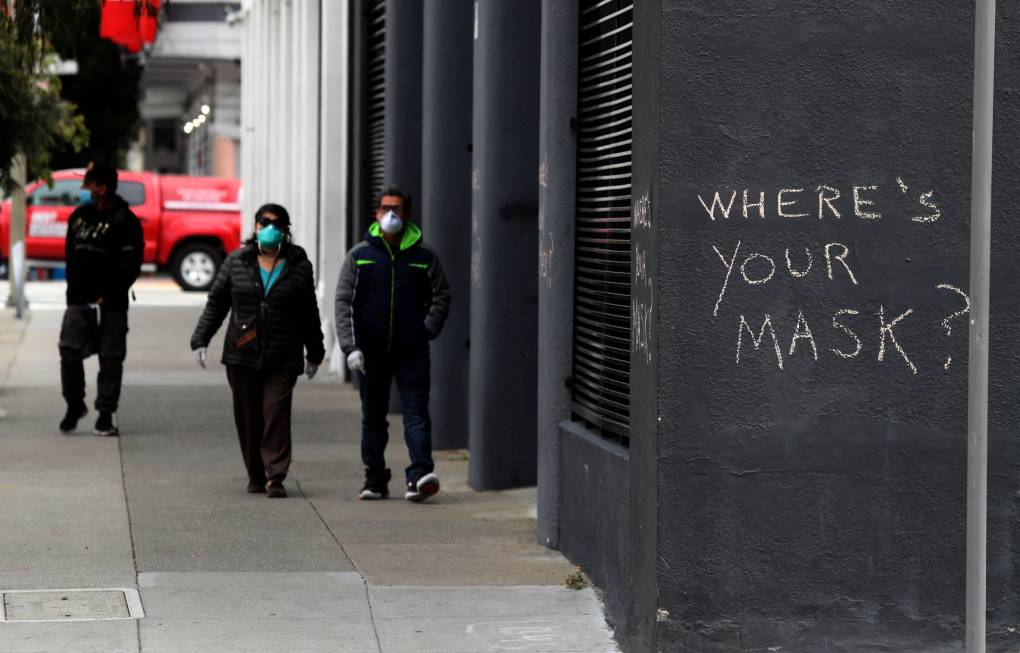
"caption": "Pedestrians walk by graffiti encouraging the wearing of masks on April 20, 2020 in San Francisco.",
"description": "Pedestrians walk by graffiti encouraging the wearing of masks on April 20, 2020 in San Francisco.",
"title": "Coronavirus Pandemic Causes Climate Of Anxiety And Changing Routines In America",
"credit": "Justin Sullivan/Getty Images",
"status": "inherit",
"isLoading": false,
"fetchFailed": false
},
"news_11753991": {
"type": "attachments",
"id": "news_11753991",
"meta": {
"index": "attachments_1716263798",
"site": "news",
"id": "11753991",
"found": true
},
"parent": 11753870,
"imgSizes": {
"apple_news_ca_landscape_5_5": {
"file": "https://ww2.kqed.org/app/uploads/sites/10/2019/06/RS17131_GettyImages-53002291-qut-1044x783.jpg",
"width": 1044,
"mimeType": "image/jpeg",
"height": 783
},
"apple_news_ca_square_4_0": {
"file": "https://ww2.kqed.org/app/uploads/sites/10/2019/06/RS17131_GettyImages-53002291-qut-470x470.jpg",
"width": 470,
"mimeType": "image/jpeg",
"height": 470
},
"twentyfourteen-full-width": {
"file": "https://ww2.kqed.org/app/uploads/sites/10/2019/06/RS17131_GettyImages-53002291-qut-1038x576.jpg",
"width": 1038,
"mimeType": "image/jpeg",
"height": 576
},
"thumbnail": {
"file": "https://ww2.kqed.org/app/uploads/sites/10/2019/06/RS17131_GettyImages-53002291-qut-160x108.jpg",
"width": 160,
"mimeType": "image/jpeg",
"height": 108
},
"post-thumbnail": {
"file": "https://ww2.kqed.org/app/uploads/sites/10/2019/06/RS17131_GettyImages-53002291-qut-672x372.jpg",
"width": 672,
"mimeType": "image/jpeg",
"height": 372
},
"kqedFullSize": {
"file": "https://ww2.kqed.org/app/uploads/sites/10/2019/06/RS17131_GettyImages-53002291-qut.jpg",
"width": 1920,
"height": 1300
},
"apple_news_ca_landscape_4_7": {
"file": "https://ww2.kqed.org/app/uploads/sites/10/2019/06/RS17131_GettyImages-53002291-qut-632x474.jpg",
"width": 632,
"mimeType": "image/jpeg",
"height": 474
},
"large": {
"file": "https://ww2.kqed.org/app/uploads/sites/10/2019/06/RS17131_GettyImages-53002291-qut-1020x691.jpg",
"width": 1020,
"mimeType": "image/jpeg",
"height": 691
},
"complete_open_graph": {
"file": "https://ww2.kqed.org/app/uploads/sites/10/2019/06/RS17131_GettyImages-53002291-qut-1200x813.jpg",
"width": 1200,
"mimeType": "image/jpeg",
"height": 813
},
"apple_news_ca_landscape_4_0": {
"file": "https://ww2.kqed.org/app/uploads/sites/10/2019/06/RS17131_GettyImages-53002291-qut-536x402.jpg",
"width": 536,
"mimeType": "image/jpeg",
"height": 402
},
"apple_news_ca_portrait_12_9": {
"file": "https://ww2.kqed.org/app/uploads/sites/10/2019/06/RS17131_GettyImages-53002291-qut-1122x1300.jpg",
"width": 1122,
"mimeType": "image/jpeg",
"height": 1300
},
"medium": {
"file": "https://ww2.kqed.org/app/uploads/sites/10/2019/06/RS17131_GettyImages-53002291-qut-800x542.jpg",
"width": 800,
"mimeType": "image/jpeg",
"height": 542
},
"apple_news_ca_portrait_4_0": {
"file": "https://ww2.kqed.org/app/uploads/sites/10/2019/06/RS17131_GettyImages-53002291-qut-354x472.jpg",
"width": 354,
"mimeType": "image/jpeg",
"height": 472
},
"apple_news_ca_portrait_9_7": {
"file": "https://ww2.kqed.org/app/uploads/sites/10/2019/06/RS17131_GettyImages-53002291-qut-840x1120.jpg",
"width": 840,
"mimeType": "image/jpeg",
"height": 1120
},
"apple_news_ca_landscape_12_9": {
"file": "https://ww2.kqed.org/app/uploads/sites/10/2019/06/RS17131_GettyImages-53002291-qut-1832x1300.jpg",
"width": 1832,
"mimeType": "image/jpeg",
"height": 1300
},
"apple_news_ca_square_9_7": {
"file": "https://ww2.kqed.org/app/uploads/sites/10/2019/06/RS17131_GettyImages-53002291-qut-1104x1104.jpg",
"width": 1104,
"mimeType": "image/jpeg",
"height": 1104
},
"apple_news_ca_portrait_4_7": {
"file": "https://ww2.kqed.org/app/uploads/sites/10/2019/06/RS17131_GettyImages-53002291-qut-414x552.jpg",
"width": 414,
"mimeType": "image/jpeg",
"height": 552
},
"apple_news_ca_square_12_9": {
"file": "https://ww2.kqed.org/app/uploads/sites/10/2019/06/RS17131_GettyImages-53002291-qut-1472x1300.jpg",
"width": 1472,
"mimeType": "image/jpeg",
"height": 1300
},
"apple_news_ca_portrait_5_5": {
"file": "https://ww2.kqed.org/app/uploads/sites/10/2019/06/RS17131_GettyImages-53002291-qut-687x916.jpg",
"width": 687,
"mimeType": "image/jpeg",
"height": 916
},
"full-width": {
"file": "https://ww2.kqed.org/app/uploads/sites/10/2019/06/RS17131_GettyImages-53002291-qut-1920x1300.jpg",
"width": 1920,
"mimeType": "image/jpeg",
"height": 1300
},
"apple_news_ca_square_4_7": {
"file": "https://ww2.kqed.org/app/uploads/sites/10/2019/06/RS17131_GettyImages-53002291-qut-550x550.jpg",
"width": 550,
"mimeType": "image/jpeg",
"height": 550
},
"apple_news_ca_landscape_9_7": {
"file": "https://ww2.kqed.org/app/uploads/sites/10/2019/06/RS17131_GettyImages-53002291-qut-1376x1032.jpg",
"width": 1376,
"mimeType": "image/jpeg",
"height": 1032
},
"apple_news_ca_square_5_5": {
"file": "https://ww2.kqed.org/app/uploads/sites/10/2019/06/RS17131_GettyImages-53002291-qut-912x912.jpg",
"width": 912,
"mimeType": "image/jpeg",
"height": 912
}
},
"publishDate": 1560290858,
"modified": 1594851965,
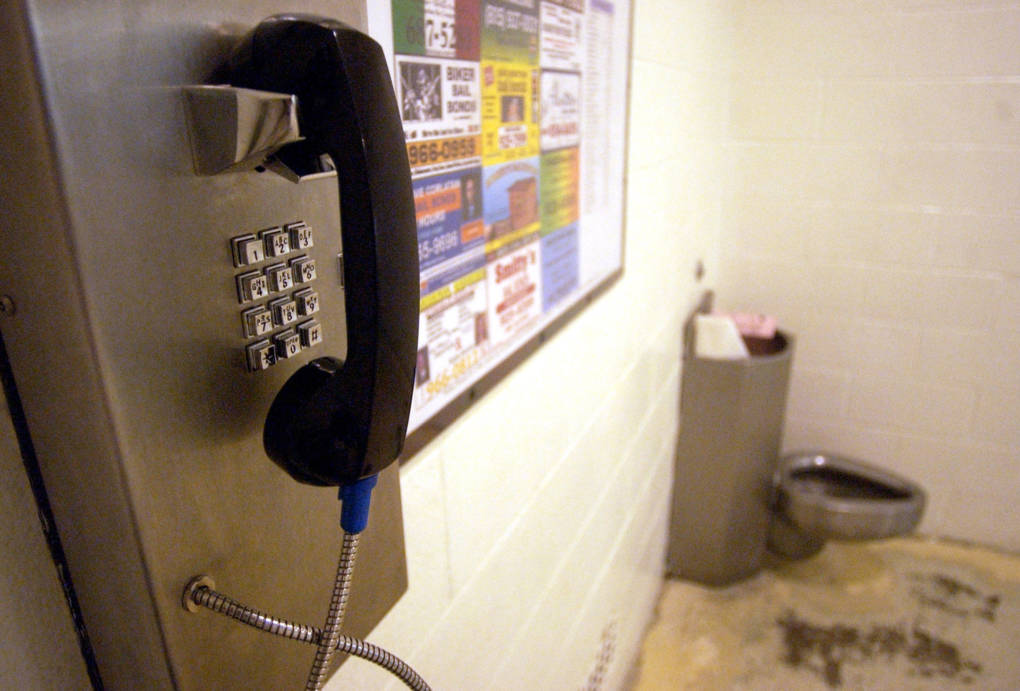
"caption": "A telephone inmates can use at a California jail. Women of color disproportionately pay for jail calls.",
"description": "A telephone inmates can use at a California jail. Women of color disproportionately pay for jail calls.",
"title": "RS17131_GettyImages-53002291-qut",
"credit": "Aaron Lambert-Pool/Getty Images",
"status": "inherit",
"isLoading": false,
"fetchFailed": false
},
"news_11813618": {
"type": "attachments",
"id": "news_11813618",
"meta": {
"index": "attachments_1716263798",
"site": "news",
"id": "11813618",
"found": true
},
"parent": 11813616,
"imgSizes": {
"apple_news_ca_landscape_5_5": {
"file": "https://ww2.kqed.org/app/uploads/sites/10/2020/04/KQED-Coronavirus-Updates-1-1044x628.jpg",
"width": 1044,
"mimeType": "image/jpeg",
"height": 628
},
"apple_news_ca_square_4_0": {
"file": "https://ww2.kqed.org/app/uploads/sites/10/2020/04/KQED-Coronavirus-Updates-1-470x470.jpg",
"width": 470,
"mimeType": "image/jpeg",
"height": 470
},
"twentyfourteen-full-width": {
"file": "https://ww2.kqed.org/app/uploads/sites/10/2020/04/KQED-Coronavirus-Updates-1-1038x576.jpg",
"width": 1038,
"mimeType": "image/jpeg",
"height": 576
},
"thumbnail": {
"file": "https://ww2.kqed.org/app/uploads/sites/10/2020/04/KQED-Coronavirus-Updates-1-160x84.jpg",
"width": 160,
"mimeType": "image/jpeg",
"height": 84
},
"post-thumbnail": {
"file": "https://ww2.kqed.org/app/uploads/sites/10/2020/04/KQED-Coronavirus-Updates-1-672x372.jpg",
"width": 672,
"mimeType": "image/jpeg",
"height": 372
},
"kqedFullSize": {
"file": "https://ww2.kqed.org/app/uploads/sites/10/2020/04/KQED-Coronavirus-Updates-1.jpg",
"width": 1200,
"height": 628
},
"apple_news_ca_landscape_4_7": {
"file": "https://ww2.kqed.org/app/uploads/sites/10/2020/04/KQED-Coronavirus-Updates-1-632x474.jpg",
"width": 632,
"mimeType": "image/jpeg",
"height": 474
},
"large": {
"file": "https://ww2.kqed.org/app/uploads/sites/10/2020/04/KQED-Coronavirus-Updates-1-1020x534.jpg",
"width": 1020,
"mimeType": "image/jpeg",
"height": 534
},
"apple_news_ca_landscape_4_0": {
"file": "https://ww2.kqed.org/app/uploads/sites/10/2020/04/KQED-Coronavirus-Updates-1-536x402.jpg",
"width": 536,
"mimeType": "image/jpeg",
"height": 402
},
"apple_news_ca_portrait_12_9": {
"file": "https://ww2.kqed.org/app/uploads/sites/10/2020/04/KQED-Coronavirus-Updates-1-1122x628.jpg",
"width": 1122,
"mimeType": "image/jpeg",
"height": 628
},
"medium": {
"file": "https://ww2.kqed.org/app/uploads/sites/10/2020/04/KQED-Coronavirus-Updates-1-800x419.jpg",
"width": 800,
"mimeType": "image/jpeg",
"height": 419
},
"apple_news_ca_portrait_4_0": {
"file": "https://ww2.kqed.org/app/uploads/sites/10/2020/04/KQED-Coronavirus-Updates-1-354x472.jpg",
"width": 354,
"mimeType": "image/jpeg",
"height": 472
},
"apple_news_ca_portrait_9_7": {
"file": "https://ww2.kqed.org/app/uploads/sites/10/2020/04/KQED-Coronavirus-Updates-1-840x628.jpg",
"width": 840,
"mimeType": "image/jpeg",
"height": 628
},
"apple_news_ca_square_9_7": {
"file": "https://ww2.kqed.org/app/uploads/sites/10/2020/04/KQED-Coronavirus-Updates-1-1104x628.jpg",
"width": 1104,
"mimeType": "image/jpeg",
"height": 628
},
"apple_news_ca_portrait_4_7": {
"file": "https://ww2.kqed.org/app/uploads/sites/10/2020/04/KQED-Coronavirus-Updates-1-414x552.jpg",
"width": 414,
"mimeType": "image/jpeg",
"height": 552
},
"apple_news_ca_portrait_5_5": {
"file": "https://ww2.kqed.org/app/uploads/sites/10/2020/04/KQED-Coronavirus-Updates-1-687x628.jpg",
"width": 687,
"mimeType": "image/jpeg",
"height": 628
},
"apple_news_ca_square_4_7": {
"file": "https://ww2.kqed.org/app/uploads/sites/10/2020/04/KQED-Coronavirus-Updates-1-550x550.jpg",
"width": 550,
"mimeType": "image/jpeg",
"height": 550
},
"apple_news_ca_square_5_5": {
"file": "https://ww2.kqed.org/app/uploads/sites/10/2020/04/KQED-Coronavirus-Updates-1-912x628.jpg",
"width": 912,
"mimeType": "image/jpeg",
"height": 628
}
},
"publishDate": 1587575003,
"modified": 1587575062,
"caption": "Coronavirus Live Updates logo.",
"description": null,
"title": "KQED-Coronavirus-Live-Updates",
"credit": null,
"status": "inherit",
"isLoading": false,
"fetchFailed": false
},
"news_11801558": {
"type": "attachments",
"id": "news_11801558",
"meta": {
"index": "attachments_1716263798",
"site": "news",
"id": "11801558",
"found": true
},
"title": "Mohammed-Nuru",
"publishDate": 1581633801,
"status": "inherit",
"parent": 12042526,
"modified": 1748987974,
"caption": "Former Public Works Director Mohammed Nuru, who was arrested by the FBI in January on public corruption charges.",
"credit": "Beth LaBerge/KQED",
"altTag": null,
"description": "Former Public Works Director Mohammed Nuru, who was arrested by the FBI in January on public corruption charges.",
"imgSizes": {
"thumbnail": {
"file": "https://cdn.kqed.org/wp-content/uploads/sites/10/2020/02/Mohammed-Nuru-160x104.jpg",
"width": 160,
"height": 104,
"mimeType": "image/jpeg"
},
"medium": {
"file": "https://cdn.kqed.org/wp-content/uploads/sites/10/2020/02/Mohammed-Nuru-800x520.jpg",
"width": 800,
"height": 520,
"mimeType": "image/jpeg"
},
"large": {
"file": "https://cdn.kqed.org/wp-content/uploads/sites/10/2020/02/Mohammed-Nuru-1020x664.jpg",
"width": 1020,
"height": 664,
"mimeType": "image/jpeg"
},
"post-thumbnail": {
"file": "https://cdn.kqed.org/wp-content/uploads/sites/10/2020/02/Mohammed-Nuru-672x372.jpg",
"width": 672,
"height": 372,
"mimeType": "image/jpeg"
},
"twentyfourteen-full-width": {
"file": "https://cdn.kqed.org/wp-content/uploads/sites/10/2020/02/Mohammed-Nuru-1038x576.jpg",
"width": 1038,
"height": 576,
"mimeType": "image/jpeg"
},
"full-width": {
"file": "https://cdn.kqed.org/wp-content/uploads/sites/10/2020/02/Mohammed-Nuru-1920x1249.jpg",
"width": 1920,
"height": 1249,
"mimeType": "image/jpeg"
},
"apple_news_ca_landscape_12_9": {
"file": "https://cdn.kqed.org/wp-content/uploads/sites/10/2020/02/Mohammed-Nuru-1832x1249.jpg",
"width": 1832,
"height": 1249,
"mimeType": "image/jpeg"
},
"apple_news_ca_landscape_9_7": {
"file": "https://cdn.kqed.org/wp-content/uploads/sites/10/2020/02/Mohammed-Nuru-1376x1032.jpg",
"width": 1376,
"height": 1032,
"mimeType": "image/jpeg"
},
"apple_news_ca_landscape_5_5": {
"file": "https://cdn.kqed.org/wp-content/uploads/sites/10/2020/02/Mohammed-Nuru-1044x783.jpg",
"width": 1044,
"height": 783,
"mimeType": "image/jpeg"
},
"apple_news_ca_landscape_4_7": {
"file": "https://cdn.kqed.org/wp-content/uploads/sites/10/2020/02/Mohammed-Nuru-632x474.jpg",
"width": 632,
"height": 474,
"mimeType": "image/jpeg"
},
"apple_news_ca_landscape_4_0": {
"file": "https://cdn.kqed.org/wp-content/uploads/sites/10/2020/02/Mohammed-Nuru-536x402.jpg",
"width": 536,
"height": 402,
"mimeType": "image/jpeg"
},
"apple_news_ca_portrait_12_9": {
"file": "https://cdn.kqed.org/wp-content/uploads/sites/10/2020/02/Mohammed-Nuru-1122x1249.jpg",
"width": 1122,
"height": 1249,
"mimeType": "image/jpeg"
},
"apple_news_ca_portrait_9_7": {
"file": "https://cdn.kqed.org/wp-content/uploads/sites/10/2020/02/Mohammed-Nuru-840x1120.jpg",
"width": 840,
"height": 1120,
"mimeType": "image/jpeg"
},
"apple_news_ca_portrait_5_5": {
"file": "https://cdn.kqed.org/wp-content/uploads/sites/10/2020/02/Mohammed-Nuru-687x916.jpg",
"width": 687,
"height": 916,
"mimeType": "image/jpeg"
},
"apple_news_ca_portrait_4_7": {
"file": "https://cdn.kqed.org/wp-content/uploads/sites/10/2020/02/Mohammed-Nuru-414x552.jpg",
"width": 414,
"height": 552,
"mimeType": "image/jpeg"
},
"apple_news_ca_portrait_4_0": {
"file": "https://cdn.kqed.org/wp-content/uploads/sites/10/2020/02/Mohammed-Nuru-354x472.jpg",
"width": 354,
"height": 472,
"mimeType": "image/jpeg"
},
"apple_news_ca_square_12_9": {
"file": "https://cdn.kqed.org/wp-content/uploads/sites/10/2020/02/Mohammed-Nuru-1472x1249.jpg",
"width": 1472,
"height": 1249,
"mimeType": "image/jpeg"
},
"apple_news_ca_square_9_7": {
"file": "https://cdn.kqed.org/wp-content/uploads/sites/10/2020/02/Mohammed-Nuru-1104x1104.jpg",
"width": 1104,
"height": 1104,
"mimeType": "image/jpeg"
},
"apple_news_ca_square_5_5": {
"file": "https://cdn.kqed.org/wp-content/uploads/sites/10/2020/02/Mohammed-Nuru-912x912.jpg",
"width": 912,
"height": 912,
"mimeType": "image/jpeg"
},
"apple_news_ca_square_4_7": {
"file": "https://cdn.kqed.org/wp-content/uploads/sites/10/2020/02/Mohammed-Nuru-550x550.jpg",
"width": 550,
"height": 550,
"mimeType": "image/jpeg"
},
"apple_news_ca_square_4_0": {
"file": "https://cdn.kqed.org/wp-content/uploads/sites/10/2020/02/Mohammed-Nuru-470x470.jpg",
"width": 470,
"height": 470,
"mimeType": "image/jpeg"
},
"kqedFullSize": {
"file": "https://cdn.kqed.org/wp-content/uploads/sites/10/2020/02/Mohammed-Nuru.jpg",
"width": 1920,
"height": 1249
}
},
"isLoading": false,
"fetchFailed": false
},
"news_11825197": {
"type": "attachments",
"id": "news_11825197",
"meta": {
"index": "attachments_1716263798",
"site": "news",
"id": "11825197",
"found": true
},
"parent": 11825172,
"imgSizes": {
"apple_news_ca_landscape_5_5": {
"file": "https://ww2.kqed.org/app/uploads/sites/10/2020/06/divided-states-pandemic-v3-smaller-1044x783.jpg",
"width": 1044,
"mimeType": "image/jpeg",
"height": 783
},
"apple_news_ca_square_4_0": {
"file": "https://ww2.kqed.org/app/uploads/sites/10/2020/06/divided-states-pandemic-v3-smaller-470x470.jpg",
"width": 470,
"mimeType": "image/jpeg",
"height": 470
},
"twentyfourteen-full-width": {
"file": "https://ww2.kqed.org/app/uploads/sites/10/2020/06/divided-states-pandemic-v3-smaller-1038x576.jpg",
"width": 1038,
"mimeType": "image/jpeg",
"height": 576
},
"thumbnail": {
"file": "https://ww2.kqed.org/app/uploads/sites/10/2020/06/divided-states-pandemic-v3-smaller-160x107.jpg",
"width": 160,
"mimeType": "image/jpeg",
"height": 107
},
"post-thumbnail": {
"file": "https://ww2.kqed.org/app/uploads/sites/10/2020/06/divided-states-pandemic-v3-smaller-672x372.jpg",
"width": 672,
"mimeType": "image/jpeg",
"height": 372
},
"kqedFullSize": {
"file": "https://ww2.kqed.org/app/uploads/sites/10/2020/06/divided-states-pandemic-v3-smaller-e1592511829376.jpg",
"width": 1920,
"height": 1280
},
"apple_news_ca_landscape_4_7": {
"file": "https://ww2.kqed.org/app/uploads/sites/10/2020/06/divided-states-pandemic-v3-smaller-632x474.jpg",
"width": 632,
"mimeType": "image/jpeg",
"height": 474
},
"large": {
"file": "https://ww2.kqed.org/app/uploads/sites/10/2020/06/divided-states-pandemic-v3-smaller-1020x680.jpg",
"width": 1020,
"mimeType": "image/jpeg",
"height": 680
},
"apple_news_ca_landscape_4_0": {
"file": "https://ww2.kqed.org/app/uploads/sites/10/2020/06/divided-states-pandemic-v3-smaller-536x402.jpg",
"width": 536,
"mimeType": "image/jpeg",
"height": 402
},
"apple_news_ca_portrait_12_9": {
"file": "https://ww2.kqed.org/app/uploads/sites/10/2020/06/divided-states-pandemic-v3-smaller-1122x1333.jpg",
"width": 1122,
"mimeType": "image/jpeg",
"height": 1333
},
"medium": {
"file": "https://ww2.kqed.org/app/uploads/sites/10/2020/06/divided-states-pandemic-v3-smaller-800x533.jpg",
"width": 800,
"mimeType": "image/jpeg",
"height": 533
},
"apple_news_ca_portrait_4_0": {
"file": "https://ww2.kqed.org/app/uploads/sites/10/2020/06/divided-states-pandemic-v3-smaller-354x472.jpg",
"width": 354,
"mimeType": "image/jpeg",
"height": 472
},
"apple_news_ca_portrait_9_7": {
"file": "https://ww2.kqed.org/app/uploads/sites/10/2020/06/divided-states-pandemic-v3-smaller-840x1120.jpg",
"width": 840,
"mimeType": "image/jpeg",
"height": 1120
},
"apple_news_ca_landscape_12_9": {
"file": "https://ww2.kqed.org/app/uploads/sites/10/2020/06/divided-states-pandemic-v3-smaller-1832x1333.jpg",
"width": 1832,
"mimeType": "image/jpeg",
"height": 1333
},
"apple_news_ca_square_9_7": {
"file": "https://ww2.kqed.org/app/uploads/sites/10/2020/06/divided-states-pandemic-v3-smaller-1104x1104.jpg",
"width": 1104,
"mimeType": "image/jpeg",
"height": 1104
},
"apple_news_ca_portrait_4_7": {
"file": "https://ww2.kqed.org/app/uploads/sites/10/2020/06/divided-states-pandemic-v3-smaller-414x552.jpg",
"width": 414,
"mimeType": "image/jpeg",
"height": 552
},
"apple_news_ca_square_12_9": {
"file": "https://ww2.kqed.org/app/uploads/sites/10/2020/06/divided-states-pandemic-v3-smaller-1472x1333.jpg",
"width": 1472,
"mimeType": "image/jpeg",
"height": 1333
},
"apple_news_ca_portrait_5_5": {
"file": "https://ww2.kqed.org/app/uploads/sites/10/2020/06/divided-states-pandemic-v3-smaller-687x916.jpg",
"width": 687,
"mimeType": "image/jpeg",
"height": 916
},
"full-width": {
"file": "https://ww2.kqed.org/app/uploads/sites/10/2020/06/divided-states-pandemic-v3-smaller-1920x1280.jpg",
"width": 1920,
"mimeType": "image/jpeg",
"height": 1280
},
"apple_news_ca_square_4_7": {
"file": "https://ww2.kqed.org/app/uploads/sites/10/2020/06/divided-states-pandemic-v3-smaller-550x550.jpg",
"width": 550,
"mimeType": "image/jpeg",
"height": 550
},
"apple_news_ca_landscape_9_7": {
"file": "https://ww2.kqed.org/app/uploads/sites/10/2020/06/divided-states-pandemic-v3-smaller-1376x1032.jpg",
"width": 1376,
"mimeType": "image/jpeg",
"height": 1032
},
"apple_news_ca_square_5_5": {
"file": "https://ww2.kqed.org/app/uploads/sites/10/2020/06/divided-states-pandemic-v3-smaller-912x912.jpg",
"width": 912,
"mimeType": "image/jpeg",
"height": 912
}
},
"publishDate": 1592511784,
"modified": 1592511824,
"caption": null,
"description": null,
"title": "divided-states-pandemic-v3-smaller",
"credit": "Gabriel Hongsdusit/Reveal",
"status": "inherit",
"isLoading": false,
"fetchFailed": false
},
"news_11798354": {
"type": "attachments",
"id": "news_11798354",
"meta": {
"index": "attachments_1716263798",
"site": "news",
"id": "11798354",
"found": true
},
"parent": 11798264,
"imgSizes": {
"apple_news_ca_landscape_5_5": {
"file": "https://ww2.kqed.org/app/uploads/sites/10/2020/01/RS40941_003_KQED_CoronavirusPressConference_01272020_9033-qut-1044x783.jpg",
"width": 1044,
"mimeType": "image/jpeg",
"height": 783
},
"apple_news_ca_square_4_0": {
"file": "https://ww2.kqed.org/app/uploads/sites/10/2020/01/RS40941_003_KQED_CoronavirusPressConference_01272020_9033-qut-470x470.jpg",
"width": 470,
"mimeType": "image/jpeg",
"height": 470
},
"twentyfourteen-full-width": {
"file": "https://ww2.kqed.org/app/uploads/sites/10/2020/01/RS40941_003_KQED_CoronavirusPressConference_01272020_9033-qut-1038x576.jpg",
"width": 1038,
"mimeType": "image/jpeg",
"height": 576
},
"thumbnail": {
"file": "https://ww2.kqed.org/app/uploads/sites/10/2020/01/RS40941_003_KQED_CoronavirusPressConference_01272020_9033-qut-160x107.jpg",
"width": 160,
"mimeType": "image/jpeg",
"height": 107
},
"post-thumbnail": {
"file": "https://ww2.kqed.org/app/uploads/sites/10/2020/01/RS40941_003_KQED_CoronavirusPressConference_01272020_9033-qut-672x372.jpg",
"width": 672,
"mimeType": "image/jpeg",
"height": 372
},
"kqedFullSize": {
"file": "https://ww2.kqed.org/app/uploads/sites/10/2020/01/RS40941_003_KQED_CoronavirusPressConference_01272020_9033-qut.jpg",
"width": 1920,
"height": 1280
},
"apple_news_ca_landscape_4_7": {
"file": "https://ww2.kqed.org/app/uploads/sites/10/2020/01/RS40941_003_KQED_CoronavirusPressConference_01272020_9033-qut-632x474.jpg",
"width": 632,
"mimeType": "image/jpeg",
"height": 474
},
"large": {
"file": "https://ww2.kqed.org/app/uploads/sites/10/2020/01/RS40941_003_KQED_CoronavirusPressConference_01272020_9033-qut-1020x680.jpg",
"width": 1020,
"mimeType": "image/jpeg",
"height": 680
},
"apple_news_ca_landscape_4_0": {
"file": "https://ww2.kqed.org/app/uploads/sites/10/2020/01/RS40941_003_KQED_CoronavirusPressConference_01272020_9033-qut-536x402.jpg",
"width": 536,
"mimeType": "image/jpeg",
"height": 402
},
"apple_news_ca_portrait_12_9": {
"file": "https://ww2.kqed.org/app/uploads/sites/10/2020/01/RS40941_003_KQED_CoronavirusPressConference_01272020_9033-qut-1122x1280.jpg",
"width": 1122,
"mimeType": "image/jpeg",
"height": 1280
},
"medium": {
"file": "https://ww2.kqed.org/app/uploads/sites/10/2020/01/RS40941_003_KQED_CoronavirusPressConference_01272020_9033-qut-800x533.jpg",
"width": 800,
"mimeType": "image/jpeg",
"height": 533
},
"apple_news_ca_portrait_4_0": {
"file": "https://ww2.kqed.org/app/uploads/sites/10/2020/01/RS40941_003_KQED_CoronavirusPressConference_01272020_9033-qut-354x472.jpg",
"width": 354,
"mimeType": "image/jpeg",
"height": 472
},
"apple_news_ca_portrait_9_7": {
"file": "https://ww2.kqed.org/app/uploads/sites/10/2020/01/RS40941_003_KQED_CoronavirusPressConference_01272020_9033-qut-840x1120.jpg",
"width": 840,
"mimeType": "image/jpeg",
"height": 1120
},
"apple_news_ca_landscape_12_9": {
"file": "https://ww2.kqed.org/app/uploads/sites/10/2020/01/RS40941_003_KQED_CoronavirusPressConference_01272020_9033-qut-1832x1280.jpg",
"width": 1832,
"mimeType": "image/jpeg",
"height": 1280
},
"apple_news_ca_square_9_7": {
"file": "https://ww2.kqed.org/app/uploads/sites/10/2020/01/RS40941_003_KQED_CoronavirusPressConference_01272020_9033-qut-1104x1104.jpg",
"width": 1104,
"mimeType": "image/jpeg",
"height": 1104
},
"apple_news_ca_portrait_4_7": {
"file": "https://ww2.kqed.org/app/uploads/sites/10/2020/01/RS40941_003_KQED_CoronavirusPressConference_01272020_9033-qut-414x552.jpg",
"width": 414,
"mimeType": "image/jpeg",
"height": 552
},
"apple_news_ca_square_12_9": {
"file": "https://ww2.kqed.org/app/uploads/sites/10/2020/01/RS40941_003_KQED_CoronavirusPressConference_01272020_9033-qut-1472x1280.jpg",
"width": 1472,
"mimeType": "image/jpeg",
"height": 1280
},
"apple_news_ca_portrait_5_5": {
"file": "https://ww2.kqed.org/app/uploads/sites/10/2020/01/RS40941_003_KQED_CoronavirusPressConference_01272020_9033-qut-687x916.jpg",
"width": 687,
"mimeType": "image/jpeg",
"height": 916
},
"full-width": {
"file": "https://ww2.kqed.org/app/uploads/sites/10/2020/01/RS40941_003_KQED_CoronavirusPressConference_01272020_9033-qut-1920x1280.jpg",
"width": 1920,
"mimeType": "image/jpeg",
"height": 1280
},
"apple_news_ca_square_4_7": {
"file": "https://ww2.kqed.org/app/uploads/sites/10/2020/01/RS40941_003_KQED_CoronavirusPressConference_01272020_9033-qut-550x550.jpg",
"width": 550,
"mimeType": "image/jpeg",
"height": 550
},
"apple_news_ca_landscape_9_7": {
"file": "https://ww2.kqed.org/app/uploads/sites/10/2020/01/RS40941_003_KQED_CoronavirusPressConference_01272020_9033-qut-1376x1032.jpg",
"width": 1376,
"mimeType": "image/jpeg",
"height": 1032
},
"apple_news_ca_square_5_5": {
"file": "https://ww2.kqed.org/app/uploads/sites/10/2020/01/RS40941_003_KQED_CoronavirusPressConference_01272020_9033-qut-912x912.jpg",
"width": 912,
"mimeType": "image/jpeg",
"height": 912
}
},
"publishDate": 1580171733,
"modified": 1580175399,
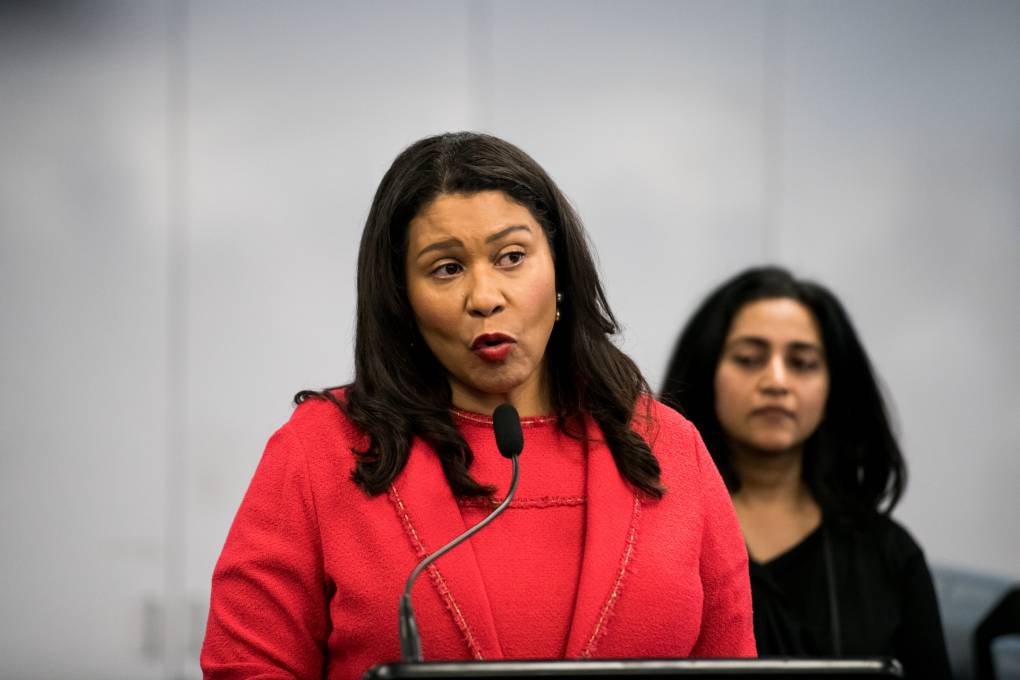
"caption": "San Francisco Mayor London Breed speaks to reporters on Monday about the city's preparedness in case of an outbreak of the coronavirus.",
"description": "San Francisco Mayor London Breed speaks at a press conference about the city's preparedness in the case of an outbreak of the coronavirus, at the Department of Emergency Management in San Francisco on January 27, 2020.",
"title": "RS40941_003_KQED_CoronavirusPressConference_01272020_9033-qut",
"credit": "Beth LaBerge/KQED",
"status": "inherit",
"isLoading": false,
"fetchFailed": false
},
"news_11824157": {
"type": "attachments",
"id": "news_11824157",
"meta": {
"index": "attachments_1716263798",
"site": "news",
"id": "11824157",
"found": true
},
"parent": 11824152,
"imgSizes": {
"apple_news_ca_landscape_5_5": {
"file": "https://ww2.kqed.org/app/uploads/sites/10/2020/06/RS5487_alt_297-1044x783.jpg",
"width": 1044,
"mimeType": "image/jpeg",
"height": 783
},
"apple_news_ca_square_4_0": {
"file": "https://ww2.kqed.org/app/uploads/sites/10/2020/06/RS5487_alt_297-470x470.jpg",
"width": 470,
"mimeType": "image/jpeg",
"height": 470
},
"twentyfourteen-full-width": {
"file": "https://ww2.kqed.org/app/uploads/sites/10/2020/06/RS5487_alt_297-1038x576.jpg",
"width": 1038,
"mimeType": "image/jpeg",
"height": 576
},
"thumbnail": {
"file": "https://ww2.kqed.org/app/uploads/sites/10/2020/06/RS5487_alt_297-160x120.jpg",
"width": 160,
"mimeType": "image/jpeg",
"height": 120
},
"post-thumbnail": {
"file": "https://ww2.kqed.org/app/uploads/sites/10/2020/06/RS5487_alt_297-672x372.jpg",
"width": 672,
"mimeType": "image/jpeg",
"height": 372
},
"kqedFullSize": {
"file": "https://ww2.kqed.org/app/uploads/sites/10/2020/06/RS5487_alt_297.jpg",
"width": 1920,
"height": 1440
},
"apple_news_ca_landscape_4_7": {
"file": "https://ww2.kqed.org/app/uploads/sites/10/2020/06/RS5487_alt_297-632x474.jpg",
"width": 632,
"mimeType": "image/jpeg",
"height": 474
},
"large": {
"file": "https://ww2.kqed.org/app/uploads/sites/10/2020/06/RS5487_alt_297-1020x765.jpg",
"width": 1020,
"mimeType": "image/jpeg",
"height": 765
},
"apple_news_ca_landscape_4_0": {
"file": "https://ww2.kqed.org/app/uploads/sites/10/2020/06/RS5487_alt_297-536x402.jpg",
"width": 536,
"mimeType": "image/jpeg",
"height": 402
},
"apple_news_ca_portrait_12_9": {
"file": "https://ww2.kqed.org/app/uploads/sites/10/2020/06/RS5487_alt_297-1122x1440.jpg",
"width": 1122,
"mimeType": "image/jpeg",
"height": 1440
},
"medium": {
"file": "https://ww2.kqed.org/app/uploads/sites/10/2020/06/RS5487_alt_297-800x600.jpg",
"width": 800,
"mimeType": "image/jpeg",
"height": 600
},
"apple_news_ca_portrait_4_0": {
"file": "https://ww2.kqed.org/app/uploads/sites/10/2020/06/RS5487_alt_297-354x472.jpg",
"width": 354,
"mimeType": "image/jpeg",
"height": 472
},
"apple_news_ca_portrait_9_7": {
"file": "https://ww2.kqed.org/app/uploads/sites/10/2020/06/RS5487_alt_297-840x1120.jpg",
"width": 840,
"mimeType": "image/jpeg",
"height": 1120
},
"apple_news_ca_landscape_12_9": {
"file": "https://ww2.kqed.org/app/uploads/sites/10/2020/06/RS5487_alt_297-1832x1374.jpg",
"width": 1832,
"mimeType": "image/jpeg",
"height": 1374
},
"apple_news_ca_square_9_7": {
"file": "https://ww2.kqed.org/app/uploads/sites/10/2020/06/RS5487_alt_297-1104x1104.jpg",
"width": 1104,
"mimeType": "image/jpeg",
"height": 1104
},
"apple_news_ca_portrait_4_7": {
"file": "https://ww2.kqed.org/app/uploads/sites/10/2020/06/RS5487_alt_297-414x552.jpg",
"width": 414,
"mimeType": "image/jpeg",
"height": 552
},
"apple_news_ca_square_12_9": {
"file": "https://ww2.kqed.org/app/uploads/sites/10/2020/06/RS5487_alt_297-1472x1440.jpg",
"width": 1472,
"mimeType": "image/jpeg",
"height": 1440
},
"apple_news_ca_portrait_5_5": {
"file": "https://ww2.kqed.org/app/uploads/sites/10/2020/06/RS5487_alt_297-687x916.jpg",
"width": 687,
"mimeType": "image/jpeg",
"height": 916
},
"full-width": {
"file": "https://ww2.kqed.org/app/uploads/sites/10/2020/06/RS5487_alt_297-1920x1440.jpg",
"width": 1920,
"mimeType": "image/jpeg",
"height": 1440
},
"apple_news_ca_square_4_7": {
"file": "https://ww2.kqed.org/app/uploads/sites/10/2020/06/RS5487_alt_297-550x550.jpg",
"width": 550,
"mimeType": "image/jpeg",
"height": 550
},
"apple_news_ca_landscape_9_7": {
"file": "https://ww2.kqed.org/app/uploads/sites/10/2020/06/RS5487_alt_297-1376x1032.jpg",
"width": 1376,
"mimeType": "image/jpeg",
"height": 1032
},
"apple_news_ca_square_5_5": {
"file": "https://ww2.kqed.org/app/uploads/sites/10/2020/06/RS5487_alt_297-912x912.jpg",
"width": 912,
"mimeType": "image/jpeg",
"height": 912
}
},
"publishDate": 1591939222,
"modified": 1591976954,
"caption": "A San Francisco Police Department cruiser.",
"description": "A San Francisco Police Department cruiser.",
"title": "RS5487_alt_297",
"credit": "Rachael Bale/KQED",
"status": "inherit",
"isLoading": false,
"fetchFailed": false
},
"news_11823923": {
"type": "attachments",
"id": "news_11823923",
"meta": {
"index": "attachments_1716263798",
"site": "news",
"id": "11823923",
"found": true
},
"parent": 11823865,
"imgSizes": {
"apple_news_ca_landscape_5_5": {
"file": "https://ww2.kqed.org/app/uploads/sites/10/2020/06/RS41873_011_KQED_LondonBreed_CoronavirusPressConference_03052020_6128-qut-1044x783.jpg",
"width": 1044,
"mimeType": "image/jpeg",
"height": 783
},
"apple_news_ca_square_4_0": {
"file": "https://ww2.kqed.org/app/uploads/sites/10/2020/06/RS41873_011_KQED_LondonBreed_CoronavirusPressConference_03052020_6128-qut-470x470.jpg",
"width": 470,
"mimeType": "image/jpeg",
"height": 470
},
"twentyfourteen-full-width": {
"file": "https://ww2.kqed.org/app/uploads/sites/10/2020/06/RS41873_011_KQED_LondonBreed_CoronavirusPressConference_03052020_6128-qut-1038x576.jpg",
"width": 1038,
"mimeType": "image/jpeg",
"height": 576
},
"thumbnail": {
"file": "https://ww2.kqed.org/app/uploads/sites/10/2020/06/RS41873_011_KQED_LondonBreed_CoronavirusPressConference_03052020_6128-qut-160x107.jpg",
"width": 160,
"mimeType": "image/jpeg",
"height": 107
},
"post-thumbnail": {
"file": "https://ww2.kqed.org/app/uploads/sites/10/2020/06/RS41873_011_KQED_LondonBreed_CoronavirusPressConference_03052020_6128-qut-672x372.jpg",
"width": 672,
"mimeType": "image/jpeg",
"height": 372
},
"kqedFullSize": {
"file": "https://ww2.kqed.org/app/uploads/sites/10/2020/06/RS41873_011_KQED_LondonBreed_CoronavirusPressConference_03052020_6128-qut.jpg",
"width": 1920,
"height": 1280
},
"apple_news_ca_landscape_4_7": {
"file": "https://ww2.kqed.org/app/uploads/sites/10/2020/06/RS41873_011_KQED_LondonBreed_CoronavirusPressConference_03052020_6128-qut-632x474.jpg",
"width": 632,
"mimeType": "image/jpeg",
"height": 474
},
"large": {
"file": "https://ww2.kqed.org/app/uploads/sites/10/2020/06/RS41873_011_KQED_LondonBreed_CoronavirusPressConference_03052020_6128-qut-1020x680.jpg",
"width": 1020,
"mimeType": "image/jpeg",
"height": 680
},
"apple_news_ca_landscape_4_0": {
"file": "https://ww2.kqed.org/app/uploads/sites/10/2020/06/RS41873_011_KQED_LondonBreed_CoronavirusPressConference_03052020_6128-qut-536x402.jpg",
"width": 536,
"mimeType": "image/jpeg",
"height": 402
},
"apple_news_ca_portrait_12_9": {
"file": "https://ww2.kqed.org/app/uploads/sites/10/2020/06/RS41873_011_KQED_LondonBreed_CoronavirusPressConference_03052020_6128-qut-1122x1280.jpg",
"width": 1122,
"mimeType": "image/jpeg",
"height": 1280
},
"medium": {
"file": "https://ww2.kqed.org/app/uploads/sites/10/2020/06/RS41873_011_KQED_LondonBreed_CoronavirusPressConference_03052020_6128-qut-800x533.jpg",
"width": 800,
"mimeType": "image/jpeg",
"height": 533
},
"apple_news_ca_portrait_4_0": {
"file": "https://ww2.kqed.org/app/uploads/sites/10/2020/06/RS41873_011_KQED_LondonBreed_CoronavirusPressConference_03052020_6128-qut-354x472.jpg",
"width": 354,
"mimeType": "image/jpeg",
"height": 472
},
"apple_news_ca_portrait_9_7": {
"file": "https://ww2.kqed.org/app/uploads/sites/10/2020/06/RS41873_011_KQED_LondonBreed_CoronavirusPressConference_03052020_6128-qut-840x1120.jpg",
"width": 840,
"mimeType": "image/jpeg",
"height": 1120
},
"apple_news_ca_landscape_12_9": {
"file": "https://ww2.kqed.org/app/uploads/sites/10/2020/06/RS41873_011_KQED_LondonBreed_CoronavirusPressConference_03052020_6128-qut-1832x1280.jpg",
"width": 1832,
"mimeType": "image/jpeg",
"height": 1280
},
"apple_news_ca_square_9_7": {
"file": "https://ww2.kqed.org/app/uploads/sites/10/2020/06/RS41873_011_KQED_LondonBreed_CoronavirusPressConference_03052020_6128-qut-1104x1104.jpg",
"width": 1104,
"mimeType": "image/jpeg",
"height": 1104
},
"apple_news_ca_portrait_4_7": {
"file": "https://ww2.kqed.org/app/uploads/sites/10/2020/06/RS41873_011_KQED_LondonBreed_CoronavirusPressConference_03052020_6128-qut-414x552.jpg",
"width": 414,
"mimeType": "image/jpeg",
"height": 552
},
"apple_news_ca_square_12_9": {
"file": "https://ww2.kqed.org/app/uploads/sites/10/2020/06/RS41873_011_KQED_LondonBreed_CoronavirusPressConference_03052020_6128-qut-1472x1280.jpg",
"width": 1472,
"mimeType": "image/jpeg",
"height": 1280
},
"apple_news_ca_portrait_5_5": {
"file": "https://ww2.kqed.org/app/uploads/sites/10/2020/06/RS41873_011_KQED_LondonBreed_CoronavirusPressConference_03052020_6128-qut-687x916.jpg",
"width": 687,
"mimeType": "image/jpeg",
"height": 916
},
"full-width": {
"file": "https://ww2.kqed.org/app/uploads/sites/10/2020/06/RS41873_011_KQED_LondonBreed_CoronavirusPressConference_03052020_6128-qut-1920x1280.jpg",
"width": 1920,
"mimeType": "image/jpeg",
"height": 1280
},
"apple_news_ca_square_4_7": {
"file": "https://ww2.kqed.org/app/uploads/sites/10/2020/06/RS41873_011_KQED_LondonBreed_CoronavirusPressConference_03052020_6128-qut-550x550.jpg",
"width": 550,
"mimeType": "image/jpeg",
"height": 550
},
"apple_news_ca_landscape_9_7": {
"file": "https://ww2.kqed.org/app/uploads/sites/10/2020/06/RS41873_011_KQED_LondonBreed_CoronavirusPressConference_03052020_6128-qut-1376x1032.jpg",
"width": 1376,
"mimeType": "image/jpeg",
"height": 1032
},
"apple_news_ca_square_5_5": {
"file": "https://ww2.kqed.org/app/uploads/sites/10/2020/06/RS41873_011_KQED_LondonBreed_CoronavirusPressConference_03052020_6128-qut-912x912.jpg",
"width": 912,
"mimeType": "image/jpeg",
"height": 912
}
},
"publishDate": 1591853178,
"modified": 1591914041,
"caption": "Mayor London Breed at a press conference at City Hall about the first two confirmed novel coronavirus (COVID-19) cases in San Francisco on Thursday, Mar. 5, 2020.",
"description": null,
"title": "RS41873_011_KQED_LondonBreed_CoronavirusPressConference_03052020_6128-qut",
"credit": "Beth LaBerge/KQED",
"status": "inherit",
"isLoading": false,
"fetchFailed": false
},
"news_11822735": {
"type": "attachments",
"id": "news_11822735",
"meta": {
"index": "attachments_1716263798",
"site": "news",
"id": "11822735",
"found": true
},
"parent": 11822543,
"imgSizes": {
"apple_news_ca_landscape_5_5": {
"file": "https://ww2.kqed.org/app/uploads/sites/10/2020/06/SFSitIn-1044x783.jpg",
"width": 1044,
"mimeType": "image/jpeg",
"height": 783
},
"apple_news_ca_square_4_0": {
"file": "https://ww2.kqed.org/app/uploads/sites/10/2020/06/SFSitIn-470x470.jpg",
"width": 470,
"mimeType": "image/jpeg",
"height": 470
},
"twentyfourteen-full-width": {
"file": "https://ww2.kqed.org/app/uploads/sites/10/2020/06/SFSitIn-1038x576.jpg",
"width": 1038,
"mimeType": "image/jpeg",
"height": 576
},
"thumbnail": {
"file": "https://ww2.kqed.org/app/uploads/sites/10/2020/06/SFSitIn-160x84.jpg",
"width": 160,
"mimeType": "image/jpeg",
"height": 84
},
"post-thumbnail": {
"file": "https://ww2.kqed.org/app/uploads/sites/10/2020/06/SFSitIn-672x372.jpg",
"width": 672,
"mimeType": "image/jpeg",
"height": 372
},
"kqedFullSize": {
"file": "https://ww2.kqed.org/app/uploads/sites/10/2020/06/SFSitIn.jpg",
"width": 1897,
"height": 998
},
"apple_news_ca_landscape_4_7": {
"file": "https://ww2.kqed.org/app/uploads/sites/10/2020/06/SFSitIn-632x474.jpg",
"width": 632,
"mimeType": "image/jpeg",
"height": 474
},
"large": {
"file": "https://ww2.kqed.org/app/uploads/sites/10/2020/06/SFSitIn-1020x537.jpg",
"width": 1020,
"mimeType": "image/jpeg",
"height": 537
},
"apple_news_ca_landscape_4_0": {
"file": "https://ww2.kqed.org/app/uploads/sites/10/2020/06/SFSitIn-536x402.jpg",
"width": 536,
"mimeType": "image/jpeg",
"height": 402
},
"apple_news_ca_portrait_12_9": {
"file": "https://ww2.kqed.org/app/uploads/sites/10/2020/06/SFSitIn-1122x998.jpg",
"width": 1122,
"mimeType": "image/jpeg",
"height": 998
},
"medium": {
"file": "https://ww2.kqed.org/app/uploads/sites/10/2020/06/SFSitIn-800x421.jpg",
"width": 800,
"mimeType": "image/jpeg",
"height": 421
},
"apple_news_ca_portrait_4_0": {
"file": "https://ww2.kqed.org/app/uploads/sites/10/2020/06/SFSitIn-354x472.jpg",
"width": 354,
"mimeType": "image/jpeg",
"height": 472
},
"apple_news_ca_portrait_9_7": {
"file": "https://ww2.kqed.org/app/uploads/sites/10/2020/06/SFSitIn-840x998.jpg",
"width": 840,
"mimeType": "image/jpeg",
"height": 998
},
"apple_news_ca_landscape_12_9": {
"file": "https://ww2.kqed.org/app/uploads/sites/10/2020/06/SFSitIn-1832x998.jpg",
"width": 1832,
"mimeType": "image/jpeg",
"height": 998
},
"apple_news_ca_square_9_7": {
"file": "https://ww2.kqed.org/app/uploads/sites/10/2020/06/SFSitIn-1104x998.jpg",
"width": 1104,
"mimeType": "image/jpeg",
"height": 998
},
"apple_news_ca_portrait_4_7": {
"file": "https://ww2.kqed.org/app/uploads/sites/10/2020/06/SFSitIn-414x552.jpg",
"width": 414,
"mimeType": "image/jpeg",
"height": 552
},
"apple_news_ca_square_12_9": {
"file": "https://ww2.kqed.org/app/uploads/sites/10/2020/06/SFSitIn-1472x998.jpg",
"width": 1472,
"mimeType": "image/jpeg",
"height": 998
},
"apple_news_ca_portrait_5_5": {
"file": "https://ww2.kqed.org/app/uploads/sites/10/2020/06/SFSitIn-687x916.jpg",
"width": 687,
"mimeType": "image/jpeg",
"height": 916
},
"apple_news_ca_square_4_7": {
"file": "https://ww2.kqed.org/app/uploads/sites/10/2020/06/SFSitIn-550x550.jpg",
"width": 550,
"mimeType": "image/jpeg",
"height": 550
},
"apple_news_ca_landscape_9_7": {
"file": "https://ww2.kqed.org/app/uploads/sites/10/2020/06/SFSitIn-1376x998.jpg",
"width": 1376,
"mimeType": "image/jpeg",
"height": 998
},
"apple_news_ca_square_5_5": {
"file": "https://ww2.kqed.org/app/uploads/sites/10/2020/06/SFSitIn-912x912.jpg",
"width": 912,
"mimeType": "image/jpeg",
"height": 912
}
},
"publishDate": 1591225675,
"modified": 1591225909,
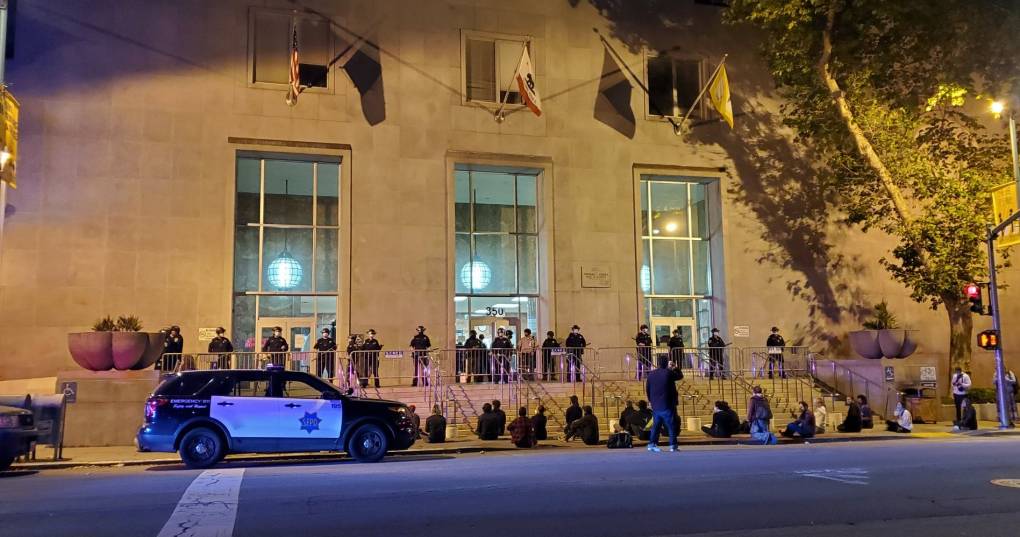
"caption": "Protesters doing a sit-in at the San Francisco Hall of Justice on June 2, 2020, past the city's 8 p.m. curfew. The order will be lifted June 4, 2020 at 5 a.m.",
"description": null,
"title": "SFSitIn",
"credit": "Joe Fitzgerald Rodriguez/KQED News",
"status": "inherit",
"isLoading": false,
"fetchFailed": false
}
},
"audioPlayerReducer": {
"postId": "stream_live",
"isPaused": true,
"isPlaying": false,
"pfsActive": false,
"pledgeModalIsOpen": true,
"playerDrawerIsOpen": false,
"liveAudioPlayStartedAt": 0,
"liveAudioPlayContext": ""
},
"authorsReducer": {
"byline_news_11825172": {
"type": "authors",
"id": "byline_news_11825172",
"meta": {
"override": true
},
"slug": "byline_news_11825172",
"name": "\u003ca class=\"stk-reset\" href=\"https://revealnews.org/author/lance-williams/\" target=\"_blank\" rel=\"noopener noreferrer\">Lance Williams\u003c/a>, \u003ca class=\"stk-reset\" href=\"https://revealnews.org/author/laura-morel/\" target=\"_blank\" rel=\"noopener noreferrer\">Laura C. Morel\u003c/a>, \u003ca class=\"stk-reset\" href=\"https://www.kqed.org/author/mlagos\" target=\"_blank\" rel=\"noopener noreferrer\">Marisa Lagos\u003c/a>, \u003ca class=\"stk-reset\" href=\"https://www.wlrn.org/people/caitie-switalski\" target=\"_blank\" rel=\"noopener noreferrer\">Caitie Switalski\u003c/a>, \u003ca class=\"stk-reset\" href=\"https://revealnews.org/author/melissa-lewis\" target=\"_blank\" rel=\"noopener noreferrer\">Melissa Lewis\u003c/a> and \u003ca class=\"stk-reset\" href=\"https://revealnews.org/author/emily-harris/\" target=\"_blank\" rel=\"noopener noreferrer\">Emily Harris",
"isLoading": false
},
"byline_news_11824152": {
"type": "authors",
"id": "byline_news_11824152",
"meta": {
"override": true
},
"slug": "byline_news_11824152",
"name": "Olga R. Rodriguez \u003cbr>Associated Press",
"isLoading": false
},
"dmarks": {
"type": "authors",
"id": "182",
"meta": {
"index": "authors_1716337520",
"id": "182",
"found": true
},
"name": "David Marks",
"firstName": "David",
"lastName": "Marks",
"slug": "dmarks",
"email": "dmarks@kqed.org",
"display_author_email": false,
"staff_mastheads": [],
"title": "KQED Editor",
"bio": "David Marks is a senior digital editor for KQED News. \u003c/a>Reach him at dmarks@kqed.org.",
"avatar": "https://secure.gravatar.com/avatar/b88bd6227ce6cb96ae33fefaf42b2a29?s=600&d=mm&r=g",
"twitter": "divadskram",
"facebook": null,
"instagram": null,
"linkedin": null,
"sites": [
{
"site": "news",
"roles": []
},
{
"site": "science",
"roles": []
},
{
"site": "perspectives",
"roles": []
},
{
"site": "liveblog",
"roles": []
}
],
"headData": {
"title": "David Marks | KQED",
"description": "KQED Editor",
"ogImgSrc": "https://secure.gravatar.com/avatar/b88bd6227ce6cb96ae33fefaf42b2a29?s=600&d=mm&r=g",
"twImgSrc": "https://secure.gravatar.com/avatar/b88bd6227ce6cb96ae33fefaf42b2a29?s=600&d=mm&r=g"
},
"isLoading": false,
"link": "/author/dmarks"
},
"danbrekke": {
"type": "authors",
"id": "222",
"meta": {
"index": "authors_1716337520",
"id": "222",
"found": true
},
"name": "Dan Brekke",
"firstName": "Dan",
"lastName": "Brekke",
"slug": "danbrekke",
"email": "dbrekke@kqed.org",
"display_author_email": true,
"staff_mastheads": [
"news",
"science"
],
"title": "KQED Editor and Reporter",
"bio": "Dan Brekke is a reporter and editor for KQED News, responsible for coverage of topics ranging from California water issues to the Bay Area's transportation challenges. In a newsroom career that began in Chicago in 1972, Dan has worked for \u003cem>The San Francisco Examiner,\u003c/em> Wired and TechTV and has been published in The New York Times, The New York Times Magazine, Business 2.0, Salon and elsewhere.\r\n\r\nSince joining KQED in 2007, Dan has reported, edited and produced both radio and online features and breaking news pieces. He has shared as both editor and reporter in four Society of Professional Journalists Norcal Excellence in Journalism awards and one Edward R. Murrow regional award. He was chosen for a spring 2017 residency at the Mesa Refuge to advance his research on California salmon.\r\n\r\nEmail Dan at: \u003ca href=\"mailto:dbrekke@kqed.org\">dbrekke@kqed.org\u003c/a>\r\n\r\n\u003cstrong>Twitter:\u003c/strong> \u003ca href=\"https://twitter.com/danbrekke\" rel=\"noopener noreferrer\">twitter.com/danbrekke\u003c/a>\r\n\u003cstrong>Facebook:\u003c/strong> \u003ca href=\"https://www.facebook.com/danbrekke\" rel=\"noopener noreferrer\">www.facebook.com/danbrekke\u003c/a>\r\n\u003cstrong>LinkedIn:\u003c/strong> \u003ca href=\"https://www.linkedin.com/in/danbrekke\" rel=\"noopener noreferrer\">www.linkedin.com/in/danbrekke\u003c/a>",
"avatar": "https://secure.gravatar.com/avatar/c8126230345efca3f7aa89b1a402be45?s=600&d=mm&r=g",
"twitter": "danbrekke",
"facebook": null,
"instagram": "https://www.instagram.com/dan.brekke/",
"linkedin": "https://www.linkedin.com/in/danbrekke/",
"sites": [
{
"site": "news",
"roles": [
"administrator",
"create_posts"
]
},
{
"site": "stateofhealth",
"roles": [
"editor"
]
},
{
"site": "science",
"roles": [
"editor"
]
},
{
"site": "quest",
"roles": [
"contributor"
]
},
{
"site": "food",
"roles": [
"contributor"
]
},
{
"site": "forum",
"roles": [
"contributor"
]
},
{
"site": "liveblog",
"roles": [
"editor"
]
}
],
"headData": {
"title": "Dan Brekke | KQED",
"description": "KQED Editor and Reporter",
"ogImgSrc": "https://secure.gravatar.com/avatar/c8126230345efca3f7aa89b1a402be45?s=600&d=mm&r=g",
"twImgSrc": "https://secure.gravatar.com/avatar/c8126230345efca3f7aa89b1a402be45?s=600&d=mm&r=g"
},
"isLoading": false,
"link": "/author/danbrekke"
},
"gmarzorati": {
"type": "authors",
"id": "227",
"meta": {
"index": "authors_1716337520",
"id": "227",
"found": true
},
"name": "Guy Marzorati",
"firstName": "Guy",
"lastName": "Marzorati",
"slug": "gmarzorati",
"email": "gmarzorati@KQED.org",
"display_author_email": true,
"staff_mastheads": [
"news"
],
"title": "Correspondent",
"bio": "Guy Marzorati is a correspondent on KQED's California Politics and Government Desk, based in San Jose. A graduate of Santa Clara University, Guy joined KQED in 2013. He reports on state and local politics and produces KQED's digital voter guide.",
"avatar": "https://secure.gravatar.com/avatar/e7038b8dbfd55b104369b76b1cd0b9de?s=600&d=blank&r=g",
"twitter": "guymarzorati",
"facebook": null,
"instagram": null,
"linkedin": null,
"sites": [
{
"site": "",
"roles": [
"editor"
]
},
{
"site": "news",
"roles": [
"editor"
]
},
{
"site": "science",
"roles": [
"editor"
]
},
{
"site": "forum",
"roles": [
"editor"
]
},
{
"site": "elections",
"roles": [
"editor"
]
},
{
"site": "liveblog",
"roles": [
"editor"
]
}
],
"headData": {
"title": "Guy Marzorati | KQED",
"description": "Correspondent",
"ogImgSrc": "https://secure.gravatar.com/avatar/e7038b8dbfd55b104369b76b1cd0b9de?s=600&d=blank&r=g",
"twImgSrc": "https://secure.gravatar.com/avatar/e7038b8dbfd55b104369b76b1cd0b9de?s=600&d=blank&r=g"
},
"isLoading": false,
"link": "/author/gmarzorati"
},
"scottshafer": {
"type": "authors",
"id": "255",
"meta": {
"index": "authors_1716337520",
"id": "255",
"found": true
},
"name": "Scott Shafer",
"firstName": "Scott",
"lastName": "Shafer",
"slug": "scottshafer",
"email": "sshafer@kqed.org",
"display_author_email": false,
"staff_mastheads": [
"news"
],
"title": "KQED Contributor",
"bio": "Scott Shafer is a senior editor with the KQED Politics and Government desk. He is co-host of Political Breakdown, the award-winning radio show and podcast with a personal take on the world of politics. Scott came to KQED in 1998 to host the statewide\u003cem> California Report\u003c/em>. Prior to that he had extended stints in politics and government\u003cem>.\u003c/em> He uses that inside experience at KQED in his, reporting, hosting and analysis for the politics desk. Scott collaborated \u003cem>Political Breakdown a\u003c/em>nd on \u003cem>The Political Mind of Jerry Brown, \u003c/em>an eight-part series about the life and extraordinary political career of the former governor. For fun, he plays water polo with the San Francisco Tsunami.",
"avatar": "https://secure.gravatar.com/avatar/a62ebae45b79d7aed1a39a0e3bf68104?s=600&d=blank&r=g",
"twitter": "scottshafer",
"bluesky": null,
"facebook": null,
"instagram": null,
"linkedin": null,
"sites": [
{
"site": "news",
"roles": [
"editor"
]
},
{
"site": "stateofhealth",
"roles": [
"author"
]
},
{
"site": "science",
"roles": [
"author"
]
},
{
"site": "forum",
"roles": [
"subscriber"
]
},
{
"site": "liveblog",
"roles": [
"author"
]
}
],
"headData": {
"title": "Scott Shafer | KQED",
"description": "KQED Contributor",
"ogImgSrc": "https://secure.gravatar.com/avatar/a62ebae45b79d7aed1a39a0e3bf68104?s=600&d=blank&r=g",
"twImgSrc": "https://secure.gravatar.com/avatar/a62ebae45b79d7aed1a39a0e3bf68104?s=600&d=blank&r=g"
},
"isLoading": false,
"link": "/author/scottshafer"
},
"matthewgreen": {
"type": "authors",
"id": "1263",
"meta": {
"index": "authors_1716337520",
"id": "1263",
"found": true
},
"name": "Matthew Green",
"firstName": "Matthew",
"lastName": "Green",
"slug": "matthewgreen",
"email": "mgreen@kqed.org",
"display_author_email": false,
"staff_mastheads": [],
"title": "KQED Editor/Reporter",
"bio": "Matthew Green is a digital media producer for KQED News. He previously produced \u003ca href=\"http://www.kqed.org/lowdown\">The Lowdown\u003c/a>, KQED’s multimedia news education blog. Matthew's written for numerous Bay Area publications, including the Oakland Tribune and San Francisco Chronicle. He also taught journalism classes at Fremont High School in East Oakland.\r\n\r\nEmail: mgreen@kqed.org; Twitter: @MGreenKQED",
"avatar": "https://secure.gravatar.com/avatar/3bf498d1267ca02c8494f33d8cfc575e?s=600&d=blank&r=g",
"twitter": "MGreenKQED",
"facebook": null,
"instagram": null,
"linkedin": null,
"sites": [
{
"site": "news",
"roles": []
},
{
"site": "lowdown",
"roles": []
},
{
"site": "science",
"roles": []
},
{
"site": "education",
"roles": []
},
{
"site": "quest",
"roles": []
},
{
"site": "liveblog",
"roles": []
}
],
"headData": {
"title": "Matthew Green | KQED",
"description": "KQED Editor/Reporter",
"ogImgSrc": "https://secure.gravatar.com/avatar/3bf498d1267ca02c8494f33d8cfc575e?s=600&d=blank&r=g",
"twImgSrc": "https://secure.gravatar.com/avatar/3bf498d1267ca02c8494f33d8cfc575e?s=600&d=blank&r=g"
},
"isLoading": false,
"link": "/author/matthewgreen"
},
"aemslie": {
"type": "authors",
"id": "3206",
"meta": {
"index": "authors_1716337520",
"id": "3206",
"found": true
},
"name": "Alex Emslie",
"firstName": "Alex",
"lastName": "Emslie",
"slug": "aemslie",
"email": "aemslie@kqed.org",
"display_author_email": true,
"staff_mastheads": [
"news"
],
"title": "KQED Senior Editor",
"bio": "Alex Emslie is senior editor of talent and development at KQED, where he manages dozens of early career journalists and oversees news department internships.\r\n\r\nHe is a former carpenter and proud graduate of City College of San Francisco and San Francisco State University, where he studied journalism and criminal justice before joining KQED in 2013.\r\n\r\nAlex produced investigative journalism focused on \u003ca href=\"https://www.kqed.org/news/11667594/the-trials-of-marvin-mutch-video\">criminal justice\u003c/a> and policing for most of a decade. He has broken major stories about \u003ca href=\"https://www.kqed.org/news/135682/amid-a-series-of-vallejo-police-shootings-one-officers-name-stands-out\">police use of deadly force\u003c/a>, \u003ca href=\"https://www.kqed.org/news/10454955/racist-texts-prompt-sfpd-internal-investigation\">officer misconduct\u003c/a> and \u003ca href=\"https://www.kqed.org/news/11712239/terrorist-or-troll-judge-to-weigh-whether-oakland-man-really-intended-to-attack-bay-area\">other\u003c/a> \u003ca href=\"https://www.kqed.org/news/11221414/hayward-paid-159000-to-husband-of-retired-police-chief-documents-show\">high\u003c/a>-\u003ca href=\"https://www.kqed.org/news/10622762/the-forgotten-tracking-two-homicides-in-san-francisco-public-housing\">profile\u003c/a> \u003ca href=\"https://www.kqed.org/news/11624516/federal-agency-promoted-ranger-just-months-after-his-gun-was-stolen-and-used-in-steinle-killing\">cases\u003c/a>. He co-founded the \u003ca href=\"https://projects.scpr.org/california-reporting-project/\">California Reporting Project\u003c/a> in 2019 to obtain and report on previously confidential police internal investigations. The effort produced well over 100 original stories and changed the course of multiple criminal cases.\r\n\r\nHis work has been recognized with numerous journalism awards, including a national Edward R. Murrow award for several years of \u003ca href=\"https://www.kqed.org/news/11688481/sfpd-officers-in-mario-woods-case-recount-shooting-in-newly-filed-depositions\">reporting\u003c/a> on the San Francisco Police shooting of Mario Woods. His \u003ca href=\"https://www.kqed.org/news/147854/half-of-those-killed-by-san-francisco-police-are-mentally-ill\">reporting\u003c/a> on police killings of people in psychiatric crisis was cited in amicus briefs before the U.S. Supreme Court.\r\n\r\nAlex now enjoys mentoring the next generation of journalists at KQED.",
"avatar": "https://secure.gravatar.com/avatar/e691e65209f20e9da202bd730ead5663?s=600&d=blank&r=g",
"twitter": "SFNewsReporter",
"facebook": null,
"instagram": null,
"linkedin": null,
"sites": [
{
"site": "arts",
"roles": [
"editor"
]
},
{
"site": "news",
"roles": [
"editor"
]
},
{
"site": "mindshift",
"roles": [
"editor"
]
},
{
"site": "stateofhealth",
"roles": [
"editor"
]
},
{
"site": "science",
"roles": [
"administrator"
]
}
],
"headData": {
"title": "Alex Emslie | KQED",
"description": "KQED Senior Editor",
"ogImgSrc": "https://secure.gravatar.com/avatar/e691e65209f20e9da202bd730ead5663?s=600&d=blank&r=g",
"twImgSrc": "https://secure.gravatar.com/avatar/e691e65209f20e9da202bd730ead5663?s=600&d=blank&r=g"
},
"isLoading": false,
"link": "/author/aemslie"
},
"markfiore": {
"type": "authors",
"id": "3236",
"meta": {
"index": "authors_1716337520",
"id": "3236",
"found": true
},
"name": "Mark Fiore",
"firstName": "Mark",
"lastName": "Fiore",
"slug": "markfiore",
"email": "mark@markfiore.com",
"display_author_email": false,
"staff_mastheads": [
"news"
],
"title": "KQED News Cartoonist",
"bio": "\u003ca href=\"http://www.MarkFiore.com\">MarkFiore.com\u003c/a> | \u003ca href=\"https://twitter.com/markfiore\">Follow on Twitter\u003c/a> | \u003ca href=\"https://www.facebook.com/pages/Mark-Fiore-Animated-Political-Cartoons/94451707396?ref=bookmarks\">Facebook\u003c/a> | \u003ca href=\"mailto:mark@markfiore.com\">email\u003c/a>\r\n\r\nPulitzer Prize-winner, Mark Fiore, who the Wall Street Journal has called “the undisputed guru of the form,” creates animated political cartoons in San Francisco, where his work has been featured regularly on the San Francisco Chronicle’s web site, SFGate.com. His work has appeared on Newsweek.com, Slate.com, CBSNews.com, MotherJones.com, DailyKos.com and NPR’s web site. Fiore’s political animation has appeared on CNN, Frontline, Bill Moyers Journal, Salon.com and cable and broadcast outlets across the globe.\r\n\r\nBeginning his professional life by drawing traditional political cartoons for newspapers, Fiore’s work appeared in publications ranging from the Washington Post to the Los Angeles Times. In the late 1990s, he began to experiment with animating political cartoons and, after a short stint at the San Jose Mercury News as their staff cartoonist, Fiore devoted all his energies to animation.\r\nGrowing up in California, Fiore also spent a good portion of his life in the backwoods of Idaho. It was this combination that shaped him politically. Mark majored in political science at Colorado College, where, in a perfect send-off for a cartoonist, he received his diploma in 1991 as commencement speaker Dick Cheney smiled approvingly.\r\nMark Fiore was awarded the Pulitzer Prize for political cartooning in 2010, a Robert F. Kennedy Journalism Award in 2004 and has twice received an Online Journalism Award for commentary from the Online News Association (2002, 2008). Fiore has received two awards for his work in new media from the National Cartoonists Society (2001, 2002), and in 2006 received The James Madison Freedom of Information Award from The Society of Professional Journalists.",
"avatar": "https://secure.gravatar.com/avatar/fc4e2a612b15b67bad0c6f0e1db4ca9b?s=600&d=blank&r=g",
"twitter": "MarkFiore",
"facebook": null,
"instagram": "https://www.instagram.com/markfiore/?hl=en",
"linkedin": null,
"sites": [
{
"site": "arts",
"roles": [
"contributor"
]
},
{
"site": "news",
"roles": [
"editor"
]
},
{
"site": "futureofyou",
"roles": [
"editor"
]
},
{
"site": "science",
"roles": [
"editor"
]
}
],
"headData": {
"title": "Mark Fiore | KQED",
"description": "KQED News Cartoonist",
"ogImgSrc": "https://secure.gravatar.com/avatar/fc4e2a612b15b67bad0c6f0e1db4ca9b?s=600&d=blank&r=g",
"twImgSrc": "https://secure.gravatar.com/avatar/fc4e2a612b15b67bad0c6f0e1db4ca9b?s=600&d=blank&r=g"
},
"isLoading": false,
"link": "/author/markfiore"
},
"hhagemann": {
"type": "authors",
"id": "11578",
"meta": {
"index": "authors_1716337520",
"id": "11578",
"found": true
},
"name": "Hannah Hagemann",
"firstName": "Hannah",
"lastName": "Hagemann",
"slug": "hhagemann",
"email": "hhagemann@KQED.org",
"display_author_email": false,
"staff_mastheads": [],
"title": "KQED Contributor",
"bio": null,
"avatar": "https://secure.gravatar.com/avatar/c3af389deff545c719141a87524965d8?s=600&d=blank&r=g",
"twitter": null,
"facebook": null,
"instagram": null,
"linkedin": null,
"sites": [
{
"site": "news",
"roles": [
"author"
]
},
{
"site": "science",
"roles": [
"editor"
]
}
],
"headData": {
"title": "Hannah Hagemann | KQED",
"description": "KQED Contributor",
"ogImgSrc": "https://secure.gravatar.com/avatar/c3af389deff545c719141a87524965d8?s=600&d=blank&r=g",
"twImgSrc": "https://secure.gravatar.com/avatar/c3af389deff545c719141a87524965d8?s=600&d=blank&r=g"
},
"isLoading": false,
"link": "/author/hhagemann"
},
"mfharvin": {
"type": "authors",
"id": "11583",
"meta": {
"index": "authors_1716337520",
"id": "11583",
"found": true
},
"name": "Mary Franklin Harvin",
"firstName": "Mary Franklin",
"lastName": "Harvin",
"slug": "mfharvin",
"email": "mfharvin@KQED.org",
"display_author_email": false,
"staff_mastheads": [
"news"
],
"title": "KQED Contributor",
"bio": null,
"avatar": "https://secure.gravatar.com/avatar/0e53510a7d48cfbdebfc9b11357d845f?s=600&d=blank&r=g",
"twitter": "EmEffHarvin",
"facebook": null,
"instagram": null,
"linkedin": null,
"sites": [
{
"site": "news",
"roles": [
"author",
"edit_others_posts"
]
},
{
"site": "science",
"roles": [
"editor"
]
}
],
"headData": {
"title": "Mary Franklin Harvin | KQED",
"description": "KQED Contributor",
"ogImgSrc": "https://secure.gravatar.com/avatar/0e53510a7d48cfbdebfc9b11357d845f?s=600&d=blank&r=g",
"twImgSrc": "https://secure.gravatar.com/avatar/0e53510a7d48cfbdebfc9b11357d845f?s=600&d=blank&r=g"
},
"isLoading": false,
"link": "/author/mfharvin"
},
"jrodriguez": {
"type": "authors",
"id": "11690",
"meta": {
"index": "authors_1716337520",
"id": "11690",
"found": true
},
"name": "Joe Fitzgerald Rodriguez",
"firstName": "Joe",
"lastName": "Fitzgerald Rodriguez",
"slug": "jrodriguez",
"email": "jrodriguez@kqed.org",
"display_author_email": true,
"staff_mastheads": [
"news"
],
"title": "Reporter and Producer",
"bio": "Joe Fitzgerald Rodriguez is a reporter and digital producer for KQED covering politics. Joe most recently wrote for the \u003cem>San Francisco Examiner\u003c/em> as a political columnist covering The City. He was raised in San Francisco and has spent his reporting career in his beloved, foggy, city by the bay. Joe was 12-years-old when he conducted his first interview in journalism, grilling former San Francisco Mayor Willie Brown for the Marina Middle School newspaper, \u003cem>The Penguin Press, \u003c/em>and he continues to report on the San Francisco Bay Area to this day.",
"avatar": "https://secure.gravatar.com/avatar/2247beb0564c1e9c62228d5649d2edac?s=600&d=blank&r=g",
"twitter": "FitztheReporter",
"facebook": null,
"instagram": "https://www.instagram.com/fitzthereporter/",
"linkedin": null,
"sites": [
{
"site": "",
"roles": [
"editor"
]
},
{
"site": "arts",
"roles": [
"editor"
]
},
{
"site": "news",
"roles": [
"editor"
]
},
{
"site": "science",
"roles": [
"editor"
]
},
{
"site": "elections",
"roles": [
"editor"
]
},
{
"site": "liveblog",
"roles": [
"editor"
]
}
],
"headData": {
"title": "Joe Fitzgerald Rodriguez | KQED",
"description": "Reporter and Producer",
"ogImgSrc": "https://secure.gravatar.com/avatar/2247beb0564c1e9c62228d5649d2edac?s=600&d=blank&r=g",
"twImgSrc": "https://secure.gravatar.com/avatar/2247beb0564c1e9c62228d5649d2edac?s=600&d=blank&r=g"
},
"isLoading": false,
"link": "/author/jrodriguez"
}
},
"pagesReducer": {
"news_tag_london-breed": {
"type": "terms",
"id": "news_6931",
"meta": {
"index": "terms_1716263798",
"site": "news",
"id": "6931",
"score": 9.30472
},
"featImg": null,
"name": "London Breed",
"description": null,
"taxonomy": "tag",
"headData": {
"twImgId": null,
"twTitle": null,
"ogTitle": null,
"ogImgId": null,
"twDescription": null,
"description": null,
"title": "London Breed Archives | KQED News",
"ogDescription": null
},
"ttid": 6955,
"slug": "london-breed",
"isLoading": false,
"title": "London Breed",
"pageMeta": {
"site": "news",
"WpPageTemplate": "page-topic-editorial",
"currentPage": 15
},
"blocks": [
{
"blockName": "kqed/post-list",
"attrs": {
"layout": "cardArticle2",
"query": "posts/news?tag=london-breed",
"seeMore": false,
"paginated": true,
"page": 15
}
},
{
"blockName": "kqed/ad"
}
]
}
},
"pfsSessionReducer": {},
"postsReducer": {
"stream_live": {
"type": "live",
"id": "stream_live",
"audioUrl": "https://streams.kqed.org/kqedradio",
"title": "Live Stream",
"excerpt": "Live Stream information currently unavailable.",
"link": "/radio",
"featImg": "",
"label": {
"name": "KQED Live",
"link": "/"
}
},
"stream_kqedNewscast": {
"type": "posts",
"id": "stream_kqedNewscast",
"audioUrl": "https://www.kqed.org/.stream/anon/radio/RDnews/newscast.mp3?_=1",
"title": "KQED Newscast",
"featImg": "",
"label": {
"name": "88.5 FM",
"link": "/"
}
},
"news_11831527": {
"type": "posts",
"id": "news_11831527",
"meta": {
"index": "posts_1716263798",
"site": "news",
"id": "11831527",
"score": null,
"sort": [
1596245169000
]
},
"parent": 0,
"labelTerm": {
"site": "news"
},
"blocks": [],
"publishDate": 1596245169,
"format": "standard",
"disqusTitle": "SF Mayor Breed's Proposed Budget Redirects $120 Million From Police to City's Black Community",
"title": "SF Mayor Breed's Proposed Budget Redirects $120 Million From Police to City's Black Community",
"headTitle": "KQED News",
"content": "\u003cp>San Francisco Mayor London Breed unveiled a proposed budget Friday that includes pulling $120 million from law enforcement agencies and putting it into programs that support the city’s largely underserved Black community.\u003c/p>\n\u003cp>Although the specific spending details are still unclear, Breed’s proposal would direct 60% of the funds to mental health, wellness and homelessness initiatives in the Black community, while 35% would support education, youth development and economic opportunities. The remaining 5% would go toward developing a plan to replace police officers with social workers as the main responders to noncriminal calls involving the homeless and mentally ill.\u003c/p>\n\u003cp>Those allocations reflect spending priorities conveyed by Black residents during a series of recent community meetings and public surveys led by the city’s Human Rights Commission, Breed said.\u003c/p>\n\u003cp>“It’s important that we listen to Black voices. It's important that we allow Black people to lead this movement,” Breed said at a press conference Friday. “We have to listen to the people in the community. We have to listen to the people who have seen and lived the devastation resulting from decades of disinvestment.”\u003c/p>\n\u003cp>[aside label=\"related coverage\" tag=\"defund-the-police\"]Breed’s defunding plan was devised in collaboration with Supervisor Shamann Walton as a reparation for city policies that led to “decades of disinvestment” in the Black community.\u003c/p>\n\u003cp>Black people make up only about 5% of San Francisco’s population — a proportion that has consistently decreased in the last 50 years — \u003ca href=\"https://www.sfchronicle.com/bayarea/article/San-Francisco-plans-to-redirect-120-million-from-15447811.php\">but comprise nearly 40% of its homeless residents\u003c/a>. African Americans have among the city’s highest mortality rates and lowest median household incomes, and are involved in a disproportionately high percentage of police use-of-force incidents.\u003c/p>\n\u003cp>The plan would cut $40 million annually over the next two years from the San Francisco Police Department, reducing its nearly\u003ca href=\"https://sfmayor.org/sites/default/files/CSF_Budget_Book_June_2019_Final_Web_REV2.pdf\"> $700 million annual budget\u003c/a> by almost 6%. The Sheriff’s Department, meanwhile, would see a total of $20 million in cuts.\u003c/p>\n\u003cp>The heads of both of those departments expressed initial, if measured, support for the proposed cuts, most of which would come from not filling vacant positions and reducing overtime expenditures.\u003c/p>\n\u003cp>“We knew there would be pain and sacrifice associated with these budget cuts, but we also know they're necessary to fulfill the promise of Mayor Breed's and Sup. Walton's reinvestment initiative to support racial equality,” San Francisco Police Chief Bill Scott said in the statement. “While the cuts are significant, they are cuts we can absorb and that will not diminish our ability to provide essential services.”\u003c/p>\n\u003cp>The mayor's defunding plan comes largely in response to huge, prolonged demonstrations — in San Francisco and around the world — following the death of George Floyd at the hands of Minneapolis police, and amid growing calls to shift resources away from law enforcement. In June, Breed also directed the Police Department to no longer\u003ca href=\"https://www.kqed.org/news/11824152/san-francisco-police-wont-respond-to-non-criminal-calls\"> respond to noncriminal complaints\u003c/a>, revise its accountability and anti-bias practices and stop using military-grade equipment.\u003c/p>\n\u003cp>[pullquote size='medium' align='right' citation='— Mayor London Breed']'With this budget, we are listening to the community and prioritizing investments in the African American around housing, mental health and wellness, workforce development, economic justice, education, advocacy and accountability.'[/pullquote]“As a Black woman who grew up in poverty in this city, police brutality was all too common. It was something we expected and our complaints were usually ignored. Two months ago, the murder of George Floyd shook this country to its core, in a way that I have never seen before,” she said.\u003c/p>\n\u003cp>“With this budget, we are listening to the community and prioritizing investments in the African American around housing, mental health and wellness, workforce development, economic justice, education, advocacy and accountability.”\u003c/p>\n\u003cp>The plan is part of Breed’s proposed budget of $13.7 billion for the fiscal year 2020-2021 and $12.6 billion for 2021-2022, which she introduced to the Board of Supervisors on Friday.\u003c/p>\n\u003cp>The proposal aims to close a $1.5 billion deficit with the use of reserves, while preserving jobs and making minimal cuts to city services.\u003c/p>\n\u003cp>The Board of Supervisors has until Oct. 1 to send back their revised version of the budget for Breed to sign.\u003c/p>\n\u003cp>San Francisco has avoided layoffs of city staff since the pandemic began, and Breed said jobs would continue to be protected under her budget, but only if the unions representing those workers agreed to the delay of any planned wage increases over the next two years.\u003c/p>\n\u003cp>”I don't think this is too much to ask,\" she said. \"Our entire city is suffering now and we all need to do our part to share in that sacrifice.”\u003c/p>\n\u003cp>But several unions representing city workers were quick to criticize Breed’s proposal to delay wage increases, noting the sacrifices workers have already made during the pandemic.\u003c/p>\n\u003cp>“Our members have been in the field, uninterrupted by the crisis, maintaining key infrastructure to support our city. We keep the power, water and others systems online and need city leaders to value this important work, especially during a crisis,” said Larry Mazzola Jr., president of the San Francisc Building and Construction Trades Council.\u003c/p>\n\u003cp>[ad fullwidth]\u003c/p>\n\u003cp>Breed's budget also proposes allocating $446 million to the city's COVID-19 response efforts, with a focus on health services, housing and shelter and emergency communications.\u003c/p>\n\u003cp>Of that amount, the budget proposal assumes the city can cover $93 million, while the remaining amount can be covered by U.S. Federal Emergency Management Agency reimbursements and funding from the federal coronavirus relief bill.\u003c/p>\n\u003cp>The budget also addresses mental health and homelessness. However, several of the investments rely on the passage of a city business tax reform measure on the ballot in November, which would provide $66.5 million over the two years.\u003c/p>\n\u003cp>Earlier this week, Breed also announced that the proposed budget \u003ca href=\"https://www.kqed.org/coronavirusliveupdates/news/11831149/sf-mayor-proposes-additional-15-million-for-schools\">includes $15 million\u003c/a> to support San Francisco Unified School District, students and families as the fall semester is set to begin with distance learning.\u003c/p>\n\u003cp>\u003cem>This report contains additional reporting from KQED's Marco Siler-Gonzales and Bay City News.\u003c/em>\u003c/p>\n\u003cp>\u003c/p>\n",
"disqusIdentifier": "11831527 https://ww2.kqed.org/news/?p=11831527",
"disqusUrl": "https://ww2.kqed.org/news/2020/07/31/sf-mayor-breeds-new-budget-would-redirect-120-million-from-police-to-citys-black-community/",
"stats": {
"hasVideo": false,
"hasChartOrMap": false,
"hasAudio": false,
"hasPolis": false,
"wordCount": 1059,
"hasGoogleForm": false,
"hasGallery": false,
"hasHearkenModule": false,
"iframeSrcs": [],
"paragraphCount": 26
},
"modified": 1596497048,
"excerpt": "The plan to reduce law enforcement funding and invest more in the city's underserved Black community is part of Mayor London Breed's two-year budget proposal, which she unveiled Friday.",
"headData": {
"twImgId": "",
"twTitle": "",
"ogTitle": "",
"ogImgId": "",
"twDescription": "",
"description": "The plan to reduce law enforcement funding and invest more in the city's underserved Black community is part of Mayor London Breed's two-year budget proposal, which she unveiled Friday.",
"title": "SF Mayor Breed's Proposed Budget Redirects $120 Million From Police to City's Black Community | KQED",
"ogDescription": "",
"schema": {
"@context": "https://schema.org",
"@type": "NewsArticle",
"headline": "SF Mayor Breed's Proposed Budget Redirects $120 Million From Police to City's Black Community",
"datePublished": "2020-07-31T18:26:09-07:00",
"dateModified": "2020-08-03T16:24:08-07:00",
"image": "https://cdn.kqed.org/wp-content/uploads/2020/02/KQED-OG-Image@1x.png",
"isAccessibleForFree": "True",
"publisher": {
"@type": "NewsMediaOrganization",
"@id": "https://www.kqed.org/#organization",
"name": "KQED",
"logo": "https://cdn.kqed.org/wp-content/uploads/2020/02/KQED-OG-Image@1x.png",
"url": "https://www.kqed.org",
"sameAs": [
"https://www.facebook.com/KQED",
"https://twitter.com/KQED",
"https://www.instagram.com/kqed/",
"https://www.tiktok.com/@kqedofficial",
"https://www.linkedin.com/company/kqed",
"https://www.youtube.com/channel/UCeC0IOo7i1P_61zVUWbJ4nw"
]
}
}
},
"guestAuthors": [],
"slug": "sf-mayor-breeds-new-budget-would-redirect-120-million-from-police-to-citys-black-community",
"status": "publish",
"path": "/news/11831527/sf-mayor-breeds-new-budget-would-redirect-120-million-from-police-to-citys-black-community",
"audioTrackLength": null,
"parsedContent": [
{
"type": "contentString",
"content": "\u003cdiv class=\"post-body\">\u003cp>\u003cp>San Francisco Mayor London Breed unveiled a proposed budget Friday that includes pulling $120 million from law enforcement agencies and putting it into programs that support the city’s largely underserved Black community.\u003c/p>\n\u003cp>Although the specific spending details are still unclear, Breed’s proposal would direct 60% of the funds to mental health, wellness and homelessness initiatives in the Black community, while 35% would support education, youth development and economic opportunities. The remaining 5% would go toward developing a plan to replace police officers with social workers as the main responders to noncriminal calls involving the homeless and mentally ill.\u003c/p>\n\u003cp>Those allocations reflect spending priorities conveyed by Black residents during a series of recent community meetings and public surveys led by the city’s Human Rights Commission, Breed said.\u003c/p>\n\u003cp>“It’s important that we listen to Black voices. It's important that we allow Black people to lead this movement,” Breed said at a press conference Friday. “We have to listen to the people in the community. We have to listen to the people who have seen and lived the devastation resulting from decades of disinvestment.”\u003c/p>\n\u003cp>\u003c/p>\u003c/div>",
"attributes": {
"named": {},
"numeric": []
}
},
{
"type": "component",
"content": "",
"name": "aside",
"attributes": {
"named": {
"label": "related coverage ",
"tag": "defund-the-police"
},
"numeric": []
}
},
{
"type": "contentString",
"content": "\u003cdiv class=\"post-body\">\u003cp>Breed’s defunding plan was devised in collaboration with Supervisor Shamann Walton as a reparation for city policies that led to “decades of disinvestment” in the Black community.\u003c/p>\n\u003cp>Black people make up only about 5% of San Francisco’s population — a proportion that has consistently decreased in the last 50 years — \u003ca href=\"https://www.sfchronicle.com/bayarea/article/San-Francisco-plans-to-redirect-120-million-from-15447811.php\">but comprise nearly 40% of its homeless residents\u003c/a>. African Americans have among the city’s highest mortality rates and lowest median household incomes, and are involved in a disproportionately high percentage of police use-of-force incidents.\u003c/p>\n\u003cp>The plan would cut $40 million annually over the next two years from the San Francisco Police Department, reducing its nearly\u003ca href=\"https://sfmayor.org/sites/default/files/CSF_Budget_Book_June_2019_Final_Web_REV2.pdf\"> $700 million annual budget\u003c/a> by almost 6%. The Sheriff’s Department, meanwhile, would see a total of $20 million in cuts.\u003c/p>\n\u003cp>The heads of both of those departments expressed initial, if measured, support for the proposed cuts, most of which would come from not filling vacant positions and reducing overtime expenditures.\u003c/p>\n\u003cp>“We knew there would be pain and sacrifice associated with these budget cuts, but we also know they're necessary to fulfill the promise of Mayor Breed's and Sup. Walton's reinvestment initiative to support racial equality,” San Francisco Police Chief Bill Scott said in the statement. “While the cuts are significant, they are cuts we can absorb and that will not diminish our ability to provide essential services.”\u003c/p>\n\u003cp>The mayor's defunding plan comes largely in response to huge, prolonged demonstrations — in San Francisco and around the world — following the death of George Floyd at the hands of Minneapolis police, and amid growing calls to shift resources away from law enforcement. In June, Breed also directed the Police Department to no longer\u003ca href=\"https://www.kqed.org/news/11824152/san-francisco-police-wont-respond-to-non-criminal-calls\"> respond to noncriminal complaints\u003c/a>, revise its accountability and anti-bias practices and stop using military-grade equipment.\u003c/p>\n\u003cp>\u003c/p>\u003c/div>",
"attributes": {
"named": {},
"numeric": []
}
},
{
"type": "component",
"content": "'With this budget, we are listening to the community and prioritizing investments in the African American around housing, mental health and wellness, workforce development, economic justice, education, advocacy and accountability.'",
"name": "pullquote",
"attributes": {
"named": {
"size": "medium",
"align": "right",
"citation": "— Mayor London Breed",
"label": ""
},
"numeric": []
}
},
{
"type": "contentString",
"content": "\u003cdiv class=\"post-body\">\u003cp>“As a Black woman who grew up in poverty in this city, police brutality was all too common. It was something we expected and our complaints were usually ignored. Two months ago, the murder of George Floyd shook this country to its core, in a way that I have never seen before,” she said.\u003c/p>\n\u003cp>“With this budget, we are listening to the community and prioritizing investments in the African American around housing, mental health and wellness, workforce development, economic justice, education, advocacy and accountability.”\u003c/p>\n\u003cp>The plan is part of Breed’s proposed budget of $13.7 billion for the fiscal year 2020-2021 and $12.6 billion for 2021-2022, which she introduced to the Board of Supervisors on Friday.\u003c/p>\n\u003cp>The proposal aims to close a $1.5 billion deficit with the use of reserves, while preserving jobs and making minimal cuts to city services.\u003c/p>\n\u003cp>The Board of Supervisors has until Oct. 1 to send back their revised version of the budget for Breed to sign.\u003c/p>\n\u003cp>San Francisco has avoided layoffs of city staff since the pandemic began, and Breed said jobs would continue to be protected under her budget, but only if the unions representing those workers agreed to the delay of any planned wage increases over the next two years.\u003c/p>\n\u003cp>”I don't think this is too much to ask,\" she said. \"Our entire city is suffering now and we all need to do our part to share in that sacrifice.”\u003c/p>\n\u003cp>But several unions representing city workers were quick to criticize Breed’s proposal to delay wage increases, noting the sacrifices workers have already made during the pandemic.\u003c/p>\n\u003cp>“Our members have been in the field, uninterrupted by the crisis, maintaining key infrastructure to support our city. We keep the power, water and others systems online and need city leaders to value this important work, especially during a crisis,” said Larry Mazzola Jr., president of the San Francisc Building and Construction Trades Council.\u003c/p>\n\u003cp>\u003c/p>\u003c/div>",
"attributes": {
"named": {},
"numeric": []
}
},
{
"type": "component",
"content": "",
"name": "ad",
"attributes": {
"named": {
"label": "fullwidth"
},
"numeric": [
"fullwidth"
]
}
},
{
"type": "contentString",
"content": "\u003cdiv class=\"post-body\">\u003cp>\u003c/p>\n\u003cp>Breed's budget also proposes allocating $446 million to the city's COVID-19 response efforts, with a focus on health services, housing and shelter and emergency communications.\u003c/p>\n\u003cp>Of that amount, the budget proposal assumes the city can cover $93 million, while the remaining amount can be covered by U.S. Federal Emergency Management Agency reimbursements and funding from the federal coronavirus relief bill.\u003c/p>\n\u003cp>The budget also addresses mental health and homelessness. However, several of the investments rely on the passage of a city business tax reform measure on the ballot in November, which would provide $66.5 million over the two years.\u003c/p>\n\u003cp>Earlier this week, Breed also announced that the proposed budget \u003ca href=\"https://www.kqed.org/coronavirusliveupdates/news/11831149/sf-mayor-proposes-additional-15-million-for-schools\">includes $15 million\u003c/a> to support San Francisco Unified School District, students and families as the fall semester is set to begin with distance learning.\u003c/p>\n\u003cp>\u003cem>This report contains additional reporting from KQED's Marco Siler-Gonzales and Bay City News.\u003c/em>\u003c/p>\n\u003cp>\u003c/p>\n\u003c/div>\u003c/p>",
"attributes": {
"named": {},
"numeric": []
}
}
],
"link": "/news/11831527/sf-mayor-breeds-new-budget-would-redirect-120-million-from-police-to-citys-black-community",
"authors": [
"1263"
],
"categories": [
"news_8",
"news_13"
],
"tags": [
"news_28066",
"news_28105",
"news_6931",
"news_116",
"news_20081",
"news_38"
],
"featImg": "news_11807074",
"label": "news"
},
"news_11829740": {
"type": "posts",
"id": "news_11829740",
"meta": {
"index": "posts_1716263798",
"site": "news",
"id": "11829740",
"score": null,
"sort": [
1595280308000
]
},
"parent": 0,
"labelTerm": {
"site": "news",
"term": 18515
},
"blocks": [],
"publishDate": 1595280308,
"format": "standard",
"disqusTitle": "March Redux",
"title": "March Redux",
"headTitle": "Mark Fiore: Drawn to the Bay | KQED News",
"content": "\u003cp>COVID-19 cases and hospitalizations are spiking in California, and San Mateo is currently the only Bay Area county not on \u003ca href=\"https://bit.ly/fiorewatchlist\">Gov. Newsom's coronavirus watch list\u003c/a>.\u003c/p>\n\u003cp>After San Francisco was added to the list, Mayor London Breed announced that all indoor malls and non-essential offices in the city must close starting Monday.\u003c/p>\n\u003cp>With 33 of California's 58 counties now on the watch list, we're definitely headed in the wrong direction in the battle against this pandemic – locally and nationally.\u003c/p>\n\u003cp>Those masks are \u003ca href=\"https://www.washingtonpost.com/nation/2020/07/14/coronavirus-live-updates-us/\">starting to look more appealing\u003c/a> every day.\u003c/p>\n\u003cp>[ad fullwidth]\u003c/p>\n\u003cp>\u003c/p>\n",
"disqusIdentifier": "11829740 https://ww2.kqed.org/news/?p=11829740",
"disqusUrl": "https://ww2.kqed.org/news/2020/07/20/march-redux/",
"stats": {
"hasVideo": false,
"hasChartOrMap": false,
"hasAudio": false,
"hasPolis": false,
"wordCount": 96,
"hasGoogleForm": false,
"hasGallery": false,
"hasHearkenModule": false,
"iframeSrcs": [],
"paragraphCount": 6
},
"modified": 1595280349,
"excerpt": "COVID-19 cases and hospitalizations are spiking and San Mateo is currently the only Bay Area county not on Gov. Newsom's coronavirus watch list.",
"headData": {
"twImgId": "",
"twTitle": "",
"ogTitle": "",
"ogImgId": "",
"twDescription": "",
"description": "COVID-19 cases and hospitalizations are spiking and San Mateo is currently the only Bay Area county not on Gov. Newsom's coronavirus watch list.",
"title": "March Redux | KQED",
"ogDescription": "",
"schema": {
"@context": "https://schema.org",
"@type": "NewsArticle",
"headline": "March Redux",
"datePublished": "2020-07-20T14:25:08-07:00",
"dateModified": "2020-07-20T14:25:49-07:00",
"image": "https://cdn.kqed.org/wp-content/uploads/2020/02/KQED-OG-Image@1x.png",
"isAccessibleForFree": "True",
"publisher": {
"@type": "NewsMediaOrganization",
"@id": "https://www.kqed.org/#organization",
"name": "KQED",
"logo": "https://cdn.kqed.org/wp-content/uploads/2020/02/KQED-OG-Image@1x.png",
"url": "https://www.kqed.org",
"sameAs": [
"https://www.facebook.com/KQED",
"https://twitter.com/KQED",
"https://www.instagram.com/kqed/",
"https://www.tiktok.com/@kqedofficial",
"https://www.linkedin.com/company/kqed",
"https://www.youtube.com/channel/UCeC0IOo7i1P_61zVUWbJ4nw"
]
}
}
},
"guestAuthors": [],
"slug": "march-redux",
"status": "publish",
"path": "/news/11829740/march-redux",
"audioTrackLength": null,
"parsedContent": [
{
"type": "contentString",
"content": "\u003cdiv class=\"post-body\">\u003cp>\u003cp>COVID-19 cases and hospitalizations are spiking in California, and San Mateo is currently the only Bay Area county not on \u003ca href=\"https://bit.ly/fiorewatchlist\">Gov. Newsom's coronavirus watch list\u003c/a>.\u003c/p>\n\u003cp>After San Francisco was added to the list, Mayor London Breed announced that all indoor malls and non-essential offices in the city must close starting Monday.\u003c/p>\n\u003cp>With 33 of California's 58 counties now on the watch list, we're definitely headed in the wrong direction in the battle against this pandemic – locally and nationally.\u003c/p>\n\u003cp>Those masks are \u003ca href=\"https://www.washingtonpost.com/nation/2020/07/14/coronavirus-live-updates-us/\">starting to look more appealing\u003c/a> every day.\u003c/p>\n\u003cp>\u003c/p>\u003c/div>",
"attributes": {
"named": {},
"numeric": []
}
},
{
"type": "component",
"content": "",
"name": "ad",
"attributes": {
"named": {
"label": "fullwidth"
},
"numeric": [
"fullwidth"
]
}
},
{
"type": "contentString",
"content": "\u003cdiv class=\"post-body\">\u003cp>\u003c/p>\n\u003cp>\u003c/p>\n\u003c/div>\u003c/p>",
"attributes": {
"named": {},
"numeric": []
}
}
],
"link": "/news/11829740/march-redux",
"authors": [
"3236"
],
"series": [
"news_18515"
],
"categories": [
"news_1758",
"news_457",
"news_13"
],
"tags": [
"news_27350",
"news_27504",
"news_16",
"news_6931",
"news_20949",
"news_27881",
"news_38"
],
"featImg": "news_11829744",
"label": "news_18515"
},
"news_11829432": {
"type": "posts",
"id": "news_11829432",
"meta": {
"index": "posts_1716263798",
"site": "news",
"id": "11829432",
"score": null,
"sort": [
1595020654000
]
},
"parent": 0,
"labelTerm": {
"site": "news"
},
"blocks": [],
"publishDate": 1595020654,
"format": "standard",
"disqusTitle": "San Francisco Added to State's COVID-19 Watch List, Reopening Plans Paused Indefinitely",
"title": "San Francisco Added to State's COVID-19 Watch List, Reopening Plans Paused Indefinitely",
"headTitle": "KQED News",
"content": "\u003cp>Spikes in COVID-19 cases — and a rise in hospitalizations in particular — have landed San Francisco on the state’s seemingly ever-growing COVID-19 watch list.\u003c/p>\n\u003cp>The city will comply with additional watch list-related restrictions, Mayor London Breed announced in a press conference Friday. Indoor malls and non-essential offices in San Francisco must close beginning Monday, Breed's office said.\u003c/p>\n\u003cp>Thirty-three of California's 58 counties have have now been added to the watch list by Gov. Gavin Newsom's administration due to surging cases and other data points trending in the wrong direction. Before Friday, San Francisco and San Mateo counties were the only Bay Area counties not on the list.\u003c/p>\n\u003cp>“We have a small window of time right now to get our cases under control, before we could see the large outbreak that we’re seeing around this country,” Breed said.\u003c/p>\n\u003cp>Breed attributed the bulk of San Francisco’s COVID-19 surge to non-household gatherings, and people going back to work.\u003c/p>\n\u003cp>[ad fullwidth]\u003c/p>\n\u003cp>In just 13 days, San Francisco's total number of COVID-19 cases since the pandemic began spiked from about 4,000 to almost 5,000, according to Grant Colfax, the city's health director. Fifty-two people have now died as a result of the virus.\u003c/p>\n\u003cp>“We will abide by restrictions as a watch list county, and we reserve the option to go further than the state,” Colfax said, “in closing additional businesses and activities or continuing to pause reopening, if our local and regional conditions call for it.\"\u003c/p>\n\u003cp>He implored San Franciscans to wear face masks, socially distance and stop gathering with non-household members.\u003c/p>\n\u003cp>[aside label='Coronavirus Coverage' tag='coronavirus']Over half of those that have been sickened by COVID-19 are Latino, Colfax said, even though that population only comprises 15% of the city’s population.\u003c/p>\n\u003cp>The city pledged to expand access to COVID-19 testing in communities disproportionately impacted by the virus, \"especially members of the Latino community, people who must leave home to work, Black and African American residents, and the eastern and southeastern neighborhoods,\" according to a press release from Breed's office.\u003c/p>\n\u003cp>Under a new health order the city also announced it will issue on Monday, private health care providers will be required to provide same-day testing for patients with symptoms and close contacts of confirmed COVID-19 cases.\u003c/p>\n\u003cp>Private hospitals and clinics will also be required to provide testing to asymptomatic essential workers.\u003c/p>\n\u003cp>Under strict new reopening guidelines for California's schools \u003ca href=\"https://www.kqed.org/news/11829438/newsom-outlines-strict-new-reopening-rules-for-california-schools\">announced by Gov. Newsom on Friday\u003c/a>, schools in counties on the state's COVID-19 watch list cannot hold in-person classes.\u003c/p>\n\u003cp>San Francisco Unified School District had \u003ca href=\"https://www.kqed.org/coronavirusliveupdates/news/11829163/sfusd-will-start-school-year-with-distanced-learning\">already announced a plan\u003c/a> to begin the school year on Aug. 17 with remote learning only.\u003c/p>\n\u003cp>\u003cem>KQED's David Marks contributed to this report.\u003c/em>\u003c/p>\n\u003cp>\u003c!-- iframe plugin v.4.3 wordpress.org/plugins/iframe/ -->\u003cbr>\n\u003ciframe src=\"https://laist.com/projects/2020/coronavirus-tracker/app/california/index.html\" width=\"1000\" height=\"2300\" scrolling=\"yes\" class=\"iframe-class\" frameborder=\"0\">\u003c/iframe>\u003c/p>\n\u003cp>\u003c/p>\n",
"disqusIdentifier": "11829432 https://ww2.kqed.org/news/?p=11829432",
"disqusUrl": "https://ww2.kqed.org/news/2020/07/17/san-francisco-added-to-states-covid-19-watch-list-reopening-plans-paused-indefinitely/",
"stats": {
"hasVideo": false,
"hasChartOrMap": false,
"hasAudio": false,
"hasPolis": false,
"wordCount": 485,
"hasGoogleForm": false,
"hasGallery": false,
"hasHearkenModule": false,
"iframeSrcs": [],
"paragraphCount": 18
},
"modified": 1595030185,
"excerpt": "Before Friday, San Francisco and San Mateo counties were the only remaining Bay Area counties not on California's growing COVID-19 watch list.",
"headData": {
"twImgId": "",
"twTitle": "",
"ogTitle": "",
"ogImgId": "",
"twDescription": "",
"description": "Before Friday, San Francisco and San Mateo counties were the only remaining Bay Area counties not on California's growing COVID-19 watch list.",
"title": "San Francisco Added to State's COVID-19 Watch List, Reopening Plans Paused Indefinitely | KQED",
"ogDescription": "",
"schema": {
"@context": "https://schema.org",
"@type": "NewsArticle",
"headline": "San Francisco Added to State's COVID-19 Watch List, Reopening Plans Paused Indefinitely",
"datePublished": "2020-07-17T14:17:34-07:00",
"dateModified": "2020-07-17T16:56:25-07:00",
"image": "https://cdn.kqed.org/wp-content/uploads/2020/02/KQED-OG-Image@1x.png",
"isAccessibleForFree": "True",
"publisher": {
"@type": "NewsMediaOrganization",
"@id": "https://www.kqed.org/#organization",
"name": "KQED",
"logo": "https://cdn.kqed.org/wp-content/uploads/2020/02/KQED-OG-Image@1x.png",
"url": "https://www.kqed.org",
"sameAs": [
"https://www.facebook.com/KQED",
"https://twitter.com/KQED",
"https://www.instagram.com/kqed/",
"https://www.tiktok.com/@kqedofficial",
"https://www.linkedin.com/company/kqed",
"https://www.youtube.com/channel/UCeC0IOo7i1P_61zVUWbJ4nw"
]
}
}
},
"guestAuthors": [],
"slug": "san-francisco-added-to-states-covid-19-watch-list-reopening-plans-paused-indefinitely",
"status": "publish",
"justInHeadline": "San Francisco now on state's COVID-19 watch list, reopening paused Indefinitely",
"path": "/news/11829432/san-francisco-added-to-states-covid-19-watch-list-reopening-plans-paused-indefinitely",
"audioTrackLength": null,
"parsedContent": [
{
"type": "contentString",
"content": "\u003cdiv class=\"post-body\">\u003cp>\u003cp>Spikes in COVID-19 cases — and a rise in hospitalizations in particular — have landed San Francisco on the state’s seemingly ever-growing COVID-19 watch list.\u003c/p>\n\u003cp>The city will comply with additional watch list-related restrictions, Mayor London Breed announced in a press conference Friday. Indoor malls and non-essential offices in San Francisco must close beginning Monday, Breed's office said.\u003c/p>\n\u003cp>Thirty-three of California's 58 counties have have now been added to the watch list by Gov. Gavin Newsom's administration due to surging cases and other data points trending in the wrong direction. Before Friday, San Francisco and San Mateo counties were the only Bay Area counties not on the list.\u003c/p>\n\u003cp>“We have a small window of time right now to get our cases under control, before we could see the large outbreak that we’re seeing around this country,” Breed said.\u003c/p>\n\u003cp>Breed attributed the bulk of San Francisco’s COVID-19 surge to non-household gatherings, and people going back to work.\u003c/p>\n\u003cp>\u003c/p>\u003c/div>",
"attributes": {
"named": {},
"numeric": []
}
},
{
"type": "component",
"content": "",
"name": "ad",
"attributes": {
"named": {
"label": "fullwidth"
},
"numeric": [
"fullwidth"
]
}
},
{
"type": "contentString",
"content": "\u003cdiv class=\"post-body\">\u003cp>\u003c/p>\n\u003cp>In just 13 days, San Francisco's total number of COVID-19 cases since the pandemic began spiked from about 4,000 to almost 5,000, according to Grant Colfax, the city's health director. Fifty-two people have now died as a result of the virus.\u003c/p>\n\u003cp>“We will abide by restrictions as a watch list county, and we reserve the option to go further than the state,” Colfax said, “in closing additional businesses and activities or continuing to pause reopening, if our local and regional conditions call for it.\"\u003c/p>\n\u003cp>He implored San Franciscans to wear face masks, socially distance and stop gathering with non-household members.\u003c/p>\n\u003cp>\u003c/p>\u003c/div>",
"attributes": {
"named": {},
"numeric": []
}
},
{
"type": "component",
"content": "",
"name": "aside",
"attributes": {
"named": {
"label": "Coronavirus Coverage ",
"tag": "coronavirus"
},
"numeric": []
}
},
{
"type": "contentString",
"content": "\u003cdiv class=\"post-body\">\u003cp>Over half of those that have been sickened by COVID-19 are Latino, Colfax said, even though that population only comprises 15% of the city’s population.\u003c/p>\n\u003cp>The city pledged to expand access to COVID-19 testing in communities disproportionately impacted by the virus, \"especially members of the Latino community, people who must leave home to work, Black and African American residents, and the eastern and southeastern neighborhoods,\" according to a press release from Breed's office.\u003c/p>\n\u003cp>Under a new health order the city also announced it will issue on Monday, private health care providers will be required to provide same-day testing for patients with symptoms and close contacts of confirmed COVID-19 cases.\u003c/p>\n\u003cp>Private hospitals and clinics will also be required to provide testing to asymptomatic essential workers.\u003c/p>\n\u003cp>Under strict new reopening guidelines for California's schools \u003ca href=\"https://www.kqed.org/news/11829438/newsom-outlines-strict-new-reopening-rules-for-california-schools\">announced by Gov. Newsom on Friday\u003c/a>, schools in counties on the state's COVID-19 watch list cannot hold in-person classes.\u003c/p>\n\u003cp>San Francisco Unified School District had \u003ca href=\"https://www.kqed.org/coronavirusliveupdates/news/11829163/sfusd-will-start-school-year-with-distanced-learning\">already announced a plan\u003c/a> to begin the school year on Aug. 17 with remote learning only.\u003c/p>\n\u003cp>\u003cem>KQED's David Marks contributed to this report.\u003c/em>\u003c/p>\n\u003cp>\u003c!-- iframe plugin v.4.3 wordpress.org/plugins/iframe/ -->\u003cbr>\n\u003ciframe src=\"https://laist.com/projects/2020/coronavirus-tracker/app/california/index.html\" width=\"1000\" height=\"2300\" scrolling=\"yes\" class=\"iframe-class\" frameborder=\"0\">\u003c/iframe>\u003c/p>\n\u003cp>\u003c/p>\n\u003c/div>\u003c/p>",
"attributes": {
"named": {},
"numeric": []
}
}
],
"link": "/news/11829432/san-francisco-added-to-states-covid-19-watch-list-reopening-plans-paused-indefinitely",
"authors": [
"11578"
],
"categories": [
"news_1758",
"news_457",
"news_8"
],
"tags": [
"news_27350",
"news_27504",
"news_2388",
"news_6931",
"news_38"
],
"featImg": "news_11829467",
"label": "news"
},
"news_11828999": {
"type": "posts",
"id": "news_11828999",
"meta": {
"index": "posts_1716263798",
"site": "news",
"id": "11828999",
"score": null,
"sort": [
1594783228000
]
},
"parent": 0,
"labelTerm": {},
"blocks": [],
"publishDate": 1594783228,
"format": "standard",
"disqusTitle": "San Francisco Permanently Scraps Jail Phone Call Fees",
"title": "San Francisco Permanently Scraps Jail Phone Call Fees",
"headTitle": "KQED News",
"content": "\u003cp>The San Francisco Board of Supervisors voted unanimously Tuesday afternoon to permanently end the practice of charging those in county jail for phone calls, and to stop marking up items sold in jail stores.\u003c/p>\n\u003cp>The measure, among the first of its kind in the nation, codifies a set of reforms that Mayor London Breed \u003ca href=\"https://www.kqed.org/news/11753870/san-francisco-mayor-london-breed-to-eliminate-jail-phone-call-fees\" target=\"_blank\" rel=\"noopener noreferrer\">introduced last year\u003c/a> in her annual budget proposal.\u003c/p>\n\u003cp>“What happened last year was really an initial first step. This makes those changes permanent,” said Anne Stuhldreher, director of the Financial Justice Project in the San Francisco treasurer's office, who worked with Sheriff Paul Miyamoto and other city officials to push the legislation forward. The measure, she noted, also ensures that fees will no longer be charged for video calls and the use of electronic tablets.\u003c/p>\n\u003cp>[pullquote align=\"right\" size=\"medium\" citation=\"Anne Stuhldreher, director of the Financial Justice Project\"]'It’s people’s families who really foot the bill. And our research shows it's almost always low-income women of color.'[/pullquote]\u003c/p>\n\u003cp>“We are never again going to take a commission or make money off of products and services provided to incarcerated people and their support networks, their families,” she said.\u003c/p>\n\u003cp>Until last year's changes, San Francisco inmates were charged 15 cents a minute for phone calls and had to pay a 43% markup on products sold in the commissary, including basic items like soap and food.\u003c/p>\n\u003cp>“It can really add up,” Stuhldreher said. “It’s people’s families who really foot the bill. And our research shows it's almost always low-income women of color.”\u003c/p>\n\u003cp>Stuhldreher said she heard from family members of inmates who were forced to choose between staying in touch and paying their utility bills.\u003c/p>\n\u003cp>In San Francisco, she noted, African Americans make up less than 6% of the population but represent roughly half of all incarcerated people.\u003c/p>\n\u003cp>“The more people stay in touch with family, the better they do when they get out,” Stuhldreher said, \u003ca href=\"https://www.prisonpolicy.org/scans/vera/the-family-and-recidivism.pdf\" target=\"_blank\" rel=\"noopener noreferrer\">pointing to research\u003c/a> that found lower recidivism rates among former inmates who while incarcerated had maintained close contact with supportive family members.\u003c/p>\n\u003cp>For Mayor Breed, who grew up in public housing and whose brother is serving a 44-year prison sentence for involuntary manslaughter and armed robbery, the issue is particularly personal.\u003c/p>\n\u003cp>“It’s something that has never sat well with me, from personal experience of the collect calls, and the amount of money that my grandma had to spend on our phone bill, and at times our phone getting cut off because we couldn't pay the bill,” she told KQED in a 2019 interview.\u003c/p>\n\u003cp>Being unable to provide support to family members behind bars can be \"depressing and frustrating,\" she said. \"This was something I thought was an important issue, to address equity and fairness in our criminal justice system.”\u003c/p>\n\u003cp>[aside tag=\"jail\" label=\"California Jails\"]State law allows counties to charge inmates premiums for both calls and jail commissary items, provided those profits are used to support rehabilitation and reentry services. San Francisco was generating about $1.7 million a year from those fees, which went into an inmate welfare fund — one that Stuhldreher hopes will now receive ongoing support through the city's general fund.\u003c/p>\n\u003cp>“The idea is that those services should be supported in the same way we pay for everything else, and not on the backs of incarcerated people and their families,” she said.\u003c/p>\n\u003cp>The cost of phone calls in jail was initially halved following Breed's budget proposal last year, with commissary markups subsequently phased out. Since the start of the coronavirus pandemic, inmates have been able to make about 60 minutes of free calls a week. And beginning August 1, all calls will be free.\u003c/p>\n\u003cp>The change is part of a growing trend in San Francisco and other, mostly progressive jurisdictions to reduce prohibitive fees that disproportionately affect low-income people of color. In 2018, the county eliminated administrative fees charged to people in the criminal justice system, writing off $32 million in debt owed by 21,000 people. And in 2014, the Sheriff’s Department allowed inmates to call their lawyers for free.\u003c/p>\n\u003cp>[ad fullwidth]\u003c/p>\n\u003cp>San Francisco follows New York City, which in 2018 became \u003ca href=\"https://www.cnn.com/2019/05/01/us/free-calls-from-jail-nyc-trnd/index.html\" target=\"_blank\" rel=\"noopener noreferrer\">the first major city\u003c/a> to pass legislation making phone calls free from jail, a measure it put into effect last year. San Francisco's ordinance, though, goes a step further, eliminating virtually all commissions that had previously been in place.\u003c/p>\n\u003cp>“This nixes that business model,” Stuhldreher said.\u003c/p>\n\u003cp>\u003cem> KQED's Marisa Lagos contributed reporting to this story.\u003c/em>\u003c/p>\n\u003cp>\u003c/p>\n",
"disqusIdentifier": "11828999 https://ww2.kqed.org/news/?p=11828999",
"disqusUrl": "https://ww2.kqed.org/news/2020/07/14/san-francisco-moves-to-permanently-scrap-phone-call-fees-product-markups-at-county-jails/",
"stats": {
"hasVideo": false,
"hasChartOrMap": false,
"hasAudio": false,
"hasPolis": false,
"wordCount": 784,
"hasGoogleForm": false,
"hasGallery": false,
"hasHearkenModule": false,
"iframeSrcs": [],
"paragraphCount": 22
},
"modified": 1594851970,
"excerpt": "The measure, which also eliminates markups of commissary items, codifies a set of reforms Mayor London Breed introduced last year. It's among the first ordinances of its kind in the nation. ",
"headData": {
"twImgId": "",
"twTitle": "",
"ogTitle": "",
"ogImgId": "",
"twDescription": "",
"description": "The measure, which also eliminates markups of commissary items, codifies a set of reforms Mayor London Breed introduced last year. It's among the first ordinances of its kind in the nation. ",
"title": "San Francisco Permanently Scraps Jail Phone Call Fees | KQED",
"ogDescription": "",
"schema": {
"@context": "https://schema.org",
"@type": "NewsArticle",
"headline": "San Francisco Permanently Scraps Jail Phone Call Fees",
"datePublished": "2020-07-14T20:20:28-07:00",
"dateModified": "2020-07-15T15:26:10-07:00",
"image": "https://cdn.kqed.org/wp-content/uploads/2020/02/KQED-OG-Image@1x.png",
"isAccessibleForFree": "True",
"publisher": {
"@type": "NewsMediaOrganization",
"@id": "https://www.kqed.org/#organization",
"name": "KQED",
"logo": "https://cdn.kqed.org/wp-content/uploads/2020/02/KQED-OG-Image@1x.png",
"url": "https://www.kqed.org",
"sameAs": [
"https://www.facebook.com/KQED",
"https://twitter.com/KQED",
"https://www.instagram.com/kqed/",
"https://www.tiktok.com/@kqedofficial",
"https://www.linkedin.com/company/kqed",
"https://www.youtube.com/channel/UCeC0IOo7i1P_61zVUWbJ4nw"
]
}
}
},
"guestAuthors": [],
"slug": "san-francisco-moves-to-permanently-scrap-phone-call-fees-product-markups-at-county-jails",
"status": "publish",
"sourceUrl": "https://www.kqed.org/news/",
"audioTrackLength": 126,
"source": "News",
"path": "/news/11828999/san-francisco-moves-to-permanently-scrap-phone-call-fees-product-markups-at-county-jails",
"parsedContent": [
{
"type": "contentString",
"content": "\u003cdiv class=\"post-body\">\u003cp>\u003cp>The San Francisco Board of Supervisors voted unanimously Tuesday afternoon to permanently end the practice of charging those in county jail for phone calls, and to stop marking up items sold in jail stores.\u003c/p>\n\u003cp>The measure, among the first of its kind in the nation, codifies a set of reforms that Mayor London Breed \u003ca href=\"https://www.kqed.org/news/11753870/san-francisco-mayor-london-breed-to-eliminate-jail-phone-call-fees\" target=\"_blank\" rel=\"noopener noreferrer\">introduced last year\u003c/a> in her annual budget proposal.\u003c/p>\n\u003cp>“What happened last year was really an initial first step. This makes those changes permanent,” said Anne Stuhldreher, director of the Financial Justice Project in the San Francisco treasurer's office, who worked with Sheriff Paul Miyamoto and other city officials to push the legislation forward. The measure, she noted, also ensures that fees will no longer be charged for video calls and the use of electronic tablets.\u003c/p>\n\u003cp>\u003c/p>\u003c/div>",
"attributes": {
"named": {},
"numeric": []
}
},
{
"type": "component",
"content": "'It’s people’s families who really foot the bill. And our research shows it's almost always low-income women of color.'",
"name": "pullquote",
"attributes": {
"named": {
"align": "right",
"size": "medium",
"citation": "Anne Stuhldreher, director of the Financial Justice Project",
"label": ""
},
"numeric": []
}
},
{
"type": "contentString",
"content": "\u003cdiv class=\"post-body\">\u003cp>\u003c/p>\n\u003cp>“We are never again going to take a commission or make money off of products and services provided to incarcerated people and their support networks, their families,” she said.\u003c/p>\n\u003cp>Until last year's changes, San Francisco inmates were charged 15 cents a minute for phone calls and had to pay a 43% markup on products sold in the commissary, including basic items like soap and food.\u003c/p>\n\u003cp>“It can really add up,” Stuhldreher said. “It’s people’s families who really foot the bill. And our research shows it's almost always low-income women of color.”\u003c/p>\n\u003cp>Stuhldreher said she heard from family members of inmates who were forced to choose between staying in touch and paying their utility bills.\u003c/p>\n\u003cp>In San Francisco, she noted, African Americans make up less than 6% of the population but represent roughly half of all incarcerated people.\u003c/p>\n\u003cp>“The more people stay in touch with family, the better they do when they get out,” Stuhldreher said, \u003ca href=\"https://www.prisonpolicy.org/scans/vera/the-family-and-recidivism.pdf\" target=\"_blank\" rel=\"noopener noreferrer\">pointing to research\u003c/a> that found lower recidivism rates among former inmates who while incarcerated had maintained close contact with supportive family members.\u003c/p>\n\u003cp>For Mayor Breed, who grew up in public housing and whose brother is serving a 44-year prison sentence for involuntary manslaughter and armed robbery, the issue is particularly personal.\u003c/p>\n\u003cp>“It’s something that has never sat well with me, from personal experience of the collect calls, and the amount of money that my grandma had to spend on our phone bill, and at times our phone getting cut off because we couldn't pay the bill,” she told KQED in a 2019 interview.\u003c/p>\n\u003cp>Being unable to provide support to family members behind bars can be \"depressing and frustrating,\" she said. \"This was something I thought was an important issue, to address equity and fairness in our criminal justice system.”\u003c/p>\n\u003cp>\u003c/p>\u003c/div>",
"attributes": {
"named": {},
"numeric": []
}
},
{
"type": "component",
"content": "",
"name": "aside",
"attributes": {
"named": {
"tag": "jail",
"label": "California Jails "
},
"numeric": []
}
},
{
"type": "contentString",
"content": "\u003cdiv class=\"post-body\">\u003cp>State law allows counties to charge inmates premiums for both calls and jail commissary items, provided those profits are used to support rehabilitation and reentry services. San Francisco was generating about $1.7 million a year from those fees, which went into an inmate welfare fund — one that Stuhldreher hopes will now receive ongoing support through the city's general fund.\u003c/p>\n\u003cp>“The idea is that those services should be supported in the same way we pay for everything else, and not on the backs of incarcerated people and their families,” she said.\u003c/p>\n\u003cp>The cost of phone calls in jail was initially halved following Breed's budget proposal last year, with commissary markups subsequently phased out. Since the start of the coronavirus pandemic, inmates have been able to make about 60 minutes of free calls a week. And beginning August 1, all calls will be free.\u003c/p>\n\u003cp>The change is part of a growing trend in San Francisco and other, mostly progressive jurisdictions to reduce prohibitive fees that disproportionately affect low-income people of color. In 2018, the county eliminated administrative fees charged to people in the criminal justice system, writing off $32 million in debt owed by 21,000 people. And in 2014, the Sheriff’s Department allowed inmates to call their lawyers for free.\u003c/p>\n\u003cp>\u003c/p>\u003c/div>",
"attributes": {
"named": {},
"numeric": []
}
},
{
"type": "component",
"content": "",
"name": "ad",
"attributes": {
"named": {
"label": "fullwidth"
},
"numeric": [
"fullwidth"
]
}
},
{
"type": "contentString",
"content": "\u003cdiv class=\"post-body\">\u003cp>\u003c/p>\n\u003cp>San Francisco follows New York City, which in 2018 became \u003ca href=\"https://www.cnn.com/2019/05/01/us/free-calls-from-jail-nyc-trnd/index.html\" target=\"_blank\" rel=\"noopener noreferrer\">the first major city\u003c/a> to pass legislation making phone calls free from jail, a measure it put into effect last year. San Francisco's ordinance, though, goes a step further, eliminating virtually all commissions that had previously been in place.\u003c/p>\n\u003cp>“This nixes that business model,” Stuhldreher said.\u003c/p>\n\u003cp>\u003cem> KQED's Marisa Lagos contributed reporting to this story.\u003c/em>\u003c/p>\n\u003cp>\u003c/p>\n\u003c/div>\u003c/p>",
"attributes": {
"named": {},
"numeric": []
}
}
],
"link": "/news/11828999/san-francisco-moves-to-permanently-scrap-phone-call-fees-product-markups-at-county-jails",
"authors": [
"1263"
],
"categories": [
"news_6188",
"news_28250",
"news_8",
"news_13"
],
"tags": [
"news_17725",
"news_27626",
"news_2687",
"news_6931",
"news_38",
"news_1973",
"news_17041"
],
"featImg": "news_11753991",
"label": "source_news_11828999"
},
"news_11828140": {
"type": "posts",
"id": "news_11828140",
"meta": {
"index": "posts_1716263798",
"site": "news",
"id": "11828140",
"score": null,
"sort": [
1594327687000
]
},
"parent": 0,
"labelTerm": {
"site": "news"
},
"blocks": [],
"publishDate": 1594327687,
"format": "standard",
"disqusTitle": "SF to Help Homeless People in Hotels Pay for Permanent Apartments",
"title": "SF to Help Homeless People in Hotels Pay for Permanent Apartments",
"headTitle": "KQED News",
"content": "\u003cp>San Francisco leaders announced plans Thursday to move roughly 200 homeless people living in COVID-19 emergency hotels into vacant apartments, seeking to help permanently house them by the end of the year.\u003c/p>\n\u003cp>The decision comes as city officials fear a tide of homeless people hitting the streets after they have to leave the temporary hotel accommodations that the city made available at the start of the pandemic. About 1,800 homeless people are currently staying in hotels, \u003ca href=\"https://data.sfgov.org/stories/s/4nah-suat\">according to city data,\u003c/a> an arrangement that is planned to sunset at the end of the city's declared emergency.\u003c/p>\n\u003cp>Mayor London Breed announced the new strategy, called a \"flex pool\"— a joint effort between the Department of Homelessness and Supportive Housing and philanthropic partners, like the Tipping Point Community, Dignity Health and others, to house tenants for their first 18 months of rent with philanthropic funding.\u003c/p>\n\u003cp>Tenants will contribute 30% of their income toward their rent, and also would be provided supportive services to help them stay housed.\u003c/p>\n\u003cp>\"Even as we have implemented emergency responses to COVID-19, we have remained focused on long term solutions to homelessness, particularly more housing,\" Breed said in a statement, calling the program an \"innovative and cost-effective way to get our unhoused residents out of temporary shelters, off the streets, and into permanent homes.\"\u003c/p>\n\u003cp>[ad fullwidth]\u003c/p>\n\u003cp>In a separate statement, Breed's office said it may actually be less expensive to lease apartments for homeless people than to pay nightly hotel rates.\u003c/p>\n\u003cp>The Mayor's Office said it would \"build on the effort\" to help other homeless people in the future.\u003c/p>\n\u003cp>Jennifer Friedenbach, director of the Coalition on Homelessness, criticized the plan to end rental subsidies after just 18 months as arbitrary and said it would lead to many people going right back onto the streets.\u003c/p>\n\u003cp>\"The only time the subsidies should be over is when they make enough income to pay rent on their own,\" she said.\u003c/p>\n\u003cp>\u003c/p>\n\u003cp>\u003cem>— Joe Fitzgerald Rodriguez (\u003ca href=\"http://twitter.com/fitzthereporter\">@FitztheReporter\u003c/a>)\u003c/em>\u003c/p>\n\n",
"disqusIdentifier": "11828140 https://ww2.kqed.org/news/?p=11828140",
"disqusUrl": "https://ww2.kqed.org/news/2020/07/09/sf-to-help-homeless-people-in-hotels-pay-for-permanent-apartments/",
"stats": {
"hasVideo": false,
"hasChartOrMap": false,
"hasAudio": false,
"hasPolis": false,
"wordCount": 333,
"hasGoogleForm": false,
"hasGallery": false,
"hasHearkenModule": false,
"iframeSrcs": [],
"paragraphCount": 12
},
"modified": 1594336985,
"excerpt": "San Francisco leaders will match roughly 200 homeless people living in COVID-19 emergency hotels to vacant apartments, seeking to help them become permanently housed by year's end. ",
"headData": {
"twImgId": "",
"twTitle": "",
"ogTitle": "",
"ogImgId": "",
"twDescription": "",
"description": "San Francisco leaders will match roughly 200 homeless people living in COVID-19 emergency hotels to vacant apartments, seeking to help them become permanently housed by year's end. ",
"title": "SF to Help Homeless People in Hotels Pay for Permanent Apartments | KQED",
"ogDescription": "",
"schema": {
"@context": "https://schema.org",
"@type": "NewsArticle",
"headline": "SF to Help Homeless People in Hotels Pay for Permanent Apartments",
"datePublished": "2020-07-09T13:48:07-07:00",
"dateModified": "2020-07-09T16:23:05-07:00",
"image": "https://cdn.kqed.org/wp-content/uploads/2020/02/KQED-OG-Image@1x.png",
"isAccessibleForFree": "True",
"publisher": {
"@type": "NewsMediaOrganization",
"@id": "https://www.kqed.org/#organization",
"name": "KQED",
"logo": "https://cdn.kqed.org/wp-content/uploads/2020/02/KQED-OG-Image@1x.png",
"url": "https://www.kqed.org",
"sameAs": [
"https://www.facebook.com/KQED",
"https://twitter.com/KQED",
"https://www.instagram.com/kqed/",
"https://www.tiktok.com/@kqedofficial",
"https://www.linkedin.com/company/kqed",
"https://www.youtube.com/channel/UCeC0IOo7i1P_61zVUWbJ4nw"
]
}
}
},
"guestAuthors": [],
"slug": "sf-to-help-homeless-people-in-hotels-pay-for-permanent-apartments",
"status": "publish",
"justInHeadline": "SF to help some homeless people in hotels pay for permanent apartments",
"path": "/news/11828140/sf-to-help-homeless-people-in-hotels-pay-for-permanent-apartments",
"redirect": {
"type": "internal",
"url": "/coronavirusliveupdates/news/11828140/sf-to-help-homeless-people-in-hotels-pay-for-permanent-apartments"
},
"audioTrackLength": null,
"parsedContent": [
{
"type": "contentString",
"content": "\u003cdiv class=\"post-body\">\u003cp>\u003cp>San Francisco leaders announced plans Thursday to move roughly 200 homeless people living in COVID-19 emergency hotels into vacant apartments, seeking to help permanently house them by the end of the year.\u003c/p>\n\u003cp>The decision comes as city officials fear a tide of homeless people hitting the streets after they have to leave the temporary hotel accommodations that the city made available at the start of the pandemic. About 1,800 homeless people are currently staying in hotels, \u003ca href=\"https://data.sfgov.org/stories/s/4nah-suat\">according to city data,\u003c/a> an arrangement that is planned to sunset at the end of the city's declared emergency.\u003c/p>\n\u003cp>Mayor London Breed announced the new strategy, called a \"flex pool\"— a joint effort between the Department of Homelessness and Supportive Housing and philanthropic partners, like the Tipping Point Community, Dignity Health and others, to house tenants for their first 18 months of rent with philanthropic funding.\u003c/p>\n\u003cp>Tenants will contribute 30% of their income toward their rent, and also would be provided supportive services to help them stay housed.\u003c/p>\n\u003cp>\"Even as we have implemented emergency responses to COVID-19, we have remained focused on long term solutions to homelessness, particularly more housing,\" Breed said in a statement, calling the program an \"innovative and cost-effective way to get our unhoused residents out of temporary shelters, off the streets, and into permanent homes.\"\u003c/p>\n\u003cp>\u003c/p>\u003c/div>",
"attributes": {
"named": {},
"numeric": []
}
},
{
"type": "component",
"content": "",
"name": "ad",
"attributes": {
"named": {
"label": "fullwidth"
},
"numeric": [
"fullwidth"
]
}
},
{
"type": "contentString",
"content": "\u003cdiv class=\"post-body\">\u003cp>\u003c/p>\n\u003cp>In a separate statement, Breed's office said it may actually be less expensive to lease apartments for homeless people than to pay nightly hotel rates.\u003c/p>\n\u003cp>The Mayor's Office said it would \"build on the effort\" to help other homeless people in the future.\u003c/p>\n\u003cp>Jennifer Friedenbach, director of the Coalition on Homelessness, criticized the plan to end rental subsidies after just 18 months as arbitrary and said it would lead to many people going right back onto the streets.\u003c/p>\n\u003cp>\"The only time the subsidies should be over is when they make enough income to pay rent on their own,\" she said.\u003c/p>\n\u003cp>\u003c/p>\n\u003cp>\u003cem>— Joe Fitzgerald Rodriguez (\u003ca href=\"http://twitter.com/fitzthereporter\">@FitztheReporter\u003c/a>)\u003c/em>\u003c/p>\n\n\u003c/div>\u003c/p>",
"attributes": {
"named": {},
"numeric": []
}
}
],
"link": "/coronavirusliveupdates/news/11828140/sf-to-help-homeless-people-in-hotels-pay-for-permanent-apartments",
"authors": [
"11690"
],
"categories": [
"news_27809"
],
"tags": [
"news_27741",
"news_6931"
],
"featImg": "news_11813618",
"label": "news"
},
"news_11828113": {
"type": "posts",
"id": "news_11828113",
"meta": {
"index": "posts_1716263798",
"site": "news",
"id": "11828113",
"score": null,
"sort": [
1594321370000
]
},
"parent": 0,
"labelTerm": {
"site": "news"
},
"blocks": [],
"publishDate": 1594321370,
"format": "standard",
"disqusTitle": "SF Mayor London Breed Tests Negative for COVID-19",
"title": "SF Mayor London Breed Tests Negative for COVID-19",
"headTitle": "KQED News",
"content": "\u003cp>San Francisco Mayor London Breed said Thursday she has tested negative for COVID-19.\u003c/p>\n\u003cp>The test results came after Breed announced on Wednesday that she would limit public appearances after attending an event where someone who had tested positive for COVID-19 was also in attendance.\u003c/p>\n\u003cp>Breed said she would take another COVID-19 test next week to confirm she's not infected with the coronavirus.\u003c/p>\n\u003cp>[ad fullwidth]\u003c/p>\n\u003cp>The mayor also said she would continue to follow the guidance of city health officials, and in a Twitter thread implored others to do the same.\u003c/p>\n\u003cp>\"Obviously going to events when you know you're COVID-positive is reckless,\" she said. \"Don't be selfish. No one is immune from COVID-19.\"\u003c/p>\n\u003cp>https://twitter.com/LondonBreed/status/1281299494454259713?s=20\u003c/p>\n\u003cp>\u003cem>This post has been updated.\u003c/em>\u003c/p>\n\u003cp>\u003cem>— David Marks\u003c/em>\u003c/p>\n\u003cp>\u003c/p>\n",
"disqusIdentifier": "11828113 https://ww2.kqed.org/news/?p=11828113",
"disqusUrl": "https://ww2.kqed.org/news/2020/07/09/sf-mayor-limits-public-appearances-after-someone-with-covid-19-attended-event/",
"stats": {
"hasVideo": false,
"hasChartOrMap": false,
"hasAudio": false,
"hasPolis": false,
"wordCount": 136,
"hasGoogleForm": false,
"hasGallery": false,
"hasHearkenModule": false,
"iframeSrcs": [],
"paragraphCount": 9
},
"modified": 1594333756,
"excerpt": "San Francisco Mayor London Breed has tested negative for COVID-19. Breed had announced she was limiting public events after learning she had been exposed to someone with the virus.",
"headData": {
"twImgId": "",
"twTitle": "",
"ogTitle": "",
"ogImgId": "",
"twDescription": "",
"description": "San Francisco Mayor London Breed has tested negative for COVID-19. Breed had announced she was limiting public events after learning she had been exposed to someone with the virus.",
"title": "SF Mayor London Breed Tests Negative for COVID-19 | KQED",
"ogDescription": "",
"schema": {
"@context": "https://schema.org",
"@type": "NewsArticle",
"headline": "SF Mayor London Breed Tests Negative for COVID-19",
"datePublished": "2020-07-09T12:02:50-07:00",
"dateModified": "2020-07-09T15:29:16-07:00",
"image": "https://cdn.kqed.org/wp-content/uploads/2020/02/KQED-OG-Image@1x.png",
"isAccessibleForFree": "True",
"publisher": {
"@type": "NewsMediaOrganization",
"@id": "https://www.kqed.org/#organization",
"name": "KQED",
"logo": "https://cdn.kqed.org/wp-content/uploads/2020/02/KQED-OG-Image@1x.png",
"url": "https://www.kqed.org",
"sameAs": [
"https://www.facebook.com/KQED",
"https://twitter.com/KQED",
"https://www.instagram.com/kqed/",
"https://www.tiktok.com/@kqedofficial",
"https://www.linkedin.com/company/kqed",
"https://www.youtube.com/channel/UCeC0IOo7i1P_61zVUWbJ4nw"
]
}
}
},
"guestAuthors": [],
"slug": "sf-mayor-limits-public-appearances-after-someone-with-covid-19-attended-event",
"status": "publish",
"justInHeadline": "SF mayor tests negative for COVID-19",
"path": "/news/11828113/sf-mayor-limits-public-appearances-after-someone-with-covid-19-attended-event",
"redirect": {
"type": "internal",
"url": "/coronavirusliveupdates/news/11828113/sf-mayor-limits-public-appearances-after-someone-with-covid-19-attended-event"
},
"audioTrackLength": null,
"parsedContent": [
{
"type": "contentString",
"content": "\u003cdiv class=\"post-body\">\u003cp>\u003cp>San Francisco Mayor London Breed said Thursday she has tested negative for COVID-19.\u003c/p>\n\u003cp>The test results came after Breed announced on Wednesday that she would limit public appearances after attending an event where someone who had tested positive for COVID-19 was also in attendance.\u003c/p>\n\u003cp>Breed said she would take another COVID-19 test next week to confirm she's not infected with the coronavirus.\u003c/p>\n\u003cp>\u003c/p>\u003c/div>",
"attributes": {
"named": {},
"numeric": []
}
},
{
"type": "component",
"content": "",
"name": "ad",
"attributes": {
"named": {
"label": "fullwidth"
},
"numeric": [
"fullwidth"
]
}
},
{
"type": "contentString",
"content": "\u003cdiv class=\"post-body\">\u003cp>\u003c/p>\n\u003cp>The mayor also said she would continue to follow the guidance of city health officials, and in a Twitter thread implored others to do the same.\u003c/p>\n\u003cp>\"Obviously going to events when you know you're COVID-positive is reckless,\" she said. \"Don't be selfish. No one is immune from COVID-19.\"\u003c/p>\u003c/p>\u003c/div>",
"attributes": {
"named": {},
"numeric": []
}
},
{
"type": "component",
"content": "",
"name": "singleTwitterStatus",
"attributes": {
"named": {
"id": "1281299494454259713"
},
"numeric": []
}
},
{
"type": "contentString",
"content": "\u003cdiv class=\"post-body\">\u003cp>\n\u003cp>\u003cem>This post has been updated.\u003c/em>\u003c/p>\n\u003cp>\u003cem>— David Marks\u003c/em>\u003c/p>\n\u003cp>\u003c/p>\n\u003c/div>\u003c/p>",
"attributes": {
"named": {},
"numeric": []
}
}
],
"link": "/coronavirusliveupdates/news/11828113/sf-mayor-limits-public-appearances-after-someone-with-covid-19-attended-event",
"authors": [
"182"
],
"categories": [
"news_27809"
],
"tags": [
"news_27741",
"news_6931"
],
"featImg": "news_11813618",
"label": "news"
},
"news_11826653": {
"type": "posts",
"id": "news_11826653",
"meta": {
"index": "posts_1716263798",
"site": "news",
"id": "11826653",
"score": null,
"sort": [
1593474016000
]
},
"guestAuthors": [],
"slug": "bad-policies-and-practices-report-highlights-weak-sf-laws-that-enable-public-corruption",
"title": "'Bad Policies and Practices': Report Highlights Weak SF Laws That Enable Public Corruption",
"publishDate": 1593474016,
"format": "standard",
"headTitle": "‘Bad Policies and Practices’: Report Highlights Weak SF Laws That Enable Public Corruption | KQED",
"labelTerm": {
"site": "news"
},
"content": "\u003cp>The possibility for corruption is rife in San Francisco’s Public Works and homelessness contract approval processes.\u003c/p>\n\u003cp>But, there’s a fix.\u003c/p>\n\u003cp>That’s according \u003ca href=\"http://openbook.sfgov.org/webreports/details3.aspx?id=2843\">to a new report released Monday\u003c/a> by the San Francisco City Controller’s Office, which analyzed city laws and processes following the \u003ca href=\"https://www.kqed.org/news/11798447/sf-public-works-director-mohammed-nuru-arrested-by-fbi\">FBI’s January arrest \u003c/a>of former Public Works Director Mohammed Nuru on public corruption charges.\u003c/p>\n\u003cp>Nuru was charged in connection with a series of alleged schemes involving public agency contracts, including an attempt to bribe a San Francisco International Airport commissioner to obtain a favorable contract.\u003c/p>\n\u003cp>The FBI investigation has also widened, encompassing former director of the Mayor’s Office of Neighborhood Services Sandra Zuniga and Balmore Hernandez, CEO of engineering firm Azul Works, Inc which holds large contracts with the city.\u003c/p>\n\u003cp>[ad fullwidth]\u003c/p>\n\u003cp>The controller’s report offers suggestions for closing the legal loopholes that allowed Nuru, and others, to allegedly award city contracts to close allies.\u003c/p>\n\u003cp>“Our job is to ensure the transparency, accountability, and ethical behavior that San Franciscans are owed when it comes to the delivery of city services and the use of their tax dollars,” City Controller Ben Rosenfield said in a statement. “In simple terms, the Controller’s Office is seeking to rectify bad policies and practices that undermine those goals.”\u003c/p>\n\u003cp>[aside label=\"related coverage\" tag=\"mohammed-nuru\"]The report reveals sweeping vulnerabilities in city accountability provisions, and recommends a spate of changes, including stricter reporting requirements for financial gifts, greater transparency in how city contractors are hired and more competitive bidding processes.\u003c/p>\n\u003cp>Perhaps most glaring among the report’s findings is that Nuru essentially had no direct oversight for spending millions of dollars in city money.\u003c/p>\n\u003cp>Many city departments have an oversight board, usually appointed by the mayor or board of supervisors, responsible for scrutinizing and approving often lucrative contracts.\u003c/p>\n\u003cp>But Public Works, the department Nuru led, which was once overseen by the mayor’s office, has for years monitored itself.\u003c/p>\n\u003cp>“The mayor should reverse” that delegation, the report recommends.\u003c/p>\n\u003cp>Using that power, Nuru awarded roughly $25 million in homelessness contracts. Of those, the report found roughly $10 million were awarded “through no discernable selection process and are at the greatest risk of fraud or abuse in the award process.”\u003c/p>\n\u003cp>Two of the contracts in that $10 million pool, the controller’s office noted, were awarded by Nuru to Walter Wong, a permit-expediter who was arrested by the FBI just last week and charged with two counts of conspiracy to commit fraud and conspiracy to engage in money laundering, according to the U.S. Attorney’s Office.\u003c/p>\n\u003cblockquote class=\"twitter-tweet\" data-conversation=\"none\">\n\u003cp dir=\"ltr\" lang=\"en\">Wong allegedly arranged for Nuru to be flown to China to be wined/dined by Zhang Li, the 555 Fulton developer.\u003c/p>\n\u003cp>The new City Attorney investigative report today alleges Wong did the same for DBI director Tom Hui.\u003c/p>\n\u003cp>Here’s the full investigative report:\u003ca href=\"https://t.co/V81IOrnnG6\">https://t.co/V81IOrnnG6\u003c/a>\u003c/p>\n\u003cp>— Joe Fitzgerald Rodriguez (@FitzTheReporter) \u003ca href=\"https://twitter.com/FitzTheReporter/status/1237514322638594050?ref_src=twsrc%5Etfw\">March 10, 2020\u003c/a>\u003c/p>\u003c/blockquote>\n\u003cp>A $171,000 portable toilet contract also went to Nick Bovis, the Lefty O’Doul’s restauranteur who was indicted alongside Nuru in January. The city canceled that contract, according to the report.\u003c/p>\n\u003cp>The report also recommends greater transparency for behest payments, in which contractors donate to nonprofits at the behest of a city official. Currently, only the board of supervisors and particular city officials are required to reveal such payments. But the report shows department heads and other staffers should reveal all donations they request from contractors, even if those donations are directed to third-party charities, as those payments can be used as workarounds for bribes.\u003c/p>\n\u003cp>On Monday, in response to the controller’s report, Mayor London Breed announced a set of immediate fixes and legislation to address some of the many shortcomings identified.\u003c/p>\n\u003cp>Among those changes, Breed pledged to rescind the unusual authority of the Public Works director to award contracts with little oversight.\u003c/p>\n\u003cp>“I know these are the first in a series of recommendations, and we need to continue to identify problematic issues that erode public trust across our city,” Breed said in a statement.\u003c/p>\n\u003cp>The mayor has made an effort to clean house in the wake of the Nuru scandal, one she became tied to in February after \u003ca href=\"https://www.kqed.org/news/11801734/sf-mayor-breed-reveals-she-once-dated-mohammed-nuru-received-gift-from-him\">publicly admitting\u003c/a> she had accepted $5,600 in car repairs from Nuru in 2019, a gift she did not report despite a legal requirement to do so.\u003c/p>\n\u003cp>Supervisor Matt Haney is also seeking fixes based on the controller’s report, including limiting “insider contracting” — in which pre-qualified contractors do not have to competitively bid for new contracts — and revisiting the city’s ethics code rule that bars officials from accepting gifts from contractors, but includes an exemption for friends.\u003c/p>\n\u003cp>https://twitter.com/MattHaneySF/status/1277711045306417152\u003c/p>\n\u003cp>\u003c/p>\n\u003cp>“The controller’s analysis makes it clear that we need sweeping structural reform in City Hall,” Haney said in a statement. “We’ve let years of corruption waste taxpayer dollars, as city hall bureaucrats have awarded millions of dollars in contracts to their friends with no oversight. And in too many cases, they’ve gotten kickbacks for themselves or their friends under the table.”\u003c/p>\n\n",
"blocks": [],
"excerpt": "A new report from the San Francisco City Controller's Office says stronger ethics laws are needed to thwart political corruption in city government.",
"status": "publish",
"parent": 0,
"modified": 1722986916,
"stats": {
"hasAudio": false,
"hasVideo": false,
"hasChartOrMap": false,
"iframeSrcs": [],
"hasGoogleForm": false,
"hasGallery": false,
"hasHearkenModule": false,
"hasPolis": false,
"paragraphCount": 27,
"wordCount": 891
},
"headData": {
"title": "'Bad Policies and Practices': Report Highlights Weak SF Laws That Enable Public Corruption | KQED",
"description": "A new report from the San Francisco City Controller's Office says stronger ethics laws are needed to thwart political corruption in city government.",
"ogTitle": "",
"ogDescription": "",
"ogImgId": "",
"twTitle": "",
"twDescription": "",
"twImgId": "",
"schema": {
"@context": "https://schema.org",
"@type": "NewsArticle",
"headline": "'Bad Policies and Practices': Report Highlights Weak SF Laws That Enable Public Corruption",
"datePublished": "2020-06-29T16:40:16-07:00",
"dateModified": "2024-08-06T16:28:36-07:00",
"image": "https://cdn.kqed.org/wp-content/uploads/2020/02/KQED-OG-Image@1x.png",
"isAccessibleForFree": "True",
"publisher": {
"@type": "NewsMediaOrganization",
"@id": "https://www.kqed.org/#organization",
"name": "KQED",
"logo": "https://cdn.kqed.org/wp-content/uploads/2020/02/KQED-OG-Image@1x.png",
"url": "https://www.kqed.org",
"sameAs": [
"https://www.facebook.com/KQED",
"https://twitter.com/KQED",
"https://www.instagram.com/kqed/",
"https://www.tiktok.com/@kqedofficial",
"https://www.linkedin.com/company/kqed",
"https://www.youtube.com/channel/UCeC0IOo7i1P_61zVUWbJ4nw"
]
}
}
},
"sticky": false,
"path": "/news/11826653/bad-policies-and-practices-report-highlights-weak-sf-laws-that-enable-public-corruption",
"audioTrackLength": null,
"parsedContent": [
{
"type": "contentString",
"content": "\u003cdiv class=\"post-body\">\u003cp>\u003cp>The possibility for corruption is rife in San Francisco’s Public Works and homelessness contract approval processes.\u003c/p>\n\u003cp>But, there’s a fix.\u003c/p>\n\u003cp>That’s according \u003ca href=\"http://openbook.sfgov.org/webreports/details3.aspx?id=2843\">to a new report released Monday\u003c/a> by the San Francisco City Controller’s Office, which analyzed city laws and processes following the \u003ca href=\"https://www.kqed.org/news/11798447/sf-public-works-director-mohammed-nuru-arrested-by-fbi\">FBI’s January arrest \u003c/a>of former Public Works Director Mohammed Nuru on public corruption charges.\u003c/p>\n\u003cp>Nuru was charged in connection with a series of alleged schemes involving public agency contracts, including an attempt to bribe a San Francisco International Airport commissioner to obtain a favorable contract.\u003c/p>\n\u003cp>The FBI investigation has also widened, encompassing former director of the Mayor’s Office of Neighborhood Services Sandra Zuniga and Balmore Hernandez, CEO of engineering firm Azul Works, Inc which holds large contracts with the city.\u003c/p>\n\u003cp>\u003c/p>\u003c/div>",
"attributes": {
"named": {},
"numeric": []
}
},
{
"type": "component",
"content": "",
"name": "ad",
"attributes": {
"named": {
"label": "fullwidth"
},
"numeric": [
"fullwidth"
]
}
},
{
"type": "contentString",
"content": "\u003cdiv class=\"post-body\">\u003cp>\u003c/p>\n\u003cp>The controller’s report offers suggestions for closing the legal loopholes that allowed Nuru, and others, to allegedly award city contracts to close allies.\u003c/p>\n\u003cp>“Our job is to ensure the transparency, accountability, and ethical behavior that San Franciscans are owed when it comes to the delivery of city services and the use of their tax dollars,” City Controller Ben Rosenfield said in a statement. “In simple terms, the Controller’s Office is seeking to rectify bad policies and practices that undermine those goals.”\u003c/p>\n\u003cp>\u003c/p>\u003c/div>",
"attributes": {
"named": {},
"numeric": []
}
},
{
"type": "component",
"content": "",
"name": "aside",
"attributes": {
"named": {
"label": "related coverage ",
"tag": "mohammed-nuru"
},
"numeric": []
}
},
{
"type": "contentString",
"content": "\u003cdiv class=\"post-body\">\u003cp>The report reveals sweeping vulnerabilities in city accountability provisions, and recommends a spate of changes, including stricter reporting requirements for financial gifts, greater transparency in how city contractors are hired and more competitive bidding processes.\u003c/p>\n\u003cp>Perhaps most glaring among the report’s findings is that Nuru essentially had no direct oversight for spending millions of dollars in city money.\u003c/p>\n\u003cp>Many city departments have an oversight board, usually appointed by the mayor or board of supervisors, responsible for scrutinizing and approving often lucrative contracts.\u003c/p>\n\u003cp>But Public Works, the department Nuru led, which was once overseen by the mayor’s office, has for years monitored itself.\u003c/p>\n\u003cp>“The mayor should reverse” that delegation, the report recommends.\u003c/p>\n\u003cp>Using that power, Nuru awarded roughly $25 million in homelessness contracts. Of those, the report found roughly $10 million were awarded “through no discernable selection process and are at the greatest risk of fraud or abuse in the award process.”\u003c/p>\n\u003cp>Two of the contracts in that $10 million pool, the controller’s office noted, were awarded by Nuru to Walter Wong, a permit-expediter who was arrested by the FBI just last week and charged with two counts of conspiracy to commit fraud and conspiracy to engage in money laundering, according to the U.S. Attorney’s Office.\u003c/p>\n\u003cblockquote class=\"twitter-tweet\" data-conversation=\"none\">\n\u003cp dir=\"ltr\" lang=\"en\">Wong allegedly arranged for Nuru to be flown to China to be wined/dined by Zhang Li, the 555 Fulton developer.\u003c/p>\n\u003cp>The new City Attorney investigative report today alleges Wong did the same for DBI director Tom Hui.\u003c/p>\n\u003cp>Here’s the full investigative report:\u003ca href=\"https://t.co/V81IOrnnG6\">https://t.co/V81IOrnnG6\u003c/a>\u003c/p>\n\u003cp>— Joe Fitzgerald Rodriguez (@FitzTheReporter) \u003ca href=\"https://twitter.com/FitzTheReporter/status/1237514322638594050?ref_src=twsrc%5Etfw\">March 10, 2020\u003c/a>\u003c/p>\u003c/blockquote>\n\u003cp>A $171,000 portable toilet contract also went to Nick Bovis, the Lefty O’Doul’s restauranteur who was indicted alongside Nuru in January. The city canceled that contract, according to the report.\u003c/p>\n\u003cp>The report also recommends greater transparency for behest payments, in which contractors donate to nonprofits at the behest of a city official. Currently, only the board of supervisors and particular city officials are required to reveal such payments. But the report shows department heads and other staffers should reveal all donations they request from contractors, even if those donations are directed to third-party charities, as those payments can be used as workarounds for bribes.\u003c/p>\n\u003cp>On Monday, in response to the controller’s report, Mayor London Breed announced a set of immediate fixes and legislation to address some of the many shortcomings identified.\u003c/p>\n\u003cp>Among those changes, Breed pledged to rescind the unusual authority of the Public Works director to award contracts with little oversight.\u003c/p>\n\u003cp>“I know these are the first in a series of recommendations, and we need to continue to identify problematic issues that erode public trust across our city,” Breed said in a statement.\u003c/p>\n\u003cp>The mayor has made an effort to clean house in the wake of the Nuru scandal, one she became tied to in February after \u003ca href=\"https://www.kqed.org/news/11801734/sf-mayor-breed-reveals-she-once-dated-mohammed-nuru-received-gift-from-him\">publicly admitting\u003c/a> she had accepted $5,600 in car repairs from Nuru in 2019, a gift she did not report despite a legal requirement to do so.\u003c/p>\n\u003cp>Supervisor Matt Haney is also seeking fixes based on the controller’s report, including limiting “insider contracting” — in which pre-qualified contractors do not have to competitively bid for new contracts — and revisiting the city’s ethics code rule that bars officials from accepting gifts from contractors, but includes an exemption for friends.\u003c/p>\u003c/p>\u003c/div>",
"attributes": {
"named": {},
"numeric": []
}
},
{
"type": "component",
"content": "",
"name": "singleTwitterStatus",
"attributes": {
"named": {
"id": "1277711045306417152"
},
"numeric": []
}
},
{
"type": "contentString",
"content": "\u003cdiv class=\"post-body\">\u003cp>\n\u003cp>\u003c/p>\n\u003cp>“The controller’s analysis makes it clear that we need sweeping structural reform in City Hall,” Haney said in a statement. “We’ve let years of corruption waste taxpayer dollars, as city hall bureaucrats have awarded millions of dollars in contracts to their friends with no oversight. And in too many cases, they’ve gotten kickbacks for themselves or their friends under the table.”\u003c/p>\n\n\u003c/div>\u003c/p>",
"attributes": {
"named": {},
"numeric": []
}
}
],
"link": "/news/11826653/bad-policies-and-practices-report-highlights-weak-sf-laws-that-enable-public-corruption",
"authors": [
"11690"
],
"categories": [
"news_8"
],
"tags": [
"news_6931",
"news_27404",
"news_5690",
"news_196",
"news_28177",
"news_2483"
],
"featImg": "news_11801558",
"label": "news"
},
"news_11825172": {
"type": "posts",
"id": "news_11825172",
"meta": {
"index": "posts_1716263798",
"site": "news",
"id": "11825172",
"score": null,
"sort": [
1592589651000
]
},
"parent": 0,
"labelTerm": {},
"blocks": [],
"publishDate": 1592589651,
"format": "standard",
"disqusTitle": "How a National Health Crisis Fell on the Backs of Local Leaders",
"title": "How a National Health Crisis Fell on the Backs of Local Leaders",
"headTitle": "Center for Investigative Reporting | KQED News",
"content": "\u003cp>\u003cem>This story was reported in collaboration with \u003ca class=\"stk-reset\" href=\"https://www.kqed.org/\" target=\"_blank\" rel=\"noopener noreferrer\">KQED\u003c/a> in San Francisco and \u003ca class=\"stk-reset\" href=\"https://www.wlrn.org/\" target=\"_blank\" rel=\"noopener noreferrer\">WLRN Public Media\u003c/a> of South Florida.\u003c/em>\u003c/p>\n\u003cp>[dropcap]O[/dropcap]n Friday, March 13, President Donald Trump and Vice President Mike Pence stood in the White House Rose Garden to \u003ca class=\"stk-reset\" href=\"https://www.whitehouse.gov/briefings-statements/remarks-president-trump-vice-president-pence-members-coronavirus-task-force-press-conference-3/\" target=\"_blank\" rel=\"noopener noreferrer\">declare\u003c/a> COVID-19 a national emergency. But the risk of the disease, Pence told the nation, remained low.\u003c/p>\n\u003cp>“We don’t want everybody taking this test; it’s totally unnecessary,” Trump assured Americans. “This will pass.”\u003c/p>\n\u003cp>About 1,000 miles south of Washington, as if heeding their call, thousands of spring breakers had converged on Miami Beach. They played tug of war on the sand and snapped selfies by the water.\u003c/p>\n\u003cp>“If I get corona, I get corona,” one tourist from Ohio \u003ca class=\"stk-reset\" href=\"https://news.yahoo.com/aint-serious-miami-spring-breakers-074801407.html\" target=\"_blank\" rel=\"noopener noreferrer\">told reporters\u003c/a>. “At the end of the day, I’m not gonna let it stop me from partying.” For them, the specter of the COVID-19 pandemic seemed very far away.\u003c/p>\n\u003cp>Like Trump, Florida’s Republican governor, Ron DeSantis, had downplayed the threat of COVID-19. Just a few days earlier, when Dr. Anthony Fauci, the nation’s leading expert on the pandemic, had said Florida was experiencing community spread of the virus, DeSantis had retorted that \u003ca class=\"stk-reset\" href=\"https://www.tampabay.com/news/health/2020/03/11/feds-say-florida-has-community-spread-of-coronavirus-florida-disagrees/\" target=\"_blank\" rel=\"noopener noreferrer\">it wasn’t true\u003c/a>. The governor also had \u003ca class=\"stk-reset\" href=\"https://www.cnn.com/2020/03/19/politics/florida-coronavirus-beaches/index.html\" target=\"_blank\" rel=\"noopener noreferrer\">balked at closing the state’s beaches\u003c/a> to check the virus’ spread.\u003c/p>\n\u003cp>That weekend after Trump’s address, Miami Beach Mayor Dan Gelber took a stroll on Ocean Drive, a thoroughfare lined with palm trees and historic Art Deco buildings. He came to a sudden realization that not one person out of the thousands he saw was practicing social distancing. Without widespread testing, he thought, the virus could be silently spreading through his city.\u003c/p>\n\u003cp>It hit Gelber: He had to close the beach.\u003c/p>\n\u003cfigure id=\"attachment_11825247\" class=\"wp-caption alignnone\" style=\"max-width: 800px\">\u003cimg class=\"size-medium wp-image-11825247\" src=\"https://ww2.kqed.org/app/uploads/sites/10/2020/06/GettyImages-1213092455-resized-800x533.jpg\" alt=\"\" width=\"800\" height=\"533\" srcset=\"https://ww2.kqed.org/app/uploads/sites/10/2020/06/GettyImages-1213092455-resized-800x533.jpg 800w, https://ww2.kqed.org/app/uploads/sites/10/2020/06/GettyImages-1213092455-resized-160x107.jpg 160w, https://ww2.kqed.org/app/uploads/sites/10/2020/06/GettyImages-1213092455-resized-1020x680.jpg 1020w, https://ww2.kqed.org/app/uploads/sites/10/2020/06/GettyImages-1213092455-resized.jpg 1800w\" sizes=\"(max-width: 800px) 100vw, 800px\">\u003cfigcaption class=\"wp-caption-text\">People eat at a restaurant along Ocean Drive on March 17, 2020 in Miami Beach, Florida. \u003ccite>(Joe Raedle/Getty Images)\u003c/cite>\u003c/figcaption>\u003c/figure>\n\u003cfigure id=\"attachment_11825234\" class=\"wp-caption alignnone\" style=\"max-width: 800px\">\u003cimg class=\"size-medium wp-image-11825234\" src=\"https://ww2.kqed.org/app/uploads/sites/10/2020/06/SF-California-St.-800x534.jpg\" alt=\"\" width=\"800\" height=\"534\" srcset=\"https://ww2.kqed.org/app/uploads/sites/10/2020/06/SF-California-St.-800x534.jpg 800w, https://ww2.kqed.org/app/uploads/sites/10/2020/06/SF-California-St.-160x107.jpg 160w, https://ww2.kqed.org/app/uploads/sites/10/2020/06/SF-California-St.-1020x680.jpg 1020w, https://ww2.kqed.org/app/uploads/sites/10/2020/06/SF-California-St..jpg 1024w\" sizes=\"(max-width: 800px) 100vw, 800px\">\u003cfigcaption class=\"wp-caption-text\">California Street in San Francisco’s Financial District is free of cars and pedestrians March 17. \u003ccite>(Justin Sullivan/Getty Images)\u003c/cite>\u003c/figcaption>\u003c/figure>\n\u003cp>At that point, I realized that I was not going to rely on the federal government to tell us what to do,” he said. “I obviously couldn’t rely on the state.”\u003c/p>\n\u003cp>Across the country, Dr. Scott Morrow was experiencing his own day of dread. The veteran public health officer for San Mateo County, on California’s San Francisco Peninsula, Morrow had no proof that the virus was spreading. Medical testing supplies were maddeningly impossible to come by. But he had become convinced that the potentially deadly virus, which had first been noted in the area only six weeks before, was “spreading like wildfire under our noses.”\u003c/p>\n\u003cp>Morrow feared that the entire San Francisco Bay Area, a region of more than 7 million people, would soon be “following Italy into the abyss,” with an exponential growth curve of infection and death.\u003c/p>\n\u003cfigure id=\"attachment_11825227\" class=\"wp-caption alignright\" style=\"max-width: 800px\">\u003cimg class=\"size-medium wp-image-11825227\" src=\"https://ww2.kqed.org/app/uploads/sites/10/2020/06/Dr.-Scott-Morrow-800x534.jpg\" alt=\"\" width=\"800\" height=\"534\" srcset=\"https://ww2.kqed.org/app/uploads/sites/10/2020/06/Dr.-Scott-Morrow-800x534.jpg 800w, https://ww2.kqed.org/app/uploads/sites/10/2020/06/Dr.-Scott-Morrow-160x107.jpg 160w, https://ww2.kqed.org/app/uploads/sites/10/2020/06/Dr.-Scott-Morrow-1020x680.jpg 1020w, https://ww2.kqed.org/app/uploads/sites/10/2020/06/Dr.-Scott-Morrow.jpg 1024w\" sizes=\"(max-width: 800px) 100vw, 800px\">\u003cfigcaption class=\"wp-caption-text\">San Mateo County Health Officer Dr. Scott Morrow speaks during a March 16 press conference by public health directors in six San Francisco Bay Area counties. \u003ccite>(Dai Sugano/MediaNews Group/The Mercury News/Getty Images)\u003c/cite>\u003c/figcaption>\u003c/figure>\n\u003cp>Worse, Morrow was running out of ideas for checking the contagion. Already, he had banned large public gatherings. The county’s schools were shutting down. Deeply frustrated, he recalled sending an email to county officials, warning them, “This is all I can do – I’m out of options.”\u003c/p>\n\u003cp>On a rainy Sunday morning two days later, Morrow was awoken by a text message: Would he jump on a call with Dr. Tomás Aragón, the public health officer in San Francisco, and Dr. Sara Cody, the health officer of Santa Clara County in the hard-hit Silicon Valley?\u003c/p>\n\u003cp>In a day of calls that soon included county counsel, the officers converged on a radical consensus — to use their broad powers under California public health law in a way that had never been tried in the United States. To stop the spread of the disease, they would order the public to stay in their homes and shelter in place.\u003c/p>\n\u003cp>“This is what needed to be done,” Morrow said. Bay Area health officers announced vast shutdown orders the next day.\u003c/p>\n\u003cp>Morrow recalls feeling “scared shitless.” Would the public comply with shelter in place? And even if they did, would it work?\u003c/p>\n\u003cp>A week and a half later, on March 26, the U.S. became the global epicenter of the COVID-19 pandemic.\u003c/p>\n\u003ch3 class=\"stk-reset align-center stk-theme_26115__style_accented_text wp-exclude-emoji\">Blunting the Pandemic\u003c/h3>\n\u003cp>At a congressional hearing in mid-May, a recently ousted federal health official pulled back the curtain on the colossal missteps that had undercut the federal response to the pandemic. Rick Bright had filed a whistleblower complaint charging that \u003ca class=\"stk-reset\" href=\"https://www.nytimes.com/2020/04/22/us/politics/rick-bright-trump-hydroxychloroquine-coronavirus.html\" target=\"_blank\" rel=\"noopener noreferrer\">he was removed\u003c/a> from his post as the deputy assistant secretary for preparedness and response at the Department of Health and Human Services when he urged the vetting of hydroxychloroquine, the anti-malaria drug Trump touted as a cure for COVID-19.\u003c/p>\n\u003cp>Bright testified that he and several colleagues had warned the White House as early as January that the country was unprepared for a pandemic.\u003c/p>\n\u003cp>We knew going into this pandemic that critical medical equipment would be in short supply,” he told \u003ca class=\"stk-reset\" href=\"https://www.cnn.com/2020/05/14/politics/coronavirus-whistleblower-testimony/index.html\" target=\"_blank\" rel=\"noopener noreferrer\">Congress on May 14\u003c/a>. “I was met with indifference, saying they were either too busy, they didn’t have a plan, they didn’t know who was responsible for procuring those.”\u003c/p>\n\u003cp>The federal government not only had failed to secure critical supplies, such as ventilator masks and testing swabs, he said, but had failed to provide clear guidance to the nation.\u003c/p>\n\u003cp>\"Our population is being paralyzed by fear,” he said, “stemming from a lack of a coordinated response and a dearth of accurate, clear communication about the path forward.”\u003c/p>\n\u003cfigure id=\"attachment_11825221\" class=\"wp-caption alignright\" style=\"max-width: 800px\">\u003cimg class=\"size-medium wp-image-11825221\" src=\"https://ww2.kqed.org/app/uploads/sites/10/2020/06/Bright-800x573.jpg\" alt=\"\" width=\"800\" height=\"573\" srcset=\"https://ww2.kqed.org/app/uploads/sites/10/2020/06/Bright-800x573.jpg 800w, https://ww2.kqed.org/app/uploads/sites/10/2020/06/Bright-160x115.jpg 160w, https://ww2.kqed.org/app/uploads/sites/10/2020/06/Bright-1020x730.jpg 1020w, https://ww2.kqed.org/app/uploads/sites/10/2020/06/Bright.jpg 1024w\" sizes=\"(max-width: 800px) 100vw, 800px\">\u003cfigcaption class=\"wp-caption-text\">Rick Bright, a former deputy assistant secretary at the Department of Health and Human Services, testifies before a House subcommittee May 14. \u003ccite>(Shawn Thew/Pool via Associated Press)\u003c/cite>\u003c/figcaption>\u003c/figure>\n\u003cp>The testing shortages, in particular, hampered public health officials as they tried to confront the looming threat, said Dr. John Swartzberg, an epidemiologist with the joint medical program of the University of California, Berkeley\u003cstrong class=\"stk-reset\"> \u003c/strong>and UC San Francisco. For epidemiologists, tests are “our eyes” in a pandemic, Swartzberg said, and the rollout was so badly botched that decision-makers were left in the dark.\u003c/p>\n\u003cp>At first, testing was delayed because the Centers for Disease Control and Prevention\u003cstrong class=\"stk-reset\"> \u003c/strong>chose to create its own test rather than partner with private labs. When the new CDC tests were finally ready, the \u003ca class=\"stk-reset\" href=\"https://www.washingtonpost.com/national-security/2020/04/04/coronavirus-government-dysfunction/?arc404=true\" target=\"_blank\" rel=\"noopener noreferrer\">agency failed\u003c/a> to ramp up production – and the tests themselves had technical defects. State labs had to send their samples to CDC headquarters in Atlanta, causing a long backlog.\u003c/p>\n\u003cp>\"States can do their own testing,” Trump would \u003ca class=\"stk-reset\" href=\"https://www.whitehouse.gov/briefings-statements/remarks-president-trump-vice-president-pence-members-coronavirus-task-force-press-briefing-21/\" target=\"_blank\" rel=\"noopener noreferrer\">later say\u003c/a>. “We’re the federal government. We’re not supposed to stand on street corners doing testing.”\u003c/p>\n\u003cp>Response to the pandemic in the global epicenter would be left to states and cities.\u003c/p>\n\u003cp>The earliest states to be hit by the pandemic would face the toughest tests, forced to consider unprecedented decisions. Among the first states with confirmed cases — and confirmed deaths — were California and Florida, whose governors’ wildly different leadership styles influenced the states’ responses.\u003c/p>\n\u003cp>California Gov. Gavin Newsom, a Democrat, ultimately followed the lead of local health officers and became the first in the nation to extend shelter-in-place orders to the entire state.\u003c/p>\n\u003cp>In Florida, Gov. Ron DeSantis, a Republican, issued only vague recommendations until late in the game, leaving\u003cstrong class=\"stk-reset\"> \u003c/strong>local governments in charge of crucial decisions. He refused to close all of\u003cstrong class=\"stk-reset\"> \u003c/strong>the state’s beaches and delayed issuing a statewide stay-at-home order for weeks, until 36 states had already done so and Florida had surpassed 100 deaths. In a statement to Reveal from The Center for Investigative Reporting, DeSantis spokesperson\u003cstrong class=\"stk-reset\"> \u003c/strong>Cody McCloud said “the Governor’s Office worked with these mayors to ensure the needs of their counties were being met” as they made decisions early on in the pandemic.\u003c/p>\n\u003cp>Nowhere was the federal government’s scattershot response to the pandemic — and the contrast between the two governors — on more vivid display than in the distinct fates of cruise ship outbreaks that ended up in California and Florida ports.\u003c/p>\n\u003cp>The California-bound liner, the 3,500-passenger Grand Princess, had one COVID-19 \u003ca class=\"stk-reset\" href=\"https://abc7news.com/coronavirus-princess-cruise-san-francisco-grand-placer-county-death/5988195/\" target=\"_blank\" rel=\"noopener noreferrer\">death\u003c/a> and nearly two dozen other cases by the time it approached San Francisco Bay in early March. Trump had made clear that he wasn’t keen on the ship coming ashore, concerned it would inflate the nation’s COVID-19 caseload.\u003c/p>\n\u003cfigure id=\"attachment_11825233\" class=\"wp-caption alignnone\" style=\"max-width: 800px\">\u003cimg class=\"size-medium wp-image-11825233\" src=\"https://ww2.kqed.org/app/uploads/sites/10/2020/06/Princess-Cruise-800x512.jpg\" alt=\"\" width=\"800\" height=\"512\" srcset=\"https://ww2.kqed.org/app/uploads/sites/10/2020/06/Princess-Cruise-800x512.jpg 800w, https://ww2.kqed.org/app/uploads/sites/10/2020/06/Princess-Cruise-160x102.jpg 160w, https://ww2.kqed.org/app/uploads/sites/10/2020/06/Princess-Cruise-1020x652.jpg 1020w, https://ww2.kqed.org/app/uploads/sites/10/2020/06/Princess-Cruise.jpg 1024w\" sizes=\"(max-width: 800px) 100vw, 800px\">\u003cfigcaption class=\"wp-caption-text\">The Grand Princess cruise heads to the Port of Oakland, Calif., on March 9. At least 21 people aboard had tested positive for COVID-19. \u003ccite>(Josh Edelson/AFP via Getty Images)\u003c/cite>\u003c/figcaption>\u003c/figure>\n\u003cp>“I like the numbers being where they are,” \u003ca class=\"stk-reset\" href=\"https://www.theguardian.com/us-news/video/2020/mar/07/i-like-the-numbers-being-where-they-are-trump-video\" target=\"_blank\" rel=\"noopener noreferrer\">he said\u003c/a> March 6. “I don’t need to have the numbers double because of one ship that wasn’t our fault.”\u003c/p>\n\u003cp>Newsom feared that if the ship docked in San Francisco, infection might sweep through the city. After prolonged consultations with the CDC, Pence’s coronavirus task force and other federal health officials, Newsom announced a plan: The Grand Princess would dock in Oakland, and U.S. passengers\u003cstrong class=\"stk-reset\"> \u003c/strong>would be put into quarantine at a cluster of military bases.\u003c/p>\n\u003cp>Florida’s cruise ship crisis involved 1,200 passengers on two Holland America liners, the Zaandam and the Rotterdam. Some\u003ca class=\"stk-reset\" href=\"https://www.miamiherald.com/news/coronavirus/article241559956.html\" target=\"_blank\" rel=\"noopener noreferrer\"> 150 passengers\u003c/a> had developed flu-like symptoms by the time Port Everglades became the ships’ last resort.\u003c/p>\n\u003cp>Here, DeSantis\u003cstrong class=\"stk-reset\"> \u003c/strong>left decision-making in the hands of a unified command of eight local and federal agencies. That team, as in California, included the CDC. But the outcome could not have been more different.\u003c/p>\n\u003cp>On April 2, when the ships were allowed to dock, 13 seriously ill passengers and one crew member were taken to hospitals. Without being tested or quarantined, the other passengers headed for the airport, where they boarded chartered flights to such major cities as Atlanta, Toronto, London — and San Francisco.\u003c/p>\n\u003cp>The distinct pandemic responses in California and Florida were also shaped by the two states’ vastly different health infrastructures. While in California, counties have independent and highly autonomous health officers, Florida has a more centralized health department with branch offices in each county. The department largely \u003ca class=\"stk-reset\" href=\"https://www.flgov.com/wp-content/uploads/orders/2020/EO_20-51.pdf\" target=\"_blank\" rel=\"noopener noreferrer\">takes orders\u003c/a> from the governor. If the state’s leadership is slow, so is the department’s response.\u003c/p>\n\u003cp>Florida Department of Health officials declined an interview to discuss their pandemic response, noting in a statement only that their approach has been “strategic and methodical.”\u003c/p>\n\u003cp>Reveal, in partnership with KQED in San Francisco and WLRN Public Media of South Florida, interviewed dozens of elected officials, public health officers, mayors, hospital directors and educators to provide an unprecedented look at how key decisions made by local officials ultimately saved lives as the Trump administration downplayed the threat of the virus in the early days of the pandemic.\u003c/p>\n\u003cp>[pullquote size=\"medium\" align=\"right\" citation=\"Chief Medical Officer Dr. Stanley Marks\"]'My chief of infectious disease and my chief epidemiologist basically said that this will come. This will be a pandemic.'[/pullquote]\u003c/p>\n\u003cp>California’s governor had feared millions of coronavirus infections. Instead, the state’s case rate fell below the national average, and the death toll, according to information compiled by the CDC and the Institute for Health Metrics Evaluation at the University of Washington, was far lower than initially feared.\u003c/p>\n\u003cp>Florida also skirted the early disaster that some experts had feared. By late March, Florida’s case\u003cstrong class=\"stk-reset\"> \u003c/strong>rate began to overtake California’s, but the state’s hospital system was never overwhelmed.\u003c/p>\n\u003cp>Bold action by local officials appears to have blunted the force of the pandemic in those crucial early weeks.\u003c/p>\n\u003cp>California’s first case — and the nation’s third — was confirmed Jan. 25, when an Orange County man who had recently traveled to Wuhan, China, \u003ca class=\"stk-reset\" href=\"https://mailchi.mp/ochca/novelcoronavirus\" target=\"_blank\" rel=\"noopener noreferrer\">was hospitalized\u003c/a>. But experts now believe that COVID-19 likely established itself weeks earlier.\u003c/p>\n\u003cp>That’s when Jian Zhang, CEO of the Chinese Hospital in San Francisco’s Chinatown, began to sense that the viral outbreak in Wuhan was building into a pandemic that would inevitably spread to the West Coast.\u003c/p>\n\u003cp>Trump, in his \u003ca class=\"stk-reset\" href=\"https://www.poynter.org/fact-checking/2020/we-have-it-totally-under-control-a-timeline-of-president-donald-trumps-response-to-the-coronavirus-pandemic/\" target=\"_blank\" rel=\"noopener noreferrer\">first public comment\u003c/a> on the novel virus, had dismissed concerns, saying: “It’s one person coming in from China, and we have it under control. It’s going to be just fine.”\u003c/p>\n\u003cp>But Zhang said she was alarmed by word from an old medical school classmate that a volunteer Chinese medical team was flying three hours to Wuhan before the Jan. 25 start of the Lunar New Year, China’s biggest holiday. “When you deploy a team like that and you have to leave on Chinese New Year’s Eve,” Zhang recalled thinking, “something must be really serious.”\u003c/p>\n\u003cfigure id=\"attachment_11825231\" class=\"wp-caption alignright\" style=\"max-width: 800px\">\u003cimg class=\"size-medium wp-image-11825231\" src=\"https://ww2.kqed.org/app/uploads/sites/10/2020/06/J.-Zhang-800x443.jpg\" alt=\"\" width=\"800\" height=\"443\" srcset=\"https://ww2.kqed.org/app/uploads/sites/10/2020/06/J.-Zhang-800x443.jpg 800w, https://ww2.kqed.org/app/uploads/sites/10/2020/06/J.-Zhang-160x89.jpg 160w, https://ww2.kqed.org/app/uploads/sites/10/2020/06/J.-Zhang-1020x565.jpg 1020w, https://ww2.kqed.org/app/uploads/sites/10/2020/06/J.-Zhang-672x372.jpg 672w, https://ww2.kqed.org/app/uploads/sites/10/2020/06/J.-Zhang.jpg 1024w\" sizes=\"(max-width: 800px) 100vw, 800px\">\u003cfigcaption class=\"wp-caption-text\">Jian Zhang, CEO of the Chinese Hospital in San Francisco, says that in late January, she began to sense that the viral outbreak in Wuhan, China, would inevitably spread to the West Coast. \u003ccite>(CBS SF Bay Area)\u003c/cite>\u003c/figcaption>\u003c/figure>\n\u003cp>The outbreak was coming at a dangerous time. The Lunar New Year marks the largest human migration on earth, as hundreds of millions travel to visit family for the extended holiday. And Zhang knew there was direct air service between Wuhan and San Francisco.\u003c/p>\n\u003cp>“I’m like, my God, it’s only 12 hours away,” she said.\u003c/p>\n\u003cp>Zhang decided to stock up on protective equipment for the hospital, including 2,000 ventilator\u003cstrong class=\"stk-reset\"> \u003c/strong>masks. But the masks\u003cstrong class=\"stk-reset\"> \u003c/strong>were back-ordered.\u003cstrong class=\"stk-reset\"> \u003c/strong>She phoned the local official who represents Chinatown on the Board of Supervisors, Aaron Peskin.\u003c/p>\n\u003cp>“This will be a nightmare of yours and mine if we have the outbreak in Chinatown,” she told him. Zhang and Peskin pulled together a news conference Feb. 1 to warn of the coronavirus threat and urge Chinatown residents to reduce their risk of infection. Wash your hands, they repeated.\u003c/p>\n\u003cp>Meanwhile in Florida, a hospital just outside Fort Lauderdale was having its first brush with COVID-19. A woman visiting from a province near Wuhan showed up at a Memorial Healthcare System hospital with flu symptoms, sparking a flurry of\u003cstrong class=\"stk-reset\"> \u003c/strong>local coverage. She tested negative for COVID-19, but the incident was a wake-up call, prompting the hospital to dust off its pandemic preparedness plan.\u003c/p>\n\u003cp>“My chief of infectious disease and my chief epidemiologist basically said that this will come,” said Chief Medical Officer Dr. Stanley Marks. “This will be a pandemic.”\u003c/p>\n\u003ch3>Eerie Days\u003c/h3>\n\u003cp class=\"stk-reset wp-exclude-emoji stk-theme_26115__style_font_style-1560426838969\">For Dr. Sara Cody, health officer in California’s Santa Clara County, the weeks before COVID-19 were like driving in a dense fog. You knew there might be a cliff around the bend. But you couldn’t see it.\u003c/p>\n\u003cp class=\"stk-reset wp-exclude-emoji stk-theme_26115__style_font_style-1560426838969\">In January, she and her staff started reading up about “some unusual virus that was emerging in China,” she said in an interview.\u003c/p>\n\u003cp>Whatever the virus turned out to be, Cody thought it was headed her way: There’s a tremendous amount of routine air travel between Silicon Valley and Asia.\u003c/p>\n\u003cp>“So I was thinking, you know, it’s likely we’re going to see this early,” she said.\u003c/p>\n\u003cp>By Feb. 3, Santa Clara County, home to San Jose, had confirmed two cases of COVID-19: Both patients had traveled to Wuhan. Cody declared a local public health emergency.\u003c/p>\n\u003cp>“And then,” she recalled, “we had this eerie February, where we had no more cases reported, no more cases detected.”\u003c/p>\n\u003cp>As the weeks passed, Cody made reassuring public statements about COVID-19, to the point that some local officials complained that she was downplaying the risk. At one meeting, on Feb. 19, she said, “We don’t have any evidence still to date that the coronavirus is circulating in our county.”\u003c/p>\n\u003cfigure id=\"attachment_11825223\" class=\"wp-caption alignnone\" style=\"max-width: 800px\">\u003cimg class=\"size-medium wp-image-11825223\" src=\"https://ww2.kqed.org/app/uploads/sites/10/2020/06/CODY-800x534.jpg\" alt=\"\" width=\"800\" height=\"534\" srcset=\"https://ww2.kqed.org/app/uploads/sites/10/2020/06/CODY-800x534.jpg 800w, https://ww2.kqed.org/app/uploads/sites/10/2020/06/CODY-160x107.jpg 160w, https://ww2.kqed.org/app/uploads/sites/10/2020/06/CODY-1020x680.jpg 1020w, https://ww2.kqed.org/app/uploads/sites/10/2020/06/CODY.jpg 1024w\" sizes=\"(max-width: 800px) 100vw, 800px\">\u003cfigcaption class=\"wp-caption-text\">Dr. Sara Cody, health Officer of California’s Santa Clara County, speaks during a Feb. 28 press conference about the county’s third confirmed case of COVID-19. \u003ccite>(Yichuan Cao/Sipa via AP Images)\u003c/cite>\u003c/figcaption>\u003c/figure>\n\u003cp>But behind the scenes, she was scrambling to track the virus’s spread. A health officer’s playbook for containing a pandemic begins with aggressive testing. In the case of COVID-19, the supply of tests was grossly inadequate — and the tests themselves were unreliable.\u003c/p>\n\u003cp>Throughout February, Cody said her staff was desperately trying to run the new CDC tests in local laboratories, but they couldn’t make them work. So every sample had to be sent to the CDC for testing, and “there was this huge, long process to get a specimen to the CDC and get it back,” she said.\u003c/p>\n\u003cp>“And so the month of February was just strange, because you had the sense that probably something might be going on, but we didn’t know what it was.”\u003c/p>\n\u003cp>On Feb. 27, Dr. Scott Morrow of neighboring San Mateo County, Cody’s longtime colleague, wrote an extraordinarily blunt \u003ca class=\"stk-reset\" href=\"https://www.smchealth.org/health-officer-orders-and-statements\" target=\"_blank\" rel=\"noopener noreferrer\">letter\u003c/a> to the county’s 700,000 residents.\u003c/p>\n\u003cp>COVID-19 might become “a severe pandemic,” read the letter, posted on the county’s website. Everyone’s lives might be “significantly disrupted.”\u003c/p>\n\u003cp>He ticked off a series of orders that might become necessary: social distancing. A ban on gatherings. Closing schools. Rationing critical supplies.\u003c/p>\n\u003cp>“This is a difficult message to share,” he wrote, “but it is important to recognize how difficult the times ahead may be.”\u003c/p>\n\u003cp>In Florida, February was an extraordinarily quiet month when it came to the emerging world pandemic.\u003c/p>\n\u003cp>[aside postID=\"news_11823854\" label=\"Reopening: What You Need to Know\" hero=\"https://cdn.kqed.org/wp-content/uploads/sites/10/2020/06/cheers.jpg\"]\u003c/p>\n\u003cp>One of the first public rumblings about the virus came from the governor at a\u003ca class=\"stk-reset\" href=\"https://www.miamiherald.com/news/health-care/article240695761.html\" target=\"_blank\" rel=\"noopener noreferrer\"> Feb. 27 news conference\u003c/a>. DeSantis said there were no confirmed cases of COVID-19 in the state, then evaded questions from reporters about how many people had actually been tested.\u003c/p>\n\u003cp>“I don’t think I’m allowed to go into the numbers,” he said, citing a\u003ca class=\"stk-reset\" href=\"http://www.leg.state.fl.us/statutes/index.cfm?App_mode=Display_Statute&URL=0300-0399/0381/Sections/0381.0031.html\" target=\"_blank\" rel=\"noopener noreferrer\"> state law\u003c/a> that protects medical information of people undergoing “epidemiological investigations.”\u003c/p>\n\u003cp>But \u003ca class=\"stk-reset\" href=\"https://www.miamiherald.com/news/health-care/article242844471.html\" target=\"_blank\" rel=\"noopener noreferrer\">legal experts\u003c/a> and lawmakers were quick to point out that the law allowed the state to share aggregate numbers during a public health crisis. “It was a complete firewall of information,” said state Sen. Jose Javier Rodriguez, a Miami Democrat. “They say they can’t, when in reality they won’t.”\u003c/p>\n\u003cp>While Rodriguez was in Tallahassee for the legislative session, he asked for a meeting with the state Department of Health to discuss COVID-19 testing and preparedness. Medical experts were already encouraging elbow bumps in lieu of handshakes to prevent infection. So he was stunned when the health officials arrived at his office and one tried to shake his hand.\u003c/p>\n\u003cp>“I really did feel like Chicken Little,” Rodriguez said. “This is a real thing. They’re not telling us if it’s here or if it’s coming. And the first person at the first meeting I’m having about this is trying to shake my hand. And I was like, what’s going on?”\u003c/p>\n\u003cp>Within days, on March 1, DeSantis confirmed the state’s first two cases.\u003c/p>\n\u003cp>From the start, Gov. Gavin Newsom was the telegenic face of California’s fight against the pandemic. His earnest, information-packed \u003ca class=\"stk-reset\" href=\"https://www.gov.ca.gov/2020/03/\" target=\"_blank\" rel=\"noopener noreferrer\">press conferences\u003c/a>, some lasting as long as an hour, were live-streamed and often dominated local evening news.\u003c/p>\n\u003cp>Californians liked what they saw: By April, Newsom’s approval rating had increased by an astonishing 41 points, to 83%, FiveThirtyEight \u003ca class=\"stk-reset\" href=\"https://fivethirtyeight.com/features/most-americans-like-how-their-governor-is-handling-the-coronavirus-outbreak/\" target=\"_blank\" rel=\"noopener noreferrer\">reported\u003c/a>. After he made an appearance on Rachel Maddow’s MSNBC show, the hashtag #PresidentNewsom briefly trended \u003ca class=\"stk-reset\" href=\"https://account.sacbee.com/paywall/stop?resume=241860561\" target=\"_blank\" rel=\"noopener noreferrer\">on Twitter\u003c/a>.\u003c/p>\n\u003cp>There were missteps: Newsom was slow to acknowledge problems with COVID-19 testing — at one point, California had a backlog of 60,000 tests, reportedly the\u003ca class=\"stk-reset\" href=\"https://www.businessinsider.com/california-coronavirus-tests-backlog-unprocessed-2020-4\" target=\"_blank\" rel=\"noopener noreferrer\"> worst in the country\u003c/a> — and for a time, like Trump, he insisted, despite all evidence, that testing was readily available. (Newsom later acknowledged a problem — “I own that,” he said — and\u003ca class=\"stk-reset\" href=\"https://calmatters.org/health/coronavirus/2020/04/california-coronavirus-test-backlog-delays-newsom-announces-ramp-up/\" target=\"_blank\" rel=\"noopener noreferrer\"> promised to improve\u003c/a>.)\u003c/p>\n\u003cp>Yet the governor took action only after local officials had cleared the way. That first became apparent in connection with one of his earliest attempts to check the virus — the March 11 ban on large gatherings.\u003c/p>\n\u003cfigure id=\"attachment_11825257\" class=\"wp-caption alignnone\" style=\"max-width: 800px\">\u003cimg class=\"size-medium wp-image-11825257\" src=\"https://ww2.kqed.org/app/uploads/sites/10/2020/06/AP_20077628870080-resized-800x533.jpg\" alt=\"\" width=\"800\" height=\"533\" srcset=\"https://ww2.kqed.org/app/uploads/sites/10/2020/06/AP_20077628870080-resized-800x533.jpg 800w, https://ww2.kqed.org/app/uploads/sites/10/2020/06/AP_20077628870080-resized-160x107.jpg 160w, https://ww2.kqed.org/app/uploads/sites/10/2020/06/AP_20077628870080-resized-1020x680.jpg 1020w, https://ww2.kqed.org/app/uploads/sites/10/2020/06/AP_20077628870080-resized.jpg 1800w\" sizes=\"(max-width: 800px) 100vw, 800px\">\u003cfigcaption class=\"wp-caption-text\">California Gov. Gavin Newsom speaks to reporters March 12 about the state’s response to the pandemic. \u003ccite>(Rich Pedroncelli/Associated Press)\u003c/cite>\u003c/figcaption>\u003c/figure>\n\u003cp>As COVID-19 gathered steam in the early days of March, health officers in the Bay Area started rolling out strategies to disrupt its spread. At first, this amounted only to strongly worded guidance.\u003cbr>\nIn a March 5 letter, Dr. Scott Morrow urged San Mateo County residents to practice social distancing and cancel nonessential gatherings. “This is not business as usual,” he wrote.\u003c/p>\n\u003cp>The following day, San Francisco Mayor London Breed issued her own recommendations \u003ca class=\"stk-reset\" href=\"https://sfmayor.org/article/san-francisco-department-public-health-announces-aggressive-recommendations-reduce-spread\" target=\"_blank\" rel=\"noopener noreferrer\">discouraging large gatherings\u003c/a>. In Santa Clara County, Dr. Sara Cody did the same.\u003c/p>\n\u003cp>Across Silicon Valley, the giants of the tech industry responded in force, asking tens of thousands of employees to\u003ca class=\"stk-reset\" href=\"https://www.dailymail.co.uk/sciencetech/article-8082517/Microsoft-Facebook-embrace-home-working-amid-coronavirus-crisis.html\" target=\"_blank\" rel=\"noopener noreferrer\"> work from home\u003c/a>. Among them were such powerhouses as Facebook, Google, Apple, Twitter, Salesforce and LinkedIn.\u003c/p>\n\u003cp>But as the health officers learned, not every business was willing to voluntarily follow suit.\u003c/p>\n\u003cp>San Jose’s NHL team, the Sharks, and San Francisco’s NBA team, the Golden State Warriors, both continued to play games — potentially allowing the virus to spread among their thousands of fans.\u003c/p>\n\u003cp>Playing those games was “the worst thing you could do in the face of the pandemic,” said Dr. John Swartzberg, the UC epidemiologist.\u003c/p>\n\u003cp>The health officers countered by issuing orders banning large gatherings altogether, shutting the sports teams down.\u003c/p>\n\u003cp>[ad fullwidth]\u003c/p>\n\u003cp>It was two days after Santa Clara announced its ban that Newsom followed suit by \u003ca class=\"stk-reset\" href=\"https://www.gov.ca.gov/2020/03/11/california-public-health-experts-mass-gatherings-should-be-postponed-or-canceled-statewide-to-slow-the-spread-of-covid-19/\" target=\"_blank\" rel=\"noopener noreferrer\">issuing one statewide\u003c/a>. That became the pattern: Local officials would issue tough orders, and the governor would expand on what they did. On the difficult matter\u003cstrong class=\"stk-reset\"> \u003c/strong>of closing public schools, for example, educators said\u003cstrong class=\"stk-reset\"> \u003c/strong>the governor flatly refused to take the lead.\u003c/p>\n\u003cp>Experts knew that public schools were a potential breeding ground for the virus. One infected child could pass on the virus to dozens of classmates, teachers and family members. Closing schools was an obvious way to limit viral transmission.\u003c/p>\n\u003cp>But officials also recognized that school closings would send a ripple of pain through every community. Working families would have to arrange child care or give up jobs. Grandparents — among the most vulnerable to serious illness from COVID-19 — would wind up taking care of kids. The logistics of reaching families in need of school meal programs would be formidable.\u003c/p>\n\u003cp>For a while, the downside of closing schools outweighed the benefits, as Cody put it. But early in March, starting with \u003ca class=\"stk-reset\" href=\"https://www.capradio.org/articles/2020/03/07/family-tests-positive-for-coronavirus-in-elk-grove-district-closes-schools-next-week/\" target=\"_blank\" rel=\"noopener noreferrer\">Elk Grove\u003c/a> in suburban Sacramento, individual districts in California began to close schools\u003cstrong class=\"stk-reset\"> \u003c/strong>when students or parents were diagnosed with COVID-19. In San Francisco, Superintendent Vincent Matthews shut down 2,900-student Lowell High School.\u003c/p>\n\u003cp>On Monday, March 9, the governor met with school superintendents in the State Capitol. Matthews drove\u003cstrong class=\"stk-reset\"> \u003c/strong>the 90 miles\u003cstrong class=\"stk-reset\"> \u003c/strong>to Sacramento, he recalled, “to find out whether he was going to close schools or not.”\u003c/p>\n\u003cp>Newsom wouldn’t do it.\u003c/p>\n\u003cp>\"He was emphatic about that,” Matthews said, “that he was not going to close schools. He just said it was a local decision and he was going to let local districts make the call.”\u003c/p>\n\u003cp>Back in San Francisco, Matthews decided to act swiftly. He consulted the county health officer, Dr. Tomás Aragón, and held an emergency meeting of the school board. On Thursday, March 12, he announced that\u003ca class=\"stk-reset\" href=\"https://www.sfusd.edu/about/news/current-news/schools-will-close-students-3-weeks\" target=\"_blank\" rel=\"noopener noreferrer\"> all schools in his district would close\u003c/a>. “We just determined that, you know, we needed to slow things down,” Matthews said.\u003c/p>\n\u003cp>[aside postID=\"news_11824758\" label=\"Impacts on Bay Area Transit\" hero=\"https://cdn.kqed.org/wp-content/uploads/sites/10/2020/06/RS42564_001_KQED_SanFrancisco_Muni_04062020-qut-1020x680.jpg\"]\u003c/p>\n\u003cp>The following day, \u003ca class=\"stk-reset\" href=\"https://edsource.org/2020/california-k-12-schools-closed-due-to-the-coronavirus/624984\" target=\"_blank\" rel=\"noopener noreferrer\">a wave\u003c/a> of other districts — including Los Angeles, with more than 700,000 students — followed San Francisco and shut down schools. Only then did the governor issue an \u003ca class=\"stk-reset\" href=\"https://www.gov.ca.gov/wp-content/uploads/2020/03/3.13.20-EO-N-26-20-Schools.pdf\" target=\"_blank\" rel=\"noopener noreferrer\">order\u003c/a> guaranteeing that districts that closed because of the pandemic would still receive\u003cstrong class=\"stk-reset\"> \u003c/strong>state funding.\u003c/p>\n\u003cp>As life in California was grinding to a halt, Florida’s social and political life mostly went on undisturbed. In early March, state lawmakers still greeted each other with \u003ca class=\"stk-reset\" href=\"https://www.tampabay.com/news/health/2020/03/12/do-florida-lawmakers-take-coronavirus-seriously-ask-when-they-stop-hugging/\" target=\"_blank\" rel=\"noopener noreferrer\">bear hugs\u003c/a> in the State Capitol. Tourists still crowded Disney World and Universal Studios. The \u003ca class=\"stk-reset\" href=\"https://www.miamiherald.com/news/local/community/miami-dade/miami-beach/article240915331.html\" target=\"_blank\" rel=\"noopener noreferrer\">Winter Party Festival\u003c/a>, an annual LGBTQ event in Miami Beach, drew thousands of partygoers, some of whom \u003ca class=\"stk-reset\" href=\"https://www.miamiherald.com/news/coronavirus/article242034896.html\" target=\"_blank\" rel=\"noopener noreferrer\">later died\u003c/a> of COVID-19.\u003c/p>\n\u003cp>But slowly, the first signs of a disturbance to Florida life emerged. Miami officials postponed the electronic dance music event Ultra Music Festival, despite \u003ca class=\"stk-reset\" href=\"https://www.miamiherald.com/news/local/community/miami-dade/downtown-miami/article240878956.html\" target=\"_blank\" rel=\"noopener noreferrer\">protests\u003c/a> by ticket holders on social media. As\u003cstrong class=\"stk-reset\"> \u003c/strong>Florida’s\u003cstrong class=\"stk-reset\"> \u003c/strong>presidential primary neared, older poll workers concerned about getting exposed to the virus started to drop out, local elections officials said.\u003c/p>\n\u003cp>“We began receiving calls from people saying, ‘I’m not going to show up,’” said Peter Antonacci, Broward County’s elections supervisor. “‘I’m afraid of the virus.’ So we knew then that we had an issue.”\u003c/p>\n\u003cp>In the absence of guidance from federal and state officials, some local businesses took their own steps to protect their customers. Ruth Ann Bradley, who runs a yoga studio in Cooper City, near Fort Lauderdale, had been concerned about COVID-19 for days. She’d followed along on Facebook as yoga studios in California were closing.\u003c/p>\n\u003cp>She began extra cleaning precautions in early March. She and her students wiped down their yoga mats and she steam-cleaned props between classes. She encouraged everyone to use hand sanitizer and wash their hands frequently.\u003c/p>\n\u003cp>It was only a matter of time, Bradley thought, before the virus swept across South Florida.\u003c/p>\n\u003ch3>Shelter in Place\u003c/h3>\n\u003cp class=\"stk-reset wp-exclude-emoji stk-theme_26115__style_font_style-1560426838969\">By Friday, March 13, the lives of millions of Californians had been disrupted to fight the pandemic. But the virus’s spread still seemed to be accelerating, and San Mateo County’s Dr. Scott Morrow began to fear that the Bay Area might be “only one or two weeks behind Italy.” There, the surge in COVID-19 cases had overwhelmed the nation’s health care system — and its morgues.\u003c/p>\n\u003cp>More needed to be done, Morrow believed. But as a local health officer battling a worldwide pandemic, he was “out of options,” as he wrote to county officials. Further measures would have to come from the state or federal government.\u003c/p>\n\u003cp>In San Francisco, Mayor London Breed said she too had concluded that more drastic action was needed: Her city of nearly 900,000 people would have to shut down.\u003c/p>\n\u003cp>“I felt strongly that the sooner we get there, the faster we can hopefully get out of there,” she said.\u003c/p>\n\u003cp>Over that weekend, Breed said she “reached out to the governor,” telling him that shutting down the city was “what we need to do.” Newsom “didn’t want me to go out there and do it on my own,” Breed said. “He wanted us to collaborate.”\u003c/p>\n\u003cp>And so on Sunday, Breed’s health officer, Aragón, got on the phone with his counterparts\u003cstrong class=\"stk-reset\"> \u003c/strong>Cody and Morrow.\u003c/p>\n\u003cfigure id=\"attachment_11825220\" class=\"wp-caption alignnone\" style=\"max-width: 800px\">\u003cimg class=\"size-medium wp-image-11825220\" src=\"https://ww2.kqed.org/app/uploads/sites/10/2020/06/Breed-800x534.jpg\" alt=\"\" width=\"800\" height=\"534\" srcset=\"https://ww2.kqed.org/app/uploads/sites/10/2020/06/Breed-800x534.jpg 800w, https://ww2.kqed.org/app/uploads/sites/10/2020/06/Breed-160x107.jpg 160w, https://ww2.kqed.org/app/uploads/sites/10/2020/06/Breed-1020x680.jpg 1020w, https://ww2.kqed.org/app/uploads/sites/10/2020/06/Breed.jpg 1024w\" sizes=\"(max-width: 800px) 100vw, 800px\">\u003cfigcaption class=\"wp-caption-text\">San Francisco Mayor London Breed announces a shelter-in-place order March 16. \u003ccite>(Justin Sullivan/Getty Images)\u003c/cite>\u003c/figcaption>\u003c/figure>\n\u003cp>Bay Area health officers had been collaborating on regional health crises since the AIDS epidemic in the 1980s. They knew that state laws allow them to “take any action that you need to take to stop disease,” as Morrow put it. “They’re kind of brilliantly written. They kind of take politics out of the mix.” At one time or another, all had used those broad powers. But typically, the target was one person — a tuberculosis patient who needed to be quarantined, for example.\u003c/p>\n\u003cp>Now, the officers were contemplating an order quarantining an entire region — both the healthy and the sick.\u003c/p>\n\u003cp>Like COVID-19 itself, their discussion moved rapidly. Only two days before, when Cody had banned large gatherings in Silicon Valley, the order had struck her as “so monumental and so difficult and having such profound impact,” she said.\u003c/p>\n\u003cp>“Never did I imagine that 48 hours later, I would have come as far as thinking that we actually needed to completely shut things down and shelter in place.”\u003c/p>\n\u003cp>Morrow called the process “otherworldly, literally otherworldly. … It did not seem in the realms of this world.” But somehow, by that evening, they had crafted the unprecedented shelter-in-place order. Health officers from four other counties signed on.\u003c/p>\n\u003cp>[pullquote size=\"medium\" align=\"right\" citation=\"San Francisco Mayor London Breed, on the county health officers\"]'They said they don’t want to put politics in it, but that’s wrong. The fact is they put forward directives and then … we have to go out there and defend their orders and explain.'[/pullquote]\u003c/p>\n\u003cp>It’s striking how absent state officials were from the deliberations. Morrow said none of the health officials alerted Gov. Gavin Newsom or other elected officials and their input was not sought. Cody said she couldn’t remember distinctly, but thought that somebody must have at least looped in the governor via the state health department.\u003c/p>\n\u003cp>Only Breed recalled telling the governor of her plan to lock down San Francisco; by her account, he preferred joint action by local officials. The governor’s office declined to comment for this story.\u003c/p>\n\u003cp>The health officers of six counties \u003ca href=\"https://www.kqed.org/news/11806988/sheltering-in-place-what-you-need-to-know\">announced shelter in place\u003c/a> that Monday, March 16, at a joint news conference in the city of Santa Clara. Breed announced San Francisco’s closure herself.\u003c/p>\n\u003cp>“They said they don’t want to put politics in it, but that’s wrong,” Breed said of the county health officers. “The fact is they put forward directives and then … we have to go out there and defend their orders and explain.”\u003c/p>\n\u003cp>Their actions may not have been coordinated with the governor, but they appear to have\u003cstrong class=\"stk-reset\"> \u003c/strong>sent a message.\u003c/p>\n\u003cp>Two days later, Newsom appeared deeply worried about COVID-19. He wrote a\u003ca class=\"stk-reset\" href=\"https://www.gov.ca.gov/wp-content/uploads/2020/03/3.18.20-Letter-USNS-Mercy-Hospital-Ship.pdf\" target=\"_blank\" rel=\"noopener noreferrer\"> letter to Trump\u003c/a>, saying the state projected that 25.5 million Californians could become infected with the virus over the next eight weeks — a startlingly high figure that implied hundreds of thousands might die. Newsom’s aides later walked back the number, calling it a worst-case scenario that didn’t factor in efforts to fight the pandemic.\u003c/p>\n\u003cp>At the same time, California mayors —including Eric Garcetti of Los Angeles and Sam Liccardo of San Jose — were urgently lobbying the governor for a statewide shelter-in-place order. “If we didn’t have a uniform set of rules, then we would all just have our communities getting reinfected,” Liccardo said.\u003c/p>\n\u003cfigure id=\"attachment_11825229\" class=\"wp-caption alignnone\" style=\"max-width: 800px\">\u003cimg class=\"size-medium wp-image-11825229\" src=\"https://ww2.kqed.org/app/uploads/sites/10/2020/06/Empty-Freeway-800x534.jpg\" alt=\"\" width=\"800\" height=\"534\" srcset=\"https://ww2.kqed.org/app/uploads/sites/10/2020/06/Empty-Freeway-800x534.jpg 800w, https://ww2.kqed.org/app/uploads/sites/10/2020/06/Empty-Freeway-160x107.jpg 160w, https://ww2.kqed.org/app/uploads/sites/10/2020/06/Empty-Freeway-1020x680.jpg 1020w, https://ww2.kqed.org/app/uploads/sites/10/2020/06/Empty-Freeway.jpg 1024w\" sizes=\"(max-width: 800px) 100vw, 800px\">\u003cfigcaption class=\"wp-caption-text\">The normally choked 110 Freeway heading into downtown Los Angeles on March 20, the day after California Gov. Gavin Newsom issued a statewide stay-at-home order. \u003ccite>(Mario Tama/Getty Images)\u003c/cite>\u003c/figcaption>\u003c/figure>\n\u003cp>On March 19, two days after the Bay Area shutdown orders went into effect, Newsom extended them to the \u003ca class=\"stk-reset\" href=\"https://www.gov.ca.gov/wp-content/uploads/2020/03/3.19.20-attested-EO-N-33-20-COVID-19-HEALTH-ORDER.pdf\" target=\"_blank\" rel=\"noopener noreferrer\">entire state\u003c/a>. Effective immediately, nearly 40 million residents were ordered to stay at home except when conducting essential business.\u003c/p>\n\u003cp>California, with\u003cstrong class=\"stk-reset\"> \u003c/strong>19\u003cstrong class=\"stk-reset\"> \u003c/strong>confirmed deaths, was the first state to take this drastic measure. Without the ability to test and trace, it was arguably the only effective means of checking the spread of the pandemic. Over the next four days,\u003cstrong class=\"stk-reset\"> \u003c/strong>eight other states shut down. Florida held off 15 more days, until April 3, when it became the 37th state to mandate shelter in place.\u003c/p>\n\u003cp>Florida Gov. Ron DeSantis said he was taking his lead from the White House: “It makes sense to make this move now. I did consult with folks in the White House about it. I did talk to the president about it.”\u003c/p>\n\u003cp>Trump had long insisted that the nation would be \u003ca class=\"stk-reset\" href=\"https://www.cnn.com/2020/03/24/politics/trump-easter-economy-coronavirus/index.html\" target=\"_blank\" rel=\"noopener noreferrer\">back to normal by Easter\u003c/a>; by the end of March, he finally conceded\u003cstrong class=\"stk-reset\"> \u003c/strong>that was “\u003ca class=\"stk-reset\" href=\"https://www.medpagetoday.com/infectiousdisease/covid19/85678\" target=\"_blank\" rel=\"noopener noreferrer\">just an aspiration\u003c/a>” after extending federal COVID-19 guidelines, which encouraged older people and those who feel sick to stay home, for another 30 days. DeSantis called that decision a “\u003ca class=\"stk-reset\" href=\"https://www.nytimes.com/interactive/2020/us/coronavirus-stay-at-home-order.html\" target=\"_blank\" rel=\"noopener noreferrer\">national pause button\u003c/a>.”\u003c/p>\n\u003cp>With contradictory signals coming from Washington, all eyes were on California.\u003c/p>\n\u003cp>After San Francisco announced its shelter-in-place order, Breed recalls telling several mayors that they should shut down their cities.\u003c/p>\n\u003cp>“At the time, people probably thought I was overreacting just a little bit,” she said.\u003c/p>\n\u003cp>City of Miami Mayor Francis Suarez was one of the mayors who immediately\u003cstrong class=\"stk-reset\"> \u003c/strong>got on the phone with Breed in mid-March. The two are close, and Suarez took her advice seriously. He wanted to issue a shelter-in-place order in Miami, but the path forward was less clear than in the Bay Area, where the health officers enjoy extraordinary autonomy. Miami’s city attorney didn’t think Suarez or the city manager had the legal power to do it.\u003c/p>\n\u003cp>“We had to put a lot of internal pressure on our city attorney with our commissioners to get her to agree to it,” Suarez said.\u003c/p>\n\u003cp>In Fort Lauderdale, 30 miles north of Miami, City Manager Chris Lagerbloom also was in touch with his counterparts in California. They had been grappling with the virus for longer. Lagerbloom asked them: \"What do you wish you knew at our stage in the game?\"\u003c/p>\n\u003cp>“The answer was a resounding, ‘Don’t\u003cstrong class=\"stk-reset\"> \u003c/strong>wait for it to get worse before you decide to take action,’” he said. “It was one of those times where that sank in.”\u003c/p>\n\u003cp>DeSantis was not yet ready to hit pause\u003cstrong class=\"stk-reset\">. \u003c/strong>He insisted on going forward with the state’s March 17 presidential primary. “We’re definitely voting. They voted during the Civil War,” DeSantis said at the time. Canceling it, he said, “would have really sent a signal about panic. And I don’t think that’s the signal that you want to send.”\u003c/p>\n\u003cp>And although he recommended postponing or\u003ca class=\"stk-reset\" href=\"https://www.tampabay.com/news/health/2020/03/12/mass-gatherings-in-florida-should-be-postponed-to-stop-coronavirus-spread-desantis-says/\" target=\"_blank\" rel=\"noopener noreferrer\"> canceling mass gatherings\u003c/a>, he didn’t issue orders to ban them outright. By the second weekend of March, business and political leaders began to shut down South Florida. Miami-Dade County officials canceled the \u003ca class=\"stk-reset\" href=\"https://www.miamiherald.com/news/local/community/miami-dade/west-miami-dade/article241125471.html\" target=\"_blank\" rel=\"noopener noreferrer\">annual Youth Fair\u003c/a> hours before it was scheduled to open.\u003c/p>\n\u003cp>[aside postID=\"news_11818312\" label=\"Where to Find Free Testing\" hero=\"https://cdn.kqed.org/wp-content/uploads/sites/10/2020/03/HaywardCoronavirusTesting-1020x664.jpg\"]\u003c/p>\n\u003cp>Organizers of the Firestone Grand Prix in southwest Florida postponed the race. Disney shut down its parks. At Magic Kingdom, Mickey Mouse and a menagerie of other Disney characters waved at the crowds one last time before the park shut its massive gates.\u003c/p>\n\u003cp>School districts, following California, began shutting down. “We started paying attention to it when [COVID-19] impacted the West Coast in particular,” said Broward County\u003cstrong class=\"stk-reset\"> \u003c/strong>Superintendent Robert Runcie.\u003c/p>\n\u003cp>Runcie and his deputies met regularly to go over the district’s COVID-19 preparedness plan starting in February. Beyond protecting his staff and students, Runcie realized that he would need to coordinate any school closures with other South Florida superintendents. What happened in his district would inevitably affect neighboring ones, because many Broward County residents worked at Miami-Dade schools and some Broward school employees lived in Palm Beach County. The three superintendents began to confer, Runcie said.\u003c/p>\n\u003cp>“We’re all connected,” Runcie said. “So you make a decision in one district, it’s going to have ramifications in the other.”\u003c/p>\n\u003cp>On Friday, March 13, all three districts announced they would close schools.\u003c/p>\n\u003cp>But on the beach, spring break\u003cstrong class=\"stk-reset\"> \u003c/strong>raged on through the weekend — until the Miami Beach and Fort Lauderdale mayors took the extraordinary step on Sunday afternoon of announcing that their beaches would close.\u003c/p>\n\u003cp>Florida is known to shut down beaches for one reason: a hurricane. Daniel Stermer, mayor of Weston and then-president of the Broward League of Cities, said he was blindsided by Fort Lauderdale’s move.\u003c/p>\n\u003cp>“The rest of us sort of went, ‘What did you just do? You didn’t discuss that with us,’” Stermer said.\u003c/p>\n\u003cp>As Miami Beach and Fort Lauderdale beaches emptied out, nearby coastal mayors scrambled to impose their own closures as spring breakers searched for new places to party.\u003c/p>\n\u003cfigure id=\"attachment_11825235\" class=\"wp-caption alignnone\" style=\"max-width: 800px\">\u003cimg class=\"size-medium wp-image-11825235\" src=\"https://ww2.kqed.org/app/uploads/sites/10/2020/06/Spring-Break-800x534.jpg\" alt=\"\" width=\"800\" height=\"534\" srcset=\"https://ww2.kqed.org/app/uploads/sites/10/2020/06/Spring-Break-800x534.jpg 800w, https://ww2.kqed.org/app/uploads/sites/10/2020/06/Spring-Break-160x107.jpg 160w, https://ww2.kqed.org/app/uploads/sites/10/2020/06/Spring-Break-1020x680.jpg 1020w, https://ww2.kqed.org/app/uploads/sites/10/2020/06/Spring-Break.jpg 1024w\" sizes=\"(max-width: 800px) 100vw, 800px\">\u003cfigcaption class=\"wp-caption-text\">Spring breakers party on Pompano Beach, Fla., on March 17. \u003ccite>(Julio Cortez/Associated Press)\u003c/cite>\u003c/figcaption>\u003c/figure>\n\u003cp>In Key Biscayne, Mayor Michael Davey quickly noticed a rush on the grocery stores in his beach town.\u003c/p>\n\u003cp>“They’re obviously going to the beach,” he said. “They’re in bathing suits and they’re getting their beer and they’re getting their hot dogs and they’re getting all their stuff and they’re buying the coolers. And I’m saying, ‘Well, this isn’t good.’”\u003c/p>\n\u003cp>Key Biscayne soon closed its beaches. So did Hollywood, where Mayor Josh Levy anticipated that spring breakers would descend on his city. “We needed to take decisive and immediate action,” he said.\u003c/p>\n\u003cp>For his part, the governor continued his hands-off approach. He banned gatherings larger than 10 people at beaches, but left much of the rest up to local governments. A DeSantis spokesman told Reveal that beaches weren’t closed statewide “because a one-size-fits-all approach was not the right model for Florida.”\u003c/p>\n\u003cp>“If you have a mother just walking down the beach with her daughter, I think that can be done safely,” DeSantis \u003ca class=\"stk-reset\" href=\"https://www.mysuncoast.com/2020/03/24/desantis-cracking-down-travelers-hotspots-will-require-them-self-quarantine/\" target=\"_blank\" rel=\"noopener noreferrer\">said\u003c/a>. “That is much different than doing a Jell-O shot off somebody’s stomach.”\u003c/p>\n\u003cp>Looking back, Dan Gelber, Miami Beach’s mayor, said beaches should have closed sooner. The COVID-19 numbers may have been low, but who knew what that meant without widespread testing. The virus had likely already spread undetected. Miami Beach was the first to close its beach, he said, “and still, we were very late.”\u003c/p>\n\u003ch3 class=\"stk-reset wp-exclude-emoji align-center stk-theme_26115__style_accented_text\">Cascade of Orders\u003c/h3>\n\u003cp class=\"stk-reset wp-exclude-emoji stk-theme_26115__style_font_style-1560426838969\">After the beach closures came a wave of aggressive local action, as cities and towns across South Florida issued stay-at-home orders.\u003c/p>\n\u003cp class=\"stk-reset wp-exclude-emoji stk-theme_26115__style_font_style-1560426838969\">In Broward, officials from the county’s 31 municipalities scrambled to coordinate their orders, said Chris Lagerbloom, the Fort Lauderdale city manager. He was among three city managers who joined forces to draft a list of recommendations and deliver them to the rest of the cities.\u003c/p>\n\u003cp class=\"stk-reset wp-exclude-emoji stk-theme_26115__style_font_style-1560426838969\">Local leaders\u003cstrong class=\"stk-reset\"> \u003c/strong>went their own way on some issues. Some instituted their own curfews. Others classified active construction projects as essential businesses. But all ultimately came out with stay-at-home orders of their own.\u003c/p>\n\u003cp class=\"stk-reset wp-exclude-emoji stk-theme_26115__style_font_style-1560426838969\">“It was really neat to watch,” Lagerbloom said, “because I didn’t think it was possible.”\u003c/p>\n\u003cp class=\"stk-reset wp-exclude-emoji stk-theme_26115__style_font_style-1560426838969\">After several cities had issued their orders, Miami-Dade and Broward counties \u003ca class=\"stk-reset\" href=\"https://www.miamiherald.com/news/local/community/broward/article241535856.html\" target=\"_blank\" rel=\"noopener noreferrer\">told residents to stay home\u003c/a> March 26.\u003c/p>\n\u003cfigure id=\"attachment_11825228\" class=\"wp-caption alignnone\" style=\"max-width: 800px\">\u003cimg class=\"size-medium wp-image-11825228\" src=\"https://ww2.kqed.org/app/uploads/sites/10/2020/06/Empty-Beach-800x534.jpg\" alt=\"\" width=\"800\" height=\"534\" srcset=\"https://ww2.kqed.org/app/uploads/sites/10/2020/06/Empty-Beach-800x534.jpg 800w, https://ww2.kqed.org/app/uploads/sites/10/2020/06/Empty-Beach-160x107.jpg 160w, https://ww2.kqed.org/app/uploads/sites/10/2020/06/Empty-Beach-1020x680.jpg 1020w, https://ww2.kqed.org/app/uploads/sites/10/2020/06/Empty-Beach.jpg 1024w\" sizes=\"(max-width: 800px) 100vw, 800px\">\u003cfigcaption class=\"wp-caption-text\">An aerial view shows a deserted stretch of sand in Miami Beach, Fla., on March 20. \u003ccite>(Chandan Khanna/AFP via Getty Images)\u003c/cite>\u003c/figcaption>\u003c/figure>\n\u003cp>Some residents had already taken action. At her Cooper City\u003cstrong class=\"stk-reset\"> \u003c/strong>yoga studio\u003cstrong class=\"stk-reset\">,\u003c/strong> in Broward County, Ruth Ann Bradley said she felt exhausted from disinfecting her entire studio after each class. She worried about the safety of her students. Her larger classes could accommodate up to 20 at a time.\u003c/p>\n\u003cp>“I just kind of saw the writing on the wall,” Bradley said. “I can’t go through another week of all this cleaning if I’m basically going to be closing anyway. And it just seemed like the right thing to do.”\u003c/p>\n\u003cp>On March 15, a week before Broward County issued its order closing nonessential businesses, she sent a notice to her students: The studio would close,\u003cstrong class=\"stk-reset\"> \u003c/strong>and classes would be offered via Zoom.\u003c/p>\n\u003cp>A \u003ca class=\"stk-reset\" href=\"https://www.tampabay.com/news/health/2020/05/10/how-florida-slowed-coronavirus-everyone-stayed-home-before-they-were-told-to/\" target=\"_blank\" rel=\"noopener noreferrer\">Tampa Bay Times analysis\u003c/a> of cellphone tracking data found that Bradley was not alone: In every county in the state, people had begun staying home well before county and state orders were issued. By the time the governor finally ordered residents to stay home, nearly half of the state’s counties had already seen a 50% decline in activity.\u003c/p>\n\u003cp>DeSantis, who had been loath to intervene early on, issued a series of orders in March, ordering international travelers to self-quarantine, discouraging mass gatherings and barring visitors from nursing homes. He also ordered 1 million doses of hydroxychloroquine following Trump’s praise of the anti-malaria drug as a treatment for COVID-19. (\u003ca class=\"stk-reset\" href=\"https://www.washingtonpost.com/politics/drug-promoted-by-trump-as-coronavirus-game-changer-increasingly-linked-to-deaths/2020/05/15/85d024fe-96bd-11ea-9f5e-56d8239bf9ad_story.html\" target=\"_blank\" rel=\"noopener noreferrer\">Studies\u003c/a> later established that it was dangerous for COVID-19 patients.)\u003c/p>\n\u003cp>But DeSantis \u003ca class=\"stk-reset\" href=\"https://www.wfla.com/community/health/coronavirus/florida-lawmakers-sign-letter-urging-desantis-to-issue-statewide-stay-at-home-order/\" target=\"_blank\" rel=\"noopener noreferrer\">rebuffed calls\u003c/a> for a statewide stay-at-home order, arguing that a uniform approach wouldn’t be appropriate, given that some counties had very few cases.\u003c/p>\n\u003cp>“You simply cannot lock down our society indefinitely with no end in sight,” he \u003ca class=\"stk-reset\" href=\"https://www.youtube.com/watch?v=HlIR7JMoaj8\" target=\"_blank\" rel=\"noopener noreferrer\">said\u003c/a> at a March 23 press conference. “And when people say that we may do this for seven to nine months, I can tell you that is not sustainable. That is not something that this society would accept.”\u003c/p>\n\u003cfigure id=\"attachment_11825225\" class=\"wp-caption alignnone\" style=\"max-width: 800px\">\u003cimg class=\"size-medium wp-image-11825225\" src=\"https://ww2.kqed.org/app/uploads/sites/10/2020/06/DeSantis-800x534.jpg\" alt=\"\" width=\"800\" height=\"534\" srcset=\"https://ww2.kqed.org/app/uploads/sites/10/2020/06/DeSantis-800x534.jpg 800w, https://ww2.kqed.org/app/uploads/sites/10/2020/06/DeSantis-160x107.jpg 160w, https://ww2.kqed.org/app/uploads/sites/10/2020/06/DeSantis-1020x680.jpg 1020w, https://ww2.kqed.org/app/uploads/sites/10/2020/06/DeSantis.jpg 1024w\" sizes=\"(max-width: 800px) 100vw, 800px\">\u003cfigcaption class=\"wp-caption-text\">Florida Gov. Ron DeSantis speaks during a March 30 news conference in a parking lot being used as a COVID-19 testing center. \u003ccite>(Joe Raedle/Getty Images)\u003c/cite>\u003c/figcaption>\u003c/figure>\n\u003cp>When his stay-at-home order landed April 1, the\u003ca class=\"stk-reset\" href=\"https://www.flgov.com/wp-content/uploads/orders/2020/EO_20-91-compressed.pdf\" target=\"_blank\" rel=\"noopener noreferrer\"> 34-page executive order\u003c/a> listed religious services as essential and thus exempt from the shutdown. Two Broward County mayors, Weston’s Daniel Stermer and city of Sunrise Mayor Michael Ryan, fired off emails to DeSantis’ office asking the governor to reconsider.\u003c/p>\n\u003cp>“Based upon proven science, these large gatherings are jeopardizing the health, safety and welfare,” Ryan wrote. “As a result, we feel very strongly not only can we restrict access, we have an obligation to do so based upon the science.”\u003c/p>\n\u003cp>Joe Jacquot, the governor’s general counsel, responded that DeSantis’ order allowed cities to restrict churches if they chose. Ryan wasn’t satisfied. The order, he wrote, “explicitly invalidates our local orders. We are going to run into conflict with those who do not want to comply.” A subsequent email exchange indicates that Stermer’s city attorney would call Jacquot to talk things through.\u003cbr>\nBy the time the state order went into effect, Florida’s reported coronavirus death toll had topped 100.\u003c/p>\n\u003ch3 class=\"stk-reset wp-exclude-emoji align-center stk-theme_26115__style_accented_text\">Flattening the Curve\u003c/h3>\n\u003cp class=\"stk-reset wp-exclude-emoji stk-theme_26115__style_font_style-1560426838969\">At first, it was not at all clear whether Californians would comply with Gov. Gavin Newsom’s pathbreaking shelter-in-place order. The weekend after it went into effect, Venice Beach in Los Angeles was mobbed, and the governor was irked.\u003c/p>\n\u003cp>“Those young people are still out there on the beaches thinking it’s time to party,” Newsom said at a news conference. “It’s time to grow up.”\u003c/p>\n\u003cp>The normally secluded beaches of San Mateo County, south of San Francisco, “looked like Waikiki,” complained Dr. Scott Morrow, the county health officer. And he had noticed other signs of noncompliance\u003cstrong class=\"stk-reset\"> —\u003c/strong> large picnics and outdoor sports. Morrow called out\u003cstrong class=\"stk-reset\"> \u003c/strong>the scofflaws.\u003c/p>\n\u003cp>[pullquote size=\"medium\" align=\"right\" citation=\"Santa Clara County’s Dr. Sara Cody\"]'What I mostly remember from those weeks is racing around trying to find out, you know, where we can stand up alternate care sites. We were imagining ICUs that were going to be brimming.'[/pullquote]\u003c/p>\n\u003cp>“If you decide you want to do your own thing and follow your own rules, you disrespect us all,” he wrote in an open letter. “You spit in our face, and you will contribute to the death toll that will follow.”\u003cbr>\nAs days passed, compliance improved. The experts’ worst fears — that, like Italy, California’s hospitals would be overwhelmed with gravely ill patients — had been staved off, for now.\u003c/p>\n\u003cp>“What I mostly remember from those weeks is racing around trying to find out, you know, where we can stand up alternate care sites,” said Santa Clara County’s Dr. Sara Cody, referring to temporary facilities that could house patients once Bay Area hospitals were full.\u003c/p>\n\u003cp>\"We were imagining ICUs that were going to be brimming,” she\u003cstrong class=\"stk-reset\"> \u003c/strong>said. “We had our mass fatality plans reviewed and revised. And then, of course, our shelter in place helped to really slow things down. And our hospitals never saw that surge.”\u003c/p>\n\u003cp>Newsom’s statewide shutdown order appears to have gotten traction: In the weeks that followed, California suffered far less from the pandemic than other states, with both case\u003cstrong class=\"stk-reset\"> \u003c/strong>rates and death rates below the national average, despite the state having been host to the first confirmed case of community transmission.\u003c/p>\n\u003cp>Testing data also suggests the profound impact of those early Bay Area shelter-in-place orders: The Bay Area’s curve flattened quickly and dramatically after the shutdown and continued to plateau even as the number of COVID-19 cases in the rest of the state rose.\u003c/p>\n\u003cp>\u003cimg class=\"alignnone size-medium wp-image-11825222\" src=\"https://ww2.kqed.org/app/uploads/sites/10/2020/06/CA-Graph-800x617.png\" alt=\"\" width=\"800\" height=\"617\" srcset=\"https://ww2.kqed.org/app/uploads/sites/10/2020/06/CA-Graph-800x617.png 800w, https://ww2.kqed.org/app/uploads/sites/10/2020/06/CA-Graph-160x123.png 160w, https://ww2.kqed.org/app/uploads/sites/10/2020/06/CA-Graph-1020x787.png 1020w, https://ww2.kqed.org/app/uploads/sites/10/2020/06/CA-Graph.png 1024w\" sizes=\"(max-width: 800px) 100vw, 800px\">\u003c/p>\n\u003cp>The same pattern was visible to a lesser extent in Florida, where officials in Miami-Dade and Broward counties mobilized quickly while Gov. Ron\u003cstrong class=\"stk-reset\"> \u003c/strong>DeSantis embraced a laissez-faire approach. Just as in California, their decisions made a difference. By late\u003cstrong class=\"stk-reset\"> \u003c/strong>April, confirmed cases in those counties began to drop as other Florida counties reported an increase.\u003c/p>\n\u003cp>\u003cimg class=\"alignnone size-medium wp-image-11825230\" src=\"https://ww2.kqed.org/app/uploads/sites/10/2020/06/Florida-Graph-800x604.png\" alt=\"\" width=\"800\" height=\"604\" srcset=\"https://ww2.kqed.org/app/uploads/sites/10/2020/06/Florida-Graph-800x604.png 800w, https://ww2.kqed.org/app/uploads/sites/10/2020/06/Florida-Graph-160x121.png 160w, https://ww2.kqed.org/app/uploads/sites/10/2020/06/Florida-Graph-1020x770.png 1020w, https://ww2.kqed.org/app/uploads/sites/10/2020/06/Florida-Graph.png 1024w\" sizes=\"(max-width: 800px) 100vw, 800px\">\u003c/p>\n\u003cp>Although\u003cstrong class=\"stk-reset\"> \u003c/strong>the limited testing data makes it difficult to draw conclusions, the flattened\u003cstrong class=\"stk-reset\"> \u003c/strong>curves in Florida and California “emphasize the point that early action makes a difference,” said\u003cstrong class=\"stk-reset\"> \u003c/strong>Dr.\u003cstrong class=\"stk-reset\"> \u003c/strong>Marissa Levine, director of the Center for Leadership in Public Health Practice at the University of South Florida.\u003c/p>\n\u003cp>\u003cem class=\"stk-reset\">“\u003c/em>In both states, we know that local leaders acted before state leaders did,” she said. “To some degree, we’re seeing that reflected in the data.”\u003c/p>\n\u003cp>By April 20, the day Florida’s task force for reopening \u003ca class=\"stk-reset\" href=\"https://www.tampabay.com/florida-politics/buzz/2020/04/20/governors-task-force-to-reopen-florida-will-make-recommendations-this-week/\" target=\"_blank\" rel=\"noopener noreferrer\">first convened\u003c/a>,\u003cstrong class=\"stk-reset\"> \u003c/strong>California was\u003cstrong class=\"stk-reset\"> \u003c/strong>reporting 86\u003cstrong class=\"stk-reset\"> \u003c/strong>cases per 100,000 residents, and Florida, 126. New York, the nation’s epicenter, had 1,293.\u003c/p>\n\u003cp>\"Florida is not doing great,” Dr. John Swartzberg, the California epidemiologist, said in early May, before Florida began to reopen, \u003cstrong class=\"stk-reset\">“\u003c/strong>but it’s doing a lot better than I thought it would be given their really poor judgment, and a governor who doesn’t understand public health\u003cstrong class=\"stk-reset\">.”\u003cbr>\n\u003c/strong>\u003cbr>\nBut we may never know the full cost of DeSantis’ delays. Cellphone tracking data showed that Fort Lauderdale spring breakers \u003ca class=\"stk-reset\" href=\"https://www.cnn.com/2020/04/04/tech/location-tracking-florida-coronavirus/index.html\" target=\"_blank\" rel=\"noopener noreferrer\">dispersed\u003c/a> to locales across the country, including to New York City, which would soon be overwhelmed. Nor can we know just how far the nation might have plunged into the COVID-19 abyss if California leaders had failed to take bold actions early on, clearing the way for elected officials elsewhere to follow suit.\u003c/p>\n\u003cp>[pullquote size=\"medium\" align=\"right\" citation=\"Dr. Marissa Levine, director of the Center for Leadership in Public Health Practice at the University of South Florida\"]'The challenge we have here is that every state has kind of been left to its own to figure out the path forward. To some degree, that’s OK. But it should be done under a national framework that provides some level of standardization.'[/pullquote]\u003c/p>\n\u003cp>“It was really critical to set a standard,” Levine said, referring to California. “Clearly, somebody had to go first. That always helps others make decisions a little more readily.” And California’s decision, she points out, built on Wuhan’s, where officials instituted a massive shutdown.\u003c/p>\n\u003cp>Ultimately, officials in both states faced dilemmas triggered by the lack of federal leadership — and the inability to conduct widespread testing. The testing shortage not only hampered early decision-making, but it also robbed local health officials of traditional tools such as testing and contact tracing and forced them to consider drastic, unprecedented measures such as shelter in place.\u003c/p>\n\u003cp>“The challenge we have here is that every state has kind of been left to its own to figure out the path forward,” Levine said. “To some degree, that’s OK. But it should be done under a national framework that provides some level of standardization.”\u003c/p>\n\u003cp>Such standardization would hinge on a strong testing infrastructure that, five months into the U.S. pandemic, is still not in place. Without it, states are still largely\u003cstrong class=\"stk-reset\"> \u003c/strong>in the dark as they take steps to reopen.\u003c/p>\n\u003cp>Trump, resistant to aggressive testing from the start, has yet to embrace it as a linchpin of restarting the economy. Just three weeks after the U.S. became the global epicenter of the pandemic, the Trump administration released its \u003ca class=\"stk-reset\" href=\"https://www.vox.com/2020/4/16/21224405/opening-up-america-again-trump-coronavirus-testing\" target=\"_blank\" rel=\"noopener noreferrer\">guidelines for reopening\u003c/a>, called “Opening Up America Again.”\u003c/p>\n\u003cp>[aside tag=\"coronavirus\" label=\"related coverage\"]\u003c/p>\n\u003cp>That next week in Florida, DeSantis launched his\u003cstrong class=\"stk-reset\"> \u003c/strong>Re-Open Florida Task Force. None of the executive\u003cstrong class=\"stk-reset\"> \u003c/strong>committee members are medical doctors or epidemiologists. Instead, it’s packed with leaders of the state’s largest corporations. Thanks to their guidance, South Florida has begun to loosen restrictions, allowing businesses to open at a reduced capacity and reopening the beaches that are the engine of Florida’s tourism industry. Disney World plans to reopen next month. Schools \u003ca class=\"stk-reset\" href=\"https://www.tampabay.com/news/education/2020/06/11/gov-ron-desantis-announces-plan-for-reopening-florida-schools/?utm_campaign=SocialFlow&utm_source=twitter&utm_medium=social&utm_content=%40TB_Tmes\" target=\"_blank\" rel=\"noopener noreferrer\">may reopen\u003c/a> in August.\u003c/p>\n\u003cp>As restrictions unravel, COVID-19 numbers have already begun to surge in Florida. On Tuesday, the state recorded its highest number of reported cases in a single day.\u003c/p>\n\u003cp>Levine worries about the public abandoning safety measures as they emerge from strict shelter-in-place orders from the early days of the pandemic. “A lot of people think we did what we needed to do, and now we just need to go back to the way it was.”\u003c/p>\n\u003cp>“That’s the wrong message, unfortunately,” Levine said. “I think we may pay the price as we watch cases go up here in Florida and around the country.”\u003c/p>\n\u003cp class=\"stk-reset wp-exclude-emoji stk-theme_26115__color_26115_custom_color_3\">\u003cem class=\"stk-reset\">This story was edited by Esther Kaplan, Soo Oh, Jen Chien and Matt Thompson\u003c/em> \u003cem class=\"stk-reset\">and copy edited by Nikki Frick. \u003c/em>\u003cem class=\"stk-reset\">Editors Terence Shepherd and Alicia Zuckerman from WLRN and Julia B. Chan and Ethan Toven-Lindsey from KQED contributed.\u003c/em>\u003c/p>\n\u003cp>[ad floatright]\u003c/p>\n",
"disqusIdentifier": "11825172 https://ww2.kqed.org/news/?p=11825172",
"disqusUrl": "https://ww2.kqed.org/news/2020/06/19/how-a-national-health-crisis-fell-on-the-backs-of-local-leaders/",
"stats": {
"hasVideo": false,
"hasChartOrMap": false,
"hasAudio": false,
"hasPolis": false,
"wordCount": 8709,
"hasGoogleForm": false,
"hasGallery": false,
"hasHearkenModule": false,
"iframeSrcs": [],
"paragraphCount": 185
},
"modified": 1592611468,
"excerpt": "With a leadership vacuum in Washington, the Bay Area’s shelter-in-place orders led the nation’s response to the coronavirus pandemic.",
"headData": {
"twImgId": "",
"twTitle": "",
"ogTitle": "",
"ogImgId": "",
"twDescription": "",
"description": "With a leadership vacuum in Washington, the Bay Area’s shelter-in-place orders led the nation’s response to the coronavirus pandemic.",
"title": "How a National Health Crisis Fell on the Backs of Local Leaders | KQED",
"ogDescription": "",
"schema": {
"@context": "https://schema.org",
"@type": "NewsArticle",
"headline": "How a National Health Crisis Fell on the Backs of Local Leaders",
"datePublished": "2020-06-19T11:00:51-07:00",
"dateModified": "2020-06-19T17:04:28-07:00",
"image": "https://cdn.kqed.org/wp-content/uploads/2020/02/KQED-OG-Image@1x.png",
"isAccessibleForFree": "True",
"publisher": {
"@type": "NewsMediaOrganization",
"@id": "https://www.kqed.org/#organization",
"name": "KQED",
"logo": "https://cdn.kqed.org/wp-content/uploads/2020/02/KQED-OG-Image@1x.png",
"url": "https://www.kqed.org",
"sameAs": [
"https://www.facebook.com/KQED",
"https://twitter.com/KQED",
"https://www.instagram.com/kqed/",
"https://www.tiktok.com/@kqedofficial",
"https://www.linkedin.com/company/kqed",
"https://www.youtube.com/channel/UCeC0IOo7i1P_61zVUWbJ4nw"
]
}
}
},
"guestAuthors": [],
"slug": "how-a-national-health-crisis-fell-on-the-backs-of-local-leaders",
"status": "publish",
"sourceUrl": "https://www.revealnews.org",
"nprByline": "\u003ca class=\"stk-reset\" href=\"https://revealnews.org/author/lance-williams/\" target=\"_blank\" rel=\"noopener noreferrer\">Lance Williams\u003c/a>, \u003ca class=\"stk-reset\" href=\"https://revealnews.org/author/laura-morel/\" target=\"_blank\" rel=\"noopener noreferrer\">Laura C. Morel\u003c/a>, \u003ca class=\"stk-reset\" href=\"https://www.kqed.org/author/mlagos\" target=\"_blank\" rel=\"noopener noreferrer\">Marisa Lagos\u003c/a>, \u003ca class=\"stk-reset\" href=\"https://www.wlrn.org/people/caitie-switalski\" target=\"_blank\" rel=\"noopener noreferrer\">Caitie Switalski\u003c/a>, \u003ca class=\"stk-reset\" href=\"https://revealnews.org/author/melissa-lewis\" target=\"_blank\" rel=\"noopener noreferrer\">Melissa Lewis\u003c/a> and \u003ca class=\"stk-reset\" href=\"https://revealnews.org/author/emily-harris/\" target=\"_blank\" rel=\"noopener noreferrer\">Emily Harris",
"source": "Reveal",
"path": "/news/11825172/how-a-national-health-crisis-fell-on-the-backs-of-local-leaders",
"audioTrackLength": null,
"parsedContent": [
{
"type": "contentString",
"content": "\u003cdiv class=\"post-body\">\u003cp>\u003cp>\u003cem>This story was reported in collaboration with \u003ca class=\"stk-reset\" href=\"https://www.kqed.org/\" target=\"_blank\" rel=\"noopener noreferrer\">KQED\u003c/a> in San Francisco and \u003ca class=\"stk-reset\" href=\"https://www.wlrn.org/\" target=\"_blank\" rel=\"noopener noreferrer\">WLRN Public Media\u003c/a> of South Florida.\u003c/em>\u003c/p>\n\u003cp>\u003c/p>\u003cp>\u003cspan class=\"utils-parseShortcode-shortcodes-__dropcapShortcode__dropcap\">O\u003c/span>\u003c/p>\u003cp>n Friday, March 13, President Donald Trump and Vice President Mike Pence stood in the White House Rose Garden to \u003ca class=\"stk-reset\" href=\"https://www.whitehouse.gov/briefings-statements/remarks-president-trump-vice-president-pence-members-coronavirus-task-force-press-conference-3/\" target=\"_blank\" rel=\"noopener noreferrer\">declare\u003c/a> COVID-19 a national emergency. But the risk of the disease, Pence told the nation, remained low.\u003c/p>\n\u003cp>“We don’t want everybody taking this test; it’s totally unnecessary,” Trump assured Americans. “This will pass.”\u003c/p>\n\u003cp>About 1,000 miles south of Washington, as if heeding their call, thousands of spring breakers had converged on Miami Beach. They played tug of war on the sand and snapped selfies by the water.\u003c/p>\n\u003cp>“If I get corona, I get corona,” one tourist from Ohio \u003ca class=\"stk-reset\" href=\"https://news.yahoo.com/aint-serious-miami-spring-breakers-074801407.html\" target=\"_blank\" rel=\"noopener noreferrer\">told reporters\u003c/a>. “At the end of the day, I’m not gonna let it stop me from partying.” For them, the specter of the COVID-19 pandemic seemed very far away.\u003c/p>\n\u003cp>Like Trump, Florida’s Republican governor, Ron DeSantis, had downplayed the threat of COVID-19. Just a few days earlier, when Dr. Anthony Fauci, the nation’s leading expert on the pandemic, had said Florida was experiencing community spread of the virus, DeSantis had retorted that \u003ca class=\"stk-reset\" href=\"https://www.tampabay.com/news/health/2020/03/11/feds-say-florida-has-community-spread-of-coronavirus-florida-disagrees/\" target=\"_blank\" rel=\"noopener noreferrer\">it wasn’t true\u003c/a>. The governor also had \u003ca class=\"stk-reset\" href=\"https://www.cnn.com/2020/03/19/politics/florida-coronavirus-beaches/index.html\" target=\"_blank\" rel=\"noopener noreferrer\">balked at closing the state’s beaches\u003c/a> to check the virus’ spread.\u003c/p>\n\u003cp>That weekend after Trump’s address, Miami Beach Mayor Dan Gelber took a stroll on Ocean Drive, a thoroughfare lined with palm trees and historic Art Deco buildings. He came to a sudden realization that not one person out of the thousands he saw was practicing social distancing. Without widespread testing, he thought, the virus could be silently spreading through his city.\u003c/p>\n\u003cp>It hit Gelber: He had to close the beach.\u003c/p>\n\u003cfigure id=\"attachment_11825247\" class=\"wp-caption alignnone\" style=\"max-width: 800px\">\u003cimg class=\"size-medium wp-image-11825247\" src=\"https://ww2.kqed.org/app/uploads/sites/10/2020/06/GettyImages-1213092455-resized-800x533.jpg\" alt=\"\" width=\"800\" height=\"533\" srcset=\"https://ww2.kqed.org/app/uploads/sites/10/2020/06/GettyImages-1213092455-resized-800x533.jpg 800w, https://ww2.kqed.org/app/uploads/sites/10/2020/06/GettyImages-1213092455-resized-160x107.jpg 160w, https://ww2.kqed.org/app/uploads/sites/10/2020/06/GettyImages-1213092455-resized-1020x680.jpg 1020w, https://ww2.kqed.org/app/uploads/sites/10/2020/06/GettyImages-1213092455-resized.jpg 1800w\" sizes=\"(max-width: 800px) 100vw, 800px\">\u003cfigcaption class=\"wp-caption-text\">People eat at a restaurant along Ocean Drive on March 17, 2020 in Miami Beach, Florida. \u003ccite>(Joe Raedle/Getty Images)\u003c/cite>\u003c/figcaption>\u003c/figure>\n\u003cfigure id=\"attachment_11825234\" class=\"wp-caption alignnone\" style=\"max-width: 800px\">\u003cimg class=\"size-medium wp-image-11825234\" src=\"https://ww2.kqed.org/app/uploads/sites/10/2020/06/SF-California-St.-800x534.jpg\" alt=\"\" width=\"800\" height=\"534\" srcset=\"https://ww2.kqed.org/app/uploads/sites/10/2020/06/SF-California-St.-800x534.jpg 800w, https://ww2.kqed.org/app/uploads/sites/10/2020/06/SF-California-St.-160x107.jpg 160w, https://ww2.kqed.org/app/uploads/sites/10/2020/06/SF-California-St.-1020x680.jpg 1020w, https://ww2.kqed.org/app/uploads/sites/10/2020/06/SF-California-St..jpg 1024w\" sizes=\"(max-width: 800px) 100vw, 800px\">\u003cfigcaption class=\"wp-caption-text\">California Street in San Francisco’s Financial District is free of cars and pedestrians March 17. \u003ccite>(Justin Sullivan/Getty Images)\u003c/cite>\u003c/figcaption>\u003c/figure>\n\u003cp>At that point, I realized that I was not going to rely on the federal government to tell us what to do,” he said. “I obviously couldn’t rely on the state.”\u003c/p>\n\u003cp>Across the country, Dr. Scott Morrow was experiencing his own day of dread. The veteran public health officer for San Mateo County, on California’s San Francisco Peninsula, Morrow had no proof that the virus was spreading. Medical testing supplies were maddeningly impossible to come by. But he had become convinced that the potentially deadly virus, which had first been noted in the area only six weeks before, was “spreading like wildfire under our noses.”\u003c/p>\n\u003cp>Morrow feared that the entire San Francisco Bay Area, a region of more than 7 million people, would soon be “following Italy into the abyss,” with an exponential growth curve of infection and death.\u003c/p>\n\u003cfigure id=\"attachment_11825227\" class=\"wp-caption alignright\" style=\"max-width: 800px\">\u003cimg class=\"size-medium wp-image-11825227\" src=\"https://ww2.kqed.org/app/uploads/sites/10/2020/06/Dr.-Scott-Morrow-800x534.jpg\" alt=\"\" width=\"800\" height=\"534\" srcset=\"https://ww2.kqed.org/app/uploads/sites/10/2020/06/Dr.-Scott-Morrow-800x534.jpg 800w, https://ww2.kqed.org/app/uploads/sites/10/2020/06/Dr.-Scott-Morrow-160x107.jpg 160w, https://ww2.kqed.org/app/uploads/sites/10/2020/06/Dr.-Scott-Morrow-1020x680.jpg 1020w, https://ww2.kqed.org/app/uploads/sites/10/2020/06/Dr.-Scott-Morrow.jpg 1024w\" sizes=\"(max-width: 800px) 100vw, 800px\">\u003cfigcaption class=\"wp-caption-text\">San Mateo County Health Officer Dr. Scott Morrow speaks during a March 16 press conference by public health directors in six San Francisco Bay Area counties. \u003ccite>(Dai Sugano/MediaNews Group/The Mercury News/Getty Images)\u003c/cite>\u003c/figcaption>\u003c/figure>\n\u003cp>Worse, Morrow was running out of ideas for checking the contagion. Already, he had banned large public gatherings. The county’s schools were shutting down. Deeply frustrated, he recalled sending an email to county officials, warning them, “This is all I can do – I’m out of options.”\u003c/p>\n\u003cp>On a rainy Sunday morning two days later, Morrow was awoken by a text message: Would he jump on a call with Dr. Tomás Aragón, the public health officer in San Francisco, and Dr. Sara Cody, the health officer of Santa Clara County in the hard-hit Silicon Valley?\u003c/p>\n\u003cp>In a day of calls that soon included county counsel, the officers converged on a radical consensus — to use their broad powers under California public health law in a way that had never been tried in the United States. To stop the spread of the disease, they would order the public to stay in their homes and shelter in place.\u003c/p>\n\u003cp>“This is what needed to be done,” Morrow said. Bay Area health officers announced vast shutdown orders the next day.\u003c/p>\n\u003cp>Morrow recalls feeling “scared shitless.” Would the public comply with shelter in place? And even if they did, would it work?\u003c/p>\n\u003cp>A week and a half later, on March 26, the U.S. became the global epicenter of the COVID-19 pandemic.\u003c/p>\n\u003ch3 class=\"stk-reset align-center stk-theme_26115__style_accented_text wp-exclude-emoji\">Blunting the Pandemic\u003c/h3>\n\u003cp>At a congressional hearing in mid-May, a recently ousted federal health official pulled back the curtain on the colossal missteps that had undercut the federal response to the pandemic. Rick Bright had filed a whistleblower complaint charging that \u003ca class=\"stk-reset\" href=\"https://www.nytimes.com/2020/04/22/us/politics/rick-bright-trump-hydroxychloroquine-coronavirus.html\" target=\"_blank\" rel=\"noopener noreferrer\">he was removed\u003c/a> from his post as the deputy assistant secretary for preparedness and response at the Department of Health and Human Services when he urged the vetting of hydroxychloroquine, the anti-malaria drug Trump touted as a cure for COVID-19.\u003c/p>\n\u003cp>Bright testified that he and several colleagues had warned the White House as early as January that the country was unprepared for a pandemic.\u003c/p>\n\u003cp>We knew going into this pandemic that critical medical equipment would be in short supply,” he told \u003ca class=\"stk-reset\" href=\"https://www.cnn.com/2020/05/14/politics/coronavirus-whistleblower-testimony/index.html\" target=\"_blank\" rel=\"noopener noreferrer\">Congress on May 14\u003c/a>. “I was met with indifference, saying they were either too busy, they didn’t have a plan, they didn’t know who was responsible for procuring those.”\u003c/p>\n\u003cp>The federal government not only had failed to secure critical supplies, such as ventilator masks and testing swabs, he said, but had failed to provide clear guidance to the nation.\u003c/p>\n\u003cp>\"Our population is being paralyzed by fear,” he said, “stemming from a lack of a coordinated response and a dearth of accurate, clear communication about the path forward.”\u003c/p>\n\u003cfigure id=\"attachment_11825221\" class=\"wp-caption alignright\" style=\"max-width: 800px\">\u003cimg class=\"size-medium wp-image-11825221\" src=\"https://ww2.kqed.org/app/uploads/sites/10/2020/06/Bright-800x573.jpg\" alt=\"\" width=\"800\" height=\"573\" srcset=\"https://ww2.kqed.org/app/uploads/sites/10/2020/06/Bright-800x573.jpg 800w, https://ww2.kqed.org/app/uploads/sites/10/2020/06/Bright-160x115.jpg 160w, https://ww2.kqed.org/app/uploads/sites/10/2020/06/Bright-1020x730.jpg 1020w, https://ww2.kqed.org/app/uploads/sites/10/2020/06/Bright.jpg 1024w\" sizes=\"(max-width: 800px) 100vw, 800px\">\u003cfigcaption class=\"wp-caption-text\">Rick Bright, a former deputy assistant secretary at the Department of Health and Human Services, testifies before a House subcommittee May 14. \u003ccite>(Shawn Thew/Pool via Associated Press)\u003c/cite>\u003c/figcaption>\u003c/figure>\n\u003cp>The testing shortages, in particular, hampered public health officials as they tried to confront the looming threat, said Dr. John Swartzberg, an epidemiologist with the joint medical program of the University of California, Berkeley\u003cstrong class=\"stk-reset\"> \u003c/strong>and UC San Francisco. For epidemiologists, tests are “our eyes” in a pandemic, Swartzberg said, and the rollout was so badly botched that decision-makers were left in the dark.\u003c/p>\n\u003cp>At first, testing was delayed because the Centers for Disease Control and Prevention\u003cstrong class=\"stk-reset\"> \u003c/strong>chose to create its own test rather than partner with private labs. When the new CDC tests were finally ready, the \u003ca class=\"stk-reset\" href=\"https://www.washingtonpost.com/national-security/2020/04/04/coronavirus-government-dysfunction/?arc404=true\" target=\"_blank\" rel=\"noopener noreferrer\">agency failed\u003c/a> to ramp up production – and the tests themselves had technical defects. State labs had to send their samples to CDC headquarters in Atlanta, causing a long backlog.\u003c/p>\n\u003cp>\"States can do their own testing,” Trump would \u003ca class=\"stk-reset\" href=\"https://www.whitehouse.gov/briefings-statements/remarks-president-trump-vice-president-pence-members-coronavirus-task-force-press-briefing-21/\" target=\"_blank\" rel=\"noopener noreferrer\">later say\u003c/a>. “We’re the federal government. We’re not supposed to stand on street corners doing testing.”\u003c/p>\n\u003cp>Response to the pandemic in the global epicenter would be left to states and cities.\u003c/p>\n\u003cp>The earliest states to be hit by the pandemic would face the toughest tests, forced to consider unprecedented decisions. Among the first states with confirmed cases — and confirmed deaths — were California and Florida, whose governors’ wildly different leadership styles influenced the states’ responses.\u003c/p>\n\u003cp>California Gov. Gavin Newsom, a Democrat, ultimately followed the lead of local health officers and became the first in the nation to extend shelter-in-place orders to the entire state.\u003c/p>\n\u003cp>In Florida, Gov. Ron DeSantis, a Republican, issued only vague recommendations until late in the game, leaving\u003cstrong class=\"stk-reset\"> \u003c/strong>local governments in charge of crucial decisions. He refused to close all of\u003cstrong class=\"stk-reset\"> \u003c/strong>the state’s beaches and delayed issuing a statewide stay-at-home order for weeks, until 36 states had already done so and Florida had surpassed 100 deaths. In a statement to Reveal from The Center for Investigative Reporting, DeSantis spokesperson\u003cstrong class=\"stk-reset\"> \u003c/strong>Cody McCloud said “the Governor’s Office worked with these mayors to ensure the needs of their counties were being met” as they made decisions early on in the pandemic.\u003c/p>\n\u003cp>Nowhere was the federal government’s scattershot response to the pandemic — and the contrast between the two governors — on more vivid display than in the distinct fates of cruise ship outbreaks that ended up in California and Florida ports.\u003c/p>\n\u003cp>The California-bound liner, the 3,500-passenger Grand Princess, had one COVID-19 \u003ca class=\"stk-reset\" href=\"https://abc7news.com/coronavirus-princess-cruise-san-francisco-grand-placer-county-death/5988195/\" target=\"_blank\" rel=\"noopener noreferrer\">death\u003c/a> and nearly two dozen other cases by the time it approached San Francisco Bay in early March. Trump had made clear that he wasn’t keen on the ship coming ashore, concerned it would inflate the nation’s COVID-19 caseload.\u003c/p>\n\u003cfigure id=\"attachment_11825233\" class=\"wp-caption alignnone\" style=\"max-width: 800px\">\u003cimg class=\"size-medium wp-image-11825233\" src=\"https://ww2.kqed.org/app/uploads/sites/10/2020/06/Princess-Cruise-800x512.jpg\" alt=\"\" width=\"800\" height=\"512\" srcset=\"https://ww2.kqed.org/app/uploads/sites/10/2020/06/Princess-Cruise-800x512.jpg 800w, https://ww2.kqed.org/app/uploads/sites/10/2020/06/Princess-Cruise-160x102.jpg 160w, https://ww2.kqed.org/app/uploads/sites/10/2020/06/Princess-Cruise-1020x652.jpg 1020w, https://ww2.kqed.org/app/uploads/sites/10/2020/06/Princess-Cruise.jpg 1024w\" sizes=\"(max-width: 800px) 100vw, 800px\">\u003cfigcaption class=\"wp-caption-text\">The Grand Princess cruise heads to the Port of Oakland, Calif., on March 9. At least 21 people aboard had tested positive for COVID-19. \u003ccite>(Josh Edelson/AFP via Getty Images)\u003c/cite>\u003c/figcaption>\u003c/figure>\n\u003cp>“I like the numbers being where they are,” \u003ca class=\"stk-reset\" href=\"https://www.theguardian.com/us-news/video/2020/mar/07/i-like-the-numbers-being-where-they-are-trump-video\" target=\"_blank\" rel=\"noopener noreferrer\">he said\u003c/a> March 6. “I don’t need to have the numbers double because of one ship that wasn’t our fault.”\u003c/p>\n\u003cp>Newsom feared that if the ship docked in San Francisco, infection might sweep through the city. After prolonged consultations with the CDC, Pence’s coronavirus task force and other federal health officials, Newsom announced a plan: The Grand Princess would dock in Oakland, and U.S. passengers\u003cstrong class=\"stk-reset\"> \u003c/strong>would be put into quarantine at a cluster of military bases.\u003c/p>\n\u003cp>Florida’s cruise ship crisis involved 1,200 passengers on two Holland America liners, the Zaandam and the Rotterdam. Some\u003ca class=\"stk-reset\" href=\"https://www.miamiherald.com/news/coronavirus/article241559956.html\" target=\"_blank\" rel=\"noopener noreferrer\"> 150 passengers\u003c/a> had developed flu-like symptoms by the time Port Everglades became the ships’ last resort.\u003c/p>\n\u003cp>Here, DeSantis\u003cstrong class=\"stk-reset\"> \u003c/strong>left decision-making in the hands of a unified command of eight local and federal agencies. That team, as in California, included the CDC. But the outcome could not have been more different.\u003c/p>\n\u003cp>On April 2, when the ships were allowed to dock, 13 seriously ill passengers and one crew member were taken to hospitals. Without being tested or quarantined, the other passengers headed for the airport, where they boarded chartered flights to such major cities as Atlanta, Toronto, London — and San Francisco.\u003c/p>\n\u003cp>The distinct pandemic responses in California and Florida were also shaped by the two states’ vastly different health infrastructures. While in California, counties have independent and highly autonomous health officers, Florida has a more centralized health department with branch offices in each county. The department largely \u003ca class=\"stk-reset\" href=\"https://www.flgov.com/wp-content/uploads/orders/2020/EO_20-51.pdf\" target=\"_blank\" rel=\"noopener noreferrer\">takes orders\u003c/a> from the governor. If the state’s leadership is slow, so is the department’s response.\u003c/p>\n\u003cp>Florida Department of Health officials declined an interview to discuss their pandemic response, noting in a statement only that their approach has been “strategic and methodical.”\u003c/p>\n\u003cp>Reveal, in partnership with KQED in San Francisco and WLRN Public Media of South Florida, interviewed dozens of elected officials, public health officers, mayors, hospital directors and educators to provide an unprecedented look at how key decisions made by local officials ultimately saved lives as the Trump administration downplayed the threat of the virus in the early days of the pandemic.\u003c/p>\n\u003cp>\u003c/p>\u003c/div>",
"attributes": {
"named": {},
"numeric": []
}
},
{
"type": "component",
"content": "'My chief of infectious disease and my chief epidemiologist basically said that this will come. This will be a pandemic.'",
"name": "pullquote",
"attributes": {
"named": {
"size": "medium",
"align": "right",
"citation": "Chief Medical Officer Dr. Stanley Marks",
"label": ""
},
"numeric": []
}
},
{
"type": "contentString",
"content": "\u003cdiv class=\"post-body\">\u003cp>\u003c/p>\n\u003cp>California’s governor had feared millions of coronavirus infections. Instead, the state’s case rate fell below the national average, and the death toll, according to information compiled by the CDC and the Institute for Health Metrics Evaluation at the University of Washington, was far lower than initially feared.\u003c/p>\n\u003cp>Florida also skirted the early disaster that some experts had feared. By late March, Florida’s case\u003cstrong class=\"stk-reset\"> \u003c/strong>rate began to overtake California’s, but the state’s hospital system was never overwhelmed.\u003c/p>\n\u003cp>Bold action by local officials appears to have blunted the force of the pandemic in those crucial early weeks.\u003c/p>\n\u003cp>California’s first case — and the nation’s third — was confirmed Jan. 25, when an Orange County man who had recently traveled to Wuhan, China, \u003ca class=\"stk-reset\" href=\"https://mailchi.mp/ochca/novelcoronavirus\" target=\"_blank\" rel=\"noopener noreferrer\">was hospitalized\u003c/a>. But experts now believe that COVID-19 likely established itself weeks earlier.\u003c/p>\n\u003cp>That’s when Jian Zhang, CEO of the Chinese Hospital in San Francisco’s Chinatown, began to sense that the viral outbreak in Wuhan was building into a pandemic that would inevitably spread to the West Coast.\u003c/p>\n\u003cp>Trump, in his \u003ca class=\"stk-reset\" href=\"https://www.poynter.org/fact-checking/2020/we-have-it-totally-under-control-a-timeline-of-president-donald-trumps-response-to-the-coronavirus-pandemic/\" target=\"_blank\" rel=\"noopener noreferrer\">first public comment\u003c/a> on the novel virus, had dismissed concerns, saying: “It’s one person coming in from China, and we have it under control. It’s going to be just fine.”\u003c/p>\n\u003cp>But Zhang said she was alarmed by word from an old medical school classmate that a volunteer Chinese medical team was flying three hours to Wuhan before the Jan. 25 start of the Lunar New Year, China’s biggest holiday. “When you deploy a team like that and you have to leave on Chinese New Year’s Eve,” Zhang recalled thinking, “something must be really serious.”\u003c/p>\n\u003cfigure id=\"attachment_11825231\" class=\"wp-caption alignright\" style=\"max-width: 800px\">\u003cimg class=\"size-medium wp-image-11825231\" src=\"https://ww2.kqed.org/app/uploads/sites/10/2020/06/J.-Zhang-800x443.jpg\" alt=\"\" width=\"800\" height=\"443\" srcset=\"https://ww2.kqed.org/app/uploads/sites/10/2020/06/J.-Zhang-800x443.jpg 800w, https://ww2.kqed.org/app/uploads/sites/10/2020/06/J.-Zhang-160x89.jpg 160w, https://ww2.kqed.org/app/uploads/sites/10/2020/06/J.-Zhang-1020x565.jpg 1020w, https://ww2.kqed.org/app/uploads/sites/10/2020/06/J.-Zhang-672x372.jpg 672w, https://ww2.kqed.org/app/uploads/sites/10/2020/06/J.-Zhang.jpg 1024w\" sizes=\"(max-width: 800px) 100vw, 800px\">\u003cfigcaption class=\"wp-caption-text\">Jian Zhang, CEO of the Chinese Hospital in San Francisco, says that in late January, she began to sense that the viral outbreak in Wuhan, China, would inevitably spread to the West Coast. \u003ccite>(CBS SF Bay Area)\u003c/cite>\u003c/figcaption>\u003c/figure>\n\u003cp>The outbreak was coming at a dangerous time. The Lunar New Year marks the largest human migration on earth, as hundreds of millions travel to visit family for the extended holiday. And Zhang knew there was direct air service between Wuhan and San Francisco.\u003c/p>\n\u003cp>“I’m like, my God, it’s only 12 hours away,” she said.\u003c/p>\n\u003cp>Zhang decided to stock up on protective equipment for the hospital, including 2,000 ventilator\u003cstrong class=\"stk-reset\"> \u003c/strong>masks. But the masks\u003cstrong class=\"stk-reset\"> \u003c/strong>were back-ordered.\u003cstrong class=\"stk-reset\"> \u003c/strong>She phoned the local official who represents Chinatown on the Board of Supervisors, Aaron Peskin.\u003c/p>\n\u003cp>“This will be a nightmare of yours and mine if we have the outbreak in Chinatown,” she told him. Zhang and Peskin pulled together a news conference Feb. 1 to warn of the coronavirus threat and urge Chinatown residents to reduce their risk of infection. Wash your hands, they repeated.\u003c/p>\n\u003cp>Meanwhile in Florida, a hospital just outside Fort Lauderdale was having its first brush with COVID-19. A woman visiting from a province near Wuhan showed up at a Memorial Healthcare System hospital with flu symptoms, sparking a flurry of\u003cstrong class=\"stk-reset\"> \u003c/strong>local coverage. She tested negative for COVID-19, but the incident was a wake-up call, prompting the hospital to dust off its pandemic preparedness plan.\u003c/p>\n\u003cp>“My chief of infectious disease and my chief epidemiologist basically said that this will come,” said Chief Medical Officer Dr. Stanley Marks. “This will be a pandemic.”\u003c/p>\n\u003ch3>Eerie Days\u003c/h3>\n\u003cp class=\"stk-reset wp-exclude-emoji stk-theme_26115__style_font_style-1560426838969\">For Dr. Sara Cody, health officer in California’s Santa Clara County, the weeks before COVID-19 were like driving in a dense fog. You knew there might be a cliff around the bend. But you couldn’t see it.\u003c/p>\n\u003cp class=\"stk-reset wp-exclude-emoji stk-theme_26115__style_font_style-1560426838969\">In January, she and her staff started reading up about “some unusual virus that was emerging in China,” she said in an interview.\u003c/p>\n\u003cp>Whatever the virus turned out to be, Cody thought it was headed her way: There’s a tremendous amount of routine air travel between Silicon Valley and Asia.\u003c/p>\n\u003cp>“So I was thinking, you know, it’s likely we’re going to see this early,” she said.\u003c/p>\n\u003cp>By Feb. 3, Santa Clara County, home to San Jose, had confirmed two cases of COVID-19: Both patients had traveled to Wuhan. Cody declared a local public health emergency.\u003c/p>\n\u003cp>“And then,” she recalled, “we had this eerie February, where we had no more cases reported, no more cases detected.”\u003c/p>\n\u003cp>As the weeks passed, Cody made reassuring public statements about COVID-19, to the point that some local officials complained that she was downplaying the risk. At one meeting, on Feb. 19, she said, “We don’t have any evidence still to date that the coronavirus is circulating in our county.”\u003c/p>\n\u003cfigure id=\"attachment_11825223\" class=\"wp-caption alignnone\" style=\"max-width: 800px\">\u003cimg class=\"size-medium wp-image-11825223\" src=\"https://ww2.kqed.org/app/uploads/sites/10/2020/06/CODY-800x534.jpg\" alt=\"\" width=\"800\" height=\"534\" srcset=\"https://ww2.kqed.org/app/uploads/sites/10/2020/06/CODY-800x534.jpg 800w, https://ww2.kqed.org/app/uploads/sites/10/2020/06/CODY-160x107.jpg 160w, https://ww2.kqed.org/app/uploads/sites/10/2020/06/CODY-1020x680.jpg 1020w, https://ww2.kqed.org/app/uploads/sites/10/2020/06/CODY.jpg 1024w\" sizes=\"(max-width: 800px) 100vw, 800px\">\u003cfigcaption class=\"wp-caption-text\">Dr. Sara Cody, health Officer of California’s Santa Clara County, speaks during a Feb. 28 press conference about the county’s third confirmed case of COVID-19. \u003ccite>(Yichuan Cao/Sipa via AP Images)\u003c/cite>\u003c/figcaption>\u003c/figure>\n\u003cp>But behind the scenes, she was scrambling to track the virus’s spread. A health officer’s playbook for containing a pandemic begins with aggressive testing. In the case of COVID-19, the supply of tests was grossly inadequate — and the tests themselves were unreliable.\u003c/p>\n\u003cp>Throughout February, Cody said her staff was desperately trying to run the new CDC tests in local laboratories, but they couldn’t make them work. So every sample had to be sent to the CDC for testing, and “there was this huge, long process to get a specimen to the CDC and get it back,” she said.\u003c/p>\n\u003cp>“And so the month of February was just strange, because you had the sense that probably something might be going on, but we didn’t know what it was.”\u003c/p>\n\u003cp>On Feb. 27, Dr. Scott Morrow of neighboring San Mateo County, Cody’s longtime colleague, wrote an extraordinarily blunt \u003ca class=\"stk-reset\" href=\"https://www.smchealth.org/health-officer-orders-and-statements\" target=\"_blank\" rel=\"noopener noreferrer\">letter\u003c/a> to the county’s 700,000 residents.\u003c/p>\n\u003cp>COVID-19 might become “a severe pandemic,” read the letter, posted on the county’s website. Everyone’s lives might be “significantly disrupted.”\u003c/p>\n\u003cp>He ticked off a series of orders that might become necessary: social distancing. A ban on gatherings. Closing schools. Rationing critical supplies.\u003c/p>\n\u003cp>“This is a difficult message to share,” he wrote, “but it is important to recognize how difficult the times ahead may be.”\u003c/p>\n\u003cp>In Florida, February was an extraordinarily quiet month when it came to the emerging world pandemic.\u003c/p>\n\u003cp>\u003c/p>\u003c/div>",
"attributes": {
"named": {},
"numeric": []
}
},
{
"type": "component",
"content": "",
"name": "aside",
"attributes": {
"named": {
"postid": "news_11823854",
"label": "Reopening: What You Need to Know ",
"hero": "https://cdn.kqed.org/wp-content/uploads/sites/10/2020/06/cheers.jpg"
},
"numeric": []
}
},
{
"type": "contentString",
"content": "\u003cdiv class=\"post-body\">\u003cp>\u003c/p>\n\u003cp>One of the first public rumblings about the virus came from the governor at a\u003ca class=\"stk-reset\" href=\"https://www.miamiherald.com/news/health-care/article240695761.html\" target=\"_blank\" rel=\"noopener noreferrer\"> Feb. 27 news conference\u003c/a>. DeSantis said there were no confirmed cases of COVID-19 in the state, then evaded questions from reporters about how many people had actually been tested.\u003c/p>\n\u003cp>“I don’t think I’m allowed to go into the numbers,” he said, citing a\u003ca class=\"stk-reset\" href=\"http://www.leg.state.fl.us/statutes/index.cfm?App_mode=Display_Statute&URL=0300-0399/0381/Sections/0381.0031.html\" target=\"_blank\" rel=\"noopener noreferrer\"> state law\u003c/a> that protects medical information of people undergoing “epidemiological investigations.”\u003c/p>\n\u003cp>But \u003ca class=\"stk-reset\" href=\"https://www.miamiherald.com/news/health-care/article242844471.html\" target=\"_blank\" rel=\"noopener noreferrer\">legal experts\u003c/a> and lawmakers were quick to point out that the law allowed the state to share aggregate numbers during a public health crisis. “It was a complete firewall of information,” said state Sen. Jose Javier Rodriguez, a Miami Democrat. “They say they can’t, when in reality they won’t.”\u003c/p>\n\u003cp>While Rodriguez was in Tallahassee for the legislative session, he asked for a meeting with the state Department of Health to discuss COVID-19 testing and preparedness. Medical experts were already encouraging elbow bumps in lieu of handshakes to prevent infection. So he was stunned when the health officials arrived at his office and one tried to shake his hand.\u003c/p>\n\u003cp>“I really did feel like Chicken Little,” Rodriguez said. “This is a real thing. They’re not telling us if it’s here or if it’s coming. And the first person at the first meeting I’m having about this is trying to shake my hand. And I was like, what’s going on?”\u003c/p>\n\u003cp>Within days, on March 1, DeSantis confirmed the state’s first two cases.\u003c/p>\n\u003cp>From the start, Gov. Gavin Newsom was the telegenic face of California’s fight against the pandemic. His earnest, information-packed \u003ca class=\"stk-reset\" href=\"https://www.gov.ca.gov/2020/03/\" target=\"_blank\" rel=\"noopener noreferrer\">press conferences\u003c/a>, some lasting as long as an hour, were live-streamed and often dominated local evening news.\u003c/p>\n\u003cp>Californians liked what they saw: By April, Newsom’s approval rating had increased by an astonishing 41 points, to 83%, FiveThirtyEight \u003ca class=\"stk-reset\" href=\"https://fivethirtyeight.com/features/most-americans-like-how-their-governor-is-handling-the-coronavirus-outbreak/\" target=\"_blank\" rel=\"noopener noreferrer\">reported\u003c/a>. After he made an appearance on Rachel Maddow’s MSNBC show, the hashtag #PresidentNewsom briefly trended \u003ca class=\"stk-reset\" href=\"https://account.sacbee.com/paywall/stop?resume=241860561\" target=\"_blank\" rel=\"noopener noreferrer\">on Twitter\u003c/a>.\u003c/p>\n\u003cp>There were missteps: Newsom was slow to acknowledge problems with COVID-19 testing — at one point, California had a backlog of 60,000 tests, reportedly the\u003ca class=\"stk-reset\" href=\"https://www.businessinsider.com/california-coronavirus-tests-backlog-unprocessed-2020-4\" target=\"_blank\" rel=\"noopener noreferrer\"> worst in the country\u003c/a> — and for a time, like Trump, he insisted, despite all evidence, that testing was readily available. (Newsom later acknowledged a problem — “I own that,” he said — and\u003ca class=\"stk-reset\" href=\"https://calmatters.org/health/coronavirus/2020/04/california-coronavirus-test-backlog-delays-newsom-announces-ramp-up/\" target=\"_blank\" rel=\"noopener noreferrer\"> promised to improve\u003c/a>.)\u003c/p>\n\u003cp>Yet the governor took action only after local officials had cleared the way. That first became apparent in connection with one of his earliest attempts to check the virus — the March 11 ban on large gatherings.\u003c/p>\n\u003cfigure id=\"attachment_11825257\" class=\"wp-caption alignnone\" style=\"max-width: 800px\">\u003cimg class=\"size-medium wp-image-11825257\" src=\"https://ww2.kqed.org/app/uploads/sites/10/2020/06/AP_20077628870080-resized-800x533.jpg\" alt=\"\" width=\"800\" height=\"533\" srcset=\"https://ww2.kqed.org/app/uploads/sites/10/2020/06/AP_20077628870080-resized-800x533.jpg 800w, https://ww2.kqed.org/app/uploads/sites/10/2020/06/AP_20077628870080-resized-160x107.jpg 160w, https://ww2.kqed.org/app/uploads/sites/10/2020/06/AP_20077628870080-resized-1020x680.jpg 1020w, https://ww2.kqed.org/app/uploads/sites/10/2020/06/AP_20077628870080-resized.jpg 1800w\" sizes=\"(max-width: 800px) 100vw, 800px\">\u003cfigcaption class=\"wp-caption-text\">California Gov. Gavin Newsom speaks to reporters March 12 about the state’s response to the pandemic. \u003ccite>(Rich Pedroncelli/Associated Press)\u003c/cite>\u003c/figcaption>\u003c/figure>\n\u003cp>As COVID-19 gathered steam in the early days of March, health officers in the Bay Area started rolling out strategies to disrupt its spread. At first, this amounted only to strongly worded guidance.\u003cbr>\nIn a March 5 letter, Dr. Scott Morrow urged San Mateo County residents to practice social distancing and cancel nonessential gatherings. “This is not business as usual,” he wrote.\u003c/p>\n\u003cp>The following day, San Francisco Mayor London Breed issued her own recommendations \u003ca class=\"stk-reset\" href=\"https://sfmayor.org/article/san-francisco-department-public-health-announces-aggressive-recommendations-reduce-spread\" target=\"_blank\" rel=\"noopener noreferrer\">discouraging large gatherings\u003c/a>. In Santa Clara County, Dr. Sara Cody did the same.\u003c/p>\n\u003cp>Across Silicon Valley, the giants of the tech industry responded in force, asking tens of thousands of employees to\u003ca class=\"stk-reset\" href=\"https://www.dailymail.co.uk/sciencetech/article-8082517/Microsoft-Facebook-embrace-home-working-amid-coronavirus-crisis.html\" target=\"_blank\" rel=\"noopener noreferrer\"> work from home\u003c/a>. Among them were such powerhouses as Facebook, Google, Apple, Twitter, Salesforce and LinkedIn.\u003c/p>\n\u003cp>But as the health officers learned, not every business was willing to voluntarily follow suit.\u003c/p>\n\u003cp>San Jose’s NHL team, the Sharks, and San Francisco’s NBA team, the Golden State Warriors, both continued to play games — potentially allowing the virus to spread among their thousands of fans.\u003c/p>\n\u003cp>Playing those games was “the worst thing you could do in the face of the pandemic,” said Dr. John Swartzberg, the UC epidemiologist.\u003c/p>\n\u003cp>The health officers countered by issuing orders banning large gatherings altogether, shutting the sports teams down.\u003c/p>\n\u003cp>\u003c/p>\u003c/div>",
"attributes": {
"named": {},
"numeric": []
}
},
{
"type": "component",
"content": "",
"name": "ad",
"attributes": {
"named": {
"label": "fullwidth"
},
"numeric": [
"fullwidth"
]
}
},
{
"type": "contentString",
"content": "\u003cdiv class=\"post-body\">\u003cp>\u003c/p>\n\u003cp>It was two days after Santa Clara announced its ban that Newsom followed suit by \u003ca class=\"stk-reset\" href=\"https://www.gov.ca.gov/2020/03/11/california-public-health-experts-mass-gatherings-should-be-postponed-or-canceled-statewide-to-slow-the-spread-of-covid-19/\" target=\"_blank\" rel=\"noopener noreferrer\">issuing one statewide\u003c/a>. That became the pattern: Local officials would issue tough orders, and the governor would expand on what they did. On the difficult matter\u003cstrong class=\"stk-reset\"> \u003c/strong>of closing public schools, for example, educators said\u003cstrong class=\"stk-reset\"> \u003c/strong>the governor flatly refused to take the lead.\u003c/p>\n\u003cp>Experts knew that public schools were a potential breeding ground for the virus. One infected child could pass on the virus to dozens of classmates, teachers and family members. Closing schools was an obvious way to limit viral transmission.\u003c/p>\n\u003cp>But officials also recognized that school closings would send a ripple of pain through every community. Working families would have to arrange child care or give up jobs. Grandparents — among the most vulnerable to serious illness from COVID-19 — would wind up taking care of kids. The logistics of reaching families in need of school meal programs would be formidable.\u003c/p>\n\u003cp>For a while, the downside of closing schools outweighed the benefits, as Cody put it. But early in March, starting with \u003ca class=\"stk-reset\" href=\"https://www.capradio.org/articles/2020/03/07/family-tests-positive-for-coronavirus-in-elk-grove-district-closes-schools-next-week/\" target=\"_blank\" rel=\"noopener noreferrer\">Elk Grove\u003c/a> in suburban Sacramento, individual districts in California began to close schools\u003cstrong class=\"stk-reset\"> \u003c/strong>when students or parents were diagnosed with COVID-19. In San Francisco, Superintendent Vincent Matthews shut down 2,900-student Lowell High School.\u003c/p>\n\u003cp>On Monday, March 9, the governor met with school superintendents in the State Capitol. Matthews drove\u003cstrong class=\"stk-reset\"> \u003c/strong>the 90 miles\u003cstrong class=\"stk-reset\"> \u003c/strong>to Sacramento, he recalled, “to find out whether he was going to close schools or not.”\u003c/p>\n\u003cp>Newsom wouldn’t do it.\u003c/p>\n\u003cp>\"He was emphatic about that,” Matthews said, “that he was not going to close schools. He just said it was a local decision and he was going to let local districts make the call.”\u003c/p>\n\u003cp>Back in San Francisco, Matthews decided to act swiftly. He consulted the county health officer, Dr. Tomás Aragón, and held an emergency meeting of the school board. On Thursday, March 12, he announced that\u003ca class=\"stk-reset\" href=\"https://www.sfusd.edu/about/news/current-news/schools-will-close-students-3-weeks\" target=\"_blank\" rel=\"noopener noreferrer\"> all schools in his district would close\u003c/a>. “We just determined that, you know, we needed to slow things down,” Matthews said.\u003c/p>\n\u003cp>\u003c/p>\u003c/div>",
"attributes": {
"named": {},
"numeric": []
}
},
{
"type": "component",
"content": "",
"name": "aside",
"attributes": {
"named": {
"postid": "news_11824758",
"label": "Impacts on Bay Area Transit ",
"hero": "https://cdn.kqed.org/wp-content/uploads/sites/10/2020/06/RS42564_001_KQED_SanFrancisco_Muni_04062020-qut-1020x680.jpg"
},
"numeric": []
}
},
{
"type": "contentString",
"content": "\u003cdiv class=\"post-body\">\u003cp>\u003c/p>\n\u003cp>The following day, \u003ca class=\"stk-reset\" href=\"https://edsource.org/2020/california-k-12-schools-closed-due-to-the-coronavirus/624984\" target=\"_blank\" rel=\"noopener noreferrer\">a wave\u003c/a> of other districts — including Los Angeles, with more than 700,000 students — followed San Francisco and shut down schools. Only then did the governor issue an \u003ca class=\"stk-reset\" href=\"https://www.gov.ca.gov/wp-content/uploads/2020/03/3.13.20-EO-N-26-20-Schools.pdf\" target=\"_blank\" rel=\"noopener noreferrer\">order\u003c/a> guaranteeing that districts that closed because of the pandemic would still receive\u003cstrong class=\"stk-reset\"> \u003c/strong>state funding.\u003c/p>\n\u003cp>As life in California was grinding to a halt, Florida’s social and political life mostly went on undisturbed. In early March, state lawmakers still greeted each other with \u003ca class=\"stk-reset\" href=\"https://www.tampabay.com/news/health/2020/03/12/do-florida-lawmakers-take-coronavirus-seriously-ask-when-they-stop-hugging/\" target=\"_blank\" rel=\"noopener noreferrer\">bear hugs\u003c/a> in the State Capitol. Tourists still crowded Disney World and Universal Studios. The \u003ca class=\"stk-reset\" href=\"https://www.miamiherald.com/news/local/community/miami-dade/miami-beach/article240915331.html\" target=\"_blank\" rel=\"noopener noreferrer\">Winter Party Festival\u003c/a>, an annual LGBTQ event in Miami Beach, drew thousands of partygoers, some of whom \u003ca class=\"stk-reset\" href=\"https://www.miamiherald.com/news/coronavirus/article242034896.html\" target=\"_blank\" rel=\"noopener noreferrer\">later died\u003c/a> of COVID-19.\u003c/p>\n\u003cp>But slowly, the first signs of a disturbance to Florida life emerged. Miami officials postponed the electronic dance music event Ultra Music Festival, despite \u003ca class=\"stk-reset\" href=\"https://www.miamiherald.com/news/local/community/miami-dade/downtown-miami/article240878956.html\" target=\"_blank\" rel=\"noopener noreferrer\">protests\u003c/a> by ticket holders on social media. As\u003cstrong class=\"stk-reset\"> \u003c/strong>Florida’s\u003cstrong class=\"stk-reset\"> \u003c/strong>presidential primary neared, older poll workers concerned about getting exposed to the virus started to drop out, local elections officials said.\u003c/p>\n\u003cp>“We began receiving calls from people saying, ‘I’m not going to show up,’” said Peter Antonacci, Broward County’s elections supervisor. “‘I’m afraid of the virus.’ So we knew then that we had an issue.”\u003c/p>\n\u003cp>In the absence of guidance from federal and state officials, some local businesses took their own steps to protect their customers. Ruth Ann Bradley, who runs a yoga studio in Cooper City, near Fort Lauderdale, had been concerned about COVID-19 for days. She’d followed along on Facebook as yoga studios in California were closing.\u003c/p>\n\u003cp>She began extra cleaning precautions in early March. She and her students wiped down their yoga mats and she steam-cleaned props between classes. She encouraged everyone to use hand sanitizer and wash their hands frequently.\u003c/p>\n\u003cp>It was only a matter of time, Bradley thought, before the virus swept across South Florida.\u003c/p>\n\u003ch3>Shelter in Place\u003c/h3>\n\u003cp class=\"stk-reset wp-exclude-emoji stk-theme_26115__style_font_style-1560426838969\">By Friday, March 13, the lives of millions of Californians had been disrupted to fight the pandemic. But the virus’s spread still seemed to be accelerating, and San Mateo County’s Dr. Scott Morrow began to fear that the Bay Area might be “only one or two weeks behind Italy.” There, the surge in COVID-19 cases had overwhelmed the nation’s health care system — and its morgues.\u003c/p>\n\u003cp>More needed to be done, Morrow believed. But as a local health officer battling a worldwide pandemic, he was “out of options,” as he wrote to county officials. Further measures would have to come from the state or federal government.\u003c/p>\n\u003cp>In San Francisco, Mayor London Breed said she too had concluded that more drastic action was needed: Her city of nearly 900,000 people would have to shut down.\u003c/p>\n\u003cp>“I felt strongly that the sooner we get there, the faster we can hopefully get out of there,” she said.\u003c/p>\n\u003cp>Over that weekend, Breed said she “reached out to the governor,” telling him that shutting down the city was “what we need to do.” Newsom “didn’t want me to go out there and do it on my own,” Breed said. “He wanted us to collaborate.”\u003c/p>\n\u003cp>And so on Sunday, Breed’s health officer, Aragón, got on the phone with his counterparts\u003cstrong class=\"stk-reset\"> \u003c/strong>Cody and Morrow.\u003c/p>\n\u003cfigure id=\"attachment_11825220\" class=\"wp-caption alignnone\" style=\"max-width: 800px\">\u003cimg class=\"size-medium wp-image-11825220\" src=\"https://ww2.kqed.org/app/uploads/sites/10/2020/06/Breed-800x534.jpg\" alt=\"\" width=\"800\" height=\"534\" srcset=\"https://ww2.kqed.org/app/uploads/sites/10/2020/06/Breed-800x534.jpg 800w, https://ww2.kqed.org/app/uploads/sites/10/2020/06/Breed-160x107.jpg 160w, https://ww2.kqed.org/app/uploads/sites/10/2020/06/Breed-1020x680.jpg 1020w, https://ww2.kqed.org/app/uploads/sites/10/2020/06/Breed.jpg 1024w\" sizes=\"(max-width: 800px) 100vw, 800px\">\u003cfigcaption class=\"wp-caption-text\">San Francisco Mayor London Breed announces a shelter-in-place order March 16. \u003ccite>(Justin Sullivan/Getty Images)\u003c/cite>\u003c/figcaption>\u003c/figure>\n\u003cp>Bay Area health officers had been collaborating on regional health crises since the AIDS epidemic in the 1980s. They knew that state laws allow them to “take any action that you need to take to stop disease,” as Morrow put it. “They’re kind of brilliantly written. They kind of take politics out of the mix.” At one time or another, all had used those broad powers. But typically, the target was one person — a tuberculosis patient who needed to be quarantined, for example.\u003c/p>\n\u003cp>Now, the officers were contemplating an order quarantining an entire region — both the healthy and the sick.\u003c/p>\n\u003cp>Like COVID-19 itself, their discussion moved rapidly. Only two days before, when Cody had banned large gatherings in Silicon Valley, the order had struck her as “so monumental and so difficult and having such profound impact,” she said.\u003c/p>\n\u003cp>“Never did I imagine that 48 hours later, I would have come as far as thinking that we actually needed to completely shut things down and shelter in place.”\u003c/p>\n\u003cp>Morrow called the process “otherworldly, literally otherworldly. … It did not seem in the realms of this world.” But somehow, by that evening, they had crafted the unprecedented shelter-in-place order. Health officers from four other counties signed on.\u003c/p>\n\u003cp>\u003c/p>\u003c/div>",
"attributes": {
"named": {},
"numeric": []
}
},
{
"type": "component",
"content": "'They said they don’t want to put politics in it, but that’s wrong. The fact is they put forward directives and then … we have to go out there and defend their orders and explain.'",
"name": "pullquote",
"attributes": {
"named": {
"size": "medium",
"align": "right",
"citation": "San Francisco Mayor London Breed, on the county health officers",
"label": ""
},
"numeric": []
}
},
{
"type": "contentString",
"content": "\u003cdiv class=\"post-body\">\u003cp>\u003c/p>\n\u003cp>It’s striking how absent state officials were from the deliberations. Morrow said none of the health officials alerted Gov. Gavin Newsom or other elected officials and their input was not sought. Cody said she couldn’t remember distinctly, but thought that somebody must have at least looped in the governor via the state health department.\u003c/p>\n\u003cp>Only Breed recalled telling the governor of her plan to lock down San Francisco; by her account, he preferred joint action by local officials. The governor’s office declined to comment for this story.\u003c/p>\n\u003cp>The health officers of six counties \u003ca href=\"https://www.kqed.org/news/11806988/sheltering-in-place-what-you-need-to-know\">announced shelter in place\u003c/a> that Monday, March 16, at a joint news conference in the city of Santa Clara. Breed announced San Francisco’s closure herself.\u003c/p>\n\u003cp>“They said they don’t want to put politics in it, but that’s wrong,” Breed said of the county health officers. “The fact is they put forward directives and then … we have to go out there and defend their orders and explain.”\u003c/p>\n\u003cp>Their actions may not have been coordinated with the governor, but they appear to have\u003cstrong class=\"stk-reset\"> \u003c/strong>sent a message.\u003c/p>\n\u003cp>Two days later, Newsom appeared deeply worried about COVID-19. He wrote a\u003ca class=\"stk-reset\" href=\"https://www.gov.ca.gov/wp-content/uploads/2020/03/3.18.20-Letter-USNS-Mercy-Hospital-Ship.pdf\" target=\"_blank\" rel=\"noopener noreferrer\"> letter to Trump\u003c/a>, saying the state projected that 25.5 million Californians could become infected with the virus over the next eight weeks — a startlingly high figure that implied hundreds of thousands might die. Newsom’s aides later walked back the number, calling it a worst-case scenario that didn’t factor in efforts to fight the pandemic.\u003c/p>\n\u003cp>At the same time, California mayors —including Eric Garcetti of Los Angeles and Sam Liccardo of San Jose — were urgently lobbying the governor for a statewide shelter-in-place order. “If we didn’t have a uniform set of rules, then we would all just have our communities getting reinfected,” Liccardo said.\u003c/p>\n\u003cfigure id=\"attachment_11825229\" class=\"wp-caption alignnone\" style=\"max-width: 800px\">\u003cimg class=\"size-medium wp-image-11825229\" src=\"https://ww2.kqed.org/app/uploads/sites/10/2020/06/Empty-Freeway-800x534.jpg\" alt=\"\" width=\"800\" height=\"534\" srcset=\"https://ww2.kqed.org/app/uploads/sites/10/2020/06/Empty-Freeway-800x534.jpg 800w, https://ww2.kqed.org/app/uploads/sites/10/2020/06/Empty-Freeway-160x107.jpg 160w, https://ww2.kqed.org/app/uploads/sites/10/2020/06/Empty-Freeway-1020x680.jpg 1020w, https://ww2.kqed.org/app/uploads/sites/10/2020/06/Empty-Freeway.jpg 1024w\" sizes=\"(max-width: 800px) 100vw, 800px\">\u003cfigcaption class=\"wp-caption-text\">The normally choked 110 Freeway heading into downtown Los Angeles on March 20, the day after California Gov. Gavin Newsom issued a statewide stay-at-home order. \u003ccite>(Mario Tama/Getty Images)\u003c/cite>\u003c/figcaption>\u003c/figure>\n\u003cp>On March 19, two days after the Bay Area shutdown orders went into effect, Newsom extended them to the \u003ca class=\"stk-reset\" href=\"https://www.gov.ca.gov/wp-content/uploads/2020/03/3.19.20-attested-EO-N-33-20-COVID-19-HEALTH-ORDER.pdf\" target=\"_blank\" rel=\"noopener noreferrer\">entire state\u003c/a>. Effective immediately, nearly 40 million residents were ordered to stay at home except when conducting essential business.\u003c/p>\n\u003cp>California, with\u003cstrong class=\"stk-reset\"> \u003c/strong>19\u003cstrong class=\"stk-reset\"> \u003c/strong>confirmed deaths, was the first state to take this drastic measure. Without the ability to test and trace, it was arguably the only effective means of checking the spread of the pandemic. Over the next four days,\u003cstrong class=\"stk-reset\"> \u003c/strong>eight other states shut down. Florida held off 15 more days, until April 3, when it became the 37th state to mandate shelter in place.\u003c/p>\n\u003cp>Florida Gov. Ron DeSantis said he was taking his lead from the White House: “It makes sense to make this move now. I did consult with folks in the White House about it. I did talk to the president about it.”\u003c/p>\n\u003cp>Trump had long insisted that the nation would be \u003ca class=\"stk-reset\" href=\"https://www.cnn.com/2020/03/24/politics/trump-easter-economy-coronavirus/index.html\" target=\"_blank\" rel=\"noopener noreferrer\">back to normal by Easter\u003c/a>; by the end of March, he finally conceded\u003cstrong class=\"stk-reset\"> \u003c/strong>that was “\u003ca class=\"stk-reset\" href=\"https://www.medpagetoday.com/infectiousdisease/covid19/85678\" target=\"_blank\" rel=\"noopener noreferrer\">just an aspiration\u003c/a>” after extending federal COVID-19 guidelines, which encouraged older people and those who feel sick to stay home, for another 30 days. DeSantis called that decision a “\u003ca class=\"stk-reset\" href=\"https://www.nytimes.com/interactive/2020/us/coronavirus-stay-at-home-order.html\" target=\"_blank\" rel=\"noopener noreferrer\">national pause button\u003c/a>.”\u003c/p>\n\u003cp>With contradictory signals coming from Washington, all eyes were on California.\u003c/p>\n\u003cp>After San Francisco announced its shelter-in-place order, Breed recalls telling several mayors that they should shut down their cities.\u003c/p>\n\u003cp>“At the time, people probably thought I was overreacting just a little bit,” she said.\u003c/p>\n\u003cp>City of Miami Mayor Francis Suarez was one of the mayors who immediately\u003cstrong class=\"stk-reset\"> \u003c/strong>got on the phone with Breed in mid-March. The two are close, and Suarez took her advice seriously. He wanted to issue a shelter-in-place order in Miami, but the path forward was less clear than in the Bay Area, where the health officers enjoy extraordinary autonomy. Miami’s city attorney didn’t think Suarez or the city manager had the legal power to do it.\u003c/p>\n\u003cp>“We had to put a lot of internal pressure on our city attorney with our commissioners to get her to agree to it,” Suarez said.\u003c/p>\n\u003cp>In Fort Lauderdale, 30 miles north of Miami, City Manager Chris Lagerbloom also was in touch with his counterparts in California. They had been grappling with the virus for longer. Lagerbloom asked them: \"What do you wish you knew at our stage in the game?\"\u003c/p>\n\u003cp>“The answer was a resounding, ‘Don’t\u003cstrong class=\"stk-reset\"> \u003c/strong>wait for it to get worse before you decide to take action,’” he said. “It was one of those times where that sank in.”\u003c/p>\n\u003cp>DeSantis was not yet ready to hit pause\u003cstrong class=\"stk-reset\">. \u003c/strong>He insisted on going forward with the state’s March 17 presidential primary. “We’re definitely voting. They voted during the Civil War,” DeSantis said at the time. Canceling it, he said, “would have really sent a signal about panic. And I don’t think that’s the signal that you want to send.”\u003c/p>\n\u003cp>And although he recommended postponing or\u003ca class=\"stk-reset\" href=\"https://www.tampabay.com/news/health/2020/03/12/mass-gatherings-in-florida-should-be-postponed-to-stop-coronavirus-spread-desantis-says/\" target=\"_blank\" rel=\"noopener noreferrer\"> canceling mass gatherings\u003c/a>, he didn’t issue orders to ban them outright. By the second weekend of March, business and political leaders began to shut down South Florida. Miami-Dade County officials canceled the \u003ca class=\"stk-reset\" href=\"https://www.miamiherald.com/news/local/community/miami-dade/west-miami-dade/article241125471.html\" target=\"_blank\" rel=\"noopener noreferrer\">annual Youth Fair\u003c/a> hours before it was scheduled to open.\u003c/p>\n\u003cp>\u003c/p>\u003c/div>",
"attributes": {
"named": {},
"numeric": []
}
},
{
"type": "component",
"content": "",
"name": "aside",
"attributes": {
"named": {
"postid": "news_11818312",
"label": "Where to Find Free Testing ",
"hero": "https://cdn.kqed.org/wp-content/uploads/sites/10/2020/03/HaywardCoronavirusTesting-1020x664.jpg"
},
"numeric": []
}
},
{
"type": "contentString",
"content": "\u003cdiv class=\"post-body\">\u003cp>\u003c/p>\n\u003cp>Organizers of the Firestone Grand Prix in southwest Florida postponed the race. Disney shut down its parks. At Magic Kingdom, Mickey Mouse and a menagerie of other Disney characters waved at the crowds one last time before the park shut its massive gates.\u003c/p>\n\u003cp>School districts, following California, began shutting down. “We started paying attention to it when [COVID-19] impacted the West Coast in particular,” said Broward County\u003cstrong class=\"stk-reset\"> \u003c/strong>Superintendent Robert Runcie.\u003c/p>\n\u003cp>Runcie and his deputies met regularly to go over the district’s COVID-19 preparedness plan starting in February. Beyond protecting his staff and students, Runcie realized that he would need to coordinate any school closures with other South Florida superintendents. What happened in his district would inevitably affect neighboring ones, because many Broward County residents worked at Miami-Dade schools and some Broward school employees lived in Palm Beach County. The three superintendents began to confer, Runcie said.\u003c/p>\n\u003cp>“We’re all connected,” Runcie said. “So you make a decision in one district, it’s going to have ramifications in the other.”\u003c/p>\n\u003cp>On Friday, March 13, all three districts announced they would close schools.\u003c/p>\n\u003cp>But on the beach, spring break\u003cstrong class=\"stk-reset\"> \u003c/strong>raged on through the weekend — until the Miami Beach and Fort Lauderdale mayors took the extraordinary step on Sunday afternoon of announcing that their beaches would close.\u003c/p>\n\u003cp>Florida is known to shut down beaches for one reason: a hurricane. Daniel Stermer, mayor of Weston and then-president of the Broward League of Cities, said he was blindsided by Fort Lauderdale’s move.\u003c/p>\n\u003cp>“The rest of us sort of went, ‘What did you just do? You didn’t discuss that with us,’” Stermer said.\u003c/p>\n\u003cp>As Miami Beach and Fort Lauderdale beaches emptied out, nearby coastal mayors scrambled to impose their own closures as spring breakers searched for new places to party.\u003c/p>\n\u003cfigure id=\"attachment_11825235\" class=\"wp-caption alignnone\" style=\"max-width: 800px\">\u003cimg class=\"size-medium wp-image-11825235\" src=\"https://ww2.kqed.org/app/uploads/sites/10/2020/06/Spring-Break-800x534.jpg\" alt=\"\" width=\"800\" height=\"534\" srcset=\"https://ww2.kqed.org/app/uploads/sites/10/2020/06/Spring-Break-800x534.jpg 800w, https://ww2.kqed.org/app/uploads/sites/10/2020/06/Spring-Break-160x107.jpg 160w, https://ww2.kqed.org/app/uploads/sites/10/2020/06/Spring-Break-1020x680.jpg 1020w, https://ww2.kqed.org/app/uploads/sites/10/2020/06/Spring-Break.jpg 1024w\" sizes=\"(max-width: 800px) 100vw, 800px\">\u003cfigcaption class=\"wp-caption-text\">Spring breakers party on Pompano Beach, Fla., on March 17. \u003ccite>(Julio Cortez/Associated Press)\u003c/cite>\u003c/figcaption>\u003c/figure>\n\u003cp>In Key Biscayne, Mayor Michael Davey quickly noticed a rush on the grocery stores in his beach town.\u003c/p>\n\u003cp>“They’re obviously going to the beach,” he said. “They’re in bathing suits and they’re getting their beer and they’re getting their hot dogs and they’re getting all their stuff and they’re buying the coolers. And I’m saying, ‘Well, this isn’t good.’”\u003c/p>\n\u003cp>Key Biscayne soon closed its beaches. So did Hollywood, where Mayor Josh Levy anticipated that spring breakers would descend on his city. “We needed to take decisive and immediate action,” he said.\u003c/p>\n\u003cp>For his part, the governor continued his hands-off approach. He banned gatherings larger than 10 people at beaches, but left much of the rest up to local governments. A DeSantis spokesman told Reveal that beaches weren’t closed statewide “because a one-size-fits-all approach was not the right model for Florida.”\u003c/p>\n\u003cp>“If you have a mother just walking down the beach with her daughter, I think that can be done safely,” DeSantis \u003ca class=\"stk-reset\" href=\"https://www.mysuncoast.com/2020/03/24/desantis-cracking-down-travelers-hotspots-will-require-them-self-quarantine/\" target=\"_blank\" rel=\"noopener noreferrer\">said\u003c/a>. “That is much different than doing a Jell-O shot off somebody’s stomach.”\u003c/p>\n\u003cp>Looking back, Dan Gelber, Miami Beach’s mayor, said beaches should have closed sooner. The COVID-19 numbers may have been low, but who knew what that meant without widespread testing. The virus had likely already spread undetected. Miami Beach was the first to close its beach, he said, “and still, we were very late.”\u003c/p>\n\u003ch3 class=\"stk-reset wp-exclude-emoji align-center stk-theme_26115__style_accented_text\">Cascade of Orders\u003c/h3>\n\u003cp class=\"stk-reset wp-exclude-emoji stk-theme_26115__style_font_style-1560426838969\">After the beach closures came a wave of aggressive local action, as cities and towns across South Florida issued stay-at-home orders.\u003c/p>\n\u003cp class=\"stk-reset wp-exclude-emoji stk-theme_26115__style_font_style-1560426838969\">In Broward, officials from the county’s 31 municipalities scrambled to coordinate their orders, said Chris Lagerbloom, the Fort Lauderdale city manager. He was among three city managers who joined forces to draft a list of recommendations and deliver them to the rest of the cities.\u003c/p>\n\u003cp class=\"stk-reset wp-exclude-emoji stk-theme_26115__style_font_style-1560426838969\">Local leaders\u003cstrong class=\"stk-reset\"> \u003c/strong>went their own way on some issues. Some instituted their own curfews. Others classified active construction projects as essential businesses. But all ultimately came out with stay-at-home orders of their own.\u003c/p>\n\u003cp class=\"stk-reset wp-exclude-emoji stk-theme_26115__style_font_style-1560426838969\">“It was really neat to watch,” Lagerbloom said, “because I didn’t think it was possible.”\u003c/p>\n\u003cp class=\"stk-reset wp-exclude-emoji stk-theme_26115__style_font_style-1560426838969\">After several cities had issued their orders, Miami-Dade and Broward counties \u003ca class=\"stk-reset\" href=\"https://www.miamiherald.com/news/local/community/broward/article241535856.html\" target=\"_blank\" rel=\"noopener noreferrer\">told residents to stay home\u003c/a> March 26.\u003c/p>\n\u003cfigure id=\"attachment_11825228\" class=\"wp-caption alignnone\" style=\"max-width: 800px\">\u003cimg class=\"size-medium wp-image-11825228\" src=\"https://ww2.kqed.org/app/uploads/sites/10/2020/06/Empty-Beach-800x534.jpg\" alt=\"\" width=\"800\" height=\"534\" srcset=\"https://ww2.kqed.org/app/uploads/sites/10/2020/06/Empty-Beach-800x534.jpg 800w, https://ww2.kqed.org/app/uploads/sites/10/2020/06/Empty-Beach-160x107.jpg 160w, https://ww2.kqed.org/app/uploads/sites/10/2020/06/Empty-Beach-1020x680.jpg 1020w, https://ww2.kqed.org/app/uploads/sites/10/2020/06/Empty-Beach.jpg 1024w\" sizes=\"(max-width: 800px) 100vw, 800px\">\u003cfigcaption class=\"wp-caption-text\">An aerial view shows a deserted stretch of sand in Miami Beach, Fla., on March 20. \u003ccite>(Chandan Khanna/AFP via Getty Images)\u003c/cite>\u003c/figcaption>\u003c/figure>\n\u003cp>Some residents had already taken action. At her Cooper City\u003cstrong class=\"stk-reset\"> \u003c/strong>yoga studio\u003cstrong class=\"stk-reset\">,\u003c/strong> in Broward County, Ruth Ann Bradley said she felt exhausted from disinfecting her entire studio after each class. She worried about the safety of her students. Her larger classes could accommodate up to 20 at a time.\u003c/p>\n\u003cp>“I just kind of saw the writing on the wall,” Bradley said. “I can’t go through another week of all this cleaning if I’m basically going to be closing anyway. And it just seemed like the right thing to do.”\u003c/p>\n\u003cp>On March 15, a week before Broward County issued its order closing nonessential businesses, she sent a notice to her students: The studio would close,\u003cstrong class=\"stk-reset\"> \u003c/strong>and classes would be offered via Zoom.\u003c/p>\n\u003cp>A \u003ca class=\"stk-reset\" href=\"https://www.tampabay.com/news/health/2020/05/10/how-florida-slowed-coronavirus-everyone-stayed-home-before-they-were-told-to/\" target=\"_blank\" rel=\"noopener noreferrer\">Tampa Bay Times analysis\u003c/a> of cellphone tracking data found that Bradley was not alone: In every county in the state, people had begun staying home well before county and state orders were issued. By the time the governor finally ordered residents to stay home, nearly half of the state’s counties had already seen a 50% decline in activity.\u003c/p>\n\u003cp>DeSantis, who had been loath to intervene early on, issued a series of orders in March, ordering international travelers to self-quarantine, discouraging mass gatherings and barring visitors from nursing homes. He also ordered 1 million doses of hydroxychloroquine following Trump’s praise of the anti-malaria drug as a treatment for COVID-19. (\u003ca class=\"stk-reset\" href=\"https://www.washingtonpost.com/politics/drug-promoted-by-trump-as-coronavirus-game-changer-increasingly-linked-to-deaths/2020/05/15/85d024fe-96bd-11ea-9f5e-56d8239bf9ad_story.html\" target=\"_blank\" rel=\"noopener noreferrer\">Studies\u003c/a> later established that it was dangerous for COVID-19 patients.)\u003c/p>\n\u003cp>But DeSantis \u003ca class=\"stk-reset\" href=\"https://www.wfla.com/community/health/coronavirus/florida-lawmakers-sign-letter-urging-desantis-to-issue-statewide-stay-at-home-order/\" target=\"_blank\" rel=\"noopener noreferrer\">rebuffed calls\u003c/a> for a statewide stay-at-home order, arguing that a uniform approach wouldn’t be appropriate, given that some counties had very few cases.\u003c/p>\n\u003cp>“You simply cannot lock down our society indefinitely with no end in sight,” he \u003ca class=\"stk-reset\" href=\"https://www.youtube.com/watch?v=HlIR7JMoaj8\" target=\"_blank\" rel=\"noopener noreferrer\">said\u003c/a> at a March 23 press conference. “And when people say that we may do this for seven to nine months, I can tell you that is not sustainable. That is not something that this society would accept.”\u003c/p>\n\u003cfigure id=\"attachment_11825225\" class=\"wp-caption alignnone\" style=\"max-width: 800px\">\u003cimg class=\"size-medium wp-image-11825225\" src=\"https://ww2.kqed.org/app/uploads/sites/10/2020/06/DeSantis-800x534.jpg\" alt=\"\" width=\"800\" height=\"534\" srcset=\"https://ww2.kqed.org/app/uploads/sites/10/2020/06/DeSantis-800x534.jpg 800w, https://ww2.kqed.org/app/uploads/sites/10/2020/06/DeSantis-160x107.jpg 160w, https://ww2.kqed.org/app/uploads/sites/10/2020/06/DeSantis-1020x680.jpg 1020w, https://ww2.kqed.org/app/uploads/sites/10/2020/06/DeSantis.jpg 1024w\" sizes=\"(max-width: 800px) 100vw, 800px\">\u003cfigcaption class=\"wp-caption-text\">Florida Gov. Ron DeSantis speaks during a March 30 news conference in a parking lot being used as a COVID-19 testing center. \u003ccite>(Joe Raedle/Getty Images)\u003c/cite>\u003c/figcaption>\u003c/figure>\n\u003cp>When his stay-at-home order landed April 1, the\u003ca class=\"stk-reset\" href=\"https://www.flgov.com/wp-content/uploads/orders/2020/EO_20-91-compressed.pdf\" target=\"_blank\" rel=\"noopener noreferrer\"> 34-page executive order\u003c/a> listed religious services as essential and thus exempt from the shutdown. Two Broward County mayors, Weston’s Daniel Stermer and city of Sunrise Mayor Michael Ryan, fired off emails to DeSantis’ office asking the governor to reconsider.\u003c/p>\n\u003cp>“Based upon proven science, these large gatherings are jeopardizing the health, safety and welfare,” Ryan wrote. “As a result, we feel very strongly not only can we restrict access, we have an obligation to do so based upon the science.”\u003c/p>\n\u003cp>Joe Jacquot, the governor’s general counsel, responded that DeSantis’ order allowed cities to restrict churches if they chose. Ryan wasn’t satisfied. The order, he wrote, “explicitly invalidates our local orders. We are going to run into conflict with those who do not want to comply.” A subsequent email exchange indicates that Stermer’s city attorney would call Jacquot to talk things through.\u003cbr>\nBy the time the state order went into effect, Florida’s reported coronavirus death toll had topped 100.\u003c/p>\n\u003ch3 class=\"stk-reset wp-exclude-emoji align-center stk-theme_26115__style_accented_text\">Flattening the Curve\u003c/h3>\n\u003cp class=\"stk-reset wp-exclude-emoji stk-theme_26115__style_font_style-1560426838969\">At first, it was not at all clear whether Californians would comply with Gov. Gavin Newsom’s pathbreaking shelter-in-place order. The weekend after it went into effect, Venice Beach in Los Angeles was mobbed, and the governor was irked.\u003c/p>\n\u003cp>“Those young people are still out there on the beaches thinking it’s time to party,” Newsom said at a news conference. “It’s time to grow up.”\u003c/p>\n\u003cp>The normally secluded beaches of San Mateo County, south of San Francisco, “looked like Waikiki,” complained Dr. Scott Morrow, the county health officer. And he had noticed other signs of noncompliance\u003cstrong class=\"stk-reset\"> —\u003c/strong> large picnics and outdoor sports. Morrow called out\u003cstrong class=\"stk-reset\"> \u003c/strong>the scofflaws.\u003c/p>\n\u003cp>\u003c/p>\u003c/div>",
"attributes": {
"named": {},
"numeric": []
}
},
{
"type": "component",
"content": "'What I mostly remember from those weeks is racing around trying to find out, you know, where we can stand up alternate care sites. We were imagining ICUs that were going to be brimming.'",
"name": "pullquote",
"attributes": {
"named": {
"size": "medium",
"align": "right",
"citation": "Santa Clara County’s Dr. Sara Cody",
"label": ""
},
"numeric": []
}
},
{
"type": "contentString",
"content": "\u003cdiv class=\"post-body\">\u003cp>\u003c/p>\n\u003cp>“If you decide you want to do your own thing and follow your own rules, you disrespect us all,” he wrote in an open letter. “You spit in our face, and you will contribute to the death toll that will follow.”\u003cbr>\nAs days passed, compliance improved. The experts’ worst fears — that, like Italy, California’s hospitals would be overwhelmed with gravely ill patients — had been staved off, for now.\u003c/p>\n\u003cp>“What I mostly remember from those weeks is racing around trying to find out, you know, where we can stand up alternate care sites,” said Santa Clara County’s Dr. Sara Cody, referring to temporary facilities that could house patients once Bay Area hospitals were full.\u003c/p>\n\u003cp>\"We were imagining ICUs that were going to be brimming,” she\u003cstrong class=\"stk-reset\"> \u003c/strong>said. “We had our mass fatality plans reviewed and revised. And then, of course, our shelter in place helped to really slow things down. And our hospitals never saw that surge.”\u003c/p>\n\u003cp>Newsom’s statewide shutdown order appears to have gotten traction: In the weeks that followed, California suffered far less from the pandemic than other states, with both case\u003cstrong class=\"stk-reset\"> \u003c/strong>rates and death rates below the national average, despite the state having been host to the first confirmed case of community transmission.\u003c/p>\n\u003cp>Testing data also suggests the profound impact of those early Bay Area shelter-in-place orders: The Bay Area’s curve flattened quickly and dramatically after the shutdown and continued to plateau even as the number of COVID-19 cases in the rest of the state rose.\u003c/p>\n\u003cp>\u003cimg class=\"alignnone size-medium wp-image-11825222\" src=\"https://ww2.kqed.org/app/uploads/sites/10/2020/06/CA-Graph-800x617.png\" alt=\"\" width=\"800\" height=\"617\" srcset=\"https://ww2.kqed.org/app/uploads/sites/10/2020/06/CA-Graph-800x617.png 800w, https://ww2.kqed.org/app/uploads/sites/10/2020/06/CA-Graph-160x123.png 160w, https://ww2.kqed.org/app/uploads/sites/10/2020/06/CA-Graph-1020x787.png 1020w, https://ww2.kqed.org/app/uploads/sites/10/2020/06/CA-Graph.png 1024w\" sizes=\"(max-width: 800px) 100vw, 800px\">\u003c/p>\n\u003cp>The same pattern was visible to a lesser extent in Florida, where officials in Miami-Dade and Broward counties mobilized quickly while Gov. Ron\u003cstrong class=\"stk-reset\"> \u003c/strong>DeSantis embraced a laissez-faire approach. Just as in California, their decisions made a difference. By late\u003cstrong class=\"stk-reset\"> \u003c/strong>April, confirmed cases in those counties began to drop as other Florida counties reported an increase.\u003c/p>\n\u003cp>\u003cimg class=\"alignnone size-medium wp-image-11825230\" src=\"https://ww2.kqed.org/app/uploads/sites/10/2020/06/Florida-Graph-800x604.png\" alt=\"\" width=\"800\" height=\"604\" srcset=\"https://ww2.kqed.org/app/uploads/sites/10/2020/06/Florida-Graph-800x604.png 800w, https://ww2.kqed.org/app/uploads/sites/10/2020/06/Florida-Graph-160x121.png 160w, https://ww2.kqed.org/app/uploads/sites/10/2020/06/Florida-Graph-1020x770.png 1020w, https://ww2.kqed.org/app/uploads/sites/10/2020/06/Florida-Graph.png 1024w\" sizes=\"(max-width: 800px) 100vw, 800px\">\u003c/p>\n\u003cp>Although\u003cstrong class=\"stk-reset\"> \u003c/strong>the limited testing data makes it difficult to draw conclusions, the flattened\u003cstrong class=\"stk-reset\"> \u003c/strong>curves in Florida and California “emphasize the point that early action makes a difference,” said\u003cstrong class=\"stk-reset\"> \u003c/strong>Dr.\u003cstrong class=\"stk-reset\"> \u003c/strong>Marissa Levine, director of the Center for Leadership in Public Health Practice at the University of South Florida.\u003c/p>\n\u003cp>\u003cem class=\"stk-reset\">“\u003c/em>In both states, we know that local leaders acted before state leaders did,” she said. “To some degree, we’re seeing that reflected in the data.”\u003c/p>\n\u003cp>By April 20, the day Florida’s task force for reopening \u003ca class=\"stk-reset\" href=\"https://www.tampabay.com/florida-politics/buzz/2020/04/20/governors-task-force-to-reopen-florida-will-make-recommendations-this-week/\" target=\"_blank\" rel=\"noopener noreferrer\">first convened\u003c/a>,\u003cstrong class=\"stk-reset\"> \u003c/strong>California was\u003cstrong class=\"stk-reset\"> \u003c/strong>reporting 86\u003cstrong class=\"stk-reset\"> \u003c/strong>cases per 100,000 residents, and Florida, 126. New York, the nation’s epicenter, had 1,293.\u003c/p>\n\u003cp>\"Florida is not doing great,” Dr. John Swartzberg, the California epidemiologist, said in early May, before Florida began to reopen, \u003cstrong class=\"stk-reset\">“\u003c/strong>but it’s doing a lot better than I thought it would be given their really poor judgment, and a governor who doesn’t understand public health\u003cstrong class=\"stk-reset\">.”\u003cbr>\n\u003c/strong>\u003cbr>\nBut we may never know the full cost of DeSantis’ delays. Cellphone tracking data showed that Fort Lauderdale spring breakers \u003ca class=\"stk-reset\" href=\"https://www.cnn.com/2020/04/04/tech/location-tracking-florida-coronavirus/index.html\" target=\"_blank\" rel=\"noopener noreferrer\">dispersed\u003c/a> to locales across the country, including to New York City, which would soon be overwhelmed. Nor can we know just how far the nation might have plunged into the COVID-19 abyss if California leaders had failed to take bold actions early on, clearing the way for elected officials elsewhere to follow suit.\u003c/p>\n\u003cp>\u003c/p>\u003c/div>",
"attributes": {
"named": {},
"numeric": []
}
},
{
"type": "component",
"content": "'The challenge we have here is that every state has kind of been left to its own to figure out the path forward. To some degree, that’s OK. But it should be done under a national framework that provides some level of standardization.'",
"name": "pullquote",
"attributes": {
"named": {
"size": "medium",
"align": "right",
"citation": "Dr. Marissa Levine, director of the Center for Leadership in Public Health Practice at the University of South Florida",
"label": ""
},
"numeric": []
}
},
{
"type": "contentString",
"content": "\u003cdiv class=\"post-body\">\u003cp>\u003c/p>\n\u003cp>“It was really critical to set a standard,” Levine said, referring to California. “Clearly, somebody had to go first. That always helps others make decisions a little more readily.” And California’s decision, she points out, built on Wuhan’s, where officials instituted a massive shutdown.\u003c/p>\n\u003cp>Ultimately, officials in both states faced dilemmas triggered by the lack of federal leadership — and the inability to conduct widespread testing. The testing shortage not only hampered early decision-making, but it also robbed local health officials of traditional tools such as testing and contact tracing and forced them to consider drastic, unprecedented measures such as shelter in place.\u003c/p>\n\u003cp>“The challenge we have here is that every state has kind of been left to its own to figure out the path forward,” Levine said. “To some degree, that’s OK. But it should be done under a national framework that provides some level of standardization.”\u003c/p>\n\u003cp>Such standardization would hinge on a strong testing infrastructure that, five months into the U.S. pandemic, is still not in place. Without it, states are still largely\u003cstrong class=\"stk-reset\"> \u003c/strong>in the dark as they take steps to reopen.\u003c/p>\n\u003cp>Trump, resistant to aggressive testing from the start, has yet to embrace it as a linchpin of restarting the economy. Just three weeks after the U.S. became the global epicenter of the pandemic, the Trump administration released its \u003ca class=\"stk-reset\" href=\"https://www.vox.com/2020/4/16/21224405/opening-up-america-again-trump-coronavirus-testing\" target=\"_blank\" rel=\"noopener noreferrer\">guidelines for reopening\u003c/a>, called “Opening Up America Again.”\u003c/p>\n\u003cp>\u003c/p>\u003c/div>",
"attributes": {
"named": {},
"numeric": []
}
},
{
"type": "component",
"content": "",
"name": "aside",
"attributes": {
"named": {
"tag": "coronavirus",
"label": "related coverage "
},
"numeric": []
}
},
{
"type": "contentString",
"content": "\u003cdiv class=\"post-body\">\u003cp>\u003c/p>\n\u003cp>That next week in Florida, DeSantis launched his\u003cstrong class=\"stk-reset\"> \u003c/strong>Re-Open Florida Task Force. None of the executive\u003cstrong class=\"stk-reset\"> \u003c/strong>committee members are medical doctors or epidemiologists. Instead, it’s packed with leaders of the state’s largest corporations. Thanks to their guidance, South Florida has begun to loosen restrictions, allowing businesses to open at a reduced capacity and reopening the beaches that are the engine of Florida’s tourism industry. Disney World plans to reopen next month. Schools \u003ca class=\"stk-reset\" href=\"https://www.tampabay.com/news/education/2020/06/11/gov-ron-desantis-announces-plan-for-reopening-florida-schools/?utm_campaign=SocialFlow&utm_source=twitter&utm_medium=social&utm_content=%40TB_Tmes\" target=\"_blank\" rel=\"noopener noreferrer\">may reopen\u003c/a> in August.\u003c/p>\n\u003cp>As restrictions unravel, COVID-19 numbers have already begun to surge in Florida. On Tuesday, the state recorded its highest number of reported cases in a single day.\u003c/p>\n\u003cp>Levine worries about the public abandoning safety measures as they emerge from strict shelter-in-place orders from the early days of the pandemic. “A lot of people think we did what we needed to do, and now we just need to go back to the way it was.”\u003c/p>\n\u003cp>“That’s the wrong message, unfortunately,” Levine said. “I think we may pay the price as we watch cases go up here in Florida and around the country.”\u003c/p>\n\u003cp class=\"stk-reset wp-exclude-emoji stk-theme_26115__color_26115_custom_color_3\">\u003cem class=\"stk-reset\">This story was edited by Esther Kaplan, Soo Oh, Jen Chien and Matt Thompson\u003c/em> \u003cem class=\"stk-reset\">and copy edited by Nikki Frick. \u003c/em>\u003cem class=\"stk-reset\">Editors Terence Shepherd and Alicia Zuckerman from WLRN and Julia B. Chan and Ethan Toven-Lindsey from KQED contributed.\u003c/em>\u003c/p>\n\u003cp>\u003c/p>\u003c/div>",
"attributes": {
"named": {},
"numeric": []
}
},
{
"type": "component",
"content": "",
"name": "ad",
"attributes": {
"named": {
"label": "floatright"
},
"numeric": [
"floatright"
]
}
},
{
"type": "contentString",
"content": "\u003cdiv class=\"post-body\">\u003cp>\u003c/p>\n\u003c/div>\u003c/p>",
"attributes": {
"named": {},
"numeric": []
}
}
],
"link": "/news/11825172/how-a-national-health-crisis-fell-on-the-backs-of-local-leaders",
"authors": [
"byline_news_11825172"
],
"categories": [
"news_457",
"news_8",
"news_13",
"news_356"
],
"tags": [
"news_23099",
"news_27350",
"news_27504",
"news_22608",
"news_16",
"news_6931",
"news_19960",
"news_38"
],
"affiliates": [
"news_1667"
],
"featImg": "news_11825197",
"label": "source_news_11825172"
},
"news_11824625": {
"type": "posts",
"id": "news_11824625",
"meta": {
"index": "posts_1716263798",
"site": "news",
"id": "11824625",
"score": null,
"sort": [
1592361829000
]
},
"parent": 0,
"labelTerm": {
"site": "news"
},
"blocks": [],
"publishDate": 1592361829,
"format": "standard",
"disqusTitle": "San Francisco Mayor, Supervisors Introduce Tax Measures to Fill Budget Holes",
"title": "San Francisco Mayor, Supervisors Introduce Tax Measures to Fill Budget Holes",
"headTitle": "KQED News",
"content": "\u003cp>San Francisco Mayor London Breed and a group of supervisors advanced dueling plans on Tuesday to place business tax hikes in front of voters in November.\u003c/p>\n\u003cp>With the city facing a $1.7 billion budget shortfall over the next two years, the mayor and members of the board are also working on additional ideas that could help fund city services, including changes to the city’s business tax structure and maneuvers to tap existing tax revenue held up in litigation.\u003c/p>\n\u003cp>“As we face an unprecedented budget shortfall due to the COVID-19 pandemic, we need to find ways to bridge funding gaps for key services that address homelessness, housing, and mental health, and also provide relief for small businesses that have been struggling,” Breed wrote in a tweet.\u003c/p>\n\u003cp>Breed's proposal to raise the city's gross receipts tax, introduced at the board of supervisors, could raise up to $76 million annually. It contains a trigger tied to unemployment that would delay implementation as the economy improves and provide protections for \"cost-sensitive\" businesses.\u003c/p>\n\u003cp>The proposal from Supervisors Gordon Mar, Dean Preston, Matt Haney, Hillary Ronen and Shamann Walton was placed directly on the November ballot.\u003c/p>\n\u003cp>[ad fullwidth]\u003c/p>\n\u003cp>It would base increases to the city's gross receipts tax on executive pay. Companies whose CEOs make 100 times more than their average worker would pay an additional 0.1% tax, increasing to as much as 1.0% for larger disparities in compensation between executives and average employees. Supporters estimate the tax could bring in $60 to $140 million on a yearly basis.\u003c/p>\n\u003cp>Businesses grossing less than $1.17 million annually would be exempted.\u003c/p>\n\u003cp>\"Any corporation can avoid this tax by adopting more equitable pay structures,\" said District 5 supervisor Dean Preston. \"And if you don't, prepare to be forced to pay your fair share to help address our city's budget shortfall and provide for the basic needs of the residents of San Francisco.\"\u003c/p>\n\u003cp>[pullquote size='medium' align='right' citation=\"Supervisor Dean Preston\"]'Any corporation can avoid this tax by adopting more equitable pay structures. And if you don't, prepare to be forced to pay your fair share to help address our city's budget shortfall and provide for the basic needs of the residents of San Francisco.'[/pullquote]\u003c/p>\n\u003cp>Tuesday \u003ca href=\"https://sfelections.sfgov.org/measures\" target=\"_blank\" rel=\"noopener noreferrer\">marked the city's deadline\u003c/a> for the mayor and supervisors to introduce ordinances for the November ballot at the board of supervisors. Negotiations can continue until the late July deadlines for final submissions and withdrawals of ballot measures.\u003c/p>\n\u003cp>There is wider agreement on a series of reforms that could also add money to the city's coffers. Breed included the ideas in a separate measure she placed directly on the ballot, in case negotiations over an increased gross receipts tax increase break down.\u003c/p>\n\u003cp>These include the elimination of the city's payroll tax in favor of the gross receipts tax and added tax exemptions for small businesses. Also included is a novel idea to allow the city to start spending nearly $300 million in tax dollars for child care and homeless services that have been on hold because of a lawsuit.\u003c/p>\n\u003cp>San Francisco voters approved two tax measures in June and November of 2018 (both labeled Proposition C) with a simple majority vote. Business and anti-tax groups sued, arguing the measures needed two-thirds approval. San Francisco began collecting the taxes but has yet to spend them.\u003c/p>\n\u003cp>Breed is proposing to begin spending the money while asking voters to approve similar backup taxes that would take effect (and refund businesses) if the two Proposition C measures are overturned in court.\u003c/p>\n\u003cp>Breed has expressed a desire for a single business tax increase to go before voters, but Supervisor Haney said the supervisors' tax regarding executive compensation should stay on the ballot.\u003c/p>\n\u003cp>[pullquote size='medium' align='left' citation=\"Supervisor Matt Haney\"]'We need to address inequality, we need the resources to ensure our health system can respond, and we avoid layoffs. A $2 billion budget [deficit] is not going to be addressed by whatever the final outcome is of the gross receipts reform.'[/pullquote]\u003c/p>\n\u003cp>\"This measure is needed regardless of the outcomes of those negotiations,\" said Haney, who represents District 6. \"We need to address inequality, we need the resources to ensure our health system can respond, and we avoid layoffs. A $2 billion budget [deficit] is not going to be addressed by whatever the final outcome is of the gross receipts reform.\"\u003c/p>\n\u003cp>While the new business tax ideas would raise money for the general fund, Breed is also targeting an additional tax increase to help San Francisco schools, which is facing a deficit that could near $150 million as the state weighs large cuts to public schools.\u003c/p>\n\u003cp>The proposal placed on the ballot Tuesday would generate $50 million for the San Francisco Unified School District by adding a $288 tax on real estate parcels.\u003c/p>\n\u003cp>\u003c/p>\n\u003cp>Officials in Oakland are also eyeing new taxes as a way to shore up city finances. A \u003ca href=\"https://www.eastbaytimes.com/2020/06/04/oakland-council-members-want-to-change-taxes-on-businesses/\" target=\"_blank\" rel=\"noopener noreferrer\">proposal announced\u003c/a> by councilmembers earlier this month would ask voters to approve higher tax rates for larger businesses while lowering gross receipts taxes on businesses taking in less than $250,000.\u003c/p>\n\n",
"disqusIdentifier": "11824625 https://ww2.kqed.org/news/?p=11824625",
"disqusUrl": "https://ww2.kqed.org/news/2020/06/16/san-francisco-mayor-supervisors-introduce-tax-measures-to-fill-budget-holes/",
"stats": {
"hasVideo": false,
"hasChartOrMap": false,
"hasAudio": false,
"hasPolis": false,
"wordCount": 865,
"hasGoogleForm": false,
"hasGallery": false,
"hasHearkenModule": false,
"iframeSrcs": [],
"paragraphCount": 22
},
"modified": 1592430687,
"excerpt": "Officials are eyeing changes to the city's gross receipts tax as the city faces a $1.7 billion budget shortfall. ",
"headData": {
"twImgId": "",
"twTitle": "",
"ogTitle": "",
"ogImgId": "",
"twDescription": "",
"description": "Officials are eyeing changes to the city's gross receipts tax as the city faces a $1.7 billion budget shortfall. ",
"title": "San Francisco Mayor, Supervisors Introduce Tax Measures to Fill Budget Holes | KQED",
"ogDescription": "",
"schema": {
"@context": "https://schema.org",
"@type": "NewsArticle",
"headline": "San Francisco Mayor, Supervisors Introduce Tax Measures to Fill Budget Holes",
"datePublished": "2020-06-16T19:43:49-07:00",
"dateModified": "2020-06-17T14:51:27-07:00",
"image": "https://cdn.kqed.org/wp-content/uploads/2020/02/KQED-OG-Image@1x.png",
"isAccessibleForFree": "True",
"publisher": {
"@type": "NewsMediaOrganization",
"@id": "https://www.kqed.org/#organization",
"name": "KQED",
"logo": "https://cdn.kqed.org/wp-content/uploads/2020/02/KQED-OG-Image@1x.png",
"url": "https://www.kqed.org",
"sameAs": [
"https://www.facebook.com/KQED",
"https://twitter.com/KQED",
"https://www.instagram.com/kqed/",
"https://www.tiktok.com/@kqedofficial",
"https://www.linkedin.com/company/kqed",
"https://www.youtube.com/channel/UCeC0IOo7i1P_61zVUWbJ4nw"
]
}
}
},
"guestAuthors": [],
"slug": "san-francisco-mayor-supervisors-introduce-tax-measures-to-fill-budget-holes",
"status": "publish",
"path": "/news/11824625/san-francisco-mayor-supervisors-introduce-tax-measures-to-fill-budget-holes",
"audioTrackLength": null,
"parsedContent": [
{
"type": "contentString",
"content": "\u003cdiv class=\"post-body\">\u003cp>\u003cp>San Francisco Mayor London Breed and a group of supervisors advanced dueling plans on Tuesday to place business tax hikes in front of voters in November.\u003c/p>\n\u003cp>With the city facing a $1.7 billion budget shortfall over the next two years, the mayor and members of the board are also working on additional ideas that could help fund city services, including changes to the city’s business tax structure and maneuvers to tap existing tax revenue held up in litigation.\u003c/p>\n\u003cp>“As we face an unprecedented budget shortfall due to the COVID-19 pandemic, we need to find ways to bridge funding gaps for key services that address homelessness, housing, and mental health, and also provide relief for small businesses that have been struggling,” Breed wrote in a tweet.\u003c/p>\n\u003cp>Breed's proposal to raise the city's gross receipts tax, introduced at the board of supervisors, could raise up to $76 million annually. It contains a trigger tied to unemployment that would delay implementation as the economy improves and provide protections for \"cost-sensitive\" businesses.\u003c/p>\n\u003cp>The proposal from Supervisors Gordon Mar, Dean Preston, Matt Haney, Hillary Ronen and Shamann Walton was placed directly on the November ballot.\u003c/p>\n\u003cp>\u003c/p>\u003c/div>",
"attributes": {
"named": {},
"numeric": []
}
},
{
"type": "component",
"content": "",
"name": "ad",
"attributes": {
"named": {
"label": "fullwidth"
},
"numeric": [
"fullwidth"
]
}
},
{
"type": "contentString",
"content": "\u003cdiv class=\"post-body\">\u003cp>\u003c/p>\n\u003cp>It would base increases to the city's gross receipts tax on executive pay. Companies whose CEOs make 100 times more than their average worker would pay an additional 0.1% tax, increasing to as much as 1.0% for larger disparities in compensation between executives and average employees. Supporters estimate the tax could bring in $60 to $140 million on a yearly basis.\u003c/p>\n\u003cp>Businesses grossing less than $1.17 million annually would be exempted.\u003c/p>\n\u003cp>\"Any corporation can avoid this tax by adopting more equitable pay structures,\" said District 5 supervisor Dean Preston. \"And if you don't, prepare to be forced to pay your fair share to help address our city's budget shortfall and provide for the basic needs of the residents of San Francisco.\"\u003c/p>\n\u003cp>\u003c/p>\u003c/div>",
"attributes": {
"named": {},
"numeric": []
}
},
{
"type": "component",
"content": "'Any corporation can avoid this tax by adopting more equitable pay structures. And if you don't, prepare to be forced to pay your fair share to help address our city's budget shortfall and provide for the basic needs of the residents of San Francisco.'",
"name": "pullquote",
"attributes": {
"named": {
"size": "medium",
"align": "right",
"citation": "Supervisor Dean Preston",
"label": ""
},
"numeric": []
}
},
{
"type": "contentString",
"content": "\u003cdiv class=\"post-body\">\u003cp>\u003c/p>\n\u003cp>Tuesday \u003ca href=\"https://sfelections.sfgov.org/measures\" target=\"_blank\" rel=\"noopener noreferrer\">marked the city's deadline\u003c/a> for the mayor and supervisors to introduce ordinances for the November ballot at the board of supervisors. Negotiations can continue until the late July deadlines for final submissions and withdrawals of ballot measures.\u003c/p>\n\u003cp>There is wider agreement on a series of reforms that could also add money to the city's coffers. Breed included the ideas in a separate measure she placed directly on the ballot, in case negotiations over an increased gross receipts tax increase break down.\u003c/p>\n\u003cp>These include the elimination of the city's payroll tax in favor of the gross receipts tax and added tax exemptions for small businesses. Also included is a novel idea to allow the city to start spending nearly $300 million in tax dollars for child care and homeless services that have been on hold because of a lawsuit.\u003c/p>\n\u003cp>San Francisco voters approved two tax measures in June and November of 2018 (both labeled Proposition C) with a simple majority vote. Business and anti-tax groups sued, arguing the measures needed two-thirds approval. San Francisco began collecting the taxes but has yet to spend them.\u003c/p>\n\u003cp>Breed is proposing to begin spending the money while asking voters to approve similar backup taxes that would take effect (and refund businesses) if the two Proposition C measures are overturned in court.\u003c/p>\n\u003cp>Breed has expressed a desire for a single business tax increase to go before voters, but Supervisor Haney said the supervisors' tax regarding executive compensation should stay on the ballot.\u003c/p>\n\u003cp>\u003c/p>\u003c/div>",
"attributes": {
"named": {},
"numeric": []
}
},
{
"type": "component",
"content": "'We need to address inequality, we need the resources to ensure our health system can respond, and we avoid layoffs. A $2 billion budget [deficit] is not going to be addressed by whatever the final outcome is of the gross receipts reform.'",
"name": "pullquote",
"attributes": {
"named": {
"size": "medium",
"align": "left",
"citation": "Supervisor Matt Haney",
"label": ""
},
"numeric": []
}
},
{
"type": "contentString",
"content": "\u003cdiv class=\"post-body\">\u003cp>\u003c/p>\n\u003cp>\"This measure is needed regardless of the outcomes of those negotiations,\" said Haney, who represents District 6. \"We need to address inequality, we need the resources to ensure our health system can respond, and we avoid layoffs. A $2 billion budget [deficit] is not going to be addressed by whatever the final outcome is of the gross receipts reform.\"\u003c/p>\n\u003cp>While the new business tax ideas would raise money for the general fund, Breed is also targeting an additional tax increase to help San Francisco schools, which is facing a deficit that could near $150 million as the state weighs large cuts to public schools.\u003c/p>\n\u003cp>The proposal placed on the ballot Tuesday would generate $50 million for the San Francisco Unified School District by adding a $288 tax on real estate parcels.\u003c/p>\n\u003cp>\u003c/p>\n\u003cp>Officials in Oakland are also eyeing new taxes as a way to shore up city finances. A \u003ca href=\"https://www.eastbaytimes.com/2020/06/04/oakland-council-members-want-to-change-taxes-on-businesses/\" target=\"_blank\" rel=\"noopener noreferrer\">proposal announced\u003c/a> by councilmembers earlier this month would ask voters to approve higher tax rates for larger businesses while lowering gross receipts taxes on businesses taking in less than $250,000.\u003c/p>\n\n\u003c/div>\u003c/p>",
"attributes": {
"named": {},
"numeric": []
}
}
],
"link": "/news/11824625/san-francisco-mayor-supervisors-introduce-tax-measures-to-fill-budget-holes",
"authors": [
"227"
],
"categories": [
"news_1758",
"news_8"
],
"tags": [
"news_27045",
"news_6931",
"news_25468",
"news_17968",
"news_38",
"news_28121"
],
"featImg": "news_11798354",
"label": "news"
},
"news_11824152": {
"type": "posts",
"id": "news_11824152",
"meta": {
"index": "posts_1716263798",
"site": "news",
"id": "11824152",
"score": null,
"sort": [
1591940466000
]
},
"parent": 0,
"labelTerm": {},
"blocks": [],
"publishDate": 1591940466,
"format": "standard",
"disqusTitle": "San Francisco Police Won’t Respond to Non-Criminal Calls",
"title": "San Francisco Police Won’t Respond to Non-Criminal Calls",
"headTitle": "KQED News",
"content": "\u003cp>San Francisco Police Department officers will stop responding to non-criminal activities such as disputes between neighbors, reports about homeless people and school discipline interventions as part of a police reform plan the mayor announced Thursday.\u003c/p>\n\u003cp>Mayor London Breed said in a news release that regarding calls that don’t involve a threat to public safety, officers would be replaced by trained, unarmed professionals to limit unnecessary confrontation between the police department and the community.\u003c/p>\n\u003cp>“We know that a lack of equity in our society overall leads to a lot of the problems that police are being asked to solve,” she said in the release. “We are going to keep going with these additional reforms and continuing to find ways to reinvest in communities that have historically been underserved and harmed by systemic racism.”\u003c/p>\n\u003cp>As part of the new police reforms, the city will also strengthen its accountability policies, ban the use of military-grade weapons and divert funding to the African American community, which comprises less than 6% of San Francisco’s population but nearly 50% of those involved in the criminal justice system, Breed said.\u003c/p>\n\u003cp>It could not be immediately determined how much time and resources the San Francisco Police Department spends responding to non-criminal calls. But a 2016 report from the Budget and Legislative Analyst’s Office estimated that the city incurred nearly $21 million in 2015 to enforce quality of life laws against homeless residents. Police accounted for more than 90% of the costs and responded to more than 60,000 incidents from January to November 2015.\u003c/p>\n\u003cp>[ad fullwidth]\u003c/p>\n\u003cp>The proposal follows weeks of demonstrations nationwide demanding police reform and an end to racism after the May 25 death of George Floyd, a black man who died after a white Minneapolis police officer pressed his knee into his neck for several minutes.\u003c/p>\n\u003cp>“For too long, black people have been subjected to violence at the hands of people in power,” Breed said during a panel Thursday on racial justice broadcast online. “Now is the time when we can make sure that these demonstrations that we see are translated into real action.”\u003c/p>\n\u003cp>San Francisco Police Chief William Scott, who joined Breed on the panel with civil rights activist and television commentator Van Jones and Board of Equalization chairwoman Malia Cohen, said the police department was also working to change its policy on releasing booking photos.\u003c/p>\n\u003cp>He said a new policy within a couple of weeks would “reel back” the release of booking photos, a decision he reached after talking to experts about how such photos influence biases of officers and the public.\u003c/p>\n\u003cp>“The point is rethinking policies and what the things that we are doing add to that association of who is a criminal, who is not, who is dangerous,” Scott said.\u003c/p>\n\u003cp>He said the photographs help promote stereotypes, which he’s also been the subject of.\u003c/p>\n\u003cp>“As a black man, I can’t tell you how many times I’ve walked by a car and heard the door’s lock click,” Scott said. [aside tag=\"police, justice\" label=\"More Related Stories\"]\u003c/p>\n\u003cp>Jones said he started pushing for police reform while living in San Francisco in the 1990s, when Aaron Williams, a black man, who died after being restrained by police.\u003c/p>\n\u003cp>After mounting pressure and an internal investigation into Williams’ death, the department charged officer Marc Andaya with using excessive force by repeatedly kicking Williams in the head without justification, the San Francisco Chronicle reported at the time. He was acquitted in court and later fired for not disclosing complaints of misconduct in his previous job as an Oakland Police officer.\u003c/p>\n\u003cp>Jones said creating a model in San Francisco that reinvents policing could set an example for cities nationwide. The city said it will develop its plan over the next year, following models like the Cahoots program in the western Oregon city of Eugene. That community-based crisis program employs social workers and mental health workers to respond to disturbances where crimes are not being committed.\u003c/p>\n\u003cp>“It is a trip to be sitting here 25 years later and seeing young people like you guys, including the chief, doing the things that we had dreamed about, prayed about and fought for 25 years ago,” he said.\u003c/p>\n\u003cp>\u003c/p>\n\u003cp>\u003cem>Associated Press writer Janie Har contributed to this report.\u003c/em>\u003c/p>\n\n",
"disqusIdentifier": "11824152 https://ww2.kqed.org/news/?p=11824152",
"disqusUrl": "https://ww2.kqed.org/news/2020/06/11/san-francisco-police-wont-respond-to-non-criminal-calls/",
"stats": {
"hasVideo": false,
"hasChartOrMap": false,
"hasAudio": false,
"hasPolis": false,
"wordCount": 741,
"hasGoogleForm": false,
"hasGallery": false,
"hasHearkenModule": false,
"iframeSrcs": [],
"paragraphCount": 19
},
"modified": 1591981362,
"excerpt": "Mayor London Breed said regarding calls that don’t involve a threat to public safety, officers would be replaced by trained, unarmed professionals to limit unnecessary confrontation.\r\n",
"headData": {
"twImgId": "",
"twTitle": "",
"ogTitle": "",
"ogImgId": "",
"twDescription": "",
"description": "Mayor London Breed said regarding calls that don’t involve a threat to public safety, officers would be replaced by trained, unarmed professionals.",
"title": "San Francisco Police Won’t Respond to Non-Criminal Calls | KQED",
"ogDescription": "",
"schema": {
"@context": "https://schema.org",
"@type": "NewsArticle",
"headline": "San Francisco Police Won’t Respond to Non-Criminal Calls",
"datePublished": "2020-06-11T22:41:06-07:00",
"dateModified": "2020-06-12T10:02:42-07:00",
"image": "https://cdn.kqed.org/wp-content/uploads/2020/02/KQED-OG-Image@1x.png",
"isAccessibleForFree": "True",
"publisher": {
"@type": "NewsMediaOrganization",
"@id": "https://www.kqed.org/#organization",
"name": "KQED",
"logo": "https://cdn.kqed.org/wp-content/uploads/2020/02/KQED-OG-Image@1x.png",
"url": "https://www.kqed.org",
"sameAs": [
"https://www.facebook.com/KQED",
"https://twitter.com/KQED",
"https://www.instagram.com/kqed/",
"https://www.tiktok.com/@kqedofficial",
"https://www.linkedin.com/company/kqed",
"https://www.youtube.com/channel/UCeC0IOo7i1P_61zVUWbJ4nw"
]
}
}
},
"guestAuthors": [],
"slug": "san-francisco-police-wont-respond-to-non-criminal-calls",
"status": "publish",
"sourceUrl": "http://kqed.org/news",
"nprByline": "Olga R. Rodriguez \u003cbr>Associated Press",
"source": "News",
"path": "/news/11824152/san-francisco-police-wont-respond-to-non-criminal-calls",
"audioTrackLength": null,
"parsedContent": [
{
"type": "contentString",
"content": "\u003cdiv class=\"post-body\">\u003cp>\u003cp>San Francisco Police Department officers will stop responding to non-criminal activities such as disputes between neighbors, reports about homeless people and school discipline interventions as part of a police reform plan the mayor announced Thursday.\u003c/p>\n\u003cp>Mayor London Breed said in a news release that regarding calls that don’t involve a threat to public safety, officers would be replaced by trained, unarmed professionals to limit unnecessary confrontation between the police department and the community.\u003c/p>\n\u003cp>“We know that a lack of equity in our society overall leads to a lot of the problems that police are being asked to solve,” she said in the release. “We are going to keep going with these additional reforms and continuing to find ways to reinvest in communities that have historically been underserved and harmed by systemic racism.”\u003c/p>\n\u003cp>As part of the new police reforms, the city will also strengthen its accountability policies, ban the use of military-grade weapons and divert funding to the African American community, which comprises less than 6% of San Francisco’s population but nearly 50% of those involved in the criminal justice system, Breed said.\u003c/p>\n\u003cp>It could not be immediately determined how much time and resources the San Francisco Police Department spends responding to non-criminal calls. But a 2016 report from the Budget and Legislative Analyst’s Office estimated that the city incurred nearly $21 million in 2015 to enforce quality of life laws against homeless residents. Police accounted for more than 90% of the costs and responded to more than 60,000 incidents from January to November 2015.\u003c/p>\n\u003cp>\u003c/p>\u003c/div>",
"attributes": {
"named": {},
"numeric": []
}
},
{
"type": "component",
"content": "",
"name": "ad",
"attributes": {
"named": {
"label": "fullwidth"
},
"numeric": [
"fullwidth"
]
}
},
{
"type": "contentString",
"content": "\u003cdiv class=\"post-body\">\u003cp>\u003c/p>\n\u003cp>The proposal follows weeks of demonstrations nationwide demanding police reform and an end to racism after the May 25 death of George Floyd, a black man who died after a white Minneapolis police officer pressed his knee into his neck for several minutes.\u003c/p>\n\u003cp>“For too long, black people have been subjected to violence at the hands of people in power,” Breed said during a panel Thursday on racial justice broadcast online. “Now is the time when we can make sure that these demonstrations that we see are translated into real action.”\u003c/p>\n\u003cp>San Francisco Police Chief William Scott, who joined Breed on the panel with civil rights activist and television commentator Van Jones and Board of Equalization chairwoman Malia Cohen, said the police department was also working to change its policy on releasing booking photos.\u003c/p>\n\u003cp>He said a new policy within a couple of weeks would “reel back” the release of booking photos, a decision he reached after talking to experts about how such photos influence biases of officers and the public.\u003c/p>\n\u003cp>“The point is rethinking policies and what the things that we are doing add to that association of who is a criminal, who is not, who is dangerous,” Scott said.\u003c/p>\n\u003cp>He said the photographs help promote stereotypes, which he’s also been the subject of.\u003c/p>\n\u003cp>“As a black man, I can’t tell you how many times I’ve walked by a car and heard the door’s lock click,” Scott said. \u003c/p>\u003c/div>",
"attributes": {
"named": {},
"numeric": []
}
},
{
"type": "component",
"content": "",
"name": "aside",
"attributes": {
"named": {
"tag": "police, justice",
"label": "More Related Stories "
},
"numeric": []
}
},
{
"type": "contentString",
"content": "\u003cdiv class=\"post-body\">\u003cp>\u003c/p>\n\u003cp>Jones said he started pushing for police reform while living in San Francisco in the 1990s, when Aaron Williams, a black man, who died after being restrained by police.\u003c/p>\n\u003cp>After mounting pressure and an internal investigation into Williams’ death, the department charged officer Marc Andaya with using excessive force by repeatedly kicking Williams in the head without justification, the San Francisco Chronicle reported at the time. He was acquitted in court and later fired for not disclosing complaints of misconduct in his previous job as an Oakland Police officer.\u003c/p>\n\u003cp>Jones said creating a model in San Francisco that reinvents policing could set an example for cities nationwide. The city said it will develop its plan over the next year, following models like the Cahoots program in the western Oregon city of Eugene. That community-based crisis program employs social workers and mental health workers to respond to disturbances where crimes are not being committed.\u003c/p>\n\u003cp>“It is a trip to be sitting here 25 years later and seeing young people like you guys, including the chief, doing the things that we had dreamed about, prayed about and fought for 25 years ago,” he said.\u003c/p>\n\u003cp>\u003c/p>\n\u003cp>\u003cem>Associated Press writer Janie Har contributed to this report.\u003c/em>\u003c/p>\n\n\u003c/div>\u003c/p>",
"attributes": {
"named": {},
"numeric": []
}
}
],
"link": "/news/11824152/san-francisco-police-wont-respond-to-non-criminal-calls",
"authors": [
"byline_news_11824152"
],
"categories": [
"news_6188",
"news_8"
],
"tags": [
"news_6931",
"news_116",
"news_20625",
"news_20331"
],
"featImg": "news_11824157",
"label": "source_news_11824152"
},
"news_11823865": {
"type": "posts",
"id": "news_11823865",
"meta": {
"index": "posts_1716263798",
"site": "news",
"id": "11823865",
"score": null,
"sort": [
1591877118000
]
},
"guestAuthors": [],
"slug": "london-breed-on-racism-i-have-lived-this-my-whole-life",
"title": "London Breed on Racism: 'I Have Lived This My Whole Life'",
"publishDate": 1591877118,
"format": "audio",
"headTitle": "London Breed on Racism: ‘I Have Lived This My Whole Life’ | KQED",
"labelTerm": {},
"content": "\u003cp>As calls for fundamental changes in policing echo across the nation, San Francisco Mayor London Breed wants people to know that while the SFPD is not perfect, the city has implemented many of the changes being called for in other cities after the death of George Floyd in Minneapolis.\u003c/p>\n\u003cp>“I mean, the work that we did to get rid of the chokehold, people are just now having this conversation,” Breed told KQED in a wide-ranging interview Wednesday. “San Francisco hasn’t used tear gas in over 30 years. We don’t use rubber bullets. We don’t do this kind of thing.”\u003c/p>\n\u003cp>The mayor talked with us via Zoom from her home in San Francisco about her own family’s tragic experience with law enforcement, her frustration with white people telling her what’s best for the Black community and the challenges of working with the San Francisco Police Officers Association (POA).\u003c/p>\n\u003cp>Here are some excerpts of our conversation, which have been edited for clarity and brevity.\u003c/p>\n\u003ch3>\u003cstrong>On Her Recent Statement: ‘I am the Mayor, but I am a Black woman first’\u003c/strong>\u003c/h3>\n\u003cp>“First of all, I’m proud to be Black. But I also wanted people to remember that, sadly, the racism, the frustration and the things that African Americans have endured in this country for far too long are things that I sadly have had to endure throughout my entire life.\u003c/p>\n\u003cp>“Part of what I wanted to remind people, especially people who are not Black who are basically trying to tell me what to do for people who are Black, that it’s really offensive. I just want to remind you that I have lived in this my whole life.”\u003c/p>\n\u003ch3>\u003cstrong>On Protesters Outside Her Home\u003c/strong>\u003c/h3>\n\u003cp>After George Floyd’s death, while some were protesting in the streets, a group of people gathered outside the mayor’s home in San Francisco.\u003c/p>\n\u003cp>“It (was) reminiscent of what the Ku Klux Klan did when they would show up at Black people’s houses, burn their houses down … and pull African Americans out of their homes and hang them by the trees. Like that’s what it reminded me of.\u003c/p>\n\u003cp>“They were chanting ‘Black Lives Matter’ after 11 o’clock at night with this fire, with their ranting and raving and shaking the gate and all the stuff that they were doing, like taunting me and telling me to come outside. And I couldn’t help but think ‘you’re doing this for Black lives?'”\u003c/p>\n\u003cp>[ad fullwidth]\u003c/p>\n\u003ch3>\u003cstrong>On Racism and Being Removed as Acting Mayor by Her Colleagues \u003c/strong>\u003c/h3>\n\u003cp>After Mayor Ed Lee suddenly died in December 2017, London Breed automatically became acting mayor, by virtue of being president of the Board of Supervisors. Six members of the Board, who were hoping to elect a progressive as mayor in 2018, voted to remove her and replace her with Supervisor Mark Farrell, who served as mayor until the election to fill out the rest of Lee’s term, which Breed won.\u003c/p>\n\u003cp>[pullquote size=\"medium\" align=\"right\" citation=\"San Francisco Mayor London Breed\"]‘Stop telling the Black woman what to do and work with me. Don’t make a demand. Don’t talk to me like I’m a kid or I belong to somebody, because that has been, sadly, a lot of the behavior of people towards me.’[/pullquote]\u003c/p>\n\u003cp>“They accused me of being beholden to white men because I’m too stupid to have my own mind. And they replaced me with a white man. They said, ‘you’re beholden to wealthy white men and then we replace you with a wealthy white man’ (Sup. Mark Farrell). That’s how I experience racism.\u003c/p>\n\u003cp>“Stop telling the Black woman what to do and work with me. Don’t make a demand. Don’t talk to me like I’m a kid or I belong to somebody, because that has been, sadly, a lot of the behavior of people towards me. I’m not suggesting that I have a monopoly on ideas. I want people to work together and to get along and to genuinely feel like they want to be a part of the solution. But I don’t want to be dictated to.\u003c/p>\n\u003cp>“That’s how I experience racism. It happens on a regular basis. And it’s unfortunate, but what I won’t do is let it get in the way of doing my job for the people in this city.”\u003c/p>\n\u003ch3>\u003cstrong>Changing the San Francisco Police Department\u003c/strong>\u003c/h3>\n\u003cp>“Changes are not going to happen ‘\u003cem>right now\u003c/em>.’ The real change begins when genuine people care about working together on real solutions, and I think we’ve come to that place and that’s what gives me hope because I feel like we’re there and I feel like people want to see something different. And that’s been pretty incredible.\u003c/p>\n\u003cp>[pullquote size=\"medium\" align=\"right\" citation=\"San Francisco Mayor London Breed\"]‘The real change begins when genuine people care about working together on real solutions, and I think we’ve come to that place and that’s what gives me hope because I feel like we’re there and I feel like people want to see something different.’[/pullquote]\u003c/p>\n\u003cp>“The work that we did to get rid of the chokehold, people are just now having this conversation. … When you draw your gun, automatic report. When you think about just even a couple years ago, there were seven officer-involved shootings in San Francisco. And over the past two years, only three and none resulted in deaths because of the work we did, the fighting with the Police Officers Association to get changes to policies.”\u003c/p>\n\u003ch3>The San Francisco Police Officers Association\u003c/h3>\n\u003cp>“From day one, I have extended an olive branch to the POA here in San Francisco to really try to work with them. It’s been hard. The fact is, as the mayor of the city, I am responsible for every police officer in this city. I take that responsibility very seriously … and so having a good relationship with the police is important. And I have tried. I will continue to try. It is very challenging.\u003c/p>\n\u003cp>“I think that their comments oftentimes about my decisions or about other things that happened in the city can be inflammatory and disrespectful to me and to people in this city. They don’t want people to draw a conclusion about every police officer, but then they draw a conclusion about every citizen. And I think that is wrong on both sides. So how do we reconcile that?”\u003c/p>\n\u003ch3>On Calls to Defund the Police Department\u003c/h3>\n\u003cp>“I think it’s understandable that people are feeling that way, but the fact is you have people who kill people, you have people who rob people and commit really horrible acts. And in those particular cases, there is a very strong need for law enforcement. And the question is: what kind of law enforcement do we produce out of San Francisco?\u003c/p>\n\u003cp>“I think it’s important that our policies are adjusted and that we work to make our department better. And that definitely takes time. But to completely dismantle? It is not something at this time that I think will serve the public.”\u003c/p>\n\u003ch3>On the Board of Supervisors’ Rejecting Her Appointments to the Police Commission 10-1\u003c/h3>\n\u003cp>Earlier this week, the Board of Supervisors rejected Mayor Breed’s appointment of Nancy Tung to serve on the city’s Police Commission. Tung, a prosecutor in Alameda County, ran for San Francisco district attorney last year as a \u003ci>relatively\u003c/i> moderate-to-conservative candidate and lost to liberal Chesa Boudin. Supervisors said they disliked Tung’s support from the POA and that she was not an advocate for reform.\u003c/p>\n\u003cp>“Not one of those members of the Board of Supervisors has experienced what I experienced with my family growing up in San Francisco in poverty and police brutality. They can’t even imagine what it feels like, wanting to see serious reforms because they don’t have to walk down the street and be concerned or have that talk with their sons or African American brothers about the challenges that exist with Black people and law enforcement.\u003c/p>\n\u003cp>“So there’s no way that I would just appoint anyone to serve on the Police Commission if I didn’t think that they were capable of doing the job and helping to implement the reforms that I, as mayor, lead on. There is no way. So this was completely political.”\u003c/p>\n\u003ch3>On Joe Biden’s Choice for Vice President\u003c/h3>\n\u003cp>“Well, I think what’s happening in the country right now is an incredible opportunity. I would love to see an African American woman serve in this capacity. I think Kamala Harris is incredible. I think (Atlanta Mayor) Keisha Lance Bottoms is incredible.\u003c/p>\n\u003cp>“I mean, when you look at Lori Lightfoot, who’s running Chicago, we’ve got some Black women who are really doing amazing things all over the country. And I’m really proud to be in that club. It does come with a real burden and a lot of weight. And we are strong. We are capable of handling it.”\u003c/p>\n\u003cp>[ad floatright]\u003c/p>\n",
"blocks": [],
"excerpt": "'Stop telling the Black woman what to do and work with me. Don't make a demand. Don't talk to me like I'm a kid or I belong to somebody, because that has been, sadly, a lot of the behavior of people towards me,' said San Francisco's mayor.",
"status": "publish",
"parent": 0,
"modified": 1721125233,
"stats": {
"hasAudio": false,
"hasVideo": false,
"hasChartOrMap": false,
"iframeSrcs": [],
"hasGoogleForm": false,
"hasGallery": false,
"hasHearkenModule": false,
"hasPolis": false,
"paragraphCount": 28,
"wordCount": 1628
},
"headData": {
"title": "London Breed on Racism: 'I Have Lived This My Whole Life' | KQED",
"description": "'Stop telling the Black woman what to do, and work with me. Don't talk to me like I'm a kid. That has been, sadly, a lot of the behavior towards me.'",
"ogTitle": "",
"ogDescription": "",
"ogImgId": "",
"twTitle": "",
"twDescription": "",
"twImgId": "",
"socialDescription": "'Stop telling the Black woman what to do, and work with me. Don't talk to me like I'm a kid. That has been, sadly, a lot of the behavior towards me.'",
"schema": {
"@context": "https://schema.org",
"@type": "NewsArticle",
"headline": "London Breed on Racism: 'I Have Lived This My Whole Life'",
"datePublished": "2020-06-11T05:05:18-07:00",
"dateModified": "2024-07-16T03:20:33-07:00",
"image": "https://cdn.kqed.org/wp-content/uploads/2020/02/KQED-OG-Image@1x.png",
"isAccessibleForFree": "True",
"publisher": {
"@type": "NewsMediaOrganization",
"@id": "https://www.kqed.org/#organization",
"name": "KQED",
"logo": "https://cdn.kqed.org/wp-content/uploads/2020/02/KQED-OG-Image@1x.png",
"url": "https://www.kqed.org",
"sameAs": [
"https://www.facebook.com/KQED",
"https://twitter.com/KQED",
"https://www.instagram.com/kqed/",
"https://www.tiktok.com/@kqedofficial",
"https://www.linkedin.com/company/kqed",
"https://www.youtube.com/channel/UCeC0IOo7i1P_61zVUWbJ4nw"
]
}
}
},
"source": "News",
"sourceUrl": "https://www.kqed.org/",
"audioUrl": "https://www.kqed.org/.stream/anon/radio/RDnews/2020/06/ShaferMayorBreedPolice.mp3",
"sticky": false,
"path": "/news/11823865/london-breed-on-racism-i-have-lived-this-my-whole-life",
"audioDuration": 234000,
"audioTrackLength": null,
"parsedContent": [
{
"type": "contentString",
"content": "\u003cdiv class=\"post-body\">\u003cp>\u003cp>As calls for fundamental changes in policing echo across the nation, San Francisco Mayor London Breed wants people to know that while the SFPD is not perfect, the city has implemented many of the changes being called for in other cities after the death of George Floyd in Minneapolis.\u003c/p>\n\u003cp>“I mean, the work that we did to get rid of the chokehold, people are just now having this conversation,” Breed told KQED in a wide-ranging interview Wednesday. “San Francisco hasn’t used tear gas in over 30 years. We don’t use rubber bullets. We don’t do this kind of thing.”\u003c/p>\n\u003cp>The mayor talked with us via Zoom from her home in San Francisco about her own family’s tragic experience with law enforcement, her frustration with white people telling her what’s best for the Black community and the challenges of working with the San Francisco Police Officers Association (POA).\u003c/p>\n\u003cp>Here are some excerpts of our conversation, which have been edited for clarity and brevity.\u003c/p>\n\u003ch3>\u003cstrong>On Her Recent Statement: ‘I am the Mayor, but I am a Black woman first’\u003c/strong>\u003c/h3>\n\u003cp>“First of all, I’m proud to be Black. But I also wanted people to remember that, sadly, the racism, the frustration and the things that African Americans have endured in this country for far too long are things that I sadly have had to endure throughout my entire life.\u003c/p>\n\u003cp>“Part of what I wanted to remind people, especially people who are not Black who are basically trying to tell me what to do for people who are Black, that it’s really offensive. I just want to remind you that I have lived in this my whole life.”\u003c/p>\n\u003ch3>\u003cstrong>On Protesters Outside Her Home\u003c/strong>\u003c/h3>\n\u003cp>After George Floyd’s death, while some were protesting in the streets, a group of people gathered outside the mayor’s home in San Francisco.\u003c/p>\n\u003cp>“It (was) reminiscent of what the Ku Klux Klan did when they would show up at Black people’s houses, burn their houses down … and pull African Americans out of their homes and hang them by the trees. Like that’s what it reminded me of.\u003c/p>\n\u003cp>“They were chanting ‘Black Lives Matter’ after 11 o’clock at night with this fire, with their ranting and raving and shaking the gate and all the stuff that they were doing, like taunting me and telling me to come outside. And I couldn’t help but think ‘you’re doing this for Black lives?'”\u003c/p>\n\u003cp>\u003c/p>\u003c/div>",
"attributes": {
"named": {},
"numeric": []
}
},
{
"type": "component",
"content": "",
"name": "ad",
"attributes": {
"named": {
"label": "fullwidth"
},
"numeric": [
"fullwidth"
]
}
},
{
"type": "contentString",
"content": "\u003cdiv class=\"post-body\">\u003cp>\u003c/p>\n\u003ch3>\u003cstrong>On Racism and Being Removed as Acting Mayor by Her Colleagues \u003c/strong>\u003c/h3>\n\u003cp>After Mayor Ed Lee suddenly died in December 2017, London Breed automatically became acting mayor, by virtue of being president of the Board of Supervisors. Six members of the Board, who were hoping to elect a progressive as mayor in 2018, voted to remove her and replace her with Supervisor Mark Farrell, who served as mayor until the election to fill out the rest of Lee’s term, which Breed won.\u003c/p>\n\u003cp>\u003c/p>\u003c/div>",
"attributes": {
"named": {},
"numeric": []
}
},
{
"type": "component",
"content": "‘Stop telling the Black woman what to do and work with me. Don’t make a demand. Don’t talk to me like I’m a kid or I belong to somebody, because that has been, sadly, a lot of the behavior of people towards me.’",
"name": "pullquote",
"attributes": {
"named": {
"size": "medium",
"align": "right",
"citation": "San Francisco Mayor London Breed",
"label": ""
},
"numeric": []
}
},
{
"type": "contentString",
"content": "\u003cdiv class=\"post-body\">\u003cp>\u003c/p>\n\u003cp>“They accused me of being beholden to white men because I’m too stupid to have my own mind. And they replaced me with a white man. They said, ‘you’re beholden to wealthy white men and then we replace you with a wealthy white man’ (Sup. Mark Farrell). That’s how I experience racism.\u003c/p>\n\u003cp>“Stop telling the Black woman what to do and work with me. Don’t make a demand. Don’t talk to me like I’m a kid or I belong to somebody, because that has been, sadly, a lot of the behavior of people towards me. I’m not suggesting that I have a monopoly on ideas. I want people to work together and to get along and to genuinely feel like they want to be a part of the solution. But I don’t want to be dictated to.\u003c/p>\n\u003cp>“That’s how I experience racism. It happens on a regular basis. And it’s unfortunate, but what I won’t do is let it get in the way of doing my job for the people in this city.”\u003c/p>\n\u003ch3>\u003cstrong>Changing the San Francisco Police Department\u003c/strong>\u003c/h3>\n\u003cp>“Changes are not going to happen ‘\u003cem>right now\u003c/em>.’ The real change begins when genuine people care about working together on real solutions, and I think we’ve come to that place and that’s what gives me hope because I feel like we’re there and I feel like people want to see something different. And that’s been pretty incredible.\u003c/p>\n\u003cp>\u003c/p>\u003c/div>",
"attributes": {
"named": {},
"numeric": []
}
},
{
"type": "component",
"content": "‘The real change begins when genuine people care about working together on real solutions, and I think we’ve come to that place and that’s what gives me hope because I feel like we’re there and I feel like people want to see something different.’",
"name": "pullquote",
"attributes": {
"named": {
"size": "medium",
"align": "right",
"citation": "San Francisco Mayor London Breed",
"label": ""
},
"numeric": []
}
},
{
"type": "contentString",
"content": "\u003cdiv class=\"post-body\">\u003cp>\u003c/p>\n\u003cp>“The work that we did to get rid of the chokehold, people are just now having this conversation. … When you draw your gun, automatic report. When you think about just even a couple years ago, there were seven officer-involved shootings in San Francisco. And over the past two years, only three and none resulted in deaths because of the work we did, the fighting with the Police Officers Association to get changes to policies.”\u003c/p>\n\u003ch3>The San Francisco Police Officers Association\u003c/h3>\n\u003cp>“From day one, I have extended an olive branch to the POA here in San Francisco to really try to work with them. It’s been hard. The fact is, as the mayor of the city, I am responsible for every police officer in this city. I take that responsibility very seriously … and so having a good relationship with the police is important. And I have tried. I will continue to try. It is very challenging.\u003c/p>\n\u003cp>“I think that their comments oftentimes about my decisions or about other things that happened in the city can be inflammatory and disrespectful to me and to people in this city. They don’t want people to draw a conclusion about every police officer, but then they draw a conclusion about every citizen. And I think that is wrong on both sides. So how do we reconcile that?”\u003c/p>\n\u003ch3>On Calls to Defund the Police Department\u003c/h3>\n\u003cp>“I think it’s understandable that people are feeling that way, but the fact is you have people who kill people, you have people who rob people and commit really horrible acts. And in those particular cases, there is a very strong need for law enforcement. And the question is: what kind of law enforcement do we produce out of San Francisco?\u003c/p>\n\u003cp>“I think it’s important that our policies are adjusted and that we work to make our department better. And that definitely takes time. But to completely dismantle? It is not something at this time that I think will serve the public.”\u003c/p>\n\u003ch3>On the Board of Supervisors’ Rejecting Her Appointments to the Police Commission 10-1\u003c/h3>\n\u003cp>Earlier this week, the Board of Supervisors rejected Mayor Breed’s appointment of Nancy Tung to serve on the city’s Police Commission. Tung, a prosecutor in Alameda County, ran for San Francisco district attorney last year as a \u003ci>relatively\u003c/i> moderate-to-conservative candidate and lost to liberal Chesa Boudin. Supervisors said they disliked Tung’s support from the POA and that she was not an advocate for reform.\u003c/p>\n\u003cp>“Not one of those members of the Board of Supervisors has experienced what I experienced with my family growing up in San Francisco in poverty and police brutality. They can’t even imagine what it feels like, wanting to see serious reforms because they don’t have to walk down the street and be concerned or have that talk with their sons or African American brothers about the challenges that exist with Black people and law enforcement.\u003c/p>\n\u003cp>“So there’s no way that I would just appoint anyone to serve on the Police Commission if I didn’t think that they were capable of doing the job and helping to implement the reforms that I, as mayor, lead on. There is no way. So this was completely political.”\u003c/p>\n\u003ch3>On Joe Biden’s Choice for Vice President\u003c/h3>\n\u003cp>“Well, I think what’s happening in the country right now is an incredible opportunity. I would love to see an African American woman serve in this capacity. I think Kamala Harris is incredible. I think (Atlanta Mayor) Keisha Lance Bottoms is incredible.\u003c/p>\n\u003cp>“I mean, when you look at Lori Lightfoot, who’s running Chicago, we’ve got some Black women who are really doing amazing things all over the country. And I’m really proud to be in that club. It does come with a real burden and a lot of weight. And we are strong. We are capable of handling it.”\u003c/p>\n\u003cp>\u003c/p>\u003c/div>",
"attributes": {
"named": {},
"numeric": []
}
},
{
"type": "component",
"content": "",
"name": "ad",
"attributes": {
"named": {
"label": "floatright"
},
"numeric": [
"floatright"
]
}
},
{
"type": "contentString",
"content": "\u003cdiv class=\"post-body\">\u003cp>\u003c/p>\n\u003c/div>\u003c/p>",
"attributes": {
"named": {},
"numeric": []
}
}
],
"link": "/news/11823865/london-breed-on-racism-i-have-lived-this-my-whole-life",
"authors": [
"255"
],
"categories": [
"news_6188",
"news_8",
"news_13"
],
"tags": [
"news_27626",
"news_28031",
"news_6931",
"news_116",
"news_17968",
"news_19216",
"news_38"
],
"featImg": "news_11823923",
"label": "source_news_11823865"
},
"news_11822543": {
"type": "posts",
"id": "news_11822543",
"meta": {
"index": "posts_1716263798",
"site": "news",
"id": "11822543",
"score": null,
"sort": [
1591158354000
]
},
"parent": 0,
"labelTerm": {
"site": "news"
},
"blocks": [],
"publishDate": 1591158354,
"format": "audio",
"disqusTitle": "SF to End Curfew Thursday After Criticism, 2 Nights of Peaceful Protest",
"title": "SF to End Curfew Thursday After Criticism, 2 Nights of Peaceful Protest",
"headTitle": "KQED News",
"content": "\u003cp>\u003cstrong>Update, 12:50 p.m., Wednesday, June 3:\u003c/strong> San Francisco's 8 p.m. to 5 a.m. curfew will be lifted after just one more night.\u003c/p>\n\u003cp>Mayor London Breed announced in a series of tweets Wednesday afternoon that the curfew would end at 5 a.m. on Thursday. The previously indefinite curfew took effect Sunday evening in response to crimes such as theft, vandalism and assault adjacent to mass demonstrations against police violence.\u003c/p>\n\u003cp>https://twitter.com/LondonBreed/status/1268256873926426624\u003c/p>\n\u003cp>Breed added in a written statement that \"the overwhelming majority of people out protesting are doing so peacefully and we trust that will continue.\"\u003c/p>\n\u003cp>Civil liberties advocates and one city supervisor had criticized the order as vague, potentially illegal and expensive.\u003c/p>\n\u003cp>\u003cstrong>Original post, 9:25 p.m. Tuesday, June 2:\u003c/strong> Civil liberties advocates, including a member of the San Francisco Board of Supervisors, are pushing back against curfew orders imposed by more than a dozen jurisdictions around the Bay Area in response to property damage, thefts and assaults that have coincided with protests against police violence.[aside postID=\"news_11822230,news_11822469,news_11822277,news_11821834\" label=\"Bay Area's George Floyd Protests\"]\u003c/p>\n\u003cp>\"I have not seen any evidence demonstrating an indefinite threat that justifies such indefinite restrictions on the rights of residents,\" San Francisco Supervisor Matt Haney wrote in a series of tweets that questioned both the practicality and constitutionality of the nighttime curfews declared over the weekend by Mayor London Breed. \u003c/p>\n\u003cp>Haney's comments came as the American Civil Liberties Union of Northern California signaled that it may go to court to challenge the curfews, which Tuesday evening covered more than a dozen Bay Area jurisdictions home to 5.5 million people.\u003c/p>\n\u003cp>Resistance to the curfew orders took more concrete form on the sidewalk in front of City Hall Tuesday evening, as about 50 protesters refused to leave the area as the overnight edict took effect at 8 p.m.\u003c/p>\n\u003cp>\"I feel like that's going to be used to shut down everyone, not just the specific rioters,\" said Ricardo Bravo, 21, who said he lives in Central California. \"With that curfew, they could just come out here and arrest us.\"\u003c/p>\n\u003cp>Police did not disperse the crowd at City Hall after 8 p.m., and most of the group then marched to San Francisco's Hall of Justice, where they staged a sit-in. Police began detaining the group of about 30 demonstrators shortly before 10:30 p.m.\u003c/p>\n\u003cp>https://twitter.com/SherazSadiq1/status/1268051221224419328\u003c/p>\n\u003cp>Breed resorted to the curfew after widespread looting and vandalism that followed demonstrations triggered by the killing of George Floyd by Minneapolis police.\u003c/p>\n\u003cp>\"To be clear, this is the last thing that I wanna do as mayor. I want peace, I want protest, but I don't want the kind of violence and crime that we see playing itself across the streets of our city to continue,\" Breed said when the curfew was first declared Saturday night. \"And we have a responsibility to deal with it, and that's exactly what we're going to do.\"\u003c/p>\n\u003cp>But Haney questioned whether the curfews, enforced by a massive police presence, make sense for the city financially. \u003c/p>\n\u003cp>\"Why hasn't anyone else raised the issue of costs?\" he asked. \"Hundreds of officers arresting a handful of people for protesting at 8:15 p.m. is a MASSIVE cost, at a time when we are facing a $2 billion deficit.\"\u003c/p>\n\u003cp>Haney also argued that the police don't need the curfew to protect the city or its residents, despite the recent unrest.\u003c/p>\n\u003cp>\"I understand there are some people who want to use this moment to wreak havoc, destruction, violence,\" Haney wrote. \"We reject that, entirely, and should prevent it. There are better, more targeted ways to do so while balancing civil liberties and civil rights. We can be better than this.\"\u003c/p>\n\u003cp>https://twitter.com/MattHaneySF/status/1267996845990526976\u003c/p>\n\u003cp>Police Chief William Scott defended the curfews at a Board of Supervisors meeting held remotely Tuesday because of the COVID-19 pandemic.\u003c/p>\n\u003cp>\"What it allows us to do is get out in front of it and be more proactive,\" Scott told the supervisors, who must approve the curfew for it to continue indefinitely, as Breed has ordered.\u003c/p>\n\u003cp>Scott said most of the property destruction the city has seen since the protests began has taken place after nightfall. He argued that if San Francisco doesn't maintain a curfew while surrounding jurisdictions do, that could make the city a target.\u003c/p>\n\u003cp>\"Right now, we are still in the thick of things,\" Scott said. He added that police expect a demonstration Wednesday that \"may be volatile.\"\u003c/p>\n\u003cp>Supervisor Aaron Peskin questioned why the mayor had called for an indefinite curfew, instead of setting an end date as most cities and counties have done. \u003c/p>\n\u003cp>\"I don't feel like I want to sign a blank check,\" Peskin said. \"It's frankly an extraordinary thing in our First Amendment-based society to do this.\"\u003c/p>\n\u003cp>\"This can't go on for very long,\" he added.\u003c/p>\n\u003cp>The board is scheduled to discuss again whether to approve the curfew on Thursday. \u003c/p>\n\u003cp>A similar discussion by the San Jose City Council on Tuesday ended with city officials deciding to lift a curfew there at 5 a.m. Thursday, with plans to revisit the decision on Friday.\u003c/p>\n\u003cp>[ad fullwidth]\u003c/p>\n\u003cp>The ACLU of Northern California criticized the emergency measures, which ban most residents in the affected communities from leaving home between 8 p.m. and 5 a.m., as hasty and lacking clarity as to their scope and duration. \u003c/p>\n\u003cp>\"Blanket closure of all public spaces gives police unfettered discretion, which has shown to lead to selective and biased enforcement, and high potential for the exact type of racialized abuses that are being protested,\" the ACLU chapter said in a statement.\u003c/p>\n\u003cp>The civil liberties group's Southern California chapter issued a more formal challenge to a curfew order imposed across Los Angeles County. In a letter, the chapter argued that the order violates state law by being overly broad — covering millions of people in areas where no unrest has taken place — and infringes upon First Amendment rights. \u003c/p>\n\u003cp>“Counties in Southern California are suppressing a huge amount of very important peaceful protests in the name of stopping a small number of people who in a few places have engaged in looting,” Ahilan Arulanantham, senior counsel at the chapter, said in an interview.\u003c/p>\n\u003cp>In Oakland, officials initially resisted instituting a curfew, but the city joined an Alameda County-wide emergency order on Monday.\u003c/p>\n\u003cp>“We’re very appreciative that the city has given us the tool of the curfew, simply really to interdict and abate that violence,” Oakland interim Police Chief Susan Manheimer said Tuesday afternoon.\u003c/p>\n\u003cp>“Where it crosses the line is when anyone tries to harm anyone else, including our officers who have been the target of significant rocks, bottles, Molotov cocktails and incendiary devices, and to gunfire,\" Manheimer said. \"We’ve had gunfire at our police building. We’ve had gunfire out on the streets.”\u003c/p>\n\u003cp>David Levine, a professor at UC Hastings College of the Law in San Francisco, says public officials are trying to strike a balance in how they respond to the unrest that's occurred alongside the current protests.\u003c/p>\n\u003cp>\"With a curfew, the issue is whether it solves a problem or creates a problem in the sense that if the if the populace thinks that the government is coming down with too heavy a hand, it might just enrage people and maybe even get more people out on the streets,\" Levine said Tuesday. \u003c/p>\n\u003cp>But officials are weighing that possibility against something even more draconian, he said. \u003c/p>\n\u003cp>“For example, the president's threat to put the military on the streets, which I think by and large has been condemned by elected officials. ... And so I think the perception is, given the amount of damage that we've seen in Oakland, in Los Angeles, New York City, a curfew is a modest escalation in pressure to get people to come to peacefully protest and to comply with the law.”\u003c/p>\n\u003cp>Others have pointed out that another problem with the curfews, aside from the constitutional and other problematic aspects, is that it's subject to selective enforcement. \u003c/p>\n\u003cp>“If you are an essential worker, you have to believe that the color of your skin and also what you're wearing and things like that are going to influence how safe you feel in being able to assert this exemption when the police try to stop you, the ACLU's Arulanantham said. \"... It's ironic because that is the underlying issue that the protests are about and the government's response is just heightening the exact injustice that the protests were trying to address in the first place.”\u003c/p>\n\u003cp>Bay Area Journalist Shane Bauer offered a case in point, in which an African American man was arrested in Oakland on Monday after the 8 p.m. curfew took effect. Officers appeared to take him into custody because he had no media credential.\u003c/p>\n\u003cp>Bauer, who was standing next to the man and said he also had no media credential, was not accosted. \u003c/p>\n\u003cp>https://twitter.com/shane_bauer/status/1267669541452017673\u003c/p>\n\u003cp>\u003cem>This story includes reporting from KQED's Joe Fitzgerald Rodriguez, Adhiti Bandlamudi and Bay City News.\u003c/em>\u003c/p>\n\u003cp>[ad floatright]\u003c/p>\n",
"disqusIdentifier": "11822543 https://ww2.kqed.org/news/?p=11822543",
"disqusUrl": "https://ww2.kqed.org/news/2020/06/02/civil-liberties-advocates-raise-concerns-about-curfews-imposed-across-bay-area/",
"stats": {
"hasVideo": false,
"hasChartOrMap": false,
"hasAudio": false,
"hasPolis": false,
"wordCount": 1559,
"hasGoogleForm": false,
"hasGallery": false,
"hasHearkenModule": false,
"iframeSrcs": [],
"paragraphCount": 43
},
"modified": 1591225859,
"excerpt": "Critics of overnight lockdowns say they are overbroad, expensive, poorly planned — and that they violate the First Amendment. ",
"headData": {
"twImgId": "",
"twTitle": "",
"ogTitle": "",
"ogImgId": "",
"twDescription": "",
"description": "Critics of overnight lockdowns say they are overbroad, expensive, poorly planned — and that they violate the First Amendment. ",
"title": "SF to End Curfew Thursday After Criticism, 2 Nights of Peaceful Protest | KQED",
"ogDescription": "",
"schema": {
"@context": "https://schema.org",
"@type": "NewsArticle",
"headline": "SF to End Curfew Thursday After Criticism, 2 Nights of Peaceful Protest",
"datePublished": "2020-06-02T21:25:54-07:00",
"dateModified": "2020-06-03T16:10:59-07:00",
"image": "https://cdn.kqed.org/wp-content/uploads/2020/02/KQED-OG-Image@1x.png",
"isAccessibleForFree": "True",
"publisher": {
"@type": "NewsMediaOrganization",
"@id": "https://www.kqed.org/#organization",
"name": "KQED",
"logo": "https://cdn.kqed.org/wp-content/uploads/2020/02/KQED-OG-Image@1x.png",
"url": "https://www.kqed.org",
"sameAs": [
"https://www.facebook.com/KQED",
"https://twitter.com/KQED",
"https://www.instagram.com/kqed/",
"https://www.tiktok.com/@kqedofficial",
"https://www.linkedin.com/company/kqed",
"https://www.youtube.com/channel/UCeC0IOo7i1P_61zVUWbJ4nw"
]
}
}
},
"guestAuthors": [],
"slug": "civil-liberties-advocates-raise-concerns-about-curfews-imposed-across-bay-area",
"status": "publish",
"audioUrl": "https://traffic.omny.fm/d/clips/0af137ef-751e-4b19-a055-aaef00d2d578/ffca7e9f-6831-41c5-bcaf-aaef00f5a073/c26ffa1b-1a6d-40bd-80b7-abcf01114a30/audio.mp3",
"path": "/news/11822543/civil-liberties-advocates-raise-concerns-about-curfews-imposed-across-bay-area",
"audioTrackLength": null,
"parsedContent": [
{
"type": "contentString",
"content": "\u003cdiv class=\"post-body\">\u003cp>\u003cp>\u003cstrong>Update, 12:50 p.m., Wednesday, June 3:\u003c/strong> San Francisco's 8 p.m. to 5 a.m. curfew will be lifted after just one more night.\u003c/p>\n\u003cp>Mayor London Breed announced in a series of tweets Wednesday afternoon that the curfew would end at 5 a.m. on Thursday. The previously indefinite curfew took effect Sunday evening in response to crimes such as theft, vandalism and assault adjacent to mass demonstrations against police violence.\u003c/p>\u003c/p>\u003c/div>",
"attributes": {
"named": {},
"numeric": []
}
},
{
"type": "component",
"content": "",
"name": "singleTwitterStatus",
"attributes": {
"named": {
"id": "1268256873926426624"
},
"numeric": []
}
},
{
"type": "contentString",
"content": "\u003cdiv class=\"post-body\">\u003cp>\n\u003cp>Breed added in a written statement that \"the overwhelming majority of people out protesting are doing so peacefully and we trust that will continue.\"\u003c/p>\n\u003cp>Civil liberties advocates and one city supervisor had criticized the order as vague, potentially illegal and expensive.\u003c/p>\n\u003cp>\u003cstrong>Original post, 9:25 p.m. Tuesday, June 2:\u003c/strong> Civil liberties advocates, including a member of the San Francisco Board of Supervisors, are pushing back against curfew orders imposed by more than a dozen jurisdictions around the Bay Area in response to property damage, thefts and assaults that have coincided with protests against police violence.\u003c/p>\u003c/div>",
"attributes": {
"named": {},
"numeric": []
}
},
{
"type": "component",
"content": "",
"name": "aside",
"attributes": {
"named": {
"postid": "news_11822230,news_11822469,news_11822277,news_11821834",
"label": "Bay Area's George Floyd Protests "
},
"numeric": []
}
},
{
"type": "contentString",
"content": "\u003cdiv class=\"post-body\">\u003cp>\u003c/p>\n\u003cp>\"I have not seen any evidence demonstrating an indefinite threat that justifies such indefinite restrictions on the rights of residents,\" San Francisco Supervisor Matt Haney wrote in a series of tweets that questioned both the practicality and constitutionality of the nighttime curfews declared over the weekend by Mayor London Breed. \u003c/p>\n\u003cp>Haney's comments came as the American Civil Liberties Union of Northern California signaled that it may go to court to challenge the curfews, which Tuesday evening covered more than a dozen Bay Area jurisdictions home to 5.5 million people.\u003c/p>\n\u003cp>Resistance to the curfew orders took more concrete form on the sidewalk in front of City Hall Tuesday evening, as about 50 protesters refused to leave the area as the overnight edict took effect at 8 p.m.\u003c/p>\n\u003cp>\"I feel like that's going to be used to shut down everyone, not just the specific rioters,\" said Ricardo Bravo, 21, who said he lives in Central California. \"With that curfew, they could just come out here and arrest us.\"\u003c/p>\n\u003cp>Police did not disperse the crowd at City Hall after 8 p.m., and most of the group then marched to San Francisco's Hall of Justice, where they staged a sit-in. Police began detaining the group of about 30 demonstrators shortly before 10:30 p.m.\u003c/p>\u003c/p>\u003c/div>",
"attributes": {
"named": {},
"numeric": []
}
},
{
"type": "component",
"content": "",
"name": "singleTwitterStatus",
"attributes": {
"named": {
"id": "1268051221224419328"
},
"numeric": []
}
},
{
"type": "contentString",
"content": "\u003cdiv class=\"post-body\">\u003cp>\n\u003cp>Breed resorted to the curfew after widespread looting and vandalism that followed demonstrations triggered by the killing of George Floyd by Minneapolis police.\u003c/p>\n\u003cp>\"To be clear, this is the last thing that I wanna do as mayor. I want peace, I want protest, but I don't want the kind of violence and crime that we see playing itself across the streets of our city to continue,\" Breed said when the curfew was first declared Saturday night. \"And we have a responsibility to deal with it, and that's exactly what we're going to do.\"\u003c/p>\n\u003cp>But Haney questioned whether the curfews, enforced by a massive police presence, make sense for the city financially. \u003c/p>\n\u003cp>\"Why hasn't anyone else raised the issue of costs?\" he asked. \"Hundreds of officers arresting a handful of people for protesting at 8:15 p.m. is a MASSIVE cost, at a time when we are facing a $2 billion deficit.\"\u003c/p>\n\u003cp>Haney also argued that the police don't need the curfew to protect the city or its residents, despite the recent unrest.\u003c/p>\n\u003cp>\"I understand there are some people who want to use this moment to wreak havoc, destruction, violence,\" Haney wrote. \"We reject that, entirely, and should prevent it. There are better, more targeted ways to do so while balancing civil liberties and civil rights. We can be better than this.\"\u003c/p>\u003c/p>\u003c/div>",
"attributes": {
"named": {},
"numeric": []
}
},
{
"type": "component",
"content": "",
"name": "singleTwitterStatus",
"attributes": {
"named": {
"id": "1267996845990526976"
},
"numeric": []
}
},
{
"type": "contentString",
"content": "\u003cdiv class=\"post-body\">\u003cp>\n\u003cp>Police Chief William Scott defended the curfews at a Board of Supervisors meeting held remotely Tuesday because of the COVID-19 pandemic.\u003c/p>\n\u003cp>\"What it allows us to do is get out in front of it and be more proactive,\" Scott told the supervisors, who must approve the curfew for it to continue indefinitely, as Breed has ordered.\u003c/p>\n\u003cp>Scott said most of the property destruction the city has seen since the protests began has taken place after nightfall. He argued that if San Francisco doesn't maintain a curfew while surrounding jurisdictions do, that could make the city a target.\u003c/p>\n\u003cp>\"Right now, we are still in the thick of things,\" Scott said. He added that police expect a demonstration Wednesday that \"may be volatile.\"\u003c/p>\n\u003cp>Supervisor Aaron Peskin questioned why the mayor had called for an indefinite curfew, instead of setting an end date as most cities and counties have done. \u003c/p>\n\u003cp>\"I don't feel like I want to sign a blank check,\" Peskin said. \"It's frankly an extraordinary thing in our First Amendment-based society to do this.\"\u003c/p>\n\u003cp>\"This can't go on for very long,\" he added.\u003c/p>\n\u003cp>The board is scheduled to discuss again whether to approve the curfew on Thursday. \u003c/p>\n\u003cp>A similar discussion by the San Jose City Council on Tuesday ended with city officials deciding to lift a curfew there at 5 a.m. Thursday, with plans to revisit the decision on Friday.\u003c/p>\n\u003cp>\u003c/p>\u003c/div>",
"attributes": {
"named": {},
"numeric": []
}
},
{
"type": "component",
"content": "",
"name": "ad",
"attributes": {
"named": {
"label": "fullwidth"
},
"numeric": [
"fullwidth"
]
}
},
{
"type": "contentString",
"content": "\u003cdiv class=\"post-body\">\u003cp>\u003c/p>\n\u003cp>The ACLU of Northern California criticized the emergency measures, which ban most residents in the affected communities from leaving home between 8 p.m. and 5 a.m., as hasty and lacking clarity as to their scope and duration. \u003c/p>\n\u003cp>\"Blanket closure of all public spaces gives police unfettered discretion, which has shown to lead to selective and biased enforcement, and high potential for the exact type of racialized abuses that are being protested,\" the ACLU chapter said in a statement.\u003c/p>\n\u003cp>The civil liberties group's Southern California chapter issued a more formal challenge to a curfew order imposed across Los Angeles County. In a letter, the chapter argued that the order violates state law by being overly broad — covering millions of people in areas where no unrest has taken place — and infringes upon First Amendment rights. \u003c/p>\n\u003cp>“Counties in Southern California are suppressing a huge amount of very important peaceful protests in the name of stopping a small number of people who in a few places have engaged in looting,” Ahilan Arulanantham, senior counsel at the chapter, said in an interview.\u003c/p>\n\u003cp>In Oakland, officials initially resisted instituting a curfew, but the city joined an Alameda County-wide emergency order on Monday.\u003c/p>\n\u003cp>“We’re very appreciative that the city has given us the tool of the curfew, simply really to interdict and abate that violence,” Oakland interim Police Chief Susan Manheimer said Tuesday afternoon.\u003c/p>\n\u003cp>“Where it crosses the line is when anyone tries to harm anyone else, including our officers who have been the target of significant rocks, bottles, Molotov cocktails and incendiary devices, and to gunfire,\" Manheimer said. \"We’ve had gunfire at our police building. We’ve had gunfire out on the streets.”\u003c/p>\n\u003cp>David Levine, a professor at UC Hastings College of the Law in San Francisco, says public officials are trying to strike a balance in how they respond to the unrest that's occurred alongside the current protests.\u003c/p>\n\u003cp>\"With a curfew, the issue is whether it solves a problem or creates a problem in the sense that if the if the populace thinks that the government is coming down with too heavy a hand, it might just enrage people and maybe even get more people out on the streets,\" Levine said Tuesday. \u003c/p>\n\u003cp>But officials are weighing that possibility against something even more draconian, he said. \u003c/p>\n\u003cp>“For example, the president's threat to put the military on the streets, which I think by and large has been condemned by elected officials. ... And so I think the perception is, given the amount of damage that we've seen in Oakland, in Los Angeles, New York City, a curfew is a modest escalation in pressure to get people to come to peacefully protest and to comply with the law.”\u003c/p>\n\u003cp>Others have pointed out that another problem with the curfews, aside from the constitutional and other problematic aspects, is that it's subject to selective enforcement. \u003c/p>\n\u003cp>“If you are an essential worker, you have to believe that the color of your skin and also what you're wearing and things like that are going to influence how safe you feel in being able to assert this exemption when the police try to stop you, the ACLU's Arulanantham said. \"... It's ironic because that is the underlying issue that the protests are about and the government's response is just heightening the exact injustice that the protests were trying to address in the first place.”\u003c/p>\n\u003cp>Bay Area Journalist Shane Bauer offered a case in point, in which an African American man was arrested in Oakland on Monday after the 8 p.m. curfew took effect. Officers appeared to take him into custody because he had no media credential.\u003c/p>\n\u003cp>Bauer, who was standing next to the man and said he also had no media credential, was not accosted. \u003c/p>\u003c/p>\u003c/div>",
"attributes": {
"named": {},
"numeric": []
}
},
{
"type": "component",
"content": "",
"name": "singleTwitterStatus",
"attributes": {
"named": {
"id": "1267669541452017673"
},
"numeric": []
}
},
{
"type": "contentString",
"content": "\u003cdiv class=\"post-body\">\u003cp>\n\u003cp>\u003cem>This story includes reporting from KQED's Joe Fitzgerald Rodriguez, Adhiti Bandlamudi and Bay City News.\u003c/em>\u003c/p>\n\u003cp>\u003c/p>\u003c/div>",
"attributes": {
"named": {},
"numeric": []
}
},
{
"type": "component",
"content": "",
"name": "ad",
"attributes": {
"named": {
"label": "floatright"
},
"numeric": [
"floatright"
]
}
},
{
"type": "contentString",
"content": "\u003cdiv class=\"post-body\">\u003cp>\u003c/p>\n\u003c/div>\u003c/p>",
"attributes": {
"named": {},
"numeric": []
}
}
],
"link": "/news/11822543/civil-liberties-advocates-raise-concerns-about-curfews-imposed-across-bay-area",
"authors": [
"3206",
"222",
"11583"
],
"categories": [
"news_8"
],
"tags": [
"news_28046",
"news_27626",
"news_23960",
"news_28031",
"news_6931",
"news_18046",
"news_38"
],
"featImg": "news_11822735",
"label": "news"
}
},
"podcastsReducer": {
"isFetching": false,
"fetchFailed": false,
"hasFetched": false,
"podcasts": {}
},
"radioProgramsReducer": {
"isFetching": false,
"fetchFailed": false,
"hasFetched": false,
"radioPrograms": {}
},
"radioSearchSegmentsReducer": {},
"programsReducer": {
"all-things-considered": {
"id": "all-things-considered",
"title": "All Things Considered",
"info": "Every weekday, \u003cem>All Things Considered\u003c/em> hosts Robert Siegel, Audie Cornish, Ari Shapiro, and Kelly McEvers present the program's trademark mix of news, interviews, commentaries, reviews, and offbeat features. Michel Martin hosts on the weekends.",
"airtime": "MON-FRI 1pm-2pm, 4:30pm-6:30pm\u003cbr />SAT-SUN 5pm-6pm",
"imageSrc": "https://cdn.kqed.org/wp-content/uploads/2024/04/All-Things-Considered-Podcast-Tile-360x360-1.jpg",
"officialWebsiteLink": "https://www.npr.org/programs/all-things-considered/",
"meta": {
"site": "news",
"source": "npr"
},
"link": "/radio/program/all-things-considered"
},
"american-suburb-podcast": {
"id": "american-suburb-podcast",
"title": "American Suburb: The Podcast",
"tagline": "The flip side of gentrification, told through one town",
"info": "Gentrification is changing cities across America, forcing people from neighborhoods they have long called home. Call them the displaced. Now those priced out of the Bay Area are looking for a better life in an unlikely place. American Suburb follows this migration to one California town along the Delta, 45 miles from San Francisco. But is this once sleepy suburb ready for them?",
"imageSrc": "https://cdn.kqed.org/wp-content/uploads/2024/04/American-Suburb-Podcast-Tile-703x703-1.jpg",
"officialWebsiteLink": "/news/series/american-suburb-podcast",
"meta": {
"site": "news",
"source": "kqed",
"order": 19
},
"link": "/news/series/american-suburb-podcast/",
"subscribe": {
"npr": "https://rpb3r.app.goo.gl/RBrW",
"apple": "https://itunes.apple.com/WebObjects/MZStore.woa/wa/viewPodcast?mt=2&id=1287748328",
"tuneIn": "https://tunein.com/radio/American-Suburb-p1086805/",
"rss": "https://ww2.kqed.org/news/series/american-suburb-podcast/feed/podcast",
"google": "https://podcasts.google.com/feed/aHR0cHM6Ly9mZWVkcy5tZWdhcGhvbmUuZm0vS1FJTkMzMDExODgxNjA5"
}
},
"baycurious": {
"id": "baycurious",
"title": "Bay Curious",
"tagline": "Exploring the Bay Area, one question at a time",
"info": "KQED’s new podcast, Bay Curious, gets to the bottom of the mysteries — both profound and peculiar — that give the Bay Area its unique identity. And we’ll do it with your help! You ask the questions. You decide what Bay Curious investigates. And you join us on the journey to find the answers.",
"imageSrc": "https://cdn.kqed.org/wp-content/uploads/2024/04/Bay-Curious-Podcast-Tile-703x703-1.jpg",
"imageAlt": "KQED Bay Curious",
"officialWebsiteLink": "/news/series/baycurious",
"meta": {
"site": "news",
"source": "kqed",
"order": 3
},
"link": "/podcasts/baycurious",
"subscribe": {
"apple": "https://podcasts.apple.com/us/podcast/bay-curious/id1172473406",
"npr": "https://www.npr.org/podcasts/500557090/bay-curious",
"rss": "https://ww2.kqed.org/news/category/bay-curious-podcast/feed/podcast",
"amazon": "https://music.amazon.com/podcasts/9a90d476-aa04-455d-9a4c-0871ed6216d4/bay-curious",
"stitcher": "https://www.stitcher.com/podcast/kqed/bay-curious",
"spotify": "https://open.spotify.com/show/6O76IdmhixfijmhTZLIJ8k"
}
},
"bbc-world-service": {
"id": "bbc-world-service",
"title": "BBC World Service",
"info": "The day's top stories from BBC News compiled twice daily in the week, once at weekends.",
"airtime": "MON-FRI 9pm-10pm, TUE-FRI 1am-2am",
"imageSrc": "https://cdn.kqed.org/wp-content/uploads/2024/04/BBC-World-Service-Podcast-Tile-360x360-1.jpg",
"officialWebsiteLink": "https://www.bbc.co.uk/sounds/play/live:bbc_world_service",
"meta": {
"site": "news",
"source": "BBC World Service"
},
"link": "/radio/program/bbc-world-service",
"subscribe": {
"apple": "https://itunes.apple.com/us/podcast/global-news-podcast/id135067274?mt=2",
"tuneIn": "https://tunein.com/radio/BBC-World-Service-p455581/",
"rss": "https://podcasts.files.bbci.co.uk/p02nq0gn.rss"
}
},
"californiareport": {
"id": "californiareport",
"title": "The California Report",
"tagline": "California, day by day",
"info": "KQED’s statewide radio news program providing daily coverage of issues, trends and public policy decisions.",
"imageSrc": "https://cdn.kqed.org/wp-content/uploads/2024/04/The-California-Report-Podcast-Tile-703x703-1.jpg",
"imageAlt": "KQED The California Report",
"officialWebsiteLink": "/californiareport",
"meta": {
"site": "news",
"source": "kqed",
"order": 8
},
"link": "/californiareport",
"subscribe": {
"apple": "https://podcasts.apple.com/us/podcast/kqeds-the-california-report/id79681292",
"amazon": "https://music.amazon.com/podcasts/26099305-72af-4542-9dde-ac1807fe36d5/kqed-s-the-california-report",
"npr": "https://www.npr.org/podcasts/432285393/the-california-report",
"stitcher": "https://www.stitcher.com/podcast/kqedfm-kqeds-the-california-report-podcast-8838",
"rss": "https://ww2.kqed.org/news/tag/tcram/feed/podcast"
}
},
"californiareportmagazine": {
"id": "californiareportmagazine",
"title": "The California Report Magazine",
"tagline": "Your state, your stories",
"info": "Every week, The California Report Magazine takes you on a road trip for the ears: to visit the places and meet the people who make California unique. The in-depth storytelling podcast from the California Report.",
"airtime": "FRI 4:30pm-5pm, 6:30pm-7pm, 11pm-11:30pm",
"imageSrc": "https://cdn.kqed.org/wp-content/uploads/2024/04/The-California-Report-Magazine-Podcast-Tile-703x703-1.jpg",
"imageAlt": "KQED The California Report Magazine",
"officialWebsiteLink": "/californiareportmagazine",
"meta": {
"site": "news",
"source": "kqed",
"order": 10
},
"link": "/californiareportmagazine",
"subscribe": {
"apple": "https://podcasts.apple.com/us/podcast/the-california-report-magazine/id1314750545",
"google": "https://podcasts.google.com/feed/aHR0cHM6Ly9mZWVkcy5tZWdhcGhvbmUuZm0vS1FJTkM3NjkwNjk1OTAz",
"npr": "https://www.npr.org/podcasts/564733126/the-california-report-magazine",
"stitcher": "https://www.stitcher.com/podcast/kqed/the-california-report-magazine",
"rss": "https://ww2.kqed.org/news/tag/tcrmag/feed/podcast"
}
},
"city-arts": {
"id": "city-arts",
"title": "City Arts & Lectures",
"info": "A one-hour radio program to hear celebrated writers, artists and thinkers address contemporary ideas and values, often discussing the creative process. Please note: tapes or transcripts are not available",
"imageSrc": "https://ww2.kqed.org/radio/wp-content/uploads/sites/50/2018/05/cityartsandlecture-300x300.jpg",
"officialWebsiteLink": "https://www.cityarts.net/",
"airtime": "SUN 1pm-2pm, TUE 10pm, WED 1am",
"meta": {
"site": "news",
"source": "City Arts & Lectures"
},
"link": "https://www.cityarts.net",
"subscribe": {
"tuneIn": "https://tunein.com/radio/City-Arts-and-Lectures-p692/",
"rss": "https://www.cityarts.net/feed/"
}
},
"closealltabs": {
"id": "closealltabs",
"title": "Close All Tabs",
"tagline": "Your irreverent guide to the trends redefining our world",
"info": "Close All Tabs breaks down how digital culture shapes our world through thoughtful insights and irreverent humor.",
"imageSrc": "https://cdn.kqed.org/wp-content/uploads/2025/02/CAT_2_Tile-scaled.jpg",
"imageAlt": "KQED Close All Tabs",
"officialWebsiteLink": "/podcasts/closealltabs",
"meta": {
"site": "news",
"source": "kqed",
"order": 1
},
"link": "/podcasts/closealltabs",
"subscribe": {
"apple": "https://podcasts.apple.com/us/podcast/close-all-tabs/id214663465",
"rss": "https://feeds.megaphone.fm/KQINC6993880386",
"amazon": "https://music.amazon.com/podcasts/92d9d4ac-67a3-4eed-b10a-fb45d45b1ef2/close-all-tabs",
"spotify": "https://open.spotify.com/show/6LAJFHnGK1pYXYzv6SIol6?si=deb0cae19813417c"
}
},
"code-switch-life-kit": {
"id": "code-switch-life-kit",
"title": "Code Switch / Life Kit",
"info": "\u003cem>Code Switch\u003c/em>, which listeners will hear in the first part of the hour, has fearless and much-needed conversations about race. Hosted by journalists of color, the show tackles the subject of race head-on, exploring how it impacts every part of society — from politics and pop culture to history, sports and more.\u003cbr />\u003cbr />\u003cem>Life Kit\u003c/em>, which will be in the second part of the hour, guides you through spaces and feelings no one prepares you for — from finances to mental health, from workplace microaggressions to imposter syndrome, from relationships to parenting. The show features experts with real world experience and shares their knowledge. Because everyone needs a little help being human.\u003cbr />\u003cbr />\u003ca href=\"https://www.npr.org/podcasts/510312/codeswitch\">\u003cem>Code Switch\u003c/em> offical site and podcast\u003c/a>\u003cbr />\u003ca href=\"https://www.npr.org/lifekit\">\u003cem>Life Kit\u003c/em> offical site and podcast\u003c/a>\u003cbr />",
"airtime": "SUN 9pm-10pm",
"imageSrc": "https://cdn.kqed.org/wp-content/uploads/2024/04/Code-Switch-Life-Kit-Podcast-Tile-360x360-1.jpg",
"meta": {
"site": "radio",
"source": "npr"
},
"link": "/radio/program/code-switch-life-kit",
"subscribe": {
"apple": "https://podcasts.apple.com/podcast/1112190608?mt=2&at=11l79Y&ct=nprdirectory",
"google": "https://podcasts.google.com/feed/aHR0cHM6Ly93d3cubnByLm9yZy9yc3MvcG9kY2FzdC5waHA_aWQ9NTEwMzEy",
"spotify": "https://open.spotify.com/show/3bExJ9JQpkwNhoHvaIIuyV",
"rss": "https://feeds.npr.org/510312/podcast.xml"
}
},
"commonwealth-club": {
"id": "commonwealth-club",
"title": "Commonwealth Club of California Podcast",
"info": "The Commonwealth Club of California is the nation's oldest and largest public affairs forum. As a non-partisan forum, The Club brings to the public airwaves diverse viewpoints on important topics. The Club's weekly radio broadcast - the oldest in the U.S., dating back to 1924 - is carried across the nation on public radio stations and is now podcasting. Our website archive features audio of our recent programs, as well as selected speeches from our long and distinguished history. This podcast feed is usually updated twice a week and is always un-edited.",
"airtime": "THU 10pm, FRI 1am",
"imageSrc": "https://cdn.kqed.org/wp-content/uploads/2024/04/Commonwealth-Club-Podcast-Tile-360x360-1.jpg",
"officialWebsiteLink": "https://www.commonwealthclub.org/podcasts",
"meta": {
"site": "news",
"source": "Commonwealth Club of California"
},
"link": "/radio/program/commonwealth-club",
"subscribe": {
"apple": "https://itunes.apple.com/us/podcast/commonwealth-club-of-california-podcast/id976334034?mt=2",
"google": "https://podcasts.google.com/feed/aHR0cDovL3d3dy5jb21tb253ZWFsdGhjbHViLm9yZy9hdWRpby9wb2RjYXN0L3dlZWtseS54bWw",
"tuneIn": "https://tunein.com/radio/Commonwealth-Club-of-California-p1060/"
}
},
"forum": {
"id": "forum",
"title": "Forum",
"tagline": "The conversation starts here",
"info": "KQED’s live call-in program discussing local, state, national and international issues, as well as in-depth interviews.",
"airtime": "MON-FRI 9am-11am, 10pm-11pm",
"imageSrc": "https://cdn.kqed.org/wp-content/uploads/2024/04/Forum-Podcast-Tile-703x703-1.jpg",
"imageAlt": "KQED Forum with Mina Kim and Alexis Madrigal",
"officialWebsiteLink": "/forum",
"meta": {
"site": "news",
"source": "kqed",
"order": 9
},
"link": "/forum",
"subscribe": {
"apple": "https://podcasts.apple.com/us/podcast/kqeds-forum/id73329719",
"google": "https://podcasts.google.com/feed/aHR0cHM6Ly9mZWVkcy5tZWdhcGhvbmUuZm0vS1FJTkM5NTU3MzgxNjMz",
"npr": "https://www.npr.org/podcasts/432307980/forum",
"stitcher": "https://www.stitcher.com/podcast/kqedfm-kqeds-forum-podcast",
"rss": "https://feeds.megaphone.fm/KQINC9557381633"
}
},
"freakonomics-radio": {
"id": "freakonomics-radio",
"title": "Freakonomics Radio",
"info": "Freakonomics Radio is a one-hour award-winning podcast and public-radio project hosted by Stephen Dubner, with co-author Steve Levitt as a regular guest. It is produced in partnership with WNYC.",
"imageSrc": "https://ww2.kqed.org/news/wp-content/uploads/sites/10/2018/05/freakonomicsRadio.png",
"officialWebsiteLink": "http://freakonomics.com/",
"airtime": "SUN 1am-2am, SAT 3pm-4pm",
"meta": {
"site": "radio",
"source": "WNYC"
},
"link": "/radio/program/freakonomics-radio",
"subscribe": {
"npr": "https://rpb3r.app.goo.gl/4s8b",
"apple": "https://itunes.apple.com/us/podcast/freakonomics-radio/id354668519",
"tuneIn": "https://tunein.com/podcasts/WNYC-Podcasts/Freakonomics-Radio-p272293/",
"rss": "https://feeds.feedburner.com/freakonomicsradio"
}
},
"fresh-air": {
"id": "fresh-air",
"title": "Fresh Air",
"info": "Hosted by Terry Gross, \u003cem>Fresh Air from WHYY\u003c/em> is the Peabody Award-winning weekday magazine of contemporary arts and issues. One of public radio's most popular programs, Fresh Air features intimate conversations with today's biggest luminaries.",
"airtime": "MON-FRI 7pm-8pm",
"imageSrc": "https://cdn.kqed.org/wp-content/uploads/2024/04/Fresh-Air-Podcast-Tile-360x360-1.jpg",
"officialWebsiteLink": "https://www.npr.org/programs/fresh-air/",
"meta": {
"site": "radio",
"source": "npr"
},
"link": "/radio/program/fresh-air",
"subscribe": {
"npr": "https://rpb3r.app.goo.gl/4s8b",
"apple": "https://itunes.apple.com/WebObjects/MZStore.woa/wa/viewPodcast?s=143441&mt=2&id=214089682&at=11l79Y&ct=nprdirectory",
"tuneIn": "https://tunein.com/radio/Fresh-Air-p17/",
"rss": "https://feeds.npr.org/381444908/podcast.xml"
}
},
"here-and-now": {
"id": "here-and-now",
"title": "Here & Now",
"info": "A live production of NPR and WBUR Boston, in collaboration with stations across the country, Here & Now reflects the fluid world of news as it's happening in the middle of the day, with timely, in-depth news, interviews and conversation. Hosted by Robin Young, Jeremy Hobson and Tonya Mosley.",
"airtime": "MON-THU 11am-12pm",
"imageSrc": "https://cdn.kqed.org/wp-content/uploads/2024/04/Here-And-Now-Podcast-Tile-360x360-1.jpg",
"officialWebsiteLink": "http://www.wbur.org/hereandnow",
"meta": {
"site": "news",
"source": "npr"
},
"link": "/radio/program/here-and-now",
"subsdcribe": {
"apple": "https://itunes.apple.com/WebObjects/MZStore.woa/wa/viewPodcast?mt=2&id=426698661",
"tuneIn": "https://tunein.com/radio/Here--Now-p211/",
"rss": "https://feeds.npr.org/510051/podcast.xml"
}
},
"hidden-brain": {
"id": "hidden-brain",
"title": "Hidden Brain",
"info": "Shankar Vedantam uses science and storytelling to reveal the unconscious patterns that drive human behavior, shape our choices and direct our relationships.",
"imageSrc": "https://ww2.kqed.org/radio/wp-content/uploads/sites/50/2018/05/hiddenbrain.jpg",
"officialWebsiteLink": "https://www.npr.org/series/423302056/hidden-brain",
"airtime": "SUN 7pm-8pm",
"meta": {
"site": "news",
"source": "NPR"
},
"link": "/radio/program/hidden-brain",
"subscribe": {
"apple": "https://itunes.apple.com/us/podcast/hidden-brain/id1028908750?mt=2",
"tuneIn": "https://tunein.com/podcasts/Science-Podcasts/Hidden-Brain-p787503/",
"rss": "https://feeds.npr.org/510308/podcast.xml"
}
},
"how-i-built-this": {
"id": "how-i-built-this",
"title": "How I Built This with Guy Raz",
"info": "Guy Raz dives into the stories behind some of the world's best known companies. How I Built This weaves a narrative journey about innovators, entrepreneurs and idealists—and the movements they built.",
"imageSrc": "https://ww2.kqed.org/news/wp-content/uploads/sites/10/2018/05/howIBuiltThis.png",
"officialWebsiteLink": "https://www.npr.org/podcasts/510313/how-i-built-this",
"airtime": "SUN 7:30pm-8pm",
"meta": {
"site": "news",
"source": "npr"
},
"link": "/radio/program/how-i-built-this",
"subscribe": {
"npr": "https://rpb3r.app.goo.gl/3zxy",
"apple": "https://itunes.apple.com/us/podcast/how-i-built-this-with-guy-raz/id1150510297?mt=2",
"tuneIn": "https://tunein.com/podcasts/Arts--Culture-Podcasts/How-I-Built-This-p910896/",
"rss": "https://feeds.npr.org/510313/podcast.xml"
}
},
"hyphenacion": {
"id": "hyphenacion",
"title": "Hyphenación",
"tagline": "Where conversation and cultura meet",
"info": "What kind of no sabo word is Hyphenación? For us, it’s about living within a hyphenation. Like being a third-gen Mexican-American from the Texas border now living that Bay Area Chicano life. Like Xorje! Each week we bring together a couple of hyphenated Latinos to talk all about personal life choices: family, careers, relationships, belonging … everything is on the table. ",
"imageSrc": "https://cdn.kqed.org/wp-content/uploads/2025/03/Hyphenacion_FinalAssets_PodcastTile.png",
"imageAlt": "KQED Hyphenación",
"officialWebsiteLink": "/podcasts/hyphenacion",
"meta": {
"site": "news",
"source": "kqed",
"order": 15
},
"link": "/podcasts/hyphenacion",
"subscribe": {
"apple": "https://podcasts.apple.com/us/podcast/hyphenaci%C3%B3n/id1191591838",
"spotify": "https://open.spotify.com/show/2p3Fifq96nw9BPcmFdIq0o?si=39209f7b25774f38",
"youtube": "https://www.youtube.com/c/kqedarts",
"amazon": "https://music.amazon.com/podcasts/6c3dd23c-93fb-4aab-97ba-1725fa6315f1/hyphenaci%C3%B3n",
"rss": "https://feeds.megaphone.fm/KQINC2275451163"
}
},
"jerrybrown": {
"id": "jerrybrown",
"title": "The Political Mind of Jerry Brown",
"tagline": "Lessons from a lifetime in politics",
"info": "The Political Mind of Jerry Brown brings listeners the wisdom of the former Governor, Mayor, and presidential candidate. Scott Shafer interviewed Brown for more than 40 hours, covering the former governor's life and half-century in the political game – and Brown has some lessons he'd like to share. ",
"imageSrc": "https://cdn.kqed.org/wp-content/uploads/2024/04/The-Political-Mind-of-Jerry-Brown-Podcast-Tile-703x703-1.jpg",
"imageAlt": "KQED The Political Mind of Jerry Brown",
"officialWebsiteLink": "/podcasts/jerrybrown",
"meta": {
"site": "news",
"source": "kqed",
"order": 18
},
"link": "/podcasts/jerrybrown",
"subscribe": {
"npr": "https://www.npr.org/podcasts/790253322/the-political-mind-of-jerry-brown",
"apple": "https://itunes.apple.com/us/podcast/id1492194549",
"rss": "https://ww2.kqed.org/news/series/jerrybrown/feed/podcast/",
"tuneIn": "http://tun.in/pjGcK",
"stitcher": "https://www.stitcher.com/podcast/kqed/the-political-mind-of-jerry-brown",
"spotify": "https://open.spotify.com/show/54C1dmuyFyKMFttY6X2j6r?si=K8SgRCoISNK6ZbjpXrX5-w",
"amazon": "https://music.amazon.com/podcasts/44420f75-3b0e-4301-ab3b-16da6b09e543/the-political-mind-of-jerry-brown"
}
},
"latino-usa": {
"id": "latino-usa",
"title": "Latino USA",
"airtime": "MON 1am-2am, SUN 6pm-7pm",
"info": "Latino USA, the radio journal of news and culture, is the only national, English-language radio program produced from a Latino perspective.",
"imageSrc": "https://ww2.kqed.org/radio/wp-content/uploads/sites/50/2018/04/latinoUsa.jpg",
"officialWebsiteLink": "http://latinousa.org/",
"meta": {
"site": "news",
"source": "npr"
},
"link": "/radio/program/latino-usa",
"subscribe": {
"npr": "https://rpb3r.app.goo.gl/xtTd",
"apple": "https://itunes.apple.com/WebObjects/MZStore.woa/wa/viewPodcast?s=143441&mt=2&id=79681317&at=11l79Y&ct=nprdirectory",
"tuneIn": "https://tunein.com/radio/Latino-USA-p621/",
"rss": "https://feeds.npr.org/510016/podcast.xml"
}
},
"marketplace": {
"id": "marketplace",
"title": "Marketplace",
"info": "Our flagship program, helmed by Kai Ryssdal, examines what the day in money delivered, through stories, conversations, newsworthy numbers and more. Updated Monday through Friday at about 3:30 p.m. PT.",
"airtime": "MON-FRI 4pm-4:30pm, MON-WED 6:30pm-7pm",
"imageSrc": "https://cdn.kqed.org/wp-content/uploads/2024/04/Marketplace-Podcast-Tile-360x360-1.jpg",
"officialWebsiteLink": "https://www.marketplace.org/",
"meta": {
"site": "news",
"source": "American Public Media"
},
"link": "/radio/program/marketplace",
"subscribe": {
"apple": "https://itunes.apple.com/WebObjects/MZStore.woa/wa/viewPodcast?s=143441&mt=2&id=201853034&at=11l79Y&ct=nprdirectory",
"tuneIn": "https://tunein.com/radio/APM-Marketplace-p88/",
"rss": "https://feeds.publicradio.org/public_feeds/marketplace-pm/rss/rss"
}
},
"masters-of-scale": {
"id": "masters-of-scale",
"title": "Masters of Scale",
"info": "Masters of Scale is an original podcast in which LinkedIn co-founder and Greylock Partner Reid Hoffman sets out to describe and prove theories that explain how great entrepreneurs take their companies from zero to a gazillion in ingenious fashion.",
"airtime": "Every other Wednesday June 12 through October 16 at 8pm (repeats Thursdays at 2am)",
"imageSrc": "https://cdn.kqed.org/wp-content/uploads/2024/04/Masters-of-Scale-Podcast-Tile-360x360-1.jpg",
"officialWebsiteLink": "https://mastersofscale.com/",
"meta": {
"site": "radio",
"source": "WaitWhat"
},
"link": "/radio/program/masters-of-scale",
"subscribe": {
"apple": "http://mastersofscale.app.link/",
"rss": "https://rss.art19.com/masters-of-scale"
}
},
"mindshift": {
"id": "mindshift",
"title": "MindShift",
"tagline": "A podcast about the future of learning and how we raise our kids",
"info": "The MindShift podcast explores the innovations in education that are shaping how kids learn. Hosts Ki Sung and Katrina Schwartz introduce listeners to educators, researchers, parents and students who are developing effective ways to improve how kids learn. We cover topics like how fed-up administrators are developing surprising tactics to deal with classroom disruptions; how listening to podcasts are helping kids develop reading skills; the consequences of overparenting; and why interdisciplinary learning can engage students on all ends of the traditional achievement spectrum. This podcast is part of the MindShift education site, a division of KQED News. KQED is an NPR/PBS member station based in San Francisco. You can also visit the MindShift website for episodes and supplemental blog posts or tweet us \u003ca href=\"https://twitter.com/MindShiftKQED\">@MindShiftKQED\u003c/a> or visit us at \u003ca href=\"/mindshift\">MindShift.KQED.org\u003c/a>",
"imageSrc": "https://cdn.kqed.org/wp-content/uploads/2024/04/Mindshift-Podcast-Tile-703x703-1.jpg",
"imageAlt": "KQED MindShift: How We Will Learn",
"officialWebsiteLink": "/mindshift/",
"meta": {
"site": "news",
"source": "kqed",
"order": 12
},
"link": "/podcasts/mindshift",
"subscribe": {
"apple": "https://podcasts.apple.com/us/podcast/mindshift-podcast/id1078765985",
"google": "https://podcasts.google.com/feed/aHR0cHM6Ly9mZWVkcy5tZWdhcGhvbmUuZm0vS1FJTkM1NzY0NjAwNDI5",
"npr": "https://www.npr.org/podcasts/464615685/mind-shift-podcast",
"stitcher": "https://www.stitcher.com/podcast/kqed/stories-teachers-share",
"spotify": "https://open.spotify.com/show/0MxSpNYZKNprFLCl7eEtyx"
}
},
"morning-edition": {
"id": "morning-edition",
"title": "Morning Edition",
"info": "\u003cem>Morning Edition\u003c/em> takes listeners around the country and the world with multi-faceted stories and commentaries every weekday. Hosts Steve Inskeep, David Greene and Rachel Martin bring you the latest breaking news and features to prepare you for the day.",
"airtime": "MON-FRI 3am-9am",
"imageSrc": "https://cdn.kqed.org/wp-content/uploads/2024/04/Morning-Edition-Podcast-Tile-360x360-1.jpg",
"officialWebsiteLink": "https://www.npr.org/programs/morning-edition/",
"meta": {
"site": "news",
"source": "npr"
},
"link": "/radio/program/morning-edition"
},
"onourwatch": {
"id": "onourwatch",
"title": "On Our Watch",
"tagline": "Deeply-reported investigative journalism",
"info": "For decades, the process for how police police themselves has been inconsistent – if not opaque. In some states, like California, these proceedings were completely hidden. After a new police transparency law unsealed scores of internal affairs files, our reporters set out to examine these cases and the shadow world of police discipline. On Our Watch brings listeners into the rooms where officers are questioned and witnesses are interrogated to find out who this system is really protecting. Is it the officers, or the public they've sworn to serve?",
"imageSrc": "https://cdn.kqed.org/wp-content/uploads/2024/04/On-Our-Watch-Podcast-Tile-703x703-1.jpg",
"imageAlt": "On Our Watch from NPR and KQED",
"officialWebsiteLink": "/podcasts/onourwatch",
"meta": {
"site": "news",
"source": "kqed",
"order": 11
},
"link": "/podcasts/onourwatch",
"subscribe": {
"apple": "https://podcasts.apple.com/podcast/id1567098962",
"google": "https://podcasts.google.com/feed/aHR0cHM6Ly9mZWVkcy5ucHIub3JnLzUxMDM2MC9wb2RjYXN0LnhtbD9zYz1nb29nbGVwb2RjYXN0cw",
"npr": "https://rpb3r.app.goo.gl/onourwatch",
"spotify": "https://open.spotify.com/show/0OLWoyizopu6tY1XiuX70x",
"tuneIn": "https://tunein.com/radio/On-Our-Watch-p1436229/",
"stitcher": "https://www.stitcher.com/show/on-our-watch",
"rss": "https://feeds.npr.org/510360/podcast.xml"
}
},
"on-the-media": {
"id": "on-the-media",
"title": "On The Media",
"info": "Our weekly podcast explores how the media 'sausage' is made, casts an incisive eye on fluctuations in the marketplace of ideas, and examines threats to the freedom of information and expression in America and abroad. For one hour a week, the show tries to lift the veil from the process of \"making media,\" especially news media, because it's through that lens that we see the world and the world sees us",
"airtime": "SUN 2pm-3pm, MON 12am-1am",
"imageSrc": "https://ww2.kqed.org/radio/wp-content/uploads/sites/50/2018/04/onTheMedia.png",
"officialWebsiteLink": "https://www.wnycstudios.org/shows/otm",
"meta": {
"site": "news",
"source": "wnyc"
},
"link": "/radio/program/on-the-media",
"subscribe": {
"apple": "https://itunes.apple.com/us/podcast/on-the-media/id73330715?mt=2",
"tuneIn": "https://tunein.com/radio/On-the-Media-p69/",
"rss": "http://feeds.wnyc.org/onthemedia"
}
},
"pbs-newshour": {
"id": "pbs-newshour",
"title": "PBS NewsHour",
"info": "Analysis, background reports and updates from the PBS NewsHour putting today's news in context.",
"airtime": "MON-FRI 3pm-4pm",
"imageSrc": "https://cdn.kqed.org/wp-content/uploads/2024/04/PBS-News-Hour-Podcast-Tile-360x360-1.jpg",
"officialWebsiteLink": "https://www.pbs.org/newshour/",
"meta": {
"site": "news",
"source": "pbs"
},
"link": "/radio/program/pbs-newshour",
"subscribe": {
"apple": "https://itunes.apple.com/us/podcast/pbs-newshour-full-show/id394432287?mt=2",
"tuneIn": "https://tunein.com/radio/PBS-NewsHour---Full-Show-p425698/",
"rss": "https://www.pbs.org/newshour/feeds/rss/podcasts/show"
}
},
"perspectives": {
"id": "perspectives",
"title": "Perspectives",
"tagline": "KQED's series of daily listener commentaries since 1991",
"info": "KQED's series of daily listener commentaries since 1991.",
"imageSrc": "https://cdn.kqed.org/wp-content/uploads/2025/01/Perspectives_Tile_Final.jpg",
"imageAlt": "KQED Perspectives",
"officialWebsiteLink": "/perspectives/",
"meta": {
"site": "radio",
"source": "kqed",
"order": 14
},
"link": "/perspectives",
"subscribe": {
"apple": "https://podcasts.apple.com/us/podcast/id73801135",
"npr": "https://www.npr.org/podcasts/432309616/perspectives",
"rss": "https://ww2.kqed.org/perspectives/category/perspectives/feed/",
"google": "https://podcasts.google.com/feed/aHR0cHM6Ly93dzIua3FlZC5vcmcvcGVyc3BlY3RpdmVzL2NhdGVnb3J5L3BlcnNwZWN0aXZlcy9mZWVkLw"
}
},
"planet-money": {
"id": "planet-money",
"title": "Planet Money",
"info": "The economy explained. Imagine you could call up a friend and say, Meet me at the bar and tell me what's going on with the economy. Now imagine that's actually a fun evening.",
"airtime": "SUN 3pm-4pm",
"imageSrc": "https://ww2.kqed.org/radio/wp-content/uploads/sites/50/2018/04/planetmoney.jpg",
"officialWebsiteLink": "https://www.npr.org/sections/money/",
"meta": {
"site": "news",
"source": "npr"
},
"link": "/radio/program/planet-money",
"subscribe": {
"npr": "https://rpb3r.app.goo.gl/M4f5",
"apple": "https://itunes.apple.com/us/podcast/planet-money/id290783428?mt=2",
"tuneIn": "https://tunein.com/podcasts/Business--Economics-Podcasts/Planet-Money-p164680/",
"rss": "https://feeds.npr.org/510289/podcast.xml"
}
},
"politicalbreakdown": {
"id": "politicalbreakdown",
"title": "Political Breakdown",
"tagline": "Politics from a personal perspective",
"info": "Political Breakdown is a new series that explores the political intersection of California and the nation. Each week hosts Scott Shafer and Marisa Lagos are joined with a new special guest to unpack politics -- with personality — and offer an insider’s glimpse at how politics happens.",
"airtime": "THU 6:30pm-7pm",
"imageSrc": "https://cdn.kqed.org/wp-content/uploads/2024/04/Political-Breakdown-2024-Podcast-Tile-703x703-1.jpg",
"imageAlt": "KQED Political Breakdown",
"officialWebsiteLink": "/podcasts/politicalbreakdown",
"meta": {
"site": "radio",
"source": "kqed",
"order": 5
},
"link": "/podcasts/politicalbreakdown",
"subscribe": {
"apple": "https://podcasts.apple.com/us/podcast/political-breakdown/id1327641087",
"amazon": "https://music.amazon.com/podcasts/e0c2d153-ad36-4c8d-901d-f1da6a724824/political-breakdown",
"npr": "https://www.npr.org/podcasts/572155894/political-breakdown",
"stitcher": "https://www.stitcher.com/podcast/kqed/political-breakdown",
"spotify": "https://open.spotify.com/show/07RVyIjIdk2WDuVehvBMoN",
"rss": "https://ww2.kqed.org/news/tag/political-breakdown/feed/podcast"
}
},
"possible": {
"id": "possible",
"title": "Possible",
"info": "Possible is hosted by entrepreneur Reid Hoffman and writer Aria Finger. Together in Possible, Hoffman and Finger lead enlightening discussions about building a brighter collective future. The show features interviews with visionary guests like Trevor Noah, Sam Altman and Janette Sadik-Khan. Possible paints an optimistic portrait of the world we can create through science, policy, business, art and our shared humanity. It asks: What if everything goes right for once? How can we get there? Each episode also includes a short fiction story generated by advanced AI GPT-4, serving as a thought-provoking springboard to speculate how humanity could leverage technology for good.",
"airtime": "SUN 2pm",
"imageSrc": "https://cdn.kqed.org/wp-content/uploads/2024/04/Possible-Podcast-Tile-360x360-1.jpg",
"officialWebsiteLink": "https://www.possible.fm/",
"meta": {
"site": "news",
"source": "Possible"
},
"link": "/radio/program/possible",
"subscribe": {
"apple": "https://podcasts.apple.com/us/podcast/possible/id1677184070",
"spotify": "https://open.spotify.com/show/730YpdUSNlMyPQwNnyjp4k"
}
},
"pri-the-world": {
"id": "pri-the-world",
"title": "PRI's The World: Latest Edition",
"info": "Each weekday, host Marco Werman and his team of producers bring you the world's most interesting stories in an hour of radio that reminds us just how small our planet really is.",
"airtime": "MON-FRI 2pm-3pm",
"imageSrc": "https://cdn.kqed.org/wp-content/uploads/2024/04/The-World-Podcast-Tile-360x360-1.jpg",
"officialWebsiteLink": "https://www.pri.org/programs/the-world",
"meta": {
"site": "news",
"source": "PRI"
},
"link": "/radio/program/pri-the-world",
"subscribe": {
"apple": "https://itunes.apple.com/us/podcast/pris-the-world-latest-edition/id278196007?mt=2",
"tuneIn": "https://tunein.com/podcasts/News--Politics-Podcasts/PRIs-The-World-p24/",
"rss": "http://feeds.feedburner.com/pri/theworld"
}
},
"radiolab": {
"id": "radiolab",
"title": "Radiolab",
"info": "A two-time Peabody Award-winner, Radiolab is an investigation told through sounds and stories, and centered around one big idea. In the Radiolab world, information sounds like music and science and culture collide. Hosted by Jad Abumrad and Robert Krulwich, the show is designed for listeners who demand skepticism, but appreciate wonder. WNYC Studios is the producer of other leading podcasts including Freakonomics Radio, Death, Sex & Money, On the Media and many more.",
"airtime": "SUN 12am-1am, SAT 2pm-3pm",
"imageSrc": "https://ww2.kqed.org/radio/wp-content/uploads/sites/50/2018/04/radiolab1400.png",
"officialWebsiteLink": "https://www.wnycstudios.org/shows/radiolab/",
"meta": {
"site": "science",
"source": "WNYC"
},
"link": "/radio/program/radiolab",
"subscribe": {
"apple": "https://itunes.apple.com/us/podcast/radiolab/id152249110?mt=2",
"tuneIn": "https://tunein.com/radio/RadioLab-p68032/",
"rss": "https://feeds.wnyc.org/radiolab"
}
},
"reveal": {
"id": "reveal",
"title": "Reveal",
"info": "Created by The Center for Investigative Reporting and PRX, Reveal is public radios first one-hour weekly radio show and podcast dedicated to investigative reporting. Credible, fact based and without a partisan agenda, Reveal combines the power and artistry of driveway moment storytelling with data-rich reporting on critically important issues. The result is stories that inform and inspire, arming our listeners with information to right injustices, hold the powerful accountable and improve lives.Reveal is hosted by Al Letson and showcases the award-winning work of CIR and newsrooms large and small across the nation. In a radio and podcast market crowded with choices, Reveal focuses on important and often surprising stories that illuminate the world for our listeners.",
"airtime": "SAT 4pm-5pm",
"imageSrc": "https://ww2.kqed.org/radio/wp-content/uploads/sites/50/2018/04/reveal300px.png",
"officialWebsiteLink": "https://www.revealnews.org/episodes/",
"meta": {
"site": "news",
"source": "npr"
},
"link": "/radio/program/reveal",
"subscribe": {
"apple": "https://itunes.apple.com/us/podcast/reveal/id886009669",
"tuneIn": "https://tunein.com/radio/Reveal-p679597/",
"rss": "http://feeds.revealradio.org/revealpodcast"
}
},
"rightnowish": {
"id": "rightnowish",
"title": "Rightnowish",
"tagline": "Art is where you find it",
"info": "Rightnowish digs into life in the Bay Area right now… ish. Journalist Pendarvis Harshaw takes us to galleries painted on the sides of liquor stores in West Oakland. We'll dance in warehouses in the Bayview, make smoothies with kids in South Berkeley, and listen to classical music in a 1984 Cutlass Supreme in Richmond. Every week, Pen talks to movers and shakers about how the Bay Area shapes what they create, and how they shape the place we call home.",
"imageSrc": "https://cdn.kqed.org/wp-content/uploads/2024/04/Rightnowish-Podcast-Tile-500x500-1.jpg",
"imageAlt": "KQED Rightnowish with Pendarvis Harshaw",
"officialWebsiteLink": "/podcasts/rightnowish",
"meta": {
"site": "arts",
"source": "kqed",
"order": 16
},
"link": "/podcasts/rightnowish",
"subscribe": {
"npr": "https://www.npr.org/podcasts/721590300/rightnowish",
"rss": "https://ww2.kqed.org/arts/programs/rightnowish/feed/podcast",
"apple": "https://podcasts.apple.com/us/podcast/rightnowish/id1482187648",
"stitcher": "https://www.stitcher.com/podcast/kqed/rightnowish",
"google": "https://podcasts.google.com/feed/aHR0cHM6Ly9mZWVkcy5tZWdhcGhvbmUuZm0vS1FJTkMxMjU5MTY3NDc4",
"spotify": "https://open.spotify.com/show/7kEJuafTzTVan7B78ttz1I"
}
},
"science-friday": {
"id": "science-friday",
"title": "Science Friday",
"info": "Science Friday is a weekly science talk show, broadcast live over public radio stations nationwide. Each week, the show focuses on science topics that are in the news and tries to bring an educated, balanced discussion to bear on the scientific issues at hand. Panels of expert guests join host Ira Flatow, a veteran science journalist, to discuss science and to take questions from listeners during the call-in portion of the program.",
"airtime": "FRI 11am-1pm",
"imageSrc": "https://cdn.kqed.org/wp-content/uploads/2024/04/Science-Friday-Podcast-Tile-360x360-1.jpg",
"officialWebsiteLink": "https://www.wnycstudios.org/shows/science-friday",
"meta": {
"site": "news",
"source": "npr"
},
"link": "/radio/program/science-friday",
"subscribe": {
"apple": "https://itunes.apple.com/WebObjects/MZStore.woa/wa/viewPodcast?s=143441&mt=2&id=73329284&at=11l79Y&ct=nprdirectory",
"tuneIn": "https://tunein.com/radio/Science-Friday-p394/",
"rss": "http://feeds.wnyc.org/science-friday"
}
},
"snap-judgment": {
"id": "snap-judgment",
"title": "Snap Judgment",
"tagline": "Real stories with killer beats",
"info": "The Snap Judgment radio show and podcast mixes real stories with killer beats to produce cinematic, dramatic radio. Snap's musical brand of storytelling dares listeners to see the world through the eyes of another. This is storytelling... with a BEAT!! Snap first aired on public radio stations nationwide in July 2010. Today, Snap Judgment airs on over 450 public radio stations and is brought to the airwaves by KQED & PRX.",
"airtime": "SAT 1pm-2pm, 9pm-10pm",
"imageSrc": "https://cdn.kqed.org/wp-content/uploads/2024/05/Snap-Judgment-Podcast-Tile-703x703-1.jpg",
"imageAlt": "KQED Snap Judgment",
"officialWebsiteLink": "https://snapjudgment.org",
"meta": {
"site": "arts",
"source": "kqed",
"order": 4
},
"link": "https://snapjudgment.org",
"subscribe": {
"apple": "https://podcasts.apple.com/us/podcast/snap-judgment/id283657561",
"npr": "https://www.npr.org/podcasts/449018144/snap-judgment",
"stitcher": "https://www.pandora.com/podcast/snap-judgment/PC:241?source=stitcher-sunset",
"spotify": "https://open.spotify.com/show/3Cct7ZWmxHNAtLgBTqjC5v",
"rss": "https://snap.feed.snapjudgment.org/"
}
},
"soldout": {
"id": "soldout",
"title": "SOLD OUT: Rethinking Housing in America",
"tagline": "A new future for housing",
"info": "Sold Out: Rethinking Housing in America",
"imageSrc": "https://cdn.kqed.org/wp-content/uploads/2024/04/Sold-Out-Podcast-Tile-703x703-1.jpg",
"imageAlt": "KQED Sold Out: Rethinking Housing in America",
"officialWebsiteLink": "/podcasts/soldout",
"meta": {
"site": "news",
"source": "kqed",
"order": 13
},
"link": "/podcasts/soldout",
"subscribe": {
"npr": "https://www.npr.org/podcasts/911586047/s-o-l-d-o-u-t-a-new-future-for-housing",
"apple": "https://podcasts.apple.com/us/podcast/introducing-sold-out-rethinking-housing-in-america/id1531354937",
"rss": "https://feeds.megaphone.fm/soldout",
"spotify": "https://open.spotify.com/show/38dTBSk2ISFoPiyYNoKn1X",
"stitcher": "https://www.stitcher.com/podcast/kqed/sold-out-rethinking-housing-in-america",
"tunein": "https://tunein.com/radio/SOLD-OUT-Rethinking-Housing-in-America-p1365871/"
}
},
"spooked": {
"id": "spooked",
"title": "Spooked",
"tagline": "True-life supernatural stories",
"info": "",
"imageSrc": "https://cdn.kqed.org/wp-content/uploads/2024/10/Spooked-Podcast-Tile-703x703-1.jpg",
"imageAlt": "KQED Spooked",
"officialWebsiteLink": "https://spookedpodcast.org/",
"meta": {
"site": "news",
"source": "kqed",
"order": 7
},
"link": "https://spookedpodcast.org/",
"subscribe": {
"apple": "https://podcasts.apple.com/us/podcast/spooked/id1279361017",
"npr": "https://www.npr.org/podcasts/549547848/snap-judgment-presents-spooked",
"spotify": "https://open.spotify.com/show/76571Rfl3m7PLJQZKQIGCT",
"rss": "https://feeds.simplecast.com/TBotaapn"
}
},
"tech-nation": {
"id": "tech-nation",
"title": "Tech Nation Radio Podcast",
"info": "Tech Nation is a weekly public radio program, hosted by Dr. Moira Gunn. Founded in 1993, it has grown from a simple interview show to a multi-faceted production, featuring conversations with noted technology and science leaders, and a weekly science and technology-related commentary.",
"airtime": "FRI 10pm",
"imageSrc": "https://cdn.kqed.org/wp-content/uploads/2024/04/Tech-Nation-Radio-Podcast-Tile-360x360-1.jpg",
"officialWebsiteLink": "http://technation.podomatic.com/",
"meta": {
"site": "science",
"source": "Tech Nation Media"
},
"link": "/radio/program/tech-nation",
"subscribe": {
"rss": "https://technation.podomatic.com/rss2.xml"
}
},
"ted-radio-hour": {
"id": "ted-radio-hour",
"title": "TED Radio Hour",
"info": "The TED Radio Hour is a journey through fascinating ideas, astonishing inventions, fresh approaches to old problems, and new ways to think and create.",
"airtime": "SUN 3pm-4pm, SAT 10pm-11pm",
"imageSrc": "https://ww2.kqed.org/radio/wp-content/uploads/sites/50/2018/04/tedRadioHour.jpg",
"officialWebsiteLink": "https://www.npr.org/programs/ted-radio-hour/?showDate=2018-06-22",
"meta": {
"site": "news",
"source": "npr"
},
"link": "/radio/program/ted-radio-hour",
"subscribe": {
"npr": "https://rpb3r.app.goo.gl/8vsS",
"apple": "https://itunes.apple.com/WebObjects/MZStore.woa/wa/viewPodcast?s=143441&mt=2&id=523121474&at=11l79Y&ct=nprdirectory",
"tuneIn": "https://tunein.com/radio/TED-Radio-Hour-p418021/",
"rss": "https://feeds.npr.org/510298/podcast.xml"
}
},
"thebay": {
"id": "thebay",
"title": "The Bay",
"tagline": "Local news to keep you rooted",
"info": "Host Devin Katayama walks you through the biggest story of the day with reporters and newsmakers.",
"imageSrc": "https://cdn.kqed.org/wp-content/uploads/2024/04/The-Bay-Podcast-Tile-703x703-1.jpg",
"imageAlt": "KQED The Bay",
"officialWebsiteLink": "/podcasts/thebay",
"meta": {
"site": "radio",
"source": "kqed",
"order": 2
},
"link": "/podcasts/thebay",
"subscribe": {
"apple": "https://podcasts.apple.com/us/podcast/the-bay/id1350043452",
"amazon": "https://music.amazon.com/podcasts/d800ea4c-7a2c-42f2-b861-edaf78a5db0b/the-bay",
"npr": "https://www.npr.org/podcasts/586725995/the-bay",
"stitcher": "https://www.stitcher.com/podcast/kqed/the-bay",
"spotify": "https://open.spotify.com/show/4BIKBKIujizLHlIlBNaAqQ",
"rss": "https://feeds.megaphone.fm/KQINC8259786327"
}
},
"thelatest": {
"id": "thelatest",
"title": "The Latest",
"tagline": "Trusted local news in real time",
"info": "",
"imageSrc": "https://cdn.kqed.org/wp-content/uploads/2025/05/The-Latest-2025-Podcast-Tile-703x703-1.jpg",
"imageAlt": "KQED The Latest",
"officialWebsiteLink": "/thelatest",
"meta": {
"site": "news",
"source": "kqed",
"order": 6
},
"link": "/thelatest",
"subscribe": {
"apple": "https://podcasts.apple.com/us/podcast/the-latest-from-kqed/id1197721799",
"npr": "https://www.npr.org/podcasts/1257949365/the-latest-from-k-q-e-d",
"spotify": "https://open.spotify.com/show/5KIIXMgM9GTi5AepwOYvIZ?si=bd3053fec7244dba",
"rss": "https://feeds.megaphone.fm/KQINC9137121918"
}
},
"theleap": {
"id": "theleap",
"title": "The Leap",
"tagline": "What if you closed your eyes, and jumped?",
"info": "Stories about people making dramatic, risky changes, told by award-winning public radio reporter Judy Campbell.",
"imageSrc": "https://cdn.kqed.org/wp-content/uploads/2024/04/The-Leap-Podcast-Tile-703x703-1.jpg",
"imageAlt": "KQED The Leap",
"officialWebsiteLink": "/podcasts/theleap",
"meta": {
"site": "news",
"source": "kqed",
"order": 17
},
"link": "/podcasts/theleap",
"subscribe": {
"apple": "https://podcasts.apple.com/us/podcast/the-leap/id1046668171",
"npr": "https://www.npr.org/podcasts/447248267/the-leap",
"stitcher": "https://www.stitcher.com/podcast/kqed/the-leap",
"spotify": "https://open.spotify.com/show/3sSlVHHzU0ytLwuGs1SD1U",
"rss": "https://ww2.kqed.org/news/programs/the-leap/feed/podcast"
}
},
"the-moth-radio-hour": {
"id": "the-moth-radio-hour",
"title": "The Moth Radio Hour",
"info": "Since its launch in 1997, The Moth has presented thousands of true stories, told live and without notes, to standing-room-only crowds worldwide. Moth storytellers stand alone, under a spotlight, with only a microphone and a roomful of strangers. The storyteller and the audience embark on a high-wire act of shared experience which is both terrifying and exhilarating. Since 2008, The Moth podcast has featured many of our favorite stories told live on Moth stages around the country. For information on all of our programs and live events, visit themoth.org.",
"airtime": "SAT 8pm-9pm and SUN 11am-12pm",
"imageSrc": "https://ww2.kqed.org/radio/wp-content/uploads/sites/50/2018/04/theMoth.jpg",
"officialWebsiteLink": "https://themoth.org/",
"meta": {
"site": "arts",
"source": "prx"
},
"link": "/radio/program/the-moth-radio-hour",
"subscribe": {
"apple": "https://itunes.apple.com/us/podcast/the-moth-podcast/id275699983?mt=2",
"tuneIn": "https://tunein.com/radio/The-Moth-p273888/",
"rss": "http://feeds.themoth.org/themothpodcast"
}
},
"the-new-yorker-radio-hour": {
"id": "the-new-yorker-radio-hour",
"title": "The New Yorker Radio Hour",
"info": "The New Yorker Radio Hour is a weekly program presented by the magazine's editor, David Remnick, and produced by WNYC Studios and The New Yorker. Each episode features a diverse mix of interviews, profiles, storytelling, and an occasional burst of humor inspired by the magazine, and shaped by its writers, artists, and editors. This isn't a radio version of a magazine, but something all its own, reflecting the rich possibilities of audio storytelling and conversation. Theme music for the show was composed and performed by Merrill Garbus of tUnE-YArDs.",
"airtime": "SAT 10am-11am",
"imageSrc": "https://cdn.kqed.org/wp-content/uploads/2024/04/The-New-Yorker-Podcast-Tile-360x360-1.jpg",
"officialWebsiteLink": "https://www.wnycstudios.org/shows/tnyradiohour",
"meta": {
"site": "arts",
"source": "WNYC"
},
"link": "/radio/program/the-new-yorker-radio-hour",
"subscribe": {
"apple": "https://itunes.apple.com/us/podcast/id1050430296",
"tuneIn": "https://tunein.com/podcasts/WNYC-Podcasts/New-Yorker-Radio-Hour-p803804/",
"rss": "https://feeds.feedburner.com/newyorkerradiohour"
}
},
"the-sam-sanders-show": {
"id": "the-sam-sanders-show",
"title": "The Sam Sanders Show",
"info": "One of public radio's most dynamic voices, Sam Sanders helped launch The NPR Politics Podcast and hosted NPR's hit show It's Been A Minute. Now, the award-winning host returns with something brand new, The Sam Sanders Show. Every week, Sam Sanders and friends dig into the culture that shapes our lives: what's driving the biggest trends, how artists really think, and even the memes you can't stop scrolling past. Sam is beloved for his way of unpacking the world and bringing you up close to fresh currents and engaging conversations. The Sam Sanders Show is smart, funny and always a good time.",
"airtime": "FRI 12-1pm AND SAT 11am-12pm",
"imageSrc": "https://cdn.kqed.org/wp-content/uploads/2025/11/The-Sam-Sanders-Show-Podcast-Tile-400x400-1.jpg",
"officialWebsiteLink": "https://www.kcrw.com/shows/the-sam-sanders-show/latest",
"meta": {
"site": "arts",
"source": "KCRW"
},
"link": "https://www.kcrw.com/shows/the-sam-sanders-show/latest",
"subscribe": {
"rss": "https://feed.cdnstream1.com/zjb/feed/download/ac/28/59/ac28594c-e1d0-4231-8728-61865cdc80e8.xml"
}
},
"the-splendid-table": {
"id": "the-splendid-table",
"title": "The Splendid Table",
"info": "\u003cem>The Splendid Table\u003c/em> hosts our nation's conversations about cooking, sustainability and food culture.",
"imageSrc": "https://cdn.kqed.org/wp-content/uploads/2024/04/The-Splendid-Table-Podcast-Tile-360x360-1.jpg",
"officialWebsiteLink": "https://www.splendidtable.org/",
"airtime": "SUN 10-11 pm",
"meta": {
"site": "radio",
"source": "npr"
},
"link": "/radio/program/the-splendid-table"
},
"this-american-life": {
"id": "this-american-life",
"title": "This American Life",
"info": "This American Life is a weekly public radio show, heard by 2.2 million people on more than 500 stations. Another 2.5 million people download the weekly podcast. It is hosted by Ira Glass, produced in collaboration with Chicago Public Media, delivered to stations by PRX The Public Radio Exchange, and has won all of the major broadcasting awards.",
"airtime": "SAT 12pm-1pm, 7pm-8pm",
"imageSrc": "https://ww2.kqed.org/radio/wp-content/uploads/sites/50/2018/04/thisAmericanLife.png",
"officialWebsiteLink": "https://www.thisamericanlife.org/",
"meta": {
"site": "news",
"source": "wbez"
},
"link": "/radio/program/this-american-life",
"subscribe": {
"apple": "https://itunes.apple.com/WebObjects/MZStore.woa/wa/viewPodcast?s=143441&mt=2&id=201671138&at=11l79Y&ct=nprdirectory",
"rss": "https://www.thisamericanlife.org/podcast/rss.xml"
}
},
"tinydeskradio": {
"id": "tinydeskradio",
"title": "Tiny Desk Radio",
"info": "We're bringing the best of Tiny Desk to the airwaves, only on public radio.",
"airtime": "SUN 8pm and SAT 9pm",
"imageSrc": "https://cdn.kqed.org/wp-content/uploads/2025/04/300x300-For-Member-Station-Logo-Tiny-Desk-Radio-@2x.png",
"officialWebsiteLink": "https://www.npr.org/series/g-s1-52030/tiny-desk-radio",
"meta": {
"site": "news",
"source": "npr"
},
"link": "/radio/program/tinydeskradio",
"subscribe": {
"rss": "https://feeds.npr.org/g-s1-52030/rss.xml"
}
},
"wait-wait-dont-tell-me": {
"id": "wait-wait-dont-tell-me",
"title": "Wait Wait... Don't Tell Me!",
"info": "Peter Sagal and Bill Kurtis host the weekly NPR News quiz show alongside some of the best and brightest news and entertainment personalities.",
"airtime": "SUN 10am-11am, SAT 11am-12pm, SAT 6pm-7pm",
"imageSrc": "https://cdn.kqed.org/wp-content/uploads/2024/04/Wait-Wait-Podcast-Tile-300x300-1.jpg",
"officialWebsiteLink": "https://www.npr.org/programs/wait-wait-dont-tell-me/",
"meta": {
"site": "news",
"source": "npr"
},
"link": "/radio/program/wait-wait-dont-tell-me",
"subscribe": {
"npr": "https://rpb3r.app.goo.gl/Xogv",
"apple": "https://itunes.apple.com/WebObjects/MZStore.woa/wa/viewPodcast?s=143441&mt=2&id=121493804&at=11l79Y&ct=nprdirectory",
"tuneIn": "https://tunein.com/radio/Wait-Wait-Dont-Tell-Me-p46/",
"rss": "https://feeds.npr.org/344098539/podcast.xml"
}
},
"weekend-edition-saturday": {
"id": "weekend-edition-saturday",
"title": "Weekend Edition Saturday",
"info": "Weekend Edition Saturday wraps up the week's news and offers a mix of analysis and features on a wide range of topics, including arts, sports, entertainment, and human interest stories. The two-hour program is hosted by NPR's Peabody Award-winning Scott Simon.",
"airtime": "SAT 5am-10am",
"imageSrc": "https://cdn.kqed.org/wp-content/uploads/2024/04/Weekend-Edition-Podcast-Tile-360x360-1.jpg",
"officialWebsiteLink": "https://www.npr.org/programs/weekend-edition-saturday/",
"meta": {
"site": "news",
"source": "npr"
},
"link": "/radio/program/weekend-edition-saturday"
},
"weekend-edition-sunday": {
"id": "weekend-edition-sunday",
"title": "Weekend Edition Sunday",
"info": "Weekend Edition Sunday features interviews with newsmakers, artists, scientists, politicians, musicians, writers, theologians and historians. The program has covered news events from Nelson Mandela's 1990 release from a South African prison to the capture of Saddam Hussein.",
"airtime": "SUN 5am-10am",
"imageSrc": "https://cdn.kqed.org/wp-content/uploads/2024/04/Weekend-Edition-Podcast-Tile-360x360-1.jpg",
"officialWebsiteLink": "https://www.npr.org/programs/weekend-edition-sunday/",
"meta": {
"site": "news",
"source": "npr"
},
"link": "/radio/program/weekend-edition-sunday"
}
},
"racesReducer": {},
"racesGenElectionReducer": {},
"racesGenElection2026Reducer": {},
"radioSchedulesReducer": {},
"listsReducer": {
"posts/news?tag=london-breed": {
"isFetching": false,
"latestQuery": {
"from": 168,
"size": 12
},
"vitalsOnly": false,
"totalRequested": 12,
"isLoading": false,
"isLoadingMore": true,
"total": {
"value": 281,
"relation": "eq"
},
"items": [
"news_11831527",
"news_11829740",
"news_11829432",
"news_11828999",
"news_11828140",
"news_11828113",
"news_11826653",
"news_11825172",
"news_11824625",
"news_11824152",
"news_11823865",
"news_11822543"
],
"complete": true
}
},
"recallGuideReducer": {
"intros": {},
"policy": {},
"candidates": {}
},
"savedArticleReducer": {
"articles": [],
"status": {}
},
"newslettersReducer": {
"isFetching": false,
"fetchFailed": false,
"hasFetched": false,
"newsletters": {},
"isSubscribing": false,
"isUnsubscribing": false,
"subscribedNewsletters": {}
},
"termsReducer": {
"about": {
"name": "About",
"type": "terms",
"id": "about",
"slug": "about",
"link": "/about",
"taxonomy": "site"
},
"arts": {
"name": "Arts & Culture",
"grouping": [
"arts",
"pop",
"trulyca"
],
"description": "KQED Arts provides daily in-depth coverage of the Bay Area's music, art, film, performing arts, literature and arts news, as well as cultural commentary and criticism.",
"type": "terms",
"id": "arts",
"slug": "arts",
"link": "/arts",
"taxonomy": "site"
},
"artschool": {
"name": "Art School",
"parent": "arts",
"type": "terms",
"id": "artschool",
"slug": "artschool",
"link": "/artschool",
"taxonomy": "site"
},
"bayareabites": {
"name": "KQED food",
"grouping": [
"food",
"bayareabites",
"checkplease"
],
"parent": "food",
"type": "terms",
"id": "bayareabites",
"slug": "bayareabites",
"link": "/food",
"taxonomy": "site"
},
"bayareahiphop": {
"name": "Bay Area Hiphop",
"type": "terms",
"id": "bayareahiphop",
"slug": "bayareahiphop",
"link": "/bayareahiphop",
"taxonomy": "site"
},
"campaign21": {
"name": "Campaign 21",
"type": "terms",
"id": "campaign21",
"slug": "campaign21",
"link": "/campaign21",
"taxonomy": "site"
},
"careers": {
"name": "Careers",
"type": "terms",
"id": "careers",
"slug": "careers",
"link": "/careers",
"taxonomy": "site"
},
"checkplease": {
"name": "KQED food",
"grouping": [
"food",
"bayareabites",
"checkplease"
],
"parent": "food",
"type": "terms",
"id": "checkplease",
"slug": "checkplease",
"link": "/food",
"taxonomy": "site"
},
"education": {
"name": "Education",
"grouping": [
"education"
],
"type": "terms",
"id": "education",
"slug": "education",
"link": "/education",
"taxonomy": "site"
},
"elections": {
"name": "Elections",
"type": "terms",
"id": "elections",
"slug": "elections",
"link": "/elections",
"taxonomy": "site"
},
"events": {
"name": "Events",
"type": "terms",
"id": "events",
"slug": "events",
"link": "/events",
"taxonomy": "site"
},
"event": {
"name": "Event",
"alias": "events",
"type": "terms",
"id": "event",
"slug": "event",
"link": "/event",
"taxonomy": "site"
},
"filmschoolshorts": {
"name": "Film School Shorts",
"type": "terms",
"id": "filmschoolshorts",
"slug": "filmschoolshorts",
"link": "/filmschoolshorts",
"taxonomy": "site"
},
"food": {
"name": "KQED food",
"grouping": [
"food",
"bayareabites",
"checkplease"
],
"type": "terms",
"id": "food",
"slug": "food",
"link": "/food",
"taxonomy": "site"
},
"forum": {
"name": "Forum",
"relatedContentQuery": "posts/forum?",
"parent": "news",
"type": "terms",
"id": "forum",
"slug": "forum",
"link": "/forum",
"taxonomy": "site"
},
"futureofyou": {
"name": "Future of You",
"grouping": [
"science",
"futureofyou"
],
"parent": "science",
"type": "terms",
"id": "futureofyou",
"slug": "futureofyou",
"link": "/futureofyou",
"taxonomy": "site"
},
"jpepinheart": {
"name": "KQED food",
"relatedContentQuery": "posts/food,bayareabites,checkplease",
"parent": "food",
"type": "terms",
"id": "jpepinheart",
"slug": "jpepinheart",
"link": "/food",
"taxonomy": "site"
},
"liveblog": {
"name": "Live Blog",
"type": "terms",
"id": "liveblog",
"slug": "liveblog",
"link": "/liveblog",
"taxonomy": "site"
},
"livetv": {
"name": "Live TV",
"parent": "tv",
"type": "terms",
"id": "livetv",
"slug": "livetv",
"link": "/livetv",
"taxonomy": "site"
},
"lowdown": {
"name": "The Lowdown",
"relatedContentQuery": "posts/lowdown?",
"parent": "news",
"type": "terms",
"id": "lowdown",
"slug": "lowdown",
"link": "/lowdown",
"taxonomy": "site"
},
"mindshift": {
"name": "Mindshift",
"parent": "news",
"description": "MindShift explores the future of education by highlighting the innovative – and sometimes counterintuitive – ways educators and parents are helping all children succeed.",
"type": "terms",
"id": "mindshift",
"slug": "mindshift",
"link": "/mindshift",
"taxonomy": "site"
},
"news": {
"name": "News",
"grouping": [
"news",
"forum"
],
"type": "terms",
"id": "news",
"slug": "news",
"link": "/news",
"taxonomy": "site"
},
"newsletters": {
"name": "newsletters",
"type": "terms",
"id": "newsletters",
"slug": "newsletters",
"link": "/newsletters",
"taxonomy": "site"
},
"perspectives": {
"name": "Perspectives",
"parent": "radio",
"type": "terms",
"id": "perspectives",
"slug": "perspectives",
"link": "/perspectives",
"taxonomy": "site"
},
"podcasts": {
"name": "Podcasts",
"type": "terms",
"id": "podcasts",
"slug": "podcasts",
"link": "/podcasts",
"taxonomy": "site"
},
"pop": {
"name": "Pop",
"parent": "arts",
"type": "terms",
"id": "pop",
"slug": "pop",
"link": "/pop",
"taxonomy": "site"
},
"pressroom": {
"name": "Pressroom",
"type": "terms",
"id": "pressroom",
"slug": "pressroom",
"link": "/pressroom",
"taxonomy": "site"
},
"quest": {
"name": "Quest",
"parent": "science",
"type": "terms",
"id": "quest",
"slug": "quest",
"link": "/quest",
"taxonomy": "site"
},
"radio": {
"name": "Radio",
"grouping": [
"forum",
"perspectives"
],
"description": "Listen to KQED Public Radio – home of Forum and The California Report – on 88.5 FM in San Francisco, 89.3 FM in Sacramento, 88.3 FM in Santa Rosa and 88.1 FM in Martinez.",
"type": "terms",
"id": "radio",
"slug": "radio",
"link": "/radio",
"taxonomy": "site"
},
"root": {
"name": "KQED",
"image": "https://ww2.kqed.org/app/uploads/2020/02/KQED-OG-Image@1x.png",
"imageWidth": 1200,
"imageHeight": 630,
"headData": {
"title": "KQED | News, Radio, Podcasts, TV | Public Media for Northern California",
"description": "KQED provides public radio, television, and independent reporting on issues that matter to the Bay Area. We’re the NPR and PBS member station for Northern California."
},
"type": "terms",
"id": "root",
"slug": "root",
"link": "/root",
"taxonomy": "site"
},
"science": {
"name": "Science",
"grouping": [
"science",
"futureofyou"
],
"description": "KQED Science brings you award-winning science and environment coverage from the Bay Area and beyond.",
"type": "terms",
"id": "science",
"slug": "science",
"link": "/science",
"taxonomy": "site"
},
"stateofhealth": {
"name": "State of Health",
"parent": "science",
"type": "terms",
"id": "stateofhealth",
"slug": "stateofhealth",
"link": "/stateofhealth",
"taxonomy": "site"
},
"support": {
"name": "Support",
"type": "terms",
"id": "support",
"slug": "support",
"link": "/support",
"taxonomy": "site"
},
"thedolist": {
"name": "The Do List",
"parent": "arts",
"type": "terms",
"id": "thedolist",
"slug": "thedolist",
"link": "/thedolist",
"taxonomy": "site"
},
"trulyca": {
"name": "Truly CA",
"grouping": [
"arts",
"pop",
"trulyca"
],
"parent": "arts",
"type": "terms",
"id": "trulyca",
"slug": "trulyca",
"link": "/trulyca",
"taxonomy": "site"
},
"tv": {
"name": "TV",
"type": "terms",
"id": "tv",
"slug": "tv",
"link": "/tv",
"taxonomy": "site"
},
"voterguide": {
"name": "Voter Guide",
"parent": "elections",
"alias": "elections",
"type": "terms",
"id": "voterguide",
"slug": "voterguide",
"link": "/voterguide",
"taxonomy": "site"
},
"guiaelectoral": {
"name": "Guia Electoral",
"parent": "elections",
"alias": "elections",
"type": "terms",
"id": "guiaelectoral",
"slug": "guiaelectoral",
"link": "/guiaelectoral",
"taxonomy": "site"
},
"news_tag_london-breed": {
"isLoading": true
},
"news_6931": {
"type": "terms",
"id": "news_6931",
"meta": {
"index": "terms_1716263798",
"site": "news",
"id": "6931",
"found": true
},
"relationships": {},
"featImg": null,
"name": "London Breed",
"description": null,
"taxonomy": "tag",
"headData": {
"twImgId": null,
"twTitle": null,
"ogTitle": null,
"ogImgId": null,
"twDescription": null,
"description": null,
"title": "London Breed Archives | KQED News",
"ogDescription": null
},
"ttid": 6955,
"slug": "london-breed",
"isLoading": false,
"link": "/news/tag/london-breed"
},
"source_news_11828999": {
"type": "terms",
"id": "source_news_11828999",
"meta": {
"override": true
},
"name": "News",
"link": "https://www.kqed.org/news/",
"isLoading": false
},
"source_news_11825172": {
"type": "terms",
"id": "source_news_11825172",
"meta": {
"override": true
},
"name": "Reveal",
"link": "https://www.revealnews.org",
"isLoading": false
},
"source_news_11824152": {
"type": "terms",
"id": "source_news_11824152",
"meta": {
"override": true
},
"name": "News",
"link": "http://kqed.org/news",
"isLoading": false
},
"source_news_11823865": {
"type": "terms",
"id": "source_news_11823865",
"meta": {
"override": true
},
"name": "News",
"link": "https://www.kqed.org/",
"isLoading": false
},
"news_8": {
"type": "terms",
"id": "news_8",
"meta": {
"index": "terms_1716263798",
"site": "news",
"id": "8",
"found": true
},
"relationships": {},
"featImg": null,
"name": "News",
"description": null,
"taxonomy": "category",
"headData": {
"twImgId": null,
"twTitle": null,
"ogTitle": null,
"ogImgId": null,
"twDescription": null,
"description": null,
"title": "News Archives | KQED News",
"ogDescription": null
},
"ttid": 8,
"slug": "news",
"isLoading": false,
"link": "/news/category/news"
},
"news_13": {
"type": "terms",
"id": "news_13",
"meta": {
"index": "terms_1716263798",
"site": "news",
"id": "13",
"found": true
},
"relationships": {},
"name": "Politics",
"slug": "politics",
"taxonomy": "category",
"description": null,
"featImg": null,
"headData": {
"title": "Politics | KQED News",
"description": null,
"ogTitle": null,
"ogDescription": null,
"ogImgId": null,
"twTitle": null,
"twDescription": null,
"twImgId": null
},
"ttid": 13,
"isLoading": false,
"link": "/news/category/politics"
},
"news_28066": {
"type": "terms",
"id": "news_28066",
"meta": {
"index": "terms_1716263798",
"site": "news",
"id": "28066",
"found": true
},
"relationships": {},
"featImg": null,
"name": "defund police",
"description": null,
"taxonomy": "tag",
"headData": {
"twImgId": null,
"twTitle": null,
"ogTitle": null,
"ogImgId": null,
"twDescription": null,
"description": null,
"title": "defund police Archives | KQED News",
"ogDescription": null
},
"ttid": 28083,
"slug": "defund-police",
"isLoading": false,
"link": "/news/tag/defund-police"
},
"news_28105": {
"type": "terms",
"id": "news_28105",
"meta": {
"index": "terms_1716263798",
"site": "news",
"id": "28105",
"found": true
},
"relationships": {},
"featImg": null,
"name": "defund the police",
"description": null,
"taxonomy": "tag",
"headData": {
"twImgId": null,
"twTitle": null,
"ogTitle": null,
"ogImgId": null,
"twDescription": null,
"description": null,
"title": "defund the police Archives | KQED News",
"ogDescription": null
},
"ttid": 28122,
"slug": "defund-the-police",
"isLoading": false,
"link": "/news/tag/defund-the-police"
},
"news_116": {
"type": "terms",
"id": "news_116",
"meta": {
"index": "terms_1716263798",
"site": "news",
"id": "116",
"found": true
},
"relationships": {},
"featImg": null,
"name": "police",
"description": null,
"taxonomy": "tag",
"headData": {
"twImgId": null,
"twTitle": null,
"ogTitle": null,
"ogImgId": null,
"twDescription": null,
"description": null,
"title": "police Archives | KQED News",
"ogDescription": null
},
"ttid": 120,
"slug": "police",
"isLoading": false,
"link": "/news/tag/police"
},
"news_20081": {
"type": "terms",
"id": "news_20081",
"meta": {
"index": "terms_1716263798",
"site": "news",
"id": "20081",
"found": true
},
"relationships": {},
"featImg": null,
"name": "police reform",
"description": null,
"taxonomy": "tag",
"headData": {
"twImgId": null,
"twTitle": null,
"ogTitle": null,
"ogImgId": null,
"twDescription": null,
"description": null,
"title": "police reform Archives | KQED News",
"ogDescription": null
},
"ttid": 20098,
"slug": "police-reform",
"isLoading": false,
"link": "/news/tag/police-reform"
},
"news_38": {
"type": "terms",
"id": "news_38",
"meta": {
"index": "terms_1716263798",
"site": "news",
"id": "38",
"found": true
},
"relationships": {},
"featImg": null,
"name": "San Francisco",
"description": null,
"taxonomy": "tag",
"headData": {
"twImgId": null,
"twTitle": null,
"ogTitle": null,
"ogImgId": null,
"twDescription": null,
"description": null,
"title": "San Francisco Archives | KQED News",
"ogDescription": null
},
"ttid": 58,
"slug": "san-francisco",
"isLoading": false,
"link": "/news/tag/san-francisco"
},
"news_18515": {
"type": "terms",
"id": "news_18515",
"meta": {
"index": "terms_1716263798",
"site": "news",
"id": "18515",
"found": true
},
"relationships": {},
"featImg": "https://ww2.kqed.org/app/uploads/sites/10/2015/09/DrawnBayHeader.jpg",
"name": "Mark Fiore: Drawn to the Bay",
"description": "\"Mark Fiore: Drawn to the Bay\" is a look at the Bay Area through the eyes of a longtime local cartoonist. Sometimes current, sometimes quirky, always interesting and engaging, you can find Drawn to the Bay here and on KQED’s Facebook, Twitter and Instagram feeds Monday through Friday. Mark Fiore is a Pulitzer Prize-winning political animator and cartoonist who hatched in California before the Intertubes were even invented.\r\n",
"taxonomy": "series",
"headData": {
"twImgId": null,
"twTitle": null,
"ogTitle": null,
"ogImgId": null,
"twDescription": null,
"description": "\"Mark Fiore: Drawn to the Bay\" is a look at the Bay Area through the eyes of a longtime local cartoonist. Sometimes current, sometimes quirky, always interesting and engaging, you can find Drawn to the Bay here and on KQED’s Facebook, Twitter and Instagram feeds Monday through Friday. Mark Fiore is a Pulitzer Prize-winning political animator and cartoonist who hatched in California before the Intertubes were even invented.",
"title": "Mark Fiore: Drawn to the Bay Archives | KQED News",
"ogDescription": null
},
"ttid": 18549,
"slug": "mark-fiore-drawn-to-the-bay",
"isLoading": false,
"link": "/news/series/mark-fiore-drawn-to-the-bay"
},
"news_1758": {
"type": "terms",
"id": "news_1758",
"meta": {
"index": "terms_1716263798",
"site": "news",
"id": "1758",
"found": true
},
"relationships": {},
"featImg": null,
"name": "Economy",
"description": null,
"taxonomy": "category",
"headData": {
"twImgId": null,
"twTitle": null,
"ogTitle": null,
"ogImgId": null,
"twDescription": null,
"description": "Full coverage of the economy",
"title": "Economy Archives | KQED News",
"ogDescription": null
},
"ttid": 2648,
"slug": "economy",
"isLoading": false,
"link": "/news/category/economy"
},
"news_457": {
"type": "terms",
"id": "news_457",
"meta": {
"index": "terms_1716263798",
"site": "news",
"id": "457",
"found": true
},
"relationships": {},
"featImg": null,
"name": "Health",
"description": null,
"taxonomy": "category",
"headData": {
"twImgId": null,
"twTitle": null,
"ogTitle": null,
"ogImgId": null,
"twDescription": null,
"description": null,
"title": "Health Archives | KQED News",
"ogDescription": null
},
"ttid": 16998,
"slug": "health",
"isLoading": false,
"link": "/news/category/health"
},
"news_27350": {
"type": "terms",
"id": "news_27350",
"meta": {
"index": "terms_1716263798",
"site": "news",
"id": "27350",
"found": true
},
"relationships": {},
"featImg": null,
"name": "coronavirus",
"description": null,
"taxonomy": "tag",
"headData": {
"twImgId": null,
"twTitle": null,
"ogTitle": null,
"ogImgId": null,
"twDescription": null,
"description": null,
"title": "coronavirus Archives | KQED News",
"ogDescription": null
},
"ttid": 27367,
"slug": "coronavirus",
"isLoading": false,
"link": "/news/tag/coronavirus"
},
"news_27504": {
"type": "terms",
"id": "news_27504",
"meta": {
"index": "terms_1716263798",
"site": "news",
"id": "27504",
"found": true
},
"relationships": {},
"featImg": null,
"name": "covid-19",
"description": null,
"taxonomy": "tag",
"headData": {
"twImgId": null,
"twTitle": null,
"ogTitle": null,
"ogImgId": null,
"twDescription": null,
"description": null,
"title": "covid-19 Archives | KQED News",
"ogDescription": null
},
"ttid": 27521,
"slug": "covid-19",
"isLoading": false,
"link": "/news/tag/covid-19"
},
"news_16": {
"type": "terms",
"id": "news_16",
"meta": {
"index": "terms_1716263798",
"site": "news",
"id": "16",
"found": true
},
"relationships": {},
"featImg": null,
"name": "Gavin Newsom",
"description": null,
"taxonomy": "tag",
"headData": {
"twImgId": null,
"twTitle": null,
"ogTitle": null,
"ogImgId": null,
"twDescription": null,
"description": null,
"title": "Gavin Newsom Archives | KQED News",
"ogDescription": null
},
"ttid": 16,
"slug": "gavin-newsom",
"isLoading": false,
"link": "/news/tag/gavin-newsom"
},
"news_20949": {
"type": "terms",
"id": "news_20949",
"meta": {
"index": "terms_1716263798",
"site": "news",
"id": "20949",
"found": true
},
"relationships": {},
"featImg": null,
"name": "mark-fiore-drawn-to-the-bay-featured",
"description": null,
"taxonomy": "tag",
"headData": {
"twImgId": null,
"twTitle": null,
"ogTitle": null,
"ogImgId": null,
"twDescription": null,
"description": null,
"title": "mark-fiore-drawn-to-the-bay-featured Archives | KQED News",
"ogDescription": null
},
"ttid": 20966,
"slug": "mark-fiore-drawn-to-the-bay-featured",
"isLoading": false,
"link": "/news/tag/mark-fiore-drawn-to-the-bay-featured"
},
"news_27881": {
"type": "terms",
"id": "news_27881",
"meta": {
"index": "terms_1716263798",
"site": "news",
"id": "27881",
"found": true
},
"relationships": {},
"featImg": null,
"name": "reopening",
"description": null,
"taxonomy": "tag",
"headData": {
"twImgId": null,
"twTitle": null,
"ogTitle": null,
"ogImgId": null,
"twDescription": null,
"description": null,
"title": "reopening Archives | KQED News",
"ogDescription": null
},
"ttid": 27898,
"slug": "reopening",
"isLoading": false,
"link": "/news/tag/reopening"
},
"news_2388": {
"type": "terms",
"id": "news_2388",
"meta": {
"index": "terms_1716263798",
"site": "news",
"id": "2388",
"found": true
},
"relationships": {},
"featImg": null,
"name": "Grant Colfax",
"description": null,
"taxonomy": "tag",
"headData": {
"twImgId": null,
"twTitle": null,
"ogTitle": null,
"ogImgId": null,
"twDescription": null,
"description": null,
"title": "Grant Colfax Archives | KQED News",
"ogDescription": null
},
"ttid": 2403,
"slug": "grant-colfax",
"isLoading": false,
"link": "/news/tag/grant-colfax"
},
"news_6188": {
"type": "terms",
"id": "news_6188",
"meta": {
"index": "terms_1716263798",
"site": "news",
"id": "6188",
"found": true
},
"relationships": {},
"featImg": null,
"name": "Law and Justice",
"description": null,
"taxonomy": "category",
"headData": {
"twImgId": null,
"twTitle": null,
"ogTitle": null,
"ogImgId": null,
"twDescription": null,
"description": null,
"title": "Law and Justice Archives | KQED News",
"ogDescription": null
},
"ttid": 6212,
"slug": "law-and-justice",
"isLoading": false,
"link": "/news/category/law-and-justice"
},
"news_28250": {
"type": "terms",
"id": "news_28250",
"meta": {
"index": "terms_1716263798",
"site": "news",
"id": "28250",
"found": true
},
"relationships": {},
"featImg": null,
"name": "Local",
"description": null,
"taxonomy": "category",
"headData": {
"twImgId": null,
"twTitle": null,
"ogTitle": null,
"ogImgId": null,
"twDescription": null,
"description": null,
"title": "Local Archives | KQED News",
"ogDescription": null
},
"ttid": 28267,
"slug": "local",
"isLoading": false,
"link": "/news/category/local"
},
"news_17725": {
"type": "terms",
"id": "news_17725",
"meta": {
"index": "terms_1716263798",
"site": "news",
"id": "17725",
"found": true
},
"relationships": {},
"featImg": null,
"name": "criminal justice",
"description": null,
"taxonomy": "tag",
"headData": {
"twImgId": null,
"twTitle": null,
"ogTitle": null,
"ogImgId": null,
"twDescription": null,
"description": null,
"title": "criminal justice Archives | KQED News",
"ogDescription": null
},
"ttid": 17759,
"slug": "criminal-justice",
"isLoading": false,
"link": "/news/tag/criminal-justice"
},
"news_27626": {
"type": "terms",
"id": "news_27626",
"meta": {
"index": "terms_1716263798",
"site": "news",
"id": "27626",
"found": true
},
"relationships": {},
"featImg": null,
"name": "featured-news",
"description": null,
"taxonomy": "tag",
"headData": {
"twImgId": null,
"twTitle": null,
"ogTitle": null,
"ogImgId": null,
"twDescription": null,
"description": null,
"title": "featured-news Archives | KQED News",
"ogDescription": null
},
"ttid": 27643,
"slug": "featured-news",
"isLoading": false,
"link": "/news/tag/featured-news"
},
"news_2687": {
"type": "terms",
"id": "news_2687",
"meta": {
"index": "terms_1716263798",
"site": "news",
"id": "2687",
"found": true
},
"relationships": {},
"featImg": null,
"name": "jail",
"description": null,
"taxonomy": "tag",
"headData": {
"twImgId": null,
"twTitle": null,
"ogTitle": null,
"ogImgId": null,
"twDescription": null,
"description": null,
"title": "jail Archives | KQED News",
"ogDescription": null
},
"ttid": 2704,
"slug": "jail",
"isLoading": false,
"link": "/news/tag/jail"
},
"news_1973": {
"type": "terms",
"id": "news_1973",
"meta": {
"index": "terms_1716263798",
"site": "news",
"id": "1973",
"found": true
},
"relationships": {},
"featImg": null,
"name": "San Francisco Sheriff",
"description": null,
"taxonomy": "tag",
"headData": {
"twImgId": null,
"twTitle": null,
"ogTitle": null,
"ogImgId": null,
"twDescription": null,
"description": null,
"title": "San Francisco Sheriff Archives | KQED News",
"ogDescription": null
},
"ttid": 1988,
"slug": "san-francisco-sheriff",
"isLoading": false,
"link": "/news/tag/san-francisco-sheriff"
},
"news_17041": {
"type": "terms",
"id": "news_17041",
"meta": {
"index": "terms_1716263798",
"site": "news",
"id": "17041",
"found": true
},
"relationships": {},
"featImg": null,
"name": "the-california-report-featured",
"description": null,
"taxonomy": "tag",
"headData": {
"twImgId": null,
"twTitle": null,
"ogTitle": null,
"ogImgId": null,
"twDescription": null,
"description": null,
"title": "the-california-report-featured Archives | KQED News",
"ogDescription": null
},
"ttid": 17067,
"slug": "the-california-report-featured",
"isLoading": false,
"link": "/news/tag/the-california-report-featured"
},
"news_27809": {
"type": "terms",
"id": "news_27809",
"meta": {
"index": "terms_1716263798",
"site": "news",
"id": "27809",
"found": true
},
"relationships": {},
"featImg": null,
"name": "Live Updates",
"description": null,
"taxonomy": "category",
"headData": {
"twImgId": null,
"twTitle": null,
"ogTitle": null,
"ogImgId": null,
"twDescription": null,
"description": null,
"title": "Live Updates Archives | KQED News",
"ogDescription": null
},
"ttid": 27826,
"slug": "live-updates",
"isLoading": false,
"link": "/news/category/live-updates"
},
"news_27741": {
"type": "terms",
"id": "news_27741",
"meta": {
"index": "terms_1716263798",
"site": "news",
"id": "27741",
"found": true
},
"relationships": {},
"featImg": null,
"name": "liveupdates",
"description": null,
"taxonomy": "tag",
"headData": {
"twImgId": null,
"twTitle": null,
"ogTitle": null,
"ogImgId": null,
"twDescription": null,
"description": null,
"title": "liveupdates Archives | KQED News",
"ogDescription": null
},
"ttid": 27758,
"slug": "liveupdates",
"isLoading": false,
"link": "/news/tag/liveupdates"
},
"news_27404": {
"type": "terms",
"id": "news_27404",
"meta": {
"index": "terms_1716263798",
"site": "news",
"id": "27404",
"found": true
},
"relationships": {},
"featImg": null,
"name": "mohammed nuru",
"description": null,
"taxonomy": "tag",
"headData": {
"twImgId": null,
"twTitle": null,
"ogTitle": null,
"ogImgId": null,
"twDescription": null,
"description": null,
"title": "mohammed nuru Archives | KQED News",
"ogDescription": null
},
"ttid": 27421,
"slug": "mohammed-nuru",
"isLoading": false,
"link": "/news/tag/mohammed-nuru"
},
"news_5690": {
"type": "terms",
"id": "news_5690",
"meta": {
"index": "terms_1716263798",
"site": "news",
"id": "5690",
"found": true
},
"relationships": {},
"featImg": null,
"name": "political corruption",
"description": null,
"taxonomy": "tag",
"headData": {
"twImgId": null,
"twTitle": null,
"ogTitle": null,
"ogImgId": null,
"twDescription": null,
"description": null,
"title": "political corruption Archives | KQED News",
"ogDescription": null
},
"ttid": 5714,
"slug": "political-corruption",
"isLoading": false,
"link": "/news/tag/political-corruption"
},
"news_196": {
"type": "terms",
"id": "news_196",
"meta": {
"index": "terms_1716263798",
"site": "news",
"id": "196",
"found": true
},
"relationships": {},
"featImg": null,
"name": "San Francisco Board of Supervisors",
"description": null,
"taxonomy": "tag",
"headData": {
"twImgId": null,
"twTitle": null,
"ogTitle": null,
"ogImgId": null,
"twDescription": null,
"description": null,
"title": "San Francisco Board of Supervisors Archives | KQED News",
"ogDescription": null
},
"ttid": 204,
"slug": "san-francisco-board-of-supervisors",
"isLoading": false,
"link": "/news/tag/san-francisco-board-of-supervisors"
},
"news_28177": {
"type": "terms",
"id": "news_28177",
"meta": {
"index": "terms_1716263798",
"site": "news",
"id": "28177",
"found": true
},
"relationships": {},
"name": "san francisco city controller's office",
"slug": "san-francisco-city-controllers-office",
"taxonomy": "tag",
"description": null,
"featImg": null,
"headData": {
"title": "san francisco city controller's office | KQED News",
"description": null,
"ogTitle": null,
"ogDescription": null,
"ogImgId": null,
"twTitle": null,
"twDescription": null,
"twImgId": null,
"metaRobotsNoIndex": "noindex"
},
"ttid": 28194,
"isLoading": false,
"link": "/news/tag/san-francisco-city-controllers-office"
},
"news_2483": {
"type": "terms",
"id": "news_2483",
"meta": {
"index": "terms_1716263798",
"site": "news",
"id": "2483",
"found": true
},
"relationships": {},
"featImg": null,
"name": "San Francisco Ethics Commission",
"description": null,
"taxonomy": "tag",
"headData": {
"twImgId": null,
"twTitle": null,
"ogTitle": null,
"ogImgId": null,
"twDescription": null,
"description": null,
"title": "San Francisco Ethics Commission Archives | KQED News",
"ogDescription": null
},
"ttid": 2498,
"slug": "san-francisco-ethics-commission",
"isLoading": false,
"link": "/news/tag/san-francisco-ethics-commission"
},
"news_356": {
"type": "terms",
"id": "news_356",
"meta": {
"index": "terms_1716263798",
"site": "news",
"id": "356",
"found": true
},
"relationships": {},
"featImg": null,
"name": "Science",
"description": null,
"taxonomy": "category",
"headData": {
"twImgId": null,
"twTitle": null,
"ogTitle": null,
"ogImgId": null,
"twDescription": null,
"description": null,
"title": "Science Archives | KQED News",
"ogDescription": null
},
"ttid": 364,
"slug": "science",
"isLoading": false,
"link": "/news/category/science"
},
"news_23099": {
"type": "terms",
"id": "news_23099",
"meta": {
"index": "terms_1716263798",
"site": "news",
"id": "23099",
"found": true
},
"relationships": {},
"featImg": null,
"name": "Centers for Disease Control and Prevention",
"description": null,
"taxonomy": "tag",
"headData": {
"twImgId": null,
"twTitle": null,
"ogTitle": null,
"ogImgId": null,
"twDescription": null,
"description": null,
"title": "Centers for Disease Control and Prevention Archives | KQED News",
"ogDescription": null
},
"ttid": 23116,
"slug": "centers-for-disease-control-and-prevention",
"isLoading": false,
"link": "/news/tag/centers-for-disease-control-and-prevention"
},
"news_22608": {
"type": "terms",
"id": "news_22608",
"meta": {
"index": "terms_1716263798",
"site": "news",
"id": "22608",
"found": true
},
"relationships": {},
"featImg": null,
"name": "Florida",
"description": null,
"taxonomy": "tag",
"headData": {
"twImgId": null,
"twTitle": null,
"ogTitle": null,
"ogImgId": null,
"twDescription": null,
"description": null,
"title": "Florida Archives | KQED News",
"ogDescription": null
},
"ttid": 22625,
"slug": "florida",
"isLoading": false,
"link": "/news/tag/florida"
},
"news_19960": {
"type": "terms",
"id": "news_19960",
"meta": {
"index": "terms_1716263798",
"site": "news",
"id": "19960",
"found": true
},
"relationships": {},
"featImg": null,
"name": "public health",
"description": null,
"taxonomy": "tag",
"headData": {
"twImgId": null,
"twTitle": null,
"ogTitle": null,
"ogImgId": null,
"twDescription": null,
"description": null,
"title": "public health Archives | KQED News",
"ogDescription": null
},
"ttid": 19977,
"slug": "public-health",
"isLoading": false,
"link": "/news/tag/public-health"
},
"news_1667": {
"type": "terms",
"id": "news_1667",
"meta": {
"index": "terms_1716263798",
"site": "news",
"id": "1667",
"found": true
},
"relationships": {},
"featImg": "https://ww2.kqed.org/app/uploads/sites/10/2014/09/cir_large.png",
"name": "Center for Investigative Reporting",
"description": null,
"taxonomy": "affiliate",
"headData": {
"twImgId": null,
"twTitle": null,
"ogTitle": null,
"ogImgId": null,
"twDescription": null,
"description": null,
"title": "Center for Investigative Reporting Archives | KQED Arts",
"ogDescription": null
},
"ttid": 7080,
"slug": "center-for-investigative-reporting",
"isLoading": false,
"link": "/news/affiliate/center-for-investigative-reporting"
},
"news_27045": {
"type": "terms",
"id": "news_27045",
"meta": {
"index": "terms_1716263798",
"site": "news",
"id": "27045",
"found": true
},
"relationships": {},
"featImg": null,
"name": "Dean Preston",
"description": null,
"taxonomy": "tag",
"headData": {
"twImgId": null,
"twTitle": null,
"ogTitle": null,
"ogImgId": null,
"twDescription": null,
"description": null,
"title": "Dean Preston Archives | KQED News",
"ogDescription": null
},
"ttid": 27062,
"slug": "dean-preston",
"isLoading": false,
"link": "/news/tag/dean-preston"
},
"news_25468": {
"type": "terms",
"id": "news_25468",
"meta": {
"index": "terms_1716263798",
"site": "news",
"id": "25468",
"found": true
},
"relationships": {},
"featImg": null,
"name": "Matt Haney",
"description": null,
"taxonomy": "tag",
"headData": {
"twImgId": null,
"twTitle": null,
"ogTitle": null,
"ogImgId": null,
"twDescription": null,
"description": null,
"title": "Matt Haney Archives | KQED News",
"ogDescription": null
},
"ttid": 25485,
"slug": "matt-haney",
"isLoading": false,
"link": "/news/tag/matt-haney"
},
"news_17968": {
"type": "terms",
"id": "news_17968",
"meta": {
"index": "terms_1716263798",
"site": "news",
"id": "17968",
"found": true
},
"relationships": {},
"name": "Politics",
"slug": "politics",
"taxonomy": "tag",
"description": null,
"featImg": null,
"headData": {
"title": "Politics | KQED News",
"description": null,
"ogTitle": null,
"ogDescription": null,
"ogImgId": null,
"twTitle": null,
"twDescription": null,
"twImgId": null
},
"ttid": 18002,
"isLoading": false,
"link": "/news/tag/politics"
},
"news_28121": {
"type": "terms",
"id": "news_28121",
"meta": {
"index": "terms_1716263798",
"site": "news",
"id": "28121",
"found": true
},
"relationships": {},
"name": "Shamann Walton",
"slug": "shamann-walton",
"taxonomy": "tag",
"description": null,
"featImg": null,
"headData": {
"title": "Shamann Walton | KQED News",
"description": null,
"ogTitle": null,
"ogDescription": null,
"ogImgId": null,
"twTitle": null,
"twDescription": null,
"twImgId": null,
"metaRobotsNoIndex": "noindex"
},
"ttid": 28138,
"isLoading": false,
"link": "/news/tag/shamann-walton"
},
"news_20625": {
"type": "terms",
"id": "news_20625",
"meta": {
"index": "terms_1716263798",
"site": "news",
"id": "20625",
"found": true
},
"relationships": {},
"featImg": null,
"name": "policing",
"description": null,
"taxonomy": "tag",
"headData": {
"twImgId": null,
"twTitle": null,
"ogTitle": null,
"ogImgId": null,
"twDescription": null,
"description": null,
"title": "policing Archives | KQED News",
"ogDescription": null
},
"ttid": 20642,
"slug": "policing",
"isLoading": false,
"link": "/news/tag/policing"
},
"news_20331": {
"type": "terms",
"id": "news_20331",
"meta": {
"index": "terms_1716263798",
"site": "news",
"id": "20331",
"found": true
},
"relationships": {},
"featImg": null,
"name": "SFPD",
"description": null,
"taxonomy": "tag",
"headData": {
"twImgId": null,
"twTitle": null,
"ogTitle": null,
"ogImgId": null,
"twDescription": null,
"description": null,
"title": "SFPD Archives | KQED News",
"ogDescription": null
},
"ttid": 20348,
"slug": "sfpd",
"isLoading": false,
"link": "/news/tag/sfpd"
},
"news_28031": {
"type": "terms",
"id": "news_28031",
"meta": {
"index": "terms_1716263798",
"site": "news",
"id": "28031",
"found": true
},
"relationships": {},
"featImg": null,
"name": "George Floyd",
"description": null,
"taxonomy": "tag",
"headData": {
"twImgId": null,
"twTitle": null,
"ogTitle": null,
"ogImgId": null,
"twDescription": null,
"description": null,
"title": "George Floyd Archives | KQED News",
"ogDescription": null
},
"ttid": 28048,
"slug": "george-floyd",
"isLoading": false,
"link": "/news/tag/george-floyd"
},
"news_19216": {
"type": "terms",
"id": "news_19216",
"meta": {
"index": "terms_1716263798",
"site": "news",
"id": "19216",
"found": true
},
"relationships": {},
"featImg": null,
"name": "racism",
"description": null,
"taxonomy": "tag",
"headData": {
"twImgId": null,
"twTitle": null,
"ogTitle": null,
"ogImgId": null,
"twDescription": null,
"description": null,
"title": "racism Archives | KQED News",
"ogDescription": null
},
"ttid": 19233,
"slug": "racism",
"isLoading": false,
"link": "/news/tag/racism"
},
"news_28046": {
"type": "terms",
"id": "news_28046",
"meta": {
"index": "terms_1716263798",
"site": "news",
"id": "28046",
"found": true
},
"relationships": {},
"featImg": null,
"name": "curfews",
"description": null,
"taxonomy": "tag",
"headData": {
"twImgId": null,
"twTitle": null,
"ogTitle": null,
"ogImgId": null,
"twDescription": null,
"description": null,
"title": "curfews Archives | KQED News",
"ogDescription": null
},
"ttid": 28063,
"slug": "curfews",
"isLoading": false,
"link": "/news/tag/curfews"
},
"news_23960": {
"type": "terms",
"id": "news_23960",
"meta": {
"index": "terms_1716263798",
"site": "news",
"id": "23960",
"found": true
},
"relationships": {},
"featImg": null,
"name": "First Amendment",
"description": null,
"taxonomy": "tag",
"headData": {
"twImgId": null,
"twTitle": null,
"ogTitle": null,
"ogImgId": null,
"twDescription": null,
"description": null,
"title": "First Amendment Archives | KQED News",
"ogDescription": null
},
"ttid": 23977,
"slug": "first-amendment",
"isLoading": false,
"link": "/news/tag/first-amendment"
},
"news_18046": {
"type": "terms",
"id": "news_18046",
"meta": {
"index": "terms_1716263798",
"site": "news",
"id": "18046",
"found": true
},
"relationships": {},
"featImg": null,
"name": "police violence",
"description": null,
"taxonomy": "tag",
"headData": {
"twImgId": null,
"twTitle": null,
"ogTitle": null,
"ogImgId": null,
"twDescription": null,
"description": null,
"title": "police violence Archives | KQED News",
"ogDescription": null
},
"ttid": 18080,
"slug": "police-violence",
"isLoading": false,
"link": "/news/tag/police-violence"
}
},
"userPermissionsReducer": {
"wpLoggedIn": false
},
"eventsReducer": {},
"fssReducer": {},
"tvDailyScheduleReducer": {},
"tvWeeklyScheduleReducer": {},
"tvPrimetimeScheduleReducer": {},
"tvMonthlyScheduleReducer": {},
"userAccountReducer": {
"user": {
"email": null,
"emailStatus": "EMAIL_UNVALIDATED",
"loggedStatus": "LOGGED_OUT",
"loggingChecked": false,
"articles": [],
"firstName": null,
"lastName": null,
"phoneNumber": null,
"fetchingMembership": false,
"membershipError": false,
"memberships": [
{
"id": null,
"startDate": null,
"firstName": null,
"lastName": null,
"familyNumber": null,
"memberNumber": null,
"memberSince": null,
"expirationDate": null,
"pfsEligible": false,
"isSustaining": false,
"membershipLevel": "Prospect",
"membershipStatus": "Non Member",
"lastGiftDate": null,
"renewalDate": null,
"lastDonationAmount": null
}
]
},
"authModal": {
"isOpen": false,
"view": "LANDING_VIEW"
},
"error": null
},
"youthMediaReducer": {},
"checkPleaseReducer": {
"filterData": {
"region": {
"key": "Restaurant Region",
"filters": [
"Any Region"
]
},
"cuisine": {
"key": "Restaurant Cuisine",
"filters": [
"Any Cuisine"
]
}
},
"restaurantDataById": {},
"restaurantIdsSorted": [],
"error": null
},
"userAgentReducer": {
"userAgent": "Mozilla/5.0 AppleWebKit/537.36 (KHTML, like Gecko; compatible; ClaudeBot/1.0; +claudebot@anthropic.com)",
"isBot": true
},
"requestOutcomesReducer": {
"notFound": []
}
}