window.__IS_SSR__=true
window.__INITIAL_STATE__={
"attachmentsReducer": {
"audio_0": {
"type": "attachments",
"id": "audio_0",
"imgSizes": {
"kqedFullSize": {
"file": "https://ww2.kqed.org/news/wp-content/themes/KQED-unified/img/audio_bgs/background0.jpg"
}
}
},
"audio_1": {
"type": "attachments",
"id": "audio_1",
"imgSizes": {
"kqedFullSize": {
"file": "https://ww2.kqed.org/news/wp-content/themes/KQED-unified/img/audio_bgs/background1.jpg"
}
}
},
"audio_2": {
"type": "attachments",
"id": "audio_2",
"imgSizes": {
"kqedFullSize": {
"file": "https://ww2.kqed.org/news/wp-content/themes/KQED-unified/img/audio_bgs/background2.jpg"
}
}
},
"audio_3": {
"type": "attachments",
"id": "audio_3",
"imgSizes": {
"kqedFullSize": {
"file": "https://ww2.kqed.org/news/wp-content/themes/KQED-unified/img/audio_bgs/background3.jpg"
}
}
},
"audio_4": {
"type": "attachments",
"id": "audio_4",
"imgSizes": {
"kqedFullSize": {
"file": "https://ww2.kqed.org/news/wp-content/themes/KQED-unified/img/audio_bgs/background4.jpg"
}
}
},
"placeholder": {
"type": "attachments",
"id": "placeholder",
"imgSizes": {
"thumbnail": {
"file": "https://cdn.kqed.org/wp-content/uploads/2024/12/KQED-Default-Image-816638274-2000x1333-1-160x107.jpg",
"width": 160,
"height": 107,
"mimeType": "image/jpeg"
},
"medium": {
"file": "https://cdn.kqed.org/wp-content/uploads/2024/12/KQED-Default-Image-816638274-2000x1333-1-800x533.jpg",
"width": 800,
"height": 533,
"mimeType": "image/jpeg"
},
"medium_large": {
"file": "https://cdn.kqed.org/wp-content/uploads/2024/12/KQED-Default-Image-816638274-2000x1333-1-768x512.jpg",
"width": 768,
"height": 512,
"mimeType": "image/jpeg"
},
"large": {
"file": "https://cdn.kqed.org/wp-content/uploads/2024/12/KQED-Default-Image-816638274-2000x1333-1-1020x680.jpg",
"width": 1020,
"height": 680,
"mimeType": "image/jpeg"
},
"1536x1536": {
"file": "https://cdn.kqed.org/wp-content/uploads/2024/12/KQED-Default-Image-816638274-2000x1333-1-1536x1024.jpg",
"width": 1536,
"height": 1024,
"mimeType": "image/jpeg"
},
"fd-lrg": {
"file": "https://cdn.kqed.org/wp-content/uploads/2024/12/KQED-Default-Image-816638274-2000x1333-1-1536x1024.jpg",
"width": 1536,
"height": 1024,
"mimeType": "image/jpeg"
},
"fd-med": {
"file": "https://cdn.kqed.org/wp-content/uploads/2024/12/KQED-Default-Image-816638274-2000x1333-1-1020x680.jpg",
"width": 1020,
"height": 680,
"mimeType": "image/jpeg"
},
"fd-sm": {
"file": "https://cdn.kqed.org/wp-content/uploads/2024/12/KQED-Default-Image-816638274-2000x1333-1-800x533.jpg",
"width": 800,
"height": 533,
"mimeType": "image/jpeg"
},
"post-thumbnail": {
"file": "https://cdn.kqed.org/wp-content/uploads/2024/12/KQED-Default-Image-816638274-2000x1333-1-672x372.jpg",
"width": 672,
"height": 372,
"mimeType": "image/jpeg"
},
"twentyfourteen-full-width": {
"file": "https://cdn.kqed.org/wp-content/uploads/2024/12/KQED-Default-Image-816638274-2000x1333-1-1038x576.jpg",
"width": 1038,
"height": 576,
"mimeType": "image/jpeg"
},
"xxsmall": {
"file": "https://cdn.kqed.org/wp-content/uploads/2024/12/KQED-Default-Image-816638274-2000x1333-1-160x107.jpg",
"width": 160,
"height": 107,
"mimeType": "image/jpeg"
},
"xsmall": {
"file": "https://cdn.kqed.org/wp-content/uploads/2024/12/KQED-Default-Image-816638274-2000x1333-1-672x372.jpg",
"width": 672,
"height": 372,
"mimeType": "image/jpeg"
},
"small": {
"file": "https://cdn.kqed.org/wp-content/uploads/2024/12/KQED-Default-Image-816638274-2000x1333-1-672x372.jpg",
"width": 672,
"height": 372,
"mimeType": "image/jpeg"
},
"xlarge": {
"file": "https://cdn.kqed.org/wp-content/uploads/2024/12/KQED-Default-Image-816638274-2000x1333-1-1020x680.jpg",
"width": 1020,
"height": 680,
"mimeType": "image/jpeg"
},
"full-width": {
"file": "https://cdn.kqed.org/wp-content/uploads/2024/12/KQED-Default-Image-816638274-2000x1333-1-1920x1280.jpg",
"width": 1920,
"height": 1280,
"mimeType": "image/jpeg"
},
"guest-author-32": {
"file": "https://cdn.kqed.org/wp-content/uploads/2025/01/KQED-Default-Image-816638274-1333x1333-1-160x160.jpg",
"width": 32,
"height": 32,
"mimeType": "image/jpeg"
},
"guest-author-50": {
"file": "https://cdn.kqed.org/wp-content/uploads/2025/01/KQED-Default-Image-816638274-1333x1333-1-160x160.jpg",
"width": 50,
"height": 50,
"mimeType": "image/jpeg"
},
"guest-author-64": {
"file": "https://cdn.kqed.org/wp-content/uploads/2025/01/KQED-Default-Image-816638274-1333x1333-1-160x160.jpg",
"width": 64,
"height": 64,
"mimeType": "image/jpeg"
},
"guest-author-96": {
"file": "https://cdn.kqed.org/wp-content/uploads/2025/01/KQED-Default-Image-816638274-1333x1333-1-160x160.jpg",
"width": 96,
"height": 96,
"mimeType": "image/jpeg"
},
"guest-author-128": {
"file": "https://cdn.kqed.org/wp-content/uploads/2025/01/KQED-Default-Image-816638274-1333x1333-1-160x160.jpg",
"width": 128,
"height": 128,
"mimeType": "image/jpeg"
},
"detail": {
"file": "https://cdn.kqed.org/wp-content/uploads/2025/01/KQED-Default-Image-816638274-1333x1333-1-160x160.jpg",
"width": 160,
"height": 160,
"mimeType": "image/jpeg"
},
"kqedFullSize": {
"file": "https://cdn.kqed.org/wp-content/uploads/2024/12/KQED-Default-Image-816638274-2000x1333-1.jpg",
"width": 2000,
"height": 1333
}
}
},
"news_12078463": {
"type": "attachments",
"id": "news_12078463",
"meta": {
"index": "attachments_1716263798",
"site": "news",
"id": "12078463",
"found": true
},
"title": "260401-AFFORDABILITYCHILDCARE00263_TV-KQED",
"publishDate": 1775151774,
"status": "inherit",
"parent": 0,
"modified": 1775151813,
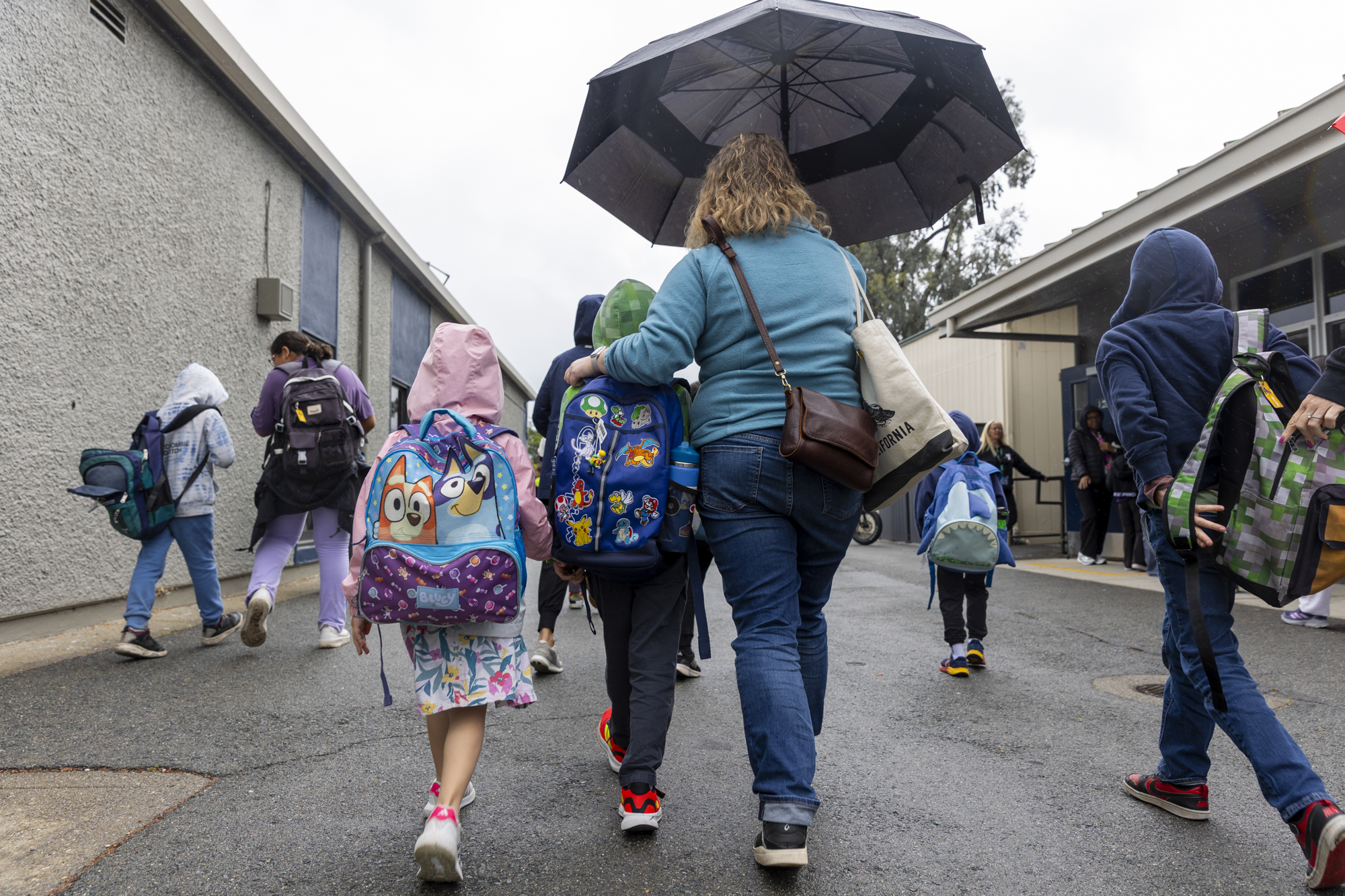
"caption": "Annie Malekzadeh, a mom who quit her teaching job to save on child care and is now pursuing her master’s degree in mathematics, walks her kids through the rain at school pick up time at Valhalla Elementary School in Pleasant Hill on April 1, 2026. Rising child care prices leave many Bay Area parents with little choice, but to turn down career opportunities, cut back hours, quit or come up with creative solutions.",
"credit": "Tâm Vũ/KQED",
"altTag": null,
"description": null,
"imgSizes": {
"thumbnail": {
"file": "https://cdn.kqed.org/wp-content/uploads/sites/10/2026/04/260401-AFFORDABILITYCHILDCARE00263_TV-KQED-160x107.jpg",
"width": 160,
"height": 107,
"mimeType": "image/jpeg"
},
"1536x1536": {
"file": "https://cdn.kqed.org/wp-content/uploads/sites/10/2026/04/260401-AFFORDABILITYCHILDCARE00263_TV-KQED-1536x1024.jpg",
"width": 1536,
"height": 1024,
"mimeType": "image/jpeg"
},
"post-thumbnail": {
"file": "https://cdn.kqed.org/wp-content/uploads/sites/10/2026/04/260401-AFFORDABILITYCHILDCARE00263_TV-KQED-672x372.jpg",
"width": 672,
"height": 372,
"mimeType": "image/jpeg"
},
"twentyfourteen-full-width": {
"file": "https://cdn.kqed.org/wp-content/uploads/sites/10/2026/04/260401-AFFORDABILITYCHILDCARE00263_TV-KQED-1038x576.jpg",
"width": 1038,
"height": 576,
"mimeType": "image/jpeg"
},
"npr-cds-wide": {
"file": "https://cdn.kqed.org/wp-content/uploads/sites/10/2026/04/260401-AFFORDABILITYCHILDCARE00263_TV-KQED-1200x675.jpg",
"width": 1200,
"height": 675,
"mimeType": "image/jpeg"
},
"npr-cds-square": {
"file": "https://cdn.kqed.org/wp-content/uploads/sites/10/2026/04/260401-AFFORDABILITYCHILDCARE00263_TV-KQED-600x600.jpg",
"width": 600,
"height": 600,
"mimeType": "image/jpeg"
},
"kqedFullSize": {
"file": "https://cdn.kqed.org/wp-content/uploads/sites/10/2026/04/260401-AFFORDABILITYCHILDCARE00263_TV-KQED.jpg",
"width": 2000,
"height": 1333
}
},
"isLoading": false,
"fetchFailed": false
},
"news_12078496": {
"type": "attachments",
"id": "news_12078496",
"meta": {
"index": "attachments_1716263798",
"site": "news",
"id": "12078496",
"found": true
},
"title": "Producer Prices",
"publishDate": 1775161780,
"status": "inherit",
"parent": 12078490,
"modified": 1775161888,
"caption": "A California's SNAP benefits shopper pushes a cart through a supermarket in Bellflower, California, on Feb. 13, 2023.",
"credit": "Allison Dinner/AP Photo",
"altTag": null,
"description": null,
"imgSizes": {
"thumbnail": {
"file": "https://cdn.kqed.org/wp-content/uploads/sites/10/2026/04/GroceriesAP-160x107.jpg",
"width": 160,
"height": 107,
"mimeType": "image/jpeg"
},
"1536x1536": {
"file": "https://cdn.kqed.org/wp-content/uploads/sites/10/2026/04/GroceriesAP-1536x1024.jpg",
"width": 1536,
"height": 1024,
"mimeType": "image/jpeg"
},
"post-thumbnail": {
"file": "https://cdn.kqed.org/wp-content/uploads/sites/10/2026/04/GroceriesAP-672x372.jpg",
"width": 672,
"height": 372,
"mimeType": "image/jpeg"
},
"twentyfourteen-full-width": {
"file": "https://cdn.kqed.org/wp-content/uploads/sites/10/2026/04/GroceriesAP-1038x576.jpg",
"width": 1038,
"height": 576,
"mimeType": "image/jpeg"
},
"npr-cds-wide": {
"file": "https://cdn.kqed.org/wp-content/uploads/sites/10/2026/04/GroceriesAP-1200x675.jpg",
"width": 1200,
"height": 675,
"mimeType": "image/jpeg"
},
"npr-cds-square": {
"file": "https://cdn.kqed.org/wp-content/uploads/sites/10/2026/04/GroceriesAP-600x600.jpg",
"width": 600,
"height": 600,
"mimeType": "image/jpeg"
},
"kqedFullSize": {
"file": "https://cdn.kqed.org/wp-content/uploads/sites/10/2026/04/GroceriesAP.jpg",
"width": 2000,
"height": 1333
}
},
"isLoading": false,
"fetchFailed": false
},
"news_12078612": {
"type": "attachments",
"id": "news_12078612",
"meta": {
"index": "attachments_1716263798",
"site": "news",
"id": "12078612",
"found": true
},
"title": "Trucking company in Bakersfield affected by license pause",
"publishDate": 1775233581,
"status": "inherit",
"parent": 12078260,
"modified": 1775237391,
"caption": "A truck leaves for a delivery at Roadies Inc. in Bakersfield, California, on Saturday, Nov. 29, 2025. Avie Nagra, the CEO, says the license pause will affect about 100 of his 300 drivers.",
"credit": "Myung J. Chun/Los Angeles Times",
"altTag": null,
"description": null,
"imgSizes": {
"thumbnail": {
"file": "https://cdn.kqed.org/wp-content/uploads/sites/10/2026/04/GettyImages-2248825788-160x109.jpg",
"width": 160,
"height": 109,
"mimeType": "image/jpeg"
},
"1536x1536": {
"file": "https://cdn.kqed.org/wp-content/uploads/sites/10/2026/04/GettyImages-2248825788-1536x1046.jpg",
"width": 1536,
"height": 1046,
"mimeType": "image/jpeg"
},
"post-thumbnail": {
"file": "https://cdn.kqed.org/wp-content/uploads/sites/10/2026/04/GettyImages-2248825788-672x372.jpg",
"width": 672,
"height": 372,
"mimeType": "image/jpeg"
},
"twentyfourteen-full-width": {
"file": "https://cdn.kqed.org/wp-content/uploads/sites/10/2026/04/GettyImages-2248825788-1038x576.jpg",
"width": 1038,
"height": 576,
"mimeType": "image/jpeg"
},
"npr-cds-wide": {
"file": "https://cdn.kqed.org/wp-content/uploads/sites/10/2026/04/GettyImages-2248825788-1200x675.jpg",
"width": 1200,
"height": 675,
"mimeType": "image/jpeg"
},
"npr-cds-square": {
"file": "https://cdn.kqed.org/wp-content/uploads/sites/10/2026/04/GettyImages-2248825788-600x600.jpg",
"width": 600,
"height": 600,
"mimeType": "image/jpeg"
},
"kqedFullSize": {
"file": "https://cdn.kqed.org/wp-content/uploads/sites/10/2026/04/GettyImages-2248825788.jpg",
"width": 1980,
"height": 1348
}
},
"isLoading": false,
"fetchFailed": false
},
"news_12077305": {
"type": "attachments",
"id": "news_12077305",
"meta": {
"index": "attachments_1716263798",
"site": "news",
"id": "12077305",
"found": true
},
"title": "A truck leaves the the Cemex Lapis Plant which removes more than 200,000 acre feet of beach sand a year along the Monterey Bay coastline in Marina, Ca., as seen on Wednesday Feb. 8, 2017,",
"publishDate": 1774289357,
"status": "inherit",
"parent": 12077298,
"modified": 1774383621,
"caption": "A truck leaves the Cemex Lapis Plant, which removes more than 200,000 acre feet of beach sand a year along the Monterey Bay coastline in Marina, California, on Feb. 8, 2017.",
"credit": "Michael Macor/The San Francisco Chronicle via Getty Images",
"altTag": null,
"description": null,
"imgSizes": {
"thumbnail": {
"file": "https://cdn.kqed.org/wp-content/uploads/sites/10/2026/03/CemexGetty-160x91.jpg",
"width": 160,
"height": 91,
"mimeType": "image/jpeg"
},
"1536x1536": {
"file": "https://cdn.kqed.org/wp-content/uploads/sites/10/2026/03/CemexGetty-1536x877.jpg",
"width": 1536,
"height": 877,
"mimeType": "image/jpeg"
},
"post-thumbnail": {
"file": "https://cdn.kqed.org/wp-content/uploads/sites/10/2026/03/CemexGetty-672x372.jpg",
"width": 672,
"height": 372,
"mimeType": "image/jpeg"
},
"twentyfourteen-full-width": {
"file": "https://cdn.kqed.org/wp-content/uploads/sites/10/2026/03/CemexGetty-1038x576.jpg",
"width": 1038,
"height": 576,
"mimeType": "image/jpeg"
},
"npr-cds-wide": {
"file": "https://cdn.kqed.org/wp-content/uploads/sites/10/2026/03/CemexGetty-1200x675.jpg",
"width": 1200,
"height": 675,
"mimeType": "image/jpeg"
},
"kqedFullSize": {
"file": "https://cdn.kqed.org/wp-content/uploads/sites/10/2026/03/CemexGetty.jpg",
"width": 2000,
"height": 1142
}
},
"isLoading": false,
"fetchFailed": false
},
"news_12076910": {
"type": "attachments",
"id": "news_12076910",
"meta": {
"index": "attachments_1716263798",
"site": "news",
"id": "12076910",
"found": true
},
"title": "049_KQED_UnitedFarmWorkersMarch_08242022_qed",
"publishDate": 1773859574,
"status": "inherit",
"parent": 0,
"modified": 1773859614,
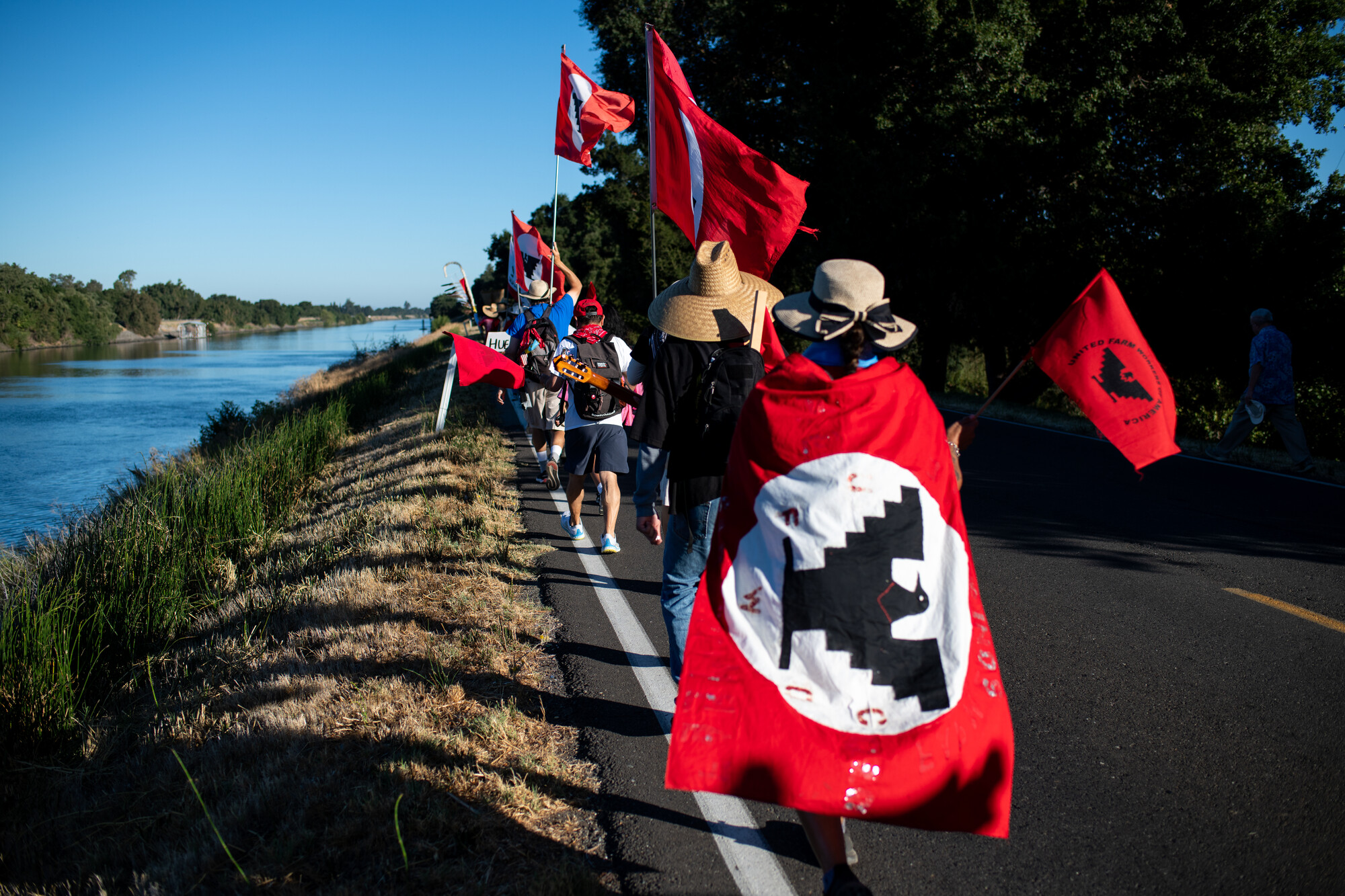
"caption": "United Farm Workers and their supporters march next to the Sacramento River as they pass through Walnut Grove on Day 22 of a 24-day \"March for the Governor’s Signature\" on Aug. 24, 2022, to convince Gov. Gavin Newsom to sign Assembly Bill 2183, the Agricultural Labor Relations Voting Choice Act. The march started in the Central Valley and will conclude with a rally in Sacramento on Aug. 26, 2022.",
"credit": "Beth LaBerge/KQED",
"altTag": null,
"description": null,
"imgSizes": {
"thumbnail": {
"file": "https://cdn.kqed.org/wp-content/uploads/sites/10/2026/03/049_KQED_UnitedFarmWorkersMarch_08242022_qed-160x107.jpg",
"width": 160,
"height": 107,
"mimeType": "image/jpeg"
},
"1536x1536": {
"file": "https://cdn.kqed.org/wp-content/uploads/sites/10/2026/03/049_KQED_UnitedFarmWorkersMarch_08242022_qed-1536x1024.jpg",
"width": 1536,
"height": 1024,
"mimeType": "image/jpeg"
},
"post-thumbnail": {
"file": "https://cdn.kqed.org/wp-content/uploads/sites/10/2026/03/049_KQED_UnitedFarmWorkersMarch_08242022_qed-672x372.jpg",
"width": 672,
"height": 372,
"mimeType": "image/jpeg"
},
"twentyfourteen-full-width": {
"file": "https://cdn.kqed.org/wp-content/uploads/sites/10/2026/03/049_KQED_UnitedFarmWorkersMarch_08242022_qed-1038x576.jpg",
"width": 1038,
"height": 576,
"mimeType": "image/jpeg"
},
"npr-cds-wide": {
"file": "https://cdn.kqed.org/wp-content/uploads/sites/10/2026/03/049_KQED_UnitedFarmWorkersMarch_08242022_qed-1200x675.jpg",
"width": 1200,
"height": 675,
"mimeType": "image/jpeg"
},
"kqedFullSize": {
"file": "https://cdn.kqed.org/wp-content/uploads/sites/10/2026/03/049_KQED_UnitedFarmWorkersMarch_08242022_qed.jpg",
"width": 2000,
"height": 1333
}
},
"isLoading": false,
"fetchFailed": false
},
"news_12077694": {
"type": "attachments",
"id": "news_12077694",
"meta": {
"index": "attachments_1716263798",
"site": "news",
"id": "12077694",
"found": true
},
"title": "Chavez Allegations Fallout",
"publishDate": 1774555774,
"status": "inherit",
"parent": 12077691,
"modified": 1774555814,
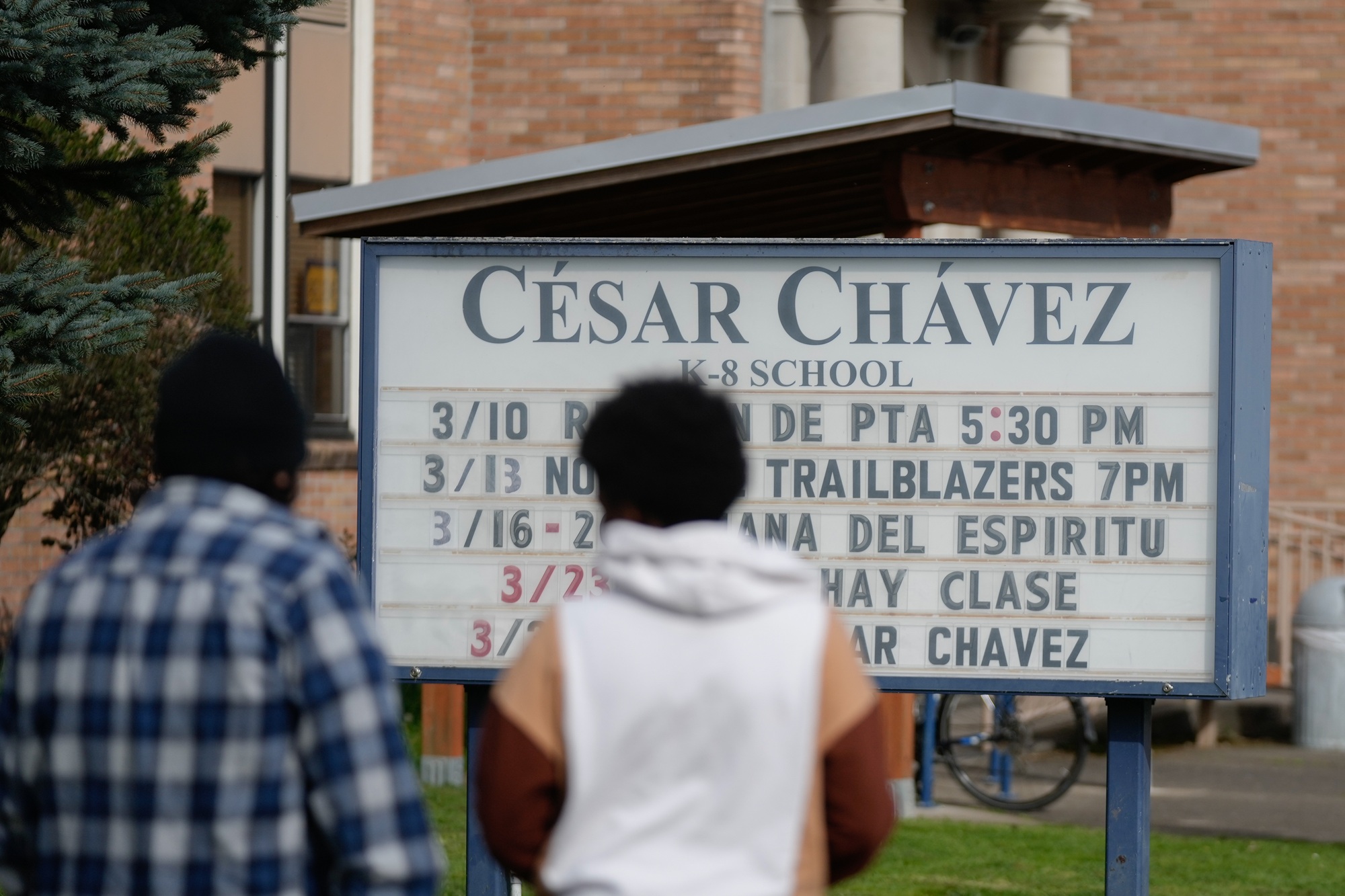
"caption": "A sign for Cesar Chavez School is seen on March 18, 2026, in Portland, Oregon.",
"credit": "Jenny Kane/AP Photo",
"altTag": null,
"description": null,
"imgSizes": {
"thumbnail": {
"file": "https://cdn.kqed.org/wp-content/uploads/sites/10/2026/03/CesarChavezSchoolAP-160x107.jpg",
"width": 160,
"height": 107,
"mimeType": "image/jpeg"
},
"1536x1536": {
"file": "https://cdn.kqed.org/wp-content/uploads/sites/10/2026/03/CesarChavezSchoolAP-1536x1024.jpg",
"width": 1536,
"height": 1024,
"mimeType": "image/jpeg"
},
"post-thumbnail": {
"file": "https://cdn.kqed.org/wp-content/uploads/sites/10/2026/03/CesarChavezSchoolAP-672x372.jpg",
"width": 672,
"height": 372,
"mimeType": "image/jpeg"
},
"twentyfourteen-full-width": {
"file": "https://cdn.kqed.org/wp-content/uploads/sites/10/2026/03/CesarChavezSchoolAP-1038x576.jpg",
"width": 1038,
"height": 576,
"mimeType": "image/jpeg"
},
"npr-cds-wide": {
"file": "https://cdn.kqed.org/wp-content/uploads/sites/10/2026/03/CesarChavezSchoolAP-1200x675.jpg",
"width": 1200,
"height": 675,
"mimeType": "image/jpeg"
},
"npr-cds-square": {
"file": "https://cdn.kqed.org/wp-content/uploads/sites/10/2026/03/CesarChavezSchoolAP-600x600.jpg",
"width": 600,
"height": 600,
"mimeType": "image/jpeg"
},
"kqedFullSize": {
"file": "https://cdn.kqed.org/wp-content/uploads/sites/10/2026/03/CesarChavezSchoolAP.jpg",
"width": 2000,
"height": 1333
}
},
"isLoading": false,
"fetchFailed": false
},
"news_12028393": {
"type": "attachments",
"id": "news_12028393",
"meta": {
"index": "attachments_1716263798",
"site": "news",
"id": "12028393",
"found": true
},
"title": "250224-SFPD POLICE COMMISSIONER PROTEST-MD-23",
"publishDate": 1740441959,
"status": "inherit",
"parent": 12061089,
"modified": 1774399306,
"caption": "San Francisco Public Defender Mano Raju speaks at a rally protesting Mayor Daniel Lurie's attempt to remove Max Carter-Oberstone from the Police Commission on the steps of San Francisco City Hall in San Francisco on Feb. 24, 2025.",
"credit": "Martin do Nascimento/KQED",
"altTag": null,
"description": null,
"imgSizes": {
"medium": {
"file": "https://cdn.kqed.org/wp-content/uploads/sites/10/2025/02/250224-SFPD-POLICE-COMMISSIONER-PROTEST-MD-23-800x533.jpg",
"width": 800,
"height": 533,
"mimeType": "image/jpeg"
},
"large": {
"file": "https://cdn.kqed.org/wp-content/uploads/sites/10/2025/02/250224-SFPD-POLICE-COMMISSIONER-PROTEST-MD-23-1020x680.jpg",
"width": 1020,
"height": 680,
"mimeType": "image/jpeg"
},
"thumbnail": {
"file": "https://cdn.kqed.org/wp-content/uploads/sites/10/2025/02/250224-SFPD-POLICE-COMMISSIONER-PROTEST-MD-23-160x107.jpg",
"width": 160,
"height": 107,
"mimeType": "image/jpeg"
},
"1536x1536": {
"file": "https://cdn.kqed.org/wp-content/uploads/sites/10/2025/02/250224-SFPD-POLICE-COMMISSIONER-PROTEST-MD-23-1536x1024.jpg",
"width": 1536,
"height": 1024,
"mimeType": "image/jpeg"
},
"post-thumbnail": {
"file": "https://cdn.kqed.org/wp-content/uploads/sites/10/2025/02/250224-SFPD-POLICE-COMMISSIONER-PROTEST-MD-23-672x372.jpg",
"width": 672,
"height": 372,
"mimeType": "image/jpeg"
},
"twentyfourteen-full-width": {
"file": "https://cdn.kqed.org/wp-content/uploads/sites/10/2025/02/250224-SFPD-POLICE-COMMISSIONER-PROTEST-MD-23-1038x576.jpg",
"width": 1038,
"height": 576,
"mimeType": "image/jpeg"
},
"full-width": {
"file": "https://cdn.kqed.org/wp-content/uploads/sites/10/2025/02/250224-SFPD-POLICE-COMMISSIONER-PROTEST-MD-23-1920x1280.jpg",
"width": 1920,
"height": 1280,
"mimeType": "image/jpeg"
},
"kqedFullSize": {
"file": "https://cdn.kqed.org/wp-content/uploads/sites/10/2025/02/250224-SFPD-POLICE-COMMISSIONER-PROTEST-MD-23.jpg",
"width": 2000,
"height": 1333
}
},
"isLoading": false,
"fetchFailed": false
},
"news_12077198": {
"type": "attachments",
"id": "news_12077198",
"meta": {
"index": "attachments_1716263798",
"site": "news",
"id": "12077198",
"found": true
},
"title": "260319-CHAVEZSJ-KQED-09_qed",
"publishDate": 1774034858,
"status": "inherit",
"parent": 12077159,
"modified": 1774037044,
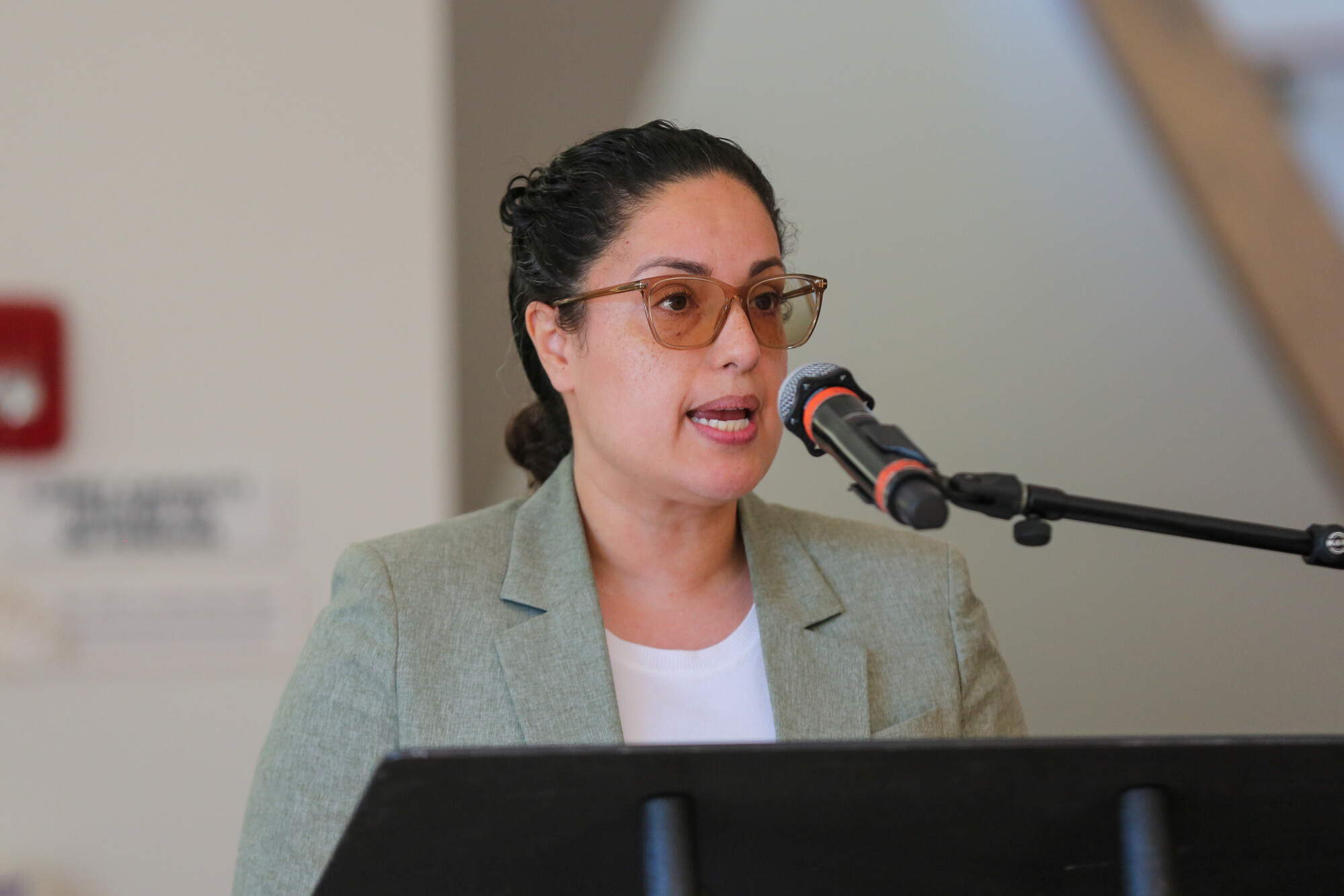
"caption": "Jessica Paz-Cedillos, CEO of Mexican Heritage Plaza, speaks about the community response to sexual abuse allegations against the late labor leader Cesar Chavez in East San José on Thursday, March 19, 2026.",
"credit": "Joseph Geha/KQED",
"altTag": null,
"description": null,
"imgSizes": {
"thumbnail": {
"file": "https://cdn.kqed.org/wp-content/uploads/sites/10/2026/03/260319-CHAVEZSJ-KQED-09_qed-160x107.jpg",
"width": 160,
"height": 107,
"mimeType": "image/jpeg"
},
"1536x1536": {
"file": "https://cdn.kqed.org/wp-content/uploads/sites/10/2026/03/260319-CHAVEZSJ-KQED-09_qed-1536x1024.jpg",
"width": 1536,
"height": 1024,
"mimeType": "image/jpeg"
},
"post-thumbnail": {
"file": "https://cdn.kqed.org/wp-content/uploads/sites/10/2026/03/260319-CHAVEZSJ-KQED-09_qed-672x372.jpg",
"width": 672,
"height": 372,
"mimeType": "image/jpeg"
},
"twentyfourteen-full-width": {
"file": "https://cdn.kqed.org/wp-content/uploads/sites/10/2026/03/260319-CHAVEZSJ-KQED-09_qed-1038x576.jpg",
"width": 1038,
"height": 576,
"mimeType": "image/jpeg"
},
"npr-cds-wide": {
"file": "https://cdn.kqed.org/wp-content/uploads/sites/10/2026/03/260319-CHAVEZSJ-KQED-09_qed-1200x675.jpg",
"width": 1200,
"height": 675,
"mimeType": "image/jpeg"
},
"kqedFullSize": {
"file": "https://cdn.kqed.org/wp-content/uploads/sites/10/2026/03/260319-CHAVEZSJ-KQED-09_qed.jpg",
"width": 1999,
"height": 1333
}
},
"isLoading": false,
"fetchFailed": false
},
"news_12076934": {
"type": "attachments",
"id": "news_12076934",
"meta": {
"index": "attachments_1716263798",
"site": "news",
"id": "12076934",
"found": true
},
"title": "US-LABOUR-RIGHTS-CHAVEZ",
"publishDate": 1773864383,
"status": "inherit",
"parent": 12076859,
"modified": 1773960421,
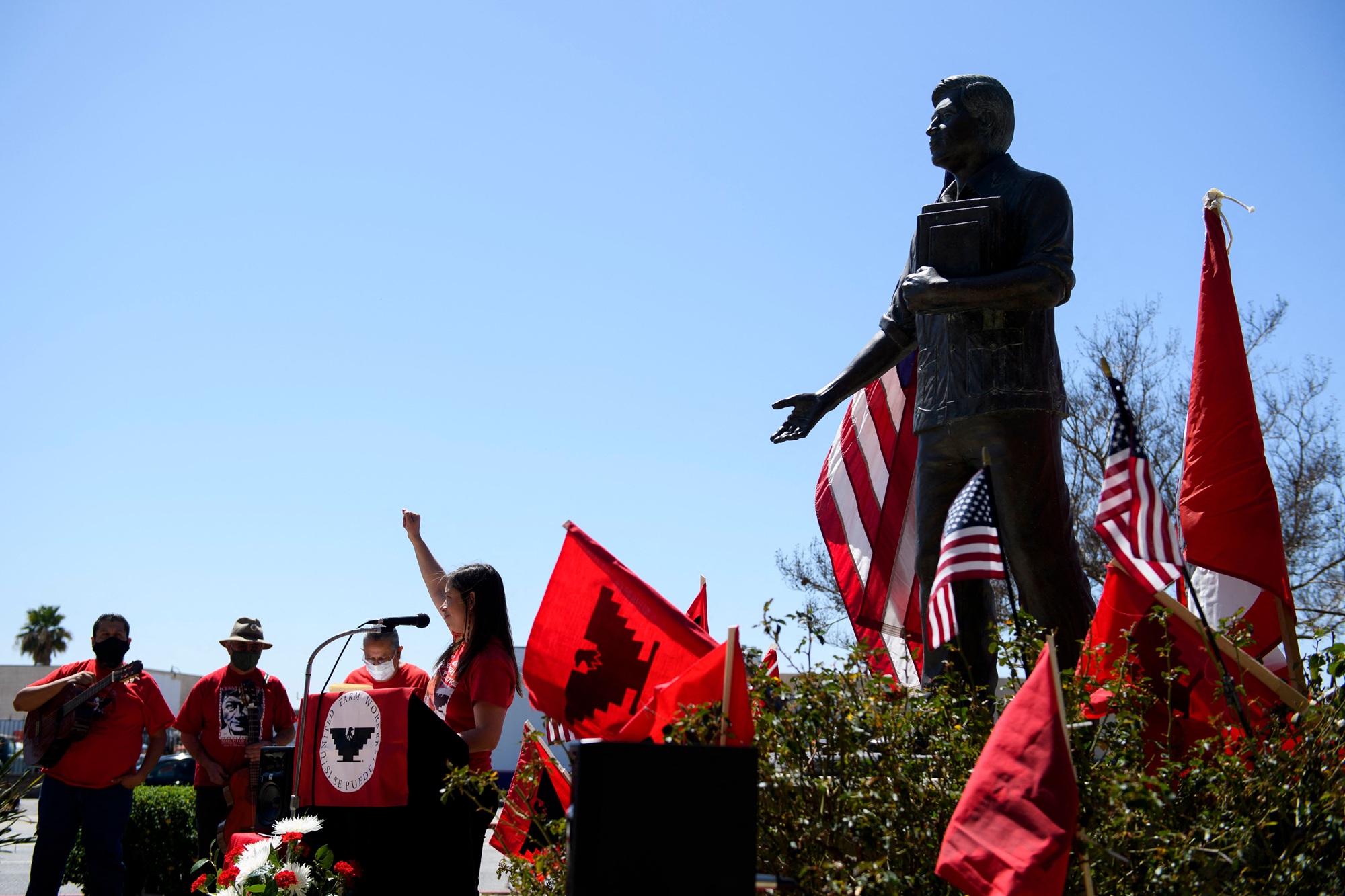
"caption": "A statue of César E. Chavez stands as members of the San Fernando Valley commemorative committee celebrate César Chavez Day on March 31, 2021, in San Fernando, California. Chavez was known for employing non-violent means to seek better working conditions for thousands of farm workers who suffered low wages and severe working conditions. In 1962, he founded the National Farm Workers Association, which later became the United Farm Workers (UFW) union. ",
"credit": "Patrick T. Fallon/AFP via Getty Images",
"altTag": null,
"description": null,
"imgSizes": {
"thumbnail": {
"file": "https://cdn.kqed.org/wp-content/uploads/sites/10/2026/03/CesarChavezGetty2-160x107.jpg",
"width": 160,
"height": 107,
"mimeType": "image/jpeg"
},
"1536x1536": {
"file": "https://cdn.kqed.org/wp-content/uploads/sites/10/2026/03/CesarChavezGetty2-1536x1024.jpg",
"width": 1536,
"height": 1024,
"mimeType": "image/jpeg"
},
"post-thumbnail": {
"file": "https://cdn.kqed.org/wp-content/uploads/sites/10/2026/03/CesarChavezGetty2-672x372.jpg",
"width": 672,
"height": 372,
"mimeType": "image/jpeg"
},
"twentyfourteen-full-width": {
"file": "https://cdn.kqed.org/wp-content/uploads/sites/10/2026/03/CesarChavezGetty2-1038x576.jpg",
"width": 1038,
"height": 576,
"mimeType": "image/jpeg"
},
"npr-cds-wide": {
"file": "https://cdn.kqed.org/wp-content/uploads/sites/10/2026/03/CesarChavezGetty2-1200x675.jpg",
"width": 1200,
"height": 675,
"mimeType": "image/jpeg"
},
"kqedFullSize": {
"file": "https://cdn.kqed.org/wp-content/uploads/sites/10/2026/03/CesarChavezGetty2.jpg",
"width": 2000,
"height": 1333
}
},
"isLoading": false,
"fetchFailed": false
},
"news_12077058": {
"type": "attachments",
"id": "news_12077058",
"meta": {
"index": "attachments_1716263798",
"site": "news",
"id": "12077058",
"found": true
},
"title": "A street sign on Cesar Chavez Street in San Francisco on March 19, 2026.",
"publishDate": 1773944010,
"status": "inherit",
"parent": 12077691,
"modified": 1774556186,
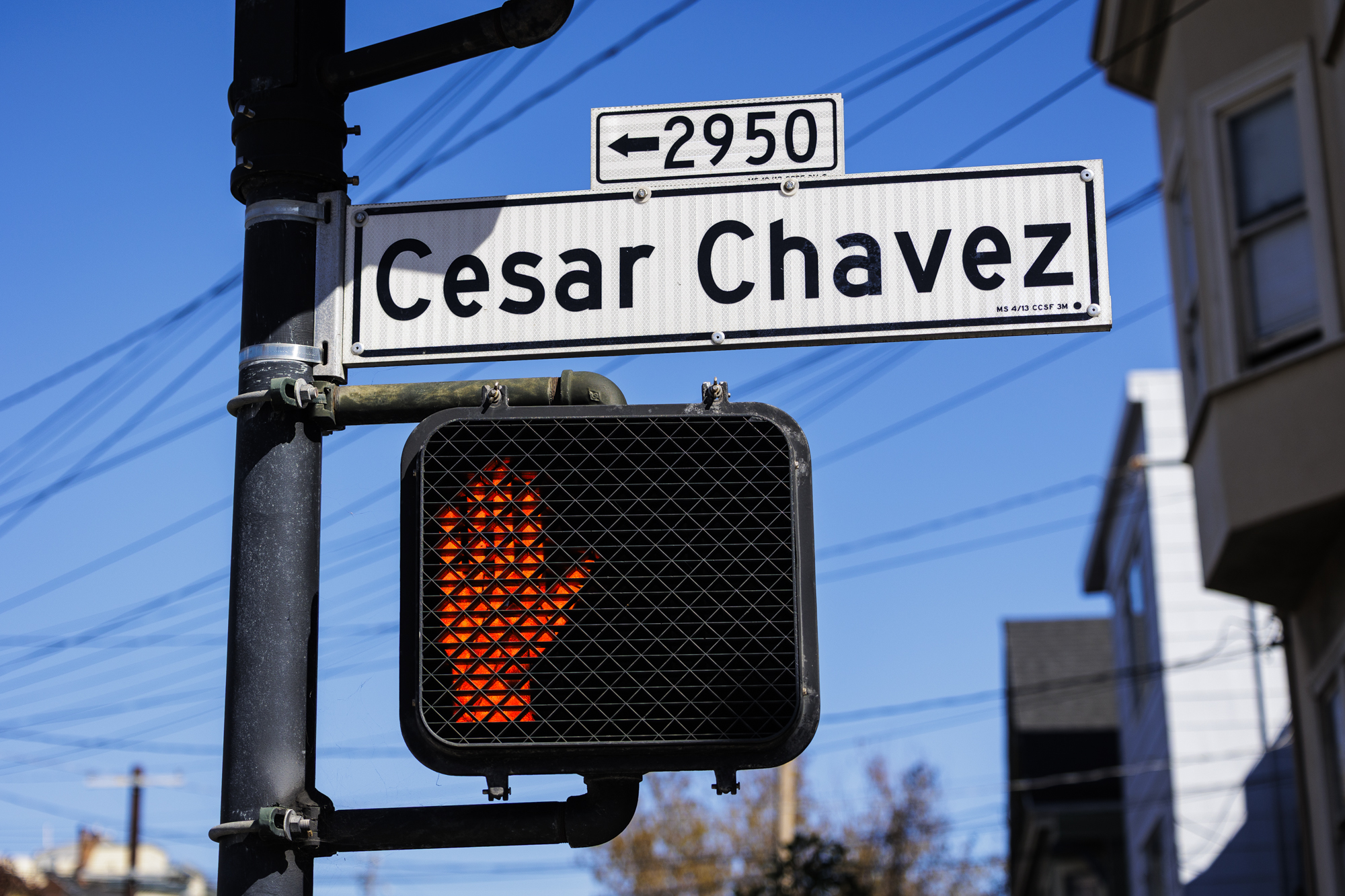
"caption": "A street sign on Cesar Chavez Street in San Francisco on March 19, 2026.",
"credit": "Martin do Nascimento/KQED",
"altTag": null,
"description": null,
"imgSizes": {
"thumbnail": {
"file": "https://cdn.kqed.org/wp-content/uploads/sites/10/2026/03/260319-CESAR-CHAVEZ-STREET-MD-01-KQED-160x107.jpg",
"width": 160,
"height": 107,
"mimeType": "image/jpeg"
},
"1536x1536": {
"file": "https://cdn.kqed.org/wp-content/uploads/sites/10/2026/03/260319-CESAR-CHAVEZ-STREET-MD-01-KQED-1536x1024.jpg",
"width": 1536,
"height": 1024,
"mimeType": "image/jpeg"
},
"post-thumbnail": {
"file": "https://cdn.kqed.org/wp-content/uploads/sites/10/2026/03/260319-CESAR-CHAVEZ-STREET-MD-01-KQED-672x372.jpg",
"width": 672,
"height": 372,
"mimeType": "image/jpeg"
},
"twentyfourteen-full-width": {
"file": "https://cdn.kqed.org/wp-content/uploads/sites/10/2026/03/260319-CESAR-CHAVEZ-STREET-MD-01-KQED-1038x576.jpg",
"width": 1038,
"height": 576,
"mimeType": "image/jpeg"
},
"npr-cds-wide": {
"file": "https://cdn.kqed.org/wp-content/uploads/sites/10/2026/03/260319-CESAR-CHAVEZ-STREET-MD-01-KQED-1200x675.jpg",
"width": 1200,
"height": 675,
"mimeType": "image/jpeg"
},
"kqedFullSize": {
"file": "https://cdn.kqed.org/wp-content/uploads/sites/10/2026/03/260319-CESAR-CHAVEZ-STREET-MD-01-KQED.jpg",
"width": 2000,
"height": 1333
}
},
"isLoading": false,
"fetchFailed": false
},
"news_12077043": {
"type": "attachments",
"id": "news_12077043",
"meta": {
"index": "attachments_1716263798",
"site": "news",
"id": "12077043",
"found": true
},
"title": "chavezstudentcenter",
"publishDate": 1773940084,
"status": "inherit",
"parent": 12077014,
"modified": 1773941724,
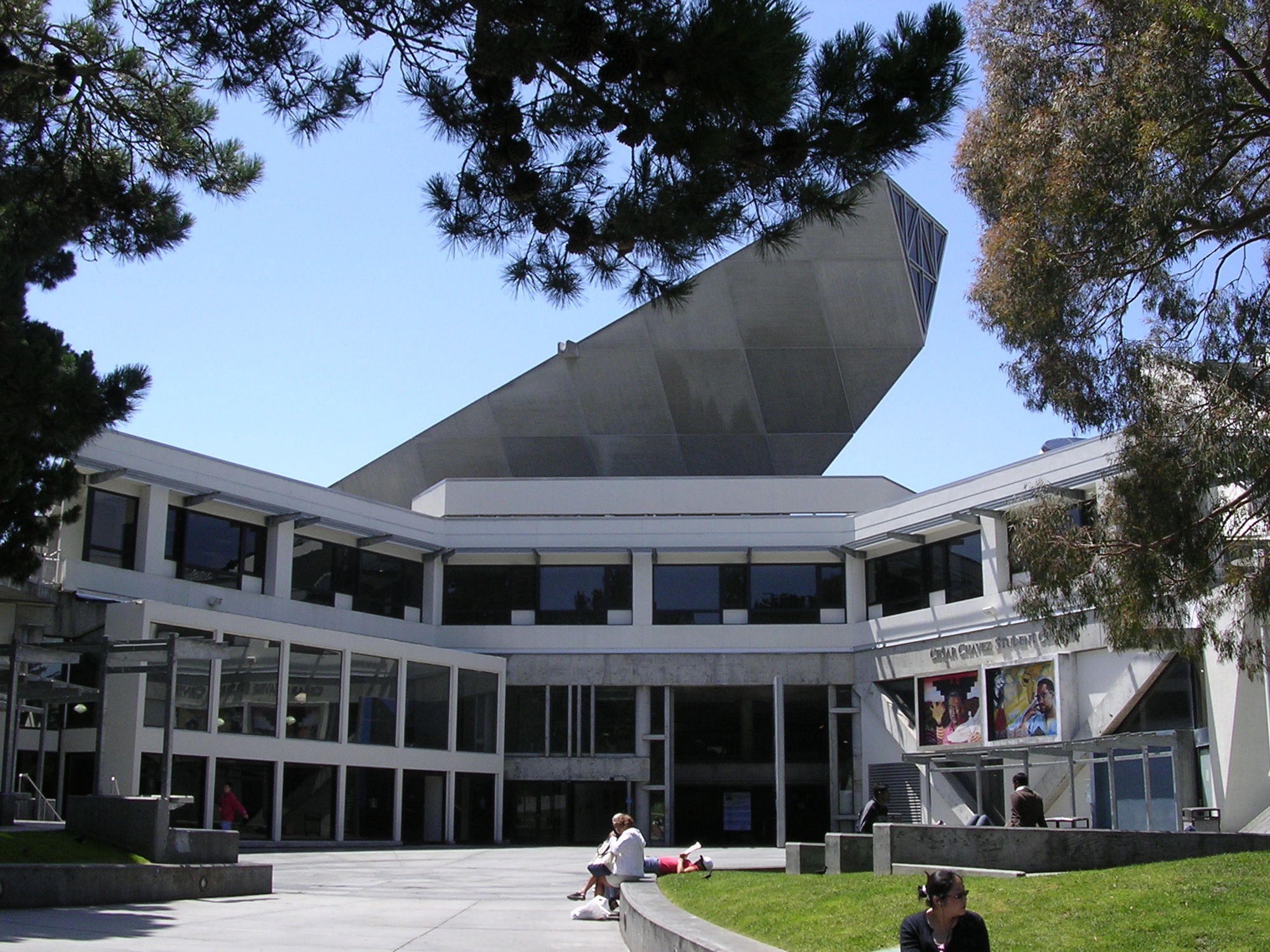
"caption": "The Cesar Chavez Student Center at San Francisco State University on June 24, 2005.",
"credit": "Brian Trejo/Wikimedia Commons",
"altTag": null,
"description": null,
"imgSizes": {
"thumbnail": {
"file": "https://cdn.kqed.org/wp-content/uploads/sites/10/2026/03/chavezstudentcenter-160x120.jpg",
"width": 160,
"height": 120,
"mimeType": "image/jpeg"
},
"1536x1536": {
"file": "https://cdn.kqed.org/wp-content/uploads/sites/10/2026/03/chavezstudentcenter-1536x1152.jpg",
"width": 1536,
"height": 1152,
"mimeType": "image/jpeg"
},
"post-thumbnail": {
"file": "https://cdn.kqed.org/wp-content/uploads/sites/10/2026/03/chavezstudentcenter-672x372.jpg",
"width": 672,
"height": 372,
"mimeType": "image/jpeg"
},
"twentyfourteen-full-width": {
"file": "https://cdn.kqed.org/wp-content/uploads/sites/10/2026/03/chavezstudentcenter-1038x576.jpg",
"width": 1038,
"height": 576,
"mimeType": "image/jpeg"
},
"npr-cds-wide": {
"file": "https://cdn.kqed.org/wp-content/uploads/sites/10/2026/03/chavezstudentcenter-1200x675.jpg",
"width": 1200,
"height": 675,
"mimeType": "image/jpeg"
},
"kqedFullSize": {
"file": "https://cdn.kqed.org/wp-content/uploads/sites/10/2026/03/chavezstudentcenter.jpg",
"width": 2000,
"height": 1500
}
},
"isLoading": false,
"fetchFailed": false
},
"news_12076884": {
"type": "attachments",
"id": "news_12076884",
"meta": {
"index": "attachments_1716263798",
"site": "news",
"id": "12076884",
"found": true
},
"title": "260318-KAISER MENTAL HEALTH STRIKE-MD-07-KQED-1",
"publishDate": 1773855037,
"status": "inherit",
"parent": 0,
"modified": 1773855102,
"caption": "Mental health workers strike at the Kaiser Oakland Medical Facility in Oakland on March 18, 2026.",
"credit": "Martin do Nascimento/KQED",
"altTag": null,
"description": null,
"imgSizes": {
"thumbnail": {
"file": "https://cdn.kqed.org/wp-content/uploads/sites/10/2026/03/260318-KAISER-MENTAL-HEALTH-STRIKE-MD-07-KQED-1-160x107.jpg",
"width": 160,
"height": 107,
"mimeType": "image/jpeg"
},
"1536x1536": {
"file": "https://cdn.kqed.org/wp-content/uploads/sites/10/2026/03/260318-KAISER-MENTAL-HEALTH-STRIKE-MD-07-KQED-1-1536x1025.jpg",
"width": 1536,
"height": 1025,
"mimeType": "image/jpeg"
},
"post-thumbnail": {
"file": "https://cdn.kqed.org/wp-content/uploads/sites/10/2026/03/260318-KAISER-MENTAL-HEALTH-STRIKE-MD-07-KQED-1-672x372.jpg",
"width": 672,
"height": 372,
"mimeType": "image/jpeg"
},
"twentyfourteen-full-width": {
"file": "https://cdn.kqed.org/wp-content/uploads/sites/10/2026/03/260318-KAISER-MENTAL-HEALTH-STRIKE-MD-07-KQED-1-1038x576.jpg",
"width": 1038,
"height": 576,
"mimeType": "image/jpeg"
},
"npr-cds-wide": {
"file": "https://cdn.kqed.org/wp-content/uploads/sites/10/2026/03/260318-KAISER-MENTAL-HEALTH-STRIKE-MD-07-KQED-1-1200x675.jpg",
"width": 1200,
"height": 675,
"mimeType": "image/jpeg"
},
"kqedFullSize": {
"file": "https://cdn.kqed.org/wp-content/uploads/sites/10/2026/03/260318-KAISER-MENTAL-HEALTH-STRIKE-MD-07-KQED-1.jpg",
"width": 2000,
"height": 1334
}
},
"isLoading": false,
"fetchFailed": false
}
},
"audioPlayerReducer": {
"postId": "stream_live",
"isPaused": true,
"isPlaying": false,
"pfsActive": false,
"pledgeModalIsOpen": true,
"playerDrawerIsOpen": false,
"liveAudioPlayStartedAt": 0,
"liveAudioPlayContext": ""
},
"authorsReducer": {
"byline_news_12077691": {
"type": "authors",
"id": "byline_news_12077691",
"meta": {
"override": true
},
"slug": "byline_news_12077691",
"name": "Trân Nguyễn, The Associated Press",
"isLoading": false
},
"byline_news_12077014": {
"type": "authors",
"id": "byline_news_12077014",
"meta": {
"override": true
},
"slug": "byline_news_12077014",
"name": "Claire Morgan and Emily Zentner, The California Newsroom",
"isLoading": false
},
"tychehendricks": {
"type": "authors",
"id": "259",
"meta": {
"index": "authors_1716337520",
"id": "259",
"found": true
},
"name": "Tyche Hendricks",
"firstName": "Tyche",
"lastName": "Hendricks",
"slug": "tychehendricks",
"email": "thendricks@kqed.org",
"display_author_email": true,
"staff_mastheads": [
"news"
],
"title": "KQED Senior Editor, Immigration",
"bio": "\u003cspan style=\"font-weight: 400;\">Tyche Hendricks is KQED’s senior editor for immigration, leading coverage of the policy and politics that affect California’s immigrant communities. Her work for KQED’s radio and online audiences is also carried on NPR and other national outlets. She has been recognized with awards from the Radio and Television News Directors Association, the Society for Professional Journalists; the Education Writers Association; the Best of the West and the National Federation of Community Broadcasters. Before joining KQED in 2010, Tyche spent more than a dozen years as a newspaper reporter, notably at the \u003c/span>\u003ci>\u003cspan style=\"font-weight: 400;\">San Francisco Chronicle\u003c/span>\u003c/i>\u003cspan style=\"font-weight: 400;\">. At different times she has covered criminal justice, government and politics and urban planning. Tyche has taught in the MFA Creative Writing program at the University of San Francisco and at UC Berkeley’s Graduate School of Journalism, where she was co-director of a national immigration symposium for professional journalists. She is the author of \u003c/span>\u003ci>\u003cspan style=\"font-weight: 400;\">The Wind Doesn't Need a Passport: Stories from the U.S.-Mexico Borderlands\u003c/span>\u003c/i>\u003cspan style=\"font-weight: 400;\"> (University of California Press). \u003c/span>",
"avatar": "https://secure.gravatar.com/avatar/b8ee458e2731c2d43df86882ce17267e?s=600&d=blank&r=g",
"twitter": "tychehendricks",
"facebook": null,
"instagram": null,
"linkedin": null,
"sites": [
{
"site": "news",
"roles": [
"editor"
]
},
{
"site": "stateofhealth",
"roles": [
"editor"
]
}
],
"headData": {
"title": "Tyche Hendricks | KQED",
"description": "KQED Senior Editor, Immigration",
"ogImgSrc": "https://secure.gravatar.com/avatar/b8ee458e2731c2d43df86882ce17267e?s=600&d=blank&r=g",
"twImgSrc": "https://secure.gravatar.com/avatar/b8ee458e2731c2d43df86882ce17267e?s=600&d=blank&r=g"
},
"isLoading": false,
"link": "/author/tychehendricks"
},
"fjhabvala": {
"type": "authors",
"id": "8659",
"meta": {
"index": "authors_1716337520",
"id": "8659",
"found": true
},
"name": "Farida Jhabvala Romero",
"firstName": "Farida",
"lastName": "Jhabvala Romero",
"slug": "fjhabvala",
"email": "fjhabvala@kqed.org",
"display_author_email": true,
"staff_mastheads": [
"news"
],
"title": "KQED Contributor",
"bio": "Farida Jhabvala Romero is a Labor Correspondent for KQED. She previously covered immigration. Farida was \u003ca href=\"https://www.ccnma.org/2022-most-influential-latina-journalists\">named\u003c/a> one of the 10 Most Influential Latina Journalists in California in 2022 by the California Chicano News Media Association. Her work has won awards from the Society of Professional Journalists (Northern California), as well as a national and regional Edward M. Murrow Award for the collaborative reporting projects “Dangerous Air” and “Graying California.” Before joining KQED, Farida worked as a producer at Radio Bilingüe, a national public radio network. Farida earned her master’s degree in journalism from Stanford University.",
"avatar": "https://secure.gravatar.com/avatar/f9f022d4e2609741874222a1e9d41f48fea74011aa7c615eef91d9a50c944ebe?s=600&d=blank&r=g",
"twitter": "FaridaJhabvala",
"bluesky": null,
"facebook": null,
"instagram": null,
"linkedin": "https://www.linkedin.com/in/faridajhabvala/",
"sites": [
{
"site": "news",
"roles": [
"editor"
]
},
{
"site": "stateofhealth",
"roles": [
"author"
]
},
{
"site": "liveblog",
"roles": [
"author"
]
}
],
"headData": {
"title": "Farida Jhabvala Romero | KQED",
"description": "KQED Contributor",
"ogImgSrc": "https://secure.gravatar.com/avatar/f9f022d4e2609741874222a1e9d41f48fea74011aa7c615eef91d9a50c944ebe?s=600&d=blank&r=g",
"twImgSrc": "https://secure.gravatar.com/avatar/f9f022d4e2609741874222a1e9d41f48fea74011aa7c615eef91d9a50c944ebe?s=600&d=blank&r=g"
},
"isLoading": false,
"link": "/author/fjhabvala"
},
"daisynguyen": {
"type": "authors",
"id": "11829",
"meta": {
"index": "authors_1716337520",
"id": "11829",
"found": true
},
"name": "Daisy Nguyen",
"firstName": "Daisy",
"lastName": "Nguyen",
"slug": "daisynguyen",
"email": "daisynguyen@kqed.org",
"display_author_email": true,
"staff_mastheads": [
"news"
],
"title": "KQED Contributor",
"bio": "I have covered early childhood education and child care for KQED since 2022. I focus on policies aimed at increasing access to early care and education and how they shape individual lives. I've been a journalist for more than two decades, with most of that time devoted to covering breaking news throughout California for The Associated Press. I grew up in San Francisco and studied at UC Davis and Columbia University's Graduate School of Journalism. I live in Oakland with my husband and two kids.",
"avatar": "https://secure.gravatar.com/avatar/2da2127c27f7143b53ebd419800fd55f?s=600&d=blank&r=g",
"twitter": null,
"facebook": null,
"instagram": null,
"linkedin": "https://www.linkedin.com/in/daisynguyen/",
"sites": [
{
"site": "news",
"roles": [
"author"
]
},
{
"site": "liveblog",
"roles": [
"author"
]
}
],
"headData": {
"title": "Daisy Nguyen | KQED",
"description": "KQED Contributor",
"ogImgSrc": "https://secure.gravatar.com/avatar/2da2127c27f7143b53ebd419800fd55f?s=600&d=blank&r=g",
"twImgSrc": "https://secure.gravatar.com/avatar/2da2127c27f7143b53ebd419800fd55f?s=600&d=blank&r=g"
},
"isLoading": false,
"link": "/author/daisynguyen"
},
"jgeha": {
"type": "authors",
"id": "11906",
"meta": {
"index": "authors_1716337520",
"id": "11906",
"found": true
},
"name": "Joseph Geha",
"firstName": "Joseph",
"lastName": "Geha",
"slug": "jgeha",
"email": "jgeha@kqed.org",
"display_author_email": false,
"staff_mastheads": [
"news",
"science"
],
"title": "KQED Contributor",
"bio": null,
"avatar": "https://secure.gravatar.com/avatar/ea84d2b6dd93d6369d453edf19dd583f117cd1759d2d9c9c92f9de77017354fe?s=600&d=blank&r=g",
"twitter": null,
"bluesky": null,
"facebook": null,
"instagram": null,
"linkedin": null,
"sites": [
{
"site": "news",
"roles": [
"editor"
]
},
{
"site": "liveblog",
"roles": [
"author"
]
}
],
"headData": {
"title": "Joseph Geha | KQED",
"description": "KQED Contributor",
"ogImgSrc": "https://secure.gravatar.com/avatar/ea84d2b6dd93d6369d453edf19dd583f117cd1759d2d9c9c92f9de77017354fe?s=600&d=blank&r=g",
"twImgSrc": "https://secure.gravatar.com/avatar/ea84d2b6dd93d6369d453edf19dd583f117cd1759d2d9c9c92f9de77017354fe?s=600&d=blank&r=g"
},
"isLoading": false,
"link": "/author/jgeha"
},
"kdebenedetti": {
"type": "authors",
"id": "11913",
"meta": {
"index": "authors_1716337520",
"id": "11913",
"found": true
},
"name": "Katie DeBenedetti",
"firstName": "Katie",
"lastName": "DeBenedetti",
"slug": "kdebenedetti",
"email": "kdebenedetti@kqed.org",
"display_author_email": false,
"staff_mastheads": [
"news",
"science"
],
"title": "KQED Contributor",
"bio": "Katie DeBenedetti is a digital reporter covering daily news for the Express Desk. Prior to joining KQED as a culture reporting intern in January 2024, she covered education and city government for the Napa Valley Register.",
"avatar": "https://secure.gravatar.com/avatar/6e31073cb8f7e4214ab03f42771d0f45?s=600&d=blank&r=g",
"twitter": null,
"facebook": null,
"instagram": null,
"linkedin": null,
"sites": [
{
"site": "news",
"roles": [
"author"
]
},
{
"site": "science",
"roles": [
"author"
]
},
{
"site": "liveblog",
"roles": [
"author"
]
}
],
"headData": {
"title": "Katie DeBenedetti | KQED",
"description": "KQED Contributor",
"ogImgSrc": "https://secure.gravatar.com/avatar/6e31073cb8f7e4214ab03f42771d0f45?s=600&d=blank&r=g",
"twImgSrc": "https://secure.gravatar.com/avatar/6e31073cb8f7e4214ab03f42771d0f45?s=600&d=blank&r=g"
},
"isLoading": false,
"link": "/author/kdebenedetti"
},
"aaliahmad": {
"type": "authors",
"id": "11986",
"meta": {
"index": "authors_1716337520",
"id": "11986",
"found": true
},
"name": "Ayah Ali-Ahmad",
"firstName": "Ayah",
"lastName": "Ali-Ahmad",
"slug": "aaliahmad",
"email": "aaliahmad@KQED.org",
"display_author_email": false,
"staff_mastheads": [],
"title": "KQED Contributor",
"bio": null,
"avatar": "https://secure.gravatar.com/avatar/1cf54f187a5e1064b2cfef3f3d2f1e4f93e453395d56912aca6382a6071ec3ed?s=600&d=blank&r=g",
"twitter": "ayahaliahmad",
"bluesky": null,
"facebook": null,
"instagram": null,
"linkedin": null,
"sites": [
{
"site": "news",
"roles": [
"subscriber"
]
}
],
"headData": {
"title": "Ayah Ali-Ahmad | KQED",
"description": "KQED Contributor",
"ogImgSrc": "https://secure.gravatar.com/avatar/1cf54f187a5e1064b2cfef3f3d2f1e4f93e453395d56912aca6382a6071ec3ed?s=600&d=blank&r=g",
"twImgSrc": "https://secure.gravatar.com/avatar/1cf54f187a5e1064b2cfef3f3d2f1e4f93e453395d56912aca6382a6071ec3ed?s=600&d=blank&r=g"
},
"isLoading": false,
"link": "/author/aaliahmad"
}
},
"pagesReducer": {
"news_tag_labor": {
"type": "terms",
"id": "news_19904",
"meta": {
"index": "terms_1716263798",
"site": "news",
"id": "19904",
"score": 8.557992
},
"name": "Labor",
"slug": "labor",
"taxonomy": "tag",
"description": null,
"featImg": null,
"headData": {
"title": "Labor | KQED News",
"description": null,
"ogTitle": null,
"ogDescription": null,
"ogImgId": null,
"twTitle": null,
"twDescription": null,
"twImgId": null
},
"ttid": 19921,
"isLoading": false,
"title": "Labor",
"pageMeta": {
"site": "news",
"WpPageTemplate": "page-topic-editorial",
"currentPage": 7
},
"blocks": [
{
"blockName": "kqed/post-list",
"attrs": {
"layout": "cardArticle2",
"query": "posts/news?tag=labor",
"seeMore": false,
"paginated": true,
"page": 7
}
},
{
"blockName": "kqed/ad"
}
]
}
},
"pfsSessionReducer": {},
"postsReducer": {
"stream_live": {
"type": "live",
"id": "stream_live",
"audioUrl": "https://streams.kqed.org/kqedradio",
"title": "Live Stream",
"excerpt": "Live Stream information currently unavailable.",
"link": "/radio",
"featImg": "",
"label": {
"name": "KQED Live",
"link": "/"
}
},
"stream_kqedNewscast": {
"type": "posts",
"id": "stream_kqedNewscast",
"audioUrl": "https://www.kqed.org/.stream/anon/radio/RDnews/newscast.mp3?_=1",
"title": "KQED Newscast",
"featImg": "",
"label": {
"name": "88.5 FM",
"link": "/"
}
},
"news_12075761": {
"type": "posts",
"id": "news_12075761",
"meta": {
"index": "posts_1716263798",
"site": "news",
"id": "12075761",
"score": null,
"sort": [
1775656815000
]
},
"guestAuthors": [],
"slug": "when-child-care-costs-half-a-paycheck-bay-area-parents-must-choose-kids-or-career",
"title": "When Child Care Costs Half a Paycheck, Bay Area Parents Must Choose: Kids or Career",
"publishDate": 1775656815,
"format": "standard",
"headTitle": "When Child Care Costs Half a Paycheck, Bay Area Parents Must Choose: Kids or Career | KQED",
"labelTerm": {
"site": "news"
},
"content": "\u003cp>\u003cem>This story is part of \u003cstrong>\u003ca href=\"https://www.kqed.org/affordability\">How We Get By\u003c/a>\u003c/strong>, a KQED series exploring how people are coping with rising costs in the Bay Area and California. Find the \u003ca href=\"https://www.kqed.org/affordability\">full series here\u003c/a>.\u003c/em>\u003c/p>\n\u003cp>Annie Malekzadeh was shopping at a Joanne Fabrics store in \u003ca href=\"https://www.kqed.org/news/tag/concord\">Concord\u003c/a> a couple of years ago when she had an encounter that stung her.\u003c/p>\n\u003cp>An older woman who saw her pregnant while pushing her toddler son in a shopping cart, told her: “I don’t know why you would want more than two [children]. It’s basically impossible in the Bay Area.”\u003c/p>\n\u003cp>“At the time I was like, how dare she?” she said. “But now I’m like, oh, [she] was right. It’s really hard.”\u003c/p>\n\u003cp>Malekzadeh wound up having another baby, and the decision to have three kids pushed her child care expenses to roughly $56,000 a year and ultimately changed the course of her career.\u003c/p>\n\u003cp>[ad fullwidth]\u003c/p>\n\u003cp>\u003ca href=\"https://www.kqed.org/news/12061802/how-are-child-care-costs-affecting-the-lives-of-bay-area-families-you-told-us\">Rising child care costs in the Bay Area\u003c/a> are forcing parents to make painful tradeoffs, either by passing up career opportunities, cutting back work hours, or quitting altogether. For families with multiple young children, these expenses can surpass a parent’s entire salary, disproportionately affecting mothers and shaping their long-term economic security.\u003c/p>\n\u003cp>Malekzadeh’s story is just one example of how the gap between what families can afford and the actual cost of care is pushing parents to find creative solutions — and prompting calls for systemic change.\u003c/p>\n\u003cp>Child care has long been expensive for parents, but recently it’s been even more so.\u003c/p>\n\u003cfigure id=\"attachment_12078461\" class=\"wp-caption aligncenter\" style=\"max-width: 2000px\">\u003cimg loading=\"lazy\" decoding=\"async\" class=\"size-full wp-image-12078461\" src=\"https://cdn.kqed.org/wp-content/uploads/sites/10/2026/04/260401-AFFORDABILITYCHILDCARE00035_TV-KQED.jpg\" alt=\"\" width=\"2000\" height=\"1333\" srcset=\"https://cdn.kqed.org/wp-content/uploads/sites/10/2026/04/260401-AFFORDABILITYCHILDCARE00035_TV-KQED.jpg 2000w, https://cdn.kqed.org/wp-content/uploads/sites/10/2026/04/260401-AFFORDABILITYCHILDCARE00035_TV-KQED-160x107.jpg 160w, https://cdn.kqed.org/wp-content/uploads/sites/10/2026/04/260401-AFFORDABILITYCHILDCARE00035_TV-KQED-1536x1024.jpg 1536w\" sizes=\"auto, (max-width: 2000px) 100vw, 2000px\">\u003cfigcaption class=\"wp-caption-text\">Annie Malekzadeh, a mom who quit her teaching job to save on child care and is now pursuing her master’s degree in mathematics, studies at Pleasant Hill Library in Pleasant Hill on April 1, 2026. \u003ccite>(Tâm Vũ/KQED)\u003c/cite>\u003c/figcaption>\u003c/figure>\n\u003cp>Prices shot up almost 30% between 2020 and 2024, outpacing inflation by 7 percentage points, according to \u003ca href=\"https://www.childcareaware.org/price-landscape24/\">a survey of child care resource and referral organizations \u003c/a>around the country. In just the last year, 40% of child care programs in California \u003ca href=\"https://www.naeyc.org/sites/default/files/wysiwyg/user-174467/2026_survey_brief.pdf\">reported raising tuition \u003c/a>to offset rising operating costs like insurance and food.\u003c/p>\n\u003cp>Four years ago, Malekzadeh was a math teacher at a private middle school, earning roughly $32,000 annually and working 25 hours per week. At the time, her son was in kindergarten and her daughter in preschool. Her husband is a psychiatrist, she said, and because he earned more money and worked more hours, most of the parenting responsibilities went to her.\u003c/p>\n\u003cp>With their joint income, the cost of preschool and before- and afterschool care was manageable for the Pleasant Hill couple. But when their baby boy came along in July 2022, and needed full-time infant care, the amount for all three kids’ care — about $4,700 per month — was almost double her teacher’s salary.[aside postID=news_12070762 hero='https://cdn.kqed.org/wp-content/uploads/sites/10/2026/01/240911-CHILDCARE-REAX-MD-01_qed.jpg']“It didn’t make sense,” she said. “My job wasn’t really making enough of a contribution to justify that kind of expense.”\u003c/p>\n\u003cp>By the time the school year ended, Malekzadeh decided to quit, even though she didn’t want to leave a profession she loved.\u003c/p>\n\u003cp>“My grandparents were both educators,” she said. “They were beloved by their community, and they were really excited when I chose to become a teacher. So that was my plan, and I didn’t ever expect to deviate from that.”\u003c/p>\n\u003cp>The move is saving about $600 a week in child care. The older two are in public school, and the youngest is still in preschool. While he’s in care, Malekzadeh takes classes at Diablo Valley College as she pursues a master’s degree in math, which she hopes will ultimately lead to a higher-paying job to make up for time away from the labor market.\u003c/p>\n\u003cp>“When you quit to stay home with your kids, it creates gaps in your resume that a lot of places don’t necessarily look nicely at,” Melakzadeh said. “You have to have some kind of explanation for that, which might translate into less pay.”\u003c/p>\n\u003cp>Child care prices vary by region and depend on a child’s age and the type of provider. In California, full-time infant care in 2024 cost an average of $22,628, which is 16% of the average married couple’s income and 50% of a single parent’s. Bay Area families pay the highest child care prices \u003ca href=\"https://tootris.com/edu/blog/parents/cost-of-child-care-in-california-by-city-age-and-type-of-care-provider/?utm_source=chatgpt.com\">compared to other parts of California\u003c/a>.\u003c/p>\n\u003cfigure id=\"attachment_12078462\" class=\"wp-caption aligncenter\" style=\"max-width: 2000px\">\u003cimg loading=\"lazy\" decoding=\"async\" class=\"wp-image-12078462 size-full\" src=\"https://cdn.kqed.org/wp-content/uploads/sites/10/2026/04/260401-AFFORDABILITYCHILDCARE00228_TV-KQED.jpg\" alt=\"\" width=\"2000\" height=\"1333\" srcset=\"https://cdn.kqed.org/wp-content/uploads/sites/10/2026/04/260401-AFFORDABILITYCHILDCARE00228_TV-KQED.jpg 2000w, https://cdn.kqed.org/wp-content/uploads/sites/10/2026/04/260401-AFFORDABILITYCHILDCARE00228_TV-KQED-160x107.jpg 160w, https://cdn.kqed.org/wp-content/uploads/sites/10/2026/04/260401-AFFORDABILITYCHILDCARE00228_TV-KQED-1536x1024.jpg 1536w\" sizes=\"auto, (max-width: 2000px) 100vw, 2000px\">\u003cfigcaption class=\"wp-caption-text\">Annie Malekzadeh plays a card game with her daughter as they wait for her older son to finish school at Valhalla Elementary School in Pleasant Hill on April 1, 2026. \u003ccite>(Tâm Vũ/KQED)\u003c/cite>\u003c/figcaption>\u003c/figure>\n\u003cp>The spike in prices came as companies began mandating employees return to work and \u003ca href=\"https://rapidsurveyproject.com/wp-content/uploads/2024/11/arpa-funding-factsheet-aug2023.pdf\">child care providers lost federal funds\u003c/a> meant to help them recover from the pandemic. Less flexibility and high costs led to a decline in labor force participation for moms of children under the age of 5, and college-educated moms in particular, according to\u003ca href=\"https://kpmg.com/us/en/articles/2025/october-2025-the-great-exit.html\"> an analysis by the financial firm KPMG.\u003c/a>\u003c/p>\n\u003cp>Their labor force participation declined by 2.3 percentage points, while the number of college-educated dads of young children who were working or seeking a job continued to increase.\u003c/p>\n\u003cp>“Families are facing child care prices that are higher than the price of rent or mortgage. So this is a huge problem. It’s one of the biggest expenses in a family’s budgets,” said Julie Kashen, a researcher at The Century Foundation.\u003c/p>\n\u003cfigure id=\"attachment_12078476\" class=\"wp-caption aligncenter\" style=\"max-width: 2000px\">\u003cimg loading=\"lazy\" decoding=\"async\" class=\"size-full wp-image-12078476\" src=\"https://cdn.kqed.org/wp-content/uploads/sites/10/2026/04/251027-CHILD-CARE-PRICES-MD-04-KQED.jpg\" alt=\"\" width=\"2000\" height=\"1334\" srcset=\"https://cdn.kqed.org/wp-content/uploads/sites/10/2026/04/251027-CHILD-CARE-PRICES-MD-04-KQED.jpg 2000w, https://cdn.kqed.org/wp-content/uploads/sites/10/2026/04/251027-CHILD-CARE-PRICES-MD-04-KQED-160x107.jpg 160w, https://cdn.kqed.org/wp-content/uploads/sites/10/2026/04/251027-CHILD-CARE-PRICES-MD-04-KQED-1536x1025.jpg 1536w\" sizes=\"auto, (max-width: 2000px) 100vw, 2000px\">\u003cfigcaption class=\"wp-caption-text\">Nolan Cruz eats oatmeal for breakfast in the morning on Oct. 27, 2025. \u003ccite>(Martin do Nascimento/KQED)\u003c/cite>\u003c/figcaption>\u003c/figure>\n\u003cp>The progressive think tank conducted an October survey of 1,400 voters about their affordability concerns. Kashen said that while all families are facing rising costs, it’s women who experience a greater threat to their economic security.\u003c/p>\n\u003cp>“Women are faring worse in terms of taking on debt to cover their basics, borrowing from friends and families to pay the bills,” she said. “So when you add child care on top of that, I think it’s incredibly challenging.”\u003c/p>\n\u003cp>Those challenges led Amy Cruz to walk away from a six-figure nursing job to freelance as a dance teacher and care for her 3-year-old son, Nolan.\u003c/p>\n\u003cfigure id=\"attachment_12078474\" class=\"wp-caption aligncenter\" style=\"max-width: 2000px\">\u003cimg loading=\"lazy\" decoding=\"async\" class=\"size-full wp-image-12078474\" src=\"https://cdn.kqed.org/wp-content/uploads/sites/10/2026/04/251027-CHILD-CARE-PRICES-MD-02-KQED.jpg\" alt=\"\" width=\"2000\" height=\"1346\" srcset=\"https://cdn.kqed.org/wp-content/uploads/sites/10/2026/04/251027-CHILD-CARE-PRICES-MD-02-KQED.jpg 2000w, https://cdn.kqed.org/wp-content/uploads/sites/10/2026/04/251027-CHILD-CARE-PRICES-MD-02-KQED-160x108.jpg 160w, https://cdn.kqed.org/wp-content/uploads/sites/10/2026/04/251027-CHILD-CARE-PRICES-MD-02-KQED-1536x1034.jpg 1536w\" sizes=\"auto, (max-width: 2000px) 100vw, 2000px\">\u003cfigcaption class=\"wp-caption-text\">Brandon and Nolan Cruz cook oatmeal for breakfast on Oct. 27, 2025. \u003ccite>(Martin do Nascimento/KQED)\u003c/cite>\u003c/figcaption>\u003c/figure>\n\u003cp>Until he was about two years old, Cruz paid $3,000 per month to share a nanny with another family for just four days a week of child care (on the fifth day, she leaned on family members to look after him). While child care wasn’t the only reason she left her job, it was a significant factor.\u003c/p>\n\u003cp>“Essentially, half of my monthly income was going to child care,” Cruz said. “Watching that much money leave our account every month was tough.”\u003c/p>\n\u003cp>Once Nolan was old enough to start preschool, she enrolled him in a three-day program near her Berkeley home, which cut her child care costs in half. When he’s there, she teaches dance — something she did professionally before going to nursing school — to afford his tuition. With a second baby on the way, she also figured that it was “worth it to make a little less money but be able to be with my kids more.”\u003c/p>\n\u003cfigure id=\"attachment_12078475\" class=\"wp-caption aligncenter\" style=\"max-width: 2000px\">\u003cimg loading=\"lazy\" decoding=\"async\" class=\"size-full wp-image-12078475\" src=\"https://cdn.kqed.org/wp-content/uploads/sites/10/2026/04/251027-CHILD-CARE-PRICES-MD-03-KQED.jpg\" alt=\"\" width=\"2000\" height=\"1334\" srcset=\"https://cdn.kqed.org/wp-content/uploads/sites/10/2026/04/251027-CHILD-CARE-PRICES-MD-03-KQED.jpg 2000w, https://cdn.kqed.org/wp-content/uploads/sites/10/2026/04/251027-CHILD-CARE-PRICES-MD-03-KQED-160x107.jpg 160w, https://cdn.kqed.org/wp-content/uploads/sites/10/2026/04/251027-CHILD-CARE-PRICES-MD-03-KQED-1536x1025.jpg 1536w\" sizes=\"auto, (max-width: 2000px) 100vw, 2000px\">\u003cfigcaption class=\"wp-caption-text\">Amy Cruz picks raspberries for her son Nolan’s breakfast in the morning on Oct. 27, 2025. \u003ccite>(Martin do Nascimento/KQED)\u003c/cite>\u003c/figcaption>\u003c/figure>\n\u003cp>Economists call child care a broken market because the actual cost of providing care is a lot more than what families can afford to pay. In California, \u003ca href=\"https://rrnetwork.org/assets/general-files/California.pdf\">the demand for licensed infant care exceeds supply\u003c/a> because it’s the most expensive and labor-intensive. Babies need constant care, and California has strict rules limiting the number of children each adult can care for in a licensed child care home or center.\u003c/p>\n\u003cp>At the same time, low pay and benefits have made it tough for child care providers to attract or retain early educators. In January, nearly half of providers said they didn’t have enough staff to enroll children at capacity, according to a survey by the National Association for the Education of Young Children.\u003c/p>\n\u003cp>“For providers, energy costs, food, insurance have all gone up,” said Matthew Nestler, senior economist at KPMG. “They can’t necessarily raise their workers’ wages to the degree that they would like to.”\u003c/p>\n\u003cfigure id=\"attachment_12078473\" class=\"wp-caption aligncenter\" style=\"max-width: 2000px\">\u003cimg loading=\"lazy\" decoding=\"async\" class=\"size-full wp-image-12078473\" src=\"https://cdn.kqed.org/wp-content/uploads/sites/10/2026/04/251027-CHILD-CARE-PRICES-MD-01-KQED.jpg\" alt=\"\" width=\"2000\" height=\"1334\" srcset=\"https://cdn.kqed.org/wp-content/uploads/sites/10/2026/04/251027-CHILD-CARE-PRICES-MD-01-KQED.jpg 2000w, https://cdn.kqed.org/wp-content/uploads/sites/10/2026/04/251027-CHILD-CARE-PRICES-MD-01-KQED-160x107.jpg 160w, https://cdn.kqed.org/wp-content/uploads/sites/10/2026/04/251027-CHILD-CARE-PRICES-MD-01-KQED-1536x1025.jpg 1536w\" sizes=\"auto, (max-width: 2000px) 100vw, 2000px\">\u003cfigcaption class=\"wp-caption-text\">(From left) Brandon, Amy and Nolan Cruz prepare breakfast and pack a lunch for Nolan in the morning on Oct. 27, 2025. \u003ccite>(Martin do Nascimento/KQED)\u003c/cite>\u003c/figcaption>\u003c/figure>\n\u003cp>The shortage can cause parents to weave in and out of the workforce. Malezadeh first left her job when her eldest child was born eight years ago, and she couldn’t find an open infant care slot when her maternity leave ended. She didn’t know she had to reserve months in advance.\u003c/p>\n\u003cp>“We didn’t actually find any kind of daycare spot for him until he was two, and by then, I was already expecting my second child,” she said.\u003c/p>\n\u003cp>Malekzadeh stayed out of teaching for four years and went back to work when her first two kids were a little older.\u003c/p>\n\u003cp>But after a year, the costs of infant care for her youngest, combined with her older children’s care, were too great, and she left her job again.[aside postID=news_12078480 hero='https://cdn.kqed.org/wp-content/uploads/sites/10/2026/04/AffordabilitySeriesIntro_Lede.jpg']Kashen, from The Century Foundation, said public investment can help close the gap between what parents like Malekzadeh and Cruz can afford and what it actually costs to provide child care. As an example, she pointed to New Mexico’s recent move to offer free child care for all residents.\u003c/p>\n\u003cp>“When governments invest in child care, that is the biggest thing that we can do because right now what we have is essentially a DIY, do-it-yourself, system for families where everyone’s on their own,” she said.\u003c/p>\n\u003cp>Last month, Cruz gave birth to a daughter. During her pregnancy, she considered becoming a nanny so she could take care of her baby alongside someone else’s, allowing her to make some money. She also thought about continuing to teach dance part-time, and while she’s at work, trading child care responsibilities with other parents.\u003c/p>\n\u003cp>“I’ve been thinking about it more and more, because I can make more money teaching dance than doing my own nanny share,” Cruz said.\u003c/p>\n\u003cp>Building a community with other parents has helped Malekzadeh get by when she’s in a child care pinch.\u003c/p>\n\u003cp>“If you’re gonna be five minutes late to pick up, you have to have someone else that you can text, and be like, ‘Can you grab my kid for me real quick?’” she said.\u003c/p>\n\u003cfigure id=\"attachment_12078901\" class=\"wp-caption aligncenter\" style=\"max-width: 2000px\">\u003cimg loading=\"lazy\" decoding=\"async\" class=\"size-full wp-image-12078901\" src=\"https://cdn.kqed.org/wp-content/uploads/sites/10/2026/04/260401-affordabilitychildcare00326_TV_qed.jpg\" alt=\"\" width=\"2000\" height=\"1333\" srcset=\"https://cdn.kqed.org/wp-content/uploads/sites/10/2026/04/260401-affordabilitychildcare00326_TV_qed.jpg 2000w, https://cdn.kqed.org/wp-content/uploads/sites/10/2026/04/260401-affordabilitychildcare00326_TV_qed-160x107.jpg 160w, https://cdn.kqed.org/wp-content/uploads/sites/10/2026/04/260401-affordabilitychildcare00326_TV_qed-1536x1024.jpg 1536w\" sizes=\"auto, (max-width: 2000px) 100vw, 2000px\">\u003cfigcaption class=\"wp-caption-text\">Annie Malekzadeh walks her kids home after school in Pleasant Hill on April 1, 2026. \u003ccite>(Tâm Vũ/KQED)\u003c/cite>\u003c/figcaption>\u003c/figure>\n\u003cp>Malekzadeh tutors on the side to make some money and said she’s constantly revising the family budget as grocery and health insurance prices go up.\u003c/p>\n\u003cp>“I’m looking at where can we cut costs and what bundle can I use or coupon can I use to save money? I do most of our shopping at Costco now because buying in bulk is usually cheaper,” she said.\u003c/p>\n\u003cp>Her family is also taking fewer trips, but Malezadeh said, despite these compromises, she’s grateful she has been able to afford raising three kids.\u003c/p>\n\u003cp>“I feel very fortunate that I got through having our second kid and didn’t feel done,” she said. “Instead of living with the potential of regretting it for the rest of my life, I was able to say, ‘Hey, can we have another one? Can we work that into the budget?’”\u003c/p>\n\u003cp>[ad floatright]\u003c/p>\n",
"blocks": [],
"excerpt": "Rising child care prices leave many Bay Area parents with little choice, but to turn down career opportunities, cut back hours, quit or come up with creative solutions.",
"status": "publish",
"parent": 0,
"modified": 1775686479,
"stats": {
"hasAudio": false,
"hasVideo": false,
"hasChartOrMap": false,
"iframeSrcs": [],
"hasGoogleForm": false,
"hasGallery": false,
"hasHearkenModule": false,
"hasPolis": false,
"paragraphCount": 43,
"wordCount": 2073
},
"headData": {
"title": "When Child Care Costs Half a Paycheck, Bay Area Parents Must Choose: Kids or Career | KQED",
"description": "Rising child care prices leave many Bay Area parents with little choice, but to turn down career opportunities, cut back hours, quit or come up with creative solutions.",
"ogTitle": "",
"ogDescription": "",
"ogImgId": "",
"twTitle": "",
"twDescription": "",
"twImgId": "",
"schema": {
"@context": "https://schema.org",
"@type": "NewsArticle",
"headline": "When Child Care Costs Half a Paycheck, Bay Area Parents Must Choose: Kids or Career",
"datePublished": "2026-04-08T07:00:15-07:00",
"dateModified": "2026-04-08T15:14:39-07:00",
"image": "https://cdn.kqed.org/wp-content/uploads/2020/02/KQED-OG-Image@1x.png",
"isAccessibleForFree": "True",
"publisher": {
"@type": "NewsMediaOrganization",
"@id": "https://www.kqed.org/#organization",
"name": "KQED",
"logo": "https://cdn.kqed.org/wp-content/uploads/2020/02/KQED-OG-Image@1x.png",
"url": "https://www.kqed.org",
"sameAs": [
"https://www.facebook.com/KQED",
"https://twitter.com/KQED",
"https://www.instagram.com/kqed/",
"https://www.tiktok.com/@kqedofficial",
"https://www.linkedin.com/company/kqed",
"https://www.youtube.com/channel/UCeC0IOo7i1P_61zVUWbJ4nw"
]
}
}
},
"primaryCategory": {
"termId": 34551,
"slug": "labor",
"name": "Labor"
},
"audioUrl": "https://traffic.omny.fm/d/clips/0af137ef-751e-4b19-a055-aaef00d2d578/ffca7e9f-6831-41c5-bcaf-aaef00f5a073/eef960ee-ebb7-46c9-8baf-b425015525f5/audio.mp3",
"sticky": false,
"nprStoryId": "kqed-12075761",
"templateType": "standard",
"featuredImageType": "standard",
"excludeFromSiteSearch": "Include",
"articleAge": "0",
"path": "/news/12075761/when-child-care-costs-half-a-paycheck-bay-area-parents-must-choose-kids-or-career",
"audioTrackLength": null,
"parsedContent": [
{
"type": "contentString",
"content": "\u003cdiv class=\"post-body\">\u003cp>\u003cp>\u003cem>This story is part of \u003cstrong>\u003ca href=\"https://www.kqed.org/affordability\">How We Get By\u003c/a>\u003c/strong>, a KQED series exploring how people are coping with rising costs in the Bay Area and California. Find the \u003ca href=\"https://www.kqed.org/affordability\">full series here\u003c/a>.\u003c/em>\u003c/p>\n\u003cp>Annie Malekzadeh was shopping at a Joanne Fabrics store in \u003ca href=\"https://www.kqed.org/news/tag/concord\">Concord\u003c/a> a couple of years ago when she had an encounter that stung her.\u003c/p>\n\u003cp>An older woman who saw her pregnant while pushing her toddler son in a shopping cart, told her: “I don’t know why you would want more than two [children]. It’s basically impossible in the Bay Area.”\u003c/p>\n\u003cp>“At the time I was like, how dare she?” she said. “But now I’m like, oh, [she] was right. It’s really hard.”\u003c/p>\n\u003cp>Malekzadeh wound up having another baby, and the decision to have three kids pushed her child care expenses to roughly $56,000 a year and ultimately changed the course of her career.\u003c/p>\n\u003cp>\u003c/p>\u003c/div>",
"attributes": {
"named": {},
"numeric": []
}
},
{
"type": "component",
"content": "",
"name": "ad",
"attributes": {
"named": {
"label": "fullwidth"
},
"numeric": [
"fullwidth"
]
}
},
{
"type": "contentString",
"content": "\u003cdiv class=\"post-body\">\u003cp>\u003c/p>\n\u003cp>\u003ca href=\"https://www.kqed.org/news/12061802/how-are-child-care-costs-affecting-the-lives-of-bay-area-families-you-told-us\">Rising child care costs in the Bay Area\u003c/a> are forcing parents to make painful tradeoffs, either by passing up career opportunities, cutting back work hours, or quitting altogether. For families with multiple young children, these expenses can surpass a parent’s entire salary, disproportionately affecting mothers and shaping their long-term economic security.\u003c/p>\n\u003cp>Malekzadeh’s story is just one example of how the gap between what families can afford and the actual cost of care is pushing parents to find creative solutions — and prompting calls for systemic change.\u003c/p>\n\u003cp>Child care has long been expensive for parents, but recently it’s been even more so.\u003c/p>\n\u003cfigure id=\"attachment_12078461\" class=\"wp-caption aligncenter\" style=\"max-width: 2000px\">\u003cimg loading=\"lazy\" decoding=\"async\" class=\"size-full wp-image-12078461\" src=\"https://cdn.kqed.org/wp-content/uploads/sites/10/2026/04/260401-AFFORDABILITYCHILDCARE00035_TV-KQED.jpg\" alt=\"\" width=\"2000\" height=\"1333\" srcset=\"https://cdn.kqed.org/wp-content/uploads/sites/10/2026/04/260401-AFFORDABILITYCHILDCARE00035_TV-KQED.jpg 2000w, https://cdn.kqed.org/wp-content/uploads/sites/10/2026/04/260401-AFFORDABILITYCHILDCARE00035_TV-KQED-160x107.jpg 160w, https://cdn.kqed.org/wp-content/uploads/sites/10/2026/04/260401-AFFORDABILITYCHILDCARE00035_TV-KQED-1536x1024.jpg 1536w\" sizes=\"auto, (max-width: 2000px) 100vw, 2000px\">\u003cfigcaption class=\"wp-caption-text\">Annie Malekzadeh, a mom who quit her teaching job to save on child care and is now pursuing her master’s degree in mathematics, studies at Pleasant Hill Library in Pleasant Hill on April 1, 2026. \u003ccite>(Tâm Vũ/KQED)\u003c/cite>\u003c/figcaption>\u003c/figure>\n\u003cp>Prices shot up almost 30% between 2020 and 2024, outpacing inflation by 7 percentage points, according to \u003ca href=\"https://www.childcareaware.org/price-landscape24/\">a survey of child care resource and referral organizations \u003c/a>around the country. In just the last year, 40% of child care programs in California \u003ca href=\"https://www.naeyc.org/sites/default/files/wysiwyg/user-174467/2026_survey_brief.pdf\">reported raising tuition \u003c/a>to offset rising operating costs like insurance and food.\u003c/p>\n\u003cp>Four years ago, Malekzadeh was a math teacher at a private middle school, earning roughly $32,000 annually and working 25 hours per week. At the time, her son was in kindergarten and her daughter in preschool. Her husband is a psychiatrist, she said, and because he earned more money and worked more hours, most of the parenting responsibilities went to her.\u003c/p>\n\u003cp>With their joint income, the cost of preschool and before- and afterschool care was manageable for the Pleasant Hill couple. But when their baby boy came along in July 2022, and needed full-time infant care, the amount for all three kids’ care — about $4,700 per month — was almost double her teacher’s salary.\u003c/p>\u003c/div>",
"attributes": {
"named": {},
"numeric": []
}
},
{
"type": "component",
"content": "",
"name": "aside",
"attributes": {
"named": {
"postid": "news_12070762",
"hero": "https://cdn.kqed.org/wp-content/uploads/sites/10/2026/01/240911-CHILDCARE-REAX-MD-01_qed.jpg",
"label": ""
},
"numeric": []
}
},
{
"type": "contentString",
"content": "\u003cdiv class=\"post-body\">\u003cp>“It didn’t make sense,” she said. “My job wasn’t really making enough of a contribution to justify that kind of expense.”\u003c/p>\n\u003cp>By the time the school year ended, Malekzadeh decided to quit, even though she didn’t want to leave a profession she loved.\u003c/p>\n\u003cp>“My grandparents were both educators,” she said. “They were beloved by their community, and they were really excited when I chose to become a teacher. So that was my plan, and I didn’t ever expect to deviate from that.”\u003c/p>\n\u003cp>The move is saving about $600 a week in child care. The older two are in public school, and the youngest is still in preschool. While he’s in care, Malekzadeh takes classes at Diablo Valley College as she pursues a master’s degree in math, which she hopes will ultimately lead to a higher-paying job to make up for time away from the labor market.\u003c/p>\n\u003cp>“When you quit to stay home with your kids, it creates gaps in your resume that a lot of places don’t necessarily look nicely at,” Melakzadeh said. “You have to have some kind of explanation for that, which might translate into less pay.”\u003c/p>\n\u003cp>Child care prices vary by region and depend on a child’s age and the type of provider. In California, full-time infant care in 2024 cost an average of $22,628, which is 16% of the average married couple’s income and 50% of a single parent’s. Bay Area families pay the highest child care prices \u003ca href=\"https://tootris.com/edu/blog/parents/cost-of-child-care-in-california-by-city-age-and-type-of-care-provider/?utm_source=chatgpt.com\">compared to other parts of California\u003c/a>.\u003c/p>\n\u003cfigure id=\"attachment_12078462\" class=\"wp-caption aligncenter\" style=\"max-width: 2000px\">\u003cimg loading=\"lazy\" decoding=\"async\" class=\"wp-image-12078462 size-full\" src=\"https://cdn.kqed.org/wp-content/uploads/sites/10/2026/04/260401-AFFORDABILITYCHILDCARE00228_TV-KQED.jpg\" alt=\"\" width=\"2000\" height=\"1333\" srcset=\"https://cdn.kqed.org/wp-content/uploads/sites/10/2026/04/260401-AFFORDABILITYCHILDCARE00228_TV-KQED.jpg 2000w, https://cdn.kqed.org/wp-content/uploads/sites/10/2026/04/260401-AFFORDABILITYCHILDCARE00228_TV-KQED-160x107.jpg 160w, https://cdn.kqed.org/wp-content/uploads/sites/10/2026/04/260401-AFFORDABILITYCHILDCARE00228_TV-KQED-1536x1024.jpg 1536w\" sizes=\"auto, (max-width: 2000px) 100vw, 2000px\">\u003cfigcaption class=\"wp-caption-text\">Annie Malekzadeh plays a card game with her daughter as they wait for her older son to finish school at Valhalla Elementary School in Pleasant Hill on April 1, 2026. \u003ccite>(Tâm Vũ/KQED)\u003c/cite>\u003c/figcaption>\u003c/figure>\n\u003cp>The spike in prices came as companies began mandating employees return to work and \u003ca href=\"https://rapidsurveyproject.com/wp-content/uploads/2024/11/arpa-funding-factsheet-aug2023.pdf\">child care providers lost federal funds\u003c/a> meant to help them recover from the pandemic. Less flexibility and high costs led to a decline in labor force participation for moms of children under the age of 5, and college-educated moms in particular, according to\u003ca href=\"https://kpmg.com/us/en/articles/2025/october-2025-the-great-exit.html\"> an analysis by the financial firm KPMG.\u003c/a>\u003c/p>\n\u003cp>Their labor force participation declined by 2.3 percentage points, while the number of college-educated dads of young children who were working or seeking a job continued to increase.\u003c/p>\n\u003cp>“Families are facing child care prices that are higher than the price of rent or mortgage. So this is a huge problem. It’s one of the biggest expenses in a family’s budgets,” said Julie Kashen, a researcher at The Century Foundation.\u003c/p>\n\u003cfigure id=\"attachment_12078476\" class=\"wp-caption aligncenter\" style=\"max-width: 2000px\">\u003cimg loading=\"lazy\" decoding=\"async\" class=\"size-full wp-image-12078476\" src=\"https://cdn.kqed.org/wp-content/uploads/sites/10/2026/04/251027-CHILD-CARE-PRICES-MD-04-KQED.jpg\" alt=\"\" width=\"2000\" height=\"1334\" srcset=\"https://cdn.kqed.org/wp-content/uploads/sites/10/2026/04/251027-CHILD-CARE-PRICES-MD-04-KQED.jpg 2000w, https://cdn.kqed.org/wp-content/uploads/sites/10/2026/04/251027-CHILD-CARE-PRICES-MD-04-KQED-160x107.jpg 160w, https://cdn.kqed.org/wp-content/uploads/sites/10/2026/04/251027-CHILD-CARE-PRICES-MD-04-KQED-1536x1025.jpg 1536w\" sizes=\"auto, (max-width: 2000px) 100vw, 2000px\">\u003cfigcaption class=\"wp-caption-text\">Nolan Cruz eats oatmeal for breakfast in the morning on Oct. 27, 2025. \u003ccite>(Martin do Nascimento/KQED)\u003c/cite>\u003c/figcaption>\u003c/figure>\n\u003cp>The progressive think tank conducted an October survey of 1,400 voters about their affordability concerns. Kashen said that while all families are facing rising costs, it’s women who experience a greater threat to their economic security.\u003c/p>\n\u003cp>“Women are faring worse in terms of taking on debt to cover their basics, borrowing from friends and families to pay the bills,” she said. “So when you add child care on top of that, I think it’s incredibly challenging.”\u003c/p>\n\u003cp>Those challenges led Amy Cruz to walk away from a six-figure nursing job to freelance as a dance teacher and care for her 3-year-old son, Nolan.\u003c/p>\n\u003cfigure id=\"attachment_12078474\" class=\"wp-caption aligncenter\" style=\"max-width: 2000px\">\u003cimg loading=\"lazy\" decoding=\"async\" class=\"size-full wp-image-12078474\" src=\"https://cdn.kqed.org/wp-content/uploads/sites/10/2026/04/251027-CHILD-CARE-PRICES-MD-02-KQED.jpg\" alt=\"\" width=\"2000\" height=\"1346\" srcset=\"https://cdn.kqed.org/wp-content/uploads/sites/10/2026/04/251027-CHILD-CARE-PRICES-MD-02-KQED.jpg 2000w, https://cdn.kqed.org/wp-content/uploads/sites/10/2026/04/251027-CHILD-CARE-PRICES-MD-02-KQED-160x108.jpg 160w, https://cdn.kqed.org/wp-content/uploads/sites/10/2026/04/251027-CHILD-CARE-PRICES-MD-02-KQED-1536x1034.jpg 1536w\" sizes=\"auto, (max-width: 2000px) 100vw, 2000px\">\u003cfigcaption class=\"wp-caption-text\">Brandon and Nolan Cruz cook oatmeal for breakfast on Oct. 27, 2025. \u003ccite>(Martin do Nascimento/KQED)\u003c/cite>\u003c/figcaption>\u003c/figure>\n\u003cp>Until he was about two years old, Cruz paid $3,000 per month to share a nanny with another family for just four days a week of child care (on the fifth day, she leaned on family members to look after him). While child care wasn’t the only reason she left her job, it was a significant factor.\u003c/p>\n\u003cp>“Essentially, half of my monthly income was going to child care,” Cruz said. “Watching that much money leave our account every month was tough.”\u003c/p>\n\u003cp>Once Nolan was old enough to start preschool, she enrolled him in a three-day program near her Berkeley home, which cut her child care costs in half. When he’s there, she teaches dance — something she did professionally before going to nursing school — to afford his tuition. With a second baby on the way, she also figured that it was “worth it to make a little less money but be able to be with my kids more.”\u003c/p>\n\u003cfigure id=\"attachment_12078475\" class=\"wp-caption aligncenter\" style=\"max-width: 2000px\">\u003cimg loading=\"lazy\" decoding=\"async\" class=\"size-full wp-image-12078475\" src=\"https://cdn.kqed.org/wp-content/uploads/sites/10/2026/04/251027-CHILD-CARE-PRICES-MD-03-KQED.jpg\" alt=\"\" width=\"2000\" height=\"1334\" srcset=\"https://cdn.kqed.org/wp-content/uploads/sites/10/2026/04/251027-CHILD-CARE-PRICES-MD-03-KQED.jpg 2000w, https://cdn.kqed.org/wp-content/uploads/sites/10/2026/04/251027-CHILD-CARE-PRICES-MD-03-KQED-160x107.jpg 160w, https://cdn.kqed.org/wp-content/uploads/sites/10/2026/04/251027-CHILD-CARE-PRICES-MD-03-KQED-1536x1025.jpg 1536w\" sizes=\"auto, (max-width: 2000px) 100vw, 2000px\">\u003cfigcaption class=\"wp-caption-text\">Amy Cruz picks raspberries for her son Nolan’s breakfast in the morning on Oct. 27, 2025. \u003ccite>(Martin do Nascimento/KQED)\u003c/cite>\u003c/figcaption>\u003c/figure>\n\u003cp>Economists call child care a broken market because the actual cost of providing care is a lot more than what families can afford to pay. In California, \u003ca href=\"https://rrnetwork.org/assets/general-files/California.pdf\">the demand for licensed infant care exceeds supply\u003c/a> because it’s the most expensive and labor-intensive. Babies need constant care, and California has strict rules limiting the number of children each adult can care for in a licensed child care home or center.\u003c/p>\n\u003cp>At the same time, low pay and benefits have made it tough for child care providers to attract or retain early educators. In January, nearly half of providers said they didn’t have enough staff to enroll children at capacity, according to a survey by the National Association for the Education of Young Children.\u003c/p>\n\u003cp>“For providers, energy costs, food, insurance have all gone up,” said Matthew Nestler, senior economist at KPMG. “They can’t necessarily raise their workers’ wages to the degree that they would like to.”\u003c/p>\n\u003cfigure id=\"attachment_12078473\" class=\"wp-caption aligncenter\" style=\"max-width: 2000px\">\u003cimg loading=\"lazy\" decoding=\"async\" class=\"size-full wp-image-12078473\" src=\"https://cdn.kqed.org/wp-content/uploads/sites/10/2026/04/251027-CHILD-CARE-PRICES-MD-01-KQED.jpg\" alt=\"\" width=\"2000\" height=\"1334\" srcset=\"https://cdn.kqed.org/wp-content/uploads/sites/10/2026/04/251027-CHILD-CARE-PRICES-MD-01-KQED.jpg 2000w, https://cdn.kqed.org/wp-content/uploads/sites/10/2026/04/251027-CHILD-CARE-PRICES-MD-01-KQED-160x107.jpg 160w, https://cdn.kqed.org/wp-content/uploads/sites/10/2026/04/251027-CHILD-CARE-PRICES-MD-01-KQED-1536x1025.jpg 1536w\" sizes=\"auto, (max-width: 2000px) 100vw, 2000px\">\u003cfigcaption class=\"wp-caption-text\">(From left) Brandon, Amy and Nolan Cruz prepare breakfast and pack a lunch for Nolan in the morning on Oct. 27, 2025. \u003ccite>(Martin do Nascimento/KQED)\u003c/cite>\u003c/figcaption>\u003c/figure>\n\u003cp>The shortage can cause parents to weave in and out of the workforce. Malezadeh first left her job when her eldest child was born eight years ago, and she couldn’t find an open infant care slot when her maternity leave ended. She didn’t know she had to reserve months in advance.\u003c/p>\n\u003cp>“We didn’t actually find any kind of daycare spot for him until he was two, and by then, I was already expecting my second child,” she said.\u003c/p>\n\u003cp>Malekzadeh stayed out of teaching for four years and went back to work when her first two kids were a little older.\u003c/p>\n\u003cp>But after a year, the costs of infant care for her youngest, combined with her older children’s care, were too great, and she left her job again.\u003c/p>\u003c/div>",
"attributes": {
"named": {},
"numeric": []
}
},
{
"type": "component",
"content": "",
"name": "aside",
"attributes": {
"named": {
"postid": "news_12078480",
"hero": "https://cdn.kqed.org/wp-content/uploads/sites/10/2026/04/AffordabilitySeriesIntro_Lede.jpg",
"label": ""
},
"numeric": []
}
},
{
"type": "contentString",
"content": "\u003cdiv class=\"post-body\">\u003cp>Kashen, from The Century Foundation, said public investment can help close the gap between what parents like Malekzadeh and Cruz can afford and what it actually costs to provide child care. As an example, she pointed to New Mexico’s recent move to offer free child care for all residents.\u003c/p>\n\u003cp>“When governments invest in child care, that is the biggest thing that we can do because right now what we have is essentially a DIY, do-it-yourself, system for families where everyone’s on their own,” she said.\u003c/p>\n\u003cp>Last month, Cruz gave birth to a daughter. During her pregnancy, she considered becoming a nanny so she could take care of her baby alongside someone else’s, allowing her to make some money. She also thought about continuing to teach dance part-time, and while she’s at work, trading child care responsibilities with other parents.\u003c/p>\n\u003cp>“I’ve been thinking about it more and more, because I can make more money teaching dance than doing my own nanny share,” Cruz said.\u003c/p>\n\u003cp>Building a community with other parents has helped Malekzadeh get by when she’s in a child care pinch.\u003c/p>\n\u003cp>“If you’re gonna be five minutes late to pick up, you have to have someone else that you can text, and be like, ‘Can you grab my kid for me real quick?’” she said.\u003c/p>\n\u003cfigure id=\"attachment_12078901\" class=\"wp-caption aligncenter\" style=\"max-width: 2000px\">\u003cimg loading=\"lazy\" decoding=\"async\" class=\"size-full wp-image-12078901\" src=\"https://cdn.kqed.org/wp-content/uploads/sites/10/2026/04/260401-affordabilitychildcare00326_TV_qed.jpg\" alt=\"\" width=\"2000\" height=\"1333\" srcset=\"https://cdn.kqed.org/wp-content/uploads/sites/10/2026/04/260401-affordabilitychildcare00326_TV_qed.jpg 2000w, https://cdn.kqed.org/wp-content/uploads/sites/10/2026/04/260401-affordabilitychildcare00326_TV_qed-160x107.jpg 160w, https://cdn.kqed.org/wp-content/uploads/sites/10/2026/04/260401-affordabilitychildcare00326_TV_qed-1536x1024.jpg 1536w\" sizes=\"auto, (max-width: 2000px) 100vw, 2000px\">\u003cfigcaption class=\"wp-caption-text\">Annie Malekzadeh walks her kids home after school in Pleasant Hill on April 1, 2026. \u003ccite>(Tâm Vũ/KQED)\u003c/cite>\u003c/figcaption>\u003c/figure>\n\u003cp>Malekzadeh tutors on the side to make some money and said she’s constantly revising the family budget as grocery and health insurance prices go up.\u003c/p>\n\u003cp>“I’m looking at where can we cut costs and what bundle can I use or coupon can I use to save money? I do most of our shopping at Costco now because buying in bulk is usually cheaper,” she said.\u003c/p>\n\u003cp>Her family is also taking fewer trips, but Malezadeh said, despite these compromises, she’s grateful she has been able to afford raising three kids.\u003c/p>\n\u003cp>“I feel very fortunate that I got through having our second kid and didn’t feel done,” she said. “Instead of living with the potential of regretting it for the rest of my life, I was able to say, ‘Hey, can we have another one? Can we work that into the budget?’”\u003c/p>\n\u003cp>\u003c/p>\u003c/div>",
"attributes": {
"named": {},
"numeric": []
}
},
{
"type": "component",
"content": "",
"name": "ad",
"attributes": {
"named": {
"label": "floatright"
},
"numeric": [
"floatright"
]
}
},
{
"type": "contentString",
"content": "\u003cdiv class=\"post-body\">\u003cp>\u003c/p>\n\u003c/div>\u003c/p>",
"attributes": {
"named": {},
"numeric": []
}
}
],
"link": "/news/12075761/when-child-care-costs-half-a-paycheck-bay-area-parents-must-choose-kids-or-career",
"authors": [
"11829"
],
"categories": [
"news_31795",
"news_1758",
"news_6266",
"news_34551",
"news_28250"
],
"tags": [
"news_26598",
"news_25647",
"news_1386",
"news_20754",
"news_18053",
"news_32102",
"news_32928",
"news_18352",
"news_23333",
"news_36350",
"news_19904",
"news_21789",
"news_689",
"news_28373"
],
"featImg": "news_12078463",
"label": "news"
},
"news_12078490": {
"type": "posts",
"id": "news_12078490",
"meta": {
"index": "posts_1716263798",
"site": "news",
"id": "12078490",
"score": null,
"sort": [
1775595726000
]
},
"guestAuthors": [],
"slug": "hundreds-of-thousands-could-be-booted-from-calfresh-and-medi-cal-this-bill-aims-to-help",
"title": "Hundreds of Thousands Could Be Booted From CalFresh and Medi-Cal. This Bill Aims to Help",
"publishDate": 1775595726,
"format": "standard",
"headTitle": "Hundreds of Thousands Could Be Booted From CalFresh and Medi-Cal. This Bill Aims to Help | KQED",
"labelTerm": {
"site": "news"
},
"content": "\u003cp>As new federal work requirements leave hundreds of thousands of Californians at \u003ca href=\"https://www.kqed.org/news/12078168/april-1-snap-food-stamps-cal-fresh-eligibility-change-2026-immigrants-refugees-asylum-seekers-recertify-where-to-find-food-bank\">risk of losing\u003c/a> Medi-Cal and food stamps, the state Legislature is considering a bill that aims to ensure eligible recipients keep their benefits.\u003c/p>\n\u003cp>Under \u003ca href=\"https://www.kqed.org/forum/2010101910533/what-the-big-beautiful-bill-means-for-california\">H.R. 1\u003c/a>, the major Republican spending bill known as the One Big Beautiful Bill Act that President Donald Trump signed last summer, working-age adults without children will be \u003ca href=\"https://www.dhcs.ca.gov/federal-impacts/Documents/DHCS-HR1-Implementation-Plan.pdf\">required\u003c/a> to put in 20 hours a week of work, school or volunteering in order to maintain their benefits. The new requirement goes into effect Jan. 1, 2027.\u003c/p>\n\u003cp>As a result of those changes, the California Legislative Analyst’s office estimates that up to 2 million people could get dropped from Medi-Cal, and around 840,000 could lose CalFresh food aid. Some of those recipients would be disqualified because they don’t meet the work requirement. Others may simply be unable to manage the new bureaucratic requirement of documenting their hours for the government twice a year.\u003c/p>\n\u003cp>[ad fullwidth]\u003c/p>\n\u003cp>State Sen. Christopher Cabaldon, D-West Sacramento, drafted a solution that he hopes will prevent people from losing benefits for failing to report their hours.\u003c/p>\n\u003cp>His bill, \u003ca href=\"https://legiscan.com/CA/bill/SB1054/2025\">SB 1054\u003c/a>, would instead require employers to provide that information to the state Employment Development Department — which already collects data on employee wages to administer unemployment benefits. The bill would then authorize the EDD to share that data with the state health and social service agencies that determine eligibility for Medi-Cal and CalFresh.\u003c/p>\n\u003cp>“Congress has opened up a giant chasm for Californians to fall into and lose their Medi-Cal coverage,” Cabaldon said. “We can use our data systems to thwart that cynical ploy and make sure that Californians don’t get booted off because of a paper processing requirement.”\u003c/p>\n\u003cfigure id=\"attachment_12060772\" class=\"wp-caption aligncenter\" style=\"max-width: 2000px\">\u003cimg loading=\"lazy\" decoding=\"async\" class=\"size-full wp-image-12060772\" src=\"https://cdn.kqed.org/wp-content/uploads/sites/10/2025/10/SNAPGetty.jpg\" alt=\"\" width=\"2000\" height=\"1333\" srcset=\"https://cdn.kqed.org/wp-content/uploads/sites/10/2025/10/SNAPGetty.jpg 2000w, https://cdn.kqed.org/wp-content/uploads/sites/10/2025/10/SNAPGetty-160x107.jpg 160w, https://cdn.kqed.org/wp-content/uploads/sites/10/2025/10/SNAPGetty-1536x1024.jpg 1536w\" sizes=\"auto, (max-width: 2000px) 100vw, 2000px\">\u003cfigcaption class=\"wp-caption-text\">SNAP and EBT Accepted here sign. SNAP and Food Stamps provide nutrition benefits to supplement the budgets of disadvantaged families. \u003ccite>(Jet City Image/iStock Editorial via Getty Images Plus)\u003c/cite>\u003c/figcaption>\u003c/figure>\n\u003cp>The bill passed out of the Senate Labor, Public Employment and Retirement Committee last month with unanimous, bipartisan support. Currently, it’s set for an April 13 hearing at the Appropriations Committee.\u003c/p>\n\u003cp>Monica Saucedo, a senior fellow at the California Budget and Policy Center, said the federal spending bill is putting extra pressure on state policymakers who are trying to ensure a social safety net for Californians, all while the state faces a budget deficit in the coming year.\u003c/p>\n\u003cp>“H.R. 1 has put state leaders in a really tough spot,” she said. “Introducing creative solutions — like ensuring that data can be shared across agencies, and the burden is removed off of the individuals — is a really good way to try to mitigate this harm.”\u003c/p>\n\u003cp>She applauded Cabaldon’s bill but said she’s concerned about a bigger problem: not just the work \u003cem>reporting\u003c/em> requirement, but the work requirement itself. According to Saucedo, it’s the first time in the history of the Medicaid program, known in California as Medi-Cal, that people have been required to work to maintain their health coverage.[aside postID=news_12078168 hero='https://cdn.kqed.org/wp-content/uploads/sites/10/2025/10/251031-SFMARINFOODBANK-11-BL-KQED.jpg']Roughly 1 in 3 Californians is covered by Medi-Cal.\u003c/p>\n\u003cp>House Speaker Mike Johnson, R-Louisiana, has said the\u003ca href=\"https://x.com/atrupar/status/1910358772272202135?s=20\"> work requirement helps\u003c/a> “return the dignity of work to young men who need to be out working instead of playing video games all day.”\u003c/p>\n\u003cp>But Saucedo said most people receiving benefits are already working, and research has shown that such requirements don’t increase employment or earnings.\u003c/p>\n\u003cp>Saucedo called the work reporting requirements “a bad policy.” “It really is just another way of … pushing people off of the programs,” she said.\u003c/p>\n\u003cp>What Cabaldon’s bill does not do is change \u003cem>who \u003c/em>is eligible for health and food aid. It would not restore access to Medi-Cal and CalFresh for tens of thousands of \u003ca href=\"https://www.kqed.org/news/12078168/april-1-snap-food-stamps-cal-fresh-eligibility-change-2026-immigrants-refugees-asylum-seekers-recertify-where-to-find-food-bank\">lawfully present immigrants\u003c/a> in California — including refugees and asylees, DACA recipients and Temporary Protected Status holders. Under H.R. 1, they became ineligible for CalFresh on April 1 and \u003ca href=\"https://www.dhcs.ca.gov/federal-impacts/Documents/DHCS-HR1-Implementation-Plan.pdf\">will lose Medi-Cal\u003c/a> on Oct. 1.\u003c/p>\n\u003cp>Benyamin Chao, a policy manager with the California Immigrant Policy Center, said he wants to see state lawmakers find a solution for those immigrants as well.\u003c/p>\n\u003cp>“It’s heartbreaking to see these cuts go into effect,” he said. “Given the amount of contributions that immigrants make, tax-wise or just through our social fabric in California, now is really that test for our leaders in Sacramento, whether we will make those investments.”\u003c/p>\n\u003cfigure id=\"attachment_11963409\" class=\"wp-caption aligncenter\" style=\"max-width: 2000px\">\u003cimg loading=\"lazy\" decoding=\"async\" class=\"size-full wp-image-11963409\" src=\"https://cdn.kqed.org/wp-content/uploads/sites/10/2023/10/231004-KAISER-STRIKE-MD-10-KQED.jpg\" alt='A large modern building with the words \"Kaiser Permanente\" across the top.' width=\"2000\" height=\"1333\" srcset=\"https://cdn.kqed.org/wp-content/uploads/sites/10/2023/10/231004-KAISER-STRIKE-MD-10-KQED.jpg 2000w, https://cdn.kqed.org/wp-content/uploads/sites/10/2023/10/231004-KAISER-STRIKE-MD-10-KQED-800x533.jpg 800w, https://cdn.kqed.org/wp-content/uploads/sites/10/2023/10/231004-KAISER-STRIKE-MD-10-KQED-1020x680.jpg 1020w, https://cdn.kqed.org/wp-content/uploads/sites/10/2023/10/231004-KAISER-STRIKE-MD-10-KQED-160x107.jpg 160w, https://cdn.kqed.org/wp-content/uploads/sites/10/2023/10/231004-KAISER-STRIKE-MD-10-KQED-1536x1024.jpg 1536w, https://cdn.kqed.org/wp-content/uploads/sites/10/2023/10/231004-KAISER-STRIKE-MD-10-KQED-1920x1280.jpg 1920w\" sizes=\"auto, (max-width: 2000px) 100vw, 2000px\">\u003cfigcaption class=\"wp-caption-text\">The Kaiser Permanente Oakland Medical Center in Oakland on Oct. 4, 2023. \u003ccite>(Martin do Nascimento/KQED)\u003c/cite>\u003c/figcaption>\u003c/figure>\n\u003cp>Chao’s organization is working with Sen. Maria Elena Durazo, D-Los Angeles, on \u003ca href=\"https://leginfo.legislature.ca.gov/faces/billNavClient.xhtml?bill_id=202520260SB1422\">SB 1422\u003c/a>, a different bill that aims to restore state-funded health coverage to low-income working-age Californians — regardless of immigration status or whether the federal government will pay for it.\u003c/p>\n\u003cp>Cabaldon said his bill would offer another benefit: improved data sharing between state agencies that could help California improve the college and career training programs it funds.\u003c/p>\n\u003cp>“We have the data we need in order to make much smarter decisions and evaluations about where we’re spending our workforce development training dollars, but … it’s not used for that purpose,” he said.\u003c/p>\n\u003cp>The “nerdy side” of the bill, as Cabaldon called it, would enable the state government to share necessary data “to improve the effectiveness of our workforce development and education programs, to make sure that folks get and keep high-quality, good-paying jobs and careers.”\u003c/p>\n\u003cp>\u003c/p>\n",
"blocks": [],
"excerpt": "With more stringent federal work requirements looming, proposed California legislation aims to prevent the state’s SNAP and Medicaid recipients from losing their coverage because of bureaucratic rules.\r\n",
"status": "publish",
"parent": 0,
"modified": 1775596077,
"stats": {
"hasAudio": false,
"hasVideo": false,
"hasChartOrMap": false,
"iframeSrcs": [],
"hasGoogleForm": false,
"hasGallery": false,
"hasHearkenModule": false,
"hasPolis": false,
"paragraphCount": 22,
"wordCount": 971
},
"headData": {
"title": "Hundreds of Thousands Could Be Booted From CalFresh and Medi-Cal. This Bill Aims to Help | KQED",
"description": "With more stringent federal work requirements looming, proposed California legislation aims to prevent the state’s SNAP and Medicaid recipients from losing their coverage because of bureaucratic rules.\r\n",
"ogTitle": "",
"ogDescription": "",
"ogImgId": "",
"twTitle": "",
"twDescription": "",
"twImgId": "",
"schema": {
"@context": "https://schema.org",
"@type": "NewsArticle",
"headline": "Hundreds of Thousands Could Be Booted From CalFresh and Medi-Cal. This Bill Aims to Help",
"datePublished": "2026-04-07T14:02:06-07:00",
"dateModified": "2026-04-07T14:07:57-07:00",
"image": "https://cdn.kqed.org/wp-content/uploads/2020/02/KQED-OG-Image@1x.png",
"isAccessibleForFree": "True",
"publisher": {
"@type": "NewsMediaOrganization",
"@id": "https://www.kqed.org/#organization",
"name": "KQED",
"logo": "https://cdn.kqed.org/wp-content/uploads/2020/02/KQED-OG-Image@1x.png",
"url": "https://www.kqed.org",
"sameAs": [
"https://www.facebook.com/KQED",
"https://twitter.com/KQED",
"https://www.instagram.com/kqed/",
"https://www.tiktok.com/@kqedofficial",
"https://www.linkedin.com/company/kqed",
"https://www.youtube.com/channel/UCeC0IOo7i1P_61zVUWbJ4nw"
]
}
}
},
"primaryCategory": {
"termId": 31795,
"slug": "california",
"name": "California"
},
"sticky": false,
"nprStoryId": "kqed-12078490",
"templateType": "standard",
"featuredImageType": "standard",
"excludeFromSiteSearch": "Include",
"articleAge": "0",
"path": "/news/12078490/hundreds-of-thousands-could-be-booted-from-calfresh-and-medi-cal-this-bill-aims-to-help",
"audioTrackLength": null,
"parsedContent": [
{
"type": "contentString",
"content": "\u003cdiv class=\"post-body\">\u003cp>\u003cp>As new federal work requirements leave hundreds of thousands of Californians at \u003ca href=\"https://www.kqed.org/news/12078168/april-1-snap-food-stamps-cal-fresh-eligibility-change-2026-immigrants-refugees-asylum-seekers-recertify-where-to-find-food-bank\">risk of losing\u003c/a> Medi-Cal and food stamps, the state Legislature is considering a bill that aims to ensure eligible recipients keep their benefits.\u003c/p>\n\u003cp>Under \u003ca href=\"https://www.kqed.org/forum/2010101910533/what-the-big-beautiful-bill-means-for-california\">H.R. 1\u003c/a>, the major Republican spending bill known as the One Big Beautiful Bill Act that President Donald Trump signed last summer, working-age adults without children will be \u003ca href=\"https://www.dhcs.ca.gov/federal-impacts/Documents/DHCS-HR1-Implementation-Plan.pdf\">required\u003c/a> to put in 20 hours a week of work, school or volunteering in order to maintain their benefits. The new requirement goes into effect Jan. 1, 2027.\u003c/p>\n\u003cp>As a result of those changes, the California Legislative Analyst’s office estimates that up to 2 million people could get dropped from Medi-Cal, and around 840,000 could lose CalFresh food aid. Some of those recipients would be disqualified because they don’t meet the work requirement. Others may simply be unable to manage the new bureaucratic requirement of documenting their hours for the government twice a year.\u003c/p>\n\u003cp>\u003c/p>\u003c/div>",
"attributes": {
"named": {},
"numeric": []
}
},
{
"type": "component",
"content": "",
"name": "ad",
"attributes": {
"named": {
"label": "fullwidth"
},
"numeric": [
"fullwidth"
]
}
},
{
"type": "contentString",
"content": "\u003cdiv class=\"post-body\">\u003cp>\u003c/p>\n\u003cp>State Sen. Christopher Cabaldon, D-West Sacramento, drafted a solution that he hopes will prevent people from losing benefits for failing to report their hours.\u003c/p>\n\u003cp>His bill, \u003ca href=\"https://legiscan.com/CA/bill/SB1054/2025\">SB 1054\u003c/a>, would instead require employers to provide that information to the state Employment Development Department — which already collects data on employee wages to administer unemployment benefits. The bill would then authorize the EDD to share that data with the state health and social service agencies that determine eligibility for Medi-Cal and CalFresh.\u003c/p>\n\u003cp>“Congress has opened up a giant chasm for Californians to fall into and lose their Medi-Cal coverage,” Cabaldon said. “We can use our data systems to thwart that cynical ploy and make sure that Californians don’t get booted off because of a paper processing requirement.”\u003c/p>\n\u003cfigure id=\"attachment_12060772\" class=\"wp-caption aligncenter\" style=\"max-width: 2000px\">\u003cimg loading=\"lazy\" decoding=\"async\" class=\"size-full wp-image-12060772\" src=\"https://cdn.kqed.org/wp-content/uploads/sites/10/2025/10/SNAPGetty.jpg\" alt=\"\" width=\"2000\" height=\"1333\" srcset=\"https://cdn.kqed.org/wp-content/uploads/sites/10/2025/10/SNAPGetty.jpg 2000w, https://cdn.kqed.org/wp-content/uploads/sites/10/2025/10/SNAPGetty-160x107.jpg 160w, https://cdn.kqed.org/wp-content/uploads/sites/10/2025/10/SNAPGetty-1536x1024.jpg 1536w\" sizes=\"auto, (max-width: 2000px) 100vw, 2000px\">\u003cfigcaption class=\"wp-caption-text\">SNAP and EBT Accepted here sign. SNAP and Food Stamps provide nutrition benefits to supplement the budgets of disadvantaged families. \u003ccite>(Jet City Image/iStock Editorial via Getty Images Plus)\u003c/cite>\u003c/figcaption>\u003c/figure>\n\u003cp>The bill passed out of the Senate Labor, Public Employment and Retirement Committee last month with unanimous, bipartisan support. Currently, it’s set for an April 13 hearing at the Appropriations Committee.\u003c/p>\n\u003cp>Monica Saucedo, a senior fellow at the California Budget and Policy Center, said the federal spending bill is putting extra pressure on state policymakers who are trying to ensure a social safety net for Californians, all while the state faces a budget deficit in the coming year.\u003c/p>\n\u003cp>“H.R. 1 has put state leaders in a really tough spot,” she said. “Introducing creative solutions — like ensuring that data can be shared across agencies, and the burden is removed off of the individuals — is a really good way to try to mitigate this harm.”\u003c/p>\n\u003cp>She applauded Cabaldon’s bill but said she’s concerned about a bigger problem: not just the work \u003cem>reporting\u003c/em> requirement, but the work requirement itself. According to Saucedo, it’s the first time in the history of the Medicaid program, known in California as Medi-Cal, that people have been required to work to maintain their health coverage.\u003c/p>\u003c/div>",
"attributes": {
"named": {},
"numeric": []
}
},
{
"type": "component",
"content": "",
"name": "aside",
"attributes": {
"named": {
"postid": "news_12078168",
"hero": "https://cdn.kqed.org/wp-content/uploads/sites/10/2025/10/251031-SFMARINFOODBANK-11-BL-KQED.jpg",
"label": ""
},
"numeric": []
}
},
{
"type": "contentString",
"content": "\u003cdiv class=\"post-body\">\u003cp>Roughly 1 in 3 Californians is covered by Medi-Cal.\u003c/p>\n\u003cp>House Speaker Mike Johnson, R-Louisiana, has said the\u003ca href=\"https://x.com/atrupar/status/1910358772272202135?s=20\"> work requirement helps\u003c/a> “return the dignity of work to young men who need to be out working instead of playing video games all day.”\u003c/p>\n\u003cp>But Saucedo said most people receiving benefits are already working, and research has shown that such requirements don’t increase employment or earnings.\u003c/p>\n\u003cp>Saucedo called the work reporting requirements “a bad policy.” “It really is just another way of … pushing people off of the programs,” she said.\u003c/p>\n\u003cp>What Cabaldon’s bill does not do is change \u003cem>who \u003c/em>is eligible for health and food aid. It would not restore access to Medi-Cal and CalFresh for tens of thousands of \u003ca href=\"https://www.kqed.org/news/12078168/april-1-snap-food-stamps-cal-fresh-eligibility-change-2026-immigrants-refugees-asylum-seekers-recertify-where-to-find-food-bank\">lawfully present immigrants\u003c/a> in California — including refugees and asylees, DACA recipients and Temporary Protected Status holders. Under H.R. 1, they became ineligible for CalFresh on April 1 and \u003ca href=\"https://www.dhcs.ca.gov/federal-impacts/Documents/DHCS-HR1-Implementation-Plan.pdf\">will lose Medi-Cal\u003c/a> on Oct. 1.\u003c/p>\n\u003cp>Benyamin Chao, a policy manager with the California Immigrant Policy Center, said he wants to see state lawmakers find a solution for those immigrants as well.\u003c/p>\n\u003cp>“It’s heartbreaking to see these cuts go into effect,” he said. “Given the amount of contributions that immigrants make, tax-wise or just through our social fabric in California, now is really that test for our leaders in Sacramento, whether we will make those investments.”\u003c/p>\n\u003cfigure id=\"attachment_11963409\" class=\"wp-caption aligncenter\" style=\"max-width: 2000px\">\u003cimg loading=\"lazy\" decoding=\"async\" class=\"size-full wp-image-11963409\" src=\"https://cdn.kqed.org/wp-content/uploads/sites/10/2023/10/231004-KAISER-STRIKE-MD-10-KQED.jpg\" alt='A large modern building with the words \"Kaiser Permanente\" across the top.' width=\"2000\" height=\"1333\" srcset=\"https://cdn.kqed.org/wp-content/uploads/sites/10/2023/10/231004-KAISER-STRIKE-MD-10-KQED.jpg 2000w, https://cdn.kqed.org/wp-content/uploads/sites/10/2023/10/231004-KAISER-STRIKE-MD-10-KQED-800x533.jpg 800w, https://cdn.kqed.org/wp-content/uploads/sites/10/2023/10/231004-KAISER-STRIKE-MD-10-KQED-1020x680.jpg 1020w, https://cdn.kqed.org/wp-content/uploads/sites/10/2023/10/231004-KAISER-STRIKE-MD-10-KQED-160x107.jpg 160w, https://cdn.kqed.org/wp-content/uploads/sites/10/2023/10/231004-KAISER-STRIKE-MD-10-KQED-1536x1024.jpg 1536w, https://cdn.kqed.org/wp-content/uploads/sites/10/2023/10/231004-KAISER-STRIKE-MD-10-KQED-1920x1280.jpg 1920w\" sizes=\"auto, (max-width: 2000px) 100vw, 2000px\">\u003cfigcaption class=\"wp-caption-text\">The Kaiser Permanente Oakland Medical Center in Oakland on Oct. 4, 2023. \u003ccite>(Martin do Nascimento/KQED)\u003c/cite>\u003c/figcaption>\u003c/figure>\n\u003cp>Chao’s organization is working with Sen. Maria Elena Durazo, D-Los Angeles, on \u003ca href=\"https://leginfo.legislature.ca.gov/faces/billNavClient.xhtml?bill_id=202520260SB1422\">SB 1422\u003c/a>, a different bill that aims to restore state-funded health coverage to low-income working-age Californians — regardless of immigration status or whether the federal government will pay for it.\u003c/p>\n\u003cp>Cabaldon said his bill would offer another benefit: improved data sharing between state agencies that could help California improve the college and career training programs it funds.\u003c/p>\n\u003cp>“We have the data we need in order to make much smarter decisions and evaluations about where we’re spending our workforce development training dollars, but … it’s not used for that purpose,” he said.\u003c/p>\n\u003cp>The “nerdy side” of the bill, as Cabaldon called it, would enable the state government to share necessary data “to improve the effectiveness of our workforce development and education programs, to make sure that folks get and keep high-quality, good-paying jobs and careers.”\u003c/p>\n\u003cp>\u003c/p>\n\u003c/div>\u003c/p>",
"attributes": {
"named": {},
"numeric": []
}
}
],
"link": "/news/12078490/hundreds-of-thousands-could-be-booted-from-calfresh-and-medi-cal-this-bill-aims-to-help",
"authors": [
"259"
],
"categories": [
"news_31795",
"news_457",
"news_1169",
"news_8"
],
"tags": [
"news_18538",
"news_1323",
"news_27626",
"news_23122",
"news_20337",
"news_21602",
"news_19904",
"news_2605",
"news_30761",
"news_22992"
],
"featImg": "news_12078496",
"label": "news"
},
"news_12078260": {
"type": "posts",
"id": "news_12078260",
"meta": {
"index": "posts_1716263798",
"site": "news",
"id": "12078260",
"score": null,
"sort": [
1775233735000
]
},
"guestAuthors": [],
"slug": "thousands-of-california-immigrant-drivers-face-delays-after-dmv-license-revocations",
"title": "Thousands of California Immigrant Drivers Face Delays After DMV License Revocations",
"publishDate": 1775233735,
"format": "standard",
"headTitle": "Thousands of California Immigrant Drivers Face Delays After DMV License Revocations | KQED",
"labelTerm": {
"site": "news"
},
"content": "\u003cp>Thousands of immigrant truckers and bus drivers could wait months to find out whether they’ll recover commercial driver’s licenses that the California Department of Motor Vehicles revoked on March 6 under federal pressure because they contained a clerical error.\u003c/p>\n\u003cp>A California state judge said Thursday she will oversee the DMV until it complies with her earlier order to \u003ca href=\"https://www.kqed.org/news/12075169/advocates-worry-california-immigrant-truckers-still-face-uncertainty-after-license-debacle\">reissue corrected licenses\u003c/a> to about 13,000 impacted drivers, which the agency maintains it cannot do yet due to a directive from the Trump administration.\u003c/p>\n\u003cp>Defying that federal mandate could cost California significant highway funding and its authority to license all commercial drivers.\u003c/p>\n\u003cp>[ad fullwidth]\u003c/p>\n\u003cp>Alameda County Superior Judge Karin Schwartz recognized those limitations but considered them a “temporary obstacle.”\u003c/p>\n\u003cp>The U.S. Department of Transportation already \u003ca href=\"https://www.kqed.org/news/12069236/retribution-bay-area-lawmakers-slam-160-million-loss-in-federal-highway-funds\">withheld about $158 million\u003c/a> in highway funds from California, arguing that the DMV should have canceled the contested licenses earlier, which expired on a different date than the holder’s work authorization.\u003c/p>\n\u003cfigure id=\"attachment_11699281\" class=\"wp-caption aligncenter\" style=\"max-width: 1920px\">\u003cimg loading=\"lazy\" decoding=\"async\" class=\"size-full wp-image-11699281\" src=\"https://cdn.kqed.org/wp-content/uploads/sites/10/2018/10/DMVEntrance.jpg\" alt=\"The entrance to a California Department of Motor Vehicles (DMV) office in Corte Madera.\" width=\"1920\" height=\"1356\" srcset=\"https://cdn.kqed.org/wp-content/uploads/sites/10/2018/10/DMVEntrance.jpg 1920w, https://cdn.kqed.org/wp-content/uploads/sites/10/2018/10/DMVEntrance-160x113.jpg 160w, https://cdn.kqed.org/wp-content/uploads/sites/10/2018/10/DMVEntrance-800x565.jpg 800w, https://cdn.kqed.org/wp-content/uploads/sites/10/2018/10/DMVEntrance-1020x720.jpg 1020w, https://cdn.kqed.org/wp-content/uploads/sites/10/2018/10/DMVEntrance-1200x848.jpg 1200w, https://cdn.kqed.org/wp-content/uploads/sites/10/2018/10/DMVEntrance-1180x833.jpg 1180w, https://cdn.kqed.org/wp-content/uploads/sites/10/2018/10/DMVEntrance-960x678.jpg 960w, https://cdn.kqed.org/wp-content/uploads/sites/10/2018/10/DMVEntrance-240x170.jpg 240w, https://cdn.kqed.org/wp-content/uploads/sites/10/2018/10/DMVEntrance-375x265.jpg 375w, https://cdn.kqed.org/wp-content/uploads/sites/10/2018/10/DMVEntrance-520x367.jpg 520w\" sizes=\"auto, (max-width: 1920px) 100vw, 1920px\">\u003cfigcaption class=\"wp-caption-text\">The entrance to a California Department of Motor Vehicles (DMV) office in Corte Madera. \u003ccite>(Justin Sullivan/Getty Images)\u003c/cite>\u003c/figcaption>\u003c/figure>\n\u003cp>California challenged the funding cut and the hold on its processing of non-domiciled licenses in a case pending in federal court.\u003c/p>\n\u003cp>Schwartz told the DMV to report back to her on any progress in that federal case, and scheduled the next hearing for Oct. 20.[aside postID=news_12075169 hero='https://cdn.kqed.org/wp-content/uploads/sites/10/2025/03/IMG_6476-2_qed-1020x680.jpg']“Let’s hope that things move forward and that this temporary pause concludes so that DMV may get in compliance,” she said.\u003c/p>\n\u003cp>Many of those impacted by the mass license revocation in California are Sikh asylum seekers originally from Punjab, India, who can’t afford the delays, said Munmeeth Kaur Soni, legal director with the Sikh Coalition, a co-counsel for drivers.\u003c/p>\n\u003cp>“There has been a huge economic devastation that they’re experiencing right now,” Soni said. “They are trying to not be defeated by this, but it is hard. It’s hard right now in our economy.”\u003c/p>\n\u003cp>Some drivers are trying to pivot to rideshare or other jobs, she said, but others who have lost their livelihoods are struggling to pay for mortgages and loans they took out to purchase trucks.\u003c/p>\n\u003cp>The cancellations are also causing some employers, including local governments, school districts and transportation and logistics companies, to lose part of their workforce.\u003c/p>\n\u003cfigure id=\"attachment_12074813\" class=\"wp-caption aligncenter\" style=\"max-width: 2000px\">\u003cimg loading=\"lazy\" decoding=\"async\" class=\"size-full wp-image-12074813\" src=\"https://cdn.kqed.org/wp-content/uploads/sites/10/2026/02/ImmigrantTruckLicensesAP.jpg\" alt=\"\" width=\"2000\" height=\"1333\" srcset=\"https://cdn.kqed.org/wp-content/uploads/sites/10/2026/02/ImmigrantTruckLicensesAP.jpg 2000w, https://cdn.kqed.org/wp-content/uploads/sites/10/2026/02/ImmigrantTruckLicensesAP-160x107.jpg 160w, https://cdn.kqed.org/wp-content/uploads/sites/10/2026/02/ImmigrantTruckLicensesAP-1536x1024.jpg 1536w\" sizes=\"auto, (max-width: 2000px) 100vw, 2000px\">\u003cfigcaption class=\"wp-caption-text\">Freight trucks travel northbound on Interstate 5 Highway on Wednesday, Sept. 3, 2025, in Tracy, California. \u003ccite>(Godofredo A. Vásquez/AP Photo)\u003c/cite>\u003c/figcaption>\u003c/figure>\n\u003cp>Until recently, states issued non-domiciled commercial driver’s licenses to asylum seekers, refugees and other noncitizens with valid federal work authorization but who lacked a green card.\u003c/p>\n\u003cp>\u003cspan style=\"background-color: transparent\">The U.S. Department of Transportation has ordered dozens of states to pause their processing of these licenses, including Colorado, New York and Texas, according to the Asian Law Caucus, one of the organizations representing drivers.\u003c/span>\u003c/p>\n\u003cp>Adding to the uncertainty is a new Federal Motor Carrier Safety Administration rule that went into effect last month, which aims to gradually exclude about 200,000 immigrants from jobs behind the wheel as their non-domiciled licenses expire.\u003c/p>\n\u003cp>The Trump administration argues the policy closes a public safety gap because it is difficult to verify their foreign driving records.\u003c/p>\n\u003cfigure id=\"attachment_10845986\" class=\"wp-caption aligncenter\" style=\"max-width: 1920px\">\u003cimg loading=\"lazy\" decoding=\"async\" class=\"size-full wp-image-10845986\" src=\"https://cdn.kqed.org/wp-content/uploads/sites/10/2016/01/DMVLine.jpg\" alt=\"People wait in line outside a DMV branch in Los Angeles.\" width=\"1920\" height=\"1241\" srcset=\"https://cdn.kqed.org/wp-content/uploads/sites/10/2016/01/DMVLine.jpg 1920w, https://cdn.kqed.org/wp-content/uploads/sites/10/2016/01/DMVLine-400x259.jpg 400w, https://cdn.kqed.org/wp-content/uploads/sites/10/2016/01/DMVLine-800x517.jpg 800w, https://cdn.kqed.org/wp-content/uploads/sites/10/2016/01/DMVLine-768x496.jpg 768w, https://cdn.kqed.org/wp-content/uploads/sites/10/2016/01/DMVLine-1440x931.jpg 1440w, https://cdn.kqed.org/wp-content/uploads/sites/10/2016/01/DMVLine-1180x763.jpg 1180w, https://cdn.kqed.org/wp-content/uploads/sites/10/2016/01/DMVLine-960x621.jpg 960w\" sizes=\"auto, (max-width: 1920px) 100vw, 1920px\">\u003cfigcaption class=\"wp-caption-text\">People wait in line outside a DMV branch in Los Angeles. License suspensions disproportionately impact low-income black and Latino drivers, say civil rights legal organizations. \u003ccite>(Robyn Beck/AFP/Getty Images)\u003c/cite>\u003c/figcaption>\u003c/figure>\n\u003cp>In California, most of the estimated 62,000 non-domiciled license holders face losing jobs, even though the FMCSA itself acknowledged \u003ca href=\"https://oag.ca.gov/news/press-releases/attorney-general-bonta-trump-administration%E2%80%99s-plan-threatens-upend-trucking\">insufficient evidence\u003c/a> linking a driver’s immigration status to safety on the road. Drivers and unions sued, seeking to block that rule.\u003c/p>\n\u003cp>The DMV initially planned to cancel nearly 21,000 non-domiciled licenses it found with expiration dates that differed from the holder’s work permit.\u003c/p>\n\u003cp>But the agency found 1,100 drivers had been erroneously targeted for revocations, while more than 6,000 others voluntarily relinquished the document or changed their immigration status to green card holders or U.S. citizens.\u003c/p>\n\u003cp>\u003c/p>\n",
"blocks": [],
"excerpt": "A California judge said she will oversee the DMV until it reissues corrected licenses to about 13,000 drivers, as federal actions threaten to push thousands of immigrant truck and bus drivers out of jobs.",
"status": "publish",
"parent": 0,
"modified": 1775238697,
"stats": {
"hasAudio": false,
"hasVideo": false,
"hasChartOrMap": false,
"iframeSrcs": [],
"hasGoogleForm": false,
"hasGallery": false,
"hasHearkenModule": false,
"hasPolis": false,
"paragraphCount": 20,
"wordCount": 697
},
"headData": {
"title": "Thousands of California Immigrant Drivers Face Delays After DMV License Revocations | KQED",
"description": "A California judge said she will oversee the DMV until it reissues corrected licenses to about 13,000 drivers, as federal actions threaten to push thousands of immigrant truck and bus drivers out of jobs.",
"ogTitle": "",
"ogDescription": "",
"ogImgId": "",
"twTitle": "",
"twDescription": "",
"twImgId": "",
"schema": {
"@context": "https://schema.org",
"@type": "NewsArticle",
"headline": "Thousands of California Immigrant Drivers Face Delays After DMV License Revocations",
"datePublished": "2026-04-03T09:28:55-07:00",
"dateModified": "2026-04-03T10:51:37-07:00",
"image": "https://cdn.kqed.org/wp-content/uploads/2020/02/KQED-OG-Image@1x.png",
"isAccessibleForFree": "True",
"publisher": {
"@type": "NewsMediaOrganization",
"@id": "https://www.kqed.org/#organization",
"name": "KQED",
"logo": "https://cdn.kqed.org/wp-content/uploads/2020/02/KQED-OG-Image@1x.png",
"url": "https://www.kqed.org",
"sameAs": [
"https://www.facebook.com/KQED",
"https://twitter.com/KQED",
"https://www.instagram.com/kqed/",
"https://www.tiktok.com/@kqedofficial",
"https://www.linkedin.com/company/kqed",
"https://www.youtube.com/channel/UCeC0IOo7i1P_61zVUWbJ4nw"
]
}
}
},
"primaryCategory": {
"termId": 34551,
"slug": "labor",
"name": "Labor"
},
"sticky": false,
"nprStoryId": "kqed-12078260",
"templateType": "standard",
"featuredImageType": "standard",
"excludeFromSiteSearch": "Include",
"articleAge": "0",
"path": "/news/12078260/thousands-of-california-immigrant-drivers-face-delays-after-dmv-license-revocations",
"audioTrackLength": null,
"parsedContent": [
{
"type": "contentString",
"content": "\u003cdiv class=\"post-body\">\u003cp>\u003cp>Thousands of immigrant truckers and bus drivers could wait months to find out whether they’ll recover commercial driver’s licenses that the California Department of Motor Vehicles revoked on March 6 under federal pressure because they contained a clerical error.\u003c/p>\n\u003cp>A California state judge said Thursday she will oversee the DMV until it complies with her earlier order to \u003ca href=\"https://www.kqed.org/news/12075169/advocates-worry-california-immigrant-truckers-still-face-uncertainty-after-license-debacle\">reissue corrected licenses\u003c/a> to about 13,000 impacted drivers, which the agency maintains it cannot do yet due to a directive from the Trump administration.\u003c/p>\n\u003cp>Defying that federal mandate could cost California significant highway funding and its authority to license all commercial drivers.\u003c/p>\n\u003cp>\u003c/p>\u003c/div>",
"attributes": {
"named": {},
"numeric": []
}
},
{
"type": "component",
"content": "",
"name": "ad",
"attributes": {
"named": {
"label": "fullwidth"
},
"numeric": [
"fullwidth"
]
}
},
{
"type": "contentString",
"content": "\u003cdiv class=\"post-body\">\u003cp>\u003c/p>\n\u003cp>Alameda County Superior Judge Karin Schwartz recognized those limitations but considered them a “temporary obstacle.”\u003c/p>\n\u003cp>The U.S. Department of Transportation already \u003ca href=\"https://www.kqed.org/news/12069236/retribution-bay-area-lawmakers-slam-160-million-loss-in-federal-highway-funds\">withheld about $158 million\u003c/a> in highway funds from California, arguing that the DMV should have canceled the contested licenses earlier, which expired on a different date than the holder’s work authorization.\u003c/p>\n\u003cfigure id=\"attachment_11699281\" class=\"wp-caption aligncenter\" style=\"max-width: 1920px\">\u003cimg loading=\"lazy\" decoding=\"async\" class=\"size-full wp-image-11699281\" src=\"https://cdn.kqed.org/wp-content/uploads/sites/10/2018/10/DMVEntrance.jpg\" alt=\"The entrance to a California Department of Motor Vehicles (DMV) office in Corte Madera.\" width=\"1920\" height=\"1356\" srcset=\"https://cdn.kqed.org/wp-content/uploads/sites/10/2018/10/DMVEntrance.jpg 1920w, https://cdn.kqed.org/wp-content/uploads/sites/10/2018/10/DMVEntrance-160x113.jpg 160w, https://cdn.kqed.org/wp-content/uploads/sites/10/2018/10/DMVEntrance-800x565.jpg 800w, https://cdn.kqed.org/wp-content/uploads/sites/10/2018/10/DMVEntrance-1020x720.jpg 1020w, https://cdn.kqed.org/wp-content/uploads/sites/10/2018/10/DMVEntrance-1200x848.jpg 1200w, https://cdn.kqed.org/wp-content/uploads/sites/10/2018/10/DMVEntrance-1180x833.jpg 1180w, https://cdn.kqed.org/wp-content/uploads/sites/10/2018/10/DMVEntrance-960x678.jpg 960w, https://cdn.kqed.org/wp-content/uploads/sites/10/2018/10/DMVEntrance-240x170.jpg 240w, https://cdn.kqed.org/wp-content/uploads/sites/10/2018/10/DMVEntrance-375x265.jpg 375w, https://cdn.kqed.org/wp-content/uploads/sites/10/2018/10/DMVEntrance-520x367.jpg 520w\" sizes=\"auto, (max-width: 1920px) 100vw, 1920px\">\u003cfigcaption class=\"wp-caption-text\">The entrance to a California Department of Motor Vehicles (DMV) office in Corte Madera. \u003ccite>(Justin Sullivan/Getty Images)\u003c/cite>\u003c/figcaption>\u003c/figure>\n\u003cp>California challenged the funding cut and the hold on its processing of non-domiciled licenses in a case pending in federal court.\u003c/p>\n\u003cp>Schwartz told the DMV to report back to her on any progress in that federal case, and scheduled the next hearing for Oct. 20.\u003c/p>\u003c/div>",
"attributes": {
"named": {},
"numeric": []
}
},
{
"type": "component",
"content": "",
"name": "aside",
"attributes": {
"named": {
"postid": "news_12075169",
"hero": "https://cdn.kqed.org/wp-content/uploads/sites/10/2025/03/IMG_6476-2_qed-1020x680.jpg",
"label": ""
},
"numeric": []
}
},
{
"type": "contentString",
"content": "\u003cdiv class=\"post-body\">\u003cp>“Let’s hope that things move forward and that this temporary pause concludes so that DMV may get in compliance,” she said.\u003c/p>\n\u003cp>Many of those impacted by the mass license revocation in California are Sikh asylum seekers originally from Punjab, India, who can’t afford the delays, said Munmeeth Kaur Soni, legal director with the Sikh Coalition, a co-counsel for drivers.\u003c/p>\n\u003cp>“There has been a huge economic devastation that they’re experiencing right now,” Soni said. “They are trying to not be defeated by this, but it is hard. It’s hard right now in our economy.”\u003c/p>\n\u003cp>Some drivers are trying to pivot to rideshare or other jobs, she said, but others who have lost their livelihoods are struggling to pay for mortgages and loans they took out to purchase trucks.\u003c/p>\n\u003cp>The cancellations are also causing some employers, including local governments, school districts and transportation and logistics companies, to lose part of their workforce.\u003c/p>\n\u003cfigure id=\"attachment_12074813\" class=\"wp-caption aligncenter\" style=\"max-width: 2000px\">\u003cimg loading=\"lazy\" decoding=\"async\" class=\"size-full wp-image-12074813\" src=\"https://cdn.kqed.org/wp-content/uploads/sites/10/2026/02/ImmigrantTruckLicensesAP.jpg\" alt=\"\" width=\"2000\" height=\"1333\" srcset=\"https://cdn.kqed.org/wp-content/uploads/sites/10/2026/02/ImmigrantTruckLicensesAP.jpg 2000w, https://cdn.kqed.org/wp-content/uploads/sites/10/2026/02/ImmigrantTruckLicensesAP-160x107.jpg 160w, https://cdn.kqed.org/wp-content/uploads/sites/10/2026/02/ImmigrantTruckLicensesAP-1536x1024.jpg 1536w\" sizes=\"auto, (max-width: 2000px) 100vw, 2000px\">\u003cfigcaption class=\"wp-caption-text\">Freight trucks travel northbound on Interstate 5 Highway on Wednesday, Sept. 3, 2025, in Tracy, California. \u003ccite>(Godofredo A. Vásquez/AP Photo)\u003c/cite>\u003c/figcaption>\u003c/figure>\n\u003cp>Until recently, states issued non-domiciled commercial driver’s licenses to asylum seekers, refugees and other noncitizens with valid federal work authorization but who lacked a green card.\u003c/p>\n\u003cp>\u003cspan style=\"background-color: transparent\">The U.S. Department of Transportation has ordered dozens of states to pause their processing of these licenses, including Colorado, New York and Texas, according to the Asian Law Caucus, one of the organizations representing drivers.\u003c/span>\u003c/p>\n\u003cp>Adding to the uncertainty is a new Federal Motor Carrier Safety Administration rule that went into effect last month, which aims to gradually exclude about 200,000 immigrants from jobs behind the wheel as their non-domiciled licenses expire.\u003c/p>\n\u003cp>The Trump administration argues the policy closes a public safety gap because it is difficult to verify their foreign driving records.\u003c/p>\n\u003cfigure id=\"attachment_10845986\" class=\"wp-caption aligncenter\" style=\"max-width: 1920px\">\u003cimg loading=\"lazy\" decoding=\"async\" class=\"size-full wp-image-10845986\" src=\"https://cdn.kqed.org/wp-content/uploads/sites/10/2016/01/DMVLine.jpg\" alt=\"People wait in line outside a DMV branch in Los Angeles.\" width=\"1920\" height=\"1241\" srcset=\"https://cdn.kqed.org/wp-content/uploads/sites/10/2016/01/DMVLine.jpg 1920w, https://cdn.kqed.org/wp-content/uploads/sites/10/2016/01/DMVLine-400x259.jpg 400w, https://cdn.kqed.org/wp-content/uploads/sites/10/2016/01/DMVLine-800x517.jpg 800w, https://cdn.kqed.org/wp-content/uploads/sites/10/2016/01/DMVLine-768x496.jpg 768w, https://cdn.kqed.org/wp-content/uploads/sites/10/2016/01/DMVLine-1440x931.jpg 1440w, https://cdn.kqed.org/wp-content/uploads/sites/10/2016/01/DMVLine-1180x763.jpg 1180w, https://cdn.kqed.org/wp-content/uploads/sites/10/2016/01/DMVLine-960x621.jpg 960w\" sizes=\"auto, (max-width: 1920px) 100vw, 1920px\">\u003cfigcaption class=\"wp-caption-text\">People wait in line outside a DMV branch in Los Angeles. License suspensions disproportionately impact low-income black and Latino drivers, say civil rights legal organizations. \u003ccite>(Robyn Beck/AFP/Getty Images)\u003c/cite>\u003c/figcaption>\u003c/figure>\n\u003cp>In California, most of the estimated 62,000 non-domiciled license holders face losing jobs, even though the FMCSA itself acknowledged \u003ca href=\"https://oag.ca.gov/news/press-releases/attorney-general-bonta-trump-administration%E2%80%99s-plan-threatens-upend-trucking\">insufficient evidence\u003c/a> linking a driver’s immigration status to safety on the road. Drivers and unions sued, seeking to block that rule.\u003c/p>\n\u003cp>The DMV initially planned to cancel nearly 21,000 non-domiciled licenses it found with expiration dates that differed from the holder’s work permit.\u003c/p>\n\u003cp>But the agency found 1,100 drivers had been erroneously targeted for revocations, while more than 6,000 others voluntarily relinquished the document or changed their immigration status to green card holders or U.S. citizens.\u003c/p>\n\u003cp>\u003c/p>\n\u003c/div>\u003c/p>",
"attributes": {
"named": {},
"numeric": []
}
}
],
"link": "/news/12078260/thousands-of-california-immigrant-drivers-face-delays-after-dmv-license-revocations",
"authors": [
"8659"
],
"categories": [
"news_31795",
"news_1169",
"news_34551",
"news_8",
"news_13"
],
"tags": [
"news_18538",
"news_1323",
"news_35346",
"news_17940",
"news_36248",
"news_36267",
"news_20202",
"news_19904",
"news_17968"
],
"featImg": "news_12078612",
"label": "news"
},
"news_12077298": {
"type": "posts",
"id": "news_12077298",
"meta": {
"index": "posts_1716263798",
"site": "news",
"id": "12077298",
"score": null,
"sort": [
1775073330000
]
},
"guestAuthors": [],
"slug": "a-black-disabled-truck-driver-says-he-faced-years-of-harassment-now-its-going-to-trial",
"title": "A Black, Disabled Truck Driver Is Awarded $5 Million for Harassment at East Bay Job",
"publishDate": 1775073330,
"format": "standard",
"headTitle": "A Black, Disabled Truck Driver Is Awarded $5 Million for Harassment at East Bay Job | KQED",
"labelTerm": {
"site": "news"
},
"content": "\u003cp>\u003cstrong>Wednesday, April 1:\u003c/strong> After the trial, a federal jury on Tuesday unanimously returned a $5 million verdict for Joseph Sample Jr. over his allegations of years of harassment at Cemex.\u003c/p>\n\u003cp>“My mom, who has passed away, told me to stand up for myself against these people and I could help change the culture of the company,” Sample said in a statement. “Despite the constant abuse, I always tried to be the best employee I could be.”\u003c/p>\n\u003cp>\u003cem>Original story below:\u003c/em>\u003c/p>\n\u003cp>A disabled Black truck driver who said he was subjected to years of racial slurs, mockery and a hostile work environment at the cement company Cemex’s \u003ca href=\"https://www.kqed.org/news/tag/east-bay\">East Bay\u003c/a> plants — and then fired after he repeatedly raised his concerns — is having his complaint heard in federal court in San Francisco.\u003c/p>\n\u003cp>Opening statements began on Monday before Judge William H. Orrick in the U.S. District Court for the Northern District of California. Joseph Sample Jr., who worked as a ready-mix truck driver at company plants in Antioch and Concord, is \u003ca href=\"https://storage.courtlistener.com/recap/gov.uscourts.cand.407806/gov.uscourts.cand.407806.105.0.pdf\">seeking $15 million in damages\u003c/a> from Cemex, one of the largest cement and building materials companies in the world, with \u003ca href=\"https://www.cemexusa.com/find-your-location\">nine ready-mix concrete plants\u003c/a> in the Bay Area.\u003c/p>\n\u003cp>Sample’s attorney, Adante Pointer, told jurors the evidence would show a pattern of unchecked harassment that lasted more than five years and a company that failed to act on it.\u003c/p>\n\u003cp>[ad fullwidth]\u003c/p>\n\u003cp>“The evidence will show Cemex Corporation permitted its workers to harass my client because of his disability and race … and did nothing to protect him,” Pointer said in his opening statement. “You are going to hear evidence right here on this witness stand that Mr. Sample’s coworkers called him the N-word, monkey, retarded and other despicable names.”\u003c/p>\n\u003cp>Pointer told jurors that Sample was born with a disability affecting one ear, leaving him hard to understand at times, and that he walked with a limp. Despite that, Pointer said, Sample took tremendous pride in his work — a pride that was eroded as harassment intensified.\u003c/p>\n\u003cp>“His mother asked what was going on,” Pointer said. “You will learn that he told his mom that what was once his dream job had turned into a nightmare.”\u003c/p>\n\u003cfigure id=\"attachment_11999875\" class=\"wp-caption aligncenter\" style=\"max-width: 2000px\">\u003cimg loading=\"lazy\" decoding=\"async\" class=\"size-full wp-image-11999875\" src=\"https://cdn.kqed.org/wp-content/uploads/sites/10/2024/08/Courthouse1.jpg\" alt=\"\" width=\"2000\" height=\"1335\" srcset=\"https://cdn.kqed.org/wp-content/uploads/sites/10/2024/08/Courthouse1.jpg 2000w, https://cdn.kqed.org/wp-content/uploads/sites/10/2024/08/Courthouse1-800x534.jpg 800w, https://cdn.kqed.org/wp-content/uploads/sites/10/2024/08/Courthouse1-1020x681.jpg 1020w, https://cdn.kqed.org/wp-content/uploads/sites/10/2024/08/Courthouse1-160x107.jpg 160w, https://cdn.kqed.org/wp-content/uploads/sites/10/2024/08/Courthouse1-1536x1025.jpg 1536w, https://cdn.kqed.org/wp-content/uploads/sites/10/2024/08/Courthouse1-1920x1282.jpg 1920w\" sizes=\"auto, (max-width: 2000px) 100vw, 2000px\">\u003cfigcaption class=\"wp-caption-text\">The Phillip Burton Federal Building and United States Courthouse in San Francisco, on March 6, 2018. \u003ccite>(Lauren Hanussak/KQED)\u003c/cite>\u003c/figcaption>\u003c/figure>\n\u003cp>Pointer also told jurors that Sample filed his first lawsuit in January 2023 without an attorney — and that even after he did, Cemex’s human resources department never interviewed him or opened an investigation.\u003c/p>\n\u003cp>Cemex’s attorney, Dorothy Liu, disputed the allegations in her own opening statement, arguing that the company’s full record tells a different story.\u003c/p>\n\u003cp>“At no time did Mr. Sample or anyone on his behalf report racial slurs … being used in the workplace,” Liu said, adding that there are three ways employees can formally report such conduct at Cemex and that Sample used none to raise complaints of slurs or derogatory language. “We had no idea before he filed this lawsuit.”\u003c/p>\n\u003cp>Liu walked jurors through a timeline she said shows the conflict at the center of the case stemmed from workplace safety disputes and personality clashes — not racial or disability-based discrimination. She said Cemex granted Sample multiple leaves of absence that were not required to provide, and added that when coworkers raised concerns, it was over safety issues, not harassment.[aside postID=news_12074694 hero='https://cdn.kqed.org/wp-content/uploads/sites/10/2026/02/ImmigrantTruckLicensesAP.jpg']Liu pointed to a March 2022 workplace accident in which she said Sample ran a red light with a mixer truck, and she said coworkers reported feeling unsafe around him over on-the-job safety disputes.\u003c/p>\n\u003cp>The first witness to take the stand was Thomas Milano, a former Cemex driver and trainer of 23 years, who said he trained Sample around 2017 and 2018, and later became a close friend. Milano testified that he began hearing coworkers refer to Sample as “the retard” in break rooms at both the Antioch and Concord plants, on multiple occasions, from multiple drivers.\u003c/p>\n\u003cp>“Much of the conversation about Joseph was: ‘Where’s the retard?’” Milano said. “He seemed to be the entertainment.”\u003c/p>\n\u003cp>Milano said he personally reported what he observed to an HR representative and plant supervisor named in the lawsuit, telling them explicitly that Sample was experiencing a hostile work environment and should be transferred to the Concord yard.\u003c/p>\n\u003cp>“I told her this was a hostile work environment for the guy. I said, this is a hostile work environment, he is being harassed,” Milano said, adding that he used those words exactly.\u003c/p>\n\u003cp>When Pointer asked whether anyone from Cemex’s HR department ever followed up or interviewed Milano after his reports, Milano said no.\u003c/p>\n\u003cp>“I did it because I was his friend. I did it because I was his coworker. I did it because I was a shop steward. I did it because it was the right thing to do,” Milano said. “You see harassment, you report it.”\u003c/p>\n\u003cp>The trial is expected to continue in the coming days with additional witness testimony. Cemex disputes that Sample was subjected to unlawful harassment or discrimination.\u003c/p>\n\u003cp>\u003c/p>\n",
"blocks": [],
"excerpt": "A federal jury in San Francisco heard allegations that Cemex allowed one of its truck drivers to face years of racial slurs, mockery and a hostile work environment.",
"status": "publish",
"parent": 0,
"modified": 1775158474,
"stats": {
"hasAudio": false,
"hasVideo": false,
"hasChartOrMap": false,
"iframeSrcs": [],
"hasGoogleForm": false,
"hasGallery": false,
"hasHearkenModule": false,
"hasPolis": false,
"paragraphCount": 22,
"wordCount": 918
},
"headData": {
"title": "A Black, Disabled Truck Driver Is Awarded $5 Million for Harassment at East Bay Job | KQED",
"description": "A federal jury in San Francisco heard allegations that Cemex allowed one of its truck drivers to face years of racial slurs, mockery and a hostile work environment.",
"ogTitle": "",
"ogDescription": "",
"ogImgId": "",
"twTitle": "",
"twDescription": "",
"twImgId": "",
"schema": {
"@context": "https://schema.org",
"@type": "NewsArticle",
"headline": "A Black, Disabled Truck Driver Is Awarded $5 Million for Harassment at East Bay Job",
"datePublished": "2026-04-01T12:55:30-07:00",
"dateModified": "2026-04-02T12:34:34-07:00",
"image": "https://cdn.kqed.org/wp-content/uploads/2020/02/KQED-OG-Image@1x.png",
"isAccessibleForFree": "True",
"publisher": {
"@type": "NewsMediaOrganization",
"@id": "https://www.kqed.org/#organization",
"name": "KQED",
"logo": "https://cdn.kqed.org/wp-content/uploads/2020/02/KQED-OG-Image@1x.png",
"url": "https://www.kqed.org",
"sameAs": [
"https://www.facebook.com/KQED",
"https://twitter.com/KQED",
"https://www.instagram.com/kqed/",
"https://www.tiktok.com/@kqedofficial",
"https://www.linkedin.com/company/kqed",
"https://www.youtube.com/channel/UCeC0IOo7i1P_61zVUWbJ4nw"
]
}
}
},
"primaryCategory": {
"termId": 34551,
"slug": "labor",
"name": "Labor"
},
"sticky": false,
"nprStoryId": "kqed-12077298",
"templateType": "standard",
"featuredImageType": "standard",
"excludeFromSiteSearch": "Include",
"articleAge": "0",
"path": "/news/12077298/a-black-disabled-truck-driver-says-he-faced-years-of-harassment-now-its-going-to-trial",
"audioTrackLength": null,
"parsedContent": [
{
"type": "contentString",
"content": "\u003cdiv class=\"post-body\">\u003cp>\u003cp>\u003cstrong>Wednesday, April 1:\u003c/strong> After the trial, a federal jury on Tuesday unanimously returned a $5 million verdict for Joseph Sample Jr. over his allegations of years of harassment at Cemex.\u003c/p>\n\u003cp>“My mom, who has passed away, told me to stand up for myself against these people and I could help change the culture of the company,” Sample said in a statement. “Despite the constant abuse, I always tried to be the best employee I could be.”\u003c/p>\n\u003cp>\u003cem>Original story below:\u003c/em>\u003c/p>\n\u003cp>A disabled Black truck driver who said he was subjected to years of racial slurs, mockery and a hostile work environment at the cement company Cemex’s \u003ca href=\"https://www.kqed.org/news/tag/east-bay\">East Bay\u003c/a> plants — and then fired after he repeatedly raised his concerns — is having his complaint heard in federal court in San Francisco.\u003c/p>\n\u003cp>Opening statements began on Monday before Judge William H. Orrick in the U.S. District Court for the Northern District of California. Joseph Sample Jr., who worked as a ready-mix truck driver at company plants in Antioch and Concord, is \u003ca href=\"https://storage.courtlistener.com/recap/gov.uscourts.cand.407806/gov.uscourts.cand.407806.105.0.pdf\">seeking $15 million in damages\u003c/a> from Cemex, one of the largest cement and building materials companies in the world, with \u003ca href=\"https://www.cemexusa.com/find-your-location\">nine ready-mix concrete plants\u003c/a> in the Bay Area.\u003c/p>\n\u003cp>Sample’s attorney, Adante Pointer, told jurors the evidence would show a pattern of unchecked harassment that lasted more than five years and a company that failed to act on it.\u003c/p>\n\u003cp>\u003c/p>\u003c/div>",
"attributes": {
"named": {},
"numeric": []
}
},
{
"type": "component",
"content": "",
"name": "ad",
"attributes": {
"named": {
"label": "fullwidth"
},
"numeric": [
"fullwidth"
]
}
},
{
"type": "contentString",
"content": "\u003cdiv class=\"post-body\">\u003cp>\u003c/p>\n\u003cp>“The evidence will show Cemex Corporation permitted its workers to harass my client because of his disability and race … and did nothing to protect him,” Pointer said in his opening statement. “You are going to hear evidence right here on this witness stand that Mr. Sample’s coworkers called him the N-word, monkey, retarded and other despicable names.”\u003c/p>\n\u003cp>Pointer told jurors that Sample was born with a disability affecting one ear, leaving him hard to understand at times, and that he walked with a limp. Despite that, Pointer said, Sample took tremendous pride in his work — a pride that was eroded as harassment intensified.\u003c/p>\n\u003cp>“His mother asked what was going on,” Pointer said. “You will learn that he told his mom that what was once his dream job had turned into a nightmare.”\u003c/p>\n\u003cfigure id=\"attachment_11999875\" class=\"wp-caption aligncenter\" style=\"max-width: 2000px\">\u003cimg loading=\"lazy\" decoding=\"async\" class=\"size-full wp-image-11999875\" src=\"https://cdn.kqed.org/wp-content/uploads/sites/10/2024/08/Courthouse1.jpg\" alt=\"\" width=\"2000\" height=\"1335\" srcset=\"https://cdn.kqed.org/wp-content/uploads/sites/10/2024/08/Courthouse1.jpg 2000w, https://cdn.kqed.org/wp-content/uploads/sites/10/2024/08/Courthouse1-800x534.jpg 800w, https://cdn.kqed.org/wp-content/uploads/sites/10/2024/08/Courthouse1-1020x681.jpg 1020w, https://cdn.kqed.org/wp-content/uploads/sites/10/2024/08/Courthouse1-160x107.jpg 160w, https://cdn.kqed.org/wp-content/uploads/sites/10/2024/08/Courthouse1-1536x1025.jpg 1536w, https://cdn.kqed.org/wp-content/uploads/sites/10/2024/08/Courthouse1-1920x1282.jpg 1920w\" sizes=\"auto, (max-width: 2000px) 100vw, 2000px\">\u003cfigcaption class=\"wp-caption-text\">The Phillip Burton Federal Building and United States Courthouse in San Francisco, on March 6, 2018. \u003ccite>(Lauren Hanussak/KQED)\u003c/cite>\u003c/figcaption>\u003c/figure>\n\u003cp>Pointer also told jurors that Sample filed his first lawsuit in January 2023 without an attorney — and that even after he did, Cemex’s human resources department never interviewed him or opened an investigation.\u003c/p>\n\u003cp>Cemex’s attorney, Dorothy Liu, disputed the allegations in her own opening statement, arguing that the company’s full record tells a different story.\u003c/p>\n\u003cp>“At no time did Mr. Sample or anyone on his behalf report racial slurs … being used in the workplace,” Liu said, adding that there are three ways employees can formally report such conduct at Cemex and that Sample used none to raise complaints of slurs or derogatory language. “We had no idea before he filed this lawsuit.”\u003c/p>\n\u003cp>Liu walked jurors through a timeline she said shows the conflict at the center of the case stemmed from workplace safety disputes and personality clashes — not racial or disability-based discrimination. She said Cemex granted Sample multiple leaves of absence that were not required to provide, and added that when coworkers raised concerns, it was over safety issues, not harassment.\u003c/p>\u003c/div>",
"attributes": {
"named": {},
"numeric": []
}
},
{
"type": "component",
"content": "",
"name": "aside",
"attributes": {
"named": {
"postid": "news_12074694",
"hero": "https://cdn.kqed.org/wp-content/uploads/sites/10/2026/02/ImmigrantTruckLicensesAP.jpg",
"label": ""
},
"numeric": []
}
},
{
"type": "contentString",
"content": "\u003cdiv class=\"post-body\">\u003cp>Liu pointed to a March 2022 workplace accident in which she said Sample ran a red light with a mixer truck, and she said coworkers reported feeling unsafe around him over on-the-job safety disputes.\u003c/p>\n\u003cp>The first witness to take the stand was Thomas Milano, a former Cemex driver and trainer of 23 years, who said he trained Sample around 2017 and 2018, and later became a close friend. Milano testified that he began hearing coworkers refer to Sample as “the retard” in break rooms at both the Antioch and Concord plants, on multiple occasions, from multiple drivers.\u003c/p>\n\u003cp>“Much of the conversation about Joseph was: ‘Where’s the retard?’” Milano said. “He seemed to be the entertainment.”\u003c/p>\n\u003cp>Milano said he personally reported what he observed to an HR representative and plant supervisor named in the lawsuit, telling them explicitly that Sample was experiencing a hostile work environment and should be transferred to the Concord yard.\u003c/p>\n\u003cp>“I told her this was a hostile work environment for the guy. I said, this is a hostile work environment, he is being harassed,” Milano said, adding that he used those words exactly.\u003c/p>\n\u003cp>When Pointer asked whether anyone from Cemex’s HR department ever followed up or interviewed Milano after his reports, Milano said no.\u003c/p>\n\u003cp>“I did it because I was his friend. I did it because I was his coworker. I did it because I was a shop steward. I did it because it was the right thing to do,” Milano said. “You see harassment, you report it.”\u003c/p>\n\u003cp>The trial is expected to continue in the coming days with additional witness testimony. Cemex disputes that Sample was subjected to unlawful harassment or discrimination.\u003c/p>\n\u003cp>\u003c/p>\n\u003c/div>\u003c/p>",
"attributes": {
"named": {},
"numeric": []
}
}
],
"link": "/news/12077298/a-black-disabled-truck-driver-says-he-faced-years-of-harassment-now-its-going-to-trial",
"authors": [
"11986"
],
"categories": [
"news_34551",
"news_6188",
"news_28250",
"news_8"
],
"tags": [
"news_35134",
"news_29228",
"news_25262",
"news_20228",
"news_18352",
"news_19904",
"news_19954",
"news_28180",
"news_19216"
],
"featImg": "news_12077305",
"label": "news"
},
"news_12077789": {
"type": "posts",
"id": "news_12077789",
"meta": {
"index": "posts_1716263798",
"site": "news",
"id": "12077789",
"score": null,
"sort": [
1774897258000
]
},
"guestAuthors": [],
"slug": "farmworker-advocates-grapple-with-legacy-changes-as-california-replaces-chavez-holiday",
"title": "Farmworker Advocates Grapple With Legacy Changes as California Replaces Chávez Holiday",
"publishDate": 1774897258,
"format": "standard",
"headTitle": "Farmworker Advocates Grapple With Legacy Changes as California Replaces Chávez Holiday | KQED",
"labelTerm": {
"site": "news"
},
"content": "\u003cp>Reading about \u003ca href=\"https://www.kqed.org/news/tag/cesar-chavez\">Cesar Chavez\u003c/a> inspired Rosalinda Guillen to organize strawberry pickers in Salinas with the union he co-founded, the United Farm Workers, in the 1990s, after the late labor leader had died.\u003c/p>\n\u003cp>Now, as California has renamed Cesar Chavez Day — observed annually on March 31 — as Farmworkers Day — and begins \u003ca href=\"https://www.kqed.org/news/12077059/san-francisco-fought-to-name-a-major-street-after-cesar-chavez-will-it-be-renamed-again\">reconsidering how it honors\u003c/a> the civil rights icon, advocates like Guillen are confronting a deeper question: What happens to the farmworker movement when its most recognizable figure becomes a source of pain and controversy?\u003c/p>\n\u003cp>Guillen, 74, is worried the shattering of Chavez’s image by rape allegations \u003ca href=\"https://www.kqed.org/news/12077073/cesar-chavez-was-a-hero-to-farmworkers-now-they-confront-the-pain-of-alleged-abuse\">could demoralize organizers\u003c/a> and provide ammunition to agricultural corporations opposing raising wages for some of the nation’s lowest-paid laborers.\u003c/p>\n\u003cp>[ad fullwidth]\u003c/p>\n\u003cp>“Organizing for the rights of farmworkers anywhere in this country is one of the heaviest lifts that there is,” said Guillen, a former berry picker herself who \u003ca href=\"https://depts.washington.edu/civilr/guillen.htm\">helped reach\u003c/a> Washington state’s first union contract covering agricultural workers at a large winery in 1995.\u003c/p>\n\u003cp>“Any type of benefit that we fight for or organize for, the pushback from the industry is just huge,” she said. “There’s such a huge power imbalance that everything matters for us as we continue to move forward.”\u003c/p>\n\u003cp>Newly surfaced sexual abuse allegations against Chavez are \u003ca href=\"https://www.kqed.org/news/12076859/california-reacts-to-shocking-cesar-chavez-sexual-misconduct-revelations\">reverberating across California\u003c/a> and beyond, fueling a reckoning within farmworker communities while raising concerns among organizers that fallout could weaken already fragile efforts to build worker power, influence policy and protect some of the country’s most vulnerable laborers.\u003c/p>\n\u003cfigure id=\"attachment_12077027\" class=\"wp-caption aligncenter\" style=\"max-width: 2000px\">\u003cimg loading=\"lazy\" decoding=\"async\" class=\"size-full wp-image-12077027\" src=\"https://cdn.kqed.org/wp-content/uploads/sites/10/2026/03/GettyImages-515109272-scaled-e1773940356467.jpg\" alt=\"\" width=\"2000\" height=\"1443\">\u003cfigcaption class=\"wp-caption-text\">Farm labor leader Cesar Chavez pickets outside the San Diego-area headquarters of Safeway markets. It was in protest over the arrest of 29 persons at a Delano, California, Safeway. \u003ccite>(Getty Images)\u003c/cite>\u003c/figcaption>\u003c/figure>\n\u003cp>The allegations that Chavez sexually abused UFW co-founder Dolores Huerta and underage girls decades ago unleashed grief and soul-searching among advocates. Across California, labor leaders and elected officials have emphasized that the movement must extend beyond any one individual, even as they grapple with the emotional toll of the revelations.\u003c/p>\n\u003cp>One week after the allegations were made public by the \u003cem>New York Times\u003c/em>, California lawmakers voted unanimously to rename a March 31 holiday on Chavez’s birthday as Farmworker Day, a move intended to shift recognition to the broader workforce rather than a single leader. Community leaders planned to remove Chavez’s likeness from school murals, statues and other public spaces.\u003c/p>\n\u003cp>For many farmworkers, the emotional impact has been disorienting. Some described learning about the allegations through word of mouth, social media or conversations at work, struggling to reconcile admiration for Chavez as an organizer with anger and sadness.\u003c/p>\n\u003cp>“It’s going to harm us,” UFW member Maria Garcia Hernández said in Spanish, a Tulare County resident.[aside postID=news_12077073 hero='https://cdn.kqed.org/wp-content/uploads/sites/10/2026/03/CesarChavezGetty2.jpg']The 52-year-old weighed whether the union would lose any influence in Sacramento or the rural communities where it operates, an open question. She worried about encountering antagonism or even aggression when volunteering as a union canvasser in Republican areas.\u003c/p>\n\u003cp>“It could undermine the politicians we support — for whom we go door-to-door for, so they can hold office and represent us,” said Garcia Hernández, a farmworker for more than 30 years. “Now, people won’t want to accept us.”\u003c/p>\n\u003cp>The reckoning comes as the U.S. Department of Labor issued a rule to make it cheaper for employers to hire seasonal foreign agricultural workers through H-2A visas — a policy the Economic Policy Institute \u003ca href=\"https://www.epi.org/blog/trumps-new-h-2a-wage-rule-will-radically-cut-the-wages-of-all-farmworkers-new-estimates-show-farmworkers-stand-to-lose-4-4-to-5-4-billion-annually-under-dols-updated-adverse-effec/\">estimates\u003c/a> could drive down wages for farmworkers nationwide by more than $4.4 billion annually.\u003c/p>\n\u003cp>The Trump administration has also signaled plans to ramp up deportations in a workforce where about half are undocumented, leaving many vulnerable to exploitation and reluctant to challenge employers.\u003c/p>\n\u003cp>“It’s a legitimate concern for a lot of folks to wonder what happens now,” said Eladio Bobadilla, a historian at the University of Pittsburgh who studies U.S. social movements. “How these particular revelations will impact people on the ground, the ordinary farm workers who are trying to find themselves in a better economic and social position.”\u003c/p>\n\u003cp>The historian, who grew up with farmworker parents in Delano, the former UFW headquarters in the 1960s, said there were problems in how Chavez’s leadership was widely remembered and celebrated, even before the new accusations came to light. Chavez ran the union autocratically, purging critics and surrounding himself with loyalists, which weakened a movement that gave him too much power, Bobadilla said.\u003c/p>\n\u003cfigure id=\"attachment_12076930\" class=\"wp-caption aligncenter\" style=\"max-width: 2000px\">\u003cimg loading=\"lazy\" decoding=\"async\" class=\"size-full wp-image-12076930\" src=\"https://cdn.kqed.org/wp-content/uploads/sites/10/2026/03/CesarChavezGetty1.jpg\" alt=\"\" width=\"2000\" height=\"1333\" srcset=\"https://cdn.kqed.org/wp-content/uploads/sites/10/2026/03/CesarChavezGetty1.jpg 2000w, https://cdn.kqed.org/wp-content/uploads/sites/10/2026/03/CesarChavezGetty1-160x107.jpg 160w, https://cdn.kqed.org/wp-content/uploads/sites/10/2026/03/CesarChavezGetty1-1536x1024.jpg 1536w\" sizes=\"auto, (max-width: 2000px) 100vw, 2000px\">\u003cfigcaption class=\"wp-caption-text\">Pedestrians walk past César Chávez Elementary School on March 18, 2026, in San Francisco, California. Labor activist César Chávez has been accused in an investigation of sexual abuse of women and minors. \u003ccite>(Benjamin Fanjoy/Getty Images)\u003c/cite>\u003c/figcaption>\u003c/figure>\n\u003cp>One crack in the movement was Chavez’s hostility toward undocumented immigrants, whom he considered strikebreakers. Under his reign, the UFW harassed, beat and reported undocumented people to immigration authorities in the 1970s, Bobadilla said. His forthcoming book explores nativism debates through the eyes of Latinos. Later, the UFW and Huerta emerged as strong advocates for immigrant rights.\u003c/p>\n\u003cp>“It will be essential to decouple the farm workers’ struggle from this one man,” he said. “How the union and how activists choose to do that, I don’t know, but I think it will be essential to really untangle themselves from this one person, something that should have been done decades ago.”\u003c/p>\n\u003cp>Since the 1930s, federal law has excluded agricultural workers from many protections afforded to other workers, including overtime pay and collective bargaining rights. Even in California, which expanded farmworkers’ rights, field crop laborers still often face deep poverty, wage theft by employers and dangerous working conditions, including \u003ca href=\"https://www.kqed.org/news/11897789/california-largely-failed-to-enforce-worker-smoke-protections-under-bidens-new-osha-pick\">wildfire smoke\u003c/a> and extreme heat.\u003c/p>\n\u003cp>Agricultural workers are \u003ca href=\"https://pmc.ncbi.nlm.nih.gov/articles/PMC4657558/#:~:text=Table%20II,13%20times%20the%20risk\">far more likely to die\u003c/a> from heat-related illness than workers in other industries, and the U.S. still lacks federal regulations requiring employers to protect workers from heat hazards.[aside postID=news_12077059 hero='https://cdn.kqed.org/wp-content/uploads/sites/10/2026/03/260319-CESAR-CHAVEZ-STREET-MD-01-KQED.jpg']Today, most of the nation’s 2.2 million farmworkers are not unionized. The UFW counts about 10,000 members in California, Oregon, Washington and New York, a fraction of the roughly 60,000 in its heyday during the 1970s.\u003c/p>\n\u003cp>Beyond organizing, the UFW helped build a broader civil rights movement that trained generations of community activists, said Oliver Rosales, a historian at Bakersfield College in Delano. At its peak in the 1960s, the Delano grape boycott drew participation from an estimated 14 to 17 million Americans, reflecting the nationwide impact of the farmworker movement.\u003c/p>\n\u003cp>“It was like the heart and soul of the Mexican-American civil rights movement,” Rosales said. “The farm worker movement ultimately, despite its long-run failures to organize farm workers within the union, inspired activism all across and well beyond the fields. That, to me, is its ultimate legacy.”\u003c/p>\n\u003cp>The UFW continues to fight well-resourced grower associations, sometimes successfully, said Daniel Costa, who directs immigration policy at the Economic Policy Institute and co-authored the H-2A wage rule analysis. The UFW helped beat a similar pay-cut policy during the first Trump administration, he added, which helped hundreds of thousands of agricultural workers.\u003c/p>\n\u003cp>“They are punching above their weight for sure,” Costa said. “They’ve been able to leverage the attention that they’ve gotten over the years to really make a big impact.”\u003c/p>\n\u003cp>Teresa Romero, the first female UFW President, said she’s still grappling with the ramifications of the exposé about Chavez by \u003cem>New York Times\u003c/em> reporters, who signaled more women may come forward with additional accusations. The union is reviewing training and policies for its 55 staffers, she added.\u003c/p>\n\u003cfigure id=\"attachment_11941675\" class=\"wp-caption aligncenter\" style=\"max-width: 1920px\">\u003cimg loading=\"lazy\" decoding=\"async\" class=\"size-full wp-image-11941675\" src=\"https://cdn.kqed.org/wp-content/uploads/sites/10/2023/02/RS58208_075_KQED_UnitedFarmWorkersMarch_08242022-qut.jpg\" alt=\"\" width=\"1920\" height=\"1278\" srcset=\"https://cdn.kqed.org/wp-content/uploads/sites/10/2023/02/RS58208_075_KQED_UnitedFarmWorkersMarch_08242022-qut.jpg 1920w, https://cdn.kqed.org/wp-content/uploads/sites/10/2023/02/RS58208_075_KQED_UnitedFarmWorkersMarch_08242022-qut-800x533.jpg 800w, https://cdn.kqed.org/wp-content/uploads/sites/10/2023/02/RS58208_075_KQED_UnitedFarmWorkersMarch_08242022-qut-1020x679.jpg 1020w, https://cdn.kqed.org/wp-content/uploads/sites/10/2023/02/RS58208_075_KQED_UnitedFarmWorkersMarch_08242022-qut-160x107.jpg 160w, https://cdn.kqed.org/wp-content/uploads/sites/10/2023/02/RS58208_075_KQED_UnitedFarmWorkersMarch_08242022-qut-1536x1022.jpg 1536w\" sizes=\"auto, (max-width: 1920px) 100vw, 1920px\">\u003cfigcaption class=\"wp-caption-text\">Teresa Romero, President of the United Farm Workers union, speaks to marchers in Walnut Grove, Calif., before setting out on Day 22 of a 24-day “March for the Governor’s Signature” on Aug. 24, 2022. \u003ccite>(Beth LaBerge/KQED)\u003c/cite>\u003c/figcaption>\u003c/figure>\n\u003cp>But controversy or not, politicians who support farmworkers understand their plight remains dire, she said, and just as important as it was three decades ago, when Chavez died. Strong opposition to the union is part of its history, she noted, just like the allegations against Chavez now are.\u003c/p>\n\u003cp>“We never depended on growers appreciating their workforce and treating them with respect and dignity and paying them fairly. That’s why we exist,” Romero said.\u003c/p>\n\u003cp>The union continues to organize workers and push for labor protections, including collective bargaining rights and safeguards against extreme heat.\u003c/p>\n\u003cp>With California replacing a holiday bearing Chavez’s name with one honoring farmworkers, Romero said the focus must stay on those still laboring in the fields.\u003c/p>\n\u003cp>“It saddens me to know what happened with our founder, but it hasn’t changed my commitment or my understanding of who I serve, and that is farmworkers,” Romero said. “I don’t serve our history or Cesar Chavez.”\u003c/p>\n\u003cp>[ad floatright]\u003c/p>\n",
"blocks": [],
"excerpt": "California lawmakers renamed César Chávez Day to Farmworker Day as sexual abuse allegations spark debate over the legacy of the UFW founder and the future of farmworker organizing.",
"status": "publish",
"parent": 0,
"modified": 1774897479,
"stats": {
"hasAudio": false,
"hasVideo": false,
"hasChartOrMap": false,
"iframeSrcs": [],
"hasGoogleForm": false,
"hasGallery": false,
"hasHearkenModule": false,
"hasPolis": false,
"paragraphCount": 31,
"wordCount": 1563
},
"headData": {
"title": "Farmworker Advocates Grapple With Legacy Changes as California Replaces Chávez Holiday | KQED",
"description": "California lawmakers renamed César Chávez Day to Farmworker Day as sexual abuse allegations spark debate over the legacy of the UFW founder and the future of farmworker organizing.",
"ogTitle": "",
"ogDescription": "",
"ogImgId": "",
"twTitle": "",
"twDescription": "",
"twImgId": "",
"schema": {
"@context": "https://schema.org",
"@type": "NewsArticle",
"headline": "Farmworker Advocates Grapple With Legacy Changes as California Replaces Chávez Holiday",
"datePublished": "2026-03-30T12:00:58-07:00",
"dateModified": "2026-03-30T12:04:39-07:00",
"image": "https://cdn.kqed.org/wp-content/uploads/2020/02/KQED-OG-Image@1x.png",
"isAccessibleForFree": "True",
"publisher": {
"@type": "NewsMediaOrganization",
"@id": "https://www.kqed.org/#organization",
"name": "KQED",
"logo": "https://cdn.kqed.org/wp-content/uploads/2020/02/KQED-OG-Image@1x.png",
"url": "https://www.kqed.org",
"sameAs": [
"https://www.facebook.com/KQED",
"https://twitter.com/KQED",
"https://www.instagram.com/kqed/",
"https://www.tiktok.com/@kqedofficial",
"https://www.linkedin.com/company/kqed",
"https://www.youtube.com/channel/UCeC0IOo7i1P_61zVUWbJ4nw"
]
}
}
},
"primaryCategory": {
"termId": 34551,
"slug": "labor",
"name": "Labor"
},
"audioUrl": "https://traffic.omny.fm/d/clips/0af137ef-751e-4b19-a055-aaef00d2d578/ffca7e9f-6831-4[…]f-aaef00f5a073/30a0763a-ac07-47eb-9ccf-b4190117e78a/audio.mp3",
"sticky": false,
"nprStoryId": "kqed-12077789",
"templateType": "standard",
"featuredImageType": "standard",
"excludeFromSiteSearch": "Include",
"articleAge": "0",
"path": "/news/12077789/farmworker-advocates-grapple-with-legacy-changes-as-california-replaces-chavez-holiday",
"audioTrackLength": null,
"parsedContent": [
{
"type": "contentString",
"content": "\u003cdiv class=\"post-body\">\u003cp>\u003cp>Reading about \u003ca href=\"https://www.kqed.org/news/tag/cesar-chavez\">Cesar Chavez\u003c/a> inspired Rosalinda Guillen to organize strawberry pickers in Salinas with the union he co-founded, the United Farm Workers, in the 1990s, after the late labor leader had died.\u003c/p>\n\u003cp>Now, as California has renamed Cesar Chavez Day — observed annually on March 31 — as Farmworkers Day — and begins \u003ca href=\"https://www.kqed.org/news/12077059/san-francisco-fought-to-name-a-major-street-after-cesar-chavez-will-it-be-renamed-again\">reconsidering how it honors\u003c/a> the civil rights icon, advocates like Guillen are confronting a deeper question: What happens to the farmworker movement when its most recognizable figure becomes a source of pain and controversy?\u003c/p>\n\u003cp>Guillen, 74, is worried the shattering of Chavez’s image by rape allegations \u003ca href=\"https://www.kqed.org/news/12077073/cesar-chavez-was-a-hero-to-farmworkers-now-they-confront-the-pain-of-alleged-abuse\">could demoralize organizers\u003c/a> and provide ammunition to agricultural corporations opposing raising wages for some of the nation’s lowest-paid laborers.\u003c/p>\n\u003cp>\u003c/p>\u003c/div>",
"attributes": {
"named": {},
"numeric": []
}
},
{
"type": "component",
"content": "",
"name": "ad",
"attributes": {
"named": {
"label": "fullwidth"
},
"numeric": [
"fullwidth"
]
}
},
{
"type": "contentString",
"content": "\u003cdiv class=\"post-body\">\u003cp>\u003c/p>\n\u003cp>“Organizing for the rights of farmworkers anywhere in this country is one of the heaviest lifts that there is,” said Guillen, a former berry picker herself who \u003ca href=\"https://depts.washington.edu/civilr/guillen.htm\">helped reach\u003c/a> Washington state’s first union contract covering agricultural workers at a large winery in 1995.\u003c/p>\n\u003cp>“Any type of benefit that we fight for or organize for, the pushback from the industry is just huge,” she said. “There’s such a huge power imbalance that everything matters for us as we continue to move forward.”\u003c/p>\n\u003cp>Newly surfaced sexual abuse allegations against Chavez are \u003ca href=\"https://www.kqed.org/news/12076859/california-reacts-to-shocking-cesar-chavez-sexual-misconduct-revelations\">reverberating across California\u003c/a> and beyond, fueling a reckoning within farmworker communities while raising concerns among organizers that fallout could weaken already fragile efforts to build worker power, influence policy and protect some of the country’s most vulnerable laborers.\u003c/p>\n\u003cfigure id=\"attachment_12077027\" class=\"wp-caption aligncenter\" style=\"max-width: 2000px\">\u003cimg loading=\"lazy\" decoding=\"async\" class=\"size-full wp-image-12077027\" src=\"https://cdn.kqed.org/wp-content/uploads/sites/10/2026/03/GettyImages-515109272-scaled-e1773940356467.jpg\" alt=\"\" width=\"2000\" height=\"1443\">\u003cfigcaption class=\"wp-caption-text\">Farm labor leader Cesar Chavez pickets outside the San Diego-area headquarters of Safeway markets. It was in protest over the arrest of 29 persons at a Delano, California, Safeway. \u003ccite>(Getty Images)\u003c/cite>\u003c/figcaption>\u003c/figure>\n\u003cp>The allegations that Chavez sexually abused UFW co-founder Dolores Huerta and underage girls decades ago unleashed grief and soul-searching among advocates. Across California, labor leaders and elected officials have emphasized that the movement must extend beyond any one individual, even as they grapple with the emotional toll of the revelations.\u003c/p>\n\u003cp>One week after the allegations were made public by the \u003cem>New York Times\u003c/em>, California lawmakers voted unanimously to rename a March 31 holiday on Chavez’s birthday as Farmworker Day, a move intended to shift recognition to the broader workforce rather than a single leader. Community leaders planned to remove Chavez’s likeness from school murals, statues and other public spaces.\u003c/p>\n\u003cp>For many farmworkers, the emotional impact has been disorienting. Some described learning about the allegations through word of mouth, social media or conversations at work, struggling to reconcile admiration for Chavez as an organizer with anger and sadness.\u003c/p>\n\u003cp>“It’s going to harm us,” UFW member Maria Garcia Hernández said in Spanish, a Tulare County resident.\u003c/p>\u003c/div>",
"attributes": {
"named": {},
"numeric": []
}
},
{
"type": "component",
"content": "",
"name": "aside",
"attributes": {
"named": {
"postid": "news_12077073",
"hero": "https://cdn.kqed.org/wp-content/uploads/sites/10/2026/03/CesarChavezGetty2.jpg",
"label": ""
},
"numeric": []
}
},
{
"type": "contentString",
"content": "\u003cdiv class=\"post-body\">\u003cp>The 52-year-old weighed whether the union would lose any influence in Sacramento or the rural communities where it operates, an open question. She worried about encountering antagonism or even aggression when volunteering as a union canvasser in Republican areas.\u003c/p>\n\u003cp>“It could undermine the politicians we support — for whom we go door-to-door for, so they can hold office and represent us,” said Garcia Hernández, a farmworker for more than 30 years. “Now, people won’t want to accept us.”\u003c/p>\n\u003cp>The reckoning comes as the U.S. Department of Labor issued a rule to make it cheaper for employers to hire seasonal foreign agricultural workers through H-2A visas — a policy the Economic Policy Institute \u003ca href=\"https://www.epi.org/blog/trumps-new-h-2a-wage-rule-will-radically-cut-the-wages-of-all-farmworkers-new-estimates-show-farmworkers-stand-to-lose-4-4-to-5-4-billion-annually-under-dols-updated-adverse-effec/\">estimates\u003c/a> could drive down wages for farmworkers nationwide by more than $4.4 billion annually.\u003c/p>\n\u003cp>The Trump administration has also signaled plans to ramp up deportations in a workforce where about half are undocumented, leaving many vulnerable to exploitation and reluctant to challenge employers.\u003c/p>\n\u003cp>“It’s a legitimate concern for a lot of folks to wonder what happens now,” said Eladio Bobadilla, a historian at the University of Pittsburgh who studies U.S. social movements. “How these particular revelations will impact people on the ground, the ordinary farm workers who are trying to find themselves in a better economic and social position.”\u003c/p>\n\u003cp>The historian, who grew up with farmworker parents in Delano, the former UFW headquarters in the 1960s, said there were problems in how Chavez’s leadership was widely remembered and celebrated, even before the new accusations came to light. Chavez ran the union autocratically, purging critics and surrounding himself with loyalists, which weakened a movement that gave him too much power, Bobadilla said.\u003c/p>\n\u003cfigure id=\"attachment_12076930\" class=\"wp-caption aligncenter\" style=\"max-width: 2000px\">\u003cimg loading=\"lazy\" decoding=\"async\" class=\"size-full wp-image-12076930\" src=\"https://cdn.kqed.org/wp-content/uploads/sites/10/2026/03/CesarChavezGetty1.jpg\" alt=\"\" width=\"2000\" height=\"1333\" srcset=\"https://cdn.kqed.org/wp-content/uploads/sites/10/2026/03/CesarChavezGetty1.jpg 2000w, https://cdn.kqed.org/wp-content/uploads/sites/10/2026/03/CesarChavezGetty1-160x107.jpg 160w, https://cdn.kqed.org/wp-content/uploads/sites/10/2026/03/CesarChavezGetty1-1536x1024.jpg 1536w\" sizes=\"auto, (max-width: 2000px) 100vw, 2000px\">\u003cfigcaption class=\"wp-caption-text\">Pedestrians walk past César Chávez Elementary School on March 18, 2026, in San Francisco, California. Labor activist César Chávez has been accused in an investigation of sexual abuse of women and minors. \u003ccite>(Benjamin Fanjoy/Getty Images)\u003c/cite>\u003c/figcaption>\u003c/figure>\n\u003cp>One crack in the movement was Chavez’s hostility toward undocumented immigrants, whom he considered strikebreakers. Under his reign, the UFW harassed, beat and reported undocumented people to immigration authorities in the 1970s, Bobadilla said. His forthcoming book explores nativism debates through the eyes of Latinos. Later, the UFW and Huerta emerged as strong advocates for immigrant rights.\u003c/p>\n\u003cp>“It will be essential to decouple the farm workers’ struggle from this one man,” he said. “How the union and how activists choose to do that, I don’t know, but I think it will be essential to really untangle themselves from this one person, something that should have been done decades ago.”\u003c/p>\n\u003cp>Since the 1930s, federal law has excluded agricultural workers from many protections afforded to other workers, including overtime pay and collective bargaining rights. Even in California, which expanded farmworkers’ rights, field crop laborers still often face deep poverty, wage theft by employers and dangerous working conditions, including \u003ca href=\"https://www.kqed.org/news/11897789/california-largely-failed-to-enforce-worker-smoke-protections-under-bidens-new-osha-pick\">wildfire smoke\u003c/a> and extreme heat.\u003c/p>\n\u003cp>Agricultural workers are \u003ca href=\"https://pmc.ncbi.nlm.nih.gov/articles/PMC4657558/#:~:text=Table%20II,13%20times%20the%20risk\">far more likely to die\u003c/a> from heat-related illness than workers in other industries, and the U.S. still lacks federal regulations requiring employers to protect workers from heat hazards.\u003c/p>\u003c/div>",
"attributes": {
"named": {},
"numeric": []
}
},
{
"type": "component",
"content": "",
"name": "aside",
"attributes": {
"named": {
"postid": "news_12077059",
"hero": "https://cdn.kqed.org/wp-content/uploads/sites/10/2026/03/260319-CESAR-CHAVEZ-STREET-MD-01-KQED.jpg",
"label": ""
},
"numeric": []
}
},
{
"type": "contentString",
"content": "\u003cdiv class=\"post-body\">\u003cp>Today, most of the nation’s 2.2 million farmworkers are not unionized. The UFW counts about 10,000 members in California, Oregon, Washington and New York, a fraction of the roughly 60,000 in its heyday during the 1970s.\u003c/p>\n\u003cp>Beyond organizing, the UFW helped build a broader civil rights movement that trained generations of community activists, said Oliver Rosales, a historian at Bakersfield College in Delano. At its peak in the 1960s, the Delano grape boycott drew participation from an estimated 14 to 17 million Americans, reflecting the nationwide impact of the farmworker movement.\u003c/p>\n\u003cp>“It was like the heart and soul of the Mexican-American civil rights movement,” Rosales said. “The farm worker movement ultimately, despite its long-run failures to organize farm workers within the union, inspired activism all across and well beyond the fields. That, to me, is its ultimate legacy.”\u003c/p>\n\u003cp>The UFW continues to fight well-resourced grower associations, sometimes successfully, said Daniel Costa, who directs immigration policy at the Economic Policy Institute and co-authored the H-2A wage rule analysis. The UFW helped beat a similar pay-cut policy during the first Trump administration, he added, which helped hundreds of thousands of agricultural workers.\u003c/p>\n\u003cp>“They are punching above their weight for sure,” Costa said. “They’ve been able to leverage the attention that they’ve gotten over the years to really make a big impact.”\u003c/p>\n\u003cp>Teresa Romero, the first female UFW President, said she’s still grappling with the ramifications of the exposé about Chavez by \u003cem>New York Times\u003c/em> reporters, who signaled more women may come forward with additional accusations. The union is reviewing training and policies for its 55 staffers, she added.\u003c/p>\n\u003cfigure id=\"attachment_11941675\" class=\"wp-caption aligncenter\" style=\"max-width: 1920px\">\u003cimg loading=\"lazy\" decoding=\"async\" class=\"size-full wp-image-11941675\" src=\"https://cdn.kqed.org/wp-content/uploads/sites/10/2023/02/RS58208_075_KQED_UnitedFarmWorkersMarch_08242022-qut.jpg\" alt=\"\" width=\"1920\" height=\"1278\" srcset=\"https://cdn.kqed.org/wp-content/uploads/sites/10/2023/02/RS58208_075_KQED_UnitedFarmWorkersMarch_08242022-qut.jpg 1920w, https://cdn.kqed.org/wp-content/uploads/sites/10/2023/02/RS58208_075_KQED_UnitedFarmWorkersMarch_08242022-qut-800x533.jpg 800w, https://cdn.kqed.org/wp-content/uploads/sites/10/2023/02/RS58208_075_KQED_UnitedFarmWorkersMarch_08242022-qut-1020x679.jpg 1020w, https://cdn.kqed.org/wp-content/uploads/sites/10/2023/02/RS58208_075_KQED_UnitedFarmWorkersMarch_08242022-qut-160x107.jpg 160w, https://cdn.kqed.org/wp-content/uploads/sites/10/2023/02/RS58208_075_KQED_UnitedFarmWorkersMarch_08242022-qut-1536x1022.jpg 1536w\" sizes=\"auto, (max-width: 1920px) 100vw, 1920px\">\u003cfigcaption class=\"wp-caption-text\">Teresa Romero, President of the United Farm Workers union, speaks to marchers in Walnut Grove, Calif., before setting out on Day 22 of a 24-day “March for the Governor’s Signature” on Aug. 24, 2022. \u003ccite>(Beth LaBerge/KQED)\u003c/cite>\u003c/figcaption>\u003c/figure>\n\u003cp>But controversy or not, politicians who support farmworkers understand their plight remains dire, she said, and just as important as it was three decades ago, when Chavez died. Strong opposition to the union is part of its history, she noted, just like the allegations against Chavez now are.\u003c/p>\n\u003cp>“We never depended on growers appreciating their workforce and treating them with respect and dignity and paying them fairly. That’s why we exist,” Romero said.\u003c/p>\n\u003cp>The union continues to organize workers and push for labor protections, including collective bargaining rights and safeguards against extreme heat.\u003c/p>\n\u003cp>With California replacing a holiday bearing Chavez’s name with one honoring farmworkers, Romero said the focus must stay on those still laboring in the fields.\u003c/p>\n\u003cp>“It saddens me to know what happened with our founder, but it hasn’t changed my commitment or my understanding of who I serve, and that is farmworkers,” Romero said. “I don’t serve our history or Cesar Chavez.”\u003c/p>\n\u003cp>\u003c/p>\u003c/div>",
"attributes": {
"named": {},
"numeric": []
}
},
{
"type": "component",
"content": "",
"name": "ad",
"attributes": {
"named": {
"label": "floatright"
},
"numeric": [
"floatright"
]
}
},
{
"type": "contentString",
"content": "\u003cdiv class=\"post-body\">\u003cp>\u003c/p>\n\u003c/div>\u003c/p>",
"attributes": {
"named": {},
"numeric": []
}
}
],
"link": "/news/12077789/farmworker-advocates-grapple-with-legacy-changes-as-california-replaces-chavez-holiday",
"authors": [
"8659"
],
"categories": [
"news_31795",
"news_34551",
"news_8"
],
"tags": [
"news_4092",
"news_18538",
"news_885",
"news_18269",
"news_27626",
"news_20579",
"news_20202",
"news_19904",
"news_29865",
"news_18208"
],
"featImg": "news_12076910",
"label": "news"
},
"news_12077691": {
"type": "posts",
"id": "news_12077691",
"meta": {
"index": "posts_1716263798",
"site": "news",
"id": "12077691",
"score": null,
"sort": [
1774556244000
]
},
"guestAuthors": [],
"slug": "california-lawmakers-pass-bill-to-rename-cesar-chavez-day-following-sexual-abuse-allegations",
"title": "California Lawmakers Pass Bill to Rename Cesar Chavez Day Following Sexual Abuse Allegations",
"publishDate": 1774556244,
"format": "standard",
"headTitle": "California Lawmakers Pass Bill to Rename Cesar Chavez Day Following Sexual Abuse Allegations | KQED",
"labelTerm": {
"site": "news"
},
"content": "\u003cp>California lawmakers voted Thursday to rename \u003ca href=\"https://www.kqed.org/news/tag/cesar-chavez\">Cesar Chavez\u003c/a> Day as Farmworkers Day in an effort to reconcile the Latino labor icon’s legacy with explosive sexual abuse allegations before the state holiday on March 31.\u003c/p>\n\u003cp>Democratic Gov. Gavin Newsom is expected to quickly sign the bill.\u003c/p>\n\u003cp>The change comes after allegations became public last week that Chavez had \u003ca href=\"https://www.kqed.org/news/12077073/cesar-chavez-was-a-hero-to-farmworkers-now-they-confront-the-pain-of-alleged-abuse\">sexually abused girls and women\u003c/a> during his days building a major farmworker labor rights movement in the 1960s in California’s agricultural heartland. Among those who accused him was \u003ca href=\"https://www.kqed.org/news/tag/dolores-huerta\">Dolores Huerta\u003c/a>, who co-led the movement that eventually became the United Farm Workers.\u003c/p>\n\u003cp>[ad fullwidth]\u003c/p>\n\u003cp>The state’s effort to rename the holiday is part of a wave of other moves to\u003ca href=\"https://www.kqed.org/news/12077059/san-francisco-fought-to-name-a-major-street-after-cesar-chavez-will-it-be-renamed-again\"> alter memorials honoring the man\u003c/a> who, in the 1960s and 1970s, helped secure better wages and working conditions for farmworkers and had been admired by many Democratic leaders. The swift and sweeping effort to \u003ca href=\"https://www.kqed.org/news/12077159/east-san-jose-leaders-call-for-supporting-survivors-after-cesar-chavez-allegations\">erase Chavez’s name from public\u003c/a> life was previously unthinkable, as his status had only grown more iconic since his death in 1993.\u003c/p>\n\u003cp>Republican Sen. Suzette Valladares said Thursday that her family built a life in California by working the fields and that the movement brought together workers from different backgrounds.\u003c/p>\n\u003cp>“This is not about one person. This is not about one narrative,” she said. “It’s about honoring generations of sacrifice, of resilience and hope.”\u003c/p>\n\u003cfigure id=\"attachment_12077058\" class=\"wp-caption aligncenter\" style=\"max-width: 2000px\">\u003cimg loading=\"lazy\" decoding=\"async\" class=\"size-full wp-image-12077058\" src=\"https://cdn.kqed.org/wp-content/uploads/sites/10/2026/03/260319-CESAR-CHAVEZ-STREET-MD-01-KQED.jpg\" alt=\"\" width=\"2000\" height=\"1333\" srcset=\"https://cdn.kqed.org/wp-content/uploads/sites/10/2026/03/260319-CESAR-CHAVEZ-STREET-MD-01-KQED.jpg 2000w, https://cdn.kqed.org/wp-content/uploads/sites/10/2026/03/260319-CESAR-CHAVEZ-STREET-MD-01-KQED-160x107.jpg 160w, https://cdn.kqed.org/wp-content/uploads/sites/10/2026/03/260319-CESAR-CHAVEZ-STREET-MD-01-KQED-1536x1024.jpg 1536w\" sizes=\"auto, (max-width: 2000px) 100vw, 2000px\">\u003cfigcaption class=\"wp-caption-text\">A street sign on Cesar Chavez Street in San Francisco on March 19, 2026. \u003ccite>(Martin do Nascimento/KQED)\u003c/cite>\u003c/figcaption>\u003c/figure>\n\u003cp>Senate President Pro Tempore Monique Limon said honoring farmworkers is especially important in the face of a series of federal raids across the state last year. A worker in her district \u003ca href=\"https://apnews.com/article/jaime-alanis-immigrant-farmworker-death-raid-c3c6f60a087f5f9f1d2b053fcef35b57\" target=\"_blank\" rel=\"noopener\">died after being chased\u003c/a> by a U.S. Immigration and Customs Enforcement agent last summer, Limon said.\u003c/p>\n\u003cp>“His death is a reminder of how much farmworkers risk every day to put food on our table,” she said before the vote. “Our farmworkers remind us that everyone deserves to be treated with dignity and respect.”\u003c/p>\n\u003cp>California was the first state to designate Chavez’s birthday, March 31, as a holiday to honor the civil rights leader nearly 30 years ago. The Legislature then, in 2000, passed a bill to make it an official paid day off for state employees and require that students learn about his legacy and his role in the labor movement in California. The legislation passed Thursday didn’t address the curriculum requirement. State leaders said they’re in conversation with school officials to adjust lesson plans.\u003c/p>\n\u003cp>The California bill also passed in the Assembly with bipartisan support on Monday.[aside postID=news_12077073 hero='https://cdn.kqed.org/wp-content/uploads/sites/10/2026/03/CesarChavezGetty2.jpg']“We cannot ignore wrongdoing and we should not continue to celebrate a single person when the movement itself is so much bigger,” Assemblymember Cecilia Aguiar-Curry said before the vote Monday.\u003c/p>\n\u003cp>Since the allegations came to light, California State University, Fresno, has covered up Chavez’s statue on campus, while cities like San Francisco, Los Angeles and Sacramento have taken steps to erase his name from public landmarks. Some advocated for Huerta’s name to replace Chavez’s, and several states already said they won’t observe the day.\u003c/p>\n\u003cp>As his birthday approaches, cities across the country have remade or canceled annual celebrations to honor him. In Tucson last weekend, the annual Cesar Chavez and Dolores Huerta March and Rally were scaled back and rebranded. There was no march or car show, and it was billed instead as the Comunidad y Labor Unity Fair to focus more broadly on labor rights without mentioning Chavez.\u003c/p>\n\u003cp>In Grand Junction, Colorado, the organizers of the annual event in Mesa County had already printed flyers and T-shirts, all bearing Chavez’s name. There has been a flurry of social media posts in recent days to let people know the event will go on Saturday as the Sí, Se Puede Celebration instead.\u003c/p>\n\u003cp>In El Paso, Texas, March 31 will be celebrated as the Community and Labor Heritage Day.\u003c/p>\n\u003cp>\u003cem>Associated Press writer Susan Montoya Bryan contributed from Albuquerque, New Mexico.\u003c/em>\u003c/p>\n\u003cp>\u003c/p>\n",
"blocks": [],
"excerpt": "The California Senate has voted to rename Cesar Chavez Day to Farmworkers Day following sexual abuse allegations against the Latino labor icon. ",
"status": "publish",
"parent": 0,
"modified": 1774556438,
"stats": {
"hasAudio": false,
"hasVideo": false,
"hasChartOrMap": false,
"iframeSrcs": [],
"hasGoogleForm": false,
"hasGallery": false,
"hasHearkenModule": false,
"hasPolis": false,
"paragraphCount": 17,
"wordCount": 719
},
"headData": {
"title": "California Lawmakers Pass Bill to Rename Cesar Chavez Day Following Sexual Abuse Allegations | KQED",
"description": "The California Senate has voted to rename Cesar Chavez Day to Farmworkers Day following sexual abuse allegations against the Latino labor icon. ",
"ogTitle": "",
"ogDescription": "",
"ogImgId": "",
"twTitle": "",
"twDescription": "",
"twImgId": "",
"schema": {
"@context": "https://schema.org",
"@type": "NewsArticle",
"headline": "California Lawmakers Pass Bill to Rename Cesar Chavez Day Following Sexual Abuse Allegations",
"datePublished": "2026-03-26T13:17:24-07:00",
"dateModified": "2026-03-26T13:20:38-07:00",
"image": "https://cdn.kqed.org/wp-content/uploads/2020/02/KQED-OG-Image@1x.png",
"isAccessibleForFree": "True",
"publisher": {
"@type": "NewsMediaOrganization",
"@id": "https://www.kqed.org/#organization",
"name": "KQED",
"logo": "https://cdn.kqed.org/wp-content/uploads/2020/02/KQED-OG-Image@1x.png",
"url": "https://www.kqed.org",
"sameAs": [
"https://www.facebook.com/KQED",
"https://twitter.com/KQED",
"https://www.instagram.com/kqed/",
"https://www.tiktok.com/@kqedofficial",
"https://www.linkedin.com/company/kqed",
"https://www.youtube.com/channel/UCeC0IOo7i1P_61zVUWbJ4nw"
]
}
}
},
"primaryCategory": {
"termId": 31795,
"slug": "california",
"name": "California"
},
"sticky": false,
"nprByline": "Trân Nguyễn, The Associated Press",
"nprStoryId": "kqed-12077691",
"templateType": "standard",
"featuredImageType": "standard",
"excludeFromSiteSearch": "Include",
"showOnAuthorArchivePages": "No",
"articleAge": "0",
"path": "/news/12077691/california-lawmakers-pass-bill-to-rename-cesar-chavez-day-following-sexual-abuse-allegations",
"audioTrackLength": null,
"parsedContent": [
{
"type": "contentString",
"content": "\u003cdiv class=\"post-body\">\u003cp>\u003cp>California lawmakers voted Thursday to rename \u003ca href=\"https://www.kqed.org/news/tag/cesar-chavez\">Cesar Chavez\u003c/a> Day as Farmworkers Day in an effort to reconcile the Latino labor icon’s legacy with explosive sexual abuse allegations before the state holiday on March 31.\u003c/p>\n\u003cp>Democratic Gov. Gavin Newsom is expected to quickly sign the bill.\u003c/p>\n\u003cp>The change comes after allegations became public last week that Chavez had \u003ca href=\"https://www.kqed.org/news/12077073/cesar-chavez-was-a-hero-to-farmworkers-now-they-confront-the-pain-of-alleged-abuse\">sexually abused girls and women\u003c/a> during his days building a major farmworker labor rights movement in the 1960s in California’s agricultural heartland. Among those who accused him was \u003ca href=\"https://www.kqed.org/news/tag/dolores-huerta\">Dolores Huerta\u003c/a>, who co-led the movement that eventually became the United Farm Workers.\u003c/p>\n\u003cp>\u003c/p>\u003c/div>",
"attributes": {
"named": {},
"numeric": []
}
},
{
"type": "component",
"content": "",
"name": "ad",
"attributes": {
"named": {
"label": "fullwidth"
},
"numeric": [
"fullwidth"
]
}
},
{
"type": "contentString",
"content": "\u003cdiv class=\"post-body\">\u003cp>\u003c/p>\n\u003cp>The state’s effort to rename the holiday is part of a wave of other moves to\u003ca href=\"https://www.kqed.org/news/12077059/san-francisco-fought-to-name-a-major-street-after-cesar-chavez-will-it-be-renamed-again\"> alter memorials honoring the man\u003c/a> who, in the 1960s and 1970s, helped secure better wages and working conditions for farmworkers and had been admired by many Democratic leaders. The swift and sweeping effort to \u003ca href=\"https://www.kqed.org/news/12077159/east-san-jose-leaders-call-for-supporting-survivors-after-cesar-chavez-allegations\">erase Chavez’s name from public\u003c/a> life was previously unthinkable, as his status had only grown more iconic since his death in 1993.\u003c/p>\n\u003cp>Republican Sen. Suzette Valladares said Thursday that her family built a life in California by working the fields and that the movement brought together workers from different backgrounds.\u003c/p>\n\u003cp>“This is not about one person. This is not about one narrative,” she said. “It’s about honoring generations of sacrifice, of resilience and hope.”\u003c/p>\n\u003cfigure id=\"attachment_12077058\" class=\"wp-caption aligncenter\" style=\"max-width: 2000px\">\u003cimg loading=\"lazy\" decoding=\"async\" class=\"size-full wp-image-12077058\" src=\"https://cdn.kqed.org/wp-content/uploads/sites/10/2026/03/260319-CESAR-CHAVEZ-STREET-MD-01-KQED.jpg\" alt=\"\" width=\"2000\" height=\"1333\" srcset=\"https://cdn.kqed.org/wp-content/uploads/sites/10/2026/03/260319-CESAR-CHAVEZ-STREET-MD-01-KQED.jpg 2000w, https://cdn.kqed.org/wp-content/uploads/sites/10/2026/03/260319-CESAR-CHAVEZ-STREET-MD-01-KQED-160x107.jpg 160w, https://cdn.kqed.org/wp-content/uploads/sites/10/2026/03/260319-CESAR-CHAVEZ-STREET-MD-01-KQED-1536x1024.jpg 1536w\" sizes=\"auto, (max-width: 2000px) 100vw, 2000px\">\u003cfigcaption class=\"wp-caption-text\">A street sign on Cesar Chavez Street in San Francisco on March 19, 2026. \u003ccite>(Martin do Nascimento/KQED)\u003c/cite>\u003c/figcaption>\u003c/figure>\n\u003cp>Senate President Pro Tempore Monique Limon said honoring farmworkers is especially important in the face of a series of federal raids across the state last year. A worker in her district \u003ca href=\"https://apnews.com/article/jaime-alanis-immigrant-farmworker-death-raid-c3c6f60a087f5f9f1d2b053fcef35b57\" target=\"_blank\" rel=\"noopener\">died after being chased\u003c/a> by a U.S. Immigration and Customs Enforcement agent last summer, Limon said.\u003c/p>\n\u003cp>“His death is a reminder of how much farmworkers risk every day to put food on our table,” she said before the vote. “Our farmworkers remind us that everyone deserves to be treated with dignity and respect.”\u003c/p>\n\u003cp>California was the first state to designate Chavez’s birthday, March 31, as a holiday to honor the civil rights leader nearly 30 years ago. The Legislature then, in 2000, passed a bill to make it an official paid day off for state employees and require that students learn about his legacy and his role in the labor movement in California. The legislation passed Thursday didn’t address the curriculum requirement. State leaders said they’re in conversation with school officials to adjust lesson plans.\u003c/p>\n\u003cp>The California bill also passed in the Assembly with bipartisan support on Monday.\u003c/p>\u003c/div>",
"attributes": {
"named": {},
"numeric": []
}
},
{
"type": "component",
"content": "",
"name": "aside",
"attributes": {
"named": {
"postid": "news_12077073",
"hero": "https://cdn.kqed.org/wp-content/uploads/sites/10/2026/03/CesarChavezGetty2.jpg",
"label": ""
},
"numeric": []
}
},
{
"type": "contentString",
"content": "\u003cdiv class=\"post-body\">\u003cp>“We cannot ignore wrongdoing and we should not continue to celebrate a single person when the movement itself is so much bigger,” Assemblymember Cecilia Aguiar-Curry said before the vote Monday.\u003c/p>\n\u003cp>Since the allegations came to light, California State University, Fresno, has covered up Chavez’s statue on campus, while cities like San Francisco, Los Angeles and Sacramento have taken steps to erase his name from public landmarks. Some advocated for Huerta’s name to replace Chavez’s, and several states already said they won’t observe the day.\u003c/p>\n\u003cp>As his birthday approaches, cities across the country have remade or canceled annual celebrations to honor him. In Tucson last weekend, the annual Cesar Chavez and Dolores Huerta March and Rally were scaled back and rebranded. There was no march or car show, and it was billed instead as the Comunidad y Labor Unity Fair to focus more broadly on labor rights without mentioning Chavez.\u003c/p>\n\u003cp>In Grand Junction, Colorado, the organizers of the annual event in Mesa County had already printed flyers and T-shirts, all bearing Chavez’s name. There has been a flurry of social media posts in recent days to let people know the event will go on Saturday as the Sí, Se Puede Celebration instead.\u003c/p>\n\u003cp>In El Paso, Texas, March 31 will be celebrated as the Community and Labor Heritage Day.\u003c/p>\n\u003cp>\u003cem>Associated Press writer Susan Montoya Bryan contributed from Albuquerque, New Mexico.\u003c/em>\u003c/p>\n\u003cp>\u003c/p>\n\u003c/div>\u003c/p>",
"attributes": {
"named": {},
"numeric": []
}
}
],
"link": "/news/12077691/california-lawmakers-pass-bill-to-rename-cesar-chavez-day-following-sexual-abuse-allegations",
"authors": [
"byline_news_12077691"
],
"categories": [
"news_31795",
"news_1169",
"news_34551",
"news_8"
],
"tags": [
"news_18538",
"news_914",
"news_885",
"news_5796",
"news_344",
"news_32889",
"news_17708",
"news_20202",
"news_19904",
"news_17968",
"news_4435",
"news_2700",
"news_1527",
"news_1602"
],
"featImg": "news_12077694",
"label": "news"
},
"news_12077413": {
"type": "posts",
"id": "news_12077413",
"meta": {
"index": "posts_1716263798",
"site": "news",
"id": "12077413",
"score": null,
"sort": [
1774436432000
]
},
"guestAuthors": [],
"slug": "sf-judge-orders-public-defender-to-pay-26k-in-contempt-fines",
"title": "SF Judge Orders Public Defender to Pay $26,000 in Contempt Fines",
"publishDate": 1774436432,
"format": "standard",
"headTitle": "SF Judge Orders Public Defender to Pay $26,000 in Contempt Fines | KQED",
"labelTerm": {
"site": "news"
},
"content": "\u003cp>A San Francisco County Superior Court judge, Harry Dorfman, ordered the city’s \u003ca href=\"https://www.kqed.org/news/tag/san-francisco-public-defender\">public defender\u003c/a> to pay $26,000 in fines on Tuesday after ruling that his \u003ca href=\"https://www.kqed.org/news/12075775/san-francisco-public-defender-faces-contempt-charges-after-refusing-new-cases\">repeated refusals\u003c/a> to accept new criminal cases each constituted a separate act of contempt — the latest escalation in a dispute that began nearly a year ago, when the office first started turning away cases.\u003c/p>\n\u003cp>Mano Raju, the San Francisco public defender, had defied his orders 26 times, Dorfman found, assessing a $1,000 fine per count and ordering payment by April 3. Raju said he intends to appeal and made clear outside the courthouse ahead of the hearing that even after being held in contempt, he has continued to turn away cases one day a week.\u003c/p>\n\u003cp>“Our view is that his order is an illegal order,” Raju told reporters. “So one day a week, we have declined to take some of the cases.”\u003c/p>\n\u003cp>[ad fullwidth]\u003c/p>\n\u003cp>The dispute has been ongoing since May 2025, when the public defender’s office first declared itself unavailable one day a week due to excessive caseloads. The 26 counts of contempt stem from refusals between January 12 and February 10, according to court documents. Raju said active misdemeanor cases have grown 78% and felony cases 56% since 2019 — and that each case now requires far more work than it once did.\u003c/p>\n\u003cp>Dorfman acknowledged receiving 45 letters from legal experts around the country urging him to reverse his contempt finding — and said he read them all but was not persuaded. He said he had concluded from earlier hearings that Raju’s office had available attorneys and that once he reached that finding, he was obligated to issue the order.\u003c/p>\n\u003cfigure id=\"attachment_11996169\" class=\"wp-caption aligncenter\" style=\"max-width: 1920px\">\u003cimg loading=\"lazy\" decoding=\"async\" class=\"size-full wp-image-11996169\" src=\"https://cdn.kqed.org/wp-content/uploads/sites/10/2024/07/Looking_West_from_UC_Hastings_City_Hall_and_CA_State_Courts_San_Francisco.jpg\" alt=\"\" width=\"1920\" height=\"1207\" srcset=\"https://cdn.kqed.org/wp-content/uploads/sites/10/2024/07/Looking_West_from_UC_Hastings_City_Hall_and_CA_State_Courts_San_Francisco.jpg 1920w, https://cdn.kqed.org/wp-content/uploads/sites/10/2024/07/Looking_West_from_UC_Hastings_City_Hall_and_CA_State_Courts_San_Francisco-800x503.jpg 800w, https://cdn.kqed.org/wp-content/uploads/sites/10/2024/07/Looking_West_from_UC_Hastings_City_Hall_and_CA_State_Courts_San_Francisco-1020x641.jpg 1020w, https://cdn.kqed.org/wp-content/uploads/sites/10/2024/07/Looking_West_from_UC_Hastings_City_Hall_and_CA_State_Courts_San_Francisco-160x101.jpg 160w, https://cdn.kqed.org/wp-content/uploads/sites/10/2024/07/Looking_West_from_UC_Hastings_City_Hall_and_CA_State_Courts_San_Francisco-1536x966.jpg 1536w\" sizes=\"auto, (max-width: 1920px) 100vw, 1920px\">\u003cfigcaption class=\"wp-caption-text\">The Superior Court of California and San Francisco City Hall. \u003ccite>(Lisa Pickoff-White/KQED)\u003c/cite>\u003c/figcaption>\u003c/figure>\n\u003cp>“And Mr. Raju, you have defied every order,” Dorfman said, ruling that each refusal constitutes a separate act of contempt.\u003c/p>\n\u003cp>Kory DeClark, Raju’s attorney, argued the fines are the wrong tool for what is fundamentally a systemic funding problem. He told the judge the court “doesn’t have the contempt power to hold the [mayor’s office or district attorney],” and that imposing monetary sanctions on an office already starved of resources “will just make it worse.” If any sanction was warranted at all, DeClark said, it should be $1.\u003c/p>\n\u003cp>Inside the courtroom, Deputy Public Defender Tal Klement, who has worked at the office since 2003, described working 50 to 60 hours a week on top of court time and going to physical therapy for shoulder pain while raising two children.\u003c/p>\n\u003cp>“My excessive caseload impacts the quality of my representation,” Klement testified.[aside postID=news_12077372 hero='https://cdn.kqed.org/wp-content/uploads/sites/10/2026/03/005_KQED_630Sansome_02052020_1455_qed.jpg']Deputy Public Defender Seth Meisels, a 21-year veteran of the office, pointed to the sheer volume of digital evidence attorneys must now review in every case — body-worn camera footage, surveillance video, forensic records.\u003c/p>\n\u003cp>“It has become increasingly difficult to determine which cases will go to trial,” he said. “But we still have to do the work.”\u003c/p>\n\u003cp>Outside the courthouse before the hearing, public defenders from Contra Costa, Alameda, Sacramento, Sonoma, Santa Cruz and Yolo counties gathered in solidarity with Raju. San Joaquin County Public Defender Judyanne Vallado, whose office declared itself unavailable for homicide and sex offenses carrying potential life sentences last year, said the move ultimately helped clear the court’s docket — not just her office’s caseload.\u003c/p>\n\u003cp>“Declaring unavailable isn’t just about helping the public defender’s office,” she said. “It’s helping the entire court justice system.”\u003c/p>\n\u003cp>Alameda County Public Defender Brendon Woods said he is considering taking the same steps as Raju if conditions in his office reach a breaking point.\u003c/p>\n\u003cp>“At some point in time, we have to say no,” he said.\u003c/p>\n\u003cp>Raju said his office is in conversations with City Hall about a five-year plan to bring staffing closer to the standards set by a 2023 national workload study, which found the office needs 36 additional attorneys, along with more investigators, social workers and support staff.\u003c/p>\n\u003cp>He acknowledged the plan would still not bring the office to parity with the district attorney’s budget.\u003c/p>\n\u003cp>\u003c/p>\n",
"blocks": [],
"excerpt": "A San Francisco judge ordered Public Defender Mano Raju to pay $26,000 in contempt fines for repeatedly refusing new criminal cases amid growing caseload concerns.",
"status": "publish",
"parent": 0,
"modified": 1774474513,
"stats": {
"hasAudio": false,
"hasVideo": false,
"hasChartOrMap": false,
"iframeSrcs": [],
"hasGoogleForm": false,
"hasGallery": false,
"hasHearkenModule": false,
"hasPolis": false,
"paragraphCount": 18,
"wordCount": 737
},
"headData": {
"title": "SF Judge Orders Public Defender to Pay $26,000 in Contempt Fines | KQED",
"description": "A San Francisco judge ordered Public Defender Mano Raju to pay $26,000 in contempt fines for repeatedly refusing new criminal cases amid growing caseload concerns.",
"ogTitle": "",
"ogDescription": "",
"ogImgId": "",
"twTitle": "",
"twDescription": "",
"twImgId": "",
"schema": {
"@context": "https://schema.org",
"@type": "NewsArticle",
"headline": "SF Judge Orders Public Defender to Pay $26,000 in Contempt Fines",
"datePublished": "2026-03-25T04:00:32-07:00",
"dateModified": "2026-03-25T14:35:13-07:00",
"image": "https://cdn.kqed.org/wp-content/uploads/2020/02/KQED-OG-Image@1x.png",
"isAccessibleForFree": "True",
"publisher": {
"@type": "NewsMediaOrganization",
"@id": "https://www.kqed.org/#organization",
"name": "KQED",
"logo": "https://cdn.kqed.org/wp-content/uploads/2020/02/KQED-OG-Image@1x.png",
"url": "https://www.kqed.org",
"sameAs": [
"https://www.facebook.com/KQED",
"https://twitter.com/KQED",
"https://www.instagram.com/kqed/",
"https://www.tiktok.com/@kqedofficial",
"https://www.linkedin.com/company/kqed",
"https://www.youtube.com/channel/UCeC0IOo7i1P_61zVUWbJ4nw"
]
}
}
},
"primaryCategory": {
"termId": 6188,
"slug": "law-and-justice",
"name": "Law and Justice"
},
"sticky": false,
"nprStoryId": "kqed-12077413",
"templateType": "standard",
"featuredImageType": "standard",
"excludeFromSiteSearch": "Include",
"articleAge": "0",
"path": "/news/12077413/sf-judge-orders-public-defender-to-pay-26k-in-contempt-fines",
"audioTrackLength": null,
"parsedContent": [
{
"type": "contentString",
"content": "\u003cdiv class=\"post-body\">\u003cp>\u003cp>A San Francisco County Superior Court judge, Harry Dorfman, ordered the city’s \u003ca href=\"https://www.kqed.org/news/tag/san-francisco-public-defender\">public defender\u003c/a> to pay $26,000 in fines on Tuesday after ruling that his \u003ca href=\"https://www.kqed.org/news/12075775/san-francisco-public-defender-faces-contempt-charges-after-refusing-new-cases\">repeated refusals\u003c/a> to accept new criminal cases each constituted a separate act of contempt — the latest escalation in a dispute that began nearly a year ago, when the office first started turning away cases.\u003c/p>\n\u003cp>Mano Raju, the San Francisco public defender, had defied his orders 26 times, Dorfman found, assessing a $1,000 fine per count and ordering payment by April 3. Raju said he intends to appeal and made clear outside the courthouse ahead of the hearing that even after being held in contempt, he has continued to turn away cases one day a week.\u003c/p>\n\u003cp>“Our view is that his order is an illegal order,” Raju told reporters. “So one day a week, we have declined to take some of the cases.”\u003c/p>\n\u003cp>\u003c/p>\u003c/div>",
"attributes": {
"named": {},
"numeric": []
}
},
{
"type": "component",
"content": "",
"name": "ad",
"attributes": {
"named": {
"label": "fullwidth"
},
"numeric": [
"fullwidth"
]
}
},
{
"type": "contentString",
"content": "\u003cdiv class=\"post-body\">\u003cp>\u003c/p>\n\u003cp>The dispute has been ongoing since May 2025, when the public defender’s office first declared itself unavailable one day a week due to excessive caseloads. The 26 counts of contempt stem from refusals between January 12 and February 10, according to court documents. Raju said active misdemeanor cases have grown 78% and felony cases 56% since 2019 — and that each case now requires far more work than it once did.\u003c/p>\n\u003cp>Dorfman acknowledged receiving 45 letters from legal experts around the country urging him to reverse his contempt finding — and said he read them all but was not persuaded. He said he had concluded from earlier hearings that Raju’s office had available attorneys and that once he reached that finding, he was obligated to issue the order.\u003c/p>\n\u003cfigure id=\"attachment_11996169\" class=\"wp-caption aligncenter\" style=\"max-width: 1920px\">\u003cimg loading=\"lazy\" decoding=\"async\" class=\"size-full wp-image-11996169\" src=\"https://cdn.kqed.org/wp-content/uploads/sites/10/2024/07/Looking_West_from_UC_Hastings_City_Hall_and_CA_State_Courts_San_Francisco.jpg\" alt=\"\" width=\"1920\" height=\"1207\" srcset=\"https://cdn.kqed.org/wp-content/uploads/sites/10/2024/07/Looking_West_from_UC_Hastings_City_Hall_and_CA_State_Courts_San_Francisco.jpg 1920w, https://cdn.kqed.org/wp-content/uploads/sites/10/2024/07/Looking_West_from_UC_Hastings_City_Hall_and_CA_State_Courts_San_Francisco-800x503.jpg 800w, https://cdn.kqed.org/wp-content/uploads/sites/10/2024/07/Looking_West_from_UC_Hastings_City_Hall_and_CA_State_Courts_San_Francisco-1020x641.jpg 1020w, https://cdn.kqed.org/wp-content/uploads/sites/10/2024/07/Looking_West_from_UC_Hastings_City_Hall_and_CA_State_Courts_San_Francisco-160x101.jpg 160w, https://cdn.kqed.org/wp-content/uploads/sites/10/2024/07/Looking_West_from_UC_Hastings_City_Hall_and_CA_State_Courts_San_Francisco-1536x966.jpg 1536w\" sizes=\"auto, (max-width: 1920px) 100vw, 1920px\">\u003cfigcaption class=\"wp-caption-text\">The Superior Court of California and San Francisco City Hall. \u003ccite>(Lisa Pickoff-White/KQED)\u003c/cite>\u003c/figcaption>\u003c/figure>\n\u003cp>“And Mr. Raju, you have defied every order,” Dorfman said, ruling that each refusal constitutes a separate act of contempt.\u003c/p>\n\u003cp>Kory DeClark, Raju’s attorney, argued the fines are the wrong tool for what is fundamentally a systemic funding problem. He told the judge the court “doesn’t have the contempt power to hold the [mayor’s office or district attorney],” and that imposing monetary sanctions on an office already starved of resources “will just make it worse.” If any sanction was warranted at all, DeClark said, it should be $1.\u003c/p>\n\u003cp>Inside the courtroom, Deputy Public Defender Tal Klement, who has worked at the office since 2003, described working 50 to 60 hours a week on top of court time and going to physical therapy for shoulder pain while raising two children.\u003c/p>\n\u003cp>“My excessive caseload impacts the quality of my representation,” Klement testified.\u003c/p>\u003c/div>",
"attributes": {
"named": {},
"numeric": []
}
},
{
"type": "component",
"content": "",
"name": "aside",
"attributes": {
"named": {
"postid": "news_12077372",
"hero": "https://cdn.kqed.org/wp-content/uploads/sites/10/2026/03/005_KQED_630Sansome_02052020_1455_qed.jpg",
"label": ""
},
"numeric": []
}
},
{
"type": "contentString",
"content": "\u003cdiv class=\"post-body\">\u003cp>Deputy Public Defender Seth Meisels, a 21-year veteran of the office, pointed to the sheer volume of digital evidence attorneys must now review in every case — body-worn camera footage, surveillance video, forensic records.\u003c/p>\n\u003cp>“It has become increasingly difficult to determine which cases will go to trial,” he said. “But we still have to do the work.”\u003c/p>\n\u003cp>Outside the courthouse before the hearing, public defenders from Contra Costa, Alameda, Sacramento, Sonoma, Santa Cruz and Yolo counties gathered in solidarity with Raju. San Joaquin County Public Defender Judyanne Vallado, whose office declared itself unavailable for homicide and sex offenses carrying potential life sentences last year, said the move ultimately helped clear the court’s docket — not just her office’s caseload.\u003c/p>\n\u003cp>“Declaring unavailable isn’t just about helping the public defender’s office,” she said. “It’s helping the entire court justice system.”\u003c/p>\n\u003cp>Alameda County Public Defender Brendon Woods said he is considering taking the same steps as Raju if conditions in his office reach a breaking point.\u003c/p>\n\u003cp>“At some point in time, we have to say no,” he said.\u003c/p>\n\u003cp>Raju said his office is in conversations with City Hall about a five-year plan to bring staffing closer to the standards set by a 2023 national workload study, which found the office needs 36 additional attorneys, along with more investigators, social workers and support staff.\u003c/p>\n\u003cp>He acknowledged the plan would still not bring the office to parity with the district attorney’s budget.\u003c/p>\n\u003cp>\u003c/p>\n\u003c/div>\u003c/p>",
"attributes": {
"named": {},
"numeric": []
}
}
],
"link": "/news/12077413/sf-judge-orders-public-defender-to-pay-26k-in-contempt-fines",
"authors": [
"11986"
],
"categories": [
"news_34551",
"news_6188",
"news_28250",
"news_8"
],
"tags": [
"news_27626",
"news_19904",
"news_19954",
"news_36657",
"news_38",
"news_959",
"news_25891"
],
"featImg": "news_12028393",
"label": "news"
},
"news_12077159": {
"type": "posts",
"id": "news_12077159",
"meta": {
"index": "posts_1716263798",
"site": "news",
"id": "12077159",
"score": null,
"sort": [
1774035418000
]
},
"guestAuthors": [],
"slug": "east-san-jose-leaders-call-for-supporting-survivors-after-cesar-chavez-allegations",
"title": "East San José Leaders Call for Supporting Survivors After Cesar Chavez Allegations",
"publishDate": 1774035418,
"format": "standard",
"headTitle": "East San José Leaders Call for Supporting Survivors After Cesar Chavez Allegations | KQED",
"labelTerm": {
"site": "news"
},
"content": "\u003cp>A coalition of South Bay leaders said the sexual abuse allegations against \u003ca href=\"https://www.kqed.org/news/12077073/cesar-chavez-was-a-hero-to-farmworkers-now-they-confront-the-pain-of-alleged-abuse\">late labor leader Cesar Chavez\u003c/a> should be a turning point for the community and the country.\u003c/p>\n\u003cp>The heads of several community organizations and elected leaders gathered in Mexican Heritage Plaza on Thursday afternoon in East San José’s Mayfair neighborhood — where Chavez himself once lived — calling for \u003ca href=\"https://www.kqed.org/news/12077059/san-francisco-fought-to-name-a-major-street-after-cesar-chavez-will-it-be-renamed-again\">believing and supporting survivors\u003c/a>, and for healing.\u003c/p>\n\u003cp>“For us here in East San José, this is personal. This is Cesar Chavez’s neighborhood. His legacy is reflected in our murals, in our public spaces and in our community memory,” said Jessica Paz-Cedillos, the CEO of the plaza.\u003c/p>\n\u003cp>[ad fullwidth]\u003c/p>\n\u003cp>“That proximity makes this moment more painful, but also more important. Because we don’t have the luxury of distancing ourselves from it,” she said.\u003c/p>\n\u003cp>The coalition, including several organizations that make up a group known as the Sí Se Puede Collective — which borrows the powerful organizing slogan originating with \u003ca href=\"https://www.kqed.org/news/12077151/farmworker-activists-reflect-on-legacy-of-civil-rights-icon\">the farmworker movement\u003c/a> and Dolores Huerta — said communities must actively work to create spaces and cultures where no one is above accountability.\u003c/p>\n\u003cfigure id=\"attachment_12077194\" class=\"wp-caption aligncenter\" style=\"max-width: 1999px\">\u003cimg loading=\"lazy\" decoding=\"async\" class=\"size-full wp-image-12077194\" src=\"https://cdn.kqed.org/wp-content/uploads/sites/10/2026/03/260319-CHAVEZSJ-KQED-03_qed.jpg\" alt=\"\" width=\"1999\" height=\"1333\" srcset=\"https://cdn.kqed.org/wp-content/uploads/sites/10/2026/03/260319-CHAVEZSJ-KQED-03_qed.jpg 1999w, https://cdn.kqed.org/wp-content/uploads/sites/10/2026/03/260319-CHAVEZSJ-KQED-03_qed-160x107.jpg 160w, https://cdn.kqed.org/wp-content/uploads/sites/10/2026/03/260319-CHAVEZSJ-KQED-03_qed-1536x1024.jpg 1536w\" sizes=\"auto, (max-width: 1999px) 100vw, 1999px\">\u003cfigcaption class=\"wp-caption-text\">A sign featuring an image of Cesar Chavez and information about his connection to Mexican Heritage Plaza in East San José is seen leaning against a wall in an office at the plaza on March 19, 2026. The sign was removed from a memorial walkway this week after sexual abuse allegations were revealed against the late labor leader. \u003ccite>(Joseph Geha/KQED)\u003c/cite>\u003c/figcaption>\u003c/figure>\n\u003cp>“This is a moment of responsibility,” said Adriana Caldera Boroffice, the CEO of YWCA Golden Gate Silicon Valley. “A responsibility to listen without defensiveness, to resist the instinct to protect reputations over people, to challenge the systems that have allowed harm to go unaddressed and to stand firmly on the side of those who have carried these truths for far too long.”\u003c/p>\n\u003cp>Huerta, who co-founded the United Farm Workers with Chavez and helped lead and organize its many historic actions and protests, said Chavez pressured her into sex and raped her in the 1960s, resulting in two pregnancies, according to a \u003ca href=\"https://www.nytimes.com/2026/03/18/us/cesar-chavez-sexual-abuse-allegations-ufw.html\">\u003cem>New York Times\u003c/em> investigation\u003c/a> published this week.\u003c/p>\n\u003cp>The report also contained allegations against Chavez from two women who said they were young teenagers when he sexually abused them over a period of years.\u003c/p>\n\u003cfigure id=\"attachment_12077200\" class=\"wp-caption aligncenter\" style=\"max-width: 2000px\">\u003cimg loading=\"lazy\" decoding=\"async\" class=\"wp-image-12077200 size-full\" src=\"https://cdn.kqed.org/wp-content/uploads/sites/10/2026/03/260319-CHAVEZSJ-KQED-07_qed.jpg\" alt=\"\" width=\"2000\" height=\"1333\" srcset=\"https://cdn.kqed.org/wp-content/uploads/sites/10/2026/03/260319-CHAVEZSJ-KQED-07_qed.jpg 2000w, https://cdn.kqed.org/wp-content/uploads/sites/10/2026/03/260319-CHAVEZSJ-KQED-07_qed-160x107.jpg 160w, https://cdn.kqed.org/wp-content/uploads/sites/10/2026/03/260319-CHAVEZSJ-KQED-07_qed-1536x1024.jpg 1536w\" sizes=\"auto, (max-width: 2000px) 100vw, 2000px\">\u003cfigcaption class=\"wp-caption-text\">Colsaria Henderson, executive director of Next Door Solutions to Domestic Violence, is seen during a community gathering at Mexican Heritage Plaza in East San José on Thursday, March 19, 2026. \u003ccite>(Joseph Geha/KQED)\u003c/cite>\u003c/figcaption>\u003c/figure>\n\u003cp>Colsaria Henderson, executive director of Next Door Solutions to Domestic Violence in San José, said movements that shape history, like the farmworker movement, are not perfect and their leaders are not infallible.\u003c/p>\n\u003cp>“We are often told to choose between honoring a movement and confronting its flaws, but that is a false choice. We can do both. We can recognize the good that was done while refusing to excuse the harm that occurred. We can hold complexity without losing our moral clarity. In fact, this is how movements grow stronger,” Henderson said.\u003c/p>\n\u003cp>“At the heart of this moment are women and families, people whose voices have too often been minimized and doubted. Their experiences are not footnotes in history; they are part of it,” she said.\u003c/p>\n\u003cfigure id=\"attachment_12077192\" class=\"wp-caption aligncenter\" style=\"max-width: 2000px\">\u003cimg loading=\"lazy\" decoding=\"async\" class=\"wp-image-12077192 size-full\" src=\"https://cdn.kqed.org/wp-content/uploads/sites/10/2026/03/260319-CHAVEZSJ-KQED-10_qed.jpg\" alt=\"\" width=\"2000\" height=\"1333\" srcset=\"https://cdn.kqed.org/wp-content/uploads/sites/10/2026/03/260319-CHAVEZSJ-KQED-10_qed.jpg 2000w, https://cdn.kqed.org/wp-content/uploads/sites/10/2026/03/260319-CHAVEZSJ-KQED-10_qed-160x107.jpg 160w, https://cdn.kqed.org/wp-content/uploads/sites/10/2026/03/260319-CHAVEZSJ-KQED-10_qed-1536x1024.jpg 1536w\" sizes=\"auto, (max-width: 2000px) 100vw, 2000px\">\u003cfigcaption class=\"wp-caption-text\">Gabriela Chavez-Lopez, executive director of the Latina Coalition of Silicon Valley, listens during a gathering at Mexican Heritage Plaza in East San José on Thursday, March 19, 2026. \u003ccite>(Joseph Geha/KQED)\u003c/cite>\u003c/figcaption>\u003c/figure>\n\u003cp>Gabriela Chavez-Lopez, executive director of the Latina Coalition of Silicon Valley, said that the community must model what accountability looks like as a way to honor the courage of Huerta and other survivors, and to protect others who want to share their stories.\u003c/p>\n\u003cp>“So that they can see, okay, if I do that, then what would happen? Well, the community will come to my side, will be there for me,” Chavez-Lopez said. “If they are harmed, there will be somebody there to support you through that, and you don’t have to go at it alone, and you don’t have to feel judged about it.”[aside postID=news_12077059 hero='https://cdn.kqed.org/wp-content/uploads/sites/10/2026/03/260319-CESAR-CHAVEZ-STREET-MD-01-KQED.jpg']The revelations have shattered the longstanding iconic image of Chavez around the nation, and have deep resonance in San José, where he lived for a time and where the movement he and Huerta led witnessed some of its first organizing actions.\u003c/p>\n\u003cp>Mexican Heritage Plaza, a community gathering space with gardens, a theater, and a school of arts and culture, opened in 1999. The site of the plaza, at the intersection of South King Road and Alum Rock Avenue, once housed a Safeway where one of the earliest grocery store pickets took place during the UFW’s grape boycotts in the 1960s.\u003c/p>\n\u003cp>For years, until this week, a memorial walkway at the plaza featured a sign with a photo of Chavez and information about his connection to the site. Another corridor featured a deep blue painting, depicting a close-up image of Chavez’s eyes.\u003c/p>\n\u003cp>By Thursday afternoon, the sign was taken down and leaned against a wall inside an administrative office. The painting was removed and replaced with an image depicting a hummingbird with flowers.\u003c/p>\n\u003cp>City Councilmember Peter Ortiz said the council is planning to begin “a community-driven process to review public spaces, monuments, and sites, including Cesar Chavez Plaza in downtown San José,” that feature Chavez’s name or likeness, to consider changes.\u003c/p>\n\u003cfigure id=\"attachment_12077196\" class=\"wp-caption aligncenter\" style=\"max-width: 1999px\">\u003cimg loading=\"lazy\" decoding=\"async\" class=\"wp-image-12077196 size-full\" src=\"https://cdn.kqed.org/wp-content/uploads/sites/10/2026/03/260319-CHAVEZSJ-KQED-04_qed.jpg\" alt=\"\" width=\"1999\" height=\"1333\" srcset=\"https://cdn.kqed.org/wp-content/uploads/sites/10/2026/03/260319-CHAVEZSJ-KQED-04_qed.jpg 1999w, https://cdn.kqed.org/wp-content/uploads/sites/10/2026/03/260319-CHAVEZSJ-KQED-04_qed-160x107.jpg 160w, https://cdn.kqed.org/wp-content/uploads/sites/10/2026/03/260319-CHAVEZSJ-KQED-04_qed-1536x1024.jpg 1536w\" sizes=\"auto, (max-width: 1999px) 100vw, 1999px\">\u003cfigcaption class=\"wp-caption-text\">District 5 San José City Councilmember Peter Ortiz speaks on March 19, 2026, about the city’s plans to review public spaces that bear the name or image of Cesar Chavez, in the wake of the sexual abuse allegations against the late labor leader. \u003ccite>(Joseph Geha/KQED)\u003c/cite>\u003c/figcaption>\u003c/figure>\n\u003cp>“This will be an open and inclusive process, one that reflects our values and ensures we are not causing further harm to anyone,” Ortiz said.\u003c/p>\n\u003cp>The home where Chavez once lived, about a mile from Mexican Heritage Plaza, was purchased in 2022 by the nonprofit Amigos de Guadalupe, which has used the space for community organizing meetings and mental health programs.\u003c/p>\n\u003cp>Maritza Maldonado, the executive director of Amigos, said the organization bought the home to preserve it as a part of East San José history and to lift up the legacy of Chavez.\u003c/p>\n\u003cfigure id=\"attachment_12077197\" class=\"wp-caption aligncenter\" style=\"max-width: 1999px\">\u003cimg loading=\"lazy\" decoding=\"async\" class=\"wp-image-12077197 size-full\" src=\"https://cdn.kqed.org/wp-content/uploads/sites/10/2026/03/260319-CHAVEZSJ-KQED-05_qed.jpg\" alt=\"\" width=\"1999\" height=\"1333\" srcset=\"https://cdn.kqed.org/wp-content/uploads/sites/10/2026/03/260319-CHAVEZSJ-KQED-05_qed.jpg 1999w, https://cdn.kqed.org/wp-content/uploads/sites/10/2026/03/260319-CHAVEZSJ-KQED-05_qed-160x107.jpg 160w, https://cdn.kqed.org/wp-content/uploads/sites/10/2026/03/260319-CHAVEZSJ-KQED-05_qed-1536x1024.jpg 1536w\" sizes=\"auto, (max-width: 1999px) 100vw, 1999px\">\u003cfigcaption class=\"wp-caption-text\">Maritza Maldonado, the executive director of Amigos de Guadalupe in San José, listens during a community gathering to respond to the sexual abuse allegations against the late labor leader Cesar Chavez on Thursday, March 19, 2026. \u003ccite>(Joseph Geha/KQED)\u003c/cite>\u003c/figcaption>\u003c/figure>\n\u003cp>“He was a hero for all of us, from this very community, who rose to national and international status here,” she said.\u003c/p>\n\u003cp>Maldonado said the organization has been holding open meetings to get input on how to develop the space for community use and has been fundraising to build out that reality.\u003c/p>\n\u003cp>Some plans may need to change, and she said Amigos will ask for more input going forward.\u003c/p>\n\u003cp>“That house will remain the people’s house,” Maldonado said. “We are deciding what we’re going to name it, but it will remain a place for community organizers, a place of healing, a place of love.”\u003c/p>\n\u003cp>[ad floatright]\u003c/p>\n",
"blocks": [],
"excerpt": "South Bay community leaders are calling for more support for survivors in the wake of sexual abuse allegations against the late labor leader Cesar Chavez. ",
"status": "publish",
"parent": 0,
"modified": 1774037303,
"stats": {
"hasAudio": false,
"hasVideo": false,
"hasChartOrMap": false,
"iframeSrcs": [],
"hasGoogleForm": false,
"hasGallery": false,
"hasHearkenModule": false,
"hasPolis": false,
"paragraphCount": 26,
"wordCount": 1254
},
"headData": {
"title": "East San José Leaders Call for Supporting Survivors After Cesar Chavez Allegations | KQED",
"description": "South Bay community leaders are calling for more support for survivors in the wake of sexual abuse allegations against the late labor leader Cesar Chavez. ",
"ogTitle": "",
"ogDescription": "",
"ogImgId": "",
"twTitle": "",
"twDescription": "",
"twImgId": "",
"schema": {
"@context": "https://schema.org",
"@type": "NewsArticle",
"headline": "East San José Leaders Call for Supporting Survivors After Cesar Chavez Allegations",
"datePublished": "2026-03-20T12:36:58-07:00",
"dateModified": "2026-03-20T13:08:23-07:00",
"image": "https://cdn.kqed.org/wp-content/uploads/2020/02/KQED-OG-Image@1x.png",
"isAccessibleForFree": "True",
"publisher": {
"@type": "NewsMediaOrganization",
"@id": "https://www.kqed.org/#organization",
"name": "KQED",
"logo": "https://cdn.kqed.org/wp-content/uploads/2020/02/KQED-OG-Image@1x.png",
"url": "https://www.kqed.org",
"sameAs": [
"https://www.facebook.com/KQED",
"https://twitter.com/KQED",
"https://www.instagram.com/kqed/",
"https://www.tiktok.com/@kqedofficial",
"https://www.linkedin.com/company/kqed",
"https://www.youtube.com/channel/UCeC0IOo7i1P_61zVUWbJ4nw"
]
}
}
},
"primaryCategory": {
"termId": 28250,
"slug": "local",
"name": "Local"
},
"sticky": false,
"nprStoryId": "kqed-12077159",
"templateType": "standard",
"featuredImageType": "standard",
"excludeFromSiteSearch": "Include",
"articleAge": "0",
"path": "/news/12077159/east-san-jose-leaders-call-for-supporting-survivors-after-cesar-chavez-allegations",
"audioTrackLength": null,
"parsedContent": [
{
"type": "contentString",
"content": "\u003cdiv class=\"post-body\">\u003cp>\u003cp>A coalition of South Bay leaders said the sexual abuse allegations against \u003ca href=\"https://www.kqed.org/news/12077073/cesar-chavez-was-a-hero-to-farmworkers-now-they-confront-the-pain-of-alleged-abuse\">late labor leader Cesar Chavez\u003c/a> should be a turning point for the community and the country.\u003c/p>\n\u003cp>The heads of several community organizations and elected leaders gathered in Mexican Heritage Plaza on Thursday afternoon in East San José’s Mayfair neighborhood — where Chavez himself once lived — calling for \u003ca href=\"https://www.kqed.org/news/12077059/san-francisco-fought-to-name-a-major-street-after-cesar-chavez-will-it-be-renamed-again\">believing and supporting survivors\u003c/a>, and for healing.\u003c/p>\n\u003cp>“For us here in East San José, this is personal. This is Cesar Chavez’s neighborhood. His legacy is reflected in our murals, in our public spaces and in our community memory,” said Jessica Paz-Cedillos, the CEO of the plaza.\u003c/p>\n\u003cp>\u003c/p>\u003c/div>",
"attributes": {
"named": {},
"numeric": []
}
},
{
"type": "component",
"content": "",
"name": "ad",
"attributes": {
"named": {
"label": "fullwidth"
},
"numeric": [
"fullwidth"
]
}
},
{
"type": "contentString",
"content": "\u003cdiv class=\"post-body\">\u003cp>\u003c/p>\n\u003cp>“That proximity makes this moment more painful, but also more important. Because we don’t have the luxury of distancing ourselves from it,” she said.\u003c/p>\n\u003cp>The coalition, including several organizations that make up a group known as the Sí Se Puede Collective — which borrows the powerful organizing slogan originating with \u003ca href=\"https://www.kqed.org/news/12077151/farmworker-activists-reflect-on-legacy-of-civil-rights-icon\">the farmworker movement\u003c/a> and Dolores Huerta — said communities must actively work to create spaces and cultures where no one is above accountability.\u003c/p>\n\u003cfigure id=\"attachment_12077194\" class=\"wp-caption aligncenter\" style=\"max-width: 1999px\">\u003cimg loading=\"lazy\" decoding=\"async\" class=\"size-full wp-image-12077194\" src=\"https://cdn.kqed.org/wp-content/uploads/sites/10/2026/03/260319-CHAVEZSJ-KQED-03_qed.jpg\" alt=\"\" width=\"1999\" height=\"1333\" srcset=\"https://cdn.kqed.org/wp-content/uploads/sites/10/2026/03/260319-CHAVEZSJ-KQED-03_qed.jpg 1999w, https://cdn.kqed.org/wp-content/uploads/sites/10/2026/03/260319-CHAVEZSJ-KQED-03_qed-160x107.jpg 160w, https://cdn.kqed.org/wp-content/uploads/sites/10/2026/03/260319-CHAVEZSJ-KQED-03_qed-1536x1024.jpg 1536w\" sizes=\"auto, (max-width: 1999px) 100vw, 1999px\">\u003cfigcaption class=\"wp-caption-text\">A sign featuring an image of Cesar Chavez and information about his connection to Mexican Heritage Plaza in East San José is seen leaning against a wall in an office at the plaza on March 19, 2026. The sign was removed from a memorial walkway this week after sexual abuse allegations were revealed against the late labor leader. \u003ccite>(Joseph Geha/KQED)\u003c/cite>\u003c/figcaption>\u003c/figure>\n\u003cp>“This is a moment of responsibility,” said Adriana Caldera Boroffice, the CEO of YWCA Golden Gate Silicon Valley. “A responsibility to listen without defensiveness, to resist the instinct to protect reputations over people, to challenge the systems that have allowed harm to go unaddressed and to stand firmly on the side of those who have carried these truths for far too long.”\u003c/p>\n\u003cp>Huerta, who co-founded the United Farm Workers with Chavez and helped lead and organize its many historic actions and protests, said Chavez pressured her into sex and raped her in the 1960s, resulting in two pregnancies, according to a \u003ca href=\"https://www.nytimes.com/2026/03/18/us/cesar-chavez-sexual-abuse-allegations-ufw.html\">\u003cem>New York Times\u003c/em> investigation\u003c/a> published this week.\u003c/p>\n\u003cp>The report also contained allegations against Chavez from two women who said they were young teenagers when he sexually abused them over a period of years.\u003c/p>\n\u003cfigure id=\"attachment_12077200\" class=\"wp-caption aligncenter\" style=\"max-width: 2000px\">\u003cimg loading=\"lazy\" decoding=\"async\" class=\"wp-image-12077200 size-full\" src=\"https://cdn.kqed.org/wp-content/uploads/sites/10/2026/03/260319-CHAVEZSJ-KQED-07_qed.jpg\" alt=\"\" width=\"2000\" height=\"1333\" srcset=\"https://cdn.kqed.org/wp-content/uploads/sites/10/2026/03/260319-CHAVEZSJ-KQED-07_qed.jpg 2000w, https://cdn.kqed.org/wp-content/uploads/sites/10/2026/03/260319-CHAVEZSJ-KQED-07_qed-160x107.jpg 160w, https://cdn.kqed.org/wp-content/uploads/sites/10/2026/03/260319-CHAVEZSJ-KQED-07_qed-1536x1024.jpg 1536w\" sizes=\"auto, (max-width: 2000px) 100vw, 2000px\">\u003cfigcaption class=\"wp-caption-text\">Colsaria Henderson, executive director of Next Door Solutions to Domestic Violence, is seen during a community gathering at Mexican Heritage Plaza in East San José on Thursday, March 19, 2026. \u003ccite>(Joseph Geha/KQED)\u003c/cite>\u003c/figcaption>\u003c/figure>\n\u003cp>Colsaria Henderson, executive director of Next Door Solutions to Domestic Violence in San José, said movements that shape history, like the farmworker movement, are not perfect and their leaders are not infallible.\u003c/p>\n\u003cp>“We are often told to choose between honoring a movement and confronting its flaws, but that is a false choice. We can do both. We can recognize the good that was done while refusing to excuse the harm that occurred. We can hold complexity without losing our moral clarity. In fact, this is how movements grow stronger,” Henderson said.\u003c/p>\n\u003cp>“At the heart of this moment are women and families, people whose voices have too often been minimized and doubted. Their experiences are not footnotes in history; they are part of it,” she said.\u003c/p>\n\u003cfigure id=\"attachment_12077192\" class=\"wp-caption aligncenter\" style=\"max-width: 2000px\">\u003cimg loading=\"lazy\" decoding=\"async\" class=\"wp-image-12077192 size-full\" src=\"https://cdn.kqed.org/wp-content/uploads/sites/10/2026/03/260319-CHAVEZSJ-KQED-10_qed.jpg\" alt=\"\" width=\"2000\" height=\"1333\" srcset=\"https://cdn.kqed.org/wp-content/uploads/sites/10/2026/03/260319-CHAVEZSJ-KQED-10_qed.jpg 2000w, https://cdn.kqed.org/wp-content/uploads/sites/10/2026/03/260319-CHAVEZSJ-KQED-10_qed-160x107.jpg 160w, https://cdn.kqed.org/wp-content/uploads/sites/10/2026/03/260319-CHAVEZSJ-KQED-10_qed-1536x1024.jpg 1536w\" sizes=\"auto, (max-width: 2000px) 100vw, 2000px\">\u003cfigcaption class=\"wp-caption-text\">Gabriela Chavez-Lopez, executive director of the Latina Coalition of Silicon Valley, listens during a gathering at Mexican Heritage Plaza in East San José on Thursday, March 19, 2026. \u003ccite>(Joseph Geha/KQED)\u003c/cite>\u003c/figcaption>\u003c/figure>\n\u003cp>Gabriela Chavez-Lopez, executive director of the Latina Coalition of Silicon Valley, said that the community must model what accountability looks like as a way to honor the courage of Huerta and other survivors, and to protect others who want to share their stories.\u003c/p>\n\u003cp>“So that they can see, okay, if I do that, then what would happen? Well, the community will come to my side, will be there for me,” Chavez-Lopez said. “If they are harmed, there will be somebody there to support you through that, and you don’t have to go at it alone, and you don’t have to feel judged about it.”\u003c/p>\u003c/div>",
"attributes": {
"named": {},
"numeric": []
}
},
{
"type": "component",
"content": "",
"name": "aside",
"attributes": {
"named": {
"postid": "news_12077059",
"hero": "https://cdn.kqed.org/wp-content/uploads/sites/10/2026/03/260319-CESAR-CHAVEZ-STREET-MD-01-KQED.jpg",
"label": ""
},
"numeric": []
}
},
{
"type": "contentString",
"content": "\u003cdiv class=\"post-body\">\u003cp>The revelations have shattered the longstanding iconic image of Chavez around the nation, and have deep resonance in San José, where he lived for a time and where the movement he and Huerta led witnessed some of its first organizing actions.\u003c/p>\n\u003cp>Mexican Heritage Plaza, a community gathering space with gardens, a theater, and a school of arts and culture, opened in 1999. The site of the plaza, at the intersection of South King Road and Alum Rock Avenue, once housed a Safeway where one of the earliest grocery store pickets took place during the UFW’s grape boycotts in the 1960s.\u003c/p>\n\u003cp>For years, until this week, a memorial walkway at the plaza featured a sign with a photo of Chavez and information about his connection to the site. Another corridor featured a deep blue painting, depicting a close-up image of Chavez’s eyes.\u003c/p>\n\u003cp>By Thursday afternoon, the sign was taken down and leaned against a wall inside an administrative office. The painting was removed and replaced with an image depicting a hummingbird with flowers.\u003c/p>\n\u003cp>City Councilmember Peter Ortiz said the council is planning to begin “a community-driven process to review public spaces, monuments, and sites, including Cesar Chavez Plaza in downtown San José,” that feature Chavez’s name or likeness, to consider changes.\u003c/p>\n\u003cfigure id=\"attachment_12077196\" class=\"wp-caption aligncenter\" style=\"max-width: 1999px\">\u003cimg loading=\"lazy\" decoding=\"async\" class=\"wp-image-12077196 size-full\" src=\"https://cdn.kqed.org/wp-content/uploads/sites/10/2026/03/260319-CHAVEZSJ-KQED-04_qed.jpg\" alt=\"\" width=\"1999\" height=\"1333\" srcset=\"https://cdn.kqed.org/wp-content/uploads/sites/10/2026/03/260319-CHAVEZSJ-KQED-04_qed.jpg 1999w, https://cdn.kqed.org/wp-content/uploads/sites/10/2026/03/260319-CHAVEZSJ-KQED-04_qed-160x107.jpg 160w, https://cdn.kqed.org/wp-content/uploads/sites/10/2026/03/260319-CHAVEZSJ-KQED-04_qed-1536x1024.jpg 1536w\" sizes=\"auto, (max-width: 1999px) 100vw, 1999px\">\u003cfigcaption class=\"wp-caption-text\">District 5 San José City Councilmember Peter Ortiz speaks on March 19, 2026, about the city’s plans to review public spaces that bear the name or image of Cesar Chavez, in the wake of the sexual abuse allegations against the late labor leader. \u003ccite>(Joseph Geha/KQED)\u003c/cite>\u003c/figcaption>\u003c/figure>\n\u003cp>“This will be an open and inclusive process, one that reflects our values and ensures we are not causing further harm to anyone,” Ortiz said.\u003c/p>\n\u003cp>The home where Chavez once lived, about a mile from Mexican Heritage Plaza, was purchased in 2022 by the nonprofit Amigos de Guadalupe, which has used the space for community organizing meetings and mental health programs.\u003c/p>\n\u003cp>Maritza Maldonado, the executive director of Amigos, said the organization bought the home to preserve it as a part of East San José history and to lift up the legacy of Chavez.\u003c/p>\n\u003cfigure id=\"attachment_12077197\" class=\"wp-caption aligncenter\" style=\"max-width: 1999px\">\u003cimg loading=\"lazy\" decoding=\"async\" class=\"wp-image-12077197 size-full\" src=\"https://cdn.kqed.org/wp-content/uploads/sites/10/2026/03/260319-CHAVEZSJ-KQED-05_qed.jpg\" alt=\"\" width=\"1999\" height=\"1333\" srcset=\"https://cdn.kqed.org/wp-content/uploads/sites/10/2026/03/260319-CHAVEZSJ-KQED-05_qed.jpg 1999w, https://cdn.kqed.org/wp-content/uploads/sites/10/2026/03/260319-CHAVEZSJ-KQED-05_qed-160x107.jpg 160w, https://cdn.kqed.org/wp-content/uploads/sites/10/2026/03/260319-CHAVEZSJ-KQED-05_qed-1536x1024.jpg 1536w\" sizes=\"auto, (max-width: 1999px) 100vw, 1999px\">\u003cfigcaption class=\"wp-caption-text\">Maritza Maldonado, the executive director of Amigos de Guadalupe in San José, listens during a community gathering to respond to the sexual abuse allegations against the late labor leader Cesar Chavez on Thursday, March 19, 2026. \u003ccite>(Joseph Geha/KQED)\u003c/cite>\u003c/figcaption>\u003c/figure>\n\u003cp>“He was a hero for all of us, from this very community, who rose to national and international status here,” she said.\u003c/p>\n\u003cp>Maldonado said the organization has been holding open meetings to get input on how to develop the space for community use and has been fundraising to build out that reality.\u003c/p>\n\u003cp>Some plans may need to change, and she said Amigos will ask for more input going forward.\u003c/p>\n\u003cp>“That house will remain the people’s house,” Maldonado said. “We are deciding what we’re going to name it, but it will remain a place for community organizers, a place of healing, a place of love.”\u003c/p>\n\u003cp>\u003c/p>\u003c/div>",
"attributes": {
"named": {},
"numeric": []
}
},
{
"type": "component",
"content": "",
"name": "ad",
"attributes": {
"named": {
"label": "floatright"
},
"numeric": [
"floatright"
]
}
},
{
"type": "contentString",
"content": "\u003cdiv class=\"post-body\">\u003cp>\u003c/p>\n\u003c/div>\u003c/p>",
"attributes": {
"named": {},
"numeric": []
}
}
],
"link": "/news/12077159/east-san-jose-leaders-call-for-supporting-survivors-after-cesar-chavez-allegations",
"authors": [
"11906"
],
"categories": [
"news_31795",
"news_1169",
"news_34551",
"news_28250",
"news_8"
],
"tags": [
"news_1386",
"news_885",
"news_18269",
"news_27626",
"news_32889",
"news_20202",
"news_19904",
"news_21285",
"news_1602"
],
"featImg": "news_12077198",
"label": "news"
},
"news_12077073": {
"type": "posts",
"id": "news_12077073",
"meta": {
"index": "posts_1716263798",
"site": "news",
"id": "12077073",
"score": null,
"sort": [
1774025412000
]
},
"guestAuthors": [],
"slug": "cesar-chavez-was-a-hero-to-farmworkers-now-they-confront-the-pain-of-alleged-abuse",
"title": "César Chavez Was a Hero to Farmworkers. Now They Confront the Pain of Alleged Abuse",
"publishDate": 1774025412,
"format": "standard",
"headTitle": "César Chavez Was a Hero to Farmworkers. Now They Confront the Pain of Alleged Abuse | KQED",
"labelTerm": {
"site": "news"
},
"content": "\u003cp>\u003ca href=\"https://www.kqed.org/news/12077473/cesar-chavez-fue-un-heroe-para-los-trabajadores-agricolas-ellos-ahora-enfrentan-un-legado-mas-complicado\">\u003cem>Leer en español\u003c/em>\u003c/a>\u003c/p>\n\u003cp>As word of the damning sexual abuse \u003ca href=\"https://www.kqed.org/news/12076859/california-reacts-to-shocking-cesar-chavez-sexual-misconduct-revelations\">accusations against César Chavez\u003c/a> spread this week, California’s farmworking communities struggled to process and reconcile the disturbing details with the image of a labor icon and civil rights fighter many considered a hero.\u003c/p>\n\u003cp>Reached by phone, people described feeling stunned and disjointed after learning the news from a neighbor’s call, conversations with relatives, work meetings or social media.\u003c/p>\n\u003cp>“It’s almost too difficult to believe what is happening,” Maria García Hernández, a farmworker for more than 30 years, said in Spanish on Wednesday afternoon. The 52-year-old, who lives in Tulare County, said she and her parents benefited from Chavez’s advocacy to include undocumented farmworkers in the last major comprehensive immigration reform in the 1980s.\u003c/p>\n\u003cp>[ad fullwidth]\u003c/p>\n\u003cp>“I still can’t quite believe it — that such a courageous person who fought for all of us to ensure we had shade, water, clean restrooms, better working conditions, that such a person, so dedicated to the people … could do that,” said García, who seeds and harvests plants in a job represented by the United Farm Workers, the union that Chavez and Dolores Huerta co-founded.\u003c/p>\n\u003cp>Huerta, now 95, revealed for the first time publicly that Chavez manipulated her into sex and raped her in the 1960s, telling \u003cem>The\u003c/em> \u003cem>New York Times\u003c/em> that the two encounters each left her pregnant. \u003cem>The\u003c/em> \u003cem>Times’\u003c/em> multi-year investigation, \u003ca href=\"https://www.nytimes.com/2026/03/18/us/cesar-chavez-sexual-abuse-allegations-ufw.html\">published Wednesday\u003c/a>, also detailed accusations by two women, daughters of union organizers, who said Chavez sexually abused them when they were children in the 1970s.\u003c/p>\n\u003cfigure id=\"attachment_12076915\" class=\"wp-caption aligncenter\" style=\"max-width: 2000px\">\u003cimg loading=\"lazy\" decoding=\"async\" class=\"size-full wp-image-12076915\" src=\"https://cdn.kqed.org/wp-content/uploads/sites/10/2026/03/20250903_FarmLaborCrisis_GC-2_qed.jpg\" alt=\"\" width=\"2000\" height=\"1333\" srcset=\"https://cdn.kqed.org/wp-content/uploads/sites/10/2026/03/20250903_FarmLaborCrisis_GC-2_qed.jpg 2000w, https://cdn.kqed.org/wp-content/uploads/sites/10/2026/03/20250903_FarmLaborCrisis_GC-2_qed-160x107.jpg 160w, https://cdn.kqed.org/wp-content/uploads/sites/10/2026/03/20250903_FarmLaborCrisis_GC-2_qed-1536x1024.jpg 1536w\" sizes=\"auto, (max-width: 2000px) 100vw, 2000px\">\u003cfigcaption class=\"wp-caption-text\">A farmworker picks grapes at a field in Fresno on Sept. 3, 2025. \u003ccite>(Gina Castro for KQED)\u003c/cite>\u003c/figcaption>\u003c/figure>\n\u003cp>When Rolando Hernandez first heard about the allegations from coworkers during a job training meeting, the former agricultural worker was confused. He thought the discussion must be about someone else.\u003c/p>\n\u003cp>“Excuse me, but which César Chavez are you talking about?” Hernandez, 33, asked at the gathering. “Because I only know of one César Chavez who fought for farmworkers’ rights so that there’d be better wages and not so much injustice in the fields.”\u003c/p>\n\u003cp>“That’s the one,” came the response, leaving Hernandez speechless.\u003c/p>\n\u003cp>“It landed really heavy,” said Hernandez, an outreach educator for a Fresno-based farmworker nonprofit who began harvesting chile fields as a 14-year-old in Arizona before working with grapes and oranges in California.\u003c/p>\n\u003cp>The \u003ca href=\"https://www.kqed.org/news/12077014/california-weighs-renaming-parks-streets-after-cesar-chavez-amid-abuse-allegations\">fallout from the revelations\u003c/a> was almost immediate. California lawmakers announced they plan to rename the state holiday named after Chavez as Farmworkers Day. Cities, states and organizations, including the UFW, moved to postpone or cancel celebrations planned for March 31 in honor of the Mexican American labor leader’s birthday. Officials are considering \u003ca href=\"https://www.kqed.org/news/12077059/san-francisco-fought-to-name-a-major-street-after-cesar-chavez-will-it-be-renamed-again\">renaming streets\u003c/a>, parks, libraries, schools and other buildings named after Chavez.[aside postID=news_12077059 hero='https://cdn.kqed.org/wp-content/uploads/sites/10/2026/03/260319-CESAR-CHAVEZ-STREET-MD-01-KQED.jpg']For decades, Chavez and Huerta’s collaboration to advance farmworker rights has been celebrated in children’s textbooks, biographies, movies and parades. Now, mothers like García are troubled that more was not done sooner to prevent and respond to the alleged attacks.\u003c/p>\n\u003cp>“I feel for them; it really pains me in the bottom of my soul what happened to them,” García said. “But if what happened is true, why wasn’t it spoken of a long time ago? Why now?”\u003c/p>\n\u003cp>Chavez died in 1993. Huerta said she stayed silent for 60 years because she feared hurting the reputation of a man who became the face of the Mexican American civil rights movement, known for national boycotts, marches and strikes that achieved significant gains for thousands of farmworkers.\u003c/p>\n\u003cp>“I carried this secret for as long as I did because building the movement and securing farmworker rights was my life’s work,” Huerta said in a statement after the \u003cem>Times\u003c/em> investigation was published. “I have never identified myself as a victim, but I now understand that I am a survivor — of violence, of sexual abuse, of domineering men who saw me, and other women, as property, or things to control.”\u003c/p>\n\u003cp>Luz Gallegos, whose childhood experiences accompanying her parents to UFW pickets and marches inspired her to become a farmworker advocate, said she felt shattered by the revelations. Now the director of TODEC Legal Center, an immigrant and farmworker nonprofit in the Inland Empire and Coachella Valley, Gallegos praised the courage of Huerta and the other victims who carried their pain before choosing to speak up.\u003c/p>\n\u003cp>“We stand with our compañera Dolores Huerta and the survivors. What has been revealed is very painful and deeply disturbing,” said Gallegos, her voice cracking. “We know firsthand that silence has never protected our farmworker communities, and no movement or justice can ask people to stay silent about abuse — not then and not now.”\u003c/p>\n\u003cfigure id=\"attachment_12076917\" class=\"wp-caption aligncenter\" style=\"max-width: 2000px\">\u003cimg loading=\"lazy\" decoding=\"async\" class=\"size-full wp-image-12076917\" src=\"https://cdn.kqed.org/wp-content/uploads/sites/10/2026/03/Workers-2_qed.jpg\" alt=\"\" width=\"2000\" height=\"1333\" srcset=\"https://cdn.kqed.org/wp-content/uploads/sites/10/2026/03/Workers-2_qed.jpg 2000w, https://cdn.kqed.org/wp-content/uploads/sites/10/2026/03/Workers-2_qed-160x107.jpg 160w, https://cdn.kqed.org/wp-content/uploads/sites/10/2026/03/Workers-2_qed-1536x1024.jpg 1536w\" sizes=\"auto, (max-width: 2000px) 100vw, 2000px\">\u003cfigcaption class=\"wp-caption-text\">A mandarin orchard west of Fresno, California, on March 21, 2017. \u003ccite>(Alexandra Hall/KQED)\u003c/cite>\u003c/figcaption>\u003c/figure>\n\u003cp>She, like others who spoke with KQED hours after hearing the news, said they want this moment of reckoning to help prevent similar abuses in the future. They hope the allegations against Chavez don’t undercut gains by the farmworker movement as a whole, built by many laborers and their families over decades.\u003c/p>\n\u003cp>“Right now, we are holding grief. I am holding so much pain in my chest, in my mind, in my heart,” Gallegos said. “At the same time, it’s a reflection that we cannot stay silent, we cannot let our movement end … reassuring our community that their voice matters and that no one should endure any type of abuse.”\u003c/p>\n\u003cp>García, who started accompanying her parents to work in agriculture at the age of 10, said sexual harassment by farm labor contractors and supervisors was rampant. She was fired from jobs, she said, as retaliation for not agreeing to men’s advances. But joining the UFW helped improve her job conditions and feel supported to complain if there were problems, she said.\u003c/p>\n\u003cfigure id=\"attachment_12076914\" class=\"wp-caption aligncenter\" style=\"max-width: 2000px\">\u003cimg loading=\"lazy\" decoding=\"async\" class=\"size-full wp-image-12076914\" src=\"https://cdn.kqed.org/wp-content/uploads/sites/10/2026/03/20250903_FarmLaborCrisis_GC-7_qed.jpg\" alt=\"\" width=\"2000\" height=\"1333\" srcset=\"https://cdn.kqed.org/wp-content/uploads/sites/10/2026/03/20250903_FarmLaborCrisis_GC-7_qed.jpg 2000w, https://cdn.kqed.org/wp-content/uploads/sites/10/2026/03/20250903_FarmLaborCrisis_GC-7_qed-160x107.jpg 160w, https://cdn.kqed.org/wp-content/uploads/sites/10/2026/03/20250903_FarmLaborCrisis_GC-7_qed-1536x1024.jpg 1536w\" sizes=\"auto, (max-width: 2000px) 100vw, 2000px\">\u003cfigcaption class=\"wp-caption-text\">A farmworker picks grapes at a field in Fresno on Sept. 3, 2025. \u003ccite>(Gina Castro for KQED)\u003c/cite>\u003c/figcaption>\u003c/figure>\n\u003cp>García said that if union insiders or others knew of the allegations against Chavez but failed to investigate or willingly ignored the underage victims, there should be consequences.\u003c/p>\n\u003cp>“If those people are still around — if they are still alive — then they must be held accountable,” she said.\u003c/p>\n\u003cp>Outside a courtroom in Fresno, where the UFW is fighting a Trump administration plan to make it cheaper to hire temporary farm labor, union president Teresa Romero asked the public to respect the privacy of victims who came forward, according to \u003ca href=\"https://calmatters.org/justice/2026/03/cesar-chavez-ufw-romero/\">CalMatters\u003c/a>.\u003c/p>\n\u003cp>“We do not condone the actions of César Chavez,” Romero said. “It’s wrong.”\u003c/p>\n\u003cp>[ad floatright]\u003c/p>\n",
"blocks": [],
"excerpt": "California’s farmworking communities struggled to process the disturbing details of sexual abuse accusations against the labor icon and civil rights fighter.",
"status": "publish",
"parent": 0,
"modified": 1774469276,
"stats": {
"hasAudio": false,
"hasVideo": false,
"hasChartOrMap": false,
"iframeSrcs": [],
"hasGoogleForm": false,
"hasGallery": false,
"hasHearkenModule": false,
"hasPolis": false,
"paragraphCount": 25,
"wordCount": 1197
},
"headData": {
"title": "César Chavez Was a Hero to Farmworkers. Now They Confront the Pain of Alleged Abuse | KQED",
"description": "California’s farmworking communities struggled to process the disturbing details of sexual abuse accusations against the labor icon and civil rights fighter.",
"ogTitle": "",
"ogDescription": "",
"ogImgId": "",
"twTitle": "",
"twDescription": "",
"twImgId": "",
"translatedArticles": [
{
"path": "/news/12077073/cesar-chavez-was-a-hero-to-farmworkers-now-they-confront-the-pain-of-alleged-abuse",
"lang": "en"
},
{
"path": "/news/12077473/cesar-chavez-fue-un-heroe-para-los-trabajadores-agricolas-ellos-ahora-enfrentan-un-legado-mas-complicado",
"lang": "es"
}
],
"schema": {
"@context": "https://schema.org",
"@type": "NewsArticle",
"headline": "César Chavez Was a Hero to Farmworkers. Now They Confront the Pain of Alleged Abuse",
"datePublished": "2026-03-20T09:50:12-07:00",
"dateModified": "2026-03-25T13:07:56-07:00",
"image": "https://cdn.kqed.org/wp-content/uploads/2020/02/KQED-OG-Image@1x.png",
"isAccessibleForFree": "True",
"publisher": {
"@type": "NewsMediaOrganization",
"@id": "https://www.kqed.org/#organization",
"name": "KQED",
"logo": "https://cdn.kqed.org/wp-content/uploads/2020/02/KQED-OG-Image@1x.png",
"url": "https://www.kqed.org",
"sameAs": [
"https://www.facebook.com/KQED",
"https://twitter.com/KQED",
"https://www.instagram.com/kqed/",
"https://www.tiktok.com/@kqedofficial",
"https://www.linkedin.com/company/kqed",
"https://www.youtube.com/channel/UCeC0IOo7i1P_61zVUWbJ4nw"
]
}
}
},
"primaryCategory": {
"termId": 34551,
"slug": "labor",
"name": "Labor"
},
"audioUrl": "https://traffic.omny.fm/d/clips/0af137ef-751e-4b19-a055-aaef00d2d578/ffca7e9f-6831-4[…]f-aaef00f5a073/1423f9ae-e904-440d-873e-b413010fc6a7/audio.mp3",
"sticky": false,
"nprStoryId": "kqed-12077073",
"templateType": "standard",
"featuredImageType": "standard",
"excludeFromSiteSearch": "Include",
"articleAge": "0",
"path": "/news/12077073/cesar-chavez-was-a-hero-to-farmworkers-now-they-confront-the-pain-of-alleged-abuse",
"audioTrackLength": null,
"parsedContent": [
{
"type": "contentString",
"content": "\u003cdiv class=\"post-body\">\u003cp>\u003cp>\u003ca href=\"https://www.kqed.org/news/12077473/cesar-chavez-fue-un-heroe-para-los-trabajadores-agricolas-ellos-ahora-enfrentan-un-legado-mas-complicado\">\u003cem>Leer en español\u003c/em>\u003c/a>\u003c/p>\n\u003cp>As word of the damning sexual abuse \u003ca href=\"https://www.kqed.org/news/12076859/california-reacts-to-shocking-cesar-chavez-sexual-misconduct-revelations\">accusations against César Chavez\u003c/a> spread this week, California’s farmworking communities struggled to process and reconcile the disturbing details with the image of a labor icon and civil rights fighter many considered a hero.\u003c/p>\n\u003cp>Reached by phone, people described feeling stunned and disjointed after learning the news from a neighbor’s call, conversations with relatives, work meetings or social media.\u003c/p>\n\u003cp>“It’s almost too difficult to believe what is happening,” Maria García Hernández, a farmworker for more than 30 years, said in Spanish on Wednesday afternoon. The 52-year-old, who lives in Tulare County, said she and her parents benefited from Chavez’s advocacy to include undocumented farmworkers in the last major comprehensive immigration reform in the 1980s.\u003c/p>\n\u003cp>\u003c/p>\u003c/div>",
"attributes": {
"named": {},
"numeric": []
}
},
{
"type": "component",
"content": "",
"name": "ad",
"attributes": {
"named": {
"label": "fullwidth"
},
"numeric": [
"fullwidth"
]
}
},
{
"type": "contentString",
"content": "\u003cdiv class=\"post-body\">\u003cp>\u003c/p>\n\u003cp>“I still can’t quite believe it — that such a courageous person who fought for all of us to ensure we had shade, water, clean restrooms, better working conditions, that such a person, so dedicated to the people … could do that,” said García, who seeds and harvests plants in a job represented by the United Farm Workers, the union that Chavez and Dolores Huerta co-founded.\u003c/p>\n\u003cp>Huerta, now 95, revealed for the first time publicly that Chavez manipulated her into sex and raped her in the 1960s, telling \u003cem>The\u003c/em> \u003cem>New York Times\u003c/em> that the two encounters each left her pregnant. \u003cem>The\u003c/em> \u003cem>Times’\u003c/em> multi-year investigation, \u003ca href=\"https://www.nytimes.com/2026/03/18/us/cesar-chavez-sexual-abuse-allegations-ufw.html\">published Wednesday\u003c/a>, also detailed accusations by two women, daughters of union organizers, who said Chavez sexually abused them when they were children in the 1970s.\u003c/p>\n\u003cfigure id=\"attachment_12076915\" class=\"wp-caption aligncenter\" style=\"max-width: 2000px\">\u003cimg loading=\"lazy\" decoding=\"async\" class=\"size-full wp-image-12076915\" src=\"https://cdn.kqed.org/wp-content/uploads/sites/10/2026/03/20250903_FarmLaborCrisis_GC-2_qed.jpg\" alt=\"\" width=\"2000\" height=\"1333\" srcset=\"https://cdn.kqed.org/wp-content/uploads/sites/10/2026/03/20250903_FarmLaborCrisis_GC-2_qed.jpg 2000w, https://cdn.kqed.org/wp-content/uploads/sites/10/2026/03/20250903_FarmLaborCrisis_GC-2_qed-160x107.jpg 160w, https://cdn.kqed.org/wp-content/uploads/sites/10/2026/03/20250903_FarmLaborCrisis_GC-2_qed-1536x1024.jpg 1536w\" sizes=\"auto, (max-width: 2000px) 100vw, 2000px\">\u003cfigcaption class=\"wp-caption-text\">A farmworker picks grapes at a field in Fresno on Sept. 3, 2025. \u003ccite>(Gina Castro for KQED)\u003c/cite>\u003c/figcaption>\u003c/figure>\n\u003cp>When Rolando Hernandez first heard about the allegations from coworkers during a job training meeting, the former agricultural worker was confused. He thought the discussion must be about someone else.\u003c/p>\n\u003cp>“Excuse me, but which César Chavez are you talking about?” Hernandez, 33, asked at the gathering. “Because I only know of one César Chavez who fought for farmworkers’ rights so that there’d be better wages and not so much injustice in the fields.”\u003c/p>\n\u003cp>“That’s the one,” came the response, leaving Hernandez speechless.\u003c/p>\n\u003cp>“It landed really heavy,” said Hernandez, an outreach educator for a Fresno-based farmworker nonprofit who began harvesting chile fields as a 14-year-old in Arizona before working with grapes and oranges in California.\u003c/p>\n\u003cp>The \u003ca href=\"https://www.kqed.org/news/12077014/california-weighs-renaming-parks-streets-after-cesar-chavez-amid-abuse-allegations\">fallout from the revelations\u003c/a> was almost immediate. California lawmakers announced they plan to rename the state holiday named after Chavez as Farmworkers Day. Cities, states and organizations, including the UFW, moved to postpone or cancel celebrations planned for March 31 in honor of the Mexican American labor leader’s birthday. Officials are considering \u003ca href=\"https://www.kqed.org/news/12077059/san-francisco-fought-to-name-a-major-street-after-cesar-chavez-will-it-be-renamed-again\">renaming streets\u003c/a>, parks, libraries, schools and other buildings named after Chavez.\u003c/p>\u003c/div>",
"attributes": {
"named": {},
"numeric": []
}
},
{
"type": "component",
"content": "",
"name": "aside",
"attributes": {
"named": {
"postid": "news_12077059",
"hero": "https://cdn.kqed.org/wp-content/uploads/sites/10/2026/03/260319-CESAR-CHAVEZ-STREET-MD-01-KQED.jpg",
"label": ""
},
"numeric": []
}
},
{
"type": "contentString",
"content": "\u003cdiv class=\"post-body\">\u003cp>For decades, Chavez and Huerta’s collaboration to advance farmworker rights has been celebrated in children’s textbooks, biographies, movies and parades. Now, mothers like García are troubled that more was not done sooner to prevent and respond to the alleged attacks.\u003c/p>\n\u003cp>“I feel for them; it really pains me in the bottom of my soul what happened to them,” García said. “But if what happened is true, why wasn’t it spoken of a long time ago? Why now?”\u003c/p>\n\u003cp>Chavez died in 1993. Huerta said she stayed silent for 60 years because she feared hurting the reputation of a man who became the face of the Mexican American civil rights movement, known for national boycotts, marches and strikes that achieved significant gains for thousands of farmworkers.\u003c/p>\n\u003cp>“I carried this secret for as long as I did because building the movement and securing farmworker rights was my life’s work,” Huerta said in a statement after the \u003cem>Times\u003c/em> investigation was published. “I have never identified myself as a victim, but I now understand that I am a survivor — of violence, of sexual abuse, of domineering men who saw me, and other women, as property, or things to control.”\u003c/p>\n\u003cp>Luz Gallegos, whose childhood experiences accompanying her parents to UFW pickets and marches inspired her to become a farmworker advocate, said she felt shattered by the revelations. Now the director of TODEC Legal Center, an immigrant and farmworker nonprofit in the Inland Empire and Coachella Valley, Gallegos praised the courage of Huerta and the other victims who carried their pain before choosing to speak up.\u003c/p>\n\u003cp>“We stand with our compañera Dolores Huerta and the survivors. What has been revealed is very painful and deeply disturbing,” said Gallegos, her voice cracking. “We know firsthand that silence has never protected our farmworker communities, and no movement or justice can ask people to stay silent about abuse — not then and not now.”\u003c/p>\n\u003cfigure id=\"attachment_12076917\" class=\"wp-caption aligncenter\" style=\"max-width: 2000px\">\u003cimg loading=\"lazy\" decoding=\"async\" class=\"size-full wp-image-12076917\" src=\"https://cdn.kqed.org/wp-content/uploads/sites/10/2026/03/Workers-2_qed.jpg\" alt=\"\" width=\"2000\" height=\"1333\" srcset=\"https://cdn.kqed.org/wp-content/uploads/sites/10/2026/03/Workers-2_qed.jpg 2000w, https://cdn.kqed.org/wp-content/uploads/sites/10/2026/03/Workers-2_qed-160x107.jpg 160w, https://cdn.kqed.org/wp-content/uploads/sites/10/2026/03/Workers-2_qed-1536x1024.jpg 1536w\" sizes=\"auto, (max-width: 2000px) 100vw, 2000px\">\u003cfigcaption class=\"wp-caption-text\">A mandarin orchard west of Fresno, California, on March 21, 2017. \u003ccite>(Alexandra Hall/KQED)\u003c/cite>\u003c/figcaption>\u003c/figure>\n\u003cp>She, like others who spoke with KQED hours after hearing the news, said they want this moment of reckoning to help prevent similar abuses in the future. They hope the allegations against Chavez don’t undercut gains by the farmworker movement as a whole, built by many laborers and their families over decades.\u003c/p>\n\u003cp>“Right now, we are holding grief. I am holding so much pain in my chest, in my mind, in my heart,” Gallegos said. “At the same time, it’s a reflection that we cannot stay silent, we cannot let our movement end … reassuring our community that their voice matters and that no one should endure any type of abuse.”\u003c/p>\n\u003cp>García, who started accompanying her parents to work in agriculture at the age of 10, said sexual harassment by farm labor contractors and supervisors was rampant. She was fired from jobs, she said, as retaliation for not agreeing to men’s advances. But joining the UFW helped improve her job conditions and feel supported to complain if there were problems, she said.\u003c/p>\n\u003cfigure id=\"attachment_12076914\" class=\"wp-caption aligncenter\" style=\"max-width: 2000px\">\u003cimg loading=\"lazy\" decoding=\"async\" class=\"size-full wp-image-12076914\" src=\"https://cdn.kqed.org/wp-content/uploads/sites/10/2026/03/20250903_FarmLaborCrisis_GC-7_qed.jpg\" alt=\"\" width=\"2000\" height=\"1333\" srcset=\"https://cdn.kqed.org/wp-content/uploads/sites/10/2026/03/20250903_FarmLaborCrisis_GC-7_qed.jpg 2000w, https://cdn.kqed.org/wp-content/uploads/sites/10/2026/03/20250903_FarmLaborCrisis_GC-7_qed-160x107.jpg 160w, https://cdn.kqed.org/wp-content/uploads/sites/10/2026/03/20250903_FarmLaborCrisis_GC-7_qed-1536x1024.jpg 1536w\" sizes=\"auto, (max-width: 2000px) 100vw, 2000px\">\u003cfigcaption class=\"wp-caption-text\">A farmworker picks grapes at a field in Fresno on Sept. 3, 2025. \u003ccite>(Gina Castro for KQED)\u003c/cite>\u003c/figcaption>\u003c/figure>\n\u003cp>García said that if union insiders or others knew of the allegations against Chavez but failed to investigate or willingly ignored the underage victims, there should be consequences.\u003c/p>\n\u003cp>“If those people are still around — if they are still alive — then they must be held accountable,” she said.\u003c/p>\n\u003cp>Outside a courtroom in Fresno, where the UFW is fighting a Trump administration plan to make it cheaper to hire temporary farm labor, union president Teresa Romero asked the public to respect the privacy of victims who came forward, according to \u003ca href=\"https://calmatters.org/justice/2026/03/cesar-chavez-ufw-romero/\">CalMatters\u003c/a>.\u003c/p>\n\u003cp>“We do not condone the actions of César Chavez,” Romero said. “It’s wrong.”\u003c/p>\n\u003cp>\u003c/p>\u003c/div>",
"attributes": {
"named": {},
"numeric": []
}
},
{
"type": "component",
"content": "",
"name": "ad",
"attributes": {
"named": {
"label": "floatright"
},
"numeric": [
"floatright"
]
}
},
{
"type": "contentString",
"content": "\u003cdiv class=\"post-body\">\u003cp>\u003c/p>\n\u003c/div>\u003c/p>",
"attributes": {
"named": {},
"numeric": []
}
}
],
"link": "/news/12077073/cesar-chavez-was-a-hero-to-farmworkers-now-they-confront-the-pain-of-alleged-abuse",
"authors": [
"8659"
],
"categories": [
"news_31795",
"news_1169",
"news_34551",
"news_28250",
"news_8"
],
"tags": [
"news_1386",
"news_18538",
"news_885",
"news_18269",
"news_32889",
"news_20202",
"news_19904",
"news_31420",
"news_18142"
],
"featImg": "news_12076934",
"label": "news"
},
"news_12077059": {
"type": "posts",
"id": "news_12077059",
"meta": {
"index": "posts_1716263798",
"site": "news",
"id": "12077059",
"score": null,
"sort": [
1774025291000
]
},
"guestAuthors": [],
"slug": "san-francisco-fought-to-name-a-major-street-after-cesar-chavez-will-it-be-renamed-again",
"title": "San Francisco Fought to Name a Major Street After Cesar Chavez. Will It Be Renamed Again?",
"publishDate": 1774025291,
"format": "standard",
"headTitle": "San Francisco Fought to Name a Major Street After Cesar Chavez. Will It Be Renamed Again? | KQED",
"labelTerm": {
"site": "news"
},
"content": "\u003cp>On \u003ca href=\"https://www.kqed.org/news/tag/cesar-chavez\">Cesar Chavez\u003c/a>‘s birthday in 1995, a crowd of hundreds gathered in San Francisco’s Mission District to commemorate new street signs, installed along the 3-mile thoroughfare stretching from the Bayview waterfront to Noe Valley.\u003c/p>\n\u003cp>City supervisors voted unanimously that year to change the name of Army Street to Cesar Chavez Street in honor of the labor leader, who had died two years prior.\u003c/p>\n\u003cp>“Cesar Chavez lives in our hearts, and from now on he will live on this street,” Frank Martin Del Campo, a spokesperson for the local 790 United Public Employees, told the \u003ca href=\"https://www.newspapers.com/image/1231549583/?match=1&terms=cesar%20chavez%20street\">\u003cem>San Francisco Chronicle\u003c/em>\u003c/a> that year.\u003c/p>\n\u003cp>[ad fullwidth]\u003c/p>\n\u003cp>Many Latino San Franciscans saw the dedication as an acknowledgment of the farmworker movement Chavez helped build.\u003c/p>\n\u003cp>But after allegations surfaced this week that the civil rights icon sexually abused multiple young girls, and United Farm Workers co-founder Dolores Huerta, as he led the movement in the 1960s and ’70s, politicians have quickly proposed stripping his name from \u003ca href=\"https://www.kqed.org/news/12077014/california-weighs-renaming-parks-streets-after-cesar-chavez-amid-abuse-allegations\">dozens of streets, schools, parks and monuments\u003c/a>, and the state holiday in his honor at the end of the month.\u003c/p>\n\u003cp>The revelations have raised questions about how to further the movement’s legacy, without Chavez as the figurehead.\u003c/p>\n\u003cfigure id=\"attachment_12077135\" class=\"wp-caption aligncenter\" style=\"max-width: 2000px\">\u003cimg loading=\"lazy\" decoding=\"async\" class=\"size-full wp-image-12077135\" src=\"https://cdn.kqed.org/wp-content/uploads/sites/10/2026/03/SF_Examiner_Cesar_Chavez_1.jpg\" alt=\"\" width=\"2000\" height=\"1415\" srcset=\"https://cdn.kqed.org/wp-content/uploads/sites/10/2026/03/SF_Examiner_Cesar_Chavez_1.jpg 2000w, https://cdn.kqed.org/wp-content/uploads/sites/10/2026/03/SF_Examiner_Cesar_Chavez_1-160x113.jpg 160w, https://cdn.kqed.org/wp-content/uploads/sites/10/2026/03/SF_Examiner_Cesar_Chavez_1-1536x1087.jpg 1536w\" sizes=\"auto, (max-width: 2000px) 100vw, 2000px\">\u003cfigcaption class=\"wp-caption-text\">The ballot measure to strip Chavez’s name from the street failed by a wide margin in November 1995, as reported in the San Francisco Examiner, on Nov. 8, 1995. \u003ccite>(The San Francisco Examiner via Newspapers.com)\u003c/cite>\u003c/figcaption>\u003c/figure>\n\u003cp>“He was a symbol,” San Francisco State University labor historian John Logan said, “for a recognition of the farmworker movement, of the Chicano civil rights movement.”\u003c/p>\n\u003cp>“This [is an] incredibly important social movement and incredibly important worker movement,” he said, adding that now, it will be important “to find a way of trying to recognize those things without using his name.”\u003c/p>\n\u003ch2>Reckoning with abuse\u003c/h2>\n\u003cp>On Wednesday, \u003ca href=\"https://www.nytimes.com/2026/03/18/us/cesar-chavez-sexual-abuse-allegations-ufw.html\">\u003cem>The\u003c/em> \u003cem>New York Times\u003c/em>\u003c/a> published an investigation revealing accounts from two women, now in their 60s, who said that they had been assaulted repeatedly by Chavez for years in the 1970s, beginning when they were 12 and 13, and he was in his 40s.\u003c/p>\n\u003cp>Huerta came forward with her own allegations that on two separate occasions in the 1960s, Chavez had pressured her into intercourse and later raped her.\u003c/p>\n\u003cp>Within hours, local officials and organizations across California launched efforts to strip Chavez’s name from public view. Sacramento’s mayor appointed city council members to \u003ca href=\"https://x.com/MayorMcCarty/status/2034359028583960962\">rename \u003c/a>Cesar Chavez Plaza in the state capital.\u003c/p>\n\u003cfigure id=\"attachment_12077043\" class=\"wp-caption aligncenter\" style=\"max-width: 2000px\">\u003cimg loading=\"lazy\" decoding=\"async\" class=\"size-full wp-image-12077043\" src=\"https://cdn.kqed.org/wp-content/uploads/sites/10/2026/03/chavezstudentcenter.jpg\" alt=\"\" width=\"2000\" height=\"1500\" srcset=\"https://cdn.kqed.org/wp-content/uploads/sites/10/2026/03/chavezstudentcenter.jpg 2000w, https://cdn.kqed.org/wp-content/uploads/sites/10/2026/03/chavezstudentcenter-160x120.jpg 160w, https://cdn.kqed.org/wp-content/uploads/sites/10/2026/03/chavezstudentcenter-1536x1152.jpg 1536w\" sizes=\"auto, (max-width: 2000px) 100vw, 2000px\">\u003cfigcaption class=\"wp-caption-text\">The Cesar Chavez Student Center at San Francisco State University on June 24, 2005. \u003ccite>(Brian Trejo/Wikimedia Commons)\u003c/cite>\u003c/figcaption>\u003c/figure>\n\u003cp>Fresno officials set a meeting for this week to \u003ca href=\"https://fresno.legistar.com/MeetingDetail.aspx?ID=1402336&GUID=DEFF00CA-9492-4094-B66A-E64AB03FC28F&Options=info%7C&Search=\">remove\u003c/a> Cesar Chavez Boulevard street signs and groups at San Francisco State and Sonoma State University announced plans to shroud his image and name on campus murals and on buildings.\u003c/p>\n\u003cp>Early Thursday, California Assembly Speaker Robert Rivas and Senate President Pro Tempore Monique Limón announced legislation that would rename the state holiday honoring Chavez at the end of March to Farmworkers Day.\u003c/p>\n\u003cp>“This moment calls for honesty. It calls for reflection. And it calls for a renewed commitment to the values that the farmworker movement was built on,” Rivas said, speaking on the California Assembly floor on Thursday.\u003c/p>\n\u003cfigure id=\"attachment_12076930\" class=\"wp-caption aligncenter\" style=\"max-width: 2000px\">\u003cimg loading=\"lazy\" decoding=\"async\" class=\"size-full wp-image-12076930\" src=\"https://cdn.kqed.org/wp-content/uploads/sites/10/2026/03/CesarChavezGetty1.jpg\" alt=\"\" width=\"2000\" height=\"1333\" srcset=\"https://cdn.kqed.org/wp-content/uploads/sites/10/2026/03/CesarChavezGetty1.jpg 2000w, https://cdn.kqed.org/wp-content/uploads/sites/10/2026/03/CesarChavezGetty1-160x107.jpg 160w, https://cdn.kqed.org/wp-content/uploads/sites/10/2026/03/CesarChavezGetty1-1536x1024.jpg 1536w\" sizes=\"auto, (max-width: 2000px) 100vw, 2000px\">\u003cfigcaption class=\"wp-caption-text\">Pedestrians walk past César Chávez Elementary School on March 18, 2026, in San Francisco, California. Labor activist César Chávez has been accused in an investigation of sexual abuse of women and minors. \u003ccite>(Benjamin Fanjoy/Getty Images)\u003c/cite>\u003c/figcaption>\u003c/figure>\n\u003cp>While San Francisco leaders haven’t taken any concrete steps to strip Chavez’s name from the street, or from the public elementary school renamed in his honor around the same time, it seems more than likely in the coming weeks.\u003c/p>\n\u003cp>“My office will support community efforts to remove Cesar Chavez’s name from any District 9 institutions,” said Supervisor Jackie Fielder, who represents the Mission, which includes both sites.\u003c/p>\n\u003cp>“I think there should be no hesitation,” said former Supervisor Susan Leal, who served from 1993 to 1997, and helped lead the renaming effort.\u003c/p>\n\u003ch2>A divisive renaming\u003c/h2>\n\u003cp>Leal said the decision to name Army Street after Chavez was meant to acknowledge “unrecognized work of a lot of farmworkers.”\u003c/p>\n\u003cp>“The meaning of having Cesar Chavez Street is that it signifies we have a place here too,” Maria Paya, a grocer in the Mission District, \u003ca href=\"https://www.latimes.com/archives/la-xpm-1995-10-30-mn-62893-story.html\">told the \u003cem>Los Angeles Times\u003c/em>\u003c/a> that year.\u003c/p>\n\u003cp>But by the time the new street signs were unveiled that April, the decision had already sparked controversy, and a campaign to repeal the name change. Opponents put a citywide measure on that year’s general election ballot to restore the road’s name to Army Street.\u003c/p>\n\u003cfigure id=\"attachment_12077136\" class=\"wp-caption aligncenter\" style=\"max-width: 1854px\">\u003cimg loading=\"lazy\" decoding=\"async\" class=\"size-full wp-image-12077136\" src=\"https://cdn.kqed.org/wp-content/uploads/sites/10/2026/03/SF_Chron_Cesar_Chavez_2.jpg\" alt=\"\" width=\"1854\" height=\"1390\" srcset=\"https://cdn.kqed.org/wp-content/uploads/sites/10/2026/03/SF_Chron_Cesar_Chavez_2.jpg 1854w, https://cdn.kqed.org/wp-content/uploads/sites/10/2026/03/SF_Chron_Cesar_Chavez_2-160x120.jpg 160w, https://cdn.kqed.org/wp-content/uploads/sites/10/2026/03/SF_Chron_Cesar_Chavez_2-1536x1152.jpg 1536w\" sizes=\"auto, (max-width: 1854px) 100vw, 1854px\">\u003cfigcaption class=\"wp-caption-text\">Opponents of the ballot measure to restore Cesar Chavez Street to Army Street celebrate with a caravan after it failed in 1995, as reported by the San Francisco Chronicle on Nov. 9, 1995. \u003ccite>(The San Francisco Chronicle via Newspapers.com)\u003c/cite>\u003c/figcaption>\u003c/figure>\n\u003cp>The battle became one of the most divisive that election cycle, according to newspaper reports at the time\u003cem>,\u003c/em> pitting residents of the then-predominantly Latino Mission District, backed by thousands of United Farm Workers volunteers who traveled from as far as Bakersfield to campaign, against wealthy, majority white Noe Valley residents and small business owners who said they had an affinity for their addresses, and the 140-year-old Army Street name.\u003c/p>\n\u003cp>The renaming came at a time of heightened anti-immigrant sentiment, Leal said, not unlike today. The year prior, California voters passed \u003ca href=\"https://www.kqed.org/news/12045374/from-save-our-state-to-sanctuary-californias-immigration-views-have-shifted-dramatically\">Proposition 187\u003c/a>, which aimed to block undocumented immigrants from accessing most health care services, public education and social services.\u003c/p>\n\u003cp>“If you would come up with another San Franciscan who was not of the farmworker movement, I think he might’ve gotten more support. It was not unlike Prop. 187,” Leal said.[aside postID=news_12077073 hero='https://cdn.kqed.org/wp-content/uploads/sites/10/2026/03/CesarChavezGetty2.jpg']“It was very personal about him being Latino,” she said. “Some of the comments were, ‘He’s not even a citizen.’” Chavez was born in Yuma, Arizona.\u003c/p>\n\u003cp>When the city voted by a wide margin to uphold the new name that November, it was seen as an affirmation of support not just for Chavez, but for Latino San Franciscans, and the farmworker movement.\u003c/p>\n\u003cp>“It was more than him,” Leal said. “It was about Dolores. It was about, for a lot Latino people … pushing back,” against efforts like Proposition 187.\u003c/p>\n\u003cp>If San Francisco did launch an effort to rename Cesar Chavez Street, Leal said she’d hope to see that sentiment remain.\u003c/p>\n\u003cp>“It should be named for something connected to that movement. Probably Dolores Huerta,” Leal told KQED.\u003c/p>\n\u003cp>Plans already in motion to scrub Chavez’s name from other public places are also taking similar considerations.\u003c/p>\n\u003cp>“The farmworker movement was never ever about one man,” Rivas said Thursday. “It was built by tens of thousands of workers. People who labored in the fields. People who organized, who sacrificed, and who stood up when it was hard.”\u003c/p>\n\u003cp>“Now, we have a responsibility not just to remember that movement, but to carry it forward with integrity,” he said.\u003c/p>\n\u003cp>[ad floatright]\u003c/p>\n",
"blocks": [],
"excerpt": "Disturbing revelations about the late labor leader’s history of abuse have raised questions about continuing the California farmworker movement’s legacy, without Chavez as its figurehead. ",
"status": "publish",
"parent": 0,
"modified": 1774985431,
"stats": {
"hasAudio": false,
"hasVideo": false,
"hasChartOrMap": false,
"iframeSrcs": [],
"hasGoogleForm": false,
"hasGallery": false,
"hasHearkenModule": false,
"hasPolis": false,
"paragraphCount": 32,
"wordCount": 1241
},
"headData": {
"title": "San Francisco Fought to Name a Major Street After Cesar Chavez. Will It Be Renamed Again? | KQED",
"description": "Disturbing revelations about the late labor leader’s history of abuse have raised questions about continuing the California farmworker movement’s legacy, without Chavez as its figurehead. ",
"ogTitle": "",
"ogDescription": "",
"ogImgId": "",
"twTitle": "",
"twDescription": "",
"twImgId": "",
"schema": {
"@context": "https://schema.org",
"@type": "NewsArticle",
"headline": "San Francisco Fought to Name a Major Street After Cesar Chavez. Will It Be Renamed Again?",
"datePublished": "2026-03-20T09:48:11-07:00",
"dateModified": "2026-03-31T12:30:31-07:00",
"image": "https://cdn.kqed.org/wp-content/uploads/2020/02/KQED-OG-Image@1x.png",
"isAccessibleForFree": "True",
"publisher": {
"@type": "NewsMediaOrganization",
"@id": "https://www.kqed.org/#organization",
"name": "KQED",
"logo": "https://cdn.kqed.org/wp-content/uploads/2020/02/KQED-OG-Image@1x.png",
"url": "https://www.kqed.org",
"sameAs": [
"https://www.facebook.com/KQED",
"https://twitter.com/KQED",
"https://www.instagram.com/kqed/",
"https://www.tiktok.com/@kqedofficial",
"https://www.linkedin.com/company/kqed",
"https://www.youtube.com/channel/UCeC0IOo7i1P_61zVUWbJ4nw"
]
}
}
},
"primaryCategory": {
"termId": 28250,
"slug": "local",
"name": "Local"
},
"audioUrl": "https://traffic.omny.fm/d/clips/0af137ef-751e-4b19-a055-aaef00d2d578/ffca7e9f-6831-41c5-bcaf-aaef00f5a073/c8fed568-c1da-462c-9fc2-b41d010b3b5b/audio.mp3",
"sticky": false,
"nprStoryId": "kqed-12077059",
"templateType": "standard",
"featuredImageType": "standard",
"excludeFromSiteSearch": "Include",
"articleAge": "0",
"path": "/news/12077059/san-francisco-fought-to-name-a-major-street-after-cesar-chavez-will-it-be-renamed-again",
"audioTrackLength": null,
"parsedContent": [
{
"type": "contentString",
"content": "\u003cdiv class=\"post-body\">\u003cp>\u003cp>On \u003ca href=\"https://www.kqed.org/news/tag/cesar-chavez\">Cesar Chavez\u003c/a>‘s birthday in 1995, a crowd of hundreds gathered in San Francisco’s Mission District to commemorate new street signs, installed along the 3-mile thoroughfare stretching from the Bayview waterfront to Noe Valley.\u003c/p>\n\u003cp>City supervisors voted unanimously that year to change the name of Army Street to Cesar Chavez Street in honor of the labor leader, who had died two years prior.\u003c/p>\n\u003cp>“Cesar Chavez lives in our hearts, and from now on he will live on this street,” Frank Martin Del Campo, a spokesperson for the local 790 United Public Employees, told the \u003ca href=\"https://www.newspapers.com/image/1231549583/?match=1&terms=cesar%20chavez%20street\">\u003cem>San Francisco Chronicle\u003c/em>\u003c/a> that year.\u003c/p>\n\u003cp>\u003c/p>\u003c/div>",
"attributes": {
"named": {},
"numeric": []
}
},
{
"type": "component",
"content": "",
"name": "ad",
"attributes": {
"named": {
"label": "fullwidth"
},
"numeric": [
"fullwidth"
]
}
},
{
"type": "contentString",
"content": "\u003cdiv class=\"post-body\">\u003cp>\u003c/p>\n\u003cp>Many Latino San Franciscans saw the dedication as an acknowledgment of the farmworker movement Chavez helped build.\u003c/p>\n\u003cp>But after allegations surfaced this week that the civil rights icon sexually abused multiple young girls, and United Farm Workers co-founder Dolores Huerta, as he led the movement in the 1960s and ’70s, politicians have quickly proposed stripping his name from \u003ca href=\"https://www.kqed.org/news/12077014/california-weighs-renaming-parks-streets-after-cesar-chavez-amid-abuse-allegations\">dozens of streets, schools, parks and monuments\u003c/a>, and the state holiday in his honor at the end of the month.\u003c/p>\n\u003cp>The revelations have raised questions about how to further the movement’s legacy, without Chavez as the figurehead.\u003c/p>\n\u003cfigure id=\"attachment_12077135\" class=\"wp-caption aligncenter\" style=\"max-width: 2000px\">\u003cimg loading=\"lazy\" decoding=\"async\" class=\"size-full wp-image-12077135\" src=\"https://cdn.kqed.org/wp-content/uploads/sites/10/2026/03/SF_Examiner_Cesar_Chavez_1.jpg\" alt=\"\" width=\"2000\" height=\"1415\" srcset=\"https://cdn.kqed.org/wp-content/uploads/sites/10/2026/03/SF_Examiner_Cesar_Chavez_1.jpg 2000w, https://cdn.kqed.org/wp-content/uploads/sites/10/2026/03/SF_Examiner_Cesar_Chavez_1-160x113.jpg 160w, https://cdn.kqed.org/wp-content/uploads/sites/10/2026/03/SF_Examiner_Cesar_Chavez_1-1536x1087.jpg 1536w\" sizes=\"auto, (max-width: 2000px) 100vw, 2000px\">\u003cfigcaption class=\"wp-caption-text\">The ballot measure to strip Chavez’s name from the street failed by a wide margin in November 1995, as reported in the San Francisco Examiner, on Nov. 8, 1995. \u003ccite>(The San Francisco Examiner via Newspapers.com)\u003c/cite>\u003c/figcaption>\u003c/figure>\n\u003cp>“He was a symbol,” San Francisco State University labor historian John Logan said, “for a recognition of the farmworker movement, of the Chicano civil rights movement.”\u003c/p>\n\u003cp>“This [is an] incredibly important social movement and incredibly important worker movement,” he said, adding that now, it will be important “to find a way of trying to recognize those things without using his name.”\u003c/p>\n\u003ch2>Reckoning with abuse\u003c/h2>\n\u003cp>On Wednesday, \u003ca href=\"https://www.nytimes.com/2026/03/18/us/cesar-chavez-sexual-abuse-allegations-ufw.html\">\u003cem>The\u003c/em> \u003cem>New York Times\u003c/em>\u003c/a> published an investigation revealing accounts from two women, now in their 60s, who said that they had been assaulted repeatedly by Chavez for years in the 1970s, beginning when they were 12 and 13, and he was in his 40s.\u003c/p>\n\u003cp>Huerta came forward with her own allegations that on two separate occasions in the 1960s, Chavez had pressured her into intercourse and later raped her.\u003c/p>\n\u003cp>Within hours, local officials and organizations across California launched efforts to strip Chavez’s name from public view. Sacramento’s mayor appointed city council members to \u003ca href=\"https://x.com/MayorMcCarty/status/2034359028583960962\">rename \u003c/a>Cesar Chavez Plaza in the state capital.\u003c/p>\n\u003cfigure id=\"attachment_12077043\" class=\"wp-caption aligncenter\" style=\"max-width: 2000px\">\u003cimg loading=\"lazy\" decoding=\"async\" class=\"size-full wp-image-12077043\" src=\"https://cdn.kqed.org/wp-content/uploads/sites/10/2026/03/chavezstudentcenter.jpg\" alt=\"\" width=\"2000\" height=\"1500\" srcset=\"https://cdn.kqed.org/wp-content/uploads/sites/10/2026/03/chavezstudentcenter.jpg 2000w, https://cdn.kqed.org/wp-content/uploads/sites/10/2026/03/chavezstudentcenter-160x120.jpg 160w, https://cdn.kqed.org/wp-content/uploads/sites/10/2026/03/chavezstudentcenter-1536x1152.jpg 1536w\" sizes=\"auto, (max-width: 2000px) 100vw, 2000px\">\u003cfigcaption class=\"wp-caption-text\">The Cesar Chavez Student Center at San Francisco State University on June 24, 2005. \u003ccite>(Brian Trejo/Wikimedia Commons)\u003c/cite>\u003c/figcaption>\u003c/figure>\n\u003cp>Fresno officials set a meeting for this week to \u003ca href=\"https://fresno.legistar.com/MeetingDetail.aspx?ID=1402336&GUID=DEFF00CA-9492-4094-B66A-E64AB03FC28F&Options=info%7C&Search=\">remove\u003c/a> Cesar Chavez Boulevard street signs and groups at San Francisco State and Sonoma State University announced plans to shroud his image and name on campus murals and on buildings.\u003c/p>\n\u003cp>Early Thursday, California Assembly Speaker Robert Rivas and Senate President Pro Tempore Monique Limón announced legislation that would rename the state holiday honoring Chavez at the end of March to Farmworkers Day.\u003c/p>\n\u003cp>“This moment calls for honesty. It calls for reflection. And it calls for a renewed commitment to the values that the farmworker movement was built on,” Rivas said, speaking on the California Assembly floor on Thursday.\u003c/p>\n\u003cfigure id=\"attachment_12076930\" class=\"wp-caption aligncenter\" style=\"max-width: 2000px\">\u003cimg loading=\"lazy\" decoding=\"async\" class=\"size-full wp-image-12076930\" src=\"https://cdn.kqed.org/wp-content/uploads/sites/10/2026/03/CesarChavezGetty1.jpg\" alt=\"\" width=\"2000\" height=\"1333\" srcset=\"https://cdn.kqed.org/wp-content/uploads/sites/10/2026/03/CesarChavezGetty1.jpg 2000w, https://cdn.kqed.org/wp-content/uploads/sites/10/2026/03/CesarChavezGetty1-160x107.jpg 160w, https://cdn.kqed.org/wp-content/uploads/sites/10/2026/03/CesarChavezGetty1-1536x1024.jpg 1536w\" sizes=\"auto, (max-width: 2000px) 100vw, 2000px\">\u003cfigcaption class=\"wp-caption-text\">Pedestrians walk past César Chávez Elementary School on March 18, 2026, in San Francisco, California. Labor activist César Chávez has been accused in an investigation of sexual abuse of women and minors. \u003ccite>(Benjamin Fanjoy/Getty Images)\u003c/cite>\u003c/figcaption>\u003c/figure>\n\u003cp>While San Francisco leaders haven’t taken any concrete steps to strip Chavez’s name from the street, or from the public elementary school renamed in his honor around the same time, it seems more than likely in the coming weeks.\u003c/p>\n\u003cp>“My office will support community efforts to remove Cesar Chavez’s name from any District 9 institutions,” said Supervisor Jackie Fielder, who represents the Mission, which includes both sites.\u003c/p>\n\u003cp>“I think there should be no hesitation,” said former Supervisor Susan Leal, who served from 1993 to 1997, and helped lead the renaming effort.\u003c/p>\n\u003ch2>A divisive renaming\u003c/h2>\n\u003cp>Leal said the decision to name Army Street after Chavez was meant to acknowledge “unrecognized work of a lot of farmworkers.”\u003c/p>\n\u003cp>“The meaning of having Cesar Chavez Street is that it signifies we have a place here too,” Maria Paya, a grocer in the Mission District, \u003ca href=\"https://www.latimes.com/archives/la-xpm-1995-10-30-mn-62893-story.html\">told the \u003cem>Los Angeles Times\u003c/em>\u003c/a> that year.\u003c/p>\n\u003cp>But by the time the new street signs were unveiled that April, the decision had already sparked controversy, and a campaign to repeal the name change. Opponents put a citywide measure on that year’s general election ballot to restore the road’s name to Army Street.\u003c/p>\n\u003cfigure id=\"attachment_12077136\" class=\"wp-caption aligncenter\" style=\"max-width: 1854px\">\u003cimg loading=\"lazy\" decoding=\"async\" class=\"size-full wp-image-12077136\" src=\"https://cdn.kqed.org/wp-content/uploads/sites/10/2026/03/SF_Chron_Cesar_Chavez_2.jpg\" alt=\"\" width=\"1854\" height=\"1390\" srcset=\"https://cdn.kqed.org/wp-content/uploads/sites/10/2026/03/SF_Chron_Cesar_Chavez_2.jpg 1854w, https://cdn.kqed.org/wp-content/uploads/sites/10/2026/03/SF_Chron_Cesar_Chavez_2-160x120.jpg 160w, https://cdn.kqed.org/wp-content/uploads/sites/10/2026/03/SF_Chron_Cesar_Chavez_2-1536x1152.jpg 1536w\" sizes=\"auto, (max-width: 1854px) 100vw, 1854px\">\u003cfigcaption class=\"wp-caption-text\">Opponents of the ballot measure to restore Cesar Chavez Street to Army Street celebrate with a caravan after it failed in 1995, as reported by the San Francisco Chronicle on Nov. 9, 1995. \u003ccite>(The San Francisco Chronicle via Newspapers.com)\u003c/cite>\u003c/figcaption>\u003c/figure>\n\u003cp>The battle became one of the most divisive that election cycle, according to newspaper reports at the time\u003cem>,\u003c/em> pitting residents of the then-predominantly Latino Mission District, backed by thousands of United Farm Workers volunteers who traveled from as far as Bakersfield to campaign, against wealthy, majority white Noe Valley residents and small business owners who said they had an affinity for their addresses, and the 140-year-old Army Street name.\u003c/p>\n\u003cp>The renaming came at a time of heightened anti-immigrant sentiment, Leal said, not unlike today. The year prior, California voters passed \u003ca href=\"https://www.kqed.org/news/12045374/from-save-our-state-to-sanctuary-californias-immigration-views-have-shifted-dramatically\">Proposition 187\u003c/a>, which aimed to block undocumented immigrants from accessing most health care services, public education and social services.\u003c/p>\n\u003cp>“If you would come up with another San Franciscan who was not of the farmworker movement, I think he might’ve gotten more support. It was not unlike Prop. 187,” Leal said.\u003c/p>\u003c/div>",
"attributes": {
"named": {},
"numeric": []
}
},
{
"type": "component",
"content": "",
"name": "aside",
"attributes": {
"named": {
"postid": "news_12077073",
"hero": "https://cdn.kqed.org/wp-content/uploads/sites/10/2026/03/CesarChavezGetty2.jpg",
"label": ""
},
"numeric": []
}
},
{
"type": "contentString",
"content": "\u003cdiv class=\"post-body\">\u003cp>“It was very personal about him being Latino,” she said. “Some of the comments were, ‘He’s not even a citizen.’” Chavez was born in Yuma, Arizona.\u003c/p>\n\u003cp>When the city voted by a wide margin to uphold the new name that November, it was seen as an affirmation of support not just for Chavez, but for Latino San Franciscans, and the farmworker movement.\u003c/p>\n\u003cp>“It was more than him,” Leal said. “It was about Dolores. It was about, for a lot Latino people … pushing back,” against efforts like Proposition 187.\u003c/p>\n\u003cp>If San Francisco did launch an effort to rename Cesar Chavez Street, Leal said she’d hope to see that sentiment remain.\u003c/p>\n\u003cp>“It should be named for something connected to that movement. Probably Dolores Huerta,” Leal told KQED.\u003c/p>\n\u003cp>Plans already in motion to scrub Chavez’s name from other public places are also taking similar considerations.\u003c/p>\n\u003cp>“The farmworker movement was never ever about one man,” Rivas said Thursday. “It was built by tens of thousands of workers. People who labored in the fields. People who organized, who sacrificed, and who stood up when it was hard.”\u003c/p>\n\u003cp>“Now, we have a responsibility not just to remember that movement, but to carry it forward with integrity,” he said.\u003c/p>\n\u003cp>\u003c/p>\u003c/div>",
"attributes": {
"named": {},
"numeric": []
}
},
{
"type": "component",
"content": "",
"name": "ad",
"attributes": {
"named": {
"label": "floatright"
},
"numeric": [
"floatright"
]
}
},
{
"type": "contentString",
"content": "\u003cdiv class=\"post-body\">\u003cp>\u003c/p>\n\u003c/div>\u003c/p>",
"attributes": {
"named": {},
"numeric": []
}
}
],
"link": "/news/12077059/san-francisco-fought-to-name-a-major-street-after-cesar-chavez-will-it-be-renamed-again",
"authors": [
"11913"
],
"categories": [
"news_31795",
"news_1169",
"news_34551",
"news_28250",
"news_8"
],
"tags": [
"news_1386",
"news_18538",
"news_885",
"news_344",
"news_886",
"news_18269",
"news_27626",
"news_32889",
"news_20202",
"news_19904",
"news_4435",
"news_38",
"news_2700",
"news_1527",
"news_1602"
],
"featImg": "news_12077058",
"label": "news"
},
"news_12077014": {
"type": "posts",
"id": "news_12077014",
"meta": {
"index": "posts_1716263798",
"site": "news",
"id": "12077014",
"score": null,
"sort": [
1773940547000
]
},
"guestAuthors": [],
"slug": "california-weighs-renaming-parks-streets-after-cesar-chavez-amid-abuse-allegations",
"title": "California Weighs Renaming Parks, Streets After Cesar Chavez Amid Abuse Allegations",
"publishDate": 1773940547,
"format": "standard",
"headTitle": "California Weighs Renaming Parks, Streets After Cesar Chavez Amid Abuse Allegations | KQED",
"labelTerm": {},
"content": "\u003cp>In the wake of \u003ca href=\"https://www.kqed.org/news/12076859/california-reacts-to-shocking-cesar-chavez-sexual-misconduct-revelations\">explosive sexual misconduct allegations\u003c/a> against labor leader \u003ca href=\"https://www.kqed.org/news/tag/cesar-chavez\">Cesar Chavez\u003c/a>, municipalities across California are grappling with whether to rename dozens of buildings, parks and roads currently honoring him.\u003c/p>\n\u003cp>Government leaders from across the state have called for some of these name changes, including in Fresno and Sacramento. In Bakersfield, city officials announced Wednesday they would pause efforts to rename a street after Chavez.\u003c/p>\n\u003cp>Several lawmakers around the state — including L.A. County Supervisor Janice Hahn and state Sen. Shannon Grove, who represents much of the Central Valley — have called for Cesar Chavez Day to be renamed “Farm Worker Day” in light of the allegations.\u003c/p>\n\u003cp>[ad fullwidth]\u003c/p>\n\u003cp>“I am deeply saddened for the victims of Cesar Chavez who have had to carry this secret for decades while every year people celebrate, march, and dedicate a holiday in his name,” Grove said in a statement on social media. “I hope that people reconsider celebrating Cesar Chavez Day and instead celebrate our incredible farm workers who feed and fuel our nation with Farm Worker Day.”\u003c/p>\n\u003cp>The California Newsroom has compiled a non-exhaustive list of the parks, libraries, schools, monuments and streets named after Chavez.\u003c/p>\n\u003cp>\u003c!-- iframe plugin v.4.3 wordpress.org/plugins/iframe/ -->\u003cbr>\n\u003ciframe loading=\"lazy\" title=\"Places named after César Chávez in California\" aria-label=\"Symbol map\" id=\"datawrapper-chart-8lowA\" src=\"https://datawrapper.dwcdn.net/8lowA/3/\" scrolling=\"no\" frameborder=\"0\" style=\"width: 0; min-width: 100% !important; border: none;\" height=\"811\" data-external=\"1\" width=\"100%\" class=\"iframe-class\">\u003c/iframe>\u003c/p>\n\u003ch2>Schools\u003c/h2>\n\u003cp>\u003ca href=\"https://cc.cusdk12.org/\">Cesar Chavez Elementary School\u003c/a>, Calexico\u003c/p>\n\u003cp>\u003ca href=\"https://cces.cvusd.us/\">Cesar Chavez Elementary School\u003c/a>, Coachella\u003c/p>\n\u003cp>\u003ca href=\"https://chavez.cnusd.k12.ca.us/\">Cesar Chavez Academy\u003c/a>, Corona\u003c/p>\n\u003cp>\u003ca href=\"https://cesarchavez.djusd.net/\">César Chávez Elementary School\u003c/a>, Davis\u003c/p>\n\u003cp>\u003ca href=\"https://chavez.maderausd.org/\">Cesar Chavez Elementary School\u003c/a>, Madera\u003c/p>\n\u003cp>\u003ca href=\"https://montebello-cce.edlioschool.com/\">Cesar E. Chavez Elementary School\u003c/a>, Bell Gardens\u003c/p>\n\u003cp>\u003ca href=\"https://cesarchavez.scusd.edu/\">César E. Chávez Elementary School\u003c/a>, Sacramento\u003c/p>\n\u003cp>\u003ca href=\"https://www.sfusd.edu/school/cesar-chavez-elementary-school\">César Chávez Elementary School\u003c/a>, San Francisco\u003c/p>\n\u003cfigure id=\"attachment_12077037\" class=\"wp-caption aligncenter\" style=\"max-width: 2000px\">\u003cimg loading=\"lazy\" decoding=\"async\" class=\"size-full wp-image-12077037\" src=\"https://cdn.kqed.org/wp-content/uploads/sites/10/2026/03/CesarChavezElementarySchool1.jpg\" alt=\"\" width=\"2000\" height=\"1500\" srcset=\"https://cdn.kqed.org/wp-content/uploads/sites/10/2026/03/CesarChavezElementarySchool1.jpg 2000w, https://cdn.kqed.org/wp-content/uploads/sites/10/2026/03/CesarChavezElementarySchool1-160x120.jpg 160w, https://cdn.kqed.org/wp-content/uploads/sites/10/2026/03/CesarChavezElementarySchool1-1536x1152.jpg 1536w\" sizes=\"auto, (max-width: 2000px) 100vw, 2000px\">\u003cfigcaption class=\"wp-caption-text\">Cesar Chavez Elementary School in El Sereno, California. \u003ccite>(Fiona Ng/LAist)\u003c/cite>\u003c/figcaption>\u003c/figure>\n\u003cp>\u003ca href=\"https://www.cde.ca.gov/sdprofile/details.aspx?cds=43693696046239\">César Chávez Early Learning Center\u003c/a>, San José\u003c/p>\n\u003cp>\u003ca href=\"https://chavez.oxnardsd.org/\">Cesar Chavez School\u003c/a>, Oxnard\u003c/p>\n\u003cp>\u003ca href=\"https://www.greenfield.k12.ca.us/o/cces\">Cesar Chavez Elementary School\u003c/a>, Greenfield\u003c/p>\n\u003cp>\u003ca href=\"https://www.cde.ca.gov/schooldirectory/details?cdscode=19648406020853\">Cesar Chavez Elementary School\u003c/a>, Norwalk\u003c/p>\n\u003cp>\u003ca href=\"https://chavez.sandiegounified.org/\">César Chávez Elementary School\u003c/a>, San Diego\u003c/p>\n\u003cp>\u003ca href=\"https://chavez.alisal.org/\">César E. Chávez Elementary School\u003c/a>, Salinas\u003c/p>\n\u003cp>\u003ca href=\"https://chavez.sbcusd.com/\">Cesar E. Chavez Middle School\u003c/a>, San Bernardino\u003c/p>\n\u003cp>\u003ca href=\"https://ravenswoodms.ravenswoodschools.org/\">Cesar Chavez Ravenswood Middle School\u003c/a>, East Palo Alto\u003c/p>\n\u003cp>\u003ca href=\"https://cec.planada.org/\">Cesar E Chavez Middle School\u003c/a>, Planada\u003c/p>\n\u003cp>\u003ca href=\"https://chavez.husd.us/\">Cesar Chavez Middle School\u003c/a>, Hayward\u003c/p>\n\u003cp>\u003ca href=\"https://ccms.mynhusd.org/\">Cesar Chavez Middle School\u003c/a>, Union City\u003c/p>\n\u003cfigure id=\"attachment_12077038\" class=\"wp-caption aligncenter\" style=\"max-width: 2000px\">\u003cimg loading=\"lazy\" decoding=\"async\" class=\"size-full wp-image-12077038\" src=\"https://cdn.kqed.org/wp-content/uploads/sites/10/2026/03/CesarChavezMural.jpg\" alt=\"\" width=\"2000\" height=\"1500\" srcset=\"https://cdn.kqed.org/wp-content/uploads/sites/10/2026/03/CesarChavezMural.jpg 2000w, https://cdn.kqed.org/wp-content/uploads/sites/10/2026/03/CesarChavezMural-160x120.jpg 160w, https://cdn.kqed.org/wp-content/uploads/sites/10/2026/03/CesarChavezMural-1536x1152.jpg 1536w\" sizes=\"auto, (max-width: 2000px) 100vw, 2000px\">\u003cfigcaption class=\"wp-caption-text\">A Cesar Chavez mural at Jerome Park in Santa Ana, California. \u003ccite>(Destiny Torres/LAist)\u003c/cite>\u003c/figcaption>\u003c/figure>\n\u003cp>\u003ca href=\"https://cms.mylusd.org/\">Cesar Chavez Middle School\u003c/a>, Lynwood\u003c/p>\n\u003cp>\u003ca href=\"https://chavez.oside.us/\">César Chávez Middle School\u003c/a>, Oceanside\u003c/p>\n\u003cp>\u003ca href=\"https://cesarchavez.pvusd.net/\">Cesar E. Chavez Middle School\u003c/a>, Watsonville\u003c/p>\n\u003cp>\u003ca href=\"https://chavez.ceres.k12.ca.us/\">Cesar Chavez Junior High\u003c/a>, Ceres\u003c/p>\n\u003cp>\u003ca href=\"https://chavez.djuhsd.org/\">Cesar E. Chavez High School\u003c/a>, Delano\u003c/p>\n\u003cp>\u003ca href=\"https://ccla.lausd.org/\">Cesar E Chavez Learning Academies\u003c/a>, San Fernando\u003c/p>\n\u003cp>\u003ca href=\"https://chavez.sausd.us/\">César E. Chávez High School\u003c/a>, Santa Ana\u003c/p>\n\u003cp>\u003ca href=\"https://chavez.stocktonusd.net/\">Cesar Chavez High School\u003c/a>, Stockton\u003c/p>\n\u003cp>\u003ca href=\"https://www.ycoe.org/Divisions/Educational-Services/Alternative-Education/Cesar-Chavez-Community-School/index.html\">Cesar Chavez Community School\u003c/a>, Woodland\u003c/p>\n\u003cp>\u003ca href=\"https://chavezhs.compton.k12.ca.us/\">Cesar Chavez Continuation High School\u003c/a>, Compton\u003c/p>\n\u003cp>\u003ca href=\"https://www.fas.edu/main-locations/\">César Chávez Campus of the Fresno Adult School\u003c/a>, Fresno\u003c/p>\n\u003ch2>University buildings\u003c/h2>\n\u003cp>\u003ca href=\"https://www.berkeley.edu/map/cesar-e-chavez-student-center/\">César E. Chávez Student Center\u003c/a> at UC Berkeley, Berkeley\u003c/p>\n\u003cp>\u003ca href=\"https://www.swccd.edu/student-support/\">César E. Chávez Student Services Center\u003c/a> at Southwestern College, Chula Vista\u003c/p>\n\u003cp>\u003ca href=\"https://sjcc.edu/on-campus-resources/library/default.aspx\">César E. Chávez Library\u003c/a> at San José City College, San José\u003c/p>\n\u003cfigure id=\"attachment_12077039\" class=\"wp-caption aligncenter\" style=\"max-width: 2000px\">\u003cimg loading=\"lazy\" decoding=\"async\" class=\"size-full wp-image-12077039\" src=\"https://cdn.kqed.org/wp-content/uploads/sites/10/2026/03/CesarChavezStatue.jpg\" alt=\"\" width=\"2000\" height=\"1500\" srcset=\"https://cdn.kqed.org/wp-content/uploads/sites/10/2026/03/CesarChavezStatue.jpg 2000w, https://cdn.kqed.org/wp-content/uploads/sites/10/2026/03/CesarChavezStatue-160x120.jpg 160w, https://cdn.kqed.org/wp-content/uploads/sites/10/2026/03/CesarChavezStatue-1536x1152.jpg 1536w\" sizes=\"auto, (max-width: 2000px) 100vw, 2000px\">\u003cfigcaption class=\"wp-caption-text\">A statue of Cesar Chavez on Fresno State University’s campus is covered with black plastic and duct tape on Wednesday, March 18, 2026. \u003ccite>(Samantha Rangel/KVPR)\u003c/cite>\u003c/figcaption>\u003c/figure>\n\u003cp>\u003ca href=\"https://chavez.ucla.edu/\">César E. Chávez Department of Chicana and Chicano Studies\u003c/a> at UCLA, Los Angeles\u003c/p>\n\u003cp>\u003ca href=\"https://asi.sfsu.edu/building-map-hours\">Cesar Chavez Student Center\u003c/a> at San Francisco State University, San Francisco\u003c/p>\n\u003cp>\u003ca href=\"https://www.sac.edu/aboutsac/campus_maps/Campus%20Map.pdf\">César Chávez Building at Santa Ana College\u003c/a>, Santa Ana\u003c/p>\n\u003cp>\u003ca href=\"https://sdcce.edu/campus-life/campuses/cesar-chavez.html\">César E. Chávez Campus\u003c/a> at San Diego College of Continuing Education, San Diego\u003c/p>\n\u003ch2>Parks\u003c/h2>\n\u003cp>\u003ca href=\"https://sacramento365.com/venue/cesar-chavez-plaza/\">Cesar Chavez Plaza\u003c/a>, Sacramento\u003c/p>\n\u003cp>\u003ca href=\"https://www.sanjose.org/listings/plaza-de-cesar-chavez\">Plaza de César Chávez\u003c/a>, San José\u003c/p>\n\u003cp>\u003ca href=\"https://berkeleyca.gov/community-recreation/parks-recreation/parks/cesar-chavez-park\">César Chávez Park\u003c/a>, Berkeley\u003c/p>\n\u003cp>\u003ca href=\"https://www.portofsandiego.org/experiences/where-go/cesar-chavez-park\">César Chávez Park\u003c/a>, San Diego\u003c/p>\n\u003cp>\u003ca href=\"https://www.parksforcalifornia.org/project/1368/\">Cesar Chavez Park\u003c/a>, Oakland\u003c/p>\n\u003cfigure id=\"attachment_12077040\" class=\"wp-caption aligncenter\" style=\"max-width: 2000px\">\u003cimg loading=\"lazy\" decoding=\"async\" class=\"size-full wp-image-12077040\" src=\"https://cdn.kqed.org/wp-content/uploads/sites/10/2026/03/CesarChavezPark.jpg\" alt=\"\" width=\"2000\" height=\"1500\" srcset=\"https://cdn.kqed.org/wp-content/uploads/sites/10/2026/03/CesarChavezPark.jpg 2000w, https://cdn.kqed.org/wp-content/uploads/sites/10/2026/03/CesarChavezPark-160x120.jpg 160w, https://cdn.kqed.org/wp-content/uploads/sites/10/2026/03/CesarChavezPark-1536x1152.jpg 1536w\" sizes=\"auto, (max-width: 2000px) 100vw, 2000px\">\u003cfigcaption class=\"wp-caption-text\">Cesar Chavez Campesino Park in Santa Ana, California. \u003ccite>(Destiny Torres/LAist)\u003c/cite>\u003c/figcaption>\u003c/figure>\n\u003cp>\u003ca href=\"https://www.modestogov.com/2619/Chavez-Park-Renovation-Project\">César E. Chavez Park\u003c/a>, Modesto\u003c/p>\n\u003cp>\u003ca href=\"https://www.coltonca.gov/facilities/facility/details/Cesar-Chavez-Park-11\">César E. Chávez Park\u003c/a>, Colton\u003c/p>\n\u003cp>\u003ca href=\"https://www.longbeach.gov/park/park-and-facilities/directory/cesar-e--chavez-park/\">Cesar E. Chavez Park\u003c/a>, Long Beach\u003c/p>\n\u003cp>\u003ca href=\"https://www.tripadvisor.com/Attraction_Review-g32288-d28168853-Reviews-Cesar_Chavez_Park-Delano_California.html\">Cesar Chavez Park\u003c/a>, Delano\u003c/p>\n\u003cp>\u003ca href=\"https://www.cityofsoledad.com/departments/soledad-community-center/neighborhood-parks/cesar-chavez-park/\">Cesar Chavez Park\u003c/a>, Soledad\u003c/p>\n\u003cp>\u003ca href=\"https://www.sandiego.gov/park-and-recreation/centers/recctr/cesar\">César Chávez Community Center\u003c/a>, San Diego\u003c/p>\n\u003cp>\u003ca href=\"https://www.riversideca.gov/park_rec/facilities-parks/indoor-facilities/community-centers\">César Chávez Center\u003c/a>, Riverside\u003c/p>\n\u003ch2>Libraries\u003c/h2>\n\u003cp>\u003ca href=\"https://oaklandlibrary.org/locations/cca/\">César E. Chávez Branch Library\u003c/a>, Oakland\u003c/p>\n\u003cp>\u003ca href=\"https://www.ssjcpl.org/your-library/locations/chavez\">Cesar Chavez Central Library\u003c/a>, Stockton\u003c/p>\n\u003cfigure id=\"attachment_12077027\" class=\"wp-caption aligncenter\" style=\"max-width: 2000px\">\u003cimg loading=\"lazy\" decoding=\"async\" class=\"size-full wp-image-12077027\" src=\"https://cdn.kqed.org/wp-content/uploads/sites/10/2026/03/GettyImages-515109272-scaled-e1773940356467.jpg\" alt=\"\" width=\"2000\" height=\"1443\">\u003cfigcaption class=\"wp-caption-text\">Farm labor leader Cesar Chavez pickets outside the San Diego-area headquarters of Safeway markets. It was in protest over the arrest of 29 persons at a Delano, California, Safeway. \u003ccite>(Getty Images)\u003c/cite>\u003c/figcaption>\u003c/figure>\n\u003cp>\u003ca href=\"https://lacountylibrary.org/location/maywood-cesar-chavez-library/\">Maywood César Chávez Library\u003c/a>, Maywood\u003c/p>\n\u003cp>\u003ca href=\"https://library.salinas.gov/about/locations-hours/cesar-chavez-library\">Cesár Chávez Public Library\u003c/a>, Salinas\u003c/p>\n\u003cp>\u003ca href=\"https://www.cityofperris.org/our-city/community-info/library\">Cesar E. Chavez Library\u003c/a>, Perris\u003c/p>\n\u003ch2>Monuments, statues\u003c/h2>\n\u003cp>\u003ca href=\"https://www.nps.gov/cech/index.htm\">César E. Chávez National Monument\u003c/a>, Keene\u003c/p>\n\u003cp>\u003ca href=\"https://publicartarchive.org/art/Cesar-E-Chavez-Memorial-Monument/dfa80730\">Cesar E. Chavez Memorial Monument\u003c/a> at Fresno State University, Fresno\u003c/p>\n\u003cp>\u003ca href=\"https://www.riversidelatinonetwork.org/site/chavez-memorial.html\">Cesar E. Chavez Memorial\u003c/a>, Riverside\u003c/p>\n\u003ch2>Roads, streets\u003c/h2>\n\u003cp>Cesar E. Chavez Avenue, Los Angeles\u003c/p>\n\u003cp>Cesar Chavez Boulevard, Fresno\u003c/p>\n\u003cp>Calle César Chávez, Santa Barbara[aside postID=news_12076859 hero='https://cdn.kqed.org/wp-content/uploads/sites/10/2026/03/CesarChavezGetty1.jpg']Cesar Chavez Drive, Oxnard\u003c/p>\n\u003cp>Cesar E. Chavez Parkway, San Diego\u003c/p>\n\u003cp>Cesar Chavez Street, Brawley\u003c/p>\n\u003cp>Cesar Chavez Street, San Francisco\u003c/p>\n\u003cp>Cesar Chavez Street, Mecca\u003c/p>\n\u003cp>Cesar Chavez Street, Coachella\u003c/p>\n\u003cp>Cesar Chavez Street, Soledad\u003c/p>\n\u003cp>Cesar Chavez Drive, Brentwood\u003c/p>\n\u003cp>Cesar Chavez Drive, Baldwin Park\u003c/p>\n\u003cp>Cesar E Chavez Drive, Santa Maria\u003c/p>\n\u003cp>\u003c/p>\n",
"blocks": [],
"excerpt": "As California cities and lawmakers debate renaming parks and streets honoring Cesar Chavez, an analysis found more than 65 libraries, schools, parks and other sites across the state bearing his name.",
"status": "publish",
"parent": 0,
"modified": 1773941888,
"stats": {
"hasAudio": false,
"hasVideo": false,
"hasChartOrMap": true,
"iframeSrcs": [
"https://datawrapper.dwcdn.net/8lowA/3/"
],
"hasGoogleForm": false,
"hasGallery": false,
"hasHearkenModule": false,
"hasPolis": false,
"paragraphCount": 77,
"wordCount": 851
},
"headData": {
"title": "California Weighs Renaming Parks, Streets After Cesar Chavez Amid Abuse Allegations | KQED",
"description": "As California cities and lawmakers debate renaming parks and streets honoring Cesar Chavez, an analysis found more than 65 libraries, schools, parks and other sites across the state bearing his name.",
"ogTitle": "",
"ogDescription": "",
"ogImgId": "",
"twTitle": "",
"twDescription": "",
"twImgId": "",
"schema": {
"@context": "https://schema.org",
"@type": "NewsArticle",
"headline": "California Weighs Renaming Parks, Streets After Cesar Chavez Amid Abuse Allegations",
"datePublished": "2026-03-19T10:15:47-07:00",
"dateModified": "2026-03-19T10:38:08-07:00",
"image": "https://cdn.kqed.org/wp-content/uploads/2020/02/KQED-OG-Image@1x.png",
"isAccessibleForFree": "True",
"publisher": {
"@type": "NewsMediaOrganization",
"@id": "https://www.kqed.org/#organization",
"name": "KQED",
"logo": "https://cdn.kqed.org/wp-content/uploads/2020/02/KQED-OG-Image@1x.png",
"url": "https://www.kqed.org",
"sameAs": [
"https://www.facebook.com/KQED",
"https://twitter.com/KQED",
"https://www.instagram.com/kqed/",
"https://www.tiktok.com/@kqedofficial",
"https://www.linkedin.com/company/kqed",
"https://www.youtube.com/channel/UCeC0IOo7i1P_61zVUWbJ4nw"
]
}
}
},
"primaryCategory": {
"termId": 31795,
"slug": "california",
"name": "California"
},
"source": "The California Newsroom",
"sticky": false,
"nprByline": "Claire Morgan and Emily Zentner, The California Newsroom",
"nprStoryId": "kqed-12077014",
"templateType": "standard",
"featuredImageType": "standard",
"excludeFromSiteSearch": "Include",
"showOnAuthorArchivePages": "No",
"articleAge": "0",
"path": "/news/12077014/california-weighs-renaming-parks-streets-after-cesar-chavez-amid-abuse-allegations",
"audioTrackLength": null,
"parsedContent": [
{
"type": "contentString",
"content": "\u003cdiv class=\"post-body\">\u003cp>\u003cp>In the wake of \u003ca href=\"https://www.kqed.org/news/12076859/california-reacts-to-shocking-cesar-chavez-sexual-misconduct-revelations\">explosive sexual misconduct allegations\u003c/a> against labor leader \u003ca href=\"https://www.kqed.org/news/tag/cesar-chavez\">Cesar Chavez\u003c/a>, municipalities across California are grappling with whether to rename dozens of buildings, parks and roads currently honoring him.\u003c/p>\n\u003cp>Government leaders from across the state have called for some of these name changes, including in Fresno and Sacramento. In Bakersfield, city officials announced Wednesday they would pause efforts to rename a street after Chavez.\u003c/p>\n\u003cp>Several lawmakers around the state — including L.A. County Supervisor Janice Hahn and state Sen. Shannon Grove, who represents much of the Central Valley — have called for Cesar Chavez Day to be renamed “Farm Worker Day” in light of the allegations.\u003c/p>\n\u003cp>\u003c/p>\u003c/div>",
"attributes": {
"named": {},
"numeric": []
}
},
{
"type": "component",
"content": "",
"name": "ad",
"attributes": {
"named": {
"label": "fullwidth"
},
"numeric": [
"fullwidth"
]
}
},
{
"type": "contentString",
"content": "\u003cdiv class=\"post-body\">\u003cp>\u003c/p>\n\u003cp>“I am deeply saddened for the victims of Cesar Chavez who have had to carry this secret for decades while every year people celebrate, march, and dedicate a holiday in his name,” Grove said in a statement on social media. “I hope that people reconsider celebrating Cesar Chavez Day and instead celebrate our incredible farm workers who feed and fuel our nation with Farm Worker Day.”\u003c/p>\n\u003cp>The California Newsroom has compiled a non-exhaustive list of the parks, libraries, schools, monuments and streets named after Chavez.\u003c/p>\n\u003cp>\u003c!-- iframe plugin v.4.3 wordpress.org/plugins/iframe/ -->\u003cbr>\n\u003ciframe loading=\"lazy\" title=\"Places named after César Chávez in California\" aria-label=\"Symbol map\" id=\"datawrapper-chart-8lowA\" src=\"https://datawrapper.dwcdn.net/8lowA/3/\" scrolling=\"no\" frameborder=\"0\" style=\"width: 0; min-width: 100% !important; border: none;\" height=\"811\" data-external=\"1\" width=\"100%\" class=\"iframe-class\">\u003c/iframe>\u003c/p>\n\u003ch2>Schools\u003c/h2>\n\u003cp>\u003ca href=\"https://cc.cusdk12.org/\">Cesar Chavez Elementary School\u003c/a>, Calexico\u003c/p>\n\u003cp>\u003ca href=\"https://cces.cvusd.us/\">Cesar Chavez Elementary School\u003c/a>, Coachella\u003c/p>\n\u003cp>\u003ca href=\"https://chavez.cnusd.k12.ca.us/\">Cesar Chavez Academy\u003c/a>, Corona\u003c/p>\n\u003cp>\u003ca href=\"https://cesarchavez.djusd.net/\">César Chávez Elementary School\u003c/a>, Davis\u003c/p>\n\u003cp>\u003ca href=\"https://chavez.maderausd.org/\">Cesar Chavez Elementary School\u003c/a>, Madera\u003c/p>\n\u003cp>\u003ca href=\"https://montebello-cce.edlioschool.com/\">Cesar E. Chavez Elementary School\u003c/a>, Bell Gardens\u003c/p>\n\u003cp>\u003ca href=\"https://cesarchavez.scusd.edu/\">César E. Chávez Elementary School\u003c/a>, Sacramento\u003c/p>\n\u003cp>\u003ca href=\"https://www.sfusd.edu/school/cesar-chavez-elementary-school\">César Chávez Elementary School\u003c/a>, San Francisco\u003c/p>\n\u003cfigure id=\"attachment_12077037\" class=\"wp-caption aligncenter\" style=\"max-width: 2000px\">\u003cimg loading=\"lazy\" decoding=\"async\" class=\"size-full wp-image-12077037\" src=\"https://cdn.kqed.org/wp-content/uploads/sites/10/2026/03/CesarChavezElementarySchool1.jpg\" alt=\"\" width=\"2000\" height=\"1500\" srcset=\"https://cdn.kqed.org/wp-content/uploads/sites/10/2026/03/CesarChavezElementarySchool1.jpg 2000w, https://cdn.kqed.org/wp-content/uploads/sites/10/2026/03/CesarChavezElementarySchool1-160x120.jpg 160w, https://cdn.kqed.org/wp-content/uploads/sites/10/2026/03/CesarChavezElementarySchool1-1536x1152.jpg 1536w\" sizes=\"auto, (max-width: 2000px) 100vw, 2000px\">\u003cfigcaption class=\"wp-caption-text\">Cesar Chavez Elementary School in El Sereno, California. \u003ccite>(Fiona Ng/LAist)\u003c/cite>\u003c/figcaption>\u003c/figure>\n\u003cp>\u003ca href=\"https://www.cde.ca.gov/sdprofile/details.aspx?cds=43693696046239\">César Chávez Early Learning Center\u003c/a>, San José\u003c/p>\n\u003cp>\u003ca href=\"https://chavez.oxnardsd.org/\">Cesar Chavez School\u003c/a>, Oxnard\u003c/p>\n\u003cp>\u003ca href=\"https://www.greenfield.k12.ca.us/o/cces\">Cesar Chavez Elementary School\u003c/a>, Greenfield\u003c/p>\n\u003cp>\u003ca href=\"https://www.cde.ca.gov/schooldirectory/details?cdscode=19648406020853\">Cesar Chavez Elementary School\u003c/a>, Norwalk\u003c/p>\n\u003cp>\u003ca href=\"https://chavez.sandiegounified.org/\">César Chávez Elementary School\u003c/a>, San Diego\u003c/p>\n\u003cp>\u003ca href=\"https://chavez.alisal.org/\">César E. Chávez Elementary School\u003c/a>, Salinas\u003c/p>\n\u003cp>\u003ca href=\"https://chavez.sbcusd.com/\">Cesar E. Chavez Middle School\u003c/a>, San Bernardino\u003c/p>\n\u003cp>\u003ca href=\"https://ravenswoodms.ravenswoodschools.org/\">Cesar Chavez Ravenswood Middle School\u003c/a>, East Palo Alto\u003c/p>\n\u003cp>\u003ca href=\"https://cec.planada.org/\">Cesar E Chavez Middle School\u003c/a>, Planada\u003c/p>\n\u003cp>\u003ca href=\"https://chavez.husd.us/\">Cesar Chavez Middle School\u003c/a>, Hayward\u003c/p>\n\u003cp>\u003ca href=\"https://ccms.mynhusd.org/\">Cesar Chavez Middle School\u003c/a>, Union City\u003c/p>\n\u003cfigure id=\"attachment_12077038\" class=\"wp-caption aligncenter\" style=\"max-width: 2000px\">\u003cimg loading=\"lazy\" decoding=\"async\" class=\"size-full wp-image-12077038\" src=\"https://cdn.kqed.org/wp-content/uploads/sites/10/2026/03/CesarChavezMural.jpg\" alt=\"\" width=\"2000\" height=\"1500\" srcset=\"https://cdn.kqed.org/wp-content/uploads/sites/10/2026/03/CesarChavezMural.jpg 2000w, https://cdn.kqed.org/wp-content/uploads/sites/10/2026/03/CesarChavezMural-160x120.jpg 160w, https://cdn.kqed.org/wp-content/uploads/sites/10/2026/03/CesarChavezMural-1536x1152.jpg 1536w\" sizes=\"auto, (max-width: 2000px) 100vw, 2000px\">\u003cfigcaption class=\"wp-caption-text\">A Cesar Chavez mural at Jerome Park in Santa Ana, California. \u003ccite>(Destiny Torres/LAist)\u003c/cite>\u003c/figcaption>\u003c/figure>\n\u003cp>\u003ca href=\"https://cms.mylusd.org/\">Cesar Chavez Middle School\u003c/a>, Lynwood\u003c/p>\n\u003cp>\u003ca href=\"https://chavez.oside.us/\">César Chávez Middle School\u003c/a>, Oceanside\u003c/p>\n\u003cp>\u003ca href=\"https://cesarchavez.pvusd.net/\">Cesar E. Chavez Middle School\u003c/a>, Watsonville\u003c/p>\n\u003cp>\u003ca href=\"https://chavez.ceres.k12.ca.us/\">Cesar Chavez Junior High\u003c/a>, Ceres\u003c/p>\n\u003cp>\u003ca href=\"https://chavez.djuhsd.org/\">Cesar E. Chavez High School\u003c/a>, Delano\u003c/p>\n\u003cp>\u003ca href=\"https://ccla.lausd.org/\">Cesar E Chavez Learning Academies\u003c/a>, San Fernando\u003c/p>\n\u003cp>\u003ca href=\"https://chavez.sausd.us/\">César E. Chávez High School\u003c/a>, Santa Ana\u003c/p>\n\u003cp>\u003ca href=\"https://chavez.stocktonusd.net/\">Cesar Chavez High School\u003c/a>, Stockton\u003c/p>\n\u003cp>\u003ca href=\"https://www.ycoe.org/Divisions/Educational-Services/Alternative-Education/Cesar-Chavez-Community-School/index.html\">Cesar Chavez Community School\u003c/a>, Woodland\u003c/p>\n\u003cp>\u003ca href=\"https://chavezhs.compton.k12.ca.us/\">Cesar Chavez Continuation High School\u003c/a>, Compton\u003c/p>\n\u003cp>\u003ca href=\"https://www.fas.edu/main-locations/\">César Chávez Campus of the Fresno Adult School\u003c/a>, Fresno\u003c/p>\n\u003ch2>University buildings\u003c/h2>\n\u003cp>\u003ca href=\"https://www.berkeley.edu/map/cesar-e-chavez-student-center/\">César E. Chávez Student Center\u003c/a> at UC Berkeley, Berkeley\u003c/p>\n\u003cp>\u003ca href=\"https://www.swccd.edu/student-support/\">César E. Chávez Student Services Center\u003c/a> at Southwestern College, Chula Vista\u003c/p>\n\u003cp>\u003ca href=\"https://sjcc.edu/on-campus-resources/library/default.aspx\">César E. Chávez Library\u003c/a> at San José City College, San José\u003c/p>\n\u003cfigure id=\"attachment_12077039\" class=\"wp-caption aligncenter\" style=\"max-width: 2000px\">\u003cimg loading=\"lazy\" decoding=\"async\" class=\"size-full wp-image-12077039\" src=\"https://cdn.kqed.org/wp-content/uploads/sites/10/2026/03/CesarChavezStatue.jpg\" alt=\"\" width=\"2000\" height=\"1500\" srcset=\"https://cdn.kqed.org/wp-content/uploads/sites/10/2026/03/CesarChavezStatue.jpg 2000w, https://cdn.kqed.org/wp-content/uploads/sites/10/2026/03/CesarChavezStatue-160x120.jpg 160w, https://cdn.kqed.org/wp-content/uploads/sites/10/2026/03/CesarChavezStatue-1536x1152.jpg 1536w\" sizes=\"auto, (max-width: 2000px) 100vw, 2000px\">\u003cfigcaption class=\"wp-caption-text\">A statue of Cesar Chavez on Fresno State University’s campus is covered with black plastic and duct tape on Wednesday, March 18, 2026. \u003ccite>(Samantha Rangel/KVPR)\u003c/cite>\u003c/figcaption>\u003c/figure>\n\u003cp>\u003ca href=\"https://chavez.ucla.edu/\">César E. Chávez Department of Chicana and Chicano Studies\u003c/a> at UCLA, Los Angeles\u003c/p>\n\u003cp>\u003ca href=\"https://asi.sfsu.edu/building-map-hours\">Cesar Chavez Student Center\u003c/a> at San Francisco State University, San Francisco\u003c/p>\n\u003cp>\u003ca href=\"https://www.sac.edu/aboutsac/campus_maps/Campus%20Map.pdf\">César Chávez Building at Santa Ana College\u003c/a>, Santa Ana\u003c/p>\n\u003cp>\u003ca href=\"https://sdcce.edu/campus-life/campuses/cesar-chavez.html\">César E. Chávez Campus\u003c/a> at San Diego College of Continuing Education, San Diego\u003c/p>\n\u003ch2>Parks\u003c/h2>\n\u003cp>\u003ca href=\"https://sacramento365.com/venue/cesar-chavez-plaza/\">Cesar Chavez Plaza\u003c/a>, Sacramento\u003c/p>\n\u003cp>\u003ca href=\"https://www.sanjose.org/listings/plaza-de-cesar-chavez\">Plaza de César Chávez\u003c/a>, San José\u003c/p>\n\u003cp>\u003ca href=\"https://berkeleyca.gov/community-recreation/parks-recreation/parks/cesar-chavez-park\">César Chávez Park\u003c/a>, Berkeley\u003c/p>\n\u003cp>\u003ca href=\"https://www.portofsandiego.org/experiences/where-go/cesar-chavez-park\">César Chávez Park\u003c/a>, San Diego\u003c/p>\n\u003cp>\u003ca href=\"https://www.parksforcalifornia.org/project/1368/\">Cesar Chavez Park\u003c/a>, Oakland\u003c/p>\n\u003cfigure id=\"attachment_12077040\" class=\"wp-caption aligncenter\" style=\"max-width: 2000px\">\u003cimg loading=\"lazy\" decoding=\"async\" class=\"size-full wp-image-12077040\" src=\"https://cdn.kqed.org/wp-content/uploads/sites/10/2026/03/CesarChavezPark.jpg\" alt=\"\" width=\"2000\" height=\"1500\" srcset=\"https://cdn.kqed.org/wp-content/uploads/sites/10/2026/03/CesarChavezPark.jpg 2000w, https://cdn.kqed.org/wp-content/uploads/sites/10/2026/03/CesarChavezPark-160x120.jpg 160w, https://cdn.kqed.org/wp-content/uploads/sites/10/2026/03/CesarChavezPark-1536x1152.jpg 1536w\" sizes=\"auto, (max-width: 2000px) 100vw, 2000px\">\u003cfigcaption class=\"wp-caption-text\">Cesar Chavez Campesino Park in Santa Ana, California. \u003ccite>(Destiny Torres/LAist)\u003c/cite>\u003c/figcaption>\u003c/figure>\n\u003cp>\u003ca href=\"https://www.modestogov.com/2619/Chavez-Park-Renovation-Project\">César E. Chavez Park\u003c/a>, Modesto\u003c/p>\n\u003cp>\u003ca href=\"https://www.coltonca.gov/facilities/facility/details/Cesar-Chavez-Park-11\">César E. Chávez Park\u003c/a>, Colton\u003c/p>\n\u003cp>\u003ca href=\"https://www.longbeach.gov/park/park-and-facilities/directory/cesar-e--chavez-park/\">Cesar E. Chavez Park\u003c/a>, Long Beach\u003c/p>\n\u003cp>\u003ca href=\"https://www.tripadvisor.com/Attraction_Review-g32288-d28168853-Reviews-Cesar_Chavez_Park-Delano_California.html\">Cesar Chavez Park\u003c/a>, Delano\u003c/p>\n\u003cp>\u003ca href=\"https://www.cityofsoledad.com/departments/soledad-community-center/neighborhood-parks/cesar-chavez-park/\">Cesar Chavez Park\u003c/a>, Soledad\u003c/p>\n\u003cp>\u003ca href=\"https://www.sandiego.gov/park-and-recreation/centers/recctr/cesar\">César Chávez Community Center\u003c/a>, San Diego\u003c/p>\n\u003cp>\u003ca href=\"https://www.riversideca.gov/park_rec/facilities-parks/indoor-facilities/community-centers\">César Chávez Center\u003c/a>, Riverside\u003c/p>\n\u003ch2>Libraries\u003c/h2>\n\u003cp>\u003ca href=\"https://oaklandlibrary.org/locations/cca/\">César E. Chávez Branch Library\u003c/a>, Oakland\u003c/p>\n\u003cp>\u003ca href=\"https://www.ssjcpl.org/your-library/locations/chavez\">Cesar Chavez Central Library\u003c/a>, Stockton\u003c/p>\n\u003cfigure id=\"attachment_12077027\" class=\"wp-caption aligncenter\" style=\"max-width: 2000px\">\u003cimg loading=\"lazy\" decoding=\"async\" class=\"size-full wp-image-12077027\" src=\"https://cdn.kqed.org/wp-content/uploads/sites/10/2026/03/GettyImages-515109272-scaled-e1773940356467.jpg\" alt=\"\" width=\"2000\" height=\"1443\">\u003cfigcaption class=\"wp-caption-text\">Farm labor leader Cesar Chavez pickets outside the San Diego-area headquarters of Safeway markets. It was in protest over the arrest of 29 persons at a Delano, California, Safeway. \u003ccite>(Getty Images)\u003c/cite>\u003c/figcaption>\u003c/figure>\n\u003cp>\u003ca href=\"https://lacountylibrary.org/location/maywood-cesar-chavez-library/\">Maywood César Chávez Library\u003c/a>, Maywood\u003c/p>\n\u003cp>\u003ca href=\"https://library.salinas.gov/about/locations-hours/cesar-chavez-library\">Cesár Chávez Public Library\u003c/a>, Salinas\u003c/p>\n\u003cp>\u003ca href=\"https://www.cityofperris.org/our-city/community-info/library\">Cesar E. Chavez Library\u003c/a>, Perris\u003c/p>\n\u003ch2>Monuments, statues\u003c/h2>\n\u003cp>\u003ca href=\"https://www.nps.gov/cech/index.htm\">César E. Chávez National Monument\u003c/a>, Keene\u003c/p>\n\u003cp>\u003ca href=\"https://publicartarchive.org/art/Cesar-E-Chavez-Memorial-Monument/dfa80730\">Cesar E. Chavez Memorial Monument\u003c/a> at Fresno State University, Fresno\u003c/p>\n\u003cp>\u003ca href=\"https://www.riversidelatinonetwork.org/site/chavez-memorial.html\">Cesar E. Chavez Memorial\u003c/a>, Riverside\u003c/p>\n\u003ch2>Roads, streets\u003c/h2>\n\u003cp>Cesar E. Chavez Avenue, Los Angeles\u003c/p>\n\u003cp>Cesar Chavez Boulevard, Fresno\u003c/p>\n\u003cp>Calle César Chávez, Santa Barbara\u003c/p>\u003c/div>",
"attributes": {
"named": {},
"numeric": []
}
},
{
"type": "component",
"content": "",
"name": "aside",
"attributes": {
"named": {
"postid": "news_12076859",
"hero": "https://cdn.kqed.org/wp-content/uploads/sites/10/2026/03/CesarChavezGetty1.jpg",
"label": ""
},
"numeric": []
}
},
{
"type": "contentString",
"content": "\u003cdiv class=\"post-body\">\u003cp>Cesar Chavez Drive, Oxnard\u003c/p>\n\u003cp>Cesar E. Chavez Parkway, San Diego\u003c/p>\n\u003cp>Cesar Chavez Street, Brawley\u003c/p>\n\u003cp>Cesar Chavez Street, San Francisco\u003c/p>\n\u003cp>Cesar Chavez Street, Mecca\u003c/p>\n\u003cp>Cesar Chavez Street, Coachella\u003c/p>\n\u003cp>Cesar Chavez Street, Soledad\u003c/p>\n\u003cp>Cesar Chavez Drive, Brentwood\u003c/p>\n\u003cp>Cesar Chavez Drive, Baldwin Park\u003c/p>\n\u003cp>Cesar E Chavez Drive, Santa Maria\u003c/p>\n\u003cp>\u003c/p>\n\u003c/div>\u003c/p>",
"attributes": {
"named": {},
"numeric": []
}
}
],
"link": "/news/12077014/california-weighs-renaming-parks-streets-after-cesar-chavez-amid-abuse-allegations",
"authors": [
"byline_news_12077014"
],
"categories": [
"news_31795",
"news_28250",
"news_8"
],
"tags": [
"news_1386",
"news_18538",
"news_885",
"news_5796",
"news_344",
"news_18269",
"news_32889",
"news_19904",
"news_2700",
"news_1527",
"news_1602"
],
"featImg": "news_12077043",
"label": "source_news_12077014"
},
"news_12076753": {
"type": "posts",
"id": "news_12076753",
"meta": {
"index": "posts_1716263798",
"site": "news",
"id": "12076753",
"score": null,
"sort": [
1773858829000
]
},
"guestAuthors": [],
"slug": "northern-california-kaiser-therapists-hold-1-day-strike-over-ai-patient-care-concerns",
"title": "Northern California Kaiser Therapists Hold 1-Day Strike Over AI, Patient Care Concerns",
"publishDate": 1773858829,
"format": "standard",
"headTitle": "Northern California Kaiser Therapists Hold 1-Day Strike Over AI, Patient Care Concerns | KQED",
"labelTerm": {
"site": "news"
},
"content": "\u003cp>Up to 2,400 mental health professionals at \u003ca href=\"https://www.kqed.org/news/tag/kaiser-permanente\">Kaiser Permanente\u003c/a> in Northern California are set to hold a one-day strike on Wednesday over what they warn is the company’s increasing use of artificial intelligence to the detriment of patient care and, potentially, of their jobs.\u003c/p>\n\u003cp>Unions representing tens of thousands of \u003ca href=\"https://www.nationalnursesunited.org/press/kaiser-nurses-to-hold-24-hour-sympathy-strike-in-solidarity-with-kaiser-mental-health-workers\">nurses\u003c/a>, as well as hospital and facility maintenance professionals, announced they will join picket lines in support of the therapists, including psychologists and social workers, in the Bay Area, Central Valley and Sacramento regions.\u003c/p>\n\u003cp>During monthslong labor contract negotiations, Kaiser has proposed making it easier to lay off therapists and has resisted language stating that the company won’t \u003ca href=\"https://www.kqed.org/science/1999553/will-ai-replace-your-therapist-kaiser-wont-say-no\">use AI to replace them\u003c/a>, according to the National Union of Healthcare Workers, which represents the striking mental health employees.\u003c/p>\n\u003cp>[ad fullwidth]\u003c/p>\n\u003cp>“It’s really sad that this is how they are choosing to behave,” said Leemore Federman, a Kaiser therapist in San Leandro who specializes in post-traumatic stress disorder and anxiety and is part of the union’s bargaining team. “If Kaiser wanted to, they have abundant resources to make the mental health department at Kaiser the best, and instead they’re doing everything to make it the worst.”\u003c/p>\n\u003cp>The Oakland-based health care giant, which has been under pressure to improve timely access to mental health and substance use disorder services, denies that AI makes any medical or care decisions or is being used to replace therapists.\u003c/p>\n\u003cp>Kaiser said it has invested nearly $2 billion since 2020 to expand mental health facilities, hire and train clinicians, and grow its provider network so its more than 9 million California health plan enrollees can get care faster.\u003c/p>\n\u003cfigure id=\"attachment_12076878\" class=\"wp-caption aligncenter\" style=\"max-width: 2000px\">\u003cimg loading=\"lazy\" decoding=\"async\" class=\"size-full wp-image-12076878\" src=\"https://cdn.kqed.org/wp-content/uploads/sites/10/2026/03/260318-KAISER-MENTAL-HEALTH-STRIKE-MD-02-KQED.jpg\" alt=\"\" width=\"2000\" height=\"1333\" srcset=\"https://cdn.kqed.org/wp-content/uploads/sites/10/2026/03/260318-KAISER-MENTAL-HEALTH-STRIKE-MD-02-KQED.jpg 2000w, https://cdn.kqed.org/wp-content/uploads/sites/10/2026/03/260318-KAISER-MENTAL-HEALTH-STRIKE-MD-02-KQED-160x107.jpg 160w, https://cdn.kqed.org/wp-content/uploads/sites/10/2026/03/260318-KAISER-MENTAL-HEALTH-STRIKE-MD-02-KQED-1536x1024.jpg 1536w\" sizes=\"auto, (max-width: 2000px) 100vw, 2000px\">\u003cfigcaption class=\"wp-caption-text\">Mental health workers strike at the Kaiser Oakland Medical Facility in Oakland on March 18, 2026. \u003ccite>(Martin do Nascimento/KQED)\u003c/cite>\u003c/figcaption>\u003c/figure>\n\u003cp>“We are growing our workforce, not shrinking it, and our commitment to building a pipeline of trained therapists is unquestionable,” the company said in a statement. “We see technology — and AI, in particular — as a way to support our clinicians in managing their practice and provide them with tools that facilitate greater access to care and connection with patients — all to achieve the best possible outcomes for our patients.”\u003c/p>\n\u003cp>“We believe AI can be helpful when it supports clinicians — by reducing administrative work or improving efficiency — but it does not replace clinical judgment or human assessment,” Kaiser said.\u003c/p>\n\u003cp>As the AI boom advances with few guardrails, workers in health care and other industries are feeling anxiety about how their employers may use the technology, said Adam Horwitz, an assistant professor at the University of Michigan’s Department of Psychiatry.\u003c/p>\n\u003cp>So far, health care companies have introduced AI tools mostly for administrative support tasks, such as note-taking during appointments or patient scheduling, rather than direct patient care. But company decisions to roll out the technology are often happening at high-level meetings behind closed doors without much worker input, which fuels mistrust, he said.[aside postID=news_12072837 hero='https://cdn.kqed.org/wp-content/uploads/sites/10/2026/02/020926_KAISERSTRIKE_8137B-KQED.jpg']“It’s connected to the broader anxiety that we just don’t know where all this is going,” said Horwitz, who studies how digital technologies, including AI, can improve access to care. “Across industries, there’s a lot of like, ‘Well, wait a minute, having these AI things definitely makes money for people at the top at the expense of workers doing the jobs. Why are we all getting in line to just try to keep propelling this forward without having a thoughtful approach to it?’”\u003c/p>\n\u003cp>On Wednesday morning, therapists walked off their jobs and headed to picket lines outside Kaiser facilities in Oakland, Sacramento, Santa Rosa, Santa Clara and Fresno.\u003c/p>\n\u003cp>In Oakland, Harimandir Khalsa, 55, said her team of clinicians who screen patients seeking mental health services in the Walnut Creek area has been reduced by two-thirds. Instead, Kaiser is increasingly using telephone operators and online surveys or questionnaires that use AI to screen patients.\u003c/p>\n\u003cp>“I have seen firsthand patients who were screened by a telephone service operator and sent to an external referral network. In some cases, they were self-harming … they should never have been sent out, they should have talked to a clinician to assess risk, to come up with safety planning and get them a more urgent appointment,” Khalsa told KQED.\u003c/p>\n\u003cp>This latest walkout comes about a month after the \u003ca href=\"https://www.kqed.org/news/12074265/widespread-kaiser-strike-to-end-after-4-weeks-with-no-deal-yet\">end of a four-week strike\u003c/a> that initially involved up to 31,000 nurses, physician assistants, physical therapists, optometrists and other health care employees in California and Hawaii. Those workers are currently voting on whether to ratify tentative agreements the union said included wage increases, as well as staffing and AI protections.\u003c/p>\n\u003cp>In 2022, therapists at Kaiser represented by the same union \u003ca href=\"https://www.kqed.org/news/11923034/were-drowning-why-kaiser-mental-health-workers-are-striking\">went on strike for 10 weeks\u003c/a>, over concerns about patient care delays, workloads, understaffing and other issues.\u003c/p>\n\u003cfigure id=\"attachment_12076877\" class=\"wp-caption aligncenter\" style=\"max-width: 2000px\">\u003cimg loading=\"lazy\" decoding=\"async\" class=\"wp-image-12076877 size-full\" src=\"https://cdn.kqed.org/wp-content/uploads/sites/10/2026/03/260318-KAISER-MENTAL-HEALTH-STRIKE-MD-01-KQED.jpg\" alt=\"\" width=\"2000\" height=\"1333\" srcset=\"https://cdn.kqed.org/wp-content/uploads/sites/10/2026/03/260318-KAISER-MENTAL-HEALTH-STRIKE-MD-01-KQED.jpg 2000w, https://cdn.kqed.org/wp-content/uploads/sites/10/2026/03/260318-KAISER-MENTAL-HEALTH-STRIKE-MD-01-KQED-160x107.jpg 160w, https://cdn.kqed.org/wp-content/uploads/sites/10/2026/03/260318-KAISER-MENTAL-HEALTH-STRIKE-MD-01-KQED-1536x1024.jpg 1536w\" sizes=\"auto, (max-width: 2000px) 100vw, 2000px\">\u003cfigcaption class=\"wp-caption-text\">Mental health workers strike at the Kaiser Oakland Medical Facility in Oakland on March 18, 2026. \u003ccite>(Martin do Nascimento/KQED)\u003c/cite>\u003c/figcaption>\u003c/figure>\n\u003cp>Kaiser has agreed to multimillion-dollar settlements with state and federal regulators in recent years related to long wait times for patients seeking mental health services. Last month, the U.S. Department of Labor \u003ca href=\"https://www.dol.gov/newsroom/releases/ebsa/ebsa20260210\">announced \u003c/a>the company will pay a $2.8 million penalty, and at least $28.3 million to reimburse patients who sought out-of-network care after Kaiser delayed or improperly denied care.\u003c/p>\n\u003cp>In 2023, the state’s largest health plan said it would invest $150 million over five years to improve behavioral health for its patients and pay a $50 million fine to resolve a California Department of Managed Health Care \u003ca href=\"https://wpso.dmhc.ca.gov/enfactions/docs/4367/1697136977902.pdf\">investigation\u003c/a>.\u003c/p>\n\u003cp>A spokesperson for the agency, which oversees mental health services in the state, said it is monitoring Kaiser’s progress and investigating a union \u003ca href=\"https://nuhw.org/wp-content/uploads/NUHW-Complaint_DMHC_NorCalTriageServices_2025.docx-1.pdf\">complaint\u003c/a> alleging that Kaiser is flouting a state law requiring licensed health care professionals to initially assess patients to determine what care they need.\u003c/p>\n\u003cp>UNHW maintains that beginning in 2024, Kaiser changed how it screens patients when they call or go online seeking care. The company unilaterally replaced many trained clinicians with unqualified telephone operators and an online questionnaire with AI to make recommendations on next steps, according to the union, which considers the move an unfair labor practice.\u003c/p>\n\u003cfigure id=\"attachment_12076882\" class=\"wp-caption aligncenter\" style=\"max-width: 2000px\">\u003cimg loading=\"lazy\" decoding=\"async\" class=\"size-full wp-image-12076882\" src=\"https://cdn.kqed.org/wp-content/uploads/sites/10/2026/03/260318-KAISER-MENTAL-HEALTH-STRIKE-MD-06-KQED.jpg\" alt=\"\" width=\"2000\" height=\"1334\" srcset=\"https://cdn.kqed.org/wp-content/uploads/sites/10/2026/03/260318-KAISER-MENTAL-HEALTH-STRIKE-MD-06-KQED.jpg 2000w, https://cdn.kqed.org/wp-content/uploads/sites/10/2026/03/260318-KAISER-MENTAL-HEALTH-STRIKE-MD-06-KQED-160x107.jpg 160w, https://cdn.kqed.org/wp-content/uploads/sites/10/2026/03/260318-KAISER-MENTAL-HEALTH-STRIKE-MD-06-KQED-1536x1025.jpg 1536w\" sizes=\"auto, (max-width: 2000px) 100vw, 2000px\">\u003cfigcaption class=\"wp-caption-text\">Mental health workers strike at the Kaiser Oakland Medical Facility in Oakland on March 18, 2026. \u003ccite>(Martin do Nascimento/KQED)\u003c/cite>\u003c/figcaption>\u003c/figure>\n\u003cp>Federman, the therapist in San Leandro, said the new system is missing high-risk patients, making them wait longer than recommended to see a provider.\u003c/p>\n\u003cp>“I’m seeing a lot of people, where it’s like, ‘wow, they’re really acute,’ and by the time triage [sends them], it’s been a month that they’ve waited — and that’s really dangerous,” she said.\u003c/p>\n\u003cp>The therapists’ contract with Kaiser ended last September. During bargaining, the company has sought to eliminate current workload limits that allow therapists to have enough time to care for existing patients, Federman said. She worries that the employer may seek to lay off in-house therapists and increasingly refer patients to outside contractors, who won’t offer the same quality of integrated care Kaiser advertises.\u003c/p>\n\u003cp>The nonprofit health organization countered that it is seeking flexibility to adjust to a “higher than ever” demand for its services, and does not plan to eliminate therapists’ jobs.\u003c/p>\n\u003cp>“Our contract proposals are aimed at achieving the flexibility we and our therapists need to improve mental health access for our members even as patient needs continue to rise,” the company’s statement said. “We have nearly doubled our mental health workforce over the last 10 years and have never had a reduction-in-force of mental health clinicians in Northern California.”\u003c/p>\n\u003cp>[ad floatright]\u003c/p>\n",
"blocks": [],
"excerpt": "Kaiser Permanente mental health workers in Northern California will stage a one-day strike over AI use, patient care concerns, staffing levels and job security, with support from thousands of health care employees.",
"status": "publish",
"parent": 0,
"modified": 1784567113,
"stats": {
"hasAudio": false,
"hasVideo": false,
"hasChartOrMap": false,
"iframeSrcs": [],
"hasGoogleForm": false,
"hasGallery": false,
"hasHearkenModule": false,
"hasPolis": false,
"paragraphCount": 26,
"wordCount": 1344
},
"headData": {
"title": "Northern California Kaiser Therapists Hold 1-Day Strike Over AI, Patient Care Concerns | KQED",
"description": "Kaiser Permanente mental health workers in Northern California will stage a one-day strike over AI use, patient care concerns, staffing levels and job security, with support from thousands of health care employees.",
"ogTitle": "",
"ogDescription": "",
"ogImgId": "",
"twTitle": "",
"twDescription": "",
"twImgId": "",
"schema": {
"@context": "https://schema.org",
"@type": "NewsArticle",
"headline": "Northern California Kaiser Therapists Hold 1-Day Strike Over AI, Patient Care Concerns",
"datePublished": "2026-03-18T11:33:49-07:00",
"dateModified": "2026-07-20T10:05:13-07:00",
"image": "https://cdn.kqed.org/wp-content/uploads/2020/02/KQED-OG-Image@1x.png",
"isAccessibleForFree": "True",
"publisher": {
"@type": "NewsMediaOrganization",
"@id": "https://www.kqed.org/#organization",
"name": "KQED",
"logo": "https://cdn.kqed.org/wp-content/uploads/2020/02/KQED-OG-Image@1x.png",
"url": "https://www.kqed.org",
"sameAs": [
"https://www.facebook.com/KQED",
"https://twitter.com/KQED",
"https://www.instagram.com/kqed/",
"https://www.tiktok.com/@kqedofficial",
"https://www.linkedin.com/company/kqed",
"https://www.youtube.com/channel/UCeC0IOo7i1P_61zVUWbJ4nw"
]
}
}
},
"primaryCategory": {
"termId": 34551,
"slug": "labor",
"name": "Labor"
},
"sticky": false,
"nprStoryId": "kqed-12076753",
"templateType": "standard",
"featuredImageType": "standard",
"excludeFromSiteSearch": "Include",
"articleAge": "0",
"path": "/news/12076753/northern-california-kaiser-therapists-hold-1-day-strike-over-ai-patient-care-concerns",
"audioTrackLength": null,
"parsedContent": [
{
"type": "contentString",
"content": "\u003cdiv class=\"post-body\">\u003cp>\u003cp>Up to 2,400 mental health professionals at \u003ca href=\"https://www.kqed.org/news/tag/kaiser-permanente\">Kaiser Permanente\u003c/a> in Northern California are set to hold a one-day strike on Wednesday over what they warn is the company’s increasing use of artificial intelligence to the detriment of patient care and, potentially, of their jobs.\u003c/p>\n\u003cp>Unions representing tens of thousands of \u003ca href=\"https://www.nationalnursesunited.org/press/kaiser-nurses-to-hold-24-hour-sympathy-strike-in-solidarity-with-kaiser-mental-health-workers\">nurses\u003c/a>, as well as hospital and facility maintenance professionals, announced they will join picket lines in support of the therapists, including psychologists and social workers, in the Bay Area, Central Valley and Sacramento regions.\u003c/p>\n\u003cp>During monthslong labor contract negotiations, Kaiser has proposed making it easier to lay off therapists and has resisted language stating that the company won’t \u003ca href=\"https://www.kqed.org/science/1999553/will-ai-replace-your-therapist-kaiser-wont-say-no\">use AI to replace them\u003c/a>, according to the National Union of Healthcare Workers, which represents the striking mental health employees.\u003c/p>\n\u003cp>\u003c/p>\u003c/div>",
"attributes": {
"named": {},
"numeric": []
}
},
{
"type": "component",
"content": "",
"name": "ad",
"attributes": {
"named": {
"label": "fullwidth"
},
"numeric": [
"fullwidth"
]
}
},
{
"type": "contentString",
"content": "\u003cdiv class=\"post-body\">\u003cp>\u003c/p>\n\u003cp>“It’s really sad that this is how they are choosing to behave,” said Leemore Federman, a Kaiser therapist in San Leandro who specializes in post-traumatic stress disorder and anxiety and is part of the union’s bargaining team. “If Kaiser wanted to, they have abundant resources to make the mental health department at Kaiser the best, and instead they’re doing everything to make it the worst.”\u003c/p>\n\u003cp>The Oakland-based health care giant, which has been under pressure to improve timely access to mental health and substance use disorder services, denies that AI makes any medical or care decisions or is being used to replace therapists.\u003c/p>\n\u003cp>Kaiser said it has invested nearly $2 billion since 2020 to expand mental health facilities, hire and train clinicians, and grow its provider network so its more than 9 million California health plan enrollees can get care faster.\u003c/p>\n\u003cfigure id=\"attachment_12076878\" class=\"wp-caption aligncenter\" style=\"max-width: 2000px\">\u003cimg loading=\"lazy\" decoding=\"async\" class=\"size-full wp-image-12076878\" src=\"https://cdn.kqed.org/wp-content/uploads/sites/10/2026/03/260318-KAISER-MENTAL-HEALTH-STRIKE-MD-02-KQED.jpg\" alt=\"\" width=\"2000\" height=\"1333\" srcset=\"https://cdn.kqed.org/wp-content/uploads/sites/10/2026/03/260318-KAISER-MENTAL-HEALTH-STRIKE-MD-02-KQED.jpg 2000w, https://cdn.kqed.org/wp-content/uploads/sites/10/2026/03/260318-KAISER-MENTAL-HEALTH-STRIKE-MD-02-KQED-160x107.jpg 160w, https://cdn.kqed.org/wp-content/uploads/sites/10/2026/03/260318-KAISER-MENTAL-HEALTH-STRIKE-MD-02-KQED-1536x1024.jpg 1536w\" sizes=\"auto, (max-width: 2000px) 100vw, 2000px\">\u003cfigcaption class=\"wp-caption-text\">Mental health workers strike at the Kaiser Oakland Medical Facility in Oakland on March 18, 2026. \u003ccite>(Martin do Nascimento/KQED)\u003c/cite>\u003c/figcaption>\u003c/figure>\n\u003cp>“We are growing our workforce, not shrinking it, and our commitment to building a pipeline of trained therapists is unquestionable,” the company said in a statement. “We see technology — and AI, in particular — as a way to support our clinicians in managing their practice and provide them with tools that facilitate greater access to care and connection with patients — all to achieve the best possible outcomes for our patients.”\u003c/p>\n\u003cp>“We believe AI can be helpful when it supports clinicians — by reducing administrative work or improving efficiency — but it does not replace clinical judgment or human assessment,” Kaiser said.\u003c/p>\n\u003cp>As the AI boom advances with few guardrails, workers in health care and other industries are feeling anxiety about how their employers may use the technology, said Adam Horwitz, an assistant professor at the University of Michigan’s Department of Psychiatry.\u003c/p>\n\u003cp>So far, health care companies have introduced AI tools mostly for administrative support tasks, such as note-taking during appointments or patient scheduling, rather than direct patient care. But company decisions to roll out the technology are often happening at high-level meetings behind closed doors without much worker input, which fuels mistrust, he said.\u003c/p>\u003c/div>",
"attributes": {
"named": {},
"numeric": []
}
},
{
"type": "component",
"content": "",
"name": "aside",
"attributes": {
"named": {
"postid": "news_12072837",
"hero": "https://cdn.kqed.org/wp-content/uploads/sites/10/2026/02/020926_KAISERSTRIKE_8137B-KQED.jpg",
"label": ""
},
"numeric": []
}
},
{
"type": "contentString",
"content": "\u003cdiv class=\"post-body\">\u003cp>“It’s connected to the broader anxiety that we just don’t know where all this is going,” said Horwitz, who studies how digital technologies, including AI, can improve access to care. “Across industries, there’s a lot of like, ‘Well, wait a minute, having these AI things definitely makes money for people at the top at the expense of workers doing the jobs. Why are we all getting in line to just try to keep propelling this forward without having a thoughtful approach to it?’”\u003c/p>\n\u003cp>On Wednesday morning, therapists walked off their jobs and headed to picket lines outside Kaiser facilities in Oakland, Sacramento, Santa Rosa, Santa Clara and Fresno.\u003c/p>\n\u003cp>In Oakland, Harimandir Khalsa, 55, said her team of clinicians who screen patients seeking mental health services in the Walnut Creek area has been reduced by two-thirds. Instead, Kaiser is increasingly using telephone operators and online surveys or questionnaires that use AI to screen patients.\u003c/p>\n\u003cp>“I have seen firsthand patients who were screened by a telephone service operator and sent to an external referral network. In some cases, they were self-harming … they should never have been sent out, they should have talked to a clinician to assess risk, to come up with safety planning and get them a more urgent appointment,” Khalsa told KQED.\u003c/p>\n\u003cp>This latest walkout comes about a month after the \u003ca href=\"https://www.kqed.org/news/12074265/widespread-kaiser-strike-to-end-after-4-weeks-with-no-deal-yet\">end of a four-week strike\u003c/a> that initially involved up to 31,000 nurses, physician assistants, physical therapists, optometrists and other health care employees in California and Hawaii. Those workers are currently voting on whether to ratify tentative agreements the union said included wage increases, as well as staffing and AI protections.\u003c/p>\n\u003cp>In 2022, therapists at Kaiser represented by the same union \u003ca href=\"https://www.kqed.org/news/11923034/were-drowning-why-kaiser-mental-health-workers-are-striking\">went on strike for 10 weeks\u003c/a>, over concerns about patient care delays, workloads, understaffing and other issues.\u003c/p>\n\u003cfigure id=\"attachment_12076877\" class=\"wp-caption aligncenter\" style=\"max-width: 2000px\">\u003cimg loading=\"lazy\" decoding=\"async\" class=\"wp-image-12076877 size-full\" src=\"https://cdn.kqed.org/wp-content/uploads/sites/10/2026/03/260318-KAISER-MENTAL-HEALTH-STRIKE-MD-01-KQED.jpg\" alt=\"\" width=\"2000\" height=\"1333\" srcset=\"https://cdn.kqed.org/wp-content/uploads/sites/10/2026/03/260318-KAISER-MENTAL-HEALTH-STRIKE-MD-01-KQED.jpg 2000w, https://cdn.kqed.org/wp-content/uploads/sites/10/2026/03/260318-KAISER-MENTAL-HEALTH-STRIKE-MD-01-KQED-160x107.jpg 160w, https://cdn.kqed.org/wp-content/uploads/sites/10/2026/03/260318-KAISER-MENTAL-HEALTH-STRIKE-MD-01-KQED-1536x1024.jpg 1536w\" sizes=\"auto, (max-width: 2000px) 100vw, 2000px\">\u003cfigcaption class=\"wp-caption-text\">Mental health workers strike at the Kaiser Oakland Medical Facility in Oakland on March 18, 2026. \u003ccite>(Martin do Nascimento/KQED)\u003c/cite>\u003c/figcaption>\u003c/figure>\n\u003cp>Kaiser has agreed to multimillion-dollar settlements with state and federal regulators in recent years related to long wait times for patients seeking mental health services. Last month, the U.S. Department of Labor \u003ca href=\"https://www.dol.gov/newsroom/releases/ebsa/ebsa20260210\">announced \u003c/a>the company will pay a $2.8 million penalty, and at least $28.3 million to reimburse patients who sought out-of-network care after Kaiser delayed or improperly denied care.\u003c/p>\n\u003cp>In 2023, the state’s largest health plan said it would invest $150 million over five years to improve behavioral health for its patients and pay a $50 million fine to resolve a California Department of Managed Health Care \u003ca href=\"https://wpso.dmhc.ca.gov/enfactions/docs/4367/1697136977902.pdf\">investigation\u003c/a>.\u003c/p>\n\u003cp>A spokesperson for the agency, which oversees mental health services in the state, said it is monitoring Kaiser’s progress and investigating a union \u003ca href=\"https://nuhw.org/wp-content/uploads/NUHW-Complaint_DMHC_NorCalTriageServices_2025.docx-1.pdf\">complaint\u003c/a> alleging that Kaiser is flouting a state law requiring licensed health care professionals to initially assess patients to determine what care they need.\u003c/p>\n\u003cp>UNHW maintains that beginning in 2024, Kaiser changed how it screens patients when they call or go online seeking care. The company unilaterally replaced many trained clinicians with unqualified telephone operators and an online questionnaire with AI to make recommendations on next steps, according to the union, which considers the move an unfair labor practice.\u003c/p>\n\u003cfigure id=\"attachment_12076882\" class=\"wp-caption aligncenter\" style=\"max-width: 2000px\">\u003cimg loading=\"lazy\" decoding=\"async\" class=\"size-full wp-image-12076882\" src=\"https://cdn.kqed.org/wp-content/uploads/sites/10/2026/03/260318-KAISER-MENTAL-HEALTH-STRIKE-MD-06-KQED.jpg\" alt=\"\" width=\"2000\" height=\"1334\" srcset=\"https://cdn.kqed.org/wp-content/uploads/sites/10/2026/03/260318-KAISER-MENTAL-HEALTH-STRIKE-MD-06-KQED.jpg 2000w, https://cdn.kqed.org/wp-content/uploads/sites/10/2026/03/260318-KAISER-MENTAL-HEALTH-STRIKE-MD-06-KQED-160x107.jpg 160w, https://cdn.kqed.org/wp-content/uploads/sites/10/2026/03/260318-KAISER-MENTAL-HEALTH-STRIKE-MD-06-KQED-1536x1025.jpg 1536w\" sizes=\"auto, (max-width: 2000px) 100vw, 2000px\">\u003cfigcaption class=\"wp-caption-text\">Mental health workers strike at the Kaiser Oakland Medical Facility in Oakland on March 18, 2026. \u003ccite>(Martin do Nascimento/KQED)\u003c/cite>\u003c/figcaption>\u003c/figure>\n\u003cp>Federman, the therapist in San Leandro, said the new system is missing high-risk patients, making them wait longer than recommended to see a provider.\u003c/p>\n\u003cp>“I’m seeing a lot of people, where it’s like, ‘wow, they’re really acute,’ and by the time triage [sends them], it’s been a month that they’ve waited — and that’s really dangerous,” she said.\u003c/p>\n\u003cp>The therapists’ contract with Kaiser ended last September. During bargaining, the company has sought to eliminate current workload limits that allow therapists to have enough time to care for existing patients, Federman said. She worries that the employer may seek to lay off in-house therapists and increasingly refer patients to outside contractors, who won’t offer the same quality of integrated care Kaiser advertises.\u003c/p>\n\u003cp>The nonprofit health organization countered that it is seeking flexibility to adjust to a “higher than ever” demand for its services, and does not plan to eliminate therapists’ jobs.\u003c/p>\n\u003cp>“Our contract proposals are aimed at achieving the flexibility we and our therapists need to improve mental health access for our members even as patient needs continue to rise,” the company’s statement said. “We have nearly doubled our mental health workforce over the last 10 years and have never had a reduction-in-force of mental health clinicians in Northern California.”\u003c/p>\n\u003cp>\u003c/p>\u003c/div>",
"attributes": {
"named": {},
"numeric": []
}
},
{
"type": "component",
"content": "",
"name": "ad",
"attributes": {
"named": {
"label": "floatright"
},
"numeric": [
"floatright"
]
}
},
{
"type": "contentString",
"content": "\u003cdiv class=\"post-body\">\u003cp>\u003c/p>\n\u003c/div>\u003c/p>",
"attributes": {
"named": {},
"numeric": []
}
}
],
"link": "/news/12076753/northern-california-kaiser-therapists-hold-1-day-strike-over-ai-patient-care-concerns",
"authors": [
"8659"
],
"categories": [
"news_34551",
"news_8"
],
"tags": [
"news_25184",
"news_32664",
"news_34755",
"news_27626",
"news_21790",
"news_421",
"news_6637",
"news_33310",
"news_19904",
"news_24590",
"news_35994",
"news_3733"
],
"featImg": "news_12076884",
"label": "news"
}
},
"podcastsReducer": {
"isFetching": false,
"fetchFailed": false,
"hasFetched": false,
"podcasts": {}
},
"radioProgramsReducer": {
"isFetching": false,
"fetchFailed": false,
"hasFetched": false,
"radioPrograms": {}
},
"radioSearchSegmentsReducer": {},
"programsReducer": {
"all-things-considered": {
"id": "all-things-considered",
"title": "All Things Considered",
"info": "Every weekday, \u003cem>All Things Considered\u003c/em> hosts Robert Siegel, Audie Cornish, Ari Shapiro, and Kelly McEvers present the program's trademark mix of news, interviews, commentaries, reviews, and offbeat features. Michel Martin hosts on the weekends.",
"airtime": "MON-FRI 1pm-2pm, 4:30pm-6:30pm\u003cbr />SAT-SUN 5pm-6pm",
"imageSrc": "https://cdn.kqed.org/wp-content/uploads/2024/04/All-Things-Considered-Podcast-Tile-360x360-1.jpg",
"officialWebsiteLink": "https://www.npr.org/programs/all-things-considered/",
"meta": {
"site": "news",
"source": "npr"
},
"link": "/radio/program/all-things-considered"
},
"american-suburb-podcast": {
"id": "american-suburb-podcast",
"title": "American Suburb: The Podcast",
"tagline": "The flip side of gentrification, told through one town",
"info": "Gentrification is changing cities across America, forcing people from neighborhoods they have long called home. Call them the displaced. Now those priced out of the Bay Area are looking for a better life in an unlikely place. American Suburb follows this migration to one California town along the Delta, 45 miles from San Francisco. But is this once sleepy suburb ready for them?",
"imageSrc": "https://cdn.kqed.org/wp-content/uploads/2024/04/American-Suburb-Podcast-Tile-703x703-1.jpg",
"officialWebsiteLink": "/news/series/american-suburb-podcast",
"meta": {
"site": "news",
"source": "kqed",
"order": 19
},
"link": "/news/series/american-suburb-podcast/",
"subscribe": {
"npr": "https://rpb3r.app.goo.gl/RBrW",
"apple": "https://itunes.apple.com/WebObjects/MZStore.woa/wa/viewPodcast?mt=2&id=1287748328",
"tuneIn": "https://tunein.com/radio/American-Suburb-p1086805/",
"rss": "https://ww2.kqed.org/news/series/american-suburb-podcast/feed/podcast",
"google": "https://podcasts.google.com/feed/aHR0cHM6Ly9mZWVkcy5tZWdhcGhvbmUuZm0vS1FJTkMzMDExODgxNjA5"
}
},
"baycurious": {
"id": "baycurious",
"title": "Bay Curious",
"tagline": "Exploring the Bay Area, one question at a time",
"info": "KQED’s new podcast, Bay Curious, gets to the bottom of the mysteries — both profound and peculiar — that give the Bay Area its unique identity. And we’ll do it with your help! You ask the questions. You decide what Bay Curious investigates. And you join us on the journey to find the answers.",
"imageSrc": "https://cdn.kqed.org/wp-content/uploads/2024/04/Bay-Curious-Podcast-Tile-703x703-1.jpg",
"imageAlt": "KQED Bay Curious",
"officialWebsiteLink": "/news/series/baycurious",
"meta": {
"site": "news",
"source": "kqed",
"order": 3
},
"link": "/podcasts/baycurious",
"subscribe": {
"apple": "https://podcasts.apple.com/us/podcast/bay-curious/id1172473406",
"npr": "https://www.npr.org/podcasts/500557090/bay-curious",
"rss": "https://ww2.kqed.org/news/category/bay-curious-podcast/feed/podcast",
"amazon": "https://music.amazon.com/podcasts/9a90d476-aa04-455d-9a4c-0871ed6216d4/bay-curious",
"stitcher": "https://www.stitcher.com/podcast/kqed/bay-curious",
"spotify": "https://open.spotify.com/show/6O76IdmhixfijmhTZLIJ8k"
}
},
"bbc-world-service": {
"id": "bbc-world-service",
"title": "BBC World Service",
"info": "The day's top stories from BBC News compiled twice daily in the week, once at weekends.",
"airtime": "MON-FRI 9pm-10pm, TUE-FRI 1am-2am",
"imageSrc": "https://cdn.kqed.org/wp-content/uploads/2024/04/BBC-World-Service-Podcast-Tile-360x360-1.jpg",
"officialWebsiteLink": "https://www.bbc.co.uk/sounds/play/live:bbc_world_service",
"meta": {
"site": "news",
"source": "BBC World Service"
},
"link": "/radio/program/bbc-world-service",
"subscribe": {
"apple": "https://itunes.apple.com/us/podcast/global-news-podcast/id135067274?mt=2",
"tuneIn": "https://tunein.com/radio/BBC-World-Service-p455581/",
"rss": "https://podcasts.files.bbci.co.uk/p02nq0gn.rss"
}
},
"californiareport": {
"id": "californiareport",
"title": "The California Report",
"tagline": "California, day by day",
"info": "KQED’s statewide radio news program providing daily coverage of issues, trends and public policy decisions.",
"imageSrc": "https://cdn.kqed.org/wp-content/uploads/2024/04/The-California-Report-Podcast-Tile-703x703-1.jpg",
"imageAlt": "KQED The California Report",
"officialWebsiteLink": "/californiareport",
"meta": {
"site": "news",
"source": "kqed",
"order": 8
},
"link": "/californiareport",
"subscribe": {
"apple": "https://podcasts.apple.com/us/podcast/kqeds-the-california-report/id79681292",
"amazon": "https://music.amazon.com/podcasts/26099305-72af-4542-9dde-ac1807fe36d5/kqed-s-the-california-report",
"npr": "https://www.npr.org/podcasts/432285393/the-california-report",
"stitcher": "https://www.stitcher.com/podcast/kqedfm-kqeds-the-california-report-podcast-8838",
"rss": "https://ww2.kqed.org/news/tag/tcram/feed/podcast"
}
},
"californiareportmagazine": {
"id": "californiareportmagazine",
"title": "The California Report Magazine",
"tagline": "Your state, your stories",
"info": "Every week, The California Report Magazine takes you on a road trip for the ears: to visit the places and meet the people who make California unique. The in-depth storytelling podcast from the California Report.",
"airtime": "FRI 4:30pm-5pm, 6:30pm-7pm, 11pm-11:30pm",
"imageSrc": "https://cdn.kqed.org/wp-content/uploads/2024/04/The-California-Report-Magazine-Podcast-Tile-703x703-1.jpg",
"imageAlt": "KQED The California Report Magazine",
"officialWebsiteLink": "/californiareportmagazine",
"meta": {
"site": "news",
"source": "kqed",
"order": 10
},
"link": "/californiareportmagazine",
"subscribe": {
"apple": "https://podcasts.apple.com/us/podcast/the-california-report-magazine/id1314750545",
"google": "https://podcasts.google.com/feed/aHR0cHM6Ly9mZWVkcy5tZWdhcGhvbmUuZm0vS1FJTkM3NjkwNjk1OTAz",
"npr": "https://www.npr.org/podcasts/564733126/the-california-report-magazine",
"stitcher": "https://www.stitcher.com/podcast/kqed/the-california-report-magazine",
"rss": "https://ww2.kqed.org/news/tag/tcrmag/feed/podcast"
}
},
"city-arts": {
"id": "city-arts",
"title": "City Arts & Lectures",
"info": "A one-hour radio program to hear celebrated writers, artists and thinkers address contemporary ideas and values, often discussing the creative process. Please note: tapes or transcripts are not available",
"imageSrc": "https://ww2.kqed.org/radio/wp-content/uploads/sites/50/2018/05/cityartsandlecture-300x300.jpg",
"officialWebsiteLink": "https://www.cityarts.net/",
"airtime": "SUN 1pm-2pm, TUE 10pm, WED 1am",
"meta": {
"site": "news",
"source": "City Arts & Lectures"
},
"link": "https://www.cityarts.net",
"subscribe": {
"tuneIn": "https://tunein.com/radio/City-Arts-and-Lectures-p692/",
"rss": "https://www.cityarts.net/feed/"
}
},
"closealltabs": {
"id": "closealltabs",
"title": "Close All Tabs",
"tagline": "Your irreverent guide to the trends redefining our world",
"info": "Close All Tabs breaks down how digital culture shapes our world through thoughtful insights and irreverent humor.",
"imageSrc": "https://cdn.kqed.org/wp-content/uploads/2025/02/CAT_2_Tile-scaled.jpg",
"imageAlt": "KQED Close All Tabs",
"officialWebsiteLink": "/podcasts/closealltabs",
"meta": {
"site": "news",
"source": "kqed",
"order": 1
},
"link": "/podcasts/closealltabs",
"subscribe": {
"apple": "https://podcasts.apple.com/us/podcast/close-all-tabs/id214663465",
"rss": "https://feeds.megaphone.fm/KQINC6993880386",
"amazon": "https://music.amazon.com/podcasts/92d9d4ac-67a3-4eed-b10a-fb45d45b1ef2/close-all-tabs",
"spotify": "https://open.spotify.com/show/6LAJFHnGK1pYXYzv6SIol6?si=deb0cae19813417c"
}
},
"code-switch-life-kit": {
"id": "code-switch-life-kit",
"title": "Code Switch / Life Kit",
"info": "\u003cem>Code Switch\u003c/em>, which listeners will hear in the first part of the hour, has fearless and much-needed conversations about race. Hosted by journalists of color, the show tackles the subject of race head-on, exploring how it impacts every part of society — from politics and pop culture to history, sports and more.\u003cbr />\u003cbr />\u003cem>Life Kit\u003c/em>, which will be in the second part of the hour, guides you through spaces and feelings no one prepares you for — from finances to mental health, from workplace microaggressions to imposter syndrome, from relationships to parenting. The show features experts with real world experience and shares their knowledge. Because everyone needs a little help being human.\u003cbr />\u003cbr />\u003ca href=\"https://www.npr.org/podcasts/510312/codeswitch\">\u003cem>Code Switch\u003c/em> offical site and podcast\u003c/a>\u003cbr />\u003ca href=\"https://www.npr.org/lifekit\">\u003cem>Life Kit\u003c/em> offical site and podcast\u003c/a>\u003cbr />",
"airtime": "SUN 9pm-10pm",
"imageSrc": "https://cdn.kqed.org/wp-content/uploads/2024/04/Code-Switch-Life-Kit-Podcast-Tile-360x360-1.jpg",
"meta": {
"site": "radio",
"source": "npr"
},
"link": "/radio/program/code-switch-life-kit",
"subscribe": {
"apple": "https://podcasts.apple.com/podcast/1112190608?mt=2&at=11l79Y&ct=nprdirectory",
"google": "https://podcasts.google.com/feed/aHR0cHM6Ly93d3cubnByLm9yZy9yc3MvcG9kY2FzdC5waHA_aWQ9NTEwMzEy",
"spotify": "https://open.spotify.com/show/3bExJ9JQpkwNhoHvaIIuyV",
"rss": "https://feeds.npr.org/510312/podcast.xml"
}
},
"commonwealth-club": {
"id": "commonwealth-club",
"title": "Commonwealth Club of California Podcast",
"info": "The Commonwealth Club of California is the nation's oldest and largest public affairs forum. As a non-partisan forum, The Club brings to the public airwaves diverse viewpoints on important topics. The Club's weekly radio broadcast - the oldest in the U.S., dating back to 1924 - is carried across the nation on public radio stations and is now podcasting. Our website archive features audio of our recent programs, as well as selected speeches from our long and distinguished history. This podcast feed is usually updated twice a week and is always un-edited.",
"airtime": "THU 10pm, FRI 1am",
"imageSrc": "https://cdn.kqed.org/wp-content/uploads/2024/04/Commonwealth-Club-Podcast-Tile-360x360-1.jpg",
"officialWebsiteLink": "https://www.commonwealthclub.org/podcasts",
"meta": {
"site": "news",
"source": "Commonwealth Club of California"
},
"link": "/radio/program/commonwealth-club",
"subscribe": {
"apple": "https://itunes.apple.com/us/podcast/commonwealth-club-of-california-podcast/id976334034?mt=2",
"google": "https://podcasts.google.com/feed/aHR0cDovL3d3dy5jb21tb253ZWFsdGhjbHViLm9yZy9hdWRpby9wb2RjYXN0L3dlZWtseS54bWw",
"tuneIn": "https://tunein.com/radio/Commonwealth-Club-of-California-p1060/"
}
},
"forum": {
"id": "forum",
"title": "Forum",
"tagline": "The conversation starts here",
"info": "KQED’s live call-in program discussing local, state, national and international issues, as well as in-depth interviews.",
"airtime": "MON-FRI 9am-11am, 10pm-11pm",
"imageSrc": "https://cdn.kqed.org/wp-content/uploads/2024/04/Forum-Podcast-Tile-703x703-1.jpg",
"imageAlt": "KQED Forum with Mina Kim and Alexis Madrigal",
"officialWebsiteLink": "/forum",
"meta": {
"site": "news",
"source": "kqed",
"order": 9
},
"link": "/forum",
"subscribe": {
"apple": "https://podcasts.apple.com/us/podcast/kqeds-forum/id73329719",
"google": "https://podcasts.google.com/feed/aHR0cHM6Ly9mZWVkcy5tZWdhcGhvbmUuZm0vS1FJTkM5NTU3MzgxNjMz",
"npr": "https://www.npr.org/podcasts/432307980/forum",
"stitcher": "https://www.stitcher.com/podcast/kqedfm-kqeds-forum-podcast",
"rss": "https://feeds.megaphone.fm/KQINC9557381633"
}
},
"freakonomics-radio": {
"id": "freakonomics-radio",
"title": "Freakonomics Radio",
"info": "Freakonomics Radio is a one-hour award-winning podcast and public-radio project hosted by Stephen Dubner, with co-author Steve Levitt as a regular guest. It is produced in partnership with WNYC.",
"imageSrc": "https://ww2.kqed.org/news/wp-content/uploads/sites/10/2018/05/freakonomicsRadio.png",
"officialWebsiteLink": "http://freakonomics.com/",
"airtime": "SUN 1am-2am, SAT 3pm-4pm",
"meta": {
"site": "radio",
"source": "WNYC"
},
"link": "/radio/program/freakonomics-radio",
"subscribe": {
"npr": "https://rpb3r.app.goo.gl/4s8b",
"apple": "https://itunes.apple.com/us/podcast/freakonomics-radio/id354668519",
"tuneIn": "https://tunein.com/podcasts/WNYC-Podcasts/Freakonomics-Radio-p272293/",
"rss": "https://feeds.feedburner.com/freakonomicsradio"
}
},
"fresh-air": {
"id": "fresh-air",
"title": "Fresh Air",
"info": "Hosted by Terry Gross, \u003cem>Fresh Air from WHYY\u003c/em> is the Peabody Award-winning weekday magazine of contemporary arts and issues. One of public radio's most popular programs, Fresh Air features intimate conversations with today's biggest luminaries.",
"airtime": "MON-FRI 7pm-8pm",
"imageSrc": "https://cdn.kqed.org/wp-content/uploads/2024/04/Fresh-Air-Podcast-Tile-360x360-1.jpg",
"officialWebsiteLink": "https://www.npr.org/programs/fresh-air/",
"meta": {
"site": "radio",
"source": "npr"
},
"link": "/radio/program/fresh-air",
"subscribe": {
"npr": "https://rpb3r.app.goo.gl/4s8b",
"apple": "https://itunes.apple.com/WebObjects/MZStore.woa/wa/viewPodcast?s=143441&mt=2&id=214089682&at=11l79Y&ct=nprdirectory",
"tuneIn": "https://tunein.com/radio/Fresh-Air-p17/",
"rss": "https://feeds.npr.org/381444908/podcast.xml"
}
},
"here-and-now": {
"id": "here-and-now",
"title": "Here & Now",
"info": "A live production of NPR and WBUR Boston, in collaboration with stations across the country, Here & Now reflects the fluid world of news as it's happening in the middle of the day, with timely, in-depth news, interviews and conversation. Hosted by Robin Young, Jeremy Hobson and Tonya Mosley.",
"airtime": "MON-THU 11am-12pm",
"imageSrc": "https://cdn.kqed.org/wp-content/uploads/2024/04/Here-And-Now-Podcast-Tile-360x360-1.jpg",
"officialWebsiteLink": "http://www.wbur.org/hereandnow",
"meta": {
"site": "news",
"source": "npr"
},
"link": "/radio/program/here-and-now",
"subsdcribe": {
"apple": "https://itunes.apple.com/WebObjects/MZStore.woa/wa/viewPodcast?mt=2&id=426698661",
"tuneIn": "https://tunein.com/radio/Here--Now-p211/",
"rss": "https://feeds.npr.org/510051/podcast.xml"
}
},
"hidden-brain": {
"id": "hidden-brain",
"title": "Hidden Brain",
"info": "Shankar Vedantam uses science and storytelling to reveal the unconscious patterns that drive human behavior, shape our choices and direct our relationships.",
"imageSrc": "https://ww2.kqed.org/radio/wp-content/uploads/sites/50/2018/05/hiddenbrain.jpg",
"officialWebsiteLink": "https://www.npr.org/series/423302056/hidden-brain",
"airtime": "SUN 7pm-8pm",
"meta": {
"site": "news",
"source": "NPR"
},
"link": "/radio/program/hidden-brain",
"subscribe": {
"apple": "https://itunes.apple.com/us/podcast/hidden-brain/id1028908750?mt=2",
"tuneIn": "https://tunein.com/podcasts/Science-Podcasts/Hidden-Brain-p787503/",
"rss": "https://feeds.npr.org/510308/podcast.xml"
}
},
"how-i-built-this": {
"id": "how-i-built-this",
"title": "How I Built This with Guy Raz",
"info": "Guy Raz dives into the stories behind some of the world's best known companies. How I Built This weaves a narrative journey about innovators, entrepreneurs and idealists—and the movements they built.",
"imageSrc": "https://ww2.kqed.org/news/wp-content/uploads/sites/10/2018/05/howIBuiltThis.png",
"officialWebsiteLink": "https://www.npr.org/podcasts/510313/how-i-built-this",
"airtime": "SUN 7:30pm-8pm",
"meta": {
"site": "news",
"source": "npr"
},
"link": "/radio/program/how-i-built-this",
"subscribe": {
"npr": "https://rpb3r.app.goo.gl/3zxy",
"apple": "https://itunes.apple.com/us/podcast/how-i-built-this-with-guy-raz/id1150510297?mt=2",
"tuneIn": "https://tunein.com/podcasts/Arts--Culture-Podcasts/How-I-Built-This-p910896/",
"rss": "https://feeds.npr.org/510313/podcast.xml"
}
},
"hyphenacion": {
"id": "hyphenacion",
"title": "Hyphenación",
"tagline": "Where conversation and cultura meet",
"info": "What kind of no sabo word is Hyphenación? For us, it’s about living within a hyphenation. Like being a third-gen Mexican-American from the Texas border now living that Bay Area Chicano life. Like Xorje! Each week we bring together a couple of hyphenated Latinos to talk all about personal life choices: family, careers, relationships, belonging … everything is on the table. ",
"imageSrc": "https://cdn.kqed.org/wp-content/uploads/2025/03/Hyphenacion_FinalAssets_PodcastTile.png",
"imageAlt": "KQED Hyphenación",
"officialWebsiteLink": "/podcasts/hyphenacion",
"meta": {
"site": "news",
"source": "kqed",
"order": 15
},
"link": "/podcasts/hyphenacion",
"subscribe": {
"apple": "https://podcasts.apple.com/us/podcast/hyphenaci%C3%B3n/id1191591838",
"spotify": "https://open.spotify.com/show/2p3Fifq96nw9BPcmFdIq0o?si=39209f7b25774f38",
"youtube": "https://www.youtube.com/c/kqedarts",
"amazon": "https://music.amazon.com/podcasts/6c3dd23c-93fb-4aab-97ba-1725fa6315f1/hyphenaci%C3%B3n",
"rss": "https://feeds.megaphone.fm/KQINC2275451163"
}
},
"jerrybrown": {
"id": "jerrybrown",
"title": "The Political Mind of Jerry Brown",
"tagline": "Lessons from a lifetime in politics",
"info": "The Political Mind of Jerry Brown brings listeners the wisdom of the former Governor, Mayor, and presidential candidate. Scott Shafer interviewed Brown for more than 40 hours, covering the former governor's life and half-century in the political game – and Brown has some lessons he'd like to share. ",
"imageSrc": "https://cdn.kqed.org/wp-content/uploads/2024/04/The-Political-Mind-of-Jerry-Brown-Podcast-Tile-703x703-1.jpg",
"imageAlt": "KQED The Political Mind of Jerry Brown",
"officialWebsiteLink": "/podcasts/jerrybrown",
"meta": {
"site": "news",
"source": "kqed",
"order": 18
},
"link": "/podcasts/jerrybrown",
"subscribe": {
"npr": "https://www.npr.org/podcasts/790253322/the-political-mind-of-jerry-brown",
"apple": "https://itunes.apple.com/us/podcast/id1492194549",
"rss": "https://ww2.kqed.org/news/series/jerrybrown/feed/podcast/",
"tuneIn": "http://tun.in/pjGcK",
"stitcher": "https://www.stitcher.com/podcast/kqed/the-political-mind-of-jerry-brown",
"spotify": "https://open.spotify.com/show/54C1dmuyFyKMFttY6X2j6r?si=K8SgRCoISNK6ZbjpXrX5-w",
"amazon": "https://music.amazon.com/podcasts/44420f75-3b0e-4301-ab3b-16da6b09e543/the-political-mind-of-jerry-brown"
}
},
"latino-usa": {
"id": "latino-usa",
"title": "Latino USA",
"airtime": "MON 1am-2am, SUN 6pm-7pm",
"info": "Latino USA, the radio journal of news and culture, is the only national, English-language radio program produced from a Latino perspective.",
"imageSrc": "https://ww2.kqed.org/radio/wp-content/uploads/sites/50/2018/04/latinoUsa.jpg",
"officialWebsiteLink": "http://latinousa.org/",
"meta": {
"site": "news",
"source": "npr"
},
"link": "/radio/program/latino-usa",
"subscribe": {
"npr": "https://rpb3r.app.goo.gl/xtTd",
"apple": "https://itunes.apple.com/WebObjects/MZStore.woa/wa/viewPodcast?s=143441&mt=2&id=79681317&at=11l79Y&ct=nprdirectory",
"tuneIn": "https://tunein.com/radio/Latino-USA-p621/",
"rss": "https://feeds.npr.org/510016/podcast.xml"
}
},
"marketplace": {
"id": "marketplace",
"title": "Marketplace",
"info": "Our flagship program, helmed by Kai Ryssdal, examines what the day in money delivered, through stories, conversations, newsworthy numbers and more. Updated Monday through Friday at about 3:30 p.m. PT.",
"airtime": "MON-FRI 4pm-4:30pm, MON-WED 6:30pm-7pm",
"imageSrc": "https://cdn.kqed.org/wp-content/uploads/2024/04/Marketplace-Podcast-Tile-360x360-1.jpg",
"officialWebsiteLink": "https://www.marketplace.org/",
"meta": {
"site": "news",
"source": "American Public Media"
},
"link": "/radio/program/marketplace",
"subscribe": {
"apple": "https://itunes.apple.com/WebObjects/MZStore.woa/wa/viewPodcast?s=143441&mt=2&id=201853034&at=11l79Y&ct=nprdirectory",
"tuneIn": "https://tunein.com/radio/APM-Marketplace-p88/",
"rss": "https://feeds.publicradio.org/public_feeds/marketplace-pm/rss/rss"
}
},
"masters-of-scale": {
"id": "masters-of-scale",
"title": "Masters of Scale",
"info": "Masters of Scale is an original podcast in which LinkedIn co-founder and Greylock Partner Reid Hoffman sets out to describe and prove theories that explain how great entrepreneurs take their companies from zero to a gazillion in ingenious fashion.",
"airtime": "Every other Wednesday June 12 through October 16 at 8pm (repeats Thursdays at 2am)",
"imageSrc": "https://cdn.kqed.org/wp-content/uploads/2024/04/Masters-of-Scale-Podcast-Tile-360x360-1.jpg",
"officialWebsiteLink": "https://mastersofscale.com/",
"meta": {
"site": "radio",
"source": "WaitWhat"
},
"link": "/radio/program/masters-of-scale",
"subscribe": {
"apple": "http://mastersofscale.app.link/",
"rss": "https://rss.art19.com/masters-of-scale"
}
},
"mindshift": {
"id": "mindshift",
"title": "MindShift",
"tagline": "A podcast about the future of learning and how we raise our kids",
"info": "The MindShift podcast explores the innovations in education that are shaping how kids learn. Hosts Ki Sung and Katrina Schwartz introduce listeners to educators, researchers, parents and students who are developing effective ways to improve how kids learn. We cover topics like how fed-up administrators are developing surprising tactics to deal with classroom disruptions; how listening to podcasts are helping kids develop reading skills; the consequences of overparenting; and why interdisciplinary learning can engage students on all ends of the traditional achievement spectrum. This podcast is part of the MindShift education site, a division of KQED News. KQED is an NPR/PBS member station based in San Francisco. You can also visit the MindShift website for episodes and supplemental blog posts or tweet us \u003ca href=\"https://twitter.com/MindShiftKQED\">@MindShiftKQED\u003c/a> or visit us at \u003ca href=\"/mindshift\">MindShift.KQED.org\u003c/a>",
"imageSrc": "https://cdn.kqed.org/wp-content/uploads/2024/04/Mindshift-Podcast-Tile-703x703-1.jpg",
"imageAlt": "KQED MindShift: How We Will Learn",
"officialWebsiteLink": "/mindshift/",
"meta": {
"site": "news",
"source": "kqed",
"order": 12
},
"link": "/podcasts/mindshift",
"subscribe": {
"apple": "https://podcasts.apple.com/us/podcast/mindshift-podcast/id1078765985",
"google": "https://podcasts.google.com/feed/aHR0cHM6Ly9mZWVkcy5tZWdhcGhvbmUuZm0vS1FJTkM1NzY0NjAwNDI5",
"npr": "https://www.npr.org/podcasts/464615685/mind-shift-podcast",
"stitcher": "https://www.stitcher.com/podcast/kqed/stories-teachers-share",
"spotify": "https://open.spotify.com/show/0MxSpNYZKNprFLCl7eEtyx"
}
},
"morning-edition": {
"id": "morning-edition",
"title": "Morning Edition",
"info": "\u003cem>Morning Edition\u003c/em> takes listeners around the country and the world with multi-faceted stories and commentaries every weekday. Hosts Steve Inskeep, David Greene and Rachel Martin bring you the latest breaking news and features to prepare you for the day.",
"airtime": "MON-FRI 3am-9am",
"imageSrc": "https://cdn.kqed.org/wp-content/uploads/2024/04/Morning-Edition-Podcast-Tile-360x360-1.jpg",
"officialWebsiteLink": "https://www.npr.org/programs/morning-edition/",
"meta": {
"site": "news",
"source": "npr"
},
"link": "/radio/program/morning-edition"
},
"onourwatch": {
"id": "onourwatch",
"title": "On Our Watch",
"tagline": "Deeply-reported investigative journalism",
"info": "For decades, the process for how police police themselves has been inconsistent – if not opaque. In some states, like California, these proceedings were completely hidden. After a new police transparency law unsealed scores of internal affairs files, our reporters set out to examine these cases and the shadow world of police discipline. On Our Watch brings listeners into the rooms where officers are questioned and witnesses are interrogated to find out who this system is really protecting. Is it the officers, or the public they've sworn to serve?",
"imageSrc": "https://cdn.kqed.org/wp-content/uploads/2024/04/On-Our-Watch-Podcast-Tile-703x703-1.jpg",
"imageAlt": "On Our Watch from NPR and KQED",
"officialWebsiteLink": "/podcasts/onourwatch",
"meta": {
"site": "news",
"source": "kqed",
"order": 11
},
"link": "/podcasts/onourwatch",
"subscribe": {
"apple": "https://podcasts.apple.com/podcast/id1567098962",
"google": "https://podcasts.google.com/feed/aHR0cHM6Ly9mZWVkcy5ucHIub3JnLzUxMDM2MC9wb2RjYXN0LnhtbD9zYz1nb29nbGVwb2RjYXN0cw",
"npr": "https://rpb3r.app.goo.gl/onourwatch",
"spotify": "https://open.spotify.com/show/0OLWoyizopu6tY1XiuX70x",
"tuneIn": "https://tunein.com/radio/On-Our-Watch-p1436229/",
"stitcher": "https://www.stitcher.com/show/on-our-watch",
"rss": "https://feeds.npr.org/510360/podcast.xml"
}
},
"on-the-media": {
"id": "on-the-media",
"title": "On The Media",
"info": "Our weekly podcast explores how the media 'sausage' is made, casts an incisive eye on fluctuations in the marketplace of ideas, and examines threats to the freedom of information and expression in America and abroad. For one hour a week, the show tries to lift the veil from the process of \"making media,\" especially news media, because it's through that lens that we see the world and the world sees us",
"airtime": "SUN 2pm-3pm, MON 12am-1am",
"imageSrc": "https://ww2.kqed.org/radio/wp-content/uploads/sites/50/2018/04/onTheMedia.png",
"officialWebsiteLink": "https://www.wnycstudios.org/shows/otm",
"meta": {
"site": "news",
"source": "wnyc"
},
"link": "/radio/program/on-the-media",
"subscribe": {
"apple": "https://itunes.apple.com/us/podcast/on-the-media/id73330715?mt=2",
"tuneIn": "https://tunein.com/radio/On-the-Media-p69/",
"rss": "http://feeds.wnyc.org/onthemedia"
}
},
"pbs-newshour": {
"id": "pbs-newshour",
"title": "PBS NewsHour",
"info": "Analysis, background reports and updates from the PBS NewsHour putting today's news in context.",
"airtime": "MON-FRI 3pm-4pm",
"imageSrc": "https://cdn.kqed.org/wp-content/uploads/2024/04/PBS-News-Hour-Podcast-Tile-360x360-1.jpg",
"officialWebsiteLink": "https://www.pbs.org/newshour/",
"meta": {
"site": "news",
"source": "pbs"
},
"link": "/radio/program/pbs-newshour",
"subscribe": {
"apple": "https://itunes.apple.com/us/podcast/pbs-newshour-full-show/id394432287?mt=2",
"tuneIn": "https://tunein.com/radio/PBS-NewsHour---Full-Show-p425698/",
"rss": "https://www.pbs.org/newshour/feeds/rss/podcasts/show"
}
},
"perspectives": {
"id": "perspectives",
"title": "Perspectives",
"tagline": "KQED's series of daily listener commentaries since 1991",
"info": "KQED's series of daily listener commentaries since 1991.",
"imageSrc": "https://cdn.kqed.org/wp-content/uploads/2025/01/Perspectives_Tile_Final.jpg",
"imageAlt": "KQED Perspectives",
"officialWebsiteLink": "/perspectives/",
"meta": {
"site": "radio",
"source": "kqed",
"order": 14
},
"link": "/perspectives",
"subscribe": {
"apple": "https://podcasts.apple.com/us/podcast/id73801135",
"npr": "https://www.npr.org/podcasts/432309616/perspectives",
"rss": "https://ww2.kqed.org/perspectives/category/perspectives/feed/",
"google": "https://podcasts.google.com/feed/aHR0cHM6Ly93dzIua3FlZC5vcmcvcGVyc3BlY3RpdmVzL2NhdGVnb3J5L3BlcnNwZWN0aXZlcy9mZWVkLw"
}
},
"planet-money": {
"id": "planet-money",
"title": "Planet Money",
"info": "The economy explained. Imagine you could call up a friend and say, Meet me at the bar and tell me what's going on with the economy. Now imagine that's actually a fun evening.",
"airtime": "SUN 3pm-4pm",
"imageSrc": "https://ww2.kqed.org/radio/wp-content/uploads/sites/50/2018/04/planetmoney.jpg",
"officialWebsiteLink": "https://www.npr.org/sections/money/",
"meta": {
"site": "news",
"source": "npr"
},
"link": "/radio/program/planet-money",
"subscribe": {
"npr": "https://rpb3r.app.goo.gl/M4f5",
"apple": "https://itunes.apple.com/us/podcast/planet-money/id290783428?mt=2",
"tuneIn": "https://tunein.com/podcasts/Business--Economics-Podcasts/Planet-Money-p164680/",
"rss": "https://feeds.npr.org/510289/podcast.xml"
}
},
"politicalbreakdown": {
"id": "politicalbreakdown",
"title": "Political Breakdown",
"tagline": "Politics from a personal perspective",
"info": "Political Breakdown is a new series that explores the political intersection of California and the nation. Each week hosts Scott Shafer and Marisa Lagos are joined with a new special guest to unpack politics -- with personality — and offer an insider’s glimpse at how politics happens.",
"airtime": "THU 6:30pm-7pm",
"imageSrc": "https://cdn.kqed.org/wp-content/uploads/2024/04/Political-Breakdown-2024-Podcast-Tile-703x703-1.jpg",
"imageAlt": "KQED Political Breakdown",
"officialWebsiteLink": "/podcasts/politicalbreakdown",
"meta": {
"site": "radio",
"source": "kqed",
"order": 5
},
"link": "/podcasts/politicalbreakdown",
"subscribe": {
"apple": "https://podcasts.apple.com/us/podcast/political-breakdown/id1327641087",
"amazon": "https://music.amazon.com/podcasts/e0c2d153-ad36-4c8d-901d-f1da6a724824/political-breakdown",
"npr": "https://www.npr.org/podcasts/572155894/political-breakdown",
"stitcher": "https://www.stitcher.com/podcast/kqed/political-breakdown",
"spotify": "https://open.spotify.com/show/07RVyIjIdk2WDuVehvBMoN",
"rss": "https://ww2.kqed.org/news/tag/political-breakdown/feed/podcast"
}
},
"possible": {
"id": "possible",
"title": "Possible",
"info": "Possible is hosted by entrepreneur Reid Hoffman and writer Aria Finger. Together in Possible, Hoffman and Finger lead enlightening discussions about building a brighter collective future. The show features interviews with visionary guests like Trevor Noah, Sam Altman and Janette Sadik-Khan. Possible paints an optimistic portrait of the world we can create through science, policy, business, art and our shared humanity. It asks: What if everything goes right for once? How can we get there? Each episode also includes a short fiction story generated by advanced AI GPT-4, serving as a thought-provoking springboard to speculate how humanity could leverage technology for good.",
"airtime": "SUN 2pm",
"imageSrc": "https://cdn.kqed.org/wp-content/uploads/2024/04/Possible-Podcast-Tile-360x360-1.jpg",
"officialWebsiteLink": "https://www.possible.fm/",
"meta": {
"site": "news",
"source": "Possible"
},
"link": "/radio/program/possible",
"subscribe": {
"apple": "https://podcasts.apple.com/us/podcast/possible/id1677184070",
"spotify": "https://open.spotify.com/show/730YpdUSNlMyPQwNnyjp4k"
}
},
"pri-the-world": {
"id": "pri-the-world",
"title": "PRI's The World: Latest Edition",
"info": "Each weekday, host Marco Werman and his team of producers bring you the world's most interesting stories in an hour of radio that reminds us just how small our planet really is.",
"airtime": "MON-FRI 2pm-3pm",
"imageSrc": "https://cdn.kqed.org/wp-content/uploads/2024/04/The-World-Podcast-Tile-360x360-1.jpg",
"officialWebsiteLink": "https://www.pri.org/programs/the-world",
"meta": {
"site": "news",
"source": "PRI"
},
"link": "/radio/program/pri-the-world",
"subscribe": {
"apple": "https://itunes.apple.com/us/podcast/pris-the-world-latest-edition/id278196007?mt=2",
"tuneIn": "https://tunein.com/podcasts/News--Politics-Podcasts/PRIs-The-World-p24/",
"rss": "http://feeds.feedburner.com/pri/theworld"
}
},
"radiolab": {
"id": "radiolab",
"title": "Radiolab",
"info": "A two-time Peabody Award-winner, Radiolab is an investigation told through sounds and stories, and centered around one big idea. In the Radiolab world, information sounds like music and science and culture collide. Hosted by Jad Abumrad and Robert Krulwich, the show is designed for listeners who demand skepticism, but appreciate wonder. WNYC Studios is the producer of other leading podcasts including Freakonomics Radio, Death, Sex & Money, On the Media and many more.",
"airtime": "SUN 12am-1am, SAT 2pm-3pm",
"imageSrc": "https://ww2.kqed.org/radio/wp-content/uploads/sites/50/2018/04/radiolab1400.png",
"officialWebsiteLink": "https://www.wnycstudios.org/shows/radiolab/",
"meta": {
"site": "science",
"source": "WNYC"
},
"link": "/radio/program/radiolab",
"subscribe": {
"apple": "https://itunes.apple.com/us/podcast/radiolab/id152249110?mt=2",
"tuneIn": "https://tunein.com/radio/RadioLab-p68032/",
"rss": "https://feeds.wnyc.org/radiolab"
}
},
"reveal": {
"id": "reveal",
"title": "Reveal",
"info": "Created by The Center for Investigative Reporting and PRX, Reveal is public radios first one-hour weekly radio show and podcast dedicated to investigative reporting. Credible, fact based and without a partisan agenda, Reveal combines the power and artistry of driveway moment storytelling with data-rich reporting on critically important issues. The result is stories that inform and inspire, arming our listeners with information to right injustices, hold the powerful accountable and improve lives.Reveal is hosted by Al Letson and showcases the award-winning work of CIR and newsrooms large and small across the nation. In a radio and podcast market crowded with choices, Reveal focuses on important and often surprising stories that illuminate the world for our listeners.",
"airtime": "SAT 4pm-5pm",
"imageSrc": "https://ww2.kqed.org/radio/wp-content/uploads/sites/50/2018/04/reveal300px.png",
"officialWebsiteLink": "https://www.revealnews.org/episodes/",
"meta": {
"site": "news",
"source": "npr"
},
"link": "/radio/program/reveal",
"subscribe": {
"apple": "https://itunes.apple.com/us/podcast/reveal/id886009669",
"tuneIn": "https://tunein.com/radio/Reveal-p679597/",
"rss": "http://feeds.revealradio.org/revealpodcast"
}
},
"rightnowish": {
"id": "rightnowish",
"title": "Rightnowish",
"tagline": "Art is where you find it",
"info": "Rightnowish digs into life in the Bay Area right now… ish. Journalist Pendarvis Harshaw takes us to galleries painted on the sides of liquor stores in West Oakland. We'll dance in warehouses in the Bayview, make smoothies with kids in South Berkeley, and listen to classical music in a 1984 Cutlass Supreme in Richmond. Every week, Pen talks to movers and shakers about how the Bay Area shapes what they create, and how they shape the place we call home.",
"imageSrc": "https://cdn.kqed.org/wp-content/uploads/2024/04/Rightnowish-Podcast-Tile-500x500-1.jpg",
"imageAlt": "KQED Rightnowish with Pendarvis Harshaw",
"officialWebsiteLink": "/podcasts/rightnowish",
"meta": {
"site": "arts",
"source": "kqed",
"order": 16
},
"link": "/podcasts/rightnowish",
"subscribe": {
"npr": "https://www.npr.org/podcasts/721590300/rightnowish",
"rss": "https://ww2.kqed.org/arts/programs/rightnowish/feed/podcast",
"apple": "https://podcasts.apple.com/us/podcast/rightnowish/id1482187648",
"stitcher": "https://www.stitcher.com/podcast/kqed/rightnowish",
"google": "https://podcasts.google.com/feed/aHR0cHM6Ly9mZWVkcy5tZWdhcGhvbmUuZm0vS1FJTkMxMjU5MTY3NDc4",
"spotify": "https://open.spotify.com/show/7kEJuafTzTVan7B78ttz1I"
}
},
"science-friday": {
"id": "science-friday",
"title": "Science Friday",
"info": "Science Friday is a weekly science talk show, broadcast live over public radio stations nationwide. Each week, the show focuses on science topics that are in the news and tries to bring an educated, balanced discussion to bear on the scientific issues at hand. Panels of expert guests join host Ira Flatow, a veteran science journalist, to discuss science and to take questions from listeners during the call-in portion of the program.",
"airtime": "FRI 11am-1pm",
"imageSrc": "https://cdn.kqed.org/wp-content/uploads/2024/04/Science-Friday-Podcast-Tile-360x360-1.jpg",
"officialWebsiteLink": "https://www.wnycstudios.org/shows/science-friday",
"meta": {
"site": "news",
"source": "npr"
},
"link": "/radio/program/science-friday",
"subscribe": {
"apple": "https://itunes.apple.com/WebObjects/MZStore.woa/wa/viewPodcast?s=143441&mt=2&id=73329284&at=11l79Y&ct=nprdirectory",
"tuneIn": "https://tunein.com/radio/Science-Friday-p394/",
"rss": "http://feeds.wnyc.org/science-friday"
}
},
"snap-judgment": {
"id": "snap-judgment",
"title": "Snap Judgment",
"tagline": "Real stories with killer beats",
"info": "The Snap Judgment radio show and podcast mixes real stories with killer beats to produce cinematic, dramatic radio. Snap's musical brand of storytelling dares listeners to see the world through the eyes of another. This is storytelling... with a BEAT!! Snap first aired on public radio stations nationwide in July 2010. Today, Snap Judgment airs on over 450 public radio stations and is brought to the airwaves by KQED & PRX.",
"airtime": "SAT 1pm-2pm, 9pm-10pm",
"imageSrc": "https://cdn.kqed.org/wp-content/uploads/2024/05/Snap-Judgment-Podcast-Tile-703x703-1.jpg",
"imageAlt": "KQED Snap Judgment",
"officialWebsiteLink": "https://snapjudgment.org",
"meta": {
"site": "arts",
"source": "kqed",
"order": 4
},
"link": "https://snapjudgment.org",
"subscribe": {
"apple": "https://podcasts.apple.com/us/podcast/snap-judgment/id283657561",
"npr": "https://www.npr.org/podcasts/449018144/snap-judgment",
"stitcher": "https://www.pandora.com/podcast/snap-judgment/PC:241?source=stitcher-sunset",
"spotify": "https://open.spotify.com/show/3Cct7ZWmxHNAtLgBTqjC5v",
"rss": "https://snap.feed.snapjudgment.org/"
}
},
"soldout": {
"id": "soldout",
"title": "SOLD OUT: Rethinking Housing in America",
"tagline": "A new future for housing",
"info": "Sold Out: Rethinking Housing in America",
"imageSrc": "https://cdn.kqed.org/wp-content/uploads/2024/04/Sold-Out-Podcast-Tile-703x703-1.jpg",
"imageAlt": "KQED Sold Out: Rethinking Housing in America",
"officialWebsiteLink": "/podcasts/soldout",
"meta": {
"site": "news",
"source": "kqed",
"order": 13
},
"link": "/podcasts/soldout",
"subscribe": {
"npr": "https://www.npr.org/podcasts/911586047/s-o-l-d-o-u-t-a-new-future-for-housing",
"apple": "https://podcasts.apple.com/us/podcast/introducing-sold-out-rethinking-housing-in-america/id1531354937",
"rss": "https://feeds.megaphone.fm/soldout",
"spotify": "https://open.spotify.com/show/38dTBSk2ISFoPiyYNoKn1X",
"stitcher": "https://www.stitcher.com/podcast/kqed/sold-out-rethinking-housing-in-america",
"tunein": "https://tunein.com/radio/SOLD-OUT-Rethinking-Housing-in-America-p1365871/"
}
},
"spooked": {
"id": "spooked",
"title": "Spooked",
"tagline": "True-life supernatural stories",
"info": "",
"imageSrc": "https://cdn.kqed.org/wp-content/uploads/2024/10/Spooked-Podcast-Tile-703x703-1.jpg",
"imageAlt": "KQED Spooked",
"officialWebsiteLink": "https://spookedpodcast.org/",
"meta": {
"site": "news",
"source": "kqed",
"order": 7
},
"link": "https://spookedpodcast.org/",
"subscribe": {
"apple": "https://podcasts.apple.com/us/podcast/spooked/id1279361017",
"npr": "https://www.npr.org/podcasts/549547848/snap-judgment-presents-spooked",
"spotify": "https://open.spotify.com/show/76571Rfl3m7PLJQZKQIGCT",
"rss": "https://feeds.simplecast.com/TBotaapn"
}
},
"tech-nation": {
"id": "tech-nation",
"title": "Tech Nation Radio Podcast",
"info": "Tech Nation is a weekly public radio program, hosted by Dr. Moira Gunn. Founded in 1993, it has grown from a simple interview show to a multi-faceted production, featuring conversations with noted technology and science leaders, and a weekly science and technology-related commentary.",
"airtime": "FRI 10pm",
"imageSrc": "https://cdn.kqed.org/wp-content/uploads/2024/04/Tech-Nation-Radio-Podcast-Tile-360x360-1.jpg",
"officialWebsiteLink": "http://technation.podomatic.com/",
"meta": {
"site": "science",
"source": "Tech Nation Media"
},
"link": "/radio/program/tech-nation",
"subscribe": {
"rss": "https://technation.podomatic.com/rss2.xml"
}
},
"ted-radio-hour": {
"id": "ted-radio-hour",
"title": "TED Radio Hour",
"info": "The TED Radio Hour is a journey through fascinating ideas, astonishing inventions, fresh approaches to old problems, and new ways to think and create.",
"airtime": "SUN 3pm-4pm, SAT 10pm-11pm",
"imageSrc": "https://ww2.kqed.org/radio/wp-content/uploads/sites/50/2018/04/tedRadioHour.jpg",
"officialWebsiteLink": "https://www.npr.org/programs/ted-radio-hour/?showDate=2018-06-22",
"meta": {
"site": "news",
"source": "npr"
},
"link": "/radio/program/ted-radio-hour",
"subscribe": {
"npr": "https://rpb3r.app.goo.gl/8vsS",
"apple": "https://itunes.apple.com/WebObjects/MZStore.woa/wa/viewPodcast?s=143441&mt=2&id=523121474&at=11l79Y&ct=nprdirectory",
"tuneIn": "https://tunein.com/radio/TED-Radio-Hour-p418021/",
"rss": "https://feeds.npr.org/510298/podcast.xml"
}
},
"thebay": {
"id": "thebay",
"title": "The Bay",
"tagline": "Local news to keep you rooted",
"info": "Host Devin Katayama walks you through the biggest story of the day with reporters and newsmakers.",
"imageSrc": "https://cdn.kqed.org/wp-content/uploads/2024/04/The-Bay-Podcast-Tile-703x703-1.jpg",
"imageAlt": "KQED The Bay",
"officialWebsiteLink": "/podcasts/thebay",
"meta": {
"site": "radio",
"source": "kqed",
"order": 2
},
"link": "/podcasts/thebay",
"subscribe": {
"apple": "https://podcasts.apple.com/us/podcast/the-bay/id1350043452",
"amazon": "https://music.amazon.com/podcasts/d800ea4c-7a2c-42f2-b861-edaf78a5db0b/the-bay",
"npr": "https://www.npr.org/podcasts/586725995/the-bay",
"stitcher": "https://www.stitcher.com/podcast/kqed/the-bay",
"spotify": "https://open.spotify.com/show/4BIKBKIujizLHlIlBNaAqQ",
"rss": "https://feeds.megaphone.fm/KQINC8259786327"
}
},
"thelatest": {
"id": "thelatest",
"title": "The Latest",
"tagline": "Trusted local news in real time",
"info": "",
"imageSrc": "https://cdn.kqed.org/wp-content/uploads/2025/05/The-Latest-2025-Podcast-Tile-703x703-1.jpg",
"imageAlt": "KQED The Latest",
"officialWebsiteLink": "/thelatest",
"meta": {
"site": "news",
"source": "kqed",
"order": 6
},
"link": "/thelatest",
"subscribe": {
"apple": "https://podcasts.apple.com/us/podcast/the-latest-from-kqed/id1197721799",
"npr": "https://www.npr.org/podcasts/1257949365/the-latest-from-k-q-e-d",
"spotify": "https://open.spotify.com/show/5KIIXMgM9GTi5AepwOYvIZ?si=bd3053fec7244dba",
"rss": "https://feeds.megaphone.fm/KQINC9137121918"
}
},
"theleap": {
"id": "theleap",
"title": "The Leap",
"tagline": "What if you closed your eyes, and jumped?",
"info": "Stories about people making dramatic, risky changes, told by award-winning public radio reporter Judy Campbell.",
"imageSrc": "https://cdn.kqed.org/wp-content/uploads/2024/04/The-Leap-Podcast-Tile-703x703-1.jpg",
"imageAlt": "KQED The Leap",
"officialWebsiteLink": "/podcasts/theleap",
"meta": {
"site": "news",
"source": "kqed",
"order": 17
},
"link": "/podcasts/theleap",
"subscribe": {
"apple": "https://podcasts.apple.com/us/podcast/the-leap/id1046668171",
"npr": "https://www.npr.org/podcasts/447248267/the-leap",
"stitcher": "https://www.stitcher.com/podcast/kqed/the-leap",
"spotify": "https://open.spotify.com/show/3sSlVHHzU0ytLwuGs1SD1U",
"rss": "https://ww2.kqed.org/news/programs/the-leap/feed/podcast"
}
},
"the-moth-radio-hour": {
"id": "the-moth-radio-hour",
"title": "The Moth Radio Hour",
"info": "Since its launch in 1997, The Moth has presented thousands of true stories, told live and without notes, to standing-room-only crowds worldwide. Moth storytellers stand alone, under a spotlight, with only a microphone and a roomful of strangers. The storyteller and the audience embark on a high-wire act of shared experience which is both terrifying and exhilarating. Since 2008, The Moth podcast has featured many of our favorite stories told live on Moth stages around the country. For information on all of our programs and live events, visit themoth.org.",
"airtime": "SAT 8pm-9pm and SUN 11am-12pm",
"imageSrc": "https://ww2.kqed.org/radio/wp-content/uploads/sites/50/2018/04/theMoth.jpg",
"officialWebsiteLink": "https://themoth.org/",
"meta": {
"site": "arts",
"source": "prx"
},
"link": "/radio/program/the-moth-radio-hour",
"subscribe": {
"apple": "https://itunes.apple.com/us/podcast/the-moth-podcast/id275699983?mt=2",
"tuneIn": "https://tunein.com/radio/The-Moth-p273888/",
"rss": "http://feeds.themoth.org/themothpodcast"
}
},
"the-new-yorker-radio-hour": {
"id": "the-new-yorker-radio-hour",
"title": "The New Yorker Radio Hour",
"info": "The New Yorker Radio Hour is a weekly program presented by the magazine's editor, David Remnick, and produced by WNYC Studios and The New Yorker. Each episode features a diverse mix of interviews, profiles, storytelling, and an occasional burst of humor inspired by the magazine, and shaped by its writers, artists, and editors. This isn't a radio version of a magazine, but something all its own, reflecting the rich possibilities of audio storytelling and conversation. Theme music for the show was composed and performed by Merrill Garbus of tUnE-YArDs.",
"airtime": "SAT 10am-11am",
"imageSrc": "https://cdn.kqed.org/wp-content/uploads/2024/04/The-New-Yorker-Podcast-Tile-360x360-1.jpg",
"officialWebsiteLink": "https://www.wnycstudios.org/shows/tnyradiohour",
"meta": {
"site": "arts",
"source": "WNYC"
},
"link": "/radio/program/the-new-yorker-radio-hour",
"subscribe": {
"apple": "https://itunes.apple.com/us/podcast/id1050430296",
"tuneIn": "https://tunein.com/podcasts/WNYC-Podcasts/New-Yorker-Radio-Hour-p803804/",
"rss": "https://feeds.feedburner.com/newyorkerradiohour"
}
},
"the-sam-sanders-show": {
"id": "the-sam-sanders-show",
"title": "The Sam Sanders Show",
"info": "One of public radio's most dynamic voices, Sam Sanders helped launch The NPR Politics Podcast and hosted NPR's hit show It's Been A Minute. Now, the award-winning host returns with something brand new, The Sam Sanders Show. Every week, Sam Sanders and friends dig into the culture that shapes our lives: what's driving the biggest trends, how artists really think, and even the memes you can't stop scrolling past. Sam is beloved for his way of unpacking the world and bringing you up close to fresh currents and engaging conversations. The Sam Sanders Show is smart, funny and always a good time.",
"airtime": "FRI 12-1pm AND SAT 11am-12pm",
"imageSrc": "https://cdn.kqed.org/wp-content/uploads/2025/11/The-Sam-Sanders-Show-Podcast-Tile-400x400-1.jpg",
"officialWebsiteLink": "https://www.kcrw.com/shows/the-sam-sanders-show/latest",
"meta": {
"site": "arts",
"source": "KCRW"
},
"link": "https://www.kcrw.com/shows/the-sam-sanders-show/latest",
"subscribe": {
"rss": "https://feed.cdnstream1.com/zjb/feed/download/ac/28/59/ac28594c-e1d0-4231-8728-61865cdc80e8.xml"
}
},
"the-splendid-table": {
"id": "the-splendid-table",
"title": "The Splendid Table",
"info": "\u003cem>The Splendid Table\u003c/em> hosts our nation's conversations about cooking, sustainability and food culture.",
"imageSrc": "https://cdn.kqed.org/wp-content/uploads/2024/04/The-Splendid-Table-Podcast-Tile-360x360-1.jpg",
"officialWebsiteLink": "https://www.splendidtable.org/",
"airtime": "SUN 10-11 pm",
"meta": {
"site": "radio",
"source": "npr"
},
"link": "/radio/program/the-splendid-table"
},
"this-american-life": {
"id": "this-american-life",
"title": "This American Life",
"info": "This American Life is a weekly public radio show, heard by 2.2 million people on more than 500 stations. Another 2.5 million people download the weekly podcast. It is hosted by Ira Glass, produced in collaboration with Chicago Public Media, delivered to stations by PRX The Public Radio Exchange, and has won all of the major broadcasting awards.",
"airtime": "SAT 12pm-1pm, 7pm-8pm",
"imageSrc": "https://ww2.kqed.org/radio/wp-content/uploads/sites/50/2018/04/thisAmericanLife.png",
"officialWebsiteLink": "https://www.thisamericanlife.org/",
"meta": {
"site": "news",
"source": "wbez"
},
"link": "/radio/program/this-american-life",
"subscribe": {
"apple": "https://itunes.apple.com/WebObjects/MZStore.woa/wa/viewPodcast?s=143441&mt=2&id=201671138&at=11l79Y&ct=nprdirectory",
"rss": "https://www.thisamericanlife.org/podcast/rss.xml"
}
},
"tinydeskradio": {
"id": "tinydeskradio",
"title": "Tiny Desk Radio",
"info": "We're bringing the best of Tiny Desk to the airwaves, only on public radio.",
"airtime": "SUN 8pm and SAT 9pm",
"imageSrc": "https://cdn.kqed.org/wp-content/uploads/2025/04/300x300-For-Member-Station-Logo-Tiny-Desk-Radio-@2x.png",
"officialWebsiteLink": "https://www.npr.org/series/g-s1-52030/tiny-desk-radio",
"meta": {
"site": "news",
"source": "npr"
},
"link": "/radio/program/tinydeskradio",
"subscribe": {
"rss": "https://feeds.npr.org/g-s1-52030/rss.xml"
}
},
"wait-wait-dont-tell-me": {
"id": "wait-wait-dont-tell-me",
"title": "Wait Wait... Don't Tell Me!",
"info": "Peter Sagal and Bill Kurtis host the weekly NPR News quiz show alongside some of the best and brightest news and entertainment personalities.",
"airtime": "SUN 10am-11am, SAT 11am-12pm, SAT 6pm-7pm",
"imageSrc": "https://cdn.kqed.org/wp-content/uploads/2024/04/Wait-Wait-Podcast-Tile-300x300-1.jpg",
"officialWebsiteLink": "https://www.npr.org/programs/wait-wait-dont-tell-me/",
"meta": {
"site": "news",
"source": "npr"
},
"link": "/radio/program/wait-wait-dont-tell-me",
"subscribe": {
"npr": "https://rpb3r.app.goo.gl/Xogv",
"apple": "https://itunes.apple.com/WebObjects/MZStore.woa/wa/viewPodcast?s=143441&mt=2&id=121493804&at=11l79Y&ct=nprdirectory",
"tuneIn": "https://tunein.com/radio/Wait-Wait-Dont-Tell-Me-p46/",
"rss": "https://feeds.npr.org/344098539/podcast.xml"
}
},
"weekend-edition-saturday": {
"id": "weekend-edition-saturday",
"title": "Weekend Edition Saturday",
"info": "Weekend Edition Saturday wraps up the week's news and offers a mix of analysis and features on a wide range of topics, including arts, sports, entertainment, and human interest stories. The two-hour program is hosted by NPR's Peabody Award-winning Scott Simon.",
"airtime": "SAT 5am-10am",
"imageSrc": "https://cdn.kqed.org/wp-content/uploads/2024/04/Weekend-Edition-Podcast-Tile-360x360-1.jpg",
"officialWebsiteLink": "https://www.npr.org/programs/weekend-edition-saturday/",
"meta": {
"site": "news",
"source": "npr"
},
"link": "/radio/program/weekend-edition-saturday"
},
"weekend-edition-sunday": {
"id": "weekend-edition-sunday",
"title": "Weekend Edition Sunday",
"info": "Weekend Edition Sunday features interviews with newsmakers, artists, scientists, politicians, musicians, writers, theologians and historians. The program has covered news events from Nelson Mandela's 1990 release from a South African prison to the capture of Saddam Hussein.",
"airtime": "SUN 5am-10am",
"imageSrc": "https://cdn.kqed.org/wp-content/uploads/2024/04/Weekend-Edition-Podcast-Tile-360x360-1.jpg",
"officialWebsiteLink": "https://www.npr.org/programs/weekend-edition-sunday/",
"meta": {
"site": "news",
"source": "npr"
},
"link": "/radio/program/weekend-edition-sunday"
}
},
"racesReducer": {},
"racesGenElectionReducer": {},
"racesGenElection2026Reducer": {},
"radioSchedulesReducer": {},
"listsReducer": {
"posts/news?tag=labor": {
"isFetching": false,
"latestQuery": {
"from": 72,
"size": 12
},
"vitalsOnly": false,
"totalRequested": 12,
"isLoading": false,
"isLoadingMore": true,
"total": {
"value": 1072,
"relation": "eq"
},
"items": [
"news_12075761",
"news_12078490",
"news_12078260",
"news_12077298",
"news_12077789",
"news_12077691",
"news_12077413",
"news_12077159",
"news_12077073",
"news_12077059",
"news_12077014",
"news_12076753"
],
"complete": true
}
},
"recallGuideReducer": {
"intros": {},
"policy": {},
"candidates": {}
},
"savedArticleReducer": {
"articles": [],
"status": {}
},
"newslettersReducer": {
"isFetching": false,
"fetchFailed": false,
"hasFetched": false,
"newsletters": {},
"isSubscribing": false,
"isUnsubscribing": false,
"subscribedNewsletters": {}
},
"termsReducer": {
"about": {
"name": "About",
"type": "terms",
"id": "about",
"slug": "about",
"link": "/about",
"taxonomy": "site"
},
"arts": {
"name": "Arts & Culture",
"grouping": [
"arts",
"pop",
"trulyca"
],
"description": "KQED Arts provides daily in-depth coverage of the Bay Area's music, art, film, performing arts, literature and arts news, as well as cultural commentary and criticism.",
"type": "terms",
"id": "arts",
"slug": "arts",
"link": "/arts",
"taxonomy": "site"
},
"artschool": {
"name": "Art School",
"parent": "arts",
"type": "terms",
"id": "artschool",
"slug": "artschool",
"link": "/artschool",
"taxonomy": "site"
},
"bayareabites": {
"name": "KQED food",
"grouping": [
"food",
"bayareabites",
"checkplease"
],
"parent": "food",
"type": "terms",
"id": "bayareabites",
"slug": "bayareabites",
"link": "/food",
"taxonomy": "site"
},
"bayareahiphop": {
"name": "Bay Area Hiphop",
"type": "terms",
"id": "bayareahiphop",
"slug": "bayareahiphop",
"link": "/bayareahiphop",
"taxonomy": "site"
},
"campaign21": {
"name": "Campaign 21",
"type": "terms",
"id": "campaign21",
"slug": "campaign21",
"link": "/campaign21",
"taxonomy": "site"
},
"careers": {
"name": "Careers",
"type": "terms",
"id": "careers",
"slug": "careers",
"link": "/careers",
"taxonomy": "site"
},
"checkplease": {
"name": "KQED food",
"grouping": [
"food",
"bayareabites",
"checkplease"
],
"parent": "food",
"type": "terms",
"id": "checkplease",
"slug": "checkplease",
"link": "/food",
"taxonomy": "site"
},
"education": {
"name": "Education",
"grouping": [
"education"
],
"type": "terms",
"id": "education",
"slug": "education",
"link": "/education",
"taxonomy": "site"
},
"elections": {
"name": "Elections",
"type": "terms",
"id": "elections",
"slug": "elections",
"link": "/elections",
"taxonomy": "site"
},
"events": {
"name": "Events",
"type": "terms",
"id": "events",
"slug": "events",
"link": "/events",
"taxonomy": "site"
},
"event": {
"name": "Event",
"alias": "events",
"type": "terms",
"id": "event",
"slug": "event",
"link": "/event",
"taxonomy": "site"
},
"filmschoolshorts": {
"name": "Film School Shorts",
"type": "terms",
"id": "filmschoolshorts",
"slug": "filmschoolshorts",
"link": "/filmschoolshorts",
"taxonomy": "site"
},
"food": {
"name": "KQED food",
"grouping": [
"food",
"bayareabites",
"checkplease"
],
"type": "terms",
"id": "food",
"slug": "food",
"link": "/food",
"taxonomy": "site"
},
"forum": {
"name": "Forum",
"relatedContentQuery": "posts/forum?",
"parent": "news",
"type": "terms",
"id": "forum",
"slug": "forum",
"link": "/forum",
"taxonomy": "site"
},
"futureofyou": {
"name": "Future of You",
"grouping": [
"science",
"futureofyou"
],
"parent": "science",
"type": "terms",
"id": "futureofyou",
"slug": "futureofyou",
"link": "/futureofyou",
"taxonomy": "site"
},
"jpepinheart": {
"name": "KQED food",
"relatedContentQuery": "posts/food,bayareabites,checkplease",
"parent": "food",
"type": "terms",
"id": "jpepinheart",
"slug": "jpepinheart",
"link": "/food",
"taxonomy": "site"
},
"liveblog": {
"name": "Live Blog",
"type": "terms",
"id": "liveblog",
"slug": "liveblog",
"link": "/liveblog",
"taxonomy": "site"
},
"livetv": {
"name": "Live TV",
"parent": "tv",
"type": "terms",
"id": "livetv",
"slug": "livetv",
"link": "/livetv",
"taxonomy": "site"
},
"lowdown": {
"name": "The Lowdown",
"relatedContentQuery": "posts/lowdown?",
"parent": "news",
"type": "terms",
"id": "lowdown",
"slug": "lowdown",
"link": "/lowdown",
"taxonomy": "site"
},
"mindshift": {
"name": "Mindshift",
"parent": "news",
"description": "MindShift explores the future of education by highlighting the innovative – and sometimes counterintuitive – ways educators and parents are helping all children succeed.",
"type": "terms",
"id": "mindshift",
"slug": "mindshift",
"link": "/mindshift",
"taxonomy": "site"
},
"news": {
"name": "News",
"grouping": [
"news",
"forum"
],
"type": "terms",
"id": "news",
"slug": "news",
"link": "/news",
"taxonomy": "site"
},
"newsletters": {
"name": "newsletters",
"type": "terms",
"id": "newsletters",
"slug": "newsletters",
"link": "/newsletters",
"taxonomy": "site"
},
"perspectives": {
"name": "Perspectives",
"parent": "radio",
"type": "terms",
"id": "perspectives",
"slug": "perspectives",
"link": "/perspectives",
"taxonomy": "site"
},
"podcasts": {
"name": "Podcasts",
"type": "terms",
"id": "podcasts",
"slug": "podcasts",
"link": "/podcasts",
"taxonomy": "site"
},
"pop": {
"name": "Pop",
"parent": "arts",
"type": "terms",
"id": "pop",
"slug": "pop",
"link": "/pop",
"taxonomy": "site"
},
"pressroom": {
"name": "Pressroom",
"type": "terms",
"id": "pressroom",
"slug": "pressroom",
"link": "/pressroom",
"taxonomy": "site"
},
"quest": {
"name": "Quest",
"parent": "science",
"type": "terms",
"id": "quest",
"slug": "quest",
"link": "/quest",
"taxonomy": "site"
},
"radio": {
"name": "Radio",
"grouping": [
"forum",
"perspectives"
],
"description": "Listen to KQED Public Radio – home of Forum and The California Report – on 88.5 FM in San Francisco, 89.3 FM in Sacramento, 88.3 FM in Santa Rosa and 88.1 FM in Martinez.",
"type": "terms",
"id": "radio",
"slug": "radio",
"link": "/radio",
"taxonomy": "site"
},
"root": {
"name": "KQED",
"image": "https://ww2.kqed.org/app/uploads/2020/02/KQED-OG-Image@1x.png",
"imageWidth": 1200,
"imageHeight": 630,
"headData": {
"title": "KQED | News, Radio, Podcasts, TV | Public Media for Northern California",
"description": "KQED provides public radio, television, and independent reporting on issues that matter to the Bay Area. We’re the NPR and PBS member station for Northern California."
},
"type": "terms",
"id": "root",
"slug": "root",
"link": "/root",
"taxonomy": "site"
},
"science": {
"name": "Science",
"grouping": [
"science",
"futureofyou"
],
"description": "KQED Science brings you award-winning science and environment coverage from the Bay Area and beyond.",
"type": "terms",
"id": "science",
"slug": "science",
"link": "/science",
"taxonomy": "site"
},
"stateofhealth": {
"name": "State of Health",
"parent": "science",
"type": "terms",
"id": "stateofhealth",
"slug": "stateofhealth",
"link": "/stateofhealth",
"taxonomy": "site"
},
"support": {
"name": "Support",
"type": "terms",
"id": "support",
"slug": "support",
"link": "/support",
"taxonomy": "site"
},
"thedolist": {
"name": "The Do List",
"parent": "arts",
"type": "terms",
"id": "thedolist",
"slug": "thedolist",
"link": "/thedolist",
"taxonomy": "site"
},
"trulyca": {
"name": "Truly CA",
"grouping": [
"arts",
"pop",
"trulyca"
],
"parent": "arts",
"type": "terms",
"id": "trulyca",
"slug": "trulyca",
"link": "/trulyca",
"taxonomy": "site"
},
"tv": {
"name": "TV",
"type": "terms",
"id": "tv",
"slug": "tv",
"link": "/tv",
"taxonomy": "site"
},
"voterguide": {
"name": "Voter Guide",
"parent": "elections",
"alias": "elections",
"type": "terms",
"id": "voterguide",
"slug": "voterguide",
"link": "/voterguide",
"taxonomy": "site"
},
"guiaelectoral": {
"name": "Guia Electoral",
"parent": "elections",
"alias": "elections",
"type": "terms",
"id": "guiaelectoral",
"slug": "guiaelectoral",
"link": "/guiaelectoral",
"taxonomy": "site"
},
"news_tag_labor": {
"isLoading": true
},
"news_19904": {
"type": "terms",
"id": "news_19904",
"meta": {
"index": "terms_1716263798",
"site": "news",
"id": "19904",
"found": true
},
"relationships": {},
"name": "Labor",
"slug": "labor",
"taxonomy": "tag",
"description": null,
"featImg": null,
"headData": {
"title": "Labor | KQED News",
"description": null,
"ogTitle": null,
"ogDescription": null,
"ogImgId": null,
"twTitle": null,
"twDescription": null,
"twImgId": null
},
"ttid": 19921,
"isLoading": false,
"link": "/news/tag/labor"
},
"source_news_12077014": {
"type": "terms",
"id": "source_news_12077014",
"meta": {
"override": true
},
"name": "The California Newsroom",
"isLoading": false
},
"news_31795": {
"type": "terms",
"id": "news_31795",
"meta": {
"index": "terms_1716263798",
"site": "news",
"id": "31795",
"found": true
},
"relationships": {},
"featImg": null,
"name": "California",
"description": null,
"taxonomy": "category",
"headData": {
"twImgId": null,
"twTitle": null,
"ogTitle": null,
"ogImgId": null,
"twDescription": null,
"description": null,
"title": "California Archives | KQED News",
"ogDescription": null
},
"ttid": 31812,
"slug": "california",
"isLoading": false,
"link": "/news/category/california"
},
"news_1758": {
"type": "terms",
"id": "news_1758",
"meta": {
"index": "terms_1716263798",
"site": "news",
"id": "1758",
"found": true
},
"relationships": {},
"featImg": null,
"name": "Economy",
"description": null,
"taxonomy": "category",
"headData": {
"twImgId": null,
"twTitle": null,
"ogTitle": null,
"ogImgId": null,
"twDescription": null,
"description": "Full coverage of the economy",
"title": "Economy Archives | KQED News",
"ogDescription": null
},
"ttid": 2648,
"slug": "economy",
"isLoading": false,
"link": "/news/category/economy"
},
"news_6266": {
"type": "terms",
"id": "news_6266",
"meta": {
"index": "terms_1716263798",
"site": "news",
"id": "6266",
"found": true
},
"relationships": {},
"featImg": null,
"name": "Housing",
"description": null,
"taxonomy": "category",
"headData": {
"twImgId": null,
"twTitle": null,
"ogTitle": null,
"ogImgId": null,
"twDescription": null,
"description": null,
"title": "Housing Archives | KQED News",
"ogDescription": null
},
"ttid": 6290,
"slug": "housing",
"isLoading": false,
"link": "/news/category/housing"
},
"news_34551": {
"type": "terms",
"id": "news_34551",
"meta": {
"index": "terms_1716263798",
"site": "news",
"id": "34551",
"found": true
},
"relationships": {},
"name": "Labor",
"slug": "labor",
"taxonomy": "category",
"description": "We examine worker safety, workplace regulation, employment trends and union organizing.",
"featImg": null,
"headData": {
"title": "Labor | KQED News",
"description": "We examine worker safety, workplace regulation, employment trends and union organizing.",
"ogTitle": null,
"ogDescription": null,
"ogImgId": null,
"twTitle": null,
"twDescription": null,
"twImgId": null
},
"ttid": 34568,
"isLoading": false,
"link": "/news/category/labor"
},
"news_28250": {
"type": "terms",
"id": "news_28250",
"meta": {
"index": "terms_1716263798",
"site": "news",
"id": "28250",
"found": true
},
"relationships": {},
"featImg": null,
"name": "Local",
"description": null,
"taxonomy": "category",
"headData": {
"twImgId": null,
"twTitle": null,
"ogTitle": null,
"ogImgId": null,
"twDescription": null,
"description": null,
"title": "Local Archives | KQED News",
"ogDescription": null
},
"ttid": 28267,
"slug": "local",
"isLoading": false,
"link": "/news/category/local"
},
"news_26598": {
"type": "terms",
"id": "news_26598",
"meta": {
"index": "terms_1716263798",
"site": "news",
"id": "26598",
"found": true
},
"relationships": {},
"name": "affordability",
"slug": "affordability",
"taxonomy": "tag",
"description": null,
"featImg": null,
"headData": {
"title": "affordability | KQED News",
"description": null,
"ogTitle": null,
"ogDescription": null,
"ogImgId": null,
"twTitle": null,
"twDescription": null,
"twImgId": null,
"metaRobotsNoIndex": "noindex"
},
"ttid": 26615,
"isLoading": false,
"link": "/news/tag/affordability"
},
"news_25647": {
"type": "terms",
"id": "news_25647",
"meta": {
"index": "terms_1716263798",
"site": "news",
"id": "25647",
"found": true
},
"relationships": {},
"name": "affordable child care",
"slug": "affordable-child-care",
"taxonomy": "tag",
"description": null,
"featImg": null,
"headData": {
"title": "affordable child care | KQED News",
"description": null,
"ogTitle": null,
"ogDescription": null,
"ogImgId": null,
"twTitle": null,
"twDescription": null,
"twImgId": null,
"metaRobotsNoIndex": "noindex"
},
"ttid": 25664,
"isLoading": false,
"link": "/news/tag/affordable-child-care"
},
"news_1386": {
"type": "terms",
"id": "news_1386",
"meta": {
"index": "terms_1716263798",
"site": "news",
"id": "1386",
"found": true
},
"relationships": {},
"featImg": null,
"name": "Bay Area",
"description": null,
"taxonomy": "tag",
"headData": {
"twImgId": null,
"twTitle": null,
"ogTitle": null,
"ogImgId": null,
"twDescription": null,
"description": null,
"title": "Bay Area Archives | KQED News",
"ogDescription": null
},
"ttid": 1398,
"slug": "bay-area",
"isLoading": false,
"link": "/news/tag/bay-area"
},
"news_20754": {
"type": "terms",
"id": "news_20754",
"meta": {
"index": "terms_1716263798",
"site": "news",
"id": "20754",
"found": true
},
"relationships": {},
"featImg": null,
"name": "child care",
"description": null,
"taxonomy": "tag",
"headData": {
"twImgId": null,
"twTitle": null,
"ogTitle": null,
"ogImgId": null,
"twDescription": null,
"description": null,
"title": "child care Archives | KQED News",
"ogDescription": null
},
"ttid": 20771,
"slug": "child-care",
"isLoading": false,
"link": "/news/tag/child-care"
},
"news_18053": {
"type": "terms",
"id": "news_18053",
"meta": {
"index": "terms_1716263798",
"site": "news",
"id": "18053",
"found": true
},
"relationships": {},
"featImg": null,
"name": "Concord",
"description": null,
"taxonomy": "tag",
"headData": {
"twImgId": null,
"twTitle": null,
"ogTitle": null,
"ogImgId": null,
"twDescription": null,
"description": null,
"title": "Concord Archives | KQED News",
"ogDescription": null
},
"ttid": 18087,
"slug": "concord",
"isLoading": false,
"link": "/news/tag/concord"
},
"news_32102": {
"type": "terms",
"id": "news_32102",
"meta": {
"index": "terms_1716263798",
"site": "news",
"id": "32102",
"found": true
},
"relationships": {},
"featImg": null,
"name": "early childhood education and care",
"description": null,
"taxonomy": "tag",
"headData": {
"twImgId": null,
"twTitle": null,
"ogTitle": null,
"ogImgId": null,
"twDescription": null,
"description": null,
"title": "early childhood education and care Archives | KQED News",
"ogDescription": null
},
"ttid": 32119,
"slug": "early-childhood-education-and-care",
"isLoading": false,
"link": "/news/tag/early-childhood-education-and-care"
},
"news_32928": {
"type": "terms",
"id": "news_32928",
"meta": {
"index": "terms_1716263798",
"site": "news",
"id": "32928",
"found": true
},
"relationships": {},
"featImg": null,
"name": "early childhood services",
"description": null,
"taxonomy": "tag",
"headData": {
"twImgId": null,
"twTitle": null,
"ogTitle": null,
"ogImgId": null,
"twDescription": null,
"description": null,
"title": "early childhood services Archives | KQED News",
"ogDescription": null
},
"ttid": 32945,
"slug": "early-childhood-services",
"isLoading": false,
"link": "/news/tag/early-childhood-services"
},
"news_18352": {
"type": "terms",
"id": "news_18352",
"meta": {
"index": "terms_1716263798",
"site": "news",
"id": "18352",
"found": true
},
"relationships": {},
"featImg": null,
"name": "East Bay",
"description": null,
"taxonomy": "tag",
"headData": {
"twImgId": null,
"twTitle": null,
"ogTitle": null,
"ogImgId": null,
"twDescription": null,
"description": null,
"title": "East Bay Archives | KQED News",
"ogDescription": null
},
"ttid": 18386,
"slug": "east-bay",
"isLoading": false,
"link": "/news/tag/east-bay"
},
"news_23333": {
"type": "terms",
"id": "news_23333",
"meta": {
"index": "terms_1716263798",
"site": "news",
"id": "23333",
"found": true
},
"relationships": {},
"featImg": null,
"name": "families",
"description": null,
"taxonomy": "tag",
"headData": {
"twImgId": null,
"twTitle": null,
"ogTitle": null,
"ogImgId": null,
"twDescription": null,
"description": null,
"title": "families Archives | KQED News",
"ogDescription": null
},
"ttid": 23350,
"slug": "families",
"isLoading": false,
"link": "/news/tag/families"
},
"news_36350": {
"type": "terms",
"id": "news_36350",
"meta": {
"index": "terms_1716263798",
"site": "news",
"id": "36350",
"found": true
},
"relationships": {},
"name": "featured-affordability",
"slug": "featured-affordability",
"taxonomy": "tag",
"description": null,
"featImg": null,
"headData": {
"title": "featured-affordability | KQED News",
"description": null,
"ogTitle": null,
"ogDescription": null,
"ogImgId": null,
"twTitle": null,
"twDescription": null,
"twImgId": null
},
"ttid": 36367,
"isLoading": false,
"link": "/news/tag/featured-affordability"
},
"news_21789": {
"type": "terms",
"id": "news_21789",
"meta": {
"index": "terms_1716263798",
"site": "news",
"id": "21789",
"found": true
},
"relationships": {},
"featImg": null,
"name": "nurses",
"description": null,
"taxonomy": "tag",
"headData": {
"twImgId": null,
"twTitle": null,
"ogTitle": null,
"ogImgId": null,
"twDescription": null,
"description": null,
"title": "nurses Archives | KQED News",
"ogDescription": null
},
"ttid": 21806,
"slug": "nurses",
"isLoading": false,
"link": "/news/tag/nurses"
},
"news_689": {
"type": "terms",
"id": "news_689",
"meta": {
"index": "terms_1716263798",
"site": "news",
"id": "689",
"found": true
},
"relationships": {},
"featImg": null,
"name": "Parenting",
"description": null,
"taxonomy": "tag",
"headData": {
"twImgId": null,
"twTitle": null,
"ogTitle": null,
"ogImgId": null,
"twDescription": null,
"description": null,
"title": "Parenting Archives | KQED News",
"ogDescription": null
},
"ttid": 698,
"slug": "parenting",
"isLoading": false,
"link": "/news/tag/parenting"
},
"news_28373": {
"type": "terms",
"id": "news_28373",
"meta": {
"index": "terms_1716263798",
"site": "news",
"id": "28373",
"found": true
},
"relationships": {},
"featImg": null,
"name": "parents",
"description": null,
"taxonomy": "tag",
"headData": {
"twImgId": null,
"twTitle": null,
"ogTitle": null,
"ogImgId": null,
"twDescription": null,
"description": null,
"title": "parents Archives | KQED News",
"ogDescription": null
},
"ttid": 28390,
"slug": "parents",
"isLoading": false,
"link": "/news/tag/parents"
},
"news_33738": {
"type": "terms",
"id": "news_33738",
"meta": {
"index": "terms_1716263798",
"site": "news",
"id": "33738",
"found": true
},
"relationships": {},
"featImg": null,
"name": "California",
"description": null,
"taxonomy": "interest",
"headData": {
"twImgId": null,
"twTitle": null,
"ogTitle": null,
"ogImgId": null,
"twDescription": null,
"description": null,
"title": "California Archives | KQED News",
"ogDescription": null
},
"ttid": 33755,
"slug": "california",
"isLoading": false,
"link": "/news/interest/california"
},
"news_33739": {
"type": "terms",
"id": "news_33739",
"meta": {
"index": "terms_1716263798",
"site": "news",
"id": "33739",
"found": true
},
"relationships": {},
"featImg": null,
"name": "Housing",
"description": null,
"taxonomy": "interest",
"headData": {
"twImgId": null,
"twTitle": null,
"ogTitle": null,
"ogImgId": null,
"twDescription": null,
"description": null,
"title": "Housing Archives | KQED News",
"ogDescription": null
},
"ttid": 33756,
"slug": "housing",
"isLoading": false,
"link": "/news/interest/housing"
},
"news_33733": {
"type": "terms",
"id": "news_33733",
"meta": {
"index": "terms_1716263798",
"site": "news",
"id": "33733",
"found": true
},
"relationships": {},
"featImg": null,
"name": "News",
"description": null,
"taxonomy": "interest",
"headData": {
"twImgId": null,
"twTitle": null,
"ogTitle": null,
"ogImgId": null,
"twDescription": null,
"description": null,
"title": "News Archives | KQED News",
"ogDescription": null
},
"ttid": 33750,
"slug": "news",
"isLoading": false,
"link": "/news/interest/news"
},
"news_457": {
"type": "terms",
"id": "news_457",
"meta": {
"index": "terms_1716263798",
"site": "news",
"id": "457",
"found": true
},
"relationships": {},
"featImg": null,
"name": "Health",
"description": null,
"taxonomy": "category",
"headData": {
"twImgId": null,
"twTitle": null,
"ogTitle": null,
"ogImgId": null,
"twDescription": null,
"description": null,
"title": "Health Archives | KQED News",
"ogDescription": null
},
"ttid": 16998,
"slug": "health",
"isLoading": false,
"link": "/news/category/health"
},
"news_1169": {
"type": "terms",
"id": "news_1169",
"meta": {
"index": "terms_1716263798",
"site": "news",
"id": "1169",
"found": true
},
"relationships": {},
"featImg": null,
"name": "Immigration",
"description": null,
"taxonomy": "category",
"headData": {
"twImgId": null,
"twTitle": null,
"ogTitle": null,
"ogImgId": null,
"twDescription": null,
"description": null,
"title": "Immigration Archives | KQED News",
"ogDescription": null
},
"ttid": 1180,
"slug": "immigration",
"isLoading": false,
"link": "/news/category/immigration"
},
"news_8": {
"type": "terms",
"id": "news_8",
"meta": {
"index": "terms_1716263798",
"site": "news",
"id": "8",
"found": true
},
"relationships": {},
"featImg": null,
"name": "News",
"description": null,
"taxonomy": "category",
"headData": {
"twImgId": null,
"twTitle": null,
"ogTitle": null,
"ogImgId": null,
"twDescription": null,
"description": null,
"title": "News Archives | KQED News",
"ogDescription": null
},
"ttid": 8,
"slug": "news",
"isLoading": false,
"link": "/news/category/news"
},
"news_18538": {
"type": "terms",
"id": "news_18538",
"meta": {
"index": "terms_1716263798",
"site": "news",
"id": "18538",
"found": true
},
"relationships": {},
"featImg": null,
"name": "California",
"description": null,
"taxonomy": "tag",
"headData": {
"twImgId": null,
"twTitle": null,
"ogTitle": null,
"ogImgId": null,
"twDescription": null,
"description": null,
"title": "California Archives | KQED News",
"ogDescription": null
},
"ttid": 31,
"slug": "california",
"isLoading": false,
"link": "/news/tag/california"
},
"news_1323": {
"type": "terms",
"id": "news_1323",
"meta": {
"index": "terms_1716263798",
"site": "news",
"id": "1323",
"found": true
},
"relationships": {},
"featImg": null,
"name": "Donald Trump",
"description": null,
"taxonomy": "tag",
"headData": {
"twImgId": null,
"twTitle": null,
"ogTitle": null,
"ogImgId": null,
"twDescription": null,
"description": null,
"title": "Donald Trump Archives | KQED News",
"ogDescription": null
},
"ttid": 1335,
"slug": "donald-trump",
"isLoading": false,
"link": "/news/tag/donald-trump"
},
"news_27626": {
"type": "terms",
"id": "news_27626",
"meta": {
"index": "terms_1716263798",
"site": "news",
"id": "27626",
"found": true
},
"relationships": {},
"featImg": null,
"name": "featured-news",
"description": null,
"taxonomy": "tag",
"headData": {
"twImgId": null,
"twTitle": null,
"ogTitle": null,
"ogImgId": null,
"twDescription": null,
"description": null,
"title": "featured-news Archives | KQED News",
"ogDescription": null
},
"ttid": 27643,
"slug": "featured-news",
"isLoading": false,
"link": "/news/tag/featured-news"
},
"news_23122": {
"type": "terms",
"id": "news_23122",
"meta": {
"index": "terms_1716263798",
"site": "news",
"id": "23122",
"found": true
},
"relationships": {},
"featImg": null,
"name": "food assistance",
"description": null,
"taxonomy": "tag",
"headData": {
"twImgId": null,
"twTitle": null,
"ogTitle": null,
"ogImgId": null,
"twDescription": null,
"description": null,
"title": "food assistance Archives | KQED News",
"ogDescription": null
},
"ttid": 23139,
"slug": "food-assistance",
"isLoading": false,
"link": "/news/tag/food-assistance"
},
"news_20337": {
"type": "terms",
"id": "news_20337",
"meta": {
"index": "terms_1716263798",
"site": "news",
"id": "20337",
"found": true
},
"relationships": {},
"featImg": null,
"name": "food banks",
"description": null,
"taxonomy": "tag",
"headData": {
"twImgId": null,
"twTitle": null,
"ogTitle": null,
"ogImgId": null,
"twDescription": null,
"description": null,
"title": "food banks Archives | KQED News",
"ogDescription": null
},
"ttid": 20354,
"slug": "food-banks",
"isLoading": false,
"link": "/news/tag/food-banks"
},
"news_21602": {
"type": "terms",
"id": "news_21602",
"meta": {
"index": "terms_1716263798",
"site": "news",
"id": "21602",
"found": true
},
"relationships": {},
"featImg": null,
"name": "food insecurity",
"description": null,
"taxonomy": "tag",
"headData": {
"twImgId": null,
"twTitle": null,
"ogTitle": null,
"ogImgId": null,
"twDescription": null,
"description": null,
"title": "food insecurity Archives | KQED News",
"ogDescription": null
},
"ttid": 21619,
"slug": "food-insecurity",
"isLoading": false,
"link": "/news/tag/food-insecurity"
},
"news_2605": {
"type": "terms",
"id": "news_2605",
"meta": {
"index": "terms_1716263798",
"site": "news",
"id": "2605",
"found": true
},
"relationships": {},
"featImg": null,
"name": "Medi-Cal",
"description": null,
"taxonomy": "tag",
"headData": {
"twImgId": null,
"twTitle": null,
"ogTitle": null,
"ogImgId": null,
"twDescription": null,
"description": null,
"title": "Medi-Cal Archives | KQED News",
"ogDescription": null
},
"ttid": 2621,
"slug": "medi-cal",
"isLoading": false,
"link": "/news/tag/medi-cal"
},
"news_30761": {
"type": "terms",
"id": "news_30761",
"meta": {
"index": "terms_1716263798",
"site": "news",
"id": "30761",
"found": true
},
"relationships": {},
"featImg": null,
"name": "Medi-Cal coverage",
"description": null,
"taxonomy": "tag",
"headData": {
"twImgId": null,
"twTitle": null,
"ogTitle": null,
"ogImgId": null,
"twDescription": null,
"description": null,
"title": "Medi-Cal coverage Archives | KQED News",
"ogDescription": null
},
"ttid": 30778,
"slug": "medi-cal-coverage",
"isLoading": false,
"link": "/news/tag/medi-cal-coverage"
},
"news_22992": {
"type": "terms",
"id": "news_22992",
"meta": {
"index": "terms_1716263798",
"site": "news",
"id": "22992",
"found": true
},
"relationships": {},
"featImg": null,
"name": "snap",
"description": null,
"taxonomy": "tag",
"headData": {
"twImgId": null,
"twTitle": null,
"ogTitle": null,
"ogImgId": null,
"twDescription": null,
"description": null,
"title": "snap Archives | KQED News",
"ogDescription": null
},
"ttid": 23009,
"slug": "snap",
"isLoading": false,
"link": "/news/tag/snap"
},
"news_33747": {
"type": "terms",
"id": "news_33747",
"meta": {
"index": "terms_1716263798",
"site": "news",
"id": "33747",
"found": true
},
"relationships": {},
"featImg": null,
"name": "Health",
"description": null,
"taxonomy": "interest",
"headData": {
"twImgId": null,
"twTitle": null,
"ogTitle": null,
"ogImgId": null,
"twDescription": null,
"description": null,
"title": "Health Archives | KQED News",
"ogDescription": null
},
"ttid": 33764,
"slug": "health",
"isLoading": false,
"link": "/news/interest/health"
},
"news_13": {
"type": "terms",
"id": "news_13",
"meta": {
"index": "terms_1716263798",
"site": "news",
"id": "13",
"found": true
},
"relationships": {},
"name": "Politics",
"slug": "politics",
"taxonomy": "category",
"description": null,
"featImg": null,
"headData": {
"title": "Politics | KQED News",
"description": null,
"ogTitle": null,
"ogDescription": null,
"ogImgId": null,
"twTitle": null,
"twDescription": null,
"twImgId": null
},
"ttid": 13,
"isLoading": false,
"link": "/news/category/politics"
},
"news_35346": {
"type": "terms",
"id": "news_35346",
"meta": {
"index": "terms_1716263798",
"site": "news",
"id": "35346",
"found": true
},
"relationships": {},
"name": "Drivers License",
"slug": "drivers-license",
"taxonomy": "tag",
"description": null,
"featImg": null,
"headData": {
"title": "Drivers License | KQED News",
"description": null,
"ogTitle": null,
"ogDescription": null,
"ogImgId": null,
"twTitle": null,
"twDescription": null,
"twImgId": null
},
"ttid": 35363,
"isLoading": false,
"link": "/news/tag/drivers-license"
},
"news_17940": {
"type": "terms",
"id": "news_17940",
"meta": {
"index": "terms_1716263798",
"site": "news",
"id": "17940",
"found": true
},
"relationships": {},
"featImg": null,
"name": "Drivers' Licenses",
"description": null,
"taxonomy": "tag",
"headData": {
"twImgId": null,
"twTitle": null,
"ogTitle": null,
"ogImgId": null,
"twDescription": null,
"description": null,
"title": "Drivers' Licenses Archives | KQED News",
"ogDescription": null
},
"ttid": 17974,
"slug": "drivers-licenses",
"isLoading": false,
"link": "/news/tag/drivers-licenses"
},
"news_36248": {
"type": "terms",
"id": "news_36248",
"meta": {
"index": "terms_1716263798",
"site": "news",
"id": "36248",
"found": true
},
"relationships": {},
"name": "immigrant drivers",
"slug": "immigrant-drivers",
"taxonomy": "tag",
"description": null,
"featImg": null,
"headData": {
"title": "immigrant drivers | KQED News",
"description": null,
"ogTitle": null,
"ogDescription": null,
"ogImgId": null,
"twTitle": null,
"twDescription": null,
"twImgId": null
},
"ttid": 36265,
"isLoading": false,
"link": "/news/tag/immigrant-drivers"
},
"news_36267": {
"type": "terms",
"id": "news_36267",
"meta": {
"index": "terms_1716263798",
"site": "news",
"id": "36267",
"found": true
},
"relationships": {},
"name": "immigrant truck drivers",
"slug": "immigrant-truck-drivers",
"taxonomy": "tag",
"description": null,
"featImg": null,
"headData": {
"title": "immigrant truck drivers | KQED News",
"description": null,
"ogTitle": null,
"ogDescription": null,
"ogImgId": null,
"twTitle": null,
"twDescription": null,
"twImgId": null
},
"ttid": 36284,
"isLoading": false,
"link": "/news/tag/immigrant-truck-drivers"
},
"news_20202": {
"type": "terms",
"id": "news_20202",
"meta": {
"index": "terms_1716263798",
"site": "news",
"id": "20202",
"found": true
},
"relationships": {},
"featImg": null,
"name": "immigration",
"description": null,
"taxonomy": "tag",
"headData": {
"twImgId": null,
"twTitle": null,
"ogTitle": null,
"ogImgId": null,
"twDescription": null,
"description": null,
"title": "immigration Archives | KQED News",
"ogDescription": null
},
"ttid": 20219,
"slug": "immigration",
"isLoading": false,
"link": "/news/tag/immigration"
},
"news_17968": {
"type": "terms",
"id": "news_17968",
"meta": {
"index": "terms_1716263798",
"site": "news",
"id": "17968",
"found": true
},
"relationships": {},
"name": "Politics",
"slug": "politics",
"taxonomy": "tag",
"description": null,
"featImg": null,
"headData": {
"title": "Politics | KQED News",
"description": null,
"ogTitle": null,
"ogDescription": null,
"ogImgId": null,
"twTitle": null,
"twDescription": null,
"twImgId": null
},
"ttid": 18002,
"isLoading": false,
"link": "/news/tag/politics"
},
"news_33748": {
"type": "terms",
"id": "news_33748",
"meta": {
"index": "terms_1716263798",
"site": "news",
"id": "33748",
"found": true
},
"relationships": {},
"featImg": null,
"name": "Immigration",
"description": null,
"taxonomy": "interest",
"headData": {
"twImgId": null,
"twTitle": null,
"ogTitle": null,
"ogImgId": null,
"twDescription": null,
"description": null,
"title": "Immigration Archives | KQED News",
"ogDescription": null
},
"ttid": 33765,
"slug": "immigration",
"isLoading": false,
"link": "/news/interest/immigration"
},
"news_6188": {
"type": "terms",
"id": "news_6188",
"meta": {
"index": "terms_1716263798",
"site": "news",
"id": "6188",
"found": true
},
"relationships": {},
"featImg": null,
"name": "Law and Justice",
"description": null,
"taxonomy": "category",
"headData": {
"twImgId": null,
"twTitle": null,
"ogTitle": null,
"ogImgId": null,
"twDescription": null,
"description": null,
"title": "Law and Justice Archives | KQED News",
"ogDescription": null
},
"ttid": 6212,
"slug": "law-and-justice",
"isLoading": false,
"link": "/news/category/law-and-justice"
},
"news_35134": {
"type": "terms",
"id": "news_35134",
"meta": {
"index": "terms_1716263798",
"site": "news",
"id": "35134",
"found": true
},
"relationships": {},
"name": "day laborers",
"slug": "day-laborers",
"taxonomy": "tag",
"description": null,
"featImg": null,
"headData": {
"title": "day laborers | KQED News",
"description": null,
"ogTitle": null,
"ogDescription": null,
"ogImgId": null,
"twTitle": null,
"twDescription": null,
"twImgId": null
},
"ttid": 35151,
"isLoading": false,
"link": "/news/tag/day-laborers"
},
"news_29228": {
"type": "terms",
"id": "news_29228",
"meta": {
"index": "terms_1716263798",
"site": "news",
"id": "29228",
"found": true
},
"relationships": {},
"featImg": null,
"name": "disability community",
"description": null,
"taxonomy": "tag",
"headData": {
"twImgId": null,
"twTitle": null,
"ogTitle": null,
"ogImgId": null,
"twDescription": null,
"description": null,
"title": "disability community Archives | KQED News",
"ogDescription": null
},
"ttid": 29245,
"slug": "disability-community",
"isLoading": false,
"link": "/news/tag/disability-community"
},
"news_25262": {
"type": "terms",
"id": "news_25262",
"meta": {
"index": "terms_1716263798",
"site": "news",
"id": "25262",
"found": true
},
"relationships": {},
"featImg": null,
"name": "disability rights",
"description": null,
"taxonomy": "tag",
"headData": {
"twImgId": null,
"twTitle": null,
"ogTitle": null,
"ogImgId": null,
"twDescription": null,
"description": null,
"title": "disability rights Archives | KQED News",
"ogDescription": null
},
"ttid": 25279,
"slug": "disability-rights",
"isLoading": false,
"link": "/news/tag/disability-rights"
},
"news_20228": {
"type": "terms",
"id": "news_20228",
"meta": {
"index": "terms_1716263798",
"site": "news",
"id": "20228",
"found": true
},
"relationships": {},
"featImg": null,
"name": "discrimination",
"description": null,
"taxonomy": "tag",
"headData": {
"twImgId": null,
"twTitle": null,
"ogTitle": null,
"ogImgId": null,
"twDescription": null,
"description": null,
"title": "discrimination Archives | KQED News",
"ogDescription": null
},
"ttid": 20245,
"slug": "discrimination",
"isLoading": false,
"link": "/news/tag/discrimination"
},
"news_19954": {
"type": "terms",
"id": "news_19954",
"meta": {
"index": "terms_1716263798",
"site": "news",
"id": "19954",
"found": true
},
"relationships": {},
"featImg": null,
"name": "Law and Justice",
"description": null,
"taxonomy": "tag",
"headData": {
"twImgId": null,
"twTitle": null,
"ogTitle": null,
"ogImgId": null,
"twDescription": null,
"description": null,
"title": "Law and Justice Archives | KQED News",
"ogDescription": null
},
"ttid": 19971,
"slug": "law-and-justice",
"isLoading": false,
"link": "/news/tag/law-and-justice"
},
"news_28180": {
"type": "terms",
"id": "news_28180",
"meta": {
"index": "terms_1716263798",
"site": "news",
"id": "28180",
"found": true
},
"relationships": {},
"featImg": null,
"name": "racial discrimination",
"description": null,
"taxonomy": "tag",
"headData": {
"twImgId": null,
"twTitle": null,
"ogTitle": null,
"ogImgId": null,
"twDescription": null,
"description": null,
"title": "racial discrimination Archives | KQED News",
"ogDescription": null
},
"ttid": 28197,
"slug": "racial-discrimination",
"isLoading": false,
"link": "/news/tag/racial-discrimination"
},
"news_19216": {
"type": "terms",
"id": "news_19216",
"meta": {
"index": "terms_1716263798",
"site": "news",
"id": "19216",
"found": true
},
"relationships": {},
"featImg": null,
"name": "racism",
"description": null,
"taxonomy": "tag",
"headData": {
"twImgId": null,
"twTitle": null,
"ogTitle": null,
"ogImgId": null,
"twDescription": null,
"description": null,
"title": "racism Archives | KQED News",
"ogDescription": null
},
"ttid": 19233,
"slug": "racism",
"isLoading": false,
"link": "/news/tag/racism"
},
"news_33741": {
"type": "terms",
"id": "news_33741",
"meta": {
"index": "terms_1716263798",
"site": "news",
"id": "33741",
"found": true
},
"relationships": {},
"featImg": null,
"name": "East Bay",
"description": null,
"taxonomy": "interest",
"headData": {
"twImgId": null,
"twTitle": null,
"ogTitle": null,
"ogImgId": null,
"twDescription": null,
"description": null,
"title": "East Bay Archives | KQED News",
"ogDescription": null
},
"ttid": 33758,
"slug": "east-bay",
"isLoading": false,
"link": "/news/interest/east-bay"
},
"news_4092": {
"type": "terms",
"id": "news_4092",
"meta": {
"index": "terms_1716263798",
"site": "news",
"id": "4092",
"found": true
},
"relationships": {},
"featImg": null,
"name": "agriculture",
"description": null,
"taxonomy": "tag",
"headData": {
"twImgId": null,
"twTitle": null,
"ogTitle": null,
"ogImgId": null,
"twDescription": null,
"description": null,
"title": "agriculture Archives | KQED News",
"ogDescription": null
},
"ttid": 4111,
"slug": "agriculture-2",
"isLoading": false,
"link": "/news/tag/agriculture-2"
},
"news_885": {
"type": "terms",
"id": "news_885",
"meta": {
"index": "terms_1716263798",
"site": "news",
"id": "885",
"found": true
},
"relationships": {},
"featImg": null,
"name": "Cesar Chavez",
"description": null,
"taxonomy": "tag",
"headData": {
"twImgId": null,
"twTitle": null,
"ogTitle": null,
"ogImgId": null,
"twDescription": null,
"description": null,
"title": "Cesar Chavez Archives | KQED News",
"ogDescription": null
},
"ttid": 895,
"slug": "cesar-chavez",
"isLoading": false,
"link": "/news/tag/cesar-chavez"
},
"news_18269": {
"type": "terms",
"id": "news_18269",
"meta": {
"index": "terms_1716263798",
"site": "news",
"id": "18269",
"found": true
},
"relationships": {},
"featImg": null,
"name": "farmworkers",
"description": null,
"taxonomy": "tag",
"headData": {
"twImgId": null,
"twTitle": null,
"ogTitle": null,
"ogImgId": null,
"twDescription": null,
"description": null,
"title": "farmworkers Archives | KQED News",
"ogDescription": null
},
"ttid": 18303,
"slug": "farmworkers",
"isLoading": false,
"link": "/news/tag/farmworkers"
},
"news_20579": {
"type": "terms",
"id": "news_20579",
"meta": {
"index": "terms_1716263798",
"site": "news",
"id": "20579",
"found": true
},
"relationships": {},
"featImg": null,
"name": "immigrant rights",
"description": null,
"taxonomy": "tag",
"headData": {
"twImgId": null,
"twTitle": null,
"ogTitle": null,
"ogImgId": null,
"twDescription": null,
"description": null,
"title": "immigrant rights Archives | KQED News",
"ogDescription": null
},
"ttid": 20596,
"slug": "immigrant-rights",
"isLoading": false,
"link": "/news/tag/immigrant-rights"
},
"news_29865": {
"type": "terms",
"id": "news_29865",
"meta": {
"index": "terms_1716263798",
"site": "news",
"id": "29865",
"found": true
},
"relationships": {},
"featImg": null,
"name": "labor rights",
"description": null,
"taxonomy": "tag",
"headData": {
"twImgId": null,
"twTitle": null,
"ogTitle": null,
"ogImgId": null,
"twDescription": null,
"description": null,
"title": "labor rights Archives | KQED News",
"ogDescription": null
},
"ttid": 29882,
"slug": "labor-rights",
"isLoading": false,
"link": "/news/tag/labor-rights"
},
"news_18208": {
"type": "terms",
"id": "news_18208",
"meta": {
"index": "terms_1716263798",
"site": "news",
"id": "18208",
"found": true
},
"relationships": {},
"featImg": null,
"name": "wage theft",
"description": null,
"taxonomy": "tag",
"headData": {
"twImgId": null,
"twTitle": null,
"ogTitle": null,
"ogImgId": null,
"twDescription": null,
"description": null,
"title": "wage theft Archives | KQED News",
"ogDescription": null
},
"ttid": 18242,
"slug": "wage-theft",
"isLoading": false,
"link": "/news/tag/wage-theft"
},
"news_914": {
"type": "terms",
"id": "news_914",
"meta": {
"index": "terms_1716263798",
"site": "news",
"id": "914",
"found": true
},
"relationships": {},
"featImg": null,
"name": "California Senate",
"description": null,
"taxonomy": "tag",
"headData": {
"twImgId": null,
"twTitle": null,
"ogTitle": null,
"ogImgId": null,
"twDescription": null,
"description": null,
"title": "California Senate Archives | KQED News",
"ogDescription": null
},
"ttid": 924,
"slug": "california-senate",
"isLoading": false,
"link": "/news/tag/california-senate"
},
"news_5796": {
"type": "terms",
"id": "news_5796",
"meta": {
"index": "terms_1716263798",
"site": "news",
"id": "5796",
"found": true
},
"relationships": {},
"featImg": null,
"name": "Cesar Chavez Park",
"description": null,
"taxonomy": "tag",
"headData": {
"twImgId": null,
"twTitle": null,
"ogTitle": null,
"ogImgId": null,
"twDescription": null,
"description": null,
"title": "Cesar Chavez Park Archives | KQED News",
"ogDescription": null
},
"ttid": 5820,
"slug": "cesar-chavez-park",
"isLoading": false,
"link": "/news/tag/cesar-chavez-park"
},
"news_344": {
"type": "terms",
"id": "news_344",
"meta": {
"index": "terms_1716263798",
"site": "news",
"id": "344",
"found": true
},
"relationships": {},
"featImg": null,
"name": "Cesar Chavez Street",
"description": null,
"taxonomy": "tag",
"headData": {
"twImgId": null,
"twTitle": null,
"ogTitle": null,
"ogImgId": null,
"twDescription": null,
"description": null,
"title": "Cesar Chavez Street Archives | KQED News",
"ogDescription": null
},
"ttid": 352,
"slug": "cesar-chavez-street",
"isLoading": false,
"link": "/news/tag/cesar-chavez-street"
},
"news_32889": {
"type": "terms",
"id": "news_32889",
"meta": {
"index": "terms_1716263798",
"site": "news",
"id": "32889",
"found": true
},
"relationships": {},
"featImg": null,
"name": "immigrant farmworkers",
"description": null,
"taxonomy": "tag",
"headData": {
"twImgId": null,
"twTitle": null,
"ogTitle": null,
"ogImgId": null,
"twDescription": null,
"description": null,
"title": "immigrant farmworkers Archives | KQED News",
"ogDescription": null
},
"ttid": 32906,
"slug": "immigrant-farmworkers",
"isLoading": false,
"link": "/news/tag/immigrant-farmworkers"
},
"news_17708": {
"type": "terms",
"id": "news_17708",
"meta": {
"index": "terms_1716263798",
"site": "news",
"id": "17708",
"found": true
},
"relationships": {},
"featImg": null,
"name": "immigrants",
"description": null,
"taxonomy": "tag",
"headData": {
"twImgId": null,
"twTitle": null,
"ogTitle": null,
"ogImgId": null,
"twDescription": null,
"description": null,
"title": "immigrants Archives | KQED News",
"ogDescription": null
},
"ttid": 17742,
"slug": "immigrants",
"isLoading": false,
"link": "/news/tag/immigrants"
},
"news_4435": {
"type": "terms",
"id": "news_4435",
"meta": {
"index": "terms_1716263798",
"site": "news",
"id": "4435",
"found": true
},
"relationships": {},
"featImg": null,
"name": "Rape",
"description": null,
"taxonomy": "tag",
"headData": {
"twImgId": null,
"twTitle": null,
"ogTitle": null,
"ogImgId": null,
"twDescription": null,
"description": null,
"title": "Rape Archives | KQED News",
"ogDescription": null
},
"ttid": 4454,
"slug": "rape",
"isLoading": false,
"link": "/news/tag/rape"
},
"news_2700": {
"type": "terms",
"id": "news_2700",
"meta": {
"index": "terms_1716263798",
"site": "news",
"id": "2700",
"found": true
},
"relationships": {},
"featImg": null,
"name": "sexual abuse",
"description": null,
"taxonomy": "tag",
"headData": {
"twImgId": null,
"twTitle": null,
"ogTitle": null,
"ogImgId": null,
"twDescription": null,
"description": null,
"title": "sexual abuse Archives | KQED News",
"ogDescription": null
},
"ttid": 2718,
"slug": "sexual-abuse",
"isLoading": false,
"link": "/news/tag/sexual-abuse"
},
"news_1527": {
"type": "terms",
"id": "news_1527",
"meta": {
"index": "terms_1716263798",
"site": "news",
"id": "1527",
"found": true
},
"relationships": {},
"featImg": null,
"name": "sexual assault",
"description": null,
"taxonomy": "tag",
"headData": {
"twImgId": null,
"twTitle": null,
"ogTitle": null,
"ogImgId": null,
"twDescription": null,
"description": null,
"title": "sexual assault Archives | KQED News",
"ogDescription": null
},
"ttid": 1539,
"slug": "sexual-assault",
"isLoading": false,
"link": "/news/tag/sexual-assault"
},
"news_1602": {
"type": "terms",
"id": "news_1602",
"meta": {
"index": "terms_1716263798",
"site": "news",
"id": "1602",
"found": true
},
"relationships": {},
"featImg": null,
"name": "united farm workers",
"description": null,
"taxonomy": "tag",
"headData": {
"twImgId": null,
"twTitle": null,
"ogTitle": null,
"ogImgId": null,
"twDescription": null,
"description": null,
"title": "united farm workers Archives | KQED News",
"ogDescription": null
},
"ttid": 1614,
"slug": "united-farm-workers",
"isLoading": false,
"link": "/news/tag/united-farm-workers"
},
"news_36657": {
"type": "terms",
"id": "news_36657",
"meta": {
"index": "terms_1716263798",
"site": "news",
"id": "36657",
"found": true
},
"relationships": {},
"name": "Mano Raju",
"slug": "mano-raju",
"taxonomy": "tag",
"description": null,
"featImg": null,
"headData": {
"title": "Mano Raju | KQED News",
"description": null,
"ogTitle": null,
"ogDescription": null,
"ogImgId": null,
"twTitle": null,
"twDescription": null,
"twImgId": null
},
"ttid": 36674,
"isLoading": false,
"link": "/news/tag/mano-raju"
},
"news_38": {
"type": "terms",
"id": "news_38",
"meta": {
"index": "terms_1716263798",
"site": "news",
"id": "38",
"found": true
},
"relationships": {},
"featImg": null,
"name": "San Francisco",
"description": null,
"taxonomy": "tag",
"headData": {
"twImgId": null,
"twTitle": null,
"ogTitle": null,
"ogImgId": null,
"twDescription": null,
"description": null,
"title": "San Francisco Archives | KQED News",
"ogDescription": null
},
"ttid": 58,
"slug": "san-francisco",
"isLoading": false,
"link": "/news/tag/san-francisco"
},
"news_959": {
"type": "terms",
"id": "news_959",
"meta": {
"index": "terms_1716263798",
"site": "news",
"id": "959",
"found": true
},
"relationships": {},
"featImg": null,
"name": "San Francisco Public Defender",
"description": null,
"taxonomy": "tag",
"headData": {
"twImgId": null,
"twTitle": null,
"ogTitle": null,
"ogImgId": null,
"twDescription": null,
"description": null,
"title": "San Francisco Public Defender Archives | KQED News",
"ogDescription": null
},
"ttid": 969,
"slug": "san-francisco-public-defender",
"isLoading": false,
"link": "/news/tag/san-francisco-public-defender"
},
"news_25891": {
"type": "terms",
"id": "news_25891",
"meta": {
"index": "terms_1716263798",
"site": "news",
"id": "25891",
"found": true
},
"relationships": {},
"name": "San Francisco Public Defender’s Office",
"slug": "san-francisco-public-defenders-office",
"taxonomy": "tag",
"description": null,
"featImg": null,
"headData": {
"title": "San Francisco Public Defender’s Office | KQED News",
"description": null,
"ogTitle": null,
"ogDescription": null,
"ogImgId": null,
"twTitle": null,
"twDescription": null,
"twImgId": null,
"metaRobotsNoIndex": "noindex"
},
"ttid": 25908,
"isLoading": false,
"link": "/news/tag/san-francisco-public-defenders-office"
},
"news_33734": {
"type": "terms",
"id": "news_33734",
"meta": {
"index": "terms_1716263798",
"site": "news",
"id": "33734",
"found": true
},
"relationships": {},
"featImg": null,
"name": "Local Politics",
"description": null,
"taxonomy": "interest",
"headData": {
"twImgId": null,
"twTitle": null,
"ogTitle": null,
"ogImgId": null,
"twDescription": null,
"description": null,
"title": "Local Politics Archives | KQED News",
"ogDescription": null
},
"ttid": 33751,
"slug": "local-politics",
"isLoading": false,
"link": "/news/interest/local-politics"
},
"news_33729": {
"type": "terms",
"id": "news_33729",
"meta": {
"index": "terms_1716263798",
"site": "news",
"id": "33729",
"found": true
},
"relationships": {},
"featImg": null,
"name": "San Francisco",
"description": null,
"taxonomy": "interest",
"headData": {
"twImgId": null,
"twTitle": null,
"ogTitle": null,
"ogImgId": null,
"twDescription": null,
"description": null,
"title": "San Francisco Archives | KQED News",
"ogDescription": null
},
"ttid": 33746,
"slug": "san-francisco",
"isLoading": false,
"link": "/news/interest/san-francisco"
},
"news_21285": {
"type": "terms",
"id": "news_21285",
"meta": {
"index": "terms_1716263798",
"site": "news",
"id": "21285",
"found": true
},
"relationships": {},
"featImg": null,
"name": "South Bay",
"description": null,
"taxonomy": "tag",
"headData": {
"twImgId": null,
"twTitle": null,
"ogTitle": null,
"ogImgId": null,
"twDescription": null,
"description": null,
"title": "South Bay Archives | KQED News",
"ogDescription": null
},
"ttid": 21302,
"slug": "south-bay",
"isLoading": false,
"link": "/news/tag/south-bay"
},
"news_33731": {
"type": "terms",
"id": "news_33731",
"meta": {
"index": "terms_1716263798",
"site": "news",
"id": "33731",
"found": true
},
"relationships": {},
"featImg": null,
"name": "South Bay",
"description": null,
"taxonomy": "interest",
"headData": {
"twImgId": null,
"twTitle": null,
"ogTitle": null,
"ogImgId": null,
"twDescription": null,
"description": null,
"title": "South Bay Archives | KQED News",
"ogDescription": null
},
"ttid": 33748,
"slug": "south-bay",
"isLoading": false,
"link": "/news/interest/south-bay"
},
"news_31420": {
"type": "terms",
"id": "news_31420",
"meta": {
"index": "terms_1716263798",
"site": "news",
"id": "31420",
"found": true
},
"relationships": {},
"featImg": null,
"name": "latino community",
"description": null,
"taxonomy": "tag",
"headData": {
"twImgId": null,
"twTitle": null,
"ogTitle": null,
"ogImgId": null,
"twDescription": null,
"description": null,
"title": "latino community Archives | KQED News",
"ogDescription": null
},
"ttid": 31437,
"slug": "latino-community",
"isLoading": false,
"link": "/news/tag/latino-community"
},
"news_18142": {
"type": "terms",
"id": "news_18142",
"meta": {
"index": "terms_1716263798",
"site": "news",
"id": "18142",
"found": true
},
"relationships": {},
"featImg": null,
"name": "Latinos",
"description": null,
"taxonomy": "tag",
"headData": {
"twImgId": null,
"twTitle": null,
"ogTitle": null,
"ogImgId": null,
"twDescription": null,
"description": null,
"title": "Latinos Archives | KQED News",
"ogDescription": null
},
"ttid": 18176,
"slug": "latinos",
"isLoading": false,
"link": "/news/tag/latinos"
},
"news_886": {
"type": "terms",
"id": "news_886",
"meta": {
"index": "terms_1716263798",
"site": "news",
"id": "886",
"found": true
},
"relationships": {},
"name": "Dolores Huerta",
"slug": "dolores-huerta",
"taxonomy": "tag",
"description": null,
"featImg": null,
"headData": {
"title": "Dolores Huerta | KQED News",
"description": null,
"ogTitle": null,
"ogDescription": null,
"ogImgId": null,
"twTitle": null,
"twDescription": null,
"twImgId": null,
"metaRobotsNoIndex": "noindex"
},
"ttid": 896,
"isLoading": false,
"link": "/news/tag/dolores-huerta"
},
"news_25184": {
"type": "terms",
"id": "news_25184",
"meta": {
"index": "terms_1716263798",
"site": "news",
"id": "25184",
"found": true
},
"relationships": {},
"featImg": null,
"name": "AI",
"description": null,
"taxonomy": "tag",
"headData": {
"twImgId": null,
"twTitle": null,
"ogTitle": null,
"ogImgId": null,
"twDescription": null,
"description": null,
"title": "AI Archives | KQED News",
"ogDescription": null
},
"ttid": 25201,
"slug": "ai",
"isLoading": false,
"link": "/news/tag/ai"
},
"news_32664": {
"type": "terms",
"id": "news_32664",
"meta": {
"index": "terms_1716263798",
"site": "news",
"id": "32664",
"found": true
},
"relationships": {},
"name": "AI software",
"slug": "ai-software",
"taxonomy": "tag",
"description": null,
"featImg": null,
"headData": {
"title": "AI software | KQED News",
"description": null,
"ogTitle": null,
"ogDescription": null,
"ogImgId": null,
"twTitle": null,
"twDescription": null,
"twImgId": null
},
"ttid": 32681,
"isLoading": false,
"link": "/news/tag/ai-software"
},
"news_34755": {
"type": "terms",
"id": "news_34755",
"meta": {
"index": "terms_1716263798",
"site": "news",
"id": "34755",
"found": true
},
"relationships": {},
"name": "artificial intelligence",
"slug": "artificial-intelligence",
"taxonomy": "tag",
"description": null,
"featImg": null,
"headData": {
"title": "artificial intelligence | KQED News",
"description": null,
"ogTitle": null,
"ogDescription": null,
"ogImgId": null,
"twTitle": null,
"twDescription": null,
"twImgId": null
},
"ttid": 34772,
"isLoading": false,
"link": "/news/tag/artificial-intelligence"
},
"news_21790": {
"type": "terms",
"id": "news_21790",
"meta": {
"index": "terms_1716263798",
"site": "news",
"id": "21790",
"found": true
},
"relationships": {},
"featImg": null,
"name": "Kaiser",
"description": null,
"taxonomy": "tag",
"headData": {
"twImgId": null,
"twTitle": null,
"ogTitle": null,
"ogImgId": null,
"twDescription": null,
"description": null,
"title": "Kaiser Archives | KQED News",
"ogDescription": null
},
"ttid": 21807,
"slug": "kaiser",
"isLoading": false,
"link": "/news/tag/kaiser"
},
"news_421": {
"type": "terms",
"id": "news_421",
"meta": {
"index": "terms_1716263798",
"site": "news",
"id": "421",
"found": true
},
"relationships": {},
"featImg": null,
"name": "Kaiser Permanente",
"description": null,
"taxonomy": "tag",
"headData": {
"twImgId": null,
"twTitle": null,
"ogTitle": null,
"ogImgId": null,
"twDescription": null,
"description": null,
"title": "Kaiser Permanente Archives | KQED News",
"ogDescription": null
},
"ttid": 430,
"slug": "kaiser-permanente",
"isLoading": false,
"link": "/news/tag/kaiser-permanente"
},
"news_6637": {
"type": "terms",
"id": "news_6637",
"meta": {
"index": "terms_1716263798",
"site": "news",
"id": "6637",
"found": true
},
"relationships": {},
"featImg": null,
"name": "Kaiser Permanente mental health",
"description": null,
"taxonomy": "tag",
"headData": {
"twImgId": null,
"twTitle": null,
"ogTitle": null,
"ogImgId": null,
"twDescription": null,
"description": null,
"title": "Kaiser Permanente mental health Archives | KQED News",
"ogDescription": null
},
"ttid": 6661,
"slug": "kaiser-permanente-mental-health",
"isLoading": false,
"link": "/news/tag/kaiser-permanente-mental-health"
},
"news_33310": {
"type": "terms",
"id": "news_33310",
"meta": {
"index": "terms_1716263798",
"site": "news",
"id": "33310",
"found": true
},
"relationships": {},
"name": "kaiser workers",
"slug": "kaiser-workers",
"taxonomy": "tag",
"description": null,
"featImg": null,
"headData": {
"title": "kaiser workers | KQED News",
"description": null,
"ogTitle": null,
"ogDescription": null,
"ogImgId": null,
"twTitle": null,
"twDescription": null,
"twImgId": null,
"metaRobotsNoIndex": "noindex"
},
"ttid": 33327,
"isLoading": false,
"link": "/news/tag/kaiser-workers"
},
"news_24590": {
"type": "terms",
"id": "news_24590",
"meta": {
"index": "terms_1716263798",
"site": "news",
"id": "24590",
"found": true
},
"relationships": {},
"featImg": null,
"name": "labor strikes",
"description": null,
"taxonomy": "tag",
"headData": {
"twImgId": null,
"twTitle": null,
"ogTitle": null,
"ogImgId": null,
"twDescription": null,
"description": null,
"title": "labor strikes Archives | KQED News",
"ogDescription": null
},
"ttid": 24607,
"slug": "labor-strikes",
"isLoading": false,
"link": "/news/tag/labor-strikes"
},
"news_35994": {
"type": "terms",
"id": "news_35994",
"meta": {
"index": "terms_1716263798",
"site": "news",
"id": "35994",
"found": true
},
"relationships": {},
"name": "mental health care",
"slug": "mental-health-care",
"taxonomy": "tag",
"description": null,
"featImg": null,
"headData": {
"title": "mental health care | KQED News",
"description": null,
"ogTitle": null,
"ogDescription": null,
"ogImgId": null,
"twTitle": null,
"twDescription": null,
"twImgId": null
},
"ttid": 36011,
"isLoading": false,
"link": "/news/tag/mental-health-care"
},
"news_3733": {
"type": "terms",
"id": "news_3733",
"meta": {
"index": "terms_1716263798",
"site": "news",
"id": "3733",
"found": true
},
"relationships": {},
"featImg": null,
"name": "wages",
"description": null,
"taxonomy": "tag",
"headData": {
"twImgId": null,
"twTitle": null,
"ogTitle": null,
"ogImgId": null,
"twDescription": null,
"description": null,
"title": "wages Archives | KQED News",
"ogDescription": null
},
"ttid": 3751,
"slug": "wages",
"isLoading": false,
"link": "/news/tag/wages"
}
},
"userPermissionsReducer": {
"wpLoggedIn": false
},
"eventsReducer": {},
"fssReducer": {},
"tvDailyScheduleReducer": {},
"tvWeeklyScheduleReducer": {},
"tvPrimetimeScheduleReducer": {},
"tvMonthlyScheduleReducer": {},
"userAccountReducer": {
"user": {
"email": null,
"emailStatus": "EMAIL_UNVALIDATED",
"loggedStatus": "LOGGED_OUT",
"loggingChecked": false,
"articles": [],
"firstName": null,
"lastName": null,
"phoneNumber": null,
"fetchingMembership": false,
"membershipError": false,
"memberships": [
{
"id": null,
"startDate": null,
"firstName": null,
"lastName": null,
"familyNumber": null,
"memberNumber": null,
"memberSince": null,
"expirationDate": null,
"pfsEligible": false,
"isSustaining": false,
"membershipLevel": "Prospect",
"membershipStatus": "Non Member",
"lastGiftDate": null,
"renewalDate": null,
"lastDonationAmount": null
}
]
},
"authModal": {
"isOpen": false,
"view": "LANDING_VIEW"
},
"error": null
},
"youthMediaReducer": {},
"checkPleaseReducer": {
"filterData": {
"region": {
"key": "Restaurant Region",
"filters": [
"Any Region"
]
},
"cuisine": {
"key": "Restaurant Cuisine",
"filters": [
"Any Cuisine"
]
}
},
"restaurantDataById": {},
"restaurantIdsSorted": [],
"error": null
},
"userAgentReducer": {
"userAgent": "Mozilla/5.0 AppleWebKit/537.36 (KHTML, like Gecko; compatible; ClaudeBot/1.0; +claudebot@anthropic.com)",
"isBot": true
},
"requestOutcomesReducer": {
"notFound": []
}
}