window.__IS_SSR__=true
window.__INITIAL_STATE__={
"attachmentsReducer": {
"audio_0": {
"type": "attachments",
"id": "audio_0",
"imgSizes": {
"kqedFullSize": {
"file": "https://ww2.kqed.org/news/wp-content/themes/KQED-unified/img/audio_bgs/background0.jpg"
}
}
},
"audio_1": {
"type": "attachments",
"id": "audio_1",
"imgSizes": {
"kqedFullSize": {
"file": "https://ww2.kqed.org/news/wp-content/themes/KQED-unified/img/audio_bgs/background1.jpg"
}
}
},
"audio_2": {
"type": "attachments",
"id": "audio_2",
"imgSizes": {
"kqedFullSize": {
"file": "https://ww2.kqed.org/news/wp-content/themes/KQED-unified/img/audio_bgs/background2.jpg"
}
}
},
"audio_3": {
"type": "attachments",
"id": "audio_3",
"imgSizes": {
"kqedFullSize": {
"file": "https://ww2.kqed.org/news/wp-content/themes/KQED-unified/img/audio_bgs/background3.jpg"
}
}
},
"audio_4": {
"type": "attachments",
"id": "audio_4",
"imgSizes": {
"kqedFullSize": {
"file": "https://ww2.kqed.org/news/wp-content/themes/KQED-unified/img/audio_bgs/background4.jpg"
}
}
},
"placeholder": {
"type": "attachments",
"id": "placeholder",
"imgSizes": {
"thumbnail": {
"file": "https://cdn.kqed.org/wp-content/uploads/2024/12/KQED-Default-Image-816638274-2000x1333-1-160x107.jpg",
"width": 160,
"height": 107,
"mimeType": "image/jpeg"
},
"medium": {
"file": "https://cdn.kqed.org/wp-content/uploads/2024/12/KQED-Default-Image-816638274-2000x1333-1-800x533.jpg",
"width": 800,
"height": 533,
"mimeType": "image/jpeg"
},
"medium_large": {
"file": "https://cdn.kqed.org/wp-content/uploads/2024/12/KQED-Default-Image-816638274-2000x1333-1-768x512.jpg",
"width": 768,
"height": 512,
"mimeType": "image/jpeg"
},
"large": {
"file": "https://cdn.kqed.org/wp-content/uploads/2024/12/KQED-Default-Image-816638274-2000x1333-1-1020x680.jpg",
"width": 1020,
"height": 680,
"mimeType": "image/jpeg"
},
"1536x1536": {
"file": "https://cdn.kqed.org/wp-content/uploads/2024/12/KQED-Default-Image-816638274-2000x1333-1-1536x1024.jpg",
"width": 1536,
"height": 1024,
"mimeType": "image/jpeg"
},
"fd-lrg": {
"file": "https://cdn.kqed.org/wp-content/uploads/2024/12/KQED-Default-Image-816638274-2000x1333-1-1536x1024.jpg",
"width": 1536,
"height": 1024,
"mimeType": "image/jpeg"
},
"fd-med": {
"file": "https://cdn.kqed.org/wp-content/uploads/2024/12/KQED-Default-Image-816638274-2000x1333-1-1020x680.jpg",
"width": 1020,
"height": 680,
"mimeType": "image/jpeg"
},
"fd-sm": {
"file": "https://cdn.kqed.org/wp-content/uploads/2024/12/KQED-Default-Image-816638274-2000x1333-1-800x533.jpg",
"width": 800,
"height": 533,
"mimeType": "image/jpeg"
},
"post-thumbnail": {
"file": "https://cdn.kqed.org/wp-content/uploads/2024/12/KQED-Default-Image-816638274-2000x1333-1-672x372.jpg",
"width": 672,
"height": 372,
"mimeType": "image/jpeg"
},
"twentyfourteen-full-width": {
"file": "https://cdn.kqed.org/wp-content/uploads/2024/12/KQED-Default-Image-816638274-2000x1333-1-1038x576.jpg",
"width": 1038,
"height": 576,
"mimeType": "image/jpeg"
},
"xxsmall": {
"file": "https://cdn.kqed.org/wp-content/uploads/2024/12/KQED-Default-Image-816638274-2000x1333-1-160x107.jpg",
"width": 160,
"height": 107,
"mimeType": "image/jpeg"
},
"xsmall": {
"file": "https://cdn.kqed.org/wp-content/uploads/2024/12/KQED-Default-Image-816638274-2000x1333-1-672x372.jpg",
"width": 672,
"height": 372,
"mimeType": "image/jpeg"
},
"small": {
"file": "https://cdn.kqed.org/wp-content/uploads/2024/12/KQED-Default-Image-816638274-2000x1333-1-672x372.jpg",
"width": 672,
"height": 372,
"mimeType": "image/jpeg"
},
"xlarge": {
"file": "https://cdn.kqed.org/wp-content/uploads/2024/12/KQED-Default-Image-816638274-2000x1333-1-1020x680.jpg",
"width": 1020,
"height": 680,
"mimeType": "image/jpeg"
},
"full-width": {
"file": "https://cdn.kqed.org/wp-content/uploads/2024/12/KQED-Default-Image-816638274-2000x1333-1-1920x1280.jpg",
"width": 1920,
"height": 1280,
"mimeType": "image/jpeg"
},
"guest-author-32": {
"file": "https://cdn.kqed.org/wp-content/uploads/2025/01/KQED-Default-Image-816638274-1333x1333-1-160x160.jpg",
"width": 32,
"height": 32,
"mimeType": "image/jpeg"
},
"guest-author-50": {
"file": "https://cdn.kqed.org/wp-content/uploads/2025/01/KQED-Default-Image-816638274-1333x1333-1-160x160.jpg",
"width": 50,
"height": 50,
"mimeType": "image/jpeg"
},
"guest-author-64": {
"file": "https://cdn.kqed.org/wp-content/uploads/2025/01/KQED-Default-Image-816638274-1333x1333-1-160x160.jpg",
"width": 64,
"height": 64,
"mimeType": "image/jpeg"
},
"guest-author-96": {
"file": "https://cdn.kqed.org/wp-content/uploads/2025/01/KQED-Default-Image-816638274-1333x1333-1-160x160.jpg",
"width": 96,
"height": 96,
"mimeType": "image/jpeg"
},
"guest-author-128": {
"file": "https://cdn.kqed.org/wp-content/uploads/2025/01/KQED-Default-Image-816638274-1333x1333-1-160x160.jpg",
"width": 128,
"height": 128,
"mimeType": "image/jpeg"
},
"detail": {
"file": "https://cdn.kqed.org/wp-content/uploads/2025/01/KQED-Default-Image-816638274-1333x1333-1-160x160.jpg",
"width": 160,
"height": 160,
"mimeType": "image/jpeg"
},
"kqedFullSize": {
"file": "https://cdn.kqed.org/wp-content/uploads/2024/12/KQED-Default-Image-816638274-2000x1333-1.jpg",
"width": 2000,
"height": 1333
}
}
},
"news_11627956": {
"type": "attachments",
"id": "news_11627956",
"meta": {
"index": "attachments_1716263798",
"site": "news",
"id": "11627956",
"found": true
},
"parent": 11627933,
"imgSizes": {
"small": {
"file": "https://ww2.kqed.org/app/uploads/sites/10/2017/11/JoeRicketts-520x287.jpg",
"width": 520,
"mimeType": "image/jpeg",
"height": 287
},
"twentyfourteen-full-width": {
"file": "https://ww2.kqed.org/app/uploads/sites/10/2017/11/JoeRicketts-1038x576.jpg",
"width": 1038,
"mimeType": "image/jpeg",
"height": 576
},
"thumbnail": {
"file": "https://ww2.kqed.org/app/uploads/sites/10/2017/11/JoeRicketts-160x88.jpg",
"width": 160,
"mimeType": "image/jpeg",
"height": 88
},
"fd-sm": {
"file": "https://ww2.kqed.org/app/uploads/sites/10/2017/11/JoeRicketts-960x529.jpg",
"width": 960,
"mimeType": "image/jpeg",
"height": 529
},
"post-thumbnail": {
"file": "https://ww2.kqed.org/app/uploads/sites/10/2017/11/JoeRicketts-672x372.jpg",
"width": 672,
"mimeType": "image/jpeg",
"height": 372
},
"xsmall": {
"file": "https://ww2.kqed.org/app/uploads/sites/10/2017/11/JoeRicketts-375x207.jpg",
"width": 375,
"mimeType": "image/jpeg",
"height": 207
},
"kqedFullSize": {
"file": "https://ww2.kqed.org/app/uploads/sites/10/2017/11/JoeRicketts.jpg",
"width": 1920,
"height": 1058
},
"large": {
"file": "https://ww2.kqed.org/app/uploads/sites/10/2017/11/JoeRicketts-1020x562.jpg",
"width": 1020,
"mimeType": "image/jpeg",
"height": 562
},
"xlarge": {
"file": "https://ww2.kqed.org/app/uploads/sites/10/2017/11/JoeRicketts-1180x650.jpg",
"width": 1180,
"mimeType": "image/jpeg",
"height": 650
},
"guest-author-50": {
"file": "https://ww2.kqed.org/app/uploads/sites/10/2017/11/JoeRicketts-50x50.jpg",
"width": 50,
"mimeType": "image/jpeg",
"height": 50
},
"guest-author-96": {
"file": "https://ww2.kqed.org/app/uploads/sites/10/2017/11/JoeRicketts-96x96.jpg",
"width": 96,
"mimeType": "image/jpeg",
"height": 96
},
"medium": {
"file": "https://ww2.kqed.org/app/uploads/sites/10/2017/11/JoeRicketts-800x441.jpg",
"width": 800,
"mimeType": "image/jpeg",
"height": 441
},
"guest-author-64": {
"file": "https://ww2.kqed.org/app/uploads/sites/10/2017/11/JoeRicketts-64x64.jpg",
"width": 64,
"mimeType": "image/jpeg",
"height": 64
},
"guest-author-32": {
"file": "https://ww2.kqed.org/app/uploads/sites/10/2017/11/JoeRicketts-32x32.jpg",
"width": 32,
"mimeType": "image/jpeg",
"height": 32
},
"fd-lrg": {
"file": "https://ww2.kqed.org/app/uploads/sites/10/2017/11/JoeRicketts-1920x1058.jpg",
"width": 1920,
"mimeType": "image/jpeg",
"height": 1058
},
"fd-med": {
"file": "https://ww2.kqed.org/app/uploads/sites/10/2017/11/JoeRicketts-1180x650.jpg",
"width": 1180,
"mimeType": "image/jpeg",
"height": 650
},
"full-width": {
"file": "https://ww2.kqed.org/app/uploads/sites/10/2017/11/JoeRicketts-1920x1058.jpg",
"width": 1920,
"mimeType": "image/jpeg",
"height": 1058
},
"detail": {
"file": "https://ww2.kqed.org/app/uploads/sites/10/2017/11/JoeRicketts-150x150.jpg",
"width": 150,
"mimeType": "image/jpeg",
"height": 150
},
"guest-author-128": {
"file": "https://ww2.kqed.org/app/uploads/sites/10/2017/11/JoeRicketts-128x128.jpg",
"width": 128,
"mimeType": "image/jpeg",
"height": 128
},
"xxsmall": {
"file": "https://ww2.kqed.org/app/uploads/sites/10/2017/11/JoeRicketts-240x132.jpg",
"width": 240,
"mimeType": "image/jpeg",
"height": 132
}
},
"publishDate": 1509735133,
"modified": 1509735187,
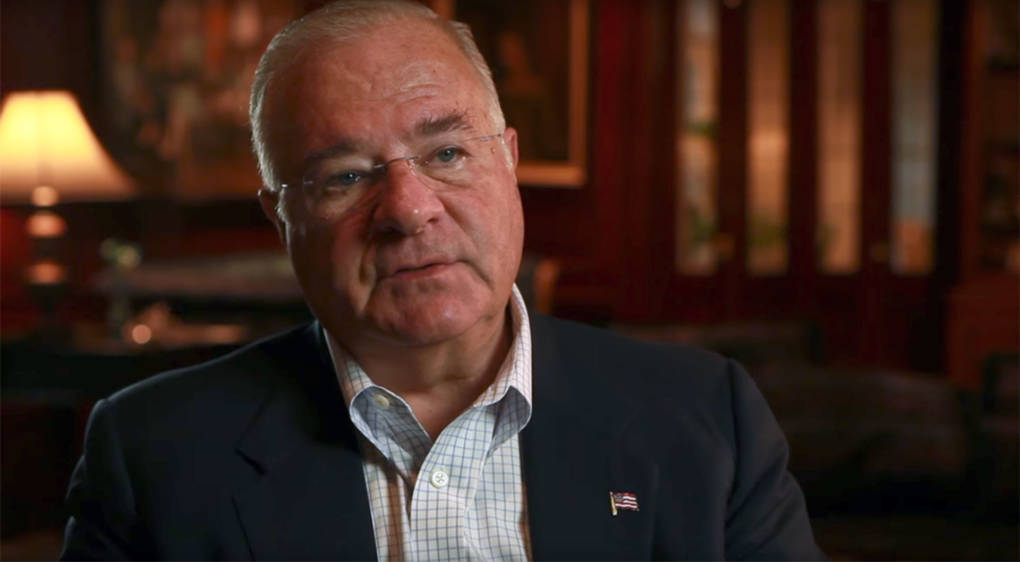
"caption": "Joe Ricketts, the billionaire founder of TD Ameritrade, announced Thursday that he had shut down DNAinfo and the Gothamist network, including the SFist and LAist websites.",
"description": "Joe Ricketts, the billionaire founder of TD Ameritrade, announced Thursday that he had shut down DNAinfo and the Gothamist network, including the SFist and LAist websites.",
"title": "JoeRicketts",
"credit": "JoeRickettsMedia/YouTube",
"status": "inherit",
"isLoading": false,
"fetchFailed": false
},
"news_11627064": {
"type": "attachments",
"id": "news_11627064",
"meta": {
"index": "attachments_1716263798",
"site": "news",
"id": "11627064",
"found": true
},
"parent": 11627003,
"imgSizes": {
"small": {
"file": "https://ww2.kqed.org/app/uploads/sites/10/2017/10/RS25568_DC_3-qut-520x293.jpg",
"width": 520,
"mimeType": "image/jpeg",
"height": 293
},
"twentyfourteen-full-width": {
"file": "https://ww2.kqed.org/app/uploads/sites/10/2017/10/RS25568_DC_3-qut-1038x576.jpg",
"width": 1038,
"mimeType": "image/jpeg",
"height": 576
},
"thumbnail": {
"file": "https://ww2.kqed.org/app/uploads/sites/10/2017/10/RS25568_DC_3-qut-160x90.jpg",
"width": 160,
"mimeType": "image/jpeg",
"height": 90
},
"fd-sm": {
"file": "https://ww2.kqed.org/app/uploads/sites/10/2017/10/RS25568_DC_3-qut-960x540.jpg",
"width": 960,
"mimeType": "image/jpeg",
"height": 540
},
"post-thumbnail": {
"file": "https://ww2.kqed.org/app/uploads/sites/10/2017/10/RS25568_DC_3-qut-672x372.jpg",
"width": 672,
"mimeType": "image/jpeg",
"height": 372
},
"xsmall": {
"file": "https://ww2.kqed.org/app/uploads/sites/10/2017/10/RS25568_DC_3-qut-375x211.jpg",
"width": 375,
"mimeType": "image/jpeg",
"height": 211
},
"kqedFullSize": {
"file": "https://ww2.kqed.org/app/uploads/sites/10/2017/10/RS25568_DC_3-qut.jpg",
"width": 1920,
"height": 1080
},
"large": {
"file": "https://ww2.kqed.org/app/uploads/sites/10/2017/10/RS25568_DC_3-qut-1020x574.jpg",
"width": 1020,
"mimeType": "image/jpeg",
"height": 574
},
"xlarge": {
"file": "https://ww2.kqed.org/app/uploads/sites/10/2017/10/RS25568_DC_3-qut-1180x664.jpg",
"width": 1180,
"mimeType": "image/jpeg",
"height": 664
},
"guest-author-50": {
"file": "https://ww2.kqed.org/app/uploads/sites/10/2017/10/RS25568_DC_3-qut-50x50.jpg",
"width": 50,
"mimeType": "image/jpeg",
"height": 50
},
"guest-author-96": {
"file": "https://ww2.kqed.org/app/uploads/sites/10/2017/10/RS25568_DC_3-qut-96x96.jpg",
"width": 96,
"mimeType": "image/jpeg",
"height": 96
},
"medium": {
"file": "https://ww2.kqed.org/app/uploads/sites/10/2017/10/RS25568_DC_3-qut-800x450.jpg",
"width": 800,
"mimeType": "image/jpeg",
"height": 450
},
"guest-author-64": {
"file": "https://ww2.kqed.org/app/uploads/sites/10/2017/10/RS25568_DC_3-qut-64x64.jpg",
"width": 64,
"mimeType": "image/jpeg",
"height": 64
},
"guest-author-32": {
"file": "https://ww2.kqed.org/app/uploads/sites/10/2017/10/RS25568_DC_3-qut-32x32.jpg",
"width": 32,
"mimeType": "image/jpeg",
"height": 32
},
"fd-lrg": {
"file": "https://ww2.kqed.org/app/uploads/sites/10/2017/10/RS25568_DC_3-qut-1920x1080.jpg",
"width": 1920,
"mimeType": "image/jpeg",
"height": 1080
},
"fd-med": {
"file": "https://ww2.kqed.org/app/uploads/sites/10/2017/10/RS25568_DC_3-qut-1180x664.jpg",
"width": 1180,
"mimeType": "image/jpeg",
"height": 664
},
"full-width": {
"file": "https://ww2.kqed.org/app/uploads/sites/10/2017/10/RS25568_DC_3-qut-1920x1080.jpg",
"width": 1920,
"mimeType": "image/jpeg",
"height": 1080
},
"detail": {
"file": "https://ww2.kqed.org/app/uploads/sites/10/2017/10/RS25568_DC_3-qut-150x150.jpg",
"width": 150,
"mimeType": "image/jpeg",
"height": 150
},
"guest-author-128": {
"file": "https://ww2.kqed.org/app/uploads/sites/10/2017/10/RS25568_DC_3-qut-128x128.jpg",
"width": 128,
"mimeType": "image/jpeg",
"height": 128
},
"xxsmall": {
"file": "https://ww2.kqed.org/app/uploads/sites/10/2017/10/RS25568_DC_3-qut-240x135.jpg",
"width": 240,
"mimeType": "image/jpeg",
"height": 135
}
},
"publishDate": 1509472381,
"modified": 1509472552,
"caption": "Distribution centers are becoming more automated, but increased demand from consumers is still creating more jobs.",
"description": null,
"title": "RS25568_DC_3-qut",
"credit": "Erasmo Martinez/KQED",
"status": "inherit",
"isLoading": false,
"fetchFailed": false
},
"news_11624967": {
"type": "attachments",
"id": "news_11624967",
"meta": {
"index": "attachments_1716263798",
"site": "news",
"id": "11624967",
"found": true
},
"parent": 11624966,
"imgSizes": {
"small": {
"file": "https://ww2.kqed.org/app/uploads/sites/10/2017/10/seasonal_workers-2-65d436b73168b8453cd7553853345c24176d80ed-520x390.jpg",
"width": 520,
"mimeType": "image/jpeg",
"height": 390
},
"twentyfourteen-full-width": {
"file": "https://ww2.kqed.org/app/uploads/sites/10/2017/10/seasonal_workers-2-65d436b73168b8453cd7553853345c24176d80ed-1038x576.jpg",
"width": 1038,
"mimeType": "image/jpeg",
"height": 576
},
"thumbnail": {
"file": "https://ww2.kqed.org/app/uploads/sites/10/2017/10/seasonal_workers-2-65d436b73168b8453cd7553853345c24176d80ed-160x120.jpg",
"width": 160,
"mimeType": "image/jpeg",
"height": 120
},
"fd-sm": {
"file": "https://ww2.kqed.org/app/uploads/sites/10/2017/10/seasonal_workers-2-65d436b73168b8453cd7553853345c24176d80ed-960x720.jpg",
"width": 960,
"mimeType": "image/jpeg",
"height": 720
},
"post-thumbnail": {
"file": "https://ww2.kqed.org/app/uploads/sites/10/2017/10/seasonal_workers-2-65d436b73168b8453cd7553853345c24176d80ed-672x372.jpg",
"width": 672,
"mimeType": "image/jpeg",
"height": 372
},
"xsmall": {
"file": "https://ww2.kqed.org/app/uploads/sites/10/2017/10/seasonal_workers-2-65d436b73168b8453cd7553853345c24176d80ed-375x281.jpg",
"width": 375,
"mimeType": "image/jpeg",
"height": 281
},
"kqedFullSize": {
"file": "https://ww2.kqed.org/app/uploads/sites/10/2017/10/seasonal_workers-2-65d436b73168b8453cd7553853345c24176d80ed.jpg",
"width": 1497,
"height": 1123
},
"large": {
"file": "https://ww2.kqed.org/app/uploads/sites/10/2017/10/seasonal_workers-2-65d436b73168b8453cd7553853345c24176d80ed-1020x765.jpg",
"width": 1020,
"mimeType": "image/jpeg",
"height": 765
},
"xlarge": {
"file": "https://ww2.kqed.org/app/uploads/sites/10/2017/10/seasonal_workers-2-65d436b73168b8453cd7553853345c24176d80ed-1180x885.jpg",
"width": 1180,
"mimeType": "image/jpeg",
"height": 885
},
"guest-author-50": {
"file": "https://ww2.kqed.org/app/uploads/sites/10/2017/10/seasonal_workers-2-65d436b73168b8453cd7553853345c24176d80ed-50x50.jpg",
"width": 50,
"mimeType": "image/jpeg",
"height": 50
},
"guest-author-96": {
"file": "https://ww2.kqed.org/app/uploads/sites/10/2017/10/seasonal_workers-2-65d436b73168b8453cd7553853345c24176d80ed-96x96.jpg",
"width": 96,
"mimeType": "image/jpeg",
"height": 96
},
"medium": {
"file": "https://ww2.kqed.org/app/uploads/sites/10/2017/10/seasonal_workers-2-65d436b73168b8453cd7553853345c24176d80ed-800x600.jpg",
"width": 800,
"mimeType": "image/jpeg",
"height": 600
},
"guest-author-64": {
"file": "https://ww2.kqed.org/app/uploads/sites/10/2017/10/seasonal_workers-2-65d436b73168b8453cd7553853345c24176d80ed-64x64.jpg",
"width": 64,
"mimeType": "image/jpeg",
"height": 64
},
"guest-author-32": {
"file": "https://ww2.kqed.org/app/uploads/sites/10/2017/10/seasonal_workers-2-65d436b73168b8453cd7553853345c24176d80ed-32x32.jpg",
"width": 32,
"mimeType": "image/jpeg",
"height": 32
},
"fd-med": {
"file": "https://ww2.kqed.org/app/uploads/sites/10/2017/10/seasonal_workers-2-65d436b73168b8453cd7553853345c24176d80ed-1180x885.jpg",
"width": 1180,
"mimeType": "image/jpeg",
"height": 885
},
"detail": {
"file": "https://ww2.kqed.org/app/uploads/sites/10/2017/10/seasonal_workers-2-65d436b73168b8453cd7553853345c24176d80ed-150x150.jpg",
"width": 150,
"mimeType": "image/jpeg",
"height": 150
},
"guest-author-128": {
"file": "https://ww2.kqed.org/app/uploads/sites/10/2017/10/seasonal_workers-2-65d436b73168b8453cd7553853345c24176d80ed-128x128.jpg",
"width": 128,
"mimeType": "image/jpeg",
"height": 128
},
"xxsmall": {
"file": "https://ww2.kqed.org/app/uploads/sites/10/2017/10/seasonal_workers-2-65d436b73168b8453cd7553853345c24176d80ed-240x180.jpg",
"width": 240,
"mimeType": "image/jpeg",
"height": 180
}
},
"publishDate": 1508525916,
"modified": 1508526032,
"caption": "Luis Guerrero fills barrels with crushed grapes at Valley of the Moon winery in Sonoma on Oct. 16, 2017. Guerrero says he's struggling to pay for rent after the wildfires forced the winery to close.",
"description": "Luis Guerrero fills barrels with crushed grapes at Valley of the Moon winery in Sonoma on Oct. 16, 2017. Guerrero says he's struggling to pay for rent after the wildfires forced the winery to close.",
"title": "Luis Guerrero fills barrels with crushed grapes at Valley of the Moon winery in Sonoma, Calif., Oct 16, 2017. Guerrero says he's struggling to pay for rent after the wildfires forced the winery to close.",
"credit": "Farida Jhabvala Romero/KQED",
"status": "inherit",
"isLoading": false,
"fetchFailed": false
},
"news_11623594": {
"type": "attachments",
"id": "news_11623594",
"meta": {
"index": "attachments_1716263798",
"site": "news",
"id": "11623594",
"found": true
},
"parent": 11623564,
"imgSizes": {
"small": {
"file": "https://ww2.kqed.org/app/uploads/sites/10/2017/10/RS27541_Image-uploaded-from-iOS-2-qut-520x390.jpg",
"width": 520,
"mimeType": "image/jpeg",
"height": 390
},
"twentyfourteen-full-width": {
"file": "https://ww2.kqed.org/app/uploads/sites/10/2017/10/RS27541_Image-uploaded-from-iOS-2-qut-1038x576.jpg",
"width": 1038,
"mimeType": "image/jpeg",
"height": 576
},
"thumbnail": {
"file": "https://ww2.kqed.org/app/uploads/sites/10/2017/10/RS27541_Image-uploaded-from-iOS-2-qut-160x120.jpg",
"width": 160,
"mimeType": "image/jpeg",
"height": 120
},
"fd-sm": {
"file": "https://ww2.kqed.org/app/uploads/sites/10/2017/10/RS27541_Image-uploaded-from-iOS-2-qut-960x720.jpg",
"width": 960,
"mimeType": "image/jpeg",
"height": 720
},
"post-thumbnail": {
"file": "https://ww2.kqed.org/app/uploads/sites/10/2017/10/RS27541_Image-uploaded-from-iOS-2-qut-672x372.jpg",
"width": 672,
"mimeType": "image/jpeg",
"height": 372
},
"xsmall": {
"file": "https://ww2.kqed.org/app/uploads/sites/10/2017/10/RS27541_Image-uploaded-from-iOS-2-qut-375x281.jpg",
"width": 375,
"mimeType": "image/jpeg",
"height": 281
},
"kqedFullSize": {
"file": "https://ww2.kqed.org/app/uploads/sites/10/2017/10/RS27541_Image-uploaded-from-iOS-2-qut.jpg",
"width": 1920,
"height": 1440
},
"large": {
"file": "https://ww2.kqed.org/app/uploads/sites/10/2017/10/RS27541_Image-uploaded-from-iOS-2-qut-1020x765.jpg",
"width": 1020,
"mimeType": "image/jpeg",
"height": 765
},
"xlarge": {
"file": "https://ww2.kqed.org/app/uploads/sites/10/2017/10/RS27541_Image-uploaded-from-iOS-2-qut-1180x885.jpg",
"width": 1180,
"mimeType": "image/jpeg",
"height": 885
},
"guest-author-50": {
"file": "https://ww2.kqed.org/app/uploads/sites/10/2017/10/RS27541_Image-uploaded-from-iOS-2-qut-50x50.jpg",
"width": 50,
"mimeType": "image/jpeg",
"height": 50
},
"guest-author-96": {
"file": "https://ww2.kqed.org/app/uploads/sites/10/2017/10/RS27541_Image-uploaded-from-iOS-2-qut-96x96.jpg",
"width": 96,
"mimeType": "image/jpeg",
"height": 96
},
"medium": {
"file": "https://ww2.kqed.org/app/uploads/sites/10/2017/10/RS27541_Image-uploaded-from-iOS-2-qut-800x600.jpg",
"width": 800,
"mimeType": "image/jpeg",
"height": 600
},
"guest-author-64": {
"file": "https://ww2.kqed.org/app/uploads/sites/10/2017/10/RS27541_Image-uploaded-from-iOS-2-qut-64x64.jpg",
"width": 64,
"mimeType": "image/jpeg",
"height": 64
},
"guest-author-32": {
"file": "https://ww2.kqed.org/app/uploads/sites/10/2017/10/RS27541_Image-uploaded-from-iOS-2-qut-32x32.jpg",
"width": 32,
"mimeType": "image/jpeg",
"height": 32
},
"fd-lrg": {
"file": "https://ww2.kqed.org/app/uploads/sites/10/2017/10/RS27541_Image-uploaded-from-iOS-2-qut-1920x1440.jpg",
"width": 1920,
"mimeType": "image/jpeg",
"height": 1440
},
"fd-med": {
"file": "https://ww2.kqed.org/app/uploads/sites/10/2017/10/RS27541_Image-uploaded-from-iOS-2-qut-1180x885.jpg",
"width": 1180,
"mimeType": "image/jpeg",
"height": 885
},
"full-width": {
"file": "https://ww2.kqed.org/app/uploads/sites/10/2017/10/RS27541_Image-uploaded-from-iOS-2-qut-1920x1440.jpg",
"width": 1920,
"mimeType": "image/jpeg",
"height": 1440
},
"detail": {
"file": "https://ww2.kqed.org/app/uploads/sites/10/2017/10/RS27541_Image-uploaded-from-iOS-2-qut-150x150.jpg",
"width": 150,
"mimeType": "image/jpeg",
"height": 150
},
"guest-author-128": {
"file": "https://ww2.kqed.org/app/uploads/sites/10/2017/10/RS27541_Image-uploaded-from-iOS-2-qut-128x128.jpg",
"width": 128,
"mimeType": "image/jpeg",
"height": 128
},
"xxsmall": {
"file": "https://ww2.kqed.org/app/uploads/sites/10/2017/10/RS27541_Image-uploaded-from-iOS-2-qut-240x180.jpg",
"width": 240,
"mimeType": "image/jpeg",
"height": 180
}
},
"publishDate": 1508029225,
"modified": 1508193629,
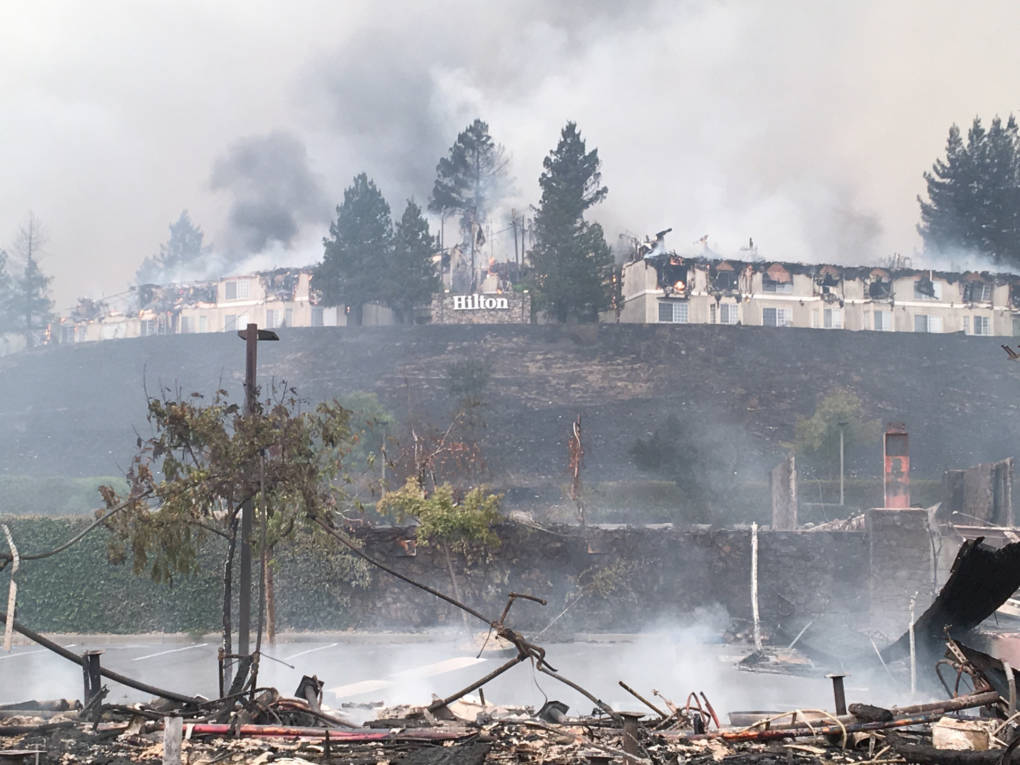
"caption": "The Hilton in Santa Rosa was already burning when doctors told Heather Leiker and Jason McDowell that they should evacuate, even though Leiker's labor had been induced earlier that night.",
"description": "The Hilton in Santa Rosa was already burning when doctors told Heather Leiker and Jason McDowell that they should evacuate even though Leiker's labor had been induced earlier that night.",
"title": "RS27541_Image uploaded from iOS (2)-qut",
"credit": "Lesley McClurg/KQED",
"status": "inherit",
"isLoading": false,
"fetchFailed": false
},
"news_11622376": {
"type": "attachments",
"id": "news_11622376",
"meta": {
"index": "attachments_1716263798",
"site": "news",
"id": "11622376",
"found": true
},
"parent": 11622370,
"imgSizes": {
"small": {
"file": "https://ww2.kqed.org/app/uploads/sites/10/2017/10/Nicole-and-baby-520x390.jpg",
"width": 520,
"mimeType": "image/jpeg",
"height": 390
},
"twentyfourteen-full-width": {
"file": "https://ww2.kqed.org/app/uploads/sites/10/2017/10/Nicole-and-baby-1038x576.jpg",
"width": 1038,
"mimeType": "image/jpeg",
"height": 576
},
"thumbnail": {
"file": "https://ww2.kqed.org/app/uploads/sites/10/2017/10/Nicole-and-baby-160x120.jpg",
"width": 160,
"mimeType": "image/jpeg",
"height": 120
},
"fd-sm": {
"file": "https://ww2.kqed.org/app/uploads/sites/10/2017/10/Nicole-and-baby-960x720.jpg",
"width": 960,
"mimeType": "image/jpeg",
"height": 720
},
"post-thumbnail": {
"file": "https://ww2.kqed.org/app/uploads/sites/10/2017/10/Nicole-and-baby-672x372.jpg",
"width": 672,
"mimeType": "image/jpeg",
"height": 372
},
"xsmall": {
"file": "https://ww2.kqed.org/app/uploads/sites/10/2017/10/Nicole-and-baby-375x281.jpg",
"width": 375,
"mimeType": "image/jpeg",
"height": 281
},
"kqedFullSize": {
"file": "https://ww2.kqed.org/app/uploads/sites/10/2017/10/Nicole-and-baby-e1507691732502.jpg",
"width": 1920,
"height": 1440
},
"large": {
"file": "https://ww2.kqed.org/app/uploads/sites/10/2017/10/Nicole-and-baby-1020x765.jpg",
"width": 1020,
"mimeType": "image/jpeg",
"height": 765
},
"xlarge": {
"file": "https://ww2.kqed.org/app/uploads/sites/10/2017/10/Nicole-and-baby-1180x885.jpg",
"width": 1180,
"mimeType": "image/jpeg",
"height": 885
},
"guest-author-50": {
"file": "https://ww2.kqed.org/app/uploads/sites/10/2017/10/Nicole-and-baby-50x50.jpg",
"width": 50,
"mimeType": "image/jpeg",
"height": 50
},
"guest-author-96": {
"file": "https://ww2.kqed.org/app/uploads/sites/10/2017/10/Nicole-and-baby-96x96.jpg",
"width": 96,
"mimeType": "image/jpeg",
"height": 96
},
"medium": {
"file": "https://ww2.kqed.org/app/uploads/sites/10/2017/10/Nicole-and-baby-800x600.jpg",
"width": 800,
"mimeType": "image/jpeg",
"height": 600
},
"guest-author-64": {
"file": "https://ww2.kqed.org/app/uploads/sites/10/2017/10/Nicole-and-baby-64x64.jpg",
"width": 64,
"mimeType": "image/jpeg",
"height": 64
},
"guest-author-32": {
"file": "https://ww2.kqed.org/app/uploads/sites/10/2017/10/Nicole-and-baby-32x32.jpg",
"width": 32,
"mimeType": "image/jpeg",
"height": 32
},
"fd-lrg": {
"file": "https://ww2.kqed.org/app/uploads/sites/10/2017/10/Nicole-and-baby-1920x1440.jpg",
"width": 1920,
"mimeType": "image/jpeg",
"height": 1440
},
"fd-med": {
"file": "https://ww2.kqed.org/app/uploads/sites/10/2017/10/Nicole-and-baby-1180x885.jpg",
"width": 1180,
"mimeType": "image/jpeg",
"height": 885
},
"full-width": {
"file": "https://ww2.kqed.org/app/uploads/sites/10/2017/10/Nicole-and-baby-1920x1440.jpg",
"width": 1920,
"mimeType": "image/jpeg",
"height": 1440
},
"detail": {
"file": "https://ww2.kqed.org/app/uploads/sites/10/2017/10/Nicole-and-baby-150x150.jpg",
"width": 150,
"mimeType": "image/jpeg",
"height": 150
},
"guest-author-128": {
"file": "https://ww2.kqed.org/app/uploads/sites/10/2017/10/Nicole-and-baby-128x128.jpg",
"width": 128,
"mimeType": "image/jpeg",
"height": 128
},
"xxsmall": {
"file": "https://ww2.kqed.org/app/uploads/sites/10/2017/10/Nicole-and-baby-240x180.jpg",
"width": 240,
"mimeType": "image/jpeg",
"height": 180
}
},
"publishDate": 1507691703,
"modified": 1507692140,
"caption": "Nicole Veum was in labor when she was evacuated from the hospital in Santa Rosa on Monday.",
"description": null,
"title": "Nicole and baby",
"credit": "April Dembosky",
"status": "inherit",
"isLoading": false,
"fetchFailed": false
},
"news_11610581": {
"type": "attachments",
"id": "news_11610581",
"meta": {
"index": "attachments_1716263798",
"site": "news",
"id": "11610581",
"found": true
},
"parent": 11610580,
"imgSizes": {
"small": {
"file": "https://ww2.kqed.org/app/uploads/sites/10/2017/08/gettyimages-532150054-27af64387ec8663a1d3158f431523db7a7356511-520x390.jpg",
"width": 520,
"mimeType": "image/jpeg",
"height": 390
},
"twentyfourteen-full-width": {
"file": "https://ww2.kqed.org/app/uploads/sites/10/2017/08/gettyimages-532150054-27af64387ec8663a1d3158f431523db7a7356511-1038x576.jpg",
"width": 1038,
"mimeType": "image/jpeg",
"height": 576
},
"thumbnail": {
"file": "https://ww2.kqed.org/app/uploads/sites/10/2017/08/gettyimages-532150054-27af64387ec8663a1d3158f431523db7a7356511-160x120.jpg",
"width": 160,
"mimeType": "image/jpeg",
"height": 120
},
"fd-sm": {
"file": "https://ww2.kqed.org/app/uploads/sites/10/2017/08/gettyimages-532150054-27af64387ec8663a1d3158f431523db7a7356511-960x720.jpg",
"width": 960,
"mimeType": "image/jpeg",
"height": 720
},
"post-thumbnail": {
"file": "https://ww2.kqed.org/app/uploads/sites/10/2017/08/gettyimages-532150054-27af64387ec8663a1d3158f431523db7a7356511-672x372.jpg",
"width": 672,
"mimeType": "image/jpeg",
"height": 372
},
"xsmall": {
"file": "https://ww2.kqed.org/app/uploads/sites/10/2017/08/gettyimages-532150054-27af64387ec8663a1d3158f431523db7a7356511-375x281.jpg",
"width": 375,
"mimeType": "image/jpeg",
"height": 281
},
"kqedFullSize": {
"file": "https://ww2.kqed.org/app/uploads/sites/10/2017/08/gettyimages-532150054-27af64387ec8663a1d3158f431523db7a7356511-e1502216813706.jpg",
"width": 1920,
"height": 1440
},
"large": {
"file": "https://ww2.kqed.org/app/uploads/sites/10/2017/08/gettyimages-532150054-27af64387ec8663a1d3158f431523db7a7356511-1020x765.jpg",
"width": 1020,
"mimeType": "image/jpeg",
"height": 765
},
"xlarge": {
"file": "https://ww2.kqed.org/app/uploads/sites/10/2017/08/gettyimages-532150054-27af64387ec8663a1d3158f431523db7a7356511-1180x885.jpg",
"width": 1180,
"mimeType": "image/jpeg",
"height": 885
},
"guest-author-50": {
"file": "https://ww2.kqed.org/app/uploads/sites/10/2017/08/gettyimages-532150054-27af64387ec8663a1d3158f431523db7a7356511-50x50.jpg",
"width": 50,
"mimeType": "image/jpeg",
"height": 50
},
"guest-author-96": {
"file": "https://ww2.kqed.org/app/uploads/sites/10/2017/08/gettyimages-532150054-27af64387ec8663a1d3158f431523db7a7356511-96x96.jpg",
"width": 96,
"mimeType": "image/jpeg",
"height": 96
},
"medium": {
"file": "https://ww2.kqed.org/app/uploads/sites/10/2017/08/gettyimages-532150054-27af64387ec8663a1d3158f431523db7a7356511-800x600.jpg",
"width": 800,
"mimeType": "image/jpeg",
"height": 600
},
"guest-author-64": {
"file": "https://ww2.kqed.org/app/uploads/sites/10/2017/08/gettyimages-532150054-27af64387ec8663a1d3158f431523db7a7356511-64x64.jpg",
"width": 64,
"mimeType": "image/jpeg",
"height": 64
},
"guest-author-32": {
"file": "https://ww2.kqed.org/app/uploads/sites/10/2017/08/gettyimages-532150054-27af64387ec8663a1d3158f431523db7a7356511-32x32.jpg",
"width": 32,
"mimeType": "image/jpeg",
"height": 32
},
"fd-lrg": {
"file": "https://ww2.kqed.org/app/uploads/sites/10/2017/08/gettyimages-532150054-27af64387ec8663a1d3158f431523db7a7356511-1920x1440.jpg",
"width": 1920,
"mimeType": "image/jpeg",
"height": 1440
},
"fd-med": {
"file": "https://ww2.kqed.org/app/uploads/sites/10/2017/08/gettyimages-532150054-27af64387ec8663a1d3158f431523db7a7356511-1180x885.jpg",
"width": 1180,
"mimeType": "image/jpeg",
"height": 885
},
"full-width": {
"file": "https://ww2.kqed.org/app/uploads/sites/10/2017/08/gettyimages-532150054-27af64387ec8663a1d3158f431523db7a7356511-1920x1440.jpg",
"width": 1920,
"mimeType": "image/jpeg",
"height": 1440
},
"detail": {
"file": "https://ww2.kqed.org/app/uploads/sites/10/2017/08/gettyimages-532150054-27af64387ec8663a1d3158f431523db7a7356511-150x150.jpg",
"width": 150,
"mimeType": "image/jpeg",
"height": 150
},
"guest-author-128": {
"file": "https://ww2.kqed.org/app/uploads/sites/10/2017/08/gettyimages-532150054-27af64387ec8663a1d3158f431523db7a7356511-128x128.jpg",
"width": 128,
"mimeType": "image/jpeg",
"height": 128
},
"xxsmall": {
"file": "https://ww2.kqed.org/app/uploads/sites/10/2017/08/gettyimages-532150054-27af64387ec8663a1d3158f431523db7a7356511-240x180.jpg",
"width": 240,
"mimeType": "image/jpeg",
"height": 180
}
},
"publishDate": 1502216370,
"modified": 1502216836,
"caption": "Google CEO Sundar Pichai says that he supports the right of workers to express themselves but that a senior engineer's memo had gone too far.",
"description": "Google CEO Sundar Pichai says that he supports the right of workers to express themselves but that a senior engineer's memo had gone too far.",
"title": "Google CEO Sundar Pichai says that he supports the right of workers to express themselves but that a senior engineer's memo had gone too far.",
"credit": "Justin Sullivan/Getty Images",
"status": "inherit",
"isLoading": false,
"fetchFailed": false
},
"news_11610386": {
"type": "attachments",
"id": "news_11610386",
"meta": {
"index": "attachments_1716263798",
"site": "news",
"id": "11610386",
"found": true
},
"parent": 11610382,
"imgSizes": {
"small": {
"file": "https://ww2.kqed.org/app/uploads/sites/10/2017/08/GoogleCampus-520x342.jpg",
"width": 520,
"mimeType": "image/jpeg",
"height": 342
},
"twentyfourteen-full-width": {
"file": "https://ww2.kqed.org/app/uploads/sites/10/2017/08/GoogleCampus-1038x576.jpg",
"width": 1038,
"mimeType": "image/jpeg",
"height": 576
},
"thumbnail": {
"file": "https://ww2.kqed.org/app/uploads/sites/10/2017/08/GoogleCampus-160x105.jpg",
"width": 160,
"mimeType": "image/jpeg",
"height": 105
},
"fd-sm": {
"file": "https://ww2.kqed.org/app/uploads/sites/10/2017/08/GoogleCampus-960x632.jpg",
"width": 960,
"mimeType": "image/jpeg",
"height": 632
},
"post-thumbnail": {
"file": "https://ww2.kqed.org/app/uploads/sites/10/2017/08/GoogleCampus-672x372.jpg",
"width": 672,
"mimeType": "image/jpeg",
"height": 372
},
"xsmall": {
"file": "https://ww2.kqed.org/app/uploads/sites/10/2017/08/GoogleCampus-375x247.jpg",
"width": 375,
"mimeType": "image/jpeg",
"height": 247
},
"kqedFullSize": {
"file": "https://ww2.kqed.org/app/uploads/sites/10/2017/08/GoogleCampus.jpg",
"width": 1920,
"height": 1263
},
"large": {
"file": "https://ww2.kqed.org/app/uploads/sites/10/2017/08/GoogleCampus-1020x671.jpg",
"width": 1020,
"mimeType": "image/jpeg",
"height": 671
},
"xlarge": {
"file": "https://ww2.kqed.org/app/uploads/sites/10/2017/08/GoogleCampus-1180x776.jpg",
"width": 1180,
"mimeType": "image/jpeg",
"height": 776
},
"guest-author-50": {
"file": "https://ww2.kqed.org/app/uploads/sites/10/2017/08/GoogleCampus-50x50.jpg",
"width": 50,
"mimeType": "image/jpeg",
"height": 50
},
"guest-author-96": {
"file": "https://ww2.kqed.org/app/uploads/sites/10/2017/08/GoogleCampus-96x96.jpg",
"width": 96,
"mimeType": "image/jpeg",
"height": 96
},
"medium": {
"file": "https://ww2.kqed.org/app/uploads/sites/10/2017/08/GoogleCampus-800x526.jpg",
"width": 800,
"mimeType": "image/jpeg",
"height": 526
},
"guest-author-64": {
"file": "https://ww2.kqed.org/app/uploads/sites/10/2017/08/GoogleCampus-64x64.jpg",
"width": 64,
"mimeType": "image/jpeg",
"height": 64
},
"guest-author-32": {
"file": "https://ww2.kqed.org/app/uploads/sites/10/2017/08/GoogleCampus-32x32.jpg",
"width": 32,
"mimeType": "image/jpeg",
"height": 32
},
"fd-lrg": {
"file": "https://ww2.kqed.org/app/uploads/sites/10/2017/08/GoogleCampus-1920x1263.jpg",
"width": 1920,
"mimeType": "image/jpeg",
"height": 1263
},
"fd-med": {
"file": "https://ww2.kqed.org/app/uploads/sites/10/2017/08/GoogleCampus-1180x776.jpg",
"width": 1180,
"mimeType": "image/jpeg",
"height": 776
},
"full-width": {
"file": "https://ww2.kqed.org/app/uploads/sites/10/2017/08/GoogleCampus-1920x1263.jpg",
"width": 1920,
"mimeType": "image/jpeg",
"height": 1263
},
"detail": {
"file": "https://ww2.kqed.org/app/uploads/sites/10/2017/08/GoogleCampus-150x150.jpg",
"width": 150,
"mimeType": "image/jpeg",
"height": 150
},
"guest-author-128": {
"file": "https://ww2.kqed.org/app/uploads/sites/10/2017/08/GoogleCampus-128x128.jpg",
"width": 128,
"mimeType": "image/jpeg",
"height": 128
},
"xxsmall": {
"file": "https://ww2.kqed.org/app/uploads/sites/10/2017/08/GoogleCampus-240x158.jpg",
"width": 240,
"mimeType": "image/jpeg",
"height": 158
}
},
"publishDate": 1502129305,
"modified": 1502129375,
"caption": "A man rides a bike at the Googleplex in Menlo Park.",
"description": "A man rides a bike at the Googleplex in Menlo Park.",
"title": "GoogleCampus",
"credit": "JOSH EDELSON/AFP/Getty Images",
"status": "inherit",
"isLoading": false,
"fetchFailed": false
},
"stateofhealth_360675": {
"type": "attachments",
"id": "stateofhealth_360675",
"meta": {
"index": "attachments_1716263798",
"site": "stateofhealth",
"id": "360675",
"found": true
},
"parent": 360674,
"imgSizes": {
"small": {
"file": "https://ww2.kqed.org/app/uploads/sites/27/2017/08/Josie-Valenzuela-ultrasound-520x293.jpg",
"width": 520,
"mimeType": "image/jpeg",
"height": 293
},
"twentyfourteen-full-width": {
"file": "https://ww2.kqed.org/app/uploads/sites/27/2017/08/Josie-Valenzuela-ultrasound-1038x576.jpg",
"width": 1038,
"mimeType": "image/jpeg",
"height": 576
},
"thumbnail": {
"file": "https://ww2.kqed.org/app/uploads/sites/27/2017/08/Josie-Valenzuela-ultrasound-160x90.jpg",
"width": 160,
"mimeType": "image/jpeg",
"height": 90
},
"fd-sm": {
"file": "https://ww2.kqed.org/app/uploads/sites/27/2017/08/Josie-Valenzuela-ultrasound-960x540.jpg",
"width": 960,
"mimeType": "image/jpeg",
"height": 540
},
"post-thumbnail": {
"file": "https://ww2.kqed.org/app/uploads/sites/27/2017/08/Josie-Valenzuela-ultrasound-672x372.jpg",
"width": 672,
"mimeType": "image/jpeg",
"height": 372
},
"xsmall": {
"file": "https://ww2.kqed.org/app/uploads/sites/27/2017/08/Josie-Valenzuela-ultrasound-375x211.jpg",
"width": 375,
"mimeType": "image/jpeg",
"height": 211
},
"kqedFullSize": {
"file": "https://ww2.kqed.org/app/uploads/sites/27/2017/08/Josie-Valenzuela-ultrasound-e1501800398754.jpg",
"width": 1920,
"height": 1080
},
"large": {
"file": "https://ww2.kqed.org/app/uploads/sites/27/2017/08/Josie-Valenzuela-ultrasound-1020x574.jpg",
"width": 1020,
"mimeType": "image/jpeg",
"height": 574
},
"xlarge": {
"file": "https://ww2.kqed.org/app/uploads/sites/27/2017/08/Josie-Valenzuela-ultrasound-1180x664.jpg",
"width": 1180,
"mimeType": "image/jpeg",
"height": 664
},
"guest-author-50": {
"file": "https://ww2.kqed.org/app/uploads/sites/27/2017/08/Josie-Valenzuela-ultrasound-50x50.jpg",
"width": 50,
"mimeType": "image/jpeg",
"height": 50
},
"guest-author-96": {
"file": "https://ww2.kqed.org/app/uploads/sites/27/2017/08/Josie-Valenzuela-ultrasound-96x96.jpg",
"width": 96,
"mimeType": "image/jpeg",
"height": 96
},
"medium": {
"file": "https://ww2.kqed.org/app/uploads/sites/27/2017/08/Josie-Valenzuela-ultrasound-800x450.jpg",
"width": 800,
"mimeType": "image/jpeg",
"height": 450
},
"guest-author-64": {
"file": "https://ww2.kqed.org/app/uploads/sites/27/2017/08/Josie-Valenzuela-ultrasound-64x64.jpg",
"width": 64,
"mimeType": "image/jpeg",
"height": 64
},
"guest-author-32": {
"file": "https://ww2.kqed.org/app/uploads/sites/27/2017/08/Josie-Valenzuela-ultrasound-32x32.jpg",
"width": 32,
"mimeType": "image/jpeg",
"height": 32
},
"fd-lrg": {
"file": "https://ww2.kqed.org/app/uploads/sites/27/2017/08/Josie-Valenzuela-ultrasound-1920x1080.jpg",
"width": 1920,
"mimeType": "image/jpeg",
"height": 1080
},
"fd-med": {
"file": "https://ww2.kqed.org/app/uploads/sites/27/2017/08/Josie-Valenzuela-ultrasound-1180x664.jpg",
"width": 1180,
"mimeType": "image/jpeg",
"height": 664
},
"full-width": {
"file": "https://ww2.kqed.org/app/uploads/sites/27/2017/08/Josie-Valenzuela-ultrasound-1920x1080.jpg",
"width": 1920,
"mimeType": "image/jpeg",
"height": 1080
},
"detail": {
"file": "https://ww2.kqed.org/app/uploads/sites/27/2017/08/Josie-Valenzuela-ultrasound-150x150.jpg",
"width": 150,
"mimeType": "image/jpeg",
"height": 150
},
"medium_large": {
"file": "https://ww2.kqed.org/app/uploads/sites/27/2017/08/Josie-Valenzuela-ultrasound-768x432.jpg",
"width": 768,
"mimeType": "image/jpeg",
"height": 432
},
"guest-author-128": {
"file": "https://ww2.kqed.org/app/uploads/sites/27/2017/08/Josie-Valenzuela-ultrasound-128x128.jpg",
"width": 128,
"mimeType": "image/jpeg",
"height": 128
},
"xxsmall": {
"file": "https://ww2.kqed.org/app/uploads/sites/27/2017/08/Josie-Valenzuela-ultrasound-240x135.jpg",
"width": 240,
"mimeType": "image/jpeg",
"height": 135
}
},
"publishDate": 1501800338,
"modified": 1501895795,
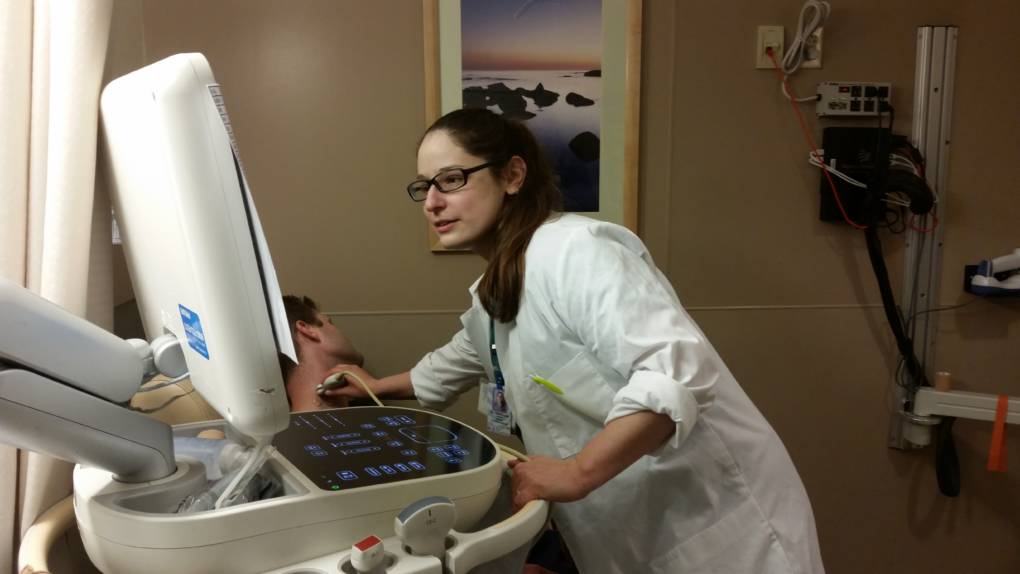
"caption": "Dr. Josie Valenzuela, now in her fourth year of residency at the University of Arizona, performs a carotid artery ultrasound on a patient.",
"description": null,
"title": "Josie Valenzuela ultrasound",
"credit": "Georgia Baumann/University of Arizona",
"status": "inherit",
"isLoading": false,
"fetchFailed": false
},
"news_11541311": {
"type": "attachments",
"id": "news_11541311",
"meta": {
"index": "attachments_1716263798",
"site": "news",
"id": "11541311",
"found": true
},
"parent": 11540965,
"imgSizes": {
"small": {
"file": "https://ww2.kqed.org/app/uploads/sites/10/2017/06/RS4606_alt_587-520x347.jpg",
"width": 520,
"mimeType": "image/jpeg",
"height": 347
},
"twentyfourteen-full-width": {
"file": "https://ww2.kqed.org/app/uploads/sites/10/2017/06/RS4606_alt_587-1038x576.jpg",
"width": 1038,
"mimeType": "image/jpeg",
"height": 576
},
"thumbnail": {
"file": "https://ww2.kqed.org/app/uploads/sites/10/2017/06/RS4606_alt_587-160x107.jpg",
"width": 160,
"mimeType": "image/jpeg",
"height": 107
},
"fd-sm": {
"file": "https://ww2.kqed.org/app/uploads/sites/10/2017/06/RS4606_alt_587-960x640.jpg",
"width": 960,
"mimeType": "image/jpeg",
"height": 640
},
"post-thumbnail": {
"file": "https://ww2.kqed.org/app/uploads/sites/10/2017/06/RS4606_alt_587-672x372.jpg",
"width": 672,
"mimeType": "image/jpeg",
"height": 372
},
"xsmall": {
"file": "https://ww2.kqed.org/app/uploads/sites/10/2017/06/RS4606_alt_587-375x250.jpg",
"width": 375,
"mimeType": "image/jpeg",
"height": 250
},
"kqedFullSize": {
"file": "https://ww2.kqed.org/app/uploads/sites/10/2017/06/RS4606_alt_587.jpg",
"width": 1920,
"height": 1280
},
"large": {
"file": "https://ww2.kqed.org/app/uploads/sites/10/2017/06/RS4606_alt_587-1020x680.jpg",
"width": 1020,
"mimeType": "image/jpeg",
"height": 680
},
"xlarge": {
"file": "https://ww2.kqed.org/app/uploads/sites/10/2017/06/RS4606_alt_587-1180x787.jpg",
"width": 1180,
"mimeType": "image/jpeg",
"height": 787
},
"guest-author-50": {
"file": "https://ww2.kqed.org/app/uploads/sites/10/2017/06/RS4606_alt_587-50x50.jpg",
"width": 50,
"mimeType": "image/jpeg",
"height": 50
},
"guest-author-96": {
"file": "https://ww2.kqed.org/app/uploads/sites/10/2017/06/RS4606_alt_587-96x96.jpg",
"width": 96,
"mimeType": "image/jpeg",
"height": 96
},
"medium": {
"file": "https://ww2.kqed.org/app/uploads/sites/10/2017/06/RS4606_alt_587-800x533.jpg",
"width": 800,
"mimeType": "image/jpeg",
"height": 533
},
"guest-author-64": {
"file": "https://ww2.kqed.org/app/uploads/sites/10/2017/06/RS4606_alt_587-64x64.jpg",
"width": 64,
"mimeType": "image/jpeg",
"height": 64
},
"guest-author-32": {
"file": "https://ww2.kqed.org/app/uploads/sites/10/2017/06/RS4606_alt_587-32x32.jpg",
"width": 32,
"mimeType": "image/jpeg",
"height": 32
},
"fd-lrg": {
"file": "https://ww2.kqed.org/app/uploads/sites/10/2017/06/RS4606_alt_587-1920x1280.jpg",
"width": 1920,
"mimeType": "image/jpeg",
"height": 1280
},
"fd-med": {
"file": "https://ww2.kqed.org/app/uploads/sites/10/2017/06/RS4606_alt_587-1180x787.jpg",
"width": 1180,
"mimeType": "image/jpeg",
"height": 787
},
"full-width": {
"file": "https://ww2.kqed.org/app/uploads/sites/10/2017/06/RS4606_alt_587-1920x1280.jpg",
"width": 1920,
"mimeType": "image/jpeg",
"height": 1280
},
"detail": {
"file": "https://ww2.kqed.org/app/uploads/sites/10/2017/06/RS4606_alt_587-150x150.jpg",
"width": 150,
"mimeType": "image/jpeg",
"height": 150
},
"guest-author-128": {
"file": "https://ww2.kqed.org/app/uploads/sites/10/2017/06/RS4606_alt_587-128x128.jpg",
"width": 128,
"mimeType": "image/jpeg",
"height": 128
},
"xxsmall": {
"file": "https://ww2.kqed.org/app/uploads/sites/10/2017/06/RS4606_alt_587-240x160.jpg",
"width": 240,
"mimeType": "image/jpeg",
"height": 160
}
},
"publishDate": 1498864280,
"modified": 1498864332,
"caption": "Farm fields in Salinas.",
"description": "Farm fields in Salinas.",
"title": "RS4606_alt_587",
"credit": "Deborah Svoboda/KQED",
"status": "inherit",
"isLoading": false,
"fetchFailed": false
},
"news_11549700": {
"type": "attachments",
"id": "news_11549700",
"meta": {
"index": "attachments_1716263798",
"site": "news",
"id": "11549700",
"found": true
},
"parent": 11549495,
"imgSizes": {
"small": {
"file": "https://ww2.kqed.org/app/uploads/sites/10/2017/07/PhysiciansMain-520x346.jpg",
"width": 520,
"mimeType": "image/jpeg",
"height": 346
},
"twentyfourteen-full-width": {
"file": "https://ww2.kqed.org/app/uploads/sites/10/2017/07/PhysiciansMain-1038x576.jpg",
"width": 1038,
"mimeType": "image/jpeg",
"height": 576
},
"thumbnail": {
"file": "https://ww2.kqed.org/app/uploads/sites/10/2017/07/PhysiciansMain-160x106.jpg",
"width": 160,
"mimeType": "image/jpeg",
"height": 106
},
"fd-sm": {
"file": "https://ww2.kqed.org/app/uploads/sites/10/2017/07/PhysiciansMain-960x639.jpg",
"width": 960,
"mimeType": "image/jpeg",
"height": 639
},
"post-thumbnail": {
"file": "https://ww2.kqed.org/app/uploads/sites/10/2017/07/PhysiciansMain-672x372.jpg",
"width": 672,
"mimeType": "image/jpeg",
"height": 372
},
"xsmall": {
"file": "https://ww2.kqed.org/app/uploads/sites/10/2017/07/PhysiciansMain-375x249.jpg",
"width": 375,
"mimeType": "image/jpeg",
"height": 249
},
"kqedFullSize": {
"file": "https://ww2.kqed.org/app/uploads/sites/10/2017/07/PhysiciansMain.jpg",
"width": 1920,
"height": 1277
},
"large": {
"file": "https://ww2.kqed.org/app/uploads/sites/10/2017/07/PhysiciansMain-1020x678.jpg",
"width": 1020,
"mimeType": "image/jpeg",
"height": 678
},
"xlarge": {
"file": "https://ww2.kqed.org/app/uploads/sites/10/2017/07/PhysiciansMain-1180x785.jpg",
"width": 1180,
"mimeType": "image/jpeg",
"height": 785
},
"guest-author-50": {
"file": "https://ww2.kqed.org/app/uploads/sites/10/2017/07/PhysiciansMain-50x50.jpg",
"width": 50,
"mimeType": "image/jpeg",
"height": 50
},
"guest-author-96": {
"file": "https://ww2.kqed.org/app/uploads/sites/10/2017/07/PhysiciansMain-96x96.jpg",
"width": 96,
"mimeType": "image/jpeg",
"height": 96
},
"medium": {
"file": "https://ww2.kqed.org/app/uploads/sites/10/2017/07/PhysiciansMain-800x532.jpg",
"width": 800,
"mimeType": "image/jpeg",
"height": 532
},
"guest-author-64": {
"file": "https://ww2.kqed.org/app/uploads/sites/10/2017/07/PhysiciansMain-64x64.jpg",
"width": 64,
"mimeType": "image/jpeg",
"height": 64
},
"guest-author-32": {
"file": "https://ww2.kqed.org/app/uploads/sites/10/2017/07/PhysiciansMain-32x32.jpg",
"width": 32,
"mimeType": "image/jpeg",
"height": 32
},
"fd-lrg": {
"file": "https://ww2.kqed.org/app/uploads/sites/10/2017/07/PhysiciansMain-1920x1277.jpg",
"width": 1920,
"mimeType": "image/jpeg",
"height": 1277
},
"fd-med": {
"file": "https://ww2.kqed.org/app/uploads/sites/10/2017/07/PhysiciansMain-1180x785.jpg",
"width": 1180,
"mimeType": "image/jpeg",
"height": 785
},
"full-width": {
"file": "https://ww2.kqed.org/app/uploads/sites/10/2017/07/PhysiciansMain-1920x1277.jpg",
"width": 1920,
"mimeType": "image/jpeg",
"height": 1277
},
"detail": {
"file": "https://ww2.kqed.org/app/uploads/sites/10/2017/07/PhysiciansMain-150x150.jpg",
"width": 150,
"mimeType": "image/jpeg",
"height": 150
},
"guest-author-128": {
"file": "https://ww2.kqed.org/app/uploads/sites/10/2017/07/PhysiciansMain-128x128.jpg",
"width": 128,
"mimeType": "image/jpeg",
"height": 128
},
"xxsmall": {
"file": "https://ww2.kqed.org/app/uploads/sites/10/2017/07/PhysiciansMain-240x160.jpg",
"width": 240,
"mimeType": "image/jpeg",
"height": 160
}
},
"publishDate": 1499285712,
"modified": 1499285791,
"caption": "Doctors Rudy Silva and Lily Assefa work with pediatric pharmacist Nancy Chang at the Loma Linda University Medical Center.",
"description": "Doctors Rudy Silva and Lily Assefa work with pediatric pharmacist Nancy Chang at the Loma Linda University Medical Center.",
"title": "PhysiciansMain",
"credit": "Daryl Barker/KPCC",
"status": "inherit",
"isLoading": false,
"fetchFailed": false
},
"news_11508385": {
"type": "attachments",
"id": "news_11508385",
"meta": {
"index": "attachments_1716263798",
"site": "news",
"id": "11508385",
"found": true
},
"parent": 11508374,
"imgSizes": {
"small": {
"file": "https://ww2.kqed.org/app/uploads/sites/10/2017/06/Reninger1920-520x346.jpg",
"width": 520,
"mimeType": "image/jpeg",
"height": 346
},
"twentyfourteen-full-width": {
"file": "https://ww2.kqed.org/app/uploads/sites/10/2017/06/Reninger1920-1038x576.jpg",
"width": 1038,
"mimeType": "image/jpeg",
"height": 576
},
"thumbnail": {
"file": "https://ww2.kqed.org/app/uploads/sites/10/2017/06/Reninger1920-160x107.jpg",
"width": 160,
"mimeType": "image/jpeg",
"height": 107
},
"fd-sm": {
"file": "https://ww2.kqed.org/app/uploads/sites/10/2017/06/Reninger1920-960x640.jpg",
"width": 960,
"mimeType": "image/jpeg",
"height": 640
},
"post-thumbnail": {
"file": "https://ww2.kqed.org/app/uploads/sites/10/2017/06/Reninger1920-672x372.jpg",
"width": 672,
"mimeType": "image/jpeg",
"height": 372
},
"xsmall": {
"file": "https://ww2.kqed.org/app/uploads/sites/10/2017/06/Reninger1920-375x250.jpg",
"width": 375,
"mimeType": "image/jpeg",
"height": 250
},
"kqedFullSize": {
"file": "https://ww2.kqed.org/app/uploads/sites/10/2017/06/Reninger1920.jpg",
"width": 1920,
"height": 1279
},
"large": {
"file": "https://ww2.kqed.org/app/uploads/sites/10/2017/06/Reninger1920-1020x679.jpg",
"width": 1020,
"mimeType": "image/jpeg",
"height": 679
},
"xlarge": {
"file": "https://ww2.kqed.org/app/uploads/sites/10/2017/06/Reninger1920-1180x786.jpg",
"width": 1180,
"mimeType": "image/jpeg",
"height": 786
},
"guest-author-50": {
"file": "https://ww2.kqed.org/app/uploads/sites/10/2017/06/Reninger1920-50x50.jpg",
"width": 50,
"mimeType": "image/jpeg",
"height": 50
},
"guest-author-96": {
"file": "https://ww2.kqed.org/app/uploads/sites/10/2017/06/Reninger1920-96x96.jpg",
"width": 96,
"mimeType": "image/jpeg",
"height": 96
},
"medium": {
"file": "https://ww2.kqed.org/app/uploads/sites/10/2017/06/Reninger1920-800x533.jpg",
"width": 800,
"mimeType": "image/jpeg",
"height": 533
},
"guest-author-64": {
"file": "https://ww2.kqed.org/app/uploads/sites/10/2017/06/Reninger1920-64x64.jpg",
"width": 64,
"mimeType": "image/jpeg",
"height": 64
},
"guest-author-32": {
"file": "https://ww2.kqed.org/app/uploads/sites/10/2017/06/Reninger1920-32x32.jpg",
"width": 32,
"mimeType": "image/jpeg",
"height": 32
},
"fd-lrg": {
"file": "https://ww2.kqed.org/app/uploads/sites/10/2017/06/Reninger1920-1920x1279.jpg",
"width": 1920,
"mimeType": "image/jpeg",
"height": 1279
},
"fd-med": {
"file": "https://ww2.kqed.org/app/uploads/sites/10/2017/06/Reninger1920-1180x786.jpg",
"width": 1180,
"mimeType": "image/jpeg",
"height": 786
},
"full-width": {
"file": "https://ww2.kqed.org/app/uploads/sites/10/2017/06/Reninger1920-1920x1279.jpg",
"width": 1920,
"mimeType": "image/jpeg",
"height": 1279
},
"detail": {
"file": "https://ww2.kqed.org/app/uploads/sites/10/2017/06/Reninger1920-150x150.jpg",
"width": 150,
"mimeType": "image/jpeg",
"height": 150
},
"guest-author-128": {
"file": "https://ww2.kqed.org/app/uploads/sites/10/2017/06/Reninger1920-128x128.jpg",
"width": 128,
"mimeType": "image/jpeg",
"height": 128
},
"xxsmall": {
"file": "https://ww2.kqed.org/app/uploads/sites/10/2017/06/Reninger1920-240x160.jpg",
"width": 240,
"mimeType": "image/jpeg",
"height": 160
}
},
"publishDate": 1497388834,
"modified": 1497388882,
"caption": "Kyle Reninger drives for Uber part time, typically on weekend nights, so he is more likely to pick up surge prices, which earn him more money. He also drives for Lyft, an Uber competitor.",
"description": "Kyle Reninger drives for Uber part time, typically on weekend nights, so he is more likely to pick up surge prices, which earn him more money. He also drives for Lyft, an Uber competitor.",
"title": "Reninger1920",
"credit": "Lucas Carter for NPR",
"status": "inherit",
"isLoading": false,
"fetchFailed": false
},
"news_11496913": {
"type": "attachments",
"id": "news_11496913",
"meta": {
"index": "attachments_1716263798",
"site": "news",
"id": "11496913",
"found": true
},
"parent": 11491029,
"imgSizes": {
"small": {
"file": "https://ww2.kqed.org/app/uploads/sites/10/2017/06/RS25568_DC_3-qut-520x293.jpg",
"width": 520,
"mimeType": "image/jpeg",
"height": 293
},
"twentyfourteen-full-width": {
"file": "https://ww2.kqed.org/app/uploads/sites/10/2017/06/RS25568_DC_3-qut-1038x576.jpg",
"width": 1038,
"mimeType": "image/jpeg",
"height": 576
},
"thumbnail": {
"file": "https://ww2.kqed.org/app/uploads/sites/10/2017/06/RS25568_DC_3-qut-160x90.jpg",
"width": 160,
"mimeType": "image/jpeg",
"height": 90
},
"fd-sm": {
"file": "https://ww2.kqed.org/app/uploads/sites/10/2017/06/RS25568_DC_3-qut-960x540.jpg",
"width": 960,
"mimeType": "image/jpeg",
"height": 540
},
"post-thumbnail": {
"file": "https://ww2.kqed.org/app/uploads/sites/10/2017/06/RS25568_DC_3-qut-672x372.jpg",
"width": 672,
"mimeType": "image/jpeg",
"height": 372
},
"xsmall": {
"file": "https://ww2.kqed.org/app/uploads/sites/10/2017/06/RS25568_DC_3-qut-375x211.jpg",
"width": 375,
"mimeType": "image/jpeg",
"height": 211
},
"kqedFullSize": {
"file": "https://ww2.kqed.org/app/uploads/sites/10/2017/06/RS25568_DC_3-qut.jpg",
"width": 1920,
"height": 1080
},
"large": {
"file": "https://ww2.kqed.org/app/uploads/sites/10/2017/06/RS25568_DC_3-qut-1020x574.jpg",
"width": 1020,
"mimeType": "image/jpeg",
"height": 574
},
"xlarge": {
"file": "https://ww2.kqed.org/app/uploads/sites/10/2017/06/RS25568_DC_3-qut-1180x664.jpg",
"width": 1180,
"mimeType": "image/jpeg",
"height": 664
},
"guest-author-50": {
"file": "https://ww2.kqed.org/app/uploads/sites/10/2017/06/RS25568_DC_3-qut-50x50.jpg",
"width": 50,
"mimeType": "image/jpeg",
"height": 50
},
"guest-author-96": {
"file": "https://ww2.kqed.org/app/uploads/sites/10/2017/06/RS25568_DC_3-qut-96x96.jpg",
"width": 96,
"mimeType": "image/jpeg",
"height": 96
},
"medium": {
"file": "https://ww2.kqed.org/app/uploads/sites/10/2017/06/RS25568_DC_3-qut-800x450.jpg",
"width": 800,
"mimeType": "image/jpeg",
"height": 450
},
"guest-author-64": {
"file": "https://ww2.kqed.org/app/uploads/sites/10/2017/06/RS25568_DC_3-qut-64x64.jpg",
"width": 64,
"mimeType": "image/jpeg",
"height": 64
},
"guest-author-32": {
"file": "https://ww2.kqed.org/app/uploads/sites/10/2017/06/RS25568_DC_3-qut-32x32.jpg",
"width": 32,
"mimeType": "image/jpeg",
"height": 32
},
"fd-lrg": {
"file": "https://ww2.kqed.org/app/uploads/sites/10/2017/06/RS25568_DC_3-qut-1920x1080.jpg",
"width": 1920,
"mimeType": "image/jpeg",
"height": 1080
},
"fd-med": {
"file": "https://ww2.kqed.org/app/uploads/sites/10/2017/06/RS25568_DC_3-qut-1180x664.jpg",
"width": 1180,
"mimeType": "image/jpeg",
"height": 664
},
"full-width": {
"file": "https://ww2.kqed.org/app/uploads/sites/10/2017/06/RS25568_DC_3-qut-1920x1080.jpg",
"width": 1920,
"mimeType": "image/jpeg",
"height": 1080
},
"detail": {
"file": "https://ww2.kqed.org/app/uploads/sites/10/2017/06/RS25568_DC_3-qut-150x150.jpg",
"width": 150,
"mimeType": "image/jpeg",
"height": 150
},
"guest-author-128": {
"file": "https://ww2.kqed.org/app/uploads/sites/10/2017/06/RS25568_DC_3-qut-128x128.jpg",
"width": 128,
"mimeType": "image/jpeg",
"height": 128
},
"xxsmall": {
"file": "https://ww2.kqed.org/app/uploads/sites/10/2017/06/RS25568_DC_3-qut-240x135.jpg",
"width": 240,
"mimeType": "image/jpeg",
"height": 135
}
},
"publishDate": 1496771991,
"modified": 1509238228,
"caption": "Amazon's orange robots move items all over the company's Tracy fulfillment center, increasing efficiency and helping speed stuff to consumers.",
"description": null,
"title": "RS25568_DC_3-qut",
"credit": "Erasmo Martinez/KQED",
"status": "inherit",
"isLoading": false,
"fetchFailed": false
}
},
"audioPlayerReducer": {
"postId": "stream_live",
"isPaused": true,
"isPlaying": false,
"pfsActive": false,
"pledgeModalIsOpen": true,
"playerDrawerIsOpen": false,
"liveAudioPlayStartedAt": 0,
"liveAudioPlayContext": ""
},
"authorsReducer": {
"byline_news_11627933": {
"type": "authors",
"id": "byline_news_11627933",
"meta": {
"override": true
},
"slug": "byline_news_11627933",
"name": "Laurel Wamsley",
"isLoading": false
},
"byline_news_11627003": {
"type": "authors",
"id": "byline_news_11627003",
"meta": {
"override": true
},
"slug": "byline_news_11627003",
"name": "Erika Kelly and Lisa Pickoff-White",
"isLoading": false
},
"byline_news_11623564": {
"type": "authors",
"id": "byline_news_11623564",
"meta": {
"override": true
},
"slug": "byline_news_11623564",
"name": "\u003cstrong>Jason McDowell\u003c/strong>",
"isLoading": false
},
"byline_news_11610580": {
"type": "authors",
"id": "byline_news_11610580",
"meta": {
"override": true
},
"slug": "byline_news_11610580",
"name": "Laura Sydell",
"isLoading": false
},
"byline_news_11610382": {
"type": "authors",
"id": "byline_news_11610382",
"meta": {
"override": true
},
"slug": "byline_news_11610382",
"name": "Laura Sydell",
"isLoading": false
},
"byline_news_11549495": {
"type": "authors",
"id": "byline_news_11549495",
"meta": {
"override": true
},
"slug": "byline_news_11549495",
"name": "\u003cstrong>\u003ca href=\"http://www.scpr.org/about/people/staff/michelle-faust\">Michelle Faust\u003c/a>\u003c/strong>",
"isLoading": false
},
"byline_news_11508374": {
"type": "authors",
"id": "byline_news_11508374",
"meta": {
"override": true
},
"slug": "byline_news_11508374",
"name": "Aarti Shahani",
"isLoading": false
},
"tgoldberg": {
"type": "authors",
"id": "258",
"meta": {
"index": "authors_1716337520",
"id": "258",
"found": true
},
"name": "Ted Goldberg",
"firstName": "Ted",
"lastName": "Goldberg",
"slug": "tgoldberg",
"email": "tgoldberg@kqed.org",
"display_author_email": true,
"staff_mastheads": [
"news"
],
"title": "KQED Managing Editor, News and Newscasts",
"bio": "Ted Goldberg is Managing Editor of News and Newscasts at KQED. His main reporting beat is the Bay Area's oil refining industry.\r\n\r\nPrior to joining KQED in 2014, Ted worked at CBS News and WCBS AM in New York and Bay City News and KCBS Radio in San Francisco. He graduated from Oberlin College in Ohio in 1998.",
"avatar": "https://secure.gravatar.com/avatar/30ce2e4fe89135e104f89be2394d16225b9d36c121b5b3cb7651ce642978b96f?s=600&d=blank&r=g",
"twitter": "TedrickG",
"bluesky": null,
"facebook": null,
"instagram": null,
"linkedin": null,
"sites": [
{
"site": "news",
"roles": [
"editor"
]
},
{
"site": "science",
"roles": [
"editor"
]
}
],
"headData": {
"title": "Ted Goldberg | KQED",
"description": "KQED Managing Editor, News and Newscasts",
"ogImgSrc": "https://secure.gravatar.com/avatar/30ce2e4fe89135e104f89be2394d16225b9d36c121b5b3cb7651ce642978b96f?s=600&d=blank&r=g",
"twImgSrc": "https://secure.gravatar.com/avatar/30ce2e4fe89135e104f89be2394d16225b9d36c121b5b3cb7651ce642978b96f?s=600&d=blank&r=g"
},
"isLoading": false,
"link": "/author/tgoldberg"
},
"adembosky": {
"type": "authors",
"id": "3205",
"meta": {
"index": "authors_1716337520",
"id": "3205",
"found": true
},
"name": "April Dembosky",
"firstName": "April",
"lastName": "Dembosky",
"slug": "adembosky",
"email": "adembosky@kqed.org",
"display_author_email": false,
"staff_mastheads": [
"news",
"science"
],
"title": "KQED Health Correspondent",
"bio": "April Dembosky is the health correspondent for KQED News and a regular contributor to NPR. She specializes in covering altered states of mind, from postpartum depression to methamphetamine-induced psychosis to the insanity defense. Her investigative series on insurance companies sidestepping mental health laws won multiple awards, including first place in beat reporting from the national Association of Health Care Journalists. She is the recipient of numerous other prizes and fellowships, including a national Edward R. Murrow award for investigative reporting, a Society of Professional Journalists award for long-form storytelling, and a Carter Center Fellowship for Mental Health Journalism.\r\n\r\nDembosky reported and produced \u003cem>Soundtrack of Silence\u003c/em>, an audio documentary about music and memory that is currently being made into a feature film by Paramount Pictures.\r\n\r\nBefore joining KQED in 2013, Dembosky covered technology and Silicon Valley for \u003cem>The Financial Times of London,\u003c/em> and contributed business and arts stories to \u003cem>Marketplace \u003c/em>and \u003cem>The New York Times.\u003c/em> She got her undergraduate degree in philosophy from Smith College and her master's in journalism from the University of California, Berkeley. She is a classically trained violinist and proud alum of the first symphony orchestra at Burning Man.",
"avatar": "https://secure.gravatar.com/avatar/ef92999be4ceb9ea60701e7dc276f813?s=600&d=blank&r=g",
"twitter": "adembosky",
"facebook": null,
"instagram": null,
"linkedin": null,
"sites": [
{
"site": "arts",
"roles": [
"author"
]
},
{
"site": "news",
"roles": [
"editor"
]
},
{
"site": "futureofyou",
"roles": [
"author"
]
},
{
"site": "stateofhealth",
"roles": [
"editor"
]
},
{
"site": "science",
"roles": [
"editor"
]
},
{
"site": "forum",
"roles": [
"editor"
]
}
],
"headData": {
"title": "April Dembosky | KQED",
"description": "KQED Health Correspondent",
"ogImgSrc": "https://secure.gravatar.com/avatar/ef92999be4ceb9ea60701e7dc276f813?s=600&d=blank&r=g",
"twImgSrc": "https://secure.gravatar.com/avatar/ef92999be4ceb9ea60701e7dc276f813?s=600&d=blank&r=g"
},
"isLoading": false,
"link": "/author/adembosky"
},
"fjhabvala": {
"type": "authors",
"id": "8659",
"meta": {
"index": "authors_1716337520",
"id": "8659",
"found": true
},
"name": "Farida Jhabvala Romero",
"firstName": "Farida",
"lastName": "Jhabvala Romero",
"slug": "fjhabvala",
"email": "fjhabvala@kqed.org",
"display_author_email": true,
"staff_mastheads": [
"news"
],
"title": "KQED Contributor",
"bio": "Farida Jhabvala Romero is a Labor Correspondent for KQED. She previously covered immigration. Farida was \u003ca href=\"https://www.ccnma.org/2022-most-influential-latina-journalists\">named\u003c/a> one of the 10 Most Influential Latina Journalists in California in 2022 by the California Chicano News Media Association. Her work has won awards from the Society of Professional Journalists (Northern California), as well as a national and regional Edward M. Murrow Award for the collaborative reporting projects “Dangerous Air” and “Graying California.” Before joining KQED, Farida worked as a producer at Radio Bilingüe, a national public radio network. Farida earned her master’s degree in journalism from Stanford University.",
"avatar": "https://secure.gravatar.com/avatar/f9f022d4e2609741874222a1e9d41f48fea74011aa7c615eef91d9a50c944ebe?s=600&d=blank&r=g",
"twitter": "FaridaJhabvala",
"bluesky": null,
"facebook": null,
"instagram": null,
"linkedin": "https://www.linkedin.com/in/faridajhabvala/",
"sites": [
{
"site": "news",
"roles": [
"editor"
]
},
{
"site": "stateofhealth",
"roles": [
"author"
]
},
{
"site": "liveblog",
"roles": [
"author"
]
}
],
"headData": {
"title": "Farida Jhabvala Romero | KQED",
"description": "KQED Contributor",
"ogImgSrc": "https://secure.gravatar.com/avatar/f9f022d4e2609741874222a1e9d41f48fea74011aa7c615eef91d9a50c944ebe?s=600&d=blank&r=g",
"twImgSrc": "https://secure.gravatar.com/avatar/f9f022d4e2609741874222a1e9d41f48fea74011aa7c615eef91d9a50c944ebe?s=600&d=blank&r=g"
},
"isLoading": false,
"link": "/author/fjhabvala"
},
"qkim": {
"type": "authors",
"id": "11099",
"meta": {
"index": "authors_1716337520",
"id": "11099",
"found": true
},
"name": "Queena Sook Kim",
"firstName": "Queena",
"lastName": "Kim",
"slug": "qkim",
"email": "qkim@kqed.org",
"display_author_email": false,
"staff_mastheads": [
"news"
],
"title": "Senior Editor",
"bio": "\u003cspan style=\"font-weight: 400;\">Queena Sook Kim is a former senior editor of the weekend desk at KQED. Before taking on that post, she was the Senior Editor of the Silicon Valley Desk and was the \u003c/span>\u003cspan style=\"font-weight: 400;\">host of The California Report. The daily morning show airs on KQED in San Francisco, one of the nation’s largest NPR affiliates, and on 30 stations across the state. In that role, she produces and reports on news, politics and life in the Golden State. Queena likes to take sideways look at the larger trends changing the state. One of her favorite stories asked\u003c/span>\u003ca href=\"https://ww2.kqed.org/news/2015/02/15/why-the-heck-do-mexican-reporters-on-public-radio-say-their-names-that-way\"> \u003cspan style=\"font-weight: 400;\">why Latino journalists “over’pronounce” their Spanish surnames\u003c/span>\u003c/a>\u003cspan style=\"font-weight: 400;\"> as a way of looking at how immigration is creating a culture shift in California.\u003c/span>\r\n\r\n\u003cspan style=\"font-weight: 400;\">Before joining The California Report, Queena was a \u003ca href=\"http://www.marketplace.org/people/queena-kim\">Senior Reporter covering technology for Marketplace\u003c/a>, the daily business show that airs on public radio. Queena covered daily tech business stories and reported on larger technology trends. She did a series of stories looking at role of social engineering in hacking and on a start-up in Silicon Valley that’s trying to use technology, instead of animals, to make meat that bleeds.\u003c/span>\r\n\r\n\u003cspan style=\"font-weight: 400;\">Queena started her career as a business journalist at the Wall Street Journal, where she spent four years covering the paper, home building and toy industries. She wrote A1 stories about the unusually aggressive tactics KB Home took against its home buyers. and the resurgence of “Cracker” architecture in Florida. She also wrote section front stories on marketing trends and\u003c/span>\r\n\r\n\u003cspan style=\"font-weight: 400;\">As a journalist, Queena has spent much of her career helping start-up editorial products. She was on the founding editorial team of The Bay Citizen, an experimental, online news site in San Francisco that was funded by the late hillbilly billionaire Warren Hellman. In 2009, Queena received a grant from the Corporation of Public Broadcasting to start-up a podcast called \u003ca href=\"https://soundcloud.com/cyberfrequencies\">CyberFrequencies\u003c/a>, which reported on the culture of technology. She also helped start-up two radio shows - Off-Ramp and Pacific Drift - for KPCC, the NPR-affiliate in Los Angeles. Off-Ramp was awarded 1st Place for news and Public Affairs programming by the PRINDI and the L.A. Press club. \u003ca href=\"https://soundcloud.com/queena-sook-kim\">Queena’s stories have appeared \u003c/a>on NPR’s Day to Day, Hearing Voices, WNYC’s Studio 360, WBUR’s Here and Now, BBC’s Global Perspectives and New York Times’ multimedia page.\u003c/span>\r\n\r\n\u003cspan style=\"font-weight: 400;\">In 1994, Queena won a Fulbright Grant to teach and study in Seoul, South Korea. She was also selected to be a Teach For America Corps Member in 1991 and taught elementary school in the Inglewood Unified School District in Southern California.\u003c/span>\r\n\r\n\u003cspan style=\"font-weight: 400;\">Queena is a frequent public speaker and has given talks at UC Berkeley, Stanford University, San Francisco State University, PRINDI conference and the Craigslist Foundation Boot Camp. Queena went to UC Berkeley’s Graduate School of Journalism and graduated cum laude from New York University with a B.A. in Politics. She grew up in Southern California and lives in Berkeley, Ca in a big fixer on which she spends most weekends, well, fixing.\u003c/span>",
"avatar": "https://secure.gravatar.com/avatar/b72382fd0db351b99f8a31939f4853fc?s=600&d=blank&r=g",
"twitter": "queenasookkim",
"facebook": null,
"instagram": null,
"linkedin": null,
"sites": [
{
"site": "news",
"roles": [
"subscriber"
]
},
{
"site": "forum",
"roles": [
"author"
]
},
{
"site": "breakingnews",
"roles": [
"editor"
]
}
],
"headData": {
"title": "Queena Sook Kim | KQED",
"description": "Senior Editor",
"ogImgSrc": "https://secure.gravatar.com/avatar/b72382fd0db351b99f8a31939f4853fc?s=600&d=blank&r=g",
"twImgSrc": "https://secure.gravatar.com/avatar/b72382fd0db351b99f8a31939f4853fc?s=600&d=blank&r=g"
},
"isLoading": false,
"link": "/author/qkim"
}
},
"pagesReducer": {
"news_tag_labor": {
"type": "terms",
"id": "news_19904",
"meta": {
"index": "terms_1716263798",
"site": "news",
"id": "19904",
"score": 8.558093
},
"name": "Labor",
"slug": "labor",
"taxonomy": "tag",
"description": null,
"featImg": null,
"headData": {
"title": "Labor | KQED News",
"description": null,
"ogTitle": null,
"ogDescription": null,
"ogImgId": null,
"twTitle": null,
"twDescription": null,
"twImgId": null
},
"ttid": 19921,
"isLoading": false,
"title": "Labor",
"pageMeta": {
"site": "news",
"WpPageTemplate": "page-topic-editorial",
"currentPage": 63
},
"blocks": [
{
"blockName": "kqed/post-list",
"attrs": {
"layout": "cardArticle2",
"query": "posts/news?tag=labor",
"seeMore": false,
"paginated": true,
"page": 63
}
},
{
"blockName": "kqed/ad"
}
]
}
},
"pfsSessionReducer": {},
"postsReducer": {
"stream_live": {
"type": "live",
"id": "stream_live",
"audioUrl": "https://streams.kqed.org/kqedradio",
"title": "Live Stream",
"excerpt": "Live Stream information currently unavailable.",
"link": "/radio",
"featImg": "",
"label": {
"name": "KQED Live",
"link": "/"
}
},
"stream_kqedNewscast": {
"type": "posts",
"id": "stream_kqedNewscast",
"audioUrl": "https://www.kqed.org/.stream/anon/radio/RDnews/newscast.mp3?_=1",
"title": "KQED Newscast",
"featImg": "",
"label": {
"name": "88.5 FM",
"link": "/"
}
},
"news_11627933": {
"type": "posts",
"id": "news_11627933",
"meta": {
"index": "posts_1716263798",
"site": "news",
"id": "11627933",
"score": null,
"sort": [
1509735474000
]
},
"parent": 0,
"labelTerm": {},
"blocks": [],
"publishDate": 1509735474,
"format": "standard",
"disqusTitle": "Billionaire Owner Shuts Down DNAinfo, Gothamist Sites a Week After Workers Unionize",
"title": "Billionaire Owner Shuts Down DNAinfo, Gothamist Sites a Week After Workers Unionize",
"headTitle": "The California Report | KQED News",
"content": "\u003cp>Just a week ago, the employees at local news websites DNAinfo and Gothamist in New York \u003ca href=\"https://www.nytimes.com/2017/10/27/nyregion/dnainfo-gothamist-union.html\">voted to unionize\u003c/a>.\u003c/p>\n\u003cp>Thursday evening, the publications' \u003ca href=\"http://www.chicagomag.com/Chicago-Magazine/July-2013/Ricketts-Family/\">billionaire owner, Joe Ricketts\u003c/a>, announced that he was shutting them down.\u003c/p>\n\u003cp>The websites, which had been reporting on everything from the truck attack in Manhattan to the boot mugs at Chicago's Christkindlmarkt, suddenly \u003ca href=\"https://assets.dnainfo.com/message.html\">began redirecting to a letter from Ricketts\u003c/a>, who founded the online stock brokerage TD Ameritrade and whose family owns the Chicago Cubs.\u003c/p>\n\u003cp>Ricketts \u003ca href=\"https://www.politico.com/media/story/2017/03/trump-donor-local-news-publisher-joe-ricketts-acquires-gothamist-websites-004939\">bought the Gothamist network\u003c/a> of sites in March; he said DNAinfo and Gothamist were visited by 9 million people a month.\u003c/p>\n\u003cp>The shutdown leaves 115 people out of work, the \u003cem>Times\u003c/em> reports. The sites' employees in Chicago, Washington, Los Angeles, and San Francisco all lost their jobs, though they had not unionized. \u003c/p>\n\u003cp>[ad fullwidth]\u003c/p>\n\u003cp>The employees in Los Angeles in San Francisco ran the \u003ca href=\"http://laist.com/\" rel=\"noopener\" target=\"_blank\">LAist\u003c/a> and \u003ca href=\"http://sfist.com/\" rel=\"noopener\" target=\"_blank\">SFist\u003c/a> websites, part of the Gothamist network.\u003c/p>\n\u003cp>In his letter, Ricketts explained that he had founded DNAinfo in 2009 to cover neighborhood news in New York and Chicago, and \"because I believe people care deeply about the things that happen where they live and work, I thought we could build a large and loyal audience that advertisers would want to reach.\"\u003c/p>\n\u003cfigure id=\"attachment_11627945\" class=\"wp-caption alignright\" style=\"max-width: 570px\">\u003ca href=\"https://ww2.kqed.org/news/wp-content/uploads/sites/10/2017/11/capture_custom-24121900c75f31f3f39efb580cbffbea69990f94-s700-c85.png\">\u003cimg src=\"https://ww2.kqed.org/news/wp-content/uploads/sites/10/2017/11/capture_custom-24121900c75f31f3f39efb580cbffbea69990f94-s700-c85.png\" alt=\"In a letter posted to the DNAinfo and Gothamist sites on Thursday evening, billionaire owner Joe Ricketts announced he was shutting the sites down immediately.\" width=\"570\" height=\"875\" class=\"size-full wp-image-11627945\" srcset=\"https://ww2.kqed.org/app/uploads/sites/10/2017/11/capture_custom-24121900c75f31f3f39efb580cbffbea69990f94-s700-c85.png 570w, https://ww2.kqed.org/app/uploads/sites/10/2017/11/capture_custom-24121900c75f31f3f39efb580cbffbea69990f94-s700-c85-160x246.png 160w, https://ww2.kqed.org/app/uploads/sites/10/2017/11/capture_custom-24121900c75f31f3f39efb580cbffbea69990f94-s700-c85-240x368.png 240w, https://ww2.kqed.org/app/uploads/sites/10/2017/11/capture_custom-24121900c75f31f3f39efb580cbffbea69990f94-s700-c85-375x576.png 375w, https://ww2.kqed.org/app/uploads/sites/10/2017/11/capture_custom-24121900c75f31f3f39efb580cbffbea69990f94-s700-c85-520x798.png 520w\" sizes=\"(max-width: 570px) 100vw, 570px\">\u003c/a>\u003cfigcaption class=\"wp-caption-text\">In a letter posted to the DNAinfo and Gothamist sites on Thursday evening, billionaire owner Joe Ricketts announced he was shutting the sites down immediately.\u003c/figcaption>\u003c/figure>\n\u003cp>\"But DNAinfo is, at the end of the day, a business, and businesses need to be economically successful if they are to endure,\" he concluded. \"And while we made important progress toward building DNAinfo into a successful business, in the end, that progress hasn't been sufficient to support the tremendous effort and expense needed to produce the type of journalism on which the company was founded.\"\u003c/p>\n\u003cp>The shutdown comes just a week after \u003ca href=\"https://www.nlrb.gov/news-outreach/graphs-data/tally-of-ballots/02-RC-207469\">25 of 27 workers\u003c/a> in its New York properties voted to join the Writers Guild East, which meant that management now was required to bargain with the union.\u003c/p>\n\u003cp>\"[I]t is no secret that threats were made to these workers during the organizing drive,\" the union said \u003ca href=\"https://twitter.com/WGAEast/status/926216932952608768\">in a statement\u003c/a>. \"The Guild will be looking at all of our potential areas of recourse and we will aggressively pursue our new members' rights.\"\u003c/p>\n\u003cp>The \u003cem>Times\u003c/em> reports that when workers tried to organize in the spring, Ricketts wrote to them, \"As long as it's my money that's paying for everything, I intend to be the one making the decisions about the direction of the business.\"\u003c/p>\n\u003cp>In September, Ricketts \u003ca href=\"http://blog.joericketts.com/?p=557\">penned a blog post\u003c/a> titled, \"Why I'm Against Unions At Businesses I Create.\" In it, Ricketts wrote, \"It's my observation that unions exert efforts that tend to destroy the Free Enterprise system.\"\u003c/p>\n\u003cp>The fact that all pages in the Gothamist and DNAinfo empires began redirecting to Ricketts' note spurred concerns among the sites' reporters that they wouldn't be able to access their work, complicating their now-requisite job searches. Reporters submit \"clips\" of their published work when applying for jobs.\u003c/p>\n\u003cp>Some people on social media saw the sudden redirect and inability to access the site's archives \u003ca href=\"https://twitter.com/jbouie/status/926199502217891841\">as retaliation\u003c/a> against the sites' employees for voting to unionize. Instructions on \u003ca href=\"https://twitter.com/emilycrockett/status/926205676048781312\">work-arounds\u003c/a> to access the outlets' archives began to proliferate.\u003c/p>\n\u003cp>An official at DNAinfo told the \u003cem>Times \u003c/em>that the sites would be archived online. As of Friday morning, the sites' archives were still not accessible.\u003c/p>\n\u003cp>Last September, Ricketts \u003ca href=\"https://www.wsj.com/articles/after-failing-in-costly-anti-trump-effort-ameritrade-founder-joe-ricketts-to-back-nominee-1474381503\">announced\u003c/a> he planned to donate $1 million to aid Donald Trump's campaign. Two months later, \u003ca href=\"https://www.politico.com/blogs/donald-trump-administration/2016/11/trump-officially-nominates-todd-ricketts-to-be-deputy-commerce-secretary-231990\">Trump nominated Ricketts' son, Todd Ricketts\u003c/a>, to be deputy commerce secretary. Todd Ricketts \u003ca href=\"http://www.chicagotribune.com/news/ct-todd-riicketts-withdraws-commerce-20170419-story.html\">eventually withdrew\u003c/a> his name from consideration for the post, citing too many potential conflicts of interest with the family business.\u003c/p>\n\u003cp>After the announcement, employees at DNAinfo and Gothamist began looking for work.\u003c/p>\n\u003cp>\"I have bled, sweat, cried, put myself in harm's way for this job, and now the last two years of my live have been erased,\" \u003ca href=\"https://twitter.com/NoahHurowitz/status/926201289628844033\">wrote\u003c/a> Noah Hurowitz, a reporter at DNAinfo in New York.\u003c/p>\n\u003cp>\u003c/p>\n\u003cp>\"This is an act of direct retaliation for our successful union effort,\" Hurowitz \u003ca href=\"https://twitter.com/NoahHurowitz/status/926203821034033152\">added\u003c/a>. \"I have no regrets. We did the right thing, stood tall. I am proud.\" \u003c/p>\n\u003cdiv class=\"fullattribution\">Copyright 2017 NPR. To see more, visit http://www.npr.org/.\u003cimg src=\"https://www.google-analytics.com/__utm.gif?utmac=UA-5828686-4&utmdt=Billionaire+Owner+Shuts+Down+DNAinfo%2C+Gothamist+Sites+A+Week+After+Workers+Unionize&utme=8(APIKey)9(MDAxOTAwOTE4MDEyMTkxMDAzNjczZDljZA004)\">\u003c/div>\n\n",
"disqusIdentifier": "11627933 https://ww2.kqed.org/news/?p=11627933",
"disqusUrl": "https://ww2.kqed.org/news/2017/11/03/billionaire-owner-shuts-down-dnainfo-gothamist-sites-a-week-after-workers-unionize/",
"stats": {
"hasVideo": false,
"hasChartOrMap": false,
"hasAudio": false,
"hasPolis": false,
"wordCount": 710,
"hasGoogleForm": false,
"hasGallery": false,
"hasHearkenModule": false,
"iframeSrcs": [],
"paragraphCount": 21
},
"modified": 1509735487,
"excerpt": "Joe Ricketts, TD Ameritrade founder and Chicago Cubs owner, created DNAinfo in 2009 to cover neighborhood news in New York and Chicago. 'But DNAinfo is, at the end of the day, a business,' he wrote.",
"headData": {
"twImgId": "",
"twTitle": "",
"ogTitle": "",
"ogImgId": "",
"twDescription": "",
"description": "Joe Ricketts, TD Ameritrade founder and Chicago Cubs owner, created DNAinfo in 2009 to cover neighborhood news in New York and Chicago. 'But DNAinfo is, at the end of the day, a business,' he wrote.",
"title": "Billionaire Owner Shuts Down DNAinfo, Gothamist Sites a Week After Workers Unionize | KQED",
"ogDescription": "",
"schema": {
"@context": "https://schema.org",
"@type": "NewsArticle",
"headline": "Billionaire Owner Shuts Down DNAinfo, Gothamist Sites a Week After Workers Unionize",
"datePublished": "2017-11-03T11:57:54-07:00",
"dateModified": "2017-11-03T11:58:07-07:00",
"image": "https://cdn.kqed.org/wp-content/uploads/2020/02/KQED-OG-Image@1x.png",
"isAccessibleForFree": "True",
"publisher": {
"@type": "NewsMediaOrganization",
"@id": "https://www.kqed.org/#organization",
"name": "KQED",
"logo": "https://cdn.kqed.org/wp-content/uploads/2020/02/KQED-OG-Image@1x.png",
"url": "https://www.kqed.org",
"sameAs": [
"https://www.facebook.com/KQED",
"https://twitter.com/KQED",
"https://www.instagram.com/kqed/",
"https://www.tiktok.com/@kqedofficial",
"https://www.linkedin.com/company/kqed",
"https://www.youtube.com/channel/UCeC0IOo7i1P_61zVUWbJ4nw"
]
}
}
},
"guestAuthors": [],
"slug": "billionaire-owner-shuts-down-dnainfo-gothamist-sites-a-week-after-workers-unionize",
"status": "publish",
"sourceUrl": "http://www.npr.org/",
"nprApiLink": "http://api.npr.org/query?id=561830256&apiKey=MDAxOTAwOTE4MDEyMTkxMDAzNjczZDljZA004",
"nprByline": "Laurel Wamsley",
"nprStoryDate": "Fri, 03 Nov 2017 11:32:00 -0400",
"nprLastModifiedDate": "Fri, 03 Nov 2017 12:56:56 -0400",
"nprHtmlLink": "http://www.npr.org/sections/thetwo-way/2017/11/03/561830256/billionaire-owner-shuts-down-dnainfo-gothamist-sites-a-week-after-workers-unioni?ft=nprml&f=561830256",
"nprImageAgency": "AP",
"nprImageCredit": "Nati Harnik",
"source": "NPR",
"nprStoryId": "561830256",
"nprRetrievedStory": "1",
"nprPubDate": "Fri, 03 Nov 2017 12:56:00 -0400",
"path": "/news/11627933/billionaire-owner-shuts-down-dnainfo-gothamist-sites-a-week-after-workers-unionize",
"audioTrackLength": null,
"parsedContent": [
{
"type": "contentString",
"content": "\u003cdiv class=\"post-body\">\u003cp>\u003cp>Just a week ago, the employees at local news websites DNAinfo and Gothamist in New York \u003ca href=\"https://www.nytimes.com/2017/10/27/nyregion/dnainfo-gothamist-union.html\">voted to unionize\u003c/a>.\u003c/p>\n\u003cp>Thursday evening, the publications' \u003ca href=\"http://www.chicagomag.com/Chicago-Magazine/July-2013/Ricketts-Family/\">billionaire owner, Joe Ricketts\u003c/a>, announced that he was shutting them down.\u003c/p>\n\u003cp>The websites, which had been reporting on everything from the truck attack in Manhattan to the boot mugs at Chicago's Christkindlmarkt, suddenly \u003ca href=\"https://assets.dnainfo.com/message.html\">began redirecting to a letter from Ricketts\u003c/a>, who founded the online stock brokerage TD Ameritrade and whose family owns the Chicago Cubs.\u003c/p>\n\u003cp>Ricketts \u003ca href=\"https://www.politico.com/media/story/2017/03/trump-donor-local-news-publisher-joe-ricketts-acquires-gothamist-websites-004939\">bought the Gothamist network\u003c/a> of sites in March; he said DNAinfo and Gothamist were visited by 9 million people a month.\u003c/p>\n\u003cp>The shutdown leaves 115 people out of work, the \u003cem>Times\u003c/em> reports. The sites' employees in Chicago, Washington, Los Angeles, and San Francisco all lost their jobs, though they had not unionized. \u003c/p>\n\u003cp>\u003c/p>\u003c/div>",
"attributes": {
"named": {},
"numeric": []
}
},
{
"type": "component",
"content": "",
"name": "ad",
"attributes": {
"named": {
"label": "fullwidth"
},
"numeric": [
"fullwidth"
]
}
},
{
"type": "contentString",
"content": "\u003cdiv class=\"post-body\">\u003cp>\u003c/p>\n\u003cp>The employees in Los Angeles in San Francisco ran the \u003ca href=\"http://laist.com/\" rel=\"noopener\" target=\"_blank\">LAist\u003c/a> and \u003ca href=\"http://sfist.com/\" rel=\"noopener\" target=\"_blank\">SFist\u003c/a> websites, part of the Gothamist network.\u003c/p>\n\u003cp>In his letter, Ricketts explained that he had founded DNAinfo in 2009 to cover neighborhood news in New York and Chicago, and \"because I believe people care deeply about the things that happen where they live and work, I thought we could build a large and loyal audience that advertisers would want to reach.\"\u003c/p>\n\u003cfigure id=\"attachment_11627945\" class=\"wp-caption alignright\" style=\"max-width: 570px\">\u003ca href=\"https://ww2.kqed.org/news/wp-content/uploads/sites/10/2017/11/capture_custom-24121900c75f31f3f39efb580cbffbea69990f94-s700-c85.png\">\u003cimg src=\"https://ww2.kqed.org/news/wp-content/uploads/sites/10/2017/11/capture_custom-24121900c75f31f3f39efb580cbffbea69990f94-s700-c85.png\" alt=\"In a letter posted to the DNAinfo and Gothamist sites on Thursday evening, billionaire owner Joe Ricketts announced he was shutting the sites down immediately.\" width=\"570\" height=\"875\" class=\"size-full wp-image-11627945\" srcset=\"https://ww2.kqed.org/app/uploads/sites/10/2017/11/capture_custom-24121900c75f31f3f39efb580cbffbea69990f94-s700-c85.png 570w, https://ww2.kqed.org/app/uploads/sites/10/2017/11/capture_custom-24121900c75f31f3f39efb580cbffbea69990f94-s700-c85-160x246.png 160w, https://ww2.kqed.org/app/uploads/sites/10/2017/11/capture_custom-24121900c75f31f3f39efb580cbffbea69990f94-s700-c85-240x368.png 240w, https://ww2.kqed.org/app/uploads/sites/10/2017/11/capture_custom-24121900c75f31f3f39efb580cbffbea69990f94-s700-c85-375x576.png 375w, https://ww2.kqed.org/app/uploads/sites/10/2017/11/capture_custom-24121900c75f31f3f39efb580cbffbea69990f94-s700-c85-520x798.png 520w\" sizes=\"(max-width: 570px) 100vw, 570px\">\u003c/a>\u003cfigcaption class=\"wp-caption-text\">In a letter posted to the DNAinfo and Gothamist sites on Thursday evening, billionaire owner Joe Ricketts announced he was shutting the sites down immediately.\u003c/figcaption>\u003c/figure>\n\u003cp>\"But DNAinfo is, at the end of the day, a business, and businesses need to be economically successful if they are to endure,\" he concluded. \"And while we made important progress toward building DNAinfo into a successful business, in the end, that progress hasn't been sufficient to support the tremendous effort and expense needed to produce the type of journalism on which the company was founded.\"\u003c/p>\n\u003cp>The shutdown comes just a week after \u003ca href=\"https://www.nlrb.gov/news-outreach/graphs-data/tally-of-ballots/02-RC-207469\">25 of 27 workers\u003c/a> in its New York properties voted to join the Writers Guild East, which meant that management now was required to bargain with the union.\u003c/p>\n\u003cp>\"[I]t is no secret that threats were made to these workers during the organizing drive,\" the union said \u003ca href=\"https://twitter.com/WGAEast/status/926216932952608768\">in a statement\u003c/a>. \"The Guild will be looking at all of our potential areas of recourse and we will aggressively pursue our new members' rights.\"\u003c/p>\n\u003cp>The \u003cem>Times\u003c/em> reports that when workers tried to organize in the spring, Ricketts wrote to them, \"As long as it's my money that's paying for everything, I intend to be the one making the decisions about the direction of the business.\"\u003c/p>\n\u003cp>In September, Ricketts \u003ca href=\"http://blog.joericketts.com/?p=557\">penned a blog post\u003c/a> titled, \"Why I'm Against Unions At Businesses I Create.\" In it, Ricketts wrote, \"It's my observation that unions exert efforts that tend to destroy the Free Enterprise system.\"\u003c/p>\n\u003cp>The fact that all pages in the Gothamist and DNAinfo empires began redirecting to Ricketts' note spurred concerns among the sites' reporters that they wouldn't be able to access their work, complicating their now-requisite job searches. Reporters submit \"clips\" of their published work when applying for jobs.\u003c/p>\n\u003cp>Some people on social media saw the sudden redirect and inability to access the site's archives \u003ca href=\"https://twitter.com/jbouie/status/926199502217891841\">as retaliation\u003c/a> against the sites' employees for voting to unionize. Instructions on \u003ca href=\"https://twitter.com/emilycrockett/status/926205676048781312\">work-arounds\u003c/a> to access the outlets' archives began to proliferate.\u003c/p>\n\u003cp>An official at DNAinfo told the \u003cem>Times \u003c/em>that the sites would be archived online. As of Friday morning, the sites' archives were still not accessible.\u003c/p>\n\u003cp>Last September, Ricketts \u003ca href=\"https://www.wsj.com/articles/after-failing-in-costly-anti-trump-effort-ameritrade-founder-joe-ricketts-to-back-nominee-1474381503\">announced\u003c/a> he planned to donate $1 million to aid Donald Trump's campaign. Two months later, \u003ca href=\"https://www.politico.com/blogs/donald-trump-administration/2016/11/trump-officially-nominates-todd-ricketts-to-be-deputy-commerce-secretary-231990\">Trump nominated Ricketts' son, Todd Ricketts\u003c/a>, to be deputy commerce secretary. Todd Ricketts \u003ca href=\"http://www.chicagotribune.com/news/ct-todd-riicketts-withdraws-commerce-20170419-story.html\">eventually withdrew\u003c/a> his name from consideration for the post, citing too many potential conflicts of interest with the family business.\u003c/p>\n\u003cp>After the announcement, employees at DNAinfo and Gothamist began looking for work.\u003c/p>\n\u003cp>\"I have bled, sweat, cried, put myself in harm's way for this job, and now the last two years of my live have been erased,\" \u003ca href=\"https://twitter.com/NoahHurowitz/status/926201289628844033\">wrote\u003c/a> Noah Hurowitz, a reporter at DNAinfo in New York.\u003c/p>\n\u003cp>\u003c/p>\n\u003cp>\"This is an act of direct retaliation for our successful union effort,\" Hurowitz \u003ca href=\"https://twitter.com/NoahHurowitz/status/926203821034033152\">added\u003c/a>. \"I have no regrets. We did the right thing, stood tall. I am proud.\" \u003c/p>\n\u003cdiv class=\"fullattribution\">Copyright 2017 NPR. To see more, visit http://www.npr.org/.\u003cimg src=\"https://www.google-analytics.com/__utm.gif?utmac=UA-5828686-4&utmdt=Billionaire+Owner+Shuts+Down+DNAinfo%2C+Gothamist+Sites+A+Week+After+Workers+Unionize&utme=8(APIKey)9(MDAxOTAwOTE4MDEyMTkxMDAzNjczZDljZA004)\">\u003c/div>\n\n\u003c/div>\u003c/p>",
"attributes": {
"named": {},
"numeric": []
}
}
],
"link": "/news/11627933/billionaire-owner-shuts-down-dnainfo-gothamist-sites-a-week-after-workers-unionize",
"authors": [
"byline_news_11627933"
],
"programs": [
"news_6944",
"news_72"
],
"categories": [
"news_223",
"news_8"
],
"tags": [
"news_19904",
"news_205",
"news_794"
],
"affiliates": [
"news_253"
],
"featImg": "news_11627956",
"label": "source_news_11627933"
},
"news_11627003": {
"type": "posts",
"id": "news_11627003",
"meta": {
"index": "posts_1716263798",
"site": "news",
"id": "11627003",
"score": null,
"sort": [
1509550693000
]
},
"guestAuthors": [],
"slug": "all-that-online-shopping-youre-doing-its-also-bringing-jobs-to-inland-california",
"title": "All That Online Shopping You're Doing? It's Also Bringing Jobs to Inland California",
"publishDate": 1509550693,
"format": "standard",
"headTitle": "All That Online Shopping You’re Doing? It’s Also Bringing Jobs to Inland California | KQED",
"labelTerm": {
"term": 72,
"site": "news"
},
"content": "\u003cp>The unemployment rate in Santa Clara County — the heart of Silicon Valley — is 3.8 percent. The rate is even lower in other tech-focused cities in the region, such as Cupertino, Palo Alto and Menlo Park.\u003c/p>\n\u003cp>The tech sector is driving those jobs, from Apple to Google to Facebook.\u003c/p>\n\u003cp>One of the biggest areas of growth continues to be within e-commerce. E-commerce jobs have existed in Silicon Valley since the dawn of the first dot-com era, way back in the late 1990s. Remember, if you will, Pets.com.\u003c/p>\n\u003cp>But the Silicon Valley e-commerce jobs aren’t stockers and shippers and blue-collar jobs — the office parks for e-commerce companies in Silicon Valley are filled with software engineers, web developers and marketers.\u003c/p>\n\u003cp>But as e-commerce, or online shopping, has grown, \u003ca href=\"https://ww2.kqed.org/news/2017/10/29/why-the-explosive-growth-of-e-commerce-could-mean-more-jobs/\">it has fueled another type of job:\u003c/a> Jobs in warehouses and distribution centers, where the stuff we order gets sorted, packed and shipped.\u003c/p>\n\u003cp>[ad fullwidth]\u003c/p>\n\u003cp>[contextly_sidebar id=”LJbbV8ojxnEDKPcQ6n52qcIesXNsXIHt”]\u003c/p>\n\u003cp>One measure of this growth is in jobs labeled as “general warehousing” by the federal Bureau of Labor Statistics.\u003c/p>\n\u003cp>In California, those jobs jumped dramatically from 57,047 in 2007 to 90,263 in 2016. The growth has been concentrated in places like the Inland Empire, which helps fill demand from customers in and around Los Angeles. In Riverside County, for instance, warehouse jobs quadrupled from 4,944 to 20,567 between 2007 and 2016.\u003c/p>\n\u003cp>According to economist Michael Mandel with the Progressive Policy Institute, online shopping has the potential to bring employment to areas far beyond Silicon Valley, including areas like Riverside County, which are in need of jobs and growth.\u003c/p>\n\u003cp>“These are jobs that are fairly well paid. They are not entry-level retail jobs,” said Mandel. “They’ve got decent salaries and very often are full benefits. So this really makes a difference to the growth of a region like this, helping pull jobs out of the concentrated center cities, those really dense areas, to areas that really need it.”\u003c/p>\n\u003cp>Mandel said the growth in the number of warehouse-related jobs has more than offset the stagnation of jobs in the world of brick-and-mortar retail. Mandel acknowledged that the jobs are quite different, and in some cases more difficult.\u003c/p>\n\u003cp>“These are basically industrial jobs,” said Mandel. “They’re hard work. They’re physical labor.\u003c/p>\n\u003cp>“They’re hard work, but they’re also decently paid,” he added.\u003c/p>\n\u003cp>However, there have been complaints and concerns that the jobs don’t, in fact, pay well enough. That’s \u003ca href=\"https://ww2.kqed.org/news/2017/06/06/valley-farm-towns-transformed-by-your-online-shopping/\">especially true in the Central Valley town of Tracy\u003c/a>, which is home to two large Amazon distribution centers among many others.\u003c/p>\n\u003cp>In San Joaquin County, where Tracy is located, warehouse jobs increased from 4,338 in 2007 to 11,691 in 2016, according to the Bureau of Labor Statistics. Meanwhile, housing costs in Tracy have skyrocketed, and warehouse wages haven’t been able to keep up.\u003c/p>\n\u003cp>As companies like Amazon push the boundaries of automation in their distribution centers, there is a fear that these jobs could be short-lived. A \u003ca href=\"https://www.mckinsey.com/business-functions/digital-mckinsey/our-insights/where-machines-could-replace-humans-and-where-they-cant-yet\">recent study from McKinsey\u003c/a> ranked different job sectors where machines are most likely to replace humans, and “Transportation and Warehousing” ranked near the top. That’s because jobs with lots of repetitive tasks, like those often done in warehouses, are most at risk from automation.\u003c/p>\n\u003cp>For now, however, there are \u003ca href=\"https://ww2.kqed.org/news/2017/06/07/warehouses-promise-jobs-but-what-happens-when-the-robots-come/\">some jobs that people do better than robots\u003c/a> — things like picking delicate or oddly-shaped items from a shelf. In many cases, people and machines are working side by side. And it appears that ever-growing demand for online shopping is only creating more jobs.\u003c/p>\n\u003cp>The map below shows data from the Bureau of Labor Statistics for general warehouse jobs in 2016. Counties in a darker shade of red had more jobs. The average county had 3,600 general warehouse jobs in 2016.\u003c/p>\n\u003cp>[warehouseJobs]\u003c/p>\n\u003cp>\u003c/p>\n\u003cp>The Associated Press contributed data to this report.\u003c/p>\n\n",
"blocks": [],
"excerpt": "Economists see growth in jobs where people do better than robots, such as like picking delicate or oddly-shaped items from a shelf.",
"status": "publish",
"parent": 0,
"modified": 1721110447,
"stats": {
"hasAudio": false,
"hasVideo": false,
"hasChartOrMap": false,
"iframeSrcs": [],
"hasGoogleForm": false,
"hasGallery": false,
"hasHearkenModule": false,
"hasPolis": false,
"paragraphCount": 22,
"wordCount": 687
},
"headData": {
"title": "All That Online Shopping You're Doing? It's Also Bringing Jobs to Inland California | KQED",
"description": "Economists see growth in jobs where people do better than robots, such as like picking delicate or oddly-shaped items from a shelf.",
"ogTitle": "",
"ogDescription": "",
"ogImgId": "",
"twTitle": "",
"twDescription": "",
"twImgId": "",
"schema": {
"@context": "https://schema.org",
"@type": "NewsArticle",
"headline": "All That Online Shopping You're Doing? It's Also Bringing Jobs to Inland California",
"datePublished": "2017-11-01T08:38:13-07:00",
"dateModified": "2024-07-15T23:14:07-07:00",
"image": "https://cdn.kqed.org/wp-content/uploads/2020/02/KQED-OG-Image@1x.png",
"isAccessibleForFree": "True",
"publisher": {
"@type": "NewsMediaOrganization",
"@id": "https://www.kqed.org/#organization",
"name": "KQED",
"logo": "https://cdn.kqed.org/wp-content/uploads/2020/02/KQED-OG-Image@1x.png",
"url": "https://www.kqed.org",
"sameAs": [
"https://www.facebook.com/KQED",
"https://twitter.com/KQED",
"https://www.instagram.com/kqed/",
"https://www.tiktok.com/@kqedofficial",
"https://www.linkedin.com/company/kqed",
"https://www.youtube.com/channel/UCeC0IOo7i1P_61zVUWbJ4nw"
]
}
}
},
"sticky": false,
"nprByline": "Erika Kelly and Lisa Pickoff-White",
"path": "/news/11627003/all-that-online-shopping-youre-doing-its-also-bringing-jobs-to-inland-california",
"audioTrackLength": null,
"parsedContent": [
{
"type": "contentString",
"content": "\u003cdiv class=\"post-body\">\u003cp>\u003cp>The unemployment rate in Santa Clara County — the heart of Silicon Valley — is 3.8 percent. The rate is even lower in other tech-focused cities in the region, such as Cupertino, Palo Alto and Menlo Park.\u003c/p>\n\u003cp>The tech sector is driving those jobs, from Apple to Google to Facebook.\u003c/p>\n\u003cp>One of the biggest areas of growth continues to be within e-commerce. E-commerce jobs have existed in Silicon Valley since the dawn of the first dot-com era, way back in the late 1990s. Remember, if you will, Pets.com.\u003c/p>\n\u003cp>But the Silicon Valley e-commerce jobs aren’t stockers and shippers and blue-collar jobs — the office parks for e-commerce companies in Silicon Valley are filled with software engineers, web developers and marketers.\u003c/p>\n\u003cp>But as e-commerce, or online shopping, has grown, \u003ca href=\"https://ww2.kqed.org/news/2017/10/29/why-the-explosive-growth-of-e-commerce-could-mean-more-jobs/\">it has fueled another type of job:\u003c/a> Jobs in warehouses and distribution centers, where the stuff we order gets sorted, packed and shipped.\u003c/p>\n\u003cp>\u003c/p>\u003c/div>",
"attributes": {
"named": {},
"numeric": []
}
},
{
"type": "component",
"content": "",
"name": "ad",
"attributes": {
"named": {
"label": "fullwidth"
},
"numeric": [
"fullwidth"
]
}
},
{
"type": "contentString",
"content": "\u003cdiv class=\"post-body\">\u003cp>\u003c/p>\n\u003cp>\u003c/p>\u003cp>\u003c/p>\u003cp>\u003c/p>\n\u003cp>One measure of this growth is in jobs labeled as “general warehousing” by the federal Bureau of Labor Statistics.\u003c/p>\n\u003cp>In California, those jobs jumped dramatically from 57,047 in 2007 to 90,263 in 2016. The growth has been concentrated in places like the Inland Empire, which helps fill demand from customers in and around Los Angeles. In Riverside County, for instance, warehouse jobs quadrupled from 4,944 to 20,567 between 2007 and 2016.\u003c/p>\n\u003cp>According to economist Michael Mandel with the Progressive Policy Institute, online shopping has the potential to bring employment to areas far beyond Silicon Valley, including areas like Riverside County, which are in need of jobs and growth.\u003c/p>\n\u003cp>“These are jobs that are fairly well paid. They are not entry-level retail jobs,” said Mandel. “They’ve got decent salaries and very often are full benefits. So this really makes a difference to the growth of a region like this, helping pull jobs out of the concentrated center cities, those really dense areas, to areas that really need it.”\u003c/p>\n\u003cp>Mandel said the growth in the number of warehouse-related jobs has more than offset the stagnation of jobs in the world of brick-and-mortar retail. Mandel acknowledged that the jobs are quite different, and in some cases more difficult.\u003c/p>\n\u003cp>“These are basically industrial jobs,” said Mandel. “They’re hard work. They’re physical labor.\u003c/p>\n\u003cp>“They’re hard work, but they’re also decently paid,” he added.\u003c/p>\n\u003cp>However, there have been complaints and concerns that the jobs don’t, in fact, pay well enough. That’s \u003ca href=\"https://ww2.kqed.org/news/2017/06/06/valley-farm-towns-transformed-by-your-online-shopping/\">especially true in the Central Valley town of Tracy\u003c/a>, which is home to two large Amazon distribution centers among many others.\u003c/p>\n\u003cp>In San Joaquin County, where Tracy is located, warehouse jobs increased from 4,338 in 2007 to 11,691 in 2016, according to the Bureau of Labor Statistics. Meanwhile, housing costs in Tracy have skyrocketed, and warehouse wages haven’t been able to keep up.\u003c/p>\n\u003cp>As companies like Amazon push the boundaries of automation in their distribution centers, there is a fear that these jobs could be short-lived. A \u003ca href=\"https://www.mckinsey.com/business-functions/digital-mckinsey/our-insights/where-machines-could-replace-humans-and-where-they-cant-yet\">recent study from McKinsey\u003c/a> ranked different job sectors where machines are most likely to replace humans, and “Transportation and Warehousing” ranked near the top. That’s because jobs with lots of repetitive tasks, like those often done in warehouses, are most at risk from automation.\u003c/p>\n\u003cp>For now, however, there are \u003ca href=\"https://ww2.kqed.org/news/2017/06/07/warehouses-promise-jobs-but-what-happens-when-the-robots-come/\">some jobs that people do better than robots\u003c/a> — things like picking delicate or oddly-shaped items from a shelf. In many cases, people and machines are working side by side. And it appears that ever-growing demand for online shopping is only creating more jobs.\u003c/p>\n\u003cp>The map below shows data from the Bureau of Labor Statistics for general warehouse jobs in 2016. Counties in a darker shade of red had more jobs. The average county had 3,600 general warehouse jobs in 2016.\u003c/p>\n\u003cp>[warehouseJobs]\u003c/p>\n\u003cp>\u003c/p>\n\u003cp>The Associated Press contributed data to this report.\u003c/p>\n\n\u003c/div>\u003c/p>",
"attributes": {
"named": {},
"numeric": []
}
}
],
"link": "/news/11627003/all-that-online-shopping-youre-doing-its-also-bringing-jobs-to-inland-california",
"authors": [
"byline_news_11627003"
],
"programs": [
"news_72"
],
"categories": [
"news_1758"
],
"tags": [
"news_21114",
"news_19904"
],
"featImg": "news_11627064",
"label": "news_72"
},
"news_11624966": {
"type": "posts",
"id": "news_11624966",
"meta": {
"index": "posts_1716263798",
"site": "news",
"id": "11624966",
"score": null,
"sort": [
1508526865000
]
},
"guestAuthors": [],
"slug": "california-wildfires-leave-seasonal-agricultural-workers-in-limbo",
"title": "California Wildfires Leave Seasonal Agricultural Workers in Limbo",
"publishDate": 1508526865,
"format": "standard",
"headTitle": "California Wildfires Leave Seasonal Agricultural Workers in Limbo | KQED",
"labelTerm": {},
"content": "\u003cp>For more than a week, Marisol Paniagua has been living at an evacuation center. She had been scheduled to pick grapes at a vineyard near Santa Rosa. But that work was canceled because of the \u003ca href=\"https://ww2.kqed.org/news/tag/north-bay-fires/\" target=\"_blank\" rel=\"noopener\">wildfires ravaging Northern California\u003c/a>.\u003c/p>\n\u003cp>“It’s very difficult right now because we just have a little bit of gas left in our car. That’s how we are still able to drive around,” said Paniagua, 37. “But the fact is, we have nothing.”\u003c/p>\n\u003cp>The wildfires in Northern California already have done \u003ca href=\"https://ww2.kqed.org/news/2017/10/20/california-fires-cause-1b-in-damage-burn-6900-buildings/\" target=\"_blank\" rel=\"noopener\">more than $1 billion in damage,\u003c/a> according to the state’s insurance commissioner. In Sonoma County, one of the hardest-hit areas, about a third of the economy is related to agriculture, wine and tourism.\u003c/p>\n\u003cp>Now, seasonal workers in the region like Paniagua are facing the loss of jobs and income.\u003c/p>\n\u003cp>Paniagua, who’s originally from Mexico, has lived in the Santa Rosa area for more than 20 years. All three of her children were born in the U.S. But now she wonders whether she’ll be able to afford to stay in the area.\u003c/p>\n\u003cp>[ad fullwidth]\u003c/p>\n\u003cp>“Without money and without work, what are we going to do here?” says Paniagua.\u003c/p>\n\u003cp>[contextly_sidebar id=”jjApytkq0BUaMoGJuDaXQhRAHU9i9KOW”]\u003c/p>\n\u003cp>In California, Latinos make up 71 percent of agricultural workers. The fires ravaging the wine country are hitting this population hard. The lack of jobs and the destruction of affordable homes due to the fires could force people to move elsewhere. That’s a concern for grape growers in the region.\u003c/p>\n\u003cp>“We cannot afford to lose our labor force. Nobody can, whether it’d be in agriculture or anything else,” says Chad Clark, with Allied Grape Growers, a California wine-grape marketing cooperative that represents more than 100 wineries in areas affected by wildfires.\u003c/p>\n\u003cp>He says dozens of vineyard owners have sustained damage. He says that could displace seasonal agricultural workers. Still, most vineyards are standing, and Clark says the priority there is to pick the grapes left on the vines as quickly as possible.\u003c/p>\n\u003cp>“That’s proving to be very difficult, just because of all the road closures,” Clark says. “And you know, what people have lost — they’ve lost their vehicles, their means of transportation.”\u003c/p>\n\u003cp>Valley of the Moon is one of the oldest wineries in the region. It wasn’t damaged, but many of its workers had to evacuate their homes. General Manager Dave MacDonald says grape growers are concerned about their workers and will try to help them.\u003c/p>\n\u003cp>The winery subcontracts crews of farmworkers, plus has about 25 workers in other areas. MacDonald said only 10 workers were around the day I was there — and only for half a day.\u003c/p>\n\u003cp>“I know that you know every company in this industry will do their best to help to absorb some of that workforce and help to find some work for others that need it,” says MacDonald.\u003c/p>\n\u003cp>Valley of the Moon was closed last week, and it is only slowly beginning to return to normal operations. Some grape growers have said they’ll pay their seasonal agricultural workers anyway.\u003c/p>\n\u003cp>Luis Guerrero has 25 years of experience in wineries. He is working near Valley of the Moon’s cellar, using a big metal hose to fill wooden barrels with crushed grapes.\u003c/p>\n\u003cp>“I really needed to start working again,” says Guerrero, who makes $16 per hour working in wine production. “The work that I lost last week, that was money that would have paid for my rent.”\u003c/p>\n\u003cp>Typically, seasonal hires in the area don’t get paid if they don’t work.\u003c/p>\n\u003cp>“While the fires continue, there’s a lot of uncertainty,” said Guerrero. “Yesterday we came to work and they told us, ‘No,’ so we turned back.”\u003c/p>\n\u003cp>\u003c/p>\n\u003cp>Karissa Kruse, president of the \u003ca href=\"http://sonomawinegrape.org/about/staff/\">Sonoma County Winegrowers\u003c/a>, says some vineyard owners have said they will pay workers anyway for last week because the fires were an event completely out of the ordinary.\u003c/p>\n\n",
"blocks": [],
"excerpt": "The devastating wildfires in Northern California killed scores of people and left thousands homeless. They've also left many seasonal agricultural workers without jobs or income.",
"status": "publish",
"parent": 0,
"modified": 1722635074,
"stats": {
"hasAudio": false,
"hasVideo": false,
"hasChartOrMap": false,
"iframeSrcs": [],
"hasGoogleForm": false,
"hasGallery": false,
"hasHearkenModule": false,
"hasPolis": false,
"paragraphCount": 22,
"wordCount": 696
},
"headData": {
"title": "California Wildfires Leave Seasonal Agricultural Workers in Limbo | KQED",
"description": "The devastating wildfires in Northern California killed scores of people and left thousands homeless. They've also left many seasonal agricultural workers without jobs or income.",
"ogTitle": "",
"ogDescription": "",
"ogImgId": "",
"twTitle": "",
"twDescription": "",
"twImgId": "",
"schema": {
"@context": "https://schema.org",
"@type": "NewsArticle",
"headline": "California Wildfires Leave Seasonal Agricultural Workers in Limbo",
"datePublished": "2017-10-20T12:14:25-07:00",
"dateModified": "2024-08-02T14:44:34-07:00",
"image": "https://cdn.kqed.org/wp-content/uploads/2020/02/KQED-OG-Image@1x.png",
"isAccessibleForFree": "True",
"publisher": {
"@type": "NewsMediaOrganization",
"@id": "https://www.kqed.org/#organization",
"name": "KQED",
"logo": "https://cdn.kqed.org/wp-content/uploads/2020/02/KQED-OG-Image@1x.png",
"url": "https://www.kqed.org",
"sameAs": [
"https://www.facebook.com/KQED",
"https://twitter.com/KQED",
"https://www.instagram.com/kqed/",
"https://www.tiktok.com/@kqedofficial",
"https://www.linkedin.com/company/kqed",
"https://www.youtube.com/channel/UCeC0IOo7i1P_61zVUWbJ4nw"
]
}
}
},
"source": "NPR",
"sourceUrl": "http://www.npr.org/",
"sticky": false,
"nprImageCredit": "Farida Jhabvala Romero",
"nprImageAgency": "KQED",
"nprStoryId": "558543177",
"nprApiLink": "http://api.npr.org/query?id=558543177&apiKey=MDAxOTAwOTE4MDEyMTkxMDAzNjczZDljZA004",
"nprHtmlLink": "http://www.npr.org/sections/thesalt/2017/10/19/558543177/california-wildfires-leave-seasonal-agricultural-workers-without-jobs-income?ft=nprml&f=558543177",
"nprRetrievedStory": "1",
"nprPubDate": "Fri, 20 Oct 2017 08:13:00 -0400",
"nprStoryDate": "Thu, 19 Oct 2017 17:02:00 -0400",
"nprLastModifiedDate": "Fri, 20 Oct 2017 08:13:26 -0400",
"path": "/news/11624966/california-wildfires-leave-seasonal-agricultural-workers-in-limbo",
"audioTrackLength": null,
"parsedContent": [
{
"type": "contentString",
"content": "\u003cdiv class=\"post-body\">\u003cp>\u003cp>For more than a week, Marisol Paniagua has been living at an evacuation center. She had been scheduled to pick grapes at a vineyard near Santa Rosa. But that work was canceled because of the \u003ca href=\"https://ww2.kqed.org/news/tag/north-bay-fires/\" target=\"_blank\" rel=\"noopener\">wildfires ravaging Northern California\u003c/a>.\u003c/p>\n\u003cp>“It’s very difficult right now because we just have a little bit of gas left in our car. That’s how we are still able to drive around,” said Paniagua, 37. “But the fact is, we have nothing.”\u003c/p>\n\u003cp>The wildfires in Northern California already have done \u003ca href=\"https://ww2.kqed.org/news/2017/10/20/california-fires-cause-1b-in-damage-burn-6900-buildings/\" target=\"_blank\" rel=\"noopener\">more than $1 billion in damage,\u003c/a> according to the state’s insurance commissioner. In Sonoma County, one of the hardest-hit areas, about a third of the economy is related to agriculture, wine and tourism.\u003c/p>\n\u003cp>Now, seasonal workers in the region like Paniagua are facing the loss of jobs and income.\u003c/p>\n\u003cp>Paniagua, who’s originally from Mexico, has lived in the Santa Rosa area for more than 20 years. All three of her children were born in the U.S. But now she wonders whether she’ll be able to afford to stay in the area.\u003c/p>\n\u003cp>\u003c/p>\u003c/div>",
"attributes": {
"named": {},
"numeric": []
}
},
{
"type": "component",
"content": "",
"name": "ad",
"attributes": {
"named": {
"label": "fullwidth"
},
"numeric": [
"fullwidth"
]
}
},
{
"type": "contentString",
"content": "\u003cdiv class=\"post-body\">\u003cp>\u003c/p>\n\u003cp>“Without money and without work, what are we going to do here?” says Paniagua.\u003c/p>\n\u003cp>\u003c/p>\u003cp>\u003c/p>\u003cp>\u003c/p>\n\u003cp>In California, Latinos make up 71 percent of agricultural workers. The fires ravaging the wine country are hitting this population hard. The lack of jobs and the destruction of affordable homes due to the fires could force people to move elsewhere. That’s a concern for grape growers in the region.\u003c/p>\n\u003cp>“We cannot afford to lose our labor force. Nobody can, whether it’d be in agriculture or anything else,” says Chad Clark, with Allied Grape Growers, a California wine-grape marketing cooperative that represents more than 100 wineries in areas affected by wildfires.\u003c/p>\n\u003cp>He says dozens of vineyard owners have sustained damage. He says that could displace seasonal agricultural workers. Still, most vineyards are standing, and Clark says the priority there is to pick the grapes left on the vines as quickly as possible.\u003c/p>\n\u003cp>“That’s proving to be very difficult, just because of all the road closures,” Clark says. “And you know, what people have lost — they’ve lost their vehicles, their means of transportation.”\u003c/p>\n\u003cp>Valley of the Moon is one of the oldest wineries in the region. It wasn’t damaged, but many of its workers had to evacuate their homes. General Manager Dave MacDonald says grape growers are concerned about their workers and will try to help them.\u003c/p>\n\u003cp>The winery subcontracts crews of farmworkers, plus has about 25 workers in other areas. MacDonald said only 10 workers were around the day I was there — and only for half a day.\u003c/p>\n\u003cp>“I know that you know every company in this industry will do their best to help to absorb some of that workforce and help to find some work for others that need it,” says MacDonald.\u003c/p>\n\u003cp>Valley of the Moon was closed last week, and it is only slowly beginning to return to normal operations. Some grape growers have said they’ll pay their seasonal agricultural workers anyway.\u003c/p>\n\u003cp>Luis Guerrero has 25 years of experience in wineries. He is working near Valley of the Moon’s cellar, using a big metal hose to fill wooden barrels with crushed grapes.\u003c/p>\n\u003cp>“I really needed to start working again,” says Guerrero, who makes $16 per hour working in wine production. “The work that I lost last week, that was money that would have paid for my rent.”\u003c/p>\n\u003cp>Typically, seasonal hires in the area don’t get paid if they don’t work.\u003c/p>\n\u003cp>“While the fires continue, there’s a lot of uncertainty,” said Guerrero. “Yesterday we came to work and they told us, ‘No,’ so we turned back.”\u003c/p>\n\u003cp>\u003c/p>\n\u003cp>Karissa Kruse, president of the \u003ca href=\"http://sonomawinegrape.org/about/staff/\">Sonoma County Winegrowers\u003c/a>, says some vineyard owners have said they will pay workers anyway for last week because the fires were an event completely out of the ordinary.\u003c/p>\n\n\u003c/div>\u003c/p>",
"attributes": {
"named": {},
"numeric": []
}
}
],
"link": "/news/11624966/california-wildfires-leave-seasonal-agricultural-workers-in-limbo",
"authors": [
"8659"
],
"programs": [
"news_6944",
"news_72"
],
"categories": [
"news_1758",
"news_1169",
"news_8"
],
"tags": [
"news_4092",
"news_333",
"news_19904",
"news_17286",
"news_4463"
],
"featImg": "news_11624967",
"label": "source_news_11624966"
},
"news_11623564": {
"type": "posts",
"id": "news_11623564",
"meta": {
"index": "posts_1716263798",
"site": "news",
"id": "11623564",
"score": null,
"sort": [
1508029558000
]
},
"guestAuthors": [],
"slug": "my-wildfire-story-induced-labor-and-evacuation",
"title": "My Wildfire Story: Induced Labor and Evacuation",
"publishDate": 1508029558,
"format": "standard",
"headTitle": "My Wildfire Story: Induced Labor and Evacuation | KQED",
"labelTerm": {
"term": 72,
"site": "news"
},
"content": "\u003cp>\u003cem>We asked readers for their wildfire stories. If you were impacted by the fires, or know someone who was, \u003ca href=\"https://ww2.kqed.org/news/2017/10/10/share-your-california-wildfire-story/\">we’d like to hear your story\u003c/a>.\u003c/em>\u003c/p>\n\u003cp>Here is one of the responses. It has been edited for length and clarity.\u003c/p>\n\u003cp>My partner, Heather Leiker, and I had a 7:30 p.m. appointment on Oct. 8 in the labor and delivery unit at Kaiser Permanente Santa Rosa to do a non-stress test on her 40-week pregnancy. Due to circumstances, the doctor determined that it was best to induce labor. She received her first dose at 11 p.m. and was due for the second at 3 a.m. During the wait, we were brought to a delivery room and my mother brought her mother and our 3-year-old, Arthur, to visit. When my mother found out that the process could take up to three days, and it was already so late, she decided to take Arthur home. Shortly thereafter is when we found out that the pleasant campfire smell we had been enjoying was actually a wildfire.\u003c/p>\n\u003cp>At 2:45 a.m. the delivery team came into our room and told us that if we were mobile enough, then we should evacuate. The fire was coming our way, and the Hilton (hotel) was already on fire. If Heather started to feel like she was going into labor, then we were to head south to the nearest Kaiser with labor and delivery. As we exited the hospital, we were hearing a constant cacophony of explosions from the north. Boom. Boom. Boom. Almost one per second. Heather’s car is in the shop, so we were stuck using my compact truck. The three of us piled into my little truck and headed west to our place past Fulton.\u003c/p>\n\u003cp>The 5-mile journey took us two hours. At the corner of Range and Piner, we saw a truck on fire and a tree across the street in flames. As we went down Piner, we could see the bright glow against the smoky ceiling getting closer to our traffic pile up. Once we got past the railroad tracks, we turned down Bay Village Circle — my partner’s navigation skills still up to par. As we went down past the Marlow Apartments, the police came roaring up to the complex to start the mandatory evacuation. Surprisingly, we also saw a garbageman doing his rounds at the shopping center, seemingly unconcerned and just doing his duty. Once on Marlow, we headed south and managed to sweep into Crosspoint and connect to Guerneville. Finally, with some space to move, we headed home.\u003c/p>\n\u003cp>[ad fullwidth]\u003c/p>\n\u003cp>Once at home, we prepped for evacuation, loading my truck, consoling our son, and taking turns lying down next to him for short rests. We searched for the nearest Kaiser with a labor and delivery and discovered that we’d need to go to San Francisco. My mother would stay with Arthur and flit back and forth between her place (just outside the evacuation area), our place (2 miles from the evacuation area) and a friend’s place in Sebastopol. Once again, the three of us piled into my little truck and this time headed down to San Francisco. The 60-mile trip took just as much time as the previous 5-mile one.\u003c/p>\n\u003cp>I finally fell unconscious for about four hours lying next to my partner sometime in the evening of Oct. 9, having been awake since 7 a.m. the morning before.\u003c/p>\n\u003cp>The morning of Oct. 10 brought our little boy into the world. Amazingly, the easiest part of the whole ordeal was the actual delivery. At 10:02 a.m. we joked with the doctor that we figured he was waiting for 10:10 on 10/10. She took that as a challenge, and Heather started pushing. Four sets of three pushes showed the top of his head. We had time so Heather relaxed, but our newest addition didn’t. He finished the job himself, head and hand first as if he were swimming out. Heather said she could feel his feet pushing against her. Killian Crevan McDowell is a very healthy little boy.\u003c/p>\n\u003cp>Of course, then comes what to do now. We really couldn’t take him home with how bad the air quality is in Santa Rosa. The staff at Kaiser came up with a plan. We stayed the mandatory 24 hours, and they worked wonders. The staff actually found a hotel for us to stay at and paid for a three-day stay, so that Killian’s first few days wouldn’t be spent breathing smoke. Ruth is a miracle worker and we couldn’t be more appreciative. All of the staff at both Kaisers were amazing, and we thank them all for what they have done for us and our little boy.\u003c/p>\n\u003cp>\u003c/p>\n\u003cp>https://docs.google.com/forms/d/e/1FAIpQLSeKnC7qUgcKqyil-URTM0SFisi1a4_ZXOiJbM_VWFkgRhOC2A/viewform\u003c/p>\n\n",
"blocks": [],
"excerpt": "At 11 p.m., they induced labor. At 2:45 a.m., they were told they had to evacuate. ",
"status": "publish",
"parent": 0,
"modified": 1722641203,
"stats": {
"hasAudio": false,
"hasVideo": false,
"hasChartOrMap": false,
"iframeSrcs": [],
"hasGoogleForm": true,
"hasGallery": false,
"hasHearkenModule": false,
"hasPolis": false,
"paragraphCount": 11,
"wordCount": 830
},
"headData": {
"title": "My Wildfire Story: Induced Labor and Evacuation | KQED",
"description": "At 11 p.m., they induced labor. At 2:45 a.m., they were told they had to evacuate. ",
"ogTitle": "",
"ogDescription": "",
"ogImgId": "",
"twTitle": "",
"twDescription": "",
"twImgId": "",
"schema": {
"@context": "https://schema.org",
"@type": "NewsArticle",
"headline": "My Wildfire Story: Induced Labor and Evacuation",
"datePublished": "2017-10-14T18:05:58-07:00",
"dateModified": "2024-08-02T16:26:43-07:00",
"image": "https://cdn.kqed.org/wp-content/uploads/2020/02/KQED-OG-Image@1x.png",
"isAccessibleForFree": "True",
"publisher": {
"@type": "NewsMediaOrganization",
"@id": "https://www.kqed.org/#organization",
"name": "KQED",
"logo": "https://cdn.kqed.org/wp-content/uploads/2020/02/KQED-OG-Image@1x.png",
"url": "https://www.kqed.org",
"sameAs": [
"https://www.facebook.com/KQED",
"https://twitter.com/KQED",
"https://www.instagram.com/kqed/",
"https://www.tiktok.com/@kqedofficial",
"https://www.linkedin.com/company/kqed",
"https://www.youtube.com/channel/UCeC0IOo7i1P_61zVUWbJ4nw"
]
}
}
},
"sticky": false,
"nprByline": "\u003cstrong>Jason McDowell\u003c/strong>",
"path": "/news/11623564/my-wildfire-story-induced-labor-and-evacuation",
"audioTrackLength": null,
"parsedContent": [
{
"type": "contentString",
"content": "\u003cdiv class=\"post-body\">\u003cp>\u003cp>\u003cem>We asked readers for their wildfire stories. If you were impacted by the fires, or know someone who was, \u003ca href=\"https://ww2.kqed.org/news/2017/10/10/share-your-california-wildfire-story/\">we’d like to hear your story\u003c/a>.\u003c/em>\u003c/p>\n\u003cp>Here is one of the responses. It has been edited for length and clarity.\u003c/p>\n\u003cp>My partner, Heather Leiker, and I had a 7:30 p.m. appointment on Oct. 8 in the labor and delivery unit at Kaiser Permanente Santa Rosa to do a non-stress test on her 40-week pregnancy. Due to circumstances, the doctor determined that it was best to induce labor. She received her first dose at 11 p.m. and was due for the second at 3 a.m. During the wait, we were brought to a delivery room and my mother brought her mother and our 3-year-old, Arthur, to visit. When my mother found out that the process could take up to three days, and it was already so late, she decided to take Arthur home. Shortly thereafter is when we found out that the pleasant campfire smell we had been enjoying was actually a wildfire.\u003c/p>\n\u003cp>At 2:45 a.m. the delivery team came into our room and told us that if we were mobile enough, then we should evacuate. The fire was coming our way, and the Hilton (hotel) was already on fire. If Heather started to feel like she was going into labor, then we were to head south to the nearest Kaiser with labor and delivery. As we exited the hospital, we were hearing a constant cacophony of explosions from the north. Boom. Boom. Boom. Almost one per second. Heather’s car is in the shop, so we were stuck using my compact truck. The three of us piled into my little truck and headed west to our place past Fulton.\u003c/p>\n\u003cp>The 5-mile journey took us two hours. At the corner of Range and Piner, we saw a truck on fire and a tree across the street in flames. As we went down Piner, we could see the bright glow against the smoky ceiling getting closer to our traffic pile up. Once we got past the railroad tracks, we turned down Bay Village Circle — my partner’s navigation skills still up to par. As we went down past the Marlow Apartments, the police came roaring up to the complex to start the mandatory evacuation. Surprisingly, we also saw a garbageman doing his rounds at the shopping center, seemingly unconcerned and just doing his duty. Once on Marlow, we headed south and managed to sweep into Crosspoint and connect to Guerneville. Finally, with some space to move, we headed home.\u003c/p>\n\u003cp>\u003c/p>\u003c/div>",
"attributes": {
"named": {},
"numeric": []
}
},
{
"type": "component",
"content": "",
"name": "ad",
"attributes": {
"named": {
"label": "fullwidth"
},
"numeric": [
"fullwidth"
]
}
},
{
"type": "contentString",
"content": "\u003cdiv class=\"post-body\">\u003cp>\u003c/p>\n\u003cp>Once at home, we prepped for evacuation, loading my truck, consoling our son, and taking turns lying down next to him for short rests. We searched for the nearest Kaiser with a labor and delivery and discovered that we’d need to go to San Francisco. My mother would stay with Arthur and flit back and forth between her place (just outside the evacuation area), our place (2 miles from the evacuation area) and a friend’s place in Sebastopol. Once again, the three of us piled into my little truck and this time headed down to San Francisco. The 60-mile trip took just as much time as the previous 5-mile one.\u003c/p>\n\u003cp>I finally fell unconscious for about four hours lying next to my partner sometime in the evening of Oct. 9, having been awake since 7 a.m. the morning before.\u003c/p>\n\u003cp>The morning of Oct. 10 brought our little boy into the world. Amazingly, the easiest part of the whole ordeal was the actual delivery. At 10:02 a.m. we joked with the doctor that we figured he was waiting for 10:10 on 10/10. She took that as a challenge, and Heather started pushing. Four sets of three pushes showed the top of his head. We had time so Heather relaxed, but our newest addition didn’t. He finished the job himself, head and hand first as if he were swimming out. Heather said she could feel his feet pushing against her. Killian Crevan McDowell is a very healthy little boy.\u003c/p>\n\u003cp>Of course, then comes what to do now. We really couldn’t take him home with how bad the air quality is in Santa Rosa. The staff at Kaiser came up with a plan. We stayed the mandatory 24 hours, and they worked wonders. The staff actually found a hotel for us to stay at and paid for a three-day stay, so that Killian’s first few days wouldn’t be spent breathing smoke. Ruth is a miracle worker and we couldn’t be more appreciative. All of the staff at both Kaisers were amazing, and we thank them all for what they have done for us and our little boy.\u003c/p>\n\u003cp>\u003c/p>\n\u003cp>https://docs.google.com/forms/d/e/1FAIpQLSeKnC7qUgcKqyil-URTM0SFisi1a4_ZXOiJbM_VWFkgRhOC2A/viewform\u003c/p>\n\n\u003c/div>\u003c/p>",
"attributes": {
"named": {},
"numeric": []
}
}
],
"link": "/news/11623564/my-wildfire-story-induced-labor-and-evacuation",
"authors": [
"byline_news_11623564"
],
"programs": [
"news_6944",
"news_72"
],
"categories": [
"news_457",
"news_8"
],
"tags": [
"news_20534",
"news_21770",
"news_421",
"news_19904",
"news_4463"
],
"featImg": "news_11623594",
"label": "news_72"
},
"news_11622370": {
"type": "posts",
"id": "news_11622370",
"meta": {
"index": "posts_1716263798",
"site": "news",
"id": "11622370",
"score": null,
"sort": [
1507697759000
]
},
"guestAuthors": [],
"slug": "giving-birth-is-hard-enough-now-try-it-in-the-middle-of-a-wildfire",
"title": "Giving Birth Is Hard Enough. Now Try It in the Middle of a Wildfire.",
"publishDate": 1507697759,
"format": "audio",
"headTitle": "Giving Birth Is Hard Enough. Now Try It in the Middle of a Wildfire. | KQED",
"labelTerm": {
"term": 72,
"site": "news"
},
"content": "\u003cp>Nicole and Ben Veum had been waiting and waiting for their baby to arrive. Nicole’s due date came and went. Her doctor called her into the hospital — Sutter Santa Rosa Regional Hospital — to induce labor. That was Friday.\u003c/p>\n\u003cp>“So we were very excited at that point,” she said. “And then day after day after day, with not a whole lot of progress.”\u003c/p>\n\u003cp>They tried three different ways of inducing labor. Then, on the third day, with the third attempt, it started working.\u003c/p>\n\u003cp>“And then finally I am in a great rhythm,” she said. “We’re all excited. They’re talking about breaking my water.”\u003c/p>\n\u003cp>[contextly_sidebar id=”qaPk63b1ejoXiMMNr8YdeEUPcyxIekdN”]\u003c/p>\n\u003cp>Her contractions were coming strong, every four to five minutes.\u003c/p>\n\u003cp>[ad fullwidth]\u003c/p>\n\u003cp>“Things are rolling,” Ben said. “We’re getting good checks from the nurses. We started to get in the mood to play some music — a little bit of opera.”\u003c/p>\n\u003cp>They just turned on Pavarotti when the hospital power went out. The generators came on. And the smoke outside the building started to creep inside.\u003c/p>\n\u003cp>“There was a ton of smoke in the hospital,” Nicole said. “You could see it and smell it.”\u003c/p>\n\u003cfigure id=\"attachment_11622596\" class=\"wp-caption aligncenter\" style=\"max-width: 800px\">\u003cimg loading=\"lazy\" decoding=\"async\" src=\"https://ww2.kqed.org/news/wp-content/uploads/sites/10/2017/10/BabyBirth-800x600.jpg\" alt=\"Nicole and Ben Veum and baby Adrian.\" width=\"800\" height=\"600\" class=\"size-medium wp-image-11622596\" srcset=\"https://cdn.kqed.org/wp-content/uploads/sites/10/2017/10/BabyBirth-800x600.jpg 800w, https://cdn.kqed.org/wp-content/uploads/sites/10/2017/10/BabyBirth-160x120.jpg 160w, https://cdn.kqed.org/wp-content/uploads/sites/10/2017/10/BabyBirth-1020x765.jpg 1020w, https://cdn.kqed.org/wp-content/uploads/sites/10/2017/10/BabyBirth.jpg 1920w, https://cdn.kqed.org/wp-content/uploads/sites/10/2017/10/BabyBirth-1180x885.jpg 1180w, https://cdn.kqed.org/wp-content/uploads/sites/10/2017/10/BabyBirth-960x720.jpg 960w, https://cdn.kqed.org/wp-content/uploads/sites/10/2017/10/BabyBirth-240x180.jpg 240w, https://cdn.kqed.org/wp-content/uploads/sites/10/2017/10/BabyBirth-375x281.jpg 375w, https://cdn.kqed.org/wp-content/uploads/sites/10/2017/10/BabyBirth-520x390.jpg 520w\" sizes=\"(max-width: 800px) 100vw, 800px\">\u003cfigcaption class=\"wp-caption-text\">Nicole and Ben Veum and baby Adrian. \u003ccite>(April Dembosky/KQED)\u003c/cite>\u003c/figcaption>\u003c/figure>\n\u003cp>The nurses said the buildings around the hospital were on fire and they had to evacuate everyone. Eighty patients from Sutter and another 130 patients from Kaiser were transferred to other hospitals in the area on Monday, including Santa Rosa Memorial and Kaiser San Rafael.\u003c/p>\n\u003cp>Nicole Veum had just received an epidural when the evacuation orders came through.\u003c/p>\n\u003cp>“I couldn’t walk or move, which was just not cool,” she said. “I didn’t like that part. I felt really vulnerable.”\u003c/p>\n\u003cp>The staff gave Nicole medication to stop her contractions.\u003c/p>\n\u003cp>[contextly_sidebar id=”uGxGSsXGQxiFVAqKPqRBLB1laFgSQ1ve”]\u003c/p>\n\u003cp>“We were like ‘Noooo.’ It was the worst news,” she said. “To have tried for three days and then OK, here’s the shot that’s going to end all of that.”\u003c/p>\n\u003cp>Then, Nicole had to wait again. For an ambulance.\u003c/p>\n\u003cp>It was hours before dawn, and Nicole lay on a gurney by the docking bay, feeling paralyzed, in a line of would-be evacuees. There were so many patients that needed to be transported, and by the time her turn came, she had to share the ride with another woman in labor and a third with a newborn in her arms. That left no room for her husband.\u003c/p>\n\u003cp>“The charge nurse explained that ‘This is a disaster. We’re following disaster protocol and no spouses or birth teams or anything are going along on the ambulance,’” Ben said. “And there was a part of me briefly that was like – but I’m a dad. I’m going to be a dad. This is us.”\u003c/p>\n\u003cp>Ben waited for the bus, and was soon reunited with Nicole at Santa Rosa Memorial. But by that point, her labor was again at a stand still.\u003c/p>\n\u003cp>[contextly_sidebar id=”q9NLa0ZP8yZcE8zveM7DZgZMouQUNHtv”]\u003c/p>\n\u003cp>They gave it another 12 hours, then agreed to a C-section. Monday evening, Nicole gave birth to a healthy baby boy, named Adrian Veum. Their friends had some suggestions for a middle name.\u003c/p>\n\u003cp>“They wanted us to call him Adrian Fuego Veum, or Blaze Veum,” she said.\u003c/p>\n\u003cp>\u003c/p>\n\u003cp>But Nicole is a big Los Angeles baseball fan, and she and Ben decided to stick with their original name plan: Adrian Dodger Veum.\u003c/p>\n\n",
"blocks": [],
"excerpt": "As she was going into labor, Nicole Veum says the nurses said the buildings around the hospital were on fire and they had to evacuate everyone. ",
"status": "publish",
"parent": 0,
"modified": 1726009315,
"stats": {
"hasAudio": false,
"hasVideo": false,
"hasChartOrMap": false,
"iframeSrcs": [],
"hasGoogleForm": false,
"hasGallery": false,
"hasHearkenModule": false,
"hasPolis": false,
"paragraphCount": 25,
"wordCount": 617
},
"headData": {
"title": "Giving Birth Is Hard Enough. Now Try It in the Middle of a Wildfire. | KQED",
"description": "As she was going into labor, Nicole Veum says the nurses said the buildings around the hospital were on fire and they had to evacuate everyone. ",
"ogTitle": "",
"ogDescription": "",
"ogImgId": "",
"twTitle": "",
"twDescription": "",
"twImgId": "",
"schema": {
"@context": "https://schema.org",
"@type": "NewsArticle",
"headline": "Giving Birth Is Hard Enough. Now Try It in the Middle of a Wildfire.",
"datePublished": "2017-10-10T21:55:59-07:00",
"dateModified": "2024-09-10T16:01:55-07:00",
"image": "https://cdn.kqed.org/wp-content/uploads/2020/02/KQED-OG-Image@1x.png",
"isAccessibleForFree": "True",
"publisher": {
"@type": "NewsMediaOrganization",
"@id": "https://www.kqed.org/#organization",
"name": "KQED",
"logo": "https://cdn.kqed.org/wp-content/uploads/2020/02/KQED-OG-Image@1x.png",
"url": "https://www.kqed.org",
"sameAs": [
"https://www.facebook.com/KQED",
"https://twitter.com/KQED",
"https://www.instagram.com/kqed/",
"https://www.tiktok.com/@kqedofficial",
"https://www.linkedin.com/company/kqed",
"https://www.youtube.com/channel/UCeC0IOo7i1P_61zVUWbJ4nw"
]
}
}
},
"audioUrl": "https://www.kqed.org/.stream/anon/radio/tcr/2017/10/DemboskyFireBaby.mp3",
"sticky": false,
"path": "/news/11622370/giving-birth-is-hard-enough-now-try-it-in-the-middle-of-a-wildfire",
"audioTrackLength": null,
"parsedContent": [
{
"type": "contentString",
"content": "\u003cdiv class=\"post-body\">\u003cp>\u003cp>Nicole and Ben Veum had been waiting and waiting for their baby to arrive. Nicole’s due date came and went. Her doctor called her into the hospital — Sutter Santa Rosa Regional Hospital — to induce labor. That was Friday.\u003c/p>\n\u003cp>“So we were very excited at that point,” she said. “And then day after day after day, with not a whole lot of progress.”\u003c/p>\n\u003cp>They tried three different ways of inducing labor. Then, on the third day, with the third attempt, it started working.\u003c/p>\n\u003cp>“And then finally I am in a great rhythm,” she said. “We’re all excited. They’re talking about breaking my water.”\u003c/p>\n\u003cp>\u003c/p>\u003cp>\u003c/p>\u003cp>\u003c/p>\n\u003cp>Her contractions were coming strong, every four to five minutes.\u003c/p>\n\u003cp>\u003c/p>\u003c/div>",
"attributes": {
"named": {},
"numeric": []
}
},
{
"type": "component",
"content": "",
"name": "ad",
"attributes": {
"named": {
"label": "fullwidth"
},
"numeric": [
"fullwidth"
]
}
},
{
"type": "contentString",
"content": "\u003cdiv class=\"post-body\">\u003cp>\u003c/p>\n\u003cp>“Things are rolling,” Ben said. “We’re getting good checks from the nurses. We started to get in the mood to play some music — a little bit of opera.”\u003c/p>\n\u003cp>They just turned on Pavarotti when the hospital power went out. The generators came on. And the smoke outside the building started to creep inside.\u003c/p>\n\u003cp>“There was a ton of smoke in the hospital,” Nicole said. “You could see it and smell it.”\u003c/p>\n\u003cfigure id=\"attachment_11622596\" class=\"wp-caption aligncenter\" style=\"max-width: 800px\">\u003cimg loading=\"lazy\" decoding=\"async\" src=\"https://ww2.kqed.org/news/wp-content/uploads/sites/10/2017/10/BabyBirth-800x600.jpg\" alt=\"Nicole and Ben Veum and baby Adrian.\" width=\"800\" height=\"600\" class=\"size-medium wp-image-11622596\" srcset=\"https://cdn.kqed.org/wp-content/uploads/sites/10/2017/10/BabyBirth-800x600.jpg 800w, https://cdn.kqed.org/wp-content/uploads/sites/10/2017/10/BabyBirth-160x120.jpg 160w, https://cdn.kqed.org/wp-content/uploads/sites/10/2017/10/BabyBirth-1020x765.jpg 1020w, https://cdn.kqed.org/wp-content/uploads/sites/10/2017/10/BabyBirth.jpg 1920w, https://cdn.kqed.org/wp-content/uploads/sites/10/2017/10/BabyBirth-1180x885.jpg 1180w, https://cdn.kqed.org/wp-content/uploads/sites/10/2017/10/BabyBirth-960x720.jpg 960w, https://cdn.kqed.org/wp-content/uploads/sites/10/2017/10/BabyBirth-240x180.jpg 240w, https://cdn.kqed.org/wp-content/uploads/sites/10/2017/10/BabyBirth-375x281.jpg 375w, https://cdn.kqed.org/wp-content/uploads/sites/10/2017/10/BabyBirth-520x390.jpg 520w\" sizes=\"(max-width: 800px) 100vw, 800px\">\u003cfigcaption class=\"wp-caption-text\">Nicole and Ben Veum and baby Adrian. \u003ccite>(April Dembosky/KQED)\u003c/cite>\u003c/figcaption>\u003c/figure>\n\u003cp>The nurses said the buildings around the hospital were on fire and they had to evacuate everyone. Eighty patients from Sutter and another 130 patients from Kaiser were transferred to other hospitals in the area on Monday, including Santa Rosa Memorial and Kaiser San Rafael.\u003c/p>\n\u003cp>Nicole Veum had just received an epidural when the evacuation orders came through.\u003c/p>\n\u003cp>“I couldn’t walk or move, which was just not cool,” she said. “I didn’t like that part. I felt really vulnerable.”\u003c/p>\n\u003cp>The staff gave Nicole medication to stop her contractions.\u003c/p>\n\u003cp>\u003c/p>\u003cp>\u003c/p>\u003cp>\u003c/p>\n\u003cp>“We were like ‘Noooo.’ It was the worst news,” she said. “To have tried for three days and then OK, here’s the shot that’s going to end all of that.”\u003c/p>\n\u003cp>Then, Nicole had to wait again. For an ambulance.\u003c/p>\n\u003cp>It was hours before dawn, and Nicole lay on a gurney by the docking bay, feeling paralyzed, in a line of would-be evacuees. There were so many patients that needed to be transported, and by the time her turn came, she had to share the ride with another woman in labor and a third with a newborn in her arms. That left no room for her husband.\u003c/p>\n\u003cp>“The charge nurse explained that ‘This is a disaster. We’re following disaster protocol and no spouses or birth teams or anything are going along on the ambulance,’” Ben said. “And there was a part of me briefly that was like – but I’m a dad. I’m going to be a dad. This is us.”\u003c/p>\n\u003cp>Ben waited for the bus, and was soon reunited with Nicole at Santa Rosa Memorial. But by that point, her labor was again at a stand still.\u003c/p>\n\u003cp>\u003c/p>\u003cp>\u003c/p>\u003cp>\u003c/p>\n\u003cp>They gave it another 12 hours, then agreed to a C-section. Monday evening, Nicole gave birth to a healthy baby boy, named Adrian Veum. Their friends had some suggestions for a middle name.\u003c/p>\n\u003cp>“They wanted us to call him Adrian Fuego Veum, or Blaze Veum,” she said.\u003c/p>\n\u003cp>\u003c/p>\n\u003cp>But Nicole is a big Los Angeles baseball fan, and she and Ben decided to stick with their original name plan: Adrian Dodger Veum.\u003c/p>\n\n\u003c/div>\u003c/p>",
"attributes": {
"named": {},
"numeric": []
}
}
],
"link": "/news/11622370/giving-birth-is-hard-enough-now-try-it-in-the-middle-of-a-wildfire",
"authors": [
"3205"
],
"programs": [
"news_6944",
"news_72"
],
"categories": [
"news_457",
"news_8"
],
"tags": [
"news_212",
"news_18543",
"news_21770",
"news_19904",
"news_21771",
"news_474",
"news_17286",
"news_4463"
],
"featImg": "news_11622376",
"label": "news_72"
},
"news_11610580": {
"type": "posts",
"id": "news_11610580",
"meta": {
"index": "posts_1716263798",
"site": "news",
"id": "11610580",
"score": null,
"sort": [
1502217124000
]
},
"guestAuthors": [],
"slug": "google-ceo-cuts-vacation-short-to-deal-with-crisis-over-diversity-memo",
"title": "Google CEO Cuts Vacation Short to Deal With Crisis Over Diversity Memo",
"publishDate": 1502217124,
"format": "standard",
"headTitle": "Google CEO Cuts Vacation Short to Deal With Crisis Over Diversity Memo | KQED",
"labelTerm": {},
"content": "\u003cp>Google CEO Sundar Pichai cut his vacation short and returned to the company’s Mountain View headquarters as criticism mounted over a senior engineer’s \u003ca href=\"http://www.npr.org/sections/thetwo-way/2017/08/07/542020041/google-grapples-with-fallout-after-employee-slams-diversity-efforts\">controversial memo\u003c/a> condemning Google’s diversity initiatives. The engineer was subsequently fired.\u003c/p>\n\u003cp>The memo, which some inside Google jokingly called a “manifesto,” was widely shared inside and outside the company.\u003c/p>\n\u003cp>James Damore \u003ca href=\"https://assets.documentcloud.org/documents/3914586/Googles-Ideological-Echo-Chamber.pdf\">wrote\u003c/a> that “biological causes” are part of the reason women aren’t represented equally in its tech departments and leadership. In addition, Damore said men have a “higher drive for status.”\u003c/p>\n\u003cp>[contextly_sidebar id=”o4MdZedeqCFhMC3UGpgCkIin4iblZwmR”]\u003c/p>\n\u003cp>Damore also criticized the company for being an “ideological echo chamber” that made it hard to dissent from “Google’s left bias” and “politically correct monoculture.” He also faulted the company for offering mentoring and other opportunities to its employees based on gender or race.\u003c/p>\n\u003cp>[ad fullwidth]\u003c/p>\n\u003cp>Pichai \u003ca href=\"https://www.blog.google/topics/diversity/note-employees-ceo-sundar-pichai/\">released a memo\u003c/a> of his own Monday night about the situation. Pichai said that he supported the right of workers to express themselves but that the memo had gone too far. The CEO wrote:\u003c/p>\n\u003cblockquote>\u003cp>“The memo has clearly impacted our co-workers, some of whom are hurting and feel judged based on their gender. Our co-workers shouldn’t have to worry that each time they open their mouths to speak in a meeting, they have to prove that they are not like the memo states, being ‘agreeable’ rather than ‘assertive,’ showing a ‘lower stress tolerance,’ or being ‘neurotic.’ “\u003c/p>\u003c/blockquote>\n\u003cp>Pichai said portions of Damore’s memo violate “our Code of Conduct and cross the line by advancing harmful gender stereotypes in our workplace.” Pichai has scheduled an all-staff meeting to discuss the situation.\u003c/p>\n\u003cp>\u003c!-- iframe plugin v.4.3 wordpress.org/plugins/iframe/ -->\u003cbr>\n\u003ciframe loading=\"lazy\" src=\"https://www.npr.org/player/embed/542210855/542286113\" width=\"100%\" height=\"290\" frameborder=\"0\" scrolling=\"no\" title=\"NPR embedded audio player\" class=\"iframe-class\">\u003c/iframe>\u003c/p>\n\u003cp>In an email to \u003cem>The New York Times\u003c/em>, Damore said he is likely to \u003ca href=\"https://www.nytimes.com/2017/08/07/business/google-women-engineer-fired-memo.html\">pursue legal action\u003c/a>. “I have a legal right to express my concerns about the terms and conditions of my working environment and to bring up potentially illegal behavior, which is what my document does,” Damore said.\u003c/p>\n\u003cp>Meanwhile, social media continues to churn with tweets and posts on both sides of the issue. Conservative sites like \u003ca href=\"http://thefederalist.com/2017/08/08/google-fires-engineer-noticing-men-women-different/\">The Federalist\u003c/a> saw the firing as proof of Damore’s point that Google does not tolerate diversity of opinion.\u003c/p>\n\u003cp>However, former Google employee Kelly Ellis, who \u003ca href=\"http://www.npr.org/2017/08/07/542087066/google-engineers-criticism-of-diversity-programs-sparks-controversy\">told NPR on Monday\u003c/a> that she thought Google should fire Damore, sent out tweets supporting the decision. Ellis says she left Google because she was sexually harassed.\u003c/p>\n\u003cp>\u003c/p>\n\u003cp>Ellis said Google promotes employees and determines salaries based on peer evaluations. Therefore, she says, Damore’s bias against women could harm female colleagues.\u003c/p>\n\u003cdiv class=\"fullattribution\">Copyright 2017 NPR. To see more, visit http://www.npr.org/.\u003cimg decoding=\"async\" src=\"https://www.google-analytics.com/__utm.gif?utmac=UA-5828686-4&utmdt=Google+CEO+Cuts+Vacation+Short+To+Deal+With+Crisis+Over+Diversity+Memo&utme=8(APIKey)9(MDAxOTAwOTE4MDEyMTkxMDAzNjczZDljZA004)\">\u003c/div>\n\n",
"blocks": [],
"excerpt": "CEO Sundar Pichai says that he supports the right of workers to express themselves but that a senior engineer's memo had gone too far. The memo's author says he is weighing legal action.",
"status": "publish",
"parent": 0,
"modified": 1740181040,
"stats": {
"hasAudio": false,
"hasVideo": false,
"hasChartOrMap": false,
"iframeSrcs": [],
"hasGoogleForm": false,
"hasGallery": false,
"hasHearkenModule": false,
"hasPolis": false,
"paragraphCount": 15,
"wordCount": 467
},
"headData": {
"title": "Google CEO Cuts Vacation Short to Deal With Crisis Over Diversity Memo | KQED",
"description": "CEO Sundar Pichai says that he supports the right of workers to express themselves but that a senior engineer's memo had gone too far. The memo's author says he is weighing legal action.",
"ogTitle": "",
"ogDescription": "",
"ogImgId": "",
"twTitle": "",
"twDescription": "",
"twImgId": "",
"schema": {
"@context": "https://schema.org",
"@type": "NewsArticle",
"headline": "Google CEO Cuts Vacation Short to Deal With Crisis Over Diversity Memo",
"datePublished": "2017-08-08T11:32:04-07:00",
"dateModified": "2025-02-21T15:37:20-08:00",
"image": "https://cdn.kqed.org/wp-content/uploads/2020/02/KQED-OG-Image@1x.png",
"isAccessibleForFree": "True",
"publisher": {
"@type": "NewsMediaOrganization",
"@id": "https://www.kqed.org/#organization",
"name": "KQED",
"logo": "https://cdn.kqed.org/wp-content/uploads/2020/02/KQED-OG-Image@1x.png",
"url": "https://www.kqed.org",
"sameAs": [
"https://www.facebook.com/KQED",
"https://twitter.com/KQED",
"https://www.instagram.com/kqed/",
"https://www.tiktok.com/@kqedofficial",
"https://www.linkedin.com/company/kqed",
"https://www.youtube.com/channel/UCeC0IOo7i1P_61zVUWbJ4nw"
]
}
}
},
"source": "NPR",
"sourceUrl": "http://www.npr.org/",
"sticky": false,
"nprImageCredit": "Justin Sullivan",
"nprByline": "Laura Sydell",
"nprImageAgency": "Getty Images",
"nprStoryId": "542210855",
"nprApiLink": "http://api.npr.org/query?id=542210855&apiKey=MDAxOTAwOTE4MDEyMTkxMDAzNjczZDljZA004",
"nprHtmlLink": "http://www.npr.org/sections/alltechconsidered/2017/08/08/542210855/google-ceo-cuts-vacation-short-to-deal-with-crisis-over-diversity-memo?ft=nprml&f=542210855",
"nprRetrievedStory": "1",
"nprPubDate": "Tue, 08 Aug 2017 14:08:00 -0400",
"nprStoryDate": "Tue, 08 Aug 2017 12:53:50 -0400",
"nprLastModifiedDate": "Tue, 08 Aug 2017 14:08:55 -0400",
"path": "/news/11610580/google-ceo-cuts-vacation-short-to-deal-with-crisis-over-diversity-memo",
"audioTrackLength": null,
"parsedContent": [
{
"type": "contentString",
"content": "\u003cdiv class=\"post-body\">\u003cp>\u003cp>Google CEO Sundar Pichai cut his vacation short and returned to the company’s Mountain View headquarters as criticism mounted over a senior engineer’s \u003ca href=\"http://www.npr.org/sections/thetwo-way/2017/08/07/542020041/google-grapples-with-fallout-after-employee-slams-diversity-efforts\">controversial memo\u003c/a> condemning Google’s diversity initiatives. The engineer was subsequently fired.\u003c/p>\n\u003cp>The memo, which some inside Google jokingly called a “manifesto,” was widely shared inside and outside the company.\u003c/p>\n\u003cp>James Damore \u003ca href=\"https://assets.documentcloud.org/documents/3914586/Googles-Ideological-Echo-Chamber.pdf\">wrote\u003c/a> that “biological causes” are part of the reason women aren’t represented equally in its tech departments and leadership. In addition, Damore said men have a “higher drive for status.”\u003c/p>\n\u003cp>\u003c/p>\u003cp>\u003c/p>\u003cp>\u003c/p>\n\u003cp>Damore also criticized the company for being an “ideological echo chamber” that made it hard to dissent from “Google’s left bias” and “politically correct monoculture.” He also faulted the company for offering mentoring and other opportunities to its employees based on gender or race.\u003c/p>\n\u003cp>\u003c/p>\u003c/div>",
"attributes": {
"named": {},
"numeric": []
}
},
{
"type": "component",
"content": "",
"name": "ad",
"attributes": {
"named": {
"label": "fullwidth"
},
"numeric": [
"fullwidth"
]
}
},
{
"type": "contentString",
"content": "\u003cdiv class=\"post-body\">\u003cp>\u003c/p>\n\u003cp>Pichai \u003ca href=\"https://www.blog.google/topics/diversity/note-employees-ceo-sundar-pichai/\">released a memo\u003c/a> of his own Monday night about the situation. Pichai said that he supported the right of workers to express themselves but that the memo had gone too far. The CEO wrote:\u003c/p>\n\u003cblockquote>\u003cp>“The memo has clearly impacted our co-workers, some of whom are hurting and feel judged based on their gender. Our co-workers shouldn’t have to worry that each time they open their mouths to speak in a meeting, they have to prove that they are not like the memo states, being ‘agreeable’ rather than ‘assertive,’ showing a ‘lower stress tolerance,’ or being ‘neurotic.’ “\u003c/p>\u003c/blockquote>\n\u003cp>Pichai said portions of Damore’s memo violate “our Code of Conduct and cross the line by advancing harmful gender stereotypes in our workplace.” Pichai has scheduled an all-staff meeting to discuss the situation.\u003c/p>\n\u003cp>\u003c!-- iframe plugin v.4.3 wordpress.org/plugins/iframe/ -->\u003cbr>\n\u003ciframe loading=\"lazy\" src=\"https://www.npr.org/player/embed/542210855/542286113\" width=\"100%\" height=\"290\" frameborder=\"0\" scrolling=\"no\" title=\"NPR embedded audio player\" class=\"iframe-class\">\u003c/iframe>\u003c/p>\n\u003cp>In an email to \u003cem>The New York Times\u003c/em>, Damore said he is likely to \u003ca href=\"https://www.nytimes.com/2017/08/07/business/google-women-engineer-fired-memo.html\">pursue legal action\u003c/a>. “I have a legal right to express my concerns about the terms and conditions of my working environment and to bring up potentially illegal behavior, which is what my document does,” Damore said.\u003c/p>\n\u003cp>Meanwhile, social media continues to churn with tweets and posts on both sides of the issue. Conservative sites like \u003ca href=\"http://thefederalist.com/2017/08/08/google-fires-engineer-noticing-men-women-different/\">The Federalist\u003c/a> saw the firing as proof of Damore’s point that Google does not tolerate diversity of opinion.\u003c/p>\n\u003cp>However, former Google employee Kelly Ellis, who \u003ca href=\"http://www.npr.org/2017/08/07/542087066/google-engineers-criticism-of-diversity-programs-sparks-controversy\">told NPR on Monday\u003c/a> that she thought Google should fire Damore, sent out tweets supporting the decision. Ellis says she left Google because she was sexually harassed.\u003c/p>\n\u003cp>\u003c/p>\n\u003cp>Ellis said Google promotes employees and determines salaries based on peer evaluations. Therefore, she says, Damore’s bias against women could harm female colleagues.\u003c/p>\n\u003cdiv class=\"fullattribution\">Copyright 2017 NPR. To see more, visit http://www.npr.org/.\u003cimg decoding=\"async\" src=\"https://www.google-analytics.com/__utm.gif?utmac=UA-5828686-4&utmdt=Google+CEO+Cuts+Vacation+Short+To+Deal+With+Crisis+Over+Diversity+Memo&utme=8(APIKey)9(MDAxOTAwOTE4MDEyMTkxMDAzNjczZDljZA004)\">\u003c/div>\n\n\u003c/div>\u003c/p>",
"attributes": {
"named": {},
"numeric": []
}
}
],
"link": "/news/11610580/google-ceo-cuts-vacation-short-to-deal-with-crisis-over-diversity-memo",
"authors": [
"byline_news_11610580"
],
"programs": [
"news_6944",
"news_72"
],
"categories": [
"news_34551",
"news_8",
"news_33520",
"news_248"
],
"tags": [
"news_17687",
"news_93",
"news_19904",
"news_17286",
"news_1631"
],
"affiliates": [
"news_253"
],
"featImg": "news_11610581",
"label": "source_news_11610580"
},
"news_11610382": {
"type": "posts",
"id": "news_11610382",
"meta": {
"index": "posts_1716263798",
"site": "news",
"id": "11610382",
"score": null,
"sort": [
1502130960000
]
},
"guestAuthors": [],
"slug": "google-grapples-with-fallout-after-employee-slams-diversity-efforts",
"title": "Google Reportedly Fires Employee Who Slammed Diversity Efforts",
"publishDate": 1502130960,
"format": "standard",
"headTitle": "Google Reportedly Fires Employee Who Slammed Diversity Efforts | KQED",
"labelTerm": {},
"content": "\u003cp>\u003cstrong>Updated 11:30 p.m. ET\u003c/strong>\u003c/p>\n\u003cp>A senior software engineer reportedly has been fired by Google after a memo he wrote criticizing diversity initiatives was leaked and sparked protests on social media.\u003c/p>\n\u003cp>The 3,300-word document that has been shared across Google’s internal networks says “biological causes” are part of the reason women aren’t represented equally in its tech departments and leadership. The senior engineer also cited “men’s higher drive for status.”\u003c/p>\n\u003cp>Another software engineer who used to work for Google, Kelly Ellis, says some women who still work at the company stayed home on Monday because the memo made them “uncomfortable going back to work.”\u003c/p>\n\u003cp>Now, \u003ca href=\"https://www.bloomberg.com/news/articles/2017-08-08/google-fires-employee-behind-controversial-diversity-memo\">Bloomberg\u003c/a> and Reuters report the memo was written by James Damore and Google has fired him for “perpetuating gender stereotypes.” The news services say Damore confirmed the dismissal by email.\u003c/p>\n\u003cp>[ad fullwidth]\u003c/p>\n\u003cp>The memo that some have jokingly called a “manifesto” has been shared across Google’s internal networks and says “biological causes” are part of the reason women aren’t represented equally in its tech departments and leadership. The senior engineer also cited “men’s higher drive for status.” He criticized Google for being an “ideological echo chamber” that made it hard to dissent from “Google’s left bias” and “politically correct monoculture.”\u003c/p>\n\u003cp>Not enough has been done, the engineer said, to encourage a diversity of viewpoints and ideologies at Google. The author also faulted the company for offering mentoring and other opportunities to its employees based on gender or race.\u003c/p>\n\u003cp>Google also has been pushing more employees to take its classes on “unconscious bias.”\u003c/p>\n\u003cp>Ellis left Google in 2014 after she was sexually harassed. When she read the leaked document it didn’t surprise her “because I saw similar language when I was at Google being shared on internal message boards and other different internal forums.”\u003c/p>\n\u003cp>Ellis said although he isn’t a manager, the “manifesto” author’s opinions directly impact his female peers. “The main input to Google’s performance review process, which is how they slot engineers, which determines pay — the main input to that is peer review,” says Ellis. “It’s your peers writing feedback on your work.”\u003c/p>\n\u003cp>Danielle Brown, Google’s vice president of diversity sent out a company-wide memo in response to the document. She stated, “Diversity and inclusion are a fundamental part of our values and the culture we continue to cultivate. We are unequivocal in our belief that diversity and inclusion are critical to our success as a company.”\u003c/p>\n\u003cp>According to Brown, Ari Balogh, a vice president in engineering who heads the department in which the employee works, wrote a note in response to the “manifesto” in which Balogh stressed the importance of Google being open and inclusive. He wrote, “We cannot allow stereotyping and harmful assumptions to play any part.”\u003c/p>\n\u003cp>The “manifesto” made headlines over the weekend after reports from \u003ca href=\"https://motherboard.vice.com/en_us/article/kzbm4a/employees-anti-diversity-manifesto-goes-internally-viral-at-google\">Motherboard\u003c/a> and \u003ca href=\"http://gizmodo.com/exclusive-heres-the-full-10-page-anti-diversity-screed-1797564320\">Gizmodo\u003c/a>. In it, the author equated the company’s effort to attract more women to work in technology to (hypothetical, we assume) efforts to achieve gender balance in other areas, such as “the homeless, work-related and violent deaths, prisons, and school dropouts.”\u003c/p>\n\u003cp>Wide sharing of the document has highlighted struggles with gender equality and the wage gap in the tech industry and particularly at Google, which was sued by the federal government earlier this year for refusing to share compensation amounts and other data.\u003c/p>\n\u003cp>In April, a Department of Labor official accused Google of practicing \u003ca href=\"http://www.npr.org/sections/thetwo-way/2017/04/08/523129221/google-accused-of-underpaying-female-employees\">“systemic” discrimination against female employees\u003c/a>.\u003c/p>\n\u003cp>Google maintains an online graphic of its employee demographics; \u003ca href=\"https://www.google.com/diversity/\">here’s the current breakdown\u003c/a>:\u003c/p>\n\u003cul>\n\u003cli>Women make up 25 percent of the company’s leadership\u003c/li>\n\u003c/ul>\n\u003cul>\n\u003cli>Women hold 20 percent of technology jobs\u003c/li>\n\u003c/ul>\n\u003cul>\n\u003cli>Overall, 31 percent of Google’s employees are female\u003c/li>\n\u003c/ul>\n\u003cul>\n\u003cli>56 percent of employees are white; 35 percent are Asian\u003c/li>\n\u003c/ul>\n\u003cul>\n\u003cli>4 percent are Hispanic, 4 percent are mixed-race, and 2 percent are black\u003c/li>\n\u003c/ul>\n\u003cp>Another engineer, Yonatan Zunger, who recently left Google, \u003ca href=\"https://medium.com/@yonatanzunger/so-about-this-googlers-manifesto-1e3773ed1788\">wrote an essay\u003c/a> in which he explored three main reactions to the post. From that essay:\u003c/p>\n\u003cul>\n\u003cli>(1) Despite speaking very authoritatively, the author does not appear to understand gender.\u003c/li>\n\u003c/ul>\n\u003cul>\n\u003cli>(2) Perhaps more interestingly, the author does not appear to understand engineering.\u003c/li>\n\u003c/ul>\n\u003cul>\n\u003cli>(3) And most seriously, the author does not appear to understand the consequences of what he wrote, either for others or himself.\u003c/li>\n\u003c/ul>\n\u003cp>Addressing the engineer who wrote the document, Zunger wrote, “If you hadn’t written this manifesto, then maybe we’d be having a conversation about the skills you need to learn to not be blocked in your career — which are precisely the ones you described as ‘female skills.'”\u003c/p>\n\u003cp>As for the author’s feeling that their views couldn’t be discussed openly, Zunger called the author’s views “fundamentally corrosive” to any organization.\u003c/p>\n\u003cp>Another response came from software developer Sarah Mei, who devoted a string of tweets to criticize both the document and the way its argument was presented.\u003c/p>\n\u003cp>“This guy almost certainly thinks of himself as a ‘computer scientist’, but he does exactly what you’re not supposed to do as a scientist,” \u003ca href=\"https://twitter.com/sarahmei/status/893972255713050624\">Mei wrote\u003c/a>. “He draws a conclusion favorable to his ego, and then works backwards from there, constructing an argument to justify it.”\u003c/p>\n\u003cp>\u003ca href=\"https://twitter.com/sarahmei/status/893953228756221952\">In another tweet\u003c/a>, Mei said, “This google dude literally works at the company that made it _trivially easy_ to locate relevant social science research.”\u003c/p>\n\u003cp>As for the author, the engineer who wrote the document said it was intended to prompt an honest discussion — one that could explore “blind spots” that can develop from inherent or unconscious biases.\u003c/p>\n\u003cp>In a footnote to the document, the author added, “Of course, I may be biased and only see evidence that supports my viewpoint.”\u003c/p>\n\u003cp>At times, the author appears to take conflicting positions.\u003c/p>\n\u003cp>The engineer began the document by stating, “I value diversity and inclusion, am not denying that sexism exists, and don’t endorse using stereotypes.”\u003c/p>\n\u003cp>\u003c/p>\n\u003cp>The message ended with a similar sentiment — but with the added notion, “Stereotypes are much more accurate and responsive to new information than the [company’s] training suggests.”\u003c/p>\n\n",
"blocks": [],
"excerpt": "In a 3,300-word document that has been shared across Google's internal networks, an engineer at the company said \"biological causes\" are part of the reason women aren't represented equally.",
"status": "publish",
"parent": 0,
"modified": 1740181047,
"stats": {
"hasAudio": false,
"hasVideo": false,
"hasChartOrMap": false,
"iframeSrcs": [],
"hasGoogleForm": false,
"hasGallery": false,
"hasHearkenModule": false,
"hasPolis": false,
"paragraphCount": 29,
"wordCount": 1099
},
"headData": {
"title": "Google Reportedly Fires Employee Who Slammed Diversity Efforts | KQED",
"description": "In a 3,300-word document that has been shared across Google's internal networks, an engineer at the company said "biological causes" are part of the reason women aren't represented equally.",
"ogTitle": "",
"ogDescription": "",
"ogImgId": "",
"twTitle": "",
"twDescription": "",
"twImgId": "",
"schema": {
"@context": "https://schema.org",
"@type": "NewsArticle",
"headline": "Google Reportedly Fires Employee Who Slammed Diversity Efforts",
"datePublished": "2017-08-07T11:36:00-07:00",
"dateModified": "2025-02-21T15:37:27-08:00",
"image": "https://cdn.kqed.org/wp-content/uploads/2020/02/KQED-OG-Image@1x.png",
"isAccessibleForFree": "True",
"publisher": {
"@type": "NewsMediaOrganization",
"@id": "https://www.kqed.org/#organization",
"name": "KQED",
"logo": "https://cdn.kqed.org/wp-content/uploads/2020/02/KQED-OG-Image@1x.png",
"url": "https://www.kqed.org",
"sameAs": [
"https://www.facebook.com/KQED",
"https://twitter.com/KQED",
"https://www.instagram.com/kqed/",
"https://www.tiktok.com/@kqedofficial",
"https://www.linkedin.com/company/kqed",
"https://www.youtube.com/channel/UCeC0IOo7i1P_61zVUWbJ4nw"
]
}
}
},
"source": "NPR",
"sourceUrl": "http://www.npr.org/",
"sticky": false,
"nprImageCredit": "Marcio Jose Sanchez",
"nprByline": "Laura Sydell",
"nprImageAgency": "AP",
"nprStoryId": "542020041",
"nprApiLink": "http://api.npr.org/query?id=542020041&apiKey=MDAxOTAwOTE4MDEyMTkxMDAzNjczZDljZA004",
"nprHtmlLink": "http://www.npr.org/sections/thetwo-way/2017/08/07/542020041/google-grapples-with-fallout-after-employee-slams-diversity-efforts?ft=nprml&f=542020041",
"nprRetrievedStory": "1",
"nprPubDate": "Mon, 07 Aug 2017 23:54:00 -0400",
"nprStoryDate": "Mon, 07 Aug 2017 11:36:00 -0400",
"nprLastModifiedDate": "Mon, 07 Aug 2017 23:54:34 -0400",
"path": "/news/11610382/google-grapples-with-fallout-after-employee-slams-diversity-efforts",
"audioTrackLength": null,
"parsedContent": [
{
"type": "contentString",
"content": "\u003cdiv class=\"post-body\">\u003cp>\u003cp>\u003cstrong>Updated 11:30 p.m. ET\u003c/strong>\u003c/p>\n\u003cp>A senior software engineer reportedly has been fired by Google after a memo he wrote criticizing diversity initiatives was leaked and sparked protests on social media.\u003c/p>\n\u003cp>The 3,300-word document that has been shared across Google’s internal networks says “biological causes” are part of the reason women aren’t represented equally in its tech departments and leadership. The senior engineer also cited “men’s higher drive for status.”\u003c/p>\n\u003cp>Another software engineer who used to work for Google, Kelly Ellis, says some women who still work at the company stayed home on Monday because the memo made them “uncomfortable going back to work.”\u003c/p>\n\u003cp>Now, \u003ca href=\"https://www.bloomberg.com/news/articles/2017-08-08/google-fires-employee-behind-controversial-diversity-memo\">Bloomberg\u003c/a> and Reuters report the memo was written by James Damore and Google has fired him for “perpetuating gender stereotypes.” The news services say Damore confirmed the dismissal by email.\u003c/p>\n\u003cp>\u003c/p>\u003c/div>",
"attributes": {
"named": {},
"numeric": []
}
},
{
"type": "component",
"content": "",
"name": "ad",
"attributes": {
"named": {
"label": "fullwidth"
},
"numeric": [
"fullwidth"
]
}
},
{
"type": "contentString",
"content": "\u003cdiv class=\"post-body\">\u003cp>\u003c/p>\n\u003cp>The memo that some have jokingly called a “manifesto” has been shared across Google’s internal networks and says “biological causes” are part of the reason women aren’t represented equally in its tech departments and leadership. The senior engineer also cited “men’s higher drive for status.” He criticized Google for being an “ideological echo chamber” that made it hard to dissent from “Google’s left bias” and “politically correct monoculture.”\u003c/p>\n\u003cp>Not enough has been done, the engineer said, to encourage a diversity of viewpoints and ideologies at Google. The author also faulted the company for offering mentoring and other opportunities to its employees based on gender or race.\u003c/p>\n\u003cp>Google also has been pushing more employees to take its classes on “unconscious bias.”\u003c/p>\n\u003cp>Ellis left Google in 2014 after she was sexually harassed. When she read the leaked document it didn’t surprise her “because I saw similar language when I was at Google being shared on internal message boards and other different internal forums.”\u003c/p>\n\u003cp>Ellis said although he isn’t a manager, the “manifesto” author’s opinions directly impact his female peers. “The main input to Google’s performance review process, which is how they slot engineers, which determines pay — the main input to that is peer review,” says Ellis. “It’s your peers writing feedback on your work.”\u003c/p>\n\u003cp>Danielle Brown, Google’s vice president of diversity sent out a company-wide memo in response to the document. She stated, “Diversity and inclusion are a fundamental part of our values and the culture we continue to cultivate. We are unequivocal in our belief that diversity and inclusion are critical to our success as a company.”\u003c/p>\n\u003cp>According to Brown, Ari Balogh, a vice president in engineering who heads the department in which the employee works, wrote a note in response to the “manifesto” in which Balogh stressed the importance of Google being open and inclusive. He wrote, “We cannot allow stereotyping and harmful assumptions to play any part.”\u003c/p>\n\u003cp>The “manifesto” made headlines over the weekend after reports from \u003ca href=\"https://motherboard.vice.com/en_us/article/kzbm4a/employees-anti-diversity-manifesto-goes-internally-viral-at-google\">Motherboard\u003c/a> and \u003ca href=\"http://gizmodo.com/exclusive-heres-the-full-10-page-anti-diversity-screed-1797564320\">Gizmodo\u003c/a>. In it, the author equated the company’s effort to attract more women to work in technology to (hypothetical, we assume) efforts to achieve gender balance in other areas, such as “the homeless, work-related and violent deaths, prisons, and school dropouts.”\u003c/p>\n\u003cp>Wide sharing of the document has highlighted struggles with gender equality and the wage gap in the tech industry and particularly at Google, which was sued by the federal government earlier this year for refusing to share compensation amounts and other data.\u003c/p>\n\u003cp>In April, a Department of Labor official accused Google of practicing \u003ca href=\"http://www.npr.org/sections/thetwo-way/2017/04/08/523129221/google-accused-of-underpaying-female-employees\">“systemic” discrimination against female employees\u003c/a>.\u003c/p>\n\u003cp>Google maintains an online graphic of its employee demographics; \u003ca href=\"https://www.google.com/diversity/\">here’s the current breakdown\u003c/a>:\u003c/p>\n\u003cul>\n\u003cli>Women make up 25 percent of the company’s leadership\u003c/li>\n\u003c/ul>\n\u003cul>\n\u003cli>Women hold 20 percent of technology jobs\u003c/li>\n\u003c/ul>\n\u003cul>\n\u003cli>Overall, 31 percent of Google’s employees are female\u003c/li>\n\u003c/ul>\n\u003cul>\n\u003cli>56 percent of employees are white; 35 percent are Asian\u003c/li>\n\u003c/ul>\n\u003cul>\n\u003cli>4 percent are Hispanic, 4 percent are mixed-race, and 2 percent are black\u003c/li>\n\u003c/ul>\n\u003cp>Another engineer, Yonatan Zunger, who recently left Google, \u003ca href=\"https://medium.com/@yonatanzunger/so-about-this-googlers-manifesto-1e3773ed1788\">wrote an essay\u003c/a> in which he explored three main reactions to the post. From that essay:\u003c/p>\n\u003cul>\n\u003cli>(1) Despite speaking very authoritatively, the author does not appear to understand gender.\u003c/li>\n\u003c/ul>\n\u003cul>\n\u003cli>(2) Perhaps more interestingly, the author does not appear to understand engineering.\u003c/li>\n\u003c/ul>\n\u003cul>\n\u003cli>(3) And most seriously, the author does not appear to understand the consequences of what he wrote, either for others or himself.\u003c/li>\n\u003c/ul>\n\u003cp>Addressing the engineer who wrote the document, Zunger wrote, “If you hadn’t written this manifesto, then maybe we’d be having a conversation about the skills you need to learn to not be blocked in your career — which are precisely the ones you described as ‘female skills.'”\u003c/p>\n\u003cp>As for the author’s feeling that their views couldn’t be discussed openly, Zunger called the author’s views “fundamentally corrosive” to any organization.\u003c/p>\n\u003cp>Another response came from software developer Sarah Mei, who devoted a string of tweets to criticize both the document and the way its argument was presented.\u003c/p>\n\u003cp>“This guy almost certainly thinks of himself as a ‘computer scientist’, but he does exactly what you’re not supposed to do as a scientist,” \u003ca href=\"https://twitter.com/sarahmei/status/893972255713050624\">Mei wrote\u003c/a>. “He draws a conclusion favorable to his ego, and then works backwards from there, constructing an argument to justify it.”\u003c/p>\n\u003cp>\u003ca href=\"https://twitter.com/sarahmei/status/893953228756221952\">In another tweet\u003c/a>, Mei said, “This google dude literally works at the company that made it _trivially easy_ to locate relevant social science research.”\u003c/p>\n\u003cp>As for the author, the engineer who wrote the document said it was intended to prompt an honest discussion — one that could explore “blind spots” that can develop from inherent or unconscious biases.\u003c/p>\n\u003cp>In a footnote to the document, the author added, “Of course, I may be biased and only see evidence that supports my viewpoint.”\u003c/p>\n\u003cp>At times, the author appears to take conflicting positions.\u003c/p>\n\u003cp>The engineer began the document by stating, “I value diversity and inclusion, am not denying that sexism exists, and don’t endorse using stereotypes.”\u003c/p>\n\u003cp>\u003c/p>\n\u003cp>The message ended with a similar sentiment — but with the added notion, “Stereotypes are much more accurate and responsive to new information than the [company’s] training suggests.”\u003c/p>\n\n\u003c/div>\u003c/p>",
"attributes": {
"named": {},
"numeric": []
}
}
],
"link": "/news/11610382/google-grapples-with-fallout-after-employee-slams-diversity-efforts",
"authors": [
"byline_news_11610382"
],
"programs": [
"news_6944",
"news_72"
],
"categories": [
"news_1758",
"news_34551",
"news_8",
"news_33520",
"news_248"
],
"tags": [
"news_17687",
"news_93",
"news_21443",
"news_19904",
"news_17286",
"news_1631"
],
"featImg": "news_11610386",
"label": "source_news_11610382"
},
"stateofhealth_360674": {
"type": "posts",
"id": "stateofhealth_360674",
"meta": {
"index": "posts_1716263798",
"site": "stateofhealth",
"id": "360674",
"score": null,
"sort": [
1501803148000
]
},
"parent": 0,
"labelTerm": {
"site": "stateofhealth"
},
"blocks": [],
"publishDate": 1501803148,
"format": "standard",
"disqusTitle": "Is it OK for First-Year Doctors to Work 28 Hours in a Row? New Rule Says It's Fine",
"title": "Is it OK for First-Year Doctors to Work 28 Hours in a Row? New Rule Says It's Fine",
"headTitle": "State of Health | KQED News",
"content": "\u003cp>It was 1 am at San Francisco General Hospital. Saturday. The ambulances were rolling in one after another. Resident doctor Josie Valenzuela was near the end of her shift, trying to stay awake.\u003c/p>\n\u003cp>“I was really tired. And my back hurt a lot,” she remembers. “My mind was wandering all over the place.”\u003c/p>\n\u003cp>She was caring for a heroin addict, cutting an abscess open on her leg to drain infection. Then her pager went off. Another ambulance was coming in and this would have to wait for later.\u003c/p>\n\u003cp>“So I went to put the scalpel in some sterile towels for when I could come back,” Valenzuela says, “and I cut my left index finger.”\u003c/p>\n\u003cp>The patient had HIV and hepatitis C.\u003c/p>\n\u003cp>[ad fullwidth]\u003c/p>\n\u003cp>“I knew this was a bad exposure, and that all of the blood and pus that was on that scalpel was now touching my bloodstream,” she says.\u003c/p>\n\u003cp>[audio src=\"http:www.kqed.org/.stream/anon/radio//2017/08/28hourworkdayDembosky.mp3\" Image=\"https://ww2.kqed.org/stateofhealth/wp-content/uploads/sites/27/2017/08/Josie-Valenzuela-ultrasound-768x432.jpg\" Title=\"Is it OK for First-Year Doctors to Work 28 Hours in a Row? New Rule Says It's Fine\" program=\"The California Report\"]\u003c/p>\n\u003cp>Valenzuela would have to take anti-viral medications that would make her nauseated for weeks. And she’d have to explain to her husband that she may have contracted a life-long disease.\u003c/p>\n\u003cp>“We were going to start trying to have kids soon,” she says, choking up, “and so that would make it complicated for us.”\u003c/p>\n\u003cp>That’s what she was thinking about when she finally left the hospital at 4 in the morning.\u003c/p>\n\u003cp>“I found my car and I was backing out,” she says. “And I mixed up the gas and the brake. I've never done that before, but I backed right into a concrete pole.”\u003c/p>\n\u003cp>Mistakes like these led medical experts at the Institute of Medicine to issue a \u003ca href=\"https://www.ncbi.nlm.nih.gov/pubmed/23616719\" target=\"_blank\" rel=\"noopener noreferrer\">recommendation \u003c/a>in 2009 that residents' work shifts be capped at 16 hours. Until then, they were allowed to work up to 28 hours. After a year-long review of the scientific literature, the Institute concluded that human performance begins to decline after 16 hours, and the risk of medical errors and car accidents goes up.\u003c/p>\n\u003cp>So, in 2011, the \u003ca href=\"http://www.acgme.org/\" target=\"_blank\" rel=\"noopener noreferrer\">Accreditation Council for Graduate Medical Education\u003c/a> made a rule, saying first-year doctors could only work a maximum of 16 hours per shift.\u003c/p>\n\u003cp>But this year, the council reversed itself, and starting this summer, new doctors can again work up to 28 hours in a row.\u003c/p>\n\u003cp>“I think the majority of patients in the United States expect that their physician will be available to them whether it's daytime, nighttime, Saturday or Sunday,” says Dr. Rowen Zetterman, co-chair of the task force that reviewed and changed the rule.\u003c/p>\n\u003cfigure id=\"attachment_360682\" class=\"wp-caption aligncenter\" style=\"max-width: 800px\">\u003cimg class=\"size-medium wp-image-360682\" src=\"https://ww2.kqed.org/stateofhealth/wp-content/uploads/sites/27/2017/08/Josie-Valenzuela-microscope-800x450.jpg\" alt=\"\" width=\"800\" height=\"450\">\u003cfigcaption class=\"wp-caption-text\">Josie Valenzuela looks through a slit lamp at work. The microscope is for examining the eye. \u003ccite>(Georgie Baumann/University of Arizona)\u003c/cite>\u003c/figcaption>\u003c/figure>\n\u003cp>Patient and resident groups wanted to keep the 16-hour rule, Zetterman says. But senior doctors argued that long hours come with the profession. They complained that the shift limits cut into the time they had for teaching in the hospital, compromising the educational integrity of the residency.\u003c/p>\n\u003cp>“You ask residents a question and they'll say, ‘’I'm just covering, I don't know those things.’ That drives the more senior physicians batty,” says Adams Dudley, a pulmonologist and professor at UCSF School of Medicine. “The perception is they don't know what they're doing as well because they spend less time at the hospital.”\u003c/p>\n\u003cp>Physicians grouse that residents don’t seem as invested in the work when shift limits are in effect, he says, because they’re more focused on handing off their patients to others, rather then seeing them through the cycle of illness.\u003c/p>\n\u003cp>“Because they leave, they don't see the evolution of things, and they don't know the patients as well,” Dudley says. “If you're told you must pay attention to leaving, you have to detach yourself from the patient.”\u003c/p>\n\u003cp>Surgical residents complained about this, too.\u003c/p>\n\u003cp>“They would be in the middle of an operation that they felt like they were learning from, and they would hit the end of their 16 hours and be told that they had to leave the operation and go home,” Zetterman says.\u003c/p>\n\u003cp>This hurt morale on the health care team, he says, as other doctors watched first-year residents clock out when they had to stay, and raised patient-safety concerns.\u003c/p>\n\u003cp>“Let's say your copilot kept coming and going throughout the flight and, then was gone. Didn't come back for the remainder that flight,” Zetterman says. “It seems to me that would be disruptive.”\u003c/p>\n\u003cp>It’s unclear what’s riskier for patients: more frequent hand-offs between doctors, or doctors that are just exhausted. \u003ca href=\"https://www.ncbi.nlm.nih.gov/pubmed/26054323\" target=\"_blank\" rel=\"noopener noreferrer\">Most studies \u003c/a>show little or no change in patient outcomes after shift limits were put in place, suggesting mistakes and miscommunications that resulted from transitions in care offset any gains made from reducing doctor fatigue.\u003c/p>\n\u003cp>If that's the case, Dr. Josie Valenzuela believes there should be more focus on residents’ well-being, in addition to patients. And while the shift limit was extended to 28 hours in the regulatory, other rules require residency programs to provide more support for residents who feel burned out, stressed, or depressed, including \u003ca href=\"https://ww2.kqed.org/news/2017/07/05/physicians-are-human-beings-new-rules-aim-to-battle-burnout-in-medical-residencies/\" target=\"_blank\" rel=\"noopener noreferrer\">24/7 access\u003c/a> to a mental health professional.\u003c/p>\n\u003cp>\u003c/p>\n\u003cp>Valenzuela is in her last year of residency now. She says she was lucky after that accidental cut. After nearly a year of periodic checks, she's been officially declared negative for HIV and hepatitis C. Next year, she and her husband plan to have a baby.\u003c/p>\n\n",
"disqusIdentifier": "360674 https://ww2.kqed.org/stateofhealth/?p=360674",
"disqusUrl": "https://ww2.kqed.org/stateofhealth/2017/08/03/is-it-ok-for-first-year-doctors-to-work-28-hours-in-a-row-new-rule-says-its-fine/",
"stats": {
"hasVideo": false,
"hasChartOrMap": false,
"hasAudio": true,
"hasPolis": false,
"wordCount": 1009,
"hasGoogleForm": false,
"hasGallery": false,
"hasHearkenModule": false,
"iframeSrcs": [],
"paragraphCount": 27
},
"modified": 1501897616,
"excerpt": "Medical education council scraps old rules that limited beginner doctors to 16-hour shifts. This summer, the 28-hour max is back.",
"headData": {
"twImgId": "",
"twTitle": "",
"ogTitle": "",
"ogImgId": "",
"twDescription": "",
"description": "Medical education council scraps old rules that limited beginner doctors to 16-hour shifts. This summer, the 28-hour max is back.",
"title": "Is it OK for First-Year Doctors to Work 28 Hours in a Row? New Rule Says It's Fine | KQED",
"ogDescription": "",
"schema": {
"@context": "https://schema.org",
"@type": "Article",
"headline": "Is it OK for First-Year Doctors to Work 28 Hours in a Row? New Rule Says It's Fine",
"datePublished": "2017-08-03T16:32:28-07:00",
"dateModified": "2017-08-04T18:46:56-07:00",
"image": "https://cdn.kqed.org/wp-content/uploads/2020/02/KQED-OG-Image@1x.png"
}
},
"guestAuthors": [],
"slug": "is-it-ok-for-first-year-doctors-to-work-28-hours-in-a-row-new-rule-says-its-fine",
"status": "publish",
"path": "/stateofhealth/360674/is-it-ok-for-first-year-doctors-to-work-28-hours-in-a-row-new-rule-says-its-fine",
"audioTrackLength": null,
"parsedContent": [
{
"type": "contentString",
"content": "\u003cdiv class=\"post-body\">\u003cp>\u003cp>It was 1 am at San Francisco General Hospital. Saturday. The ambulances were rolling in one after another. Resident doctor Josie Valenzuela was near the end of her shift, trying to stay awake.\u003c/p>\n\u003cp>“I was really tired. And my back hurt a lot,” she remembers. “My mind was wandering all over the place.”\u003c/p>\n\u003cp>She was caring for a heroin addict, cutting an abscess open on her leg to drain infection. Then her pager went off. Another ambulance was coming in and this would have to wait for later.\u003c/p>\n\u003cp>“So I went to put the scalpel in some sterile towels for when I could come back,” Valenzuela says, “and I cut my left index finger.”\u003c/p>\n\u003cp>The patient had HIV and hepatitis C.\u003c/p>\n\u003cp>\u003c/p>\u003c/div>",
"attributes": {
"named": {},
"numeric": []
}
},
{
"type": "component",
"content": "",
"name": "ad",
"attributes": {
"named": {
"label": "fullwidth"
},
"numeric": [
"fullwidth"
]
}
},
{
"type": "contentString",
"content": "\u003cdiv class=\"post-body\">\u003cp>\u003c/p>\n\u003cp>“I knew this was a bad exposure, and that all of the blood and pus that was on that scalpel was now touching my bloodstream,” she says.\u003c/p>\n\u003cp>\u003c/p>\u003c/div>",
"attributes": {
"named": {},
"numeric": []
}
},
{
"type": "component",
"content": "",
"name": "audio",
"attributes": {
"named": {
"src": "http:www.kqed.org/.stream/anon/radio//2017/08/28hourworkdayDembosky.mp3",
"image": "https://ww2.kqed.org/stateofhealth/wp-content/uploads/sites/27/2017/08/Josie-Valenzuela-ultrasound-768x432.jpg",
"title": "Is it OK for First-Year Doctors to Work 28 Hours in a Row? New Rule Says It's Fine",
"program": "The California Report",
"label": ""
},
"numeric": []
}
},
{
"type": "contentString",
"content": "\u003cdiv class=\"post-body\">\u003cp>\u003c/p>\n\u003cp>Valenzuela would have to take anti-viral medications that would make her nauseated for weeks. And she’d have to explain to her husband that she may have contracted a life-long disease.\u003c/p>\n\u003cp>“We were going to start trying to have kids soon,” she says, choking up, “and so that would make it complicated for us.”\u003c/p>\n\u003cp>That’s what she was thinking about when she finally left the hospital at 4 in the morning.\u003c/p>\n\u003cp>“I found my car and I was backing out,” she says. “And I mixed up the gas and the brake. I've never done that before, but I backed right into a concrete pole.”\u003c/p>\n\u003cp>Mistakes like these led medical experts at the Institute of Medicine to issue a \u003ca href=\"https://www.ncbi.nlm.nih.gov/pubmed/23616719\" target=\"_blank\" rel=\"noopener noreferrer\">recommendation \u003c/a>in 2009 that residents' work shifts be capped at 16 hours. Until then, they were allowed to work up to 28 hours. After a year-long review of the scientific literature, the Institute concluded that human performance begins to decline after 16 hours, and the risk of medical errors and car accidents goes up.\u003c/p>\n\u003cp>So, in 2011, the \u003ca href=\"http://www.acgme.org/\" target=\"_blank\" rel=\"noopener noreferrer\">Accreditation Council for Graduate Medical Education\u003c/a> made a rule, saying first-year doctors could only work a maximum of 16 hours per shift.\u003c/p>\n\u003cp>But this year, the council reversed itself, and starting this summer, new doctors can again work up to 28 hours in a row.\u003c/p>\n\u003cp>“I think the majority of patients in the United States expect that their physician will be available to them whether it's daytime, nighttime, Saturday or Sunday,” says Dr. Rowen Zetterman, co-chair of the task force that reviewed and changed the rule.\u003c/p>\n\u003cfigure id=\"attachment_360682\" class=\"wp-caption aligncenter\" style=\"max-width: 800px\">\u003cimg class=\"size-medium wp-image-360682\" src=\"https://ww2.kqed.org/stateofhealth/wp-content/uploads/sites/27/2017/08/Josie-Valenzuela-microscope-800x450.jpg\" alt=\"\" width=\"800\" height=\"450\">\u003cfigcaption class=\"wp-caption-text\">Josie Valenzuela looks through a slit lamp at work. The microscope is for examining the eye. \u003ccite>(Georgie Baumann/University of Arizona)\u003c/cite>\u003c/figcaption>\u003c/figure>\n\u003cp>Patient and resident groups wanted to keep the 16-hour rule, Zetterman says. But senior doctors argued that long hours come with the profession. They complained that the shift limits cut into the time they had for teaching in the hospital, compromising the educational integrity of the residency.\u003c/p>\n\u003cp>“You ask residents a question and they'll say, ‘’I'm just covering, I don't know those things.’ That drives the more senior physicians batty,” says Adams Dudley, a pulmonologist and professor at UCSF School of Medicine. “The perception is they don't know what they're doing as well because they spend less time at the hospital.”\u003c/p>\n\u003cp>Physicians grouse that residents don’t seem as invested in the work when shift limits are in effect, he says, because they’re more focused on handing off their patients to others, rather then seeing them through the cycle of illness.\u003c/p>\n\u003cp>“Because they leave, they don't see the evolution of things, and they don't know the patients as well,” Dudley says. “If you're told you must pay attention to leaving, you have to detach yourself from the patient.”\u003c/p>\n\u003cp>Surgical residents complained about this, too.\u003c/p>\n\u003cp>“They would be in the middle of an operation that they felt like they were learning from, and they would hit the end of their 16 hours and be told that they had to leave the operation and go home,” Zetterman says.\u003c/p>\n\u003cp>This hurt morale on the health care team, he says, as other doctors watched first-year residents clock out when they had to stay, and raised patient-safety concerns.\u003c/p>\n\u003cp>“Let's say your copilot kept coming and going throughout the flight and, then was gone. Didn't come back for the remainder that flight,” Zetterman says. “It seems to me that would be disruptive.”\u003c/p>\n\u003cp>It’s unclear what’s riskier for patients: more frequent hand-offs between doctors, or doctors that are just exhausted. \u003ca href=\"https://www.ncbi.nlm.nih.gov/pubmed/26054323\" target=\"_blank\" rel=\"noopener noreferrer\">Most studies \u003c/a>show little or no change in patient outcomes after shift limits were put in place, suggesting mistakes and miscommunications that resulted from transitions in care offset any gains made from reducing doctor fatigue.\u003c/p>\n\u003cp>If that's the case, Dr. Josie Valenzuela believes there should be more focus on residents’ well-being, in addition to patients. And while the shift limit was extended to 28 hours in the regulatory, other rules require residency programs to provide more support for residents who feel burned out, stressed, or depressed, including \u003ca href=\"https://ww2.kqed.org/news/2017/07/05/physicians-are-human-beings-new-rules-aim-to-battle-burnout-in-medical-residencies/\" target=\"_blank\" rel=\"noopener noreferrer\">24/7 access\u003c/a> to a mental health professional.\u003c/p>\n\u003cp>\u003c/p>\n\u003cp>Valenzuela is in her last year of residency now. She says she was lucky after that accidental cut. After nearly a year of periodic checks, she's been officially declared negative for HIV and hepatitis C. Next year, she and her husband plan to have a baby.\u003c/p>\n\n\u003c/div>\u003c/p>",
"attributes": {
"named": {},
"numeric": []
}
}
],
"link": "/stateofhealth/360674/is-it-ok-for-first-year-doctors-to-work-28-hours-in-a-row-new-rule-says-its-fine",
"authors": [
"3205"
],
"categories": [
"stateofhealth_14"
],
"tags": [
"stateofhealth_2808",
"stateofhealth_2616",
"stateofhealth_2828",
"stateofhealth_2519",
"stateofhealth_3146"
],
"featImg": "stateofhealth_360675",
"label": "stateofhealth"
},
"news_11598859": {
"type": "posts",
"id": "news_11598859",
"meta": {
"index": "posts_1716263798",
"site": "news",
"id": "11598859",
"score": null,
"sort": [
1501592750000
]
},
"parent": 0,
"labelTerm": {
"site": "news",
"term": 72
},
"blocks": [],
"publishDate": 1501592750,
"format": "image",
"disqusTitle": "Dole, Driscoll’s Tied to Watsonville Chemical Incident That Sickened Farmworkers",
"title": "Dole, Driscoll’s Tied to Watsonville Chemical Incident That Sickened Farmworkers",
"headTitle": "The California Report | KQED News",
"content": "\u003cp>\u003cstrong>\u003cem>Updated 1 p.m. Aug. 1, 2017\u003c/em>\u003c/strong>\u003c/p>\n\u003cp>Two firms affiliated with the Dole Food Co. and another tied to Driscoll's, a major berry distributor, are under investigation in connection with a release of insecticides, fungicides and other chemicals believed to have sickened raspberry workers in Watsonville in late June.\u003c/p>\n\u003cp>A Santa Cruz County official released the names after a California Public Records Act request by KQED following several refusals by the county's agricultural commissioner to identify the firms tied to the June 29 incident near Highway 152, which caused some of the workers to vomit.\u003c/p>\n\u003cp>The agricultural commissioner is investigating Coastal Berry North, Garrett Farms, FMG Farm Contracting and Los Amigos Harvesting, according to Jason Hoppin, a Santa Cruz County spokesman, who stressed that the companies' inclusion in the investigation does not imply guilt.\u003c/p>\n\u003cp>Coastal Berry was bought by Dole in 2004 and operates under the name Dole Berry Co., according to Dole spokesman William Goldfield. Dole Berry uses FMG as a farm labor contractor, said Goldfield.\u003c/p>\n\u003cp>[ad fullwidth]\u003c/p>\n\u003cp>Garrett Farms does work for Driscoll's.\u003c/p>\n\u003cp>Word that major produce firms were tied to a local investigation into potential pesticide illnesses prompted a strong response from farmworker advocates.\u003c/p>\n\u003cp>\"It's really concerning and it's really disappointing that large-scale growers put the health of farmworkers and even the communities surrounding agricultural fields at risk in order to grow the large amount of berries that they grow,\" said Lucia Calderon, an organizer for \u003ca href=\"http://safeagsafeschools.org/home\" target=\"_blank\" rel=\"noopener noreferrer\">Safe Ag Safe Schools\u003c/a>, a coalition of groups that aims to reduce the use of dangerous pesticides in the Monterey Bay area.\u003c/p>\n\u003cp>[contextly_sidebar id=\"UtBi2ZiJi6bRaL6LD3Vur08e0JfFvKym\"]\u003c/p>\n\u003cp>The owner of Garrett Farms, the firm that works for Driscoll's, was not happy his company's name was identified in connection with farmworker illnesses.\u003c/p>\n\u003cp>\"We're disappointed in the decision to name Garrett Farms as part of this ongoing investigation, as formal conclusions have not been reached,\" Steve Garrett said in an email.\u003c/p>\n\u003cp>The company is cooperating with the investigation into the incident that took place in a field near his farm, Garrett said.\u003c/p>\n\u003cp>\"We greatly respect all agricultural workers, and value their contribution to the Watsonville community. Our thoughts are with those workers involved in the incident, and we hope for their quick recovery,\" Garrett said. He added that the farm is family-owned and a long-standing member of the area's agricultural community that strives to make safety a \"number one priority.\"\u003c/p>\n\u003cp>Driscoll's issued a similar statement.\u003c/p>\n\u003cp>\"Our thoughts are with those farmworkers who became ill, and we hope for a quick recovery,\" the company said in an email.\u003c/p>\n\u003cp>\"We do know that the incident occurred in a field near one of our independent growers. We have been in contact with the involved operations to understand the circumstances behind the incident and to provide any needed support,\" the statement reads. \"Driscoll's is committed to working with independent growers who not only adhere to all applicable local laws but also strive to make safety a number one priority.\"\u003c/p>\n\u003cp>Goldfield, the Dole spokesman, said in an email Tuesday the six workers taken to the hospital all worked for FMG.\u003c/p>\n\u003cp>While the FMG workers were picking raspberries, Goldfield said, an employee from another company working on a neighboring block began to spray a pesticide mixture.\u003c/p>\n\u003cp>The Watsonville incident was one of \u003ca href=\"https://ww2.kqed.org/news/2017/06/30/chemicals-sicken-two-dozen-central-coast-farm-workers-in-one-week/\" target=\"_blank\" rel=\"noopener noreferrer\">two apparent chemical-drift cases\u003c/a> in Santa Cruz and Monterey counties in June that sent a total of 24 agricultural employees to the hospital, \u003ca href=\"https://ww2.kqed.org/news/2017/07/06/advocates-concerned-about-chemical-drifts-that-sickened-central-coast-farmworkers/\" target=\"_blank\" rel=\"noopener noreferrer\">alarming labor experts and advocates\u003c/a> for farmworkers.\u003c/p>\n\u003cp>Monterey County's agricultural commissioner is investigating a release that may be responsible for sending 18 celery workers to the Salinas Valley Memorial Healthcare System's emergency room after some of them became ill on June 22.\u003c/p>\n\u003cp>The county identified Tanimura & Antle as the company it’s investigating in connection with that incident.\u003c/p>\n\u003cp>Santa Cruz County agricultural commissioner Juan Hidalgo refused several times to release the names in the Watsonville case.\u003c/p>\n\u003cp>Hidalgo initially said that the growers his agency would interview might not feel comfortable talking to investigators if they were publicly identified.\u003c/p>\n\u003cp>On July 5 Hidalgo said he would release the names after those interviews.\u003c/p>\n\u003cp>\"We hope to conclude interviews late next week at which point I would be able to release the name of the operation under investigation,\" Hidalgo wrote in an email that day.\u003c/p>\n\u003cp>However, when asked to identify the growers close to two weeks later, he refused again. \"The names of the companies involved as well as conclusions reached in this case will be available once the investigation is complete,\" he wrote on July 17.\u003c/p>\n\u003cp>When KQED reminded him of his email, suggesting he would release the names after interviews, Hildago again refused. \"I feel it is essential to maintain the integrity of the investigation,\" he wrote July 18.\u003c/p>\n\u003cp>That lack of disclosure has bothered farmworker advocates.\u003c/p>\n\u003cp>\"We believe that it's the public's right to know what growers are hurting our farmworkers and our communities,\" said Calderon from Safe Ag Safe Schools. \"We are really concerned that it took so much effort just to get that simple information out. By not releasing the information of the growers, they were protecting identity of ... Driscoll's.\"\u003c/p>\n\u003cp>\u003c/p>\n\u003cp>\u003cem>Story updated to include new information about the two companies tied to the Dole Food Co. that were involved in the June incident near Watsonville.\u003c/em>\u003c/p>\n\n",
"disqusIdentifier": "11598859 https://ww2.kqed.org/news/?p=11598859",
"disqusUrl": "https://ww2.kqed.org/news/2017/08/01/driscolls-tied-to-central-coast-chemical-incident-that-sickened-farmworkers/",
"stats": {
"hasVideo": false,
"hasChartOrMap": false,
"hasAudio": false,
"hasPolis": false,
"wordCount": 901,
"hasGoogleForm": false,
"hasGallery": false,
"hasHearkenModule": false,
"iframeSrcs": [],
"paragraphCount": 32
},
"modified": 1501627801,
"excerpt": "Santa Cruz County identifies growers being investigated in connection with release believed to have sickened raspberry pickers in Watsonville in late June.",
"headData": {
"twImgId": "",
"twTitle": "",
"ogTitle": "",
"ogImgId": "",
"twDescription": "",
"description": "Santa Cruz County identifies growers being investigated in connection with release believed to have sickened raspberry pickers in Watsonville in late June.",
"title": "Dole, Driscoll’s Tied to Watsonville Chemical Incident That Sickened Farmworkers | KQED",
"ogDescription": "",
"schema": {
"@context": "https://schema.org",
"@type": "NewsArticle",
"headline": "Dole, Driscoll’s Tied to Watsonville Chemical Incident That Sickened Farmworkers",
"datePublished": "2017-08-01T06:05:50-07:00",
"dateModified": "2017-08-01T15:50:01-07:00",
"image": "https://cdn.kqed.org/wp-content/uploads/2020/02/KQED-OG-Image@1x.png",
"isAccessibleForFree": "True",
"publisher": {
"@type": "NewsMediaOrganization",
"@id": "https://www.kqed.org/#organization",
"name": "KQED",
"logo": "https://cdn.kqed.org/wp-content/uploads/2020/02/KQED-OG-Image@1x.png",
"url": "https://www.kqed.org",
"sameAs": [
"https://www.facebook.com/KQED",
"https://twitter.com/KQED",
"https://www.instagram.com/kqed/",
"https://www.tiktok.com/@kqedofficial",
"https://www.linkedin.com/company/kqed",
"https://www.youtube.com/channel/UCeC0IOo7i1P_61zVUWbJ4nw"
]
}
}
},
"guestAuthors": [],
"slug": "driscolls-tied-to-central-coast-chemical-incident-that-sickened-farmworkers",
"status": "publish",
"path": "/news/11598859/driscolls-tied-to-central-coast-chemical-incident-that-sickened-farmworkers",
"audioTrackLength": null,
"parsedContent": [
{
"type": "contentString",
"content": "\u003cdiv class=\"post-body\">\u003cp>\u003cp>\u003cstrong>\u003cem>Updated 1 p.m. Aug. 1, 2017\u003c/em>\u003c/strong>\u003c/p>\n\u003cp>Two firms affiliated with the Dole Food Co. and another tied to Driscoll's, a major berry distributor, are under investigation in connection with a release of insecticides, fungicides and other chemicals believed to have sickened raspberry workers in Watsonville in late June.\u003c/p>\n\u003cp>A Santa Cruz County official released the names after a California Public Records Act request by KQED following several refusals by the county's agricultural commissioner to identify the firms tied to the June 29 incident near Highway 152, which caused some of the workers to vomit.\u003c/p>\n\u003cp>The agricultural commissioner is investigating Coastal Berry North, Garrett Farms, FMG Farm Contracting and Los Amigos Harvesting, according to Jason Hoppin, a Santa Cruz County spokesman, who stressed that the companies' inclusion in the investigation does not imply guilt.\u003c/p>\n\u003cp>Coastal Berry was bought by Dole in 2004 and operates under the name Dole Berry Co., according to Dole spokesman William Goldfield. Dole Berry uses FMG as a farm labor contractor, said Goldfield.\u003c/p>\n\u003cp>\u003c/p>\u003c/div>",
"attributes": {
"named": {},
"numeric": []
}
},
{
"type": "component",
"content": "",
"name": "ad",
"attributes": {
"named": {
"label": "fullwidth"
},
"numeric": [
"fullwidth"
]
}
},
{
"type": "contentString",
"content": "\u003cdiv class=\"post-body\">\u003cp>\u003c/p>\n\u003cp>Garrett Farms does work for Driscoll's.\u003c/p>\n\u003cp>Word that major produce firms were tied to a local investigation into potential pesticide illnesses prompted a strong response from farmworker advocates.\u003c/p>\n\u003cp>\"It's really concerning and it's really disappointing that large-scale growers put the health of farmworkers and even the communities surrounding agricultural fields at risk in order to grow the large amount of berries that they grow,\" said Lucia Calderon, an organizer for \u003ca href=\"http://safeagsafeschools.org/home\" target=\"_blank\" rel=\"noopener noreferrer\">Safe Ag Safe Schools\u003c/a>, a coalition of groups that aims to reduce the use of dangerous pesticides in the Monterey Bay area.\u003c/p>\n\u003cp>\u003c/p>\u003cp>\u003c/p>\u003cp>\u003c/p>\n\u003cp>The owner of Garrett Farms, the firm that works for Driscoll's, was not happy his company's name was identified in connection with farmworker illnesses.\u003c/p>\n\u003cp>\"We're disappointed in the decision to name Garrett Farms as part of this ongoing investigation, as formal conclusions have not been reached,\" Steve Garrett said in an email.\u003c/p>\n\u003cp>The company is cooperating with the investigation into the incident that took place in a field near his farm, Garrett said.\u003c/p>\n\u003cp>\"We greatly respect all agricultural workers, and value their contribution to the Watsonville community. Our thoughts are with those workers involved in the incident, and we hope for their quick recovery,\" Garrett said. He added that the farm is family-owned and a long-standing member of the area's agricultural community that strives to make safety a \"number one priority.\"\u003c/p>\n\u003cp>Driscoll's issued a similar statement.\u003c/p>\n\u003cp>\"Our thoughts are with those farmworkers who became ill, and we hope for a quick recovery,\" the company said in an email.\u003c/p>\n\u003cp>\"We do know that the incident occurred in a field near one of our independent growers. We have been in contact with the involved operations to understand the circumstances behind the incident and to provide any needed support,\" the statement reads. \"Driscoll's is committed to working with independent growers who not only adhere to all applicable local laws but also strive to make safety a number one priority.\"\u003c/p>\n\u003cp>Goldfield, the Dole spokesman, said in an email Tuesday the six workers taken to the hospital all worked for FMG.\u003c/p>\n\u003cp>While the FMG workers were picking raspberries, Goldfield said, an employee from another company working on a neighboring block began to spray a pesticide mixture.\u003c/p>\n\u003cp>The Watsonville incident was one of \u003ca href=\"https://ww2.kqed.org/news/2017/06/30/chemicals-sicken-two-dozen-central-coast-farm-workers-in-one-week/\" target=\"_blank\" rel=\"noopener noreferrer\">two apparent chemical-drift cases\u003c/a> in Santa Cruz and Monterey counties in June that sent a total of 24 agricultural employees to the hospital, \u003ca href=\"https://ww2.kqed.org/news/2017/07/06/advocates-concerned-about-chemical-drifts-that-sickened-central-coast-farmworkers/\" target=\"_blank\" rel=\"noopener noreferrer\">alarming labor experts and advocates\u003c/a> for farmworkers.\u003c/p>\n\u003cp>Monterey County's agricultural commissioner is investigating a release that may be responsible for sending 18 celery workers to the Salinas Valley Memorial Healthcare System's emergency room after some of them became ill on June 22.\u003c/p>\n\u003cp>The county identified Tanimura & Antle as the company it’s investigating in connection with that incident.\u003c/p>\n\u003cp>Santa Cruz County agricultural commissioner Juan Hidalgo refused several times to release the names in the Watsonville case.\u003c/p>\n\u003cp>Hidalgo initially said that the growers his agency would interview might not feel comfortable talking to investigators if they were publicly identified.\u003c/p>\n\u003cp>On July 5 Hidalgo said he would release the names after those interviews.\u003c/p>\n\u003cp>\"We hope to conclude interviews late next week at which point I would be able to release the name of the operation under investigation,\" Hidalgo wrote in an email that day.\u003c/p>\n\u003cp>However, when asked to identify the growers close to two weeks later, he refused again. \"The names of the companies involved as well as conclusions reached in this case will be available once the investigation is complete,\" he wrote on July 17.\u003c/p>\n\u003cp>When KQED reminded him of his email, suggesting he would release the names after interviews, Hildago again refused. \"I feel it is essential to maintain the integrity of the investigation,\" he wrote July 18.\u003c/p>\n\u003cp>That lack of disclosure has bothered farmworker advocates.\u003c/p>\n\u003cp>\"We believe that it's the public's right to know what growers are hurting our farmworkers and our communities,\" said Calderon from Safe Ag Safe Schools. \"We are really concerned that it took so much effort just to get that simple information out. By not releasing the information of the growers, they were protecting identity of ... Driscoll's.\"\u003c/p>\n\u003cp>\u003c/p>\n\u003cp>\u003cem>Story updated to include new information about the two companies tied to the Dole Food Co. that were involved in the June incident near Watsonville.\u003c/em>\u003c/p>\n\n\u003c/div>\u003c/p>",
"attributes": {
"named": {},
"numeric": []
}
}
],
"link": "/news/11598859/driscolls-tied-to-central-coast-chemical-incident-that-sickened-farmworkers",
"authors": [
"258"
],
"programs": [
"news_6944",
"news_72"
],
"categories": [
"news_1758",
"news_19906",
"news_457",
"news_8",
"news_356"
],
"tags": [
"news_18269",
"news_19542",
"news_19904",
"news_17041"
],
"featImg": "news_11541311",
"label": "news_72"
},
"news_11549495": {
"type": "posts",
"id": "news_11549495",
"meta": {
"index": "posts_1716263798",
"site": "news",
"id": "11549495",
"score": null,
"sort": [
1499287208000
]
},
"guestAuthors": [],
"slug": "physicians-are-human-beings-new-rules-aim-to-battle-burnout-in-medical-residencies",
"title": "'Physicians Are Human Beings': New Rules Aim to Battle Burnout in Medical Residencies",
"publishDate": 1499287208,
"format": "standard",
"headTitle": "‘Physicians Are Human Beings’: New Rules Aim to Battle Burnout in Medical Residencies | KQED",
"labelTerm": {},
"content": "\u003cp>Thirty-one-year-old Rodolfo Silva, a second-year pediatric resident, thought he was prepared to handle death. In his first year of residency at Loma Linda University Medical Center, he felt he was prepared.\u003c/p>\n\u003cp>“This is part of the disease process. I think I’ll be OK,” he told himself. But then Silva watched as a terminally ill 4-year-old died and realized it was harder than he thought.\u003c/p>\n\u003cp>“It’s completely different when you’re actually in the moment and seeing the reactions of the family. I think that’s probably the harder part,” said Silva.\u003c/p>\n\u003cp>Death isn’t the only challenge young doctors-in-training face.\u003c/p>\n\u003caside class=\"pullquote alignright\">‘Some of these residents were inconsolable. I would see them and they would pull me into an empty room and just sob.’\u003c/aside>\n\u003cp>“You have to deal with difficult families. You have to deal with you not being as available to your own friends and family, or missing out on things that other people who are not in medicine that are your age would be able to do,” said Silva.\u003c/p>\n\u003cp>[ad fullwidth]\u003c/p>\n\u003cp>In light of the many pressures on young doctors, the Accreditation Council for Graduate Medical Education, the accrediting organization that oversees teaching hospitals, now requires residents have 24/7 access to a mental health professional.\u003c/p>\n\u003cp>It’s part a new set of guidelines that went into effect on July 1. The rules also include a change in the number of hours first-year residents can work and more flexibility in their schedules.\u003c/p>\n\u003cfigure id=\"attachment_11549702\" class=\"wp-caption aligncenter\" style=\"max-width: 800px\">\u003cimg loading=\"lazy\" decoding=\"async\" class=\"size-medium wp-image-11549702\" src=\"https://ww2.kqed.org/news/wp-content/uploads/sites/10/2017/07/DoctorRudy-800x538.jpg\" alt=\"Dr. Rudy Silva checks on one of his patients in the Pediatric Intensive Care Unit at the Loma Linda University Medical Center.\" width=\"800\" height=\"538\" srcset=\"https://cdn.kqed.org/wp-content/uploads/sites/10/2017/07/DoctorRudy-800x538.jpg 800w, https://cdn.kqed.org/wp-content/uploads/sites/10/2017/07/DoctorRudy-160x108.jpg 160w, https://cdn.kqed.org/wp-content/uploads/sites/10/2017/07/DoctorRudy-1020x686.jpg 1020w, https://cdn.kqed.org/wp-content/uploads/sites/10/2017/07/DoctorRudy.jpg 1920w, https://cdn.kqed.org/wp-content/uploads/sites/10/2017/07/DoctorRudy-1180x793.jpg 1180w, https://cdn.kqed.org/wp-content/uploads/sites/10/2017/07/DoctorRudy-960x646.jpg 960w, https://cdn.kqed.org/wp-content/uploads/sites/10/2017/07/DoctorRudy-240x161.jpg 240w, https://cdn.kqed.org/wp-content/uploads/sites/10/2017/07/DoctorRudy-375x252.jpg 375w, https://cdn.kqed.org/wp-content/uploads/sites/10/2017/07/DoctorRudy-520x350.jpg 520w\" sizes=\"auto, (max-width: 800px) 100vw, 800px\">\u003cfigcaption class=\"wp-caption-text\">Dr. Rudy Silva checks on one of his patients in the Pediatric Intensive Care Unit at the Loma Linda University Medical Center. \u003ccite>(Daryl Barker/KPCC)\u003c/cite>\u003c/figcaption>\u003c/figure>\n\u003cp>At Loma Linda, Barbara Hernandez, the director of physician vitality, works to address physician stress before it becomes a bigger problem.\u003c/p>\n\u003cp>“If many of our physicians saw the kinds of things on the street that they see in the protected walls of the hospital, they would need treatment for PTSD,” said Hernandez.\u003c/p>\n\u003cp>She came to her job after a career as an intensive care unit nurse. In that work, she saw firsthand as overwhelmed residents struggled to deal with the pressures of caring for patients.\u003c/p>\n\u003cp>“Some of these residents were inconsolable. I would see them and they would pull me into an empty room and just sob,” she said.\u003c/p>\n\u003cp>Hernandez’ job is to make sure physicians, especially new ones, are developing health habits to deal with that stress.\u003c/p>\n\u003cp>Of course, these issues aren’t new to medicine. She said the profession has a tradition of a certain mindset of infallibility and self-sacrifice.\u003c/p>\n\u003cp>“Physicians have no needs, should not talk about emotions, should never complain. … When we have people to subscribe to that, it’s a quick recipe for burnout,” said Hernandez.\u003c/p>\n\u003cp>Burnout is more than fatigue. It can be dangerous. \u003ca href=\"http://jamanetwork.com/journals/jamapsychiatry/fullarticle/2467822\" target=\"_blank\" rel=\"noopener noreferrer\">One study reported in 2015 in JAMA Psychiatry\u003c/a> found that 23 percent of first-year residents had suicidal thoughts. They can have high rates of other depressive symptoms, too.\u003c/p>\n\u003cp>[contextly_sidebar id=”fUY0PTmc0VdDDLo8D5eNflPn6ipLQWS1″]\u003c/p>\n\u003cp>Guidelines from the Accreditation Council aim to address this by making sure physicians have flexibility in their busy schedules. They’re encouraged not to work when they’re overly fatigued and to take time during the day to handle their own medical appointments. If they work on charts at home, they’re instructed to count those hours toward their maximum 80-hour workweek.\u003c/p>\n\u003cp>“It’s a recognition that physicians are human beings, and that we get tired, we get sad, we have problems in our social lives, just the way anyone else does,” said Dr. Daniel Giang, Loma Linda’s head of graduate education.\u003c/p>\n\u003cp>This year, first-year residents will be allowed to work 24-hour shifts. That’s an increase from the 16 hours they’ve been limited to since 2011. The longer shift puts their hours on par with older residents. The decision was based on research.\u003c/p>\n\u003cp>“A 16-hour limitation did not make it any safer for patients that we could determine,” Giang said.\u003c/p>\n\u003cp>Giang said residents didn’t report more satisfaction with the shorter shifts either.\u003c/p>\n\u003cp>For D’Artagnan DeBow, a fifth-year surgical resident, long shifts are part of on-the-job training for new doctors, some of whom haven’t had a job before.\u003c/p>\n\u003cp>“Now they’re working 80 hours and working a 24-[hour] shift on a Friday night with a busy trauma service, and going to the operating room and taking care of sick patients on the floor. You have to be able to triage your time appropriately,” said DeBow.\u003c/p>\n\u003cp>As an administrator, Giang sees the change in hours as a way to keep teams with different levels of experience together. He wants residents to find a work-life balance with the help of attending physicians.\u003c/p>\n\u003cfigure id=\"attachment_11549705\" class=\"wp-caption aligncenter\" style=\"max-width: 800px\">\u003cimg loading=\"lazy\" decoding=\"async\" class=\"size-medium wp-image-11549705\" src=\"https://ww2.kqed.org/news/wp-content/uploads/sites/10/2017/07/DrCynthia-800x535.jpg\" alt=\"Attending physician Cynthia Tinsley on call at the Loma Linda University Medical Center.\" width=\"800\" height=\"535\" srcset=\"https://cdn.kqed.org/wp-content/uploads/sites/10/2017/07/DrCynthia-800x535.jpg 800w, https://cdn.kqed.org/wp-content/uploads/sites/10/2017/07/DrCynthia-160x107.jpg 160w, https://cdn.kqed.org/wp-content/uploads/sites/10/2017/07/DrCynthia-1020x683.jpg 1020w, https://cdn.kqed.org/wp-content/uploads/sites/10/2017/07/DrCynthia.jpg 1920w, https://cdn.kqed.org/wp-content/uploads/sites/10/2017/07/DrCynthia-1180x790.jpg 1180w, https://cdn.kqed.org/wp-content/uploads/sites/10/2017/07/DrCynthia-960x643.jpg 960w, https://cdn.kqed.org/wp-content/uploads/sites/10/2017/07/DrCynthia-240x161.jpg 240w, https://cdn.kqed.org/wp-content/uploads/sites/10/2017/07/DrCynthia-375x251.jpg 375w, https://cdn.kqed.org/wp-content/uploads/sites/10/2017/07/DrCynthia-520x348.jpg 520w\" sizes=\"auto, (max-width: 800px) 100vw, 800px\">\u003cfigcaption class=\"wp-caption-text\">Attending physician Cynthia Tinsley on call at the Loma Linda University Medical Center. \u003ccite>(Daryl Barker/KPCC)\u003c/cite>\u003c/figcaption>\u003c/figure>\n\u003cp>Dr. Cynthia Tinsley’s dual role comes into play here. She makes sure the residents she supervises understand the medicine they practice, but she also serves as someone they can seek out when they need help.\u003c/p>\n\u003cp>Tinsley includes wellness in her curriculum, teaching the residents coping strategies for stress and the warning signs to watch for when it’s time to seek help.\u003c/p>\n\u003cp>“One of the common things is when you have anger management issues, when you’re finding that you’re seeking alcohol — ‘I need a drink.’ If you’re not sleeping well, if you’re not eating well. You’re finding that you’re losing interest in life and you’re going through things in a mechanical way,” she said.\u003c/p>\n\u003cp>Over her career, Tinsley has seen doctors develop these weak coping behaviors. That’s why some of them have a poor bedside manner. She’s training physicians to be alert to those risks.\u003c/p>\n\u003cp>Having Tinsley and others to talk to has made a big difference for Dr. Silva. He said he’s living a healthier lifestyle this year than he did in his first year of residency and his program has been a big support in this.\u003c/p>\n\u003cp>“If you came in with no anxiety, no depression, and you’re leaving with depression and anxiety, that’s not going to do anyone any good, whether it be the physician or the patients that they take care of,” said Silva.\u003c/p>\n\u003cp>Loma Linda administrators say that’s the point.\u003c/p>\n\u003cp>“It is certainly very important to medical educators at all levels trying to decide, how can we help residents and medical students and junior physicians and even senior physicians take care of their health better, realize that’s part of their professional responsibility, to present themselves ready to give their best in caring for their patients,” said administrator Giang.\u003c/p>\n\u003cp>[ad floatright]\u003c/p>\n\u003cp>He wants to make sure residents are doing their best for the patients they are treating both now and 15 years in the future.\u003c/p>\n\n",
"blocks": [],
"excerpt": "Giving young doctors access to a mental health professional 24/7 is part of a new set of guidelines that went into effect July 1.",
"status": "publish",
"parent": 0,
"modified": 1738187090,
"stats": {
"hasAudio": false,
"hasVideo": false,
"hasChartOrMap": false,
"iframeSrcs": [],
"hasGoogleForm": false,
"hasGallery": false,
"hasHearkenModule": false,
"hasPolis": false,
"paragraphCount": 35,
"wordCount": 1216
},
"headData": {
"title": "'Physicians Are Human Beings': New Rules Aim to Battle Burnout in Medical Residencies | KQED",
"description": "Giving young doctors access to a mental health professional 24/7 is part of a new set of guidelines that went into effect July 1.",
"ogTitle": "",
"ogDescription": "",
"ogImgId": "",
"twTitle": "",
"twDescription": "",
"twImgId": "",
"schema": {
"@context": "https://schema.org",
"@type": "NewsArticle",
"headline": "'Physicians Are Human Beings': New Rules Aim to Battle Burnout in Medical Residencies",
"datePublished": "2017-07-05T13:40:08-07:00",
"dateModified": "2025-01-29T13:44:50-08:00",
"image": "https://cdn.kqed.org/wp-content/uploads/2020/02/KQED-OG-Image@1x.png",
"isAccessibleForFree": "True",
"publisher": {
"@type": "NewsMediaOrganization",
"@id": "https://www.kqed.org/#organization",
"name": "KQED",
"logo": "https://cdn.kqed.org/wp-content/uploads/2020/02/KQED-OG-Image@1x.png",
"url": "https://www.kqed.org",
"sameAs": [
"https://www.facebook.com/KQED",
"https://twitter.com/KQED",
"https://www.instagram.com/kqed/",
"https://www.tiktok.com/@kqedofficial",
"https://www.linkedin.com/company/kqed",
"https://www.youtube.com/channel/UCeC0IOo7i1P_61zVUWbJ4nw"
]
}
}
},
"source": "KPCC",
"sourceUrl": "http://www.scpr.org/",
"sticky": false,
"nprByline": "\u003cstrong>\u003ca href=\"http://www.scpr.org/about/people/staff/michelle-faust\">Michelle Faust\u003c/a>\u003c/strong>",
"path": "/news/11549495/physicians-are-human-beings-new-rules-aim-to-battle-burnout-in-medical-residencies",
"audioTrackLength": null,
"parsedContent": [
{
"type": "contentString",
"content": "\u003cdiv class=\"post-body\">\u003cp>\u003cp>Thirty-one-year-old Rodolfo Silva, a second-year pediatric resident, thought he was prepared to handle death. In his first year of residency at Loma Linda University Medical Center, he felt he was prepared.\u003c/p>\n\u003cp>“This is part of the disease process. I think I’ll be OK,” he told himself. But then Silva watched as a terminally ill 4-year-old died and realized it was harder than he thought.\u003c/p>\n\u003cp>“It’s completely different when you’re actually in the moment and seeing the reactions of the family. I think that’s probably the harder part,” said Silva.\u003c/p>\n\u003cp>Death isn’t the only challenge young doctors-in-training face.\u003c/p>\n\u003caside class=\"pullquote alignright\">‘Some of these residents were inconsolable. I would see them and they would pull me into an empty room and just sob.’\u003c/aside>\n\u003cp>“You have to deal with difficult families. You have to deal with you not being as available to your own friends and family, or missing out on things that other people who are not in medicine that are your age would be able to do,” said Silva.\u003c/p>\n\u003cp>\u003c/p>\u003c/div>",
"attributes": {
"named": {},
"numeric": []
}
},
{
"type": "component",
"content": "",
"name": "ad",
"attributes": {
"named": {
"label": "fullwidth"
},
"numeric": [
"fullwidth"
]
}
},
{
"type": "contentString",
"content": "\u003cdiv class=\"post-body\">\u003cp>\u003c/p>\n\u003cp>In light of the many pressures on young doctors, the Accreditation Council for Graduate Medical Education, the accrediting organization that oversees teaching hospitals, now requires residents have 24/7 access to a mental health professional.\u003c/p>\n\u003cp>It’s part a new set of guidelines that went into effect on July 1. The rules also include a change in the number of hours first-year residents can work and more flexibility in their schedules.\u003c/p>\n\u003cfigure id=\"attachment_11549702\" class=\"wp-caption aligncenter\" style=\"max-width: 800px\">\u003cimg loading=\"lazy\" decoding=\"async\" class=\"size-medium wp-image-11549702\" src=\"https://ww2.kqed.org/news/wp-content/uploads/sites/10/2017/07/DoctorRudy-800x538.jpg\" alt=\"Dr. Rudy Silva checks on one of his patients in the Pediatric Intensive Care Unit at the Loma Linda University Medical Center.\" width=\"800\" height=\"538\" srcset=\"https://cdn.kqed.org/wp-content/uploads/sites/10/2017/07/DoctorRudy-800x538.jpg 800w, https://cdn.kqed.org/wp-content/uploads/sites/10/2017/07/DoctorRudy-160x108.jpg 160w, https://cdn.kqed.org/wp-content/uploads/sites/10/2017/07/DoctorRudy-1020x686.jpg 1020w, https://cdn.kqed.org/wp-content/uploads/sites/10/2017/07/DoctorRudy.jpg 1920w, https://cdn.kqed.org/wp-content/uploads/sites/10/2017/07/DoctorRudy-1180x793.jpg 1180w, https://cdn.kqed.org/wp-content/uploads/sites/10/2017/07/DoctorRudy-960x646.jpg 960w, https://cdn.kqed.org/wp-content/uploads/sites/10/2017/07/DoctorRudy-240x161.jpg 240w, https://cdn.kqed.org/wp-content/uploads/sites/10/2017/07/DoctorRudy-375x252.jpg 375w, https://cdn.kqed.org/wp-content/uploads/sites/10/2017/07/DoctorRudy-520x350.jpg 520w\" sizes=\"auto, (max-width: 800px) 100vw, 800px\">\u003cfigcaption class=\"wp-caption-text\">Dr. Rudy Silva checks on one of his patients in the Pediatric Intensive Care Unit at the Loma Linda University Medical Center. \u003ccite>(Daryl Barker/KPCC)\u003c/cite>\u003c/figcaption>\u003c/figure>\n\u003cp>At Loma Linda, Barbara Hernandez, the director of physician vitality, works to address physician stress before it becomes a bigger problem.\u003c/p>\n\u003cp>“If many of our physicians saw the kinds of things on the street that they see in the protected walls of the hospital, they would need treatment for PTSD,” said Hernandez.\u003c/p>\n\u003cp>She came to her job after a career as an intensive care unit nurse. In that work, she saw firsthand as overwhelmed residents struggled to deal with the pressures of caring for patients.\u003c/p>\n\u003cp>“Some of these residents were inconsolable. I would see them and they would pull me into an empty room and just sob,” she said.\u003c/p>\n\u003cp>Hernandez’ job is to make sure physicians, especially new ones, are developing health habits to deal with that stress.\u003c/p>\n\u003cp>Of course, these issues aren’t new to medicine. She said the profession has a tradition of a certain mindset of infallibility and self-sacrifice.\u003c/p>\n\u003cp>“Physicians have no needs, should not talk about emotions, should never complain. … When we have people to subscribe to that, it’s a quick recipe for burnout,” said Hernandez.\u003c/p>\n\u003cp>Burnout is more than fatigue. It can be dangerous. \u003ca href=\"http://jamanetwork.com/journals/jamapsychiatry/fullarticle/2467822\" target=\"_blank\" rel=\"noopener noreferrer\">One study reported in 2015 in JAMA Psychiatry\u003c/a> found that 23 percent of first-year residents had suicidal thoughts. They can have high rates of other depressive symptoms, too.\u003c/p>\n\u003cp>\u003c/p>\u003cp>\u003c/p>\u003cp>\u003c/p>\n\u003cp>Guidelines from the Accreditation Council aim to address this by making sure physicians have flexibility in their busy schedules. They’re encouraged not to work when they’re overly fatigued and to take time during the day to handle their own medical appointments. If they work on charts at home, they’re instructed to count those hours toward their maximum 80-hour workweek.\u003c/p>\n\u003cp>“It’s a recognition that physicians are human beings, and that we get tired, we get sad, we have problems in our social lives, just the way anyone else does,” said Dr. Daniel Giang, Loma Linda’s head of graduate education.\u003c/p>\n\u003cp>This year, first-year residents will be allowed to work 24-hour shifts. That’s an increase from the 16 hours they’ve been limited to since 2011. The longer shift puts their hours on par with older residents. The decision was based on research.\u003c/p>\n\u003cp>“A 16-hour limitation did not make it any safer for patients that we could determine,” Giang said.\u003c/p>\n\u003cp>Giang said residents didn’t report more satisfaction with the shorter shifts either.\u003c/p>\n\u003cp>For D’Artagnan DeBow, a fifth-year surgical resident, long shifts are part of on-the-job training for new doctors, some of whom haven’t had a job before.\u003c/p>\n\u003cp>“Now they’re working 80 hours and working a 24-[hour] shift on a Friday night with a busy trauma service, and going to the operating room and taking care of sick patients on the floor. You have to be able to triage your time appropriately,” said DeBow.\u003c/p>\n\u003cp>As an administrator, Giang sees the change in hours as a way to keep teams with different levels of experience together. He wants residents to find a work-life balance with the help of attending physicians.\u003c/p>\n\u003cfigure id=\"attachment_11549705\" class=\"wp-caption aligncenter\" style=\"max-width: 800px\">\u003cimg loading=\"lazy\" decoding=\"async\" class=\"size-medium wp-image-11549705\" src=\"https://ww2.kqed.org/news/wp-content/uploads/sites/10/2017/07/DrCynthia-800x535.jpg\" alt=\"Attending physician Cynthia Tinsley on call at the Loma Linda University Medical Center.\" width=\"800\" height=\"535\" srcset=\"https://cdn.kqed.org/wp-content/uploads/sites/10/2017/07/DrCynthia-800x535.jpg 800w, https://cdn.kqed.org/wp-content/uploads/sites/10/2017/07/DrCynthia-160x107.jpg 160w, https://cdn.kqed.org/wp-content/uploads/sites/10/2017/07/DrCynthia-1020x683.jpg 1020w, https://cdn.kqed.org/wp-content/uploads/sites/10/2017/07/DrCynthia.jpg 1920w, https://cdn.kqed.org/wp-content/uploads/sites/10/2017/07/DrCynthia-1180x790.jpg 1180w, https://cdn.kqed.org/wp-content/uploads/sites/10/2017/07/DrCynthia-960x643.jpg 960w, https://cdn.kqed.org/wp-content/uploads/sites/10/2017/07/DrCynthia-240x161.jpg 240w, https://cdn.kqed.org/wp-content/uploads/sites/10/2017/07/DrCynthia-375x251.jpg 375w, https://cdn.kqed.org/wp-content/uploads/sites/10/2017/07/DrCynthia-520x348.jpg 520w\" sizes=\"auto, (max-width: 800px) 100vw, 800px\">\u003cfigcaption class=\"wp-caption-text\">Attending physician Cynthia Tinsley on call at the Loma Linda University Medical Center. \u003ccite>(Daryl Barker/KPCC)\u003c/cite>\u003c/figcaption>\u003c/figure>\n\u003cp>Dr. Cynthia Tinsley’s dual role comes into play here. She makes sure the residents she supervises understand the medicine they practice, but she also serves as someone they can seek out when they need help.\u003c/p>\n\u003cp>Tinsley includes wellness in her curriculum, teaching the residents coping strategies for stress and the warning signs to watch for when it’s time to seek help.\u003c/p>\n\u003cp>“One of the common things is when you have anger management issues, when you’re finding that you’re seeking alcohol — ‘I need a drink.’ If you’re not sleeping well, if you’re not eating well. You’re finding that you’re losing interest in life and you’re going through things in a mechanical way,” she said.\u003c/p>\n\u003cp>Over her career, Tinsley has seen doctors develop these weak coping behaviors. That’s why some of them have a poor bedside manner. She’s training physicians to be alert to those risks.\u003c/p>\n\u003cp>Having Tinsley and others to talk to has made a big difference for Dr. Silva. He said he’s living a healthier lifestyle this year than he did in his first year of residency and his program has been a big support in this.\u003c/p>\n\u003cp>“If you came in with no anxiety, no depression, and you’re leaving with depression and anxiety, that’s not going to do anyone any good, whether it be the physician or the patients that they take care of,” said Silva.\u003c/p>\n\u003cp>Loma Linda administrators say that’s the point.\u003c/p>\n\u003cp>“It is certainly very important to medical educators at all levels trying to decide, how can we help residents and medical students and junior physicians and even senior physicians take care of their health better, realize that’s part of their professional responsibility, to present themselves ready to give their best in caring for their patients,” said administrator Giang.\u003c/p>\n\u003cp>\u003c/p>\u003c/div>",
"attributes": {
"named": {},
"numeric": []
}
},
{
"type": "component",
"content": "",
"name": "ad",
"attributes": {
"named": {
"label": "floatright"
},
"numeric": [
"floatright"
]
}
},
{
"type": "contentString",
"content": "\u003cdiv class=\"post-body\">\u003cp>\u003c/p>\n\u003cp>He wants to make sure residents are doing their best for the patients they are treating both now and 15 years in the future.\u003c/p>\n\n\u003c/div>\u003c/p>",
"attributes": {
"named": {},
"numeric": []
}
}
],
"link": "/news/11549495/physicians-are-human-beings-new-rules-aim-to-battle-burnout-in-medical-residencies",
"authors": [
"byline_news_11549495"
],
"programs": [
"news_6944",
"news_72"
],
"categories": [
"news_457",
"news_34551",
"news_8",
"news_33520"
],
"tags": [
"news_17606",
"news_18543",
"news_19904",
"news_17286"
],
"affiliates": [
"news_7055"
],
"featImg": "news_11549700",
"label": "source_news_11549495"
},
"news_11508374": {
"type": "posts",
"id": "news_11508374",
"meta": {
"index": "posts_1716263798",
"site": "news",
"id": "11508374",
"score": null,
"sort": [
1497511837000
]
},
"parent": 0,
"labelTerm": {},
"blocks": [],
"publishDate": 1497511837,
"format": "image",
"disqusTitle": "The Faceless Boss: A Look Into the Uber Driver Workplace",
"title": "The Faceless Boss: A Look Into the Uber Driver Workplace",
"headTitle": "The California Report | KQED News",
"content": "\u003cp>You probably never want to hear you've been fired. If you've heard those words, you know they feel like a punch in the gut. Now, imagine that instead of your boss telling you face to face, you get the news from a pop-up alert on your smartphone. That's how it works at Uber.\u003c/p>\n\u003cp>Eric Huestis didn't realize that, until it happened to him. At first, there was nothing unusual about that day in April. He took his Chrysler 300 to a Burlington, Vermont, car wash. He bought the used car specifically to drive for Uber. After the car wash, he slid into the front seat and tried to open his Uber app. Nothing. He'd been \"deactivated,\" as Uber calls it.\u003c/p>\n\u003cp>Uber has created one of the fastest-growing workforces in American history. And to recruit drivers, company leaders are fond of saying you can \"Be Your Own Boss.\" But through dozens of interviews and an informal survey, NPR found that hundreds of drivers feel the company is not living up to that promise. They say the San Francisco-based startup sets strict rules and punishments, just as other bosses do, but it's eerily distant. Even in dire situations — like when you've been axed — it's impossible to reach a human in charge. This facelessness is decidedly unlike other workplaces.\u003c/p>\n\u003cp>In interviews with NPR, Uber officials acknowledge that the company has to improve its communication with drivers and that in the initial years of growth, it was not a top priority. Now, they say, that's going to change.\u003c/p>\n\u003cp>\u003c!-- iframe plugin v.4.3 wordpress.org/plugins/iframe/ -->\u003cbr>\n\u003ciframe src=\"https://www.npr.org/player/embed/531642304/532100148\" width=\"100%\" height=\"290\" frameborder=\"0\" scrolling=\"no\" title=\"NPR embedded audio player\" class=\"iframe-class\">\u003c/iframe>\u003c/p>\n\u003cp>[ad fullwidth]\u003c/p>\n\u003cp>When Huestis found himself locked out, he wasn't sure if it was just a software glitch. He recalls the app alert told him to \"please contact customer support.\" It's counterintuitive, but again in Uber-speak, the driver is the \"customer.\" Drivers rely on the company's service — the now iconic black app — to match them with riders.\u003c/p>\n\u003cp>Huestis hit the button on the Uber app, which directed him to a form (not a person). Moments after hitting \"submit,\" he got a message from a company Uber uses to do criminal background checks. Checkr, another Silicon Valley startup, told him he had a marijuana record that needed to be reviewed before he could drive again.\u003c/p>\n\u003cp>The timing threw Huestis off.\u003c/p>\n\u003cp>The 42-year-old, who lives with his girlfriend and her child, indeed \u003cem>had\u003c/em> a record for three marijuana possessions — spanning from 1993 to 2010. He says when he started driving for Uber in early 2016, he passed the background check. The only thing that has changed since is that on New Year's Day, Jan. 1, 2017, Huestis \u003ca href=\"https://www.sec.state.vt.us/media/821533/shumlin_pardons.pdf\">was pardoned\u003c/a> by the governor of Vermont, clearing his record.\u003c/p>\n\u003cp>\"It wasn't a DWI. It wasn't a felony. It wasn't a rape charge. It wasn't a kidnapping,\" Huestis says. \"It was nothing violent or anything that would stop me from being a Uber driver. So I was like, 'Why is this happening?'\"\u003c/p>\n\u003cfigure id=\"attachment_11508376\" class=\"wp-caption aligncenter\" style=\"max-width: 800px\">\u003cimg class=\"size-medium wp-image-11508376\" src=\"https://ww2.kqed.org/news/wp-content/uploads/sites/10/2017/06/eric_custom-98cf0648b2c68232d42fa5956e58d1577c07b7c2-800x800.jpe\" alt=\"Eric Huestis was blocked from driving for Uber in Burlington, Vt., after he received a governor's pardon for past marijuana possession convictions. Uber later restored Huestis.\" width=\"800\" height=\"800\" srcset=\"https://ww2.kqed.org/app/uploads/sites/10/2017/06/eric_custom-98cf0648b2c68232d42fa5956e58d1577c07b7c2.jpe 800w, https://ww2.kqed.org/app/uploads/sites/10/2017/06/eric_custom-98cf0648b2c68232d42fa5956e58d1577c07b7c2-160x160.jpe 160w, https://ww2.kqed.org/app/uploads/sites/10/2017/06/eric_custom-98cf0648b2c68232d42fa5956e58d1577c07b7c2-240x240.jpe 240w, https://ww2.kqed.org/app/uploads/sites/10/2017/06/eric_custom-98cf0648b2c68232d42fa5956e58d1577c07b7c2-375x375.jpe 375w, https://ww2.kqed.org/app/uploads/sites/10/2017/06/eric_custom-98cf0648b2c68232d42fa5956e58d1577c07b7c2-520x520.jpe 520w, https://ww2.kqed.org/app/uploads/sites/10/2017/06/eric_custom-98cf0648b2c68232d42fa5956e58d1577c07b7c2-32x32.jpe 32w, https://ww2.kqed.org/app/uploads/sites/10/2017/06/eric_custom-98cf0648b2c68232d42fa5956e58d1577c07b7c2-50x50.jpe 50w, https://ww2.kqed.org/app/uploads/sites/10/2017/06/eric_custom-98cf0648b2c68232d42fa5956e58d1577c07b7c2-64x64.jpe 64w, https://ww2.kqed.org/app/uploads/sites/10/2017/06/eric_custom-98cf0648b2c68232d42fa5956e58d1577c07b7c2-96x96.jpe 96w, https://ww2.kqed.org/app/uploads/sites/10/2017/06/eric_custom-98cf0648b2c68232d42fa5956e58d1577c07b7c2-128x128.jpe 128w, https://ww2.kqed.org/app/uploads/sites/10/2017/06/eric_custom-98cf0648b2c68232d42fa5956e58d1577c07b7c2-150x150.jpe 150w\" sizes=\"(max-width: 800px) 100vw, 800px\">\u003cfigcaption class=\"wp-caption-text\">Eric Huestis was blocked from driving for Uber in Burlington, Vermont, after he received a governor's pardon for past marijuana possession convictions. Uber later restored Huestis. \u003ccite>(Courtesy of Eric Huestis)\u003c/cite>\u003c/figcaption>\u003c/figure>\n\u003cp>Huestis felt like he was invested in Uber — he even runs a Facebook page for local Uber drivers to bond — but the company isn't invested in him. Uber is among the largest private companies on earth and is currently valued at about $70 billion. But it didn't even have a number for him to call. Uber doesn't offer that kind of customer support. Huestis did manage to contact state officials, he says, but they didn't have a way to call Uber either.\u003c/p>\n\u003cp>So Huestis found himself trapped in a maze of online forms and generic emails. At first, the notifications told him it would take 15 days to review his case; then, 30 days. If that doesn't sound like a big deal, he puts it in perspective: \"What if you got booted off your cellphone provider? That [would] change everything. I mean, I got booted off my income provider, for no reason.\"\u003c/p>\n\u003cp>The experience of this Uber driver may be a window into the future of work. For years, workers have enjoyed the way technology creates distance from the boss. You can join meetings from home, or from Hawaii. But with Uber, we are coming to a strange inflection point. The company has designed an app that is so efficient, cheap and scalable that it manages 600,000 drivers in the U.S. Yet there's an underside to distance. It can create a system that lacks the most basic sympathy.\u003c/p>\n\u003cp>NPR conducted \u003ca href=\"#methodology\">an informal survey\u003c/a> of Uber drivers, using email lists and social media. It's not a scientific poll. Respondents are self-selected, and possibly more negative toward Uber than the average driver. Still, it's a window into how hundreds of drivers feel; and an Uber spokesman says many of NPR's survey results track the company's own findings about its driver workforce.\u003c/p>\n\u003cp>Huestis' experience is clearly not unique. Of the respondents, 193 said they were able to speak with a person at Uber to get the help they needed. But 688 said they were not — no human was available. In phone interviews with NPR, drivers shared examples of how they couldn't reach Uber after an accident on the job (one man contacted Uber's insurance company, which then became the conduit to Uber), or after being kicked off the platform (drivers typically don't get a hearing).\u003c/p>\n\u003cp>\u003c!-- iframe plugin v.4.3 wordpress.org/plugins/iframe/ -->\u003cbr>\n\u003ciframe src=\"https://www.npr.org/player/embed/532120218/532120219\" width=\"100%\" height=\"290\" frameborder=\"0\" scrolling=\"no\" title=\"NPR embedded audio player\" class=\"iframe-class\">\u003c/iframe>\u003c/p>\n\u003cp>Huestis lives week to week. After his deactivation, he managed to make a bit of money by picking up scrap metal from nearby farms and recycling it. Only he can't do that work alone. He needs a friend to help because he's an amputee. He lost his left leg in a motorcycle accident.\u003c/p>\n\u003cp>Huestis contacted NPR the same day he was axed and, over the weeks, we followed his ups and downs. On May 1 he texted, \"i'm in tears today, rents due, no income from uber in over 20 days.\" He spent day and night checking his Uber app, waiting to learn the fate of his career the way some people check Facebook to see if a selfie got liked.\u003c/p>\n\u003cp>Uber says the proper appeals procedures were followed with the third-party background check company in Huestis' case. After nearly a month, he was allowed to drive for Uber again. He says he would like to sue Uber for about $3,000 in lost wages. That's a lot of money for him, but not enough for a lawyer to bother with his case.\u003c/p>\n\u003ch3>'Be Your Own Boss' or 'Do What I Say'?\u003c/h3>\n\u003cp>Uber's tagline — \"Be Your Own Boss\" — is an invitation as empowering as Nike's \"Just Do it\" and Apple's \"Think Different.\"\u003c/p>\n\u003cp>In Uber's case, though, it's more than just savvy marketing. Being one's own boss is the legal argument that underlies Uber's entire business. The company says drivers are independent contractors — not employees entitled to expensive benefits. An Uber-commissioned \u003ca href=\"https://s3.amazonaws.com/uber-static/comms/PDF/Uber_Driver-Partners_Hall_Kreuger_2015.pdf\">study says\u003c/a> 87 percent of drivers joined because that's what they want: to be their own boss and set their own schedule. Uber lawyers cite that statistic in court as evidence when drivers sue the company for employee benefits.\u003c/p>\n\u003cp>But Uber leaders have not publicly asked an obvious follow-up question: At Uber, do you feel like your own boss? So NPR asked drivers, in the informal survey. A little more than half of respondents — 491 total — said they did; and, perhaps unexpectedly, nearly half — 436 — said they did not.\u003c/p>\n\u003cp>\"You don't feel like your own boss at all,\" says driver David McKee from Vista, California. \"The only thing you control is the time when you sign on and sign off. Other than that, Uber controls everything. It's 'Be Your Own Boss' and 'do what I say.'\"\u003c/p>\n\u003cp>[contextly_sidebar id=\"9aG9dyMgkpsf2wBJ47tLcYLs9BmJY9xx\"]\u003c/p>\n\u003cp>Few workers can drop their kids off at school every morning and then run errands as needed before clocking in. The power to set one's own hours is rare.\u003c/p>\n\u003cp>While McKee and other Uber drivers appreciate that flexibility, they say it is important to not overestimate it. A total of 779 survey respondents — more than 80 percent — say that to make enough money as an Uber driver, they have to work peak hours, like morning rush or weekend nights.\u003c/p>\n\u003cp>It's not unparalleled freedom, which is hardly surprising. After all, Uber is a transportation service that relies on customer demand, not a coding job where you can flip open your laptop and work anytime.\u003c/p>\n\u003cp>But drivers go a step further and say they are not just subject to market forces. At Uber, they are also bound by the company's determination to protect the brand by tightly controlling driver performance.\u003c/p>\n\u003cp>Uber uses the sensors in drivers' own smartphones to monitor their turns and lane changes and rolling stops. Of the survey respondents, 116 (more than 10 percent), say they didn't realize Uber was doing that (they may have missed that line in the very long contract) and 433 (nearly half) would like Uber to stop it. Uber's competitor. Lyft, does not do such tracking.\u003c/p>\n\u003cp>McKee says it is the job of the government to license you, penalize you and take away your license if warranted. He says Uber is making a power grab and \"becoming the police.\" He and other drivers also don't trust the company's intentions with their private data. Many Uber drivers work for more than one ride-hailing service, and they fear the tracking is a way for Uber to collect intelligence on smaller competitors like Lyft.\u003c/p>\n\u003cp>Uber says smartphone tracking is good for safety and protects drivers against unfair complaints from passengers. If you want to drive, opting out is not an option.\u003c/p>\n\u003cp>[contextly_sidebar id=\"dQ5lL0oOaXahUFQ949zsUdQXDUtUIcTA\"]\u003c/p>\n\u003cp>Drivers also don't have a choice when it comes to UberPool — the service where you can share a car with others. Drivers say they feel Uber is coercing them into offering it. They say while passengers get to pay much less, drivers also make much less — it is a money loser. In the NPR survey, 7 out of every 10 respondents who offer UberPool say they do not like it and wish they didn't have to provide it.\u003c/p>\n\u003cp>But they do. Uber has bundled its products, so if you want to drive for Uber's standard service (UberX), you have to offer Pool, too. For many, that doesn't feel very being-your-own-boss-like.\u003c/p>\n\u003ch3>Dynamic pricing: Keep 'em guessing, and driving\u003c/h3>\n\u003cp>The way pricing works at Uber also subjects drivers to a kind of control that's novel. While people who are independent contractors typically set their own price for services, at Uber the company sets the price. And it's dynamic, able to change second by second according to a calculation that is secret.\u003c/p>\n\u003cp>While economists marvel at dynamic pricing — it's a superpower that the smartphone and algorithms make possible — drivers scratch their heads. It leaves Uber all-knowing, and drivers clueless.\u003c/p>\n\u003cp>Unlike in other jobs, they're not sure what they'll make per hour, and so they can end up on the road far longer than expected. Seventy-nine drivers tell NPR they have driven shifts 14 hours or longer. That means being in the car, Uber app on, either driving a passenger or waiting for work. Three people showed NPR documentation for driving 20 hours in a single day. Uber does not limit how many hours a driver can work.\u003c/p>\n\u003cp>This is clearly a public safety hazard. But at Uber, drivers talk about it as though it is normal.\u003c/p>\n\u003cfigure id=\"attachment_11510928\" class=\"wp-caption aligncenter\" style=\"max-width: 800px\">\u003cimg src=\"https://ww2.kqed.org/news/wp-content/uploads/sites/10/2018/06/ReningerCar-800x533.jpg\" alt=\"\" width=\"800\" height=\"533\" class=\"size-medium wp-image-11510928\" srcset=\"https://ww2.kqed.org/app/uploads/sites/10/2018/06/ReningerCar.jpg 800w, https://ww2.kqed.org/app/uploads/sites/10/2018/06/ReningerCar-160x107.jpg 160w, https://ww2.kqed.org/app/uploads/sites/10/2018/06/ReningerCar-240x160.jpg 240w, https://ww2.kqed.org/app/uploads/sites/10/2018/06/ReningerCar-375x250.jpg 375w, https://ww2.kqed.org/app/uploads/sites/10/2018/06/ReningerCar-520x346.jpg 520w\" sizes=\"(max-width: 800px) 100vw, 800px\">\u003cfigcaption class=\"wp-caption-text\">Kyle Reninger sits in his car in Muncie. He drives for Uber part time, typically on weekend nights, so he is more likely to pick up surge prices, which earn him more money. He also drives for Lyft, an Uber competitor. \u003ccite>(Lucas Carter/NPR)\u003c/cite>\u003c/figcaption>\u003c/figure>\n\u003cp>Kyle Reninger is an Uber driver from Muncie, Indiana. The 32-year-old works weekend nights because, he says, that's when he is most likely to pick up surge fares — the higher prices (two, three, five times the regular rate) that passengers hate to pay and that drivers live by. They are the nuggets of the Uber gold rush.\u003c/p>\n\u003cp>Over the course of several weeks, he kept an audio diary for NPR, sending WhatsApp messages and screenshots between rides. His voice memos become a way to peer into his modern workplace and observe how the nights stretch out.\u003c/p>\n\u003cp>Reninger says he feels like his own boss: He chooses when to turn the Uber app on and off. And it's a side gig. He and his wife run a vegan bakery. As that business gets off the ground, Uber is a way to make quick money and also advertise to his passengers. He keeps vegan cookies in the car. (An Uber spokesman says it's OK for drivers to advertise another business in their own cars, so long as it is not an Uber competitor.)\u003c/p>\n\u003cfigure id=\"attachment_11510929\" class=\"wp-caption aligncenter\" style=\"max-width: 800px\">\u003cimg src=\"https://ww2.kqed.org/news/wp-content/uploads/sites/10/2018/06/uber-trio_custom-8f4071e98b70220ebcfd6a5c8062a7fe0cd54663-s800-c85-800x800.jpg\" alt=\"Reninger and his wife, Amanda, prepare baked goods for their vegan bakery business. (Right) Reninger stocks homemade cookies in his car and gives them out while he is driving for Uber.\" width=\"800\" height=\"800\" class=\"size-medium wp-image-11510929\" srcset=\"https://ww2.kqed.org/app/uploads/sites/10/2018/06/uber-trio_custom-8f4071e98b70220ebcfd6a5c8062a7fe0cd54663-s800-c85.jpg 800w, https://ww2.kqed.org/app/uploads/sites/10/2018/06/uber-trio_custom-8f4071e98b70220ebcfd6a5c8062a7fe0cd54663-s800-c85-160x160.jpg 160w, https://ww2.kqed.org/app/uploads/sites/10/2018/06/uber-trio_custom-8f4071e98b70220ebcfd6a5c8062a7fe0cd54663-s800-c85-240x240.jpg 240w, https://ww2.kqed.org/app/uploads/sites/10/2018/06/uber-trio_custom-8f4071e98b70220ebcfd6a5c8062a7fe0cd54663-s800-c85-375x375.jpg 375w, https://ww2.kqed.org/app/uploads/sites/10/2018/06/uber-trio_custom-8f4071e98b70220ebcfd6a5c8062a7fe0cd54663-s800-c85-520x520.jpg 520w, https://ww2.kqed.org/app/uploads/sites/10/2018/06/uber-trio_custom-8f4071e98b70220ebcfd6a5c8062a7fe0cd54663-s800-c85-32x32.jpg 32w, https://ww2.kqed.org/app/uploads/sites/10/2018/06/uber-trio_custom-8f4071e98b70220ebcfd6a5c8062a7fe0cd54663-s800-c85-50x50.jpg 50w, https://ww2.kqed.org/app/uploads/sites/10/2018/06/uber-trio_custom-8f4071e98b70220ebcfd6a5c8062a7fe0cd54663-s800-c85-64x64.jpg 64w, https://ww2.kqed.org/app/uploads/sites/10/2018/06/uber-trio_custom-8f4071e98b70220ebcfd6a5c8062a7fe0cd54663-s800-c85-96x96.jpg 96w, https://ww2.kqed.org/app/uploads/sites/10/2018/06/uber-trio_custom-8f4071e98b70220ebcfd6a5c8062a7fe0cd54663-s800-c85-128x128.jpg 128w, https://ww2.kqed.org/app/uploads/sites/10/2018/06/uber-trio_custom-8f4071e98b70220ebcfd6a5c8062a7fe0cd54663-s800-c85-150x150.jpg 150w\" sizes=\"(max-width: 800px) 100vw, 800px\">\u003cfigcaption class=\"wp-caption-text\">Reninger and his wife, Amanda, prepare baked goods for their vegan bakery business. (Right) Reninger stocks homemade cookies in his car and gives them out while he is driving for Uber. \u003ccite>(Lucas Carter/NPR)\u003c/cite>\u003c/figcaption>\u003c/figure>\n\u003cp>One Friday, Reninger sets out to make $200, not counting the cost of gas. He is on Uber and competitor Lyft, though the vast majority of his business comes from Uber.\u003c/p>\n\u003cp>Business is slower than he would like. It takes him 98 minutes on the road to get his first payment of $14.14.\u003c/p>\n\u003cp>That amount is less than he expected. The Uber app estimated he should bring in $7 more. He says he is used to Uber playing this game — suggesting one fare, then paying another. He sends a message in the app basically saying: I got underpaid; fix that. Then, he keeps waiting for his next passenger.\u003c/p>\n\u003cp>\"This is the hard part, the in between,\" he says in his voice memo. \"Not really sure, you know, if I should drive around, hope to get another ping. Or if I should head back north.\" He had driven down to Indianapolis, a little more than an hour from home, hoping for a busier night.\u003c/p>\n\u003cp>In between the waiting, the passengers he does get make him laugh, think or sometimes cringe. One man is a globe-trotter who talks about his forays in Europe. Another sneaks an open beer can into the car, even though it's against the law and Reninger asked him not to. \"That was kind of a jerk move,\" the driver says. By 1:42 a.m., nearly nine hours into his shift, he is only about halfway to his $200 goal.\u003c/p>\n\u003cp>An hour later, he gets another passenger who says over and over, \"I'm so drunk; I'm so drunk, man.\" The passenger wants to go to IHOP, which is typical. A bit less typical, Reninger says in another voice memo, is that the drunk man got out of the car, \"zipped down his pants and started to urinate, right in front of IHOP. Then walked in, like nothing happened.\"\u003c/p>\n\u003cfigure id=\"attachment_11510931\" class=\"wp-caption aligncenter\" style=\"max-width: 800px\">\u003cimg src=\"https://ww2.kqed.org/news/wp-content/uploads/sites/10/2018/06/06062017_reninger_uber_npr_1369-edit_custom-a51ec29fb68147aa4acd4dbe12a5f03e5c52ce54-s800-c85-800x532.jpg\" alt=\"Cars drive through Muncie at dusk.\" width=\"800\" height=\"532\" class=\"size-medium wp-image-11510931\" srcset=\"https://ww2.kqed.org/app/uploads/sites/10/2018/06/06062017_reninger_uber_npr_1369-edit_custom-a51ec29fb68147aa4acd4dbe12a5f03e5c52ce54-s800-c85.jpg 800w, https://ww2.kqed.org/app/uploads/sites/10/2018/06/06062017_reninger_uber_npr_1369-edit_custom-a51ec29fb68147aa4acd4dbe12a5f03e5c52ce54-s800-c85-160x106.jpg 160w, https://ww2.kqed.org/app/uploads/sites/10/2018/06/06062017_reninger_uber_npr_1369-edit_custom-a51ec29fb68147aa4acd4dbe12a5f03e5c52ce54-s800-c85-240x160.jpg 240w, https://ww2.kqed.org/app/uploads/sites/10/2018/06/06062017_reninger_uber_npr_1369-edit_custom-a51ec29fb68147aa4acd4dbe12a5f03e5c52ce54-s800-c85-375x249.jpg 375w, https://ww2.kqed.org/app/uploads/sites/10/2018/06/06062017_reninger_uber_npr_1369-edit_custom-a51ec29fb68147aa4acd4dbe12a5f03e5c52ce54-s800-c85-520x346.jpg 520w\" sizes=\"(max-width: 800px) 100vw, 800px\">\u003cfigcaption class=\"wp-caption-text\">Cars drive through Muncie at dusk. \u003ccite>(Lucas Carter/NPR)\u003c/cite>\u003c/figcaption>\u003c/figure>\n\u003cp>By 6:11 a.m., you can start to hear Reninger's voice fading. And there is something he doesn't admit in his voice memos while he is on the road: He is having a hard time staying awake. He sips water and rolls down his window to help him. He waits until he gets home to mention this.\u003c/p>\n\u003cp>All told, the Uber driver was in his car 14 hours, 9 minutes, and covered 401.2 miles. He got only one small surge fare. If you put aside the cost of gas, he made $165.30. Including tips, he nearly hit his goal. It just took a couple of more hours than he had hoped (and it was by no means his longest shift).\u003c/p>\n\u003cp>And so it goes. Each night for the Uber driver is a gamble. The hours go by — just like in a casino. Only here, you could get tired and kill someone.\u003c/p>\n\u003cp>This is a problem that Uber could solve. It designed the app to lock out drivers if they don't accept a certain number of passengers (kind of like being put in the digital corner). It could design a safety feature to lock out drivers after a certain number of hours. (Lyft does that.)\u003c/p>\n\u003cp>But Uber lacks the will to do so. A company spokesman says in an email, \"Uber is a flexible work opportunity, so people can drive whenever they want.\" Also, according to Uber data, more than half of U.S. drivers use the app less than 10 hours a week. (Uber declined to disclose data on how long full-time drivers have the app on.) And finally, the spokesman says, Uber is testing out a new app alert in some cities, to remind drivers about the importance of getting enough rest.\u003c/p>\n\u003ch3>Uber's awakening\u003c/h3>\n\u003cp>The hype around Uber is that the company doesn't need drivers because it is \u003ca href=\"http://www.npr.org/sections/alltechconsidered/2017/04/03/522099560/pittsburgh-offers-driving-lessons-for-ubers-autonomous-cars\">developing self-driving cars\u003c/a>; and the biggest workplace crisis is \u003ca href=\"http://www.npr.org/sections/thetwo-way/2017/06/06/531806891/uber-fires-20-employees-after-sexual-harassment-claim-investigation\">sexual harassment\u003c/a> — the way women in the corporate office are treated. But according to current and former employees as well as investors, Uber feels far more threatened by its broken relationship with drivers. This is the existential threat to the business, because self-driving fleets won't be ready anytime soon. Uber needs the human workforce now.\u003c/p>\n\u003cp>Last year, Uber hired Janelle Sallenave to improve the way it responds to drivers' and riders' needs, disputes and accidents. \"How could my job not exist? How could there not be somebody whose job it would be to oversee the support of our drivers?\" she says in a phone interview with NPR.\u003c/p>\n\u003cp>Sallenave says Uber, which began service in 2010, has grown so fast, it just didn't have the time to \"marinate\" — like older companies — on some of the basics. The focus has been on launching in more cities.\u003c/p>\n\u003cp>But now, she says, drivers are a top priority and Uber will be announcing changes. \"I think in the coming months some of the improvements we are making directly address feedback that our drivers have been giving us for the last year plus.\"\u003c/p>\n\u003cp>Sallenave acknowledges that getting an Uber representative on the phone six months ago was a feat that, she says, \"frankly I don't know I would be able to do.\" She says Uber has a lot of work to do to improve communication with drivers, and the company is doing that. It's staffing more than 200 physical drop-in centers (called \"green light hubs\") and introducing new dedicated phone lines.\u003c/p>\n\u003cp>Drivers' complaints about poor communication are no surprise to Sallenave. She says Uber needs to revamp the way it \"deactivates\" drivers and that the company faces \"some serious work\" in how it handles those situations. Sallenave says Uber is undertaking significant policy changes, though she declined to provide details.\u003c/p>\n\u003cp>She also maintains that drivers are their own boss; that Uber is a digital platform (like eBay), not an employer; and that drivers are a lot like her own husband, who recently started a consultancy business.\u003c/p>\n\u003cp>\"He doesn't get benefits. He doesn't exactly know what he's going to make. I mean, that to me is all of the risks, but also the potential reward, of being an individual small-business owner,\" she says.\u003c/p>\n\u003ch3>A case study in disruption\u003c/h3>\n\u003cp>A former federal regulator strongly disagrees with the Uber official's position.\u003c/p>\n\u003cp>\"You know, I can't just declare a pigeon a duck because I think it should be a duck,\" says David Weil. He was head of the Department of Labor's wage-and-hour division under President Barack Obama. It was Weil's job to investigate companies that misclassify workers.\u003c/p>\n\u003cfigure id=\"attachment_11510933\" class=\"wp-caption alignright\" style=\"max-width: 400px\">\u003cimg src=\"https://ww2.kqed.org/news/wp-content/uploads/sites/10/2018/06/kyle-driver-app_custom-d35e2f6f448a4b993aa78c730e096ea2bb48a190-s400-c85.jpg\" alt=\"A screenshot of the driver's view of the Uber app measures brakes and accelerations while Reninger drives.\" width=\"400\" height=\"711\" class=\"size-full wp-image-11510933\" srcset=\"https://ww2.kqed.org/app/uploads/sites/10/2018/06/kyle-driver-app_custom-d35e2f6f448a4b993aa78c730e096ea2bb48a190-s400-c85.jpg 400w, https://ww2.kqed.org/app/uploads/sites/10/2018/06/kyle-driver-app_custom-d35e2f6f448a4b993aa78c730e096ea2bb48a190-s400-c85-160x284.jpg 160w, https://ww2.kqed.org/app/uploads/sites/10/2018/06/kyle-driver-app_custom-d35e2f6f448a4b993aa78c730e096ea2bb48a190-s400-c85-240x427.jpg 240w, https://ww2.kqed.org/app/uploads/sites/10/2018/06/kyle-driver-app_custom-d35e2f6f448a4b993aa78c730e096ea2bb48a190-s400-c85-375x667.jpg 375w\" sizes=\"(max-width: 400px) 100vw, 400px\">\u003cfigcaption class=\"wp-caption-text\">A screenshot of the driver's view of the Uber app measures brakes and accelerations while Reninger drives. \u003ccite>(Courtesy of Kyle Reninger)\u003c/cite>\u003c/figcaption>\u003c/figure>\n\u003cp>In 2016, Weil visited Silicon Valley. He came with then-Labor Secretary Tom Perez (who is now head of the Democratic National Committee). And something struck Weil: While people in tech talked like they were all disruptors in the same boat, they weren't. At a startup like TaskRabbit, for example, the people providing a service set their own price and define what work they'll do. The company doesn't control those things. But at Uber, the company sets the price and designs the services (like Uber Black, X and Pool), \u003cem>and \u003c/em>those services are core to the brand.\u003c/p>\n\u003cp>\"Yeah, it looks a lot like an employment relationship. It looks like a very sophisticated, branded product provider,\" Weil says.\u003c/p>\n\u003cp>Weil's opinion, which is not based on inside knowledge, strikes at the heart of a number of legal battles and court cases in which workers are suing Uber, saying they are employees entitled to benefits.\u003c/p>\n\u003cp>But Weil didn't publicly express his opinion about Uber as a regulator; and he didn't put resources into investigations or outreach to Uber drivers. He says that is because although these drivers were a rapidly growing workforce, they were still a tiny sector, compared with janitors or nurses aides.\u003c/p>\n\u003cp>\"As the head of the agency, I every day dealt with this reality. We were responsible for 130 million workers in 7.3 million workplaces,\" he says. \"When you face those kinds of numbers you have to think every day very strategically about, where will you put your very limited resources?\"\u003c/p>\n\u003cp>In this respect, Uber becomes a fascinating case study in how disruption works. While the tech startup pursued aggressive growth — move fast, think later — public officials describe their collective response as cautious. \"You don't want to be seen as stopping progress,\" another former federal labor official told NPR.\u003c/p>\n\u003cp>\u003ca name=\"methodology\">\u003c/a>\u003c/p>\n\u003chr>\n\u003cp>\u003cstrong>About the survey\u003c/strong>\u003c/p>\n\u003cp>NPR conducted an informal survey of Uber drivers from May 20-21, 2017, based on questions developed in consultation with a nationally recognized survey company. NPR distributed survey invitations to Uber drivers through an email list and through popular and active general online forums. We avoided recruiting from any forum focused on complaints or negative topics to avoid unduly biasing the responses. The survey respondents are not a scientific sample and not representative of all Uber drivers nationwide. They are self-selected and therefore represent the views of drivers who chose to participate. For example, drivers may be more likely to respond if they are more comfortable filling out an online survey or if they have more negative feelings toward the company.\u003c/p>\n\u003cp>To verify that survey takers were indeed Uber drivers, NPR included questions in the survey that require intimate knowledge of how the company pays drivers. Of the 1,158 respondents, NPR determined 943 responses valid. This is just a fraction of the hundreds of thousands of people who drive for Uber. Not all respondents replied to every question. Percentages may not total 100 because of rounding. NPR asked about length of service, to ensure a diversity of driver experiences with Uber. NPR solicited contact information of drivers surveyed and called dozens of drivers for follow-up interviews. The drivers were almost all still active; a handful had stopped driving in the last three months.\u003c/p>\n\u003cp>[ad floatright]\u003c/p>\n\u003cp>\u003cem>NPR Business Desk intern Mollie Simon, Senior Research Director Lori Kaplan and News Apps Developer Brittany Mayes contributed to this story. \u003c/em>\u003c/p>\n\u003cdiv class=\"fullattribution\">Copyright 2017 NPR. To see more, visit http://www.npr.org/.\u003cimg src=\"https://www.google-analytics.com/__utm.gif?utmac=UA-5828686-4&utmdt=The+Faceless+Boss%3A+A+Look+Into+The+Uber+Driver+Workplace&utme=8(APIKey)9(MDAxOTAwOTE4MDEyMTkxMDAzNjczZDljZA004)\">\u003c/div>\n\n",
"disqusIdentifier": "11508374 https://ww2.kqed.org/news/?p=11508374",
"disqusUrl": "https://ww2.kqed.org/news/2017/06/15/the-faceless-boss-a-look-into-the-uber-driver-workplace/",
"stats": {
"hasVideo": false,
"hasChartOrMap": false,
"hasAudio": false,
"hasPolis": false,
"wordCount": 3972,
"hasGoogleForm": false,
"hasGallery": false,
"hasHearkenModule": false,
"iframeSrcs": [],
"paragraphCount": 75
},
"modified": 1497491306,
"excerpt": "To recruit drivers, Uber leaders are fond of saying you can 'Be Your Own Boss.' But NPR found that many Uber drivers feel controlled by a boss that is both always there, yet faceless.",
"headData": {
"twImgId": "",
"twTitle": "",
"ogTitle": "",
"ogImgId": "",
"twDescription": "",
"description": "To recruit drivers, Uber leaders are fond of saying you can 'Be Your Own Boss.' But NPR found that many Uber drivers feel controlled by a boss that is both always there, yet faceless.",
"title": "The Faceless Boss: A Look Into the Uber Driver Workplace | KQED",
"ogDescription": "",
"schema": {
"@context": "https://schema.org",
"@type": "NewsArticle",
"headline": "The Faceless Boss: A Look Into the Uber Driver Workplace",
"datePublished": "2017-06-15T00:30:37-07:00",
"dateModified": "2017-06-14T18:48:26-07:00",
"image": "https://cdn.kqed.org/wp-content/uploads/2020/02/KQED-OG-Image@1x.png",
"isAccessibleForFree": "True",
"publisher": {
"@type": "NewsMediaOrganization",
"@id": "https://www.kqed.org/#organization",
"name": "KQED",
"logo": "https://cdn.kqed.org/wp-content/uploads/2020/02/KQED-OG-Image@1x.png",
"url": "https://www.kqed.org",
"sameAs": [
"https://www.facebook.com/KQED",
"https://twitter.com/KQED",
"https://www.instagram.com/kqed/",
"https://www.tiktok.com/@kqedofficial",
"https://www.linkedin.com/company/kqed",
"https://www.youtube.com/channel/UCeC0IOo7i1P_61zVUWbJ4nw"
]
}
}
},
"guestAuthors": [
{
"lastName": "Shahani",
"yahooim": "",
"website": "",
"jabber": "",
"aim": "",
"displayName": "Aarti Shahani",
"linkedAccount": "aartishahani",
"description": "",
"type": "guest-author",
"userNicename": "aarti-shahani",
"userLogin": "aarti-shahani",
"firstName": "Aarti",
"userEmail": "ashahani@kqed.org",
"ID": "98603"
}
],
"slug": "the-faceless-boss-a-look-into-the-uber-driver-workplace",
"status": "publish",
"nprApiLink": "http://api.npr.org/query?id=531642304&apiKey=MDAxOTAwOTE4MDEyMTkxMDAzNjczZDljZA004",
"nprStoryDate": "Fri, 09 Jun 2017 07:10:00 -0400",
"nprLastModifiedDate": "Fri, 09 Jun 2017 19:46:11 -0400",
"nprHtmlLink": "http://www.npr.org/sections/alltechconsidered/2017/06/09/531642304/the-faceless-boss-a-look-into-the-uber-driver-workplace?ft=nprml&f=531642304",
"nprAudio": "https://ondemand.npr.org/anon.npr-mp3/npr/me/2017/06/20170608_me_uber_drivers_dont_feel_like_their_own_bosses.mp3?orgId=1&topicId=1006&d=337&story=531642304&ft=nprml&f=531642304",
"nprImageAgency": "Lucas Carter for NPR",
"source": "NPR",
"nprAudioM3u": "http://api.npr.org/m3u/1532100148-919482.m3u?orgId=1&topicId=1006&d=337&story=531642304&ft=nprml&f=531642304",
"nprStoryId": "531642304",
"sourceUrl": "http://www.npr.org/",
"nprByline": "Aarti Shahani",
"nprRetrievedStory": "1",
"nprPubDate": "Fri, 09 Jun 2017 19:46:00 -0400",
"path": "/news/11508374/the-faceless-boss-a-look-into-the-uber-driver-workplace",
"audioUrl": "https://ondemand.npr.org/anon.npr-mp3/npr/me/2017/06/20170608_me_uber_drivers_dont_feel_like_their_own_bosses.mp3?orgId=1&topicId=1006&d=337&story=531642304&ft=nprml&f=531642304",
"audioTrackLength": null,
"parsedContent": [
{
"type": "contentString",
"content": "\u003cdiv class=\"post-body\">\u003cp>\u003cp>You probably never want to hear you've been fired. If you've heard those words, you know they feel like a punch in the gut. Now, imagine that instead of your boss telling you face to face, you get the news from a pop-up alert on your smartphone. That's how it works at Uber.\u003c/p>\n\u003cp>Eric Huestis didn't realize that, until it happened to him. At first, there was nothing unusual about that day in April. He took his Chrysler 300 to a Burlington, Vermont, car wash. He bought the used car specifically to drive for Uber. After the car wash, he slid into the front seat and tried to open his Uber app. Nothing. He'd been \"deactivated,\" as Uber calls it.\u003c/p>\n\u003cp>Uber has created one of the fastest-growing workforces in American history. And to recruit drivers, company leaders are fond of saying you can \"Be Your Own Boss.\" But through dozens of interviews and an informal survey, NPR found that hundreds of drivers feel the company is not living up to that promise. They say the San Francisco-based startup sets strict rules and punishments, just as other bosses do, but it's eerily distant. Even in dire situations — like when you've been axed — it's impossible to reach a human in charge. This facelessness is decidedly unlike other workplaces.\u003c/p>\n\u003cp>In interviews with NPR, Uber officials acknowledge that the company has to improve its communication with drivers and that in the initial years of growth, it was not a top priority. Now, they say, that's going to change.\u003c/p>\n\u003cp>\u003c!-- iframe plugin v.4.3 wordpress.org/plugins/iframe/ -->\u003cbr>\n\u003ciframe src=\"https://www.npr.org/player/embed/531642304/532100148\" width=\"100%\" height=\"290\" frameborder=\"0\" scrolling=\"no\" title=\"NPR embedded audio player\" class=\"iframe-class\">\u003c/iframe>\u003c/p>\n\u003cp>\u003c/p>\u003c/div>",
"attributes": {
"named": {},
"numeric": []
}
},
{
"type": "component",
"content": "",
"name": "ad",
"attributes": {
"named": {
"label": "fullwidth"
},
"numeric": [
"fullwidth"
]
}
},
{
"type": "contentString",
"content": "\u003cdiv class=\"post-body\">\u003cp>\u003c/p>\n\u003cp>When Huestis found himself locked out, he wasn't sure if it was just a software glitch. He recalls the app alert told him to \"please contact customer support.\" It's counterintuitive, but again in Uber-speak, the driver is the \"customer.\" Drivers rely on the company's service — the now iconic black app — to match them with riders.\u003c/p>\n\u003cp>Huestis hit the button on the Uber app, which directed him to a form (not a person). Moments after hitting \"submit,\" he got a message from a company Uber uses to do criminal background checks. Checkr, another Silicon Valley startup, told him he had a marijuana record that needed to be reviewed before he could drive again.\u003c/p>\n\u003cp>The timing threw Huestis off.\u003c/p>\n\u003cp>The 42-year-old, who lives with his girlfriend and her child, indeed \u003cem>had\u003c/em> a record for three marijuana possessions — spanning from 1993 to 2010. He says when he started driving for Uber in early 2016, he passed the background check. The only thing that has changed since is that on New Year's Day, Jan. 1, 2017, Huestis \u003ca href=\"https://www.sec.state.vt.us/media/821533/shumlin_pardons.pdf\">was pardoned\u003c/a> by the governor of Vermont, clearing his record.\u003c/p>\n\u003cp>\"It wasn't a DWI. It wasn't a felony. It wasn't a rape charge. It wasn't a kidnapping,\" Huestis says. \"It was nothing violent or anything that would stop me from being a Uber driver. So I was like, 'Why is this happening?'\"\u003c/p>\n\u003cfigure id=\"attachment_11508376\" class=\"wp-caption aligncenter\" style=\"max-width: 800px\">\u003cimg class=\"size-medium wp-image-11508376\" src=\"https://ww2.kqed.org/news/wp-content/uploads/sites/10/2017/06/eric_custom-98cf0648b2c68232d42fa5956e58d1577c07b7c2-800x800.jpe\" alt=\"Eric Huestis was blocked from driving for Uber in Burlington, Vt., after he received a governor's pardon for past marijuana possession convictions. Uber later restored Huestis.\" width=\"800\" height=\"800\" srcset=\"https://ww2.kqed.org/app/uploads/sites/10/2017/06/eric_custom-98cf0648b2c68232d42fa5956e58d1577c07b7c2.jpe 800w, https://ww2.kqed.org/app/uploads/sites/10/2017/06/eric_custom-98cf0648b2c68232d42fa5956e58d1577c07b7c2-160x160.jpe 160w, https://ww2.kqed.org/app/uploads/sites/10/2017/06/eric_custom-98cf0648b2c68232d42fa5956e58d1577c07b7c2-240x240.jpe 240w, https://ww2.kqed.org/app/uploads/sites/10/2017/06/eric_custom-98cf0648b2c68232d42fa5956e58d1577c07b7c2-375x375.jpe 375w, https://ww2.kqed.org/app/uploads/sites/10/2017/06/eric_custom-98cf0648b2c68232d42fa5956e58d1577c07b7c2-520x520.jpe 520w, https://ww2.kqed.org/app/uploads/sites/10/2017/06/eric_custom-98cf0648b2c68232d42fa5956e58d1577c07b7c2-32x32.jpe 32w, https://ww2.kqed.org/app/uploads/sites/10/2017/06/eric_custom-98cf0648b2c68232d42fa5956e58d1577c07b7c2-50x50.jpe 50w, https://ww2.kqed.org/app/uploads/sites/10/2017/06/eric_custom-98cf0648b2c68232d42fa5956e58d1577c07b7c2-64x64.jpe 64w, https://ww2.kqed.org/app/uploads/sites/10/2017/06/eric_custom-98cf0648b2c68232d42fa5956e58d1577c07b7c2-96x96.jpe 96w, https://ww2.kqed.org/app/uploads/sites/10/2017/06/eric_custom-98cf0648b2c68232d42fa5956e58d1577c07b7c2-128x128.jpe 128w, https://ww2.kqed.org/app/uploads/sites/10/2017/06/eric_custom-98cf0648b2c68232d42fa5956e58d1577c07b7c2-150x150.jpe 150w\" sizes=\"(max-width: 800px) 100vw, 800px\">\u003cfigcaption class=\"wp-caption-text\">Eric Huestis was blocked from driving for Uber in Burlington, Vermont, after he received a governor's pardon for past marijuana possession convictions. Uber later restored Huestis. \u003ccite>(Courtesy of Eric Huestis)\u003c/cite>\u003c/figcaption>\u003c/figure>\n\u003cp>Huestis felt like he was invested in Uber — he even runs a Facebook page for local Uber drivers to bond — but the company isn't invested in him. Uber is among the largest private companies on earth and is currently valued at about $70 billion. But it didn't even have a number for him to call. Uber doesn't offer that kind of customer support. Huestis did manage to contact state officials, he says, but they didn't have a way to call Uber either.\u003c/p>\n\u003cp>So Huestis found himself trapped in a maze of online forms and generic emails. At first, the notifications told him it would take 15 days to review his case; then, 30 days. If that doesn't sound like a big deal, he puts it in perspective: \"What if you got booted off your cellphone provider? That [would] change everything. I mean, I got booted off my income provider, for no reason.\"\u003c/p>\n\u003cp>The experience of this Uber driver may be a window into the future of work. For years, workers have enjoyed the way technology creates distance from the boss. You can join meetings from home, or from Hawaii. But with Uber, we are coming to a strange inflection point. The company has designed an app that is so efficient, cheap and scalable that it manages 600,000 drivers in the U.S. Yet there's an underside to distance. It can create a system that lacks the most basic sympathy.\u003c/p>\n\u003cp>NPR conducted \u003ca href=\"#methodology\">an informal survey\u003c/a> of Uber drivers, using email lists and social media. It's not a scientific poll. Respondents are self-selected, and possibly more negative toward Uber than the average driver. Still, it's a window into how hundreds of drivers feel; and an Uber spokesman says many of NPR's survey results track the company's own findings about its driver workforce.\u003c/p>\n\u003cp>Huestis' experience is clearly not unique. Of the respondents, 193 said they were able to speak with a person at Uber to get the help they needed. But 688 said they were not — no human was available. In phone interviews with NPR, drivers shared examples of how they couldn't reach Uber after an accident on the job (one man contacted Uber's insurance company, which then became the conduit to Uber), or after being kicked off the platform (drivers typically don't get a hearing).\u003c/p>\n\u003cp>\u003c!-- iframe plugin v.4.3 wordpress.org/plugins/iframe/ -->\u003cbr>\n\u003ciframe src=\"https://www.npr.org/player/embed/532120218/532120219\" width=\"100%\" height=\"290\" frameborder=\"0\" scrolling=\"no\" title=\"NPR embedded audio player\" class=\"iframe-class\">\u003c/iframe>\u003c/p>\n\u003cp>Huestis lives week to week. After his deactivation, he managed to make a bit of money by picking up scrap metal from nearby farms and recycling it. Only he can't do that work alone. He needs a friend to help because he's an amputee. He lost his left leg in a motorcycle accident.\u003c/p>\n\u003cp>Huestis contacted NPR the same day he was axed and, over the weeks, we followed his ups and downs. On May 1 he texted, \"i'm in tears today, rents due, no income from uber in over 20 days.\" He spent day and night checking his Uber app, waiting to learn the fate of his career the way some people check Facebook to see if a selfie got liked.\u003c/p>\n\u003cp>Uber says the proper appeals procedures were followed with the third-party background check company in Huestis' case. After nearly a month, he was allowed to drive for Uber again. He says he would like to sue Uber for about $3,000 in lost wages. That's a lot of money for him, but not enough for a lawyer to bother with his case.\u003c/p>\n\u003ch3>'Be Your Own Boss' or 'Do What I Say'?\u003c/h3>\n\u003cp>Uber's tagline — \"Be Your Own Boss\" — is an invitation as empowering as Nike's \"Just Do it\" and Apple's \"Think Different.\"\u003c/p>\n\u003cp>In Uber's case, though, it's more than just savvy marketing. Being one's own boss is the legal argument that underlies Uber's entire business. The company says drivers are independent contractors — not employees entitled to expensive benefits. An Uber-commissioned \u003ca href=\"https://s3.amazonaws.com/uber-static/comms/PDF/Uber_Driver-Partners_Hall_Kreuger_2015.pdf\">study says\u003c/a> 87 percent of drivers joined because that's what they want: to be their own boss and set their own schedule. Uber lawyers cite that statistic in court as evidence when drivers sue the company for employee benefits.\u003c/p>\n\u003cp>But Uber leaders have not publicly asked an obvious follow-up question: At Uber, do you feel like your own boss? So NPR asked drivers, in the informal survey. A little more than half of respondents — 491 total — said they did; and, perhaps unexpectedly, nearly half — 436 — said they did not.\u003c/p>\n\u003cp>\"You don't feel like your own boss at all,\" says driver David McKee from Vista, California. \"The only thing you control is the time when you sign on and sign off. Other than that, Uber controls everything. It's 'Be Your Own Boss' and 'do what I say.'\"\u003c/p>\n\u003cp>\u003c/p>\u003cp>\u003c/p>\u003cp>\u003c/p>\n\u003cp>Few workers can drop their kids off at school every morning and then run errands as needed before clocking in. The power to set one's own hours is rare.\u003c/p>\n\u003cp>While McKee and other Uber drivers appreciate that flexibility, they say it is important to not overestimate it. A total of 779 survey respondents — more than 80 percent — say that to make enough money as an Uber driver, they have to work peak hours, like morning rush or weekend nights.\u003c/p>\n\u003cp>It's not unparalleled freedom, which is hardly surprising. After all, Uber is a transportation service that relies on customer demand, not a coding job where you can flip open your laptop and work anytime.\u003c/p>\n\u003cp>But drivers go a step further and say they are not just subject to market forces. At Uber, they are also bound by the company's determination to protect the brand by tightly controlling driver performance.\u003c/p>\n\u003cp>Uber uses the sensors in drivers' own smartphones to monitor their turns and lane changes and rolling stops. Of the survey respondents, 116 (more than 10 percent), say they didn't realize Uber was doing that (they may have missed that line in the very long contract) and 433 (nearly half) would like Uber to stop it. Uber's competitor. Lyft, does not do such tracking.\u003c/p>\n\u003cp>McKee says it is the job of the government to license you, penalize you and take away your license if warranted. He says Uber is making a power grab and \"becoming the police.\" He and other drivers also don't trust the company's intentions with their private data. Many Uber drivers work for more than one ride-hailing service, and they fear the tracking is a way for Uber to collect intelligence on smaller competitors like Lyft.\u003c/p>\n\u003cp>Uber says smartphone tracking is good for safety and protects drivers against unfair complaints from passengers. If you want to drive, opting out is not an option.\u003c/p>\n\u003cp>\u003c/p>\u003cp>\u003c/p>\u003cp>\u003c/p>\n\u003cp>Drivers also don't have a choice when it comes to UberPool — the service where you can share a car with others. Drivers say they feel Uber is coercing them into offering it. They say while passengers get to pay much less, drivers also make much less — it is a money loser. In the NPR survey, 7 out of every 10 respondents who offer UberPool say they do not like it and wish they didn't have to provide it.\u003c/p>\n\u003cp>But they do. Uber has bundled its products, so if you want to drive for Uber's standard service (UberX), you have to offer Pool, too. For many, that doesn't feel very being-your-own-boss-like.\u003c/p>\n\u003ch3>Dynamic pricing: Keep 'em guessing, and driving\u003c/h3>\n\u003cp>The way pricing works at Uber also subjects drivers to a kind of control that's novel. While people who are independent contractors typically set their own price for services, at Uber the company sets the price. And it's dynamic, able to change second by second according to a calculation that is secret.\u003c/p>\n\u003cp>While economists marvel at dynamic pricing — it's a superpower that the smartphone and algorithms make possible — drivers scratch their heads. It leaves Uber all-knowing, and drivers clueless.\u003c/p>\n\u003cp>Unlike in other jobs, they're not sure what they'll make per hour, and so they can end up on the road far longer than expected. Seventy-nine drivers tell NPR they have driven shifts 14 hours or longer. That means being in the car, Uber app on, either driving a passenger or waiting for work. Three people showed NPR documentation for driving 20 hours in a single day. Uber does not limit how many hours a driver can work.\u003c/p>\n\u003cp>This is clearly a public safety hazard. But at Uber, drivers talk about it as though it is normal.\u003c/p>\n\u003cfigure id=\"attachment_11510928\" class=\"wp-caption aligncenter\" style=\"max-width: 800px\">\u003cimg src=\"https://ww2.kqed.org/news/wp-content/uploads/sites/10/2018/06/ReningerCar-800x533.jpg\" alt=\"\" width=\"800\" height=\"533\" class=\"size-medium wp-image-11510928\" srcset=\"https://ww2.kqed.org/app/uploads/sites/10/2018/06/ReningerCar.jpg 800w, https://ww2.kqed.org/app/uploads/sites/10/2018/06/ReningerCar-160x107.jpg 160w, https://ww2.kqed.org/app/uploads/sites/10/2018/06/ReningerCar-240x160.jpg 240w, https://ww2.kqed.org/app/uploads/sites/10/2018/06/ReningerCar-375x250.jpg 375w, https://ww2.kqed.org/app/uploads/sites/10/2018/06/ReningerCar-520x346.jpg 520w\" sizes=\"(max-width: 800px) 100vw, 800px\">\u003cfigcaption class=\"wp-caption-text\">Kyle Reninger sits in his car in Muncie. He drives for Uber part time, typically on weekend nights, so he is more likely to pick up surge prices, which earn him more money. He also drives for Lyft, an Uber competitor. \u003ccite>(Lucas Carter/NPR)\u003c/cite>\u003c/figcaption>\u003c/figure>\n\u003cp>Kyle Reninger is an Uber driver from Muncie, Indiana. The 32-year-old works weekend nights because, he says, that's when he is most likely to pick up surge fares — the higher prices (two, three, five times the regular rate) that passengers hate to pay and that drivers live by. They are the nuggets of the Uber gold rush.\u003c/p>\n\u003cp>Over the course of several weeks, he kept an audio diary for NPR, sending WhatsApp messages and screenshots between rides. His voice memos become a way to peer into his modern workplace and observe how the nights stretch out.\u003c/p>\n\u003cp>Reninger says he feels like his own boss: He chooses when to turn the Uber app on and off. And it's a side gig. He and his wife run a vegan bakery. As that business gets off the ground, Uber is a way to make quick money and also advertise to his passengers. He keeps vegan cookies in the car. (An Uber spokesman says it's OK for drivers to advertise another business in their own cars, so long as it is not an Uber competitor.)\u003c/p>\n\u003cfigure id=\"attachment_11510929\" class=\"wp-caption aligncenter\" style=\"max-width: 800px\">\u003cimg src=\"https://ww2.kqed.org/news/wp-content/uploads/sites/10/2018/06/uber-trio_custom-8f4071e98b70220ebcfd6a5c8062a7fe0cd54663-s800-c85-800x800.jpg\" alt=\"Reninger and his wife, Amanda, prepare baked goods for their vegan bakery business. (Right) Reninger stocks homemade cookies in his car and gives them out while he is driving for Uber.\" width=\"800\" height=\"800\" class=\"size-medium wp-image-11510929\" srcset=\"https://ww2.kqed.org/app/uploads/sites/10/2018/06/uber-trio_custom-8f4071e98b70220ebcfd6a5c8062a7fe0cd54663-s800-c85.jpg 800w, https://ww2.kqed.org/app/uploads/sites/10/2018/06/uber-trio_custom-8f4071e98b70220ebcfd6a5c8062a7fe0cd54663-s800-c85-160x160.jpg 160w, https://ww2.kqed.org/app/uploads/sites/10/2018/06/uber-trio_custom-8f4071e98b70220ebcfd6a5c8062a7fe0cd54663-s800-c85-240x240.jpg 240w, https://ww2.kqed.org/app/uploads/sites/10/2018/06/uber-trio_custom-8f4071e98b70220ebcfd6a5c8062a7fe0cd54663-s800-c85-375x375.jpg 375w, https://ww2.kqed.org/app/uploads/sites/10/2018/06/uber-trio_custom-8f4071e98b70220ebcfd6a5c8062a7fe0cd54663-s800-c85-520x520.jpg 520w, https://ww2.kqed.org/app/uploads/sites/10/2018/06/uber-trio_custom-8f4071e98b70220ebcfd6a5c8062a7fe0cd54663-s800-c85-32x32.jpg 32w, https://ww2.kqed.org/app/uploads/sites/10/2018/06/uber-trio_custom-8f4071e98b70220ebcfd6a5c8062a7fe0cd54663-s800-c85-50x50.jpg 50w, https://ww2.kqed.org/app/uploads/sites/10/2018/06/uber-trio_custom-8f4071e98b70220ebcfd6a5c8062a7fe0cd54663-s800-c85-64x64.jpg 64w, https://ww2.kqed.org/app/uploads/sites/10/2018/06/uber-trio_custom-8f4071e98b70220ebcfd6a5c8062a7fe0cd54663-s800-c85-96x96.jpg 96w, https://ww2.kqed.org/app/uploads/sites/10/2018/06/uber-trio_custom-8f4071e98b70220ebcfd6a5c8062a7fe0cd54663-s800-c85-128x128.jpg 128w, https://ww2.kqed.org/app/uploads/sites/10/2018/06/uber-trio_custom-8f4071e98b70220ebcfd6a5c8062a7fe0cd54663-s800-c85-150x150.jpg 150w\" sizes=\"(max-width: 800px) 100vw, 800px\">\u003cfigcaption class=\"wp-caption-text\">Reninger and his wife, Amanda, prepare baked goods for their vegan bakery business. (Right) Reninger stocks homemade cookies in his car and gives them out while he is driving for Uber. \u003ccite>(Lucas Carter/NPR)\u003c/cite>\u003c/figcaption>\u003c/figure>\n\u003cp>One Friday, Reninger sets out to make $200, not counting the cost of gas. He is on Uber and competitor Lyft, though the vast majority of his business comes from Uber.\u003c/p>\n\u003cp>Business is slower than he would like. It takes him 98 minutes on the road to get his first payment of $14.14.\u003c/p>\n\u003cp>That amount is less than he expected. The Uber app estimated he should bring in $7 more. He says he is used to Uber playing this game — suggesting one fare, then paying another. He sends a message in the app basically saying: I got underpaid; fix that. Then, he keeps waiting for his next passenger.\u003c/p>\n\u003cp>\"This is the hard part, the in between,\" he says in his voice memo. \"Not really sure, you know, if I should drive around, hope to get another ping. Or if I should head back north.\" He had driven down to Indianapolis, a little more than an hour from home, hoping for a busier night.\u003c/p>\n\u003cp>In between the waiting, the passengers he does get make him laugh, think or sometimes cringe. One man is a globe-trotter who talks about his forays in Europe. Another sneaks an open beer can into the car, even though it's against the law and Reninger asked him not to. \"That was kind of a jerk move,\" the driver says. By 1:42 a.m., nearly nine hours into his shift, he is only about halfway to his $200 goal.\u003c/p>\n\u003cp>An hour later, he gets another passenger who says over and over, \"I'm so drunk; I'm so drunk, man.\" The passenger wants to go to IHOP, which is typical. A bit less typical, Reninger says in another voice memo, is that the drunk man got out of the car, \"zipped down his pants and started to urinate, right in front of IHOP. Then walked in, like nothing happened.\"\u003c/p>\n\u003cfigure id=\"attachment_11510931\" class=\"wp-caption aligncenter\" style=\"max-width: 800px\">\u003cimg src=\"https://ww2.kqed.org/news/wp-content/uploads/sites/10/2018/06/06062017_reninger_uber_npr_1369-edit_custom-a51ec29fb68147aa4acd4dbe12a5f03e5c52ce54-s800-c85-800x532.jpg\" alt=\"Cars drive through Muncie at dusk.\" width=\"800\" height=\"532\" class=\"size-medium wp-image-11510931\" srcset=\"https://ww2.kqed.org/app/uploads/sites/10/2018/06/06062017_reninger_uber_npr_1369-edit_custom-a51ec29fb68147aa4acd4dbe12a5f03e5c52ce54-s800-c85.jpg 800w, https://ww2.kqed.org/app/uploads/sites/10/2018/06/06062017_reninger_uber_npr_1369-edit_custom-a51ec29fb68147aa4acd4dbe12a5f03e5c52ce54-s800-c85-160x106.jpg 160w, https://ww2.kqed.org/app/uploads/sites/10/2018/06/06062017_reninger_uber_npr_1369-edit_custom-a51ec29fb68147aa4acd4dbe12a5f03e5c52ce54-s800-c85-240x160.jpg 240w, https://ww2.kqed.org/app/uploads/sites/10/2018/06/06062017_reninger_uber_npr_1369-edit_custom-a51ec29fb68147aa4acd4dbe12a5f03e5c52ce54-s800-c85-375x249.jpg 375w, https://ww2.kqed.org/app/uploads/sites/10/2018/06/06062017_reninger_uber_npr_1369-edit_custom-a51ec29fb68147aa4acd4dbe12a5f03e5c52ce54-s800-c85-520x346.jpg 520w\" sizes=\"(max-width: 800px) 100vw, 800px\">\u003cfigcaption class=\"wp-caption-text\">Cars drive through Muncie at dusk. \u003ccite>(Lucas Carter/NPR)\u003c/cite>\u003c/figcaption>\u003c/figure>\n\u003cp>By 6:11 a.m., you can start to hear Reninger's voice fading. And there is something he doesn't admit in his voice memos while he is on the road: He is having a hard time staying awake. He sips water and rolls down his window to help him. He waits until he gets home to mention this.\u003c/p>\n\u003cp>All told, the Uber driver was in his car 14 hours, 9 minutes, and covered 401.2 miles. He got only one small surge fare. If you put aside the cost of gas, he made $165.30. Including tips, he nearly hit his goal. It just took a couple of more hours than he had hoped (and it was by no means his longest shift).\u003c/p>\n\u003cp>And so it goes. Each night for the Uber driver is a gamble. The hours go by — just like in a casino. Only here, you could get tired and kill someone.\u003c/p>\n\u003cp>This is a problem that Uber could solve. It designed the app to lock out drivers if they don't accept a certain number of passengers (kind of like being put in the digital corner). It could design a safety feature to lock out drivers after a certain number of hours. (Lyft does that.)\u003c/p>\n\u003cp>But Uber lacks the will to do so. A company spokesman says in an email, \"Uber is a flexible work opportunity, so people can drive whenever they want.\" Also, according to Uber data, more than half of U.S. drivers use the app less than 10 hours a week. (Uber declined to disclose data on how long full-time drivers have the app on.) And finally, the spokesman says, Uber is testing out a new app alert in some cities, to remind drivers about the importance of getting enough rest.\u003c/p>\n\u003ch3>Uber's awakening\u003c/h3>\n\u003cp>The hype around Uber is that the company doesn't need drivers because it is \u003ca href=\"http://www.npr.org/sections/alltechconsidered/2017/04/03/522099560/pittsburgh-offers-driving-lessons-for-ubers-autonomous-cars\">developing self-driving cars\u003c/a>; and the biggest workplace crisis is \u003ca href=\"http://www.npr.org/sections/thetwo-way/2017/06/06/531806891/uber-fires-20-employees-after-sexual-harassment-claim-investigation\">sexual harassment\u003c/a> — the way women in the corporate office are treated. But according to current and former employees as well as investors, Uber feels far more threatened by its broken relationship with drivers. This is the existential threat to the business, because self-driving fleets won't be ready anytime soon. Uber needs the human workforce now.\u003c/p>\n\u003cp>Last year, Uber hired Janelle Sallenave to improve the way it responds to drivers' and riders' needs, disputes and accidents. \"How could my job not exist? How could there not be somebody whose job it would be to oversee the support of our drivers?\" she says in a phone interview with NPR.\u003c/p>\n\u003cp>Sallenave says Uber, which began service in 2010, has grown so fast, it just didn't have the time to \"marinate\" — like older companies — on some of the basics. The focus has been on launching in more cities.\u003c/p>\n\u003cp>But now, she says, drivers are a top priority and Uber will be announcing changes. \"I think in the coming months some of the improvements we are making directly address feedback that our drivers have been giving us for the last year plus.\"\u003c/p>\n\u003cp>Sallenave acknowledges that getting an Uber representative on the phone six months ago was a feat that, she says, \"frankly I don't know I would be able to do.\" She says Uber has a lot of work to do to improve communication with drivers, and the company is doing that. It's staffing more than 200 physical drop-in centers (called \"green light hubs\") and introducing new dedicated phone lines.\u003c/p>\n\u003cp>Drivers' complaints about poor communication are no surprise to Sallenave. She says Uber needs to revamp the way it \"deactivates\" drivers and that the company faces \"some serious work\" in how it handles those situations. Sallenave says Uber is undertaking significant policy changes, though she declined to provide details.\u003c/p>\n\u003cp>She also maintains that drivers are their own boss; that Uber is a digital platform (like eBay), not an employer; and that drivers are a lot like her own husband, who recently started a consultancy business.\u003c/p>\n\u003cp>\"He doesn't get benefits. He doesn't exactly know what he's going to make. I mean, that to me is all of the risks, but also the potential reward, of being an individual small-business owner,\" she says.\u003c/p>\n\u003ch3>A case study in disruption\u003c/h3>\n\u003cp>A former federal regulator strongly disagrees with the Uber official's position.\u003c/p>\n\u003cp>\"You know, I can't just declare a pigeon a duck because I think it should be a duck,\" says David Weil. He was head of the Department of Labor's wage-and-hour division under President Barack Obama. It was Weil's job to investigate companies that misclassify workers.\u003c/p>\n\u003cfigure id=\"attachment_11510933\" class=\"wp-caption alignright\" style=\"max-width: 400px\">\u003cimg src=\"https://ww2.kqed.org/news/wp-content/uploads/sites/10/2018/06/kyle-driver-app_custom-d35e2f6f448a4b993aa78c730e096ea2bb48a190-s400-c85.jpg\" alt=\"A screenshot of the driver's view of the Uber app measures brakes and accelerations while Reninger drives.\" width=\"400\" height=\"711\" class=\"size-full wp-image-11510933\" srcset=\"https://ww2.kqed.org/app/uploads/sites/10/2018/06/kyle-driver-app_custom-d35e2f6f448a4b993aa78c730e096ea2bb48a190-s400-c85.jpg 400w, https://ww2.kqed.org/app/uploads/sites/10/2018/06/kyle-driver-app_custom-d35e2f6f448a4b993aa78c730e096ea2bb48a190-s400-c85-160x284.jpg 160w, https://ww2.kqed.org/app/uploads/sites/10/2018/06/kyle-driver-app_custom-d35e2f6f448a4b993aa78c730e096ea2bb48a190-s400-c85-240x427.jpg 240w, https://ww2.kqed.org/app/uploads/sites/10/2018/06/kyle-driver-app_custom-d35e2f6f448a4b993aa78c730e096ea2bb48a190-s400-c85-375x667.jpg 375w\" sizes=\"(max-width: 400px) 100vw, 400px\">\u003cfigcaption class=\"wp-caption-text\">A screenshot of the driver's view of the Uber app measures brakes and accelerations while Reninger drives. \u003ccite>(Courtesy of Kyle Reninger)\u003c/cite>\u003c/figcaption>\u003c/figure>\n\u003cp>In 2016, Weil visited Silicon Valley. He came with then-Labor Secretary Tom Perez (who is now head of the Democratic National Committee). And something struck Weil: While people in tech talked like they were all disruptors in the same boat, they weren't. At a startup like TaskRabbit, for example, the people providing a service set their own price and define what work they'll do. The company doesn't control those things. But at Uber, the company sets the price and designs the services (like Uber Black, X and Pool), \u003cem>and \u003c/em>those services are core to the brand.\u003c/p>\n\u003cp>\"Yeah, it looks a lot like an employment relationship. It looks like a very sophisticated, branded product provider,\" Weil says.\u003c/p>\n\u003cp>Weil's opinion, which is not based on inside knowledge, strikes at the heart of a number of legal battles and court cases in which workers are suing Uber, saying they are employees entitled to benefits.\u003c/p>\n\u003cp>But Weil didn't publicly express his opinion about Uber as a regulator; and he didn't put resources into investigations or outreach to Uber drivers. He says that is because although these drivers were a rapidly growing workforce, they were still a tiny sector, compared with janitors or nurses aides.\u003c/p>\n\u003cp>\"As the head of the agency, I every day dealt with this reality. We were responsible for 130 million workers in 7.3 million workplaces,\" he says. \"When you face those kinds of numbers you have to think every day very strategically about, where will you put your very limited resources?\"\u003c/p>\n\u003cp>In this respect, Uber becomes a fascinating case study in how disruption works. While the tech startup pursued aggressive growth — move fast, think later — public officials describe their collective response as cautious. \"You don't want to be seen as stopping progress,\" another former federal labor official told NPR.\u003c/p>\n\u003cp>\u003ca name=\"methodology\">\u003c/a>\u003c/p>\n\u003chr>\n\u003cp>\u003cstrong>About the survey\u003c/strong>\u003c/p>\n\u003cp>NPR conducted an informal survey of Uber drivers from May 20-21, 2017, based on questions developed in consultation with a nationally recognized survey company. NPR distributed survey invitations to Uber drivers through an email list and through popular and active general online forums. We avoided recruiting from any forum focused on complaints or negative topics to avoid unduly biasing the responses. The survey respondents are not a scientific sample and not representative of all Uber drivers nationwide. They are self-selected and therefore represent the views of drivers who chose to participate. For example, drivers may be more likely to respond if they are more comfortable filling out an online survey or if they have more negative feelings toward the company.\u003c/p>\n\u003cp>To verify that survey takers were indeed Uber drivers, NPR included questions in the survey that require intimate knowledge of how the company pays drivers. Of the 1,158 respondents, NPR determined 943 responses valid. This is just a fraction of the hundreds of thousands of people who drive for Uber. Not all respondents replied to every question. Percentages may not total 100 because of rounding. NPR asked about length of service, to ensure a diversity of driver experiences with Uber. NPR solicited contact information of drivers surveyed and called dozens of drivers for follow-up interviews. The drivers were almost all still active; a handful had stopped driving in the last three months.\u003c/p>\n\u003cp>\u003c/p>\u003c/div>",
"attributes": {
"named": {},
"numeric": []
}
},
{
"type": "component",
"content": "",
"name": "ad",
"attributes": {
"named": {
"label": "floatright"
},
"numeric": [
"floatright"
]
}
},
{
"type": "contentString",
"content": "\u003cdiv class=\"post-body\">\u003cp>\u003c/p>\n\u003cp>\u003cem>NPR Business Desk intern Mollie Simon, Senior Research Director Lori Kaplan and News Apps Developer Brittany Mayes contributed to this story. \u003c/em>\u003c/p>\n\u003cdiv class=\"fullattribution\">Copyright 2017 NPR. To see more, visit http://www.npr.org/.\u003cimg src=\"https://www.google-analytics.com/__utm.gif?utmac=UA-5828686-4&utmdt=The+Faceless+Boss%3A+A+Look+Into+The+Uber+Driver+Workplace&utme=8(APIKey)9(MDAxOTAwOTE4MDEyMTkxMDAzNjczZDljZA004)\">\u003c/div>\n\n\u003c/div>\u003c/p>",
"attributes": {
"named": {},
"numeric": []
}
}
],
"link": "/news/11508374/the-faceless-boss-a-look-into-the-uber-driver-workplace",
"authors": [
"byline_news_11508374"
],
"programs": [
"news_6944",
"news_72"
],
"categories": [
"news_8",
"news_248",
"news_1397"
],
"tags": [
"news_19904",
"news_17286",
"news_4523"
],
"affiliates": [
"news_253"
],
"featImg": "news_11508385",
"label": "source_news_11508374"
},
"news_11491029": {
"type": "posts",
"id": "news_11491029",
"meta": {
"index": "posts_1716263798",
"site": "news",
"id": "11491029",
"score": null,
"sort": [
1496842209000
]
},
"guestAuthors": [],
"slug": "warehouses-promise-jobs-but-what-happens-when-the-robots-come",
"title": "Warehouses Promise Jobs, But What Happens When the Robots Come?",
"publishDate": 1496842209,
"format": "audio",
"headTitle": "Warehouses Promise Jobs, But What Happens When the Robots Come? | KQED",
"labelTerm": {
"term": 72,
"site": "news"
},
"content": "\u003cp>The city of \u003ca href=\"http://www.ci.tracy.ca.us/\" target=\"_blank\" rel=\"noopener noreferrer\">Tracy\u003c/a> sits on the edge of the Central Valley, where Interstate 580 meets I-5.\u003c/p>\n\u003cp>And like a lot of towns in this region, it’s been welcoming the warehousing industry and the jobs that have come with it.\u003c/p>\n\u003cp>Safeway, Restoration Hardware and lots more big retailers have warehouses in Tracy. But in the age of rapid automation, how long will these jobs last?\u003c/p>\n\u003cp>[contextly_sidebar id=”jJBhsILOb4IGQP5g1e1yGVbQaEASqxx3″]\u003c/p>\n\u003cp>Amazon’s fulfillment center in Tracy offers a case study of the effects that robots will have on the future of jobs. While big retailers like Walmart and Target continue to rely mostly on human labor to fulfill customer orders, \u003ca href=\"https://www.bloomberg.com/news/articles/2016-06-29/how-amazon-triggered-a-robot-arms-race\" target=\"_blank\" rel=\"noopener noreferrer\">Amazon has deployed an army\u003c/a> of robots to help with the task in Tracy.\u003c/p>\n\u003cp>[ad fullwidth]\u003c/p>\n\u003cp>The Amazon facility in Tracy is huge at about 1 million square feet. And the best way to describe the experience inside? It’s like walking through a ginormous machine.\u003c/p>\n\u003cp>For one thing, it’s really loud.\u003c/p>\n\u003cp>“It’s the conveyance,” said Ashley Robinson, an Amazon spokeswoman. I could barely hear her above the noise. What she calls conveyance, most people know as conveyor belts.\u003c/p>\n\u003cp>“We’ve got miles of conveyance here in this facility,” Robinson said.\u003c/p>\n\u003cfigure id=\"attachment_11495468\" class=\"wp-caption aligncenter\" style=\"max-width: 640px\">\u003cimg loading=\"lazy\" decoding=\"async\" class=\"size-large wp-image-11495468\" src=\"https://ww2.kqed.org/news/wp-content/uploads/sites/10/2017/06/DC_1-1020x574.jpg\" alt=\"\" width=\"640\" height=\"360\" srcset=\"https://cdn.kqed.org/wp-content/uploads/sites/10/2017/06/DC_1-1020x574.jpg 1020w, https://cdn.kqed.org/wp-content/uploads/sites/10/2017/06/DC_1-160x90.jpg 160w, https://cdn.kqed.org/wp-content/uploads/sites/10/2017/06/DC_1-800x450.jpg 800w, https://cdn.kqed.org/wp-content/uploads/sites/10/2017/06/DC_1.jpg 1920w, https://cdn.kqed.org/wp-content/uploads/sites/10/2017/06/DC_1-1180x664.jpg 1180w, https://cdn.kqed.org/wp-content/uploads/sites/10/2017/06/DC_1-960x540.jpg 960w, https://cdn.kqed.org/wp-content/uploads/sites/10/2017/06/DC_1-240x135.jpg 240w, https://cdn.kqed.org/wp-content/uploads/sites/10/2017/06/DC_1-375x211.jpg 375w, https://cdn.kqed.org/wp-content/uploads/sites/10/2017/06/DC_1-520x293.jpg 520w\" sizes=\"(max-width: 640px) 100vw, 640px\">\u003cfigcaption class=\"wp-caption-text\">What is the future of jobs at warehouses like Amazon’s? \u003ccite>(Erasmo Martinez/KQED)\u003c/cite>\u003c/figcaption>\u003c/figure>\n\u003cp>Three stories of conveyor belts move an endless stream of yellow plastic boxes carrying customers’ stuff.\u003c/p>\n\u003cp>“They’re heading toward the pack stations, where they’ll be packed, a label supplied and sent out to the loading dock,” Robinson said.\u003c/p>\n\u003cp>At a lot of warehouses, moving things is mostly a human job, but here it’s mostly been automated. And while conveyor belts are an old technology, Robinson said, “It’s all part of the symphony of Amazon fulfillment.”\u003c/p>\n\u003cp>The conductor of that symphony? A computer. It keeps track of everything that comes in and out of the warehouse. Then it conducts the conveyor belts, humans and robots to get you, the consumer, that stuff as quickly as possible.\u003c/p>\n\u003cp>Amazon’s robots are hard at work on the fourth floor of the warehouse, caged behind a black chain-link fence. These robots don’t have arms or faces. Instead, they look like giant orange hockey pucks.\u003c/p>\n\u003cp>The robot’s job? To fetch the stuff customers order online.\u003c/p>\n\u003cp>To do this, they glide around the warehouse and through a labyrinth of thousands of portable storage units. The shelves on those units are crammed with a random assortment of items: books, paper towels, board games.\u003c/p>\n\u003cp>“I’m seeing some bottles of vitamins — it looks like there’s some ink cartridges for printers,” Robinson said. “I’m seeing a zombie bobblehead toy up there.”\u003c/p>\n\u003cp>When the robot finds its storage unit, it glides underneath and lifts it up. Then it delivers it to a human worker who is called a picker.\u003c/p>\n\u003cp>On the day I was there, a computer told the picker to grab what looked like a fantasy board game. It was on its side and jammed up against the shelf. The picker found it, scanned it and placed it on the conveyor belt.\u003c/p>\n\u003cp>The robot took the shelf away and up rolled another shelf with another customer’s order.\u003c/p>\n\u003cp>“So in a traditional fulfillment center where the associate would walk to the different items within a library of inventory, it can take hours to fulfill the customer order,” Robinson explained. “With the robotics it can take minutes.”\u003c/p>\n\u003cp>A job that takes hours now takes minutes and fewer humans. It’s happened with every industrial revolution, and some people say we’re entering another one right now.\u003c/p>\n\u003cp>\u003ca href=\"https://www.sri.com/about/people/karen-myers\" target=\"_blank\" rel=\"noopener noreferrer\">Karen Myers\u003c/a> is a scientist at \u003ca href=\"https://www.sri.com/\" target=\"_blank\" rel=\"noopener noreferrer\">SRI\u003c/a>, one of Silicon Valley’s oldest research centers. I asked her: What we can expect from this next big shift?\u003c/p>\n\u003cp>“It’s definitely going to take away a lot of jobs,” Myers said.\u003c/p>\n\u003cp>At the same time, she says, we’re running up against the limits of technology, too. Take the picker at the Amazon fulfillment center. Myers said those skills are proving to be uniquely human.\u003c/p>\n\u003cp>“So in computer science there’s a problem called the ‘bin packing problem,’ ” Myers said.\u003c/p>\n\u003cp>It’s like it sounds: How do you program a robot to recognize a bunch of random objects and then pick up and stow them in a container?\u003c/p>\n\u003cp>“Our fingers are incredibly dexterous and the current generation of robotic manipulators. They’re getting much, much better,” Myers said. “But they’re just not quite there yet.”\u003c/p>\n\u003cp>And Myers said artificial intelligence, or the robot’s brain, isn’t up to the task. While artificial intelligence has made amazing advances in recognizing objects, it will take a while before its vision equals humans in the workplace.\u003c/p>\n\u003cp>For example, remember that board game the Amazon picker was looking for? It was on its side and crammed into the shelf. The picker could barely see the box but she could still tell it was a board game. Myers says robots can’t do that.\u003c/p>\n\u003cp>And then there’s the human touch. Myers says robots are great at picking up similar items over and over again. But Amazon’s business is to sell every random thing a consumer might want and that poses challenges.\u003c/p>\n\u003cp>“If you’re going to pick up a box of Kleenex, it’s pretty light. But if you’re trying to pick up a car battery, that’s going to be really heavy,” Myers said. “And how does a robot know that china is fragile but board games aren’t?”\u003c/p>\n\u003cp>Myers says it will be a long time before a robot has the kind of common sense that humans rely on for these tasks.\u003c/p>\n\u003cp>“So one of the things we’ve learned is that automation is really good for some things, and humans are good for some things,” Myers said.\u003c/p>\n\u003cp>Instead of human or machine, technologists believe that we will work more side by side.\u003c/p>\n\u003cp>“And oftentimes by having a collaborative man-machine type setting, you can get more than just one in isolation,” Myers said.\u003c/p>\n\u003cp>A recent study by \u003ca href=\"https://qz.com/941163/pwc-study-automation-risk-is-higher-for-american-jobs-than-for-workers-in-germany-the-uk-and-japan/\" target=\"_blank\" rel=\"noopener noreferrer\">PricewaterhouseCoopers predicted\u003c/a> that by 2030, 38 percent of jobs in the U.S. might be taken by automation. In past industrial revolutions, jobs were destroyed but new ones replaced them. Or technology helped industries grow and create jobs.\u003c/p>\n\u003cp>It’s too early to tell how this industrial revolution is going to play out in the warehousing industry.\u003c/p>\n\u003cp>Critics say Amazon’s technology is destroying jobs, especially in retail, but the data on that are not clear. Robinson, of Amazon, said what is clear is that \u003ca href=\"http://www.fresnobee.com/news/local/article153979624.html\" target=\"_blank\" rel=\"noopener noreferrer\">Amazon continues to grow\u003c/a>.\u003c/p>\n\u003cp>“I can say that here in our own facility, when we opened it, we thought 1,000 people would be working in this facility,” Robinson said. “Today it’s over 3,000 employees.”\u003c/p>\n\u003cp>Robinson said robots working with humans enabled the Tracy center to fulfill more customer orders faster. That’s attracted more customers and the need for more human workers.\u003c/p>\n\u003cp>At least for now.\u003c/p>\n\u003cp>Despite the robots, \u003ca href=\"http://www.seattletimes.com/business/amazon/amazon-on-pace-to-boast-fortune-500s-second-largest-workforce/\" target=\"_blank\" rel=\"noopener noreferrer\">Amazon is becoming one of the largest employers in the U.S.\u003c/a>, driven largely by the growth in its fulfillment centers.\u003c/p>\n\u003cp>[ad floatright]\u003c/p>\n\u003cp>[AmazonFulfillmentCenterMap]\u003c/p>\n\n",
"blocks": [],
"excerpt": "Robots won't replace humans but we'll work more side by side. Amazon fulfillment center offers a case study",
"status": "publish",
"parent": 0,
"modified": 1721110451,
"stats": {
"hasAudio": false,
"hasVideo": false,
"hasChartOrMap": false,
"iframeSrcs": [],
"hasGoogleForm": false,
"hasGallery": false,
"hasHearkenModule": false,
"hasPolis": false,
"paragraphCount": 46,
"wordCount": 1282
},
"headData": {
"title": "Warehouses Promise Jobs, But What Happens When the Robots Come? | KQED",
"description": "Robots won't replace humans but we'll work more side by side. Amazon fulfillment center offers a case study",
"ogTitle": "",
"ogDescription": "",
"ogImgId": "",
"twTitle": "",
"twDescription": "",
"twImgId": "",
"schema": {
"@context": "https://schema.org",
"@type": "NewsArticle",
"headline": "Warehouses Promise Jobs, But What Happens When the Robots Come?",
"datePublished": "2017-06-07T06:30:09-07:00",
"dateModified": "2024-07-15T23:14:11-07:00",
"image": "https://cdn.kqed.org/wp-content/uploads/2020/02/KQED-OG-Image@1x.png",
"isAccessibleForFree": "True",
"publisher": {
"@type": "NewsMediaOrganization",
"@id": "https://www.kqed.org/#organization",
"name": "KQED",
"logo": "https://cdn.kqed.org/wp-content/uploads/2020/02/KQED-OG-Image@1x.png",
"url": "https://www.kqed.org",
"sameAs": [
"https://www.facebook.com/KQED",
"https://twitter.com/KQED",
"https://www.instagram.com/kqed/",
"https://www.tiktok.com/@kqedofficial",
"https://www.linkedin.com/company/kqed",
"https://www.youtube.com/channel/UCeC0IOo7i1P_61zVUWbJ4nw"
]
}
}
},
"audioUrl": "http://www.kqed.org/.stream/anon/radio/RDnews/2017/06/20170607kim.mp3",
"guestFields": "0",
"sticky": false,
"path": "/news/11491029/warehouses-promise-jobs-but-what-happens-when-the-robots-come",
"audioTrackLength": null,
"parsedContent": [
{
"type": "contentString",
"content": "\u003cdiv class=\"post-body\">\u003cp>\u003cp>The city of \u003ca href=\"http://www.ci.tracy.ca.us/\" target=\"_blank\" rel=\"noopener noreferrer\">Tracy\u003c/a> sits on the edge of the Central Valley, where Interstate 580 meets I-5.\u003c/p>\n\u003cp>And like a lot of towns in this region, it’s been welcoming the warehousing industry and the jobs that have come with it.\u003c/p>\n\u003cp>Safeway, Restoration Hardware and lots more big retailers have warehouses in Tracy. But in the age of rapid automation, how long will these jobs last?\u003c/p>\n\u003cp>\u003c/p>\u003cp>\u003c/p>\u003cp>\u003c/p>\n\u003cp>Amazon’s fulfillment center in Tracy offers a case study of the effects that robots will have on the future of jobs. While big retailers like Walmart and Target continue to rely mostly on human labor to fulfill customer orders, \u003ca href=\"https://www.bloomberg.com/news/articles/2016-06-29/how-amazon-triggered-a-robot-arms-race\" target=\"_blank\" rel=\"noopener noreferrer\">Amazon has deployed an army\u003c/a> of robots to help with the task in Tracy.\u003c/p>\n\u003cp>\u003c/p>\u003c/div>",
"attributes": {
"named": {},
"numeric": []
}
},
{
"type": "component",
"content": "",
"name": "ad",
"attributes": {
"named": {
"label": "fullwidth"
},
"numeric": [
"fullwidth"
]
}
},
{
"type": "contentString",
"content": "\u003cdiv class=\"post-body\">\u003cp>\u003c/p>\n\u003cp>The Amazon facility in Tracy is huge at about 1 million square feet. And the best way to describe the experience inside? It’s like walking through a ginormous machine.\u003c/p>\n\u003cp>For one thing, it’s really loud.\u003c/p>\n\u003cp>“It’s the conveyance,” said Ashley Robinson, an Amazon spokeswoman. I could barely hear her above the noise. What she calls conveyance, most people know as conveyor belts.\u003c/p>\n\u003cp>“We’ve got miles of conveyance here in this facility,” Robinson said.\u003c/p>\n\u003cfigure id=\"attachment_11495468\" class=\"wp-caption aligncenter\" style=\"max-width: 640px\">\u003cimg loading=\"lazy\" decoding=\"async\" class=\"size-large wp-image-11495468\" src=\"https://ww2.kqed.org/news/wp-content/uploads/sites/10/2017/06/DC_1-1020x574.jpg\" alt=\"\" width=\"640\" height=\"360\" srcset=\"https://cdn.kqed.org/wp-content/uploads/sites/10/2017/06/DC_1-1020x574.jpg 1020w, https://cdn.kqed.org/wp-content/uploads/sites/10/2017/06/DC_1-160x90.jpg 160w, https://cdn.kqed.org/wp-content/uploads/sites/10/2017/06/DC_1-800x450.jpg 800w, https://cdn.kqed.org/wp-content/uploads/sites/10/2017/06/DC_1.jpg 1920w, https://cdn.kqed.org/wp-content/uploads/sites/10/2017/06/DC_1-1180x664.jpg 1180w, https://cdn.kqed.org/wp-content/uploads/sites/10/2017/06/DC_1-960x540.jpg 960w, https://cdn.kqed.org/wp-content/uploads/sites/10/2017/06/DC_1-240x135.jpg 240w, https://cdn.kqed.org/wp-content/uploads/sites/10/2017/06/DC_1-375x211.jpg 375w, https://cdn.kqed.org/wp-content/uploads/sites/10/2017/06/DC_1-520x293.jpg 520w\" sizes=\"(max-width: 640px) 100vw, 640px\">\u003cfigcaption class=\"wp-caption-text\">What is the future of jobs at warehouses like Amazon’s? \u003ccite>(Erasmo Martinez/KQED)\u003c/cite>\u003c/figcaption>\u003c/figure>\n\u003cp>Three stories of conveyor belts move an endless stream of yellow plastic boxes carrying customers’ stuff.\u003c/p>\n\u003cp>“They’re heading toward the pack stations, where they’ll be packed, a label supplied and sent out to the loading dock,” Robinson said.\u003c/p>\n\u003cp>At a lot of warehouses, moving things is mostly a human job, but here it’s mostly been automated. And while conveyor belts are an old technology, Robinson said, “It’s all part of the symphony of Amazon fulfillment.”\u003c/p>\n\u003cp>The conductor of that symphony? A computer. It keeps track of everything that comes in and out of the warehouse. Then it conducts the conveyor belts, humans and robots to get you, the consumer, that stuff as quickly as possible.\u003c/p>\n\u003cp>Amazon’s robots are hard at work on the fourth floor of the warehouse, caged behind a black chain-link fence. These robots don’t have arms or faces. Instead, they look like giant orange hockey pucks.\u003c/p>\n\u003cp>The robot’s job? To fetch the stuff customers order online.\u003c/p>\n\u003cp>To do this, they glide around the warehouse and through a labyrinth of thousands of portable storage units. The shelves on those units are crammed with a random assortment of items: books, paper towels, board games.\u003c/p>\n\u003cp>“I’m seeing some bottles of vitamins — it looks like there’s some ink cartridges for printers,” Robinson said. “I’m seeing a zombie bobblehead toy up there.”\u003c/p>\n\u003cp>When the robot finds its storage unit, it glides underneath and lifts it up. Then it delivers it to a human worker who is called a picker.\u003c/p>\n\u003cp>On the day I was there, a computer told the picker to grab what looked like a fantasy board game. It was on its side and jammed up against the shelf. The picker found it, scanned it and placed it on the conveyor belt.\u003c/p>\n\u003cp>The robot took the shelf away and up rolled another shelf with another customer’s order.\u003c/p>\n\u003cp>“So in a traditional fulfillment center where the associate would walk to the different items within a library of inventory, it can take hours to fulfill the customer order,” Robinson explained. “With the robotics it can take minutes.”\u003c/p>\n\u003cp>A job that takes hours now takes minutes and fewer humans. It’s happened with every industrial revolution, and some people say we’re entering another one right now.\u003c/p>\n\u003cp>\u003ca href=\"https://www.sri.com/about/people/karen-myers\" target=\"_blank\" rel=\"noopener noreferrer\">Karen Myers\u003c/a> is a scientist at \u003ca href=\"https://www.sri.com/\" target=\"_blank\" rel=\"noopener noreferrer\">SRI\u003c/a>, one of Silicon Valley’s oldest research centers. I asked her: What we can expect from this next big shift?\u003c/p>\n\u003cp>“It’s definitely going to take away a lot of jobs,” Myers said.\u003c/p>\n\u003cp>At the same time, she says, we’re running up against the limits of technology, too. Take the picker at the Amazon fulfillment center. Myers said those skills are proving to be uniquely human.\u003c/p>\n\u003cp>“So in computer science there’s a problem called the ‘bin packing problem,’ ” Myers said.\u003c/p>\n\u003cp>It’s like it sounds: How do you program a robot to recognize a bunch of random objects and then pick up and stow them in a container?\u003c/p>\n\u003cp>“Our fingers are incredibly dexterous and the current generation of robotic manipulators. They’re getting much, much better,” Myers said. “But they’re just not quite there yet.”\u003c/p>\n\u003cp>And Myers said artificial intelligence, or the robot’s brain, isn’t up to the task. While artificial intelligence has made amazing advances in recognizing objects, it will take a while before its vision equals humans in the workplace.\u003c/p>\n\u003cp>For example, remember that board game the Amazon picker was looking for? It was on its side and crammed into the shelf. The picker could barely see the box but she could still tell it was a board game. Myers says robots can’t do that.\u003c/p>\n\u003cp>And then there’s the human touch. Myers says robots are great at picking up similar items over and over again. But Amazon’s business is to sell every random thing a consumer might want and that poses challenges.\u003c/p>\n\u003cp>“If you’re going to pick up a box of Kleenex, it’s pretty light. But if you’re trying to pick up a car battery, that’s going to be really heavy,” Myers said. “And how does a robot know that china is fragile but board games aren’t?”\u003c/p>\n\u003cp>Myers says it will be a long time before a robot has the kind of common sense that humans rely on for these tasks.\u003c/p>\n\u003cp>“So one of the things we’ve learned is that automation is really good for some things, and humans are good for some things,” Myers said.\u003c/p>\n\u003cp>Instead of human or machine, technologists believe that we will work more side by side.\u003c/p>\n\u003cp>“And oftentimes by having a collaborative man-machine type setting, you can get more than just one in isolation,” Myers said.\u003c/p>\n\u003cp>A recent study by \u003ca href=\"https://qz.com/941163/pwc-study-automation-risk-is-higher-for-american-jobs-than-for-workers-in-germany-the-uk-and-japan/\" target=\"_blank\" rel=\"noopener noreferrer\">PricewaterhouseCoopers predicted\u003c/a> that by 2030, 38 percent of jobs in the U.S. might be taken by automation. In past industrial revolutions, jobs were destroyed but new ones replaced them. Or technology helped industries grow and create jobs.\u003c/p>\n\u003cp>It’s too early to tell how this industrial revolution is going to play out in the warehousing industry.\u003c/p>\n\u003cp>Critics say Amazon’s technology is destroying jobs, especially in retail, but the data on that are not clear. Robinson, of Amazon, said what is clear is that \u003ca href=\"http://www.fresnobee.com/news/local/article153979624.html\" target=\"_blank\" rel=\"noopener noreferrer\">Amazon continues to grow\u003c/a>.\u003c/p>\n\u003cp>“I can say that here in our own facility, when we opened it, we thought 1,000 people would be working in this facility,” Robinson said. “Today it’s over 3,000 employees.”\u003c/p>\n\u003cp>Robinson said robots working with humans enabled the Tracy center to fulfill more customer orders faster. That’s attracted more customers and the need for more human workers.\u003c/p>\n\u003cp>At least for now.\u003c/p>\n\u003cp>Despite the robots, \u003ca href=\"http://www.seattletimes.com/business/amazon/amazon-on-pace-to-boast-fortune-500s-second-largest-workforce/\" target=\"_blank\" rel=\"noopener noreferrer\">Amazon is becoming one of the largest employers in the U.S.\u003c/a>, driven largely by the growth in its fulfillment centers.\u003c/p>\n\u003cp>\u003c/p>\u003c/div>",
"attributes": {
"named": {},
"numeric": []
}
},
{
"type": "component",
"content": "",
"name": "ad",
"attributes": {
"named": {
"label": "floatright"
},
"numeric": [
"floatright"
]
}
},
{
"type": "contentString",
"content": "\u003cdiv class=\"post-body\">\u003cp>\u003c/p>\n\u003cp>[AmazonFulfillmentCenterMap]\u003c/p>\n\n\u003c/div>\u003c/p>",
"attributes": {
"named": {},
"numeric": []
}
}
],
"link": "/news/11491029/warehouses-promise-jobs-but-what-happens-when-the-robots-come",
"authors": [
"11099"
],
"programs": [
"news_6944",
"news_72"
],
"categories": [
"news_1758",
"news_8",
"news_248"
],
"tags": [
"news_1611",
"news_21114",
"news_19542",
"news_19904",
"news_17041"
],
"featImg": "news_11496913",
"label": "news_72"
}
},
"podcastsReducer": {
"isFetching": false,
"fetchFailed": false,
"hasFetched": false,
"podcasts": {}
},
"radioProgramsReducer": {
"isFetching": false,
"fetchFailed": false,
"hasFetched": false,
"radioPrograms": {}
},
"radioSearchSegmentsReducer": {},
"programsReducer": {
"all-things-considered": {
"id": "all-things-considered",
"title": "All Things Considered",
"info": "Every weekday, \u003cem>All Things Considered\u003c/em> hosts Robert Siegel, Audie Cornish, Ari Shapiro, and Kelly McEvers present the program's trademark mix of news, interviews, commentaries, reviews, and offbeat features. Michel Martin hosts on the weekends.",
"airtime": "MON-FRI 1pm-2pm, 4:30pm-6:30pm\u003cbr />SAT-SUN 5pm-6pm",
"imageSrc": "https://cdn.kqed.org/wp-content/uploads/2024/04/All-Things-Considered-Podcast-Tile-360x360-1.jpg",
"officialWebsiteLink": "https://www.npr.org/programs/all-things-considered/",
"meta": {
"site": "news",
"source": "npr"
},
"link": "/radio/program/all-things-considered"
},
"american-suburb-podcast": {
"id": "american-suburb-podcast",
"title": "American Suburb: The Podcast",
"tagline": "The flip side of gentrification, told through one town",
"info": "Gentrification is changing cities across America, forcing people from neighborhoods they have long called home. Call them the displaced. Now those priced out of the Bay Area are looking for a better life in an unlikely place. American Suburb follows this migration to one California town along the Delta, 45 miles from San Francisco. But is this once sleepy suburb ready for them?",
"imageSrc": "https://cdn.kqed.org/wp-content/uploads/2024/04/American-Suburb-Podcast-Tile-703x703-1.jpg",
"officialWebsiteLink": "/news/series/american-suburb-podcast",
"meta": {
"site": "news",
"source": "kqed",
"order": 19
},
"link": "/news/series/american-suburb-podcast/",
"subscribe": {
"npr": "https://rpb3r.app.goo.gl/RBrW",
"apple": "https://itunes.apple.com/WebObjects/MZStore.woa/wa/viewPodcast?mt=2&id=1287748328",
"tuneIn": "https://tunein.com/radio/American-Suburb-p1086805/",
"rss": "https://ww2.kqed.org/news/series/american-suburb-podcast/feed/podcast",
"google": "https://podcasts.google.com/feed/aHR0cHM6Ly9mZWVkcy5tZWdhcGhvbmUuZm0vS1FJTkMzMDExODgxNjA5"
}
},
"baycurious": {
"id": "baycurious",
"title": "Bay Curious",
"tagline": "Exploring the Bay Area, one question at a time",
"info": "KQED’s new podcast, Bay Curious, gets to the bottom of the mysteries — both profound and peculiar — that give the Bay Area its unique identity. And we’ll do it with your help! You ask the questions. You decide what Bay Curious investigates. And you join us on the journey to find the answers.",
"imageSrc": "https://cdn.kqed.org/wp-content/uploads/2024/04/Bay-Curious-Podcast-Tile-703x703-1.jpg",
"imageAlt": "KQED Bay Curious",
"officialWebsiteLink": "/news/series/baycurious",
"meta": {
"site": "news",
"source": "kqed",
"order": 3
},
"link": "/podcasts/baycurious",
"subscribe": {
"apple": "https://podcasts.apple.com/us/podcast/bay-curious/id1172473406",
"npr": "https://www.npr.org/podcasts/500557090/bay-curious",
"rss": "https://ww2.kqed.org/news/category/bay-curious-podcast/feed/podcast",
"amazon": "https://music.amazon.com/podcasts/9a90d476-aa04-455d-9a4c-0871ed6216d4/bay-curious",
"stitcher": "https://www.stitcher.com/podcast/kqed/bay-curious",
"spotify": "https://open.spotify.com/show/6O76IdmhixfijmhTZLIJ8k"
}
},
"bbc-world-service": {
"id": "bbc-world-service",
"title": "BBC World Service",
"info": "The day's top stories from BBC News compiled twice daily in the week, once at weekends.",
"airtime": "MON-FRI 9pm-10pm, TUE-FRI 1am-2am",
"imageSrc": "https://cdn.kqed.org/wp-content/uploads/2024/04/BBC-World-Service-Podcast-Tile-360x360-1.jpg",
"officialWebsiteLink": "https://www.bbc.co.uk/sounds/play/live:bbc_world_service",
"meta": {
"site": "news",
"source": "BBC World Service"
},
"link": "/radio/program/bbc-world-service",
"subscribe": {
"apple": "https://itunes.apple.com/us/podcast/global-news-podcast/id135067274?mt=2",
"tuneIn": "https://tunein.com/radio/BBC-World-Service-p455581/",
"rss": "https://podcasts.files.bbci.co.uk/p02nq0gn.rss"
}
},
"californiareport": {
"id": "californiareport",
"title": "The California Report",
"tagline": "California, day by day",
"info": "KQED’s statewide radio news program providing daily coverage of issues, trends and public policy decisions.",
"imageSrc": "https://cdn.kqed.org/wp-content/uploads/2024/04/The-California-Report-Podcast-Tile-703x703-1.jpg",
"imageAlt": "KQED The California Report",
"officialWebsiteLink": "/californiareport",
"meta": {
"site": "news",
"source": "kqed",
"order": 8
},
"link": "/californiareport",
"subscribe": {
"apple": "https://podcasts.apple.com/us/podcast/kqeds-the-california-report/id79681292",
"amazon": "https://music.amazon.com/podcasts/26099305-72af-4542-9dde-ac1807fe36d5/kqed-s-the-california-report",
"npr": "https://www.npr.org/podcasts/432285393/the-california-report",
"stitcher": "https://www.stitcher.com/podcast/kqedfm-kqeds-the-california-report-podcast-8838",
"rss": "https://ww2.kqed.org/news/tag/tcram/feed/podcast"
}
},
"californiareportmagazine": {
"id": "californiareportmagazine",
"title": "The California Report Magazine",
"tagline": "Your state, your stories",
"info": "Every week, The California Report Magazine takes you on a road trip for the ears: to visit the places and meet the people who make California unique. The in-depth storytelling podcast from the California Report.",
"airtime": "FRI 4:30pm-5pm, 6:30pm-7pm, 11pm-11:30pm",
"imageSrc": "https://cdn.kqed.org/wp-content/uploads/2024/04/The-California-Report-Magazine-Podcast-Tile-703x703-1.jpg",
"imageAlt": "KQED The California Report Magazine",
"officialWebsiteLink": "/californiareportmagazine",
"meta": {
"site": "news",
"source": "kqed",
"order": 10
},
"link": "/californiareportmagazine",
"subscribe": {
"apple": "https://podcasts.apple.com/us/podcast/the-california-report-magazine/id1314750545",
"google": "https://podcasts.google.com/feed/aHR0cHM6Ly9mZWVkcy5tZWdhcGhvbmUuZm0vS1FJTkM3NjkwNjk1OTAz",
"npr": "https://www.npr.org/podcasts/564733126/the-california-report-magazine",
"stitcher": "https://www.stitcher.com/podcast/kqed/the-california-report-magazine",
"rss": "https://ww2.kqed.org/news/tag/tcrmag/feed/podcast"
}
},
"city-arts": {
"id": "city-arts",
"title": "City Arts & Lectures",
"info": "A one-hour radio program to hear celebrated writers, artists and thinkers address contemporary ideas and values, often discussing the creative process. Please note: tapes or transcripts are not available",
"imageSrc": "https://ww2.kqed.org/radio/wp-content/uploads/sites/50/2018/05/cityartsandlecture-300x300.jpg",
"officialWebsiteLink": "https://www.cityarts.net/",
"airtime": "SUN 1pm-2pm, TUE 10pm, WED 1am",
"meta": {
"site": "news",
"source": "City Arts & Lectures"
},
"link": "https://www.cityarts.net",
"subscribe": {
"tuneIn": "https://tunein.com/radio/City-Arts-and-Lectures-p692/",
"rss": "https://www.cityarts.net/feed/"
}
},
"closealltabs": {
"id": "closealltabs",
"title": "Close All Tabs",
"tagline": "Your irreverent guide to the trends redefining our world",
"info": "Close All Tabs breaks down how digital culture shapes our world through thoughtful insights and irreverent humor.",
"imageSrc": "https://cdn.kqed.org/wp-content/uploads/2025/02/CAT_2_Tile-scaled.jpg",
"imageAlt": "KQED Close All Tabs",
"officialWebsiteLink": "/podcasts/closealltabs",
"meta": {
"site": "news",
"source": "kqed",
"order": 1
},
"link": "/podcasts/closealltabs",
"subscribe": {
"apple": "https://podcasts.apple.com/us/podcast/close-all-tabs/id214663465",
"rss": "https://feeds.megaphone.fm/KQINC6993880386",
"amazon": "https://music.amazon.com/podcasts/92d9d4ac-67a3-4eed-b10a-fb45d45b1ef2/close-all-tabs",
"spotify": "https://open.spotify.com/show/6LAJFHnGK1pYXYzv6SIol6?si=deb0cae19813417c"
}
},
"code-switch-life-kit": {
"id": "code-switch-life-kit",
"title": "Code Switch / Life Kit",
"info": "\u003cem>Code Switch\u003c/em>, which listeners will hear in the first part of the hour, has fearless and much-needed conversations about race. Hosted by journalists of color, the show tackles the subject of race head-on, exploring how it impacts every part of society — from politics and pop culture to history, sports and more.\u003cbr />\u003cbr />\u003cem>Life Kit\u003c/em>, which will be in the second part of the hour, guides you through spaces and feelings no one prepares you for — from finances to mental health, from workplace microaggressions to imposter syndrome, from relationships to parenting. The show features experts with real world experience and shares their knowledge. Because everyone needs a little help being human.\u003cbr />\u003cbr />\u003ca href=\"https://www.npr.org/podcasts/510312/codeswitch\">\u003cem>Code Switch\u003c/em> offical site and podcast\u003c/a>\u003cbr />\u003ca href=\"https://www.npr.org/lifekit\">\u003cem>Life Kit\u003c/em> offical site and podcast\u003c/a>\u003cbr />",
"airtime": "SUN 9pm-10pm",
"imageSrc": "https://cdn.kqed.org/wp-content/uploads/2024/04/Code-Switch-Life-Kit-Podcast-Tile-360x360-1.jpg",
"meta": {
"site": "radio",
"source": "npr"
},
"link": "/radio/program/code-switch-life-kit",
"subscribe": {
"apple": "https://podcasts.apple.com/podcast/1112190608?mt=2&at=11l79Y&ct=nprdirectory",
"google": "https://podcasts.google.com/feed/aHR0cHM6Ly93d3cubnByLm9yZy9yc3MvcG9kY2FzdC5waHA_aWQ9NTEwMzEy",
"spotify": "https://open.spotify.com/show/3bExJ9JQpkwNhoHvaIIuyV",
"rss": "https://feeds.npr.org/510312/podcast.xml"
}
},
"commonwealth-club": {
"id": "commonwealth-club",
"title": "Commonwealth Club of California Podcast",
"info": "The Commonwealth Club of California is the nation's oldest and largest public affairs forum. As a non-partisan forum, The Club brings to the public airwaves diverse viewpoints on important topics. The Club's weekly radio broadcast - the oldest in the U.S., dating back to 1924 - is carried across the nation on public radio stations and is now podcasting. Our website archive features audio of our recent programs, as well as selected speeches from our long and distinguished history. This podcast feed is usually updated twice a week and is always un-edited.",
"airtime": "THU 10pm, FRI 1am",
"imageSrc": "https://cdn.kqed.org/wp-content/uploads/2024/04/Commonwealth-Club-Podcast-Tile-360x360-1.jpg",
"officialWebsiteLink": "https://www.commonwealthclub.org/podcasts",
"meta": {
"site": "news",
"source": "Commonwealth Club of California"
},
"link": "/radio/program/commonwealth-club",
"subscribe": {
"apple": "https://itunes.apple.com/us/podcast/commonwealth-club-of-california-podcast/id976334034?mt=2",
"google": "https://podcasts.google.com/feed/aHR0cDovL3d3dy5jb21tb253ZWFsdGhjbHViLm9yZy9hdWRpby9wb2RjYXN0L3dlZWtseS54bWw",
"tuneIn": "https://tunein.com/radio/Commonwealth-Club-of-California-p1060/"
}
},
"forum": {
"id": "forum",
"title": "Forum",
"tagline": "The conversation starts here",
"info": "KQED’s live call-in program discussing local, state, national and international issues, as well as in-depth interviews.",
"airtime": "MON-FRI 9am-11am, 10pm-11pm",
"imageSrc": "https://cdn.kqed.org/wp-content/uploads/2024/04/Forum-Podcast-Tile-703x703-1.jpg",
"imageAlt": "KQED Forum with Mina Kim and Alexis Madrigal",
"officialWebsiteLink": "/forum",
"meta": {
"site": "news",
"source": "kqed",
"order": 9
},
"link": "/forum",
"subscribe": {
"apple": "https://podcasts.apple.com/us/podcast/kqeds-forum/id73329719",
"google": "https://podcasts.google.com/feed/aHR0cHM6Ly9mZWVkcy5tZWdhcGhvbmUuZm0vS1FJTkM5NTU3MzgxNjMz",
"npr": "https://www.npr.org/podcasts/432307980/forum",
"stitcher": "https://www.stitcher.com/podcast/kqedfm-kqeds-forum-podcast",
"rss": "https://feeds.megaphone.fm/KQINC9557381633"
}
},
"freakonomics-radio": {
"id": "freakonomics-radio",
"title": "Freakonomics Radio",
"info": "Freakonomics Radio is a one-hour award-winning podcast and public-radio project hosted by Stephen Dubner, with co-author Steve Levitt as a regular guest. It is produced in partnership with WNYC.",
"imageSrc": "https://ww2.kqed.org/news/wp-content/uploads/sites/10/2018/05/freakonomicsRadio.png",
"officialWebsiteLink": "http://freakonomics.com/",
"airtime": "SUN 1am-2am, SAT 3pm-4pm",
"meta": {
"site": "radio",
"source": "WNYC"
},
"link": "/radio/program/freakonomics-radio",
"subscribe": {
"npr": "https://rpb3r.app.goo.gl/4s8b",
"apple": "https://itunes.apple.com/us/podcast/freakonomics-radio/id354668519",
"tuneIn": "https://tunein.com/podcasts/WNYC-Podcasts/Freakonomics-Radio-p272293/",
"rss": "https://feeds.feedburner.com/freakonomicsradio"
}
},
"fresh-air": {
"id": "fresh-air",
"title": "Fresh Air",
"info": "Hosted by Terry Gross, \u003cem>Fresh Air from WHYY\u003c/em> is the Peabody Award-winning weekday magazine of contemporary arts and issues. One of public radio's most popular programs, Fresh Air features intimate conversations with today's biggest luminaries.",
"airtime": "MON-FRI 7pm-8pm",
"imageSrc": "https://cdn.kqed.org/wp-content/uploads/2024/04/Fresh-Air-Podcast-Tile-360x360-1.jpg",
"officialWebsiteLink": "https://www.npr.org/programs/fresh-air/",
"meta": {
"site": "radio",
"source": "npr"
},
"link": "/radio/program/fresh-air",
"subscribe": {
"npr": "https://rpb3r.app.goo.gl/4s8b",
"apple": "https://itunes.apple.com/WebObjects/MZStore.woa/wa/viewPodcast?s=143441&mt=2&id=214089682&at=11l79Y&ct=nprdirectory",
"tuneIn": "https://tunein.com/radio/Fresh-Air-p17/",
"rss": "https://feeds.npr.org/381444908/podcast.xml"
}
},
"here-and-now": {
"id": "here-and-now",
"title": "Here & Now",
"info": "A live production of NPR and WBUR Boston, in collaboration with stations across the country, Here & Now reflects the fluid world of news as it's happening in the middle of the day, with timely, in-depth news, interviews and conversation. Hosted by Robin Young, Jeremy Hobson and Tonya Mosley.",
"airtime": "MON-THU 11am-12pm",
"imageSrc": "https://cdn.kqed.org/wp-content/uploads/2024/04/Here-And-Now-Podcast-Tile-360x360-1.jpg",
"officialWebsiteLink": "http://www.wbur.org/hereandnow",
"meta": {
"site": "news",
"source": "npr"
},
"link": "/radio/program/here-and-now",
"subsdcribe": {
"apple": "https://itunes.apple.com/WebObjects/MZStore.woa/wa/viewPodcast?mt=2&id=426698661",
"tuneIn": "https://tunein.com/radio/Here--Now-p211/",
"rss": "https://feeds.npr.org/510051/podcast.xml"
}
},
"hidden-brain": {
"id": "hidden-brain",
"title": "Hidden Brain",
"info": "Shankar Vedantam uses science and storytelling to reveal the unconscious patterns that drive human behavior, shape our choices and direct our relationships.",
"imageSrc": "https://ww2.kqed.org/radio/wp-content/uploads/sites/50/2018/05/hiddenbrain.jpg",
"officialWebsiteLink": "https://www.npr.org/series/423302056/hidden-brain",
"airtime": "SUN 7pm-8pm",
"meta": {
"site": "news",
"source": "NPR"
},
"link": "/radio/program/hidden-brain",
"subscribe": {
"apple": "https://itunes.apple.com/us/podcast/hidden-brain/id1028908750?mt=2",
"tuneIn": "https://tunein.com/podcasts/Science-Podcasts/Hidden-Brain-p787503/",
"rss": "https://feeds.npr.org/510308/podcast.xml"
}
},
"how-i-built-this": {
"id": "how-i-built-this",
"title": "How I Built This with Guy Raz",
"info": "Guy Raz dives into the stories behind some of the world's best known companies. How I Built This weaves a narrative journey about innovators, entrepreneurs and idealists—and the movements they built.",
"imageSrc": "https://ww2.kqed.org/news/wp-content/uploads/sites/10/2018/05/howIBuiltThis.png",
"officialWebsiteLink": "https://www.npr.org/podcasts/510313/how-i-built-this",
"airtime": "SUN 7:30pm-8pm",
"meta": {
"site": "news",
"source": "npr"
},
"link": "/radio/program/how-i-built-this",
"subscribe": {
"npr": "https://rpb3r.app.goo.gl/3zxy",
"apple": "https://itunes.apple.com/us/podcast/how-i-built-this-with-guy-raz/id1150510297?mt=2",
"tuneIn": "https://tunein.com/podcasts/Arts--Culture-Podcasts/How-I-Built-This-p910896/",
"rss": "https://feeds.npr.org/510313/podcast.xml"
}
},
"hyphenacion": {
"id": "hyphenacion",
"title": "Hyphenación",
"tagline": "Where conversation and cultura meet",
"info": "What kind of no sabo word is Hyphenación? For us, it’s about living within a hyphenation. Like being a third-gen Mexican-American from the Texas border now living that Bay Area Chicano life. Like Xorje! Each week we bring together a couple of hyphenated Latinos to talk all about personal life choices: family, careers, relationships, belonging … everything is on the table. ",
"imageSrc": "https://cdn.kqed.org/wp-content/uploads/2025/03/Hyphenacion_FinalAssets_PodcastTile.png",
"imageAlt": "KQED Hyphenación",
"officialWebsiteLink": "/podcasts/hyphenacion",
"meta": {
"site": "news",
"source": "kqed",
"order": 15
},
"link": "/podcasts/hyphenacion",
"subscribe": {
"apple": "https://podcasts.apple.com/us/podcast/hyphenaci%C3%B3n/id1191591838",
"spotify": "https://open.spotify.com/show/2p3Fifq96nw9BPcmFdIq0o?si=39209f7b25774f38",
"youtube": "https://www.youtube.com/c/kqedarts",
"amazon": "https://music.amazon.com/podcasts/6c3dd23c-93fb-4aab-97ba-1725fa6315f1/hyphenaci%C3%B3n",
"rss": "https://feeds.megaphone.fm/KQINC2275451163"
}
},
"jerrybrown": {
"id": "jerrybrown",
"title": "The Political Mind of Jerry Brown",
"tagline": "Lessons from a lifetime in politics",
"info": "The Political Mind of Jerry Brown brings listeners the wisdom of the former Governor, Mayor, and presidential candidate. Scott Shafer interviewed Brown for more than 40 hours, covering the former governor's life and half-century in the political game – and Brown has some lessons he'd like to share. ",
"imageSrc": "https://cdn.kqed.org/wp-content/uploads/2024/04/The-Political-Mind-of-Jerry-Brown-Podcast-Tile-703x703-1.jpg",
"imageAlt": "KQED The Political Mind of Jerry Brown",
"officialWebsiteLink": "/podcasts/jerrybrown",
"meta": {
"site": "news",
"source": "kqed",
"order": 18
},
"link": "/podcasts/jerrybrown",
"subscribe": {
"npr": "https://www.npr.org/podcasts/790253322/the-political-mind-of-jerry-brown",
"apple": "https://itunes.apple.com/us/podcast/id1492194549",
"rss": "https://ww2.kqed.org/news/series/jerrybrown/feed/podcast/",
"tuneIn": "http://tun.in/pjGcK",
"stitcher": "https://www.stitcher.com/podcast/kqed/the-political-mind-of-jerry-brown",
"spotify": "https://open.spotify.com/show/54C1dmuyFyKMFttY6X2j6r?si=K8SgRCoISNK6ZbjpXrX5-w",
"amazon": "https://music.amazon.com/podcasts/44420f75-3b0e-4301-ab3b-16da6b09e543/the-political-mind-of-jerry-brown"
}
},
"latino-usa": {
"id": "latino-usa",
"title": "Latino USA",
"airtime": "MON 1am-2am, SUN 6pm-7pm",
"info": "Latino USA, the radio journal of news and culture, is the only national, English-language radio program produced from a Latino perspective.",
"imageSrc": "https://ww2.kqed.org/radio/wp-content/uploads/sites/50/2018/04/latinoUsa.jpg",
"officialWebsiteLink": "http://latinousa.org/",
"meta": {
"site": "news",
"source": "npr"
},
"link": "/radio/program/latino-usa",
"subscribe": {
"npr": "https://rpb3r.app.goo.gl/xtTd",
"apple": "https://itunes.apple.com/WebObjects/MZStore.woa/wa/viewPodcast?s=143441&mt=2&id=79681317&at=11l79Y&ct=nprdirectory",
"tuneIn": "https://tunein.com/radio/Latino-USA-p621/",
"rss": "https://feeds.npr.org/510016/podcast.xml"
}
},
"marketplace": {
"id": "marketplace",
"title": "Marketplace",
"info": "Our flagship program, helmed by Kai Ryssdal, examines what the day in money delivered, through stories, conversations, newsworthy numbers and more. Updated Monday through Friday at about 3:30 p.m. PT.",
"airtime": "MON-FRI 4pm-4:30pm, MON-WED 6:30pm-7pm",
"imageSrc": "https://cdn.kqed.org/wp-content/uploads/2024/04/Marketplace-Podcast-Tile-360x360-1.jpg",
"officialWebsiteLink": "https://www.marketplace.org/",
"meta": {
"site": "news",
"source": "American Public Media"
},
"link": "/radio/program/marketplace",
"subscribe": {
"apple": "https://itunes.apple.com/WebObjects/MZStore.woa/wa/viewPodcast?s=143441&mt=2&id=201853034&at=11l79Y&ct=nprdirectory",
"tuneIn": "https://tunein.com/radio/APM-Marketplace-p88/",
"rss": "https://feeds.publicradio.org/public_feeds/marketplace-pm/rss/rss"
}
},
"masters-of-scale": {
"id": "masters-of-scale",
"title": "Masters of Scale",
"info": "Masters of Scale is an original podcast in which LinkedIn co-founder and Greylock Partner Reid Hoffman sets out to describe and prove theories that explain how great entrepreneurs take their companies from zero to a gazillion in ingenious fashion.",
"airtime": "Every other Wednesday June 12 through October 16 at 8pm (repeats Thursdays at 2am)",
"imageSrc": "https://cdn.kqed.org/wp-content/uploads/2024/04/Masters-of-Scale-Podcast-Tile-360x360-1.jpg",
"officialWebsiteLink": "https://mastersofscale.com/",
"meta": {
"site": "radio",
"source": "WaitWhat"
},
"link": "/radio/program/masters-of-scale",
"subscribe": {
"apple": "http://mastersofscale.app.link/",
"rss": "https://rss.art19.com/masters-of-scale"
}
},
"mindshift": {
"id": "mindshift",
"title": "MindShift",
"tagline": "A podcast about the future of learning and how we raise our kids",
"info": "The MindShift podcast explores the innovations in education that are shaping how kids learn. Hosts Ki Sung and Katrina Schwartz introduce listeners to educators, researchers, parents and students who are developing effective ways to improve how kids learn. We cover topics like how fed-up administrators are developing surprising tactics to deal with classroom disruptions; how listening to podcasts are helping kids develop reading skills; the consequences of overparenting; and why interdisciplinary learning can engage students on all ends of the traditional achievement spectrum. This podcast is part of the MindShift education site, a division of KQED News. KQED is an NPR/PBS member station based in San Francisco. You can also visit the MindShift website for episodes and supplemental blog posts or tweet us \u003ca href=\"https://twitter.com/MindShiftKQED\">@MindShiftKQED\u003c/a> or visit us at \u003ca href=\"/mindshift\">MindShift.KQED.org\u003c/a>",
"imageSrc": "https://cdn.kqed.org/wp-content/uploads/2024/04/Mindshift-Podcast-Tile-703x703-1.jpg",
"imageAlt": "KQED MindShift: How We Will Learn",
"officialWebsiteLink": "/mindshift/",
"meta": {
"site": "news",
"source": "kqed",
"order": 12
},
"link": "/podcasts/mindshift",
"subscribe": {
"apple": "https://podcasts.apple.com/us/podcast/mindshift-podcast/id1078765985",
"google": "https://podcasts.google.com/feed/aHR0cHM6Ly9mZWVkcy5tZWdhcGhvbmUuZm0vS1FJTkM1NzY0NjAwNDI5",
"npr": "https://www.npr.org/podcasts/464615685/mind-shift-podcast",
"stitcher": "https://www.stitcher.com/podcast/kqed/stories-teachers-share",
"spotify": "https://open.spotify.com/show/0MxSpNYZKNprFLCl7eEtyx"
}
},
"morning-edition": {
"id": "morning-edition",
"title": "Morning Edition",
"info": "\u003cem>Morning Edition\u003c/em> takes listeners around the country and the world with multi-faceted stories and commentaries every weekday. Hosts Steve Inskeep, David Greene and Rachel Martin bring you the latest breaking news and features to prepare you for the day.",
"airtime": "MON-FRI 3am-9am",
"imageSrc": "https://cdn.kqed.org/wp-content/uploads/2024/04/Morning-Edition-Podcast-Tile-360x360-1.jpg",
"officialWebsiteLink": "https://www.npr.org/programs/morning-edition/",
"meta": {
"site": "news",
"source": "npr"
},
"link": "/radio/program/morning-edition"
},
"onourwatch": {
"id": "onourwatch",
"title": "On Our Watch",
"tagline": "Deeply-reported investigative journalism",
"info": "For decades, the process for how police police themselves has been inconsistent – if not opaque. In some states, like California, these proceedings were completely hidden. After a new police transparency law unsealed scores of internal affairs files, our reporters set out to examine these cases and the shadow world of police discipline. On Our Watch brings listeners into the rooms where officers are questioned and witnesses are interrogated to find out who this system is really protecting. Is it the officers, or the public they've sworn to serve?",
"imageSrc": "https://cdn.kqed.org/wp-content/uploads/2024/04/On-Our-Watch-Podcast-Tile-703x703-1.jpg",
"imageAlt": "On Our Watch from NPR and KQED",
"officialWebsiteLink": "/podcasts/onourwatch",
"meta": {
"site": "news",
"source": "kqed",
"order": 11
},
"link": "/podcasts/onourwatch",
"subscribe": {
"apple": "https://podcasts.apple.com/podcast/id1567098962",
"google": "https://podcasts.google.com/feed/aHR0cHM6Ly9mZWVkcy5ucHIub3JnLzUxMDM2MC9wb2RjYXN0LnhtbD9zYz1nb29nbGVwb2RjYXN0cw",
"npr": "https://rpb3r.app.goo.gl/onourwatch",
"spotify": "https://open.spotify.com/show/0OLWoyizopu6tY1XiuX70x",
"tuneIn": "https://tunein.com/radio/On-Our-Watch-p1436229/",
"stitcher": "https://www.stitcher.com/show/on-our-watch",
"rss": "https://feeds.npr.org/510360/podcast.xml"
}
},
"on-the-media": {
"id": "on-the-media",
"title": "On The Media",
"info": "Our weekly podcast explores how the media 'sausage' is made, casts an incisive eye on fluctuations in the marketplace of ideas, and examines threats to the freedom of information and expression in America and abroad. For one hour a week, the show tries to lift the veil from the process of \"making media,\" especially news media, because it's through that lens that we see the world and the world sees us",
"airtime": "SUN 2pm-3pm, MON 12am-1am",
"imageSrc": "https://ww2.kqed.org/radio/wp-content/uploads/sites/50/2018/04/onTheMedia.png",
"officialWebsiteLink": "https://www.wnycstudios.org/shows/otm",
"meta": {
"site": "news",
"source": "wnyc"
},
"link": "/radio/program/on-the-media",
"subscribe": {
"apple": "https://itunes.apple.com/us/podcast/on-the-media/id73330715?mt=2",
"tuneIn": "https://tunein.com/radio/On-the-Media-p69/",
"rss": "http://feeds.wnyc.org/onthemedia"
}
},
"pbs-newshour": {
"id": "pbs-newshour",
"title": "PBS NewsHour",
"info": "Analysis, background reports and updates from the PBS NewsHour putting today's news in context.",
"airtime": "MON-FRI 3pm-4pm",
"imageSrc": "https://cdn.kqed.org/wp-content/uploads/2024/04/PBS-News-Hour-Podcast-Tile-360x360-1.jpg",
"officialWebsiteLink": "https://www.pbs.org/newshour/",
"meta": {
"site": "news",
"source": "pbs"
},
"link": "/radio/program/pbs-newshour",
"subscribe": {
"apple": "https://itunes.apple.com/us/podcast/pbs-newshour-full-show/id394432287?mt=2",
"tuneIn": "https://tunein.com/radio/PBS-NewsHour---Full-Show-p425698/",
"rss": "https://www.pbs.org/newshour/feeds/rss/podcasts/show"
}
},
"perspectives": {
"id": "perspectives",
"title": "Perspectives",
"tagline": "KQED's series of daily listener commentaries since 1991",
"info": "KQED's series of daily listener commentaries since 1991.",
"imageSrc": "https://cdn.kqed.org/wp-content/uploads/2025/01/Perspectives_Tile_Final.jpg",
"imageAlt": "KQED Perspectives",
"officialWebsiteLink": "/perspectives/",
"meta": {
"site": "radio",
"source": "kqed",
"order": 14
},
"link": "/perspectives",
"subscribe": {
"apple": "https://podcasts.apple.com/us/podcast/id73801135",
"npr": "https://www.npr.org/podcasts/432309616/perspectives",
"rss": "https://ww2.kqed.org/perspectives/category/perspectives/feed/",
"google": "https://podcasts.google.com/feed/aHR0cHM6Ly93dzIua3FlZC5vcmcvcGVyc3BlY3RpdmVzL2NhdGVnb3J5L3BlcnNwZWN0aXZlcy9mZWVkLw"
}
},
"planet-money": {
"id": "planet-money",
"title": "Planet Money",
"info": "The economy explained. Imagine you could call up a friend and say, Meet me at the bar and tell me what's going on with the economy. Now imagine that's actually a fun evening.",
"airtime": "SUN 3pm-4pm",
"imageSrc": "https://ww2.kqed.org/radio/wp-content/uploads/sites/50/2018/04/planetmoney.jpg",
"officialWebsiteLink": "https://www.npr.org/sections/money/",
"meta": {
"site": "news",
"source": "npr"
},
"link": "/radio/program/planet-money",
"subscribe": {
"npr": "https://rpb3r.app.goo.gl/M4f5",
"apple": "https://itunes.apple.com/us/podcast/planet-money/id290783428?mt=2",
"tuneIn": "https://tunein.com/podcasts/Business--Economics-Podcasts/Planet-Money-p164680/",
"rss": "https://feeds.npr.org/510289/podcast.xml"
}
},
"politicalbreakdown": {
"id": "politicalbreakdown",
"title": "Political Breakdown",
"tagline": "Politics from a personal perspective",
"info": "Political Breakdown is a new series that explores the political intersection of California and the nation. Each week hosts Scott Shafer and Marisa Lagos are joined with a new special guest to unpack politics -- with personality — and offer an insider’s glimpse at how politics happens.",
"airtime": "THU 6:30pm-7pm",
"imageSrc": "https://cdn.kqed.org/wp-content/uploads/2024/04/Political-Breakdown-2024-Podcast-Tile-703x703-1.jpg",
"imageAlt": "KQED Political Breakdown",
"officialWebsiteLink": "/podcasts/politicalbreakdown",
"meta": {
"site": "radio",
"source": "kqed",
"order": 5
},
"link": "/podcasts/politicalbreakdown",
"subscribe": {
"apple": "https://podcasts.apple.com/us/podcast/political-breakdown/id1327641087",
"amazon": "https://music.amazon.com/podcasts/e0c2d153-ad36-4c8d-901d-f1da6a724824/political-breakdown",
"npr": "https://www.npr.org/podcasts/572155894/political-breakdown",
"stitcher": "https://www.stitcher.com/podcast/kqed/political-breakdown",
"spotify": "https://open.spotify.com/show/07RVyIjIdk2WDuVehvBMoN",
"rss": "https://ww2.kqed.org/news/tag/political-breakdown/feed/podcast"
}
},
"possible": {
"id": "possible",
"title": "Possible",
"info": "Possible is hosted by entrepreneur Reid Hoffman and writer Aria Finger. Together in Possible, Hoffman and Finger lead enlightening discussions about building a brighter collective future. The show features interviews with visionary guests like Trevor Noah, Sam Altman and Janette Sadik-Khan. Possible paints an optimistic portrait of the world we can create through science, policy, business, art and our shared humanity. It asks: What if everything goes right for once? How can we get there? Each episode also includes a short fiction story generated by advanced AI GPT-4, serving as a thought-provoking springboard to speculate how humanity could leverage technology for good.",
"airtime": "SUN 2pm",
"imageSrc": "https://cdn.kqed.org/wp-content/uploads/2024/04/Possible-Podcast-Tile-360x360-1.jpg",
"officialWebsiteLink": "https://www.possible.fm/",
"meta": {
"site": "news",
"source": "Possible"
},
"link": "/radio/program/possible",
"subscribe": {
"apple": "https://podcasts.apple.com/us/podcast/possible/id1677184070",
"spotify": "https://open.spotify.com/show/730YpdUSNlMyPQwNnyjp4k"
}
},
"pri-the-world": {
"id": "pri-the-world",
"title": "PRI's The World: Latest Edition",
"info": "Each weekday, host Marco Werman and his team of producers bring you the world's most interesting stories in an hour of radio that reminds us just how small our planet really is.",
"airtime": "MON-FRI 2pm-3pm",
"imageSrc": "https://cdn.kqed.org/wp-content/uploads/2024/04/The-World-Podcast-Tile-360x360-1.jpg",
"officialWebsiteLink": "https://www.pri.org/programs/the-world",
"meta": {
"site": "news",
"source": "PRI"
},
"link": "/radio/program/pri-the-world",
"subscribe": {
"apple": "https://itunes.apple.com/us/podcast/pris-the-world-latest-edition/id278196007?mt=2",
"tuneIn": "https://tunein.com/podcasts/News--Politics-Podcasts/PRIs-The-World-p24/",
"rss": "http://feeds.feedburner.com/pri/theworld"
}
},
"radiolab": {
"id": "radiolab",
"title": "Radiolab",
"info": "A two-time Peabody Award-winner, Radiolab is an investigation told through sounds and stories, and centered around one big idea. In the Radiolab world, information sounds like music and science and culture collide. Hosted by Jad Abumrad and Robert Krulwich, the show is designed for listeners who demand skepticism, but appreciate wonder. WNYC Studios is the producer of other leading podcasts including Freakonomics Radio, Death, Sex & Money, On the Media and many more.",
"airtime": "SUN 12am-1am, SAT 2pm-3pm",
"imageSrc": "https://ww2.kqed.org/radio/wp-content/uploads/sites/50/2018/04/radiolab1400.png",
"officialWebsiteLink": "https://www.wnycstudios.org/shows/radiolab/",
"meta": {
"site": "science",
"source": "WNYC"
},
"link": "/radio/program/radiolab",
"subscribe": {
"apple": "https://itunes.apple.com/us/podcast/radiolab/id152249110?mt=2",
"tuneIn": "https://tunein.com/radio/RadioLab-p68032/",
"rss": "https://feeds.wnyc.org/radiolab"
}
},
"reveal": {
"id": "reveal",
"title": "Reveal",
"info": "Created by The Center for Investigative Reporting and PRX, Reveal is public radios first one-hour weekly radio show and podcast dedicated to investigative reporting. Credible, fact based and without a partisan agenda, Reveal combines the power and artistry of driveway moment storytelling with data-rich reporting on critically important issues. The result is stories that inform and inspire, arming our listeners with information to right injustices, hold the powerful accountable and improve lives.Reveal is hosted by Al Letson and showcases the award-winning work of CIR and newsrooms large and small across the nation. In a radio and podcast market crowded with choices, Reveal focuses on important and often surprising stories that illuminate the world for our listeners.",
"airtime": "SAT 4pm-5pm",
"imageSrc": "https://ww2.kqed.org/radio/wp-content/uploads/sites/50/2018/04/reveal300px.png",
"officialWebsiteLink": "https://www.revealnews.org/episodes/",
"meta": {
"site": "news",
"source": "npr"
},
"link": "/radio/program/reveal",
"subscribe": {
"apple": "https://itunes.apple.com/us/podcast/reveal/id886009669",
"tuneIn": "https://tunein.com/radio/Reveal-p679597/",
"rss": "http://feeds.revealradio.org/revealpodcast"
}
},
"rightnowish": {
"id": "rightnowish",
"title": "Rightnowish",
"tagline": "Art is where you find it",
"info": "Rightnowish digs into life in the Bay Area right now… ish. Journalist Pendarvis Harshaw takes us to galleries painted on the sides of liquor stores in West Oakland. We'll dance in warehouses in the Bayview, make smoothies with kids in South Berkeley, and listen to classical music in a 1984 Cutlass Supreme in Richmond. Every week, Pen talks to movers and shakers about how the Bay Area shapes what they create, and how they shape the place we call home.",
"imageSrc": "https://cdn.kqed.org/wp-content/uploads/2024/04/Rightnowish-Podcast-Tile-500x500-1.jpg",
"imageAlt": "KQED Rightnowish with Pendarvis Harshaw",
"officialWebsiteLink": "/podcasts/rightnowish",
"meta": {
"site": "arts",
"source": "kqed",
"order": 16
},
"link": "/podcasts/rightnowish",
"subscribe": {
"npr": "https://www.npr.org/podcasts/721590300/rightnowish",
"rss": "https://ww2.kqed.org/arts/programs/rightnowish/feed/podcast",
"apple": "https://podcasts.apple.com/us/podcast/rightnowish/id1482187648",
"stitcher": "https://www.stitcher.com/podcast/kqed/rightnowish",
"google": "https://podcasts.google.com/feed/aHR0cHM6Ly9mZWVkcy5tZWdhcGhvbmUuZm0vS1FJTkMxMjU5MTY3NDc4",
"spotify": "https://open.spotify.com/show/7kEJuafTzTVan7B78ttz1I"
}
},
"science-friday": {
"id": "science-friday",
"title": "Science Friday",
"info": "Science Friday is a weekly science talk show, broadcast live over public radio stations nationwide. Each week, the show focuses on science topics that are in the news and tries to bring an educated, balanced discussion to bear on the scientific issues at hand. Panels of expert guests join host Ira Flatow, a veteran science journalist, to discuss science and to take questions from listeners during the call-in portion of the program.",
"airtime": "FRI 11am-1pm",
"imageSrc": "https://cdn.kqed.org/wp-content/uploads/2024/04/Science-Friday-Podcast-Tile-360x360-1.jpg",
"officialWebsiteLink": "https://www.wnycstudios.org/shows/science-friday",
"meta": {
"site": "news",
"source": "npr"
},
"link": "/radio/program/science-friday",
"subscribe": {
"apple": "https://itunes.apple.com/WebObjects/MZStore.woa/wa/viewPodcast?s=143441&mt=2&id=73329284&at=11l79Y&ct=nprdirectory",
"tuneIn": "https://tunein.com/radio/Science-Friday-p394/",
"rss": "http://feeds.wnyc.org/science-friday"
}
},
"snap-judgment": {
"id": "snap-judgment",
"title": "Snap Judgment",
"tagline": "Real stories with killer beats",
"info": "The Snap Judgment radio show and podcast mixes real stories with killer beats to produce cinematic, dramatic radio. Snap's musical brand of storytelling dares listeners to see the world through the eyes of another. This is storytelling... with a BEAT!! Snap first aired on public radio stations nationwide in July 2010. Today, Snap Judgment airs on over 450 public radio stations and is brought to the airwaves by KQED & PRX.",
"airtime": "SAT 1pm-2pm, 9pm-10pm",
"imageSrc": "https://cdn.kqed.org/wp-content/uploads/2024/05/Snap-Judgment-Podcast-Tile-703x703-1.jpg",
"imageAlt": "KQED Snap Judgment",
"officialWebsiteLink": "https://snapjudgment.org",
"meta": {
"site": "arts",
"source": "kqed",
"order": 4
},
"link": "https://snapjudgment.org",
"subscribe": {
"apple": "https://podcasts.apple.com/us/podcast/snap-judgment/id283657561",
"npr": "https://www.npr.org/podcasts/449018144/snap-judgment",
"stitcher": "https://www.pandora.com/podcast/snap-judgment/PC:241?source=stitcher-sunset",
"spotify": "https://open.spotify.com/show/3Cct7ZWmxHNAtLgBTqjC5v",
"rss": "https://snap.feed.snapjudgment.org/"
}
},
"soldout": {
"id": "soldout",
"title": "SOLD OUT: Rethinking Housing in America",
"tagline": "A new future for housing",
"info": "Sold Out: Rethinking Housing in America",
"imageSrc": "https://cdn.kqed.org/wp-content/uploads/2024/04/Sold-Out-Podcast-Tile-703x703-1.jpg",
"imageAlt": "KQED Sold Out: Rethinking Housing in America",
"officialWebsiteLink": "/podcasts/soldout",
"meta": {
"site": "news",
"source": "kqed",
"order": 13
},
"link": "/podcasts/soldout",
"subscribe": {
"npr": "https://www.npr.org/podcasts/911586047/s-o-l-d-o-u-t-a-new-future-for-housing",
"apple": "https://podcasts.apple.com/us/podcast/introducing-sold-out-rethinking-housing-in-america/id1531354937",
"rss": "https://feeds.megaphone.fm/soldout",
"spotify": "https://open.spotify.com/show/38dTBSk2ISFoPiyYNoKn1X",
"stitcher": "https://www.stitcher.com/podcast/kqed/sold-out-rethinking-housing-in-america",
"tunein": "https://tunein.com/radio/SOLD-OUT-Rethinking-Housing-in-America-p1365871/"
}
},
"spooked": {
"id": "spooked",
"title": "Spooked",
"tagline": "True-life supernatural stories",
"info": "",
"imageSrc": "https://cdn.kqed.org/wp-content/uploads/2024/10/Spooked-Podcast-Tile-703x703-1.jpg",
"imageAlt": "KQED Spooked",
"officialWebsiteLink": "https://spookedpodcast.org/",
"meta": {
"site": "news",
"source": "kqed",
"order": 7
},
"link": "https://spookedpodcast.org/",
"subscribe": {
"apple": "https://podcasts.apple.com/us/podcast/spooked/id1279361017",
"npr": "https://www.npr.org/podcasts/549547848/snap-judgment-presents-spooked",
"spotify": "https://open.spotify.com/show/76571Rfl3m7PLJQZKQIGCT",
"rss": "https://feeds.simplecast.com/TBotaapn"
}
},
"tech-nation": {
"id": "tech-nation",
"title": "Tech Nation Radio Podcast",
"info": "Tech Nation is a weekly public radio program, hosted by Dr. Moira Gunn. Founded in 1993, it has grown from a simple interview show to a multi-faceted production, featuring conversations with noted technology and science leaders, and a weekly science and technology-related commentary.",
"airtime": "FRI 10pm",
"imageSrc": "https://cdn.kqed.org/wp-content/uploads/2024/04/Tech-Nation-Radio-Podcast-Tile-360x360-1.jpg",
"officialWebsiteLink": "http://technation.podomatic.com/",
"meta": {
"site": "science",
"source": "Tech Nation Media"
},
"link": "/radio/program/tech-nation",
"subscribe": {
"rss": "https://technation.podomatic.com/rss2.xml"
}
},
"ted-radio-hour": {
"id": "ted-radio-hour",
"title": "TED Radio Hour",
"info": "The TED Radio Hour is a journey through fascinating ideas, astonishing inventions, fresh approaches to old problems, and new ways to think and create.",
"airtime": "SUN 3pm-4pm, SAT 10pm-11pm",
"imageSrc": "https://ww2.kqed.org/radio/wp-content/uploads/sites/50/2018/04/tedRadioHour.jpg",
"officialWebsiteLink": "https://www.npr.org/programs/ted-radio-hour/?showDate=2018-06-22",
"meta": {
"site": "news",
"source": "npr"
},
"link": "/radio/program/ted-radio-hour",
"subscribe": {
"npr": "https://rpb3r.app.goo.gl/8vsS",
"apple": "https://itunes.apple.com/WebObjects/MZStore.woa/wa/viewPodcast?s=143441&mt=2&id=523121474&at=11l79Y&ct=nprdirectory",
"tuneIn": "https://tunein.com/radio/TED-Radio-Hour-p418021/",
"rss": "https://feeds.npr.org/510298/podcast.xml"
}
},
"thebay": {
"id": "thebay",
"title": "The Bay",
"tagline": "Local news to keep you rooted",
"info": "Host Devin Katayama walks you through the biggest story of the day with reporters and newsmakers.",
"imageSrc": "https://cdn.kqed.org/wp-content/uploads/2024/04/The-Bay-Podcast-Tile-703x703-1.jpg",
"imageAlt": "KQED The Bay",
"officialWebsiteLink": "/podcasts/thebay",
"meta": {
"site": "radio",
"source": "kqed",
"order": 2
},
"link": "/podcasts/thebay",
"subscribe": {
"apple": "https://podcasts.apple.com/us/podcast/the-bay/id1350043452",
"amazon": "https://music.amazon.com/podcasts/d800ea4c-7a2c-42f2-b861-edaf78a5db0b/the-bay",
"npr": "https://www.npr.org/podcasts/586725995/the-bay",
"stitcher": "https://www.stitcher.com/podcast/kqed/the-bay",
"spotify": "https://open.spotify.com/show/4BIKBKIujizLHlIlBNaAqQ",
"rss": "https://feeds.megaphone.fm/KQINC8259786327"
}
},
"thelatest": {
"id": "thelatest",
"title": "The Latest",
"tagline": "Trusted local news in real time",
"info": "",
"imageSrc": "https://cdn.kqed.org/wp-content/uploads/2025/05/The-Latest-2025-Podcast-Tile-703x703-1.jpg",
"imageAlt": "KQED The Latest",
"officialWebsiteLink": "/thelatest",
"meta": {
"site": "news",
"source": "kqed",
"order": 6
},
"link": "/thelatest",
"subscribe": {
"apple": "https://podcasts.apple.com/us/podcast/the-latest-from-kqed/id1197721799",
"npr": "https://www.npr.org/podcasts/1257949365/the-latest-from-k-q-e-d",
"spotify": "https://open.spotify.com/show/5KIIXMgM9GTi5AepwOYvIZ?si=bd3053fec7244dba",
"rss": "https://feeds.megaphone.fm/KQINC9137121918"
}
},
"theleap": {
"id": "theleap",
"title": "The Leap",
"tagline": "What if you closed your eyes, and jumped?",
"info": "Stories about people making dramatic, risky changes, told by award-winning public radio reporter Judy Campbell.",
"imageSrc": "https://cdn.kqed.org/wp-content/uploads/2024/04/The-Leap-Podcast-Tile-703x703-1.jpg",
"imageAlt": "KQED The Leap",
"officialWebsiteLink": "/podcasts/theleap",
"meta": {
"site": "news",
"source": "kqed",
"order": 17
},
"link": "/podcasts/theleap",
"subscribe": {
"apple": "https://podcasts.apple.com/us/podcast/the-leap/id1046668171",
"npr": "https://www.npr.org/podcasts/447248267/the-leap",
"stitcher": "https://www.stitcher.com/podcast/kqed/the-leap",
"spotify": "https://open.spotify.com/show/3sSlVHHzU0ytLwuGs1SD1U",
"rss": "https://ww2.kqed.org/news/programs/the-leap/feed/podcast"
}
},
"the-moth-radio-hour": {
"id": "the-moth-radio-hour",
"title": "The Moth Radio Hour",
"info": "Since its launch in 1997, The Moth has presented thousands of true stories, told live and without notes, to standing-room-only crowds worldwide. Moth storytellers stand alone, under a spotlight, with only a microphone and a roomful of strangers. The storyteller and the audience embark on a high-wire act of shared experience which is both terrifying and exhilarating. Since 2008, The Moth podcast has featured many of our favorite stories told live on Moth stages around the country. For information on all of our programs and live events, visit themoth.org.",
"airtime": "SAT 8pm-9pm and SUN 11am-12pm",
"imageSrc": "https://ww2.kqed.org/radio/wp-content/uploads/sites/50/2018/04/theMoth.jpg",
"officialWebsiteLink": "https://themoth.org/",
"meta": {
"site": "arts",
"source": "prx"
},
"link": "/radio/program/the-moth-radio-hour",
"subscribe": {
"apple": "https://itunes.apple.com/us/podcast/the-moth-podcast/id275699983?mt=2",
"tuneIn": "https://tunein.com/radio/The-Moth-p273888/",
"rss": "http://feeds.themoth.org/themothpodcast"
}
},
"the-new-yorker-radio-hour": {
"id": "the-new-yorker-radio-hour",
"title": "The New Yorker Radio Hour",
"info": "The New Yorker Radio Hour is a weekly program presented by the magazine's editor, David Remnick, and produced by WNYC Studios and The New Yorker. Each episode features a diverse mix of interviews, profiles, storytelling, and an occasional burst of humor inspired by the magazine, and shaped by its writers, artists, and editors. This isn't a radio version of a magazine, but something all its own, reflecting the rich possibilities of audio storytelling and conversation. Theme music for the show was composed and performed by Merrill Garbus of tUnE-YArDs.",
"airtime": "SAT 10am-11am",
"imageSrc": "https://cdn.kqed.org/wp-content/uploads/2024/04/The-New-Yorker-Podcast-Tile-360x360-1.jpg",
"officialWebsiteLink": "https://www.wnycstudios.org/shows/tnyradiohour",
"meta": {
"site": "arts",
"source": "WNYC"
},
"link": "/radio/program/the-new-yorker-radio-hour",
"subscribe": {
"apple": "https://itunes.apple.com/us/podcast/id1050430296",
"tuneIn": "https://tunein.com/podcasts/WNYC-Podcasts/New-Yorker-Radio-Hour-p803804/",
"rss": "https://feeds.feedburner.com/newyorkerradiohour"
}
},
"the-sam-sanders-show": {
"id": "the-sam-sanders-show",
"title": "The Sam Sanders Show",
"info": "One of public radio's most dynamic voices, Sam Sanders helped launch The NPR Politics Podcast and hosted NPR's hit show It's Been A Minute. Now, the award-winning host returns with something brand new, The Sam Sanders Show. Every week, Sam Sanders and friends dig into the culture that shapes our lives: what's driving the biggest trends, how artists really think, and even the memes you can't stop scrolling past. Sam is beloved for his way of unpacking the world and bringing you up close to fresh currents and engaging conversations. The Sam Sanders Show is smart, funny and always a good time.",
"airtime": "FRI 12-1pm AND SAT 11am-12pm",
"imageSrc": "https://cdn.kqed.org/wp-content/uploads/2025/11/The-Sam-Sanders-Show-Podcast-Tile-400x400-1.jpg",
"officialWebsiteLink": "https://www.kcrw.com/shows/the-sam-sanders-show/latest",
"meta": {
"site": "arts",
"source": "KCRW"
},
"link": "https://www.kcrw.com/shows/the-sam-sanders-show/latest",
"subscribe": {
"rss": "https://feed.cdnstream1.com/zjb/feed/download/ac/28/59/ac28594c-e1d0-4231-8728-61865cdc80e8.xml"
}
},
"the-splendid-table": {
"id": "the-splendid-table",
"title": "The Splendid Table",
"info": "\u003cem>The Splendid Table\u003c/em> hosts our nation's conversations about cooking, sustainability and food culture.",
"imageSrc": "https://cdn.kqed.org/wp-content/uploads/2024/04/The-Splendid-Table-Podcast-Tile-360x360-1.jpg",
"officialWebsiteLink": "https://www.splendidtable.org/",
"airtime": "SUN 10-11 pm",
"meta": {
"site": "radio",
"source": "npr"
},
"link": "/radio/program/the-splendid-table"
},
"this-american-life": {
"id": "this-american-life",
"title": "This American Life",
"info": "This American Life is a weekly public radio show, heard by 2.2 million people on more than 500 stations. Another 2.5 million people download the weekly podcast. It is hosted by Ira Glass, produced in collaboration with Chicago Public Media, delivered to stations by PRX The Public Radio Exchange, and has won all of the major broadcasting awards.",
"airtime": "SAT 12pm-1pm, 7pm-8pm",
"imageSrc": "https://ww2.kqed.org/radio/wp-content/uploads/sites/50/2018/04/thisAmericanLife.png",
"officialWebsiteLink": "https://www.thisamericanlife.org/",
"meta": {
"site": "news",
"source": "wbez"
},
"link": "/radio/program/this-american-life",
"subscribe": {
"apple": "https://itunes.apple.com/WebObjects/MZStore.woa/wa/viewPodcast?s=143441&mt=2&id=201671138&at=11l79Y&ct=nprdirectory",
"rss": "https://www.thisamericanlife.org/podcast/rss.xml"
}
},
"tinydeskradio": {
"id": "tinydeskradio",
"title": "Tiny Desk Radio",
"info": "We're bringing the best of Tiny Desk to the airwaves, only on public radio.",
"airtime": "SUN 8pm and SAT 9pm",
"imageSrc": "https://cdn.kqed.org/wp-content/uploads/2025/04/300x300-For-Member-Station-Logo-Tiny-Desk-Radio-@2x.png",
"officialWebsiteLink": "https://www.npr.org/series/g-s1-52030/tiny-desk-radio",
"meta": {
"site": "news",
"source": "npr"
},
"link": "/radio/program/tinydeskradio",
"subscribe": {
"rss": "https://feeds.npr.org/g-s1-52030/rss.xml"
}
},
"wait-wait-dont-tell-me": {
"id": "wait-wait-dont-tell-me",
"title": "Wait Wait... Don't Tell Me!",
"info": "Peter Sagal and Bill Kurtis host the weekly NPR News quiz show alongside some of the best and brightest news and entertainment personalities.",
"airtime": "SUN 10am-11am, SAT 11am-12pm, SAT 6pm-7pm",
"imageSrc": "https://cdn.kqed.org/wp-content/uploads/2024/04/Wait-Wait-Podcast-Tile-300x300-1.jpg",
"officialWebsiteLink": "https://www.npr.org/programs/wait-wait-dont-tell-me/",
"meta": {
"site": "news",
"source": "npr"
},
"link": "/radio/program/wait-wait-dont-tell-me",
"subscribe": {
"npr": "https://rpb3r.app.goo.gl/Xogv",
"apple": "https://itunes.apple.com/WebObjects/MZStore.woa/wa/viewPodcast?s=143441&mt=2&id=121493804&at=11l79Y&ct=nprdirectory",
"tuneIn": "https://tunein.com/radio/Wait-Wait-Dont-Tell-Me-p46/",
"rss": "https://feeds.npr.org/344098539/podcast.xml"
}
},
"weekend-edition-saturday": {
"id": "weekend-edition-saturday",
"title": "Weekend Edition Saturday",
"info": "Weekend Edition Saturday wraps up the week's news and offers a mix of analysis and features on a wide range of topics, including arts, sports, entertainment, and human interest stories. The two-hour program is hosted by NPR's Peabody Award-winning Scott Simon.",
"airtime": "SAT 5am-10am",
"imageSrc": "https://cdn.kqed.org/wp-content/uploads/2024/04/Weekend-Edition-Podcast-Tile-360x360-1.jpg",
"officialWebsiteLink": "https://www.npr.org/programs/weekend-edition-saturday/",
"meta": {
"site": "news",
"source": "npr"
},
"link": "/radio/program/weekend-edition-saturday"
},
"weekend-edition-sunday": {
"id": "weekend-edition-sunday",
"title": "Weekend Edition Sunday",
"info": "Weekend Edition Sunday features interviews with newsmakers, artists, scientists, politicians, musicians, writers, theologians and historians. The program has covered news events from Nelson Mandela's 1990 release from a South African prison to the capture of Saddam Hussein.",
"airtime": "SUN 5am-10am",
"imageSrc": "https://cdn.kqed.org/wp-content/uploads/2024/04/Weekend-Edition-Podcast-Tile-360x360-1.jpg",
"officialWebsiteLink": "https://www.npr.org/programs/weekend-edition-sunday/",
"meta": {
"site": "news",
"source": "npr"
},
"link": "/radio/program/weekend-edition-sunday"
}
},
"racesReducer": {},
"racesGenElectionReducer": {},
"racesGenElection2026Reducer": {},
"radioSchedulesReducer": {},
"listsReducer": {
"posts/news?tag=labor": {
"isFetching": false,
"latestQuery": {
"from": 744,
"size": 12
},
"vitalsOnly": false,
"totalRequested": 12,
"isLoading": false,
"isLoadingMore": true,
"total": {
"value": 1073,
"relation": "eq"
},
"items": [
"news_11627933",
"news_11627003",
"news_11624966",
"news_11623564",
"news_11622370",
"news_11610580",
"news_11610382",
"stateofhealth_360674",
"news_11598859",
"news_11549495",
"news_11508374",
"news_11491029"
],
"complete": true
}
},
"recallGuideReducer": {
"intros": {},
"policy": {},
"candidates": {}
},
"savedArticleReducer": {
"articles": [],
"status": {}
},
"newslettersReducer": {
"isFetching": false,
"fetchFailed": false,
"hasFetched": false,
"newsletters": {},
"isSubscribing": false,
"isUnsubscribing": false,
"subscribedNewsletters": {}
},
"termsReducer": {
"about": {
"name": "About",
"type": "terms",
"id": "about",
"slug": "about",
"link": "/about",
"taxonomy": "site"
},
"arts": {
"name": "Arts & Culture",
"grouping": [
"arts",
"pop",
"trulyca"
],
"description": "KQED Arts provides daily in-depth coverage of the Bay Area's music, art, film, performing arts, literature and arts news, as well as cultural commentary and criticism.",
"type": "terms",
"id": "arts",
"slug": "arts",
"link": "/arts",
"taxonomy": "site"
},
"artschool": {
"name": "Art School",
"parent": "arts",
"type": "terms",
"id": "artschool",
"slug": "artschool",
"link": "/artschool",
"taxonomy": "site"
},
"bayareabites": {
"name": "KQED food",
"grouping": [
"food",
"bayareabites",
"checkplease"
],
"parent": "food",
"type": "terms",
"id": "bayareabites",
"slug": "bayareabites",
"link": "/food",
"taxonomy": "site"
},
"bayareahiphop": {
"name": "Bay Area Hiphop",
"type": "terms",
"id": "bayareahiphop",
"slug": "bayareahiphop",
"link": "/bayareahiphop",
"taxonomy": "site"
},
"campaign21": {
"name": "Campaign 21",
"type": "terms",
"id": "campaign21",
"slug": "campaign21",
"link": "/campaign21",
"taxonomy": "site"
},
"careers": {
"name": "Careers",
"type": "terms",
"id": "careers",
"slug": "careers",
"link": "/careers",
"taxonomy": "site"
},
"checkplease": {
"name": "KQED food",
"grouping": [
"food",
"bayareabites",
"checkplease"
],
"parent": "food",
"type": "terms",
"id": "checkplease",
"slug": "checkplease",
"link": "/food",
"taxonomy": "site"
},
"education": {
"name": "Education",
"grouping": [
"education"
],
"type": "terms",
"id": "education",
"slug": "education",
"link": "/education",
"taxonomy": "site"
},
"elections": {
"name": "Elections",
"type": "terms",
"id": "elections",
"slug": "elections",
"link": "/elections",
"taxonomy": "site"
},
"events": {
"name": "Events",
"type": "terms",
"id": "events",
"slug": "events",
"link": "/events",
"taxonomy": "site"
},
"event": {
"name": "Event",
"alias": "events",
"type": "terms",
"id": "event",
"slug": "event",
"link": "/event",
"taxonomy": "site"
},
"filmschoolshorts": {
"name": "Film School Shorts",
"type": "terms",
"id": "filmschoolshorts",
"slug": "filmschoolshorts",
"link": "/filmschoolshorts",
"taxonomy": "site"
},
"food": {
"name": "KQED food",
"grouping": [
"food",
"bayareabites",
"checkplease"
],
"type": "terms",
"id": "food",
"slug": "food",
"link": "/food",
"taxonomy": "site"
},
"forum": {
"name": "Forum",
"relatedContentQuery": "posts/forum?",
"parent": "news",
"type": "terms",
"id": "forum",
"slug": "forum",
"link": "/forum",
"taxonomy": "site"
},
"futureofyou": {
"name": "Future of You",
"grouping": [
"science",
"futureofyou"
],
"parent": "science",
"type": "terms",
"id": "futureofyou",
"slug": "futureofyou",
"link": "/futureofyou",
"taxonomy": "site"
},
"jpepinheart": {
"name": "KQED food",
"relatedContentQuery": "posts/food,bayareabites,checkplease",
"parent": "food",
"type": "terms",
"id": "jpepinheart",
"slug": "jpepinheart",
"link": "/food",
"taxonomy": "site"
},
"liveblog": {
"name": "Live Blog",
"type": "terms",
"id": "liveblog",
"slug": "liveblog",
"link": "/liveblog",
"taxonomy": "site"
},
"livetv": {
"name": "Live TV",
"parent": "tv",
"type": "terms",
"id": "livetv",
"slug": "livetv",
"link": "/livetv",
"taxonomy": "site"
},
"lowdown": {
"name": "The Lowdown",
"relatedContentQuery": "posts/lowdown?",
"parent": "news",
"type": "terms",
"id": "lowdown",
"slug": "lowdown",
"link": "/lowdown",
"taxonomy": "site"
},
"mindshift": {
"name": "Mindshift",
"parent": "news",
"description": "MindShift explores the future of education by highlighting the innovative – and sometimes counterintuitive – ways educators and parents are helping all children succeed.",
"type": "terms",
"id": "mindshift",
"slug": "mindshift",
"link": "/mindshift",
"taxonomy": "site"
},
"news": {
"name": "News",
"grouping": [
"news",
"forum"
],
"type": "terms",
"id": "news",
"slug": "news",
"link": "/news",
"taxonomy": "site"
},
"newsletters": {
"name": "newsletters",
"type": "terms",
"id": "newsletters",
"slug": "newsletters",
"link": "/newsletters",
"taxonomy": "site"
},
"perspectives": {
"name": "Perspectives",
"parent": "radio",
"type": "terms",
"id": "perspectives",
"slug": "perspectives",
"link": "/perspectives",
"taxonomy": "site"
},
"podcasts": {
"name": "Podcasts",
"type": "terms",
"id": "podcasts",
"slug": "podcasts",
"link": "/podcasts",
"taxonomy": "site"
},
"pop": {
"name": "Pop",
"parent": "arts",
"type": "terms",
"id": "pop",
"slug": "pop",
"link": "/pop",
"taxonomy": "site"
},
"pressroom": {
"name": "Pressroom",
"type": "terms",
"id": "pressroom",
"slug": "pressroom",
"link": "/pressroom",
"taxonomy": "site"
},
"quest": {
"name": "Quest",
"parent": "science",
"type": "terms",
"id": "quest",
"slug": "quest",
"link": "/quest",
"taxonomy": "site"
},
"radio": {
"name": "Radio",
"grouping": [
"forum",
"perspectives"
],
"description": "Listen to KQED Public Radio – home of Forum and The California Report – on 88.5 FM in San Francisco, 89.3 FM in Sacramento, 88.3 FM in Santa Rosa and 88.1 FM in Martinez.",
"type": "terms",
"id": "radio",
"slug": "radio",
"link": "/radio",
"taxonomy": "site"
},
"root": {
"name": "KQED",
"image": "https://ww2.kqed.org/app/uploads/2020/02/KQED-OG-Image@1x.png",
"imageWidth": 1200,
"imageHeight": 630,
"headData": {
"title": "KQED | News, Radio, Podcasts, TV | Public Media for Northern California",
"description": "KQED provides public radio, television, and independent reporting on issues that matter to the Bay Area. We’re the NPR and PBS member station for Northern California."
},
"type": "terms",
"id": "root",
"slug": "root",
"link": "/root",
"taxonomy": "site"
},
"science": {
"name": "Science",
"grouping": [
"science",
"futureofyou"
],
"description": "KQED Science brings you award-winning science and environment coverage from the Bay Area and beyond.",
"type": "terms",
"id": "science",
"slug": "science",
"link": "/science",
"taxonomy": "site"
},
"stateofhealth": {
"name": "State of Health",
"parent": "science",
"type": "terms",
"id": "stateofhealth",
"slug": "stateofhealth",
"link": "/stateofhealth",
"taxonomy": "site"
},
"support": {
"name": "Support",
"type": "terms",
"id": "support",
"slug": "support",
"link": "/support",
"taxonomy": "site"
},
"thedolist": {
"name": "The Do List",
"parent": "arts",
"type": "terms",
"id": "thedolist",
"slug": "thedolist",
"link": "/thedolist",
"taxonomy": "site"
},
"trulyca": {
"name": "Truly CA",
"grouping": [
"arts",
"pop",
"trulyca"
],
"parent": "arts",
"type": "terms",
"id": "trulyca",
"slug": "trulyca",
"link": "/trulyca",
"taxonomy": "site"
},
"tv": {
"name": "TV",
"type": "terms",
"id": "tv",
"slug": "tv",
"link": "/tv",
"taxonomy": "site"
},
"voterguide": {
"name": "Voter Guide",
"parent": "elections",
"alias": "elections",
"type": "terms",
"id": "voterguide",
"slug": "voterguide",
"link": "/voterguide",
"taxonomy": "site"
},
"guiaelectoral": {
"name": "Guia Electoral",
"parent": "elections",
"alias": "elections",
"type": "terms",
"id": "guiaelectoral",
"slug": "guiaelectoral",
"link": "/guiaelectoral",
"taxonomy": "site"
},
"news_tag_labor": {
"isLoading": true
},
"news_19904": {
"type": "terms",
"id": "news_19904",
"meta": {
"index": "terms_1716263798",
"site": "news",
"id": "19904",
"found": true
},
"relationships": {},
"name": "Labor",
"slug": "labor",
"taxonomy": "tag",
"description": null,
"featImg": null,
"headData": {
"title": "Labor | KQED News",
"description": null,
"ogTitle": null,
"ogDescription": null,
"ogImgId": null,
"twTitle": null,
"twDescription": null,
"twImgId": null
},
"ttid": 19921,
"isLoading": false,
"link": "/news/tag/labor"
},
"source_news_11627933": {
"type": "terms",
"id": "source_news_11627933",
"meta": {
"override": true
},
"name": "NPR",
"link": "http://www.npr.org/",
"isLoading": false
},
"source_news_11624966": {
"type": "terms",
"id": "source_news_11624966",
"meta": {
"override": true
},
"name": "NPR",
"link": "http://www.npr.org/",
"isLoading": false
},
"source_news_11610580": {
"type": "terms",
"id": "source_news_11610580",
"meta": {
"override": true
},
"name": "NPR",
"link": "http://www.npr.org/",
"isLoading": false
},
"source_news_11610382": {
"type": "terms",
"id": "source_news_11610382",
"meta": {
"override": true
},
"name": "NPR",
"link": "http://www.npr.org/",
"isLoading": false
},
"source_news_11549495": {
"type": "terms",
"id": "source_news_11549495",
"meta": {
"override": true
},
"name": "KPCC",
"link": "http://www.scpr.org/",
"isLoading": false
},
"source_news_11508374": {
"type": "terms",
"id": "source_news_11508374",
"meta": {
"override": true
},
"name": "NPR",
"link": "http://www.npr.org/",
"isLoading": false
},
"news_6944": {
"type": "terms",
"id": "news_6944",
"meta": {
"index": "terms_1716263798",
"site": "news",
"id": "6944",
"found": true
},
"relationships": {},
"featImg": "https://ww2.kqed.org/app/uploads/sites/10/2014/10/News-Fix-Logo-Web-Banners-04.png",
"name": "News Fix",
"description": null,
"taxonomy": "program",
"headData": {
"twImgId": null,
"twTitle": null,
"ogTitle": null,
"ogImgId": null,
"twDescription": null,
"description": "The News Fix is a daily news podcast from KQED that breaks down the latest headlines and provides in-depth analysis of the stories that matter to the Bay Area.",
"title": "News Fix - Daily Dose of Bay Area News | KQED",
"ogDescription": null
},
"ttid": 6968,
"slug": "news-fix",
"isLoading": false,
"link": "/news/program/news-fix"
},
"news_72": {
"type": "terms",
"id": "news_72",
"meta": {
"index": "terms_1716263798",
"site": "news",
"id": "72",
"found": true
},
"relationships": {},
"featImg": "https://ww2.kqed.org/app/uploads/sites/10/2014/10/TCR-2-Logo-Web-Banners-03.png",
"name": "The California Report",
"description": null,
"taxonomy": "program",
"headData": {
"twImgId": null,
"twTitle": null,
"ogTitle": null,
"ogImgId": null,
"twDescription": null,
"description": null,
"title": "The California Report Archives | KQED News",
"ogDescription": null
},
"ttid": 6969,
"slug": "the-california-report",
"isLoading": false,
"link": "/news/program/the-california-report"
},
"news_223": {
"type": "terms",
"id": "news_223",
"meta": {
"index": "terms_1716263798",
"site": "news",
"id": "223",
"found": true
},
"relationships": {},
"featImg": null,
"name": "Arts and Culture",
"description": null,
"taxonomy": "category",
"headData": {
"twImgId": null,
"twTitle": null,
"ogTitle": null,
"ogImgId": null,
"twDescription": null,
"description": null,
"title": "Arts and Culture Archives | KQED News",
"ogDescription": null
},
"ttid": 231,
"slug": "arts-and-culture",
"isLoading": false,
"link": "/news/category/arts-and-culture"
},
"news_8": {
"type": "terms",
"id": "news_8",
"meta": {
"index": "terms_1716263798",
"site": "news",
"id": "8",
"found": true
},
"relationships": {},
"featImg": null,
"name": "News",
"description": null,
"taxonomy": "category",
"headData": {
"twImgId": null,
"twTitle": null,
"ogTitle": null,
"ogImgId": null,
"twDescription": null,
"description": null,
"title": "News Archives | KQED News",
"ogDescription": null
},
"ttid": 8,
"slug": "news",
"isLoading": false,
"link": "/news/category/news"
},
"news_205": {
"type": "terms",
"id": "news_205",
"meta": {
"index": "terms_1716263798",
"site": "news",
"id": "205",
"found": true
},
"relationships": {},
"featImg": null,
"name": "Media",
"description": null,
"taxonomy": "tag",
"headData": {
"twImgId": null,
"twTitle": null,
"ogTitle": null,
"ogImgId": null,
"twDescription": null,
"description": null,
"title": "Media Archives | KQED News",
"ogDescription": null
},
"ttid": 213,
"slug": "media",
"isLoading": false,
"link": "/news/tag/media"
},
"news_794": {
"type": "terms",
"id": "news_794",
"meta": {
"index": "terms_1716263798",
"site": "news",
"id": "794",
"found": true
},
"relationships": {},
"name": "Unions",
"slug": "unions",
"taxonomy": "tag",
"description": null,
"featImg": null,
"headData": {
"title": "Unions | KQED News",
"description": null,
"ogTitle": null,
"ogDescription": null,
"ogImgId": null,
"twTitle": null,
"twDescription": null,
"twImgId": null
},
"ttid": 804,
"isLoading": false,
"link": "/news/tag/unions"
},
"news_253": {
"type": "terms",
"id": "news_253",
"meta": {
"index": "terms_1716263798",
"site": "news",
"id": "253",
"found": true
},
"relationships": {},
"featImg": null,
"name": "NPR",
"description": null,
"taxonomy": "affiliate",
"headData": {
"twImgId": null,
"twTitle": null,
"ogTitle": null,
"ogImgId": null,
"twDescription": null,
"description": "KQED is the NPR station for the Bay Area, providing award-winning news, programming, and community engagement.",
"title": "NPR Archives - Get the Latest News and Reports from California | KQED",
"ogDescription": null
},
"ttid": 7083,
"slug": "npr",
"isLoading": false,
"link": "/news/affiliate/npr"
},
"news_1758": {
"type": "terms",
"id": "news_1758",
"meta": {
"index": "terms_1716263798",
"site": "news",
"id": "1758",
"found": true
},
"relationships": {},
"featImg": null,
"name": "Economy",
"description": null,
"taxonomy": "category",
"headData": {
"twImgId": null,
"twTitle": null,
"ogTitle": null,
"ogImgId": null,
"twDescription": null,
"description": "Full coverage of the economy",
"title": "Economy Archives | KQED News",
"ogDescription": null
},
"ttid": 2648,
"slug": "economy",
"isLoading": false,
"link": "/news/category/economy"
},
"news_21114": {
"type": "terms",
"id": "news_21114",
"meta": {
"index": "terms_1716263798",
"site": "news",
"id": "21114",
"found": true
},
"relationships": {},
"featImg": null,
"name": "Changing Workplace",
"description": null,
"taxonomy": "tag",
"headData": {
"twImgId": null,
"twTitle": null,
"ogTitle": null,
"ogImgId": null,
"twDescription": null,
"description": null,
"title": "Changing Workplace Archives | KQED News",
"ogDescription": null
},
"ttid": 21131,
"slug": "changing-workplace",
"isLoading": false,
"link": "/news/tag/changing-workplace"
},
"news_1169": {
"type": "terms",
"id": "news_1169",
"meta": {
"index": "terms_1716263798",
"site": "news",
"id": "1169",
"found": true
},
"relationships": {},
"featImg": null,
"name": "Immigration",
"description": null,
"taxonomy": "category",
"headData": {
"twImgId": null,
"twTitle": null,
"ogTitle": null,
"ogImgId": null,
"twDescription": null,
"description": null,
"title": "Immigration Archives | KQED News",
"ogDescription": null
},
"ttid": 1180,
"slug": "immigration",
"isLoading": false,
"link": "/news/category/immigration"
},
"news_4092": {
"type": "terms",
"id": "news_4092",
"meta": {
"index": "terms_1716263798",
"site": "news",
"id": "4092",
"found": true
},
"relationships": {},
"featImg": null,
"name": "agriculture",
"description": null,
"taxonomy": "tag",
"headData": {
"twImgId": null,
"twTitle": null,
"ogTitle": null,
"ogImgId": null,
"twDescription": null,
"description": null,
"title": "agriculture Archives | KQED News",
"ogDescription": null
},
"ttid": 4111,
"slug": "agriculture-2",
"isLoading": false,
"link": "/news/tag/agriculture-2"
},
"news_333": {
"type": "terms",
"id": "news_333",
"meta": {
"index": "terms_1716263798",
"site": "news",
"id": "333",
"found": true
},
"relationships": {},
"featImg": null,
"name": "Food",
"description": null,
"taxonomy": "tag",
"headData": {
"twImgId": null,
"twTitle": null,
"ogTitle": null,
"ogImgId": null,
"twDescription": null,
"description": null,
"title": "Food Archives | KQED News",
"ogDescription": null
},
"ttid": 341,
"slug": "food",
"isLoading": false,
"link": "/news/tag/food"
},
"news_17286": {
"type": "terms",
"id": "news_17286",
"meta": {
"index": "terms_1716263798",
"site": "news",
"id": "17286",
"found": true
},
"relationships": {},
"featImg": null,
"name": "tcr",
"description": null,
"taxonomy": "tag",
"headData": {
"twImgId": null,
"twTitle": null,
"ogTitle": null,
"ogImgId": null,
"twDescription": null,
"description": null,
"title": "tcr Archives | KQED News",
"ogDescription": null
},
"ttid": 17318,
"slug": "tcr",
"isLoading": false,
"link": "/news/tag/tcr"
},
"news_4463": {
"type": "terms",
"id": "news_4463",
"meta": {
"index": "terms_1716263798",
"site": "news",
"id": "4463",
"found": true
},
"relationships": {},
"featImg": null,
"name": "wildfires",
"description": null,
"taxonomy": "tag",
"headData": {
"twImgId": null,
"twTitle": null,
"ogTitle": null,
"ogImgId": null,
"twDescription": null,
"description": null,
"title": "wildfires Archives | KQED News",
"ogDescription": null
},
"ttid": 4482,
"slug": "wildfires",
"isLoading": false,
"link": "/news/tag/wildfires"
},
"news_457": {
"type": "terms",
"id": "news_457",
"meta": {
"index": "terms_1716263798",
"site": "news",
"id": "457",
"found": true
},
"relationships": {},
"featImg": null,
"name": "Health",
"description": null,
"taxonomy": "category",
"headData": {
"twImgId": null,
"twTitle": null,
"ogTitle": null,
"ogImgId": null,
"twDescription": null,
"description": null,
"title": "Health Archives | KQED News",
"ogDescription": null
},
"ttid": 16998,
"slug": "health",
"isLoading": false,
"link": "/news/category/health"
},
"news_20534": {
"type": "terms",
"id": "news_20534",
"meta": {
"index": "terms_1716263798",
"site": "news",
"id": "20534",
"found": true
},
"relationships": {},
"featImg": null,
"name": "evacuations",
"description": null,
"taxonomy": "tag",
"headData": {
"twImgId": null,
"twTitle": null,
"ogTitle": null,
"ogImgId": null,
"twDescription": null,
"description": null,
"title": "evacuations Archives | KQED News",
"ogDescription": null
},
"ttid": 20551,
"slug": "evacuations",
"isLoading": false,
"link": "/news/tag/evacuations"
},
"news_21770": {
"type": "terms",
"id": "news_21770",
"meta": {
"index": "terms_1716263798",
"site": "news",
"id": "21770",
"found": true
},
"relationships": {},
"featImg": null,
"name": "hospital",
"description": null,
"taxonomy": "tag",
"headData": {
"twImgId": null,
"twTitle": null,
"ogTitle": null,
"ogImgId": null,
"twDescription": null,
"description": null,
"title": "hospital Archives | KQED News",
"ogDescription": null
},
"ttid": 21787,
"slug": "hospital",
"isLoading": false,
"link": "/news/tag/hospital"
},
"news_421": {
"type": "terms",
"id": "news_421",
"meta": {
"index": "terms_1716263798",
"site": "news",
"id": "421",
"found": true
},
"relationships": {},
"featImg": null,
"name": "Kaiser Permanente",
"description": null,
"taxonomy": "tag",
"headData": {
"twImgId": null,
"twTitle": null,
"ogTitle": null,
"ogImgId": null,
"twDescription": null,
"description": null,
"title": "Kaiser Permanente Archives | KQED News",
"ogDescription": null
},
"ttid": 430,
"slug": "kaiser-permanente",
"isLoading": false,
"link": "/news/tag/kaiser-permanente"
},
"news_212": {
"type": "terms",
"id": "news_212",
"meta": {
"index": "terms_1716263798",
"site": "news",
"id": "212",
"found": true
},
"relationships": {},
"featImg": null,
"name": "Fire",
"description": null,
"taxonomy": "tag",
"headData": {
"twImgId": null,
"twTitle": null,
"ogTitle": null,
"ogImgId": null,
"twDescription": null,
"description": null,
"title": "Fire Archives | KQED News",
"ogDescription": null
},
"ttid": 220,
"slug": "fire",
"isLoading": false,
"link": "/news/tag/fire"
},
"news_18543": {
"type": "terms",
"id": "news_18543",
"meta": {
"index": "terms_1716263798",
"site": "news",
"id": "18543",
"found": true
},
"relationships": {},
"featImg": null,
"name": "Health",
"description": null,
"taxonomy": "tag",
"headData": {
"twImgId": null,
"twTitle": null,
"ogTitle": null,
"ogImgId": null,
"twDescription": null,
"description": null,
"title": "Health Archives | KQED News",
"ogDescription": null
},
"ttid": 466,
"slug": "health",
"isLoading": false,
"link": "/news/tag/health"
},
"news_21771": {
"type": "terms",
"id": "news_21771",
"meta": {
"index": "terms_1716263798",
"site": "news",
"id": "21771",
"found": true
},
"relationships": {},
"featImg": null,
"name": "pregnancy",
"description": null,
"taxonomy": "tag",
"headData": {
"twImgId": null,
"twTitle": null,
"ogTitle": null,
"ogImgId": null,
"twDescription": null,
"description": null,
"title": "pregnancy Archives | KQED News",
"ogDescription": null
},
"ttid": 21788,
"slug": "pregnancy",
"isLoading": false,
"link": "/news/tag/pregnancy"
},
"news_474": {
"type": "terms",
"id": "news_474",
"meta": {
"index": "terms_1716263798",
"site": "news",
"id": "474",
"found": true
},
"relationships": {},
"featImg": null,
"name": "Santa Rosa",
"description": null,
"taxonomy": "tag",
"headData": {
"twImgId": null,
"twTitle": null,
"ogTitle": null,
"ogImgId": null,
"twDescription": null,
"description": null,
"title": "Santa Rosa Archives | KQED News",
"ogDescription": null
},
"ttid": 483,
"slug": "santa-rosa",
"isLoading": false,
"link": "/news/tag/santa-rosa"
},
"news_34551": {
"type": "terms",
"id": "news_34551",
"meta": {
"index": "terms_1716263798",
"site": "news",
"id": "34551",
"found": true
},
"relationships": {},
"name": "Labor",
"slug": "labor",
"taxonomy": "category",
"description": "We examine worker safety, workplace regulation, employment trends and union organizing.",
"featImg": null,
"headData": {
"title": "Labor | KQED News",
"description": "We examine worker safety, workplace regulation, employment trends and union organizing.",
"ogTitle": null,
"ogDescription": null,
"ogImgId": null,
"twTitle": null,
"twDescription": null,
"twImgId": null
},
"ttid": 34568,
"isLoading": false,
"link": "/news/category/labor"
},
"news_33520": {
"type": "terms",
"id": "news_33520",
"meta": {
"index": "terms_1716263798",
"site": "news",
"id": "33520",
"found": true
},
"relationships": {},
"featImg": null,
"name": "Podcast",
"description": null,
"taxonomy": "category",
"headData": {
"twImgId": null,
"twTitle": null,
"ogTitle": null,
"ogImgId": null,
"twDescription": null,
"description": null,
"title": "Podcast Archives | KQED News",
"ogDescription": null
},
"ttid": 33537,
"slug": "podcast",
"isLoading": false,
"link": "/news/category/podcast"
},
"news_248": {
"type": "terms",
"id": "news_248",
"meta": {
"index": "terms_1716263798",
"site": "news",
"id": "248",
"found": true
},
"relationships": {},
"featImg": null,
"name": "Technology",
"description": null,
"taxonomy": "category",
"headData": {
"twImgId": null,
"twTitle": null,
"ogTitle": null,
"ogImgId": null,
"twDescription": null,
"description": null,
"title": "Technology Archives | KQED News",
"ogDescription": null
},
"ttid": 256,
"slug": "technology",
"isLoading": false,
"link": "/news/category/technology"
},
"news_17687": {
"type": "terms",
"id": "news_17687",
"meta": {
"index": "terms_1716263798",
"site": "news",
"id": "17687",
"found": true
},
"relationships": {},
"featImg": null,
"name": "diversity",
"description": null,
"taxonomy": "tag",
"headData": {
"twImgId": null,
"twTitle": null,
"ogTitle": null,
"ogImgId": null,
"twDescription": null,
"description": null,
"title": "diversity Archives | KQED News",
"ogDescription": null
},
"ttid": 17721,
"slug": "diversity",
"isLoading": false,
"link": "/news/tag/diversity"
},
"news_93": {
"type": "terms",
"id": "news_93",
"meta": {
"index": "terms_1716263798",
"site": "news",
"id": "93",
"found": true
},
"relationships": {},
"featImg": null,
"name": "Google",
"description": null,
"taxonomy": "tag",
"headData": {
"twImgId": null,
"twTitle": null,
"ogTitle": null,
"ogImgId": null,
"twDescription": null,
"description": null,
"title": "Google Archives | KQED News",
"ogDescription": null
},
"ttid": 96,
"slug": "google",
"isLoading": false,
"link": "/news/tag/google"
},
"news_1631": {
"type": "terms",
"id": "news_1631",
"meta": {
"index": "terms_1716263798",
"site": "news",
"id": "1631",
"found": true
},
"relationships": {},
"name": "Technology",
"slug": "technology",
"taxonomy": "tag",
"description": null,
"featImg": null,
"headData": {
"title": "Technology | KQED News",
"description": null,
"ogTitle": null,
"ogDescription": null,
"ogImgId": null,
"twTitle": null,
"twDescription": null,
"twImgId": null
},
"ttid": 1643,
"isLoading": false,
"link": "/news/tag/technology"
},
"news_21443": {
"type": "terms",
"id": "news_21443",
"meta": {
"index": "terms_1716263798",
"site": "news",
"id": "21443",
"found": true
},
"relationships": {},
"featImg": null,
"name": "james damore",
"description": null,
"taxonomy": "tag",
"headData": {
"twImgId": null,
"twTitle": null,
"ogTitle": null,
"ogImgId": null,
"twDescription": null,
"description": null,
"title": "james damore Archives | KQED News",
"ogDescription": null
},
"ttid": 21460,
"slug": "james-damore",
"isLoading": false,
"link": "/news/tag/james-damore"
},
"stateofhealth_14": {
"type": "terms",
"id": "stateofhealth_14",
"meta": {
"index": "terms_1716263798",
"site": "stateofhealth",
"id": "14",
"found": true
},
"relationships": {},
"featImg": null,
"name": "Policy",
"description": "Actions by people in power – lawmakers, regulators and the like – can make a difference to your health, for better or for worse. We keep you informed",
"taxonomy": "category",
"headData": {
"twImgId": null,
"twTitle": null,
"ogTitle": null,
"ogImgId": null,
"twDescription": null,
"description": "Actions by people in power – lawmakers, regulators and the like – can make a difference to your health, for better or for worse. We keep you informed",
"title": "Policy Archives | KQED Arts",
"ogDescription": null
},
"ttid": 14,
"slug": "policy",
"isLoading": false,
"link": "/stateofhealth/category/policy"
},
"stateofhealth_2808": {
"type": "terms",
"id": "stateofhealth_2808",
"meta": {
"index": "terms_1716263798",
"site": "stateofhealth",
"id": "2808",
"found": true
},
"relationships": {},
"featImg": null,
"name": "featured",
"description": null,
"taxonomy": "tag",
"headData": {
"twImgId": null,
"twTitle": null,
"ogTitle": null,
"ogImgId": null,
"twDescription": null,
"description": null,
"title": "featured Archives | KQED Arts",
"ogDescription": null
},
"ttid": 2817,
"slug": "featured",
"isLoading": false,
"link": "/stateofhealth/tag/featured"
},
"stateofhealth_2616": {
"type": "terms",
"id": "stateofhealth_2616",
"meta": {
"index": "terms_1716263798",
"site": "stateofhealth",
"id": "2616",
"found": true
},
"relationships": {},
"featImg": null,
"name": "Medical Education",
"description": null,
"taxonomy": "tag",
"headData": {
"twImgId": null,
"twTitle": null,
"ogTitle": null,
"ogImgId": null,
"twDescription": null,
"description": null,
"title": "Medical Education Archives | KQED Arts",
"ogDescription": null
},
"ttid": 2625,
"slug": "medical-education",
"isLoading": false,
"link": "/stateofhealth/tag/medical-education"
},
"stateofhealth_2828": {
"type": "terms",
"id": "stateofhealth_2828",
"meta": {
"index": "terms_1716263798",
"site": "stateofhealth",
"id": "2828",
"found": true
},
"relationships": {},
"featImg": null,
"name": "Medical Errors",
"description": null,
"taxonomy": "tag",
"headData": {
"twImgId": null,
"twTitle": null,
"ogTitle": null,
"ogImgId": null,
"twDescription": null,
"description": null,
"title": "Medical Errors Archives | KQED Arts",
"ogDescription": null
},
"ttid": 2837,
"slug": "medical-errors",
"isLoading": false,
"link": "/stateofhealth/tag/medical-errors"
},
"stateofhealth_2519": {
"type": "terms",
"id": "stateofhealth_2519",
"meta": {
"index": "terms_1716263798",
"site": "stateofhealth",
"id": "2519",
"found": true
},
"relationships": {},
"featImg": null,
"name": "News",
"description": null,
"taxonomy": "tag",
"headData": {
"twImgId": null,
"twTitle": null,
"ogTitle": null,
"ogImgId": null,
"twDescription": null,
"description": null,
"title": "News Archives | KQED Arts",
"ogDescription": null
},
"ttid": 2528,
"slug": "news",
"isLoading": false,
"link": "/stateofhealth/tag/news"
},
"stateofhealth_3146": {
"type": "terms",
"id": "stateofhealth_3146",
"meta": {
"index": "terms_1716263798",
"site": "stateofhealth",
"id": "3146",
"found": true
},
"relationships": {},
"featImg": null,
"name": "Resident doctors",
"description": null,
"taxonomy": "tag",
"headData": {
"twImgId": null,
"twTitle": null,
"ogTitle": null,
"ogImgId": null,
"twDescription": null,
"description": null,
"title": "Resident doctors Archives | KQED Arts",
"ogDescription": null
},
"ttid": 3155,
"slug": "resident-doctors",
"isLoading": false,
"link": "/stateofhealth/tag/resident-doctors"
},
"news_19906": {
"type": "terms",
"id": "news_19906",
"meta": {
"index": "terms_1716263798",
"site": "news",
"id": "19906",
"found": true
},
"relationships": {},
"featImg": null,
"name": "Environment",
"description": null,
"taxonomy": "category",
"headData": {
"twImgId": null,
"twTitle": null,
"ogTitle": null,
"ogImgId": null,
"twDescription": null,
"description": null,
"title": "Environment Archives | KQED News",
"ogDescription": null
},
"ttid": 19923,
"slug": "environment",
"isLoading": false,
"link": "/news/category/environment"
},
"news_356": {
"type": "terms",
"id": "news_356",
"meta": {
"index": "terms_1716263798",
"site": "news",
"id": "356",
"found": true
},
"relationships": {},
"featImg": null,
"name": "Science",
"description": null,
"taxonomy": "category",
"headData": {
"twImgId": null,
"twTitle": null,
"ogTitle": null,
"ogImgId": null,
"twDescription": null,
"description": null,
"title": "Science Archives | KQED News",
"ogDescription": null
},
"ttid": 364,
"slug": "science",
"isLoading": false,
"link": "/news/category/science"
},
"news_18269": {
"type": "terms",
"id": "news_18269",
"meta": {
"index": "terms_1716263798",
"site": "news",
"id": "18269",
"found": true
},
"relationships": {},
"featImg": null,
"name": "farmworkers",
"description": null,
"taxonomy": "tag",
"headData": {
"twImgId": null,
"twTitle": null,
"ogTitle": null,
"ogImgId": null,
"twDescription": null,
"description": null,
"title": "farmworkers Archives | KQED News",
"ogDescription": null
},
"ttid": 18303,
"slug": "farmworkers",
"isLoading": false,
"link": "/news/tag/farmworkers"
},
"news_19542": {
"type": "terms",
"id": "news_19542",
"meta": {
"index": "terms_1716263798",
"site": "news",
"id": "19542",
"found": true
},
"relationships": {},
"featImg": null,
"name": "featured",
"description": null,
"taxonomy": "tag",
"headData": {
"twImgId": null,
"twTitle": null,
"ogTitle": null,
"ogImgId": null,
"twDescription": null,
"description": null,
"title": "featured Archives | KQED News",
"ogDescription": null
},
"ttid": 19559,
"slug": "featured",
"isLoading": false,
"link": "/news/tag/featured"
},
"news_17041": {
"type": "terms",
"id": "news_17041",
"meta": {
"index": "terms_1716263798",
"site": "news",
"id": "17041",
"found": true
},
"relationships": {},
"featImg": null,
"name": "the-california-report-featured",
"description": null,
"taxonomy": "tag",
"headData": {
"twImgId": null,
"twTitle": null,
"ogTitle": null,
"ogImgId": null,
"twDescription": null,
"description": null,
"title": "the-california-report-featured Archives | KQED News",
"ogDescription": null
},
"ttid": 17067,
"slug": "the-california-report-featured",
"isLoading": false,
"link": "/news/tag/the-california-report-featured"
},
"news_17606": {
"type": "terms",
"id": "news_17606",
"meta": {
"index": "terms_1716263798",
"site": "news",
"id": "17606",
"found": true
},
"relationships": {},
"featImg": null,
"name": "doctors",
"description": null,
"taxonomy": "tag",
"headData": {
"twImgId": null,
"twTitle": null,
"ogTitle": null,
"ogImgId": null,
"twDescription": null,
"description": null,
"title": "doctors Archives | KQED News",
"ogDescription": null
},
"ttid": 17640,
"slug": "doctors",
"isLoading": false,
"link": "/news/tag/doctors"
},
"news_7055": {
"type": "terms",
"id": "news_7055",
"meta": {
"index": "terms_1716263798",
"site": "news",
"id": "7055",
"found": true
},
"relationships": {},
"featImg": null,
"name": "KPCC",
"description": null,
"taxonomy": "affiliate",
"headData": {
"twImgId": null,
"twTitle": null,
"ogTitle": null,
"ogImgId": null,
"twDescription": null,
"description": null,
"title": "KPCC Archives | KQED Arts",
"ogDescription": null
},
"ttid": 7082,
"slug": "kpcc",
"isLoading": false,
"link": "/news/affiliate/kpcc"
},
"news_1397": {
"type": "terms",
"id": "news_1397",
"meta": {
"index": "terms_1716263798",
"site": "news",
"id": "1397",
"found": true
},
"relationships": {},
"featImg": null,
"name": "Transportation",
"description": null,
"taxonomy": "category",
"headData": {
"twImgId": null,
"twTitle": null,
"ogTitle": null,
"ogImgId": null,
"twDescription": null,
"description": null,
"title": "Transportation Archives | KQED News",
"ogDescription": null
},
"ttid": 1409,
"slug": "transportation",
"isLoading": false,
"link": "/news/category/transportation"
},
"news_4523": {
"type": "terms",
"id": "news_4523",
"meta": {
"index": "terms_1716263798",
"site": "news",
"id": "4523",
"found": true
},
"relationships": {},
"featImg": null,
"name": "Uber",
"description": null,
"taxonomy": "tag",
"headData": {
"twImgId": null,
"twTitle": null,
"ogTitle": null,
"ogImgId": null,
"twDescription": null,
"description": null,
"title": "Uber Archives | KQED News",
"ogDescription": null
},
"ttid": 4542,
"slug": "uber",
"isLoading": false,
"link": "/news/tag/uber"
},
"news_1611": {
"type": "terms",
"id": "news_1611",
"meta": {
"index": "terms_1716263798",
"site": "news",
"id": "1611",
"found": true
},
"relationships": {},
"featImg": null,
"name": "Amazon",
"description": null,
"taxonomy": "tag",
"headData": {
"twImgId": null,
"twTitle": null,
"ogTitle": null,
"ogImgId": null,
"twDescription": null,
"description": null,
"title": "Amazon Archives | KQED News",
"ogDescription": null
},
"ttid": 1623,
"slug": "amazon",
"isLoading": false,
"link": "/news/tag/amazon"
}
},
"userPermissionsReducer": {
"wpLoggedIn": false
},
"eventsReducer": {},
"fssReducer": {},
"tvDailyScheduleReducer": {},
"tvWeeklyScheduleReducer": {},
"tvPrimetimeScheduleReducer": {},
"tvMonthlyScheduleReducer": {},
"userAccountReducer": {
"user": {
"email": null,
"emailStatus": "EMAIL_UNVALIDATED",
"loggedStatus": "LOGGED_OUT",
"loggingChecked": false,
"articles": [],
"firstName": null,
"lastName": null,
"phoneNumber": null,
"fetchingMembership": false,
"membershipError": false,
"memberships": [
{
"id": null,
"startDate": null,
"firstName": null,
"lastName": null,
"familyNumber": null,
"memberNumber": null,
"memberSince": null,
"expirationDate": null,
"pfsEligible": false,
"isSustaining": false,
"membershipLevel": "Prospect",
"membershipStatus": "Non Member",
"lastGiftDate": null,
"renewalDate": null,
"lastDonationAmount": null
}
]
},
"authModal": {
"isOpen": false,
"view": "LANDING_VIEW"
},
"error": null
},
"youthMediaReducer": {},
"checkPleaseReducer": {
"filterData": {
"region": {
"key": "Restaurant Region",
"filters": [
"Any Region"
]
},
"cuisine": {
"key": "Restaurant Cuisine",
"filters": [
"Any Cuisine"
]
}
},
"restaurantDataById": {},
"restaurantIdsSorted": [],
"error": null
},
"userAgentReducer": {
"userAgent": "Mozilla/5.0 AppleWebKit/537.36 (KHTML, like Gecko; compatible; ClaudeBot/1.0; +claudebot@anthropic.com)",
"isBot": true
},
"requestOutcomesReducer": {
"notFound": []
}
}