window.__IS_SSR__=true
window.__INITIAL_STATE__={
"attachmentsReducer": {
"audio_0": {
"type": "attachments",
"id": "audio_0",
"imgSizes": {
"kqedFullSize": {
"file": "https://ww2.kqed.org/news/wp-content/themes/KQED-unified/img/audio_bgs/background0.jpg"
}
}
},
"audio_1": {
"type": "attachments",
"id": "audio_1",
"imgSizes": {
"kqedFullSize": {
"file": "https://ww2.kqed.org/news/wp-content/themes/KQED-unified/img/audio_bgs/background1.jpg"
}
}
},
"audio_2": {
"type": "attachments",
"id": "audio_2",
"imgSizes": {
"kqedFullSize": {
"file": "https://ww2.kqed.org/news/wp-content/themes/KQED-unified/img/audio_bgs/background2.jpg"
}
}
},
"audio_3": {
"type": "attachments",
"id": "audio_3",
"imgSizes": {
"kqedFullSize": {
"file": "https://ww2.kqed.org/news/wp-content/themes/KQED-unified/img/audio_bgs/background3.jpg"
}
}
},
"audio_4": {
"type": "attachments",
"id": "audio_4",
"imgSizes": {
"kqedFullSize": {
"file": "https://ww2.kqed.org/news/wp-content/themes/KQED-unified/img/audio_bgs/background4.jpg"
}
}
},
"placeholder": {
"type": "attachments",
"id": "placeholder",
"imgSizes": {
"thumbnail": {
"file": "https://cdn.kqed.org/wp-content/uploads/2024/12/KQED-Default-Image-816638274-2000x1333-1-160x107.jpg",
"width": 160,
"height": 107,
"mimeType": "image/jpeg"
},
"medium": {
"file": "https://cdn.kqed.org/wp-content/uploads/2024/12/KQED-Default-Image-816638274-2000x1333-1-800x533.jpg",
"width": 800,
"height": 533,
"mimeType": "image/jpeg"
},
"medium_large": {
"file": "https://cdn.kqed.org/wp-content/uploads/2024/12/KQED-Default-Image-816638274-2000x1333-1-768x512.jpg",
"width": 768,
"height": 512,
"mimeType": "image/jpeg"
},
"large": {
"file": "https://cdn.kqed.org/wp-content/uploads/2024/12/KQED-Default-Image-816638274-2000x1333-1-1020x680.jpg",
"width": 1020,
"height": 680,
"mimeType": "image/jpeg"
},
"1536x1536": {
"file": "https://cdn.kqed.org/wp-content/uploads/2024/12/KQED-Default-Image-816638274-2000x1333-1-1536x1024.jpg",
"width": 1536,
"height": 1024,
"mimeType": "image/jpeg"
},
"fd-lrg": {
"file": "https://cdn.kqed.org/wp-content/uploads/2024/12/KQED-Default-Image-816638274-2000x1333-1-1536x1024.jpg",
"width": 1536,
"height": 1024,
"mimeType": "image/jpeg"
},
"fd-med": {
"file": "https://cdn.kqed.org/wp-content/uploads/2024/12/KQED-Default-Image-816638274-2000x1333-1-1020x680.jpg",
"width": 1020,
"height": 680,
"mimeType": "image/jpeg"
},
"fd-sm": {
"file": "https://cdn.kqed.org/wp-content/uploads/2024/12/KQED-Default-Image-816638274-2000x1333-1-800x533.jpg",
"width": 800,
"height": 533,
"mimeType": "image/jpeg"
},
"post-thumbnail": {
"file": "https://cdn.kqed.org/wp-content/uploads/2024/12/KQED-Default-Image-816638274-2000x1333-1-672x372.jpg",
"width": 672,
"height": 372,
"mimeType": "image/jpeg"
},
"twentyfourteen-full-width": {
"file": "https://cdn.kqed.org/wp-content/uploads/2024/12/KQED-Default-Image-816638274-2000x1333-1-1038x576.jpg",
"width": 1038,
"height": 576,
"mimeType": "image/jpeg"
},
"xxsmall": {
"file": "https://cdn.kqed.org/wp-content/uploads/2024/12/KQED-Default-Image-816638274-2000x1333-1-160x107.jpg",
"width": 160,
"height": 107,
"mimeType": "image/jpeg"
},
"xsmall": {
"file": "https://cdn.kqed.org/wp-content/uploads/2024/12/KQED-Default-Image-816638274-2000x1333-1-672x372.jpg",
"width": 672,
"height": 372,
"mimeType": "image/jpeg"
},
"small": {
"file": "https://cdn.kqed.org/wp-content/uploads/2024/12/KQED-Default-Image-816638274-2000x1333-1-672x372.jpg",
"width": 672,
"height": 372,
"mimeType": "image/jpeg"
},
"xlarge": {
"file": "https://cdn.kqed.org/wp-content/uploads/2024/12/KQED-Default-Image-816638274-2000x1333-1-1020x680.jpg",
"width": 1020,
"height": 680,
"mimeType": "image/jpeg"
},
"full-width": {
"file": "https://cdn.kqed.org/wp-content/uploads/2024/12/KQED-Default-Image-816638274-2000x1333-1-1920x1280.jpg",
"width": 1920,
"height": 1280,
"mimeType": "image/jpeg"
},
"guest-author-32": {
"file": "https://cdn.kqed.org/wp-content/uploads/2025/01/KQED-Default-Image-816638274-1333x1333-1-160x160.jpg",
"width": 32,
"height": 32,
"mimeType": "image/jpeg"
},
"guest-author-50": {
"file": "https://cdn.kqed.org/wp-content/uploads/2025/01/KQED-Default-Image-816638274-1333x1333-1-160x160.jpg",
"width": 50,
"height": 50,
"mimeType": "image/jpeg"
},
"guest-author-64": {
"file": "https://cdn.kqed.org/wp-content/uploads/2025/01/KQED-Default-Image-816638274-1333x1333-1-160x160.jpg",
"width": 64,
"height": 64,
"mimeType": "image/jpeg"
},
"guest-author-96": {
"file": "https://cdn.kqed.org/wp-content/uploads/2025/01/KQED-Default-Image-816638274-1333x1333-1-160x160.jpg",
"width": 96,
"height": 96,
"mimeType": "image/jpeg"
},
"guest-author-128": {
"file": "https://cdn.kqed.org/wp-content/uploads/2025/01/KQED-Default-Image-816638274-1333x1333-1-160x160.jpg",
"width": 128,
"height": 128,
"mimeType": "image/jpeg"
},
"detail": {
"file": "https://cdn.kqed.org/wp-content/uploads/2025/01/KQED-Default-Image-816638274-1333x1333-1-160x160.jpg",
"width": 160,
"height": 160,
"mimeType": "image/jpeg"
},
"kqedFullSize": {
"file": "https://cdn.kqed.org/wp-content/uploads/2024/12/KQED-Default-Image-816638274-2000x1333-1.jpg",
"width": 2000,
"height": 1333
}
}
},
"news_12019706": {
"type": "attachments",
"id": "news_12019706",
"meta": {
"index": "attachments_1716263798",
"site": "news",
"id": "12019706",
"found": true
},
"title": "121924_Amazon_Strike_SF-02-CM copy",
"publishDate": 1735008238,
"status": "inherit",
"parent": 12019704,
"modified": 1735008257,
"caption": "Manny Ruiz strikes alongside other workers with Teamsters 2785 at an Amazon warehouse in San Francisco on Dec. 19, 2024.\n",
"credit": "Jungho Kim for CalMatters",
"altTag": null,
"description": null,
"imgSizes": {
"medium": {
"file": "https://cdn.kqed.org/wp-content/uploads/sites/10/2024/12/121924_Amazon_Strike_SF-02-CM-copy-800x533.jpg",
"width": 800,
"height": 533,
"mimeType": "image/jpeg"
},
"large": {
"file": "https://cdn.kqed.org/wp-content/uploads/sites/10/2024/12/121924_Amazon_Strike_SF-02-CM-copy-1020x680.jpg",
"width": 1020,
"height": 680,
"mimeType": "image/jpeg"
},
"thumbnail": {
"file": "https://cdn.kqed.org/wp-content/uploads/sites/10/2024/12/121924_Amazon_Strike_SF-02-CM-copy-160x107.jpg",
"width": 160,
"height": 107,
"mimeType": "image/jpeg"
},
"1536x1536": {
"file": "https://cdn.kqed.org/wp-content/uploads/sites/10/2024/12/121924_Amazon_Strike_SF-02-CM-copy-1536x1024.jpg",
"width": 1536,
"height": 1024,
"mimeType": "image/jpeg"
},
"post-thumbnail": {
"file": "https://cdn.kqed.org/wp-content/uploads/sites/10/2024/12/121924_Amazon_Strike_SF-02-CM-copy-672x372.jpg",
"width": 672,
"height": 372,
"mimeType": "image/jpeg"
},
"twentyfourteen-full-width": {
"file": "https://cdn.kqed.org/wp-content/uploads/sites/10/2024/12/121924_Amazon_Strike_SF-02-CM-copy-1038x576.jpg",
"width": 1038,
"height": 576,
"mimeType": "image/jpeg"
},
"full-width": {
"file": "https://cdn.kqed.org/wp-content/uploads/sites/10/2024/12/121924_Amazon_Strike_SF-02-CM-copy-1920x1280.jpg",
"width": 1920,
"height": 1280,
"mimeType": "image/jpeg"
},
"kqedFullSize": {
"file": "https://cdn.kqed.org/wp-content/uploads/sites/10/2024/12/121924_Amazon_Strike_SF-02-CM-copy.jpg",
"width": 2000,
"height": 1333
}
},
"isLoading": false,
"fetchFailed": false
},
"news_12019120": {
"type": "attachments",
"id": "news_12019120",
"meta": {
"index": "attachments_1716263798",
"site": "news",
"id": "12019120",
"found": true
},
"title": "241219-HotelStrikeAgreement-26-BL",
"publishDate": 1734644069,
"status": "inherit",
"parent": 0,
"modified": 1734644455,
"caption": "Hotel workers Lisa Kaid, left, and Camucha King hug after a vote on whether to end their strike and ratify an agreement for a new contract at the Moscone Center South in San Francisco on Dec. 19, 2024.",
"credit": "Beth LaBerge/KQED",
"altTag": null,
"description": null,
"imgSizes": {
"medium": {
"file": "https://cdn.kqed.org/wp-content/uploads/sites/10/2024/12/241219-HotelStrikeAgreement-26-BL-800x533.jpg",
"width": 800,
"height": 533,
"mimeType": "image/jpeg"
},
"large": {
"file": "https://cdn.kqed.org/wp-content/uploads/sites/10/2024/12/241219-HotelStrikeAgreement-26-BL-1020x679.jpg",
"width": 1020,
"height": 679,
"mimeType": "image/jpeg"
},
"thumbnail": {
"file": "https://cdn.kqed.org/wp-content/uploads/sites/10/2024/12/241219-HotelStrikeAgreement-26-BL-160x107.jpg",
"width": 160,
"height": 107,
"mimeType": "image/jpeg"
},
"1536x1536": {
"file": "https://cdn.kqed.org/wp-content/uploads/sites/10/2024/12/241219-HotelStrikeAgreement-26-BL-1536x1023.jpg",
"width": 1536,
"height": 1023,
"mimeType": "image/jpeg"
},
"post-thumbnail": {
"file": "https://cdn.kqed.org/wp-content/uploads/sites/10/2024/12/241219-HotelStrikeAgreement-26-BL-672x372.jpg",
"width": 672,
"height": 372,
"mimeType": "image/jpeg"
},
"twentyfourteen-full-width": {
"file": "https://cdn.kqed.org/wp-content/uploads/sites/10/2024/12/241219-HotelStrikeAgreement-26-BL-1038x576.jpg",
"width": 1038,
"height": 576,
"mimeType": "image/jpeg"
},
"full-width": {
"file": "https://cdn.kqed.org/wp-content/uploads/sites/10/2024/12/241219-HotelStrikeAgreement-26-BL-1920x1279.jpg",
"width": 1920,
"height": 1279,
"mimeType": "image/jpeg"
},
"kqedFullSize": {
"file": "https://cdn.kqed.org/wp-content/uploads/sites/10/2024/12/241219-HotelStrikeAgreement-26-BL.jpg",
"width": 2000,
"height": 1332
}
},
"isLoading": false,
"fetchFailed": false
},
"news_12019226": {
"type": "attachments",
"id": "news_12019226",
"meta": {
"index": "attachments_1716263798",
"site": "news",
"id": "12019226",
"found": true
},
"title": "241219-AmazonUnion-53-BL",
"publishDate": 1734653625,
"status": "inherit",
"parent": 0,
"modified": 1734726995,
"caption": "Apollo Wallace, an organizer with Teamsters Local 2785, leads a chant during a protest at an Amazon warehouse on Toland Street in the Bayview neighborhood of San Francisco on Dec. 19, 2024. Workers and the union are demanding improved working conditions for warehouse employees and drivers.",
"credit": "Beth LaBerge/KQED",
"altTag": null,
"description": null,
"imgSizes": {
"medium": {
"file": "https://cdn.kqed.org/wp-content/uploads/sites/10/2024/12/241219-AmazonUnion-53-BL-800x533.jpg",
"width": 800,
"height": 533,
"mimeType": "image/jpeg"
},
"large": {
"file": "https://cdn.kqed.org/wp-content/uploads/sites/10/2024/12/241219-AmazonUnion-53-BL-1020x679.jpg",
"width": 1020,
"height": 679,
"mimeType": "image/jpeg"
},
"thumbnail": {
"file": "https://cdn.kqed.org/wp-content/uploads/sites/10/2024/12/241219-AmazonUnion-53-BL-160x107.jpg",
"width": 160,
"height": 107,
"mimeType": "image/jpeg"
},
"1536x1536": {
"file": "https://cdn.kqed.org/wp-content/uploads/sites/10/2024/12/241219-AmazonUnion-53-BL-1536x1023.jpg",
"width": 1536,
"height": 1023,
"mimeType": "image/jpeg"
},
"post-thumbnail": {
"file": "https://cdn.kqed.org/wp-content/uploads/sites/10/2024/12/241219-AmazonUnion-53-BL-672x372.jpg",
"width": 672,
"height": 372,
"mimeType": "image/jpeg"
},
"twentyfourteen-full-width": {
"file": "https://cdn.kqed.org/wp-content/uploads/sites/10/2024/12/241219-AmazonUnion-53-BL-1038x576.jpg",
"width": 1038,
"height": 576,
"mimeType": "image/jpeg"
},
"full-width": {
"file": "https://cdn.kqed.org/wp-content/uploads/sites/10/2024/12/241219-AmazonUnion-53-BL-1920x1279.jpg",
"width": 1920,
"height": 1279,
"mimeType": "image/jpeg"
},
"kqedFullSize": {
"file": "https://cdn.kqed.org/wp-content/uploads/sites/10/2024/12/241219-AmazonUnion-53-BL.jpg",
"width": 2000,
"height": 1332
}
},
"isLoading": false,
"fetchFailed": false
},
"news_12017836": {
"type": "attachments",
"id": "news_12017836",
"meta": {
"index": "attachments_1716263798",
"site": "news",
"id": "12017836",
"found": true
},
"title": "241211-SFStateFacultyLosingJobs-13-BL",
"publishDate": 1733964564,
"status": "inherit",
"parent": 0,
"modified": 1733964721,
"caption": "Students and staff carry a coffin from the theater department during a protest against potential staff layoffs and cuts to classes at San Francisco State University in San Francisco on Dec. 11, 2024.",
"credit": "Beth LaBerge/KQED",
"altTag": null,
"description": null,
"imgSizes": {
"medium": {
"file": "https://cdn.kqed.org/wp-content/uploads/sites/10/2024/12/241211-SFStateFacultyLosingJobs-13-BL-800x533.jpg",
"width": 800,
"height": 533,
"mimeType": "image/jpeg"
},
"large": {
"file": "https://cdn.kqed.org/wp-content/uploads/sites/10/2024/12/241211-SFStateFacultyLosingJobs-13-BL-1020x679.jpg",
"width": 1020,
"height": 679,
"mimeType": "image/jpeg"
},
"thumbnail": {
"file": "https://cdn.kqed.org/wp-content/uploads/sites/10/2024/12/241211-SFStateFacultyLosingJobs-13-BL-160x107.jpg",
"width": 160,
"height": 107,
"mimeType": "image/jpeg"
},
"1536x1536": {
"file": "https://cdn.kqed.org/wp-content/uploads/sites/10/2024/12/241211-SFStateFacultyLosingJobs-13-BL-1536x1023.jpg",
"width": 1536,
"height": 1023,
"mimeType": "image/jpeg"
},
"post-thumbnail": {
"file": "https://cdn.kqed.org/wp-content/uploads/sites/10/2024/12/241211-SFStateFacultyLosingJobs-13-BL-672x372.jpg",
"width": 672,
"height": 372,
"mimeType": "image/jpeg"
},
"twentyfourteen-full-width": {
"file": "https://cdn.kqed.org/wp-content/uploads/sites/10/2024/12/241211-SFStateFacultyLosingJobs-13-BL-1038x576.jpg",
"width": 1038,
"height": 576,
"mimeType": "image/jpeg"
},
"full-width": {
"file": "https://cdn.kqed.org/wp-content/uploads/sites/10/2024/12/241211-SFStateFacultyLosingJobs-13-BL-1920x1279.jpg",
"width": 1920,
"height": 1279,
"mimeType": "image/jpeg"
},
"kqedFullSize": {
"file": "https://cdn.kqed.org/wp-content/uploads/sites/10/2024/12/241211-SFStateFacultyLosingJobs-13-BL.jpg",
"width": 2000,
"height": 1332
}
},
"isLoading": false,
"fetchFailed": false
},
"news_12011852": {
"type": "attachments",
"id": "news_12011852",
"meta": {
"index": "attachments_1716263798",
"site": "news",
"id": "12011852",
"found": true
},
"title": "241030-DowntownHotelStrikersMarch-23-BL",
"publishDate": 1730340941,
"status": "inherit",
"parent": 0,
"modified": 1730348595,
"caption": "Lizzy Tapia (center), president of Unite Here Local 2, sits alongside hotel workers and their allies in front of the Westin St. Francis in San Francisco on Oct. 30, 2024, during a protest demanding that employers invest in hotel staff and restore guest services.",
"credit": "Beth LaBerge/KQED",
"altTag": null,
"description": null,
"imgSizes": {
"medium": {
"file": "https://cdn.kqed.org/wp-content/uploads/sites/10/2024/10/241030-DowntownHotelStrikersMarch-23-BL-800x533.jpg",
"width": 800,
"height": 533,
"mimeType": "image/jpeg"
},
"large": {
"file": "https://cdn.kqed.org/wp-content/uploads/sites/10/2024/10/241030-DowntownHotelStrikersMarch-23-BL-1020x680.jpg",
"width": 1020,
"height": 680,
"mimeType": "image/jpeg"
},
"thumbnail": {
"file": "https://cdn.kqed.org/wp-content/uploads/sites/10/2024/10/241030-DowntownHotelStrikersMarch-23-BL-160x107.jpg",
"width": 160,
"height": 107,
"mimeType": "image/jpeg"
},
"1536x1536": {
"file": "https://cdn.kqed.org/wp-content/uploads/sites/10/2024/10/241030-DowntownHotelStrikersMarch-23-BL-1536x1024.jpg",
"width": 1536,
"height": 1024,
"mimeType": "image/jpeg"
},
"post-thumbnail": {
"file": "https://cdn.kqed.org/wp-content/uploads/sites/10/2024/10/241030-DowntownHotelStrikersMarch-23-BL-672x372.jpg",
"width": 672,
"height": 372,
"mimeType": "image/jpeg"
},
"twentyfourteen-full-width": {
"file": "https://cdn.kqed.org/wp-content/uploads/sites/10/2024/10/241030-DowntownHotelStrikersMarch-23-BL-1038x576.jpg",
"width": 1038,
"height": 576,
"mimeType": "image/jpeg"
},
"full-width": {
"file": "https://cdn.kqed.org/wp-content/uploads/sites/10/2024/10/241030-DowntownHotelStrikersMarch-23-BL-1920x1280.jpg",
"width": 1920,
"height": 1280,
"mimeType": "image/jpeg"
},
"kqedFullSize": {
"file": "https://cdn.kqed.org/wp-content/uploads/sites/10/2024/10/241030-DowntownHotelStrikersMarch-23-BL.jpg",
"width": 2000,
"height": 1333
}
},
"isLoading": false,
"fetchFailed": false
},
"news_12017268": {
"type": "attachments",
"id": "news_12017268",
"meta": {
"index": "attachments_1716263798",
"site": "news",
"id": "12017268",
"found": true
},
"title": "241022-HOTEL STRIKE ONE MONTH-MD-02_qed",
"publishDate": 1733769365,
"status": "inherit",
"parent": 12017253,
"modified": 1733769386,
"caption": "Hotel workers strike outside the Hilton San Francisco Union Square hotel on Oct. 22, 2024.",
"credit": "Martin do Nascimento/KQED",
"altTag": null,
"description": null,
"imgSizes": {
"medium": {
"file": "https://cdn.kqed.org/wp-content/uploads/sites/10/2024/12/241022-HOTEL-STRIKE-ONE-MONTH-MD-02_qed-800x533.jpg",
"width": 800,
"height": 533,
"mimeType": "image/jpeg"
},
"large": {
"file": "https://cdn.kqed.org/wp-content/uploads/sites/10/2024/12/241022-HOTEL-STRIKE-ONE-MONTH-MD-02_qed-1020x680.jpg",
"width": 1020,
"height": 680,
"mimeType": "image/jpeg"
},
"thumbnail": {
"file": "https://cdn.kqed.org/wp-content/uploads/sites/10/2024/12/241022-HOTEL-STRIKE-ONE-MONTH-MD-02_qed-160x107.jpg",
"width": 160,
"height": 107,
"mimeType": "image/jpeg"
},
"1536x1536": {
"file": "https://cdn.kqed.org/wp-content/uploads/sites/10/2024/12/241022-HOTEL-STRIKE-ONE-MONTH-MD-02_qed-1536x1024.jpg",
"width": 1536,
"height": 1024,
"mimeType": "image/jpeg"
},
"post-thumbnail": {
"file": "https://cdn.kqed.org/wp-content/uploads/sites/10/2024/12/241022-HOTEL-STRIKE-ONE-MONTH-MD-02_qed-672x372.jpg",
"width": 672,
"height": 372,
"mimeType": "image/jpeg"
},
"twentyfourteen-full-width": {
"file": "https://cdn.kqed.org/wp-content/uploads/sites/10/2024/12/241022-HOTEL-STRIKE-ONE-MONTH-MD-02_qed-1038x576.jpg",
"width": 1038,
"height": 576,
"mimeType": "image/jpeg"
},
"full-width": {
"file": "https://cdn.kqed.org/wp-content/uploads/sites/10/2024/12/241022-HOTEL-STRIKE-ONE-MONTH-MD-02_qed-1920x1280.jpg",
"width": 1920,
"height": 1280,
"mimeType": "image/jpeg"
},
"kqedFullSize": {
"file": "https://cdn.kqed.org/wp-content/uploads/sites/10/2024/12/241022-HOTEL-STRIKE-ONE-MONTH-MD-02_qed.jpg",
"width": 2000,
"height": 1333
}
},
"isLoading": false,
"fetchFailed": false
},
"news_12016343": {
"type": "attachments",
"id": "news_12016343",
"meta": {
"index": "attachments_1716263798",
"site": "news",
"id": "12016343",
"found": true
},
"title": "20230822-SFSU-45-JY_qed",
"publishDate": 1733183024,
"status": "inherit",
"parent": 12016316,
"modified": 1741396209,
"caption": "San Francisco State plans to eliminate men’s soccer, baseball, and women’s indoor track and field teams in July.",
"credit": "Juliana Yamada/KQED",
"altTag": null,
"description": null,
"imgSizes": {
"medium": {
"file": "https://cdn.kqed.org/wp-content/uploads/sites/10/2024/12/20230822-SFSU-45-JY_qed-800x533.jpg",
"width": 800,
"height": 533,
"mimeType": "image/jpeg"
},
"large": {
"file": "https://cdn.kqed.org/wp-content/uploads/sites/10/2024/12/20230822-SFSU-45-JY_qed-1020x680.jpg",
"width": 1020,
"height": 680,
"mimeType": "image/jpeg"
},
"thumbnail": {
"file": "https://cdn.kqed.org/wp-content/uploads/sites/10/2024/12/20230822-SFSU-45-JY_qed-160x107.jpg",
"width": 160,
"height": 107,
"mimeType": "image/jpeg"
},
"1536x1536": {
"file": "https://cdn.kqed.org/wp-content/uploads/sites/10/2024/12/20230822-SFSU-45-JY_qed-1536x1024.jpg",
"width": 1536,
"height": 1024,
"mimeType": "image/jpeg"
},
"post-thumbnail": {
"file": "https://cdn.kqed.org/wp-content/uploads/sites/10/2024/12/20230822-SFSU-45-JY_qed-672x372.jpg",
"width": 672,
"height": 372,
"mimeType": "image/jpeg"
},
"twentyfourteen-full-width": {
"file": "https://cdn.kqed.org/wp-content/uploads/sites/10/2024/12/20230822-SFSU-45-JY_qed-1038x576.jpg",
"width": 1038,
"height": 576,
"mimeType": "image/jpeg"
},
"full-width": {
"file": "https://cdn.kqed.org/wp-content/uploads/sites/10/2024/12/20230822-SFSU-45-JY_qed-1920x1280.jpg",
"width": 1920,
"height": 1280,
"mimeType": "image/jpeg"
},
"kqedFullSize": {
"file": "https://cdn.kqed.org/wp-content/uploads/sites/10/2024/12/20230822-SFSU-45-JY_qed.jpg",
"width": 2000,
"height": 1333
}
},
"isLoading": false,
"fetchFailed": false
},
"news_12015762": {
"type": "attachments",
"id": "news_12015762",
"meta": {
"index": "attachments_1716263798",
"site": "news",
"id": "12015762",
"found": true
},
"title": "Hotel workers walk a picket line outside of the Marriott Marquis hotel at Fourth and Mission streets as thousands of workers walked off the job in a contract dispute in San Francisco, Calif. on Thursday, Oct. 4, 2018",
"publishDate": 1732560912,
"status": "inherit",
"parent": 12015757,
"modified": 1732569471,
"caption": "Hotel workers walk a picket line outside of the Marriott Marquis hotel at Fourth and Mission streets as thousands of workers walked off the job in a contract dispute in San Francisco, California, on Oct. 4, 2018.",
"credit": "Paul Chinn/The San Francisco Chronicle via Getty Images",
"altTag": null,
"description": null,
"imgSizes": {
"medium": {
"file": "https://cdn.kqed.org/wp-content/uploads/sites/10/2024/11/MarriottHotelWorkerStrikeGetty-800x577.jpg",
"width": 800,
"height": 577,
"mimeType": "image/jpeg"
},
"large": {
"file": "https://cdn.kqed.org/wp-content/uploads/sites/10/2024/11/MarriottHotelWorkerStrikeGetty-1020x735.jpg",
"width": 1020,
"height": 735,
"mimeType": "image/jpeg"
},
"thumbnail": {
"file": "https://cdn.kqed.org/wp-content/uploads/sites/10/2024/11/MarriottHotelWorkerStrikeGetty-160x115.jpg",
"width": 160,
"height": 115,
"mimeType": "image/jpeg"
},
"1536x1536": {
"file": "https://cdn.kqed.org/wp-content/uploads/sites/10/2024/11/MarriottHotelWorkerStrikeGetty-1536x1107.jpg",
"width": 1536,
"height": 1107,
"mimeType": "image/jpeg"
},
"post-thumbnail": {
"file": "https://cdn.kqed.org/wp-content/uploads/sites/10/2024/11/MarriottHotelWorkerStrikeGetty-672x372.jpg",
"width": 672,
"height": 372,
"mimeType": "image/jpeg"
},
"twentyfourteen-full-width": {
"file": "https://cdn.kqed.org/wp-content/uploads/sites/10/2024/11/MarriottHotelWorkerStrikeGetty-1038x576.jpg",
"width": 1038,
"height": 576,
"mimeType": "image/jpeg"
},
"full-width": {
"file": "https://cdn.kqed.org/wp-content/uploads/sites/10/2024/11/MarriottHotelWorkerStrikeGetty-1920x1384.jpg",
"width": 1920,
"height": 1384,
"mimeType": "image/jpeg"
},
"kqedFullSize": {
"file": "https://cdn.kqed.org/wp-content/uploads/sites/10/2024/11/MarriottHotelWorkerStrikeGetty.jpg",
"width": 2000,
"height": 1442
}
},
"isLoading": false,
"fetchFailed": false
},
"news_12015490": {
"type": "attachments",
"id": "news_12015490",
"meta": {
"index": "attachments_1716263798",
"site": "news",
"id": "12015490",
"found": true
},
"title": "112124-Gavin-Fresno-City-Presser-LV_CM_03 copy",
"publishDate": 1732238409,
"status": "inherit",
"parent": 12015489,
"modified": 1732238448,
"caption": "Gov. Gavin Newsom speaks during a press conference to announce an initiative on job creation in the Central Valley at the West Fresno Center in Fresno on Nov. 21, 2024. ",
"credit": "Larry Valenzuela/CalMatters/CatchLight Local",
"altTag": null,
"description": null,
"imgSizes": {
"medium": {
"file": "https://cdn.kqed.org/wp-content/uploads/sites/10/2024/11/112124-Gavin-Fresno-City-Presser-LV_CM_03-copy-800x533.jpg",
"width": 800,
"height": 533,
"mimeType": "image/jpeg"
},
"large": {
"file": "https://cdn.kqed.org/wp-content/uploads/sites/10/2024/11/112124-Gavin-Fresno-City-Presser-LV_CM_03-copy-1020x680.jpg",
"width": 1020,
"height": 680,
"mimeType": "image/jpeg"
},
"thumbnail": {
"file": "https://cdn.kqed.org/wp-content/uploads/sites/10/2024/11/112124-Gavin-Fresno-City-Presser-LV_CM_03-copy-160x107.jpg",
"width": 160,
"height": 107,
"mimeType": "image/jpeg"
},
"1536x1536": {
"file": "https://cdn.kqed.org/wp-content/uploads/sites/10/2024/11/112124-Gavin-Fresno-City-Presser-LV_CM_03-copy-1536x1024.jpg",
"width": 1536,
"height": 1024,
"mimeType": "image/jpeg"
},
"post-thumbnail": {
"file": "https://cdn.kqed.org/wp-content/uploads/sites/10/2024/11/112124-Gavin-Fresno-City-Presser-LV_CM_03-copy-672x372.jpg",
"width": 672,
"height": 372,
"mimeType": "image/jpeg"
},
"twentyfourteen-full-width": {
"file": "https://cdn.kqed.org/wp-content/uploads/sites/10/2024/11/112124-Gavin-Fresno-City-Presser-LV_CM_03-copy-1038x576.jpg",
"width": 1038,
"height": 576,
"mimeType": "image/jpeg"
},
"full-width": {
"file": "https://cdn.kqed.org/wp-content/uploads/sites/10/2024/11/112124-Gavin-Fresno-City-Presser-LV_CM_03-copy-1920x1280.jpg",
"width": 1920,
"height": 1280,
"mimeType": "image/jpeg"
},
"kqedFullSize": {
"file": "https://cdn.kqed.org/wp-content/uploads/sites/10/2024/11/112124-Gavin-Fresno-City-Presser-LV_CM_03-copy.jpg",
"width": 2000,
"height": 1333
}
},
"isLoading": false,
"fetchFailed": false
},
"news_12015047": {
"type": "attachments",
"id": "news_12015047",
"meta": {
"index": "attachments_1716263798",
"site": "news",
"id": "12015047",
"found": true
},
"title": "Lawrence Morris Berkeley Public Library North Branch library specialist checks in books that have been returned at the Berkeley Public Library North Branch in Berkeley, Calif. on Wednesday August 4, 2010.",
"publishDate": 1732063569,
"status": "inherit",
"parent": 12015037,
"modified": 1732065544,
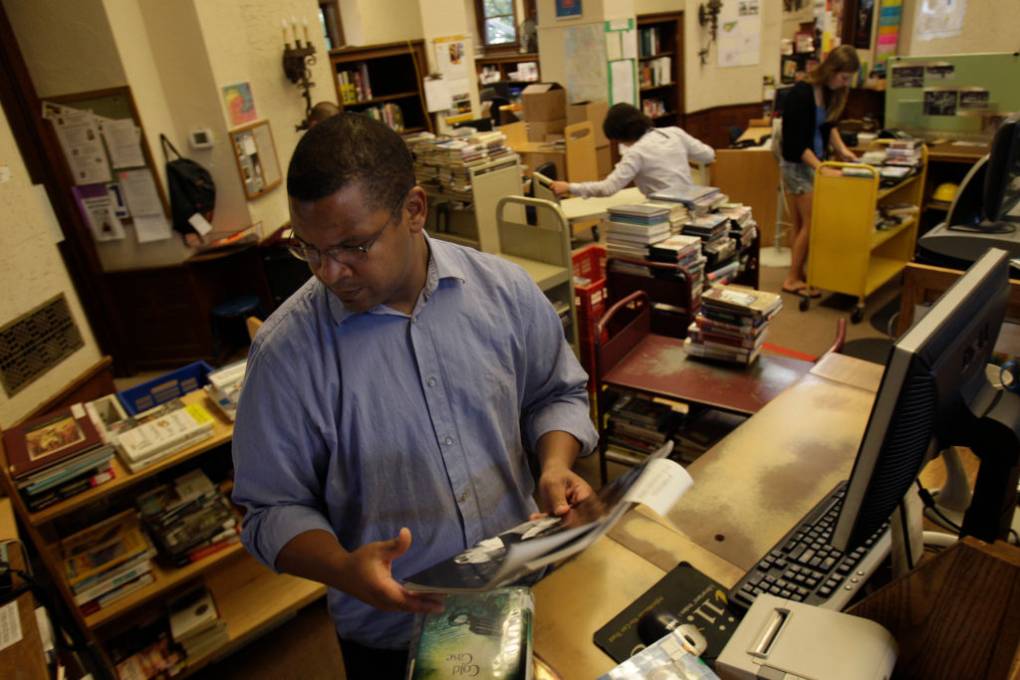
"caption": "A Berkeley Public Library employee at the North Branch library checks in returned books. Berkeley librarians are among the hundreds of city workers who threatened to walk off the job starting Tuesday in a push for higher wages. ",
"credit": "Lea Suzuki/The San Francisco Chronicle via Getty Images",
"altTag": null,
"description": null,
"imgSizes": {
"medium": {
"file": "https://cdn.kqed.org/wp-content/uploads/sites/10/2024/11/GettyImages-1322045845-800x534.jpg",
"width": 800,
"height": 534,
"mimeType": "image/jpeg"
},
"large": {
"file": "https://cdn.kqed.org/wp-content/uploads/sites/10/2024/11/GettyImages-1322045845-1020x680.jpg",
"width": 1020,
"height": 680,
"mimeType": "image/jpeg"
},
"thumbnail": {
"file": "https://cdn.kqed.org/wp-content/uploads/sites/10/2024/11/GettyImages-1322045845-160x107.jpg",
"width": 160,
"height": 107,
"mimeType": "image/jpeg"
},
"post-thumbnail": {
"file": "https://cdn.kqed.org/wp-content/uploads/sites/10/2024/11/GettyImages-1322045845-672x372.jpg",
"width": 672,
"height": 372,
"mimeType": "image/jpeg"
},
"twentyfourteen-full-width": {
"file": "https://cdn.kqed.org/wp-content/uploads/sites/10/2024/11/GettyImages-1322045845-1024x576.jpg",
"width": 1024,
"height": 576,
"mimeType": "image/jpeg"
},
"kqedFullSize": {
"file": "https://cdn.kqed.org/wp-content/uploads/sites/10/2024/11/GettyImages-1322045845.jpg",
"width": 1024,
"height": 683
}
},
"isLoading": false,
"fetchFailed": false
},
"news_12014256": {
"type": "attachments",
"id": "news_12014256",
"meta": {
"index": "attachments_1716263798",
"site": "news",
"id": "12014256",
"found": true
},
"title": "Election 2024 Trump",
"publishDate": 1731530648,
"status": "inherit",
"parent": 12014254,
"modified": 1731709450,
"caption": "Republican presidential nominee former President Donald Trump arrives to speak during a campaign event at Alro Steel on Aug. 29, 2024, in Potterville, Michigan.",
"credit": "Alex Brandon/AP Photo",
"altTag": null,
"description": null,
"imgSizes": {
"medium": {
"file": "https://cdn.kqed.org/wp-content/uploads/sites/10/2024/11/DonaldTrumpLaborAP-800x533.jpg",
"width": 800,
"height": 533,
"mimeType": "image/jpeg"
},
"large": {
"file": "https://cdn.kqed.org/wp-content/uploads/sites/10/2024/11/DonaldTrumpLaborAP-1020x680.jpg",
"width": 1020,
"height": 680,
"mimeType": "image/jpeg"
},
"thumbnail": {
"file": "https://cdn.kqed.org/wp-content/uploads/sites/10/2024/11/DonaldTrumpLaborAP-160x107.jpg",
"width": 160,
"height": 107,
"mimeType": "image/jpeg"
},
"1536x1536": {
"file": "https://cdn.kqed.org/wp-content/uploads/sites/10/2024/11/DonaldTrumpLaborAP-1536x1024.jpg",
"width": 1536,
"height": 1024,
"mimeType": "image/jpeg"
},
"post-thumbnail": {
"file": "https://cdn.kqed.org/wp-content/uploads/sites/10/2024/11/DonaldTrumpLaborAP-672x372.jpg",
"width": 672,
"height": 372,
"mimeType": "image/jpeg"
},
"twentyfourteen-full-width": {
"file": "https://cdn.kqed.org/wp-content/uploads/sites/10/2024/11/DonaldTrumpLaborAP-1038x576.jpg",
"width": 1038,
"height": 576,
"mimeType": "image/jpeg"
},
"full-width": {
"file": "https://cdn.kqed.org/wp-content/uploads/sites/10/2024/11/DonaldTrumpLaborAP-1920x1280.jpg",
"width": 1920,
"height": 1280,
"mimeType": "image/jpeg"
},
"kqedFullSize": {
"file": "https://cdn.kqed.org/wp-content/uploads/sites/10/2024/11/DonaldTrumpLaborAP.jpg",
"width": 2000,
"height": 1333
}
},
"isLoading": false,
"fetchFailed": false
},
"news_12014597": {
"type": "attachments",
"id": "news_12014597",
"meta": {
"index": "attachments_1716263798",
"site": "news",
"id": "12014597",
"found": true
},
"title": "102824-ValleyBuild-Fresno-LV_17 copy",
"publishDate": 1731698525,
"status": "inherit",
"parent": 12014595,
"modified": 1731698555,
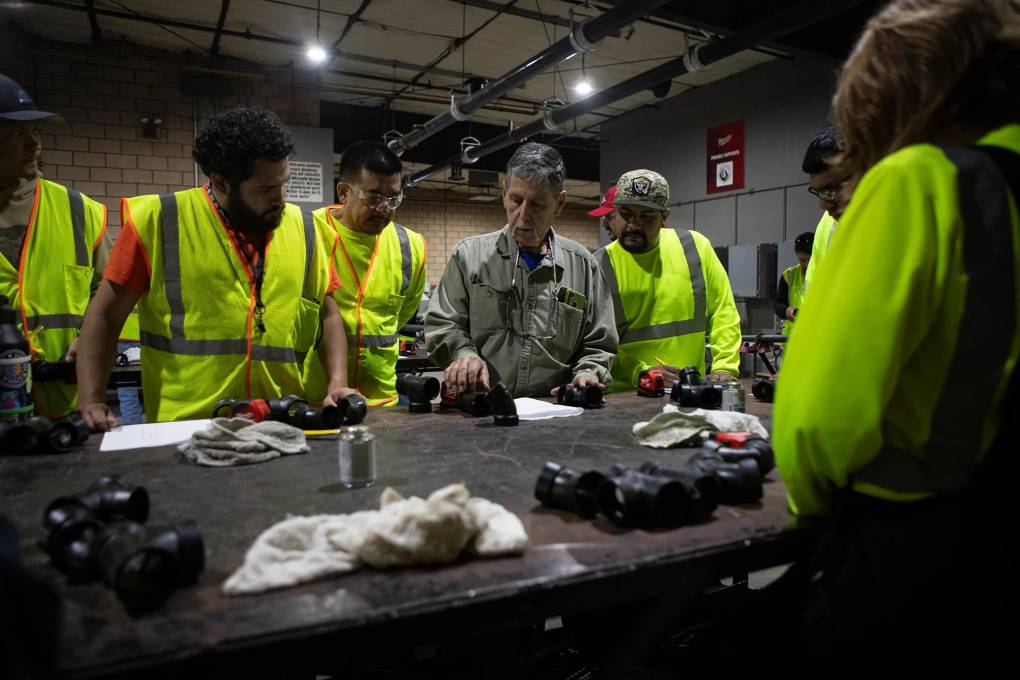
"caption": "Instructor Tony Flores shows students in the ValleyBuild program how to measure and cut a pipe during a lesson in a workshop at the Fresno Area Pipe Trades Training Center in Fresno on Oct. 28, 2024. ValleyBuild is a pre-apprenticeship program that helps people in the Central Valley get into the skilled trades and ride the wave of upcoming infrastructure projects.",
"credit": "Larry Valenzuela/CalMatters/CatchLight Local",
"altTag": null,
"description": null,
"imgSizes": {
"medium": {
"file": "https://cdn.kqed.org/wp-content/uploads/sites/10/2024/11/102824-ValleyBuild-Fresno-LV_17-copy-800x533.jpg",
"width": 800,
"height": 533,
"mimeType": "image/jpeg"
},
"large": {
"file": "https://cdn.kqed.org/wp-content/uploads/sites/10/2024/11/102824-ValleyBuild-Fresno-LV_17-copy-1020x680.jpg",
"width": 1020,
"height": 680,
"mimeType": "image/jpeg"
},
"thumbnail": {
"file": "https://cdn.kqed.org/wp-content/uploads/sites/10/2024/11/102824-ValleyBuild-Fresno-LV_17-copy-160x107.jpg",
"width": 160,
"height": 107,
"mimeType": "image/jpeg"
},
"1536x1536": {
"file": "https://cdn.kqed.org/wp-content/uploads/sites/10/2024/11/102824-ValleyBuild-Fresno-LV_17-copy-1536x1024.jpg",
"width": 1536,
"height": 1024,
"mimeType": "image/jpeg"
},
"post-thumbnail": {
"file": "https://cdn.kqed.org/wp-content/uploads/sites/10/2024/11/102824-ValleyBuild-Fresno-LV_17-copy-672x372.jpg",
"width": 672,
"height": 372,
"mimeType": "image/jpeg"
},
"twentyfourteen-full-width": {
"file": "https://cdn.kqed.org/wp-content/uploads/sites/10/2024/11/102824-ValleyBuild-Fresno-LV_17-copy-1038x576.jpg",
"width": 1038,
"height": 576,
"mimeType": "image/jpeg"
},
"full-width": {
"file": "https://cdn.kqed.org/wp-content/uploads/sites/10/2024/11/102824-ValleyBuild-Fresno-LV_17-copy-1920x1280.jpg",
"width": 1920,
"height": 1280,
"mimeType": "image/jpeg"
},
"kqedFullSize": {
"file": "https://cdn.kqed.org/wp-content/uploads/sites/10/2024/11/102824-ValleyBuild-Fresno-LV_17-copy.jpg",
"width": 2000,
"height": 1333
}
},
"isLoading": false,
"fetchFailed": false
}
},
"audioPlayerReducer": {
"postId": "stream_live",
"isPaused": true,
"isPlaying": false,
"pfsActive": false,
"pledgeModalIsOpen": true,
"playerDrawerIsOpen": false,
"liveAudioPlayStartedAt": 0,
"liveAudioPlayContext": ""
},
"authorsReducer": {
"byline_news_12019704": {
"type": "authors",
"id": "byline_news_12019704",
"meta": {
"override": true
},
"slug": "byline_news_12019704",
"name": "\u003ca href=\"https://calmatters.org/author/levi-sumagaysay/\">Levi Sumagaysay\u003c/a> and \u003ca href=\"https://calmatters.org/author/jeanne-kuang/\">Jeanne Kuang\u003c/a>, CalMatters",
"isLoading": false
},
"byline_news_12015489": {
"type": "authors",
"id": "byline_news_12015489",
"meta": {
"override": true
},
"slug": "byline_news_12015489",
"name": "\u003ca href=\"https://calmatters.org/author/levi-sumagaysay/\">Levi Sumagaysay\u003c/a>, CalMatters",
"isLoading": false
},
"byline_news_12015037": {
"type": "authors",
"id": "byline_news_12015037",
"meta": {
"override": true
},
"slug": "byline_news_12015037",
"name": "Samantha Kennedy",
"isLoading": false
},
"byline_news_12014595": {
"type": "authors",
"id": "byline_news_12014595",
"meta": {
"override": true
},
"slug": "byline_news_12014595",
"name": "\u003ca href=\"https://calmatters.org/author/fiona-kelliher/\">Fiona Kelliher\u003c/a>, CalMatters",
"isLoading": false
},
"ecruzguevarra": {
"type": "authors",
"id": "8654",
"meta": {
"index": "authors_1716337520",
"id": "8654",
"found": true
},
"name": "Ericka Cruz Guevarra",
"firstName": "Ericka",
"lastName": "Cruz Guevarra",
"slug": "ecruzguevarra",
"email": "ecruzguevarra@kqed.org",
"display_author_email": true,
"staff_mastheads": [
"news"
],
"title": "Producer, The Bay Podcast",
"bio": "Ericka Cruz Guevarra is host of \u003ca href=\"https://www.kqed.org/podcasts/thebay\">\u003cem>The Bay\u003c/em>\u003c/a> podcast at KQED. Before host, she was the show’s producer. Her work in that capacity includes a three-part reported series on policing in Vallejo, which won a 2020 excellence in journalism award from the Society of Professional Journalists. Ericka has worked as a breaking news reporter at Oregon Public Broadcasting, helped produce the Code Switch podcast, and was KQED’s inaugural Raul Ramirez Diversity Fund intern. She’s also an alumna of NPR’s Next Generation Radio program. Send her an email if you have strong feelings about whether Fairfield and Suisun City are the Bay. Ericka is represented by SAG-AFTRA.",
"avatar": "https://secure.gravatar.com/avatar/accefc1de4bafc7e234b69bcb9b6f6536c130fd84709bc3069ef11a78787e1bb?s=600&d=blank&r=g",
"twitter": "NotoriousECG",
"bluesky": null,
"facebook": null,
"instagram": null,
"linkedin": null,
"sites": [
{
"site": "arts",
"roles": [
"subscriber"
]
},
{
"site": "news",
"roles": [
"editor",
"manage_categories"
]
},
{
"site": "futureofyou",
"roles": [
"subscriber"
]
},
{
"site": "stateofhealth",
"roles": [
"subscriber"
]
},
{
"site": "science",
"roles": [
"editor"
]
},
{
"site": "forum",
"roles": [
"subscriber"
]
}
],
"headData": {
"title": "Ericka Cruz Guevarra | KQED",
"description": "Producer, The Bay Podcast",
"ogImgSrc": "https://secure.gravatar.com/avatar/accefc1de4bafc7e234b69bcb9b6f6536c130fd84709bc3069ef11a78787e1bb?s=600&d=blank&r=g",
"twImgSrc": "https://secure.gravatar.com/avatar/accefc1de4bafc7e234b69bcb9b6f6536c130fd84709bc3069ef11a78787e1bb?s=600&d=blank&r=g"
},
"isLoading": false,
"link": "/author/ecruzguevarra"
},
"fjhabvala": {
"type": "authors",
"id": "8659",
"meta": {
"index": "authors_1716337520",
"id": "8659",
"found": true
},
"name": "Farida Jhabvala Romero",
"firstName": "Farida",
"lastName": "Jhabvala Romero",
"slug": "fjhabvala",
"email": "fjhabvala@kqed.org",
"display_author_email": true,
"staff_mastheads": [
"news"
],
"title": "KQED Contributor",
"bio": "Farida Jhabvala Romero is a Labor Correspondent for KQED. She previously covered immigration. Farida was \u003ca href=\"https://www.ccnma.org/2022-most-influential-latina-journalists\">named\u003c/a> one of the 10 Most Influential Latina Journalists in California in 2022 by the California Chicano News Media Association. Her work has won awards from the Society of Professional Journalists (Northern California), as well as a national and regional Edward M. Murrow Award for the collaborative reporting projects “Dangerous Air” and “Graying California.” Before joining KQED, Farida worked as a producer at Radio Bilingüe, a national public radio network. Farida earned her master’s degree in journalism from Stanford University.",
"avatar": "https://secure.gravatar.com/avatar/f9f022d4e2609741874222a1e9d41f48fea74011aa7c615eef91d9a50c944ebe?s=600&d=blank&r=g",
"twitter": "FaridaJhabvala",
"bluesky": null,
"facebook": null,
"instagram": null,
"linkedin": "https://www.linkedin.com/in/faridajhabvala/",
"sites": [
{
"site": "news",
"roles": [
"editor"
]
},
{
"site": "stateofhealth",
"roles": [
"author"
]
},
{
"site": "liveblog",
"roles": [
"author"
]
}
],
"headData": {
"title": "Farida Jhabvala Romero | KQED",
"description": "KQED Contributor",
"ogImgSrc": "https://secure.gravatar.com/avatar/f9f022d4e2609741874222a1e9d41f48fea74011aa7c615eef91d9a50c944ebe?s=600&d=blank&r=g",
"twImgSrc": "https://secure.gravatar.com/avatar/f9f022d4e2609741874222a1e9d41f48fea74011aa7c615eef91d9a50c944ebe?s=600&d=blank&r=g"
},
"isLoading": false,
"link": "/author/fjhabvala"
},
"lsarah": {
"type": "authors",
"id": "11626",
"meta": {
"index": "authors_1716337520",
"id": "11626",
"found": true
},
"name": "Lakshmi Sarah",
"firstName": "Lakshmi",
"lastName": "Sarah",
"slug": "lsarah",
"email": "lsarah@kqed.org",
"display_author_email": false,
"staff_mastheads": [],
"title": "Digital Producer",
"bio": "Lakshmi Sarah is an educator, author and journalist with a focus on innovative storytelling. She has worked with newspapers, radio and magazines from Ahmedabad, India to Los Angeles, California. She has written and produced for Die Zeit, Global Voices, AJ+, KQED, Fusion Media Group and the New York Times.",
"avatar": "https://secure.gravatar.com/avatar/652dcaecd8b28826fc17a8b2d6bb4e93?s=600&d=blank&r=g",
"twitter": "lakitalki",
"facebook": null,
"instagram": "https://www.instagram.com/laki.talki/",
"linkedin": "https://www.linkedin.com/in/lakisarah/",
"sites": [
{
"site": "arts",
"roles": []
},
{
"site": "news",
"roles": []
},
{
"site": "bayareabites",
"roles": []
},
{
"site": "science",
"roles": []
}
],
"headData": {
"title": "Lakshmi Sarah | KQED",
"description": "Digital Producer",
"ogImgSrc": "https://secure.gravatar.com/avatar/652dcaecd8b28826fc17a8b2d6bb4e93?s=600&d=blank&r=g",
"twImgSrc": "https://secure.gravatar.com/avatar/652dcaecd8b28826fc17a8b2d6bb4e93?s=600&d=blank&r=g"
},
"isLoading": false,
"link": "/author/lsarah"
},
"amontecillo": {
"type": "authors",
"id": "11649",
"meta": {
"index": "authors_1716337520",
"id": "11649",
"found": true
},
"name": "Alan Montecillo",
"firstName": "Alan",
"lastName": "Montecillo",
"slug": "amontecillo",
"email": "amontecillo@kqed.org",
"display_author_email": false,
"staff_mastheads": [
"news"
],
"title": "KQED Contributor",
"bio": "Alan Montecillo is the senior editor of \u003cem>\u003ca href=\"http://kqed.org/thebay\">The Bay\u003c/a>, \u003c/em> KQED's local news podcast. Before moving to the Bay Area, he worked as a senior talk show producer for WILL in Champaign-Urbana, Illinois and at Oregon Public Broadcasting in Portland, Oregon. He has won journalism awards from the Society of Professional Journalists Northern California, the Public Media Journalists Association, The Signal Awards, and has also received a regional Edward R. Murrow award. Alan is a Filipino American from Hong Kong and a graduate of Reed College.",
"avatar": "https://secure.gravatar.com/avatar/268f53a2066899ea9efdd8a5900218b17c822d9862cbc9326cccec53ef41d349?s=600&d=blank&r=g",
"twitter": "alanmontecillo",
"bluesky": null,
"facebook": null,
"instagram": null,
"linkedin": null,
"sites": [
{
"site": "",
"roles": [
"editor"
]
},
{
"site": "news",
"roles": [
"editor",
"manage_categories"
]
}
],
"headData": {
"title": "Alan Montecillo | KQED",
"description": "KQED Contributor",
"ogImgSrc": "https://secure.gravatar.com/avatar/268f53a2066899ea9efdd8a5900218b17c822d9862cbc9326cccec53ef41d349?s=600&d=blank&r=g",
"twImgSrc": "https://secure.gravatar.com/avatar/268f53a2066899ea9efdd8a5900218b17c822d9862cbc9326cccec53ef41d349?s=600&d=blank&r=g"
},
"isLoading": false,
"link": "/author/amontecillo"
},
"jessicakariisa": {
"type": "authors",
"id": "11831",
"meta": {
"index": "authors_1716337520",
"id": "11831",
"found": true
},
"name": "Jessica Kariisa",
"firstName": "Jessica",
"lastName": "Kariisa",
"slug": "jessicakariisa",
"email": "jkariisa@kqed.org",
"display_author_email": false,
"staff_mastheads": [],
"title": "Producer, The Bay",
"bio": "Jessica Kariisa is the producer of The Bay. She first joined KQED as an intern for The California Report Magazine, after which she became an on-call producer. She reported a Bay Curious episode on the use of rap lyrics in criminal trials which won a Society of Professional Journalists award in 2023 for Excellence in Features Journalism and the 2023 Signal Award for Best Conversation Starter. She’s worked on podcasts for Snap Judgment and American Public Media. Before embarking on her audio career, she was a music journalist.\r\n\r\nJessica Kariisa is represented by SAG-AFTRA.",
"avatar": "https://secure.gravatar.com/avatar/522e97b28ac0b3d411621c0fde8f3419c7b71ea2c5c262c57c4bb600963f328c?s=600&d=blank&r=g",
"twitter": null,
"bluesky": null,
"facebook": null,
"instagram": null,
"linkedin": null,
"sites": [
{
"site": "arts",
"roles": [
"author"
]
},
{
"site": "news",
"roles": [
"editor",
"manage_categories"
]
}
],
"headData": {
"title": "Jessica Kariisa | KQED",
"description": "Producer, The Bay",
"ogImgSrc": "https://secure.gravatar.com/avatar/522e97b28ac0b3d411621c0fde8f3419c7b71ea2c5c262c57c4bb600963f328c?s=600&d=blank&r=g",
"twImgSrc": "https://secure.gravatar.com/avatar/522e97b28ac0b3d411621c0fde8f3419c7b71ea2c5c262c57c4bb600963f328c?s=600&d=blank&r=g"
},
"isLoading": false,
"link": "/author/jessicakariisa"
},
"kdebenedetti": {
"type": "authors",
"id": "11913",
"meta": {
"index": "authors_1716337520",
"id": "11913",
"found": true
},
"name": "Katie DeBenedetti",
"firstName": "Katie",
"lastName": "DeBenedetti",
"slug": "kdebenedetti",
"email": "kdebenedetti@kqed.org",
"display_author_email": false,
"staff_mastheads": [
"news",
"science"
],
"title": "KQED Contributor",
"bio": "Katie DeBenedetti is a digital reporter covering daily news for the Express Desk. Prior to joining KQED as a culture reporting intern in January 2024, she covered education and city government for the Napa Valley Register.",
"avatar": "https://secure.gravatar.com/avatar/6e31073cb8f7e4214ab03f42771d0f45?s=600&d=blank&r=g",
"twitter": null,
"facebook": null,
"instagram": null,
"linkedin": null,
"sites": [
{
"site": "news",
"roles": [
"author"
]
},
{
"site": "science",
"roles": [
"author"
]
},
{
"site": "liveblog",
"roles": [
"author"
]
}
],
"headData": {
"title": "Katie DeBenedetti | KQED",
"description": "KQED Contributor",
"ogImgSrc": "https://secure.gravatar.com/avatar/6e31073cb8f7e4214ab03f42771d0f45?s=600&d=blank&r=g",
"twImgSrc": "https://secure.gravatar.com/avatar/6e31073cb8f7e4214ab03f42771d0f45?s=600&d=blank&r=g"
},
"isLoading": false,
"link": "/author/kdebenedetti"
},
"gzada": {
"type": "authors",
"id": "11929",
"meta": {
"index": "authors_1716337520",
"id": "11929",
"found": true
},
"name": "Gilare Zada",
"firstName": "Gilare",
"lastName": "Zada",
"slug": "gzada",
"email": "gzada@kqed.org",
"display_author_email": true,
"staff_mastheads": [
"news"
],
"title": null,
"bio": "Gilare Zada is a Kurdish-American from San Diego, CA. Storytelling, fitness, and binge reading are some of her passions outside of news reporting. Her work has appeared in Mission Local, the Peninsula Press, the San Francisco Press Club, and more. She also writes as a class correspondent for the Stanford Magazine - go Card!",
"avatar": "https://secure.gravatar.com/avatar/33a75f2b947669a488a805edec3fbf3838c1cedaedda710e983770633b4d6a75?s=600&d=blank&r=g",
"twitter": null,
"bluesky": null,
"facebook": null,
"instagram": null,
"linkedin": null,
"sites": [
{
"site": "",
"roles": [
"editor"
]
},
{
"site": "arts",
"roles": [
"editor"
]
},
{
"site": "news",
"roles": [
"administrator"
]
},
{
"site": "science",
"roles": [
"editor"
]
}
],
"headData": {
"title": "Gilare Zada | KQED",
"description": null,
"ogImgSrc": "https://secure.gravatar.com/avatar/33a75f2b947669a488a805edec3fbf3838c1cedaedda710e983770633b4d6a75?s=600&d=blank&r=g",
"twImgSrc": "https://secure.gravatar.com/avatar/33a75f2b947669a488a805edec3fbf3838c1cedaedda710e983770633b4d6a75?s=600&d=blank&r=g"
},
"isLoading": false,
"link": "/author/gzada"
}
},
"pagesReducer": {
"news_tag_labor": {
"type": "terms",
"id": "news_19904",
"meta": {
"index": "terms_1716263798",
"site": "news",
"id": "19904",
"score": 8.558012
},
"name": "Labor",
"slug": "labor",
"taxonomy": "tag",
"description": null,
"featImg": null,
"headData": {
"title": "Labor | KQED News",
"description": null,
"ogTitle": null,
"ogDescription": null,
"ogImgId": null,
"twTitle": null,
"twDescription": null,
"twImgId": null
},
"ttid": 19921,
"isLoading": false,
"title": "Labor",
"pageMeta": {
"site": "news",
"WpPageTemplate": "page-topic-editorial",
"currentPage": 28
},
"blocks": [
{
"blockName": "kqed/post-list",
"attrs": {
"layout": "cardArticle2",
"query": "posts/news?tag=labor",
"seeMore": false,
"paginated": true,
"page": 28
}
},
{
"blockName": "kqed/ad"
}
]
}
},
"pfsSessionReducer": {},
"postsReducer": {
"stream_live": {
"type": "live",
"id": "stream_live",
"audioUrl": "https://streams.kqed.org/kqedradio",
"title": "Live Stream",
"excerpt": "Live Stream information currently unavailable.",
"link": "/radio",
"featImg": "",
"label": {
"name": "KQED Live",
"link": "/"
}
},
"stream_kqedNewscast": {
"type": "posts",
"id": "stream_kqedNewscast",
"audioUrl": "https://www.kqed.org/.stream/anon/radio/RDnews/newscast.mp3?_=1",
"title": "KQED Newscast",
"featImg": "",
"label": {
"name": "88.5 FM",
"link": "/"
}
},
"news_12019704": {
"type": "posts",
"id": "news_12019704",
"meta": {
"index": "posts_1716263798",
"site": "news",
"id": "12019704",
"score": null,
"sort": [
1735041619000
]
},
"guestAuthors": [],
"slug": "why-amazon-and-starbucks-workers-are-striking-now-and-what-it-means-for-labor-under-trump",
"title": "Why Amazon and Starbucks Workers Are Striking Now, and What It Means for Labor Under Trump",
"publishDate": 1735041619,
"format": "standard",
"headTitle": "Why Amazon and Starbucks Workers Are Striking Now, and What It Means for Labor Under Trump | KQED",
"labelTerm": {
"site": "news"
},
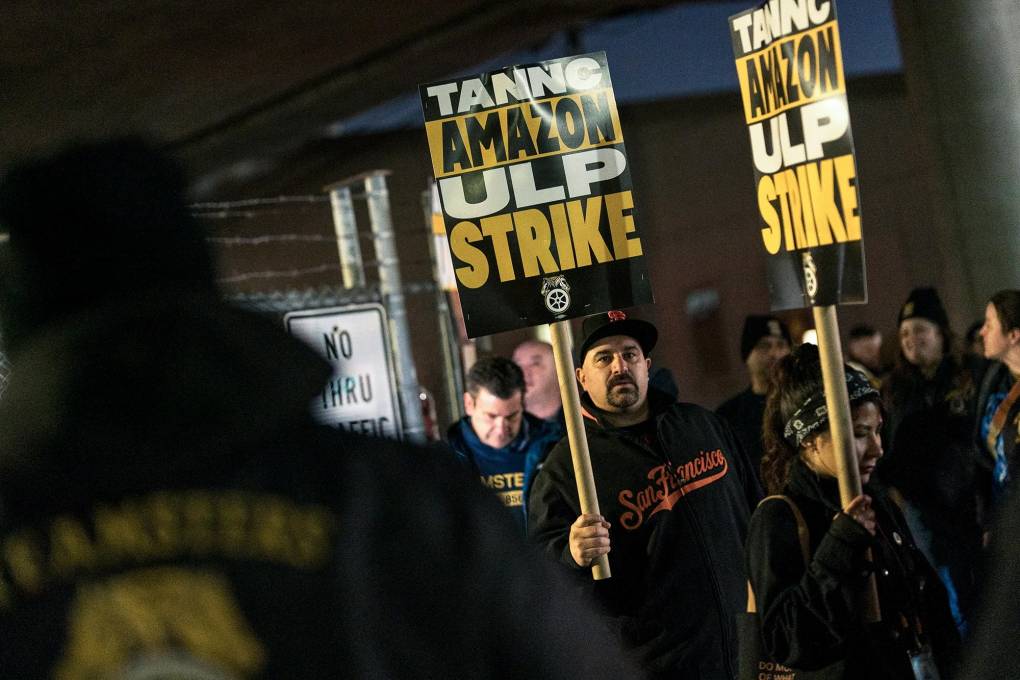
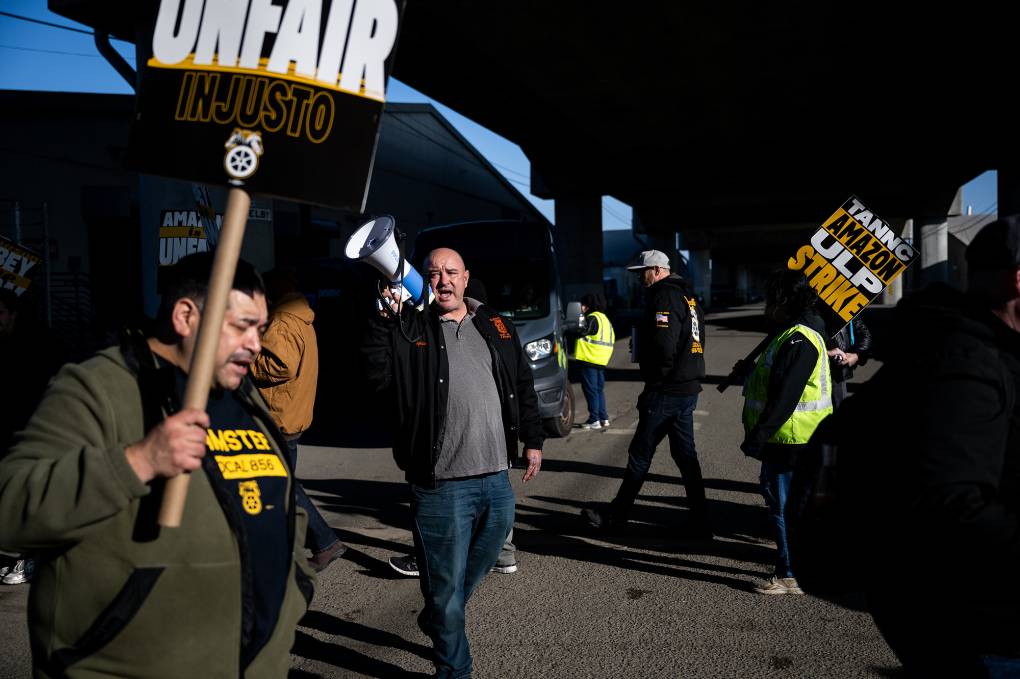
"content": "\u003cp>Striking Amazon and Starbucks workers are on picket lines instead of delivering last-minute presents or handing customers Christmas-themed drinks, as their unions pressure the companies during the holidays — and before a less union-friendly president is sworn into office.\u003c/p>\n\u003cp>The workers accuse their employers of refusing to recognize their unions or to bargain in good faith. They have been organizing for more than four years but have yet to land a contract. Some have filed complaints with the National Labor Relations Board, alleging union-busting behavior by the companies, including coercion, threats, discipline and firings. Amazon and Starbucks have also filed complaints against the unions, accusing them of coercion, violence and illegal strikes.\u003c/p>\n\u003cp>Soon, the board will likely be less sympathetic to unions after the Senate \u003ca href=\"https://www.cbsnews.com/news/senate-nlrb-vote-repbulicans-lauren-mcferran/\">earlier this month failed\u003c/a> to extend the term of then-Chairperson Lauren McFerran. The five-member board had three Democratic members including McFerran. President-elect Donald Trump will have the chance to appoint two more Republicans.\u003c/p>\n\u003cp>[ad fullwidth]\u003c/p>\n\u003cp>“The Trump NLRB the first time around was the most right-wing, anti-labor NLRB in the entire nearly 90-year history of the board,” said William Gould, a former chairperson of the National Labor Relations Board during President Bill Clinton’s administration and a professor emeritus at Stanford University.\u003c/p>\n\u003cp>Gould said he doesn’t remember “any board so eager and activist to reverse what had gone on before.” Because of that, he expects that “most of what the Biden board has done will be overturned by the Trump board,” he said.\u003c/p>\n\u003cp>Karoline Leavitt, a spokesperson for the Trump transition team, did not respond to specific questions about the board. In an email, she instead described the president-elect as a champion of workers, writing, “The working men and women of America have been left behind, which is why President Trump and Republicans saw historic support from working class voters. President Trump will keep his promise to the hardworking men and women of America by bringing jobs back home, restoring American manufacturing, slashing inflation, and cutting taxes.”\u003c/p>\n\u003cp>An \u003ca href=\"https://taxfoundation.org/research/all/federal/donald-trump-tax-plan-2024/\">analysis of Trump’s policies\u003c/a> by the nonpartisan Tax Foundation found his proposed tax cuts would disproportionately benefit higher-income taxpayers, while his planned \u003ca href=\"https://calmatters.org/economy/2024/11/trump-tariffs-california-impact/\">tariffs\u003c/a> would fall hardest on the middle and working class.\u003c/p>\n\u003cp>Labor leaders said a reversal of Biden-era labor board decisions does not bode well for their unionizing efforts — many of them \u003ca href=\"https://perfectunion.us/map-where-are-starbucks-workers-unionizing/\">in, or started in, California\u003c/a> — though they added that they do not expect workers and unions to quit trying.\u003c/p>\n\u003cp>California unions are preparing to ask state legislators and Gov. Gavin Newsom to toughen up the state’s own policies as “insurance” against potentially weaker federal rules. The California Labor Federation plans to revive a long-shot bill Newsom vetoed last year that would have allowed workers to receive unemployment benefits if they strike. They also will push state lawmakers to protect private-sector unionization, in the event that right is eroded in federal law.\u003c/p>\n\u003cp>“We want to make sure we can preserve what we have,” said Labor Federation leader Lorena Gonzalez.\u003c/p>\n\u003cp>Under the Biden administration, the NLRB’s director has taken more aggressive action to enforce laws that require employers to bargain in good faith and prohibit retaliation, and taken a series of legal positions favorable to organizing workers.\u003c/p>\n\u003cp>They include what John Logan, professor and chairperson of Labor and Employment Studies at San Francisco State University, said was “the most important action” of the board in the Biden years: \u003ca href=\"https://www.nlrb.gov/news-outreach/news-story/board-issues-decision-announcing-new-framework-for-union-representation\">a 2023 decision that established a new standard\u003c/a> on when employers must bargain with unions without a representation election. If a majority of employees vote to unionize, employers must recognize and bargain with the union, or else seek an election within 14 days. If employers engage in unfair labor practices during the process, the board could order them to bargain with the union.\u003c/p>\n\u003cp>He expects the board to reverse that ruling under Trump.\u003c/p>\n\u003ch2>Issues at Amazon\u003c/h2>\n\u003cp>Already, companies have been resisting that decision.\u003c/p>\n\u003cp>Amazon workers are striking in part to try to force the company to bargain with some of its subcontracted workers. They cite a Los Angeles regional NLRB director’s August 2024 finding that the e-commerce giant was a “joint employer” of a group of delivery drivers, who work for a nationwide network of contractors the company calls “delivery service partners.” That means the finding holds Amazon legally responsible for the wages, working conditions and treatment of the subcontracted workers. If the determination withstands lengthy legal challenges, that could open the door for the workers to bargain directly with Amazon.\u003c/p>\n\u003cp>The regional director’s finding stemmed from a group of Palmdale drivers who worked for the contractor Battle-Tested Strategies and who became \u003ca href=\"https://www.latimes.com/business/story/2024-09-24/amazon-demands-a-lot-from-its-drivers-now-its-a-two-way-street\">the first Amazon delivery drivers\u003c/a> in the country to unionize in April 2023. Amazon ended its contract with Battle Tested — retaliation, the Teamsters claimed, for the union drive. Amazon denied that, saying it cut the contract over “repeated” breaches by the delivery company, and the regional director dismissed the retaliation claim.\u003c/p>\n\u003cp>But \u003ca href=\"https://apnews.com/article/amazon-nlrb-delivery-drivers-3214680ef8c8b060184964412f378128\">the regulator \u003c/a>said both Amazon and Battle Tested failed to negotiate with the drivers’ union on working conditions, including the effects of the contract termination on the drivers’ jobs. In September, the agency \u003ca href=\"https://www.nlrb.gov/case/31-CA-317349\">filed a complaint \u003c/a>before the labor board trying to force Amazon to bargain; the larger company in turn sued the NLRB director and the board in federal court, seeking to halt any order to bargain and arguing the board itself is unconstitutional.\u003c/p>\n\u003cfigure id=\"attachment_12019707\" class=\"wp-caption aligncenter\" style=\"max-width: 1568px\">\u003cimg loading=\"lazy\" decoding=\"async\" class=\"size-full wp-image-12019707\" src=\"https://cdn.kqed.org/wp-content/uploads/sites/10/2024/12/121924_Amazon_Strike_SF-28-CM-copy.jpg\" alt=\"\" width=\"1568\" height=\"1045\" srcset=\"https://cdn.kqed.org/wp-content/uploads/sites/10/2024/12/121924_Amazon_Strike_SF-28-CM-copy.jpg 1568w, https://cdn.kqed.org/wp-content/uploads/sites/10/2024/12/121924_Amazon_Strike_SF-28-CM-copy-800x533.jpg 800w, https://cdn.kqed.org/wp-content/uploads/sites/10/2024/12/121924_Amazon_Strike_SF-28-CM-copy-1020x680.jpg 1020w, https://cdn.kqed.org/wp-content/uploads/sites/10/2024/12/121924_Amazon_Strike_SF-28-CM-copy-160x107.jpg 160w, https://cdn.kqed.org/wp-content/uploads/sites/10/2024/12/121924_Amazon_Strike_SF-28-CM-copy-1536x1024.jpg 1536w\" sizes=\"auto, (max-width: 1568px) 100vw, 1568px\">\u003cfigcaption class=\"wp-caption-text\">Striking workers temporarily block Amazon delivery vehicles from exiting an Amazon warehouse in the Bayview District in San Francisco on Dec. 19. Amazon workers at multiple facilities across the United States went on strike to fight for a union contract. \u003ccite>(Jungho Kim for CalMatters)\u003c/cite>\u003c/figcaption>\u003c/figure>\n\u003cp>Whether larger companies should be considered employers of the workers of their contractors is an unsettled area of federal labor law that has been repeatedly reversed by different labor relations boards since the Obama administration. It’s another instance in which the current board made it easier to unionize workers but a new board under Trump could very well reverse the decision.\u003c/p>\n\u003cp>Amazon warehouse worker Leah Pensler, 26, helped organize her coworkers at a delivery facility in San Francisco. Pensler, who walked the picket line Thursday, told CalMatters that since more than 100 workers at the facility signed union cards and joined the Teamsters in October, the company has denied they formed a union.\u003c/p>\n\u003cp>Pensler also said “Amazon has worked hard to scare workers by (saying) that with union representation, people may not receive the same working conditions and pay we currently have.” The labor board’s regulators made similar charges in its complaint against Amazon in the Palmdale case.\u003c/p>\n\u003cp>Eileen Hards, a spokesperson for Amazon, said “the Teamsters promise a lot of things that they can’t guarantee.”\u003c/p>\n\u003cp>Hards also called the strikes by the Teamsters illegal. For one thing, she said, Amazon does not consider the delivery drivers on strike to be its employees. And she said the San Francisco facility did not hold a vote, and that “in order to be recognized they have to file with the NLRB,” which those workers did not.\u003c/p>\n\u003cp>But Emily Orlach, a spokesperson for the Teamsters, said that under the new standard established in 2023, Amazon is legally required to negotiate with the workers.\u003c/p>\n\u003cp>Also, Amazon, SpaceX and a few other major corporations that have been accused by the labor board of violating workplace rights have in recent years \u003ca href=\"https://www.npr.org/2024/11/18/nx-s1-5192918/spacex-amazon-nlrb-labor-board-elon-musk\">argued before the federal courts\u003c/a> that the board itself is unconstitutional.\u003c/p>\n\u003cp>The Amazon strike is ongoing.\u003c/p>\n\u003ch2>Issues at Starbucks\u003c/h2>\n\u003cp>Starbucks Workers United member baristas at several stores in different states walked off the job beginning Friday. The union says the strikes are now in 13 states and will spread to more than 300 stores Tuesday, continuing through Christmas Eve.\u003c/p>\n\u003cp>JJ Dizon, a barista in Yuba City, said during a virtual announcement Thursday that she was proud of the progress the union has made in bargaining with Starbucks — that the union was in “the home stretch” of months of negotiations for a contract on behalf of 537 union stores and more than 10,000 workers. The company employed about 211,000 workers in the United States as of September, according to its latest annual financial report.\u003c/p>\n\u003cfigure id=\"attachment_12019708\" class=\"wp-caption aligncenter\" style=\"max-width: 1568px\">\u003cimg loading=\"lazy\" decoding=\"async\" class=\"size-full wp-image-12019708\" src=\"https://cdn.kqed.org/wp-content/uploads/sites/10/2024/12/122024-Starbucks-Strike-DD-AP-01-CM-copy.jpg\" alt=\"\" width=\"1568\" height=\"1045\" srcset=\"https://cdn.kqed.org/wp-content/uploads/sites/10/2024/12/122024-Starbucks-Strike-DD-AP-01-CM-copy.jpg 1568w, https://cdn.kqed.org/wp-content/uploads/sites/10/2024/12/122024-Starbucks-Strike-DD-AP-01-CM-copy-800x533.jpg 800w, https://cdn.kqed.org/wp-content/uploads/sites/10/2024/12/122024-Starbucks-Strike-DD-AP-01-CM-copy-1020x680.jpg 1020w, https://cdn.kqed.org/wp-content/uploads/sites/10/2024/12/122024-Starbucks-Strike-DD-AP-01-CM-copy-160x107.jpg 160w, https://cdn.kqed.org/wp-content/uploads/sites/10/2024/12/122024-Starbucks-Strike-DD-AP-01-CM-copy-1536x1024.jpg 1536w\" sizes=\"auto, (max-width: 1568px) 100vw, 1568px\">\u003cfigcaption class=\"wp-caption-text\">Starbucks workers picket outside of a closed Starbucks in Burbank on Dec. 20, 2024. \u003ccite>(Damian Dovarganes/AP Photo)\u003c/cite>\u003c/figcaption>\u003c/figure>\n\u003cp>But other workers who spoke on the call said the company’s new chief executive, Brian Niccol, took the reins in September and “started to chill bargaining.” They characterized Starbucks’ proposed 2% raises as “insulting.”\u003c/p>\n\u003cp>“The labor movement has reached a tipping point while the CEOs remain in their towers,” Dizon said.[aside label=\"Related Stories\" postID=\"forum_2010101907450,news_12019254,news_12007450\"]Starbucks spokesperson Phil Gee said in an emailed statement ahead of the strike announcement that it was “disappointing” that the union was thinking of striking, considering that the two sides had “reached 30 meaningful agreements on dozens of topics Workers United delegates told us were important to them, including many economic issues.”\u003c/p>\n\u003cp>“If the delegates want to serve the partners they represent, they need to continue the work of negotiating an agreement,” Gee said.\u003c/p>\n\u003cp>Logan, the SF State professor, said that for both the Starbucks and Amazon workers, “this might be their last, best chance to pressure the companies in public before Trump comes into office.”\u003c/p>\n\u003cp>Brandon Dawkins is an officer with Service Employees International Union Local 1021, which has been organizing Starbucks stores in Northern California, 22 of which have voted to unionize so far. Fifty-three stores in the state have taken union-authorization votes since 2022, 37 of which have voted to unionize. He said Starbucks workers have lived through a previous Trump NLRB before, but acknowledged there could be more changes this time around.\u003c/p>\n\u003cp>“We have to continue to organize no matter what,” Dawkins said.\u003c/p>\n\u003ch2>The future of organizing\u003c/h2>\n\u003cp>Among the other things Gould, the former labor board chairperson, said the Trump board will likely reverse is the \u003ca href=\"https://www.insidehighered.com/news/2021/03/15/labor-board-withdraws-planned-rule-against-student-employee-unions\">2021 decision\u003c/a> requiring colleges to treat graduate students as employees, which \u003ca href=\"https://calmatters.org/education/higher-education/college-beat/2023/10/student-workers/\">gives them the right to bargain collectively\u003c/a>.\u003c/p>\n\u003cp>“That won’t eliminate collective bargaining at the universities,” he said. “But it will be a signal to universities to exploit any advantage they have, and to weaken unions that are already there.”\u003c/p>\n\u003cp>Gonzalez of the California Labor Federation said she doesn’t expect a tougher legal landscape to stem a rising tide of union activity.\u003c/p>\n\u003cp>She said the current labor board’s rulings have been “nice to have,” but even under a more worker-friendly administration, it’s been hard for regulators to force large employers such as Amazon and Starbucks to the bargaining table.\u003c/p>\n\u003cp>“It’s not like we had a magic bullet,” she said. The companies “will continue to fight, and yet, workers are still coming together and demanding their rights.”\u003c/p>\n\u003cp>[ad floatright]\u003c/p>\n",
"blocks": [],
"excerpt": "Striking Amazon and Starbucks workers in California and elsewhere have long pushed for union contracts. The Trump administration is unlikely to be on their side.",
"status": "publish",
"parent": 0,
"modified": 1735009313,
"stats": {
"hasAudio": false,
"hasVideo": false,
"hasChartOrMap": false,
"iframeSrcs": [],
"hasGoogleForm": false,
"hasGallery": false,
"hasHearkenModule": false,
"hasPolis": false,
"paragraphCount": 40,
"wordCount": 1915
},
"headData": {
"title": "Why Amazon and Starbucks Workers Are Striking Now, and What It Means for Labor Under Trump | KQED",
"description": "Striking Amazon and Starbucks workers in California and elsewhere have long pushed for union contracts. The Trump administration is unlikely to be on their side.",
"ogTitle": "",
"ogDescription": "",
"ogImgId": "",
"twTitle": "",
"twDescription": "",
"twImgId": "",
"schema": {
"@context": "https://schema.org",
"@type": "NewsArticle",
"headline": "Why Amazon and Starbucks Workers Are Striking Now, and What It Means for Labor Under Trump",
"datePublished": "2024-12-24T04:00:19-08:00",
"dateModified": "2024-12-23T19:01:53-08:00",
"image": "https://cdn.kqed.org/wp-content/uploads/2020/02/KQED-OG-Image@1x.png",
"isAccessibleForFree": "True",
"publisher": {
"@type": "NewsMediaOrganization",
"@id": "https://www.kqed.org/#organization",
"name": "KQED",
"logo": "https://cdn.kqed.org/wp-content/uploads/2020/02/KQED-OG-Image@1x.png",
"url": "https://www.kqed.org",
"sameAs": [
"https://www.facebook.com/KQED",
"https://twitter.com/KQED",
"https://www.instagram.com/kqed/",
"https://www.tiktok.com/@kqedofficial",
"https://www.linkedin.com/company/kqed",
"https://www.youtube.com/channel/UCeC0IOo7i1P_61zVUWbJ4nw"
]
}
}
},
"sticky": false,
"nprByline": "\u003ca href=\"https://calmatters.org/author/levi-sumagaysay/\">Levi Sumagaysay\u003c/a> and \u003ca href=\"https://calmatters.org/author/jeanne-kuang/\">Jeanne Kuang\u003c/a>, CalMatters",
"excludeFromSiteSearch": "Include",
"showOnAuthorArchivePages": "No",
"articleAge": "0",
"path": "/news/12019704/why-amazon-and-starbucks-workers-are-striking-now-and-what-it-means-for-labor-under-trump",
"audioTrackLength": null,
"parsedContent": [
{
"type": "contentString",
"content": "\u003cdiv class=\"post-body\">\u003cp>\u003cp>Striking Amazon and Starbucks workers are on picket lines instead of delivering last-minute presents or handing customers Christmas-themed drinks, as their unions pressure the companies during the holidays — and before a less union-friendly president is sworn into office.\u003c/p>\n\u003cp>The workers accuse their employers of refusing to recognize their unions or to bargain in good faith. They have been organizing for more than four years but have yet to land a contract. Some have filed complaints with the National Labor Relations Board, alleging union-busting behavior by the companies, including coercion, threats, discipline and firings. Amazon and Starbucks have also filed complaints against the unions, accusing them of coercion, violence and illegal strikes.\u003c/p>\n\u003cp>Soon, the board will likely be less sympathetic to unions after the Senate \u003ca href=\"https://www.cbsnews.com/news/senate-nlrb-vote-repbulicans-lauren-mcferran/\">earlier this month failed\u003c/a> to extend the term of then-Chairperson Lauren McFerran. The five-member board had three Democratic members including McFerran. President-elect Donald Trump will have the chance to appoint two more Republicans.\u003c/p>\n\u003cp>\u003c/p>\u003c/div>",
"attributes": {
"named": {},
"numeric": []
}
},
{
"type": "component",
"content": "",
"name": "ad",
"attributes": {
"named": {
"label": "fullwidth"
},
"numeric": [
"fullwidth"
]
}
},
{
"type": "contentString",
"content": "\u003cdiv class=\"post-body\">\u003cp>\u003c/p>\n\u003cp>“The Trump NLRB the first time around was the most right-wing, anti-labor NLRB in the entire nearly 90-year history of the board,” said William Gould, a former chairperson of the National Labor Relations Board during President Bill Clinton’s administration and a professor emeritus at Stanford University.\u003c/p>\n\u003cp>Gould said he doesn’t remember “any board so eager and activist to reverse what had gone on before.” Because of that, he expects that “most of what the Biden board has done will be overturned by the Trump board,” he said.\u003c/p>\n\u003cp>Karoline Leavitt, a spokesperson for the Trump transition team, did not respond to specific questions about the board. In an email, she instead described the president-elect as a champion of workers, writing, “The working men and women of America have been left behind, which is why President Trump and Republicans saw historic support from working class voters. President Trump will keep his promise to the hardworking men and women of America by bringing jobs back home, restoring American manufacturing, slashing inflation, and cutting taxes.”\u003c/p>\n\u003cp>An \u003ca href=\"https://taxfoundation.org/research/all/federal/donald-trump-tax-plan-2024/\">analysis of Trump’s policies\u003c/a> by the nonpartisan Tax Foundation found his proposed tax cuts would disproportionately benefit higher-income taxpayers, while his planned \u003ca href=\"https://calmatters.org/economy/2024/11/trump-tariffs-california-impact/\">tariffs\u003c/a> would fall hardest on the middle and working class.\u003c/p>\n\u003cp>Labor leaders said a reversal of Biden-era labor board decisions does not bode well for their unionizing efforts — many of them \u003ca href=\"https://perfectunion.us/map-where-are-starbucks-workers-unionizing/\">in, or started in, California\u003c/a> — though they added that they do not expect workers and unions to quit trying.\u003c/p>\n\u003cp>California unions are preparing to ask state legislators and Gov. Gavin Newsom to toughen up the state’s own policies as “insurance” against potentially weaker federal rules. The California Labor Federation plans to revive a long-shot bill Newsom vetoed last year that would have allowed workers to receive unemployment benefits if they strike. They also will push state lawmakers to protect private-sector unionization, in the event that right is eroded in federal law.\u003c/p>\n\u003cp>“We want to make sure we can preserve what we have,” said Labor Federation leader Lorena Gonzalez.\u003c/p>\n\u003cp>Under the Biden administration, the NLRB’s director has taken more aggressive action to enforce laws that require employers to bargain in good faith and prohibit retaliation, and taken a series of legal positions favorable to organizing workers.\u003c/p>\n\u003cp>They include what John Logan, professor and chairperson of Labor and Employment Studies at San Francisco State University, said was “the most important action” of the board in the Biden years: \u003ca href=\"https://www.nlrb.gov/news-outreach/news-story/board-issues-decision-announcing-new-framework-for-union-representation\">a 2023 decision that established a new standard\u003c/a> on when employers must bargain with unions without a representation election. If a majority of employees vote to unionize, employers must recognize and bargain with the union, or else seek an election within 14 days. If employers engage in unfair labor practices during the process, the board could order them to bargain with the union.\u003c/p>\n\u003cp>He expects the board to reverse that ruling under Trump.\u003c/p>\n\u003ch2>Issues at Amazon\u003c/h2>\n\u003cp>Already, companies have been resisting that decision.\u003c/p>\n\u003cp>Amazon workers are striking in part to try to force the company to bargain with some of its subcontracted workers. They cite a Los Angeles regional NLRB director’s August 2024 finding that the e-commerce giant was a “joint employer” of a group of delivery drivers, who work for a nationwide network of contractors the company calls “delivery service partners.” That means the finding holds Amazon legally responsible for the wages, working conditions and treatment of the subcontracted workers. If the determination withstands lengthy legal challenges, that could open the door for the workers to bargain directly with Amazon.\u003c/p>\n\u003cp>The regional director’s finding stemmed from a group of Palmdale drivers who worked for the contractor Battle-Tested Strategies and who became \u003ca href=\"https://www.latimes.com/business/story/2024-09-24/amazon-demands-a-lot-from-its-drivers-now-its-a-two-way-street\">the first Amazon delivery drivers\u003c/a> in the country to unionize in April 2023. Amazon ended its contract with Battle Tested — retaliation, the Teamsters claimed, for the union drive. Amazon denied that, saying it cut the contract over “repeated” breaches by the delivery company, and the regional director dismissed the retaliation claim.\u003c/p>\n\u003cp>But \u003ca href=\"https://apnews.com/article/amazon-nlrb-delivery-drivers-3214680ef8c8b060184964412f378128\">the regulator \u003c/a>said both Amazon and Battle Tested failed to negotiate with the drivers’ union on working conditions, including the effects of the contract termination on the drivers’ jobs. In September, the agency \u003ca href=\"https://www.nlrb.gov/case/31-CA-317349\">filed a complaint \u003c/a>before the labor board trying to force Amazon to bargain; the larger company in turn sued the NLRB director and the board in federal court, seeking to halt any order to bargain and arguing the board itself is unconstitutional.\u003c/p>\n\u003cfigure id=\"attachment_12019707\" class=\"wp-caption aligncenter\" style=\"max-width: 1568px\">\u003cimg loading=\"lazy\" decoding=\"async\" class=\"size-full wp-image-12019707\" src=\"https://cdn.kqed.org/wp-content/uploads/sites/10/2024/12/121924_Amazon_Strike_SF-28-CM-copy.jpg\" alt=\"\" width=\"1568\" height=\"1045\" srcset=\"https://cdn.kqed.org/wp-content/uploads/sites/10/2024/12/121924_Amazon_Strike_SF-28-CM-copy.jpg 1568w, https://cdn.kqed.org/wp-content/uploads/sites/10/2024/12/121924_Amazon_Strike_SF-28-CM-copy-800x533.jpg 800w, https://cdn.kqed.org/wp-content/uploads/sites/10/2024/12/121924_Amazon_Strike_SF-28-CM-copy-1020x680.jpg 1020w, https://cdn.kqed.org/wp-content/uploads/sites/10/2024/12/121924_Amazon_Strike_SF-28-CM-copy-160x107.jpg 160w, https://cdn.kqed.org/wp-content/uploads/sites/10/2024/12/121924_Amazon_Strike_SF-28-CM-copy-1536x1024.jpg 1536w\" sizes=\"auto, (max-width: 1568px) 100vw, 1568px\">\u003cfigcaption class=\"wp-caption-text\">Striking workers temporarily block Amazon delivery vehicles from exiting an Amazon warehouse in the Bayview District in San Francisco on Dec. 19. Amazon workers at multiple facilities across the United States went on strike to fight for a union contract. \u003ccite>(Jungho Kim for CalMatters)\u003c/cite>\u003c/figcaption>\u003c/figure>\n\u003cp>Whether larger companies should be considered employers of the workers of their contractors is an unsettled area of federal labor law that has been repeatedly reversed by different labor relations boards since the Obama administration. It’s another instance in which the current board made it easier to unionize workers but a new board under Trump could very well reverse the decision.\u003c/p>\n\u003cp>Amazon warehouse worker Leah Pensler, 26, helped organize her coworkers at a delivery facility in San Francisco. Pensler, who walked the picket line Thursday, told CalMatters that since more than 100 workers at the facility signed union cards and joined the Teamsters in October, the company has denied they formed a union.\u003c/p>\n\u003cp>Pensler also said “Amazon has worked hard to scare workers by (saying) that with union representation, people may not receive the same working conditions and pay we currently have.” The labor board’s regulators made similar charges in its complaint against Amazon in the Palmdale case.\u003c/p>\n\u003cp>Eileen Hards, a spokesperson for Amazon, said “the Teamsters promise a lot of things that they can’t guarantee.”\u003c/p>\n\u003cp>Hards also called the strikes by the Teamsters illegal. For one thing, she said, Amazon does not consider the delivery drivers on strike to be its employees. And she said the San Francisco facility did not hold a vote, and that “in order to be recognized they have to file with the NLRB,” which those workers did not.\u003c/p>\n\u003cp>But Emily Orlach, a spokesperson for the Teamsters, said that under the new standard established in 2023, Amazon is legally required to negotiate with the workers.\u003c/p>\n\u003cp>Also, Amazon, SpaceX and a few other major corporations that have been accused by the labor board of violating workplace rights have in recent years \u003ca href=\"https://www.npr.org/2024/11/18/nx-s1-5192918/spacex-amazon-nlrb-labor-board-elon-musk\">argued before the federal courts\u003c/a> that the board itself is unconstitutional.\u003c/p>\n\u003cp>The Amazon strike is ongoing.\u003c/p>\n\u003ch2>Issues at Starbucks\u003c/h2>\n\u003cp>Starbucks Workers United member baristas at several stores in different states walked off the job beginning Friday. The union says the strikes are now in 13 states and will spread to more than 300 stores Tuesday, continuing through Christmas Eve.\u003c/p>\n\u003cp>JJ Dizon, a barista in Yuba City, said during a virtual announcement Thursday that she was proud of the progress the union has made in bargaining with Starbucks — that the union was in “the home stretch” of months of negotiations for a contract on behalf of 537 union stores and more than 10,000 workers. The company employed about 211,000 workers in the United States as of September, according to its latest annual financial report.\u003c/p>\n\u003cfigure id=\"attachment_12019708\" class=\"wp-caption aligncenter\" style=\"max-width: 1568px\">\u003cimg loading=\"lazy\" decoding=\"async\" class=\"size-full wp-image-12019708\" src=\"https://cdn.kqed.org/wp-content/uploads/sites/10/2024/12/122024-Starbucks-Strike-DD-AP-01-CM-copy.jpg\" alt=\"\" width=\"1568\" height=\"1045\" srcset=\"https://cdn.kqed.org/wp-content/uploads/sites/10/2024/12/122024-Starbucks-Strike-DD-AP-01-CM-copy.jpg 1568w, https://cdn.kqed.org/wp-content/uploads/sites/10/2024/12/122024-Starbucks-Strike-DD-AP-01-CM-copy-800x533.jpg 800w, https://cdn.kqed.org/wp-content/uploads/sites/10/2024/12/122024-Starbucks-Strike-DD-AP-01-CM-copy-1020x680.jpg 1020w, https://cdn.kqed.org/wp-content/uploads/sites/10/2024/12/122024-Starbucks-Strike-DD-AP-01-CM-copy-160x107.jpg 160w, https://cdn.kqed.org/wp-content/uploads/sites/10/2024/12/122024-Starbucks-Strike-DD-AP-01-CM-copy-1536x1024.jpg 1536w\" sizes=\"auto, (max-width: 1568px) 100vw, 1568px\">\u003cfigcaption class=\"wp-caption-text\">Starbucks workers picket outside of a closed Starbucks in Burbank on Dec. 20, 2024. \u003ccite>(Damian Dovarganes/AP Photo)\u003c/cite>\u003c/figcaption>\u003c/figure>\n\u003cp>But other workers who spoke on the call said the company’s new chief executive, Brian Niccol, took the reins in September and “started to chill bargaining.” They characterized Starbucks’ proposed 2% raises as “insulting.”\u003c/p>\n\u003cp>“The labor movement has reached a tipping point while the CEOs remain in their towers,” Dizon said.\u003c/p>\u003c/div>",
"attributes": {
"named": {},
"numeric": []
}
},
{
"type": "component",
"content": "",
"name": "aside",
"attributes": {
"named": {
"label": "Related Stories ",
"postid": "forum_2010101907450,news_12019254,news_12007450"
},
"numeric": []
}
},
{
"type": "contentString",
"content": "\u003cdiv class=\"post-body\">\u003cp>Starbucks spokesperson Phil Gee said in an emailed statement ahead of the strike announcement that it was “disappointing” that the union was thinking of striking, considering that the two sides had “reached 30 meaningful agreements on dozens of topics Workers United delegates told us were important to them, including many economic issues.”\u003c/p>\n\u003cp>“If the delegates want to serve the partners they represent, they need to continue the work of negotiating an agreement,” Gee said.\u003c/p>\n\u003cp>Logan, the SF State professor, said that for both the Starbucks and Amazon workers, “this might be their last, best chance to pressure the companies in public before Trump comes into office.”\u003c/p>\n\u003cp>Brandon Dawkins is an officer with Service Employees International Union Local 1021, which has been organizing Starbucks stores in Northern California, 22 of which have voted to unionize so far. Fifty-three stores in the state have taken union-authorization votes since 2022, 37 of which have voted to unionize. He said Starbucks workers have lived through a previous Trump NLRB before, but acknowledged there could be more changes this time around.\u003c/p>\n\u003cp>“We have to continue to organize no matter what,” Dawkins said.\u003c/p>\n\u003ch2>The future of organizing\u003c/h2>\n\u003cp>Among the other things Gould, the former labor board chairperson, said the Trump board will likely reverse is the \u003ca href=\"https://www.insidehighered.com/news/2021/03/15/labor-board-withdraws-planned-rule-against-student-employee-unions\">2021 decision\u003c/a> requiring colleges to treat graduate students as employees, which \u003ca href=\"https://calmatters.org/education/higher-education/college-beat/2023/10/student-workers/\">gives them the right to bargain collectively\u003c/a>.\u003c/p>\n\u003cp>“That won’t eliminate collective bargaining at the universities,” he said. “But it will be a signal to universities to exploit any advantage they have, and to weaken unions that are already there.”\u003c/p>\n\u003cp>Gonzalez of the California Labor Federation said she doesn’t expect a tougher legal landscape to stem a rising tide of union activity.\u003c/p>\n\u003cp>She said the current labor board’s rulings have been “nice to have,” but even under a more worker-friendly administration, it’s been hard for regulators to force large employers such as Amazon and Starbucks to the bargaining table.\u003c/p>\n\u003cp>“It’s not like we had a magic bullet,” she said. The companies “will continue to fight, and yet, workers are still coming together and demanding their rights.”\u003c/p>\n\u003cp>\u003c/p>\u003c/div>",
"attributes": {
"named": {},
"numeric": []
}
},
{
"type": "component",
"content": "",
"name": "ad",
"attributes": {
"named": {
"label": "floatright"
},
"numeric": [
"floatright"
]
}
},
{
"type": "contentString",
"content": "\u003cdiv class=\"post-body\">\u003cp>\u003c/p>\n\u003c/div>\u003c/p>",
"attributes": {
"named": {},
"numeric": []
}
}
],
"link": "/news/12019704/why-amazon-and-starbucks-workers-are-striking-now-and-what-it-means-for-labor-under-trump",
"authors": [
"byline_news_12019704"
],
"categories": [
"news_34551",
"news_8"
],
"tags": [
"news_1611",
"news_27626",
"news_19904",
"news_24590",
"news_34052",
"news_2559"
],
"featImg": "news_12019706",
"label": "news"
},
"news_12019153": {
"type": "posts",
"id": "news_12019153",
"meta": {
"index": "posts_1716263798",
"site": "news",
"id": "12019153",
"score": null,
"sort": [
1734716468000
]
},
"guestAuthors": [],
"slug": "striking-sf-hotel-workers-reach-a-deal-with-marriott",
"title": "Striking SF Hotel Workers Reach a Deal with Marriott",
"publishDate": 1734716468,
"format": "standard",
"headTitle": "Striking SF Hotel Workers Reach a Deal with Marriott | KQED",
"labelTerm": {
"site": "news"
},
"content": "\u003cp>Workers at several Marriott hotels in \u003ca href=\"https://www.kqed.org/news/tag/san-francisco\">San Francisco\u003c/a> overwhelmingly ratified a new contract deal on Thursday night to end a \u003ca href=\"https://www.kqed.org/news/12011319/sf-hotel-worker-strike-enters-sixth-week-no-deal-in-sight\">monthslong strike\u003c/a>, a hopeful sign for employees at other city hotel brands who remain at the picket line.\u003c/p>\n\u003cp>The four-year agreement with San Francisco’s largest hotel employer includes wage and pension increases, protections against understaffing and no additional health care benefit costs for about 2,000 employees at seven Marriott hotels, according to Anand Singh, lead negotiator for Unite Here Local 2.\u003c/p>\n\u003cp>“This is a home run on all fronts. It’s a fantastic deal, workers are elated,” Singh said. “To achieve that kind of contract in this market —in this economy at this time — is remarkable.”\u003c/p>\n\u003cp>[ad fullwidth]\u003c/p>\n\u003cp>San Francisco’s hospitality industry is struggling to fully rebound from the pandemic and perceptions of homelessness, drug use and crime on the streets. More visitors and convention business is expected next year, though not as much as in 2019.\u003c/p>\n\u003cp>Singh said the deal with Marriott sets a standard for Hilton and Hyatt, which operate hotels where about 1,000 workers remain at the picket line before the holidays.\u003c/p>\n\u003cfigure id=\"attachment_12019121\" class=\"wp-caption aligncenter\" style=\"max-width: 2000px\">\u003cimg loading=\"lazy\" decoding=\"async\" class=\"size-full wp-image-12019121\" src=\"https://cdn.kqed.org/wp-content/uploads/sites/10/2024/12/241219-HotelStrikeAgreement-23-BL.jpg\" alt=\"\" width=\"2000\" height=\"1332\" srcset=\"https://cdn.kqed.org/wp-content/uploads/sites/10/2024/12/241219-HotelStrikeAgreement-23-BL.jpg 2000w, https://cdn.kqed.org/wp-content/uploads/sites/10/2024/12/241219-HotelStrikeAgreement-23-BL-800x533.jpg 800w, https://cdn.kqed.org/wp-content/uploads/sites/10/2024/12/241219-HotelStrikeAgreement-23-BL-1020x679.jpg 1020w, https://cdn.kqed.org/wp-content/uploads/sites/10/2024/12/241219-HotelStrikeAgreement-23-BL-160x107.jpg 160w, https://cdn.kqed.org/wp-content/uploads/sites/10/2024/12/241219-HotelStrikeAgreement-23-BL-1536x1023.jpg 1536w, https://cdn.kqed.org/wp-content/uploads/sites/10/2024/12/241219-HotelStrikeAgreement-23-BL-1920x1279.jpg 1920w\" sizes=\"auto, (max-width: 2000px) 100vw, 2000px\">\u003cfigcaption class=\"wp-caption-text\">Hotel workers with UNITE HERE Local 2 union gather before a vote on whether to end their strike and ratify an agreement for a new contract at the Moscone Center South in San Francisco on Dec. 19, 2024. \u003ccite>(Beth LaBerge/KQED)\u003c/cite>\u003c/figcaption>\u003c/figure>\n\u003cp>“This makes it a very clear thing for those companies,” he said. “It’s now a binary choice for them. It’s up or down. There is a contract in this city. There is no negotiating below that contract.”\u003c/p>\n\u003cp>A Marriott spokesperson said in a statement only that the company is “pleased to have reached a new labor agreement for our valued associates in San Francisco.” This comes as thousands of hotel workers in Honolulu, San Diego and other cities who walked off the job in recent months have succeeded in signing contracts with similar worker demands.\u003c/p>\n\u003cp>Representatives with Hilton and Hyatt have said throughout the strike in San Francisco that the companies remain committed to negotiating fair contracts.\u003c/p>\n\u003cp>“Our colleagues are the heart of our business, and Hyatt has a long history of cooperation with the unions that represent our employees, including UNITE HERE Local 2,” Michael D’Angelo, Hyatt’s head of labor relations in the Americas, said in a statement. “We have offered competitive wages, health care and retirement benefits at the hotel, including an economic package that maintains no-cost health care for our colleagues, providing an alternative to the current health fund that is affected by escalating costs.”\u003c/p>\n\u003cp>At the Moscone Center on Thursday, Marriott employees who had voted to approve the contract deal congratulated each other. Fernando Martinez, a doorman at the Marriott Union Square for 31 years, was relieved he would start working and getting his paycheck again after about two months on strike.\u003c/p>\n\u003cp>[aside postID=news_12017488 hero='https://cdn.kqed.org/wp-content/uploads/sites/10/2024/10/241030-DOWNTOWNHOTELSTRIKERSMARCH-10-BL-KQED.jpg']\u003c/p>\n\u003cp>“I’m very happy right now because I want to go back to work. I need money to pay the rent,” he said. “So I’ve been praying every night for this.”\u003c/p>\n\u003cp>Dawa Chokey, a 52-year-old housekeeping supervisor decked in a Santa hat, said she and other strikers danced and sang outside the hotel when they first got news of the resolution earlier in the day.\u003c/p>\n\u003cp>“It was very hard, but we fought for the benefits for us and our families and any new union members to come on board,” said Chokey, a Richmond resident who has worked at the Marriott Union Square for 27 years. “Finally, today is a victory.”\u003c/p>\n\u003cp>The strike began on Sept. 22 and grew to include 2,500 housekeepers, bellhops, bartenders and other workers at six downtown hotels run by Marriott, Hilton and Hyatt.\u003c/p>\n\u003cp>Several clients and convention organizers \u003ca href=\"https://www.kqed.org/news/12017253/slow-san-francisco-tourism-complicates-hotel-strike-resolution\">pulled their business\u003c/a> from hotels where workers had walked off the job — or threatened to strike. The reputation of the hotel brands may suffer as guests face potential service disruptions, along with picketers banging on drums and chanting through megaphones outside the hotels every day.\u003c/p>\n\u003cp>John Logan, who chairs San Francisco State University’s labor and employment studies department, said the new contract with Marriott will likely put pressure on other hotel brands facing strikes to agree to a deal.\u003c/p>\n\u003cp>“The workers at the other hotels will not settle for a worse deal than the union has gotten at Marriott, so they will likely want to settle quickly so as not to suffer even more losses and disruption, especially with several big conventions coming up in the new year,” Logan said.\u003c/p>\n\u003cp>\u003c/p>\n",
"blocks": [],
"excerpt": "The four-year agreement between Marriott and Unite Here Local 2 could set a standard for Hyatt and Hilton, where 1,000 workers remain on strike.",
"status": "publish",
"parent": 0,
"modified": 1734727240,
"stats": {
"hasAudio": false,
"hasVideo": false,
"hasChartOrMap": false,
"iframeSrcs": [],
"hasGoogleForm": false,
"hasGallery": false,
"hasHearkenModule": false,
"hasPolis": false,
"paragraphCount": 20,
"wordCount": 817
},
"headData": {
"title": "Striking SF Hotel Workers Reach a Deal with Marriott | KQED",
"description": "The four-year agreement between Marriott and Unite Here Local 2 could set a standard for Hyatt and Hilton, where 1,000 workers remain on strike.",
"ogTitle": "",
"ogDescription": "",
"ogImgId": "",
"twTitle": "",
"twDescription": "",
"twImgId": "",
"schema": {
"@context": "https://schema.org",
"@type": "NewsArticle",
"headline": "Striking SF Hotel Workers Reach a Deal with Marriott",
"datePublished": "2024-12-20T09:41:08-08:00",
"dateModified": "2024-12-20T12:40:40-08:00",
"image": "https://cdn.kqed.org/wp-content/uploads/2020/02/KQED-OG-Image@1x.png",
"isAccessibleForFree": "True",
"publisher": {
"@type": "NewsMediaOrganization",
"@id": "https://www.kqed.org/#organization",
"name": "KQED",
"logo": "https://cdn.kqed.org/wp-content/uploads/2020/02/KQED-OG-Image@1x.png",
"url": "https://www.kqed.org",
"sameAs": [
"https://www.facebook.com/KQED",
"https://twitter.com/KQED",
"https://www.instagram.com/kqed/",
"https://www.tiktok.com/@kqedofficial",
"https://www.linkedin.com/company/kqed",
"https://www.youtube.com/channel/UCeC0IOo7i1P_61zVUWbJ4nw"
]
}
}
},
"audioUrl": "https://traffic.omny.fm/d/clips/0af137ef-751e-4b19-a055-aaef00d2d578/ffca7e9f-6831-4[…]f-aaef00f5a073/477ca98b-226e-42e7-a6fa-b24c011d977e/audio.mp3",
"sticky": false,
"nprStoryId": "kqed-12019153",
"excludeFromSiteSearch": "Include",
"articleAge": "0",
"path": "/news/12019153/striking-sf-hotel-workers-reach-a-deal-with-marriott",
"audioTrackLength": null,
"parsedContent": [
{
"type": "contentString",
"content": "\u003cdiv class=\"post-body\">\u003cp>\u003cp>Workers at several Marriott hotels in \u003ca href=\"https://www.kqed.org/news/tag/san-francisco\">San Francisco\u003c/a> overwhelmingly ratified a new contract deal on Thursday night to end a \u003ca href=\"https://www.kqed.org/news/12011319/sf-hotel-worker-strike-enters-sixth-week-no-deal-in-sight\">monthslong strike\u003c/a>, a hopeful sign for employees at other city hotel brands who remain at the picket line.\u003c/p>\n\u003cp>The four-year agreement with San Francisco’s largest hotel employer includes wage and pension increases, protections against understaffing and no additional health care benefit costs for about 2,000 employees at seven Marriott hotels, according to Anand Singh, lead negotiator for Unite Here Local 2.\u003c/p>\n\u003cp>“This is a home run on all fronts. It’s a fantastic deal, workers are elated,” Singh said. “To achieve that kind of contract in this market —in this economy at this time — is remarkable.”\u003c/p>\n\u003cp>\u003c/p>\u003c/div>",
"attributes": {
"named": {},
"numeric": []
}
},
{
"type": "component",
"content": "",
"name": "ad",
"attributes": {
"named": {
"label": "fullwidth"
},
"numeric": [
"fullwidth"
]
}
},
{
"type": "contentString",
"content": "\u003cdiv class=\"post-body\">\u003cp>\u003c/p>\n\u003cp>San Francisco’s hospitality industry is struggling to fully rebound from the pandemic and perceptions of homelessness, drug use and crime on the streets. More visitors and convention business is expected next year, though not as much as in 2019.\u003c/p>\n\u003cp>Singh said the deal with Marriott sets a standard for Hilton and Hyatt, which operate hotels where about 1,000 workers remain at the picket line before the holidays.\u003c/p>\n\u003cfigure id=\"attachment_12019121\" class=\"wp-caption aligncenter\" style=\"max-width: 2000px\">\u003cimg loading=\"lazy\" decoding=\"async\" class=\"size-full wp-image-12019121\" src=\"https://cdn.kqed.org/wp-content/uploads/sites/10/2024/12/241219-HotelStrikeAgreement-23-BL.jpg\" alt=\"\" width=\"2000\" height=\"1332\" srcset=\"https://cdn.kqed.org/wp-content/uploads/sites/10/2024/12/241219-HotelStrikeAgreement-23-BL.jpg 2000w, https://cdn.kqed.org/wp-content/uploads/sites/10/2024/12/241219-HotelStrikeAgreement-23-BL-800x533.jpg 800w, https://cdn.kqed.org/wp-content/uploads/sites/10/2024/12/241219-HotelStrikeAgreement-23-BL-1020x679.jpg 1020w, https://cdn.kqed.org/wp-content/uploads/sites/10/2024/12/241219-HotelStrikeAgreement-23-BL-160x107.jpg 160w, https://cdn.kqed.org/wp-content/uploads/sites/10/2024/12/241219-HotelStrikeAgreement-23-BL-1536x1023.jpg 1536w, https://cdn.kqed.org/wp-content/uploads/sites/10/2024/12/241219-HotelStrikeAgreement-23-BL-1920x1279.jpg 1920w\" sizes=\"auto, (max-width: 2000px) 100vw, 2000px\">\u003cfigcaption class=\"wp-caption-text\">Hotel workers with UNITE HERE Local 2 union gather before a vote on whether to end their strike and ratify an agreement for a new contract at the Moscone Center South in San Francisco on Dec. 19, 2024. \u003ccite>(Beth LaBerge/KQED)\u003c/cite>\u003c/figcaption>\u003c/figure>\n\u003cp>“This makes it a very clear thing for those companies,” he said. “It’s now a binary choice for them. It’s up or down. There is a contract in this city. There is no negotiating below that contract.”\u003c/p>\n\u003cp>A Marriott spokesperson said in a statement only that the company is “pleased to have reached a new labor agreement for our valued associates in San Francisco.” This comes as thousands of hotel workers in Honolulu, San Diego and other cities who walked off the job in recent months have succeeded in signing contracts with similar worker demands.\u003c/p>\n\u003cp>Representatives with Hilton and Hyatt have said throughout the strike in San Francisco that the companies remain committed to negotiating fair contracts.\u003c/p>\n\u003cp>“Our colleagues are the heart of our business, and Hyatt has a long history of cooperation with the unions that represent our employees, including UNITE HERE Local 2,” Michael D’Angelo, Hyatt’s head of labor relations in the Americas, said in a statement. “We have offered competitive wages, health care and retirement benefits at the hotel, including an economic package that maintains no-cost health care for our colleagues, providing an alternative to the current health fund that is affected by escalating costs.”\u003c/p>\n\u003cp>At the Moscone Center on Thursday, Marriott employees who had voted to approve the contract deal congratulated each other. Fernando Martinez, a doorman at the Marriott Union Square for 31 years, was relieved he would start working and getting his paycheck again after about two months on strike.\u003c/p>\n\u003cp>\u003c/p>\u003c/div>",
"attributes": {
"named": {},
"numeric": []
}
},
{
"type": "component",
"content": "",
"name": "aside",
"attributes": {
"named": {
"postid": "news_12017488",
"hero": "https://cdn.kqed.org/wp-content/uploads/sites/10/2024/10/241030-DOWNTOWNHOTELSTRIKERSMARCH-10-BL-KQED.jpg",
"label": ""
},
"numeric": []
}
},
{
"type": "contentString",
"content": "\u003cdiv class=\"post-body\">\u003cp>\u003c/p>\n\u003cp>“I’m very happy right now because I want to go back to work. I need money to pay the rent,” he said. “So I’ve been praying every night for this.”\u003c/p>\n\u003cp>Dawa Chokey, a 52-year-old housekeeping supervisor decked in a Santa hat, said she and other strikers danced and sang outside the hotel when they first got news of the resolution earlier in the day.\u003c/p>\n\u003cp>“It was very hard, but we fought for the benefits for us and our families and any new union members to come on board,” said Chokey, a Richmond resident who has worked at the Marriott Union Square for 27 years. “Finally, today is a victory.”\u003c/p>\n\u003cp>The strike began on Sept. 22 and grew to include 2,500 housekeepers, bellhops, bartenders and other workers at six downtown hotels run by Marriott, Hilton and Hyatt.\u003c/p>\n\u003cp>Several clients and convention organizers \u003ca href=\"https://www.kqed.org/news/12017253/slow-san-francisco-tourism-complicates-hotel-strike-resolution\">pulled their business\u003c/a> from hotels where workers had walked off the job — or threatened to strike. The reputation of the hotel brands may suffer as guests face potential service disruptions, along with picketers banging on drums and chanting through megaphones outside the hotels every day.\u003c/p>\n\u003cp>John Logan, who chairs San Francisco State University’s labor and employment studies department, said the new contract with Marriott will likely put pressure on other hotel brands facing strikes to agree to a deal.\u003c/p>\n\u003cp>“The workers at the other hotels will not settle for a worse deal than the union has gotten at Marriott, so they will likely want to settle quickly so as not to suffer even more losses and disruption, especially with several big conventions coming up in the new year,” Logan said.\u003c/p>\n\u003cp>\u003c/p>\n\u003c/div>\u003c/p>",
"attributes": {
"named": {},
"numeric": []
}
}
],
"link": "/news/12019153/striking-sf-hotel-workers-reach-a-deal-with-marriott",
"authors": [
"8659"
],
"categories": [
"news_31795",
"news_1169",
"news_34551",
"news_8"
],
"tags": [
"news_27626",
"news_19904"
],
"featImg": "news_12019120",
"label": "news"
},
"news_12019254": {
"type": "posts",
"id": "news_12019254",
"meta": {
"index": "posts_1716263798",
"site": "news",
"id": "12019254",
"score": null,
"sort": [
1734658061000
]
},
"guestAuthors": [],
"slug": "sf-amazon-warehouse-workers-join-national-strike-in-demand-for-labor-agreement",
"title": "SF Amazon Warehouse Workers Join National Strike in Demand for Labor Agreement",
"publishDate": 1734658061,
"format": "standard",
"headTitle": "SF Amazon Warehouse Workers Join National Strike in Demand for Labor Agreement | KQED",
"labelTerm": {
"site": "news"
},
"content": "\u003cp>Workers at an Amazon warehouse facility in San Francisco on Thursday joined a nationwide strike at one of the busiest shopping times of the year for the company.\u003c/p>\n\u003cp>Teamsters union members at the Bayview District facility voted this week to authorize the walkout, joining workers in six other facilities nationwide, after saying Amazon ignored their deadline to meet at the bargaining table.\u003c/p>\n\u003cp>The action comes more than two months \u003ca href=\"https://www.kqed.org/news/12007450/san-francisco-amazon-warehouse-workers-join-growing-union-drive-with-teamsters\">after roughly 100 warehouse workers\u003c/a> at the facility asked the company to voluntarily recognize their union, which they have been organizing with since last year.\u003c/p>\n\u003cp>[ad fullwidth]\u003c/p>\n\u003cp>Workers say they’re prepared to strike until Amazon agrees to negotiate a fair contract and recognize the union.\u003c/p>\n\u003cp>Around 50 workers and union organizers gathered outside the Bayview facility Thursday morning, many of them wearing Teamsters beanies and hoodies, as part of what the union called the largest strike against Amazon in U.S. history.\u003c/p>\n\u003cfigure id=\"attachment_12019224\" class=\"wp-caption aligncenter\" style=\"max-width: 2000px\">\u003cimg loading=\"lazy\" decoding=\"async\" class=\"size-full wp-image-12019224\" src=\"https://cdn.kqed.org/wp-content/uploads/sites/10/2024/12/241219-AmazonUnion-39-BL.jpg\" alt=\"\" width=\"2000\" height=\"1333\" srcset=\"https://cdn.kqed.org/wp-content/uploads/sites/10/2024/12/241219-AmazonUnion-39-BL.jpg 2000w, https://cdn.kqed.org/wp-content/uploads/sites/10/2024/12/241219-AmazonUnion-39-BL-800x533.jpg 800w, https://cdn.kqed.org/wp-content/uploads/sites/10/2024/12/241219-AmazonUnion-39-BL-1020x680.jpg 1020w, https://cdn.kqed.org/wp-content/uploads/sites/10/2024/12/241219-AmazonUnion-39-BL-160x107.jpg 160w, https://cdn.kqed.org/wp-content/uploads/sites/10/2024/12/241219-AmazonUnion-39-BL-1536x1024.jpg 1536w, https://cdn.kqed.org/wp-content/uploads/sites/10/2024/12/241219-AmazonUnion-39-BL-1920x1280.jpg 1920w\" sizes=\"auto, (max-width: 2000px) 100vw, 2000px\">\u003cfigcaption class=\"wp-caption-text\">Supervisor Shamann Walton joins Amazon workers and Teamsters officials during a nationwide strike led by the union at an Amazon warehouse on Toland Street in the Bayview neighborhood of San Francisco on Dec. 19, 2024, demanding improved working conditions for warehouse employees and drivers. \u003ccite>(Beth LaBerge/KQED)\u003c/cite>\u003c/figcaption>\u003c/figure>\n\u003cp>The International Brotherhood of Teamsters has in the past successfully argued that Amazon essentially controls those third-party drivers’ duties and thus owes them the same courtesy that they do their employees — which eventually culminated in Amazon boosting their pay.\u003c/p>\n\u003cp>“The packages don’t move without us,” said Josh Black, a part-time worker. “They’re a $2 trillion company, and we think they can afford to give us a living wage, to give us fair benefits, to give us safe working conditions.”\u003c/p>\n\u003cp>Because part-time workers don’t receive health benefits, Black said he has to pay for his diabetes medication and treatment out of pocket.\u003c/p>\n\u003cp>Another part-time worker, Leah Pensler, called Amazon “one of the greediest companies in human history.”\u003c/p>\n\u003cfigure id=\"attachment_12019223\" class=\"wp-caption aligncenter\" style=\"max-width: 2000px\">\u003cimg loading=\"lazy\" decoding=\"async\" class=\"size-full wp-image-12019223\" src=\"https://cdn.kqed.org/wp-content/uploads/sites/10/2024/12/241219-AmazonUnion-20-BL.jpg\" alt=\"\" width=\"2000\" height=\"1333\" srcset=\"https://cdn.kqed.org/wp-content/uploads/sites/10/2024/12/241219-AmazonUnion-20-BL.jpg 2000w, https://cdn.kqed.org/wp-content/uploads/sites/10/2024/12/241219-AmazonUnion-20-BL-800x533.jpg 800w, https://cdn.kqed.org/wp-content/uploads/sites/10/2024/12/241219-AmazonUnion-20-BL-1020x680.jpg 1020w, https://cdn.kqed.org/wp-content/uploads/sites/10/2024/12/241219-AmazonUnion-20-BL-160x107.jpg 160w, https://cdn.kqed.org/wp-content/uploads/sites/10/2024/12/241219-AmazonUnion-20-BL-1536x1024.jpg 1536w, https://cdn.kqed.org/wp-content/uploads/sites/10/2024/12/241219-AmazonUnion-20-BL-1920x1280.jpg 1920w\" sizes=\"auto, (max-width: 2000px) 100vw, 2000px\">\u003cfigcaption class=\"wp-caption-text\">Amazon workers join a nationwide strike led by the Teamsters union at an Amazon warehouse on Toland Street in the Bayview neighborhood of San Francisco on Dec. 19, 2024. \u003ccite>(Beth LaBerge/KQED)\u003c/cite>\u003c/figcaption>\u003c/figure>\n\u003cp>“They hope that we come in, we work here for a few weeks or maybe a month or two, and that we leave,” she said. “We know this company has the resources to give us what we deserve.”\u003c/p>\n\u003cp>Pensler also said that seeing her “union siblings at UPS” receive good benefits and health care only further aggravated and motivated the union to go on strike.\u003c/p>\n\u003cp>“Amazon is pushing its workers closer to the picket line by failing to show them the respect they have earned,” Teamsters General President Sean O’Brien said in a statement.\u003c/p>\n\u003cp>For its part, Amazon has accused the union of harassment and intimidation.\u003c/p>\n\u003cfigure id=\"attachment_12019225\" class=\"wp-caption aligncenter\" style=\"max-width: 2000px\">\u003cimg loading=\"lazy\" decoding=\"async\" class=\"size-full wp-image-12019225\" src=\"https://cdn.kqed.org/wp-content/uploads/sites/10/2024/12/241219-AmazonUnion-44-BL.jpg\" alt=\"\" width=\"2000\" height=\"1333\" srcset=\"https://cdn.kqed.org/wp-content/uploads/sites/10/2024/12/241219-AmazonUnion-44-BL.jpg 2000w, https://cdn.kqed.org/wp-content/uploads/sites/10/2024/12/241219-AmazonUnion-44-BL-800x533.jpg 800w, https://cdn.kqed.org/wp-content/uploads/sites/10/2024/12/241219-AmazonUnion-44-BL-1020x680.jpg 1020w, https://cdn.kqed.org/wp-content/uploads/sites/10/2024/12/241219-AmazonUnion-44-BL-160x107.jpg 160w, https://cdn.kqed.org/wp-content/uploads/sites/10/2024/12/241219-AmazonUnion-44-BL-1536x1024.jpg 1536w, https://cdn.kqed.org/wp-content/uploads/sites/10/2024/12/241219-AmazonUnion-44-BL-1920x1280.jpg 1920w\" sizes=\"auto, (max-width: 2000px) 100vw, 2000px\">\u003cfigcaption class=\"wp-caption-text\">Amazon workers join a nationwide strike led by the Teamsters union at an Amazon warehouse on Toland Street in the Bayview neighborhood of San Francisco on Dec. 19, 2024, temporarily blocking access to the warehouse. \u003ccite>(Beth LaBerge/KQED)\u003c/cite>\u003c/figcaption>\u003c/figure>\n\u003cp>“The truth is that the Teamsters have actively threatened, intimidated, and attempted to coerce Amazon employees and third-party drivers to join them, which is illegal and is the subject of multiple pending unfair labor practice charges against the union,” Kelly Nantel, an Amazon spokesperson, said in an email.\u003c/p>\n\u003cp>Nantel accused the Teamsters of “intentionally misleading the public” with the “false narrative” that they represent some 10,000 workers at 10 Amazon facilities, a claim she adamantly denied.\u003c/p>\n\u003cp>Another spokesperson denounced the strike as a “PR play” and insisted there has been no discernible impact on its operations.\u003c/p>\n\u003cp>Amazon has filed unfair labor practice \u003ca href=\"https://www.nlrb.gov/case/20-CB-356768\">charges \u003c/a>with the NLRB against the Teamsters, both on a national and local level, in several different locations across the country, including San Francisco and San Bernardino.\u003c/p>\n\u003cp>Ren Fitzgerald, a sophomore at UC Berkeley, attended Thursday’s walkout to support the workers.\u003c/p>\n\u003cp>“We are entering a workforce that is not fair to workers. It’s only fair to the billionaires,” Fitzgerald said. “But class solidarity has always been more powerful. So good luck, Amazon. We’re going to win this one.”\u003c/p>\n\u003cp>\u003c/p>\n",
"blocks": [],
"excerpt": "The action, during one of the busiest shopping times of the year, comes as the company has so far refused to negotiate with the workers, who recently voted to join the Teamsters union.",
"status": "publish",
"parent": 0,
"modified": 1735329917,
"stats": {
"hasAudio": false,
"hasVideo": false,
"hasChartOrMap": false,
"iframeSrcs": [],
"hasGoogleForm": false,
"hasGallery": false,
"hasHearkenModule": false,
"hasPolis": false,
"paragraphCount": 21,
"wordCount": 720
},
"headData": {
"title": "SF Amazon Warehouse Workers Join National Strike in Demand for Labor Agreement | KQED",
"description": "The action, during one of the busiest shopping times of the year, comes as the company has so far refused to negotiate with the workers, who recently voted to join the Teamsters union.",
"ogTitle": "",
"ogDescription": "",
"ogImgId": "",
"twTitle": "",
"twDescription": "",
"twImgId": "",
"schema": {
"@context": "https://schema.org",
"@type": "NewsArticle",
"headline": "SF Amazon Warehouse Workers Join National Strike in Demand for Labor Agreement",
"datePublished": "2024-12-19T17:27:41-08:00",
"dateModified": "2024-12-27T12:05:17-08:00",
"image": "https://cdn.kqed.org/wp-content/uploads/2020/02/KQED-OG-Image@1x.png",
"isAccessibleForFree": "True",
"publisher": {
"@type": "NewsMediaOrganization",
"@id": "https://www.kqed.org/#organization",
"name": "KQED",
"logo": "https://cdn.kqed.org/wp-content/uploads/2020/02/KQED-OG-Image@1x.png",
"url": "https://www.kqed.org",
"sameAs": [
"https://www.facebook.com/KQED",
"https://twitter.com/KQED",
"https://www.instagram.com/kqed/",
"https://www.tiktok.com/@kqedofficial",
"https://www.linkedin.com/company/kqed",
"https://www.youtube.com/channel/UCeC0IOo7i1P_61zVUWbJ4nw"
]
}
}
},
"sticky": false,
"nprStoryId": "kqed-12019254",
"excludeFromSiteSearch": "Include",
"articleAge": "0",
"path": "/news/12019254/sf-amazon-warehouse-workers-join-national-strike-in-demand-for-labor-agreement",
"audioTrackLength": null,
"parsedContent": [
{
"type": "contentString",
"content": "\u003cdiv class=\"post-body\">\u003cp>\u003cp>Workers at an Amazon warehouse facility in San Francisco on Thursday joined a nationwide strike at one of the busiest shopping times of the year for the company.\u003c/p>\n\u003cp>Teamsters union members at the Bayview District facility voted this week to authorize the walkout, joining workers in six other facilities nationwide, after saying Amazon ignored their deadline to meet at the bargaining table.\u003c/p>\n\u003cp>The action comes more than two months \u003ca href=\"https://www.kqed.org/news/12007450/san-francisco-amazon-warehouse-workers-join-growing-union-drive-with-teamsters\">after roughly 100 warehouse workers\u003c/a> at the facility asked the company to voluntarily recognize their union, which they have been organizing with since last year.\u003c/p>\n\u003cp>\u003c/p>\u003c/div>",
"attributes": {
"named": {},
"numeric": []
}
},
{
"type": "component",
"content": "",
"name": "ad",
"attributes": {
"named": {
"label": "fullwidth"
},
"numeric": [
"fullwidth"
]
}
},
{
"type": "contentString",
"content": "\u003cdiv class=\"post-body\">\u003cp>\u003c/p>\n\u003cp>Workers say they’re prepared to strike until Amazon agrees to negotiate a fair contract and recognize the union.\u003c/p>\n\u003cp>Around 50 workers and union organizers gathered outside the Bayview facility Thursday morning, many of them wearing Teamsters beanies and hoodies, as part of what the union called the largest strike against Amazon in U.S. history.\u003c/p>\n\u003cfigure id=\"attachment_12019224\" class=\"wp-caption aligncenter\" style=\"max-width: 2000px\">\u003cimg loading=\"lazy\" decoding=\"async\" class=\"size-full wp-image-12019224\" src=\"https://cdn.kqed.org/wp-content/uploads/sites/10/2024/12/241219-AmazonUnion-39-BL.jpg\" alt=\"\" width=\"2000\" height=\"1333\" srcset=\"https://cdn.kqed.org/wp-content/uploads/sites/10/2024/12/241219-AmazonUnion-39-BL.jpg 2000w, https://cdn.kqed.org/wp-content/uploads/sites/10/2024/12/241219-AmazonUnion-39-BL-800x533.jpg 800w, https://cdn.kqed.org/wp-content/uploads/sites/10/2024/12/241219-AmazonUnion-39-BL-1020x680.jpg 1020w, https://cdn.kqed.org/wp-content/uploads/sites/10/2024/12/241219-AmazonUnion-39-BL-160x107.jpg 160w, https://cdn.kqed.org/wp-content/uploads/sites/10/2024/12/241219-AmazonUnion-39-BL-1536x1024.jpg 1536w, https://cdn.kqed.org/wp-content/uploads/sites/10/2024/12/241219-AmazonUnion-39-BL-1920x1280.jpg 1920w\" sizes=\"auto, (max-width: 2000px) 100vw, 2000px\">\u003cfigcaption class=\"wp-caption-text\">Supervisor Shamann Walton joins Amazon workers and Teamsters officials during a nationwide strike led by the union at an Amazon warehouse on Toland Street in the Bayview neighborhood of San Francisco on Dec. 19, 2024, demanding improved working conditions for warehouse employees and drivers. \u003ccite>(Beth LaBerge/KQED)\u003c/cite>\u003c/figcaption>\u003c/figure>\n\u003cp>The International Brotherhood of Teamsters has in the past successfully argued that Amazon essentially controls those third-party drivers’ duties and thus owes them the same courtesy that they do their employees — which eventually culminated in Amazon boosting their pay.\u003c/p>\n\u003cp>“The packages don’t move without us,” said Josh Black, a part-time worker. “They’re a $2 trillion company, and we think they can afford to give us a living wage, to give us fair benefits, to give us safe working conditions.”\u003c/p>\n\u003cp>Because part-time workers don’t receive health benefits, Black said he has to pay for his diabetes medication and treatment out of pocket.\u003c/p>\n\u003cp>Another part-time worker, Leah Pensler, called Amazon “one of the greediest companies in human history.”\u003c/p>\n\u003cfigure id=\"attachment_12019223\" class=\"wp-caption aligncenter\" style=\"max-width: 2000px\">\u003cimg loading=\"lazy\" decoding=\"async\" class=\"size-full wp-image-12019223\" src=\"https://cdn.kqed.org/wp-content/uploads/sites/10/2024/12/241219-AmazonUnion-20-BL.jpg\" alt=\"\" width=\"2000\" height=\"1333\" srcset=\"https://cdn.kqed.org/wp-content/uploads/sites/10/2024/12/241219-AmazonUnion-20-BL.jpg 2000w, https://cdn.kqed.org/wp-content/uploads/sites/10/2024/12/241219-AmazonUnion-20-BL-800x533.jpg 800w, https://cdn.kqed.org/wp-content/uploads/sites/10/2024/12/241219-AmazonUnion-20-BL-1020x680.jpg 1020w, https://cdn.kqed.org/wp-content/uploads/sites/10/2024/12/241219-AmazonUnion-20-BL-160x107.jpg 160w, https://cdn.kqed.org/wp-content/uploads/sites/10/2024/12/241219-AmazonUnion-20-BL-1536x1024.jpg 1536w, https://cdn.kqed.org/wp-content/uploads/sites/10/2024/12/241219-AmazonUnion-20-BL-1920x1280.jpg 1920w\" sizes=\"auto, (max-width: 2000px) 100vw, 2000px\">\u003cfigcaption class=\"wp-caption-text\">Amazon workers join a nationwide strike led by the Teamsters union at an Amazon warehouse on Toland Street in the Bayview neighborhood of San Francisco on Dec. 19, 2024. \u003ccite>(Beth LaBerge/KQED)\u003c/cite>\u003c/figcaption>\u003c/figure>\n\u003cp>“They hope that we come in, we work here for a few weeks or maybe a month or two, and that we leave,” she said. “We know this company has the resources to give us what we deserve.”\u003c/p>\n\u003cp>Pensler also said that seeing her “union siblings at UPS” receive good benefits and health care only further aggravated and motivated the union to go on strike.\u003c/p>\n\u003cp>“Amazon is pushing its workers closer to the picket line by failing to show them the respect they have earned,” Teamsters General President Sean O’Brien said in a statement.\u003c/p>\n\u003cp>For its part, Amazon has accused the union of harassment and intimidation.\u003c/p>\n\u003cfigure id=\"attachment_12019225\" class=\"wp-caption aligncenter\" style=\"max-width: 2000px\">\u003cimg loading=\"lazy\" decoding=\"async\" class=\"size-full wp-image-12019225\" src=\"https://cdn.kqed.org/wp-content/uploads/sites/10/2024/12/241219-AmazonUnion-44-BL.jpg\" alt=\"\" width=\"2000\" height=\"1333\" srcset=\"https://cdn.kqed.org/wp-content/uploads/sites/10/2024/12/241219-AmazonUnion-44-BL.jpg 2000w, https://cdn.kqed.org/wp-content/uploads/sites/10/2024/12/241219-AmazonUnion-44-BL-800x533.jpg 800w, https://cdn.kqed.org/wp-content/uploads/sites/10/2024/12/241219-AmazonUnion-44-BL-1020x680.jpg 1020w, https://cdn.kqed.org/wp-content/uploads/sites/10/2024/12/241219-AmazonUnion-44-BL-160x107.jpg 160w, https://cdn.kqed.org/wp-content/uploads/sites/10/2024/12/241219-AmazonUnion-44-BL-1536x1024.jpg 1536w, https://cdn.kqed.org/wp-content/uploads/sites/10/2024/12/241219-AmazonUnion-44-BL-1920x1280.jpg 1920w\" sizes=\"auto, (max-width: 2000px) 100vw, 2000px\">\u003cfigcaption class=\"wp-caption-text\">Amazon workers join a nationwide strike led by the Teamsters union at an Amazon warehouse on Toland Street in the Bayview neighborhood of San Francisco on Dec. 19, 2024, temporarily blocking access to the warehouse. \u003ccite>(Beth LaBerge/KQED)\u003c/cite>\u003c/figcaption>\u003c/figure>\n\u003cp>“The truth is that the Teamsters have actively threatened, intimidated, and attempted to coerce Amazon employees and third-party drivers to join them, which is illegal and is the subject of multiple pending unfair labor practice charges against the union,” Kelly Nantel, an Amazon spokesperson, said in an email.\u003c/p>\n\u003cp>Nantel accused the Teamsters of “intentionally misleading the public” with the “false narrative” that they represent some 10,000 workers at 10 Amazon facilities, a claim she adamantly denied.\u003c/p>\n\u003cp>Another spokesperson denounced the strike as a “PR play” and insisted there has been no discernible impact on its operations.\u003c/p>\n\u003cp>Amazon has filed unfair labor practice \u003ca href=\"https://www.nlrb.gov/case/20-CB-356768\">charges \u003c/a>with the NLRB against the Teamsters, both on a national and local level, in several different locations across the country, including San Francisco and San Bernardino.\u003c/p>\n\u003cp>Ren Fitzgerald, a sophomore at UC Berkeley, attended Thursday’s walkout to support the workers.\u003c/p>\n\u003cp>“We are entering a workforce that is not fair to workers. It’s only fair to the billionaires,” Fitzgerald said. “But class solidarity has always been more powerful. So good luck, Amazon. We’re going to win this one.”\u003c/p>\n\u003cp>\u003c/p>\n\u003c/div>\u003c/p>",
"attributes": {
"named": {},
"numeric": []
}
}
],
"link": "/news/12019254/sf-amazon-warehouse-workers-join-national-strike-in-demand-for-labor-agreement",
"authors": [
"11929"
],
"categories": [
"news_34551",
"news_8"
],
"tags": [
"news_1611",
"news_27626",
"news_19904",
"news_24590"
],
"featImg": "news_12019226",
"label": "news"
},
"news_12018149": {
"type": "posts",
"id": "news_12018149",
"meta": {
"index": "posts_1716263798",
"site": "news",
"id": "12018149",
"score": null,
"sort": [
1734381040000
]
},
"guestAuthors": [],
"slug": "san-francisco-state-students-faculty-mourn-job-cuts-funeral-march",
"title": "San Francisco State Students and Faculty Mourn Job Cuts With a Funeral March",
"publishDate": 1734381040,
"format": "standard",
"headTitle": "San Francisco State Students and Faculty Mourn Job Cuts With a Funeral March | KQED",
"labelTerm": {
"site": "news"
},
"content": "\u003cp>Ryan Moore, a \u003ca href=\"https://www.kqed.org/news/tag/san-francisco-state-university\">San Francisco State University\u003c/a> lecturer, hoisted an empty wooden coffin to his shoulders with the help of five other people. They carried the heavy prop, loaned from the school’s drama department, in a jazz funeral. Hundreds joined the procession through campus, with a brass band in tow.\u003c/p>\n\u003cp>The protest on the last day of the university’s fall semester mourned the loss of nontenured faculty — known as lecturers — who were let go to reduce costs.\u003c/p>\n\u003cp>“Our friends have taught here at SF State for five, 10, 15 or 20 years,” Moore, who teaches sociology, told the crowd. “And yet, we are gathering here in ceremony because they have been so unceremoniously dismissed and tossed away without so much as a pink slip\u003cem>.\u003c/em>”\u003c/p>\n\u003cp>[ad fullwidth]\u003c/p>\n\u003cp>Students and faculty marked the \u003ca href=\"https://www.kqed.org/news/12016316/sf-state-lecturers-rattled-by-looming-job-cuts-enrollment-slides\">latest round of academic job cuts\u003c/a> at San Francisco State, which administrators attributed to shrinking enrollment. The campus, which is part of the California State University system, faces ongoing financial woes that are expected to deepen next year due to state budget cuts.\u003c/p>\n\u003cp>Other CSU campuses, such as Sonoma State University, Cal State East Bay and Cal Poly Humboldt, are also experiencing enrollment declines. Administrators at San Francisco State said the city’s high cost of housing contributed to the \u003ca href=\"https://adminfin.sfsu.edu/sites/default/files/documents/UBC%20Presentation%20Oct.%202024%20FINAL3.pdf\">school’s challenges\u003c/a> in competing with CSUs in Southern California that meet or exceed their enrollment targets, as well as other colleges with more elite reputations.\u003c/p>\n\u003cfigure id=\"attachment_12017838\" class=\"wp-caption aligncenter\" style=\"max-width: 2000px\">\u003cimg loading=\"lazy\" decoding=\"async\" class=\"size-full wp-image-12017838\" src=\"https://cdn.kqed.org/wp-content/uploads/sites/10/2024/12/241211-SFStateFacultyLosingJobs-16-BL.jpg\" alt=\"\" width=\"2000\" height=\"1332\" srcset=\"https://cdn.kqed.org/wp-content/uploads/sites/10/2024/12/241211-SFStateFacultyLosingJobs-16-BL.jpg 2000w, https://cdn.kqed.org/wp-content/uploads/sites/10/2024/12/241211-SFStateFacultyLosingJobs-16-BL-800x533.jpg 800w, https://cdn.kqed.org/wp-content/uploads/sites/10/2024/12/241211-SFStateFacultyLosingJobs-16-BL-1020x679.jpg 1020w, https://cdn.kqed.org/wp-content/uploads/sites/10/2024/12/241211-SFStateFacultyLosingJobs-16-BL-160x107.jpg 160w, https://cdn.kqed.org/wp-content/uploads/sites/10/2024/12/241211-SFStateFacultyLosingJobs-16-BL-1536x1023.jpg 1536w, https://cdn.kqed.org/wp-content/uploads/sites/10/2024/12/241211-SFStateFacultyLosingJobs-16-BL-1920x1279.jpg 1920w\" sizes=\"auto, (max-width: 2000px) 100vw, 2000px\">\u003cfigcaption class=\"wp-caption-text\">Faculty, staff and students protest against potential staff layoffs and cuts to classes at San Francisco State University in San Francisco on Dec. 11, 2024. \u003ccite>(Beth LaBerge/KQED)\u003c/cite>\u003c/figcaption>\u003c/figure>\n\u003cp>Moore said that as \u003ca href=\"https://www.kqed.org/news/12017889/sf-state-limits-investments-weapons-manufacturers-after-student-activists-push\">SF State\u003c/a> becomes smaller, the course and job cuts are disproportionately hitting certain academic departments, such as the humanities and liberal arts. He believes those reductions threaten the state’s vision of higher public education for all, regardless of ability to pay.\u003c/p>\n\u003cp>“We are losing this vision, the idea that everybody deserves access to not just some kind of vocational training, but like a full, well-rounded education in the humanities and in the social sciences,” Moore, 54, said.\u003c/p>\n\u003cp>SF State enrollment hovered \u003ca href=\"https://sfstandard.com/2022/09/16/college-student-population-in-sf-drops-by-10000/\">around 30,000\u003c/a> throughout much of the 2010s, but since the fall of 2019, it has been declining quickly. In the fall 2024 semester, the college had just over 22,300 registered students. That enrollment drop has led to less money from tuition and state allocations, the two \u003ca href=\"https://budget.sfsu.edu/node/10\">main sources of revenue\u003c/a> for SF State.\u003c/p>\n\u003cp>Campus administrators eliminated 1,080 course sections between the fall of 2019 and 2024, letting go of 155 lecturers whose positions were dependent on the availability of classes to teach.\u003c/p>\n\u003cp>That figure does not include current job cuts. SF State won’t know how many lecturers are losing their positions until it finalizes its course schedule in January, according to a spokesperson.\u003c/p>\n\u003cp>“This is a political decision that politicians and administrators are making. They’ve chosen this response, and it’s the wrong response,” said Sean Connelly, a lecturer who was told he would not be rehired next semester.\u003c/p>\n\u003cfigure id=\"attachment_12017839\" class=\"wp-caption aligncenter\" style=\"max-width: 2000px\">\u003cimg loading=\"lazy\" decoding=\"async\" class=\"size-full wp-image-12017839\" src=\"https://cdn.kqed.org/wp-content/uploads/sites/10/2024/12/241211-SFStateFacultyLosingJobs-35-BL.jpg\" alt=\"\" width=\"2000\" height=\"1332\" srcset=\"https://cdn.kqed.org/wp-content/uploads/sites/10/2024/12/241211-SFStateFacultyLosingJobs-35-BL.jpg 2000w, https://cdn.kqed.org/wp-content/uploads/sites/10/2024/12/241211-SFStateFacultyLosingJobs-35-BL-800x533.jpg 800w, https://cdn.kqed.org/wp-content/uploads/sites/10/2024/12/241211-SFStateFacultyLosingJobs-35-BL-1020x679.jpg 1020w, https://cdn.kqed.org/wp-content/uploads/sites/10/2024/12/241211-SFStateFacultyLosingJobs-35-BL-160x107.jpg 160w, https://cdn.kqed.org/wp-content/uploads/sites/10/2024/12/241211-SFStateFacultyLosingJobs-35-BL-1536x1023.jpg 1536w, https://cdn.kqed.org/wp-content/uploads/sites/10/2024/12/241211-SFStateFacultyLosingJobs-35-BL-1920x1279.jpg 1920w\" sizes=\"auto, (max-width: 2000px) 100vw, 2000px\">\u003cfigcaption class=\"wp-caption-text\">Faculty, staff and students rally against potential staff layoffs and cuts to classes at San Francisco State University in San Francisco on Dec. 11, 2024. \u003ccite>(Beth LaBerge/KQED)\u003c/cite>\u003c/figcaption>\u003c/figure>\n\u003cp>After 17 years teaching in the school’s humanities and comparative literature department, Connelly’s last day is Dec. 30. He likened the loss of his job to the “death of a friend.”\u003c/p>\n\u003cp>“This is my vocation. This is the thing that I studied for years and went into debt to do,” said Connelly, 57, who is applying to positions at high schools and other universities. He even put in an application with the U.S. Postal Service.\u003c/p>\n\u003cp>“I was very depressed, anxious about the future,” he said. “Angry, though, too, because public education is a fundamental right, in my view, and the state of California needs to fund it.”\u003c/p>\n\u003cp>As a public institution, CSU has served as an avenue for upward mobility, especially for young people from lower-income backgrounds. Nearly one-third of students at SF State are the first in their families to attend college, and \u003ca href=\"https://marcomm.sfsu.edu/sf-state-facts\">70% receive financial aid\u003c/a>.\u003c/p>\n\u003cp>[aside postID=news_12017253 hero='https://cdn.kqed.org/wp-content/uploads/sites/10/2024/12/241022-HOTEL-STRIKE-ONE-MONTH-MD-02_qed-1020x680.jpg']\u003c/p>\n\u003cp>Moore, a close friend of Connelly, is teaching at San Francisco State next semester, but is applying to other jobs.\u003c/p>\n\u003cp>“I’m proud to teach here, and if I had it my way, I would be here for the rest of my teaching career,” he said. “That’s what I really would like, but that seems increasingly unrealistic.”\u003c/p>\n\u003cp>In an October letter sent to university staff, Lynn Mahoney, SF State’s president, asked employees to reaffirm to students that the university is committed to preserving the quality of their education and the support they receive.\u003c/p>\n\u003cp>But at the funeral march, many students said they had already been impacted by fewer course options and the departure of beloved lecturers at a time when student \u003ca href=\"https://www.calstate.edu/csu-system/news/Pages/CSU-Board-of-Trustees-Approves-Multi-Year-Tuition-Proposal.aspx\">tuition is increasing\u003c/a> by about 26% over the next four years. Brie Flowers, a sociology major who had just taken her last class with Connelly, had a message for the university’s administration.\u003c/p>\n\u003cp>“Do better. Figure it out. We need more teachers. If you are going to cut courses, your enrollment is going to continue to decline,” said Flowers, a junior who transferred from community college in Los Altos Hills, California, and is minoring in counseling. “No one wants to come to a college where they won’t be able to graduate on time and get the courses that they need to graduate.”\u003c/p>\n\u003cp>San Francisco State must reduce its budget by about $25 million, according to Mahoney. In addition, the school is expecting state budget cuts next year. Mahoney declared a financial emergency in an email to faculty on Dec. 5, adding that every university unit will need to make “hard reductions.” She urged staff to advocate for SF State to lawmakers.\u003c/p>\n\u003cp>“We need to make it clear how important it is to fund the CSU and SF State. Cuts will inevitably have negative impacts on our students and the state’s workforce,” she wrote.\u003c/p>\n\u003cp>\u003c/p>\n",
"blocks": [],
"excerpt": "San Francisco State’s enrollment decline has led to the elimination of courses and lecturers, which some say harms the academic experience.",
"status": "publish",
"parent": 0,
"modified": 1734382734,
"stats": {
"hasAudio": false,
"hasVideo": false,
"hasChartOrMap": false,
"iframeSrcs": [],
"hasGoogleForm": false,
"hasGallery": false,
"hasHearkenModule": false,
"hasPolis": false,
"paragraphCount": 25,
"wordCount": 1077
},
"headData": {
"title": "San Francisco State Students and Faculty Mourn Job Cuts With a Funeral March | KQED",
"description": "San Francisco State’s enrollment decline has led to the elimination of courses and lecturers, which some say harms the academic experience.",
"ogTitle": "",
"ogDescription": "",
"ogImgId": "",
"twTitle": "",
"twDescription": "",
"twImgId": "",
"schema": {
"@context": "https://schema.org",
"@type": "NewsArticle",
"headline": "San Francisco State Students and Faculty Mourn Job Cuts With a Funeral March",
"datePublished": "2024-12-16T12:30:40-08:00",
"dateModified": "2024-12-16T12:58:54-08:00",
"image": "https://cdn.kqed.org/wp-content/uploads/2020/02/KQED-OG-Image@1x.png",
"isAccessibleForFree": "True",
"publisher": {
"@type": "NewsMediaOrganization",
"@id": "https://www.kqed.org/#organization",
"name": "KQED",
"logo": "https://cdn.kqed.org/wp-content/uploads/2020/02/KQED-OG-Image@1x.png",
"url": "https://www.kqed.org",
"sameAs": [
"https://www.facebook.com/KQED",
"https://twitter.com/KQED",
"https://www.instagram.com/kqed/",
"https://www.tiktok.com/@kqedofficial",
"https://www.linkedin.com/company/kqed",
"https://www.youtube.com/channel/UCeC0IOo7i1P_61zVUWbJ4nw"
]
}
}
},
"audioUrl": "https://traffic.omny.fm/d/clips/0af137ef-751e-4b19-a055-aaef00d2d578/ffca7e9f-6831-41c5-bcaf-aaef00f5a073/9d5c0102-c536-40ac-8fdf-b24501107702/audio.mp3",
"sticky": false,
"nprStoryId": "kqed-12018149",
"excludeFromSiteSearch": "Include",
"articleAge": "0",
"path": "/news/12018149/san-francisco-state-students-faculty-mourn-job-cuts-funeral-march",
"audioTrackLength": null,
"parsedContent": [
{
"type": "contentString",
"content": "\u003cdiv class=\"post-body\">\u003cp>\u003cp>Ryan Moore, a \u003ca href=\"https://www.kqed.org/news/tag/san-francisco-state-university\">San Francisco State University\u003c/a> lecturer, hoisted an empty wooden coffin to his shoulders with the help of five other people. They carried the heavy prop, loaned from the school’s drama department, in a jazz funeral. Hundreds joined the procession through campus, with a brass band in tow.\u003c/p>\n\u003cp>The protest on the last day of the university’s fall semester mourned the loss of nontenured faculty — known as lecturers — who were let go to reduce costs.\u003c/p>\n\u003cp>“Our friends have taught here at SF State for five, 10, 15 or 20 years,” Moore, who teaches sociology, told the crowd. “And yet, we are gathering here in ceremony because they have been so unceremoniously dismissed and tossed away without so much as a pink slip\u003cem>.\u003c/em>”\u003c/p>\n\u003cp>\u003c/p>\u003c/div>",
"attributes": {
"named": {},
"numeric": []
}
},
{
"type": "component",
"content": "",
"name": "ad",
"attributes": {
"named": {
"label": "fullwidth"
},
"numeric": [
"fullwidth"
]
}
},
{
"type": "contentString",
"content": "\u003cdiv class=\"post-body\">\u003cp>\u003c/p>\n\u003cp>Students and faculty marked the \u003ca href=\"https://www.kqed.org/news/12016316/sf-state-lecturers-rattled-by-looming-job-cuts-enrollment-slides\">latest round of academic job cuts\u003c/a> at San Francisco State, which administrators attributed to shrinking enrollment. The campus, which is part of the California State University system, faces ongoing financial woes that are expected to deepen next year due to state budget cuts.\u003c/p>\n\u003cp>Other CSU campuses, such as Sonoma State University, Cal State East Bay and Cal Poly Humboldt, are also experiencing enrollment declines. Administrators at San Francisco State said the city’s high cost of housing contributed to the \u003ca href=\"https://adminfin.sfsu.edu/sites/default/files/documents/UBC%20Presentation%20Oct.%202024%20FINAL3.pdf\">school’s challenges\u003c/a> in competing with CSUs in Southern California that meet or exceed their enrollment targets, as well as other colleges with more elite reputations.\u003c/p>\n\u003cfigure id=\"attachment_12017838\" class=\"wp-caption aligncenter\" style=\"max-width: 2000px\">\u003cimg loading=\"lazy\" decoding=\"async\" class=\"size-full wp-image-12017838\" src=\"https://cdn.kqed.org/wp-content/uploads/sites/10/2024/12/241211-SFStateFacultyLosingJobs-16-BL.jpg\" alt=\"\" width=\"2000\" height=\"1332\" srcset=\"https://cdn.kqed.org/wp-content/uploads/sites/10/2024/12/241211-SFStateFacultyLosingJobs-16-BL.jpg 2000w, https://cdn.kqed.org/wp-content/uploads/sites/10/2024/12/241211-SFStateFacultyLosingJobs-16-BL-800x533.jpg 800w, https://cdn.kqed.org/wp-content/uploads/sites/10/2024/12/241211-SFStateFacultyLosingJobs-16-BL-1020x679.jpg 1020w, https://cdn.kqed.org/wp-content/uploads/sites/10/2024/12/241211-SFStateFacultyLosingJobs-16-BL-160x107.jpg 160w, https://cdn.kqed.org/wp-content/uploads/sites/10/2024/12/241211-SFStateFacultyLosingJobs-16-BL-1536x1023.jpg 1536w, https://cdn.kqed.org/wp-content/uploads/sites/10/2024/12/241211-SFStateFacultyLosingJobs-16-BL-1920x1279.jpg 1920w\" sizes=\"auto, (max-width: 2000px) 100vw, 2000px\">\u003cfigcaption class=\"wp-caption-text\">Faculty, staff and students protest against potential staff layoffs and cuts to classes at San Francisco State University in San Francisco on Dec. 11, 2024. \u003ccite>(Beth LaBerge/KQED)\u003c/cite>\u003c/figcaption>\u003c/figure>\n\u003cp>Moore said that as \u003ca href=\"https://www.kqed.org/news/12017889/sf-state-limits-investments-weapons-manufacturers-after-student-activists-push\">SF State\u003c/a> becomes smaller, the course and job cuts are disproportionately hitting certain academic departments, such as the humanities and liberal arts. He believes those reductions threaten the state’s vision of higher public education for all, regardless of ability to pay.\u003c/p>\n\u003cp>“We are losing this vision, the idea that everybody deserves access to not just some kind of vocational training, but like a full, well-rounded education in the humanities and in the social sciences,” Moore, 54, said.\u003c/p>\n\u003cp>SF State enrollment hovered \u003ca href=\"https://sfstandard.com/2022/09/16/college-student-population-in-sf-drops-by-10000/\">around 30,000\u003c/a> throughout much of the 2010s, but since the fall of 2019, it has been declining quickly. In the fall 2024 semester, the college had just over 22,300 registered students. That enrollment drop has led to less money from tuition and state allocations, the two \u003ca href=\"https://budget.sfsu.edu/node/10\">main sources of revenue\u003c/a> for SF State.\u003c/p>\n\u003cp>Campus administrators eliminated 1,080 course sections between the fall of 2019 and 2024, letting go of 155 lecturers whose positions were dependent on the availability of classes to teach.\u003c/p>\n\u003cp>That figure does not include current job cuts. SF State won’t know how many lecturers are losing their positions until it finalizes its course schedule in January, according to a spokesperson.\u003c/p>\n\u003cp>“This is a political decision that politicians and administrators are making. They’ve chosen this response, and it’s the wrong response,” said Sean Connelly, a lecturer who was told he would not be rehired next semester.\u003c/p>\n\u003cfigure id=\"attachment_12017839\" class=\"wp-caption aligncenter\" style=\"max-width: 2000px\">\u003cimg loading=\"lazy\" decoding=\"async\" class=\"size-full wp-image-12017839\" src=\"https://cdn.kqed.org/wp-content/uploads/sites/10/2024/12/241211-SFStateFacultyLosingJobs-35-BL.jpg\" alt=\"\" width=\"2000\" height=\"1332\" srcset=\"https://cdn.kqed.org/wp-content/uploads/sites/10/2024/12/241211-SFStateFacultyLosingJobs-35-BL.jpg 2000w, https://cdn.kqed.org/wp-content/uploads/sites/10/2024/12/241211-SFStateFacultyLosingJobs-35-BL-800x533.jpg 800w, https://cdn.kqed.org/wp-content/uploads/sites/10/2024/12/241211-SFStateFacultyLosingJobs-35-BL-1020x679.jpg 1020w, https://cdn.kqed.org/wp-content/uploads/sites/10/2024/12/241211-SFStateFacultyLosingJobs-35-BL-160x107.jpg 160w, https://cdn.kqed.org/wp-content/uploads/sites/10/2024/12/241211-SFStateFacultyLosingJobs-35-BL-1536x1023.jpg 1536w, https://cdn.kqed.org/wp-content/uploads/sites/10/2024/12/241211-SFStateFacultyLosingJobs-35-BL-1920x1279.jpg 1920w\" sizes=\"auto, (max-width: 2000px) 100vw, 2000px\">\u003cfigcaption class=\"wp-caption-text\">Faculty, staff and students rally against potential staff layoffs and cuts to classes at San Francisco State University in San Francisco on Dec. 11, 2024. \u003ccite>(Beth LaBerge/KQED)\u003c/cite>\u003c/figcaption>\u003c/figure>\n\u003cp>After 17 years teaching in the school’s humanities and comparative literature department, Connelly’s last day is Dec. 30. He likened the loss of his job to the “death of a friend.”\u003c/p>\n\u003cp>“This is my vocation. This is the thing that I studied for years and went into debt to do,” said Connelly, 57, who is applying to positions at high schools and other universities. He even put in an application with the U.S. Postal Service.\u003c/p>\n\u003cp>“I was very depressed, anxious about the future,” he said. “Angry, though, too, because public education is a fundamental right, in my view, and the state of California needs to fund it.”\u003c/p>\n\u003cp>As a public institution, CSU has served as an avenue for upward mobility, especially for young people from lower-income backgrounds. Nearly one-third of students at SF State are the first in their families to attend college, and \u003ca href=\"https://marcomm.sfsu.edu/sf-state-facts\">70% receive financial aid\u003c/a>.\u003c/p>\n\u003cp>\u003c/p>\u003c/div>",
"attributes": {
"named": {},
"numeric": []
}
},
{
"type": "component",
"content": "",
"name": "aside",
"attributes": {
"named": {
"postid": "news_12017253",
"hero": "https://cdn.kqed.org/wp-content/uploads/sites/10/2024/12/241022-HOTEL-STRIKE-ONE-MONTH-MD-02_qed-1020x680.jpg",
"label": ""
},
"numeric": []
}
},
{
"type": "contentString",
"content": "\u003cdiv class=\"post-body\">\u003cp>\u003c/p>\n\u003cp>Moore, a close friend of Connelly, is teaching at San Francisco State next semester, but is applying to other jobs.\u003c/p>\n\u003cp>“I’m proud to teach here, and if I had it my way, I would be here for the rest of my teaching career,” he said. “That’s what I really would like, but that seems increasingly unrealistic.”\u003c/p>\n\u003cp>In an October letter sent to university staff, Lynn Mahoney, SF State’s president, asked employees to reaffirm to students that the university is committed to preserving the quality of their education and the support they receive.\u003c/p>\n\u003cp>But at the funeral march, many students said they had already been impacted by fewer course options and the departure of beloved lecturers at a time when student \u003ca href=\"https://www.calstate.edu/csu-system/news/Pages/CSU-Board-of-Trustees-Approves-Multi-Year-Tuition-Proposal.aspx\">tuition is increasing\u003c/a> by about 26% over the next four years. Brie Flowers, a sociology major who had just taken her last class with Connelly, had a message for the university’s administration.\u003c/p>\n\u003cp>“Do better. Figure it out. We need more teachers. If you are going to cut courses, your enrollment is going to continue to decline,” said Flowers, a junior who transferred from community college in Los Altos Hills, California, and is minoring in counseling. “No one wants to come to a college where they won’t be able to graduate on time and get the courses that they need to graduate.”\u003c/p>\n\u003cp>San Francisco State must reduce its budget by about $25 million, according to Mahoney. In addition, the school is expecting state budget cuts next year. Mahoney declared a financial emergency in an email to faculty on Dec. 5, adding that every university unit will need to make “hard reductions.” She urged staff to advocate for SF State to lawmakers.\u003c/p>\n\u003cp>“We need to make it clear how important it is to fund the CSU and SF State. Cuts will inevitably have negative impacts on our students and the state’s workforce,” she wrote.\u003c/p>\n\u003cp>\u003c/p>\n\u003c/div>\u003c/p>",
"attributes": {
"named": {},
"numeric": []
}
}
],
"link": "/news/12018149/san-francisco-state-students-faculty-mourn-job-cuts-funeral-march",
"authors": [
"8659"
],
"categories": [
"news_18540",
"news_34551",
"news_8"
],
"tags": [
"news_20013",
"news_19904",
"news_38",
"news_1260",
"news_2200"
],
"featImg": "news_12017836",
"label": "news"
},
"news_12017488": {
"type": "posts",
"id": "news_12017488",
"meta": {
"index": "posts_1716263798",
"site": "news",
"id": "12017488",
"score": null,
"sort": [
1733914856000
]
},
"guestAuthors": [],
"slug": "in-downtown-san-francisco-hotel-workers-have-been-striking-for-months",
"title": "In Downtown San Francisco, Hotel Workers Have Been Striking for Months",
"publishDate": 1733914856,
"format": "audio",
"headTitle": "In Downtown San Francisco, Hotel Workers Have Been Striking for Months | KQED",
"labelTerm": {},
"content": "\u003cp>\u003cspan style=\"font-weight: 400\">Since Sept. 22, thousands of hotel workers at some of San Francisco’s largest hotels have been in a stalemate with employers, demanding wage increases and affordable health care. KQED’s Farida Jhabvala Romero explains why this dispute has dragged on, and why everyone has a stake in what happens to the city’s hotel industry. \u003c/span>\u003c/p>\n\u003cp>\u003c!-- iframe plugin v.4.3 wordpress.org/plugins/iframe/ -->\u003cbr>\n\u003ciframe loading=\"lazy\" frameborder=\"0\" height=\"200\" scrolling=\"no\" src=\"https://playlist.megaphone.fm?e=KQINC9198228421&light=true\" width=\"100%\" class=\"iframe-class\">\u003c/iframe>\u003c/p>\n\u003cp>\u003cem>This is a computer-generated transcript. While our team has reviewed it, there may be errors.\u003c/em>\u003c/p>\n\u003cp>\u003cstrong>Ericka Cruz Guevarra \u003c/strong>[00:01:14] What did it look like at the picket lines that you visited? What were the vibes?\u003c/p>\n\u003cp>\u003cstrong>Farida Jhabvala Romero \u003c/strong>[00:01:21] It’s really hard to miss it if you’re around those areas. So these are very loud picket lines. There’s people banging on drums almost constantly during the day and then chanting. At night, it’s a little more quiet, but there’s still workers out there. There’s a couple of tents that the workers have set up every day with water and hot tea and snacks. And then they even prepare hot meals every day. And that’s how I met Evelyn Luarca.\u003c/p>\n\u003cp>[ad fullwidth]\u003c/p>\n\u003cp>\u003cstrong>Farida Jhabvala Romero \u003c/strong>[00:02:06] She’s one of the striking workers from the Hilton Union Square who volunteered to prepare meals every day and cook breakfast and lunch under this tent and serve it to workers.\u003c/p>\n\u003cp>\u003cstrong>Evelyn Luarca \u003c/strong>[00:02:19] Mi puesto de trabajo aquí en el Hilton es de mesera de banquetes.\u003c/p>\n\u003cp>\u003cstrong>Farida Jhabvala Romero \u003c/strong>[00:02:24] She started working at the Hilton Union Square almost 30 years ago, which is something crazy that many of the workers I’ve spoken to at these picket lines have been working for these hotels for decades often. And so Evelyn started as a dishwasher and then she moved up to her job now, which is a banquet server. And she said she decided to stay in this industry because of the benefits.\u003c/p>\n\u003cp>\u003cstrong>Evelyn Luarca \u003c/strong>[00:02:50] Lo importante sería el seguro médico, que es lo que más cuesta para para nosotros.\u003c/p>\n\u003cp>\u003cstrong>Farida Jhabvala Romero \u003c/strong>[00:02:55] And so now she’s really afraid that those things are at risk. And so she feels like she needs to be striking to keep the benefits that they have and try to get wage increases that keep up with the cost of living.\u003c/p>\n\u003cp>\u003cstrong>Ericka Cruz Guevarra \u003c/strong>[00:03:12] How long have they been on strike now?\u003c/p>\n\u003cp>\u003cstrong>Farida Jhabvala Romero \u003c/strong>[00:03:14] This particular strike in San Francisco began September 22nd. So it’s been more than two months now. Currently, it’s about 2500 housekeepers, bartenders, servers, dishwashers and others at six hotels downtown. And it’s an indefinite strike, meaning that the workers said they would be willing to be the picket line for as long as it takes to get a contract that they feel they can accept.\u003c/p>\n\u003cp>\u003cstrong>Ericka Cruz Guevarra \u003c/strong>[00:03:51] What exactly are they asking for here in San Francisco?\u003c/p>\n\u003cp>\u003cstrong>Farida Jhabvala Romero \u003c/strong>[00:03:55] Their top priority is keeping their health care benefit costs down. Another big priority is wage increases. And then they also want to ensure they keep their pensions. So their wages really vary depending on the jobs that they have. The union has not responded to questions of what exactly, you know, the increase is. If we’re talking about a 20% or a 10% or a 5% increase the first year. You know, just to note, this is happening as thousands of hotel workers in other cities in the country also went on strike, sometimes in short, definite strikes. You know, so they announced they’re going to go out, walk off the job for two, three days and then go back. You know, that kind of thing. There were a couple of longer strikes for sure, including in Honolulu. But those workers have in Honolulu, San Diego, Boston and other cities have been able to achieve labor contracts with the very same things that workers in San Francisco say they want, you know, wage increases and keeping their health care. But in San Francisco, we’re seeing that conflict continue. And the experts and, you know, people we talked to who follow the hotel industry and tourism industry in the city say something that’s complicating things here is the very slow tourism recovery of the city.\u003c/p>\n\u003cp>\u003cstrong>Ericka Cruz Guevarra \u003c/strong>[00:05:15] Yeah, let’s get into that a little bit. What challenges has San Francisco faced specifically to its tourism industry that is making it so hard for these hotel workers to get what they want?\u003c/p>\n\u003cp>\u003cstrong>Farida Jhabvala Romero \u003c/strong>[00:05:28] So we’ve seen a huge drop in the number of visitors since the pandemic that has continued even as other cities and the U.S. have almost fully rebounded. San Francisco’s tourism is heavily dependent on convention businesses, and so we now know that for next year, it seems like that number of conventions coming to Moscone Center, coming to the very large hotels, it’s increasing, but it’s still at lower levels than in 2019. A very good indicator is how much the city collected in hotel tax revenue in 2019. It was $414 million that fiscal year. This last fiscal year, 2023, 2024, it was 283 million. So there’s a significant difference there. People inside the industry say it’s a really difficult time for hotels in San Francisco and it’s a difficult time for the owners of the hotel to agree to increase labor costs.\u003c/p>\n\u003cp>\u003cstrong>David Sherwyn \u003c/strong>[00:06:38] It’s in all the papers that San Francisco is having problems.\u003c/p>\n\u003cp>\u003cstrong>Farida Jhabvala Romero \u003c/strong>[00:06:42] David Sherwyn directs the Center for Innovative Hospitality, Labor and Employment Relations at Cornell University.\u003c/p>\n\u003cp>\u003cstrong>David Sherwyn \u003c/strong>[00:06:50] A lot of the northern cities have recovered and San Francisco just hasn’t.\u003c/p>\n\u003cp>\u003cstrong>Farida Jhabvala Romero \u003c/strong>[00:06:54] He basically said that in San Francisco. You know, the proposition from workers is that, you know, like we said, it’s something that hotel workers in other cities have been able to to accomplish in their in their contract with employers. But in San Francisco, that’s that’s a lot more difficult to achieve because of the the financial picture for the for those businesses in the city.\u003c/p>\n\u003cp>\u003cstrong>David Sherwyn \u003c/strong>[00:07:22] Just because the recovery hasn’t hit San Francisco doesn’t mean that inflation didn’t hit San Francisco. So the humans who you know, who work at the hotels and live in the Bay Area, they’ve seen their expenses go up, but they work for businesses that haven’t seen their revenues go up and in fact, their revenues are way down.\u003c/p>\n\u003cp>\u003cstrong>Ericka Cruz Guevarra \u003c/strong>[00:07:48] Yeah, it sounds like. So San Francisco hasn’t recovered as as well as other cities in the country. And I feel like what’s happening to the hotels is kind of a symptom of a larger problem in San Francisco. And I know the city has really been battling also these really negative perceptions around homelessness and crime. I mean, what role has that played?\u003c/p>\n\u003cp>\u003cstrong>Farida Jhabvala Romero \u003c/strong>[00:08:11] Well, definitely. You know, you speak to people in other parts of the country that are organizing conventions or deciding where where to spend their vacation. And San Francisco has definitely taken a hit to its image from, like you said, the perception of homelessness, open drug use and streets, petty crime. San Francisco’s competing with many other destinations people can go to. If you speak with workers at the picket lines, they see that, too. You know, because they don’t get work unless the hotels have these big gatherings of economists or scientists or lawyers, you know, they recognize it’s a huge problem. They see it on their day to day, you know, when they go to work. And then they want the city to do more to to tackle those issues so that tourism can come back.\u003c/p>\n\u003cp>\u003cstrong>Ericka Cruz Guevarra \u003c/strong>[00:09:02] I mean, how exactly have these employers responded so far to union demands?\u003c/p>\n\u003cp>\u003cstrong>Farida Jhabvala Romero \u003c/strong>[00:09:09] Hilton Hyatt and Marriott have not agreed to any interviews with KQED, and they’ve sent in no written statements. They’ve said that they’re, you know, striving for a fair contract, that they’re open to negotiating, that their priority is taking care of their guests and try to minimize the disruptions. The chief negotiator for Hyatt has said that the company, you know, has a long history of providing very competitive wages, health care benefits, pensions, and that, you know, they’re trying their best to to get to a point where they can agree to a contract.\u003c/p>\n\u003cp>\u003cstrong>Ericka Cruz Guevarra \u003c/strong>[00:09:48] And then on the other hand, what do union leaders say?\u003c/p>\n\u003cp>\u003cstrong>Farida Jhabvala Romero \u003c/strong>[00:09:52] We spoke with Anand Singh who is the lead negotiator for Unite here, Local two, which is the union that represents these hotel workers in San Francisco.\u003c/p>\n\u003cp>\u003cstrong>Anand Singh \u003c/strong>[00:10:01] Let’s recognize this for what it is. This is nothing more than a cash grab.\u003c/p>\n\u003cp>\u003cstrong>Farida Jhabvala Romero \u003c/strong>[00:10:06] And he believes that the companies are kind of using that doom loop narrative in San Francisco.\u003c/p>\n\u003cp>\u003cstrong>Anand Singh \u003c/strong>[00:10:13] They see this as an opportunity. They want to permanently reduce the cost of labor in the city. And I think they’re they’ve made a couple of major miscalculations here.\u003c/p>\n\u003cp>\u003cstrong>Farida Jhabvala Romero \u003c/strong>[00:10:24] You know, he wants the workers want to be part of the solution in San Francisco. They want the companies to invest in San Francisco so that it helps to bring more visitors to the city.\u003c/p>\n\u003cp>\u003cstrong>Anand Singh \u003c/strong>[00:10:36] I think that, you know, we’re not it’s absolutely true that the longer the strike goes, it does threaten the recovery. That’s not on our members. That’s on this industry.\u003c/p>\n\u003cp>\u003cstrong>Farida Jhabvala Romero \u003c/strong>[00:10:48] He believes tourism is recovering, which, you know, it’s true. And mostly, although it may take many more years. And what Anand said is that the union has made concessions, you know, and their proposals where they’ve proposed to get very modest wage increases in exchange for a share of profits if the hotels become more profitable in the future. But that that was rejected by the companies.\u003c/p>\n\u003cp>\u003cstrong>Anand Singh \u003c/strong>[00:11:21] So these companies have the resources. They have the wherewithal to deliver on a fair contract. This is really about their attempt to roll back the standard for working people in the city and permanently reduce their labor costs.\u003c/p>\n\u003cp>\u003cstrong>Ericka Cruz Guevarra \u003c/strong>[00:11:50] I mean, I want to talk about the larger impact here Farida, I mean, coming back first to the workers. I mean, it’s been months.\u003c/p>\n\u003cp>\u003cstrong>Farida Jhabvala Romero \u003c/strong>[00:11:57] Yeah.\u003c/p>\n\u003cp>\u003cstrong>Ericka Cruz Guevarra \u003c/strong>[00:11:58] They’re not getting paid on those picket lines. Right?\u003c/p>\n\u003cp>\u003cstrong>Farida Jhabvala Romero \u003c/strong>[00:12:02] It’s so difficult to sustain a strike like that, an indefinite strike, you know where the picket line is, 24 /7. I’ve been there a couple of days and I’m like, wow, it’s cold, it’s windy. You know, it’s like San Francisco weather. It may be raining. And like you said, they’re not getting their paycheck. That’s the biggest challenge for workers to sustain a strike because of all of the financial challenges. And we’re talking about workers who are already they’re not making a lot of money. Often the union in this case Unite Here is offering a stipend. They call it a strike stipend, but it’s just a fraction of what they would normally make at their jobs. So if you talk to anybody there, they’ll likely be like, you know, I’d rather be working in the hotel and doing my job. But they feel like at this point, they just can’t they can’t give in, you know. And so they both both parties have kind of dug in their heels. And so it looks like at this point, it’s just a waiting game kind of.\u003c/p>\n\u003cp>\u003cstrong>Ericka Cruz Guevarra \u003c/strong>[00:13:06] What impact have the strikes had on the hotels themselves, like visitors and cancellations? Has that been a thing as a result of the strikes?\u003c/p>\n\u003cp>\u003cstrong>Farida Jhabvala Romero \u003c/strong>[00:13:15] The hotel brands like we mentioned, they won’t directly comment on the impact to these hotels, but you can see it. Stand in any of these picket lines and guests have to like weave through or go on the side, you know, And then as soon as you come inside the hotel lobby, it’ll be like a little more quiet. But they see it as they go in and out of the hotels. I spoke to a couple of them at the Hilton and also at the Westin, which is another hotel right across from Union Square that’s on strike. And they said that they didn’t know that the strikes were happening before they landed at the hotels. So it was definitely a surprise. And then in terms of like business that we can track. The union has asked visitors to not eat, sleep or meet at any of the six hotels where the strikes are happening or at other hotels where workers have voted to authorize a strike because that’s something else that’s important as this strike could grow. And there’s an additional 1600 workers at more hotels in the city that the union says could join the strike at any time.\u003c/p>\n\u003cp>\u003cstrong>Ericka Cruz Guevarra \u003c/strong>[00:14:31] The strike has also affected convention and business travel, which is a huge source of money for hotels and the city. Lufthansa Airlines and the Association of American Law Schools have pulled their business from the Hilton in Union Square. The union has also asked attendees of the JP Morgan Healthcare conference not to come in January. Industry experts for Reader talked to say that the longer this labor conflict continues, the greater the risk that it could undermine San Francisco’s economic recovery.\u003c/p>\n\u003cp>\u003cstrong>Ericka Cruz Guevarra \u003c/strong>[00:15:11] Farida, what impact have these strikes had on the city more broadly, I mean, you mentioned earlier that these hotels contribute a lot in taxes.\u003c/p>\n\u003cp>\u003cstrong>Farida Jhabvala Romero \u003c/strong>[00:15:20] We know that the city of San Francisco is facing a really big budget deficit in the next two years of more than $800 million. And definitely lower hotel tax revenues are a contributor to that. Add to that deficit that is going to impact everyone in the city. We have a new mayor, Daniel Lurie, starting his term in San Francisco in January. And that will definitely be a priority for him and his administration. We asked, you know, have they had any comment about the strike? A spokesperson for Lurie said that they’ve been in touch with the union about what’s going on, but they didn’t want to comment at this time because it’s definitely a hot potato.\u003c/p>\n\u003cp>\u003cstrong>Ericka Cruz Guevarra \u003c/strong>[00:16:09] I mean, what is it going to take then to end this?\u003c/p>\n\u003cp>\u003cstrong>Farida Jhabvala Romero \u003c/strong>[00:16:13] Good question. You know, the labor economists and people who follow strikes that I talked to said that, you know, at this point it’s sort of like a chicken game to see who’s going to who’s going to budge. The union is hoping that the mounting economic losses for the hotels will lead the companies to agree to a deal. But then on the other hand, it could be that, you know, the companies are also just waiting for the workers to not be able to afford to be on strike anymore. I mean, that said, strikes can last for a really long time in L.A.. Last year, there were dozens of hotels where workers were on strikes. Those walkouts were not indefinite like this one. They call them rolling strikes, which is a different strategy where workers go out for a couple of days and then come back and then more workers go out and strike. Those ones went on for months and months, you know, and then but at the end, the workers got a deal that the union said was was really good for them.\u003c/p>\n\u003cp>\u003cstrong>Ericka Cruz Guevarra \u003c/strong>[00:17:20] So I guess we’ll just have to wait and see.\u003c/p>\n\u003cp>[ad floatright]\u003c/p>\n\u003cp>\u003cstrong>Farida Jhabvala Romero \u003c/strong>[00:17:21] At this point, yes, we’ll have to wait and see.\u003c/p>\n\n",
"blocks": [],
"excerpt": "KQED’s Farida Jhabvala Romero explains why this dispute has dragged on, and how everyone has a stake in what happens to the city’s hotel industry. ",
"status": "publish",
"parent": 0,
"modified": 1733947961,
"stats": {
"hasAudio": true,
"hasVideo": false,
"hasChartOrMap": false,
"iframeSrcs": [],
"hasGoogleForm": false,
"hasGallery": false,
"hasHearkenModule": false,
"hasPolis": false,
"paragraphCount": 49,
"wordCount": 2929
},
"headData": {
"title": "In Downtown San Francisco, Hotel Workers Have Been Striking for Months | KQED",
"description": "KQED’s Farida Jhabvala Romero explains why this dispute has dragged on, and how everyone has a stake in what happens to the city’s hotel industry. ",
"ogTitle": "",
"ogDescription": "",
"ogImgId": "",
"twTitle": "",
"twDescription": "",
"twImgId": "",
"schema": {
"@context": "https://schema.org",
"@type": "NewsArticle",
"headline": "In Downtown San Francisco, Hotel Workers Have Been Striking for Months",
"datePublished": "2024-12-11T03:00:56-08:00",
"dateModified": "2024-12-11T12:12:41-08:00",
"image": "https://cdn.kqed.org/wp-content/uploads/2020/02/KQED-OG-Image@1x.png",
"isAccessibleForFree": "True",
"publisher": {
"@type": "NewsMediaOrganization",
"@id": "https://www.kqed.org/#organization",
"name": "KQED",
"logo": "https://cdn.kqed.org/wp-content/uploads/2020/02/KQED-OG-Image@1x.png",
"url": "https://www.kqed.org",
"sameAs": [
"https://www.facebook.com/KQED",
"https://twitter.com/KQED",
"https://www.instagram.com/kqed/",
"https://www.tiktok.com/@kqedofficial",
"https://www.linkedin.com/company/kqed",
"https://www.youtube.com/channel/UCeC0IOo7i1P_61zVUWbJ4nw"
]
}
}
},
"source": "The Bay",
"sourceUrl": "https://www.kqed.org/podcasts/thebay",
"audioUrl": "https://www.podtrac.com/pts/redirect.mp3/chrt.fm/track/G6C7C3/traffic.megaphone.fm/KQINC9198228421.mp3?updated=1733868660",
"sticky": false,
"nprStoryId": "kqed-12017488",
"excludeFromSiteSearch": "Include",
"articleAge": "0",
"path": "/news/12017488/in-downtown-san-francisco-hotel-workers-have-been-striking-for-months",
"audioTrackLength": null,
"parsedContent": [
{
"type": "contentString",
"content": "\u003cdiv class=\"post-body\">\u003cp>\u003cp>\u003cspan style=\"font-weight: 400\">Since Sept. 22, thousands of hotel workers at some of San Francisco’s largest hotels have been in a stalemate with employers, demanding wage increases and affordable health care. KQED’s Farida Jhabvala Romero explains why this dispute has dragged on, and why everyone has a stake in what happens to the city’s hotel industry. \u003c/span>\u003c/p>\n\u003cp>\u003c!-- iframe plugin v.4.3 wordpress.org/plugins/iframe/ -->\u003cbr>\n\u003ciframe loading=\"lazy\" frameborder=\"0\" height=\"200\" scrolling=\"no\" src=\"https://playlist.megaphone.fm?e=KQINC9198228421&light=true\" width=\"100%\" class=\"iframe-class\">\u003c/iframe>\u003c/p>\n\u003cp>\u003cem>This is a computer-generated transcript. While our team has reviewed it, there may be errors.\u003c/em>\u003c/p>\n\u003cp>\u003cstrong>Ericka Cruz Guevarra \u003c/strong>[00:01:14] What did it look like at the picket lines that you visited? What were the vibes?\u003c/p>\n\u003cp>\u003cstrong>Farida Jhabvala Romero \u003c/strong>[00:01:21] It’s really hard to miss it if you’re around those areas. So these are very loud picket lines. There’s people banging on drums almost constantly during the day and then chanting. At night, it’s a little more quiet, but there’s still workers out there. There’s a couple of tents that the workers have set up every day with water and hot tea and snacks. And then they even prepare hot meals every day. And that’s how I met Evelyn Luarca.\u003c/p>\n\u003cp>\u003c/p>\u003c/div>",
"attributes": {
"named": {},
"numeric": []
}
},
{
"type": "component",
"content": "",
"name": "ad",
"attributes": {
"named": {
"label": "fullwidth"
},
"numeric": [
"fullwidth"
]
}
},
{
"type": "contentString",
"content": "\u003cdiv class=\"post-body\">\u003cp>\u003c/p>\n\u003cp>\u003cstrong>Farida Jhabvala Romero \u003c/strong>[00:02:06] She’s one of the striking workers from the Hilton Union Square who volunteered to prepare meals every day and cook breakfast and lunch under this tent and serve it to workers.\u003c/p>\n\u003cp>\u003cstrong>Evelyn Luarca \u003c/strong>[00:02:19] Mi puesto de trabajo aquí en el Hilton es de mesera de banquetes.\u003c/p>\n\u003cp>\u003cstrong>Farida Jhabvala Romero \u003c/strong>[00:02:24] She started working at the Hilton Union Square almost 30 years ago, which is something crazy that many of the workers I’ve spoken to at these picket lines have been working for these hotels for decades often. And so Evelyn started as a dishwasher and then she moved up to her job now, which is a banquet server. And she said she decided to stay in this industry because of the benefits.\u003c/p>\n\u003cp>\u003cstrong>Evelyn Luarca \u003c/strong>[00:02:50] Lo importante sería el seguro médico, que es lo que más cuesta para para nosotros.\u003c/p>\n\u003cp>\u003cstrong>Farida Jhabvala Romero \u003c/strong>[00:02:55] And so now she’s really afraid that those things are at risk. And so she feels like she needs to be striking to keep the benefits that they have and try to get wage increases that keep up with the cost of living.\u003c/p>\n\u003cp>\u003cstrong>Ericka Cruz Guevarra \u003c/strong>[00:03:12] How long have they been on strike now?\u003c/p>\n\u003cp>\u003cstrong>Farida Jhabvala Romero \u003c/strong>[00:03:14] This particular strike in San Francisco began September 22nd. So it’s been more than two months now. Currently, it’s about 2500 housekeepers, bartenders, servers, dishwashers and others at six hotels downtown. And it’s an indefinite strike, meaning that the workers said they would be willing to be the picket line for as long as it takes to get a contract that they feel they can accept.\u003c/p>\n\u003cp>\u003cstrong>Ericka Cruz Guevarra \u003c/strong>[00:03:51] What exactly are they asking for here in San Francisco?\u003c/p>\n\u003cp>\u003cstrong>Farida Jhabvala Romero \u003c/strong>[00:03:55] Their top priority is keeping their health care benefit costs down. Another big priority is wage increases. And then they also want to ensure they keep their pensions. So their wages really vary depending on the jobs that they have. The union has not responded to questions of what exactly, you know, the increase is. If we’re talking about a 20% or a 10% or a 5% increase the first year. You know, just to note, this is happening as thousands of hotel workers in other cities in the country also went on strike, sometimes in short, definite strikes. You know, so they announced they’re going to go out, walk off the job for two, three days and then go back. You know, that kind of thing. There were a couple of longer strikes for sure, including in Honolulu. But those workers have in Honolulu, San Diego, Boston and other cities have been able to achieve labor contracts with the very same things that workers in San Francisco say they want, you know, wage increases and keeping their health care. But in San Francisco, we’re seeing that conflict continue. And the experts and, you know, people we talked to who follow the hotel industry and tourism industry in the city say something that’s complicating things here is the very slow tourism recovery of the city.\u003c/p>\n\u003cp>\u003cstrong>Ericka Cruz Guevarra \u003c/strong>[00:05:15] Yeah, let’s get into that a little bit. What challenges has San Francisco faced specifically to its tourism industry that is making it so hard for these hotel workers to get what they want?\u003c/p>\n\u003cp>\u003cstrong>Farida Jhabvala Romero \u003c/strong>[00:05:28] So we’ve seen a huge drop in the number of visitors since the pandemic that has continued even as other cities and the U.S. have almost fully rebounded. San Francisco’s tourism is heavily dependent on convention businesses, and so we now know that for next year, it seems like that number of conventions coming to Moscone Center, coming to the very large hotels, it’s increasing, but it’s still at lower levels than in 2019. A very good indicator is how much the city collected in hotel tax revenue in 2019. It was $414 million that fiscal year. This last fiscal year, 2023, 2024, it was 283 million. So there’s a significant difference there. People inside the industry say it’s a really difficult time for hotels in San Francisco and it’s a difficult time for the owners of the hotel to agree to increase labor costs.\u003c/p>\n\u003cp>\u003cstrong>David Sherwyn \u003c/strong>[00:06:38] It’s in all the papers that San Francisco is having problems.\u003c/p>\n\u003cp>\u003cstrong>Farida Jhabvala Romero \u003c/strong>[00:06:42] David Sherwyn directs the Center for Innovative Hospitality, Labor and Employment Relations at Cornell University.\u003c/p>\n\u003cp>\u003cstrong>David Sherwyn \u003c/strong>[00:06:50] A lot of the northern cities have recovered and San Francisco just hasn’t.\u003c/p>\n\u003cp>\u003cstrong>Farida Jhabvala Romero \u003c/strong>[00:06:54] He basically said that in San Francisco. You know, the proposition from workers is that, you know, like we said, it’s something that hotel workers in other cities have been able to to accomplish in their in their contract with employers. But in San Francisco, that’s that’s a lot more difficult to achieve because of the the financial picture for the for those businesses in the city.\u003c/p>\n\u003cp>\u003cstrong>David Sherwyn \u003c/strong>[00:07:22] Just because the recovery hasn’t hit San Francisco doesn’t mean that inflation didn’t hit San Francisco. So the humans who you know, who work at the hotels and live in the Bay Area, they’ve seen their expenses go up, but they work for businesses that haven’t seen their revenues go up and in fact, their revenues are way down.\u003c/p>\n\u003cp>\u003cstrong>Ericka Cruz Guevarra \u003c/strong>[00:07:48] Yeah, it sounds like. So San Francisco hasn’t recovered as as well as other cities in the country. And I feel like what’s happening to the hotels is kind of a symptom of a larger problem in San Francisco. And I know the city has really been battling also these really negative perceptions around homelessness and crime. I mean, what role has that played?\u003c/p>\n\u003cp>\u003cstrong>Farida Jhabvala Romero \u003c/strong>[00:08:11] Well, definitely. You know, you speak to people in other parts of the country that are organizing conventions or deciding where where to spend their vacation. And San Francisco has definitely taken a hit to its image from, like you said, the perception of homelessness, open drug use and streets, petty crime. San Francisco’s competing with many other destinations people can go to. If you speak with workers at the picket lines, they see that, too. You know, because they don’t get work unless the hotels have these big gatherings of economists or scientists or lawyers, you know, they recognize it’s a huge problem. They see it on their day to day, you know, when they go to work. And then they want the city to do more to to tackle those issues so that tourism can come back.\u003c/p>\n\u003cp>\u003cstrong>Ericka Cruz Guevarra \u003c/strong>[00:09:02] I mean, how exactly have these employers responded so far to union demands?\u003c/p>\n\u003cp>\u003cstrong>Farida Jhabvala Romero \u003c/strong>[00:09:09] Hilton Hyatt and Marriott have not agreed to any interviews with KQED, and they’ve sent in no written statements. They’ve said that they’re, you know, striving for a fair contract, that they’re open to negotiating, that their priority is taking care of their guests and try to minimize the disruptions. The chief negotiator for Hyatt has said that the company, you know, has a long history of providing very competitive wages, health care benefits, pensions, and that, you know, they’re trying their best to to get to a point where they can agree to a contract.\u003c/p>\n\u003cp>\u003cstrong>Ericka Cruz Guevarra \u003c/strong>[00:09:48] And then on the other hand, what do union leaders say?\u003c/p>\n\u003cp>\u003cstrong>Farida Jhabvala Romero \u003c/strong>[00:09:52] We spoke with Anand Singh who is the lead negotiator for Unite here, Local two, which is the union that represents these hotel workers in San Francisco.\u003c/p>\n\u003cp>\u003cstrong>Anand Singh \u003c/strong>[00:10:01] Let’s recognize this for what it is. This is nothing more than a cash grab.\u003c/p>\n\u003cp>\u003cstrong>Farida Jhabvala Romero \u003c/strong>[00:10:06] And he believes that the companies are kind of using that doom loop narrative in San Francisco.\u003c/p>\n\u003cp>\u003cstrong>Anand Singh \u003c/strong>[00:10:13] They see this as an opportunity. They want to permanently reduce the cost of labor in the city. And I think they’re they’ve made a couple of major miscalculations here.\u003c/p>\n\u003cp>\u003cstrong>Farida Jhabvala Romero \u003c/strong>[00:10:24] You know, he wants the workers want to be part of the solution in San Francisco. They want the companies to invest in San Francisco so that it helps to bring more visitors to the city.\u003c/p>\n\u003cp>\u003cstrong>Anand Singh \u003c/strong>[00:10:36] I think that, you know, we’re not it’s absolutely true that the longer the strike goes, it does threaten the recovery. That’s not on our members. That’s on this industry.\u003c/p>\n\u003cp>\u003cstrong>Farida Jhabvala Romero \u003c/strong>[00:10:48] He believes tourism is recovering, which, you know, it’s true. And mostly, although it may take many more years. And what Anand said is that the union has made concessions, you know, and their proposals where they’ve proposed to get very modest wage increases in exchange for a share of profits if the hotels become more profitable in the future. But that that was rejected by the companies.\u003c/p>\n\u003cp>\u003cstrong>Anand Singh \u003c/strong>[00:11:21] So these companies have the resources. They have the wherewithal to deliver on a fair contract. This is really about their attempt to roll back the standard for working people in the city and permanently reduce their labor costs.\u003c/p>\n\u003cp>\u003cstrong>Ericka Cruz Guevarra \u003c/strong>[00:11:50] I mean, I want to talk about the larger impact here Farida, I mean, coming back first to the workers. I mean, it’s been months.\u003c/p>\n\u003cp>\u003cstrong>Farida Jhabvala Romero \u003c/strong>[00:11:57] Yeah.\u003c/p>\n\u003cp>\u003cstrong>Ericka Cruz Guevarra \u003c/strong>[00:11:58] They’re not getting paid on those picket lines. Right?\u003c/p>\n\u003cp>\u003cstrong>Farida Jhabvala Romero \u003c/strong>[00:12:02] It’s so difficult to sustain a strike like that, an indefinite strike, you know where the picket line is, 24 /7. I’ve been there a couple of days and I’m like, wow, it’s cold, it’s windy. You know, it’s like San Francisco weather. It may be raining. And like you said, they’re not getting their paycheck. That’s the biggest challenge for workers to sustain a strike because of all of the financial challenges. And we’re talking about workers who are already they’re not making a lot of money. Often the union in this case Unite Here is offering a stipend. They call it a strike stipend, but it’s just a fraction of what they would normally make at their jobs. So if you talk to anybody there, they’ll likely be like, you know, I’d rather be working in the hotel and doing my job. But they feel like at this point, they just can’t they can’t give in, you know. And so they both both parties have kind of dug in their heels. And so it looks like at this point, it’s just a waiting game kind of.\u003c/p>\n\u003cp>\u003cstrong>Ericka Cruz Guevarra \u003c/strong>[00:13:06] What impact have the strikes had on the hotels themselves, like visitors and cancellations? Has that been a thing as a result of the strikes?\u003c/p>\n\u003cp>\u003cstrong>Farida Jhabvala Romero \u003c/strong>[00:13:15] The hotel brands like we mentioned, they won’t directly comment on the impact to these hotels, but you can see it. Stand in any of these picket lines and guests have to like weave through or go on the side, you know, And then as soon as you come inside the hotel lobby, it’ll be like a little more quiet. But they see it as they go in and out of the hotels. I spoke to a couple of them at the Hilton and also at the Westin, which is another hotel right across from Union Square that’s on strike. And they said that they didn’t know that the strikes were happening before they landed at the hotels. So it was definitely a surprise. And then in terms of like business that we can track. The union has asked visitors to not eat, sleep or meet at any of the six hotels where the strikes are happening or at other hotels where workers have voted to authorize a strike because that’s something else that’s important as this strike could grow. And there’s an additional 1600 workers at more hotels in the city that the union says could join the strike at any time.\u003c/p>\n\u003cp>\u003cstrong>Ericka Cruz Guevarra \u003c/strong>[00:14:31] The strike has also affected convention and business travel, which is a huge source of money for hotels and the city. Lufthansa Airlines and the Association of American Law Schools have pulled their business from the Hilton in Union Square. The union has also asked attendees of the JP Morgan Healthcare conference not to come in January. Industry experts for Reader talked to say that the longer this labor conflict continues, the greater the risk that it could undermine San Francisco’s economic recovery.\u003c/p>\n\u003cp>\u003cstrong>Ericka Cruz Guevarra \u003c/strong>[00:15:11] Farida, what impact have these strikes had on the city more broadly, I mean, you mentioned earlier that these hotels contribute a lot in taxes.\u003c/p>\n\u003cp>\u003cstrong>Farida Jhabvala Romero \u003c/strong>[00:15:20] We know that the city of San Francisco is facing a really big budget deficit in the next two years of more than $800 million. And definitely lower hotel tax revenues are a contributor to that. Add to that deficit that is going to impact everyone in the city. We have a new mayor, Daniel Lurie, starting his term in San Francisco in January. And that will definitely be a priority for him and his administration. We asked, you know, have they had any comment about the strike? A spokesperson for Lurie said that they’ve been in touch with the union about what’s going on, but they didn’t want to comment at this time because it’s definitely a hot potato.\u003c/p>\n\u003cp>\u003cstrong>Ericka Cruz Guevarra \u003c/strong>[00:16:09] I mean, what is it going to take then to end this?\u003c/p>\n\u003cp>\u003cstrong>Farida Jhabvala Romero \u003c/strong>[00:16:13] Good question. You know, the labor economists and people who follow strikes that I talked to said that, you know, at this point it’s sort of like a chicken game to see who’s going to who’s going to budge. The union is hoping that the mounting economic losses for the hotels will lead the companies to agree to a deal. But then on the other hand, it could be that, you know, the companies are also just waiting for the workers to not be able to afford to be on strike anymore. I mean, that said, strikes can last for a really long time in L.A.. Last year, there were dozens of hotels where workers were on strikes. Those walkouts were not indefinite like this one. They call them rolling strikes, which is a different strategy where workers go out for a couple of days and then come back and then more workers go out and strike. Those ones went on for months and months, you know, and then but at the end, the workers got a deal that the union said was was really good for them.\u003c/p>\n\u003cp>\u003cstrong>Ericka Cruz Guevarra \u003c/strong>[00:17:20] So I guess we’ll just have to wait and see.\u003c/p>\n\u003cp>\u003c/p>\u003c/div>",
"attributes": {
"named": {},
"numeric": []
}
},
{
"type": "component",
"content": "",
"name": "ad",
"attributes": {
"named": {
"label": "floatright"
},
"numeric": [
"floatright"
]
}
},
{
"type": "contentString",
"content": "\u003cdiv class=\"post-body\">\u003cp>\u003c/p>\n\u003cp>\u003cstrong>Farida Jhabvala Romero \u003c/strong>[00:17:21] At this point, yes, we’ll have to wait and see.\u003c/p>\n\n\u003c/div>\u003c/p>",
"attributes": {
"named": {},
"numeric": []
}
}
],
"link": "/news/12017488/in-downtown-san-francisco-hotel-workers-have-been-striking-for-months",
"authors": [
"8654",
"8659",
"11831",
"11649"
],
"categories": [
"news_8"
],
"tags": [
"news_18545",
"news_33812",
"news_19904",
"news_2759",
"news_22598"
],
"featImg": "news_12011852",
"label": "source_news_12017488"
},
"news_12017253": {
"type": "posts",
"id": "news_12017253",
"meta": {
"index": "posts_1716263798",
"site": "news",
"id": "12017253",
"score": null,
"sort": [
1733771928000
]
},
"guestAuthors": [],
"slug": "slow-san-francisco-tourism-complicates-hotel-strike-resolution",
"title": "Slow San Francisco Tourism Complicates Hotel Strike Resolution",
"publishDate": 1733771928,
"format": "standard",
"headTitle": "Slow San Francisco Tourism Complicates Hotel Strike Resolution | KQED",
"labelTerm": {
"site": "news"
},
"content": "\u003cp>Outside the Hilton\u003ca href=\"https://www.kqed.org/news/tag/san-francisco\"> San Francisco\u003c/a> Union Square, life at the picket line has become routine for workers like Evelyn Luarca. \u003ca href=\"https://www.kqed.org/news/12011319/sf-hotel-worker-strike-enters-sixth-week-no-deal-in-sight\">For over two months\u003c/a>, the banquet waitress has volunteered to cook and serve meals to fellow strikers chanting and banging loud drums in front of the city’s largest hotel.\u003c/p>\n\u003cp>The 50-year-old prepares eggs or pancakes at 5:30 a.m. under a tent every weekday. Then comes a lunch shift that won’t end until after 1 p.m.\u003c/p>\n\u003cp>“If I wasn’t staying busy like this, I’d be a lot more stressed out, just thinking,” said Luarca, as she dished out frijoles charros\u003cem>, \u003c/em>a steamy bean and meat soup, to coworkers on a recent day. “This is the longest I’ve ever been on strike. The bosses want to break us.”\u003c/p>\n\u003cp>[ad fullwidth]\u003c/p>\n\u003cp>The walkout, which began Sept. 22, has grown to include 2,500 housekeepers, bellhops, bartenders and other workers at six downtown hotels operated by some of the industry’s largest brands. An additional 1,600 hotel workers in the city could join the strike, according to the union Unite Here.\u003c/p>\n\u003cp>Their demands include wage increases and keeping health care costs down, similar to what thousands of Unite Here members in Honolulu, San Diego and other cities recently achieved in new contracts after walking off the job. However, the labor standoff in San Francisco is expected to continue as a post-pandemic tourism slump complicates reaching a deal.\u003c/p>\n\u003cfigure id=\"attachment_12010663\" class=\"wp-caption aligncenter\" style=\"max-width: 2000px\">\u003cimg loading=\"lazy\" decoding=\"async\" class=\"size-full wp-image-12010663\" src=\"https://cdn.kqed.org/wp-content/uploads/sites/10/2024/10/241022-HOTEL-STRIKE-ONE-MONTH-MD-09-KQED.jpg\" alt=\"\" width=\"2000\" height=\"1333\" srcset=\"https://cdn.kqed.org/wp-content/uploads/sites/10/2024/10/241022-HOTEL-STRIKE-ONE-MONTH-MD-09-KQED.jpg 2000w, https://cdn.kqed.org/wp-content/uploads/sites/10/2024/10/241022-HOTEL-STRIKE-ONE-MONTH-MD-09-KQED-800x533.jpg 800w, https://cdn.kqed.org/wp-content/uploads/sites/10/2024/10/241022-HOTEL-STRIKE-ONE-MONTH-MD-09-KQED-1020x680.jpg 1020w, https://cdn.kqed.org/wp-content/uploads/sites/10/2024/10/241022-HOTEL-STRIKE-ONE-MONTH-MD-09-KQED-160x107.jpg 160w, https://cdn.kqed.org/wp-content/uploads/sites/10/2024/10/241022-HOTEL-STRIKE-ONE-MONTH-MD-09-KQED-1536x1024.jpg 1536w, https://cdn.kqed.org/wp-content/uploads/sites/10/2024/10/241022-HOTEL-STRIKE-ONE-MONTH-MD-09-KQED-1920x1280.jpg 1920w\" sizes=\"auto, (max-width: 2000px) 100vw, 2000px\">\u003cfigcaption class=\"wp-caption-text\">Hotel workers picket outside the Hilton San Francisco Union Square hotel on Oct. 22, 2024. \u003ccite>(Martin do Nascimento/KQED)\u003c/cite>\u003c/figcaption>\u003c/figure>\n\u003cp>San Francisco’s tourism industry relies heavily on convention business, which is set to \u003ca href=\"https://www.sftravel.com/media/press-release/san-francisco%E2%80%99s-convention-business-to-rebound-2025-group-hotel-room-nights\">increase next year\u003c/a>. But unlike Honolulu, San Diego and other cities that have largely rebounded, hotel occupancy and revenue in San Francisco \u003ca href=\"https://www.sf.gov/sites/default/files/2024-12/Status%20of%20the%20San%20Francisco%20Economy%20November%202024.pdf\">remained significantly lower\u003c/a> than in 2019. San Francisco collected $414 million in hotel tax revenue that fiscal year but just \u003ca href=\"https://www.sf.gov/sites/default/files/2024-12/CCSF%20ACFR%20FY2024%20(Final%20-%20Upload)_0.pdf\">$283 million\u003c/a> in fiscal year 2023-2024. Lingering perceptions of homelessness and crime on city streets are still discouraging more conferences and visitors.\u003c/p>\n\u003cp>David Sherwyn, who directs the Center for Innovative Hospitality, Labor and Employment Relations at Cornell University, said the union’s proposal to raise labor costs is tough to advance at a time when the real estate investor groups that own those hotels are seeing lower sales.\u003c/p>\n\u003cp>“The employees are saying, ‘Hey look, I need a big increase because I need to keep up with inflation.’ The owners are saying, ‘Look, this building, this business is not doing well. And we’re not in a position to give raises out of the revenue,’” Sherwyn said.\u003c/p>\n\u003cp>Most walkouts are short because they are difficult to sustain as workers forego their paychecks. Unite Here offers a weekly strike stipend, but it’s a fraction of what employees like Luarca normally earn. She has cut all non-essential purchases, including Christmas presents, she said.\u003c/p>\n\u003cp>“What we are doing is a very big effort, but it is for a just cause and a long-term benefit,” said Luarca, who has worked at the Hilton Union Square for nearly 30 years. “I’m prepared to fight for as long as it takes.”\u003c/p>\n\u003cfigure id=\"attachment_12005943\" class=\"wp-caption aligncenter\" style=\"max-width: 2000px\">\u003cimg loading=\"lazy\" decoding=\"async\" class=\"size-full wp-image-12005943\" src=\"https://cdn.kqed.org/wp-content/uploads/sites/10/2024/09/SFHotelWorkersGetty1.jpg\" alt=\"\" width=\"2000\" height=\"1359\" srcset=\"https://cdn.kqed.org/wp-content/uploads/sites/10/2024/09/SFHotelWorkersGetty1.jpg 2000w, https://cdn.kqed.org/wp-content/uploads/sites/10/2024/09/SFHotelWorkersGetty1-800x544.jpg 800w, https://cdn.kqed.org/wp-content/uploads/sites/10/2024/09/SFHotelWorkersGetty1-1020x693.jpg 1020w, https://cdn.kqed.org/wp-content/uploads/sites/10/2024/09/SFHotelWorkersGetty1-160x109.jpg 160w, https://cdn.kqed.org/wp-content/uploads/sites/10/2024/09/SFHotelWorkersGetty1-1536x1044.jpg 1536w, https://cdn.kqed.org/wp-content/uploads/sites/10/2024/09/SFHotelWorkersGetty1-1920x1305.jpg 1920w\" sizes=\"auto, (max-width: 2000px) 100vw, 2000px\">\u003cfigcaption class=\"wp-caption-text\">A union worker drums on a bucket as she pickets outside of the Hilton San Francisco Union Square hotel on Sept. 3, 2024, in San Francisco, California. For the second time this month, 1,500 Unite Here Local 2 hotel workers from the Grand Hyatt, Hilton, and Westin St. Francis in Union Square have walked off the job, protesting pay and understaffing. \u003ccite>(Justin Sullivan/Getty Images)\u003c/cite>\u003c/figcaption>\u003c/figure>\n\u003cp>Both parties have dug their heels in, waiting for the other to budge on issues such as health insurance costs, which have risen faster than wages and become a major flashpoint for strikes, said Rebecca Givan, who teaches labor and employment relations at Rutgers University. Union and hotel negotiators have not met in weeks.\u003c/p>\n\u003cp>“The employers are gambling that if they stay out long enough, the workers will sort of lose hope and won’t be able to afford to stay out any longer,” Givan said. “It’s really a war of attrition.”\u003c/p>\n\u003cp>Hilton, Hyatt and Marriott, the employers that operate the hotels, rebuffed a union offer to accept modest wage increases in exchange for a share of profits if sales recovered in coming years, said Anand Singh, Unite Here Local 2’s chief negotiator. Conversely, the union rejected a proposal that would make health care more expensive for employees, especially new hires, he added.\u003c/p>\n\u003cp>[aside postID=news_12016316 hero='https://cdn.kqed.org/wp-content/uploads/sites/10/2024/12/20230822-SFSU-45-JY_qed-1020x680.jpg']\u003c/p>\n\u003cp>“These companies have the resources to deliver on a fair contract,” Singh said. “This is really about their attempt to roll back the standard for working people in the city and permanently reduce their labor costs.”\u003c/p>\n\u003cp>Singh believes that the 1,900-room Hilton Union Square, which is \u003ca href=\"https://www.bizjournals.com/sanfrancisco/news/2024/11/18/hilton-parc-55-hotel-unionsquare-eastdil-buy-offer.html?ana=RSS&s=article_search\">up for sale\u003c/a> along with the nearby Parc 55, is not a bellwether for the city’s hotel industry. The two hotels’ last owner, Park Hotels & Resorts, refused to pay related loan debt as the buildings’ value plunged by $1 billion since 2016. Meanwhile, the Hilton has seen many cancellations due to the strike, contributing to a multimillion operating loss, according to a bondholders’ report on the properties.\u003c/p>\n\u003cp>Hilton and Marriott did not respond to requests for comment, though they have stated they are committed to negotiating a fair contract and serving guests through the disruptions. A Hyatt spokesperson declined to comment on any economic impacts of the strike but said the company is offering competitive wages, health care and retirement benefits.\u003c/p>\n\u003cp>“The safety and security of guests remains a top priority, and we have contingency plans in place to minimize the impact on hotel operations related to strike activity,” Michael D’Angelo, Hyatt’s head of labor relations in the Americas, said in a statement.\u003c/p>\n\u003cp>The union has asked visitors not to eat, sleep or meet at the sites with strikes, including the Palace, Grand Hyatt, Marriott Union Square, Marriott Marquee and Westin St. Francis. In response, \u003ca href=\"https://www.itfglobal.org/en/news/lufthansa-airlines-pulls-crew-striking-us-hotel-in-victory-international-solidarity\">Lufthansa Airlines\u003c/a> and a conference by the \u003ca href=\"https://am.aals.org/hotel/\">Association of American Law Schools\u003c/a> have pulled their business from the Hilton Union Square. Some economists participating in another conference scheduled for January are urging the expected 13,000 participants to \u003ca href=\"https://aaronsojourner.org/hotel-workers-strike-and-the-2025-assa-annual-meeting/\">cancel their reservations\u003c/a> at hotels with labor unrest.\u003c/p>\n\u003cp>Unite Here believes mounting economic losses will pressure the companies to reach a deal, as guests don’t like to encounter picketers banging on drums all day, and the brands’ reputation can suffer. But that remains to be seen, Sherwyn said.\u003c/p>\n\u003cp>“Are the owners going to increase their labor costs when business is so low, or are they going to say, ‘You know what, it’s not worth it, I’ll give [the hotel] back to the bank’?” Sherwyn said. “To say that five years ago would be theoretical puffery nonsense, but not anymore.”\u003c/p>\n\u003cp>[ad floatright]\u003c/p>\n",
"blocks": [],
"excerpt": "The monthslong strike over wages and health care benefit costs, which has grown to include 2,500 workers, will likely continue as hotel revenues in San Francisco remain lower than pre-pandemic levels.",
"status": "publish",
"parent": 0,
"modified": 1733774331,
"stats": {
"hasAudio": false,
"hasVideo": false,
"hasChartOrMap": false,
"iframeSrcs": [],
"hasGoogleForm": false,
"hasGallery": false,
"hasHearkenModule": false,
"hasPolis": false,
"paragraphCount": 23,
"wordCount": 1214
},
"headData": {
"title": "Slow San Francisco Tourism Complicates Hotel Strike Resolution | KQED",
"description": "The monthslong strike over wages and health care benefit costs, which has grown to include 2,500 workers, will likely continue as hotel revenues in San Francisco remain lower than pre-pandemic levels.",
"ogTitle": "",
"ogDescription": "",
"ogImgId": "",
"twTitle": "",
"twDescription": "",
"twImgId": "",
"schema": {
"@context": "https://schema.org",
"@type": "NewsArticle",
"headline": "Slow San Francisco Tourism Complicates Hotel Strike Resolution",
"datePublished": "2024-12-09T11:18:48-08:00",
"dateModified": "2024-12-09T11:58:51-08:00",
"image": "https://cdn.kqed.org/wp-content/uploads/2020/02/KQED-OG-Image@1x.png",
"isAccessibleForFree": "True",
"publisher": {
"@type": "NewsMediaOrganization",
"@id": "https://www.kqed.org/#organization",
"name": "KQED",
"logo": "https://cdn.kqed.org/wp-content/uploads/2020/02/KQED-OG-Image@1x.png",
"url": "https://www.kqed.org",
"sameAs": [
"https://www.facebook.com/KQED",
"https://twitter.com/KQED",
"https://www.instagram.com/kqed/",
"https://www.tiktok.com/@kqedofficial",
"https://www.linkedin.com/company/kqed",
"https://www.youtube.com/channel/UCeC0IOo7i1P_61zVUWbJ4nw"
]
}
}
},
"audioUrl": "https://traffic.omny.fm/d/clips/0af137ef-751e-4b19-a055-aaef00d2d578/ffca7e9f-6831-41c5-bcaf-aaef00f5a073/318cbb48-da1a-4fce-b63e-b23e01161d9a/audio.mp3",
"sticky": false,
"nprStoryId": "kqed-12017253",
"excludeFromSiteSearch": "Include",
"articleAge": "0",
"path": "/news/12017253/slow-san-francisco-tourism-complicates-hotel-strike-resolution",
"audioTrackLength": null,
"parsedContent": [
{
"type": "contentString",
"content": "\u003cdiv class=\"post-body\">\u003cp>\u003cp>Outside the Hilton\u003ca href=\"https://www.kqed.org/news/tag/san-francisco\"> San Francisco\u003c/a> Union Square, life at the picket line has become routine for workers like Evelyn Luarca. \u003ca href=\"https://www.kqed.org/news/12011319/sf-hotel-worker-strike-enters-sixth-week-no-deal-in-sight\">For over two months\u003c/a>, the banquet waitress has volunteered to cook and serve meals to fellow strikers chanting and banging loud drums in front of the city’s largest hotel.\u003c/p>\n\u003cp>The 50-year-old prepares eggs or pancakes at 5:30 a.m. under a tent every weekday. Then comes a lunch shift that won’t end until after 1 p.m.\u003c/p>\n\u003cp>“If I wasn’t staying busy like this, I’d be a lot more stressed out, just thinking,” said Luarca, as she dished out frijoles charros\u003cem>, \u003c/em>a steamy bean and meat soup, to coworkers on a recent day. “This is the longest I’ve ever been on strike. The bosses want to break us.”\u003c/p>\n\u003cp>\u003c/p>\u003c/div>",
"attributes": {
"named": {},
"numeric": []
}
},
{
"type": "component",
"content": "",
"name": "ad",
"attributes": {
"named": {
"label": "fullwidth"
},
"numeric": [
"fullwidth"
]
}
},
{
"type": "contentString",
"content": "\u003cdiv class=\"post-body\">\u003cp>\u003c/p>\n\u003cp>The walkout, which began Sept. 22, has grown to include 2,500 housekeepers, bellhops, bartenders and other workers at six downtown hotels operated by some of the industry’s largest brands. An additional 1,600 hotel workers in the city could join the strike, according to the union Unite Here.\u003c/p>\n\u003cp>Their demands include wage increases and keeping health care costs down, similar to what thousands of Unite Here members in Honolulu, San Diego and other cities recently achieved in new contracts after walking off the job. However, the labor standoff in San Francisco is expected to continue as a post-pandemic tourism slump complicates reaching a deal.\u003c/p>\n\u003cfigure id=\"attachment_12010663\" class=\"wp-caption aligncenter\" style=\"max-width: 2000px\">\u003cimg loading=\"lazy\" decoding=\"async\" class=\"size-full wp-image-12010663\" src=\"https://cdn.kqed.org/wp-content/uploads/sites/10/2024/10/241022-HOTEL-STRIKE-ONE-MONTH-MD-09-KQED.jpg\" alt=\"\" width=\"2000\" height=\"1333\" srcset=\"https://cdn.kqed.org/wp-content/uploads/sites/10/2024/10/241022-HOTEL-STRIKE-ONE-MONTH-MD-09-KQED.jpg 2000w, https://cdn.kqed.org/wp-content/uploads/sites/10/2024/10/241022-HOTEL-STRIKE-ONE-MONTH-MD-09-KQED-800x533.jpg 800w, https://cdn.kqed.org/wp-content/uploads/sites/10/2024/10/241022-HOTEL-STRIKE-ONE-MONTH-MD-09-KQED-1020x680.jpg 1020w, https://cdn.kqed.org/wp-content/uploads/sites/10/2024/10/241022-HOTEL-STRIKE-ONE-MONTH-MD-09-KQED-160x107.jpg 160w, https://cdn.kqed.org/wp-content/uploads/sites/10/2024/10/241022-HOTEL-STRIKE-ONE-MONTH-MD-09-KQED-1536x1024.jpg 1536w, https://cdn.kqed.org/wp-content/uploads/sites/10/2024/10/241022-HOTEL-STRIKE-ONE-MONTH-MD-09-KQED-1920x1280.jpg 1920w\" sizes=\"auto, (max-width: 2000px) 100vw, 2000px\">\u003cfigcaption class=\"wp-caption-text\">Hotel workers picket outside the Hilton San Francisco Union Square hotel on Oct. 22, 2024. \u003ccite>(Martin do Nascimento/KQED)\u003c/cite>\u003c/figcaption>\u003c/figure>\n\u003cp>San Francisco’s tourism industry relies heavily on convention business, which is set to \u003ca href=\"https://www.sftravel.com/media/press-release/san-francisco%E2%80%99s-convention-business-to-rebound-2025-group-hotel-room-nights\">increase next year\u003c/a>. But unlike Honolulu, San Diego and other cities that have largely rebounded, hotel occupancy and revenue in San Francisco \u003ca href=\"https://www.sf.gov/sites/default/files/2024-12/Status%20of%20the%20San%20Francisco%20Economy%20November%202024.pdf\">remained significantly lower\u003c/a> than in 2019. San Francisco collected $414 million in hotel tax revenue that fiscal year but just \u003ca href=\"https://www.sf.gov/sites/default/files/2024-12/CCSF%20ACFR%20FY2024%20(Final%20-%20Upload)_0.pdf\">$283 million\u003c/a> in fiscal year 2023-2024. Lingering perceptions of homelessness and crime on city streets are still discouraging more conferences and visitors.\u003c/p>\n\u003cp>David Sherwyn, who directs the Center for Innovative Hospitality, Labor and Employment Relations at Cornell University, said the union’s proposal to raise labor costs is tough to advance at a time when the real estate investor groups that own those hotels are seeing lower sales.\u003c/p>\n\u003cp>“The employees are saying, ‘Hey look, I need a big increase because I need to keep up with inflation.’ The owners are saying, ‘Look, this building, this business is not doing well. And we’re not in a position to give raises out of the revenue,’” Sherwyn said.\u003c/p>\n\u003cp>Most walkouts are short because they are difficult to sustain as workers forego their paychecks. Unite Here offers a weekly strike stipend, but it’s a fraction of what employees like Luarca normally earn. She has cut all non-essential purchases, including Christmas presents, she said.\u003c/p>\n\u003cp>“What we are doing is a very big effort, but it is for a just cause and a long-term benefit,” said Luarca, who has worked at the Hilton Union Square for nearly 30 years. “I’m prepared to fight for as long as it takes.”\u003c/p>\n\u003cfigure id=\"attachment_12005943\" class=\"wp-caption aligncenter\" style=\"max-width: 2000px\">\u003cimg loading=\"lazy\" decoding=\"async\" class=\"size-full wp-image-12005943\" src=\"https://cdn.kqed.org/wp-content/uploads/sites/10/2024/09/SFHotelWorkersGetty1.jpg\" alt=\"\" width=\"2000\" height=\"1359\" srcset=\"https://cdn.kqed.org/wp-content/uploads/sites/10/2024/09/SFHotelWorkersGetty1.jpg 2000w, https://cdn.kqed.org/wp-content/uploads/sites/10/2024/09/SFHotelWorkersGetty1-800x544.jpg 800w, https://cdn.kqed.org/wp-content/uploads/sites/10/2024/09/SFHotelWorkersGetty1-1020x693.jpg 1020w, https://cdn.kqed.org/wp-content/uploads/sites/10/2024/09/SFHotelWorkersGetty1-160x109.jpg 160w, https://cdn.kqed.org/wp-content/uploads/sites/10/2024/09/SFHotelWorkersGetty1-1536x1044.jpg 1536w, https://cdn.kqed.org/wp-content/uploads/sites/10/2024/09/SFHotelWorkersGetty1-1920x1305.jpg 1920w\" sizes=\"auto, (max-width: 2000px) 100vw, 2000px\">\u003cfigcaption class=\"wp-caption-text\">A union worker drums on a bucket as she pickets outside of the Hilton San Francisco Union Square hotel on Sept. 3, 2024, in San Francisco, California. For the second time this month, 1,500 Unite Here Local 2 hotel workers from the Grand Hyatt, Hilton, and Westin St. Francis in Union Square have walked off the job, protesting pay and understaffing. \u003ccite>(Justin Sullivan/Getty Images)\u003c/cite>\u003c/figcaption>\u003c/figure>\n\u003cp>Both parties have dug their heels in, waiting for the other to budge on issues such as health insurance costs, which have risen faster than wages and become a major flashpoint for strikes, said Rebecca Givan, who teaches labor and employment relations at Rutgers University. Union and hotel negotiators have not met in weeks.\u003c/p>\n\u003cp>“The employers are gambling that if they stay out long enough, the workers will sort of lose hope and won’t be able to afford to stay out any longer,” Givan said. “It’s really a war of attrition.”\u003c/p>\n\u003cp>Hilton, Hyatt and Marriott, the employers that operate the hotels, rebuffed a union offer to accept modest wage increases in exchange for a share of profits if sales recovered in coming years, said Anand Singh, Unite Here Local 2’s chief negotiator. Conversely, the union rejected a proposal that would make health care more expensive for employees, especially new hires, he added.\u003c/p>\n\u003cp>\u003c/p>\u003c/div>",
"attributes": {
"named": {},
"numeric": []
}
},
{
"type": "component",
"content": "",
"name": "aside",
"attributes": {
"named": {
"postid": "news_12016316",
"hero": "https://cdn.kqed.org/wp-content/uploads/sites/10/2024/12/20230822-SFSU-45-JY_qed-1020x680.jpg",
"label": ""
},
"numeric": []
}
},
{
"type": "contentString",
"content": "\u003cdiv class=\"post-body\">\u003cp>\u003c/p>\n\u003cp>“These companies have the resources to deliver on a fair contract,” Singh said. “This is really about their attempt to roll back the standard for working people in the city and permanently reduce their labor costs.”\u003c/p>\n\u003cp>Singh believes that the 1,900-room Hilton Union Square, which is \u003ca href=\"https://www.bizjournals.com/sanfrancisco/news/2024/11/18/hilton-parc-55-hotel-unionsquare-eastdil-buy-offer.html?ana=RSS&s=article_search\">up for sale\u003c/a> along with the nearby Parc 55, is not a bellwether for the city’s hotel industry. The two hotels’ last owner, Park Hotels & Resorts, refused to pay related loan debt as the buildings’ value plunged by $1 billion since 2016. Meanwhile, the Hilton has seen many cancellations due to the strike, contributing to a multimillion operating loss, according to a bondholders’ report on the properties.\u003c/p>\n\u003cp>Hilton and Marriott did not respond to requests for comment, though they have stated they are committed to negotiating a fair contract and serving guests through the disruptions. A Hyatt spokesperson declined to comment on any economic impacts of the strike but said the company is offering competitive wages, health care and retirement benefits.\u003c/p>\n\u003cp>“The safety and security of guests remains a top priority, and we have contingency plans in place to minimize the impact on hotel operations related to strike activity,” Michael D’Angelo, Hyatt’s head of labor relations in the Americas, said in a statement.\u003c/p>\n\u003cp>The union has asked visitors not to eat, sleep or meet at the sites with strikes, including the Palace, Grand Hyatt, Marriott Union Square, Marriott Marquee and Westin St. Francis. In response, \u003ca href=\"https://www.itfglobal.org/en/news/lufthansa-airlines-pulls-crew-striking-us-hotel-in-victory-international-solidarity\">Lufthansa Airlines\u003c/a> and a conference by the \u003ca href=\"https://am.aals.org/hotel/\">Association of American Law Schools\u003c/a> have pulled their business from the Hilton Union Square. Some economists participating in another conference scheduled for January are urging the expected 13,000 participants to \u003ca href=\"https://aaronsojourner.org/hotel-workers-strike-and-the-2025-assa-annual-meeting/\">cancel their reservations\u003c/a> at hotels with labor unrest.\u003c/p>\n\u003cp>Unite Here believes mounting economic losses will pressure the companies to reach a deal, as guests don’t like to encounter picketers banging on drums all day, and the brands’ reputation can suffer. But that remains to be seen, Sherwyn said.\u003c/p>\n\u003cp>“Are the owners going to increase their labor costs when business is so low, or are they going to say, ‘You know what, it’s not worth it, I’ll give [the hotel] back to the bank’?” Sherwyn said. “To say that five years ago would be theoretical puffery nonsense, but not anymore.”\u003c/p>\n\u003cp>\u003c/p>\u003c/div>",
"attributes": {
"named": {},
"numeric": []
}
},
{
"type": "component",
"content": "",
"name": "ad",
"attributes": {
"named": {
"label": "floatright"
},
"numeric": [
"floatright"
]
}
},
{
"type": "contentString",
"content": "\u003cdiv class=\"post-body\">\u003cp>\u003c/p>\n\u003c/div>\u003c/p>",
"attributes": {
"named": {},
"numeric": []
}
}
],
"link": "/news/12017253/slow-san-francisco-tourism-complicates-hotel-strike-resolution",
"authors": [
"8659"
],
"categories": [
"news_31795",
"news_34551",
"news_8"
],
"tags": [
"news_27626",
"news_6114",
"news_19904",
"news_24590",
"news_23738",
"news_38"
],
"featImg": "news_12017268",
"label": "news"
},
"news_12016316": {
"type": "posts",
"id": "news_12016316",
"meta": {
"index": "posts_1716263798",
"site": "news",
"id": "12016316",
"score": null,
"sort": [
1733183696000
]
},
"guestAuthors": [],
"slug": "sf-state-lecturers-rattled-by-looming-job-cuts-enrollment-slides",
"title": "SF State Lecturers Rattled by Looming Job Cuts as Enrollment Slides",
"publishDate": 1733183696,
"format": "standard",
"headTitle": "SF State Lecturers Rattled by Looming Job Cuts as Enrollment Slides | KQED",
"labelTerm": {
"site": "news"
},
"content": "\u003cp>In more than a decade as a \u003ca href=\"https://www.kqed.org/news/tag/san-francisco-state-university\">San Francisco State University\u003c/a> lecturer, Christy Shick has taught a steady stream of first-year students fulfilling their mandatory writing requirements and dedicated English majors enrolled in upper-division electives.\u003c/p>\n\u003cp>Her long career at SF State has perks. Shick now works toward a pension, has built up the credit to warrant longer contracts and said she’s entitled to a more consistent workload — important benefits for lecturers, who lack the tenure track and job security of professors.\u003c/p>\n\u003cp>But this spring, all of that could go away.\u003c/p>\n\u003cp>“I have chosen to stay with this career at SF State because of the job security I thought I had,” Shick told KQED. “I’ve spent decades becoming, I think, highly expert at what I do. To suddenly have to change that, of course, is hard for me.”\u003c/p>\n\u003cp>[ad fullwidth]\u003c/p>\n\u003cp>Shick is one of an unknown number of lecturers who won’t be rehired next semester. She said she hasn’t been assigned courses despite being entitled to four because of her long-running employment status with SF State, where she has worked since 2012.\u003c/p>\n\u003cp>The lecturer cuts are due to declining enrollment and follow similar reductions in recent semesters, according to University President Lynn Mahoney. SF State’s student body has been decreasing since the fall of 2019, and this year, its freshman class was 20% to 25% smaller than anticipated.\u003c/p>\n\u003cfigure id=\"attachment_11847079\" class=\"wp-caption aligncenter\" style=\"max-width: 1920px\">\u003cimg loading=\"lazy\" decoding=\"async\" class=\"size-full wp-image-11847079\" src=\"https://cdn.kqed.org/wp-content/uploads/sites/10/2020/11/RS41990_023_KQED_SanFrancisco_SFSU_03112020_6857-qut.jpg\" alt=\"\" width=\"1920\" height=\"1280\" srcset=\"https://cdn.kqed.org/wp-content/uploads/sites/10/2020/11/RS41990_023_KQED_SanFrancisco_SFSU_03112020_6857-qut.jpg 1920w, https://cdn.kqed.org/wp-content/uploads/sites/10/2020/11/RS41990_023_KQED_SanFrancisco_SFSU_03112020_6857-qut-800x533.jpg 800w, https://cdn.kqed.org/wp-content/uploads/sites/10/2020/11/RS41990_023_KQED_SanFrancisco_SFSU_03112020_6857-qut-1020x680.jpg 1020w, https://cdn.kqed.org/wp-content/uploads/sites/10/2020/11/RS41990_023_KQED_SanFrancisco_SFSU_03112020_6857-qut-160x107.jpg 160w, https://cdn.kqed.org/wp-content/uploads/sites/10/2020/11/RS41990_023_KQED_SanFrancisco_SFSU_03112020_6857-qut-1536x1024.jpg 1536w\" sizes=\"(max-width: 1920px) 100vw, 1920px\">\u003cfigcaption class=\"wp-caption-text\">An empty campus at San Francisco State University on Wednesday, March 11, 2020. \u003ccite>(Beth LaBerge/KQED)\u003c/cite>\u003c/figcaption>\u003c/figure>\n\u003cp>Shick and her colleagues worry that the Department of English Language and Literature will be hit especially hard by this round of cuts. Some reports have estimated that six lecturers could be dropped ahead of the spring semester, and there will be 19 fewer introductory writing courses than in the fall.\u003c/p>\n\u003cp>On top of the lecturer cuts, the university declared a fiscal emergency last month. Mahoney has maintained that the declaration was just a matter of language in a school policy that allows her to initiate a review of programs with low enrollment.\u003c/p>\n\u003cp>“Outside of that policy, I have not declared a financial emergency,” she told KQED. “It’s actually just the language that I had to use based on a very old [Academic] Senate policy.”\u003c/p>\n\u003cp>Still, the budget situation at the university isn’t good as enrollment falls, forcing lecturer cuts and other budget reductions to bring costs in line with revenues.\u003c/p>\n\u003cp>Enrollment hovered around 30,000 throughout much of the 2010s, but since the fall of 2019, it has been declining quickly. This semester, SF State has just over 22,300 registered students.\u003c/p>\n\u003cp>[aside postID=news_12015757 hero='https://cdn.kqed.org/wp-content/uploads/sites/10/2024/11/MarriottHotelWorkerStrikeGetty-1020x735.jpg']\u003c/p>\n\u003cp>Funding for the university comes from two primary sources: tuition revenue, which is dwindling, and state dollars, which are also down after the \u003ca href=\"https://www.kqed.org/news/tag/california-state-university\">California State University\u003c/a> system reallocated some funds away from campuses, including SF State, that haven’t met enrollment goals. \u003ca href=\"https://www.kqed.org/news/11998761/california-state-university-stares-down-a-1-billion-budget-gap-as-campuses-cut-costs\">Gov. Gavin Newsom’s budget\u003c/a> for the next fiscal year, due in January, is expected to reduce overall CSU funding altogether by nearly 8%.\u003c/p>\n\u003cp>The university has made $40 million worth of budget reductions and is predicting it will need $25 million or so more to get back on track. That doesn’t factor in budget constraints if enrollment continues to decline at its current rate, which hasn’t shown signs of slowing yet.\u003c/p>\n\u003cp>While lecturers worry about their job security, they’re also advocating for the university to retain courses that cater specifically to freshmen. While 30 lecturers taught 90 sections of a required first-year writing course this fall, only 11 are expected to teach 34 sections in the spring. Last spring, 23 lecturers taught 90 sections.\u003c/p>\n\u003cp>“By gutting first your experience courses, by piling too many students into these classrooms, by having faculty who are not trained teach them, there’s going to be a legacy of an incredible decline in graduation rates,” Shick told KQED. “The school is going to be so much less appealing to students because a lot of the reason students come here is for these programs that have been built over decades to make them feel heard, to give them voices.”\u003c/p>\n\u003cp>She said that cuts to administrative roles and wages would have much less of an effect on students.\u003c/p>\n\u003cp>“If there’s been that much of a decrease, why do we need the same number of administrators?” Shick asked.\u003c/p>\n\u003cp>Mahoney said the university was curtailing the hiring of both staff and administrators. After one of her office’s vice presidents left their role last year, their work was divided up among other VPs instead of hiring a replacement. Mahoney’s salary, which is nearly half a million dollars, hasn’t been affected.\u003c/p>\n\u003cp>“It’s just very sad for a university that’s been built on decades of a reputation of inclusivity and diversity and opportunity for all students … be mishandled and downsized so swiftly,” Shick told KQED. “My students are wondering if they should transfer somewhere else. They’re not even sure they want to stay here anymore.”\u003c/p>\n\u003cp>\u003cem>KQED’s \u003ca href=\"https://www.kqed.org/author/shossaini\">Sara Hossaini\u003c/a> contributed to this report.\u003c/em>\u003c/p>\n\u003cp>\u003c/p>\n",
"blocks": [],
"excerpt": "Some longtime San Francisco State University lecturers say they haven’t been rehired for next semester.",
"status": "publish",
"parent": 0,
"modified": 1733186504,
"stats": {
"hasAudio": false,
"hasVideo": false,
"hasChartOrMap": false,
"iframeSrcs": [],
"hasGoogleForm": false,
"hasGallery": false,
"hasHearkenModule": false,
"hasPolis": false,
"paragraphCount": 23,
"wordCount": 901
},
"headData": {
"title": "SF State Lecturers Rattled by Looming Job Cuts as Enrollment Slides | KQED",
"description": "Some longtime San Francisco State University lecturers say they haven’t been rehired for next semester.",
"ogTitle": "",
"ogDescription": "",
"ogImgId": "",
"twTitle": "",
"twDescription": "",
"twImgId": "",
"schema": {
"@context": "https://schema.org",
"@type": "NewsArticle",
"headline": "SF State Lecturers Rattled by Looming Job Cuts as Enrollment Slides",
"datePublished": "2024-12-02T15:54:56-08:00",
"dateModified": "2024-12-02T16:41:44-08:00",
"image": "https://cdn.kqed.org/wp-content/uploads/2020/02/KQED-OG-Image@1x.png",
"isAccessibleForFree": "True",
"publisher": {
"@type": "NewsMediaOrganization",
"@id": "https://www.kqed.org/#organization",
"name": "KQED",
"logo": "https://cdn.kqed.org/wp-content/uploads/2020/02/KQED-OG-Image@1x.png",
"url": "https://www.kqed.org",
"sameAs": [
"https://www.facebook.com/KQED",
"https://twitter.com/KQED",
"https://www.instagram.com/kqed/",
"https://www.tiktok.com/@kqedofficial",
"https://www.linkedin.com/company/kqed",
"https://www.youtube.com/channel/UCeC0IOo7i1P_61zVUWbJ4nw"
]
}
}
},
"sticky": false,
"nprStoryId": "kqed-12016316",
"excludeFromSiteSearch": "Include",
"articleAge": "0",
"path": "/news/12016316/sf-state-lecturers-rattled-by-looming-job-cuts-enrollment-slides",
"audioTrackLength": null,
"parsedContent": [
{
"type": "contentString",
"content": "\u003cdiv class=\"post-body\">\u003cp>\u003cp>In more than a decade as a \u003ca href=\"https://www.kqed.org/news/tag/san-francisco-state-university\">San Francisco State University\u003c/a> lecturer, Christy Shick has taught a steady stream of first-year students fulfilling their mandatory writing requirements and dedicated English majors enrolled in upper-division electives.\u003c/p>\n\u003cp>Her long career at SF State has perks. Shick now works toward a pension, has built up the credit to warrant longer contracts and said she’s entitled to a more consistent workload — important benefits for lecturers, who lack the tenure track and job security of professors.\u003c/p>\n\u003cp>But this spring, all of that could go away.\u003c/p>\n\u003cp>“I have chosen to stay with this career at SF State because of the job security I thought I had,” Shick told KQED. “I’ve spent decades becoming, I think, highly expert at what I do. To suddenly have to change that, of course, is hard for me.”\u003c/p>\n\u003cp>\u003c/p>\u003c/div>",
"attributes": {
"named": {},
"numeric": []
}
},
{
"type": "component",
"content": "",
"name": "ad",
"attributes": {
"named": {
"label": "fullwidth"
},
"numeric": [
"fullwidth"
]
}
},
{
"type": "contentString",
"content": "\u003cdiv class=\"post-body\">\u003cp>\u003c/p>\n\u003cp>Shick is one of an unknown number of lecturers who won’t be rehired next semester. She said she hasn’t been assigned courses despite being entitled to four because of her long-running employment status with SF State, where she has worked since 2012.\u003c/p>\n\u003cp>The lecturer cuts are due to declining enrollment and follow similar reductions in recent semesters, according to University President Lynn Mahoney. SF State’s student body has been decreasing since the fall of 2019, and this year, its freshman class was 20% to 25% smaller than anticipated.\u003c/p>\n\u003cfigure id=\"attachment_11847079\" class=\"wp-caption aligncenter\" style=\"max-width: 1920px\">\u003cimg loading=\"lazy\" decoding=\"async\" class=\"size-full wp-image-11847079\" src=\"https://cdn.kqed.org/wp-content/uploads/sites/10/2020/11/RS41990_023_KQED_SanFrancisco_SFSU_03112020_6857-qut.jpg\" alt=\"\" width=\"1920\" height=\"1280\" srcset=\"https://cdn.kqed.org/wp-content/uploads/sites/10/2020/11/RS41990_023_KQED_SanFrancisco_SFSU_03112020_6857-qut.jpg 1920w, https://cdn.kqed.org/wp-content/uploads/sites/10/2020/11/RS41990_023_KQED_SanFrancisco_SFSU_03112020_6857-qut-800x533.jpg 800w, https://cdn.kqed.org/wp-content/uploads/sites/10/2020/11/RS41990_023_KQED_SanFrancisco_SFSU_03112020_6857-qut-1020x680.jpg 1020w, https://cdn.kqed.org/wp-content/uploads/sites/10/2020/11/RS41990_023_KQED_SanFrancisco_SFSU_03112020_6857-qut-160x107.jpg 160w, https://cdn.kqed.org/wp-content/uploads/sites/10/2020/11/RS41990_023_KQED_SanFrancisco_SFSU_03112020_6857-qut-1536x1024.jpg 1536w\" sizes=\"(max-width: 1920px) 100vw, 1920px\">\u003cfigcaption class=\"wp-caption-text\">An empty campus at San Francisco State University on Wednesday, March 11, 2020. \u003ccite>(Beth LaBerge/KQED)\u003c/cite>\u003c/figcaption>\u003c/figure>\n\u003cp>Shick and her colleagues worry that the Department of English Language and Literature will be hit especially hard by this round of cuts. Some reports have estimated that six lecturers could be dropped ahead of the spring semester, and there will be 19 fewer introductory writing courses than in the fall.\u003c/p>\n\u003cp>On top of the lecturer cuts, the university declared a fiscal emergency last month. Mahoney has maintained that the declaration was just a matter of language in a school policy that allows her to initiate a review of programs with low enrollment.\u003c/p>\n\u003cp>“Outside of that policy, I have not declared a financial emergency,” she told KQED. “It’s actually just the language that I had to use based on a very old [Academic] Senate policy.”\u003c/p>\n\u003cp>Still, the budget situation at the university isn’t good as enrollment falls, forcing lecturer cuts and other budget reductions to bring costs in line with revenues.\u003c/p>\n\u003cp>Enrollment hovered around 30,000 throughout much of the 2010s, but since the fall of 2019, it has been declining quickly. This semester, SF State has just over 22,300 registered students.\u003c/p>\n\u003cp>\u003c/p>\u003c/div>",
"attributes": {
"named": {},
"numeric": []
}
},
{
"type": "component",
"content": "",
"name": "aside",
"attributes": {
"named": {
"postid": "news_12015757",
"hero": "https://cdn.kqed.org/wp-content/uploads/sites/10/2024/11/MarriottHotelWorkerStrikeGetty-1020x735.jpg",
"label": ""
},
"numeric": []
}
},
{
"type": "contentString",
"content": "\u003cdiv class=\"post-body\">\u003cp>\u003c/p>\n\u003cp>Funding for the university comes from two primary sources: tuition revenue, which is dwindling, and state dollars, which are also down after the \u003ca href=\"https://www.kqed.org/news/tag/california-state-university\">California State University\u003c/a> system reallocated some funds away from campuses, including SF State, that haven’t met enrollment goals. \u003ca href=\"https://www.kqed.org/news/11998761/california-state-university-stares-down-a-1-billion-budget-gap-as-campuses-cut-costs\">Gov. Gavin Newsom’s budget\u003c/a> for the next fiscal year, due in January, is expected to reduce overall CSU funding altogether by nearly 8%.\u003c/p>\n\u003cp>The university has made $40 million worth of budget reductions and is predicting it will need $25 million or so more to get back on track. That doesn’t factor in budget constraints if enrollment continues to decline at its current rate, which hasn’t shown signs of slowing yet.\u003c/p>\n\u003cp>While lecturers worry about their job security, they’re also advocating for the university to retain courses that cater specifically to freshmen. While 30 lecturers taught 90 sections of a required first-year writing course this fall, only 11 are expected to teach 34 sections in the spring. Last spring, 23 lecturers taught 90 sections.\u003c/p>\n\u003cp>“By gutting first your experience courses, by piling too many students into these classrooms, by having faculty who are not trained teach them, there’s going to be a legacy of an incredible decline in graduation rates,” Shick told KQED. “The school is going to be so much less appealing to students because a lot of the reason students come here is for these programs that have been built over decades to make them feel heard, to give them voices.”\u003c/p>\n\u003cp>She said that cuts to administrative roles and wages would have much less of an effect on students.\u003c/p>\n\u003cp>“If there’s been that much of a decrease, why do we need the same number of administrators?” Shick asked.\u003c/p>\n\u003cp>Mahoney said the university was curtailing the hiring of both staff and administrators. After one of her office’s vice presidents left their role last year, their work was divided up among other VPs instead of hiring a replacement. Mahoney’s salary, which is nearly half a million dollars, hasn’t been affected.\u003c/p>\n\u003cp>“It’s just very sad for a university that’s been built on decades of a reputation of inclusivity and diversity and opportunity for all students … be mishandled and downsized so swiftly,” Shick told KQED. “My students are wondering if they should transfer somewhere else. They’re not even sure they want to stay here anymore.”\u003c/p>\n\u003cp>\u003cem>KQED’s \u003ca href=\"https://www.kqed.org/author/shossaini\">Sara Hossaini\u003c/a> contributed to this report.\u003c/em>\u003c/p>\n\u003cp>\u003c/p>\n\u003c/div>\u003c/p>",
"attributes": {
"named": {},
"numeric": []
}
}
],
"link": "/news/12016316/sf-state-lecturers-rattled-by-looming-job-cuts-enrollment-slides",
"authors": [
"11913"
],
"categories": [
"news_18540",
"news_34551",
"news_8"
],
"tags": [
"news_20013",
"news_19904",
"news_38",
"news_2200"
],
"featImg": "news_12016343",
"label": "news"
},
"news_12015757": {
"type": "posts",
"id": "news_12015757",
"meta": {
"index": "posts_1716263798",
"site": "news",
"id": "12015757",
"score": null,
"sort": [
1732567320000
]
},
"guestAuthors": [],
"slug": "workers-6th-sf-hotel-join-strike-ramping-up-pressure-holidays-loom",
"title": "Workers at a 6th SF Hotel Join Strike, Ramping Up Pressure as Holidays Loom",
"publishDate": 1732567320,
"format": "standard",
"headTitle": "Workers at a 6th SF Hotel Join Strike, Ramping Up Pressure as Holidays Loom | KQED",
"labelTerm": {
"site": "news"
},
"content": "\u003cp>Five hundred more San Francisco hotel workers joined \u003ca href=\"https://www.kqed.org/news/12011631/striking-sf-hotel-workers-to-march-through-downtown-after-weeks-of-picketing\">a growing strike\u003c/a> this week, adding a sixth location to the picket line as it passed the two-month mark.\u003c/p>\n\u003cp>Marriott Marquis housekeepers, cooks and servers walked off the job on Sunday, calling on the corporation to provide better wages, offer more affordable health care and restore pre-pandemic staffing levels.\u003c/p>\n\u003cp>“This escalation is a signal to the hotel companies that we are not backing down in our most recent negotiations,” said Ted Waechter, a spokesperson for Unite Here Local 2, the union representing San Francisco hotel employees. “We’re really putting the hotel industry on notice that their extreme positions at the bargaining table aren’t making us afraid. They aren’t going to make us give up.”\u003c/p>\n\u003cp>[ad fullwidth]\u003c/p>\n\u003cp>The 500 Marriott Marquis workers join nearly 2,000 employees across five other Hilton, Hyatt and Marriott hotels around Union Square who have\u003ca href=\"https://www.kqed.org/news/12011319/sf-hotel-worker-strike-enters-sixth-week-no-deal-in-sight\"> been on strike since Sept. 22\u003c/a>, demanding better from three of the largest hotel chains in the city. A steady stream of strikers has circled the entrances of multiple iconic San Francisco hotels, rain or shine, banging drums, chanting through megaphones, and trading off cooking meals for picketers for more than 70 days.\u003c/p>\n\u003cp>Waechter said that the strike was spurred by cuts the hotels have been trying to make since workers’ contracts ended in August. He believes that the corporations are looking to cut staff and services to make up for downtown San Francisco’s economic downturn in the wake of COVID-19, which has been slower to rebound than many other major cities.\u003c/p>\n\u003cfigure id=\"attachment_11996006\" class=\"wp-caption aligncenter\" style=\"max-width: 2000px\">\u003cimg loading=\"lazy\" decoding=\"async\" class=\"size-full wp-image-11996006\" src=\"https://cdn.kqed.org/wp-content/uploads/sites/10/2024/07/20240716_SANJOSEHOTELWORKERSMARCH_GC-24-KQED.jpg\" alt='A man wearing a black t-shirt that says \"Unite Here\" stands in front of a group of people holding signs near a hotel building.' width=\"2000\" height=\"1333\" srcset=\"https://cdn.kqed.org/wp-content/uploads/sites/10/2024/07/20240716_SANJOSEHOTELWORKERSMARCH_GC-24-KQED.jpg 2000w, https://cdn.kqed.org/wp-content/uploads/sites/10/2024/07/20240716_SANJOSEHOTELWORKERSMARCH_GC-24-KQED-800x533.jpg 800w, https://cdn.kqed.org/wp-content/uploads/sites/10/2024/07/20240716_SANJOSEHOTELWORKERSMARCH_GC-24-KQED-1020x680.jpg 1020w, https://cdn.kqed.org/wp-content/uploads/sites/10/2024/07/20240716_SANJOSEHOTELWORKERSMARCH_GC-24-KQED-160x107.jpg 160w, https://cdn.kqed.org/wp-content/uploads/sites/10/2024/07/20240716_SANJOSEHOTELWORKERSMARCH_GC-24-KQED-1536x1024.jpg 1536w, https://cdn.kqed.org/wp-content/uploads/sites/10/2024/07/20240716_SANJOSEHOTELWORKERSMARCH_GC-24-KQED-1920x1280.jpg 1920w\" sizes=\"auto, (max-width: 2000px) 100vw, 2000px\">\u003cfigcaption class=\"wp-caption-text\">Hundreds of workers march in front of the Marriott hotel, calling for better wages, more affordable health care and job security, in San José on July 16, 2024. \u003ccite>(Gina Castro/KQED)\u003c/cite>\u003c/figcaption>\u003c/figure>\n\u003cp>The union is proposing a different strategy: “betting on SF.”\u003c/p>\n\u003cp>If the hotels agree to higher wages, reverse their efforts to strip workers’ health care and restore staffing to its pre-pandemic levels, hotel workers say they will forgo guaranteed wage increases, instead making them contingent on how well the hotels do.\u003c/p>\n\u003cp>“We believe San Francisco is coming back, so much so that we’re willing to make our own pay conditional on your hotel profits increasing, but only if you give us the tools and the staffing that we need to actually give guests the best possible experience,” Waechter told KQED of the union’s bargaining strategy.\u003c/p>\n\u003cp>But in the most recent negotiations, health care has remained a sticking point, Waechter said.\u003c/p>\n\u003cp>[aside postID=news_12014254 hero='https://cdn.kqed.org/wp-content/uploads/sites/10/2024/11/DonaldTrumpLaborAP-1020x680.jpg']\u003c/p>\n\u003cp>“They’re still proposing to phase out union health care, which is an absolute nonstarter for us,” he told KQED. “Hotel workers are asking people just to keep the plan that we’ve had for decades, and Hilton, Hyatt and Marriott are trying to take it away.”\u003c/p>\n\u003cp>Marriott did not respond to multiple requests for comment.\u003c/p>\n\u003cp>Workers are now on strike at the Marriott Marquis, \u003ca href=\"https://www.kqed.org/news/12010145/were-going-to-fight-more-than-100-sf-marriott-workers-go-on-strike-joining-other-hotel-walkouts-across-city\">Marriott Union Square\u003c/a>, Marriott’s Westin St. Francis and the Palace Hotel — part of Marriott’s Luxury Collection — as well as the Hilton Union Square and Grand Hyatt Union Square.\u003c/p>\n\u003cp>The union is putting the pressure on as the holiday season looms. The Palace Hotel’s annual afternoon tea with Santa will be affected, Waechter said, since some servers are striking, and out-of-town visitors coming to ice skate at Union Square or peruse Macy’s flagship store — possibly during its final festive season — will have service impacts at many of their usual hotels.\u003c/p>\n\u003cp>Marriott’s St. Regis and W Hotels in the city also authorized strikes last week and could join the picket line at any time. If they do, it’ll be one of the largest hotel worker strikes San Francisco has had in decades.\u003c/p>\n\u003cp>Waechter said that’s because the stakes are so high.\u003c/p>\n\u003cp>It’s “not just the futures of these 2,500 workers who are on strike, but also what the future of San Francisco is going to be,” Waechter said. “How do you approach a downturn in a city … are you going to cut and run, or are you going to double down and invest in a recovery that ultimately will profit everyone?”\u003c/p>\n\u003cp>\u003c/p>\n",
"blocks": [],
"excerpt": "Marriott Marquis hotel workers have joined nearly 2,000 employees on the picket line across five other Hilton, Hyatt and Marriott hotels as the strike passes the two-month mark.",
"status": "publish",
"parent": 0,
"modified": 1740182158,
"stats": {
"hasAudio": false,
"hasVideo": false,
"hasChartOrMap": false,
"iframeSrcs": [],
"hasGoogleForm": false,
"hasGallery": false,
"hasHearkenModule": false,
"hasPolis": false,
"paragraphCount": 19,
"wordCount": 753
},
"headData": {
"title": "Workers at a 6th SF Hotel Join Strike, Ramping Up Pressure as Holidays Loom | KQED",
"description": "Marriott Marquis hotel workers have joined nearly 2,000 employees on the picket line across five other Hilton, Hyatt and Marriott hotels as the strike passes the two-month mark.",
"ogTitle": "",
"ogDescription": "",
"ogImgId": "",
"twTitle": "",
"twDescription": "",
"twImgId": "",
"schema": {
"@context": "https://schema.org",
"@type": "NewsArticle",
"headline": "Workers at a 6th SF Hotel Join Strike, Ramping Up Pressure as Holidays Loom",
"datePublished": "2024-11-25T12:42:00-08:00",
"dateModified": "2025-02-21T15:55:58-08:00",
"image": "https://cdn.kqed.org/wp-content/uploads/2020/02/KQED-OG-Image@1x.png",
"isAccessibleForFree": "True",
"publisher": {
"@type": "NewsMediaOrganization",
"@id": "https://www.kqed.org/#organization",
"name": "KQED",
"logo": "https://cdn.kqed.org/wp-content/uploads/2020/02/KQED-OG-Image@1x.png",
"url": "https://www.kqed.org",
"sameAs": [
"https://www.facebook.com/KQED",
"https://twitter.com/KQED",
"https://www.instagram.com/kqed/",
"https://www.tiktok.com/@kqedofficial",
"https://www.linkedin.com/company/kqed",
"https://www.youtube.com/channel/UCeC0IOo7i1P_61zVUWbJ4nw"
]
}
}
},
"sticky": false,
"nprStoryId": "kqed-12015757",
"excludeFromSiteSearch": "Include",
"articleAge": "0",
"path": "/news/12015757/workers-6th-sf-hotel-join-strike-ramping-up-pressure-holidays-loom",
"audioTrackLength": null,
"parsedContent": [
{
"type": "contentString",
"content": "\u003cdiv class=\"post-body\">\u003cp>\u003cp>Five hundred more San Francisco hotel workers joined \u003ca href=\"https://www.kqed.org/news/12011631/striking-sf-hotel-workers-to-march-through-downtown-after-weeks-of-picketing\">a growing strike\u003c/a> this week, adding a sixth location to the picket line as it passed the two-month mark.\u003c/p>\n\u003cp>Marriott Marquis housekeepers, cooks and servers walked off the job on Sunday, calling on the corporation to provide better wages, offer more affordable health care and restore pre-pandemic staffing levels.\u003c/p>\n\u003cp>“This escalation is a signal to the hotel companies that we are not backing down in our most recent negotiations,” said Ted Waechter, a spokesperson for Unite Here Local 2, the union representing San Francisco hotel employees. “We’re really putting the hotel industry on notice that their extreme positions at the bargaining table aren’t making us afraid. They aren’t going to make us give up.”\u003c/p>\n\u003cp>\u003c/p>\u003c/div>",
"attributes": {
"named": {},
"numeric": []
}
},
{
"type": "component",
"content": "",
"name": "ad",
"attributes": {
"named": {
"label": "fullwidth"
},
"numeric": [
"fullwidth"
]
}
},
{
"type": "contentString",
"content": "\u003cdiv class=\"post-body\">\u003cp>\u003c/p>\n\u003cp>The 500 Marriott Marquis workers join nearly 2,000 employees across five other Hilton, Hyatt and Marriott hotels around Union Square who have\u003ca href=\"https://www.kqed.org/news/12011319/sf-hotel-worker-strike-enters-sixth-week-no-deal-in-sight\"> been on strike since Sept. 22\u003c/a>, demanding better from three of the largest hotel chains in the city. A steady stream of strikers has circled the entrances of multiple iconic San Francisco hotels, rain or shine, banging drums, chanting through megaphones, and trading off cooking meals for picketers for more than 70 days.\u003c/p>\n\u003cp>Waechter said that the strike was spurred by cuts the hotels have been trying to make since workers’ contracts ended in August. He believes that the corporations are looking to cut staff and services to make up for downtown San Francisco’s economic downturn in the wake of COVID-19, which has been slower to rebound than many other major cities.\u003c/p>\n\u003cfigure id=\"attachment_11996006\" class=\"wp-caption aligncenter\" style=\"max-width: 2000px\">\u003cimg loading=\"lazy\" decoding=\"async\" class=\"size-full wp-image-11996006\" src=\"https://cdn.kqed.org/wp-content/uploads/sites/10/2024/07/20240716_SANJOSEHOTELWORKERSMARCH_GC-24-KQED.jpg\" alt='A man wearing a black t-shirt that says \"Unite Here\" stands in front of a group of people holding signs near a hotel building.' width=\"2000\" height=\"1333\" srcset=\"https://cdn.kqed.org/wp-content/uploads/sites/10/2024/07/20240716_SANJOSEHOTELWORKERSMARCH_GC-24-KQED.jpg 2000w, https://cdn.kqed.org/wp-content/uploads/sites/10/2024/07/20240716_SANJOSEHOTELWORKERSMARCH_GC-24-KQED-800x533.jpg 800w, https://cdn.kqed.org/wp-content/uploads/sites/10/2024/07/20240716_SANJOSEHOTELWORKERSMARCH_GC-24-KQED-1020x680.jpg 1020w, https://cdn.kqed.org/wp-content/uploads/sites/10/2024/07/20240716_SANJOSEHOTELWORKERSMARCH_GC-24-KQED-160x107.jpg 160w, https://cdn.kqed.org/wp-content/uploads/sites/10/2024/07/20240716_SANJOSEHOTELWORKERSMARCH_GC-24-KQED-1536x1024.jpg 1536w, https://cdn.kqed.org/wp-content/uploads/sites/10/2024/07/20240716_SANJOSEHOTELWORKERSMARCH_GC-24-KQED-1920x1280.jpg 1920w\" sizes=\"auto, (max-width: 2000px) 100vw, 2000px\">\u003cfigcaption class=\"wp-caption-text\">Hundreds of workers march in front of the Marriott hotel, calling for better wages, more affordable health care and job security, in San José on July 16, 2024. \u003ccite>(Gina Castro/KQED)\u003c/cite>\u003c/figcaption>\u003c/figure>\n\u003cp>The union is proposing a different strategy: “betting on SF.”\u003c/p>\n\u003cp>If the hotels agree to higher wages, reverse their efforts to strip workers’ health care and restore staffing to its pre-pandemic levels, hotel workers say they will forgo guaranteed wage increases, instead making them contingent on how well the hotels do.\u003c/p>\n\u003cp>“We believe San Francisco is coming back, so much so that we’re willing to make our own pay conditional on your hotel profits increasing, but only if you give us the tools and the staffing that we need to actually give guests the best possible experience,” Waechter told KQED of the union’s bargaining strategy.\u003c/p>\n\u003cp>But in the most recent negotiations, health care has remained a sticking point, Waechter said.\u003c/p>\n\u003cp>\u003c/p>\u003c/div>",
"attributes": {
"named": {},
"numeric": []
}
},
{
"type": "component",
"content": "",
"name": "aside",
"attributes": {
"named": {
"postid": "news_12014254",
"hero": "https://cdn.kqed.org/wp-content/uploads/sites/10/2024/11/DonaldTrumpLaborAP-1020x680.jpg",
"label": ""
},
"numeric": []
}
},
{
"type": "contentString",
"content": "\u003cdiv class=\"post-body\">\u003cp>\u003c/p>\n\u003cp>“They’re still proposing to phase out union health care, which is an absolute nonstarter for us,” he told KQED. “Hotel workers are asking people just to keep the plan that we’ve had for decades, and Hilton, Hyatt and Marriott are trying to take it away.”\u003c/p>\n\u003cp>Marriott did not respond to multiple requests for comment.\u003c/p>\n\u003cp>Workers are now on strike at the Marriott Marquis, \u003ca href=\"https://www.kqed.org/news/12010145/were-going-to-fight-more-than-100-sf-marriott-workers-go-on-strike-joining-other-hotel-walkouts-across-city\">Marriott Union Square\u003c/a>, Marriott’s Westin St. Francis and the Palace Hotel — part of Marriott’s Luxury Collection — as well as the Hilton Union Square and Grand Hyatt Union Square.\u003c/p>\n\u003cp>The union is putting the pressure on as the holiday season looms. The Palace Hotel’s annual afternoon tea with Santa will be affected, Waechter said, since some servers are striking, and out-of-town visitors coming to ice skate at Union Square or peruse Macy’s flagship store — possibly during its final festive season — will have service impacts at many of their usual hotels.\u003c/p>\n\u003cp>Marriott’s St. Regis and W Hotels in the city also authorized strikes last week and could join the picket line at any time. If they do, it’ll be one of the largest hotel worker strikes San Francisco has had in decades.\u003c/p>\n\u003cp>Waechter said that’s because the stakes are so high.\u003c/p>\n\u003cp>It’s “not just the futures of these 2,500 workers who are on strike, but also what the future of San Francisco is going to be,” Waechter said. “How do you approach a downturn in a city … are you going to cut and run, or are you going to double down and invest in a recovery that ultimately will profit everyone?”\u003c/p>\n\u003cp>\u003c/p>\n\u003c/div>\u003c/p>",
"attributes": {
"named": {},
"numeric": []
}
}
],
"link": "/news/12015757/workers-6th-sf-hotel-join-strike-ramping-up-pressure-holidays-loom",
"authors": [
"11913",
"11626"
],
"categories": [
"news_31795",
"news_34551",
"news_8"
],
"tags": [
"news_1386",
"news_32885",
"news_6114",
"news_19904",
"news_38",
"news_34586",
"news_3733"
],
"featImg": "news_12015762",
"label": "news"
},
"news_12015489": {
"type": "posts",
"id": "news_12015489",
"meta": {
"index": "posts_1716263798",
"site": "news",
"id": "12015489",
"score": null,
"sort": [
1732239754000
]
},
"guestAuthors": [],
"slug": "gavin-newsom-vows-to-leave-no-region-behind-on-california-jobs",
"title": "Gavin Newsom Vows to 'Leave No Region Behind' on California Jobs",
"publishDate": 1732239754,
"format": "standard",
"headTitle": "Gavin Newsom Vows to ‘Leave No Region Behind’ on California Jobs | KQED",
"labelTerm": {
"term": 18481,
"site": "news"
},
"content": "\u003cp>California’s Central Valley will be left behind no more, its leaders and Gov. Gavin Newsom said Thursday as the region became the first in the state to meet with the governor to submit its 20-year economic development plan, which aims to boost its agricultural industry and prepare for a key role in the green economy.\u003c/p>\n\u003cp>The event in West Fresno \u003ca href=\"https://www.gov.ca.gov/2024/11/21/regional-economic-development-plans/\">builds on the governor’s initiative\u003c/a>, which \u003ca href=\"https://www.gov.ca.gov/2024/03/08/california-jobs-first-state-launches-first-of-its-kind-council-to-create-thousands-of-more-jobs-across-all-regions/\">he introduced in March\u003c/a>, to invest in economic and workforce development with a focus on 13 regions as the state tries to help create more opportunities outside of its traditional jobs centers, such as the Bay Area and Los Angeles.\u003c/p>\n\u003cp>“A thriving Sierra San Joaquin region is essential to California’s future,” said Ashley Swearengin, chief executive of the Central Valley Community Foundation, which helped bring together the counties in the region to create the 502-page plan, which was funded by the state. She handed a binder with the plan to Newsom during the press conference.\u003c/p>\n\u003cp>[ad fullwidth]\u003c/p>\n\u003cp>Among other things, the counties of Madera, Fresno, Kings and Tulare are asking for $58 billion in public and private investments in the region over the next couple of decades, according to \u003ca href=\"https://www.s2j2initiative.org/\">a draft of the plan\u003c/a> from August. The region, which produces 25% of the nation’s food supply, has an annual output of $70 billion, the plan says.\u003c/p>\n\u003cp>Despite its agricultural contributions and the major role it’s expected to play in helping generate the state’s renewable energy, 1 in 5 people in the region live below the poverty line, said Swearengin, a former Fresno mayor. “The challenges that confront this region’s families must always be present in our minds.”\u003c/p>\n\u003cp>The governor said he \u003ca href=\"https://x.com/CAgovernor/status/1859747021906903384\">expects to take the other regions’ plans\u003c/a> and release a statewide blueprint in\u003cstrong> \u003c/strong>January. The state has set aside $182 million so far in grants to follow through on the plans.\u003c/p>\n\u003cp>There’s optimism around the state’s focus on regions. Kate Gordon, CEO of California Forward, a nonprofit organization that focuses on the California economy and a former director of the governor’s Office of Planning and Research under Newsom, said “across California, stakeholders are getting together on a thoughtful approach” to creating high-quality jobs.\u003c/p>\n\u003cp>Gordon added that some people “don’t feel themselves as part of the economy right now,” and that the regions working on their own strategies was “an incredibly inclusive process.”\u003c/p>\n\u003cp>Newsom acknowledged what he called economic uneasiness among the state’s residents despite fairly low unemployment.[aside label=\"Related Stories\" postID=\"news_12014595,news_12011869,news_12005655\"]“This is about people feeling on edge,” the governor said, adding that he is “excited” to support grant applications from the region. “It’s not talking about macro conditions, but about micro lived reality.”\u003c/p>\n\u003cp>A common takeaway from this year’s elections is that voters made their decisions partly because of their economic concerns, at least according to exit polls.\u003c/p>\n\u003cp>Newsom, who is heading into his final two years as governor, says \u003ca href=\"https://www.nytimes.com/2024/11/21/us/newsom-california-counties-trump.html\">he’s responding to those concerns\u003c/a>. Republicans continually criticize him for being out of touch with the daily struggles of many Californians. Even as \u003ca href=\"https://calmatters.org/politics/2024/11/gavin-newsom-trump-president/\">his national stature has grown\u003c/a>, the state’s voters are \u003ca href=\"https://calmatters.org/newsletter/california-election-newsom-republicans/\">split on his performance as governor\u003c/a>.\u003c/p>\n\u003cp>The governor made Thursday’s announcement in Fresno County, where 51% of residents voted for Donald Trump and 46% voted for Vice President Kamala Harris, with all but 7,100 votes counted.\u003c/p>\n\u003cp>Fresno County, which has a per capita income of about $50,000 a year, among the lowest in California, has also consistently had among the highest unemployment claims in the state, according to data from the Employment Development Department.\u003c/p>\n\u003cp>California’s unemployment rate inched up in October, to 5.4% from 5.3% the previous month. That’s the second-highest jobless rate in the nation, behind Nevada, while the U.S. unemployment rate is 4.1%.\u003c/p>\n\u003cp>This week, the state’s nonpartisan Legislative Analyst’s office noted in its \u003ca href=\"https://lao.ca.gov/Publications/Report/4939\">fiscal outlook for the next year\u003c/a>: “Outside of government and health care, the state has added no jobs in a year and a half.”\u003c/p>\n\u003cp>\u003c/p>\n",
"blocks": [],
"excerpt": "Gov. Newsom touts the first of 13 regional plans to boost economic development across the state, which will go into a statewide blueprint to be released in January.",
"status": "publish",
"parent": 0,
"modified": 1732239754,
"stats": {
"hasAudio": false,
"hasVideo": false,
"hasChartOrMap": false,
"iframeSrcs": [],
"hasGoogleForm": false,
"hasGallery": false,
"hasHearkenModule": false,
"hasPolis": false,
"paragraphCount": 17,
"wordCount": 738
},
"headData": {
"title": "Gavin Newsom Vows to 'Leave No Region Behind' on California Jobs | KQED",
"description": "Gov. Newsom touts the first of 13 regional plans to boost economic development across the state, which will go into a statewide blueprint to be released in January.",
"ogTitle": "",
"ogDescription": "",
"ogImgId": "",
"twTitle": "",
"twDescription": "",
"twImgId": "",
"schema": {
"@context": "https://schema.org",
"@type": "NewsArticle",
"headline": "Gavin Newsom Vows to 'Leave No Region Behind' on California Jobs",
"datePublished": "2024-11-21T17:42:34-08:00",
"dateModified": "2024-11-21T17:42:34-08:00",
"image": "https://cdn.kqed.org/wp-content/uploads/2020/02/KQED-OG-Image@1x.png",
"isAccessibleForFree": "True",
"publisher": {
"@type": "NewsMediaOrganization",
"@id": "https://www.kqed.org/#organization",
"name": "KQED",
"logo": "https://cdn.kqed.org/wp-content/uploads/2020/02/KQED-OG-Image@1x.png",
"url": "https://www.kqed.org",
"sameAs": [
"https://www.facebook.com/KQED",
"https://twitter.com/KQED",
"https://www.instagram.com/kqed/",
"https://www.tiktok.com/@kqedofficial",
"https://www.linkedin.com/company/kqed",
"https://www.youtube.com/channel/UCeC0IOo7i1P_61zVUWbJ4nw"
]
}
}
},
"sticky": false,
"nprByline": "\u003ca href=\"https://calmatters.org/author/levi-sumagaysay/\">Levi Sumagaysay\u003c/a>, CalMatters",
"nprStoryId": "kqed-12015489",
"excludeFromSiteSearch": "Include",
"showOnAuthorArchivePages": "No",
"articleAge": "0",
"path": "/news/12015489/gavin-newsom-vows-to-leave-no-region-behind-on-california-jobs",
"audioTrackLength": null,
"parsedContent": [
{
"type": "contentString",
"content": "\u003cdiv class=\"post-body\">\u003cp>\u003cp>California’s Central Valley will be left behind no more, its leaders and Gov. Gavin Newsom said Thursday as the region became the first in the state to meet with the governor to submit its 20-year economic development plan, which aims to boost its agricultural industry and prepare for a key role in the green economy.\u003c/p>\n\u003cp>The event in West Fresno \u003ca href=\"https://www.gov.ca.gov/2024/11/21/regional-economic-development-plans/\">builds on the governor’s initiative\u003c/a>, which \u003ca href=\"https://www.gov.ca.gov/2024/03/08/california-jobs-first-state-launches-first-of-its-kind-council-to-create-thousands-of-more-jobs-across-all-regions/\">he introduced in March\u003c/a>, to invest in economic and workforce development with a focus on 13 regions as the state tries to help create more opportunities outside of its traditional jobs centers, such as the Bay Area and Los Angeles.\u003c/p>\n\u003cp>“A thriving Sierra San Joaquin region is essential to California’s future,” said Ashley Swearengin, chief executive of the Central Valley Community Foundation, which helped bring together the counties in the region to create the 502-page plan, which was funded by the state. She handed a binder with the plan to Newsom during the press conference.\u003c/p>\n\u003cp>\u003c/p>\u003c/div>",
"attributes": {
"named": {},
"numeric": []
}
},
{
"type": "component",
"content": "",
"name": "ad",
"attributes": {
"named": {
"label": "fullwidth"
},
"numeric": [
"fullwidth"
]
}
},
{
"type": "contentString",
"content": "\u003cdiv class=\"post-body\">\u003cp>\u003c/p>\n\u003cp>Among other things, the counties of Madera, Fresno, Kings and Tulare are asking for $58 billion in public and private investments in the region over the next couple of decades, according to \u003ca href=\"https://www.s2j2initiative.org/\">a draft of the plan\u003c/a> from August. The region, which produces 25% of the nation’s food supply, has an annual output of $70 billion, the plan says.\u003c/p>\n\u003cp>Despite its agricultural contributions and the major role it’s expected to play in helping generate the state’s renewable energy, 1 in 5 people in the region live below the poverty line, said Swearengin, a former Fresno mayor. “The challenges that confront this region’s families must always be present in our minds.”\u003c/p>\n\u003cp>The governor said he \u003ca href=\"https://x.com/CAgovernor/status/1859747021906903384\">expects to take the other regions’ plans\u003c/a> and release a statewide blueprint in\u003cstrong> \u003c/strong>January. The state has set aside $182 million so far in grants to follow through on the plans.\u003c/p>\n\u003cp>There’s optimism around the state’s focus on regions. Kate Gordon, CEO of California Forward, a nonprofit organization that focuses on the California economy and a former director of the governor’s Office of Planning and Research under Newsom, said “across California, stakeholders are getting together on a thoughtful approach” to creating high-quality jobs.\u003c/p>\n\u003cp>Gordon added that some people “don’t feel themselves as part of the economy right now,” and that the regions working on their own strategies was “an incredibly inclusive process.”\u003c/p>\n\u003cp>Newsom acknowledged what he called economic uneasiness among the state’s residents despite fairly low unemployment.\u003c/p>\u003c/div>",
"attributes": {
"named": {},
"numeric": []
}
},
{
"type": "component",
"content": "",
"name": "aside",
"attributes": {
"named": {
"label": "Related Stories ",
"postid": "news_12014595,news_12011869,news_12005655"
},
"numeric": []
}
},
{
"type": "contentString",
"content": "\u003cdiv class=\"post-body\">\u003cp>“This is about people feeling on edge,” the governor said, adding that he is “excited” to support grant applications from the region. “It’s not talking about macro conditions, but about micro lived reality.”\u003c/p>\n\u003cp>A common takeaway from this year’s elections is that voters made their decisions partly because of their economic concerns, at least according to exit polls.\u003c/p>\n\u003cp>Newsom, who is heading into his final two years as governor, says \u003ca href=\"https://www.nytimes.com/2024/11/21/us/newsom-california-counties-trump.html\">he’s responding to those concerns\u003c/a>. Republicans continually criticize him for being out of touch with the daily struggles of many Californians. Even as \u003ca href=\"https://calmatters.org/politics/2024/11/gavin-newsom-trump-president/\">his national stature has grown\u003c/a>, the state’s voters are \u003ca href=\"https://calmatters.org/newsletter/california-election-newsom-republicans/\">split on his performance as governor\u003c/a>.\u003c/p>\n\u003cp>The governor made Thursday’s announcement in Fresno County, where 51% of residents voted for Donald Trump and 46% voted for Vice President Kamala Harris, with all but 7,100 votes counted.\u003c/p>\n\u003cp>Fresno County, which has a per capita income of about $50,000 a year, among the lowest in California, has also consistently had among the highest unemployment claims in the state, according to data from the Employment Development Department.\u003c/p>\n\u003cp>California’s unemployment rate inched up in October, to 5.4% from 5.3% the previous month. That’s the second-highest jobless rate in the nation, behind Nevada, while the U.S. unemployment rate is 4.1%.\u003c/p>\n\u003cp>This week, the state’s nonpartisan Legislative Analyst’s office noted in its \u003ca href=\"https://lao.ca.gov/Publications/Report/4939\">fiscal outlook for the next year\u003c/a>: “Outside of government and health care, the state has added no jobs in a year and a half.”\u003c/p>\n\u003cp>\u003c/p>\n\u003c/div>\u003c/p>",
"attributes": {
"named": {},
"numeric": []
}
}
],
"link": "/news/12015489/gavin-newsom-vows-to-leave-no-region-behind-on-california-jobs",
"authors": [
"byline_news_12015489"
],
"categories": [
"news_31795",
"news_1758",
"news_34551",
"news_8",
"news_13"
],
"tags": [
"news_311",
"news_16",
"news_1760",
"news_19904"
],
"affiliates": [
"news_18481"
],
"featImg": "news_12015490",
"label": "news_18481"
},
"news_12015037": {
"type": "posts",
"id": "news_12015037",
"meta": {
"index": "posts_1716263798",
"site": "news",
"id": "12015037",
"score": null,
"sort": [
1732064618000
]
},
"guestAuthors": [],
"slug": "berkeley-reaches-last-minute-deal-with-more-than-500-city-workers-averting-2-day-strike",
"title": "Berkeley Reaches 11th-Hour Deal With Union, Averting City Worker Strike",
"publishDate": 1732064618,
"format": "standard",
"headTitle": "Berkeley Reaches 11th-Hour Deal With Union, Averting City Worker Strike | KQED",
"labelTerm": {
"site": "news"
},
"content": "\u003cp>The union that represents more than 500 Berkeley librarians and other city workers reached a tentative agreement with the city Monday night, staving off a strike that would have caused significant service disruptions.\u003c/p>\n\u003cp>The tentative agreement with SEIU Local 1021 — which also represents the city’s building inspectors and workers in recreation and senior centers — includes 14.5% in pay increases over the next three years, expanded health benefits, and additional employee bonuses and holidays, according to \u003ca href=\"https://www.seiu1021.org/article/city-berkeley-csu-ptrla-has-tentative-agreement-management\">an announcement\u003c/a> by the union.\u003c/p>\n\u003cp>The deal came just hours before workers had planned to begin a two-day strike to protest Berkeley’s “unfair labor practices,” the union said. Inadequate compensation has led to worker retention and recruitment problems, resulting in serious staffing shortages in many city departments, the union said.\u003c/p>\n\u003cp>The agreement also includes expanded bereavement leave, stronger protections against harassment and other forms of discrimination, and hazard pay for employees assigned to work with the unhoused population.\u003c/p>\n\u003cp>Workers will vote on the agreement over “the next week or so,” a union representative said Tuesday but declined to comment further until then. Bargaining leaders are recommending the deal be approved.\u003c/p>\n\u003cp>[ad fullwidth]\u003c/p>\n\u003cp>Workers initially \u003ca href=\"https://localnewsmatters.org/2024/11/16/we-are-ready-to-strike-berkeley-workers-set-to-walk-out-next-week-amid-stalled-contract/\">authorized the strike\u003c/a> in late October following months of bargaining with no agreement to show for it. The union filed various unfair labor practice charges against the city during negotiations, accusing its representatives of refusing to bargain in good faith and “unfairly denying union representation.”\u003c/p>\n\u003cp>The contract for the more than 500 city workers expired at the end of June and also prompted a two-day strike by about a dozen Berkeley day-camp workers in August and a “practice picket” last month in front of City Hall.\u003c/p>\n\u003cp>“The problems facing Berkeley residents and Berkeley workers alike are urgent, but for months, the city has been refusing to bargain in good faith to address our issues,” Julia Wiswell, a city librarian, said last week.\u003c/p>\n\u003cp>\u003c/p>\n\u003cp>City spokesperson Matthai Chakko confirmed the tentative agreement in an email but did not offer further comment.\u003c/p>\n\n",
"blocks": [],
"excerpt": "The tentative agreement with the union representing the city's librarians, building inspectors, and recreation facilities staff includes 14.5% pay increases over the next three years, expanded health benefits, and new worker protections. ",
"status": "publish",
"parent": 0,
"modified": 1732083931,
"stats": {
"hasAudio": false,
"hasVideo": false,
"hasChartOrMap": false,
"iframeSrcs": [],
"hasGoogleForm": false,
"hasGallery": false,
"hasHearkenModule": false,
"hasPolis": false,
"paragraphCount": 11,
"wordCount": 349
},
"headData": {
"title": "Berkeley Reaches 11th-Hour Deal With Union, Averting City Worker Strike | KQED",
"description": "The tentative agreement with the union representing the city's librarians, building inspectors, and recreation facilities staff includes 14.5% pay increases over the next three years, expanded health benefits, and new worker protections. ",
"ogTitle": "",
"ogDescription": "",
"ogImgId": "",
"twTitle": "",
"twDescription": "",
"twImgId": "",
"schema": {
"@context": "https://schema.org",
"@type": "NewsArticle",
"headline": "Berkeley Reaches 11th-Hour Deal With Union, Averting City Worker Strike",
"datePublished": "2024-11-19T17:03:38-08:00",
"dateModified": "2024-11-19T22:25:31-08:00",
"image": "https://cdn.kqed.org/wp-content/uploads/2020/02/KQED-OG-Image@1x.png",
"isAccessibleForFree": "True",
"publisher": {
"@type": "NewsMediaOrganization",
"@id": "https://www.kqed.org/#organization",
"name": "KQED",
"logo": "https://cdn.kqed.org/wp-content/uploads/2020/02/KQED-OG-Image@1x.png",
"url": "https://www.kqed.org",
"sameAs": [
"https://www.facebook.com/KQED",
"https://twitter.com/KQED",
"https://www.instagram.com/kqed/",
"https://www.tiktok.com/@kqedofficial",
"https://www.linkedin.com/company/kqed",
"https://www.youtube.com/channel/UCeC0IOo7i1P_61zVUWbJ4nw"
]
}
}
},
"sticky": false,
"nprByline": "Samantha Kennedy",
"nprStoryId": "kqed-12015037",
"excludeFromSiteSearch": "Include",
"showOnAuthorArchivePages": "No",
"articleAge": "0",
"path": "/news/12015037/berkeley-reaches-last-minute-deal-with-more-than-500-city-workers-averting-2-day-strike",
"audioTrackLength": null,
"parsedContent": [
{
"type": "contentString",
"content": "\u003cdiv class=\"post-body\">\u003cp>\u003cp>The union that represents more than 500 Berkeley librarians and other city workers reached a tentative agreement with the city Monday night, staving off a strike that would have caused significant service disruptions.\u003c/p>\n\u003cp>The tentative agreement with SEIU Local 1021 — which also represents the city’s building inspectors and workers in recreation and senior centers — includes 14.5% in pay increases over the next three years, expanded health benefits, and additional employee bonuses and holidays, according to \u003ca href=\"https://www.seiu1021.org/article/city-berkeley-csu-ptrla-has-tentative-agreement-management\">an announcement\u003c/a> by the union.\u003c/p>\n\u003cp>The deal came just hours before workers had planned to begin a two-day strike to protest Berkeley’s “unfair labor practices,” the union said. Inadequate compensation has led to worker retention and recruitment problems, resulting in serious staffing shortages in many city departments, the union said.\u003c/p>\n\u003cp>The agreement also includes expanded bereavement leave, stronger protections against harassment and other forms of discrimination, and hazard pay for employees assigned to work with the unhoused population.\u003c/p>\n\u003cp>Workers will vote on the agreement over “the next week or so,” a union representative said Tuesday but declined to comment further until then. Bargaining leaders are recommending the deal be approved.\u003c/p>\n\u003cp>\u003c/p>\u003c/div>",
"attributes": {
"named": {},
"numeric": []
}
},
{
"type": "component",
"content": "",
"name": "ad",
"attributes": {
"named": {
"label": "fullwidth"
},
"numeric": [
"fullwidth"
]
}
},
{
"type": "contentString",
"content": "\u003cdiv class=\"post-body\">\u003cp>\u003c/p>\n\u003cp>Workers initially \u003ca href=\"https://localnewsmatters.org/2024/11/16/we-are-ready-to-strike-berkeley-workers-set-to-walk-out-next-week-amid-stalled-contract/\">authorized the strike\u003c/a> in late October following months of bargaining with no agreement to show for it. The union filed various unfair labor practice charges against the city during negotiations, accusing its representatives of refusing to bargain in good faith and “unfairly denying union representation.”\u003c/p>\n\u003cp>The contract for the more than 500 city workers expired at the end of June and also prompted a two-day strike by about a dozen Berkeley day-camp workers in August and a “practice picket” last month in front of City Hall.\u003c/p>\n\u003cp>“The problems facing Berkeley residents and Berkeley workers alike are urgent, but for months, the city has been refusing to bargain in good faith to address our issues,” Julia Wiswell, a city librarian, said last week.\u003c/p>\n\u003cp>\u003c/p>\n\u003cp>City spokesperson Matthai Chakko confirmed the tentative agreement in an email but did not offer further comment.\u003c/p>\n\n\u003c/div>\u003c/p>",
"attributes": {
"named": {},
"numeric": []
}
}
],
"link": "/news/12015037/berkeley-reaches-last-minute-deal-with-more-than-500-city-workers-averting-2-day-strike",
"authors": [
"byline_news_12015037"
],
"categories": [
"news_8"
],
"tags": [
"news_129",
"news_34769",
"news_34770",
"news_19904"
],
"featImg": "news_12015047",
"label": "news"
},
"news_12014254": {
"type": "posts",
"id": "news_12014254",
"meta": {
"index": "posts_1716263798",
"site": "news",
"id": "12014254",
"score": null,
"sort": [
1731931256000
]
},
"guestAuthors": [],
"slug": "federal-enforcement-worker-protections-likely-shifting-california-under-trump",
"title": "Federal Enforcement of Worker Protections Likely Shifting in California Under Trump",
"publishDate": 1731931256,
"format": "standard",
"headTitle": "Federal Enforcement of Worker Protections Likely Shifting in California Under Trump | KQED",
"labelTerm": {
"site": "news"
},
"content": "\u003cp>The \u003ca href=\"https://www.kqed.org/news/tag/donald-trump\">incoming Trump administration\u003c/a> will likely impact federal workplace enforcement priorities in California and other states and unwind the Biden administration’s efforts to extend employee protections to millions more people in the U.S., according to several experts.\u003c/p>\n\u003cp>The U.S. Department of Labor has long aimed to ensure fair pay and safe working conditions for low-wage earners. The agency’s current leader, Julie Su, a former California labor secretary, \u003ca href=\"https://www.kqed.org/news/11984268/us-department-of-labor-hails-expanded-protections-for-h-2a-farmworkers-in-santa-rosa\">has focused resources\u003c/a> to prioritize protecting those who are most vulnerable to exploitation, including the immigrant workforce and migrant children who come to the U.S. without their parents.\u003c/p>\n\u003cp>Federal law protects workers, regardless of their immigration status. Judy Conti, government affairs director at the National Employment Law Project, a worker advocacy group, expects the Department of Labor’s focus to shift under the administration of a president-elect who campaigned on deporting millions of undocumented immigrants. Tom Homan, Trump’s pick for border czar, plans for immigration agents to conduct \u003ca href=\"https://thehill.com/latino/4984064-trump-administration-workplace-raids/\">more workplace raids\u003c/a> as part of that crackdown.\u003c/p>\n\u003cp>“We know how hostile they are to immigrant workers and just downright disrespectful and disdainful,” said Conti, who has followed labor enforcement and the low-wage workforce for nearly three decades. “So I think you’ll probably see a big change there.”\u003c/p>\n\u003cp>[ad fullwidth]\u003c/p>\n\u003cp>California has the country’s largest undocumented workforce, with about 1.4 million people primarily working in the construction, agriculture and service industries as of 2022, according to the \u003ca href=\"https://www.pewresearch.org/short-reads/2024/07/22/what-we-know-about-unauthorized-immigrants-living-in-the-us/#:~:text=The%20six%20states%20with%20the%20largest%20unauthorized,*%20New%20Jersey%20(475%2C000)%20*%20Illinois%20(400%2C000)\">Pew Research Center\u003c/a>. Nationwide, an estimated 8.3 million workers were unauthorized immigrants that year, about 5% of the total workforce.\u003c/p>\n\u003cp>Former president Donald Trump’s pick to lead the Labor Department, which has yet to be announced, will reveal more about the administration’s direction and priorities for the agency. Su, the acting secretary, will lose her job on Jan. 20. Her confirmation to the secretary post was stalled by Republicans in the Senate.\u003c/p>\n\u003cfigure id=\"attachment_11999284\" class=\"wp-caption aligncenter\" style=\"max-width: 2000px\">\u003cimg loading=\"lazy\" decoding=\"async\" class=\"size-full wp-image-11999284\" src=\"https://cdn.kqed.org/wp-content/uploads/sites/10/2024/08/farmlabor20120427_qed.jpg\" alt=\"\" width=\"2000\" height=\"1094\" srcset=\"https://cdn.kqed.org/wp-content/uploads/sites/10/2024/08/farmlabor20120427_qed.jpg 2000w, https://cdn.kqed.org/wp-content/uploads/sites/10/2024/08/farmlabor20120427_qed-800x438.jpg 800w, https://cdn.kqed.org/wp-content/uploads/sites/10/2024/08/farmlabor20120427_qed-1020x558.jpg 1020w, https://cdn.kqed.org/wp-content/uploads/sites/10/2024/08/farmlabor20120427_qed-160x88.jpg 160w, https://cdn.kqed.org/wp-content/uploads/sites/10/2024/08/farmlabor20120427_qed-1536x840.jpg 1536w, https://cdn.kqed.org/wp-content/uploads/sites/10/2024/08/farmlabor20120427_qed-1920x1050.jpg 1920w\" sizes=\"(max-width: 2000px) 100vw, 2000px\">\u003cfigcaption class=\"wp-caption-text\">Farmworkers harvest strawberries at a farm in Carlsbad, California, on April 28, 2006. \u003ccite>(Sandy Huffaker/Getty Images)\u003c/cite>\u003c/figcaption>\u003c/figure>\n\u003cp>Su declined a KQED interview request through her office.\u003c/p>\n\u003cp>New leadership, especially a more pro-business one, will likely move to rescind or weaken some of the department’s recent regulations facing legal challenges from industry groups. One rule will make an estimated \u003ca href=\"https://www.epi.org/blog/explaining-the-department-of-labors-new-overtime-rule-that-will-benefit-4-3-million-workers/\">4.3 million\u003c/a> more salaried employees eligible to \u003ca href=\"https://blog.dol.gov/2024/04/23/what-the-new-overtime-rule-means-for-workers#:~:text=The%20department's%20final%20rule%2C%20which,how%20they'll%20be%20calculated.\">receive extra overtime pay\u003c/a> after it goes fully into effect next year. Another \u003ca href=\"https://www.dol.gov/newsroom/releases/whd/whd20240109-1\">makes it harder\u003c/a> for employers to classify workers as independent contractors, who are often cheaper because they are not covered by minimum wage and workplace safety requirements, among other laws.\u003c/p>\n\u003cp>Paul DeCamp, an attorney who ran the wage and hour division under President George W. Bush, said the department could also be led with greater sensitivity toward the needs of working Americans because Trump and Vice President-elect JD Vance aggressively courted blue-collar workers during the campaign.\u003c/p>\n\u003cp>“I don’t think that this administration wants to put a thumb in the eye of the working class,” DeCamp said. “If they start having their agencies take actions that are perceived as hurting blue-collar workers, that’ll kind of run contrary to the case that they made for why they should get elected.”\u003c/p>\n\u003cp>The Biden administration’s \u003ca href=\"https://www.dol.gov/newsroom/releases/whd/whd20240109-1\">independent contractor rule\u003c/a>, which went into effect earlier this year, allows labor enforcement actions against Uber, Lyft, Doordash and other companies that successfully fought to remain exempt from California state rules that attempted to require them to classify drivers as employees.\u003c/p>\n\u003cfigure id=\"attachment_11992506\" class=\"wp-caption aligncenter\" style=\"max-width: 1200px\">\u003cimg loading=\"lazy\" decoding=\"async\" class=\"wp-image-11992506 size-full\" src=\"https://cdn.kqed.org/wp-content/uploads/sites/10/2024/07/010_KQED_DomesticWorkerSocorroDiaz_01232023_scr.jpg\" alt=\"\" width=\"1200\" height=\"800\" srcset=\"https://cdn.kqed.org/wp-content/uploads/sites/10/2024/07/010_KQED_DomesticWorkerSocorroDiaz_01232023_scr.jpg 1200w, https://cdn.kqed.org/wp-content/uploads/sites/10/2024/07/010_KQED_DomesticWorkerSocorroDiaz_01232023_scr-800x533.jpg 800w, https://cdn.kqed.org/wp-content/uploads/sites/10/2024/07/010_KQED_DomesticWorkerSocorroDiaz_01232023_scr-1020x680.jpg 1020w, https://cdn.kqed.org/wp-content/uploads/sites/10/2024/07/010_KQED_DomesticWorkerSocorroDiaz_01232023_scr-160x107.jpg 160w\" sizes=\"(max-width: 1200px) 100vw, 1200px\">\u003cfigcaption class=\"wp-caption-text\">A woman dusts during her shift cleaning houses in Occidental, Calif., on Jan. 23, 2023 \u003ccite>(Beth LaBerge/KQED)\u003c/cite>\u003c/figcaption>\u003c/figure>\n\u003cp>The regulation could also impact janitorial, domestic service, landscaping, trucking and other businesses in which misclassified workers lose income, said Samantha Sanders, a former policy adviser at the Labor Department’s wage and hour division during the Obama administration.\u003c/p>\n\u003cp>“These are workers who are already often facing difficult working conditions and very low pay. And when they are misclassified as independent contractors, they lose out on that even more,” said Sanders, who directs government affairs and advocacy at the liberal Economic Policy Institute. “It’s pretty safe to say that we’re expecting this new administration to be a disaster for workers.”\u003c/p>\n\u003cp>The U.S. Department of Labor investigates employers that cheat and exploit employees, unfairly competing with law-abiding businesses. The agency’s commitment to upholding worker rights has remained steady regardless of what party is in power, DeCamp said. However, the scope of some protections may differ, with Democratic administrations generally applying laws more broadly, DeCamp said.\u003c/p>\n\u003cp>[aside postID=news_12014403 hero='https://cdn.kqed.org/wp-content/uploads/sites/10/2024/11/TrumpDisasterAidAP-1020x680.jpg']\u003c/p>\n\u003cp>He would not be surprised if a second Trump administration curtailed who qualifies for overtime pay when working more than 40 hours a week and reinstated a previous Trump-era rule that is less strict on which workers qualify as independent contractors.\u003c/p>\n\u003cp>“They’ve already got a rule they like,” DeCamp, who represents and advises businesses at the law firm Epstein, Becker, Green, said. “I don’t think they need to go back to square one.”\u003c/p>\n\u003cp>In California, worker protections on the books against wage theft or exploitative child labor are regarded as stronger than federal laws. However, the state agencies tasked with enforcing those rules, such as the California Labor Commissioner’s Office and Cal/OSHA, have struggled with an understaffing crisis for years, \u003ca href=\"https://www.kqed.org/news/11979626/workers-lost-millions-to-californias-worst-known-wage-thief-and-hes-still-in-business\">blunting their enforcement abilities\u003c/a>.\u003c/p>\n\u003cp>The U.S. Department of Labor has functioned as an important source of relief for thousands of low-income workers in the state each year who were underpaid or suffered other abuses.\u003c/p>\n\u003cp>The department’s wage and hour division, charged with enforcing wage, child labor and other statutes, recovered $56.4 million in wages and damages for nearly 20,000 California workers in the last two fiscal years, according to figures provided by a labor department spokesperson. Businesses were assessed an additional $5.4 million in penalties during that time.\u003c/p>\n\u003cp>About nine in 10 employers agree to settle and pay wages or penalties as a result of an investigation, according to labor department officials, higher than the rate at state labor enforcement agencies in California.\u003c/p>\n\u003cp>\u003c/p>\n",
"blocks": [],
"excerpt": "Experts anticipate the Trump administration’s Department of Labor will weaken workforce protections for immigrants and roll back regulations extending employee protections to more people.",
"status": "publish",
"parent": 0,
"modified": 1731960281,
"stats": {
"hasAudio": false,
"hasVideo": false,
"hasChartOrMap": false,
"iframeSrcs": [],
"hasGoogleForm": false,
"hasGallery": false,
"hasHearkenModule": false,
"hasPolis": false,
"paragraphCount": 23,
"wordCount": 1063
},
"headData": {
"title": "Federal Enforcement of Worker Protections Likely Shifting in California Under Trump | KQED",
"description": "Experts anticipate the Trump administration’s Department of Labor will weaken workforce protections for immigrants and roll back regulations extending employee protections to more people.",
"ogTitle": "",
"ogDescription": "",
"ogImgId": "",
"twTitle": "",
"twDescription": "",
"twImgId": "",
"schema": {
"@context": "https://schema.org",
"@type": "NewsArticle",
"headline": "Federal Enforcement of Worker Protections Likely Shifting in California Under Trump",
"datePublished": "2024-11-18T04:00:56-08:00",
"dateModified": "2024-11-18T12:04:41-08:00",
"image": "https://cdn.kqed.org/wp-content/uploads/2020/02/KQED-OG-Image@1x.png",
"isAccessibleForFree": "True",
"publisher": {
"@type": "NewsMediaOrganization",
"@id": "https://www.kqed.org/#organization",
"name": "KQED",
"logo": "https://cdn.kqed.org/wp-content/uploads/2020/02/KQED-OG-Image@1x.png",
"url": "https://www.kqed.org",
"sameAs": [
"https://www.facebook.com/KQED",
"https://twitter.com/KQED",
"https://www.instagram.com/kqed/",
"https://www.tiktok.com/@kqedofficial",
"https://www.linkedin.com/company/kqed",
"https://www.youtube.com/channel/UCeC0IOo7i1P_61zVUWbJ4nw"
]
}
}
},
"audioUrl": "https://traffic.omny.fm/d/clips/0af137ef-751e-4b19-a055-aaef00d2d578/ffca7e9f-6831-41c5-bcaf-aaef00f5a073/14fe364e-ff12-44ec-8b40-b22c0113a187/audio.mp3?accessToken=eyJhbGciOiJIUzI1NiIsImtpZCI6IjlzYTZ6N20wdUVtT0VhcnZBUGdxVHciLCJ0eXAiOiJKV1QifQ.eyJjbGlwIjoiMTRmZTM2NGUtZmYxMi00NGVjLThiNDAtYjIyYzAxMTNhMTg3IiwiYWRzIjowfQ.tiHeiEMlKFIIYuVFDnrCVUjhLv0EHSb5JLxk4iJaxWQ",
"sticky": false,
"nprStoryId": "kqed-12014254",
"excludeFromSiteSearch": "Include",
"articleAge": "0",
"path": "/news/12014254/federal-enforcement-worker-protections-likely-shifting-california-under-trump",
"audioTrackLength": null,
"parsedContent": [
{
"type": "contentString",
"content": "\u003cdiv class=\"post-body\">\u003cp>\u003cp>The \u003ca href=\"https://www.kqed.org/news/tag/donald-trump\">incoming Trump administration\u003c/a> will likely impact federal workplace enforcement priorities in California and other states and unwind the Biden administration’s efforts to extend employee protections to millions more people in the U.S., according to several experts.\u003c/p>\n\u003cp>The U.S. Department of Labor has long aimed to ensure fair pay and safe working conditions for low-wage earners. The agency’s current leader, Julie Su, a former California labor secretary, \u003ca href=\"https://www.kqed.org/news/11984268/us-department-of-labor-hails-expanded-protections-for-h-2a-farmworkers-in-santa-rosa\">has focused resources\u003c/a> to prioritize protecting those who are most vulnerable to exploitation, including the immigrant workforce and migrant children who come to the U.S. without their parents.\u003c/p>\n\u003cp>Federal law protects workers, regardless of their immigration status. Judy Conti, government affairs director at the National Employment Law Project, a worker advocacy group, expects the Department of Labor’s focus to shift under the administration of a president-elect who campaigned on deporting millions of undocumented immigrants. Tom Homan, Trump’s pick for border czar, plans for immigration agents to conduct \u003ca href=\"https://thehill.com/latino/4984064-trump-administration-workplace-raids/\">more workplace raids\u003c/a> as part of that crackdown.\u003c/p>\n\u003cp>“We know how hostile they are to immigrant workers and just downright disrespectful and disdainful,” said Conti, who has followed labor enforcement and the low-wage workforce for nearly three decades. “So I think you’ll probably see a big change there.”\u003c/p>\n\u003cp>\u003c/p>\u003c/div>",
"attributes": {
"named": {},
"numeric": []
}
},
{
"type": "component",
"content": "",
"name": "ad",
"attributes": {
"named": {
"label": "fullwidth"
},
"numeric": [
"fullwidth"
]
}
},
{
"type": "contentString",
"content": "\u003cdiv class=\"post-body\">\u003cp>\u003c/p>\n\u003cp>California has the country’s largest undocumented workforce, with about 1.4 million people primarily working in the construction, agriculture and service industries as of 2022, according to the \u003ca href=\"https://www.pewresearch.org/short-reads/2024/07/22/what-we-know-about-unauthorized-immigrants-living-in-the-us/#:~:text=The%20six%20states%20with%20the%20largest%20unauthorized,*%20New%20Jersey%20(475%2C000)%20*%20Illinois%20(400%2C000)\">Pew Research Center\u003c/a>. Nationwide, an estimated 8.3 million workers were unauthorized immigrants that year, about 5% of the total workforce.\u003c/p>\n\u003cp>Former president Donald Trump’s pick to lead the Labor Department, which has yet to be announced, will reveal more about the administration’s direction and priorities for the agency. Su, the acting secretary, will lose her job on Jan. 20. Her confirmation to the secretary post was stalled by Republicans in the Senate.\u003c/p>\n\u003cfigure id=\"attachment_11999284\" class=\"wp-caption aligncenter\" style=\"max-width: 2000px\">\u003cimg loading=\"lazy\" decoding=\"async\" class=\"size-full wp-image-11999284\" src=\"https://cdn.kqed.org/wp-content/uploads/sites/10/2024/08/farmlabor20120427_qed.jpg\" alt=\"\" width=\"2000\" height=\"1094\" srcset=\"https://cdn.kqed.org/wp-content/uploads/sites/10/2024/08/farmlabor20120427_qed.jpg 2000w, https://cdn.kqed.org/wp-content/uploads/sites/10/2024/08/farmlabor20120427_qed-800x438.jpg 800w, https://cdn.kqed.org/wp-content/uploads/sites/10/2024/08/farmlabor20120427_qed-1020x558.jpg 1020w, https://cdn.kqed.org/wp-content/uploads/sites/10/2024/08/farmlabor20120427_qed-160x88.jpg 160w, https://cdn.kqed.org/wp-content/uploads/sites/10/2024/08/farmlabor20120427_qed-1536x840.jpg 1536w, https://cdn.kqed.org/wp-content/uploads/sites/10/2024/08/farmlabor20120427_qed-1920x1050.jpg 1920w\" sizes=\"(max-width: 2000px) 100vw, 2000px\">\u003cfigcaption class=\"wp-caption-text\">Farmworkers harvest strawberries at a farm in Carlsbad, California, on April 28, 2006. \u003ccite>(Sandy Huffaker/Getty Images)\u003c/cite>\u003c/figcaption>\u003c/figure>\n\u003cp>Su declined a KQED interview request through her office.\u003c/p>\n\u003cp>New leadership, especially a more pro-business one, will likely move to rescind or weaken some of the department’s recent regulations facing legal challenges from industry groups. One rule will make an estimated \u003ca href=\"https://www.epi.org/blog/explaining-the-department-of-labors-new-overtime-rule-that-will-benefit-4-3-million-workers/\">4.3 million\u003c/a> more salaried employees eligible to \u003ca href=\"https://blog.dol.gov/2024/04/23/what-the-new-overtime-rule-means-for-workers#:~:text=The%20department's%20final%20rule%2C%20which,how%20they'll%20be%20calculated.\">receive extra overtime pay\u003c/a> after it goes fully into effect next year. Another \u003ca href=\"https://www.dol.gov/newsroom/releases/whd/whd20240109-1\">makes it harder\u003c/a> for employers to classify workers as independent contractors, who are often cheaper because they are not covered by minimum wage and workplace safety requirements, among other laws.\u003c/p>\n\u003cp>Paul DeCamp, an attorney who ran the wage and hour division under President George W. Bush, said the department could also be led with greater sensitivity toward the needs of working Americans because Trump and Vice President-elect JD Vance aggressively courted blue-collar workers during the campaign.\u003c/p>\n\u003cp>“I don’t think that this administration wants to put a thumb in the eye of the working class,” DeCamp said. “If they start having their agencies take actions that are perceived as hurting blue-collar workers, that’ll kind of run contrary to the case that they made for why they should get elected.”\u003c/p>\n\u003cp>The Biden administration’s \u003ca href=\"https://www.dol.gov/newsroom/releases/whd/whd20240109-1\">independent contractor rule\u003c/a>, which went into effect earlier this year, allows labor enforcement actions against Uber, Lyft, Doordash and other companies that successfully fought to remain exempt from California state rules that attempted to require them to classify drivers as employees.\u003c/p>\n\u003cfigure id=\"attachment_11992506\" class=\"wp-caption aligncenter\" style=\"max-width: 1200px\">\u003cimg loading=\"lazy\" decoding=\"async\" class=\"wp-image-11992506 size-full\" src=\"https://cdn.kqed.org/wp-content/uploads/sites/10/2024/07/010_KQED_DomesticWorkerSocorroDiaz_01232023_scr.jpg\" alt=\"\" width=\"1200\" height=\"800\" srcset=\"https://cdn.kqed.org/wp-content/uploads/sites/10/2024/07/010_KQED_DomesticWorkerSocorroDiaz_01232023_scr.jpg 1200w, https://cdn.kqed.org/wp-content/uploads/sites/10/2024/07/010_KQED_DomesticWorkerSocorroDiaz_01232023_scr-800x533.jpg 800w, https://cdn.kqed.org/wp-content/uploads/sites/10/2024/07/010_KQED_DomesticWorkerSocorroDiaz_01232023_scr-1020x680.jpg 1020w, https://cdn.kqed.org/wp-content/uploads/sites/10/2024/07/010_KQED_DomesticWorkerSocorroDiaz_01232023_scr-160x107.jpg 160w\" sizes=\"(max-width: 1200px) 100vw, 1200px\">\u003cfigcaption class=\"wp-caption-text\">A woman dusts during her shift cleaning houses in Occidental, Calif., on Jan. 23, 2023 \u003ccite>(Beth LaBerge/KQED)\u003c/cite>\u003c/figcaption>\u003c/figure>\n\u003cp>The regulation could also impact janitorial, domestic service, landscaping, trucking and other businesses in which misclassified workers lose income, said Samantha Sanders, a former policy adviser at the Labor Department’s wage and hour division during the Obama administration.\u003c/p>\n\u003cp>“These are workers who are already often facing difficult working conditions and very low pay. And when they are misclassified as independent contractors, they lose out on that even more,” said Sanders, who directs government affairs and advocacy at the liberal Economic Policy Institute. “It’s pretty safe to say that we’re expecting this new administration to be a disaster for workers.”\u003c/p>\n\u003cp>The U.S. Department of Labor investigates employers that cheat and exploit employees, unfairly competing with law-abiding businesses. The agency’s commitment to upholding worker rights has remained steady regardless of what party is in power, DeCamp said. However, the scope of some protections may differ, with Democratic administrations generally applying laws more broadly, DeCamp said.\u003c/p>\n\u003cp>\u003c/p>\u003c/div>",
"attributes": {
"named": {},
"numeric": []
}
},
{
"type": "component",
"content": "",
"name": "aside",
"attributes": {
"named": {
"postid": "news_12014403",
"hero": "https://cdn.kqed.org/wp-content/uploads/sites/10/2024/11/TrumpDisasterAidAP-1020x680.jpg",
"label": ""
},
"numeric": []
}
},
{
"type": "contentString",
"content": "\u003cdiv class=\"post-body\">\u003cp>\u003c/p>\n\u003cp>He would not be surprised if a second Trump administration curtailed who qualifies for overtime pay when working more than 40 hours a week and reinstated a previous Trump-era rule that is less strict on which workers qualify as independent contractors.\u003c/p>\n\u003cp>“They’ve already got a rule they like,” DeCamp, who represents and advises businesses at the law firm Epstein, Becker, Green, said. “I don’t think they need to go back to square one.”\u003c/p>\n\u003cp>In California, worker protections on the books against wage theft or exploitative child labor are regarded as stronger than federal laws. However, the state agencies tasked with enforcing those rules, such as the California Labor Commissioner’s Office and Cal/OSHA, have struggled with an understaffing crisis for years, \u003ca href=\"https://www.kqed.org/news/11979626/workers-lost-millions-to-californias-worst-known-wage-thief-and-hes-still-in-business\">blunting their enforcement abilities\u003c/a>.\u003c/p>\n\u003cp>The U.S. Department of Labor has functioned as an important source of relief for thousands of low-income workers in the state each year who were underpaid or suffered other abuses.\u003c/p>\n\u003cp>The department’s wage and hour division, charged with enforcing wage, child labor and other statutes, recovered $56.4 million in wages and damages for nearly 20,000 California workers in the last two fiscal years, according to figures provided by a labor department spokesperson. Businesses were assessed an additional $5.4 million in penalties during that time.\u003c/p>\n\u003cp>About nine in 10 employers agree to settle and pay wages or penalties as a result of an investigation, according to labor department officials, higher than the rate at state labor enforcement agencies in California.\u003c/p>\n\u003cp>\u003c/p>\n\u003c/div>\u003c/p>",
"attributes": {
"named": {},
"numeric": []
}
}
],
"link": "/news/12014254/federal-enforcement-worker-protections-likely-shifting-california-under-trump",
"authors": [
"8659"
],
"categories": [
"news_34551",
"news_8",
"news_13"
],
"tags": [
"news_34377",
"news_17708",
"news_19904",
"news_17968",
"news_3733"
],
"featImg": "news_12014256",
"label": "news"
},
"news_12014595": {
"type": "posts",
"id": "news_12014595",
"meta": {
"index": "posts_1716263798",
"site": "news",
"id": "12014595",
"score": null,
"sort": [
1731873645000
]
},
"guestAuthors": [],
"slug": "it-changed-my-life-a-central-valley-program-is-helping-californians-get-6-figure-jobs",
"title": "'It Changed My Life': A Job Training Program Is Helping Central Valley Workers Get 6-Figure Jobs",
"publishDate": 1731873645,
"format": "standard",
"headTitle": "‘It Changed My Life’: A Job Training Program Is Helping Central Valley Workers Get 6-Figure Jobs | KQED",
"labelTerm": {
"term": 18481,
"site": "news"
},
"content": "\u003cp>In 2019, Alexis Rowberry was living in a Fresno County homeless shelter with her two kids, recently out of what she described as an abusive relationship. “We had nothing,” she said.\u003c/p>\n\u003cp>She found herself at the Fresno County Department of Social Services, staring at a flier.\u003c/p>\n\u003cp>“They had something up on the wall about trades,” said Rowberry, now 40. “It wasn’t there the day before, and it wasn’t there the day after. It just happened to be there that day. And I told my [social] worker that I wanted to do this program.”\u003c/p>\n\u003cp>[ad fullwidth]\u003c/p>\n\u003cp>She tried signing up, but she was denied — against policy, she later discovered — because she was a single mother without housing. In desperation, she contacted the International Brotherhood of Electrical Workers union, where a sympathetic secretary helped connect her with an alternative: ValleyBuild, a pre-apprenticeship program that prepares Californians for careers in the skilled trades.\u003c/p>\n\u003cp>“That six weeks — it was only six weeks, but it changed my life,” said Rowberry, who has been working as an electrician since graduating the program in late 2019. “It changed my life.”\u003c/p>\n\u003cp>ValleyBuild was born out of the Fresno Regional Workforce Development Board in 2011 with the goal of helping economically disadvantaged Californians, including women and people who have had contact with the criminal justice system, enter the state’s growing trades industry and potentially reach the middle class.\u003c/p>\n\u003cp>In 2020, after a transportation-focused California senate \u003ca href=\"https://digitaldemocracy.calmatters.org/bills/ca_201720180sb1\">bill\u003c/a> allocated funds to workforce training programs, the state awarded ValleyBuild $1.56 million from the state, which the organization used to expand into 13 more counties across the Central Valley. The program has trained roughly 1,000 people since its founding.\u003c/p>\n\u003cfigure id=\"attachment_12014599\" class=\"wp-caption aligncenter\" style=\"max-width: 800px\">\u003cimg loading=\"lazy\" decoding=\"async\" class=\"size-full wp-image-12014599\" src=\"https://cdn.kqed.org/wp-content/uploads/sites/10/2024/11/102824-ValleyBuild-Fresno-LV_22-copy-800x533.jpg\" alt=\"\" width=\"800\" height=\"533\" srcset=\"https://cdn.kqed.org/wp-content/uploads/sites/10/2024/11/102824-ValleyBuild-Fresno-LV_22-copy-800x533.jpg 800w, https://cdn.kqed.org/wp-content/uploads/sites/10/2024/11/102824-ValleyBuild-Fresno-LV_22-copy-1020x680.jpg 1020w, https://cdn.kqed.org/wp-content/uploads/sites/10/2024/11/102824-ValleyBuild-Fresno-LV_22-copy-160x107.jpg 160w, https://cdn.kqed.org/wp-content/uploads/sites/10/2024/11/102824-ValleyBuild-Fresno-LV_22-copy-1536x1024.jpg 1536w, https://cdn.kqed.org/wp-content/uploads/sites/10/2024/11/102824-ValleyBuild-Fresno-LV_22-copy.jpg 1568w\" sizes=\"(max-width: 800px) 100vw, 800px\">\u003cfigcaption class=\"wp-caption-text\">Student Mike Gonzalez in the ValleyBuild program cuts a piece of pipe during a lesson in a workshop at the Fresno Area Pipe Trades Training Center in Fresno on Oct. 28, 2024. ValleyBuild is a pre-apprenticeship program that helps people in the Central Valley get into the skilled trades and ride the wave of upcoming infrastructure projects. \u003ccite>(Larry Valenzuela/CalMatters/CatchLight Local)\u003c/cite>\u003c/figcaption>\u003c/figure>\n\u003cp>The construction and trade industry is “a growth sector by all empirical standards” in the Central Valley, said Blake Konczal, executive director of the Fresno Regional Workforce Development Board. Data from a board-commissioned study show a \u003ca href=\"https://www.dropbox.com/scl/fi/kawodji0vgmt37zc9930r/FRWDB210703-Infrastructure-Report-Creative_PRINT-READY.pdf?rlkey=t9yr5rc9qjuu5vkgqp9bykupx&e=1&st=rxjfks1o&dl=0\">projected (PDF)\u003c/a> $24 billion in public infrastructure expenditures between 2026 and 2031, as compared to about $22 billion between 2020 and 2025.\u003c/p>\n\u003cp>It wasn’t always that way: Construction was historically a “hidden” industry compared to agriculture in the Central Valley, Konczal said. However, in 2010, a regional economic outlook report showed that approved public infrastructure construction would be worth about $40 billion through the next decade. High-speed rail, slated to eventually run from San Francisco to Los Angeles, would add an additional boost; state data \u003ca href=\"https://hsr.ca.gov/2024/01/18/news-release-california-high-speed-rail-sparks-billions-in-economic-benefit/\">show\u003c/a> the project has created nearly 12,000 jobs so far, mostly in the Central Valley and mostly union.\u003c/p>\n\u003cp>Konczal’s team saw an opportunity for locals, particularly those in precarious economic positions, to ride the wave. Although the region’s poverty rates are on the lower end of California’s spectrum because of housing costs, Central Valley poverty \u003ca href=\"https://www.ppic.org/wp-content/uploads/JTF_PovertyJTF.pdf\">would be (PDF)\u003c/a> about 14 points higher than it is today without safety net programs, according to the Public Policy Institute of California.\u003c/p>\n\u003cp>“If the worker comes from L.A. or the Bay Area, they might be renting a motel room here with four or five colleagues, and they might be going to Denny’s, but we don’t get the full benefit of keeping that money in our local economy — and the social stability that’s created when hardworking people have access to jobs that allow them to feed their children, buy a house, maybe take a vacation,” Konczal said.\u003c/p>\n\u003cp>Funded by five state and regional grants totaling about $16 million, ValleyBuild’s approach is straightforward. Participants are trained in a six to 10-week multi-craft core curriculum, which introduces them to different trades and prepares them for years-long apprenticeships. The potential payoff is big, with California trades offering six-figure incomes with benefits, pensions, and union membership.\u003c/p>\n\u003cp>The program has maintained a 98% graduation rate through its expansion, partly because it tries to “knock out all the barriers in the enrollment,” said Ashley Matthews, senior project coordinator at the Fresno Regional Workforce Development Board. That includes reimbursing participants for gas mileage or bus services and even expenses such as car repairs or driver’s license application fees.\u003c/p>\n\u003cp>A recent $1.4 million \u003ca href=\"https://www.dir.ca.gov/DAS/Grants/ERICA.html\">grant\u003c/a> from the California Department of Industrial Relations has meanwhile allowed ValleyBuild to provide stipends for childcare support, which will “open the doors for more women to even see this as a viable option for them,” Matthews said. Organizations across the state are similarly looking to \u003ca href=\"https://calmatters.org/economy/2024/09/whats-working-tradeswomen/\">increase\u003c/a> the numbers of women in the skilled trades.\u003c/p>\n\u003cfigure id=\"attachment_12014600\" class=\"wp-caption aligncenter\" style=\"max-width: 800px\">\u003cimg loading=\"lazy\" decoding=\"async\" class=\"size-full wp-image-12014600\" src=\"https://cdn.kqed.org/wp-content/uploads/sites/10/2024/11/102824-ValleyBuild-Fresno-LV_19-copy-800x533.jpg\" alt=\"\" width=\"800\" height=\"533\" srcset=\"https://cdn.kqed.org/wp-content/uploads/sites/10/2024/11/102824-ValleyBuild-Fresno-LV_19-copy-800x533.jpg 800w, https://cdn.kqed.org/wp-content/uploads/sites/10/2024/11/102824-ValleyBuild-Fresno-LV_19-copy-1020x680.jpg 1020w, https://cdn.kqed.org/wp-content/uploads/sites/10/2024/11/102824-ValleyBuild-Fresno-LV_19-copy-160x107.jpg 160w, https://cdn.kqed.org/wp-content/uploads/sites/10/2024/11/102824-ValleyBuild-Fresno-LV_19-copy-1536x1024.jpg 1536w, https://cdn.kqed.org/wp-content/uploads/sites/10/2024/11/102824-ValleyBuild-Fresno-LV_19-copy.jpg 1568w\" sizes=\"(max-width: 800px) 100vw, 800px\">\u003cfigcaption class=\"wp-caption-text\">Instructor Robert Topete shows students in the ValleyBuild program how to measure and cut a pipe during a lesson in a workshop at the Fresno Area Pipe Trades Training Center in Fresno on Oct. 28. \u003ccite>(Larry Valenzuela/CalMatters/CatchLight Local)\u003c/cite>\u003c/figcaption>\u003c/figure>\n\u003cp>Outside Fresno, counties included in the 2020 expansion have customized the program for their own needs. In Kern, home to \u003ca href=\"https://www.energy.ca.gov/sites/default/files/2021-12/2021-12_Petroleum_Watch_ADA.pdf\">more than a dozen (PDF)\u003c/a> active oil fields, many tradespeople work on heavy industrial sites, said Alissa Reed, executive secretary of the Kern, Inyo, Mono Counties Building and Construction Trades Council. All ValleyBuild pre-apprentices in Kern complete OSHA’s Hazardous Waste and Emergency Response or “HAZWOPER 40,” which teaches them to respond to the release of hazardous material.\u003c/p>\n\u003cp>The Kern program plans to double its annual participants from about 50 to 100 in anticipation of more renewable energy-related jobs over the next decade. However, the county is also closely watching for political shifts — including a potential Trump presidency — that could affect the market for the skilled trades, particularly tax credits, government subsidies and funding for renewable technology, Reed said.[aside label=\"Related Stories\" postID=\"news_12005718,news_12005655,news_11975890\"]“If we don’t see the jobs, then we will slow down,” Reed said. Kern has maintained a 100% apprenticeship placement rate for its last two cohorts. “We are not in the business of training people to train them.”\u003c/p>\n\u003cp>For Rowberry, the electrician, entering the trades out of homelessness felt like the last option. Her associate’s degree in accounting had failed to provide more than minimum-wage job opportunities. Before ValleyBuild, she wasn’t even able to attend the welding class she’d signed up for because her car died.\u003c/p>\n\u003cp>Five years later, making nearly $40 an hour plus health insurance and a pension, “I don’t worry about if my car breaks down because I can afford to fix it,” Rowberry said. “I’ve got $5,000 in savings, and I’m investing. I never would have imagined being able to do that before.”\u003c/p>\n\u003cp>She helped her son’s father join ValleyBuild after he left prison, and he’s now several years into a successful sheet metal apprenticeship. The duo is not a couple, but their careers have helped them to build a strong coparenting relationship, providing their kids access to bigger necessities such as mental health care along with small luxuries like massages or drinks from Dutch Bros Coffee.\u003c/p>\n\u003cp>“We did it,” Rowberry said. “My daughter stopped and looked at me the other day, and she said, ‘Mom, you know what? I am so proud of you. You have come so far.’ Oh my gosh, we cried.”\u003c/p>\n\u003cp>[ad floatright]\u003c/p>\n",
"blocks": [],
"excerpt": "ValleyBuild is a workforce development program that helps applicants into apprenticeships for construction trades.",
"status": "publish",
"parent": 0,
"modified": 1731717190,
"stats": {
"hasAudio": false,
"hasVideo": false,
"hasChartOrMap": false,
"iframeSrcs": [],
"hasGoogleForm": false,
"hasGallery": false,
"hasHearkenModule": false,
"hasPolis": false,
"paragraphCount": 22,
"wordCount": 1327
},
"headData": {
"title": "'It Changed My Life': A Job Training Program Is Helping Central Valley Workers Get 6-Figure Jobs | KQED",
"description": "ValleyBuild is a workforce development program that helps applicants into apprenticeships for construction trades.",
"ogTitle": "",
"ogDescription": "",
"ogImgId": "",
"twTitle": "",
"twDescription": "",
"twImgId": "",
"schema": {
"@context": "https://schema.org",
"@type": "NewsArticle",
"headline": "'It Changed My Life': A Job Training Program Is Helping Central Valley Workers Get 6-Figure Jobs",
"datePublished": "2024-11-17T12:00:45-08:00",
"dateModified": "2024-11-15T16:33:10-08:00",
"image": "https://cdn.kqed.org/wp-content/uploads/2020/02/KQED-OG-Image@1x.png",
"isAccessibleForFree": "True",
"publisher": {
"@type": "NewsMediaOrganization",
"@id": "https://www.kqed.org/#organization",
"name": "KQED",
"logo": "https://cdn.kqed.org/wp-content/uploads/2020/02/KQED-OG-Image@1x.png",
"url": "https://www.kqed.org",
"sameAs": [
"https://www.facebook.com/KQED",
"https://twitter.com/KQED",
"https://www.instagram.com/kqed/",
"https://www.tiktok.com/@kqedofficial",
"https://www.linkedin.com/company/kqed",
"https://www.youtube.com/channel/UCeC0IOo7i1P_61zVUWbJ4nw"
]
}
}
},
"sticky": false,
"nprByline": "\u003ca href=\"https://calmatters.org/author/fiona-kelliher/\">Fiona Kelliher\u003c/a>, CalMatters",
"excludeFromSiteSearch": "Include",
"showOnAuthorArchivePages": "No",
"articleAge": "0",
"path": "/news/12014595/it-changed-my-life-a-central-valley-program-is-helping-californians-get-6-figure-jobs",
"audioTrackLength": null,
"parsedContent": [
{
"type": "contentString",
"content": "\u003cdiv class=\"post-body\">\u003cp>\u003cp>In 2019, Alexis Rowberry was living in a Fresno County homeless shelter with her two kids, recently out of what she described as an abusive relationship. “We had nothing,” she said.\u003c/p>\n\u003cp>She found herself at the Fresno County Department of Social Services, staring at a flier.\u003c/p>\n\u003cp>“They had something up on the wall about trades,” said Rowberry, now 40. “It wasn’t there the day before, and it wasn’t there the day after. It just happened to be there that day. And I told my [social] worker that I wanted to do this program.”\u003c/p>\n\u003cp>\u003c/p>\u003c/div>",
"attributes": {
"named": {},
"numeric": []
}
},
{
"type": "component",
"content": "",
"name": "ad",
"attributes": {
"named": {
"label": "fullwidth"
},
"numeric": [
"fullwidth"
]
}
},
{
"type": "contentString",
"content": "\u003cdiv class=\"post-body\">\u003cp>\u003c/p>\n\u003cp>She tried signing up, but she was denied — against policy, she later discovered — because she was a single mother without housing. In desperation, she contacted the International Brotherhood of Electrical Workers union, where a sympathetic secretary helped connect her with an alternative: ValleyBuild, a pre-apprenticeship program that prepares Californians for careers in the skilled trades.\u003c/p>\n\u003cp>“That six weeks — it was only six weeks, but it changed my life,” said Rowberry, who has been working as an electrician since graduating the program in late 2019. “It changed my life.”\u003c/p>\n\u003cp>ValleyBuild was born out of the Fresno Regional Workforce Development Board in 2011 with the goal of helping economically disadvantaged Californians, including women and people who have had contact with the criminal justice system, enter the state’s growing trades industry and potentially reach the middle class.\u003c/p>\n\u003cp>In 2020, after a transportation-focused California senate \u003ca href=\"https://digitaldemocracy.calmatters.org/bills/ca_201720180sb1\">bill\u003c/a> allocated funds to workforce training programs, the state awarded ValleyBuild $1.56 million from the state, which the organization used to expand into 13 more counties across the Central Valley. The program has trained roughly 1,000 people since its founding.\u003c/p>\n\u003cfigure id=\"attachment_12014599\" class=\"wp-caption aligncenter\" style=\"max-width: 800px\">\u003cimg loading=\"lazy\" decoding=\"async\" class=\"size-full wp-image-12014599\" src=\"https://cdn.kqed.org/wp-content/uploads/sites/10/2024/11/102824-ValleyBuild-Fresno-LV_22-copy-800x533.jpg\" alt=\"\" width=\"800\" height=\"533\" srcset=\"https://cdn.kqed.org/wp-content/uploads/sites/10/2024/11/102824-ValleyBuild-Fresno-LV_22-copy-800x533.jpg 800w, https://cdn.kqed.org/wp-content/uploads/sites/10/2024/11/102824-ValleyBuild-Fresno-LV_22-copy-1020x680.jpg 1020w, https://cdn.kqed.org/wp-content/uploads/sites/10/2024/11/102824-ValleyBuild-Fresno-LV_22-copy-160x107.jpg 160w, https://cdn.kqed.org/wp-content/uploads/sites/10/2024/11/102824-ValleyBuild-Fresno-LV_22-copy-1536x1024.jpg 1536w, https://cdn.kqed.org/wp-content/uploads/sites/10/2024/11/102824-ValleyBuild-Fresno-LV_22-copy.jpg 1568w\" sizes=\"(max-width: 800px) 100vw, 800px\">\u003cfigcaption class=\"wp-caption-text\">Student Mike Gonzalez in the ValleyBuild program cuts a piece of pipe during a lesson in a workshop at the Fresno Area Pipe Trades Training Center in Fresno on Oct. 28, 2024. ValleyBuild is a pre-apprenticeship program that helps people in the Central Valley get into the skilled trades and ride the wave of upcoming infrastructure projects. \u003ccite>(Larry Valenzuela/CalMatters/CatchLight Local)\u003c/cite>\u003c/figcaption>\u003c/figure>\n\u003cp>The construction and trade industry is “a growth sector by all empirical standards” in the Central Valley, said Blake Konczal, executive director of the Fresno Regional Workforce Development Board. Data from a board-commissioned study show a \u003ca href=\"https://www.dropbox.com/scl/fi/kawodji0vgmt37zc9930r/FRWDB210703-Infrastructure-Report-Creative_PRINT-READY.pdf?rlkey=t9yr5rc9qjuu5vkgqp9bykupx&e=1&st=rxjfks1o&dl=0\">projected (PDF)\u003c/a> $24 billion in public infrastructure expenditures between 2026 and 2031, as compared to about $22 billion between 2020 and 2025.\u003c/p>\n\u003cp>It wasn’t always that way: Construction was historically a “hidden” industry compared to agriculture in the Central Valley, Konczal said. However, in 2010, a regional economic outlook report showed that approved public infrastructure construction would be worth about $40 billion through the next decade. High-speed rail, slated to eventually run from San Francisco to Los Angeles, would add an additional boost; state data \u003ca href=\"https://hsr.ca.gov/2024/01/18/news-release-california-high-speed-rail-sparks-billions-in-economic-benefit/\">show\u003c/a> the project has created nearly 12,000 jobs so far, mostly in the Central Valley and mostly union.\u003c/p>\n\u003cp>Konczal’s team saw an opportunity for locals, particularly those in precarious economic positions, to ride the wave. Although the region’s poverty rates are on the lower end of California’s spectrum because of housing costs, Central Valley poverty \u003ca href=\"https://www.ppic.org/wp-content/uploads/JTF_PovertyJTF.pdf\">would be (PDF)\u003c/a> about 14 points higher than it is today without safety net programs, according to the Public Policy Institute of California.\u003c/p>\n\u003cp>“If the worker comes from L.A. or the Bay Area, they might be renting a motel room here with four or five colleagues, and they might be going to Denny’s, but we don’t get the full benefit of keeping that money in our local economy — and the social stability that’s created when hardworking people have access to jobs that allow them to feed their children, buy a house, maybe take a vacation,” Konczal said.\u003c/p>\n\u003cp>Funded by five state and regional grants totaling about $16 million, ValleyBuild’s approach is straightforward. Participants are trained in a six to 10-week multi-craft core curriculum, which introduces them to different trades and prepares them for years-long apprenticeships. The potential payoff is big, with California trades offering six-figure incomes with benefits, pensions, and union membership.\u003c/p>\n\u003cp>The program has maintained a 98% graduation rate through its expansion, partly because it tries to “knock out all the barriers in the enrollment,” said Ashley Matthews, senior project coordinator at the Fresno Regional Workforce Development Board. That includes reimbursing participants for gas mileage or bus services and even expenses such as car repairs or driver’s license application fees.\u003c/p>\n\u003cp>A recent $1.4 million \u003ca href=\"https://www.dir.ca.gov/DAS/Grants/ERICA.html\">grant\u003c/a> from the California Department of Industrial Relations has meanwhile allowed ValleyBuild to provide stipends for childcare support, which will “open the doors for more women to even see this as a viable option for them,” Matthews said. Organizations across the state are similarly looking to \u003ca href=\"https://calmatters.org/economy/2024/09/whats-working-tradeswomen/\">increase\u003c/a> the numbers of women in the skilled trades.\u003c/p>\n\u003cfigure id=\"attachment_12014600\" class=\"wp-caption aligncenter\" style=\"max-width: 800px\">\u003cimg loading=\"lazy\" decoding=\"async\" class=\"size-full wp-image-12014600\" src=\"https://cdn.kqed.org/wp-content/uploads/sites/10/2024/11/102824-ValleyBuild-Fresno-LV_19-copy-800x533.jpg\" alt=\"\" width=\"800\" height=\"533\" srcset=\"https://cdn.kqed.org/wp-content/uploads/sites/10/2024/11/102824-ValleyBuild-Fresno-LV_19-copy-800x533.jpg 800w, https://cdn.kqed.org/wp-content/uploads/sites/10/2024/11/102824-ValleyBuild-Fresno-LV_19-copy-1020x680.jpg 1020w, https://cdn.kqed.org/wp-content/uploads/sites/10/2024/11/102824-ValleyBuild-Fresno-LV_19-copy-160x107.jpg 160w, https://cdn.kqed.org/wp-content/uploads/sites/10/2024/11/102824-ValleyBuild-Fresno-LV_19-copy-1536x1024.jpg 1536w, https://cdn.kqed.org/wp-content/uploads/sites/10/2024/11/102824-ValleyBuild-Fresno-LV_19-copy.jpg 1568w\" sizes=\"(max-width: 800px) 100vw, 800px\">\u003cfigcaption class=\"wp-caption-text\">Instructor Robert Topete shows students in the ValleyBuild program how to measure and cut a pipe during a lesson in a workshop at the Fresno Area Pipe Trades Training Center in Fresno on Oct. 28. \u003ccite>(Larry Valenzuela/CalMatters/CatchLight Local)\u003c/cite>\u003c/figcaption>\u003c/figure>\n\u003cp>Outside Fresno, counties included in the 2020 expansion have customized the program for their own needs. In Kern, home to \u003ca href=\"https://www.energy.ca.gov/sites/default/files/2021-12/2021-12_Petroleum_Watch_ADA.pdf\">more than a dozen (PDF)\u003c/a> active oil fields, many tradespeople work on heavy industrial sites, said Alissa Reed, executive secretary of the Kern, Inyo, Mono Counties Building and Construction Trades Council. All ValleyBuild pre-apprentices in Kern complete OSHA’s Hazardous Waste and Emergency Response or “HAZWOPER 40,” which teaches them to respond to the release of hazardous material.\u003c/p>\n\u003cp>The Kern program plans to double its annual participants from about 50 to 100 in anticipation of more renewable energy-related jobs over the next decade. However, the county is also closely watching for political shifts — including a potential Trump presidency — that could affect the market for the skilled trades, particularly tax credits, government subsidies and funding for renewable technology, Reed said.\u003c/p>\u003c/div>",
"attributes": {
"named": {},
"numeric": []
}
},
{
"type": "component",
"content": "",
"name": "aside",
"attributes": {
"named": {
"label": "Related Stories ",
"postid": "news_12005718,news_12005655,news_11975890"
},
"numeric": []
}
},
{
"type": "contentString",
"content": "\u003cdiv class=\"post-body\">\u003cp>“If we don’t see the jobs, then we will slow down,” Reed said. Kern has maintained a 100% apprenticeship placement rate for its last two cohorts. “We are not in the business of training people to train them.”\u003c/p>\n\u003cp>For Rowberry, the electrician, entering the trades out of homelessness felt like the last option. Her associate’s degree in accounting had failed to provide more than minimum-wage job opportunities. Before ValleyBuild, she wasn’t even able to attend the welding class she’d signed up for because her car died.\u003c/p>\n\u003cp>Five years later, making nearly $40 an hour plus health insurance and a pension, “I don’t worry about if my car breaks down because I can afford to fix it,” Rowberry said. “I’ve got $5,000 in savings, and I’m investing. I never would have imagined being able to do that before.”\u003c/p>\n\u003cp>She helped her son’s father join ValleyBuild after he left prison, and he’s now several years into a successful sheet metal apprenticeship. The duo is not a couple, but their careers have helped them to build a strong coparenting relationship, providing their kids access to bigger necessities such as mental health care along with small luxuries like massages or drinks from Dutch Bros Coffee.\u003c/p>\n\u003cp>“We did it,” Rowberry said. “My daughter stopped and looked at me the other day, and she said, ‘Mom, you know what? I am so proud of you. You have come so far.’ Oh my gosh, we cried.”\u003c/p>\n\u003cp>\u003c/p>\u003c/div>",
"attributes": {
"named": {},
"numeric": []
}
},
{
"type": "component",
"content": "",
"name": "ad",
"attributes": {
"named": {
"label": "floatright"
},
"numeric": [
"floatright"
]
}
},
{
"type": "contentString",
"content": "\u003cdiv class=\"post-body\">\u003cp>\u003c/p>\n\u003c/div>\u003c/p>",
"attributes": {
"named": {},
"numeric": []
}
}
],
"link": "/news/12014595/it-changed-my-life-a-central-valley-program-is-helping-californians-get-6-figure-jobs",
"authors": [
"byline_news_12014595"
],
"categories": [
"news_31795",
"news_34551",
"news_8"
],
"tags": [
"news_19904"
],
"affiliates": [
"news_18481"
],
"featImg": "news_12014597",
"label": "news_18481"
}
},
"podcastsReducer": {
"isFetching": false,
"fetchFailed": false,
"hasFetched": false,
"podcasts": {}
},
"radioProgramsReducer": {
"isFetching": false,
"fetchFailed": false,
"hasFetched": false,
"radioPrograms": {}
},
"radioSearchSegmentsReducer": {},
"programsReducer": {
"all-things-considered": {
"id": "all-things-considered",
"title": "All Things Considered",
"info": "Every weekday, \u003cem>All Things Considered\u003c/em> hosts Robert Siegel, Audie Cornish, Ari Shapiro, and Kelly McEvers present the program's trademark mix of news, interviews, commentaries, reviews, and offbeat features. Michel Martin hosts on the weekends.",
"airtime": "MON-FRI 1pm-2pm, 4:30pm-6:30pm\u003cbr />SAT-SUN 5pm-6pm",
"imageSrc": "https://cdn.kqed.org/wp-content/uploads/2024/04/All-Things-Considered-Podcast-Tile-360x360-1.jpg",
"officialWebsiteLink": "https://www.npr.org/programs/all-things-considered/",
"meta": {
"site": "news",
"source": "npr"
},
"link": "/radio/program/all-things-considered"
},
"american-suburb-podcast": {
"id": "american-suburb-podcast",
"title": "American Suburb: The Podcast",
"tagline": "The flip side of gentrification, told through one town",
"info": "Gentrification is changing cities across America, forcing people from neighborhoods they have long called home. Call them the displaced. Now those priced out of the Bay Area are looking for a better life in an unlikely place. American Suburb follows this migration to one California town along the Delta, 45 miles from San Francisco. But is this once sleepy suburb ready for them?",
"imageSrc": "https://cdn.kqed.org/wp-content/uploads/2024/04/American-Suburb-Podcast-Tile-703x703-1.jpg",
"officialWebsiteLink": "/news/series/american-suburb-podcast",
"meta": {
"site": "news",
"source": "kqed",
"order": 19
},
"link": "/news/series/american-suburb-podcast/",
"subscribe": {
"npr": "https://rpb3r.app.goo.gl/RBrW",
"apple": "https://itunes.apple.com/WebObjects/MZStore.woa/wa/viewPodcast?mt=2&id=1287748328",
"tuneIn": "https://tunein.com/radio/American-Suburb-p1086805/",
"rss": "https://ww2.kqed.org/news/series/american-suburb-podcast/feed/podcast",
"google": "https://podcasts.google.com/feed/aHR0cHM6Ly9mZWVkcy5tZWdhcGhvbmUuZm0vS1FJTkMzMDExODgxNjA5"
}
},
"baycurious": {
"id": "baycurious",
"title": "Bay Curious",
"tagline": "Exploring the Bay Area, one question at a time",
"info": "KQED’s new podcast, Bay Curious, gets to the bottom of the mysteries — both profound and peculiar — that give the Bay Area its unique identity. And we’ll do it with your help! You ask the questions. You decide what Bay Curious investigates. And you join us on the journey to find the answers.",
"imageSrc": "https://cdn.kqed.org/wp-content/uploads/2024/04/Bay-Curious-Podcast-Tile-703x703-1.jpg",
"imageAlt": "KQED Bay Curious",
"officialWebsiteLink": "/news/series/baycurious",
"meta": {
"site": "news",
"source": "kqed",
"order": 3
},
"link": "/podcasts/baycurious",
"subscribe": {
"apple": "https://podcasts.apple.com/us/podcast/bay-curious/id1172473406",
"npr": "https://www.npr.org/podcasts/500557090/bay-curious",
"rss": "https://ww2.kqed.org/news/category/bay-curious-podcast/feed/podcast",
"amazon": "https://music.amazon.com/podcasts/9a90d476-aa04-455d-9a4c-0871ed6216d4/bay-curious",
"stitcher": "https://www.stitcher.com/podcast/kqed/bay-curious",
"spotify": "https://open.spotify.com/show/6O76IdmhixfijmhTZLIJ8k"
}
},
"bbc-world-service": {
"id": "bbc-world-service",
"title": "BBC World Service",
"info": "The day's top stories from BBC News compiled twice daily in the week, once at weekends.",
"airtime": "MON-FRI 9pm-10pm, TUE-FRI 1am-2am",
"imageSrc": "https://cdn.kqed.org/wp-content/uploads/2024/04/BBC-World-Service-Podcast-Tile-360x360-1.jpg",
"officialWebsiteLink": "https://www.bbc.co.uk/sounds/play/live:bbc_world_service",
"meta": {
"site": "news",
"source": "BBC World Service"
},
"link": "/radio/program/bbc-world-service",
"subscribe": {
"apple": "https://itunes.apple.com/us/podcast/global-news-podcast/id135067274?mt=2",
"tuneIn": "https://tunein.com/radio/BBC-World-Service-p455581/",
"rss": "https://podcasts.files.bbci.co.uk/p02nq0gn.rss"
}
},
"californiareport": {
"id": "californiareport",
"title": "The California Report",
"tagline": "California, day by day",
"info": "KQED’s statewide radio news program providing daily coverage of issues, trends and public policy decisions.",
"imageSrc": "https://cdn.kqed.org/wp-content/uploads/2024/04/The-California-Report-Podcast-Tile-703x703-1.jpg",
"imageAlt": "KQED The California Report",
"officialWebsiteLink": "/californiareport",
"meta": {
"site": "news",
"source": "kqed",
"order": 8
},
"link": "/californiareport",
"subscribe": {
"apple": "https://podcasts.apple.com/us/podcast/kqeds-the-california-report/id79681292",
"amazon": "https://music.amazon.com/podcasts/26099305-72af-4542-9dde-ac1807fe36d5/kqed-s-the-california-report",
"npr": "https://www.npr.org/podcasts/432285393/the-california-report",
"stitcher": "https://www.stitcher.com/podcast/kqedfm-kqeds-the-california-report-podcast-8838",
"rss": "https://ww2.kqed.org/news/tag/tcram/feed/podcast"
}
},
"californiareportmagazine": {
"id": "californiareportmagazine",
"title": "The California Report Magazine",
"tagline": "Your state, your stories",
"info": "Every week, The California Report Magazine takes you on a road trip for the ears: to visit the places and meet the people who make California unique. The in-depth storytelling podcast from the California Report.",
"airtime": "FRI 4:30pm-5pm, 6:30pm-7pm, 11pm-11:30pm",
"imageSrc": "https://cdn.kqed.org/wp-content/uploads/2024/04/The-California-Report-Magazine-Podcast-Tile-703x703-1.jpg",
"imageAlt": "KQED The California Report Magazine",
"officialWebsiteLink": "/californiareportmagazine",
"meta": {
"site": "news",
"source": "kqed",
"order": 10
},
"link": "/californiareportmagazine",
"subscribe": {
"apple": "https://podcasts.apple.com/us/podcast/the-california-report-magazine/id1314750545",
"google": "https://podcasts.google.com/feed/aHR0cHM6Ly9mZWVkcy5tZWdhcGhvbmUuZm0vS1FJTkM3NjkwNjk1OTAz",
"npr": "https://www.npr.org/podcasts/564733126/the-california-report-magazine",
"stitcher": "https://www.stitcher.com/podcast/kqed/the-california-report-magazine",
"rss": "https://ww2.kqed.org/news/tag/tcrmag/feed/podcast"
}
},
"city-arts": {
"id": "city-arts",
"title": "City Arts & Lectures",
"info": "A one-hour radio program to hear celebrated writers, artists and thinkers address contemporary ideas and values, often discussing the creative process. Please note: tapes or transcripts are not available",
"imageSrc": "https://ww2.kqed.org/radio/wp-content/uploads/sites/50/2018/05/cityartsandlecture-300x300.jpg",
"officialWebsiteLink": "https://www.cityarts.net/",
"airtime": "SUN 1pm-2pm, TUE 10pm, WED 1am",
"meta": {
"site": "news",
"source": "City Arts & Lectures"
},
"link": "https://www.cityarts.net",
"subscribe": {
"tuneIn": "https://tunein.com/radio/City-Arts-and-Lectures-p692/",
"rss": "https://www.cityarts.net/feed/"
}
},
"closealltabs": {
"id": "closealltabs",
"title": "Close All Tabs",
"tagline": "Your irreverent guide to the trends redefining our world",
"info": "Close All Tabs breaks down how digital culture shapes our world through thoughtful insights and irreverent humor.",
"imageSrc": "https://cdn.kqed.org/wp-content/uploads/2025/02/CAT_2_Tile-scaled.jpg",
"imageAlt": "KQED Close All Tabs",
"officialWebsiteLink": "/podcasts/closealltabs",
"meta": {
"site": "news",
"source": "kqed",
"order": 1
},
"link": "/podcasts/closealltabs",
"subscribe": {
"apple": "https://podcasts.apple.com/us/podcast/close-all-tabs/id214663465",
"rss": "https://feeds.megaphone.fm/KQINC6993880386",
"amazon": "https://music.amazon.com/podcasts/92d9d4ac-67a3-4eed-b10a-fb45d45b1ef2/close-all-tabs",
"spotify": "https://open.spotify.com/show/6LAJFHnGK1pYXYzv6SIol6?si=deb0cae19813417c"
}
},
"code-switch-life-kit": {
"id": "code-switch-life-kit",
"title": "Code Switch / Life Kit",
"info": "\u003cem>Code Switch\u003c/em>, which listeners will hear in the first part of the hour, has fearless and much-needed conversations about race. Hosted by journalists of color, the show tackles the subject of race head-on, exploring how it impacts every part of society — from politics and pop culture to history, sports and more.\u003cbr />\u003cbr />\u003cem>Life Kit\u003c/em>, which will be in the second part of the hour, guides you through spaces and feelings no one prepares you for — from finances to mental health, from workplace microaggressions to imposter syndrome, from relationships to parenting. The show features experts with real world experience and shares their knowledge. Because everyone needs a little help being human.\u003cbr />\u003cbr />\u003ca href=\"https://www.npr.org/podcasts/510312/codeswitch\">\u003cem>Code Switch\u003c/em> offical site and podcast\u003c/a>\u003cbr />\u003ca href=\"https://www.npr.org/lifekit\">\u003cem>Life Kit\u003c/em> offical site and podcast\u003c/a>\u003cbr />",
"airtime": "SUN 9pm-10pm",
"imageSrc": "https://cdn.kqed.org/wp-content/uploads/2024/04/Code-Switch-Life-Kit-Podcast-Tile-360x360-1.jpg",
"meta": {
"site": "radio",
"source": "npr"
},
"link": "/radio/program/code-switch-life-kit",
"subscribe": {
"apple": "https://podcasts.apple.com/podcast/1112190608?mt=2&at=11l79Y&ct=nprdirectory",
"google": "https://podcasts.google.com/feed/aHR0cHM6Ly93d3cubnByLm9yZy9yc3MvcG9kY2FzdC5waHA_aWQ9NTEwMzEy",
"spotify": "https://open.spotify.com/show/3bExJ9JQpkwNhoHvaIIuyV",
"rss": "https://feeds.npr.org/510312/podcast.xml"
}
},
"commonwealth-club": {
"id": "commonwealth-club",
"title": "Commonwealth Club of California Podcast",
"info": "The Commonwealth Club of California is the nation's oldest and largest public affairs forum. As a non-partisan forum, The Club brings to the public airwaves diverse viewpoints on important topics. The Club's weekly radio broadcast - the oldest in the U.S., dating back to 1924 - is carried across the nation on public radio stations and is now podcasting. Our website archive features audio of our recent programs, as well as selected speeches from our long and distinguished history. This podcast feed is usually updated twice a week and is always un-edited.",
"airtime": "THU 10pm, FRI 1am",
"imageSrc": "https://cdn.kqed.org/wp-content/uploads/2024/04/Commonwealth-Club-Podcast-Tile-360x360-1.jpg",
"officialWebsiteLink": "https://www.commonwealthclub.org/podcasts",
"meta": {
"site": "news",
"source": "Commonwealth Club of California"
},
"link": "/radio/program/commonwealth-club",
"subscribe": {
"apple": "https://itunes.apple.com/us/podcast/commonwealth-club-of-california-podcast/id976334034?mt=2",
"google": "https://podcasts.google.com/feed/aHR0cDovL3d3dy5jb21tb253ZWFsdGhjbHViLm9yZy9hdWRpby9wb2RjYXN0L3dlZWtseS54bWw",
"tuneIn": "https://tunein.com/radio/Commonwealth-Club-of-California-p1060/"
}
},
"forum": {
"id": "forum",
"title": "Forum",
"tagline": "The conversation starts here",
"info": "KQED’s live call-in program discussing local, state, national and international issues, as well as in-depth interviews.",
"airtime": "MON-FRI 9am-11am, 10pm-11pm",
"imageSrc": "https://cdn.kqed.org/wp-content/uploads/2024/04/Forum-Podcast-Tile-703x703-1.jpg",
"imageAlt": "KQED Forum with Mina Kim and Alexis Madrigal",
"officialWebsiteLink": "/forum",
"meta": {
"site": "news",
"source": "kqed",
"order": 9
},
"link": "/forum",
"subscribe": {
"apple": "https://podcasts.apple.com/us/podcast/kqeds-forum/id73329719",
"google": "https://podcasts.google.com/feed/aHR0cHM6Ly9mZWVkcy5tZWdhcGhvbmUuZm0vS1FJTkM5NTU3MzgxNjMz",
"npr": "https://www.npr.org/podcasts/432307980/forum",
"stitcher": "https://www.stitcher.com/podcast/kqedfm-kqeds-forum-podcast",
"rss": "https://feeds.megaphone.fm/KQINC9557381633"
}
},
"freakonomics-radio": {
"id": "freakonomics-radio",
"title": "Freakonomics Radio",
"info": "Freakonomics Radio is a one-hour award-winning podcast and public-radio project hosted by Stephen Dubner, with co-author Steve Levitt as a regular guest. It is produced in partnership with WNYC.",
"imageSrc": "https://ww2.kqed.org/news/wp-content/uploads/sites/10/2018/05/freakonomicsRadio.png",
"officialWebsiteLink": "http://freakonomics.com/",
"airtime": "SUN 1am-2am, SAT 3pm-4pm",
"meta": {
"site": "radio",
"source": "WNYC"
},
"link": "/radio/program/freakonomics-radio",
"subscribe": {
"npr": "https://rpb3r.app.goo.gl/4s8b",
"apple": "https://itunes.apple.com/us/podcast/freakonomics-radio/id354668519",
"tuneIn": "https://tunein.com/podcasts/WNYC-Podcasts/Freakonomics-Radio-p272293/",
"rss": "https://feeds.feedburner.com/freakonomicsradio"
}
},
"fresh-air": {
"id": "fresh-air",
"title": "Fresh Air",
"info": "Hosted by Terry Gross, \u003cem>Fresh Air from WHYY\u003c/em> is the Peabody Award-winning weekday magazine of contemporary arts and issues. One of public radio's most popular programs, Fresh Air features intimate conversations with today's biggest luminaries.",
"airtime": "MON-FRI 7pm-8pm",
"imageSrc": "https://cdn.kqed.org/wp-content/uploads/2024/04/Fresh-Air-Podcast-Tile-360x360-1.jpg",
"officialWebsiteLink": "https://www.npr.org/programs/fresh-air/",
"meta": {
"site": "radio",
"source": "npr"
},
"link": "/radio/program/fresh-air",
"subscribe": {
"npr": "https://rpb3r.app.goo.gl/4s8b",
"apple": "https://itunes.apple.com/WebObjects/MZStore.woa/wa/viewPodcast?s=143441&mt=2&id=214089682&at=11l79Y&ct=nprdirectory",
"tuneIn": "https://tunein.com/radio/Fresh-Air-p17/",
"rss": "https://feeds.npr.org/381444908/podcast.xml"
}
},
"here-and-now": {
"id": "here-and-now",
"title": "Here & Now",
"info": "A live production of NPR and WBUR Boston, in collaboration with stations across the country, Here & Now reflects the fluid world of news as it's happening in the middle of the day, with timely, in-depth news, interviews and conversation. Hosted by Robin Young, Jeremy Hobson and Tonya Mosley.",
"airtime": "MON-THU 11am-12pm",
"imageSrc": "https://cdn.kqed.org/wp-content/uploads/2024/04/Here-And-Now-Podcast-Tile-360x360-1.jpg",
"officialWebsiteLink": "http://www.wbur.org/hereandnow",
"meta": {
"site": "news",
"source": "npr"
},
"link": "/radio/program/here-and-now",
"subsdcribe": {
"apple": "https://itunes.apple.com/WebObjects/MZStore.woa/wa/viewPodcast?mt=2&id=426698661",
"tuneIn": "https://tunein.com/radio/Here--Now-p211/",
"rss": "https://feeds.npr.org/510051/podcast.xml"
}
},
"hidden-brain": {
"id": "hidden-brain",
"title": "Hidden Brain",
"info": "Shankar Vedantam uses science and storytelling to reveal the unconscious patterns that drive human behavior, shape our choices and direct our relationships.",
"imageSrc": "https://ww2.kqed.org/radio/wp-content/uploads/sites/50/2018/05/hiddenbrain.jpg",
"officialWebsiteLink": "https://www.npr.org/series/423302056/hidden-brain",
"airtime": "SUN 7pm-8pm",
"meta": {
"site": "news",
"source": "NPR"
},
"link": "/radio/program/hidden-brain",
"subscribe": {
"apple": "https://itunes.apple.com/us/podcast/hidden-brain/id1028908750?mt=2",
"tuneIn": "https://tunein.com/podcasts/Science-Podcasts/Hidden-Brain-p787503/",
"rss": "https://feeds.npr.org/510308/podcast.xml"
}
},
"how-i-built-this": {
"id": "how-i-built-this",
"title": "How I Built This with Guy Raz",
"info": "Guy Raz dives into the stories behind some of the world's best known companies. How I Built This weaves a narrative journey about innovators, entrepreneurs and idealists—and the movements they built.",
"imageSrc": "https://ww2.kqed.org/news/wp-content/uploads/sites/10/2018/05/howIBuiltThis.png",
"officialWebsiteLink": "https://www.npr.org/podcasts/510313/how-i-built-this",
"airtime": "SUN 7:30pm-8pm",
"meta": {
"site": "news",
"source": "npr"
},
"link": "/radio/program/how-i-built-this",
"subscribe": {
"npr": "https://rpb3r.app.goo.gl/3zxy",
"apple": "https://itunes.apple.com/us/podcast/how-i-built-this-with-guy-raz/id1150510297?mt=2",
"tuneIn": "https://tunein.com/podcasts/Arts--Culture-Podcasts/How-I-Built-This-p910896/",
"rss": "https://feeds.npr.org/510313/podcast.xml"
}
},
"hyphenacion": {
"id": "hyphenacion",
"title": "Hyphenación",
"tagline": "Where conversation and cultura meet",
"info": "What kind of no sabo word is Hyphenación? For us, it’s about living within a hyphenation. Like being a third-gen Mexican-American from the Texas border now living that Bay Area Chicano life. Like Xorje! Each week we bring together a couple of hyphenated Latinos to talk all about personal life choices: family, careers, relationships, belonging … everything is on the table. ",
"imageSrc": "https://cdn.kqed.org/wp-content/uploads/2025/03/Hyphenacion_FinalAssets_PodcastTile.png",
"imageAlt": "KQED Hyphenación",
"officialWebsiteLink": "/podcasts/hyphenacion",
"meta": {
"site": "news",
"source": "kqed",
"order": 15
},
"link": "/podcasts/hyphenacion",
"subscribe": {
"apple": "https://podcasts.apple.com/us/podcast/hyphenaci%C3%B3n/id1191591838",
"spotify": "https://open.spotify.com/show/2p3Fifq96nw9BPcmFdIq0o?si=39209f7b25774f38",
"youtube": "https://www.youtube.com/c/kqedarts",
"amazon": "https://music.amazon.com/podcasts/6c3dd23c-93fb-4aab-97ba-1725fa6315f1/hyphenaci%C3%B3n",
"rss": "https://feeds.megaphone.fm/KQINC2275451163"
}
},
"jerrybrown": {
"id": "jerrybrown",
"title": "The Political Mind of Jerry Brown",
"tagline": "Lessons from a lifetime in politics",
"info": "The Political Mind of Jerry Brown brings listeners the wisdom of the former Governor, Mayor, and presidential candidate. Scott Shafer interviewed Brown for more than 40 hours, covering the former governor's life and half-century in the political game – and Brown has some lessons he'd like to share. ",
"imageSrc": "https://cdn.kqed.org/wp-content/uploads/2024/04/The-Political-Mind-of-Jerry-Brown-Podcast-Tile-703x703-1.jpg",
"imageAlt": "KQED The Political Mind of Jerry Brown",
"officialWebsiteLink": "/podcasts/jerrybrown",
"meta": {
"site": "news",
"source": "kqed",
"order": 18
},
"link": "/podcasts/jerrybrown",
"subscribe": {
"npr": "https://www.npr.org/podcasts/790253322/the-political-mind-of-jerry-brown",
"apple": "https://itunes.apple.com/us/podcast/id1492194549",
"rss": "https://ww2.kqed.org/news/series/jerrybrown/feed/podcast/",
"tuneIn": "http://tun.in/pjGcK",
"stitcher": "https://www.stitcher.com/podcast/kqed/the-political-mind-of-jerry-brown",
"spotify": "https://open.spotify.com/show/54C1dmuyFyKMFttY6X2j6r?si=K8SgRCoISNK6ZbjpXrX5-w",
"amazon": "https://music.amazon.com/podcasts/44420f75-3b0e-4301-ab3b-16da6b09e543/the-political-mind-of-jerry-brown"
}
},
"latino-usa": {
"id": "latino-usa",
"title": "Latino USA",
"airtime": "MON 1am-2am, SUN 6pm-7pm",
"info": "Latino USA, the radio journal of news and culture, is the only national, English-language radio program produced from a Latino perspective.",
"imageSrc": "https://ww2.kqed.org/radio/wp-content/uploads/sites/50/2018/04/latinoUsa.jpg",
"officialWebsiteLink": "http://latinousa.org/",
"meta": {
"site": "news",
"source": "npr"
},
"link": "/radio/program/latino-usa",
"subscribe": {
"npr": "https://rpb3r.app.goo.gl/xtTd",
"apple": "https://itunes.apple.com/WebObjects/MZStore.woa/wa/viewPodcast?s=143441&mt=2&id=79681317&at=11l79Y&ct=nprdirectory",
"tuneIn": "https://tunein.com/radio/Latino-USA-p621/",
"rss": "https://feeds.npr.org/510016/podcast.xml"
}
},
"marketplace": {
"id": "marketplace",
"title": "Marketplace",
"info": "Our flagship program, helmed by Kai Ryssdal, examines what the day in money delivered, through stories, conversations, newsworthy numbers and more. Updated Monday through Friday at about 3:30 p.m. PT.",
"airtime": "MON-FRI 4pm-4:30pm, MON-WED 6:30pm-7pm",
"imageSrc": "https://cdn.kqed.org/wp-content/uploads/2024/04/Marketplace-Podcast-Tile-360x360-1.jpg",
"officialWebsiteLink": "https://www.marketplace.org/",
"meta": {
"site": "news",
"source": "American Public Media"
},
"link": "/radio/program/marketplace",
"subscribe": {
"apple": "https://itunes.apple.com/WebObjects/MZStore.woa/wa/viewPodcast?s=143441&mt=2&id=201853034&at=11l79Y&ct=nprdirectory",
"tuneIn": "https://tunein.com/radio/APM-Marketplace-p88/",
"rss": "https://feeds.publicradio.org/public_feeds/marketplace-pm/rss/rss"
}
},
"masters-of-scale": {
"id": "masters-of-scale",
"title": "Masters of Scale",
"info": "Masters of Scale is an original podcast in which LinkedIn co-founder and Greylock Partner Reid Hoffman sets out to describe and prove theories that explain how great entrepreneurs take their companies from zero to a gazillion in ingenious fashion.",
"airtime": "Every other Wednesday June 12 through October 16 at 8pm (repeats Thursdays at 2am)",
"imageSrc": "https://cdn.kqed.org/wp-content/uploads/2024/04/Masters-of-Scale-Podcast-Tile-360x360-1.jpg",
"officialWebsiteLink": "https://mastersofscale.com/",
"meta": {
"site": "radio",
"source": "WaitWhat"
},
"link": "/radio/program/masters-of-scale",
"subscribe": {
"apple": "http://mastersofscale.app.link/",
"rss": "https://rss.art19.com/masters-of-scale"
}
},
"mindshift": {
"id": "mindshift",
"title": "MindShift",
"tagline": "A podcast about the future of learning and how we raise our kids",
"info": "The MindShift podcast explores the innovations in education that are shaping how kids learn. Hosts Ki Sung and Katrina Schwartz introduce listeners to educators, researchers, parents and students who are developing effective ways to improve how kids learn. We cover topics like how fed-up administrators are developing surprising tactics to deal with classroom disruptions; how listening to podcasts are helping kids develop reading skills; the consequences of overparenting; and why interdisciplinary learning can engage students on all ends of the traditional achievement spectrum. This podcast is part of the MindShift education site, a division of KQED News. KQED is an NPR/PBS member station based in San Francisco. You can also visit the MindShift website for episodes and supplemental blog posts or tweet us \u003ca href=\"https://twitter.com/MindShiftKQED\">@MindShiftKQED\u003c/a> or visit us at \u003ca href=\"/mindshift\">MindShift.KQED.org\u003c/a>",
"imageSrc": "https://cdn.kqed.org/wp-content/uploads/2024/04/Mindshift-Podcast-Tile-703x703-1.jpg",
"imageAlt": "KQED MindShift: How We Will Learn",
"officialWebsiteLink": "/mindshift/",
"meta": {
"site": "news",
"source": "kqed",
"order": 12
},
"link": "/podcasts/mindshift",
"subscribe": {
"apple": "https://podcasts.apple.com/us/podcast/mindshift-podcast/id1078765985",
"google": "https://podcasts.google.com/feed/aHR0cHM6Ly9mZWVkcy5tZWdhcGhvbmUuZm0vS1FJTkM1NzY0NjAwNDI5",
"npr": "https://www.npr.org/podcasts/464615685/mind-shift-podcast",
"stitcher": "https://www.stitcher.com/podcast/kqed/stories-teachers-share",
"spotify": "https://open.spotify.com/show/0MxSpNYZKNprFLCl7eEtyx"
}
},
"morning-edition": {
"id": "morning-edition",
"title": "Morning Edition",
"info": "\u003cem>Morning Edition\u003c/em> takes listeners around the country and the world with multi-faceted stories and commentaries every weekday. Hosts Steve Inskeep, David Greene and Rachel Martin bring you the latest breaking news and features to prepare you for the day.",
"airtime": "MON-FRI 3am-9am",
"imageSrc": "https://cdn.kqed.org/wp-content/uploads/2024/04/Morning-Edition-Podcast-Tile-360x360-1.jpg",
"officialWebsiteLink": "https://www.npr.org/programs/morning-edition/",
"meta": {
"site": "news",
"source": "npr"
},
"link": "/radio/program/morning-edition"
},
"onourwatch": {
"id": "onourwatch",
"title": "On Our Watch",
"tagline": "Deeply-reported investigative journalism",
"info": "For decades, the process for how police police themselves has been inconsistent – if not opaque. In some states, like California, these proceedings were completely hidden. After a new police transparency law unsealed scores of internal affairs files, our reporters set out to examine these cases and the shadow world of police discipline. On Our Watch brings listeners into the rooms where officers are questioned and witnesses are interrogated to find out who this system is really protecting. Is it the officers, or the public they've sworn to serve?",
"imageSrc": "https://cdn.kqed.org/wp-content/uploads/2024/04/On-Our-Watch-Podcast-Tile-703x703-1.jpg",
"imageAlt": "On Our Watch from NPR and KQED",
"officialWebsiteLink": "/podcasts/onourwatch",
"meta": {
"site": "news",
"source": "kqed",
"order": 11
},
"link": "/podcasts/onourwatch",
"subscribe": {
"apple": "https://podcasts.apple.com/podcast/id1567098962",
"google": "https://podcasts.google.com/feed/aHR0cHM6Ly9mZWVkcy5ucHIub3JnLzUxMDM2MC9wb2RjYXN0LnhtbD9zYz1nb29nbGVwb2RjYXN0cw",
"npr": "https://rpb3r.app.goo.gl/onourwatch",
"spotify": "https://open.spotify.com/show/0OLWoyizopu6tY1XiuX70x",
"tuneIn": "https://tunein.com/radio/On-Our-Watch-p1436229/",
"stitcher": "https://www.stitcher.com/show/on-our-watch",
"rss": "https://feeds.npr.org/510360/podcast.xml"
}
},
"on-the-media": {
"id": "on-the-media",
"title": "On The Media",
"info": "Our weekly podcast explores how the media 'sausage' is made, casts an incisive eye on fluctuations in the marketplace of ideas, and examines threats to the freedom of information and expression in America and abroad. For one hour a week, the show tries to lift the veil from the process of \"making media,\" especially news media, because it's through that lens that we see the world and the world sees us",
"airtime": "SUN 2pm-3pm, MON 12am-1am",
"imageSrc": "https://ww2.kqed.org/radio/wp-content/uploads/sites/50/2018/04/onTheMedia.png",
"officialWebsiteLink": "https://www.wnycstudios.org/shows/otm",
"meta": {
"site": "news",
"source": "wnyc"
},
"link": "/radio/program/on-the-media",
"subscribe": {
"apple": "https://itunes.apple.com/us/podcast/on-the-media/id73330715?mt=2",
"tuneIn": "https://tunein.com/radio/On-the-Media-p69/",
"rss": "http://feeds.wnyc.org/onthemedia"
}
},
"pbs-newshour": {
"id": "pbs-newshour",
"title": "PBS NewsHour",
"info": "Analysis, background reports and updates from the PBS NewsHour putting today's news in context.",
"airtime": "MON-FRI 3pm-4pm",
"imageSrc": "https://cdn.kqed.org/wp-content/uploads/2024/04/PBS-News-Hour-Podcast-Tile-360x360-1.jpg",
"officialWebsiteLink": "https://www.pbs.org/newshour/",
"meta": {
"site": "news",
"source": "pbs"
},
"link": "/radio/program/pbs-newshour",
"subscribe": {
"apple": "https://itunes.apple.com/us/podcast/pbs-newshour-full-show/id394432287?mt=2",
"tuneIn": "https://tunein.com/radio/PBS-NewsHour---Full-Show-p425698/",
"rss": "https://www.pbs.org/newshour/feeds/rss/podcasts/show"
}
},
"perspectives": {
"id": "perspectives",
"title": "Perspectives",
"tagline": "KQED's series of daily listener commentaries since 1991",
"info": "KQED's series of daily listener commentaries since 1991.",
"imageSrc": "https://cdn.kqed.org/wp-content/uploads/2025/01/Perspectives_Tile_Final.jpg",
"imageAlt": "KQED Perspectives",
"officialWebsiteLink": "/perspectives/",
"meta": {
"site": "radio",
"source": "kqed",
"order": 14
},
"link": "/perspectives",
"subscribe": {
"apple": "https://podcasts.apple.com/us/podcast/id73801135",
"npr": "https://www.npr.org/podcasts/432309616/perspectives",
"rss": "https://ww2.kqed.org/perspectives/category/perspectives/feed/",
"google": "https://podcasts.google.com/feed/aHR0cHM6Ly93dzIua3FlZC5vcmcvcGVyc3BlY3RpdmVzL2NhdGVnb3J5L3BlcnNwZWN0aXZlcy9mZWVkLw"
}
},
"planet-money": {
"id": "planet-money",
"title": "Planet Money",
"info": "The economy explained. Imagine you could call up a friend and say, Meet me at the bar and tell me what's going on with the economy. Now imagine that's actually a fun evening.",
"airtime": "SUN 3pm-4pm",
"imageSrc": "https://ww2.kqed.org/radio/wp-content/uploads/sites/50/2018/04/planetmoney.jpg",
"officialWebsiteLink": "https://www.npr.org/sections/money/",
"meta": {
"site": "news",
"source": "npr"
},
"link": "/radio/program/planet-money",
"subscribe": {
"npr": "https://rpb3r.app.goo.gl/M4f5",
"apple": "https://itunes.apple.com/us/podcast/planet-money/id290783428?mt=2",
"tuneIn": "https://tunein.com/podcasts/Business--Economics-Podcasts/Planet-Money-p164680/",
"rss": "https://feeds.npr.org/510289/podcast.xml"
}
},
"politicalbreakdown": {
"id": "politicalbreakdown",
"title": "Political Breakdown",
"tagline": "Politics from a personal perspective",
"info": "Political Breakdown is a new series that explores the political intersection of California and the nation. Each week hosts Scott Shafer and Marisa Lagos are joined with a new special guest to unpack politics -- with personality — and offer an insider’s glimpse at how politics happens.",
"airtime": "THU 6:30pm-7pm",
"imageSrc": "https://cdn.kqed.org/wp-content/uploads/2024/04/Political-Breakdown-2024-Podcast-Tile-703x703-1.jpg",
"imageAlt": "KQED Political Breakdown",
"officialWebsiteLink": "/podcasts/politicalbreakdown",
"meta": {
"site": "radio",
"source": "kqed",
"order": 5
},
"link": "/podcasts/politicalbreakdown",
"subscribe": {
"apple": "https://podcasts.apple.com/us/podcast/political-breakdown/id1327641087",
"amazon": "https://music.amazon.com/podcasts/e0c2d153-ad36-4c8d-901d-f1da6a724824/political-breakdown",
"npr": "https://www.npr.org/podcasts/572155894/political-breakdown",
"stitcher": "https://www.stitcher.com/podcast/kqed/political-breakdown",
"spotify": "https://open.spotify.com/show/07RVyIjIdk2WDuVehvBMoN",
"rss": "https://ww2.kqed.org/news/tag/political-breakdown/feed/podcast"
}
},
"possible": {
"id": "possible",
"title": "Possible",
"info": "Possible is hosted by entrepreneur Reid Hoffman and writer Aria Finger. Together in Possible, Hoffman and Finger lead enlightening discussions about building a brighter collective future. The show features interviews with visionary guests like Trevor Noah, Sam Altman and Janette Sadik-Khan. Possible paints an optimistic portrait of the world we can create through science, policy, business, art and our shared humanity. It asks: What if everything goes right for once? How can we get there? Each episode also includes a short fiction story generated by advanced AI GPT-4, serving as a thought-provoking springboard to speculate how humanity could leverage technology for good.",
"airtime": "SUN 2pm",
"imageSrc": "https://cdn.kqed.org/wp-content/uploads/2024/04/Possible-Podcast-Tile-360x360-1.jpg",
"officialWebsiteLink": "https://www.possible.fm/",
"meta": {
"site": "news",
"source": "Possible"
},
"link": "/radio/program/possible",
"subscribe": {
"apple": "https://podcasts.apple.com/us/podcast/possible/id1677184070",
"spotify": "https://open.spotify.com/show/730YpdUSNlMyPQwNnyjp4k"
}
},
"pri-the-world": {
"id": "pri-the-world",
"title": "PRI's The World: Latest Edition",
"info": "Each weekday, host Marco Werman and his team of producers bring you the world's most interesting stories in an hour of radio that reminds us just how small our planet really is.",
"airtime": "MON-FRI 2pm-3pm",
"imageSrc": "https://cdn.kqed.org/wp-content/uploads/2024/04/The-World-Podcast-Tile-360x360-1.jpg",
"officialWebsiteLink": "https://www.pri.org/programs/the-world",
"meta": {
"site": "news",
"source": "PRI"
},
"link": "/radio/program/pri-the-world",
"subscribe": {
"apple": "https://itunes.apple.com/us/podcast/pris-the-world-latest-edition/id278196007?mt=2",
"tuneIn": "https://tunein.com/podcasts/News--Politics-Podcasts/PRIs-The-World-p24/",
"rss": "http://feeds.feedburner.com/pri/theworld"
}
},
"radiolab": {
"id": "radiolab",
"title": "Radiolab",
"info": "A two-time Peabody Award-winner, Radiolab is an investigation told through sounds and stories, and centered around one big idea. In the Radiolab world, information sounds like music and science and culture collide. Hosted by Jad Abumrad and Robert Krulwich, the show is designed for listeners who demand skepticism, but appreciate wonder. WNYC Studios is the producer of other leading podcasts including Freakonomics Radio, Death, Sex & Money, On the Media and many more.",
"airtime": "SUN 12am-1am, SAT 2pm-3pm",
"imageSrc": "https://ww2.kqed.org/radio/wp-content/uploads/sites/50/2018/04/radiolab1400.png",
"officialWebsiteLink": "https://www.wnycstudios.org/shows/radiolab/",
"meta": {
"site": "science",
"source": "WNYC"
},
"link": "/radio/program/radiolab",
"subscribe": {
"apple": "https://itunes.apple.com/us/podcast/radiolab/id152249110?mt=2",
"tuneIn": "https://tunein.com/radio/RadioLab-p68032/",
"rss": "https://feeds.wnyc.org/radiolab"
}
},
"reveal": {
"id": "reveal",
"title": "Reveal",
"info": "Created by The Center for Investigative Reporting and PRX, Reveal is public radios first one-hour weekly radio show and podcast dedicated to investigative reporting. Credible, fact based and without a partisan agenda, Reveal combines the power and artistry of driveway moment storytelling with data-rich reporting on critically important issues. The result is stories that inform and inspire, arming our listeners with information to right injustices, hold the powerful accountable and improve lives.Reveal is hosted by Al Letson and showcases the award-winning work of CIR and newsrooms large and small across the nation. In a radio and podcast market crowded with choices, Reveal focuses on important and often surprising stories that illuminate the world for our listeners.",
"airtime": "SAT 4pm-5pm",
"imageSrc": "https://ww2.kqed.org/radio/wp-content/uploads/sites/50/2018/04/reveal300px.png",
"officialWebsiteLink": "https://www.revealnews.org/episodes/",
"meta": {
"site": "news",
"source": "npr"
},
"link": "/radio/program/reveal",
"subscribe": {
"apple": "https://itunes.apple.com/us/podcast/reveal/id886009669",
"tuneIn": "https://tunein.com/radio/Reveal-p679597/",
"rss": "http://feeds.revealradio.org/revealpodcast"
}
},
"rightnowish": {
"id": "rightnowish",
"title": "Rightnowish",
"tagline": "Art is where you find it",
"info": "Rightnowish digs into life in the Bay Area right now… ish. Journalist Pendarvis Harshaw takes us to galleries painted on the sides of liquor stores in West Oakland. We'll dance in warehouses in the Bayview, make smoothies with kids in South Berkeley, and listen to classical music in a 1984 Cutlass Supreme in Richmond. Every week, Pen talks to movers and shakers about how the Bay Area shapes what they create, and how they shape the place we call home.",
"imageSrc": "https://cdn.kqed.org/wp-content/uploads/2024/04/Rightnowish-Podcast-Tile-500x500-1.jpg",
"imageAlt": "KQED Rightnowish with Pendarvis Harshaw",
"officialWebsiteLink": "/podcasts/rightnowish",
"meta": {
"site": "arts",
"source": "kqed",
"order": 16
},
"link": "/podcasts/rightnowish",
"subscribe": {
"npr": "https://www.npr.org/podcasts/721590300/rightnowish",
"rss": "https://ww2.kqed.org/arts/programs/rightnowish/feed/podcast",
"apple": "https://podcasts.apple.com/us/podcast/rightnowish/id1482187648",
"stitcher": "https://www.stitcher.com/podcast/kqed/rightnowish",
"google": "https://podcasts.google.com/feed/aHR0cHM6Ly9mZWVkcy5tZWdhcGhvbmUuZm0vS1FJTkMxMjU5MTY3NDc4",
"spotify": "https://open.spotify.com/show/7kEJuafTzTVan7B78ttz1I"
}
},
"science-friday": {
"id": "science-friday",
"title": "Science Friday",
"info": "Science Friday is a weekly science talk show, broadcast live over public radio stations nationwide. Each week, the show focuses on science topics that are in the news and tries to bring an educated, balanced discussion to bear on the scientific issues at hand. Panels of expert guests join host Ira Flatow, a veteran science journalist, to discuss science and to take questions from listeners during the call-in portion of the program.",
"airtime": "FRI 11am-1pm",
"imageSrc": "https://cdn.kqed.org/wp-content/uploads/2024/04/Science-Friday-Podcast-Tile-360x360-1.jpg",
"officialWebsiteLink": "https://www.wnycstudios.org/shows/science-friday",
"meta": {
"site": "news",
"source": "npr"
},
"link": "/radio/program/science-friday",
"subscribe": {
"apple": "https://itunes.apple.com/WebObjects/MZStore.woa/wa/viewPodcast?s=143441&mt=2&id=73329284&at=11l79Y&ct=nprdirectory",
"tuneIn": "https://tunein.com/radio/Science-Friday-p394/",
"rss": "http://feeds.wnyc.org/science-friday"
}
},
"snap-judgment": {
"id": "snap-judgment",
"title": "Snap Judgment",
"tagline": "Real stories with killer beats",
"info": "The Snap Judgment radio show and podcast mixes real stories with killer beats to produce cinematic, dramatic radio. Snap's musical brand of storytelling dares listeners to see the world through the eyes of another. This is storytelling... with a BEAT!! Snap first aired on public radio stations nationwide in July 2010. Today, Snap Judgment airs on over 450 public radio stations and is brought to the airwaves by KQED & PRX.",
"airtime": "SAT 1pm-2pm, 9pm-10pm",
"imageSrc": "https://cdn.kqed.org/wp-content/uploads/2024/05/Snap-Judgment-Podcast-Tile-703x703-1.jpg",
"imageAlt": "KQED Snap Judgment",
"officialWebsiteLink": "https://snapjudgment.org",
"meta": {
"site": "arts",
"source": "kqed",
"order": 4
},
"link": "https://snapjudgment.org",
"subscribe": {
"apple": "https://podcasts.apple.com/us/podcast/snap-judgment/id283657561",
"npr": "https://www.npr.org/podcasts/449018144/snap-judgment",
"stitcher": "https://www.pandora.com/podcast/snap-judgment/PC:241?source=stitcher-sunset",
"spotify": "https://open.spotify.com/show/3Cct7ZWmxHNAtLgBTqjC5v",
"rss": "https://snap.feed.snapjudgment.org/"
}
},
"soldout": {
"id": "soldout",
"title": "SOLD OUT: Rethinking Housing in America",
"tagline": "A new future for housing",
"info": "Sold Out: Rethinking Housing in America",
"imageSrc": "https://cdn.kqed.org/wp-content/uploads/2024/04/Sold-Out-Podcast-Tile-703x703-1.jpg",
"imageAlt": "KQED Sold Out: Rethinking Housing in America",
"officialWebsiteLink": "/podcasts/soldout",
"meta": {
"site": "news",
"source": "kqed",
"order": 13
},
"link": "/podcasts/soldout",
"subscribe": {
"npr": "https://www.npr.org/podcasts/911586047/s-o-l-d-o-u-t-a-new-future-for-housing",
"apple": "https://podcasts.apple.com/us/podcast/introducing-sold-out-rethinking-housing-in-america/id1531354937",
"rss": "https://feeds.megaphone.fm/soldout",
"spotify": "https://open.spotify.com/show/38dTBSk2ISFoPiyYNoKn1X",
"stitcher": "https://www.stitcher.com/podcast/kqed/sold-out-rethinking-housing-in-america",
"tunein": "https://tunein.com/radio/SOLD-OUT-Rethinking-Housing-in-America-p1365871/"
}
},
"spooked": {
"id": "spooked",
"title": "Spooked",
"tagline": "True-life supernatural stories",
"info": "",
"imageSrc": "https://cdn.kqed.org/wp-content/uploads/2024/10/Spooked-Podcast-Tile-703x703-1.jpg",
"imageAlt": "KQED Spooked",
"officialWebsiteLink": "https://spookedpodcast.org/",
"meta": {
"site": "news",
"source": "kqed",
"order": 7
},
"link": "https://spookedpodcast.org/",
"subscribe": {
"apple": "https://podcasts.apple.com/us/podcast/spooked/id1279361017",
"npr": "https://www.npr.org/podcasts/549547848/snap-judgment-presents-spooked",
"spotify": "https://open.spotify.com/show/76571Rfl3m7PLJQZKQIGCT",
"rss": "https://feeds.simplecast.com/TBotaapn"
}
},
"tech-nation": {
"id": "tech-nation",
"title": "Tech Nation Radio Podcast",
"info": "Tech Nation is a weekly public radio program, hosted by Dr. Moira Gunn. Founded in 1993, it has grown from a simple interview show to a multi-faceted production, featuring conversations with noted technology and science leaders, and a weekly science and technology-related commentary.",
"airtime": "FRI 10pm",
"imageSrc": "https://cdn.kqed.org/wp-content/uploads/2024/04/Tech-Nation-Radio-Podcast-Tile-360x360-1.jpg",
"officialWebsiteLink": "http://technation.podomatic.com/",
"meta": {
"site": "science",
"source": "Tech Nation Media"
},
"link": "/radio/program/tech-nation",
"subscribe": {
"rss": "https://technation.podomatic.com/rss2.xml"
}
},
"ted-radio-hour": {
"id": "ted-radio-hour",
"title": "TED Radio Hour",
"info": "The TED Radio Hour is a journey through fascinating ideas, astonishing inventions, fresh approaches to old problems, and new ways to think and create.",
"airtime": "SUN 3pm-4pm, SAT 10pm-11pm",
"imageSrc": "https://ww2.kqed.org/radio/wp-content/uploads/sites/50/2018/04/tedRadioHour.jpg",
"officialWebsiteLink": "https://www.npr.org/programs/ted-radio-hour/?showDate=2018-06-22",
"meta": {
"site": "news",
"source": "npr"
},
"link": "/radio/program/ted-radio-hour",
"subscribe": {
"npr": "https://rpb3r.app.goo.gl/8vsS",
"apple": "https://itunes.apple.com/WebObjects/MZStore.woa/wa/viewPodcast?s=143441&mt=2&id=523121474&at=11l79Y&ct=nprdirectory",
"tuneIn": "https://tunein.com/radio/TED-Radio-Hour-p418021/",
"rss": "https://feeds.npr.org/510298/podcast.xml"
}
},
"thebay": {
"id": "thebay",
"title": "The Bay",
"tagline": "Local news to keep you rooted",
"info": "Host Devin Katayama walks you through the biggest story of the day with reporters and newsmakers.",
"imageSrc": "https://cdn.kqed.org/wp-content/uploads/2024/04/The-Bay-Podcast-Tile-703x703-1.jpg",
"imageAlt": "KQED The Bay",
"officialWebsiteLink": "/podcasts/thebay",
"meta": {
"site": "radio",
"source": "kqed",
"order": 2
},
"link": "/podcasts/thebay",
"subscribe": {
"apple": "https://podcasts.apple.com/us/podcast/the-bay/id1350043452",
"amazon": "https://music.amazon.com/podcasts/d800ea4c-7a2c-42f2-b861-edaf78a5db0b/the-bay",
"npr": "https://www.npr.org/podcasts/586725995/the-bay",
"stitcher": "https://www.stitcher.com/podcast/kqed/the-bay",
"spotify": "https://open.spotify.com/show/4BIKBKIujizLHlIlBNaAqQ",
"rss": "https://feeds.megaphone.fm/KQINC8259786327"
}
},
"thelatest": {
"id": "thelatest",
"title": "The Latest",
"tagline": "Trusted local news in real time",
"info": "",
"imageSrc": "https://cdn.kqed.org/wp-content/uploads/2025/05/The-Latest-2025-Podcast-Tile-703x703-1.jpg",
"imageAlt": "KQED The Latest",
"officialWebsiteLink": "/thelatest",
"meta": {
"site": "news",
"source": "kqed",
"order": 6
},
"link": "/thelatest",
"subscribe": {
"apple": "https://podcasts.apple.com/us/podcast/the-latest-from-kqed/id1197721799",
"npr": "https://www.npr.org/podcasts/1257949365/the-latest-from-k-q-e-d",
"spotify": "https://open.spotify.com/show/5KIIXMgM9GTi5AepwOYvIZ?si=bd3053fec7244dba",
"rss": "https://feeds.megaphone.fm/KQINC9137121918"
}
},
"theleap": {
"id": "theleap",
"title": "The Leap",
"tagline": "What if you closed your eyes, and jumped?",
"info": "Stories about people making dramatic, risky changes, told by award-winning public radio reporter Judy Campbell.",
"imageSrc": "https://cdn.kqed.org/wp-content/uploads/2024/04/The-Leap-Podcast-Tile-703x703-1.jpg",
"imageAlt": "KQED The Leap",
"officialWebsiteLink": "/podcasts/theleap",
"meta": {
"site": "news",
"source": "kqed",
"order": 17
},
"link": "/podcasts/theleap",
"subscribe": {
"apple": "https://podcasts.apple.com/us/podcast/the-leap/id1046668171",
"npr": "https://www.npr.org/podcasts/447248267/the-leap",
"stitcher": "https://www.stitcher.com/podcast/kqed/the-leap",
"spotify": "https://open.spotify.com/show/3sSlVHHzU0ytLwuGs1SD1U",
"rss": "https://ww2.kqed.org/news/programs/the-leap/feed/podcast"
}
},
"the-moth-radio-hour": {
"id": "the-moth-radio-hour",
"title": "The Moth Radio Hour",
"info": "Since its launch in 1997, The Moth has presented thousands of true stories, told live and without notes, to standing-room-only crowds worldwide. Moth storytellers stand alone, under a spotlight, with only a microphone and a roomful of strangers. The storyteller and the audience embark on a high-wire act of shared experience which is both terrifying and exhilarating. Since 2008, The Moth podcast has featured many of our favorite stories told live on Moth stages around the country. For information on all of our programs and live events, visit themoth.org.",
"airtime": "SAT 8pm-9pm and SUN 11am-12pm",
"imageSrc": "https://ww2.kqed.org/radio/wp-content/uploads/sites/50/2018/04/theMoth.jpg",
"officialWebsiteLink": "https://themoth.org/",
"meta": {
"site": "arts",
"source": "prx"
},
"link": "/radio/program/the-moth-radio-hour",
"subscribe": {
"apple": "https://itunes.apple.com/us/podcast/the-moth-podcast/id275699983?mt=2",
"tuneIn": "https://tunein.com/radio/The-Moth-p273888/",
"rss": "http://feeds.themoth.org/themothpodcast"
}
},
"the-new-yorker-radio-hour": {
"id": "the-new-yorker-radio-hour",
"title": "The New Yorker Radio Hour",
"info": "The New Yorker Radio Hour is a weekly program presented by the magazine's editor, David Remnick, and produced by WNYC Studios and The New Yorker. Each episode features a diverse mix of interviews, profiles, storytelling, and an occasional burst of humor inspired by the magazine, and shaped by its writers, artists, and editors. This isn't a radio version of a magazine, but something all its own, reflecting the rich possibilities of audio storytelling and conversation. Theme music for the show was composed and performed by Merrill Garbus of tUnE-YArDs.",
"airtime": "SAT 10am-11am",
"imageSrc": "https://cdn.kqed.org/wp-content/uploads/2024/04/The-New-Yorker-Podcast-Tile-360x360-1.jpg",
"officialWebsiteLink": "https://www.wnycstudios.org/shows/tnyradiohour",
"meta": {
"site": "arts",
"source": "WNYC"
},
"link": "/radio/program/the-new-yorker-radio-hour",
"subscribe": {
"apple": "https://itunes.apple.com/us/podcast/id1050430296",
"tuneIn": "https://tunein.com/podcasts/WNYC-Podcasts/New-Yorker-Radio-Hour-p803804/",
"rss": "https://feeds.feedburner.com/newyorkerradiohour"
}
},
"the-sam-sanders-show": {
"id": "the-sam-sanders-show",
"title": "The Sam Sanders Show",
"info": "One of public radio's most dynamic voices, Sam Sanders helped launch The NPR Politics Podcast and hosted NPR's hit show It's Been A Minute. Now, the award-winning host returns with something brand new, The Sam Sanders Show. Every week, Sam Sanders and friends dig into the culture that shapes our lives: what's driving the biggest trends, how artists really think, and even the memes you can't stop scrolling past. Sam is beloved for his way of unpacking the world and bringing you up close to fresh currents and engaging conversations. The Sam Sanders Show is smart, funny and always a good time.",
"airtime": "FRI 12-1pm AND SAT 11am-12pm",
"imageSrc": "https://cdn.kqed.org/wp-content/uploads/2025/11/The-Sam-Sanders-Show-Podcast-Tile-400x400-1.jpg",
"officialWebsiteLink": "https://www.kcrw.com/shows/the-sam-sanders-show/latest",
"meta": {
"site": "arts",
"source": "KCRW"
},
"link": "https://www.kcrw.com/shows/the-sam-sanders-show/latest",
"subscribe": {
"rss": "https://feed.cdnstream1.com/zjb/feed/download/ac/28/59/ac28594c-e1d0-4231-8728-61865cdc80e8.xml"
}
},
"the-splendid-table": {
"id": "the-splendid-table",
"title": "The Splendid Table",
"info": "\u003cem>The Splendid Table\u003c/em> hosts our nation's conversations about cooking, sustainability and food culture.",
"imageSrc": "https://cdn.kqed.org/wp-content/uploads/2024/04/The-Splendid-Table-Podcast-Tile-360x360-1.jpg",
"officialWebsiteLink": "https://www.splendidtable.org/",
"airtime": "SUN 10-11 pm",
"meta": {
"site": "radio",
"source": "npr"
},
"link": "/radio/program/the-splendid-table"
},
"this-american-life": {
"id": "this-american-life",
"title": "This American Life",
"info": "This American Life is a weekly public radio show, heard by 2.2 million people on more than 500 stations. Another 2.5 million people download the weekly podcast. It is hosted by Ira Glass, produced in collaboration with Chicago Public Media, delivered to stations by PRX The Public Radio Exchange, and has won all of the major broadcasting awards.",
"airtime": "SAT 12pm-1pm, 7pm-8pm",
"imageSrc": "https://ww2.kqed.org/radio/wp-content/uploads/sites/50/2018/04/thisAmericanLife.png",
"officialWebsiteLink": "https://www.thisamericanlife.org/",
"meta": {
"site": "news",
"source": "wbez"
},
"link": "/radio/program/this-american-life",
"subscribe": {
"apple": "https://itunes.apple.com/WebObjects/MZStore.woa/wa/viewPodcast?s=143441&mt=2&id=201671138&at=11l79Y&ct=nprdirectory",
"rss": "https://www.thisamericanlife.org/podcast/rss.xml"
}
},
"tinydeskradio": {
"id": "tinydeskradio",
"title": "Tiny Desk Radio",
"info": "We're bringing the best of Tiny Desk to the airwaves, only on public radio.",
"airtime": "SUN 8pm and SAT 9pm",
"imageSrc": "https://cdn.kqed.org/wp-content/uploads/2025/04/300x300-For-Member-Station-Logo-Tiny-Desk-Radio-@2x.png",
"officialWebsiteLink": "https://www.npr.org/series/g-s1-52030/tiny-desk-radio",
"meta": {
"site": "news",
"source": "npr"
},
"link": "/radio/program/tinydeskradio",
"subscribe": {
"rss": "https://feeds.npr.org/g-s1-52030/rss.xml"
}
},
"wait-wait-dont-tell-me": {
"id": "wait-wait-dont-tell-me",
"title": "Wait Wait... Don't Tell Me!",
"info": "Peter Sagal and Bill Kurtis host the weekly NPR News quiz show alongside some of the best and brightest news and entertainment personalities.",
"airtime": "SUN 10am-11am, SAT 11am-12pm, SAT 6pm-7pm",
"imageSrc": "https://cdn.kqed.org/wp-content/uploads/2024/04/Wait-Wait-Podcast-Tile-300x300-1.jpg",
"officialWebsiteLink": "https://www.npr.org/programs/wait-wait-dont-tell-me/",
"meta": {
"site": "news",
"source": "npr"
},
"link": "/radio/program/wait-wait-dont-tell-me",
"subscribe": {
"npr": "https://rpb3r.app.goo.gl/Xogv",
"apple": "https://itunes.apple.com/WebObjects/MZStore.woa/wa/viewPodcast?s=143441&mt=2&id=121493804&at=11l79Y&ct=nprdirectory",
"tuneIn": "https://tunein.com/radio/Wait-Wait-Dont-Tell-Me-p46/",
"rss": "https://feeds.npr.org/344098539/podcast.xml"
}
},
"weekend-edition-saturday": {
"id": "weekend-edition-saturday",
"title": "Weekend Edition Saturday",
"info": "Weekend Edition Saturday wraps up the week's news and offers a mix of analysis and features on a wide range of topics, including arts, sports, entertainment, and human interest stories. The two-hour program is hosted by NPR's Peabody Award-winning Scott Simon.",
"airtime": "SAT 5am-10am",
"imageSrc": "https://cdn.kqed.org/wp-content/uploads/2024/04/Weekend-Edition-Podcast-Tile-360x360-1.jpg",
"officialWebsiteLink": "https://www.npr.org/programs/weekend-edition-saturday/",
"meta": {
"site": "news",
"source": "npr"
},
"link": "/radio/program/weekend-edition-saturday"
},
"weekend-edition-sunday": {
"id": "weekend-edition-sunday",
"title": "Weekend Edition Sunday",
"info": "Weekend Edition Sunday features interviews with newsmakers, artists, scientists, politicians, musicians, writers, theologians and historians. The program has covered news events from Nelson Mandela's 1990 release from a South African prison to the capture of Saddam Hussein.",
"airtime": "SUN 5am-10am",
"imageSrc": "https://cdn.kqed.org/wp-content/uploads/2024/04/Weekend-Edition-Podcast-Tile-360x360-1.jpg",
"officialWebsiteLink": "https://www.npr.org/programs/weekend-edition-sunday/",
"meta": {
"site": "news",
"source": "npr"
},
"link": "/radio/program/weekend-edition-sunday"
}
},
"racesReducer": {},
"racesGenElectionReducer": {},
"racesGenElection2026Reducer": {},
"radioSchedulesReducer": {},
"listsReducer": {
"posts/news?tag=labor": {
"isFetching": false,
"latestQuery": {
"from": 324,
"size": 12
},
"vitalsOnly": false,
"totalRequested": 12,
"isLoading": false,
"isLoadingMore": true,
"total": {
"value": 1072,
"relation": "eq"
},
"items": [
"news_12019704",
"news_12019153",
"news_12019254",
"news_12018149",
"news_12017488",
"news_12017253",
"news_12016316",
"news_12015757",
"news_12015489",
"news_12015037",
"news_12014254",
"news_12014595"
],
"complete": true
}
},
"recallGuideReducer": {
"intros": {},
"policy": {},
"candidates": {}
},
"savedArticleReducer": {
"articles": [],
"status": {}
},
"newslettersReducer": {
"isFetching": false,
"fetchFailed": false,
"hasFetched": false,
"newsletters": {},
"isSubscribing": false,
"isUnsubscribing": false,
"subscribedNewsletters": {}
},
"termsReducer": {
"about": {
"name": "About",
"type": "terms",
"id": "about",
"slug": "about",
"link": "/about",
"taxonomy": "site"
},
"arts": {
"name": "Arts & Culture",
"grouping": [
"arts",
"pop",
"trulyca"
],
"description": "KQED Arts provides daily in-depth coverage of the Bay Area's music, art, film, performing arts, literature and arts news, as well as cultural commentary and criticism.",
"type": "terms",
"id": "arts",
"slug": "arts",
"link": "/arts",
"taxonomy": "site"
},
"artschool": {
"name": "Art School",
"parent": "arts",
"type": "terms",
"id": "artschool",
"slug": "artschool",
"link": "/artschool",
"taxonomy": "site"
},
"bayareabites": {
"name": "KQED food",
"grouping": [
"food",
"bayareabites",
"checkplease"
],
"parent": "food",
"type": "terms",
"id": "bayareabites",
"slug": "bayareabites",
"link": "/food",
"taxonomy": "site"
},
"bayareahiphop": {
"name": "Bay Area Hiphop",
"type": "terms",
"id": "bayareahiphop",
"slug": "bayareahiphop",
"link": "/bayareahiphop",
"taxonomy": "site"
},
"campaign21": {
"name": "Campaign 21",
"type": "terms",
"id": "campaign21",
"slug": "campaign21",
"link": "/campaign21",
"taxonomy": "site"
},
"careers": {
"name": "Careers",
"type": "terms",
"id": "careers",
"slug": "careers",
"link": "/careers",
"taxonomy": "site"
},
"checkplease": {
"name": "KQED food",
"grouping": [
"food",
"bayareabites",
"checkplease"
],
"parent": "food",
"type": "terms",
"id": "checkplease",
"slug": "checkplease",
"link": "/food",
"taxonomy": "site"
},
"education": {
"name": "Education",
"grouping": [
"education"
],
"type": "terms",
"id": "education",
"slug": "education",
"link": "/education",
"taxonomy": "site"
},
"elections": {
"name": "Elections",
"type": "terms",
"id": "elections",
"slug": "elections",
"link": "/elections",
"taxonomy": "site"
},
"events": {
"name": "Events",
"type": "terms",
"id": "events",
"slug": "events",
"link": "/events",
"taxonomy": "site"
},
"event": {
"name": "Event",
"alias": "events",
"type": "terms",
"id": "event",
"slug": "event",
"link": "/event",
"taxonomy": "site"
},
"filmschoolshorts": {
"name": "Film School Shorts",
"type": "terms",
"id": "filmschoolshorts",
"slug": "filmschoolshorts",
"link": "/filmschoolshorts",
"taxonomy": "site"
},
"food": {
"name": "KQED food",
"grouping": [
"food",
"bayareabites",
"checkplease"
],
"type": "terms",
"id": "food",
"slug": "food",
"link": "/food",
"taxonomy": "site"
},
"forum": {
"name": "Forum",
"relatedContentQuery": "posts/forum?",
"parent": "news",
"type": "terms",
"id": "forum",
"slug": "forum",
"link": "/forum",
"taxonomy": "site"
},
"futureofyou": {
"name": "Future of You",
"grouping": [
"science",
"futureofyou"
],
"parent": "science",
"type": "terms",
"id": "futureofyou",
"slug": "futureofyou",
"link": "/futureofyou",
"taxonomy": "site"
},
"jpepinheart": {
"name": "KQED food",
"relatedContentQuery": "posts/food,bayareabites,checkplease",
"parent": "food",
"type": "terms",
"id": "jpepinheart",
"slug": "jpepinheart",
"link": "/food",
"taxonomy": "site"
},
"liveblog": {
"name": "Live Blog",
"type": "terms",
"id": "liveblog",
"slug": "liveblog",
"link": "/liveblog",
"taxonomy": "site"
},
"livetv": {
"name": "Live TV",
"parent": "tv",
"type": "terms",
"id": "livetv",
"slug": "livetv",
"link": "/livetv",
"taxonomy": "site"
},
"lowdown": {
"name": "The Lowdown",
"relatedContentQuery": "posts/lowdown?",
"parent": "news",
"type": "terms",
"id": "lowdown",
"slug": "lowdown",
"link": "/lowdown",
"taxonomy": "site"
},
"mindshift": {
"name": "Mindshift",
"parent": "news",
"description": "MindShift explores the future of education by highlighting the innovative – and sometimes counterintuitive – ways educators and parents are helping all children succeed.",
"type": "terms",
"id": "mindshift",
"slug": "mindshift",
"link": "/mindshift",
"taxonomy": "site"
},
"news": {
"name": "News",
"grouping": [
"news",
"forum"
],
"type": "terms",
"id": "news",
"slug": "news",
"link": "/news",
"taxonomy": "site"
},
"newsletters": {
"name": "newsletters",
"type": "terms",
"id": "newsletters",
"slug": "newsletters",
"link": "/newsletters",
"taxonomy": "site"
},
"perspectives": {
"name": "Perspectives",
"parent": "radio",
"type": "terms",
"id": "perspectives",
"slug": "perspectives",
"link": "/perspectives",
"taxonomy": "site"
},
"podcasts": {
"name": "Podcasts",
"type": "terms",
"id": "podcasts",
"slug": "podcasts",
"link": "/podcasts",
"taxonomy": "site"
},
"pop": {
"name": "Pop",
"parent": "arts",
"type": "terms",
"id": "pop",
"slug": "pop",
"link": "/pop",
"taxonomy": "site"
},
"pressroom": {
"name": "Pressroom",
"type": "terms",
"id": "pressroom",
"slug": "pressroom",
"link": "/pressroom",
"taxonomy": "site"
},
"quest": {
"name": "Quest",
"parent": "science",
"type": "terms",
"id": "quest",
"slug": "quest",
"link": "/quest",
"taxonomy": "site"
},
"radio": {
"name": "Radio",
"grouping": [
"forum",
"perspectives"
],
"description": "Listen to KQED Public Radio – home of Forum and The California Report – on 88.5 FM in San Francisco, 89.3 FM in Sacramento, 88.3 FM in Santa Rosa and 88.1 FM in Martinez.",
"type": "terms",
"id": "radio",
"slug": "radio",
"link": "/radio",
"taxonomy": "site"
},
"root": {
"name": "KQED",
"image": "https://ww2.kqed.org/app/uploads/2020/02/KQED-OG-Image@1x.png",
"imageWidth": 1200,
"imageHeight": 630,
"headData": {
"title": "KQED | News, Radio, Podcasts, TV | Public Media for Northern California",
"description": "KQED provides public radio, television, and independent reporting on issues that matter to the Bay Area. We’re the NPR and PBS member station for Northern California."
},
"type": "terms",
"id": "root",
"slug": "root",
"link": "/root",
"taxonomy": "site"
},
"science": {
"name": "Science",
"grouping": [
"science",
"futureofyou"
],
"description": "KQED Science brings you award-winning science and environment coverage from the Bay Area and beyond.",
"type": "terms",
"id": "science",
"slug": "science",
"link": "/science",
"taxonomy": "site"
},
"stateofhealth": {
"name": "State of Health",
"parent": "science",
"type": "terms",
"id": "stateofhealth",
"slug": "stateofhealth",
"link": "/stateofhealth",
"taxonomy": "site"
},
"support": {
"name": "Support",
"type": "terms",
"id": "support",
"slug": "support",
"link": "/support",
"taxonomy": "site"
},
"thedolist": {
"name": "The Do List",
"parent": "arts",
"type": "terms",
"id": "thedolist",
"slug": "thedolist",
"link": "/thedolist",
"taxonomy": "site"
},
"trulyca": {
"name": "Truly CA",
"grouping": [
"arts",
"pop",
"trulyca"
],
"parent": "arts",
"type": "terms",
"id": "trulyca",
"slug": "trulyca",
"link": "/trulyca",
"taxonomy": "site"
},
"tv": {
"name": "TV",
"type": "terms",
"id": "tv",
"slug": "tv",
"link": "/tv",
"taxonomy": "site"
},
"voterguide": {
"name": "Voter Guide",
"parent": "elections",
"alias": "elections",
"type": "terms",
"id": "voterguide",
"slug": "voterguide",
"link": "/voterguide",
"taxonomy": "site"
},
"guiaelectoral": {
"name": "Guia Electoral",
"parent": "elections",
"alias": "elections",
"type": "terms",
"id": "guiaelectoral",
"slug": "guiaelectoral",
"link": "/guiaelectoral",
"taxonomy": "site"
},
"news_tag_labor": {
"isLoading": true
},
"news_19904": {
"type": "terms",
"id": "news_19904",
"meta": {
"index": "terms_1716263798",
"site": "news",
"id": "19904",
"found": true
},
"relationships": {},
"name": "Labor",
"slug": "labor",
"taxonomy": "tag",
"description": null,
"featImg": null,
"headData": {
"title": "Labor | KQED News",
"description": null,
"ogTitle": null,
"ogDescription": null,
"ogImgId": null,
"twTitle": null,
"twDescription": null,
"twImgId": null
},
"ttid": 19921,
"isLoading": false,
"link": "/news/tag/labor"
},
"source_news_12017488": {
"type": "terms",
"id": "source_news_12017488",
"meta": {
"override": true
},
"name": "The Bay",
"link": "https://www.kqed.org/podcasts/thebay",
"isLoading": false
},
"news_34551": {
"type": "terms",
"id": "news_34551",
"meta": {
"index": "terms_1716263798",
"site": "news",
"id": "34551",
"found": true
},
"relationships": {},
"name": "Labor",
"slug": "labor",
"taxonomy": "category",
"description": "We examine worker safety, workplace regulation, employment trends and union organizing.",
"featImg": null,
"headData": {
"title": "Labor | KQED News",
"description": "We examine worker safety, workplace regulation, employment trends and union organizing.",
"ogTitle": null,
"ogDescription": null,
"ogImgId": null,
"twTitle": null,
"twDescription": null,
"twImgId": null
},
"ttid": 34568,
"isLoading": false,
"link": "/news/category/labor"
},
"news_8": {
"type": "terms",
"id": "news_8",
"meta": {
"index": "terms_1716263798",
"site": "news",
"id": "8",
"found": true
},
"relationships": {},
"featImg": null,
"name": "News",
"description": null,
"taxonomy": "category",
"headData": {
"twImgId": null,
"twTitle": null,
"ogTitle": null,
"ogImgId": null,
"twDescription": null,
"description": null,
"title": "News Archives | KQED News",
"ogDescription": null
},
"ttid": 8,
"slug": "news",
"isLoading": false,
"link": "/news/category/news"
},
"news_1611": {
"type": "terms",
"id": "news_1611",
"meta": {
"index": "terms_1716263798",
"site": "news",
"id": "1611",
"found": true
},
"relationships": {},
"featImg": null,
"name": "Amazon",
"description": null,
"taxonomy": "tag",
"headData": {
"twImgId": null,
"twTitle": null,
"ogTitle": null,
"ogImgId": null,
"twDescription": null,
"description": null,
"title": "Amazon Archives | KQED News",
"ogDescription": null
},
"ttid": 1623,
"slug": "amazon",
"isLoading": false,
"link": "/news/tag/amazon"
},
"news_27626": {
"type": "terms",
"id": "news_27626",
"meta": {
"index": "terms_1716263798",
"site": "news",
"id": "27626",
"found": true
},
"relationships": {},
"featImg": null,
"name": "featured-news",
"description": null,
"taxonomy": "tag",
"headData": {
"twImgId": null,
"twTitle": null,
"ogTitle": null,
"ogImgId": null,
"twDescription": null,
"description": null,
"title": "featured-news Archives | KQED News",
"ogDescription": null
},
"ttid": 27643,
"slug": "featured-news",
"isLoading": false,
"link": "/news/tag/featured-news"
},
"news_24590": {
"type": "terms",
"id": "news_24590",
"meta": {
"index": "terms_1716263798",
"site": "news",
"id": "24590",
"found": true
},
"relationships": {},
"featImg": null,
"name": "labor strikes",
"description": null,
"taxonomy": "tag",
"headData": {
"twImgId": null,
"twTitle": null,
"ogTitle": null,
"ogImgId": null,
"twDescription": null,
"description": null,
"title": "labor strikes Archives | KQED News",
"ogDescription": null
},
"ttid": 24607,
"slug": "labor-strikes",
"isLoading": false,
"link": "/news/tag/labor-strikes"
},
"news_34052": {
"type": "terms",
"id": "news_34052",
"meta": {
"index": "terms_1716263798",
"site": "news",
"id": "34052",
"found": true
},
"relationships": {},
"featImg": null,
"name": "labor union",
"description": null,
"taxonomy": "tag",
"headData": {
"twImgId": null,
"twTitle": null,
"ogTitle": null,
"ogImgId": null,
"twDescription": null,
"description": null,
"title": "labor union Archives | KQED News",
"ogDescription": null
},
"ttid": 34069,
"slug": "labor-union",
"isLoading": false,
"link": "/news/tag/labor-union"
},
"news_2559": {
"type": "terms",
"id": "news_2559",
"meta": {
"index": "terms_1716263798",
"site": "news",
"id": "2559",
"found": true
},
"relationships": {},
"featImg": null,
"name": "Starbucks",
"description": null,
"taxonomy": "tag",
"headData": {
"twImgId": null,
"twTitle": null,
"ogTitle": null,
"ogImgId": null,
"twDescription": null,
"description": null,
"title": "Starbucks Archives | KQED News",
"ogDescription": null
},
"ttid": 2574,
"slug": "starbucks",
"isLoading": false,
"link": "/news/tag/starbucks"
},
"news_33735": {
"type": "terms",
"id": "news_33735",
"meta": {
"index": "terms_1716263798",
"site": "news",
"id": "33735",
"found": true
},
"relationships": {},
"featImg": null,
"name": "Food and Drink",
"description": null,
"taxonomy": "interest",
"headData": {
"twImgId": null,
"twTitle": null,
"ogTitle": null,
"ogImgId": null,
"twDescription": null,
"description": null,
"title": "Food and Drink Archives | KQED News",
"ogDescription": null
},
"ttid": 33752,
"slug": "food-and-drink",
"isLoading": false,
"link": "/news/interest/food-and-drink"
},
"news_33733": {
"type": "terms",
"id": "news_33733",
"meta": {
"index": "terms_1716263798",
"site": "news",
"id": "33733",
"found": true
},
"relationships": {},
"featImg": null,
"name": "News",
"description": null,
"taxonomy": "interest",
"headData": {
"twImgId": null,
"twTitle": null,
"ogTitle": null,
"ogImgId": null,
"twDescription": null,
"description": null,
"title": "News Archives | KQED News",
"ogDescription": null
},
"ttid": 33750,
"slug": "news",
"isLoading": false,
"link": "/news/interest/news"
},
"news_31795": {
"type": "terms",
"id": "news_31795",
"meta": {
"index": "terms_1716263798",
"site": "news",
"id": "31795",
"found": true
},
"relationships": {},
"featImg": null,
"name": "California",
"description": null,
"taxonomy": "category",
"headData": {
"twImgId": null,
"twTitle": null,
"ogTitle": null,
"ogImgId": null,
"twDescription": null,
"description": null,
"title": "California Archives | KQED News",
"ogDescription": null
},
"ttid": 31812,
"slug": "california",
"isLoading": false,
"link": "/news/category/california"
},
"news_1169": {
"type": "terms",
"id": "news_1169",
"meta": {
"index": "terms_1716263798",
"site": "news",
"id": "1169",
"found": true
},
"relationships": {},
"featImg": null,
"name": "Immigration",
"description": null,
"taxonomy": "category",
"headData": {
"twImgId": null,
"twTitle": null,
"ogTitle": null,
"ogImgId": null,
"twDescription": null,
"description": null,
"title": "Immigration Archives | KQED News",
"ogDescription": null
},
"ttid": 1180,
"slug": "immigration",
"isLoading": false,
"link": "/news/category/immigration"
},
"news_33738": {
"type": "terms",
"id": "news_33738",
"meta": {
"index": "terms_1716263798",
"site": "news",
"id": "33738",
"found": true
},
"relationships": {},
"featImg": null,
"name": "California",
"description": null,
"taxonomy": "interest",
"headData": {
"twImgId": null,
"twTitle": null,
"ogTitle": null,
"ogImgId": null,
"twDescription": null,
"description": null,
"title": "California Archives | KQED News",
"ogDescription": null
},
"ttid": 33755,
"slug": "california",
"isLoading": false,
"link": "/news/interest/california"
},
"news_33748": {
"type": "terms",
"id": "news_33748",
"meta": {
"index": "terms_1716263798",
"site": "news",
"id": "33748",
"found": true
},
"relationships": {},
"featImg": null,
"name": "Immigration",
"description": null,
"taxonomy": "interest",
"headData": {
"twImgId": null,
"twTitle": null,
"ogTitle": null,
"ogImgId": null,
"twDescription": null,
"description": null,
"title": "Immigration Archives | KQED News",
"ogDescription": null
},
"ttid": 33765,
"slug": "immigration",
"isLoading": false,
"link": "/news/interest/immigration"
},
"news_33729": {
"type": "terms",
"id": "news_33729",
"meta": {
"index": "terms_1716263798",
"site": "news",
"id": "33729",
"found": true
},
"relationships": {},
"featImg": null,
"name": "San Francisco",
"description": null,
"taxonomy": "interest",
"headData": {
"twImgId": null,
"twTitle": null,
"ogTitle": null,
"ogImgId": null,
"twDescription": null,
"description": null,
"title": "San Francisco Archives | KQED News",
"ogDescription": null
},
"ttid": 33746,
"slug": "san-francisco",
"isLoading": false,
"link": "/news/interest/san-francisco"
},
"news_18540": {
"type": "terms",
"id": "news_18540",
"meta": {
"index": "terms_1716263798",
"site": "news",
"id": "18540",
"found": true
},
"relationships": {},
"featImg": null,
"name": "Education",
"description": null,
"taxonomy": "category",
"headData": {
"twImgId": null,
"twTitle": null,
"ogTitle": null,
"ogImgId": null,
"twDescription": null,
"description": null,
"title": "Education Archives | KQED News",
"ogDescription": null
},
"ttid": 2595,
"slug": "education",
"isLoading": false,
"link": "/news/category/education"
},
"news_20013": {
"type": "terms",
"id": "news_20013",
"meta": {
"index": "terms_1716263798",
"site": "news",
"id": "20013",
"found": true
},
"relationships": {},
"featImg": null,
"name": "education",
"description": null,
"taxonomy": "tag",
"headData": {
"twImgId": null,
"twTitle": null,
"ogTitle": null,
"ogImgId": null,
"twDescription": null,
"description": null,
"title": "education Archives | KQED News",
"ogDescription": null
},
"ttid": 20030,
"slug": "education",
"isLoading": false,
"link": "/news/tag/education"
},
"news_38": {
"type": "terms",
"id": "news_38",
"meta": {
"index": "terms_1716263798",
"site": "news",
"id": "38",
"found": true
},
"relationships": {},
"featImg": null,
"name": "San Francisco",
"description": null,
"taxonomy": "tag",
"headData": {
"twImgId": null,
"twTitle": null,
"ogTitle": null,
"ogImgId": null,
"twDescription": null,
"description": null,
"title": "San Francisco Archives | KQED News",
"ogDescription": null
},
"ttid": 58,
"slug": "san-francisco",
"isLoading": false,
"link": "/news/tag/san-francisco"
},
"news_1260": {
"type": "terms",
"id": "news_1260",
"meta": {
"index": "terms_1716263798",
"site": "news",
"id": "1260",
"found": true
},
"relationships": {},
"featImg": null,
"name": "San Francisco State",
"description": null,
"taxonomy": "tag",
"headData": {
"twImgId": null,
"twTitle": null,
"ogTitle": null,
"ogImgId": null,
"twDescription": null,
"description": null,
"title": "San Francisco State Archives | KQED News",
"ogDescription": null
},
"ttid": 1272,
"slug": "san-francisco-state",
"isLoading": false,
"link": "/news/tag/san-francisco-state"
},
"news_2200": {
"type": "terms",
"id": "news_2200",
"meta": {
"index": "terms_1716263798",
"site": "news",
"id": "2200",
"found": true
},
"relationships": {},
"featImg": null,
"name": "San Francisco State University",
"description": null,
"taxonomy": "tag",
"headData": {
"twImgId": null,
"twTitle": null,
"ogTitle": null,
"ogImgId": null,
"twDescription": null,
"description": null,
"title": "San Francisco State University Archives | KQED News",
"ogDescription": null
},
"ttid": 2215,
"slug": "san-francisco-state-university",
"isLoading": false,
"link": "/news/tag/san-francisco-state-university"
},
"news_18545": {
"type": "terms",
"id": "news_18545",
"meta": {
"index": "terms_1716263798",
"site": "news",
"id": "18545",
"found": true
},
"relationships": {},
"featImg": null,
"name": "Economy",
"description": null,
"taxonomy": "tag",
"headData": {
"twImgId": null,
"twTitle": null,
"ogTitle": null,
"ogImgId": null,
"twDescription": null,
"description": null,
"title": "Economy Archives | KQED News",
"ogDescription": null
},
"ttid": 1771,
"slug": "economy",
"isLoading": false,
"link": "/news/tag/economy"
},
"news_33812": {
"type": "terms",
"id": "news_33812",
"meta": {
"index": "terms_1716263798",
"site": "news",
"id": "33812",
"found": true
},
"relationships": {},
"featImg": null,
"name": "Interests",
"description": null,
"taxonomy": "tag",
"headData": {
"twImgId": null,
"twTitle": null,
"ogTitle": null,
"ogImgId": null,
"twDescription": null,
"description": null,
"title": "Interests Archives | KQED News",
"ogDescription": null
},
"ttid": 33829,
"slug": "interests",
"isLoading": false,
"link": "/news/tag/interests"
},
"news_2759": {
"type": "terms",
"id": "news_2759",
"meta": {
"index": "terms_1716263798",
"site": "news",
"id": "2759",
"found": true
},
"relationships": {},
"featImg": null,
"name": "Strike",
"description": null,
"taxonomy": "tag",
"headData": {
"twImgId": null,
"twTitle": null,
"ogTitle": null,
"ogImgId": null,
"twDescription": null,
"description": null,
"title": "Strike Archives | KQED News",
"ogDescription": null
},
"ttid": 2777,
"slug": "strike",
"isLoading": false,
"link": "/news/tag/strike"
},
"news_22598": {
"type": "terms",
"id": "news_22598",
"meta": {
"index": "terms_1716263798",
"site": "news",
"id": "22598",
"found": true
},
"relationships": {},
"featImg": null,
"name": "The Bay",
"description": "\u003cimg class=\"alignnone size-medium wp-image-11638190\" src=\"https://ww2.kqed.org/news/wp-content/uploads/sites/10/2018/02/TheBay_1200x6301.png\" alt=\"\" />\r\n\u003cbr/>\r\n\r\nEvery good story starts local. So that’s where we start. \u003ci>The Bay\u003c/i> is storytelling for daily news. KQED host Devin Katayama talks with reporters to help us make sense of what’s happening in the Bay Area. One story. One conversation. One idea.\r\n\r\n\u003cstrong>Subscribe to The Bay:\u003c/strong>\r\n\r\n\u003ca href=\"https://itunes.apple.com/us/podcast/the-bay/id1350043452?mt=2\">\u003cimg src=\"https://ww2.kqed.org/news/wp-content/uploads/sites/10/2018/01/Listen_on_Apple_Podcasts_sRGB_US-e1515635079510.png\" />\u003c/a>",
"taxonomy": "tag",
"headData": {
"twImgId": null,
"twTitle": null,
"ogTitle": null,
"ogImgId": null,
"twDescription": null,
"description": "Every good story starts local. So that’s where we start. The Bay is storytelling for daily news. KQED host Devin Katayama talks with reporters to help us make sense of what’s happening in the Bay Area. One story. One conversation. One idea. Subscribe to The Bay:",
"title": "The Bay Archives | KQED News",
"ogDescription": null
},
"ttid": 22615,
"slug": "the-bay",
"isLoading": false,
"link": "/news/tag/the-bay"
},
"news_6114": {
"type": "terms",
"id": "news_6114",
"meta": {
"index": "terms_1716263798",
"site": "news",
"id": "6114",
"found": true
},
"relationships": {},
"featImg": null,
"name": "hotels",
"description": null,
"taxonomy": "tag",
"headData": {
"twImgId": null,
"twTitle": null,
"ogTitle": null,
"ogImgId": null,
"twDescription": null,
"description": null,
"title": "hotels Archives | KQED News",
"ogDescription": null
},
"ttid": 6138,
"slug": "hotels",
"isLoading": false,
"link": "/news/tag/hotels"
},
"news_23738": {
"type": "terms",
"id": "news_23738",
"meta": {
"index": "terms_1716263798",
"site": "news",
"id": "23738",
"found": true
},
"relationships": {},
"featImg": null,
"name": "marriott",
"description": null,
"taxonomy": "tag",
"headData": {
"twImgId": null,
"twTitle": null,
"ogTitle": null,
"ogImgId": null,
"twDescription": null,
"description": null,
"title": "marriott Archives | KQED News",
"ogDescription": null
},
"ttid": 23755,
"slug": "marriott",
"isLoading": false,
"link": "/news/tag/marriott"
},
"news_33746": {
"type": "terms",
"id": "news_33746",
"meta": {
"index": "terms_1716263798",
"site": "news",
"id": "33746",
"found": true
},
"relationships": {},
"featImg": null,
"name": "Education",
"description": null,
"taxonomy": "interest",
"headData": {
"twImgId": null,
"twTitle": null,
"ogTitle": null,
"ogImgId": null,
"twDescription": null,
"description": null,
"title": "Education Archives | KQED News",
"ogDescription": null
},
"ttid": 33763,
"slug": "education",
"isLoading": false,
"link": "/news/interest/education"
},
"news_1386": {
"type": "terms",
"id": "news_1386",
"meta": {
"index": "terms_1716263798",
"site": "news",
"id": "1386",
"found": true
},
"relationships": {},
"featImg": null,
"name": "Bay Area",
"description": null,
"taxonomy": "tag",
"headData": {
"twImgId": null,
"twTitle": null,
"ogTitle": null,
"ogImgId": null,
"twDescription": null,
"description": null,
"title": "Bay Area Archives | KQED News",
"ogDescription": null
},
"ttid": 1398,
"slug": "bay-area",
"isLoading": false,
"link": "/news/tag/bay-area"
},
"news_32885": {
"type": "terms",
"id": "news_32885",
"meta": {
"index": "terms_1716263798",
"site": "news",
"id": "32885",
"found": true
},
"relationships": {},
"featImg": null,
"name": "higher wages",
"description": null,
"taxonomy": "tag",
"headData": {
"twImgId": null,
"twTitle": null,
"ogTitle": null,
"ogImgId": null,
"twDescription": null,
"description": null,
"title": "higher wages Archives | KQED News",
"ogDescription": null
},
"ttid": 32902,
"slug": "higher-wages",
"isLoading": false,
"link": "/news/tag/higher-wages"
},
"news_34586": {
"type": "terms",
"id": "news_34586",
"meta": {
"index": "terms_1716263798",
"site": "news",
"id": "34586",
"found": true
},
"relationships": {},
"name": "Silicon Valley",
"slug": "silicon-valley",
"taxonomy": "tag",
"description": null,
"featImg": null,
"headData": {
"title": "Silicon Valley | KQED News",
"description": null,
"ogTitle": null,
"ogDescription": null,
"ogImgId": null,
"twTitle": null,
"twDescription": null,
"twImgId": null
},
"ttid": 34603,
"isLoading": false,
"link": "/news/tag/silicon-valley"
},
"news_3733": {
"type": "terms",
"id": "news_3733",
"meta": {
"index": "terms_1716263798",
"site": "news",
"id": "3733",
"found": true
},
"relationships": {},
"featImg": null,
"name": "wages",
"description": null,
"taxonomy": "tag",
"headData": {
"twImgId": null,
"twTitle": null,
"ogTitle": null,
"ogImgId": null,
"twDescription": null,
"description": null,
"title": "wages Archives | KQED News",
"ogDescription": null
},
"ttid": 3751,
"slug": "wages",
"isLoading": false,
"link": "/news/tag/wages"
},
"news_1758": {
"type": "terms",
"id": "news_1758",
"meta": {
"index": "terms_1716263798",
"site": "news",
"id": "1758",
"found": true
},
"relationships": {},
"featImg": null,
"name": "Economy",
"description": null,
"taxonomy": "category",
"headData": {
"twImgId": null,
"twTitle": null,
"ogTitle": null,
"ogImgId": null,
"twDescription": null,
"description": "Full coverage of the economy",
"title": "Economy Archives | KQED News",
"ogDescription": null
},
"ttid": 2648,
"slug": "economy",
"isLoading": false,
"link": "/news/category/economy"
},
"news_13": {
"type": "terms",
"id": "news_13",
"meta": {
"index": "terms_1716263798",
"site": "news",
"id": "13",
"found": true
},
"relationships": {},
"name": "Politics",
"slug": "politics",
"taxonomy": "category",
"description": null,
"featImg": null,
"headData": {
"title": "Politics | KQED News",
"description": null,
"ogTitle": null,
"ogDescription": null,
"ogImgId": null,
"twTitle": null,
"twDescription": null,
"twImgId": null
},
"ttid": 13,
"isLoading": false,
"link": "/news/category/politics"
},
"news_311": {
"type": "terms",
"id": "news_311",
"meta": {
"index": "terms_1716263798",
"site": "news",
"id": "311",
"found": true
},
"relationships": {},
"featImg": null,
"name": "Central Valley",
"description": null,
"taxonomy": "tag",
"headData": {
"twImgId": null,
"twTitle": null,
"ogTitle": null,
"ogImgId": null,
"twDescription": null,
"description": null,
"title": "Central Valley Archives | KQED News",
"ogDescription": null
},
"ttid": 319,
"slug": "central-valley",
"isLoading": false,
"link": "/news/tag/central-valley"
},
"news_16": {
"type": "terms",
"id": "news_16",
"meta": {
"index": "terms_1716263798",
"site": "news",
"id": "16",
"found": true
},
"relationships": {},
"featImg": null,
"name": "Gavin Newsom",
"description": null,
"taxonomy": "tag",
"headData": {
"twImgId": null,
"twTitle": null,
"ogTitle": null,
"ogImgId": null,
"twDescription": null,
"description": null,
"title": "Gavin Newsom Archives | KQED News",
"ogDescription": null
},
"ttid": 16,
"slug": "gavin-newsom",
"isLoading": false,
"link": "/news/tag/gavin-newsom"
},
"news_1760": {
"type": "terms",
"id": "news_1760",
"meta": {
"index": "terms_1716263798",
"site": "news",
"id": "1760",
"found": true
},
"relationships": {},
"featImg": null,
"name": "Jobs",
"description": null,
"taxonomy": "tag",
"headData": {
"twImgId": null,
"twTitle": null,
"ogTitle": null,
"ogImgId": null,
"twDescription": null,
"description": null,
"title": "Jobs Archives | KQED News",
"ogDescription": null
},
"ttid": 1773,
"slug": "jobs",
"isLoading": false,
"link": "/news/tag/jobs"
},
"news_18481": {
"type": "terms",
"id": "news_18481",
"meta": {
"index": "terms_1716263798",
"site": "news",
"id": "18481",
"found": true
},
"relationships": {},
"featImg": null,
"name": "CALmatters",
"description": null,
"taxonomy": "affiliate",
"headData": {
"twImgId": null,
"twTitle": null,
"ogTitle": null,
"ogImgId": null,
"twDescription": null,
"description": null,
"title": "CALmatters Archives | KQED Arts",
"ogDescription": null
},
"ttid": 18515,
"slug": "calmatters",
"isLoading": false,
"link": "/news/affiliate/calmatters"
},
"news_129": {
"type": "terms",
"id": "news_129",
"meta": {
"index": "terms_1716263798",
"site": "news",
"id": "129",
"found": true
},
"relationships": {},
"featImg": null,
"name": "Berkeley",
"description": null,
"taxonomy": "tag",
"headData": {
"twImgId": null,
"twTitle": null,
"ogTitle": null,
"ogImgId": null,
"twDescription": null,
"description": null,
"title": "Berkeley Archives | KQED News",
"ogDescription": null
},
"ttid": 133,
"slug": "berkeley",
"isLoading": false,
"link": "/news/tag/berkeley"
},
"news_34769": {
"type": "terms",
"id": "news_34769",
"meta": {
"index": "terms_1716263798",
"site": "news",
"id": "34769",
"found": true
},
"relationships": {},
"name": "berkeley public library",
"slug": "berkeley-public-library",
"taxonomy": "tag",
"description": null,
"featImg": null,
"headData": {
"title": "berkeley public library | KQED News",
"description": null,
"ogTitle": null,
"ogDescription": null,
"ogImgId": null,
"twTitle": null,
"twDescription": null,
"twImgId": null,
"metaRobotsNoIndex": "noindex"
},
"ttid": 34786,
"isLoading": false,
"link": "/news/tag/berkeley-public-library"
},
"news_34770": {
"type": "terms",
"id": "news_34770",
"meta": {
"index": "terms_1716263798",
"site": "news",
"id": "34770",
"found": true
},
"relationships": {},
"name": "city of berkeley",
"slug": "city-of-berkeley",
"taxonomy": "tag",
"description": null,
"featImg": null,
"headData": {
"title": "city of berkeley | KQED News",
"description": null,
"ogTitle": null,
"ogDescription": null,
"ogImgId": null,
"twTitle": null,
"twDescription": null,
"twImgId": null,
"metaRobotsNoIndex": "noindex"
},
"ttid": 34787,
"isLoading": false,
"link": "/news/tag/city-of-berkeley"
},
"news_33742": {
"type": "terms",
"id": "news_33742",
"meta": {
"index": "terms_1716263798",
"site": "news",
"id": "33742",
"found": true
},
"relationships": {},
"featImg": null,
"name": "Berkeley",
"description": null,
"taxonomy": "interest",
"headData": {
"twImgId": null,
"twTitle": null,
"ogTitle": null,
"ogImgId": null,
"twDescription": null,
"description": null,
"title": "Berkeley Archives | KQED News",
"ogDescription": null
},
"ttid": 33759,
"slug": "berkeley",
"isLoading": false,
"link": "/news/interest/berkeley"
},
"news_34377": {
"type": "terms",
"id": "news_34377",
"meta": {
"index": "terms_1716263798",
"site": "news",
"id": "34377",
"found": true
},
"relationships": {},
"name": "featured-politics",
"slug": "featured-politics",
"taxonomy": "tag",
"description": null,
"featImg": null,
"headData": {
"title": "featured-politics Archives | KQED News",
"description": null,
"ogTitle": null,
"ogDescription": null,
"ogImgId": null,
"twTitle": null,
"twDescription": null,
"twImgId": null
},
"ttid": 34394,
"isLoading": false,
"link": "/news/tag/featured-politics"
},
"news_17708": {
"type": "terms",
"id": "news_17708",
"meta": {
"index": "terms_1716263798",
"site": "news",
"id": "17708",
"found": true
},
"relationships": {},
"featImg": null,
"name": "immigrants",
"description": null,
"taxonomy": "tag",
"headData": {
"twImgId": null,
"twTitle": null,
"ogTitle": null,
"ogImgId": null,
"twDescription": null,
"description": null,
"title": "immigrants Archives | KQED News",
"ogDescription": null
},
"ttid": 17742,
"slug": "immigrants",
"isLoading": false,
"link": "/news/tag/immigrants"
},
"news_17968": {
"type": "terms",
"id": "news_17968",
"meta": {
"index": "terms_1716263798",
"site": "news",
"id": "17968",
"found": true
},
"relationships": {},
"name": "Politics",
"slug": "politics",
"taxonomy": "tag",
"description": null,
"featImg": null,
"headData": {
"title": "Politics | KQED News",
"description": null,
"ogTitle": null,
"ogDescription": null,
"ogImgId": null,
"twTitle": null,
"twDescription": null,
"twImgId": null
},
"ttid": 18002,
"isLoading": false,
"link": "/news/tag/politics"
},
"news_33734": {
"type": "terms",
"id": "news_33734",
"meta": {
"index": "terms_1716263798",
"site": "news",
"id": "33734",
"found": true
},
"relationships": {},
"featImg": null,
"name": "Local Politics",
"description": null,
"taxonomy": "interest",
"headData": {
"twImgId": null,
"twTitle": null,
"ogTitle": null,
"ogImgId": null,
"twDescription": null,
"description": null,
"title": "Local Politics Archives | KQED News",
"ogDescription": null
},
"ttid": 33751,
"slug": "local-politics",
"isLoading": false,
"link": "/news/interest/local-politics"
}
},
"userPermissionsReducer": {
"wpLoggedIn": false
},
"eventsReducer": {},
"fssReducer": {},
"tvDailyScheduleReducer": {},
"tvWeeklyScheduleReducer": {},
"tvPrimetimeScheduleReducer": {},
"tvMonthlyScheduleReducer": {},
"userAccountReducer": {
"user": {
"email": null,
"emailStatus": "EMAIL_UNVALIDATED",
"loggedStatus": "LOGGED_OUT",
"loggingChecked": false,
"articles": [],
"firstName": null,
"lastName": null,
"phoneNumber": null,
"fetchingMembership": false,
"membershipError": false,
"memberships": [
{
"id": null,
"startDate": null,
"firstName": null,
"lastName": null,
"familyNumber": null,
"memberNumber": null,
"memberSince": null,
"expirationDate": null,
"pfsEligible": false,
"isSustaining": false,
"membershipLevel": "Prospect",
"membershipStatus": "Non Member",
"lastGiftDate": null,
"renewalDate": null,
"lastDonationAmount": null
}
]
},
"authModal": {
"isOpen": false,
"view": "LANDING_VIEW"
},
"error": null
},
"youthMediaReducer": {},
"checkPleaseReducer": {
"filterData": {
"region": {
"key": "Restaurant Region",
"filters": [
"Any Region"
]
},
"cuisine": {
"key": "Restaurant Cuisine",
"filters": [
"Any Cuisine"
]
}
},
"restaurantDataById": {},
"restaurantIdsSorted": [],
"error": null
},
"userAgentReducer": {
"userAgent": "Mozilla/5.0 AppleWebKit/537.36 (KHTML, like Gecko; compatible; ClaudeBot/1.0; +claudebot@anthropic.com)",
"isBot": true
},
"requestOutcomesReducer": {
"notFound": []
}
}