window.__IS_SSR__=true
window.__INITIAL_STATE__={
"attachmentsReducer": {
"audio_0": {
"type": "attachments",
"id": "audio_0",
"imgSizes": {
"kqedFullSize": {
"file": "https://ww2.kqed.org/news/wp-content/themes/KQED-unified/img/audio_bgs/background0.jpg"
}
}
},
"audio_1": {
"type": "attachments",
"id": "audio_1",
"imgSizes": {
"kqedFullSize": {
"file": "https://ww2.kqed.org/news/wp-content/themes/KQED-unified/img/audio_bgs/background1.jpg"
}
}
},
"audio_2": {
"type": "attachments",
"id": "audio_2",
"imgSizes": {
"kqedFullSize": {
"file": "https://ww2.kqed.org/news/wp-content/themes/KQED-unified/img/audio_bgs/background2.jpg"
}
}
},
"audio_3": {
"type": "attachments",
"id": "audio_3",
"imgSizes": {
"kqedFullSize": {
"file": "https://ww2.kqed.org/news/wp-content/themes/KQED-unified/img/audio_bgs/background3.jpg"
}
}
},
"audio_4": {
"type": "attachments",
"id": "audio_4",
"imgSizes": {
"kqedFullSize": {
"file": "https://ww2.kqed.org/news/wp-content/themes/KQED-unified/img/audio_bgs/background4.jpg"
}
}
},
"placeholder": {
"type": "attachments",
"id": "placeholder",
"imgSizes": {
"thumbnail": {
"file": "https://cdn.kqed.org/wp-content/uploads/2024/12/KQED-Default-Image-816638274-2000x1333-1-160x107.jpg",
"width": 160,
"height": 107,
"mimeType": "image/jpeg"
},
"medium": {
"file": "https://cdn.kqed.org/wp-content/uploads/2024/12/KQED-Default-Image-816638274-2000x1333-1-800x533.jpg",
"width": 800,
"height": 533,
"mimeType": "image/jpeg"
},
"medium_large": {
"file": "https://cdn.kqed.org/wp-content/uploads/2024/12/KQED-Default-Image-816638274-2000x1333-1-768x512.jpg",
"width": 768,
"height": 512,
"mimeType": "image/jpeg"
},
"large": {
"file": "https://cdn.kqed.org/wp-content/uploads/2024/12/KQED-Default-Image-816638274-2000x1333-1-1020x680.jpg",
"width": 1020,
"height": 680,
"mimeType": "image/jpeg"
},
"1536x1536": {
"file": "https://cdn.kqed.org/wp-content/uploads/2024/12/KQED-Default-Image-816638274-2000x1333-1-1536x1024.jpg",
"width": 1536,
"height": 1024,
"mimeType": "image/jpeg"
},
"fd-lrg": {
"file": "https://cdn.kqed.org/wp-content/uploads/2024/12/KQED-Default-Image-816638274-2000x1333-1-1536x1024.jpg",
"width": 1536,
"height": 1024,
"mimeType": "image/jpeg"
},
"fd-med": {
"file": "https://cdn.kqed.org/wp-content/uploads/2024/12/KQED-Default-Image-816638274-2000x1333-1-1020x680.jpg",
"width": 1020,
"height": 680,
"mimeType": "image/jpeg"
},
"fd-sm": {
"file": "https://cdn.kqed.org/wp-content/uploads/2024/12/KQED-Default-Image-816638274-2000x1333-1-800x533.jpg",
"width": 800,
"height": 533,
"mimeType": "image/jpeg"
},
"post-thumbnail": {
"file": "https://cdn.kqed.org/wp-content/uploads/2024/12/KQED-Default-Image-816638274-2000x1333-1-672x372.jpg",
"width": 672,
"height": 372,
"mimeType": "image/jpeg"
},
"twentyfourteen-full-width": {
"file": "https://cdn.kqed.org/wp-content/uploads/2024/12/KQED-Default-Image-816638274-2000x1333-1-1038x576.jpg",
"width": 1038,
"height": 576,
"mimeType": "image/jpeg"
},
"xxsmall": {
"file": "https://cdn.kqed.org/wp-content/uploads/2024/12/KQED-Default-Image-816638274-2000x1333-1-160x107.jpg",
"width": 160,
"height": 107,
"mimeType": "image/jpeg"
},
"xsmall": {
"file": "https://cdn.kqed.org/wp-content/uploads/2024/12/KQED-Default-Image-816638274-2000x1333-1-672x372.jpg",
"width": 672,
"height": 372,
"mimeType": "image/jpeg"
},
"small": {
"file": "https://cdn.kqed.org/wp-content/uploads/2024/12/KQED-Default-Image-816638274-2000x1333-1-672x372.jpg",
"width": 672,
"height": 372,
"mimeType": "image/jpeg"
},
"xlarge": {
"file": "https://cdn.kqed.org/wp-content/uploads/2024/12/KQED-Default-Image-816638274-2000x1333-1-1020x680.jpg",
"width": 1020,
"height": 680,
"mimeType": "image/jpeg"
},
"full-width": {
"file": "https://cdn.kqed.org/wp-content/uploads/2024/12/KQED-Default-Image-816638274-2000x1333-1-1920x1280.jpg",
"width": 1920,
"height": 1280,
"mimeType": "image/jpeg"
},
"guest-author-32": {
"file": "https://cdn.kqed.org/wp-content/uploads/2025/01/KQED-Default-Image-816638274-1333x1333-1-160x160.jpg",
"width": 32,
"height": 32,
"mimeType": "image/jpeg"
},
"guest-author-50": {
"file": "https://cdn.kqed.org/wp-content/uploads/2025/01/KQED-Default-Image-816638274-1333x1333-1-160x160.jpg",
"width": 50,
"height": 50,
"mimeType": "image/jpeg"
},
"guest-author-64": {
"file": "https://cdn.kqed.org/wp-content/uploads/2025/01/KQED-Default-Image-816638274-1333x1333-1-160x160.jpg",
"width": 64,
"height": 64,
"mimeType": "image/jpeg"
},
"guest-author-96": {
"file": "https://cdn.kqed.org/wp-content/uploads/2025/01/KQED-Default-Image-816638274-1333x1333-1-160x160.jpg",
"width": 96,
"height": 96,
"mimeType": "image/jpeg"
},
"guest-author-128": {
"file": "https://cdn.kqed.org/wp-content/uploads/2025/01/KQED-Default-Image-816638274-1333x1333-1-160x160.jpg",
"width": 128,
"height": 128,
"mimeType": "image/jpeg"
},
"detail": {
"file": "https://cdn.kqed.org/wp-content/uploads/2025/01/KQED-Default-Image-816638274-1333x1333-1-160x160.jpg",
"width": 160,
"height": 160,
"mimeType": "image/jpeg"
},
"kqedFullSize": {
"file": "https://cdn.kqed.org/wp-content/uploads/2024/12/KQED-Default-Image-816638274-2000x1333-1.jpg",
"width": 2000,
"height": 1333
}
}
},
"news_12024029": {
"type": "attachments",
"id": "news_12024029",
"meta": {
"index": "attachments_1716263798",
"site": "news",
"id": "12024029",
"found": true
},
"title": "20250123_SonomaStateFile_GC-40",
"publishDate": 1737748678,
"status": "inherit",
"parent": 12023999,
"modified": 1738003265,
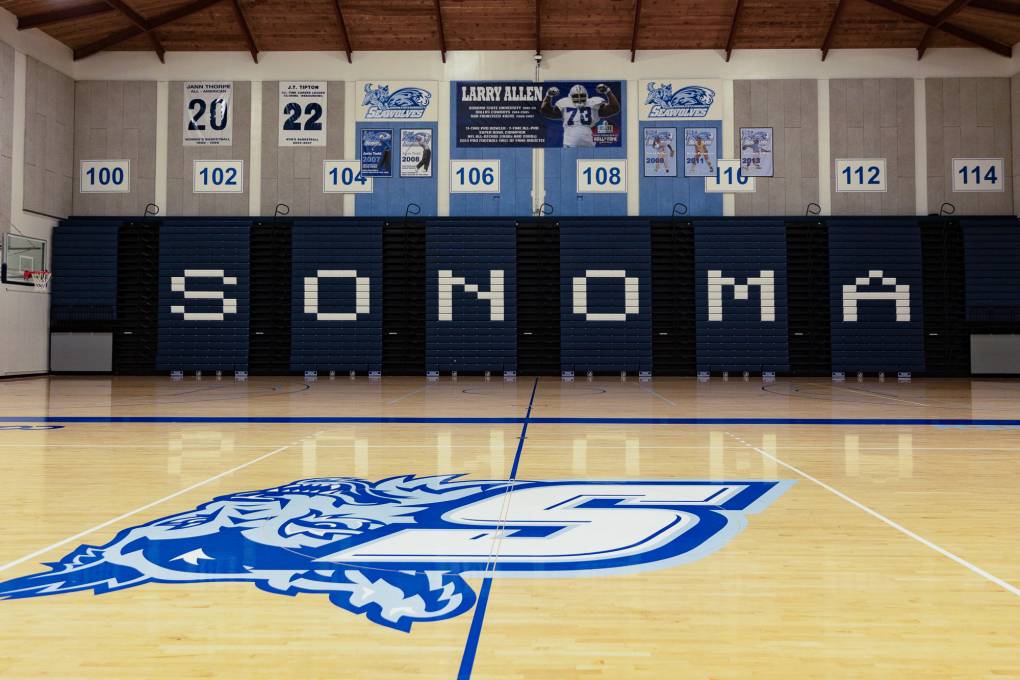
"caption": "The basketball courts inside of Sonoma State’s gymnasium in Rohnert Park on Jan. 23, 2025. Members of Sonoma State’s athletics community have filed a federal civil rights complaint after the university said it would cut all NCAA sports next fall amid a budget deficit. ",
"credit": "Gina Castro/KQED",
"altTag": null,
"description": null,
"imgSizes": {
"medium": {
"file": "https://cdn.kqed.org/wp-content/uploads/sites/10/2025/01/20250123_SonomaStateFile_GC-40-800x533.jpg",
"width": 800,
"height": 533,
"mimeType": "image/jpeg"
},
"large": {
"file": "https://cdn.kqed.org/wp-content/uploads/sites/10/2025/01/20250123_SonomaStateFile_GC-40-1020x680.jpg",
"width": 1020,
"height": 680,
"mimeType": "image/jpeg"
},
"thumbnail": {
"file": "https://cdn.kqed.org/wp-content/uploads/sites/10/2025/01/20250123_SonomaStateFile_GC-40-160x107.jpg",
"width": 160,
"height": 107,
"mimeType": "image/jpeg"
},
"1536x1536": {
"file": "https://cdn.kqed.org/wp-content/uploads/sites/10/2025/01/20250123_SonomaStateFile_GC-40-1536x1024.jpg",
"width": 1536,
"height": 1024,
"mimeType": "image/jpeg"
},
"post-thumbnail": {
"file": "https://cdn.kqed.org/wp-content/uploads/sites/10/2025/01/20250123_SonomaStateFile_GC-40-672x372.jpg",
"width": 672,
"height": 372,
"mimeType": "image/jpeg"
},
"twentyfourteen-full-width": {
"file": "https://cdn.kqed.org/wp-content/uploads/sites/10/2025/01/20250123_SonomaStateFile_GC-40-1038x576.jpg",
"width": 1038,
"height": 576,
"mimeType": "image/jpeg"
},
"full-width": {
"file": "https://cdn.kqed.org/wp-content/uploads/sites/10/2025/01/20250123_SonomaStateFile_GC-40-1920x1280.jpg",
"width": 1920,
"height": 1280,
"mimeType": "image/jpeg"
},
"kqedFullSize": {
"file": "https://cdn.kqed.org/wp-content/uploads/sites/10/2025/01/20250123_SonomaStateFile_GC-40.jpg",
"width": 2000,
"height": 1333
}
},
"isLoading": false,
"fetchFailed": false
},
"news_12023305": {
"type": "attachments",
"id": "news_12023305",
"meta": {
"index": "attachments_1716263798",
"site": "news",
"id": "12023305",
"found": true
},
"title": "20250117_Safeway-Injuries_DMB_00163",
"publishDate": 1737489745,
"status": "inherit",
"parent": 0,
"modified": 1737953279,
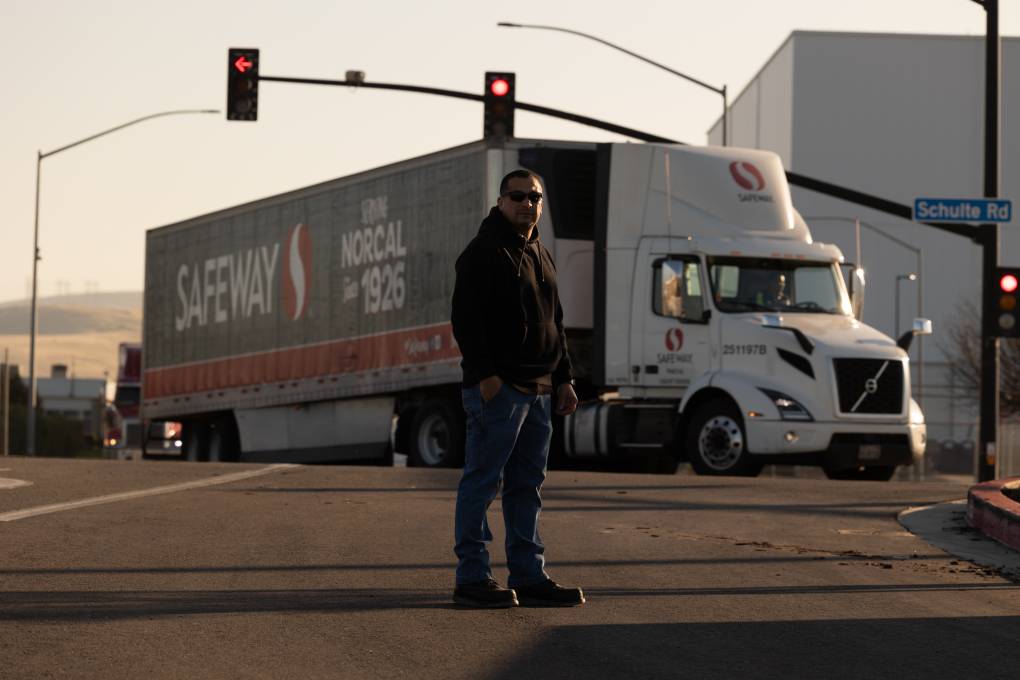
"caption": "Cesar Padilla, 39, a warehouse worker at the Safeway Northern California Distribution Center in Tracy on Friday, Jan. 17, 2025. Padilla says he was injured on the job in March 2021.",
"credit": "David M. Barreda/KQED",
"altTag": null,
"description": null,
"imgSizes": {
"medium": {
"file": "https://cdn.kqed.org/wp-content/uploads/sites/10/2025/01/20250117_Safeway-Injuries_DMB_00163-800x533.jpg",
"width": 800,
"height": 533,
"mimeType": "image/jpeg"
},
"large": {
"file": "https://cdn.kqed.org/wp-content/uploads/sites/10/2025/01/20250117_Safeway-Injuries_DMB_00163-1020x680.jpg",
"width": 1020,
"height": 680,
"mimeType": "image/jpeg"
},
"thumbnail": {
"file": "https://cdn.kqed.org/wp-content/uploads/sites/10/2025/01/20250117_Safeway-Injuries_DMB_00163-160x107.jpg",
"width": 160,
"height": 107,
"mimeType": "image/jpeg"
},
"1536x1536": {
"file": "https://cdn.kqed.org/wp-content/uploads/sites/10/2025/01/20250117_Safeway-Injuries_DMB_00163-1536x1024.jpg",
"width": 1536,
"height": 1024,
"mimeType": "image/jpeg"
},
"post-thumbnail": {
"file": "https://cdn.kqed.org/wp-content/uploads/sites/10/2025/01/20250117_Safeway-Injuries_DMB_00163-672x372.jpg",
"width": 672,
"height": 372,
"mimeType": "image/jpeg"
},
"twentyfourteen-full-width": {
"file": "https://cdn.kqed.org/wp-content/uploads/sites/10/2025/01/20250117_Safeway-Injuries_DMB_00163-1038x576.jpg",
"width": 1038,
"height": 576,
"mimeType": "image/jpeg"
},
"full-width": {
"file": "https://cdn.kqed.org/wp-content/uploads/sites/10/2025/01/20250117_Safeway-Injuries_DMB_00163-1920x1280.jpg",
"width": 1920,
"height": 1280,
"mimeType": "image/jpeg"
},
"kqedFullSize": {
"file": "https://cdn.kqed.org/wp-content/uploads/sites/10/2025/01/20250117_Safeway-Injuries_DMB_00163.jpg",
"width": 2000,
"height": 1333
}
},
"isLoading": false,
"fetchFailed": false
},
"news_12022989": {
"type": "attachments",
"id": "news_12022989",
"meta": {
"index": "attachments_1716263798",
"site": "news",
"id": "12022989",
"found": true
},
"title": "011225-Eaton-Fire-Clean-Up-AP-CM-01 copy",
"publishDate": 1737232932,
"status": "inherit",
"parent": 12022988,
"modified": 1737232969,
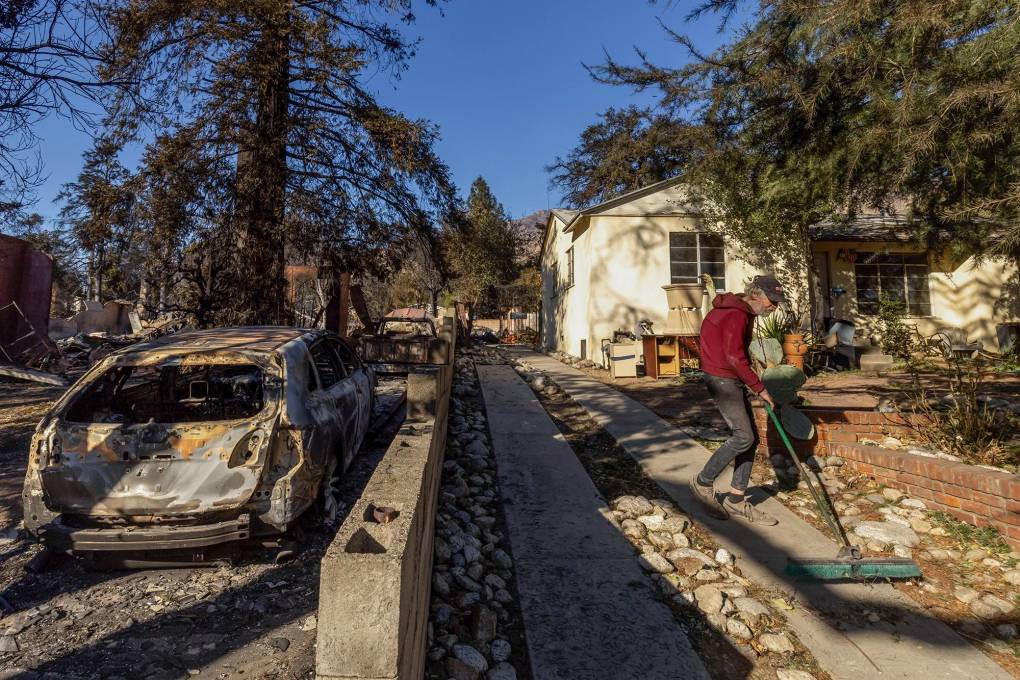
"caption": "David Slater, right, clears the driveway from his home, spared from the Eaton Fire in Altadena, Los Angeles County, on Jan. 12, 2025. ",
"credit": "Ethan Swope/AP Photo",
"altTag": null,
"description": null,
"imgSizes": {
"medium": {
"file": "https://cdn.kqed.org/wp-content/uploads/sites/10/2025/01/011225-Eaton-Fire-Clean-Up-AP-CM-01-copy-800x534.jpg",
"width": 800,
"height": 534,
"mimeType": "image/jpeg"
},
"large": {
"file": "https://cdn.kqed.org/wp-content/uploads/sites/10/2025/01/011225-Eaton-Fire-Clean-Up-AP-CM-01-copy-1020x680.jpg",
"width": 1020,
"height": 680,
"mimeType": "image/jpeg"
},
"thumbnail": {
"file": "https://cdn.kqed.org/wp-content/uploads/sites/10/2025/01/011225-Eaton-Fire-Clean-Up-AP-CM-01-copy-160x107.jpg",
"width": 160,
"height": 107,
"mimeType": "image/jpeg"
},
"1536x1536": {
"file": "https://cdn.kqed.org/wp-content/uploads/sites/10/2025/01/011225-Eaton-Fire-Clean-Up-AP-CM-01-copy-1536x1025.jpg",
"width": 1536,
"height": 1025,
"mimeType": "image/jpeg"
},
"post-thumbnail": {
"file": "https://cdn.kqed.org/wp-content/uploads/sites/10/2025/01/011225-Eaton-Fire-Clean-Up-AP-CM-01-copy-672x372.jpg",
"width": 672,
"height": 372,
"mimeType": "image/jpeg"
},
"twentyfourteen-full-width": {
"file": "https://cdn.kqed.org/wp-content/uploads/sites/10/2025/01/011225-Eaton-Fire-Clean-Up-AP-CM-01-copy-1038x576.jpg",
"width": 1038,
"height": 576,
"mimeType": "image/jpeg"
},
"full-width": {
"file": "https://cdn.kqed.org/wp-content/uploads/sites/10/2025/01/011225-Eaton-Fire-Clean-Up-AP-CM-01-copy-1920x1281.jpg",
"width": 1920,
"height": 1281,
"mimeType": "image/jpeg"
},
"kqedFullSize": {
"file": "https://cdn.kqed.org/wp-content/uploads/sites/10/2025/01/011225-Eaton-Fire-Clean-Up-AP-CM-01-copy.jpg",
"width": 2000,
"height": 1334
}
},
"isLoading": false,
"fetchFailed": false
},
"news_12022415": {
"type": "attachments",
"id": "news_12022415",
"meta": {
"index": "attachments_1716263798",
"site": "news",
"id": "12022415",
"found": true
},
"title": "tiktokscotus",
"publishDate": 1736979474,
"status": "inherit",
"parent": 12022409,
"modified": 1737051603,
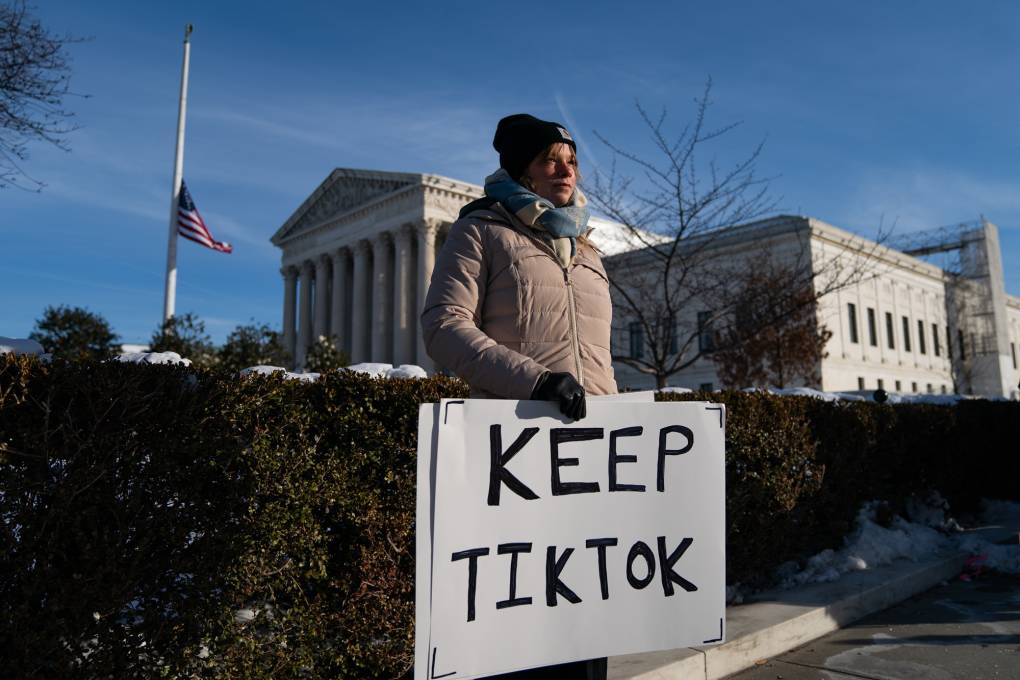
"caption": "Sarah Baus, a content creator on TikTok, holds a sign that reads, \"Keep TikTok,\" outside the U.S. Supreme Court Building as the court hears oral arguments on whether to overturn or delay a law that could lead to a ban of the social media platform in the U.S., on Jan. 10, 2025, in Washington, D.C. ",
"credit": "Allison Robbert/The Washington Post via Getty Images",
"altTag": null,
"description": null,
"imgSizes": {
"medium": {
"file": "https://cdn.kqed.org/wp-content/uploads/sites/10/2025/01/TikTokBanGetty-800x533.jpg",
"width": 800,
"height": 533,
"mimeType": "image/jpeg"
},
"large": {
"file": "https://cdn.kqed.org/wp-content/uploads/sites/10/2025/01/TikTokBanGetty-1020x680.jpg",
"width": 1020,
"height": 680,
"mimeType": "image/jpeg"
},
"thumbnail": {
"file": "https://cdn.kqed.org/wp-content/uploads/sites/10/2025/01/TikTokBanGetty-160x107.jpg",
"width": 160,
"height": 107,
"mimeType": "image/jpeg"
},
"1536x1536": {
"file": "https://cdn.kqed.org/wp-content/uploads/sites/10/2025/01/TikTokBanGetty-1536x1024.jpg",
"width": 1536,
"height": 1024,
"mimeType": "image/jpeg"
},
"post-thumbnail": {
"file": "https://cdn.kqed.org/wp-content/uploads/sites/10/2025/01/TikTokBanGetty-672x372.jpg",
"width": 672,
"height": 372,
"mimeType": "image/jpeg"
},
"twentyfourteen-full-width": {
"file": "https://cdn.kqed.org/wp-content/uploads/sites/10/2025/01/TikTokBanGetty-1038x576.jpg",
"width": 1038,
"height": 576,
"mimeType": "image/jpeg"
},
"full-width": {
"file": "https://cdn.kqed.org/wp-content/uploads/sites/10/2025/01/TikTokBanGetty-1920x1280.jpg",
"width": 1920,
"height": 1280,
"mimeType": "image/jpeg"
},
"kqedFullSize": {
"file": "https://cdn.kqed.org/wp-content/uploads/sites/10/2025/01/TikTokBanGetty.jpg",
"width": 2000,
"height": 1333
}
},
"isLoading": false,
"fetchFailed": false
},
"news_12021500": {
"type": "attachments",
"id": "news_12021500",
"meta": {
"index": "attachments_1716263798",
"site": "news",
"id": "12021500",
"found": true
},
"title": "240110-CAWindStorm-004",
"publishDate": 1736540122,
"status": "inherit",
"parent": 0,
"modified": 1736817814,
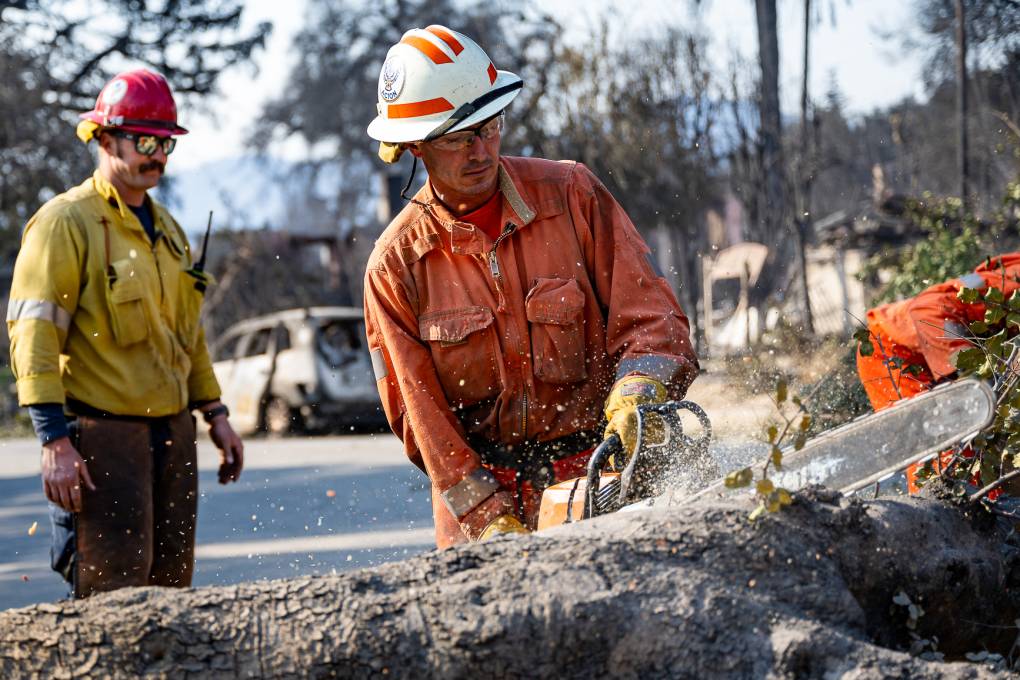
"caption": "Foreman Mihlhauser (left) works with Acton Conservation Camp Crew 11-1, an incarcerated fire team, to fell burned trees in Altadena, California, on Jan. 10, 2025, after the Eaton Fire destroyed much of the area. The Los Angeles County Fire Department and the California Department of Corrections and Rehabilitation operate the camp to train incarcerated hand crews to fight fires around Los Angeles and California.",
"credit": "Beth LaBerge/KQED",
"altTag": null,
"description": null,
"imgSizes": {
"medium": {
"file": "https://cdn.kqed.org/wp-content/uploads/sites/10/2025/01/240110-CAWindStorm-004-800x533.jpg",
"width": 800,
"height": 533,
"mimeType": "image/jpeg"
},
"large": {
"file": "https://cdn.kqed.org/wp-content/uploads/sites/10/2025/01/240110-CAWindStorm-004-1020x680.jpg",
"width": 1020,
"height": 680,
"mimeType": "image/jpeg"
},
"thumbnail": {
"file": "https://cdn.kqed.org/wp-content/uploads/sites/10/2025/01/240110-CAWindStorm-004-160x107.jpg",
"width": 160,
"height": 107,
"mimeType": "image/jpeg"
},
"1536x1536": {
"file": "https://cdn.kqed.org/wp-content/uploads/sites/10/2025/01/240110-CAWindStorm-004-1536x1024.jpg",
"width": 1536,
"height": 1024,
"mimeType": "image/jpeg"
},
"post-thumbnail": {
"file": "https://cdn.kqed.org/wp-content/uploads/sites/10/2025/01/240110-CAWindStorm-004-672x372.jpg",
"width": 672,
"height": 372,
"mimeType": "image/jpeg"
},
"twentyfourteen-full-width": {
"file": "https://cdn.kqed.org/wp-content/uploads/sites/10/2025/01/240110-CAWindStorm-004-1038x576.jpg",
"width": 1038,
"height": 576,
"mimeType": "image/jpeg"
},
"kqedFullSize": {
"file": "https://cdn.kqed.org/wp-content/uploads/sites/10/2025/01/240110-CAWindStorm-004.jpg",
"width": 1734,
"height": 1156
}
},
"isLoading": false,
"fetchFailed": false
},
"news_12022104": {
"type": "attachments",
"id": "news_12022104",
"meta": {
"index": "attachments_1716263798",
"site": "news",
"id": "12022104",
"found": true
},
"title": "Monterey Bay Aquarium weathers the Coronavirus Pandemic",
"publishDate": 1736887067,
"status": "inherit",
"parent": 12022094,
"modified": 1736893455,
"caption": "Rey, a penguin, looks out at the kelp forest tank before stopping near an employee outside of the penguin enclosure at the Monterey Bay Aquarium on Aug. 20, 2020, in Monterey, California.",
"credit": "Kent Nishimura/Los Angeles Times via Getty Images",
"altTag": null,
"description": null,
"imgSizes": {
"medium": {
"file": "https://cdn.kqed.org/wp-content/uploads/sites/10/2025/01/MontereyBayAquariumGetty-800x533.jpg",
"width": 800,
"height": 533,
"mimeType": "image/jpeg"
},
"large": {
"file": "https://cdn.kqed.org/wp-content/uploads/sites/10/2025/01/MontereyBayAquariumGetty-1020x680.jpg",
"width": 1020,
"height": 680,
"mimeType": "image/jpeg"
},
"thumbnail": {
"file": "https://cdn.kqed.org/wp-content/uploads/sites/10/2025/01/MontereyBayAquariumGetty-160x107.jpg",
"width": 160,
"height": 107,
"mimeType": "image/jpeg"
},
"1536x1536": {
"file": "https://cdn.kqed.org/wp-content/uploads/sites/10/2025/01/MontereyBayAquariumGetty-1536x1024.jpg",
"width": 1536,
"height": 1024,
"mimeType": "image/jpeg"
},
"post-thumbnail": {
"file": "https://cdn.kqed.org/wp-content/uploads/sites/10/2025/01/MontereyBayAquariumGetty-672x372.jpg",
"width": 672,
"height": 372,
"mimeType": "image/jpeg"
},
"twentyfourteen-full-width": {
"file": "https://cdn.kqed.org/wp-content/uploads/sites/10/2025/01/MontereyBayAquariumGetty-1038x576.jpg",
"width": 1038,
"height": 576,
"mimeType": "image/jpeg"
},
"full-width": {
"file": "https://cdn.kqed.org/wp-content/uploads/sites/10/2025/01/MontereyBayAquariumGetty-1920x1280.jpg",
"width": 1920,
"height": 1280,
"mimeType": "image/jpeg"
},
"kqedFullSize": {
"file": "https://cdn.kqed.org/wp-content/uploads/sites/10/2025/01/MontereyBayAquariumGetty.jpg",
"width": 2000,
"height": 1333
}
},
"isLoading": false,
"fetchFailed": false
},
"news_12021640": {
"type": "attachments",
"id": "news_12021640",
"meta": {
"index": "attachments_1716263798",
"site": "news",
"id": "12021640",
"found": true
},
"title": "Beer glasses on the bar",
"publishDate": 1736555741,
"status": "inherit",
"parent": 12021562,
"modified": 1736556281,
"caption": "Party Staff accuses Qwik, Instawork and Tend of misclassifying workers, alleging lost clients and unfair competition in the San Francisco hospitality market. ",
"credit": "Rafael Elias/Getty Images",
"altTag": null,
"description": null,
"imgSizes": {
"medium": {
"file": "https://cdn.kqed.org/wp-content/uploads/sites/10/2025/01/DishesRestaurantGetty-800x472.jpg",
"width": 800,
"height": 472,
"mimeType": "image/jpeg"
},
"large": {
"file": "https://cdn.kqed.org/wp-content/uploads/sites/10/2025/01/DishesRestaurantGetty-1020x602.jpg",
"width": 1020,
"height": 602,
"mimeType": "image/jpeg"
},
"thumbnail": {
"file": "https://cdn.kqed.org/wp-content/uploads/sites/10/2025/01/DishesRestaurantGetty-160x94.jpg",
"width": 160,
"height": 94,
"mimeType": "image/jpeg"
},
"1536x1536": {
"file": "https://cdn.kqed.org/wp-content/uploads/sites/10/2025/01/DishesRestaurantGetty-1536x907.jpg",
"width": 1536,
"height": 907,
"mimeType": "image/jpeg"
},
"post-thumbnail": {
"file": "https://cdn.kqed.org/wp-content/uploads/sites/10/2025/01/DishesRestaurantGetty-672x372.jpg",
"width": 672,
"height": 372,
"mimeType": "image/jpeg"
},
"twentyfourteen-full-width": {
"file": "https://cdn.kqed.org/wp-content/uploads/sites/10/2025/01/DishesRestaurantGetty-1038x576.jpg",
"width": 1038,
"height": 576,
"mimeType": "image/jpeg"
},
"full-width": {
"file": "https://cdn.kqed.org/wp-content/uploads/sites/10/2025/01/DishesRestaurantGetty-1920x1134.jpg",
"width": 1920,
"height": 1134,
"mimeType": "image/jpeg"
},
"kqedFullSize": {
"file": "https://cdn.kqed.org/wp-content/uploads/sites/10/2025/01/DishesRestaurantGetty.jpg",
"width": 2000,
"height": 1181
}
},
"isLoading": false,
"fetchFailed": false
},
"news_12020596": {
"type": "attachments",
"id": "news_12020596",
"meta": {
"index": "attachments_1716263798",
"site": "news",
"id": "12020596",
"found": true
},
"title": "Fall foliage in Napa Valley of California",
"publishDate": 1736278894,
"status": "inherit",
"parent": 12025404,
"modified": 1738628568,
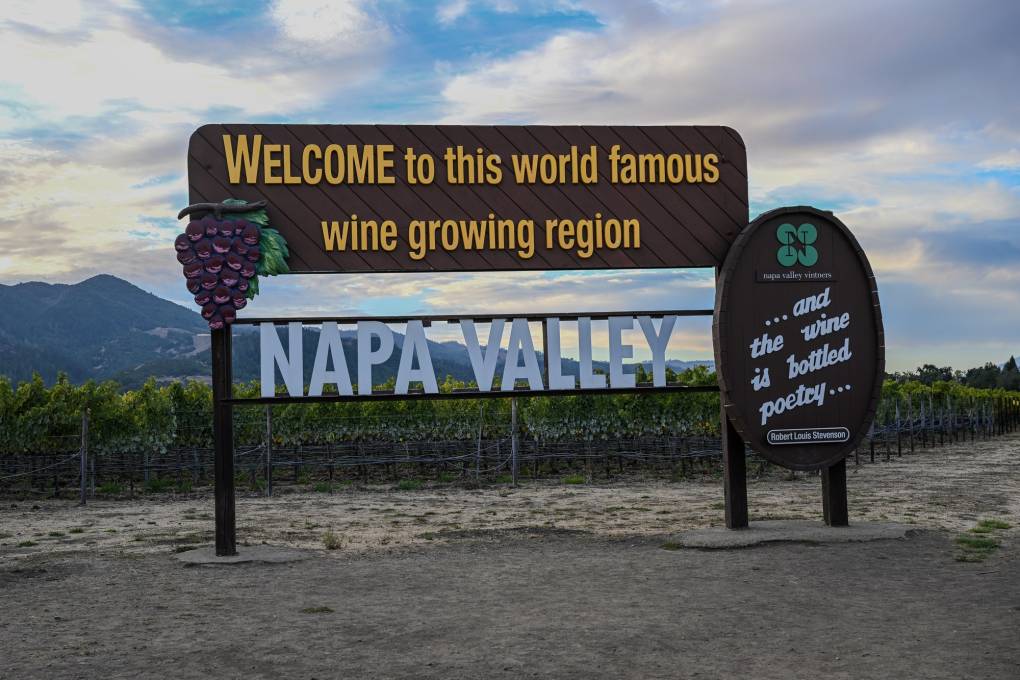
"caption": "A giant welcome sign is seen in Napa Valley, California, on Oct. 21, 2023. ",
"credit": "Tayfun Coskun/Anadolu via Getty Images",
"altTag": null,
"description": null,
"imgSizes": {
"medium": {
"file": "https://cdn.kqed.org/wp-content/uploads/sites/10/2025/01/NapaCountyWineCountryGetty-800x533.jpg",
"width": 800,
"height": 533,
"mimeType": "image/jpeg"
},
"large": {
"file": "https://cdn.kqed.org/wp-content/uploads/sites/10/2025/01/NapaCountyWineCountryGetty-1020x680.jpg",
"width": 1020,
"height": 680,
"mimeType": "image/jpeg"
},
"thumbnail": {
"file": "https://cdn.kqed.org/wp-content/uploads/sites/10/2025/01/NapaCountyWineCountryGetty-160x107.jpg",
"width": 160,
"height": 107,
"mimeType": "image/jpeg"
},
"1536x1536": {
"file": "https://cdn.kqed.org/wp-content/uploads/sites/10/2025/01/NapaCountyWineCountryGetty-1536x1024.jpg",
"width": 1536,
"height": 1024,
"mimeType": "image/jpeg"
},
"post-thumbnail": {
"file": "https://cdn.kqed.org/wp-content/uploads/sites/10/2025/01/NapaCountyWineCountryGetty-672x372.jpg",
"width": 672,
"height": 372,
"mimeType": "image/jpeg"
},
"twentyfourteen-full-width": {
"file": "https://cdn.kqed.org/wp-content/uploads/sites/10/2025/01/NapaCountyWineCountryGetty-1038x576.jpg",
"width": 1038,
"height": 576,
"mimeType": "image/jpeg"
},
"full-width": {
"file": "https://cdn.kqed.org/wp-content/uploads/sites/10/2025/01/NapaCountyWineCountryGetty-1920x1280.jpg",
"width": 1920,
"height": 1280,
"mimeType": "image/jpeg"
},
"kqedFullSize": {
"file": "https://cdn.kqed.org/wp-content/uploads/sites/10/2025/01/NapaCountyWineCountryGetty.jpg",
"width": 2000,
"height": 1333
}
},
"isLoading": false,
"fetchFailed": false
},
"news_11919282": {
"type": "attachments",
"id": "news_11919282",
"meta": {
"index": "attachments_1716263798",
"site": "news",
"id": "11919282",
"found": true
},
"title": "Google Updates Its Logo",
"publishDate": 1657566086,
"status": "inherit",
"parent": 11919277,
"modified": 1657567640,
"caption": "An image of the Google headquarters in Mountain View.",
"credit": "Justin Sullivan/Getty Images",
"altTag": "An image of a building with the colorful Google logo on the side. The building looks very modern, the whole wall is a grid of glass windows. The Google logo is the new version.",
"description": "The new Google logo is displayed at the Google headquarters on September 2, 2015 in Mountain View, California. Google has made the most dramatic change to their logo since 1999 and have replaced their signature serif font with a new typeface called Product Sans.",
"imgSizes": {
"medium": {
"file": "https://cdn.kqed.org/wp-content/uploads/sites/10/2022/07/RS26525_GettyImages-486234008-800x534.jpg",
"width": 800,
"height": 534,
"mimeType": "image/jpeg"
},
"large": {
"file": "https://cdn.kqed.org/wp-content/uploads/sites/10/2022/07/RS26525_GettyImages-486234008-1020x681.jpg",
"width": 1020,
"height": 681,
"mimeType": "image/jpeg"
},
"thumbnail": {
"file": "https://cdn.kqed.org/wp-content/uploads/sites/10/2022/07/RS26525_GettyImages-486234008-160x107.jpg",
"width": 160,
"height": 107,
"mimeType": "image/jpeg"
},
"1536x1536": {
"file": "https://cdn.kqed.org/wp-content/uploads/sites/10/2022/07/RS26525_GettyImages-486234008-1536x1025.jpg",
"width": 1536,
"height": 1025,
"mimeType": "image/jpeg"
},
"2048x2048": {
"file": "https://cdn.kqed.org/wp-content/uploads/sites/10/2022/07/RS26525_GettyImages-486234008-2048x1367.jpg",
"width": 2048,
"height": 1367,
"mimeType": "image/jpeg"
},
"post-thumbnail": {
"file": "https://cdn.kqed.org/wp-content/uploads/sites/10/2022/07/RS26525_GettyImages-486234008-672x372.jpg",
"width": 672,
"height": 372,
"mimeType": "image/jpeg"
},
"twentyfourteen-full-width": {
"file": "https://cdn.kqed.org/wp-content/uploads/sites/10/2022/07/RS26525_GettyImages-486234008-1038x576.jpg",
"width": 1038,
"height": 576,
"mimeType": "image/jpeg"
},
"full-width": {
"file": "https://cdn.kqed.org/wp-content/uploads/sites/10/2022/07/RS26525_GettyImages-486234008-1920x1281.jpg",
"width": 1920,
"height": 1281,
"mimeType": "image/jpeg"
},
"kqedFullSize": {
"file": "https://cdn.kqed.org/wp-content/uploads/sites/10/2022/07/RS26525_GettyImages-486234008-scaled-e1736207624368.jpg",
"width": 2000,
"height": 1334
}
},
"isLoading": false,
"fetchFailed": false
},
"news_12020412": {
"type": "attachments",
"id": "news_12020412",
"meta": {
"index": "attachments_1716263798",
"site": "news",
"id": "12020412",
"found": true
},
"title": "121924_Amazon_Strike_SF-1",
"publishDate": 1736190489,
"status": "inherit",
"parent": 12020411,
"modified": 1736190516,
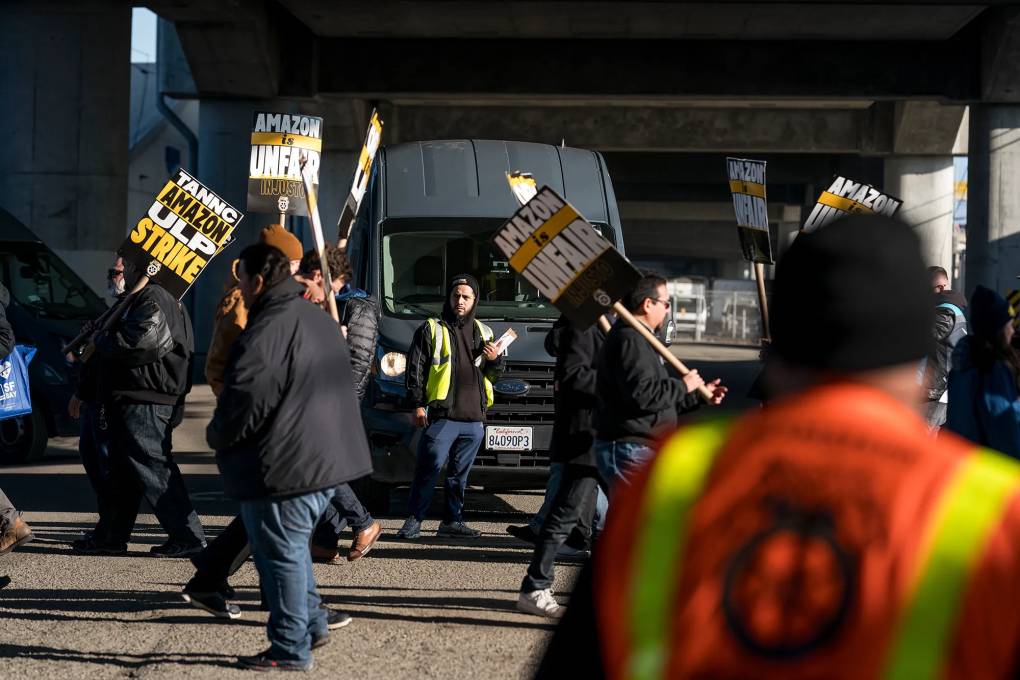
"caption": "A union worker blocks an Amazon delivery truck from leaving the warehouse at Amazon Warehouse DCK6 in the Bayview District in San Francisco on Dec. 19, 2024. Amazon workers at multiple facilities across the United States went on strike to fight for a union contract.",
"credit": "Jungho Kim for CalMatters",
"altTag": null,
"description": null,
"imgSizes": {
"medium": {
"file": "https://cdn.kqed.org/wp-content/uploads/sites/10/2025/01/121924_Amazon_Strike_SF-1-800x533.jpg",
"width": 800,
"height": 533,
"mimeType": "image/jpeg"
},
"large": {
"file": "https://cdn.kqed.org/wp-content/uploads/sites/10/2025/01/121924_Amazon_Strike_SF-1-1020x680.jpg",
"width": 1020,
"height": 680,
"mimeType": "image/jpeg"
},
"thumbnail": {
"file": "https://cdn.kqed.org/wp-content/uploads/sites/10/2025/01/121924_Amazon_Strike_SF-1-160x107.jpg",
"width": 160,
"height": 107,
"mimeType": "image/jpeg"
},
"1536x1536": {
"file": "https://cdn.kqed.org/wp-content/uploads/sites/10/2025/01/121924_Amazon_Strike_SF-1-1536x1024.jpg",
"width": 1536,
"height": 1024,
"mimeType": "image/jpeg"
},
"post-thumbnail": {
"file": "https://cdn.kqed.org/wp-content/uploads/sites/10/2025/01/121924_Amazon_Strike_SF-1-672x372.jpg",
"width": 672,
"height": 372,
"mimeType": "image/jpeg"
},
"twentyfourteen-full-width": {
"file": "https://cdn.kqed.org/wp-content/uploads/sites/10/2025/01/121924_Amazon_Strike_SF-1-1038x576.jpg",
"width": 1038,
"height": 576,
"mimeType": "image/jpeg"
},
"full-width": {
"file": "https://cdn.kqed.org/wp-content/uploads/sites/10/2025/01/121924_Amazon_Strike_SF-1-1920x1280.jpg",
"width": 1920,
"height": 1280,
"mimeType": "image/jpeg"
},
"kqedFullSize": {
"file": "https://cdn.kqed.org/wp-content/uploads/sites/10/2025/01/121924_Amazon_Strike_SF-1.jpg",
"width": 2000,
"height": 1333
}
},
"isLoading": false,
"fetchFailed": false
},
"news_12019484": {
"type": "attachments",
"id": "news_12019484",
"meta": {
"index": "attachments_1716263798",
"site": "news",
"id": "12019484",
"found": true
},
"title": "Thoughtful male business professional working on laptop at home",
"publishDate": 1734744429,
"status": "inherit",
"parent": 12019477,
"modified": 1735334794,
"caption": "California's new laws for freelancers and their clients in 2025 could impact freelance workers and their businesses.",
"credit": "Maskot/Getty Images",
"altTag": null,
"description": null,
"imgSizes": {
"medium": {
"file": "https://cdn.kqed.org/wp-content/uploads/sites/10/2024/12/GettyImages-2151092619-800x533.jpg",
"width": 800,
"height": 533,
"mimeType": "image/jpeg"
},
"large": {
"file": "https://cdn.kqed.org/wp-content/uploads/sites/10/2024/12/GettyImages-2151092619-1020x680.jpg",
"width": 1020,
"height": 680,
"mimeType": "image/jpeg"
},
"thumbnail": {
"file": "https://cdn.kqed.org/wp-content/uploads/sites/10/2024/12/GettyImages-2151092619-160x107.jpg",
"width": 160,
"height": 107,
"mimeType": "image/jpeg"
},
"1536x1536": {
"file": "https://cdn.kqed.org/wp-content/uploads/sites/10/2024/12/GettyImages-2151092619-1536x1024.jpg",
"width": 1536,
"height": 1024,
"mimeType": "image/jpeg"
},
"2048x2048": {
"file": "https://cdn.kqed.org/wp-content/uploads/sites/10/2024/12/GettyImages-2151092619-2048x1365.jpg",
"width": 2048,
"height": 1365,
"mimeType": "image/jpeg"
},
"post-thumbnail": {
"file": "https://cdn.kqed.org/wp-content/uploads/sites/10/2024/12/GettyImages-2151092619-672x372.jpg",
"width": 672,
"height": 372,
"mimeType": "image/jpeg"
},
"twentyfourteen-full-width": {
"file": "https://cdn.kqed.org/wp-content/uploads/sites/10/2024/12/GettyImages-2151092619-1038x576.jpg",
"width": 1038,
"height": 576,
"mimeType": "image/jpeg"
},
"full-width": {
"file": "https://cdn.kqed.org/wp-content/uploads/sites/10/2024/12/GettyImages-2151092619-1920x1280.jpg",
"width": 1920,
"height": 1280,
"mimeType": "image/jpeg"
},
"kqedFullSize": {
"file": "https://cdn.kqed.org/wp-content/uploads/sites/10/2024/12/GettyImages-2151092619-scaled.jpg",
"width": 2560,
"height": 1707
}
},
"isLoading": false,
"fetchFailed": false
},
"news_12019737": {
"type": "attachments",
"id": "news_12019737",
"meta": {
"index": "attachments_1716263798",
"site": "news",
"id": "12019737",
"found": true
},
"title": "20241223-USPSHoliday-JY-021",
"publishDate": 1735019074,
"status": "inherit",
"parent": 0,
"modified": 1735084855,
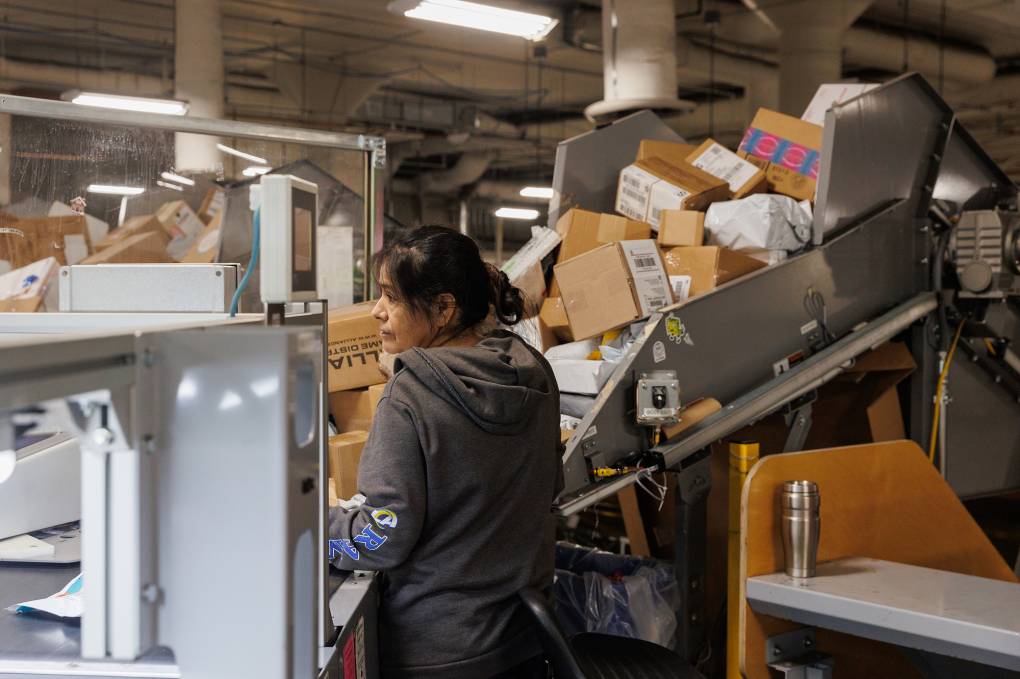
"caption": "USPS clerk Maria Maldonado processes packages at her station during the holiday rush at the Processing and Distribution Center in Oakland, on Monday, Dec. 23, 2024.",
"credit": "Juliana Yamada/KQED",
"altTag": null,
"description": null,
"imgSizes": {
"medium": {
"file": "https://cdn.kqed.org/wp-content/uploads/sites/10/2024/12/20241223-USPSHoliday-JY-021-800x533.jpg",
"width": 800,
"height": 533,
"mimeType": "image/jpeg"
},
"large": {
"file": "https://cdn.kqed.org/wp-content/uploads/sites/10/2024/12/20241223-USPSHoliday-JY-021-1020x679.jpg",
"width": 1020,
"height": 679,
"mimeType": "image/jpeg"
},
"thumbnail": {
"file": "https://cdn.kqed.org/wp-content/uploads/sites/10/2024/12/20241223-USPSHoliday-JY-021-160x107.jpg",
"width": 160,
"height": 107,
"mimeType": "image/jpeg"
},
"1536x1536": {
"file": "https://cdn.kqed.org/wp-content/uploads/sites/10/2024/12/20241223-USPSHoliday-JY-021-1536x1023.jpg",
"width": 1536,
"height": 1023,
"mimeType": "image/jpeg"
},
"post-thumbnail": {
"file": "https://cdn.kqed.org/wp-content/uploads/sites/10/2024/12/20241223-USPSHoliday-JY-021-672x372.jpg",
"width": 672,
"height": 372,
"mimeType": "image/jpeg"
},
"twentyfourteen-full-width": {
"file": "https://cdn.kqed.org/wp-content/uploads/sites/10/2024/12/20241223-USPSHoliday-JY-021-1038x576.jpg",
"width": 1038,
"height": 576,
"mimeType": "image/jpeg"
},
"full-width": {
"file": "https://cdn.kqed.org/wp-content/uploads/sites/10/2024/12/20241223-USPSHoliday-JY-021-1920x1279.jpg",
"width": 1920,
"height": 1279,
"mimeType": "image/jpeg"
},
"kqedFullSize": {
"file": "https://cdn.kqed.org/wp-content/uploads/sites/10/2024/12/20241223-USPSHoliday-JY-021.jpg",
"width": 2000,
"height": 1332
}
},
"isLoading": false,
"fetchFailed": false
}
},
"audioPlayerReducer": {
"postId": "stream_live",
"isPaused": true,
"isPlaying": false,
"pfsActive": false,
"pledgeModalIsOpen": true,
"playerDrawerIsOpen": false,
"liveAudioPlayStartedAt": 0,
"liveAudioPlayContext": ""
},
"authorsReducer": {
"byline_news_12022988": {
"type": "authors",
"id": "byline_news_12022988",
"meta": {
"override": true
},
"slug": "byline_news_12022988",
"name": "\u003ca href=\"https://calmatters.org/author/jeanne-kuang/\">Jeanne Kuang\u003c/a> and \u003ca href=\"https://calmatters.org/author/alejandra-reyesvelarde/\">Alejandra Reyes-Velarde\u003c/a>, CalMatters",
"isLoading": false
},
"byline_news_12020411": {
"type": "authors",
"id": "byline_news_12020411",
"meta": {
"override": true
},
"slug": "byline_news_12020411",
"name": "Jeanne Kuang, CalMatters",
"isLoading": false
},
"rachael-myrow": {
"type": "authors",
"id": "251",
"meta": {
"index": "authors_1716337520",
"id": "251",
"found": true
},
"name": "Rachael Myrow",
"firstName": "Rachael",
"lastName": "Myrow",
"slug": "rachael-myrow",
"email": "rmyrow@kqed.org",
"display_author_email": true,
"staff_mastheads": [
"news"
],
"title": "Senior Editor of KQED's Silicon Valley News Desk",
"bio": "• I write and edit stories about how Silicon Valley power and policies shape everyday life in California. I’m also passionate about making Bay Area history and culture more accessible to a broad public. • I’ve been a journalist for most of my life, starting in high school with The Franklin Press in Los Angeles, where I grew up. While earning my first degree in English at UC Berkeley, I got my start in public radio at KALX-FM. After completing a second degree in journalism at Cal, I landed my first professional job at Marketplace, then moved on to KPCC (now LAist), and then KQED, where I hosted The California Report for more than seven years. • My reporting has appeared on NPR, The World, WBUR’s \u003ci>Here & Now\u003c/i>, and the BBC. I also guest host for KQED’s \u003ci>Forum\u003c/i>, as well as the Commonwealth Club in San Francisco. • I speak periodically on media, democracy and technology issues, and do voiceover work for documentaries and educational video projects. • Outside of the studio, you'll find me hiking Bay Area trails and whipping up Insta-ready meals in my kitchen. • I do not accept gifts, money, or favors from anyone connected to my reporting, I don't pay people for information, and I do not support or donate to political causes. • I strive to treat the people I report on with fairness, honesty, and respect. I also recognize there are often multiple sides to a story and work to verify information through multiple sources and documentation. If I get something wrong, I correct it.",
"avatar": "https://secure.gravatar.com/avatar/3ed8a3c5f26025e4a805ba634cda8cd764906b97438a6d9ce216b044e340da4e?s=600&d=blank&r=g",
"twitter": "rachaelmyrow",
"bluesky": null,
"facebook": null,
"instagram": null,
"linkedin": "https://www.linkedin.com/in/rachaelmyrow/",
"sites": [
{
"site": "arts",
"roles": [
"administrator"
]
},
{
"site": "news",
"roles": [
"edit_others_posts",
"editor"
]
},
{
"site": "futureofyou",
"roles": [
"editor"
]
},
{
"site": "bayareabites",
"roles": [
"editor"
]
},
{
"site": "stateofhealth",
"roles": [
"editor"
]
},
{
"site": "science",
"roles": [
"editor"
]
},
{
"site": "food",
"roles": [
"editor"
]
},
{
"site": "forum",
"roles": [
"editor"
]
},
{
"site": "liveblog",
"roles": [
"author"
]
}
],
"headData": {
"title": "Rachael Myrow | KQED",
"description": "Senior Editor of KQED's Silicon Valley News Desk",
"ogImgSrc": "https://secure.gravatar.com/avatar/3ed8a3c5f26025e4a805ba634cda8cd764906b97438a6d9ce216b044e340da4e?s=600&d=blank&r=g",
"twImgSrc": "https://secure.gravatar.com/avatar/3ed8a3c5f26025e4a805ba634cda8cd764906b97438a6d9ce216b044e340da4e?s=600&d=blank&r=g"
},
"isLoading": false,
"link": "/author/rachael-myrow"
},
"fjhabvala": {
"type": "authors",
"id": "8659",
"meta": {
"index": "authors_1716337520",
"id": "8659",
"found": true
},
"name": "Farida Jhabvala Romero",
"firstName": "Farida",
"lastName": "Jhabvala Romero",
"slug": "fjhabvala",
"email": "fjhabvala@kqed.org",
"display_author_email": true,
"staff_mastheads": [
"news"
],
"title": "KQED Contributor",
"bio": "Farida Jhabvala Romero is a Labor Correspondent for KQED. She previously covered immigration. Farida was \u003ca href=\"https://www.ccnma.org/2022-most-influential-latina-journalists\">named\u003c/a> one of the 10 Most Influential Latina Journalists in California in 2022 by the California Chicano News Media Association. Her work has won awards from the Society of Professional Journalists (Northern California), as well as a national and regional Edward M. Murrow Award for the collaborative reporting projects “Dangerous Air” and “Graying California.” Before joining KQED, Farida worked as a producer at Radio Bilingüe, a national public radio network. Farida earned her master’s degree in journalism from Stanford University.",
"avatar": "https://secure.gravatar.com/avatar/f9f022d4e2609741874222a1e9d41f48fea74011aa7c615eef91d9a50c944ebe?s=600&d=blank&r=g",
"twitter": "FaridaJhabvala",
"bluesky": null,
"facebook": null,
"instagram": null,
"linkedin": "https://www.linkedin.com/in/faridajhabvala/",
"sites": [
{
"site": "news",
"roles": [
"editor"
]
},
{
"site": "stateofhealth",
"roles": [
"author"
]
},
{
"site": "liveblog",
"roles": [
"author"
]
}
],
"headData": {
"title": "Farida Jhabvala Romero | KQED",
"description": "KQED Contributor",
"ogImgSrc": "https://secure.gravatar.com/avatar/f9f022d4e2609741874222a1e9d41f48fea74011aa7c615eef91d9a50c944ebe?s=600&d=blank&r=g",
"twImgSrc": "https://secure.gravatar.com/avatar/f9f022d4e2609741874222a1e9d41f48fea74011aa7c615eef91d9a50c944ebe?s=600&d=blank&r=g"
},
"isLoading": false,
"link": "/author/fjhabvala"
},
"ccabreralomeli": {
"type": "authors",
"id": "11708",
"meta": {
"index": "authors_1716337520",
"id": "11708",
"found": true
},
"name": "Carlos Cabrera-Lomelí",
"firstName": "Carlos",
"lastName": "Cabrera-Lomelí",
"slug": "ccabreralomeli",
"email": "ccabreralomeli@KQED.org",
"display_author_email": true,
"staff_mastheads": [
"news"
],
"title": "Community Reporter",
"bio": "Carlos Cabrera-Lomelí is a community reporter with KQED's digital engagement team. He also reports and co-produces for KQED's bilingual news hub KQED en Español. He grew up in San Francisco's Mission District and has previously worked with Univision, 48 Hills and REFORMA in Mexico City.",
"avatar": "https://secure.gravatar.com/avatar/c309be9665e484f887b818c89e273ecc673004f426f36b24d00a4d813a2e0518?s=600&d=blank&r=g",
"twitter": "@LomeliCabrera",
"bluesky": null,
"facebook": null,
"instagram": null,
"linkedin": null,
"sites": [
{
"site": "arts",
"roles": [
"editor"
]
},
{
"site": "news",
"roles": [
"editor"
]
},
{
"site": "about",
"roles": [
"editor"
]
},
{
"site": "science",
"roles": [
"editor"
]
},
{
"site": "perspectives",
"roles": [
"editor"
]
},
{
"site": "elections",
"roles": [
"editor"
]
},
{
"site": "liveblog",
"roles": [
"contributor"
]
}
],
"headData": {
"title": "Carlos Cabrera-Lomelí | KQED",
"description": "Community Reporter",
"ogImgSrc": "https://secure.gravatar.com/avatar/c309be9665e484f887b818c89e273ecc673004f426f36b24d00a4d813a2e0518?s=600&d=blank&r=g",
"twImgSrc": "https://secure.gravatar.com/avatar/c309be9665e484f887b818c89e273ecc673004f426f36b24d00a4d813a2e0518?s=600&d=blank&r=g"
},
"isLoading": false,
"link": "/author/ccabreralomeli"
},
"kmonahan": {
"type": "authors",
"id": "11842",
"meta": {
"index": "authors_1716337520",
"id": "11842",
"found": true
},
"name": "Katherine Monahan",
"firstName": "Katherine",
"lastName": "Monahan",
"slug": "kmonahan",
"email": "kmonahan@kqed.org",
"display_author_email": true,
"staff_mastheads": [],
"title": "Reporter / Sound Engineer",
"bio": "I cover state and local news. I’m also a sound engineer at the station, mixing stories and running live broadcasts. I link to source materials so that readers can draw their own conclusions, and seek comment from a range of perspectives, including from people directly affected by events. Awards received include from the Society of Professional Journalists, Northern California chapter and the Alaska Press Club. I speak multiple languages and have reported and engineered in the Bay Area, Alaska, West Africa and Latin America.",
"avatar": "https://secure.gravatar.com/avatar/ff257b3a5da88893781a3d3266904b2d2f91c7f0e1bbf728f61f5fb81b74a669?s=600&d=blank&r=g",
"twitter": null,
"bluesky": null,
"facebook": null,
"instagram": null,
"linkedin": null,
"sites": [
{
"site": "news",
"roles": [
"editor"
]
},
{
"site": "science",
"roles": [
"contributor"
]
}
],
"headData": {
"title": "Katherine Monahan | KQED",
"description": "Reporter / Sound Engineer",
"ogImgSrc": "https://secure.gravatar.com/avatar/ff257b3a5da88893781a3d3266904b2d2f91c7f0e1bbf728f61f5fb81b74a669?s=600&d=blank&r=g",
"twImgSrc": "https://secure.gravatar.com/avatar/ff257b3a5da88893781a3d3266904b2d2f91c7f0e1bbf728f61f5fb81b74a669?s=600&d=blank&r=g"
},
"isLoading": false,
"link": "/author/kmonahan"
},
"jyamada": {
"type": "authors",
"id": "11876",
"meta": {
"index": "authors_1716337520",
"id": "11876",
"found": true
},
"name": "Juliana Yamada",
"firstName": "Juliana",
"lastName": "Yamada",
"slug": "jyamada",
"email": "julianayamada@kqed.org",
"display_author_email": false,
"staff_mastheads": [],
"title": "KQED Photojournalist",
"bio": null,
"avatar": "https://secure.gravatar.com/avatar/cf3070075b6f3d12aac4e1e40079b3ba5fd828442b579f0ce48c293178a5f269?s=600&d=blank&r=g",
"twitter": "julianayphoto",
"bluesky": null,
"facebook": null,
"instagram": "https://www.instagram.com/julianayamadaphoto/",
"linkedin": null,
"sites": [
{
"site": "arts",
"roles": [
"editor"
]
},
{
"site": "news",
"roles": [
"editor"
]
},
{
"site": "science",
"roles": [
"editor"
]
},
{
"site": "perspectives",
"roles": [
"editor"
]
}
],
"headData": {
"title": "Juliana Yamada | KQED",
"description": "KQED Photojournalist",
"ogImgSrc": "https://secure.gravatar.com/avatar/cf3070075b6f3d12aac4e1e40079b3ba5fd828442b579f0ce48c293178a5f269?s=600&d=blank&r=g",
"twImgSrc": "https://secure.gravatar.com/avatar/cf3070075b6f3d12aac4e1e40079b3ba5fd828442b579f0ce48c293178a5f269?s=600&d=blank&r=g"
},
"isLoading": false,
"link": "/author/jyamada"
},
"kdebenedetti": {
"type": "authors",
"id": "11913",
"meta": {
"index": "authors_1716337520",
"id": "11913",
"found": true
},
"name": "Katie DeBenedetti",
"firstName": "Katie",
"lastName": "DeBenedetti",
"slug": "kdebenedetti",
"email": "kdebenedetti@kqed.org",
"display_author_email": false,
"staff_mastheads": [
"news",
"science"
],
"title": "KQED Contributor",
"bio": "Katie DeBenedetti is a digital reporter covering daily news for the Express Desk. Prior to joining KQED as a culture reporting intern in January 2024, she covered education and city government for the Napa Valley Register.",
"avatar": "https://secure.gravatar.com/avatar/6e31073cb8f7e4214ab03f42771d0f45?s=600&d=blank&r=g",
"twitter": null,
"facebook": null,
"instagram": null,
"linkedin": null,
"sites": [
{
"site": "news",
"roles": [
"author"
]
},
{
"site": "science",
"roles": [
"author"
]
},
{
"site": "liveblog",
"roles": [
"author"
]
}
],
"headData": {
"title": "Katie DeBenedetti | KQED",
"description": "KQED Contributor",
"ogImgSrc": "https://secure.gravatar.com/avatar/6e31073cb8f7e4214ab03f42771d0f45?s=600&d=blank&r=g",
"twImgSrc": "https://secure.gravatar.com/avatar/6e31073cb8f7e4214ab03f42771d0f45?s=600&d=blank&r=g"
},
"isLoading": false,
"link": "/author/kdebenedetti"
},
"slim": {
"type": "authors",
"id": "11920",
"meta": {
"index": "authors_1716337520",
"id": "11920",
"found": true
},
"name": "Samantha Lim",
"firstName": "Samantha",
"lastName": "Lim",
"slug": "slim",
"email": "slim@KQED.org",
"display_author_email": false,
"staff_mastheads": [],
"title": "KQED Contributor",
"bio": null,
"avatar": "https://secure.gravatar.com/avatar/82e592e6c15fe1a04d385e8ad0fb0b4e?s=600&d=blank&r=g",
"twitter": null,
"facebook": null,
"instagram": null,
"linkedin": null,
"sites": [
{
"site": "news",
"roles": []
}
],
"headData": {
"title": "Samantha Lim | KQED",
"description": "KQED Contributor",
"ogImgSrc": "https://secure.gravatar.com/avatar/82e592e6c15fe1a04d385e8ad0fb0b4e?s=600&d=blank&r=g",
"twImgSrc": "https://secure.gravatar.com/avatar/82e592e6c15fe1a04d385e8ad0fb0b4e?s=600&d=blank&r=g"
},
"isLoading": false,
"link": "/author/slim"
}
},
"pagesReducer": {
"news_tag_labor": {
"type": "terms",
"id": "news_19904",
"meta": {
"index": "terms_1716263798",
"site": "news",
"id": "19904",
"score": 8.558012
},
"name": "Labor",
"slug": "labor",
"taxonomy": "tag",
"description": null,
"featImg": null,
"headData": {
"title": "Labor | KQED News",
"description": null,
"ogTitle": null,
"ogDescription": null,
"ogImgId": null,
"twTitle": null,
"twDescription": null,
"twImgId": null
},
"ttid": 19921,
"isLoading": false,
"title": "Labor",
"pageMeta": {
"site": "news",
"WpPageTemplate": "page-topic-editorial",
"currentPage": 27
},
"blocks": [
{
"blockName": "kqed/post-list",
"attrs": {
"layout": "cardArticle2",
"query": "posts/news?tag=labor",
"seeMore": false,
"paginated": true,
"page": 27
}
},
{
"blockName": "kqed/ad"
}
]
}
},
"pfsSessionReducer": {},
"postsReducer": {
"stream_live": {
"type": "live",
"id": "stream_live",
"audioUrl": "https://streams.kqed.org/kqedradio",
"title": "Live Stream",
"excerpt": "Live Stream information currently unavailable.",
"link": "/radio",
"featImg": "",
"label": {
"name": "KQED Live",
"link": "/"
}
},
"stream_kqedNewscast": {
"type": "posts",
"id": "stream_kqedNewscast",
"audioUrl": "https://www.kqed.org/.stream/anon/radio/RDnews/newscast.mp3?_=1",
"title": "KQED Newscast",
"featImg": "",
"label": {
"name": "88.5 FM",
"link": "/"
}
},
"news_12024188": {
"type": "posts",
"id": "news_12024188",
"meta": {
"index": "posts_1716263798",
"site": "news",
"id": "12024188",
"score": null,
"sort": [
1738013986000
]
},
"guestAuthors": [],
"slug": "sonoma-state-plans-to-cut-all-athletics-coaches-athletes-fighting-back",
"title": "Sonoma State Plans to Cut All Athletics. Coaches and Athletes Are Fighting Back",
"publishDate": 1738013986,
"format": "standard",
"headTitle": "Sonoma State Plans to Cut All Athletics. Coaches and Athletes Are Fighting Back | KQED",
"labelTerm": {
"site": "news"
},
"content": "\u003cp>Members of Sonoma State’s athletics community have filed a federal civil rights complaint as they fight back against the university’s plans to cut all NCAA sports next fall.\u003c/p>\n\u003cp>The Save Seawolves Athletics movement sprung into action after Sonoma State announced last Wednesday, through an all-school email, that it would eliminate over 20 degree programs, lay off more than 60 employees and \u003ca href=\"https://www.kqed.org/news/12023999/sonoma-state-players-coaches-blindsided-by-elimination-of-ncaa-athletics\">cut all 11 of the campus’ NCAA Division II teams\u003c/a> at the end of the 2024–25 academic year.\u003c/p>\n\u003cp>The message from interim President Emily Cutrer said the cuts were necessary to cure a nearly \u003ca href=\"https://www.kqed.org/news/12023598/sonoma-state-is-eliminating-athletics-slashing-several-degree-programs-to-cut-budget\">$24 million budget deficit\u003c/a> brought on by declining enrollment at the campus, a trend seen across the California State University system.\u003c/p>\n\u003cp>[ad fullwidth]\u003c/p>\n\u003cp>“We gathered with alumni and current coaches, and we had a beer,” said Benjamin Ziemer, an assistant soccer coach who helped form the Save Seawolves Athletics movement. “We were just shocked and outraged, and that fell way to a determination. The next day, a group of us got together and said, ‘We’re going to fight this and at least make sure there’s transparency to everything.’”\u003c/p>\n\u003cp>The group announced Saturday that it had filed a federal civil rights complaint with the U.S. Department of Education, alleging that eliminating athletics would have a disproportionate effect on underrepresented students and students of color.\u003c/p>\n\u003cfigure id=\"attachment_12024021\" class=\"wp-caption aligncenter\" style=\"max-width: 2000px\">\u003cimg loading=\"lazy\" decoding=\"async\" class=\"size-full wp-image-12024021\" src=\"https://cdn.kqed.org/wp-content/uploads/sites/10/2025/01/20250123_SonomaStateFile_GC-4.jpg\" alt=\"\" width=\"2000\" height=\"1333\" srcset=\"https://cdn.kqed.org/wp-content/uploads/sites/10/2025/01/20250123_SonomaStateFile_GC-4.jpg 2000w, https://cdn.kqed.org/wp-content/uploads/sites/10/2025/01/20250123_SonomaStateFile_GC-4-800x533.jpg 800w, https://cdn.kqed.org/wp-content/uploads/sites/10/2025/01/20250123_SonomaStateFile_GC-4-1020x680.jpg 1020w, https://cdn.kqed.org/wp-content/uploads/sites/10/2025/01/20250123_SonomaStateFile_GC-4-160x107.jpg 160w, https://cdn.kqed.org/wp-content/uploads/sites/10/2025/01/20250123_SonomaStateFile_GC-4-1536x1024.jpg 1536w, https://cdn.kqed.org/wp-content/uploads/sites/10/2025/01/20250123_SonomaStateFile_GC-4-1920x1280.jpg 1920w\" sizes=\"auto, (max-width: 2000px) 100vw, 2000px\">\u003cfigcaption class=\"wp-caption-text\">The Sonoma State baseball team practices at Sonoma State University in Rohnert Park on Jan. 23, 2025. Sonoma State is cutting its entire Athletic Department to address a budget deficit. \u003ccite>(Gina Castro/KQED)\u003c/cite>\u003c/figcaption>\u003c/figure>\n\u003cp>“Our athletic student body is a majority-minority student population,” Ziemer told KQED.”It is clear to us that this has a disparate impact on that population. The university touts its commitment to diversity, to social justice, and so we believe that where they fall short in honoring that and in treating students with the language and the mission that they espouse, we’re going to call them out on it.”\u003c/p>\n\u003cp>Ziemer said one soccer player, who is the first in his family to attend college, transferred to Sonoma State from Sacramento State for financial reasons. He also needed to be closer to home.\u003c/p>\n\u003cp>“There are students that have come in, already paid their deposit for a year for their apartment, they paid their tuition, they passed up on other opportunities,” Ziemer said. “They’ve been harmed by this sudden and abrupt decision, not only financially, emotionally, but also their academics.”\u003c/p>\n\u003cp>[aside postID=news_12023999 hero='https://cdn.kqed.org/wp-content/uploads/sites/10/2025/01/20250123_SonomaStateFile_GC-51-1020x680.jpg']\u003c/p>\n\u003cp>The movement has also joined a call by Sonoma State educators for the California Faculty Association, the union representing its teachers and coaches, to request an injunction to temporarily block the university from carrying out the cuts.\u003c/p>\n\u003cp>Ziemer said the group’s goal is to “stop any further action on all the cuts across campus until meaningful dialogue with all stakeholders can occur — something that we do not believe has happened.”\u003c/p>\n\u003cp>Save Seawolves Athletics is also prepared to file a second complaint with the Department of Education on behalf of faculty of color, he said and is looking at the possibility of a class-action lawsuit.\u003c/p>\n\u003cp>Ziemer said he was waiting until a town hall meeting on Thursday to explore these options further\u003cspan style=\"margin: 0px;padding: 0px\">, as the \u003ca href=\"https://www.kqed.org/news/12023790/sonoma-state-is-reeling-after-huge-cuts-where-does-the-school-go-from-here\" target=\"_blank\" rel=\"noopener\">academic departments \u003c/a>\u003c/span>\u003ca href=\"https://www.kqed.org/news/12023790/sonoma-state-is-reeling-after-huge-cuts-where-does-the-school-go-from-here\">also face cuts\u003c/a>.\u003c/p>\n\u003cp>Until then, the group will be focused on advocating against the cuts at the CSU Board of Trustees meeting, which runs Monday through Wednesday in Long Beach.\u003c/p>\n\u003cp>“We decided to have a massive movement through every sport to get any Southern California alumni to show up in person. We have some athletic faculty members who are planning on going down,” Ziemer said.\u003c/p>\n\u003cp>Athletes, staff and alumni are also registering to speak via Zoom beginning Tuesday.\u003c/p>\n\u003cp>“We’ve got a lot of alumni, we’ve got a lot of people, we’re going to fight,” said Marcus Ziemer, who has coached men’s soccer at Sonoma State since 1989. “At the very least, we want transparency — how they arrived at this decision, when did they arrive at this decision? But we want to fight to keep athletics because I don’t think it makes sense for the university to do that.”\u003c/p>\n\u003cp>\u003c/p>\n",
"blocks": [],
"excerpt": "Members of Sonoma State’s athletics community have filed a federal civil rights complaint after the university said it would cut all NCAA sports next fall amid a budget deficit. ",
"status": "publish",
"parent": 0,
"modified": 1738015213,
"stats": {
"hasAudio": false,
"hasVideo": false,
"hasChartOrMap": false,
"iframeSrcs": [],
"hasGoogleForm": false,
"hasGallery": false,
"hasHearkenModule": false,
"hasPolis": false,
"paragraphCount": 19,
"wordCount": 747
},
"headData": {
"title": "Sonoma State Plans to Cut All Athletics. Coaches and Athletes Are Fighting Back | KQED",
"description": "Members of Sonoma State’s athletics community have filed a federal civil rights complaint after the university said it would cut all NCAA sports next fall amid a budget deficit. ",
"ogTitle": "",
"ogDescription": "",
"ogImgId": "",
"twTitle": "",
"twDescription": "",
"twImgId": "",
"schema": {
"@context": "https://schema.org",
"@type": "NewsArticle",
"headline": "Sonoma State Plans to Cut All Athletics. Coaches and Athletes Are Fighting Back",
"datePublished": "2025-01-27T13:39:46-08:00",
"dateModified": "2025-01-27T14:00:13-08:00",
"image": "https://cdn.kqed.org/wp-content/uploads/2020/02/KQED-OG-Image@1x.png",
"isAccessibleForFree": "True",
"publisher": {
"@type": "NewsMediaOrganization",
"@id": "https://www.kqed.org/#organization",
"name": "KQED",
"logo": "https://cdn.kqed.org/wp-content/uploads/2020/02/KQED-OG-Image@1x.png",
"url": "https://www.kqed.org",
"sameAs": [
"https://www.facebook.com/KQED",
"https://twitter.com/KQED",
"https://www.instagram.com/kqed/",
"https://www.tiktok.com/@kqedofficial",
"https://www.linkedin.com/company/kqed",
"https://www.youtube.com/channel/UCeC0IOo7i1P_61zVUWbJ4nw"
]
}
}
},
"sticky": false,
"nprStoryId": "kqed-12024188",
"excludeFromSiteSearch": "Include",
"articleAge": "0",
"path": "/news/12024188/sonoma-state-plans-to-cut-all-athletics-coaches-athletes-fighting-back",
"audioTrackLength": null,
"parsedContent": [
{
"type": "contentString",
"content": "\u003cdiv class=\"post-body\">\u003cp>\u003cp>Members of Sonoma State’s athletics community have filed a federal civil rights complaint as they fight back against the university’s plans to cut all NCAA sports next fall.\u003c/p>\n\u003cp>The Save Seawolves Athletics movement sprung into action after Sonoma State announced last Wednesday, through an all-school email, that it would eliminate over 20 degree programs, lay off more than 60 employees and \u003ca href=\"https://www.kqed.org/news/12023999/sonoma-state-players-coaches-blindsided-by-elimination-of-ncaa-athletics\">cut all 11 of the campus’ NCAA Division II teams\u003c/a> at the end of the 2024–25 academic year.\u003c/p>\n\u003cp>The message from interim President Emily Cutrer said the cuts were necessary to cure a nearly \u003ca href=\"https://www.kqed.org/news/12023598/sonoma-state-is-eliminating-athletics-slashing-several-degree-programs-to-cut-budget\">$24 million budget deficit\u003c/a> brought on by declining enrollment at the campus, a trend seen across the California State University system.\u003c/p>\n\u003cp>\u003c/p>\u003c/div>",
"attributes": {
"named": {},
"numeric": []
}
},
{
"type": "component",
"content": "",
"name": "ad",
"attributes": {
"named": {
"label": "fullwidth"
},
"numeric": [
"fullwidth"
]
}
},
{
"type": "contentString",
"content": "\u003cdiv class=\"post-body\">\u003cp>\u003c/p>\n\u003cp>“We gathered with alumni and current coaches, and we had a beer,” said Benjamin Ziemer, an assistant soccer coach who helped form the Save Seawolves Athletics movement. “We were just shocked and outraged, and that fell way to a determination. The next day, a group of us got together and said, ‘We’re going to fight this and at least make sure there’s transparency to everything.’”\u003c/p>\n\u003cp>The group announced Saturday that it had filed a federal civil rights complaint with the U.S. Department of Education, alleging that eliminating athletics would have a disproportionate effect on underrepresented students and students of color.\u003c/p>\n\u003cfigure id=\"attachment_12024021\" class=\"wp-caption aligncenter\" style=\"max-width: 2000px\">\u003cimg loading=\"lazy\" decoding=\"async\" class=\"size-full wp-image-12024021\" src=\"https://cdn.kqed.org/wp-content/uploads/sites/10/2025/01/20250123_SonomaStateFile_GC-4.jpg\" alt=\"\" width=\"2000\" height=\"1333\" srcset=\"https://cdn.kqed.org/wp-content/uploads/sites/10/2025/01/20250123_SonomaStateFile_GC-4.jpg 2000w, https://cdn.kqed.org/wp-content/uploads/sites/10/2025/01/20250123_SonomaStateFile_GC-4-800x533.jpg 800w, https://cdn.kqed.org/wp-content/uploads/sites/10/2025/01/20250123_SonomaStateFile_GC-4-1020x680.jpg 1020w, https://cdn.kqed.org/wp-content/uploads/sites/10/2025/01/20250123_SonomaStateFile_GC-4-160x107.jpg 160w, https://cdn.kqed.org/wp-content/uploads/sites/10/2025/01/20250123_SonomaStateFile_GC-4-1536x1024.jpg 1536w, https://cdn.kqed.org/wp-content/uploads/sites/10/2025/01/20250123_SonomaStateFile_GC-4-1920x1280.jpg 1920w\" sizes=\"auto, (max-width: 2000px) 100vw, 2000px\">\u003cfigcaption class=\"wp-caption-text\">The Sonoma State baseball team practices at Sonoma State University in Rohnert Park on Jan. 23, 2025. Sonoma State is cutting its entire Athletic Department to address a budget deficit. \u003ccite>(Gina Castro/KQED)\u003c/cite>\u003c/figcaption>\u003c/figure>\n\u003cp>“Our athletic student body is a majority-minority student population,” Ziemer told KQED.”It is clear to us that this has a disparate impact on that population. The university touts its commitment to diversity, to social justice, and so we believe that where they fall short in honoring that and in treating students with the language and the mission that they espouse, we’re going to call them out on it.”\u003c/p>\n\u003cp>Ziemer said one soccer player, who is the first in his family to attend college, transferred to Sonoma State from Sacramento State for financial reasons. He also needed to be closer to home.\u003c/p>\n\u003cp>“There are students that have come in, already paid their deposit for a year for their apartment, they paid their tuition, they passed up on other opportunities,” Ziemer said. “They’ve been harmed by this sudden and abrupt decision, not only financially, emotionally, but also their academics.”\u003c/p>\n\u003cp>\u003c/p>\u003c/div>",
"attributes": {
"named": {},
"numeric": []
}
},
{
"type": "component",
"content": "",
"name": "aside",
"attributes": {
"named": {
"postid": "news_12023999",
"hero": "https://cdn.kqed.org/wp-content/uploads/sites/10/2025/01/20250123_SonomaStateFile_GC-51-1020x680.jpg",
"label": ""
},
"numeric": []
}
},
{
"type": "contentString",
"content": "\u003cdiv class=\"post-body\">\u003cp>\u003c/p>\n\u003cp>The movement has also joined a call by Sonoma State educators for the California Faculty Association, the union representing its teachers and coaches, to request an injunction to temporarily block the university from carrying out the cuts.\u003c/p>\n\u003cp>Ziemer said the group’s goal is to “stop any further action on all the cuts across campus until meaningful dialogue with all stakeholders can occur — something that we do not believe has happened.”\u003c/p>\n\u003cp>Save Seawolves Athletics is also prepared to file a second complaint with the Department of Education on behalf of faculty of color, he said and is looking at the possibility of a class-action lawsuit.\u003c/p>\n\u003cp>Ziemer said he was waiting until a town hall meeting on Thursday to explore these options further\u003cspan style=\"margin: 0px;padding: 0px\">, as the \u003ca href=\"https://www.kqed.org/news/12023790/sonoma-state-is-reeling-after-huge-cuts-where-does-the-school-go-from-here\" target=\"_blank\" rel=\"noopener\">academic departments \u003c/a>\u003c/span>\u003ca href=\"https://www.kqed.org/news/12023790/sonoma-state-is-reeling-after-huge-cuts-where-does-the-school-go-from-here\">also face cuts\u003c/a>.\u003c/p>\n\u003cp>Until then, the group will be focused on advocating against the cuts at the CSU Board of Trustees meeting, which runs Monday through Wednesday in Long Beach.\u003c/p>\n\u003cp>“We decided to have a massive movement through every sport to get any Southern California alumni to show up in person. We have some athletic faculty members who are planning on going down,” Ziemer said.\u003c/p>\n\u003cp>Athletes, staff and alumni are also registering to speak via Zoom beginning Tuesday.\u003c/p>\n\u003cp>“We’ve got a lot of alumni, we’ve got a lot of people, we’re going to fight,” said Marcus Ziemer, who has coached men’s soccer at Sonoma State since 1989. “At the very least, we want transparency — how they arrived at this decision, when did they arrive at this decision? But we want to fight to keep athletics because I don’t think it makes sense for the university to do that.”\u003c/p>\n\u003cp>\u003c/p>\n\u003c/div>\u003c/p>",
"attributes": {
"named": {},
"numeric": []
}
}
],
"link": "/news/12024188/sonoma-state-plans-to-cut-all-athletics-coaches-athletes-fighting-back",
"authors": [
"11913"
],
"categories": [
"news_31795",
"news_18540",
"news_8"
],
"tags": [
"news_3854",
"news_18538",
"news_33638",
"news_20013",
"news_19904",
"news_21766",
"news_4981",
"news_34058",
"news_34078"
],
"featImg": "news_12024029",
"label": "news"
},
"news_12022784": {
"type": "posts",
"id": "news_12022784",
"meta": {
"index": "posts_1716263798",
"site": "news",
"id": "12022784",
"score": null,
"sort": [
1737979249000
]
},
"guestAuthors": [],
"slug": "safeway-warehouse-serving-bay-area-among-riskiest-for-workers",
"title": "Safeway Warehouse Serving Bay Area Is Among Riskiest for Workers",
"publishDate": 1737979249,
"format": "standard",
"headTitle": "Safeway Warehouse Serving Bay Area Is Among Riskiest for Workers | KQED",
"labelTerm": {
"site": "news"
},
"content": "\u003cp>Cesar Padilla was operating a clamp forklift, moving merchandise pallets at a Safeway warehouse dock, when he collided with another forklift. The collision flung Padilla into the air, and he fell hard on the ground, injuring his back.\u003c/p>\n\u003cp>He was out of work for a month, he said.\u003c/p>\n\u003cp>In the three years since Padilla’s accident, which resulted in a pinched nerve in his lower back, he said he still suffers from leg numbness and throbbing pain in his neck and shoulders.\u003c/p>\n\u003cp>“The pain is every day. It’s hard,” said Padilla, who has worked for 19 years at Safeway’s distribution center in Tracy, about an hour’s drive from San Francisco. “Emotionally, physically, it has taken a burden on my life and my family’s life.”\u003c/p>\n\u003cp>[ad fullwidth]\u003c/p>\n\u003cp>Padilla’s injury is one of hundreds employees sustained in recent years at the warehouse complex, the supermarket chain’s largest. The distribution center, which employs about 1,700 people, reported to federal regulators that most incidents were serious enough to require days away from work.\u003c/p>\n\u003cp>In fact, workers at Safeway’s facility faced the nation’s top injury rate in 2022 and the third highest in 2023 when compared to other large general warehousing and storage establishments with more than 1,000 employees, a KQED analysis of the most recently available \u003ca href=\"https://www.osha.gov/Establishment-Specific-Injury-and-Illness-Data\">federal data\u003c/a> found.\u003c/p>\n\u003cfigure id=\"attachment_12023302\" class=\"wp-caption aligncenter\" style=\"max-width: 2000px\">\u003cimg loading=\"lazy\" decoding=\"async\" class=\"wp-image-12023302 size-full\" src=\"https://cdn.kqed.org/wp-content/uploads/sites/10/2025/01/20250117_Safeway-Injuries_DMB_00039.jpg\" alt=\"\" width=\"2000\" height=\"1333\" srcset=\"https://cdn.kqed.org/wp-content/uploads/sites/10/2025/01/20250117_Safeway-Injuries_DMB_00039.jpg 2000w, https://cdn.kqed.org/wp-content/uploads/sites/10/2025/01/20250117_Safeway-Injuries_DMB_00039-800x533.jpg 800w, https://cdn.kqed.org/wp-content/uploads/sites/10/2025/01/20250117_Safeway-Injuries_DMB_00039-1020x680.jpg 1020w, https://cdn.kqed.org/wp-content/uploads/sites/10/2025/01/20250117_Safeway-Injuries_DMB_00039-160x107.jpg 160w, https://cdn.kqed.org/wp-content/uploads/sites/10/2025/01/20250117_Safeway-Injuries_DMB_00039-1536x1024.jpg 1536w, https://cdn.kqed.org/wp-content/uploads/sites/10/2025/01/20250117_Safeway-Injuries_DMB_00039-1920x1280.jpg 1920w\" sizes=\"auto, (max-width: 2000px) 100vw, 2000px\">\u003cfigcaption class=\"wp-caption-text\">Cesar Padilla, left, 39, of Tracy, a Safeway warehouse worker, and Philip Creamer, with Teamsters Local 439, at the Safeway distribution center in Tracy on Friday, Jan. 17, 2025. \u003ccite>(David M. Barreda/KQED)\u003c/cite>\u003c/figcaption>\u003c/figure>\n\u003cp>Occupational safety regulators consider warehousing a \u003ca href=\"https://www.osha.gov/warehousing/hazards-solutions\">high-hazard industry\u003c/a> due to its risks of repetitive motion and musculoskeletal disorders, falls, heat illness and other injuries. Forklifts and other equipment often move near workers doing strenuous labor.\u003c/p>\n\u003cp>However, Safeway’s facility, which supplies dozens of stores in the Bay Area, stood out with an injury rate that was five times the nationwide \u003ca href=\"https://www.bls.gov/iif/nonfatal-injuries-and-illnesses-tables/table-1-injury-and-illness-rates-by-industry-2022-national.htm\">industry’s average\u003c/a> of 5.7 injuries per 100 workers in 2022. The following year, it was three times higher.\u003c/p>\n\u003cp>Earlier this month, California workplace safety regulators fined Safeway nearly $200,000 for violations at the distribution center.\u003c/p>\n\u003cp>Overall, 92% of roughly 650 injuries recorded in 2022 and 2023 required days away from work, according to the data. Many employers must report work-related injuries and illnesses to the Occupational and Health Safety Administration, though experts say some businesses under-report these incidents.\u003c/p>\n\u003cp>The City of Tracy, with just under 100,000 inhabitants, became a distribution hub for millions of customers in the Bay Area, Sacramento and Monterey Bay over the last decade, coinciding with the rise of e-commerce. Between 2014-2022, San Joaquin County, which includes Stockton, Lodi and Tracy, saw transportation and warehousing jobs triple to about 64,000, according to data compiled by the Center for Business and Policy Research at the University of the Pacific.\u003c/p>\n\u003cfigure id=\"attachment_12023307\" class=\"wp-caption aligncenter\" style=\"max-width: 2000px\">\u003cimg loading=\"lazy\" decoding=\"async\" class=\"wp-image-12023307 size-full\" src=\"https://cdn.kqed.org/wp-content/uploads/sites/10/2025/01/20250117_Safeway-Injuries_DMB_00235.jpg\" alt=\"\" width=\"2000\" height=\"1333\" srcset=\"https://cdn.kqed.org/wp-content/uploads/sites/10/2025/01/20250117_Safeway-Injuries_DMB_00235.jpg 2000w, https://cdn.kqed.org/wp-content/uploads/sites/10/2025/01/20250117_Safeway-Injuries_DMB_00235-800x533.jpg 800w, https://cdn.kqed.org/wp-content/uploads/sites/10/2025/01/20250117_Safeway-Injuries_DMB_00235-1020x680.jpg 1020w, https://cdn.kqed.org/wp-content/uploads/sites/10/2025/01/20250117_Safeway-Injuries_DMB_00235-160x107.jpg 160w, https://cdn.kqed.org/wp-content/uploads/sites/10/2025/01/20250117_Safeway-Injuries_DMB_00235-1536x1024.jpg 1536w, https://cdn.kqed.org/wp-content/uploads/sites/10/2025/01/20250117_Safeway-Injuries_DMB_00235-1920x1280.jpg 1920w\" sizes=\"auto, (max-width: 2000px) 100vw, 2000px\">\u003cfigcaption class=\"wp-caption-text\">A tractor-trailer exits Safeway’s distribution center in Tracy on Friday, Jan. 17, 2025. \u003ccite>(David M. Barreda/KQED)\u003c/cite>\u003c/figcaption>\u003c/figure>\n\u003cp>Amazon is the county’s largest employer. Walmart, Target, Costco and other companies have built sprawling warehouse operations in Tracy due its proximity to larger markets and relatively more affordable land prices and workforce costs, according to Thomas Pogue, who directs the center.\u003c/p>\n\u003cp>“That locational advantage has been key,” Pogue said. “With any sector growing, you need to make sure that there are good jobs being created and not increasing hazardous employment.”\u003c/p>\n\u003cp>On a recent afternoon, semi-trailer trucks drove in and out of the fenced Safeway facility, which has several buildings. The property’s largest warehouse is the size of about 18 football fields, more than 1 million square feet, according to San Joaquin County Assessor’s Office records.\u003c/p>\n\u003cp>[aside postID=news_12021562 hero='https://cdn.kqed.org/wp-content/uploads/sites/10/2025/01/DishesRestaurantGetty-1020x602.jpg']\u003c/p>\n\u003cp>Safeway workers have suffered debilitating strains and sprains from manually lifting and throwing loads of up to 80 pounds or pulling hundreds of cases an hour, according to one current and one former employee interviewed by KQED. They recalled seeing men breaking bones, cutting their hands and forearms on equipment, and hitting their heads on sharp metal rack edges in the aisles.\u003c/p>\n\u003cp>Many employees are injured while rushing to meet Safeway’s increasingly demanding production standards, but the company has refused to prevent serious injuries, said Phil Creamer, who worked nearly 30 years at the Tracy facility until 2021.\u003c/p>\n\u003cp>“They have to go as fast as they can just to try to keep from getting fired, and that’s when they get injured,” said Creamer, now a Teamsters Local 439 business agent representing most drivers, selectors, loaders and other warehouse workers at the Safeway distribution center. “The shocking thing is, how do you own a facility like this and just ignore it?”\u003c/p>\n\u003cp>“Every time we try to talk to [Safeway] about safety, they just brush us off. We keep telling them that we got massive injuries here at the facility,” he added. “It’s like they don’t care.”\u003c/p>\n\u003cfigure id=\"attachment_12023306\" class=\"wp-caption aligncenter\" style=\"max-width: 2000px\">\u003cimg loading=\"lazy\" decoding=\"async\" class=\"size-full wp-image-12023306\" src=\"https://cdn.kqed.org/wp-content/uploads/sites/10/2025/01/20250117_Safeway-Injuries_DMB_00192.jpg\" alt=\"\" width=\"2000\" height=\"1333\" srcset=\"https://cdn.kqed.org/wp-content/uploads/sites/10/2025/01/20250117_Safeway-Injuries_DMB_00192.jpg 2000w, https://cdn.kqed.org/wp-content/uploads/sites/10/2025/01/20250117_Safeway-Injuries_DMB_00192-800x533.jpg 800w, https://cdn.kqed.org/wp-content/uploads/sites/10/2025/01/20250117_Safeway-Injuries_DMB_00192-1020x680.jpg 1020w, https://cdn.kqed.org/wp-content/uploads/sites/10/2025/01/20250117_Safeway-Injuries_DMB_00192-160x107.jpg 160w, https://cdn.kqed.org/wp-content/uploads/sites/10/2025/01/20250117_Safeway-Injuries_DMB_00192-1536x1024.jpg 1536w, https://cdn.kqed.org/wp-content/uploads/sites/10/2025/01/20250117_Safeway-Injuries_DMB_00192-1920x1280.jpg 1920w\" sizes=\"auto, (max-width: 2000px) 100vw, 2000px\">\u003cfigcaption class=\"wp-caption-text\">Philip Creamer, with Teamsters Local 439, at the Safeway distribution center in Tracy, on Friday, Jan. 17, 2025. \u003ccite>(David M. Barreda/KQED)\u003c/cite>\u003c/figcaption>\u003c/figure>\n\u003cp>Safeway declined an interview with KQED. In a statement, a spokesperson said the company is committed to ensuring safety across all its operations.\u003c/p>\n\u003cp>“We are taking this matter very seriously,” the spokesperson said. “While we disagree with the investigation’s outcome, we are collaborating with OSHA to address their concerns, including conducting a comprehensive review at our Tracy Distribution Center.”\u003c/p>\n\u003cp>The spokesperson declined to comment on the facility’s injury rate.\u003c/p>\n\u003cp>California workplace regulators, Cal/OSHA, recently determined that Safeway’s work pace poses a danger, \u003ca href=\"https://www.dir.ca.gov/DIRNews/2025/2025-02.html#:~:text=Oakland%E2%80%94The%20Department%20of%20Industrial,company's%20warehouse%20in%20Tracy%2C%20their\">issuing $182,000 in proposed penalties\u003c/a> for dozens of safety violations at the complex.\u003c/p>\n\u003cp>A months-long Cal/OSHA inspection found Safeway failed to correct hazards for warehouse workers and truck drivers and did not effectively train managers, supervisors and other employees on prevention.\u003c/p>\n\u003cfigure id=\"attachment_12023301\" class=\"wp-caption aligncenter\" style=\"max-width: 2000px\">\u003cimg loading=\"lazy\" decoding=\"async\" class=\"size-full wp-image-12023301\" src=\"https://cdn.kqed.org/wp-content/uploads/sites/10/2025/01/20250117_Safeway-Injuries_DMB_00016.jpg\" alt=\"\" width=\"2000\" height=\"1333\" srcset=\"https://cdn.kqed.org/wp-content/uploads/sites/10/2025/01/20250117_Safeway-Injuries_DMB_00016.jpg 2000w, https://cdn.kqed.org/wp-content/uploads/sites/10/2025/01/20250117_Safeway-Injuries_DMB_00016-800x533.jpg 800w, https://cdn.kqed.org/wp-content/uploads/sites/10/2025/01/20250117_Safeway-Injuries_DMB_00016-1020x680.jpg 1020w, https://cdn.kqed.org/wp-content/uploads/sites/10/2025/01/20250117_Safeway-Injuries_DMB_00016-160x107.jpg 160w, https://cdn.kqed.org/wp-content/uploads/sites/10/2025/01/20250117_Safeway-Injuries_DMB_00016-1536x1024.jpg 1536w, https://cdn.kqed.org/wp-content/uploads/sites/10/2025/01/20250117_Safeway-Injuries_DMB_00016-1920x1280.jpg 1920w\" sizes=\"auto, (max-width: 2000px) 100vw, 2000px\">\u003cfigcaption class=\"wp-caption-text\">The sign in front of the Safeway distribution center in Tracy, on Friday, Jan. 17, 2025. \u003ccite>(David M. Barreda/KQED)\u003c/cite>\u003c/figcaption>\u003c/figure>\n\u003cp>“It is critical that employers recognize the physical demands and potential dangers faced by warehouse workers and take measures to protect their safety,” Cal/OSHA Chief Debra Lee said in a Jan. 7 press release.\u003c/p>\n\u003cp>Serious hazards outlined in the citation included workers manually throwing cases above pallet heights of nearly 6 feet high, handling excessively heavy loads, lacking adequate access to eye wash stations when handling toxic materials and being without sufficient cool-down areas during scorching summer days.\u003c/p>\n\u003cp>Ellen Widess, who served as Cal/OSHA chief from 2011–13, said the high injury rate at Safeway’s Tracy distribution center was unacceptable and questioned whether the agency’s fines would compel the company to address unsafe practices.\u003c/p>\n\u003cp>“I worry that those proposed penalties, even if they stand, are not enough of an incentive. There has to be a very serious change of corporate culture,” Widess told KQED. “It just looks like there is not adequate attention to safety.”\u003c/p>\n\u003cp>[aside postID=news_12022402 hero='https://cdn.kqed.org/wp-content/uploads/sites/10/2025/01/240110-CAWindStorm-004-1020x680.jpg']\u003c/p>\n\u003cp>Safeway, a division of Albertsons Companies, operates 290 stores across Northern California, Nevada and Hawaii under banners including Andronico’s, Safeway, Pak N’ Save and Vons. Albertsons reported a \u003ca href=\"https://www.albertsonscompanies.com/newsroom/press-releases/news-details/2024/Albertsons-Companies-Inc.-Reports-Fourth-Quarter-and-Full-Year-Results/default.aspx\">net income\u003c/a> of $1.3 billion in 2023, according to the most recent full-year financial results.\u003c/p>\n\u003cp>Under California law, businesses with 100 or more warehouse employees are prohibited from enforcing production quotas so intense they lead to unsafe working conditions or prevent workers from taking meal or bathroom breaks.\u003c/p>\n\u003cp>The agency enforcing that state law, the Labor Commissioner’s Office, could not confirm whether it is currently investigating Safeway’s facility due to confidentiality reasons, according to a spokesperson.\u003c/p>\n\u003cp>Cal/OSHA gave Safeway until Jan. 3 to fix eight serious violations and until Jan. 27 to correct all others cited at the Tracy facility. Safeway filed an intent to appeal the citation on Jan. 17, which would delay the deadlines until the case is resolved.\u003c/p>\n\u003cp>Creamer and Padilla said they have not seen any recent changes to improve safety for the facility’s mostly Latino workforce.\u003c/p>\n\u003cp>“Safeway just don’t care about you,” said Padilla, who takes pain medicine almost daily to manage his workday. “Safeway, all they care about is their money and their numbers.”\u003c/p>\n\u003cp>The father of two children, ages 9 and 4, said he struggles to push a lawnmower at home or help his wife lift grocery bags. He wishes to be more active in his kids’ basketball and softball teams.\u003c/p>\n\u003cp>“I’m limited as far as what I can actually do,” Padilla said. “It’s really sad that this company knows what they’ve done and what they’re doing and treats their employees the way they do.”\u003c/p>\n\u003cp>[ad floatright]\u003c/p>\n",
"blocks": [],
"excerpt": "A KQED analysis revealed workers at the Safeway facility had the highest injury rate out of large warehouses in 2022, with incidents far exceeding the industry average.",
"status": "publish",
"parent": 0,
"modified": 1740182147,
"stats": {
"hasAudio": false,
"hasVideo": false,
"hasChartOrMap": false,
"iframeSrcs": [],
"hasGoogleForm": false,
"hasGallery": false,
"hasHearkenModule": false,
"hasPolis": false,
"paragraphCount": 39,
"wordCount": 1542
},
"headData": {
"title": "Safeway Warehouse Serving Bay Area Is Among Riskiest for Workers | KQED",
"description": "A KQED analysis revealed workers at the Safeway facility had the highest injury rate out of large warehouses in 2022, with incidents far exceeding the industry average.",
"ogTitle": "",
"ogDescription": "",
"ogImgId": "",
"twTitle": "",
"twDescription": "",
"twImgId": "",
"schema": {
"@context": "https://schema.org",
"@type": "NewsArticle",
"headline": "Safeway Warehouse Serving Bay Area Is Among Riskiest for Workers",
"datePublished": "2025-01-27T04:00:49-08:00",
"dateModified": "2025-02-21T15:55:47-08:00",
"image": "https://cdn.kqed.org/wp-content/uploads/2020/02/KQED-OG-Image@1x.png",
"isAccessibleForFree": "True",
"publisher": {
"@type": "NewsMediaOrganization",
"@id": "https://www.kqed.org/#organization",
"name": "KQED",
"logo": "https://cdn.kqed.org/wp-content/uploads/2020/02/KQED-OG-Image@1x.png",
"url": "https://www.kqed.org",
"sameAs": [
"https://www.facebook.com/KQED",
"https://twitter.com/KQED",
"https://www.instagram.com/kqed/",
"https://www.tiktok.com/@kqedofficial",
"https://www.linkedin.com/company/kqed",
"https://www.youtube.com/channel/UCeC0IOo7i1P_61zVUWbJ4nw"
]
}
}
},
"audioUrl": "https://traffic.omny.fm/d/clips/0af137ef-751e-4b19-a055-aaef00d2d578/ffca7e9f-6831-41c5-bcaf-aaef00f5a073/90ffd7e9-d8e6-48c6-9d58-b27201156b8f/audio.mp3",
"sticky": false,
"nprStoryId": "kqed-12022784",
"excludeFromSiteSearch": "Include",
"articleAge": "0",
"path": "/news/12022784/safeway-warehouse-serving-bay-area-among-riskiest-for-workers",
"audioTrackLength": null,
"parsedContent": [
{
"type": "contentString",
"content": "\u003cdiv class=\"post-body\">\u003cp>\u003cp>Cesar Padilla was operating a clamp forklift, moving merchandise pallets at a Safeway warehouse dock, when he collided with another forklift. The collision flung Padilla into the air, and he fell hard on the ground, injuring his back.\u003c/p>\n\u003cp>He was out of work for a month, he said.\u003c/p>\n\u003cp>In the three years since Padilla’s accident, which resulted in a pinched nerve in his lower back, he said he still suffers from leg numbness and throbbing pain in his neck and shoulders.\u003c/p>\n\u003cp>“The pain is every day. It’s hard,” said Padilla, who has worked for 19 years at Safeway’s distribution center in Tracy, about an hour’s drive from San Francisco. “Emotionally, physically, it has taken a burden on my life and my family’s life.”\u003c/p>\n\u003cp>\u003c/p>\u003c/div>",
"attributes": {
"named": {},
"numeric": []
}
},
{
"type": "component",
"content": "",
"name": "ad",
"attributes": {
"named": {
"label": "fullwidth"
},
"numeric": [
"fullwidth"
]
}
},
{
"type": "contentString",
"content": "\u003cdiv class=\"post-body\">\u003cp>\u003c/p>\n\u003cp>Padilla’s injury is one of hundreds employees sustained in recent years at the warehouse complex, the supermarket chain’s largest. The distribution center, which employs about 1,700 people, reported to federal regulators that most incidents were serious enough to require days away from work.\u003c/p>\n\u003cp>In fact, workers at Safeway’s facility faced the nation’s top injury rate in 2022 and the third highest in 2023 when compared to other large general warehousing and storage establishments with more than 1,000 employees, a KQED analysis of the most recently available \u003ca href=\"https://www.osha.gov/Establishment-Specific-Injury-and-Illness-Data\">federal data\u003c/a> found.\u003c/p>\n\u003cfigure id=\"attachment_12023302\" class=\"wp-caption aligncenter\" style=\"max-width: 2000px\">\u003cimg loading=\"lazy\" decoding=\"async\" class=\"wp-image-12023302 size-full\" src=\"https://cdn.kqed.org/wp-content/uploads/sites/10/2025/01/20250117_Safeway-Injuries_DMB_00039.jpg\" alt=\"\" width=\"2000\" height=\"1333\" srcset=\"https://cdn.kqed.org/wp-content/uploads/sites/10/2025/01/20250117_Safeway-Injuries_DMB_00039.jpg 2000w, https://cdn.kqed.org/wp-content/uploads/sites/10/2025/01/20250117_Safeway-Injuries_DMB_00039-800x533.jpg 800w, https://cdn.kqed.org/wp-content/uploads/sites/10/2025/01/20250117_Safeway-Injuries_DMB_00039-1020x680.jpg 1020w, https://cdn.kqed.org/wp-content/uploads/sites/10/2025/01/20250117_Safeway-Injuries_DMB_00039-160x107.jpg 160w, https://cdn.kqed.org/wp-content/uploads/sites/10/2025/01/20250117_Safeway-Injuries_DMB_00039-1536x1024.jpg 1536w, https://cdn.kqed.org/wp-content/uploads/sites/10/2025/01/20250117_Safeway-Injuries_DMB_00039-1920x1280.jpg 1920w\" sizes=\"auto, (max-width: 2000px) 100vw, 2000px\">\u003cfigcaption class=\"wp-caption-text\">Cesar Padilla, left, 39, of Tracy, a Safeway warehouse worker, and Philip Creamer, with Teamsters Local 439, at the Safeway distribution center in Tracy on Friday, Jan. 17, 2025. \u003ccite>(David M. Barreda/KQED)\u003c/cite>\u003c/figcaption>\u003c/figure>\n\u003cp>Occupational safety regulators consider warehousing a \u003ca href=\"https://www.osha.gov/warehousing/hazards-solutions\">high-hazard industry\u003c/a> due to its risks of repetitive motion and musculoskeletal disorders, falls, heat illness and other injuries. Forklifts and other equipment often move near workers doing strenuous labor.\u003c/p>\n\u003cp>However, Safeway’s facility, which supplies dozens of stores in the Bay Area, stood out with an injury rate that was five times the nationwide \u003ca href=\"https://www.bls.gov/iif/nonfatal-injuries-and-illnesses-tables/table-1-injury-and-illness-rates-by-industry-2022-national.htm\">industry’s average\u003c/a> of 5.7 injuries per 100 workers in 2022. The following year, it was three times higher.\u003c/p>\n\u003cp>Earlier this month, California workplace safety regulators fined Safeway nearly $200,000 for violations at the distribution center.\u003c/p>\n\u003cp>Overall, 92% of roughly 650 injuries recorded in 2022 and 2023 required days away from work, according to the data. Many employers must report work-related injuries and illnesses to the Occupational and Health Safety Administration, though experts say some businesses under-report these incidents.\u003c/p>\n\u003cp>The City of Tracy, with just under 100,000 inhabitants, became a distribution hub for millions of customers in the Bay Area, Sacramento and Monterey Bay over the last decade, coinciding with the rise of e-commerce. Between 2014-2022, San Joaquin County, which includes Stockton, Lodi and Tracy, saw transportation and warehousing jobs triple to about 64,000, according to data compiled by the Center for Business and Policy Research at the University of the Pacific.\u003c/p>\n\u003cfigure id=\"attachment_12023307\" class=\"wp-caption aligncenter\" style=\"max-width: 2000px\">\u003cimg loading=\"lazy\" decoding=\"async\" class=\"wp-image-12023307 size-full\" src=\"https://cdn.kqed.org/wp-content/uploads/sites/10/2025/01/20250117_Safeway-Injuries_DMB_00235.jpg\" alt=\"\" width=\"2000\" height=\"1333\" srcset=\"https://cdn.kqed.org/wp-content/uploads/sites/10/2025/01/20250117_Safeway-Injuries_DMB_00235.jpg 2000w, https://cdn.kqed.org/wp-content/uploads/sites/10/2025/01/20250117_Safeway-Injuries_DMB_00235-800x533.jpg 800w, https://cdn.kqed.org/wp-content/uploads/sites/10/2025/01/20250117_Safeway-Injuries_DMB_00235-1020x680.jpg 1020w, https://cdn.kqed.org/wp-content/uploads/sites/10/2025/01/20250117_Safeway-Injuries_DMB_00235-160x107.jpg 160w, https://cdn.kqed.org/wp-content/uploads/sites/10/2025/01/20250117_Safeway-Injuries_DMB_00235-1536x1024.jpg 1536w, https://cdn.kqed.org/wp-content/uploads/sites/10/2025/01/20250117_Safeway-Injuries_DMB_00235-1920x1280.jpg 1920w\" sizes=\"auto, (max-width: 2000px) 100vw, 2000px\">\u003cfigcaption class=\"wp-caption-text\">A tractor-trailer exits Safeway’s distribution center in Tracy on Friday, Jan. 17, 2025. \u003ccite>(David M. Barreda/KQED)\u003c/cite>\u003c/figcaption>\u003c/figure>\n\u003cp>Amazon is the county’s largest employer. Walmart, Target, Costco and other companies have built sprawling warehouse operations in Tracy due its proximity to larger markets and relatively more affordable land prices and workforce costs, according to Thomas Pogue, who directs the center.\u003c/p>\n\u003cp>“That locational advantage has been key,” Pogue said. “With any sector growing, you need to make sure that there are good jobs being created and not increasing hazardous employment.”\u003c/p>\n\u003cp>On a recent afternoon, semi-trailer trucks drove in and out of the fenced Safeway facility, which has several buildings. The property’s largest warehouse is the size of about 18 football fields, more than 1 million square feet, according to San Joaquin County Assessor’s Office records.\u003c/p>\n\u003cp>\u003c/p>\u003c/div>",
"attributes": {
"named": {},
"numeric": []
}
},
{
"type": "component",
"content": "",
"name": "aside",
"attributes": {
"named": {
"postid": "news_12021562",
"hero": "https://cdn.kqed.org/wp-content/uploads/sites/10/2025/01/DishesRestaurantGetty-1020x602.jpg",
"label": ""
},
"numeric": []
}
},
{
"type": "contentString",
"content": "\u003cdiv class=\"post-body\">\u003cp>\u003c/p>\n\u003cp>Safeway workers have suffered debilitating strains and sprains from manually lifting and throwing loads of up to 80 pounds or pulling hundreds of cases an hour, according to one current and one former employee interviewed by KQED. They recalled seeing men breaking bones, cutting their hands and forearms on equipment, and hitting their heads on sharp metal rack edges in the aisles.\u003c/p>\n\u003cp>Many employees are injured while rushing to meet Safeway’s increasingly demanding production standards, but the company has refused to prevent serious injuries, said Phil Creamer, who worked nearly 30 years at the Tracy facility until 2021.\u003c/p>\n\u003cp>“They have to go as fast as they can just to try to keep from getting fired, and that’s when they get injured,” said Creamer, now a Teamsters Local 439 business agent representing most drivers, selectors, loaders and other warehouse workers at the Safeway distribution center. “The shocking thing is, how do you own a facility like this and just ignore it?”\u003c/p>\n\u003cp>“Every time we try to talk to [Safeway] about safety, they just brush us off. We keep telling them that we got massive injuries here at the facility,” he added. “It’s like they don’t care.”\u003c/p>\n\u003cfigure id=\"attachment_12023306\" class=\"wp-caption aligncenter\" style=\"max-width: 2000px\">\u003cimg loading=\"lazy\" decoding=\"async\" class=\"size-full wp-image-12023306\" src=\"https://cdn.kqed.org/wp-content/uploads/sites/10/2025/01/20250117_Safeway-Injuries_DMB_00192.jpg\" alt=\"\" width=\"2000\" height=\"1333\" srcset=\"https://cdn.kqed.org/wp-content/uploads/sites/10/2025/01/20250117_Safeway-Injuries_DMB_00192.jpg 2000w, https://cdn.kqed.org/wp-content/uploads/sites/10/2025/01/20250117_Safeway-Injuries_DMB_00192-800x533.jpg 800w, https://cdn.kqed.org/wp-content/uploads/sites/10/2025/01/20250117_Safeway-Injuries_DMB_00192-1020x680.jpg 1020w, https://cdn.kqed.org/wp-content/uploads/sites/10/2025/01/20250117_Safeway-Injuries_DMB_00192-160x107.jpg 160w, https://cdn.kqed.org/wp-content/uploads/sites/10/2025/01/20250117_Safeway-Injuries_DMB_00192-1536x1024.jpg 1536w, https://cdn.kqed.org/wp-content/uploads/sites/10/2025/01/20250117_Safeway-Injuries_DMB_00192-1920x1280.jpg 1920w\" sizes=\"auto, (max-width: 2000px) 100vw, 2000px\">\u003cfigcaption class=\"wp-caption-text\">Philip Creamer, with Teamsters Local 439, at the Safeway distribution center in Tracy, on Friday, Jan. 17, 2025. \u003ccite>(David M. Barreda/KQED)\u003c/cite>\u003c/figcaption>\u003c/figure>\n\u003cp>Safeway declined an interview with KQED. In a statement, a spokesperson said the company is committed to ensuring safety across all its operations.\u003c/p>\n\u003cp>“We are taking this matter very seriously,” the spokesperson said. “While we disagree with the investigation’s outcome, we are collaborating with OSHA to address their concerns, including conducting a comprehensive review at our Tracy Distribution Center.”\u003c/p>\n\u003cp>The spokesperson declined to comment on the facility’s injury rate.\u003c/p>\n\u003cp>California workplace regulators, Cal/OSHA, recently determined that Safeway’s work pace poses a danger, \u003ca href=\"https://www.dir.ca.gov/DIRNews/2025/2025-02.html#:~:text=Oakland%E2%80%94The%20Department%20of%20Industrial,company's%20warehouse%20in%20Tracy%2C%20their\">issuing $182,000 in proposed penalties\u003c/a> for dozens of safety violations at the complex.\u003c/p>\n\u003cp>A months-long Cal/OSHA inspection found Safeway failed to correct hazards for warehouse workers and truck drivers and did not effectively train managers, supervisors and other employees on prevention.\u003c/p>\n\u003cfigure id=\"attachment_12023301\" class=\"wp-caption aligncenter\" style=\"max-width: 2000px\">\u003cimg loading=\"lazy\" decoding=\"async\" class=\"size-full wp-image-12023301\" src=\"https://cdn.kqed.org/wp-content/uploads/sites/10/2025/01/20250117_Safeway-Injuries_DMB_00016.jpg\" alt=\"\" width=\"2000\" height=\"1333\" srcset=\"https://cdn.kqed.org/wp-content/uploads/sites/10/2025/01/20250117_Safeway-Injuries_DMB_00016.jpg 2000w, https://cdn.kqed.org/wp-content/uploads/sites/10/2025/01/20250117_Safeway-Injuries_DMB_00016-800x533.jpg 800w, https://cdn.kqed.org/wp-content/uploads/sites/10/2025/01/20250117_Safeway-Injuries_DMB_00016-1020x680.jpg 1020w, https://cdn.kqed.org/wp-content/uploads/sites/10/2025/01/20250117_Safeway-Injuries_DMB_00016-160x107.jpg 160w, https://cdn.kqed.org/wp-content/uploads/sites/10/2025/01/20250117_Safeway-Injuries_DMB_00016-1536x1024.jpg 1536w, https://cdn.kqed.org/wp-content/uploads/sites/10/2025/01/20250117_Safeway-Injuries_DMB_00016-1920x1280.jpg 1920w\" sizes=\"auto, (max-width: 2000px) 100vw, 2000px\">\u003cfigcaption class=\"wp-caption-text\">The sign in front of the Safeway distribution center in Tracy, on Friday, Jan. 17, 2025. \u003ccite>(David M. Barreda/KQED)\u003c/cite>\u003c/figcaption>\u003c/figure>\n\u003cp>“It is critical that employers recognize the physical demands and potential dangers faced by warehouse workers and take measures to protect their safety,” Cal/OSHA Chief Debra Lee said in a Jan. 7 press release.\u003c/p>\n\u003cp>Serious hazards outlined in the citation included workers manually throwing cases above pallet heights of nearly 6 feet high, handling excessively heavy loads, lacking adequate access to eye wash stations when handling toxic materials and being without sufficient cool-down areas during scorching summer days.\u003c/p>\n\u003cp>Ellen Widess, who served as Cal/OSHA chief from 2011–13, said the high injury rate at Safeway’s Tracy distribution center was unacceptable and questioned whether the agency’s fines would compel the company to address unsafe practices.\u003c/p>\n\u003cp>“I worry that those proposed penalties, even if they stand, are not enough of an incentive. There has to be a very serious change of corporate culture,” Widess told KQED. “It just looks like there is not adequate attention to safety.”\u003c/p>\n\u003cp>\u003c/p>\u003c/div>",
"attributes": {
"named": {},
"numeric": []
}
},
{
"type": "component",
"content": "",
"name": "aside",
"attributes": {
"named": {
"postid": "news_12022402",
"hero": "https://cdn.kqed.org/wp-content/uploads/sites/10/2025/01/240110-CAWindStorm-004-1020x680.jpg",
"label": ""
},
"numeric": []
}
},
{
"type": "contentString",
"content": "\u003cdiv class=\"post-body\">\u003cp>\u003c/p>\n\u003cp>Safeway, a division of Albertsons Companies, operates 290 stores across Northern California, Nevada and Hawaii under banners including Andronico’s, Safeway, Pak N’ Save and Vons. Albertsons reported a \u003ca href=\"https://www.albertsonscompanies.com/newsroom/press-releases/news-details/2024/Albertsons-Companies-Inc.-Reports-Fourth-Quarter-and-Full-Year-Results/default.aspx\">net income\u003c/a> of $1.3 billion in 2023, according to the most recent full-year financial results.\u003c/p>\n\u003cp>Under California law, businesses with 100 or more warehouse employees are prohibited from enforcing production quotas so intense they lead to unsafe working conditions or prevent workers from taking meal or bathroom breaks.\u003c/p>\n\u003cp>The agency enforcing that state law, the Labor Commissioner’s Office, could not confirm whether it is currently investigating Safeway’s facility due to confidentiality reasons, according to a spokesperson.\u003c/p>\n\u003cp>Cal/OSHA gave Safeway until Jan. 3 to fix eight serious violations and until Jan. 27 to correct all others cited at the Tracy facility. Safeway filed an intent to appeal the citation on Jan. 17, which would delay the deadlines until the case is resolved.\u003c/p>\n\u003cp>Creamer and Padilla said they have not seen any recent changes to improve safety for the facility’s mostly Latino workforce.\u003c/p>\n\u003cp>“Safeway just don’t care about you,” said Padilla, who takes pain medicine almost daily to manage his workday. “Safeway, all they care about is their money and their numbers.”\u003c/p>\n\u003cp>The father of two children, ages 9 and 4, said he struggles to push a lawnmower at home or help his wife lift grocery bags. He wishes to be more active in his kids’ basketball and softball teams.\u003c/p>\n\u003cp>“I’m limited as far as what I can actually do,” Padilla said. “It’s really sad that this company knows what they’ve done and what they’re doing and treats their employees the way they do.”\u003c/p>\n\u003cp>\u003c/p>\u003c/div>",
"attributes": {
"named": {},
"numeric": []
}
},
{
"type": "component",
"content": "",
"name": "ad",
"attributes": {
"named": {
"label": "floatright"
},
"numeric": [
"floatright"
]
}
},
{
"type": "contentString",
"content": "\u003cdiv class=\"post-body\">\u003cp>\u003c/p>\n\u003c/div>\u003c/p>",
"attributes": {
"named": {},
"numeric": []
}
}
],
"link": "/news/12022784/safeway-warehouse-serving-bay-area-among-riskiest-for-workers",
"authors": [
"8659"
],
"categories": [
"news_31795",
"news_34551",
"news_8"
],
"tags": [
"news_18538",
"news_27626",
"news_19904",
"news_4778",
"news_21068",
"news_34487",
"news_23007"
],
"featImg": "news_12023305",
"label": "news"
},
"news_12022988": {
"type": "posts",
"id": "news_12022988",
"meta": {
"index": "posts_1716263798",
"site": "news",
"id": "12022988",
"score": null,
"sort": [
1737468043000
]
},
"guestAuthors": [],
"slug": "workers-now-begin-massive-cleanup-after-la-fires-can-the-state-keep-them-safe",
"title": "Workers Now Begin Massive Cleanup After LA Fires. Can the State Keep Them Safe?",
"publishDate": 1737468043,
"format": "standard",
"headTitle": "Workers Now Begin Massive Cleanup After LA Fires. Can the State Keep Them Safe? | KQED",
"labelTerm": {
"term": 18481,
"site": "news"
},
"content": "\u003cp>Anabel Garcia’s eyes burned and her breathing was labored and dry as she cleared debris from burned down properties in Sonoma County.\u003c/p>\n\u003cp>In late 2017, the Tubbs Fire had just scythed its way through towns and crops and Garcia, a vineyard worker, was out of a job. So she joined on with a contractor providing post-fire cleanup services. But that proved painful and dangerous.\u003c/p>\n\u003cp>“We were sick with throat and skin problems,” she said, of herself and the scores of other immigrant workers who took cleanup gigs in the aftermath of the fire. “There were many consequences we had later, in order to keep working.”\u003c/p>\n\u003cp>Garcia was cleaning up after what was, at the time, the most destructive fire in California history, which killed 22 people and torched 5,600 structures. The Palisades and Eaton fires that started last week have already caused nearly double that damage and as Los Angeles turns its \u003ca href=\"https://calmatters.org/politics/capitol/2025/01/la-fires-california-legislature-bills/\">eye toward recovery\u003c/a>, worker advocates and state regulators are concerned about the potential hazards to cleanup workers like Garcia.\u003c/p>\n\u003cp>[ad fullwidth]\u003c/p>\n\u003cp>The cleanup is essential: The debris must be cleared and the ash-covered houses cleaned before any reconstruction is possible. Much of that work will fall to a cadre of immigrant laborers.\u003c/p>\n\u003cp>Some are already employed as housekeepers and may be asked by homeowners to clear ash from a damaged house, workers’ advocates said. Others will likely be the gardeners, handymen and other domestic service workers reeling \u003ca href=\"https://calmatters.org/environment/wildfires/2025/01/la-fires-workers-lost-jobs/\">from lost income during the fires\u003c/a>, available for work.\u003c/p>\n\u003cp>“As those big areas of the city that have been impacted get opened up and handed back to property owners, those workers are going to be, no question, in massive demand,” said Kevin Riley, director of the Labor and Occupational Safety and Health program at UCLA. “They’re a critical backbone to reconstruction efforts.”\u003c/p>\n\u003cp>Fire recovery workers can face \u003ca href=\"https://www.dir.ca.gov/dosh/wildfire/Worker-Health-and-Safety-During-Fire-Cleanup.html\">numerous hazards\u003c/a>, including structurally unsound buildings, toxic gases, exposed electrical wiring, cancer-causing chemicals and ash, soot and dust which can damage the lungs when inhaled, according to the state Division of Occupational Safety and Health.\u003c/p>\n\u003cfigure id=\"attachment_12022990\" class=\"wp-caption aligncenter\" style=\"max-width: 1568px\">\u003cimg loading=\"lazy\" decoding=\"async\" class=\"size-full wp-image-12022990\" src=\"https://cdn.kqed.org/wp-content/uploads/sites/10/2025/01/011025-Eaton-Fire-Clean-Up-AP-CM-02-copy.jpg\" alt=\"\" width=\"1568\" height=\"1045\" srcset=\"https://cdn.kqed.org/wp-content/uploads/sites/10/2025/01/011025-Eaton-Fire-Clean-Up-AP-CM-02-copy.jpg 1568w, https://cdn.kqed.org/wp-content/uploads/sites/10/2025/01/011025-Eaton-Fire-Clean-Up-AP-CM-02-copy-800x533.jpg 800w, https://cdn.kqed.org/wp-content/uploads/sites/10/2025/01/011025-Eaton-Fire-Clean-Up-AP-CM-02-copy-1020x680.jpg 1020w, https://cdn.kqed.org/wp-content/uploads/sites/10/2025/01/011025-Eaton-Fire-Clean-Up-AP-CM-02-copy-160x107.jpg 160w, https://cdn.kqed.org/wp-content/uploads/sites/10/2025/01/011025-Eaton-Fire-Clean-Up-AP-CM-02-copy-1536x1024.jpg 1536w\" sizes=\"auto, (max-width: 1568px) 100vw, 1568px\">\u003cfigcaption class=\"wp-caption-text\">From left, homeowners Christine Meinders and Sohrab Nafici, return to their fire-ravaged neighborhood in the aftermath of the Eaton Fire in Altadena, Los Angeles County, on Jan. 10, 2025. \u003ccite>(Jae C. Hong/AP Photo)\u003c/cite>\u003c/figcaption>\u003c/figure>\n\u003cp>State environmental agencies usually remove toxic substances that have seeped into the ground, and certified contractors are required to mitigate asbestos and lead risks, Riley said. Those workers tend to be trained for the hazards.\u003c/p>\n\u003cp>But he’s concerned about anyone hired for a less formal cleanup job, whether directly by a homeowner or by one of a \u003ca href=\"https://publicintegrity.org/topics/environment/toxic-labor/\">growing number of loosely regulated\u003c/a> cleanup-and-recovery contractors that \u003ca href=\"https://www.newyorker.com/magazine/2021/11/08/the-migrant-workers-who-follow-climate-disasters\">chase climate-driven disasters\u003c/a> across the country.\u003c/p>\n\u003cp>Mike Wilson, senior safety engineer at Cal/OSHA, told the Occupational Safety and Health Standards Board in a public meeting on Thursday that the agency is planning to do outreach about the risks of those jobs.\u003c/p>\n\u003cp>“We’re also paying attention to the need for getting in front of the next phase of this incident, which is going to be contractors moving into these areas, and what we’ve seen historically, hiring day laborers to do cleanup and salvage work, and often with little to no protection,” Wilson said.\u003c/p>\n\u003ch2>Safety training\u003c/h2>\n\u003cp>On Tuesday morning, day laborers and community volunteers mingled at the Pasadena Community Job Center. The day laborers, who typically wait for work requests from homeowners or contractors at Home Depots or street corners, were instead preparing to lead efforts to clean up the debris left by strong winds.\u003c/p>\n\u003cp>Dozens of men and women shoveled, raked and swept neighborhood streets where winds had topped over trees, branches and debris that could spark or carry embers. By the end of the day, they had filled a convoy of 15 dump trucks with debris.\u003c/p>\n\u003cp>The National Day Laborer Organizing Network, which runs the job center, helped organize the volunteers from the community and from throughout the county to clean up throughout the week. The effort highlights the role immigrant workers play helping their communities recover from disasters, said Manuel Vicente, director of the network’s Radio Jornalera program.\u003c/p>\n\u003cp>“It was a way to respond to the rhetoric about immigrants happening now, the rain of lies about immigrants that have been stigmatizing us,” he said. “That we’re a community that if someone falls, we extend a hand to help them up.”\u003c/p>\n\u003cfigure id=\"attachment_12022991\" class=\"wp-caption aligncenter\" style=\"max-width: 1568px\">\u003cimg loading=\"lazy\" decoding=\"async\" class=\"size-full wp-image-12022991\" src=\"https://cdn.kqed.org/wp-content/uploads/sites/10/2025/01/011525_EatonFireDayLaborersPasadenaLosAngeles_JAJ_CM_021-copy.jpg\" alt=\"\" width=\"1568\" height=\"1046\" srcset=\"https://cdn.kqed.org/wp-content/uploads/sites/10/2025/01/011525_EatonFireDayLaborersPasadenaLosAngeles_JAJ_CM_021-copy.jpg 1568w, https://cdn.kqed.org/wp-content/uploads/sites/10/2025/01/011525_EatonFireDayLaborersPasadenaLosAngeles_JAJ_CM_021-copy-800x534.jpg 800w, https://cdn.kqed.org/wp-content/uploads/sites/10/2025/01/011525_EatonFireDayLaborersPasadenaLosAngeles_JAJ_CM_021-copy-1020x680.jpg 1020w, https://cdn.kqed.org/wp-content/uploads/sites/10/2025/01/011525_EatonFireDayLaborersPasadenaLosAngeles_JAJ_CM_021-copy-160x107.jpg 160w, https://cdn.kqed.org/wp-content/uploads/sites/10/2025/01/011525_EatonFireDayLaborersPasadenaLosAngeles_JAJ_CM_021-copy-1536x1025.jpg 1536w\" sizes=\"auto, (max-width: 1568px) 100vw, 1568px\">\u003cfigcaption class=\"wp-caption-text\">Day laborer Jorge Medina cleans up vegetation debris south of the Altadena Eaton Fire burn area in Pasadena, Los Angeles County, on Jan. 15, 2025. \u003ccite>(Joel Angel Juarez for CalMatters)\u003c/cite>\u003c/figcaption>\u003c/figure>\n\u003cp>In anticipation of its members being picked up for cleanup jobs, the network has deployed an OSHA-certified trainer at the job center to teach workers how to identify hazards in burned homes. It also plans to send staff to local Home Depots to hand out pamphlets and educational materials to day laborers.\u003c/p>\n\u003cp>The network has done similar training in hurricane-battered regions on the East Coast and in Texas and Louisiana.\u003c/p>\n\u003cp>Officials at the L.A. County Department of Public Health have been distributing N95 masks to workers centers.\u003c/p>\n\u003cp>Alice Berliner, director of the department’s office of worker health and safety, pointed to surveys of gardeners, housekeepers and other domestic service workers conducted by advocacy groups after the 2018 Woolsey Fire in Malibu.\u003c/p>\n\u003cp>“Based on the fact that they were exposed to toxic debris, handling unsafe materials without proper equipment,” Berliner said, “we’re very likely to see a similar dynamic with this upcoming cleanup.”\u003c/p>\n\u003ch2>Cleaning up\u003c/h2>\n\u003cp>In Sonoma County after the Tubbs Fire, Christy Lubin remembers two kinds of disaster responses.\u003c/p>\n\u003cp>In one, the state sent specialized contractors to remove toxic substances from charred homes. Most of the workers who came to the Graton Day Labor Center in the county’s wine country were shut out from those jobs, lacking \u003ca href=\"https://www.dir.ca.gov/title8/5192.html\">the state-required hazardous material certifications\u003c/a>, said Lubin, the center’s director.[aside label=\"Related Stories\" postID=\"news_12021150,science_1995438,news_12021941,news_12021661\"]In the other, the town flooded with other reconstruction contractors from around the country.\u003c/p>\n\u003cp>“(The contractors) were bringing in a lot of immigrant workers, especially a lot of women, who got hired to go in and do especially interior building cleanup, smoke damage cleanup,” Lubin said. “Those contractors were picking up groups of workers, meeting them on a corner, driving them in a van to these workplaces where they were sent into these buildings without the proper training, without the proper personal protective equipment.”\u003c/p>\n\u003cp>It can be tough, said Riley of UCLA, to enforce safety regulations in those disaster zones.\u003c/p>\n\u003cp>“It’s a bit of a wild west situation at times,” he said. “Just because of how massive the work is and how varied the worksites and how spread out they are.”\u003c/p>\n\u003cp>Garcia, the former vineyard employee, said she found her cleanup job through a Facebook ad for a restoration contractor that said it was working for an insurance company. Hundreds of workers who needed income after the fires responded, she said, and the contractors didn’t seem to care about their immigration status.\u003c/p>\n\u003cp>The workers boarded 15-passenger vans to burned homes, businesses and even public buildings, she said. Sometimes she worked 10-hour days. She recalled being paid somewhere between $13 and $15 an hour.\u003c/p>\n\u003cp>For a few weeks, Garcia cleaned a hospital clinic strewn with blood and syringes before then cleaning homes, clearing and bagging up ashes and debris.\u003c/p>\n\u003cp>“Everything was covered in ashes,” she said. “Everything you saw was black.”\u003c/p>\n\u003cp>She said workers were given gloves and a helmet, but nothing to protect their bodies or cover their shoes. They only received masks the first two days, then had to reuse them, she said.\u003c/p>\n\u003ch2>‘What we need is to work’\u003c/h2>\n\u003cp>Experiences \u003ca href=\"https://www.kalw.org/show/crosscurrents/2020-02-26/as-californias-wildfires-get-worse-domestic-workers-fight-for-protection\">like those\u003c/a> drove Garcia — now a house-cleaner and a board member at the day labor center — and other worker advocates to push California lawmakers to better protect workers.\u003c/p>\n\u003cp>The state has passed new regulations requiring employers to protect workers from wildfire smoke or prohibiting them from forcing workers to be in evacuation zones.\u003c/p>\n\u003cp>And in July, some domestic workers will be newly covered under state workplace safety laws. There’s an exception for those hired privately by homeowners, but Cal/OSHA spokesperson Daniel Lopez told CalMatters in an email that anyone who is hired for cleanup — no matter the employer — is already covered by a \u003ca href=\"https://www.dir.ca.gov/dosh/wildfire/Worker-Health-and-Safety-During-Fire-Cleanup.html\">slew of wildfire-specific safety regulations\u003c/a>.\u003c/p>\n\u003cp>A state advisory committee on domestic labor in 2022 \u003ca href=\"https://www.dir.ca.gov/dosh/documents/Voluntary-Industry-Guidelines-SB-321.pdf\">recommended against (PDF)\u003c/a> hiring people commonly employed for household or yard work to clean up soot or ash after a wildfire, “as this may require specialized equipment and training.”\u003c/p>\n\u003cfigure id=\"attachment_12022992\" class=\"wp-caption aligncenter\" style=\"max-width: 1568px\">\u003cimg loading=\"lazy\" decoding=\"async\" class=\"size-full wp-image-12022992\" src=\"https://cdn.kqed.org/wp-content/uploads/sites/10/2025/01/011525_EatonFireDayLaborersPasadenaLosAngeles_JAJ_CM_022-copy.jpg\" alt=\"\" width=\"1568\" height=\"1046\" srcset=\"https://cdn.kqed.org/wp-content/uploads/sites/10/2025/01/011525_EatonFireDayLaborersPasadenaLosAngeles_JAJ_CM_022-copy.jpg 1568w, https://cdn.kqed.org/wp-content/uploads/sites/10/2025/01/011525_EatonFireDayLaborersPasadenaLosAngeles_JAJ_CM_022-copy-800x534.jpg 800w, https://cdn.kqed.org/wp-content/uploads/sites/10/2025/01/011525_EatonFireDayLaborersPasadenaLosAngeles_JAJ_CM_022-copy-1020x680.jpg 1020w, https://cdn.kqed.org/wp-content/uploads/sites/10/2025/01/011525_EatonFireDayLaborersPasadenaLosAngeles_JAJ_CM_022-copy-160x107.jpg 160w, https://cdn.kqed.org/wp-content/uploads/sites/10/2025/01/011525_EatonFireDayLaborersPasadenaLosAngeles_JAJ_CM_022-copy-1536x1025.jpg 1536w\" sizes=\"auto, (max-width: 1568px) 100vw, 1568px\">\u003cfigcaption class=\"wp-caption-text\">Day laborer Oscar Hernandez, right, cleans up vegetation debris south of the Altadena Eaton Fire burn area in Pasadena, Los Angeles County, on Jan. 15, 2025. \u003ccite>(Joel Angel Juarez for CalMatters)\u003c/cite>\u003c/figcaption>\u003c/figure>\n\u003cp>It doesn’t erase their willingness to do the jobs.\u003c/p>\n\u003cp>On Tuesday morning in Pasadena a handful of day laborers waited for gigs at the corner of Villa and Fair Oaks, three miles south of homes the Eaton Fire had burned one week earlier.\u003c/p>\n\u003cp>They perked up as cars slowed past the street. Work has been slow all season, they said, even before the fires destroyed many household jobs.\u003c/p>\n\u003cp>Marcelo Esteban said he knew that there might be work coming to clean up or rebuild burnt down communities, though he expected homeowners to turn to day laborers only after they’ve gotten help from insurance companies or the government.\u003c/p>\n\u003cp>He doesn’t think much about the risks that work might carry.\u003c/p>\n\u003cp>“If someone needs help, we can use masks,” he said. “Someone is going to do the work anyway. What we need is to work. It doesn’t matter what.”\u003c/p>\n\u003cp>\u003cem>CalMatters reporter Wendy Fry contributed to this story.\u003c/em>\u003c/p>\n\u003cp>[ad floatright]\u003c/p>\n",
"blocks": [],
"excerpt": "The LA fires have left domestic workers and day laborers jobless. They may soon be hired for wildfire cleanup work, where they can be exposed to ash and other toxins.",
"status": "publish",
"parent": 0,
"modified": 1737480800,
"stats": {
"hasAudio": false,
"hasVideo": false,
"hasChartOrMap": false,
"iframeSrcs": [],
"hasGoogleForm": false,
"hasGallery": false,
"hasHearkenModule": false,
"hasPolis": false,
"paragraphCount": 44,
"wordCount": 1711
},
"headData": {
"title": "Workers Now Begin Massive Cleanup After LA Fires. Can the State Keep Them Safe? | KQED",
"description": "The LA fires have left domestic workers and day laborers jobless. They may soon be hired for wildfire cleanup work, where they can be exposed to ash and other toxins.",
"ogTitle": "",
"ogDescription": "",
"ogImgId": "",
"twTitle": "",
"twDescription": "",
"twImgId": "",
"schema": {
"@context": "https://schema.org",
"@type": "NewsArticle",
"headline": "Workers Now Begin Massive Cleanup After LA Fires. Can the State Keep Them Safe?",
"datePublished": "2025-01-21T06:00:43-08:00",
"dateModified": "2025-01-21T09:33:20-08:00",
"image": "https://cdn.kqed.org/wp-content/uploads/2020/02/KQED-OG-Image@1x.png",
"isAccessibleForFree": "True",
"publisher": {
"@type": "NewsMediaOrganization",
"@id": "https://www.kqed.org/#organization",
"name": "KQED",
"logo": "https://cdn.kqed.org/wp-content/uploads/2020/02/KQED-OG-Image@1x.png",
"url": "https://www.kqed.org",
"sameAs": [
"https://www.facebook.com/KQED",
"https://twitter.com/KQED",
"https://www.instagram.com/kqed/",
"https://www.tiktok.com/@kqedofficial",
"https://www.linkedin.com/company/kqed",
"https://www.youtube.com/channel/UCeC0IOo7i1P_61zVUWbJ4nw"
]
}
}
},
"sticky": false,
"nprByline": "\u003ca href=\"https://calmatters.org/author/jeanne-kuang/\">Jeanne Kuang\u003c/a> and \u003ca href=\"https://calmatters.org/author/alejandra-reyesvelarde/\">Alejandra Reyes-Velarde\u003c/a>, CalMatters",
"nprStoryId": "kqed-12022988",
"excludeFromSiteSearch": "Include",
"showOnAuthorArchivePages": "No",
"articleAge": "0",
"path": "/news/12022988/workers-now-begin-massive-cleanup-after-la-fires-can-the-state-keep-them-safe",
"audioTrackLength": null,
"parsedContent": [
{
"type": "contentString",
"content": "\u003cdiv class=\"post-body\">\u003cp>\u003cp>Anabel Garcia’s eyes burned and her breathing was labored and dry as she cleared debris from burned down properties in Sonoma County.\u003c/p>\n\u003cp>In late 2017, the Tubbs Fire had just scythed its way through towns and crops and Garcia, a vineyard worker, was out of a job. So she joined on with a contractor providing post-fire cleanup services. But that proved painful and dangerous.\u003c/p>\n\u003cp>“We were sick with throat and skin problems,” she said, of herself and the scores of other immigrant workers who took cleanup gigs in the aftermath of the fire. “There were many consequences we had later, in order to keep working.”\u003c/p>\n\u003cp>Garcia was cleaning up after what was, at the time, the most destructive fire in California history, which killed 22 people and torched 5,600 structures. The Palisades and Eaton fires that started last week have already caused nearly double that damage and as Los Angeles turns its \u003ca href=\"https://calmatters.org/politics/capitol/2025/01/la-fires-california-legislature-bills/\">eye toward recovery\u003c/a>, worker advocates and state regulators are concerned about the potential hazards to cleanup workers like Garcia.\u003c/p>\n\u003cp>\u003c/p>\u003c/div>",
"attributes": {
"named": {},
"numeric": []
}
},
{
"type": "component",
"content": "",
"name": "ad",
"attributes": {
"named": {
"label": "fullwidth"
},
"numeric": [
"fullwidth"
]
}
},
{
"type": "contentString",
"content": "\u003cdiv class=\"post-body\">\u003cp>\u003c/p>\n\u003cp>The cleanup is essential: The debris must be cleared and the ash-covered houses cleaned before any reconstruction is possible. Much of that work will fall to a cadre of immigrant laborers.\u003c/p>\n\u003cp>Some are already employed as housekeepers and may be asked by homeowners to clear ash from a damaged house, workers’ advocates said. Others will likely be the gardeners, handymen and other domestic service workers reeling \u003ca href=\"https://calmatters.org/environment/wildfires/2025/01/la-fires-workers-lost-jobs/\">from lost income during the fires\u003c/a>, available for work.\u003c/p>\n\u003cp>“As those big areas of the city that have been impacted get opened up and handed back to property owners, those workers are going to be, no question, in massive demand,” said Kevin Riley, director of the Labor and Occupational Safety and Health program at UCLA. “They’re a critical backbone to reconstruction efforts.”\u003c/p>\n\u003cp>Fire recovery workers can face \u003ca href=\"https://www.dir.ca.gov/dosh/wildfire/Worker-Health-and-Safety-During-Fire-Cleanup.html\">numerous hazards\u003c/a>, including structurally unsound buildings, toxic gases, exposed electrical wiring, cancer-causing chemicals and ash, soot and dust which can damage the lungs when inhaled, according to the state Division of Occupational Safety and Health.\u003c/p>\n\u003cfigure id=\"attachment_12022990\" class=\"wp-caption aligncenter\" style=\"max-width: 1568px\">\u003cimg loading=\"lazy\" decoding=\"async\" class=\"size-full wp-image-12022990\" src=\"https://cdn.kqed.org/wp-content/uploads/sites/10/2025/01/011025-Eaton-Fire-Clean-Up-AP-CM-02-copy.jpg\" alt=\"\" width=\"1568\" height=\"1045\" srcset=\"https://cdn.kqed.org/wp-content/uploads/sites/10/2025/01/011025-Eaton-Fire-Clean-Up-AP-CM-02-copy.jpg 1568w, https://cdn.kqed.org/wp-content/uploads/sites/10/2025/01/011025-Eaton-Fire-Clean-Up-AP-CM-02-copy-800x533.jpg 800w, https://cdn.kqed.org/wp-content/uploads/sites/10/2025/01/011025-Eaton-Fire-Clean-Up-AP-CM-02-copy-1020x680.jpg 1020w, https://cdn.kqed.org/wp-content/uploads/sites/10/2025/01/011025-Eaton-Fire-Clean-Up-AP-CM-02-copy-160x107.jpg 160w, https://cdn.kqed.org/wp-content/uploads/sites/10/2025/01/011025-Eaton-Fire-Clean-Up-AP-CM-02-copy-1536x1024.jpg 1536w\" sizes=\"auto, (max-width: 1568px) 100vw, 1568px\">\u003cfigcaption class=\"wp-caption-text\">From left, homeowners Christine Meinders and Sohrab Nafici, return to their fire-ravaged neighborhood in the aftermath of the Eaton Fire in Altadena, Los Angeles County, on Jan. 10, 2025. \u003ccite>(Jae C. Hong/AP Photo)\u003c/cite>\u003c/figcaption>\u003c/figure>\n\u003cp>State environmental agencies usually remove toxic substances that have seeped into the ground, and certified contractors are required to mitigate asbestos and lead risks, Riley said. Those workers tend to be trained for the hazards.\u003c/p>\n\u003cp>But he’s concerned about anyone hired for a less formal cleanup job, whether directly by a homeowner or by one of a \u003ca href=\"https://publicintegrity.org/topics/environment/toxic-labor/\">growing number of loosely regulated\u003c/a> cleanup-and-recovery contractors that \u003ca href=\"https://www.newyorker.com/magazine/2021/11/08/the-migrant-workers-who-follow-climate-disasters\">chase climate-driven disasters\u003c/a> across the country.\u003c/p>\n\u003cp>Mike Wilson, senior safety engineer at Cal/OSHA, told the Occupational Safety and Health Standards Board in a public meeting on Thursday that the agency is planning to do outreach about the risks of those jobs.\u003c/p>\n\u003cp>“We’re also paying attention to the need for getting in front of the next phase of this incident, which is going to be contractors moving into these areas, and what we’ve seen historically, hiring day laborers to do cleanup and salvage work, and often with little to no protection,” Wilson said.\u003c/p>\n\u003ch2>Safety training\u003c/h2>\n\u003cp>On Tuesday morning, day laborers and community volunteers mingled at the Pasadena Community Job Center. The day laborers, who typically wait for work requests from homeowners or contractors at Home Depots or street corners, were instead preparing to lead efforts to clean up the debris left by strong winds.\u003c/p>\n\u003cp>Dozens of men and women shoveled, raked and swept neighborhood streets where winds had topped over trees, branches and debris that could spark or carry embers. By the end of the day, they had filled a convoy of 15 dump trucks with debris.\u003c/p>\n\u003cp>The National Day Laborer Organizing Network, which runs the job center, helped organize the volunteers from the community and from throughout the county to clean up throughout the week. The effort highlights the role immigrant workers play helping their communities recover from disasters, said Manuel Vicente, director of the network’s Radio Jornalera program.\u003c/p>\n\u003cp>“It was a way to respond to the rhetoric about immigrants happening now, the rain of lies about immigrants that have been stigmatizing us,” he said. “That we’re a community that if someone falls, we extend a hand to help them up.”\u003c/p>\n\u003cfigure id=\"attachment_12022991\" class=\"wp-caption aligncenter\" style=\"max-width: 1568px\">\u003cimg loading=\"lazy\" decoding=\"async\" class=\"size-full wp-image-12022991\" src=\"https://cdn.kqed.org/wp-content/uploads/sites/10/2025/01/011525_EatonFireDayLaborersPasadenaLosAngeles_JAJ_CM_021-copy.jpg\" alt=\"\" width=\"1568\" height=\"1046\" srcset=\"https://cdn.kqed.org/wp-content/uploads/sites/10/2025/01/011525_EatonFireDayLaborersPasadenaLosAngeles_JAJ_CM_021-copy.jpg 1568w, https://cdn.kqed.org/wp-content/uploads/sites/10/2025/01/011525_EatonFireDayLaborersPasadenaLosAngeles_JAJ_CM_021-copy-800x534.jpg 800w, https://cdn.kqed.org/wp-content/uploads/sites/10/2025/01/011525_EatonFireDayLaborersPasadenaLosAngeles_JAJ_CM_021-copy-1020x680.jpg 1020w, https://cdn.kqed.org/wp-content/uploads/sites/10/2025/01/011525_EatonFireDayLaborersPasadenaLosAngeles_JAJ_CM_021-copy-160x107.jpg 160w, https://cdn.kqed.org/wp-content/uploads/sites/10/2025/01/011525_EatonFireDayLaborersPasadenaLosAngeles_JAJ_CM_021-copy-1536x1025.jpg 1536w\" sizes=\"auto, (max-width: 1568px) 100vw, 1568px\">\u003cfigcaption class=\"wp-caption-text\">Day laborer Jorge Medina cleans up vegetation debris south of the Altadena Eaton Fire burn area in Pasadena, Los Angeles County, on Jan. 15, 2025. \u003ccite>(Joel Angel Juarez for CalMatters)\u003c/cite>\u003c/figcaption>\u003c/figure>\n\u003cp>In anticipation of its members being picked up for cleanup jobs, the network has deployed an OSHA-certified trainer at the job center to teach workers how to identify hazards in burned homes. It also plans to send staff to local Home Depots to hand out pamphlets and educational materials to day laborers.\u003c/p>\n\u003cp>The network has done similar training in hurricane-battered regions on the East Coast and in Texas and Louisiana.\u003c/p>\n\u003cp>Officials at the L.A. County Department of Public Health have been distributing N95 masks to workers centers.\u003c/p>\n\u003cp>Alice Berliner, director of the department’s office of worker health and safety, pointed to surveys of gardeners, housekeepers and other domestic service workers conducted by advocacy groups after the 2018 Woolsey Fire in Malibu.\u003c/p>\n\u003cp>“Based on the fact that they were exposed to toxic debris, handling unsafe materials without proper equipment,” Berliner said, “we’re very likely to see a similar dynamic with this upcoming cleanup.”\u003c/p>\n\u003ch2>Cleaning up\u003c/h2>\n\u003cp>In Sonoma County after the Tubbs Fire, Christy Lubin remembers two kinds of disaster responses.\u003c/p>\n\u003cp>In one, the state sent specialized contractors to remove toxic substances from charred homes. Most of the workers who came to the Graton Day Labor Center in the county’s wine country were shut out from those jobs, lacking \u003ca href=\"https://www.dir.ca.gov/title8/5192.html\">the state-required hazardous material certifications\u003c/a>, said Lubin, the center’s director.\u003c/p>\u003c/div>",
"attributes": {
"named": {},
"numeric": []
}
},
{
"type": "component",
"content": "",
"name": "aside",
"attributes": {
"named": {
"label": "Related Stories ",
"postid": "news_12021150,science_1995438,news_12021941,news_12021661"
},
"numeric": []
}
},
{
"type": "contentString",
"content": "\u003cdiv class=\"post-body\">\u003cp>In the other, the town flooded with other reconstruction contractors from around the country.\u003c/p>\n\u003cp>“(The contractors) were bringing in a lot of immigrant workers, especially a lot of women, who got hired to go in and do especially interior building cleanup, smoke damage cleanup,” Lubin said. “Those contractors were picking up groups of workers, meeting them on a corner, driving them in a van to these workplaces where they were sent into these buildings without the proper training, without the proper personal protective equipment.”\u003c/p>\n\u003cp>It can be tough, said Riley of UCLA, to enforce safety regulations in those disaster zones.\u003c/p>\n\u003cp>“It’s a bit of a wild west situation at times,” he said. “Just because of how massive the work is and how varied the worksites and how spread out they are.”\u003c/p>\n\u003cp>Garcia, the former vineyard employee, said she found her cleanup job through a Facebook ad for a restoration contractor that said it was working for an insurance company. Hundreds of workers who needed income after the fires responded, she said, and the contractors didn’t seem to care about their immigration status.\u003c/p>\n\u003cp>The workers boarded 15-passenger vans to burned homes, businesses and even public buildings, she said. Sometimes she worked 10-hour days. She recalled being paid somewhere between $13 and $15 an hour.\u003c/p>\n\u003cp>For a few weeks, Garcia cleaned a hospital clinic strewn with blood and syringes before then cleaning homes, clearing and bagging up ashes and debris.\u003c/p>\n\u003cp>“Everything was covered in ashes,” she said. “Everything you saw was black.”\u003c/p>\n\u003cp>She said workers were given gloves and a helmet, but nothing to protect their bodies or cover their shoes. They only received masks the first two days, then had to reuse them, she said.\u003c/p>\n\u003ch2>‘What we need is to work’\u003c/h2>\n\u003cp>Experiences \u003ca href=\"https://www.kalw.org/show/crosscurrents/2020-02-26/as-californias-wildfires-get-worse-domestic-workers-fight-for-protection\">like those\u003c/a> drove Garcia — now a house-cleaner and a board member at the day labor center — and other worker advocates to push California lawmakers to better protect workers.\u003c/p>\n\u003cp>The state has passed new regulations requiring employers to protect workers from wildfire smoke or prohibiting them from forcing workers to be in evacuation zones.\u003c/p>\n\u003cp>And in July, some domestic workers will be newly covered under state workplace safety laws. There’s an exception for those hired privately by homeowners, but Cal/OSHA spokesperson Daniel Lopez told CalMatters in an email that anyone who is hired for cleanup — no matter the employer — is already covered by a \u003ca href=\"https://www.dir.ca.gov/dosh/wildfire/Worker-Health-and-Safety-During-Fire-Cleanup.html\">slew of wildfire-specific safety regulations\u003c/a>.\u003c/p>\n\u003cp>A state advisory committee on domestic labor in 2022 \u003ca href=\"https://www.dir.ca.gov/dosh/documents/Voluntary-Industry-Guidelines-SB-321.pdf\">recommended against (PDF)\u003c/a> hiring people commonly employed for household or yard work to clean up soot or ash after a wildfire, “as this may require specialized equipment and training.”\u003c/p>\n\u003cfigure id=\"attachment_12022992\" class=\"wp-caption aligncenter\" style=\"max-width: 1568px\">\u003cimg loading=\"lazy\" decoding=\"async\" class=\"size-full wp-image-12022992\" src=\"https://cdn.kqed.org/wp-content/uploads/sites/10/2025/01/011525_EatonFireDayLaborersPasadenaLosAngeles_JAJ_CM_022-copy.jpg\" alt=\"\" width=\"1568\" height=\"1046\" srcset=\"https://cdn.kqed.org/wp-content/uploads/sites/10/2025/01/011525_EatonFireDayLaborersPasadenaLosAngeles_JAJ_CM_022-copy.jpg 1568w, https://cdn.kqed.org/wp-content/uploads/sites/10/2025/01/011525_EatonFireDayLaborersPasadenaLosAngeles_JAJ_CM_022-copy-800x534.jpg 800w, https://cdn.kqed.org/wp-content/uploads/sites/10/2025/01/011525_EatonFireDayLaborersPasadenaLosAngeles_JAJ_CM_022-copy-1020x680.jpg 1020w, https://cdn.kqed.org/wp-content/uploads/sites/10/2025/01/011525_EatonFireDayLaborersPasadenaLosAngeles_JAJ_CM_022-copy-160x107.jpg 160w, https://cdn.kqed.org/wp-content/uploads/sites/10/2025/01/011525_EatonFireDayLaborersPasadenaLosAngeles_JAJ_CM_022-copy-1536x1025.jpg 1536w\" sizes=\"auto, (max-width: 1568px) 100vw, 1568px\">\u003cfigcaption class=\"wp-caption-text\">Day laborer Oscar Hernandez, right, cleans up vegetation debris south of the Altadena Eaton Fire burn area in Pasadena, Los Angeles County, on Jan. 15, 2025. \u003ccite>(Joel Angel Juarez for CalMatters)\u003c/cite>\u003c/figcaption>\u003c/figure>\n\u003cp>It doesn’t erase their willingness to do the jobs.\u003c/p>\n\u003cp>On Tuesday morning in Pasadena a handful of day laborers waited for gigs at the corner of Villa and Fair Oaks, three miles south of homes the Eaton Fire had burned one week earlier.\u003c/p>\n\u003cp>They perked up as cars slowed past the street. Work has been slow all season, they said, even before the fires destroyed many household jobs.\u003c/p>\n\u003cp>Marcelo Esteban said he knew that there might be work coming to clean up or rebuild burnt down communities, though he expected homeowners to turn to day laborers only after they’ve gotten help from insurance companies or the government.\u003c/p>\n\u003cp>He doesn’t think much about the risks that work might carry.\u003c/p>\n\u003cp>“If someone needs help, we can use masks,” he said. “Someone is going to do the work anyway. What we need is to work. It doesn’t matter what.”\u003c/p>\n\u003cp>\u003cem>CalMatters reporter Wendy Fry contributed to this story.\u003c/em>\u003c/p>\n\u003cp>\u003c/p>\u003c/div>",
"attributes": {
"named": {},
"numeric": []
}
},
{
"type": "component",
"content": "",
"name": "ad",
"attributes": {
"named": {
"label": "floatright"
},
"numeric": [
"floatright"
]
}
},
{
"type": "contentString",
"content": "\u003cdiv class=\"post-body\">\u003cp>\u003c/p>\n\u003c/div>\u003c/p>",
"attributes": {
"named": {},
"numeric": []
}
}
],
"link": "/news/12022988/workers-now-begin-massive-cleanup-after-la-fires-can-the-state-keep-them-safe",
"authors": [
"byline_news_12022988"
],
"categories": [
"news_31795",
"news_34165",
"news_1758",
"news_19906",
"news_457",
"news_34551",
"news_8"
],
"tags": [
"news_26115",
"news_19904",
"news_34868",
"news_2233",
"news_4463"
],
"affiliates": [
"news_18481"
],
"featImg": "news_12022989",
"label": "news_18481"
},
"news_12022409": {
"type": "posts",
"id": "news_12022409",
"meta": {
"index": "posts_1716263798",
"site": "news",
"id": "12022409",
"score": null,
"sort": [
1737050074000
]
},
"guestAuthors": [],
"slug": "tiktok-ban-looms-bay-area-businesses-uncertainty",
"title": "TikTok Ban Looms, Leaving Bay Area Businesses in Uncertainty",
"publishDate": 1737050074,
"format": "standard",
"headTitle": "TikTok Ban Looms, Leaving Bay Area Businesses in Uncertainty | KQED",
"labelTerm": {
"site": "news"
},
"content": "\u003cp>Upon entering The Box SF, a private event space and speakeasy in \u003ca href=\"https://www.kqed.org/news/tag/san-francisco\">San Francisco\u003c/a> with its own antique shop, visitors are greeted by the sight of more than 15 million vintage knick-knacks on the store’s walls, floors and countertops.\u003c/p>\n\u003cp>These items, dating as far back as the 18th century, range from posters and stationery to furniture and old books. It’s a “museum where everything is for sale,” said Mark Sackett, who opened the space in 2018.\u003c/p>\n\u003cp>For young shoppers interested in old movie posters and antique jewelry, \u003ca href=\"https://theboxsf.com/\">The Box SF\u003c/a> is an oasis of fairy lights and vintage treasures. But if you asked Sackett about his customer base only a few years ago — before several viral TikTok videos made the shop one of the city’s must-visit places — he said he would’ve told you “30 to dead.”\u003c/p>\n\u003cp>[ad fullwidth]\u003c/p>\n\u003cp>“When we started doing those TikTok videos, they just took off for us in a big, big way,” Sackett said. “Our demographic is now 18 to dead. It’s everybody. We have all these young girls coming in here, taking selfies and they love it.”\u003c/p>\n\u003cp>For many local business owners, social media apps such as TikTok have become the go-to platform for marketing and advertising, and many are concerned about losing connections with their customers if TikTok disappears. A bipartisan federal law, signed by President Joe Biden in April 2024, requires ByteDance, TikTok’s Chinese owner, to sell the app or face a ban in the United States.\u003c/p>\n\u003cfigure id=\"attachment_12008512\" class=\"wp-caption aligncenter\" style=\"max-width: 2000px\">\u003cimg loading=\"lazy\" decoding=\"async\" class=\"size-full wp-image-12008512\" src=\"https://cdn.kqed.org/wp-content/uploads/sites/10/2024/10/CATikTokLawsuitAP1.jpg\" alt=\"\" width=\"2000\" height=\"1333\" srcset=\"https://cdn.kqed.org/wp-content/uploads/sites/10/2024/10/CATikTokLawsuitAP1.jpg 2000w, https://cdn.kqed.org/wp-content/uploads/sites/10/2024/10/CATikTokLawsuitAP1-800x533.jpg 800w, https://cdn.kqed.org/wp-content/uploads/sites/10/2024/10/CATikTokLawsuitAP1-1020x680.jpg 1020w, https://cdn.kqed.org/wp-content/uploads/sites/10/2024/10/CATikTokLawsuitAP1-160x107.jpg 160w, https://cdn.kqed.org/wp-content/uploads/sites/10/2024/10/CATikTokLawsuitAP1-1536x1024.jpg 1536w, https://cdn.kqed.org/wp-content/uploads/sites/10/2024/10/CATikTokLawsuitAP1-1920x1280.jpg 1920w\" sizes=\"auto, (max-width: 2000px) 100vw, 2000px\">\u003cfigcaption class=\"wp-caption-text\">California Attorney General Rob Bonta speaks during a press conference announcing a bipartisan coalition of attorney generals filing lawsuits against TikTok for violation of state consumer protection laws on Tuesday, Oct. 8, 2024, in San Francisco. \u003ccite>(Minh Connors/AP Photo)\u003c/cite>\u003c/figcaption>\u003c/figure>\n\u003cp>Many lawmakers are concerned that ByteDance could allow the Chinese government to access Americans’ data to conduct surveillance, spread misinformation, and influence public opinion. The wildly popular app, which has 170 million monthly users in the U.S., will be banned on Sunday without a reprieve from the Supreme Court or legislative action.\u003c/p>\n\u003cp>A report on Tuesday by The Information said the app would go dark entirely if the Supreme Court upholds the law rather than allow current users to continue accessing it.\u003c/p>\n\u003cp>Straus Family Creamery, a Sonoma County dairy company, has amassed a large following on TikTok. Meryl Marr, vice president of marketing at Straus, said the platform allowed the dairy to build authentic relationships with content creators, which translated into increased business.\u003c/p>\n\u003cp>[aside postID=news_12020909 hero='https://cdn.kqed.org/wp-content/uploads/sites/10/2025/01/250105-BalajiDeathOpenAI-09-1020x680.jpg']\u003c/p>\n\u003cp>The creamery went viral last year when a creator, whose account is dedicated to milk, praised its “cream top” whole milk and reusable glass bottles.\u003c/p>\n\u003cp>“Since going viral, sales have gone up 15 to 20 percent,” Marr said. “What really worked for us is that we were picked up by a local consumer who was not a paid influencer. She just had interest in our product, and we fostered that relationship. We had a genuine connection with her.”\u003c/p>\n\u003cp>Marr said TikTok is an important way for businesses to reach new audiences and create loyal customers. She said business has been so good that the creamery has struggled to keep up with demand.\u003c/p>\n\u003cp>On Tuesday, U.S. Sen. Edward Markey (D-Mass.) introduced legislation that could potentially delay the ban by 270 days. Bay Area Rep. Ro Khanna (D-Fremont) signed onto the bill.\u003c/p>\n\u003cp>“A ban on TikTok violates the free speech of 170 million Americans and hurts the livelihoods of creators and small business owners who use the app,” Khanna said in a Tuesday press release. “We need laws to protect Americans’ data, but banning TikTok is not the answer.”\u003c/p>\n\u003cp>Sackett, who attributed his store’s increased revenue to TikTok, said he understands concerns over possible security breaches. If there is a danger, Sackett said people should take that into serious consideration before opposing the ban.\u003c/p>\n\u003cfigure id=\"attachment_11979201\" class=\"wp-caption aligncenter\" style=\"max-width: 2000px\">\u003cimg loading=\"lazy\" decoding=\"async\" class=\"size-full wp-image-11979201\" src=\"https://cdn.kqed.org/wp-content/uploads/sites/10/2024/03/gettyimages-1470268269-7a6372c4fda9273f0b2f2aaa02596f8cdf146f92-scaled-e1737049856737.jpg\" alt='A hand holds a smartphone with a large logo that reads \"Tik Tok.\"' width=\"2000\" height=\"1498\">\u003cfigcaption class=\"wp-caption-text\">Many local business owners depend on TikTok as a key platform for marketing and advertising, expressing concerns about losing customer connections if the app is banned or disappears. \u003ccite>(Dan Kitwood/Getty Images)\u003c/cite>\u003c/figcaption>\u003c/figure>\n\u003cp>However, while there may be allegations of China using TikTok to steal information, David Evan Harris, a Chancellor’s Public Scholar at UC Berkeley, said other social media platforms have faced similar accusations without reprimand.\u003c/p>\n\u003cp>“If you look at the hearings that were held in Congress where TikTok’s leadership was questioned, there seemed to be very thinly veiled cases of highly xenophobic, anti-China sentiment that were not presented as objective national security issues,” he said.\u003c/p>\n\u003cp>At a time when local journalism is on the decline, according to Harris, TikTok provides local businesses with an important tool for attracting customers. If more resources were dedicated to uplifting local reporting, businesses wouldn’t have to rely on social media to get the word out, he said.\u003c/p>\n\u003cp>The Box SF already has accounts on Instagram, Pinterest and other social media platforms, and Sackett said that businesses should diversify their social media presence.\u003c/p>\n\u003cp>“If TikTok ends up going away, if we’re not able to update it, how will we reach out to Gen Z and this entire community that we’ve built? We have to decide,” Marr said. “We’re waiting to see what will happen in legislation.”\u003c/p>\n\u003cp>\u003c/p>\n",
"blocks": [],
"excerpt": "TikTok’s future in the U.S. could be decided this week, with the deadline for a sale or ban of the popular video-sharing app set for Sunday.",
"status": "publish",
"parent": 0,
"modified": 1737062248,
"stats": {
"hasAudio": false,
"hasVideo": false,
"hasChartOrMap": false,
"iframeSrcs": [],
"hasGoogleForm": false,
"hasGallery": false,
"hasHearkenModule": false,
"hasPolis": false,
"paragraphCount": 22,
"wordCount": 933
},
"headData": {
"title": "TikTok Ban Looms, Leaving Bay Area Businesses in Uncertainty | KQED",
"description": "TikTok’s future in the U.S. could be decided this week, with the deadline for a sale or ban of the popular video-sharing app set for Sunday.",
"ogTitle": "",
"ogDescription": "",
"ogImgId": "",
"twTitle": "",
"twDescription": "",
"twImgId": "",
"schema": {
"@context": "https://schema.org",
"@type": "NewsArticle",
"headline": "TikTok Ban Looms, Leaving Bay Area Businesses in Uncertainty",
"datePublished": "2025-01-16T09:54:34-08:00",
"dateModified": "2025-01-16T13:17:28-08:00",
"image": "https://cdn.kqed.org/wp-content/uploads/2020/02/KQED-OG-Image@1x.png",
"isAccessibleForFree": "True",
"publisher": {
"@type": "NewsMediaOrganization",
"@id": "https://www.kqed.org/#organization",
"name": "KQED",
"logo": "https://cdn.kqed.org/wp-content/uploads/2020/02/KQED-OG-Image@1x.png",
"url": "https://www.kqed.org",
"sameAs": [
"https://www.facebook.com/KQED",
"https://twitter.com/KQED",
"https://www.instagram.com/kqed/",
"https://www.tiktok.com/@kqedofficial",
"https://www.linkedin.com/company/kqed",
"https://www.youtube.com/channel/UCeC0IOo7i1P_61zVUWbJ4nw"
]
}
}
},
"sticky": false,
"nprStoryId": "kqed-12022409",
"excludeFromSiteSearch": "Include",
"articleAge": "0",
"path": "/news/12022409/tiktok-ban-looms-bay-area-businesses-uncertainty",
"audioTrackLength": null,
"parsedContent": [
{
"type": "contentString",
"content": "\u003cdiv class=\"post-body\">\u003cp>\u003cp>Upon entering The Box SF, a private event space and speakeasy in \u003ca href=\"https://www.kqed.org/news/tag/san-francisco\">San Francisco\u003c/a> with its own antique shop, visitors are greeted by the sight of more than 15 million vintage knick-knacks on the store’s walls, floors and countertops.\u003c/p>\n\u003cp>These items, dating as far back as the 18th century, range from posters and stationery to furniture and old books. It’s a “museum where everything is for sale,” said Mark Sackett, who opened the space in 2018.\u003c/p>\n\u003cp>For young shoppers interested in old movie posters and antique jewelry, \u003ca href=\"https://theboxsf.com/\">The Box SF\u003c/a> is an oasis of fairy lights and vintage treasures. But if you asked Sackett about his customer base only a few years ago — before several viral TikTok videos made the shop one of the city’s must-visit places — he said he would’ve told you “30 to dead.”\u003c/p>\n\u003cp>\u003c/p>\u003c/div>",
"attributes": {
"named": {},
"numeric": []
}
},
{
"type": "component",
"content": "",
"name": "ad",
"attributes": {
"named": {
"label": "fullwidth"
},
"numeric": [
"fullwidth"
]
}
},
{
"type": "contentString",
"content": "\u003cdiv class=\"post-body\">\u003cp>\u003c/p>\n\u003cp>“When we started doing those TikTok videos, they just took off for us in a big, big way,” Sackett said. “Our demographic is now 18 to dead. It’s everybody. We have all these young girls coming in here, taking selfies and they love it.”\u003c/p>\n\u003cp>For many local business owners, social media apps such as TikTok have become the go-to platform for marketing and advertising, and many are concerned about losing connections with their customers if TikTok disappears. A bipartisan federal law, signed by President Joe Biden in April 2024, requires ByteDance, TikTok’s Chinese owner, to sell the app or face a ban in the United States.\u003c/p>\n\u003cfigure id=\"attachment_12008512\" class=\"wp-caption aligncenter\" style=\"max-width: 2000px\">\u003cimg loading=\"lazy\" decoding=\"async\" class=\"size-full wp-image-12008512\" src=\"https://cdn.kqed.org/wp-content/uploads/sites/10/2024/10/CATikTokLawsuitAP1.jpg\" alt=\"\" width=\"2000\" height=\"1333\" srcset=\"https://cdn.kqed.org/wp-content/uploads/sites/10/2024/10/CATikTokLawsuitAP1.jpg 2000w, https://cdn.kqed.org/wp-content/uploads/sites/10/2024/10/CATikTokLawsuitAP1-800x533.jpg 800w, https://cdn.kqed.org/wp-content/uploads/sites/10/2024/10/CATikTokLawsuitAP1-1020x680.jpg 1020w, https://cdn.kqed.org/wp-content/uploads/sites/10/2024/10/CATikTokLawsuitAP1-160x107.jpg 160w, https://cdn.kqed.org/wp-content/uploads/sites/10/2024/10/CATikTokLawsuitAP1-1536x1024.jpg 1536w, https://cdn.kqed.org/wp-content/uploads/sites/10/2024/10/CATikTokLawsuitAP1-1920x1280.jpg 1920w\" sizes=\"auto, (max-width: 2000px) 100vw, 2000px\">\u003cfigcaption class=\"wp-caption-text\">California Attorney General Rob Bonta speaks during a press conference announcing a bipartisan coalition of attorney generals filing lawsuits against TikTok for violation of state consumer protection laws on Tuesday, Oct. 8, 2024, in San Francisco. \u003ccite>(Minh Connors/AP Photo)\u003c/cite>\u003c/figcaption>\u003c/figure>\n\u003cp>Many lawmakers are concerned that ByteDance could allow the Chinese government to access Americans’ data to conduct surveillance, spread misinformation, and influence public opinion. The wildly popular app, which has 170 million monthly users in the U.S., will be banned on Sunday without a reprieve from the Supreme Court or legislative action.\u003c/p>\n\u003cp>A report on Tuesday by The Information said the app would go dark entirely if the Supreme Court upholds the law rather than allow current users to continue accessing it.\u003c/p>\n\u003cp>Straus Family Creamery, a Sonoma County dairy company, has amassed a large following on TikTok. Meryl Marr, vice president of marketing at Straus, said the platform allowed the dairy to build authentic relationships with content creators, which translated into increased business.\u003c/p>\n\u003cp>\u003c/p>\u003c/div>",
"attributes": {
"named": {},
"numeric": []
}
},
{
"type": "component",
"content": "",
"name": "aside",
"attributes": {
"named": {
"postid": "news_12020909",
"hero": "https://cdn.kqed.org/wp-content/uploads/sites/10/2025/01/250105-BalajiDeathOpenAI-09-1020x680.jpg",
"label": ""
},
"numeric": []
}
},
{
"type": "contentString",
"content": "\u003cdiv class=\"post-body\">\u003cp>\u003c/p>\n\u003cp>The creamery went viral last year when a creator, whose account is dedicated to milk, praised its “cream top” whole milk and reusable glass bottles.\u003c/p>\n\u003cp>“Since going viral, sales have gone up 15 to 20 percent,” Marr said. “What really worked for us is that we were picked up by a local consumer who was not a paid influencer. She just had interest in our product, and we fostered that relationship. We had a genuine connection with her.”\u003c/p>\n\u003cp>Marr said TikTok is an important way for businesses to reach new audiences and create loyal customers. She said business has been so good that the creamery has struggled to keep up with demand.\u003c/p>\n\u003cp>On Tuesday, U.S. Sen. Edward Markey (D-Mass.) introduced legislation that could potentially delay the ban by 270 days. Bay Area Rep. Ro Khanna (D-Fremont) signed onto the bill.\u003c/p>\n\u003cp>“A ban on TikTok violates the free speech of 170 million Americans and hurts the livelihoods of creators and small business owners who use the app,” Khanna said in a Tuesday press release. “We need laws to protect Americans’ data, but banning TikTok is not the answer.”\u003c/p>\n\u003cp>Sackett, who attributed his store’s increased revenue to TikTok, said he understands concerns over possible security breaches. If there is a danger, Sackett said people should take that into serious consideration before opposing the ban.\u003c/p>\n\u003cfigure id=\"attachment_11979201\" class=\"wp-caption aligncenter\" style=\"max-width: 2000px\">\u003cimg loading=\"lazy\" decoding=\"async\" class=\"size-full wp-image-11979201\" src=\"https://cdn.kqed.org/wp-content/uploads/sites/10/2024/03/gettyimages-1470268269-7a6372c4fda9273f0b2f2aaa02596f8cdf146f92-scaled-e1737049856737.jpg\" alt='A hand holds a smartphone with a large logo that reads \"Tik Tok.\"' width=\"2000\" height=\"1498\">\u003cfigcaption class=\"wp-caption-text\">Many local business owners depend on TikTok as a key platform for marketing and advertising, expressing concerns about losing customer connections if the app is banned or disappears. \u003ccite>(Dan Kitwood/Getty Images)\u003c/cite>\u003c/figcaption>\u003c/figure>\n\u003cp>However, while there may be allegations of China using TikTok to steal information, David Evan Harris, a Chancellor’s Public Scholar at UC Berkeley, said other social media platforms have faced similar accusations without reprimand.\u003c/p>\n\u003cp>“If you look at the hearings that were held in Congress where TikTok’s leadership was questioned, there seemed to be very thinly veiled cases of highly xenophobic, anti-China sentiment that were not presented as objective national security issues,” he said.\u003c/p>\n\u003cp>At a time when local journalism is on the decline, according to Harris, TikTok provides local businesses with an important tool for attracting customers. If more resources were dedicated to uplifting local reporting, businesses wouldn’t have to rely on social media to get the word out, he said.\u003c/p>\n\u003cp>The Box SF already has accounts on Instagram, Pinterest and other social media platforms, and Sackett said that businesses should diversify their social media presence.\u003c/p>\n\u003cp>“If TikTok ends up going away, if we’re not able to update it, how will we reach out to Gen Z and this entire community that we’ve built? We have to decide,” Marr said. “We’re waiting to see what will happen in legislation.”\u003c/p>\n\u003cp>\u003c/p>\n\u003c/div>\u003c/p>",
"attributes": {
"named": {},
"numeric": []
}
}
],
"link": "/news/12022409/tiktok-ban-looms-bay-area-businesses-uncertainty",
"authors": [
"11920"
],
"categories": [
"news_1758",
"news_8",
"news_248"
],
"tags": [
"news_18378",
"news_27626",
"news_19904",
"news_1631",
"news_29435"
],
"featImg": "news_12022415",
"label": "news"
},
"news_12022402": {
"type": "posts",
"id": "news_12022402",
"meta": {
"index": "posts_1716263798",
"site": "news",
"id": "12022402",
"score": null,
"sort": [
1736985332000
]
},
"guestAuthors": [],
"slug": "incarcerated-crews-fight-fires-for-dollars-a-day-once-free-jobs-hard-to-get",
"title": "Incarcerated Crews Fight Fires for Dollars a Day. Once Free, Jobs Are Hard to Get",
"publishDate": 1736985332,
"format": "standard",
"headTitle": "Incarcerated Crews Fight Fires for Dollars a Day. Once Free, Jobs Are Hard to Get | KQED",
"labelTerm": {
"site": "news"
},
"content": "\u003cp>Among the army of firefighters trying to contain the blazes in the \u003ca href=\"https://www.kqed.org/news/tag/los-angeles\">Los Angeles\u003c/a> area are over 1,000 incarcerated individuals hacking out fire lines with hand tools in rugged terrain for just dollars a day.\u003c/p>\n\u003cp>Despite the experience they gain, those who want to be hired as firefighters after their release will face an uphill battle. Now, lawmakers are considering legislation to make it easier for them to have their records cleared, smoothing their path to firefighting work.\u003c/p>\n\u003cp>Eddie Herrera Jr. served 18 years in state and county correctional facilities. After demonstrating good behavior, he was allowed to work as a firefighter.\u003c/p>\n\u003cp>[ad fullwidth]\u003c/p>\n\u003cp>One day, he was called to the burning home of a correctional officer from the prison where he was housed.\u003c/p>\n\u003cp>“We saved it,” Herrera said. “And I just remember them coming and shaking our hands afterwards. And I was like, ‘Whoa, this is surreal.’”\u003c/p>\n\u003cfigure id=\"attachment_12021502\" class=\"wp-caption aligncenter\" style=\"max-width: 1648px\">\u003cimg loading=\"lazy\" decoding=\"async\" class=\"size-full wp-image-12021502\" src=\"https://cdn.kqed.org/wp-content/uploads/sites/10/2025/01/240110-CAWindStorm-016.jpg\" alt=\"\" width=\"1648\" height=\"1098\" srcset=\"https://cdn.kqed.org/wp-content/uploads/sites/10/2025/01/240110-CAWindStorm-016.jpg 1648w, https://cdn.kqed.org/wp-content/uploads/sites/10/2025/01/240110-CAWindStorm-016-800x533.jpg 800w, https://cdn.kqed.org/wp-content/uploads/sites/10/2025/01/240110-CAWindStorm-016-1020x680.jpg 1020w, https://cdn.kqed.org/wp-content/uploads/sites/10/2025/01/240110-CAWindStorm-016-160x107.jpg 160w, https://cdn.kqed.org/wp-content/uploads/sites/10/2025/01/240110-CAWindStorm-016-1536x1023.jpg 1536w\" sizes=\"auto, (max-width: 1648px) 100vw, 1648px\">\u003cfigcaption class=\"wp-caption-text\">A member of Acton Conservation Camp Crew 11-1, an incarcerated fire team, works to fell burned trees in Altadena, California, on Jan. 10, 2025, after the Eaton Fire destroyed much of the area. \u003ccite>(Beth LaBerge/KQED)\u003c/cite>\u003c/figcaption>\u003c/figure>\n\u003cp>Herrera, who worked on a county crew, said his top pay was $56 a month. Wildland firefighters make between \u003ca href=\"https://www.cdcr.ca.gov/facility-locator/conservation-camps/faq-conservation-fire-camp-program/#:~:text=Are%20camp%20participants%20paid%20for,FIRE%2C%20regardless%20of%20skill%20level.\">$5.80 and $10.24 per day\u003c/a> from the California Department of Corrections and Rehabilitation, plus $1 an hour from Cal Fire while working active emergencies like the current Los Angeles fires.\u003c/p>\n\u003cp>Many of them say the experience alone is worth it.\u003c/p>\n\u003cp>“I didn’t even do it for the money,” said Herrera. “Because at the end of the day, giving back to the community, knowing you’re providing a service … you can’t put a price on that.”\u003c/p>\n\u003cp>However, those who wish to continue the work after their release often find that their criminal record poses a major obstacle.\u003c/p>\n\u003cp>Royal Ramey, who co-founded the Forestry and Fire Recruitment Program to help people through the process, said it’s especially difficult to get municipal firefighting jobs like the one Herrera trained in.\u003c/p>\n\u003cp>Those jobs require EMT certification. That’s a particular hurdle because \u003ca href=\"https://www.law.cornell.edu/regulations/california/22-CCR-100214.3\">California law\u003c/a> prohibits people with felony convictions from getting certified, effectively blocking many formerly incarcerated firefighters from jobs at county or city fire stations — jobs that tend to provide good benefits.\u003c/p>\n\u003cfigure id=\"attachment_12021503\" class=\"wp-caption aligncenter\" style=\"max-width: 2000px\">\u003cimg loading=\"lazy\" decoding=\"async\" class=\"size-full wp-image-12021503\" src=\"https://cdn.kqed.org/wp-content/uploads/sites/10/2025/01/240110-CAWindStorm-020.jpg\" alt=\"\" width=\"2000\" height=\"1333\" srcset=\"https://cdn.kqed.org/wp-content/uploads/sites/10/2025/01/240110-CAWindStorm-020.jpg 2000w, https://cdn.kqed.org/wp-content/uploads/sites/10/2025/01/240110-CAWindStorm-020-800x533.jpg 800w, https://cdn.kqed.org/wp-content/uploads/sites/10/2025/01/240110-CAWindStorm-020-1020x680.jpg 1020w, https://cdn.kqed.org/wp-content/uploads/sites/10/2025/01/240110-CAWindStorm-020-160x107.jpg 160w, https://cdn.kqed.org/wp-content/uploads/sites/10/2025/01/240110-CAWindStorm-020-1536x1024.jpg 1536w, https://cdn.kqed.org/wp-content/uploads/sites/10/2025/01/240110-CAWindStorm-020-1920x1280.jpg 1920w\" sizes=\"auto, (max-width: 2000px) 100vw, 2000px\">\u003cfigcaption class=\"wp-caption-text\">Members of Acton Conservation Camp Crew 11-1, an incarcerated fire team, work to fell burned trees in Altadena, California, on Jan. 10, 2025, after the Eaton Fire destroyed much of the area. \u003ccite>(Beth LaBerge/KQED)\u003c/cite>\u003c/figcaption>\u003c/figure>\n\u003cp>To try to ease some of those barriers, Gov. Gavin Newsom signed \u003ca href=\"https://www.gov.ca.gov/2020/09/11/governor-newsom-signs-bill-eliminating-barriers-that-block-former-inmate-fire-crews-from-becoming-career-firefighters-after-serving-their-sentences/\">AB 2147\u003c/a> in 2020. It allows nonviolent offenders who fought fires with prison crews to petition to get their records expunged.\u003c/p>\n\u003cp>But it’s not a sure thing, said Ramey.\u003c/p>\n\u003cp>“They are eligible for expungement, but it’s up to the judge’s discretion. So it all depends on the situation, the crime, how long they’ve been out, have they been rehabilitated, what have they been doing since they’ve been home.”\u003c/p>\n\u003cp>Esteban Núñez, a member of the Anti-Recidivism Coalition, has been communicating with state Sen. Eloise Reyes (D–San Bernardino) and Attorney General Rob Bonta’s office about follow-up legislation to AB 2147 to simplify and expedite the record-clearing process.\u003c/p>\n\u003cp>The idea is to have CDCR automatically provide the attorney general’s office with a record showing that a person has completed the fire camp program and then notify the person of their eligibility for having their record expunged.\u003c/p>\n\u003cp>“It would make it so that the responsibility doesn’t solely fall on the individual to have to file and either seek out a public defender or an attorney to help them file,” Núñez said.\u003c/p>\n\u003cp>[aside postID=news_12021720 hero='https://cdn.kqed.org/wp-content/uploads/sites/10/2025/01/GettyImages-2192478140-1020x680.jpg']\u003c/p>\n\u003cp>A judge would still have the final say in whether to grant the expungement petition.\u003c/p>\n\u003cp>Núñez expects the new bill to be introduced within the next month.\u003c/p>\n\u003cp>Helping more formerly incarcerated firefighters enter the workforce could be a boon for California, whose need for firefighters is only expected to grow as wildfires become bigger and more common with the effects of human-caused climate change. The Nature Conservancy estimates that the state will face a \u003ca href=\"https://www.scienceforconservation.org/assets/downloads/Building_CAs_Forest_Resilience_Workforce.pdf\">labor shortage\u003c/a> of close to 10,000 forestry workers by 2028.\u003c/p>\n\u003cp>During the COVID-19 pandemic, Newsom granted \u003ca href=\"https://www.cdcr.ca.gov/news/2020/07/10/cdcr-announces-additional-actions-to-reduce-population-and-maximize-space-systemwide-to-address-covid-19/\">early release\u003c/a> to some incarcerated firefighters, and he has \u003ca href=\"https://www.latimes.com/local/lanow/la-me-ln-inmate-fire-crew-civilian-recruitment-20160914-snap-story.html\">scaled back\u003c/a> the CDCR fire crew program while building up the civilian California Conservation Corps for young adults.\u003c/p>\n\u003cp>Scott McLean, a spokesperson for Cal Fire, said he’s noticed the reduction in the state’s use of incarcerated fire crews.\u003c/p>\n\u003cp>“There are fewer crews,” he said. “But we fill that void with our seasonal firefighter hand crews as well as [having] the CCC on board.”\u003c/p>\n\u003cp>For those who are released, the new legislation being considered by state officials would make it easier for them to help fill that shortage — and continue their rehabilitation in the process, Núñez said.\u003c/p>\n\u003cp>“There’s no better way to demonstrate restorative justice,” he said, “than to have folks who have previously harmed their communities really go out to preserve and protect other communities.”\u003c/p>\n\u003cp>\u003c/p>\n",
"blocks": [],
"excerpt": "California lawmakers are considering legislation to make it easier for nonviolent offenders to have their records expunged after working with prison fire crews.",
"status": "publish",
"parent": 0,
"modified": 1736987218,
"stats": {
"hasAudio": false,
"hasVideo": false,
"hasChartOrMap": false,
"iframeSrcs": [],
"hasGoogleForm": false,
"hasGallery": false,
"hasHearkenModule": false,
"hasPolis": false,
"paragraphCount": 28,
"wordCount": 920
},
"headData": {
"title": "Incarcerated Crews Fight Fires for Dollars a Day. Once Free, Jobs Are Hard to Get | KQED",
"description": "California lawmakers are considering legislation to make it easier for nonviolent offenders to have their records expunged after working with prison fire crews.",
"ogTitle": "",
"ogDescription": "",
"ogImgId": "",
"twTitle": "",
"twDescription": "",
"twImgId": "",
"schema": {
"@context": "https://schema.org",
"@type": "NewsArticle",
"headline": "Incarcerated Crews Fight Fires for Dollars a Day. Once Free, Jobs Are Hard to Get",
"datePublished": "2025-01-15T15:55:32-08:00",
"dateModified": "2025-01-15T16:26:58-08:00",
"image": "https://cdn.kqed.org/wp-content/uploads/2020/02/KQED-OG-Image@1x.png",
"isAccessibleForFree": "True",
"publisher": {
"@type": "NewsMediaOrganization",
"@id": "https://www.kqed.org/#organization",
"name": "KQED",
"logo": "https://cdn.kqed.org/wp-content/uploads/2020/02/KQED-OG-Image@1x.png",
"url": "https://www.kqed.org",
"sameAs": [
"https://www.facebook.com/KQED",
"https://twitter.com/KQED",
"https://www.instagram.com/kqed/",
"https://www.tiktok.com/@kqedofficial",
"https://www.linkedin.com/company/kqed",
"https://www.youtube.com/channel/UCeC0IOo7i1P_61zVUWbJ4nw"
]
}
}
},
"audioUrl": "https://traffic.omny.fm/d/clips/0af137ef-751e-4b19-a055-aaef00d2d578/ffca7e9f-6831-41c5-bcaf-aaef00f5a073/583b5a5a-8a3c-4909-a0c2-b26601113d90/audio.mp3",
"sticky": false,
"nprStoryId": "kqed-12022402",
"excludeFromSiteSearch": "Include",
"articleAge": "0",
"path": "/news/12022402/incarcerated-crews-fight-fires-for-dollars-a-day-once-free-jobs-hard-to-get",
"audioTrackLength": null,
"parsedContent": [
{
"type": "contentString",
"content": "\u003cdiv class=\"post-body\">\u003cp>\u003cp>Among the army of firefighters trying to contain the blazes in the \u003ca href=\"https://www.kqed.org/news/tag/los-angeles\">Los Angeles\u003c/a> area are over 1,000 incarcerated individuals hacking out fire lines with hand tools in rugged terrain for just dollars a day.\u003c/p>\n\u003cp>Despite the experience they gain, those who want to be hired as firefighters after their release will face an uphill battle. Now, lawmakers are considering legislation to make it easier for them to have their records cleared, smoothing their path to firefighting work.\u003c/p>\n\u003cp>Eddie Herrera Jr. served 18 years in state and county correctional facilities. After demonstrating good behavior, he was allowed to work as a firefighter.\u003c/p>\n\u003cp>\u003c/p>\u003c/div>",
"attributes": {
"named": {},
"numeric": []
}
},
{
"type": "component",
"content": "",
"name": "ad",
"attributes": {
"named": {
"label": "fullwidth"
},
"numeric": [
"fullwidth"
]
}
},
{
"type": "contentString",
"content": "\u003cdiv class=\"post-body\">\u003cp>\u003c/p>\n\u003cp>One day, he was called to the burning home of a correctional officer from the prison where he was housed.\u003c/p>\n\u003cp>“We saved it,” Herrera said. “And I just remember them coming and shaking our hands afterwards. And I was like, ‘Whoa, this is surreal.’”\u003c/p>\n\u003cfigure id=\"attachment_12021502\" class=\"wp-caption aligncenter\" style=\"max-width: 1648px\">\u003cimg loading=\"lazy\" decoding=\"async\" class=\"size-full wp-image-12021502\" src=\"https://cdn.kqed.org/wp-content/uploads/sites/10/2025/01/240110-CAWindStorm-016.jpg\" alt=\"\" width=\"1648\" height=\"1098\" srcset=\"https://cdn.kqed.org/wp-content/uploads/sites/10/2025/01/240110-CAWindStorm-016.jpg 1648w, https://cdn.kqed.org/wp-content/uploads/sites/10/2025/01/240110-CAWindStorm-016-800x533.jpg 800w, https://cdn.kqed.org/wp-content/uploads/sites/10/2025/01/240110-CAWindStorm-016-1020x680.jpg 1020w, https://cdn.kqed.org/wp-content/uploads/sites/10/2025/01/240110-CAWindStorm-016-160x107.jpg 160w, https://cdn.kqed.org/wp-content/uploads/sites/10/2025/01/240110-CAWindStorm-016-1536x1023.jpg 1536w\" sizes=\"auto, (max-width: 1648px) 100vw, 1648px\">\u003cfigcaption class=\"wp-caption-text\">A member of Acton Conservation Camp Crew 11-1, an incarcerated fire team, works to fell burned trees in Altadena, California, on Jan. 10, 2025, after the Eaton Fire destroyed much of the area. \u003ccite>(Beth LaBerge/KQED)\u003c/cite>\u003c/figcaption>\u003c/figure>\n\u003cp>Herrera, who worked on a county crew, said his top pay was $56 a month. Wildland firefighters make between \u003ca href=\"https://www.cdcr.ca.gov/facility-locator/conservation-camps/faq-conservation-fire-camp-program/#:~:text=Are%20camp%20participants%20paid%20for,FIRE%2C%20regardless%20of%20skill%20level.\">$5.80 and $10.24 per day\u003c/a> from the California Department of Corrections and Rehabilitation, plus $1 an hour from Cal Fire while working active emergencies like the current Los Angeles fires.\u003c/p>\n\u003cp>Many of them say the experience alone is worth it.\u003c/p>\n\u003cp>“I didn’t even do it for the money,” said Herrera. “Because at the end of the day, giving back to the community, knowing you’re providing a service … you can’t put a price on that.”\u003c/p>\n\u003cp>However, those who wish to continue the work after their release often find that their criminal record poses a major obstacle.\u003c/p>\n\u003cp>Royal Ramey, who co-founded the Forestry and Fire Recruitment Program to help people through the process, said it’s especially difficult to get municipal firefighting jobs like the one Herrera trained in.\u003c/p>\n\u003cp>Those jobs require EMT certification. That’s a particular hurdle because \u003ca href=\"https://www.law.cornell.edu/regulations/california/22-CCR-100214.3\">California law\u003c/a> prohibits people with felony convictions from getting certified, effectively blocking many formerly incarcerated firefighters from jobs at county or city fire stations — jobs that tend to provide good benefits.\u003c/p>\n\u003cfigure id=\"attachment_12021503\" class=\"wp-caption aligncenter\" style=\"max-width: 2000px\">\u003cimg loading=\"lazy\" decoding=\"async\" class=\"size-full wp-image-12021503\" src=\"https://cdn.kqed.org/wp-content/uploads/sites/10/2025/01/240110-CAWindStorm-020.jpg\" alt=\"\" width=\"2000\" height=\"1333\" srcset=\"https://cdn.kqed.org/wp-content/uploads/sites/10/2025/01/240110-CAWindStorm-020.jpg 2000w, https://cdn.kqed.org/wp-content/uploads/sites/10/2025/01/240110-CAWindStorm-020-800x533.jpg 800w, https://cdn.kqed.org/wp-content/uploads/sites/10/2025/01/240110-CAWindStorm-020-1020x680.jpg 1020w, https://cdn.kqed.org/wp-content/uploads/sites/10/2025/01/240110-CAWindStorm-020-160x107.jpg 160w, https://cdn.kqed.org/wp-content/uploads/sites/10/2025/01/240110-CAWindStorm-020-1536x1024.jpg 1536w, https://cdn.kqed.org/wp-content/uploads/sites/10/2025/01/240110-CAWindStorm-020-1920x1280.jpg 1920w\" sizes=\"auto, (max-width: 2000px) 100vw, 2000px\">\u003cfigcaption class=\"wp-caption-text\">Members of Acton Conservation Camp Crew 11-1, an incarcerated fire team, work to fell burned trees in Altadena, California, on Jan. 10, 2025, after the Eaton Fire destroyed much of the area. \u003ccite>(Beth LaBerge/KQED)\u003c/cite>\u003c/figcaption>\u003c/figure>\n\u003cp>To try to ease some of those barriers, Gov. Gavin Newsom signed \u003ca href=\"https://www.gov.ca.gov/2020/09/11/governor-newsom-signs-bill-eliminating-barriers-that-block-former-inmate-fire-crews-from-becoming-career-firefighters-after-serving-their-sentences/\">AB 2147\u003c/a> in 2020. It allows nonviolent offenders who fought fires with prison crews to petition to get their records expunged.\u003c/p>\n\u003cp>But it’s not a sure thing, said Ramey.\u003c/p>\n\u003cp>“They are eligible for expungement, but it’s up to the judge’s discretion. So it all depends on the situation, the crime, how long they’ve been out, have they been rehabilitated, what have they been doing since they’ve been home.”\u003c/p>\n\u003cp>Esteban Núñez, a member of the Anti-Recidivism Coalition, has been communicating with state Sen. Eloise Reyes (D–San Bernardino) and Attorney General Rob Bonta’s office about follow-up legislation to AB 2147 to simplify and expedite the record-clearing process.\u003c/p>\n\u003cp>The idea is to have CDCR automatically provide the attorney general’s office with a record showing that a person has completed the fire camp program and then notify the person of their eligibility for having their record expunged.\u003c/p>\n\u003cp>“It would make it so that the responsibility doesn’t solely fall on the individual to have to file and either seek out a public defender or an attorney to help them file,” Núñez said.\u003c/p>\n\u003cp>\u003c/p>\u003c/div>",
"attributes": {
"named": {},
"numeric": []
}
},
{
"type": "component",
"content": "",
"name": "aside",
"attributes": {
"named": {
"postid": "news_12021720",
"hero": "https://cdn.kqed.org/wp-content/uploads/sites/10/2025/01/GettyImages-2192478140-1020x680.jpg",
"label": ""
},
"numeric": []
}
},
{
"type": "contentString",
"content": "\u003cdiv class=\"post-body\">\u003cp>\u003c/p>\n\u003cp>A judge would still have the final say in whether to grant the expungement petition.\u003c/p>\n\u003cp>Núñez expects the new bill to be introduced within the next month.\u003c/p>\n\u003cp>Helping more formerly incarcerated firefighters enter the workforce could be a boon for California, whose need for firefighters is only expected to grow as wildfires become bigger and more common with the effects of human-caused climate change. The Nature Conservancy estimates that the state will face a \u003ca href=\"https://www.scienceforconservation.org/assets/downloads/Building_CAs_Forest_Resilience_Workforce.pdf\">labor shortage\u003c/a> of close to 10,000 forestry workers by 2028.\u003c/p>\n\u003cp>During the COVID-19 pandemic, Newsom granted \u003ca href=\"https://www.cdcr.ca.gov/news/2020/07/10/cdcr-announces-additional-actions-to-reduce-population-and-maximize-space-systemwide-to-address-covid-19/\">early release\u003c/a> to some incarcerated firefighters, and he has \u003ca href=\"https://www.latimes.com/local/lanow/la-me-ln-inmate-fire-crew-civilian-recruitment-20160914-snap-story.html\">scaled back\u003c/a> the CDCR fire crew program while building up the civilian California Conservation Corps for young adults.\u003c/p>\n\u003cp>Scott McLean, a spokesperson for Cal Fire, said he’s noticed the reduction in the state’s use of incarcerated fire crews.\u003c/p>\n\u003cp>“There are fewer crews,” he said. “But we fill that void with our seasonal firefighter hand crews as well as [having] the CCC on board.”\u003c/p>\n\u003cp>For those who are released, the new legislation being considered by state officials would make it easier for them to help fill that shortage — and continue their rehabilitation in the process, Núñez said.\u003c/p>\n\u003cp>“There’s no better way to demonstrate restorative justice,” he said, “than to have folks who have previously harmed their communities really go out to preserve and protect other communities.”\u003c/p>\n\u003cp>\u003c/p>\n\u003c/div>\u003c/p>",
"attributes": {
"named": {},
"numeric": []
}
}
],
"link": "/news/12022402/incarcerated-crews-fight-fires-for-dollars-a-day-once-free-jobs-hard-to-get",
"authors": [
"11842"
],
"categories": [
"news_31795",
"news_34551",
"news_8"
],
"tags": [
"news_18538",
"news_19204",
"news_255",
"news_27626",
"news_28199",
"news_34300",
"news_21241",
"news_19904",
"news_4",
"news_21238",
"news_881",
"news_4463"
],
"featImg": "news_12021500",
"label": "news"
},
"news_12022094": {
"type": "posts",
"id": "news_12022094",
"meta": {
"index": "posts_1716263798",
"site": "news",
"id": "12022094",
"score": null,
"sort": [
1736891427000
]
},
"guestAuthors": [],
"slug": "monterey-bay-aquarium-workers-launch-union-campaign-iconic-marine-nonprofit",
"title": "Monterey Bay Aquarium Workers Launch Union Campaign at Iconic Marine Nonprofit",
"publishDate": 1736891427,
"format": "standard",
"headTitle": "Monterey Bay Aquarium Workers Launch Union Campaign at Iconic Marine Nonprofit | KQED",
"labelTerm": {
"site": "news"
},
"content": "\u003cp>Workers at the \u003ca href=\"https://www.kqed.org/news/11987126/how-to-get-free-admission-to-monterey-bay-aquarium-with-your-ebt-card\">Monterey Bay Aquarium\u003c/a> are launching a campaign to unionize, they announced Tuesday.\u003c/p>\n\u003cp>The union, Monterey Bay Aquarium Workers United (MBAWU), would cover more than 300 aquarium workers from all sectors, ranging from guest services to marketing and education.\u003c/p>\n\u003cp>In \u003ca href=\"https://mbaworkersunited.org/news/our-public-letter\">a public letter\u003c/a>, MBAWU leadership cited workers’ desire for fair pay, comprehensive benefits and career transparency. They noted that they continue to stand behind the nonprofit aquarium’s mission of ocean conservation and that they hope a union will allow them to foster a healthy environment for workers.\u003c/p>\n\u003cp>[ad fullwidth]\u003c/p>\n\u003cp>“We really want to strengthen the organizational culture that has grown over 40 years and make it even better for the next 40 years,” said Mika Okimura, a senior education specialist at the aquarium. “I have been a teacher for some years now, and in that role, I really tried to make the world a better place and help learners navigate the world that they may be encountering. I think forming a union is going to make the world a better place for our community.”\u003c/p>\n\u003cp>Part of that mission, Okimura added, is making sure that workers have a say in what the community looks like.\u003c/p>\n\u003cp>A spokesperson for the Monterey Bay Aquarium said the organization recognizes that some of its staff members have expressed interest in union representation and that it will continue to maintain an “open and constructive” dialogue with workers throughout the process.\u003c/p>\n\u003cp>[aside postID=news_12021562 hero='https://cdn.kqed.org/wp-content/uploads/sites/10/2025/01/DishesRestaurantGetty-1020x602.jpg']\u003c/p>\n\u003cp>“I don’t feel adversarial toward our leadership. There are so many people that I admire and respect and appreciate in their roles as leaders, and I really hope they will see this as a strength,” Okimura said. “There’s been some great work by my colleagues in communicating wants and needs. This is just another way where we’re trying to make sure that everyone is taken care of.”\u003c/p>\n\u003cp>Some of the aquarium’s employees are struggling to keep up as Bay Area residents contend with \u003ca href=\"https://www.kqed.org/news/12019437/an-uncertain-housing-market-could-mean-more-renters-and-fewer-buyers-in-2025\">rising housing costs\u003c/a> and living expenses, Okimura noted, which has potentially hurt the aquarium’s retention rates.\u003c/p>\n\u003cp>She said, however, that increased pay is not the central motivation behind the efforts to organize but only one of several things they hope will improve through union representation.\u003c/p>\n\u003cp>“To be part of the union at work is to feel connected to the people who are working toward the same mission,” Okimura said.\u003c/p>\n\u003cp>The Monterey Bay Aquarium workers are seeking representation through the American Federation of State, County and Municipal Employees (AFSCME) Council 57.\u003c/p>\n\u003cp>It follows an organizing campaign at the \u003ca href=\"https://www.kqed.org/arts/13952734/oakland-museum-union-announced-amid-a-national-wave-of-museum-organizing\">Oakland Museum of California\u003c/a> that began last year to secure better wages and more affordable health care amid a national wave of museum unionization. Their union, also formed through AFSCME Council 57, was recognized by the museum in March.\u003c/p>\n\u003cp>\u003cem>KQED’s \u003c/em>\u003ca href=\"https://www.kqed.org/author/gzada\">\u003cem>Gilare Zada\u003c/em>\u003c/a>\u003cem> contributed to this report. \u003c/em>\u003c/p>\n\u003cp>\u003c/p>\n",
"blocks": [],
"excerpt": "The union, Monterey Bay Aquarium Workers United, would represent more than 300 employees in a push for fair pay, comprehensive benefits and career transparency, leaders said.",
"status": "publish",
"parent": 0,
"modified": 1740182155,
"stats": {
"hasAudio": false,
"hasVideo": false,
"hasChartOrMap": false,
"iframeSrcs": [],
"hasGoogleForm": false,
"hasGallery": false,
"hasHearkenModule": false,
"hasPolis": false,
"paragraphCount": 16,
"wordCount": 508
},
"headData": {
"title": "Monterey Bay Aquarium Workers Launch Union Campaign at Iconic Marine Nonprofit | KQED",
"description": "The union, Monterey Bay Aquarium Workers United, would represent more than 300 employees in a push for fair pay, comprehensive benefits and career transparency, leaders said.",
"ogTitle": "",
"ogDescription": "",
"ogImgId": "",
"twTitle": "",
"twDescription": "",
"twImgId": "",
"schema": {
"@context": "https://schema.org",
"@type": "NewsArticle",
"headline": "Monterey Bay Aquarium Workers Launch Union Campaign at Iconic Marine Nonprofit",
"datePublished": "2025-01-14T13:50:27-08:00",
"dateModified": "2025-02-21T15:55:55-08:00",
"image": "https://cdn.kqed.org/wp-content/uploads/2020/02/KQED-OG-Image@1x.png",
"isAccessibleForFree": "True",
"publisher": {
"@type": "NewsMediaOrganization",
"@id": "https://www.kqed.org/#organization",
"name": "KQED",
"logo": "https://cdn.kqed.org/wp-content/uploads/2020/02/KQED-OG-Image@1x.png",
"url": "https://www.kqed.org",
"sameAs": [
"https://www.facebook.com/KQED",
"https://twitter.com/KQED",
"https://www.instagram.com/kqed/",
"https://www.tiktok.com/@kqedofficial",
"https://www.linkedin.com/company/kqed",
"https://www.youtube.com/channel/UCeC0IOo7i1P_61zVUWbJ4nw"
]
}
}
},
"sticky": false,
"nprStoryId": "kqed-12022094",
"excludeFromSiteSearch": "Include",
"articleAge": "0",
"path": "/news/12022094/monterey-bay-aquarium-workers-launch-union-campaign-iconic-marine-nonprofit",
"audioTrackLength": null,
"parsedContent": [
{
"type": "contentString",
"content": "\u003cdiv class=\"post-body\">\u003cp>\u003cp>Workers at the \u003ca href=\"https://www.kqed.org/news/11987126/how-to-get-free-admission-to-monterey-bay-aquarium-with-your-ebt-card\">Monterey Bay Aquarium\u003c/a> are launching a campaign to unionize, they announced Tuesday.\u003c/p>\n\u003cp>The union, Monterey Bay Aquarium Workers United (MBAWU), would cover more than 300 aquarium workers from all sectors, ranging from guest services to marketing and education.\u003c/p>\n\u003cp>In \u003ca href=\"https://mbaworkersunited.org/news/our-public-letter\">a public letter\u003c/a>, MBAWU leadership cited workers’ desire for fair pay, comprehensive benefits and career transparency. They noted that they continue to stand behind the nonprofit aquarium’s mission of ocean conservation and that they hope a union will allow them to foster a healthy environment for workers.\u003c/p>\n\u003cp>\u003c/p>\u003c/div>",
"attributes": {
"named": {},
"numeric": []
}
},
{
"type": "component",
"content": "",
"name": "ad",
"attributes": {
"named": {
"label": "fullwidth"
},
"numeric": [
"fullwidth"
]
}
},
{
"type": "contentString",
"content": "\u003cdiv class=\"post-body\">\u003cp>\u003c/p>\n\u003cp>“We really want to strengthen the organizational culture that has grown over 40 years and make it even better for the next 40 years,” said Mika Okimura, a senior education specialist at the aquarium. “I have been a teacher for some years now, and in that role, I really tried to make the world a better place and help learners navigate the world that they may be encountering. I think forming a union is going to make the world a better place for our community.”\u003c/p>\n\u003cp>Part of that mission, Okimura added, is making sure that workers have a say in what the community looks like.\u003c/p>\n\u003cp>A spokesperson for the Monterey Bay Aquarium said the organization recognizes that some of its staff members have expressed interest in union representation and that it will continue to maintain an “open and constructive” dialogue with workers throughout the process.\u003c/p>\n\u003cp>\u003c/p>\u003c/div>",
"attributes": {
"named": {},
"numeric": []
}
},
{
"type": "component",
"content": "",
"name": "aside",
"attributes": {
"named": {
"postid": "news_12021562",
"hero": "https://cdn.kqed.org/wp-content/uploads/sites/10/2025/01/DishesRestaurantGetty-1020x602.jpg",
"label": ""
},
"numeric": []
}
},
{
"type": "contentString",
"content": "\u003cdiv class=\"post-body\">\u003cp>\u003c/p>\n\u003cp>“I don’t feel adversarial toward our leadership. There are so many people that I admire and respect and appreciate in their roles as leaders, and I really hope they will see this as a strength,” Okimura said. “There’s been some great work by my colleagues in communicating wants and needs. This is just another way where we’re trying to make sure that everyone is taken care of.”\u003c/p>\n\u003cp>Some of the aquarium’s employees are struggling to keep up as Bay Area residents contend with \u003ca href=\"https://www.kqed.org/news/12019437/an-uncertain-housing-market-could-mean-more-renters-and-fewer-buyers-in-2025\">rising housing costs\u003c/a> and living expenses, Okimura noted, which has potentially hurt the aquarium’s retention rates.\u003c/p>\n\u003cp>She said, however, that increased pay is not the central motivation behind the efforts to organize but only one of several things they hope will improve through union representation.\u003c/p>\n\u003cp>“To be part of the union at work is to feel connected to the people who are working toward the same mission,” Okimura said.\u003c/p>\n\u003cp>The Monterey Bay Aquarium workers are seeking representation through the American Federation of State, County and Municipal Employees (AFSCME) Council 57.\u003c/p>\n\u003cp>It follows an organizing campaign at the \u003ca href=\"https://www.kqed.org/arts/13952734/oakland-museum-union-announced-amid-a-national-wave-of-museum-organizing\">Oakland Museum of California\u003c/a> that began last year to secure better wages and more affordable health care amid a national wave of museum unionization. Their union, also formed through AFSCME Council 57, was recognized by the museum in March.\u003c/p>\n\u003cp>\u003cem>KQED’s \u003c/em>\u003ca href=\"https://www.kqed.org/author/gzada\">\u003cem>Gilare Zada\u003c/em>\u003c/a>\u003cem> contributed to this report. \u003c/em>\u003c/p>\n\u003cp>\u003c/p>\n\u003c/div>\u003c/p>",
"attributes": {
"named": {},
"numeric": []
}
}
],
"link": "/news/12022094/monterey-bay-aquarium-workers-launch-union-campaign-iconic-marine-nonprofit",
"authors": [
"11920"
],
"categories": [
"news_31795",
"news_34551",
"news_8"
],
"tags": [
"news_18538",
"news_19904",
"news_20482",
"news_34429",
"news_4084"
],
"featImg": "news_12022104",
"label": "news"
},
"news_12021562": {
"type": "posts",
"id": "news_12021562",
"meta": {
"index": "posts_1716263798",
"site": "news",
"id": "12021562",
"score": null,
"sort": [
1736614841000
]
},
"guestAuthors": [],
"slug": "san-francisco-hospitality-company-sues-rivals-over-worker-misclassification-claims",
"title": "LA Hospitality Company Sues Rivals in San Francisco Over Worker Misclassification Claims",
"publishDate": 1736614841,
"format": "standard",
"headTitle": "LA Hospitality Company Sues Rivals in San Francisco Over Worker Misclassification Claims | KQED",
"labelTerm": {
"site": "news"
},
"content": "\u003cp>A hospitality staffing company with headquarters in Los Angeles is seeking damages from several competitors, accusing them of gaining an unfair competitive advantage by misclassifying workers as \u003ca href=\"https://www.kqed.org/news/tag/independent-contractors\">independent contractors\u003c/a>, who are generally considered cheaper than employees.\u003c/p>\n\u003cp>Party Staff claims it lost numerous clients to gig-economy platforms Qwick, Instawork and Tend, which can offer lower prices for staffing services by avoiding the costs of \u003ca href=\"https://www.kqed.org/news/tag/minimum-wage\">minimum wage\u003c/a>, overtime and other employee benefits.\u003c/p>\n\u003cp>According to legal experts, wage and hour lawsuits are typically filed against companies by employees or former employees, not competing businesses.\u003c/p>\n\u003cp>Party Staff also sued Aramark and ISS Guckenheimer, two major hospitality and food services companies with contracts with the defendants, according to the lawsuit filed in San Francisco Superior Court on Wednesday.\u003c/p>\n\u003cp>[ad fullwidth]\u003c/p>\n\u003cp>Last year, Qwick \u003ca href=\"https://www.sfcityattorney.org/2024/02/22/chiu-secures-2-1-million-deal-requiring-gig-economy-company-to-reclassify-workers-as-employees/\">agreed\u003c/a> to reclassify thousands of waiters, dishwashers and other workers after San Francisco City Attorney David Chiu sued the company for wage theft through misclassification. As part of the settlement, Qwick was ordered to pay the workers $1.5 million in restitution and $250,000 in civil penalties to the city. Party Staff’s lawsuit still seeks damages from Qwick stemming from its prior practices.\u003c/p>\n\u003cp>Party Staff’s legal challenge is the first of its kind in the hospitality industry, said Shannon Liss-Riordan, an attorney for the plaintiffs who has represented Uber drivers and other workers in the gig economy.\u003c/p>\n\u003cp>“Defendants’ unlawful conduct negatively affects competitive conditions by reducing competition between providers and threatens to drive businesses that follow the law out of business,” Riordan wrote in the complaint.\u003c/p>\n\u003cp>[aside postID=news_12020585 hero='https://cdn.kqed.org/wp-content/uploads/sites/10/2025/01/NapaCountyWineCountryGetty-1020x680.jpg']\u003c/p>\n\u003cp>Under California law, workers should generally be classified as employees unless they operate their own business. A big exception is for app-based transportation and delivery companies such as Uber and Lyft, which successfully pushed a 2020 ballot proposition that allows them to keep classifying their drivers as independent contractors.\u003c/p>\n\u003cp>Last year, the U.S. Department of Labor finalized \u003ca href=\"https://www.dol.gov/newsroom/releases/whd/whd20240109-1\">a new rule\u003c/a> seeking to expand employee protections to more workers by making it harder for employers to misclassify them. However, the incoming Trump administration is expected \u003ca href=\"https://www.kqed.org/news/12014254/federal-enforcement-worker-protections-likely-shifting-california-under-trump\">to rescind\u003c/a> or weaken that rule.\u003c/p>\n\u003cp>David Sherwyn, a law professor at Cornell University’s School of Hotel Administration, said the potential impact of Party Staff’s unique lawsuit will depend on how successful the company is in winning monetary damages. The argument that clients would have hired Party Staff if competitors had paid their workers as employees is a difficult one to prove, he added.\u003c/p>\n\u003cp>“If the court says that those damages are way too speculative and can’t be awarded, then this is not going to be a new frontier because there’s no money in it for the plaintiff’s lawyer,” said Sherwyn, who directs Cornell’s Center for Innovative for Hospitality Labor & Employment Relations.\u003c/p>\n\u003cp>In a statement, a Qwick spokesperson denied the allegations.\u003c/p>\n\u003cp>“Business partners choose to work with Qwick over other providers for many reasons, including finding our innovative, tech-driven approach to staffing to be more efficient and superior overall,” the spokesperson said. “We are compliant with all California labor laws and exclusively staff W-2 personnel in the state.”\u003c/p>\n\u003cp>Tend and ISS Guckenheimer could not be reached for comment. Spokespeople for Instawork and Aramark said their companies do not comment on pending litigation.\u003c/p>\n\u003cp>“We prioritize compliance with applicable regulations and understand that the growing community of Partners and Pros who use our platform choose Instawork because they trust the quality and reliability we bring to both businesses and workers looking to find and fill local staffing opportunities in a rapidly evolving modern economy,” Kira Caban, head of strategic communications for Instawork, said.\u003c/p>\n\u003cp>\u003c/p>\n",
"blocks": [],
"excerpt": "Party Staff accuses Qwik, Instawork and Tend of misclassifying workers, alleging lost clients and unfair competition in the San Francisco hospitality market.",
"status": "publish",
"parent": 0,
"modified": 1736563374,
"stats": {
"hasAudio": false,
"hasVideo": false,
"hasChartOrMap": false,
"iframeSrcs": [],
"hasGoogleForm": false,
"hasGallery": false,
"hasHearkenModule": false,
"hasPolis": false,
"paragraphCount": 18,
"wordCount": 642
},
"headData": {
"title": "LA Hospitality Company Sues Rivals in San Francisco Over Worker Misclassification Claims | KQED",
"description": "Party Staff accuses Qwik, Instawork and Tend of misclassifying workers, alleging lost clients and unfair competition in the San Francisco hospitality market.",
"ogTitle": "",
"ogDescription": "",
"ogImgId": "",
"twTitle": "",
"twDescription": "",
"twImgId": "",
"schema": {
"@context": "https://schema.org",
"@type": "NewsArticle",
"headline": "LA Hospitality Company Sues Rivals in San Francisco Over Worker Misclassification Claims",
"datePublished": "2025-01-11T09:00:41-08:00",
"dateModified": "2025-01-10T18:42:54-08:00",
"image": "https://cdn.kqed.org/wp-content/uploads/2020/02/KQED-OG-Image@1x.png",
"isAccessibleForFree": "True",
"publisher": {
"@type": "NewsMediaOrganization",
"@id": "https://www.kqed.org/#organization",
"name": "KQED",
"logo": "https://cdn.kqed.org/wp-content/uploads/2020/02/KQED-OG-Image@1x.png",
"url": "https://www.kqed.org",
"sameAs": [
"https://www.facebook.com/KQED",
"https://twitter.com/KQED",
"https://www.instagram.com/kqed/",
"https://www.tiktok.com/@kqedofficial",
"https://www.linkedin.com/company/kqed",
"https://www.youtube.com/channel/UCeC0IOo7i1P_61zVUWbJ4nw"
]
}
}
},
"sticky": false,
"excludeFromSiteSearch": "Include",
"articleAge": "0",
"path": "/news/12021562/san-francisco-hospitality-company-sues-rivals-over-worker-misclassification-claims",
"audioTrackLength": null,
"parsedContent": [
{
"type": "contentString",
"content": "\u003cdiv class=\"post-body\">\u003cp>\u003cp>A hospitality staffing company with headquarters in Los Angeles is seeking damages from several competitors, accusing them of gaining an unfair competitive advantage by misclassifying workers as \u003ca href=\"https://www.kqed.org/news/tag/independent-contractors\">independent contractors\u003c/a>, who are generally considered cheaper than employees.\u003c/p>\n\u003cp>Party Staff claims it lost numerous clients to gig-economy platforms Qwick, Instawork and Tend, which can offer lower prices for staffing services by avoiding the costs of \u003ca href=\"https://www.kqed.org/news/tag/minimum-wage\">minimum wage\u003c/a>, overtime and other employee benefits.\u003c/p>\n\u003cp>According to legal experts, wage and hour lawsuits are typically filed against companies by employees or former employees, not competing businesses.\u003c/p>\n\u003cp>Party Staff also sued Aramark and ISS Guckenheimer, two major hospitality and food services companies with contracts with the defendants, according to the lawsuit filed in San Francisco Superior Court on Wednesday.\u003c/p>\n\u003cp>\u003c/p>\u003c/div>",
"attributes": {
"named": {},
"numeric": []
}
},
{
"type": "component",
"content": "",
"name": "ad",
"attributes": {
"named": {
"label": "fullwidth"
},
"numeric": [
"fullwidth"
]
}
},
{
"type": "contentString",
"content": "\u003cdiv class=\"post-body\">\u003cp>\u003c/p>\n\u003cp>Last year, Qwick \u003ca href=\"https://www.sfcityattorney.org/2024/02/22/chiu-secures-2-1-million-deal-requiring-gig-economy-company-to-reclassify-workers-as-employees/\">agreed\u003c/a> to reclassify thousands of waiters, dishwashers and other workers after San Francisco City Attorney David Chiu sued the company for wage theft through misclassification. As part of the settlement, Qwick was ordered to pay the workers $1.5 million in restitution and $250,000 in civil penalties to the city. Party Staff’s lawsuit still seeks damages from Qwick stemming from its prior practices.\u003c/p>\n\u003cp>Party Staff’s legal challenge is the first of its kind in the hospitality industry, said Shannon Liss-Riordan, an attorney for the plaintiffs who has represented Uber drivers and other workers in the gig economy.\u003c/p>\n\u003cp>“Defendants’ unlawful conduct negatively affects competitive conditions by reducing competition between providers and threatens to drive businesses that follow the law out of business,” Riordan wrote in the complaint.\u003c/p>\n\u003cp>\u003c/p>\u003c/div>",
"attributes": {
"named": {},
"numeric": []
}
},
{
"type": "component",
"content": "",
"name": "aside",
"attributes": {
"named": {
"postid": "news_12020585",
"hero": "https://cdn.kqed.org/wp-content/uploads/sites/10/2025/01/NapaCountyWineCountryGetty-1020x680.jpg",
"label": ""
},
"numeric": []
}
},
{
"type": "contentString",
"content": "\u003cdiv class=\"post-body\">\u003cp>\u003c/p>\n\u003cp>Under California law, workers should generally be classified as employees unless they operate their own business. A big exception is for app-based transportation and delivery companies such as Uber and Lyft, which successfully pushed a 2020 ballot proposition that allows them to keep classifying their drivers as independent contractors.\u003c/p>\n\u003cp>Last year, the U.S. Department of Labor finalized \u003ca href=\"https://www.dol.gov/newsroom/releases/whd/whd20240109-1\">a new rule\u003c/a> seeking to expand employee protections to more workers by making it harder for employers to misclassify them. However, the incoming Trump administration is expected \u003ca href=\"https://www.kqed.org/news/12014254/federal-enforcement-worker-protections-likely-shifting-california-under-trump\">to rescind\u003c/a> or weaken that rule.\u003c/p>\n\u003cp>David Sherwyn, a law professor at Cornell University’s School of Hotel Administration, said the potential impact of Party Staff’s unique lawsuit will depend on how successful the company is in winning monetary damages. The argument that clients would have hired Party Staff if competitors had paid their workers as employees is a difficult one to prove, he added.\u003c/p>\n\u003cp>“If the court says that those damages are way too speculative and can’t be awarded, then this is not going to be a new frontier because there’s no money in it for the plaintiff’s lawyer,” said Sherwyn, who directs Cornell’s Center for Innovative for Hospitality Labor & Employment Relations.\u003c/p>\n\u003cp>In a statement, a Qwick spokesperson denied the allegations.\u003c/p>\n\u003cp>“Business partners choose to work with Qwick over other providers for many reasons, including finding our innovative, tech-driven approach to staffing to be more efficient and superior overall,” the spokesperson said. “We are compliant with all California labor laws and exclusively staff W-2 personnel in the state.”\u003c/p>\n\u003cp>Tend and ISS Guckenheimer could not be reached for comment. Spokespeople for Instawork and Aramark said their companies do not comment on pending litigation.\u003c/p>\n\u003cp>“We prioritize compliance with applicable regulations and understand that the growing community of Partners and Pros who use our platform choose Instawork because they trust the quality and reliability we bring to both businesses and workers looking to find and fill local staffing opportunities in a rapidly evolving modern economy,” Kira Caban, head of strategic communications for Instawork, said.\u003c/p>\n\u003cp>\u003c/p>\n\u003c/div>\u003c/p>",
"attributes": {
"named": {},
"numeric": []
}
}
],
"link": "/news/12021562/san-francisco-hospitality-company-sues-rivals-over-worker-misclassification-claims",
"authors": [
"8659"
],
"categories": [
"news_31795",
"news_34551",
"news_8"
],
"tags": [
"news_18538",
"news_27626",
"news_19904"
],
"featImg": "news_12021640",
"label": "news"
},
"news_12020585": {
"type": "posts",
"id": "news_12020585",
"meta": {
"index": "posts_1716263798",
"site": "news",
"id": "12020585",
"score": null,
"sort": [
1736290931000
]
},
"guestAuthors": [],
"slug": "napa-countys-legal-battle-with-family-run-winery-sparks-a-federal-court-challenge",
"title": "Napa County’s Legal Battle With Family-Run Winery Sparks a Federal Court Challenge",
"publishDate": 1736290931,
"format": "standard",
"headTitle": "Napa County’s Legal Battle With Family-Run Winery Sparks a Federal Court Challenge | KQED",
"labelTerm": {
"site": "news"
},
"content": "\u003cp>After a yearslong legal battle, a small winery in \u003ca href=\"https://www.kqed.org/news/tag/napa-county\">Napa County\u003c/a> could be forced to pay more than $8 million for hosting tastings and other experiences while its owners challenge the county’s rules in federal court, arguing that wine country’s small winery ordinances violate state law.\u003c/p>\n\u003cp>Napa County filed a lawsuit against Hoopes Family Winery and Vineyard in 2022, saying it was illegally using some of its land for purposes outside of winemaking, in violation of its “small winery” status. In November, Judge Mark Boessenecker agreed with the county, issuing a decision that Napa’s county code “precludes ‘small winery’ public tours and all tastings, by definition.”\u003c/p>\n\u003cp>The county is now seeking an injunction to allow it to enforce the judge’s ruling and requesting more than $8 million from Hoopes in penalties and reimbursement of legal fees — a bill that would effectively shut down the vineyard, founder Spencer Hoopes \u003ca href=\"https://www.sfchronicle.com/food/wine/article/hoopes-vineyard-napa-penalty-20018873.php\">told the \u003cem>San Francisco Chronicle\u003c/em>\u003c/a>.\u003c/p>\n\u003cp>[ad fullwidth]\u003c/p>\n\u003cp>While tastings and other experiences are common at any number of the wineries lining Highway 29 \u003ca href=\"https://www.kqed.org/news/11838178/the-birth-of-wine-country-is-a-story-of-bugs-taxes-and-war\">up and down the Napa Valley\u003c/a>, Spencer Hoopes began planting grapes in front of his home nestled between Napa and Yountville in 1983 and originally made his living selling to other vintners. In the ’90s, though, he decided to create wine under his own name after gaining a reputation for his cabernet sauvignon, according to Hoopes Vineyard’s website.\u003c/p>\n\u003cp>His daughter Lindsay took over the winery in 2012, and more than a decade later, it has expanded in its locations and offerings. Originally selling just one bottle of wine on-site, Hoopes now also hosts “experiences” and “timed table visits,” invites guests to an on-site animal sanctuary and features two Airstreams for lounging and drinking at a property bought in 2017.\u003c/p>\n\u003cp>The county contends that Hoopes’ introduction of what are functionally tastings and tours requires a use permit and said in its lawsuit that the winery failed to seek one.\u003c/p>\n\u003cp>The previous owners of the vineyard land had purchased a Small Winery Certificate of Exemption in 1984. The short-lived county program, which issued exemptions from 1982 to 1986, still allows certificate holders to make wine on their land without going through an arduous, and expensive, permitting process. Napa’s county code requires larger wineries to apply for use permits in order to host tastings, weddings, tours and other non-agriculture-related activities on land in Napa’s extensive — and \u003ca href=\"https://www.kqed.org/forum/2010101870749/forum-on-the-road-land-use-battles-continue-as-napa-county-passes-controversial-tree-water-ordinance\">highly protected\u003c/a> — agricultural preserve.\u003c/p>\n\u003cp>[aside postID=news_11838178 hero='https://cdn.kqed.org/wp-content/uploads/sites/10/2018/02/GettyImages-143709552-e1517698014347.jpg']\u003c/p>\n\u003cp>According to Arthur Hartinger, who is representing the county in its lawsuit against Hoopes, the program was designed so that low-impact vineyards could “continue to have a small family farm, grow grapes, produce wine, and sell it in a retail fashion” despite the land’s preservation requirements.\u003c/p>\n\u003cp>“They just can’t do these other kinds of things that bring more people onto the property and create impacts that have very serious potential consequences,” he continued.\u003c/p>\n\u003cp>Bringing more people onto the property or expanding its footprint would require a use permit because it could have environmental consequences for the preserve land, such as wastewater impacts, increased water use or traffic in the surrounding area, Hartinger said.\u003c/p>\n\u003cp>While Hoopes’ exemption allows for two employees and no visitors on-site daily, Lindsay Hoopes testified that the winery welcomes around 60 guests to the grounds per day, along with a number of employees. To qualify for a use permit, it would need to make updates to its wastewater, freshwater and fire protection systems, along with its road and parking. According to the county’s complaint, this could cost the winery between $500,000 and $1 million.\u003c/p>\n\u003cp>Hoopes, meanwhile, has joined with two other small wineries to allege in a federal lawsuit that some of Napa County’s applicable ordinances are unconstitutionally vague and that the county’s interpretation of these ordinances has changed over the years unfairly.\u003c/p>\n\u003cp>“I have an email [from the county] that says ‘visitor’ means a liquor store owner, but then, two years ago when they sued Hoopes, [the county] said ‘No, visitor means a customer,’” said Joseph Infante, a lawyer representing the wineries in the federal case. “That’s two different things, and so that violates your constitutional right to engage in your business without arbitrary governmental interference.”\u003c/p>\n\u003cp>The suit follows a similar one in Michigan, in which a federal court found that local municipalities’ vague ordinances were out of line with state law. Infante worked on that 2020 case and said similarly that the goal of the Hoopes federal case is to “enjoin enforcement of ordinances that are affecting and violating the constitutional rights of wineries.”\u003c/p>\n\u003cp>The county said in a recent federal court filing that it plans to file a motion to dismiss the case and asked the court to stop litigation from proceeding in the interim. U.S. District Judge Charles Breyer ruled Monday that the case would continue to move forward and required that the county turn over discovery to the plaintiffs’ legal team in the coming weeks, but it’s possible that the county could ask the court to dismiss the case entirely.\u003c/p>\n\u003cp>The trial is currently set to begin at the end of the month.\u003c/p>\n\u003cp>If the county’s ordinances are allowed to stand, and the court grants its injunction next month, it could affect far more than just Hoopes — other similar small wineries could have to change the way they function in Napa Valley.\u003c/p>\n\u003cp>\u003c/p>\n",
"blocks": [],
"excerpt": "Hoopes Vineyard, which could be forced to pay more than $8 million for hosting tastings and other experiences without a use permit, is fighting back against the county’s small-winery rules.",
"status": "publish",
"parent": 0,
"modified": 1736293927,
"stats": {
"hasAudio": false,
"hasVideo": false,
"hasChartOrMap": false,
"iframeSrcs": [],
"hasGoogleForm": false,
"hasGallery": false,
"hasHearkenModule": false,
"hasPolis": false,
"paragraphCount": 20,
"wordCount": 969
},
"headData": {
"title": "Napa County’s Legal Battle With Family-Run Winery Sparks a Federal Court Challenge | KQED",
"description": "Hoopes Vineyard, which could be forced to pay more than $8 million for hosting tastings and other experiences without a use permit, is fighting back against the county’s small-winery rules.",
"ogTitle": "",
"ogDescription": "",
"ogImgId": "",
"twTitle": "",
"twDescription": "",
"twImgId": "",
"schema": {
"@context": "https://schema.org",
"@type": "NewsArticle",
"headline": "Napa County’s Legal Battle With Family-Run Winery Sparks a Federal Court Challenge",
"datePublished": "2025-01-07T15:02:11-08:00",
"dateModified": "2025-01-07T15:52:07-08:00",
"image": "https://cdn.kqed.org/wp-content/uploads/2020/02/KQED-OG-Image@1x.png",
"isAccessibleForFree": "True",
"publisher": {
"@type": "NewsMediaOrganization",
"@id": "https://www.kqed.org/#organization",
"name": "KQED",
"logo": "https://cdn.kqed.org/wp-content/uploads/2020/02/KQED-OG-Image@1x.png",
"url": "https://www.kqed.org",
"sameAs": [
"https://www.facebook.com/KQED",
"https://twitter.com/KQED",
"https://www.instagram.com/kqed/",
"https://www.tiktok.com/@kqedofficial",
"https://www.linkedin.com/company/kqed",
"https://www.youtube.com/channel/UCeC0IOo7i1P_61zVUWbJ4nw"
]
}
}
},
"sticky": false,
"nprStoryId": "kqed-12020585",
"excludeFromSiteSearch": "Include",
"articleAge": "0",
"path": "/news/12020585/napa-countys-legal-battle-with-family-run-winery-sparks-a-federal-court-challenge",
"audioTrackLength": null,
"parsedContent": [
{
"type": "contentString",
"content": "\u003cdiv class=\"post-body\">\u003cp>\u003cp>After a yearslong legal battle, a small winery in \u003ca href=\"https://www.kqed.org/news/tag/napa-county\">Napa County\u003c/a> could be forced to pay more than $8 million for hosting tastings and other experiences while its owners challenge the county’s rules in federal court, arguing that wine country’s small winery ordinances violate state law.\u003c/p>\n\u003cp>Napa County filed a lawsuit against Hoopes Family Winery and Vineyard in 2022, saying it was illegally using some of its land for purposes outside of winemaking, in violation of its “small winery” status. In November, Judge Mark Boessenecker agreed with the county, issuing a decision that Napa’s county code “precludes ‘small winery’ public tours and all tastings, by definition.”\u003c/p>\n\u003cp>The county is now seeking an injunction to allow it to enforce the judge’s ruling and requesting more than $8 million from Hoopes in penalties and reimbursement of legal fees — a bill that would effectively shut down the vineyard, founder Spencer Hoopes \u003ca href=\"https://www.sfchronicle.com/food/wine/article/hoopes-vineyard-napa-penalty-20018873.php\">told the \u003cem>San Francisco Chronicle\u003c/em>\u003c/a>.\u003c/p>\n\u003cp>\u003c/p>\u003c/div>",
"attributes": {
"named": {},
"numeric": []
}
},
{
"type": "component",
"content": "",
"name": "ad",
"attributes": {
"named": {
"label": "fullwidth"
},
"numeric": [
"fullwidth"
]
}
},
{
"type": "contentString",
"content": "\u003cdiv class=\"post-body\">\u003cp>\u003c/p>\n\u003cp>While tastings and other experiences are common at any number of the wineries lining Highway 29 \u003ca href=\"https://www.kqed.org/news/11838178/the-birth-of-wine-country-is-a-story-of-bugs-taxes-and-war\">up and down the Napa Valley\u003c/a>, Spencer Hoopes began planting grapes in front of his home nestled between Napa and Yountville in 1983 and originally made his living selling to other vintners. In the ’90s, though, he decided to create wine under his own name after gaining a reputation for his cabernet sauvignon, according to Hoopes Vineyard’s website.\u003c/p>\n\u003cp>His daughter Lindsay took over the winery in 2012, and more than a decade later, it has expanded in its locations and offerings. Originally selling just one bottle of wine on-site, Hoopes now also hosts “experiences” and “timed table visits,” invites guests to an on-site animal sanctuary and features two Airstreams for lounging and drinking at a property bought in 2017.\u003c/p>\n\u003cp>The county contends that Hoopes’ introduction of what are functionally tastings and tours requires a use permit and said in its lawsuit that the winery failed to seek one.\u003c/p>\n\u003cp>The previous owners of the vineyard land had purchased a Small Winery Certificate of Exemption in 1984. The short-lived county program, which issued exemptions from 1982 to 1986, still allows certificate holders to make wine on their land without going through an arduous, and expensive, permitting process. Napa’s county code requires larger wineries to apply for use permits in order to host tastings, weddings, tours and other non-agriculture-related activities on land in Napa’s extensive — and \u003ca href=\"https://www.kqed.org/forum/2010101870749/forum-on-the-road-land-use-battles-continue-as-napa-county-passes-controversial-tree-water-ordinance\">highly protected\u003c/a> — agricultural preserve.\u003c/p>\n\u003cp>\u003c/p>\u003c/div>",
"attributes": {
"named": {},
"numeric": []
}
},
{
"type": "component",
"content": "",
"name": "aside",
"attributes": {
"named": {
"postid": "news_11838178",
"hero": "https://cdn.kqed.org/wp-content/uploads/sites/10/2018/02/GettyImages-143709552-e1517698014347.jpg",
"label": ""
},
"numeric": []
}
},
{
"type": "contentString",
"content": "\u003cdiv class=\"post-body\">\u003cp>\u003c/p>\n\u003cp>According to Arthur Hartinger, who is representing the county in its lawsuit against Hoopes, the program was designed so that low-impact vineyards could “continue to have a small family farm, grow grapes, produce wine, and sell it in a retail fashion” despite the land’s preservation requirements.\u003c/p>\n\u003cp>“They just can’t do these other kinds of things that bring more people onto the property and create impacts that have very serious potential consequences,” he continued.\u003c/p>\n\u003cp>Bringing more people onto the property or expanding its footprint would require a use permit because it could have environmental consequences for the preserve land, such as wastewater impacts, increased water use or traffic in the surrounding area, Hartinger said.\u003c/p>\n\u003cp>While Hoopes’ exemption allows for two employees and no visitors on-site daily, Lindsay Hoopes testified that the winery welcomes around 60 guests to the grounds per day, along with a number of employees. To qualify for a use permit, it would need to make updates to its wastewater, freshwater and fire protection systems, along with its road and parking. According to the county’s complaint, this could cost the winery between $500,000 and $1 million.\u003c/p>\n\u003cp>Hoopes, meanwhile, has joined with two other small wineries to allege in a federal lawsuit that some of Napa County’s applicable ordinances are unconstitutionally vague and that the county’s interpretation of these ordinances has changed over the years unfairly.\u003c/p>\n\u003cp>“I have an email [from the county] that says ‘visitor’ means a liquor store owner, but then, two years ago when they sued Hoopes, [the county] said ‘No, visitor means a customer,’” said Joseph Infante, a lawyer representing the wineries in the federal case. “That’s two different things, and so that violates your constitutional right to engage in your business without arbitrary governmental interference.”\u003c/p>\n\u003cp>The suit follows a similar one in Michigan, in which a federal court found that local municipalities’ vague ordinances were out of line with state law. Infante worked on that 2020 case and said similarly that the goal of the Hoopes federal case is to “enjoin enforcement of ordinances that are affecting and violating the constitutional rights of wineries.”\u003c/p>\n\u003cp>The county said in a recent federal court filing that it plans to file a motion to dismiss the case and asked the court to stop litigation from proceeding in the interim. U.S. District Judge Charles Breyer ruled Monday that the case would continue to move forward and required that the county turn over discovery to the plaintiffs’ legal team in the coming weeks, but it’s possible that the county could ask the court to dismiss the case entirely.\u003c/p>\n\u003cp>The trial is currently set to begin at the end of the month.\u003c/p>\n\u003cp>If the county’s ordinances are allowed to stand, and the court grants its injunction next month, it could affect far more than just Hoopes — other similar small wineries could have to change the way they function in Napa Valley.\u003c/p>\n\u003cp>\u003c/p>\n\u003c/div>\u003c/p>",
"attributes": {
"named": {},
"numeric": []
}
}
],
"link": "/news/12020585/napa-countys-legal-battle-with-family-run-winery-sparks-a-federal-court-challenge",
"authors": [
"11913"
],
"categories": [
"news_31795",
"news_34551",
"news_8"
],
"tags": [
"news_18538",
"news_19904",
"news_20199",
"news_2520",
"news_6565",
"news_3800",
"news_21991"
],
"featImg": "news_12020596",
"label": "news"
},
"news_12020406": {
"type": "posts",
"id": "news_12020406",
"meta": {
"index": "posts_1716263798",
"site": "news",
"id": "12020406",
"score": null,
"sort": [
1736207955000
]
},
"guestAuthors": [],
"slug": "journalists-union-california-should-renegotiate-states-newsroom-funding-deal-google",
"title": "Journalists’ Union: California Should Renegotiate State’s Newsroom Funding Deal With Google",
"publishDate": 1736207955,
"format": "standard",
"headTitle": "Journalists’ Union: California Should Renegotiate State’s Newsroom Funding Deal With Google | KQED",
"labelTerm": {
"site": "news"
},
"content": "\u003cp>The Media Guild of the West is calling for an overhaul of last year’s \u003ca href=\"https://www.kqed.org/news/12001227/newsom-strikes-deal-with-google-and-openai-to-support-california-newsrooms\">agreement with Google\u003c/a> to fund California newsrooms.\u003c/p>\n\u003cp>The $250 million deal reached in August promised to provide funding over the next five years to newsrooms and launch a “National AI Innovation Accelerator.” The accelerator would have supplied financial resources “and other support” to enable newsrooms to experiment with AI to bolster their work.\u003c/p>\n\u003cp>However, in a\u003ca href=\"https://static1.squarespace.com/static/5dc4d9a691d92155f36cba0d/t/677bf06e33d1ab24cf430c2d/1736175726789/1-6-24+MGW+Google+fund+letter.pdf\"> letter addressed to Gov. Gavin Newsom and legislative leaders\u003c/a>, the union representing local journalists in Southern California, Arizona and Texas explained that it sees the upcoming budget process as an opportunity to rework the first-of-its-kind settlement.\u003c/p>\n\u003cp>[ad fullwidth]\u003c/p>\n\u003cp>Union President Matt Pearce wrote that the “meager” contributions of the deal will not be enough to “correct” the market and stimulate job growth across California’s collapsing news sector.\u003c/p>\n\u003cp>“Our guild believes the draft settlement cannot achieve Governor Newsom’s stated aim of creating a program that ‘helps rebuild a robust and dynamic California press corps for years to come, reinforcing the vital role of journalism in our democracy,’” Pearce wrote.\u003c/p>\n\u003cp>The agreement tabled the California Journalism Preservation Act, a bill Google fiercely objected to. \u003ca href=\"https://leginfo.legislature.ca.gov/faces/billNavClient.xhtml?bill_id=202320240AB886\">The bill\u003c/a> from Assemblymember Buffy Wicks, D-Oakland, would have forced large tech platforms to pay California newsrooms a portion of their online advertising revenues in exchange for using their content.\u003c/p>\n\u003cp>[aside postID=news_12018788 hero='https://cdn.kqed.org/wp-content/uploads/sites/10/2024/12/GoogleQuantumAI_WillowChip_Closeup04-1020x680.jpg']\u003c/p>\n\u003cp>The deal also shelved a\u003ca href=\"https://leginfo.legislature.ca.gov/faces/billNavClient.xhtml?bill_id=202320240SB1327\"> bill\u003c/a> by state Sen. Steve Glazer, D-Orinda, that would have levied a 7.25% tax on digital advertising revenue to create a tax credit for newsrooms.\u003c/p>\n\u003cp>Pearce told KQED he is also concerned about the public funding provisions in the agreement.\u003c/p>\n\u003cp>“There’s a real risk of news publishers in California doing unsavory things that would make their own journalists uncomfortable if we create a system where [news publishers are] incentivized to hire lobbyists instead of hiring more reporters to go back to the Legislature and ask for more money,” Pearce said. “We need a law, not lobbying mayhem.”\u003c/p>\n\u003cp>Pearce supports a different funding model, similar to stricter laws passed in\u003ca href=\"https://www.canada.ca/en/canadian-heritage/services/online-news.html\"> Canada\u003c/a> and\u003ca href=\"https://www.accc.gov.au/by-industry/digital-platforms-and-services/news-media-bargaining-code/news-media-bargaining-code#:~:text=The%20Treasury%20Laws%20Amendment%20(News,a%20significant%20bargaining%20power%20imbalance.\"> Australia\u003c/a> that apply to more tech companies than just Google.\u003c/p>\n\u003cp>The Media Guild of the West proposed six recommendations to improve the settlement, including imposing a contribution incentive encouraging multiple Big Tech companies to donate to the Journalism Fund instead of relying on public dollars; requiring fair-labor standards for public funds allocated to large, corporate-owned news employers via the Journalism Fund; and removing California and the Journalism Fund from involvement with Google’s National AI Accelerator.\u003c/p>\n\u003cp>“These companies, whether through banning hyperlinks or degrading them on their services — which almost all platforms are doing now — to using generative AI to create their own content … they’re still extracting and benefiting from journalism,” Pearce said. “The old rules of copyright don’t quite make sense in this new era of AI-powered factory farming.\u003c/p>\n\u003cp>“There need to be compensation systems set up because somebody’s doing the work, whether you realize it or not, and these companies are just free-riding.”\u003c/p>\n\u003cp>The governor’s office and Google did not respond to KQED’s request for comment. However, in a press conference on Monday, Newsom said details about the current deal would be unveiled Friday.\u003c/p>\n\u003cp>\u003c/p>\n",
"blocks": [],
"excerpt": "The $250 million deal tabled the California Journalism Preservation Act, a bill that would have forced large tech platforms to pay newsrooms for using their content.",
"status": "publish",
"parent": 0,
"modified": 1736209053,
"stats": {
"hasAudio": false,
"hasVideo": false,
"hasChartOrMap": false,
"iframeSrcs": [],
"hasGoogleForm": false,
"hasGallery": false,
"hasHearkenModule": false,
"hasPolis": false,
"paragraphCount": 17,
"wordCount": 595
},
"headData": {
"title": "Journalists’ Union: California Should Renegotiate State’s Newsroom Funding Deal With Google | KQED",
"description": "The $250 million deal tabled the California Journalism Preservation Act, a bill that would have forced large tech platforms to pay newsrooms for using their content.",
"ogTitle": "",
"ogDescription": "",
"ogImgId": "",
"twTitle": "",
"twDescription": "",
"twImgId": "",
"schema": {
"@context": "https://schema.org",
"@type": "NewsArticle",
"headline": "Journalists’ Union: California Should Renegotiate State’s Newsroom Funding Deal With Google",
"datePublished": "2025-01-06T15:59:15-08:00",
"dateModified": "2025-01-06T16:17:33-08:00",
"image": "https://cdn.kqed.org/wp-content/uploads/2020/02/KQED-OG-Image@1x.png",
"isAccessibleForFree": "True",
"publisher": {
"@type": "NewsMediaOrganization",
"@id": "https://www.kqed.org/#organization",
"name": "KQED",
"logo": "https://cdn.kqed.org/wp-content/uploads/2020/02/KQED-OG-Image@1x.png",
"url": "https://www.kqed.org",
"sameAs": [
"https://www.facebook.com/KQED",
"https://twitter.com/KQED",
"https://www.instagram.com/kqed/",
"https://www.tiktok.com/@kqedofficial",
"https://www.linkedin.com/company/kqed",
"https://www.youtube.com/channel/UCeC0IOo7i1P_61zVUWbJ4nw"
]
}
}
},
"sticky": false,
"nprStoryId": "kqed-12020406",
"excludeFromSiteSearch": "Include",
"articleAge": "0",
"path": "/news/12020406/journalists-union-california-should-renegotiate-states-newsroom-funding-deal-google",
"audioTrackLength": null,
"parsedContent": [
{
"type": "contentString",
"content": "\u003cdiv class=\"post-body\">\u003cp>\u003cp>The Media Guild of the West is calling for an overhaul of last year’s \u003ca href=\"https://www.kqed.org/news/12001227/newsom-strikes-deal-with-google-and-openai-to-support-california-newsrooms\">agreement with Google\u003c/a> to fund California newsrooms.\u003c/p>\n\u003cp>The $250 million deal reached in August promised to provide funding over the next five years to newsrooms and launch a “National AI Innovation Accelerator.” The accelerator would have supplied financial resources “and other support” to enable newsrooms to experiment with AI to bolster their work.\u003c/p>\n\u003cp>However, in a\u003ca href=\"https://static1.squarespace.com/static/5dc4d9a691d92155f36cba0d/t/677bf06e33d1ab24cf430c2d/1736175726789/1-6-24+MGW+Google+fund+letter.pdf\"> letter addressed to Gov. Gavin Newsom and legislative leaders\u003c/a>, the union representing local journalists in Southern California, Arizona and Texas explained that it sees the upcoming budget process as an opportunity to rework the first-of-its-kind settlement.\u003c/p>\n\u003cp>\u003c/p>\u003c/div>",
"attributes": {
"named": {},
"numeric": []
}
},
{
"type": "component",
"content": "",
"name": "ad",
"attributes": {
"named": {
"label": "fullwidth"
},
"numeric": [
"fullwidth"
]
}
},
{
"type": "contentString",
"content": "\u003cdiv class=\"post-body\">\u003cp>\u003c/p>\n\u003cp>Union President Matt Pearce wrote that the “meager” contributions of the deal will not be enough to “correct” the market and stimulate job growth across California’s collapsing news sector.\u003c/p>\n\u003cp>“Our guild believes the draft settlement cannot achieve Governor Newsom’s stated aim of creating a program that ‘helps rebuild a robust and dynamic California press corps for years to come, reinforcing the vital role of journalism in our democracy,’” Pearce wrote.\u003c/p>\n\u003cp>The agreement tabled the California Journalism Preservation Act, a bill Google fiercely objected to. \u003ca href=\"https://leginfo.legislature.ca.gov/faces/billNavClient.xhtml?bill_id=202320240AB886\">The bill\u003c/a> from Assemblymember Buffy Wicks, D-Oakland, would have forced large tech platforms to pay California newsrooms a portion of their online advertising revenues in exchange for using their content.\u003c/p>\n\u003cp>\u003c/p>\u003c/div>",
"attributes": {
"named": {},
"numeric": []
}
},
{
"type": "component",
"content": "",
"name": "aside",
"attributes": {
"named": {
"postid": "news_12018788",
"hero": "https://cdn.kqed.org/wp-content/uploads/sites/10/2024/12/GoogleQuantumAI_WillowChip_Closeup04-1020x680.jpg",
"label": ""
},
"numeric": []
}
},
{
"type": "contentString",
"content": "\u003cdiv class=\"post-body\">\u003cp>\u003c/p>\n\u003cp>The deal also shelved a\u003ca href=\"https://leginfo.legislature.ca.gov/faces/billNavClient.xhtml?bill_id=202320240SB1327\"> bill\u003c/a> by state Sen. Steve Glazer, D-Orinda, that would have levied a 7.25% tax on digital advertising revenue to create a tax credit for newsrooms.\u003c/p>\n\u003cp>Pearce told KQED he is also concerned about the public funding provisions in the agreement.\u003c/p>\n\u003cp>“There’s a real risk of news publishers in California doing unsavory things that would make their own journalists uncomfortable if we create a system where [news publishers are] incentivized to hire lobbyists instead of hiring more reporters to go back to the Legislature and ask for more money,” Pearce said. “We need a law, not lobbying mayhem.”\u003c/p>\n\u003cp>Pearce supports a different funding model, similar to stricter laws passed in\u003ca href=\"https://www.canada.ca/en/canadian-heritage/services/online-news.html\"> Canada\u003c/a> and\u003ca href=\"https://www.accc.gov.au/by-industry/digital-platforms-and-services/news-media-bargaining-code/news-media-bargaining-code#:~:text=The%20Treasury%20Laws%20Amendment%20(News,a%20significant%20bargaining%20power%20imbalance.\"> Australia\u003c/a> that apply to more tech companies than just Google.\u003c/p>\n\u003cp>The Media Guild of the West proposed six recommendations to improve the settlement, including imposing a contribution incentive encouraging multiple Big Tech companies to donate to the Journalism Fund instead of relying on public dollars; requiring fair-labor standards for public funds allocated to large, corporate-owned news employers via the Journalism Fund; and removing California and the Journalism Fund from involvement with Google’s National AI Accelerator.\u003c/p>\n\u003cp>“These companies, whether through banning hyperlinks or degrading them on their services — which almost all platforms are doing now — to using generative AI to create their own content … they’re still extracting and benefiting from journalism,” Pearce said. “The old rules of copyright don’t quite make sense in this new era of AI-powered factory farming.\u003c/p>\n\u003cp>“There need to be compensation systems set up because somebody’s doing the work, whether you realize it or not, and these companies are just free-riding.”\u003c/p>\n\u003cp>The governor’s office and Google did not respond to KQED’s request for comment. However, in a press conference on Monday, Newsom said details about the current deal would be unveiled Friday.\u003c/p>\n\u003cp>\u003c/p>\n\u003c/div>\u003c/p>",
"attributes": {
"named": {},
"numeric": []
}
}
],
"link": "/news/12020406/journalists-union-california-should-renegotiate-states-newsroom-funding-deal-google",
"authors": [
"251"
],
"categories": [
"news_31795",
"news_34551",
"news_8"
],
"tags": [
"news_18538",
"news_16",
"news_93",
"news_2670",
"news_19904",
"news_34586"
],
"featImg": "news_11919282",
"label": "news"
},
"news_12020411": {
"type": "posts",
"id": "news_12020411",
"meta": {
"index": "posts_1716263798",
"site": "news",
"id": "12020411",
"score": null,
"sort": [
1736193651000
]
},
"guestAuthors": [],
"slug": "businesses-sue-state-over-law-letting-workers-skip-anti-union-meetings",
"title": "Businesses Sue State Over Law Letting Workers Skip Anti-Union Meetings",
"publishDate": 1736193651,
"format": "standard",
"headTitle": "Businesses Sue State Over Law Letting Workers Skip Anti-Union Meetings | KQED",
"labelTerm": {},
"content": "\u003cp>California businesses are suing to halt a new state law that bars them from requiring employees to attend anti-union meetings at work.\u003c/p>\n\u003cp>The state’s Chamber of Commerce and California Restaurant Association \u003ca href=\"https://calmatters.org/wp-content/uploads/2025/01/Captive-audience-lawsuit.pdf\">filed the suit in federal court\u003c/a> on New Year’s Eve, a day before the new law was to go into effect, seeking to block it from being enforced.\u003c/p>\n\u003cp>The law \u003ca href=\"https://calmatters.org/economy/2024/12/california-labor-new-laws-2025/\">prohibits employers from disciplining workers\u003c/a> who refuse to attend workplace meetings to hear about their bosses’ “opinion about religious or political matters” — including whether or not employees should unionize. Businesses could be fined $500 a day for violations.\u003c/p>\n\u003cp>\u003cspan style=\"font-weight: 400\">[ad fullwidth]\u003c/span>\u003c/p>\n\u003cp>Labor groups said these so-called captive audience meetings intimidate workers out of exercising their right to unionize; business groups argued it interferes with employers’ right to free speech, including discussing how political or policy developments affect their workplaces.\u003c/p>\n\u003cp>The law, authored by Hayward Democratic Sen. Aisha Wahab, was one of organized labor’s few victories in the 2024 legislative session. California joined about 10 other mostly Democratic states in enacting similar laws \u003ca href=\"https://calmatters.org/politics/capitol/2024/09/california-labor-workplace-meetings/\">amid a surge of labor organizing\u003c/a> in recent years. Expecting the Trump administration \u003ca href=\"https://calmatters.org/economy/2024/12/worker-organizing-california-labor-trump-nlrb/\">to be less favorable to them\u003c/a>, unions have been counting on the state law to help preserve the more organizing-friendly environment of the past four years.\u003c/p>\n\u003cp>For example, the National Labor Relations Board, which has for decades generally allowed employers to hold so-called captive audience meetings, in November \u003ca href=\"https://www.nlrb.gov/news-outreach/news-story/board-rules-captive-audience-meetings-unlawful\">issued a ruling\u003c/a> calling them illegal. However, Amazon, the employer in that case, is contesting the ruling, and labor experts expect the board to reverse its position under Trump. In that case, the California ban on the meetings would still apply.[aside tag='labor' label='More Labor News']But the suit challenging the law is no surprise. Businesses have already sued over similar laws in other states. Wisconsin in 2009 was one of the first states to ban such meetings; when employers filed suit the following year, arguing it conflicted with federal law, the state backed down and agreed not to enforce it. In Oregon, however, a court \u003ca href=\"https://news.bloomberglaw.com/daily-labor-report/labor-board-decision-adds-twist-to-state-captive-audience-cases\">dismissed a similar challenge\u003c/a> brought by the last Trump administration.\u003c/p>\n\u003cp>In their lawsuit, the California business groups said the law violates the First Amendment and conflicts with the federal National Labor Relations Act. They said it prevents employers from “sharing true facts” with workers, including the cost of union dues, “unions’ interference with employer-employee relationships, unions’ prioritization of the collective over the individual employees, and the financial impacts on employers.”\u003c/p>\n\u003cp>“Employers have the right to express their views and opinions on many issues,” Jot Condie, president and CEO of the state Restaurant Association, said in a statement.\u003c/p>\n\u003cp>Wahab could not immediately be reached for comment.\u003c/p>\n\u003cp>\u003c/p>\n",
"blocks": [],
"excerpt": "The new law, which goes into effect tomorrow, prohibits employers from retaliating against employees who do not attend so-called captive audience meetings. ",
"status": "publish",
"parent": 0,
"modified": 1736193487,
"stats": {
"hasAudio": false,
"hasVideo": false,
"hasChartOrMap": false,
"iframeSrcs": [],
"hasGoogleForm": false,
"hasGallery": false,
"hasHearkenModule": false,
"hasPolis": false,
"paragraphCount": 11,
"wordCount": 470
},
"headData": {
"title": "Businesses Sue State Over Law Letting Workers Skip Anti-Union Meetings | KQED",
"description": "The new law, which goes into effect tomorrow, prohibits employers from retaliating against employees who do not attend so-called captive audience meetings. ",
"ogTitle": "",
"ogDescription": "",
"ogImgId": "",
"twTitle": "",
"twDescription": "",
"twImgId": "",
"schema": {
"@context": "https://schema.org",
"@type": "NewsArticle",
"headline": "Businesses Sue State Over Law Letting Workers Skip Anti-Union Meetings",
"datePublished": "2025-01-06T12:00:51-08:00",
"dateModified": "2025-01-06T11:58:07-08:00",
"image": "https://cdn.kqed.org/wp-content/uploads/2020/02/KQED-OG-Image@1x.png",
"isAccessibleForFree": "True",
"publisher": {
"@type": "NewsMediaOrganization",
"@id": "https://www.kqed.org/#organization",
"name": "KQED",
"logo": "https://cdn.kqed.org/wp-content/uploads/2020/02/KQED-OG-Image@1x.png",
"url": "https://www.kqed.org",
"sameAs": [
"https://www.facebook.com/KQED",
"https://twitter.com/KQED",
"https://www.instagram.com/kqed/",
"https://www.tiktok.com/@kqedofficial",
"https://www.linkedin.com/company/kqed",
"https://www.youtube.com/channel/UCeC0IOo7i1P_61zVUWbJ4nw"
]
}
}
},
"source": "CalMatters",
"sourceUrl": "https://calmatters.org/",
"sticky": false,
"nprByline": "Jeanne Kuang, CalMatters",
"excludeFromSiteSearch": "Include",
"showOnAuthorArchivePages": "No",
"articleAge": "0",
"path": "/news/12020411/businesses-sue-state-over-law-letting-workers-skip-anti-union-meetings",
"audioTrackLength": null,
"parsedContent": [
{
"type": "contentString",
"content": "\u003cdiv class=\"post-body\">\u003cp>\u003cp>California businesses are suing to halt a new state law that bars them from requiring employees to attend anti-union meetings at work.\u003c/p>\n\u003cp>The state’s Chamber of Commerce and California Restaurant Association \u003ca href=\"https://calmatters.org/wp-content/uploads/2025/01/Captive-audience-lawsuit.pdf\">filed the suit in federal court\u003c/a> on New Year’s Eve, a day before the new law was to go into effect, seeking to block it from being enforced.\u003c/p>\n\u003cp>The law \u003ca href=\"https://calmatters.org/economy/2024/12/california-labor-new-laws-2025/\">prohibits employers from disciplining workers\u003c/a> who refuse to attend workplace meetings to hear about their bosses’ “opinion about religious or political matters” — including whether or not employees should unionize. Businesses could be fined $500 a day for violations.\u003c/p>\n\u003cp>\u003cspan style=\"font-weight: 400\">\u003c/p>\u003c/div>",
"attributes": {
"named": {},
"numeric": []
}
},
{
"type": "component",
"content": "",
"name": "ad",
"attributes": {
"named": {
"label": "fullwidth"
},
"numeric": [
"fullwidth"
]
}
},
{
"type": "contentString",
"content": "\u003cdiv class=\"post-body\">\u003cp>\u003c/span>\u003c/p>\n\u003cp>Labor groups said these so-called captive audience meetings intimidate workers out of exercising their right to unionize; business groups argued it interferes with employers’ right to free speech, including discussing how political or policy developments affect their workplaces.\u003c/p>\n\u003cp>The law, authored by Hayward Democratic Sen. Aisha Wahab, was one of organized labor’s few victories in the 2024 legislative session. California joined about 10 other mostly Democratic states in enacting similar laws \u003ca href=\"https://calmatters.org/politics/capitol/2024/09/california-labor-workplace-meetings/\">amid a surge of labor organizing\u003c/a> in recent years. Expecting the Trump administration \u003ca href=\"https://calmatters.org/economy/2024/12/worker-organizing-california-labor-trump-nlrb/\">to be less favorable to them\u003c/a>, unions have been counting on the state law to help preserve the more organizing-friendly environment of the past four years.\u003c/p>\n\u003cp>For example, the National Labor Relations Board, which has for decades generally allowed employers to hold so-called captive audience meetings, in November \u003ca href=\"https://www.nlrb.gov/news-outreach/news-story/board-rules-captive-audience-meetings-unlawful\">issued a ruling\u003c/a> calling them illegal. However, Amazon, the employer in that case, is contesting the ruling, and labor experts expect the board to reverse its position under Trump. In that case, the California ban on the meetings would still apply.\u003c/p>\u003c/div>",
"attributes": {
"named": {},
"numeric": []
}
},
{
"type": "component",
"content": "",
"name": "aside",
"attributes": {
"named": {
"tag": "labor",
"label": "More Labor News "
},
"numeric": []
}
},
{
"type": "contentString",
"content": "\u003cdiv class=\"post-body\">\u003cp>But the suit challenging the law is no surprise. Businesses have already sued over similar laws in other states. Wisconsin in 2009 was one of the first states to ban such meetings; when employers filed suit the following year, arguing it conflicted with federal law, the state backed down and agreed not to enforce it. In Oregon, however, a court \u003ca href=\"https://news.bloomberglaw.com/daily-labor-report/labor-board-decision-adds-twist-to-state-captive-audience-cases\">dismissed a similar challenge\u003c/a> brought by the last Trump administration.\u003c/p>\n\u003cp>In their lawsuit, the California business groups said the law violates the First Amendment and conflicts with the federal National Labor Relations Act. They said it prevents employers from “sharing true facts” with workers, including the cost of union dues, “unions’ interference with employer-employee relationships, unions’ prioritization of the collective over the individual employees, and the financial impacts on employers.”\u003c/p>\n\u003cp>“Employers have the right to express their views and opinions on many issues,” Jot Condie, president and CEO of the state Restaurant Association, said in a statement.\u003c/p>\n\u003cp>Wahab could not immediately be reached for comment.\u003c/p>\n\u003cp>\u003c/p>\n\u003c/div>\u003c/p>",
"attributes": {
"named": {},
"numeric": []
}
}
],
"link": "/news/12020411/businesses-sue-state-over-law-letting-workers-skip-anti-union-meetings",
"authors": [
"byline_news_12020411"
],
"categories": [
"news_31795",
"news_1758",
"news_28250",
"news_8",
"news_13"
],
"tags": [
"news_23922",
"news_2704",
"news_19904",
"news_17968",
"news_794"
],
"affiliates": [
"news_18481"
],
"featImg": "news_12020412",
"label": "source_news_12020411"
},
"news_12019477": {
"type": "posts",
"id": "news_12019477",
"meta": {
"index": "posts_1716263798",
"site": "news",
"id": "12019477",
"score": null,
"sort": [
1735387217000
]
},
"guestAuthors": [],
"slug": "freelancing-in-california-know-your-new-rights-in-2025",
"title": "Freelancing in California? Know Your New Rights in 2025",
"publishDate": 1735387217,
"format": "standard",
"headTitle": "Freelancing in California? Know Your New Rights in 2025 | KQED",
"labelTerm": {
"site": "news"
},
"content": "\u003cp>It’s an experience that feels familiar for many freelancers in California: chasing after clients once you’ve turned in the work, to make sure you actually get paid for it.\u003c/p>\n\u003cp>But starting on Jan. 1, 2025, \u003ca href=\"https://www.kqed.org/news/11998844/many-freelancers-dont-get-paid-on-time-this-california-bill-aims-to-fix-that\">the Freelance Worker Protection Act — or State Bill 988 — comes into effect in California\u003c/a>, which could transform not just how freelancers and their clients negotiate compensation, but also give independent workers more protections if they don’t receive payment on time.\u003c/p>\n\u003cp>“Lots of companies and clients don’t have the same pressure to pay independent workers and freelancers on time — or at all,” said Meredith Tannor, policy director with the Freelancers Union, a New York-based group that advocates for freelancers nationwide. According to its own surveys, 74% of Freelancers Union members have experienced a client either paying them late or not paying at all.\u003c/p>\n\u003cp>California’s new Freelance Worker Protection Act will require freelancers and their clients to have a contract in place that clearly defines who is doing what work, how much the client will pay for that work — and allows the California Attorney General to investigate clients who repeatedly breach contracts.\u003c/p>\n\u003cp>[ad fullwidth]\u003c/p>\n\u003cp>You don’t need to be a California resident for SB 988 to protect you, as the new law includes freelancers who don’t live in California but are working with clients who do. However, if your freelancing business is based somewhere else, say Colorado, for example, and you’re dealing with a client in Montana, SB 988 does not apply in those situations — the client needs to be based in California.\u003c/p>\n\u003cp>Keep reading to learn how to best prepare for the state’s new laws for freelancers and their clients in 2025 and how this law SB 988 could impact you and your business.\u003c/p>\n\u003ch2>Talking to freelance clients about a contract\u003c/h2>\n\u003cp>It might feel unusual asking clients to sign a contract, especially if you’ve worked with them for a while.\u003c/p>\n\u003cp>But starting Jan. 1, California law will require freelancers and clients to establish some sort of contract that clearly establishes what work is being done and when it will be compensated. Contracts won’t be required in every situation: only if you’re offering professional service equal to or greater than $250. If you’re charging a client a lesser amount than that — let’s say for a single photo headshot — there’s no need to draft up a contract.\u003c/p>\n\u003cp>Your contract doesn’t need to be super complicated, either. According to \u003ca href=\"https://leginfo.legislature.ca.gov/faces/billNavClient.xhtml?bill_id=202320240SB988\">the text of SB 988,\u003c/a> a contract needs to include four things:\u003c/p>\n\u003cul>\n\u003cli>The name and mailing address of both the freelancer and the client.\u003c/li>\n\u003cli>An itemized list of all services provided by the freelancer, including the value of those services and how the client will make payment.\u003c/li>\n\u003cli>The date when the client will pay the freelancer.\u003c/li>\n\u003cli>The date when the freelance worker will submit a list of all the services they provided the client (e.g., an invoice).\u003c/li>\n\u003c/ul>\n\u003cp>“Freelancers should always have a contract,” said Tannor of the Freelancers Union, adding that having a contract isn’t just required by law — it also helps protect the freelancer’s labor and time. The Freelancers Union even has \u003ca href=\"https://freelancersunion.org/contract/\">an online tool where you can easily create a contract\u003c/a> that includes all the information required by SB 988.\u003c/p>\n\u003cp>Another option for a contract could be agreeing on the terms with your client over text message or email, but Tannor stresses that having an actual contract document — that both parties keep — can avoid any confusion in the future.\u003c/p>\n\u003cp>“At least in the beginning, a lot of people won’t know that this is the law,” she said — so Tannor recommends you raise SB 988 with your client first. For example, “you could say that you saw that this new law got passed, and that you want to make sure you’re dotting your I’s and crossing your T’s,” she said.\u003c/p>\n\u003cp>Once you have a contract signed by both your client and yourself, your client can still make additional requests from you — but make sure you document these new requests and how much more you will charge. “Make sure to keep records of all communication,” Tannor said. “If you’re taking a lot of Zoom meetings with the client, just reiterate what was stated over the call in an email to the client after.”\u003c/p>\n\u003ch2>Making sure your client pays you\u003c/h2>\n\u003cp>SB 988 requires that your client pays you the full agreed amount on the date you’ve both established on the contract. And if for whatever reason you and your client did not agree on a date while writing a contract, the law requires that you get paid no later than 30 days after completing your services.\u003c/p>\n\u003cp>But what if pay day comes and goes, and your client has still not paid you? You have two options:\u003c/p>\n\u003cp>\u003cstrong>1. Take your client to small claims or civil court\u003c/strong>\u003c/p>\n\u003cp>In small claims or civil court, you can demand up to double what your client owes you. To file a case, you’ll have to do so with your county courthouse. You don’t need an attorney for this process but a lawyer can provide insight unique to your case, especially if you have little documentation available from the work you provided.\u003c/p>\n\u003cp>Learn more about filing a small claims case in each Bay Area county:\u003c/p>\n\u003cul>\n\u003cli>\u003ca href=\"https://www.alameda.courts.ca.gov/divisions/small-claims\">Filing in Alameda County\u003c/a>\u003c/li>\n\u003cli>\u003ca href=\"https://www.cc-courts.org/small-claims/small-claims.aspx\">Filing in Contra Costa County\u003c/a>\u003c/li>\n\u003cli>\u003ca href=\"https://www.marin.courts.ca.gov/divisions/small-claims\">Filing in Marin County\u003c/a>\u003c/li>\n\u003cli>\u003ca href=\"https://www.napa.courts.ca.gov/divisions/small-claims\">Filing in Napa County\u003c/a>\u003c/li>\n\u003cli>\u003ca href=\"https://sanmateo.courts.ca.gov/divisions/small-claims-division\">Filing in San Mateo County\u003c/a>\u003c/li>\n\u003cli>\u003ca href=\"https://sf.courts.ca.gov/divisions/small-claims\">Filing in San Francisco\u003c/a>\u003c/li>\n\u003cli>\u003ca href=\"https://santaclara.courts.ca.gov/divisions/small-claims-division\">Filing in Santa Clara County\u003c/a>\u003c/li>\n\u003cli>\u003ca href=\"https://solano.courts.ca.gov/divisions/small-claims\">Filing in Solano County\u003c/a>\u003c/li>\n\u003cli>\u003ca href=\"https://sonoma.courts.ca.gov/divisions/small-claims\">Filing in Sonoma County\u003c/a>\u003c/li>\n\u003c/ul>\n\u003cp>Some counties, like Alameda, limit the amount a business can claim ($5,000) and the amount of claims filed per year. If the amount you’re owed exceeds what your county allows for in small claims court, you can consider talking to an attorney to explore other options, like a lawsuit against your client.\u003c/p>\n\u003cp>\u003cstrong>2. Report your client to the California Department of Justice\u003c/strong>\u003c/p>\n\u003cp>According to the office of State Sen. Scott Wiener, the author of SB 988, this new law makes it possible for freelancers to file a complaint directly with California Attorney General Rob Bonta — who can then investigate and initiate civil action proceedings.\u003c/p>\n\u003cp>However, the Attorney General’s Office would most likely step in when the situation involves a large employer that has repeatedly failed to properly pay its clients, Wiener’s office told KQED. \u003ca href=\"https://oag.ca.gov/contact/general-contact-form\">You can reach out to the Attorney General’s Office using an online form.\u003c/a>\u003c/p>\n\u003cp>Keep in mind that as a freelancer, you don’t have the option to file a complaint with other state watchdog agencies, like the Labor Commissioner’s Office, because as a freelancer, you’re not considered an “employee.”\u003c/p>\n\u003cp>Whichever option you choose, this is when you want to have easy access to the paper trail you’ve built with this client, including the contract, any invoices, emails and texts related to the work you’ve provided.\u003c/p>\n\u003cp>[ad floatright]\u003c/p>\n",
"blocks": [],
"excerpt": "A new labor law could transform not just how freelancers and their clients negotiate compensation, but also give independent workers more protections if they don’t receive payment on time.",
"status": "publish",
"parent": 0,
"modified": 1735432771,
"stats": {
"hasAudio": false,
"hasVideo": false,
"hasChartOrMap": false,
"iframeSrcs": [],
"hasGoogleForm": false,
"hasGallery": false,
"hasHearkenModule": false,
"hasPolis": false,
"paragraphCount": 26,
"wordCount": 1227
},
"headData": {
"title": "Freelancing in California? Know Your New Rights in 2025 | KQED",
"description": "A new labor law could transform not just how freelancers and their clients negotiate compensation, but also give independent workers more protections if they don’t receive payment on time.",
"ogTitle": "",
"ogDescription": "",
"ogImgId": "",
"twTitle": "",
"twDescription": "",
"twImgId": "",
"schema": {
"@context": "https://schema.org",
"@type": "NewsArticle",
"headline": "Freelancing in California? Know Your New Rights in 2025",
"datePublished": "2024-12-28T04:00:17-08:00",
"dateModified": "2024-12-28T16:39:31-08:00",
"image": "https://cdn.kqed.org/wp-content/uploads/2020/02/KQED-OG-Image@1x.png",
"isAccessibleForFree": "True",
"publisher": {
"@type": "NewsMediaOrganization",
"@id": "https://www.kqed.org/#organization",
"name": "KQED",
"logo": "https://cdn.kqed.org/wp-content/uploads/2020/02/KQED-OG-Image@1x.png",
"url": "https://www.kqed.org",
"sameAs": [
"https://www.facebook.com/KQED",
"https://twitter.com/KQED",
"https://www.instagram.com/kqed/",
"https://www.tiktok.com/@kqedofficial",
"https://www.linkedin.com/company/kqed",
"https://www.youtube.com/channel/UCeC0IOo7i1P_61zVUWbJ4nw"
]
}
}
},
"sticky": false,
"nprStoryId": "kqed-12019477",
"excludeFromSiteSearch": "Include",
"articleAge": "0",
"path": "/news/12019477/freelancing-in-california-know-your-new-rights-in-2025",
"audioTrackLength": null,
"parsedContent": [
{
"type": "contentString",
"content": "\u003cdiv class=\"post-body\">\u003cp>\u003cp>It’s an experience that feels familiar for many freelancers in California: chasing after clients once you’ve turned in the work, to make sure you actually get paid for it.\u003c/p>\n\u003cp>But starting on Jan. 1, 2025, \u003ca href=\"https://www.kqed.org/news/11998844/many-freelancers-dont-get-paid-on-time-this-california-bill-aims-to-fix-that\">the Freelance Worker Protection Act — or State Bill 988 — comes into effect in California\u003c/a>, which could transform not just how freelancers and their clients negotiate compensation, but also give independent workers more protections if they don’t receive payment on time.\u003c/p>\n\u003cp>“Lots of companies and clients don’t have the same pressure to pay independent workers and freelancers on time — or at all,” said Meredith Tannor, policy director with the Freelancers Union, a New York-based group that advocates for freelancers nationwide. According to its own surveys, 74% of Freelancers Union members have experienced a client either paying them late or not paying at all.\u003c/p>\n\u003cp>California’s new Freelance Worker Protection Act will require freelancers and their clients to have a contract in place that clearly defines who is doing what work, how much the client will pay for that work — and allows the California Attorney General to investigate clients who repeatedly breach contracts.\u003c/p>\n\u003cp>\u003c/p>\u003c/div>",
"attributes": {
"named": {},
"numeric": []
}
},
{
"type": "component",
"content": "",
"name": "ad",
"attributes": {
"named": {
"label": "fullwidth"
},
"numeric": [
"fullwidth"
]
}
},
{
"type": "contentString",
"content": "\u003cdiv class=\"post-body\">\u003cp>\u003c/p>\n\u003cp>You don’t need to be a California resident for SB 988 to protect you, as the new law includes freelancers who don’t live in California but are working with clients who do. However, if your freelancing business is based somewhere else, say Colorado, for example, and you’re dealing with a client in Montana, SB 988 does not apply in those situations — the client needs to be based in California.\u003c/p>\n\u003cp>Keep reading to learn how to best prepare for the state’s new laws for freelancers and their clients in 2025 and how this law SB 988 could impact you and your business.\u003c/p>\n\u003ch2>Talking to freelance clients about a contract\u003c/h2>\n\u003cp>It might feel unusual asking clients to sign a contract, especially if you’ve worked with them for a while.\u003c/p>\n\u003cp>But starting Jan. 1, California law will require freelancers and clients to establish some sort of contract that clearly establishes what work is being done and when it will be compensated. Contracts won’t be required in every situation: only if you’re offering professional service equal to or greater than $250. If you’re charging a client a lesser amount than that — let’s say for a single photo headshot — there’s no need to draft up a contract.\u003c/p>\n\u003cp>Your contract doesn’t need to be super complicated, either. According to \u003ca href=\"https://leginfo.legislature.ca.gov/faces/billNavClient.xhtml?bill_id=202320240SB988\">the text of SB 988,\u003c/a> a contract needs to include four things:\u003c/p>\n\u003cul>\n\u003cli>The name and mailing address of both the freelancer and the client.\u003c/li>\n\u003cli>An itemized list of all services provided by the freelancer, including the value of those services and how the client will make payment.\u003c/li>\n\u003cli>The date when the client will pay the freelancer.\u003c/li>\n\u003cli>The date when the freelance worker will submit a list of all the services they provided the client (e.g., an invoice).\u003c/li>\n\u003c/ul>\n\u003cp>“Freelancers should always have a contract,” said Tannor of the Freelancers Union, adding that having a contract isn’t just required by law — it also helps protect the freelancer’s labor and time. The Freelancers Union even has \u003ca href=\"https://freelancersunion.org/contract/\">an online tool where you can easily create a contract\u003c/a> that includes all the information required by SB 988.\u003c/p>\n\u003cp>Another option for a contract could be agreeing on the terms with your client over text message or email, but Tannor stresses that having an actual contract document — that both parties keep — can avoid any confusion in the future.\u003c/p>\n\u003cp>“At least in the beginning, a lot of people won’t know that this is the law,” she said — so Tannor recommends you raise SB 988 with your client first. For example, “you could say that you saw that this new law got passed, and that you want to make sure you’re dotting your I’s and crossing your T’s,” she said.\u003c/p>\n\u003cp>Once you have a contract signed by both your client and yourself, your client can still make additional requests from you — but make sure you document these new requests and how much more you will charge. “Make sure to keep records of all communication,” Tannor said. “If you’re taking a lot of Zoom meetings with the client, just reiterate what was stated over the call in an email to the client after.”\u003c/p>\n\u003ch2>Making sure your client pays you\u003c/h2>\n\u003cp>SB 988 requires that your client pays you the full agreed amount on the date you’ve both established on the contract. And if for whatever reason you and your client did not agree on a date while writing a contract, the law requires that you get paid no later than 30 days after completing your services.\u003c/p>\n\u003cp>But what if pay day comes and goes, and your client has still not paid you? You have two options:\u003c/p>\n\u003cp>\u003cstrong>1. Take your client to small claims or civil court\u003c/strong>\u003c/p>\n\u003cp>In small claims or civil court, you can demand up to double what your client owes you. To file a case, you’ll have to do so with your county courthouse. You don’t need an attorney for this process but a lawyer can provide insight unique to your case, especially if you have little documentation available from the work you provided.\u003c/p>\n\u003cp>Learn more about filing a small claims case in each Bay Area county:\u003c/p>\n\u003cul>\n\u003cli>\u003ca href=\"https://www.alameda.courts.ca.gov/divisions/small-claims\">Filing in Alameda County\u003c/a>\u003c/li>\n\u003cli>\u003ca href=\"https://www.cc-courts.org/small-claims/small-claims.aspx\">Filing in Contra Costa County\u003c/a>\u003c/li>\n\u003cli>\u003ca href=\"https://www.marin.courts.ca.gov/divisions/small-claims\">Filing in Marin County\u003c/a>\u003c/li>\n\u003cli>\u003ca href=\"https://www.napa.courts.ca.gov/divisions/small-claims\">Filing in Napa County\u003c/a>\u003c/li>\n\u003cli>\u003ca href=\"https://sanmateo.courts.ca.gov/divisions/small-claims-division\">Filing in San Mateo County\u003c/a>\u003c/li>\n\u003cli>\u003ca href=\"https://sf.courts.ca.gov/divisions/small-claims\">Filing in San Francisco\u003c/a>\u003c/li>\n\u003cli>\u003ca href=\"https://santaclara.courts.ca.gov/divisions/small-claims-division\">Filing in Santa Clara County\u003c/a>\u003c/li>\n\u003cli>\u003ca href=\"https://solano.courts.ca.gov/divisions/small-claims\">Filing in Solano County\u003c/a>\u003c/li>\n\u003cli>\u003ca href=\"https://sonoma.courts.ca.gov/divisions/small-claims\">Filing in Sonoma County\u003c/a>\u003c/li>\n\u003c/ul>\n\u003cp>Some counties, like Alameda, limit the amount a business can claim ($5,000) and the amount of claims filed per year. If the amount you’re owed exceeds what your county allows for in small claims court, you can consider talking to an attorney to explore other options, like a lawsuit against your client.\u003c/p>\n\u003cp>\u003cstrong>2. Report your client to the California Department of Justice\u003c/strong>\u003c/p>\n\u003cp>According to the office of State Sen. Scott Wiener, the author of SB 988, this new law makes it possible for freelancers to file a complaint directly with California Attorney General Rob Bonta — who can then investigate and initiate civil action proceedings.\u003c/p>\n\u003cp>However, the Attorney General’s Office would most likely step in when the situation involves a large employer that has repeatedly failed to properly pay its clients, Wiener’s office told KQED. \u003ca href=\"https://oag.ca.gov/contact/general-contact-form\">You can reach out to the Attorney General’s Office using an online form.\u003c/a>\u003c/p>\n\u003cp>Keep in mind that as a freelancer, you don’t have the option to file a complaint with other state watchdog agencies, like the Labor Commissioner’s Office, because as a freelancer, you’re not considered an “employee.”\u003c/p>\n\u003cp>Whichever option you choose, this is when you want to have easy access to the paper trail you’ve built with this client, including the contract, any invoices, emails and texts related to the work you’ve provided.\u003c/p>\n\u003cp>\u003c/p>\u003c/div>",
"attributes": {
"named": {},
"numeric": []
}
},
{
"type": "component",
"content": "",
"name": "ad",
"attributes": {
"named": {
"label": "floatright"
},
"numeric": [
"floatright"
]
}
},
{
"type": "contentString",
"content": "\u003cdiv class=\"post-body\">\u003cp>\u003c/p>\n\u003c/div>\u003c/p>",
"attributes": {
"named": {},
"numeric": []
}
}
],
"link": "/news/12019477/freelancing-in-california-know-your-new-rights-in-2025",
"authors": [
"11708"
],
"categories": [
"news_34168",
"news_34551",
"news_8"
],
"tags": [
"news_27626",
"news_19904"
],
"featImg": "news_12019484",
"label": "news"
},
"news_12019738": {
"type": "posts",
"id": "news_12019738",
"meta": {
"index": "posts_1716263798",
"site": "news",
"id": "12019738",
"score": null,
"sort": [
1735077306000
]
},
"guestAuthors": [],
"slug": "the-holiday-rush-in-photos-every-day-is-christmas-at-this-oakland-postal-service-center",
"title": "The Holiday Rush in Photos: ‘Every Day Is Christmas’ at This Oakland Postal Service Center",
"publishDate": 1735077306,
"format": "image",
"headTitle": "The Holiday Rush in Photos: ‘Every Day Is Christmas’ at This Oakland Postal Service Center | KQED",
"labelTerm": {
"site": "news"
},
"content": "\u003cp>At the Oakland United States Postal Service Processing and Distribution Center workers have been celebrating Christmas every day since December 1st. Different units within the processing plant hold potlucks during their breaks, so they have a chance to celebrate and share food with each other. The facility feels like it’s Christmas time throughout the year, because of the number of mail that whirs through the system.\u003c/p>\n\u003cfigure id=\"attachment_12019736\" class=\"wp-caption aligncenter\" style=\"max-width: 2560px\">\u003ca href=\"https://cdn.kqed.org/wp-content/uploads/sites/10/2024/12/20241223-USPSHoliday-JY-338_duo-scaled.jpg\">\u003cimg loading=\"lazy\" decoding=\"async\" class=\"size-full wp-image-12019736\" src=\"https://cdn.kqed.org/wp-content/uploads/sites/10/2024/12/20241223-USPSHoliday-JY-338_duo-scaled.jpg\" alt=\"\" width=\"2560\" height=\"844\" srcset=\"https://cdn.kqed.org/wp-content/uploads/sites/10/2024/12/20241223-USPSHoliday-JY-338_duo-scaled.jpg 2560w, https://cdn.kqed.org/wp-content/uploads/sites/10/2024/12/20241223-USPSHoliday-JY-338_duo-800x264.jpg 800w, https://cdn.kqed.org/wp-content/uploads/sites/10/2024/12/20241223-USPSHoliday-JY-338_duo-1020x336.jpg 1020w, https://cdn.kqed.org/wp-content/uploads/sites/10/2024/12/20241223-USPSHoliday-JY-338_duo-160x53.jpg 160w, https://cdn.kqed.org/wp-content/uploads/sites/10/2024/12/20241223-USPSHoliday-JY-338_duo-1536x506.jpg 1536w, https://cdn.kqed.org/wp-content/uploads/sites/10/2024/12/20241223-USPSHoliday-JY-338_duo-2048x675.jpg 2048w, https://cdn.kqed.org/wp-content/uploads/sites/10/2024/12/20241223-USPSHoliday-JY-338_duo-1920x633.jpg 1920w\" sizes=\"auto, (max-width: 2560px) 100vw, 2560px\">\u003c/a>\u003cfigcaption class=\"wp-caption-text\">Left: Rejected letters and cards are stamped with a ‘Happy Holidays’ after processing at the USPS Processing and Distribution Center in Oakland. Mail can be rejected for a variety of reasons, but most commonly due to incorrect address or insufficient postage. Right: USPS clerk Muoi Tang processes letters and holiday cards during the holiday rush. \u003ccite>(Juliana Yamada/KQED)\u003c/cite>\u003c/figcaption>\u003c/figure>\n\u003cp>“Christmas for us, is basically every day,” said senior manager Nancy Canales-Nelson. The sheer volume of mail coming in and being processed is what makes each day feel like Christmas time.\u003c/p>\n\u003cp>Unlike a typical post office, this facility runs 24/7. Over a thousand employees process packages and letters every day of the year.\u003c/p>\n\u003cfigure id=\"attachment_12019743\" class=\"wp-caption aligncenter\" style=\"max-width: 2000px\">\u003ca href=\"https://cdn.kqed.org/wp-content/uploads/sites/10/2024/12/20241223-USPSHoliday-JY-163.jpg\">\u003cimg loading=\"lazy\" decoding=\"async\" class=\"size-full wp-image-12019743\" src=\"https://cdn.kqed.org/wp-content/uploads/sites/10/2024/12/20241223-USPSHoliday-JY-163.jpg\" alt=\"\" width=\"2000\" height=\"1333\" srcset=\"https://cdn.kqed.org/wp-content/uploads/sites/10/2024/12/20241223-USPSHoliday-JY-163.jpg 2000w, https://cdn.kqed.org/wp-content/uploads/sites/10/2024/12/20241223-USPSHoliday-JY-163-800x533.jpg 800w, https://cdn.kqed.org/wp-content/uploads/sites/10/2024/12/20241223-USPSHoliday-JY-163-1020x680.jpg 1020w, https://cdn.kqed.org/wp-content/uploads/sites/10/2024/12/20241223-USPSHoliday-JY-163-160x107.jpg 160w, https://cdn.kqed.org/wp-content/uploads/sites/10/2024/12/20241223-USPSHoliday-JY-163-1536x1024.jpg 1536w, https://cdn.kqed.org/wp-content/uploads/sites/10/2024/12/20241223-USPSHoliday-JY-163-1920x1280.jpg 1920w\" sizes=\"auto, (max-width: 2000px) 100vw, 2000px\">\u003c/a>\u003cfigcaption class=\"wp-caption-text\">USPS workers process packages and letters during the holiday rush. \u003ccite>(Juliana Yamada/KQED)\u003c/cite>\u003c/figcaption>\u003c/figure>\n\u003cfigure id=\"attachment_12019744\" class=\"wp-caption aligncenter\" style=\"max-width: 2000px\">\u003ca href=\"https://cdn.kqed.org/wp-content/uploads/sites/10/2024/12/20241223-USPSHoliday-JY-183_duoB.jpg\">\u003cimg loading=\"lazy\" decoding=\"async\" class=\"size-full wp-image-12019744\" src=\"https://cdn.kqed.org/wp-content/uploads/sites/10/2024/12/20241223-USPSHoliday-JY-183_duoB.jpg\" alt=\"\" width=\"2000\" height=\"660\" srcset=\"https://cdn.kqed.org/wp-content/uploads/sites/10/2024/12/20241223-USPSHoliday-JY-183_duoB.jpg 2000w, https://cdn.kqed.org/wp-content/uploads/sites/10/2024/12/20241223-USPSHoliday-JY-183_duoB-800x264.jpg 800w, https://cdn.kqed.org/wp-content/uploads/sites/10/2024/12/20241223-USPSHoliday-JY-183_duoB-1020x337.jpg 1020w, https://cdn.kqed.org/wp-content/uploads/sites/10/2024/12/20241223-USPSHoliday-JY-183_duoB-160x53.jpg 160w, https://cdn.kqed.org/wp-content/uploads/sites/10/2024/12/20241223-USPSHoliday-JY-183_duoB-1536x507.jpg 1536w, https://cdn.kqed.org/wp-content/uploads/sites/10/2024/12/20241223-USPSHoliday-JY-183_duoB-1920x634.jpg 1920w\" sizes=\"auto, (max-width: 2000px) 100vw, 2000px\">\u003c/a>\u003cfigcaption class=\"wp-caption-text\">Left: USPS clerk Maria Maldonado processes packages at her station during the holiday rush at the Processing and Distribution Center in Oakland, Calif., on Monday, December 23, 2024. Right: Packages and cards stream through the facility 365 days a year. \u003ccite>(Juliana Yamada/KQED)\u003c/cite>\u003c/figcaption>\u003c/figure>\n\u003cp>In December, the facility typically processes hundreds of thousands of parcels every day with three loud, industrial size processing machines on each floor. Bay Area Communications Specialist Kristina Uppal attributes the craze to the continuous rise of online shopping and early Black Friday sales. Three shifts per day of USPS workers keep things running, and ensure presents arrive in time for Christmas.\u003c/p>\n\u003cp>“We connect every piece to every door,” Uppal said. “We definitely give Santa a little extra lift.”\u003c/p>\n\u003cfigure id=\"attachment_12019731\" class=\"wp-caption aligncenter\" style=\"max-width: 2000px\">\u003ca href=\"https://cdn.kqed.org/wp-content/uploads/sites/10/2024/12/20241223-USPSHoliday-JY-426.jpg\">\u003cimg loading=\"lazy\" decoding=\"async\" class=\"size-full wp-image-12019731\" src=\"https://cdn.kqed.org/wp-content/uploads/sites/10/2024/12/20241223-USPSHoliday-JY-426.jpg\" alt=\"\" width=\"2000\" height=\"1332\" srcset=\"https://cdn.kqed.org/wp-content/uploads/sites/10/2024/12/20241223-USPSHoliday-JY-426.jpg 2000w, https://cdn.kqed.org/wp-content/uploads/sites/10/2024/12/20241223-USPSHoliday-JY-426-800x533.jpg 800w, https://cdn.kqed.org/wp-content/uploads/sites/10/2024/12/20241223-USPSHoliday-JY-426-1020x679.jpg 1020w, https://cdn.kqed.org/wp-content/uploads/sites/10/2024/12/20241223-USPSHoliday-JY-426-160x107.jpg 160w, https://cdn.kqed.org/wp-content/uploads/sites/10/2024/12/20241223-USPSHoliday-JY-426-1536x1023.jpg 1536w, https://cdn.kqed.org/wp-content/uploads/sites/10/2024/12/20241223-USPSHoliday-JY-426-1920x1279.jpg 1920w\" sizes=\"auto, (max-width: 2000px) 100vw, 2000px\">\u003c/a>\u003cfigcaption class=\"wp-caption-text\">USPS supervisor Rhonda Blackwood, center, serves food to her colleagues at a holiday potluck during their break. Each unit inside the processing facility has been having potlucks this holiday season during their breaks this month. \u003ccite>(Juliana Yamada/KQED)\u003c/cite>\u003c/figcaption>\u003c/figure>\n\u003cfigure id=\"attachment_12019732\" class=\"wp-caption aligncenter\" style=\"max-width: 2000px\">\u003ca href=\"https://cdn.kqed.org/wp-content/uploads/sites/10/2024/12/20241223-USPSHoliday-JY-587_duo.jpg\">\u003cimg loading=\"lazy\" decoding=\"async\" class=\"size-full wp-image-12019732\" src=\"https://cdn.kqed.org/wp-content/uploads/sites/10/2024/12/20241223-USPSHoliday-JY-587_duo.jpg\" alt=\"\" width=\"2000\" height=\"660\" srcset=\"https://cdn.kqed.org/wp-content/uploads/sites/10/2024/12/20241223-USPSHoliday-JY-587_duo.jpg 2000w, https://cdn.kqed.org/wp-content/uploads/sites/10/2024/12/20241223-USPSHoliday-JY-587_duo-800x264.jpg 800w, https://cdn.kqed.org/wp-content/uploads/sites/10/2024/12/20241223-USPSHoliday-JY-587_duo-1020x337.jpg 1020w, https://cdn.kqed.org/wp-content/uploads/sites/10/2024/12/20241223-USPSHoliday-JY-587_duo-160x53.jpg 160w, https://cdn.kqed.org/wp-content/uploads/sites/10/2024/12/20241223-USPSHoliday-JY-587_duo-1536x507.jpg 1536w, https://cdn.kqed.org/wp-content/uploads/sites/10/2024/12/20241223-USPSHoliday-JY-587_duo-1920x634.jpg 1920w\" sizes=\"auto, (max-width: 2000px) 100vw, 2000px\">\u003c/a>\u003cfigcaption class=\"wp-caption-text\">USPS workers process packages and letters during the holiday rush at the Processing and Distribution Center. \u003ccite>(Juliana Yamada/KQED)\u003c/cite>\u003c/figcaption>\u003c/figure>\n\u003cfigure id=\"attachment_12019730\" class=\"wp-caption alignnone\" style=\"max-width: 2000px\">\u003ca href=\"https://cdn.kqed.org/wp-content/uploads/sites/10/2024/12/20241223-USPSHoliday-JY-605.jpg\">\u003cimg loading=\"lazy\" decoding=\"async\" class=\"size-full wp-image-12019730\" src=\"https://cdn.kqed.org/wp-content/uploads/sites/10/2024/12/20241223-USPSHoliday-JY-605.jpg\" alt=\"\" width=\"2000\" height=\"1332\" srcset=\"https://cdn.kqed.org/wp-content/uploads/sites/10/2024/12/20241223-USPSHoliday-JY-605.jpg 2000w, https://cdn.kqed.org/wp-content/uploads/sites/10/2024/12/20241223-USPSHoliday-JY-605-800x533.jpg 800w, https://cdn.kqed.org/wp-content/uploads/sites/10/2024/12/20241223-USPSHoliday-JY-605-1020x679.jpg 1020w, https://cdn.kqed.org/wp-content/uploads/sites/10/2024/12/20241223-USPSHoliday-JY-605-160x107.jpg 160w, https://cdn.kqed.org/wp-content/uploads/sites/10/2024/12/20241223-USPSHoliday-JY-605-1536x1023.jpg 1536w, https://cdn.kqed.org/wp-content/uploads/sites/10/2024/12/20241223-USPSHoliday-JY-605-1920x1279.jpg 1920w\" sizes=\"auto, (max-width: 2000px) 100vw, 2000px\">\u003c/a>\u003cfigcaption class=\"wp-caption-text\">A USPS worker walks out of the Processing and Distribution Center in Oakland, on Monday, Dec. 23, 2024. \u003ccite>(Juliana Yamada/KQED)\u003c/cite>\u003c/figcaption>\u003c/figure>\n\u003cp>[ad fullwidth]\u003c/p>\u003cp>\u003c/p>\n",
"blocks": [],
"excerpt": "‘We connect every piece to every door,’ Kristina Uppal said. ‘We definitely give Santa a little extra lift.’",
"status": "publish",
"parent": 0,
"modified": 1735116943,
"stats": {
"hasAudio": false,
"hasVideo": false,
"hasChartOrMap": false,
"iframeSrcs": [],
"hasGoogleForm": false,
"hasGallery": false,
"hasHearkenModule": false,
"hasPolis": false,
"paragraphCount": 7,
"wordCount": 404
},
"headData": {
"title": "The Holiday Rush in Photos: ‘Every Day Is Christmas’ at This Oakland Postal Service Center | KQED",
"description": "‘We connect every piece to every door,’ Kristina Uppal said. ‘We definitely give Santa a little extra lift.’",
"ogTitle": "",
"ogDescription": "",
"ogImgId": "",
"twTitle": "",
"twDescription": "",
"twImgId": "",
"schema": {
"@context": "https://schema.org",
"@type": "NewsArticle",
"headline": "The Holiday Rush in Photos: ‘Every Day Is Christmas’ at This Oakland Postal Service Center",
"datePublished": "2024-12-24T13:55:06-08:00",
"dateModified": "2024-12-25T00:55:43-08:00",
"image": "https://cdn.kqed.org/wp-content/uploads/2020/02/KQED-OG-Image@1x.png",
"isAccessibleForFree": "True",
"publisher": {
"@type": "NewsMediaOrganization",
"@id": "https://www.kqed.org/#organization",
"name": "KQED",
"logo": "https://cdn.kqed.org/wp-content/uploads/2020/02/KQED-OG-Image@1x.png",
"url": "https://www.kqed.org",
"sameAs": [
"https://www.facebook.com/KQED",
"https://twitter.com/KQED",
"https://www.instagram.com/kqed/",
"https://www.tiktok.com/@kqedofficial",
"https://www.linkedin.com/company/kqed",
"https://www.youtube.com/channel/UCeC0IOo7i1P_61zVUWbJ4nw"
]
}
}
},
"sticky": false,
"nprStoryId": "kqed-12019738",
"excludeFromSiteSearch": "Include",
"articleAge": "0",
"path": "/news/12019738/the-holiday-rush-in-photos-every-day-is-christmas-at-this-oakland-postal-service-center",
"audioTrackLength": null,
"parsedContent": [
{
"type": "contentString",
"content": "\u003cdiv class=\"post-body\">\u003cp>\u003cp>At the Oakland United States Postal Service Processing and Distribution Center workers have been celebrating Christmas every day since December 1st. Different units within the processing plant hold potlucks during their breaks, so they have a chance to celebrate and share food with each other. The facility feels like it’s Christmas time throughout the year, because of the number of mail that whirs through the system.\u003c/p>\n\u003cfigure id=\"attachment_12019736\" class=\"wp-caption aligncenter\" style=\"max-width: 2560px\">\u003ca href=\"https://cdn.kqed.org/wp-content/uploads/sites/10/2024/12/20241223-USPSHoliday-JY-338_duo-scaled.jpg\">\u003cimg loading=\"lazy\" decoding=\"async\" class=\"size-full wp-image-12019736\" src=\"https://cdn.kqed.org/wp-content/uploads/sites/10/2024/12/20241223-USPSHoliday-JY-338_duo-scaled.jpg\" alt=\"\" width=\"2560\" height=\"844\" srcset=\"https://cdn.kqed.org/wp-content/uploads/sites/10/2024/12/20241223-USPSHoliday-JY-338_duo-scaled.jpg 2560w, https://cdn.kqed.org/wp-content/uploads/sites/10/2024/12/20241223-USPSHoliday-JY-338_duo-800x264.jpg 800w, https://cdn.kqed.org/wp-content/uploads/sites/10/2024/12/20241223-USPSHoliday-JY-338_duo-1020x336.jpg 1020w, https://cdn.kqed.org/wp-content/uploads/sites/10/2024/12/20241223-USPSHoliday-JY-338_duo-160x53.jpg 160w, https://cdn.kqed.org/wp-content/uploads/sites/10/2024/12/20241223-USPSHoliday-JY-338_duo-1536x506.jpg 1536w, https://cdn.kqed.org/wp-content/uploads/sites/10/2024/12/20241223-USPSHoliday-JY-338_duo-2048x675.jpg 2048w, https://cdn.kqed.org/wp-content/uploads/sites/10/2024/12/20241223-USPSHoliday-JY-338_duo-1920x633.jpg 1920w\" sizes=\"auto, (max-width: 2560px) 100vw, 2560px\">\u003c/a>\u003cfigcaption class=\"wp-caption-text\">Left: Rejected letters and cards are stamped with a ‘Happy Holidays’ after processing at the USPS Processing and Distribution Center in Oakland. Mail can be rejected for a variety of reasons, but most commonly due to incorrect address or insufficient postage. Right: USPS clerk Muoi Tang processes letters and holiday cards during the holiday rush. \u003ccite>(Juliana Yamada/KQED)\u003c/cite>\u003c/figcaption>\u003c/figure>\n\u003cp>“Christmas for us, is basically every day,” said senior manager Nancy Canales-Nelson. The sheer volume of mail coming in and being processed is what makes each day feel like Christmas time.\u003c/p>\n\u003cp>Unlike a typical post office, this facility runs 24/7. Over a thousand employees process packages and letters every day of the year.\u003c/p>\n\u003cfigure id=\"attachment_12019743\" class=\"wp-caption aligncenter\" style=\"max-width: 2000px\">\u003ca href=\"https://cdn.kqed.org/wp-content/uploads/sites/10/2024/12/20241223-USPSHoliday-JY-163.jpg\">\u003cimg loading=\"lazy\" decoding=\"async\" class=\"size-full wp-image-12019743\" src=\"https://cdn.kqed.org/wp-content/uploads/sites/10/2024/12/20241223-USPSHoliday-JY-163.jpg\" alt=\"\" width=\"2000\" height=\"1333\" srcset=\"https://cdn.kqed.org/wp-content/uploads/sites/10/2024/12/20241223-USPSHoliday-JY-163.jpg 2000w, https://cdn.kqed.org/wp-content/uploads/sites/10/2024/12/20241223-USPSHoliday-JY-163-800x533.jpg 800w, https://cdn.kqed.org/wp-content/uploads/sites/10/2024/12/20241223-USPSHoliday-JY-163-1020x680.jpg 1020w, https://cdn.kqed.org/wp-content/uploads/sites/10/2024/12/20241223-USPSHoliday-JY-163-160x107.jpg 160w, https://cdn.kqed.org/wp-content/uploads/sites/10/2024/12/20241223-USPSHoliday-JY-163-1536x1024.jpg 1536w, https://cdn.kqed.org/wp-content/uploads/sites/10/2024/12/20241223-USPSHoliday-JY-163-1920x1280.jpg 1920w\" sizes=\"auto, (max-width: 2000px) 100vw, 2000px\">\u003c/a>\u003cfigcaption class=\"wp-caption-text\">USPS workers process packages and letters during the holiday rush. \u003ccite>(Juliana Yamada/KQED)\u003c/cite>\u003c/figcaption>\u003c/figure>\n\u003cfigure id=\"attachment_12019744\" class=\"wp-caption aligncenter\" style=\"max-width: 2000px\">\u003ca href=\"https://cdn.kqed.org/wp-content/uploads/sites/10/2024/12/20241223-USPSHoliday-JY-183_duoB.jpg\">\u003cimg loading=\"lazy\" decoding=\"async\" class=\"size-full wp-image-12019744\" src=\"https://cdn.kqed.org/wp-content/uploads/sites/10/2024/12/20241223-USPSHoliday-JY-183_duoB.jpg\" alt=\"\" width=\"2000\" height=\"660\" srcset=\"https://cdn.kqed.org/wp-content/uploads/sites/10/2024/12/20241223-USPSHoliday-JY-183_duoB.jpg 2000w, https://cdn.kqed.org/wp-content/uploads/sites/10/2024/12/20241223-USPSHoliday-JY-183_duoB-800x264.jpg 800w, https://cdn.kqed.org/wp-content/uploads/sites/10/2024/12/20241223-USPSHoliday-JY-183_duoB-1020x337.jpg 1020w, https://cdn.kqed.org/wp-content/uploads/sites/10/2024/12/20241223-USPSHoliday-JY-183_duoB-160x53.jpg 160w, https://cdn.kqed.org/wp-content/uploads/sites/10/2024/12/20241223-USPSHoliday-JY-183_duoB-1536x507.jpg 1536w, https://cdn.kqed.org/wp-content/uploads/sites/10/2024/12/20241223-USPSHoliday-JY-183_duoB-1920x634.jpg 1920w\" sizes=\"auto, (max-width: 2000px) 100vw, 2000px\">\u003c/a>\u003cfigcaption class=\"wp-caption-text\">Left: USPS clerk Maria Maldonado processes packages at her station during the holiday rush at the Processing and Distribution Center in Oakland, Calif., on Monday, December 23, 2024. Right: Packages and cards stream through the facility 365 days a year. \u003ccite>(Juliana Yamada/KQED)\u003c/cite>\u003c/figcaption>\u003c/figure>\n\u003cp>In December, the facility typically processes hundreds of thousands of parcels every day with three loud, industrial size processing machines on each floor. Bay Area Communications Specialist Kristina Uppal attributes the craze to the continuous rise of online shopping and early Black Friday sales. Three shifts per day of USPS workers keep things running, and ensure presents arrive in time for Christmas.\u003c/p>\n\u003cp>“We connect every piece to every door,” Uppal said. “We definitely give Santa a little extra lift.”\u003c/p>\n\u003cfigure id=\"attachment_12019731\" class=\"wp-caption aligncenter\" style=\"max-width: 2000px\">\u003ca href=\"https://cdn.kqed.org/wp-content/uploads/sites/10/2024/12/20241223-USPSHoliday-JY-426.jpg\">\u003cimg loading=\"lazy\" decoding=\"async\" class=\"size-full wp-image-12019731\" src=\"https://cdn.kqed.org/wp-content/uploads/sites/10/2024/12/20241223-USPSHoliday-JY-426.jpg\" alt=\"\" width=\"2000\" height=\"1332\" srcset=\"https://cdn.kqed.org/wp-content/uploads/sites/10/2024/12/20241223-USPSHoliday-JY-426.jpg 2000w, https://cdn.kqed.org/wp-content/uploads/sites/10/2024/12/20241223-USPSHoliday-JY-426-800x533.jpg 800w, https://cdn.kqed.org/wp-content/uploads/sites/10/2024/12/20241223-USPSHoliday-JY-426-1020x679.jpg 1020w, https://cdn.kqed.org/wp-content/uploads/sites/10/2024/12/20241223-USPSHoliday-JY-426-160x107.jpg 160w, https://cdn.kqed.org/wp-content/uploads/sites/10/2024/12/20241223-USPSHoliday-JY-426-1536x1023.jpg 1536w, https://cdn.kqed.org/wp-content/uploads/sites/10/2024/12/20241223-USPSHoliday-JY-426-1920x1279.jpg 1920w\" sizes=\"auto, (max-width: 2000px) 100vw, 2000px\">\u003c/a>\u003cfigcaption class=\"wp-caption-text\">USPS supervisor Rhonda Blackwood, center, serves food to her colleagues at a holiday potluck during their break. Each unit inside the processing facility has been having potlucks this holiday season during their breaks this month. \u003ccite>(Juliana Yamada/KQED)\u003c/cite>\u003c/figcaption>\u003c/figure>\n\u003cfigure id=\"attachment_12019732\" class=\"wp-caption aligncenter\" style=\"max-width: 2000px\">\u003ca href=\"https://cdn.kqed.org/wp-content/uploads/sites/10/2024/12/20241223-USPSHoliday-JY-587_duo.jpg\">\u003cimg loading=\"lazy\" decoding=\"async\" class=\"size-full wp-image-12019732\" src=\"https://cdn.kqed.org/wp-content/uploads/sites/10/2024/12/20241223-USPSHoliday-JY-587_duo.jpg\" alt=\"\" width=\"2000\" height=\"660\" srcset=\"https://cdn.kqed.org/wp-content/uploads/sites/10/2024/12/20241223-USPSHoliday-JY-587_duo.jpg 2000w, https://cdn.kqed.org/wp-content/uploads/sites/10/2024/12/20241223-USPSHoliday-JY-587_duo-800x264.jpg 800w, https://cdn.kqed.org/wp-content/uploads/sites/10/2024/12/20241223-USPSHoliday-JY-587_duo-1020x337.jpg 1020w, https://cdn.kqed.org/wp-content/uploads/sites/10/2024/12/20241223-USPSHoliday-JY-587_duo-160x53.jpg 160w, https://cdn.kqed.org/wp-content/uploads/sites/10/2024/12/20241223-USPSHoliday-JY-587_duo-1536x507.jpg 1536w, https://cdn.kqed.org/wp-content/uploads/sites/10/2024/12/20241223-USPSHoliday-JY-587_duo-1920x634.jpg 1920w\" sizes=\"auto, (max-width: 2000px) 100vw, 2000px\">\u003c/a>\u003cfigcaption class=\"wp-caption-text\">USPS workers process packages and letters during the holiday rush at the Processing and Distribution Center. \u003ccite>(Juliana Yamada/KQED)\u003c/cite>\u003c/figcaption>\u003c/figure>\n\u003cfigure id=\"attachment_12019730\" class=\"wp-caption alignnone\" style=\"max-width: 2000px\">\u003ca href=\"https://cdn.kqed.org/wp-content/uploads/sites/10/2024/12/20241223-USPSHoliday-JY-605.jpg\">\u003cimg loading=\"lazy\" decoding=\"async\" class=\"size-full wp-image-12019730\" src=\"https://cdn.kqed.org/wp-content/uploads/sites/10/2024/12/20241223-USPSHoliday-JY-605.jpg\" alt=\"\" width=\"2000\" height=\"1332\" srcset=\"https://cdn.kqed.org/wp-content/uploads/sites/10/2024/12/20241223-USPSHoliday-JY-605.jpg 2000w, https://cdn.kqed.org/wp-content/uploads/sites/10/2024/12/20241223-USPSHoliday-JY-605-800x533.jpg 800w, https://cdn.kqed.org/wp-content/uploads/sites/10/2024/12/20241223-USPSHoliday-JY-605-1020x679.jpg 1020w, https://cdn.kqed.org/wp-content/uploads/sites/10/2024/12/20241223-USPSHoliday-JY-605-160x107.jpg 160w, https://cdn.kqed.org/wp-content/uploads/sites/10/2024/12/20241223-USPSHoliday-JY-605-1536x1023.jpg 1536w, https://cdn.kqed.org/wp-content/uploads/sites/10/2024/12/20241223-USPSHoliday-JY-605-1920x1279.jpg 1920w\" sizes=\"auto, (max-width: 2000px) 100vw, 2000px\">\u003c/a>\u003cfigcaption class=\"wp-caption-text\">A USPS worker walks out of the Processing and Distribution Center in Oakland, on Monday, Dec. 23, 2024. \u003ccite>(Juliana Yamada/KQED)\u003c/cite>\u003c/figcaption>\u003c/figure>\n\u003cp>\u003c/p>\u003c/div>",
"attributes": {
"named": {},
"numeric": []
}
},
{
"type": "component",
"content": "",
"name": "ad",
"attributes": {
"named": {
"label": "fullwidth"
},
"numeric": [
"fullwidth"
]
}
},
{
"type": "contentString",
"content": "\u003cdiv class=\"post-body\">\u003cp>\u003c/p>\u003cp>\u003c/p>\n\u003c/div>\u003c/p>",
"attributes": {
"named": {},
"numeric": []
}
}
],
"link": "/news/12019738/the-holiday-rush-in-photos-every-day-is-christmas-at-this-oakland-postal-service-center",
"authors": [
"11876"
],
"categories": [
"news_1758",
"news_28250",
"news_8"
],
"tags": [
"news_27626",
"news_19904",
"news_34054",
"news_2672",
"news_5539"
],
"featImg": "news_12019737",
"label": "news"
}
},
"podcastsReducer": {
"isFetching": false,
"fetchFailed": false,
"hasFetched": false,
"podcasts": {}
},
"radioProgramsReducer": {
"isFetching": false,
"fetchFailed": false,
"hasFetched": false,
"radioPrograms": {}
},
"radioSearchSegmentsReducer": {},
"programsReducer": {
"all-things-considered": {
"id": "all-things-considered",
"title": "All Things Considered",
"info": "Every weekday, \u003cem>All Things Considered\u003c/em> hosts Robert Siegel, Audie Cornish, Ari Shapiro, and Kelly McEvers present the program's trademark mix of news, interviews, commentaries, reviews, and offbeat features. Michel Martin hosts on the weekends.",
"airtime": "MON-FRI 1pm-2pm, 4:30pm-6:30pm\u003cbr />SAT-SUN 5pm-6pm",
"imageSrc": "https://cdn.kqed.org/wp-content/uploads/2024/04/All-Things-Considered-Podcast-Tile-360x360-1.jpg",
"officialWebsiteLink": "https://www.npr.org/programs/all-things-considered/",
"meta": {
"site": "news",
"source": "npr"
},
"link": "/radio/program/all-things-considered"
},
"american-suburb-podcast": {
"id": "american-suburb-podcast",
"title": "American Suburb: The Podcast",
"tagline": "The flip side of gentrification, told through one town",
"info": "Gentrification is changing cities across America, forcing people from neighborhoods they have long called home. Call them the displaced. Now those priced out of the Bay Area are looking for a better life in an unlikely place. American Suburb follows this migration to one California town along the Delta, 45 miles from San Francisco. But is this once sleepy suburb ready for them?",
"imageSrc": "https://cdn.kqed.org/wp-content/uploads/2024/04/American-Suburb-Podcast-Tile-703x703-1.jpg",
"officialWebsiteLink": "/news/series/american-suburb-podcast",
"meta": {
"site": "news",
"source": "kqed",
"order": 19
},
"link": "/news/series/american-suburb-podcast/",
"subscribe": {
"npr": "https://rpb3r.app.goo.gl/RBrW",
"apple": "https://itunes.apple.com/WebObjects/MZStore.woa/wa/viewPodcast?mt=2&id=1287748328",
"tuneIn": "https://tunein.com/radio/American-Suburb-p1086805/",
"rss": "https://ww2.kqed.org/news/series/american-suburb-podcast/feed/podcast",
"google": "https://podcasts.google.com/feed/aHR0cHM6Ly9mZWVkcy5tZWdhcGhvbmUuZm0vS1FJTkMzMDExODgxNjA5"
}
},
"baycurious": {
"id": "baycurious",
"title": "Bay Curious",
"tagline": "Exploring the Bay Area, one question at a time",
"info": "KQED’s new podcast, Bay Curious, gets to the bottom of the mysteries — both profound and peculiar — that give the Bay Area its unique identity. And we’ll do it with your help! You ask the questions. You decide what Bay Curious investigates. And you join us on the journey to find the answers.",
"imageSrc": "https://cdn.kqed.org/wp-content/uploads/2024/04/Bay-Curious-Podcast-Tile-703x703-1.jpg",
"imageAlt": "KQED Bay Curious",
"officialWebsiteLink": "/news/series/baycurious",
"meta": {
"site": "news",
"source": "kqed",
"order": 3
},
"link": "/podcasts/baycurious",
"subscribe": {
"apple": "https://podcasts.apple.com/us/podcast/bay-curious/id1172473406",
"npr": "https://www.npr.org/podcasts/500557090/bay-curious",
"rss": "https://ww2.kqed.org/news/category/bay-curious-podcast/feed/podcast",
"amazon": "https://music.amazon.com/podcasts/9a90d476-aa04-455d-9a4c-0871ed6216d4/bay-curious",
"stitcher": "https://www.stitcher.com/podcast/kqed/bay-curious",
"spotify": "https://open.spotify.com/show/6O76IdmhixfijmhTZLIJ8k"
}
},
"bbc-world-service": {
"id": "bbc-world-service",
"title": "BBC World Service",
"info": "The day's top stories from BBC News compiled twice daily in the week, once at weekends.",
"airtime": "MON-FRI 9pm-10pm, TUE-FRI 1am-2am",
"imageSrc": "https://cdn.kqed.org/wp-content/uploads/2024/04/BBC-World-Service-Podcast-Tile-360x360-1.jpg",
"officialWebsiteLink": "https://www.bbc.co.uk/sounds/play/live:bbc_world_service",
"meta": {
"site": "news",
"source": "BBC World Service"
},
"link": "/radio/program/bbc-world-service",
"subscribe": {
"apple": "https://itunes.apple.com/us/podcast/global-news-podcast/id135067274?mt=2",
"tuneIn": "https://tunein.com/radio/BBC-World-Service-p455581/",
"rss": "https://podcasts.files.bbci.co.uk/p02nq0gn.rss"
}
},
"californiareport": {
"id": "californiareport",
"title": "The California Report",
"tagline": "California, day by day",
"info": "KQED’s statewide radio news program providing daily coverage of issues, trends and public policy decisions.",
"imageSrc": "https://cdn.kqed.org/wp-content/uploads/2024/04/The-California-Report-Podcast-Tile-703x703-1.jpg",
"imageAlt": "KQED The California Report",
"officialWebsiteLink": "/californiareport",
"meta": {
"site": "news",
"source": "kqed",
"order": 8
},
"link": "/californiareport",
"subscribe": {
"apple": "https://podcasts.apple.com/us/podcast/kqeds-the-california-report/id79681292",
"amazon": "https://music.amazon.com/podcasts/26099305-72af-4542-9dde-ac1807fe36d5/kqed-s-the-california-report",
"npr": "https://www.npr.org/podcasts/432285393/the-california-report",
"stitcher": "https://www.stitcher.com/podcast/kqedfm-kqeds-the-california-report-podcast-8838",
"rss": "https://ww2.kqed.org/news/tag/tcram/feed/podcast"
}
},
"californiareportmagazine": {
"id": "californiareportmagazine",
"title": "The California Report Magazine",
"tagline": "Your state, your stories",
"info": "Every week, The California Report Magazine takes you on a road trip for the ears: to visit the places and meet the people who make California unique. The in-depth storytelling podcast from the California Report.",
"airtime": "FRI 4:30pm-5pm, 6:30pm-7pm, 11pm-11:30pm",
"imageSrc": "https://cdn.kqed.org/wp-content/uploads/2024/04/The-California-Report-Magazine-Podcast-Tile-703x703-1.jpg",
"imageAlt": "KQED The California Report Magazine",
"officialWebsiteLink": "/californiareportmagazine",
"meta": {
"site": "news",
"source": "kqed",
"order": 10
},
"link": "/californiareportmagazine",
"subscribe": {
"apple": "https://podcasts.apple.com/us/podcast/the-california-report-magazine/id1314750545",
"google": "https://podcasts.google.com/feed/aHR0cHM6Ly9mZWVkcy5tZWdhcGhvbmUuZm0vS1FJTkM3NjkwNjk1OTAz",
"npr": "https://www.npr.org/podcasts/564733126/the-california-report-magazine",
"stitcher": "https://www.stitcher.com/podcast/kqed/the-california-report-magazine",
"rss": "https://ww2.kqed.org/news/tag/tcrmag/feed/podcast"
}
},
"city-arts": {
"id": "city-arts",
"title": "City Arts & Lectures",
"info": "A one-hour radio program to hear celebrated writers, artists and thinkers address contemporary ideas and values, often discussing the creative process. Please note: tapes or transcripts are not available",
"imageSrc": "https://ww2.kqed.org/radio/wp-content/uploads/sites/50/2018/05/cityartsandlecture-300x300.jpg",
"officialWebsiteLink": "https://www.cityarts.net/",
"airtime": "SUN 1pm-2pm, TUE 10pm, WED 1am",
"meta": {
"site": "news",
"source": "City Arts & Lectures"
},
"link": "https://www.cityarts.net",
"subscribe": {
"tuneIn": "https://tunein.com/radio/City-Arts-and-Lectures-p692/",
"rss": "https://www.cityarts.net/feed/"
}
},
"closealltabs": {
"id": "closealltabs",
"title": "Close All Tabs",
"tagline": "Your irreverent guide to the trends redefining our world",
"info": "Close All Tabs breaks down how digital culture shapes our world through thoughtful insights and irreverent humor.",
"imageSrc": "https://cdn.kqed.org/wp-content/uploads/2025/02/CAT_2_Tile-scaled.jpg",
"imageAlt": "KQED Close All Tabs",
"officialWebsiteLink": "/podcasts/closealltabs",
"meta": {
"site": "news",
"source": "kqed",
"order": 1
},
"link": "/podcasts/closealltabs",
"subscribe": {
"apple": "https://podcasts.apple.com/us/podcast/close-all-tabs/id214663465",
"rss": "https://feeds.megaphone.fm/KQINC6993880386",
"amazon": "https://music.amazon.com/podcasts/92d9d4ac-67a3-4eed-b10a-fb45d45b1ef2/close-all-tabs",
"spotify": "https://open.spotify.com/show/6LAJFHnGK1pYXYzv6SIol6?si=deb0cae19813417c"
}
},
"code-switch-life-kit": {
"id": "code-switch-life-kit",
"title": "Code Switch / Life Kit",
"info": "\u003cem>Code Switch\u003c/em>, which listeners will hear in the first part of the hour, has fearless and much-needed conversations about race. Hosted by journalists of color, the show tackles the subject of race head-on, exploring how it impacts every part of society — from politics and pop culture to history, sports and more.\u003cbr />\u003cbr />\u003cem>Life Kit\u003c/em>, which will be in the second part of the hour, guides you through spaces and feelings no one prepares you for — from finances to mental health, from workplace microaggressions to imposter syndrome, from relationships to parenting. The show features experts with real world experience and shares their knowledge. Because everyone needs a little help being human.\u003cbr />\u003cbr />\u003ca href=\"https://www.npr.org/podcasts/510312/codeswitch\">\u003cem>Code Switch\u003c/em> offical site and podcast\u003c/a>\u003cbr />\u003ca href=\"https://www.npr.org/lifekit\">\u003cem>Life Kit\u003c/em> offical site and podcast\u003c/a>\u003cbr />",
"airtime": "SUN 9pm-10pm",
"imageSrc": "https://cdn.kqed.org/wp-content/uploads/2024/04/Code-Switch-Life-Kit-Podcast-Tile-360x360-1.jpg",
"meta": {
"site": "radio",
"source": "npr"
},
"link": "/radio/program/code-switch-life-kit",
"subscribe": {
"apple": "https://podcasts.apple.com/podcast/1112190608?mt=2&at=11l79Y&ct=nprdirectory",
"google": "https://podcasts.google.com/feed/aHR0cHM6Ly93d3cubnByLm9yZy9yc3MvcG9kY2FzdC5waHA_aWQ9NTEwMzEy",
"spotify": "https://open.spotify.com/show/3bExJ9JQpkwNhoHvaIIuyV",
"rss": "https://feeds.npr.org/510312/podcast.xml"
}
},
"commonwealth-club": {
"id": "commonwealth-club",
"title": "Commonwealth Club of California Podcast",
"info": "The Commonwealth Club of California is the nation's oldest and largest public affairs forum. As a non-partisan forum, The Club brings to the public airwaves diverse viewpoints on important topics. The Club's weekly radio broadcast - the oldest in the U.S., dating back to 1924 - is carried across the nation on public radio stations and is now podcasting. Our website archive features audio of our recent programs, as well as selected speeches from our long and distinguished history. This podcast feed is usually updated twice a week and is always un-edited.",
"airtime": "THU 10pm, FRI 1am",
"imageSrc": "https://cdn.kqed.org/wp-content/uploads/2024/04/Commonwealth-Club-Podcast-Tile-360x360-1.jpg",
"officialWebsiteLink": "https://www.commonwealthclub.org/podcasts",
"meta": {
"site": "news",
"source": "Commonwealth Club of California"
},
"link": "/radio/program/commonwealth-club",
"subscribe": {
"apple": "https://itunes.apple.com/us/podcast/commonwealth-club-of-california-podcast/id976334034?mt=2",
"google": "https://podcasts.google.com/feed/aHR0cDovL3d3dy5jb21tb253ZWFsdGhjbHViLm9yZy9hdWRpby9wb2RjYXN0L3dlZWtseS54bWw",
"tuneIn": "https://tunein.com/radio/Commonwealth-Club-of-California-p1060/"
}
},
"forum": {
"id": "forum",
"title": "Forum",
"tagline": "The conversation starts here",
"info": "KQED’s live call-in program discussing local, state, national and international issues, as well as in-depth interviews.",
"airtime": "MON-FRI 9am-11am, 10pm-11pm",
"imageSrc": "https://cdn.kqed.org/wp-content/uploads/2024/04/Forum-Podcast-Tile-703x703-1.jpg",
"imageAlt": "KQED Forum with Mina Kim and Alexis Madrigal",
"officialWebsiteLink": "/forum",
"meta": {
"site": "news",
"source": "kqed",
"order": 9
},
"link": "/forum",
"subscribe": {
"apple": "https://podcasts.apple.com/us/podcast/kqeds-forum/id73329719",
"google": "https://podcasts.google.com/feed/aHR0cHM6Ly9mZWVkcy5tZWdhcGhvbmUuZm0vS1FJTkM5NTU3MzgxNjMz",
"npr": "https://www.npr.org/podcasts/432307980/forum",
"stitcher": "https://www.stitcher.com/podcast/kqedfm-kqeds-forum-podcast",
"rss": "https://feeds.megaphone.fm/KQINC9557381633"
}
},
"freakonomics-radio": {
"id": "freakonomics-radio",
"title": "Freakonomics Radio",
"info": "Freakonomics Radio is a one-hour award-winning podcast and public-radio project hosted by Stephen Dubner, with co-author Steve Levitt as a regular guest. It is produced in partnership with WNYC.",
"imageSrc": "https://ww2.kqed.org/news/wp-content/uploads/sites/10/2018/05/freakonomicsRadio.png",
"officialWebsiteLink": "http://freakonomics.com/",
"airtime": "SUN 1am-2am, SAT 3pm-4pm",
"meta": {
"site": "radio",
"source": "WNYC"
},
"link": "/radio/program/freakonomics-radio",
"subscribe": {
"npr": "https://rpb3r.app.goo.gl/4s8b",
"apple": "https://itunes.apple.com/us/podcast/freakonomics-radio/id354668519",
"tuneIn": "https://tunein.com/podcasts/WNYC-Podcasts/Freakonomics-Radio-p272293/",
"rss": "https://feeds.feedburner.com/freakonomicsradio"
}
},
"fresh-air": {
"id": "fresh-air",
"title": "Fresh Air",
"info": "Hosted by Terry Gross, \u003cem>Fresh Air from WHYY\u003c/em> is the Peabody Award-winning weekday magazine of contemporary arts and issues. One of public radio's most popular programs, Fresh Air features intimate conversations with today's biggest luminaries.",
"airtime": "MON-FRI 7pm-8pm",
"imageSrc": "https://cdn.kqed.org/wp-content/uploads/2024/04/Fresh-Air-Podcast-Tile-360x360-1.jpg",
"officialWebsiteLink": "https://www.npr.org/programs/fresh-air/",
"meta": {
"site": "radio",
"source": "npr"
},
"link": "/radio/program/fresh-air",
"subscribe": {
"npr": "https://rpb3r.app.goo.gl/4s8b",
"apple": "https://itunes.apple.com/WebObjects/MZStore.woa/wa/viewPodcast?s=143441&mt=2&id=214089682&at=11l79Y&ct=nprdirectory",
"tuneIn": "https://tunein.com/radio/Fresh-Air-p17/",
"rss": "https://feeds.npr.org/381444908/podcast.xml"
}
},
"here-and-now": {
"id": "here-and-now",
"title": "Here & Now",
"info": "A live production of NPR and WBUR Boston, in collaboration with stations across the country, Here & Now reflects the fluid world of news as it's happening in the middle of the day, with timely, in-depth news, interviews and conversation. Hosted by Robin Young, Jeremy Hobson and Tonya Mosley.",
"airtime": "MON-THU 11am-12pm",
"imageSrc": "https://cdn.kqed.org/wp-content/uploads/2024/04/Here-And-Now-Podcast-Tile-360x360-1.jpg",
"officialWebsiteLink": "http://www.wbur.org/hereandnow",
"meta": {
"site": "news",
"source": "npr"
},
"link": "/radio/program/here-and-now",
"subsdcribe": {
"apple": "https://itunes.apple.com/WebObjects/MZStore.woa/wa/viewPodcast?mt=2&id=426698661",
"tuneIn": "https://tunein.com/radio/Here--Now-p211/",
"rss": "https://feeds.npr.org/510051/podcast.xml"
}
},
"hidden-brain": {
"id": "hidden-brain",
"title": "Hidden Brain",
"info": "Shankar Vedantam uses science and storytelling to reveal the unconscious patterns that drive human behavior, shape our choices and direct our relationships.",
"imageSrc": "https://ww2.kqed.org/radio/wp-content/uploads/sites/50/2018/05/hiddenbrain.jpg",
"officialWebsiteLink": "https://www.npr.org/series/423302056/hidden-brain",
"airtime": "SUN 7pm-8pm",
"meta": {
"site": "news",
"source": "NPR"
},
"link": "/radio/program/hidden-brain",
"subscribe": {
"apple": "https://itunes.apple.com/us/podcast/hidden-brain/id1028908750?mt=2",
"tuneIn": "https://tunein.com/podcasts/Science-Podcasts/Hidden-Brain-p787503/",
"rss": "https://feeds.npr.org/510308/podcast.xml"
}
},
"how-i-built-this": {
"id": "how-i-built-this",
"title": "How I Built This with Guy Raz",
"info": "Guy Raz dives into the stories behind some of the world's best known companies. How I Built This weaves a narrative journey about innovators, entrepreneurs and idealists—and the movements they built.",
"imageSrc": "https://ww2.kqed.org/news/wp-content/uploads/sites/10/2018/05/howIBuiltThis.png",
"officialWebsiteLink": "https://www.npr.org/podcasts/510313/how-i-built-this",
"airtime": "SUN 7:30pm-8pm",
"meta": {
"site": "news",
"source": "npr"
},
"link": "/radio/program/how-i-built-this",
"subscribe": {
"npr": "https://rpb3r.app.goo.gl/3zxy",
"apple": "https://itunes.apple.com/us/podcast/how-i-built-this-with-guy-raz/id1150510297?mt=2",
"tuneIn": "https://tunein.com/podcasts/Arts--Culture-Podcasts/How-I-Built-This-p910896/",
"rss": "https://feeds.npr.org/510313/podcast.xml"
}
},
"hyphenacion": {
"id": "hyphenacion",
"title": "Hyphenación",
"tagline": "Where conversation and cultura meet",
"info": "What kind of no sabo word is Hyphenación? For us, it’s about living within a hyphenation. Like being a third-gen Mexican-American from the Texas border now living that Bay Area Chicano life. Like Xorje! Each week we bring together a couple of hyphenated Latinos to talk all about personal life choices: family, careers, relationships, belonging … everything is on the table. ",
"imageSrc": "https://cdn.kqed.org/wp-content/uploads/2025/03/Hyphenacion_FinalAssets_PodcastTile.png",
"imageAlt": "KQED Hyphenación",
"officialWebsiteLink": "/podcasts/hyphenacion",
"meta": {
"site": "news",
"source": "kqed",
"order": 15
},
"link": "/podcasts/hyphenacion",
"subscribe": {
"apple": "https://podcasts.apple.com/us/podcast/hyphenaci%C3%B3n/id1191591838",
"spotify": "https://open.spotify.com/show/2p3Fifq96nw9BPcmFdIq0o?si=39209f7b25774f38",
"youtube": "https://www.youtube.com/c/kqedarts",
"amazon": "https://music.amazon.com/podcasts/6c3dd23c-93fb-4aab-97ba-1725fa6315f1/hyphenaci%C3%B3n",
"rss": "https://feeds.megaphone.fm/KQINC2275451163"
}
},
"jerrybrown": {
"id": "jerrybrown",
"title": "The Political Mind of Jerry Brown",
"tagline": "Lessons from a lifetime in politics",
"info": "The Political Mind of Jerry Brown brings listeners the wisdom of the former Governor, Mayor, and presidential candidate. Scott Shafer interviewed Brown for more than 40 hours, covering the former governor's life and half-century in the political game – and Brown has some lessons he'd like to share. ",
"imageSrc": "https://cdn.kqed.org/wp-content/uploads/2024/04/The-Political-Mind-of-Jerry-Brown-Podcast-Tile-703x703-1.jpg",
"imageAlt": "KQED The Political Mind of Jerry Brown",
"officialWebsiteLink": "/podcasts/jerrybrown",
"meta": {
"site": "news",
"source": "kqed",
"order": 18
},
"link": "/podcasts/jerrybrown",
"subscribe": {
"npr": "https://www.npr.org/podcasts/790253322/the-political-mind-of-jerry-brown",
"apple": "https://itunes.apple.com/us/podcast/id1492194549",
"rss": "https://ww2.kqed.org/news/series/jerrybrown/feed/podcast/",
"tuneIn": "http://tun.in/pjGcK",
"stitcher": "https://www.stitcher.com/podcast/kqed/the-political-mind-of-jerry-brown",
"spotify": "https://open.spotify.com/show/54C1dmuyFyKMFttY6X2j6r?si=K8SgRCoISNK6ZbjpXrX5-w",
"amazon": "https://music.amazon.com/podcasts/44420f75-3b0e-4301-ab3b-16da6b09e543/the-political-mind-of-jerry-brown"
}
},
"latino-usa": {
"id": "latino-usa",
"title": "Latino USA",
"airtime": "MON 1am-2am, SUN 6pm-7pm",
"info": "Latino USA, the radio journal of news and culture, is the only national, English-language radio program produced from a Latino perspective.",
"imageSrc": "https://ww2.kqed.org/radio/wp-content/uploads/sites/50/2018/04/latinoUsa.jpg",
"officialWebsiteLink": "http://latinousa.org/",
"meta": {
"site": "news",
"source": "npr"
},
"link": "/radio/program/latino-usa",
"subscribe": {
"npr": "https://rpb3r.app.goo.gl/xtTd",
"apple": "https://itunes.apple.com/WebObjects/MZStore.woa/wa/viewPodcast?s=143441&mt=2&id=79681317&at=11l79Y&ct=nprdirectory",
"tuneIn": "https://tunein.com/radio/Latino-USA-p621/",
"rss": "https://feeds.npr.org/510016/podcast.xml"
}
},
"marketplace": {
"id": "marketplace",
"title": "Marketplace",
"info": "Our flagship program, helmed by Kai Ryssdal, examines what the day in money delivered, through stories, conversations, newsworthy numbers and more. Updated Monday through Friday at about 3:30 p.m. PT.",
"airtime": "MON-FRI 4pm-4:30pm, MON-WED 6:30pm-7pm",
"imageSrc": "https://cdn.kqed.org/wp-content/uploads/2024/04/Marketplace-Podcast-Tile-360x360-1.jpg",
"officialWebsiteLink": "https://www.marketplace.org/",
"meta": {
"site": "news",
"source": "American Public Media"
},
"link": "/radio/program/marketplace",
"subscribe": {
"apple": "https://itunes.apple.com/WebObjects/MZStore.woa/wa/viewPodcast?s=143441&mt=2&id=201853034&at=11l79Y&ct=nprdirectory",
"tuneIn": "https://tunein.com/radio/APM-Marketplace-p88/",
"rss": "https://feeds.publicradio.org/public_feeds/marketplace-pm/rss/rss"
}
},
"masters-of-scale": {
"id": "masters-of-scale",
"title": "Masters of Scale",
"info": "Masters of Scale is an original podcast in which LinkedIn co-founder and Greylock Partner Reid Hoffman sets out to describe and prove theories that explain how great entrepreneurs take their companies from zero to a gazillion in ingenious fashion.",
"airtime": "Every other Wednesday June 12 through October 16 at 8pm (repeats Thursdays at 2am)",
"imageSrc": "https://cdn.kqed.org/wp-content/uploads/2024/04/Masters-of-Scale-Podcast-Tile-360x360-1.jpg",
"officialWebsiteLink": "https://mastersofscale.com/",
"meta": {
"site": "radio",
"source": "WaitWhat"
},
"link": "/radio/program/masters-of-scale",
"subscribe": {
"apple": "http://mastersofscale.app.link/",
"rss": "https://rss.art19.com/masters-of-scale"
}
},
"mindshift": {
"id": "mindshift",
"title": "MindShift",
"tagline": "A podcast about the future of learning and how we raise our kids",
"info": "The MindShift podcast explores the innovations in education that are shaping how kids learn. Hosts Ki Sung and Katrina Schwartz introduce listeners to educators, researchers, parents and students who are developing effective ways to improve how kids learn. We cover topics like how fed-up administrators are developing surprising tactics to deal with classroom disruptions; how listening to podcasts are helping kids develop reading skills; the consequences of overparenting; and why interdisciplinary learning can engage students on all ends of the traditional achievement spectrum. This podcast is part of the MindShift education site, a division of KQED News. KQED is an NPR/PBS member station based in San Francisco. You can also visit the MindShift website for episodes and supplemental blog posts or tweet us \u003ca href=\"https://twitter.com/MindShiftKQED\">@MindShiftKQED\u003c/a> or visit us at \u003ca href=\"/mindshift\">MindShift.KQED.org\u003c/a>",
"imageSrc": "https://cdn.kqed.org/wp-content/uploads/2024/04/Mindshift-Podcast-Tile-703x703-1.jpg",
"imageAlt": "KQED MindShift: How We Will Learn",
"officialWebsiteLink": "/mindshift/",
"meta": {
"site": "news",
"source": "kqed",
"order": 12
},
"link": "/podcasts/mindshift",
"subscribe": {
"apple": "https://podcasts.apple.com/us/podcast/mindshift-podcast/id1078765985",
"google": "https://podcasts.google.com/feed/aHR0cHM6Ly9mZWVkcy5tZWdhcGhvbmUuZm0vS1FJTkM1NzY0NjAwNDI5",
"npr": "https://www.npr.org/podcasts/464615685/mind-shift-podcast",
"stitcher": "https://www.stitcher.com/podcast/kqed/stories-teachers-share",
"spotify": "https://open.spotify.com/show/0MxSpNYZKNprFLCl7eEtyx"
}
},
"morning-edition": {
"id": "morning-edition",
"title": "Morning Edition",
"info": "\u003cem>Morning Edition\u003c/em> takes listeners around the country and the world with multi-faceted stories and commentaries every weekday. Hosts Steve Inskeep, David Greene and Rachel Martin bring you the latest breaking news and features to prepare you for the day.",
"airtime": "MON-FRI 3am-9am",
"imageSrc": "https://cdn.kqed.org/wp-content/uploads/2024/04/Morning-Edition-Podcast-Tile-360x360-1.jpg",
"officialWebsiteLink": "https://www.npr.org/programs/morning-edition/",
"meta": {
"site": "news",
"source": "npr"
},
"link": "/radio/program/morning-edition"
},
"onourwatch": {
"id": "onourwatch",
"title": "On Our Watch",
"tagline": "Deeply-reported investigative journalism",
"info": "For decades, the process for how police police themselves has been inconsistent – if not opaque. In some states, like California, these proceedings were completely hidden. After a new police transparency law unsealed scores of internal affairs files, our reporters set out to examine these cases and the shadow world of police discipline. On Our Watch brings listeners into the rooms where officers are questioned and witnesses are interrogated to find out who this system is really protecting. Is it the officers, or the public they've sworn to serve?",
"imageSrc": "https://cdn.kqed.org/wp-content/uploads/2024/04/On-Our-Watch-Podcast-Tile-703x703-1.jpg",
"imageAlt": "On Our Watch from NPR and KQED",
"officialWebsiteLink": "/podcasts/onourwatch",
"meta": {
"site": "news",
"source": "kqed",
"order": 11
},
"link": "/podcasts/onourwatch",
"subscribe": {
"apple": "https://podcasts.apple.com/podcast/id1567098962",
"google": "https://podcasts.google.com/feed/aHR0cHM6Ly9mZWVkcy5ucHIub3JnLzUxMDM2MC9wb2RjYXN0LnhtbD9zYz1nb29nbGVwb2RjYXN0cw",
"npr": "https://rpb3r.app.goo.gl/onourwatch",
"spotify": "https://open.spotify.com/show/0OLWoyizopu6tY1XiuX70x",
"tuneIn": "https://tunein.com/radio/On-Our-Watch-p1436229/",
"stitcher": "https://www.stitcher.com/show/on-our-watch",
"rss": "https://feeds.npr.org/510360/podcast.xml"
}
},
"on-the-media": {
"id": "on-the-media",
"title": "On The Media",
"info": "Our weekly podcast explores how the media 'sausage' is made, casts an incisive eye on fluctuations in the marketplace of ideas, and examines threats to the freedom of information and expression in America and abroad. For one hour a week, the show tries to lift the veil from the process of \"making media,\" especially news media, because it's through that lens that we see the world and the world sees us",
"airtime": "SUN 2pm-3pm, MON 12am-1am",
"imageSrc": "https://ww2.kqed.org/radio/wp-content/uploads/sites/50/2018/04/onTheMedia.png",
"officialWebsiteLink": "https://www.wnycstudios.org/shows/otm",
"meta": {
"site": "news",
"source": "wnyc"
},
"link": "/radio/program/on-the-media",
"subscribe": {
"apple": "https://itunes.apple.com/us/podcast/on-the-media/id73330715?mt=2",
"tuneIn": "https://tunein.com/radio/On-the-Media-p69/",
"rss": "http://feeds.wnyc.org/onthemedia"
}
},
"pbs-newshour": {
"id": "pbs-newshour",
"title": "PBS NewsHour",
"info": "Analysis, background reports and updates from the PBS NewsHour putting today's news in context.",
"airtime": "MON-FRI 3pm-4pm",
"imageSrc": "https://cdn.kqed.org/wp-content/uploads/2024/04/PBS-News-Hour-Podcast-Tile-360x360-1.jpg",
"officialWebsiteLink": "https://www.pbs.org/newshour/",
"meta": {
"site": "news",
"source": "pbs"
},
"link": "/radio/program/pbs-newshour",
"subscribe": {
"apple": "https://itunes.apple.com/us/podcast/pbs-newshour-full-show/id394432287?mt=2",
"tuneIn": "https://tunein.com/radio/PBS-NewsHour---Full-Show-p425698/",
"rss": "https://www.pbs.org/newshour/feeds/rss/podcasts/show"
}
},
"perspectives": {
"id": "perspectives",
"title": "Perspectives",
"tagline": "KQED's series of daily listener commentaries since 1991",
"info": "KQED's series of daily listener commentaries since 1991.",
"imageSrc": "https://cdn.kqed.org/wp-content/uploads/2025/01/Perspectives_Tile_Final.jpg",
"imageAlt": "KQED Perspectives",
"officialWebsiteLink": "/perspectives/",
"meta": {
"site": "radio",
"source": "kqed",
"order": 14
},
"link": "/perspectives",
"subscribe": {
"apple": "https://podcasts.apple.com/us/podcast/id73801135",
"npr": "https://www.npr.org/podcasts/432309616/perspectives",
"rss": "https://ww2.kqed.org/perspectives/category/perspectives/feed/",
"google": "https://podcasts.google.com/feed/aHR0cHM6Ly93dzIua3FlZC5vcmcvcGVyc3BlY3RpdmVzL2NhdGVnb3J5L3BlcnNwZWN0aXZlcy9mZWVkLw"
}
},
"planet-money": {
"id": "planet-money",
"title": "Planet Money",
"info": "The economy explained. Imagine you could call up a friend and say, Meet me at the bar and tell me what's going on with the economy. Now imagine that's actually a fun evening.",
"airtime": "SUN 3pm-4pm",
"imageSrc": "https://ww2.kqed.org/radio/wp-content/uploads/sites/50/2018/04/planetmoney.jpg",
"officialWebsiteLink": "https://www.npr.org/sections/money/",
"meta": {
"site": "news",
"source": "npr"
},
"link": "/radio/program/planet-money",
"subscribe": {
"npr": "https://rpb3r.app.goo.gl/M4f5",
"apple": "https://itunes.apple.com/us/podcast/planet-money/id290783428?mt=2",
"tuneIn": "https://tunein.com/podcasts/Business--Economics-Podcasts/Planet-Money-p164680/",
"rss": "https://feeds.npr.org/510289/podcast.xml"
}
},
"politicalbreakdown": {
"id": "politicalbreakdown",
"title": "Political Breakdown",
"tagline": "Politics from a personal perspective",
"info": "Political Breakdown is a new series that explores the political intersection of California and the nation. Each week hosts Scott Shafer and Marisa Lagos are joined with a new special guest to unpack politics -- with personality — and offer an insider’s glimpse at how politics happens.",
"airtime": "THU 6:30pm-7pm",
"imageSrc": "https://cdn.kqed.org/wp-content/uploads/2024/04/Political-Breakdown-2024-Podcast-Tile-703x703-1.jpg",
"imageAlt": "KQED Political Breakdown",
"officialWebsiteLink": "/podcasts/politicalbreakdown",
"meta": {
"site": "radio",
"source": "kqed",
"order": 5
},
"link": "/podcasts/politicalbreakdown",
"subscribe": {
"apple": "https://podcasts.apple.com/us/podcast/political-breakdown/id1327641087",
"amazon": "https://music.amazon.com/podcasts/e0c2d153-ad36-4c8d-901d-f1da6a724824/political-breakdown",
"npr": "https://www.npr.org/podcasts/572155894/political-breakdown",
"stitcher": "https://www.stitcher.com/podcast/kqed/political-breakdown",
"spotify": "https://open.spotify.com/show/07RVyIjIdk2WDuVehvBMoN",
"rss": "https://ww2.kqed.org/news/tag/political-breakdown/feed/podcast"
}
},
"possible": {
"id": "possible",
"title": "Possible",
"info": "Possible is hosted by entrepreneur Reid Hoffman and writer Aria Finger. Together in Possible, Hoffman and Finger lead enlightening discussions about building a brighter collective future. The show features interviews with visionary guests like Trevor Noah, Sam Altman and Janette Sadik-Khan. Possible paints an optimistic portrait of the world we can create through science, policy, business, art and our shared humanity. It asks: What if everything goes right for once? How can we get there? Each episode also includes a short fiction story generated by advanced AI GPT-4, serving as a thought-provoking springboard to speculate how humanity could leverage technology for good.",
"airtime": "SUN 2pm",
"imageSrc": "https://cdn.kqed.org/wp-content/uploads/2024/04/Possible-Podcast-Tile-360x360-1.jpg",
"officialWebsiteLink": "https://www.possible.fm/",
"meta": {
"site": "news",
"source": "Possible"
},
"link": "/radio/program/possible",
"subscribe": {
"apple": "https://podcasts.apple.com/us/podcast/possible/id1677184070",
"spotify": "https://open.spotify.com/show/730YpdUSNlMyPQwNnyjp4k"
}
},
"pri-the-world": {
"id": "pri-the-world",
"title": "PRI's The World: Latest Edition",
"info": "Each weekday, host Marco Werman and his team of producers bring you the world's most interesting stories in an hour of radio that reminds us just how small our planet really is.",
"airtime": "MON-FRI 2pm-3pm",
"imageSrc": "https://cdn.kqed.org/wp-content/uploads/2024/04/The-World-Podcast-Tile-360x360-1.jpg",
"officialWebsiteLink": "https://www.pri.org/programs/the-world",
"meta": {
"site": "news",
"source": "PRI"
},
"link": "/radio/program/pri-the-world",
"subscribe": {
"apple": "https://itunes.apple.com/us/podcast/pris-the-world-latest-edition/id278196007?mt=2",
"tuneIn": "https://tunein.com/podcasts/News--Politics-Podcasts/PRIs-The-World-p24/",
"rss": "http://feeds.feedburner.com/pri/theworld"
}
},
"radiolab": {
"id": "radiolab",
"title": "Radiolab",
"info": "A two-time Peabody Award-winner, Radiolab is an investigation told through sounds and stories, and centered around one big idea. In the Radiolab world, information sounds like music and science and culture collide. Hosted by Jad Abumrad and Robert Krulwich, the show is designed for listeners who demand skepticism, but appreciate wonder. WNYC Studios is the producer of other leading podcasts including Freakonomics Radio, Death, Sex & Money, On the Media and many more.",
"airtime": "SUN 12am-1am, SAT 2pm-3pm",
"imageSrc": "https://ww2.kqed.org/radio/wp-content/uploads/sites/50/2018/04/radiolab1400.png",
"officialWebsiteLink": "https://www.wnycstudios.org/shows/radiolab/",
"meta": {
"site": "science",
"source": "WNYC"
},
"link": "/radio/program/radiolab",
"subscribe": {
"apple": "https://itunes.apple.com/us/podcast/radiolab/id152249110?mt=2",
"tuneIn": "https://tunein.com/radio/RadioLab-p68032/",
"rss": "https://feeds.wnyc.org/radiolab"
}
},
"reveal": {
"id": "reveal",
"title": "Reveal",
"info": "Created by The Center for Investigative Reporting and PRX, Reveal is public radios first one-hour weekly radio show and podcast dedicated to investigative reporting. Credible, fact based and without a partisan agenda, Reveal combines the power and artistry of driveway moment storytelling with data-rich reporting on critically important issues. The result is stories that inform and inspire, arming our listeners with information to right injustices, hold the powerful accountable and improve lives.Reveal is hosted by Al Letson and showcases the award-winning work of CIR and newsrooms large and small across the nation. In a radio and podcast market crowded with choices, Reveal focuses on important and often surprising stories that illuminate the world for our listeners.",
"airtime": "SAT 4pm-5pm",
"imageSrc": "https://ww2.kqed.org/radio/wp-content/uploads/sites/50/2018/04/reveal300px.png",
"officialWebsiteLink": "https://www.revealnews.org/episodes/",
"meta": {
"site": "news",
"source": "npr"
},
"link": "/radio/program/reveal",
"subscribe": {
"apple": "https://itunes.apple.com/us/podcast/reveal/id886009669",
"tuneIn": "https://tunein.com/radio/Reveal-p679597/",
"rss": "http://feeds.revealradio.org/revealpodcast"
}
},
"rightnowish": {
"id": "rightnowish",
"title": "Rightnowish",
"tagline": "Art is where you find it",
"info": "Rightnowish digs into life in the Bay Area right now… ish. Journalist Pendarvis Harshaw takes us to galleries painted on the sides of liquor stores in West Oakland. We'll dance in warehouses in the Bayview, make smoothies with kids in South Berkeley, and listen to classical music in a 1984 Cutlass Supreme in Richmond. Every week, Pen talks to movers and shakers about how the Bay Area shapes what they create, and how they shape the place we call home.",
"imageSrc": "https://cdn.kqed.org/wp-content/uploads/2024/04/Rightnowish-Podcast-Tile-500x500-1.jpg",
"imageAlt": "KQED Rightnowish with Pendarvis Harshaw",
"officialWebsiteLink": "/podcasts/rightnowish",
"meta": {
"site": "arts",
"source": "kqed",
"order": 16
},
"link": "/podcasts/rightnowish",
"subscribe": {
"npr": "https://www.npr.org/podcasts/721590300/rightnowish",
"rss": "https://ww2.kqed.org/arts/programs/rightnowish/feed/podcast",
"apple": "https://podcasts.apple.com/us/podcast/rightnowish/id1482187648",
"stitcher": "https://www.stitcher.com/podcast/kqed/rightnowish",
"google": "https://podcasts.google.com/feed/aHR0cHM6Ly9mZWVkcy5tZWdhcGhvbmUuZm0vS1FJTkMxMjU5MTY3NDc4",
"spotify": "https://open.spotify.com/show/7kEJuafTzTVan7B78ttz1I"
}
},
"science-friday": {
"id": "science-friday",
"title": "Science Friday",
"info": "Science Friday is a weekly science talk show, broadcast live over public radio stations nationwide. Each week, the show focuses on science topics that are in the news and tries to bring an educated, balanced discussion to bear on the scientific issues at hand. Panels of expert guests join host Ira Flatow, a veteran science journalist, to discuss science and to take questions from listeners during the call-in portion of the program.",
"airtime": "FRI 11am-1pm",
"imageSrc": "https://cdn.kqed.org/wp-content/uploads/2024/04/Science-Friday-Podcast-Tile-360x360-1.jpg",
"officialWebsiteLink": "https://www.wnycstudios.org/shows/science-friday",
"meta": {
"site": "news",
"source": "npr"
},
"link": "/radio/program/science-friday",
"subscribe": {
"apple": "https://itunes.apple.com/WebObjects/MZStore.woa/wa/viewPodcast?s=143441&mt=2&id=73329284&at=11l79Y&ct=nprdirectory",
"tuneIn": "https://tunein.com/radio/Science-Friday-p394/",
"rss": "http://feeds.wnyc.org/science-friday"
}
},
"snap-judgment": {
"id": "snap-judgment",
"title": "Snap Judgment",
"tagline": "Real stories with killer beats",
"info": "The Snap Judgment radio show and podcast mixes real stories with killer beats to produce cinematic, dramatic radio. Snap's musical brand of storytelling dares listeners to see the world through the eyes of another. This is storytelling... with a BEAT!! Snap first aired on public radio stations nationwide in July 2010. Today, Snap Judgment airs on over 450 public radio stations and is brought to the airwaves by KQED & PRX.",
"airtime": "SAT 1pm-2pm, 9pm-10pm",
"imageSrc": "https://cdn.kqed.org/wp-content/uploads/2024/05/Snap-Judgment-Podcast-Tile-703x703-1.jpg",
"imageAlt": "KQED Snap Judgment",
"officialWebsiteLink": "https://snapjudgment.org",
"meta": {
"site": "arts",
"source": "kqed",
"order": 4
},
"link": "https://snapjudgment.org",
"subscribe": {
"apple": "https://podcasts.apple.com/us/podcast/snap-judgment/id283657561",
"npr": "https://www.npr.org/podcasts/449018144/snap-judgment",
"stitcher": "https://www.pandora.com/podcast/snap-judgment/PC:241?source=stitcher-sunset",
"spotify": "https://open.spotify.com/show/3Cct7ZWmxHNAtLgBTqjC5v",
"rss": "https://snap.feed.snapjudgment.org/"
}
},
"soldout": {
"id": "soldout",
"title": "SOLD OUT: Rethinking Housing in America",
"tagline": "A new future for housing",
"info": "Sold Out: Rethinking Housing in America",
"imageSrc": "https://cdn.kqed.org/wp-content/uploads/2024/04/Sold-Out-Podcast-Tile-703x703-1.jpg",
"imageAlt": "KQED Sold Out: Rethinking Housing in America",
"officialWebsiteLink": "/podcasts/soldout",
"meta": {
"site": "news",
"source": "kqed",
"order": 13
},
"link": "/podcasts/soldout",
"subscribe": {
"npr": "https://www.npr.org/podcasts/911586047/s-o-l-d-o-u-t-a-new-future-for-housing",
"apple": "https://podcasts.apple.com/us/podcast/introducing-sold-out-rethinking-housing-in-america/id1531354937",
"rss": "https://feeds.megaphone.fm/soldout",
"spotify": "https://open.spotify.com/show/38dTBSk2ISFoPiyYNoKn1X",
"stitcher": "https://www.stitcher.com/podcast/kqed/sold-out-rethinking-housing-in-america",
"tunein": "https://tunein.com/radio/SOLD-OUT-Rethinking-Housing-in-America-p1365871/"
}
},
"spooked": {
"id": "spooked",
"title": "Spooked",
"tagline": "True-life supernatural stories",
"info": "",
"imageSrc": "https://cdn.kqed.org/wp-content/uploads/2024/10/Spooked-Podcast-Tile-703x703-1.jpg",
"imageAlt": "KQED Spooked",
"officialWebsiteLink": "https://spookedpodcast.org/",
"meta": {
"site": "news",
"source": "kqed",
"order": 7
},
"link": "https://spookedpodcast.org/",
"subscribe": {
"apple": "https://podcasts.apple.com/us/podcast/spooked/id1279361017",
"npr": "https://www.npr.org/podcasts/549547848/snap-judgment-presents-spooked",
"spotify": "https://open.spotify.com/show/76571Rfl3m7PLJQZKQIGCT",
"rss": "https://feeds.simplecast.com/TBotaapn"
}
},
"tech-nation": {
"id": "tech-nation",
"title": "Tech Nation Radio Podcast",
"info": "Tech Nation is a weekly public radio program, hosted by Dr. Moira Gunn. Founded in 1993, it has grown from a simple interview show to a multi-faceted production, featuring conversations with noted technology and science leaders, and a weekly science and technology-related commentary.",
"airtime": "FRI 10pm",
"imageSrc": "https://cdn.kqed.org/wp-content/uploads/2024/04/Tech-Nation-Radio-Podcast-Tile-360x360-1.jpg",
"officialWebsiteLink": "http://technation.podomatic.com/",
"meta": {
"site": "science",
"source": "Tech Nation Media"
},
"link": "/radio/program/tech-nation",
"subscribe": {
"rss": "https://technation.podomatic.com/rss2.xml"
}
},
"ted-radio-hour": {
"id": "ted-radio-hour",
"title": "TED Radio Hour",
"info": "The TED Radio Hour is a journey through fascinating ideas, astonishing inventions, fresh approaches to old problems, and new ways to think and create.",
"airtime": "SUN 3pm-4pm, SAT 10pm-11pm",
"imageSrc": "https://ww2.kqed.org/radio/wp-content/uploads/sites/50/2018/04/tedRadioHour.jpg",
"officialWebsiteLink": "https://www.npr.org/programs/ted-radio-hour/?showDate=2018-06-22",
"meta": {
"site": "news",
"source": "npr"
},
"link": "/radio/program/ted-radio-hour",
"subscribe": {
"npr": "https://rpb3r.app.goo.gl/8vsS",
"apple": "https://itunes.apple.com/WebObjects/MZStore.woa/wa/viewPodcast?s=143441&mt=2&id=523121474&at=11l79Y&ct=nprdirectory",
"tuneIn": "https://tunein.com/radio/TED-Radio-Hour-p418021/",
"rss": "https://feeds.npr.org/510298/podcast.xml"
}
},
"thebay": {
"id": "thebay",
"title": "The Bay",
"tagline": "Local news to keep you rooted",
"info": "Host Devin Katayama walks you through the biggest story of the day with reporters and newsmakers.",
"imageSrc": "https://cdn.kqed.org/wp-content/uploads/2024/04/The-Bay-Podcast-Tile-703x703-1.jpg",
"imageAlt": "KQED The Bay",
"officialWebsiteLink": "/podcasts/thebay",
"meta": {
"site": "radio",
"source": "kqed",
"order": 2
},
"link": "/podcasts/thebay",
"subscribe": {
"apple": "https://podcasts.apple.com/us/podcast/the-bay/id1350043452",
"amazon": "https://music.amazon.com/podcasts/d800ea4c-7a2c-42f2-b861-edaf78a5db0b/the-bay",
"npr": "https://www.npr.org/podcasts/586725995/the-bay",
"stitcher": "https://www.stitcher.com/podcast/kqed/the-bay",
"spotify": "https://open.spotify.com/show/4BIKBKIujizLHlIlBNaAqQ",
"rss": "https://feeds.megaphone.fm/KQINC8259786327"
}
},
"thelatest": {
"id": "thelatest",
"title": "The Latest",
"tagline": "Trusted local news in real time",
"info": "",
"imageSrc": "https://cdn.kqed.org/wp-content/uploads/2025/05/The-Latest-2025-Podcast-Tile-703x703-1.jpg",
"imageAlt": "KQED The Latest",
"officialWebsiteLink": "/thelatest",
"meta": {
"site": "news",
"source": "kqed",
"order": 6
},
"link": "/thelatest",
"subscribe": {
"apple": "https://podcasts.apple.com/us/podcast/the-latest-from-kqed/id1197721799",
"npr": "https://www.npr.org/podcasts/1257949365/the-latest-from-k-q-e-d",
"spotify": "https://open.spotify.com/show/5KIIXMgM9GTi5AepwOYvIZ?si=bd3053fec7244dba",
"rss": "https://feeds.megaphone.fm/KQINC9137121918"
}
},
"theleap": {
"id": "theleap",
"title": "The Leap",
"tagline": "What if you closed your eyes, and jumped?",
"info": "Stories about people making dramatic, risky changes, told by award-winning public radio reporter Judy Campbell.",
"imageSrc": "https://cdn.kqed.org/wp-content/uploads/2024/04/The-Leap-Podcast-Tile-703x703-1.jpg",
"imageAlt": "KQED The Leap",
"officialWebsiteLink": "/podcasts/theleap",
"meta": {
"site": "news",
"source": "kqed",
"order": 17
},
"link": "/podcasts/theleap",
"subscribe": {
"apple": "https://podcasts.apple.com/us/podcast/the-leap/id1046668171",
"npr": "https://www.npr.org/podcasts/447248267/the-leap",
"stitcher": "https://www.stitcher.com/podcast/kqed/the-leap",
"spotify": "https://open.spotify.com/show/3sSlVHHzU0ytLwuGs1SD1U",
"rss": "https://ww2.kqed.org/news/programs/the-leap/feed/podcast"
}
},
"the-moth-radio-hour": {
"id": "the-moth-radio-hour",
"title": "The Moth Radio Hour",
"info": "Since its launch in 1997, The Moth has presented thousands of true stories, told live and without notes, to standing-room-only crowds worldwide. Moth storytellers stand alone, under a spotlight, with only a microphone and a roomful of strangers. The storyteller and the audience embark on a high-wire act of shared experience which is both terrifying and exhilarating. Since 2008, The Moth podcast has featured many of our favorite stories told live on Moth stages around the country. For information on all of our programs and live events, visit themoth.org.",
"airtime": "SAT 8pm-9pm and SUN 11am-12pm",
"imageSrc": "https://ww2.kqed.org/radio/wp-content/uploads/sites/50/2018/04/theMoth.jpg",
"officialWebsiteLink": "https://themoth.org/",
"meta": {
"site": "arts",
"source": "prx"
},
"link": "/radio/program/the-moth-radio-hour",
"subscribe": {
"apple": "https://itunes.apple.com/us/podcast/the-moth-podcast/id275699983?mt=2",
"tuneIn": "https://tunein.com/radio/The-Moth-p273888/",
"rss": "http://feeds.themoth.org/themothpodcast"
}
},
"the-new-yorker-radio-hour": {
"id": "the-new-yorker-radio-hour",
"title": "The New Yorker Radio Hour",
"info": "The New Yorker Radio Hour is a weekly program presented by the magazine's editor, David Remnick, and produced by WNYC Studios and The New Yorker. Each episode features a diverse mix of interviews, profiles, storytelling, and an occasional burst of humor inspired by the magazine, and shaped by its writers, artists, and editors. This isn't a radio version of a magazine, but something all its own, reflecting the rich possibilities of audio storytelling and conversation. Theme music for the show was composed and performed by Merrill Garbus of tUnE-YArDs.",
"airtime": "SAT 10am-11am",
"imageSrc": "https://cdn.kqed.org/wp-content/uploads/2024/04/The-New-Yorker-Podcast-Tile-360x360-1.jpg",
"officialWebsiteLink": "https://www.wnycstudios.org/shows/tnyradiohour",
"meta": {
"site": "arts",
"source": "WNYC"
},
"link": "/radio/program/the-new-yorker-radio-hour",
"subscribe": {
"apple": "https://itunes.apple.com/us/podcast/id1050430296",
"tuneIn": "https://tunein.com/podcasts/WNYC-Podcasts/New-Yorker-Radio-Hour-p803804/",
"rss": "https://feeds.feedburner.com/newyorkerradiohour"
}
},
"the-sam-sanders-show": {
"id": "the-sam-sanders-show",
"title": "The Sam Sanders Show",
"info": "One of public radio's most dynamic voices, Sam Sanders helped launch The NPR Politics Podcast and hosted NPR's hit show It's Been A Minute. Now, the award-winning host returns with something brand new, The Sam Sanders Show. Every week, Sam Sanders and friends dig into the culture that shapes our lives: what's driving the biggest trends, how artists really think, and even the memes you can't stop scrolling past. Sam is beloved for his way of unpacking the world and bringing you up close to fresh currents and engaging conversations. The Sam Sanders Show is smart, funny and always a good time.",
"airtime": "FRI 12-1pm AND SAT 11am-12pm",
"imageSrc": "https://cdn.kqed.org/wp-content/uploads/2025/11/The-Sam-Sanders-Show-Podcast-Tile-400x400-1.jpg",
"officialWebsiteLink": "https://www.kcrw.com/shows/the-sam-sanders-show/latest",
"meta": {
"site": "arts",
"source": "KCRW"
},
"link": "https://www.kcrw.com/shows/the-sam-sanders-show/latest",
"subscribe": {
"rss": "https://feed.cdnstream1.com/zjb/feed/download/ac/28/59/ac28594c-e1d0-4231-8728-61865cdc80e8.xml"
}
},
"the-splendid-table": {
"id": "the-splendid-table",
"title": "The Splendid Table",
"info": "\u003cem>The Splendid Table\u003c/em> hosts our nation's conversations about cooking, sustainability and food culture.",
"imageSrc": "https://cdn.kqed.org/wp-content/uploads/2024/04/The-Splendid-Table-Podcast-Tile-360x360-1.jpg",
"officialWebsiteLink": "https://www.splendidtable.org/",
"airtime": "SUN 10-11 pm",
"meta": {
"site": "radio",
"source": "npr"
},
"link": "/radio/program/the-splendid-table"
},
"this-american-life": {
"id": "this-american-life",
"title": "This American Life",
"info": "This American Life is a weekly public radio show, heard by 2.2 million people on more than 500 stations. Another 2.5 million people download the weekly podcast. It is hosted by Ira Glass, produced in collaboration with Chicago Public Media, delivered to stations by PRX The Public Radio Exchange, and has won all of the major broadcasting awards.",
"airtime": "SAT 12pm-1pm, 7pm-8pm",
"imageSrc": "https://ww2.kqed.org/radio/wp-content/uploads/sites/50/2018/04/thisAmericanLife.png",
"officialWebsiteLink": "https://www.thisamericanlife.org/",
"meta": {
"site": "news",
"source": "wbez"
},
"link": "/radio/program/this-american-life",
"subscribe": {
"apple": "https://itunes.apple.com/WebObjects/MZStore.woa/wa/viewPodcast?s=143441&mt=2&id=201671138&at=11l79Y&ct=nprdirectory",
"rss": "https://www.thisamericanlife.org/podcast/rss.xml"
}
},
"tinydeskradio": {
"id": "tinydeskradio",
"title": "Tiny Desk Radio",
"info": "We're bringing the best of Tiny Desk to the airwaves, only on public radio.",
"airtime": "SUN 8pm and SAT 9pm",
"imageSrc": "https://cdn.kqed.org/wp-content/uploads/2025/04/300x300-For-Member-Station-Logo-Tiny-Desk-Radio-@2x.png",
"officialWebsiteLink": "https://www.npr.org/series/g-s1-52030/tiny-desk-radio",
"meta": {
"site": "news",
"source": "npr"
},
"link": "/radio/program/tinydeskradio",
"subscribe": {
"rss": "https://feeds.npr.org/g-s1-52030/rss.xml"
}
},
"wait-wait-dont-tell-me": {
"id": "wait-wait-dont-tell-me",
"title": "Wait Wait... Don't Tell Me!",
"info": "Peter Sagal and Bill Kurtis host the weekly NPR News quiz show alongside some of the best and brightest news and entertainment personalities.",
"airtime": "SUN 10am-11am, SAT 11am-12pm, SAT 6pm-7pm",
"imageSrc": "https://cdn.kqed.org/wp-content/uploads/2024/04/Wait-Wait-Podcast-Tile-300x300-1.jpg",
"officialWebsiteLink": "https://www.npr.org/programs/wait-wait-dont-tell-me/",
"meta": {
"site": "news",
"source": "npr"
},
"link": "/radio/program/wait-wait-dont-tell-me",
"subscribe": {
"npr": "https://rpb3r.app.goo.gl/Xogv",
"apple": "https://itunes.apple.com/WebObjects/MZStore.woa/wa/viewPodcast?s=143441&mt=2&id=121493804&at=11l79Y&ct=nprdirectory",
"tuneIn": "https://tunein.com/radio/Wait-Wait-Dont-Tell-Me-p46/",
"rss": "https://feeds.npr.org/344098539/podcast.xml"
}
},
"weekend-edition-saturday": {
"id": "weekend-edition-saturday",
"title": "Weekend Edition Saturday",
"info": "Weekend Edition Saturday wraps up the week's news and offers a mix of analysis and features on a wide range of topics, including arts, sports, entertainment, and human interest stories. The two-hour program is hosted by NPR's Peabody Award-winning Scott Simon.",
"airtime": "SAT 5am-10am",
"imageSrc": "https://cdn.kqed.org/wp-content/uploads/2024/04/Weekend-Edition-Podcast-Tile-360x360-1.jpg",
"officialWebsiteLink": "https://www.npr.org/programs/weekend-edition-saturday/",
"meta": {
"site": "news",
"source": "npr"
},
"link": "/radio/program/weekend-edition-saturday"
},
"weekend-edition-sunday": {
"id": "weekend-edition-sunday",
"title": "Weekend Edition Sunday",
"info": "Weekend Edition Sunday features interviews with newsmakers, artists, scientists, politicians, musicians, writers, theologians and historians. The program has covered news events from Nelson Mandela's 1990 release from a South African prison to the capture of Saddam Hussein.",
"airtime": "SUN 5am-10am",
"imageSrc": "https://cdn.kqed.org/wp-content/uploads/2024/04/Weekend-Edition-Podcast-Tile-360x360-1.jpg",
"officialWebsiteLink": "https://www.npr.org/programs/weekend-edition-sunday/",
"meta": {
"site": "news",
"source": "npr"
},
"link": "/radio/program/weekend-edition-sunday"
}
},
"racesReducer": {},
"racesGenElectionReducer": {},
"racesGenElection2026Reducer": {},
"radioSchedulesReducer": {},
"listsReducer": {
"posts/news?tag=labor": {
"isFetching": false,
"latestQuery": {
"from": 312,
"size": 12
},
"vitalsOnly": false,
"totalRequested": 12,
"isLoading": false,
"isLoadingMore": true,
"total": {
"value": 1072,
"relation": "eq"
},
"items": [
"news_12024188",
"news_12022784",
"news_12022988",
"news_12022409",
"news_12022402",
"news_12022094",
"news_12021562",
"news_12020585",
"news_12020406",
"news_12020411",
"news_12019477",
"news_12019738"
],
"complete": true
}
},
"recallGuideReducer": {
"intros": {},
"policy": {},
"candidates": {}
},
"savedArticleReducer": {
"articles": [],
"status": {}
},
"newslettersReducer": {
"isFetching": false,
"fetchFailed": false,
"hasFetched": false,
"newsletters": {},
"isSubscribing": false,
"isUnsubscribing": false,
"subscribedNewsletters": {}
},
"termsReducer": {
"about": {
"name": "About",
"type": "terms",
"id": "about",
"slug": "about",
"link": "/about",
"taxonomy": "site"
},
"arts": {
"name": "Arts & Culture",
"grouping": [
"arts",
"pop",
"trulyca"
],
"description": "KQED Arts provides daily in-depth coverage of the Bay Area's music, art, film, performing arts, literature and arts news, as well as cultural commentary and criticism.",
"type": "terms",
"id": "arts",
"slug": "arts",
"link": "/arts",
"taxonomy": "site"
},
"artschool": {
"name": "Art School",
"parent": "arts",
"type": "terms",
"id": "artschool",
"slug": "artschool",
"link": "/artschool",
"taxonomy": "site"
},
"bayareabites": {
"name": "KQED food",
"grouping": [
"food",
"bayareabites",
"checkplease"
],
"parent": "food",
"type": "terms",
"id": "bayareabites",
"slug": "bayareabites",
"link": "/food",
"taxonomy": "site"
},
"bayareahiphop": {
"name": "Bay Area Hiphop",
"type": "terms",
"id": "bayareahiphop",
"slug": "bayareahiphop",
"link": "/bayareahiphop",
"taxonomy": "site"
},
"campaign21": {
"name": "Campaign 21",
"type": "terms",
"id": "campaign21",
"slug": "campaign21",
"link": "/campaign21",
"taxonomy": "site"
},
"careers": {
"name": "Careers",
"type": "terms",
"id": "careers",
"slug": "careers",
"link": "/careers",
"taxonomy": "site"
},
"checkplease": {
"name": "KQED food",
"grouping": [
"food",
"bayareabites",
"checkplease"
],
"parent": "food",
"type": "terms",
"id": "checkplease",
"slug": "checkplease",
"link": "/food",
"taxonomy": "site"
},
"education": {
"name": "Education",
"grouping": [
"education"
],
"type": "terms",
"id": "education",
"slug": "education",
"link": "/education",
"taxonomy": "site"
},
"elections": {
"name": "Elections",
"type": "terms",
"id": "elections",
"slug": "elections",
"link": "/elections",
"taxonomy": "site"
},
"events": {
"name": "Events",
"type": "terms",
"id": "events",
"slug": "events",
"link": "/events",
"taxonomy": "site"
},
"event": {
"name": "Event",
"alias": "events",
"type": "terms",
"id": "event",
"slug": "event",
"link": "/event",
"taxonomy": "site"
},
"filmschoolshorts": {
"name": "Film School Shorts",
"type": "terms",
"id": "filmschoolshorts",
"slug": "filmschoolshorts",
"link": "/filmschoolshorts",
"taxonomy": "site"
},
"food": {
"name": "KQED food",
"grouping": [
"food",
"bayareabites",
"checkplease"
],
"type": "terms",
"id": "food",
"slug": "food",
"link": "/food",
"taxonomy": "site"
},
"forum": {
"name": "Forum",
"relatedContentQuery": "posts/forum?",
"parent": "news",
"type": "terms",
"id": "forum",
"slug": "forum",
"link": "/forum",
"taxonomy": "site"
},
"futureofyou": {
"name": "Future of You",
"grouping": [
"science",
"futureofyou"
],
"parent": "science",
"type": "terms",
"id": "futureofyou",
"slug": "futureofyou",
"link": "/futureofyou",
"taxonomy": "site"
},
"jpepinheart": {
"name": "KQED food",
"relatedContentQuery": "posts/food,bayareabites,checkplease",
"parent": "food",
"type": "terms",
"id": "jpepinheart",
"slug": "jpepinheart",
"link": "/food",
"taxonomy": "site"
},
"liveblog": {
"name": "Live Blog",
"type": "terms",
"id": "liveblog",
"slug": "liveblog",
"link": "/liveblog",
"taxonomy": "site"
},
"livetv": {
"name": "Live TV",
"parent": "tv",
"type": "terms",
"id": "livetv",
"slug": "livetv",
"link": "/livetv",
"taxonomy": "site"
},
"lowdown": {
"name": "The Lowdown",
"relatedContentQuery": "posts/lowdown?",
"parent": "news",
"type": "terms",
"id": "lowdown",
"slug": "lowdown",
"link": "/lowdown",
"taxonomy": "site"
},
"mindshift": {
"name": "Mindshift",
"parent": "news",
"description": "MindShift explores the future of education by highlighting the innovative – and sometimes counterintuitive – ways educators and parents are helping all children succeed.",
"type": "terms",
"id": "mindshift",
"slug": "mindshift",
"link": "/mindshift",
"taxonomy": "site"
},
"news": {
"name": "News",
"grouping": [
"news",
"forum"
],
"type": "terms",
"id": "news",
"slug": "news",
"link": "/news",
"taxonomy": "site"
},
"newsletters": {
"name": "newsletters",
"type": "terms",
"id": "newsletters",
"slug": "newsletters",
"link": "/newsletters",
"taxonomy": "site"
},
"perspectives": {
"name": "Perspectives",
"parent": "radio",
"type": "terms",
"id": "perspectives",
"slug": "perspectives",
"link": "/perspectives",
"taxonomy": "site"
},
"podcasts": {
"name": "Podcasts",
"type": "terms",
"id": "podcasts",
"slug": "podcasts",
"link": "/podcasts",
"taxonomy": "site"
},
"pop": {
"name": "Pop",
"parent": "arts",
"type": "terms",
"id": "pop",
"slug": "pop",
"link": "/pop",
"taxonomy": "site"
},
"pressroom": {
"name": "Pressroom",
"type": "terms",
"id": "pressroom",
"slug": "pressroom",
"link": "/pressroom",
"taxonomy": "site"
},
"quest": {
"name": "Quest",
"parent": "science",
"type": "terms",
"id": "quest",
"slug": "quest",
"link": "/quest",
"taxonomy": "site"
},
"radio": {
"name": "Radio",
"grouping": [
"forum",
"perspectives"
],
"description": "Listen to KQED Public Radio – home of Forum and The California Report – on 88.5 FM in San Francisco, 89.3 FM in Sacramento, 88.3 FM in Santa Rosa and 88.1 FM in Martinez.",
"type": "terms",
"id": "radio",
"slug": "radio",
"link": "/radio",
"taxonomy": "site"
},
"root": {
"name": "KQED",
"image": "https://ww2.kqed.org/app/uploads/2020/02/KQED-OG-Image@1x.png",
"imageWidth": 1200,
"imageHeight": 630,
"headData": {
"title": "KQED | News, Radio, Podcasts, TV | Public Media for Northern California",
"description": "KQED provides public radio, television, and independent reporting on issues that matter to the Bay Area. We’re the NPR and PBS member station for Northern California."
},
"type": "terms",
"id": "root",
"slug": "root",
"link": "/root",
"taxonomy": "site"
},
"science": {
"name": "Science",
"grouping": [
"science",
"futureofyou"
],
"description": "KQED Science brings you award-winning science and environment coverage from the Bay Area and beyond.",
"type": "terms",
"id": "science",
"slug": "science",
"link": "/science",
"taxonomy": "site"
},
"stateofhealth": {
"name": "State of Health",
"parent": "science",
"type": "terms",
"id": "stateofhealth",
"slug": "stateofhealth",
"link": "/stateofhealth",
"taxonomy": "site"
},
"support": {
"name": "Support",
"type": "terms",
"id": "support",
"slug": "support",
"link": "/support",
"taxonomy": "site"
},
"thedolist": {
"name": "The Do List",
"parent": "arts",
"type": "terms",
"id": "thedolist",
"slug": "thedolist",
"link": "/thedolist",
"taxonomy": "site"
},
"trulyca": {
"name": "Truly CA",
"grouping": [
"arts",
"pop",
"trulyca"
],
"parent": "arts",
"type": "terms",
"id": "trulyca",
"slug": "trulyca",
"link": "/trulyca",
"taxonomy": "site"
},
"tv": {
"name": "TV",
"type": "terms",
"id": "tv",
"slug": "tv",
"link": "/tv",
"taxonomy": "site"
},
"voterguide": {
"name": "Voter Guide",
"parent": "elections",
"alias": "elections",
"type": "terms",
"id": "voterguide",
"slug": "voterguide",
"link": "/voterguide",
"taxonomy": "site"
},
"guiaelectoral": {
"name": "Guia Electoral",
"parent": "elections",
"alias": "elections",
"type": "terms",
"id": "guiaelectoral",
"slug": "guiaelectoral",
"link": "/guiaelectoral",
"taxonomy": "site"
},
"news_tag_labor": {
"isLoading": true
},
"news_19904": {
"type": "terms",
"id": "news_19904",
"meta": {
"index": "terms_1716263798",
"site": "news",
"id": "19904",
"found": true
},
"relationships": {},
"name": "Labor",
"slug": "labor",
"taxonomy": "tag",
"description": null,
"featImg": null,
"headData": {
"title": "Labor | KQED News",
"description": null,
"ogTitle": null,
"ogDescription": null,
"ogImgId": null,
"twTitle": null,
"twDescription": null,
"twImgId": null
},
"ttid": 19921,
"isLoading": false,
"link": "/news/tag/labor"
},
"source_news_12020411": {
"type": "terms",
"id": "source_news_12020411",
"meta": {
"override": true
},
"name": "CalMatters",
"link": "https://calmatters.org/",
"isLoading": false
},
"news_31795": {
"type": "terms",
"id": "news_31795",
"meta": {
"index": "terms_1716263798",
"site": "news",
"id": "31795",
"found": true
},
"relationships": {},
"featImg": null,
"name": "California",
"description": null,
"taxonomy": "category",
"headData": {
"twImgId": null,
"twTitle": null,
"ogTitle": null,
"ogImgId": null,
"twDescription": null,
"description": null,
"title": "California Archives | KQED News",
"ogDescription": null
},
"ttid": 31812,
"slug": "california",
"isLoading": false,
"link": "/news/category/california"
},
"news_18540": {
"type": "terms",
"id": "news_18540",
"meta": {
"index": "terms_1716263798",
"site": "news",
"id": "18540",
"found": true
},
"relationships": {},
"featImg": null,
"name": "Education",
"description": null,
"taxonomy": "category",
"headData": {
"twImgId": null,
"twTitle": null,
"ogTitle": null,
"ogImgId": null,
"twDescription": null,
"description": null,
"title": "Education Archives | KQED News",
"ogDescription": null
},
"ttid": 2595,
"slug": "education",
"isLoading": false,
"link": "/news/category/education"
},
"news_8": {
"type": "terms",
"id": "news_8",
"meta": {
"index": "terms_1716263798",
"site": "news",
"id": "8",
"found": true
},
"relationships": {},
"featImg": null,
"name": "News",
"description": null,
"taxonomy": "category",
"headData": {
"twImgId": null,
"twTitle": null,
"ogTitle": null,
"ogImgId": null,
"twDescription": null,
"description": null,
"title": "News Archives | KQED News",
"ogDescription": null
},
"ttid": 8,
"slug": "news",
"isLoading": false,
"link": "/news/category/news"
},
"news_3854": {
"type": "terms",
"id": "news_3854",
"meta": {
"index": "terms_1716263798",
"site": "news",
"id": "3854",
"found": true
},
"relationships": {},
"featImg": null,
"name": "budget cuts",
"description": null,
"taxonomy": "tag",
"headData": {
"twImgId": null,
"twTitle": null,
"ogTitle": null,
"ogImgId": null,
"twDescription": null,
"description": null,
"title": "budget cuts Archives | KQED News",
"ogDescription": null
},
"ttid": 3873,
"slug": "budget-cuts",
"isLoading": false,
"link": "/news/tag/budget-cuts"
},
"news_18538": {
"type": "terms",
"id": "news_18538",
"meta": {
"index": "terms_1716263798",
"site": "news",
"id": "18538",
"found": true
},
"relationships": {},
"featImg": null,
"name": "California",
"description": null,
"taxonomy": "tag",
"headData": {
"twImgId": null,
"twTitle": null,
"ogTitle": null,
"ogImgId": null,
"twDescription": null,
"description": null,
"title": "California Archives | KQED News",
"ogDescription": null
},
"ttid": 31,
"slug": "california",
"isLoading": false,
"link": "/news/tag/california"
},
"news_33638": {
"type": "terms",
"id": "news_33638",
"meta": {
"index": "terms_1716263798",
"site": "news",
"id": "33638",
"found": true
},
"relationships": {},
"featImg": null,
"name": "california colleges",
"description": null,
"taxonomy": "tag",
"headData": {
"twImgId": null,
"twTitle": null,
"ogTitle": null,
"ogImgId": null,
"twDescription": null,
"description": null,
"title": "california colleges Archives | KQED News",
"ogDescription": null
},
"ttid": 33655,
"slug": "california-colleges",
"isLoading": false,
"link": "/news/tag/california-colleges"
},
"news_20013": {
"type": "terms",
"id": "news_20013",
"meta": {
"index": "terms_1716263798",
"site": "news",
"id": "20013",
"found": true
},
"relationships": {},
"featImg": null,
"name": "education",
"description": null,
"taxonomy": "tag",
"headData": {
"twImgId": null,
"twTitle": null,
"ogTitle": null,
"ogImgId": null,
"twDescription": null,
"description": null,
"title": "education Archives | KQED News",
"ogDescription": null
},
"ttid": 20030,
"slug": "education",
"isLoading": false,
"link": "/news/tag/education"
},
"news_21766": {
"type": "terms",
"id": "news_21766",
"meta": {
"index": "terms_1716263798",
"site": "news",
"id": "21766",
"found": true
},
"relationships": {},
"featImg": null,
"name": "Sonoma",
"description": null,
"taxonomy": "tag",
"headData": {
"twImgId": null,
"twTitle": null,
"ogTitle": null,
"ogImgId": null,
"twDescription": null,
"description": null,
"title": "Sonoma Archives | KQED News",
"ogDescription": null
},
"ttid": 21783,
"slug": "sonoma",
"isLoading": false,
"link": "/news/tag/sonoma"
},
"news_4981": {
"type": "terms",
"id": "news_4981",
"meta": {
"index": "terms_1716263798",
"site": "news",
"id": "4981",
"found": true
},
"relationships": {},
"featImg": null,
"name": "Sonoma County",
"description": null,
"taxonomy": "tag",
"headData": {
"twImgId": null,
"twTitle": null,
"ogTitle": null,
"ogImgId": null,
"twDescription": null,
"description": null,
"title": "Sonoma County Archives | KQED News",
"ogDescription": null
},
"ttid": 5000,
"slug": "sonoma-county",
"isLoading": false,
"link": "/news/tag/sonoma-county"
},
"news_34058": {
"type": "terms",
"id": "news_34058",
"meta": {
"index": "terms_1716263798",
"site": "news",
"id": "34058",
"found": true
},
"relationships": {},
"featImg": null,
"name": "Sonoma State",
"description": null,
"taxonomy": "tag",
"headData": {
"twImgId": null,
"twTitle": null,
"ogTitle": null,
"ogImgId": null,
"twDescription": null,
"description": null,
"title": "Sonoma State Archives | KQED News",
"ogDescription": null
},
"ttid": 34075,
"slug": "sonoma-state",
"isLoading": false,
"link": "/news/tag/sonoma-state"
},
"news_34078": {
"type": "terms",
"id": "news_34078",
"meta": {
"index": "terms_1716263798",
"site": "news",
"id": "34078",
"found": true
},
"relationships": {},
"featImg": null,
"name": "sports",
"description": null,
"taxonomy": "tag",
"headData": {
"twImgId": null,
"twTitle": null,
"ogTitle": null,
"ogImgId": null,
"twDescription": null,
"description": null,
"title": "sports Archives | KQED News",
"ogDescription": null
},
"ttid": 34095,
"slug": "sports",
"isLoading": false,
"link": "/news/tag/sports"
},
"news_33738": {
"type": "terms",
"id": "news_33738",
"meta": {
"index": "terms_1716263798",
"site": "news",
"id": "33738",
"found": true
},
"relationships": {},
"featImg": null,
"name": "California",
"description": null,
"taxonomy": "interest",
"headData": {
"twImgId": null,
"twTitle": null,
"ogTitle": null,
"ogImgId": null,
"twDescription": null,
"description": null,
"title": "California Archives | KQED News",
"ogDescription": null
},
"ttid": 33755,
"slug": "california",
"isLoading": false,
"link": "/news/interest/california"
},
"news_33746": {
"type": "terms",
"id": "news_33746",
"meta": {
"index": "terms_1716263798",
"site": "news",
"id": "33746",
"found": true
},
"relationships": {},
"featImg": null,
"name": "Education",
"description": null,
"taxonomy": "interest",
"headData": {
"twImgId": null,
"twTitle": null,
"ogTitle": null,
"ogImgId": null,
"twDescription": null,
"description": null,
"title": "Education Archives | KQED News",
"ogDescription": null
},
"ttid": 33763,
"slug": "education",
"isLoading": false,
"link": "/news/interest/education"
},
"news_33733": {
"type": "terms",
"id": "news_33733",
"meta": {
"index": "terms_1716263798",
"site": "news",
"id": "33733",
"found": true
},
"relationships": {},
"featImg": null,
"name": "News",
"description": null,
"taxonomy": "interest",
"headData": {
"twImgId": null,
"twTitle": null,
"ogTitle": null,
"ogImgId": null,
"twDescription": null,
"description": null,
"title": "News Archives | KQED News",
"ogDescription": null
},
"ttid": 33750,
"slug": "news",
"isLoading": false,
"link": "/news/interest/news"
},
"news_34551": {
"type": "terms",
"id": "news_34551",
"meta": {
"index": "terms_1716263798",
"site": "news",
"id": "34551",
"found": true
},
"relationships": {},
"name": "Labor",
"slug": "labor",
"taxonomy": "category",
"description": "We examine worker safety, workplace regulation, employment trends and union organizing.",
"featImg": null,
"headData": {
"title": "Labor | KQED News",
"description": "We examine worker safety, workplace regulation, employment trends and union organizing.",
"ogTitle": null,
"ogDescription": null,
"ogImgId": null,
"twTitle": null,
"twDescription": null,
"twImgId": null
},
"ttid": 34568,
"isLoading": false,
"link": "/news/category/labor"
},
"news_27626": {
"type": "terms",
"id": "news_27626",
"meta": {
"index": "terms_1716263798",
"site": "news",
"id": "27626",
"found": true
},
"relationships": {},
"featImg": null,
"name": "featured-news",
"description": null,
"taxonomy": "tag",
"headData": {
"twImgId": null,
"twTitle": null,
"ogTitle": null,
"ogImgId": null,
"twDescription": null,
"description": null,
"title": "featured-news Archives | KQED News",
"ogDescription": null
},
"ttid": 27643,
"slug": "featured-news",
"isLoading": false,
"link": "/news/tag/featured-news"
},
"news_4778": {
"type": "terms",
"id": "news_4778",
"meta": {
"index": "terms_1716263798",
"site": "news",
"id": "4778",
"found": true
},
"relationships": {},
"featImg": null,
"name": "Safeway",
"description": null,
"taxonomy": "tag",
"headData": {
"twImgId": null,
"twTitle": null,
"ogTitle": null,
"ogImgId": null,
"twDescription": null,
"description": null,
"title": "Safeway Archives | KQED News",
"ogDescription": null
},
"ttid": 4797,
"slug": "safeway",
"isLoading": false,
"link": "/news/tag/safeway"
},
"news_21068": {
"type": "terms",
"id": "news_21068",
"meta": {
"index": "terms_1716263798",
"site": "news",
"id": "21068",
"found": true
},
"relationships": {},
"featImg": null,
"name": "Tracy",
"description": null,
"taxonomy": "tag",
"headData": {
"twImgId": null,
"twTitle": null,
"ogTitle": null,
"ogImgId": null,
"twDescription": null,
"description": null,
"title": "Tracy Archives | KQED News",
"ogDescription": null
},
"ttid": 21085,
"slug": "tracy",
"isLoading": false,
"link": "/news/tag/tracy"
},
"news_34487": {
"type": "terms",
"id": "news_34487",
"meta": {
"index": "terms_1716263798",
"site": "news",
"id": "34487",
"found": true
},
"relationships": {},
"name": "warehouses",
"slug": "warehouses",
"taxonomy": "tag",
"description": null,
"featImg": null,
"headData": {
"title": "warehouses | KQED News",
"description": null,
"ogTitle": null,
"ogDescription": null,
"ogImgId": null,
"twTitle": null,
"twDescription": null,
"twImgId": null
},
"ttid": 34504,
"isLoading": false,
"link": "/news/tag/warehouses"
},
"news_23007": {
"type": "terms",
"id": "news_23007",
"meta": {
"index": "terms_1716263798",
"site": "news",
"id": "23007",
"found": true
},
"relationships": {},
"featImg": null,
"name": "worker safety",
"description": null,
"taxonomy": "tag",
"headData": {
"twImgId": null,
"twTitle": null,
"ogTitle": null,
"ogImgId": null,
"twDescription": null,
"description": null,
"title": "worker safety Archives | KQED News",
"ogDescription": null
},
"ttid": 23024,
"slug": "worker-safety",
"isLoading": false,
"link": "/news/tag/worker-safety"
},
"news_33747": {
"type": "terms",
"id": "news_33747",
"meta": {
"index": "terms_1716263798",
"site": "news",
"id": "33747",
"found": true
},
"relationships": {},
"featImg": null,
"name": "Health",
"description": null,
"taxonomy": "interest",
"headData": {
"twImgId": null,
"twTitle": null,
"ogTitle": null,
"ogImgId": null,
"twDescription": null,
"description": null,
"title": "Health Archives | KQED News",
"ogDescription": null
},
"ttid": 33764,
"slug": "health",
"isLoading": false,
"link": "/news/interest/health"
},
"news_34165": {
"type": "terms",
"id": "news_34165",
"meta": {
"index": "terms_1716263798",
"site": "news",
"id": "34165",
"found": true
},
"relationships": {},
"name": "Climate",
"slug": "climate",
"taxonomy": "category",
"description": null,
"featImg": null,
"headData": {
"title": "Climate Archives | KQED News",
"description": null,
"ogTitle": null,
"ogDescription": null,
"ogImgId": null,
"twTitle": null,
"twDescription": null,
"twImgId": null
},
"ttid": 34182,
"isLoading": false,
"link": "/news/category/climate"
},
"news_1758": {
"type": "terms",
"id": "news_1758",
"meta": {
"index": "terms_1716263798",
"site": "news",
"id": "1758",
"found": true
},
"relationships": {},
"featImg": null,
"name": "Economy",
"description": null,
"taxonomy": "category",
"headData": {
"twImgId": null,
"twTitle": null,
"ogTitle": null,
"ogImgId": null,
"twDescription": null,
"description": "Full coverage of the economy",
"title": "Economy Archives | KQED News",
"ogDescription": null
},
"ttid": 2648,
"slug": "economy",
"isLoading": false,
"link": "/news/category/economy"
},
"news_19906": {
"type": "terms",
"id": "news_19906",
"meta": {
"index": "terms_1716263798",
"site": "news",
"id": "19906",
"found": true
},
"relationships": {},
"featImg": null,
"name": "Environment",
"description": null,
"taxonomy": "category",
"headData": {
"twImgId": null,
"twTitle": null,
"ogTitle": null,
"ogImgId": null,
"twDescription": null,
"description": null,
"title": "Environment Archives | KQED News",
"ogDescription": null
},
"ttid": 19923,
"slug": "environment",
"isLoading": false,
"link": "/news/category/environment"
},
"news_457": {
"type": "terms",
"id": "news_457",
"meta": {
"index": "terms_1716263798",
"site": "news",
"id": "457",
"found": true
},
"relationships": {},
"featImg": null,
"name": "Health",
"description": null,
"taxonomy": "category",
"headData": {
"twImgId": null,
"twTitle": null,
"ogTitle": null,
"ogImgId": null,
"twDescription": null,
"description": null,
"title": "Health Archives | KQED News",
"ogDescription": null
},
"ttid": 16998,
"slug": "health",
"isLoading": false,
"link": "/news/category/health"
},
"news_26115": {
"type": "terms",
"id": "news_26115",
"meta": {
"index": "terms_1716263798",
"site": "news",
"id": "26115",
"found": true
},
"relationships": {},
"featImg": null,
"name": "domestic workers",
"description": null,
"taxonomy": "tag",
"headData": {
"twImgId": null,
"twTitle": null,
"ogTitle": null,
"ogImgId": null,
"twDescription": null,
"description": null,
"title": "domestic workers Archives | KQED News",
"ogDescription": null
},
"ttid": 26132,
"slug": "domestic-workers",
"isLoading": false,
"link": "/news/tag/domestic-workers"
},
"news_34868": {
"type": "terms",
"id": "news_34868",
"meta": {
"index": "terms_1716263798",
"site": "news",
"id": "34868",
"found": true
},
"relationships": {},
"name": "los angeles fires",
"slug": "los-angeles-fires",
"taxonomy": "tag",
"description": null,
"featImg": null,
"headData": {
"title": "los angeles fires | KQED News",
"description": null,
"ogTitle": null,
"ogDescription": null,
"ogImgId": null,
"twTitle": null,
"twDescription": null,
"twImgId": null
},
"ttid": 34885,
"isLoading": false,
"link": "/news/tag/los-angeles-fires"
},
"news_2233": {
"type": "terms",
"id": "news_2233",
"meta": {
"index": "terms_1716263798",
"site": "news",
"id": "2233",
"found": true
},
"relationships": {},
"featImg": null,
"name": "Neighborhood Cleanup",
"description": null,
"taxonomy": "tag",
"headData": {
"twImgId": null,
"twTitle": null,
"ogTitle": null,
"ogImgId": null,
"twDescription": null,
"description": null,
"title": "Neighborhood Cleanup Archives | KQED News",
"ogDescription": null
},
"ttid": 2248,
"slug": "neighborhood-cleanup",
"isLoading": false,
"link": "/news/tag/neighborhood-cleanup"
},
"news_4463": {
"type": "terms",
"id": "news_4463",
"meta": {
"index": "terms_1716263798",
"site": "news",
"id": "4463",
"found": true
},
"relationships": {},
"featImg": null,
"name": "wildfires",
"description": null,
"taxonomy": "tag",
"headData": {
"twImgId": null,
"twTitle": null,
"ogTitle": null,
"ogImgId": null,
"twDescription": null,
"description": null,
"title": "wildfires Archives | KQED News",
"ogDescription": null
},
"ttid": 4482,
"slug": "wildfires",
"isLoading": false,
"link": "/news/tag/wildfires"
},
"news_18481": {
"type": "terms",
"id": "news_18481",
"meta": {
"index": "terms_1716263798",
"site": "news",
"id": "18481",
"found": true
},
"relationships": {},
"featImg": null,
"name": "CALmatters",
"description": null,
"taxonomy": "affiliate",
"headData": {
"twImgId": null,
"twTitle": null,
"ogTitle": null,
"ogImgId": null,
"twDescription": null,
"description": null,
"title": "CALmatters Archives | KQED Arts",
"ogDescription": null
},
"ttid": 18515,
"slug": "calmatters",
"isLoading": false,
"link": "/news/affiliate/calmatters"
},
"news_33750": {
"type": "terms",
"id": "news_33750",
"meta": {
"index": "terms_1716263798",
"site": "news",
"id": "33750",
"found": true
},
"relationships": {},
"featImg": null,
"name": "Climate",
"description": null,
"taxonomy": "interest",
"headData": {
"twImgId": null,
"twTitle": null,
"ogTitle": null,
"ogImgId": null,
"twDescription": null,
"description": null,
"title": "Climate Archives | KQED News",
"ogDescription": null
},
"ttid": 33767,
"slug": "climate",
"isLoading": false,
"link": "/news/interest/climate"
},
"news_248": {
"type": "terms",
"id": "news_248",
"meta": {
"index": "terms_1716263798",
"site": "news",
"id": "248",
"found": true
},
"relationships": {},
"featImg": null,
"name": "Technology",
"description": null,
"taxonomy": "category",
"headData": {
"twImgId": null,
"twTitle": null,
"ogTitle": null,
"ogImgId": null,
"twDescription": null,
"description": null,
"title": "Technology Archives | KQED News",
"ogDescription": null
},
"ttid": 256,
"slug": "technology",
"isLoading": false,
"link": "/news/category/technology"
},
"news_18378": {
"type": "terms",
"id": "news_18378",
"meta": {
"index": "terms_1716263798",
"site": "news",
"id": "18378",
"found": true
},
"relationships": {},
"featImg": null,
"name": "China",
"description": null,
"taxonomy": "tag",
"headData": {
"twImgId": null,
"twTitle": null,
"ogTitle": null,
"ogImgId": null,
"twDescription": null,
"description": null,
"title": "China Archives | KQED News",
"ogDescription": null
},
"ttid": 18412,
"slug": "china",
"isLoading": false,
"link": "/news/tag/china"
},
"news_1631": {
"type": "terms",
"id": "news_1631",
"meta": {
"index": "terms_1716263798",
"site": "news",
"id": "1631",
"found": true
},
"relationships": {},
"name": "Technology",
"slug": "technology",
"taxonomy": "tag",
"description": null,
"featImg": null,
"headData": {
"title": "Technology | KQED News",
"description": null,
"ogTitle": null,
"ogDescription": null,
"ogImgId": null,
"twTitle": null,
"twDescription": null,
"twImgId": null
},
"ttid": 1643,
"isLoading": false,
"link": "/news/tag/technology"
},
"news_29435": {
"type": "terms",
"id": "news_29435",
"meta": {
"index": "terms_1716263798",
"site": "news",
"id": "29435",
"found": true
},
"relationships": {},
"featImg": null,
"name": "tiktok",
"description": null,
"taxonomy": "tag",
"headData": {
"twImgId": null,
"twTitle": null,
"ogTitle": null,
"ogImgId": null,
"twDescription": null,
"description": null,
"title": "tiktok Archives | KQED News",
"ogDescription": null
},
"ttid": 29452,
"slug": "tiktok",
"isLoading": false,
"link": "/news/tag/tiktok"
},
"news_33732": {
"type": "terms",
"id": "news_33732",
"meta": {
"index": "terms_1716263798",
"site": "news",
"id": "33732",
"found": true
},
"relationships": {},
"featImg": null,
"name": "Technology",
"description": null,
"taxonomy": "interest",
"headData": {
"twImgId": null,
"twTitle": null,
"ogTitle": null,
"ogImgId": null,
"twDescription": null,
"description": null,
"title": "Technology Archives | KQED News",
"ogDescription": null
},
"ttid": 33749,
"slug": "technology",
"isLoading": false,
"link": "/news/interest/technology"
},
"news_19204": {
"type": "terms",
"id": "news_19204",
"meta": {
"index": "terms_1716263798",
"site": "news",
"id": "19204",
"found": true
},
"relationships": {},
"featImg": null,
"name": "climate",
"description": null,
"taxonomy": "tag",
"headData": {
"twImgId": null,
"twTitle": null,
"ogTitle": null,
"ogImgId": null,
"twDescription": null,
"description": null,
"title": "climate Archives | KQED News",
"ogDescription": null
},
"ttid": 19221,
"slug": "climate",
"isLoading": false,
"link": "/news/tag/climate"
},
"news_255": {
"type": "terms",
"id": "news_255",
"meta": {
"index": "terms_1716263798",
"site": "news",
"id": "255",
"found": true
},
"relationships": {},
"featImg": null,
"name": "climate change",
"description": null,
"taxonomy": "tag",
"headData": {
"twImgId": null,
"twTitle": null,
"ogTitle": null,
"ogImgId": null,
"twDescription": null,
"description": null,
"title": "climate change Archives | KQED News",
"ogDescription": null
},
"ttid": 263,
"slug": "climate-change",
"isLoading": false,
"link": "/news/tag/climate-change"
},
"news_28199": {
"type": "terms",
"id": "news_28199",
"meta": {
"index": "terms_1716263798",
"site": "news",
"id": "28199",
"found": true
},
"relationships": {},
"featImg": null,
"name": "featured-science",
"description": null,
"taxonomy": "tag",
"headData": {
"twImgId": null,
"twTitle": null,
"ogTitle": null,
"ogImgId": null,
"twDescription": null,
"description": null,
"title": "featured-science Archives | KQED News",
"ogDescription": null
},
"ttid": 28216,
"slug": "featured-science",
"isLoading": false,
"link": "/news/tag/featured-science"
},
"news_34300": {
"type": "terms",
"id": "news_34300",
"meta": {
"index": "terms_1716263798",
"site": "news",
"id": "34300",
"found": true
},
"relationships": {},
"name": "forced labor",
"slug": "forced-labor",
"taxonomy": "tag",
"description": null,
"featImg": null,
"headData": {
"title": "forced labor Archives | KQED News",
"description": null,
"ogTitle": null,
"ogDescription": null,
"ogImgId": null,
"twTitle": null,
"twDescription": null,
"twImgId": null
},
"ttid": 34317,
"isLoading": false,
"link": "/news/tag/forced-labor"
},
"news_21241": {
"type": "terms",
"id": "news_21241",
"meta": {
"index": "terms_1716263798",
"site": "news",
"id": "21241",
"found": true
},
"relationships": {},
"featImg": null,
"name": "Inmate firefighters",
"description": null,
"taxonomy": "tag",
"headData": {
"twImgId": null,
"twTitle": null,
"ogTitle": null,
"ogImgId": null,
"twDescription": null,
"description": null,
"title": "Inmate firefighters Archives | KQED News",
"ogDescription": null
},
"ttid": 21258,
"slug": "inmate-firefighters",
"isLoading": false,
"link": "/news/tag/inmate-firefighters"
},
"news_4": {
"type": "terms",
"id": "news_4",
"meta": {
"index": "terms_1716263798",
"site": "news",
"id": "4",
"found": true
},
"relationships": {},
"featImg": null,
"name": "los angeles",
"description": null,
"taxonomy": "tag",
"headData": {
"twImgId": null,
"twTitle": null,
"ogTitle": null,
"ogImgId": null,
"twDescription": null,
"description": null,
"title": "los angeles Archives | KQED News",
"ogDescription": null
},
"ttid": 4,
"slug": "los-angeles",
"isLoading": false,
"link": "/news/tag/los-angeles"
},
"news_21238": {
"type": "terms",
"id": "news_21238",
"meta": {
"index": "terms_1716263798",
"site": "news",
"id": "21238",
"found": true
},
"relationships": {},
"featImg": null,
"name": "Los Angeles County",
"description": null,
"taxonomy": "tag",
"headData": {
"twImgId": null,
"twTitle": null,
"ogTitle": null,
"ogImgId": null,
"twDescription": null,
"description": null,
"title": "Los Angeles County Archives | KQED News",
"ogDescription": null
},
"ttid": 21255,
"slug": "los-angeles-county",
"isLoading": false,
"link": "/news/tag/los-angeles-county"
},
"news_881": {
"type": "terms",
"id": "news_881",
"meta": {
"index": "terms_1716263798",
"site": "news",
"id": "881",
"found": true
},
"relationships": {},
"featImg": null,
"name": "Natural Disasters",
"description": null,
"taxonomy": "tag",
"headData": {
"twImgId": null,
"twTitle": null,
"ogTitle": null,
"ogImgId": null,
"twDescription": null,
"description": null,
"title": "Natural Disasters Archives | KQED News",
"ogDescription": null
},
"ttid": 891,
"slug": "natural-disasters",
"isLoading": false,
"link": "/news/tag/natural-disasters"
},
"news_20482": {
"type": "terms",
"id": "news_20482",
"meta": {
"index": "terms_1716263798",
"site": "news",
"id": "20482",
"found": true
},
"relationships": {},
"featImg": null,
"name": "labor unions",
"description": null,
"taxonomy": "tag",
"headData": {
"twImgId": null,
"twTitle": null,
"ogTitle": null,
"ogImgId": null,
"twDescription": null,
"description": null,
"title": "labor unions Archives | KQED News",
"ogDescription": null
},
"ttid": 20499,
"slug": "labor-unions",
"isLoading": false,
"link": "/news/tag/labor-unions"
},
"news_34429": {
"type": "terms",
"id": "news_34429",
"meta": {
"index": "terms_1716263798",
"site": "news",
"id": "34429",
"found": true
},
"relationships": {},
"name": "Monterey bay",
"slug": "monterey-bay",
"taxonomy": "tag",
"description": null,
"featImg": null,
"headData": {
"title": "Monterey bay | KQED News",
"description": null,
"ogTitle": null,
"ogDescription": null,
"ogImgId": null,
"twTitle": null,
"twDescription": null,
"twImgId": null
},
"ttid": 34446,
"isLoading": false,
"link": "/news/tag/monterey-bay"
},
"news_4084": {
"type": "terms",
"id": "news_4084",
"meta": {
"index": "terms_1716263798",
"site": "news",
"id": "4084",
"found": true
},
"relationships": {},
"featImg": null,
"name": "Monterey County",
"description": null,
"taxonomy": "tag",
"headData": {
"twImgId": null,
"twTitle": null,
"ogTitle": null,
"ogImgId": null,
"twDescription": null,
"description": null,
"title": "Monterey County Archives | KQED News",
"ogDescription": null
},
"ttid": 4103,
"slug": "monterey-county",
"isLoading": false,
"link": "/news/tag/monterey-county"
},
"news_33729": {
"type": "terms",
"id": "news_33729",
"meta": {
"index": "terms_1716263798",
"site": "news",
"id": "33729",
"found": true
},
"relationships": {},
"featImg": null,
"name": "San Francisco",
"description": null,
"taxonomy": "interest",
"headData": {
"twImgId": null,
"twTitle": null,
"ogTitle": null,
"ogImgId": null,
"twDescription": null,
"description": null,
"title": "San Francisco Archives | KQED News",
"ogDescription": null
},
"ttid": 33746,
"slug": "san-francisco",
"isLoading": false,
"link": "/news/interest/san-francisco"
},
"news_20199": {
"type": "terms",
"id": "news_20199",
"meta": {
"index": "terms_1716263798",
"site": "news",
"id": "20199",
"found": true
},
"relationships": {},
"featImg": null,
"name": "lawsuit",
"description": null,
"taxonomy": "tag",
"headData": {
"twImgId": null,
"twTitle": null,
"ogTitle": null,
"ogImgId": null,
"twDescription": null,
"description": null,
"title": "lawsuit Archives | KQED News",
"ogDescription": null
},
"ttid": 20216,
"slug": "lawsuit",
"isLoading": false,
"link": "/news/tag/lawsuit"
},
"news_2520": {
"type": "terms",
"id": "news_2520",
"meta": {
"index": "terms_1716263798",
"site": "news",
"id": "2520",
"found": true
},
"relationships": {},
"featImg": null,
"name": "Napa",
"description": null,
"taxonomy": "tag",
"headData": {
"twImgId": null,
"twTitle": null,
"ogTitle": null,
"ogImgId": null,
"twDescription": null,
"description": null,
"title": "Napa Archives | KQED News",
"ogDescription": null
},
"ttid": 2535,
"slug": "napa",
"isLoading": false,
"link": "/news/tag/napa"
},
"news_6565": {
"type": "terms",
"id": "news_6565",
"meta": {
"index": "terms_1716263798",
"site": "news",
"id": "6565",
"found": true
},
"relationships": {},
"featImg": null,
"name": "Napa County",
"description": null,
"taxonomy": "tag",
"headData": {
"twImgId": null,
"twTitle": null,
"ogTitle": null,
"ogImgId": null,
"twDescription": null,
"description": null,
"title": "Napa County Archives | KQED News",
"ogDescription": null
},
"ttid": 6589,
"slug": "napa-county",
"isLoading": false,
"link": "/news/tag/napa-county"
},
"news_3800": {
"type": "terms",
"id": "news_3800",
"meta": {
"index": "terms_1716263798",
"site": "news",
"id": "3800",
"found": true
},
"relationships": {},
"featImg": null,
"name": "vineyards",
"description": null,
"taxonomy": "tag",
"headData": {
"twImgId": null,
"twTitle": null,
"ogTitle": null,
"ogImgId": null,
"twDescription": null,
"description": null,
"title": "vineyards Archives | KQED News",
"ogDescription": null
},
"ttid": 3819,
"slug": "vineyards",
"isLoading": false,
"link": "/news/tag/vineyards"
},
"news_21991": {
"type": "terms",
"id": "news_21991",
"meta": {
"index": "terms_1716263798",
"site": "news",
"id": "21991",
"found": true
},
"relationships": {},
"featImg": null,
"name": "wineries",
"description": null,
"taxonomy": "tag",
"headData": {
"twImgId": null,
"twTitle": null,
"ogTitle": null,
"ogImgId": null,
"twDescription": null,
"description": null,
"title": "wineries Archives | KQED News",
"ogDescription": null
},
"ttid": 22008,
"slug": "wineries",
"isLoading": false,
"link": "/news/tag/wineries"
},
"news_16": {
"type": "terms",
"id": "news_16",
"meta": {
"index": "terms_1716263798",
"site": "news",
"id": "16",
"found": true
},
"relationships": {},
"featImg": null,
"name": "Gavin Newsom",
"description": null,
"taxonomy": "tag",
"headData": {
"twImgId": null,
"twTitle": null,
"ogTitle": null,
"ogImgId": null,
"twDescription": null,
"description": null,
"title": "Gavin Newsom Archives | KQED News",
"ogDescription": null
},
"ttid": 16,
"slug": "gavin-newsom",
"isLoading": false,
"link": "/news/tag/gavin-newsom"
},
"news_93": {
"type": "terms",
"id": "news_93",
"meta": {
"index": "terms_1716263798",
"site": "news",
"id": "93",
"found": true
},
"relationships": {},
"featImg": null,
"name": "Google",
"description": null,
"taxonomy": "tag",
"headData": {
"twImgId": null,
"twTitle": null,
"ogTitle": null,
"ogImgId": null,
"twDescription": null,
"description": null,
"title": "Google Archives | KQED News",
"ogDescription": null
},
"ttid": 96,
"slug": "google",
"isLoading": false,
"link": "/news/tag/google"
},
"news_2670": {
"type": "terms",
"id": "news_2670",
"meta": {
"index": "terms_1716263798",
"site": "news",
"id": "2670",
"found": true
},
"relationships": {},
"featImg": null,
"name": "journalism",
"description": null,
"taxonomy": "tag",
"headData": {
"twImgId": null,
"twTitle": null,
"ogTitle": null,
"ogImgId": null,
"twDescription": null,
"description": null,
"title": "journalism Archives | KQED News",
"ogDescription": null
},
"ttid": 2687,
"slug": "journalism",
"isLoading": false,
"link": "/news/tag/journalism"
},
"news_34586": {
"type": "terms",
"id": "news_34586",
"meta": {
"index": "terms_1716263798",
"site": "news",
"id": "34586",
"found": true
},
"relationships": {},
"name": "Silicon Valley",
"slug": "silicon-valley",
"taxonomy": "tag",
"description": null,
"featImg": null,
"headData": {
"title": "Silicon Valley | KQED News",
"description": null,
"ogTitle": null,
"ogDescription": null,
"ogImgId": null,
"twTitle": null,
"twDescription": null,
"twImgId": null
},
"ttid": 34603,
"isLoading": false,
"link": "/news/tag/silicon-valley"
},
"news_33731": {
"type": "terms",
"id": "news_33731",
"meta": {
"index": "terms_1716263798",
"site": "news",
"id": "33731",
"found": true
},
"relationships": {},
"featImg": null,
"name": "South Bay",
"description": null,
"taxonomy": "interest",
"headData": {
"twImgId": null,
"twTitle": null,
"ogTitle": null,
"ogImgId": null,
"twDescription": null,
"description": null,
"title": "South Bay Archives | KQED News",
"ogDescription": null
},
"ttid": 33748,
"slug": "south-bay",
"isLoading": false,
"link": "/news/interest/south-bay"
},
"news_28250": {
"type": "terms",
"id": "news_28250",
"meta": {
"index": "terms_1716263798",
"site": "news",
"id": "28250",
"found": true
},
"relationships": {},
"featImg": null,
"name": "Local",
"description": null,
"taxonomy": "category",
"headData": {
"twImgId": null,
"twTitle": null,
"ogTitle": null,
"ogImgId": null,
"twDescription": null,
"description": null,
"title": "Local Archives | KQED News",
"ogDescription": null
},
"ttid": 28267,
"slug": "local",
"isLoading": false,
"link": "/news/category/local"
},
"news_13": {
"type": "terms",
"id": "news_13",
"meta": {
"index": "terms_1716263798",
"site": "news",
"id": "13",
"found": true
},
"relationships": {},
"name": "Politics",
"slug": "politics",
"taxonomy": "category",
"description": null,
"featImg": null,
"headData": {
"title": "Politics | KQED News",
"description": null,
"ogTitle": null,
"ogDescription": null,
"ogImgId": null,
"twTitle": null,
"twDescription": null,
"twImgId": null
},
"ttid": 13,
"isLoading": false,
"link": "/news/category/politics"
},
"news_23922": {
"type": "terms",
"id": "news_23922",
"meta": {
"index": "terms_1716263798",
"site": "news",
"id": "23922",
"found": true
},
"relationships": {},
"featImg": null,
"name": "California Chamber of Commerce",
"description": null,
"taxonomy": "tag",
"headData": {
"twImgId": null,
"twTitle": null,
"ogTitle": null,
"ogImgId": null,
"twDescription": null,
"description": null,
"title": "California Chamber of Commerce Archives | KQED News",
"ogDescription": null
},
"ttid": 23939,
"slug": "california-chamber-of-commerce",
"isLoading": false,
"link": "/news/tag/california-chamber-of-commerce"
},
"news_2704": {
"type": "terms",
"id": "news_2704",
"meta": {
"index": "terms_1716263798",
"site": "news",
"id": "2704",
"found": true
},
"relationships": {},
"featImg": null,
"name": "California Legislature",
"description": null,
"taxonomy": "tag",
"headData": {
"twImgId": null,
"twTitle": null,
"ogTitle": null,
"ogImgId": null,
"twDescription": null,
"description": null,
"title": "California Legislature Archives | KQED News",
"ogDescription": null
},
"ttid": 2722,
"slug": "california-legislature",
"isLoading": false,
"link": "/news/tag/california-legislature"
},
"news_17968": {
"type": "terms",
"id": "news_17968",
"meta": {
"index": "terms_1716263798",
"site": "news",
"id": "17968",
"found": true
},
"relationships": {},
"name": "Politics",
"slug": "politics",
"taxonomy": "tag",
"description": null,
"featImg": null,
"headData": {
"title": "Politics | KQED News",
"description": null,
"ogTitle": null,
"ogDescription": null,
"ogImgId": null,
"twTitle": null,
"twDescription": null,
"twImgId": null
},
"ttid": 18002,
"isLoading": false,
"link": "/news/tag/politics"
},
"news_794": {
"type": "terms",
"id": "news_794",
"meta": {
"index": "terms_1716263798",
"site": "news",
"id": "794",
"found": true
},
"relationships": {},
"name": "Unions",
"slug": "unions",
"taxonomy": "tag",
"description": null,
"featImg": null,
"headData": {
"title": "Unions | KQED News",
"description": null,
"ogTitle": null,
"ogDescription": null,
"ogImgId": null,
"twTitle": null,
"twDescription": null,
"twImgId": null
},
"ttid": 804,
"isLoading": false,
"link": "/news/tag/unions"
},
"news_33734": {
"type": "terms",
"id": "news_33734",
"meta": {
"index": "terms_1716263798",
"site": "news",
"id": "33734",
"found": true
},
"relationships": {},
"featImg": null,
"name": "Local Politics",
"description": null,
"taxonomy": "interest",
"headData": {
"twImgId": null,
"twTitle": null,
"ogTitle": null,
"ogImgId": null,
"twDescription": null,
"description": null,
"title": "Local Politics Archives | KQED News",
"ogDescription": null
},
"ttid": 33751,
"slug": "local-politics",
"isLoading": false,
"link": "/news/interest/local-politics"
},
"news_34168": {
"type": "terms",
"id": "news_34168",
"meta": {
"index": "terms_1716263798",
"site": "news",
"id": "34168",
"found": true
},
"relationships": {},
"name": "Guides and Explainers",
"slug": "guides-and-explainers",
"taxonomy": "category",
"description": null,
"featImg": null,
"headData": {
"title": "Guides and Explainers Archives | KQED News",
"description": null,
"ogTitle": null,
"ogDescription": null,
"ogImgId": null,
"twTitle": null,
"twDescription": null,
"twImgId": null
},
"ttid": 34185,
"isLoading": false,
"link": "/news/category/guides-and-explainers"
},
"news_34054": {
"type": "terms",
"id": "news_34054",
"meta": {
"index": "terms_1716263798",
"site": "news",
"id": "34054",
"found": true
},
"relationships": {},
"featImg": null,
"name": "oakland",
"description": null,
"taxonomy": "tag",
"headData": {
"twImgId": null,
"twTitle": null,
"ogTitle": null,
"ogImgId": null,
"twDescription": null,
"description": null,
"title": "oakland Archives | KQED News",
"ogDescription": null
},
"ttid": 34071,
"slug": "oakland",
"isLoading": false,
"link": "/news/tag/oakland"
},
"news_2672": {
"type": "terms",
"id": "news_2672",
"meta": {
"index": "terms_1716263798",
"site": "news",
"id": "2672",
"found": true
},
"relationships": {},
"featImg": null,
"name": "Photography",
"description": "Witness the Bay Area through captivating images and compelling narratives. Explore the latest visually-driven storytelling by KQED and immerse yourself in the heart of our community.",
"taxonomy": "tag",
"headData": {
"twImgId": null,
"twTitle": null,
"ogTitle": null,
"ogImgId": null,
"twDescription": null,
"description": "Witness the Bay Area through captivating images and compelling narratives. Explore the latest visually-driven storytelling by KQED and immerse yourself in the heart of our community.",
"title": "Photography Archives | KQED News",
"ogDescription": null
},
"ttid": 2689,
"slug": "photography",
"isLoading": false,
"link": "/news/tag/photography"
},
"news_5539": {
"type": "terms",
"id": "news_5539",
"meta": {
"index": "terms_1716263798",
"site": "news",
"id": "5539",
"found": true
},
"relationships": {},
"featImg": null,
"name": "U.S. Postal Service",
"description": null,
"taxonomy": "tag",
"headData": {
"twImgId": null,
"twTitle": null,
"ogTitle": null,
"ogImgId": null,
"twDescription": null,
"description": null,
"title": "U.S. Postal Service Archives | KQED News",
"ogDescription": null
},
"ttid": 5562,
"slug": "u-s-postal-service",
"isLoading": false,
"link": "/news/tag/u-s-postal-service"
},
"news_33741": {
"type": "terms",
"id": "news_33741",
"meta": {
"index": "terms_1716263798",
"site": "news",
"id": "33741",
"found": true
},
"relationships": {},
"featImg": null,
"name": "East Bay",
"description": null,
"taxonomy": "interest",
"headData": {
"twImgId": null,
"twTitle": null,
"ogTitle": null,
"ogImgId": null,
"twDescription": null,
"description": null,
"title": "East Bay Archives | KQED News",
"ogDescription": null
},
"ttid": 33758,
"slug": "east-bay",
"isLoading": false,
"link": "/news/interest/east-bay"
},
"news_33730": {
"type": "terms",
"id": "news_33730",
"meta": {
"index": "terms_1716263798",
"site": "news",
"id": "33730",
"found": true
},
"relationships": {},
"featImg": null,
"name": "Oakland",
"description": null,
"taxonomy": "interest",
"headData": {
"twImgId": null,
"twTitle": null,
"ogTitle": null,
"ogImgId": null,
"twDescription": null,
"description": null,
"title": "Oakland Archives | KQED News",
"ogDescription": null
},
"ttid": 33747,
"slug": "oakland",
"isLoading": false,
"link": "/news/interest/oakland"
}
},
"userPermissionsReducer": {
"wpLoggedIn": false
},
"eventsReducer": {},
"fssReducer": {},
"tvDailyScheduleReducer": {},
"tvWeeklyScheduleReducer": {},
"tvPrimetimeScheduleReducer": {},
"tvMonthlyScheduleReducer": {},
"userAccountReducer": {
"user": {
"email": null,
"emailStatus": "EMAIL_UNVALIDATED",
"loggedStatus": "LOGGED_OUT",
"loggingChecked": false,
"articles": [],
"firstName": null,
"lastName": null,
"phoneNumber": null,
"fetchingMembership": false,
"membershipError": false,
"memberships": [
{
"id": null,
"startDate": null,
"firstName": null,
"lastName": null,
"familyNumber": null,
"memberNumber": null,
"memberSince": null,
"expirationDate": null,
"pfsEligible": false,
"isSustaining": false,
"membershipLevel": "Prospect",
"membershipStatus": "Non Member",
"lastGiftDate": null,
"renewalDate": null,
"lastDonationAmount": null
}
]
},
"authModal": {
"isOpen": false,
"view": "LANDING_VIEW"
},
"error": null
},
"youthMediaReducer": {},
"checkPleaseReducer": {
"filterData": {
"region": {
"key": "Restaurant Region",
"filters": [
"Any Region"
]
},
"cuisine": {
"key": "Restaurant Cuisine",
"filters": [
"Any Cuisine"
]
}
},
"restaurantDataById": {},
"restaurantIdsSorted": [],
"error": null
},
"userAgentReducer": {
"userAgent": "Mozilla/5.0 AppleWebKit/537.36 (KHTML, like Gecko; compatible; ClaudeBot/1.0; +claudebot@anthropic.com)",
"isBot": true
},
"requestOutcomesReducer": {
"notFound": []
}
}