window.__IS_SSR__=true
window.__INITIAL_STATE__={
"attachmentsReducer": {
"audio_0": {
"type": "attachments",
"id": "audio_0",
"imgSizes": {
"kqedFullSize": {
"file": "https://ww2.kqed.org/news/wp-content/themes/KQED-unified/img/audio_bgs/background0.jpg"
}
}
},
"audio_1": {
"type": "attachments",
"id": "audio_1",
"imgSizes": {
"kqedFullSize": {
"file": "https://ww2.kqed.org/news/wp-content/themes/KQED-unified/img/audio_bgs/background1.jpg"
}
}
},
"audio_2": {
"type": "attachments",
"id": "audio_2",
"imgSizes": {
"kqedFullSize": {
"file": "https://ww2.kqed.org/news/wp-content/themes/KQED-unified/img/audio_bgs/background2.jpg"
}
}
},
"audio_3": {
"type": "attachments",
"id": "audio_3",
"imgSizes": {
"kqedFullSize": {
"file": "https://ww2.kqed.org/news/wp-content/themes/KQED-unified/img/audio_bgs/background3.jpg"
}
}
},
"audio_4": {
"type": "attachments",
"id": "audio_4",
"imgSizes": {
"kqedFullSize": {
"file": "https://ww2.kqed.org/news/wp-content/themes/KQED-unified/img/audio_bgs/background4.jpg"
}
}
},
"placeholder": {
"type": "attachments",
"id": "placeholder",
"imgSizes": {
"thumbnail": {
"file": "https://cdn.kqed.org/wp-content/uploads/2024/12/KQED-Default-Image-816638274-2000x1333-1-160x107.jpg",
"width": 160,
"height": 107,
"mimeType": "image/jpeg"
},
"medium": {
"file": "https://cdn.kqed.org/wp-content/uploads/2024/12/KQED-Default-Image-816638274-2000x1333-1-800x533.jpg",
"width": 800,
"height": 533,
"mimeType": "image/jpeg"
},
"medium_large": {
"file": "https://cdn.kqed.org/wp-content/uploads/2024/12/KQED-Default-Image-816638274-2000x1333-1-768x512.jpg",
"width": 768,
"height": 512,
"mimeType": "image/jpeg"
},
"large": {
"file": "https://cdn.kqed.org/wp-content/uploads/2024/12/KQED-Default-Image-816638274-2000x1333-1-1020x680.jpg",
"width": 1020,
"height": 680,
"mimeType": "image/jpeg"
},
"1536x1536": {
"file": "https://cdn.kqed.org/wp-content/uploads/2024/12/KQED-Default-Image-816638274-2000x1333-1-1536x1024.jpg",
"width": 1536,
"height": 1024,
"mimeType": "image/jpeg"
},
"fd-lrg": {
"file": "https://cdn.kqed.org/wp-content/uploads/2024/12/KQED-Default-Image-816638274-2000x1333-1-1536x1024.jpg",
"width": 1536,
"height": 1024,
"mimeType": "image/jpeg"
},
"fd-med": {
"file": "https://cdn.kqed.org/wp-content/uploads/2024/12/KQED-Default-Image-816638274-2000x1333-1-1020x680.jpg",
"width": 1020,
"height": 680,
"mimeType": "image/jpeg"
},
"fd-sm": {
"file": "https://cdn.kqed.org/wp-content/uploads/2024/12/KQED-Default-Image-816638274-2000x1333-1-800x533.jpg",
"width": 800,
"height": 533,
"mimeType": "image/jpeg"
},
"post-thumbnail": {
"file": "https://cdn.kqed.org/wp-content/uploads/2024/12/KQED-Default-Image-816638274-2000x1333-1-672x372.jpg",
"width": 672,
"height": 372,
"mimeType": "image/jpeg"
},
"twentyfourteen-full-width": {
"file": "https://cdn.kqed.org/wp-content/uploads/2024/12/KQED-Default-Image-816638274-2000x1333-1-1038x576.jpg",
"width": 1038,
"height": 576,
"mimeType": "image/jpeg"
},
"xxsmall": {
"file": "https://cdn.kqed.org/wp-content/uploads/2024/12/KQED-Default-Image-816638274-2000x1333-1-160x107.jpg",
"width": 160,
"height": 107,
"mimeType": "image/jpeg"
},
"xsmall": {
"file": "https://cdn.kqed.org/wp-content/uploads/2024/12/KQED-Default-Image-816638274-2000x1333-1-672x372.jpg",
"width": 672,
"height": 372,
"mimeType": "image/jpeg"
},
"small": {
"file": "https://cdn.kqed.org/wp-content/uploads/2024/12/KQED-Default-Image-816638274-2000x1333-1-672x372.jpg",
"width": 672,
"height": 372,
"mimeType": "image/jpeg"
},
"xlarge": {
"file": "https://cdn.kqed.org/wp-content/uploads/2024/12/KQED-Default-Image-816638274-2000x1333-1-1020x680.jpg",
"width": 1020,
"height": 680,
"mimeType": "image/jpeg"
},
"full-width": {
"file": "https://cdn.kqed.org/wp-content/uploads/2024/12/KQED-Default-Image-816638274-2000x1333-1-1920x1280.jpg",
"width": 1920,
"height": 1280,
"mimeType": "image/jpeg"
},
"guest-author-32": {
"file": "https://cdn.kqed.org/wp-content/uploads/2025/01/KQED-Default-Image-816638274-1333x1333-1-160x160.jpg",
"width": 32,
"height": 32,
"mimeType": "image/jpeg"
},
"guest-author-50": {
"file": "https://cdn.kqed.org/wp-content/uploads/2025/01/KQED-Default-Image-816638274-1333x1333-1-160x160.jpg",
"width": 50,
"height": 50,
"mimeType": "image/jpeg"
},
"guest-author-64": {
"file": "https://cdn.kqed.org/wp-content/uploads/2025/01/KQED-Default-Image-816638274-1333x1333-1-160x160.jpg",
"width": 64,
"height": 64,
"mimeType": "image/jpeg"
},
"guest-author-96": {
"file": "https://cdn.kqed.org/wp-content/uploads/2025/01/KQED-Default-Image-816638274-1333x1333-1-160x160.jpg",
"width": 96,
"height": 96,
"mimeType": "image/jpeg"
},
"guest-author-128": {
"file": "https://cdn.kqed.org/wp-content/uploads/2025/01/KQED-Default-Image-816638274-1333x1333-1-160x160.jpg",
"width": 128,
"height": 128,
"mimeType": "image/jpeg"
},
"detail": {
"file": "https://cdn.kqed.org/wp-content/uploads/2025/01/KQED-Default-Image-816638274-1333x1333-1-160x160.jpg",
"width": 160,
"height": 160,
"mimeType": "image/jpeg"
},
"kqedFullSize": {
"file": "https://cdn.kqed.org/wp-content/uploads/2024/12/KQED-Default-Image-816638274-2000x1333-1.jpg",
"width": 2000,
"height": 1333
}
}
},
"news_12072987": {
"type": "attachments",
"id": "news_12072987",
"meta": {
"index": "attachments_1716263798",
"site": "news",
"id": "12072987",
"found": true
},
"title": "020926_KAISERSTRIKE_8137B-KQED",
"publishDate": 1770747058,
"status": "inherit",
"parent": 0,
"modified": 1770747219,
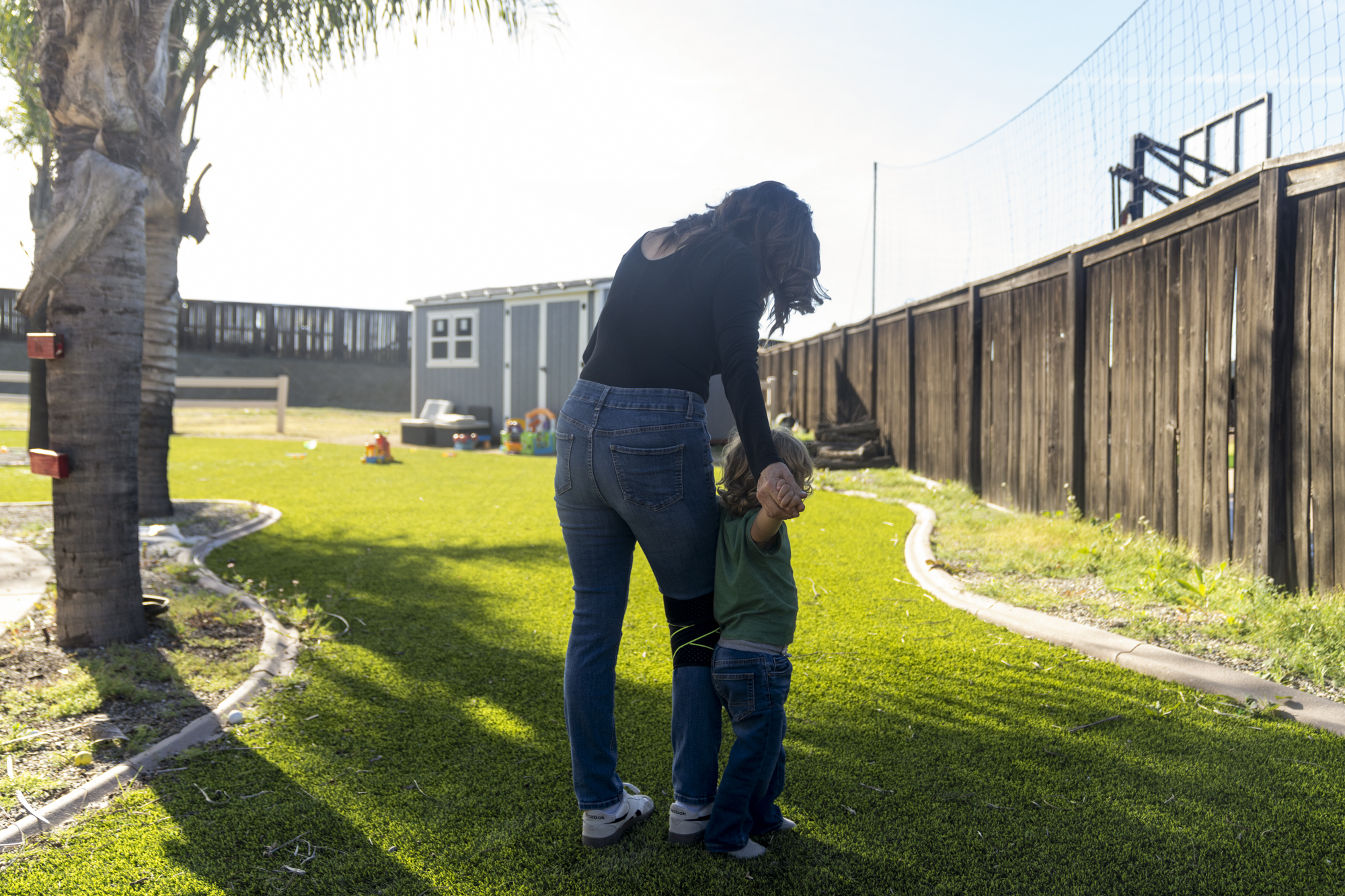
"caption": "Carrie Esqueda plays with one of her grandkids at her home in Wildomar on Feb. 9, 2026. A growing number of patients are experiencing delays in care as a labor conflict intensifies at Kaiser, rippling across California and Hawaii, with no contract deal in sight. ",
"credit": "Lauren Justice for KQED",
"altTag": null,
"description": null,
"imgSizes": {
"thumbnail": {
"file": "https://cdn.kqed.org/wp-content/uploads/sites/10/2026/02/020926_KAISERSTRIKE_8137B-KQED-160x107.jpg",
"width": 160,
"height": 107,
"mimeType": "image/jpeg"
},
"1536x1536": {
"file": "https://cdn.kqed.org/wp-content/uploads/sites/10/2026/02/020926_KAISERSTRIKE_8137B-KQED-1536x1024.jpg",
"width": 1536,
"height": 1024,
"mimeType": "image/jpeg"
},
"post-thumbnail": {
"file": "https://cdn.kqed.org/wp-content/uploads/sites/10/2026/02/020926_KAISERSTRIKE_8137B-KQED-672x372.jpg",
"width": 672,
"height": 372,
"mimeType": "image/jpeg"
},
"twentyfourteen-full-width": {
"file": "https://cdn.kqed.org/wp-content/uploads/sites/10/2026/02/020926_KAISERSTRIKE_8137B-KQED-1038x576.jpg",
"width": 1038,
"height": 576,
"mimeType": "image/jpeg"
},
"npr-cds-wide": {
"file": "https://cdn.kqed.org/wp-content/uploads/sites/10/2026/02/020926_KAISERSTRIKE_8137B-KQED-1200x675.jpg",
"width": 1200,
"height": 675,
"mimeType": "image/jpeg"
},
"kqedFullSize": {
"file": "https://cdn.kqed.org/wp-content/uploads/sites/10/2026/02/020926_KAISERSTRIKE_8137B-KQED.jpg",
"width": 2000,
"height": 1333
}
},
"isLoading": false,
"fetchFailed": false
},
"news_12072895": {
"type": "attachments",
"id": "news_12072895",
"meta": {
"index": "attachments_1716263798",
"site": "news",
"id": "12072895",
"found": true
},
"title": "260209-SFUSDSTRIKE-19-BL-KQED",
"publishDate": 1770673237,
"status": "inherit",
"parent": 12073183,
"modified": 1770858051,
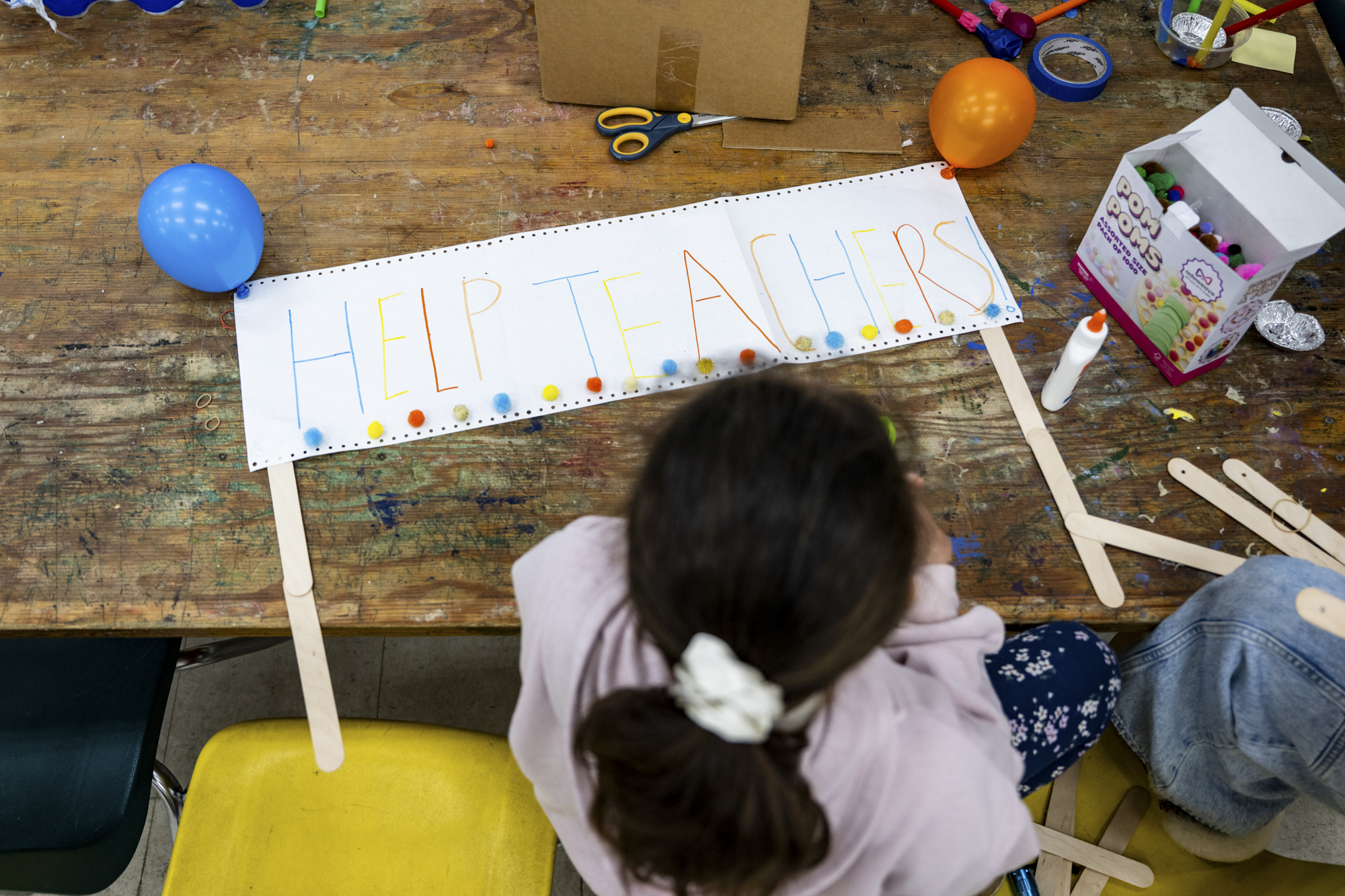
"caption": "Students make a sign that says, ‘Help Teachers’ at Mission Science Workshop in the Excelsior neighborhood of San Francisco on Feb. 9, 2026, during an SFUSD teachers’ strike that closed all district schools.",
"credit": "Beth LaBerge/KQED",
"altTag": null,
"description": null,
"imgSizes": {
"thumbnail": {
"file": "https://cdn.kqed.org/wp-content/uploads/sites/10/2026/02/260209-SFUSDSTRIKE-19-BL-KQED-160x107.jpg",
"width": 160,
"height": 107,
"mimeType": "image/jpeg"
},
"1536x1536": {
"file": "https://cdn.kqed.org/wp-content/uploads/sites/10/2026/02/260209-SFUSDSTRIKE-19-BL-KQED-1536x1024.jpg",
"width": 1536,
"height": 1024,
"mimeType": "image/jpeg"
},
"post-thumbnail": {
"file": "https://cdn.kqed.org/wp-content/uploads/sites/10/2026/02/260209-SFUSDSTRIKE-19-BL-KQED-672x372.jpg",
"width": 672,
"height": 372,
"mimeType": "image/jpeg"
},
"twentyfourteen-full-width": {
"file": "https://cdn.kqed.org/wp-content/uploads/sites/10/2026/02/260209-SFUSDSTRIKE-19-BL-KQED-1038x576.jpg",
"width": 1038,
"height": 576,
"mimeType": "image/jpeg"
},
"npr-cds-wide": {
"file": "https://cdn.kqed.org/wp-content/uploads/sites/10/2026/02/260209-SFUSDSTRIKE-19-BL-KQED-1200x675.jpg",
"width": 1200,
"height": 675,
"mimeType": "image/jpeg"
},
"kqedFullSize": {
"file": "https://cdn.kqed.org/wp-content/uploads/sites/10/2026/02/260209-SFUSDSTRIKE-19-BL-KQED.jpg",
"width": 2000,
"height": 1333
}
},
"isLoading": false,
"fetchFailed": false
},
"news_12072851": {
"type": "attachments",
"id": "news_12072851",
"meta": {
"index": "attachments_1716263798",
"site": "news",
"id": "12072851",
"found": true
},
"title": "20260209_SFUSDSTRIKE_GC-17-KQED",
"publishDate": 1770660222,
"status": "inherit",
"parent": 0,
"modified": 1770667600,
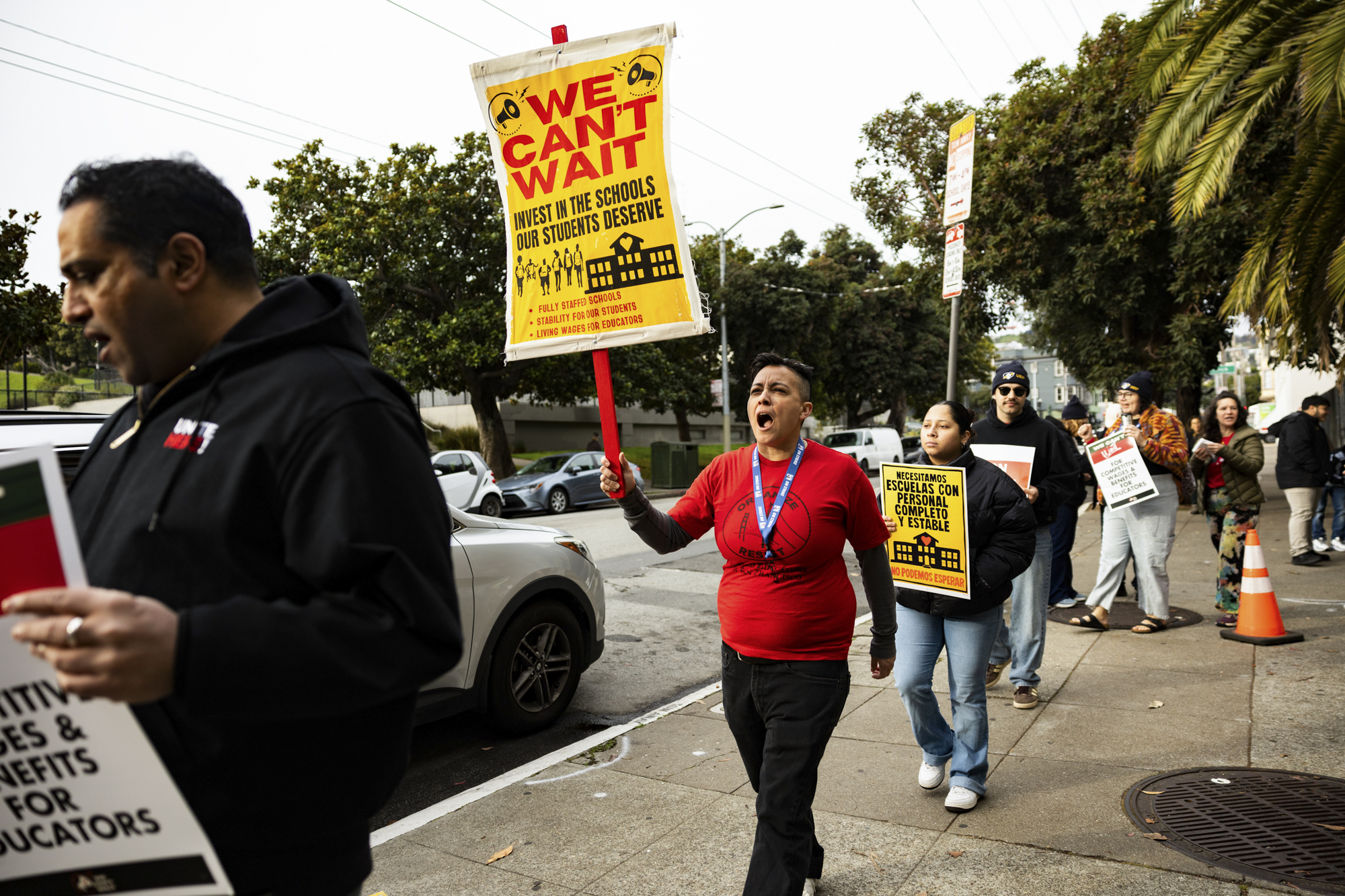
"caption": "Mar Martinez, math teacher at Mission High, pickets during a teacher’s strike at Mission High School on Feb. 9, 2026. The strike is the first in nearly 50 years.",
"credit": "Gina Castro for KQED",
"altTag": null,
"description": null,
"imgSizes": {
"thumbnail": {
"file": "https://cdn.kqed.org/wp-content/uploads/sites/10/2026/02/20260209_SFUSDSTRIKE_GC-17-KQED-160x107.jpg",
"width": 160,
"height": 107,
"mimeType": "image/jpeg"
},
"1536x1536": {
"file": "https://cdn.kqed.org/wp-content/uploads/sites/10/2026/02/20260209_SFUSDSTRIKE_GC-17-KQED-1536x1024.jpg",
"width": 1536,
"height": 1024,
"mimeType": "image/jpeg"
},
"post-thumbnail": {
"file": "https://cdn.kqed.org/wp-content/uploads/sites/10/2026/02/20260209_SFUSDSTRIKE_GC-17-KQED-672x372.jpg",
"width": 672,
"height": 372,
"mimeType": "image/jpeg"
},
"twentyfourteen-full-width": {
"file": "https://cdn.kqed.org/wp-content/uploads/sites/10/2026/02/20260209_SFUSDSTRIKE_GC-17-KQED-1038x576.jpg",
"width": 1038,
"height": 576,
"mimeType": "image/jpeg"
},
"npr-cds-wide": {
"file": "https://cdn.kqed.org/wp-content/uploads/sites/10/2026/02/20260209_SFUSDSTRIKE_GC-17-KQED-1200x675.jpg",
"width": 1200,
"height": 675,
"mimeType": "image/jpeg"
},
"kqedFullSize": {
"file": "https://cdn.kqed.org/wp-content/uploads/sites/10/2026/02/20260209_SFUSDSTRIKE_GC-17-KQED.jpg",
"width": 2000,
"height": 1333
}
},
"isLoading": false,
"fetchFailed": false
},
"news_12072420": {
"type": "attachments",
"id": "news_12072420",
"meta": {
"index": "attachments_1716263798",
"site": "news",
"id": "12072420",
"found": true
},
"title": "250204-WeCantWait-06-BL_qed",
"publishDate": 1770317800,
"status": "inherit",
"parent": 12072392,
"modified": 1770319522,
"caption": "Perry Siniard, a fourth-grade teacher, speaks during a press conference at Buena Vista Horace Mann K-8 Community School in San Francisco’s Mission District on Feb. 4, 2025, to announce the launch of the \"We Can’t Wait\" campaign, a statewide effort advocating for improved class sizes, better wages and safer schools for educators and students.",
"credit": "Beth LaBerge/KQED",
"altTag": null,
"description": null,
"imgSizes": {
"thumbnail": {
"file": "https://cdn.kqed.org/wp-content/uploads/sites/10/2026/02/250204-WeCantWait-06-BL_qed-160x107.jpg",
"width": 160,
"height": 107,
"mimeType": "image/jpeg"
},
"1536x1536": {
"file": "https://cdn.kqed.org/wp-content/uploads/sites/10/2026/02/250204-WeCantWait-06-BL_qed-1536x1024.jpg",
"width": 1536,
"height": 1024,
"mimeType": "image/jpeg"
},
"post-thumbnail": {
"file": "https://cdn.kqed.org/wp-content/uploads/sites/10/2026/02/250204-WeCantWait-06-BL_qed-672x372.jpg",
"width": 672,
"height": 372,
"mimeType": "image/jpeg"
},
"twentyfourteen-full-width": {
"file": "https://cdn.kqed.org/wp-content/uploads/sites/10/2026/02/250204-WeCantWait-06-BL_qed-1038x576.jpg",
"width": 1038,
"height": 576,
"mimeType": "image/jpeg"
},
"npr-cds-wide": {
"file": "https://cdn.kqed.org/wp-content/uploads/sites/10/2026/02/250204-WeCantWait-06-BL_qed-1200x675.jpg",
"width": 1200,
"height": 675,
"mimeType": "image/jpeg"
},
"kqedFullSize": {
"file": "https://cdn.kqed.org/wp-content/uploads/sites/10/2026/02/250204-WeCantWait-06-BL_qed.jpg",
"width": 2000,
"height": 1333
}
},
"isLoading": false,
"fetchFailed": false
},
"news_12072356": {
"type": "attachments",
"id": "news_12072356",
"meta": {
"index": "attachments_1716263798",
"site": "news",
"id": "12072356",
"found": true
},
"title": "250501-MayDayRallySF-19-BL_qed",
"publishDate": 1770247567,
"status": "inherit",
"parent": 12072350,
"modified": 1770247576,
"caption": "Cassondra Curiel, President of United Educators of San Francisco, speaks during a May Day rally in Civic Center Plaza in San Francisco on Thursday, May 1, 2025.",
"credit": "Beth LaBerge/KQED",
"altTag": null,
"description": null,
"imgSizes": {
"thumbnail": {
"file": "https://cdn.kqed.org/wp-content/uploads/sites/10/2026/02/250501-MayDayRallySF-19-BL_qed-160x107.jpg",
"width": 160,
"height": 107,
"mimeType": "image/jpeg"
},
"1536x1536": {
"file": "https://cdn.kqed.org/wp-content/uploads/sites/10/2026/02/250501-MayDayRallySF-19-BL_qed-1536x1024.jpg",
"width": 1536,
"height": 1024,
"mimeType": "image/jpeg"
},
"post-thumbnail": {
"file": "https://cdn.kqed.org/wp-content/uploads/sites/10/2026/02/250501-MayDayRallySF-19-BL_qed-672x372.jpg",
"width": 672,
"height": 372,
"mimeType": "image/jpeg"
},
"twentyfourteen-full-width": {
"file": "https://cdn.kqed.org/wp-content/uploads/sites/10/2026/02/250501-MayDayRallySF-19-BL_qed-1038x576.jpg",
"width": 1038,
"height": 576,
"mimeType": "image/jpeg"
},
"npr-cds-wide": {
"file": "https://cdn.kqed.org/wp-content/uploads/sites/10/2026/02/250501-MayDayRallySF-19-BL_qed-1200x675.jpg",
"width": 1200,
"height": 675,
"mimeType": "image/jpeg"
},
"kqedFullSize": {
"file": "https://cdn.kqed.org/wp-content/uploads/sites/10/2026/02/250501-MayDayRallySF-19-BL_qed.jpg",
"width": 2000,
"height": 1333
}
},
"isLoading": false,
"fetchFailed": false
},
"news_12071031": {
"type": "attachments",
"id": "news_12071031",
"meta": {
"index": "attachments_1716263798",
"site": "news",
"id": "12071031",
"found": true
},
"title": "260126-KAISER STRIKE BEGINS-MD-02-KQED",
"publishDate": 1769454372,
"status": "inherit",
"parent": 0,
"modified": 1769454593,
"caption": "Wesley Briones and other workers strike at Kaiser Oakland Medical Center in Oakland on Jan. 26, 2026.",
"credit": "Martin do Nascimento/KQED",
"altTag": null,
"description": null,
"imgSizes": {
"thumbnail": {
"file": "https://cdn.kqed.org/wp-content/uploads/sites/10/2026/01/260126-KAISER-STRIKE-BEGINS-MD-02-KQED-160x107.jpg",
"width": 160,
"height": 107,
"mimeType": "image/jpeg"
},
"1536x1536": {
"file": "https://cdn.kqed.org/wp-content/uploads/sites/10/2026/01/260126-KAISER-STRIKE-BEGINS-MD-02-KQED-1536x1025.jpg",
"width": 1536,
"height": 1025,
"mimeType": "image/jpeg"
},
"post-thumbnail": {
"file": "https://cdn.kqed.org/wp-content/uploads/sites/10/2026/01/260126-KAISER-STRIKE-BEGINS-MD-02-KQED-672x372.jpg",
"width": 672,
"height": 372,
"mimeType": "image/jpeg"
},
"twentyfourteen-full-width": {
"file": "https://cdn.kqed.org/wp-content/uploads/sites/10/2026/01/260126-KAISER-STRIKE-BEGINS-MD-02-KQED-1038x576.jpg",
"width": 1038,
"height": 576,
"mimeType": "image/jpeg"
},
"npr-cds-wide": {
"file": "https://cdn.kqed.org/wp-content/uploads/sites/10/2026/01/260126-KAISER-STRIKE-BEGINS-MD-02-KQED-1200x675.jpg",
"width": 1200,
"height": 675,
"mimeType": "image/jpeg"
},
"kqedFullSize": {
"file": "https://cdn.kqed.org/wp-content/uploads/sites/10/2026/01/260126-KAISER-STRIKE-BEGINS-MD-02-KQED.jpg",
"width": 2000,
"height": 1334
}
},
"isLoading": false,
"fetchFailed": false
},
"news_12059852": {
"type": "attachments",
"id": "news_12059852",
"meta": {
"index": "attachments_1716263798",
"site": "news",
"id": "12059852",
"found": true
},
"title": "251014-KAISER STRIKE START-MD-03-KQED-1",
"publishDate": 1760463524,
"status": "inherit",
"parent": 0,
"modified": 1768609829,
"caption": "Workers strike outside of the Kaiser Permanente Oakland Medical Center in Oakland on Oct. 14, 2025.",
"credit": "Martin do Nascimento/KQED",
"altTag": null,
"description": null,
"imgSizes": {
"thumbnail": {
"file": "https://cdn.kqed.org/wp-content/uploads/sites/10/2025/10/251014-KAISER-STRIKE-START-MD-03-KQED-1-160x107.jpg",
"width": 160,
"height": 107,
"mimeType": "image/jpeg"
},
"1536x1536": {
"file": "https://cdn.kqed.org/wp-content/uploads/sites/10/2025/10/251014-KAISER-STRIKE-START-MD-03-KQED-1-1536x1025.jpg",
"width": 1536,
"height": 1025,
"mimeType": "image/jpeg"
},
"post-thumbnail": {
"file": "https://cdn.kqed.org/wp-content/uploads/sites/10/2025/10/251014-KAISER-STRIKE-START-MD-03-KQED-1-672x372.jpg",
"width": 672,
"height": 372,
"mimeType": "image/jpeg"
},
"twentyfourteen-full-width": {
"file": "https://cdn.kqed.org/wp-content/uploads/sites/10/2025/10/251014-KAISER-STRIKE-START-MD-03-KQED-1-1038x576.jpg",
"width": 1038,
"height": 576,
"mimeType": "image/jpeg"
},
"kqedFullSize": {
"file": "https://cdn.kqed.org/wp-content/uploads/sites/10/2025/10/251014-KAISER-STRIKE-START-MD-03-KQED-1.jpg",
"width": 2000,
"height": 1334
}
},
"isLoading": false,
"fetchFailed": false
},
"news_12069603": {
"type": "attachments",
"id": "news_12069603",
"meta": {
"index": "attachments_1716263798",
"site": "news",
"id": "12069603",
"found": true
},
"title": "011326_SOLANO COUNTY STRIKE _GH_022-KQED",
"publishDate": 1768343678,
"status": "inherit",
"parent": 0,
"modified": 1768343697,
"caption": "Demonstrators move through downtown Fairfield as Solano County workers continued a countywide strike over stalled contract negotiations on Jan. 13, 2026.",
"credit": "Gustavo Hernandez/KQED",
"altTag": null,
"description": null,
"imgSizes": {
"thumbnail": {
"file": "https://cdn.kqed.org/wp-content/uploads/sites/10/2026/01/011326_SOLANO-COUNTY-STRIKE-_GH_022-KQED-160x107.jpg",
"width": 160,
"height": 107,
"mimeType": "image/jpeg"
},
"1536x1536": {
"file": "https://cdn.kqed.org/wp-content/uploads/sites/10/2026/01/011326_SOLANO-COUNTY-STRIKE-_GH_022-KQED-1536x1024.jpg",
"width": 1536,
"height": 1024,
"mimeType": "image/jpeg"
},
"post-thumbnail": {
"file": "https://cdn.kqed.org/wp-content/uploads/sites/10/2026/01/011326_SOLANO-COUNTY-STRIKE-_GH_022-KQED-672x372.jpg",
"width": 672,
"height": 372,
"mimeType": "image/jpeg"
},
"twentyfourteen-full-width": {
"file": "https://cdn.kqed.org/wp-content/uploads/sites/10/2026/01/011326_SOLANO-COUNTY-STRIKE-_GH_022-KQED-1038x576.jpg",
"width": 1038,
"height": 576,
"mimeType": "image/jpeg"
},
"npr-cds-wide": {
"file": "https://cdn.kqed.org/wp-content/uploads/sites/10/2026/01/011326_SOLANO-COUNTY-STRIKE-_GH_022-KQED-1200x675.jpg",
"width": 1200,
"height": 675,
"mimeType": "image/jpeg"
},
"kqedFullSize": {
"file": "https://cdn.kqed.org/wp-content/uploads/sites/10/2026/01/011326_SOLANO-COUNTY-STRIKE-_GH_022-KQED.jpg",
"width": 2000,
"height": 1333
}
},
"isLoading": false,
"fetchFailed": false
},
"news_12066308": {
"type": "attachments",
"id": "news_12066308",
"meta": {
"index": "attachments_1716263798",
"site": "news",
"id": "12066308",
"found": true
},
"title": "251205-WCCUSDSTRIKERALLY00960_TV-KQED",
"publishDate": 1764976014,
"status": "inherit",
"parent": 12066401,
"modified": 1765242482,
"caption": "West Contra Costa Unified School District teachers and families continue their strike at Marina Bay Park in Richmond on Dec. 5, 2025.",
"credit": "Tâm Vũ/KQED",
"altTag": null,
"description": null,
"imgSizes": {
"thumbnail": {
"file": "https://cdn.kqed.org/wp-content/uploads/sites/10/2025/12/251205-WCCUSDSTRIKERALLY00960_TV-KQED-160x107.jpg",
"width": 160,
"height": 107,
"mimeType": "image/jpeg"
},
"1536x1536": {
"file": "https://cdn.kqed.org/wp-content/uploads/sites/10/2025/12/251205-WCCUSDSTRIKERALLY00960_TV-KQED-1536x1024.jpg",
"width": 1536,
"height": 1024,
"mimeType": "image/jpeg"
},
"post-thumbnail": {
"file": "https://cdn.kqed.org/wp-content/uploads/sites/10/2025/12/251205-WCCUSDSTRIKERALLY00960_TV-KQED-672x372.jpg",
"width": 672,
"height": 372,
"mimeType": "image/jpeg"
},
"twentyfourteen-full-width": {
"file": "https://cdn.kqed.org/wp-content/uploads/sites/10/2025/12/251205-WCCUSDSTRIKERALLY00960_TV-KQED-1038x576.jpg",
"width": 1038,
"height": 576,
"mimeType": "image/jpeg"
},
"npr-cds-wide": {
"file": "https://cdn.kqed.org/wp-content/uploads/sites/10/2025/12/251205-WCCUSDSTRIKERALLY00960_TV-KQED-1200x675.jpg",
"width": 1200,
"height": 675,
"mimeType": "image/jpeg"
},
"kqedFullSize": {
"file": "https://cdn.kqed.org/wp-content/uploads/sites/10/2025/12/251205-WCCUSDSTRIKERALLY00960_TV-KQED.jpg",
"width": 2000,
"height": 1333
}
},
"isLoading": false,
"fetchFailed": false
},
"news_12059581": {
"type": "attachments",
"id": "news_12059581",
"meta": {
"index": "attachments_1716263798",
"site": "news",
"id": "12059581",
"found": true
},
"title": "20240827_SFUSDProtest_GC-5_qed",
"publishDate": 1760136595,
"status": "inherit",
"parent": 12059537,
"modified": 1760136618,
"caption": "Individuals cheer during an emergency rally and press conference, held by the United Educators of San Francisco, demanding fully staffed schools, outside of the San Francisco Unified School District offices, on Aug. 27, 2024.",
"credit": "Gina Castro/KQED",
"altTag": null,
"description": null,
"imgSizes": {
"thumbnail": {
"file": "https://cdn.kqed.org/wp-content/uploads/sites/10/2025/10/20240827_SFUSDProtest_GC-5_qed-160x109.jpg",
"width": 160,
"height": 109,
"mimeType": "image/jpeg"
},
"1536x1536": {
"file": "https://cdn.kqed.org/wp-content/uploads/sites/10/2025/10/20240827_SFUSDProtest_GC-5_qed-1536x1048.jpg",
"width": 1536,
"height": 1048,
"mimeType": "image/jpeg"
},
"post-thumbnail": {
"file": "https://cdn.kqed.org/wp-content/uploads/sites/10/2025/10/20240827_SFUSDProtest_GC-5_qed-672x372.jpg",
"width": 672,
"height": 372,
"mimeType": "image/jpeg"
},
"twentyfourteen-full-width": {
"file": "https://cdn.kqed.org/wp-content/uploads/sites/10/2025/10/20240827_SFUSDProtest_GC-5_qed-1038x576.jpg",
"width": 1038,
"height": 576,
"mimeType": "image/jpeg"
},
"kqedFullSize": {
"file": "https://cdn.kqed.org/wp-content/uploads/sites/10/2025/10/20240827_SFUSDProtest_GC-5_qed.jpg",
"width": 1953,
"height": 1333
}
},
"isLoading": false,
"fetchFailed": false
},
"news_12049416": {
"type": "attachments",
"id": "news_12049416",
"meta": {
"index": "attachments_1716263798",
"site": "news",
"id": "12049416",
"found": true
},
"title": "The West Contra Costa School District Offices in Richmond on July 23, 2025.",
"publishDate": 1753306865,
"status": "inherit",
"parent": 12049389,
"modified": 1753375841,
"caption": "The West Contra Costa School District Offices in Richmond on July 23, 2025.",
"credit": "Martin do Nascimento/KQED",
"altTag": null,
"description": null,
"imgSizes": {
"thumbnail": {
"file": "https://cdn.kqed.org/wp-content/uploads/sites/10/2025/07/250723-WEST-CO-CO-ICE-MD-04-KQED-160x107.jpg",
"width": 160,
"height": 107,
"mimeType": "image/jpeg"
},
"1536x1536": {
"file": "https://cdn.kqed.org/wp-content/uploads/sites/10/2025/07/250723-WEST-CO-CO-ICE-MD-04-KQED-1536x1025.jpg",
"width": 1536,
"height": 1025,
"mimeType": "image/jpeg"
},
"post-thumbnail": {
"file": "https://cdn.kqed.org/wp-content/uploads/sites/10/2025/07/250723-WEST-CO-CO-ICE-MD-04-KQED-672x372.jpg",
"width": 672,
"height": 372,
"mimeType": "image/jpeg"
},
"twentyfourteen-full-width": {
"file": "https://cdn.kqed.org/wp-content/uploads/sites/10/2025/07/250723-WEST-CO-CO-ICE-MD-04-KQED-1038x576.jpg",
"width": 1038,
"height": 576,
"mimeType": "image/jpeg"
},
"kqedFullSize": {
"file": "https://cdn.kqed.org/wp-content/uploads/sites/10/2025/07/250723-WEST-CO-CO-ICE-MD-04-KQED.jpg",
"width": 2000,
"height": 1334
}
},
"isLoading": false,
"fetchFailed": false
},
"news_12064417": {
"type": "attachments",
"id": "news_12064417",
"meta": {
"index": "attachments_1716263798",
"site": "news",
"id": "12064417",
"found": true
},
"title": "251117-UCStrike-08-BL",
"publishDate": 1763416121,
"status": "inherit",
"parent": 0,
"modified": 1763416382,
"caption": "Aimee Villas, a lab technician, strikes alongside patient care and service workers represented by AFSCME Local 3299 at the UCSF Medical Center Mission Bay campus on Nov. 17, 2025, for living wages, affordable healthcare, housing benefits, and safe staffing.",
"credit": "Beth LaBerge/KQED",
"altTag": null,
"description": null,
"imgSizes": {
"thumbnail": {
"file": "https://cdn.kqed.org/wp-content/uploads/sites/10/2025/11/251117-UCStrike-08-BL-160x107.jpg",
"width": 160,
"height": 107,
"mimeType": "image/jpeg"
},
"1536x1536": {
"file": "https://cdn.kqed.org/wp-content/uploads/sites/10/2025/11/251117-UCStrike-08-BL-1536x1024.jpg",
"width": 1536,
"height": 1024,
"mimeType": "image/jpeg"
},
"post-thumbnail": {
"file": "https://cdn.kqed.org/wp-content/uploads/sites/10/2025/11/251117-UCStrike-08-BL-672x372.jpg",
"width": 672,
"height": 372,
"mimeType": "image/jpeg"
},
"twentyfourteen-full-width": {
"file": "https://cdn.kqed.org/wp-content/uploads/sites/10/2025/11/251117-UCStrike-08-BL-1038x576.jpg",
"width": 1038,
"height": 576,
"mimeType": "image/jpeg"
},
"npr-cds-wide": {
"file": "https://cdn.kqed.org/wp-content/uploads/sites/10/2025/11/251117-UCStrike-08-BL-1200x675.jpg",
"width": 1200,
"height": 675,
"mimeType": "image/jpeg"
},
"kqedFullSize": {
"file": "https://cdn.kqed.org/wp-content/uploads/sites/10/2025/11/251117-UCStrike-08-BL.jpg",
"width": 2000,
"height": 1333
}
},
"isLoading": false,
"fetchFailed": false
}
},
"audioPlayerReducer": {
"postId": "stream_live",
"isPaused": true,
"isPlaying": false,
"pfsActive": false,
"pledgeModalIsOpen": true,
"playerDrawerIsOpen": false,
"liveAudioPlayStartedAt": 0,
"liveAudioPlayContext": ""
},
"authorsReducer": {
"fjhabvala": {
"type": "authors",
"id": "8659",
"meta": {
"index": "authors_1716337520",
"id": "8659",
"found": true
},
"name": "Farida Jhabvala Romero",
"firstName": "Farida",
"lastName": "Jhabvala Romero",
"slug": "fjhabvala",
"email": "fjhabvala@kqed.org",
"display_author_email": true,
"staff_mastheads": [
"news"
],
"title": "KQED Contributor",
"bio": "Farida Jhabvala Romero is a Labor Correspondent for KQED. She previously covered immigration. Farida was \u003ca href=\"https://www.ccnma.org/2022-most-influential-latina-journalists\">named\u003c/a> one of the 10 Most Influential Latina Journalists in California in 2022 by the California Chicano News Media Association. Her work has won awards from the Society of Professional Journalists (Northern California), as well as a national and regional Edward M. Murrow Award for the collaborative reporting projects “Dangerous Air” and “Graying California.” Before joining KQED, Farida worked as a producer at Radio Bilingüe, a national public radio network. Farida earned her master’s degree in journalism from Stanford University.",
"avatar": "https://secure.gravatar.com/avatar/f9f022d4e2609741874222a1e9d41f48fea74011aa7c615eef91d9a50c944ebe?s=600&d=blank&r=g",
"twitter": "FaridaJhabvala",
"bluesky": null,
"facebook": null,
"instagram": null,
"linkedin": "https://www.linkedin.com/in/faridajhabvala/",
"sites": [
{
"site": "news",
"roles": [
"editor"
]
},
{
"site": "stateofhealth",
"roles": [
"author"
]
},
{
"site": "liveblog",
"roles": [
"author"
]
}
],
"headData": {
"title": "Farida Jhabvala Romero | KQED",
"description": "KQED Contributor",
"ogImgSrc": "https://secure.gravatar.com/avatar/f9f022d4e2609741874222a1e9d41f48fea74011aa7c615eef91d9a50c944ebe?s=600&d=blank&r=g",
"twImgSrc": "https://secure.gravatar.com/avatar/f9f022d4e2609741874222a1e9d41f48fea74011aa7c615eef91d9a50c944ebe?s=600&d=blank&r=g"
},
"isLoading": false,
"link": "/author/fjhabvala"
},
"daisynguyen": {
"type": "authors",
"id": "11829",
"meta": {
"index": "authors_1716337520",
"id": "11829",
"found": true
},
"name": "Daisy Nguyen",
"firstName": "Daisy",
"lastName": "Nguyen",
"slug": "daisynguyen",
"email": "daisynguyen@kqed.org",
"display_author_email": true,
"staff_mastheads": [
"news"
],
"title": "KQED Contributor",
"bio": "I have covered early childhood education and child care for KQED since 2022. I focus on policies aimed at increasing access to early care and education and how they shape individual lives. I've been a journalist for more than two decades, with most of that time devoted to covering breaking news throughout California for The Associated Press. I grew up in San Francisco and studied at UC Davis and Columbia University's Graduate School of Journalism. I live in Oakland with my husband and two kids.",
"avatar": "https://secure.gravatar.com/avatar/2da2127c27f7143b53ebd419800fd55f?s=600&d=blank&r=g",
"twitter": null,
"facebook": null,
"instagram": null,
"linkedin": "https://www.linkedin.com/in/daisynguyen/",
"sites": [
{
"site": "news",
"roles": [
"author"
]
},
{
"site": "liveblog",
"roles": [
"author"
]
}
],
"headData": {
"title": "Daisy Nguyen | KQED",
"description": "KQED Contributor",
"ogImgSrc": "https://secure.gravatar.com/avatar/2da2127c27f7143b53ebd419800fd55f?s=600&d=blank&r=g",
"twImgSrc": "https://secure.gravatar.com/avatar/2da2127c27f7143b53ebd419800fd55f?s=600&d=blank&r=g"
},
"isLoading": false,
"link": "/author/daisynguyen"
},
"kdebenedetti": {
"type": "authors",
"id": "11913",
"meta": {
"index": "authors_1716337520",
"id": "11913",
"found": true
},
"name": "Katie DeBenedetti",
"firstName": "Katie",
"lastName": "DeBenedetti",
"slug": "kdebenedetti",
"email": "kdebenedetti@kqed.org",
"display_author_email": false,
"staff_mastheads": [
"news",
"science"
],
"title": "KQED Contributor",
"bio": "Katie DeBenedetti is a digital reporter covering daily news for the Express Desk. Prior to joining KQED as a culture reporting intern in January 2024, she covered education and city government for the Napa Valley Register.",
"avatar": "https://secure.gravatar.com/avatar/6e31073cb8f7e4214ab03f42771d0f45?s=600&d=blank&r=g",
"twitter": null,
"facebook": null,
"instagram": null,
"linkedin": null,
"sites": [
{
"site": "news",
"roles": [
"author"
]
},
{
"site": "science",
"roles": [
"author"
]
},
{
"site": "liveblog",
"roles": [
"author"
]
}
],
"headData": {
"title": "Katie DeBenedetti | KQED",
"description": "KQED Contributor",
"ogImgSrc": "https://secure.gravatar.com/avatar/6e31073cb8f7e4214ab03f42771d0f45?s=600&d=blank&r=g",
"twImgSrc": "https://secure.gravatar.com/avatar/6e31073cb8f7e4214ab03f42771d0f45?s=600&d=blank&r=g"
},
"isLoading": false,
"link": "/author/kdebenedetti"
}
},
"pagesReducer": {
"news_tag_labor-strikes": {
"type": "terms",
"id": "news_24590",
"meta": {
"index": "terms_1716263798",
"site": "news",
"id": "24590",
"score": 10.4075165
},
"featImg": null,
"name": "labor strikes",
"description": null,
"taxonomy": "tag",
"headData": {
"twImgId": null,
"twTitle": null,
"ogTitle": null,
"ogImgId": null,
"twDescription": null,
"description": null,
"title": "labor strikes Archives | KQED News",
"ogDescription": null
},
"ttid": 24607,
"slug": "labor-strikes",
"isLoading": false,
"title": "labor strikes",
"pageMeta": {
"site": "news",
"WpPageTemplate": "page-topic-editorial",
"currentPage": 3
},
"blocks": [
{
"blockName": "kqed/post-list",
"attrs": {
"layout": "cardArticle2",
"query": "posts/news?tag=labor-strikes",
"seeMore": false,
"paginated": true,
"page": 3
}
},
{
"blockName": "kqed/ad"
}
]
}
},
"pfsSessionReducer": {},
"postsReducer": {
"stream_live": {
"type": "live",
"id": "stream_live",
"audioUrl": "https://hls.kqed.org/hls/kqed_app/playlist.m3u8",
"title": "Live Stream",
"excerpt": "Live Stream information currently unavailable.",
"link": "/radio",
"featImg": "",
"label": {
"name": "KQED Live",
"link": "/"
}
},
"stream_kqedNewscast": {
"type": "posts",
"id": "stream_kqedNewscast",
"audioUrl": "https://www.kqed.org/.stream/anon/radio/RDnews/newscast.mp3?_=1",
"title": "KQED Newscast",
"featImg": "",
"label": {
"name": "88.5 FM",
"link": "/"
}
},
"news_12072837": {
"type": "posts",
"id": "news_12072837",
"meta": {
"index": "posts_1716263798",
"site": "news",
"id": "12072837",
"score": null,
"sort": [
1770767573000
]
},
"guestAuthors": [],
"slug": "kaiser-strike-delays-surgeries-disrupts-care-as-more-workers-walk-off-jobs",
"title": "Kaiser Strike Delays Surgeries, Disrupts Care as More Workers Walk Off Jobs",
"publishDate": 1770767573,
"format": "standard",
"headTitle": "Kaiser Strike Delays Surgeries, Disrupts Care as More Workers Walk Off Jobs | KQED",
"labelTerm": {
"site": "news"
},
"content": "\u003cp>Carrie Esqueda’s injured knee has hurt since last summer, sometimes agonizingly so. It hurts when she tries to walk in her hilly Riverside County neighborhood and show homes to real estate clients. The 57-year-old misses the regular one-hour strolls with friends that kept her healthy and fit.\u003c/p>\n\u003cp>After months waiting for a high-demand surgery at Kaiser Permanente to repair her torn meniscus, Esqueda said the procedure was scheduled for Jan. 29. But the night before, the nonprofit health care organization called with bad news: Her operation was canceled due to \u003ca href=\"https://www.kqed.org/news/12071014/kaiser-strike-sees-thousands-walk-out-in-california-this-time-with-no-end-in-sight\">an employee strike\u003c/a>.\u003c/p>\n\u003cp>“I was absolutely devastated. I literally wanted to cry,” Esqueda said. “I am in constant pain. I cannot really walk without a knee brace because it always feels like it’s going to buckle. So I’ve been in a bad situation. And now, who knows how long it’ll take.”\u003c/p>\n\u003cp>[ad fullwidth]\u003c/p>\n\u003cp>Esqueda is one of a growing number of patients reporting delays in care as a labor conflict intensifies at Kaiser, rippling across California and Hawaii, with no contract deal in sight. Meanwhile, the ranks of up to 31,000 nurses, physician assistants, physical therapists and other health care workers striking for a third week over staffing levels and compensation swelled on Monday, as thousands more employees walked off pharmacy and laboratory jobs.\u003c/p>\n\u003cp>The Oakland-based health care giant, which has kept most of its facilities open, declined requests for more information on how many procedures it has postponed since the strike began on Jan. 26.\u003c/p>\n\u003cp>The company has relocated staffers to affected hospitals and medical offices, and hired temporary workers, a mounting expense that could add up to millions of dollars per week. Some pharmacies will close.\u003c/p>\n\u003cfigure id=\"attachment_12072988\" class=\"wp-caption aligncenter\" style=\"max-width: 2000px\">\u003cimg loading=\"lazy\" decoding=\"async\" class=\"size-full wp-image-12072988\" src=\"https://cdn.kqed.org/wp-content/uploads/sites/10/2026/02/020926_KAISERSTRIKE_8239B-KQED.jpg\" alt=\"\" width=\"2000\" height=\"1333\" srcset=\"https://cdn.kqed.org/wp-content/uploads/sites/10/2026/02/020926_KAISERSTRIKE_8239B-KQED.jpg 2000w, https://cdn.kqed.org/wp-content/uploads/sites/10/2026/02/020926_KAISERSTRIKE_8239B-KQED-160x107.jpg 160w, https://cdn.kqed.org/wp-content/uploads/sites/10/2026/02/020926_KAISERSTRIKE_8239B-KQED-1536x1024.jpg 1536w\" sizes=\"auto, (max-width: 2000px) 100vw, 2000px\">\u003cfigcaption class=\"wp-caption-text\">Carrie Esqueda wears a knee brace at home in Wildomar on Feb. 9, 2026. \u003ccite>(Lauren Justice for KQED)\u003c/cite>\u003c/figcaption>\u003c/figure>\n\u003cp>“Kaiser Permanente remains committed to its nurses, employees, and patients and focused on reaching a fair agreement that recognizes employees’ value while protecting access to affordable, quality care for the members and patients who rely on us every day,” a company statement said.\u003c/p>\n\u003cp>While Kaiser said its doctors, nurses and contingency personnel are working to meet members’ needs, the nurse anesthetists and other highly specialized professionals who are on the picket lines can be hard to replace. Disruptions are especially affecting patients in Southern California, where most of the workers on strike are based.\u003c/p>\n\u003cp>Dozens of cancer patients have said on social media that their chemotherapy treatments were canceled or moved with little warning to non-Kaiser facilities that required further travel, while others described deserted hospital halls and long pharmacy wait lines. Several patients told KQED that their postponed hip replacement and other surgeries due to the staffing shortages left them depressed and struggling.\u003c/p>\n\u003cp>“I feel angry and hopeless because my surgery has been delayed by five weeks, and that’s five more weeks of my life waiting to get back to normal,” said Kayla Howell, whose Jan. 27 operation to repair a torn ACL was rescheduled to March. “Having that taken away, you realize, ‘Oh my God, I use my leg for everything, even taking a shower is extremely difficult and painful.’”[aside postID=news_12070141 hero='https://cdn.kqed.org/wp-content/uploads/sites/10/2026/01/Emmas-room-2.jpg']The 27-year-old kindergarten teacher assistant in San José had enlisted her mother to travel from Ireland to help with post-surgery recovery, including the weeks Howell must spend on crutches. But the setback upended those plans, as rebooking her mother’s flight and lodging would cost hundreds more dollars.\u003c/p>\n\u003cp>“It’s just so frustrating because we just want care, and we deserve care. I pay my health insurance, and I pay my premiums, and where is that money going?” she said, adding that she wants Kaiser executives to work urgently to resolve the strike. “Help people get care, because that’s what their company is supposed to be for. But instead, people are suffering.”\u003c/p>\n\u003cp>Meanwhile, labor negotiations are at a standstill, with both parties accusing each other of halting progress. Kaiser is refusing to meet with national union negotiators, saying it is shifting unresolved contract issues to local bargaining tables. The union, which has called that move illegal, filed a federal unfair labor practices complaint against Kaiser.\u003c/p>\n\u003cp>Union-represented employees want a 25% raise over a four-year contract, with no cuts to pensions and other benefits, as well as more input on scheduling and staffing ratios. The company, which has dismissed claims of chronic understaffing or declining patient care, has stuck for months to its offer to increase wages by 21.5%.\u003c/p>\n\u003cp>“I’ve put all of these years into this company, and to see that it has come to this, it’s very overwhelming and it’s heartbreaking,” said Christina Thomas, a 40-year-old pharmacy technician with the United Food and Commercial Workers who walked off the job this week.\u003c/p>\n\u003cp>The mother of two said wages have not kept up with inflation, while she and co-workers struggle to fill thousands of prescriptions daily at a Lancaster pharmacy.\u003c/p>\n\u003cfigure id=\"attachment_11963409\" class=\"wp-caption aligncenter\" style=\"max-width: 2000px\">\u003cimg loading=\"lazy\" decoding=\"async\" class=\"size-full wp-image-11963409\" src=\"https://cdn.kqed.org/wp-content/uploads/sites/10/2023/10/231004-KAISER-STRIKE-MD-10-KQED.jpg\" alt='A large modern building with the words \"Kaiser Permanente\" across the top.' width=\"2000\" height=\"1333\" srcset=\"https://cdn.kqed.org/wp-content/uploads/sites/10/2023/10/231004-KAISER-STRIKE-MD-10-KQED.jpg 2000w, https://cdn.kqed.org/wp-content/uploads/sites/10/2023/10/231004-KAISER-STRIKE-MD-10-KQED-800x533.jpg 800w, https://cdn.kqed.org/wp-content/uploads/sites/10/2023/10/231004-KAISER-STRIKE-MD-10-KQED-1020x680.jpg 1020w, https://cdn.kqed.org/wp-content/uploads/sites/10/2023/10/231004-KAISER-STRIKE-MD-10-KQED-160x107.jpg 160w, https://cdn.kqed.org/wp-content/uploads/sites/10/2023/10/231004-KAISER-STRIKE-MD-10-KQED-1536x1024.jpg 1536w, https://cdn.kqed.org/wp-content/uploads/sites/10/2023/10/231004-KAISER-STRIKE-MD-10-KQED-1920x1280.jpg 1920w\" sizes=\"auto, (max-width: 2000px) 100vw, 2000px\">\u003cfigcaption class=\"wp-caption-text\">The Kaiser Permanente Oakland Medical Center in Oakland on Oct. 4, 2023. \u003ccite>(Martin do Nascimento/KQED)\u003c/cite>\u003c/figcaption>\u003c/figure>\n\u003cp>“At the end of the day, we are striking for our patients, and so that Kaiser can wake up and come back to the table,” she said.\u003c/p>\n\u003cp>As a nonprofit health plan and care provider, Kaiser reinvests its revenue into facilities and services for patients. The organization, founded in 1945, has grown to serve more than 12 million people in eight states and the District of Columbia, emphasizing preventive care.\u003c/p>\n\u003cp>Company executives argue that greater wage raises are unsustainable and would increase members’ premiums at a time when massive budget cuts to Medicaid and other federal policies could make insurance unaffordable for millions of Americans. Under the Trump administration, Kaiser and other health care systems face an uncertain financial forecast with potential revenue losses and increased costs.\u003c/p>\n\u003cp>As the work stoppage drags on in California, where most Kaiser customers are located, the company risks increasing reputational damage among not only its patients but also its workforce, resulting in longer-term costs, according to health care business experts.\u003c/p>\n\u003cfigure id=\"attachment_12073048\" class=\"wp-caption alignleft\" style=\"max-width: 1333px\">\u003cimg loading=\"lazy\" decoding=\"async\" class=\"wp-image-12073048 size-full\" src=\"https://cdn.kqed.org/wp-content/uploads/sites/10/2026/02/020926_KAISERSTRIKE_8223B-KQED.jpg\" alt=\"\" width=\"1333\" height=\"2000\" srcset=\"https://cdn.kqed.org/wp-content/uploads/sites/10/2026/02/020926_KAISERSTRIKE_8223B-KQED.jpg 1333w, https://cdn.kqed.org/wp-content/uploads/sites/10/2026/02/020926_KAISERSTRIKE_8223B-KQED-160x240.jpg 160w, https://cdn.kqed.org/wp-content/uploads/sites/10/2026/02/020926_KAISERSTRIKE_8223B-KQED-1024x1536.jpg 1024w\" sizes=\"auto, (max-width: 1333px) 100vw, 1333px\">\u003cfigcaption class=\"wp-caption-text\">Carrie Esqueda at home in Wildomar, California, on Monday, Feb. 9, 2026. \u003ccite>(Lauren Justice for KQED)\u003c/cite>\u003c/figcaption>\u003c/figure>\n\u003cp>“The bigger economic risk isn’t what the strike costs this week, but it’s what happens if workforce distrust becomes structural at Kaiser, because you will get higher turnover, you’re going to have higher recruitment costs,” said Michael Skolnik, academic director of the Dominican University of California’s health care executive MBA program.\u003c/p>\n\u003cp>Patients like Alice Gallagher sympathize with the strikers but fear further disruptions. Last week, the San Diego County clarinetist said she was temporarily unable to order her medication for epilepsy via the Kaiser app. She tried calling her local pharmacy and then a regional number, she said, but nobody would help her.\u003c/p>\n\u003cp>Gallagher, 46, started to panic.\u003c/p>\n\u003cp>“If I don’t have my medication, I end up in the hospital… because my seizures are so bad once they get out of control,” she said, adding that, as she can’t drive, it would take her hours to travel on paratransit to visit her pharmacy.\u003c/p>\n\u003cp>Gallagher was later able to order her prescriptions online. But the experience left her wondering about other vulnerable patients in need of timely care.\u003c/p>\n\u003cp>“I had my moment of panic,” she said. “But for someone who’s just been diagnosed with something and feels overwhelmed, or someone who has cancer and then they are at the mercy of this stalemate in the negotiations, that’s who’s really suffering. That’s what’s really tough here.”\u003c/p>\n\u003cp>Esqueda, the real estate agent with a torn meniscus, said that she’s watching the news daily, hoping that Kaiser ends the strike so that she can get the surgery she needs to heal.\u003c/p>\n\u003cp>“I’m just praying that they get to some resolution,” Esqueda said. “I hope they listen and take into consideration that there are people’s lives that are being turned upside down.”\u003c/p>\n\u003cp>[ad floatright]\u003c/p>\n",
"blocks": [],
"excerpt": "A growing number of patients are experiencing delays in care as a labor conflict intensifies at Kaiser, rippling across California and Hawaii, with no contract deal in sight. ",
"status": "publish",
"parent": 0,
"modified": 1770769086,
"stats": {
"hasAudio": false,
"hasVideo": false,
"hasChartOrMap": false,
"iframeSrcs": [],
"hasGoogleForm": false,
"hasGallery": false,
"hasHearkenModule": false,
"hasPolis": false,
"paragraphCount": 29,
"wordCount": 1416
},
"headData": {
"title": "Kaiser Strike Delays Surgeries, Disrupts Care as More Workers Walk Off Jobs | KQED",
"description": "A growing number of patients are experiencing delays in care as a labor conflict intensifies at Kaiser, rippling across California and Hawaii, with no contract deal in sight. ",
"ogTitle": "",
"ogDescription": "",
"ogImgId": "",
"twTitle": "",
"twDescription": "",
"twImgId": "",
"schema": {
"@context": "https://schema.org",
"@type": "NewsArticle",
"headline": "Kaiser Strike Delays Surgeries, Disrupts Care as More Workers Walk Off Jobs",
"datePublished": "2026-02-10T15:52:53-08:00",
"dateModified": "2026-02-10T16:18:06-08:00",
"image": "https://cdn.kqed.org/wp-content/uploads/2020/02/KQED-OG-Image@1x.png",
"isAccessibleForFree": "True",
"publisher": {
"@type": "NewsMediaOrganization",
"@id": "https://www.kqed.org/#organization",
"name": "KQED",
"logo": "https://cdn.kqed.org/wp-content/uploads/2020/02/KQED-OG-Image@1x.png",
"url": "https://www.kqed.org",
"sameAs": [
"https://www.facebook.com/KQED",
"https://twitter.com/KQED",
"https://www.instagram.com/kqed/",
"https://www.tiktok.com/@kqedofficial",
"https://www.linkedin.com/company/kqed",
"https://www.youtube.com/channel/UCeC0IOo7i1P_61zVUWbJ4nw"
]
}
}
},
"primaryCategory": {
"termId": 34551,
"slug": "labor",
"name": "Labor"
},
"sticky": false,
"nprStoryId": "kqed-12072837",
"templateType": "standard",
"featuredImageType": "standard",
"excludeFromSiteSearch": "Include",
"articleAge": "0",
"path": "/news/12072837/kaiser-strike-delays-surgeries-disrupts-care-as-more-workers-walk-off-jobs",
"audioTrackLength": null,
"parsedContent": [
{
"type": "contentString",
"content": "\u003cdiv class=\"post-body\">\u003cp>\u003cp>Carrie Esqueda’s injured knee has hurt since last summer, sometimes agonizingly so. It hurts when she tries to walk in her hilly Riverside County neighborhood and show homes to real estate clients. The 57-year-old misses the regular one-hour strolls with friends that kept her healthy and fit.\u003c/p>\n\u003cp>After months waiting for a high-demand surgery at Kaiser Permanente to repair her torn meniscus, Esqueda said the procedure was scheduled for Jan. 29. But the night before, the nonprofit health care organization called with bad news: Her operation was canceled due to \u003ca href=\"https://www.kqed.org/news/12071014/kaiser-strike-sees-thousands-walk-out-in-california-this-time-with-no-end-in-sight\">an employee strike\u003c/a>.\u003c/p>\n\u003cp>“I was absolutely devastated. I literally wanted to cry,” Esqueda said. “I am in constant pain. I cannot really walk without a knee brace because it always feels like it’s going to buckle. So I’ve been in a bad situation. And now, who knows how long it’ll take.”\u003c/p>\n\u003cp>\u003c/p>\u003c/div>",
"attributes": {
"named": {},
"numeric": []
}
},
{
"type": "component",
"content": "",
"name": "ad",
"attributes": {
"named": {
"label": "fullwidth"
},
"numeric": [
"fullwidth"
]
}
},
{
"type": "contentString",
"content": "\u003cdiv class=\"post-body\">\u003cp>\u003c/p>\n\u003cp>Esqueda is one of a growing number of patients reporting delays in care as a labor conflict intensifies at Kaiser, rippling across California and Hawaii, with no contract deal in sight. Meanwhile, the ranks of up to 31,000 nurses, physician assistants, physical therapists and other health care workers striking for a third week over staffing levels and compensation swelled on Monday, as thousands more employees walked off pharmacy and laboratory jobs.\u003c/p>\n\u003cp>The Oakland-based health care giant, which has kept most of its facilities open, declined requests for more information on how many procedures it has postponed since the strike began on Jan. 26.\u003c/p>\n\u003cp>The company has relocated staffers to affected hospitals and medical offices, and hired temporary workers, a mounting expense that could add up to millions of dollars per week. Some pharmacies will close.\u003c/p>\n\u003cfigure id=\"attachment_12072988\" class=\"wp-caption aligncenter\" style=\"max-width: 2000px\">\u003cimg loading=\"lazy\" decoding=\"async\" class=\"size-full wp-image-12072988\" src=\"https://cdn.kqed.org/wp-content/uploads/sites/10/2026/02/020926_KAISERSTRIKE_8239B-KQED.jpg\" alt=\"\" width=\"2000\" height=\"1333\" srcset=\"https://cdn.kqed.org/wp-content/uploads/sites/10/2026/02/020926_KAISERSTRIKE_8239B-KQED.jpg 2000w, https://cdn.kqed.org/wp-content/uploads/sites/10/2026/02/020926_KAISERSTRIKE_8239B-KQED-160x107.jpg 160w, https://cdn.kqed.org/wp-content/uploads/sites/10/2026/02/020926_KAISERSTRIKE_8239B-KQED-1536x1024.jpg 1536w\" sizes=\"auto, (max-width: 2000px) 100vw, 2000px\">\u003cfigcaption class=\"wp-caption-text\">Carrie Esqueda wears a knee brace at home in Wildomar on Feb. 9, 2026. \u003ccite>(Lauren Justice for KQED)\u003c/cite>\u003c/figcaption>\u003c/figure>\n\u003cp>“Kaiser Permanente remains committed to its nurses, employees, and patients and focused on reaching a fair agreement that recognizes employees’ value while protecting access to affordable, quality care for the members and patients who rely on us every day,” a company statement said.\u003c/p>\n\u003cp>While Kaiser said its doctors, nurses and contingency personnel are working to meet members’ needs, the nurse anesthetists and other highly specialized professionals who are on the picket lines can be hard to replace. Disruptions are especially affecting patients in Southern California, where most of the workers on strike are based.\u003c/p>\n\u003cp>Dozens of cancer patients have said on social media that their chemotherapy treatments were canceled or moved with little warning to non-Kaiser facilities that required further travel, while others described deserted hospital halls and long pharmacy wait lines. Several patients told KQED that their postponed hip replacement and other surgeries due to the staffing shortages left them depressed and struggling.\u003c/p>\n\u003cp>“I feel angry and hopeless because my surgery has been delayed by five weeks, and that’s five more weeks of my life waiting to get back to normal,” said Kayla Howell, whose Jan. 27 operation to repair a torn ACL was rescheduled to March. “Having that taken away, you realize, ‘Oh my God, I use my leg for everything, even taking a shower is extremely difficult and painful.’”\u003c/p>\u003c/div>",
"attributes": {
"named": {},
"numeric": []
}
},
{
"type": "component",
"content": "",
"name": "aside",
"attributes": {
"named": {
"postid": "news_12070141",
"hero": "https://cdn.kqed.org/wp-content/uploads/sites/10/2026/01/Emmas-room-2.jpg",
"label": ""
},
"numeric": []
}
},
{
"type": "contentString",
"content": "\u003cdiv class=\"post-body\">\u003cp>The 27-year-old kindergarten teacher assistant in San José had enlisted her mother to travel from Ireland to help with post-surgery recovery, including the weeks Howell must spend on crutches. But the setback upended those plans, as rebooking her mother’s flight and lodging would cost hundreds more dollars.\u003c/p>\n\u003cp>“It’s just so frustrating because we just want care, and we deserve care. I pay my health insurance, and I pay my premiums, and where is that money going?” she said, adding that she wants Kaiser executives to work urgently to resolve the strike. “Help people get care, because that’s what their company is supposed to be for. But instead, people are suffering.”\u003c/p>\n\u003cp>Meanwhile, labor negotiations are at a standstill, with both parties accusing each other of halting progress. Kaiser is refusing to meet with national union negotiators, saying it is shifting unresolved contract issues to local bargaining tables. The union, which has called that move illegal, filed a federal unfair labor practices complaint against Kaiser.\u003c/p>\n\u003cp>Union-represented employees want a 25% raise over a four-year contract, with no cuts to pensions and other benefits, as well as more input on scheduling and staffing ratios. The company, which has dismissed claims of chronic understaffing or declining patient care, has stuck for months to its offer to increase wages by 21.5%.\u003c/p>\n\u003cp>“I’ve put all of these years into this company, and to see that it has come to this, it’s very overwhelming and it’s heartbreaking,” said Christina Thomas, a 40-year-old pharmacy technician with the United Food and Commercial Workers who walked off the job this week.\u003c/p>\n\u003cp>The mother of two said wages have not kept up with inflation, while she and co-workers struggle to fill thousands of prescriptions daily at a Lancaster pharmacy.\u003c/p>\n\u003cfigure id=\"attachment_11963409\" class=\"wp-caption aligncenter\" style=\"max-width: 2000px\">\u003cimg loading=\"lazy\" decoding=\"async\" class=\"size-full wp-image-11963409\" src=\"https://cdn.kqed.org/wp-content/uploads/sites/10/2023/10/231004-KAISER-STRIKE-MD-10-KQED.jpg\" alt='A large modern building with the words \"Kaiser Permanente\" across the top.' width=\"2000\" height=\"1333\" srcset=\"https://cdn.kqed.org/wp-content/uploads/sites/10/2023/10/231004-KAISER-STRIKE-MD-10-KQED.jpg 2000w, https://cdn.kqed.org/wp-content/uploads/sites/10/2023/10/231004-KAISER-STRIKE-MD-10-KQED-800x533.jpg 800w, https://cdn.kqed.org/wp-content/uploads/sites/10/2023/10/231004-KAISER-STRIKE-MD-10-KQED-1020x680.jpg 1020w, https://cdn.kqed.org/wp-content/uploads/sites/10/2023/10/231004-KAISER-STRIKE-MD-10-KQED-160x107.jpg 160w, https://cdn.kqed.org/wp-content/uploads/sites/10/2023/10/231004-KAISER-STRIKE-MD-10-KQED-1536x1024.jpg 1536w, https://cdn.kqed.org/wp-content/uploads/sites/10/2023/10/231004-KAISER-STRIKE-MD-10-KQED-1920x1280.jpg 1920w\" sizes=\"auto, (max-width: 2000px) 100vw, 2000px\">\u003cfigcaption class=\"wp-caption-text\">The Kaiser Permanente Oakland Medical Center in Oakland on Oct. 4, 2023. \u003ccite>(Martin do Nascimento/KQED)\u003c/cite>\u003c/figcaption>\u003c/figure>\n\u003cp>“At the end of the day, we are striking for our patients, and so that Kaiser can wake up and come back to the table,” she said.\u003c/p>\n\u003cp>As a nonprofit health plan and care provider, Kaiser reinvests its revenue into facilities and services for patients. The organization, founded in 1945, has grown to serve more than 12 million people in eight states and the District of Columbia, emphasizing preventive care.\u003c/p>\n\u003cp>Company executives argue that greater wage raises are unsustainable and would increase members’ premiums at a time when massive budget cuts to Medicaid and other federal policies could make insurance unaffordable for millions of Americans. Under the Trump administration, Kaiser and other health care systems face an uncertain financial forecast with potential revenue losses and increased costs.\u003c/p>\n\u003cp>As the work stoppage drags on in California, where most Kaiser customers are located, the company risks increasing reputational damage among not only its patients but also its workforce, resulting in longer-term costs, according to health care business experts.\u003c/p>\n\u003cfigure id=\"attachment_12073048\" class=\"wp-caption alignleft\" style=\"max-width: 1333px\">\u003cimg loading=\"lazy\" decoding=\"async\" class=\"wp-image-12073048 size-full\" src=\"https://cdn.kqed.org/wp-content/uploads/sites/10/2026/02/020926_KAISERSTRIKE_8223B-KQED.jpg\" alt=\"\" width=\"1333\" height=\"2000\" srcset=\"https://cdn.kqed.org/wp-content/uploads/sites/10/2026/02/020926_KAISERSTRIKE_8223B-KQED.jpg 1333w, https://cdn.kqed.org/wp-content/uploads/sites/10/2026/02/020926_KAISERSTRIKE_8223B-KQED-160x240.jpg 160w, https://cdn.kqed.org/wp-content/uploads/sites/10/2026/02/020926_KAISERSTRIKE_8223B-KQED-1024x1536.jpg 1024w\" sizes=\"auto, (max-width: 1333px) 100vw, 1333px\">\u003cfigcaption class=\"wp-caption-text\">Carrie Esqueda at home in Wildomar, California, on Monday, Feb. 9, 2026. \u003ccite>(Lauren Justice for KQED)\u003c/cite>\u003c/figcaption>\u003c/figure>\n\u003cp>“The bigger economic risk isn’t what the strike costs this week, but it’s what happens if workforce distrust becomes structural at Kaiser, because you will get higher turnover, you’re going to have higher recruitment costs,” said Michael Skolnik, academic director of the Dominican University of California’s health care executive MBA program.\u003c/p>\n\u003cp>Patients like Alice Gallagher sympathize with the strikers but fear further disruptions. Last week, the San Diego County clarinetist said she was temporarily unable to order her medication for epilepsy via the Kaiser app. She tried calling her local pharmacy and then a regional number, she said, but nobody would help her.\u003c/p>\n\u003cp>Gallagher, 46, started to panic.\u003c/p>\n\u003cp>“If I don’t have my medication, I end up in the hospital… because my seizures are so bad once they get out of control,” she said, adding that, as she can’t drive, it would take her hours to travel on paratransit to visit her pharmacy.\u003c/p>\n\u003cp>Gallagher was later able to order her prescriptions online. But the experience left her wondering about other vulnerable patients in need of timely care.\u003c/p>\n\u003cp>“I had my moment of panic,” she said. “But for someone who’s just been diagnosed with something and feels overwhelmed, or someone who has cancer and then they are at the mercy of this stalemate in the negotiations, that’s who’s really suffering. That’s what’s really tough here.”\u003c/p>\n\u003cp>Esqueda, the real estate agent with a torn meniscus, said that she’s watching the news daily, hoping that Kaiser ends the strike so that she can get the surgery she needs to heal.\u003c/p>\n\u003cp>“I’m just praying that they get to some resolution,” Esqueda said. “I hope they listen and take into consideration that there are people’s lives that are being turned upside down.”\u003c/p>\n\u003cp>\u003c/p>\u003c/div>",
"attributes": {
"named": {},
"numeric": []
}
},
{
"type": "component",
"content": "",
"name": "ad",
"attributes": {
"named": {
"label": "floatright"
},
"numeric": [
"floatright"
]
}
},
{
"type": "contentString",
"content": "\u003cdiv class=\"post-body\">\u003cp>\u003c/p>\n\u003c/div>\u003c/p>",
"attributes": {
"named": {},
"numeric": []
}
}
],
"link": "/news/12072837/kaiser-strike-delays-surgeries-disrupts-care-as-more-workers-walk-off-jobs",
"authors": [
"8659"
],
"categories": [
"news_31795",
"news_457",
"news_34551",
"news_8"
],
"tags": [
"news_1386",
"news_18543",
"news_35118",
"news_24939",
"news_421",
"news_33310",
"news_19904",
"news_24590"
],
"featImg": "news_12072987",
"label": "news"
},
"news_12072735": {
"type": "posts",
"id": "news_12072735",
"meta": {
"index": "posts_1716263798",
"site": "news",
"id": "12072735",
"score": null,
"sort": [
1770685186000
]
},
"guestAuthors": [],
"slug": "san-francisco-parents-scramble-for-child-care-amid-teachers-strike",
"title": "San Francisco Parents Scramble for Child Care Amid Teachers’ Strike",
"publishDate": 1770685186,
"format": "standard",
"headTitle": "San Francisco Parents Scramble for Child Care Amid Teachers’ Strike | KQED",
"labelTerm": {
"site": "news"
},
"content": "\u003cp>With some 50,000 \u003ca href=\"https://www.kqed.org/news/tag/san-francisco-unified-school-district\">San Francisco Unified School District\u003c/a> students out of class on the first day of a teacher’s strike on Monday, parents around the city scrambled to adjust.\u003c/p>\n\u003cp>The school system’s 111 public \u003ca href=\"https://www.kqed.org/news/12072729/san-francisco-teachers-walk-out-in-first-strike-in-nearly-50-years\">campuses were shuttered\u003c/a> after the San Francisco Unified School District and United Educators of San Francisco failed to come to an agreement over the weekend.\u003c/p>\n\u003cp>In the Excelsior neighborhood, the nonprofit Mission Science Workshop decided to open its doors to give refuge to families who had nowhere else to go.\u003c/p>\n\u003cp>[ad fullwidth]\u003c/p>\n\u003cp>A class was originally scheduled to visit the maker’s space, but when the strike canceled their field trip, the nonprofit offered kids the chance to drop in, tinker with tools, make art or pet a snake.\u003c/p>\n\u003cp>“Just like during the pandemic, as a small organization, we’re able to really quickly pivot and change our programs on the fly,” said Bart Evans, an assistant director and instructor at the workshop. He brought along his youngest son, a second grader at Sunnyside Elementary School.\u003c/p>\n\u003cfigure id=\"attachment_12072892\" class=\"wp-caption aligncenter\" style=\"max-width: 2000px\">\u003cimg loading=\"lazy\" decoding=\"async\" class=\"size-full wp-image-12072892\" src=\"https://cdn.kqed.org/wp-content/uploads/sites/10/2026/02/260209-SFUSDSTRIKE-13-BL-KQED.jpg\" alt=\"\" width=\"2000\" height=\"1333\" srcset=\"https://cdn.kqed.org/wp-content/uploads/sites/10/2026/02/260209-SFUSDSTRIKE-13-BL-KQED.jpg 2000w, https://cdn.kqed.org/wp-content/uploads/sites/10/2026/02/260209-SFUSDSTRIKE-13-BL-KQED-160x107.jpg 160w, https://cdn.kqed.org/wp-content/uploads/sites/10/2026/02/260209-SFUSDSTRIKE-13-BL-KQED-1536x1024.jpg 1536w\" sizes=\"auto, (max-width: 2000px) 100vw, 2000px\">\u003cfigcaption class=\"wp-caption-text\">Bart Evans, programs manager and science instructor, talks with students and parents at Mission Science Workshop in the Excelsior neighborhood of San Francisco on Feb. 9, 2026, during an SFUSD teachers’ strike that closed all district schools. \u003ccite>(Beth LaBerge/KQED)\u003c/cite>\u003c/figcaption>\u003c/figure>\n\u003cp>Parents who flocked to the workshop were splitting child care duties with their neighbors or friends, or were shuffling their work hours, to adapt to the school closures.\u003c/p>\n\u003cp>“We wouldn’t know what else to do, so this is great,” said David Andrade, who brought his son, a third grader at Alvarado Elementary School, to the workshop.\u003c/p>\n\u003cp>Andrade works as a paraeducator, assisting a student who is deaf and blind at the school district. He’s not a member of the teacher’s union, and said that while he supports their fight for “better things down the road,” he’s worried about the student in his care.[aside postID=news_12072028 hero='https://cdn.kqed.org/wp-content/uploads/sites/10/2026/02/20260209_SFUSDSTRIKE_GC-9-KQED.jpg']“I’m just wondering how he’s doing today, and how his dad is doing. He’s got a single father. And so I was really curious how they’re handling it,” he said.\u003c/p>\n\u003cp>Emily de Ayora took the morning off to bring her three kids, along with her neighbor’s children and a fellow PTA board member’s child, to the workshop. She belongs to her neighborhood mom’s group on WhatsApp, and said many members have already offered to trade child care responsibilities.\u003c/p>\n\u003cp>“It’s pretty amazing how quickly parents can organize when we need to,” she said.\u003c/p>\n\u003cp>De Ayora, who’s also a member of the San Francisco Parent Coalition, said she supports the teachers’ cause, but hopes they can get what they need through negotiations and the strike could end soon.\u003c/p>\n\u003cp>“My kids are fine. I’m lucky,” she said. “But there are many, many other children in this district that rely on school for food. There are many parents who are emergency workers, and they rely on schools as a safe place for their children to go every day. There are many, many students in this district who are [in] special education, and taking them out of their daily routine is extremely challenging for them.”\u003c/p>\n\u003cp>The strike brought other parents back to the pandemic, when they were juggling with work and remote learning at the same time.\u003c/p>\n\u003cfigure id=\"attachment_12072891\" class=\"wp-caption aligncenter\" style=\"max-width: 2000px\">\u003cimg loading=\"lazy\" decoding=\"async\" class=\"size-full wp-image-12072891\" src=\"https://cdn.kqed.org/wp-content/uploads/sites/10/2026/02/260209-SFUSDSTRIKE-07-BL-KQED.jpg\" alt=\"\" width=\"2000\" height=\"1333\" srcset=\"https://cdn.kqed.org/wp-content/uploads/sites/10/2026/02/260209-SFUSDSTRIKE-07-BL-KQED.jpg 2000w, https://cdn.kqed.org/wp-content/uploads/sites/10/2026/02/260209-SFUSDSTRIKE-07-BL-KQED-160x107.jpg 160w, https://cdn.kqed.org/wp-content/uploads/sites/10/2026/02/260209-SFUSDSTRIKE-07-BL-KQED-1536x1024.jpg 1536w\" sizes=\"auto, (max-width: 2000px) 100vw, 2000px\">\u003cfigcaption class=\"wp-caption-text\">Emily de Ayora (center), communications specialist for the SF Parents Coalition, chaperones a group of students at Mission Science Workshop in the Excelsior neighborhood of San Francisco on Feb. 9, 2026, during an SFUSD teachers’ strike that closed all district schools. \u003ccite>(Beth LaBerge/KQED)\u003c/cite>\u003c/figcaption>\u003c/figure>\n\u003cp>Abigail Alvarenga tried to get her two kids, who are in second and third grade at Monroe Elementary School, to work on their math and grammar worksheets before giving up and taking them to the science workshop.\u003c/p>\n\u003cp>Alvarenga and her husband are both firefighters, and they alternate their shifts to take care of the children. The couple can handle an indefinite strike, she said, but other families and older students aren’t so lucky.\u003c/p>\n\u003cp>“Our kids are young, but I imagine for kids that are trying to do all of their high school stuff and trying to get their grades up for getting into colleges, the more days they’re off, the further and further behind they will get,” she said.\u003c/p>\n\u003cp>The longer the strike goes on, she said, she’ll have to reach for the workbooks and keep her children up to speed on their writing, reading and arithmetic.\u003c/p>\n\u003cp>\u003c/p>\n",
"blocks": [],
"excerpt": "In San Francisco’s Excelsior neighborhood, the nonprofit Mission Science Workshop opened its doors to provide activities for families.",
"status": "publish",
"parent": 0,
"modified": 1770747214,
"stats": {
"hasAudio": false,
"hasVideo": false,
"hasChartOrMap": false,
"iframeSrcs": [],
"hasGoogleForm": false,
"hasGallery": false,
"hasHearkenModule": false,
"hasPolis": false,
"paragraphCount": 19,
"wordCount": 805
},
"headData": {
"title": "San Francisco Parents Scramble for Child Care Amid Teachers’ Strike | KQED",
"description": "In San Francisco’s Excelsior neighborhood, the nonprofit Mission Science Workshop opened its doors to provide activities for families.",
"ogTitle": "",
"ogDescription": "",
"ogImgId": "",
"twTitle": "",
"twDescription": "",
"twImgId": "",
"schema": {
"@context": "https://schema.org",
"@type": "NewsArticle",
"headline": "San Francisco Parents Scramble for Child Care Amid Teachers’ Strike",
"datePublished": "2026-02-09T16:59:46-08:00",
"dateModified": "2026-02-10T10:13:34-08:00",
"image": "https://cdn.kqed.org/wp-content/uploads/2020/02/KQED-OG-Image@1x.png",
"isAccessibleForFree": "True",
"publisher": {
"@type": "NewsMediaOrganization",
"@id": "https://www.kqed.org/#organization",
"name": "KQED",
"logo": "https://cdn.kqed.org/wp-content/uploads/2020/02/KQED-OG-Image@1x.png",
"url": "https://www.kqed.org",
"sameAs": [
"https://www.facebook.com/KQED",
"https://twitter.com/KQED",
"https://www.instagram.com/kqed/",
"https://www.tiktok.com/@kqedofficial",
"https://www.linkedin.com/company/kqed",
"https://www.youtube.com/channel/UCeC0IOo7i1P_61zVUWbJ4nw"
]
}
}
},
"primaryCategory": {
"termId": 18540,
"slug": "education",
"name": "Education"
},
"audioUrl": "https://traffic.omny.fm/d/clips/0af137ef-751e-4b19-a055-aaef00d2d578/ffca7e9f-6831-41c5-bcaf-aaef00f5a073/5f2f30a5-889f-4dbf-9468-b3ed0123132e/audio.mp3",
"sticky": false,
"nprStoryId": "kqed-12072735",
"templateType": "standard",
"featuredImageType": "standard",
"excludeFromSiteSearch": "Include",
"articleAge": "0",
"path": "/news/12072735/san-francisco-parents-scramble-for-child-care-amid-teachers-strike",
"audioTrackLength": null,
"parsedContent": [
{
"type": "contentString",
"content": "\u003cdiv class=\"post-body\">\u003cp>\u003cp>With some 50,000 \u003ca href=\"https://www.kqed.org/news/tag/san-francisco-unified-school-district\">San Francisco Unified School District\u003c/a> students out of class on the first day of a teacher’s strike on Monday, parents around the city scrambled to adjust.\u003c/p>\n\u003cp>The school system’s 111 public \u003ca href=\"https://www.kqed.org/news/12072729/san-francisco-teachers-walk-out-in-first-strike-in-nearly-50-years\">campuses were shuttered\u003c/a> after the San Francisco Unified School District and United Educators of San Francisco failed to come to an agreement over the weekend.\u003c/p>\n\u003cp>In the Excelsior neighborhood, the nonprofit Mission Science Workshop decided to open its doors to give refuge to families who had nowhere else to go.\u003c/p>\n\u003cp>\u003c/p>\u003c/div>",
"attributes": {
"named": {},
"numeric": []
}
},
{
"type": "component",
"content": "",
"name": "ad",
"attributes": {
"named": {
"label": "fullwidth"
},
"numeric": [
"fullwidth"
]
}
},
{
"type": "contentString",
"content": "\u003cdiv class=\"post-body\">\u003cp>\u003c/p>\n\u003cp>A class was originally scheduled to visit the maker’s space, but when the strike canceled their field trip, the nonprofit offered kids the chance to drop in, tinker with tools, make art or pet a snake.\u003c/p>\n\u003cp>“Just like during the pandemic, as a small organization, we’re able to really quickly pivot and change our programs on the fly,” said Bart Evans, an assistant director and instructor at the workshop. He brought along his youngest son, a second grader at Sunnyside Elementary School.\u003c/p>\n\u003cfigure id=\"attachment_12072892\" class=\"wp-caption aligncenter\" style=\"max-width: 2000px\">\u003cimg loading=\"lazy\" decoding=\"async\" class=\"size-full wp-image-12072892\" src=\"https://cdn.kqed.org/wp-content/uploads/sites/10/2026/02/260209-SFUSDSTRIKE-13-BL-KQED.jpg\" alt=\"\" width=\"2000\" height=\"1333\" srcset=\"https://cdn.kqed.org/wp-content/uploads/sites/10/2026/02/260209-SFUSDSTRIKE-13-BL-KQED.jpg 2000w, https://cdn.kqed.org/wp-content/uploads/sites/10/2026/02/260209-SFUSDSTRIKE-13-BL-KQED-160x107.jpg 160w, https://cdn.kqed.org/wp-content/uploads/sites/10/2026/02/260209-SFUSDSTRIKE-13-BL-KQED-1536x1024.jpg 1536w\" sizes=\"auto, (max-width: 2000px) 100vw, 2000px\">\u003cfigcaption class=\"wp-caption-text\">Bart Evans, programs manager and science instructor, talks with students and parents at Mission Science Workshop in the Excelsior neighborhood of San Francisco on Feb. 9, 2026, during an SFUSD teachers’ strike that closed all district schools. \u003ccite>(Beth LaBerge/KQED)\u003c/cite>\u003c/figcaption>\u003c/figure>\n\u003cp>Parents who flocked to the workshop were splitting child care duties with their neighbors or friends, or were shuffling their work hours, to adapt to the school closures.\u003c/p>\n\u003cp>“We wouldn’t know what else to do, so this is great,” said David Andrade, who brought his son, a third grader at Alvarado Elementary School, to the workshop.\u003c/p>\n\u003cp>Andrade works as a paraeducator, assisting a student who is deaf and blind at the school district. He’s not a member of the teacher’s union, and said that while he supports their fight for “better things down the road,” he’s worried about the student in his care.\u003c/p>\u003c/div>",
"attributes": {
"named": {},
"numeric": []
}
},
{
"type": "component",
"content": "",
"name": "aside",
"attributes": {
"named": {
"postid": "news_12072028",
"hero": "https://cdn.kqed.org/wp-content/uploads/sites/10/2026/02/20260209_SFUSDSTRIKE_GC-9-KQED.jpg",
"label": ""
},
"numeric": []
}
},
{
"type": "contentString",
"content": "\u003cdiv class=\"post-body\">\u003cp>“I’m just wondering how he’s doing today, and how his dad is doing. He’s got a single father. And so I was really curious how they’re handling it,” he said.\u003c/p>\n\u003cp>Emily de Ayora took the morning off to bring her three kids, along with her neighbor’s children and a fellow PTA board member’s child, to the workshop. She belongs to her neighborhood mom’s group on WhatsApp, and said many members have already offered to trade child care responsibilities.\u003c/p>\n\u003cp>“It’s pretty amazing how quickly parents can organize when we need to,” she said.\u003c/p>\n\u003cp>De Ayora, who’s also a member of the San Francisco Parent Coalition, said she supports the teachers’ cause, but hopes they can get what they need through negotiations and the strike could end soon.\u003c/p>\n\u003cp>“My kids are fine. I’m lucky,” she said. “But there are many, many other children in this district that rely on school for food. There are many parents who are emergency workers, and they rely on schools as a safe place for their children to go every day. There are many, many students in this district who are [in] special education, and taking them out of their daily routine is extremely challenging for them.”\u003c/p>\n\u003cp>The strike brought other parents back to the pandemic, when they were juggling with work and remote learning at the same time.\u003c/p>\n\u003cfigure id=\"attachment_12072891\" class=\"wp-caption aligncenter\" style=\"max-width: 2000px\">\u003cimg loading=\"lazy\" decoding=\"async\" class=\"size-full wp-image-12072891\" src=\"https://cdn.kqed.org/wp-content/uploads/sites/10/2026/02/260209-SFUSDSTRIKE-07-BL-KQED.jpg\" alt=\"\" width=\"2000\" height=\"1333\" srcset=\"https://cdn.kqed.org/wp-content/uploads/sites/10/2026/02/260209-SFUSDSTRIKE-07-BL-KQED.jpg 2000w, https://cdn.kqed.org/wp-content/uploads/sites/10/2026/02/260209-SFUSDSTRIKE-07-BL-KQED-160x107.jpg 160w, https://cdn.kqed.org/wp-content/uploads/sites/10/2026/02/260209-SFUSDSTRIKE-07-BL-KQED-1536x1024.jpg 1536w\" sizes=\"auto, (max-width: 2000px) 100vw, 2000px\">\u003cfigcaption class=\"wp-caption-text\">Emily de Ayora (center), communications specialist for the SF Parents Coalition, chaperones a group of students at Mission Science Workshop in the Excelsior neighborhood of San Francisco on Feb. 9, 2026, during an SFUSD teachers’ strike that closed all district schools. \u003ccite>(Beth LaBerge/KQED)\u003c/cite>\u003c/figcaption>\u003c/figure>\n\u003cp>Abigail Alvarenga tried to get her two kids, who are in second and third grade at Monroe Elementary School, to work on their math and grammar worksheets before giving up and taking them to the science workshop.\u003c/p>\n\u003cp>Alvarenga and her husband are both firefighters, and they alternate their shifts to take care of the children. The couple can handle an indefinite strike, she said, but other families and older students aren’t so lucky.\u003c/p>\n\u003cp>“Our kids are young, but I imagine for kids that are trying to do all of their high school stuff and trying to get their grades up for getting into colleges, the more days they’re off, the further and further behind they will get,” she said.\u003c/p>\n\u003cp>The longer the strike goes on, she said, she’ll have to reach for the workbooks and keep her children up to speed on their writing, reading and arithmetic.\u003c/p>\n\u003cp>\u003c/p>\n\u003c/div>\u003c/p>",
"attributes": {
"named": {},
"numeric": []
}
}
],
"link": "/news/12072735/san-francisco-parents-scramble-for-child-care-amid-teachers-strike",
"authors": [
"11829"
],
"categories": [
"news_18540",
"news_34551",
"news_8"
],
"tags": [
"news_32102",
"news_20013",
"news_27626",
"news_24590",
"news_38",
"news_3946",
"news_1290",
"news_24807",
"news_30789"
],
"featImg": "news_12072895",
"label": "news"
},
"news_12072729": {
"type": "posts",
"id": "news_12072729",
"meta": {
"index": "posts_1716263798",
"site": "news",
"id": "12072729",
"score": null,
"sort": [
1770661300000
]
},
"guestAuthors": [],
"slug": "san-francisco-teachers-walk-out-in-first-strike-in-nearly-50-years",
"title": "SF Teachers Walk Out in First Strike in Nearly 50 Years. Schools Will Remain Closed",
"publishDate": 1770661300,
"format": "standard",
"headTitle": "SF Teachers Walk Out in First Strike in Nearly 50 Years. Schools Will Remain Closed | KQED",
"labelTerm": {
"site": "news"
},
"content": "\u003cp>San Francisco’s educators headed to the picket lines early Monday, kicking off the city’s \u003ca href=\"https://www.kqed.org/news/12072392/san-francisco-teachers-will-call-for-a-strike-next-week\">first school strike\u003c/a> in almost 50 years.\u003c/p>\n\u003cp>The city’s 111 public school \u003ca href=\"https://www.kqed.org/news/12072599/sf-schools-will-close-if-teachers-strike-heres-how-city-hall-plans-to-step-in\">campuses are shuttered\u003c/a> after the \u003ca href=\"https://www.kqed.org/news/tag/sfusd\">San Francisco Unified School District\u003c/a> and United Educators of San Francisco failed to come to a contract deal over the weekend, and the union declined Mayor Daniel Lurie’s call to delay the strike while negotiations continue.\u003c/p>\n\u003cp>“What this contract represents is stability for San Francisco Unified for years to come,” UESF President Cassondra Curiel said outside Mission High School on Monday morning, where students and families joined hundreds of teachers, counselors and social workers outside the darkened building.\u003c/p>\n\u003cp>[ad fullwidth]\u003c/p>\n\u003cp>She said the only way to call off the strike would be for the union and district to come to a full contract agreement: “You can expect to see strong picket lines until that agreement is achieved,” Curiel added.\u003c/p>\n\u003cp>Without a deal, SFUSD’s schools are closed indefinitely. Just before 2 p.m., the district confirmed to families that campuses would remain closed Tuesday.\u003c/p>\n\u003cp>In addition to the thousands of striking educators, hundreds of custodial and food service workers, principals and administrators also walked off the job in sympathy strikes, making it unsafe for the district to open schools, officials said.\u003c/p>\n\u003cfigure id=\"attachment_12072848\" class=\"wp-caption aligncenter\" style=\"max-width: 2000px\">\u003cimg loading=\"lazy\" decoding=\"async\" class=\"size-full wp-image-12072848\" src=\"https://cdn.kqed.org/wp-content/uploads/sites/10/2026/02/20260209_SFUSDSTRIKE_GC-9-KQED.jpg\" alt=\"\" width=\"2000\" height=\"1333\" srcset=\"https://cdn.kqed.org/wp-content/uploads/sites/10/2026/02/20260209_SFUSDSTRIKE_GC-9-KQED.jpg 2000w, https://cdn.kqed.org/wp-content/uploads/sites/10/2026/02/20260209_SFUSDSTRIKE_GC-9-KQED-160x107.jpg 160w, https://cdn.kqed.org/wp-content/uploads/sites/10/2026/02/20260209_SFUSDSTRIKE_GC-9-KQED-1536x1024.jpg 1536w\" sizes=\"auto, (max-width: 2000px) 100vw, 2000px\">\u003cfigcaption class=\"wp-caption-text\">Cassondra Curiel, president of the United Educators of San Francisco, center, speaks during a press conference at Mission High School on Feb. 9, 2026. Teachers went on strike for the first time in nearly 50 years. \u003ccite>(Gina Castro for KQED)\u003c/cite>\u003c/figcaption>\u003c/figure>\n\u003cp>Superintendent Maria Su told reporters Monday morning that the district’s team was prepared to receive a proposal from UESF when negotiations resumed at noon Monday, after an hourslong bargaining session broke down late Saturday night.\u003c/p>\n\u003cp>“We are ready to sit that down at the bargaining table, work through the remaining issues, and quite frankly, stay here all night as long as it takes to get to a full agreement,” she said, adding that the district hopes to reach an agreement today. “Every day this strike continues has real consequences.”\u003c/p>\n\u003cp>Many families rely on school for access to food and child care throughout the day, along with instruction, mental health support and social connection, Su said.[aside postID=news_12072028 hero='https://cdn.kqed.org/wp-content/uploads/sites/10/2026/02/20260209_SFUSDSTRIKE_GC-6-KQED-1536x1024.jpg']During the disruption, the city has set up \u003ca href=\"https://www.kqed.org/news/12072028/2026-san-francisco-teachers-strike-sfusd-when-sf-union-childcare-after-school-programs-meals\">meal distribution sites\u003c/a>, and the district said some of its community partners and Recreation and Park Department after-school programs have been extended to all-day child care for their most at-risk students. Libraries and recreation centers are opening their doors to students older than 8, and the district is also offering independent study packets for children at home.\u003c/p>\n\u003cp>UESF declared the strike last week after months of state-led mediation ended with the union and district still far apart on many key demands, including fully funded family health care benefits and wage increases. The parties have been negotiating a new contract for almost a year, and educators are currently working under a deal that expired in June.\u003c/p>\n\u003cp>In addition to health coverage, the union has asked for raises of 9% and 14% for teachers and paraeducators over two years and changes to special education staffing. The district had said those demands are impossible given its financial crisis, and it repeatedly offered a 6% raise over three years and some increases to health care coverage.\u003c/p>\n\u003cp>Since the union declared it would strike, SFUSD made some movement on key demands, offering a 6% raise over two years and a $24,000 annual benefit allowance to cover health care costs during an hourslong bargaining session on Saturday.\u003c/p>\n\u003cp>At that session, the district and union reached a tentative agreement regarding the district’s sanctuary schools policy. UESF cited the agreement as an “important win” but rejected the district’s wage and benefits offers.\u003c/p>\n\u003cfigure id=\"attachment_12072850\" class=\"wp-caption aligncenter\" style=\"max-width: 2000px\">\u003cimg loading=\"lazy\" decoding=\"async\" class=\"size-full wp-image-12072850\" src=\"https://cdn.kqed.org/wp-content/uploads/sites/10/2026/02/20260209_SFUSDSTRIKE_GC-13-KQED.jpg\" alt=\"\" width=\"2000\" height=\"1333\" srcset=\"https://cdn.kqed.org/wp-content/uploads/sites/10/2026/02/20260209_SFUSDSTRIKE_GC-13-KQED.jpg 2000w, https://cdn.kqed.org/wp-content/uploads/sites/10/2026/02/20260209_SFUSDSTRIKE_GC-13-KQED-160x107.jpg 160w, https://cdn.kqed.org/wp-content/uploads/sites/10/2026/02/20260209_SFUSDSTRIKE_GC-13-KQED-1536x1024.jpg 1536w\" sizes=\"auto, (max-width: 2000px) 100vw, 2000px\">\u003cfigcaption class=\"wp-caption-text\">Tadd Scott, English teacher at Mission High, bangs a drum during a teacher’s strike at Mission High School on Feb. 9, 2026. \u003ccite>(Gina Castro for KQED)\u003c/cite>\u003c/figcaption>\u003c/figure>\n\u003cp>“The district is clearly not taking our demands seriously,” the union said in a statement. “They are still telling us that any salary increases will come at the cost of previous contract wins. They are still not addressing the widespread crisis in our special education classrooms. And they are still not offering us a contract with fully funded family healthcare.”\u003c/p>\n\u003cp>Gabriel Farfan, a paraeducator at Mission High School, stood on the picket lines early Monday. He said he was fighting for better wages, after being forced to move out of the city last year as the cost of living outpaced his pay. Now, he said, he has a 45-minute commute from the East Bay to get to school.\u003c/p>\n\u003cblockquote>\u003cp>\u003cstrong>\u003cem>California is an expensive place to live. Are you feeling the pinch? \u003ca href=\"#Shareyourstory\">Share your story\u003c/a> with KQED by leaving us a voicemail at \u003ca href=\"tel:4155532115\">415-553-2115\u003c/a> or \u003ca href=\"https://docs.google.com/forms/d/e/1FAIpQLSe5v6Atf-zIWjJr8ZXgyOmDSRVu2kSdv4_RdPTIWLdBmnVoXg/viewform?usp=header\">clicking here\u003c/a>.\u003c/em>\u003c/strong>\u003c/p>\u003c/blockquote>\n\u003cp>“We are the lowest paid throughout school, and we are the backbone for our students,” he told KQED, adding that most paraeducators only work six hours a day.\u003c/p>\n\u003cp>“I think everybody here has their hopes up for the negotiations to go through,” he said. “I have a lot of students I’ve been helping from ninth all the way to 12th grade. I know a lot of the students in here; they know me. I get emails saying, ‘I will miss you,’ and I miss them, too, of course. For most of them, we are their second home. We’re their second families.”\u003c/p>\n\u003cp>Across the city at Harvey Milk Civil Rights Academy, Charlie Macias and her mom, Nicole, had joined an early morning picket.\u003c/p>\n\u003cfigure id=\"attachment_12043121\" class=\"wp-caption aligncenter\" style=\"max-width: 2000px\">\u003cimg loading=\"lazy\" decoding=\"async\" class=\"size-full wp-image-12043121\" src=\"https://cdn.kqed.org/wp-content/uploads/sites/10/2025/06/241009-SFUSDClosuresMarch-37-BL_qed.jpg\" alt=\"\" width=\"2000\" height=\"1333\" srcset=\"https://cdn.kqed.org/wp-content/uploads/sites/10/2025/06/241009-SFUSDClosuresMarch-37-BL_qed.jpg 2000w, https://cdn.kqed.org/wp-content/uploads/sites/10/2025/06/241009-SFUSDClosuresMarch-37-BL_qed-160x107.jpg 160w, https://cdn.kqed.org/wp-content/uploads/sites/10/2025/06/241009-SFUSDClosuresMarch-37-BL_qed-1536x1024.jpg 1536w\" sizes=\"auto, (max-width: 2000px) 100vw, 2000px\">\u003cfigcaption class=\"wp-caption-text\">A student holds a sign alongside teachers and fellow students of Harvey Milk Civil Rights Academy during a rally at Harvey Milk Plaza in the Castro neighborhood of San Francisco on Oct. 9, 2024, to protest against the potential closure of the school. \u003ccite>(Beth LaBerge/KQED)\u003c/cite>\u003c/figcaption>\u003c/figure>\n\u003cp>“I’m missing my classroom a lot,” the first-grader said. She hopes classes will be back in session by Friday, when the school has planned a pajama day.\u003c/p>\n\u003cp>“We figured if school’s going to be closed, we might as well join our teachers and fight for them and what they deserve,” Nicole, who said she was home from work Monday because of the strike, told KQED.\u003c/p>\n\u003cp>On Sunday, Lurie pleaded with the union to delay its walkout by three days so that schools can remain open as negotiations continue.\u003c/p>\n\u003cp>“It is critical that they continue the conversation so our kids can stay in school,” Lurie wrote in a statement, which was echoed by Speaker Emerita Nancy Pelosi on social media.\u003c/p>\n\u003cp>“Our teachers are custodians of our children five days of the week, and they deserve our support, our students need continuity and our families deserve certainty,” Pelosi wrote.\u003c/p>\n\u003cfigure id=\"attachment_12072846\" class=\"wp-caption aligncenter\" style=\"max-width: 2000px\">\u003cimg loading=\"lazy\" decoding=\"async\" class=\"size-full wp-image-12072846\" src=\"https://cdn.kqed.org/wp-content/uploads/sites/10/2026/02/20260209_SFUSDSTRIKE_GC-1-KQED.jpg\" alt=\"\" width=\"2000\" height=\"1333\" srcset=\"https://cdn.kqed.org/wp-content/uploads/sites/10/2026/02/20260209_SFUSDSTRIKE_GC-1-KQED.jpg 2000w, https://cdn.kqed.org/wp-content/uploads/sites/10/2026/02/20260209_SFUSDSTRIKE_GC-1-KQED-160x107.jpg 160w, https://cdn.kqed.org/wp-content/uploads/sites/10/2026/02/20260209_SFUSDSTRIKE_GC-1-KQED-1536x1024.jpg 1536w\" sizes=\"auto, (max-width: 2000px) 100vw, 2000px\">\u003cfigcaption class=\"wp-caption-text\">SFUSD educators picket for the first time in nearly 50 years at Mission High School on Feb. 9, 2026. \u003ccite>(Gina Castro for KQED)\u003c/cite>\u003c/figcaption>\u003c/figure>\n\u003cp>But San Francisco State University labor historian John Logan said in an email that the union “really can’t delay the strike unless it genuinely believes that a deal is imminent, which is clearly not the case here.”\u003c/p>\n\u003cp>“It’s honestly kind of mind-boggling that they’ve let it get to this point,” he wrote. “The problems facing the district in terms of teacher retention, morale and staffing levels have been building for years. The district knew that there was enormous dissatisfaction among the teachers, and if they had any doubt about just how bad it was, they saw the result of two overwhelming strike votes.”\u003c/p>\n\u003cp>Monday morning at the Tenderloin Recreation Center, Lurie spoke publicly about the strike for the first time, saying he said he was frustrated that after Saturday’s bargaining session, where union and district officials said they made significant progress, negotiations seemed to stall Sunday.\u003c/p>\n\u003cp>“Yesterday, there was a lack of dialogue,” Lurie told reporters.\u003c/p>\n\u003cp>“I think so incredibly highly of our educators and our teachers. I want them well-paid. I want them to be able to afford health care,” he continued. “And I want our kids in school. So I’m going to work tirelessly 24-7 to facilitate an agreement that educators can agree to and that the school district can agree to.”\u003c/p>\n\u003cp>\u003cem>KQED’s \u003c/em>\u003ca href=\"https://www.kqed.org/author/aaliahmad\">\u003cem>Ayah Ali-Ahmad\u003c/em>\u003c/a>\u003cem> and \u003c/em>\u003ca href=\"https://www.kqed.org/author/sjohnson\">\u003cem>Sydney Johnson\u003c/em>\u003c/a>\u003cem> contributed to this report.\u003c/em>\u003c/p>\n\u003ch2>\u003ca id=\"Shareyourstory\">\u003c/a>California is expensive. Share your story of how you get by\u003c/h2>\n\u003cp>https://docs.google.com/forms/d/e/1FAIpQLSe5v6Atf-zIWjJr8ZXgyOmDSRVu2kSdv4_RdPTIWLdBmnVoXg/viewform?usp=header\u003c/p>\n\u003cp>[ad floatright]\u003c/p>\n",
"blocks": [],
"excerpt": "The city’s 111 public school campuses are closed Monday and will stay closed Tuesday after the San Francisco Unified School District and the teachers union failed to come to a contract deal.",
"status": "publish",
"parent": 0,
"modified": 1770675027,
"stats": {
"hasAudio": false,
"hasVideo": false,
"hasChartOrMap": false,
"iframeSrcs": [],
"hasGoogleForm": true,
"hasGallery": false,
"hasHearkenModule": false,
"hasPolis": false,
"paragraphCount": 32,
"wordCount": 1489
},
"headData": {
"title": "SF Teachers Walk Out in First Strike in Nearly 50 Years. Schools Will Remain Closed | KQED",
"description": "The city’s 111 public school campuses are closed Monday and will stay closed Tuesday after the San Francisco Unified School District and the teachers union failed to come to a contract deal.",
"ogTitle": "",
"ogDescription": "",
"ogImgId": "",
"twTitle": "",
"twDescription": "",
"twImgId": "",
"schema": {
"@context": "https://schema.org",
"@type": "NewsArticle",
"headline": "SF Teachers Walk Out in First Strike in Nearly 50 Years. Schools Will Remain Closed",
"datePublished": "2026-02-09T10:21:40-08:00",
"dateModified": "2026-02-09T14:10:27-08:00",
"image": "https://cdn.kqed.org/wp-content/uploads/2020/02/KQED-OG-Image@1x.png",
"isAccessibleForFree": "True",
"publisher": {
"@type": "NewsMediaOrganization",
"@id": "https://www.kqed.org/#organization",
"name": "KQED",
"logo": "https://cdn.kqed.org/wp-content/uploads/2020/02/KQED-OG-Image@1x.png",
"url": "https://www.kqed.org",
"sameAs": [
"https://www.facebook.com/KQED",
"https://twitter.com/KQED",
"https://www.instagram.com/kqed/",
"https://www.tiktok.com/@kqedofficial",
"https://www.linkedin.com/company/kqed",
"https://www.youtube.com/channel/UCeC0IOo7i1P_61zVUWbJ4nw"
]
}
}
},
"primaryCategory": {
"termId": 18540,
"slug": "education",
"name": "Education"
},
"sticky": false,
"nprStoryId": "kqed-12072729",
"templateType": "standard",
"featuredImageType": "standard",
"excludeFromSiteSearch": "Include",
"articleAge": "0",
"path": "/news/12072729/san-francisco-teachers-walk-out-in-first-strike-in-nearly-50-years",
"audioTrackLength": null,
"parsedContent": [
{
"type": "contentString",
"content": "\u003cdiv class=\"post-body\">\u003cp>\u003cp>San Francisco’s educators headed to the picket lines early Monday, kicking off the city’s \u003ca href=\"https://www.kqed.org/news/12072392/san-francisco-teachers-will-call-for-a-strike-next-week\">first school strike\u003c/a> in almost 50 years.\u003c/p>\n\u003cp>The city’s 111 public school \u003ca href=\"https://www.kqed.org/news/12072599/sf-schools-will-close-if-teachers-strike-heres-how-city-hall-plans-to-step-in\">campuses are shuttered\u003c/a> after the \u003ca href=\"https://www.kqed.org/news/tag/sfusd\">San Francisco Unified School District\u003c/a> and United Educators of San Francisco failed to come to a contract deal over the weekend, and the union declined Mayor Daniel Lurie’s call to delay the strike while negotiations continue.\u003c/p>\n\u003cp>“What this contract represents is stability for San Francisco Unified for years to come,” UESF President Cassondra Curiel said outside Mission High School on Monday morning, where students and families joined hundreds of teachers, counselors and social workers outside the darkened building.\u003c/p>\n\u003cp>\u003c/p>\u003c/div>",
"attributes": {
"named": {},
"numeric": []
}
},
{
"type": "component",
"content": "",
"name": "ad",
"attributes": {
"named": {
"label": "fullwidth"
},
"numeric": [
"fullwidth"
]
}
},
{
"type": "contentString",
"content": "\u003cdiv class=\"post-body\">\u003cp>\u003c/p>\n\u003cp>She said the only way to call off the strike would be for the union and district to come to a full contract agreement: “You can expect to see strong picket lines until that agreement is achieved,” Curiel added.\u003c/p>\n\u003cp>Without a deal, SFUSD’s schools are closed indefinitely. Just before 2 p.m., the district confirmed to families that campuses would remain closed Tuesday.\u003c/p>\n\u003cp>In addition to the thousands of striking educators, hundreds of custodial and food service workers, principals and administrators also walked off the job in sympathy strikes, making it unsafe for the district to open schools, officials said.\u003c/p>\n\u003cfigure id=\"attachment_12072848\" class=\"wp-caption aligncenter\" style=\"max-width: 2000px\">\u003cimg loading=\"lazy\" decoding=\"async\" class=\"size-full wp-image-12072848\" src=\"https://cdn.kqed.org/wp-content/uploads/sites/10/2026/02/20260209_SFUSDSTRIKE_GC-9-KQED.jpg\" alt=\"\" width=\"2000\" height=\"1333\" srcset=\"https://cdn.kqed.org/wp-content/uploads/sites/10/2026/02/20260209_SFUSDSTRIKE_GC-9-KQED.jpg 2000w, https://cdn.kqed.org/wp-content/uploads/sites/10/2026/02/20260209_SFUSDSTRIKE_GC-9-KQED-160x107.jpg 160w, https://cdn.kqed.org/wp-content/uploads/sites/10/2026/02/20260209_SFUSDSTRIKE_GC-9-KQED-1536x1024.jpg 1536w\" sizes=\"auto, (max-width: 2000px) 100vw, 2000px\">\u003cfigcaption class=\"wp-caption-text\">Cassondra Curiel, president of the United Educators of San Francisco, center, speaks during a press conference at Mission High School on Feb. 9, 2026. Teachers went on strike for the first time in nearly 50 years. \u003ccite>(Gina Castro for KQED)\u003c/cite>\u003c/figcaption>\u003c/figure>\n\u003cp>Superintendent Maria Su told reporters Monday morning that the district’s team was prepared to receive a proposal from UESF when negotiations resumed at noon Monday, after an hourslong bargaining session broke down late Saturday night.\u003c/p>\n\u003cp>“We are ready to sit that down at the bargaining table, work through the remaining issues, and quite frankly, stay here all night as long as it takes to get to a full agreement,” she said, adding that the district hopes to reach an agreement today. “Every day this strike continues has real consequences.”\u003c/p>\n\u003cp>Many families rely on school for access to food and child care throughout the day, along with instruction, mental health support and social connection, Su said.\u003c/p>\u003c/div>",
"attributes": {
"named": {},
"numeric": []
}
},
{
"type": "component",
"content": "",
"name": "aside",
"attributes": {
"named": {
"postid": "news_12072028",
"hero": "https://cdn.kqed.org/wp-content/uploads/sites/10/2026/02/20260209_SFUSDSTRIKE_GC-6-KQED-1536x1024.jpg",
"label": ""
},
"numeric": []
}
},
{
"type": "contentString",
"content": "\u003cdiv class=\"post-body\">\u003cp>During the disruption, the city has set up \u003ca href=\"https://www.kqed.org/news/12072028/2026-san-francisco-teachers-strike-sfusd-when-sf-union-childcare-after-school-programs-meals\">meal distribution sites\u003c/a>, and the district said some of its community partners and Recreation and Park Department after-school programs have been extended to all-day child care for their most at-risk students. Libraries and recreation centers are opening their doors to students older than 8, and the district is also offering independent study packets for children at home.\u003c/p>\n\u003cp>UESF declared the strike last week after months of state-led mediation ended with the union and district still far apart on many key demands, including fully funded family health care benefits and wage increases. The parties have been negotiating a new contract for almost a year, and educators are currently working under a deal that expired in June.\u003c/p>\n\u003cp>In addition to health coverage, the union has asked for raises of 9% and 14% for teachers and paraeducators over two years and changes to special education staffing. The district had said those demands are impossible given its financial crisis, and it repeatedly offered a 6% raise over three years and some increases to health care coverage.\u003c/p>\n\u003cp>Since the union declared it would strike, SFUSD made some movement on key demands, offering a 6% raise over two years and a $24,000 annual benefit allowance to cover health care costs during an hourslong bargaining session on Saturday.\u003c/p>\n\u003cp>At that session, the district and union reached a tentative agreement regarding the district’s sanctuary schools policy. UESF cited the agreement as an “important win” but rejected the district’s wage and benefits offers.\u003c/p>\n\u003cfigure id=\"attachment_12072850\" class=\"wp-caption aligncenter\" style=\"max-width: 2000px\">\u003cimg loading=\"lazy\" decoding=\"async\" class=\"size-full wp-image-12072850\" src=\"https://cdn.kqed.org/wp-content/uploads/sites/10/2026/02/20260209_SFUSDSTRIKE_GC-13-KQED.jpg\" alt=\"\" width=\"2000\" height=\"1333\" srcset=\"https://cdn.kqed.org/wp-content/uploads/sites/10/2026/02/20260209_SFUSDSTRIKE_GC-13-KQED.jpg 2000w, https://cdn.kqed.org/wp-content/uploads/sites/10/2026/02/20260209_SFUSDSTRIKE_GC-13-KQED-160x107.jpg 160w, https://cdn.kqed.org/wp-content/uploads/sites/10/2026/02/20260209_SFUSDSTRIKE_GC-13-KQED-1536x1024.jpg 1536w\" sizes=\"auto, (max-width: 2000px) 100vw, 2000px\">\u003cfigcaption class=\"wp-caption-text\">Tadd Scott, English teacher at Mission High, bangs a drum during a teacher’s strike at Mission High School on Feb. 9, 2026. \u003ccite>(Gina Castro for KQED)\u003c/cite>\u003c/figcaption>\u003c/figure>\n\u003cp>“The district is clearly not taking our demands seriously,” the union said in a statement. “They are still telling us that any salary increases will come at the cost of previous contract wins. They are still not addressing the widespread crisis in our special education classrooms. And they are still not offering us a contract with fully funded family healthcare.”\u003c/p>\n\u003cp>Gabriel Farfan, a paraeducator at Mission High School, stood on the picket lines early Monday. He said he was fighting for better wages, after being forced to move out of the city last year as the cost of living outpaced his pay. Now, he said, he has a 45-minute commute from the East Bay to get to school.\u003c/p>\n\u003cblockquote>\u003cp>\u003cstrong>\u003cem>California is an expensive place to live. Are you feeling the pinch? \u003ca href=\"#Shareyourstory\">Share your story\u003c/a> with KQED by leaving us a voicemail at \u003ca href=\"tel:4155532115\">415-553-2115\u003c/a> or \u003ca href=\"https://docs.google.com/forms/d/e/1FAIpQLSe5v6Atf-zIWjJr8ZXgyOmDSRVu2kSdv4_RdPTIWLdBmnVoXg/viewform?usp=header\">clicking here\u003c/a>.\u003c/em>\u003c/strong>\u003c/p>\u003c/blockquote>\n\u003cp>“We are the lowest paid throughout school, and we are the backbone for our students,” he told KQED, adding that most paraeducators only work six hours a day.\u003c/p>\n\u003cp>“I think everybody here has their hopes up for the negotiations to go through,” he said. “I have a lot of students I’ve been helping from ninth all the way to 12th grade. I know a lot of the students in here; they know me. I get emails saying, ‘I will miss you,’ and I miss them, too, of course. For most of them, we are their second home. We’re their second families.”\u003c/p>\n\u003cp>Across the city at Harvey Milk Civil Rights Academy, Charlie Macias and her mom, Nicole, had joined an early morning picket.\u003c/p>\n\u003cfigure id=\"attachment_12043121\" class=\"wp-caption aligncenter\" style=\"max-width: 2000px\">\u003cimg loading=\"lazy\" decoding=\"async\" class=\"size-full wp-image-12043121\" src=\"https://cdn.kqed.org/wp-content/uploads/sites/10/2025/06/241009-SFUSDClosuresMarch-37-BL_qed.jpg\" alt=\"\" width=\"2000\" height=\"1333\" srcset=\"https://cdn.kqed.org/wp-content/uploads/sites/10/2025/06/241009-SFUSDClosuresMarch-37-BL_qed.jpg 2000w, https://cdn.kqed.org/wp-content/uploads/sites/10/2025/06/241009-SFUSDClosuresMarch-37-BL_qed-160x107.jpg 160w, https://cdn.kqed.org/wp-content/uploads/sites/10/2025/06/241009-SFUSDClosuresMarch-37-BL_qed-1536x1024.jpg 1536w\" sizes=\"auto, (max-width: 2000px) 100vw, 2000px\">\u003cfigcaption class=\"wp-caption-text\">A student holds a sign alongside teachers and fellow students of Harvey Milk Civil Rights Academy during a rally at Harvey Milk Plaza in the Castro neighborhood of San Francisco on Oct. 9, 2024, to protest against the potential closure of the school. \u003ccite>(Beth LaBerge/KQED)\u003c/cite>\u003c/figcaption>\u003c/figure>\n\u003cp>“I’m missing my classroom a lot,” the first-grader said. She hopes classes will be back in session by Friday, when the school has planned a pajama day.\u003c/p>\n\u003cp>“We figured if school’s going to be closed, we might as well join our teachers and fight for them and what they deserve,” Nicole, who said she was home from work Monday because of the strike, told KQED.\u003c/p>\n\u003cp>On Sunday, Lurie pleaded with the union to delay its walkout by three days so that schools can remain open as negotiations continue.\u003c/p>\n\u003cp>“It is critical that they continue the conversation so our kids can stay in school,” Lurie wrote in a statement, which was echoed by Speaker Emerita Nancy Pelosi on social media.\u003c/p>\n\u003cp>“Our teachers are custodians of our children five days of the week, and they deserve our support, our students need continuity and our families deserve certainty,” Pelosi wrote.\u003c/p>\n\u003cfigure id=\"attachment_12072846\" class=\"wp-caption aligncenter\" style=\"max-width: 2000px\">\u003cimg loading=\"lazy\" decoding=\"async\" class=\"size-full wp-image-12072846\" src=\"https://cdn.kqed.org/wp-content/uploads/sites/10/2026/02/20260209_SFUSDSTRIKE_GC-1-KQED.jpg\" alt=\"\" width=\"2000\" height=\"1333\" srcset=\"https://cdn.kqed.org/wp-content/uploads/sites/10/2026/02/20260209_SFUSDSTRIKE_GC-1-KQED.jpg 2000w, https://cdn.kqed.org/wp-content/uploads/sites/10/2026/02/20260209_SFUSDSTRIKE_GC-1-KQED-160x107.jpg 160w, https://cdn.kqed.org/wp-content/uploads/sites/10/2026/02/20260209_SFUSDSTRIKE_GC-1-KQED-1536x1024.jpg 1536w\" sizes=\"auto, (max-width: 2000px) 100vw, 2000px\">\u003cfigcaption class=\"wp-caption-text\">SFUSD educators picket for the first time in nearly 50 years at Mission High School on Feb. 9, 2026. \u003ccite>(Gina Castro for KQED)\u003c/cite>\u003c/figcaption>\u003c/figure>\n\u003cp>But San Francisco State University labor historian John Logan said in an email that the union “really can’t delay the strike unless it genuinely believes that a deal is imminent, which is clearly not the case here.”\u003c/p>\n\u003cp>“It’s honestly kind of mind-boggling that they’ve let it get to this point,” he wrote. “The problems facing the district in terms of teacher retention, morale and staffing levels have been building for years. The district knew that there was enormous dissatisfaction among the teachers, and if they had any doubt about just how bad it was, they saw the result of two overwhelming strike votes.”\u003c/p>\n\u003cp>Monday morning at the Tenderloin Recreation Center, Lurie spoke publicly about the strike for the first time, saying he said he was frustrated that after Saturday’s bargaining session, where union and district officials said they made significant progress, negotiations seemed to stall Sunday.\u003c/p>\n\u003cp>“Yesterday, there was a lack of dialogue,” Lurie told reporters.\u003c/p>\n\u003cp>“I think so incredibly highly of our educators and our teachers. I want them well-paid. I want them to be able to afford health care,” he continued. “And I want our kids in school. So I’m going to work tirelessly 24-7 to facilitate an agreement that educators can agree to and that the school district can agree to.”\u003c/p>\n\u003cp>\u003cem>KQED’s \u003c/em>\u003ca href=\"https://www.kqed.org/author/aaliahmad\">\u003cem>Ayah Ali-Ahmad\u003c/em>\u003c/a>\u003cem> and \u003c/em>\u003ca href=\"https://www.kqed.org/author/sjohnson\">\u003cem>Sydney Johnson\u003c/em>\u003c/a>\u003cem> contributed to this report.\u003c/em>\u003c/p>\n\u003ch2>\u003ca id=\"Shareyourstory\">\u003c/a>California is expensive. Share your story of how you get by\u003c/h2>\u003c/p>\u003cp>\u003cdiv class='utils-parseShortcode-shortcodes-__shortcodes__shortcodeWrapper'>\n \u003ciframe\n src='https://docs.google.com/forms/d/e/1FAIpQLSe5v6Atf-zIWjJr8ZXgyOmDSRVu2kSdv4_RdPTIWLdBmnVoXg/viewform?usp=header?embedded=true'\n title='https://docs.google.com/forms/d/e/1FAIpQLSe5v6Atf-zIWjJr8ZXgyOmDSRVu2kSdv4_RdPTIWLdBmnVoXg/viewform?usp=header'\n width='760' height='500'\n frameborder='0'\n marginheight='0' marginwidth='0'>\u003c/iframe>\u003c/div>\u003c/p>\u003cp>\u003cp>\u003c/p>\u003c/div>",
"attributes": {
"named": {},
"numeric": []
}
},
{
"type": "component",
"content": "",
"name": "ad",
"attributes": {
"named": {
"label": "floatright"
},
"numeric": [
"floatright"
]
}
},
{
"type": "contentString",
"content": "\u003cdiv class=\"post-body\">\u003cp>\u003c/p>\n\u003c/div>\u003c/p>",
"attributes": {
"named": {},
"numeric": []
}
}
],
"link": "/news/12072729/san-francisco-teachers-walk-out-in-first-strike-in-nearly-50-years",
"authors": [
"11913"
],
"categories": [
"news_18540",
"news_34551",
"news_28250",
"news_8"
],
"tags": [
"news_20013",
"news_27626",
"news_24590",
"news_38",
"news_3946",
"news_1290",
"news_24807",
"news_30789"
],
"featImg": "news_12072851",
"label": "news"
},
"news_12072392": {
"type": "posts",
"id": "news_12072392",
"meta": {
"index": "posts_1716263798",
"site": "news",
"id": "12072392",
"score": null,
"sort": [
1770334957000
]
},
"guestAuthors": [],
"slug": "san-francisco-teachers-will-call-for-a-strike-next-week",
"title": "San Francisco Teachers Will Strike Next Week",
"publishDate": 1770334957,
"format": "standard",
"headTitle": "San Francisco Teachers Will Strike Next Week | KQED",
"labelTerm": {
"site": "news"
},
"content": "\u003cp>\u003ca href=\"https://www.kqed.org/news/tag/san-francisco\">San Francisco\u003c/a> teachers will go on strike Monday for the \u003ca href=\"https://www.kqed.org/news/12071181/san-francisco-teachers-union-moves-closer-to-a-historic-strike-first-in-more-than-50-years\">first time in half a century\u003c/a>.\u003c/p>\n\u003cp>The United Educators of San Francisco gave formal notice to members and the \u003ca href=\"https://www.kqed.org/news/tag/sfusd\">San Francisco Unified School District\u003c/a> on Thursday that they will be on the picket lines next week as 11 months of contract negotiations come to a close without a deal.\u003c/p>\n\u003cp>“We did not come to this decision lightly,” UESF President Cassondra Curiel said at a press conference on Thursday morning. “We want to be in our classrooms and our school sites with all of our students.”\u003c/p>\n\u003cp>The union, which represents 6,000 teachers, paraeducators and other school staff, has been negotiating a new two-year contract with the district since last March. Educators are currently working under a deal that expired in June.\u003c/p>\n\u003cp>[ad fullwidth]\u003c/p>\n\u003cp>The parties are set to resume bargaining Thursday evening for the first time since declaring an impasse and entering mediation in October, and could still avert a work stoppage through a last-minute agreement.\u003c/p>\n\u003cp>“It is up to the district to come [to the bargaining table] with a serious proposal to solve the stability crisis,” Curiel said. “If not, it will be up to the thousands of educators of UESF to do what few of us have done before and take the next step onto the picket lines on Monday morning.”\u003c/p>\n\u003cfigure id=\"attachment_12025666\" class=\"wp-caption aligncenter\" style=\"max-width: 2000px\">\u003cimg loading=\"lazy\" decoding=\"async\" class=\"size-full wp-image-12025666\" src=\"https://cdn.kqed.org/wp-content/uploads/sites/10/2025/02/250204-WeCantWait-13-BL.jpg\" alt=\"\" width=\"2000\" height=\"1333\" srcset=\"https://cdn.kqed.org/wp-content/uploads/sites/10/2025/02/250204-WeCantWait-13-BL.jpg 2000w, https://cdn.kqed.org/wp-content/uploads/sites/10/2025/02/250204-WeCantWait-13-BL-800x533.jpg 800w, https://cdn.kqed.org/wp-content/uploads/sites/10/2025/02/250204-WeCantWait-13-BL-1020x680.jpg 1020w, https://cdn.kqed.org/wp-content/uploads/sites/10/2025/02/250204-WeCantWait-13-BL-160x107.jpg 160w, https://cdn.kqed.org/wp-content/uploads/sites/10/2025/02/250204-WeCantWait-13-BL-1536x1024.jpg 1536w, https://cdn.kqed.org/wp-content/uploads/sites/10/2025/02/250204-WeCantWait-13-BL-1920x1280.jpg 1920w\" sizes=\"auto, (max-width: 2000px) 100vw, 2000px\">\u003cfigcaption class=\"wp-caption-text\">Cassondra Curiel, president of United Educators of San Francisco, speaks during a press conference at Buena Vista Horace Mann K-8 Community School in San Francisco’s Mission District on Feb. 4, 2025. \u003ccite>(Beth LaBerge/KQED)\u003c/cite>\u003c/figcaption>\u003c/figure>\n\u003cp>The strike, which would be the city’s first since 1979, comes as teachers’ unions across the state gear up for their own shutdowns: the Los Angeles Unified School District authorized a strike \u003ca href=\"https://edsource.org/updates/los-angeles-san-francisco-teachers-unions-vote-to-authorize-a-strike\">last weekend\u003c/a> and San Diego will hold a one-day work stoppage later this month. Oakland’s union has \u003ca href=\"https://oaklandside.org/2025/12/18/oakland-unified-teachers-union-contract-negotiations-oea/\">indicated\u003c/a> it is not far behind.\u003c/p>\n\u003cp>Last year, \u003ca href=\"https://www.kqed.org/news/12025440/schools-face-cuts-california-teachers-unions-band-together-demands'\">more than 30 California unions\u003c/a> launched a coordinated bargaining focused on stabilizing schools through smaller class sizes, special education changes and better wages and benefit coverage meant to attract and retain educators.\u003c/p>\n\u003cp>UESF has requested full benefit coverage for educators and their dependents and wage increases ranging from 9% to 14% for teachers and paraeducators, respectively.\u003c/p>\n\u003cp>“The district can’t not afford to invest in stabilizing staffing,” said Teanna Tillery, UESF’s vice president of paraeducators. “With almost 400 educator vacancies and health care increasing by 20%, the writing’s on the wall. SFUSD needs to invest in all of its educators or risk losing most of us.”[aside postID=news_12072028 hero='https://cdn.kqed.org/wp-content/uploads/sites/10/2024/08/20240827_SFUSDPROTEST_GC-6-KQED-1020x634.jpg']The district has maintained that it’s hamstringed by a financial crisis and remains under state oversight. It said meeting the union’s wage and benefit demands is unfeasible and would be rejected by fiscal advisors.\u003c/p>\n\u003cp>Before the impasse, the district had proposed a 2% raise for each of the next three years, \u003ca href=\"https://www.kqed.org/news/12066097/sfusd-teachers-overwhelmingly-vote-to-authorize-the-first-strike-in-49-years\">with concessions\u003c/a> from educators. Superintendent Maria Su has repeatedly said that the district has also offered a “creative” way to fund health care, but hasn’t shared details.\u003c/p>\n\u003cp>In a statement to families after the strike was called, Su said that she wants to avert a strike, and that the district plans to present a proposal that “meets many of our educators’ requests.”\u003c/p>\n\u003cp>It’s not clear what that offer contains. Earlier this week, a neutral panel released a “fact-finding report” — the final step of mediation — that included recommended compromises on the union’s top demands. That suggested 6% raises over two years and fully funded family health care for three years using temporary parcel tax money.\u003c/p>\n\u003cp>The district has not said whether it would agree to the report’s recommendations, but Curiel said they “do not go far enough.” Paraeducators need more significant raises, and health care funding should be permanent, the union said in a written dissent following the fact-finding report.\u003c/p>\n\u003cp>If a strike goes forward on Monday, campus operations will be significantly impacted, and Su said schools could be forced to close. To operate, schools need an administrator and custodial services, along with staff to supervise and provide instruction for students, and food service workers to distribute meals.\u003c/p>\n\u003cp>“The reality is, if I determine that I cannot open school safely because we do not have the staff to open school safely, then we cannot,” Su said Tuesday.\u003c/p>\n\u003cfigure id=\"attachment_12046127\" class=\"wp-caption aligncenter\" style=\"max-width: 2000px\">\u003cimg loading=\"lazy\" decoding=\"async\" class=\"size-full wp-image-12046127\" src=\"https://cdn.kqed.org/wp-content/uploads/sites/10/2025/06/250421-SFUSDCentralCuts-09-BL_qed.jpg\" alt=\"\" width=\"2000\" height=\"1333\" srcset=\"https://cdn.kqed.org/wp-content/uploads/sites/10/2025/06/250421-SFUSDCentralCuts-09-BL_qed.jpg 2000w, https://cdn.kqed.org/wp-content/uploads/sites/10/2025/06/250421-SFUSDCentralCuts-09-BL_qed-160x107.jpg 160w, https://cdn.kqed.org/wp-content/uploads/sites/10/2025/06/250421-SFUSDCentralCuts-09-BL_qed-1536x1024.jpg 1536w\" sizes=\"auto, (max-width: 2000px) 100vw, 2000px\">\u003cfigcaption class=\"wp-caption-text\">San Francisco Unified School District Superintendent Dr. Maria Su speaks during a press conference at the school district offices in San Francisco on April 21, 2025. \u003ccite>(Beth LaBerge/KQED)\u003c/cite>\u003c/figcaption>\u003c/figure>\n\u003cp>SEIU 1021, which represents custodians, clerks and lunchroom helpers, has announced its members will hold a sympathy strike and won’t cross the picket lines. The United Administrators of San Francisco is voting through midday Friday to determine if it will do the same.\u003c/p>\n\u003cp>Closed campuses could leave families of SFUSD’s 50,000 students scrambling to find alternative child care come Monday.\u003c/p>\n\u003cp>“It’s a really hard moment for families,” said Meredith Dodson, who heads the nonprofit San Francisco Parents Coalition. For parents who “are working jobs where they don’t have flexibility, they’re trying to figure out alternative plans for where their kids will be on Monday.”\u003c/p>\n\u003cp>She said about a quarter of the 700 families that the organization surveyed this week said they would have to miss work if their kids’ schools close. Just 4% said private childcare would be an option.\u003c/p>\n\u003cblockquote>\u003cp>\u003cstrong>\u003cem>California is an expensive place to live. Are you feeling the pinch? \u003ca href=\"#Shareyourstory\">Share your story\u003c/a> with KQED by leaving us a voicemail at \u003ca href=\"tel:4155532115\">415-553-2115\u003c/a> or \u003ca href=\"https://docs.google.com/forms/d/e/1FAIpQLSe5v6Atf-zIWjJr8ZXgyOmDSRVu2kSdv4_RdPTIWLdBmnVoXg/viewform?usp=header\">clicking here\u003c/a>.\u003c/em>\u003c/strong>\u003c/p>\u003c/blockquote>\n\u003cp>“It’s most worrying for those who are living paycheck to paycheck,” Dodson said. “We’re also hearing a lot of concerns, especially from families with children in the special ed system. Especially the ones with one-on-one paraeducator support. It’s really hard to get those needs met without our schools open.”\u003c/p>\n\u003cp>Su said that she’s working with after-school care providers to extend services for a small number of the district’s most vulnerable students, and would prioritize extremely low-income and unhoused students, as well as those receiving special education services.\u003c/p>\n\u003cp>But she estimated that might only cover a couple of hundred and up to 1,000 kids, a fraction of the number of SFUSD students who might be in a vulnerable position during a strike.\u003c/p>\n\u003cp>“About a third of the students experience housing insecurity or food insecurity,” said Nelson Barry, the president of Urban Angels SF, which serves unhoused and at-risk youth. “They come from families that are living at or near the poverty level, so when there’s a strike, it’s going to affect these children in great numbers, not just a few.”\u003c/p>\n\u003cfigure id=\"attachment_12070970\" class=\"wp-caption aligncenter\" style=\"max-width: 2000px\">\u003cimg loading=\"lazy\" decoding=\"async\" class=\"wp-image-12070970 size-full\" src=\"https://cdn.kqed.org/wp-content/uploads/sites/10/2026/01/260123-SIGNATUREKICKOFF00606_TV-KQED.jpg\" alt=\"\" width=\"2000\" height=\"1333\" srcset=\"https://cdn.kqed.org/wp-content/uploads/sites/10/2026/01/260123-SIGNATUREKICKOFF00606_TV-KQED.jpg 2000w, https://cdn.kqed.org/wp-content/uploads/sites/10/2026/01/260123-SIGNATUREKICKOFF00606_TV-KQED-160x107.jpg 160w, https://cdn.kqed.org/wp-content/uploads/sites/10/2026/01/260123-SIGNATUREKICKOFF00606_TV-KQED-1536x1024.jpg 1536w\" sizes=\"auto, (max-width: 2000px) 100vw, 2000px\">\u003cfigcaption class=\"wp-caption-text\">Mayor Daniel Lurie speaks at a press conference at Embarcadero Plaza in San Francisco on Jan. 23, 2026. \u003ccite>(Tâm Vũ/KQED)\u003c/cite>\u003c/figcaption>\u003c/figure>\n\u003cp>Mayor Daniel Lurie said Wednesday that he has been in contact with the union and district and urged both sides to return to the bargaining table and avoid a work stoppage. He’s also said he’s in contact with city partners to prepare to support families if schools close.\u003c/p>\n\u003cp>“It is crucial that our schools remain open,” Mayor Daniel Lurie said on \u003ca href=\"https://www.instagram.com/danielluriesf/?hl=en\">social media\u003c/a>. “Our working parents can’t afford to stay home if schools are closed. Our special needs students can’t afford to lose access to vital services that help them succeed. Schools are the foundation that makes daily life possible and helps every family in San Francisco thrive.”\u003c/p>\n\u003cp>The last time San Francisco saw an educator strike was September 1979, when teachers took to picket lines for more than six weeks, delaying the start of the school year.\u003c/p>\n\u003cp>That strike, which was sparked by mass teacher layoffs in the wake of Proposition 13, shuttered some schools for more than two weeks and threw the city into chaos. Then-Mayor Dianne Feinstein was integral in striking a deal between the parties, which resulted in a 15.5% pay raise and a promise to rehire hundreds of teachers.\u003c/p>\n\u003cp>San Francisco State University labor historian John Logan said Thursday that he still believes the parties could come to an agreement before Monday, “even if it defers a real solution on some issues [especially health care] for the future.”\u003c/p>\n\u003cp>“Of course, if there’s little or no possibility of an agreement, it might only take one meeting to determine that,” he wrote via email.\u003c/p>\n\u003cp>Curiel said the union is willing to hear a proposal from the district, but the clock is ticking.\u003c/p>\n\u003cp>“It’s 11:59 p.m,” she said, and “the homework is due at midnight.”\u003c/p>\n\u003ch2>\u003ca id=\"Shareyourstory\">\u003c/a>California is expensive. Share your story of how you get by\u003c/h2>\n\u003cp>https://docs.google.com/forms/d/e/1FAIpQLSe5v6Atf-zIWjJr8ZXgyOmDSRVu2kSdv4_RdPTIWLdBmnVoXg/viewform?usp=header\u003c/p>\n\u003cp>[ad floatright]\u003c/p>\n",
"blocks": [],
"excerpt": "The strike, which would be the city’s first in nearly 50 years, comes as teachers' unions across California gear up for their own shutdowns.",
"status": "publish",
"parent": 0,
"modified": 1770339091,
"stats": {
"hasAudio": false,
"hasVideo": false,
"hasChartOrMap": false,
"iframeSrcs": [],
"hasGoogleForm": true,
"hasGallery": false,
"hasHearkenModule": false,
"hasPolis": false,
"paragraphCount": 35,
"wordCount": 1567
},
"headData": {
"title": "San Francisco Teachers Will Strike Next Week | KQED",
"description": "The strike, which would be the city’s first in nearly 50 years, comes as teachers' unions across California gear up for their own shutdowns.",
"ogTitle": "",
"ogDescription": "",
"ogImgId": "",
"twTitle": "",
"twDescription": "",
"twImgId": "",
"schema": {
"@context": "https://schema.org",
"@type": "NewsArticle",
"headline": "San Francisco Teachers Will Strike Next Week",
"datePublished": "2026-02-05T15:42:37-08:00",
"dateModified": "2026-02-05T16:51:31-08:00",
"image": "https://cdn.kqed.org/wp-content/uploads/2020/02/KQED-OG-Image@1x.png",
"isAccessibleForFree": "True",
"publisher": {
"@type": "NewsMediaOrganization",
"@id": "https://www.kqed.org/#organization",
"name": "KQED",
"logo": "https://cdn.kqed.org/wp-content/uploads/2020/02/KQED-OG-Image@1x.png",
"url": "https://www.kqed.org",
"sameAs": [
"https://www.facebook.com/KQED",
"https://twitter.com/KQED",
"https://www.instagram.com/kqed/",
"https://www.tiktok.com/@kqedofficial",
"https://www.linkedin.com/company/kqed",
"https://www.youtube.com/channel/UCeC0IOo7i1P_61zVUWbJ4nw"
]
}
}
},
"primaryCategory": {
"termId": 18540,
"slug": "education",
"name": "Education"
},
"sticky": false,
"nprStoryId": "kqed-12072392",
"templateType": "standard",
"featuredImageType": "standard",
"excludeFromSiteSearch": "Include",
"articleAge": "0",
"path": "/news/12072392/san-francisco-teachers-will-call-for-a-strike-next-week",
"audioTrackLength": null,
"parsedContent": [
{
"type": "contentString",
"content": "\u003cdiv class=\"post-body\">\u003cp>\u003cp>\u003ca href=\"https://www.kqed.org/news/tag/san-francisco\">San Francisco\u003c/a> teachers will go on strike Monday for the \u003ca href=\"https://www.kqed.org/news/12071181/san-francisco-teachers-union-moves-closer-to-a-historic-strike-first-in-more-than-50-years\">first time in half a century\u003c/a>.\u003c/p>\n\u003cp>The United Educators of San Francisco gave formal notice to members and the \u003ca href=\"https://www.kqed.org/news/tag/sfusd\">San Francisco Unified School District\u003c/a> on Thursday that they will be on the picket lines next week as 11 months of contract negotiations come to a close without a deal.\u003c/p>\n\u003cp>“We did not come to this decision lightly,” UESF President Cassondra Curiel said at a press conference on Thursday morning. “We want to be in our classrooms and our school sites with all of our students.”\u003c/p>\n\u003cp>The union, which represents 6,000 teachers, paraeducators and other school staff, has been negotiating a new two-year contract with the district since last March. Educators are currently working under a deal that expired in June.\u003c/p>\n\u003cp>\u003c/p>\u003c/div>",
"attributes": {
"named": {},
"numeric": []
}
},
{
"type": "component",
"content": "",
"name": "ad",
"attributes": {
"named": {
"label": "fullwidth"
},
"numeric": [
"fullwidth"
]
}
},
{
"type": "contentString",
"content": "\u003cdiv class=\"post-body\">\u003cp>\u003c/p>\n\u003cp>The parties are set to resume bargaining Thursday evening for the first time since declaring an impasse and entering mediation in October, and could still avert a work stoppage through a last-minute agreement.\u003c/p>\n\u003cp>“It is up to the district to come [to the bargaining table] with a serious proposal to solve the stability crisis,” Curiel said. “If not, it will be up to the thousands of educators of UESF to do what few of us have done before and take the next step onto the picket lines on Monday morning.”\u003c/p>\n\u003cfigure id=\"attachment_12025666\" class=\"wp-caption aligncenter\" style=\"max-width: 2000px\">\u003cimg loading=\"lazy\" decoding=\"async\" class=\"size-full wp-image-12025666\" src=\"https://cdn.kqed.org/wp-content/uploads/sites/10/2025/02/250204-WeCantWait-13-BL.jpg\" alt=\"\" width=\"2000\" height=\"1333\" srcset=\"https://cdn.kqed.org/wp-content/uploads/sites/10/2025/02/250204-WeCantWait-13-BL.jpg 2000w, https://cdn.kqed.org/wp-content/uploads/sites/10/2025/02/250204-WeCantWait-13-BL-800x533.jpg 800w, https://cdn.kqed.org/wp-content/uploads/sites/10/2025/02/250204-WeCantWait-13-BL-1020x680.jpg 1020w, https://cdn.kqed.org/wp-content/uploads/sites/10/2025/02/250204-WeCantWait-13-BL-160x107.jpg 160w, https://cdn.kqed.org/wp-content/uploads/sites/10/2025/02/250204-WeCantWait-13-BL-1536x1024.jpg 1536w, https://cdn.kqed.org/wp-content/uploads/sites/10/2025/02/250204-WeCantWait-13-BL-1920x1280.jpg 1920w\" sizes=\"auto, (max-width: 2000px) 100vw, 2000px\">\u003cfigcaption class=\"wp-caption-text\">Cassondra Curiel, president of United Educators of San Francisco, speaks during a press conference at Buena Vista Horace Mann K-8 Community School in San Francisco’s Mission District on Feb. 4, 2025. \u003ccite>(Beth LaBerge/KQED)\u003c/cite>\u003c/figcaption>\u003c/figure>\n\u003cp>The strike, which would be the city’s first since 1979, comes as teachers’ unions across the state gear up for their own shutdowns: the Los Angeles Unified School District authorized a strike \u003ca href=\"https://edsource.org/updates/los-angeles-san-francisco-teachers-unions-vote-to-authorize-a-strike\">last weekend\u003c/a> and San Diego will hold a one-day work stoppage later this month. Oakland’s union has \u003ca href=\"https://oaklandside.org/2025/12/18/oakland-unified-teachers-union-contract-negotiations-oea/\">indicated\u003c/a> it is not far behind.\u003c/p>\n\u003cp>Last year, \u003ca href=\"https://www.kqed.org/news/12025440/schools-face-cuts-california-teachers-unions-band-together-demands'\">more than 30 California unions\u003c/a> launched a coordinated bargaining focused on stabilizing schools through smaller class sizes, special education changes and better wages and benefit coverage meant to attract and retain educators.\u003c/p>\n\u003cp>UESF has requested full benefit coverage for educators and their dependents and wage increases ranging from 9% to 14% for teachers and paraeducators, respectively.\u003c/p>\n\u003cp>“The district can’t not afford to invest in stabilizing staffing,” said Teanna Tillery, UESF’s vice president of paraeducators. “With almost 400 educator vacancies and health care increasing by 20%, the writing’s on the wall. SFUSD needs to invest in all of its educators or risk losing most of us.”\u003c/p>\u003c/div>",
"attributes": {
"named": {},
"numeric": []
}
},
{
"type": "component",
"content": "",
"name": "aside",
"attributes": {
"named": {
"postid": "news_12072028",
"hero": "https://cdn.kqed.org/wp-content/uploads/sites/10/2024/08/20240827_SFUSDPROTEST_GC-6-KQED-1020x634.jpg",
"label": ""
},
"numeric": []
}
},
{
"type": "contentString",
"content": "\u003cdiv class=\"post-body\">\u003cp>The district has maintained that it’s hamstringed by a financial crisis and remains under state oversight. It said meeting the union’s wage and benefit demands is unfeasible and would be rejected by fiscal advisors.\u003c/p>\n\u003cp>Before the impasse, the district had proposed a 2% raise for each of the next three years, \u003ca href=\"https://www.kqed.org/news/12066097/sfusd-teachers-overwhelmingly-vote-to-authorize-the-first-strike-in-49-years\">with concessions\u003c/a> from educators. Superintendent Maria Su has repeatedly said that the district has also offered a “creative” way to fund health care, but hasn’t shared details.\u003c/p>\n\u003cp>In a statement to families after the strike was called, Su said that she wants to avert a strike, and that the district plans to present a proposal that “meets many of our educators’ requests.”\u003c/p>\n\u003cp>It’s not clear what that offer contains. Earlier this week, a neutral panel released a “fact-finding report” — the final step of mediation — that included recommended compromises on the union’s top demands. That suggested 6% raises over two years and fully funded family health care for three years using temporary parcel tax money.\u003c/p>\n\u003cp>The district has not said whether it would agree to the report’s recommendations, but Curiel said they “do not go far enough.” Paraeducators need more significant raises, and health care funding should be permanent, the union said in a written dissent following the fact-finding report.\u003c/p>\n\u003cp>If a strike goes forward on Monday, campus operations will be significantly impacted, and Su said schools could be forced to close. To operate, schools need an administrator and custodial services, along with staff to supervise and provide instruction for students, and food service workers to distribute meals.\u003c/p>\n\u003cp>“The reality is, if I determine that I cannot open school safely because we do not have the staff to open school safely, then we cannot,” Su said Tuesday.\u003c/p>\n\u003cfigure id=\"attachment_12046127\" class=\"wp-caption aligncenter\" style=\"max-width: 2000px\">\u003cimg loading=\"lazy\" decoding=\"async\" class=\"size-full wp-image-12046127\" src=\"https://cdn.kqed.org/wp-content/uploads/sites/10/2025/06/250421-SFUSDCentralCuts-09-BL_qed.jpg\" alt=\"\" width=\"2000\" height=\"1333\" srcset=\"https://cdn.kqed.org/wp-content/uploads/sites/10/2025/06/250421-SFUSDCentralCuts-09-BL_qed.jpg 2000w, https://cdn.kqed.org/wp-content/uploads/sites/10/2025/06/250421-SFUSDCentralCuts-09-BL_qed-160x107.jpg 160w, https://cdn.kqed.org/wp-content/uploads/sites/10/2025/06/250421-SFUSDCentralCuts-09-BL_qed-1536x1024.jpg 1536w\" sizes=\"auto, (max-width: 2000px) 100vw, 2000px\">\u003cfigcaption class=\"wp-caption-text\">San Francisco Unified School District Superintendent Dr. Maria Su speaks during a press conference at the school district offices in San Francisco on April 21, 2025. \u003ccite>(Beth LaBerge/KQED)\u003c/cite>\u003c/figcaption>\u003c/figure>\n\u003cp>SEIU 1021, which represents custodians, clerks and lunchroom helpers, has announced its members will hold a sympathy strike and won’t cross the picket lines. The United Administrators of San Francisco is voting through midday Friday to determine if it will do the same.\u003c/p>\n\u003cp>Closed campuses could leave families of SFUSD’s 50,000 students scrambling to find alternative child care come Monday.\u003c/p>\n\u003cp>“It’s a really hard moment for families,” said Meredith Dodson, who heads the nonprofit San Francisco Parents Coalition. For parents who “are working jobs where they don’t have flexibility, they’re trying to figure out alternative plans for where their kids will be on Monday.”\u003c/p>\n\u003cp>She said about a quarter of the 700 families that the organization surveyed this week said they would have to miss work if their kids’ schools close. Just 4% said private childcare would be an option.\u003c/p>\n\u003cblockquote>\u003cp>\u003cstrong>\u003cem>California is an expensive place to live. Are you feeling the pinch? \u003ca href=\"#Shareyourstory\">Share your story\u003c/a> with KQED by leaving us a voicemail at \u003ca href=\"tel:4155532115\">415-553-2115\u003c/a> or \u003ca href=\"https://docs.google.com/forms/d/e/1FAIpQLSe5v6Atf-zIWjJr8ZXgyOmDSRVu2kSdv4_RdPTIWLdBmnVoXg/viewform?usp=header\">clicking here\u003c/a>.\u003c/em>\u003c/strong>\u003c/p>\u003c/blockquote>\n\u003cp>“It’s most worrying for those who are living paycheck to paycheck,” Dodson said. “We’re also hearing a lot of concerns, especially from families with children in the special ed system. Especially the ones with one-on-one paraeducator support. It’s really hard to get those needs met without our schools open.”\u003c/p>\n\u003cp>Su said that she’s working with after-school care providers to extend services for a small number of the district’s most vulnerable students, and would prioritize extremely low-income and unhoused students, as well as those receiving special education services.\u003c/p>\n\u003cp>But she estimated that might only cover a couple of hundred and up to 1,000 kids, a fraction of the number of SFUSD students who might be in a vulnerable position during a strike.\u003c/p>\n\u003cp>“About a third of the students experience housing insecurity or food insecurity,” said Nelson Barry, the president of Urban Angels SF, which serves unhoused and at-risk youth. “They come from families that are living at or near the poverty level, so when there’s a strike, it’s going to affect these children in great numbers, not just a few.”\u003c/p>\n\u003cfigure id=\"attachment_12070970\" class=\"wp-caption aligncenter\" style=\"max-width: 2000px\">\u003cimg loading=\"lazy\" decoding=\"async\" class=\"wp-image-12070970 size-full\" src=\"https://cdn.kqed.org/wp-content/uploads/sites/10/2026/01/260123-SIGNATUREKICKOFF00606_TV-KQED.jpg\" alt=\"\" width=\"2000\" height=\"1333\" srcset=\"https://cdn.kqed.org/wp-content/uploads/sites/10/2026/01/260123-SIGNATUREKICKOFF00606_TV-KQED.jpg 2000w, https://cdn.kqed.org/wp-content/uploads/sites/10/2026/01/260123-SIGNATUREKICKOFF00606_TV-KQED-160x107.jpg 160w, https://cdn.kqed.org/wp-content/uploads/sites/10/2026/01/260123-SIGNATUREKICKOFF00606_TV-KQED-1536x1024.jpg 1536w\" sizes=\"auto, (max-width: 2000px) 100vw, 2000px\">\u003cfigcaption class=\"wp-caption-text\">Mayor Daniel Lurie speaks at a press conference at Embarcadero Plaza in San Francisco on Jan. 23, 2026. \u003ccite>(Tâm Vũ/KQED)\u003c/cite>\u003c/figcaption>\u003c/figure>\n\u003cp>Mayor Daniel Lurie said Wednesday that he has been in contact with the union and district and urged both sides to return to the bargaining table and avoid a work stoppage. He’s also said he’s in contact with city partners to prepare to support families if schools close.\u003c/p>\n\u003cp>“It is crucial that our schools remain open,” Mayor Daniel Lurie said on \u003ca href=\"https://www.instagram.com/danielluriesf/?hl=en\">social media\u003c/a>. “Our working parents can’t afford to stay home if schools are closed. Our special needs students can’t afford to lose access to vital services that help them succeed. Schools are the foundation that makes daily life possible and helps every family in San Francisco thrive.”\u003c/p>\n\u003cp>The last time San Francisco saw an educator strike was September 1979, when teachers took to picket lines for more than six weeks, delaying the start of the school year.\u003c/p>\n\u003cp>That strike, which was sparked by mass teacher layoffs in the wake of Proposition 13, shuttered some schools for more than two weeks and threw the city into chaos. Then-Mayor Dianne Feinstein was integral in striking a deal between the parties, which resulted in a 15.5% pay raise and a promise to rehire hundreds of teachers.\u003c/p>\n\u003cp>San Francisco State University labor historian John Logan said Thursday that he still believes the parties could come to an agreement before Monday, “even if it defers a real solution on some issues [especially health care] for the future.”\u003c/p>\n\u003cp>“Of course, if there’s little or no possibility of an agreement, it might only take one meeting to determine that,” he wrote via email.\u003c/p>\n\u003cp>Curiel said the union is willing to hear a proposal from the district, but the clock is ticking.\u003c/p>\n\u003cp>“It’s 11:59 p.m,” she said, and “the homework is due at midnight.”\u003c/p>\n\u003ch2>\u003ca id=\"Shareyourstory\">\u003c/a>California is expensive. Share your story of how you get by\u003c/h2>\u003c/p>\u003cp>\u003cdiv class='utils-parseShortcode-shortcodes-__shortcodes__shortcodeWrapper'>\n \u003ciframe\n src='https://docs.google.com/forms/d/e/1FAIpQLSe5v6Atf-zIWjJr8ZXgyOmDSRVu2kSdv4_RdPTIWLdBmnVoXg/viewform?usp=header?embedded=true'\n title='https://docs.google.com/forms/d/e/1FAIpQLSe5v6Atf-zIWjJr8ZXgyOmDSRVu2kSdv4_RdPTIWLdBmnVoXg/viewform?usp=header'\n width='760' height='500'\n frameborder='0'\n marginheight='0' marginwidth='0'>\u003c/iframe>\u003c/div>\u003c/p>\u003cp>\u003cp>\u003c/p>\u003c/div>",
"attributes": {
"named": {},
"numeric": []
}
},
{
"type": "component",
"content": "",
"name": "ad",
"attributes": {
"named": {
"label": "floatright"
},
"numeric": [
"floatright"
]
}
},
{
"type": "contentString",
"content": "\u003cdiv class=\"post-body\">\u003cp>\u003c/p>\n\u003c/div>\u003c/p>",
"attributes": {
"named": {},
"numeric": []
}
}
],
"link": "/news/12072392/san-francisco-teachers-will-call-for-a-strike-next-week",
"authors": [
"11913"
],
"categories": [
"news_18540",
"news_34551",
"news_28250",
"news_8"
],
"tags": [
"news_20013",
"news_24590",
"news_38",
"news_3946",
"news_1290",
"news_24807",
"news_30789"
],
"featImg": "news_12072420",
"label": "news"
},
"news_12072350": {
"type": "posts",
"id": "news_12072350",
"meta": {
"index": "posts_1716263798",
"site": "news",
"id": "12072350",
"score": null,
"sort": [
1770248841000
]
},
"guestAuthors": [],
"slug": "san-francisco-teachers-are-on-the-brink-of-a-strike-after-mediation-ends-with-no-deal",
"title": "San Francisco Teachers Are on the Brink of a Strike After Mediation Ends With No Deal",
"publishDate": 1770248841,
"format": "standard",
"headTitle": "San Francisco Teachers Are on the Brink of a Strike After Mediation Ends With No Deal | KQED",
"labelTerm": {
"site": "news"
},
"content": "\u003cp>\u003ca href=\"https://www.kqed.org/news/tag/san-francisco\">San Francisco\u003c/a> educators are on the brink of striking for the first time in nearly 50 years, as the teachers’ union said Wednesday that it had reached the end of mediation with the district without an agreement.\u003c/p>\n\u003cp>The union has already authorized a strike, and now that the mediation process has concluded, educators could walk off the job as soon as next week if they don’t see a deal that meets their top demands, such as fully funded health care.\u003c/p>\n\u003cp>A monthslong impasse between the union and the San Francisco Unified School District brought both sides to mediation, a state-mandated step that legally must precede a teachers’ strike. That process ended Wednesday with a fact-finding report issued by a panel that includes one representative each from the union and the district, along with a neutral mediator.\u003c/p>\n\u003cp>[ad fullwidth]\u003c/p>\n\u003cp>“The report does not go far enough — and the recommendations here alone will not solve the stability crisis in our district,” Cassondra Curiel, president of the United Educators of San Francisco, said in a statement. “Now is the time for the district to come to the table with real solutions and show the community that they are fully committed to funding the classrooms and schools our students and communities deserve.”\u003c/p>\n\u003cp>The report is meant to offer an analysis of the merits of both the district’s and the union’s proposals, as well as nonbinding recommendations for a settlement. It recommends the district give union members a 3% raise for each of the next two years and fully fund health benefits for the next three years through existing parcel tax money. After that, the report said, the district should look into the possibility of extending full health care coverage through a different source.\u003c/p>\n\u003cfigure id=\"attachment_12051869\" class=\"wp-caption aligncenter\" style=\"max-width: 2000px\">\u003cimg loading=\"lazy\" decoding=\"async\" class=\"size-full wp-image-12051869\" src=\"https://cdn.kqed.org/wp-content/uploads/sites/10/2025/08/250418-SFUSD-04-BL_qed.jpg\" alt=\"\" width=\"2000\" height=\"1333\" srcset=\"https://cdn.kqed.org/wp-content/uploads/sites/10/2025/08/250418-SFUSD-04-BL_qed.jpg 2000w, https://cdn.kqed.org/wp-content/uploads/sites/10/2025/08/250418-SFUSD-04-BL_qed-160x107.jpg 160w, https://cdn.kqed.org/wp-content/uploads/sites/10/2025/08/250418-SFUSD-04-BL_qed-1536x1024.jpg 1536w\" sizes=\"auto, (max-width: 2000px) 100vw, 2000px\">\u003cfigcaption class=\"wp-caption-text\">The San Francisco Unified School District Administrative Offices in San Francisco on April 18, 2025. \u003ccite>(Beth LaBerge/KQED)\u003c/cite>\u003c/figcaption>\u003c/figure>\n\u003cp>Although the district concurred with the report’s findings, the union dissented in part. UESF argued that paraeducators, who are among the lowest paid in the union, need more than a 3% annual raise and that health benefit coverage should be ongoing, not limited to the next three years.\u003c/p>\n\u003cp>The union has proposed 9% raises for teachers and 14% for paraeducators over two years, along with fully funded health care and a written commitment to the district’s sanctuary immigration policy and emergency shelter program for unhoused families.\u003c/p>\n\u003cp>The district has said that such a raise isn’t feasible given its current budget crisis, and it countered with an offer for a 2% raise for each of the next three years in October. Last month, it said it could fund Kaiser Permanente health care benefits through existing parcel tax funding until it expires in three years.\u003c/p>\n\u003cp>The union said SFUSD rejected its sanctuary and housing proposals, which the district argued should be determined through district policy, not labor contracts. According to the fact-finding report, there are “significant challenges” associated with adding the language to educators’ contracts, which it said “imposes onerous responsibilities on the District as a landlord, job trainer, and legal advocate,” and opens SFUSD up to significant liability.[aside postID=news_12072028 hero='https://cdn.kqed.org/wp-content/uploads/sites/10/2024/08/20240827_SFUSDPROTEST_GC-6-KQED-1020x634.jpg']The district did not immediately respond to a request for comment on Wednesday.\u003c/p>\n\u003cp>Ahead of the report’s release, Superintendent Maria Su said she believed the district and union were close to a deal and could avert a strike.\u003c/p>\n\u003cp>“We are at the table; we want to continue and finish this conversation,” she said on Tuesday. “I know that we will be able to get to an agreement.”\u003c/p>\n\u003cp>The union said in a statement that its bargaining team is prepared to negotiate on Thursday and Friday, though it is unlikely to back down on its core demands. UESF has repeatedly said that it will not sign a deal without fully funded health care coverage, and it’s not clear if it will accept the current temporary proposal. UESF said it hasn’t seen that proposal in writing.\u003c/p>\n\u003cp>In a dissent issued with the fact-finding report, Angela Su, who represented the union on the committee, said: “I agree that the district should tap into the resources available to fully fund dependent benefits … but dissent that it should be anything other than ongoing.”\u003c/p>\n\u003cp>The union has said its members’ health care costs are rising exponentially, noting that as of 2026, a family of four pays more than $1,500 a month for coverage.\u003c/p>\n\u003cp>“Just this January, educators got a 20% increase in our health care costs,” Curiel said Wednesday on KQED’s Forum. “Folks that are teaching … are going to have to go home today and make tough decisions about whether or not they can afford other things for the rest of the month.”\u003c/p>\n\u003cfigure id=\"attachment_12046361\" class=\"wp-caption aligncenter\" style=\"max-width: 1999px\">\u003cimg loading=\"lazy\" decoding=\"async\" class=\"size-full wp-image-12046361\" src=\"https://cdn.kqed.org/wp-content/uploads/sites/10/2025/06/250421-SFUSDCentralCuts-06-BL_qed-1.jpg\" alt=\"\" width=\"1999\" height=\"1333\" srcset=\"https://cdn.kqed.org/wp-content/uploads/sites/10/2025/06/250421-SFUSDCentralCuts-06-BL_qed-1.jpg 1999w, https://cdn.kqed.org/wp-content/uploads/sites/10/2025/06/250421-SFUSDCentralCuts-06-BL_qed-1-160x107.jpg 160w, https://cdn.kqed.org/wp-content/uploads/sites/10/2025/06/250421-SFUSDCentralCuts-06-BL_qed-1-1536x1024.jpg 1536w\" sizes=\"auto, (max-width: 1999px) 100vw, 1999px\">\u003cfigcaption class=\"wp-caption-text\">San Francisco Unified School District Superintendent Dr. Maria Su speaks during a press conference at the school district offices in San Francisco on April 21, 2025. \u003ccite>(Beth LaBerge/KQED)\u003c/cite>\u003c/figcaption>\u003c/figure>\n\u003cp>In a statement on social media, Mayor Daniel Lurie said his office is in contact with both the district and union, urging them to “keep talking so kids can keep learning.”\u003c/p>\n\u003cp>He also said that if a strike goes forward, he’s working with city departments to ensure there are options for students in case classrooms close.\u003c/p>\n\u003cp>Su has repeatedly said that closing campuses is a last resort, but could be necessary if they do not have sufficient staffing to open safely.\u003c/p>\n\u003cp>“Our working parents can’t afford to stay home if schools are closed,” Lurie said. “Our special needs students can’t afford to lose access to vital services that help them succeed.”\u003c/p>\n\u003cp>The union and district could return to the bargaining table as soon as Thursday.\u003c/p>\n\u003cp>\u003c/p>\n",
"blocks": [],
"excerpt": "A fact-finding report from a neutral panel hewed closer to SFUSD’s proposals on pay and health care, which the teachers union rejected. A strike could start as soon as next week.",
"status": "publish",
"parent": 0,
"modified": 1770251353,
"stats": {
"hasAudio": false,
"hasVideo": false,
"hasChartOrMap": false,
"iframeSrcs": [],
"hasGoogleForm": false,
"hasGallery": false,
"hasHearkenModule": false,
"hasPolis": false,
"paragraphCount": 22,
"wordCount": 1007
},
"headData": {
"title": "San Francisco Teachers Are on the Brink of a Strike After Mediation Ends With No Deal | KQED",
"description": "A fact-finding report from a neutral panel hewed closer to SFUSD’s proposals on pay and health care, which the teachers union rejected. A strike could start as soon as next week.",
"ogTitle": "",
"ogDescription": "",
"ogImgId": "",
"twTitle": "",
"twDescription": "",
"twImgId": "",
"schema": {
"@context": "https://schema.org",
"@type": "NewsArticle",
"headline": "San Francisco Teachers Are on the Brink of a Strike After Mediation Ends With No Deal",
"datePublished": "2026-02-04T15:47:21-08:00",
"dateModified": "2026-02-04T16:29:13-08:00",
"image": "https://cdn.kqed.org/wp-content/uploads/2020/02/KQED-OG-Image@1x.png",
"isAccessibleForFree": "True",
"publisher": {
"@type": "NewsMediaOrganization",
"@id": "https://www.kqed.org/#organization",
"name": "KQED",
"logo": "https://cdn.kqed.org/wp-content/uploads/2020/02/KQED-OG-Image@1x.png",
"url": "https://www.kqed.org",
"sameAs": [
"https://www.facebook.com/KQED",
"https://twitter.com/KQED",
"https://www.instagram.com/kqed/",
"https://www.tiktok.com/@kqedofficial",
"https://www.linkedin.com/company/kqed",
"https://www.youtube.com/channel/UCeC0IOo7i1P_61zVUWbJ4nw"
]
}
}
},
"primaryCategory": {
"termId": 18540,
"slug": "education",
"name": "Education"
},
"sticky": false,
"nprStoryId": "kqed-12072350",
"templateType": "standard",
"featuredImageType": "standard",
"excludeFromSiteSearch": "Include",
"articleAge": "0",
"path": "/news/12072350/san-francisco-teachers-are-on-the-brink-of-a-strike-after-mediation-ends-with-no-deal",
"audioTrackLength": null,
"parsedContent": [
{
"type": "contentString",
"content": "\u003cdiv class=\"post-body\">\u003cp>\u003cp>\u003ca href=\"https://www.kqed.org/news/tag/san-francisco\">San Francisco\u003c/a> educators are on the brink of striking for the first time in nearly 50 years, as the teachers’ union said Wednesday that it had reached the end of mediation with the district without an agreement.\u003c/p>\n\u003cp>The union has already authorized a strike, and now that the mediation process has concluded, educators could walk off the job as soon as next week if they don’t see a deal that meets their top demands, such as fully funded health care.\u003c/p>\n\u003cp>A monthslong impasse between the union and the San Francisco Unified School District brought both sides to mediation, a state-mandated step that legally must precede a teachers’ strike. That process ended Wednesday with a fact-finding report issued by a panel that includes one representative each from the union and the district, along with a neutral mediator.\u003c/p>\n\u003cp>\u003c/p>\u003c/div>",
"attributes": {
"named": {},
"numeric": []
}
},
{
"type": "component",
"content": "",
"name": "ad",
"attributes": {
"named": {
"label": "fullwidth"
},
"numeric": [
"fullwidth"
]
}
},
{
"type": "contentString",
"content": "\u003cdiv class=\"post-body\">\u003cp>\u003c/p>\n\u003cp>“The report does not go far enough — and the recommendations here alone will not solve the stability crisis in our district,” Cassondra Curiel, president of the United Educators of San Francisco, said in a statement. “Now is the time for the district to come to the table with real solutions and show the community that they are fully committed to funding the classrooms and schools our students and communities deserve.”\u003c/p>\n\u003cp>The report is meant to offer an analysis of the merits of both the district’s and the union’s proposals, as well as nonbinding recommendations for a settlement. It recommends the district give union members a 3% raise for each of the next two years and fully fund health benefits for the next three years through existing parcel tax money. After that, the report said, the district should look into the possibility of extending full health care coverage through a different source.\u003c/p>\n\u003cfigure id=\"attachment_12051869\" class=\"wp-caption aligncenter\" style=\"max-width: 2000px\">\u003cimg loading=\"lazy\" decoding=\"async\" class=\"size-full wp-image-12051869\" src=\"https://cdn.kqed.org/wp-content/uploads/sites/10/2025/08/250418-SFUSD-04-BL_qed.jpg\" alt=\"\" width=\"2000\" height=\"1333\" srcset=\"https://cdn.kqed.org/wp-content/uploads/sites/10/2025/08/250418-SFUSD-04-BL_qed.jpg 2000w, https://cdn.kqed.org/wp-content/uploads/sites/10/2025/08/250418-SFUSD-04-BL_qed-160x107.jpg 160w, https://cdn.kqed.org/wp-content/uploads/sites/10/2025/08/250418-SFUSD-04-BL_qed-1536x1024.jpg 1536w\" sizes=\"auto, (max-width: 2000px) 100vw, 2000px\">\u003cfigcaption class=\"wp-caption-text\">The San Francisco Unified School District Administrative Offices in San Francisco on April 18, 2025. \u003ccite>(Beth LaBerge/KQED)\u003c/cite>\u003c/figcaption>\u003c/figure>\n\u003cp>Although the district concurred with the report’s findings, the union dissented in part. UESF argued that paraeducators, who are among the lowest paid in the union, need more than a 3% annual raise and that health benefit coverage should be ongoing, not limited to the next three years.\u003c/p>\n\u003cp>The union has proposed 9% raises for teachers and 14% for paraeducators over two years, along with fully funded health care and a written commitment to the district’s sanctuary immigration policy and emergency shelter program for unhoused families.\u003c/p>\n\u003cp>The district has said that such a raise isn’t feasible given its current budget crisis, and it countered with an offer for a 2% raise for each of the next three years in October. Last month, it said it could fund Kaiser Permanente health care benefits through existing parcel tax funding until it expires in three years.\u003c/p>\n\u003cp>The union said SFUSD rejected its sanctuary and housing proposals, which the district argued should be determined through district policy, not labor contracts. According to the fact-finding report, there are “significant challenges” associated with adding the language to educators’ contracts, which it said “imposes onerous responsibilities on the District as a landlord, job trainer, and legal advocate,” and opens SFUSD up to significant liability.\u003c/p>\u003c/div>",
"attributes": {
"named": {},
"numeric": []
}
},
{
"type": "component",
"content": "",
"name": "aside",
"attributes": {
"named": {
"postid": "news_12072028",
"hero": "https://cdn.kqed.org/wp-content/uploads/sites/10/2024/08/20240827_SFUSDPROTEST_GC-6-KQED-1020x634.jpg",
"label": ""
},
"numeric": []
}
},
{
"type": "contentString",
"content": "\u003cdiv class=\"post-body\">\u003cp>The district did not immediately respond to a request for comment on Wednesday.\u003c/p>\n\u003cp>Ahead of the report’s release, Superintendent Maria Su said she believed the district and union were close to a deal and could avert a strike.\u003c/p>\n\u003cp>“We are at the table; we want to continue and finish this conversation,” she said on Tuesday. “I know that we will be able to get to an agreement.”\u003c/p>\n\u003cp>The union said in a statement that its bargaining team is prepared to negotiate on Thursday and Friday, though it is unlikely to back down on its core demands. UESF has repeatedly said that it will not sign a deal without fully funded health care coverage, and it’s not clear if it will accept the current temporary proposal. UESF said it hasn’t seen that proposal in writing.\u003c/p>\n\u003cp>In a dissent issued with the fact-finding report, Angela Su, who represented the union on the committee, said: “I agree that the district should tap into the resources available to fully fund dependent benefits … but dissent that it should be anything other than ongoing.”\u003c/p>\n\u003cp>The union has said its members’ health care costs are rising exponentially, noting that as of 2026, a family of four pays more than $1,500 a month for coverage.\u003c/p>\n\u003cp>“Just this January, educators got a 20% increase in our health care costs,” Curiel said Wednesday on KQED’s Forum. “Folks that are teaching … are going to have to go home today and make tough decisions about whether or not they can afford other things for the rest of the month.”\u003c/p>\n\u003cfigure id=\"attachment_12046361\" class=\"wp-caption aligncenter\" style=\"max-width: 1999px\">\u003cimg loading=\"lazy\" decoding=\"async\" class=\"size-full wp-image-12046361\" src=\"https://cdn.kqed.org/wp-content/uploads/sites/10/2025/06/250421-SFUSDCentralCuts-06-BL_qed-1.jpg\" alt=\"\" width=\"1999\" height=\"1333\" srcset=\"https://cdn.kqed.org/wp-content/uploads/sites/10/2025/06/250421-SFUSDCentralCuts-06-BL_qed-1.jpg 1999w, https://cdn.kqed.org/wp-content/uploads/sites/10/2025/06/250421-SFUSDCentralCuts-06-BL_qed-1-160x107.jpg 160w, https://cdn.kqed.org/wp-content/uploads/sites/10/2025/06/250421-SFUSDCentralCuts-06-BL_qed-1-1536x1024.jpg 1536w\" sizes=\"auto, (max-width: 1999px) 100vw, 1999px\">\u003cfigcaption class=\"wp-caption-text\">San Francisco Unified School District Superintendent Dr. Maria Su speaks during a press conference at the school district offices in San Francisco on April 21, 2025. \u003ccite>(Beth LaBerge/KQED)\u003c/cite>\u003c/figcaption>\u003c/figure>\n\u003cp>In a statement on social media, Mayor Daniel Lurie said his office is in contact with both the district and union, urging them to “keep talking so kids can keep learning.”\u003c/p>\n\u003cp>He also said that if a strike goes forward, he’s working with city departments to ensure there are options for students in case classrooms close.\u003c/p>\n\u003cp>Su has repeatedly said that closing campuses is a last resort, but could be necessary if they do not have sufficient staffing to open safely.\u003c/p>\n\u003cp>“Our working parents can’t afford to stay home if schools are closed,” Lurie said. “Our special needs students can’t afford to lose access to vital services that help them succeed.”\u003c/p>\n\u003cp>The union and district could return to the bargaining table as soon as Thursday.\u003c/p>\n\u003cp>\u003c/p>\n\u003c/div>\u003c/p>",
"attributes": {
"named": {},
"numeric": []
}
}
],
"link": "/news/12072350/san-francisco-teachers-are-on-the-brink-of-a-strike-after-mediation-ends-with-no-deal",
"authors": [
"11913"
],
"categories": [
"news_18540",
"news_34551",
"news_28250",
"news_8"
],
"tags": [
"news_20013",
"news_27626",
"news_24590",
"news_38",
"news_3946",
"news_1290",
"news_24807",
"news_30789"
],
"featImg": "news_12072356",
"label": "news"
},
"news_12071014": {
"type": "posts",
"id": "news_12071014",
"meta": {
"index": "posts_1716263798",
"site": "news",
"id": "12071014",
"score": null,
"sort": [
1769457545000
]
},
"guestAuthors": [],
"slug": "kaiser-strike-sees-thousands-walk-out-in-california-this-time-with-no-end-in-sight",
"title": "Kaiser Strike Sees Thousands Walk Out in California, This Time With No End in Sight",
"publishDate": 1769457545,
"format": "standard",
"headTitle": "Kaiser Strike Sees Thousands Walk Out in California, This Time With No End in Sight | KQED",
"labelTerm": {
"site": "news"
},
"content": "\u003cp>A monthslong labor dispute over staffing and compensation at \u003ca href=\"https://www.kqed.org/news/tag/kaiser-permanente\">Kaiser Permanente\u003c/a> escalated into an open-ended strike beginning Monday, threatening to disrupt operations at dozens of hospitals and clinics across California and Hawaii.\u003c/p>\n\u003cp>Thousands of nurses, physical therapists, midwives and other health professionals voted to \u003ca href=\"https://www.kqed.org/news/12070263/union-of-31000-kaiser-workers-to-go-on-indefinite-strike\">walk off their jobs\u003c/a> for days or even weeks to pressure California’s largest private employer to concede ground on top union demands, at a time the industry faces financial headwinds.\u003c/p>\n\u003cp>The United Nurses Associations of California/Union of Health Care Professionals, which represents about 31,000 employees, accuses Kaiser of squeezing patient care and staffing for revenue as it expanded to other states — a claim that the nonprofit organization denies, arguing it meets all staffing and safety requirements.\u003c/p>\n\u003cp>[ad fullwidth]\u003c/p>\n\u003cp>Picketers on Monday morning outside Kaiser’s Oakland Medical Center, near the employer’s headquarters, said wages need to keep up with inflation and the cost of living after they accepted smaller pay raises during the pandemic. Many also participated in a larger \u003ca href=\"https://www.kqed.org/news/12060288/kaiser-strike-ends-sunday-as-union-and-management-plan-to-resume-wage-talks\">five-day strike\u003c/a> in several states in October as part of the Alliance of Healthcare Unions and a one-day walkout in September.\u003c/p>\n\u003cp>“We’re fighting for our livelihoods, we’re fighting for patient care,” said Jessica Servin, a nurse anesthetist in San Francisco. She said patients are facing long waitlists for appointments and surgeries and struggling to get necessary care in a timely manner.\u003c/p>\n\u003cfigure id=\"attachment_12071030\" class=\"wp-caption aligncenter\" style=\"max-width: 2000px\">\u003ca href=\"https://cdn.kqed.org/wp-content/uploads/sites/10/2026/01/260126-KAISER-STRIKE-BEGINS-MD-01-KQED.jpg\">\u003cimg loading=\"lazy\" decoding=\"async\" class=\"size-full wp-image-12071030\" src=\"https://cdn.kqed.org/wp-content/uploads/sites/10/2026/01/260126-KAISER-STRIKE-BEGINS-MD-01-KQED.jpg\" alt=\"\" width=\"2000\" height=\"1334\" srcset=\"https://cdn.kqed.org/wp-content/uploads/sites/10/2026/01/260126-KAISER-STRIKE-BEGINS-MD-01-KQED.jpg 2000w, https://cdn.kqed.org/wp-content/uploads/sites/10/2026/01/260126-KAISER-STRIKE-BEGINS-MD-01-KQED-160x107.jpg 160w, https://cdn.kqed.org/wp-content/uploads/sites/10/2026/01/260126-KAISER-STRIKE-BEGINS-MD-01-KQED-1536x1025.jpg 1536w\" sizes=\"auto, (max-width: 2000px) 100vw, 2000px\">\u003c/a>\u003cfigcaption class=\"wp-caption-text\">Workers strike at Kaiser Oakland Medical Center in Oakland on Jan. 26, 2026. \u003ccite>(Martin do Nascimento/KQED)\u003c/cite>\u003c/figcaption>\u003c/figure>\n\u003cp>“I believed their values and their mission statement,” said Servin, who joined Kaiser as a nurse almost 20 years ago. “It feels like they’re deviating from the foundation of why Kaiser was built. It feels kind of sad to be here and realize that Kaiser is choosing profit over patients.”\u003c/p>\n\u003cp>Kaiser said its health care workers earn more on average than those at other employers and dismissed claims that the quality of its patient care is at risk, pointing to a turnover rate that the organization said is much lower than it is for the rest of the industry. Executives said they aim to balance managing growing payroll costs with keeping care affordable for more than 12 million people Kaiser serves, most of them in California.\u003c/p>\n\u003cp>“These negotiations come at a time when health care costs are rising, and millions of Americans are at risk of losing access to health coverage,” Lionel Sims, senior vice president of human resources at Kaiser Northern California, said in a statement. “This underscores our responsibility to deliver fair, competitive pay for employees while protecting access and affordability for our members. We’re doing both.”\u003c/p>\n\u003cp>Hospitals, emergency rooms, pharmacies and nearly all medical offices will remain open during the strike, while patients will be contacted in advance if their care is affected, according to Kaiser. The employer plans to reschedule some surgeries and other procedures.\u003c/p>\n\u003cp>Disruptions could be larger in Southern California, where about 28,000 UNAC/UHCP members are based, making up the vast majority. The union represents just 2,800 members in Northern California, including physician assistants and speech therapists, and 200 in Hawaii.[aside postID=news_12070138 hero='https://cdn.kqed.org/wp-content/uploads/sites/10/2026/01/StoneWorkerGetty2.jpg']For months, the union has sought a 25% pay increase over a four-year contract, but management has stuck to its offer to raise wages by 21.5%, calling it the strongest compensation package in Kaiser’s national bargaining history. Since the October walkout, the employer said it reached tentative agreements with other Alliance unions, strengthening staffing and scheduling.\u003c/p>\n\u003cp>“It is disheartening that UNAC/UHCP leaders continue to talk about improving care, when this strike, and their actions over the past several months, are really all about higher wages,” Sims said.\u003c/p>\n\u003cp>Kaiser, founded in 1945 in Oakland, employs more than 180,000 people in nine states and the District of Columbia. As a nonprofit health plan and care provider, Kaiser said it reinvests its revenue into running and improving its hospitals, clinics and community programs, emphasizing preventive medicine.\u003c/p>\n\u003cp>The company rebounded from a net loss of about $4.5 billion in 2022 to positive net income from operations and investments in later years, posting nearly $13 billion in 2024 and $8 billion for the first three quarters of 2025, according to its most recent financial results.\u003c/p>\n\u003cp>This month, the U.S. Department of Justice announced Kaiser agreed to pay \u003ca href=\"https://www.justice.gov/opa/pr/kaiser-permanente-affiliates-pay-556m-resolve-false-claims-act-allegations\">$556 million\u003c/a> to settle allegations that it defrauded Medicare to increase reimbursements by pressuring doctors in California and Colorado to alter medical records and add diagnoses after patient visits.\u003c/p>\n\u003cp>Brian Mason, UNAC/UHCP’s lead negotiator, said the company floated cutting retirement and health care benefits for newer union members, which would neutralize higher wages. He said management has also refused to bargain on proposals that would allow workers to give patients the care and time they need, though Kaiser disputes that.\u003c/p>\n\u003cdiv class=\"mceTemp\">\u003c/div>\n\u003cp>“Nobody wants to go to an appointment when you’re sick and feel like you’re being rushed because your provider has to get to the next patient and the next,” Mason said. “This strike is to ensure that patient care continues to be the best that it can be and that Kaiser doesn’t continue down this financial-lies path where they’re treating health care like a hedge fund.”\u003c/p>\n\u003cfigure id=\"attachment_12071036\" class=\"wp-caption aligncenter\" style=\"max-width: 2000px\">\u003ca href=\"https://cdn.kqed.org/wp-content/uploads/sites/10/2026/01/260126-KAISER-STRIKE-BEGINS-MD-08-KQED.jpg\">\u003cimg loading=\"lazy\" decoding=\"async\" class=\"size-full wp-image-12071036\" src=\"https://cdn.kqed.org/wp-content/uploads/sites/10/2026/01/260126-KAISER-STRIKE-BEGINS-MD-08-KQED.jpg\" alt=\"\" width=\"2000\" height=\"1334\" srcset=\"https://cdn.kqed.org/wp-content/uploads/sites/10/2026/01/260126-KAISER-STRIKE-BEGINS-MD-08-KQED.jpg 2000w, https://cdn.kqed.org/wp-content/uploads/sites/10/2026/01/260126-KAISER-STRIKE-BEGINS-MD-08-KQED-160x107.jpg 160w, https://cdn.kqed.org/wp-content/uploads/sites/10/2026/01/260126-KAISER-STRIKE-BEGINS-MD-08-KQED-1536x1025.jpg 1536w\" sizes=\"auto, (max-width: 2000px) 100vw, 2000px\">\u003c/a>\u003cfigcaption class=\"wp-caption-text\">Sanne Jacobsen attends the strike at Kaiser Oakland Medical Center in Oakland on Jan. 26, 2026. \u003ccite>(Martin do Nascimento/KQED)\u003c/cite>\u003c/figcaption>\u003c/figure>\n\u003cp>Sanne Jacobsen, a nurse anesthetist in Oakland, said providers are overbooked and left out of scheduling conversations. She said that the company has struggled to recruit and retain staff.\u003c/p>\n\u003cp>“It’s delayed appointments, delayed surgeries… and in places like the clinics where people are getting physical therapy, those physical therapists don’t have adequate time to actually treat the patients well,” Jacobsen said.\u003c/p>\n\u003cp>Staffing ratios and wages became top concerns for health care workers as the sector has increasingly consolidated and executive pay has soared, according to labor experts.\u003c/p>\n\u003cp>More than 15,000 nurses at three major hospitals in \u003ca href=\"https://apnews.com/article/nursing-strike-new-york-5647ac366a8d067785b9cb4005204878\">New York\u003c/a> went on strike this month, and hundreds more in Grand Blanc, Michigan, remained at the picket line under freezing conditions. Nurses in five other states are threatening walkouts, according to the website \u003ca href=\"https://nurse.org/articles/nurse-strikes-list/\">nurse.org\u003c/a>.\u003c/p>\n\u003cp>One factor in Kaiser’s reluctance to commit to additional payroll costs is an uncertain financial forecast under the Trump administration, said John Logan, who chairs the labor and employment studies program at San Francisco State University. Federal policies that are expected to increase the number of uninsured Americans could affect Kaiser’s bottom line.[aside postID=news_12069984 hero='https://cdn.kqed.org/wp-content/uploads/sites/10/2025/10/251014-KAISER-STRIKE-START-MD-06-KQED.jpg']“Kaiser management wants to give itself as much flexibility and wants to avoid making concrete, enforceable commitments to the union in terms of staffing levels and working conditions that it might see are going to be a huge liability in that changing environment,” Logan said.\u003c/p>\n\u003cp>The union points to Kaiser’s $66 billion in reserves as proof that it can afford improved staffing and benefits, though the company said that the funds are for long-term commitments such as pensions and building maintenance, not ongoing payroll increases.\u003c/p>\n\u003cp>Still, frontline employees want executives to invest more of the nonprofit organization’s financial income on its workforce and patient care, said Rebecca Givan, an associate professor in the School of Management and Labor Relations at Rutgers University.\u003c/p>\n\u003cp>“It’s clearly the case that Kaiser, by any metric, is taking in a lot of money,” Givan said. “It has very highly paid executives and the leaders of Kaiser are making choices about where to invest their money. And these frontline workers feel that a little bit more should be on the frontline and not elsewhere.”\u003c/p>\n\u003cp>Jacobsen, who’s a member of the union’s bargaining team, said the company’s negotiating behavior felt like “an investment bank that poses as a health care organization.”\u003c/p>\n\u003cp>“For them to say that they can’t afford to pay us fair wages? I think we know where the greed is,” she said on the picket line on Monday. “It’s not out here on the line. It’s way up there in the corporate office.”\u003c/p>\n\u003cp>National negotiations that started in May were paused by Kaiser last month, after executives said the union threatened to release damning information about the company. The union then published \u003ca href=\"https://unacuhcp.org/caregivers/\">a report\u003c/a> on Kaiser’s financials, including linking the employer’s investments to Geo Group and CoreCivic, private prison companies that also run many immigration detention centers. Kaiser slammed the findings as a “collection of misrepresentation of facts.”\u003c/p>\n\u003cp>Over the weekend, Kaiser and the union met for negotiations, but workers said they weren’t productive and the strike will continue. The employer said it’s onboarding nurses, clinicians and other staff to work during the walkout, and reassigning some employees to work at strike locations.\u003c/p>\n\u003cp>\u003cem>KQED’s \u003c/em>\u003ca href=\"https://www.kqed.org/author/kdebenedetti\">\u003cem>Katie DeBenedetti\u003c/em>\u003c/a>\u003cem> contributed to this report.\u003c/em>\u003c/p>\n\u003cp>[ad floatright]\u003c/p>\n",
"blocks": [],
"excerpt": "The strike by a union representing 31,000 nurses, physical therapists, midwives and others at Kaiser Permanente comes amid a monthslong labor dispute over staffing and compensation.",
"status": "publish",
"parent": 0,
"modified": 1769538063,
"stats": {
"hasAudio": false,
"hasVideo": false,
"hasChartOrMap": false,
"iframeSrcs": [],
"hasGoogleForm": false,
"hasGallery": false,
"hasHearkenModule": false,
"hasPolis": false,
"paragraphCount": 31,
"wordCount": 1572
},
"headData": {
"title": "Kaiser Strike Sees Thousands Walk Out in California, This Time With No End in Sight | KQED",
"description": "The strike by a union representing 31,000 nurses, physical therapists, midwives and others at Kaiser Permanente comes amid a monthslong labor dispute over staffing and compensation.",
"ogTitle": "",
"ogDescription": "",
"ogImgId": "",
"twTitle": "",
"twDescription": "",
"twImgId": "",
"schema": {
"@context": "https://schema.org",
"@type": "NewsArticle",
"headline": "Kaiser Strike Sees Thousands Walk Out in California, This Time With No End in Sight",
"datePublished": "2026-01-26T11:59:05-08:00",
"dateModified": "2026-01-27T10:21:03-08:00",
"image": "https://cdn.kqed.org/wp-content/uploads/2020/02/KQED-OG-Image@1x.png",
"isAccessibleForFree": "True",
"publisher": {
"@type": "NewsMediaOrganization",
"@id": "https://www.kqed.org/#organization",
"name": "KQED",
"logo": "https://cdn.kqed.org/wp-content/uploads/2020/02/KQED-OG-Image@1x.png",
"url": "https://www.kqed.org",
"sameAs": [
"https://www.facebook.com/KQED",
"https://twitter.com/KQED",
"https://www.instagram.com/kqed/",
"https://www.tiktok.com/@kqedofficial",
"https://www.linkedin.com/company/kqed",
"https://www.youtube.com/channel/UCeC0IOo7i1P_61zVUWbJ4nw"
]
}
}
},
"primaryCategory": {
"termId": 34551,
"slug": "labor",
"name": "Labor"
},
"audioUrl": "https://traffic.omny.fm/d/clips/0af137ef-751e-4b19-a055-aaef00d2d578/ffca7e9f-6831-41c5-bcaf-aaef00f5a073/049fc3a2-71ff-4497-9d3f-b3df011dde06/audio.mp3",
"sticky": false,
"nprStoryId": "kqed-12071014",
"templateType": "standard",
"featuredImageType": "standard",
"excludeFromSiteSearch": "Include",
"articleAge": "0",
"path": "/news/12071014/kaiser-strike-sees-thousands-walk-out-in-california-this-time-with-no-end-in-sight",
"audioTrackLength": null,
"parsedContent": [
{
"type": "contentString",
"content": "\u003cdiv class=\"post-body\">\u003cp>\u003cp>A monthslong labor dispute over staffing and compensation at \u003ca href=\"https://www.kqed.org/news/tag/kaiser-permanente\">Kaiser Permanente\u003c/a> escalated into an open-ended strike beginning Monday, threatening to disrupt operations at dozens of hospitals and clinics across California and Hawaii.\u003c/p>\n\u003cp>Thousands of nurses, physical therapists, midwives and other health professionals voted to \u003ca href=\"https://www.kqed.org/news/12070263/union-of-31000-kaiser-workers-to-go-on-indefinite-strike\">walk off their jobs\u003c/a> for days or even weeks to pressure California’s largest private employer to concede ground on top union demands, at a time the industry faces financial headwinds.\u003c/p>\n\u003cp>The United Nurses Associations of California/Union of Health Care Professionals, which represents about 31,000 employees, accuses Kaiser of squeezing patient care and staffing for revenue as it expanded to other states — a claim that the nonprofit organization denies, arguing it meets all staffing and safety requirements.\u003c/p>\n\u003cp>\u003c/p>\u003c/div>",
"attributes": {
"named": {},
"numeric": []
}
},
{
"type": "component",
"content": "",
"name": "ad",
"attributes": {
"named": {
"label": "fullwidth"
},
"numeric": [
"fullwidth"
]
}
},
{
"type": "contentString",
"content": "\u003cdiv class=\"post-body\">\u003cp>\u003c/p>\n\u003cp>Picketers on Monday morning outside Kaiser’s Oakland Medical Center, near the employer’s headquarters, said wages need to keep up with inflation and the cost of living after they accepted smaller pay raises during the pandemic. Many also participated in a larger \u003ca href=\"https://www.kqed.org/news/12060288/kaiser-strike-ends-sunday-as-union-and-management-plan-to-resume-wage-talks\">five-day strike\u003c/a> in several states in October as part of the Alliance of Healthcare Unions and a one-day walkout in September.\u003c/p>\n\u003cp>“We’re fighting for our livelihoods, we’re fighting for patient care,” said Jessica Servin, a nurse anesthetist in San Francisco. She said patients are facing long waitlists for appointments and surgeries and struggling to get necessary care in a timely manner.\u003c/p>\n\u003cfigure id=\"attachment_12071030\" class=\"wp-caption aligncenter\" style=\"max-width: 2000px\">\u003ca href=\"https://cdn.kqed.org/wp-content/uploads/sites/10/2026/01/260126-KAISER-STRIKE-BEGINS-MD-01-KQED.jpg\">\u003cimg loading=\"lazy\" decoding=\"async\" class=\"size-full wp-image-12071030\" src=\"https://cdn.kqed.org/wp-content/uploads/sites/10/2026/01/260126-KAISER-STRIKE-BEGINS-MD-01-KQED.jpg\" alt=\"\" width=\"2000\" height=\"1334\" srcset=\"https://cdn.kqed.org/wp-content/uploads/sites/10/2026/01/260126-KAISER-STRIKE-BEGINS-MD-01-KQED.jpg 2000w, https://cdn.kqed.org/wp-content/uploads/sites/10/2026/01/260126-KAISER-STRIKE-BEGINS-MD-01-KQED-160x107.jpg 160w, https://cdn.kqed.org/wp-content/uploads/sites/10/2026/01/260126-KAISER-STRIKE-BEGINS-MD-01-KQED-1536x1025.jpg 1536w\" sizes=\"auto, (max-width: 2000px) 100vw, 2000px\">\u003c/a>\u003cfigcaption class=\"wp-caption-text\">Workers strike at Kaiser Oakland Medical Center in Oakland on Jan. 26, 2026. \u003ccite>(Martin do Nascimento/KQED)\u003c/cite>\u003c/figcaption>\u003c/figure>\n\u003cp>“I believed their values and their mission statement,” said Servin, who joined Kaiser as a nurse almost 20 years ago. “It feels like they’re deviating from the foundation of why Kaiser was built. It feels kind of sad to be here and realize that Kaiser is choosing profit over patients.”\u003c/p>\n\u003cp>Kaiser said its health care workers earn more on average than those at other employers and dismissed claims that the quality of its patient care is at risk, pointing to a turnover rate that the organization said is much lower than it is for the rest of the industry. Executives said they aim to balance managing growing payroll costs with keeping care affordable for more than 12 million people Kaiser serves, most of them in California.\u003c/p>\n\u003cp>“These negotiations come at a time when health care costs are rising, and millions of Americans are at risk of losing access to health coverage,” Lionel Sims, senior vice president of human resources at Kaiser Northern California, said in a statement. “This underscores our responsibility to deliver fair, competitive pay for employees while protecting access and affordability for our members. We’re doing both.”\u003c/p>\n\u003cp>Hospitals, emergency rooms, pharmacies and nearly all medical offices will remain open during the strike, while patients will be contacted in advance if their care is affected, according to Kaiser. The employer plans to reschedule some surgeries and other procedures.\u003c/p>\n\u003cp>Disruptions could be larger in Southern California, where about 28,000 UNAC/UHCP members are based, making up the vast majority. The union represents just 2,800 members in Northern California, including physician assistants and speech therapists, and 200 in Hawaii.\u003c/p>\u003c/div>",
"attributes": {
"named": {},
"numeric": []
}
},
{
"type": "component",
"content": "",
"name": "aside",
"attributes": {
"named": {
"postid": "news_12070138",
"hero": "https://cdn.kqed.org/wp-content/uploads/sites/10/2026/01/StoneWorkerGetty2.jpg",
"label": ""
},
"numeric": []
}
},
{
"type": "contentString",
"content": "\u003cdiv class=\"post-body\">\u003cp>For months, the union has sought a 25% pay increase over a four-year contract, but management has stuck to its offer to raise wages by 21.5%, calling it the strongest compensation package in Kaiser’s national bargaining history. Since the October walkout, the employer said it reached tentative agreements with other Alliance unions, strengthening staffing and scheduling.\u003c/p>\n\u003cp>“It is disheartening that UNAC/UHCP leaders continue to talk about improving care, when this strike, and their actions over the past several months, are really all about higher wages,” Sims said.\u003c/p>\n\u003cp>Kaiser, founded in 1945 in Oakland, employs more than 180,000 people in nine states and the District of Columbia. As a nonprofit health plan and care provider, Kaiser said it reinvests its revenue into running and improving its hospitals, clinics and community programs, emphasizing preventive medicine.\u003c/p>\n\u003cp>The company rebounded from a net loss of about $4.5 billion in 2022 to positive net income from operations and investments in later years, posting nearly $13 billion in 2024 and $8 billion for the first three quarters of 2025, according to its most recent financial results.\u003c/p>\n\u003cp>This month, the U.S. Department of Justice announced Kaiser agreed to pay \u003ca href=\"https://www.justice.gov/opa/pr/kaiser-permanente-affiliates-pay-556m-resolve-false-claims-act-allegations\">$556 million\u003c/a> to settle allegations that it defrauded Medicare to increase reimbursements by pressuring doctors in California and Colorado to alter medical records and add diagnoses after patient visits.\u003c/p>\n\u003cp>Brian Mason, UNAC/UHCP’s lead negotiator, said the company floated cutting retirement and health care benefits for newer union members, which would neutralize higher wages. He said management has also refused to bargain on proposals that would allow workers to give patients the care and time they need, though Kaiser disputes that.\u003c/p>\n\u003cdiv class=\"mceTemp\">\u003c/div>\n\u003cp>“Nobody wants to go to an appointment when you’re sick and feel like you’re being rushed because your provider has to get to the next patient and the next,” Mason said. “This strike is to ensure that patient care continues to be the best that it can be and that Kaiser doesn’t continue down this financial-lies path where they’re treating health care like a hedge fund.”\u003c/p>\n\u003cfigure id=\"attachment_12071036\" class=\"wp-caption aligncenter\" style=\"max-width: 2000px\">\u003ca href=\"https://cdn.kqed.org/wp-content/uploads/sites/10/2026/01/260126-KAISER-STRIKE-BEGINS-MD-08-KQED.jpg\">\u003cimg loading=\"lazy\" decoding=\"async\" class=\"size-full wp-image-12071036\" src=\"https://cdn.kqed.org/wp-content/uploads/sites/10/2026/01/260126-KAISER-STRIKE-BEGINS-MD-08-KQED.jpg\" alt=\"\" width=\"2000\" height=\"1334\" srcset=\"https://cdn.kqed.org/wp-content/uploads/sites/10/2026/01/260126-KAISER-STRIKE-BEGINS-MD-08-KQED.jpg 2000w, https://cdn.kqed.org/wp-content/uploads/sites/10/2026/01/260126-KAISER-STRIKE-BEGINS-MD-08-KQED-160x107.jpg 160w, https://cdn.kqed.org/wp-content/uploads/sites/10/2026/01/260126-KAISER-STRIKE-BEGINS-MD-08-KQED-1536x1025.jpg 1536w\" sizes=\"auto, (max-width: 2000px) 100vw, 2000px\">\u003c/a>\u003cfigcaption class=\"wp-caption-text\">Sanne Jacobsen attends the strike at Kaiser Oakland Medical Center in Oakland on Jan. 26, 2026. \u003ccite>(Martin do Nascimento/KQED)\u003c/cite>\u003c/figcaption>\u003c/figure>\n\u003cp>Sanne Jacobsen, a nurse anesthetist in Oakland, said providers are overbooked and left out of scheduling conversations. She said that the company has struggled to recruit and retain staff.\u003c/p>\n\u003cp>“It’s delayed appointments, delayed surgeries… and in places like the clinics where people are getting physical therapy, those physical therapists don’t have adequate time to actually treat the patients well,” Jacobsen said.\u003c/p>\n\u003cp>Staffing ratios and wages became top concerns for health care workers as the sector has increasingly consolidated and executive pay has soared, according to labor experts.\u003c/p>\n\u003cp>More than 15,000 nurses at three major hospitals in \u003ca href=\"https://apnews.com/article/nursing-strike-new-york-5647ac366a8d067785b9cb4005204878\">New York\u003c/a> went on strike this month, and hundreds more in Grand Blanc, Michigan, remained at the picket line under freezing conditions. Nurses in five other states are threatening walkouts, according to the website \u003ca href=\"https://nurse.org/articles/nurse-strikes-list/\">nurse.org\u003c/a>.\u003c/p>\n\u003cp>One factor in Kaiser’s reluctance to commit to additional payroll costs is an uncertain financial forecast under the Trump administration, said John Logan, who chairs the labor and employment studies program at San Francisco State University. Federal policies that are expected to increase the number of uninsured Americans could affect Kaiser’s bottom line.\u003c/p>\u003c/div>",
"attributes": {
"named": {},
"numeric": []
}
},
{
"type": "component",
"content": "",
"name": "aside",
"attributes": {
"named": {
"postid": "news_12069984",
"hero": "https://cdn.kqed.org/wp-content/uploads/sites/10/2025/10/251014-KAISER-STRIKE-START-MD-06-KQED.jpg",
"label": ""
},
"numeric": []
}
},
{
"type": "contentString",
"content": "\u003cdiv class=\"post-body\">\u003cp>“Kaiser management wants to give itself as much flexibility and wants to avoid making concrete, enforceable commitments to the union in terms of staffing levels and working conditions that it might see are going to be a huge liability in that changing environment,” Logan said.\u003c/p>\n\u003cp>The union points to Kaiser’s $66 billion in reserves as proof that it can afford improved staffing and benefits, though the company said that the funds are for long-term commitments such as pensions and building maintenance, not ongoing payroll increases.\u003c/p>\n\u003cp>Still, frontline employees want executives to invest more of the nonprofit organization’s financial income on its workforce and patient care, said Rebecca Givan, an associate professor in the School of Management and Labor Relations at Rutgers University.\u003c/p>\n\u003cp>“It’s clearly the case that Kaiser, by any metric, is taking in a lot of money,” Givan said. “It has very highly paid executives and the leaders of Kaiser are making choices about where to invest their money. And these frontline workers feel that a little bit more should be on the frontline and not elsewhere.”\u003c/p>\n\u003cp>Jacobsen, who’s a member of the union’s bargaining team, said the company’s negotiating behavior felt like “an investment bank that poses as a health care organization.”\u003c/p>\n\u003cp>“For them to say that they can’t afford to pay us fair wages? I think we know where the greed is,” she said on the picket line on Monday. “It’s not out here on the line. It’s way up there in the corporate office.”\u003c/p>\n\u003cp>National negotiations that started in May were paused by Kaiser last month, after executives said the union threatened to release damning information about the company. The union then published \u003ca href=\"https://unacuhcp.org/caregivers/\">a report\u003c/a> on Kaiser’s financials, including linking the employer’s investments to Geo Group and CoreCivic, private prison companies that also run many immigration detention centers. Kaiser slammed the findings as a “collection of misrepresentation of facts.”\u003c/p>\n\u003cp>Over the weekend, Kaiser and the union met for negotiations, but workers said they weren’t productive and the strike will continue. The employer said it’s onboarding nurses, clinicians and other staff to work during the walkout, and reassigning some employees to work at strike locations.\u003c/p>\n\u003cp>\u003cem>KQED’s \u003c/em>\u003ca href=\"https://www.kqed.org/author/kdebenedetti\">\u003cem>Katie DeBenedetti\u003c/em>\u003c/a>\u003cem> contributed to this report.\u003c/em>\u003c/p>\n\u003cp>\u003c/p>\u003c/div>",
"attributes": {
"named": {},
"numeric": []
}
},
{
"type": "component",
"content": "",
"name": "ad",
"attributes": {
"named": {
"label": "floatright"
},
"numeric": [
"floatright"
]
}
},
{
"type": "contentString",
"content": "\u003cdiv class=\"post-body\">\u003cp>\u003c/p>\n\u003c/div>\u003c/p>",
"attributes": {
"named": {},
"numeric": []
}
}
],
"link": "/news/12071014/kaiser-strike-sees-thousands-walk-out-in-california-this-time-with-no-end-in-sight",
"authors": [
"8659"
],
"categories": [
"news_31795",
"news_1758",
"news_34551",
"news_8"
],
"tags": [
"news_18538",
"news_27626",
"news_21790",
"news_24590",
"news_17996",
"news_1901"
],
"featImg": "news_12071031",
"label": "news"
},
"news_12070263": {
"type": "posts",
"id": "news_12070263",
"meta": {
"index": "posts_1716263798",
"site": "news",
"id": "12070263",
"score": null,
"sort": [
1768609084000
]
},
"guestAuthors": [],
"slug": "union-of-31000-kaiser-workers-to-go-on-indefinite-strike",
"title": "Union of 31,000 Kaiser Workers to Go on Indefinite Strike",
"publishDate": 1768609084,
"format": "standard",
"headTitle": "Union of 31,000 Kaiser Workers to Go on Indefinite Strike | KQED",
"labelTerm": {
"site": "news"
},
"content": "\u003cp>The union representing 31,000 nurses, rehab therapists, pharmacists and other specialty health care professionals at \u003ca href=\"https://www.kqed.org/news/tag/kaiser-permanente\">Kaiser Permanente\u003c/a> plans to go on an open-ended strike at hospitals and clinics across California and Hawaii, it said this week.\u003c/p>\n\u003cp>After both sides hit a wall in their months-long contract talks, the walkout is set to begin Jan. 26 at nearly 20 Kaiser hospitals and 200 clinics, with no end in sight.\u003c/p>\n\u003cp>“We will be on strike until we reach an agreement,” said Brian Mason, a negotiator for the United Nurses Associations of California/Union of Health Care Professionals. He warned that the strike will likely cause delayed or canceled surgeries and appointments.\u003c/p>\n\u003cp>[ad fullwidth]\u003c/p>\n\u003cp>UNAC/UHCP is part of an alliance of health care unions negotiating with Kaiser for a new set of national and local contracts. In October, about 61,000 members of the alliance \u003ca href=\"https://www.kqed.org/news/12060288/kaiser-strike-ends-sunday-as-union-and-management-plan-to-resume-wage-talks\">staged a five-day, multi-state strike\u003c/a> to demand wage and staffing increases.\u003c/p>\n\u003cp>Talks resumed after the walkout, but they broke down in mid-December when Kaiser negotiators accused UNAC/UHCP leaders of not bargaining in good faith.\u003c/p>\n\u003cp>In a \u003ca href=\"https://www.youtube.com/watch?v=FVpegM9XML4\">statement issued on YouTube\u003c/a>, chief human resources officer Greg Holmes said a union official threatened to release “evidence of illegal, unethical and reputationally damaging information about Kaiser Permanente” unless both sides reached an acceptable agreement.\u003c/p>\n\u003cfigure id=\"attachment_11963437\" class=\"wp-caption aligncenter\" style=\"max-width: 2000px\">\u003cimg loading=\"lazy\" decoding=\"async\" class=\"size-full wp-image-11963437\" src=\"https://cdn.kqed.org/wp-content/uploads/sites/10/2023/10/231004-KAISER-STRIKE-OAKLAND-MD-13-KQED.jpg\" alt=\"A large group of people line the sidewalk in front of a large building.\" width=\"2000\" height=\"1333\" srcset=\"https://cdn.kqed.org/wp-content/uploads/sites/10/2023/10/231004-KAISER-STRIKE-OAKLAND-MD-13-KQED.jpg 2000w, https://cdn.kqed.org/wp-content/uploads/sites/10/2023/10/231004-KAISER-STRIKE-OAKLAND-MD-13-KQED-800x533.jpg 800w, https://cdn.kqed.org/wp-content/uploads/sites/10/2023/10/231004-KAISER-STRIKE-OAKLAND-MD-13-KQED-1020x680.jpg 1020w, https://cdn.kqed.org/wp-content/uploads/sites/10/2023/10/231004-KAISER-STRIKE-OAKLAND-MD-13-KQED-160x107.jpg 160w, https://cdn.kqed.org/wp-content/uploads/sites/10/2023/10/231004-KAISER-STRIKE-OAKLAND-MD-13-KQED-1536x1024.jpg 1536w, https://cdn.kqed.org/wp-content/uploads/sites/10/2023/10/231004-KAISER-STRIKE-OAKLAND-MD-13-KQED-1920x1280.jpg 1920w\" sizes=\"auto, (max-width: 2000px) 100vw, 2000px\">\u003cfigcaption class=\"wp-caption-text\">Kaiser workers strike in front of a sign at the Kaiser Permanente Oakland Medical Center in Oakland on Oct. 2, 2023 \u003ccite>(Martin do Nascimento/KQED)\u003c/cite>\u003c/figcaption>\u003c/figure>\n\u003cp>Kaiser \u003ca href=\"https://about.kaiserpermanente.org/who-we-are/labor-relations/alliance-national-bargaining/media-statements/kaiser-permanente-statement-on-a-path-forward-in-alliance-bargaining\">proposed moving forward\u003c/a> with contract negotiations at a local level with other unions in the alliance — a move that prompted UNAC/UHCP to file an unfair labor practice charge at the National Labor Relations Board.\u003c/p>\n\u003cp>The union accused Kaiser of trying to bypass the agreed-upon national bargaining process.\u003c/p>\n\u003cp>On Thursday, it posted \u003ca href=\"https://unacuhcp.org/wp-content/uploads/2026/01/ProfitsOverPatients_2026.pdf\">a report online\u003c/a> alleging that the Kaiser Permanente Group Trust, which manages pension funds for employees, invested in CoreCivic and the GEO Group, private prison companies that run detention centers for Immigration and Customs Enforcement.[aside postID=news_12069414 hero='https://cdn.kqed.org/wp-content/uploads/sites/10/2026/01/011326_SOLANO-COUNTY-STRIKE-_GH_022-KQED.jpg']“When Kaiser claims it cannot afford meaningful improvements and summarily rejects proposals that would enhance patient care and health care provider well-being, its financial priorities merit detailed scrutiny,” the report said.\u003c/p>\n\u003cp>Kaiser has not replied to an email message seeking questions about the union’s claim and its financial investments. Other unions in the alliance are not participating in the upcoming strike.\u003c/p>\n\u003cp>The alliance has been seeking a 25% wage boost over four years for employees, saying they are underpaid. Kaiser, which maintains that workers already earn above-market wages, has drawn the line at 21.5%.\u003c/p>\n\u003cp>The difference, which adds up to roughly $300 million a year in salary costs, is what Kaiser said could force it to raise rates among its 12.6 million members, most of them in California.\u003c/p>\n\u003cp>Union representatives maintain that Kaiser can meet their demands given its profits and an estimated $66 billion in reserves.\u003c/p>\n\u003cp>\u003c/p>\n",
"blocks": [],
"excerpt": "The walkout at nearly 20 Kaiser hospitals and 200 clinics is set to begin Jan. 26, with no end in sight. A union leader warns of delayed or canceled surgeries and appointments. ",
"status": "publish",
"parent": 0,
"modified": 1768612875,
"stats": {
"hasAudio": false,
"hasVideo": false,
"hasChartOrMap": false,
"iframeSrcs": [],
"hasGoogleForm": false,
"hasGallery": false,
"hasHearkenModule": false,
"hasPolis": false,
"paragraphCount": 15,
"wordCount": 516
},
"headData": {
"title": "Union of 31,000 Kaiser Workers to Go on Indefinite Strike | KQED",
"description": "The walkout at nearly 20 Kaiser hospitals and 200 clinics is set to begin Jan. 26, with no end in sight. A union leader warns of delayed or canceled surgeries and appointments. ",
"ogTitle": "",
"ogDescription": "",
"ogImgId": "",
"twTitle": "",
"twDescription": "",
"twImgId": "",
"schema": {
"@context": "https://schema.org",
"@type": "NewsArticle",
"headline": "Union of 31,000 Kaiser Workers to Go on Indefinite Strike",
"datePublished": "2026-01-16T16:18:04-08:00",
"dateModified": "2026-01-16T17:21:15-08:00",
"image": "https://cdn.kqed.org/wp-content/uploads/2020/02/KQED-OG-Image@1x.png",
"isAccessibleForFree": "True",
"publisher": {
"@type": "NewsMediaOrganization",
"@id": "https://www.kqed.org/#organization",
"name": "KQED",
"logo": "https://cdn.kqed.org/wp-content/uploads/2020/02/KQED-OG-Image@1x.png",
"url": "https://www.kqed.org",
"sameAs": [
"https://www.facebook.com/KQED",
"https://twitter.com/KQED",
"https://www.instagram.com/kqed/",
"https://www.tiktok.com/@kqedofficial",
"https://www.linkedin.com/company/kqed",
"https://www.youtube.com/channel/UCeC0IOo7i1P_61zVUWbJ4nw"
]
}
}
},
"primaryCategory": {
"termId": 34551,
"slug": "labor",
"name": "Labor"
},
"sticky": false,
"nprStoryId": "kqed-12070263",
"templateType": "standard",
"featuredImageType": "standard",
"excludeFromSiteSearch": "Include",
"articleAge": "0",
"path": "/news/12070263/union-of-31000-kaiser-workers-to-go-on-indefinite-strike",
"audioTrackLength": null,
"parsedContent": [
{
"type": "contentString",
"content": "\u003cdiv class=\"post-body\">\u003cp>\u003cp>The union representing 31,000 nurses, rehab therapists, pharmacists and other specialty health care professionals at \u003ca href=\"https://www.kqed.org/news/tag/kaiser-permanente\">Kaiser Permanente\u003c/a> plans to go on an open-ended strike at hospitals and clinics across California and Hawaii, it said this week.\u003c/p>\n\u003cp>After both sides hit a wall in their months-long contract talks, the walkout is set to begin Jan. 26 at nearly 20 Kaiser hospitals and 200 clinics, with no end in sight.\u003c/p>\n\u003cp>“We will be on strike until we reach an agreement,” said Brian Mason, a negotiator for the United Nurses Associations of California/Union of Health Care Professionals. He warned that the strike will likely cause delayed or canceled surgeries and appointments.\u003c/p>\n\u003cp>\u003c/p>\u003c/div>",
"attributes": {
"named": {},
"numeric": []
}
},
{
"type": "component",
"content": "",
"name": "ad",
"attributes": {
"named": {
"label": "fullwidth"
},
"numeric": [
"fullwidth"
]
}
},
{
"type": "contentString",
"content": "\u003cdiv class=\"post-body\">\u003cp>\u003c/p>\n\u003cp>UNAC/UHCP is part of an alliance of health care unions negotiating with Kaiser for a new set of national and local contracts. In October, about 61,000 members of the alliance \u003ca href=\"https://www.kqed.org/news/12060288/kaiser-strike-ends-sunday-as-union-and-management-plan-to-resume-wage-talks\">staged a five-day, multi-state strike\u003c/a> to demand wage and staffing increases.\u003c/p>\n\u003cp>Talks resumed after the walkout, but they broke down in mid-December when Kaiser negotiators accused UNAC/UHCP leaders of not bargaining in good faith.\u003c/p>\n\u003cp>In a \u003ca href=\"https://www.youtube.com/watch?v=FVpegM9XML4\">statement issued on YouTube\u003c/a>, chief human resources officer Greg Holmes said a union official threatened to release “evidence of illegal, unethical and reputationally damaging information about Kaiser Permanente” unless both sides reached an acceptable agreement.\u003c/p>\n\u003cfigure id=\"attachment_11963437\" class=\"wp-caption aligncenter\" style=\"max-width: 2000px\">\u003cimg loading=\"lazy\" decoding=\"async\" class=\"size-full wp-image-11963437\" src=\"https://cdn.kqed.org/wp-content/uploads/sites/10/2023/10/231004-KAISER-STRIKE-OAKLAND-MD-13-KQED.jpg\" alt=\"A large group of people line the sidewalk in front of a large building.\" width=\"2000\" height=\"1333\" srcset=\"https://cdn.kqed.org/wp-content/uploads/sites/10/2023/10/231004-KAISER-STRIKE-OAKLAND-MD-13-KQED.jpg 2000w, https://cdn.kqed.org/wp-content/uploads/sites/10/2023/10/231004-KAISER-STRIKE-OAKLAND-MD-13-KQED-800x533.jpg 800w, https://cdn.kqed.org/wp-content/uploads/sites/10/2023/10/231004-KAISER-STRIKE-OAKLAND-MD-13-KQED-1020x680.jpg 1020w, https://cdn.kqed.org/wp-content/uploads/sites/10/2023/10/231004-KAISER-STRIKE-OAKLAND-MD-13-KQED-160x107.jpg 160w, https://cdn.kqed.org/wp-content/uploads/sites/10/2023/10/231004-KAISER-STRIKE-OAKLAND-MD-13-KQED-1536x1024.jpg 1536w, https://cdn.kqed.org/wp-content/uploads/sites/10/2023/10/231004-KAISER-STRIKE-OAKLAND-MD-13-KQED-1920x1280.jpg 1920w\" sizes=\"auto, (max-width: 2000px) 100vw, 2000px\">\u003cfigcaption class=\"wp-caption-text\">Kaiser workers strike in front of a sign at the Kaiser Permanente Oakland Medical Center in Oakland on Oct. 2, 2023 \u003ccite>(Martin do Nascimento/KQED)\u003c/cite>\u003c/figcaption>\u003c/figure>\n\u003cp>Kaiser \u003ca href=\"https://about.kaiserpermanente.org/who-we-are/labor-relations/alliance-national-bargaining/media-statements/kaiser-permanente-statement-on-a-path-forward-in-alliance-bargaining\">proposed moving forward\u003c/a> with contract negotiations at a local level with other unions in the alliance — a move that prompted UNAC/UHCP to file an unfair labor practice charge at the National Labor Relations Board.\u003c/p>\n\u003cp>The union accused Kaiser of trying to bypass the agreed-upon national bargaining process.\u003c/p>\n\u003cp>On Thursday, it posted \u003ca href=\"https://unacuhcp.org/wp-content/uploads/2026/01/ProfitsOverPatients_2026.pdf\">a report online\u003c/a> alleging that the Kaiser Permanente Group Trust, which manages pension funds for employees, invested in CoreCivic and the GEO Group, private prison companies that run detention centers for Immigration and Customs Enforcement.\u003c/p>\u003c/div>",
"attributes": {
"named": {},
"numeric": []
}
},
{
"type": "component",
"content": "",
"name": "aside",
"attributes": {
"named": {
"postid": "news_12069414",
"hero": "https://cdn.kqed.org/wp-content/uploads/sites/10/2026/01/011326_SOLANO-COUNTY-STRIKE-_GH_022-KQED.jpg",
"label": ""
},
"numeric": []
}
},
{
"type": "contentString",
"content": "\u003cdiv class=\"post-body\">\u003cp>“When Kaiser claims it cannot afford meaningful improvements and summarily rejects proposals that would enhance patient care and health care provider well-being, its financial priorities merit detailed scrutiny,” the report said.\u003c/p>\n\u003cp>Kaiser has not replied to an email message seeking questions about the union’s claim and its financial investments. Other unions in the alliance are not participating in the upcoming strike.\u003c/p>\n\u003cp>The alliance has been seeking a 25% wage boost over four years for employees, saying they are underpaid. Kaiser, which maintains that workers already earn above-market wages, has drawn the line at 21.5%.\u003c/p>\n\u003cp>The difference, which adds up to roughly $300 million a year in salary costs, is what Kaiser said could force it to raise rates among its 12.6 million members, most of them in California.\u003c/p>\n\u003cp>Union representatives maintain that Kaiser can meet their demands given its profits and an estimated $66 billion in reserves.\u003c/p>\n\u003cp>\u003c/p>\n\u003c/div>\u003c/p>",
"attributes": {
"named": {},
"numeric": []
}
}
],
"link": "/news/12070263/union-of-31000-kaiser-workers-to-go-on-indefinite-strike",
"authors": [
"11829"
],
"categories": [
"news_31795",
"news_1758",
"news_34551",
"news_8"
],
"tags": [
"news_18538",
"news_21790",
"news_24590",
"news_17996",
"news_1901"
],
"featImg": "news_12059852",
"label": "news"
},
"news_12069414": {
"type": "posts",
"id": "news_12069414",
"meta": {
"index": "posts_1716263798",
"site": "news",
"id": "12069414",
"score": null,
"sort": [
1768257005000
]
},
"guestAuthors": [],
"slug": "solano-county-public-service-workers-launch-2-day-strike",
"title": "Solano County Public Service Workers Launch 2-Day Strike",
"publishDate": 1768257005,
"format": "standard",
"headTitle": "Solano County Public Service Workers Launch 2-Day Strike | KQED",
"labelTerm": {
"site": "news"
},
"content": "\u003cp>Thousands of Solano County workers launched a two-day strike Tuesday, after monthslong negotiations have yielded little progress on new labor agreements.\u003c/p>\n\u003cp>About 2,000 employees who walked off the job include social workers, engineers and administrative staff working under contracts that lapsed in October. They’re asking for higher wages and better benefits to ease what they say is a recruitment and retention crisis that’s harming both employees and residents in Solano County.\u003c/p>\n\u003cp>Outside a county social services building in Fairfield on Tuesday morning, workers chanted and walked the picket lines. Among them was Richard Livingston Jr., a supervisor at Solano County Older and Disabled Adult Services who has worked for the county for 26 years.\u003c/p>\n\u003cp>[ad fullwidth]\u003c/p>\n\u003cp>While he’s been through contract fights before, Livingston noted that four unions have come together this time around.\u003c/p>\n\u003cp>“So you have workers, supervisors, managers; you have physicians; you have custodial; you have professional, technical; all these folks are here together,” Livingston said.\u003c/p>\n\u003cp>“If you take care of the workers, the people that take care of the people, you’re taking care of the people,” he continued. “There’s a lot of people who work here in Solano County who said they can’t afford to live here now.”\u003c/p>\n\u003cfigure id=\"attachment_12069602\" class=\"wp-caption aligncenter\" style=\"max-width: 2000px\">\u003cimg loading=\"lazy\" decoding=\"async\" class=\"size-full wp-image-12069602\" src=\"https://cdn.kqed.org/wp-content/uploads/sites/10/2026/01/011326_SOLANO-COUNTY-STRIKE-_GH_010-KQED.jpg\" alt=\"\" width=\"2000\" height=\"1333\" srcset=\"https://cdn.kqed.org/wp-content/uploads/sites/10/2026/01/011326_SOLANO-COUNTY-STRIKE-_GH_010-KQED.jpg 2000w, https://cdn.kqed.org/wp-content/uploads/sites/10/2026/01/011326_SOLANO-COUNTY-STRIKE-_GH_010-KQED-160x107.jpg 160w, https://cdn.kqed.org/wp-content/uploads/sites/10/2026/01/011326_SOLANO-COUNTY-STRIKE-_GH_010-KQED-1536x1024.jpg 1536w\" sizes=\"auto, (max-width: 2000px) 100vw, 2000px\">\u003cfigcaption class=\"wp-caption-text\">Protesters hold up signs calling for fully funded mental health services during a Solano County workers strike on Jan. 13, 2026, in Fairfield. \u003ccite>(Gustavo Hernandez/KQED)\u003c/cite>\u003c/figcaption>\u003c/figure>\n\u003cp>Linda Cheesman, a supervisor in Solano County’s General Services department, said in a statement that workers are stretched thin and services are delayed because of hundreds of vacant positions, adding that the county’s employees are under “serious strain.”\u003c/p>\n\u003cp>“County workers want to help build a Solano for all, but we need the county to meet us with a fair and equitable contract so we can attract and retain the staff our community relies on,” she continued.\u003c/p>\n\u003cp>The workers represented by Service Employees International Union Local 1021, International Federation of Professional and Technical Engineers Local 21, International Union of Operating Engineers Local 39 and Union of American Physicians and Dentists are bargaining separate contracts, but social worker Elizabeth Harrison said many of their core demands are the same: better retention rates and recruitment efforts to ease chronic understaffing in county departments.[aside postID=news_12068383 hero='https://ww2.kqed.org/app/uploads/sites/10/2020/04/001_KQED_Oakland_HighlandHospital_041152020-1020x680.jpg']“The bottom-line to that is … we’re talking about having a community that deserves fully staffed, safe and reliable public services,” Harrison, who is a member of SEIU Local 1021, said. “If we cannot get retention and recruitment under control, then what we have is as many people come in the front door to be hired as people go out the back door. They leave.”\u003c/p>\n\u003cp>Harrison, who has been an adult protective services social worker in the county for 13 years, said that vacant positions in her department means she and other employees have unmanageable caseloads and rising rates of burnout, while some of their clients experience long wait times for care.\u003c/p>\n\u003cp>“When we have positions like mine, or [in] public works or agriculture, the chronic understaffing puts all of us at risk,” she told KQED. “People have growing safety concerns for the workers and the public.”\u003c/p>\n\u003cp>The unions are asking for higher wages and better benefit coverage to encourage people to come to work for the county, and to stay for longer periods.\u003c/p>\n\u003cfigure id=\"attachment_12069601\" class=\"wp-caption aligncenter\" style=\"max-width: 2000px\">\u003cimg loading=\"lazy\" decoding=\"async\" class=\"size-full wp-image-12069601\" src=\"https://cdn.kqed.org/wp-content/uploads/sites/10/2026/01/011326_SOLANO-COUNTY-STRIKE-_GH_002-KQED.jpg\" alt=\"\" width=\"2000\" height=\"1333\" srcset=\"https://cdn.kqed.org/wp-content/uploads/sites/10/2026/01/011326_SOLANO-COUNTY-STRIKE-_GH_002-KQED.jpg 2000w, https://cdn.kqed.org/wp-content/uploads/sites/10/2026/01/011326_SOLANO-COUNTY-STRIKE-_GH_002-KQED-160x107.jpg 160w, https://cdn.kqed.org/wp-content/uploads/sites/10/2026/01/011326_SOLANO-COUNTY-STRIKE-_GH_002-KQED-1536x1024.jpg 1536w\" sizes=\"auto, (max-width: 2000px) 100vw, 2000px\">\u003cfigcaption class=\"wp-caption-text\">Union members and supporters march through downtown Fairfield as Solano County workers went on strike after contract talks with the county stalled on Jan. 13, 2026. \u003ccite>(Gustavo Hernandez/KQED)\u003c/cite>\u003c/figcaption>\u003c/figure>\n\u003cp>“It’s not primarily the wages and the benefits, but those things play a part in retention and recruitment which then plays a part in having high quality public services. It all ties together,” Harrison told KQED.\u003c/p>\n\u003cdiv class=\"mceTemp\">\u003c/div>\n\u003cp>Tazamisha Alexander, a benefits eligibility specialist for the county and a member of her union’s negotiating team, said Tuesday on the picket line that talks with the county have been difficult.\u003c/p>\n\u003cp>“The county hasn’t really negotiated anything,” Alexander said. “The previous contract, there was a back-and-forth. We talked about things. That’s why we didn’t have to go out. This time around, it’s just been a bunch of no.”\u003c/p>\n\u003cp>The county said it’s offered a proposal that includes salary increases, higher insurance contributions and additional benefits totalling over $90 million, and is weighing the union’s requests with its current fiscal outlook and “ongoing budget pressures.” In negotiations, officials have emphasized the “need to balance fair compensation with the County’s responsibility to maintain essential services and fiscal sustainability for the community,” the county said.\u003c/p>\n\u003cp>Megan Richards, a management analyst in the Solano County Administrator’s Office, said the county is anticipating possible cost increases to run federal programs like Medicare or CalFresh, which are implementing new work requirements and other qualification restrictions and could shift additional administrative tasks to the county level. She also said Solano faces uncertainty in state and federal budget plans.\u003c/p>\n\u003cfigure id=\"attachment_12069600\" class=\"wp-caption aligncenter\" style=\"max-width: 2000px\">\u003cimg loading=\"lazy\" decoding=\"async\" class=\"size-full wp-image-12069600\" src=\"https://cdn.kqed.org/wp-content/uploads/sites/10/2026/01/011326_SOLANO-COUNTY-STRIKE-_GH_001-KQED.jpg\" alt=\"\" width=\"2000\" height=\"1333\" srcset=\"https://cdn.kqed.org/wp-content/uploads/sites/10/2026/01/011326_SOLANO-COUNTY-STRIKE-_GH_001-KQED.jpg 2000w, https://cdn.kqed.org/wp-content/uploads/sites/10/2026/01/011326_SOLANO-COUNTY-STRIKE-_GH_001-KQED-160x107.jpg 160w, https://cdn.kqed.org/wp-content/uploads/sites/10/2026/01/011326_SOLANO-COUNTY-STRIKE-_GH_001-KQED-1536x1024.jpg 1536w\" sizes=\"auto, (max-width: 2000px) 100vw, 2000px\">\u003cfigcaption class=\"wp-caption-text\">Akbar Bibb, a member of SEIU Local 1021, speaks to a crowd of county workers and supporters during a strike rally outside the Solano County Government Center on Jan. 13, 2026, in Fairfield. \u003ccite>(Gustavo Hernandez/KQED)\u003c/cite>\u003c/figcaption>\u003c/figure>\n\u003cp>The strike that began Tuesday is directly over the county’s approach to bargaining after the unions jointly filed unfair labor practices charges with the state over the issue in December.\u003c/p>\n\u003cp>“You go into a negotiation and you expect to have some movement back and forth, some real talks and real negotiations, but they’ve stalled,” Harrison said. “For lack of better words, it’s a waste of time.”\u003c/p>\n\u003cp>Workers formed strike lines beginning at 7 a.m. Tuesday outside both the county’s Health and Social Services and administrative building in Fairfield, with others planned near county worksites in Vallejo, Vacaville and Cordelia.\u003c/p>\n\u003cp>The action was expected to have rippling impacts on county services Tuesday and Wednesday.\u003c/p>\n\u003cp>The Department of Health and Human Services said most of its divisions will be open for emergency response, but appointments will be rescheduled, and some services will be delayed.\u003c/p>\n\u003cfigure id=\"attachment_12069632\" class=\"wp-caption aligncenter\" style=\"max-width: 2000px\">\u003cimg loading=\"lazy\" decoding=\"async\" class=\"size-full wp-image-12069632\" src=\"https://cdn.kqed.org/wp-content/uploads/sites/10/2026/01/011326_Solano-County-Strike-_GH_017_qed-1.jpg\" alt=\"\" width=\"2000\" height=\"1333\" srcset=\"https://cdn.kqed.org/wp-content/uploads/sites/10/2026/01/011326_Solano-County-Strike-_GH_017_qed-1.jpg 2000w, https://cdn.kqed.org/wp-content/uploads/sites/10/2026/01/011326_Solano-County-Strike-_GH_017_qed-1-160x107.jpg 160w, https://cdn.kqed.org/wp-content/uploads/sites/10/2026/01/011326_Solano-County-Strike-_GH_017_qed-1-1536x1024.jpg 1536w\" sizes=\"auto, (max-width: 2000px) 100vw, 2000px\">\u003cfigcaption class=\"wp-caption-text\">A striking Solano County worker leads Solano County workers through downtown Fairfield during a strike march over contract negotiations on Jan. 13, 2026. \u003ccite>(Gustavo Hernandez/KQED)\u003c/cite>\u003c/figcaption>\u003c/figure>\n\u003cp>Lynch Canyon Open Space and Patwino Worrtla Kodoi Dihi Open Space will both be closed, while other beaches and county parks remain open. The Fairfield Civic Center Library will remain open from 9 a.m. to 5 p.m., while other locations will be closed.\u003c/p>\n\u003cp>However, other services could still be delayed, and closures could occur, the county said.\u003c/p>\n\u003cp>Contract negotiations are ongoing, and the parties could return to the bargaining table at any time.\u003c/p>\n\u003cp>“What we’re looking to do is make sure that we have real movement and real respect at the bargaining table, and we have not experienced that from our employer here at Solano County,” said Harrison.\u003c/p>\n\u003cp>\u003cem>KQED’s \u003c/em>\u003ca href=\"https://www.instagram.com/rsgirldaisy/?hl=en\">\u003cem>Daisy Nguyen\u003c/em>\u003c/a>\u003cem> contributed to this report.\u003c/em>\u003c/p>\n\u003cp>[ad floatright]\u003c/p>\n",
"blocks": [],
"excerpt": "Workers gathered Tuesday outside of the county’s administrative building in Fairfield, and county worksites in Vallejo, Vacaville and Cordelia. \r\n",
"status": "publish",
"parent": 0,
"modified": 1768349055,
"stats": {
"hasAudio": false,
"hasVideo": false,
"hasChartOrMap": false,
"iframeSrcs": [],
"hasGoogleForm": false,
"hasGallery": false,
"hasHearkenModule": false,
"hasPolis": false,
"paragraphCount": 29,
"wordCount": 1227
},
"headData": {
"title": "Solano County Public Service Workers Launch 2-Day Strike | KQED",
"description": "Workers gathered Tuesday outside of the county’s administrative building in Fairfield, and county worksites in Vallejo, Vacaville and Cordelia. \r\n",
"ogTitle": "",
"ogDescription": "",
"ogImgId": "",
"twTitle": "",
"twDescription": "",
"twImgId": "",
"schema": {
"@context": "https://schema.org",
"@type": "NewsArticle",
"headline": "Solano County Public Service Workers Launch 2-Day Strike",
"datePublished": "2026-01-12T14:30:05-08:00",
"dateModified": "2026-01-13T16:04:15-08:00",
"image": "https://cdn.kqed.org/wp-content/uploads/2020/02/KQED-OG-Image@1x.png",
"isAccessibleForFree": "True",
"publisher": {
"@type": "NewsMediaOrganization",
"@id": "https://www.kqed.org/#organization",
"name": "KQED",
"logo": "https://cdn.kqed.org/wp-content/uploads/2020/02/KQED-OG-Image@1x.png",
"url": "https://www.kqed.org",
"sameAs": [
"https://www.facebook.com/KQED",
"https://twitter.com/KQED",
"https://www.instagram.com/kqed/",
"https://www.tiktok.com/@kqedofficial",
"https://www.linkedin.com/company/kqed",
"https://www.youtube.com/channel/UCeC0IOo7i1P_61zVUWbJ4nw"
]
}
}
},
"primaryCategory": {
"termId": 34551,
"slug": "labor",
"name": "Labor"
},
"sticky": false,
"nprStoryId": "kqed-12069414",
"templateType": "standard",
"featuredImageType": "standard",
"excludeFromSiteSearch": "Include",
"articleAge": "0",
"path": "/news/12069414/solano-county-public-service-workers-launch-2-day-strike",
"audioTrackLength": null,
"parsedContent": [
{
"type": "contentString",
"content": "\u003cdiv class=\"post-body\">\u003cp>\u003cp>Thousands of Solano County workers launched a two-day strike Tuesday, after monthslong negotiations have yielded little progress on new labor agreements.\u003c/p>\n\u003cp>About 2,000 employees who walked off the job include social workers, engineers and administrative staff working under contracts that lapsed in October. They’re asking for higher wages and better benefits to ease what they say is a recruitment and retention crisis that’s harming both employees and residents in Solano County.\u003c/p>\n\u003cp>Outside a county social services building in Fairfield on Tuesday morning, workers chanted and walked the picket lines. Among them was Richard Livingston Jr., a supervisor at Solano County Older and Disabled Adult Services who has worked for the county for 26 years.\u003c/p>\n\u003cp>\u003c/p>\u003c/div>",
"attributes": {
"named": {},
"numeric": []
}
},
{
"type": "component",
"content": "",
"name": "ad",
"attributes": {
"named": {
"label": "fullwidth"
},
"numeric": [
"fullwidth"
]
}
},
{
"type": "contentString",
"content": "\u003cdiv class=\"post-body\">\u003cp>\u003c/p>\n\u003cp>While he’s been through contract fights before, Livingston noted that four unions have come together this time around.\u003c/p>\n\u003cp>“So you have workers, supervisors, managers; you have physicians; you have custodial; you have professional, technical; all these folks are here together,” Livingston said.\u003c/p>\n\u003cp>“If you take care of the workers, the people that take care of the people, you’re taking care of the people,” he continued. “There’s a lot of people who work here in Solano County who said they can’t afford to live here now.”\u003c/p>\n\u003cfigure id=\"attachment_12069602\" class=\"wp-caption aligncenter\" style=\"max-width: 2000px\">\u003cimg loading=\"lazy\" decoding=\"async\" class=\"size-full wp-image-12069602\" src=\"https://cdn.kqed.org/wp-content/uploads/sites/10/2026/01/011326_SOLANO-COUNTY-STRIKE-_GH_010-KQED.jpg\" alt=\"\" width=\"2000\" height=\"1333\" srcset=\"https://cdn.kqed.org/wp-content/uploads/sites/10/2026/01/011326_SOLANO-COUNTY-STRIKE-_GH_010-KQED.jpg 2000w, https://cdn.kqed.org/wp-content/uploads/sites/10/2026/01/011326_SOLANO-COUNTY-STRIKE-_GH_010-KQED-160x107.jpg 160w, https://cdn.kqed.org/wp-content/uploads/sites/10/2026/01/011326_SOLANO-COUNTY-STRIKE-_GH_010-KQED-1536x1024.jpg 1536w\" sizes=\"auto, (max-width: 2000px) 100vw, 2000px\">\u003cfigcaption class=\"wp-caption-text\">Protesters hold up signs calling for fully funded mental health services during a Solano County workers strike on Jan. 13, 2026, in Fairfield. \u003ccite>(Gustavo Hernandez/KQED)\u003c/cite>\u003c/figcaption>\u003c/figure>\n\u003cp>Linda Cheesman, a supervisor in Solano County’s General Services department, said in a statement that workers are stretched thin and services are delayed because of hundreds of vacant positions, adding that the county’s employees are under “serious strain.”\u003c/p>\n\u003cp>“County workers want to help build a Solano for all, but we need the county to meet us with a fair and equitable contract so we can attract and retain the staff our community relies on,” she continued.\u003c/p>\n\u003cp>The workers represented by Service Employees International Union Local 1021, International Federation of Professional and Technical Engineers Local 21, International Union of Operating Engineers Local 39 and Union of American Physicians and Dentists are bargaining separate contracts, but social worker Elizabeth Harrison said many of their core demands are the same: better retention rates and recruitment efforts to ease chronic understaffing in county departments.\u003c/p>\u003c/div>",
"attributes": {
"named": {},
"numeric": []
}
},
{
"type": "component",
"content": "",
"name": "aside",
"attributes": {
"named": {
"postid": "news_12068383",
"hero": "https://ww2.kqed.org/app/uploads/sites/10/2020/04/001_KQED_Oakland_HighlandHospital_041152020-1020x680.jpg",
"label": ""
},
"numeric": []
}
},
{
"type": "contentString",
"content": "\u003cdiv class=\"post-body\">\u003cp>“The bottom-line to that is … we’re talking about having a community that deserves fully staffed, safe and reliable public services,” Harrison, who is a member of SEIU Local 1021, said. “If we cannot get retention and recruitment under control, then what we have is as many people come in the front door to be hired as people go out the back door. They leave.”\u003c/p>\n\u003cp>Harrison, who has been an adult protective services social worker in the county for 13 years, said that vacant positions in her department means she and other employees have unmanageable caseloads and rising rates of burnout, while some of their clients experience long wait times for care.\u003c/p>\n\u003cp>“When we have positions like mine, or [in] public works or agriculture, the chronic understaffing puts all of us at risk,” she told KQED. “People have growing safety concerns for the workers and the public.”\u003c/p>\n\u003cp>The unions are asking for higher wages and better benefit coverage to encourage people to come to work for the county, and to stay for longer periods.\u003c/p>\n\u003cfigure id=\"attachment_12069601\" class=\"wp-caption aligncenter\" style=\"max-width: 2000px\">\u003cimg loading=\"lazy\" decoding=\"async\" class=\"size-full wp-image-12069601\" src=\"https://cdn.kqed.org/wp-content/uploads/sites/10/2026/01/011326_SOLANO-COUNTY-STRIKE-_GH_002-KQED.jpg\" alt=\"\" width=\"2000\" height=\"1333\" srcset=\"https://cdn.kqed.org/wp-content/uploads/sites/10/2026/01/011326_SOLANO-COUNTY-STRIKE-_GH_002-KQED.jpg 2000w, https://cdn.kqed.org/wp-content/uploads/sites/10/2026/01/011326_SOLANO-COUNTY-STRIKE-_GH_002-KQED-160x107.jpg 160w, https://cdn.kqed.org/wp-content/uploads/sites/10/2026/01/011326_SOLANO-COUNTY-STRIKE-_GH_002-KQED-1536x1024.jpg 1536w\" sizes=\"auto, (max-width: 2000px) 100vw, 2000px\">\u003cfigcaption class=\"wp-caption-text\">Union members and supporters march through downtown Fairfield as Solano County workers went on strike after contract talks with the county stalled on Jan. 13, 2026. \u003ccite>(Gustavo Hernandez/KQED)\u003c/cite>\u003c/figcaption>\u003c/figure>\n\u003cp>“It’s not primarily the wages and the benefits, but those things play a part in retention and recruitment which then plays a part in having high quality public services. It all ties together,” Harrison told KQED.\u003c/p>\n\u003cdiv class=\"mceTemp\">\u003c/div>\n\u003cp>Tazamisha Alexander, a benefits eligibility specialist for the county and a member of her union’s negotiating team, said Tuesday on the picket line that talks with the county have been difficult.\u003c/p>\n\u003cp>“The county hasn’t really negotiated anything,” Alexander said. “The previous contract, there was a back-and-forth. We talked about things. That’s why we didn’t have to go out. This time around, it’s just been a bunch of no.”\u003c/p>\n\u003cp>The county said it’s offered a proposal that includes salary increases, higher insurance contributions and additional benefits totalling over $90 million, and is weighing the union’s requests with its current fiscal outlook and “ongoing budget pressures.” In negotiations, officials have emphasized the “need to balance fair compensation with the County’s responsibility to maintain essential services and fiscal sustainability for the community,” the county said.\u003c/p>\n\u003cp>Megan Richards, a management analyst in the Solano County Administrator’s Office, said the county is anticipating possible cost increases to run federal programs like Medicare or CalFresh, which are implementing new work requirements and other qualification restrictions and could shift additional administrative tasks to the county level. She also said Solano faces uncertainty in state and federal budget plans.\u003c/p>\n\u003cfigure id=\"attachment_12069600\" class=\"wp-caption aligncenter\" style=\"max-width: 2000px\">\u003cimg loading=\"lazy\" decoding=\"async\" class=\"size-full wp-image-12069600\" src=\"https://cdn.kqed.org/wp-content/uploads/sites/10/2026/01/011326_SOLANO-COUNTY-STRIKE-_GH_001-KQED.jpg\" alt=\"\" width=\"2000\" height=\"1333\" srcset=\"https://cdn.kqed.org/wp-content/uploads/sites/10/2026/01/011326_SOLANO-COUNTY-STRIKE-_GH_001-KQED.jpg 2000w, https://cdn.kqed.org/wp-content/uploads/sites/10/2026/01/011326_SOLANO-COUNTY-STRIKE-_GH_001-KQED-160x107.jpg 160w, https://cdn.kqed.org/wp-content/uploads/sites/10/2026/01/011326_SOLANO-COUNTY-STRIKE-_GH_001-KQED-1536x1024.jpg 1536w\" sizes=\"auto, (max-width: 2000px) 100vw, 2000px\">\u003cfigcaption class=\"wp-caption-text\">Akbar Bibb, a member of SEIU Local 1021, speaks to a crowd of county workers and supporters during a strike rally outside the Solano County Government Center on Jan. 13, 2026, in Fairfield. \u003ccite>(Gustavo Hernandez/KQED)\u003c/cite>\u003c/figcaption>\u003c/figure>\n\u003cp>The strike that began Tuesday is directly over the county’s approach to bargaining after the unions jointly filed unfair labor practices charges with the state over the issue in December.\u003c/p>\n\u003cp>“You go into a negotiation and you expect to have some movement back and forth, some real talks and real negotiations, but they’ve stalled,” Harrison said. “For lack of better words, it’s a waste of time.”\u003c/p>\n\u003cp>Workers formed strike lines beginning at 7 a.m. Tuesday outside both the county’s Health and Social Services and administrative building in Fairfield, with others planned near county worksites in Vallejo, Vacaville and Cordelia.\u003c/p>\n\u003cp>The action was expected to have rippling impacts on county services Tuesday and Wednesday.\u003c/p>\n\u003cp>The Department of Health and Human Services said most of its divisions will be open for emergency response, but appointments will be rescheduled, and some services will be delayed.\u003c/p>\n\u003cfigure id=\"attachment_12069632\" class=\"wp-caption aligncenter\" style=\"max-width: 2000px\">\u003cimg loading=\"lazy\" decoding=\"async\" class=\"size-full wp-image-12069632\" src=\"https://cdn.kqed.org/wp-content/uploads/sites/10/2026/01/011326_Solano-County-Strike-_GH_017_qed-1.jpg\" alt=\"\" width=\"2000\" height=\"1333\" srcset=\"https://cdn.kqed.org/wp-content/uploads/sites/10/2026/01/011326_Solano-County-Strike-_GH_017_qed-1.jpg 2000w, https://cdn.kqed.org/wp-content/uploads/sites/10/2026/01/011326_Solano-County-Strike-_GH_017_qed-1-160x107.jpg 160w, https://cdn.kqed.org/wp-content/uploads/sites/10/2026/01/011326_Solano-County-Strike-_GH_017_qed-1-1536x1024.jpg 1536w\" sizes=\"auto, (max-width: 2000px) 100vw, 2000px\">\u003cfigcaption class=\"wp-caption-text\">A striking Solano County worker leads Solano County workers through downtown Fairfield during a strike march over contract negotiations on Jan. 13, 2026. \u003ccite>(Gustavo Hernandez/KQED)\u003c/cite>\u003c/figcaption>\u003c/figure>\n\u003cp>Lynch Canyon Open Space and Patwino Worrtla Kodoi Dihi Open Space will both be closed, while other beaches and county parks remain open. The Fairfield Civic Center Library will remain open from 9 a.m. to 5 p.m., while other locations will be closed.\u003c/p>\n\u003cp>However, other services could still be delayed, and closures could occur, the county said.\u003c/p>\n\u003cp>Contract negotiations are ongoing, and the parties could return to the bargaining table at any time.\u003c/p>\n\u003cp>“What we’re looking to do is make sure that we have real movement and real respect at the bargaining table, and we have not experienced that from our employer here at Solano County,” said Harrison.\u003c/p>\n\u003cp>\u003cem>KQED’s \u003c/em>\u003ca href=\"https://www.instagram.com/rsgirldaisy/?hl=en\">\u003cem>Daisy Nguyen\u003c/em>\u003c/a>\u003cem> contributed to this report.\u003c/em>\u003c/p>\n\u003cp>\u003c/p>\u003c/div>",
"attributes": {
"named": {},
"numeric": []
}
},
{
"type": "component",
"content": "",
"name": "ad",
"attributes": {
"named": {
"label": "floatright"
},
"numeric": [
"floatright"
]
}
},
{
"type": "contentString",
"content": "\u003cdiv class=\"post-body\">\u003cp>\u003c/p>\n\u003c/div>\u003c/p>",
"attributes": {
"named": {},
"numeric": []
}
}
],
"link": "/news/12069414/solano-county-public-service-workers-launch-2-day-strike",
"authors": [
"11913"
],
"categories": [
"news_34551",
"news_8"
],
"tags": [
"news_19904",
"news_24590",
"news_20482",
"news_23938"
],
"featImg": "news_12069603",
"label": "news"
},
"news_12066588": {
"type": "posts",
"id": "news_12066588",
"meta": {
"index": "posts_1716263798",
"site": "news",
"id": "12066588",
"score": null,
"sort": [
1765389527000
]
},
"guestAuthors": [],
"slug": "west-contra-costa-teachers-agree-to-end-strike-and-return-to-class-after-a-week",
"title": "West Contra Costa Teachers Agree to End Strike and Return to Class After a Week",
"publishDate": 1765389527,
"format": "standard",
"headTitle": "West Contra Costa Teachers Agree to End Strike and Return to Class After a Week | KQED",
"labelTerm": {
"site": "news"
},
"content": "\u003cp>\u003ca href=\"https://www.kqed.org/news/tag/west-contra-costa-unified-school-district\">West Contra Costa County teachers\u003c/a> agreed to end their \u003ca href=\"https://www.kqed.org/news/12066054/after-west-contra-costa-teachers-launch-strike-both-sides-will-return-to-the-table\">first-ever strike\u003c/a> early Wednesday, after reaching a tentative contract agreement with the school district overnight.\u003c/p>\n\u003cp>Educators will return to regular classroom instruction on Thursday, a week after they first walked off the job, according to the United Teachers of Richmond and the school district.\u003c/p>\n\u003cp>“Our fight for stability and respect was not easy and is not over. But make no mistake, our historic strike has broken a vicious cycle of neglect and disinvestment,” union president Francisco Ortiz said in a statement. “We are committed now, more than ever, to improving learning conditions for our students, because when they thrive, our communities thrive.”\u003c/p>\n\u003cp>[ad fullwidth]\u003c/p>\n\u003cp>The two-year agreement includes 8% raises over that period for all members, and additional wage increases for special education teachers. The West Contra Costa Unified School District will offer a 100% employer-paid family health care benefit by June 2027 and commit to other provisions that improve classroom conditions and protect international teachers from the threat of changing immigration regulations, such as new high price tags for H-1B visas.\u003c/p>\n\u003cp>The tentative agreement, which the district said is framed around a proposal from the school board, still needs to be ratified by the union and formally ratified by the board.\u003c/p>\n\u003cfigure id=\"attachment_12066306\" class=\"wp-caption aligncenter\" style=\"max-width: 2000px\">\u003cimg loading=\"lazy\" decoding=\"async\" class=\"size-full wp-image-12066306\" src=\"https://cdn.kqed.org/wp-content/uploads/sites/10/2025/12/251205-WCCUSDSTRIKERALLY00410_TV-KQED.jpg\" alt=\"\" width=\"2000\" height=\"1333\" srcset=\"https://cdn.kqed.org/wp-content/uploads/sites/10/2025/12/251205-WCCUSDSTRIKERALLY00410_TV-KQED.jpg 2000w, https://cdn.kqed.org/wp-content/uploads/sites/10/2025/12/251205-WCCUSDSTRIKERALLY00410_TV-KQED-160x107.jpg 160w, https://cdn.kqed.org/wp-content/uploads/sites/10/2025/12/251205-WCCUSDSTRIKERALLY00410_TV-KQED-1536x1024.jpg 1536w\" sizes=\"auto, (max-width: 2000px) 100vw, 2000px\">\u003cfigcaption class=\"wp-caption-text\">West Contra Costa Unified School District teachers and families play with a parachute as children run under during a strike rally at Marina Bay Park in Richmond on December 5, 2025. \u003ccite>(Tâm Vũ/KQED)\u003c/cite>\u003c/figcaption>\u003c/figure>\n\u003cp>“This contract is a strong foundation for us to continue to build the learning environments our students deserve,” said Gabrielle Micheletti, union vice president and co-bargaining chair.\u003c/p>\n\u003cp>Ortiz told KQED that the union was “encouraged and excited” that the board was aligning with their vision for district schools.\u003c/p>\n\u003cp>UTR and the school district \u003ca href=\"https://www.kqed.org/news/12065732/west-contra-costa-teachers-are-set-to-strike-across-the-bay-area-more-could-follow\">began negotiating for a contract\u003c/a> to span the current and next school year eight months ago. Over more than a dozen bargaining sessions, the parties failed to reach a consensus on wages and health care coverage, among other issues.\u003c/p>\n\u003cp>The union’s initial ask was a 10% raise over two years and full benefit coverage, while the district’s final offer came out to just a 3% salary increase during that time and some additional benefit coverage.\u003c/p>\n\u003cp>WCCUSD said it made that offer despite a budget shortfall. The union said it could, and must, offer more, prompting the work stoppage that began last week.[aside postID=news_12066401 hero='https://cdn.kqed.org/wp-content/uploads/sites/10/2025/12/251205-WCCUSDSTRIKERALLY00616_TV-KQED.jpg']The strike disrupted instruction across WCCUSD’s 56 schools as many families kept their students home. On the first day of the strike, more than 1,300 of the district’s 28,000 students registered for an independent study curriculum they could complete for attendance credit as an alternative to coming in person.\u003c/p>\n\u003cp>During the first two days of the strike, \u003ca href=\"https://www.kqed.org/news/12066401/west-contra-costa-teachers-strike-continues-as-support-staff-return-to-work\">teachers were joined\u003c/a> by 1,400 district custodians, food service workers and bus drivers represented by Teamsters Local 856, who had also been in unfruitful contract negotiations with the district.\u003c/p>\n\u003cp>They reached a tentative agreement on a three-year contract over the weekend, allowing some school operations to resume on Monday, but classroom interruptions continued through the start of this week.\u003c/p>\n\u003cp>Throughout the strike, Superintendent Cheryl Cotton said that schools would “provide safe and supportive classrooms and learning activities” and continue to provide meals for students. She noted, though, that it would not feel like normal days.\u003c/p>\n\u003cp>Still, Ortiz said on the picket lines, the union received strong support from families and elected leaders. State Superintendent Tony Thurmond urged the parties to return to the negotiating table Sunday, offering to convene bargaining teams the following day.\u003c/p>\n\u003cp>“They see our students go disinvested in for far too long, and they know that change is necessary,” Ortiz said.\u003c/p>\n\u003cfigure id=\"attachment_12066311\" class=\"wp-caption aligncenter\" style=\"max-width: 2000px\">\u003cimg loading=\"lazy\" decoding=\"async\" class=\"size-full wp-image-12066311\" src=\"https://cdn.kqed.org/wp-content/uploads/sites/10/2025/12/251205-WCCUSDSTRIKERALLY01296_TV-KQED.jpg\" alt=\"\" width=\"2000\" height=\"1333\" srcset=\"https://cdn.kqed.org/wp-content/uploads/sites/10/2025/12/251205-WCCUSDSTRIKERALLY01296_TV-KQED.jpg 2000w, https://cdn.kqed.org/wp-content/uploads/sites/10/2025/12/251205-WCCUSDSTRIKERALLY01296_TV-KQED-160x107.jpg 160w, https://cdn.kqed.org/wp-content/uploads/sites/10/2025/12/251205-WCCUSDSTRIKERALLY01296_TV-KQED-1536x1024.jpg 1536w\" sizes=\"auto, (max-width: 2000px) 100vw, 2000px\">\u003cfigcaption class=\"wp-caption-text\">Francisco Ortiz speaks at a rally during the West Contra Costa United School District rally at Marina Bay Park in Richmond on Dec. 5, 2025. \u003ccite>(Tâm Vũ/KQED)\u003c/cite>\u003c/figcaption>\u003c/figure>\n\u003cp>He said the union will continue to push for smaller class sizes and improvements to special education programs in the future. According to Ortiz, the district’s special education director and superintendent were not present in bargaining sessions.\u003c/p>\n\u003cp>“We know that that’s a bigger fight ahead for special education, when we have leadership that is actually engaged in these processes,” he said.\u003c/p>\n\u003cp>Since bargaining continued past 2 a.m., Wednesday, the day will be an optional classroom preparation day for teachers before classes resume on Thursday. Schools will remain open, as they have throughout the strike.\u003c/p>\n\u003cp>“We are relieved that the strike is over and our students and teachers will be reunited,” the district said in a statement.\u003c/p>\n\u003cp>\u003cem>KQED’s \u003c/em>\u003ca href=\"https://www.kqed.org/author/aaliahmad\">\u003cem>Ayah Ali-Ahmad\u003c/em>\u003c/a>\u003cem> contributed to this report.\u003c/em>\u003c/p>\n\u003cp>\u003c/p>\n",
"blocks": [],
"excerpt": "After one of the largest school districts in the Bay Area was gripped by its first-ever teachers' strike, regular classroom instruction will resume on Thursday. ",
"status": "publish",
"parent": 0,
"modified": 1765409070,
"stats": {
"hasAudio": false,
"hasVideo": false,
"hasChartOrMap": false,
"iframeSrcs": [],
"hasGoogleForm": false,
"hasGallery": false,
"hasHearkenModule": false,
"hasPolis": false,
"paragraphCount": 22,
"wordCount": 828
},
"headData": {
"title": "West Contra Costa Teachers Agree to End Strike and Return to Class After a Week | KQED",
"description": "After one of the largest school districts in the Bay Area was gripped by its first-ever teachers' strike, regular classroom instruction will resume on Thursday. ",
"ogTitle": "",
"ogDescription": "",
"ogImgId": "",
"twTitle": "",
"twDescription": "",
"twImgId": "",
"schema": {
"@context": "https://schema.org",
"@type": "NewsArticle",
"headline": "West Contra Costa Teachers Agree to End Strike and Return to Class After a Week",
"datePublished": "2025-12-10T09:58:47-08:00",
"dateModified": "2025-12-10T15:24:30-08:00",
"image": "https://cdn.kqed.org/wp-content/uploads/2020/02/KQED-OG-Image@1x.png",
"isAccessibleForFree": "True",
"publisher": {
"@type": "NewsMediaOrganization",
"@id": "https://www.kqed.org/#organization",
"name": "KQED",
"logo": "https://cdn.kqed.org/wp-content/uploads/2020/02/KQED-OG-Image@1x.png",
"url": "https://www.kqed.org",
"sameAs": [
"https://www.facebook.com/KQED",
"https://twitter.com/KQED",
"https://www.instagram.com/kqed/",
"https://www.tiktok.com/@kqedofficial",
"https://www.linkedin.com/company/kqed",
"https://www.youtube.com/channel/UCeC0IOo7i1P_61zVUWbJ4nw"
]
}
}
},
"primaryCategory": {
"termId": 34551,
"slug": "labor",
"name": "Labor"
},
"sticky": false,
"nprStoryId": "kqed-12066588",
"templateType": "standard",
"featuredImageType": "standard",
"excludeFromSiteSearch": "Include",
"articleAge": "0",
"path": "/news/12066588/west-contra-costa-teachers-agree-to-end-strike-and-return-to-class-after-a-week",
"audioTrackLength": null,
"parsedContent": [
{
"type": "contentString",
"content": "\u003cdiv class=\"post-body\">\u003cp>\u003cp>\u003ca href=\"https://www.kqed.org/news/tag/west-contra-costa-unified-school-district\">West Contra Costa County teachers\u003c/a> agreed to end their \u003ca href=\"https://www.kqed.org/news/12066054/after-west-contra-costa-teachers-launch-strike-both-sides-will-return-to-the-table\">first-ever strike\u003c/a> early Wednesday, after reaching a tentative contract agreement with the school district overnight.\u003c/p>\n\u003cp>Educators will return to regular classroom instruction on Thursday, a week after they first walked off the job, according to the United Teachers of Richmond and the school district.\u003c/p>\n\u003cp>“Our fight for stability and respect was not easy and is not over. But make no mistake, our historic strike has broken a vicious cycle of neglect and disinvestment,” union president Francisco Ortiz said in a statement. “We are committed now, more than ever, to improving learning conditions for our students, because when they thrive, our communities thrive.”\u003c/p>\n\u003cp>\u003c/p>\u003c/div>",
"attributes": {
"named": {},
"numeric": []
}
},
{
"type": "component",
"content": "",
"name": "ad",
"attributes": {
"named": {
"label": "fullwidth"
},
"numeric": [
"fullwidth"
]
}
},
{
"type": "contentString",
"content": "\u003cdiv class=\"post-body\">\u003cp>\u003c/p>\n\u003cp>The two-year agreement includes 8% raises over that period for all members, and additional wage increases for special education teachers. The West Contra Costa Unified School District will offer a 100% employer-paid family health care benefit by June 2027 and commit to other provisions that improve classroom conditions and protect international teachers from the threat of changing immigration regulations, such as new high price tags for H-1B visas.\u003c/p>\n\u003cp>The tentative agreement, which the district said is framed around a proposal from the school board, still needs to be ratified by the union and formally ratified by the board.\u003c/p>\n\u003cfigure id=\"attachment_12066306\" class=\"wp-caption aligncenter\" style=\"max-width: 2000px\">\u003cimg loading=\"lazy\" decoding=\"async\" class=\"size-full wp-image-12066306\" src=\"https://cdn.kqed.org/wp-content/uploads/sites/10/2025/12/251205-WCCUSDSTRIKERALLY00410_TV-KQED.jpg\" alt=\"\" width=\"2000\" height=\"1333\" srcset=\"https://cdn.kqed.org/wp-content/uploads/sites/10/2025/12/251205-WCCUSDSTRIKERALLY00410_TV-KQED.jpg 2000w, https://cdn.kqed.org/wp-content/uploads/sites/10/2025/12/251205-WCCUSDSTRIKERALLY00410_TV-KQED-160x107.jpg 160w, https://cdn.kqed.org/wp-content/uploads/sites/10/2025/12/251205-WCCUSDSTRIKERALLY00410_TV-KQED-1536x1024.jpg 1536w\" sizes=\"auto, (max-width: 2000px) 100vw, 2000px\">\u003cfigcaption class=\"wp-caption-text\">West Contra Costa Unified School District teachers and families play with a parachute as children run under during a strike rally at Marina Bay Park in Richmond on December 5, 2025. \u003ccite>(Tâm Vũ/KQED)\u003c/cite>\u003c/figcaption>\u003c/figure>\n\u003cp>“This contract is a strong foundation for us to continue to build the learning environments our students deserve,” said Gabrielle Micheletti, union vice president and co-bargaining chair.\u003c/p>\n\u003cp>Ortiz told KQED that the union was “encouraged and excited” that the board was aligning with their vision for district schools.\u003c/p>\n\u003cp>UTR and the school district \u003ca href=\"https://www.kqed.org/news/12065732/west-contra-costa-teachers-are-set-to-strike-across-the-bay-area-more-could-follow\">began negotiating for a contract\u003c/a> to span the current and next school year eight months ago. Over more than a dozen bargaining sessions, the parties failed to reach a consensus on wages and health care coverage, among other issues.\u003c/p>\n\u003cp>The union’s initial ask was a 10% raise over two years and full benefit coverage, while the district’s final offer came out to just a 3% salary increase during that time and some additional benefit coverage.\u003c/p>\n\u003cp>WCCUSD said it made that offer despite a budget shortfall. The union said it could, and must, offer more, prompting the work stoppage that began last week.\u003c/p>\u003c/div>",
"attributes": {
"named": {},
"numeric": []
}
},
{
"type": "component",
"content": "",
"name": "aside",
"attributes": {
"named": {
"postid": "news_12066401",
"hero": "https://cdn.kqed.org/wp-content/uploads/sites/10/2025/12/251205-WCCUSDSTRIKERALLY00616_TV-KQED.jpg",
"label": ""
},
"numeric": []
}
},
{
"type": "contentString",
"content": "\u003cdiv class=\"post-body\">\u003cp>The strike disrupted instruction across WCCUSD’s 56 schools as many families kept their students home. On the first day of the strike, more than 1,300 of the district’s 28,000 students registered for an independent study curriculum they could complete for attendance credit as an alternative to coming in person.\u003c/p>\n\u003cp>During the first two days of the strike, \u003ca href=\"https://www.kqed.org/news/12066401/west-contra-costa-teachers-strike-continues-as-support-staff-return-to-work\">teachers were joined\u003c/a> by 1,400 district custodians, food service workers and bus drivers represented by Teamsters Local 856, who had also been in unfruitful contract negotiations with the district.\u003c/p>\n\u003cp>They reached a tentative agreement on a three-year contract over the weekend, allowing some school operations to resume on Monday, but classroom interruptions continued through the start of this week.\u003c/p>\n\u003cp>Throughout the strike, Superintendent Cheryl Cotton said that schools would “provide safe and supportive classrooms and learning activities” and continue to provide meals for students. She noted, though, that it would not feel like normal days.\u003c/p>\n\u003cp>Still, Ortiz said on the picket lines, the union received strong support from families and elected leaders. State Superintendent Tony Thurmond urged the parties to return to the negotiating table Sunday, offering to convene bargaining teams the following day.\u003c/p>\n\u003cp>“They see our students go disinvested in for far too long, and they know that change is necessary,” Ortiz said.\u003c/p>\n\u003cfigure id=\"attachment_12066311\" class=\"wp-caption aligncenter\" style=\"max-width: 2000px\">\u003cimg loading=\"lazy\" decoding=\"async\" class=\"size-full wp-image-12066311\" src=\"https://cdn.kqed.org/wp-content/uploads/sites/10/2025/12/251205-WCCUSDSTRIKERALLY01296_TV-KQED.jpg\" alt=\"\" width=\"2000\" height=\"1333\" srcset=\"https://cdn.kqed.org/wp-content/uploads/sites/10/2025/12/251205-WCCUSDSTRIKERALLY01296_TV-KQED.jpg 2000w, https://cdn.kqed.org/wp-content/uploads/sites/10/2025/12/251205-WCCUSDSTRIKERALLY01296_TV-KQED-160x107.jpg 160w, https://cdn.kqed.org/wp-content/uploads/sites/10/2025/12/251205-WCCUSDSTRIKERALLY01296_TV-KQED-1536x1024.jpg 1536w\" sizes=\"auto, (max-width: 2000px) 100vw, 2000px\">\u003cfigcaption class=\"wp-caption-text\">Francisco Ortiz speaks at a rally during the West Contra Costa United School District rally at Marina Bay Park in Richmond on Dec. 5, 2025. \u003ccite>(Tâm Vũ/KQED)\u003c/cite>\u003c/figcaption>\u003c/figure>\n\u003cp>He said the union will continue to push for smaller class sizes and improvements to special education programs in the future. According to Ortiz, the district’s special education director and superintendent were not present in bargaining sessions.\u003c/p>\n\u003cp>“We know that that’s a bigger fight ahead for special education, when we have leadership that is actually engaged in these processes,” he said.\u003c/p>\n\u003cp>Since bargaining continued past 2 a.m., Wednesday, the day will be an optional classroom preparation day for teachers before classes resume on Thursday. Schools will remain open, as they have throughout the strike.\u003c/p>\n\u003cp>“We are relieved that the strike is over and our students and teachers will be reunited,” the district said in a statement.\u003c/p>\n\u003cp>\u003cem>KQED’s \u003c/em>\u003ca href=\"https://www.kqed.org/author/aaliahmad\">\u003cem>Ayah Ali-Ahmad\u003c/em>\u003c/a>\u003cem> contributed to this report.\u003c/em>\u003c/p>\n\u003cp>\u003c/p>\n\u003c/div>\u003c/p>",
"attributes": {
"named": {},
"numeric": []
}
}
],
"link": "/news/12066588/west-contra-costa-teachers-agree-to-end-strike-and-return-to-class-after-a-week",
"authors": [
"11913"
],
"categories": [
"news_18540",
"news_34551",
"news_28250",
"news_8"
],
"tags": [
"news_1386",
"news_18352",
"news_20013",
"news_32885",
"news_19904",
"news_24590",
"news_579",
"news_24807",
"news_31988",
"news_3733",
"news_27458"
],
"featImg": "news_12066308",
"label": "news"
},
"news_12066097": {
"type": "posts",
"id": "news_12066097",
"meta": {
"index": "posts_1716263798",
"site": "news",
"id": "12066097",
"score": null,
"sort": [
1764877337000
]
},
"guestAuthors": [],
"slug": "sfusd-teachers-overwhelmingly-vote-to-authorize-the-first-strike-in-49-years",
"title": "SFUSD Teachers Overwhelmingly Pass Strike Authorization Vote",
"publishDate": 1764877337,
"format": "standard",
"headTitle": "SFUSD Teachers Overwhelmingly Pass Strike Authorization Vote | KQED",
"labelTerm": {
"site": "news"
},
"content": "\u003cp>After months of unresolved contract negotiations, San Francisco educators overwhelmingly passed a \u003ca href=\"https://www.kqed.org/news/12065524/san-francisco-teachers-take-key-step-toward-strike\">strike authorization vote Wednesday\u003c/a>, the first of two needed to approve a work stoppage across the city’s public schools.\u003c/p>\n\u003cp>During a five-hour vote at Balboa High School on Wednesday, 99.3% of United Educators of San Francisco members who cast their ballots chose to give the union’s bargaining team permission to call a strike vote at any time as they continue to work with the San Francisco Unified School District and third-party mediators to reach a contract deal for this year and next.\u003c/p>\n\u003cp>If the union does call and pass a strike vote, the district’s more than 6,000 educators could launch their first teacher strike in nearly 50 years.\u003c/p>\n\u003cp>[ad fullwidth]\u003c/p>\n\u003cp>“When our members come out for this vote … it gives us direction where we should be headed next. And it should be a very clear sign that our members are on the same page,” UESF President Cassondra Curiel said, ahead of Wednesday’s vote. “As a union, we have to do what our members say, and that’s what’s happening. They’re saying continue to push, and so we have to move forward with this escalation.”\u003c/p>\n\u003cp>Educators are currently working under a contract that expired in June.\u003c/p>\n\u003cp>UESF has asked for a 9% raise for teachers and 14% raise for non-certificated staff over two years. They also asked for up to 100% health care benefit coverage and a new special education staffing model, among other demands.\u003c/p>\n\u003cfigure id=\"attachment_12025666\" class=\"wp-caption aligncenter\" style=\"max-width: 2000px\">\u003cimg loading=\"lazy\" decoding=\"async\" class=\"wp-image-12025666 size-full\" src=\"https://cdn.kqed.org/wp-content/uploads/sites/10/2025/02/250204-WeCantWait-13-BL.jpg\" alt=\"\" width=\"2000\" height=\"1333\" srcset=\"https://cdn.kqed.org/wp-content/uploads/sites/10/2025/02/250204-WeCantWait-13-BL.jpg 2000w, https://cdn.kqed.org/wp-content/uploads/sites/10/2025/02/250204-WeCantWait-13-BL-800x533.jpg 800w, https://cdn.kqed.org/wp-content/uploads/sites/10/2025/02/250204-WeCantWait-13-BL-1020x680.jpg 1020w, https://cdn.kqed.org/wp-content/uploads/sites/10/2025/02/250204-WeCantWait-13-BL-160x107.jpg 160w, https://cdn.kqed.org/wp-content/uploads/sites/10/2025/02/250204-WeCantWait-13-BL-1536x1024.jpg 1536w, https://cdn.kqed.org/wp-content/uploads/sites/10/2025/02/250204-WeCantWait-13-BL-1920x1280.jpg 1920w\" sizes=\"auto, (max-width: 2000px) 100vw, 2000px\">\u003cfigcaption class=\"wp-caption-text\">Cassondra Curiel, president of United Educators of San Francisco, speaks during a press conference at Buena Vista Horace Mann K-8 Community School in San Francisco’s Mission District on Feb. 4, 2025. \u003ccite>(Beth LaBerge/KQED)\u003c/cite>\u003c/figcaption>\u003c/figure>\n\u003cp>“Our members feel very, very strongly … and are willing to move toward collective action if necessary,” Nathalie Hrizi, who is coordinating UESF’s bargaining, said of Wednesday’s results. “There is willingness to strike over these issues if we have to.”\u003c/p>\n\u003cp>Union leaders say months of bargaining that began in March have been fruitless: In October, UESF and SFUSD declared an impasse and entered a mediation process after the union rejected a proposal from the district that offered educators a 2% wage hike if they agreed to concede on many of their other demands — including the increased health care benefit contributions and special education staffing model.\u003c/p>\n\u003cp>Union leaders said the pay increase would have meant discontinuing other previous contract stipulations, like a sabbatical program for veteran teachers and extra preparation periods for advanced placement teachers.\u003c/p>\n\u003cp>Curiel said that the union moved to end mediation after getting the impression that the district didn’t plan to make any additional offers in the weeks after their mediation session. Now, they’ll move to the final bargaining step before a strike, an independent fact-finding process conducted by a third-party panel. After a hearing later this month, the group will issue non-binding recommendations for a compromise deal.[aside postID=news_12065732 hero='https://cdn.kqed.org/wp-content/uploads/sites/10/2025/07/250723-WEST-CO-CO-ICE-MD-04-KQED.jpg']SFUSD has said it remains committed to reaching an agreement with the union, but is currently under stringent fiscal oversight by the state and in the second year of a two-year budget stabilization plan requiring hundreds of millions in ongoing expense reductions.\u003c/p>\n\u003cp>Last year, the district made major personnel and service reductions to cut $114 million from its budget, and according to early recommendations \u003ca href=\"https://missionlocal.org/2025/12/sfusd-schools-budget-cuts/\">obtained by \u003cem>Mission Local\u003c/em>\u003c/a>, the district could present plans later this month to cut another $113 million next year.\u003c/p>\n\u003cp>Spokesperson Laura Dudnick noted that in 2023, SFUSD awarded historic $9,000 raises to all UESF members.\u003c/p>\n\u003cp>“Right now, the state of California holds the authority to override any decision by the San Francisco Board of Education if it believes that decision could compromise the district’s financial stability,” Dudnick said in a statement. “We are facing another round of major budget cuts for the 2026-27 school year, and difficult decisions are ahead. Balancing the budget is a core step toward exiting state oversight.”\u003c/p>\n\u003cp>The tension echoes labor \u003ca href=\"https://www.kqed.org/news/12065732/west-contra-costa-teachers-are-set-to-strike-across-the-bay-area-more-could-follow\">negotiations in districts across the Bay Area\u003c/a>, where educators say their wages have fallen behind the cost of living and school districts have passed rising health care costs along to them, cutting deeper into their earnings.\u003c/p>\n\u003cfigure id=\"attachment_12065383\" class=\"wp-caption aligncenter\" style=\"max-width: 2000px\">\u003cimg loading=\"lazy\" decoding=\"async\" class=\"size-full wp-image-12065383\" src=\"https://cdn.kqed.org/wp-content/uploads/sites/10/2025/11/240508-Berkeley-High-File-MD-02_qed.jpg\" alt=\"\" width=\"2000\" height=\"1333\" srcset=\"https://cdn.kqed.org/wp-content/uploads/sites/10/2025/11/240508-Berkeley-High-File-MD-02_qed.jpg 2000w, https://cdn.kqed.org/wp-content/uploads/sites/10/2025/11/240508-Berkeley-High-File-MD-02_qed-160x107.jpg 160w, https://cdn.kqed.org/wp-content/uploads/sites/10/2025/11/240508-Berkeley-High-File-MD-02_qed-1536x1024.jpg 1536w\" sizes=\"auto, (max-width: 2000px) 100vw, 2000px\">\u003cfigcaption class=\"wp-caption-text\">Berkeley High School in Berkeley on May 8, 2024. \u003ccite>(Martin do Nascimento/KQED)\u003c/cite>\u003c/figcaption>\u003c/figure>\n\u003cp>\u003ca href=\"https://www.kqed.org/news/12065732/west-contra-costa-teachers-are-set-to-strike-across-the-bay-area-more-could-follow\">West Contra Costa County Unified School District’s teachers\u003c/a> launched their first-ever labor strike Thursday, and Berkeley Unified School District’s union declared an impasse in negotiations with their district last month.\u003c/p>\n\u003cp>Curiel said come January, San Francisco teachers with more than one dependent could have to put $1,550 per pay cycle toward health insurance.\u003c/p>\n\u003cp>Wednesday’s result authorizes the union bargaining team to call for a strike vote at any time, though they can’t legally go on strike until the fact-finding panel issues its report in the coming weeks.\u003c/p>\n\u003cp>After the district and union receive the panel’s recommendations, the district will be able to make a final contract offer.\u003c/p>\n\u003cp>“Right now, we hope district management is really looking at where they’re at in negotiations and preparing to bring us things that could be a potential agreement,” Hrizi said. “No one wants to strike, but we are willing to [in order] to win the necessary things we’re fighting for.”\u003c/p>\n\u003cp>\u003c/p>\n",
"blocks": [],
"excerpt": "After months of tense negotiations with San Francisco’s public school district, teachers took a major step toward a strike Wednesday. ",
"status": "publish",
"parent": 0,
"modified": 1764891788,
"stats": {
"hasAudio": false,
"hasVideo": false,
"hasChartOrMap": false,
"iframeSrcs": [],
"hasGoogleForm": false,
"hasGallery": false,
"hasHearkenModule": false,
"hasPolis": false,
"paragraphCount": 21,
"wordCount": 950
},
"headData": {
"title": "SFUSD Teachers Overwhelmingly Pass Strike Authorization Vote | KQED",
"description": "After months of tense negotiations with San Francisco’s public school district, teachers took a major step toward a strike Wednesday. ",
"ogTitle": "",
"ogDescription": "",
"ogImgId": "",
"twTitle": "",
"twDescription": "",
"twImgId": "",
"schema": {
"@context": "https://schema.org",
"@type": "NewsArticle",
"headline": "SFUSD Teachers Overwhelmingly Pass Strike Authorization Vote",
"datePublished": "2025-12-04T11:42:17-08:00",
"dateModified": "2025-12-04T15:43:08-08:00",
"image": "https://cdn.kqed.org/wp-content/uploads/2020/02/KQED-OG-Image@1x.png",
"isAccessibleForFree": "True",
"publisher": {
"@type": "NewsMediaOrganization",
"@id": "https://www.kqed.org/#organization",
"name": "KQED",
"logo": "https://cdn.kqed.org/wp-content/uploads/2020/02/KQED-OG-Image@1x.png",
"url": "https://www.kqed.org",
"sameAs": [
"https://www.facebook.com/KQED",
"https://twitter.com/KQED",
"https://www.instagram.com/kqed/",
"https://www.tiktok.com/@kqedofficial",
"https://www.linkedin.com/company/kqed",
"https://www.youtube.com/channel/UCeC0IOo7i1P_61zVUWbJ4nw"
]
}
}
},
"primaryCategory": {
"termId": 34551,
"slug": "labor",
"name": "Labor"
},
"sticky": false,
"nprStoryId": "kqed-12066097",
"templateType": "standard",
"featuredImageType": "standard",
"excludeFromSiteSearch": "Include",
"articleAge": "0",
"path": "/news/12066097/sfusd-teachers-overwhelmingly-vote-to-authorize-the-first-strike-in-49-years",
"audioTrackLength": null,
"parsedContent": [
{
"type": "contentString",
"content": "\u003cdiv class=\"post-body\">\u003cp>\u003cp>After months of unresolved contract negotiations, San Francisco educators overwhelmingly passed a \u003ca href=\"https://www.kqed.org/news/12065524/san-francisco-teachers-take-key-step-toward-strike\">strike authorization vote Wednesday\u003c/a>, the first of two needed to approve a work stoppage across the city’s public schools.\u003c/p>\n\u003cp>During a five-hour vote at Balboa High School on Wednesday, 99.3% of United Educators of San Francisco members who cast their ballots chose to give the union’s bargaining team permission to call a strike vote at any time as they continue to work with the San Francisco Unified School District and third-party mediators to reach a contract deal for this year and next.\u003c/p>\n\u003cp>If the union does call and pass a strike vote, the district’s more than 6,000 educators could launch their first teacher strike in nearly 50 years.\u003c/p>\n\u003cp>\u003c/p>\u003c/div>",
"attributes": {
"named": {},
"numeric": []
}
},
{
"type": "component",
"content": "",
"name": "ad",
"attributes": {
"named": {
"label": "fullwidth"
},
"numeric": [
"fullwidth"
]
}
},
{
"type": "contentString",
"content": "\u003cdiv class=\"post-body\">\u003cp>\u003c/p>\n\u003cp>“When our members come out for this vote … it gives us direction where we should be headed next. And it should be a very clear sign that our members are on the same page,” UESF President Cassondra Curiel said, ahead of Wednesday’s vote. “As a union, we have to do what our members say, and that’s what’s happening. They’re saying continue to push, and so we have to move forward with this escalation.”\u003c/p>\n\u003cp>Educators are currently working under a contract that expired in June.\u003c/p>\n\u003cp>UESF has asked for a 9% raise for teachers and 14% raise for non-certificated staff over two years. They also asked for up to 100% health care benefit coverage and a new special education staffing model, among other demands.\u003c/p>\n\u003cfigure id=\"attachment_12025666\" class=\"wp-caption aligncenter\" style=\"max-width: 2000px\">\u003cimg loading=\"lazy\" decoding=\"async\" class=\"wp-image-12025666 size-full\" src=\"https://cdn.kqed.org/wp-content/uploads/sites/10/2025/02/250204-WeCantWait-13-BL.jpg\" alt=\"\" width=\"2000\" height=\"1333\" srcset=\"https://cdn.kqed.org/wp-content/uploads/sites/10/2025/02/250204-WeCantWait-13-BL.jpg 2000w, https://cdn.kqed.org/wp-content/uploads/sites/10/2025/02/250204-WeCantWait-13-BL-800x533.jpg 800w, https://cdn.kqed.org/wp-content/uploads/sites/10/2025/02/250204-WeCantWait-13-BL-1020x680.jpg 1020w, https://cdn.kqed.org/wp-content/uploads/sites/10/2025/02/250204-WeCantWait-13-BL-160x107.jpg 160w, https://cdn.kqed.org/wp-content/uploads/sites/10/2025/02/250204-WeCantWait-13-BL-1536x1024.jpg 1536w, https://cdn.kqed.org/wp-content/uploads/sites/10/2025/02/250204-WeCantWait-13-BL-1920x1280.jpg 1920w\" sizes=\"auto, (max-width: 2000px) 100vw, 2000px\">\u003cfigcaption class=\"wp-caption-text\">Cassondra Curiel, president of United Educators of San Francisco, speaks during a press conference at Buena Vista Horace Mann K-8 Community School in San Francisco’s Mission District on Feb. 4, 2025. \u003ccite>(Beth LaBerge/KQED)\u003c/cite>\u003c/figcaption>\u003c/figure>\n\u003cp>“Our members feel very, very strongly … and are willing to move toward collective action if necessary,” Nathalie Hrizi, who is coordinating UESF’s bargaining, said of Wednesday’s results. “There is willingness to strike over these issues if we have to.”\u003c/p>\n\u003cp>Union leaders say months of bargaining that began in March have been fruitless: In October, UESF and SFUSD declared an impasse and entered a mediation process after the union rejected a proposal from the district that offered educators a 2% wage hike if they agreed to concede on many of their other demands — including the increased health care benefit contributions and special education staffing model.\u003c/p>\n\u003cp>Union leaders said the pay increase would have meant discontinuing other previous contract stipulations, like a sabbatical program for veteran teachers and extra preparation periods for advanced placement teachers.\u003c/p>\n\u003cp>Curiel said that the union moved to end mediation after getting the impression that the district didn’t plan to make any additional offers in the weeks after their mediation session. Now, they’ll move to the final bargaining step before a strike, an independent fact-finding process conducted by a third-party panel. After a hearing later this month, the group will issue non-binding recommendations for a compromise deal.\u003c/p>\u003c/div>",
"attributes": {
"named": {},
"numeric": []
}
},
{
"type": "component",
"content": "",
"name": "aside",
"attributes": {
"named": {
"postid": "news_12065732",
"hero": "https://cdn.kqed.org/wp-content/uploads/sites/10/2025/07/250723-WEST-CO-CO-ICE-MD-04-KQED.jpg",
"label": ""
},
"numeric": []
}
},
{
"type": "contentString",
"content": "\u003cdiv class=\"post-body\">\u003cp>SFUSD has said it remains committed to reaching an agreement with the union, but is currently under stringent fiscal oversight by the state and in the second year of a two-year budget stabilization plan requiring hundreds of millions in ongoing expense reductions.\u003c/p>\n\u003cp>Last year, the district made major personnel and service reductions to cut $114 million from its budget, and according to early recommendations \u003ca href=\"https://missionlocal.org/2025/12/sfusd-schools-budget-cuts/\">obtained by \u003cem>Mission Local\u003c/em>\u003c/a>, the district could present plans later this month to cut another $113 million next year.\u003c/p>\n\u003cp>Spokesperson Laura Dudnick noted that in 2023, SFUSD awarded historic $9,000 raises to all UESF members.\u003c/p>\n\u003cp>“Right now, the state of California holds the authority to override any decision by the San Francisco Board of Education if it believes that decision could compromise the district’s financial stability,” Dudnick said in a statement. “We are facing another round of major budget cuts for the 2026-27 school year, and difficult decisions are ahead. Balancing the budget is a core step toward exiting state oversight.”\u003c/p>\n\u003cp>The tension echoes labor \u003ca href=\"https://www.kqed.org/news/12065732/west-contra-costa-teachers-are-set-to-strike-across-the-bay-area-more-could-follow\">negotiations in districts across the Bay Area\u003c/a>, where educators say their wages have fallen behind the cost of living and school districts have passed rising health care costs along to them, cutting deeper into their earnings.\u003c/p>\n\u003cfigure id=\"attachment_12065383\" class=\"wp-caption aligncenter\" style=\"max-width: 2000px\">\u003cimg loading=\"lazy\" decoding=\"async\" class=\"size-full wp-image-12065383\" src=\"https://cdn.kqed.org/wp-content/uploads/sites/10/2025/11/240508-Berkeley-High-File-MD-02_qed.jpg\" alt=\"\" width=\"2000\" height=\"1333\" srcset=\"https://cdn.kqed.org/wp-content/uploads/sites/10/2025/11/240508-Berkeley-High-File-MD-02_qed.jpg 2000w, https://cdn.kqed.org/wp-content/uploads/sites/10/2025/11/240508-Berkeley-High-File-MD-02_qed-160x107.jpg 160w, https://cdn.kqed.org/wp-content/uploads/sites/10/2025/11/240508-Berkeley-High-File-MD-02_qed-1536x1024.jpg 1536w\" sizes=\"auto, (max-width: 2000px) 100vw, 2000px\">\u003cfigcaption class=\"wp-caption-text\">Berkeley High School in Berkeley on May 8, 2024. \u003ccite>(Martin do Nascimento/KQED)\u003c/cite>\u003c/figcaption>\u003c/figure>\n\u003cp>\u003ca href=\"https://www.kqed.org/news/12065732/west-contra-costa-teachers-are-set-to-strike-across-the-bay-area-more-could-follow\">West Contra Costa County Unified School District’s teachers\u003c/a> launched their first-ever labor strike Thursday, and Berkeley Unified School District’s union declared an impasse in negotiations with their district last month.\u003c/p>\n\u003cp>Curiel said come January, San Francisco teachers with more than one dependent could have to put $1,550 per pay cycle toward health insurance.\u003c/p>\n\u003cp>Wednesday’s result authorizes the union bargaining team to call for a strike vote at any time, though they can’t legally go on strike until the fact-finding panel issues its report in the coming weeks.\u003c/p>\n\u003cp>After the district and union receive the panel’s recommendations, the district will be able to make a final contract offer.\u003c/p>\n\u003cp>“Right now, we hope district management is really looking at where they’re at in negotiations and preparing to bring us things that could be a potential agreement,” Hrizi said. “No one wants to strike, but we are willing to [in order] to win the necessary things we’re fighting for.”\u003c/p>\n\u003cp>\u003c/p>\n\u003c/div>\u003c/p>",
"attributes": {
"named": {},
"numeric": []
}
}
],
"link": "/news/12066097/sfusd-teachers-overwhelmingly-vote-to-authorize-the-first-strike-in-49-years",
"authors": [
"11913"
],
"categories": [
"news_18540",
"news_34551",
"news_28250",
"news_8"
],
"tags": [
"news_1386",
"news_20013",
"news_27626",
"news_19904",
"news_24590",
"news_38",
"news_33375",
"news_3946",
"news_1290",
"news_24807",
"news_30789"
],
"featImg": "news_12059581",
"label": "news"
},
"news_12065732": {
"type": "posts",
"id": "news_12065732",
"meta": {
"index": "posts_1716263798",
"site": "news",
"id": "12065732",
"score": null,
"sort": [
1764802370000
]
},
"guestAuthors": [],
"slug": "west-contra-costa-teachers-are-set-to-strike-across-the-bay-area-more-could-follow",
"title": "West Contra Costa Teachers Are Set to Strike. Across the Bay Area, More Could Follow",
"publishDate": 1764802370,
"format": "standard",
"headTitle": "West Contra Costa Teachers Are Set to Strike. Across the Bay Area, More Could Follow | KQED",
"labelTerm": {
"site": "news"
},
"content": "\u003cp>Teachers in the West Contra Costa Unified School District \u003ca href=\"https://www.kqed.org/news/12065486/west-contra-costa-teachers-are-near-a-pivotal-moment-in-their-potential-strike\">plan to strike beginning Thursday\u003c/a> as long-simmering labor disputes come to a head in major districts across the Bay Area.\u003c/p>\n\u003cp>Union leaders say their educators need higher wages and better benefit coverage — and they aren’t alone. In San Francisco, the union representing public school teachers is holding a strike authorization vote on Wednesday, and in Berkeley, the union is entering mediation with the district after declaring an impasse.\u003c/p>\n\u003cp>Across California, meanwhile, school districts have \u003ca href=\"https://www.kqed.org/news/12027158/how-oakland-and-sf-ended-up-among-7-ca-school-districts-who-cant-pay-their-bills\">struggled to balance their budgets\u003c/a> as they face declining enrollment and shrinking state funding.\u003c/p>\n\u003cp>[ad fullwidth]\u003c/p>\n\u003cp>“This is an education justice issue,” said Francisco Ortiz, the president of United Teachers of Richmond, which represents 1,400 West Contra Costa teachers. “The district’s piecemeal solutions are not serving our students. We need to see action that stabilizes our district now, which means providing competitive wages and health care, smaller class sizes, and a commitment to our educators that supports their ability to stay.”\u003c/p>\n\u003cp>Educators at the district’s 50 campuses began negotiating a new two-year contract with school officials eight months ago. After the union declared an impasse in August, two negotiations mediated by a third party failed to yield an agreement.\u003c/p>\n\u003cp>As part of that process, a neutral fact-finding committee made its recommendations for a compromise between West Contra Costa Unified and the teachers’ union last week. The district’s offer, however, proposed a lower wage hike than the report recommended, prompting United Teachers of Richmond to call the indefinite strike, Ortiz said.\u003c/p>\n\u003cfigure id=\"attachment_12031022\" class=\"wp-caption aligncenter\" style=\"max-width: 2000px\">\u003cimg loading=\"lazy\" decoding=\"async\" class=\"size-full wp-image-12031022\" src=\"https://cdn.kqed.org/wp-content/uploads/sites/10/2025/03/240312-RICHMOND-WALKOUT-MD-01-KQED.jpg\" alt=\"\" width=\"2000\" height=\"1333\" srcset=\"https://cdn.kqed.org/wp-content/uploads/sites/10/2025/03/240312-RICHMOND-WALKOUT-MD-01-KQED.jpg 2000w, https://cdn.kqed.org/wp-content/uploads/sites/10/2025/03/240312-RICHMOND-WALKOUT-MD-01-KQED-800x533.jpg 800w, https://cdn.kqed.org/wp-content/uploads/sites/10/2025/03/240312-RICHMOND-WALKOUT-MD-01-KQED-1020x680.jpg 1020w, https://cdn.kqed.org/wp-content/uploads/sites/10/2025/03/240312-RICHMOND-WALKOUT-MD-01-KQED-160x107.jpg 160w, https://cdn.kqed.org/wp-content/uploads/sites/10/2025/03/240312-RICHMOND-WALKOUT-MD-01-KQED-1536x1024.jpg 1536w, https://cdn.kqed.org/wp-content/uploads/sites/10/2025/03/240312-RICHMOND-WALKOUT-MD-01-KQED-1920x1280.jpg 1920w\" sizes=\"auto, (max-width: 2000px) 100vw, 2000px\">\u003cfigcaption class=\"wp-caption-text\">Valerie Aquino (center) and other students from Richmond’s John F. Kennedy High School stage a walkout and march to the West Contra Costa Unified School District Offices to protest impending layoffs as part of cuts to the district’s budget in Richmond on March 12, 2025. \u003ccite>(Martin do Nascimento/KQED)\u003c/cite>\u003c/figcaption>\u003c/figure>\n\u003cp>He said the offer was “not what’s going to help keep our educators here.”\u003c/p>\n\u003cp>“Our educators have been sounding the alarm for years about the staffing crisis and instability that our students face,” he told KQED. “Our students deserve educators who can feel safe and secure working here and can stay here. They deserve teachers whose work and commitment with our students is respected and reciprocated by the district. That’s the crux here.”\u003c/p>\n\u003cp>Teachers in districts throughout the Bay Area have echoed his sentiment as they escalate their own threats to strike in the coming months without better contracts. United Educators of San Francisco members will take the \u003ca href=\"https://www.kqed.org/news/12065524/san-francisco-teachers-take-key-step-toward-strike\">first of two votes necessary to authorize a strike on Wednesday\u003c/a> afternoon after their first third-party mediation process failed. The Berkeley Federation of Teachers and Berkeley Unified School District declared an impasse on Nov. 20, moving them into mediation.\u003c/p>\n\u003cp>“This has been a long time coming,” said Danielle Mahones, the director of leadership development programs at the UC Berkeley Labor Center. “Educators and parents and students have been feeling that schools … across California have been underfunded, that classrooms are too crowded, that the teacher pay is not keeping up with the cost of living in many cities. For some time, educators have diligently tried to get these issues resolved at the district level, but they’re seeing that there’s common themes.”\u003c/p>\n\u003ch2>‘They can’t do it anymore’\u003c/h2>\n\u003cp>Across the districts, wages and health benefits have been the biggest sticking points for unions negotiating contracts for 2025 to 2027.\u003c/p>\n\u003cp>Compared with similarly educated workers in the state, teachers’ compensation has always been low, Mahones said, but it’s become less tenable in recent years — both because the cost of living has risen and because workers are growing more fatigued.\u003c/p>\n\u003cp>“A lot of them are sort of surviving paycheck to paycheck and yet still buying food for their own students who are in need, buying school supplies for their classrooms,” she told KQED. “I think it’s just reached a point where folks feel like they can’t do it anymore. And they’re really concerned seeing a lot of their colleagues leave the profession.”\u003c/p>\n\u003cfigure id=\"attachment_12031025\" class=\"wp-caption aligncenter\" style=\"max-width: 2000px\">\u003cimg loading=\"lazy\" decoding=\"async\" class=\"size-full wp-image-12031025\" src=\"https://cdn.kqed.org/wp-content/uploads/sites/10/2025/03/240312-RICHMOND-WALKOUT-MD-08-KQED.jpg\" alt=\"\" width=\"2000\" height=\"1333\" srcset=\"https://cdn.kqed.org/wp-content/uploads/sites/10/2025/03/240312-RICHMOND-WALKOUT-MD-08-KQED.jpg 2000w, https://cdn.kqed.org/wp-content/uploads/sites/10/2025/03/240312-RICHMOND-WALKOUT-MD-08-KQED-800x533.jpg 800w, https://cdn.kqed.org/wp-content/uploads/sites/10/2025/03/240312-RICHMOND-WALKOUT-MD-08-KQED-1020x680.jpg 1020w, https://cdn.kqed.org/wp-content/uploads/sites/10/2025/03/240312-RICHMOND-WALKOUT-MD-08-KQED-160x107.jpg 160w, https://cdn.kqed.org/wp-content/uploads/sites/10/2025/03/240312-RICHMOND-WALKOUT-MD-08-KQED-1536x1024.jpg 1536w, https://cdn.kqed.org/wp-content/uploads/sites/10/2025/03/240312-RICHMOND-WALKOUT-MD-08-KQED-1920x1280.jpg 1920w\" sizes=\"auto, (max-width: 2000px) 100vw, 2000px\">\u003cfigcaption class=\"wp-caption-text\">Julissa Blandon and other students from Richmond’s John F. Kennedy High School stage a walkout and rally in front of to the West Contra Costa Unified School District Offices to protest impending layoffs as part of cuts to the district’s budget in Richmond on March 12, 2025. \u003ccite>(Martin do Nascimento/KQED)\u003c/cite>\u003c/figcaption>\u003c/figure>\n\u003cp>United Teachers of Richmond asked the district for a 5% raise in each of the next two years when it began negotiations in February.\u003c/p>\n\u003cp>“Currently, we’re at the bottom of both pay and health care contributions in the entire county of Contra Costa,” Ortiz said, adding that union members did not receive any pay increase last year. “That’s why we’ve lost over 1,500 educators in the last five years. We’ve lost more teachers than we represent in the last five years.”\u003c/p>\n\u003cp>The fact-finding team’s recommendation on Friday was equivalent to a 6% raise over the next two-year contract period: a 2.5% hike retroactive to July, when their former contract expired, plus additional raises of 0.5% in 2026 and 3% in 2027.\u003c/p>\n\u003cp>The district’s offer, which led to the strike declaration, was half of that, according to Ortiz: a 2% increase retroactive to July and 1% more in January, with no raise in 2027. It did increase the district’s contribution to health care benefits over the next two years, according to Superintendent Cheryl Cotton.[aside postID=news_12065524 hero='https://cdn.kqed.org/wp-content/uploads/sites/10/2025/02/250204-WeCantWait-13-BL-1020x680.jpg']“We made this offer even though our district is already spending millions more each year than we receive in revenue,” Cotton wrote in an email to families on Monday. The district has had to slash \u003ca href=\"https://www.kqed.org/news/12065486/west-contra-costa-teachers-are-near-a-pivotal-moment-in-their-potential-strike\">tens of millions of dollars from its budget\u003c/a> over the last two years, and more cuts will be needed to stave off an ongoing deficit.\u003c/p>\n\u003cp>But Ortiz argued that the district can afford the union’s ask.\u003c/p>\n\u003cp>“We have identified ways in which the district can afford our proposals and stabilize our school district. And their current offer will not do that,” he said.\u003c/p>\n\u003cp>The San Francisco Unified School District has offered teachers a 2% wage hike in exchange for cutting other contractual obligations, including a sabbatical program for veteran educators and additional prep periods for advanced placement teachers.\u003c/p>\n\u003cp>Two years ago, the district gave teachers historic $9,000 raises. Now it’s facing a major budget crisis, spurring a commitment \u003ca href=\"https://www.kqed.org/news/12044768/sf-school-district-unveils-balanced-budget-after-cutting-over-110-million-in-spending\">to cutting more than $150 million\u003c/a> in ongoing costs over two years.\u003c/p>\n\u003cp>The Berkeley Federation of Teachers, meanwhile, asked for consecutive 5% raises for two years and has gotten no wage increase offer from BUSD after 17 bargaining sessions, according to union President Matt Meyer.\u003c/p>\n\u003cfigure id=\"attachment_12065384\" class=\"wp-caption aligncenter\" style=\"max-width: 2000px\">\u003cimg loading=\"lazy\" decoding=\"async\" class=\"size-full wp-image-12065384\" src=\"https://cdn.kqed.org/wp-content/uploads/sites/10/2025/11/240508-Berkeley-High-File-MD-03_qed.jpg\" alt=\"\" width=\"2000\" height=\"1333\" srcset=\"https://cdn.kqed.org/wp-content/uploads/sites/10/2025/11/240508-Berkeley-High-File-MD-03_qed.jpg 2000w, https://cdn.kqed.org/wp-content/uploads/sites/10/2025/11/240508-Berkeley-High-File-MD-03_qed-160x107.jpg 160w, https://cdn.kqed.org/wp-content/uploads/sites/10/2025/11/240508-Berkeley-High-File-MD-03_qed-1536x1024.jpg 1536w\" sizes=\"auto, (max-width: 2000px) 100vw, 2000px\">\u003cfigcaption class=\"wp-caption-text\">Berkeley High School in Berkeley on May 8, 2024. \u003ccite>(Martin do Nascimento/KQED)\u003c/cite>\u003c/figcaption>\u003c/figure>\n\u003cp>As wages fall behind the cost of living, Mahones said, more of educators’ paychecks are also going to health care coverage because districts are passing the cost of higher premiums along to teachers.\u003c/p>\n\u003cp>United Educators of San Francisco President Cassondra Curiel told KQED last week that without a new agreement, teachers with two children would have to put about $1500 of each paycheck toward health care come January.\u003c/p>\n\u003cp>Meyer said Berkeley Unified covers about 55% of employees’ benefit costs, but he added that in the last five years, the percentage of their paychecks that has gone to health coverage has increased significantly.\u003c/p>\n\u003cp>“Our disposable income has gone down quite a bit just because of what the employee has to pay for medical benefits,” he told KQED. Berkeley’s union has asked the district to cover 100% of health care costs, but it has not gotten an offer from the district.\u003c/p>\n\u003cp>In a statement on Monday, Berkeley’s Superintendent Enikia Ford Morthel said the district was “committed to good-faith discussions that honor their contributions while also ensuring the long-term financial health of our district.” It also faces a budget deficit of \u003ca href=\"https://www.berkeleyside.org/2025/06/24/berkeley-unified-approves-budget-cuts-family-engagement\">$7.6 million\u003c/a> for this school year.\u003c/p>\n\u003ch2>Unions build statewide unity\u003c/h2>\n\u003cp>As more local unions feel emboldened to push toward strikes, Mahones said increased coordination and common ground are likely playing a large part. She said they’ve found that the problems they’re facing aren’t isolated and are in part a result of state funding shortfalls.\u003c/p>\n\u003cp>“It is one thing if one single district in our state goes out on strike. It is something else when we were just seeing district after district reach impasse,” she said.\u003c/p>\n\u003cfigure id=\"attachment_12049415\" class=\"wp-caption aligncenter\" style=\"max-width: 2000px\">\u003cimg loading=\"lazy\" decoding=\"async\" class=\"size-full wp-image-12049415\" src=\"https://cdn.kqed.org/wp-content/uploads/sites/10/2025/07/250723-WEST-CO-CO-ICE-MD-03-KQED.jpg\" alt=\"\" width=\"2000\" height=\"1334\" srcset=\"https://cdn.kqed.org/wp-content/uploads/sites/10/2025/07/250723-WEST-CO-CO-ICE-MD-03-KQED.jpg 2000w, https://cdn.kqed.org/wp-content/uploads/sites/10/2025/07/250723-WEST-CO-CO-ICE-MD-03-KQED-160x107.jpg 160w, https://cdn.kqed.org/wp-content/uploads/sites/10/2025/07/250723-WEST-CO-CO-ICE-MD-03-KQED-1536x1025.jpg 1536w\" sizes=\"auto, (max-width: 2000px) 100vw, 2000px\">\u003cfigcaption class=\"wp-caption-text\">The West Contra Costa School District Offices in Richmond on July 23, 2025. \u003ccite>(Martin do Nascimento/KQED)\u003c/cite>\u003c/figcaption>\u003c/figure>\n\u003cp>Currently, California ranks \u003ca href=\"https://www.ppic.org/publication/financing-californias-public-schools/\">16th in the country in terms of per-pupil education funding\u003c/a>, but that drops to 31st when accounting for the cost of living.\u003c/p>\n\u003cp>“I think it’s a shame that we’re all stuck negotiating with our local districts for what the state gives,” Meyer said. “But we do know that our district can spend its money more wisely and can prioritize and make an investment in educators.”\u003c/p>\n\u003cp>In the spring, 32 unions, including West Contra Costa, San Francisco and Berkeley, \u003ca href=\"https://www.kqed.org/news/12025440/schools-face-cuts-california-teachers-unions-band-together-demands\">joined a coordinated campaign\u003c/a> by the California Teachers Association, dubbed “We Can’t Wait,” with the goals of increasing districts’ spending on school sites and ultimately increasing state funding.[aside postID=news_12065486 hero='https://cdn.kqed.org/wp-content/uploads/sites/10/2025/07/240312-RICHMOND-WALKOUT-MD-02_qed.jpg']Mahones said that one of their hopes is that coordinated union pressure could encourage district leaders to push legislators to allocate more money for public education in the state’s budget.\u003c/p>\n\u003cp>“I think that educators are also looking to the state of California, as the fifth-biggest economy in the world, to say, ‘We need to be doing better for our students,’” Mahones told KQED. “‘What would it look like for California to actually make a commitment to all students in our state being able to receive a high-quality education with fair teacher-to-student ratios … counselors and school nurses and access to mental health?”\u003c/p>\n\u003cp>California Teachers Association President David Goldberg said that California’s education system has weathered decades of disinvestment since Proposition 13 passed, restricting the amount of state funding schools get from property taxes. Now, they rely much more heavily on income tax, resulting in major swings in school districts’ budgets based on economic fluctuations.\u003c/p>\n\u003cp>But he cautioned against writing off the current union tensions as just a result of state shortages. Unions across the Bay Area say their districts spend too much money on large administrative arms, contracting outside special education services and teachers, and building up high reserve funds.\u003c/p>\n\u003cp>“Because state funding is so scarce, they have to be that much better. There’s no room for error,” he said. “Districts have to get it right.”\u003c/p>\n\u003cp>\u003cem>KQED’s \u003c/em>\u003ca href=\"https://www.kqed.org/author/shossaini\">\u003cem>Sara Hossaini\u003c/em>\u003c/a>\u003cem> contributed to this report.\u003c/em>\u003c/p>\n\u003cp>[ad floatright]\u003c/p>\n",
"blocks": [],
"excerpt": "Teachers in the East Bay school district plan to walk off the job beginning Thursday. Their concerns over wages and benefits are echoed in districts throughout California.",
"status": "publish",
"parent": 0,
"modified": 1764809638,
"stats": {
"hasAudio": false,
"hasVideo": false,
"hasChartOrMap": false,
"iframeSrcs": [],
"hasGoogleForm": false,
"hasGallery": false,
"hasHearkenModule": false,
"hasPolis": false,
"paragraphCount": 39,
"wordCount": 1922
},
"headData": {
"title": "West Contra Costa Teachers Are Set to Strike. Across the Bay Area, More Could Follow | KQED",
"description": "Teachers in the East Bay school district plan to walk off the job beginning Thursday. Their concerns over wages and benefits are echoed in districts throughout California.",
"ogTitle": "",
"ogDescription": "",
"ogImgId": "",
"twTitle": "",
"twDescription": "",
"twImgId": "",
"schema": {
"@context": "https://schema.org",
"@type": "NewsArticle",
"headline": "West Contra Costa Teachers Are Set to Strike. Across the Bay Area, More Could Follow",
"datePublished": "2025-12-03T14:52:50-08:00",
"dateModified": "2025-12-03T16:53:58-08:00",
"image": "https://cdn.kqed.org/wp-content/uploads/2020/02/KQED-OG-Image@1x.png",
"isAccessibleForFree": "True",
"publisher": {
"@type": "NewsMediaOrganization",
"@id": "https://www.kqed.org/#organization",
"name": "KQED",
"logo": "https://cdn.kqed.org/wp-content/uploads/2020/02/KQED-OG-Image@1x.png",
"url": "https://www.kqed.org",
"sameAs": [
"https://www.facebook.com/KQED",
"https://twitter.com/KQED",
"https://www.instagram.com/kqed/",
"https://www.tiktok.com/@kqedofficial",
"https://www.linkedin.com/company/kqed",
"https://www.youtube.com/channel/UCeC0IOo7i1P_61zVUWbJ4nw"
]
}
}
},
"primaryCategory": {
"termId": 34551,
"slug": "labor",
"name": "Labor"
},
"sticky": false,
"nprStoryId": "kqed-12065732",
"templateType": "standard",
"featuredImageType": "standard",
"excludeFromSiteSearch": "Include",
"articleAge": "0",
"path": "/news/12065732/west-contra-costa-teachers-are-set-to-strike-across-the-bay-area-more-could-follow",
"audioTrackLength": null,
"parsedContent": [
{
"type": "contentString",
"content": "\u003cdiv class=\"post-body\">\u003cp>\u003cp>Teachers in the West Contra Costa Unified School District \u003ca href=\"https://www.kqed.org/news/12065486/west-contra-costa-teachers-are-near-a-pivotal-moment-in-their-potential-strike\">plan to strike beginning Thursday\u003c/a> as long-simmering labor disputes come to a head in major districts across the Bay Area.\u003c/p>\n\u003cp>Union leaders say their educators need higher wages and better benefit coverage — and they aren’t alone. In San Francisco, the union representing public school teachers is holding a strike authorization vote on Wednesday, and in Berkeley, the union is entering mediation with the district after declaring an impasse.\u003c/p>\n\u003cp>Across California, meanwhile, school districts have \u003ca href=\"https://www.kqed.org/news/12027158/how-oakland-and-sf-ended-up-among-7-ca-school-districts-who-cant-pay-their-bills\">struggled to balance their budgets\u003c/a> as they face declining enrollment and shrinking state funding.\u003c/p>\n\u003cp>\u003c/p>\u003c/div>",
"attributes": {
"named": {},
"numeric": []
}
},
{
"type": "component",
"content": "",
"name": "ad",
"attributes": {
"named": {
"label": "fullwidth"
},
"numeric": [
"fullwidth"
]
}
},
{
"type": "contentString",
"content": "\u003cdiv class=\"post-body\">\u003cp>\u003c/p>\n\u003cp>“This is an education justice issue,” said Francisco Ortiz, the president of United Teachers of Richmond, which represents 1,400 West Contra Costa teachers. “The district’s piecemeal solutions are not serving our students. We need to see action that stabilizes our district now, which means providing competitive wages and health care, smaller class sizes, and a commitment to our educators that supports their ability to stay.”\u003c/p>\n\u003cp>Educators at the district’s 50 campuses began negotiating a new two-year contract with school officials eight months ago. After the union declared an impasse in August, two negotiations mediated by a third party failed to yield an agreement.\u003c/p>\n\u003cp>As part of that process, a neutral fact-finding committee made its recommendations for a compromise between West Contra Costa Unified and the teachers’ union last week. The district’s offer, however, proposed a lower wage hike than the report recommended, prompting United Teachers of Richmond to call the indefinite strike, Ortiz said.\u003c/p>\n\u003cfigure id=\"attachment_12031022\" class=\"wp-caption aligncenter\" style=\"max-width: 2000px\">\u003cimg loading=\"lazy\" decoding=\"async\" class=\"size-full wp-image-12031022\" src=\"https://cdn.kqed.org/wp-content/uploads/sites/10/2025/03/240312-RICHMOND-WALKOUT-MD-01-KQED.jpg\" alt=\"\" width=\"2000\" height=\"1333\" srcset=\"https://cdn.kqed.org/wp-content/uploads/sites/10/2025/03/240312-RICHMOND-WALKOUT-MD-01-KQED.jpg 2000w, https://cdn.kqed.org/wp-content/uploads/sites/10/2025/03/240312-RICHMOND-WALKOUT-MD-01-KQED-800x533.jpg 800w, https://cdn.kqed.org/wp-content/uploads/sites/10/2025/03/240312-RICHMOND-WALKOUT-MD-01-KQED-1020x680.jpg 1020w, https://cdn.kqed.org/wp-content/uploads/sites/10/2025/03/240312-RICHMOND-WALKOUT-MD-01-KQED-160x107.jpg 160w, https://cdn.kqed.org/wp-content/uploads/sites/10/2025/03/240312-RICHMOND-WALKOUT-MD-01-KQED-1536x1024.jpg 1536w, https://cdn.kqed.org/wp-content/uploads/sites/10/2025/03/240312-RICHMOND-WALKOUT-MD-01-KQED-1920x1280.jpg 1920w\" sizes=\"auto, (max-width: 2000px) 100vw, 2000px\">\u003cfigcaption class=\"wp-caption-text\">Valerie Aquino (center) and other students from Richmond’s John F. Kennedy High School stage a walkout and march to the West Contra Costa Unified School District Offices to protest impending layoffs as part of cuts to the district’s budget in Richmond on March 12, 2025. \u003ccite>(Martin do Nascimento/KQED)\u003c/cite>\u003c/figcaption>\u003c/figure>\n\u003cp>He said the offer was “not what’s going to help keep our educators here.”\u003c/p>\n\u003cp>“Our educators have been sounding the alarm for years about the staffing crisis and instability that our students face,” he told KQED. “Our students deserve educators who can feel safe and secure working here and can stay here. They deserve teachers whose work and commitment with our students is respected and reciprocated by the district. That’s the crux here.”\u003c/p>\n\u003cp>Teachers in districts throughout the Bay Area have echoed his sentiment as they escalate their own threats to strike in the coming months without better contracts. United Educators of San Francisco members will take the \u003ca href=\"https://www.kqed.org/news/12065524/san-francisco-teachers-take-key-step-toward-strike\">first of two votes necessary to authorize a strike on Wednesday\u003c/a> afternoon after their first third-party mediation process failed. The Berkeley Federation of Teachers and Berkeley Unified School District declared an impasse on Nov. 20, moving them into mediation.\u003c/p>\n\u003cp>“This has been a long time coming,” said Danielle Mahones, the director of leadership development programs at the UC Berkeley Labor Center. “Educators and parents and students have been feeling that schools … across California have been underfunded, that classrooms are too crowded, that the teacher pay is not keeping up with the cost of living in many cities. For some time, educators have diligently tried to get these issues resolved at the district level, but they’re seeing that there’s common themes.”\u003c/p>\n\u003ch2>‘They can’t do it anymore’\u003c/h2>\n\u003cp>Across the districts, wages and health benefits have been the biggest sticking points for unions negotiating contracts for 2025 to 2027.\u003c/p>\n\u003cp>Compared with similarly educated workers in the state, teachers’ compensation has always been low, Mahones said, but it’s become less tenable in recent years — both because the cost of living has risen and because workers are growing more fatigued.\u003c/p>\n\u003cp>“A lot of them are sort of surviving paycheck to paycheck and yet still buying food for their own students who are in need, buying school supplies for their classrooms,” she told KQED. “I think it’s just reached a point where folks feel like they can’t do it anymore. And they’re really concerned seeing a lot of their colleagues leave the profession.”\u003c/p>\n\u003cfigure id=\"attachment_12031025\" class=\"wp-caption aligncenter\" style=\"max-width: 2000px\">\u003cimg loading=\"lazy\" decoding=\"async\" class=\"size-full wp-image-12031025\" src=\"https://cdn.kqed.org/wp-content/uploads/sites/10/2025/03/240312-RICHMOND-WALKOUT-MD-08-KQED.jpg\" alt=\"\" width=\"2000\" height=\"1333\" srcset=\"https://cdn.kqed.org/wp-content/uploads/sites/10/2025/03/240312-RICHMOND-WALKOUT-MD-08-KQED.jpg 2000w, https://cdn.kqed.org/wp-content/uploads/sites/10/2025/03/240312-RICHMOND-WALKOUT-MD-08-KQED-800x533.jpg 800w, https://cdn.kqed.org/wp-content/uploads/sites/10/2025/03/240312-RICHMOND-WALKOUT-MD-08-KQED-1020x680.jpg 1020w, https://cdn.kqed.org/wp-content/uploads/sites/10/2025/03/240312-RICHMOND-WALKOUT-MD-08-KQED-160x107.jpg 160w, https://cdn.kqed.org/wp-content/uploads/sites/10/2025/03/240312-RICHMOND-WALKOUT-MD-08-KQED-1536x1024.jpg 1536w, https://cdn.kqed.org/wp-content/uploads/sites/10/2025/03/240312-RICHMOND-WALKOUT-MD-08-KQED-1920x1280.jpg 1920w\" sizes=\"auto, (max-width: 2000px) 100vw, 2000px\">\u003cfigcaption class=\"wp-caption-text\">Julissa Blandon and other students from Richmond’s John F. Kennedy High School stage a walkout and rally in front of to the West Contra Costa Unified School District Offices to protest impending layoffs as part of cuts to the district’s budget in Richmond on March 12, 2025. \u003ccite>(Martin do Nascimento/KQED)\u003c/cite>\u003c/figcaption>\u003c/figure>\n\u003cp>United Teachers of Richmond asked the district for a 5% raise in each of the next two years when it began negotiations in February.\u003c/p>\n\u003cp>“Currently, we’re at the bottom of both pay and health care contributions in the entire county of Contra Costa,” Ortiz said, adding that union members did not receive any pay increase last year. “That’s why we’ve lost over 1,500 educators in the last five years. We’ve lost more teachers than we represent in the last five years.”\u003c/p>\n\u003cp>The fact-finding team’s recommendation on Friday was equivalent to a 6% raise over the next two-year contract period: a 2.5% hike retroactive to July, when their former contract expired, plus additional raises of 0.5% in 2026 and 3% in 2027.\u003c/p>\n\u003cp>The district’s offer, which led to the strike declaration, was half of that, according to Ortiz: a 2% increase retroactive to July and 1% more in January, with no raise in 2027. It did increase the district’s contribution to health care benefits over the next two years, according to Superintendent Cheryl Cotton.\u003c/p>\u003c/div>",
"attributes": {
"named": {},
"numeric": []
}
},
{
"type": "component",
"content": "",
"name": "aside",
"attributes": {
"named": {
"postid": "news_12065524",
"hero": "https://cdn.kqed.org/wp-content/uploads/sites/10/2025/02/250204-WeCantWait-13-BL-1020x680.jpg",
"label": ""
},
"numeric": []
}
},
{
"type": "contentString",
"content": "\u003cdiv class=\"post-body\">\u003cp>“We made this offer even though our district is already spending millions more each year than we receive in revenue,” Cotton wrote in an email to families on Monday. The district has had to slash \u003ca href=\"https://www.kqed.org/news/12065486/west-contra-costa-teachers-are-near-a-pivotal-moment-in-their-potential-strike\">tens of millions of dollars from its budget\u003c/a> over the last two years, and more cuts will be needed to stave off an ongoing deficit.\u003c/p>\n\u003cp>But Ortiz argued that the district can afford the union’s ask.\u003c/p>\n\u003cp>“We have identified ways in which the district can afford our proposals and stabilize our school district. And their current offer will not do that,” he said.\u003c/p>\n\u003cp>The San Francisco Unified School District has offered teachers a 2% wage hike in exchange for cutting other contractual obligations, including a sabbatical program for veteran educators and additional prep periods for advanced placement teachers.\u003c/p>\n\u003cp>Two years ago, the district gave teachers historic $9,000 raises. Now it’s facing a major budget crisis, spurring a commitment \u003ca href=\"https://www.kqed.org/news/12044768/sf-school-district-unveils-balanced-budget-after-cutting-over-110-million-in-spending\">to cutting more than $150 million\u003c/a> in ongoing costs over two years.\u003c/p>\n\u003cp>The Berkeley Federation of Teachers, meanwhile, asked for consecutive 5% raises for two years and has gotten no wage increase offer from BUSD after 17 bargaining sessions, according to union President Matt Meyer.\u003c/p>\n\u003cfigure id=\"attachment_12065384\" class=\"wp-caption aligncenter\" style=\"max-width: 2000px\">\u003cimg loading=\"lazy\" decoding=\"async\" class=\"size-full wp-image-12065384\" src=\"https://cdn.kqed.org/wp-content/uploads/sites/10/2025/11/240508-Berkeley-High-File-MD-03_qed.jpg\" alt=\"\" width=\"2000\" height=\"1333\" srcset=\"https://cdn.kqed.org/wp-content/uploads/sites/10/2025/11/240508-Berkeley-High-File-MD-03_qed.jpg 2000w, https://cdn.kqed.org/wp-content/uploads/sites/10/2025/11/240508-Berkeley-High-File-MD-03_qed-160x107.jpg 160w, https://cdn.kqed.org/wp-content/uploads/sites/10/2025/11/240508-Berkeley-High-File-MD-03_qed-1536x1024.jpg 1536w\" sizes=\"auto, (max-width: 2000px) 100vw, 2000px\">\u003cfigcaption class=\"wp-caption-text\">Berkeley High School in Berkeley on May 8, 2024. \u003ccite>(Martin do Nascimento/KQED)\u003c/cite>\u003c/figcaption>\u003c/figure>\n\u003cp>As wages fall behind the cost of living, Mahones said, more of educators’ paychecks are also going to health care coverage because districts are passing the cost of higher premiums along to teachers.\u003c/p>\n\u003cp>United Educators of San Francisco President Cassondra Curiel told KQED last week that without a new agreement, teachers with two children would have to put about $1500 of each paycheck toward health care come January.\u003c/p>\n\u003cp>Meyer said Berkeley Unified covers about 55% of employees’ benefit costs, but he added that in the last five years, the percentage of their paychecks that has gone to health coverage has increased significantly.\u003c/p>\n\u003cp>“Our disposable income has gone down quite a bit just because of what the employee has to pay for medical benefits,” he told KQED. Berkeley’s union has asked the district to cover 100% of health care costs, but it has not gotten an offer from the district.\u003c/p>\n\u003cp>In a statement on Monday, Berkeley’s Superintendent Enikia Ford Morthel said the district was “committed to good-faith discussions that honor their contributions while also ensuring the long-term financial health of our district.” It also faces a budget deficit of \u003ca href=\"https://www.berkeleyside.org/2025/06/24/berkeley-unified-approves-budget-cuts-family-engagement\">$7.6 million\u003c/a> for this school year.\u003c/p>\n\u003ch2>Unions build statewide unity\u003c/h2>\n\u003cp>As more local unions feel emboldened to push toward strikes, Mahones said increased coordination and common ground are likely playing a large part. She said they’ve found that the problems they’re facing aren’t isolated and are in part a result of state funding shortfalls.\u003c/p>\n\u003cp>“It is one thing if one single district in our state goes out on strike. It is something else when we were just seeing district after district reach impasse,” she said.\u003c/p>\n\u003cfigure id=\"attachment_12049415\" class=\"wp-caption aligncenter\" style=\"max-width: 2000px\">\u003cimg loading=\"lazy\" decoding=\"async\" class=\"size-full wp-image-12049415\" src=\"https://cdn.kqed.org/wp-content/uploads/sites/10/2025/07/250723-WEST-CO-CO-ICE-MD-03-KQED.jpg\" alt=\"\" width=\"2000\" height=\"1334\" srcset=\"https://cdn.kqed.org/wp-content/uploads/sites/10/2025/07/250723-WEST-CO-CO-ICE-MD-03-KQED.jpg 2000w, https://cdn.kqed.org/wp-content/uploads/sites/10/2025/07/250723-WEST-CO-CO-ICE-MD-03-KQED-160x107.jpg 160w, https://cdn.kqed.org/wp-content/uploads/sites/10/2025/07/250723-WEST-CO-CO-ICE-MD-03-KQED-1536x1025.jpg 1536w\" sizes=\"auto, (max-width: 2000px) 100vw, 2000px\">\u003cfigcaption class=\"wp-caption-text\">The West Contra Costa School District Offices in Richmond on July 23, 2025. \u003ccite>(Martin do Nascimento/KQED)\u003c/cite>\u003c/figcaption>\u003c/figure>\n\u003cp>Currently, California ranks \u003ca href=\"https://www.ppic.org/publication/financing-californias-public-schools/\">16th in the country in terms of per-pupil education funding\u003c/a>, but that drops to 31st when accounting for the cost of living.\u003c/p>\n\u003cp>“I think it’s a shame that we’re all stuck negotiating with our local districts for what the state gives,” Meyer said. “But we do know that our district can spend its money more wisely and can prioritize and make an investment in educators.”\u003c/p>\n\u003cp>In the spring, 32 unions, including West Contra Costa, San Francisco and Berkeley, \u003ca href=\"https://www.kqed.org/news/12025440/schools-face-cuts-california-teachers-unions-band-together-demands\">joined a coordinated campaign\u003c/a> by the California Teachers Association, dubbed “We Can’t Wait,” with the goals of increasing districts’ spending on school sites and ultimately increasing state funding.\u003c/p>\u003c/div>",
"attributes": {
"named": {},
"numeric": []
}
},
{
"type": "component",
"content": "",
"name": "aside",
"attributes": {
"named": {
"postid": "news_12065486",
"hero": "https://cdn.kqed.org/wp-content/uploads/sites/10/2025/07/240312-RICHMOND-WALKOUT-MD-02_qed.jpg",
"label": ""
},
"numeric": []
}
},
{
"type": "contentString",
"content": "\u003cdiv class=\"post-body\">\u003cp>Mahones said that one of their hopes is that coordinated union pressure could encourage district leaders to push legislators to allocate more money for public education in the state’s budget.\u003c/p>\n\u003cp>“I think that educators are also looking to the state of California, as the fifth-biggest economy in the world, to say, ‘We need to be doing better for our students,’” Mahones told KQED. “‘What would it look like for California to actually make a commitment to all students in our state being able to receive a high-quality education with fair teacher-to-student ratios … counselors and school nurses and access to mental health?”\u003c/p>\n\u003cp>California Teachers Association President David Goldberg said that California’s education system has weathered decades of disinvestment since Proposition 13 passed, restricting the amount of state funding schools get from property taxes. Now, they rely much more heavily on income tax, resulting in major swings in school districts’ budgets based on economic fluctuations.\u003c/p>\n\u003cp>But he cautioned against writing off the current union tensions as just a result of state shortages. Unions across the Bay Area say their districts spend too much money on large administrative arms, contracting outside special education services and teachers, and building up high reserve funds.\u003c/p>\n\u003cp>“Because state funding is so scarce, they have to be that much better. There’s no room for error,” he said. “Districts have to get it right.”\u003c/p>\n\u003cp>\u003cem>KQED’s \u003c/em>\u003ca href=\"https://www.kqed.org/author/shossaini\">\u003cem>Sara Hossaini\u003c/em>\u003c/a>\u003cem> contributed to this report.\u003c/em>\u003c/p>\n\u003cp>\u003c/p>\u003c/div>",
"attributes": {
"named": {},
"numeric": []
}
},
{
"type": "component",
"content": "",
"name": "ad",
"attributes": {
"named": {
"label": "floatright"
},
"numeric": [
"floatright"
]
}
},
{
"type": "contentString",
"content": "\u003cdiv class=\"post-body\">\u003cp>\u003c/p>\n\u003c/div>\u003c/p>",
"attributes": {
"named": {},
"numeric": []
}
}
],
"link": "/news/12065732/west-contra-costa-teachers-are-set-to-strike-across-the-bay-area-more-could-follow",
"authors": [
"11913"
],
"categories": [
"news_18540",
"news_34551",
"news_28250",
"news_8"
],
"tags": [
"news_1386",
"news_31080",
"news_18352",
"news_20013",
"news_27626",
"news_32885",
"news_19904",
"news_24590",
"news_2044",
"news_24807",
"news_31988",
"news_3733",
"news_27458"
],
"featImg": "news_12049416",
"label": "news"
},
"news_12064357": {
"type": "posts",
"id": "news_12064357",
"meta": {
"index": "posts_1716263798",
"site": "news",
"id": "12064357",
"score": null,
"sort": [
1763416948000
]
},
"guestAuthors": [],
"slug": "uc-service-workers-strike-saying-wages-arent-enough-to-afford-cost-of-living",
"title": "UC Service Workers Strike, Saying Wages Aren’t Enough to Afford Cost of Living",
"publishDate": 1763416948,
"format": "standard",
"headTitle": "UC Service Workers Strike, Saying Wages Aren’t Enough to Afford Cost of Living | KQED",
"labelTerm": {
"site": "news"
},
"content": "\u003cp>Tens of thousands of \u003ca href=\"https://www.kqed.org/news/tag/university-of-california\">University of California\u003c/a> workers began a \u003ca href=\"https://www.kqed.org/news/12064154/uc-workers-plan-two-day-strike-as-wage-talks-stall-and-staffing-shortages-deepen\">two-day strike\u003c/a> on Monday as yearslong negotiations with the university system over wages and benefits remain stalled.\u003c/p>\n\u003cp>Local 3299 of the American Federation of State, County and Municipal Employees (AFSCME), which represents more than 40,000 custodians, food service workers, patient care assistants and hospital technicians, said wage increases haven’t kept up with the cost of living as employees’ health care costs have skyrocketed, making it nearly impossible to make ends meet.\u003c/p>\n\u003cp>“There’s an affordability crisis that is crushing UC’s most vulnerable workers, workers that UC once called heroes during the pandemic,” said Carmen Lee, a UCSF transportation worker. “I feel completely disrespected.”\u003c/p>\n\u003cp>[ad fullwidth]\u003c/p>\n\u003cp>UCSF Health said in a statement that it did not expect significant disruptions to essential operations thanks to contingency plans, although radiology and lab services could still see delays, along with transportation and custodial services across the system.\u003c/p>\n\u003cp>Negotiations between AFSCME and the UC, which began in January 2024, have been deadlocked since April, when the university presented a “best and final” offer that was far from the union’s demands.\u003c/p>\n\u003cfigure id=\"attachment_12064421\" class=\"wp-caption aligncenter\" style=\"max-width: 2000px\">\u003cimg loading=\"lazy\" decoding=\"async\" class=\"size-full wp-image-12064421\" src=\"https://cdn.kqed.org/wp-content/uploads/sites/10/2025/11/251117-UCStrike-11-BL.jpg\" alt=\"\" width=\"2000\" height=\"1333\" srcset=\"https://cdn.kqed.org/wp-content/uploads/sites/10/2025/11/251117-UCStrike-11-BL.jpg 2000w, https://cdn.kqed.org/wp-content/uploads/sites/10/2025/11/251117-UCStrike-11-BL-160x107.jpg 160w, https://cdn.kqed.org/wp-content/uploads/sites/10/2025/11/251117-UCStrike-11-BL-1536x1024.jpg 1536w\" sizes=\"auto, (max-width: 2000px) 100vw, 2000px\">\u003cfigcaption class=\"wp-caption-text\">Carmen Lee (left), a shuttle operator, and Betty Yee, California State Controller, walk the picket line alongside patient care and service workers represented by AFSCME Local 3299 at the UCSF Medical Center Mission Bay campus on Nov. 17, 2025, striking for living wages, affordable health care, housing benefits and safe staffing. \u003ccite>(Beth LaBerge/KQED)\u003c/cite>\u003c/figcaption>\u003c/figure>\n\u003cp>The five-year contract proposal includes a 5% wage increase in 2025; 4% in 2026; and 3% in 2027, 2028 and 2029. AFSCME has asked for increases of 8.5% this year and 7.5% in each of the next two years, citing post-pandemic inflation, rising cost of living and increasing health care premiums.\u003c/p>\n\u003cp>“I used to bring home six bags of groceries to feed my family. … I had to give that up,” Lee said. “My health care went up $200. With the low wage that they’ve imposed on us so far, I’m not going to be able to afford that health care. I should be able to live and thrive in the city that I grew up in and raised my two sons in.”\u003c/p>\n\u003cp>Todd Stenhouse, AFSCME’s statewide spokesperson, said union members are making at least 7% less than they did seven years ago when accounting for the rising cost of living. That’s forcing people to move farther from their workplaces, including as far as El Dorado County, north of Sacramento, or crowd into homes and apartments that aren’t large enough for their families.[aside postID=news_12064154 hero='https://cdn.kqed.org/wp-content/uploads/sites/10/2022/12/RS61791_GettyImages-1244836327-qut-1020x680.jpg']“In the last three years, a third of [AFSCME members] have voluntarily left their jobs. Why? Because they can’t afford to stay,” he said.\u003c/p>\n\u003cp>In April, the university increased its best and final offer to make up for “potentially catastrophic state and federal funding cuts,” UC Associate Vice President for Systemwide Labor and Employee Relations Missy Matella said.\u003c/p>\n\u003cp>The UC said its offer was $113 million higher than its initial offer in February 2024, and meets the union’s demand to raise minimum wage to $25 an hour. AFSCME had asked that the wage hike be retroactive to 2023. It was implemented in July.\u003c/p>\n\u003cp>The university also implemented terms from its offer to add monthly health insurance premium credits up to $125 to reduce costs for Kaiser and UC Blue and Gold HMO enrollees. Under its offer, some employees could have access to $0 premiums.\u003c/p>\n\u003cp>Still, Joanna Marie Fernandez, who’s been an ophthalmic technician at UCSF for 11 years, said the deal doesn’t keep up with rising insurance and housing costs. At the same time, she said, she and her colleagues have had to take on more work because they are understaffed.\u003c/p>\n\u003cp>“We have double-booked, triple-booked patients in our clinic,” she told KQED. “I came out here [to UC] because of these incredible doctors, this incredible institution, and the thing is, we’re not even able to take care of our own health.”\u003c/p>\n\u003cfigure id=\"attachment_12064418\" class=\"wp-caption aligncenter\" style=\"max-width: 2000px\">\u003cimg loading=\"lazy\" decoding=\"async\" class=\"size-full wp-image-12064418\" src=\"https://cdn.kqed.org/wp-content/uploads/sites/10/2025/11/251117-UCStrike-14-BL.jpg\" alt=\"\" width=\"2000\" height=\"1333\" srcset=\"https://cdn.kqed.org/wp-content/uploads/sites/10/2025/11/251117-UCStrike-14-BL.jpg 2000w, https://cdn.kqed.org/wp-content/uploads/sites/10/2025/11/251117-UCStrike-14-BL-160x107.jpg 160w, https://cdn.kqed.org/wp-content/uploads/sites/10/2025/11/251117-UCStrike-14-BL-1536x1024.jpg 1536w\" sizes=\"auto, (max-width: 2000px) 100vw, 2000px\">\u003cfigcaption class=\"wp-caption-text\">Patient care and service workers represented by AFSCME Local 3299 picket at the UCSF Medical Center Mission Bay campus on Nov. 17, 2025, striking for living wages, affordable health care, housing benefits and safe staffing. \u003ccite>(Beth LaBerge/KQED)\u003c/cite>\u003c/figcaption>\u003c/figure>\n\u003cp>This month, two other bargaining groups have come to agreements with the UC.\u003c/p>\n\u003cp>“These outcomes show that UC can and has quickly closed deals when both parties actively participate in solutions-oriented bargaining,” the university said in a statement. “Despite UC’s continued outreach, AFSCME has not presented any substantive counterproposals since April 2025. Absent AFSCME’s engagement, the University cannot engage in meaningful negotiations for this critical workforce.”\u003c/p>\n\u003cp>On Nov. 8, \u003ca href=\"https://www.kqed.org/news/12034098/nearly-60000-uc-workers-hit-picket-lines-in-3rd-statewide-strike-in-recent-months\">UPTE-CWA\u003c/a>, which represents 21,000 research and technical professionals across the UC, announced a tentative deal with the university, prompting them to pull out of Monday’s strike.\u003c/p>\n\u003cfigure id=\"attachment_12064415\" class=\"wp-caption aligncenter\" style=\"max-width: 2000px\">\u003cimg loading=\"lazy\" decoding=\"async\" class=\"size-full wp-image-12064415\" src=\"https://cdn.kqed.org/wp-content/uploads/sites/10/2025/11/251117-UCStrike-02-BL.jpg\" alt=\"\" width=\"2000\" height=\"1333\" srcset=\"https://cdn.kqed.org/wp-content/uploads/sites/10/2025/11/251117-UCStrike-02-BL.jpg 2000w, https://cdn.kqed.org/wp-content/uploads/sites/10/2025/11/251117-UCStrike-02-BL-160x107.jpg 160w, https://cdn.kqed.org/wp-content/uploads/sites/10/2025/11/251117-UCStrike-02-BL-1536x1024.jpg 1536w\" sizes=\"auto, (max-width: 2000px) 100vw, 2000px\">\u003cfigcaption class=\"wp-caption-text\">Fredrieka Michael (center), a shuttle operator, strikes alongside patient care and service workers represented by AFSCME Local 3299 at the UCSF Medical Center Mission Bay campus on Nov. 17, 2025, for living wages, affordable health care, housing benefits and safe staffing. \u003ccite>(Beth LaBerge/KQED)\u003c/cite>\u003c/figcaption>\u003c/figure>\n\u003cp>And over the weekend, California Nurses Association/National Nurses United, which had planned a sympathy strike with AFSCME, also came to a tentative agreement.\u003c/p>\n\u003cp>UC nurses will vote on the tentative agreement this week, and thousands said they still planned to join picket lines off duty.\u003c/p>\n\u003cp>Stenhouse said it’s telling that AFSCME workers, who are some of the UC’s lowest-paid, are still negotiating.\u003c/p>\n\u003cp>“It says a lot that as we’re here today after a week where we saw two contracts settle, the most economically vulnerable workers are the last ones standing,” he said.\u003c/p>\n\u003cp>\u003cem>KQED’s \u003c/em>\u003ca href=\"https://www.kqed.org/author/eromero\">\u003cem>Ezra David Romero\u003c/em>\u003c/a>\u003cem> contributed to this report.\u003c/em>\u003c/p>\n\u003cp>\u003c/p>\n",
"blocks": [],
"excerpt": "The union representing over 40,000 University of California custodians, food service workers, patient care assistants and hospital technicians launched a two-day strike on Monday.",
"status": "publish",
"parent": 0,
"modified": 1763418332,
"stats": {
"hasAudio": false,
"hasVideo": false,
"hasChartOrMap": false,
"iframeSrcs": [],
"hasGoogleForm": false,
"hasGallery": false,
"hasHearkenModule": false,
"hasPolis": false,
"paragraphCount": 23,
"wordCount": 1028
},
"headData": {
"title": "UC Service Workers Strike, Saying Wages Aren’t Enough to Afford Cost of Living | KQED",
"description": "The union representing over 40,000 University of California custodians, food service workers, patient care assistants and hospital technicians launched a two-day strike on Monday.",
"ogTitle": "",
"ogDescription": "",
"ogImgId": "",
"twTitle": "",
"twDescription": "",
"twImgId": "",
"schema": {
"@context": "https://schema.org",
"@type": "NewsArticle",
"headline": "UC Service Workers Strike, Saying Wages Aren’t Enough to Afford Cost of Living",
"datePublished": "2025-11-17T14:02:28-08:00",
"dateModified": "2025-11-17T14:25:32-08:00",
"image": "https://cdn.kqed.org/wp-content/uploads/2020/02/KQED-OG-Image@1x.png",
"isAccessibleForFree": "True",
"publisher": {
"@type": "NewsMediaOrganization",
"@id": "https://www.kqed.org/#organization",
"name": "KQED",
"logo": "https://cdn.kqed.org/wp-content/uploads/2020/02/KQED-OG-Image@1x.png",
"url": "https://www.kqed.org",
"sameAs": [
"https://www.facebook.com/KQED",
"https://twitter.com/KQED",
"https://www.instagram.com/kqed/",
"https://www.tiktok.com/@kqedofficial",
"https://www.linkedin.com/company/kqed",
"https://www.youtube.com/channel/UCeC0IOo7i1P_61zVUWbJ4nw"
]
}
}
},
"primaryCategory": {
"termId": 34551,
"slug": "labor",
"name": "Labor"
},
"sticky": false,
"nprStoryId": "kqed-12064357",
"templateType": "standard",
"featuredImageType": "standard",
"excludeFromSiteSearch": "Include",
"articleAge": "0",
"path": "/news/12064357/uc-service-workers-strike-saying-wages-arent-enough-to-afford-cost-of-living",
"audioTrackLength": null,
"parsedContent": [
{
"type": "contentString",
"content": "\u003cdiv class=\"post-body\">\u003cp>\u003cp>Tens of thousands of \u003ca href=\"https://www.kqed.org/news/tag/university-of-california\">University of California\u003c/a> workers began a \u003ca href=\"https://www.kqed.org/news/12064154/uc-workers-plan-two-day-strike-as-wage-talks-stall-and-staffing-shortages-deepen\">two-day strike\u003c/a> on Monday as yearslong negotiations with the university system over wages and benefits remain stalled.\u003c/p>\n\u003cp>Local 3299 of the American Federation of State, County and Municipal Employees (AFSCME), which represents more than 40,000 custodians, food service workers, patient care assistants and hospital technicians, said wage increases haven’t kept up with the cost of living as employees’ health care costs have skyrocketed, making it nearly impossible to make ends meet.\u003c/p>\n\u003cp>“There’s an affordability crisis that is crushing UC’s most vulnerable workers, workers that UC once called heroes during the pandemic,” said Carmen Lee, a UCSF transportation worker. “I feel completely disrespected.”\u003c/p>\n\u003cp>\u003c/p>\u003c/div>",
"attributes": {
"named": {},
"numeric": []
}
},
{
"type": "component",
"content": "",
"name": "ad",
"attributes": {
"named": {
"label": "fullwidth"
},
"numeric": [
"fullwidth"
]
}
},
{
"type": "contentString",
"content": "\u003cdiv class=\"post-body\">\u003cp>\u003c/p>\n\u003cp>UCSF Health said in a statement that it did not expect significant disruptions to essential operations thanks to contingency plans, although radiology and lab services could still see delays, along with transportation and custodial services across the system.\u003c/p>\n\u003cp>Negotiations between AFSCME and the UC, which began in January 2024, have been deadlocked since April, when the university presented a “best and final” offer that was far from the union’s demands.\u003c/p>\n\u003cfigure id=\"attachment_12064421\" class=\"wp-caption aligncenter\" style=\"max-width: 2000px\">\u003cimg loading=\"lazy\" decoding=\"async\" class=\"size-full wp-image-12064421\" src=\"https://cdn.kqed.org/wp-content/uploads/sites/10/2025/11/251117-UCStrike-11-BL.jpg\" alt=\"\" width=\"2000\" height=\"1333\" srcset=\"https://cdn.kqed.org/wp-content/uploads/sites/10/2025/11/251117-UCStrike-11-BL.jpg 2000w, https://cdn.kqed.org/wp-content/uploads/sites/10/2025/11/251117-UCStrike-11-BL-160x107.jpg 160w, https://cdn.kqed.org/wp-content/uploads/sites/10/2025/11/251117-UCStrike-11-BL-1536x1024.jpg 1536w\" sizes=\"auto, (max-width: 2000px) 100vw, 2000px\">\u003cfigcaption class=\"wp-caption-text\">Carmen Lee (left), a shuttle operator, and Betty Yee, California State Controller, walk the picket line alongside patient care and service workers represented by AFSCME Local 3299 at the UCSF Medical Center Mission Bay campus on Nov. 17, 2025, striking for living wages, affordable health care, housing benefits and safe staffing. \u003ccite>(Beth LaBerge/KQED)\u003c/cite>\u003c/figcaption>\u003c/figure>\n\u003cp>The five-year contract proposal includes a 5% wage increase in 2025; 4% in 2026; and 3% in 2027, 2028 and 2029. AFSCME has asked for increases of 8.5% this year and 7.5% in each of the next two years, citing post-pandemic inflation, rising cost of living and increasing health care premiums.\u003c/p>\n\u003cp>“I used to bring home six bags of groceries to feed my family. … I had to give that up,” Lee said. “My health care went up $200. With the low wage that they’ve imposed on us so far, I’m not going to be able to afford that health care. I should be able to live and thrive in the city that I grew up in and raised my two sons in.”\u003c/p>\n\u003cp>Todd Stenhouse, AFSCME’s statewide spokesperson, said union members are making at least 7% less than they did seven years ago when accounting for the rising cost of living. That’s forcing people to move farther from their workplaces, including as far as El Dorado County, north of Sacramento, or crowd into homes and apartments that aren’t large enough for their families.\u003c/p>\u003c/div>",
"attributes": {
"named": {},
"numeric": []
}
},
{
"type": "component",
"content": "",
"name": "aside",
"attributes": {
"named": {
"postid": "news_12064154",
"hero": "https://cdn.kqed.org/wp-content/uploads/sites/10/2022/12/RS61791_GettyImages-1244836327-qut-1020x680.jpg",
"label": ""
},
"numeric": []
}
},
{
"type": "contentString",
"content": "\u003cdiv class=\"post-body\">\u003cp>“In the last three years, a third of [AFSCME members] have voluntarily left their jobs. Why? Because they can’t afford to stay,” he said.\u003c/p>\n\u003cp>In April, the university increased its best and final offer to make up for “potentially catastrophic state and federal funding cuts,” UC Associate Vice President for Systemwide Labor and Employee Relations Missy Matella said.\u003c/p>\n\u003cp>The UC said its offer was $113 million higher than its initial offer in February 2024, and meets the union’s demand to raise minimum wage to $25 an hour. AFSCME had asked that the wage hike be retroactive to 2023. It was implemented in July.\u003c/p>\n\u003cp>The university also implemented terms from its offer to add monthly health insurance premium credits up to $125 to reduce costs for Kaiser and UC Blue and Gold HMO enrollees. Under its offer, some employees could have access to $0 premiums.\u003c/p>\n\u003cp>Still, Joanna Marie Fernandez, who’s been an ophthalmic technician at UCSF for 11 years, said the deal doesn’t keep up with rising insurance and housing costs. At the same time, she said, she and her colleagues have had to take on more work because they are understaffed.\u003c/p>\n\u003cp>“We have double-booked, triple-booked patients in our clinic,” she told KQED. “I came out here [to UC] because of these incredible doctors, this incredible institution, and the thing is, we’re not even able to take care of our own health.”\u003c/p>\n\u003cfigure id=\"attachment_12064418\" class=\"wp-caption aligncenter\" style=\"max-width: 2000px\">\u003cimg loading=\"lazy\" decoding=\"async\" class=\"size-full wp-image-12064418\" src=\"https://cdn.kqed.org/wp-content/uploads/sites/10/2025/11/251117-UCStrike-14-BL.jpg\" alt=\"\" width=\"2000\" height=\"1333\" srcset=\"https://cdn.kqed.org/wp-content/uploads/sites/10/2025/11/251117-UCStrike-14-BL.jpg 2000w, https://cdn.kqed.org/wp-content/uploads/sites/10/2025/11/251117-UCStrike-14-BL-160x107.jpg 160w, https://cdn.kqed.org/wp-content/uploads/sites/10/2025/11/251117-UCStrike-14-BL-1536x1024.jpg 1536w\" sizes=\"auto, (max-width: 2000px) 100vw, 2000px\">\u003cfigcaption class=\"wp-caption-text\">Patient care and service workers represented by AFSCME Local 3299 picket at the UCSF Medical Center Mission Bay campus on Nov. 17, 2025, striking for living wages, affordable health care, housing benefits and safe staffing. \u003ccite>(Beth LaBerge/KQED)\u003c/cite>\u003c/figcaption>\u003c/figure>\n\u003cp>This month, two other bargaining groups have come to agreements with the UC.\u003c/p>\n\u003cp>“These outcomes show that UC can and has quickly closed deals when both parties actively participate in solutions-oriented bargaining,” the university said in a statement. “Despite UC’s continued outreach, AFSCME has not presented any substantive counterproposals since April 2025. Absent AFSCME’s engagement, the University cannot engage in meaningful negotiations for this critical workforce.”\u003c/p>\n\u003cp>On Nov. 8, \u003ca href=\"https://www.kqed.org/news/12034098/nearly-60000-uc-workers-hit-picket-lines-in-3rd-statewide-strike-in-recent-months\">UPTE-CWA\u003c/a>, which represents 21,000 research and technical professionals across the UC, announced a tentative deal with the university, prompting them to pull out of Monday’s strike.\u003c/p>\n\u003cfigure id=\"attachment_12064415\" class=\"wp-caption aligncenter\" style=\"max-width: 2000px\">\u003cimg loading=\"lazy\" decoding=\"async\" class=\"size-full wp-image-12064415\" src=\"https://cdn.kqed.org/wp-content/uploads/sites/10/2025/11/251117-UCStrike-02-BL.jpg\" alt=\"\" width=\"2000\" height=\"1333\" srcset=\"https://cdn.kqed.org/wp-content/uploads/sites/10/2025/11/251117-UCStrike-02-BL.jpg 2000w, https://cdn.kqed.org/wp-content/uploads/sites/10/2025/11/251117-UCStrike-02-BL-160x107.jpg 160w, https://cdn.kqed.org/wp-content/uploads/sites/10/2025/11/251117-UCStrike-02-BL-1536x1024.jpg 1536w\" sizes=\"auto, (max-width: 2000px) 100vw, 2000px\">\u003cfigcaption class=\"wp-caption-text\">Fredrieka Michael (center), a shuttle operator, strikes alongside patient care and service workers represented by AFSCME Local 3299 at the UCSF Medical Center Mission Bay campus on Nov. 17, 2025, for living wages, affordable health care, housing benefits and safe staffing. \u003ccite>(Beth LaBerge/KQED)\u003c/cite>\u003c/figcaption>\u003c/figure>\n\u003cp>And over the weekend, California Nurses Association/National Nurses United, which had planned a sympathy strike with AFSCME, also came to a tentative agreement.\u003c/p>\n\u003cp>UC nurses will vote on the tentative agreement this week, and thousands said they still planned to join picket lines off duty.\u003c/p>\n\u003cp>Stenhouse said it’s telling that AFSCME workers, who are some of the UC’s lowest-paid, are still negotiating.\u003c/p>\n\u003cp>“It says a lot that as we’re here today after a week where we saw two contracts settle, the most economically vulnerable workers are the last ones standing,” he said.\u003c/p>\n\u003cp>\u003cem>KQED’s \u003c/em>\u003ca href=\"https://www.kqed.org/author/eromero\">\u003cem>Ezra David Romero\u003c/em>\u003c/a>\u003cem> contributed to this report.\u003c/em>\u003c/p>\n\u003cp>\u003c/p>\n\u003c/div>\u003c/p>",
"attributes": {
"named": {},
"numeric": []
}
}
],
"link": "/news/12064357/uc-service-workers-strike-saying-wages-arent-enough-to-afford-cost-of-living",
"authors": [
"11913"
],
"categories": [
"news_31795",
"news_457",
"news_34551",
"news_28250",
"news_8"
],
"tags": [
"news_18538",
"news_18543",
"news_35118",
"news_24939",
"news_19904",
"news_24590",
"news_20482",
"news_21789",
"news_1901",
"news_19960",
"news_35047",
"news_922",
"news_3733",
"news_35322"
],
"featImg": "news_12064417",
"label": "news"
}
},
"podcastsReducer": {
"isFetching": false,
"fetchFailed": false,
"hasFetched": false,
"podcasts": {}
},
"radioProgramsReducer": {
"isFetching": false,
"fetchFailed": false,
"hasFetched": false,
"radioPrograms": {}
},
"radioSearchSegmentsReducer": {},
"programsReducer": {
"all-things-considered": {
"id": "all-things-considered",
"title": "All Things Considered",
"info": "Every weekday, \u003cem>All Things Considered\u003c/em> hosts Robert Siegel, Audie Cornish, Ari Shapiro, and Kelly McEvers present the program's trademark mix of news, interviews, commentaries, reviews, and offbeat features. Michel Martin hosts on the weekends.",
"airtime": "MON-FRI 1pm-2pm, 4:30pm-6:30pm\u003cbr />SAT-SUN 5pm-6pm",
"imageSrc": "https://cdn.kqed.org/wp-content/uploads/2024/04/All-Things-Considered-Podcast-Tile-360x360-1.jpg",
"officialWebsiteLink": "https://www.npr.org/programs/all-things-considered/",
"meta": {
"site": "news",
"source": "npr"
},
"link": "/radio/program/all-things-considered"
},
"american-suburb-podcast": {
"id": "american-suburb-podcast",
"title": "American Suburb: The Podcast",
"tagline": "The flip side of gentrification, told through one town",
"info": "Gentrification is changing cities across America, forcing people from neighborhoods they have long called home. Call them the displaced. Now those priced out of the Bay Area are looking for a better life in an unlikely place. American Suburb follows this migration to one California town along the Delta, 45 miles from San Francisco. But is this once sleepy suburb ready for them?",
"imageSrc": "https://cdn.kqed.org/wp-content/uploads/2024/04/American-Suburb-Podcast-Tile-703x703-1.jpg",
"officialWebsiteLink": "/news/series/american-suburb-podcast",
"meta": {
"site": "news",
"source": "kqed",
"order": 19
},
"link": "/news/series/american-suburb-podcast/",
"subscribe": {
"npr": "https://rpb3r.app.goo.gl/RBrW",
"apple": "https://itunes.apple.com/WebObjects/MZStore.woa/wa/viewPodcast?mt=2&id=1287748328",
"tuneIn": "https://tunein.com/radio/American-Suburb-p1086805/",
"rss": "https://ww2.kqed.org/news/series/american-suburb-podcast/feed/podcast",
"google": "https://podcasts.google.com/feed/aHR0cHM6Ly9mZWVkcy5tZWdhcGhvbmUuZm0vS1FJTkMzMDExODgxNjA5"
}
},
"baycurious": {
"id": "baycurious",
"title": "Bay Curious",
"tagline": "Exploring the Bay Area, one question at a time",
"info": "KQED’s new podcast, Bay Curious, gets to the bottom of the mysteries — both profound and peculiar — that give the Bay Area its unique identity. And we’ll do it with your help! You ask the questions. You decide what Bay Curious investigates. And you join us on the journey to find the answers.",
"imageSrc": "https://cdn.kqed.org/wp-content/uploads/2024/04/Bay-Curious-Podcast-Tile-703x703-1.jpg",
"imageAlt": "KQED Bay Curious",
"officialWebsiteLink": "/news/series/baycurious",
"meta": {
"site": "news",
"source": "kqed",
"order": 3
},
"link": "/podcasts/baycurious",
"subscribe": {
"apple": "https://podcasts.apple.com/us/podcast/bay-curious/id1172473406",
"npr": "https://www.npr.org/podcasts/500557090/bay-curious",
"rss": "https://ww2.kqed.org/news/category/bay-curious-podcast/feed/podcast",
"amazon": "https://music.amazon.com/podcasts/9a90d476-aa04-455d-9a4c-0871ed6216d4/bay-curious",
"stitcher": "https://www.stitcher.com/podcast/kqed/bay-curious",
"spotify": "https://open.spotify.com/show/6O76IdmhixfijmhTZLIJ8k"
}
},
"bbc-world-service": {
"id": "bbc-world-service",
"title": "BBC World Service",
"info": "The day's top stories from BBC News compiled twice daily in the week, once at weekends.",
"airtime": "MON-FRI 9pm-10pm, TUE-FRI 1am-2am",
"imageSrc": "https://cdn.kqed.org/wp-content/uploads/2024/04/BBC-World-Service-Podcast-Tile-360x360-1.jpg",
"officialWebsiteLink": "https://www.bbc.co.uk/sounds/play/live:bbc_world_service",
"meta": {
"site": "news",
"source": "BBC World Service"
},
"link": "/radio/program/bbc-world-service",
"subscribe": {
"apple": "https://itunes.apple.com/us/podcast/global-news-podcast/id135067274?mt=2",
"tuneIn": "https://tunein.com/radio/BBC-World-Service-p455581/",
"rss": "https://podcasts.files.bbci.co.uk/p02nq0gn.rss"
}
},
"californiareport": {
"id": "californiareport",
"title": "The California Report",
"tagline": "California, day by day",
"info": "KQED’s statewide radio news program providing daily coverage of issues, trends and public policy decisions.",
"imageSrc": "https://cdn.kqed.org/wp-content/uploads/2024/04/The-California-Report-Podcast-Tile-703x703-1.jpg",
"imageAlt": "KQED The California Report",
"officialWebsiteLink": "/californiareport",
"meta": {
"site": "news",
"source": "kqed",
"order": 8
},
"link": "/californiareport",
"subscribe": {
"apple": "https://podcasts.apple.com/us/podcast/kqeds-the-california-report/id79681292",
"amazon": "https://music.amazon.com/podcasts/26099305-72af-4542-9dde-ac1807fe36d5/kqed-s-the-california-report",
"npr": "https://www.npr.org/podcasts/432285393/the-california-report",
"stitcher": "https://www.stitcher.com/podcast/kqedfm-kqeds-the-california-report-podcast-8838",
"rss": "https://ww2.kqed.org/news/tag/tcram/feed/podcast"
}
},
"californiareportmagazine": {
"id": "californiareportmagazine",
"title": "The California Report Magazine",
"tagline": "Your state, your stories",
"info": "Every week, The California Report Magazine takes you on a road trip for the ears: to visit the places and meet the people who make California unique. The in-depth storytelling podcast from the California Report.",
"airtime": "FRI 4:30pm-5pm, 6:30pm-7pm, 11pm-11:30pm",
"imageSrc": "https://cdn.kqed.org/wp-content/uploads/2024/04/The-California-Report-Magazine-Podcast-Tile-703x703-1.jpg",
"imageAlt": "KQED The California Report Magazine",
"officialWebsiteLink": "/californiareportmagazine",
"meta": {
"site": "news",
"source": "kqed",
"order": 10
},
"link": "/californiareportmagazine",
"subscribe": {
"apple": "https://podcasts.apple.com/us/podcast/the-california-report-magazine/id1314750545",
"google": "https://podcasts.google.com/feed/aHR0cHM6Ly9mZWVkcy5tZWdhcGhvbmUuZm0vS1FJTkM3NjkwNjk1OTAz",
"npr": "https://www.npr.org/podcasts/564733126/the-california-report-magazine",
"stitcher": "https://www.stitcher.com/podcast/kqed/the-california-report-magazine",
"rss": "https://ww2.kqed.org/news/tag/tcrmag/feed/podcast"
}
},
"city-arts": {
"id": "city-arts",
"title": "City Arts & Lectures",
"info": "A one-hour radio program to hear celebrated writers, artists and thinkers address contemporary ideas and values, often discussing the creative process. Please note: tapes or transcripts are not available",
"imageSrc": "https://ww2.kqed.org/radio/wp-content/uploads/sites/50/2018/05/cityartsandlecture-300x300.jpg",
"officialWebsiteLink": "https://www.cityarts.net/",
"airtime": "SUN 1pm-2pm, TUE 10pm, WED 1am",
"meta": {
"site": "news",
"source": "City Arts & Lectures"
},
"link": "https://www.cityarts.net",
"subscribe": {
"tuneIn": "https://tunein.com/radio/City-Arts-and-Lectures-p692/",
"rss": "https://www.cityarts.net/feed/"
}
},
"closealltabs": {
"id": "closealltabs",
"title": "Close All Tabs",
"tagline": "Your irreverent guide to the trends redefining our world",
"info": "Close All Tabs breaks down how digital culture shapes our world through thoughtful insights and irreverent humor.",
"imageSrc": "https://cdn.kqed.org/wp-content/uploads/2025/02/CAT_2_Tile-scaled.jpg",
"imageAlt": "KQED Close All Tabs",
"officialWebsiteLink": "/podcasts/closealltabs",
"meta": {
"site": "news",
"source": "kqed",
"order": 1
},
"link": "/podcasts/closealltabs",
"subscribe": {
"apple": "https://podcasts.apple.com/us/podcast/close-all-tabs/id214663465",
"rss": "https://feeds.megaphone.fm/KQINC6993880386",
"amazon": "https://music.amazon.com/podcasts/92d9d4ac-67a3-4eed-b10a-fb45d45b1ef2/close-all-tabs",
"spotify": "https://open.spotify.com/show/6LAJFHnGK1pYXYzv6SIol6?si=deb0cae19813417c"
}
},
"code-switch-life-kit": {
"id": "code-switch-life-kit",
"title": "Code Switch / Life Kit",
"info": "\u003cem>Code Switch\u003c/em>, which listeners will hear in the first part of the hour, has fearless and much-needed conversations about race. Hosted by journalists of color, the show tackles the subject of race head-on, exploring how it impacts every part of society — from politics and pop culture to history, sports and more.\u003cbr />\u003cbr />\u003cem>Life Kit\u003c/em>, which will be in the second part of the hour, guides you through spaces and feelings no one prepares you for — from finances to mental health, from workplace microaggressions to imposter syndrome, from relationships to parenting. The show features experts with real world experience and shares their knowledge. Because everyone needs a little help being human.\u003cbr />\u003cbr />\u003ca href=\"https://www.npr.org/podcasts/510312/codeswitch\">\u003cem>Code Switch\u003c/em> offical site and podcast\u003c/a>\u003cbr />\u003ca href=\"https://www.npr.org/lifekit\">\u003cem>Life Kit\u003c/em> offical site and podcast\u003c/a>\u003cbr />",
"airtime": "SUN 9pm-10pm",
"imageSrc": "https://cdn.kqed.org/wp-content/uploads/2024/04/Code-Switch-Life-Kit-Podcast-Tile-360x360-1.jpg",
"meta": {
"site": "radio",
"source": "npr"
},
"link": "/radio/program/code-switch-life-kit",
"subscribe": {
"apple": "https://podcasts.apple.com/podcast/1112190608?mt=2&at=11l79Y&ct=nprdirectory",
"google": "https://podcasts.google.com/feed/aHR0cHM6Ly93d3cubnByLm9yZy9yc3MvcG9kY2FzdC5waHA_aWQ9NTEwMzEy",
"spotify": "https://open.spotify.com/show/3bExJ9JQpkwNhoHvaIIuyV",
"rss": "https://feeds.npr.org/510312/podcast.xml"
}
},
"commonwealth-club": {
"id": "commonwealth-club",
"title": "Commonwealth Club of California Podcast",
"info": "The Commonwealth Club of California is the nation's oldest and largest public affairs forum. As a non-partisan forum, The Club brings to the public airwaves diverse viewpoints on important topics. The Club's weekly radio broadcast - the oldest in the U.S., dating back to 1924 - is carried across the nation on public radio stations and is now podcasting. Our website archive features audio of our recent programs, as well as selected speeches from our long and distinguished history. This podcast feed is usually updated twice a week and is always un-edited.",
"airtime": "THU 10pm, FRI 1am",
"imageSrc": "https://cdn.kqed.org/wp-content/uploads/2024/04/Commonwealth-Club-Podcast-Tile-360x360-1.jpg",
"officialWebsiteLink": "https://www.commonwealthclub.org/podcasts",
"meta": {
"site": "news",
"source": "Commonwealth Club of California"
},
"link": "/radio/program/commonwealth-club",
"subscribe": {
"apple": "https://itunes.apple.com/us/podcast/commonwealth-club-of-california-podcast/id976334034?mt=2",
"google": "https://podcasts.google.com/feed/aHR0cDovL3d3dy5jb21tb253ZWFsdGhjbHViLm9yZy9hdWRpby9wb2RjYXN0L3dlZWtseS54bWw",
"tuneIn": "https://tunein.com/radio/Commonwealth-Club-of-California-p1060/"
}
},
"forum": {
"id": "forum",
"title": "Forum",
"tagline": "The conversation starts here",
"info": "KQED’s live call-in program discussing local, state, national and international issues, as well as in-depth interviews.",
"airtime": "MON-FRI 9am-11am, 10pm-11pm",
"imageSrc": "https://cdn.kqed.org/wp-content/uploads/2024/04/Forum-Podcast-Tile-703x703-1.jpg",
"imageAlt": "KQED Forum with Mina Kim and Alexis Madrigal",
"officialWebsiteLink": "/forum",
"meta": {
"site": "news",
"source": "kqed",
"order": 9
},
"link": "/forum",
"subscribe": {
"apple": "https://podcasts.apple.com/us/podcast/kqeds-forum/id73329719",
"google": "https://podcasts.google.com/feed/aHR0cHM6Ly9mZWVkcy5tZWdhcGhvbmUuZm0vS1FJTkM5NTU3MzgxNjMz",
"npr": "https://www.npr.org/podcasts/432307980/forum",
"stitcher": "https://www.stitcher.com/podcast/kqedfm-kqeds-forum-podcast",
"rss": "https://feeds.megaphone.fm/KQINC9557381633"
}
},
"freakonomics-radio": {
"id": "freakonomics-radio",
"title": "Freakonomics Radio",
"info": "Freakonomics Radio is a one-hour award-winning podcast and public-radio project hosted by Stephen Dubner, with co-author Steve Levitt as a regular guest. It is produced in partnership with WNYC.",
"imageSrc": "https://ww2.kqed.org/news/wp-content/uploads/sites/10/2018/05/freakonomicsRadio.png",
"officialWebsiteLink": "http://freakonomics.com/",
"airtime": "SUN 1am-2am, SAT 3pm-4pm",
"meta": {
"site": "radio",
"source": "WNYC"
},
"link": "/radio/program/freakonomics-radio",
"subscribe": {
"npr": "https://rpb3r.app.goo.gl/4s8b",
"apple": "https://itunes.apple.com/us/podcast/freakonomics-radio/id354668519",
"tuneIn": "https://tunein.com/podcasts/WNYC-Podcasts/Freakonomics-Radio-p272293/",
"rss": "https://feeds.feedburner.com/freakonomicsradio"
}
},
"fresh-air": {
"id": "fresh-air",
"title": "Fresh Air",
"info": "Hosted by Terry Gross, \u003cem>Fresh Air from WHYY\u003c/em> is the Peabody Award-winning weekday magazine of contemporary arts and issues. One of public radio's most popular programs, Fresh Air features intimate conversations with today's biggest luminaries.",
"airtime": "MON-FRI 7pm-8pm",
"imageSrc": "https://cdn.kqed.org/wp-content/uploads/2024/04/Fresh-Air-Podcast-Tile-360x360-1.jpg",
"officialWebsiteLink": "https://www.npr.org/programs/fresh-air/",
"meta": {
"site": "radio",
"source": "npr"
},
"link": "/radio/program/fresh-air",
"subscribe": {
"npr": "https://rpb3r.app.goo.gl/4s8b",
"apple": "https://itunes.apple.com/WebObjects/MZStore.woa/wa/viewPodcast?s=143441&mt=2&id=214089682&at=11l79Y&ct=nprdirectory",
"tuneIn": "https://tunein.com/radio/Fresh-Air-p17/",
"rss": "https://feeds.npr.org/381444908/podcast.xml"
}
},
"here-and-now": {
"id": "here-and-now",
"title": "Here & Now",
"info": "A live production of NPR and WBUR Boston, in collaboration with stations across the country, Here & Now reflects the fluid world of news as it's happening in the middle of the day, with timely, in-depth news, interviews and conversation. Hosted by Robin Young, Jeremy Hobson and Tonya Mosley.",
"airtime": "MON-THU 11am-12pm",
"imageSrc": "https://cdn.kqed.org/wp-content/uploads/2024/04/Here-And-Now-Podcast-Tile-360x360-1.jpg",
"officialWebsiteLink": "http://www.wbur.org/hereandnow",
"meta": {
"site": "news",
"source": "npr"
},
"link": "/radio/program/here-and-now",
"subsdcribe": {
"apple": "https://itunes.apple.com/WebObjects/MZStore.woa/wa/viewPodcast?mt=2&id=426698661",
"tuneIn": "https://tunein.com/radio/Here--Now-p211/",
"rss": "https://feeds.npr.org/510051/podcast.xml"
}
},
"hidden-brain": {
"id": "hidden-brain",
"title": "Hidden Brain",
"info": "Shankar Vedantam uses science and storytelling to reveal the unconscious patterns that drive human behavior, shape our choices and direct our relationships.",
"imageSrc": "https://ww2.kqed.org/radio/wp-content/uploads/sites/50/2018/05/hiddenbrain.jpg",
"officialWebsiteLink": "https://www.npr.org/series/423302056/hidden-brain",
"airtime": "SUN 7pm-8pm",
"meta": {
"site": "news",
"source": "NPR"
},
"link": "/radio/program/hidden-brain",
"subscribe": {
"apple": "https://itunes.apple.com/us/podcast/hidden-brain/id1028908750?mt=2",
"tuneIn": "https://tunein.com/podcasts/Science-Podcasts/Hidden-Brain-p787503/",
"rss": "https://feeds.npr.org/510308/podcast.xml"
}
},
"how-i-built-this": {
"id": "how-i-built-this",
"title": "How I Built This with Guy Raz",
"info": "Guy Raz dives into the stories behind some of the world's best known companies. How I Built This weaves a narrative journey about innovators, entrepreneurs and idealists—and the movements they built.",
"imageSrc": "https://ww2.kqed.org/news/wp-content/uploads/sites/10/2018/05/howIBuiltThis.png",
"officialWebsiteLink": "https://www.npr.org/podcasts/510313/how-i-built-this",
"airtime": "SUN 7:30pm-8pm",
"meta": {
"site": "news",
"source": "npr"
},
"link": "/radio/program/how-i-built-this",
"subscribe": {
"npr": "https://rpb3r.app.goo.gl/3zxy",
"apple": "https://itunes.apple.com/us/podcast/how-i-built-this-with-guy-raz/id1150510297?mt=2",
"tuneIn": "https://tunein.com/podcasts/Arts--Culture-Podcasts/How-I-Built-This-p910896/",
"rss": "https://feeds.npr.org/510313/podcast.xml"
}
},
"hyphenacion": {
"id": "hyphenacion",
"title": "Hyphenación",
"tagline": "Where conversation and cultura meet",
"info": "What kind of no sabo word is Hyphenación? For us, it’s about living within a hyphenation. Like being a third-gen Mexican-American from the Texas border now living that Bay Area Chicano life. Like Xorje! Each week we bring together a couple of hyphenated Latinos to talk all about personal life choices: family, careers, relationships, belonging … everything is on the table. ",
"imageSrc": "https://cdn.kqed.org/wp-content/uploads/2025/03/Hyphenacion_FinalAssets_PodcastTile.png",
"imageAlt": "KQED Hyphenación",
"officialWebsiteLink": "/podcasts/hyphenacion",
"meta": {
"site": "news",
"source": "kqed",
"order": 15
},
"link": "/podcasts/hyphenacion",
"subscribe": {
"apple": "https://podcasts.apple.com/us/podcast/hyphenaci%C3%B3n/id1191591838",
"spotify": "https://open.spotify.com/show/2p3Fifq96nw9BPcmFdIq0o?si=39209f7b25774f38",
"youtube": "https://www.youtube.com/c/kqedarts",
"amazon": "https://music.amazon.com/podcasts/6c3dd23c-93fb-4aab-97ba-1725fa6315f1/hyphenaci%C3%B3n",
"rss": "https://feeds.megaphone.fm/KQINC2275451163"
}
},
"jerrybrown": {
"id": "jerrybrown",
"title": "The Political Mind of Jerry Brown",
"tagline": "Lessons from a lifetime in politics",
"info": "The Political Mind of Jerry Brown brings listeners the wisdom of the former Governor, Mayor, and presidential candidate. Scott Shafer interviewed Brown for more than 40 hours, covering the former governor's life and half-century in the political game – and Brown has some lessons he'd like to share. ",
"imageSrc": "https://cdn.kqed.org/wp-content/uploads/2024/04/The-Political-Mind-of-Jerry-Brown-Podcast-Tile-703x703-1.jpg",
"imageAlt": "KQED The Political Mind of Jerry Brown",
"officialWebsiteLink": "/podcasts/jerrybrown",
"meta": {
"site": "news",
"source": "kqed",
"order": 18
},
"link": "/podcasts/jerrybrown",
"subscribe": {
"npr": "https://www.npr.org/podcasts/790253322/the-political-mind-of-jerry-brown",
"apple": "https://itunes.apple.com/us/podcast/id1492194549",
"rss": "https://ww2.kqed.org/news/series/jerrybrown/feed/podcast/",
"tuneIn": "http://tun.in/pjGcK",
"stitcher": "https://www.stitcher.com/podcast/kqed/the-political-mind-of-jerry-brown",
"spotify": "https://open.spotify.com/show/54C1dmuyFyKMFttY6X2j6r?si=K8SgRCoISNK6ZbjpXrX5-w",
"amazon": "https://music.amazon.com/podcasts/44420f75-3b0e-4301-ab3b-16da6b09e543/the-political-mind-of-jerry-brown"
}
},
"latino-usa": {
"id": "latino-usa",
"title": "Latino USA",
"airtime": "MON 1am-2am, SUN 6pm-7pm",
"info": "Latino USA, the radio journal of news and culture, is the only national, English-language radio program produced from a Latino perspective.",
"imageSrc": "https://ww2.kqed.org/radio/wp-content/uploads/sites/50/2018/04/latinoUsa.jpg",
"officialWebsiteLink": "http://latinousa.org/",
"meta": {
"site": "news",
"source": "npr"
},
"link": "/radio/program/latino-usa",
"subscribe": {
"npr": "https://rpb3r.app.goo.gl/xtTd",
"apple": "https://itunes.apple.com/WebObjects/MZStore.woa/wa/viewPodcast?s=143441&mt=2&id=79681317&at=11l79Y&ct=nprdirectory",
"tuneIn": "https://tunein.com/radio/Latino-USA-p621/",
"rss": "https://feeds.npr.org/510016/podcast.xml"
}
},
"marketplace": {
"id": "marketplace",
"title": "Marketplace",
"info": "Our flagship program, helmed by Kai Ryssdal, examines what the day in money delivered, through stories, conversations, newsworthy numbers and more. Updated Monday through Friday at about 3:30 p.m. PT.",
"airtime": "MON-FRI 4pm-4:30pm, MON-WED 6:30pm-7pm",
"imageSrc": "https://cdn.kqed.org/wp-content/uploads/2024/04/Marketplace-Podcast-Tile-360x360-1.jpg",
"officialWebsiteLink": "https://www.marketplace.org/",
"meta": {
"site": "news",
"source": "American Public Media"
},
"link": "/radio/program/marketplace",
"subscribe": {
"apple": "https://itunes.apple.com/WebObjects/MZStore.woa/wa/viewPodcast?s=143441&mt=2&id=201853034&at=11l79Y&ct=nprdirectory",
"tuneIn": "https://tunein.com/radio/APM-Marketplace-p88/",
"rss": "https://feeds.publicradio.org/public_feeds/marketplace-pm/rss/rss"
}
},
"masters-of-scale": {
"id": "masters-of-scale",
"title": "Masters of Scale",
"info": "Masters of Scale is an original podcast in which LinkedIn co-founder and Greylock Partner Reid Hoffman sets out to describe and prove theories that explain how great entrepreneurs take their companies from zero to a gazillion in ingenious fashion.",
"airtime": "Every other Wednesday June 12 through October 16 at 8pm (repeats Thursdays at 2am)",
"imageSrc": "https://cdn.kqed.org/wp-content/uploads/2024/04/Masters-of-Scale-Podcast-Tile-360x360-1.jpg",
"officialWebsiteLink": "https://mastersofscale.com/",
"meta": {
"site": "radio",
"source": "WaitWhat"
},
"link": "/radio/program/masters-of-scale",
"subscribe": {
"apple": "http://mastersofscale.app.link/",
"rss": "https://rss.art19.com/masters-of-scale"
}
},
"mindshift": {
"id": "mindshift",
"title": "MindShift",
"tagline": "A podcast about the future of learning and how we raise our kids",
"info": "The MindShift podcast explores the innovations in education that are shaping how kids learn. Hosts Ki Sung and Katrina Schwartz introduce listeners to educators, researchers, parents and students who are developing effective ways to improve how kids learn. We cover topics like how fed-up administrators are developing surprising tactics to deal with classroom disruptions; how listening to podcasts are helping kids develop reading skills; the consequences of overparenting; and why interdisciplinary learning can engage students on all ends of the traditional achievement spectrum. This podcast is part of the MindShift education site, a division of KQED News. KQED is an NPR/PBS member station based in San Francisco. You can also visit the MindShift website for episodes and supplemental blog posts or tweet us \u003ca href=\"https://twitter.com/MindShiftKQED\">@MindShiftKQED\u003c/a> or visit us at \u003ca href=\"/mindshift\">MindShift.KQED.org\u003c/a>",
"imageSrc": "https://cdn.kqed.org/wp-content/uploads/2024/04/Mindshift-Podcast-Tile-703x703-1.jpg",
"imageAlt": "KQED MindShift: How We Will Learn",
"officialWebsiteLink": "/mindshift/",
"meta": {
"site": "news",
"source": "kqed",
"order": 12
},
"link": "/podcasts/mindshift",
"subscribe": {
"apple": "https://podcasts.apple.com/us/podcast/mindshift-podcast/id1078765985",
"google": "https://podcasts.google.com/feed/aHR0cHM6Ly9mZWVkcy5tZWdhcGhvbmUuZm0vS1FJTkM1NzY0NjAwNDI5",
"npr": "https://www.npr.org/podcasts/464615685/mind-shift-podcast",
"stitcher": "https://www.stitcher.com/podcast/kqed/stories-teachers-share",
"spotify": "https://open.spotify.com/show/0MxSpNYZKNprFLCl7eEtyx"
}
},
"morning-edition": {
"id": "morning-edition",
"title": "Morning Edition",
"info": "\u003cem>Morning Edition\u003c/em> takes listeners around the country and the world with multi-faceted stories and commentaries every weekday. Hosts Steve Inskeep, David Greene and Rachel Martin bring you the latest breaking news and features to prepare you for the day.",
"airtime": "MON-FRI 3am-9am",
"imageSrc": "https://cdn.kqed.org/wp-content/uploads/2024/04/Morning-Edition-Podcast-Tile-360x360-1.jpg",
"officialWebsiteLink": "https://www.npr.org/programs/morning-edition/",
"meta": {
"site": "news",
"source": "npr"
},
"link": "/radio/program/morning-edition"
},
"onourwatch": {
"id": "onourwatch",
"title": "On Our Watch",
"tagline": "Deeply-reported investigative journalism",
"info": "For decades, the process for how police police themselves has been inconsistent – if not opaque. In some states, like California, these proceedings were completely hidden. After a new police transparency law unsealed scores of internal affairs files, our reporters set out to examine these cases and the shadow world of police discipline. On Our Watch brings listeners into the rooms where officers are questioned and witnesses are interrogated to find out who this system is really protecting. Is it the officers, or the public they've sworn to serve?",
"imageSrc": "https://cdn.kqed.org/wp-content/uploads/2024/04/On-Our-Watch-Podcast-Tile-703x703-1.jpg",
"imageAlt": "On Our Watch from NPR and KQED",
"officialWebsiteLink": "/podcasts/onourwatch",
"meta": {
"site": "news",
"source": "kqed",
"order": 11
},
"link": "/podcasts/onourwatch",
"subscribe": {
"apple": "https://podcasts.apple.com/podcast/id1567098962",
"google": "https://podcasts.google.com/feed/aHR0cHM6Ly9mZWVkcy5ucHIub3JnLzUxMDM2MC9wb2RjYXN0LnhtbD9zYz1nb29nbGVwb2RjYXN0cw",
"npr": "https://rpb3r.app.goo.gl/onourwatch",
"spotify": "https://open.spotify.com/show/0OLWoyizopu6tY1XiuX70x",
"tuneIn": "https://tunein.com/radio/On-Our-Watch-p1436229/",
"stitcher": "https://www.stitcher.com/show/on-our-watch",
"rss": "https://feeds.npr.org/510360/podcast.xml"
}
},
"on-the-media": {
"id": "on-the-media",
"title": "On The Media",
"info": "Our weekly podcast explores how the media 'sausage' is made, casts an incisive eye on fluctuations in the marketplace of ideas, and examines threats to the freedom of information and expression in America and abroad. For one hour a week, the show tries to lift the veil from the process of \"making media,\" especially news media, because it's through that lens that we see the world and the world sees us",
"airtime": "SUN 2pm-3pm, MON 12am-1am",
"imageSrc": "https://ww2.kqed.org/radio/wp-content/uploads/sites/50/2018/04/onTheMedia.png",
"officialWebsiteLink": "https://www.wnycstudios.org/shows/otm",
"meta": {
"site": "news",
"source": "wnyc"
},
"link": "/radio/program/on-the-media",
"subscribe": {
"apple": "https://itunes.apple.com/us/podcast/on-the-media/id73330715?mt=2",
"tuneIn": "https://tunein.com/radio/On-the-Media-p69/",
"rss": "http://feeds.wnyc.org/onthemedia"
}
},
"pbs-newshour": {
"id": "pbs-newshour",
"title": "PBS NewsHour",
"info": "Analysis, background reports and updates from the PBS NewsHour putting today's news in context.",
"airtime": "MON-FRI 3pm-4pm",
"imageSrc": "https://cdn.kqed.org/wp-content/uploads/2024/04/PBS-News-Hour-Podcast-Tile-360x360-1.jpg",
"officialWebsiteLink": "https://www.pbs.org/newshour/",
"meta": {
"site": "news",
"source": "pbs"
},
"link": "/radio/program/pbs-newshour",
"subscribe": {
"apple": "https://itunes.apple.com/us/podcast/pbs-newshour-full-show/id394432287?mt=2",
"tuneIn": "https://tunein.com/radio/PBS-NewsHour---Full-Show-p425698/",
"rss": "https://www.pbs.org/newshour/feeds/rss/podcasts/show"
}
},
"perspectives": {
"id": "perspectives",
"title": "Perspectives",
"tagline": "KQED's series of daily listener commentaries since 1991",
"info": "KQED's series of daily listener commentaries since 1991.",
"imageSrc": "https://cdn.kqed.org/wp-content/uploads/2025/01/Perspectives_Tile_Final.jpg",
"imageAlt": "KQED Perspectives",
"officialWebsiteLink": "/perspectives/",
"meta": {
"site": "radio",
"source": "kqed",
"order": 14
},
"link": "/perspectives",
"subscribe": {
"apple": "https://podcasts.apple.com/us/podcast/id73801135",
"npr": "https://www.npr.org/podcasts/432309616/perspectives",
"rss": "https://ww2.kqed.org/perspectives/category/perspectives/feed/",
"google": "https://podcasts.google.com/feed/aHR0cHM6Ly93dzIua3FlZC5vcmcvcGVyc3BlY3RpdmVzL2NhdGVnb3J5L3BlcnNwZWN0aXZlcy9mZWVkLw"
}
},
"planet-money": {
"id": "planet-money",
"title": "Planet Money",
"info": "The economy explained. Imagine you could call up a friend and say, Meet me at the bar and tell me what's going on with the economy. Now imagine that's actually a fun evening.",
"airtime": "SUN 3pm-4pm",
"imageSrc": "https://ww2.kqed.org/radio/wp-content/uploads/sites/50/2018/04/planetmoney.jpg",
"officialWebsiteLink": "https://www.npr.org/sections/money/",
"meta": {
"site": "news",
"source": "npr"
},
"link": "/radio/program/planet-money",
"subscribe": {
"npr": "https://rpb3r.app.goo.gl/M4f5",
"apple": "https://itunes.apple.com/us/podcast/planet-money/id290783428?mt=2",
"tuneIn": "https://tunein.com/podcasts/Business--Economics-Podcasts/Planet-Money-p164680/",
"rss": "https://feeds.npr.org/510289/podcast.xml"
}
},
"politicalbreakdown": {
"id": "politicalbreakdown",
"title": "Political Breakdown",
"tagline": "Politics from a personal perspective",
"info": "Political Breakdown is a new series that explores the political intersection of California and the nation. Each week hosts Scott Shafer and Marisa Lagos are joined with a new special guest to unpack politics -- with personality — and offer an insider’s glimpse at how politics happens.",
"airtime": "THU 6:30pm-7pm",
"imageSrc": "https://cdn.kqed.org/wp-content/uploads/2024/04/Political-Breakdown-2024-Podcast-Tile-703x703-1.jpg",
"imageAlt": "KQED Political Breakdown",
"officialWebsiteLink": "/podcasts/politicalbreakdown",
"meta": {
"site": "radio",
"source": "kqed",
"order": 5
},
"link": "/podcasts/politicalbreakdown",
"subscribe": {
"apple": "https://podcasts.apple.com/us/podcast/political-breakdown/id1327641087",
"amazon": "https://music.amazon.com/podcasts/e0c2d153-ad36-4c8d-901d-f1da6a724824/political-breakdown",
"npr": "https://www.npr.org/podcasts/572155894/political-breakdown",
"stitcher": "https://www.stitcher.com/podcast/kqed/political-breakdown",
"spotify": "https://open.spotify.com/show/07RVyIjIdk2WDuVehvBMoN",
"rss": "https://ww2.kqed.org/news/tag/political-breakdown/feed/podcast"
}
},
"possible": {
"id": "possible",
"title": "Possible",
"info": "Possible is hosted by entrepreneur Reid Hoffman and writer Aria Finger. Together in Possible, Hoffman and Finger lead enlightening discussions about building a brighter collective future. The show features interviews with visionary guests like Trevor Noah, Sam Altman and Janette Sadik-Khan. Possible paints an optimistic portrait of the world we can create through science, policy, business, art and our shared humanity. It asks: What if everything goes right for once? How can we get there? Each episode also includes a short fiction story generated by advanced AI GPT-4, serving as a thought-provoking springboard to speculate how humanity could leverage technology for good.",
"airtime": "SUN 2pm",
"imageSrc": "https://cdn.kqed.org/wp-content/uploads/2024/04/Possible-Podcast-Tile-360x360-1.jpg",
"officialWebsiteLink": "https://www.possible.fm/",
"meta": {
"site": "news",
"source": "Possible"
},
"link": "/radio/program/possible",
"subscribe": {
"apple": "https://podcasts.apple.com/us/podcast/possible/id1677184070",
"spotify": "https://open.spotify.com/show/730YpdUSNlMyPQwNnyjp4k"
}
},
"pri-the-world": {
"id": "pri-the-world",
"title": "PRI's The World: Latest Edition",
"info": "Each weekday, host Marco Werman and his team of producers bring you the world's most interesting stories in an hour of radio that reminds us just how small our planet really is.",
"airtime": "MON-FRI 2pm-3pm",
"imageSrc": "https://cdn.kqed.org/wp-content/uploads/2024/04/The-World-Podcast-Tile-360x360-1.jpg",
"officialWebsiteLink": "https://www.pri.org/programs/the-world",
"meta": {
"site": "news",
"source": "PRI"
},
"link": "/radio/program/pri-the-world",
"subscribe": {
"apple": "https://itunes.apple.com/us/podcast/pris-the-world-latest-edition/id278196007?mt=2",
"tuneIn": "https://tunein.com/podcasts/News--Politics-Podcasts/PRIs-The-World-p24/",
"rss": "http://feeds.feedburner.com/pri/theworld"
}
},
"radiolab": {
"id": "radiolab",
"title": "Radiolab",
"info": "A two-time Peabody Award-winner, Radiolab is an investigation told through sounds and stories, and centered around one big idea. In the Radiolab world, information sounds like music and science and culture collide. Hosted by Jad Abumrad and Robert Krulwich, the show is designed for listeners who demand skepticism, but appreciate wonder. WNYC Studios is the producer of other leading podcasts including Freakonomics Radio, Death, Sex & Money, On the Media and many more.",
"airtime": "SUN 12am-1am, SAT 2pm-3pm",
"imageSrc": "https://ww2.kqed.org/radio/wp-content/uploads/sites/50/2018/04/radiolab1400.png",
"officialWebsiteLink": "https://www.wnycstudios.org/shows/radiolab/",
"meta": {
"site": "science",
"source": "WNYC"
},
"link": "/radio/program/radiolab",
"subscribe": {
"apple": "https://itunes.apple.com/us/podcast/radiolab/id152249110?mt=2",
"tuneIn": "https://tunein.com/radio/RadioLab-p68032/",
"rss": "https://feeds.wnyc.org/radiolab"
}
},
"reveal": {
"id": "reveal",
"title": "Reveal",
"info": "Created by The Center for Investigative Reporting and PRX, Reveal is public radios first one-hour weekly radio show and podcast dedicated to investigative reporting. Credible, fact based and without a partisan agenda, Reveal combines the power and artistry of driveway moment storytelling with data-rich reporting on critically important issues. The result is stories that inform and inspire, arming our listeners with information to right injustices, hold the powerful accountable and improve lives.Reveal is hosted by Al Letson and showcases the award-winning work of CIR and newsrooms large and small across the nation. In a radio and podcast market crowded with choices, Reveal focuses on important and often surprising stories that illuminate the world for our listeners.",
"airtime": "SAT 4pm-5pm",
"imageSrc": "https://ww2.kqed.org/radio/wp-content/uploads/sites/50/2018/04/reveal300px.png",
"officialWebsiteLink": "https://www.revealnews.org/episodes/",
"meta": {
"site": "news",
"source": "npr"
},
"link": "/radio/program/reveal",
"subscribe": {
"apple": "https://itunes.apple.com/us/podcast/reveal/id886009669",
"tuneIn": "https://tunein.com/radio/Reveal-p679597/",
"rss": "http://feeds.revealradio.org/revealpodcast"
}
},
"rightnowish": {
"id": "rightnowish",
"title": "Rightnowish",
"tagline": "Art is where you find it",
"info": "Rightnowish digs into life in the Bay Area right now… ish. Journalist Pendarvis Harshaw takes us to galleries painted on the sides of liquor stores in West Oakland. We'll dance in warehouses in the Bayview, make smoothies with kids in South Berkeley, and listen to classical music in a 1984 Cutlass Supreme in Richmond. Every week, Pen talks to movers and shakers about how the Bay Area shapes what they create, and how they shape the place we call home.",
"imageSrc": "https://cdn.kqed.org/wp-content/uploads/2024/04/Rightnowish-Podcast-Tile-500x500-1.jpg",
"imageAlt": "KQED Rightnowish with Pendarvis Harshaw",
"officialWebsiteLink": "/podcasts/rightnowish",
"meta": {
"site": "arts",
"source": "kqed",
"order": 16
},
"link": "/podcasts/rightnowish",
"subscribe": {
"npr": "https://www.npr.org/podcasts/721590300/rightnowish",
"rss": "https://ww2.kqed.org/arts/programs/rightnowish/feed/podcast",
"apple": "https://podcasts.apple.com/us/podcast/rightnowish/id1482187648",
"stitcher": "https://www.stitcher.com/podcast/kqed/rightnowish",
"google": "https://podcasts.google.com/feed/aHR0cHM6Ly9mZWVkcy5tZWdhcGhvbmUuZm0vS1FJTkMxMjU5MTY3NDc4",
"spotify": "https://open.spotify.com/show/7kEJuafTzTVan7B78ttz1I"
}
},
"science-friday": {
"id": "science-friday",
"title": "Science Friday",
"info": "Science Friday is a weekly science talk show, broadcast live over public radio stations nationwide. Each week, the show focuses on science topics that are in the news and tries to bring an educated, balanced discussion to bear on the scientific issues at hand. Panels of expert guests join host Ira Flatow, a veteran science journalist, to discuss science and to take questions from listeners during the call-in portion of the program.",
"airtime": "FRI 11am-1pm",
"imageSrc": "https://cdn.kqed.org/wp-content/uploads/2024/04/Science-Friday-Podcast-Tile-360x360-1.jpg",
"officialWebsiteLink": "https://www.wnycstudios.org/shows/science-friday",
"meta": {
"site": "news",
"source": "npr"
},
"link": "/radio/program/science-friday",
"subscribe": {
"apple": "https://itunes.apple.com/WebObjects/MZStore.woa/wa/viewPodcast?s=143441&mt=2&id=73329284&at=11l79Y&ct=nprdirectory",
"tuneIn": "https://tunein.com/radio/Science-Friday-p394/",
"rss": "http://feeds.wnyc.org/science-friday"
}
},
"snap-judgment": {
"id": "snap-judgment",
"title": "Snap Judgment",
"tagline": "Real stories with killer beats",
"info": "The Snap Judgment radio show and podcast mixes real stories with killer beats to produce cinematic, dramatic radio. Snap's musical brand of storytelling dares listeners to see the world through the eyes of another. This is storytelling... with a BEAT!! Snap first aired on public radio stations nationwide in July 2010. Today, Snap Judgment airs on over 450 public radio stations and is brought to the airwaves by KQED & PRX.",
"airtime": "SAT 1pm-2pm, 9pm-10pm",
"imageSrc": "https://cdn.kqed.org/wp-content/uploads/2024/05/Snap-Judgment-Podcast-Tile-703x703-1.jpg",
"imageAlt": "KQED Snap Judgment",
"officialWebsiteLink": "https://snapjudgment.org",
"meta": {
"site": "arts",
"source": "kqed",
"order": 4
},
"link": "https://snapjudgment.org",
"subscribe": {
"apple": "https://podcasts.apple.com/us/podcast/snap-judgment/id283657561",
"npr": "https://www.npr.org/podcasts/449018144/snap-judgment",
"stitcher": "https://www.pandora.com/podcast/snap-judgment/PC:241?source=stitcher-sunset",
"spotify": "https://open.spotify.com/show/3Cct7ZWmxHNAtLgBTqjC5v",
"rss": "https://snap.feed.snapjudgment.org/"
}
},
"soldout": {
"id": "soldout",
"title": "SOLD OUT: Rethinking Housing in America",
"tagline": "A new future for housing",
"info": "Sold Out: Rethinking Housing in America",
"imageSrc": "https://cdn.kqed.org/wp-content/uploads/2024/04/Sold-Out-Podcast-Tile-703x703-1.jpg",
"imageAlt": "KQED Sold Out: Rethinking Housing in America",
"officialWebsiteLink": "/podcasts/soldout",
"meta": {
"site": "news",
"source": "kqed",
"order": 13
},
"link": "/podcasts/soldout",
"subscribe": {
"npr": "https://www.npr.org/podcasts/911586047/s-o-l-d-o-u-t-a-new-future-for-housing",
"apple": "https://podcasts.apple.com/us/podcast/introducing-sold-out-rethinking-housing-in-america/id1531354937",
"rss": "https://feeds.megaphone.fm/soldout",
"spotify": "https://open.spotify.com/show/38dTBSk2ISFoPiyYNoKn1X",
"stitcher": "https://www.stitcher.com/podcast/kqed/sold-out-rethinking-housing-in-america",
"tunein": "https://tunein.com/radio/SOLD-OUT-Rethinking-Housing-in-America-p1365871/"
}
},
"spooked": {
"id": "spooked",
"title": "Spooked",
"tagline": "True-life supernatural stories",
"info": "",
"imageSrc": "https://cdn.kqed.org/wp-content/uploads/2024/10/Spooked-Podcast-Tile-703x703-1.jpg",
"imageAlt": "KQED Spooked",
"officialWebsiteLink": "https://spookedpodcast.org/",
"meta": {
"site": "news",
"source": "kqed",
"order": 7
},
"link": "https://spookedpodcast.org/",
"subscribe": {
"apple": "https://podcasts.apple.com/us/podcast/spooked/id1279361017",
"npr": "https://www.npr.org/podcasts/549547848/snap-judgment-presents-spooked",
"spotify": "https://open.spotify.com/show/76571Rfl3m7PLJQZKQIGCT",
"rss": "https://feeds.simplecast.com/TBotaapn"
}
},
"tech-nation": {
"id": "tech-nation",
"title": "Tech Nation Radio Podcast",
"info": "Tech Nation is a weekly public radio program, hosted by Dr. Moira Gunn. Founded in 1993, it has grown from a simple interview show to a multi-faceted production, featuring conversations with noted technology and science leaders, and a weekly science and technology-related commentary.",
"airtime": "FRI 10pm",
"imageSrc": "https://cdn.kqed.org/wp-content/uploads/2024/04/Tech-Nation-Radio-Podcast-Tile-360x360-1.jpg",
"officialWebsiteLink": "http://technation.podomatic.com/",
"meta": {
"site": "science",
"source": "Tech Nation Media"
},
"link": "/radio/program/tech-nation",
"subscribe": {
"rss": "https://technation.podomatic.com/rss2.xml"
}
},
"ted-radio-hour": {
"id": "ted-radio-hour",
"title": "TED Radio Hour",
"info": "The TED Radio Hour is a journey through fascinating ideas, astonishing inventions, fresh approaches to old problems, and new ways to think and create.",
"airtime": "SUN 3pm-4pm, SAT 10pm-11pm",
"imageSrc": "https://ww2.kqed.org/radio/wp-content/uploads/sites/50/2018/04/tedRadioHour.jpg",
"officialWebsiteLink": "https://www.npr.org/programs/ted-radio-hour/?showDate=2018-06-22",
"meta": {
"site": "news",
"source": "npr"
},
"link": "/radio/program/ted-radio-hour",
"subscribe": {
"npr": "https://rpb3r.app.goo.gl/8vsS",
"apple": "https://itunes.apple.com/WebObjects/MZStore.woa/wa/viewPodcast?s=143441&mt=2&id=523121474&at=11l79Y&ct=nprdirectory",
"tuneIn": "https://tunein.com/radio/TED-Radio-Hour-p418021/",
"rss": "https://feeds.npr.org/510298/podcast.xml"
}
},
"thebay": {
"id": "thebay",
"title": "The Bay",
"tagline": "Local news to keep you rooted",
"info": "Host Devin Katayama walks you through the biggest story of the day with reporters and newsmakers.",
"imageSrc": "https://cdn.kqed.org/wp-content/uploads/2024/04/The-Bay-Podcast-Tile-703x703-1.jpg",
"imageAlt": "KQED The Bay",
"officialWebsiteLink": "/podcasts/thebay",
"meta": {
"site": "radio",
"source": "kqed",
"order": 2
},
"link": "/podcasts/thebay",
"subscribe": {
"apple": "https://podcasts.apple.com/us/podcast/the-bay/id1350043452",
"amazon": "https://music.amazon.com/podcasts/d800ea4c-7a2c-42f2-b861-edaf78a5db0b/the-bay",
"npr": "https://www.npr.org/podcasts/586725995/the-bay",
"stitcher": "https://www.stitcher.com/podcast/kqed/the-bay",
"spotify": "https://open.spotify.com/show/4BIKBKIujizLHlIlBNaAqQ",
"rss": "https://feeds.megaphone.fm/KQINC8259786327"
}
},
"thelatest": {
"id": "thelatest",
"title": "The Latest",
"tagline": "Trusted local news in real time",
"info": "",
"imageSrc": "https://cdn.kqed.org/wp-content/uploads/2025/05/The-Latest-2025-Podcast-Tile-703x703-1.jpg",
"imageAlt": "KQED The Latest",
"officialWebsiteLink": "/thelatest",
"meta": {
"site": "news",
"source": "kqed",
"order": 6
},
"link": "/thelatest",
"subscribe": {
"apple": "https://podcasts.apple.com/us/podcast/the-latest-from-kqed/id1197721799",
"npr": "https://www.npr.org/podcasts/1257949365/the-latest-from-k-q-e-d",
"spotify": "https://open.spotify.com/show/5KIIXMgM9GTi5AepwOYvIZ?si=bd3053fec7244dba",
"rss": "https://feeds.megaphone.fm/KQINC9137121918"
}
},
"theleap": {
"id": "theleap",
"title": "The Leap",
"tagline": "What if you closed your eyes, and jumped?",
"info": "Stories about people making dramatic, risky changes, told by award-winning public radio reporter Judy Campbell.",
"imageSrc": "https://cdn.kqed.org/wp-content/uploads/2024/04/The-Leap-Podcast-Tile-703x703-1.jpg",
"imageAlt": "KQED The Leap",
"officialWebsiteLink": "/podcasts/theleap",
"meta": {
"site": "news",
"source": "kqed",
"order": 17
},
"link": "/podcasts/theleap",
"subscribe": {
"apple": "https://podcasts.apple.com/us/podcast/the-leap/id1046668171",
"npr": "https://www.npr.org/podcasts/447248267/the-leap",
"stitcher": "https://www.stitcher.com/podcast/kqed/the-leap",
"spotify": "https://open.spotify.com/show/3sSlVHHzU0ytLwuGs1SD1U",
"rss": "https://ww2.kqed.org/news/programs/the-leap/feed/podcast"
}
},
"the-moth-radio-hour": {
"id": "the-moth-radio-hour",
"title": "The Moth Radio Hour",
"info": "Since its launch in 1997, The Moth has presented thousands of true stories, told live and without notes, to standing-room-only crowds worldwide. Moth storytellers stand alone, under a spotlight, with only a microphone and a roomful of strangers. The storyteller and the audience embark on a high-wire act of shared experience which is both terrifying and exhilarating. Since 2008, The Moth podcast has featured many of our favorite stories told live on Moth stages around the country. For information on all of our programs and live events, visit themoth.org.",
"airtime": "SAT 8pm-9pm and SUN 11am-12pm",
"imageSrc": "https://ww2.kqed.org/radio/wp-content/uploads/sites/50/2018/04/theMoth.jpg",
"officialWebsiteLink": "https://themoth.org/",
"meta": {
"site": "arts",
"source": "prx"
},
"link": "/radio/program/the-moth-radio-hour",
"subscribe": {
"apple": "https://itunes.apple.com/us/podcast/the-moth-podcast/id275699983?mt=2",
"tuneIn": "https://tunein.com/radio/The-Moth-p273888/",
"rss": "http://feeds.themoth.org/themothpodcast"
}
},
"the-new-yorker-radio-hour": {
"id": "the-new-yorker-radio-hour",
"title": "The New Yorker Radio Hour",
"info": "The New Yorker Radio Hour is a weekly program presented by the magazine's editor, David Remnick, and produced by WNYC Studios and The New Yorker. Each episode features a diverse mix of interviews, profiles, storytelling, and an occasional burst of humor inspired by the magazine, and shaped by its writers, artists, and editors. This isn't a radio version of a magazine, but something all its own, reflecting the rich possibilities of audio storytelling and conversation. Theme music for the show was composed and performed by Merrill Garbus of tUnE-YArDs.",
"airtime": "SAT 10am-11am",
"imageSrc": "https://cdn.kqed.org/wp-content/uploads/2024/04/The-New-Yorker-Podcast-Tile-360x360-1.jpg",
"officialWebsiteLink": "https://www.wnycstudios.org/shows/tnyradiohour",
"meta": {
"site": "arts",
"source": "WNYC"
},
"link": "/radio/program/the-new-yorker-radio-hour",
"subscribe": {
"apple": "https://itunes.apple.com/us/podcast/id1050430296",
"tuneIn": "https://tunein.com/podcasts/WNYC-Podcasts/New-Yorker-Radio-Hour-p803804/",
"rss": "https://feeds.feedburner.com/newyorkerradiohour"
}
},
"the-sam-sanders-show": {
"id": "the-sam-sanders-show",
"title": "The Sam Sanders Show",
"info": "One of public radio's most dynamic voices, Sam Sanders helped launch The NPR Politics Podcast and hosted NPR's hit show It's Been A Minute. Now, the award-winning host returns with something brand new, The Sam Sanders Show. Every week, Sam Sanders and friends dig into the culture that shapes our lives: what's driving the biggest trends, how artists really think, and even the memes you can't stop scrolling past. Sam is beloved for his way of unpacking the world and bringing you up close to fresh currents and engaging conversations. The Sam Sanders Show is smart, funny and always a good time.",
"airtime": "FRI 12-1pm AND SAT 11am-12pm",
"imageSrc": "https://cdn.kqed.org/wp-content/uploads/2025/11/The-Sam-Sanders-Show-Podcast-Tile-400x400-1.jpg",
"officialWebsiteLink": "https://www.kcrw.com/shows/the-sam-sanders-show/latest",
"meta": {
"site": "arts",
"source": "KCRW"
},
"link": "https://www.kcrw.com/shows/the-sam-sanders-show/latest",
"subscribe": {
"rss": "https://feed.cdnstream1.com/zjb/feed/download/ac/28/59/ac28594c-e1d0-4231-8728-61865cdc80e8.xml"
}
},
"the-splendid-table": {
"id": "the-splendid-table",
"title": "The Splendid Table",
"info": "\u003cem>The Splendid Table\u003c/em> hosts our nation's conversations about cooking, sustainability and food culture.",
"imageSrc": "https://cdn.kqed.org/wp-content/uploads/2024/04/The-Splendid-Table-Podcast-Tile-360x360-1.jpg",
"officialWebsiteLink": "https://www.splendidtable.org/",
"airtime": "SUN 10-11 pm",
"meta": {
"site": "radio",
"source": "npr"
},
"link": "/radio/program/the-splendid-table"
},
"this-american-life": {
"id": "this-american-life",
"title": "This American Life",
"info": "This American Life is a weekly public radio show, heard by 2.2 million people on more than 500 stations. Another 2.5 million people download the weekly podcast. It is hosted by Ira Glass, produced in collaboration with Chicago Public Media, delivered to stations by PRX The Public Radio Exchange, and has won all of the major broadcasting awards.",
"airtime": "SAT 12pm-1pm, 7pm-8pm",
"imageSrc": "https://ww2.kqed.org/radio/wp-content/uploads/sites/50/2018/04/thisAmericanLife.png",
"officialWebsiteLink": "https://www.thisamericanlife.org/",
"meta": {
"site": "news",
"source": "wbez"
},
"link": "/radio/program/this-american-life",
"subscribe": {
"apple": "https://itunes.apple.com/WebObjects/MZStore.woa/wa/viewPodcast?s=143441&mt=2&id=201671138&at=11l79Y&ct=nprdirectory",
"rss": "https://www.thisamericanlife.org/podcast/rss.xml"
}
},
"tinydeskradio": {
"id": "tinydeskradio",
"title": "Tiny Desk Radio",
"info": "We're bringing the best of Tiny Desk to the airwaves, only on public radio.",
"airtime": "SUN 8pm and SAT 9pm",
"imageSrc": "https://cdn.kqed.org/wp-content/uploads/2025/04/300x300-For-Member-Station-Logo-Tiny-Desk-Radio-@2x.png",
"officialWebsiteLink": "https://www.npr.org/series/g-s1-52030/tiny-desk-radio",
"meta": {
"site": "news",
"source": "npr"
},
"link": "/radio/program/tinydeskradio",
"subscribe": {
"rss": "https://feeds.npr.org/g-s1-52030/rss.xml"
}
},
"wait-wait-dont-tell-me": {
"id": "wait-wait-dont-tell-me",
"title": "Wait Wait... Don't Tell Me!",
"info": "Peter Sagal and Bill Kurtis host the weekly NPR News quiz show alongside some of the best and brightest news and entertainment personalities.",
"airtime": "SUN 10am-11am, SAT 11am-12pm, SAT 6pm-7pm",
"imageSrc": "https://cdn.kqed.org/wp-content/uploads/2024/04/Wait-Wait-Podcast-Tile-300x300-1.jpg",
"officialWebsiteLink": "https://www.npr.org/programs/wait-wait-dont-tell-me/",
"meta": {
"site": "news",
"source": "npr"
},
"link": "/radio/program/wait-wait-dont-tell-me",
"subscribe": {
"npr": "https://rpb3r.app.goo.gl/Xogv",
"apple": "https://itunes.apple.com/WebObjects/MZStore.woa/wa/viewPodcast?s=143441&mt=2&id=121493804&at=11l79Y&ct=nprdirectory",
"tuneIn": "https://tunein.com/radio/Wait-Wait-Dont-Tell-Me-p46/",
"rss": "https://feeds.npr.org/344098539/podcast.xml"
}
},
"weekend-edition-saturday": {
"id": "weekend-edition-saturday",
"title": "Weekend Edition Saturday",
"info": "Weekend Edition Saturday wraps up the week's news and offers a mix of analysis and features on a wide range of topics, including arts, sports, entertainment, and human interest stories. The two-hour program is hosted by NPR's Peabody Award-winning Scott Simon.",
"airtime": "SAT 5am-10am",
"imageSrc": "https://cdn.kqed.org/wp-content/uploads/2024/04/Weekend-Edition-Podcast-Tile-360x360-1.jpg",
"officialWebsiteLink": "https://www.npr.org/programs/weekend-edition-saturday/",
"meta": {
"site": "news",
"source": "npr"
},
"link": "/radio/program/weekend-edition-saturday"
},
"weekend-edition-sunday": {
"id": "weekend-edition-sunday",
"title": "Weekend Edition Sunday",
"info": "Weekend Edition Sunday features interviews with newsmakers, artists, scientists, politicians, musicians, writers, theologians and historians. The program has covered news events from Nelson Mandela's 1990 release from a South African prison to the capture of Saddam Hussein.",
"airtime": "SUN 5am-10am",
"imageSrc": "https://cdn.kqed.org/wp-content/uploads/2024/04/Weekend-Edition-Podcast-Tile-360x360-1.jpg",
"officialWebsiteLink": "https://www.npr.org/programs/weekend-edition-sunday/",
"meta": {
"site": "news",
"source": "npr"
},
"link": "/radio/program/weekend-edition-sunday"
}
},
"racesReducer": {},
"racesGenElectionReducer": {},
"racesGenElection2026Reducer": {},
"racesGeneralEl2026Reducer": {},
"radioSchedulesReducer": {},
"listsReducer": {
"posts/news?tag=labor-strikes": {
"isFetching": false,
"latestQuery": {
"from": 24,
"size": 12
},
"vitalsOnly": false,
"totalRequested": 12,
"isLoading": false,
"isLoadingMore": true,
"total": {
"value": 100,
"relation": "eq"
},
"items": [
"news_12072837",
"news_12072735",
"news_12072729",
"news_12072392",
"news_12072350",
"news_12071014",
"news_12070263",
"news_12069414",
"news_12066588",
"news_12066097",
"news_12065732",
"news_12064357"
],
"complete": true
}
},
"recallGuideReducer": {
"intros": {},
"policy": {},
"candidates": {}
},
"savedArticleReducer": {
"articles": [],
"status": {}
},
"newslettersReducer": {
"isFetching": false,
"fetchFailed": false,
"hasFetched": false,
"newsletters": {},
"isSubscribing": false,
"isUnsubscribing": false,
"subscribedNewsletters": {}
},
"termsReducer": {
"about": {
"name": "About",
"type": "terms",
"id": "about",
"slug": "about",
"link": "/about",
"taxonomy": "site"
},
"arts": {
"name": "Arts & Culture",
"grouping": [
"arts",
"pop",
"trulyca"
],
"description": "KQED Arts provides daily in-depth coverage of the Bay Area's music, art, film, performing arts, literature and arts news, as well as cultural commentary and criticism.",
"type": "terms",
"id": "arts",
"slug": "arts",
"link": "/arts",
"taxonomy": "site"
},
"artschool": {
"name": "Art School",
"parent": "arts",
"type": "terms",
"id": "artschool",
"slug": "artschool",
"link": "/artschool",
"taxonomy": "site"
},
"bayareabites": {
"name": "KQED food",
"grouping": [
"food",
"bayareabites",
"checkplease"
],
"parent": "food",
"type": "terms",
"id": "bayareabites",
"slug": "bayareabites",
"link": "/food",
"taxonomy": "site"
},
"bayareahiphop": {
"name": "Bay Area Hiphop",
"type": "terms",
"id": "bayareahiphop",
"slug": "bayareahiphop",
"link": "/bayareahiphop",
"taxonomy": "site"
},
"campaign21": {
"name": "Campaign 21",
"type": "terms",
"id": "campaign21",
"slug": "campaign21",
"link": "/campaign21",
"taxonomy": "site"
},
"careers": {
"name": "Careers",
"type": "terms",
"id": "careers",
"slug": "careers",
"link": "/careers",
"taxonomy": "site"
},
"checkplease": {
"name": "KQED food",
"grouping": [
"food",
"bayareabites",
"checkplease"
],
"parent": "food",
"type": "terms",
"id": "checkplease",
"slug": "checkplease",
"link": "/food",
"taxonomy": "site"
},
"education": {
"name": "Education",
"grouping": [
"education"
],
"type": "terms",
"id": "education",
"slug": "education",
"link": "/education",
"taxonomy": "site"
},
"elections": {
"name": "Elections",
"type": "terms",
"id": "elections",
"slug": "elections",
"link": "/elections",
"taxonomy": "site"
},
"events": {
"name": "Events",
"type": "terms",
"id": "events",
"slug": "events",
"link": "/events",
"taxonomy": "site"
},
"event": {
"name": "Event",
"alias": "events",
"type": "terms",
"id": "event",
"slug": "event",
"link": "/event",
"taxonomy": "site"
},
"filmschoolshorts": {
"name": "Film School Shorts",
"type": "terms",
"id": "filmschoolshorts",
"slug": "filmschoolshorts",
"link": "/filmschoolshorts",
"taxonomy": "site"
},
"food": {
"name": "KQED food",
"grouping": [
"food",
"bayareabites",
"checkplease"
],
"type": "terms",
"id": "food",
"slug": "food",
"link": "/food",
"taxonomy": "site"
},
"forum": {
"name": "Forum",
"relatedContentQuery": "posts/forum?",
"parent": "news",
"type": "terms",
"id": "forum",
"slug": "forum",
"link": "/forum",
"taxonomy": "site"
},
"futureofyou": {
"name": "Future of You",
"grouping": [
"science",
"futureofyou"
],
"parent": "science",
"type": "terms",
"id": "futureofyou",
"slug": "futureofyou",
"link": "/futureofyou",
"taxonomy": "site"
},
"jpepinheart": {
"name": "KQED food",
"relatedContentQuery": "posts/food,bayareabites,checkplease",
"parent": "food",
"type": "terms",
"id": "jpepinheart",
"slug": "jpepinheart",
"link": "/food",
"taxonomy": "site"
},
"liveblog": {
"name": "Live Blog",
"type": "terms",
"id": "liveblog",
"slug": "liveblog",
"link": "/liveblog",
"taxonomy": "site"
},
"livetv": {
"name": "Live TV",
"parent": "tv",
"type": "terms",
"id": "livetv",
"slug": "livetv",
"link": "/livetv",
"taxonomy": "site"
},
"lowdown": {
"name": "The Lowdown",
"relatedContentQuery": "posts/lowdown?",
"parent": "news",
"type": "terms",
"id": "lowdown",
"slug": "lowdown",
"link": "/lowdown",
"taxonomy": "site"
},
"mindshift": {
"name": "Mindshift",
"parent": "news",
"description": "MindShift explores the future of education by highlighting the innovative – and sometimes counterintuitive – ways educators and parents are helping all children succeed.",
"type": "terms",
"id": "mindshift",
"slug": "mindshift",
"link": "/mindshift",
"taxonomy": "site"
},
"news": {
"name": "News",
"grouping": [
"news",
"forum"
],
"type": "terms",
"id": "news",
"slug": "news",
"link": "/news",
"taxonomy": "site"
},
"newsletters": {
"name": "newsletters",
"type": "terms",
"id": "newsletters",
"slug": "newsletters",
"link": "/newsletters",
"taxonomy": "site"
},
"perspectives": {
"name": "Perspectives",
"parent": "radio",
"type": "terms",
"id": "perspectives",
"slug": "perspectives",
"link": "/perspectives",
"taxonomy": "site"
},
"podcasts": {
"name": "Podcasts",
"type": "terms",
"id": "podcasts",
"slug": "podcasts",
"link": "/podcasts",
"taxonomy": "site"
},
"pop": {
"name": "Pop",
"parent": "arts",
"type": "terms",
"id": "pop",
"slug": "pop",
"link": "/pop",
"taxonomy": "site"
},
"pressroom": {
"name": "Pressroom",
"type": "terms",
"id": "pressroom",
"slug": "pressroom",
"link": "/pressroom",
"taxonomy": "site"
},
"quest": {
"name": "Quest",
"parent": "science",
"type": "terms",
"id": "quest",
"slug": "quest",
"link": "/quest",
"taxonomy": "site"
},
"radio": {
"name": "Radio",
"grouping": [
"forum",
"perspectives"
],
"description": "Listen to KQED Public Radio – home of Forum and The California Report – on 88.5 FM in San Francisco, 89.3 FM in Sacramento, 88.3 FM in Santa Rosa and 88.1 FM in Martinez.",
"type": "terms",
"id": "radio",
"slug": "radio",
"link": "/radio",
"taxonomy": "site"
},
"root": {
"name": "KQED",
"image": "https://ww2.kqed.org/app/uploads/2020/02/KQED-OG-Image@1x.png",
"imageWidth": 1200,
"imageHeight": 630,
"headData": {
"title": "KQED | News, Radio, Podcasts, TV | Public Media for Northern California",
"description": "KQED provides public radio, television, and independent reporting on issues that matter to the Bay Area. We’re the NPR and PBS member station for Northern California."
},
"type": "terms",
"id": "root",
"slug": "root",
"link": "/root",
"taxonomy": "site"
},
"science": {
"name": "Science",
"grouping": [
"science",
"futureofyou"
],
"description": "KQED Science brings you award-winning science and environment coverage from the Bay Area and beyond.",
"type": "terms",
"id": "science",
"slug": "science",
"link": "/science",
"taxonomy": "site"
},
"stateofhealth": {
"name": "State of Health",
"parent": "science",
"type": "terms",
"id": "stateofhealth",
"slug": "stateofhealth",
"link": "/stateofhealth",
"taxonomy": "site"
},
"support": {
"name": "Support",
"type": "terms",
"id": "support",
"slug": "support",
"link": "/support",
"taxonomy": "site"
},
"thedolist": {
"name": "The Do List",
"parent": "arts",
"type": "terms",
"id": "thedolist",
"slug": "thedolist",
"link": "/thedolist",
"taxonomy": "site"
},
"trulyca": {
"name": "Truly CA",
"grouping": [
"arts",
"pop",
"trulyca"
],
"parent": "arts",
"type": "terms",
"id": "trulyca",
"slug": "trulyca",
"link": "/trulyca",
"taxonomy": "site"
},
"tv": {
"name": "TV",
"type": "terms",
"id": "tv",
"slug": "tv",
"link": "/tv",
"taxonomy": "site"
},
"voterguide": {
"name": "Voter Guide",
"parent": "elections",
"alias": "elections",
"type": "terms",
"id": "voterguide",
"slug": "voterguide",
"link": "/voterguide",
"taxonomy": "site"
},
"guiaelectoral": {
"name": "Guia Electoral",
"parent": "elections",
"alias": "elections",
"type": "terms",
"id": "guiaelectoral",
"slug": "guiaelectoral",
"link": "/guiaelectoral",
"taxonomy": "site"
},
"news_tag_labor-strikes": {
"isLoading": true
},
"news_24590": {
"type": "terms",
"id": "news_24590",
"meta": {
"index": "terms_1716263798",
"site": "news",
"id": "24590",
"found": true
},
"relationships": {},
"featImg": null,
"name": "labor strikes",
"description": null,
"taxonomy": "tag",
"headData": {
"twImgId": null,
"twTitle": null,
"ogTitle": null,
"ogImgId": null,
"twDescription": null,
"description": null,
"title": "labor strikes Archives | KQED News",
"ogDescription": null
},
"ttid": 24607,
"slug": "labor-strikes",
"isLoading": false,
"link": "/news/tag/labor-strikes"
},
"news_31795": {
"type": "terms",
"id": "news_31795",
"meta": {
"index": "terms_1716263798",
"site": "news",
"id": "31795",
"found": true
},
"relationships": {},
"featImg": null,
"name": "California",
"description": null,
"taxonomy": "category",
"headData": {
"twImgId": null,
"twTitle": null,
"ogTitle": null,
"ogImgId": null,
"twDescription": null,
"description": null,
"title": "California Archives | KQED News",
"ogDescription": null
},
"ttid": 31812,
"slug": "california",
"isLoading": false,
"link": "/news/category/california"
},
"news_457": {
"type": "terms",
"id": "news_457",
"meta": {
"index": "terms_1716263798",
"site": "news",
"id": "457",
"found": true
},
"relationships": {},
"featImg": null,
"name": "Health",
"description": null,
"taxonomy": "category",
"headData": {
"twImgId": null,
"twTitle": null,
"ogTitle": null,
"ogImgId": null,
"twDescription": null,
"description": null,
"title": "Health Archives | KQED News",
"ogDescription": null
},
"ttid": 16998,
"slug": "health",
"isLoading": false,
"link": "/news/category/health"
},
"news_34551": {
"type": "terms",
"id": "news_34551",
"meta": {
"index": "terms_1716263798",
"site": "news",
"id": "34551",
"found": true
},
"relationships": {},
"name": "Labor",
"slug": "labor",
"taxonomy": "category",
"description": "We examine worker safety, workplace regulation, employment trends and union organizing.",
"featImg": null,
"headData": {
"title": "Labor | KQED News",
"description": "We examine worker safety, workplace regulation, employment trends and union organizing.",
"ogTitle": null,
"ogDescription": null,
"ogImgId": null,
"twTitle": null,
"twDescription": null,
"twImgId": null
},
"ttid": 34568,
"isLoading": false,
"link": "/news/category/labor"
},
"news_8": {
"type": "terms",
"id": "news_8",
"meta": {
"index": "terms_1716263798",
"site": "news",
"id": "8",
"found": true
},
"relationships": {},
"featImg": null,
"name": "News",
"description": null,
"taxonomy": "category",
"headData": {
"twImgId": null,
"twTitle": null,
"ogTitle": null,
"ogImgId": null,
"twDescription": null,
"description": null,
"title": "News Archives | KQED News",
"ogDescription": null
},
"ttid": 8,
"slug": "news",
"isLoading": false,
"link": "/news/category/news"
},
"news_1386": {
"type": "terms",
"id": "news_1386",
"meta": {
"index": "terms_1716263798",
"site": "news",
"id": "1386",
"found": true
},
"relationships": {},
"featImg": null,
"name": "Bay Area",
"description": null,
"taxonomy": "tag",
"headData": {
"twImgId": null,
"twTitle": null,
"ogTitle": null,
"ogImgId": null,
"twDescription": null,
"description": null,
"title": "Bay Area Archives | KQED News",
"ogDescription": null
},
"ttid": 1398,
"slug": "bay-area",
"isLoading": false,
"link": "/news/tag/bay-area"
},
"news_18543": {
"type": "terms",
"id": "news_18543",
"meta": {
"index": "terms_1716263798",
"site": "news",
"id": "18543",
"found": true
},
"relationships": {},
"featImg": null,
"name": "Health",
"description": null,
"taxonomy": "tag",
"headData": {
"twImgId": null,
"twTitle": null,
"ogTitle": null,
"ogImgId": null,
"twDescription": null,
"description": null,
"title": "Health Archives | KQED News",
"ogDescription": null
},
"ttid": 466,
"slug": "health",
"isLoading": false,
"link": "/news/tag/health"
},
"news_35118": {
"type": "terms",
"id": "news_35118",
"meta": {
"index": "terms_1716263798",
"site": "news",
"id": "35118",
"found": true
},
"relationships": {},
"name": "health care",
"slug": "health-care",
"taxonomy": "tag",
"description": null,
"featImg": null,
"headData": {
"title": "health care | KQED News",
"description": null,
"ogTitle": null,
"ogDescription": null,
"ogImgId": null,
"twTitle": null,
"twDescription": null,
"twImgId": null
},
"ttid": 35135,
"isLoading": false,
"link": "/news/tag/health-care"
},
"news_24939": {
"type": "terms",
"id": "news_24939",
"meta": {
"index": "terms_1716263798",
"site": "news",
"id": "24939",
"found": true
},
"relationships": {},
"featImg": null,
"name": "health care workers",
"description": null,
"taxonomy": "tag",
"headData": {
"twImgId": null,
"twTitle": null,
"ogTitle": null,
"ogImgId": null,
"twDescription": null,
"description": null,
"title": "health care workers Archives | KQED News",
"ogDescription": null
},
"ttid": 24956,
"slug": "health-care-workers",
"isLoading": false,
"link": "/news/tag/health-care-workers"
},
"news_421": {
"type": "terms",
"id": "news_421",
"meta": {
"index": "terms_1716263798",
"site": "news",
"id": "421",
"found": true
},
"relationships": {},
"featImg": null,
"name": "Kaiser Permanente",
"description": null,
"taxonomy": "tag",
"headData": {
"twImgId": null,
"twTitle": null,
"ogTitle": null,
"ogImgId": null,
"twDescription": null,
"description": null,
"title": "Kaiser Permanente Archives | KQED News",
"ogDescription": null
},
"ttid": 430,
"slug": "kaiser-permanente",
"isLoading": false,
"link": "/news/tag/kaiser-permanente"
},
"news_33310": {
"type": "terms",
"id": "news_33310",
"meta": {
"index": "terms_1716263798",
"site": "news",
"id": "33310",
"found": true
},
"relationships": {},
"name": "kaiser workers",
"slug": "kaiser-workers",
"taxonomy": "tag",
"description": null,
"featImg": null,
"headData": {
"title": "kaiser workers | KQED News",
"description": null,
"ogTitle": null,
"ogDescription": null,
"ogImgId": null,
"twTitle": null,
"twDescription": null,
"twImgId": null,
"metaRobotsNoIndex": "noindex"
},
"ttid": 33327,
"isLoading": false,
"link": "/news/tag/kaiser-workers"
},
"news_19904": {
"type": "terms",
"id": "news_19904",
"meta": {
"index": "terms_1716263798",
"site": "news",
"id": "19904",
"found": true
},
"relationships": {},
"name": "Labor",
"slug": "labor",
"taxonomy": "tag",
"description": null,
"featImg": null,
"headData": {
"title": "Labor | KQED News",
"description": null,
"ogTitle": null,
"ogDescription": null,
"ogImgId": null,
"twTitle": null,
"twDescription": null,
"twImgId": null
},
"ttid": 19921,
"isLoading": false,
"link": "/news/tag/labor"
},
"news_33738": {
"type": "terms",
"id": "news_33738",
"meta": {
"index": "terms_1716263798",
"site": "news",
"id": "33738",
"found": true
},
"relationships": {},
"featImg": null,
"name": "California",
"description": null,
"taxonomy": "interest",
"headData": {
"twImgId": null,
"twTitle": null,
"ogTitle": null,
"ogImgId": null,
"twDescription": null,
"description": null,
"title": "California Archives | KQED News",
"ogDescription": null
},
"ttid": 33755,
"slug": "california",
"isLoading": false,
"link": "/news/interest/california"
},
"news_33747": {
"type": "terms",
"id": "news_33747",
"meta": {
"index": "terms_1716263798",
"site": "news",
"id": "33747",
"found": true
},
"relationships": {},
"featImg": null,
"name": "Health",
"description": null,
"taxonomy": "interest",
"headData": {
"twImgId": null,
"twTitle": null,
"ogTitle": null,
"ogImgId": null,
"twDescription": null,
"description": null,
"title": "Health Archives | KQED News",
"ogDescription": null
},
"ttid": 33764,
"slug": "health",
"isLoading": false,
"link": "/news/interest/health"
},
"news_33733": {
"type": "terms",
"id": "news_33733",
"meta": {
"index": "terms_1716263798",
"site": "news",
"id": "33733",
"found": true
},
"relationships": {},
"featImg": null,
"name": "News",
"description": null,
"taxonomy": "interest",
"headData": {
"twImgId": null,
"twTitle": null,
"ogTitle": null,
"ogImgId": null,
"twDescription": null,
"description": null,
"title": "News Archives | KQED News",
"ogDescription": null
},
"ttid": 33750,
"slug": "news",
"isLoading": false,
"link": "/news/interest/news"
},
"news_18540": {
"type": "terms",
"id": "news_18540",
"meta": {
"index": "terms_1716263798",
"site": "news",
"id": "18540",
"found": true
},
"relationships": {},
"featImg": null,
"name": "Education",
"description": null,
"taxonomy": "category",
"headData": {
"twImgId": null,
"twTitle": null,
"ogTitle": null,
"ogImgId": null,
"twDescription": null,
"description": null,
"title": "Education Archives | KQED News",
"ogDescription": null
},
"ttid": 2595,
"slug": "education",
"isLoading": false,
"link": "/news/category/education"
},
"news_32102": {
"type": "terms",
"id": "news_32102",
"meta": {
"index": "terms_1716263798",
"site": "news",
"id": "32102",
"found": true
},
"relationships": {},
"featImg": null,
"name": "early childhood education and care",
"description": null,
"taxonomy": "tag",
"headData": {
"twImgId": null,
"twTitle": null,
"ogTitle": null,
"ogImgId": null,
"twDescription": null,
"description": null,
"title": "early childhood education and care Archives | KQED News",
"ogDescription": null
},
"ttid": 32119,
"slug": "early-childhood-education-and-care",
"isLoading": false,
"link": "/news/tag/early-childhood-education-and-care"
},
"news_20013": {
"type": "terms",
"id": "news_20013",
"meta": {
"index": "terms_1716263798",
"site": "news",
"id": "20013",
"found": true
},
"relationships": {},
"featImg": null,
"name": "education",
"description": null,
"taxonomy": "tag",
"headData": {
"twImgId": null,
"twTitle": null,
"ogTitle": null,
"ogImgId": null,
"twDescription": null,
"description": null,
"title": "education Archives | KQED News",
"ogDescription": null
},
"ttid": 20030,
"slug": "education",
"isLoading": false,
"link": "/news/tag/education"
},
"news_27626": {
"type": "terms",
"id": "news_27626",
"meta": {
"index": "terms_1716263798",
"site": "news",
"id": "27626",
"found": true
},
"relationships": {},
"featImg": null,
"name": "featured-news",
"description": null,
"taxonomy": "tag",
"headData": {
"twImgId": null,
"twTitle": null,
"ogTitle": null,
"ogImgId": null,
"twDescription": null,
"description": null,
"title": "featured-news Archives | KQED News",
"ogDescription": null
},
"ttid": 27643,
"slug": "featured-news",
"isLoading": false,
"link": "/news/tag/featured-news"
},
"news_38": {
"type": "terms",
"id": "news_38",
"meta": {
"index": "terms_1716263798",
"site": "news",
"id": "38",
"found": true
},
"relationships": {},
"featImg": null,
"name": "San Francisco",
"description": null,
"taxonomy": "tag",
"headData": {
"twImgId": null,
"twTitle": null,
"ogTitle": null,
"ogImgId": null,
"twDescription": null,
"description": null,
"title": "San Francisco Archives | KQED News",
"ogDescription": null
},
"ttid": 58,
"slug": "san-francisco",
"isLoading": false,
"link": "/news/tag/san-francisco"
},
"news_3946": {
"type": "terms",
"id": "news_3946",
"meta": {
"index": "terms_1716263798",
"site": "news",
"id": "3946",
"found": true
},
"relationships": {},
"featImg": null,
"name": "San Francisco Unified School District",
"description": null,
"taxonomy": "tag",
"headData": {
"twImgId": null,
"twTitle": null,
"ogTitle": null,
"ogImgId": null,
"twDescription": null,
"description": null,
"title": "San Francisco Unified School District Archives | KQED News",
"ogDescription": null
},
"ttid": 3965,
"slug": "san-francisco-unified-school-district",
"isLoading": false,
"link": "/news/tag/san-francisco-unified-school-district"
},
"news_1290": {
"type": "terms",
"id": "news_1290",
"meta": {
"index": "terms_1716263798",
"site": "news",
"id": "1290",
"found": true
},
"relationships": {},
"featImg": null,
"name": "SFUSD",
"description": null,
"taxonomy": "tag",
"headData": {
"twImgId": null,
"twTitle": null,
"ogTitle": null,
"ogImgId": null,
"twDescription": null,
"description": null,
"title": "SFUSD Archives | KQED News",
"ogDescription": null
},
"ttid": 1302,
"slug": "sfusd",
"isLoading": false,
"link": "/news/tag/sfusd"
},
"news_24807": {
"type": "terms",
"id": "news_24807",
"meta": {
"index": "terms_1716263798",
"site": "news",
"id": "24807",
"found": true
},
"relationships": {},
"featImg": null,
"name": "teachers strike",
"description": null,
"taxonomy": "tag",
"headData": {
"twImgId": null,
"twTitle": null,
"ogTitle": null,
"ogImgId": null,
"twDescription": null,
"description": null,
"title": "teachers strike Archives | KQED News",
"ogDescription": null
},
"ttid": 24824,
"slug": "teachers-strike",
"isLoading": false,
"link": "/news/tag/teachers-strike"
},
"news_30789": {
"type": "terms",
"id": "news_30789",
"meta": {
"index": "terms_1716263798",
"site": "news",
"id": "30789",
"found": true
},
"relationships": {},
"featImg": null,
"name": "United Educators of San Francisco",
"description": null,
"taxonomy": "tag",
"headData": {
"twImgId": null,
"twTitle": null,
"ogTitle": null,
"ogImgId": null,
"twDescription": null,
"description": null,
"title": "United Educators of San Francisco Archives | KQED News",
"ogDescription": null
},
"ttid": 30806,
"slug": "united-educators-of-san-francisco",
"isLoading": false,
"link": "/news/tag/united-educators-of-san-francisco"
},
"news_33746": {
"type": "terms",
"id": "news_33746",
"meta": {
"index": "terms_1716263798",
"site": "news",
"id": "33746",
"found": true
},
"relationships": {},
"featImg": null,
"name": "Education",
"description": null,
"taxonomy": "interest",
"headData": {
"twImgId": null,
"twTitle": null,
"ogTitle": null,
"ogImgId": null,
"twDescription": null,
"description": null,
"title": "Education Archives | KQED News",
"ogDescription": null
},
"ttid": 33763,
"slug": "education",
"isLoading": false,
"link": "/news/interest/education"
},
"news_33729": {
"type": "terms",
"id": "news_33729",
"meta": {
"index": "terms_1716263798",
"site": "news",
"id": "33729",
"found": true
},
"relationships": {},
"featImg": null,
"name": "San Francisco",
"description": null,
"taxonomy": "interest",
"headData": {
"twImgId": null,
"twTitle": null,
"ogTitle": null,
"ogImgId": null,
"twDescription": null,
"description": null,
"title": "San Francisco Archives | KQED News",
"ogDescription": null
},
"ttid": 33746,
"slug": "san-francisco",
"isLoading": false,
"link": "/news/interest/san-francisco"
},
"news_28250": {
"type": "terms",
"id": "news_28250",
"meta": {
"index": "terms_1716263798",
"site": "news",
"id": "28250",
"found": true
},
"relationships": {},
"featImg": null,
"name": "Local",
"description": null,
"taxonomy": "category",
"headData": {
"twImgId": null,
"twTitle": null,
"ogTitle": null,
"ogImgId": null,
"twDescription": null,
"description": null,
"title": "Local Archives | KQED News",
"ogDescription": null
},
"ttid": 28267,
"slug": "local",
"isLoading": false,
"link": "/news/category/local"
},
"news_1758": {
"type": "terms",
"id": "news_1758",
"meta": {
"index": "terms_1716263798",
"site": "news",
"id": "1758",
"found": true
},
"relationships": {},
"featImg": null,
"name": "Economy",
"description": null,
"taxonomy": "category",
"headData": {
"twImgId": null,
"twTitle": null,
"ogTitle": null,
"ogImgId": null,
"twDescription": null,
"description": "Full coverage of the economy",
"title": "Economy Archives | KQED News",
"ogDescription": null
},
"ttid": 2648,
"slug": "economy",
"isLoading": false,
"link": "/news/category/economy"
},
"news_18538": {
"type": "terms",
"id": "news_18538",
"meta": {
"index": "terms_1716263798",
"site": "news",
"id": "18538",
"found": true
},
"relationships": {},
"featImg": null,
"name": "California",
"description": null,
"taxonomy": "tag",
"headData": {
"twImgId": null,
"twTitle": null,
"ogTitle": null,
"ogImgId": null,
"twDescription": null,
"description": null,
"title": "California Archives | KQED News",
"ogDescription": null
},
"ttid": 31,
"slug": "california",
"isLoading": false,
"link": "/news/tag/california"
},
"news_21790": {
"type": "terms",
"id": "news_21790",
"meta": {
"index": "terms_1716263798",
"site": "news",
"id": "21790",
"found": true
},
"relationships": {},
"featImg": null,
"name": "Kaiser",
"description": null,
"taxonomy": "tag",
"headData": {
"twImgId": null,
"twTitle": null,
"ogTitle": null,
"ogImgId": null,
"twDescription": null,
"description": null,
"title": "Kaiser Archives | KQED News",
"ogDescription": null
},
"ttid": 21807,
"slug": "kaiser",
"isLoading": false,
"link": "/news/tag/kaiser"
},
"news_17996": {
"type": "terms",
"id": "news_17996",
"meta": {
"index": "terms_1716263798",
"site": "news",
"id": "17996",
"found": true
},
"relationships": {},
"featImg": null,
"name": "News",
"description": null,
"taxonomy": "tag",
"headData": {
"twImgId": null,
"twTitle": null,
"ogTitle": null,
"ogImgId": null,
"twDescription": null,
"description": null,
"title": "News Archives | KQED News",
"ogDescription": null
},
"ttid": 18030,
"slug": "news",
"isLoading": false,
"link": "/news/tag/news"
},
"news_1901": {
"type": "terms",
"id": "news_1901",
"meta": {
"index": "terms_1716263798",
"site": "news",
"id": "1901",
"found": true
},
"relationships": {},
"featImg": null,
"name": "nurses strike",
"description": null,
"taxonomy": "tag",
"headData": {
"twImgId": null,
"twTitle": null,
"ogTitle": null,
"ogImgId": null,
"twDescription": null,
"description": null,
"title": "nurses strike Archives | KQED News",
"ogDescription": null
},
"ttid": 1916,
"slug": "nurses-strike",
"isLoading": false,
"link": "/news/tag/nurses-strike"
},
"news_20482": {
"type": "terms",
"id": "news_20482",
"meta": {
"index": "terms_1716263798",
"site": "news",
"id": "20482",
"found": true
},
"relationships": {},
"featImg": null,
"name": "labor unions",
"description": null,
"taxonomy": "tag",
"headData": {
"twImgId": null,
"twTitle": null,
"ogTitle": null,
"ogImgId": null,
"twDescription": null,
"description": null,
"title": "labor unions Archives | KQED News",
"ogDescription": null
},
"ttid": 20499,
"slug": "labor-unions",
"isLoading": false,
"link": "/news/tag/labor-unions"
},
"news_23938": {
"type": "terms",
"id": "news_23938",
"meta": {
"index": "terms_1716263798",
"site": "news",
"id": "23938",
"found": true
},
"relationships": {},
"featImg": null,
"name": "Solano County",
"description": null,
"taxonomy": "tag",
"headData": {
"twImgId": null,
"twTitle": null,
"ogTitle": null,
"ogImgId": null,
"twDescription": null,
"description": null,
"title": "Solano County Archives | KQED News",
"ogDescription": null
},
"ttid": 23955,
"slug": "solano-county",
"isLoading": false,
"link": "/news/tag/solano-county"
},
"news_18352": {
"type": "terms",
"id": "news_18352",
"meta": {
"index": "terms_1716263798",
"site": "news",
"id": "18352",
"found": true
},
"relationships": {},
"featImg": null,
"name": "East Bay",
"description": null,
"taxonomy": "tag",
"headData": {
"twImgId": null,
"twTitle": null,
"ogTitle": null,
"ogImgId": null,
"twDescription": null,
"description": null,
"title": "East Bay Archives | KQED News",
"ogDescription": null
},
"ttid": 18386,
"slug": "east-bay",
"isLoading": false,
"link": "/news/tag/east-bay"
},
"news_32885": {
"type": "terms",
"id": "news_32885",
"meta": {
"index": "terms_1716263798",
"site": "news",
"id": "32885",
"found": true
},
"relationships": {},
"featImg": null,
"name": "higher wages",
"description": null,
"taxonomy": "tag",
"headData": {
"twImgId": null,
"twTitle": null,
"ogTitle": null,
"ogImgId": null,
"twDescription": null,
"description": null,
"title": "higher wages Archives | KQED News",
"ogDescription": null
},
"ttid": 32902,
"slug": "higher-wages",
"isLoading": false,
"link": "/news/tag/higher-wages"
},
"news_579": {
"type": "terms",
"id": "news_579",
"meta": {
"index": "terms_1716263798",
"site": "news",
"id": "579",
"found": true
},
"relationships": {},
"featImg": null,
"name": "Richmond",
"description": null,
"taxonomy": "tag",
"headData": {
"twImgId": null,
"twTitle": null,
"ogTitle": null,
"ogImgId": null,
"twDescription": null,
"description": null,
"title": "Richmond Archives | KQED News",
"ogDescription": null
},
"ttid": 2717,
"slug": "richmond",
"isLoading": false,
"link": "/news/tag/richmond"
},
"news_31988": {
"type": "terms",
"id": "news_31988",
"meta": {
"index": "terms_1716263798",
"site": "news",
"id": "31988",
"found": true
},
"relationships": {},
"featImg": null,
"name": "teachers union",
"description": null,
"taxonomy": "tag",
"headData": {
"twImgId": null,
"twTitle": null,
"ogTitle": null,
"ogImgId": null,
"twDescription": null,
"description": null,
"title": "teachers union Archives | KQED News",
"ogDescription": null
},
"ttid": 32005,
"slug": "teachers-union",
"isLoading": false,
"link": "/news/tag/teachers-union"
},
"news_3733": {
"type": "terms",
"id": "news_3733",
"meta": {
"index": "terms_1716263798",
"site": "news",
"id": "3733",
"found": true
},
"relationships": {},
"featImg": null,
"name": "wages",
"description": null,
"taxonomy": "tag",
"headData": {
"twImgId": null,
"twTitle": null,
"ogTitle": null,
"ogImgId": null,
"twDescription": null,
"description": null,
"title": "wages Archives | KQED News",
"ogDescription": null
},
"ttid": 3751,
"slug": "wages",
"isLoading": false,
"link": "/news/tag/wages"
},
"news_27458": {
"type": "terms",
"id": "news_27458",
"meta": {
"index": "terms_1716263798",
"site": "news",
"id": "27458",
"found": true
},
"relationships": {},
"featImg": null,
"name": "West Contra Costa Unified School District",
"description": null,
"taxonomy": "tag",
"headData": {
"twImgId": null,
"twTitle": null,
"ogTitle": null,
"ogImgId": null,
"twDescription": null,
"description": null,
"title": "West Contra Costa Unified School District Archives | KQED News",
"ogDescription": null
},
"ttid": 27475,
"slug": "west-contra-costa-unified-school-district",
"isLoading": false,
"link": "/news/tag/west-contra-costa-unified-school-district"
},
"news_33741": {
"type": "terms",
"id": "news_33741",
"meta": {
"index": "terms_1716263798",
"site": "news",
"id": "33741",
"found": true
},
"relationships": {},
"featImg": null,
"name": "East Bay",
"description": null,
"taxonomy": "interest",
"headData": {
"twImgId": null,
"twTitle": null,
"ogTitle": null,
"ogImgId": null,
"twDescription": null,
"description": null,
"title": "East Bay Archives | KQED News",
"ogDescription": null
},
"ttid": 33758,
"slug": "east-bay",
"isLoading": false,
"link": "/news/interest/east-bay"
},
"news_33375": {
"type": "terms",
"id": "news_33375",
"meta": {
"index": "terms_1716263798",
"site": "news",
"id": "33375",
"found": true
},
"relationships": {},
"featImg": null,
"name": "san francisco teachers' union",
"description": null,
"taxonomy": "tag",
"headData": {
"twImgId": null,
"twTitle": null,
"ogTitle": null,
"ogImgId": null,
"twDescription": null,
"description": null,
"title": "san francisco teachers' union Archives | KQED News",
"ogDescription": null
},
"ttid": 33392,
"slug": "san-francisco-teachers-union",
"isLoading": false,
"link": "/news/tag/san-francisco-teachers-union"
},
"news_31080": {
"type": "terms",
"id": "news_31080",
"meta": {
"index": "terms_1716263798",
"site": "news",
"id": "31080",
"found": true
},
"relationships": {},
"featImg": null,
"name": "benefits",
"description": null,
"taxonomy": "tag",
"headData": {
"twImgId": null,
"twTitle": null,
"ogTitle": null,
"ogImgId": null,
"twDescription": null,
"description": null,
"title": "benefits Archives | KQED News",
"ogDescription": null
},
"ttid": 31097,
"slug": "benefits",
"isLoading": false,
"link": "/news/tag/benefits"
},
"news_2044": {
"type": "terms",
"id": "news_2044",
"meta": {
"index": "terms_1716263798",
"site": "news",
"id": "2044",
"found": true
},
"relationships": {},
"featImg": null,
"name": "teachers",
"description": null,
"taxonomy": "tag",
"headData": {
"twImgId": null,
"twTitle": null,
"ogTitle": null,
"ogImgId": null,
"twDescription": null,
"description": null,
"title": "teachers Archives | KQED News",
"ogDescription": null
},
"ttid": 2059,
"slug": "teachers",
"isLoading": false,
"link": "/news/tag/teachers"
},
"news_21789": {
"type": "terms",
"id": "news_21789",
"meta": {
"index": "terms_1716263798",
"site": "news",
"id": "21789",
"found": true
},
"relationships": {},
"featImg": null,
"name": "nurses",
"description": null,
"taxonomy": "tag",
"headData": {
"twImgId": null,
"twTitle": null,
"ogTitle": null,
"ogImgId": null,
"twDescription": null,
"description": null,
"title": "nurses Archives | KQED News",
"ogDescription": null
},
"ttid": 21806,
"slug": "nurses",
"isLoading": false,
"link": "/news/tag/nurses"
},
"news_19960": {
"type": "terms",
"id": "news_19960",
"meta": {
"index": "terms_1716263798",
"site": "news",
"id": "19960",
"found": true
},
"relationships": {},
"featImg": null,
"name": "public health",
"description": null,
"taxonomy": "tag",
"headData": {
"twImgId": null,
"twTitle": null,
"ogTitle": null,
"ogImgId": null,
"twDescription": null,
"description": null,
"title": "public health Archives | KQED News",
"ogDescription": null
},
"ttid": 19977,
"slug": "public-health",
"isLoading": false,
"link": "/news/tag/public-health"
},
"news_35047": {
"type": "terms",
"id": "news_35047",
"meta": {
"index": "terms_1716263798",
"site": "news",
"id": "35047",
"found": true
},
"relationships": {},
"name": "UC workers",
"slug": "uc-workers",
"taxonomy": "tag",
"description": null,
"featImg": null,
"headData": {
"title": "UC workers | KQED News",
"description": null,
"ogTitle": null,
"ogDescription": null,
"ogImgId": null,
"twTitle": null,
"twDescription": null,
"twImgId": null
},
"ttid": 35064,
"isLoading": false,
"link": "/news/tag/uc-workers"
},
"news_922": {
"type": "terms",
"id": "news_922",
"meta": {
"index": "terms_1716263798",
"site": "news",
"id": "922",
"found": true
},
"relationships": {},
"featImg": null,
"name": "ucsf",
"description": null,
"taxonomy": "tag",
"headData": {
"twImgId": null,
"twTitle": null,
"ogTitle": null,
"ogImgId": null,
"twDescription": null,
"description": null,
"title": "ucsf Archives | KQED News",
"ogDescription": null
},
"ttid": 932,
"slug": "ucsf",
"isLoading": false,
"link": "/news/tag/ucsf"
},
"news_35322": {
"type": "terms",
"id": "news_35322",
"meta": {
"index": "terms_1716263798",
"site": "news",
"id": "35322",
"found": true
},
"relationships": {},
"name": "workers strike",
"slug": "workers-strike",
"taxonomy": "tag",
"description": null,
"featImg": null,
"headData": {
"title": "workers strike | KQED News",
"description": null,
"ogTitle": null,
"ogDescription": null,
"ogImgId": null,
"twTitle": null,
"twDescription": null,
"twImgId": null
},
"ttid": 35339,
"isLoading": false,
"link": "/news/tag/workers-strike"
}
},
"userPermissionsReducer": {
"wpLoggedIn": false
},
"eventsReducer": {},
"fssReducer": {},
"tvDailyScheduleReducer": {},
"tvWeeklyScheduleReducer": {},
"tvPrimetimeScheduleReducer": {},
"tvMonthlyScheduleReducer": {},
"userAccountReducer": {
"user": {
"email": null,
"emailStatus": "EMAIL_UNVALIDATED",
"loggedStatus": "LOGGED_OUT",
"loggingChecked": false,
"articles": [],
"firstName": null,
"lastName": null,
"phoneNumber": null,
"fetchingMembership": false,
"membershipError": false,
"memberships": [
{
"id": null,
"startDate": null,
"firstName": null,
"lastName": null,
"familyNumber": null,
"memberNumber": null,
"memberSince": null,
"expirationDate": null,
"pfsEligible": false,
"isSustaining": false,
"membershipLevel": "Prospect",
"membershipStatus": "Non Member",
"lastGiftDate": null,
"renewalDate": null,
"lastDonationAmount": null
}
]
},
"authModal": {
"isOpen": false,
"view": "LANDING_VIEW"
},
"error": null
},
"youthMediaReducer": {},
"checkPleaseReducer": {
"filterData": {
"region": {
"key": "Restaurant Region",
"filters": [
"Any Region"
]
},
"cuisine": {
"key": "Restaurant Cuisine",
"filters": [
"Any Cuisine"
]
}
},
"restaurantDataById": {},
"restaurantIdsSorted": [],
"error": null
},
"userAgentReducer": {
"userAgent": "Mozilla/5.0 AppleWebKit/537.36 (KHTML, like Gecko; compatible; ClaudeBot/1.0; +claudebot@anthropic.com)",
"isBot": true
},
"requestOutcomesReducer": {
"notFound": []
},
"navPromosReducer": {
"isFetching": false,
"fetchFailed": false,
"hasFetched": true,
"promos": {
"news": {},
"podcasts-radio": {},
"video-tv": {},
"events": {},
"support": {}
}
}
}