window.__IS_SSR__=true
window.__INITIAL_STATE__={
"attachmentsReducer": {
"audio_0": {
"type": "attachments",
"id": "audio_0",
"imgSizes": {
"kqedFullSize": {
"file": "https://ww2.kqed.org/news/wp-content/themes/KQED-unified/img/audio_bgs/background0.jpg"
}
}
},
"audio_1": {
"type": "attachments",
"id": "audio_1",
"imgSizes": {
"kqedFullSize": {
"file": "https://ww2.kqed.org/news/wp-content/themes/KQED-unified/img/audio_bgs/background1.jpg"
}
}
},
"audio_2": {
"type": "attachments",
"id": "audio_2",
"imgSizes": {
"kqedFullSize": {
"file": "https://ww2.kqed.org/news/wp-content/themes/KQED-unified/img/audio_bgs/background2.jpg"
}
}
},
"audio_3": {
"type": "attachments",
"id": "audio_3",
"imgSizes": {
"kqedFullSize": {
"file": "https://ww2.kqed.org/news/wp-content/themes/KQED-unified/img/audio_bgs/background3.jpg"
}
}
},
"audio_4": {
"type": "attachments",
"id": "audio_4",
"imgSizes": {
"kqedFullSize": {
"file": "https://ww2.kqed.org/news/wp-content/themes/KQED-unified/img/audio_bgs/background4.jpg"
}
}
},
"placeholder": {
"type": "attachments",
"id": "placeholder",
"imgSizes": {
"thumbnail": {
"file": "https://cdn.kqed.org/wp-content/uploads/2024/12/KQED-Default-Image-816638274-2000x1333-1-160x107.jpg",
"width": 160,
"height": 107,
"mimeType": "image/jpeg"
},
"medium": {
"file": "https://cdn.kqed.org/wp-content/uploads/2024/12/KQED-Default-Image-816638274-2000x1333-1-800x533.jpg",
"width": 800,
"height": 533,
"mimeType": "image/jpeg"
},
"medium_large": {
"file": "https://cdn.kqed.org/wp-content/uploads/2024/12/KQED-Default-Image-816638274-2000x1333-1-768x512.jpg",
"width": 768,
"height": 512,
"mimeType": "image/jpeg"
},
"large": {
"file": "https://cdn.kqed.org/wp-content/uploads/2024/12/KQED-Default-Image-816638274-2000x1333-1-1020x680.jpg",
"width": 1020,
"height": 680,
"mimeType": "image/jpeg"
},
"1536x1536": {
"file": "https://cdn.kqed.org/wp-content/uploads/2024/12/KQED-Default-Image-816638274-2000x1333-1-1536x1024.jpg",
"width": 1536,
"height": 1024,
"mimeType": "image/jpeg"
},
"fd-lrg": {
"file": "https://cdn.kqed.org/wp-content/uploads/2024/12/KQED-Default-Image-816638274-2000x1333-1-1536x1024.jpg",
"width": 1536,
"height": 1024,
"mimeType": "image/jpeg"
},
"fd-med": {
"file": "https://cdn.kqed.org/wp-content/uploads/2024/12/KQED-Default-Image-816638274-2000x1333-1-1020x680.jpg",
"width": 1020,
"height": 680,
"mimeType": "image/jpeg"
},
"fd-sm": {
"file": "https://cdn.kqed.org/wp-content/uploads/2024/12/KQED-Default-Image-816638274-2000x1333-1-800x533.jpg",
"width": 800,
"height": 533,
"mimeType": "image/jpeg"
},
"post-thumbnail": {
"file": "https://cdn.kqed.org/wp-content/uploads/2024/12/KQED-Default-Image-816638274-2000x1333-1-672x372.jpg",
"width": 672,
"height": 372,
"mimeType": "image/jpeg"
},
"twentyfourteen-full-width": {
"file": "https://cdn.kqed.org/wp-content/uploads/2024/12/KQED-Default-Image-816638274-2000x1333-1-1038x576.jpg",
"width": 1038,
"height": 576,
"mimeType": "image/jpeg"
},
"xxsmall": {
"file": "https://cdn.kqed.org/wp-content/uploads/2024/12/KQED-Default-Image-816638274-2000x1333-1-160x107.jpg",
"width": 160,
"height": 107,
"mimeType": "image/jpeg"
},
"xsmall": {
"file": "https://cdn.kqed.org/wp-content/uploads/2024/12/KQED-Default-Image-816638274-2000x1333-1-672x372.jpg",
"width": 672,
"height": 372,
"mimeType": "image/jpeg"
},
"small": {
"file": "https://cdn.kqed.org/wp-content/uploads/2024/12/KQED-Default-Image-816638274-2000x1333-1-672x372.jpg",
"width": 672,
"height": 372,
"mimeType": "image/jpeg"
},
"xlarge": {
"file": "https://cdn.kqed.org/wp-content/uploads/2024/12/KQED-Default-Image-816638274-2000x1333-1-1020x680.jpg",
"width": 1020,
"height": 680,
"mimeType": "image/jpeg"
},
"full-width": {
"file": "https://cdn.kqed.org/wp-content/uploads/2024/12/KQED-Default-Image-816638274-2000x1333-1-1920x1280.jpg",
"width": 1920,
"height": 1280,
"mimeType": "image/jpeg"
},
"guest-author-32": {
"file": "https://cdn.kqed.org/wp-content/uploads/2025/01/KQED-Default-Image-816638274-1333x1333-1-160x160.jpg",
"width": 32,
"height": 32,
"mimeType": "image/jpeg"
},
"guest-author-50": {
"file": "https://cdn.kqed.org/wp-content/uploads/2025/01/KQED-Default-Image-816638274-1333x1333-1-160x160.jpg",
"width": 50,
"height": 50,
"mimeType": "image/jpeg"
},
"guest-author-64": {
"file": "https://cdn.kqed.org/wp-content/uploads/2025/01/KQED-Default-Image-816638274-1333x1333-1-160x160.jpg",
"width": 64,
"height": 64,
"mimeType": "image/jpeg"
},
"guest-author-96": {
"file": "https://cdn.kqed.org/wp-content/uploads/2025/01/KQED-Default-Image-816638274-1333x1333-1-160x160.jpg",
"width": 96,
"height": 96,
"mimeType": "image/jpeg"
},
"guest-author-128": {
"file": "https://cdn.kqed.org/wp-content/uploads/2025/01/KQED-Default-Image-816638274-1333x1333-1-160x160.jpg",
"width": 128,
"height": 128,
"mimeType": "image/jpeg"
},
"detail": {
"file": "https://cdn.kqed.org/wp-content/uploads/2025/01/KQED-Default-Image-816638274-1333x1333-1-160x160.jpg",
"width": 160,
"height": 160,
"mimeType": "image/jpeg"
},
"kqedFullSize": {
"file": "https://cdn.kqed.org/wp-content/uploads/2024/12/KQED-Default-Image-816638274-2000x1333-1.jpg",
"width": 2000,
"height": 1333
}
}
},
"news_11963409": {
"type": "attachments",
"id": "news_11963409",
"meta": {
"index": "attachments_1716263798",
"site": "news",
"id": "11963409",
"found": true
},
"title": "The Kaiser Permanente Oakland Medical Center in Oakland on Oct. 4, 2023",
"publishDate": 1696444787,
"status": "inherit",
"parent": 12059551,
"modified": 1760140155,
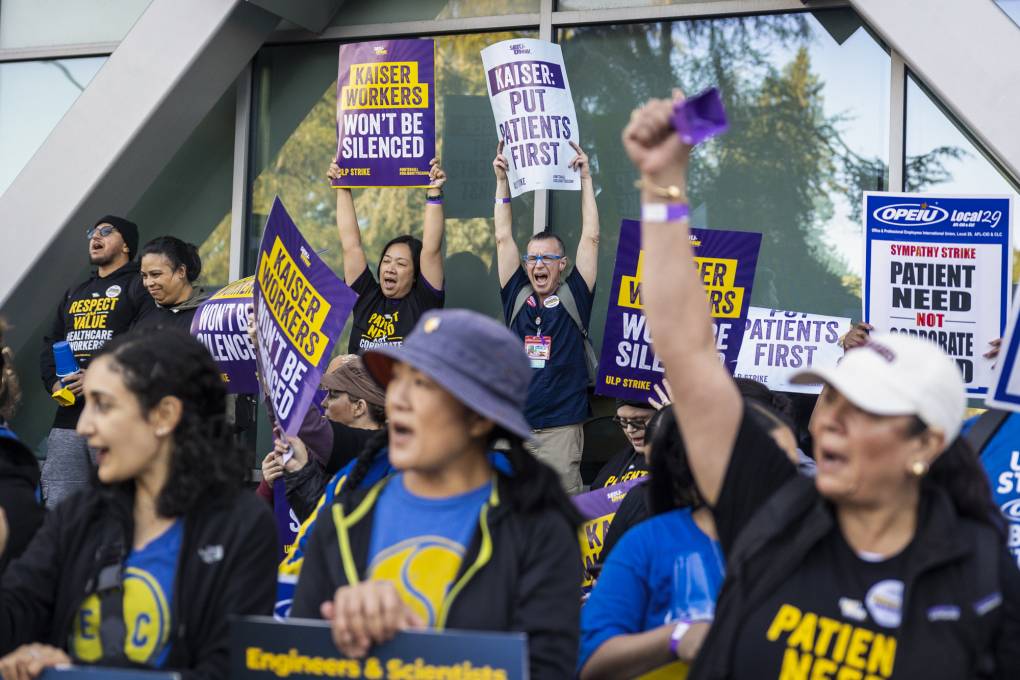
"caption": "The Kaiser Permanente Oakland Medical Center in Oakland on Oct. 4, 2023. Oakland-based Kaiser Permanente has said it will cease surgical gender-affirming care for trans minors, citing political pressure from the Trump administration. ",
"credit": "Martin do Nascimento/KQED",
"altTag": "A large modern building with the words \"Kaiser Permanente\" across the top.",
"description": null,
"imgSizes": {
"medium": {
"file": "https://cdn.kqed.org/wp-content/uploads/sites/10/2023/10/231004-KAISER-STRIKE-MD-10-KQED-800x533.jpg",
"width": 800,
"height": 533,
"mimeType": "image/jpeg"
},
"large": {
"file": "https://cdn.kqed.org/wp-content/uploads/sites/10/2023/10/231004-KAISER-STRIKE-MD-10-KQED-1020x680.jpg",
"width": 1020,
"height": 680,
"mimeType": "image/jpeg"
},
"thumbnail": {
"file": "https://cdn.kqed.org/wp-content/uploads/sites/10/2023/10/231004-KAISER-STRIKE-MD-10-KQED-160x107.jpg",
"width": 160,
"height": 107,
"mimeType": "image/jpeg"
},
"1536x1536": {
"file": "https://cdn.kqed.org/wp-content/uploads/sites/10/2023/10/231004-KAISER-STRIKE-MD-10-KQED-1536x1024.jpg",
"width": 1536,
"height": 1024,
"mimeType": "image/jpeg"
},
"post-thumbnail": {
"file": "https://cdn.kqed.org/wp-content/uploads/sites/10/2023/10/231004-KAISER-STRIKE-MD-10-KQED-672x372.jpg",
"width": 672,
"height": 372,
"mimeType": "image/jpeg"
},
"twentyfourteen-full-width": {
"file": "https://cdn.kqed.org/wp-content/uploads/sites/10/2023/10/231004-KAISER-STRIKE-MD-10-KQED-1038x576.jpg",
"width": 1038,
"height": 576,
"mimeType": "image/jpeg"
},
"full-width": {
"file": "https://cdn.kqed.org/wp-content/uploads/sites/10/2023/10/231004-KAISER-STRIKE-MD-10-KQED-1920x1280.jpg",
"width": 1920,
"height": 1280,
"mimeType": "image/jpeg"
},
"kqedFullSize": {
"file": "https://cdn.kqed.org/wp-content/uploads/sites/10/2023/10/231004-KAISER-STRIKE-MD-10-KQED.jpg",
"width": 2000,
"height": 1333
}
},
"isLoading": false,
"fetchFailed": false
},
"news_12013922": {
"type": "attachments",
"id": "news_12013922",
"meta": {
"index": "attachments_1716263798",
"site": "news",
"id": "12013922",
"found": true
},
"title": "homeless vets",
"publishDate": 1731336096,
"status": "inherit",
"parent": 12013921,
"modified": 1731336151,
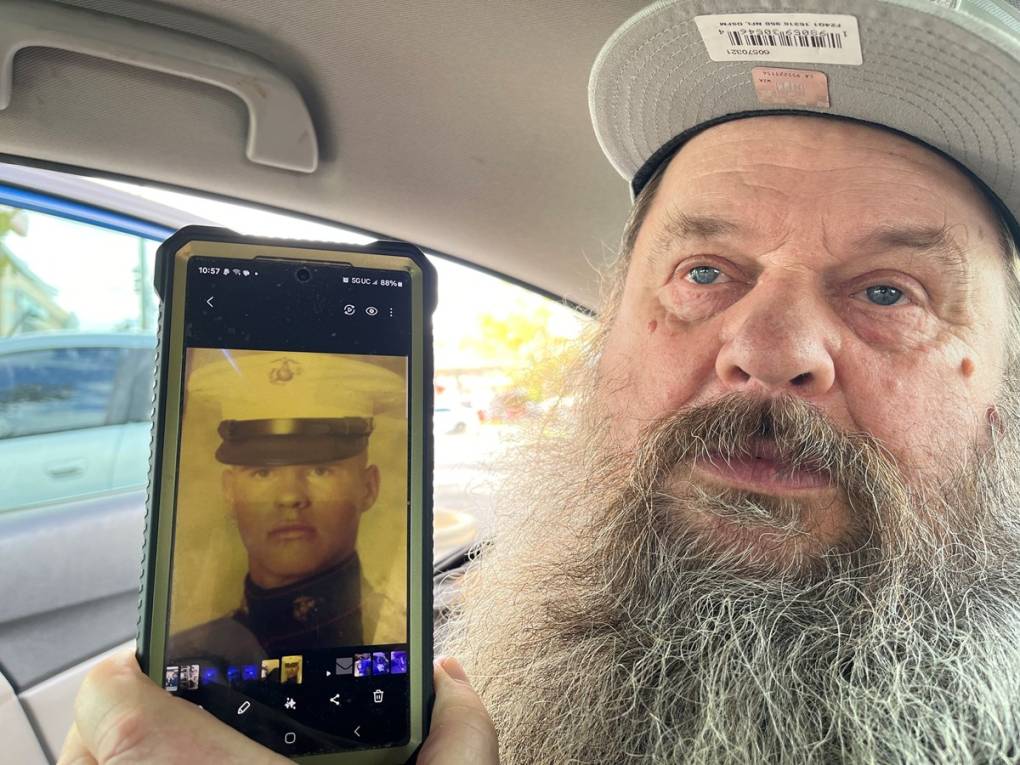
"caption": "Pitbull Dave Chapman holds a photo of himself in his Marine Corps uniform from 1974. Chapman served in the Vietnam War before becoming homeless upon his return to Sacramento. He now works at the VA where he connects homeless veterans with services.",
"credit": "Chris Nichols/CapRadio",
"altTag": "homeless veteran",
"description": null,
"imgSizes": {
"medium": {
"file": "https://cdn.kqed.org/wp-content/uploads/sites/10/2024/11/homeless-vets-800x600.jpg",
"width": 800,
"height": 600,
"mimeType": "image/jpeg"
},
"large": {
"file": "https://cdn.kqed.org/wp-content/uploads/sites/10/2024/11/homeless-vets-1020x765.jpg",
"width": 1020,
"height": 765,
"mimeType": "image/jpeg"
},
"thumbnail": {
"file": "https://cdn.kqed.org/wp-content/uploads/sites/10/2024/11/homeless-vets-160x120.jpg",
"width": 160,
"height": 120,
"mimeType": "image/jpeg"
},
"post-thumbnail": {
"file": "https://cdn.kqed.org/wp-content/uploads/sites/10/2024/11/homeless-vets-672x372.jpg",
"width": 672,
"height": 372,
"mimeType": "image/jpeg"
},
"twentyfourteen-full-width": {
"file": "https://cdn.kqed.org/wp-content/uploads/sites/10/2024/11/homeless-vets-1038x576.jpg",
"width": 1038,
"height": 576,
"mimeType": "image/jpeg"
},
"kqedFullSize": {
"file": "https://cdn.kqed.org/wp-content/uploads/sites/10/2024/11/homeless-vets.jpg",
"width": 1200,
"height": 900
}
},
"isLoading": false,
"fetchFailed": false
},
"news_11986964": {
"type": "attachments",
"id": "news_11986964",
"meta": {
"index": "attachments_1716263798",
"site": "news",
"id": "11986964",
"found": true
},
"title": "Offshore Wind Tribes",
"publishDate": 1716235079,
"status": "inherit",
"parent": 11986962,
"modified": 1737679743,
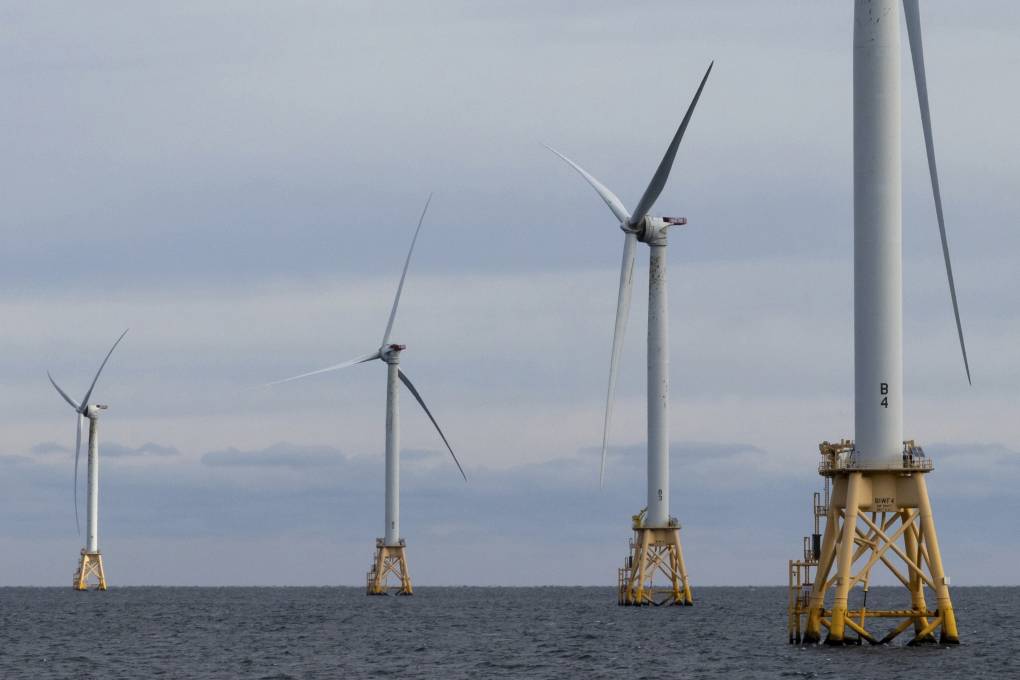
"caption": "Turbines operate at the Block Island Wind Farm on Dec. 7, 2023, off the coast of Block Island, Rhode Island. Rep. Jared Huffman sent a letter to federal regulators on Friday, May 17, 2024, asking that they “urgently place” a senior official in California to respond to tribal needs as offshore wind is developed. ",
"credit": "Julia Nikhinson/The Associated Press",
"altTag": "Wind turbines seen in the ocean.",
"description": null,
"imgSizes": {
"medium": {
"file": "https://cdn.kqed.org/wp-content/uploads/sites/10/2024/05/AP24141627799599-800x533.jpg",
"width": 800,
"height": 533,
"mimeType": "image/jpeg"
},
"large": {
"file": "https://cdn.kqed.org/wp-content/uploads/sites/10/2024/05/AP24141627799599-1020x680.jpg",
"width": 1020,
"height": 680,
"mimeType": "image/jpeg"
},
"thumbnail": {
"file": "https://cdn.kqed.org/wp-content/uploads/sites/10/2024/05/AP24141627799599-160x107.jpg",
"width": 160,
"height": 107,
"mimeType": "image/jpeg"
},
"1536x1536": {
"file": "https://cdn.kqed.org/wp-content/uploads/sites/10/2024/05/AP24141627799599-1536x1024.jpg",
"width": 1536,
"height": 1024,
"mimeType": "image/jpeg"
},
"2048x2048": {
"file": "https://cdn.kqed.org/wp-content/uploads/sites/10/2024/05/AP24141627799599-2048x1366.jpg",
"width": 2048,
"height": 1366,
"mimeType": "image/jpeg"
},
"post-thumbnail": {
"file": "https://cdn.kqed.org/wp-content/uploads/sites/10/2024/05/AP24141627799599-672x372.jpg",
"width": 672,
"height": 372,
"mimeType": "image/jpeg"
},
"twentyfourteen-full-width": {
"file": "https://cdn.kqed.org/wp-content/uploads/sites/10/2024/05/AP24141627799599-1038x576.jpg",
"width": 1038,
"height": 576,
"mimeType": "image/jpeg"
},
"full-width": {
"file": "https://cdn.kqed.org/wp-content/uploads/sites/10/2024/05/AP24141627799599-1920x1280.jpg",
"width": 1920,
"height": 1280,
"mimeType": "image/jpeg"
},
"kqedFullSize": {
"file": "https://cdn.kqed.org/wp-content/uploads/sites/10/2024/05/AP24141627799599-scaled.jpg",
"width": 2560,
"height": 1707
}
},
"isLoading": false,
"fetchFailed": false
},
"news_11963436": {
"type": "attachments",
"id": "news_11963436",
"meta": {
"index": "attachments_1716263798",
"site": "news",
"id": "11963436",
"found": true
},
"parent": 0,
"imgSizes": {
"twentyfourteen-full-width": {
"file": "https://ww2.kqed.org/app/uploads/sites/10/2023/10/231004-KAISER-STRIKE-OAKLAND-MD-12-KQED-e1696616585760-1038x576.jpg",
"width": 1038,
"mimeType": "image/jpeg",
"height": 576
},
"thumbnail": {
"file": "https://ww2.kqed.org/app/uploads/sites/10/2023/10/231004-KAISER-STRIKE-OAKLAND-MD-12-KQED-e1696616585760-160x107.jpg",
"width": 160,
"mimeType": "image/jpeg",
"height": 107
},
"post-thumbnail": {
"file": "https://ww2.kqed.org/app/uploads/sites/10/2023/10/231004-KAISER-STRIKE-OAKLAND-MD-12-KQED-e1696616585760-672x372.jpg",
"width": 672,
"mimeType": "image/jpeg",
"height": 372
},
"kqedFullSize": {
"file": "https://ww2.kqed.org/app/uploads/sites/10/2023/10/231004-KAISER-STRIKE-OAKLAND-MD-12-KQED-e1696616585760.jpg?ver=1696633770",
"width": 2000,
"height": 1333
},
"large": {
"file": "https://ww2.kqed.org/app/uploads/sites/10/2023/10/231004-KAISER-STRIKE-OAKLAND-MD-12-KQED-e1696616585760-1020x680.jpg",
"width": 1020,
"mimeType": "image/jpeg",
"height": 680
},
"1536x1536": {
"file": "https://ww2.kqed.org/app/uploads/sites/10/2023/10/231004-KAISER-STRIKE-OAKLAND-MD-12-KQED-e1696616585760-1536x1024.jpg",
"width": 1536,
"mimeType": "image/jpeg",
"height": 1024
},
"full-width": {
"file": "https://ww2.kqed.org/app/uploads/sites/10/2023/10/231004-KAISER-STRIKE-OAKLAND-MD-12-KQED-e1696616585760-1920x1280.jpg",
"width": 1920,
"mimeType": "image/jpeg",
"height": 1280
},
"medium": {
"file": "https://ww2.kqed.org/app/uploads/sites/10/2023/10/231004-KAISER-STRIKE-OAKLAND-MD-12-KQED-e1696616585760-800x533.jpg",
"width": 800,
"mimeType": "image/jpeg",
"height": 533
}
},
"publishDate": 1696454613,
"modified": 1696633783,
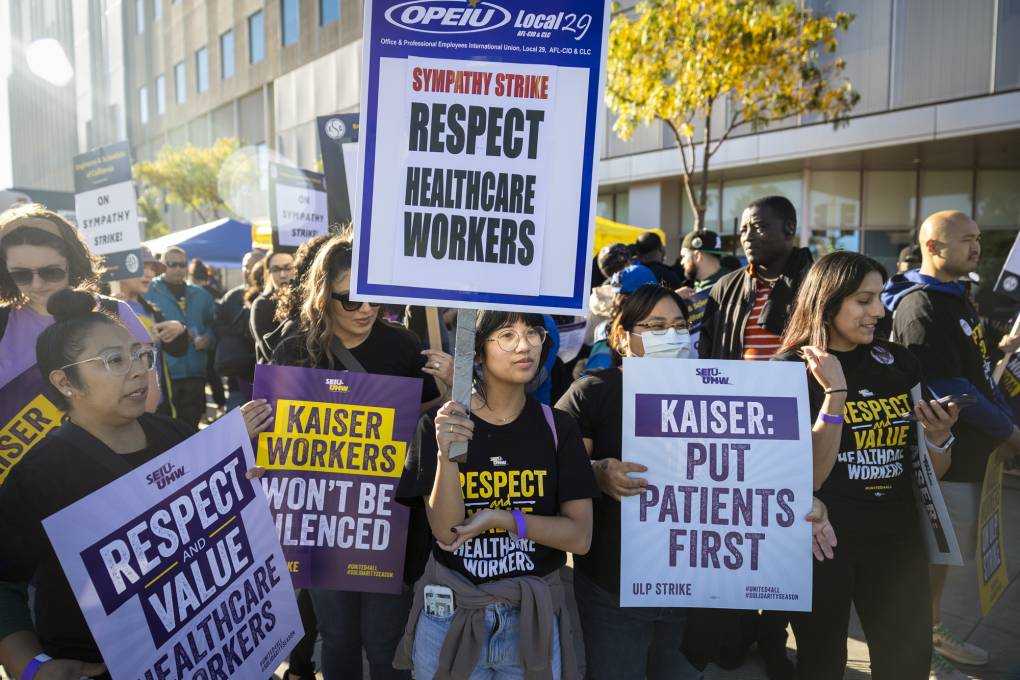
"caption": "Gina Salcedo (center) and others strike at the Kaiser Permanente Oakland Medical Center in Oakland on Oct. 4, 2023.",
"description": null,
"title": "231004-KAISER STRIKE OAKLAND-MD-12-KQED",
"credit": "Martin do Nascimento/KQED",
"status": "inherit",
"altTag": "A large group of people hold signs in an outdoor setting.",
"isLoading": false,
"fetchFailed": false
},
"news_11963437": {
"type": "attachments",
"id": "news_11963437",
"meta": {
"index": "attachments_1716263798",
"site": "news",
"id": "11963437",
"found": true
},
"title": "231004-KAISER STRIKE OAKLAND-MD-13-KQED",
"publishDate": 1696454621,
"status": "inherit",
"parent": 12070263,
"modified": 1768608997,
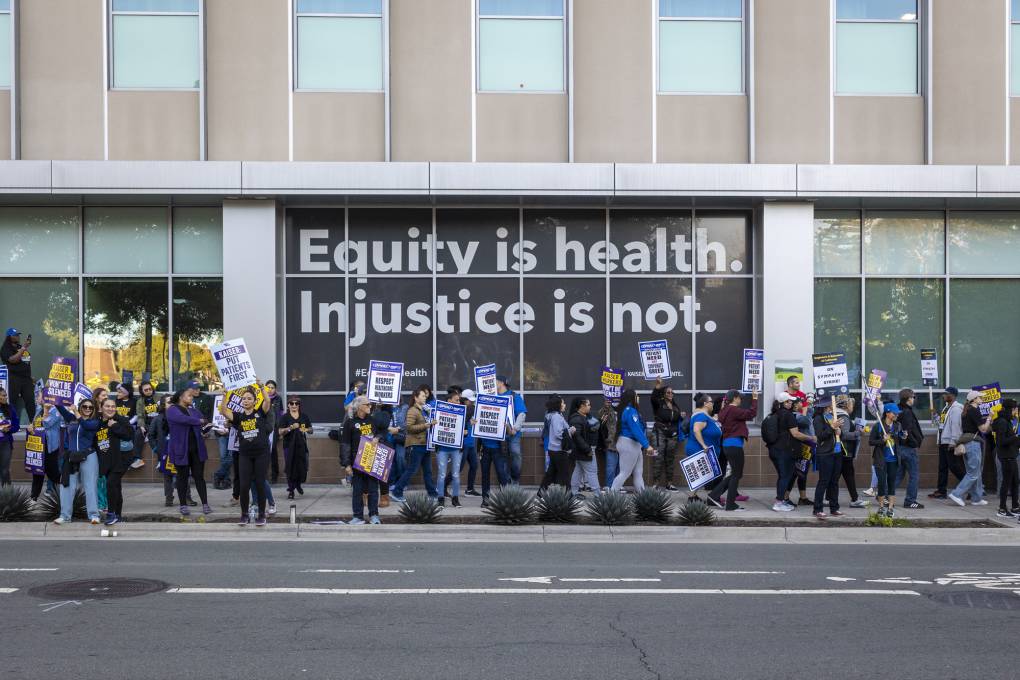
"caption": "Kaiser workers strike in front of a sign at the Kaiser Permanente Oakland Medical Center in Oakland on Oct. 2, 2023",
"credit": "Martin do Nascimento/KQED",
"altTag": "A large group of people line the sidewalk in front of a large building.",
"description": null,
"imgSizes": {
"medium": {
"file": "https://cdn.kqed.org/wp-content/uploads/sites/10/2023/10/231004-KAISER-STRIKE-OAKLAND-MD-13-KQED-800x533.jpg",
"width": 800,
"height": 533,
"mimeType": "image/jpeg"
},
"large": {
"file": "https://cdn.kqed.org/wp-content/uploads/sites/10/2023/10/231004-KAISER-STRIKE-OAKLAND-MD-13-KQED-1020x680.jpg",
"width": 1020,
"height": 680,
"mimeType": "image/jpeg"
},
"thumbnail": {
"file": "https://cdn.kqed.org/wp-content/uploads/sites/10/2023/10/231004-KAISER-STRIKE-OAKLAND-MD-13-KQED-160x107.jpg",
"width": 160,
"height": 107,
"mimeType": "image/jpeg"
},
"1536x1536": {
"file": "https://cdn.kqed.org/wp-content/uploads/sites/10/2023/10/231004-KAISER-STRIKE-OAKLAND-MD-13-KQED-1536x1024.jpg",
"width": 1536,
"height": 1024,
"mimeType": "image/jpeg"
},
"post-thumbnail": {
"file": "https://cdn.kqed.org/wp-content/uploads/sites/10/2023/10/231004-KAISER-STRIKE-OAKLAND-MD-13-KQED-672x372.jpg",
"width": 672,
"height": 372,
"mimeType": "image/jpeg"
},
"twentyfourteen-full-width": {
"file": "https://cdn.kqed.org/wp-content/uploads/sites/10/2023/10/231004-KAISER-STRIKE-OAKLAND-MD-13-KQED-1038x576.jpg",
"width": 1038,
"height": 576,
"mimeType": "image/jpeg"
},
"full-width": {
"file": "https://cdn.kqed.org/wp-content/uploads/sites/10/2023/10/231004-KAISER-STRIKE-OAKLAND-MD-13-KQED-1920x1280.jpg",
"width": 1920,
"height": 1280,
"mimeType": "image/jpeg"
},
"kqedFullSize": {
"file": "https://cdn.kqed.org/wp-content/uploads/sites/10/2023/10/231004-KAISER-STRIKE-OAKLAND-MD-13-KQED.jpg?ver=1696454847",
"width": 2000,
"height": 1333
}
},
"isLoading": false,
"fetchFailed": false
},
"news_11963365": {
"type": "attachments",
"id": "news_11963365",
"meta": {
"index": "attachments_1716263798",
"site": "news",
"id": "11963365",
"found": true
},
"parent": 11963306,
"imgSizes": {
"twentyfourteen-full-width": {
"file": "https://ww2.kqed.org/app/uploads/sites/10/2023/10/231004-KAISER-STRIKE-MD-01-KQED-e1696434104828-1038x576.jpg",
"width": 1038,
"mimeType": "image/jpeg",
"height": 576
},
"thumbnail": {
"file": "https://ww2.kqed.org/app/uploads/sites/10/2023/10/231004-KAISER-STRIKE-MD-01-KQED-e1696434104828-160x107.jpg",
"width": 160,
"mimeType": "image/jpeg",
"height": 107
},
"post-thumbnail": {
"file": "https://ww2.kqed.org/app/uploads/sites/10/2023/10/231004-KAISER-STRIKE-MD-01-KQED-e1696434104828-672x372.jpg",
"width": 672,
"mimeType": "image/jpeg",
"height": 372
},
"kqedFullSize": {
"file": "https://ww2.kqed.org/app/uploads/sites/10/2023/10/231004-KAISER-STRIKE-MD-01-KQED-e1696434104828.jpg?ver=1696444889",
"width": 2000,
"height": 1333
},
"large": {
"file": "https://ww2.kqed.org/app/uploads/sites/10/2023/10/231004-KAISER-STRIKE-MD-01-KQED-e1696434104828-1020x680.jpg",
"width": 1020,
"mimeType": "image/jpeg",
"height": 680
},
"1536x1536": {
"file": "https://ww2.kqed.org/app/uploads/sites/10/2023/10/231004-KAISER-STRIKE-MD-01-KQED-e1696434104828-1536x1024.jpg",
"width": 1536,
"mimeType": "image/jpeg",
"height": 1024
},
"full-width": {
"file": "https://ww2.kqed.org/app/uploads/sites/10/2023/10/231004-KAISER-STRIKE-MD-01-KQED-e1696434104828-1920x1280.jpg",
"width": 1920,
"mimeType": "image/jpeg",
"height": 1280
},
"medium": {
"file": "https://ww2.kqed.org/app/uploads/sites/10/2023/10/231004-KAISER-STRIKE-MD-01-KQED-e1696434104828-800x533.jpg",
"width": 800,
"mimeType": "image/jpeg",
"height": 533
}
},
"publishDate": 1696433929,
"modified": 1696444906,
"caption": "Janehild Williams (left), a licensed vocational nurse, strikes in front of the Kaiser Permanente Oakland Medical Center in Oakland on Oct. 4, 2023.",
"description": null,
"title": "231004-KAISER STRIKE-MD-01-KQED",
"credit": "Martin do Nascimento/KQED",
"status": "inherit",
"altTag": "Striking workers with bullhorn and tambourines protest in front of a building",
"isLoading": false,
"fetchFailed": false
},
"news_11963366": {
"type": "attachments",
"id": "news_11963366",
"meta": {
"index": "attachments_1716263798",
"site": "news",
"id": "11963366",
"found": true
},
"parent": 11963308,
"imgSizes": {
"twentyfourteen-full-width": {
"file": "https://ww2.kqed.org/app/uploads/sites/10/2023/10/231004-KAISER-STRIKE-MD-02-KQED-e1696434457630-1038x576.jpg",
"width": 1038,
"mimeType": "image/jpeg",
"height": 576
},
"thumbnail": {
"file": "https://ww2.kqed.org/app/uploads/sites/10/2023/10/231004-KAISER-STRIKE-MD-02-KQED-e1696434457630-160x107.jpg",
"width": 160,
"mimeType": "image/jpeg",
"height": 107
},
"post-thumbnail": {
"file": "https://ww2.kqed.org/app/uploads/sites/10/2023/10/231004-KAISER-STRIKE-MD-02-KQED-e1696434457630-672x372.jpg",
"width": 672,
"mimeType": "image/jpeg",
"height": 372
},
"kqedFullSize": {
"file": "https://ww2.kqed.org/app/uploads/sites/10/2023/10/231004-KAISER-STRIKE-MD-02-KQED-e1696434457630.jpg?ver=1696633589",
"width": 2000,
"height": 1333
},
"large": {
"file": "https://ww2.kqed.org/app/uploads/sites/10/2023/10/231004-KAISER-STRIKE-MD-02-KQED-e1696434457630-1020x680.jpg",
"width": 1020,
"mimeType": "image/jpeg",
"height": 680
},
"1536x1536": {
"file": "https://ww2.kqed.org/app/uploads/sites/10/2023/10/231004-KAISER-STRIKE-MD-02-KQED-e1696434457630-1536x1024.jpg",
"width": 1536,
"mimeType": "image/jpeg",
"height": 1024
},
"full-width": {
"file": "https://ww2.kqed.org/app/uploads/sites/10/2023/10/231004-KAISER-STRIKE-MD-02-KQED-e1696434457630-1920x1280.jpg",
"width": 1920,
"mimeType": "image/jpeg",
"height": 1280
},
"medium": {
"file": "https://ww2.kqed.org/app/uploads/sites/10/2023/10/231004-KAISER-STRIKE-MD-02-KQED-e1696434457630-800x533.jpg",
"width": 800,
"mimeType": "image/jpeg",
"height": 533
}
},
"publishDate": 1696434413,
"modified": 1696633594,
"caption": "Kaiser workers strike in front of the Kaiser Permanente Oakland Medical Center in Oakland on Oct. 4, 2023.",
"description": null,
"title": "231004-KAISER STRIKE-MD-02-KQED",
"credit": "Martin do Nascimento/KQED",
"status": "inherit",
"altTag": "Workers holding signs in front of a building",
"isLoading": false,
"fetchFailed": false
},
"news_11963163": {
"type": "attachments",
"id": "news_11963163",
"meta": {
"index": "attachments_1716263798",
"site": "news",
"id": "11963163",
"found": true
},
"title": "Kaiser Mental Health Patients Kill Themselves While Waiting for Care",
"publishDate": 1696283004,
"status": "inherit",
"parent": 12070263,
"modified": 1768608911,
"caption": "Kaiser Permanente headquarters in downtown Oakland on Jan. 5, 2020.",
"credit": "Melina Mara/The Washington Post via Getty Images",
"altTag": "A large office building with the words \"Kaiser Permanente\" written on it.",
"description": null,
"imgSizes": {
"medium": {
"file": "https://cdn.kqed.org/wp-content/uploads/sites/10/2023/10/231002-KAISER-PERMANENTE-Getty-KQED-800x473.jpg",
"width": 800,
"height": 473,
"mimeType": "image/jpeg"
},
"large": {
"file": "https://cdn.kqed.org/wp-content/uploads/sites/10/2023/10/231002-KAISER-PERMANENTE-Getty-KQED-1020x603.jpg",
"width": 1020,
"height": 603,
"mimeType": "image/jpeg"
},
"thumbnail": {
"file": "https://cdn.kqed.org/wp-content/uploads/sites/10/2023/10/231002-KAISER-PERMANENTE-Getty-KQED-160x95.jpg",
"width": 160,
"height": 95,
"mimeType": "image/jpeg"
},
"1536x1536": {
"file": "https://cdn.kqed.org/wp-content/uploads/sites/10/2023/10/231002-KAISER-PERMANENTE-Getty-KQED-1536x908.jpg",
"width": 1536,
"height": 908,
"mimeType": "image/jpeg"
},
"post-thumbnail": {
"file": "https://cdn.kqed.org/wp-content/uploads/sites/10/2023/10/231002-KAISER-PERMANENTE-Getty-KQED-672x372.jpg",
"width": 672,
"height": 372,
"mimeType": "image/jpeg"
},
"twentyfourteen-full-width": {
"file": "https://cdn.kqed.org/wp-content/uploads/sites/10/2023/10/231002-KAISER-PERMANENTE-Getty-KQED-1038x576.jpg",
"width": 1038,
"height": 576,
"mimeType": "image/jpeg"
},
"full-width": {
"file": "https://cdn.kqed.org/wp-content/uploads/sites/10/2023/10/231002-KAISER-PERMANENTE-Getty-KQED-1920x1135.jpg",
"width": 1920,
"height": 1135,
"mimeType": "image/jpeg"
},
"kqedFullSize": {
"file": "https://cdn.kqed.org/wp-content/uploads/sites/10/2023/10/231002-KAISER-PERMANENTE-Getty-KQED.jpg",
"width": 2000,
"height": 1182
}
},
"isLoading": false,
"fetchFailed": false
},
"news_11961244": {
"type": "attachments",
"id": "news_11961244",
"meta": {
"index": "attachments_1716263798",
"site": "news",
"id": "11961244",
"found": true
},
"parent": 11961243,
"imgSizes": {
"twentyfourteen-full-width": {
"file": "https://ww2.kqed.org/app/uploads/sites/10/2023/09/GettyImages-1645167120-1038x576.jpg",
"width": 1038,
"mimeType": "image/jpeg",
"height": 576
},
"thumbnail": {
"file": "https://ww2.kqed.org/app/uploads/sites/10/2023/09/GettyImages-1645167120-160x107.jpg",
"width": 160,
"mimeType": "image/jpeg",
"height": 107
},
"post-thumbnail": {
"file": "https://ww2.kqed.org/app/uploads/sites/10/2023/09/GettyImages-1645167120-672x372.jpg",
"width": 672,
"mimeType": "image/jpeg",
"height": 372
},
"kqedFullSize": {
"file": "https://ww2.kqed.org/app/uploads/sites/10/2023/09/GettyImages-1645167120.jpg",
"width": 1920,
"height": 1281
},
"large": {
"file": "https://ww2.kqed.org/app/uploads/sites/10/2023/09/GettyImages-1645167120-1020x681.jpg",
"width": 1020,
"mimeType": "image/jpeg",
"height": 681
},
"1536x1536": {
"file": "https://ww2.kqed.org/app/uploads/sites/10/2023/09/GettyImages-1645167120-1536x1025.jpg",
"width": 1536,
"mimeType": "image/jpeg",
"height": 1025
},
"medium": {
"file": "https://ww2.kqed.org/app/uploads/sites/10/2023/09/GettyImages-1645167120-800x534.jpg",
"width": 800,
"mimeType": "image/jpeg",
"height": 534
}
},
"publishDate": 1694732300,
"modified": 1694733070,
"caption": "Thousands of health care workers march in Los Angeles on Sept. 4 to call for the need for improved working conditions, better support systems and increased investment in the workforce at Kaiser Permanente. The event was organized by SEIU-UHW West. ",
"description": null,
"title": "Kaiser permanente rally",
"credit": "Dania Maxwell/Los Angeles Times",
"status": "inherit",
"altTag": "a group of people in matching shirts hold signs and protest outside",
"isLoading": false,
"fetchFailed": false
},
"news_11930035": {
"type": "attachments",
"id": "news_11930035",
"meta": {
"index": "attachments_1716263798",
"site": "news",
"id": "11930035",
"found": true
},
"parent": 11929860,
"imgSizes": {
"twentyfourteen-full-width": {
"file": "https://ww2.kqed.org/app/uploads/sites/10/2022/10/RS59623_003_KQED_SutterRNStrikeBerkeley_10242022-qut-1038x576.jpg",
"width": 1038,
"mimeType": "image/jpeg",
"height": 576
},
"thumbnail": {
"file": "https://ww2.kqed.org/app/uploads/sites/10/2022/10/RS59623_003_KQED_SutterRNStrikeBerkeley_10242022-qut-160x107.jpg",
"width": 160,
"mimeType": "image/jpeg",
"height": 107
},
"post-thumbnail": {
"file": "https://ww2.kqed.org/app/uploads/sites/10/2022/10/RS59623_003_KQED_SutterRNStrikeBerkeley_10242022-qut-672x372.jpg",
"width": 672,
"mimeType": "image/jpeg",
"height": 372
},
"kqedFullSize": {
"file": "https://ww2.kqed.org/app/uploads/sites/10/2022/10/RS59623_003_KQED_SutterRNStrikeBerkeley_10242022-qut.jpg",
"width": 1920,
"height": 1280
},
"large": {
"file": "https://ww2.kqed.org/app/uploads/sites/10/2022/10/RS59623_003_KQED_SutterRNStrikeBerkeley_10242022-qut-1020x680.jpg",
"width": 1020,
"mimeType": "image/jpeg",
"height": 680
},
"1536x1536": {
"file": "https://ww2.kqed.org/app/uploads/sites/10/2022/10/RS59623_003_KQED_SutterRNStrikeBerkeley_10242022-qut-1536x1024.jpg",
"width": 1536,
"mimeType": "image/jpeg",
"height": 1024
},
"medium": {
"file": "https://ww2.kqed.org/app/uploads/sites/10/2022/10/RS59623_003_KQED_SutterRNStrikeBerkeley_10242022-qut-800x533.jpg",
"width": 800,
"mimeType": "image/jpeg",
"height": 533
}
},
"publishDate": 1666654426,
"modified": 1666656880,
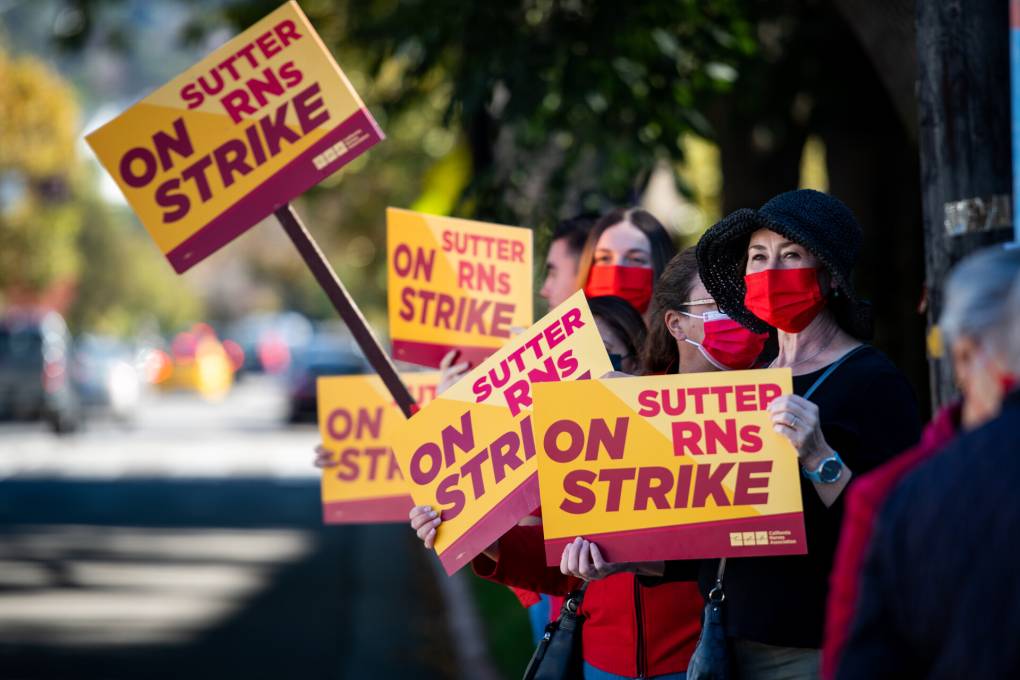
"caption": "Nurses begin a five-day strike at Alta Bates Summit Medical Center in Berkeley on Oct. 24, 2022.",
"description": null,
"title": "RS59623_003_KQED_SutterRNStrikeBerkeley_10242022-qut",
"credit": "Beth LaBerge/KQED",
"status": "inherit",
"altTag": "People holding yellow and red signs and wearing red nurse outfits stand outside.",
"isLoading": false,
"fetchFailed": false
},
"news_11896796": {
"type": "attachments",
"id": "news_11896796",
"meta": {
"index": "attachments_1716263798",
"site": "news",
"id": "11896796",
"found": true
},
"parent": 11896680,
"imgSizes": {
"twentyfourteen-full-width": {
"file": "https://ww2.kqed.org/app/uploads/sites/10/2021/11/IMG_4422-1038x576.jpeg",
"width": 1038,
"mimeType": "image/jpeg",
"height": 576
},
"thumbnail": {
"file": "https://ww2.kqed.org/app/uploads/sites/10/2021/11/IMG_4422-160x120.jpeg",
"width": 160,
"mimeType": "image/jpeg",
"height": 120
},
"post-thumbnail": {
"file": "https://ww2.kqed.org/app/uploads/sites/10/2021/11/IMG_4422-672x372.jpeg",
"width": 672,
"mimeType": "image/jpeg",
"height": 372
},
"kqedFullSize": {
"file": "https://ww2.kqed.org/app/uploads/sites/10/2021/11/IMG_4422-scaled.jpeg",
"width": 2560,
"height": 1920
},
"2048x2048": {
"file": "https://ww2.kqed.org/app/uploads/sites/10/2021/11/IMG_4422-2048x1536.jpeg",
"width": 2048,
"mimeType": "image/jpeg",
"height": 1536
},
"large": {
"file": "https://ww2.kqed.org/app/uploads/sites/10/2021/11/IMG_4422-1020x765.jpeg",
"width": 1020,
"mimeType": "image/jpeg",
"height": 765
},
"1536x1536": {
"file": "https://ww2.kqed.org/app/uploads/sites/10/2021/11/IMG_4422-1536x1152.jpeg",
"width": 1536,
"mimeType": "image/jpeg",
"height": 1152
},
"full-width": {
"file": "https://ww2.kqed.org/app/uploads/sites/10/2021/11/IMG_4422-1920x1440.jpeg",
"width": 1920,
"mimeType": "image/jpeg",
"height": 1440
},
"medium": {
"file": "https://ww2.kqed.org/app/uploads/sites/10/2021/11/IMG_4422-800x600.jpeg",
"width": 800,
"mimeType": "image/jpeg",
"height": 600
}
},
"publishDate": 1637285931,
"modified": 1637285982,
"caption": "Kaiser health care workers represented by health care union SEIU-UHW went on a 24-hour sympathy strike Thursday to show support for Kaiser's operating engineers, who have been on strike for two months as they push for better wages.",
"description": null,
"title": "IMG_4422",
"credit": "Kaushikee Nayudu/KQED",
"status": "inherit",
"altTag": "People wearing purple cross a street carrying protest signs, one reads, \"heroes treated like zeroes.\"",
"isLoading": false,
"fetchFailed": false
},
"news_11883336": {
"type": "attachments",
"id": "news_11883336",
"meta": {
"index": "attachments_1716263798",
"site": "news",
"id": "11883336",
"found": true
},
"parent": 11883332,
"imgSizes": {
"twentyfourteen-full-width": {
"file": "https://ww2.kqed.org/app/uploads/sites/10/2021/07/RS13968_kaiser-1440-jpg-e1420908404158-1038x576.jpg",
"width": 1038,
"mimeType": "image/jpeg",
"height": 576
},
"thumbnail": {
"file": "https://ww2.kqed.org/app/uploads/sites/10/2021/07/RS13968_kaiser-1440-jpg-e1420908404158-160x120.jpg",
"width": 160,
"mimeType": "image/jpeg",
"height": 120
},
"post-thumbnail": {
"file": "https://ww2.kqed.org/app/uploads/sites/10/2021/07/RS13968_kaiser-1440-jpg-e1420908404158-672x372.jpg",
"width": 672,
"mimeType": "image/jpeg",
"height": 372
},
"kqedFullSize": {
"file": "https://ww2.kqed.org/app/uploads/sites/10/2021/07/RS13968_kaiser-1440-jpg-e1420908404158.jpg",
"width": 1440,
"height": 1080
},
"large": {
"file": "https://ww2.kqed.org/app/uploads/sites/10/2021/07/RS13968_kaiser-1440-jpg-e1420908404158-1020x765.jpg",
"width": 1020,
"mimeType": "image/jpeg",
"height": 765
},
"medium": {
"file": "https://ww2.kqed.org/app/uploads/sites/10/2021/07/RS13968_kaiser-1440-jpg-e1420908404158-800x600.jpg",
"width": 800,
"mimeType": "image/jpeg",
"height": 600
}
},
"publishDate": 1627761506,
"modified": 1627762991,
"caption": "Federal officials sued Kaiser alleging the health care giant committed Medicare fraud and pressured doctors to list incorrect diagnoses on medical records in order to receive higher reimbursements.",
"description": "Federal officials sued Kaiser alleging the health care giant committed Medicare fraud and pressured doctors to list incorrect diagnoses on medical records in order to receive higher reimbursements.",
"title": "RS13968_kaiser-1440-jpg-e1420908404158",
"credit": "Lisa Aliferis/KQED",
"status": "inherit",
"altTag": null,
"isLoading": false,
"fetchFailed": false
}
},
"audioPlayerReducer": {
"postId": "stream_live",
"isPaused": true,
"isPlaying": false,
"pfsActive": false,
"pledgeModalIsOpen": true,
"playerDrawerIsOpen": false,
"liveAudioPlayStartedAt": 0,
"liveAudioPlayContext": ""
},
"authorsReducer": {
"byline_news_11883332": {
"type": "authors",
"id": "byline_news_11883332",
"meta": {
"override": true
},
"slug": "byline_news_11883332",
"name": "The Associated Press",
"isLoading": false
},
"kqednewsstaffandwires": {
"type": "authors",
"id": "237",
"meta": {
"index": "authors_1716337520",
"id": "237",
"found": true
},
"name": "KQED News Staff and Wires",
"firstName": "KQED News Staff and Wires",
"lastName": null,
"slug": "kqednewsstaffandwires",
"email": "onlinenewsstaff@kqed.org",
"display_author_email": false,
"staff_mastheads": [],
"title": null,
"bio": null,
"avatar": "https://secure.gravatar.com/avatar/72295af8ebbfbd19a4948f5271285664?s=600&d=blank&r=g",
"twitter": null,
"facebook": null,
"instagram": null,
"linkedin": null,
"sites": [
{
"site": "arts",
"roles": [
"contributor"
]
},
{
"site": "news",
"roles": [
"contributor"
]
},
{
"site": "lowdown",
"roles": [
"author"
]
},
{
"site": "stateofhealth",
"roles": [
"contributor"
]
},
{
"site": "food",
"roles": [
"author"
]
}
],
"headData": {
"title": "KQED News Staff and Wires | KQED",
"description": null,
"ogImgSrc": "https://secure.gravatar.com/avatar/72295af8ebbfbd19a4948f5271285664?s=600&d=blank&r=g",
"twImgSrc": "https://secure.gravatar.com/avatar/72295af8ebbfbd19a4948f5271285664?s=600&d=blank&r=g"
},
"isLoading": false,
"link": "/author/kqednewsstaffandwires"
},
"tarasiler": {
"type": "authors",
"id": "257",
"meta": {
"index": "authors_1716337520",
"id": "257",
"found": true
},
"name": "Tara Siler",
"firstName": "Tara",
"lastName": "Siler",
"slug": "tarasiler",
"email": "tsiler@kqed.org",
"display_author_email": false,
"staff_mastheads": [
"news"
],
"title": "KQED Contributor",
"bio": "Tara reports and anchors for KQED news. She covers a range of issues from community-police relations to local politics. Tara started out in community radio in the Bay Area, where she was raised. She eventually moved to Washington DC where she covered Congress for eight years for Pacifica and Monitor Radio. Her stories have also been heard on NPR's All Things Considered, Morning Edition and The World.\r\n\r\nTara lives with her husband in Oakland-- where they raised their two sons. She enjoys spending time with her family, gardening and hiking in the Oakland hills... and keeping up with the news.",
"avatar": "https://secure.gravatar.com/avatar/99802f9746fb80b65fd8ec6c57954450?s=600&d=blank&r=g",
"twitter": null,
"facebook": null,
"instagram": null,
"linkedin": null,
"sites": [
{
"site": "news",
"roles": [
"contributor",
"edit_others_posts"
]
},
{
"site": "stateofhealth",
"roles": [
"author"
]
}
],
"headData": {
"title": "Tara Siler | KQED",
"description": "KQED Contributor",
"ogImgSrc": "https://secure.gravatar.com/avatar/99802f9746fb80b65fd8ec6c57954450?s=600&d=blank&r=g",
"twImgSrc": "https://secure.gravatar.com/avatar/99802f9746fb80b65fd8ec6c57954450?s=600&d=blank&r=g"
},
"isLoading": false,
"link": "/author/tarasiler"
},
"carlysevern": {
"type": "authors",
"id": "3243",
"meta": {
"index": "authors_1716337520",
"id": "3243",
"found": true
},
"name": "Carly Severn",
"firstName": "Carly",
"lastName": "Severn",
"slug": "carlysevern",
"email": "csevern@kqed.org",
"display_author_email": false,
"staff_mastheads": [
"news"
],
"title": "Senior Editor, Audience News ",
"bio": "Carly is KQED's Senior Editor of Audience News on the Digital News team, and has reported for the California Report Magazine, Bay Curious and KQED Arts. She's formerly the host of \u003ca href=\"http://ww2.kqed.org/pop/category/the-cooler/\" rel=\"noopener noreferrer\">The Cooler\u003c/a> podcast.",
"avatar": "https://secure.gravatar.com/avatar/54037bf5c128fe678f0ef26cec97a93f2e7f220a22d7285703328f12c42c1b1d?s=600&d=blank&r=g",
"twitter": "teacupinthebay",
"bluesky": null,
"facebook": null,
"instagram": null,
"linkedin": null,
"sites": [
{
"site": "",
"roles": [
"editor"
]
},
{
"site": "arts",
"roles": [
"editor"
]
},
{
"site": "news",
"roles": [
"administrator"
]
},
{
"site": "pop",
"roles": [
"editor"
]
},
{
"site": "futureofyou",
"roles": [
"editor"
]
},
{
"site": "about",
"roles": [
"administrator"
]
},
{
"site": "mindshift",
"roles": [
"editor"
]
},
{
"site": "bayareabites",
"roles": [
"editor"
]
},
{
"site": "stateofhealth",
"roles": [
"editor"
]
},
{
"site": "science",
"roles": [
"editor"
]
},
{
"site": "food",
"roles": [
"contributor"
]
},
{
"site": "forum",
"roles": [
"editor"
]
},
{
"site": "perspectives",
"roles": [
"administrator"
]
},
{
"site": "liveblog",
"roles": [
"editor"
]
}
],
"headData": {
"title": "Carly Severn | KQED",
"description": "Senior Editor, Audience News ",
"ogImgSrc": "https://secure.gravatar.com/avatar/54037bf5c128fe678f0ef26cec97a93f2e7f220a22d7285703328f12c42c1b1d?s=600&d=blank&r=g",
"twImgSrc": "https://secure.gravatar.com/avatar/54037bf5c128fe678f0ef26cec97a93f2e7f220a22d7285703328f12c42c1b1d?s=600&d=blank&r=g"
},
"isLoading": false,
"link": "/author/carlysevern"
},
"fjhabvala": {
"type": "authors",
"id": "8659",
"meta": {
"index": "authors_1716337520",
"id": "8659",
"found": true
},
"name": "Farida Jhabvala Romero",
"firstName": "Farida",
"lastName": "Jhabvala Romero",
"slug": "fjhabvala",
"email": "fjhabvala@kqed.org",
"display_author_email": true,
"staff_mastheads": [
"news"
],
"title": "KQED Contributor",
"bio": "Farida Jhabvala Romero is a Labor Correspondent for KQED. She previously covered immigration. Farida was \u003ca href=\"https://www.ccnma.org/2022-most-influential-latina-journalists\">named\u003c/a> one of the 10 Most Influential Latina Journalists in California in 2022 by the California Chicano News Media Association. Her work has won awards from the Society of Professional Journalists (Northern California), as well as a national and regional Edward M. Murrow Award for the collaborative reporting projects “Dangerous Air” and “Graying California.” Before joining KQED, Farida worked as a producer at Radio Bilingüe, a national public radio network. Farida earned her master’s degree in journalism from Stanford University.",
"avatar": "https://secure.gravatar.com/avatar/f9f022d4e2609741874222a1e9d41f48fea74011aa7c615eef91d9a50c944ebe?s=600&d=blank&r=g",
"twitter": "FaridaJhabvala",
"bluesky": null,
"facebook": null,
"instagram": null,
"linkedin": "https://www.linkedin.com/in/faridajhabvala/",
"sites": [
{
"site": "news",
"roles": [
"editor"
]
},
{
"site": "stateofhealth",
"roles": [
"author"
]
},
{
"site": "liveblog",
"roles": [
"author"
]
}
],
"headData": {
"title": "Farida Jhabvala Romero | KQED",
"description": "KQED Contributor",
"ogImgSrc": "https://secure.gravatar.com/avatar/f9f022d4e2609741874222a1e9d41f48fea74011aa7c615eef91d9a50c944ebe?s=600&d=blank&r=g",
"twImgSrc": "https://secure.gravatar.com/avatar/f9f022d4e2609741874222a1e9d41f48fea74011aa7c615eef91d9a50c944ebe?s=600&d=blank&r=g"
},
"isLoading": false,
"link": "/author/fjhabvala"
},
"kmizuguchi": {
"type": "authors",
"id": "11739",
"meta": {
"index": "authors_1716337520",
"id": "11739",
"found": true
},
"name": "Keith Mizuguchi",
"firstName": "Keith",
"lastName": "Mizuguchi",
"slug": "kmizuguchi",
"email": "kmizuguchi@kqed.org",
"display_author_email": false,
"staff_mastheads": [],
"title": "KQED Contributor",
"bio": null,
"avatar": "https://secure.gravatar.com/avatar/64d8a7de0723d4099b9fe4e915136103febcc20809abce228ee4415bcb237023?s=600&d=blank&r=g",
"twitter": null,
"bluesky": null,
"facebook": null,
"instagram": null,
"linkedin": null,
"sites": [
{
"site": "news",
"roles": [
"editor"
]
},
{
"site": "science",
"roles": [
"editor"
]
}
],
"headData": {
"title": "Keith Mizuguchi | KQED",
"description": "KQED Contributor",
"ogImgSrc": "https://secure.gravatar.com/avatar/64d8a7de0723d4099b9fe4e915136103febcc20809abce228ee4415bcb237023?s=600&d=blank&r=g",
"twImgSrc": "https://secure.gravatar.com/avatar/64d8a7de0723d4099b9fe4e915136103febcc20809abce228ee4415bcb237023?s=600&d=blank&r=g"
},
"isLoading": false,
"link": "/author/kmizuguchi"
},
"swhitney": {
"type": "authors",
"id": "11784",
"meta": {
"index": "authors_1716337520",
"id": "11784",
"found": true
},
"name": "Spencer Whitney",
"firstName": "Spencer",
"lastName": "Whitney",
"slug": "swhitney",
"email": "swhitney@kqed.org",
"display_author_email": false,
"staff_mastheads": [],
"title": "KQED Digital Editor",
"bio": "Spencer Whitney is currently a Digital Editor for KQED News. Prior to joining KQED News, Spencer worked as the Multimedia Editor at the Oakland Post and an Assistant Editor in the Editorial department at the San Francisco Chronicle. He attended Howard University as an undergraduate and interned with SiriusXM. He also attended UC Berkeley's Graduate School of Journalism and had the opportunity to write for the hyperlocal news sites Richmond Confidential and Oakland North.",
"avatar": "https://secure.gravatar.com/avatar/e33ff4fd8b8f0d2796f36472fb32607ca8fc46ef5e537dcfdbdee688d8ea5b80?s=600&d=mm&r=g",
"twitter": null,
"bluesky": null,
"facebook": null,
"instagram": null,
"linkedin": null,
"sites": [
{
"site": "arts",
"roles": [
"editor"
]
},
{
"site": "news",
"roles": [
"editor"
]
},
{
"site": "science",
"roles": [
"editor"
]
},
{
"site": "perspectives",
"roles": [
"editor"
]
}
],
"headData": {
"title": "Spencer Whitney | KQED",
"description": "KQED Digital Editor",
"ogImgSrc": "https://secure.gravatar.com/avatar/e33ff4fd8b8f0d2796f36472fb32607ca8fc46ef5e537dcfdbdee688d8ea5b80?s=600&d=mm&r=g",
"twImgSrc": "https://secure.gravatar.com/avatar/e33ff4fd8b8f0d2796f36472fb32607ca8fc46ef5e537dcfdbdee688d8ea5b80?s=600&d=mm&r=g"
},
"isLoading": false,
"link": "/author/swhitney"
},
"apelit": {
"type": "authors",
"id": "11812",
"meta": {
"index": "authors_1716337520",
"id": "11812",
"found": true
},
"name": "Attila Pelit",
"firstName": "Attila",
"lastName": "Pelit",
"slug": "apelit",
"email": "apelit@kqed.org",
"display_author_email": false,
"staff_mastheads": [],
"title": "KQED Contributor",
"bio": null,
"avatar": "https://secure.gravatar.com/avatar/9b7b8a9e595d58a1f4d853f8608ae584?s=600&d=mm&r=g",
"twitter": null,
"facebook": null,
"instagram": null,
"linkedin": null,
"sites": [
{
"site": "news",
"roles": [
"editor"
]
},
{
"site": "science",
"roles": [
"editor"
]
},
{
"site": "elections",
"roles": [
"editor"
]
},
{
"site": "liveblog",
"roles": [
"editor"
]
}
],
"headData": {
"title": "Attila Pelit | KQED",
"description": "KQED Contributor",
"ogImgSrc": "https://secure.gravatar.com/avatar/9b7b8a9e595d58a1f4d853f8608ae584?s=600&d=mm&r=g",
"twImgSrc": "https://secure.gravatar.com/avatar/9b7b8a9e595d58a1f4d853f8608ae584?s=600&d=mm&r=g"
},
"isLoading": false,
"link": "/author/apelit"
},
"sjohnson": {
"type": "authors",
"id": "11840",
"meta": {
"index": "authors_1716337520",
"id": "11840",
"found": true
},
"name": "Sydney Johnson",
"firstName": "Sydney",
"lastName": "Johnson",
"slug": "sjohnson",
"email": "sjohnson@kqed.org",
"display_author_email": false,
"staff_mastheads": [
"news"
],
"title": "KQED Reporter",
"bio": "Sydney Johnson is a general assignment reporter at KQED. She previously reported on public health and city government at the San Francisco Examiner, and before that, she covered statewide education policy for EdSource. Her reporting has won multiple local, state and national awards. Sydney is a graduate of the University of California, Berkeley and lives in San Francisco.",
"avatar": "https://secure.gravatar.com/avatar/97855f2719b72ad6190b7c535fe642c8?s=600&d=blank&r=g",
"twitter": "sydneyfjohnson",
"facebook": null,
"instagram": null,
"linkedin": null,
"sites": [
{
"site": "news",
"roles": [
"editor"
]
}
],
"headData": {
"title": "Sydney Johnson | KQED",
"description": "KQED Reporter",
"ogImgSrc": "https://secure.gravatar.com/avatar/97855f2719b72ad6190b7c535fe642c8?s=600&d=blank&r=g",
"twImgSrc": "https://secure.gravatar.com/avatar/97855f2719b72ad6190b7c535fe642c8?s=600&d=blank&r=g"
},
"isLoading": false,
"link": "/author/sjohnson"
},
"kdebenedetti": {
"type": "authors",
"id": "11913",
"meta": {
"index": "authors_1716337520",
"id": "11913",
"found": true
},
"name": "Katie DeBenedetti",
"firstName": "Katie",
"lastName": "DeBenedetti",
"slug": "kdebenedetti",
"email": "kdebenedetti@kqed.org",
"display_author_email": false,
"staff_mastheads": [
"news",
"science"
],
"title": "KQED Contributor",
"bio": "Katie DeBenedetti is a digital reporter covering daily news for the Express Desk. Prior to joining KQED as a culture reporting intern in January 2024, she covered education and city government for the Napa Valley Register.",
"avatar": "https://secure.gravatar.com/avatar/6e31073cb8f7e4214ab03f42771d0f45?s=600&d=blank&r=g",
"twitter": null,
"facebook": null,
"instagram": null,
"linkedin": null,
"sites": [
{
"site": "news",
"roles": [
"author"
]
},
{
"site": "science",
"roles": [
"author"
]
},
{
"site": "liveblog",
"roles": [
"author"
]
}
],
"headData": {
"title": "Katie DeBenedetti | KQED",
"description": "KQED Contributor",
"ogImgSrc": "https://secure.gravatar.com/avatar/6e31073cb8f7e4214ab03f42771d0f45?s=600&d=blank&r=g",
"twImgSrc": "https://secure.gravatar.com/avatar/6e31073cb8f7e4214ab03f42771d0f45?s=600&d=blank&r=g"
},
"isLoading": false,
"link": "/author/kdebenedetti"
}
},
"pagesReducer": {
"news_tag_kaiser": {
"type": "terms",
"id": "news_21790",
"meta": {
"index": "terms_1716263798",
"site": "news",
"id": "21790",
"score": 9.557208
},
"featImg": null,
"name": "Kaiser",
"description": null,
"taxonomy": "tag",
"headData": {
"twImgId": null,
"twTitle": null,
"ogTitle": null,
"ogImgId": null,
"twDescription": null,
"description": null,
"title": "Kaiser Archives | KQED News",
"ogDescription": null
},
"ttid": 21807,
"slug": "kaiser",
"isLoading": false,
"title": "Kaiser",
"pageMeta": {
"site": "news",
"WpPageTemplate": "page-topic-editorial",
"currentPage": 2
},
"blocks": [
{
"blockName": "kqed/post-list",
"attrs": {
"layout": "cardArticle2",
"query": "posts/news?tag=kaiser",
"seeMore": false,
"paginated": true,
"page": 2
}
},
{
"blockName": "kqed/ad"
}
]
}
},
"pfsSessionReducer": {},
"postsReducer": {
"stream_live": {
"type": "live",
"id": "stream_live",
"audioUrl": "https://streams.kqed.org/kqedradio",
"title": "Live Stream",
"excerpt": "Live Stream information currently unavailable.",
"link": "/radio",
"featImg": "",
"label": {
"name": "KQED Live",
"link": "/"
}
},
"stream_kqedNewscast": {
"type": "posts",
"id": "stream_kqedNewscast",
"audioUrl": "https://www.kqed.org/.stream/anon/radio/RDnews/newscast.mp3?_=1",
"title": "KQED Newscast",
"featImg": "",
"label": {
"name": "88.5 FM",
"link": "/"
}
},
"news_12049555": {
"type": "posts",
"id": "news_12049555",
"meta": {
"index": "posts_1716263798",
"site": "news",
"id": "12049555",
"score": null,
"sort": [
1753382353000
]
},
"guestAuthors": [],
"slug": "kaiser-to-stop-gender-affirming-surgeries-for-minors-leaving-trans-kids-with-fewer-options",
"title": "Kaiser to Stop Gender-Affirming Surgeries for Minors, Leaving Trans Kids With Fewer Options",
"publishDate": 1753382353,
"format": "standard",
"headTitle": "Kaiser to Stop Gender-Affirming Surgeries for Minors, Leaving Trans Kids With Fewer Options | KQED",
"labelTerm": {
"site": "news"
},
"content": "\u003cp>Calder Storm doesn’t know where to turn for gender-affirming care for his 16-year-old daughter.\u003c/p>\n\u003cp>After Palo Alto-based Stanford Medicine \u003ca href=\"https://www.kqed.org/science/1997491/stanford-scales-back-trans-care-for-minors-amid-federal-crackdown\">stopped offering gender-related surgical procedures\u003c/a> for minors last month, he planned to enroll her as a\u003ca href=\"https://www.kqed.org/news/tag/kaiser-permanente\"> patient at Kaiser Permanente \u003c/a>— widely regarded as a bastion of trans health care.\u003c/p>\n\u003cp>But on Wednesday, the health care giant announced that it would follow suit, pausing gender-affirming surgeries for patients under 19.\u003c/p>\n\u003cp>[ad fullwidth]\u003c/p>\n\u003cp>“Kaiser was supposed to be our safe haven,” Storm told KQED on Wednesday. “Everyone in the trans community thought we had the best chance possible within the Kaiser system. And furthermore, we thought we had the best chance in the Northern California Kaiser system.”\u003c/p>\n\u003cp>Oakland-based Kaiser Permanente, which serves more than 12 million people across eight states, said Wednesday it would stop offering surgical gender-affirming treatments for trans minors next month, citing “significant risks” created by the current legal and regulatory environment surrounding care for transgender children.\u003c/p>\n\u003cp>“Since January, there has been significant focus by the federal government on gender-affirming care, specifically for patients under the age of 19,” the health care provider said in a statement, citing a \u003ca href=\"https://www.whitehouse.gov/presidential-actions/2025/01/protecting-children-from-chemical-and-surgical-mutilation/\">January executive order\u003c/a> from President Donald Trump threatening funding for medical centers that provide such care, changes to insurance coverage and ongoing federal investigations.\u003c/p>\n\u003cfigure id=\"attachment_12023855\" class=\"wp-caption aligncenter\" style=\"max-width: 2000px\">\u003cimg loading=\"lazy\" decoding=\"async\" class=\"size-full wp-image-12023855\" src=\"https://cdn.kqed.org/wp-content/uploads/sites/10/2025/01/0M6A0870_qed.jpg\" alt=\"\" width=\"2000\" height=\"1333\" srcset=\"https://cdn.kqed.org/wp-content/uploads/sites/10/2025/01/0M6A0870_qed.jpg 2000w, https://cdn.kqed.org/wp-content/uploads/sites/10/2025/01/0M6A0870_qed-800x533.jpg 800w, https://cdn.kqed.org/wp-content/uploads/sites/10/2025/01/0M6A0870_qed-1020x680.jpg 1020w, https://cdn.kqed.org/wp-content/uploads/sites/10/2025/01/0M6A0870_qed-160x107.jpg 160w, https://cdn.kqed.org/wp-content/uploads/sites/10/2025/01/0M6A0870_qed-1536x1024.jpg 1536w, https://cdn.kqed.org/wp-content/uploads/sites/10/2025/01/0M6A0870_qed-1920x1280.jpg 1920w\" sizes=\"auto, (max-width: 2000px) 100vw, 2000px\">\u003cfigcaption class=\"wp-caption-text\">A demonstrator proudly waves a transgender pride flag during Pride Month in San Francisco, California, on June 28, 2019. \u003ccite>(Sruti Mamidanna/KQED)\u003c/cite>\u003c/figcaption>\u003c/figure>\n\u003cp>Earlier this month, the\u003ca href=\"https://www.justice.gov/opa/pr/department-justice-subpoenas-doctors-and-clinics-involved-performing-transgender-medical\"> Department of Justice subpoenaed\u003c/a> more than 20 doctors and clinics that perform gender-affirming procedures on minors.\u003c/p>\n\u003cp>“We recognize that this is an extremely challenging and stressful time for our patients seeking care, as well as for our clinicians whose mission is to care for them,” the statement continued.\u003c/p>\n\u003cp>Kaiser joins a growing list of health care providers moving to limit care for trans youth under building pressure from the Trump administration. In June, Stanford’s \u003ca href=\"https://www.kqed.org/science/1997491/stanford-scales-back-trans-care-for-minors-amid-federal-crackdown\">pause of gender-affirming surgeries\u003c/a> included prescribing puberty blockers to youth, Storm said. And just this week, Los Angeles Children’s Hospital closed its \u003ca href=\"https://www.kqed.org/news/12049310/childrens-hospital-los-angeles-ends-transgender-care\">Center for Transyouth Health and Development\u003c/a>, which has been a leader in gender-affirming care for the last 30 years.\u003c/p>\n\u003cp>Storm thought Kaiser would be different, since the closed health care system doesn’t rely on federal research funding like Stanford, L.A. Children’s and many others do. And just months ago, California Attorney General Rob Bonta \u003ca href=\"https://oag.ca.gov/news/press-releases/attorney-general-bonta-reminds-hospitals-and-clinics-anti-discrimination-laws\">preemptively warned the state’s health care providers\u003c/a> that capitulating to political pressure and pausing gender-affirming care would violate state law.[aside postID=news_12049310 hero='https://cdn.kqed.org/wp-content/uploads/sites/10/2025/07/trans-health-6880e51cc03ba.jpg']But Lady Rainsard, a registered nurse in plastic surgery at Kaiser’s San Francisco campus, said that’s exactly what the health care system is doing.\u003c/p>\n\u003cp>“Medical providers, not politicians, know what’s best for our patients,” she said in a statement from California Nurses Association, a union representing 25,000 Kaiser nurses. “Right now, we deem it a much greater risk to cave to this kind of government overreach than it is to provide this care to our patients, no matter their age.”\u003c/p>\n\u003cp>Kaiser medical centers will continue to offer non-surgical care for minors and all gender-affirming care for trans adults.\u003c/p>\n\u003cp>According to State Sen. Scott Wiener, D-San Francisco, refusing to offer these procedures for young people is a step towards Trump’s goal to eliminate all trans health care.\u003c/p>\n\u003cp>“It’s important for us not to just cave in to Donald Trump’s bullying,” he told KQED on Wednesday. “It’s hard and it’s scary, but this is how fascists succeed — when institutions start backing down.”\u003c/p>\n\u003cp>Wiener said the next step for the state’s politicians will be to put pressure on Bonta’s office to enforce California law, which bars hospitals from refusing to provide health care to trans people.\u003c/p>\n\u003cfigure id=\"attachment_12043149\" class=\"wp-caption aligncenter\" style=\"max-width: 2000px\">\u003cimg loading=\"lazy\" decoding=\"async\" class=\"size-full wp-image-12043149\" src=\"https://cdn.kqed.org/wp-content/uploads/sites/10/2025/06/HarveyMilkFolo2.jpg\" alt=\"\" width=\"2000\" height=\"1500\" srcset=\"https://cdn.kqed.org/wp-content/uploads/sites/10/2025/06/HarveyMilkFolo2.jpg 2000w, https://cdn.kqed.org/wp-content/uploads/sites/10/2025/06/HarveyMilkFolo2-160x120.jpg 160w, https://cdn.kqed.org/wp-content/uploads/sites/10/2025/06/HarveyMilkFolo2-1536x1152.jpg 1536w\" sizes=\"auto, (max-width: 2000px) 100vw, 2000px\">\u003cfigcaption class=\"wp-caption-text\">Sen. Scott Wiener speaks at a press conference at Jane Warner Plaza in San Francisco on June 6, 2025. \u003ccite>(Samantha Kennedy/KQED)\u003c/cite>\u003c/figcaption>\u003c/figure>\n\u003cp>“I don’t want the state to have to fight with Kaiser or with Stanford or with any of our great health systems, but we have to enforce the law,” he said. “California should be a safe place for trans people and LGBTQ people generally, and this is not what should be happening.”\u003c/p>\n\u003cp>Amy Whelan, a senior staff attorney with the National Center for LGBTQ Rights, said the organization is in close contact with families of patients affected by the Stanford and Los Angeles Children’s Hospital policy changes and working on the issue.\u003c/p>\n\u003cp>“There are very few patients under 19 who receive surgery, but for those who do, this is very essential health care,” she said.\u003c/p>\n\u003cp>A \u003ca href=\"https://hsph.harvard.edu/news/gender-affirming-surgeries-rarely-performed-on-transgender-youth/\">recent study\u003c/a> from researchers at Harvard’s T.H. Chan School of Public Health found little to no utilization of gender-affirming surgeries by transgender and gender diverse minors in the U.S., with a rate of two in 100,000 15- to 17-year-olds undergoing gender-affirming breast reduction surgeries in 2019. The study found that 0.1 in 100,000 13- and 14-year-olds received the procedure, and no trans children under 12 did.\u003c/p>\n\u003cp>Cisgender minors, on the other hand, received surgical gender-affirming care at “substantially” higher rates.\u003c/p>\n\u003cp>Advocates plan to rally outside Kaiser’s Medical Center at 2425 Geary Blvd. on Friday at 4 p.m.\u003c/p>\n\u003cp>\u003cem>KQED’s \u003c/em>\u003ca href=\"https://www.kqed.org/author/nnavarro\">\u003cem>Natalia Navarro\u003c/em>\u003c/a>\u003cem> contributed to this report.\u003c/em>\u003c/p>\n\u003cp>\u003c/p>\n",
"blocks": [],
"excerpt": "Oakland-based Kaiser Permanente has said it will cease surgical gender-affirming care for trans minors, citing political pressure from the Trump administration. ",
"status": "publish",
"parent": 0,
"modified": 1753464698,
"stats": {
"hasAudio": false,
"hasVideo": false,
"hasChartOrMap": false,
"iframeSrcs": [],
"hasGoogleForm": false,
"hasGallery": false,
"hasHearkenModule": false,
"hasPolis": false,
"paragraphCount": 24,
"wordCount": 963
},
"headData": {
"title": "Kaiser to Stop Gender-Affirming Surgeries for Minors, Leaving Trans Kids With Fewer Options | KQED",
"description": "Oakland-based Kaiser Permanente has said it will cease surgical gender-affirming care for trans minors, citing political pressure from the Trump administration. ",
"ogTitle": "",
"ogDescription": "",
"ogImgId": "",
"twTitle": "",
"twDescription": "",
"twImgId": "",
"schema": {
"@context": "https://schema.org",
"@type": "NewsArticle",
"headline": "Kaiser to Stop Gender-Affirming Surgeries for Minors, Leaving Trans Kids With Fewer Options",
"datePublished": "2025-07-24T11:39:13-07:00",
"dateModified": "2025-07-25T10:31:38-07:00",
"image": "https://cdn.kqed.org/wp-content/uploads/2020/02/KQED-OG-Image@1x.png",
"isAccessibleForFree": "True",
"publisher": {
"@type": "NewsMediaOrganization",
"@id": "https://www.kqed.org/#organization",
"name": "KQED",
"logo": "https://cdn.kqed.org/wp-content/uploads/2020/02/KQED-OG-Image@1x.png",
"url": "https://www.kqed.org",
"sameAs": [
"https://www.facebook.com/KQED",
"https://twitter.com/KQED",
"https://www.instagram.com/kqed/",
"https://www.tiktok.com/@kqedofficial",
"https://www.linkedin.com/company/kqed",
"https://www.youtube.com/channel/UCeC0IOo7i1P_61zVUWbJ4nw"
]
}
}
},
"primaryCategory": {
"termId": 8,
"slug": "news",
"name": "News"
},
"audioUrl": "https://traffic.omny.fm/d/clips/0af137ef-751e-4b19-a055-aaef00d2d578/ffca7e9f-6831-41c5-bcaf-aaef00f5a073/726fc9e6-b9ca-4eec-a459-b325010d5867/audio.mp3",
"sticky": false,
"nprStoryId": "kqed-12049555",
"templateType": "standard",
"featuredImageType": "standard",
"excludeFromSiteSearch": "Include",
"articleAge": "0",
"path": "/news/12049555/kaiser-to-stop-gender-affirming-surgeries-for-minors-leaving-trans-kids-with-fewer-options",
"audioTrackLength": null,
"parsedContent": [
{
"type": "contentString",
"content": "\u003cdiv class=\"post-body\">\u003cp>\u003cp>Calder Storm doesn’t know where to turn for gender-affirming care for his 16-year-old daughter.\u003c/p>\n\u003cp>After Palo Alto-based Stanford Medicine \u003ca href=\"https://www.kqed.org/science/1997491/stanford-scales-back-trans-care-for-minors-amid-federal-crackdown\">stopped offering gender-related surgical procedures\u003c/a> for minors last month, he planned to enroll her as a\u003ca href=\"https://www.kqed.org/news/tag/kaiser-permanente\"> patient at Kaiser Permanente \u003c/a>— widely regarded as a bastion of trans health care.\u003c/p>\n\u003cp>But on Wednesday, the health care giant announced that it would follow suit, pausing gender-affirming surgeries for patients under 19.\u003c/p>\n\u003cp>\u003c/p>\u003c/div>",
"attributes": {
"named": {},
"numeric": []
}
},
{
"type": "component",
"content": "",
"name": "ad",
"attributes": {
"named": {
"label": "fullwidth"
},
"numeric": [
"fullwidth"
]
}
},
{
"type": "contentString",
"content": "\u003cdiv class=\"post-body\">\u003cp>\u003c/p>\n\u003cp>“Kaiser was supposed to be our safe haven,” Storm told KQED on Wednesday. “Everyone in the trans community thought we had the best chance possible within the Kaiser system. And furthermore, we thought we had the best chance in the Northern California Kaiser system.”\u003c/p>\n\u003cp>Oakland-based Kaiser Permanente, which serves more than 12 million people across eight states, said Wednesday it would stop offering surgical gender-affirming treatments for trans minors next month, citing “significant risks” created by the current legal and regulatory environment surrounding care for transgender children.\u003c/p>\n\u003cp>“Since January, there has been significant focus by the federal government on gender-affirming care, specifically for patients under the age of 19,” the health care provider said in a statement, citing a \u003ca href=\"https://www.whitehouse.gov/presidential-actions/2025/01/protecting-children-from-chemical-and-surgical-mutilation/\">January executive order\u003c/a> from President Donald Trump threatening funding for medical centers that provide such care, changes to insurance coverage and ongoing federal investigations.\u003c/p>\n\u003cfigure id=\"attachment_12023855\" class=\"wp-caption aligncenter\" style=\"max-width: 2000px\">\u003cimg loading=\"lazy\" decoding=\"async\" class=\"size-full wp-image-12023855\" src=\"https://cdn.kqed.org/wp-content/uploads/sites/10/2025/01/0M6A0870_qed.jpg\" alt=\"\" width=\"2000\" height=\"1333\" srcset=\"https://cdn.kqed.org/wp-content/uploads/sites/10/2025/01/0M6A0870_qed.jpg 2000w, https://cdn.kqed.org/wp-content/uploads/sites/10/2025/01/0M6A0870_qed-800x533.jpg 800w, https://cdn.kqed.org/wp-content/uploads/sites/10/2025/01/0M6A0870_qed-1020x680.jpg 1020w, https://cdn.kqed.org/wp-content/uploads/sites/10/2025/01/0M6A0870_qed-160x107.jpg 160w, https://cdn.kqed.org/wp-content/uploads/sites/10/2025/01/0M6A0870_qed-1536x1024.jpg 1536w, https://cdn.kqed.org/wp-content/uploads/sites/10/2025/01/0M6A0870_qed-1920x1280.jpg 1920w\" sizes=\"auto, (max-width: 2000px) 100vw, 2000px\">\u003cfigcaption class=\"wp-caption-text\">A demonstrator proudly waves a transgender pride flag during Pride Month in San Francisco, California, on June 28, 2019. \u003ccite>(Sruti Mamidanna/KQED)\u003c/cite>\u003c/figcaption>\u003c/figure>\n\u003cp>Earlier this month, the\u003ca href=\"https://www.justice.gov/opa/pr/department-justice-subpoenas-doctors-and-clinics-involved-performing-transgender-medical\"> Department of Justice subpoenaed\u003c/a> more than 20 doctors and clinics that perform gender-affirming procedures on minors.\u003c/p>\n\u003cp>“We recognize that this is an extremely challenging and stressful time for our patients seeking care, as well as for our clinicians whose mission is to care for them,” the statement continued.\u003c/p>\n\u003cp>Kaiser joins a growing list of health care providers moving to limit care for trans youth under building pressure from the Trump administration. In June, Stanford’s \u003ca href=\"https://www.kqed.org/science/1997491/stanford-scales-back-trans-care-for-minors-amid-federal-crackdown\">pause of gender-affirming surgeries\u003c/a> included prescribing puberty blockers to youth, Storm said. And just this week, Los Angeles Children’s Hospital closed its \u003ca href=\"https://www.kqed.org/news/12049310/childrens-hospital-los-angeles-ends-transgender-care\">Center for Transyouth Health and Development\u003c/a>, which has been a leader in gender-affirming care for the last 30 years.\u003c/p>\n\u003cp>Storm thought Kaiser would be different, since the closed health care system doesn’t rely on federal research funding like Stanford, L.A. Children’s and many others do. And just months ago, California Attorney General Rob Bonta \u003ca href=\"https://oag.ca.gov/news/press-releases/attorney-general-bonta-reminds-hospitals-and-clinics-anti-discrimination-laws\">preemptively warned the state’s health care providers\u003c/a> that capitulating to political pressure and pausing gender-affirming care would violate state law.\u003c/p>\u003c/div>",
"attributes": {
"named": {},
"numeric": []
}
},
{
"type": "component",
"content": "",
"name": "aside",
"attributes": {
"named": {
"postid": "news_12049310",
"hero": "https://cdn.kqed.org/wp-content/uploads/sites/10/2025/07/trans-health-6880e51cc03ba.jpg",
"label": ""
},
"numeric": []
}
},
{
"type": "contentString",
"content": "\u003cdiv class=\"post-body\">\u003cp>But Lady Rainsard, a registered nurse in plastic surgery at Kaiser’s San Francisco campus, said that’s exactly what the health care system is doing.\u003c/p>\n\u003cp>“Medical providers, not politicians, know what’s best for our patients,” she said in a statement from California Nurses Association, a union representing 25,000 Kaiser nurses. “Right now, we deem it a much greater risk to cave to this kind of government overreach than it is to provide this care to our patients, no matter their age.”\u003c/p>\n\u003cp>Kaiser medical centers will continue to offer non-surgical care for minors and all gender-affirming care for trans adults.\u003c/p>\n\u003cp>According to State Sen. Scott Wiener, D-San Francisco, refusing to offer these procedures for young people is a step towards Trump’s goal to eliminate all trans health care.\u003c/p>\n\u003cp>“It’s important for us not to just cave in to Donald Trump’s bullying,” he told KQED on Wednesday. “It’s hard and it’s scary, but this is how fascists succeed — when institutions start backing down.”\u003c/p>\n\u003cp>Wiener said the next step for the state’s politicians will be to put pressure on Bonta’s office to enforce California law, which bars hospitals from refusing to provide health care to trans people.\u003c/p>\n\u003cfigure id=\"attachment_12043149\" class=\"wp-caption aligncenter\" style=\"max-width: 2000px\">\u003cimg loading=\"lazy\" decoding=\"async\" class=\"size-full wp-image-12043149\" src=\"https://cdn.kqed.org/wp-content/uploads/sites/10/2025/06/HarveyMilkFolo2.jpg\" alt=\"\" width=\"2000\" height=\"1500\" srcset=\"https://cdn.kqed.org/wp-content/uploads/sites/10/2025/06/HarveyMilkFolo2.jpg 2000w, https://cdn.kqed.org/wp-content/uploads/sites/10/2025/06/HarveyMilkFolo2-160x120.jpg 160w, https://cdn.kqed.org/wp-content/uploads/sites/10/2025/06/HarveyMilkFolo2-1536x1152.jpg 1536w\" sizes=\"auto, (max-width: 2000px) 100vw, 2000px\">\u003cfigcaption class=\"wp-caption-text\">Sen. Scott Wiener speaks at a press conference at Jane Warner Plaza in San Francisco on June 6, 2025. \u003ccite>(Samantha Kennedy/KQED)\u003c/cite>\u003c/figcaption>\u003c/figure>\n\u003cp>“I don’t want the state to have to fight with Kaiser or with Stanford or with any of our great health systems, but we have to enforce the law,” he said. “California should be a safe place for trans people and LGBTQ people generally, and this is not what should be happening.”\u003c/p>\n\u003cp>Amy Whelan, a senior staff attorney with the National Center for LGBTQ Rights, said the organization is in close contact with families of patients affected by the Stanford and Los Angeles Children’s Hospital policy changes and working on the issue.\u003c/p>\n\u003cp>“There are very few patients under 19 who receive surgery, but for those who do, this is very essential health care,” she said.\u003c/p>\n\u003cp>A \u003ca href=\"https://hsph.harvard.edu/news/gender-affirming-surgeries-rarely-performed-on-transgender-youth/\">recent study\u003c/a> from researchers at Harvard’s T.H. Chan School of Public Health found little to no utilization of gender-affirming surgeries by transgender and gender diverse minors in the U.S., with a rate of two in 100,000 15- to 17-year-olds undergoing gender-affirming breast reduction surgeries in 2019. The study found that 0.1 in 100,000 13- and 14-year-olds received the procedure, and no trans children under 12 did.\u003c/p>\n\u003cp>Cisgender minors, on the other hand, received surgical gender-affirming care at “substantially” higher rates.\u003c/p>\n\u003cp>Advocates plan to rally outside Kaiser’s Medical Center at 2425 Geary Blvd. on Friday at 4 p.m.\u003c/p>\n\u003cp>\u003cem>KQED’s \u003c/em>\u003ca href=\"https://www.kqed.org/author/nnavarro\">\u003cem>Natalia Navarro\u003c/em>\u003c/a>\u003cem> contributed to this report.\u003c/em>\u003c/p>\n\u003cp>\u003c/p>\n\u003c/div>\u003c/p>",
"attributes": {
"named": {},
"numeric": []
}
}
],
"link": "/news/12049555/kaiser-to-stop-gender-affirming-surgeries-for-minors-leaving-trans-kids-with-fewer-options",
"authors": [
"11913"
],
"categories": [
"news_457",
"news_8",
"news_13"
],
"tags": [
"news_27626",
"news_18543",
"news_35118",
"news_21790",
"news_421",
"news_20004",
"news_20003",
"news_19345",
"news_17968",
"news_2486",
"news_35628"
],
"featImg": "news_11963409",
"label": "news"
},
"news_12013921": {
"type": "posts",
"id": "news_12013921",
"meta": {
"index": "posts_1716263798",
"site": "news",
"id": "12013921",
"score": null,
"sort": [
1731346436000
]
},
"guestAuthors": [],
"slug": "sacramento-programs-aim-to-help-unhoused-veterans",
"title": "Sacramento Programs Aim To Help Unhoused Veterans",
"publishDate": 1731346436,
"format": "audio",
"headTitle": "Sacramento Programs Aim To Help Unhoused Veterans | KQED",
"labelTerm": {},
"content": "\u003cp>\u003cb>Here are the morning’s top stories on Monday, November 11, 2024…\u003c/b>\u003c/p>\n\u003cul>\n\u003cli style=\"font-weight: 400\">\u003cspan style=\"font-weight: 400\">On this Veterans Day, a reminder that thousands of veterans, young and old, are homeless in our state. But \u003c/span>\u003ca href=\"https://www.capradio.org/articles/2024/11/08/number-of-homeless-veterans-drops-in-sacramento-county-but-total-remains-stubbornly-high/\">\u003cspan style=\"font-weight: 400\">in Sacramento\u003c/span>\u003c/a>\u003cspan style=\"font-weight: 400\"> and surrounding communities, the numbers of homeless vets has noticeably dropped over the past couple of years. \u003c/span>\u003c/li>\n\u003cli style=\"font-weight: 400\">\u003cspan style=\"font-weight: 400\">The California Air Resources Board \u003c/span>\u003ca href=\"https://www.kqed.org/news/12013891/california-air-regulators-approve-changes-to-climate-program-that-could-raise-gas-prices\">\u003cspan style=\"font-weight: 400\">is moving ahead\u003c/span>\u003c/a>\u003cspan style=\"font-weight: 400\"> with changes to toughen the state’s low carbon fuel standard. Regulators voted to approve the controversial amendments late Friday.\u003c/span>\u003c/li>\n\u003cli>As the \u003ca href=\"https://laist.com/news/health/kaiser-mental-health-patient-care-during-strike\">Southern California Kaiser mental health worker\u003c/a> strike enters its fourth week, some patients are turning to social media to show their support.\u003c/li>\n\u003c/ul>\n\u003ch2 class=\"page-title\">\u003ca href=\"https://www.capradio.org/articles/2024/11/08/number-of-homeless-veterans-drops-in-sacramento-county-but-total-remains-stubbornly-high/\">Number Of Homeless Vets Drops In Sacramento County, But Total Remains Stubbornly High\u003c/a>\u003c/h2>\n\u003cp>The number of homeless veterans in Sacramento County dropped this year by 15% compared with 2022, following several years of significant increases.\u003c/p>\n\u003cp>Advocates said the Sacramento region’s greater focus on treatment and housing services led to this year’s drop. The \u003ca href=\"https://www.capradio.org/articles/2024/06/05/sacramento-countys-unhoused-population-drops-29-bucking-recent-trends/?utm_source=sacramenknow-newsletter&utm_medium=email&utm_campaign=sacramenknow-20240924\">most recent homeless count\u003c/a> found 548 veterans living on the county’s streets, riverbanks and in shelters. That’s down from 645 two years ago. Even so, the number of homeless vets in the region has remained stubbornly high for years. In 2009, for example, the total was 426. Then it dropped for a few years, before spiking to 667 in 2019, according to the \u003ca href=\"https://sacramentostepsforward.org/continuum-of-care-point-in-time-pit-count/\">region’s homeless surveys\u003c/a>.\u003c/p>\n\u003cp>Tanya Tabon is the homeless program manager for the U.S. Department of Veterans Affairs. She said the VA has boosted its housing and drug treatment services in recent years, actions that led to the modest drop in homeless vets. “We still have a ways to go, I mean, no doubt. Especially in the Sacramento area,” Tabon said. Perhaps the greatest need, she added, is for people who can reach out and truly connect with veterans on the streets. “I definitely feel like more outreach is needed,” Tabon said. “I mean, we need an army of folks to tackle the problem.”\u003c/p>\n\u003ch2 class=\"routes-Site-routes-Post-Title-__Title__title\">\u003ca href=\"https://www.kqed.org/news/12013891/california-air-regulators-approve-changes-to-climate-program-that-could-raise-gas-prices\">\u003cstrong>California Air Regulators Approve Changes To Climate Program That Could Raise Gas Prices\u003c/strong>\u003c/a>\u003c/h2>\n\u003cp>California air regulators voted to approve changes to a key climate program aimed at reducing planet-warming emissions that has a wide swath of critics and could increase gas prices statewide.\u003c/p>\n\u003cp>[ad fullwidth]\u003c/p>\n\u003cp>The California Air Resources Board voted to make significant updates to the low carbon fuel standard, or LCFS, which requires the state to reduce the environmental impact of gas and other transportation fuels by incentivizing producers to cut emissions.\u003c/p>\n\u003cp>The plan approved late Friday at the end of a 12-hour meeting will increase the state’s emission reduction targets and fund charging infrastructure for zero-emission vehicles. It also will phase out incentives for capturing methane emissions from dairy farms to \u003ca href=\"https://apnews.com/article/dairies-digesters-methane-c4c39b3519fce4219d76d17332e4aa8a\">turn into fuel\u003c/a>.\u003c/p>\n\u003cp>Environmental groups have criticized the program for stimulating the production of biofuels, which are derived from sources including plants and animal waste, when they say the state should focus more on supporting power for electric vehicles. They argue the proposal fails to adequately address those concerns. The oil industry, state lawmakers and others have said the agency hasn’t been transparent about how the proposed updates could increase gas prices.\u003c/p>\n\u003ch2 class=\"ArticlePage-headline\">\u003ca href=\"https://laist.com/news/health/kaiser-mental-health-patient-care-during-strike\">\u003cstrong>Are Behavioral Health Patients Getting Sufficient Care During The Kaiser Strike?\u003c/strong>\u003c/a>\u003c/h2>\n\u003cp>Nearly 2,400 Kaiser mental health workers are heading into the fourth week of an ongoing strike with little to no progress made at the bargaining table.\u003c/p>\n\u003cp>What’s more, the National Union of Healthcare Workers and Kaiser disagree on whether patients are getting the proper care as the work stoppage rolls on.\u003c/p>\n\u003cp>\u003c/p>\n\u003cp>The union said it’s concerned that Kaiser’s plan for patient care during the strike isn’t good enough. But in a statement to LAist, Kaiser Permanente said its plan was “working well.”\u003c/p>\n\n",
"blocks": [],
"excerpt": "This comes as the homeless population among veterans has dropped in Sacramento County, but remains high.",
"status": "publish",
"parent": 0,
"modified": 1740516963,
"stats": {
"hasAudio": false,
"hasVideo": false,
"hasChartOrMap": false,
"iframeSrcs": [],
"hasGoogleForm": false,
"hasGallery": false,
"hasHearkenModule": false,
"hasPolis": false,
"paragraphCount": 13,
"wordCount": 660
},
"headData": {
"title": "Sacramento Programs Aim To Help Unhoused Veterans | KQED",
"description": "This comes as the homeless population among veterans has dropped in Sacramento County, but remains high.",
"ogTitle": "",
"ogDescription": "",
"ogImgId": "",
"twTitle": "",
"twDescription": "",
"twImgId": "",
"schema": {
"@context": "https://schema.org",
"@type": "NewsArticle",
"headline": "Sacramento Programs Aim To Help Unhoused Veterans",
"datePublished": "2024-11-11T09:33:56-08:00",
"dateModified": "2025-02-25T12:56:03-08:00",
"image": "https://cdn.kqed.org/wp-content/uploads/2020/02/KQED-OG-Image@1x.png",
"isAccessibleForFree": "True",
"publisher": {
"@type": "NewsMediaOrganization",
"@id": "https://www.kqed.org/#organization",
"name": "KQED",
"logo": "https://cdn.kqed.org/wp-content/uploads/2020/02/KQED-OG-Image@1x.png",
"url": "https://www.kqed.org",
"sameAs": [
"https://www.facebook.com/KQED",
"https://twitter.com/KQED",
"https://www.instagram.com/kqed/",
"https://www.tiktok.com/@kqedofficial",
"https://www.linkedin.com/company/kqed",
"https://www.youtube.com/channel/UCeC0IOo7i1P_61zVUWbJ4nw"
]
}
}
},
"source": "The California Report",
"sourceUrl": "https://www.kqed.org/news/tag/tcrarchive/",
"audioUrl": "https://www.podtrac.com/pts/redirect.mp3/chrt.fm/track/G6C7C3/traffic.megaphone.fm/KQINC7808763763.mp3?updated=1731337302",
"sticky": false,
"nprStoryId": "kqed-12013921",
"excludeFromSiteSearch": "Include",
"articleAge": "0",
"path": "/news/12013921/sacramento-programs-aim-to-help-unhoused-veterans",
"audioTrackLength": null,
"parsedContent": [
{
"type": "contentString",
"content": "\u003cdiv class=\"post-body\">\u003cp>\u003cp>\u003cb>Here are the morning’s top stories on Monday, November 11, 2024…\u003c/b>\u003c/p>\n\u003cul>\n\u003cli style=\"font-weight: 400\">\u003cspan style=\"font-weight: 400\">On this Veterans Day, a reminder that thousands of veterans, young and old, are homeless in our state. But \u003c/span>\u003ca href=\"https://www.capradio.org/articles/2024/11/08/number-of-homeless-veterans-drops-in-sacramento-county-but-total-remains-stubbornly-high/\">\u003cspan style=\"font-weight: 400\">in Sacramento\u003c/span>\u003c/a>\u003cspan style=\"font-weight: 400\"> and surrounding communities, the numbers of homeless vets has noticeably dropped over the past couple of years. \u003c/span>\u003c/li>\n\u003cli style=\"font-weight: 400\">\u003cspan style=\"font-weight: 400\">The California Air Resources Board \u003c/span>\u003ca href=\"https://www.kqed.org/news/12013891/california-air-regulators-approve-changes-to-climate-program-that-could-raise-gas-prices\">\u003cspan style=\"font-weight: 400\">is moving ahead\u003c/span>\u003c/a>\u003cspan style=\"font-weight: 400\"> with changes to toughen the state’s low carbon fuel standard. Regulators voted to approve the controversial amendments late Friday.\u003c/span>\u003c/li>\n\u003cli>As the \u003ca href=\"https://laist.com/news/health/kaiser-mental-health-patient-care-during-strike\">Southern California Kaiser mental health worker\u003c/a> strike enters its fourth week, some patients are turning to social media to show their support.\u003c/li>\n\u003c/ul>\n\u003ch2 class=\"page-title\">\u003ca href=\"https://www.capradio.org/articles/2024/11/08/number-of-homeless-veterans-drops-in-sacramento-county-but-total-remains-stubbornly-high/\">Number Of Homeless Vets Drops In Sacramento County, But Total Remains Stubbornly High\u003c/a>\u003c/h2>\n\u003cp>The number of homeless veterans in Sacramento County dropped this year by 15% compared with 2022, following several years of significant increases.\u003c/p>\n\u003cp>Advocates said the Sacramento region’s greater focus on treatment and housing services led to this year’s drop. The \u003ca href=\"https://www.capradio.org/articles/2024/06/05/sacramento-countys-unhoused-population-drops-29-bucking-recent-trends/?utm_source=sacramenknow-newsletter&utm_medium=email&utm_campaign=sacramenknow-20240924\">most recent homeless count\u003c/a> found 548 veterans living on the county’s streets, riverbanks and in shelters. That’s down from 645 two years ago. Even so, the number of homeless vets in the region has remained stubbornly high for years. In 2009, for example, the total was 426. Then it dropped for a few years, before spiking to 667 in 2019, according to the \u003ca href=\"https://sacramentostepsforward.org/continuum-of-care-point-in-time-pit-count/\">region’s homeless surveys\u003c/a>.\u003c/p>\n\u003cp>Tanya Tabon is the homeless program manager for the U.S. Department of Veterans Affairs. She said the VA has boosted its housing and drug treatment services in recent years, actions that led to the modest drop in homeless vets. “We still have a ways to go, I mean, no doubt. Especially in the Sacramento area,” Tabon said. Perhaps the greatest need, she added, is for people who can reach out and truly connect with veterans on the streets. “I definitely feel like more outreach is needed,” Tabon said. “I mean, we need an army of folks to tackle the problem.”\u003c/p>\n\u003ch2 class=\"routes-Site-routes-Post-Title-__Title__title\">\u003ca href=\"https://www.kqed.org/news/12013891/california-air-regulators-approve-changes-to-climate-program-that-could-raise-gas-prices\">\u003cstrong>California Air Regulators Approve Changes To Climate Program That Could Raise Gas Prices\u003c/strong>\u003c/a>\u003c/h2>\n\u003cp>California air regulators voted to approve changes to a key climate program aimed at reducing planet-warming emissions that has a wide swath of critics and could increase gas prices statewide.\u003c/p>\n\u003cp>\u003c/p>\u003c/div>",
"attributes": {
"named": {},
"numeric": []
}
},
{
"type": "component",
"content": "",
"name": "ad",
"attributes": {
"named": {
"label": "fullwidth"
},
"numeric": [
"fullwidth"
]
}
},
{
"type": "contentString",
"content": "\u003cdiv class=\"post-body\">\u003cp>\u003c/p>\n\u003cp>The California Air Resources Board voted to make significant updates to the low carbon fuel standard, or LCFS, which requires the state to reduce the environmental impact of gas and other transportation fuels by incentivizing producers to cut emissions.\u003c/p>\n\u003cp>The plan approved late Friday at the end of a 12-hour meeting will increase the state’s emission reduction targets and fund charging infrastructure for zero-emission vehicles. It also will phase out incentives for capturing methane emissions from dairy farms to \u003ca href=\"https://apnews.com/article/dairies-digesters-methane-c4c39b3519fce4219d76d17332e4aa8a\">turn into fuel\u003c/a>.\u003c/p>\n\u003cp>Environmental groups have criticized the program for stimulating the production of biofuels, which are derived from sources including plants and animal waste, when they say the state should focus more on supporting power for electric vehicles. They argue the proposal fails to adequately address those concerns. The oil industry, state lawmakers and others have said the agency hasn’t been transparent about how the proposed updates could increase gas prices.\u003c/p>\n\u003ch2 class=\"ArticlePage-headline\">\u003ca href=\"https://laist.com/news/health/kaiser-mental-health-patient-care-during-strike\">\u003cstrong>Are Behavioral Health Patients Getting Sufficient Care During The Kaiser Strike?\u003c/strong>\u003c/a>\u003c/h2>\n\u003cp>Nearly 2,400 Kaiser mental health workers are heading into the fourth week of an ongoing strike with little to no progress made at the bargaining table.\u003c/p>\n\u003cp>What’s more, the National Union of Healthcare Workers and Kaiser disagree on whether patients are getting the proper care as the work stoppage rolls on.\u003c/p>\n\u003cp>\u003c/p>\n\u003cp>The union said it’s concerned that Kaiser’s plan for patient care during the strike isn’t good enough. But in a statement to LAist, Kaiser Permanente said its plan was “working well.”\u003c/p>\n\n\u003c/div>\u003c/p>",
"attributes": {
"named": {},
"numeric": []
}
}
],
"link": "/news/12013921/sacramento-programs-aim-to-help-unhoused-veterans",
"authors": [
"11739"
],
"programs": [
"news_72"
],
"categories": [
"news_33520",
"news_34018"
],
"tags": [
"news_641",
"news_4020",
"news_21790",
"news_2759",
"news_21998",
"news_21268",
"news_237"
],
"featImg": "news_12013922",
"label": "source_news_12013921"
},
"news_12010502": {
"type": "posts",
"id": "news_12010502",
"meta": {
"index": "posts_1716263798",
"site": "news",
"id": "12010502",
"score": null,
"sort": [
1729614276000
]
},
"guestAuthors": [],
"slug": "whats-next-for-californias-offshore-wind-industry",
"title": "What's Next For California's Offshore Wind Industry?",
"publishDate": 1729614276,
"format": "audio",
"headTitle": "What’s Next For California’s Offshore Wind Industry? | KQED",
"labelTerm": {},
"content": "\u003cp>\u003cb>Here are the morning’s top stories on Tuesday, October 22, 2024…\u003c/b>\u003c/p>\n\u003cul>\n\u003cli style=\"font-weight: 400\">\u003ca href=\"https://www.energy.ca.gov/news/2024-07/cec-adopts-offshore-wind-energy-strategic-plan-support-californias-100-clean#:~:text=The%20plan%20outlines%20analysis%20and,to%20power%2025%20million%20homes.\">\u003cspan style=\"font-weight: 400\">Earlier this year\u003c/span>\u003c/a>\u003cspan style=\"font-weight: 400\">, state energy officials approved a strategic master plan to start developing enormous offshore wind farms in the waters off the coast, with hundreds of wind turbines each the size of the Eiffel Tower sitting atop floating platforms. But what’s on tap for the growing industry? \u003c/span>\u003c/li>\n\u003cli style=\"font-weight: 400\">\u003cspan style=\"font-weight: 400\">It’s day 2 of a strike by thousands of Kaiser Permanente mental health care workers in Southern California. \u003c/span>\u003ca href=\"https://laist.com/news/health/kaiser-mental-health-workers-strike-day-1\">\u003cspan style=\"font-weight: 400\">More than 100 picketed \u003c/span>\u003c/a>\u003cspan style=\"font-weight: 400\">outside the healthcare provider’s medical center on Sunset Blvd. Monday.\u003c/span>\u003c/li>\n\u003cli>Health officials in Merced County \u003ca href=\"https://www.countyofmerced.com/CivicAlerts.aspx?AID=2621\">have confirmed\u003c/a> its first human case of bird flu.\u003c/li>\n\u003c/ul>\n\u003ch2>\u003cb>California Looks To Offshore Wind As Next Green Energy Source \u003c/b>\u003c/h2>\n\u003cp>\u003ca href=\"https://calmatters.org/environment/2024/07/california-offshore-wind-plan-approved/\">\u003cspan style=\"font-weight: 400\">In July\u003c/span>\u003c/a>\u003cspan style=\"font-weight: 400\">, \u003c/span>\u003cspan style=\"font-weight: 400\">the California Energy Commission unanimously approved a \u003c/span>\u003ca href=\"https://www.energy.ca.gov/data-reports/reports/ab-525-reports-offshore-renewable-energy\">\u003cspan style=\"font-weight: 400\">sweeping plan\u003c/span>\u003c/a>\u003cspan style=\"font-weight: 400\"> to develop a massive floating offshore wind industry in ocean waters — a first-of-its-kind undertaking that will require billions in public and private investments and could transform parts of the coast.\u003c/span>\u003c/p>\n\u003cp>\u003cspan style=\"font-weight: 400\">The new state plan sets the path for harnessing wind power from hundreds of giant turbines, each as tall as a 70-story building, floating in the ocean about 20 miles off Humboldt Bay and Morro Bay. The untapped energy is expected to become a major power source as California electrifies vehicles and switches to clean energy.\u003c/span>\u003c/p>\n\u003cp>\u003cspan style=\"font-weight: 400\">Adam Stern, Executive Director of Offshore Wind California, an industry group, outlines the next steps now that the plan has been unveiled. “The two next most important steps have to do with ports and transmission in ports. We need to get the areas in our ports ready to support offshore wind so they can withstand the weight of the towers and turbines that will be assembled on them,” Stern said. “We also need to develop the supply chain that will be centered in perhaps as many as a dozen ports along California’s coast.” \u003c/span>\u003c/p>\n\u003cp>\u003cspan style=\"font-weight: 400\">The Energy Commission’s plan estimates that just the work to upgrade California’s ports will cost $11-$12 billion, much of it publicly funded. The plan identifies the large ports of Humboldt, Long Beach and Los Angeles as viable for storing, staging and assembling parts needed for offshore wind operations.\u003c/span>\u003c/p>\n\u003ch2>\u003ca href=\"https://laist.com/news/health/kaiser-mental-health-workers-strike-day-1\">\u003cstrong>\u003cspan style=\"font-size: 26px\">Kaiser Mental Health Workers Hit The Picket Line In Los Angeles\u003c/span>\u003c/strong>\u003c/a>\u003c/h2>\n\u003cp>Thousands of Kaiser Permanente mental health care workers are picketing for a second day across Southern California.\u003c/p>\n\u003cp>[ad fullwidth]\u003c/p>\n\u003cp>Kaiser mental health professionals approved a strike earlier this month after the National Union of Healthcare Workers and Kaiser could not come to a contract agreement. Kaiser workers said they want the HMO to provide employees seven hours of guaranteed time per week to handle things like emails, filling out patient charts and other duties, and they want the HMO to restore pensions and agree to better pay.\u003c/p>\n\u003cp>Bargaining sessions are scheduled for Wednesday and Friday.\u003c/p>\n\u003ch2>\u003cstrong>Merced County Reports Its First Human Bird Flu Case \u003c/strong>\u003c/h2>\n\u003cp>The Merced County Department of Public Health \u003ca href=\"https://www.countyofmerced.com/CivicAlerts.aspx?AID=2621\">has confirmed\u003c/a> its first human case of H5N1 bird flu.\u003c/p>\n\u003cp>The dairy worker is believed to have been infected directly from infected cattle.\u003c/p>\n\u003cp>\u003c/p>\n\u003cp>Human bird flu cases have also been confirmed in Tulare and Kings counties. So far, the state has \u003ca href=\"https://www.cdph.ca.gov/Programs/OPA/Pages/NR24-035.aspx\">confirmed 13 human cases\u003c/a>. All of those who have tested positive have experienced mild symptoms.\u003c/p>\n\n",
"blocks": [],
"excerpt": "Earlier this year, state energy officials approved a strategic master plan to start developing offshore wind farms. ",
"status": "publish",
"parent": 0,
"modified": 1729614276,
"stats": {
"hasAudio": false,
"hasVideo": false,
"hasChartOrMap": false,
"iframeSrcs": [],
"hasGoogleForm": false,
"hasGallery": false,
"hasHearkenModule": false,
"hasPolis": false,
"paragraphCount": 13,
"wordCount": 560
},
"headData": {
"title": "What's Next For California's Offshore Wind Industry? | KQED",
"description": "Earlier this year, state energy officials approved a strategic master plan to start developing offshore wind farms. ",
"ogTitle": "",
"ogDescription": "",
"ogImgId": "",
"twTitle": "",
"twDescription": "",
"twImgId": "",
"schema": {
"@context": "https://schema.org",
"@type": "NewsArticle",
"headline": "What's Next For California's Offshore Wind Industry?",
"datePublished": "2024-10-22T09:24:36-07:00",
"dateModified": "2024-10-22T09:24:36-07:00",
"image": "https://cdn.kqed.org/wp-content/uploads/2020/02/KQED-OG-Image@1x.png",
"isAccessibleForFree": "True",
"publisher": {
"@type": "NewsMediaOrganization",
"@id": "https://www.kqed.org/#organization",
"name": "KQED",
"logo": "https://cdn.kqed.org/wp-content/uploads/2020/02/KQED-OG-Image@1x.png",
"url": "https://www.kqed.org",
"sameAs": [
"https://www.facebook.com/KQED",
"https://twitter.com/KQED",
"https://www.instagram.com/kqed/",
"https://www.tiktok.com/@kqedofficial",
"https://www.linkedin.com/company/kqed",
"https://www.youtube.com/channel/UCeC0IOo7i1P_61zVUWbJ4nw"
]
}
}
},
"source": "The California Report",
"sourceUrl": "https://www.kqed.org/news/tag/tcrarchive/",
"audioUrl": "https://www.podtrac.com/pts/redirect.mp3/chrt.fm/track/G6C7C3/traffic.megaphone.fm/KQINC2829214000.mp3?updated=1729609294",
"sticky": false,
"nprStoryId": "kqed-12010502",
"excludeFromSiteSearch": "Include",
"articleAge": "0",
"path": "/news/12010502/whats-next-for-californias-offshore-wind-industry",
"audioTrackLength": null,
"parsedContent": [
{
"type": "contentString",
"content": "\u003cdiv class=\"post-body\">\u003cp>\u003cp>\u003cb>Here are the morning’s top stories on Tuesday, October 22, 2024…\u003c/b>\u003c/p>\n\u003cul>\n\u003cli style=\"font-weight: 400\">\u003ca href=\"https://www.energy.ca.gov/news/2024-07/cec-adopts-offshore-wind-energy-strategic-plan-support-californias-100-clean#:~:text=The%20plan%20outlines%20analysis%20and,to%20power%2025%20million%20homes.\">\u003cspan style=\"font-weight: 400\">Earlier this year\u003c/span>\u003c/a>\u003cspan style=\"font-weight: 400\">, state energy officials approved a strategic master plan to start developing enormous offshore wind farms in the waters off the coast, with hundreds of wind turbines each the size of the Eiffel Tower sitting atop floating platforms. But what’s on tap for the growing industry? \u003c/span>\u003c/li>\n\u003cli style=\"font-weight: 400\">\u003cspan style=\"font-weight: 400\">It’s day 2 of a strike by thousands of Kaiser Permanente mental health care workers in Southern California. \u003c/span>\u003ca href=\"https://laist.com/news/health/kaiser-mental-health-workers-strike-day-1\">\u003cspan style=\"font-weight: 400\">More than 100 picketed \u003c/span>\u003c/a>\u003cspan style=\"font-weight: 400\">outside the healthcare provider’s medical center on Sunset Blvd. Monday.\u003c/span>\u003c/li>\n\u003cli>Health officials in Merced County \u003ca href=\"https://www.countyofmerced.com/CivicAlerts.aspx?AID=2621\">have confirmed\u003c/a> its first human case of bird flu.\u003c/li>\n\u003c/ul>\n\u003ch2>\u003cb>California Looks To Offshore Wind As Next Green Energy Source \u003c/b>\u003c/h2>\n\u003cp>\u003ca href=\"https://calmatters.org/environment/2024/07/california-offshore-wind-plan-approved/\">\u003cspan style=\"font-weight: 400\">In July\u003c/span>\u003c/a>\u003cspan style=\"font-weight: 400\">, \u003c/span>\u003cspan style=\"font-weight: 400\">the California Energy Commission unanimously approved a \u003c/span>\u003ca href=\"https://www.energy.ca.gov/data-reports/reports/ab-525-reports-offshore-renewable-energy\">\u003cspan style=\"font-weight: 400\">sweeping plan\u003c/span>\u003c/a>\u003cspan style=\"font-weight: 400\"> to develop a massive floating offshore wind industry in ocean waters — a first-of-its-kind undertaking that will require billions in public and private investments and could transform parts of the coast.\u003c/span>\u003c/p>\n\u003cp>\u003cspan style=\"font-weight: 400\">The new state plan sets the path for harnessing wind power from hundreds of giant turbines, each as tall as a 70-story building, floating in the ocean about 20 miles off Humboldt Bay and Morro Bay. The untapped energy is expected to become a major power source as California electrifies vehicles and switches to clean energy.\u003c/span>\u003c/p>\n\u003cp>\u003cspan style=\"font-weight: 400\">Adam Stern, Executive Director of Offshore Wind California, an industry group, outlines the next steps now that the plan has been unveiled. “The two next most important steps have to do with ports and transmission in ports. We need to get the areas in our ports ready to support offshore wind so they can withstand the weight of the towers and turbines that will be assembled on them,” Stern said. “We also need to develop the supply chain that will be centered in perhaps as many as a dozen ports along California’s coast.” \u003c/span>\u003c/p>\n\u003cp>\u003cspan style=\"font-weight: 400\">The Energy Commission’s plan estimates that just the work to upgrade California’s ports will cost $11-$12 billion, much of it publicly funded. The plan identifies the large ports of Humboldt, Long Beach and Los Angeles as viable for storing, staging and assembling parts needed for offshore wind operations.\u003c/span>\u003c/p>\n\u003ch2>\u003ca href=\"https://laist.com/news/health/kaiser-mental-health-workers-strike-day-1\">\u003cstrong>\u003cspan style=\"font-size: 26px\">Kaiser Mental Health Workers Hit The Picket Line In Los Angeles\u003c/span>\u003c/strong>\u003c/a>\u003c/h2>\n\u003cp>Thousands of Kaiser Permanente mental health care workers are picketing for a second day across Southern California.\u003c/p>\n\u003cp>\u003c/p>\u003c/div>",
"attributes": {
"named": {},
"numeric": []
}
},
{
"type": "component",
"content": "",
"name": "ad",
"attributes": {
"named": {
"label": "fullwidth"
},
"numeric": [
"fullwidth"
]
}
},
{
"type": "contentString",
"content": "\u003cdiv class=\"post-body\">\u003cp>\u003c/p>\n\u003cp>Kaiser mental health professionals approved a strike earlier this month after the National Union of Healthcare Workers and Kaiser could not come to a contract agreement. Kaiser workers said they want the HMO to provide employees seven hours of guaranteed time per week to handle things like emails, filling out patient charts and other duties, and they want the HMO to restore pensions and agree to better pay.\u003c/p>\n\u003cp>Bargaining sessions are scheduled for Wednesday and Friday.\u003c/p>\n\u003ch2>\u003cstrong>Merced County Reports Its First Human Bird Flu Case \u003c/strong>\u003c/h2>\n\u003cp>The Merced County Department of Public Health \u003ca href=\"https://www.countyofmerced.com/CivicAlerts.aspx?AID=2621\">has confirmed\u003c/a> its first human case of H5N1 bird flu.\u003c/p>\n\u003cp>The dairy worker is believed to have been infected directly from infected cattle.\u003c/p>\n\u003cp>\u003c/p>\n\u003cp>Human bird flu cases have also been confirmed in Tulare and Kings counties. So far, the state has \u003ca href=\"https://www.cdph.ca.gov/Programs/OPA/Pages/NR24-035.aspx\">confirmed 13 human cases\u003c/a>. All of those who have tested positive have experienced mild symptoms.\u003c/p>\n\n\u003c/div>\u003c/p>",
"attributes": {
"named": {},
"numeric": []
}
}
],
"link": "/news/12010502/whats-next-for-californias-offshore-wind-industry",
"authors": [
"11739"
],
"programs": [
"news_72"
],
"categories": [
"news_33520",
"news_34018"
],
"tags": [
"news_33648",
"news_21790",
"news_21328",
"news_34703",
"news_2759",
"news_21998",
"news_21268"
],
"featImg": "news_11986964",
"label": "source_news_12010502"
},
"news_11963708": {
"type": "posts",
"id": "news_11963708",
"meta": {
"index": "posts_1716263798",
"site": "news",
"id": "11963708",
"score": null,
"sort": [
1696705243000
]
},
"guestAuthors": [],
"slug": "kaiser-workers-could-reauthorize-strike-if-negotiations-break-down",
"title": "Kaiser Workers Could Reauthorize Strike if Negotiations Break Down",
"publishDate": 1696705243,
"format": "standard",
"headTitle": "Kaiser Workers Could Reauthorize Strike if Negotiations Break Down | KQED",
"labelTerm": {
"site": "news"
},
"content": "\u003cp>Kaiser Permanente health care \u003ca href=\"https://www.kqed.org/news/11963568/kaiser-strike-to-end-saturday-but-negotiations-will-continue\">employees could continue to strike\u003c/a> after Saturday’s scheduled end if negotiations with their employer aren’t successful.\u003c/p>\n\u003cp>Nearly 23,000 Kaiser employees in the Bay Area walked off the job on Wednesday for what has been recognized as the \u003ca href=\"https://www.kqed.org/news/11963306/kaiser-strike-furthers-delays-in-covid-19-vaccines-some-surgeries-in-the-bay-area\">largest health care worker strike\u003c/a> in U.S. history. The strike — which includes tens of thousands more Kaiser employees in Oregon, Washington, Colorado, Virginia and Washington, D.C. — is slated to end on Saturday morning at 6 a.m., and the next bargaining session is scheduled for Oct. 12.\u003c/p>\n\u003cp>On Friday morning, the coalition of unions representing Kaiser employees said they could authorize another strike in the near future if bargaining continues to stand still.\u003c/p>\n\u003cp>There will be at least a 10-day notice before the strike might resume.\u003c/p>\n\u003cp>“It is possible that the coalition will issue a 10-day strike notice after Saturday, which could lead to further striking by Kaiser employees after those ten days if Kaiser executives continue to commit unfair labor practices and bargain in bad faith,” the Coalition of Kaiser Permanente Unions said in a press statement on Friday.\u003c/p>\n\u003cp>[ad fullwidth]\u003c/p>\n\u003cp>The two sides held negotiations earlier this week but were not able to reach an agreement before tens of thousands of Kaiser employees took to the \u003ca href=\"https://www.kqed.org/news/11963306/kaiser-strike-furthers-delays-in-covid-19-vaccines-some-surgeries-in-the-bay-area\">picket lines\u003c/a> early Wednesday morning.\u003c/p>\n\u003cp>Kaiser workers on strike this week include ultrasound sonographers, X-ray technicians, pharmacists and pharmacy technicians, transporters, medical assistants and more.\u003c/p>\n\u003cp>The employees are demanding higher wages and increased staffing to slow burnout and turnover after millions of health care professionals left the field during the pandemic.\u003c/p>\n\u003cp>“Frontline healthcare workers continue to await meaningful action by Kaiser executives to address our key priorities, including safe staffing, outsourcing protections for incumbent healthcare workers, and fair wages to reduce turnover,” Gwendolyn Holloway, a contact lens technician at Kaiser Permanente Vallejo Medical Center, said in a prepared statement.[aside postID=news_11963308 hero='https://ww2.kqed.org/app/uploads/sites/10/2023/10/231004-KAISER-STRIKE-MD-02-KQED-e1696434457630-1020x680.jpg']\u003c/p>\n\u003cp>Kaiser officials said in an email that they “look forward to reaching a new agreement that continues to provide our employees with market-leading wages and benefits, and ensures our high-quality care is affordable and available to meet our members’ needs.”\u003c/p>\n\u003cp>Close to 75,000 Kaiser workers across the country are currently seeking increased staffing to raise the minimum wage across the board to $26 by 2026.\u003c/p>\n\u003cp>Kaiser recently offered a $23-per-hour minimum wage for its employees in California starting in 2024.\u003c/p>\n\u003cp>In earlier bargaining talks this year, Kaiser said it agreed to accelerate bringing on new staff and set a goal of adding 10,000 new employees represented by the Coalition by the end of 2023.\u003c/p>\n\u003cp>So far, Kaiser has hired 29,000 people in 2022, and 22,000 so far in 2023. Of the new hires this year, the company said more than 9,800 are in jobs represented by the Coalition of Kaiser Permanente Unions, the company said in a press release.\u003c/p>\n\u003cp>For patients, some elective surgeries were postponed due to the strike, and COVID-19 and flu vaccine availability was also disrupted. (\u003ca href=\"https://www.kqed.org/news/11963308/kaiser-strike-if-youre-a-patient-what-medical-services-would-be-affected\">Read KQED’s guide for Kaiser patients during the strike and what you need to know.\u003c/a>)\u003c/p>\n\u003cp>\u003c/p>\n\u003cp>The next bargaining sessions are scheduled for Thursday, Oct. 12 and Friday, Oct. 13.\u003c/p>\n\n",
"blocks": [],
"excerpt": "The strike is set to end on Oct. 7. But workers say they could authorize another strike if the next round of negotiations falls flat. ",
"status": "publish",
"parent": 0,
"modified": 1721134243,
"stats": {
"hasAudio": false,
"hasVideo": false,
"hasChartOrMap": false,
"iframeSrcs": [],
"hasGoogleForm": false,
"hasGallery": false,
"hasHearkenModule": false,
"hasPolis": false,
"paragraphCount": 18,
"wordCount": 570
},
"headData": {
"title": "Kaiser Workers Could Reauthorize Strike if Negotiations Break Down | KQED",
"description": "The strike is set to end on Oct. 7. But workers say they could authorize another strike if the next round of negotiations falls flat. ",
"ogTitle": "",
"ogDescription": "",
"ogImgId": "",
"twTitle": "",
"twDescription": "",
"twImgId": "",
"schema": {
"@context": "https://schema.org",
"@type": "NewsArticle",
"headline": "Kaiser Workers Could Reauthorize Strike if Negotiations Break Down",
"datePublished": "2023-10-07T12:00:43-07:00",
"dateModified": "2024-07-16T05:50:43-07:00",
"image": "https://cdn.kqed.org/wp-content/uploads/2020/02/KQED-OG-Image@1x.png",
"isAccessibleForFree": "True",
"publisher": {
"@type": "NewsMediaOrganization",
"@id": "https://www.kqed.org/#organization",
"name": "KQED",
"logo": "https://cdn.kqed.org/wp-content/uploads/2020/02/KQED-OG-Image@1x.png",
"url": "https://www.kqed.org",
"sameAs": [
"https://www.facebook.com/KQED",
"https://twitter.com/KQED",
"https://www.instagram.com/kqed/",
"https://www.tiktok.com/@kqedofficial",
"https://www.linkedin.com/company/kqed",
"https://www.youtube.com/channel/UCeC0IOo7i1P_61zVUWbJ4nw"
]
}
}
},
"sticky": false,
"excludeFromSiteSearch": "Include",
"articleAge": "0",
"path": "/news/11963708/kaiser-workers-could-reauthorize-strike-if-negotiations-break-down",
"audioTrackLength": null,
"parsedContent": [
{
"type": "contentString",
"content": "\u003cdiv class=\"post-body\">\u003cp>\u003cp>Kaiser Permanente health care \u003ca href=\"https://www.kqed.org/news/11963568/kaiser-strike-to-end-saturday-but-negotiations-will-continue\">employees could continue to strike\u003c/a> after Saturday’s scheduled end if negotiations with their employer aren’t successful.\u003c/p>\n\u003cp>Nearly 23,000 Kaiser employees in the Bay Area walked off the job on Wednesday for what has been recognized as the \u003ca href=\"https://www.kqed.org/news/11963306/kaiser-strike-furthers-delays-in-covid-19-vaccines-some-surgeries-in-the-bay-area\">largest health care worker strike\u003c/a> in U.S. history. The strike — which includes tens of thousands more Kaiser employees in Oregon, Washington, Colorado, Virginia and Washington, D.C. — is slated to end on Saturday morning at 6 a.m., and the next bargaining session is scheduled for Oct. 12.\u003c/p>\n\u003cp>On Friday morning, the coalition of unions representing Kaiser employees said they could authorize another strike in the near future if bargaining continues to stand still.\u003c/p>\n\u003cp>There will be at least a 10-day notice before the strike might resume.\u003c/p>\n\u003cp>“It is possible that the coalition will issue a 10-day strike notice after Saturday, which could lead to further striking by Kaiser employees after those ten days if Kaiser executives continue to commit unfair labor practices and bargain in bad faith,” the Coalition of Kaiser Permanente Unions said in a press statement on Friday.\u003c/p>\n\u003cp>\u003c/p>\u003c/div>",
"attributes": {
"named": {},
"numeric": []
}
},
{
"type": "component",
"content": "",
"name": "ad",
"attributes": {
"named": {
"label": "fullwidth"
},
"numeric": [
"fullwidth"
]
}
},
{
"type": "contentString",
"content": "\u003cdiv class=\"post-body\">\u003cp>\u003c/p>\n\u003cp>The two sides held negotiations earlier this week but were not able to reach an agreement before tens of thousands of Kaiser employees took to the \u003ca href=\"https://www.kqed.org/news/11963306/kaiser-strike-furthers-delays-in-covid-19-vaccines-some-surgeries-in-the-bay-area\">picket lines\u003c/a> early Wednesday morning.\u003c/p>\n\u003cp>Kaiser workers on strike this week include ultrasound sonographers, X-ray technicians, pharmacists and pharmacy technicians, transporters, medical assistants and more.\u003c/p>\n\u003cp>The employees are demanding higher wages and increased staffing to slow burnout and turnover after millions of health care professionals left the field during the pandemic.\u003c/p>\n\u003cp>“Frontline healthcare workers continue to await meaningful action by Kaiser executives to address our key priorities, including safe staffing, outsourcing protections for incumbent healthcare workers, and fair wages to reduce turnover,” Gwendolyn Holloway, a contact lens technician at Kaiser Permanente Vallejo Medical Center, said in a prepared statement.\u003c/p>\u003c/div>",
"attributes": {
"named": {},
"numeric": []
}
},
{
"type": "component",
"content": "",
"name": "aside",
"attributes": {
"named": {
"postid": "news_11963308",
"hero": "https://ww2.kqed.org/app/uploads/sites/10/2023/10/231004-KAISER-STRIKE-MD-02-KQED-e1696434457630-1020x680.jpg",
"label": ""
},
"numeric": []
}
},
{
"type": "contentString",
"content": "\u003cdiv class=\"post-body\">\u003cp>\u003c/p>\n\u003cp>Kaiser officials said in an email that they “look forward to reaching a new agreement that continues to provide our employees with market-leading wages and benefits, and ensures our high-quality care is affordable and available to meet our members’ needs.”\u003c/p>\n\u003cp>Close to 75,000 Kaiser workers across the country are currently seeking increased staffing to raise the minimum wage across the board to $26 by 2026.\u003c/p>\n\u003cp>Kaiser recently offered a $23-per-hour minimum wage for its employees in California starting in 2024.\u003c/p>\n\u003cp>In earlier bargaining talks this year, Kaiser said it agreed to accelerate bringing on new staff and set a goal of adding 10,000 new employees represented by the Coalition by the end of 2023.\u003c/p>\n\u003cp>So far, Kaiser has hired 29,000 people in 2022, and 22,000 so far in 2023. Of the new hires this year, the company said more than 9,800 are in jobs represented by the Coalition of Kaiser Permanente Unions, the company said in a press release.\u003c/p>\n\u003cp>For patients, some elective surgeries were postponed due to the strike, and COVID-19 and flu vaccine availability was also disrupted. (\u003ca href=\"https://www.kqed.org/news/11963308/kaiser-strike-if-youre-a-patient-what-medical-services-would-be-affected\">Read KQED’s guide for Kaiser patients during the strike and what you need to know.\u003c/a>)\u003c/p>\n\u003cp>\u003c/p>\n\u003cp>The next bargaining sessions are scheduled for Thursday, Oct. 12 and Friday, Oct. 13.\u003c/p>\n\n\u003c/div>\u003c/p>",
"attributes": {
"named": {},
"numeric": []
}
}
],
"link": "/news/11963708/kaiser-workers-could-reauthorize-strike-if-negotiations-break-down",
"authors": [
"11840"
],
"categories": [
"news_8"
],
"tags": [
"news_21790",
"news_421",
"news_19904"
],
"featImg": "news_11963436",
"label": "news"
},
"news_11963568": {
"type": "posts",
"id": "news_11963568",
"meta": {
"index": "posts_1716263798",
"site": "news",
"id": "11963568",
"score": null,
"sort": [
1696540104000
]
},
"guestAuthors": [],
"slug": "kaiser-strike-to-end-saturday-but-negotiations-will-continue",
"title": "Kaiser Strike to End Saturday, but Negotiations Will Continue",
"publishDate": 1696540104,
"format": "standard",
"headTitle": "Kaiser Strike to End Saturday, but Negotiations Will Continue | KQED",
"labelTerm": {
"site": "news"
},
"content": "\u003cp>Day two of the \u003ca href=\"https://www.kqed.org/news/11963306/kaiser-strike-furthers-delays-in-covid-19-vaccines-some-surgeries-in-the-bay-area\">largest health care worker strike in U.S. history\u003c/a> is underway across the country and in the Bay Area, as tens of thousands of Kaiser workers are seeking higher wages and increased staffing.\u003c/p>\n\u003cp>“Frontline health care workers are awaiting a meaningful response from Kaiser executives regarding some of our key priorities including safe staffing, outsourcing protections for incumbent health care workers, and fair wages to reduce turnover,” said Caroline Lucas, a spokesperson for the Coalition of Kaiser Permanente Unions.\u003c/p>\n\u003cp>Kaiser Permanente leaders and union representatives met Monday and Tuesday for bargaining, but did not come to an agreement before \u003ca href=\"https://www.kqed.org/news/11963306/kaiser-strike-furthers-delays-in-covid-19-vaccines-some-surgeries-in-the-bay-area\">workers began striking on Wednesday morning\u003c/a>. As of Wednesday evening, there were no new negotiation sessions scheduled, Lucas said.\u003c/p>\n\u003cp>[pullquote size=\"medium\" align=\"right\" citation=\"Drenda Sims, receptionist, Kaiser’s OB-GYN department in Oakland\"]‘We have employees sleeping in their cars because they can’t afford the cost of living. We need a raise. It’s bad.’[/pullquote]The strike is slated to end at 6 a.m. on Saturday morning, according to statements from both Kaiser Permanente and the coalition representing Kaiser workers unions.\u003c/p>\n\u003cp>“We will coordinate with Coalition leaders to reconvene bargaining as soon as possible,” a spokesperson for Kaiser told KQED on Thursday. “We will work hard to reach an agreement so that together, we can all return to delivering on the mission of Kaiser Permanente for the benefit of our members, patients, employees, physicians, customers, and communities.”\u003c/p>\n\u003cp>In a press statement days before the strike began, Kaiser said it hired 29,000 people in 2022, and 22,000 so far in 2023. Of the new hires this year, the company said more than 9,800 are in jobs represented by the Coalition of Kaiser Permanente Unions.\u003c/p>\n\u003cp>In earlier bargaining talks this year, Kaiser said it agreed to accelerate bringing on new staff and set a goal of adding 10,000 new employees represented by the Coalition by the end of 2023.\u003c/p>\n\u003cfigure id=\"attachment_11963407\" class=\"wp-caption alignnone\" style=\"max-width: 800px\">\u003cimg loading=\"lazy\" decoding=\"async\" class=\"size-medium wp-image-11963407\" src=\"https://ww2.kqed.org/app/uploads/sites/10/2023/10/231004-KAISER-STRIKE-MD-06-KQED-800x533.jpg\" alt=\"A large group of people hold signs in an outdoor setting.\" width=\"800\" height=\"533\" srcset=\"https://cdn.kqed.org/wp-content/uploads/sites/10/2023/10/231004-KAISER-STRIKE-MD-06-KQED-800x533.jpg 800w, https://cdn.kqed.org/wp-content/uploads/sites/10/2023/10/231004-KAISER-STRIKE-MD-06-KQED-1020x680.jpg 1020w, https://cdn.kqed.org/wp-content/uploads/sites/10/2023/10/231004-KAISER-STRIKE-MD-06-KQED-160x107.jpg 160w, https://cdn.kqed.org/wp-content/uploads/sites/10/2023/10/231004-KAISER-STRIKE-MD-06-KQED-1536x1024.jpg 1536w, https://cdn.kqed.org/wp-content/uploads/sites/10/2023/10/231004-KAISER-STRIKE-MD-06-KQED-1920x1280.jpg 1920w, https://cdn.kqed.org/wp-content/uploads/sites/10/2023/10/231004-KAISER-STRIKE-MD-06-KQED.jpg 2000w\" sizes=\"auto, (max-width: 800px) 100vw, 800px\">\u003cfigcaption class=\"wp-caption-text\">Kaiser workers strike in front of the Kaiser Permanente Oakland Medical Center in Oakland on Oct. 2, 2023 \u003ccite>(Martin do Nascimento/KQED)\u003c/cite>\u003c/figcaption>\u003c/figure>\n\u003cp>“Kaiser Permanente’s efforts are paying off: We expect to reach the 10,000 new hire goal by the end of October, if not sooner, and we won’t stop there,” the \u003ca href=\"https://about.kaiserpermanente.org/who-we-are/labor-relations/we-remain-committed-to-reaching-an-agreement-with-the-coalition\">press statement reads\u003c/a>. “We are committed to addressing every area of staffing that is still challenging. We’ve also taken actions to streamline the screening, hiring, and onboarding process.”\u003c/p>\n\u003cp>Roles impacted by the strike this week include respiratory therapists, optometrists, behavioral health workers, medical assistants and many others.\u003c/p>\n\u003cp>In an email, a Kaiser spokesperson said they will hire “contingent workers” to fill in for workers on strike this week. Some elective surgeries have been rescheduled, and wait times for COVID-19 and flu vaccines are also impacted. (\u003ca href=\"https://www.kqed.org/news/11963308/kaiser-strike-if-youre-a-patient-what-medical-services-would-be-affected\">Read KQED’s guide for Kaiser patients during the strike and what you need to know\u003c/a>.)\u003c/p>\n\u003cp>Workers on the picket lines this week told KQED they feel overworked and underpaid, and that low staffing after the pandemic has come at the expense of the quality of patient care.\u003c/p>\n\u003cp>[ad fullwidth]\u003c/p>\n\u003cp>“We have seen patients in the hallways, we have seen patients not attended to immediately when they go to the emergency rooms,” said Edward Lopez-Matus, a union leader and medical assistant with Kaiser Permanente who started picketing around 5:30 a.m. on Wednesday outside of the San Francisco Kaiser facility. “When we are covering for doctors at the clinic levels, this is where mistakes can happen and this is not right for our patients. We need to have the right staffing so we can have the right care for our patients.”\u003c/p>\n\u003cp>Close to 75,000 Kaiser workers in California — as well as in Oregon, Washington, Colorado, Virginia and Washington, D.C. — are seeking a significant increase in staffing and are pushing for a 6.5% wage increase in the first two years of this next contract, and a 5.75% increase the following two years.[aside tag=\"kaiser, health\" label=\"More Related Stories\"]\u003c/p>\n\u003cp>Employees are also seeking to raise the minimum wage across the board to $26 by 2026.\u003c/p>\n\u003cp>In a recent proposal, Kaiser offered California workers across-the-board wage increases of 4% for the next two years, and 3% for the following two years, as well as a minimum performance bonus aimed to prevent any employees from receiving no payout.\u003c/p>\n\u003cp>Kaiser also recently offered a $23-per-hour minimum wage for its employees in California starting in 2024.\u003c/p>\n\u003cp>Workers on strike this week are pushing for more.\u003c/p>\n\u003cp>“We have employees sleeping in their cars because they can’t afford the cost of living,” said Drenda Sims, a receptionist at Kaiser’s OB-GYN department in Oakland. “We need a raise. It’s bad.”\u003c/p>\n\u003cp>\u003cem>KQED’s Farida Jhabvala Romero and Billy Cruz contributed to this report. \u003c/em>\u003c/p>\n\u003cp>\u003c/p>\n",
"blocks": [],
"excerpt": "The strike is expected to end on Saturday at 6 a.m., according to statements from both Kaiser Permanente and the coalition representing Kaiser workers unions.",
"status": "publish",
"parent": 0,
"modified": 1740699833,
"stats": {
"hasAudio": false,
"hasVideo": false,
"hasChartOrMap": false,
"iframeSrcs": [],
"hasGoogleForm": false,
"hasGallery": false,
"hasHearkenModule": false,
"hasPolis": false,
"paragraphCount": 21,
"wordCount": 844
},
"headData": {
"title": "Kaiser Strike to End Saturday, but Negotiations Will Continue | KQED",
"description": "The strike is expected to end on Saturday at 6 a.m., according to statements from both Kaiser Permanente and the coalition representing Kaiser workers unions.",
"ogTitle": "",
"ogDescription": "",
"ogImgId": "",
"twTitle": "",
"twDescription": "",
"twImgId": "",
"schema": {
"@context": "https://schema.org",
"@type": "NewsArticle",
"headline": "Kaiser Strike to End Saturday, but Negotiations Will Continue",
"datePublished": "2023-10-05T14:08:24-07:00",
"dateModified": "2025-02-27T15:43:53-08:00",
"image": "https://cdn.kqed.org/wp-content/uploads/2020/02/KQED-OG-Image@1x.png",
"isAccessibleForFree": "True",
"publisher": {
"@type": "NewsMediaOrganization",
"@id": "https://www.kqed.org/#organization",
"name": "KQED",
"logo": "https://cdn.kqed.org/wp-content/uploads/2020/02/KQED-OG-Image@1x.png",
"url": "https://www.kqed.org",
"sameAs": [
"https://www.facebook.com/KQED",
"https://twitter.com/KQED",
"https://www.instagram.com/kqed/",
"https://www.tiktok.com/@kqedofficial",
"https://www.linkedin.com/company/kqed",
"https://www.youtube.com/channel/UCeC0IOo7i1P_61zVUWbJ4nw"
]
}
}
},
"sticky": false,
"excludeFromSiteSearch": "Include",
"articleAge": "0",
"path": "/news/11963568/kaiser-strike-to-end-saturday-but-negotiations-will-continue",
"audioTrackLength": null,
"parsedContent": [
{
"type": "contentString",
"content": "\u003cdiv class=\"post-body\">\u003cp>\u003cp>Day two of the \u003ca href=\"https://www.kqed.org/news/11963306/kaiser-strike-furthers-delays-in-covid-19-vaccines-some-surgeries-in-the-bay-area\">largest health care worker strike in U.S. history\u003c/a> is underway across the country and in the Bay Area, as tens of thousands of Kaiser workers are seeking higher wages and increased staffing.\u003c/p>\n\u003cp>“Frontline health care workers are awaiting a meaningful response from Kaiser executives regarding some of our key priorities including safe staffing, outsourcing protections for incumbent health care workers, and fair wages to reduce turnover,” said Caroline Lucas, a spokesperson for the Coalition of Kaiser Permanente Unions.\u003c/p>\n\u003cp>Kaiser Permanente leaders and union representatives met Monday and Tuesday for bargaining, but did not come to an agreement before \u003ca href=\"https://www.kqed.org/news/11963306/kaiser-strike-furthers-delays-in-covid-19-vaccines-some-surgeries-in-the-bay-area\">workers began striking on Wednesday morning\u003c/a>. As of Wednesday evening, there were no new negotiation sessions scheduled, Lucas said.\u003c/p>\n\u003cp>\u003c/p>\u003c/div>",
"attributes": {
"named": {},
"numeric": []
}
},
{
"type": "component",
"content": "‘We have employees sleeping in their cars because they can’t afford the cost of living. We need a raise. It’s bad.’",
"name": "pullquote",
"attributes": {
"named": {
"size": "medium",
"align": "right",
"citation": "Drenda Sims, receptionist, Kaiser’s OB-GYN department in Oakland",
"label": ""
},
"numeric": []
}
},
{
"type": "contentString",
"content": "\u003cdiv class=\"post-body\">\u003cp>The strike is slated to end at 6 a.m. on Saturday morning, according to statements from both Kaiser Permanente and the coalition representing Kaiser workers unions.\u003c/p>\n\u003cp>“We will coordinate with Coalition leaders to reconvene bargaining as soon as possible,” a spokesperson for Kaiser told KQED on Thursday. “We will work hard to reach an agreement so that together, we can all return to delivering on the mission of Kaiser Permanente for the benefit of our members, patients, employees, physicians, customers, and communities.”\u003c/p>\n\u003cp>In a press statement days before the strike began, Kaiser said it hired 29,000 people in 2022, and 22,000 so far in 2023. Of the new hires this year, the company said more than 9,800 are in jobs represented by the Coalition of Kaiser Permanente Unions.\u003c/p>\n\u003cp>In earlier bargaining talks this year, Kaiser said it agreed to accelerate bringing on new staff and set a goal of adding 10,000 new employees represented by the Coalition by the end of 2023.\u003c/p>\n\u003cfigure id=\"attachment_11963407\" class=\"wp-caption alignnone\" style=\"max-width: 800px\">\u003cimg loading=\"lazy\" decoding=\"async\" class=\"size-medium wp-image-11963407\" src=\"https://ww2.kqed.org/app/uploads/sites/10/2023/10/231004-KAISER-STRIKE-MD-06-KQED-800x533.jpg\" alt=\"A large group of people hold signs in an outdoor setting.\" width=\"800\" height=\"533\" srcset=\"https://cdn.kqed.org/wp-content/uploads/sites/10/2023/10/231004-KAISER-STRIKE-MD-06-KQED-800x533.jpg 800w, https://cdn.kqed.org/wp-content/uploads/sites/10/2023/10/231004-KAISER-STRIKE-MD-06-KQED-1020x680.jpg 1020w, https://cdn.kqed.org/wp-content/uploads/sites/10/2023/10/231004-KAISER-STRIKE-MD-06-KQED-160x107.jpg 160w, https://cdn.kqed.org/wp-content/uploads/sites/10/2023/10/231004-KAISER-STRIKE-MD-06-KQED-1536x1024.jpg 1536w, https://cdn.kqed.org/wp-content/uploads/sites/10/2023/10/231004-KAISER-STRIKE-MD-06-KQED-1920x1280.jpg 1920w, https://cdn.kqed.org/wp-content/uploads/sites/10/2023/10/231004-KAISER-STRIKE-MD-06-KQED.jpg 2000w\" sizes=\"auto, (max-width: 800px) 100vw, 800px\">\u003cfigcaption class=\"wp-caption-text\">Kaiser workers strike in front of the Kaiser Permanente Oakland Medical Center in Oakland on Oct. 2, 2023 \u003ccite>(Martin do Nascimento/KQED)\u003c/cite>\u003c/figcaption>\u003c/figure>\n\u003cp>“Kaiser Permanente’s efforts are paying off: We expect to reach the 10,000 new hire goal by the end of October, if not sooner, and we won’t stop there,” the \u003ca href=\"https://about.kaiserpermanente.org/who-we-are/labor-relations/we-remain-committed-to-reaching-an-agreement-with-the-coalition\">press statement reads\u003c/a>. “We are committed to addressing every area of staffing that is still challenging. We’ve also taken actions to streamline the screening, hiring, and onboarding process.”\u003c/p>\n\u003cp>Roles impacted by the strike this week include respiratory therapists, optometrists, behavioral health workers, medical assistants and many others.\u003c/p>\n\u003cp>In an email, a Kaiser spokesperson said they will hire “contingent workers” to fill in for workers on strike this week. Some elective surgeries have been rescheduled, and wait times for COVID-19 and flu vaccines are also impacted. (\u003ca href=\"https://www.kqed.org/news/11963308/kaiser-strike-if-youre-a-patient-what-medical-services-would-be-affected\">Read KQED’s guide for Kaiser patients during the strike and what you need to know\u003c/a>.)\u003c/p>\n\u003cp>Workers on the picket lines this week told KQED they feel overworked and underpaid, and that low staffing after the pandemic has come at the expense of the quality of patient care.\u003c/p>\n\u003cp>\u003c/p>\u003c/div>",
"attributes": {
"named": {},
"numeric": []
}
},
{
"type": "component",
"content": "",
"name": "ad",
"attributes": {
"named": {
"label": "fullwidth"
},
"numeric": [
"fullwidth"
]
}
},
{
"type": "contentString",
"content": "\u003cdiv class=\"post-body\">\u003cp>\u003c/p>\n\u003cp>“We have seen patients in the hallways, we have seen patients not attended to immediately when they go to the emergency rooms,” said Edward Lopez-Matus, a union leader and medical assistant with Kaiser Permanente who started picketing around 5:30 a.m. on Wednesday outside of the San Francisco Kaiser facility. “When we are covering for doctors at the clinic levels, this is where mistakes can happen and this is not right for our patients. We need to have the right staffing so we can have the right care for our patients.”\u003c/p>\n\u003cp>Close to 75,000 Kaiser workers in California — as well as in Oregon, Washington, Colorado, Virginia and Washington, D.C. — are seeking a significant increase in staffing and are pushing for a 6.5% wage increase in the first two years of this next contract, and a 5.75% increase the following two years.\u003c/p>\u003c/div>",
"attributes": {
"named": {},
"numeric": []
}
},
{
"type": "component",
"content": "",
"name": "aside",
"attributes": {
"named": {
"tag": "kaiser, health",
"label": "More Related Stories "
},
"numeric": []
}
},
{
"type": "contentString",
"content": "\u003cdiv class=\"post-body\">\u003cp>\u003c/p>\n\u003cp>Employees are also seeking to raise the minimum wage across the board to $26 by 2026.\u003c/p>\n\u003cp>In a recent proposal, Kaiser offered California workers across-the-board wage increases of 4% for the next two years, and 3% for the following two years, as well as a minimum performance bonus aimed to prevent any employees from receiving no payout.\u003c/p>\n\u003cp>Kaiser also recently offered a $23-per-hour minimum wage for its employees in California starting in 2024.\u003c/p>\n\u003cp>Workers on strike this week are pushing for more.\u003c/p>\n\u003cp>“We have employees sleeping in their cars because they can’t afford the cost of living,” said Drenda Sims, a receptionist at Kaiser’s OB-GYN department in Oakland. “We need a raise. It’s bad.”\u003c/p>\n\u003cp>\u003cem>KQED’s Farida Jhabvala Romero and Billy Cruz contributed to this report. \u003c/em>\u003c/p>\n\u003cp>\u003c/p>\n\u003c/div>\u003c/p>",
"attributes": {
"named": {},
"numeric": []
}
}
],
"link": "/news/11963568/kaiser-strike-to-end-saturday-but-negotiations-will-continue",
"authors": [
"11840"
],
"categories": [
"news_31795",
"news_1758",
"news_457",
"news_34551",
"news_28250",
"news_8"
],
"tags": [
"news_18543",
"news_21790",
"news_19904",
"news_794"
],
"featImg": "news_11963437",
"label": "news"
},
"news_11963306": {
"type": "posts",
"id": "news_11963306",
"meta": {
"index": "posts_1716263798",
"site": "news",
"id": "11963306",
"score": null,
"sort": [
1696429340000
]
},
"guestAuthors": [],
"slug": "kaiser-strike-furthers-delays-in-covid-19-vaccines-some-surgeries-in-the-bay-area",
"title": "Bay Area Kaiser Workers Strike for Higher Wages, Increased Staffing",
"publishDate": 1696429340,
"format": "standard",
"headTitle": "Bay Area Kaiser Workers Strike for Higher Wages, Increased Staffing | KQED",
"labelTerm": {
"site": "news"
},
"content": "\u003cp>Nearly 23,000 \u003ca href=\"https://www.kqed.org/news/11963308/kaiser-strike-if-youre-a-patient-what-medical-services-would-be-affected\">Kaiser Permanente\u003c/a> X-ray operators, surgical technicians, nursing assistants and other health care workers in the Bay Area began striking Wednesday morning as contract negotiations continue.\u003c/p>\n\u003cp>“We have committed to a three-day strike,” said Timothy Regan, a Kaiser health educator of 25 years who was picketing outside the San Francisco Medical Center before dawn.\u003c/p>\n\u003cp>Employees will be striking across the Bay Area from Wednesday until 6 a.m. on Saturday, including at Kaiser hospitals in Oakland, Antioch, Fremont, Manteca, Redwood City, Richmond, San Francisco, South San Francisco, San José, Santa Clara, Santa Rosa, Vallejo and Walnut Creek.\u003c/p>\n\u003cdiv class=\"mceTemp\">\u003c/div>\n\u003cp>Kaiser workers are pushing for increased staffing and pay increases to prevent burnout after millions of health care workers left their jobs during the pandemic.\u003c/p>\n\u003cfigure id=\"attachment_11963407\" class=\"wp-caption alignnone\" style=\"max-width: 2000px\">\u003cimg loading=\"lazy\" decoding=\"async\" class=\"wp-image-11963407 size-full\" src=\"https://ww2.kqed.org/app/uploads/sites/10/2023/10/231004-KAISER-STRIKE-MD-06-KQED.jpg\" alt=\"A group of people hold signs in front of a large modern looking building.\" width=\"2000\" height=\"1333\" srcset=\"https://cdn.kqed.org/wp-content/uploads/sites/10/2023/10/231004-KAISER-STRIKE-MD-06-KQED.jpg 2000w, https://cdn.kqed.org/wp-content/uploads/sites/10/2023/10/231004-KAISER-STRIKE-MD-06-KQED-800x533.jpg 800w, https://cdn.kqed.org/wp-content/uploads/sites/10/2023/10/231004-KAISER-STRIKE-MD-06-KQED-1020x680.jpg 1020w, https://cdn.kqed.org/wp-content/uploads/sites/10/2023/10/231004-KAISER-STRIKE-MD-06-KQED-160x107.jpg 160w, https://cdn.kqed.org/wp-content/uploads/sites/10/2023/10/231004-KAISER-STRIKE-MD-06-KQED-1536x1024.jpg 1536w, https://cdn.kqed.org/wp-content/uploads/sites/10/2023/10/231004-KAISER-STRIKE-MD-06-KQED-1920x1280.jpg 1920w\" sizes=\"(max-width: 2000px) 100vw, 2000px\">\u003cfigcaption class=\"wp-caption-text\">Kaiser workers strike in front of the Kaiser Permanente Oakland Medical Center in Oakland on Oct. 4, 2023 \u003ccite>(Martin do Nascimento/KQED)\u003c/cite>\u003c/figcaption>\u003c/figure>\n\u003cp>[pullquote size=\"medium\" align=\"right\" citation=\"Lily Young, Kaiser member\"]‘I support the workers and their right to unionize, the right to get fair wages and get compensation, most certainly. But the reality is that it does have an impact on patients.’[/pullquote]“Short staffing is the biggest thing that affects patient care and quality of care,” Edith Hurtado, a medical assistant at Kaiser, told KQED while picketing outside the San Francisco facility on Wednesday. “Patients have a long wait period or [are] not getting the care they need and have to wait for a medication or injection. The quality of patient care does diminish when we don’t have a full staff.”\u003c/p>\n\u003cp>But the three-day strike is expected to \u003ca href=\"https://www.kqed.org/news/11963152/looming-kaiser-strike-could-delay-covid-flu-shots\">exacerbate vaccine wait times\u003c/a> for many patients at Kaiser, which serves more than 9.4 million people across California and is one of the largest private employers in the state. Non-emergency health services including elective surgeries have been rescheduled at some locations as well.\u003c/p>\n\u003cp>Some laboratory, radiology and optical locations may be closed or operating at reduced hours during the strike, a spokesperson for Kaiser told KQED in an email.\u003c/p>\n\u003ch2>Getting vaccines\u003c/h2>\n\u003cp>Lily Young has been struggling to find a booster shot for her two young children at her local Kaiser facilities in Sacramento. The strike has made her feel “very nervous” about their ability to get vaccinated before a scheduled trip.\u003c/p>\n\u003cp>“About half of my friends are Kaiser members and we are all just scrambling and trying to get these COVID shots,” said Young. “I support the workers and their right to unionize, the right to get fair wages and get compensation, most certainly. But the reality is that it does have an impact on patients.”\u003c/p>\n\u003cfigure id=\"attachment_11963445\" class=\"wp-caption alignnone\" style=\"max-width: 2000px\">\u003cimg loading=\"lazy\" decoding=\"async\" class=\"wp-image-11963445 size-full\" src=\"https://ww2.kqed.org/app/uploads/sites/10/2023/10/231004-KAISER-STRIKE-OAKLAND-MD-14-KQED.jpg\" alt=\"\" width=\"2000\" height=\"1333\" srcset=\"https://cdn.kqed.org/wp-content/uploads/sites/10/2023/10/231004-KAISER-STRIKE-OAKLAND-MD-14-KQED.jpg 2000w, https://cdn.kqed.org/wp-content/uploads/sites/10/2023/10/231004-KAISER-STRIKE-OAKLAND-MD-14-KQED-800x533.jpg 800w, https://cdn.kqed.org/wp-content/uploads/sites/10/2023/10/231004-KAISER-STRIKE-OAKLAND-MD-14-KQED-1020x680.jpg 1020w, https://cdn.kqed.org/wp-content/uploads/sites/10/2023/10/231004-KAISER-STRIKE-OAKLAND-MD-14-KQED-160x107.jpg 160w, https://cdn.kqed.org/wp-content/uploads/sites/10/2023/10/231004-KAISER-STRIKE-OAKLAND-MD-14-KQED-1536x1024.jpg 1536w, https://cdn.kqed.org/wp-content/uploads/sites/10/2023/10/231004-KAISER-STRIKE-OAKLAND-MD-14-KQED-1920x1280.jpg 1920w\" sizes=\"(max-width: 2000px) 100vw, 2000px\">\u003cfigcaption class=\"wp-caption-text\">Kaiser workers strike in front of the Kaiser Permanente Oakland Medical Center in Oakland on Oct. 4, 2023 \u003ccite>(Martin do Nascimento/KQED)\u003c/cite>\u003c/figcaption>\u003c/figure>\n\u003cp>Employees like Hurtado, who is also a Kaiser patient, said they hope the strike will put pressure on executives to improve conditions for workers, and by extension, patients.\u003c/p>\n\u003cp>“I’m a patient here. My family are patients here. We want better quality care and full staffing,” she said. “We’re here to fight not only for us as health care workers, but for our patients as well.”\u003c/p>\n\u003cp>[ad fullwidth]\u003c/p>\n\u003cp>In California, Kaiser received its supply of COVID-19 doses in the last two weeks and currently is only accepting walk-ins. But for kids 11 and younger, an immunization appointment must be scheduled online, according to \u003ca href=\"https://mydoctor.kaiserpermanente.org/ncal/covid-19-vaccine-locations/\">the health care provider’s website\u003c/a>.\u003c/p>\n\u003cp>Other retail pharmacies are gearing up to provide additional shots while the strike is ongoing.\u003c/p>\n\u003cp>Places like Walgreens will accept Kaiser insurance for vaccines and offer free shots to people who are uninsured. But some clinics charge a steep fee, and not all accept Kaiser insurance.\u003c/p>\n\u003cp>When Young tried to get a COVID-19 vaccine at her local Rite Aid, she was told that Kaiser was no longer reimbursing shots there. The pharmacy said the out-of-pocket cost for the shot was $190. She decided to wait it out.\u003c/p>\n\u003cp>“I did try to make an online appointment, and there’s just nothing available,” Young told KQED. “Now I’m just at the mercy of Kaiser to hopefully get myself, my husband, my 4-year-old and my 9-month-old vaccinated and they have been historically really slow with vaccinations.”\u003c/p>\n\u003cp>A recent union survey of employees showed nearly \u003ca href=\"https://www.unioncoalition.org/wp-content/uploads/2023/04/2022-04_Report_Staffing-Survey-10.1_DIGITAL.pdf?emci=11db37e0-b5df-ed11-8e8b-00224832eb73&emdi=ea000000-0000-0000-0000-000000000001&ceid=%7B%7BContactsEmailID%7D%7D\">65% of respondents have seen patients’ care delayed or denied (PDF)\u003c/a> due to recent staffing shortages.\u003c/p>\n\u003cfigure id=\"attachment_11963406\" class=\"wp-caption alignnone\" style=\"max-width: 2000px\">\u003cimg loading=\"lazy\" decoding=\"async\" class=\"wp-image-11963406 size-full\" src=\"https://ww2.kqed.org/app/uploads/sites/10/2023/10/231004-KAISER-STRIKE-MD-02-KQED-1.jpg\" alt='A person holds up a sign that reads \"Kaiser Workers on ULP Strike.\"' width=\"2000\" height=\"1333\" srcset=\"https://cdn.kqed.org/wp-content/uploads/sites/10/2023/10/231004-KAISER-STRIKE-MD-02-KQED-1.jpg 2000w, https://cdn.kqed.org/wp-content/uploads/sites/10/2023/10/231004-KAISER-STRIKE-MD-02-KQED-1-800x533.jpg 800w, https://cdn.kqed.org/wp-content/uploads/sites/10/2023/10/231004-KAISER-STRIKE-MD-02-KQED-1-1020x680.jpg 1020w, https://cdn.kqed.org/wp-content/uploads/sites/10/2023/10/231004-KAISER-STRIKE-MD-02-KQED-1-160x107.jpg 160w, https://cdn.kqed.org/wp-content/uploads/sites/10/2023/10/231004-KAISER-STRIKE-MD-02-KQED-1-1536x1024.jpg 1536w, https://cdn.kqed.org/wp-content/uploads/sites/10/2023/10/231004-KAISER-STRIKE-MD-02-KQED-1-1920x1280.jpg 1920w\" sizes=\"(max-width: 2000px) 100vw, 2000px\">\u003cfigcaption class=\"wp-caption-text\">Michael Jones strikes at the Kaiser Permanente Oakland Medical Center in Oakland on Oct. 4, 2023. \u003ccite>(Martin do Nascimento/KQED)\u003c/cite>\u003c/figcaption>\u003c/figure>\n\u003cp>“I’ve caught COVID twice and I still work for Kaiser. I put my life to risk coming to work,” Michael Jones, a Kaiser medical assistant who works with autistic children, told KQED outside Oakland Medical Center on Wednesday. “For Kaiser to say they can find other workers who don’t care, that they’ll find other workers who are better and cheaper, that’s a slap in the face.”\u003c/p>\n\u003ch2>Wage increases for staff\u003c/h2>\n\u003cp>Close to 75,000 Kaiser workers in California — as well as in Oregon, Washington, Colorado, Virginia and Washington, D.C. — are now demanding their employer to increase staffing and are pushing for a 6.5% wage increase in the first two years of this next contract, and a 5.75% increase the following two years.\u003c/p>\n\u003cp>Employees are also seeking to raise the minimum wage across the board to $26 by 2026.\u003c/p>\n\u003cp>Grover Woods, who works in the operating room at Kaiser in Oakland, said workers like him “are overworked and underpaid.”\u003c/p>\n\u003cp>“Inflation is going all the way up, everything is high. Groceries, insurance, everything,” Woods told KQED at the Oakland picket line on Wednesday. “Everything is going up except our paycheck.”\u003c/p>\n\u003cp>https://twitter.com/SaulGonzalezCA/status/1709604858700222560\u003c/p>\n\u003cp>In a recent proposal, Kaiser offered California workers across-the-board wage increases of 4% for the next two years, and 3% for the following two years, as well as a minimum performance bonus aimed to prevent any employees from receiving no payout.\u003c/p>\n\u003cp>Kaiser also \u003ca href=\"https://mykp.kp.org/content/dam/kp/mykp/documents/infographics-pdf/new-offer-infographic_100123_5pm.pdf\">recently offered (PDF)\u003c/a> a $23-per-hour minimum wage for its employees in California starting in 2024.\u003c/p>\n\u003cp>[aside tag=\"kaiser, health\" label=\"More Related Stories\"]“We lead total compensation in every market where we operate, and our proposals in bargaining would ensure we keep that position,” a spokesperson for Kaiser said in an email. “In some places, like in Southern California, a Kaiser Permanente employee leaving for a similar job at another organization would on average face a 20-plus percent pay cut and lower benefits.”\u003c/p>\n\u003cp>Employees represented by Kaiser’s coalition of labor unions voted to authorize the strike last month if a deal was not reached by Sept. 30.\u003c/p>\n\u003cp>“We gave a 10-day notice for that and we’re waiting moment by moment for Kaiser executives to respond and say, ‘Ok, let’s actually start creating solutions that work for everybody,’” said Regan from the picket line.\u003c/p>\n\u003cp>\u003cem>KQED reporter Billy Cruz contributed to this report.\u003c/em>\u003c/p>\n\u003cp>[ad floatright]\u003c/p>\n",
"blocks": [],
"excerpt": "The strike is impacting COVID-19 vaccines and some 'non-emergency' surgeries for Kaiser patients. ",
"status": "publish",
"parent": 0,
"modified": 1721134251,
"stats": {
"hasAudio": false,
"hasVideo": false,
"hasChartOrMap": false,
"iframeSrcs": [],
"hasGoogleForm": false,
"hasGallery": false,
"hasHearkenModule": false,
"hasPolis": false,
"paragraphCount": 30,
"wordCount": 1220
},
"headData": {
"title": "Bay Area Kaiser Workers Strike for Higher Wages, Increased Staffing | KQED",
"description": "The strike is impacting COVID-19 vaccines and some 'non-emergency' surgeries for Kaiser patients. ",
"ogTitle": "",
"ogDescription": "",
"ogImgId": "",
"twTitle": "",
"twDescription": "",
"twImgId": "",
"schema": {
"@context": "https://schema.org",
"@type": "NewsArticle",
"headline": "Bay Area Kaiser Workers Strike for Higher Wages, Increased Staffing",
"datePublished": "2023-10-04T07:22:20-07:00",
"dateModified": "2024-07-16T05:50:51-07:00",
"image": "https://cdn.kqed.org/wp-content/uploads/2020/02/KQED-OG-Image@1x.png",
"isAccessibleForFree": "True",
"publisher": {
"@type": "NewsMediaOrganization",
"@id": "https://www.kqed.org/#organization",
"name": "KQED",
"logo": "https://cdn.kqed.org/wp-content/uploads/2020/02/KQED-OG-Image@1x.png",
"url": "https://www.kqed.org",
"sameAs": [
"https://www.facebook.com/KQED",
"https://twitter.com/KQED",
"https://www.instagram.com/kqed/",
"https://www.tiktok.com/@kqedofficial",
"https://www.linkedin.com/company/kqed",
"https://www.youtube.com/channel/UCeC0IOo7i1P_61zVUWbJ4nw"
]
}
}
},
"audioUrl": "https://traffic.omny.fm/d/clips/0af137ef-751e-4b19-a055-aaef00d2d578/ffca7e9f-6831-41c5-bcaf-aaef00f5a073/76951f9f-ee8b-4eba-97a2-b09200ead554/audio.mp3",
"sticky": false,
"excludeFromSiteSearch": "Include",
"articleAge": "0",
"path": "/news/11963306/kaiser-strike-furthers-delays-in-covid-19-vaccines-some-surgeries-in-the-bay-area",
"audioTrackLength": null,
"parsedContent": [
{
"type": "contentString",
"content": "\u003cdiv class=\"post-body\">\u003cp>\u003cp>Nearly 23,000 \u003ca href=\"https://www.kqed.org/news/11963308/kaiser-strike-if-youre-a-patient-what-medical-services-would-be-affected\">Kaiser Permanente\u003c/a> X-ray operators, surgical technicians, nursing assistants and other health care workers in the Bay Area began striking Wednesday morning as contract negotiations continue.\u003c/p>\n\u003cp>“We have committed to a three-day strike,” said Timothy Regan, a Kaiser health educator of 25 years who was picketing outside the San Francisco Medical Center before dawn.\u003c/p>\n\u003cp>Employees will be striking across the Bay Area from Wednesday until 6 a.m. on Saturday, including at Kaiser hospitals in Oakland, Antioch, Fremont, Manteca, Redwood City, Richmond, San Francisco, South San Francisco, San José, Santa Clara, Santa Rosa, Vallejo and Walnut Creek.\u003c/p>\n\u003cdiv class=\"mceTemp\">\u003c/div>\n\u003cp>Kaiser workers are pushing for increased staffing and pay increases to prevent burnout after millions of health care workers left their jobs during the pandemic.\u003c/p>\n\u003cfigure id=\"attachment_11963407\" class=\"wp-caption alignnone\" style=\"max-width: 2000px\">\u003cimg loading=\"lazy\" decoding=\"async\" class=\"wp-image-11963407 size-full\" src=\"https://ww2.kqed.org/app/uploads/sites/10/2023/10/231004-KAISER-STRIKE-MD-06-KQED.jpg\" alt=\"A group of people hold signs in front of a large modern looking building.\" width=\"2000\" height=\"1333\" srcset=\"https://cdn.kqed.org/wp-content/uploads/sites/10/2023/10/231004-KAISER-STRIKE-MD-06-KQED.jpg 2000w, https://cdn.kqed.org/wp-content/uploads/sites/10/2023/10/231004-KAISER-STRIKE-MD-06-KQED-800x533.jpg 800w, https://cdn.kqed.org/wp-content/uploads/sites/10/2023/10/231004-KAISER-STRIKE-MD-06-KQED-1020x680.jpg 1020w, https://cdn.kqed.org/wp-content/uploads/sites/10/2023/10/231004-KAISER-STRIKE-MD-06-KQED-160x107.jpg 160w, https://cdn.kqed.org/wp-content/uploads/sites/10/2023/10/231004-KAISER-STRIKE-MD-06-KQED-1536x1024.jpg 1536w, https://cdn.kqed.org/wp-content/uploads/sites/10/2023/10/231004-KAISER-STRIKE-MD-06-KQED-1920x1280.jpg 1920w\" sizes=\"(max-width: 2000px) 100vw, 2000px\">\u003cfigcaption class=\"wp-caption-text\">Kaiser workers strike in front of the Kaiser Permanente Oakland Medical Center in Oakland on Oct. 4, 2023 \u003ccite>(Martin do Nascimento/KQED)\u003c/cite>\u003c/figcaption>\u003c/figure>\n\u003cp>\u003c/p>\u003c/div>",
"attributes": {
"named": {},
"numeric": []
}
},
{
"type": "component",
"content": "‘I support the workers and their right to unionize, the right to get fair wages and get compensation, most certainly. But the reality is that it does have an impact on patients.’",
"name": "pullquote",
"attributes": {
"named": {
"size": "medium",
"align": "right",
"citation": "Lily Young, Kaiser member",
"label": ""
},
"numeric": []
}
},
{
"type": "contentString",
"content": "\u003cdiv class=\"post-body\">\u003cp>“Short staffing is the biggest thing that affects patient care and quality of care,” Edith Hurtado, a medical assistant at Kaiser, told KQED while picketing outside the San Francisco facility on Wednesday. “Patients have a long wait period or [are] not getting the care they need and have to wait for a medication or injection. The quality of patient care does diminish when we don’t have a full staff.”\u003c/p>\n\u003cp>But the three-day strike is expected to \u003ca href=\"https://www.kqed.org/news/11963152/looming-kaiser-strike-could-delay-covid-flu-shots\">exacerbate vaccine wait times\u003c/a> for many patients at Kaiser, which serves more than 9.4 million people across California and is one of the largest private employers in the state. Non-emergency health services including elective surgeries have been rescheduled at some locations as well.\u003c/p>\n\u003cp>Some laboratory, radiology and optical locations may be closed or operating at reduced hours during the strike, a spokesperson for Kaiser told KQED in an email.\u003c/p>\n\u003ch2>Getting vaccines\u003c/h2>\n\u003cp>Lily Young has been struggling to find a booster shot for her two young children at her local Kaiser facilities in Sacramento. The strike has made her feel “very nervous” about their ability to get vaccinated before a scheduled trip.\u003c/p>\n\u003cp>“About half of my friends are Kaiser members and we are all just scrambling and trying to get these COVID shots,” said Young. “I support the workers and their right to unionize, the right to get fair wages and get compensation, most certainly. But the reality is that it does have an impact on patients.”\u003c/p>\n\u003cfigure id=\"attachment_11963445\" class=\"wp-caption alignnone\" style=\"max-width: 2000px\">\u003cimg loading=\"lazy\" decoding=\"async\" class=\"wp-image-11963445 size-full\" src=\"https://ww2.kqed.org/app/uploads/sites/10/2023/10/231004-KAISER-STRIKE-OAKLAND-MD-14-KQED.jpg\" alt=\"\" width=\"2000\" height=\"1333\" srcset=\"https://cdn.kqed.org/wp-content/uploads/sites/10/2023/10/231004-KAISER-STRIKE-OAKLAND-MD-14-KQED.jpg 2000w, https://cdn.kqed.org/wp-content/uploads/sites/10/2023/10/231004-KAISER-STRIKE-OAKLAND-MD-14-KQED-800x533.jpg 800w, https://cdn.kqed.org/wp-content/uploads/sites/10/2023/10/231004-KAISER-STRIKE-OAKLAND-MD-14-KQED-1020x680.jpg 1020w, https://cdn.kqed.org/wp-content/uploads/sites/10/2023/10/231004-KAISER-STRIKE-OAKLAND-MD-14-KQED-160x107.jpg 160w, https://cdn.kqed.org/wp-content/uploads/sites/10/2023/10/231004-KAISER-STRIKE-OAKLAND-MD-14-KQED-1536x1024.jpg 1536w, https://cdn.kqed.org/wp-content/uploads/sites/10/2023/10/231004-KAISER-STRIKE-OAKLAND-MD-14-KQED-1920x1280.jpg 1920w\" sizes=\"(max-width: 2000px) 100vw, 2000px\">\u003cfigcaption class=\"wp-caption-text\">Kaiser workers strike in front of the Kaiser Permanente Oakland Medical Center in Oakland on Oct. 4, 2023 \u003ccite>(Martin do Nascimento/KQED)\u003c/cite>\u003c/figcaption>\u003c/figure>\n\u003cp>Employees like Hurtado, who is also a Kaiser patient, said they hope the strike will put pressure on executives to improve conditions for workers, and by extension, patients.\u003c/p>\n\u003cp>“I’m a patient here. My family are patients here. We want better quality care and full staffing,” she said. “We’re here to fight not only for us as health care workers, but for our patients as well.”\u003c/p>\n\u003cp>\u003c/p>\u003c/div>",
"attributes": {
"named": {},
"numeric": []
}
},
{
"type": "component",
"content": "",
"name": "ad",
"attributes": {
"named": {
"label": "fullwidth"
},
"numeric": [
"fullwidth"
]
}
},
{
"type": "contentString",
"content": "\u003cdiv class=\"post-body\">\u003cp>\u003c/p>\n\u003cp>In California, Kaiser received its supply of COVID-19 doses in the last two weeks and currently is only accepting walk-ins. But for kids 11 and younger, an immunization appointment must be scheduled online, according to \u003ca href=\"https://mydoctor.kaiserpermanente.org/ncal/covid-19-vaccine-locations/\">the health care provider’s website\u003c/a>.\u003c/p>\n\u003cp>Other retail pharmacies are gearing up to provide additional shots while the strike is ongoing.\u003c/p>\n\u003cp>Places like Walgreens will accept Kaiser insurance for vaccines and offer free shots to people who are uninsured. But some clinics charge a steep fee, and not all accept Kaiser insurance.\u003c/p>\n\u003cp>When Young tried to get a COVID-19 vaccine at her local Rite Aid, she was told that Kaiser was no longer reimbursing shots there. The pharmacy said the out-of-pocket cost for the shot was $190. She decided to wait it out.\u003c/p>\n\u003cp>“I did try to make an online appointment, and there’s just nothing available,” Young told KQED. “Now I’m just at the mercy of Kaiser to hopefully get myself, my husband, my 4-year-old and my 9-month-old vaccinated and they have been historically really slow with vaccinations.”\u003c/p>\n\u003cp>A recent union survey of employees showed nearly \u003ca href=\"https://www.unioncoalition.org/wp-content/uploads/2023/04/2022-04_Report_Staffing-Survey-10.1_DIGITAL.pdf?emci=11db37e0-b5df-ed11-8e8b-00224832eb73&emdi=ea000000-0000-0000-0000-000000000001&ceid=%7B%7BContactsEmailID%7D%7D\">65% of respondents have seen patients’ care delayed or denied (PDF)\u003c/a> due to recent staffing shortages.\u003c/p>\n\u003cfigure id=\"attachment_11963406\" class=\"wp-caption alignnone\" style=\"max-width: 2000px\">\u003cimg loading=\"lazy\" decoding=\"async\" class=\"wp-image-11963406 size-full\" src=\"https://ww2.kqed.org/app/uploads/sites/10/2023/10/231004-KAISER-STRIKE-MD-02-KQED-1.jpg\" alt='A person holds up a sign that reads \"Kaiser Workers on ULP Strike.\"' width=\"2000\" height=\"1333\" srcset=\"https://cdn.kqed.org/wp-content/uploads/sites/10/2023/10/231004-KAISER-STRIKE-MD-02-KQED-1.jpg 2000w, https://cdn.kqed.org/wp-content/uploads/sites/10/2023/10/231004-KAISER-STRIKE-MD-02-KQED-1-800x533.jpg 800w, https://cdn.kqed.org/wp-content/uploads/sites/10/2023/10/231004-KAISER-STRIKE-MD-02-KQED-1-1020x680.jpg 1020w, https://cdn.kqed.org/wp-content/uploads/sites/10/2023/10/231004-KAISER-STRIKE-MD-02-KQED-1-160x107.jpg 160w, https://cdn.kqed.org/wp-content/uploads/sites/10/2023/10/231004-KAISER-STRIKE-MD-02-KQED-1-1536x1024.jpg 1536w, https://cdn.kqed.org/wp-content/uploads/sites/10/2023/10/231004-KAISER-STRIKE-MD-02-KQED-1-1920x1280.jpg 1920w\" sizes=\"(max-width: 2000px) 100vw, 2000px\">\u003cfigcaption class=\"wp-caption-text\">Michael Jones strikes at the Kaiser Permanente Oakland Medical Center in Oakland on Oct. 4, 2023. \u003ccite>(Martin do Nascimento/KQED)\u003c/cite>\u003c/figcaption>\u003c/figure>\n\u003cp>“I’ve caught COVID twice and I still work for Kaiser. I put my life to risk coming to work,” Michael Jones, a Kaiser medical assistant who works with autistic children, told KQED outside Oakland Medical Center on Wednesday. “For Kaiser to say they can find other workers who don’t care, that they’ll find other workers who are better and cheaper, that’s a slap in the face.”\u003c/p>\n\u003ch2>Wage increases for staff\u003c/h2>\n\u003cp>Close to 75,000 Kaiser workers in California — as well as in Oregon, Washington, Colorado, Virginia and Washington, D.C. — are now demanding their employer to increase staffing and are pushing for a 6.5% wage increase in the first two years of this next contract, and a 5.75% increase the following two years.\u003c/p>\n\u003cp>Employees are also seeking to raise the minimum wage across the board to $26 by 2026.\u003c/p>\n\u003cp>Grover Woods, who works in the operating room at Kaiser in Oakland, said workers like him “are overworked and underpaid.”\u003c/p>\n\u003cp>“Inflation is going all the way up, everything is high. Groceries, insurance, everything,” Woods told KQED at the Oakland picket line on Wednesday. “Everything is going up except our paycheck.”\u003c/p>\u003c/p>\u003c/div>",
"attributes": {
"named": {},
"numeric": []
}
},
{
"type": "component",
"content": "",
"name": "singleTwitterStatus",
"attributes": {
"named": {
"id": "1709604858700222560"
},
"numeric": []
}
},
{
"type": "contentString",
"content": "\u003cdiv class=\"post-body\">\u003cp>\n\u003cp>In a recent proposal, Kaiser offered California workers across-the-board wage increases of 4% for the next two years, and 3% for the following two years, as well as a minimum performance bonus aimed to prevent any employees from receiving no payout.\u003c/p>\n\u003cp>Kaiser also \u003ca href=\"https://mykp.kp.org/content/dam/kp/mykp/documents/infographics-pdf/new-offer-infographic_100123_5pm.pdf\">recently offered (PDF)\u003c/a> a $23-per-hour minimum wage for its employees in California starting in 2024.\u003c/p>\n\u003cp>\u003c/p>\u003c/div>",
"attributes": {
"named": {},
"numeric": []
}
},
{
"type": "component",
"content": "",
"name": "aside",
"attributes": {
"named": {
"tag": "kaiser, health",
"label": "More Related Stories "
},
"numeric": []
}
},
{
"type": "contentString",
"content": "\u003cdiv class=\"post-body\">\u003cp>“We lead total compensation in every market where we operate, and our proposals in bargaining would ensure we keep that position,” a spokesperson for Kaiser said in an email. “In some places, like in Southern California, a Kaiser Permanente employee leaving for a similar job at another organization would on average face a 20-plus percent pay cut and lower benefits.”\u003c/p>\n\u003cp>Employees represented by Kaiser’s coalition of labor unions voted to authorize the strike last month if a deal was not reached by Sept. 30.\u003c/p>\n\u003cp>“We gave a 10-day notice for that and we’re waiting moment by moment for Kaiser executives to respond and say, ‘Ok, let’s actually start creating solutions that work for everybody,’” said Regan from the picket line.\u003c/p>\n\u003cp>\u003cem>KQED reporter Billy Cruz contributed to this report.\u003c/em>\u003c/p>\n\u003cp>\u003c/p>\u003c/div>",
"attributes": {
"named": {},
"numeric": []
}
},
{
"type": "component",
"content": "",
"name": "ad",
"attributes": {
"named": {
"label": "floatright"
},
"numeric": [
"floatright"
]
}
},
{
"type": "contentString",
"content": "\u003cdiv class=\"post-body\">\u003cp>\u003c/p>\n\u003c/div>\u003c/p>",
"attributes": {
"named": {},
"numeric": []
}
}
],
"link": "/news/11963306/kaiser-strike-furthers-delays-in-covid-19-vaccines-some-surgeries-in-the-bay-area",
"authors": [
"11840",
"8659"
],
"categories": [
"news_31795",
"news_457",
"news_28250",
"news_8"
],
"tags": [
"news_27626",
"news_21790",
"news_421",
"news_19904"
],
"featImg": "news_11963365",
"label": "news"
},
"news_11963308": {
"type": "posts",
"id": "news_11963308",
"meta": {
"index": "posts_1716263798",
"site": "news",
"id": "11963308",
"score": null,
"sort": [
1696427221000
]
},
"guestAuthors": [],
"slug": "kaiser-strike-if-youre-a-patient-what-medical-services-would-be-affected",
"title": "Kaiser Strike: What Patients Need to Know About Affected Medical Services",
"publishDate": 1696427221,
"format": "standard",
"headTitle": "Kaiser Strike: What Patients Need to Know About Affected Medical Services | KQED",
"labelTerm": {
"site": "news"
},
"content": "\u003cp>\u003ca href=\"https://www.kqed.org/news/11963152/looming-kaiser-strike-could-delay-covid-flu-shots\">Tens of thousands of Kaiser Permanente health care workers across six states went on strike\u003c/a> this morning — including in California.\u003c/p>\n\u003cp>\u003ca href=\"https://calmatters.org/health/2023/10/kaiser-strike-at-california-hospitals-october/\">Kaiser controls half of California’s private insurance market\u003c/a>, and has more than 9.4 million members across the state.\u003c/p>\n\u003cp>So if you’re a Kaiser patient, keep reading for what you need to know about the strike, who’s likely to be impacted and which medical services from Kaiser will be affected during this time.\u003c/p>\n\u003ch2>How long would a Kaiser strike last?\u003c/h2>\n\u003cp>Right now, the Kaiser strike in California is anticipated to last at least three days. It began at 6 a.m. on Wednesday, Oct. 4, and is expected to end at 6 a.m. on Saturday Oct. 7.\u003c/p>\n\u003ch2>Who is on strike at Kaiser?\u003c/h2>\n\u003cp>Nearly 75,000 Kaiser Permanente health care workers across six states, including California, went on strike today.\u003c/p>\n\u003cp>The strike impacts nearly 68,000 Kaiser employees in California — 22,650 of which are in the Bay Area, \u003ca href=\"https://www.kqed.org/news/11963152/looming-kaiser-strike-could-delay-covid-flu-shots\">according to the Coalition of Kaiser Permanente Unions\u003c/a>.\u003c/p>\n\u003cp>The union coalition says that jobs affected by the Kaiser strike will include: licensed vocational nurses, emergency department technicians, radiology technicians, ultrasound sonographers, teleservice representatives, respiratory therapists, x-ray technicians, certified nursing assistants, dietary services, behavioral health workers, surgical technicians, pharmacy technicians, transporters, home health aides, phlebotomists, medical assistants, and housekeepers, “among hundreds of other positions.”\u003c/p>\n\u003cp>[ad fullwidth]\u003c/p>\n\u003ch2>What Kaiser services \u003cem>won’t\u003c/em> be affected by a strike?\u003c/h2>\n\u003cp>Neither the nurses union nor Kaiser’s physicians will be on strike, according to a statement Kaiser emailed to KQED, which also confirms that hospitals and emergency departments will remain open during any strike.\u003c/p>\n\u003cp>“Hospital pharmacies for inpatient care and critical infusion services will remain in operation” as well, according to the statement.\u003c/p>\n\u003cp>“Our facilities will be staffed by our physicians, trained and experienced managers and staff, and in some cases, we will augment with licensed and qualified contract staff,” said the statement.\u003c/p>\n\u003cp>You should not let any potential strike delay you from seeking care for a health emergency.\u003c/p>\n\u003cp>[aside label='Related Coverage' tag='kaiser-permanente']\u003c/p>\n\u003ch2>What Kaiser services will be affected by a strike?\u003c/h2>\n\u003cp>\u003cstrong>If you already have an appointment with Kaiser …\u003c/strong>\u003c/p>\n\u003cp>Kaiser said in its statement to KQED that during the strike, “in consultation with our physicians, we may need to reschedule certain non-urgent appointments and procedures, as long as that is appropriate and safe for the patient.”\u003c/p>\n\u003cp>If you have an existing appointment that’ll fall during the strike, Kaiser’s statement said the health system will “contact any patient affected by the strike in advance if necessary and work with them to reschedule their appointments.”\u003c/p>\n\u003cp>There’s no need for you to call or email your doctor’s office yourself, according to Kaiser.\u003c/p>\n\u003cp>\u003cstrong>If you need a laboratory, radiology or optical service …\u003c/strong>\u003c/p>\n\u003cp>“Some of our laboratory, radiology, and optical locations may be temporarily closed or operating with reduced hours during the strike,” said Kaiser. The company advises you to\u003ca href=\"https://healthy.kaiserpermanente.org/northern-california/front-door\"> schedule an appointment online\u003c/a> or via the KP mobile app.\u003c/p>\n\u003cp>What if you need lab work, radiology or optical services urgently? In this scenario, Kaiser advises that you call their Appointment and Advice Call Center at 1-866-454-8855 (TTY 711), 24 hours a day, 7 days a week.\u003c/p>\n\u003cp>“As a result of the strike, we may experience high call volumes resulting in longer than usual wait times,” notes Kaiser’s statement.\u003c/p>\n\u003cp>\u003cstrong>If you’re looking for a COVID or flu shot …\u003c/strong>\u003c/p>\n\u003cp>“Some COVID-19 and flu vaccine services may be affected if a strike occurs,” Kaiser representatives told KQED in a statement.\u003c/p>\n\u003cp>If you’re looking for either a COVID or flu shot ASAP during the strike, you can still find one at a pharmacy near you — but you’ll likely have to pay for it. Usually, if you have health insurance you should be able to give your insurer’s details at a pharmacy vaccination appointment to have the cost of your shot billed to them, but health systems like Kaiser are the exception to this, and so you almost certainly won’t be able to get your new COVID vaccine — or flu shot — at a pharmacy like CVS or Walgreens. \u003ca href=\"https://www.kqed.org/news/11960630/free-new-covid-vaccine-near-me-2023#kaisernewcovidvaccine\">Read more about finding a new COVID vaccine near you.\u003c/a>\u003c/p>\n\u003cp>[aside postID=news_11960630]\u003cstrong>If you need a prescription … \u003c/strong>\u003c/p>\n\u003cp>Kaiser’s statement said that “some of our outpatient pharmacies” would be closed or operating on reduced hours in the event of a strike.\u003c/p>\n\u003cp>What if you have a new, urgent prescription need? Kaiser says that you should use your nearest open Kaiser Permanente Pharmacy for these, and that\u003ca href=\"https://healthy.kaiserpermanente.org/northern-california/front-door\"> a list of open Kaiser pharmacies will be posted on the health system’s website “Tuesday evening.”\u003c/a>\u003c/p>\n\u003cp>“Our physicians and our Pharmacy representatives at each of our sites and in the Pharmacy Call Center will work with patients to ensure they get the medications they need,” said Kaiser.\u003c/p>\n\u003cp>You can also use Kaiser’s mail-order delivery “for most convenient services, which delivers medications in 3 to 5 business days with no shipping fee,” according to the health system’s statement.\u003c/p>\n\u003cp>Kaiser’s hospital inpatient pharmacies will remain open, according to the health system, but Kaiser will look at “expanding” their network of pharmacies “to include community pharmacies that can serve our members during a strike and mitigate any closure of our outpatient pharmacies.”\u003c/p>\n\u003cp>\u003c/p>\n",
"blocks": [],
"excerpt": "If the Kaiser strike goes ahead starting Wednesday, what do patients need to know? Here's what could be affected regarding appointments and care.",
"status": "publish",
"parent": 0,
"modified": 1747675051,
"stats": {
"hasAudio": false,
"hasVideo": false,
"hasChartOrMap": false,
"iframeSrcs": [],
"hasGoogleForm": false,
"hasGallery": false,
"hasHearkenModule": false,
"hasPolis": false,
"paragraphCount": 31,
"wordCount": 946
},
"headData": {
"title": "Kaiser Strike: Which Medical Services Are Affected | KQED",
"description": "Discover how the Kaiser Permanente strike impacts medical services, including which appointments and procedures may be delayed or rescheduled.",
"ogTitle": "",
"ogDescription": "",
"ogImgId": "",
"twTitle": "",
"twDescription": "",
"twImgId": "",
"socialTitle": "Kaiser Strike: Which Medical Services Are Affected | KQED",
"socialDescription": "Discover how the Kaiser Permanente strike impacts medical services, including which appointments and procedures may be delayed or rescheduled.",
"schema": {
"@context": "https://schema.org",
"@type": "NewsArticle",
"headline": "Kaiser Strike: What Patients Need to Know About Affected Medical Services",
"datePublished": "2023-10-04T06:47:01-07:00",
"dateModified": "2025-05-19T10:17:31-07:00",
"image": "https://cdn.kqed.org/wp-content/uploads/2020/02/KQED-OG-Image@1x.png",
"isAccessibleForFree": "True",
"publisher": {
"@type": "NewsMediaOrganization",
"@id": "https://www.kqed.org/#organization",
"name": "KQED",
"logo": "https://cdn.kqed.org/wp-content/uploads/2020/02/KQED-OG-Image@1x.png",
"url": "https://www.kqed.org",
"sameAs": [
"https://www.facebook.com/KQED",
"https://twitter.com/KQED",
"https://www.instagram.com/kqed/",
"https://www.tiktok.com/@kqedofficial",
"https://www.linkedin.com/company/kqed",
"https://www.youtube.com/channel/UCeC0IOo7i1P_61zVUWbJ4nw"
]
}
}
},
"sticky": false,
"templateType": "standard",
"featuredImageType": "standard",
"excludeFromSiteSearch": "Include",
"articleAge": "0",
"path": "/news/11963308/kaiser-strike-if-youre-a-patient-what-medical-services-would-be-affected",
"audioTrackLength": null,
"parsedContent": [
{
"type": "contentString",
"content": "\u003cdiv class=\"post-body\">\u003cp>\u003cp>\u003ca href=\"https://www.kqed.org/news/11963152/looming-kaiser-strike-could-delay-covid-flu-shots\">Tens of thousands of Kaiser Permanente health care workers across six states went on strike\u003c/a> this morning — including in California.\u003c/p>\n\u003cp>\u003ca href=\"https://calmatters.org/health/2023/10/kaiser-strike-at-california-hospitals-october/\">Kaiser controls half of California’s private insurance market\u003c/a>, and has more than 9.4 million members across the state.\u003c/p>\n\u003cp>So if you’re a Kaiser patient, keep reading for what you need to know about the strike, who’s likely to be impacted and which medical services from Kaiser will be affected during this time.\u003c/p>\n\u003ch2>How long would a Kaiser strike last?\u003c/h2>\n\u003cp>Right now, the Kaiser strike in California is anticipated to last at least three days. It began at 6 a.m. on Wednesday, Oct. 4, and is expected to end at 6 a.m. on Saturday Oct. 7.\u003c/p>\n\u003ch2>Who is on strike at Kaiser?\u003c/h2>\n\u003cp>Nearly 75,000 Kaiser Permanente health care workers across six states, including California, went on strike today.\u003c/p>\n\u003cp>The strike impacts nearly 68,000 Kaiser employees in California — 22,650 of which are in the Bay Area, \u003ca href=\"https://www.kqed.org/news/11963152/looming-kaiser-strike-could-delay-covid-flu-shots\">according to the Coalition of Kaiser Permanente Unions\u003c/a>.\u003c/p>\n\u003cp>The union coalition says that jobs affected by the Kaiser strike will include: licensed vocational nurses, emergency department technicians, radiology technicians, ultrasound sonographers, teleservice representatives, respiratory therapists, x-ray technicians, certified nursing assistants, dietary services, behavioral health workers, surgical technicians, pharmacy technicians, transporters, home health aides, phlebotomists, medical assistants, and housekeepers, “among hundreds of other positions.”\u003c/p>\n\u003cp>\u003c/p>\u003c/div>",
"attributes": {
"named": {},
"numeric": []
}
},
{
"type": "component",
"content": "",
"name": "ad",
"attributes": {
"named": {
"label": "fullwidth"
},
"numeric": [
"fullwidth"
]
}
},
{
"type": "contentString",
"content": "\u003cdiv class=\"post-body\">\u003cp>\u003c/p>\n\u003ch2>What Kaiser services \u003cem>won’t\u003c/em> be affected by a strike?\u003c/h2>\n\u003cp>Neither the nurses union nor Kaiser’s physicians will be on strike, according to a statement Kaiser emailed to KQED, which also confirms that hospitals and emergency departments will remain open during any strike.\u003c/p>\n\u003cp>“Hospital pharmacies for inpatient care and critical infusion services will remain in operation” as well, according to the statement.\u003c/p>\n\u003cp>“Our facilities will be staffed by our physicians, trained and experienced managers and staff, and in some cases, we will augment with licensed and qualified contract staff,” said the statement.\u003c/p>\n\u003cp>You should not let any potential strike delay you from seeking care for a health emergency.\u003c/p>\n\u003cp>\u003c/p>\u003c/div>",
"attributes": {
"named": {},
"numeric": []
}
},
{
"type": "component",
"content": "",
"name": "aside",
"attributes": {
"named": {
"label": "Related Coverage ",
"tag": "kaiser-permanente"
},
"numeric": []
}
},
{
"type": "contentString",
"content": "\u003cdiv class=\"post-body\">\u003cp>\u003c/p>\n\u003ch2>What Kaiser services will be affected by a strike?\u003c/h2>\n\u003cp>\u003cstrong>If you already have an appointment with Kaiser …\u003c/strong>\u003c/p>\n\u003cp>Kaiser said in its statement to KQED that during the strike, “in consultation with our physicians, we may need to reschedule certain non-urgent appointments and procedures, as long as that is appropriate and safe for the patient.”\u003c/p>\n\u003cp>If you have an existing appointment that’ll fall during the strike, Kaiser’s statement said the health system will “contact any patient affected by the strike in advance if necessary and work with them to reschedule their appointments.”\u003c/p>\n\u003cp>There’s no need for you to call or email your doctor’s office yourself, according to Kaiser.\u003c/p>\n\u003cp>\u003cstrong>If you need a laboratory, radiology or optical service …\u003c/strong>\u003c/p>\n\u003cp>“Some of our laboratory, radiology, and optical locations may be temporarily closed or operating with reduced hours during the strike,” said Kaiser. The company advises you to\u003ca href=\"https://healthy.kaiserpermanente.org/northern-california/front-door\"> schedule an appointment online\u003c/a> or via the KP mobile app.\u003c/p>\n\u003cp>What if you need lab work, radiology or optical services urgently? In this scenario, Kaiser advises that you call their Appointment and Advice Call Center at 1-866-454-8855 (TTY 711), 24 hours a day, 7 days a week.\u003c/p>\n\u003cp>“As a result of the strike, we may experience high call volumes resulting in longer than usual wait times,” notes Kaiser’s statement.\u003c/p>\n\u003cp>\u003cstrong>If you’re looking for a COVID or flu shot …\u003c/strong>\u003c/p>\n\u003cp>“Some COVID-19 and flu vaccine services may be affected if a strike occurs,” Kaiser representatives told KQED in a statement.\u003c/p>\n\u003cp>If you’re looking for either a COVID or flu shot ASAP during the strike, you can still find one at a pharmacy near you — but you’ll likely have to pay for it. Usually, if you have health insurance you should be able to give your insurer’s details at a pharmacy vaccination appointment to have the cost of your shot billed to them, but health systems like Kaiser are the exception to this, and so you almost certainly won’t be able to get your new COVID vaccine — or flu shot — at a pharmacy like CVS or Walgreens. \u003ca href=\"https://www.kqed.org/news/11960630/free-new-covid-vaccine-near-me-2023#kaisernewcovidvaccine\">Read more about finding a new COVID vaccine near you.\u003c/a>\u003c/p>\n\u003cp>\u003c/p>\u003c/div>",
"attributes": {
"named": {},
"numeric": []
}
},
{
"type": "component",
"content": "",
"name": "aside",
"attributes": {
"named": {
"postid": "news_11960630",
"label": ""
},
"numeric": []
}
},
{
"type": "contentString",
"content": "\u003cdiv class=\"post-body\">\u003cp>\u003cstrong>If you need a prescription … \u003c/strong>\u003c/p>\n\u003cp>Kaiser’s statement said that “some of our outpatient pharmacies” would be closed or operating on reduced hours in the event of a strike.\u003c/p>\n\u003cp>What if you have a new, urgent prescription need? Kaiser says that you should use your nearest open Kaiser Permanente Pharmacy for these, and that\u003ca href=\"https://healthy.kaiserpermanente.org/northern-california/front-door\"> a list of open Kaiser pharmacies will be posted on the health system’s website “Tuesday evening.”\u003c/a>\u003c/p>\n\u003cp>“Our physicians and our Pharmacy representatives at each of our sites and in the Pharmacy Call Center will work with patients to ensure they get the medications they need,” said Kaiser.\u003c/p>\n\u003cp>You can also use Kaiser’s mail-order delivery “for most convenient services, which delivers medications in 3 to 5 business days with no shipping fee,” according to the health system’s statement.\u003c/p>\n\u003cp>Kaiser’s hospital inpatient pharmacies will remain open, according to the health system, but Kaiser will look at “expanding” their network of pharmacies “to include community pharmacies that can serve our members during a strike and mitigate any closure of our outpatient pharmacies.”\u003c/p>\n\u003cp>\u003c/p>\n\u003c/div>\u003c/p>",
"attributes": {
"named": {},
"numeric": []
}
}
],
"link": "/news/11963308/kaiser-strike-if-youre-a-patient-what-medical-services-would-be-affected",
"authors": [
"3243",
"8659",
"11840"
],
"categories": [
"news_457",
"news_34551",
"news_8",
"news_356"
],
"tags": [
"news_32707",
"news_27626",
"news_28199",
"news_18543",
"news_21790",
"news_421",
"news_19904",
"news_2759"
],
"featImg": "news_11963366",
"label": "news"
},
"news_11963152": {
"type": "posts",
"id": "news_11963152",
"meta": {
"index": "posts_1716263798",
"site": "news",
"id": "11963152",
"score": null,
"sort": [
1696286937000
]
},
"guestAuthors": [],
"slug": "looming-kaiser-strike-could-delay-covid-flu-shots",
"title": "Looming Kaiser Strike Could Delay COVID, Flu Shots",
"publishDate": 1696286937,
"format": "standard",
"headTitle": "Looming Kaiser Strike Could Delay COVID, Flu Shots | KQED",
"labelTerm": {
"site": "news"
},
"content": "\u003cp>Nearly 75,000 Kaiser Permanente health care workers across six states, including California, plan to strike beginning Oct. 4 if ongoing \u003ca href=\"https://www.kqed.org/news/11961243/california-kaiser-workers-authorize-strike-as-contract-negotiations-continue\">contract negotiations\u003c/a> don’t result in an agreement very soon.\u003c/p>\n\u003cp>The impending strike, which could be the largest health care strike in U.S. history, would impact nearly 68,000 employees in California — ranging from optometrists to emergency room technicians and housekeeping workers — for at least three days. While Kaiser is prepared to continue most health services, a strike could impact some care needs, including COVID vaccines and flu shots, Kaiser representatives told KQED in an email.\u003c/p>\n\u003cp>“There’s going to be some disruption to care that’s not urgent,” Janet Coffman, professor at the Healthforce Center at UCSF, told KQED. “The bigger issue is how long the strike will be. If it goes beyond three days, then I think we are looking at more disruptions and more difficulties for people to get the COVID-19 vaccine and other care services they need.”\u003c/p>\n\u003cp>Last month, employees represented by Kaiser’s coalition of labor unions \u003ca href=\"https://www.kqed.org/news/11961243/california-kaiser-workers-authorize-strike-as-contract-negotiations-continue\">overwhelmingly voted to authorize a strike\u003c/a> if a deal was not reached by Sept. 30, when their contract expired.\u003c/p>\n\u003cp>[pullquote size=\"medium\" align=\"right\" citation=\"Savonnda Blaylock, Kaiser pharmacy technician\"]‘We are suffering. We have had a lot of people leave during and after the pandemic. Unfortunately, those physicians have not been replaced and we don’t know if they will ever be replaced.’[/pullquote]The Coalition began bargaining in April. As of Oct. 2, a new contract had not yet been reached and negotiations are ongoing.\u003c/p>\n\u003cp>Starting Wednesday, Kaiser employees plan to picket outside facilities across the Bay Area, including in Antioch, Fremont, Oakland, Richmond, Redwood City, San Francisco, South San Francisco, San José, San Leandro, Santa Clara, Walnut Creek, Vacaville, Manteca, Roseville, Santa Rosa and Vallejo.\u003c/p>\n\u003cp>Understaffing and wages are two issues Kaiser workers say they are most concerned about as negotiations continue.\u003c/p>\n\u003cp>Savonnda Blaylock, a pharmacy technician at Kaiser in Tracy, helps order flu and COVID vaccines for her facility. But due to staffing shortages, she said patients already face delays in order to receive shots that they need.\u003c/p>\n\u003cp>“We are suffering. We have had a lot of people leave during and after the pandemic. Unfortunately, those physicians have not been replaced and we don’t know if they will ever be replaced,” Blaylock told KQED.\u003c/p>\n\u003cp>“Patients are having very long delays in care where they can’t get the vaccines they need, they can’t come in to see their physicians, because we don’t have physicians for them to be seen. That’s where the lapse in care comes, and where we are not able to accommodate patients,” said Blaylock.\u003c/p>\n\u003cp>[ad fullwidth]\u003c/p>\n\u003cp>Another factor impacting vaccine availability, however, is the fact that Kaiser in California just recently received its supply of doses in the last two weeks.\u003c/p>\n\u003cp>“Since the FDA authorized the updated COVID-19 vaccine, large-scale distribution has been a challenge for vaccine providers nationwide, including Kaiser Permanente,” a spokesperson for Kaiser said in an email. “However, we have now received our supply and expect a consistent supply of the vaccine going forward.”\u003c/p>\n\u003cp>Currently, the COVID-19 vaccine is available by walk-in at some Kaiser locations.\u003c/p>\n\u003cp>Regardless of the looming strike, the slow rollout for the COVID-19 vaccine this year has had many people clamoring to secure vaccine appointments.\u003c/p>\n\u003cp>Now, other pharmacies are gearing up to take on additional patients who are seeking vaccines if they can’t get them through Kaiser.\u003c/p>\n\u003cp>“We are committed to ensuring no patient pays and everyone who is eligible and wants a vaccine receives one,” a spokesperson for Walgreens told KQED in an email statement. “We encourage everyone to bring insurance information to their appointment if available but will not turn away those whose insurance does not cover it.”\u003c/p>\n\u003cp>[aside tag=\"kaiser, healthcare, health\" label=\"Related Stories\"]Kaiser is the largest private, nonprofit, health care organization in the U.S., serving more than nine million people in California.\u003c/p>\n\u003cp>Based on similar labor disputes and strikes at Kaiser and other health care giants, Coffman of UCSF said it’s possible that elective surgeries like knee and hip replacements and other non-emergency health care services could be impacted if a strike goes beyond this week.\u003c/p>\n\u003cp>“We call them elective, but often for the people who are getting them, they’ve been in pain for quite some time and further delay just exacerbates that,” Coffman said.\u003c/p>\n\u003cp>Kaiser workers in California — as well as in Oregon, Washington, Colorado, Virginia and Washington, D.C. — are demanding their employer increase staffing. Workers are pushing for a 7% wage increase in the first two years of a new contract, and a 6.25% increase the following two years.\u003c/p>\n\u003cp>Employees are also seeking to raise the minimum wage across the board to $26 by 2026.\u003c/p>\n\u003cp>In a recent proposal, Kaiser offered across-the-board wage increases of between 10%–14% over four years, as well as a minimum performance bonus aimed to prevent any employees from receiving no payout.\u003c/p>\n\u003cp>Kaiser also recently offered a $23 per hour minimum wage for its employees in California starting in 2024.\u003c/p>\n\u003cp>“We lead total compensation in every market where we operate, and our proposals in bargaining would ensure we keep that position,” a spokesperson for Kaiser said in an email. “In some places, a Kaiser Permanente employee leaving for a similar job at another organization would face a 20-plus percent pay cut, and lower benefits.”\u003c/p>\n\u003cp>Meanwhile, the California Legislature recently passed \u003ca href=\"https://leginfo.legislature.ca.gov/faces/billStatusClient.xhtml?bill_id=202320240SB525\">a state bill\u003c/a> that would boost all California health care workers’ minimum wages to $25 per hour. The bill is now awaiting Gov. Gavin Newsom’s signature.\u003c/p>\n\u003cp>The Legislature also recently approved a bill providing unemployment insurance benefits to workers on strike — \u003ca href=\"https://www.kqed.org/news/11963061/newsom-rejects-bill-to-give-unemployment-checks-to-striking-workers\">but Newsom vetoed that bill on Saturday\u003c/a>.\u003c/p>\n\u003cp>The most recent Kaiser strike comes a year after nearly \u003ca href=\"https://www.kqed.org/news/11929713/kaiser-mental-health-workers-appove-new-contract-ending-10-week-strike\">2,000 Kaiser mental health care workers in Northern California went on strike last year for 10 weeks\u003c/a> over many of the same staffing and pay issues that workers today are protesting.\u003c/p>\n\u003cp>“We just want Kaiser to end the short staffing crisis,” said Blaylock, the Kaiser pharmacy technician. “It can happen at the click of the fingers.”\u003c/p>\n\u003cp>[ad floatright]\u003c/p>\n",
"blocks": [],
"excerpt": "Kaiser workers demanding better pay and more robust staffing are preparing to walk off the job starting Wednesday at facilities across the Bay Area.",
"status": "publish",
"parent": 0,
"modified": 1726004842,
"stats": {
"hasAudio": false,
"hasVideo": false,
"hasChartOrMap": false,
"iframeSrcs": [],
"hasGoogleForm": false,
"hasGallery": false,
"hasHearkenModule": false,
"hasPolis": false,
"paragraphCount": 30,
"wordCount": 1089
},
"headData": {
"title": "Looming Kaiser Strike Could Delay COVID, Flu Shots | KQED",
"description": "Kaiser workers demanding better pay and more robust staffing are preparing to walk off the job starting Wednesday at facilities across the Bay Area.",
"ogTitle": "",
"ogDescription": "",
"ogImgId": "",
"twTitle": "",
"twDescription": "",
"twImgId": "",
"schema": {
"@context": "https://schema.org",
"@type": "NewsArticle",
"headline": "Looming Kaiser Strike Could Delay COVID, Flu Shots",
"datePublished": "2023-10-02T15:48:57-07:00",
"dateModified": "2024-09-10T14:47:22-07:00",
"image": "https://cdn.kqed.org/wp-content/uploads/2020/02/KQED-OG-Image@1x.png",
"isAccessibleForFree": "True",
"publisher": {
"@type": "NewsMediaOrganization",
"@id": "https://www.kqed.org/#organization",
"name": "KQED",
"logo": "https://cdn.kqed.org/wp-content/uploads/2020/02/KQED-OG-Image@1x.png",
"url": "https://www.kqed.org",
"sameAs": [
"https://www.facebook.com/KQED",
"https://twitter.com/KQED",
"https://www.instagram.com/kqed/",
"https://www.tiktok.com/@kqedofficial",
"https://www.linkedin.com/company/kqed",
"https://www.youtube.com/channel/UCeC0IOo7i1P_61zVUWbJ4nw"
]
}
}
},
"audioUrl": "https://traffic.omny.fm/d/clips/0af137ef-751e-4b19-a055-aaef00d2d578/ffca7e9f-6831-41c5-bcaf-aaef00f5a073/235b4b6e-d043-4d1e-9ccd-b090016e14ce/audio.mp3",
"sticky": false,
"excludeFromSiteSearch": "Include",
"articleAge": "0",
"path": "/news/11963152/looming-kaiser-strike-could-delay-covid-flu-shots",
"audioTrackLength": null,
"parsedContent": [
{
"type": "contentString",
"content": "\u003cdiv class=\"post-body\">\u003cp>\u003cp>Nearly 75,000 Kaiser Permanente health care workers across six states, including California, plan to strike beginning Oct. 4 if ongoing \u003ca href=\"https://www.kqed.org/news/11961243/california-kaiser-workers-authorize-strike-as-contract-negotiations-continue\">contract negotiations\u003c/a> don’t result in an agreement very soon.\u003c/p>\n\u003cp>The impending strike, which could be the largest health care strike in U.S. history, would impact nearly 68,000 employees in California — ranging from optometrists to emergency room technicians and housekeeping workers — for at least three days. While Kaiser is prepared to continue most health services, a strike could impact some care needs, including COVID vaccines and flu shots, Kaiser representatives told KQED in an email.\u003c/p>\n\u003cp>“There’s going to be some disruption to care that’s not urgent,” Janet Coffman, professor at the Healthforce Center at UCSF, told KQED. “The bigger issue is how long the strike will be. If it goes beyond three days, then I think we are looking at more disruptions and more difficulties for people to get the COVID-19 vaccine and other care services they need.”\u003c/p>\n\u003cp>Last month, employees represented by Kaiser’s coalition of labor unions \u003ca href=\"https://www.kqed.org/news/11961243/california-kaiser-workers-authorize-strike-as-contract-negotiations-continue\">overwhelmingly voted to authorize a strike\u003c/a> if a deal was not reached by Sept. 30, when their contract expired.\u003c/p>\n\u003cp>\u003c/p>\u003c/div>",
"attributes": {
"named": {},
"numeric": []
}
},
{
"type": "component",
"content": "‘We are suffering. We have had a lot of people leave during and after the pandemic. Unfortunately, those physicians have not been replaced and we don’t know if they will ever be replaced.’",
"name": "pullquote",
"attributes": {
"named": {
"size": "medium",
"align": "right",
"citation": "Savonnda Blaylock, Kaiser pharmacy technician",
"label": ""
},
"numeric": []
}
},
{
"type": "contentString",
"content": "\u003cdiv class=\"post-body\">\u003cp>The Coalition began bargaining in April. As of Oct. 2, a new contract had not yet been reached and negotiations are ongoing.\u003c/p>\n\u003cp>Starting Wednesday, Kaiser employees plan to picket outside facilities across the Bay Area, including in Antioch, Fremont, Oakland, Richmond, Redwood City, San Francisco, South San Francisco, San José, San Leandro, Santa Clara, Walnut Creek, Vacaville, Manteca, Roseville, Santa Rosa and Vallejo.\u003c/p>\n\u003cp>Understaffing and wages are two issues Kaiser workers say they are most concerned about as negotiations continue.\u003c/p>\n\u003cp>Savonnda Blaylock, a pharmacy technician at Kaiser in Tracy, helps order flu and COVID vaccines for her facility. But due to staffing shortages, she said patients already face delays in order to receive shots that they need.\u003c/p>\n\u003cp>“We are suffering. We have had a lot of people leave during and after the pandemic. Unfortunately, those physicians have not been replaced and we don’t know if they will ever be replaced,” Blaylock told KQED.\u003c/p>\n\u003cp>“Patients are having very long delays in care where they can’t get the vaccines they need, they can’t come in to see their physicians, because we don’t have physicians for them to be seen. That’s where the lapse in care comes, and where we are not able to accommodate patients,” said Blaylock.\u003c/p>\n\u003cp>\u003c/p>\u003c/div>",
"attributes": {
"named": {},
"numeric": []
}
},
{
"type": "component",
"content": "",
"name": "ad",
"attributes": {
"named": {
"label": "fullwidth"
},
"numeric": [
"fullwidth"
]
}
},
{
"type": "contentString",
"content": "\u003cdiv class=\"post-body\">\u003cp>\u003c/p>\n\u003cp>Another factor impacting vaccine availability, however, is the fact that Kaiser in California just recently received its supply of doses in the last two weeks.\u003c/p>\n\u003cp>“Since the FDA authorized the updated COVID-19 vaccine, large-scale distribution has been a challenge for vaccine providers nationwide, including Kaiser Permanente,” a spokesperson for Kaiser said in an email. “However, we have now received our supply and expect a consistent supply of the vaccine going forward.”\u003c/p>\n\u003cp>Currently, the COVID-19 vaccine is available by walk-in at some Kaiser locations.\u003c/p>\n\u003cp>Regardless of the looming strike, the slow rollout for the COVID-19 vaccine this year has had many people clamoring to secure vaccine appointments.\u003c/p>\n\u003cp>Now, other pharmacies are gearing up to take on additional patients who are seeking vaccines if they can’t get them through Kaiser.\u003c/p>\n\u003cp>“We are committed to ensuring no patient pays and everyone who is eligible and wants a vaccine receives one,” a spokesperson for Walgreens told KQED in an email statement. “We encourage everyone to bring insurance information to their appointment if available but will not turn away those whose insurance does not cover it.”\u003c/p>\n\u003cp>\u003c/p>\u003c/div>",
"attributes": {
"named": {},
"numeric": []
}
},
{
"type": "component",
"content": "",
"name": "aside",
"attributes": {
"named": {
"tag": "kaiser, healthcare, health",
"label": "Related Stories "
},
"numeric": []
}
},
{
"type": "contentString",
"content": "\u003cdiv class=\"post-body\">\u003cp>Kaiser is the largest private, nonprofit, health care organization in the U.S., serving more than nine million people in California.\u003c/p>\n\u003cp>Based on similar labor disputes and strikes at Kaiser and other health care giants, Coffman of UCSF said it’s possible that elective surgeries like knee and hip replacements and other non-emergency health care services could be impacted if a strike goes beyond this week.\u003c/p>\n\u003cp>“We call them elective, but often for the people who are getting them, they’ve been in pain for quite some time and further delay just exacerbates that,” Coffman said.\u003c/p>\n\u003cp>Kaiser workers in California — as well as in Oregon, Washington, Colorado, Virginia and Washington, D.C. — are demanding their employer increase staffing. Workers are pushing for a 7% wage increase in the first two years of a new contract, and a 6.25% increase the following two years.\u003c/p>\n\u003cp>Employees are also seeking to raise the minimum wage across the board to $26 by 2026.\u003c/p>\n\u003cp>In a recent proposal, Kaiser offered across-the-board wage increases of between 10%–14% over four years, as well as a minimum performance bonus aimed to prevent any employees from receiving no payout.\u003c/p>\n\u003cp>Kaiser also recently offered a $23 per hour minimum wage for its employees in California starting in 2024.\u003c/p>\n\u003cp>“We lead total compensation in every market where we operate, and our proposals in bargaining would ensure we keep that position,” a spokesperson for Kaiser said in an email. “In some places, a Kaiser Permanente employee leaving for a similar job at another organization would face a 20-plus percent pay cut, and lower benefits.”\u003c/p>\n\u003cp>Meanwhile, the California Legislature recently passed \u003ca href=\"https://leginfo.legislature.ca.gov/faces/billStatusClient.xhtml?bill_id=202320240SB525\">a state bill\u003c/a> that would boost all California health care workers’ minimum wages to $25 per hour. The bill is now awaiting Gov. Gavin Newsom’s signature.\u003c/p>\n\u003cp>The Legislature also recently approved a bill providing unemployment insurance benefits to workers on strike — \u003ca href=\"https://www.kqed.org/news/11963061/newsom-rejects-bill-to-give-unemployment-checks-to-striking-workers\">but Newsom vetoed that bill on Saturday\u003c/a>.\u003c/p>\n\u003cp>The most recent Kaiser strike comes a year after nearly \u003ca href=\"https://www.kqed.org/news/11929713/kaiser-mental-health-workers-appove-new-contract-ending-10-week-strike\">2,000 Kaiser mental health care workers in Northern California went on strike last year for 10 weeks\u003c/a> over many of the same staffing and pay issues that workers today are protesting.\u003c/p>\n\u003cp>“We just want Kaiser to end the short staffing crisis,” said Blaylock, the Kaiser pharmacy technician. “It can happen at the click of the fingers.”\u003c/p>\n\u003cp>\u003c/p>\u003c/div>",
"attributes": {
"named": {},
"numeric": []
}
},
{
"type": "component",
"content": "",
"name": "ad",
"attributes": {
"named": {
"label": "floatright"
},
"numeric": [
"floatright"
]
}
},
{
"type": "contentString",
"content": "\u003cdiv class=\"post-body\">\u003cp>\u003c/p>\n\u003c/div>\u003c/p>",
"attributes": {
"named": {},
"numeric": []
}
}
],
"link": "/news/11963152/looming-kaiser-strike-could-delay-covid-flu-shots",
"authors": [
"11840",
"8659"
],
"categories": [
"news_31795",
"news_457",
"news_28250",
"news_8",
"news_356"
],
"tags": [
"news_27626",
"news_28199",
"news_18543",
"news_21790",
"news_421",
"news_19904",
"news_2759"
],
"featImg": "news_11963163",
"label": "news"
},
"news_11961243": {
"type": "posts",
"id": "news_11961243",
"meta": {
"index": "posts_1716263798",
"site": "news",
"id": "11961243",
"score": null,
"sort": [
1694733592000
]
},
"guestAuthors": [],
"slug": "california-kaiser-workers-authorize-strike-as-contract-negotiations-continue",
"title": "California Kaiser Workers Authorize Strike as Contract Negotiations Continue",
"publishDate": 1694733592,
"format": "standard",
"headTitle": "California Kaiser Workers Authorize Strike as Contract Negotiations Continue | KQED",
"labelTerm": {
"site": "news"
},
"content": "\u003cp>Nearly 60,000 Kaiser Permanente workers, mostly based in California, voted overwhelming in favor of going on strike if a fair contract agreement is not reached by the end of September, setting the stage for what could be the largest health care industry walkout in U.S. history.\u003c/p>\n\u003cp>The strike authorization was supported by 98% of Kaiser workers — ranging from lab technicians to respiratory therapists to cooking staff — who are represented by SEIU-United Healthcare Workers West, the union announced Thursday. It comes amid ongoing worker demands for significant pay raises and more robust staffing, as Kaiser and other large health care providers continue to struggle with severe understaffing and strained caseloads.\u003c/p>\n\u003cp>“Being understaffed and being not appropriately compensated for the amount of work that they put on our plate, we had no choice but to collectively agree to authorize a strike,” said Rashaad Pritchett, who works as housekeeping aide at a Kaiser facility in Richmond, where he cleans and sanitizes operating rooms and other sensitive health space.\u003c/p>\n\u003cp>[aside postID=news_11957005,news_11947640 label='The Healthcare Staffing Crisis']Born and raised in Richmond, Pritchett says his wages have failed to keep pace with inflation and the rising cost of living.\u003c/p>\n\u003cp>“Over the next four years, we want to make sure that we will have livable wages. At the end of our career we want to make sure that we will be taken care of,” said Pritchett. “We are all fighting for what we believe is right. It’s not a vindictive approach, but it’s like, ‘OK, you have forced our collective bargaining hand.’”\u003c/p>\n\u003cp>Workers argue that staffing levels have sunk dangerously low as many practitioners have left the field because of burnout. Kaiser workers are calling on their employer to increase staffing levels in order to reduce workloads.\u003c/p>\n\u003cp>The workers — some of whom are based in Oregon and Washington — are pushing for a 7% wage increase in the first two years of this next contract, and a 6.25% increase the following two years.\u003c/p>\n\u003cp>[ad fullwidth]\u003c/p>\n\u003cp>In its proposal, Kaiser offered across-the-board wage increases of between 10–14% over four years, as well as a minimum performance bonus aimed to prevent any employees from receiving no payout. Kaiser also offered a blanket $21 per hour minimum wage.\u003c/p>\n\u003cp>But union leaders last week rejected the company’s most recent offer. They said the new minimum would limit performance bonuses for frontline workers, arguing that will only result in increased turnover, further straining the workforce and diminishing the quality of care.\u003c/p>\n\u003cp>The union is also seeking a $25 per hour minimum wage for employees.\u003c/p>\n\u003cp>That pay bump would align with \u003ca href=\"https://leginfo.legislature.ca.gov/faces/billStatusClient.xhtml?bill_id=202320240SB525\">a California bill\u003c/a> currently making its way through the Legislature that would increase all California health care workers’ minimum wage to $25 per hour.\u003c/p>\n\u003cp>The Legislature also recently approved a bill that would provide unemployment insurance benefits to workers on strike.\u003c/p>\n\u003cp>[pullquote size=\"medium\" align=\"right\" citation=\"Nahid Bokaee, a Kaiser pharmacist\"]‘Our patients expect more from a health care system that reported $3 billion in profits in the first half of this year alone, and so do we.’[/pullquote]“Every one of these proposals from Kaiser will make staffing problems worse and continue to delay care to patients,” Dave Regan, president of SEIU-UHW, said in a press release announcing the vote. “Kaiser has failed to bargain in good faith with the caregivers, who are doing everything they can to protect patient safety.”\u003c/p>\n\u003cp>Kaiser insists that it has continued to bargain in good faith. In an email, Kaiser refuted many of the claims the union made about their proposal. The company also pointed to rising costs for drugs, supplies and labor due to inflation, which has been “driving up the cost of health care as well.”\u003c/p>\n\u003cp>Despite the impasse, representatives for the Oakland-based health care giant said they are “confident” a deal can be reached by Sept. 30.\u003c/p>\n\u003cp>“We have two more bargaining sessions scheduled for next week. Our priority is to reach an agreement that ensures we can continue to provide market-competitive pay and outstanding benefits,” a spokesperson for Kaiser said in an email to KQED. “We are confident we’ll reach an agreement before the national agreement expires on Sept. 30 that strengthens our position as a best place to work and ensures that the high-quality care our members expect from us remains affordable and easy to access.”\u003c/p>\n\u003cp>In a recent \u003ca href=\"https://www.unioncoalition.org/wp-content/uploads/2023/04/2022-04_Report_Staffing-Survey-10.1_DIGITAL.pdf?emci=11db37e0-b5df-ed11-8e8b-00224832eb73&emdi=ea000000-0000-0000-0000-000000000001&ceid=%7B%7BContactsEmailID%7D%7D\">union-led survey (PDF)\u003c/a> of about 33,000 Kaiser workers, more than 80% of respondents said they were in understaffed departments, and 65% said they had seen care delayed or denied to patients due to those staffing challenges. Nearly half said they regularly have to skip meals or breaks to keep up with their workloads.\u003c/p>\n\u003cp>“Our patients expect more from a health care system that reported $3 billion in profits in the first half of this year alone, and so do we,” Nahid Bokaee, a Kaiser pharmacist in Sterling, Virginia, said in a recent press release about the looming strike vote. “Kaiser can afford to end this dangerous understaffing, but they choose not to.”\u003c/p>\n\u003cp>The company claims it has filled 8,700 of the 10,000 positions it has committed to fill by the end of 2023.[aside postID=news_11960517 hero='https://ww2.kqed.org/app/uploads/sites/10/2023/09/GettyImages-1668439446-1020x683.jpg']The union representing Kaiser employees in California is part of the broader Coalition of Kaiser Permanente Unions, which represents about 88,000 employees in seven states, including Colorado, Oregon and Washington, \u003ca href=\"https://www.koin.com/news/union-announces-overwhelming-support-for-kaiser-permanente-strike-authorization/\">where local unions have also recently approved going on strike\u003c/a>.\u003c/p>\n\u003cp>The latest strike authorization vote comes amid an uptick in labor actions across the country, particularly within the health care industry.\u003c/p>\n\u003cp>Nearly \u003ca href=\"https://www.kqed.org/news/11929713/kaiser-mental-health-workers-appove-new-contract-ending-10-week-strike\">2,000 Kaiser mental health care workers in Northern California went on strike last year for 10 weeks\u003c/a> over many of the same staffing and pay issues that workers today are protesting. Earlier this month, \u003ca href=\"https://ktla.com/news/california/23-health-care-workers-arrested-after-protesting-outside-kaiser-permanente-in-hollywood/\">23 health care workers were arrested\u003c/a> while protesting outside a Kaiser hospital in Hollywood. Nurses in Minnesota \u003ca href=\"https://www.cbsnews.com/news/minnesota-nurses-strike-vote-2nd-time-2022-minnesota-nurses-association/\">voted twice\u003c/a> but ultimately avoided a strike in 2022, citing low pay and rapid turnover.\u003c/p>\n\u003cp>\u003cem>KQED reporter Farida Jhabvala Romero contributed to this report.\u003c/em>\u003c/p>\n\u003cp>\u003c/p>\n",
"blocks": [],
"excerpt": "Nearly 60,000 Kaiser health care workers voted in favor of a strike if an agreement isn’t reached by Sept. 30. ",
"status": "publish",
"parent": 0,
"modified": 1738185191,
"stats": {
"hasAudio": false,
"hasVideo": false,
"hasChartOrMap": false,
"iframeSrcs": [],
"hasGoogleForm": false,
"hasGallery": false,
"hasHearkenModule": false,
"hasPolis": false,
"paragraphCount": 24,
"wordCount": 1067
},
"headData": {
"title": "California Kaiser Workers Authorize Strike as Contract Negotiations Continue | KQED",
"description": "Nearly 60,000 Kaiser health care workers voted in favor of a strike if an agreement isn’t reached by Sept. 30. ",
"ogTitle": "",
"ogDescription": "",
"ogImgId": "",
"twTitle": "",
"twDescription": "",
"twImgId": "",
"schema": {
"@context": "https://schema.org",
"@type": "NewsArticle",
"headline": "California Kaiser Workers Authorize Strike as Contract Negotiations Continue",
"datePublished": "2023-09-14T16:19:52-07:00",
"dateModified": "2025-01-29T13:13:11-08:00",
"image": "https://cdn.kqed.org/wp-content/uploads/2020/02/KQED-OG-Image@1x.png",
"isAccessibleForFree": "True",
"publisher": {
"@type": "NewsMediaOrganization",
"@id": "https://www.kqed.org/#organization",
"name": "KQED",
"logo": "https://cdn.kqed.org/wp-content/uploads/2020/02/KQED-OG-Image@1x.png",
"url": "https://www.kqed.org",
"sameAs": [
"https://www.facebook.com/KQED",
"https://twitter.com/KQED",
"https://www.instagram.com/kqed/",
"https://www.tiktok.com/@kqedofficial",
"https://www.linkedin.com/company/kqed",
"https://www.youtube.com/channel/UCeC0IOo7i1P_61zVUWbJ4nw"
]
}
}
},
"sticky": false,
"excludeFromSiteSearch": "Include",
"articleAge": "0",
"path": "/news/11961243/california-kaiser-workers-authorize-strike-as-contract-negotiations-continue",
"audioTrackLength": null,
"parsedContent": [
{
"type": "contentString",
"content": "\u003cdiv class=\"post-body\">\u003cp>\u003cp>Nearly 60,000 Kaiser Permanente workers, mostly based in California, voted overwhelming in favor of going on strike if a fair contract agreement is not reached by the end of September, setting the stage for what could be the largest health care industry walkout in U.S. history.\u003c/p>\n\u003cp>The strike authorization was supported by 98% of Kaiser workers — ranging from lab technicians to respiratory therapists to cooking staff — who are represented by SEIU-United Healthcare Workers West, the union announced Thursday. It comes amid ongoing worker demands for significant pay raises and more robust staffing, as Kaiser and other large health care providers continue to struggle with severe understaffing and strained caseloads.\u003c/p>\n\u003cp>“Being understaffed and being not appropriately compensated for the amount of work that they put on our plate, we had no choice but to collectively agree to authorize a strike,” said Rashaad Pritchett, who works as housekeeping aide at a Kaiser facility in Richmond, where he cleans and sanitizes operating rooms and other sensitive health space.\u003c/p>\n\u003cp>\u003c/p>\u003c/div>",
"attributes": {
"named": {},
"numeric": []
}
},
{
"type": "component",
"content": "",
"name": "aside",
"attributes": {
"named": {
"postid": "news_11957005,news_11947640",
"label": "The Healthcare Staffing Crisis "
},
"numeric": []
}
},
{
"type": "contentString",
"content": "\u003cdiv class=\"post-body\">\u003cp>Born and raised in Richmond, Pritchett says his wages have failed to keep pace with inflation and the rising cost of living.\u003c/p>\n\u003cp>“Over the next four years, we want to make sure that we will have livable wages. At the end of our career we want to make sure that we will be taken care of,” said Pritchett. “We are all fighting for what we believe is right. It’s not a vindictive approach, but it’s like, ‘OK, you have forced our collective bargaining hand.’”\u003c/p>\n\u003cp>Workers argue that staffing levels have sunk dangerously low as many practitioners have left the field because of burnout. Kaiser workers are calling on their employer to increase staffing levels in order to reduce workloads.\u003c/p>\n\u003cp>The workers — some of whom are based in Oregon and Washington — are pushing for a 7% wage increase in the first two years of this next contract, and a 6.25% increase the following two years.\u003c/p>\n\u003cp>\u003c/p>\u003c/div>",
"attributes": {
"named": {},
"numeric": []
}
},
{
"type": "component",
"content": "",
"name": "ad",
"attributes": {
"named": {
"label": "fullwidth"
},
"numeric": [
"fullwidth"
]
}
},
{
"type": "contentString",
"content": "\u003cdiv class=\"post-body\">\u003cp>\u003c/p>\n\u003cp>In its proposal, Kaiser offered across-the-board wage increases of between 10–14% over four years, as well as a minimum performance bonus aimed to prevent any employees from receiving no payout. Kaiser also offered a blanket $21 per hour minimum wage.\u003c/p>\n\u003cp>But union leaders last week rejected the company’s most recent offer. They said the new minimum would limit performance bonuses for frontline workers, arguing that will only result in increased turnover, further straining the workforce and diminishing the quality of care.\u003c/p>\n\u003cp>The union is also seeking a $25 per hour minimum wage for employees.\u003c/p>\n\u003cp>That pay bump would align with \u003ca href=\"https://leginfo.legislature.ca.gov/faces/billStatusClient.xhtml?bill_id=202320240SB525\">a California bill\u003c/a> currently making its way through the Legislature that would increase all California health care workers’ minimum wage to $25 per hour.\u003c/p>\n\u003cp>The Legislature also recently approved a bill that would provide unemployment insurance benefits to workers on strike.\u003c/p>\n\u003cp>\u003c/p>\u003c/div>",
"attributes": {
"named": {},
"numeric": []
}
},
{
"type": "component",
"content": "‘Our patients expect more from a health care system that reported $3 billion in profits in the first half of this year alone, and so do we.’",
"name": "pullquote",
"attributes": {
"named": {
"size": "medium",
"align": "right",
"citation": "Nahid Bokaee, a Kaiser pharmacist",
"label": ""
},
"numeric": []
}
},
{
"type": "contentString",
"content": "\u003cdiv class=\"post-body\">\u003cp>“Every one of these proposals from Kaiser will make staffing problems worse and continue to delay care to patients,” Dave Regan, president of SEIU-UHW, said in a press release announcing the vote. “Kaiser has failed to bargain in good faith with the caregivers, who are doing everything they can to protect patient safety.”\u003c/p>\n\u003cp>Kaiser insists that it has continued to bargain in good faith. In an email, Kaiser refuted many of the claims the union made about their proposal. The company also pointed to rising costs for drugs, supplies and labor due to inflation, which has been “driving up the cost of health care as well.”\u003c/p>\n\u003cp>Despite the impasse, representatives for the Oakland-based health care giant said they are “confident” a deal can be reached by Sept. 30.\u003c/p>\n\u003cp>“We have two more bargaining sessions scheduled for next week. Our priority is to reach an agreement that ensures we can continue to provide market-competitive pay and outstanding benefits,” a spokesperson for Kaiser said in an email to KQED. “We are confident we’ll reach an agreement before the national agreement expires on Sept. 30 that strengthens our position as a best place to work and ensures that the high-quality care our members expect from us remains affordable and easy to access.”\u003c/p>\n\u003cp>In a recent \u003ca href=\"https://www.unioncoalition.org/wp-content/uploads/2023/04/2022-04_Report_Staffing-Survey-10.1_DIGITAL.pdf?emci=11db37e0-b5df-ed11-8e8b-00224832eb73&emdi=ea000000-0000-0000-0000-000000000001&ceid=%7B%7BContactsEmailID%7D%7D\">union-led survey (PDF)\u003c/a> of about 33,000 Kaiser workers, more than 80% of respondents said they were in understaffed departments, and 65% said they had seen care delayed or denied to patients due to those staffing challenges. Nearly half said they regularly have to skip meals or breaks to keep up with their workloads.\u003c/p>\n\u003cp>“Our patients expect more from a health care system that reported $3 billion in profits in the first half of this year alone, and so do we,” Nahid Bokaee, a Kaiser pharmacist in Sterling, Virginia, said in a recent press release about the looming strike vote. “Kaiser can afford to end this dangerous understaffing, but they choose not to.”\u003c/p>\n\u003cp>The company claims it has filled 8,700 of the 10,000 positions it has committed to fill by the end of 2023.\u003c/p>\u003c/div>",
"attributes": {
"named": {},
"numeric": []
}
},
{
"type": "component",
"content": "",
"name": "aside",
"attributes": {
"named": {
"postid": "news_11960517",
"hero": "https://ww2.kqed.org/app/uploads/sites/10/2023/09/GettyImages-1668439446-1020x683.jpg",
"label": ""
},
"numeric": []
}
},
{
"type": "contentString",
"content": "\u003cdiv class=\"post-body\">\u003cp>The union representing Kaiser employees in California is part of the broader Coalition of Kaiser Permanente Unions, which represents about 88,000 employees in seven states, including Colorado, Oregon and Washington, \u003ca href=\"https://www.koin.com/news/union-announces-overwhelming-support-for-kaiser-permanente-strike-authorization/\">where local unions have also recently approved going on strike\u003c/a>.\u003c/p>\n\u003cp>The latest strike authorization vote comes amid an uptick in labor actions across the country, particularly within the health care industry.\u003c/p>\n\u003cp>Nearly \u003ca href=\"https://www.kqed.org/news/11929713/kaiser-mental-health-workers-appove-new-contract-ending-10-week-strike\">2,000 Kaiser mental health care workers in Northern California went on strike last year for 10 weeks\u003c/a> over many of the same staffing and pay issues that workers today are protesting. Earlier this month, \u003ca href=\"https://ktla.com/news/california/23-health-care-workers-arrested-after-protesting-outside-kaiser-permanente-in-hollywood/\">23 health care workers were arrested\u003c/a> while protesting outside a Kaiser hospital in Hollywood. Nurses in Minnesota \u003ca href=\"https://www.cbsnews.com/news/minnesota-nurses-strike-vote-2nd-time-2022-minnesota-nurses-association/\">voted twice\u003c/a> but ultimately avoided a strike in 2022, citing low pay and rapid turnover.\u003c/p>\n\u003cp>\u003cem>KQED reporter Farida Jhabvala Romero contributed to this report.\u003c/em>\u003c/p>\n\u003cp>\u003c/p>\n\u003c/div>\u003c/p>",
"attributes": {
"named": {},
"numeric": []
}
}
],
"link": "/news/11961243/california-kaiser-workers-authorize-strike-as-contract-negotiations-continue",
"authors": [
"11840"
],
"categories": [
"news_457",
"news_34551",
"news_8"
],
"tags": [
"news_27626",
"news_18543",
"news_24939",
"news_21790",
"news_421",
"news_19904",
"news_20482",
"news_214",
"news_794"
],
"featImg": "news_11961244",
"label": "news"
},
"news_11929860": {
"type": "posts",
"id": "news_11929860",
"meta": {
"index": "posts_1716263798",
"site": "news",
"id": "11929860",
"score": null,
"sort": [
1666657847000
]
},
"guestAuthors": [],
"slug": "multiple-strikes-in-bay-area-health-care-reflect-a-workforce-decimated-by-labor-shortage",
"title": "Multiple Bay Area Health Care Strikes Reflect a Workforce Under Increasing Strain",
"publishDate": 1666657847,
"format": "standard",
"headTitle": "Multiple Bay Area Health Care Strikes Reflect a Workforce Under Increasing Strain | KQED",
"labelTerm": {
"site": "news"
},
"content": "\u003cp>Nearly 2,000 registered nurses at Alta Bates Summit Medical Center campuses in Oakland and Berkeley began a five-day strike Monday in response to high turnover rates, staff shortages and workplace safety issues.\u003c/p>\n\u003cp>The nurses, represented by the California Nurses Association and National Nurses United, called on Sutter Health to implement workplace violence prevention plans, increase staffing and provide more robust safety resources, including better access to medical-grade safety equipment.\u003c/p>\n\u003cp>“I am seeing nurses leave the medical center for other nursing positions on a regular basis. We have nurses working overtime, and even double shifts, day after day to keep the hospital running,” said Mike Hill, a nurse in Sutter’s intensive care unit.\u003c/p>\n\u003cp>Hill said that while workplace violence in hospitals — mostly of patients toward staff — has always been a concern, there was an uptick in incidents during the pandemic, when many patients didn’t have the family support they needed.\u003c/p>\n\u003cp>“Sometimes it’s intentional. Other times, it’s from anger, fear or a medical condition that causes them to lash out at staff. Either way, it’s dangerous for us as professionals,” said Hill. “It’s not just physical violence. Sometimes it’s verbal threats.”\u003c/p>\n\u003cp>When workplace violence occurs, hospitals announce “code gray” on the intercom system to alert security, Hill said. But like the nursing team, the security department at Alta Bates is understaffed, and in some cases it takes too long for guards to arrive at the scene, Hill said, forcing other nurses to step in to help their colleagues. Hill said more security guards are needed both inside the hospital and in the parking garage, to prevent vehicle break-ins, thefts and attacks on staff.\u003c/p>\n\u003cp>Those concerns about violence, he added, are compounded by the hospital failing to take the necessary measures to effectively protect nurses from COVID exposure and other diseases.\u003c/p>\n\u003cp>Last year, the California Division of Occupational Safety and Health (Cal/OSHA) fined Sutter Health for violations tied to COVID-related workplace safety issues after an investigation was launched in response to the July 2021 \u003ca href=\"https://www.nationalnursesunited.org/press/calosha-finds-alta-bates-summit-medical-center-guilty-eight-serious-violations\">death of an Alta Bates nurse\u003c/a>, who contracted the disease.\u003c/p>\n\u003cp>“Sutter must create working conditions to enhance patient care while also providing a safe work environment that retains nurses,” said Hill.\u003c/p>\n\u003cp>Ann Gaebler, a registered nurse of over 40 years, said she has never seen Sutter “act this disrespectfully” toward nurses, and it’s causing experienced health care providers to leave.\u003c/p>\n\u003cp>“Without proper mentorship, we see young nurses suffering the moral injury and the moral distress of having to care for patients without the support they need, and so they leave,” Gaebler said in a statement. “This is not how you grow the next generation of nurses or how to take care of a community. We need Sutter to step up to address our concerns about retention, so we can continue to provide excellent care to our patients.”[pullquote size=\"medium\" align=\"right\" citation=\"Dr. Joanne Spetz, director, Philip R. Lee Institute for Health Policy Studies, UCSF\"]‘I think the pandemic revealed and exacerbated a lot of problems that existed already, and some of those problems were brewing around stress and burnout and workloads, as we’re hearing from physicians and nurses and other health care professionals.’[/pullquote]\u003c/p>\n\u003cp>In response to the walkout, Sutter management faulted local leaders in the nurses unions, accusing them of putting “politics above the patients and the nurses they represent” despite Sutter being willing to bargain, a spokesperson said in a statement on Monday.\u003c/p>\n\u003cp>“Our attention remains on providing safe, high-quality care to the patients and communities we’re honored to serve, and we are confident in our ability to manage this disruption,” the statement said. “We are hopeful the union shares our desire to reach an agreement and enable our nurses to turn their focus back to the patients the union has asked them to walk away from.”\u003c/p>\n\u003cfigure id=\"attachment_11930036\" class=\"wp-caption aligncenter\" style=\"max-width: 800px\">\u003ca href=\"https://ww2.kqed.org/app/uploads/sites/10/2022/10/RS59635_001_KQED_SutterRNStrikeOakland_10242022-qut.jpg\">\u003cimg loading=\"lazy\" decoding=\"async\" class=\"size-medium wp-image-11930036\" src=\"https://ww2.kqed.org/app/uploads/sites/10/2022/10/RS59635_001_KQED_SutterRNStrikeOakland_10242022-qut-800x533.jpg\" alt=\"People holding yellow and red signs and wearing red nurse outfits walk across the street.\" width=\"800\" height=\"533\" srcset=\"https://cdn.kqed.org/wp-content/uploads/sites/10/2022/10/RS59635_001_KQED_SutterRNStrikeOakland_10242022-qut-800x533.jpg 800w, https://cdn.kqed.org/wp-content/uploads/sites/10/2022/10/RS59635_001_KQED_SutterRNStrikeOakland_10242022-qut-1020x680.jpg 1020w, https://cdn.kqed.org/wp-content/uploads/sites/10/2022/10/RS59635_001_KQED_SutterRNStrikeOakland_10242022-qut-160x107.jpg 160w, https://cdn.kqed.org/wp-content/uploads/sites/10/2022/10/RS59635_001_KQED_SutterRNStrikeOakland_10242022-qut-1536x1024.jpg 1536w, https://cdn.kqed.org/wp-content/uploads/sites/10/2022/10/RS59635_001_KQED_SutterRNStrikeOakland_10242022-qut.jpg 1920w\" sizes=\"auto, (max-width: 800px) 100vw, 800px\">\u003c/a>\u003cfigcaption class=\"wp-caption-text\">Nurses begin a five-day strike at Alta Bates Summit Medical Center in Oakland on Oct. 24, 2022. \u003ccite>(Beth LaBerge/KQED)\u003c/cite>\u003c/figcaption>\u003c/figure>\n\u003cp>Sutter Health’s proposed contract includes a pay increase of more than 20% over four years and a commitment to pursuing initiatives aimed at promoting diversity and advancing equity among its employees, along with continued health coverage for nurses and their families.\u003c/p>\n\u003cp>The Sutter nurses strike is just the latest in a slew of labor actions in recent months among health care workers throughout the Bay Area, mirroring a larger nationwide trend.\u003c/p>\n\u003cp>The walkout comes less than a week after some 2,000 Kaiser Permanente mental health care employees approved \u003ca href=\"https://about.kaiserpermanente.org/who-we-are/labor-relations/new-4-year-agreement-ratified\">a four-year contract\u003c/a>, ending an unprecedented, grueling 10-week strike over staffing shortages, wages and patient care, and just days after the Valley Physicians Group, a union representing about 450 doctors employed by Santa Clara County, announced its intention to hit the picket line on November 1 over similar issues.[aside postID=\"news_11929713,news_11924980\" label=\"Related Posts\"]Even though \u003ca href=\"https://www.bls.gov/opub/ted/2020/union-membership-rate-8-point-6-percent-in-manufacturing-23-point-4-percent-in-utilities-in-2019.htm#:~:text=Bureau%20of%20Labor%20Statistics,-The%20Economics%20Daily&text=In%202019%2C%20the%20union%20membership,hunting%3B%20and%20finance%20and%20insurance.\">less than 7% of health care workers nationwide were unionized\u003c/a> as of 2020, the health care sector \u003ca href=\"https://www.npr.org/sections/health-shots/2021/01/11/955128562/for-health-care-workers-the-pandemic-is-fueling-renewed-interest-in-unions\">also has seen renewed interest in unionization since the pandemic\u003c/a>.\u003c/p>\n\u003cp>“I think the pandemic revealed and exacerbated a lot of problems that existed already, and some of those problems were brewing around stress and burnout and workloads, as we’re hearing from physicians and nurses and other health care professionals,” Dr. Joanne Spetz, director of the Philip R. Lee Institute for Health Policy Studies at UCSF, told KQED.\u003c/p>\n\u003cp>The pandemic, she added, also laid bare the extent of labor shortages across a wide range of essential jobs within health care settings, including custodial staff, nursing assistants, food-service workers and delivery people.\u003c/p>\n\u003cp>“When those jobs are all in short supply, that puts even more pressure on physicians, nurses and others,” Spetz said.\u003c/p>\n\u003cp>And many health care workers are finding that their most common demands — for reduced workloads, more support services, more time for administrative tasks and, in a growing number of instances, tougher security measures — are often not sufficiently met by employers, who often cite nationwide labor shortages and rising costs of doing business.\u003c/p>\n\u003cp>Unionization is more popular than it’s ever been, even across political lines, with \u003ca href=\"https://news.gallup.com/poll/398303/approval-labor-unions-highest-point-1965.aspx\">a recent Gallup poll showing that 71% of Americans approve of labor unions\u003c/a>, the highest approval rating since 1965.\u003c/p>\n\u003cp>But questions remain over how financially well positioned hospitals are to hire and train more people and meet their employees’ increasingly vocal — and organized — demands.\u003c/p>\n\u003cp>“Health care is competing against a lot of other industries and sectors that also are having difficulty recruiting,” Spetz said.\u003c/p>\n\u003cp>“A skilled trade or retail or a restaurant can change their prices pretty quickly, but for health care, they are in these often multiyear insurance contracts and they cannot immediately drum up more revenue in order to pay those higher wages,” said Spetz. “They’re likely to be going back to the insurance industry in the next few years as their contracts come up for renegotiation and ask for more money. And then the insurance companies eventually are going to need to figure out how to pass that on in the price of higher premiums.”\u003c/p>\n\u003cp>And, Spetz added, the pressure of keeping costs down at a time of rampant inflation in a labor-intensive field like health care is exacerbated by the rising costs of supplies and equipment.\u003c/p>\n\u003cp>“Because it takes a while to have the ability to raise revenue … that just puts more financial pressure,” Spetz said, adding that as the pandemic relief money fades, hospitals will be facing financial shortfalls and worrying about “how the money’s going to play out for them.”\u003c/p>\n\u003cp>“A lot of it comes down to building a workplace where health care workers really feel valued, are able to use all their skills, are respected as professionals, regardless of what level they work within the organization … and have the autonomy to use their knowledge and skills to the highest ability,” Spetz said. “You need to be adequately staffed in general. And so that’s going to be the big challenge for employers, is how to create that healthy, supportive work culture. And you have to do that while you’re dealing with labor shortages and plugging all the holes that need to be plugged.”\u003c/p>\n\u003cp>\u003cem>Additional reporting was contributed by Bay City News and KQED’s Laura Klivans.\u003c/em>\u003c/p>\n\u003cp>[ad fullwidth]\u003c/p>\n\u003cp>[ad floatright]\u003c/p>\n",
"blocks": [],
"excerpt": "Thousands of nurses at Alta Bates Summit Medical Center went on strike Monday, marking the latest in a slew of recent actions among health care workers throughout the region.",
"status": "publish",
"parent": 0,
"modified": 1738186432,
"stats": {
"hasAudio": false,
"hasVideo": false,
"hasChartOrMap": false,
"iframeSrcs": [],
"hasGoogleForm": false,
"hasGallery": false,
"hasHearkenModule": false,
"hasPolis": false,
"paragraphCount": 30,
"wordCount": 1455
},
"headData": {
"title": "Multiple Bay Area Health Care Strikes Reflect a Workforce Under Increasing Strain | KQED",
"description": "Thousands of nurses at Alta Bates Summit Medical Center went on strike Monday, marking the latest in a slew of recent actions among health care workers throughout the region.",
"ogTitle": "",
"ogDescription": "",
"ogImgId": "",
"twTitle": "",
"twDescription": "",
"twImgId": "",
"schema": {
"@context": "https://schema.org",
"@type": "NewsArticle",
"headline": "Multiple Bay Area Health Care Strikes Reflect a Workforce Under Increasing Strain",
"datePublished": "2022-10-24T17:30:47-07:00",
"dateModified": "2025-01-29T13:33:52-08:00",
"image": "https://cdn.kqed.org/wp-content/uploads/2020/02/KQED-OG-Image@1x.png",
"isAccessibleForFree": "True",
"publisher": {
"@type": "NewsMediaOrganization",
"@id": "https://www.kqed.org/#organization",
"name": "KQED",
"logo": "https://cdn.kqed.org/wp-content/uploads/2020/02/KQED-OG-Image@1x.png",
"url": "https://www.kqed.org",
"sameAs": [
"https://www.facebook.com/KQED",
"https://twitter.com/KQED",
"https://www.instagram.com/kqed/",
"https://www.tiktok.com/@kqedofficial",
"https://www.linkedin.com/company/kqed",
"https://www.youtube.com/channel/UCeC0IOo7i1P_61zVUWbJ4nw"
]
}
}
},
"audioUrl": "https://traffic.omny.fm/d/clips/0af137ef-751e-4b19-a055-aaef00d2d578/ffca7e9f-6831-4[…]/e3861ac6-5a6e-44bf-896d-af36000bd3d2/audio.mp3?download=true",
"sticky": false,
"excludeFromSiteSearch": "Include",
"path": "/news/11929860/multiple-strikes-in-bay-area-health-care-reflect-a-workforce-decimated-by-labor-shortage",
"audioTrackLength": null,
"parsedContent": [
{
"type": "contentString",
"content": "\u003cdiv class=\"post-body\">\u003cp>\u003cp>Nearly 2,000 registered nurses at Alta Bates Summit Medical Center campuses in Oakland and Berkeley began a five-day strike Monday in response to high turnover rates, staff shortages and workplace safety issues.\u003c/p>\n\u003cp>The nurses, represented by the California Nurses Association and National Nurses United, called on Sutter Health to implement workplace violence prevention plans, increase staffing and provide more robust safety resources, including better access to medical-grade safety equipment.\u003c/p>\n\u003cp>“I am seeing nurses leave the medical center for other nursing positions on a regular basis. We have nurses working overtime, and even double shifts, day after day to keep the hospital running,” said Mike Hill, a nurse in Sutter’s intensive care unit.\u003c/p>\n\u003cp>Hill said that while workplace violence in hospitals — mostly of patients toward staff — has always been a concern, there was an uptick in incidents during the pandemic, when many patients didn’t have the family support they needed.\u003c/p>\n\u003cp>“Sometimes it’s intentional. Other times, it’s from anger, fear or a medical condition that causes them to lash out at staff. Either way, it’s dangerous for us as professionals,” said Hill. “It’s not just physical violence. Sometimes it’s verbal threats.”\u003c/p>\n\u003cp>When workplace violence occurs, hospitals announce “code gray” on the intercom system to alert security, Hill said. But like the nursing team, the security department at Alta Bates is understaffed, and in some cases it takes too long for guards to arrive at the scene, Hill said, forcing other nurses to step in to help their colleagues. Hill said more security guards are needed both inside the hospital and in the parking garage, to prevent vehicle break-ins, thefts and attacks on staff.\u003c/p>\n\u003cp>Those concerns about violence, he added, are compounded by the hospital failing to take the necessary measures to effectively protect nurses from COVID exposure and other diseases.\u003c/p>\n\u003cp>Last year, the California Division of Occupational Safety and Health (Cal/OSHA) fined Sutter Health for violations tied to COVID-related workplace safety issues after an investigation was launched in response to the July 2021 \u003ca href=\"https://www.nationalnursesunited.org/press/calosha-finds-alta-bates-summit-medical-center-guilty-eight-serious-violations\">death of an Alta Bates nurse\u003c/a>, who contracted the disease.\u003c/p>\n\u003cp>“Sutter must create working conditions to enhance patient care while also providing a safe work environment that retains nurses,” said Hill.\u003c/p>\n\u003cp>Ann Gaebler, a registered nurse of over 40 years, said she has never seen Sutter “act this disrespectfully” toward nurses, and it’s causing experienced health care providers to leave.\u003c/p>\n\u003cp>“Without proper mentorship, we see young nurses suffering the moral injury and the moral distress of having to care for patients without the support they need, and so they leave,” Gaebler said in a statement. “This is not how you grow the next generation of nurses or how to take care of a community. We need Sutter to step up to address our concerns about retention, so we can continue to provide excellent care to our patients.”\u003c/p>\u003c/div>",
"attributes": {
"named": {},
"numeric": []
}
},
{
"type": "component",
"content": "‘I think the pandemic revealed and exacerbated a lot of problems that existed already, and some of those problems were brewing around stress and burnout and workloads, as we’re hearing from physicians and nurses and other health care professionals.’",
"name": "pullquote",
"attributes": {
"named": {
"size": "medium",
"align": "right",
"citation": "Dr. Joanne Spetz, director, Philip R. Lee Institute for Health Policy Studies, UCSF",
"label": ""
},
"numeric": []
}
},
{
"type": "contentString",
"content": "\u003cdiv class=\"post-body\">\u003cp>\u003c/p>\n\u003cp>In response to the walkout, Sutter management faulted local leaders in the nurses unions, accusing them of putting “politics above the patients and the nurses they represent” despite Sutter being willing to bargain, a spokesperson said in a statement on Monday.\u003c/p>\n\u003cp>“Our attention remains on providing safe, high-quality care to the patients and communities we’re honored to serve, and we are confident in our ability to manage this disruption,” the statement said. “We are hopeful the union shares our desire to reach an agreement and enable our nurses to turn their focus back to the patients the union has asked them to walk away from.”\u003c/p>\n\u003cfigure id=\"attachment_11930036\" class=\"wp-caption aligncenter\" style=\"max-width: 800px\">\u003ca href=\"https://ww2.kqed.org/app/uploads/sites/10/2022/10/RS59635_001_KQED_SutterRNStrikeOakland_10242022-qut.jpg\">\u003cimg loading=\"lazy\" decoding=\"async\" class=\"size-medium wp-image-11930036\" src=\"https://ww2.kqed.org/app/uploads/sites/10/2022/10/RS59635_001_KQED_SutterRNStrikeOakland_10242022-qut-800x533.jpg\" alt=\"People holding yellow and red signs and wearing red nurse outfits walk across the street.\" width=\"800\" height=\"533\" srcset=\"https://cdn.kqed.org/wp-content/uploads/sites/10/2022/10/RS59635_001_KQED_SutterRNStrikeOakland_10242022-qut-800x533.jpg 800w, https://cdn.kqed.org/wp-content/uploads/sites/10/2022/10/RS59635_001_KQED_SutterRNStrikeOakland_10242022-qut-1020x680.jpg 1020w, https://cdn.kqed.org/wp-content/uploads/sites/10/2022/10/RS59635_001_KQED_SutterRNStrikeOakland_10242022-qut-160x107.jpg 160w, https://cdn.kqed.org/wp-content/uploads/sites/10/2022/10/RS59635_001_KQED_SutterRNStrikeOakland_10242022-qut-1536x1024.jpg 1536w, https://cdn.kqed.org/wp-content/uploads/sites/10/2022/10/RS59635_001_KQED_SutterRNStrikeOakland_10242022-qut.jpg 1920w\" sizes=\"auto, (max-width: 800px) 100vw, 800px\">\u003c/a>\u003cfigcaption class=\"wp-caption-text\">Nurses begin a five-day strike at Alta Bates Summit Medical Center in Oakland on Oct. 24, 2022. \u003ccite>(Beth LaBerge/KQED)\u003c/cite>\u003c/figcaption>\u003c/figure>\n\u003cp>Sutter Health’s proposed contract includes a pay increase of more than 20% over four years and a commitment to pursuing initiatives aimed at promoting diversity and advancing equity among its employees, along with continued health coverage for nurses and their families.\u003c/p>\n\u003cp>The Sutter nurses strike is just the latest in a slew of labor actions in recent months among health care workers throughout the Bay Area, mirroring a larger nationwide trend.\u003c/p>\n\u003cp>The walkout comes less than a week after some 2,000 Kaiser Permanente mental health care employees approved \u003ca href=\"https://about.kaiserpermanente.org/who-we-are/labor-relations/new-4-year-agreement-ratified\">a four-year contract\u003c/a>, ending an unprecedented, grueling 10-week strike over staffing shortages, wages and patient care, and just days after the Valley Physicians Group, a union representing about 450 doctors employed by Santa Clara County, announced its intention to hit the picket line on November 1 over similar issues.\u003c/p>\u003c/div>",
"attributes": {
"named": {},
"numeric": []
}
},
{
"type": "component",
"content": "",
"name": "aside",
"attributes": {
"named": {
"postid": "news_11929713,news_11924980",
"label": "Related Posts "
},
"numeric": []
}
},
{
"type": "contentString",
"content": "\u003cdiv class=\"post-body\">\u003cp>Even though \u003ca href=\"https://www.bls.gov/opub/ted/2020/union-membership-rate-8-point-6-percent-in-manufacturing-23-point-4-percent-in-utilities-in-2019.htm#:~:text=Bureau%20of%20Labor%20Statistics,-The%20Economics%20Daily&text=In%202019%2C%20the%20union%20membership,hunting%3B%20and%20finance%20and%20insurance.\">less than 7% of health care workers nationwide were unionized\u003c/a> as of 2020, the health care sector \u003ca href=\"https://www.npr.org/sections/health-shots/2021/01/11/955128562/for-health-care-workers-the-pandemic-is-fueling-renewed-interest-in-unions\">also has seen renewed interest in unionization since the pandemic\u003c/a>.\u003c/p>\n\u003cp>“I think the pandemic revealed and exacerbated a lot of problems that existed already, and some of those problems were brewing around stress and burnout and workloads, as we’re hearing from physicians and nurses and other health care professionals,” Dr. Joanne Spetz, director of the Philip R. Lee Institute for Health Policy Studies at UCSF, told KQED.\u003c/p>\n\u003cp>The pandemic, she added, also laid bare the extent of labor shortages across a wide range of essential jobs within health care settings, including custodial staff, nursing assistants, food-service workers and delivery people.\u003c/p>\n\u003cp>“When those jobs are all in short supply, that puts even more pressure on physicians, nurses and others,” Spetz said.\u003c/p>\n\u003cp>And many health care workers are finding that their most common demands — for reduced workloads, more support services, more time for administrative tasks and, in a growing number of instances, tougher security measures — are often not sufficiently met by employers, who often cite nationwide labor shortages and rising costs of doing business.\u003c/p>\n\u003cp>Unionization is more popular than it’s ever been, even across political lines, with \u003ca href=\"https://news.gallup.com/poll/398303/approval-labor-unions-highest-point-1965.aspx\">a recent Gallup poll showing that 71% of Americans approve of labor unions\u003c/a>, the highest approval rating since 1965.\u003c/p>\n\u003cp>But questions remain over how financially well positioned hospitals are to hire and train more people and meet their employees’ increasingly vocal — and organized — demands.\u003c/p>\n\u003cp>“Health care is competing against a lot of other industries and sectors that also are having difficulty recruiting,” Spetz said.\u003c/p>\n\u003cp>“A skilled trade or retail or a restaurant can change their prices pretty quickly, but for health care, they are in these often multiyear insurance contracts and they cannot immediately drum up more revenue in order to pay those higher wages,” said Spetz. “They’re likely to be going back to the insurance industry in the next few years as their contracts come up for renegotiation and ask for more money. And then the insurance companies eventually are going to need to figure out how to pass that on in the price of higher premiums.”\u003c/p>\n\u003cp>And, Spetz added, the pressure of keeping costs down at a time of rampant inflation in a labor-intensive field like health care is exacerbated by the rising costs of supplies and equipment.\u003c/p>\n\u003cp>“Because it takes a while to have the ability to raise revenue … that just puts more financial pressure,” Spetz said, adding that as the pandemic relief money fades, hospitals will be facing financial shortfalls and worrying about “how the money’s going to play out for them.”\u003c/p>\n\u003cp>“A lot of it comes down to building a workplace where health care workers really feel valued, are able to use all their skills, are respected as professionals, regardless of what level they work within the organization … and have the autonomy to use their knowledge and skills to the highest ability,” Spetz said. “You need to be adequately staffed in general. And so that’s going to be the big challenge for employers, is how to create that healthy, supportive work culture. And you have to do that while you’re dealing with labor shortages and plugging all the holes that need to be plugged.”\u003c/p>\n\u003cp>\u003cem>Additional reporting was contributed by Bay City News and KQED’s Laura Klivans.\u003c/em>\u003c/p>\n\u003cp>\u003c/p>\u003c/div>",
"attributes": {
"named": {},
"numeric": []
}
},
{
"type": "component",
"content": "",
"name": "ad",
"attributes": {
"named": {
"label": "fullwidth"
},
"numeric": [
"fullwidth"
]
}
},
{
"type": "contentString",
"content": "\u003cdiv class=\"post-body\">\u003cp>\u003c/p>\n\u003cp>\u003c/p>\u003c/div>",
"attributes": {
"named": {},
"numeric": []
}
},
{
"type": "component",
"content": "",
"name": "ad",
"attributes": {
"named": {
"label": "floatright"
},
"numeric": [
"floatright"
]
}
},
{
"type": "contentString",
"content": "\u003cdiv class=\"post-body\">\u003cp>\u003c/p>\n\u003c/div>\u003c/p>",
"attributes": {
"named": {},
"numeric": []
}
}
],
"link": "/news/11929860/multiple-strikes-in-bay-area-health-care-reflect-a-workforce-decimated-by-labor-shortage",
"authors": [
"11812",
"257",
"11784"
],
"categories": [
"news_1758",
"news_457",
"news_34551",
"news_8",
"news_13"
],
"tags": [
"news_17606",
"news_18543",
"news_21790",
"news_19904",
"news_2109",
"news_21789"
],
"featImg": "news_11930035",
"label": "news"
},
"news_11896680": {
"type": "posts",
"id": "news_11896680",
"meta": {
"index": "posts_1716263798",
"site": "news",
"id": "11896680",
"score": null,
"sort": [
1637288761000
]
},
"guestAuthors": [],
"slug": "thousands-of-kaiser-permanente-staff-join-picket-line-in-solidarity-with-striking-engineers",
"title": "Thousands of Kaiser Permanente Staff Join Picket Line in Solidarity With Striking Engineers",
"publishDate": 1637288761,
"format": "standard",
"headTitle": "Thousands of Kaiser Permanente Staff Join Picket Line in Solidarity With Striking Engineers | KQED",
"labelTerm": {
"site": "news"
},
"content": "\u003cp>Scores of Kaiser Permanente unionized employees walked off the job Thursday in solidarity with hundreds of company engineers who have been on strike for two months over alleged unfair labor practices and pay disparities, amid stalled contract negotiations.\u003c/p>\n\u003cp>Unions representing mental health professionals, optometrists, pharmacists and other Kaiser staffers said an estimated 40,000 of its members at locations across Northern California were expected to join the picket line Thursday as part of the “sympathy strike,” with Kaiser nurses planning to strike Friday.\u003c/p>\n\u003cp>“The engineers are a vital part of the facility,” said Ron Cook, a patient mobility coach, who joined the picket line in front of Kaiser’s Redwood City facility, where he works. “When the power goes out and anything happens with lifesaving equipment, it’s the engineers that fix it.”\u003c/p>\n\u003cp>“We feel like an injury to one union is an injury to all unions,” added Cook, a member of the SEIU-United Healthcare Workers West.\u003c/p>\n\u003cp>[aside label=\"related coverage\" tag=\"labor-rights\"]The action comes just days after Kaiser reached a last-minute tentative agreement with two unions representing pharmacists and other health care workers, \u003ca href=\"https://www.kqed.org/news/11896222/kaiser-employees-reach-tentative-contract-agreement\">narrowly averting a walkout among thousands of additional employees\u003c/a>.\u003c/p>\n\u003cp>“They have been out fighting for their contract for two months. We believe enough is enough,” said Lisa Van Zevern, a Kaiser contract specialist in Redwood City. “We’ve been down this road, we know what it’s like and we are out here supporting our brothers and sisters in labor. It’s not right, you know, to go without pay for two months, when they’re just asking for a decent living wage.”\u003c/p>\n\u003cp>Jeff Florence, a Kaiser stationary engineer in Sacramento, who usually keeps the X-ray machines and other equipment running, is among the more than 600 technicians at 24 locations across Northern California who have been on the picket line for more than 60 days.\u003c/p>\n\u003cp>“We staff at 24-7, through the rain, through the cold,” he said. “It’s been a fairly grueling experience, trying to get through the day-to-day out here, living without a paycheck from Kaiser.”\u003c/p>\n\u003cp>The International Union of Operating Engineers, Local 39 contend their members’ pay isn’t enough to afford the region’s high cost of living, and argue they are being paid at the same rate as their counterparts in less expensive locales.\u003c/p>\n\u003cfigure id=\"attachment_11896795\" class=\"wp-caption aligncenter\" style=\"max-width: 2560px\">\u003ca href=\"https://ww2.kqed.org/app/uploads/sites/10/2021/11/IMG_4400-scaled.jpeg\">\u003cimg loading=\"lazy\" decoding=\"async\" class=\"size-full wp-image-11896795\" src=\"https://ww2.kqed.org/app/uploads/sites/10/2021/11/IMG_4400-scaled.jpeg\" alt=\"Tent with sign reading "Days on Strike: 62" and "Fire CEO Greg Adams" and "I Support Local 39," the union representing Kaiser's stationery engineers.\" width=\"2560\" height=\"1920\" srcset=\"https://cdn.kqed.org/wp-content/uploads/sites/10/2021/11/IMG_4400-scaled.jpeg 2560w, https://cdn.kqed.org/wp-content/uploads/sites/10/2021/11/IMG_4400-800x600.jpeg 800w, https://cdn.kqed.org/wp-content/uploads/sites/10/2021/11/IMG_4400-1020x765.jpeg 1020w, https://cdn.kqed.org/wp-content/uploads/sites/10/2021/11/IMG_4400-160x120.jpeg 160w, https://cdn.kqed.org/wp-content/uploads/sites/10/2021/11/IMG_4400-1536x1152.jpeg 1536w, https://cdn.kqed.org/wp-content/uploads/sites/10/2021/11/IMG_4400-2048x1536.jpeg 2048w, https://cdn.kqed.org/wp-content/uploads/sites/10/2021/11/IMG_4400-1920x1440.jpeg 1920w\" sizes=\"auto, (max-width: 2560px) 100vw, 2560px\">\u003c/a>\u003cfigcaption class=\"wp-caption-text\">Kaiser engineers have been picketing daily across Northern California for 62 days. Today, they were joined by thousands of Kaiser health care workers represented by other unions, as part of a massive sympathy strike. \u003ccite>(Kaushikee Nayudu/KQED)\u003c/cite>\u003c/figcaption>\u003c/figure>\n\u003cp>“Kaiser wants to compare us to engineers in Portland [in Oregon] or Los Angeles,” said Shane Mortensen, the union’s chief negotiator, arguing the company is not negotiating in good faith and has refused to return to the bargaining table for nearly a month. “It’s inappropriate to use those cities to try to compare us. Nobody’s commuting from Portland to San Francisco to work every day. These economics meet the area’s needs, and what we’re asking for is the same wages and benefits that engineers make at other hospitals within [this] area.”\u003c/p>\n\u003cp>In response, Kaiser officials said the engineers’ union is asking for “unreasonable increases” that it simply can’t accommodate.\u003c/p>\n\u003cp>“We are offering Local 39 employees wages that are similar to our other employees’ and that, on top of Local 39’s generous medical and the richest retirement benefits, will keep our engineers among the best compensated in their profession, at an average of more than $180,000 in total wages and benefits,” Kaiser said in a recent statement.\u003c/p>\n\u003cp>The company also said it understands and respects union solidarity, but noted that the strike will certainly not bring the two parties closer to an agreement.\u003c/p>\n\u003cp>In anticipation of the strike, the company released a message to its customers about potential impacts for care in its pharmacy, lab and radiology departments, optical services, emergency care and routine care.\u003c/p>\n\u003cp>“In the event of a strike, we may have to reschedule some elective surgeries, nonurgent appointments, or change your appointment to a phone or video visit,” Kaiser wrote in an email message to customers. “We are very sorry for any disruption members may experience as we take steps to ensure that we continue to provide high-quality, safe care during this union strike.”\u003c/p>\n\u003cp>In a separate statement, Kaiser also said it had requested stroke and severe heart attack treatment be diverted on Thursday and Friday to local emergency service providers outside of its network. “These mutual agreements were made out of an abundance of caution to ensure that patients in need of specialized Emergency Department care during this work stoppage all receive the excellent and timely care they deserve.”\u003c/p>\n\u003cp>\u003cem>KQED’s Kaushikee Nayudu and Sara Hossaini contributed to this report, with additional reporting from Bay City News.\u003c/em>[ad fullwidth]\u003c/p>\n\u003cp>\u003c/p>\n",
"blocks": [],
"excerpt": "Some 40,000 Kaiser Permanente workers across Northern California, represented by multiple unions, were expected to picket on Thursday and Friday in solidarity with long-striking company engineers.",
"status": "publish",
"parent": 0,
"modified": 1738185196,
"stats": {
"hasAudio": false,
"hasVideo": false,
"hasChartOrMap": false,
"iframeSrcs": [],
"hasGoogleForm": false,
"hasGallery": false,
"hasHearkenModule": false,
"hasPolis": false,
"paragraphCount": 18,
"wordCount": 860
},
"headData": {
"title": "Thousands of Kaiser Permanente Staff Join Picket Line in Solidarity With Striking Engineers | KQED",
"description": "Some 40,000 Kaiser Permanente workers across Northern California, represented by multiple unions, were expected to picket on Thursday and Friday in solidarity with long-striking company engineers.",
"ogTitle": "",
"ogDescription": "",
"ogImgId": "",
"twTitle": "",
"twDescription": "",
"twImgId": "",
"schema": {
"@context": "https://schema.org",
"@type": "NewsArticle",
"headline": "Thousands of Kaiser Permanente Staff Join Picket Line in Solidarity With Striking Engineers",
"datePublished": "2021-11-18T18:26:01-08:00",
"dateModified": "2025-01-29T13:13:16-08:00",
"image": "https://cdn.kqed.org/wp-content/uploads/2020/02/KQED-OG-Image@1x.png",
"isAccessibleForFree": "True",
"publisher": {
"@type": "NewsMediaOrganization",
"@id": "https://www.kqed.org/#organization",
"name": "KQED",
"logo": "https://cdn.kqed.org/wp-content/uploads/2020/02/KQED-OG-Image@1x.png",
"url": "https://www.kqed.org",
"sameAs": [
"https://www.facebook.com/KQED",
"https://twitter.com/KQED",
"https://www.instagram.com/kqed/",
"https://www.tiktok.com/@kqedofficial",
"https://www.linkedin.com/company/kqed",
"https://www.youtube.com/channel/UCeC0IOo7i1P_61zVUWbJ4nw"
]
}
}
},
"sticky": false,
"excludeFromSiteSearch": "Include",
"path": "/news/11896680/thousands-of-kaiser-permanente-staff-join-picket-line-in-solidarity-with-striking-engineers",
"audioTrackLength": null,
"parsedContent": [
{
"type": "contentString",
"content": "\u003cdiv class=\"post-body\">\u003cp>\u003cp>Scores of Kaiser Permanente unionized employees walked off the job Thursday in solidarity with hundreds of company engineers who have been on strike for two months over alleged unfair labor practices and pay disparities, amid stalled contract negotiations.\u003c/p>\n\u003cp>Unions representing mental health professionals, optometrists, pharmacists and other Kaiser staffers said an estimated 40,000 of its members at locations across Northern California were expected to join the picket line Thursday as part of the “sympathy strike,” with Kaiser nurses planning to strike Friday.\u003c/p>\n\u003cp>“The engineers are a vital part of the facility,” said Ron Cook, a patient mobility coach, who joined the picket line in front of Kaiser’s Redwood City facility, where he works. “When the power goes out and anything happens with lifesaving equipment, it’s the engineers that fix it.”\u003c/p>\n\u003cp>“We feel like an injury to one union is an injury to all unions,” added Cook, a member of the SEIU-United Healthcare Workers West.\u003c/p>\n\u003cp>\u003c/p>\u003c/div>",
"attributes": {
"named": {},
"numeric": []
}
},
{
"type": "component",
"content": "",
"name": "aside",
"attributes": {
"named": {
"label": "related coverage ",
"tag": "labor-rights"
},
"numeric": []
}
},
{
"type": "contentString",
"content": "\u003cdiv class=\"post-body\">\u003cp>The action comes just days after Kaiser reached a last-minute tentative agreement with two unions representing pharmacists and other health care workers, \u003ca href=\"https://www.kqed.org/news/11896222/kaiser-employees-reach-tentative-contract-agreement\">narrowly averting a walkout among thousands of additional employees\u003c/a>.\u003c/p>\n\u003cp>“They have been out fighting for their contract for two months. We believe enough is enough,” said Lisa Van Zevern, a Kaiser contract specialist in Redwood City. “We’ve been down this road, we know what it’s like and we are out here supporting our brothers and sisters in labor. It’s not right, you know, to go without pay for two months, when they’re just asking for a decent living wage.”\u003c/p>\n\u003cp>Jeff Florence, a Kaiser stationary engineer in Sacramento, who usually keeps the X-ray machines and other equipment running, is among the more than 600 technicians at 24 locations across Northern California who have been on the picket line for more than 60 days.\u003c/p>\n\u003cp>“We staff at 24-7, through the rain, through the cold,” he said. “It’s been a fairly grueling experience, trying to get through the day-to-day out here, living without a paycheck from Kaiser.”\u003c/p>\n\u003cp>The International Union of Operating Engineers, Local 39 contend their members’ pay isn’t enough to afford the region’s high cost of living, and argue they are being paid at the same rate as their counterparts in less expensive locales.\u003c/p>\n\u003cfigure id=\"attachment_11896795\" class=\"wp-caption aligncenter\" style=\"max-width: 2560px\">\u003ca href=\"https://ww2.kqed.org/app/uploads/sites/10/2021/11/IMG_4400-scaled.jpeg\">\u003cimg loading=\"lazy\" decoding=\"async\" class=\"size-full wp-image-11896795\" src=\"https://ww2.kqed.org/app/uploads/sites/10/2021/11/IMG_4400-scaled.jpeg\" alt=\"Tent with sign reading "Days on Strike: 62" and "Fire CEO Greg Adams" and "I Support Local 39," the union representing Kaiser's stationery engineers.\" width=\"2560\" height=\"1920\" srcset=\"https://cdn.kqed.org/wp-content/uploads/sites/10/2021/11/IMG_4400-scaled.jpeg 2560w, https://cdn.kqed.org/wp-content/uploads/sites/10/2021/11/IMG_4400-800x600.jpeg 800w, https://cdn.kqed.org/wp-content/uploads/sites/10/2021/11/IMG_4400-1020x765.jpeg 1020w, https://cdn.kqed.org/wp-content/uploads/sites/10/2021/11/IMG_4400-160x120.jpeg 160w, https://cdn.kqed.org/wp-content/uploads/sites/10/2021/11/IMG_4400-1536x1152.jpeg 1536w, https://cdn.kqed.org/wp-content/uploads/sites/10/2021/11/IMG_4400-2048x1536.jpeg 2048w, https://cdn.kqed.org/wp-content/uploads/sites/10/2021/11/IMG_4400-1920x1440.jpeg 1920w\" sizes=\"auto, (max-width: 2560px) 100vw, 2560px\">\u003c/a>\u003cfigcaption class=\"wp-caption-text\">Kaiser engineers have been picketing daily across Northern California for 62 days. Today, they were joined by thousands of Kaiser health care workers represented by other unions, as part of a massive sympathy strike. \u003ccite>(Kaushikee Nayudu/KQED)\u003c/cite>\u003c/figcaption>\u003c/figure>\n\u003cp>“Kaiser wants to compare us to engineers in Portland [in Oregon] or Los Angeles,” said Shane Mortensen, the union’s chief negotiator, arguing the company is not negotiating in good faith and has refused to return to the bargaining table for nearly a month. “It’s inappropriate to use those cities to try to compare us. Nobody’s commuting from Portland to San Francisco to work every day. These economics meet the area’s needs, and what we’re asking for is the same wages and benefits that engineers make at other hospitals within [this] area.”\u003c/p>\n\u003cp>In response, Kaiser officials said the engineers’ union is asking for “unreasonable increases” that it simply can’t accommodate.\u003c/p>\n\u003cp>“We are offering Local 39 employees wages that are similar to our other employees’ and that, on top of Local 39’s generous medical and the richest retirement benefits, will keep our engineers among the best compensated in their profession, at an average of more than $180,000 in total wages and benefits,” Kaiser said in a recent statement.\u003c/p>\n\u003cp>The company also said it understands and respects union solidarity, but noted that the strike will certainly not bring the two parties closer to an agreement.\u003c/p>\n\u003cp>In anticipation of the strike, the company released a message to its customers about potential impacts for care in its pharmacy, lab and radiology departments, optical services, emergency care and routine care.\u003c/p>\n\u003cp>“In the event of a strike, we may have to reschedule some elective surgeries, nonurgent appointments, or change your appointment to a phone or video visit,” Kaiser wrote in an email message to customers. “We are very sorry for any disruption members may experience as we take steps to ensure that we continue to provide high-quality, safe care during this union strike.”\u003c/p>\n\u003cp>In a separate statement, Kaiser also said it had requested stroke and severe heart attack treatment be diverted on Thursday and Friday to local emergency service providers outside of its network. “These mutual agreements were made out of an abundance of caution to ensure that patients in need of specialized Emergency Department care during this work stoppage all receive the excellent and timely care they deserve.”\u003c/p>\n\u003cp>\u003cem>KQED’s Kaushikee Nayudu and Sara Hossaini contributed to this report, with additional reporting from Bay City News.\u003c/em>\u003c/p>\u003c/div>",
"attributes": {
"named": {},
"numeric": []
}
},
{
"type": "component",
"content": "",
"name": "ad",
"attributes": {
"named": {
"label": "fullwidth"
},
"numeric": [
"fullwidth"
]
}
},
{
"type": "contentString",
"content": "\u003cdiv class=\"post-body\">\u003cp>\u003c/p>\n\u003cp>\u003c/p>\n\u003c/div>\u003c/p>",
"attributes": {
"named": {},
"numeric": []
}
}
],
"link": "/news/11896680/thousands-of-kaiser-permanente-staff-join-picket-line-in-solidarity-with-striking-engineers",
"authors": [
"237"
],
"categories": [
"news_457",
"news_8"
],
"tags": [
"news_24939",
"news_21790",
"news_29865",
"news_214",
"news_2759"
],
"featImg": "news_11896796",
"label": "news"
},
"news_11883332": {
"type": "posts",
"id": "news_11883332",
"meta": {
"index": "posts_1716263798",
"site": "news",
"id": "11883332",
"score": null,
"sort": [
1627763628000
]
},
"parent": 0,
"labelTerm": {
"site": "news"
},
"blocks": [],
"publishDate": 1627763628,
"format": "standard",
"disqusTitle": "US Sues Kaiser Permanente Over Alleged Medicare Fraud",
"title": "US Sues Kaiser Permanente Over Alleged Medicare Fraud",
"headTitle": "KQED News",
"content": "\u003cp>The federal government has sued Kaiser Permanente, alleging the health care giant committed Medicare fraud and pressured doctors to list incorrect diagnoses on medical records in order to receive higher reimbursements, officials said Friday.\u003c/p>\n\u003cp>The U.S. Department of Justice lawsuit, filed Thursday in federal court in San Francisco, consolidates allegations made in six whistleblower complaints.\u003c/p>\n\u003cp>Kaiser, based in Oakland, is a consortium of entities that together form one of the largest nonprofit health care plans in the U.S. with more than 12 million members and dozens of medical centers.\u003c/p>\n\u003cp>The lawsuit said Kaiser entities gamed the \u003ca href=\"https://www.medicare.gov/sign-up-change-plans/types-of-medicare-health-plans/medicare-advantage-plans/how-do-medicare-advantage-plans-work\" target=\"_blank\" rel=\"noopener noreferrer\">Medicare Advantage Plan\u003c/a> system, also known as the Medicare Part C program, which gives beneficiaries the option of getting coverage through a Medicare-approved private insurance company, according to a \u003ca href=\"https://www.justice.gov/opa/pr/government-intervenes-false-claims-act-lawsuits-against-kaiser-permanente-affiliates\" target=\"_blank\" rel=\"noopener noreferrer\">statement\u003c/a> from the U.S. Department of Justice.\u003c/p>\n\u003cp>The lawsuit contends that Kaiser “pressured its physicians to create addenda to medical records,” often months or more than a year after an initial consultation with an enrollee, because more severe diagnoses for beneficiaries generally result in larger payments to the plan.\u003c/p>\n\u003cp>[aside tag=\"kaiser\" label=\"More on Kaiser\"]“The integrity of government health care programs must be protected,” Stephanie Hinds, acting U.S. attorney for the Northern District of California, said in the statement. “The Medicare Advantage Program maintains the health of millions, and wrongful acts that defraud the program cannot continue and will be pursued.”\u003c/p>\n\u003cp>Kaiser defended its practices and called the lawsuit filing disappointing.\u003c/p>\n\u003cp>“Our policies and practices represent well-reasoned and good-faith interpretations of sometimes vague and incomplete guidance” from the agency that oversees Medicare, Kaiser said in a statement to the \u003ca href=\"https://www.sacbee.com/news/local/health-and-medicine/article253154163.html\" target=\"_blank\" rel=\"noopener noreferrer\">Sacramento Bee\u003c/a>.\u003c/p>\n\u003cp>If the government wins its case, Kaiser could wind up paying hundreds of millions of dollars in penalties and damages, Edward Baker, an attorney representing a whistleblower in the case, told the Bee.\u003c/p>\n\u003cp>[ad fullwidth]\u003c/p>\n\u003cp>\u003c/p>\n",
"disqusIdentifier": "11883332 https://ww2.kqed.org/news/?p=11883332",
"disqusUrl": "https://ww2.kqed.org/news/2021/07/31/us-sues-kaiser-permanente-over-alleged-medicare-fraud/",
"stats": {
"hasVideo": false,
"hasChartOrMap": false,
"hasAudio": false,
"hasPolis": false,
"wordCount": 318,
"hasGoogleForm": false,
"hasGallery": false,
"hasHearkenModule": false,
"iframeSrcs": [],
"paragraphCount": 11
},
"modified": 1627764052,
"excerpt": "Federal officials allege the health care giant pressured doctors to list incorrect diagnoses on medical records in order to receive higher reimbursements.",
"headData": {
"twImgId": "",
"twTitle": "",
"ogTitle": "",
"ogImgId": "",
"twDescription": "",
"description": "Federal officials allege the health care giant pressured doctors to list incorrect diagnoses on medical records in order to receive higher reimbursements.",
"title": "US Sues Kaiser Permanente Over Alleged Medicare Fraud | KQED",
"ogDescription": "",
"schema": {
"@context": "https://schema.org",
"@type": "NewsArticle",
"headline": "US Sues Kaiser Permanente Over Alleged Medicare Fraud",
"datePublished": "2021-07-31T13:33:48-07:00",
"dateModified": "2021-07-31T13:40:52-07:00",
"image": "https://cdn.kqed.org/wp-content/uploads/2020/02/KQED-OG-Image@1x.png",
"isAccessibleForFree": "True",
"publisher": {
"@type": "NewsMediaOrganization",
"@id": "https://www.kqed.org/#organization",
"name": "KQED",
"logo": "https://cdn.kqed.org/wp-content/uploads/2020/02/KQED-OG-Image@1x.png",
"url": "https://www.kqed.org",
"sameAs": [
"https://www.facebook.com/KQED",
"https://twitter.com/KQED",
"https://www.instagram.com/kqed/",
"https://www.tiktok.com/@kqedofficial",
"https://www.linkedin.com/company/kqed",
"https://www.youtube.com/channel/UCeC0IOo7i1P_61zVUWbJ4nw"
]
}
}
},
"guestAuthors": [],
"slug": "us-sues-kaiser-permanente-over-alleged-medicare-fraud",
"status": "publish",
"nprByline": "The Associated Press",
"path": "/news/11883332/us-sues-kaiser-permanente-over-alleged-medicare-fraud",
"audioTrackLength": null,
"parsedContent": [
{
"type": "contentString",
"content": "\u003cdiv class=\"post-body\">\u003cp>\u003cp>The federal government has sued Kaiser Permanente, alleging the health care giant committed Medicare fraud and pressured doctors to list incorrect diagnoses on medical records in order to receive higher reimbursements, officials said Friday.\u003c/p>\n\u003cp>The U.S. Department of Justice lawsuit, filed Thursday in federal court in San Francisco, consolidates allegations made in six whistleblower complaints.\u003c/p>\n\u003cp>Kaiser, based in Oakland, is a consortium of entities that together form one of the largest nonprofit health care plans in the U.S. with more than 12 million members and dozens of medical centers.\u003c/p>\n\u003cp>The lawsuit said Kaiser entities gamed the \u003ca href=\"https://www.medicare.gov/sign-up-change-plans/types-of-medicare-health-plans/medicare-advantage-plans/how-do-medicare-advantage-plans-work\" target=\"_blank\" rel=\"noopener noreferrer\">Medicare Advantage Plan\u003c/a> system, also known as the Medicare Part C program, which gives beneficiaries the option of getting coverage through a Medicare-approved private insurance company, according to a \u003ca href=\"https://www.justice.gov/opa/pr/government-intervenes-false-claims-act-lawsuits-against-kaiser-permanente-affiliates\" target=\"_blank\" rel=\"noopener noreferrer\">statement\u003c/a> from the U.S. Department of Justice.\u003c/p>\n\u003cp>The lawsuit contends that Kaiser “pressured its physicians to create addenda to medical records,” often months or more than a year after an initial consultation with an enrollee, because more severe diagnoses for beneficiaries generally result in larger payments to the plan.\u003c/p>\n\u003cp>\u003c/p>\u003c/div>",
"attributes": {
"named": {},
"numeric": []
}
},
{
"type": "component",
"content": "",
"name": "aside",
"attributes": {
"named": {
"tag": "kaiser",
"label": "More on Kaiser "
},
"numeric": []
}
},
{
"type": "contentString",
"content": "\u003cdiv class=\"post-body\">\u003cp>“The integrity of government health care programs must be protected,” Stephanie Hinds, acting U.S. attorney for the Northern District of California, said in the statement. “The Medicare Advantage Program maintains the health of millions, and wrongful acts that defraud the program cannot continue and will be pursued.”\u003c/p>\n\u003cp>Kaiser defended its practices and called the lawsuit filing disappointing.\u003c/p>\n\u003cp>“Our policies and practices represent well-reasoned and good-faith interpretations of sometimes vague and incomplete guidance” from the agency that oversees Medicare, Kaiser said in a statement to the \u003ca href=\"https://www.sacbee.com/news/local/health-and-medicine/article253154163.html\" target=\"_blank\" rel=\"noopener noreferrer\">Sacramento Bee\u003c/a>.\u003c/p>\n\u003cp>If the government wins its case, Kaiser could wind up paying hundreds of millions of dollars in penalties and damages, Edward Baker, an attorney representing a whistleblower in the case, told the Bee.\u003c/p>\n\u003cp>\u003c/p>\u003c/div>",
"attributes": {
"named": {},
"numeric": []
}
},
{
"type": "component",
"content": "",
"name": "ad",
"attributes": {
"named": {
"label": "fullwidth"
},
"numeric": [
"fullwidth"
]
}
},
{
"type": "contentString",
"content": "\u003cdiv class=\"post-body\">\u003cp>\u003c/p>\n\u003cp>\u003c/p>\n\u003c/div>\u003c/p>",
"attributes": {
"named": {},
"numeric": []
}
}
],
"link": "/news/11883332/us-sues-kaiser-permanente-over-alleged-medicare-fraud",
"authors": [
"byline_news_11883332"
],
"categories": [
"news_457",
"news_8"
],
"tags": [
"news_21790",
"news_421",
"news_26763"
],
"featImg": "news_11883336",
"label": "news"
}
},
"podcastsReducer": {
"isFetching": false,
"fetchFailed": false,
"hasFetched": false,
"podcasts": {}
},
"radioProgramsReducer": {
"isFetching": false,
"fetchFailed": false,
"hasFetched": false,
"radioPrograms": {}
},
"radioSearchSegmentsReducer": {},
"programsReducer": {
"all-things-considered": {
"id": "all-things-considered",
"title": "All Things Considered",
"info": "Every weekday, \u003cem>All Things Considered\u003c/em> hosts Robert Siegel, Audie Cornish, Ari Shapiro, and Kelly McEvers present the program's trademark mix of news, interviews, commentaries, reviews, and offbeat features. Michel Martin hosts on the weekends.",
"airtime": "MON-FRI 1pm-2pm, 4:30pm-6:30pm\u003cbr />SAT-SUN 5pm-6pm",
"imageSrc": "https://cdn.kqed.org/wp-content/uploads/2024/04/All-Things-Considered-Podcast-Tile-360x360-1.jpg",
"officialWebsiteLink": "https://www.npr.org/programs/all-things-considered/",
"meta": {
"site": "news",
"source": "npr"
},
"link": "/radio/program/all-things-considered"
},
"american-suburb-podcast": {
"id": "american-suburb-podcast",
"title": "American Suburb: The Podcast",
"tagline": "The flip side of gentrification, told through one town",
"info": "Gentrification is changing cities across America, forcing people from neighborhoods they have long called home. Call them the displaced. Now those priced out of the Bay Area are looking for a better life in an unlikely place. American Suburb follows this migration to one California town along the Delta, 45 miles from San Francisco. But is this once sleepy suburb ready for them?",
"imageSrc": "https://cdn.kqed.org/wp-content/uploads/2024/04/American-Suburb-Podcast-Tile-703x703-1.jpg",
"officialWebsiteLink": "/news/series/american-suburb-podcast",
"meta": {
"site": "news",
"source": "kqed",
"order": 19
},
"link": "/news/series/american-suburb-podcast/",
"subscribe": {
"npr": "https://rpb3r.app.goo.gl/RBrW",
"apple": "https://itunes.apple.com/WebObjects/MZStore.woa/wa/viewPodcast?mt=2&id=1287748328",
"tuneIn": "https://tunein.com/radio/American-Suburb-p1086805/",
"rss": "https://ww2.kqed.org/news/series/american-suburb-podcast/feed/podcast",
"google": "https://podcasts.google.com/feed/aHR0cHM6Ly9mZWVkcy5tZWdhcGhvbmUuZm0vS1FJTkMzMDExODgxNjA5"
}
},
"baycurious": {
"id": "baycurious",
"title": "Bay Curious",
"tagline": "Exploring the Bay Area, one question at a time",
"info": "KQED’s new podcast, Bay Curious, gets to the bottom of the mysteries — both profound and peculiar — that give the Bay Area its unique identity. And we’ll do it with your help! You ask the questions. You decide what Bay Curious investigates. And you join us on the journey to find the answers.",
"imageSrc": "https://cdn.kqed.org/wp-content/uploads/2024/04/Bay-Curious-Podcast-Tile-703x703-1.jpg",
"imageAlt": "KQED Bay Curious",
"officialWebsiteLink": "/news/series/baycurious",
"meta": {
"site": "news",
"source": "kqed",
"order": 3
},
"link": "/podcasts/baycurious",
"subscribe": {
"apple": "https://podcasts.apple.com/us/podcast/bay-curious/id1172473406",
"npr": "https://www.npr.org/podcasts/500557090/bay-curious",
"rss": "https://ww2.kqed.org/news/category/bay-curious-podcast/feed/podcast",
"amazon": "https://music.amazon.com/podcasts/9a90d476-aa04-455d-9a4c-0871ed6216d4/bay-curious",
"stitcher": "https://www.stitcher.com/podcast/kqed/bay-curious",
"spotify": "https://open.spotify.com/show/6O76IdmhixfijmhTZLIJ8k"
}
},
"bbc-world-service": {
"id": "bbc-world-service",
"title": "BBC World Service",
"info": "The day's top stories from BBC News compiled twice daily in the week, once at weekends.",
"airtime": "MON-FRI 9pm-10pm, TUE-FRI 1am-2am",
"imageSrc": "https://cdn.kqed.org/wp-content/uploads/2024/04/BBC-World-Service-Podcast-Tile-360x360-1.jpg",
"officialWebsiteLink": "https://www.bbc.co.uk/sounds/play/live:bbc_world_service",
"meta": {
"site": "news",
"source": "BBC World Service"
},
"link": "/radio/program/bbc-world-service",
"subscribe": {
"apple": "https://itunes.apple.com/us/podcast/global-news-podcast/id135067274?mt=2",
"tuneIn": "https://tunein.com/radio/BBC-World-Service-p455581/",
"rss": "https://podcasts.files.bbci.co.uk/p02nq0gn.rss"
}
},
"californiareport": {
"id": "californiareport",
"title": "The California Report",
"tagline": "California, day by day",
"info": "KQED’s statewide radio news program providing daily coverage of issues, trends and public policy decisions.",
"imageSrc": "https://cdn.kqed.org/wp-content/uploads/2024/04/The-California-Report-Podcast-Tile-703x703-1.jpg",
"imageAlt": "KQED The California Report",
"officialWebsiteLink": "/californiareport",
"meta": {
"site": "news",
"source": "kqed",
"order": 8
},
"link": "/californiareport",
"subscribe": {
"apple": "https://podcasts.apple.com/us/podcast/kqeds-the-california-report/id79681292",
"amazon": "https://music.amazon.com/podcasts/26099305-72af-4542-9dde-ac1807fe36d5/kqed-s-the-california-report",
"npr": "https://www.npr.org/podcasts/432285393/the-california-report",
"stitcher": "https://www.stitcher.com/podcast/kqedfm-kqeds-the-california-report-podcast-8838",
"rss": "https://ww2.kqed.org/news/tag/tcram/feed/podcast"
}
},
"californiareportmagazine": {
"id": "californiareportmagazine",
"title": "The California Report Magazine",
"tagline": "Your state, your stories",
"info": "Every week, The California Report Magazine takes you on a road trip for the ears: to visit the places and meet the people who make California unique. The in-depth storytelling podcast from the California Report.",
"airtime": "FRI 4:30pm-5pm, 6:30pm-7pm, 11pm-11:30pm",
"imageSrc": "https://cdn.kqed.org/wp-content/uploads/2024/04/The-California-Report-Magazine-Podcast-Tile-703x703-1.jpg",
"imageAlt": "KQED The California Report Magazine",
"officialWebsiteLink": "/californiareportmagazine",
"meta": {
"site": "news",
"source": "kqed",
"order": 10
},
"link": "/californiareportmagazine",
"subscribe": {
"apple": "https://podcasts.apple.com/us/podcast/the-california-report-magazine/id1314750545",
"google": "https://podcasts.google.com/feed/aHR0cHM6Ly9mZWVkcy5tZWdhcGhvbmUuZm0vS1FJTkM3NjkwNjk1OTAz",
"npr": "https://www.npr.org/podcasts/564733126/the-california-report-magazine",
"stitcher": "https://www.stitcher.com/podcast/kqed/the-california-report-magazine",
"rss": "https://ww2.kqed.org/news/tag/tcrmag/feed/podcast"
}
},
"city-arts": {
"id": "city-arts",
"title": "City Arts & Lectures",
"info": "A one-hour radio program to hear celebrated writers, artists and thinkers address contemporary ideas and values, often discussing the creative process. Please note: tapes or transcripts are not available",
"imageSrc": "https://ww2.kqed.org/radio/wp-content/uploads/sites/50/2018/05/cityartsandlecture-300x300.jpg",
"officialWebsiteLink": "https://www.cityarts.net/",
"airtime": "SUN 1pm-2pm, TUE 10pm, WED 1am",
"meta": {
"site": "news",
"source": "City Arts & Lectures"
},
"link": "https://www.cityarts.net",
"subscribe": {
"tuneIn": "https://tunein.com/radio/City-Arts-and-Lectures-p692/",
"rss": "https://www.cityarts.net/feed/"
}
},
"closealltabs": {
"id": "closealltabs",
"title": "Close All Tabs",
"tagline": "Your irreverent guide to the trends redefining our world",
"info": "Close All Tabs breaks down how digital culture shapes our world through thoughtful insights and irreverent humor.",
"imageSrc": "https://cdn.kqed.org/wp-content/uploads/2025/02/CAT_2_Tile-scaled.jpg",
"imageAlt": "KQED Close All Tabs",
"officialWebsiteLink": "/podcasts/closealltabs",
"meta": {
"site": "news",
"source": "kqed",
"order": 1
},
"link": "/podcasts/closealltabs",
"subscribe": {
"apple": "https://podcasts.apple.com/us/podcast/close-all-tabs/id214663465",
"rss": "https://feeds.megaphone.fm/KQINC6993880386",
"amazon": "https://music.amazon.com/podcasts/92d9d4ac-67a3-4eed-b10a-fb45d45b1ef2/close-all-tabs",
"spotify": "https://open.spotify.com/show/6LAJFHnGK1pYXYzv6SIol6?si=deb0cae19813417c"
}
},
"code-switch-life-kit": {
"id": "code-switch-life-kit",
"title": "Code Switch / Life Kit",
"info": "\u003cem>Code Switch\u003c/em>, which listeners will hear in the first part of the hour, has fearless and much-needed conversations about race. Hosted by journalists of color, the show tackles the subject of race head-on, exploring how it impacts every part of society — from politics and pop culture to history, sports and more.\u003cbr />\u003cbr />\u003cem>Life Kit\u003c/em>, which will be in the second part of the hour, guides you through spaces and feelings no one prepares you for — from finances to mental health, from workplace microaggressions to imposter syndrome, from relationships to parenting. The show features experts with real world experience and shares their knowledge. Because everyone needs a little help being human.\u003cbr />\u003cbr />\u003ca href=\"https://www.npr.org/podcasts/510312/codeswitch\">\u003cem>Code Switch\u003c/em> offical site and podcast\u003c/a>\u003cbr />\u003ca href=\"https://www.npr.org/lifekit\">\u003cem>Life Kit\u003c/em> offical site and podcast\u003c/a>\u003cbr />",
"airtime": "SUN 9pm-10pm",
"imageSrc": "https://cdn.kqed.org/wp-content/uploads/2024/04/Code-Switch-Life-Kit-Podcast-Tile-360x360-1.jpg",
"meta": {
"site": "radio",
"source": "npr"
},
"link": "/radio/program/code-switch-life-kit",
"subscribe": {
"apple": "https://podcasts.apple.com/podcast/1112190608?mt=2&at=11l79Y&ct=nprdirectory",
"google": "https://podcasts.google.com/feed/aHR0cHM6Ly93d3cubnByLm9yZy9yc3MvcG9kY2FzdC5waHA_aWQ9NTEwMzEy",
"spotify": "https://open.spotify.com/show/3bExJ9JQpkwNhoHvaIIuyV",
"rss": "https://feeds.npr.org/510312/podcast.xml"
}
},
"commonwealth-club": {
"id": "commonwealth-club",
"title": "Commonwealth Club of California Podcast",
"info": "The Commonwealth Club of California is the nation's oldest and largest public affairs forum. As a non-partisan forum, The Club brings to the public airwaves diverse viewpoints on important topics. The Club's weekly radio broadcast - the oldest in the U.S., dating back to 1924 - is carried across the nation on public radio stations and is now podcasting. Our website archive features audio of our recent programs, as well as selected speeches from our long and distinguished history. This podcast feed is usually updated twice a week and is always un-edited.",
"airtime": "THU 10pm, FRI 1am",
"imageSrc": "https://cdn.kqed.org/wp-content/uploads/2024/04/Commonwealth-Club-Podcast-Tile-360x360-1.jpg",
"officialWebsiteLink": "https://www.commonwealthclub.org/podcasts",
"meta": {
"site": "news",
"source": "Commonwealth Club of California"
},
"link": "/radio/program/commonwealth-club",
"subscribe": {
"apple": "https://itunes.apple.com/us/podcast/commonwealth-club-of-california-podcast/id976334034?mt=2",
"google": "https://podcasts.google.com/feed/aHR0cDovL3d3dy5jb21tb253ZWFsdGhjbHViLm9yZy9hdWRpby9wb2RjYXN0L3dlZWtseS54bWw",
"tuneIn": "https://tunein.com/radio/Commonwealth-Club-of-California-p1060/"
}
},
"forum": {
"id": "forum",
"title": "Forum",
"tagline": "The conversation starts here",
"info": "KQED’s live call-in program discussing local, state, national and international issues, as well as in-depth interviews.",
"airtime": "MON-FRI 9am-11am, 10pm-11pm",
"imageSrc": "https://cdn.kqed.org/wp-content/uploads/2024/04/Forum-Podcast-Tile-703x703-1.jpg",
"imageAlt": "KQED Forum with Mina Kim and Alexis Madrigal",
"officialWebsiteLink": "/forum",
"meta": {
"site": "news",
"source": "kqed",
"order": 9
},
"link": "/forum",
"subscribe": {
"apple": "https://podcasts.apple.com/us/podcast/kqeds-forum/id73329719",
"google": "https://podcasts.google.com/feed/aHR0cHM6Ly9mZWVkcy5tZWdhcGhvbmUuZm0vS1FJTkM5NTU3MzgxNjMz",
"npr": "https://www.npr.org/podcasts/432307980/forum",
"stitcher": "https://www.stitcher.com/podcast/kqedfm-kqeds-forum-podcast",
"rss": "https://feeds.megaphone.fm/KQINC9557381633"
}
},
"freakonomics-radio": {
"id": "freakonomics-radio",
"title": "Freakonomics Radio",
"info": "Freakonomics Radio is a one-hour award-winning podcast and public-radio project hosted by Stephen Dubner, with co-author Steve Levitt as a regular guest. It is produced in partnership with WNYC.",
"imageSrc": "https://ww2.kqed.org/news/wp-content/uploads/sites/10/2018/05/freakonomicsRadio.png",
"officialWebsiteLink": "http://freakonomics.com/",
"airtime": "SUN 1am-2am, SAT 3pm-4pm",
"meta": {
"site": "radio",
"source": "WNYC"
},
"link": "/radio/program/freakonomics-radio",
"subscribe": {
"npr": "https://rpb3r.app.goo.gl/4s8b",
"apple": "https://itunes.apple.com/us/podcast/freakonomics-radio/id354668519",
"tuneIn": "https://tunein.com/podcasts/WNYC-Podcasts/Freakonomics-Radio-p272293/",
"rss": "https://feeds.feedburner.com/freakonomicsradio"
}
},
"fresh-air": {
"id": "fresh-air",
"title": "Fresh Air",
"info": "Hosted by Terry Gross, \u003cem>Fresh Air from WHYY\u003c/em> is the Peabody Award-winning weekday magazine of contemporary arts and issues. One of public radio's most popular programs, Fresh Air features intimate conversations with today's biggest luminaries.",
"airtime": "MON-FRI 7pm-8pm",
"imageSrc": "https://cdn.kqed.org/wp-content/uploads/2024/04/Fresh-Air-Podcast-Tile-360x360-1.jpg",
"officialWebsiteLink": "https://www.npr.org/programs/fresh-air/",
"meta": {
"site": "radio",
"source": "npr"
},
"link": "/radio/program/fresh-air",
"subscribe": {
"npr": "https://rpb3r.app.goo.gl/4s8b",
"apple": "https://itunes.apple.com/WebObjects/MZStore.woa/wa/viewPodcast?s=143441&mt=2&id=214089682&at=11l79Y&ct=nprdirectory",
"tuneIn": "https://tunein.com/radio/Fresh-Air-p17/",
"rss": "https://feeds.npr.org/381444908/podcast.xml"
}
},
"here-and-now": {
"id": "here-and-now",
"title": "Here & Now",
"info": "A live production of NPR and WBUR Boston, in collaboration with stations across the country, Here & Now reflects the fluid world of news as it's happening in the middle of the day, with timely, in-depth news, interviews and conversation. Hosted by Robin Young, Jeremy Hobson and Tonya Mosley.",
"airtime": "MON-THU 11am-12pm",
"imageSrc": "https://cdn.kqed.org/wp-content/uploads/2024/04/Here-And-Now-Podcast-Tile-360x360-1.jpg",
"officialWebsiteLink": "http://www.wbur.org/hereandnow",
"meta": {
"site": "news",
"source": "npr"
},
"link": "/radio/program/here-and-now",
"subsdcribe": {
"apple": "https://itunes.apple.com/WebObjects/MZStore.woa/wa/viewPodcast?mt=2&id=426698661",
"tuneIn": "https://tunein.com/radio/Here--Now-p211/",
"rss": "https://feeds.npr.org/510051/podcast.xml"
}
},
"hidden-brain": {
"id": "hidden-brain",
"title": "Hidden Brain",
"info": "Shankar Vedantam uses science and storytelling to reveal the unconscious patterns that drive human behavior, shape our choices and direct our relationships.",
"imageSrc": "https://ww2.kqed.org/radio/wp-content/uploads/sites/50/2018/05/hiddenbrain.jpg",
"officialWebsiteLink": "https://www.npr.org/series/423302056/hidden-brain",
"airtime": "SUN 7pm-8pm",
"meta": {
"site": "news",
"source": "NPR"
},
"link": "/radio/program/hidden-brain",
"subscribe": {
"apple": "https://itunes.apple.com/us/podcast/hidden-brain/id1028908750?mt=2",
"tuneIn": "https://tunein.com/podcasts/Science-Podcasts/Hidden-Brain-p787503/",
"rss": "https://feeds.npr.org/510308/podcast.xml"
}
},
"how-i-built-this": {
"id": "how-i-built-this",
"title": "How I Built This with Guy Raz",
"info": "Guy Raz dives into the stories behind some of the world's best known companies. How I Built This weaves a narrative journey about innovators, entrepreneurs and idealists—and the movements they built.",
"imageSrc": "https://ww2.kqed.org/news/wp-content/uploads/sites/10/2018/05/howIBuiltThis.png",
"officialWebsiteLink": "https://www.npr.org/podcasts/510313/how-i-built-this",
"airtime": "SUN 7:30pm-8pm",
"meta": {
"site": "news",
"source": "npr"
},
"link": "/radio/program/how-i-built-this",
"subscribe": {
"npr": "https://rpb3r.app.goo.gl/3zxy",
"apple": "https://itunes.apple.com/us/podcast/how-i-built-this-with-guy-raz/id1150510297?mt=2",
"tuneIn": "https://tunein.com/podcasts/Arts--Culture-Podcasts/How-I-Built-This-p910896/",
"rss": "https://feeds.npr.org/510313/podcast.xml"
}
},
"hyphenacion": {
"id": "hyphenacion",
"title": "Hyphenación",
"tagline": "Where conversation and cultura meet",
"info": "What kind of no sabo word is Hyphenación? For us, it’s about living within a hyphenation. Like being a third-gen Mexican-American from the Texas border now living that Bay Area Chicano life. Like Xorje! Each week we bring together a couple of hyphenated Latinos to talk all about personal life choices: family, careers, relationships, belonging … everything is on the table. ",
"imageSrc": "https://cdn.kqed.org/wp-content/uploads/2025/03/Hyphenacion_FinalAssets_PodcastTile.png",
"imageAlt": "KQED Hyphenación",
"officialWebsiteLink": "/podcasts/hyphenacion",
"meta": {
"site": "news",
"source": "kqed",
"order": 15
},
"link": "/podcasts/hyphenacion",
"subscribe": {
"apple": "https://podcasts.apple.com/us/podcast/hyphenaci%C3%B3n/id1191591838",
"spotify": "https://open.spotify.com/show/2p3Fifq96nw9BPcmFdIq0o?si=39209f7b25774f38",
"youtube": "https://www.youtube.com/c/kqedarts",
"amazon": "https://music.amazon.com/podcasts/6c3dd23c-93fb-4aab-97ba-1725fa6315f1/hyphenaci%C3%B3n",
"rss": "https://feeds.megaphone.fm/KQINC2275451163"
}
},
"jerrybrown": {
"id": "jerrybrown",
"title": "The Political Mind of Jerry Brown",
"tagline": "Lessons from a lifetime in politics",
"info": "The Political Mind of Jerry Brown brings listeners the wisdom of the former Governor, Mayor, and presidential candidate. Scott Shafer interviewed Brown for more than 40 hours, covering the former governor's life and half-century in the political game – and Brown has some lessons he'd like to share. ",
"imageSrc": "https://cdn.kqed.org/wp-content/uploads/2024/04/The-Political-Mind-of-Jerry-Brown-Podcast-Tile-703x703-1.jpg",
"imageAlt": "KQED The Political Mind of Jerry Brown",
"officialWebsiteLink": "/podcasts/jerrybrown",
"meta": {
"site": "news",
"source": "kqed",
"order": 18
},
"link": "/podcasts/jerrybrown",
"subscribe": {
"npr": "https://www.npr.org/podcasts/790253322/the-political-mind-of-jerry-brown",
"apple": "https://itunes.apple.com/us/podcast/id1492194549",
"rss": "https://ww2.kqed.org/news/series/jerrybrown/feed/podcast/",
"tuneIn": "http://tun.in/pjGcK",
"stitcher": "https://www.stitcher.com/podcast/kqed/the-political-mind-of-jerry-brown",
"spotify": "https://open.spotify.com/show/54C1dmuyFyKMFttY6X2j6r?si=K8SgRCoISNK6ZbjpXrX5-w",
"amazon": "https://music.amazon.com/podcasts/44420f75-3b0e-4301-ab3b-16da6b09e543/the-political-mind-of-jerry-brown"
}
},
"latino-usa": {
"id": "latino-usa",
"title": "Latino USA",
"airtime": "MON 1am-2am, SUN 6pm-7pm",
"info": "Latino USA, the radio journal of news and culture, is the only national, English-language radio program produced from a Latino perspective.",
"imageSrc": "https://ww2.kqed.org/radio/wp-content/uploads/sites/50/2018/04/latinoUsa.jpg",
"officialWebsiteLink": "http://latinousa.org/",
"meta": {
"site": "news",
"source": "npr"
},
"link": "/radio/program/latino-usa",
"subscribe": {
"npr": "https://rpb3r.app.goo.gl/xtTd",
"apple": "https://itunes.apple.com/WebObjects/MZStore.woa/wa/viewPodcast?s=143441&mt=2&id=79681317&at=11l79Y&ct=nprdirectory",
"tuneIn": "https://tunein.com/radio/Latino-USA-p621/",
"rss": "https://feeds.npr.org/510016/podcast.xml"
}
},
"marketplace": {
"id": "marketplace",
"title": "Marketplace",
"info": "Our flagship program, helmed by Kai Ryssdal, examines what the day in money delivered, through stories, conversations, newsworthy numbers and more. Updated Monday through Friday at about 3:30 p.m. PT.",
"airtime": "MON-FRI 4pm-4:30pm, MON-WED 6:30pm-7pm",
"imageSrc": "https://cdn.kqed.org/wp-content/uploads/2024/04/Marketplace-Podcast-Tile-360x360-1.jpg",
"officialWebsiteLink": "https://www.marketplace.org/",
"meta": {
"site": "news",
"source": "American Public Media"
},
"link": "/radio/program/marketplace",
"subscribe": {
"apple": "https://itunes.apple.com/WebObjects/MZStore.woa/wa/viewPodcast?s=143441&mt=2&id=201853034&at=11l79Y&ct=nprdirectory",
"tuneIn": "https://tunein.com/radio/APM-Marketplace-p88/",
"rss": "https://feeds.publicradio.org/public_feeds/marketplace-pm/rss/rss"
}
},
"masters-of-scale": {
"id": "masters-of-scale",
"title": "Masters of Scale",
"info": "Masters of Scale is an original podcast in which LinkedIn co-founder and Greylock Partner Reid Hoffman sets out to describe and prove theories that explain how great entrepreneurs take their companies from zero to a gazillion in ingenious fashion.",
"airtime": "Every other Wednesday June 12 through October 16 at 8pm (repeats Thursdays at 2am)",
"imageSrc": "https://cdn.kqed.org/wp-content/uploads/2024/04/Masters-of-Scale-Podcast-Tile-360x360-1.jpg",
"officialWebsiteLink": "https://mastersofscale.com/",
"meta": {
"site": "radio",
"source": "WaitWhat"
},
"link": "/radio/program/masters-of-scale",
"subscribe": {
"apple": "http://mastersofscale.app.link/",
"rss": "https://rss.art19.com/masters-of-scale"
}
},
"mindshift": {
"id": "mindshift",
"title": "MindShift",
"tagline": "A podcast about the future of learning and how we raise our kids",
"info": "The MindShift podcast explores the innovations in education that are shaping how kids learn. Hosts Ki Sung and Katrina Schwartz introduce listeners to educators, researchers, parents and students who are developing effective ways to improve how kids learn. We cover topics like how fed-up administrators are developing surprising tactics to deal with classroom disruptions; how listening to podcasts are helping kids develop reading skills; the consequences of overparenting; and why interdisciplinary learning can engage students on all ends of the traditional achievement spectrum. This podcast is part of the MindShift education site, a division of KQED News. KQED is an NPR/PBS member station based in San Francisco. You can also visit the MindShift website for episodes and supplemental blog posts or tweet us \u003ca href=\"https://twitter.com/MindShiftKQED\">@MindShiftKQED\u003c/a> or visit us at \u003ca href=\"/mindshift\">MindShift.KQED.org\u003c/a>",
"imageSrc": "https://cdn.kqed.org/wp-content/uploads/2024/04/Mindshift-Podcast-Tile-703x703-1.jpg",
"imageAlt": "KQED MindShift: How We Will Learn",
"officialWebsiteLink": "/mindshift/",
"meta": {
"site": "news",
"source": "kqed",
"order": 12
},
"link": "/podcasts/mindshift",
"subscribe": {
"apple": "https://podcasts.apple.com/us/podcast/mindshift-podcast/id1078765985",
"google": "https://podcasts.google.com/feed/aHR0cHM6Ly9mZWVkcy5tZWdhcGhvbmUuZm0vS1FJTkM1NzY0NjAwNDI5",
"npr": "https://www.npr.org/podcasts/464615685/mind-shift-podcast",
"stitcher": "https://www.stitcher.com/podcast/kqed/stories-teachers-share",
"spotify": "https://open.spotify.com/show/0MxSpNYZKNprFLCl7eEtyx"
}
},
"morning-edition": {
"id": "morning-edition",
"title": "Morning Edition",
"info": "\u003cem>Morning Edition\u003c/em> takes listeners around the country and the world with multi-faceted stories and commentaries every weekday. Hosts Steve Inskeep, David Greene and Rachel Martin bring you the latest breaking news and features to prepare you for the day.",
"airtime": "MON-FRI 3am-9am",
"imageSrc": "https://cdn.kqed.org/wp-content/uploads/2024/04/Morning-Edition-Podcast-Tile-360x360-1.jpg",
"officialWebsiteLink": "https://www.npr.org/programs/morning-edition/",
"meta": {
"site": "news",
"source": "npr"
},
"link": "/radio/program/morning-edition"
},
"onourwatch": {
"id": "onourwatch",
"title": "On Our Watch",
"tagline": "Deeply-reported investigative journalism",
"info": "For decades, the process for how police police themselves has been inconsistent – if not opaque. In some states, like California, these proceedings were completely hidden. After a new police transparency law unsealed scores of internal affairs files, our reporters set out to examine these cases and the shadow world of police discipline. On Our Watch brings listeners into the rooms where officers are questioned and witnesses are interrogated to find out who this system is really protecting. Is it the officers, or the public they've sworn to serve?",
"imageSrc": "https://cdn.kqed.org/wp-content/uploads/2024/04/On-Our-Watch-Podcast-Tile-703x703-1.jpg",
"imageAlt": "On Our Watch from NPR and KQED",
"officialWebsiteLink": "/podcasts/onourwatch",
"meta": {
"site": "news",
"source": "kqed",
"order": 11
},
"link": "/podcasts/onourwatch",
"subscribe": {
"apple": "https://podcasts.apple.com/podcast/id1567098962",
"google": "https://podcasts.google.com/feed/aHR0cHM6Ly9mZWVkcy5ucHIub3JnLzUxMDM2MC9wb2RjYXN0LnhtbD9zYz1nb29nbGVwb2RjYXN0cw",
"npr": "https://rpb3r.app.goo.gl/onourwatch",
"spotify": "https://open.spotify.com/show/0OLWoyizopu6tY1XiuX70x",
"tuneIn": "https://tunein.com/radio/On-Our-Watch-p1436229/",
"stitcher": "https://www.stitcher.com/show/on-our-watch",
"rss": "https://feeds.npr.org/510360/podcast.xml"
}
},
"on-the-media": {
"id": "on-the-media",
"title": "On The Media",
"info": "Our weekly podcast explores how the media 'sausage' is made, casts an incisive eye on fluctuations in the marketplace of ideas, and examines threats to the freedom of information and expression in America and abroad. For one hour a week, the show tries to lift the veil from the process of \"making media,\" especially news media, because it's through that lens that we see the world and the world sees us",
"airtime": "SUN 2pm-3pm, MON 12am-1am",
"imageSrc": "https://ww2.kqed.org/radio/wp-content/uploads/sites/50/2018/04/onTheMedia.png",
"officialWebsiteLink": "https://www.wnycstudios.org/shows/otm",
"meta": {
"site": "news",
"source": "wnyc"
},
"link": "/radio/program/on-the-media",
"subscribe": {
"apple": "https://itunes.apple.com/us/podcast/on-the-media/id73330715?mt=2",
"tuneIn": "https://tunein.com/radio/On-the-Media-p69/",
"rss": "http://feeds.wnyc.org/onthemedia"
}
},
"pbs-newshour": {
"id": "pbs-newshour",
"title": "PBS NewsHour",
"info": "Analysis, background reports and updates from the PBS NewsHour putting today's news in context.",
"airtime": "MON-FRI 3pm-4pm",
"imageSrc": "https://cdn.kqed.org/wp-content/uploads/2024/04/PBS-News-Hour-Podcast-Tile-360x360-1.jpg",
"officialWebsiteLink": "https://www.pbs.org/newshour/",
"meta": {
"site": "news",
"source": "pbs"
},
"link": "/radio/program/pbs-newshour",
"subscribe": {
"apple": "https://itunes.apple.com/us/podcast/pbs-newshour-full-show/id394432287?mt=2",
"tuneIn": "https://tunein.com/radio/PBS-NewsHour---Full-Show-p425698/",
"rss": "https://www.pbs.org/newshour/feeds/rss/podcasts/show"
}
},
"perspectives": {
"id": "perspectives",
"title": "Perspectives",
"tagline": "KQED's series of daily listener commentaries since 1991",
"info": "KQED's series of daily listener commentaries since 1991.",
"imageSrc": "https://cdn.kqed.org/wp-content/uploads/2025/01/Perspectives_Tile_Final.jpg",
"imageAlt": "KQED Perspectives",
"officialWebsiteLink": "/perspectives/",
"meta": {
"site": "radio",
"source": "kqed",
"order": 14
},
"link": "/perspectives",
"subscribe": {
"apple": "https://podcasts.apple.com/us/podcast/id73801135",
"npr": "https://www.npr.org/podcasts/432309616/perspectives",
"rss": "https://ww2.kqed.org/perspectives/category/perspectives/feed/",
"google": "https://podcasts.google.com/feed/aHR0cHM6Ly93dzIua3FlZC5vcmcvcGVyc3BlY3RpdmVzL2NhdGVnb3J5L3BlcnNwZWN0aXZlcy9mZWVkLw"
}
},
"planet-money": {
"id": "planet-money",
"title": "Planet Money",
"info": "The economy explained. Imagine you could call up a friend and say, Meet me at the bar and tell me what's going on with the economy. Now imagine that's actually a fun evening.",
"airtime": "SUN 3pm-4pm",
"imageSrc": "https://ww2.kqed.org/radio/wp-content/uploads/sites/50/2018/04/planetmoney.jpg",
"officialWebsiteLink": "https://www.npr.org/sections/money/",
"meta": {
"site": "news",
"source": "npr"
},
"link": "/radio/program/planet-money",
"subscribe": {
"npr": "https://rpb3r.app.goo.gl/M4f5",
"apple": "https://itunes.apple.com/us/podcast/planet-money/id290783428?mt=2",
"tuneIn": "https://tunein.com/podcasts/Business--Economics-Podcasts/Planet-Money-p164680/",
"rss": "https://feeds.npr.org/510289/podcast.xml"
}
},
"politicalbreakdown": {
"id": "politicalbreakdown",
"title": "Political Breakdown",
"tagline": "Politics from a personal perspective",
"info": "Political Breakdown is a new series that explores the political intersection of California and the nation. Each week hosts Scott Shafer and Marisa Lagos are joined with a new special guest to unpack politics -- with personality — and offer an insider’s glimpse at how politics happens.",
"airtime": "THU 6:30pm-7pm",
"imageSrc": "https://cdn.kqed.org/wp-content/uploads/2024/04/Political-Breakdown-2024-Podcast-Tile-703x703-1.jpg",
"imageAlt": "KQED Political Breakdown",
"officialWebsiteLink": "/podcasts/politicalbreakdown",
"meta": {
"site": "radio",
"source": "kqed",
"order": 5
},
"link": "/podcasts/politicalbreakdown",
"subscribe": {
"apple": "https://podcasts.apple.com/us/podcast/political-breakdown/id1327641087",
"amazon": "https://music.amazon.com/podcasts/e0c2d153-ad36-4c8d-901d-f1da6a724824/political-breakdown",
"npr": "https://www.npr.org/podcasts/572155894/political-breakdown",
"stitcher": "https://www.stitcher.com/podcast/kqed/political-breakdown",
"spotify": "https://open.spotify.com/show/07RVyIjIdk2WDuVehvBMoN",
"rss": "https://ww2.kqed.org/news/tag/political-breakdown/feed/podcast"
}
},
"possible": {
"id": "possible",
"title": "Possible",
"info": "Possible is hosted by entrepreneur Reid Hoffman and writer Aria Finger. Together in Possible, Hoffman and Finger lead enlightening discussions about building a brighter collective future. The show features interviews with visionary guests like Trevor Noah, Sam Altman and Janette Sadik-Khan. Possible paints an optimistic portrait of the world we can create through science, policy, business, art and our shared humanity. It asks: What if everything goes right for once? How can we get there? Each episode also includes a short fiction story generated by advanced AI GPT-4, serving as a thought-provoking springboard to speculate how humanity could leverage technology for good.",
"airtime": "SUN 2pm",
"imageSrc": "https://cdn.kqed.org/wp-content/uploads/2024/04/Possible-Podcast-Tile-360x360-1.jpg",
"officialWebsiteLink": "https://www.possible.fm/",
"meta": {
"site": "news",
"source": "Possible"
},
"link": "/radio/program/possible",
"subscribe": {
"apple": "https://podcasts.apple.com/us/podcast/possible/id1677184070",
"spotify": "https://open.spotify.com/show/730YpdUSNlMyPQwNnyjp4k"
}
},
"pri-the-world": {
"id": "pri-the-world",
"title": "PRI's The World: Latest Edition",
"info": "Each weekday, host Marco Werman and his team of producers bring you the world's most interesting stories in an hour of radio that reminds us just how small our planet really is.",
"airtime": "MON-FRI 2pm-3pm",
"imageSrc": "https://cdn.kqed.org/wp-content/uploads/2024/04/The-World-Podcast-Tile-360x360-1.jpg",
"officialWebsiteLink": "https://www.pri.org/programs/the-world",
"meta": {
"site": "news",
"source": "PRI"
},
"link": "/radio/program/pri-the-world",
"subscribe": {
"apple": "https://itunes.apple.com/us/podcast/pris-the-world-latest-edition/id278196007?mt=2",
"tuneIn": "https://tunein.com/podcasts/News--Politics-Podcasts/PRIs-The-World-p24/",
"rss": "http://feeds.feedburner.com/pri/theworld"
}
},
"radiolab": {
"id": "radiolab",
"title": "Radiolab",
"info": "A two-time Peabody Award-winner, Radiolab is an investigation told through sounds and stories, and centered around one big idea. In the Radiolab world, information sounds like music and science and culture collide. Hosted by Jad Abumrad and Robert Krulwich, the show is designed for listeners who demand skepticism, but appreciate wonder. WNYC Studios is the producer of other leading podcasts including Freakonomics Radio, Death, Sex & Money, On the Media and many more.",
"airtime": "SUN 12am-1am, SAT 2pm-3pm",
"imageSrc": "https://ww2.kqed.org/radio/wp-content/uploads/sites/50/2018/04/radiolab1400.png",
"officialWebsiteLink": "https://www.wnycstudios.org/shows/radiolab/",
"meta": {
"site": "science",
"source": "WNYC"
},
"link": "/radio/program/radiolab",
"subscribe": {
"apple": "https://itunes.apple.com/us/podcast/radiolab/id152249110?mt=2",
"tuneIn": "https://tunein.com/radio/RadioLab-p68032/",
"rss": "https://feeds.wnyc.org/radiolab"
}
},
"reveal": {
"id": "reveal",
"title": "Reveal",
"info": "Created by The Center for Investigative Reporting and PRX, Reveal is public radios first one-hour weekly radio show and podcast dedicated to investigative reporting. Credible, fact based and without a partisan agenda, Reveal combines the power and artistry of driveway moment storytelling with data-rich reporting on critically important issues. The result is stories that inform and inspire, arming our listeners with information to right injustices, hold the powerful accountable and improve lives.Reveal is hosted by Al Letson and showcases the award-winning work of CIR and newsrooms large and small across the nation. In a radio and podcast market crowded with choices, Reveal focuses on important and often surprising stories that illuminate the world for our listeners.",
"airtime": "SAT 4pm-5pm",
"imageSrc": "https://ww2.kqed.org/radio/wp-content/uploads/sites/50/2018/04/reveal300px.png",
"officialWebsiteLink": "https://www.revealnews.org/episodes/",
"meta": {
"site": "news",
"source": "npr"
},
"link": "/radio/program/reveal",
"subscribe": {
"apple": "https://itunes.apple.com/us/podcast/reveal/id886009669",
"tuneIn": "https://tunein.com/radio/Reveal-p679597/",
"rss": "http://feeds.revealradio.org/revealpodcast"
}
},
"rightnowish": {
"id": "rightnowish",
"title": "Rightnowish",
"tagline": "Art is where you find it",
"info": "Rightnowish digs into life in the Bay Area right now… ish. Journalist Pendarvis Harshaw takes us to galleries painted on the sides of liquor stores in West Oakland. We'll dance in warehouses in the Bayview, make smoothies with kids in South Berkeley, and listen to classical music in a 1984 Cutlass Supreme in Richmond. Every week, Pen talks to movers and shakers about how the Bay Area shapes what they create, and how they shape the place we call home.",
"imageSrc": "https://cdn.kqed.org/wp-content/uploads/2024/04/Rightnowish-Podcast-Tile-500x500-1.jpg",
"imageAlt": "KQED Rightnowish with Pendarvis Harshaw",
"officialWebsiteLink": "/podcasts/rightnowish",
"meta": {
"site": "arts",
"source": "kqed",
"order": 16
},
"link": "/podcasts/rightnowish",
"subscribe": {
"npr": "https://www.npr.org/podcasts/721590300/rightnowish",
"rss": "https://ww2.kqed.org/arts/programs/rightnowish/feed/podcast",
"apple": "https://podcasts.apple.com/us/podcast/rightnowish/id1482187648",
"stitcher": "https://www.stitcher.com/podcast/kqed/rightnowish",
"google": "https://podcasts.google.com/feed/aHR0cHM6Ly9mZWVkcy5tZWdhcGhvbmUuZm0vS1FJTkMxMjU5MTY3NDc4",
"spotify": "https://open.spotify.com/show/7kEJuafTzTVan7B78ttz1I"
}
},
"science-friday": {
"id": "science-friday",
"title": "Science Friday",
"info": "Science Friday is a weekly science talk show, broadcast live over public radio stations nationwide. Each week, the show focuses on science topics that are in the news and tries to bring an educated, balanced discussion to bear on the scientific issues at hand. Panels of expert guests join host Ira Flatow, a veteran science journalist, to discuss science and to take questions from listeners during the call-in portion of the program.",
"airtime": "FRI 11am-1pm",
"imageSrc": "https://cdn.kqed.org/wp-content/uploads/2024/04/Science-Friday-Podcast-Tile-360x360-1.jpg",
"officialWebsiteLink": "https://www.wnycstudios.org/shows/science-friday",
"meta": {
"site": "news",
"source": "npr"
},
"link": "/radio/program/science-friday",
"subscribe": {
"apple": "https://itunes.apple.com/WebObjects/MZStore.woa/wa/viewPodcast?s=143441&mt=2&id=73329284&at=11l79Y&ct=nprdirectory",
"tuneIn": "https://tunein.com/radio/Science-Friday-p394/",
"rss": "http://feeds.wnyc.org/science-friday"
}
},
"snap-judgment": {
"id": "snap-judgment",
"title": "Snap Judgment",
"tagline": "Real stories with killer beats",
"info": "The Snap Judgment radio show and podcast mixes real stories with killer beats to produce cinematic, dramatic radio. Snap's musical brand of storytelling dares listeners to see the world through the eyes of another. This is storytelling... with a BEAT!! Snap first aired on public radio stations nationwide in July 2010. Today, Snap Judgment airs on over 450 public radio stations and is brought to the airwaves by KQED & PRX.",
"airtime": "SAT 1pm-2pm, 9pm-10pm",
"imageSrc": "https://cdn.kqed.org/wp-content/uploads/2024/05/Snap-Judgment-Podcast-Tile-703x703-1.jpg",
"imageAlt": "KQED Snap Judgment",
"officialWebsiteLink": "https://snapjudgment.org",
"meta": {
"site": "arts",
"source": "kqed",
"order": 4
},
"link": "https://snapjudgment.org",
"subscribe": {
"apple": "https://podcasts.apple.com/us/podcast/snap-judgment/id283657561",
"npr": "https://www.npr.org/podcasts/449018144/snap-judgment",
"stitcher": "https://www.pandora.com/podcast/snap-judgment/PC:241?source=stitcher-sunset",
"spotify": "https://open.spotify.com/show/3Cct7ZWmxHNAtLgBTqjC5v",
"rss": "https://snap.feed.snapjudgment.org/"
}
},
"soldout": {
"id": "soldout",
"title": "SOLD OUT: Rethinking Housing in America",
"tagline": "A new future for housing",
"info": "Sold Out: Rethinking Housing in America",
"imageSrc": "https://cdn.kqed.org/wp-content/uploads/2024/04/Sold-Out-Podcast-Tile-703x703-1.jpg",
"imageAlt": "KQED Sold Out: Rethinking Housing in America",
"officialWebsiteLink": "/podcasts/soldout",
"meta": {
"site": "news",
"source": "kqed",
"order": 13
},
"link": "/podcasts/soldout",
"subscribe": {
"npr": "https://www.npr.org/podcasts/911586047/s-o-l-d-o-u-t-a-new-future-for-housing",
"apple": "https://podcasts.apple.com/us/podcast/introducing-sold-out-rethinking-housing-in-america/id1531354937",
"rss": "https://feeds.megaphone.fm/soldout",
"spotify": "https://open.spotify.com/show/38dTBSk2ISFoPiyYNoKn1X",
"stitcher": "https://www.stitcher.com/podcast/kqed/sold-out-rethinking-housing-in-america",
"tunein": "https://tunein.com/radio/SOLD-OUT-Rethinking-Housing-in-America-p1365871/"
}
},
"spooked": {
"id": "spooked",
"title": "Spooked",
"tagline": "True-life supernatural stories",
"info": "",
"imageSrc": "https://cdn.kqed.org/wp-content/uploads/2024/10/Spooked-Podcast-Tile-703x703-1.jpg",
"imageAlt": "KQED Spooked",
"officialWebsiteLink": "https://spookedpodcast.org/",
"meta": {
"site": "news",
"source": "kqed",
"order": 7
},
"link": "https://spookedpodcast.org/",
"subscribe": {
"apple": "https://podcasts.apple.com/us/podcast/spooked/id1279361017",
"npr": "https://www.npr.org/podcasts/549547848/snap-judgment-presents-spooked",
"spotify": "https://open.spotify.com/show/76571Rfl3m7PLJQZKQIGCT",
"rss": "https://feeds.simplecast.com/TBotaapn"
}
},
"tech-nation": {
"id": "tech-nation",
"title": "Tech Nation Radio Podcast",
"info": "Tech Nation is a weekly public radio program, hosted by Dr. Moira Gunn. Founded in 1993, it has grown from a simple interview show to a multi-faceted production, featuring conversations with noted technology and science leaders, and a weekly science and technology-related commentary.",
"airtime": "FRI 10pm",
"imageSrc": "https://cdn.kqed.org/wp-content/uploads/2024/04/Tech-Nation-Radio-Podcast-Tile-360x360-1.jpg",
"officialWebsiteLink": "http://technation.podomatic.com/",
"meta": {
"site": "science",
"source": "Tech Nation Media"
},
"link": "/radio/program/tech-nation",
"subscribe": {
"rss": "https://technation.podomatic.com/rss2.xml"
}
},
"ted-radio-hour": {
"id": "ted-radio-hour",
"title": "TED Radio Hour",
"info": "The TED Radio Hour is a journey through fascinating ideas, astonishing inventions, fresh approaches to old problems, and new ways to think and create.",
"airtime": "SUN 3pm-4pm, SAT 10pm-11pm",
"imageSrc": "https://ww2.kqed.org/radio/wp-content/uploads/sites/50/2018/04/tedRadioHour.jpg",
"officialWebsiteLink": "https://www.npr.org/programs/ted-radio-hour/?showDate=2018-06-22",
"meta": {
"site": "news",
"source": "npr"
},
"link": "/radio/program/ted-radio-hour",
"subscribe": {
"npr": "https://rpb3r.app.goo.gl/8vsS",
"apple": "https://itunes.apple.com/WebObjects/MZStore.woa/wa/viewPodcast?s=143441&mt=2&id=523121474&at=11l79Y&ct=nprdirectory",
"tuneIn": "https://tunein.com/radio/TED-Radio-Hour-p418021/",
"rss": "https://feeds.npr.org/510298/podcast.xml"
}
},
"thebay": {
"id": "thebay",
"title": "The Bay",
"tagline": "Local news to keep you rooted",
"info": "Host Devin Katayama walks you through the biggest story of the day with reporters and newsmakers.",
"imageSrc": "https://cdn.kqed.org/wp-content/uploads/2024/04/The-Bay-Podcast-Tile-703x703-1.jpg",
"imageAlt": "KQED The Bay",
"officialWebsiteLink": "/podcasts/thebay",
"meta": {
"site": "radio",
"source": "kqed",
"order": 2
},
"link": "/podcasts/thebay",
"subscribe": {
"apple": "https://podcasts.apple.com/us/podcast/the-bay/id1350043452",
"amazon": "https://music.amazon.com/podcasts/d800ea4c-7a2c-42f2-b861-edaf78a5db0b/the-bay",
"npr": "https://www.npr.org/podcasts/586725995/the-bay",
"stitcher": "https://www.stitcher.com/podcast/kqed/the-bay",
"spotify": "https://open.spotify.com/show/4BIKBKIujizLHlIlBNaAqQ",
"rss": "https://feeds.megaphone.fm/KQINC8259786327"
}
},
"thelatest": {
"id": "thelatest",
"title": "The Latest",
"tagline": "Trusted local news in real time",
"info": "",
"imageSrc": "https://cdn.kqed.org/wp-content/uploads/2025/05/The-Latest-2025-Podcast-Tile-703x703-1.jpg",
"imageAlt": "KQED The Latest",
"officialWebsiteLink": "/thelatest",
"meta": {
"site": "news",
"source": "kqed",
"order": 6
},
"link": "/thelatest",
"subscribe": {
"apple": "https://podcasts.apple.com/us/podcast/the-latest-from-kqed/id1197721799",
"npr": "https://www.npr.org/podcasts/1257949365/the-latest-from-k-q-e-d",
"spotify": "https://open.spotify.com/show/5KIIXMgM9GTi5AepwOYvIZ?si=bd3053fec7244dba",
"rss": "https://feeds.megaphone.fm/KQINC9137121918"
}
},
"theleap": {
"id": "theleap",
"title": "The Leap",
"tagline": "What if you closed your eyes, and jumped?",
"info": "Stories about people making dramatic, risky changes, told by award-winning public radio reporter Judy Campbell.",
"imageSrc": "https://cdn.kqed.org/wp-content/uploads/2024/04/The-Leap-Podcast-Tile-703x703-1.jpg",
"imageAlt": "KQED The Leap",
"officialWebsiteLink": "/podcasts/theleap",
"meta": {
"site": "news",
"source": "kqed",
"order": 17
},
"link": "/podcasts/theleap",
"subscribe": {
"apple": "https://podcasts.apple.com/us/podcast/the-leap/id1046668171",
"npr": "https://www.npr.org/podcasts/447248267/the-leap",
"stitcher": "https://www.stitcher.com/podcast/kqed/the-leap",
"spotify": "https://open.spotify.com/show/3sSlVHHzU0ytLwuGs1SD1U",
"rss": "https://ww2.kqed.org/news/programs/the-leap/feed/podcast"
}
},
"the-moth-radio-hour": {
"id": "the-moth-radio-hour",
"title": "The Moth Radio Hour",
"info": "Since its launch in 1997, The Moth has presented thousands of true stories, told live and without notes, to standing-room-only crowds worldwide. Moth storytellers stand alone, under a spotlight, with only a microphone and a roomful of strangers. The storyteller and the audience embark on a high-wire act of shared experience which is both terrifying and exhilarating. Since 2008, The Moth podcast has featured many of our favorite stories told live on Moth stages around the country. For information on all of our programs and live events, visit themoth.org.",
"airtime": "SAT 8pm-9pm and SUN 11am-12pm",
"imageSrc": "https://ww2.kqed.org/radio/wp-content/uploads/sites/50/2018/04/theMoth.jpg",
"officialWebsiteLink": "https://themoth.org/",
"meta": {
"site": "arts",
"source": "prx"
},
"link": "/radio/program/the-moth-radio-hour",
"subscribe": {
"apple": "https://itunes.apple.com/us/podcast/the-moth-podcast/id275699983?mt=2",
"tuneIn": "https://tunein.com/radio/The-Moth-p273888/",
"rss": "http://feeds.themoth.org/themothpodcast"
}
},
"the-new-yorker-radio-hour": {
"id": "the-new-yorker-radio-hour",
"title": "The New Yorker Radio Hour",
"info": "The New Yorker Radio Hour is a weekly program presented by the magazine's editor, David Remnick, and produced by WNYC Studios and The New Yorker. Each episode features a diverse mix of interviews, profiles, storytelling, and an occasional burst of humor inspired by the magazine, and shaped by its writers, artists, and editors. This isn't a radio version of a magazine, but something all its own, reflecting the rich possibilities of audio storytelling and conversation. Theme music for the show was composed and performed by Merrill Garbus of tUnE-YArDs.",
"airtime": "SAT 10am-11am",
"imageSrc": "https://cdn.kqed.org/wp-content/uploads/2024/04/The-New-Yorker-Podcast-Tile-360x360-1.jpg",
"officialWebsiteLink": "https://www.wnycstudios.org/shows/tnyradiohour",
"meta": {
"site": "arts",
"source": "WNYC"
},
"link": "/radio/program/the-new-yorker-radio-hour",
"subscribe": {
"apple": "https://itunes.apple.com/us/podcast/id1050430296",
"tuneIn": "https://tunein.com/podcasts/WNYC-Podcasts/New-Yorker-Radio-Hour-p803804/",
"rss": "https://feeds.feedburner.com/newyorkerradiohour"
}
},
"the-sam-sanders-show": {
"id": "the-sam-sanders-show",
"title": "The Sam Sanders Show",
"info": "One of public radio's most dynamic voices, Sam Sanders helped launch The NPR Politics Podcast and hosted NPR's hit show It's Been A Minute. Now, the award-winning host returns with something brand new, The Sam Sanders Show. Every week, Sam Sanders and friends dig into the culture that shapes our lives: what's driving the biggest trends, how artists really think, and even the memes you can't stop scrolling past. Sam is beloved for his way of unpacking the world and bringing you up close to fresh currents and engaging conversations. The Sam Sanders Show is smart, funny and always a good time.",
"airtime": "FRI 12-1pm AND SAT 11am-12pm",
"imageSrc": "https://cdn.kqed.org/wp-content/uploads/2025/11/The-Sam-Sanders-Show-Podcast-Tile-400x400-1.jpg",
"officialWebsiteLink": "https://www.kcrw.com/shows/the-sam-sanders-show/latest",
"meta": {
"site": "arts",
"source": "KCRW"
},
"link": "https://www.kcrw.com/shows/the-sam-sanders-show/latest",
"subscribe": {
"rss": "https://feed.cdnstream1.com/zjb/feed/download/ac/28/59/ac28594c-e1d0-4231-8728-61865cdc80e8.xml"
}
},
"the-splendid-table": {
"id": "the-splendid-table",
"title": "The Splendid Table",
"info": "\u003cem>The Splendid Table\u003c/em> hosts our nation's conversations about cooking, sustainability and food culture.",
"imageSrc": "https://cdn.kqed.org/wp-content/uploads/2024/04/The-Splendid-Table-Podcast-Tile-360x360-1.jpg",
"officialWebsiteLink": "https://www.splendidtable.org/",
"airtime": "SUN 10-11 pm",
"meta": {
"site": "radio",
"source": "npr"
},
"link": "/radio/program/the-splendid-table"
},
"this-american-life": {
"id": "this-american-life",
"title": "This American Life",
"info": "This American Life is a weekly public radio show, heard by 2.2 million people on more than 500 stations. Another 2.5 million people download the weekly podcast. It is hosted by Ira Glass, produced in collaboration with Chicago Public Media, delivered to stations by PRX The Public Radio Exchange, and has won all of the major broadcasting awards.",
"airtime": "SAT 12pm-1pm, 7pm-8pm",
"imageSrc": "https://ww2.kqed.org/radio/wp-content/uploads/sites/50/2018/04/thisAmericanLife.png",
"officialWebsiteLink": "https://www.thisamericanlife.org/",
"meta": {
"site": "news",
"source": "wbez"
},
"link": "/radio/program/this-american-life",
"subscribe": {
"apple": "https://itunes.apple.com/WebObjects/MZStore.woa/wa/viewPodcast?s=143441&mt=2&id=201671138&at=11l79Y&ct=nprdirectory",
"rss": "https://www.thisamericanlife.org/podcast/rss.xml"
}
},
"tinydeskradio": {
"id": "tinydeskradio",
"title": "Tiny Desk Radio",
"info": "We're bringing the best of Tiny Desk to the airwaves, only on public radio.",
"airtime": "SUN 8pm and SAT 9pm",
"imageSrc": "https://cdn.kqed.org/wp-content/uploads/2025/04/300x300-For-Member-Station-Logo-Tiny-Desk-Radio-@2x.png",
"officialWebsiteLink": "https://www.npr.org/series/g-s1-52030/tiny-desk-radio",
"meta": {
"site": "news",
"source": "npr"
},
"link": "/radio/program/tinydeskradio",
"subscribe": {
"rss": "https://feeds.npr.org/g-s1-52030/rss.xml"
}
},
"wait-wait-dont-tell-me": {
"id": "wait-wait-dont-tell-me",
"title": "Wait Wait... Don't Tell Me!",
"info": "Peter Sagal and Bill Kurtis host the weekly NPR News quiz show alongside some of the best and brightest news and entertainment personalities.",
"airtime": "SUN 10am-11am, SAT 11am-12pm, SAT 6pm-7pm",
"imageSrc": "https://cdn.kqed.org/wp-content/uploads/2024/04/Wait-Wait-Podcast-Tile-300x300-1.jpg",
"officialWebsiteLink": "https://www.npr.org/programs/wait-wait-dont-tell-me/",
"meta": {
"site": "news",
"source": "npr"
},
"link": "/radio/program/wait-wait-dont-tell-me",
"subscribe": {
"npr": "https://rpb3r.app.goo.gl/Xogv",
"apple": "https://itunes.apple.com/WebObjects/MZStore.woa/wa/viewPodcast?s=143441&mt=2&id=121493804&at=11l79Y&ct=nprdirectory",
"tuneIn": "https://tunein.com/radio/Wait-Wait-Dont-Tell-Me-p46/",
"rss": "https://feeds.npr.org/344098539/podcast.xml"
}
},
"weekend-edition-saturday": {
"id": "weekend-edition-saturday",
"title": "Weekend Edition Saturday",
"info": "Weekend Edition Saturday wraps up the week's news and offers a mix of analysis and features on a wide range of topics, including arts, sports, entertainment, and human interest stories. The two-hour program is hosted by NPR's Peabody Award-winning Scott Simon.",
"airtime": "SAT 5am-10am",
"imageSrc": "https://cdn.kqed.org/wp-content/uploads/2024/04/Weekend-Edition-Podcast-Tile-360x360-1.jpg",
"officialWebsiteLink": "https://www.npr.org/programs/weekend-edition-saturday/",
"meta": {
"site": "news",
"source": "npr"
},
"link": "/radio/program/weekend-edition-saturday"
},
"weekend-edition-sunday": {
"id": "weekend-edition-sunday",
"title": "Weekend Edition Sunday",
"info": "Weekend Edition Sunday features interviews with newsmakers, artists, scientists, politicians, musicians, writers, theologians and historians. The program has covered news events from Nelson Mandela's 1990 release from a South African prison to the capture of Saddam Hussein.",
"airtime": "SUN 5am-10am",
"imageSrc": "https://cdn.kqed.org/wp-content/uploads/2024/04/Weekend-Edition-Podcast-Tile-360x360-1.jpg",
"officialWebsiteLink": "https://www.npr.org/programs/weekend-edition-sunday/",
"meta": {
"site": "news",
"source": "npr"
},
"link": "/radio/program/weekend-edition-sunday"
}
},
"racesReducer": {},
"racesGenElectionReducer": {},
"racesGenElection2026Reducer": {},
"racesGenElection2026PresidentialReducer": {},
"radioSchedulesReducer": {},
"listsReducer": {
"posts/news?tag=kaiser": {
"isFetching": false,
"latestQuery": {
"from": 12,
"size": 12
},
"vitalsOnly": false,
"totalRequested": 12,
"isLoading": false,
"isLoadingMore": true,
"total": {
"value": 29,
"relation": "eq"
},
"items": [
"news_12049555",
"news_12013921",
"news_12010502",
"news_11963708",
"news_11963568",
"news_11963306",
"news_11963308",
"news_11963152",
"news_11961243",
"news_11929860",
"news_11896680",
"news_11883332"
],
"complete": true
}
},
"recallGuideReducer": {
"intros": {},
"policy": {},
"candidates": {}
},
"savedArticleReducer": {
"articles": [],
"status": {}
},
"newslettersReducer": {
"isFetching": false,
"fetchFailed": false,
"hasFetched": false,
"newsletters": {},
"isSubscribing": false,
"isUnsubscribing": false,
"subscribedNewsletters": {}
},
"termsReducer": {
"about": {
"name": "About",
"type": "terms",
"id": "about",
"slug": "about",
"link": "/about",
"taxonomy": "site"
},
"arts": {
"name": "Arts & Culture",
"grouping": [
"arts",
"pop",
"trulyca"
],
"description": "KQED Arts provides daily in-depth coverage of the Bay Area's music, art, film, performing arts, literature and arts news, as well as cultural commentary and criticism.",
"type": "terms",
"id": "arts",
"slug": "arts",
"link": "/arts",
"taxonomy": "site"
},
"artschool": {
"name": "Art School",
"parent": "arts",
"type": "terms",
"id": "artschool",
"slug": "artschool",
"link": "/artschool",
"taxonomy": "site"
},
"bayareabites": {
"name": "KQED food",
"grouping": [
"food",
"bayareabites",
"checkplease"
],
"parent": "food",
"type": "terms",
"id": "bayareabites",
"slug": "bayareabites",
"link": "/food",
"taxonomy": "site"
},
"bayareahiphop": {
"name": "Bay Area Hiphop",
"type": "terms",
"id": "bayareahiphop",
"slug": "bayareahiphop",
"link": "/bayareahiphop",
"taxonomy": "site"
},
"campaign21": {
"name": "Campaign 21",
"type": "terms",
"id": "campaign21",
"slug": "campaign21",
"link": "/campaign21",
"taxonomy": "site"
},
"careers": {
"name": "Careers",
"type": "terms",
"id": "careers",
"slug": "careers",
"link": "/careers",
"taxonomy": "site"
},
"checkplease": {
"name": "KQED food",
"grouping": [
"food",
"bayareabites",
"checkplease"
],
"parent": "food",
"type": "terms",
"id": "checkplease",
"slug": "checkplease",
"link": "/food",
"taxonomy": "site"
},
"education": {
"name": "Education",
"grouping": [
"education"
],
"type": "terms",
"id": "education",
"slug": "education",
"link": "/education",
"taxonomy": "site"
},
"elections": {
"name": "Elections",
"type": "terms",
"id": "elections",
"slug": "elections",
"link": "/elections",
"taxonomy": "site"
},
"events": {
"name": "Events",
"type": "terms",
"id": "events",
"slug": "events",
"link": "/events",
"taxonomy": "site"
},
"event": {
"name": "Event",
"alias": "events",
"type": "terms",
"id": "event",
"slug": "event",
"link": "/event",
"taxonomy": "site"
},
"filmschoolshorts": {
"name": "Film School Shorts",
"type": "terms",
"id": "filmschoolshorts",
"slug": "filmschoolshorts",
"link": "/filmschoolshorts",
"taxonomy": "site"
},
"food": {
"name": "KQED food",
"grouping": [
"food",
"bayareabites",
"checkplease"
],
"type": "terms",
"id": "food",
"slug": "food",
"link": "/food",
"taxonomy": "site"
},
"forum": {
"name": "Forum",
"relatedContentQuery": "posts/forum?",
"parent": "news",
"type": "terms",
"id": "forum",
"slug": "forum",
"link": "/forum",
"taxonomy": "site"
},
"futureofyou": {
"name": "Future of You",
"grouping": [
"science",
"futureofyou"
],
"parent": "science",
"type": "terms",
"id": "futureofyou",
"slug": "futureofyou",
"link": "/futureofyou",
"taxonomy": "site"
},
"jpepinheart": {
"name": "KQED food",
"relatedContentQuery": "posts/food,bayareabites,checkplease",
"parent": "food",
"type": "terms",
"id": "jpepinheart",
"slug": "jpepinheart",
"link": "/food",
"taxonomy": "site"
},
"liveblog": {
"name": "Live Blog",
"type": "terms",
"id": "liveblog",
"slug": "liveblog",
"link": "/liveblog",
"taxonomy": "site"
},
"livetv": {
"name": "Live TV",
"parent": "tv",
"type": "terms",
"id": "livetv",
"slug": "livetv",
"link": "/livetv",
"taxonomy": "site"
},
"lowdown": {
"name": "The Lowdown",
"relatedContentQuery": "posts/lowdown?",
"parent": "news",
"type": "terms",
"id": "lowdown",
"slug": "lowdown",
"link": "/lowdown",
"taxonomy": "site"
},
"mindshift": {
"name": "Mindshift",
"parent": "news",
"description": "MindShift explores the future of education by highlighting the innovative – and sometimes counterintuitive – ways educators and parents are helping all children succeed.",
"type": "terms",
"id": "mindshift",
"slug": "mindshift",
"link": "/mindshift",
"taxonomy": "site"
},
"news": {
"name": "News",
"grouping": [
"news",
"forum"
],
"type": "terms",
"id": "news",
"slug": "news",
"link": "/news",
"taxonomy": "site"
},
"newsletters": {
"name": "newsletters",
"type": "terms",
"id": "newsletters",
"slug": "newsletters",
"link": "/newsletters",
"taxonomy": "site"
},
"perspectives": {
"name": "Perspectives",
"parent": "radio",
"type": "terms",
"id": "perspectives",
"slug": "perspectives",
"link": "/perspectives",
"taxonomy": "site"
},
"podcasts": {
"name": "Podcasts",
"type": "terms",
"id": "podcasts",
"slug": "podcasts",
"link": "/podcasts",
"taxonomy": "site"
},
"pop": {
"name": "Pop",
"parent": "arts",
"type": "terms",
"id": "pop",
"slug": "pop",
"link": "/pop",
"taxonomy": "site"
},
"pressroom": {
"name": "Pressroom",
"type": "terms",
"id": "pressroom",
"slug": "pressroom",
"link": "/pressroom",
"taxonomy": "site"
},
"quest": {
"name": "Quest",
"parent": "science",
"type": "terms",
"id": "quest",
"slug": "quest",
"link": "/quest",
"taxonomy": "site"
},
"radio": {
"name": "Radio",
"grouping": [
"forum",
"perspectives"
],
"description": "Listen to KQED Public Radio – home of Forum and The California Report – on 88.5 FM in San Francisco, 89.3 FM in Sacramento, 88.3 FM in Santa Rosa and 88.1 FM in Martinez.",
"type": "terms",
"id": "radio",
"slug": "radio",
"link": "/radio",
"taxonomy": "site"
},
"root": {
"name": "KQED",
"image": "https://ww2.kqed.org/app/uploads/2020/02/KQED-OG-Image@1x.png",
"imageWidth": 1200,
"imageHeight": 630,
"headData": {
"title": "KQED | News, Radio, Podcasts, TV | Public Media for Northern California",
"description": "KQED provides public radio, television, and independent reporting on issues that matter to the Bay Area. We’re the NPR and PBS member station for Northern California."
},
"type": "terms",
"id": "root",
"slug": "root",
"link": "/root",
"taxonomy": "site"
},
"science": {
"name": "Science",
"grouping": [
"science",
"futureofyou"
],
"description": "KQED Science brings you award-winning science and environment coverage from the Bay Area and beyond.",
"type": "terms",
"id": "science",
"slug": "science",
"link": "/science",
"taxonomy": "site"
},
"stateofhealth": {
"name": "State of Health",
"parent": "science",
"type": "terms",
"id": "stateofhealth",
"slug": "stateofhealth",
"link": "/stateofhealth",
"taxonomy": "site"
},
"support": {
"name": "Support",
"type": "terms",
"id": "support",
"slug": "support",
"link": "/support",
"taxonomy": "site"
},
"thedolist": {
"name": "The Do List",
"parent": "arts",
"type": "terms",
"id": "thedolist",
"slug": "thedolist",
"link": "/thedolist",
"taxonomy": "site"
},
"trulyca": {
"name": "Truly CA",
"grouping": [
"arts",
"pop",
"trulyca"
],
"parent": "arts",
"type": "terms",
"id": "trulyca",
"slug": "trulyca",
"link": "/trulyca",
"taxonomy": "site"
},
"tv": {
"name": "TV",
"type": "terms",
"id": "tv",
"slug": "tv",
"link": "/tv",
"taxonomy": "site"
},
"voterguide": {
"name": "Voter Guide",
"parent": "elections",
"alias": "elections",
"type": "terms",
"id": "voterguide",
"slug": "voterguide",
"link": "/voterguide",
"taxonomy": "site"
},
"guiaelectoral": {
"name": "Guia Electoral",
"parent": "elections",
"alias": "elections",
"type": "terms",
"id": "guiaelectoral",
"slug": "guiaelectoral",
"link": "/guiaelectoral",
"taxonomy": "site"
},
"news_tag_kaiser": {
"isLoading": true
},
"news_21790": {
"type": "terms",
"id": "news_21790",
"meta": {
"index": "terms_1716263798",
"site": "news",
"id": "21790",
"found": true
},
"relationships": {},
"featImg": null,
"name": "Kaiser",
"description": null,
"taxonomy": "tag",
"headData": {
"twImgId": null,
"twTitle": null,
"ogTitle": null,
"ogImgId": null,
"twDescription": null,
"description": null,
"title": "Kaiser Archives | KQED News",
"ogDescription": null
},
"ttid": 21807,
"slug": "kaiser",
"isLoading": false,
"link": "/news/tag/kaiser"
},
"source_news_12013921": {
"type": "terms",
"id": "source_news_12013921",
"meta": {
"override": true
},
"name": "The California Report",
"link": "https://www.kqed.org/news/tag/tcrarchive/",
"isLoading": false
},
"source_news_12010502": {
"type": "terms",
"id": "source_news_12010502",
"meta": {
"override": true
},
"name": "The California Report",
"link": "https://www.kqed.org/news/tag/tcrarchive/",
"isLoading": false
},
"news_457": {
"type": "terms",
"id": "news_457",
"meta": {
"index": "terms_1716263798",
"site": "news",
"id": "457",
"found": true
},
"relationships": {},
"featImg": null,
"name": "Health",
"description": null,
"taxonomy": "category",
"headData": {
"twImgId": null,
"twTitle": null,
"ogTitle": null,
"ogImgId": null,
"twDescription": null,
"description": null,
"title": "Health Archives | KQED News",
"ogDescription": null
},
"ttid": 16998,
"slug": "health",
"isLoading": false,
"link": "/news/category/health"
},
"news_8": {
"type": "terms",
"id": "news_8",
"meta": {
"index": "terms_1716263798",
"site": "news",
"id": "8",
"found": true
},
"relationships": {},
"featImg": null,
"name": "News",
"description": null,
"taxonomy": "category",
"headData": {
"twImgId": null,
"twTitle": null,
"ogTitle": null,
"ogImgId": null,
"twDescription": null,
"description": null,
"title": "News Archives | KQED News",
"ogDescription": null
},
"ttid": 8,
"slug": "news",
"isLoading": false,
"link": "/news/category/news"
},
"news_13": {
"type": "terms",
"id": "news_13",
"meta": {
"index": "terms_1716263798",
"site": "news",
"id": "13",
"found": true
},
"relationships": {},
"name": "Politics",
"slug": "politics",
"taxonomy": "category",
"description": null,
"featImg": null,
"headData": {
"title": "Politics | KQED News",
"description": null,
"ogTitle": null,
"ogDescription": null,
"ogImgId": null,
"twTitle": null,
"twDescription": null,
"twImgId": null
},
"ttid": 13,
"isLoading": false,
"link": "/news/category/politics"
},
"news_27626": {
"type": "terms",
"id": "news_27626",
"meta": {
"index": "terms_1716263798",
"site": "news",
"id": "27626",
"found": true
},
"relationships": {},
"featImg": null,
"name": "featured-news",
"description": null,
"taxonomy": "tag",
"headData": {
"twImgId": null,
"twTitle": null,
"ogTitle": null,
"ogImgId": null,
"twDescription": null,
"description": null,
"title": "featured-news Archives | KQED News",
"ogDescription": null
},
"ttid": 27643,
"slug": "featured-news",
"isLoading": false,
"link": "/news/tag/featured-news"
},
"news_18543": {
"type": "terms",
"id": "news_18543",
"meta": {
"index": "terms_1716263798",
"site": "news",
"id": "18543",
"found": true
},
"relationships": {},
"featImg": null,
"name": "Health",
"description": null,
"taxonomy": "tag",
"headData": {
"twImgId": null,
"twTitle": null,
"ogTitle": null,
"ogImgId": null,
"twDescription": null,
"description": null,
"title": "Health Archives | KQED News",
"ogDescription": null
},
"ttid": 466,
"slug": "health",
"isLoading": false,
"link": "/news/tag/health"
},
"news_35118": {
"type": "terms",
"id": "news_35118",
"meta": {
"index": "terms_1716263798",
"site": "news",
"id": "35118",
"found": true
},
"relationships": {},
"name": "health care",
"slug": "health-care",
"taxonomy": "tag",
"description": null,
"featImg": null,
"headData": {
"title": "health care | KQED News",
"description": null,
"ogTitle": null,
"ogDescription": null,
"ogImgId": null,
"twTitle": null,
"twDescription": null,
"twImgId": null
},
"ttid": 35135,
"isLoading": false,
"link": "/news/tag/health-care"
},
"news_421": {
"type": "terms",
"id": "news_421",
"meta": {
"index": "terms_1716263798",
"site": "news",
"id": "421",
"found": true
},
"relationships": {},
"featImg": null,
"name": "Kaiser Permanente",
"description": null,
"taxonomy": "tag",
"headData": {
"twImgId": null,
"twTitle": null,
"ogTitle": null,
"ogImgId": null,
"twDescription": null,
"description": null,
"title": "Kaiser Permanente Archives | KQED News",
"ogDescription": null
},
"ttid": 430,
"slug": "kaiser-permanente",
"isLoading": false,
"link": "/news/tag/kaiser-permanente"
},
"news_20004": {
"type": "terms",
"id": "news_20004",
"meta": {
"index": "terms_1716263798",
"site": "news",
"id": "20004",
"found": true
},
"relationships": {},
"featImg": null,
"name": "LGBTQ",
"description": null,
"taxonomy": "tag",
"headData": {
"twImgId": null,
"twTitle": null,
"ogTitle": null,
"ogImgId": null,
"twDescription": null,
"description": null,
"title": "LGBTQ Archives | KQED News",
"ogDescription": null
},
"ttid": 20021,
"slug": "lgbtq",
"isLoading": false,
"link": "/news/tag/lgbtq"
},
"news_20003": {
"type": "terms",
"id": "news_20003",
"meta": {
"index": "terms_1716263798",
"site": "news",
"id": "20003",
"found": true
},
"relationships": {},
"featImg": null,
"name": "LGBTQ community",
"description": null,
"taxonomy": "tag",
"headData": {
"twImgId": null,
"twTitle": null,
"ogTitle": null,
"ogImgId": null,
"twDescription": null,
"description": null,
"title": "LGBTQ community Archives | KQED News",
"ogDescription": null
},
"ttid": 20020,
"slug": "lgbtq-community",
"isLoading": false,
"link": "/news/tag/lgbtq-community"
},
"news_19345": {
"type": "terms",
"id": "news_19345",
"meta": {
"index": "terms_1716263798",
"site": "news",
"id": "19345",
"found": true
},
"relationships": {},
"featImg": null,
"name": "LGBTQ rights",
"description": null,
"taxonomy": "tag",
"headData": {
"twImgId": null,
"twTitle": null,
"ogTitle": null,
"ogImgId": null,
"twDescription": null,
"description": null,
"title": "LGBTQ rights Archives | KQED News",
"ogDescription": null
},
"ttid": 19362,
"slug": "lgbtq-rights",
"isLoading": false,
"link": "/news/tag/lgbtq-rights"
},
"news_17968": {
"type": "terms",
"id": "news_17968",
"meta": {
"index": "terms_1716263798",
"site": "news",
"id": "17968",
"found": true
},
"relationships": {},
"name": "Politics",
"slug": "politics",
"taxonomy": "tag",
"description": null,
"featImg": null,
"headData": {
"title": "Politics | KQED News",
"description": null,
"ogTitle": null,
"ogDescription": null,
"ogImgId": null,
"twTitle": null,
"twDescription": null,
"twImgId": null
},
"ttid": 18002,
"isLoading": false,
"link": "/news/tag/politics"
},
"news_2486": {
"type": "terms",
"id": "news_2486",
"meta": {
"index": "terms_1716263798",
"site": "news",
"id": "2486",
"found": true
},
"relationships": {},
"featImg": null,
"name": "transgender",
"description": null,
"taxonomy": "tag",
"headData": {
"twImgId": null,
"twTitle": null,
"ogTitle": null,
"ogImgId": null,
"twDescription": null,
"description": null,
"title": "transgender Archives | KQED News",
"ogDescription": null
},
"ttid": 2501,
"slug": "transgender",
"isLoading": false,
"link": "/news/tag/transgender"
},
"news_35628": {
"type": "terms",
"id": "news_35628",
"meta": {
"index": "terms_1716263798",
"site": "news",
"id": "35628",
"found": true
},
"relationships": {},
"name": "transgender rights",
"slug": "transgender-rights",
"taxonomy": "tag",
"description": null,
"featImg": null,
"headData": {
"title": "transgender rights | KQED News",
"description": null,
"ogTitle": null,
"ogDescription": null,
"ogImgId": null,
"twTitle": null,
"twDescription": null,
"twImgId": null
},
"ttid": 35645,
"isLoading": false,
"link": "/news/tag/transgender-rights"
},
"news_33747": {
"type": "terms",
"id": "news_33747",
"meta": {
"index": "terms_1716263798",
"site": "news",
"id": "33747",
"found": true
},
"relationships": {},
"featImg": null,
"name": "Health",
"description": null,
"taxonomy": "interest",
"headData": {
"twImgId": null,
"twTitle": null,
"ogTitle": null,
"ogImgId": null,
"twDescription": null,
"description": null,
"title": "Health Archives | KQED News",
"ogDescription": null
},
"ttid": 33764,
"slug": "health",
"isLoading": false,
"link": "/news/interest/health"
},
"news_33734": {
"type": "terms",
"id": "news_33734",
"meta": {
"index": "terms_1716263798",
"site": "news",
"id": "33734",
"found": true
},
"relationships": {},
"featImg": null,
"name": "Local Politics",
"description": null,
"taxonomy": "interest",
"headData": {
"twImgId": null,
"twTitle": null,
"ogTitle": null,
"ogImgId": null,
"twDescription": null,
"description": null,
"title": "Local Politics Archives | KQED News",
"ogDescription": null
},
"ttid": 33751,
"slug": "local-politics",
"isLoading": false,
"link": "/news/interest/local-politics"
},
"news_33733": {
"type": "terms",
"id": "news_33733",
"meta": {
"index": "terms_1716263798",
"site": "news",
"id": "33733",
"found": true
},
"relationships": {},
"featImg": null,
"name": "News",
"description": null,
"taxonomy": "interest",
"headData": {
"twImgId": null,
"twTitle": null,
"ogTitle": null,
"ogImgId": null,
"twDescription": null,
"description": null,
"title": "News Archives | KQED News",
"ogDescription": null
},
"ttid": 33750,
"slug": "news",
"isLoading": false,
"link": "/news/interest/news"
},
"news_72": {
"type": "terms",
"id": "news_72",
"meta": {
"index": "terms_1716263798",
"site": "news",
"id": "72",
"found": true
},
"relationships": {},
"featImg": "https://ww2.kqed.org/app/uploads/sites/10/2014/10/TCR-2-Logo-Web-Banners-03.png",
"name": "The California Report",
"description": null,
"taxonomy": "program",
"headData": {
"twImgId": null,
"twTitle": null,
"ogTitle": null,
"ogImgId": null,
"twDescription": null,
"description": null,
"title": "The California Report Archives | KQED News",
"ogDescription": null
},
"ttid": 6969,
"slug": "the-california-report",
"isLoading": false,
"link": "/news/program/the-california-report"
},
"news_33520": {
"type": "terms",
"id": "news_33520",
"meta": {
"index": "terms_1716263798",
"site": "news",
"id": "33520",
"found": true
},
"relationships": {},
"featImg": null,
"name": "Podcast",
"description": null,
"taxonomy": "category",
"headData": {
"twImgId": null,
"twTitle": null,
"ogTitle": null,
"ogImgId": null,
"twDescription": null,
"description": null,
"title": "Podcast Archives | KQED News",
"ogDescription": null
},
"ttid": 33537,
"slug": "podcast",
"isLoading": false,
"link": "/news/category/podcast"
},
"news_34018": {
"type": "terms",
"id": "news_34018",
"meta": {
"index": "terms_1716263798",
"site": "news",
"id": "34018",
"found": true
},
"relationships": {},
"featImg": null,
"name": "tcr",
"description": null,
"taxonomy": "category",
"headData": {
"twImgId": null,
"twTitle": null,
"ogTitle": null,
"ogImgId": null,
"twDescription": null,
"description": null,
"title": "tcr Archives | KQED News",
"ogDescription": null
},
"ttid": 34035,
"slug": "tcr",
"isLoading": false,
"link": "/news/category/tcr"
},
"news_641": {
"type": "terms",
"id": "news_641",
"meta": {
"index": "terms_1716263798",
"site": "news",
"id": "641",
"found": true
},
"relationships": {},
"featImg": null,
"name": "gas prices",
"description": null,
"taxonomy": "tag",
"headData": {
"twImgId": null,
"twTitle": null,
"ogTitle": null,
"ogImgId": null,
"twDescription": null,
"description": null,
"title": "gas prices Archives | KQED News",
"ogDescription": null
},
"ttid": 650,
"slug": "gas-prices",
"isLoading": false,
"link": "/news/tag/gas-prices"
},
"news_4020": {
"type": "terms",
"id": "news_4020",
"meta": {
"index": "terms_1716263798",
"site": "news",
"id": "4020",
"found": true
},
"relationships": {},
"name": "Homelessness",
"slug": "homelessness",
"taxonomy": "tag",
"description": null,
"featImg": null,
"headData": {
"title": "Homelessness | KQED News",
"description": null,
"ogTitle": null,
"ogDescription": null,
"ogImgId": null,
"twTitle": null,
"twDescription": null,
"twImgId": null,
"metaRobotsNoIndex": "index"
},
"ttid": 4039,
"isLoading": false,
"link": "/news/tag/homelessness"
},
"news_2759": {
"type": "terms",
"id": "news_2759",
"meta": {
"index": "terms_1716263798",
"site": "news",
"id": "2759",
"found": true
},
"relationships": {},
"featImg": null,
"name": "Strike",
"description": null,
"taxonomy": "tag",
"headData": {
"twImgId": null,
"twTitle": null,
"ogTitle": null,
"ogImgId": null,
"twDescription": null,
"description": null,
"title": "Strike Archives | KQED News",
"ogDescription": null
},
"ttid": 2777,
"slug": "strike",
"isLoading": false,
"link": "/news/tag/strike"
},
"news_21998": {
"type": "terms",
"id": "news_21998",
"meta": {
"index": "terms_1716263798",
"site": "news",
"id": "21998",
"found": true
},
"relationships": {},
"featImg": null,
"name": "TCRAM",
"description": null,
"taxonomy": "tag",
"headData": {
"twImgId": null,
"twTitle": null,
"ogTitle": null,
"ogImgId": null,
"twDescription": null,
"description": null,
"title": "TCRAM Archives | KQED News",
"ogDescription": null
},
"ttid": 22015,
"slug": "tcram",
"isLoading": false,
"link": "/news/tag/tcram"
},
"news_21268": {
"type": "terms",
"id": "news_21268",
"meta": {
"index": "terms_1716263798",
"site": "news",
"id": "21268",
"found": true
},
"relationships": {},
"featImg": null,
"name": "tcrarchive",
"description": null,
"taxonomy": "tag",
"headData": {
"twImgId": null,
"twTitle": null,
"ogTitle": null,
"ogImgId": null,
"twDescription": null,
"description": null,
"title": "tcrarchive Archives | KQED News",
"ogDescription": null
},
"ttid": 21285,
"slug": "tcrarchive",
"isLoading": false,
"link": "/news/tag/tcrarchive"
},
"news_237": {
"type": "terms",
"id": "news_237",
"meta": {
"index": "terms_1716263798",
"site": "news",
"id": "237",
"found": true
},
"relationships": {},
"featImg": null,
"name": "veterans",
"description": null,
"taxonomy": "tag",
"headData": {
"twImgId": null,
"twTitle": null,
"ogTitle": null,
"ogImgId": null,
"twDescription": null,
"description": null,
"title": "veterans Archives | KQED News",
"ogDescription": null
},
"ttid": 245,
"slug": "veterans",
"isLoading": false,
"link": "/news/tag/veterans"
},
"news_33648": {
"type": "terms",
"id": "news_33648",
"meta": {
"index": "terms_1716263798",
"site": "news",
"id": "33648",
"found": true
},
"relationships": {},
"featImg": null,
"name": "bird flu",
"description": null,
"taxonomy": "tag",
"headData": {
"twImgId": null,
"twTitle": null,
"ogTitle": null,
"ogImgId": null,
"twDescription": null,
"description": null,
"title": "bird flu Archives | KQED News",
"ogDescription": null
},
"ttid": 33665,
"slug": "bird-flu",
"isLoading": false,
"link": "/news/tag/bird-flu"
},
"news_21328": {
"type": "terms",
"id": "news_21328",
"meta": {
"index": "terms_1716263798",
"site": "news",
"id": "21328",
"found": true
},
"relationships": {},
"featImg": null,
"name": "Merced County",
"description": null,
"taxonomy": "tag",
"headData": {
"twImgId": null,
"twTitle": null,
"ogTitle": null,
"ogImgId": null,
"twDescription": null,
"description": null,
"title": "Merced County Archives | KQED News",
"ogDescription": null
},
"ttid": 21345,
"slug": "merced-county",
"isLoading": false,
"link": "/news/tag/merced-county"
},
"news_34703": {
"type": "terms",
"id": "news_34703",
"meta": {
"index": "terms_1716263798",
"site": "news",
"id": "34703",
"found": true
},
"relationships": {},
"name": "offshore wind",
"slug": "offshore-wind",
"taxonomy": "tag",
"description": null,
"featImg": null,
"headData": {
"title": "offshore wind | KQED News",
"description": null,
"ogTitle": null,
"ogDescription": null,
"ogImgId": null,
"twTitle": null,
"twDescription": null,
"twImgId": null
},
"ttid": 34720,
"isLoading": false,
"link": "/news/tag/offshore-wind"
},
"news_19904": {
"type": "terms",
"id": "news_19904",
"meta": {
"index": "terms_1716263798",
"site": "news",
"id": "19904",
"found": true
},
"relationships": {},
"name": "Labor",
"slug": "labor",
"taxonomy": "tag",
"description": null,
"featImg": null,
"headData": {
"title": "Labor | KQED News",
"description": null,
"ogTitle": null,
"ogDescription": null,
"ogImgId": null,
"twTitle": null,
"twDescription": null,
"twImgId": null
},
"ttid": 19921,
"isLoading": false,
"link": "/news/tag/labor"
},
"news_31795": {
"type": "terms",
"id": "news_31795",
"meta": {
"index": "terms_1716263798",
"site": "news",
"id": "31795",
"found": true
},
"relationships": {},
"featImg": null,
"name": "California",
"description": null,
"taxonomy": "category",
"headData": {
"twImgId": null,
"twTitle": null,
"ogTitle": null,
"ogImgId": null,
"twDescription": null,
"description": null,
"title": "California Archives | KQED News",
"ogDescription": null
},
"ttid": 31812,
"slug": "california",
"isLoading": false,
"link": "/news/category/california"
},
"news_1758": {
"type": "terms",
"id": "news_1758",
"meta": {
"index": "terms_1716263798",
"site": "news",
"id": "1758",
"found": true
},
"relationships": {},
"featImg": null,
"name": "Economy",
"description": null,
"taxonomy": "category",
"headData": {
"twImgId": null,
"twTitle": null,
"ogTitle": null,
"ogImgId": null,
"twDescription": null,
"description": "Full coverage of the economy",
"title": "Economy Archives | KQED News",
"ogDescription": null
},
"ttid": 2648,
"slug": "economy",
"isLoading": false,
"link": "/news/category/economy"
},
"news_34551": {
"type": "terms",
"id": "news_34551",
"meta": {
"index": "terms_1716263798",
"site": "news",
"id": "34551",
"found": true
},
"relationships": {},
"name": "Labor",
"slug": "labor",
"taxonomy": "category",
"description": "We examine worker safety, workplace regulation, employment trends and union organizing.",
"featImg": null,
"headData": {
"title": "Labor | KQED News",
"description": "We examine worker safety, workplace regulation, employment trends and union organizing.",
"ogTitle": null,
"ogDescription": null,
"ogImgId": null,
"twTitle": null,
"twDescription": null,
"twImgId": null
},
"ttid": 34568,
"isLoading": false,
"link": "/news/category/labor"
},
"news_28250": {
"type": "terms",
"id": "news_28250",
"meta": {
"index": "terms_1716263798",
"site": "news",
"id": "28250",
"found": true
},
"relationships": {},
"featImg": null,
"name": "Local",
"description": null,
"taxonomy": "category",
"headData": {
"twImgId": null,
"twTitle": null,
"ogTitle": null,
"ogImgId": null,
"twDescription": null,
"description": null,
"title": "Local Archives | KQED News",
"ogDescription": null
},
"ttid": 28267,
"slug": "local",
"isLoading": false,
"link": "/news/category/local"
},
"news_794": {
"type": "terms",
"id": "news_794",
"meta": {
"index": "terms_1716263798",
"site": "news",
"id": "794",
"found": true
},
"relationships": {},
"name": "Unions",
"slug": "unions",
"taxonomy": "tag",
"description": null,
"featImg": null,
"headData": {
"title": "Unions | KQED News",
"description": null,
"ogTitle": null,
"ogDescription": null,
"ogImgId": null,
"twTitle": null,
"twDescription": null,
"twImgId": null
},
"ttid": 804,
"isLoading": false,
"link": "/news/tag/unions"
},
"news_356": {
"type": "terms",
"id": "news_356",
"meta": {
"index": "terms_1716263798",
"site": "news",
"id": "356",
"found": true
},
"relationships": {},
"featImg": null,
"name": "Science",
"description": null,
"taxonomy": "category",
"headData": {
"twImgId": null,
"twTitle": null,
"ogTitle": null,
"ogImgId": null,
"twDescription": null,
"description": null,
"title": "Science Archives | KQED News",
"ogDescription": null
},
"ttid": 364,
"slug": "science",
"isLoading": false,
"link": "/news/category/science"
},
"news_32707": {
"type": "terms",
"id": "news_32707",
"meta": {
"index": "terms_1716263798",
"site": "news",
"id": "32707",
"found": true
},
"relationships": {},
"featImg": null,
"name": "audience-news",
"description": null,
"taxonomy": "tag",
"headData": {
"twImgId": null,
"twTitle": null,
"ogTitle": null,
"ogImgId": null,
"twDescription": null,
"description": null,
"title": "audience-news Archives | KQED News",
"ogDescription": null
},
"ttid": 32724,
"slug": "audience-news",
"isLoading": false,
"link": "/news/tag/audience-news"
},
"news_28199": {
"type": "terms",
"id": "news_28199",
"meta": {
"index": "terms_1716263798",
"site": "news",
"id": "28199",
"found": true
},
"relationships": {},
"featImg": null,
"name": "featured-science",
"description": null,
"taxonomy": "tag",
"headData": {
"twImgId": null,
"twTitle": null,
"ogTitle": null,
"ogImgId": null,
"twDescription": null,
"description": null,
"title": "featured-science Archives | KQED News",
"ogDescription": null
},
"ttid": 28216,
"slug": "featured-science",
"isLoading": false,
"link": "/news/tag/featured-science"
},
"news_24939": {
"type": "terms",
"id": "news_24939",
"meta": {
"index": "terms_1716263798",
"site": "news",
"id": "24939",
"found": true
},
"relationships": {},
"featImg": null,
"name": "health care workers",
"description": null,
"taxonomy": "tag",
"headData": {
"twImgId": null,
"twTitle": null,
"ogTitle": null,
"ogImgId": null,
"twDescription": null,
"description": null,
"title": "health care workers Archives | KQED News",
"ogDescription": null
},
"ttid": 24956,
"slug": "health-care-workers",
"isLoading": false,
"link": "/news/tag/health-care-workers"
},
"news_20482": {
"type": "terms",
"id": "news_20482",
"meta": {
"index": "terms_1716263798",
"site": "news",
"id": "20482",
"found": true
},
"relationships": {},
"featImg": null,
"name": "labor unions",
"description": null,
"taxonomy": "tag",
"headData": {
"twImgId": null,
"twTitle": null,
"ogTitle": null,
"ogImgId": null,
"twDescription": null,
"description": null,
"title": "labor unions Archives | KQED News",
"ogDescription": null
},
"ttid": 20499,
"slug": "labor-unions",
"isLoading": false,
"link": "/news/tag/labor-unions"
},
"news_214": {
"type": "terms",
"id": "news_214",
"meta": {
"index": "terms_1716263798",
"site": "news",
"id": "214",
"found": true
},
"relationships": {},
"featImg": null,
"name": "SEIU",
"description": null,
"taxonomy": "tag",
"headData": {
"twImgId": null,
"twTitle": null,
"ogTitle": null,
"ogImgId": null,
"twDescription": null,
"description": null,
"title": "SEIU Archives | KQED News",
"ogDescription": null
},
"ttid": 222,
"slug": "seiu",
"isLoading": false,
"link": "/news/tag/seiu"
},
"news_17606": {
"type": "terms",
"id": "news_17606",
"meta": {
"index": "terms_1716263798",
"site": "news",
"id": "17606",
"found": true
},
"relationships": {},
"featImg": null,
"name": "doctors",
"description": null,
"taxonomy": "tag",
"headData": {
"twImgId": null,
"twTitle": null,
"ogTitle": null,
"ogImgId": null,
"twDescription": null,
"description": null,
"title": "doctors Archives | KQED News",
"ogDescription": null
},
"ttid": 17640,
"slug": "doctors",
"isLoading": false,
"link": "/news/tag/doctors"
},
"news_2109": {
"type": "terms",
"id": "news_2109",
"meta": {
"index": "terms_1716263798",
"site": "news",
"id": "2109",
"found": true
},
"relationships": {},
"featImg": null,
"name": "mental health",
"description": null,
"taxonomy": "tag",
"headData": {
"twImgId": null,
"twTitle": null,
"ogTitle": null,
"ogImgId": null,
"twDescription": null,
"description": null,
"title": "mental health Archives | KQED News",
"ogDescription": null
},
"ttid": 2124,
"slug": "mental-health",
"isLoading": false,
"link": "/news/tag/mental-health"
},
"news_21789": {
"type": "terms",
"id": "news_21789",
"meta": {
"index": "terms_1716263798",
"site": "news",
"id": "21789",
"found": true
},
"relationships": {},
"featImg": null,
"name": "nurses",
"description": null,
"taxonomy": "tag",
"headData": {
"twImgId": null,
"twTitle": null,
"ogTitle": null,
"ogImgId": null,
"twDescription": null,
"description": null,
"title": "nurses Archives | KQED News",
"ogDescription": null
},
"ttid": 21806,
"slug": "nurses",
"isLoading": false,
"link": "/news/tag/nurses"
},
"news_29865": {
"type": "terms",
"id": "news_29865",
"meta": {
"index": "terms_1716263798",
"site": "news",
"id": "29865",
"found": true
},
"relationships": {},
"featImg": null,
"name": "labor rights",
"description": null,
"taxonomy": "tag",
"headData": {
"twImgId": null,
"twTitle": null,
"ogTitle": null,
"ogImgId": null,
"twDescription": null,
"description": null,
"title": "labor rights Archives | KQED News",
"ogDescription": null
},
"ttid": 29882,
"slug": "labor-rights",
"isLoading": false,
"link": "/news/tag/labor-rights"
},
"news_26763": {
"type": "terms",
"id": "news_26763",
"meta": {
"index": "terms_1716263798",
"site": "news",
"id": "26763",
"found": true
},
"relationships": {},
"featImg": null,
"name": "Medicare",
"description": null,
"taxonomy": "tag",
"headData": {
"twImgId": null,
"twTitle": null,
"ogTitle": null,
"ogImgId": null,
"twDescription": null,
"description": null,
"title": "Medicare Archives | KQED News",
"ogDescription": null
},
"ttid": 26780,
"slug": "medicare",
"isLoading": false,
"link": "/news/tag/medicare"
}
},
"userPermissionsReducer": {
"wpLoggedIn": false
},
"eventsReducer": {},
"fssReducer": {},
"tvDailyScheduleReducer": {},
"tvWeeklyScheduleReducer": {},
"tvPrimetimeScheduleReducer": {},
"tvMonthlyScheduleReducer": {},
"userAccountReducer": {
"user": {
"email": null,
"emailStatus": "EMAIL_UNVALIDATED",
"loggedStatus": "LOGGED_OUT",
"loggingChecked": false,
"articles": [],
"firstName": null,
"lastName": null,
"phoneNumber": null,
"fetchingMembership": false,
"membershipError": false,
"memberships": [
{
"id": null,
"startDate": null,
"firstName": null,
"lastName": null,
"familyNumber": null,
"memberNumber": null,
"memberSince": null,
"expirationDate": null,
"pfsEligible": false,
"isSustaining": false,
"membershipLevel": "Prospect",
"membershipStatus": "Non Member",
"lastGiftDate": null,
"renewalDate": null,
"lastDonationAmount": null
}
]
},
"authModal": {
"isOpen": false,
"view": "LANDING_VIEW"
},
"error": null
},
"youthMediaReducer": {},
"checkPleaseReducer": {
"filterData": {
"region": {
"key": "Restaurant Region",
"filters": [
"Any Region"
]
},
"cuisine": {
"key": "Restaurant Cuisine",
"filters": [
"Any Cuisine"
]
}
},
"restaurantDataById": {},
"restaurantIdsSorted": [],
"error": null
},
"userAgentReducer": {
"userAgent": "Mozilla/5.0 AppleWebKit/537.36 (KHTML, like Gecko; compatible; ClaudeBot/1.0; +claudebot@anthropic.com)",
"isBot": true
},
"requestOutcomesReducer": {
"notFound": []
}
}